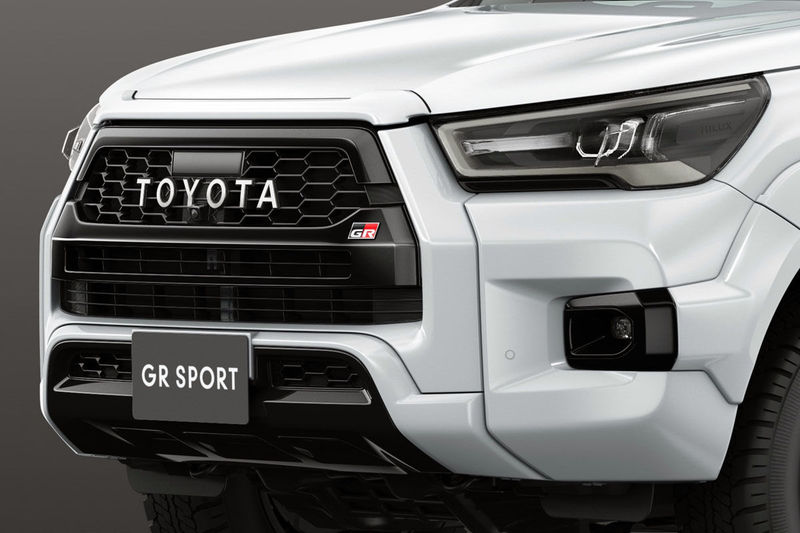
A fresh report says customers can look forward to the Toyota Hilux Hybrid and Fortuner Hybrid in the near future.
This news comes from a report from Thai publication Headlight Magazine, which says that the diesel engine has been given a new lease on life thanks to the introduction of mild-hybrid tech.
As a reminder, Toyota has a massive production presence in Thailand and globally, diesel is seen as a dirtier fuel. If you look at the European market for example, the number of diesel-powered offerings across all segments has shrunk dramatically.
Some brands have completely shunned diesel-powered vehicles all together, like Volvo for example. But, fellow South Africans, we have nothing to fear. Diesel-powered vehicles are not disappearing any time soon.
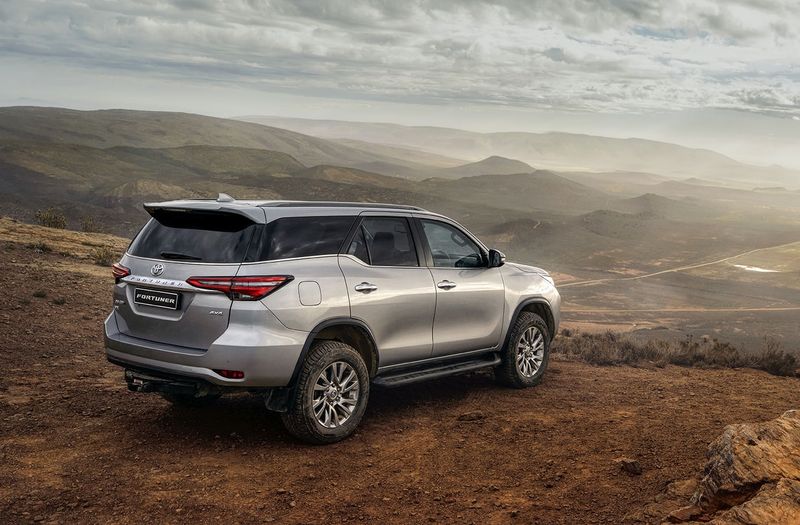
The Thai report says the Japanese car giant will be launching the Toyota Hilux hybrid in 2023 with 48-volt mild-hybrid technology. It goes on to say there will be the same tech fitted to a new Toyota Fortuner which is earmarked for 2023 too.
Now while this story sounds a little far-fetched, there’s some truth as both Toyota Australia and Toyota New Zealand have hinted that hybrid diesel tech is on the way. CarsGuide reported that Down Under, Toyota is keen to drive down its CO2 emissions, but not at the expense of losing its customer base.
“We know that some people are particularly wedded to diesel. Some farmers, for example, store diesel on their property, or it’s more accessible, or you’re in a region where you can’t have petrol,” Toyota Australian’s General Manager of Product Planning and Development, Rod Ferguson told CarsGuide. The immediate solution is 48-volt mild-hybrid technology.
A representative from Toyota New Zealand told Driven.co.nz: that a “Hilux hybrid will be hitting the market before the end of next year.” Mind you, this comment was back in 2020 and before the pandemic, semi-conductor shortage and supply chain logistic nightmare all combined to almost derail the global car industry.
Naturally, given the mechanical similarities between the Toyota Hilux and Fortuner, it’s fair to assume the same hybrid technology will be applied to the bakkie-based 7-seater as well. The Thai media have said a new Toyota Fortuner will be revealed in 2023 and feature a new TNGA-F platform as well as the aforementioned 2.8-litre 4-cylinder diesel with 48-volt mild-hybrid tech.
As a reminder, South Africa sources its Hilux bakkies from the Toyota facility in Durban, Kwa-Zulu Natal. Earlier this year, the plant has heavily damaged by floods, but an extensive repair job is underway and we understand the factory will be restarting production by the end of July 2022.
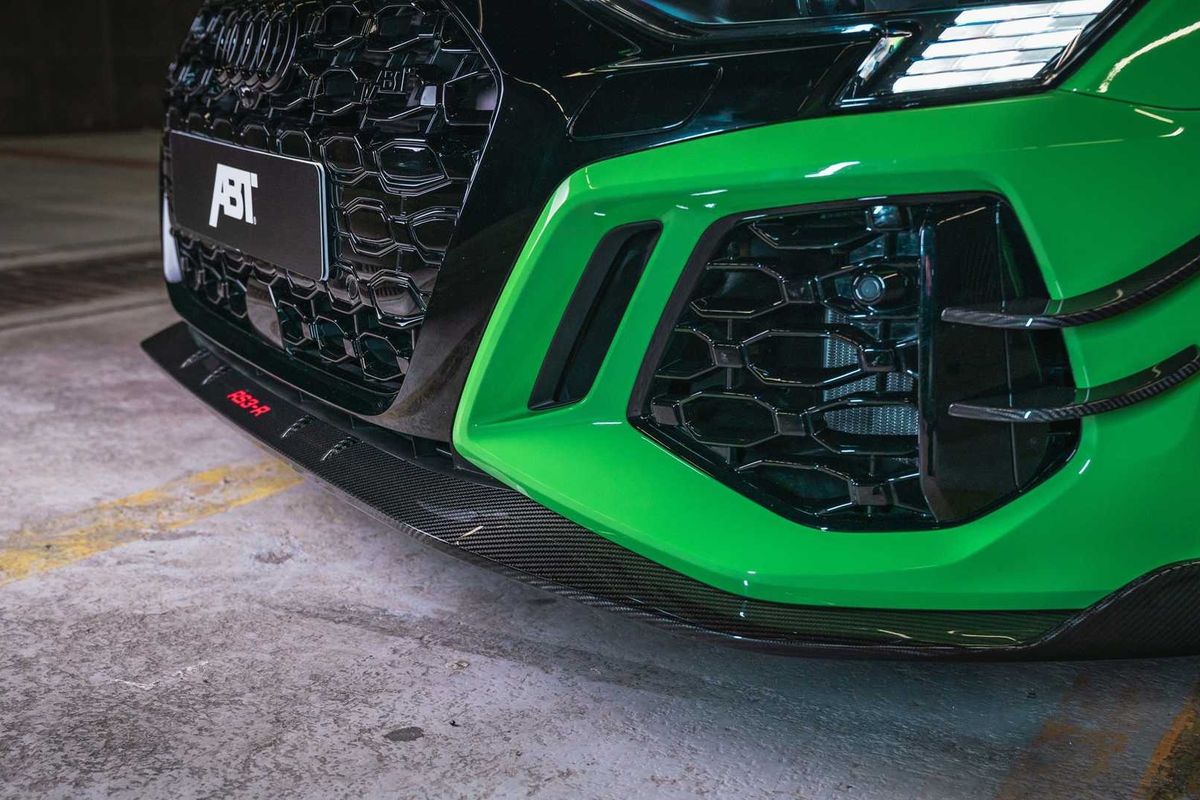
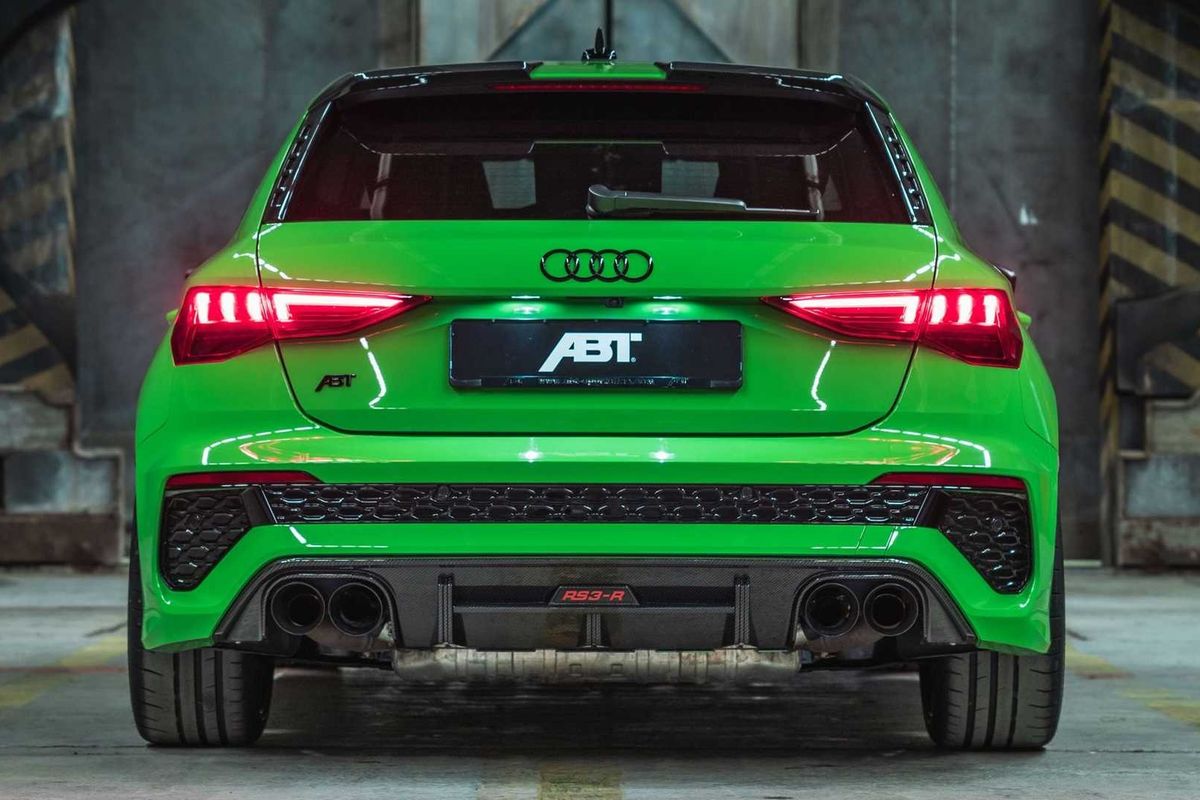
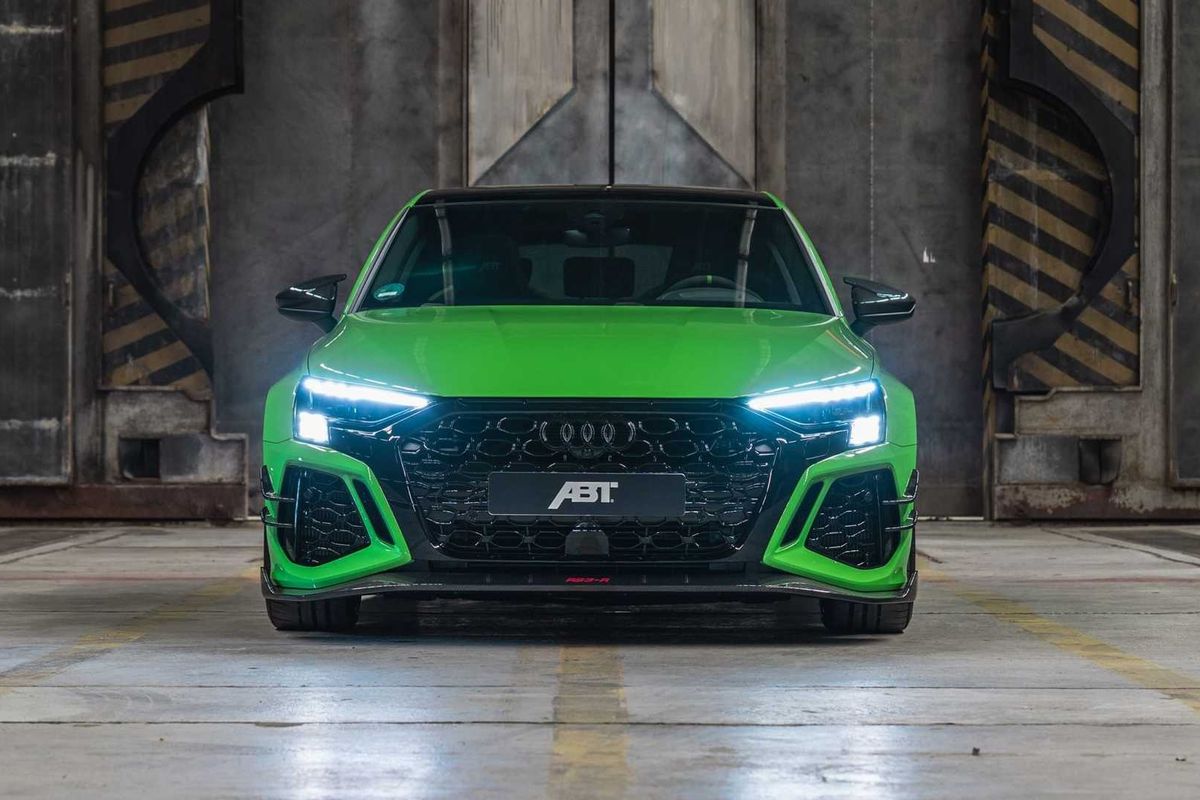
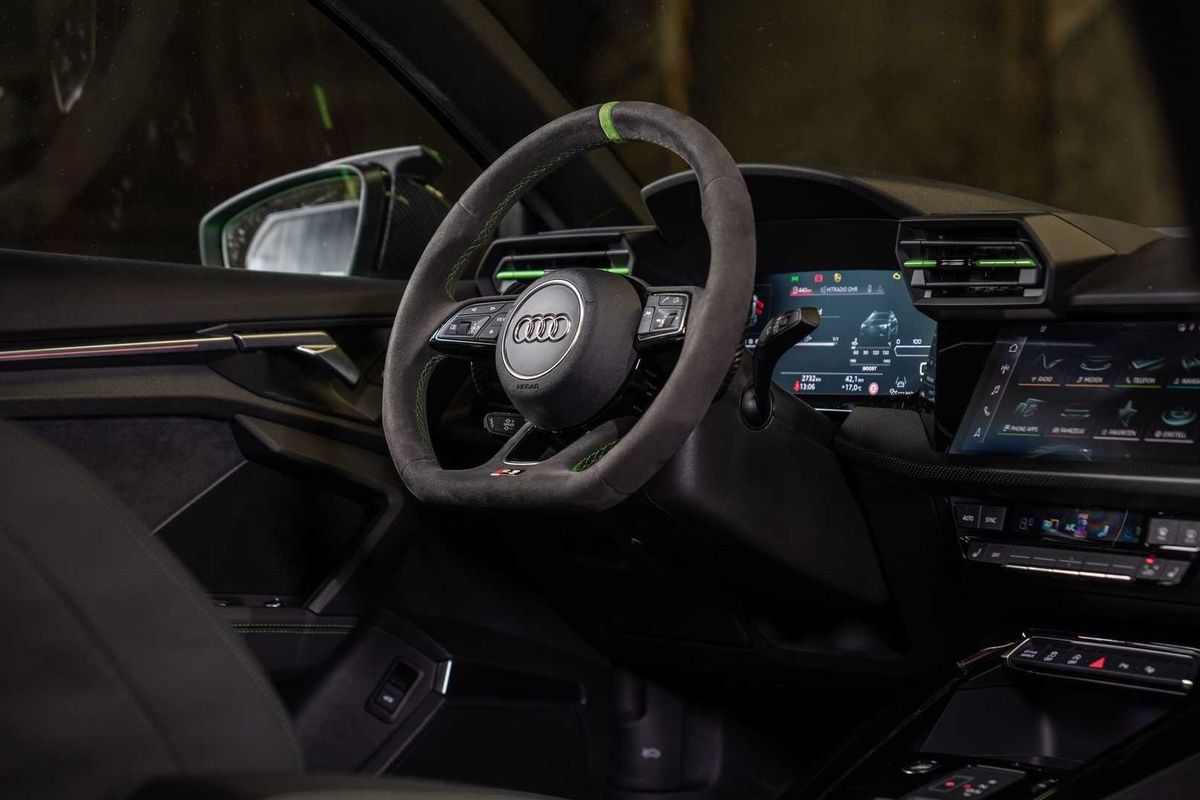
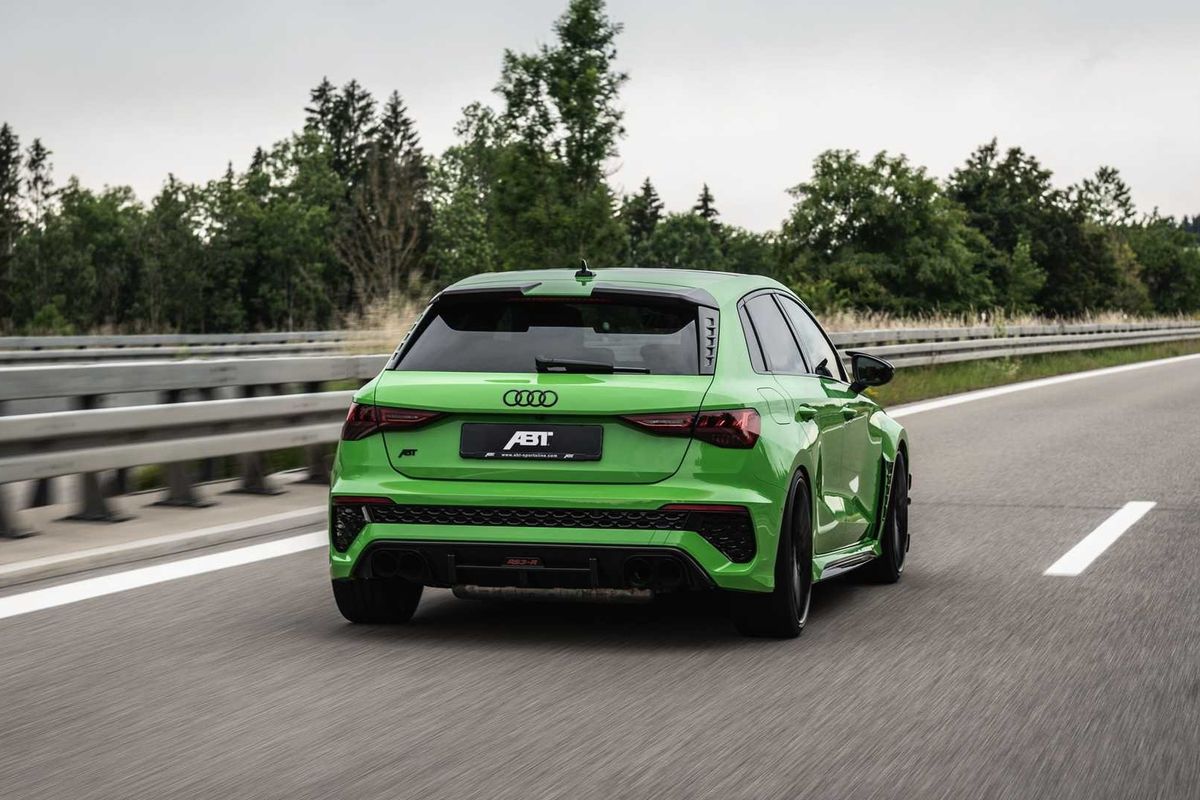
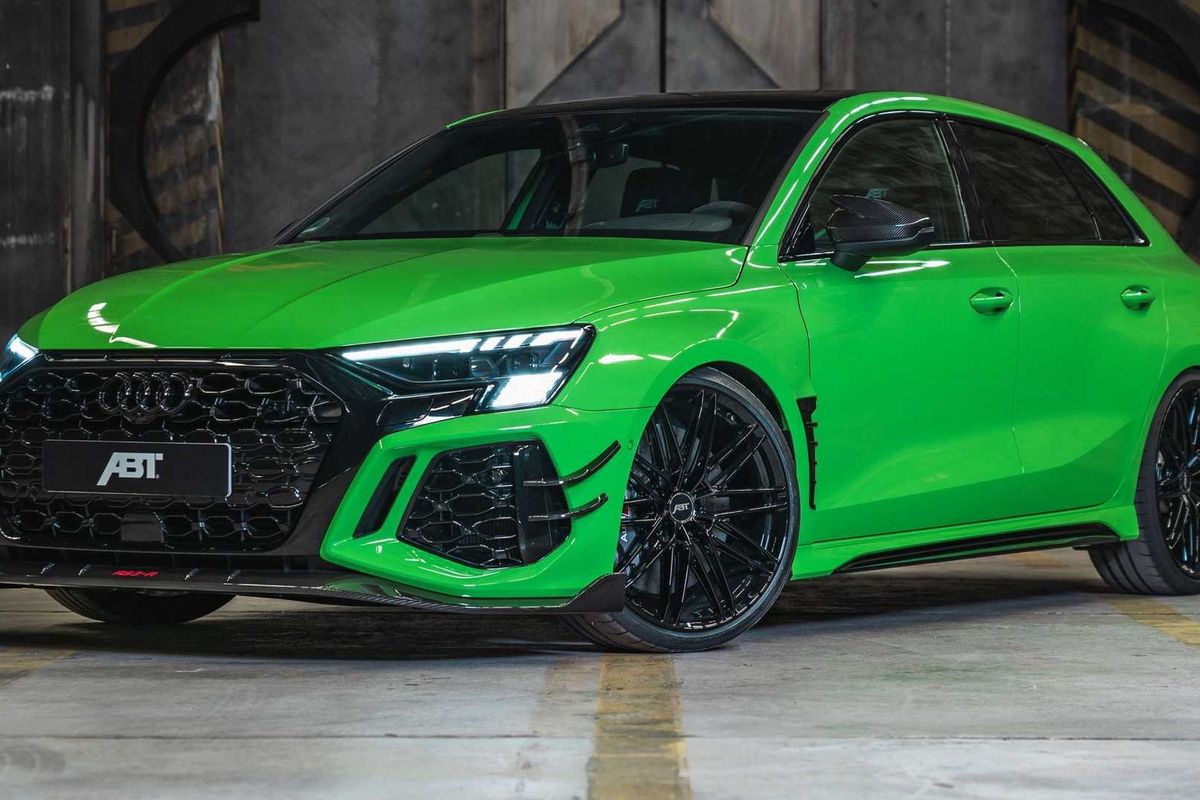
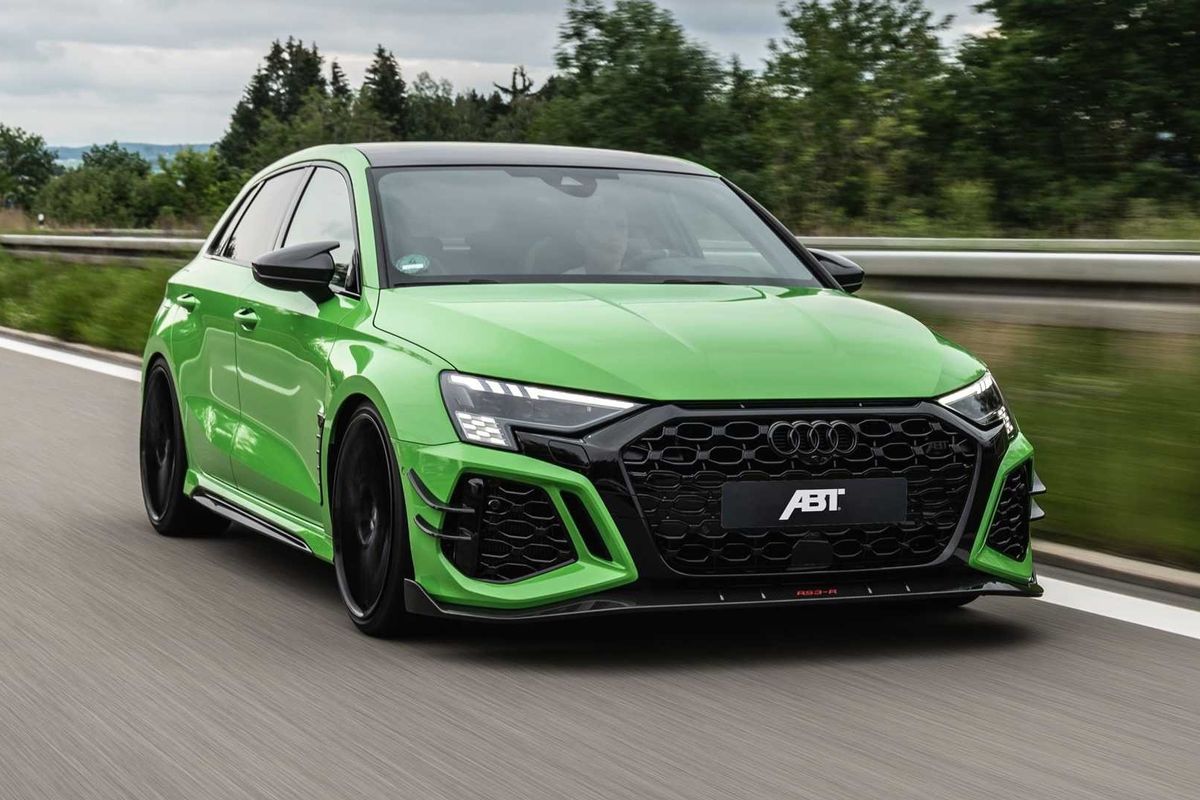
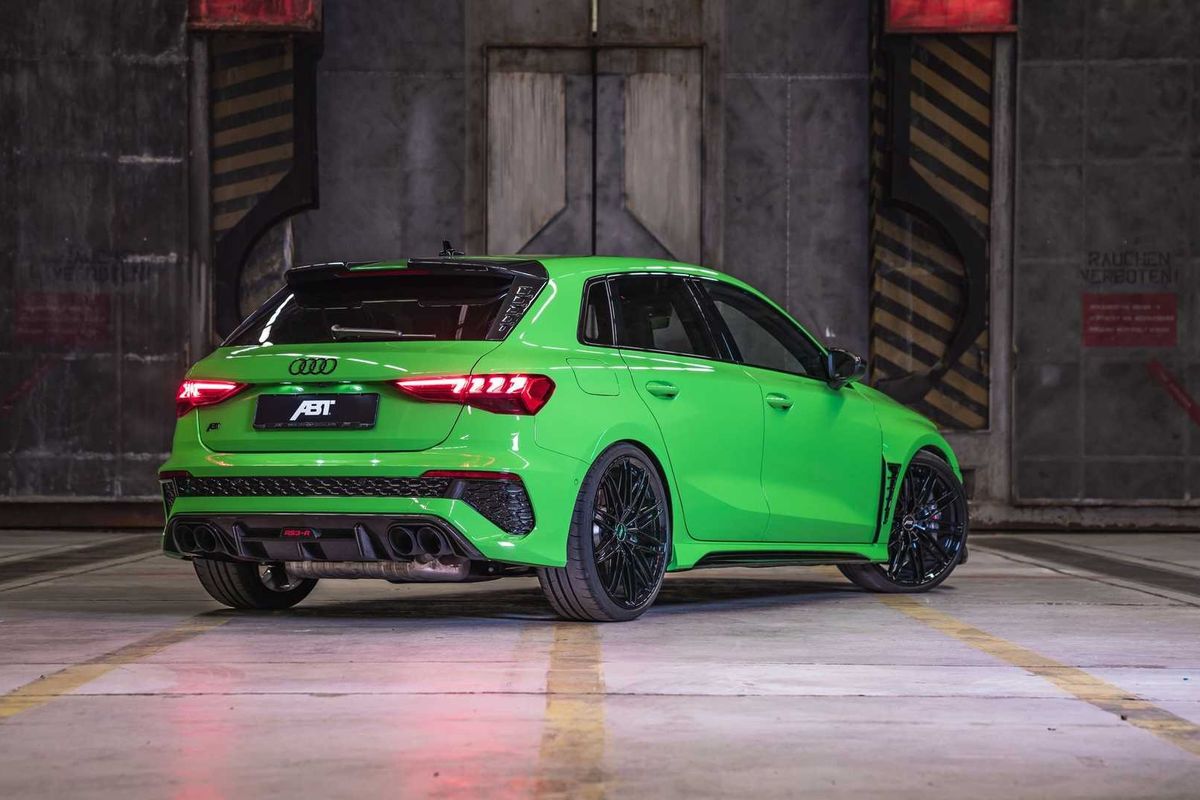
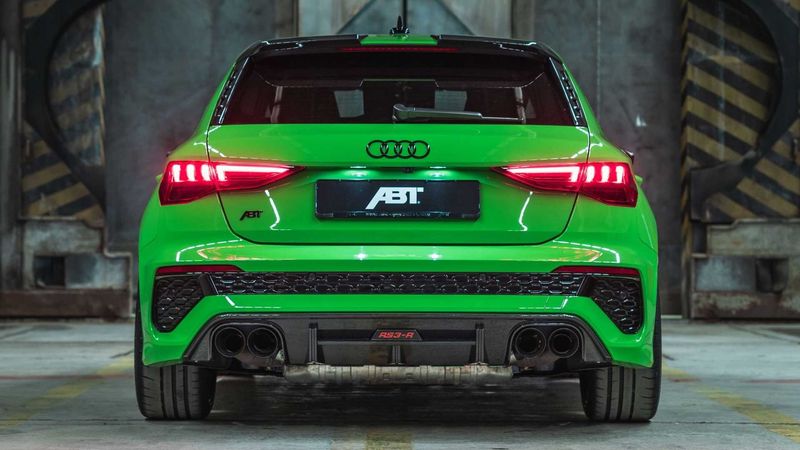
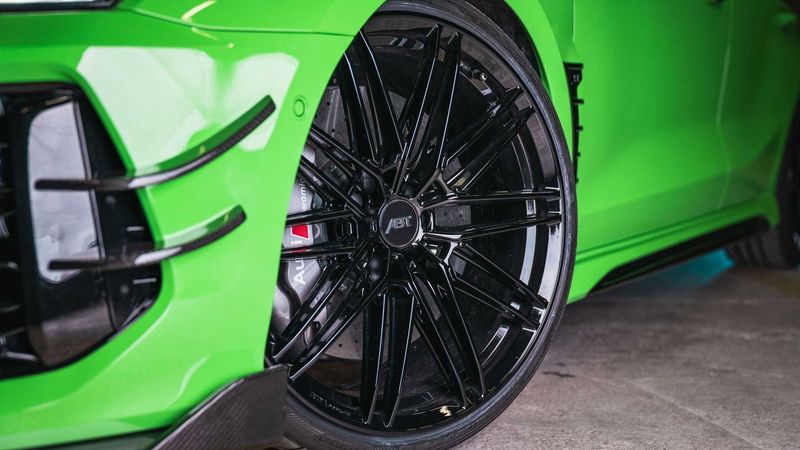
While SA petrolheads patiently wait for the brand-new Audi RS3, ABT has created something quite extraordinary. Meet the Audi RS3-R, powered by ABT.
The Audi RS3-R by ABT takes one quick performance hatchback and turns it into a supercar slayer. Even without the help of ABT, the new-generation Audi RS3 is one potent performer and currently holds the Nurburgring lap record for compact cars.
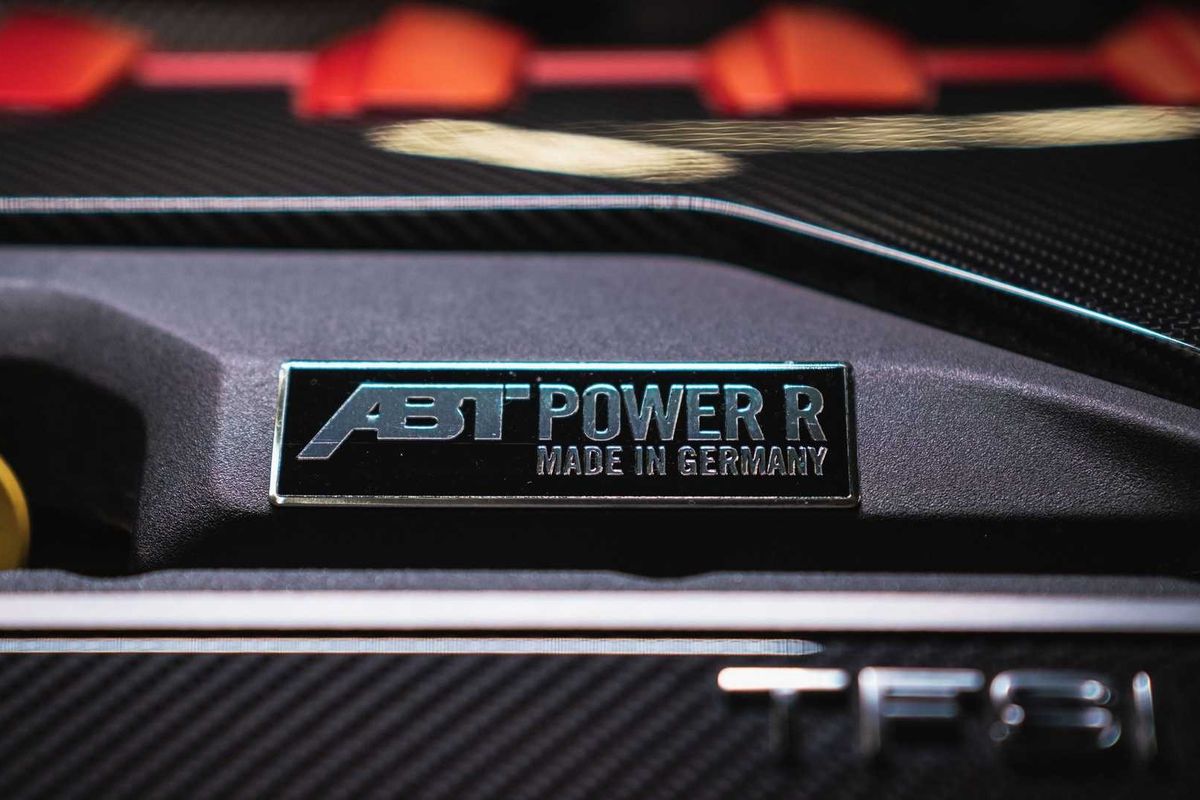
ABT has added some goodies to the 2.5-litre 5-cylinder petrol turbocharged engine and its now producing big numbers. Thanks to an uprated intercooler, upgraded exhaust and revisions to the engine control unit, outputs of 368 kW and 600 Nm are claimed.
These are significantly higher than the standard car’s engine outputs of 298 kW and 500 Nm. Performance for this model is brisk, with 0-100 kph claimed to be smashed in 3.8 seconds, but the Audi RS3-R shaves off half a second. With a 0-100 kph time of 3.3 seconds, this hatchback is able to rub shoulders with some elite machinery costing more than double.
The upgrades are not just in the engine department either, and ABT has given the Audi RS3-R a suspension upgrade too. There are new springs and stabilizer bars, but ABT is also offering a fully adjustable suspension kit as an option.
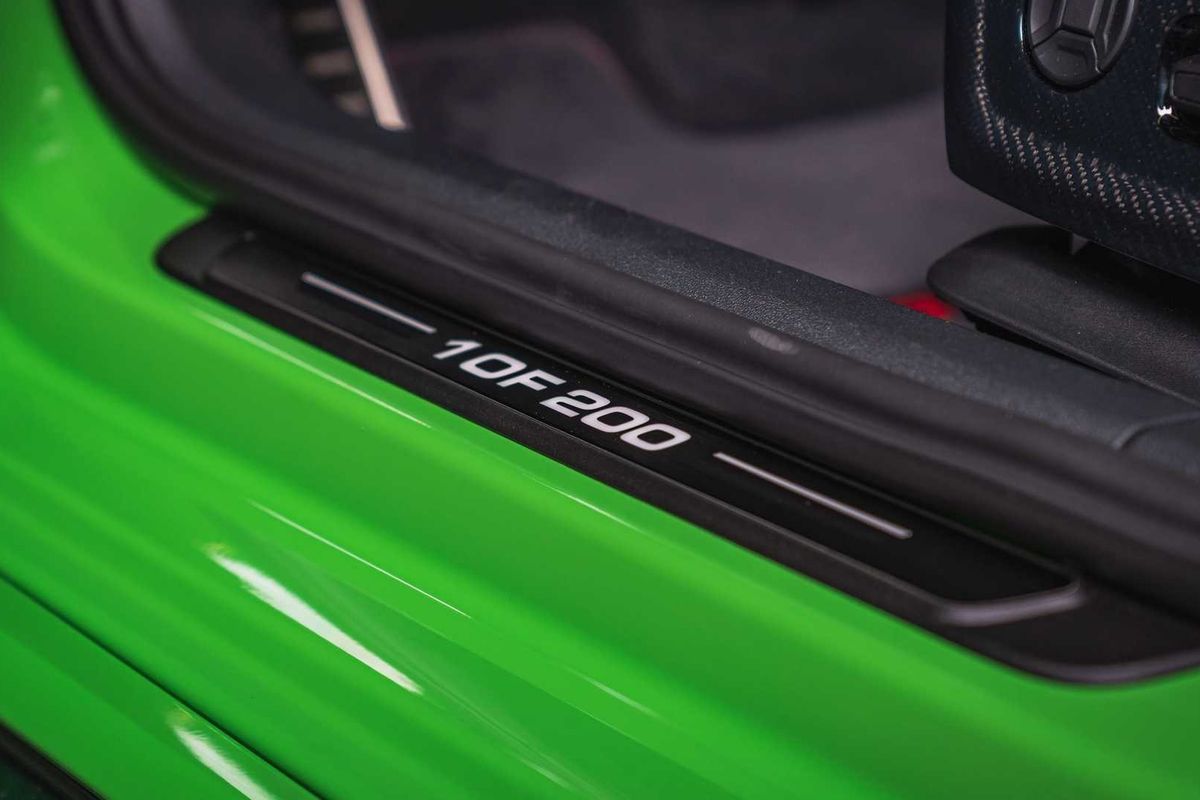
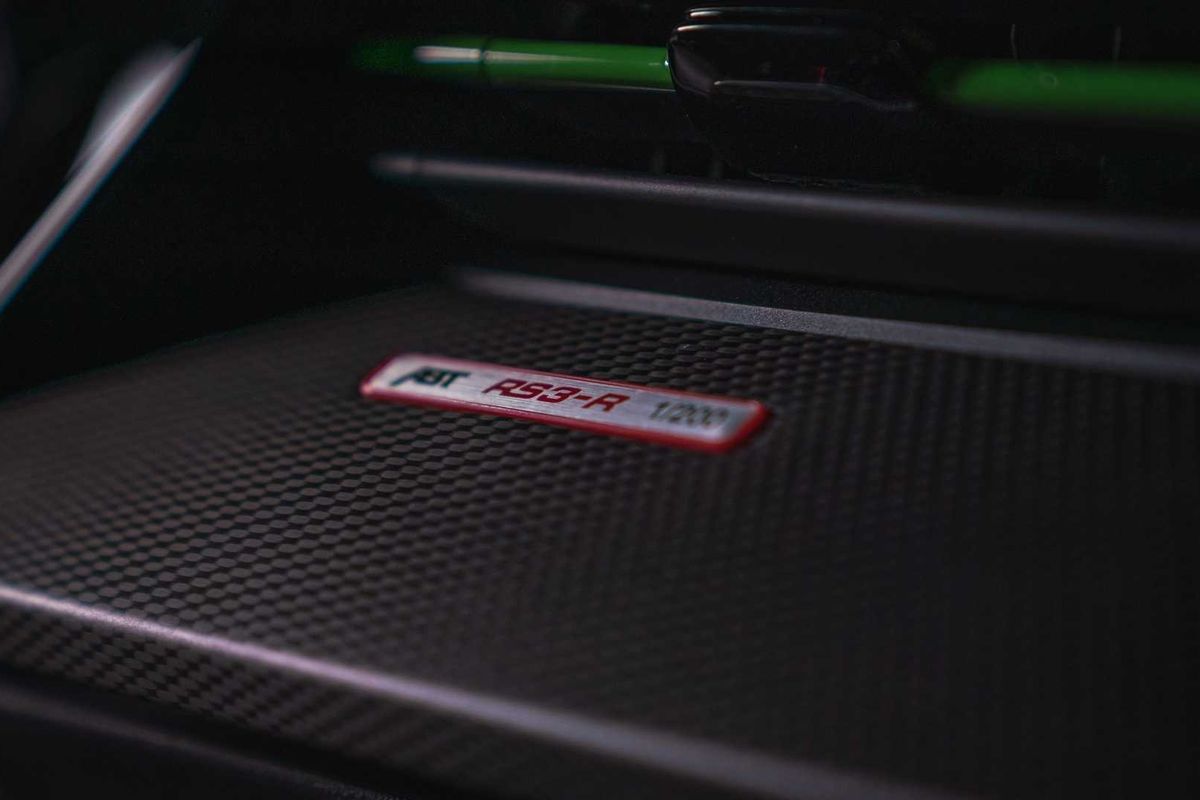
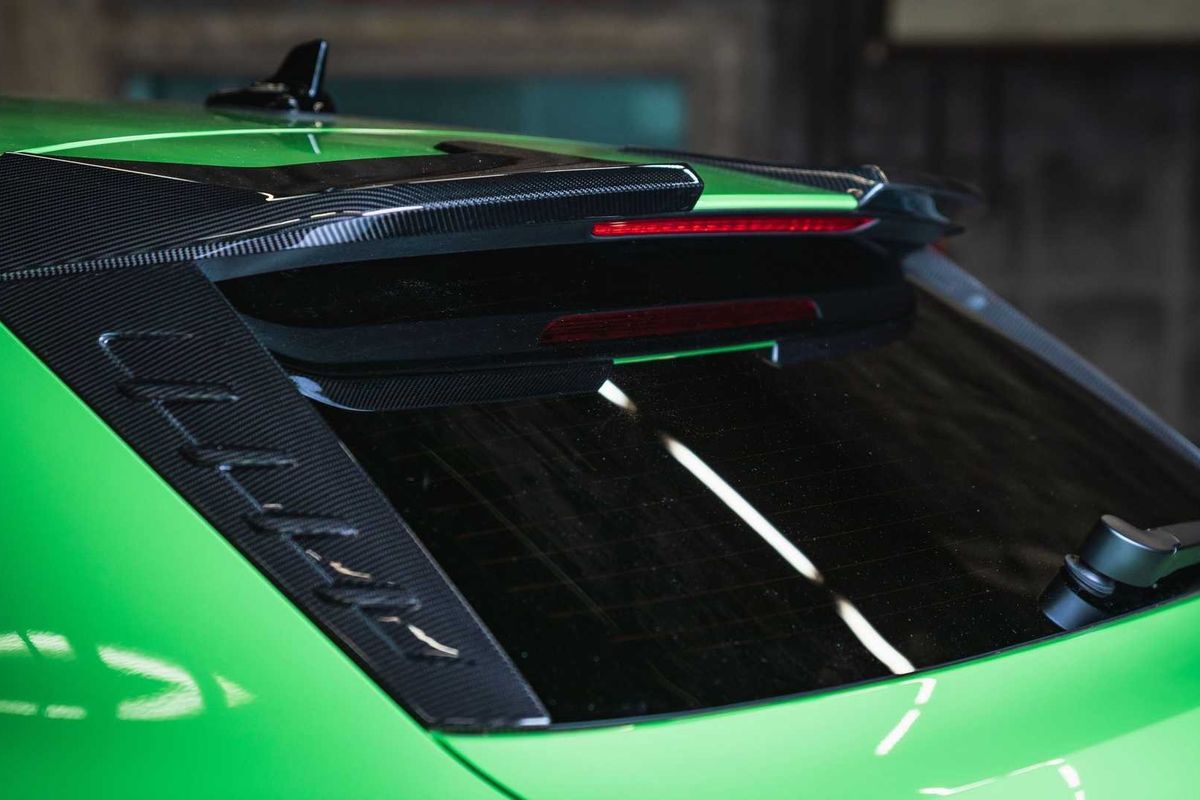
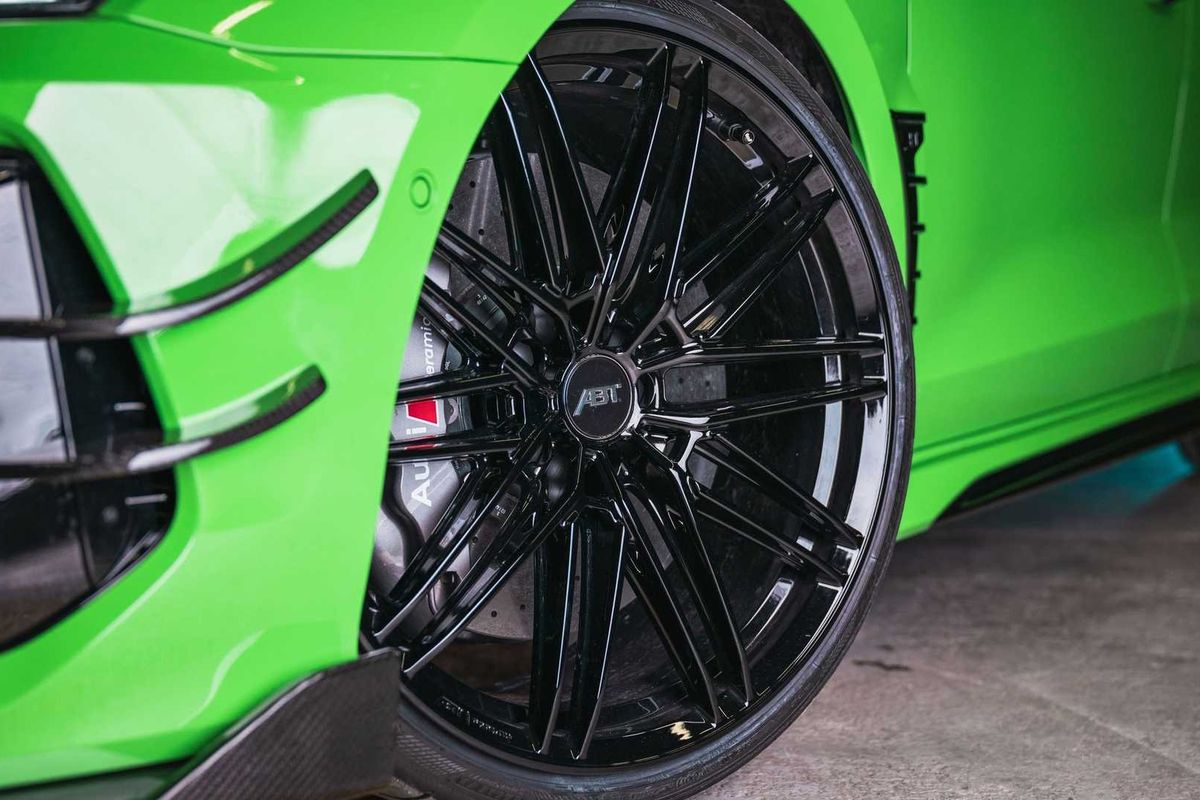
You can spot the Audi RS3-R with its special aero package that includes plenty of carbon fibre goodies. There’s a special front lip, corner winglets, mirrors and roof spoilers. There are subtle ABT badges inside and out.
ABT has said it will be building just 200 units of the wild Audi RS3-R. As a reminder, the South African launch of the Audi RS3 will take place in the 3rd quarter of 2022 and the range will launch with both sedan and Sportback models.
VW ‘Determined’ to Defend Passenger Car ‘Dominance’ in SA
Leapfrogged by Toyota in the passenger-vehicle sales race in the first half of 2022, Volkswagen South Africa says it is determined to defend its “dominance” over the rest of the year…
Volkswagen South Africa says it is “determined” to defend its “dominance of the passenger-car market” after a “very rough” start to 2022.
In the first six months of 2022, the VW brand says it registered 30 581 units – comprising both passenger cars as well as light-commercial vehicles – in South Africa. According to our maths (using official Naamsa figures), the Volkswagen brand sold 28 647 units in the passenger-vehicle market in the first half of the year, putting it in an unfamiliar second place behind Toyota (37 151 units), but ahead of third-placed Suzuki (21 889 units).
Steffen Knapp, Head of Volkswagen Passenger Cars in South Africa, suggested supply constraints were to blame for the Wolfsburg-based firm’s fall to second spot in the passenger-vehicle stakes.
“We had a very rough first quarter due to supply and political challenges which affected stock availability, but we are determined defend our dominance of the passenger car market in South Africa,” he said.
“June was a fantastic month for the Volkswagen brand. Not only did we post the best dealer channel sales since October 2021, we also achieved a 16.4% share in the passenger car market,” Knapp said, adding the T-Cross continued to “dominate” its segment, while the fresh-faced Taigo enjoyed 343 registrations in its launch month.
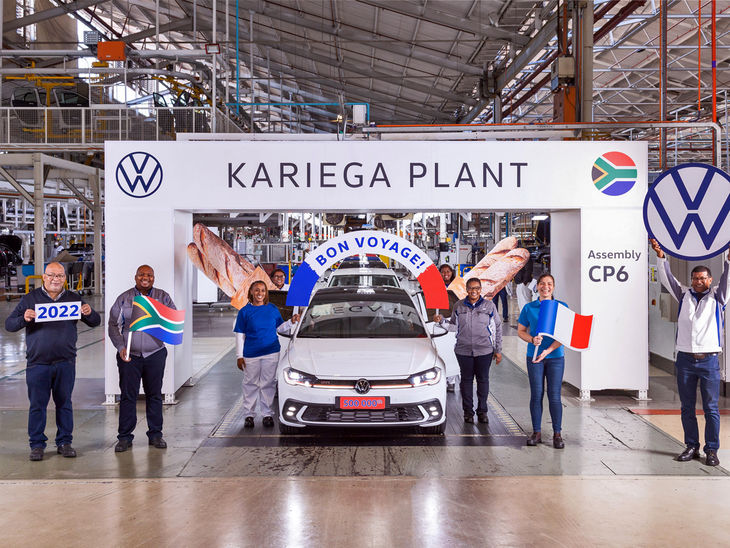
Of course, the Polo Vivo was the country’s best-selling passenger car in the first half of 2022, with its 9 469 registrations putting it ahead of the Suzuki Swift (8 810 units), Volkswagen Polo hatch (7 976 units), Toyota Corolla Cross (7 216 units) and Toyota Urban Cruiser (7 188 units). The Vivo is produced at VW’s Kariega facility in the Eastern Cape, alongside the Polo hatchback (including the GTI). The 500 000th example of the current-generation Polo recently rolled off the production line at the factory.
What about the VW brand’s commercial-vehicles division? Well, the outgoing Amarok was the volume driver in that space, accounting for 1 052 units of the 2 500-odd vehicles sold from the start of January to the end of June. That saw it place 10th on the list of South Africa’s best-selling bakkies for the reporting period.
As a reminder, the new Amarok is scheduled to hit the local market early in 2023. Before then, however, VW SA plans to launch a number of new or updated passenger-vehicle products locally, which it hopes will help improve its fortunes.
“We are determined to have a strong second half of the year which will be supported by the new Taigo sales which will ramp-up from July as well as launches of the new T-Roc, all-new Polo Sedan, all-new Tiguan R and the new Golf 8 R,” concluded Knapp.
2022 New Isuzu D-Max Review – The locally-built Bakkie finally hits showroom floors
We get to grips with the all-new Isuzu D-Max bakkie which has gone on sale. Has it been worth the wait?
We sent our video guy, Ciro De Siena, to find out. In this video we’ll take you through a detailed overview of the 3.0TD LSE 4×4 variant, which is the second from the top of the range, namely the V-Cross. After an unfortunate pandemic-related delay in starting local production of the D-Max, the much-anticipated bakkie from Isuzu is finally here. Has it been worth the wait?
How well (or poorly) the VW Polo’s 9 rivals sold in June 2022
The locally built Volkswagen Polo hatchback remains a firm favourite among South African buyers. But how well – or, indeed, poorly – do its direct rivals sell in comparison? Let’s examine June 2022’s sales figures to find out…
Month in and month out, the Kariega-produced Volkswagen Polo hatchback is the best-selling vehicle in its class. Sure, the likewise SA-built Polo Vivo often pips its more modern sibling on the sales charts, but that prolonged lifecycle model competes in a sub-segment below, along with the likes of the increasingly popular Suzuki Swift and (Baleno-based) Toyota Starlet.
So, just how far behind are the traditional B-segment alternatives in South Africa? Well, we sorted through June 2022’s sales statistics and picked out nine Polo rivals (if you’re wondering where the Fiesta is, Ford Motor Company of Southern Africa discontinued its supermini earlier in the year). Here’s how they performed…
It makes sense to start with the Polo itself. VW registered 1 461 units in June (note this figure represents the hatchback range – including the GTI – as Polo Sedan sales are reported separately), which was enough to earn it sixth place on the list of SA’s best-selling vehicles for the month. Of this figure, 163 units came courtesy of the rental channel.
The Polo’s closest contender in June 2022? The Opel Corsa, which enjoyed what must surely be its best sales month since the F-generation version arrived in South Africa early in 2021. Still, the second-placed Corsa’s final tally of 514 units was just over a third of the Polo’s effort and was boosted by 250 units (so, nearly 50%) sold to rental companies.
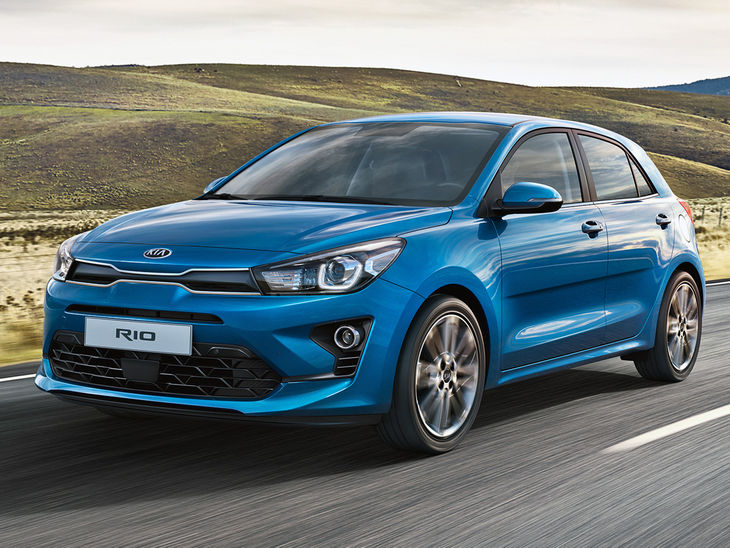
Third place went to the Kia Rio (458 units), with the Hyundai i20 (317 units) slotting into fourth. Every other contender failed to crack three figures, with the ageing Mazda2 finishing the month in fifth with 86 units registered.
After a handful of months on the market, the new Renault Clio (66 units) has yet to establish itself, though did enough to take sixth spot ahead of the Honda Fit (54 units). The Peugeot 208 (42 units) filled eighth place, while the Nissan Micra and Citroën C3 closed out the table with a mere 9 sales apiece.
SA’s 10 best-selling B-segment hatchbacks in June 2022
Local production of the new Isuzu D-Max was made possible by a R1.2-billion investment in the Japanese marque’s assembly facility in Gqeberha. Isuzu has a lot riding on the success of its 7th-gen bakkie, but is the newcomer good enough to rival the frontrunners in the double-cab market? And what about the upcoming arrivals from Ford and Volkswagen?
We like: Off-road ability, build quality, cabin space, efficiency, warranty
We don’t like: Not quite at the cutting edge of “lifestyle” tech, engine might not represent a big enough step forward
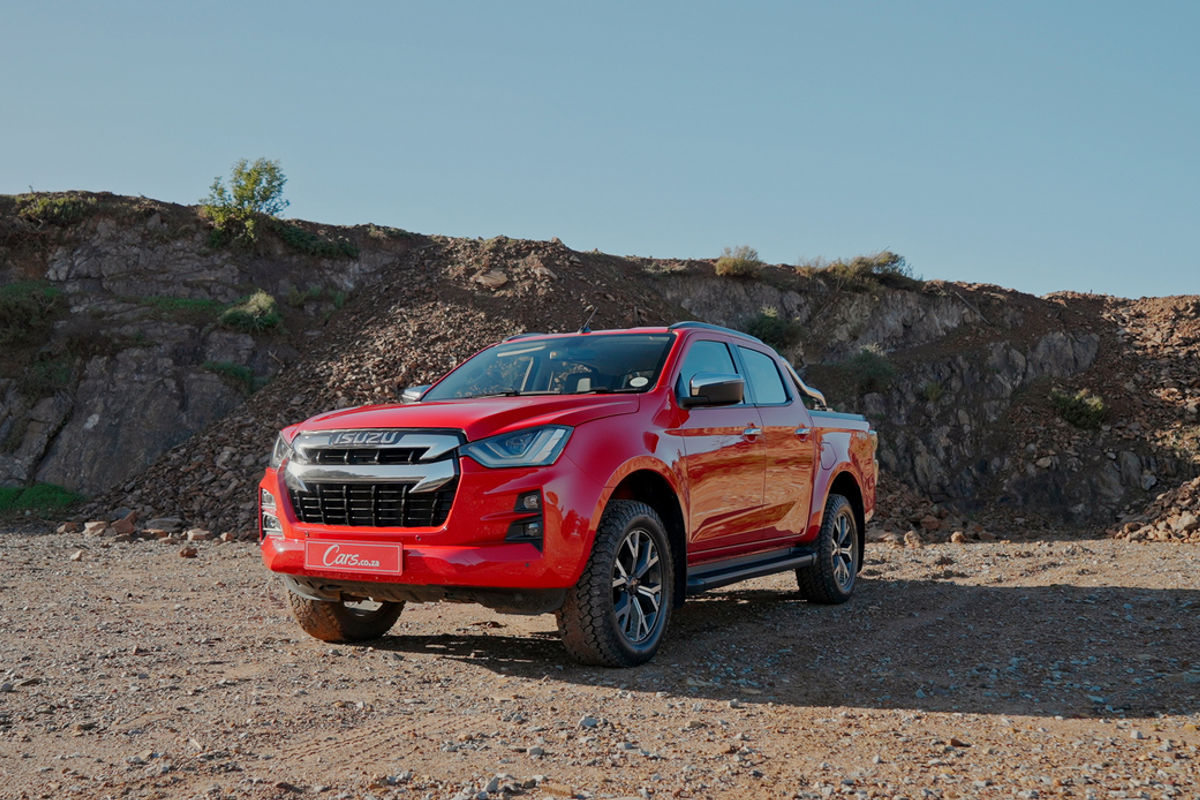
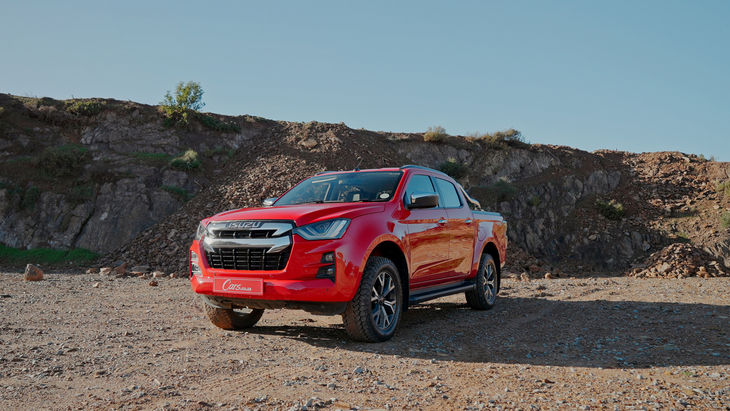
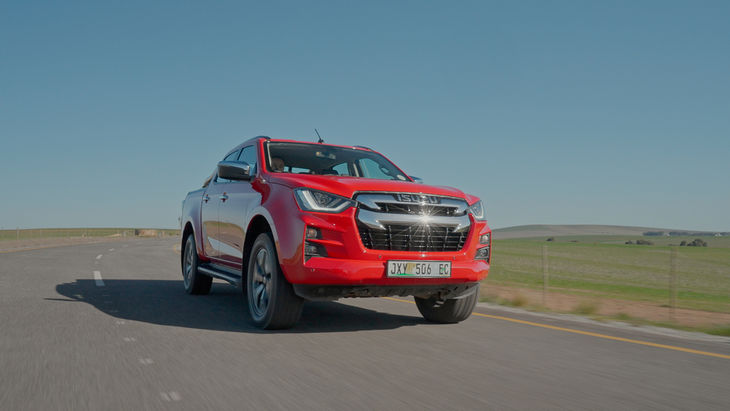
The new generation D-Max’s front-end design drew many admiring glances – especially from Isuzu owners!
Where does the 2022 Isuzu D-Max fit in?
While the neverending battle on the sales charts between the Toyota Hilux and outgoing Ford Ranger regularly grab headlines, those who take a deeper interest in the sales figures will have noted the continued support for Isuzu’s outgoing (6th-gen) D-Max, right up to the time of its replacement. Its enduring popularity was fueled by a reputation for dependability, as well as a clever spread of derivatives that appeared to cater to every kind of new-bakkie buyer out there.
With the new D-Max, Isuzu has come out all guns blazing once more, with a range that includes no fewer than 24 single-, extended- and double-cab derivatives. And while ruggedness and reliability are core product strengths that Isuzu has been careful to maintain, it is also acutely aware that the D-Max had started to lag the market leaders in certain respects, particularly when it comes to the leisure/luxury aspect of Double-Cab motoring. As such, the major focus areas for the new D-Max were its cabin design, fit and finish, on-board tech, safety and refinement.
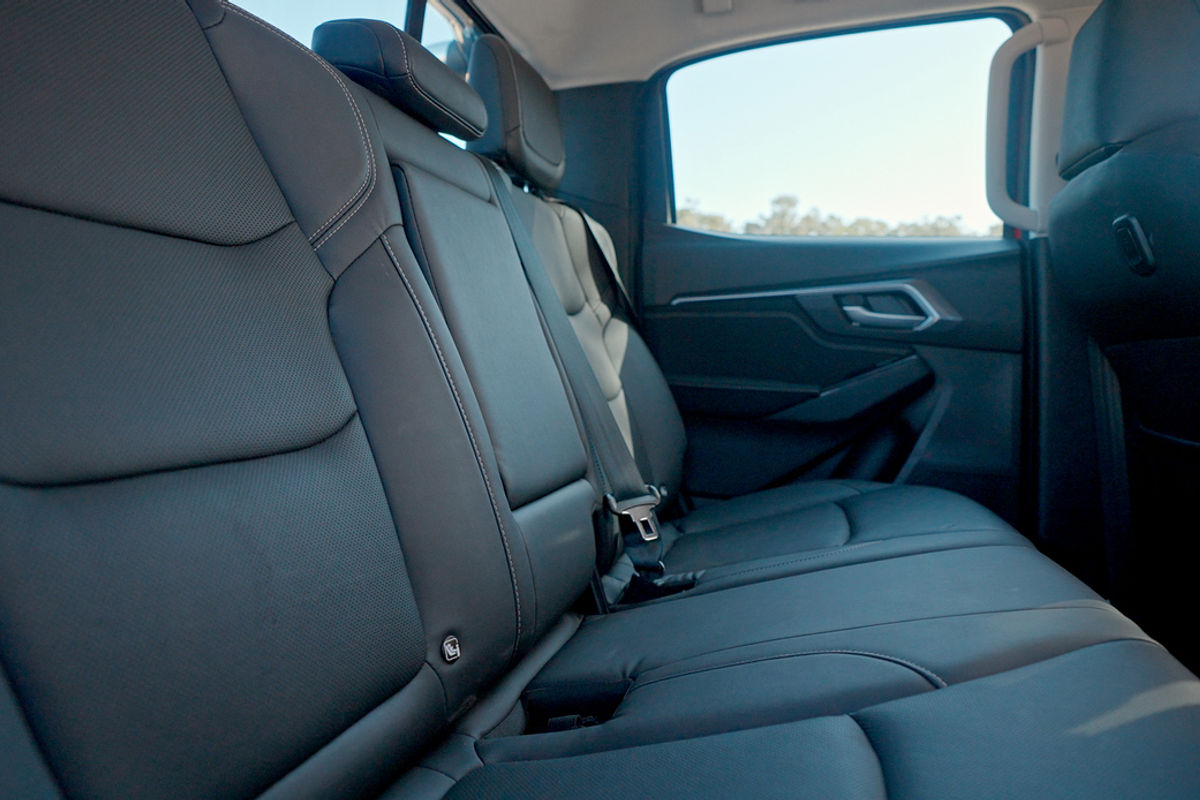
Although the 7th-generation D-Max isn’t much longer than its predecessor, its rear occupant space is much improved.
Our test unit is the second-from-the-top LSE derivative, so it doesn’t feature all the bells and whistles of the V-Cross flagship. Nonetheless, it should provide us with a good sense of the extent to which Isuzu has raised its “leisure game”. Furthermore, this LSE 4×4 is priced to compete against some of the fastest-selling double cabs on the market, most notably the Toyota Hilux, in Raider specification.
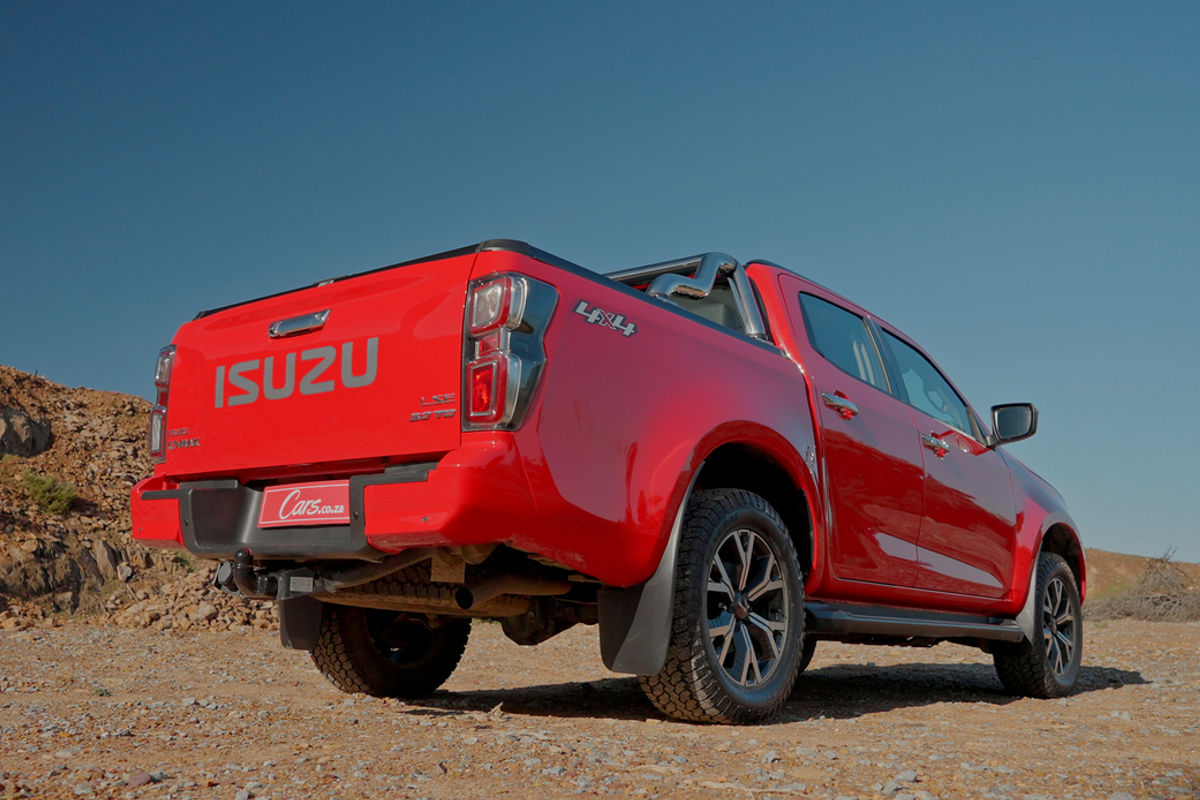
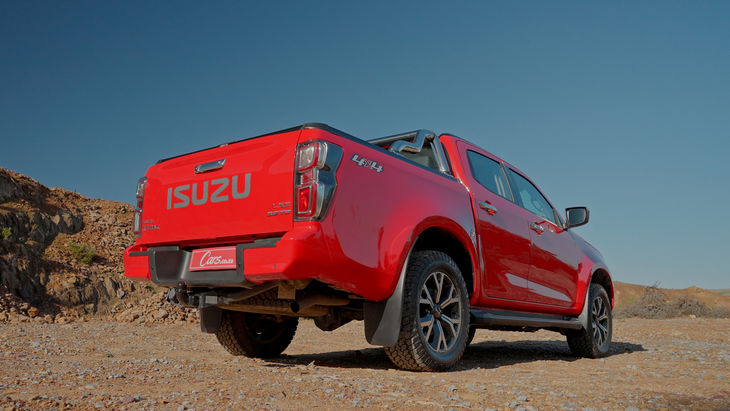
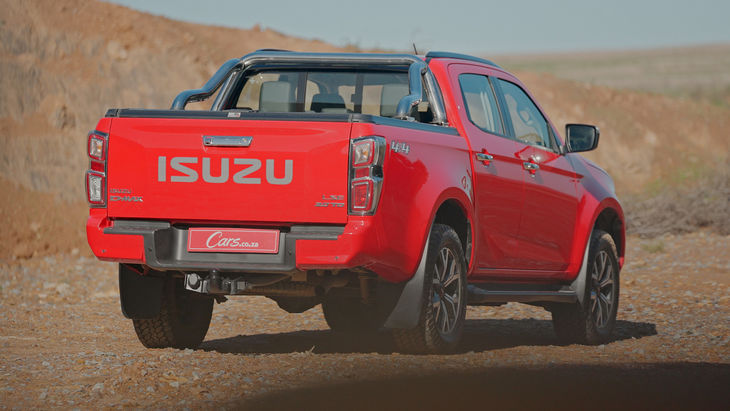
The Isuzu’s shapely (by bakkie standards) tail-lamp clusters are very on-trend.
How the 2022 Isuzu D-Max fares in terms of…
Design and Packaging
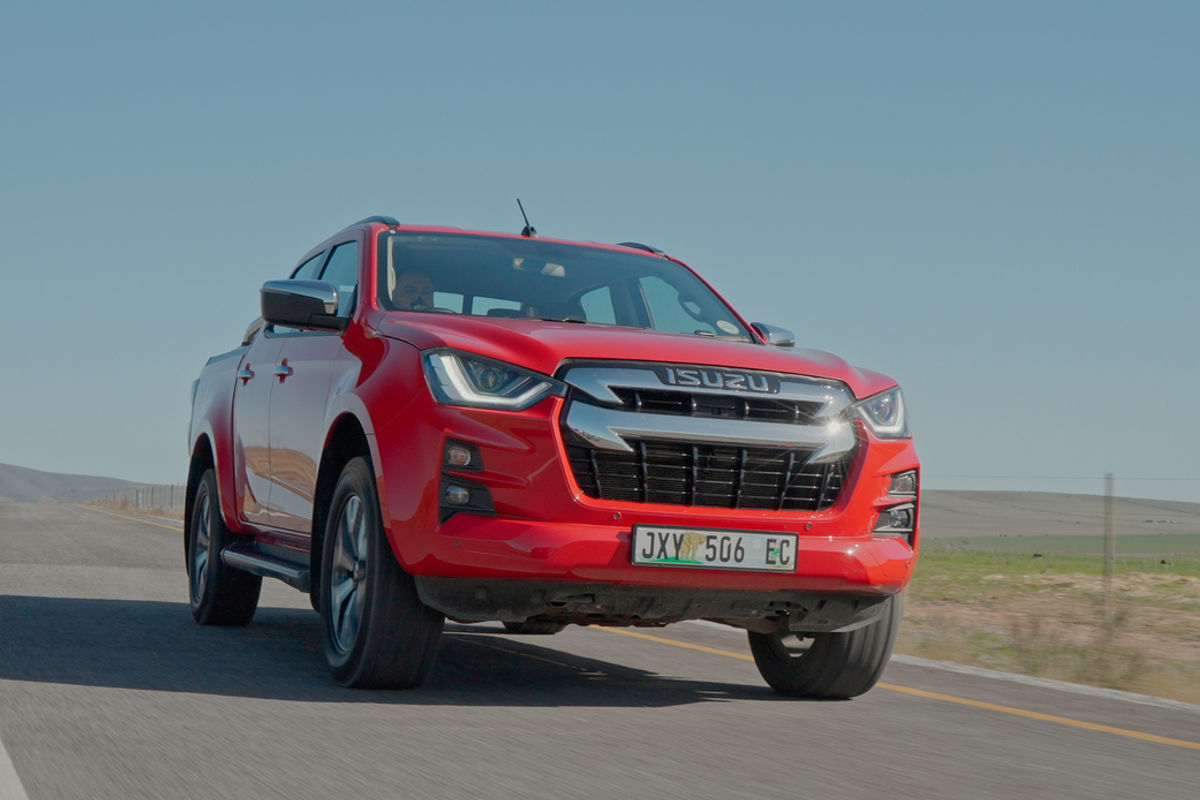
The new D-Max is a handsome pick-up, with a particularly striking grille/headlamp treatment, enhanced through the fitment of LED headlamps, LED daytime running lights and LED foglamps. It lacks the V-Cross’s striking fender blisters and skid plate, among other items, but is nevertheless an attractively styled offering that turned quite a few heads during our test period, particularly those of other Isuzu drivers!
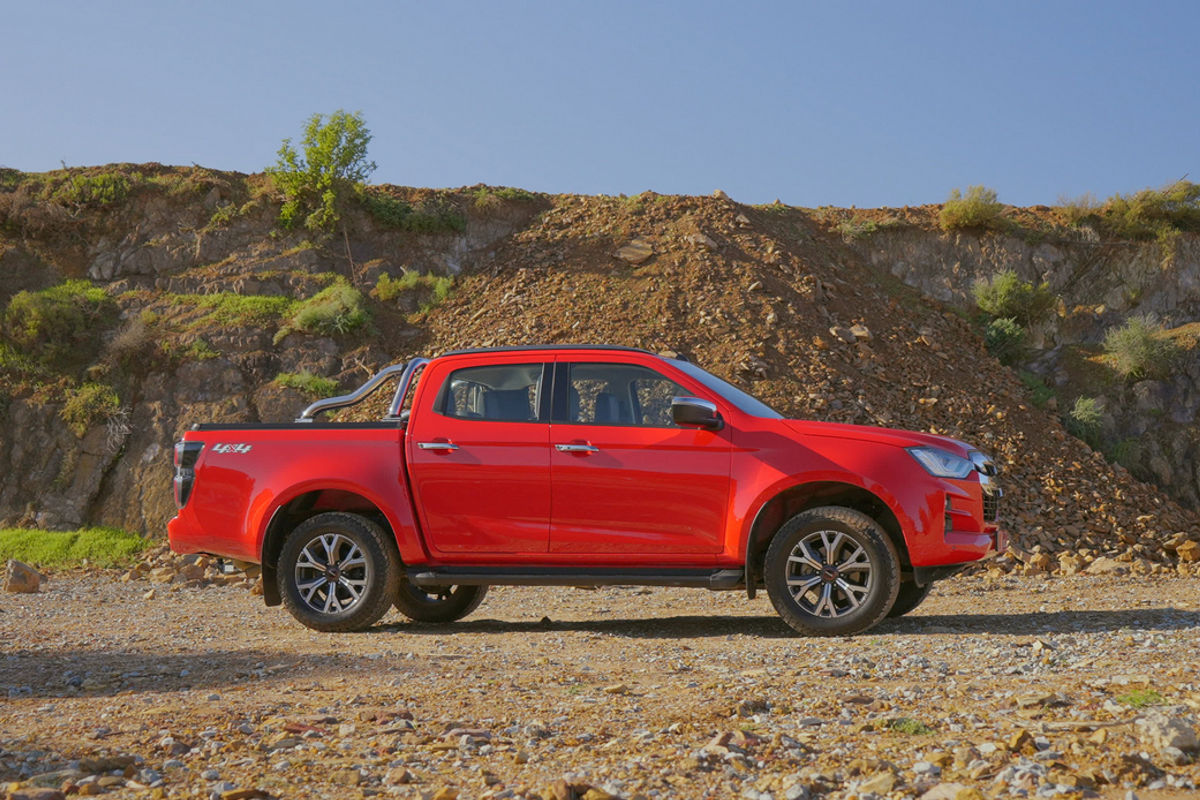
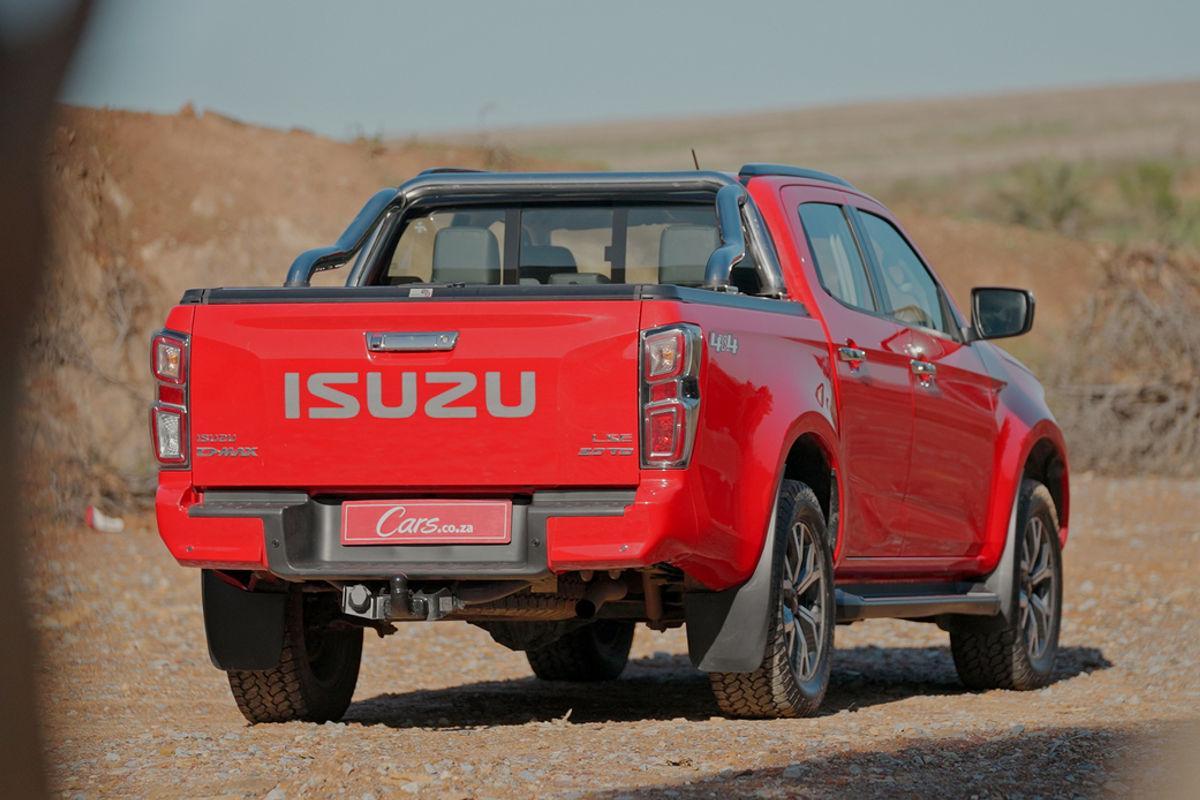
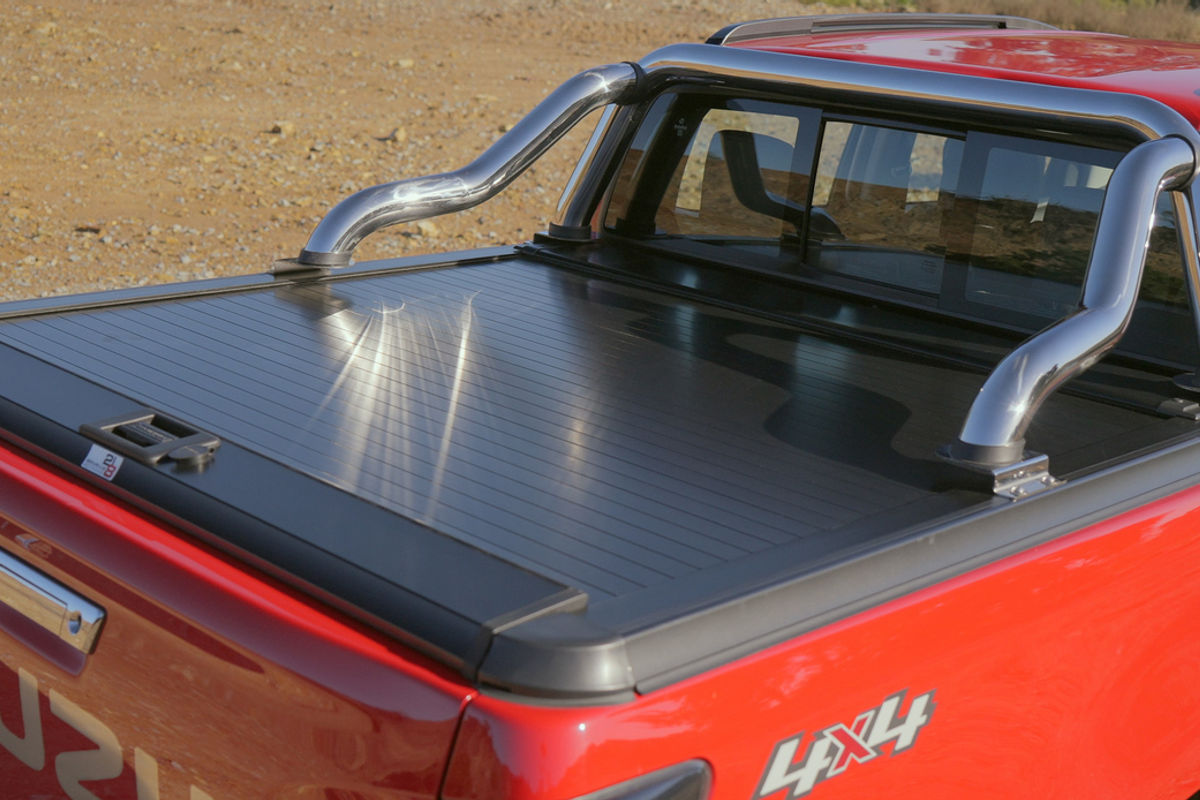
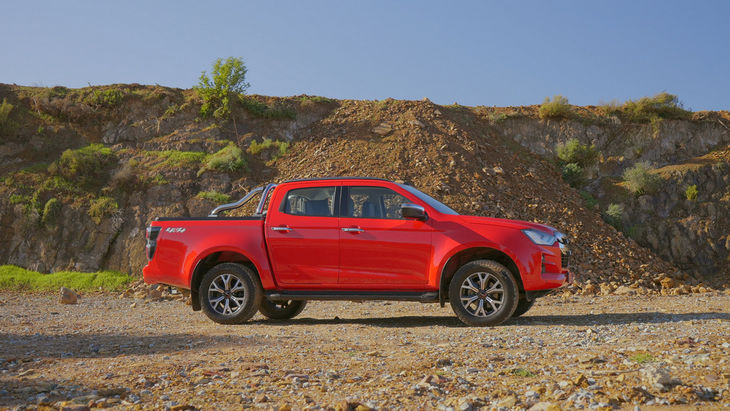
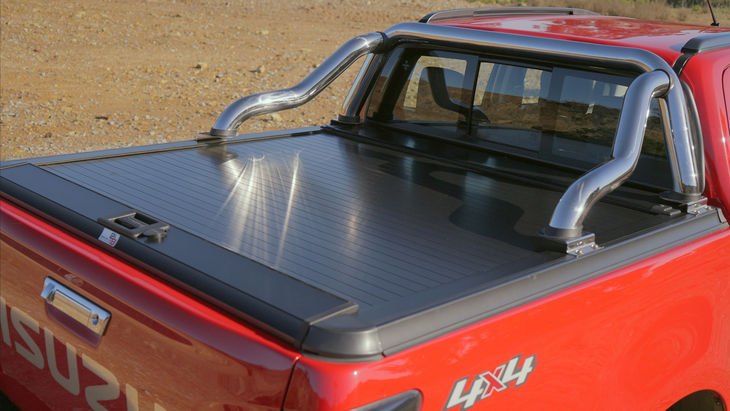
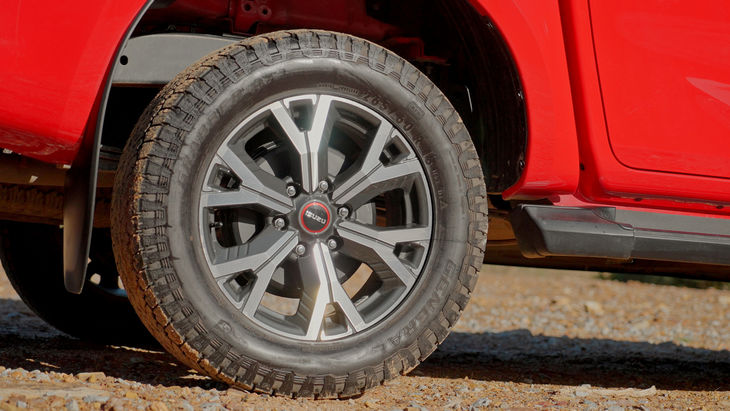
This LSE derivative rides on stylish 18-inch wheels shod with chunky 265/60 General Grabber tyres. At the rear, the stylish LED taillamps catch the eye and the chrome tubular sports bar is standard fitment (if purely cosmetic). A nice touch is the standard fitment of a towbar – the D-Max has a 3 500 kg tow rating (braked). The load bay is nice and deep (30 mm more than before) and the tailgate is wide (1 530 mm). This particular derivative has a payload rating of 995 kg.
The LSE-spec test unit was specified with an optional lockable roller shutter.
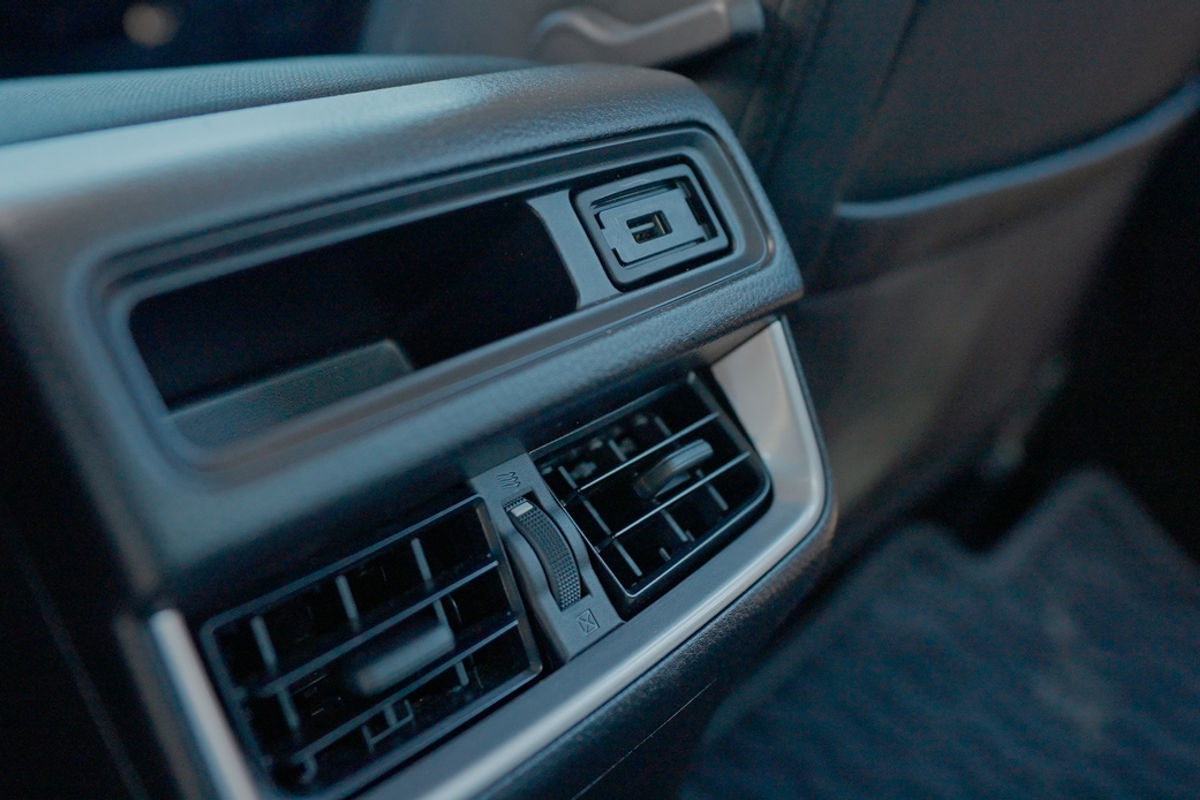
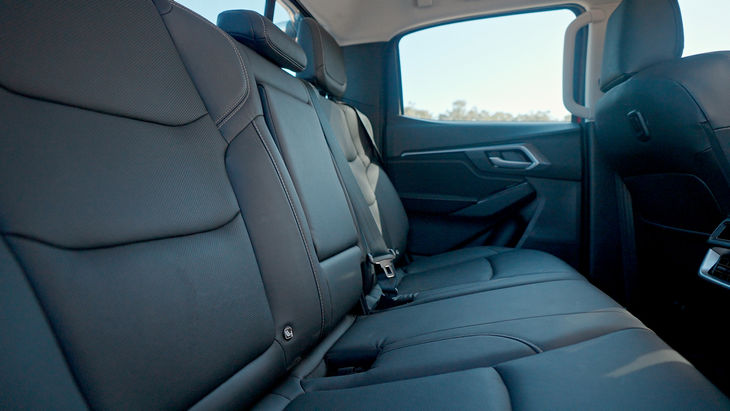
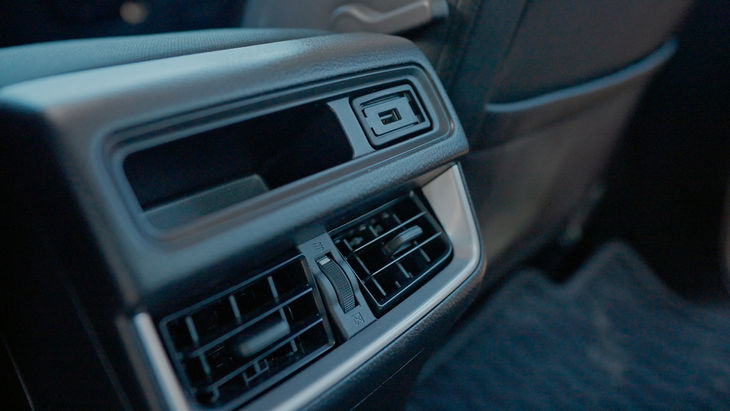
Despite being slightly lower than before (by 10 mm), the D-Max’s other key dimensions have increased all-round. The wheelbase is (a seemingly negligible) 30 mm longer, but nevertheless, cabin space in the rear has been markedly improved. In fact, the Isuzu now ranks as among the best when it comes to rear occupant comfort. In addition to the extra legroom, the less upright angle of the backrest further boosts comfort levels. Rear passengers also have access to a USB charging point and ventilation outlets. If you want to transport something in the rear of the D-Max’s cabin (such as a bicycle), you can flip up the seat cushions and latch them onto the rear headrests, which opens a usefully large open space.
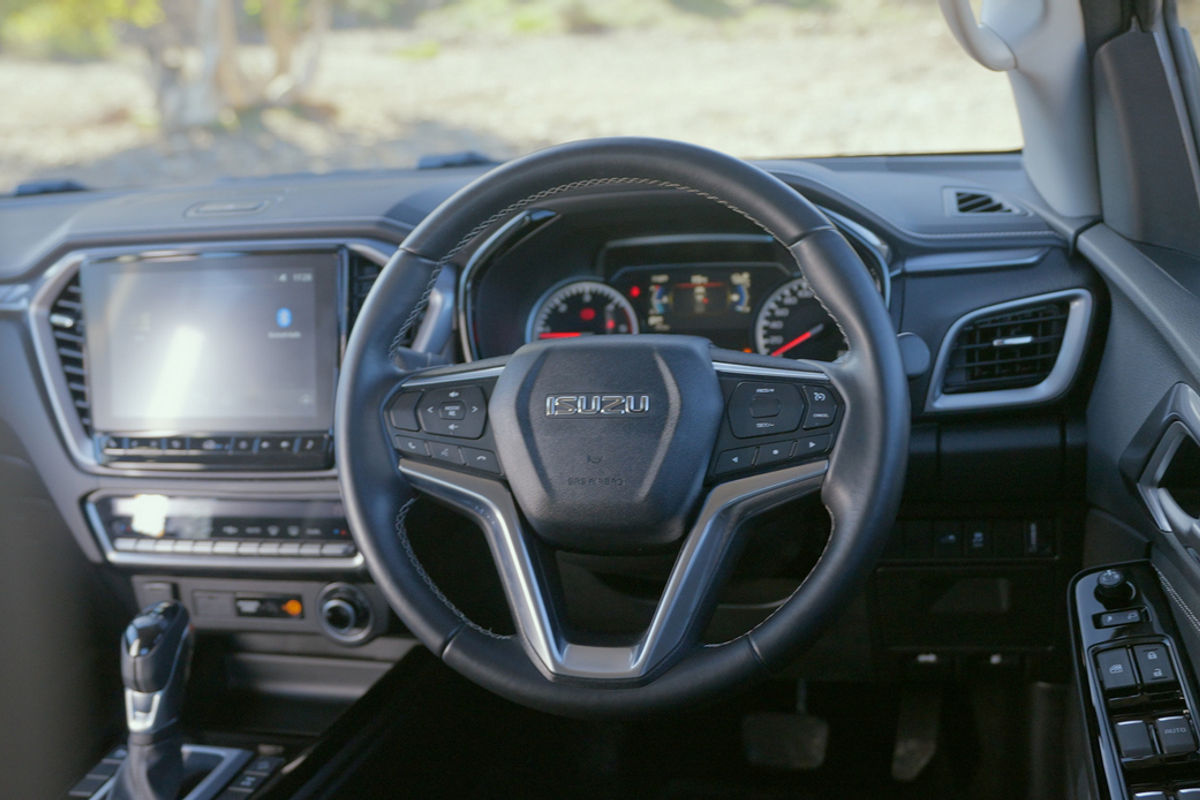
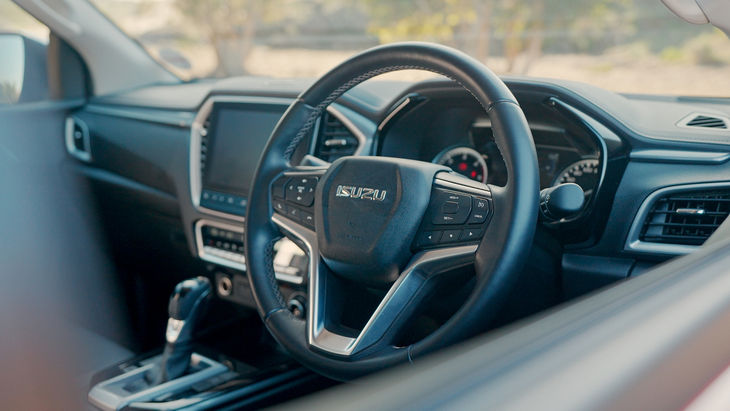
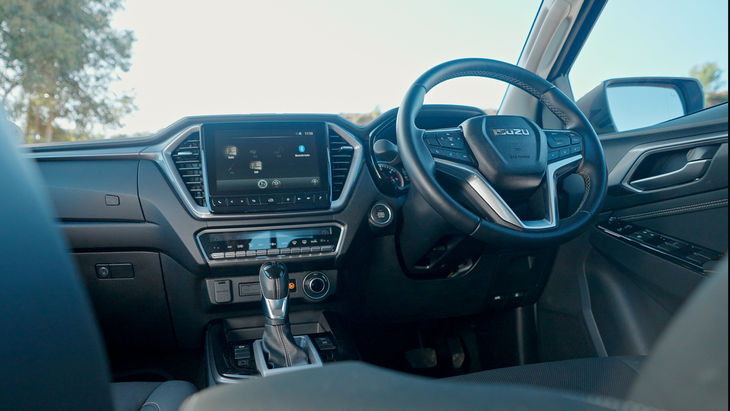
The outgoing D-Max’s cabin architecture was in dire need of an update; the new model’s fascia is modern and well-made.
Owners of the previous D-Max are always in awe when they see the fascia of the new Isuzu for the first time. Indeed, compared with its comparatively rudimentary predecessor, the new D-Max looks upmarket, with neat finishes all round and good quality materials. It’s also worth noting that the D-Max’s cabin emitted neither a rattle nor a squeak during its tenure in our test fleet, during which time it was used for gravel- and off-road driving. It seems very well screwed together.
Leather upholstery is standard on LSE-spec D-Maxes, and the driver’s seat offers height adjustment (manual), plus lumbar support; combined with the rake- and reach-adjustable steering column, it’s easy to find a comfortable driving position.
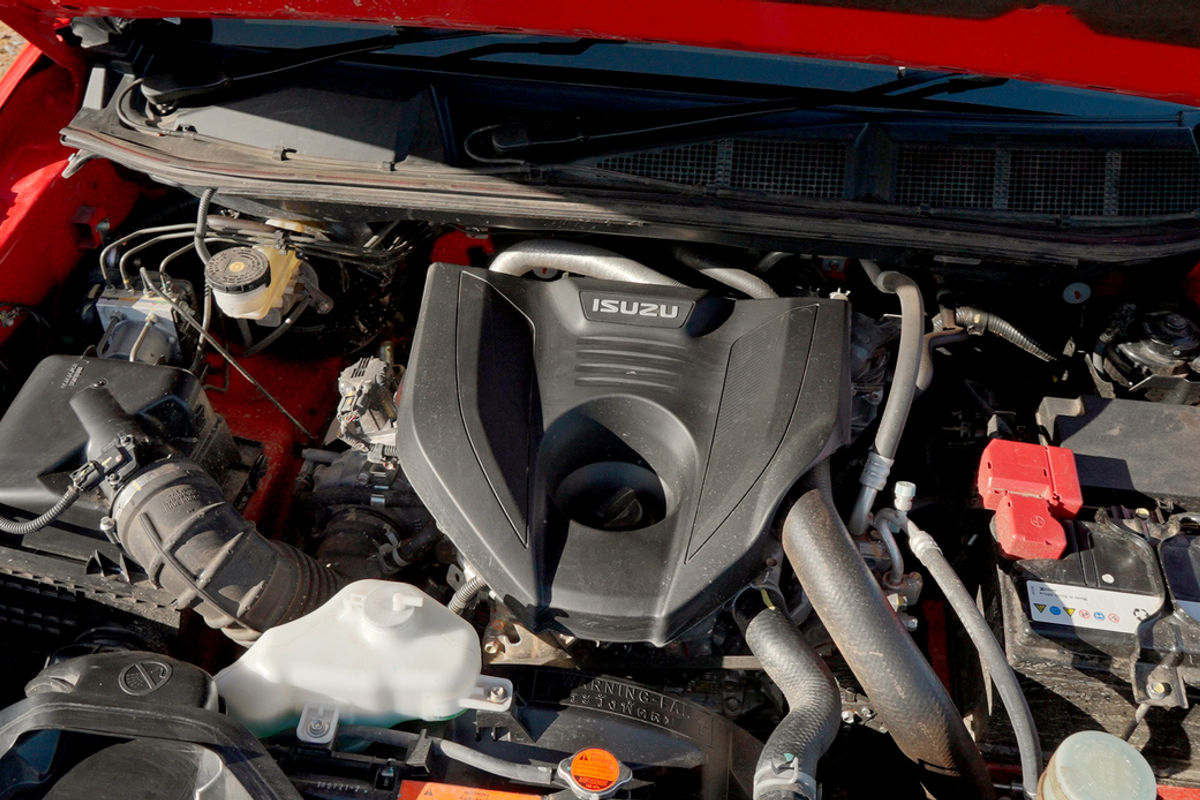
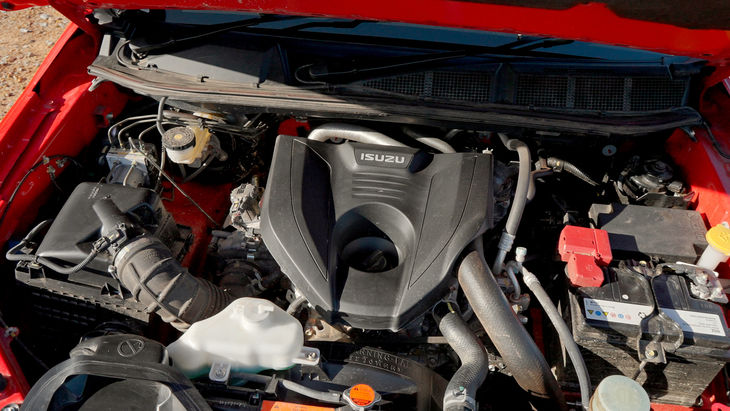
The D-Max’s 3.0-litre turbodiesel is still not a benchmark engine in the bakkie segment, but it HAS been improved.
Performance and Efficiency
The D-Max is powered by what Isuzu calls an “upgraded” version of the Japanese marque’s tried-and-tested 3.0-litre 4-cylinder turbodiesel engine, but most of it is, in actual fact, all-new. Isuzu’s goals were to achieve improved low-down torque, less noise, better fuel efficiency and superior pull-away performance. It has to be said that its predecessor was a particularly “lazy” powerplant, at least within the context of what else is on offer in the market.
In this LSE 4×4 derivative, the engine is mated with a six-speed automatic transmission. Quoted outputs are nothing staggering: peak power of 140 kW is class-competitive, but nothing more, and the maximum torque of 450 Nm is about on-par with the opposition. Both outputs are beaten by, for example, those of the current Toyota Hilux 2.8GD-6, and the forthcoming Ford Ranger and Volkswagen Amarok will have those numbers beaten as well…
Despite the 3.0-litre motor’s so-so peak outputs, the Isuzu’s powertrain performs better than expected.
Still, on the road, the D-Max does indeed feel a bit more eager from the get-go and a shove of torque is available from 1 600 to 2 600 rpm. The transmission is well-calibrated with the engine’s performance characteristics (it does not resort to hunting for the appropriate ratio) and, best of all, it shifts almost unobtrusively. The engine does, however, retain that typical “grumbly” Isuzu sound, but push down on the throttle pedal and there’s generally more performance to unlock than what the strained engine sound may lead you to suspect. So while the Isuzu is more refined than before, we wouldn’t rate its “perceived” mechanical refinement as being on par with, for example, the Toyota Hilux’s 2.8-litre 4-cylinder unit.
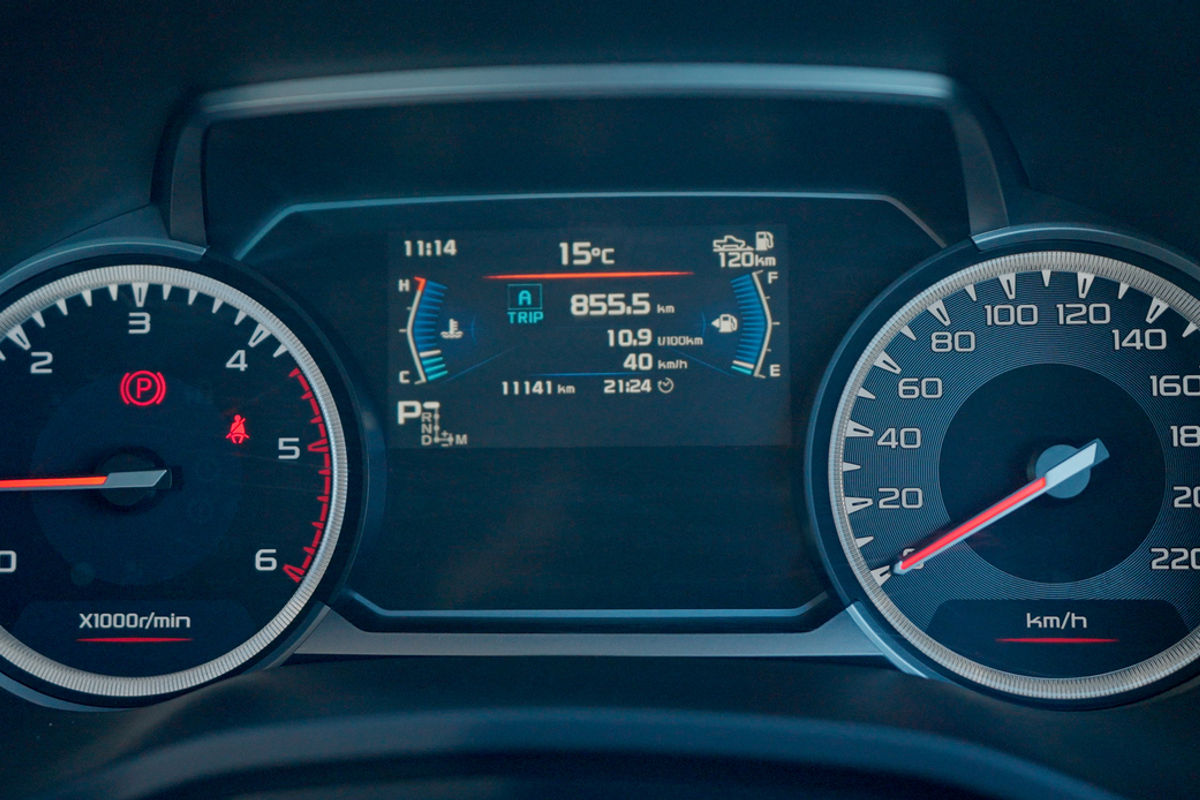
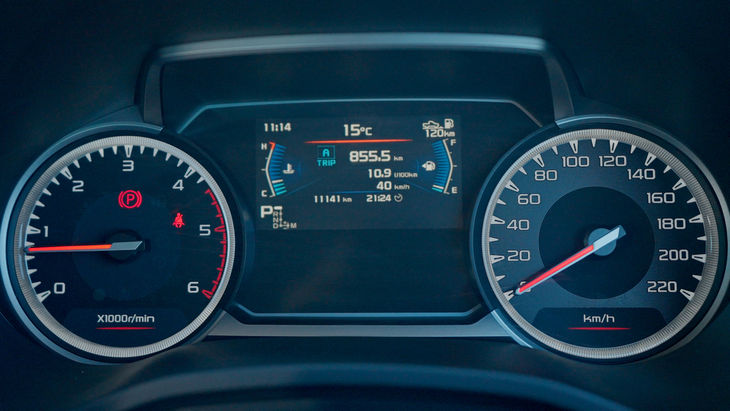
Isuzu claims an average fuel consumption of 7.9L/100 km, which is among the lowest in this category, and during this test, we averaged around 10L/100 km (indicated), which is impressive for this type of vehicle.
The D-Max’s interior has been updated with a smarter infotainment system and switchgear, but the tech race is merciless.
Comfort and Features
Priced at near the R800 000 mark, LSE specification is comprehensive – as it should be. Dual-zone climate control, cruise control, rain-sensing wipers, front and rear park assist, tyre-pressure monitoring and a 9-inch touchscreen infotainment system, which is Apple CarPlay and Android Auto compatible, are among the highlights. On the safety side, the D-Max also gets blind-spot monitoring and cross-traffic alert (very handy on a sizeable vehicle), in addition to 7 airbags.
Isuzu’s newcomer offers more rear legroom than several of its competitors.
And yet, we feel it might all just not be enough… The game is moving quickly in the leisure double-cab segment, and the upcoming new Ford Ranger and Volkswagen Amarok are likely to set heady benchmarks in the cabin-tech space. The D-Max LSE does have a reverse-view camera, but that in itself is no longer terribly impressive (when there are far more affordable vehicles available that offer 360-degree camera systems as standard). It may seem like we’re nitpicking, but the reality is that a 360-degree camera (or multi-angle views) would notably boost the D-Max’s off-road credentials. It’s not just for show, and we feel a wireless charging pad will also soon become the norm in this segment.
If you want truly advanced safety features such as autonomous emergency braking, lane-keep assist and adaptive cruise control, you will have to fork out extra for the V-Cross flagship.
Isuzu prides itself on offering a good ride quality (for a bakkie) and the latest D-Max proudly continues that tradition.
Ride and Handling
The D-Max has always delivered one of the more forgiving (absorbent) ride qualities in the double-cab market, and this latest model continues the tradition. We have a particularly nasty few speed humps in our office complex, and they usually send tremors down the chassis of any ladder-frame-based vehicle that traverses them – in a bakkie, a little jump from the rear axle is to be expected. The D-Max, however, cruised over those bumps without as much as a hint of drama.
Similarly, on our gravel-road test, the D-Max’s ride and road holding impressed. On tar, it’s a smooth operator as well, with much lower NVH (noise, vibration and harshness) compared with its predecessor and notably more precise steering.
Even though its ground clearance is less than that of the Hilux, for example, the D-Max excels in off-road conditions.
And then we headed off-road. On paper, the D-Max’s ground clearance of 232 mm is not particularly impressive (Toyota claims 286 mm for the Hilux), but we didn’t experience any “bottoming out” during our off-road test, plus the bakkie’s approach and departure angles (30- and 18 degrees, respectively) appeared to be quite sufficient. Isuzu claims a wading depth of 800 mm for the D-Max.
In general, the D-Max feels unstoppable and virtually unbreakable off-road. Selecting 4H or 4L requires no more than a twist of a rotary knob on the fascia, and a rear diff-lock is standard. Combine all of this with loads of torque from low in the rev range, and you have a vehicle that feels capable of crawling up – and over – anything.
Rear occupants are afforded a USB port to charge electronic devices – always a boon on a long-haul road trip.
Price and After-Sales Support
The Isuzu D-Max 3.0TD Double-Cab 4×4 LSE sells for R771 700 (before options, July 2022) and is backed with a 5-year/120 000 km warranty and 5-year/90 000 km service plan. Services are scheduled for every 12 months/15 000 km.
The 7th-gen D-Max offers several improvements over its predecessor – and has lost none of its charms – but is that enough?
Verdict
Compared with its long-serving (and widely adored) predecessor, the 7th-gen Isuzu D-Max is more spacious and comfortable inside, with greater drivetrain refinement, good looks and impressive off-roading talents. Indeed, the Japanese bakkie ticks many boxes. We’re sure the Isuzu faithful will love it, as it also retains that typically Isuzu “rugged” character. Is it good enough, however, to steal some sales away from the other brands? On that question, we’re not so sure.
Make no mistake, there’s little amiss with the D-Max, it’s just that the leisure double-cab game will move quickly in the coming months, and we wonder whether Isuzu has made big enough strides in terms of particularly cabin infotainment tech and engine power. On the other hand, some D-Max diehards will argue that they prefer Isuzu’s simpler approach, which could result in greater reliability in the long run. Either way, this is a well-built, attractive product that deserves to do well.
All-New 2023 Volkswagen Amarok Unleashed
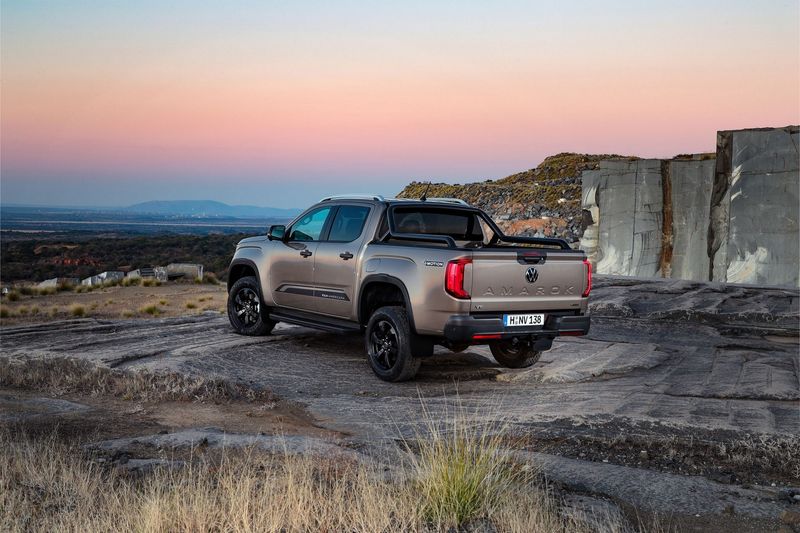
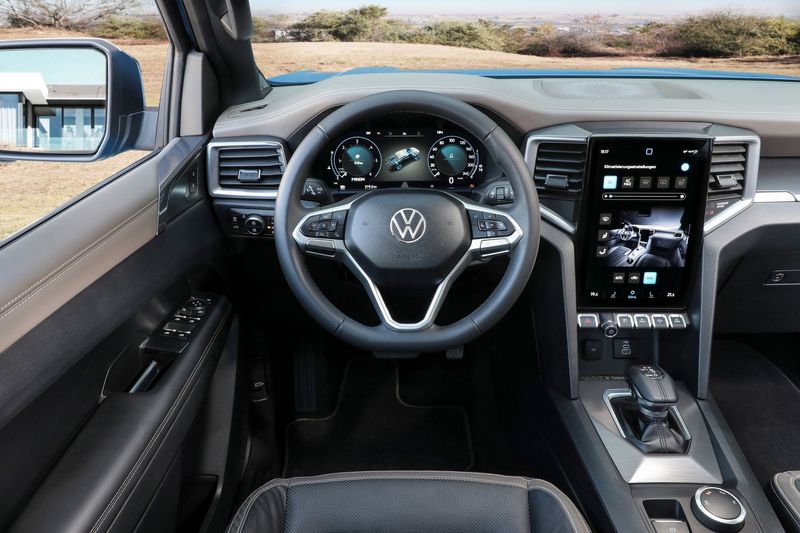
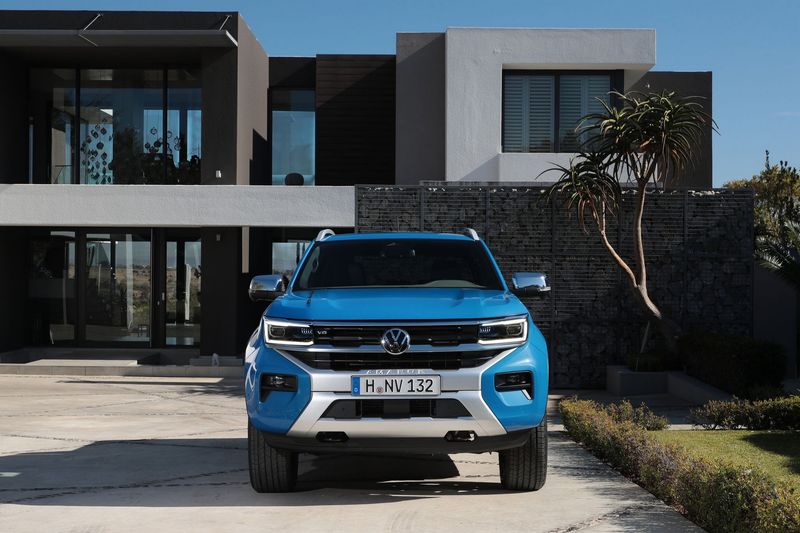
The wait is over. This is the all-new Volkswagen Amarok 2023 which will be locally assembled in SA and go on sale in the first quarter of 2023.
Following a long string of teasers, the global premiere has finally taken place and we can get our first official look at the Ford Ranger-based Volkswagen Amarok.
Yes, that’s right. The brand-new 2nd-generation 2023 Volkswagen Amarok will share a platform with the Ford Ranger and both will be assembled right here in South Africa at Ford’s plant in Silverton, Pretoria. Globally, it appears that both single cabs and double cabs will be made, but it’s too early to tell what body styles and engines the SA market will be getting.
What’s new on the 2023 VW Amarok?
In terms of size, the new Volkswagen Amarok is 96 mm longer than the outgoing model and its wheelbase has been extended by 173 mm. The longer wheelbase translates to more cabin space. The growth in size has resulted in sharper proportions and better 4×4 capability due to improved approach angles. It now boasts a wading depth of 800 mm.
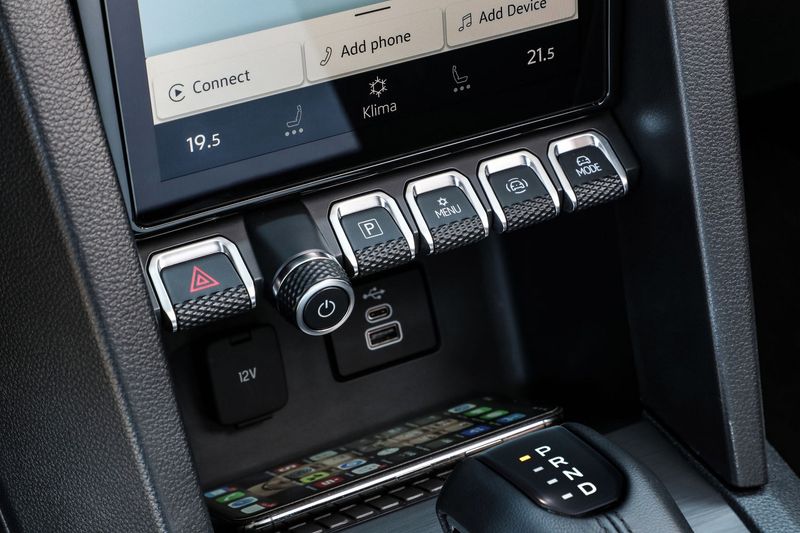
Inside, there’s a fresh and modern cabin with digital displays galore. Depending on trim level, the digital instrument cluster measures either 8 or 12 inches. Higher-spec models gain a 12-inch infotainment screen, while the lower grades use a 10-inch unit. A premium Harman Kardon audio system is also offered. Internationally, there will be Style, Aventura and PanAmericana levels of trim, aimed at different audiences.
Despite bakkies becoming less workhorse and more lifestyle, they still need to retain some functional traits. There’s big space in the loadbay for up to 1.16 tons and there’s enough space for a Euro pallet loaded sideways. There’s also an electrically operated roll cover available.
Accessories will seemingly play a big role in the Amarok’s positioning and Volkswagen has confirmed a vast array of goodies such as larger wheels, tents, styling kits, bike racks and so on.
2023 Volkswagen Amarok Engines
Volkswagen has confirmed there will be 5 turbocharged engines (all from Ford, of course), which will be tailored to individual markets. There will be 4 turbocharged diesel motors and 1 turbocharged petrol. The powertrain range starts with a 2.0-litre 4-cylinder turbodiesel with 110 kW / 350 Nm. This engine is also available in a higher-spec 125 kW / 405 Nm output.
The 3rd engine is a 2.0-litre biturbo diesel with 150 kW or 154 kW and 500 Nm, market dependent. The flagship engine is a 3.0-litre turbodiesel V6 and is available in outputs of 177 kW or 184 kW and 600 Nm, depending on the market. The petrol engine is a 2.3-litre 4-cylinder with 222 kW and 452 Nm.
Customers will be able to choose from manual 5- or 6-speed gearboxes, while automatic options range from 6-speed to a new 10-speed automatic transmission. Depending on the market, the 2023 Volkswagen Amarok will feature permanent 4Motion all-wheel drive as standard or selectable all-wheel drive with low range.
The new Amarok will also boast advanced technology. There’ll be over 30 driver assistance features offered in the new Amarok (20 of them are new) when it goes on sale in early 2023.
This is the international reveal, so we’re looking forward finding out South African details (and confirming which engines we’ll be getting) soon. Watch this space!
Winners & losers: SA bakkie sales halfway through 2022
It’s been an interesting first half of the year for South Africa’s bakkie market, with the traditional big-name players experiencing a few ups and downs. Let’s look at the numbers…
In the first half of 2022, South Africa’s light-commercial segment — which includes bakkies, mini-buses and vans — shrunk 7.6% year on year to 63 586 units. As we’ve pointed out before, a fair chunk of that shortfall is due to a lack of local production of the Hilux and Hi-Ace at Toyota’s flood-damaged Prospecton plant in KwaZulu-Natal since mid-April.
So, how did things pan out over the first six months of the year in the bakkie segment? Well, we’ve been following the sales race closely since the start of 2022 and now have the opportunity to tally up the figures and see which bakkie places where. Let’s take a closer look…
Despite the aforementioned lengthy production stoppage at Toyota’s local facility, the Hilux is miles ahead of the pack, with nearly 16 000 units registered at the halfway point of 2022. That’s more than double its second-placed rival.
Interestingly, the runner-up isn’t the outgoing Ford Ranger, which is relegated to third place with 6 828 units sold. Instead, second spot goes to the new Isuzu D-Max (7 140 units), which finishes the first half of the year 312 units ahead of its Silverton-built competitor. However, as we’ve mentioned before, it seems this total includes the Gen 6 range, which is effectively a previous-generation D-Max soldiering on alongside the new line-up.
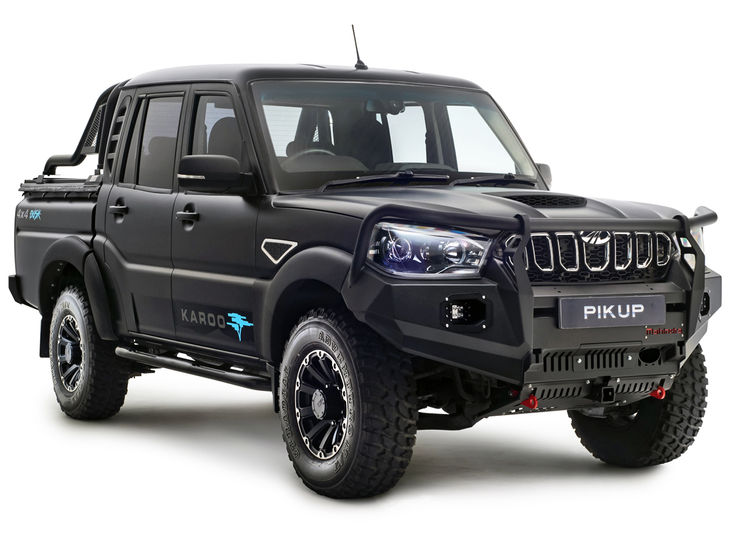
As the only half-tonne bakkie still on the local market, the Nissan NP200 (6 073 units) takes a strong fourth place, with the locally assembled Mahindra Pik Up (pictured above) grabbing a commendable fifth. The Rosslyn-built Nissan Navara (2 970 units) settles into sixth place, 395 units ahead the GWM P-Series (2 575 units), which is interestingly the highest-placed fully imported model.
With 2 356 examples registered countrywide in the opening half of 2002, the GWM Steed takes eighth, not far behind its likewise Chinese-built sibling. The evergreen Toyota Land Cruiser 79 (1 585 units) and outgoing Volkswagen Amarok (1 052 units) close out the top 10 in ninth and tenth place, respectively.
Bakkies at the bottom of the sales charts in 2022 thus far
So, what about the bakkies that failed to make it into the top 10? Well, the Mahindra Bolero (575 units) was the best of the rest, as it has been month in and month out in 2022 thus far. The Mitsubishi Trition finished the first half of 2022 with a total of 270 sales (that’s an average of 45 units a month), while the Peugeot Landtrek settled for a total of 191 units.
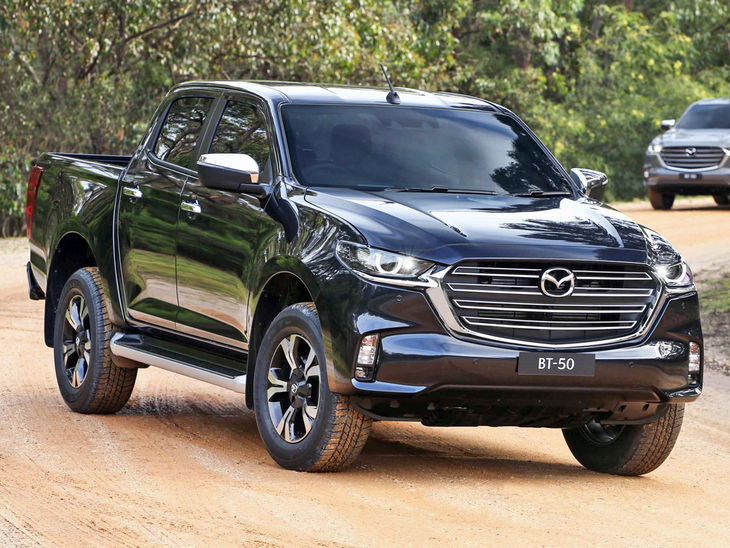
And the Mazda BT-50? Well, the D-Max-based bakkie disappointed with a six-month tally of just 102 units, which translates to a paltry monthly average of 17 units. Finally, the Jeep Gladiator contributed 56 registrations, though hit the market only in the final month of the reporting period. For the record, we’ve excluded JAC’s T6 and T8 models since the company has started reporting a combined figure.
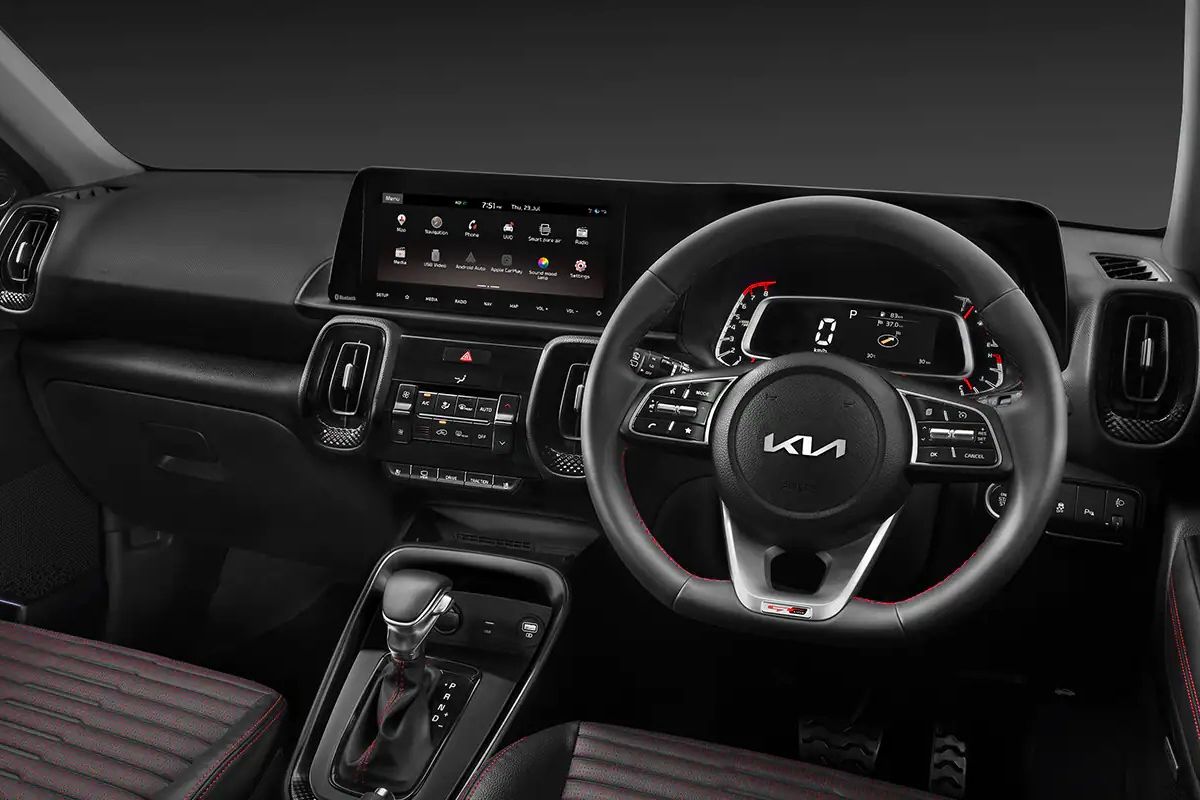
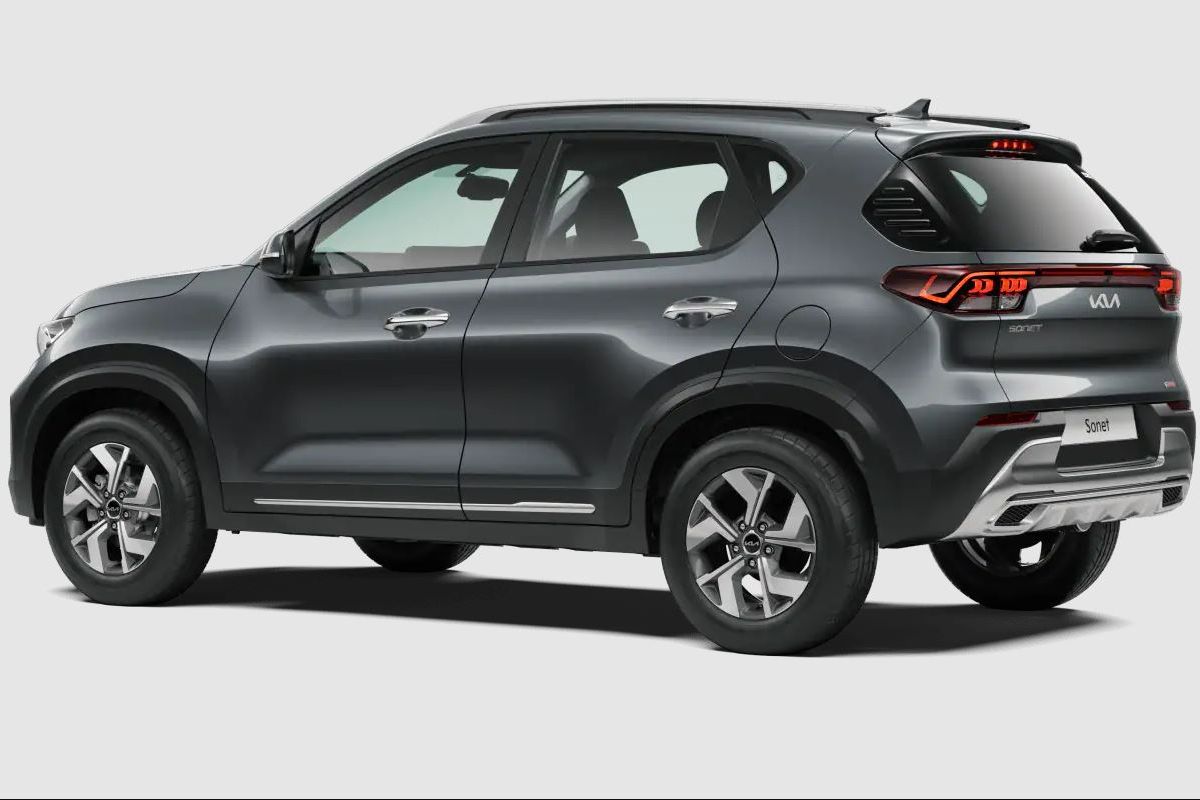
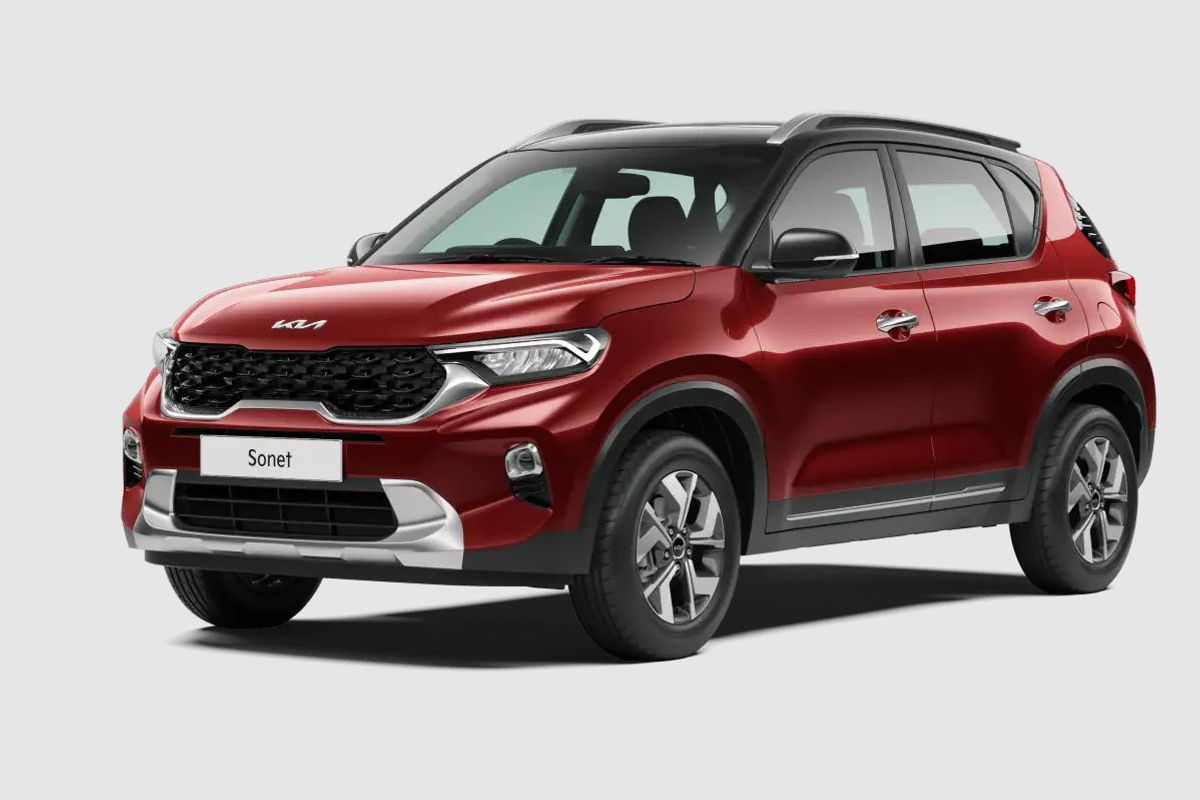
Now Kia South Africa has made good on its promise that it would be introducing more powerful derivatives of the Sonet. At its local launch in May 2021, we had the chance to inspect and drive some Indian-spec Sonet homologation units, which were armed with 1.0-litre turbocharged triple engines and packaged in striking GT-Line trim. First impressions were good!
What’s on offer?
Now, while we’re not getting the full GT-Line treatment, the turbocharged Sonet comes to market with a pair of derivatives. There are two trim levels EX and EX+. The difference between these newcomers and the models we’ve sampled thus far can be found in the engine.
Instead of the 1.5-litre naturally-aspirated 4-cylinder petrol engine, there’s a 1.0-litre turbocharged 3-cylinder petrol, paired to a 7-speed dual-clutch transmission. Outputs of 88 kW and 172 Nm are claimed, and the Korean carmaker says the Sonet 1.0 T-GDI is good for an 11.3 second run to 100 kph.
Size-wise, you’re looking at a length of 4120 mm, a width of 1790 mm, height of 1631 mm and a wheelbase of 2500 mm. A boot space of 392 litres and a ground clearance of 190 mm gives it an element of lifestyle applications.
Kia Sonet 1.0 Trim Levels
EX
8-inch HD touchscreen infotainment with wireless Apple CarPlay and Android Auto
Bluetooth with voice control
Height-adjustable driver’s seat
Leather-trimmed steering wheel and gear shifter
Rear-view camera and rear park distance control (PDC)
Combination artificial leather and cloth seat trim
Electronic Stability Control (ESC)
ABS with EBD
Hill-start Assist Control (HAC)
Dual front airbags
ISOFIX child-seat anchoring points
16-inch alloy wheels
Automatic headlamp activation
EX+ (The above content plus:)
Side and curtain airbags (6 in total)
Rear combination LED lights with signature graphic
2-inch TFT LCD Supervision cluster
Artificial leather seats with contrast red stitching
Folding electric side mirrors
Electrochromatic rear-view mirror
Cruise control
Automatic climate control
Drive Mode Select
We will be driving the Kia Sonet 1.0 at its local launch and will update the final specifications plus warranty details as soon as we have that information.
How much does the Kia Sonet 1.0 Turbo cost in South Africa?
Kia Sonet 1.0 T-GDI EX R359 995
Kia Sonet 1.0 T-GDI EX+ R389 995
All Sonet models ship as standard with Kia’s industry-leading Unlimited Kilometre, 5-year warranty (inclusive of Roadside Assistance), as well as a prepaid 4-year / 60,000 km service plan.
We drive the first-ever Cape 1000 in a 55-year-old Citroen DS!
The inaugural The Cape 1000 took place earlier this year and Team Cars.co.za competed in a 1967 Citroen DS19. Not only did driver Ciro De Siena and navigator Duwyne Aspeling complete the 1 600 km route in an unknown car, but also endured excessive heat, lightning strikes and even a bee attack!
When The Cape 1000 convoy of nearly 40 spectacular cars, the oldest of which dated from 1956, returned to the Silo Hotel in the V&A Waterfront, Cape Town, it was to rapturous applause from a large crowd of appreciative petrolheads and intrigued, smartphone-toting passers-by. Throughout the preceding four days, these rare cars travelled vast distances and endured extreme heat and thunderstorms, while their drivers and navigators had to sustain long periods of concentration during timed regularity stages. But they also had the time of their lives…
“It was extremely tough,” says Cars.co.za’s Ciro De Siena, who drove a 1967 Citroën DS.
“On average, we did 400 km a day, without air-conditioning (which we take for granted these days) and the regularity stages really required you to be very alert. Duwyne Aspeling, my navigator, did an excellent job! But all the sweat and fatigue is worth it in the end, as you get to see our beautiful country, swap stories with other petrolheads, and make memories that will last a lifetime. If you’re a petrolhead, then The Cape 1000 simply has to be on your bucket list!”