Bonnet jewellery gets smaller for future Rolls-Royce EVs.
One of the world’s most recognisable bonnet ornaments has shrunk.
For 111 years (yes, that’s cricket Nelson), Rolls-Royce vehicles have featured the Spirit of Ecstasy. A female figurine distinguishing these, most British luxury cars from their rivals.
For more than a century, the Spirit of Ecstasy has been a status symbol and mark of distinction. But when it first appeared, the notion of automotive aerodynamics could not benefit from wind tunnel awareness of computer-aided design.
Rolls-Royce has reshaped its bonnet ornament in a world where aerodynamic drag has become an important issue. Mercedes-Benz realised that a three-pointed star created too much drag some time ago. Not to mention the issue of pedestrian crash safety being compromised by an encircled star in the middle of the bonnet.
Although Mercedes-Benz flattened its three-pointed star from a 3D structure to a 2D badge in 2008, Rolls Royce is keen to retain the Spirit of Ecstasy badge. In addition to a remote control feature, which folds the bonnet ornament away, reducing the issue of aerodynamic drag at speed, engineers at Rolls-Royce have redesigned it to have a smaller profile when owners decide to drive their cars with the Spirit of Ecstasy visible.
The new bonnet ornament is smaller, with a crouched stance. Beyond its reduced surface area, the figure’s robes (often confused with wings), have been reprofiled into a smoother, more aerodynamic shape.
When will followers of the Rolls-Royce brand, see the slimmer Spirit of Ecstasy? The company’s internal combustion vehicles won’t be using it, soon. But it will become standard fitment on all future electric-powertrain Rolls-Royces, the first of which should enter the market in 2023.
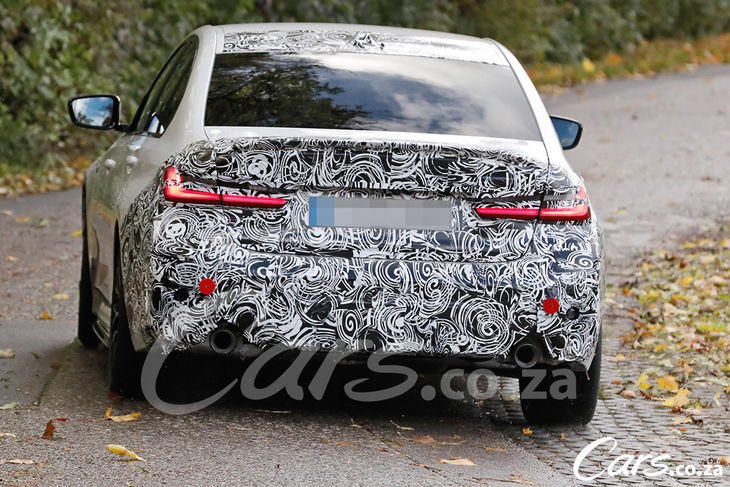
BMW is expected to reveal its Life Cycle Impulse (LCI) 3 Series this year and it will be accompanied by a revised 3 Series M Performance, which has now been spied testing for the first time.
Picture credit: S. Baldauf/SB-Medien. We have paid for these photos and at the photographer’s request, have watermarked them.
The all-new BMW 3 Series arrived in South Africa in 2019 and at the time it was considered to be the go-to offering for shoppers looking for a competent business class. However, the 3 Series now competes with an all-new, locally produced Mercedes-Benz C-Class which means that the 3 Series needs to be sharper than ever if it’s to rule the roost in this shrinking segment.
The 3 Series with M Performance parts aims to lift the visual and sporty appeal of the 3 Series and based on the front and rear camouflage, it’s clear that BMW is taking the opportunity to revise elements such as the headlights and front and rear bumpers. As far as styling is concerned, the changes are expected to be minor but more notable updates in terms of in-car technology is likely.
As for powertrains, the current 2.0-litre petrol and diesel engines are expected to remain for now, including the M340i xDrive. The 3 Series range will still be headlined by the BMW M3 which is currently enjoying sales success, not only in South Africa but in other markets too.
We will keep you updated as soon as official details of the BMW 3 Series LCI are released, so stay tuned!
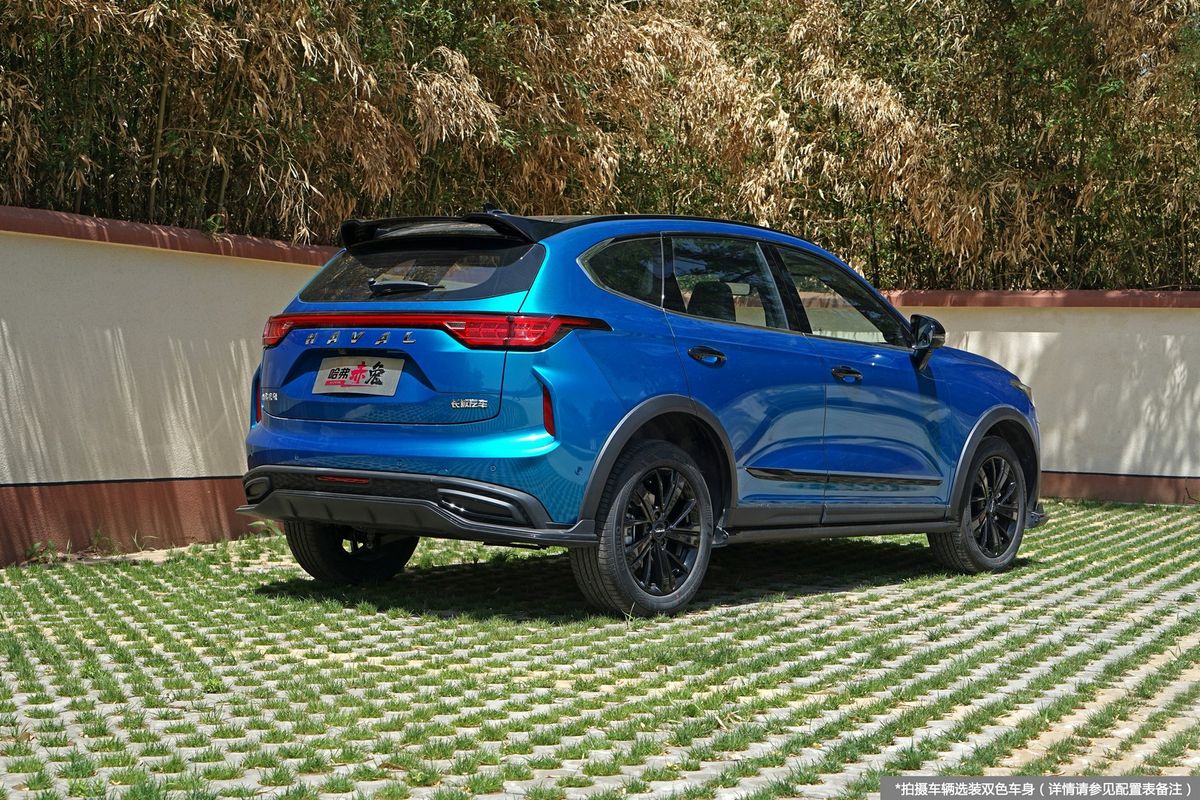
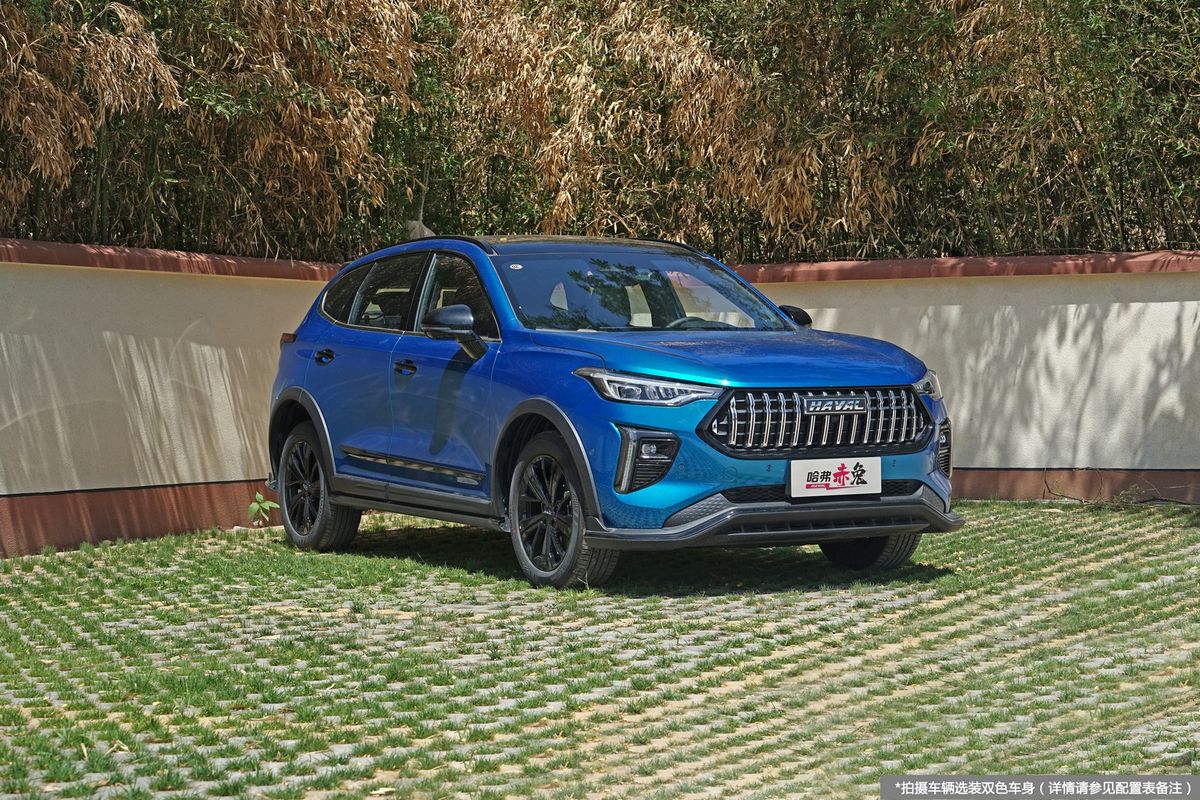
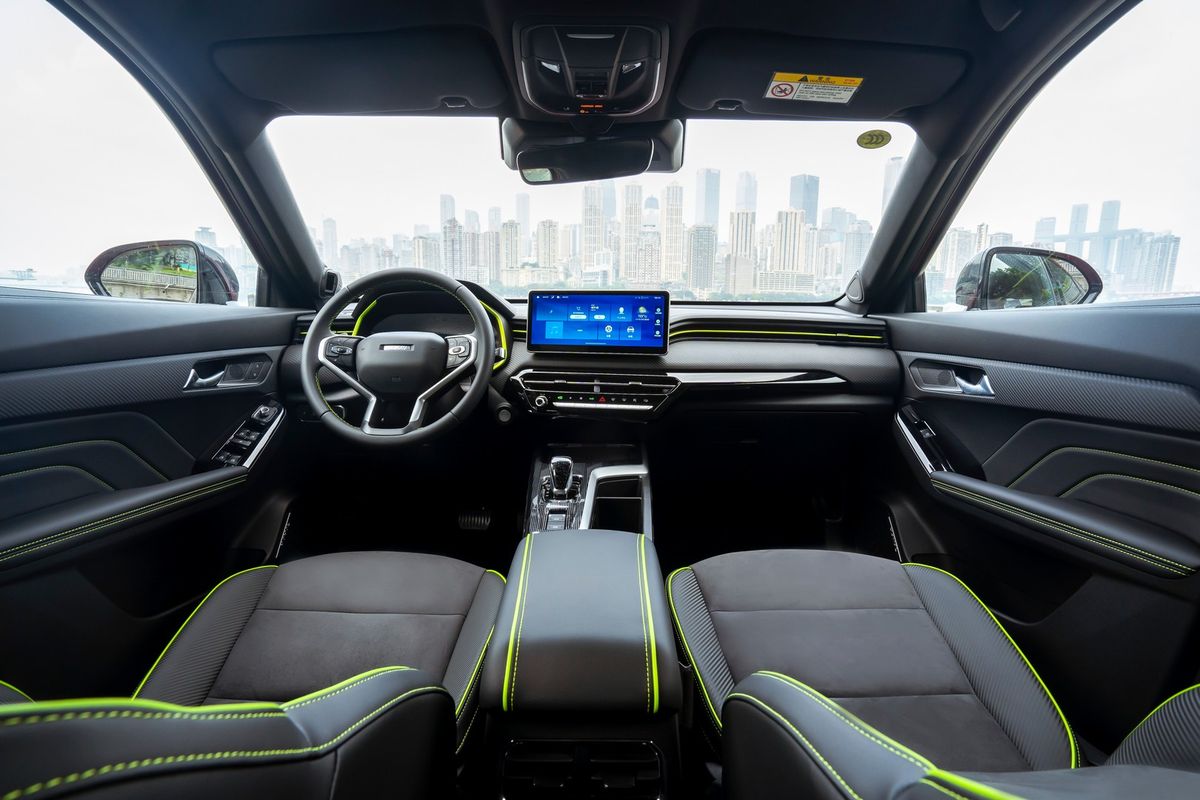
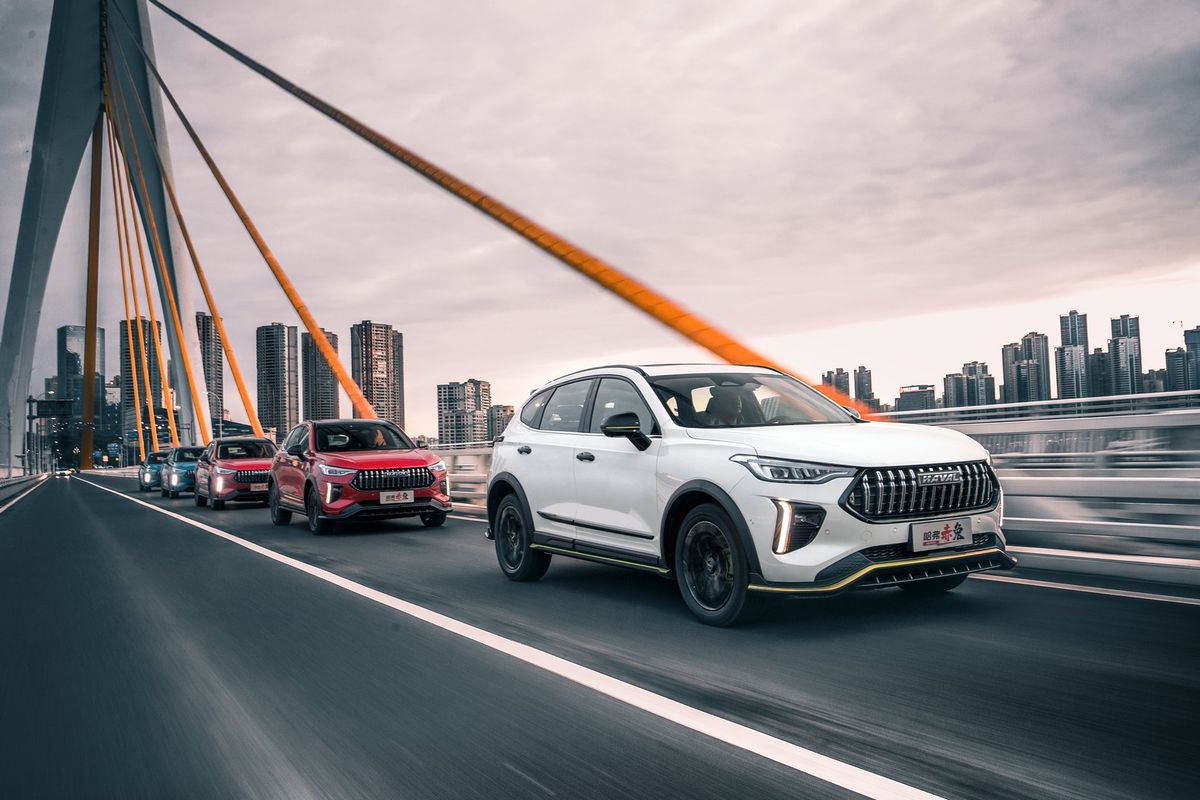
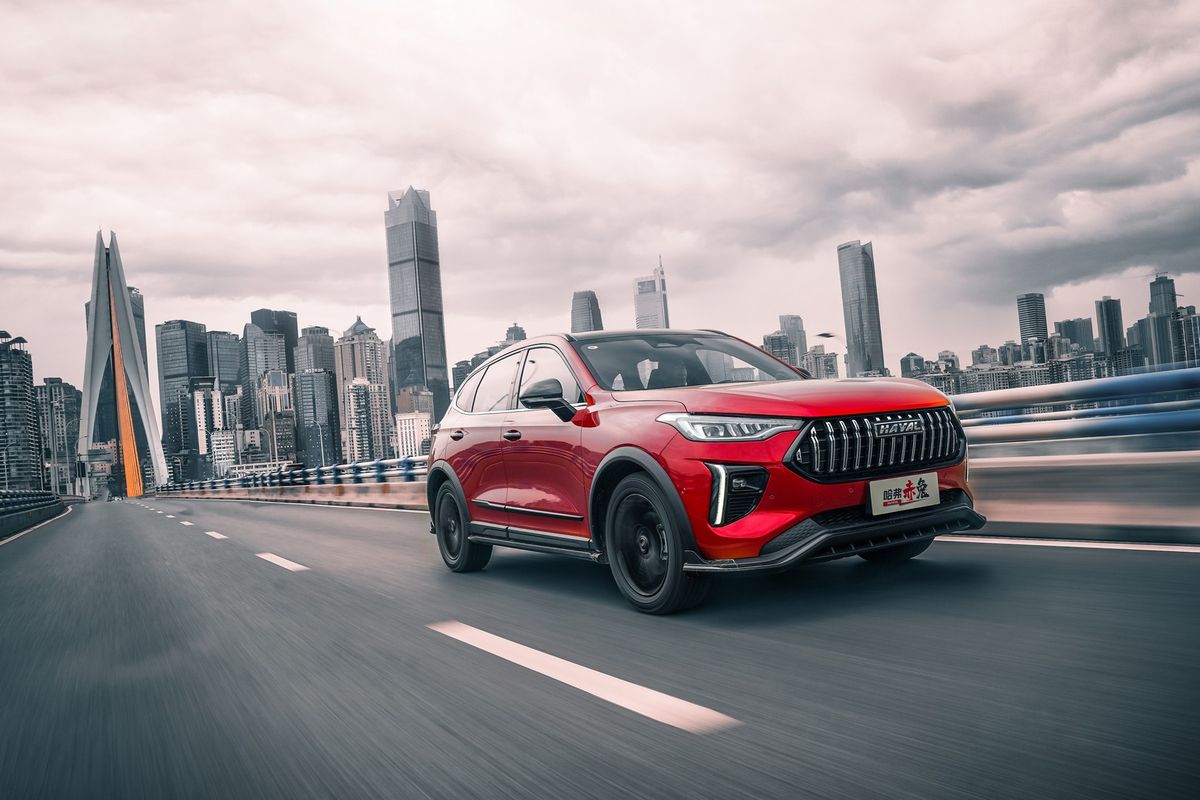
This is the recently unveiled Haval Chitu and while it’s not immediately on the cards for SA, we think it could be the perfect replacement for the ageing Haval H1.
The Haval Chitu is yet another great-looking modern SUV from China. Underpinned on the same platform as the Jolion, this newcomer is interestingly a similar size to the popular model. We think the arrangement will be like Volkswagen T-Cross/Taigo and Renault Captur/Duster – cars that overlap but surely target different markets.
The Haval Chitu name is an interesting one. It translates to Red Rabbit and it’s not the first time we have encountered a unique naming structure. Jolion means first love, and the Big Dog range of SUVs are already on sale globally, under the name Dargo in certain countries.
Physically, the Haval Chitu is 4.45 metres long, 1.84 metres wide and features a wheelbase of 2.7 metres. The Jolion is near identical, but is just 2 cm shorter. Looks-wise, we’d say that the Chitu is the sportier and more youthful of the two.
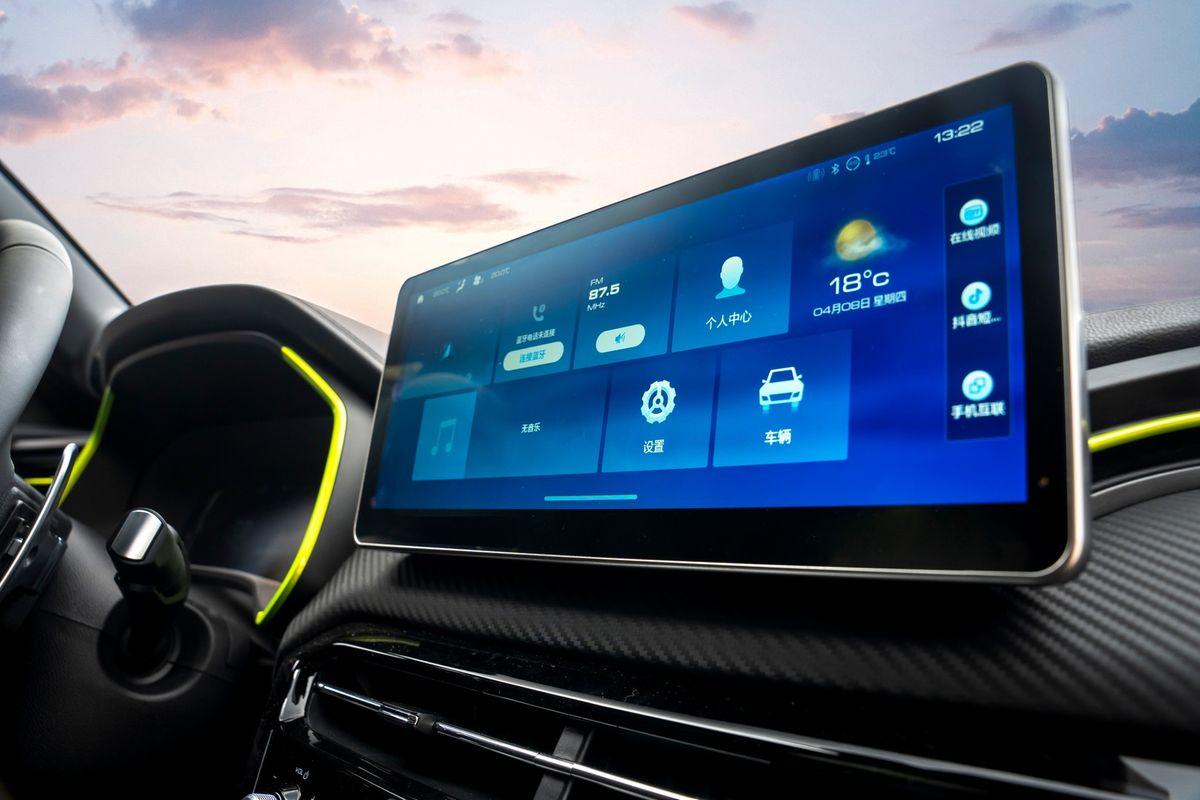
Inside, there are more shared common elements, like the 10-inch digital dashboard and large 12.3-inch colourful high-res infotainment screen. The Haval Chitu gets a proper gear selector stick, as opposed to the Jolion’s rotary dial.
The level of standard specification looks impressive and while this model has yet to be approved for export out of China, things like a full-colour heads-up display, level 2 autonomous driving (adaptive cruise control and lane-keeping assist) as well as a 360-degree camera are standard.
The Haval Jolion shares its engine range too, with the 1.5-litre turbocharged petrol engine on duty. It is paired to a 7-speed dual-clutch transmission. Outputs of 105 kW and 210 Nm are on offer. There’s even a hybrid version that dials in 140 kW and 370 Nm, plus the additional benefit of enhanced economy meaning more kilometres between refuels.
As of February 2022, Haval SA no longer sells the H1 as a new car, but there are still plenty of units floating around tagged as 2021 nearly new. The Haval Jolion price starts from R310k and goes to R409k, and we reckon there’s a market for an SUV that sits from R250k to replace the H1. Could the Haval Chitu be the right vehicle for the job? Certainly it could be when you consider its list price is under R300k when converted in Rands
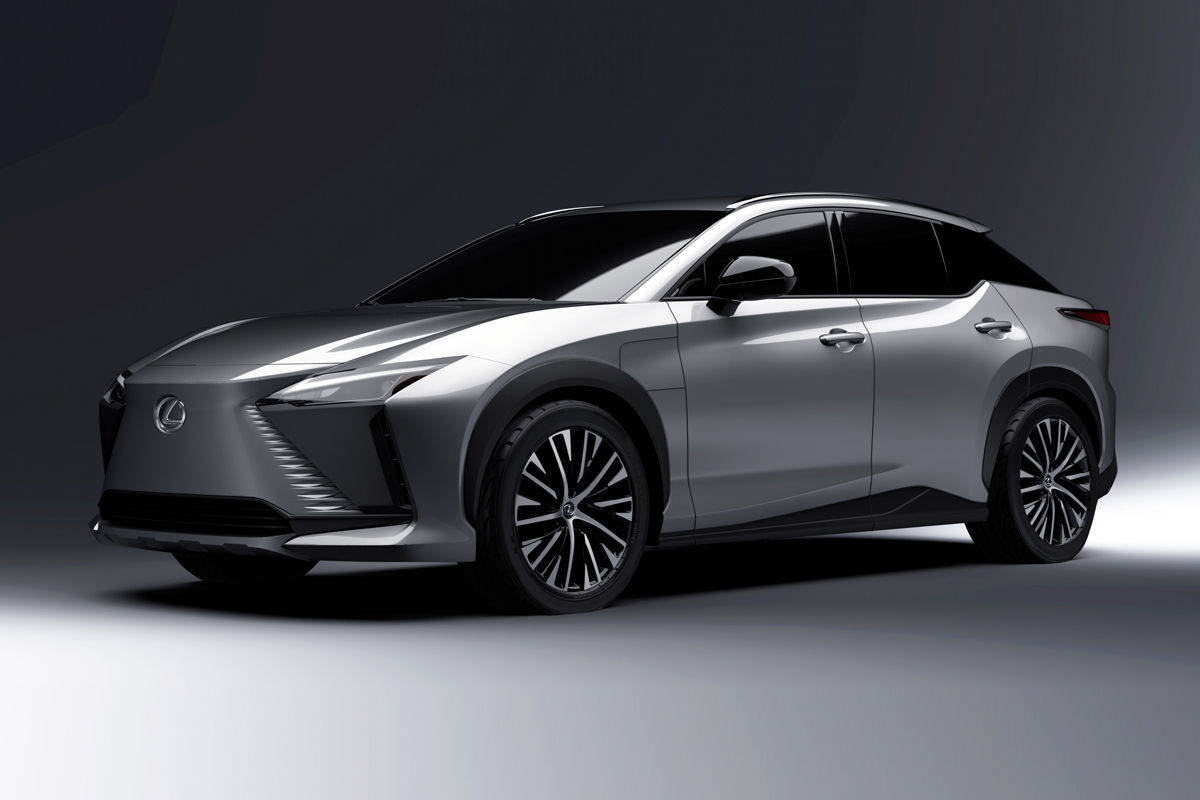
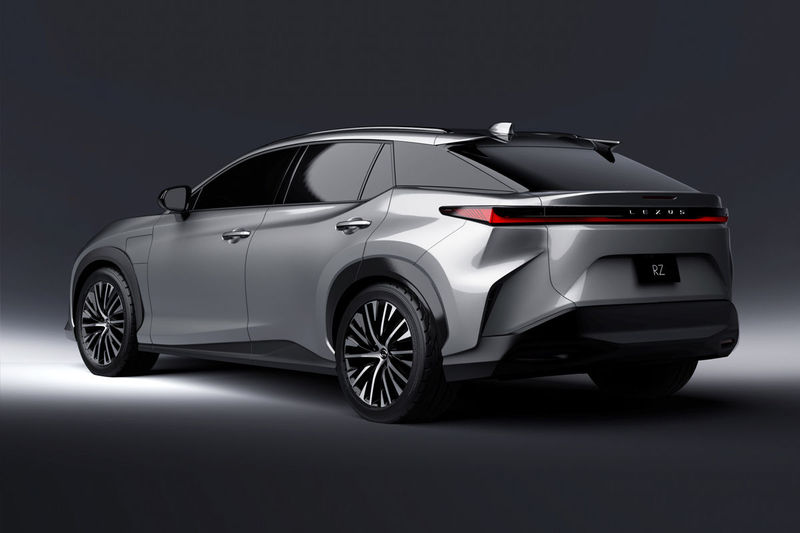
Toyota global president Akio Toyoda has said that Lexus will sell only electric vehicles by 2035 and the brand is expected to launch its first standalone battery-electric vehicle – the RZ 450e – soon. This week, the Japanese premium marque released new images of the upcoming model.
In December last year, we reported that Toyoda-san announced no fewer than 16 new battery-electric vehicles – of which four were Lexus models – at the brand’s Megaweb showcase in Tokyo. While the Aichi-based giant has certainly been at the forefront of petrol-electric hybrid technology for decades, many of Toyota’s European, South Korean, Chinese and North American rival manufacturers have been quicker to introduce (adapted and standalone) battery-electric vehicles, especially in the luxury-car space. Lexus has clearly got some catching up to do…
Well, this week Lexus International President Koji Sato said: “In 2022, we will release a series of new models, starting with the BEV-exclusive model RZ in (the Northern Hemisphere) spring.”
That means we’ll get to see the full reveal of the RZ 450e during the second quarter of the year, with international sales to begin too soon thereafter (although it’s not on the cards for Mzansi yet).
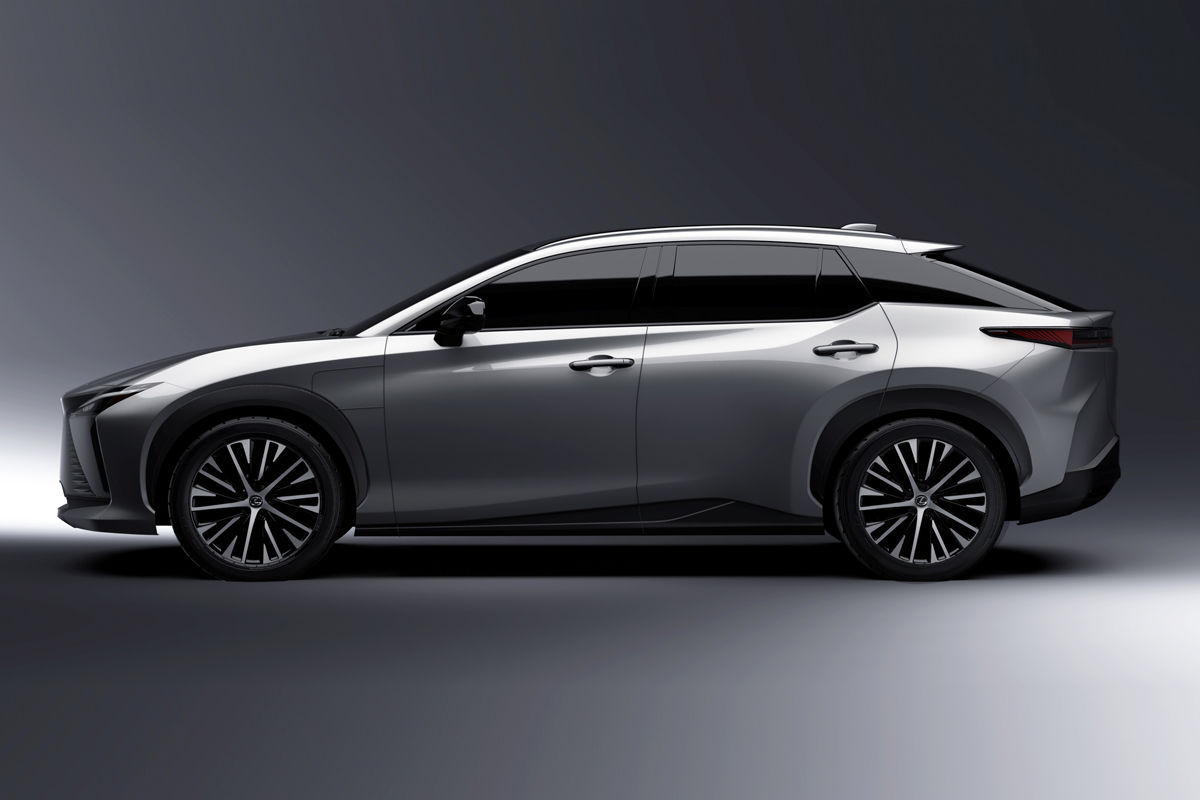
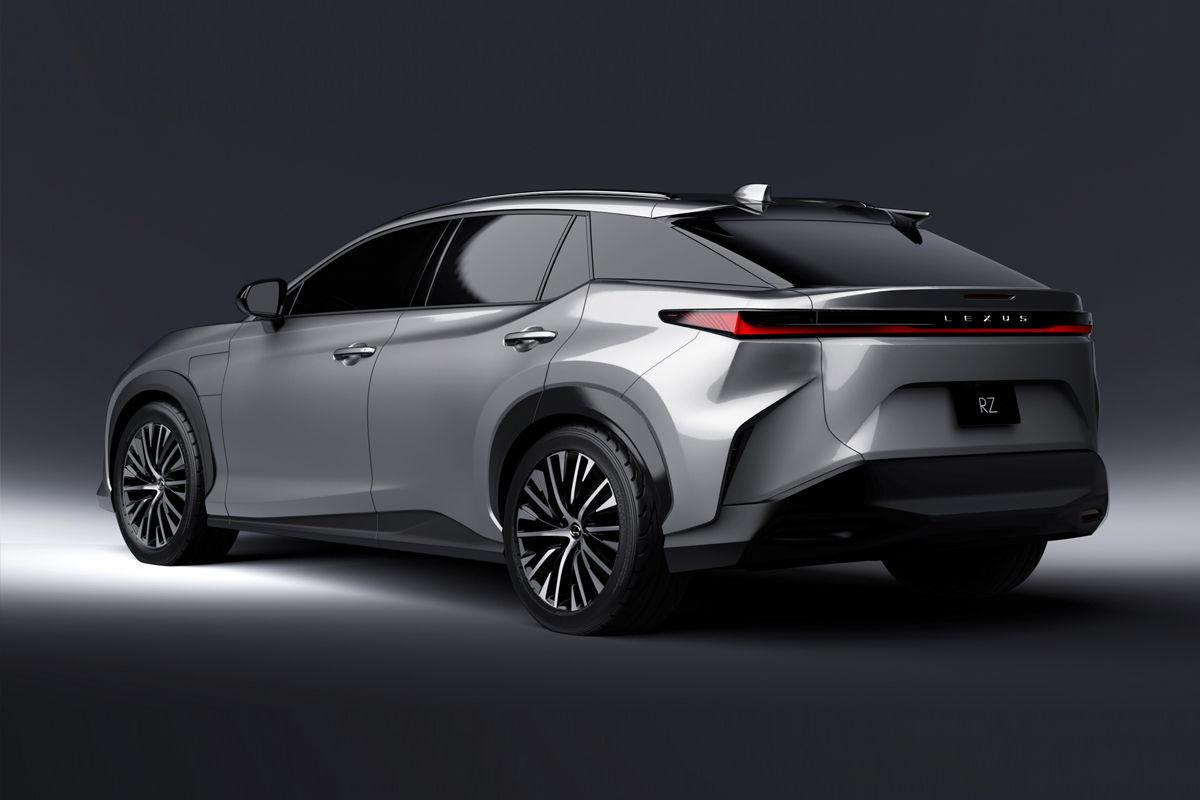
These images, which were released in conjunction with Lexus’ 2021 global sales data, offer a better look at the upcoming all-electric crossover’s profile and rear-end styling. It’s apparently of a similar size to the new NX, which will be launched in Mzansi soon, and is based on the same e-TNGA platform as the Toyota bZ4X (which is not part of Toyota South Africa Motors’ product plans – at this stage) and its cousin, the Subaru Solterra. We’d imagine that it will compete with the Hyundai Ioniq 5, Kia EV6 and, of course, the Audi e-tron, BMW iX3, Jaguar I-Pace, Mercedes Benz EQC, etc.
Compared with its Toyota and Subaru cousins, however, the RZ has notably sportier styling and is said to incorporate bespoke modifications aimed at elevating “(its) driving experience to the next level”.
In prolife, it certainly appears sleeker than its NX sibling (courtesy of narrow side-glass areas and blacked-out C-pillars), while the kicked-up rear end features a slim light bar and LEXUS lettering (as employed on last year’s LF-Z concept) – reports say that they are likely to become common cues of all of the brand’s standalone BEV models.
The vice-president of Lexus’ European division, Pascal Ruch, told British motoring title Autocar that it was a priority for Lexus to deliver “exhilarating driving performance” and hinted that the brand would offer variants of future BEVs that “support the sporty position of the brand”.
The RZ 450e is expected to offer “lighter and more compact motors”, increased body rigidity, steer-by-wire technology and Direct4 fully-variable four-wheel-drive technology; Ruch added that the newcomer would provide owners with “an engaging and rewarding driving experience”.
The Direct4 system allows the RZ 450e to apportion its power delivery across both axles, which means it can dynamically switch between front, rear and all-wheel drive as situations require. Lexus will employ this set-up on all future bespoke BEVs, which presupposes a standard twin-motor set-up.
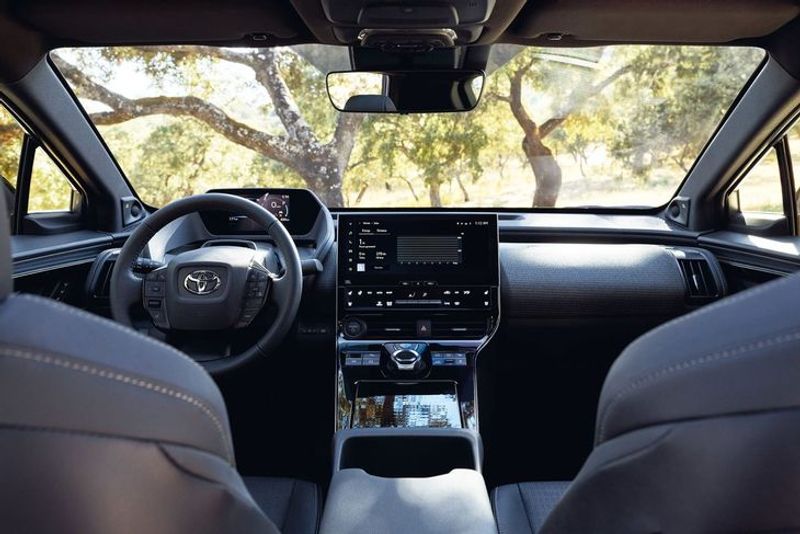
This interior image of the bZ4X provides clues to what the Lexus RZ’s cabin architecture is likely to look like.
For context, the most potent version of the Toyota bZ4x features a pair of 80-kW electric motors (one at each end of the vehicle) powered by a 71.4-kWh lithium-ion battery. The all-wheel-drive bZ4X produces 160 kW/336 Nm, is said to have a range of about 415 km (on the WLTP cycle) and is claimed to accelerate from 0 to 100 kph in 7.7 sec.
Toyota further says the battery will hold 90% of its charge for the first 10 years of its lifespan and, if you utilise rapid charging, a 150-kW fast charger can recharge the pack from depleted to 80% in 30 minutes.
We anticipate Lexus will use this package as only the starting point for the RZ 450e’s powertrain, but will we’ll bring you more technical details when they become available.
Where would Toyota be without Suzuki? A look at sales figures in SA
How high would Suzuki Auto SA’s monthly sales figures be if local sales of models that its mother company produces for Toyota were added to its tally? What would Toyota South Africa Motors’ sales stats look like then? We delve into January 2022’s sales statistics to find out…
Alliances are hardly new to the automotive scene. In fact, they’ve enjoyed somewhat of a resurgence in recent years, as manufacturers have again opted to team up in an attempt to mitigate rising research and development costs. One of the most obvious current examples in the South African market is the partnership between Toyota and Suzuki.
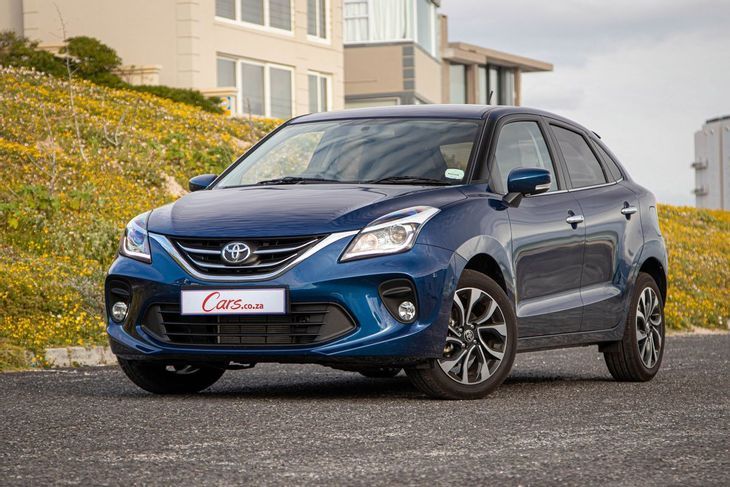
We say obvious since the first locally available products of this Japanese alliance – the Indian-built Starlet, Urban Cruiser and Rumion – return to the sort of badge engineering not seen here for decades. Other than an insignia here, a specification tweak there and in some cases a grille or bumper redesign, the final products are identical. Despite this, the rebadged versions have made a habit of easily outselling the originals on which they are based.
Although this fact provides fascinating insight into the power of the Toyota brand in South Africa, it also has us wondering just how big Suzuki Auto SA would be in volume terms if we were to include the models it builds for its alliance partner in its sales figures. And, just as interestingly, where such an experiment would leave the Aichi-based giant.
January 2022’s sales stats as an example
For the purposes of this exercise, we’ll use January 2022’s freshly released industry figures, which show the Toyota versions again outperformed their Suzuki donors on the sales charts. As the best-selling passenger vehicle of the month, the Starlet (1 472 units) positively thumped the Baleno (110 units). The Urban Cruiser (1 454 units) likewise outpaced the Vitara Brezza (558 units), while even the Rumion (368 units) edged the Ertiga (325 units).
A spot of quick maths illustrates that Suzuki-built models (3 294 units) accounted for a whopping 41.73% of Toyota’s passenger-vehicle sales (7 893 units, excluding Lexus) for the month. Tellingly, that 3 294 figure eclipses Suzuki’s total sales (3 232 units, including light commercial vehicles) for January 2022, despite it being another record month for the Hamamatsu-based company.
So, if we were to add the Toyota-badged versions to Suzuki’s passenger-vehicle tally (3 131 units), we’d end up at a heady 6 425 units, which would put the company comfortably ahead of the Volkswagen Group (5 118 units, including Audi) in the passenger-vehicle sales race. Furthermore, were the Suzuki-built models to be removed from Toyota’s passenger-vehicle total, Suzuki would top the country’s passenger-vehicle sales charts. That’s quite something, isn’t it?
It’s not quite that simple, though
Of course, it’s worth pointing out that while the Urban Cruiser competes in a new segment for Toyota and thus potentially represents a fresh stream of sales for the brand, the Starlet and Rumion arrived as replacements for previously popular models in the form of the Etios and Avanza (the latter, though, was actually built by Daihatsu). So, were these two models still in play today, Suzuki may well not have triumphed over Toyota in our theoretical exercise.
In addition, even if it were to lose its Suzuki-built wares, Toyota would remain at the summit of the overall sales table (that is, including commercial vehicles) thanks to the crushing dominance of the Hilux, which is ably supported in that space by the likes of the Hi-Ace.
Still, the results of our little study demonstrate just how well South African buyers have received these badge-engineered models, which have perhaps even surpassed Toyota’s expectations in terms of their local popularity. While the automaker’s mammoth dealership footprint and likely better resale value certainly play a role here (despite Suzuki offering the more attractive warranty and longer service plan), there’s something to be said for the sheer power of the Toyota badge.
The other side of the coin
Where does this leave Suzuki? Well, the firm’s local division has long espoused the rational that the fact South Africa’s biggest brand by volume is prepared to put its name (and thus stake its immensely valuable reputation) on these three products is a powerful confirmation of their quality. And that’s an entirely pertinent point.
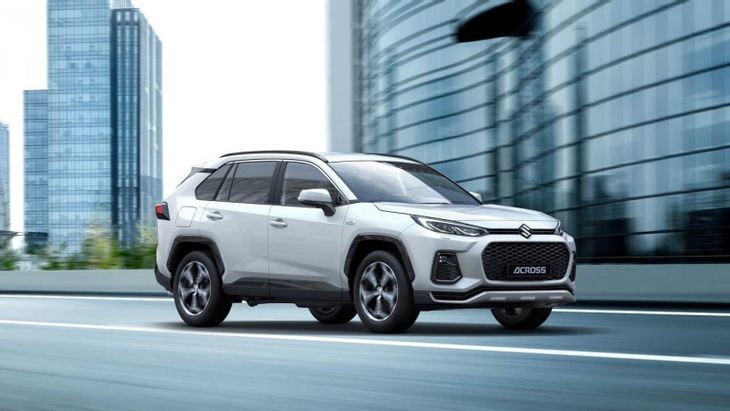
It’s also worth keeping in mind Maruti Suzuki is a veritable giant where these vehicles are produced in India (yes, dwarfing Toyota), with eight of that nation’s 10 best-selling passenger cars in 2021 wearing the Suzuki logo. In addition, Suzuki has gained a couple of Toyota-built products, such as the Across (a faintly revised RAV4 Hybrid) and the Swace (a tweaked Corolla wagon), in certain other markets. This is a global alliance, after all.
Notwithstanding the one-sidedness of this partnership on local shores, Suzuki continues its remarkable growth story in South Africa, having delivered a record 27 583 vehicles and grabbed four monthly market-share highs in 2021, before kicking off 2022 with yet another sales record. But the intriguing results of this little exercise perhaps also point to just how much more potential for growth exists.
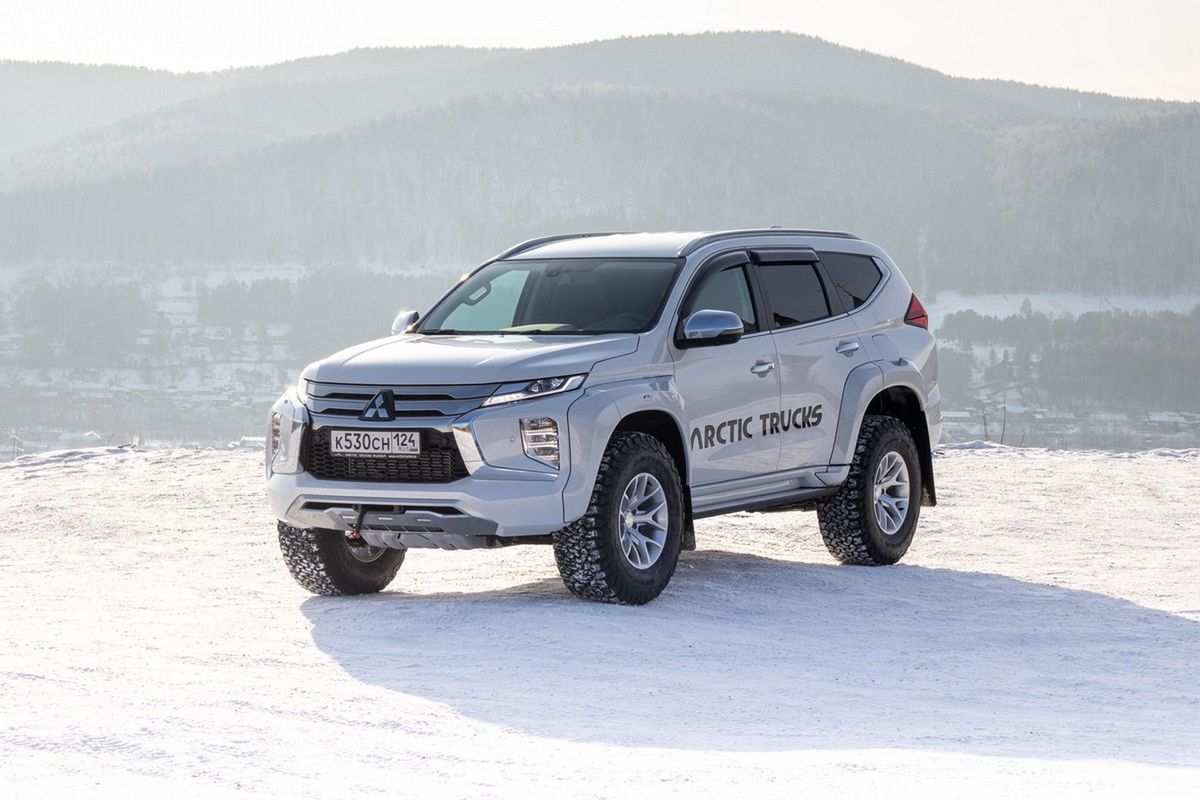
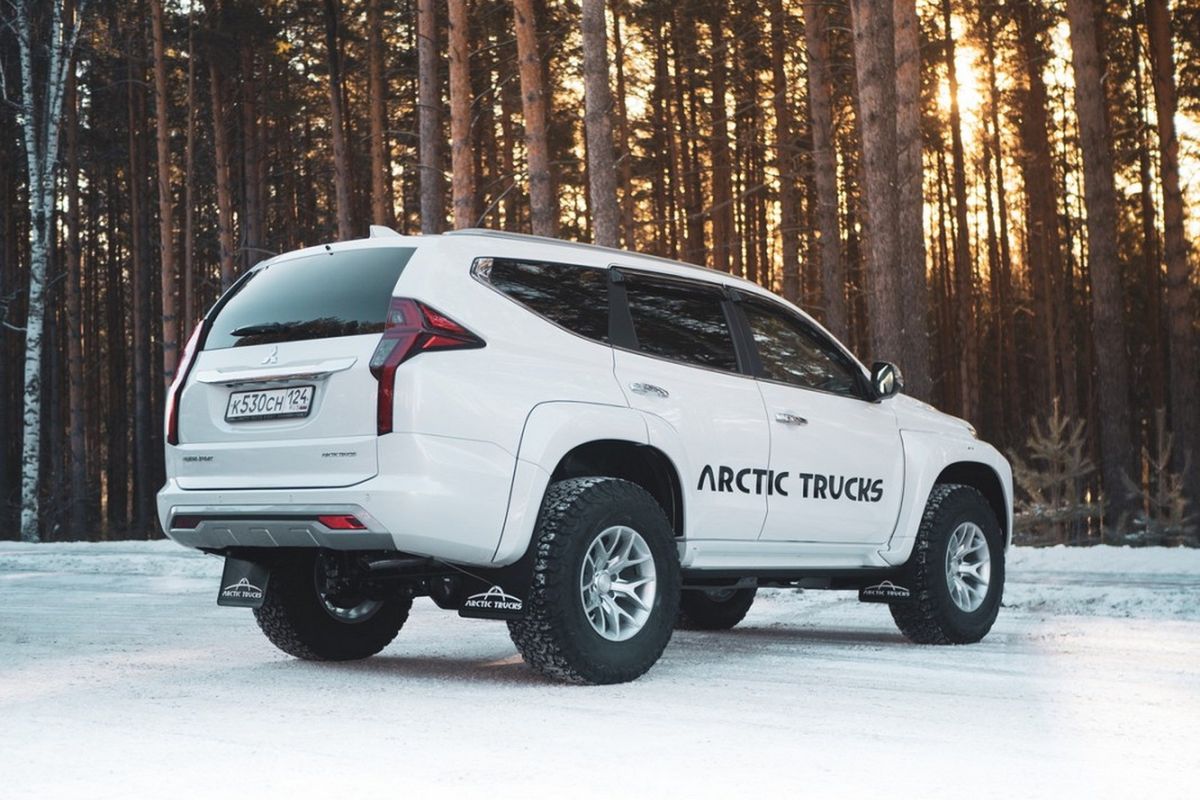
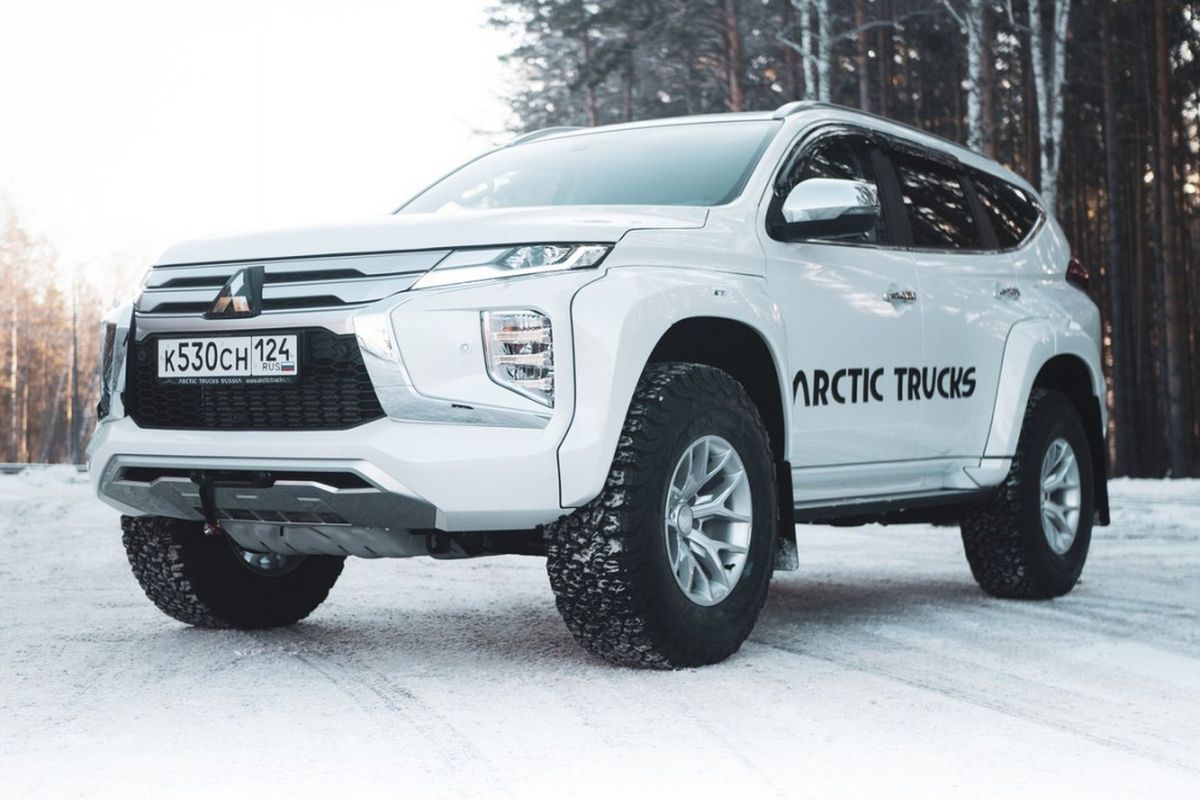
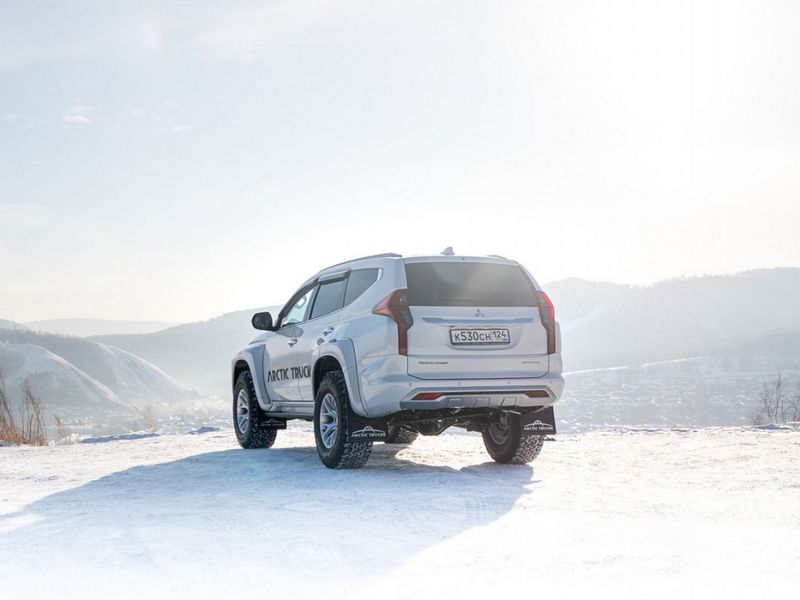
The Mitsubishi Pajero Sport is already one capable 7-seater bakkie-based SUV, but the Arctic Trucks treatment takes it to another level entirely.
Bakkie-based SUVs are a popular segment in South Africa. With the likes of the Toyota Fortuner, Ford Everest, Isuzu MUX, and Mitsubishi Pajero Sport all featuring 7-seats and impressive offroad capability, it’s no wonder they sell in commendable numbers.
The 4×4 capability of these products is already excellent, with only the challenging of offroad situations being able to blunt progress. Arctic Trucks has a stellar reputation for making offroad-focused upgrades on both bakkies and SUV, and the Mitsubishi Pajero Sport is the latest product to receive the treatment.
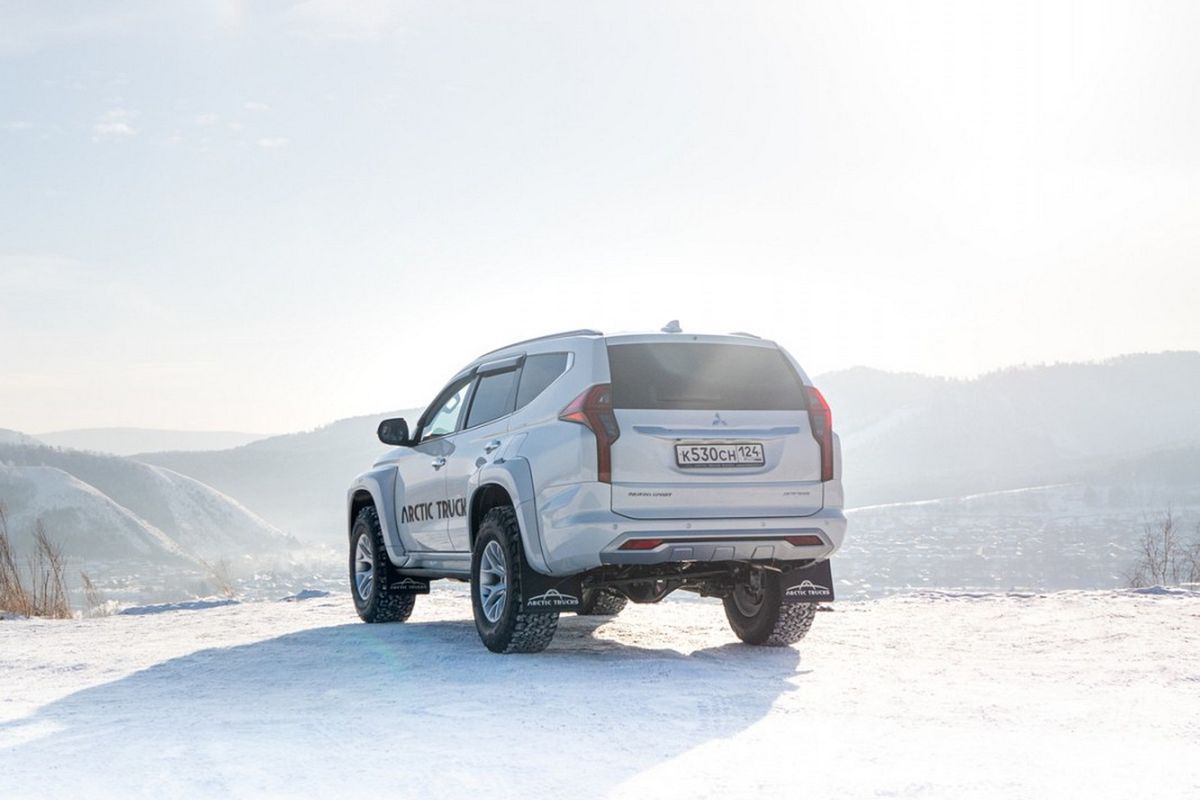
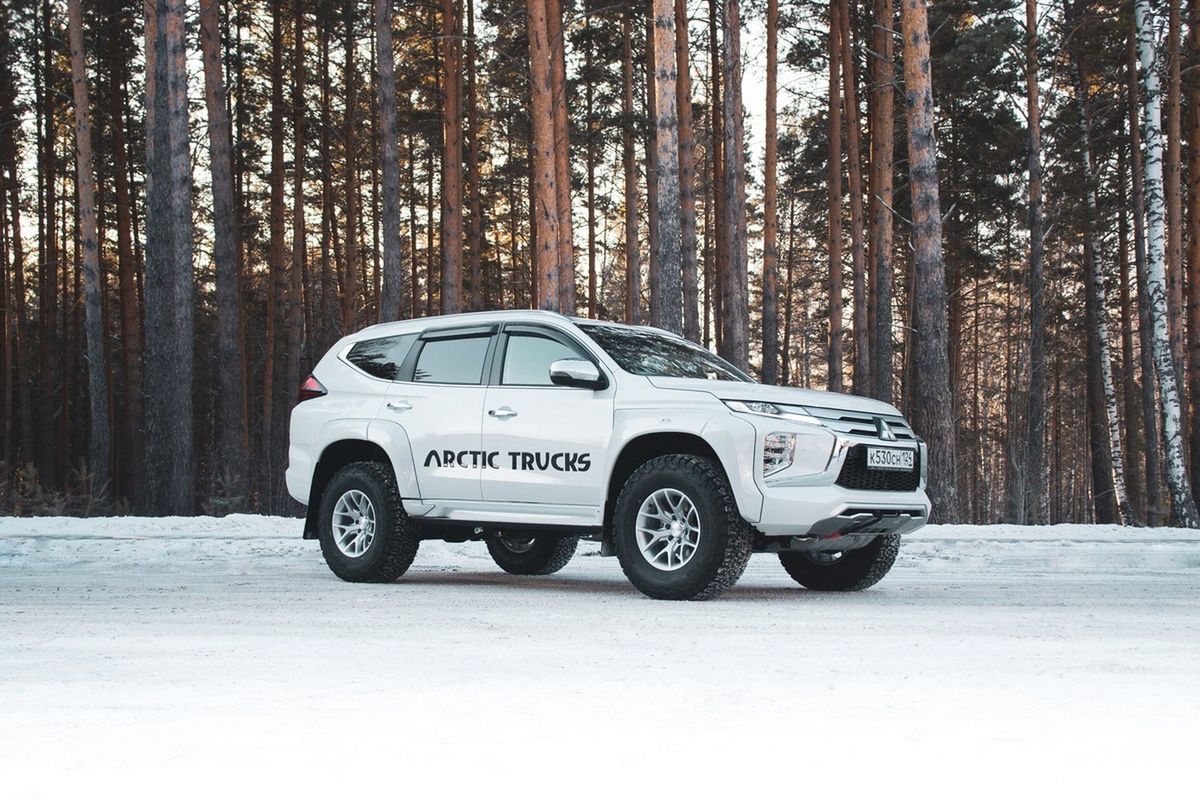
Officially it is called the Mitsubishi Pajero Sport AT35 and the first thing you’ll notice is the tyres. These specific tyres are dedicated all-terrain units. To accommodate the massive 315/70 R17 wheels, there are fender extensions There has been a big uprade in the suspension department too, and this sees the vehicle sit higher, with the claim being 270 mm of ground clearance.
Being higher off the ground means you can clear obstacles and the offroad claimed numbers show a marked improvement in comparison to the standard vehicle. There’s a 34.5-degree approach angle (standard car 30 degrees), and a 28.8-degree departure angle (standard car 24.2 degrees).
Arctic Trucks did not touch the engine. For the South African market, the Pajero Sport is offered in a 3-model lineup which all share the 2.4-litre turbocharged diesel 4-cylinder motor. This produces 133 kW and 430 Nm, paired to an eight-speed automatic gearbox. Prices start from R655 000. The Pajero Sport received a meaningful facelift in 2020 which saw the introduction of a range-topping 4×4 Exceed derivative.
Hyundai might not build a compact bakkie, but it does assemble some clever little vans.
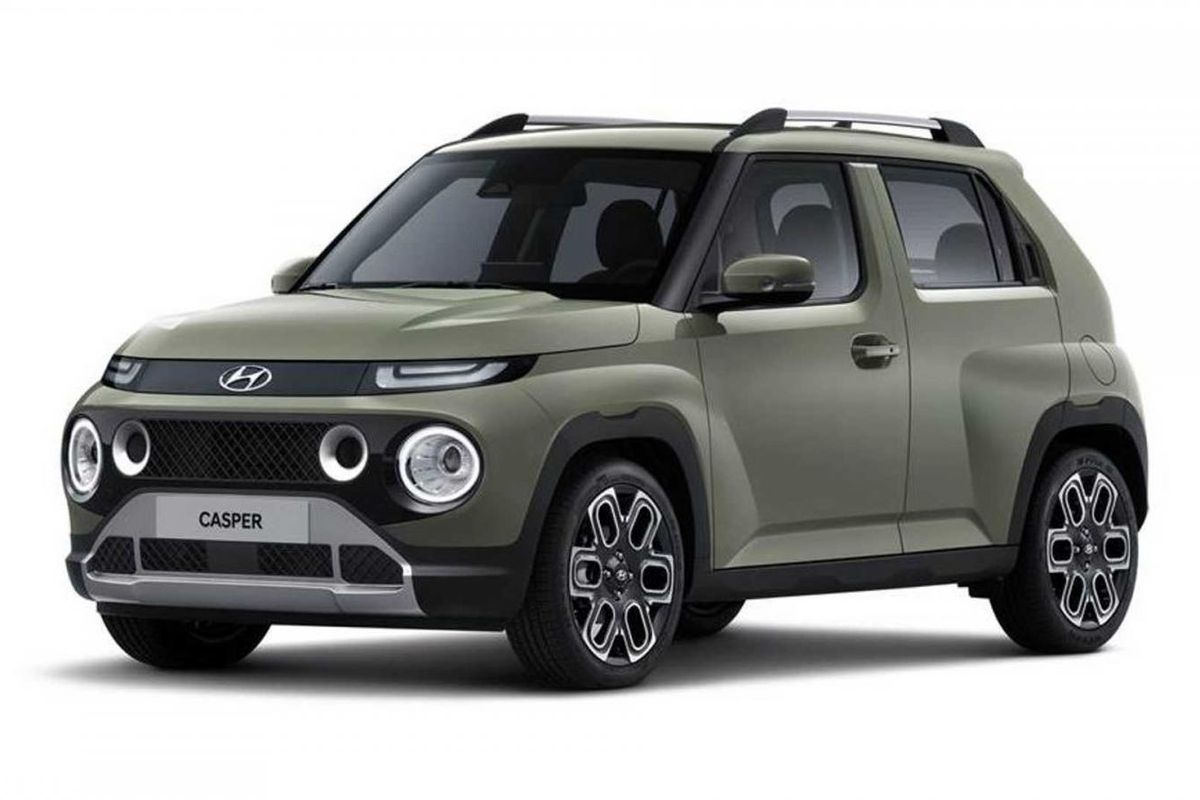
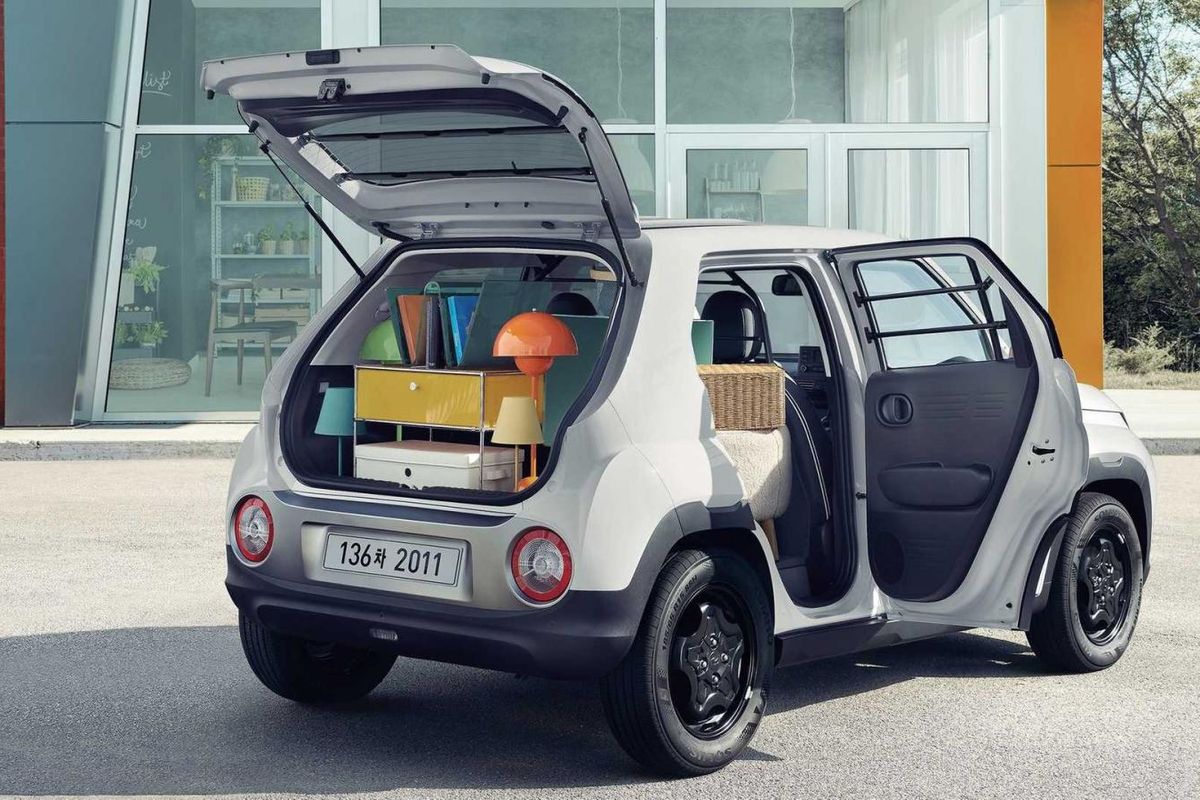
The i10 Cargo, without rear seats and some cargo partitioning (not to mention window bars), is a popular courier vehicle in South Africa. And now there is a new option based on the very same platform, the Casper van.
Hyundai’s new compact crossover looks Kei-car cute, and at only 3.59m bumper-to-bumper, it’s a joy to navigate around town. Or parallel park in a busy urban street.
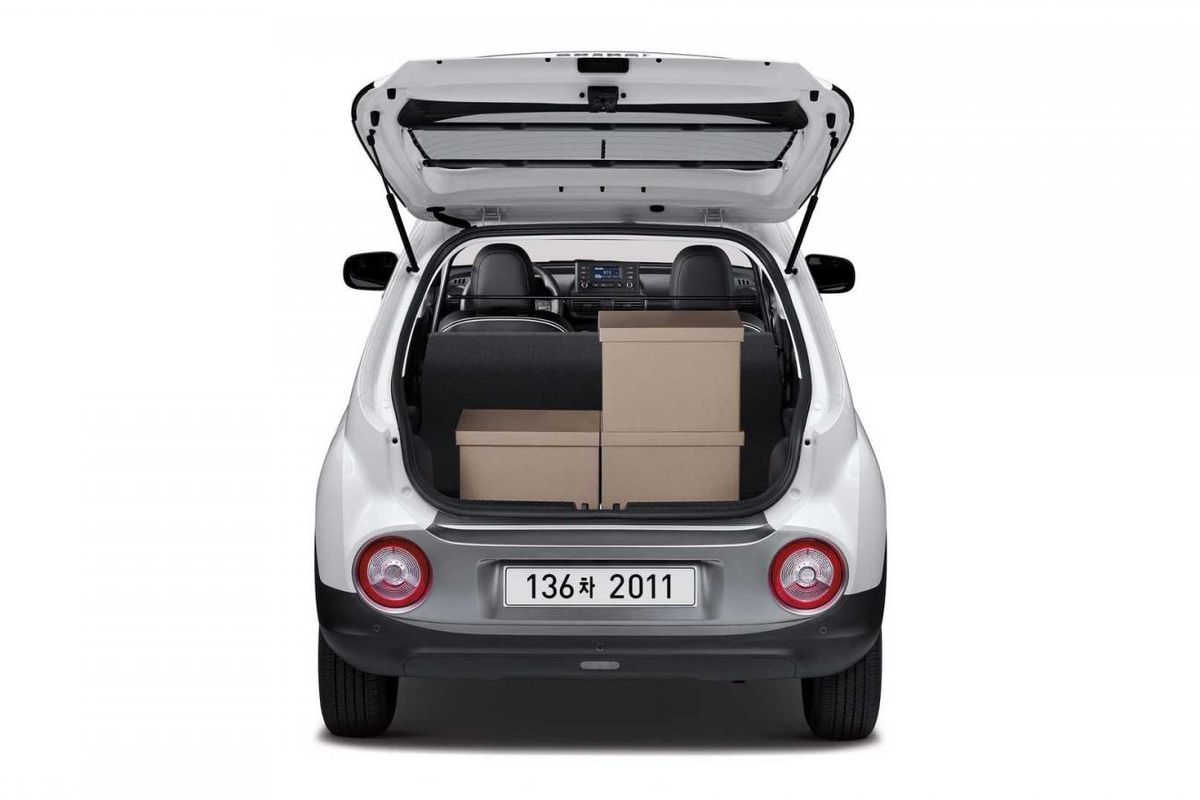
The Casper van follows a proven compact commercial vehicle formula. Hyundai’s assembly people don’t fit it with rear seats, which increases cargo capacity to 940-litres. A lot, for a car that is under 4m in length.
When creating a delivery van from a city car, product planners need to consider the risk of cargo shift. Especially when triggered by heavy braking. To ensure that the Casper van’s parcel load does not convert to projectiles, it has cargo partitioning behind the front seats during emergency braking.
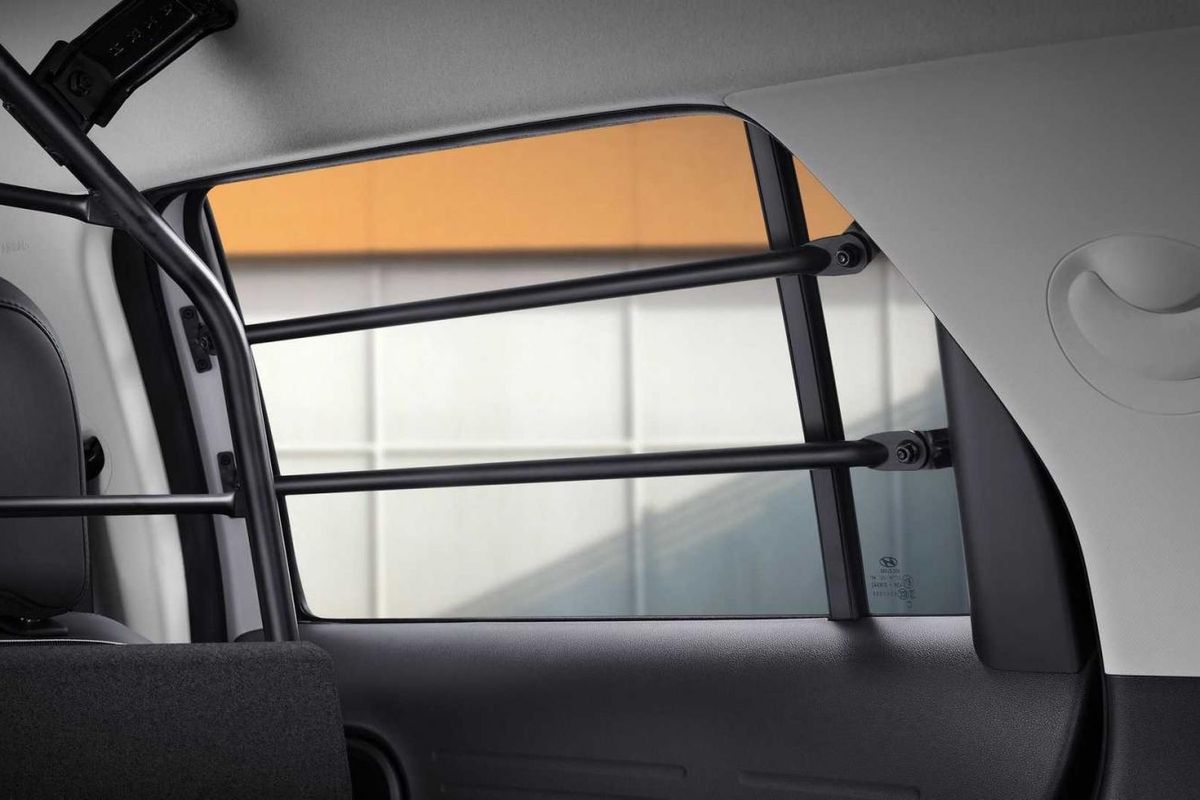
South Africans will also appreciate the intrusion bars behind the rear windows and tailgate glass. It makes it unlikely that this Hyundai’s cargo will go amiss when left unattended and parked.
Powering the Casper van are two versions of Hyundai’s 1-litre petrol engine. The naturally-aspirated option is good for 56 kW and 95 Nm. If you need more power for your short-haul parcel courier business or might want to operate the Casper van at altitude, a turbocharged version boosts 75 kW and 172 Nm.
Hyundai only offers a single transmission choice: the company’s four-speed automatic, which should reduce transmission wear, compared to a five-speed manual. And with the Casper van targeted at urban users, you won’t often miss the presence of a fifth forward ratio.
The specification is clever, too. It rolls 15-inch steel wheels, which should prove robustly immune to even the harshest pothole strike, and the safety kit is impressive. Six airbags are fixed inside the Casper van’s cabin architecture. It also has forward collision warning and high-beam assistance for those low-light deliveries that might take you into rural areas.
The Casper goes on sale in Korea this month, but no word yet on whether it’s under consideration for South Africa. We’ll update you when we hear back from Hyundai SA.
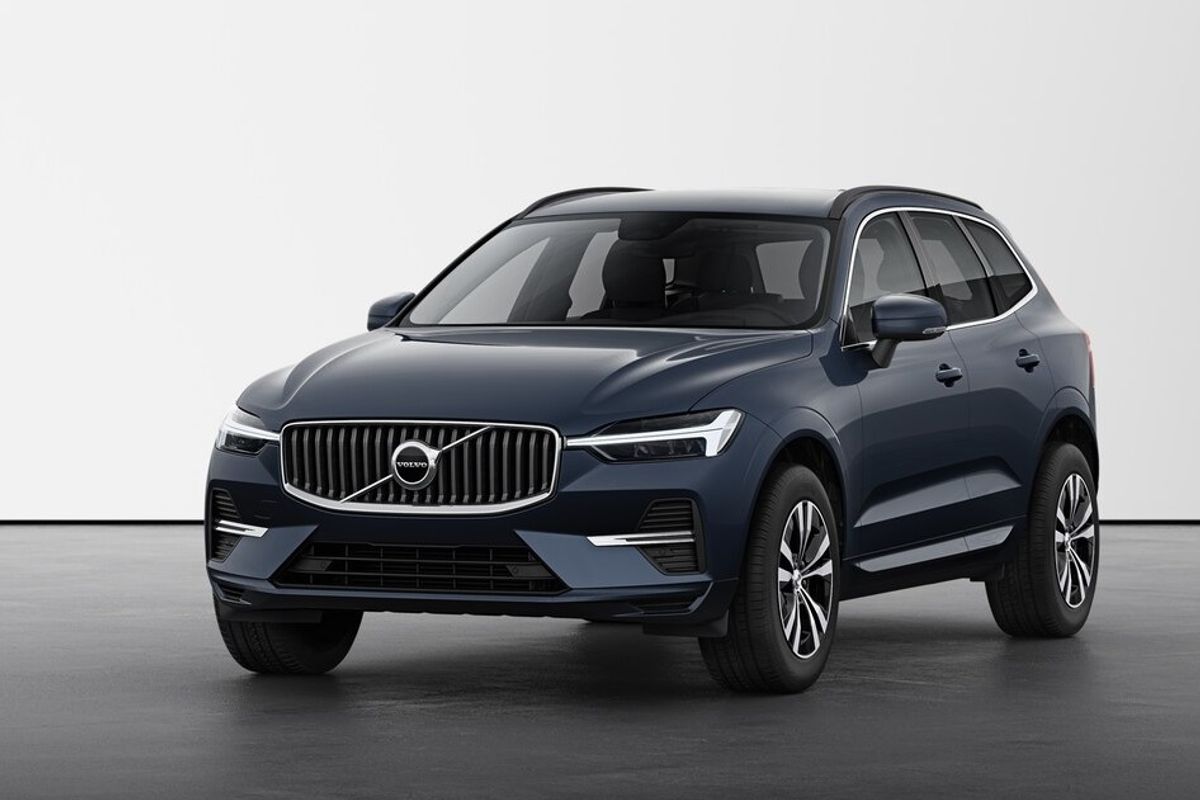
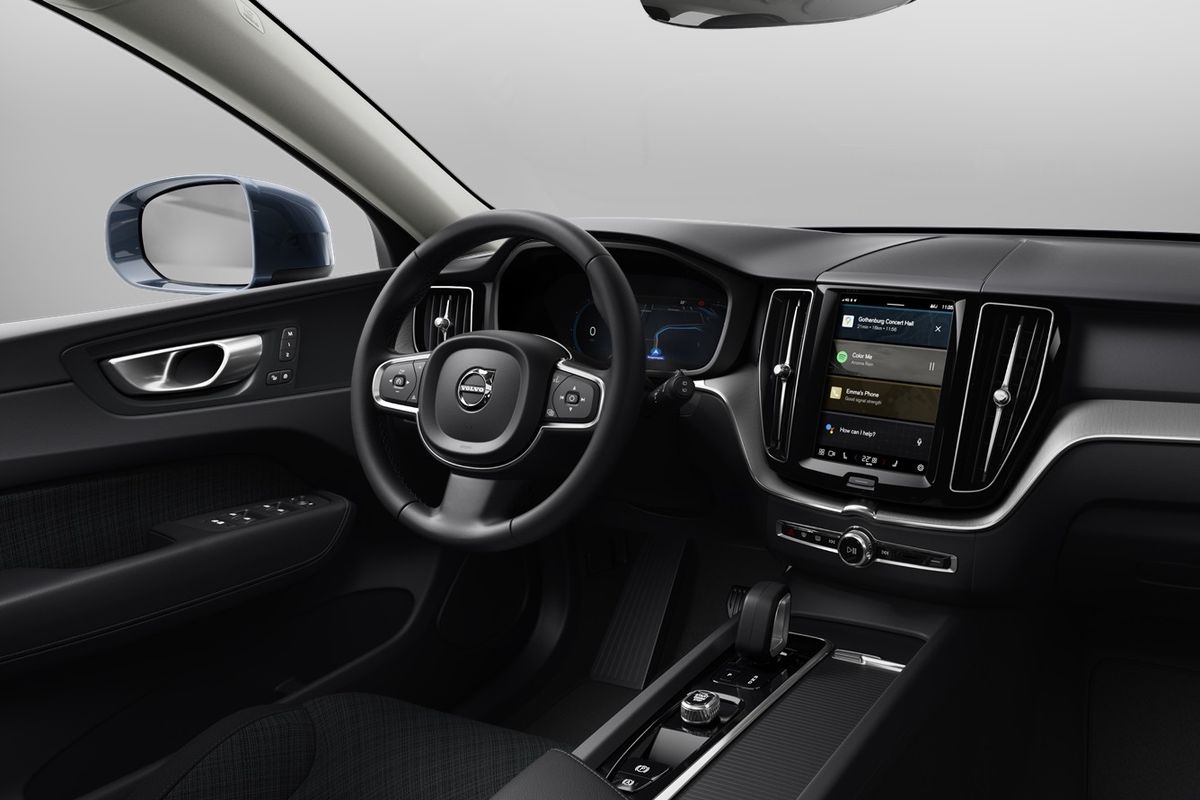
The Volvo XC60 B5 has touched down in SA and it’s the most affordable model in the Swedish brand’s XC60 family. Here’s pricing, plus specification details.
The Volvo XC60 is the brand’s global best-seller and the SA range has been expanded with the introduction of a more value-orientated derivative. The XC60 is also the most popular model sold by the Swedes in SA.
Meet the Volvo XC60 B5, which kicks off the range at R750 000. It will go on sale from the first week of February 2022. What makes it different compared to the rest of the XC60 range? The biggest difference is it’s the only model in the XC60 range that doesn’t feature all-wheel drive.
Underneath the bonnet is a new mild-hybrid 2.0-litre turbocharged petrol engine that produces 183 kW and 350 Nm. Power goes to the front wheels via an 8-speed gearbox and the Swedish brand says this model is good for a 7 second sprint to 100 kph, while consuming just 6.9 L/100 km, thanks to its 48-volt mild-hybrid tech.
Despite its designation as an affordable entry-point to the Volvo brand, the XC60 B5 still comes with a good level of gadgets and comfort features like 18-inch alloy wheels, dual-zone climate control, keyless entry, heated front seats, a power-adjustable driver’s seat, parking assist (front and rear), a reversing camera and inductive smartphone charging. There are a few options on offer, like leather trim.
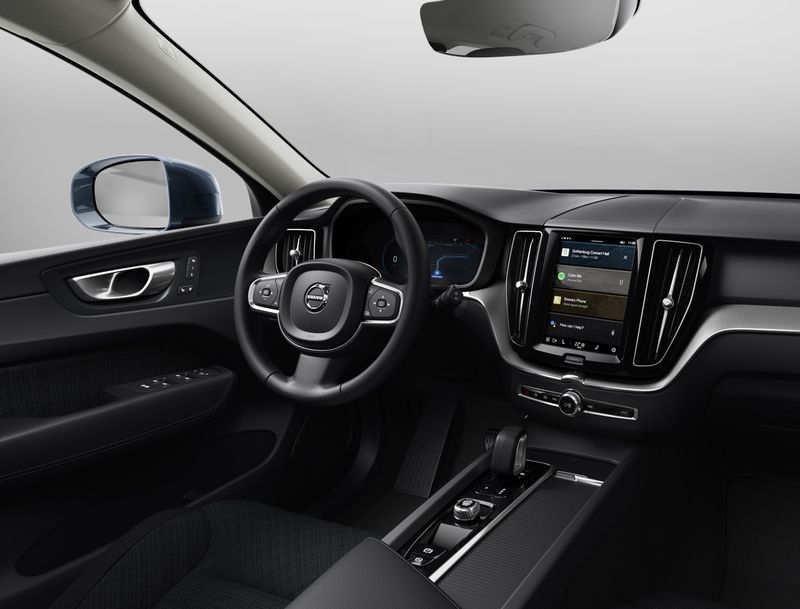
The Volvo XC60 B5 also features the latest Android-powered infotainment system that comes standard with Google’s apps and services, as well as Over-the-Air updates.
“The arrival of the new XC60 B5 FWD puts this efficient yet powerful mild-hybrid powertrain within reach of more South Africans, giving them the opportunity to experience Volvo’s signature luxury and safety. Market-leading technology such as the new Android-powered infotainment system, meanwhile, offers unparalleled connectivity,” said Greg Maruszewski who is the MD at Volvo Car SA.
Despite the company confirming it won’t be releasing any new vehicles until 2025, Jaguar has begun work on a new all-electric platform.
That’s quite the statement to read, isn’t it? No new products until 2025. That’s three years of silence. Parent company Jaguar Land Rover will be busy as there’s a new Range Rover that’s about to go on sale, as well as an all-new Range Rover Sport that’s in development.
But, while the brand is quiet on the launch front, it doesn’t mean it has stopped working. Jaguar will be an electric-only car maker by 2025 and doing a recent investors call, the Jaguar Land Rover boss Thierry Bollore said it will be developing its own new electric car platform.
This news comes from Autocar and it comes as a bit of a surprise as it was previously assumed the British carmaker would be using an electric platform from another company. Going in-house will not be cheap, but this new platform which is apparently nicknamed Panthera should spawn multiple models.
“Concerning the new Jaguar, we’re making unique proportion a priority. That’s the reason why at the moment we do it by ourselves,” Bollore said. “The proportions are crucial to get what we want from Jaguar. The platform is a consequence of proportions we’ve decided on. They’re absolutely bespoke.” said JLR chief financial officer Adrian Mardell.
What does this mean for the future of Jaguar? While Land Rover will continue to offer its premium SUVs, Jaguar will be going up a segment and will attempt to play in the ultra-luxury space, as a rival to Bentley. There will be two electric crossovers and a 2-door coupe from 2025.
Jaguar knows it’s lagging a bit behind, with the all-electric I-Pace taking just 3% of company sales in the last financial quarter and overall sales were just under 14 500 units, which is the worst performance for Jaguar since December 2013, according to Autocar.
Best-selling bakkies in South Africa: January 2022
We’ve again managed to secure Naamsa’s detailed monthly sales figures, allowing us to identify South Africa’s best-selling bakkies for January 2022. Here’s everything you need to know!
South Africa’s new-vehicle market enjoyed a largely positive start to the year, a trend that was echoed in the light-commercial space where year-on-year sales grew 3.8% to 9 629 units. While this segment also includes body styles such as commercial vans, here we’ll focus exclusively on individual models in the traditional bakkie market.
So, which pick-ups did South African buyers flock to in the first month of the year? And which bakkies found themselves consigned to the very bottom of the table (or indeed unable to even crack the top 10)? Let’s take a closer look at the figures.
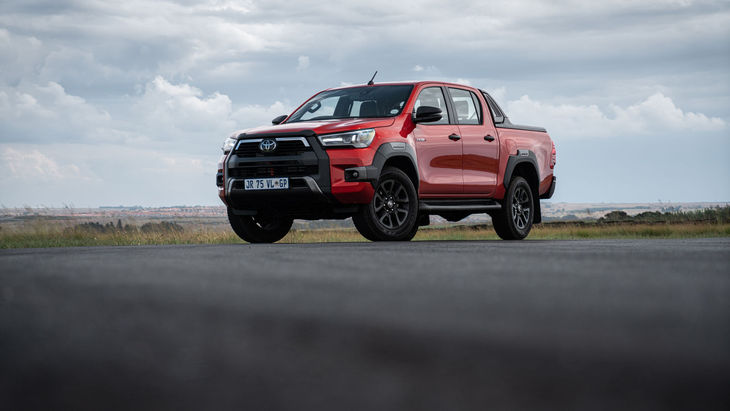
As you were no doubt expecting, the Toyota Hilux (2 803 units) – which earned the title of SA’s top-selling vehicle overall in 2021 before receiving yet more positive press when Nasser Al-Attiyah triumphed at the 2022 Dakar Rally in the V6-powered GR DKR Hilux T1 – was again the country’s best-selling bakkie for the month, more than doubling the efforts of its closest rival. Interestingly, some 243 units were listed as government sales, while a further 159 units were registered in the rental market.
The second-placed Isuzu D-Max (1 141 units) was the only other contender to hit four figures during the reporting period. That’s another fine performance from the ageing Isuzu bakkie considering the long-awaited new-generation version is just a couple of months away from rolling out of the Struandale facility and hitting local roads.
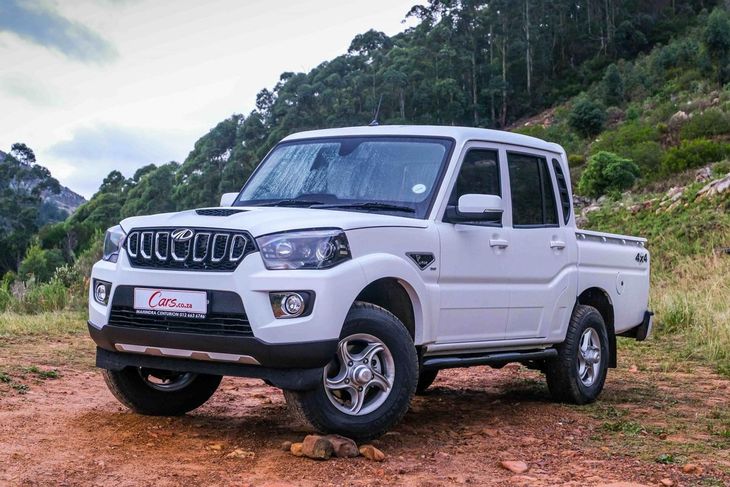
Remarkably, the Mahindra Pik Up – which is assembled in Durban, KwaZulu-Natal – clambered up the table from seventh to third spot, with 618 units registered during the month. That was just enough for it to force the Ford Ranger (608 units) down to what must be an uncomfortable fourth place. We can only guess the reason the Blue Oval brand’s bakkie has fallen off the pace to this extent is due to its Silverton facility gearing up for production of the new-generation model.
Meanwhile, the GWM P-Series (539 units) dropped one place to a still-impressive fifth, just ahead of the GWM Steed, which ended the month on a rather useful 461 registrations, rising three spots. With 445 units sold, the Nissan NP200 – which remains the sole half-tonne bakkie available locally – fell two places to seventh, a mere four units ahead of the Nissan Navara (441 units) produced in the same Rosslyn factory.
Despite almost doubling the number of units registered in December 2021, Toyota’s rugged Land Cruiser 79 (303 units) slipped one place to ninth in January 2022, while the Volkswagen Amarok again completed the table with 195 units. As a reminder, an all-new Amarok will be revealed later in 2022, with the second-generation version set to be based on the new Ranger and thus produced here in South Africa.
Best of the rest in January 2022
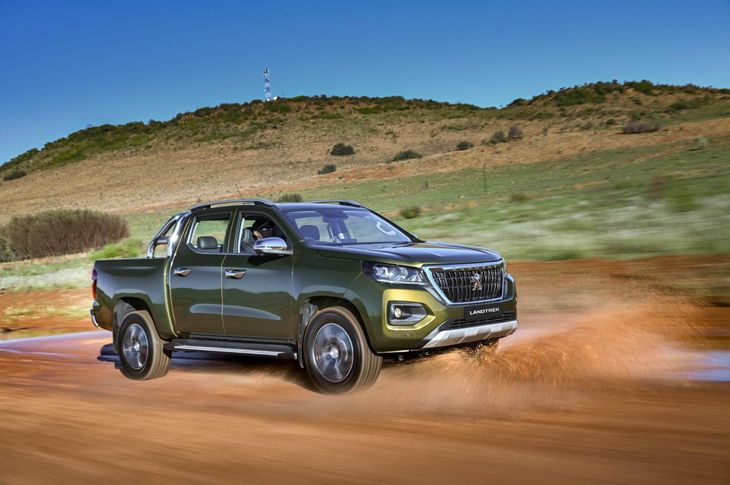
Of course, it’s just as fascinating to examine the performance of the so-called bit-part players as it is to list the sales leaders. Outside of the top 10, the Mahindra Bolero (122) proved the best of the rest in the first month of the year. In its second full month on the market, Peugeot Landtrek registrations grew ever so slightly to 41, while the Mitsubishi Triton’s total dropped a handful of units to 25. Mazda, meanwhile, managed to sell 20 examples of its new Isuzu-built BT-50, a month-on-month improvement of six units.
Export winners in January 2022
What about the export race? Well, here the Hilux dominated as well, with 5 332 examples of the Japanese bakkie shipped from our shores during January. The Ranger’s export figure more than halved month on month to 2 364 units, though that was still miles ahead of the Nissan Hardbody (456), Isuzu D-Max (272) and Nissan Navara (144). For the record, the industry’s overall export sales for January 2022 fell 9.3% year on year.
10 best-selling bakkies in South Africa for January 2022