New Kia Carens Revealed, Not Confirmed for SA

The brand-new Kia Carens has been revealed it has morphed into something that looks rather good!

Remember the Kia Carens? It was a sensible multi-purpose vehicle but this segment is on the decline as customers are opting more for the SUV body style. 

Kia South Africa will be launching its flagship Carnival MPV (as well as the new Kia Sorento) in SA early in 2022, so it’s clear that despite the shift, there’s still a market for a well-thought-out minivan. Don’t call it an MPV though, as Kia prefers the Grand Utility Vehicle classification. 

Back to the Kia Carens, it’s now been fully revealed in India and this new 4th-generation model looks like it has similar styling to that of the all-new Sportage and resembles a crossover. You could even say there’s an element of the old Kia Soul to its overall shape and incorporates Kia’s latest ‘Opposites United’ design language 

Kia Carens Interior
The Carens’ cabin is decisively modern and upmarket in look and feel. 

The interior features a new-look digital dashboard stretching across the cabin, which includes the driver’s display and 10.25-inch infotainment system in one slick piece of hardware. The system is powered by the latest generation Kia Connect which allows for system updates Over-The-Air.  A BOSE sound system with 8 speakers is also fitted and the cabin ambience is enhanced with a choice of 64 mood lighting colours.

As far as seating and practicality goes, the Carens can seat up to 7 passengers and the second row can be tumbled forward electronically and the seats can recline and slide forwards and backwards as needed while the third row can be folded into the boot floor to optimise load space.  Cooling cupholders, retractable folding tables and under-seat storage trays are also fitted. A large SkyLight sunroom further adds to the airiness in the cabin while a Smart Pure Air Purifier keeps the cabin air clean. 

On the safety front, the Carens is equipped with Kia’s Hi-Secure Safety Package which includes 6 airbags,  Electronic Stability Control (ESC), Vehicle Stability Management (VSM), Hill-Assist Control (HAC), Downhill Brake Control (DBC), Brake Assist System (BAS) and a Tyre Pressure Monitoring System. 

What engines are offered on the Kia Carens? 

The Kia Carens is powered by the same engines used in the Kia Seltos, a model we’re rather fond of. That means a naturally-aspirated 1.6-litre petrol engine is offered with 96 kW and 151 Nm or a turbocharged 1.4-litre petrol engine with 103 kW and 242 Nm. A 1.5-litre turbodiesel is also offered with 86 kW and 250 Nm. Transmissions include a 6-speed manual, 7-speed dual-clutch (for the 1.4-litre turbopetrol and a 6-speed automatic. 

The Indian car industry is booming and the SA market receives many models from the sub-continent. The Kia Sonet and Seltos are both from India, as are the Hyundai i20 and Creta. Nearly all products in Suzuki’s portfolio are also assembled in India. Even so, the Kia Carens is currently under consideration but its introduction has not yet been confirmed.

Do you want to see the new Carens in South Africa? 

See what new cars are coming to South Africa in 2022 here!

Further Reading

Kia Sonet Launch Review – is this the best offering in its segment?

Six cool things you need to know about the all-new Kia Sportage

Honda CR-V (2021) Specs & Price

The Honda CR-V has been given an update for 2021. Here’s what’s changed, what’s on offer and how much you can expect to pay. test4

Since its debut in SA more than 20 years ago, the Honda CR-V has proven popular. It could be regarded as one of the early pioneers of the SUV segment, when it and the Toyota RAV-4 were one of the few SUVs offered.

Now for 2021, the Honda CR-V has been given an update. Visually, the front and rear bumpers have been redesigned to give it a more aggressive look. There are new-loko slimline headlights with integrated daytime running lights, while the rear gets inverted LED taillight clusters. The 1.5T models get twin exhaust pipes for a sporty look.

Honda SA will be offering the updated Honda CR-V in a four-model lineup, with two engines and different spec levels.

There are two drivetrain options for the upgraded CR-V. The 2.0-litre naturally-aspirated petrol engine delivers 113 kW and 189 Nm, and power goes to the front wheels via a CVT.

The second engine is a 1.5-litre turbocharged petrol engine that produces 140 kW and 240 Nm. It too features front-wheel drive and a CVT.

Levels of trim

Honda CR-V 2.0 Comfort CVT

17-inch alloy wheels
Aluminium-look front and rear scuff plates
Aluminium roof rails
Cloth upholstery
5-inch full colour display
4-speaker audio
Bluetooth connectivity
USB/aux input
Dual-zone climate control
Rear park sensors
Electrically adjustable exterior mirrors.
Multi-function steering wheel
Dual front, dual side, curtain airbags
ABS brakes with EBD
Hill start assist
Vehicle stability assist

Honda CR-V 2.0 Elegance CVT

Leather upholstery
7-inch audio
Apple CarPlay/Android Auto
8-speaker audio
Additional USB in the front
Rear passenger USB
HMDI port
8-way electrically adjustable seat for the driver
4-way electrically adjustable seat for the passenger
Heated seats for the front
Park distance control (Front and Rear)
Leather-trimmed steering wheel
Gearshift paddles
Audo windscreen wipers

Honda CR-V 1.5T Executive CVT

18-inch alloy wheels
LED headlights which are auto levelling
Keyless entry
Push-button start

Honda CR-V 1.5T Exclusive CVT

19-inch alloy wheels
LED front fog lamps
Leather upholstery
Integrated satellite navigation
Electrically-operated tailgate
Tyre pressure monitoring
Honda Advanced Driver Assist Systems (forward collision, lane-keeping assist, adaptive cruise control etc)
Auto high beam headlights
Panoramic sunroof
All-wheel drive

Honda CR-V

How much does the updated Honda CR-V cost in SA?

2.0L FWD Comfort CVT R556 100

2.0L FWD Elegance CVT R617 900

1.5T FWD Executive CVT R699 900

1.5L AWD Exclusive CVT R796 300

The range is backed by a comprehensive five-year/200 000 km warranty, as well as a five-year/90 000 km service plan with a three-year AA Road Assist package. Intervals are 15 000 km for the 2.0-litre models, and 10 000 km for the 1.5-litre turbo variants.

The Bike Bakkie! Honda CBR 1000cc engine in a Nissan 1400

Nissan Champ bakkies are renowned for being easy to adapt into the weidest and most wonderful drag racing machines ever seen. But, a bike engine, in a bakkie? We had to check this out for ourselves.

A racing bakkie? With a 12 000rpm redline? And a sequential gearbox? Yes, those are a bunch of words that aren’t often seen together, but this is a truly special build which on paper doesn’t make much sense, but in real life, is more than the sum of its parts.

Stephan Fouche at Mad Dog Racing had a dream to put a bike engine into a little Nissan 1400, and when the chassis and engine became available, he set to work. It took nearly 700 hours of work but here it is, a superbly built racecar unlike anything we’ve ever seen.

The naturally aspirated motor screams to the 12 000 rpm redline in every gear. Getting used to a sequential gearbox took a lap or two for our video guy, Ciro De Siena, but once he got the hang of it, the bakkie absolutely blew him away.

A big thanks to Mad Dog Racing for letting us enjoy and film this incredible build

Related content

The Chilli Mouse! Custom-built, street-legal Datsun Bakkie Racecar

AMG-engined Lotus Exige is an Impressive SA Build

Updated Honda Amaze (2021) Specs & Price 

An updated Honda Amaze sedan is now available in South Africa! See what’s changed as well as what you can expect to pay for the Amaze below…

The Honda Amaze sedan was introduced back in 2018 and now the Japanese marque has brought an updated iteration to market with a few changes based on customer demand and feedback. 

What’s changed?   


Subtle changes make a noticeable difference to the Amaze’s appearance. 

For starters, the previous single-wing grille has been replaced with a ‘softer’ grille design and the rear bumper now wears chrome trim while the taillights have also been mildly revised.  

The updated colour range on offer for the Amaze includes Platinum White, Lunar Silver, Radiant Red and Meteoroid Grey (metallic). 

South African buyers are not particularly fond of beige interiors and Honda has heeded customer feedback and rather opted for a full-black interior for the Amaze. 

There are 2 trim grades on offer including the Amaze Trend and higher-specced Amaze Comfort. 

The Amaze Trend is equipped with a central audio system that offers Bluetooth and MP3 playback as well as AM/FM radio functionality. A USB and Aux input is also fitted. The Amaze Comfort now boasts an upgraded 7-inch touchscreen infotainment system with Apple CarPlay and Android Auto capability and a reverse camera.

As far as the engine performance is concerned, the Amaze calls upon a naturally-aspirated 1.2-litre petrol engine with a power output of 66 kW and 110 Nm of torque. 

The Amaze Trend pairs this engine with a 5-speed manual transmission while the Amaze Comfort gains a Continuously Variable Transmission (CVT) with shift paddle mounted behind the steering wheel. 

Honda claims a fuel consumption figure of 5.6 L/100km for the manual Amaze while the CVT claims 5.7 L/100km.  

Safety features include dual airbags and ABS with EBD. Note that Brake Assist and Electronic Stability Control with Traction Control are not offered. 

How much does the Honda Amaze Cost in South Africa? 

Honda Amaze 1.2 Trend: R209 100

Honda Amaze 1.2 Comfort: R234 700

Honda Amaze 1.2 Comfort CVT: R252 800

The Honda Amaze is sold with a 5-year/200 000 km warranty and a 2-year/30 000 km service plan and 3-year AA Roadside Assistance. 

Buy a used Honda Amaze on Cars.co.za 

Related Content 

All-new Honda Fit Review – Goodbye Jazz, hello to a proper JDM Honda

Next-Gen Honda Civic Type R Teased

Audi Q5 Sportback (2021) Review

The Audi Q5 Sportback has arrived in SA as part of the Ingolstadt-based brand’s facelifted executive SUV range. The new variant adds some panache to one of the more buttoned-up models in the segment, but can it justify its price premium? We review the 40TDI quattro S line.  

We like: Easy on the eye, fabulous powertrain, plush cabin

We don’t like: Substantial premium over its standard Q5 counterpart

Fast Facts 

  • Model tested: Audi Q5 Sportback 40TDI quattro S line
  • Price: R1 000 000 (December 2021) 
  • Engine: 2.0-litre turbodiesel
  • Power/Torque: 140 kW / 400 Nm
  • Transmission: 7-speed dual-clutch automatic
  • Fuel economy: 6.2 L/100 km (claimed) 
  • Luggage capacity: 510–1480 litres 

What is it? 


The Q5 Sportback certainly cuts a finer figure than its sibling. You may not have thought that the Q5 needed a variant, but here it is!

By now you should know the recipe… The car-making giants of the world were hell-bent on offering SUVs in all sizes and now they’re determined to fill the niches in between those models. Everyone did a double-take when BMW announced it would make a coupe-styled, sportier version of its X5, called the X6. Many thought this would be a bridge too far, but pretty soon all 3 of the German premium marques had produced sportier versions of their premium SUV offerings. It’s not just variants of the flagships either (X6, Mercedes-Benz GLE Coupe and the Audi Q8) – this formula is trickling down… 

In the Executive SUV segment, BMW offers the X4 alongside its X3, Mercedes-Benz has a GLC Coupe to complement the GLC and now, finally, the Q5 Sportback joins the Q5 family. The premise is simple: as a manufacturer’s standard offering becomes widely accepted, it rolls out a more visually appealing and sportier variant of that model, replete with a tapered roofline and slanted tailgate Does it work? Well, we’d happily argue that these coupe-inspired versions are easier on the eye than their standard counterparts. Whether they’ll sell in greater numbers than their progenitors is up for debate, however.  

The key differences between the standard Audi Q5 and the Audi Q5 Sportback are their shapes and dimensions. The Audi Q5 Sportback is fractionally longer (7mm) than the standard model, but has the same height and width. Audi is offering its new Q5 Sportback in 4 derivatives. There are turbopetrol and -diesel offerings, as well as a flagship SQ5, which adds some impressive performance to the mix. 

As far as alternatives go, Audi’s German compatriots serve up the aforementioned X4 and GLC Coupe and the Italian brand’s Alfa Romeo Stelvio is pretty sporty as it is. You could also consider a Range Rover Evoque or the Volvo XC60 if you’re looking for something different. If you’re after the sportiest offering of the lot, however, then head on over to Porsche, whose Macan may tickle your fancy.

The Audi Q5 Sportback goes up against the BMW X4 and the Mercedes-Benz GLC Coupe – compare them here.

How it performs in terms of…

Engine performance and economy 

Under the bonnet of the Q5 Sportback 40TDI quattro S line is Audi’s tried-and-trusted 2.0-litre 4-cylinder turbodiesel engine. We’ve had considerable experience with this engine over the years (in a variety of different vehicles), but in this application and state of tune, we think it’s achieved a new level of excellence.

The peak outputs of 140 kW and 400 Nm of torque are credible on paper, but, in reality, are you getting more than a refined diesel engine that’s particularly quiet – it also beautifully balances efficiency and performance. The secret sauce that makes the package so compelling is the automatic transmission. It’s a 7-speed dual-clutch unit and it does a sterling job of providing fuss-free and near-seamless shifts.


The tried-and-trusted turbodiesel offers a great balance of performance and economy in combination with the slick automatic dual-clutch transmission.

When you start the Audi for the first time (from cold), its motor emits a bit of a rough diesel clatter (as expected), but that quickly disappears as the powerplant warms up to operating temperature. The Q5 Sportback comes equipped with an assortment of drive modes and it’s quite impressive to see how they can transform the vehicle’s character and behaviour. The overwhelming majority of customers will probably leave the vehicle in its default Auto drive mode – and that’s perfectly acceptable, because the car’s electronic management system will ably adapt its various settings to suit your driving style.

Comfort mode is really ideal in a vehicle of this kind; the Audi will be required to cosset its occupants more often than it needs to enthral them, so the setting effectively provides the smoothest possible ride and drive. In Eco mode, the car dials things back a bit in order to maximise efficiency. Individual mode lets you tailor your settings, so if you want a comfortable ride with a responsive engine, select this.


The Q5 Sportback has a distinctive profile, thanks to its rearward-tapering roofline and slanted tailgate.

If you’re in a hurry, Dynamic mode is especially handy. When it’s been activated, you’ll feel the Q5 Sportback becomes much more responsive… and its performance progressively more urgent. The transmission also delivers quicker shifts and the best part is you don’t even need to fully depress the accelerator pedal or rev the engine to its redline to get the best performance out of it. 

While Audi claims a 0-100-kph time of 8.1 seconds (which is reasonably brisk, we might add), the real goodness comes from the 40TDI quattro S line’s abundant in-gear acceleration. The ability to execute an 80-120 kph overtaking manoeuvre briskly is more important than you’d think. How many times have you been stuck behind a slow-moving vehicle and needed to execute a quick overtake? In a less-than-powerful vehicle, you have to plan well ahead before you perform a safe overtaking manoeuvre. In the Q5, though, those 400 Newtons come in very handy – it can dispatch slower traffic with ease. 

Finally, the ace up the Audi Q5 Sportback’s sleeve is its admirable fuel economy. Audi claims an average consumption of 6.2 L/100 km and, by using the Eco drive mode, we saw an indicated return of 6.9 L/100 km. After a few days of living with the vehicle in all manner of traffic and road conditions, the figure averaged out at 7.5 L/100 km, which was more than respectable. 

Ride and handling


The handsome 20-inch alloys are shod with skinny tyres, but they didn’t ruin the ride quality; the test unit’s adaptive air suspension (optional) smoothed out the ride.

One of the main reasons these sportily-styled SUVs exist is to offer a bit more in the way of driving involvement over their standard counterparts. In truth, we couldn’t feel a major difference between the driving experience delivered by the Q5 Sportback compared with that of its standard sibling, but that’s all right, as we feel the standard model offers more than enough dynamism. There’s an overwhelming sense of cosseting comfort, but when you task the Audi to tackle some mountain passes, it will showcase its excellent chassis and suspension setup. Why change what’s clearly a successful recipe?

Our test unit came fitted with 20-inch alloy wheels (a no-cost option), as well as adaptive air suspension (a R38 000 option). The latter offers a few height settings, one of which raises the Q5 Sportback by 45 mm, which is certainly a bonus when the vehicle needs to traverse gravel roads of questionable quality. When you’re cruising on the open road, the system will automatically lower the car to improve its efficiency and centre of gravity, the latter of which, of course, enhances the handling stability. You should strongly consider the air-suspension option – the superb overall ride comfort justifies the premium.


Whereas the Audi’s steering ‘wheel does not offer much in the way of feel or feedback, it responds to inputs impressively quickly and accurately.

Speaking of handling, we’ve already mentioned the competence of the Q5 range and, while we struggled to differentiate between the Q5 and its Sportback variant from behind the ‘wheel, the latter is one of the nicer executive SUVs to drive quickly. It’s not quite as hands-on as the X4 and the Macan, but it’s way ahead of the GLC. The steering doesn’t offer too much feedback, but it’s pleasingly light in town.

The 40TDI quattro S line comes with all-wheel drive, which, in combination with the car’s off-road mode, makes the Q5 Sportback a competent “gravel-travel companion”. The system is primarily rear-wheel-driven (to conserve fuel by reducing frictional losses in the drivetrain), but when it detects a loss of traction, such as when you’re driving on a wet road, the front wheels will be brought into play.


The Virtual Cockpit digital instrument cluster is now ubiquitous, but it’s still a feast for the eyes.

Like in most modern Audis, the Q5 Sportback’s cabin is a wonderful space to occupy. Not only is the interior’s visual appeal off the charts, but, on closer inspection, there’s an abundance of luxuriorious  surfaces and touchpoints. While we miss the infotainment system’s selector dial (it’s obsolete, now that the Ingolstadt-based brand has adopted a more digital interface), we’re glad there are still a few buttons to press. The centre screen has a high resolution, but it still attracts fingerprints like a magnet. Keep a microfibre cloth in the car, otherwise, the dulled screen may drive you crazy after a while!

The digital instrument cluster, expanded infotainment system and connectivity services form part of the Audi technology package – it’s a R33 000 option, but, in our opinion, well worth considering. Should you have a bit of extra cash in your pocket, perhaps you could splurge on the lovely Bang & Olufsen audio system (that’ll be another R15 500, thank you very much). The Audi Virtual Cockpit is available on most models these days, but it remains a visual delight – and it’s perfectly useful… You can choose from multiple viewing modes and can incorporate the navigation map into the display. 


The infotainment system has smartphone-mirroring technology – in this case, it’s utilising Android Auto.

As far as spaciousness is concerned, the Audi Q5 Sportback is not radically different to its standard sibling. The rearward-tapering roof does mean that taller rear occupants may find their heads brushing the roof lining, but this author did not experience this. Rear legroom, which is more important, is generous. You can spec rear USB charging ports – they’re useful for keeping kids’ electronic devices topped up.

The cosmetic change from the Q5 to its Sportback variant has resulted in a slight loss in load-bay capacity with official numbers showing 550 litres versus 510 litres. The latter number is still respectable, however… the Q5 Sportback’s “boot” is more capacious than that of the GLC Coupe (500 litres), but less so than the X4’s (525 litres). Interestingly, the Macan and Evoque have smaller load bays too.


As in its Q5 sibling, rear legroom is ample and the loss of rear headroom (as a result of the tapering roofline) is barely noticeable.

The Q5 Sportback test unit came specified with R225 000 worth of options. Your usual suspects are here, such as a panoramic sunroof (R25 100), S line interior (R17 000) and a tow bar (R3 950). We couldn’t quite figure out why one would fit running boards for an extra R19 000, but it’s a matter of taste, we guess. Also worth considering is the Audi phone box (a wireless charging pad) for R6 500.

The City Assistance package (R23 900) is a combination of assistance systems including lane change and -exit warning, rear cross-traffic alert and a reverse-view camera.


The Q5 Sportback’s claimed luggage capacity is bested by that of BMW X4, but it’s better than the stated figures for the Mercedes-Benz GLC Coupe, Porsche Macan and Range Rover Evoque.

Price and after-sales support

The Audi Q5 Sportback range kicks off from R960 000 and goes up all the way to R1 355 000, for the flagship SQ5 derivate. The Q5 Sportback 40 TDI quattro S Line retails for exactly R1 000 000 and comes standard with a five-year/100 000 km Audi Freeway Plan.

Book a test drive here!

Buy a used Audi Q5 on Cars.co.za

Verdict


The Audi Q5 Sportback offers oodles of kerb presence and boutique appeal, but enough to justify its price tag?

The Audi Q5 Sportback undoubtedly adds some visual appeal to the Q5 range and if you put the newcomer and standard model side-by-side, the Sportback steals the limelight. The good news is none of the traditional Audi Q5’s pillars of comfort, luxury and refinement have been lost in the creation of this variant; the bad news is that this means the Q5 Sportback is not different enough in execution.

So, should you buy one? Given that the standard Audi Q5 is an already accomplished offering, we feel the Q5 Sportback doesn’t offer enough other than its good looks to justify its price premium. Yes, the Sportback variant is the prettier and more interesting offering of the two – you’ll hear no argument from us, but vehicles aren’t just there to be looked at.

Logically, you should use the price difference between the two to configure a very nicely appointed Q5 with the same powertrain as our Sportback test unit, but, then again, the heart wants what it wants.

Further Reading:

2021 Audi Q5 Launch Review: Better than ever?

ICE Audi cars in SA until 2033

New C-Class: The pride of Mercedes-Benz SA

Mercedes-Benz’s East London vehicle assembly plant has produced all 5 iterations of the C-Class luxury sedan, including the new, W206-generation, model. The Three-pointed Star has invested about R13 billion to produce the new model for the domestic and export markets.

PARTNERED CONTENT

Did you know that Mercedes-Benz has been producing vehicles in the Republic since as long ago as 1958? The company’s award-winning assembly plant in East London forms part of a global production network for the C-Class, which includes the main plant in Bremen, Germany and a joint-venture BBAC facility in Peking, China.

Mercedes-Benz South Africa (MBSA) began producing the C-Class in 1994, shortly after the global introduction of the first model (the W202, which was the successor to the compact 190 series). Since then, MBSA produced the next three iterations of the C-Class sedan (W203, W204 and W205) until 2021.

In the meantime, MBSA’s East London facility established itself as one of Daimler AG’s top manufacturing plants – it was recognised by the highly respected J.D. Power and Associates’ (a US-based company) quality awards for no fewer than 6 years in a row.

The East London plant produced the outgoing W205 C-Class in both left- and right-hand-drive guises (including plug-in hybrids and some AMG derivatives) for local consumption and exported it to more than 80 markets around the world. Two years ago, the plant had the honour of producing the 500 000th W205 C-Class to roll off a production line.

Now, the production of the new generation C-Class has commenced at Mercedes-Benz’s East London plant. Based on a reworked version of the W205-generation sedan’s Modular Rear Architecture (MRA), the new C-Class is 65 mm longer and 13 mm wider than its predecessor, but its roofline has been lowered slightly (by 9 mm). Its wheelbase has been lengthened by 22 mm (to 2 865 mm), while both the front and rear tracks have been widened.

Although the classy, understated styling of the newcomer makes it instantly recognisable as a C-Class, the model’s interior architecture has been thoroughly updated; it closely resembles that of the avant-garde S-Class first-class sedan. Suffice to say, the new C-Class introduces a raft of new technologies that weren’t previously offered on the business-class sedan.

To suitably equip the East London plant to produce the sophisticated new model, Mercedes-Benz initially invested R10-billion to improve its South African production facilities in 2018, followed by an additional R3-billion investment that served to carry out environmentally-friendly upgrades to the plant’s paint shop, body shop and assembly and logistics warehouse.

“South Africa is an important location in our global Mercedes-Benz production network. The team in East London made a remarkable contribution to the international ramp-up of the new C-Class that we produce through efficient, flexible, digital and sustainable operations,” Jörg Burzer, Member of the Board of Mercedes-Benz Cars, responsible for Production and Supply Chain Management said earlier this year.

“Thanks to the exceptional work and first-class cooperation between our colleagues in South Africa and all over the world, our modern plants can produce outstanding vehicles like the new C-Class. With our additional investment of R3 billion in the East London plant, we underline our commitment to contributing to the SA economy and the Eastern Cape region.”

Watch a site-portrait video of the East London plant, which was filmed in 2020

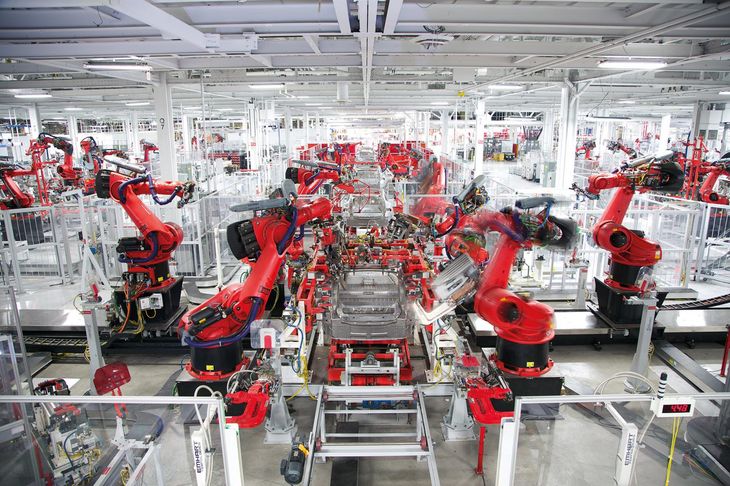
The new buildings cover an area of roughly 100 000 square metres – an addition of two-thirds of the already existing buildings for the production of passenger vehicles – with more than 700 tonnes of steel installed for the additional 3 lines in the assembly shop and a new logistics warehouse. The initial plant upgrades included a new Body Shop with over 500 “Internet of Things” Industry 4.0-enabled robots, which ensure increased volume outputs, plant optimisation and commercial synergy. The new body shop has been built at the East London Industrial Development Zone, where parts for the new C-Class are manufactured.

What’s more, at the Mercedes-Benz Learning Academy (MBLA) additional robotics were installed for training. The MBLA is a flagship and sustainable Public Private Partnership (PPP) in cooperation with the National Treasury and the Jobs Fund, which demonstrates the commitment of Mercedes-Benz South Africa to the empowerment and youth development in the automotive manufacturing sector. Since 2004, the MBLA has offered world-class quality training and transferrable skills, qualifying hundreds of skilled artisans in the Eastern Cape, which is even more important in times of a pandemic when travelling is restricted.

Major improvements in energy efficiency

In support of Ambition 2039, the East London plant has embarked on numerous initiatives to help preserve the environment for future generations. The new paint shop sees a reduction of energy consumption per vehicle of 25%. What’s more, the new buildings have been equipped with energy-efficient LED lighting, which uses up to 90% less energy per lumen output.

Through the implementation of energy efficiency measures and the adoption of more efficient technologies and processes, the plant has achieved an annual saving of over 16 MWh, which is the equivalent of the annual energy usage for the East London plant’s body shop and the logistics buildings together. Additional plant sustainability initiatives include battery storage containers; rainwater recycling with a water storage capacity of 1 million litres; green areas, which have been installed on the corridors and the roofs as well as soluble labelling, which is being utilised on production parts packaging to minimize waste reduction, Mercedes-Benz says.

As part of Ambition 2039, Mercedes-Benz aims to be fully networked and have a CO2-neutral vehicle fleet. By 2030, plug-in hybrids and all-electric vehicles will account for more than over 50% of the brand’s new-vehicle sales volumes. In addition, the company will replace liquefied petroleum gas with liquefied natural gas through compensations.

“Despite a tough year in 2020, we were able to accomplish what we had planned. To date, all of our buildings have been completed and we are ready to produce the new generation C-Class in full force. At Mercedes-Benz South Africa, our passion drives us to be the best and it is this passion, which drives our high-performance culture,” the outgoing CEO of Mercedes-Benz South Africa and Executive Director of Manufacturing, Andreas Engling, added.

Get a quote / Request a test drive

Mercedes-Benz New Car Specials in SA

Related content:

Mercedes-Benz C-Class (2021) Specs & Price

Read more about the new Mercedes-Benz C-Class

Toyota getting help from Suzuki and Daihatsu

Toyota, Suzuki and Daihatsu to combine on new mid-engine platform.

Industry rumours from Japan suggest that Toyota wants to reengage with a mid-engine sports car project.

Best Car Web reports that the rumoured vehicle will be built on a new platform and is scheduled for 2025. Even more interesting is that Toyota is not doing it alone, but with the help of Suzuki and Daihatsu.

Cooperation is a reality for most automakers, as R&D costs have surged. Despite its size and standing in the industry, Toyota is not indifferent to pooling resources. Especially when the goal is to create niche products outside its traditional bakkie, SUV and crossover competencies.  

The Supra is an excellent example of this. A car with true Toyota sportscar heritage, which would not have happened without the assistance of BMW.

Suzuki has successfully partnered with Toyota on a raft of recent badge-engineered products, some of which have been launched in the South African market.

But the issue of a new mid-engine sports car, would appear almost fanciful. With many brands promising to be full-electric by 2030 (including Lexus) the idea of Toyota bringing a new petrol performance car to market by 2025, on a dedicated mid-engine platform, seems odd.

Chances are, it won’t be a pure ICE vehicle but rather a hybrid. That said, the cost of engineering a mid-engine hybrid, would be high.

Toyota has announced incredibly ambitious electrification plans for 2030, with a flood of new models and vehicle platforms being promised. Among this future product matrix, the probability of a mid-engine petrol-hybrid sports car, could be entirely reasonable.

And how does Suzuki and Daihatsu factor into all of this? Well, it might have some cute Suzuki Cappuccino or Daihatsu Copen legacy styling influences. Although most Toyota performance car followers, are probably hoping for a new MR2. 

Related content

Toyota Belta Announced and Yes, It’s a Suzuki

Toyota MR2 To Return?

Toyota commits to 30 new EVs by 2030 – Including a Hilux

Toyota and its premium brand Lexus showed 15 new concepts as it bids to produce 30 new EVs by the end of the decade.

Toyota has taken its time before committing huge investments into EVs. While European brands have gone ‘all-in’ on the battery revolution, Toyota has investigated other forms of zero-emissions possibilities such as hydrogen, something it still believes to be part of its future model lineup. Toyota plans to be carbon neutral by 2035 and in achieving that goal it plans to produce both carbon-neutral vehicles and carbon-reducing vehicles. It also plans to increase production of zero-emissions vehicles to 3.5 million globally by 2030 equating to around one-third of its current sales volume and up from the 2 million vehicles it had previously expected to sell by that date.

Further investment was also made into battery development including solid-state battery development. Gerald Killmann, Vice President of TME R&D confirmed that prototype testing has already taken place on solid-state battery vehicles and that they would likely make their introduction on hybrid vehicles before wider deployment across BEVs. Solid-state batteries produce higher output, longer range and require shorter charging times. Killman also mentioned that Toyota expects to see a 50% reduction in battery cost per vehicle, without deteriorating range, in the second half of the 2020s; thereby making battery electric vehicles more affordable and accessible.

President of Toyota, Akio Toyoda introduced the new concept models that will fill its electric portfolio over the next 15 years. The bZ range (such as the bZ4x) will expand to include a midsize SUV and a compact SUV, which is said to have Europe and Japan in mind.

Mr Toyoda also stated that its current lineup would feature electric versions at reasonable prices. Interestingly, the concepts show a bakkie not too dissimilar from a Hilux that certainly indicates the brands intentions to at least investigate an all-electric version of SA’s favourite bakkie. During the reveal, it was also mentioned that Toyota would look into building on its off-road heritage to create new exciting recreational experiences or finding new ways to combine versatility with dynamic driving.

Lexus will be the driving force for the Japanese form as it plans to launch EVs in every segment it competes by 2030. Its first EV will be the RZ Crossover, looking to launch in Europe during 2022. From there a large SUV will follow and then a sedan which will cover the RX and IS models in its current lineup.

There is also mention of a Lexus supercar, which it calls a new Sports Battery EV.

With bold proportions and low ride height essential to a sports car, it will showcase the unique driving performance of a Lexus and become a model that symbolizes the future of the brand.

Acceleration time will be in the low 2-second range, cruising range over 700k m, and with the possible use of solid-state batteries in mind, we will aim to create a truly high-performance Battery EV

Related content

4000 km in 4 days in the new Toyota Hilux

New Electric Cars for SA in 2022

New VW T7 Multivan Gets Offroad Chops

Volkswagen’s new T7 Multivan people-mover is built for purpose and looks good in standard guise, but what if you wanted to take your T7 into the wild? Delta 4×4 has imagined a solution!

So, you’re an adventurer and you like the new Volkswagen T7 Multivan but you don’t want to use it as people-mover in the city, how boring. Instead, you want to modify it so that you can conquer the wild. What are your options? 

Well, at this point, there aren’t any aftermarket conversions available for the new T7 right now but German 4×4 specialist, Delta 4×4, has imagined the new T7 as a go-anywhere adventure bus and we think it’s cool. The images you see here are computer-generated images but they show the potential of what’s possible.

Starting from the outside, this rugged T7 Multivan is fitted with 18-inch beadlock wheels shod with Loder all-terrain rubber while the protruding wheel arch guards and stainless steel bull bar with integrated PIAA lights add some more ruggedness to the overall look. 

The vehicle is also equipped with a useful roof rack to cargo your cargo and mounted LED lights provide additional illumination at night. 

In terms of improving the vehicle’s go-anywhere ability, the ride height has been raised by 40 mm with the fitment of Bilstein shock absorbers and Eibach springs.   

This T7 eHybrid combines a 1.4-litre turbopetrol engine with an electric motor to produce a total output of 160 kW and makes use of a 13 kWh battery mounted low in the floor. The T7 can also be had in ICE form with either a 100 kW 1.5-litre turbopetrol engine or a 150 kW 2.0-litre turbopetrol. A diesel engine will join the range later and a 7-speed DSG transmission is fitted across the range. 

The availability of the T7 Multivan in South Africa has yet to be confirmed. 

Do you like the look of this T7 Multivan with offroad chops? 

Buy a used VW Caravelle on Cars.co.za 

Related Content 

Volkswagen Reveals its Cars for 2022

VW Crafter: Experimenting with ‘Van Life’

Toyota Fortuner Given Spec Upgrade

The Toyota Fortuner has received a few spec upgrades. Here’s what’s been added plus how much you can expect to pay for the Fortuner range.

The Toyota Fortuner is South Africa’s most popular SUV. The 7-seater SUV is available with 2 diesel engines, as well as 4×2 and 4×4.

Despite new offerings like the Corolla Cross and Urban Cruiser, the Fortuner still reigns supreme. Toyota SA reckons that Fortuner’s stellar sales record stems from constant communication with its customers and understanding their ever-changing needs. Toyota has taken feedback and enhanced its current offering with additional features.

What’s new?

The 2.9 Fortuner gains an upgrade to its air conditioning which becomes a dual-zone climate control, while the flagship VX model gets a panoramic camera. Fans of quality audio will be happy to note the 11-speaker JBL Premium Audio system has been added. Interestingly, the on-board satellite navigation has been removed, with Toyota saying that customers were using the smartphone navigation thanks to Apple CarPlay and Android Auto connectivity.

As far as safety and security is concerned, the Toyota Safety Sense system on the VX grade gains blind-spot monitoring and rear cross-traffic alert. There’s also an enhanced smart entry system.

The colour line-up on the 2.4 and 2.8 models remains unchanged with seven options. On the VX model, Pearl White has been replaced by Platinum White Pearl.

Engine & Transmission Options

The proven 2.4 and 2.8 GD-6 turbodiesel engines continue with the 2.4 GD-6 producing 110 kW and 400 Nm, while the 2.8 delivers 150 kW and 500 Nm. The 2.4 is offered with a 6-speed manual gearbox and a 6-speed automatic, while the 2.8 is automatic only.

How much does the upgraded Fortuner cost in South Africa?

All Fortuner models are sold with a 3-year/100 000 km warranty and a 9-services/90 000 km service plan. Service intervals are set at 10 000 km and customers can purchase a variety of service plans and warranty extensions from their nearest Toyota dealer (220 countrywide).

2.4 GD-6 RB MT           R599 000

2.4 GD-6 RB AT            R621 400  

2.4 GD-6 4×4 AT           R651 700

2.8 GD-6 RB AT            R724 400

2.8 GD-6 4×4 AT           R798 000

2.8 GD-6 RB VX AT      R764 600

2.8 GD-6 4×4 VX AT     R837 100

Further Reading

Toyota Corolla Cross launch review

The Fortuner reviewed – SA’s best?