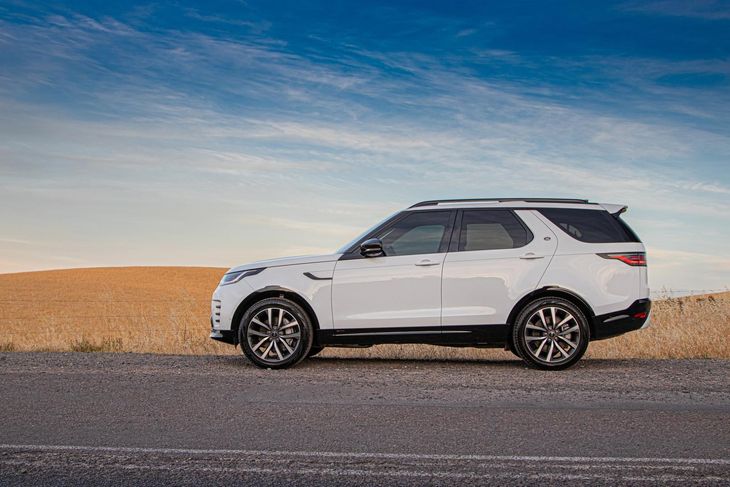
Audi’s popular Q5 mid-size SUV has come in for a facelift and is ready to be launched in SA, here’s what the Q5 has to offer and how much it costs.
Following the introduction of the Q3 Sportback, Audi is introducing a coupe-roof styled Q5 called the Q5 Sportback with the facelifted Q5. This gives Audi a natural competitor to the BMW X4 and GLC Coupe from its German rivals. You could also consider the Range Rover Evoque in the segment too, but there are loads of premium rivals from the likes of Lexus, Porsche and Jaguar that buyers would also consider in this segment.
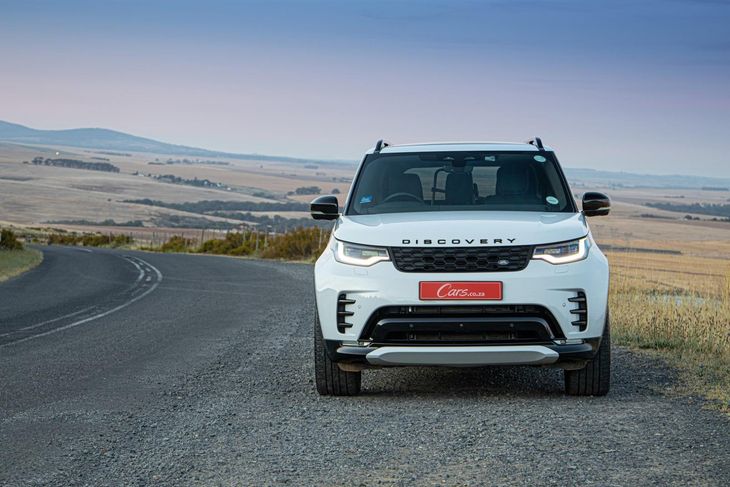
The front end design features new air intakes and a more distinctive front grille. The Q5 Sportback has a slightly different front grille design to that of the normal Q5. The headlight design has been modernised and can optionally be fitted with Matrix LED lights that automatically adjust to oncoming vehicles and pedestrians.
The rear light has its own signature and if you’re following it, you may notice that the design and brightness of the rear lights changes depending on what drive mode is selected. The rear lights also become brighter if someone gets a little too close to the rear of the car, warning them to ‘back off’ if you will.
Audi Q5 engine range
The Audi Q5 Sportback’s styling is now more refined.
There are three engines to choose from in the Q5 model lineup. All the engines are available in both body styles. The range starts with the 40 TDI, a 2.0litre turbodiesel with 140 kW and 400 Nm of torque and is equipped with a 7-speed S tronic gearbox. Next up is the 45 TFSI 2.0-litre turbopetrol which produces 183 kW and 370 Nm, also equipped with a 7-sped S tronic gearbox. This engine is also equipped with a 12V mild-hybrid system that shuts down the engine when coasting in order to save fuel. It’s claimed to improve efficiency by around 0.7L/100 km. The SQ5 is currently pinned as the performance derivative and features a 3.0-litre turbopetrol engine producing 260 kW and 500 Nm with an 8-speed tiptronic gearbox.
All models feature Quattro all-wheel-drive, but the system can automatically disconnect the rear wheels when not needed, improving efficiency and effectively making the car front-wheel-drive at times when you don’t need the extra traction of Quattro.
Audi Q5 interior
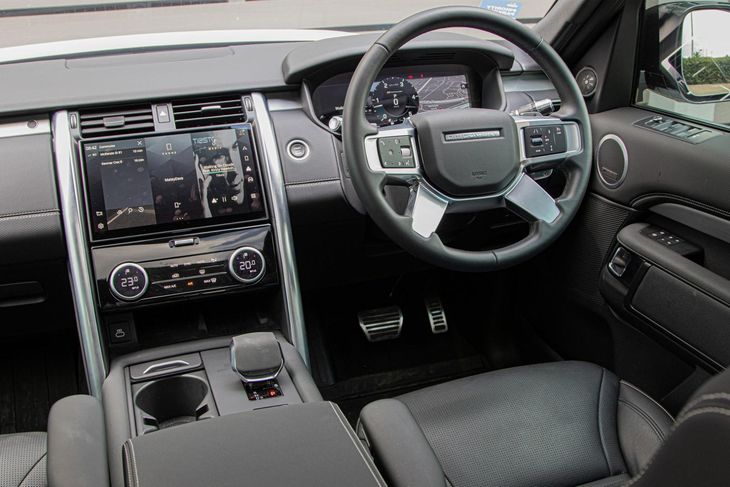
The Q5’s interior has also been updated with better connectivity and safety features.
The Q5 model range still features the older screen on top of the dash design rather than the newer integrated system that sits within the dash but the software and hardware have been upgraded. The result is that it’s up to 10 times faster than the old system.
Virtual Cockpit is also available digitising the infotainment screen into a space where you can personalise the information you want to see in front of you.
More safety features and semi-autonomous systems are now available in the Q5. Lane Assist helps keep you centred in your lane, guiding the vehicle on its own while adaptive cruise control maintains speed and distance from the car in front without you needing to touch any of the pedals.
A 360-degree camera is also now available along with park assistance and cross traffic alert when reversing out of parking bays.
Adaptive air suspension system is optionally available on the 40 TDI and 40 TFSI but standard on the SQ5. The system automatically adapts to road conditions and speeds, either raising the ride height or lowering it. It can also be used when loading things into the car, lowering the rear end by as much as 50 mm.
Practicality wise there isn’t too much difference between the standard Q5 and the Q5 Sportback. The boot on the Q5 is 520 litres big while the Sportback claims 510 litres of loading space. When you lower the rear seats the Q5 will hold 1 520 litres of luggage while the Q5 Sportback will load 1 480 litres.
Audi Q5 lineup
Audi Q5 – 19-inch wheels.
Audi Q5 Advanced – 19-inch wheels, Advanced Line bumpers, high gloss package.
Audi Q5 S Line – 19-inch wheels, S Line bumpers, high gloss package, sports suspension.
Audi Q5 Sportback Advanced – 19-inch wheels, Advanced Line bumpers in full paint, high gloss paint, sports suspension.
Audi Q5 Sportback S Line – 20-inch wheels, S Line bumpers, high gloss package, sports suspension.
Volvo South Africa has announced that its updated XC60 mid-size SUV will arrive locally in the first quarter of 2022 boasting a new Android-powered infotainment system.
Volvo and Google have partnered up to provide enhanced connectivity.
Volvo Car Group has partnered with Google to bring an integrated infotainment system to market with Google apps and services as well as over-the-air updates. The Volvo XC60, however, isn’t the first Volvo product to feature an Android-powered infotainment system, in fact, it was first offered in the XC40 P8 Recharge which was introduced locally earlier this year.
Greg Maruszewski, Managing Director at Volvo Car South Africa, commented “This intuitive, next-generation infotainment system offers customers unprecedented personalisation and unparalleled connectivity. The software runs apps such as Google Maps for navigation, Google Play for music and it offers hands-free help with Google Assistant. This is more than just a new tech feature; it boosts safety too. With Google Assistant, drivers can use their voice to get things done while keeping their focus on the road. They can do things like control the temperature, set a destination, play music and podcasts, and send messages, all while keeping their hands on the wheel,” he explains.
In terms of visual updates, the XC60 gains a refined grille design as well as a new front bumper design. The XC60 will also be offered with a selection of new wheel options and exterior colours. Customers will also be able to opt for a leather-free interior and Volvo’s City Weave textile upholstery will also be available.
Importantly, the Volvo XC60 will feature enhanced safety with the latest Advanced Driver Assistance Systems (ADAS) which uses radars, cameras and sensors that allow for features such as road user detection, collision avoidance, emergency braking and Pilot Assist, including adaptive cruise control, lane-keeping assist and so forth.
The current 2.0-litre turbocharged B5 petrol engine with 183 kW and 350 Nm as well as the more powerful B6 2.0-litre variant with 220 kW and 420 Nm are expected to be carried over.
Detailed specification and pricing details will be communicated closer to the arrival of the updated Volvo XC60 on local soil in the first quarter of 2022.
The GTS badge has become integral to virtually every Porsche range, so it’s fitting that the Taycan electric sports sedan line-up now features a GTS version, replete with enhanced styling and performance, unique suspension tuning, as well as upgraded Electric Sport Sound. Simply put, this is the first electric GTS.
The Taycan GTS sedan is powered by a permanent magnet single-speed front motor in combination with a larger permanent magnet rear motor with a diameter of 245 mm and an active length of 210 mm, as well as a 2-speed rear transmission. This setup provides a total power output of 440 kW with Launch Control, slotting the GTS version in between the Taycan 4S (390 kW) and Taycan Turbo (500 kW).
Like the Taycan Turbo and Taycan Turbo S, the Taycan GTS comes standard with the 93.4-kWh Performance Battery Plus and its 800V architecture means it can handle continuous demand while minimising heat build-up, which is part of the reason it can be charged up from 5 to 80% in 22.5 minutes. Porsche claims a top speed of 250 kph with a 0-to-60 mph (96.6 kph) sprint time of 3.5 sec.
Visually, the Taycan GTS is distinguished by the front-end styling of the SportDesign package, with matching side skirts (bearing GTS logos) and high-gloss black side window trim. The rear diffuser features a high-gloss black inlay and GTS badging in matte black. The standard 20-inch Taycan Turbo S Aero Design wheels, meanwhile, has an exclusive satin-black finish, while the rear light strip features the Porsche logo in black. Finally, the LED-Matrix-Design headlights (with PDLS Plus) are tinted in black, and the exterior mirror cap-bottoms are painted in body colour, although their bases are black.
Although the Taycan GTS carries over the suspension and performance equipment of the flagship Taycan derivative, the calibration and tuning of those components are all bespoke to the newcomer. The standard braking system comprises the same red 6-piston front callipers and 4-piston rear callipers as fitted to the 4S derivative, but the GTS is additionally equipped with larger (390 mm) front discs. The rear disc size, incidentally, is the same as the 4S (358 mm). Porsche Surface Coated Brakes, with tungsten carbide coating, and Porsche Ceramic Composite Brakes are also available.
Standard features include adaptive air suspension (with Smart Lift and Porsche Active Suspension Management), Porsche Torque Vectoring Plus and the Sport Chrono package, including the GT multifunction steering wheel (with mode dial). Furthermore, the Porsche Electric Sport Sound has been tuned to be deeper and louder inside and outside of the vehicle, the Zuffenhausen-based brand says.
Inside, the Taycan GTS features the familiar multi-screen instrument panel and fascia and sporty seating position of its siblings. What’s more, many of the standard technology and comfort features from the other Taycan derivatives, such as Apple CarPlay and Android Auto compatibility, automatic climate control, Porsche Connect with Porsche Charging Planner also come standard in the GTS.
A unique Race-Tex interior package, which mimics similar treatments in other GTS versions, includes driver and front passenger seats with 18-way electric adjustability and memory functions with “GTS” logos on the headrests. The door sill guards and interior trim are finished in brushed black aluminium and the accent package is black. The roof lining and steering-wheel rim are also trimmed in Race-Tex.
Also optionally available is the GTS Interior Package, which includes deviated stitching in either Carmine red or Chalk on the dashboard, doors, armrests, steering wheel and seats, with matching seat belts, “GTS” embroidery on the front and rear headrests, Sport Chrono instrument dial and the Porsche logo on the floor mats. The trim on the steering wheel, centre console and door cards are in matte carbon.
How much does the new Porsche Taycan GTS cost in SA?
The Porsche Taycan GTS costs R3 179 000, which includes a 3-year/100 000 km Driveplan.
These days, most luxury car buyers prefer bulky SUVs. However, for more discerning, comfort-craving car shoppers (especially those who seek enthralling driving experiences), a rapid first-class sedan holds special appeal. If you’re such a person, then read on, because the Audi A8 might be the best of the breed…
We like: Handsome looks, fantastic cabin, hard-hitting performance, great ride/handling balance
We don’t like: Eye-wateringly expensive (and that’s before options!)
It’s rare to test a luxury car these days that isn’t an SUV. The S8 offers sophistication and style in an understated manner.
The current (D5-generation) Audi A8 debuted in 2017, but the S8 was only launched late in 2019 for the 2020 model year. BMW’s M version of its 7 Series, the V12-engined M760Li xDrive is (still) listed with a stratospheric R3.3-million price tag and Mercedes-Benz has only just launched its new S-Class on local soil – “hot” AMG derivatives have yet to be revealed. Still, for roughly the same outlay as an S8, you can get a BMW 750Li xDrive or a ‘Benz S500 L 4Matic. What all of this means is that the Audi S8 is quite unique in the local market, because it is a high-performance limousine not only in terms of “trim”, but also outright capability. Priced from around R2.5 million before options, it will appeal to a select few buyers who demand the best possible combination of sizzling performance and exquisite luxury.
The interior may be familiar to many other Audis, but it’s the trim work on the doors and seats that lift the feel of the S8’s cabin.
Finished in sinister black and riding on (optional) anthracite black, diamond cut, 10-spoke 21-inch wheels, “our” Audi S8 immediately reminded the test crew of the fast Audis featured in action movies such as Ronin and The Transporter. The standard A8 is a handsome machine, but Audi’s designers have discreetly endowed the sportiest A8 with its own visual character. The sizeable wheels fill the sedan’s arches with purpose and the body appears to be stretched low and tight over its corners. Several onlookers commented that it was an infinitely more elegant and desirable solution to high-performance luxury motoring than an SUV… It’s particularly attractive from the rear, where the OLED rear lights (part of an R80 000 lighting package) illuminate in a mesmerising sequence when the car is unlocked.
Open the door and you’ll probably notice that the car lifts slightly on its active suspension to make ingress easier. That is providing you’re not distracted by the visual delight that is the current-gen Audi A8/S8 cabin, of course. This may very well be the most striking cabin in its segment, which says a lot, given the strength of the competition. It’s been a while since we’ve experienced a car interior with predominantly light grey upholstery and carpeting, but the hue works well with the multitude of gloss-black panels and satin silver detailing. Build quality, as we’ve come to expect from Audi, is superb. It is, overall, a tech-laden cabin, which is awash with digital displays and touch-sensitive panels. Gone are the days when “luxury sedan” equated to burr walnut trim and piped cream leather upholstery…
Though the S8 is undoubtedly a big car with a capacious cabin (with sufficient rear legroom), note that in South Africa. at least, its same-price rivals are only offered in long-wheelbase guise. That said, if you’re looking at an Audi S8 specifically in the first place, we’re quite confident that the tighter rear confines won’t be a deal-breaker. You do still get a 505-litre boot should you need to, er, transport stuff…
Performance & Efficiency
There’s plenty of power available with a twin-turbo V8 under the bonnet.
With 420 kW and 800 Nm on tap from its twin-turbocharged 4.0-litre V8 petrol engine, the S8 is significantly more powerful than its same-price rivals (in South Africa) from BMW (750Li) and Mercedes-Benz (S500 L). Audi claims a blistering 0-100 kph time of 3.8 seconds, which is really quite something, given the S8’s not-insignificant kerb weight of in excess of 2.2 tonnes! Top speed is limited to 250 kph.
While the German limousine’s powerplant does emit a pleasing roar when tasked to deliver full or near-maximal acceleration (courtesy of automatically actuated flaps in the exhaust system), the most impressive aspect of the S8’s performance is just how effortless it feels. It’s a very smooth engine, which, coupled with active noise cancellation technology, facilitates relaxed – yet devastatingly fast – progress. The 8-speed automatic transmission also seems very well matched with the engine, delivering buttery-smooth, but eminently precise, shifts.
Audi has also sought to improve the S8’s fuel efficiency by fitting the sedan with cylinder-deactivation technology as well as a mild hybrid system (MHEV); the latter consists of a 48V belt alternator and additional lithium-ion battery. The system allows for coasting with the engine switched off, fast restarting and an extended start/stop range. Audi says that fuel savings of “up to 0.8 litres per 100 km” is possible and the combined cycle consumption figure is given as 10.7 L/100 km. That’s a very optimistic figure, though… you’re more likely to see indicated figures of around 13 L/100 km.
Ride & Handling
For a car with such a long wheelbase and hefty curb weight, its ride management systems do an amazing job of keeping it comfortable yet engaging to drive.
Now we’re getting to an area in which the new S8 has arguably made the biggest strides. In the past, fast, large, all-wheel-drive (quattro) Audis were often criticised for offering “wooden” ride qualities and handling characteristics that presented little in the way of excitement to serious driving enthusiasts. For this new S8, Audi has thrown every possible bit of tech in its (extensive) armoury at the problem. For the record, keep in mind that the goal here is to offer superlative ride comfort at most times, but also engaging dynamics (when the S8’s driver wants to drive their car enthusiastically). That’s a tall order.
The S8 features what Audi calls “predictive active suspension”. With this system, each wheel can be independently lifted or pushed down via electromechanical actuators. According to Audi, this makes it possible, for the first time, to actively control the trim of the body, in any driving situation, which greatly reduces pitch and roll. Now add a front camera that scans for the road surface ahead for larger irregularities, and the Ingolstadt-based firm’s standard-bearing sedan is said to be capable of altering its suspension settings “predictively”.
Of course, the driver can still set the parameters within which the system functions, by choosing between 5 driving profiles in the Drive Select system, including Comfort+ (it even works to minimise lateral acceleration/occupant lean) and, at the other extreme, Dynamic, which minimises the maximum roll angle during fast cornering to only 2.5 degrees (in its default setting, the roll angle is double that).
Another boon to the S8’s dynamic abilities is the fitment of dynamic all-wheel steering, which is claimed to improve steering response and facilitate a tighter turning circle. A standard sport differential actively transfers torque between the rear wheels during cornering, countering the tendency to understeer that, to reiterate, plagued fast, big, all-wheel-drive Audis in the past.
Does it work? The new S8 certainly has a suppleness its predecessors lacked and its body control is markedly improved. Given its size and heft, the Audi’s not exactly nimble, but it exhibits an admirable keenness to turn in and change direction. By pressing a few “buttons”, a driver can transform the S8 from a luxury cruiser (with delightfully light controls) to a machine that really doesn’t mind being hustled.
Comfort & Safety features
The S8 doesn’t lack any features or convenience offerings (if you’re willing to specify a lot of optional extras).
We put the word “buttons” in quotation marks in the final sentence of the previous section to highlight the general absence of such rudimentary switches and toggles in the S8’s thoroughly contemporary cabin. Most of the controls have now been integrated into the pair of touchscreen panels that dominate the centre console. The lower section houses the climate control functions, while the rest of the car’s infotainment and setup controls are located in the upper display. Audi has mastered combining slick, clutter-free touch panels with the tactility of haptic feedback.
Given the S8’s market positioning and price, it goes without saying that it would take a considerable amount of time to stipulate all the sedan’s standard features, but it’s worth noting that an extensive optional extra list is also offered. In fact, our test unit was specified with more than R470 000 worth of options!
Stand-out features (fitted as standard) include the individually contoured comfort sports front seats with adjustable side bolsters and heating/ventilation (a massage function is optional). The standard infotainment package offers Apple CarPlay and Android Auto functionality, as well as a charging pad and a Bang & Olufsen audio system, but more extravagant features can be specified at extra cost.
We do appreciate that Intelligent Park Assist, an excellent 360-degree camera system and a head-up display are included, but given the S8’s lofty price tag, adaptive cruise control (with speed limiter) ought to be standard. Having to pay extra for a lane-keep system and traffic-jam assist in an R2.5-million car, when similar features are stock in Chinese SUVs costing less than R500k, is food for thought.
How much does the Audi S8 cost in South Africa?
Priced at R2 537 500 without options (November 2021), the Audi S8 is a very exclusive product, but it’s worth pointing out that it significantly out-punches its direct rivals from Mercedes-Benz and BMW. That said, note that our test unit was additionally specified with around R470 000 worth of options; the most expensive item was the Bang & Olufsen Advanced Sound System with 3D sound for R137 000.
The base price includes a 1-year/unlimited km warranty and 5-year/100 000 km maintenance plan. Services are according to the on-board indicator and at a maximum of 30 000 km apart.
Verdict
The sedan segment appears to be slowly fading away, but there are some great cars to be had if you don’t want an SUV. The S8 is one of them.
For once, it was refreshing to drive a luxury performance vehicle with a sedan – as opposed to an SUV – bodyshell. There’s an air of good taste, sophistication and “class” about this Audi S8, which we found highly desirable. We wonder for how much longer brands will continue to offer wonderful machines such as this, and we certainly don’t expect Audi to sell many, but those discerning buyers who do take the plunge will slide in behind the ‘wheel of the best large luxury, high-performance Audi we’ve ever experienced. If this is the last hurrah of the high-performance limousine, it’s a rousing send-off.
The Chilli Mouse! Custom-built, street-legal Datsun Bakkie Racecar
This is one of the coolest Datsun bakkies we’ve ever seen. Join us as the owner talks us through the build and the incredible attention to detail.
Gary Law grew up watching his dad build and race cars, with a particular love for Datsuns. When his father passed, it left a void which he felt an urge to fill, and he came up with this, his custom build affectionately known as the Chilli Mouse.
His fabrication and customs business involves building and modifying some exceptional cars, including real halo cars like the Nissan R34 GT-R Skyline. But Gary wanted something a bit more close to home, and he set about building his dream Datsun 1200.
This is definitely one of the cleanest builds we’ve come across, with incredible attention to detail, and some of the widest tyres we’ve ever seen on a little bakkie!
Join Gary as he walks us through the build and the story behind it.
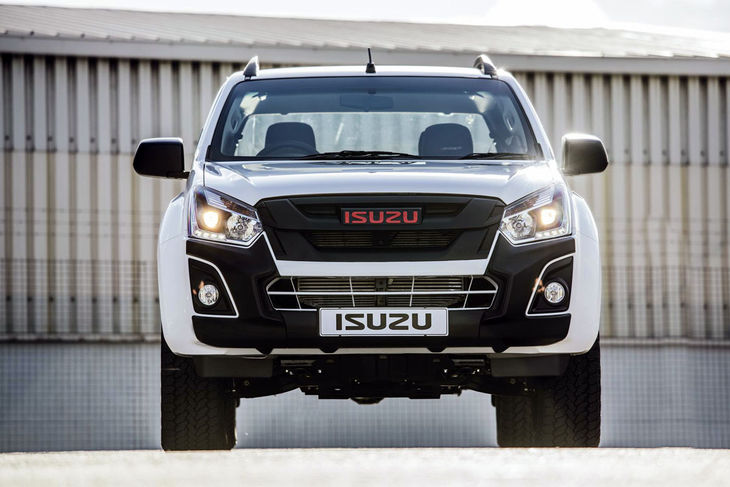
The all-new Isuzu MU-X has landed in South Africa. Here’s what you can expect to pay for the 7-seater family SUV that’s a rival to the Toyota Fortuner, Ford Everest and Mitsubishi Pajero Sport.
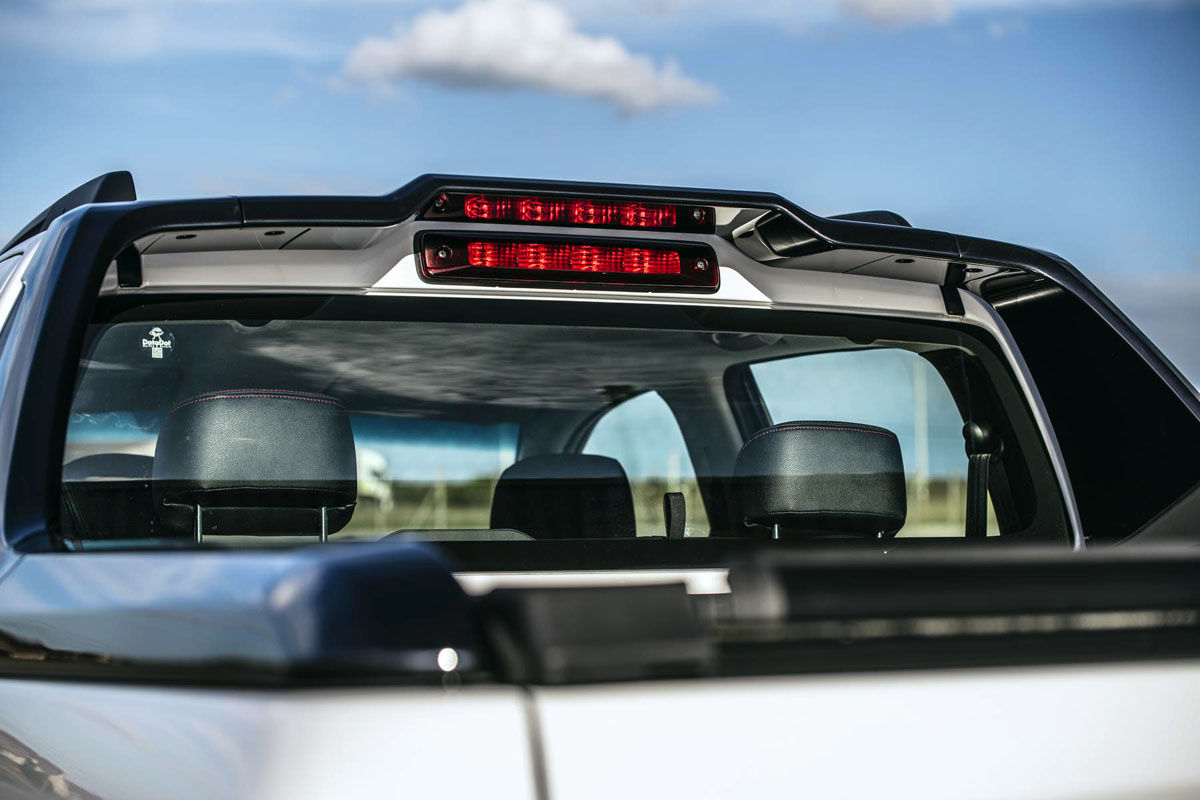
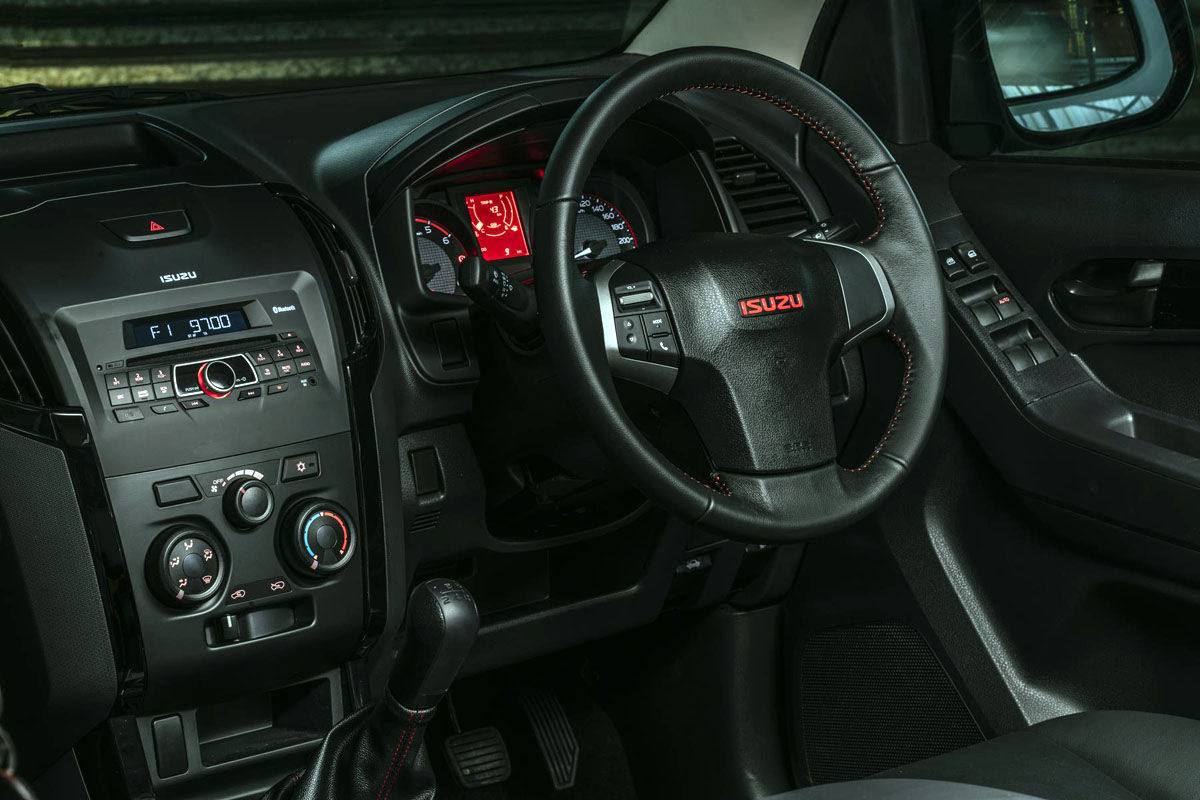
The new model will not be built in South Africa, but instead will be imported from Isuzu’s Thailand plant and will also be sold in other African right-hand drive markets. The all-new Isuzu MU-X will be sold with an arsenal of active/passive safety systems, plus modern connectivity solutions such as Android Auto and Apple CarPlay. The cabin is said to feature luxurious fittings and soft-touch surfaces, to give the vehicle a bit more of a premium feel.
We’ll share the levels of trim as soon as we receive them from Isuzu, but from what we can see so far there are 4 models with both 4×2 and 4×4 derivatives on offer.
The all-new Isuzu MU-X is powered by a new 3.0-litre turbodiesel 4-cylinder motor. This 4JJ3 motor punches out 140 kW and 450 Nm, and every Isuzu MU-X features a 6-speed automatic gearbox. The 4×4 derivatives feature a rotary dial that enables you to change from 2High to 4High to 4Low, plus this new system is said to be faster than the outgoing model’s.
Isuzu MU-X Trim Levels
LS
17-inch wheels Cruise control Rear camera Rear parking sensors Bi-LED headlights LED daytime running lights Remote-controlled central locking Automatic lights Cloth trim Manually-adjustable seats Front and rear USB ports 7-inch infotainment with CarPlay/Android Auto 6x speakers Steering wheel audio controls
LSE
LS plus the following: 18-inch wheels Front and rear parking sensors Electric power steering position adjustment Rear cross-traffic alert Tyre pressure sensors Keyless entry/start Walk away auto lock Power tailgate Leather gearknob Leather seats Electrically-adjustable seats Climate control Rear privacy windows 9-inch infotainment with CarPlay/Android Auto 8x speakers
Onyx
LSE plus the following: 20-inch wheels Adaptive cruise control Front and rear camera Lane departure warning Autonomous emergency braking Automatic high beam Heated front seats Auto dimming mirror Aux 220V power socket
How much does the new Isuzu MU-X cost in South Africa?
The new MU-X is sold with a 5-year / 120 000 km warranty and a 5-year / 90 000 km service plan.
MU-X 3.0 Ddi 4×2 LS A/T R693 800
MU-X 3.0 Ddi 4×4 LS A/T R771 600
MU-X 3.0 Ddi 4×2 HR LSE A/T R763 300
MU-X 3.0 Ddi 4×4 Onyx A/T R860 500
Porsche Cayman GT4 RS Goes Official (With SA Pricing)
The 2022 Porsche 718 Cayman GT4 RS has finally been revealed and it’s the ultimate road-legal Cayman. SA pricing has been announced too. Details and price are below…
The Cayman GT4 RS’s development wasn’t exactly a secret and Porsche made quite a song and dance about its attempts to make the ultimate Cayman derivative.
We knew things were getting serious when Porsche confirmed its prototype set a Nurburgring record shortly before its official reveal. If you weren’t aware, the Cayman GT4 RS belted out a 7 minute 04-second run – exceptionally quick and it’s almost 24 seconds quicker than the already capable GT4.
Lurking in the engine bay is a 4.0-litre flat-6 petrol engine that delivers 368 kW and 449 Nm, but has a redline of 9 000 rpm! Porsche claims a 0-100 kph of just 3.4 seconds, which is half a second quicker than the standard GT4. Power goes to the rear wheels via a slick 7-speed dual-clutch gearbox. Customers can change gears using the paddles on the steering wheel.
Another factor at play is weight or in this case, the lack thereof. With extensive use of carbon fibre and weight-saving techniques, the GT4 RS tips the scales at just over 1 400 kg. The GT4 RS sits lower than the standard car, with an adjustable track-focused suspension. This setup has revised sway bar rates, springs and dampers and making its debut in the Cayman range are center-lock wheels.
As you can see, there’s some extensive aerodynamics on offer with a massive fixed-wing, rear diffuser, adjustable front diffuser, and front spoiler lip. Underneath the car, there have been upgrades for better airflow. There are additional vents to help with cooling.
How much does the new Porsche Cayman GT4 RS cost in South Africa?
The new flagship Cayman model is sold with a 3 year/100 000 km Driveplan
The new CX-50 crossover was designed with the North American market in mind and will be produced in Mazda’s new factory in Alabama, so it probably won’t come to Mzansi. Nonetheless, the newcomer is the first of 5 new CX models that will be launched in the next 12 months, so it’s a preview of what’s to come…
Said to be a “completely new model”, the CX-50 should slot in just above its popular, but long-serving, CX-5 family car sibling in Mazda’s line-up (that’s if the newcomer will be positioned as the Mazda3-based CX-30 is in relation to the CX-3, for example). It’s difficult to say, because the CX-3 and CX-30 are not based on the same platform and it’s difficult to imagine that Mazda would retain the outgoing CX-5’s KF platform for the “all-new model”. Mazda says the current CX-5 will ultimately be replaced, so the CX-50 might be offered as a standalone product first and a complementary model after that.
What’s most surprising about the CX-50 is its off-road-oriented packaging. Mazda says it has “extended this vehicle’s capability to enable drivers to venture further into the outdoors and various terrains”. As such, all CX-50s are equipped with all-wheel drive (i-Activ) as well as Mazda Intelligent Drive Select (Mi-Drive). The latter enables drivers to select from various drive modes to tailor the new Mazda’s powertrain settings to suit a variety of conditions, such as “off-road terrain or providing reliable towing capabilities”.
This is a rather bold move on the part of Mazda, which has equipped its all-wheel-drive crossovers and SUVs with (some) added ground clearance and functions that utilise the vehicles’ electronic stability control software to assist in mild off-road conditions, but, with the exception of the BT-50 double cab, the Japanese brand has not drawn attention to its models’ outright off-road abilities and packaging.
The CX-50’s off-roader-inspired styling, however, is quite deliberate, right down to the black graphics on the newcomer’s bonnet. Like its contemporary stablemates, the newcomer is athletically styled, replete with a sleek silhouette, slim side-glass profile and wide stance, but it is additionally kitted out with chunky black cladding (on the wheel arches and flanks), while the bumpers feature little in the way of satin chrome accents. What’s more, the grille and headlight trims are blacked out. The CX-50 is a no off-roader – it’s still a crossover, but it suggests upcoming CX models will be more overtly sporty.
As expected, the CX-50’s upmarket cabin has a minimalist design, with a driver-oriented layout at the front. It’s not particularly distinctive (to be fair, that’s not Mazda’s modus operandi), but piano black inserts, subtle metallic finishes and contrast stitching, which matches the optional terracotta leather trim, complete the look. The model also features a panoramic moonroof; it’s reportedly “a first for Mazda.”
In terms of practicality, Mazda says the CX-50’s height and length facilitate the “easy loading and securing of outdoor equipment. Additionally, the high strength roof rails and reinforced b-pillars and door jambs add to the usability of securing equipment on the roof”. We assume that the roof rails and -box shown in these press images will feature on the new model’s optional accessories list.
The CX-50 will be offered with either the Skyactiv-G 2.5-litre 4-cylinder naturally aspirated- or Skyactiv-G 2.5-litre 4-cylinder turbocharged petrol engine paired with a six-speed automatic transmission. The former is already offered in the local CX-5 range, but we still await the arrival of the 170-kW forced-induction motor in the South African market.
As for the upcoming CX models, the imminent CX-60 is believed to be the direct successor to the current CX-5, while the CX-70, CX-80 and CX-90 will follow in due course.
Understanding your instalment sale agreement [Part 2]
Start your journey to vehicle ownership with the help of our Street Smart video series, brought to you by Absa Vehicle Finance. “If you finance the purchase of your vehicle through a credit provider, it’s important that you fully understand the details of the instalment sale agreement,” says Absa’s Sbu Dhlamini.
PARTNERED CONTENT
If you’re in the market to buy a car, you may decide to finance the vehicle’s purchase by means of an instalment sale agreement with a credit provider, such as a bank. In the second instalment of this feature, Sbu (Sibusiso) Dhlamini – head of compliance at Absa – shares some more information on this agreement and the accompanying tax invoice.
Dhlamini: The instalment amount is the amount you agree to pay towards repayment of your principal debt, inclusive of interest and your service fee. This amount is clearly indicated on your instalment sale agreement and is calculated by dividing the outstanding balance on your account (including interest, charges, fees and insurance) by the remaining term of your agreement (the number of months).
You may choose to pay your instalment amount monthly, quarterly, bi-annually (twice a year) or annually (once a year) at the variable or fixed rate on the instalment sale agreement.
What is the earliest that I may settle my instalment sale agreement and what is an early termination charge?
Dhlamini: You may settle your instalment sale agreement at any time during the term of the agreement by requesting a settlement figure from your credit provider.
Section 125 of the NCA permits your credit provider to add an early termination charge to your settlement figure if your principal debt is R250 000 or more. This charge is equal to the amount of interest payable on your account for the period from the date you request the settlement figure to the date that you settle the account, but may not be more than 3 months’ worth of interest.
What is a balloon payment?
Dhlamini: You may choose to apply a residual value or balloon payment as your last instalment to your instalment sale agreement. Having a residual value or balloon payment helps to reduce your instalment amount over the term of your agreement, but it’s important to budget and ensure that you’re able to repay this amount in a single payment at the end of the agreement term.
Is there interest charged on the balloon amount and will the final amount include interest charges?
Dhlamini: Interest is charged on the balance outstanding on your principal debt, which includes the balloon amount. The interest payable is included in your instalment amount payable over the term of your agreement so your final balloon payment is a capital amount only, with no added interest.
What if my car is worth less than the balloon payment owing at the end of the term?
Dhlamini: Your car will depreciate in value over the term of your agreement and it is expected to depreciate at a rate of about 20% per annum, although some car brands do depreciate at a lower rate.
How can I reduce the balloon payment during the term of my instalment sale agreement?
Dhlamini: Any lump-sum payment you make in addition to your instalment amount will be applied to your outstanding balance, first against due or unpaid interest, then against due or unpaid fees and charges and finally against the outstanding balance, which includes the balloon amount.
Other episodes in our Street Smart video series:
In the first episode of our series – brought to you by Absa Vehicle Finance, Fulufhelo Mandane (Absa’s head of dealer relationships for Gauteng and Limpopo) discussed what you need to consider before you start shopping for a vehicle, the costs of ownership and your various finance options. Absa First-time Buyer Guide to Vehicle Finance
In the video that followed, Mandane’s colleague Gordon Wood (Absa’s head of dealer relationships for KwaZulu-Natal & Mpumalanga) detailed how the new Aftermarket Guidelines, which were recently introduced in the motor industry, affect you as a vehicle owner. Absa’s Guide to Responsible Vehicle Ownership
Recently, Michelle Moodley (Absa’s head of sales enablement) emphasised the importance of taking precautions to avoid falling into fraudsters’ traps. Vehicle Sales Fraud: What to look out for
The 2022 Hyundai Creta facelift has been unveiled after a handful of teaser images.
The teaser images of the 2022 Hyundai Creta facelift showed hints that the new compact SUV from the Korean brand would adopt the same fascia and grille as the all-new Hyundai Tucson.
The new 2022 Hyundai Creta was globally revealed as part of the Gaikindo Indonesia International Auto Show and from our understanding, the model will be assembled in Indonesia right away, with the Indian market receiving its units in the middle of next year. This is important as Hyundai SA sources its Creta units from its Indian factory and while we’ve yet to hear of its availability, the model is popular and we expect to land in SA before the end of 2022.
So, what’s new? Well, that face will dominate talking points and the integrated headlights into the grille won’t be too everyone’s taste. We like the bold and out-there look however as far too many cars are adopting generic styling cues. The rear has also been given a slight update, but it’s nowhere near as radical as the front.
The cabin has received a nip and a tuck, with the standard feature range bolstered with an 8-inch infotainment system, the number of speakers increased from 4 to 8 (with the option of a Bose system), rearview camera, shift paddles, panoramic sunroof, wireless charger, ambient mood lighting, ventilated seats, auto climate control and an increase in the standard safety offering.
The Hyundai SmartSense setup adds tyre pressure monitoring, blind spot collision, rear cross-traffic alert, safe exit warning, rear occupant alert, lane-keeping assist, high-beam assist, and automatic emergency braking depending on trim level.
We expect the current range of engines and transmissions to be retained and this is a good thing as the powertrains on offer at the moment have all bases covered. There’s a blend of naturally-aspirated petrol, turbocharged diesel and turbo petrols on offer, with customers spoilt with manual and automatic gearboxes.
As we’ve said, we’ve yet to hear from Hyundai SA, but we’re pretty confident this new-look 2022 Hyundai Creta will be coming to our market at some point.