The all-new Toyota GR Corolla will come to market with the same engine as the GR Yaris, but cranked up to 224 kW!
Toyota promised much, and over delivered, with its GR Yaris. And for those who need four doors and safer luggage space, the Corolla version might be even better.
The GR Yaris power- and drivetrain technology could be the answer to years of performance sedan expectations, for loyal fans of Toyota.
With its compact 1.6-litre engine boosting 198 kW and 360 Nm, split among all four wheels with a driver-centric arrangement of trick differentials, the GR Yaris is a tremendous drive. And the Corolla will be even more potent.
A leaked dealer forum document rates the Corolla GR at 224 kW. That’s a tidy gain over the Yaris, but why didn’t Toyota just makes the three-door hatch equally powerful? Weight. That’s why.
Although the GR Corolla is rumoured to allow for a gloriously impractical rear-seat deletion option, it’s still a heavier platform and monocoque than the Yaris.
To ensure the three-door car isn’t at an outright performance advantage, Toyota engineers have harvested more power, from the 1.6-litre engine, for the slightly heavier GR Corolla application.
Expect all the driving experience highlights offered by Yaris, on the first proper go-faster Corolla, in decades. A six-speed manual gearbox and rewarding all-wheel-drive system, calibrated to give the Corolla great nose authority through corners, could make this a true alternative to the AMG 35-series sedan.
Toyota is not divulging any details, but the business case and scaling for a GR Corolla are obvious. The Japanese company is known for its brilliant platform sharing and sensible amortizing of technology costs.
A standalone GR Yaris will never justify the engine and drivetrain investment Toyota has made. But a GR Corolla will definitely help to reward the development cost, with an additional performance car revenue stream.
Any six-speed manual version of the current Corolla platform, with all-wheel drive and a 224 kW engine, would be a true spiritual successor to Toyota’s RXi brand values.
Expect to see the all-new Toyota GR Corolla revealed late in 2022.
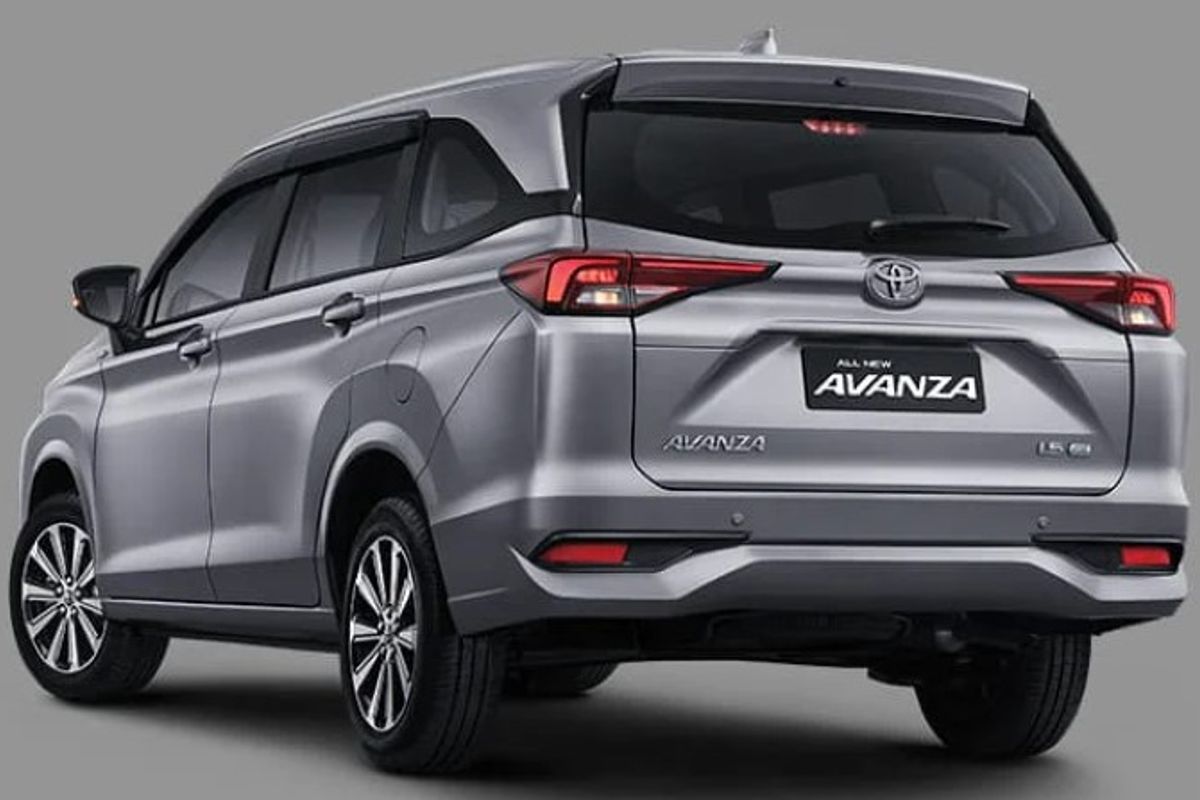
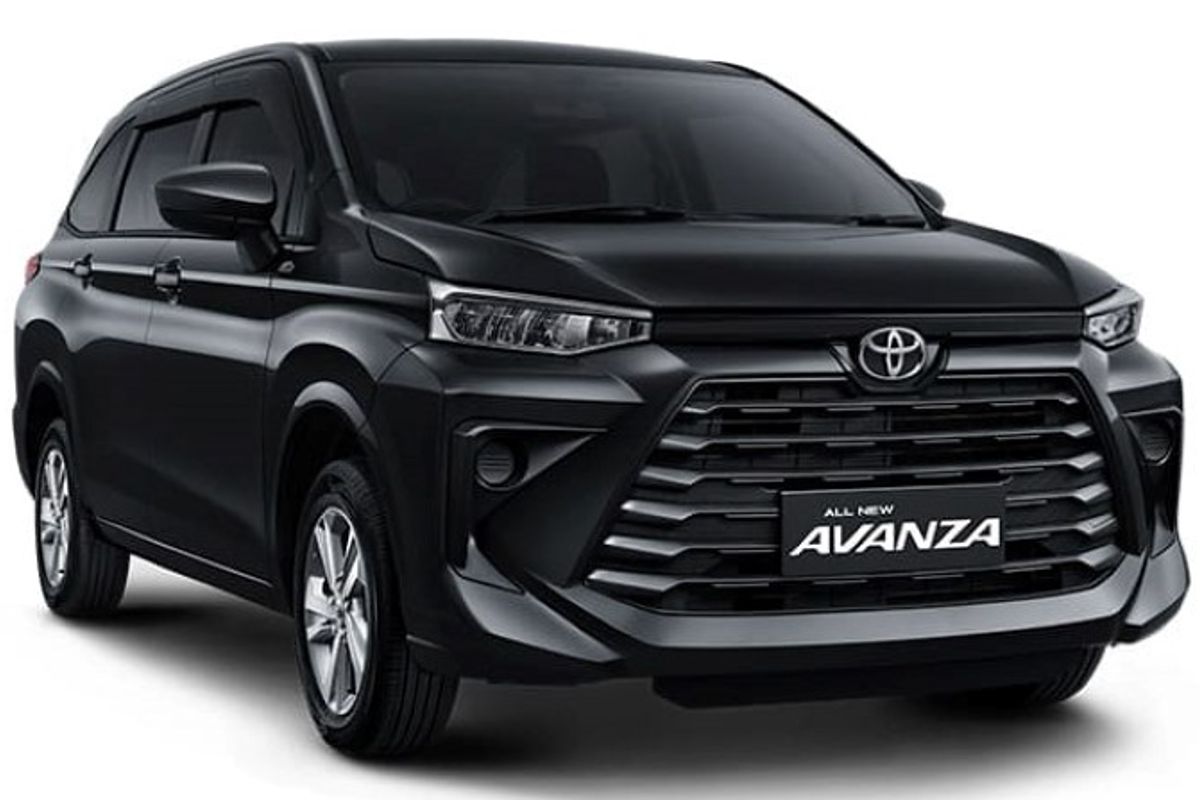
A new third-generation Toyota Avanza has broken cover in Indonesia with bold styling and a revamped interior.
The Toyota Avanza is somewhat of a household name in South Africa as it’s served as an affordable people mover for many years. In fact, the second generation Avanza is over a decade old and was recently replaced by the new Toyota Rumion.
Now that the Rumion is here, it’s unlikely that this new Avanza will see the light of day in South Africa anytime soon.
On that note, let’s take a look at what South Africans are missing out on!
New Avanza Looks Good
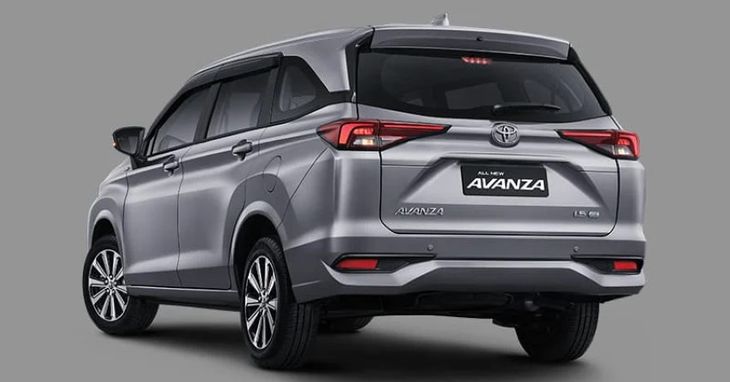
The new Toyota Avanza is larger than the model it replaces and features a modernized cabin.
In terms of dimensions, is 205mm longer (4 395 mm) than its predecessor, 70 mm wider (1 730 mm) and stands up to 5mm higher (1 700 mm). The Avanza’s wheelbase has also increased by 95 mm to 2 750 mm.
The new Avanza is built on the Daihatsu New Global Architecture (DNGA) platform and adopts a monocoque construction ( previously ladder frame) and now is front-wheel-drive (previously rear-wheel drive).
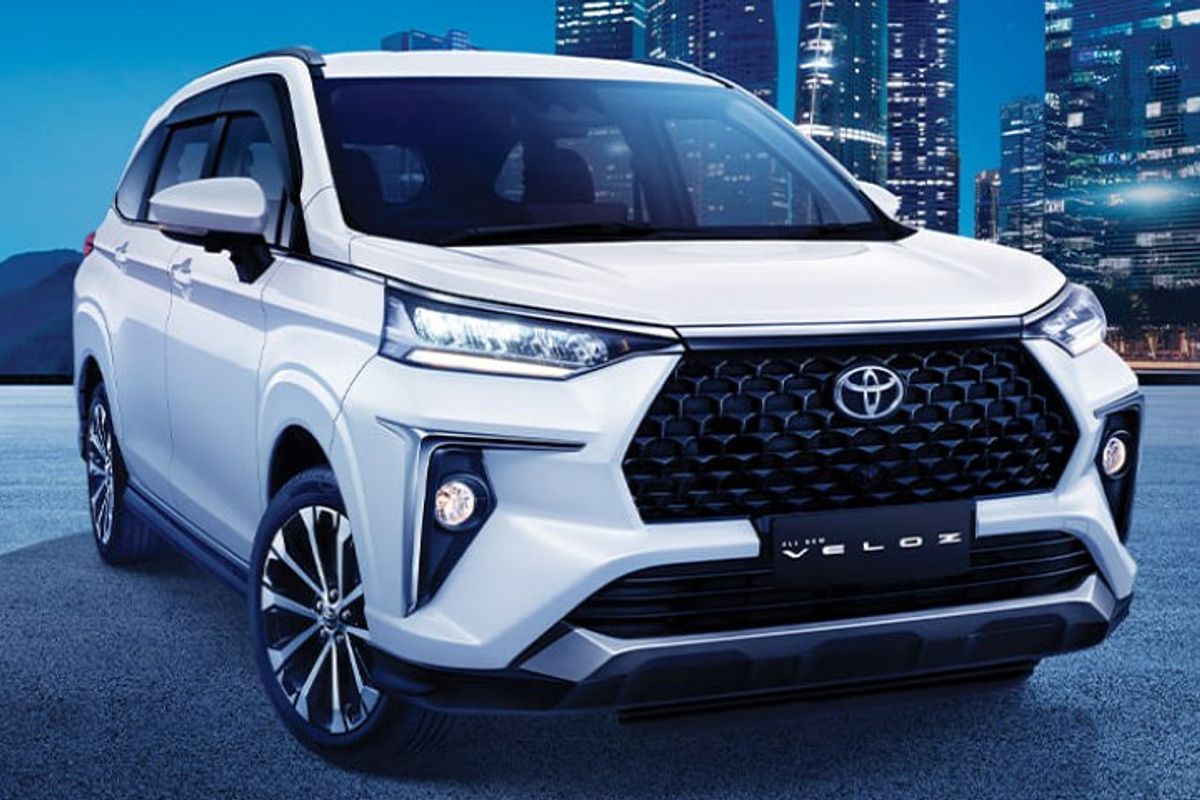
The new Avanza’s styling is certainly bold and is highlighted by slim LED headlights and a large, gaping trapezoidal grille with an edgy design that makes the current Rumion look rather soft. Also note that the grille design differs slightly as there are 2 flavours offered in Indonesia, the regular Avanza and the sportier Veloz derivative, the latter featuring more of a RAV4-type grille treatment.
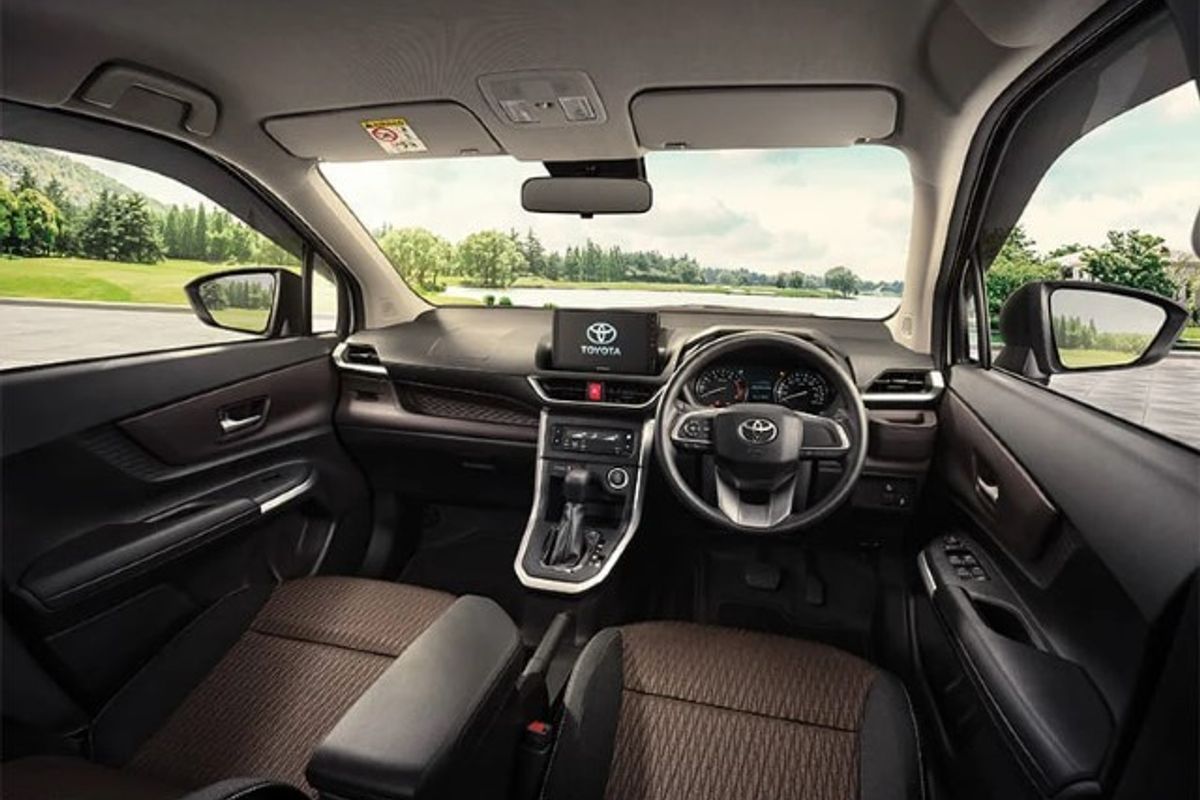
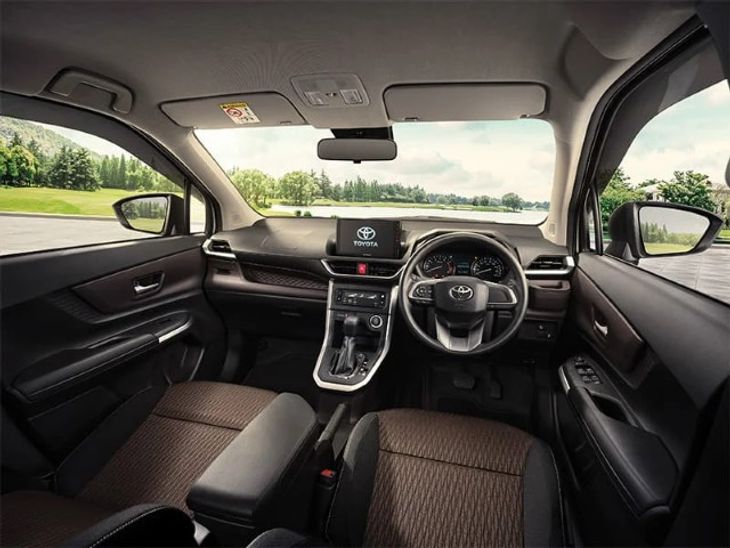
The new Avanza’s interior is much better than the model it replaces.
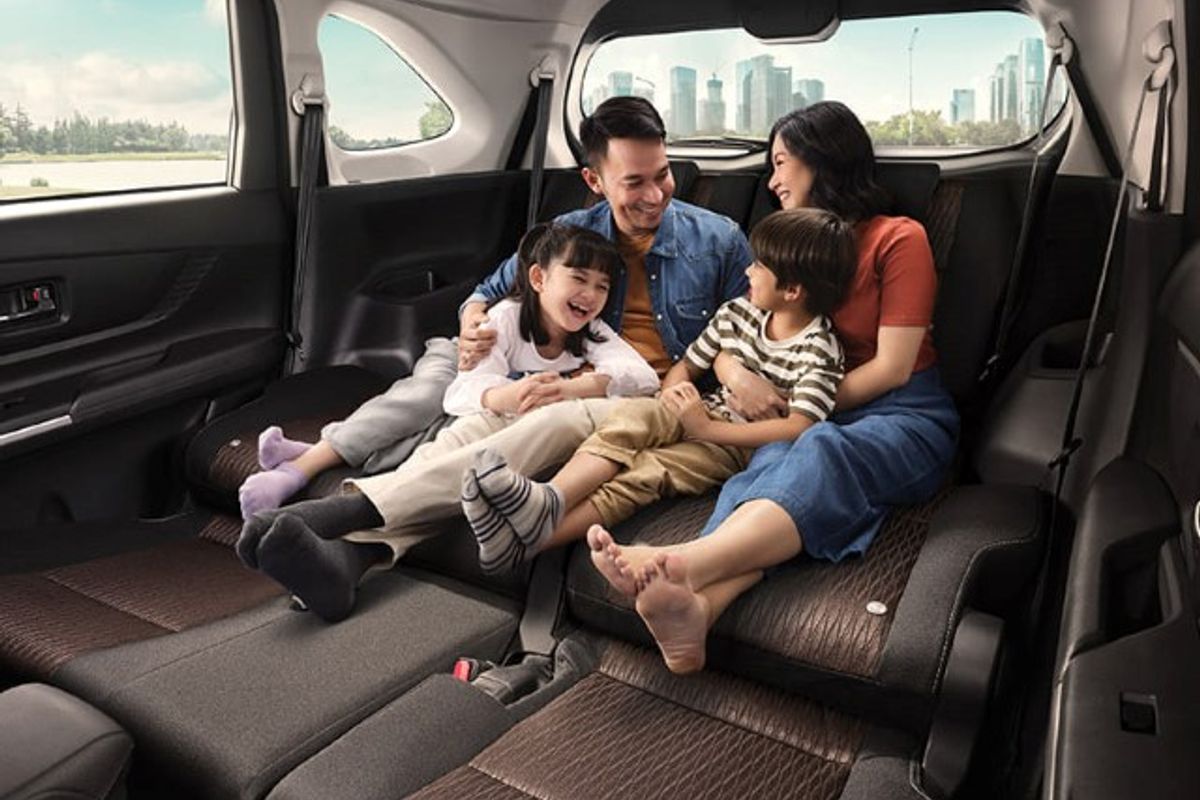
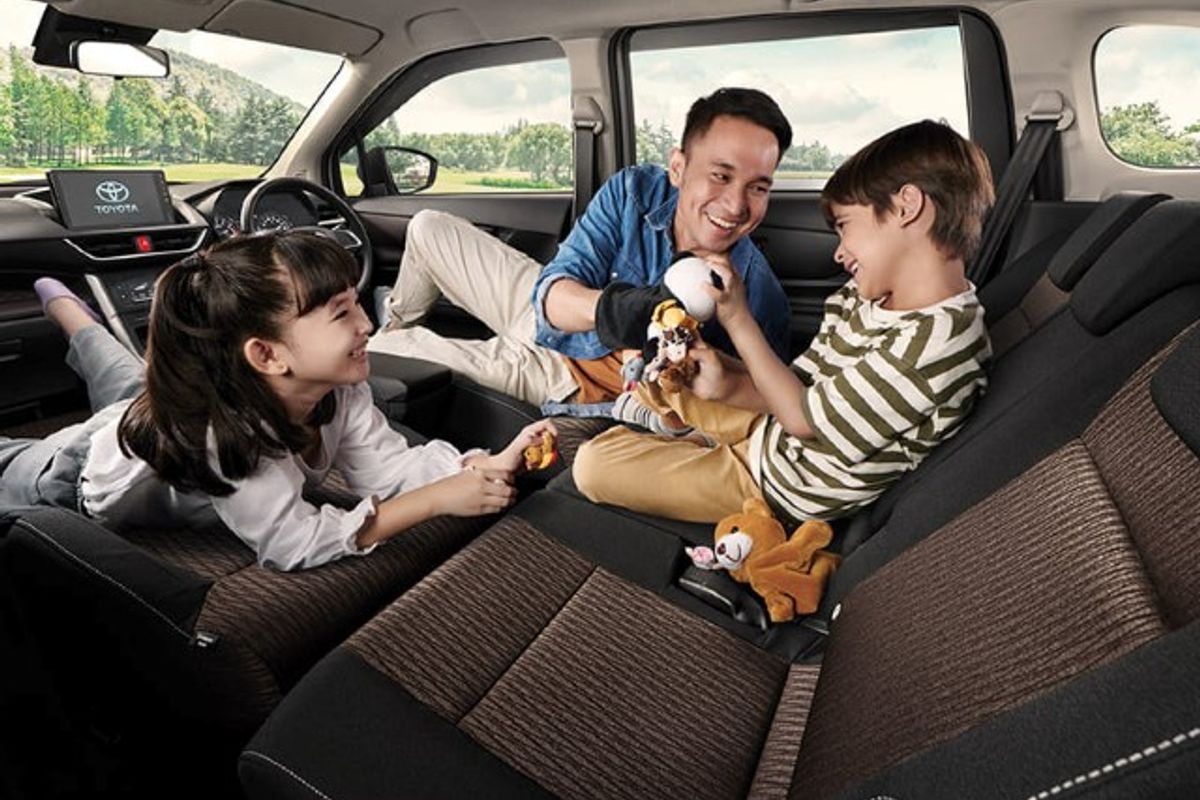
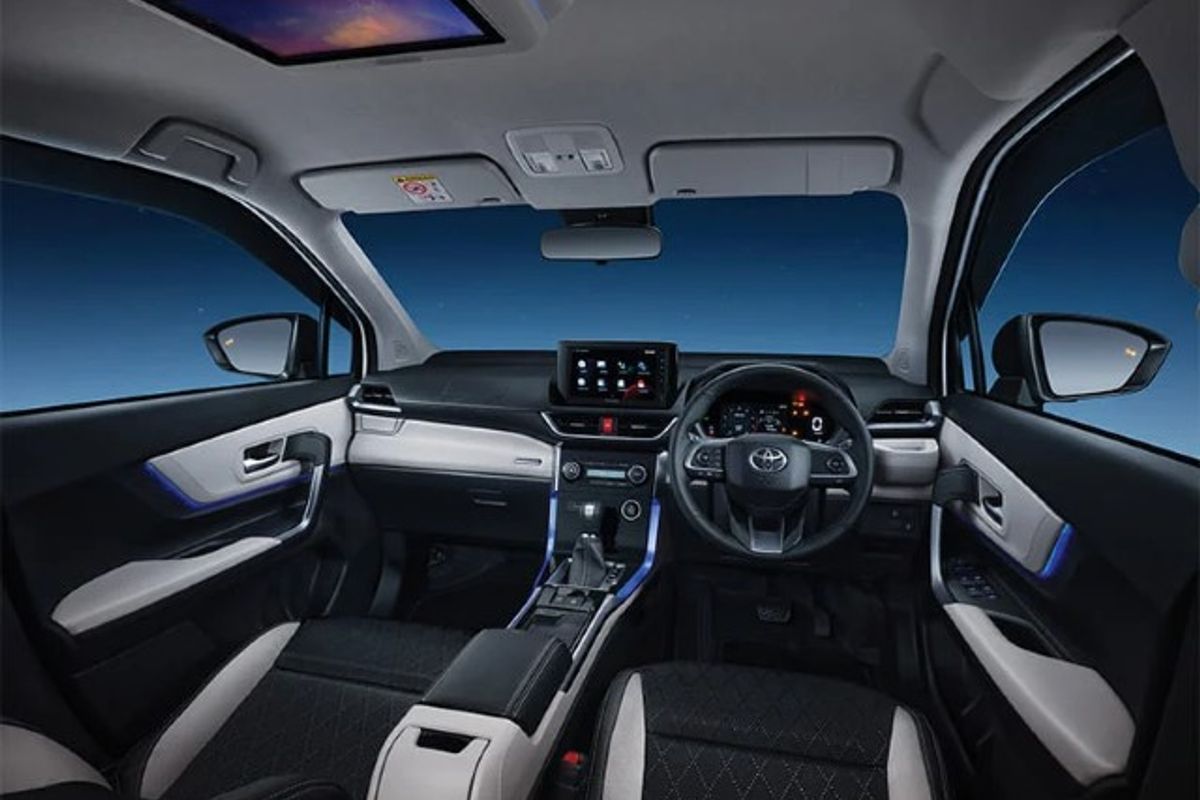
As for the interior, it’s been thoroughly modernised in comparison to the outgoing Avanza and features such as a new multifunction steering wheel, dashboard-mounted infotainment system and leather-cloth combination upholstery make for an attractive cabin. The more upmarket Veloz derivative gains features such as fancier trim elements, a digital instrument cluster and even a roof-mounted infotainment screen to keep rear passengers entertained. As before, the Avanza is a 7-seater and now offers improved flexibility to create more space for passengers and luggage.
The new Avanza is powered by 2 powerplants including a naturally-aspirated 1.3-litre petrol engine with 72 kW and 121 Nm and paired with a 5-speed manual transmission as well as a 1.5-litre petrol engine with 78 kW and 137 Nm which is paired to either a 5-speed manual or CVT.
Do you think that this new Toyota Avanza is better than the current Toyota Rumion on offer in South Africa?
Porsche has blended the ultimate combination of cars into one with Taycan Cross Turismo. It’s an electric station wagon with SUV levels of ground clearance… perfect for any situation, right?
The Porsche Taycan has been widely hailed as a superb effort at an electric car. But it’s not the sort of car you’d ever want to take on a gravel road.
So for electric vehicle enthusiasts with a taste for adventure, Porsche had plans to tweak the formula, and have come up with this, the off-road capable Taycan Cross Turismo.
In this video, our video guy Ciro De Siena heads to a dirt oval racetrack just outside Cape Town to test out the Taycan’s “Gravel mode”.
With chunky tyres, all-wheel-drive and air suspension which creates a good deal more ground clearance, the Cross Turismo should be able to cope.
Even still, this could be one of the more curious reviews we’ve ever conducted.
Subaru updated its XV earlier this year and we’ve had a chance to review the firm’s refreshed all-wheel-drive crossover, which seemed so ahead of its time when it debuted in 2012. Now that the 2nd-generation model is 4 years old, is it still a strong contender in a segment that’s positively bursting with high-riding family cars?
We like: Excellent refinement, all-weather and all-terrain stability, comprehensive specification, smart safety tech.
We don’t like: Unengaging powertrain, limited load-bay capacity
Fast Facts:
Model tested: Subaru XV 2.0i-S ES
Price: R509 000 (November 2021)
Engine: 2.0-litre naturally-aspirated 4-cylinder petrol
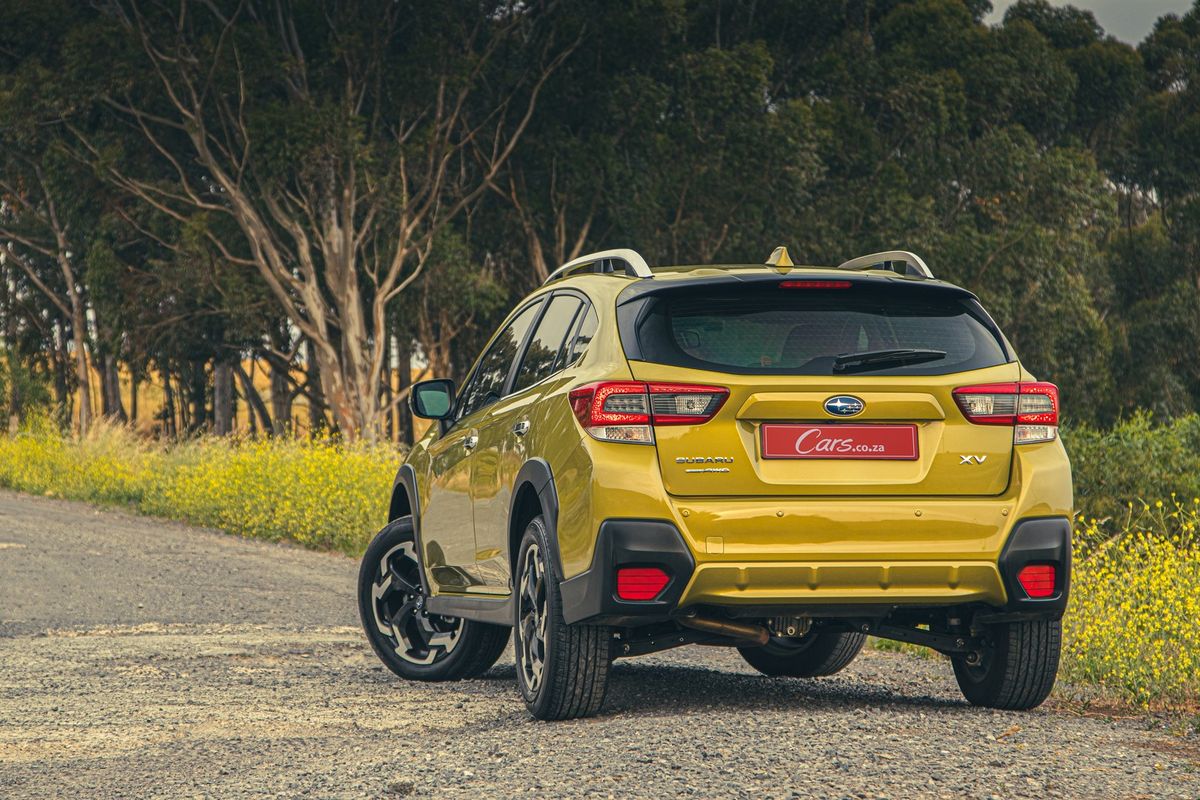
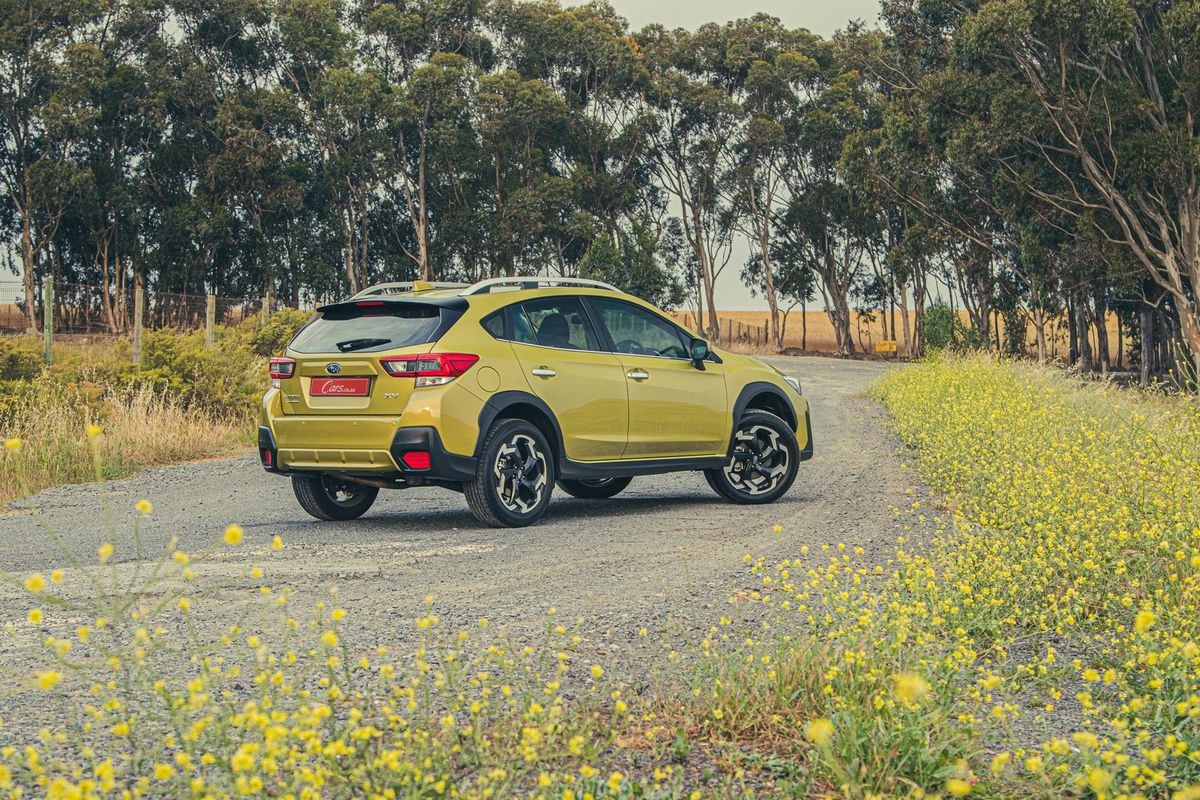
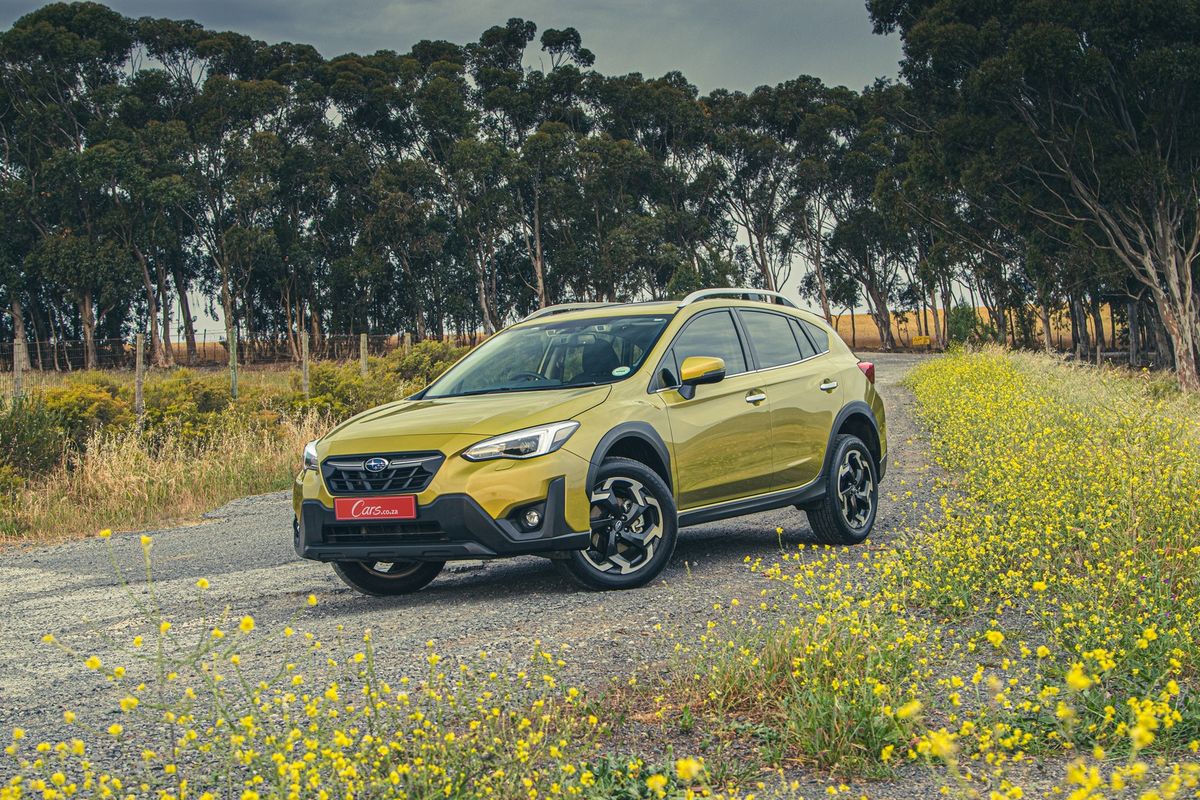
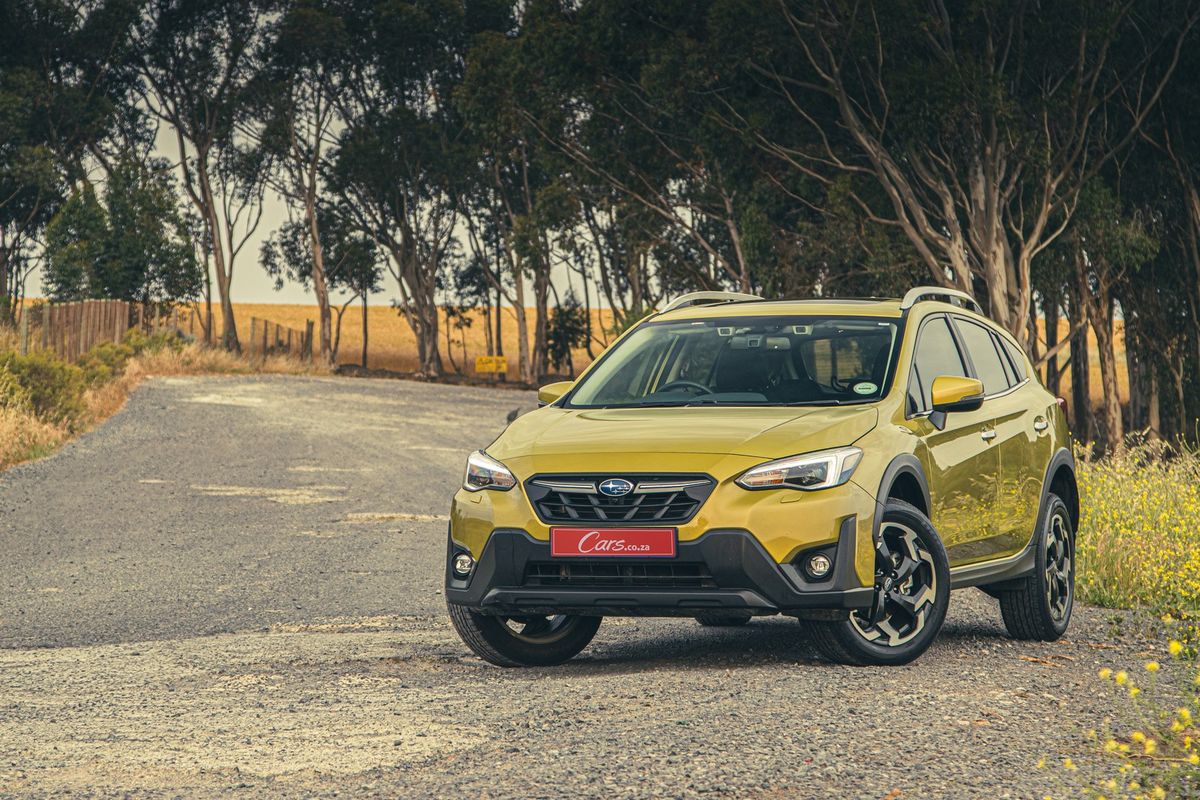
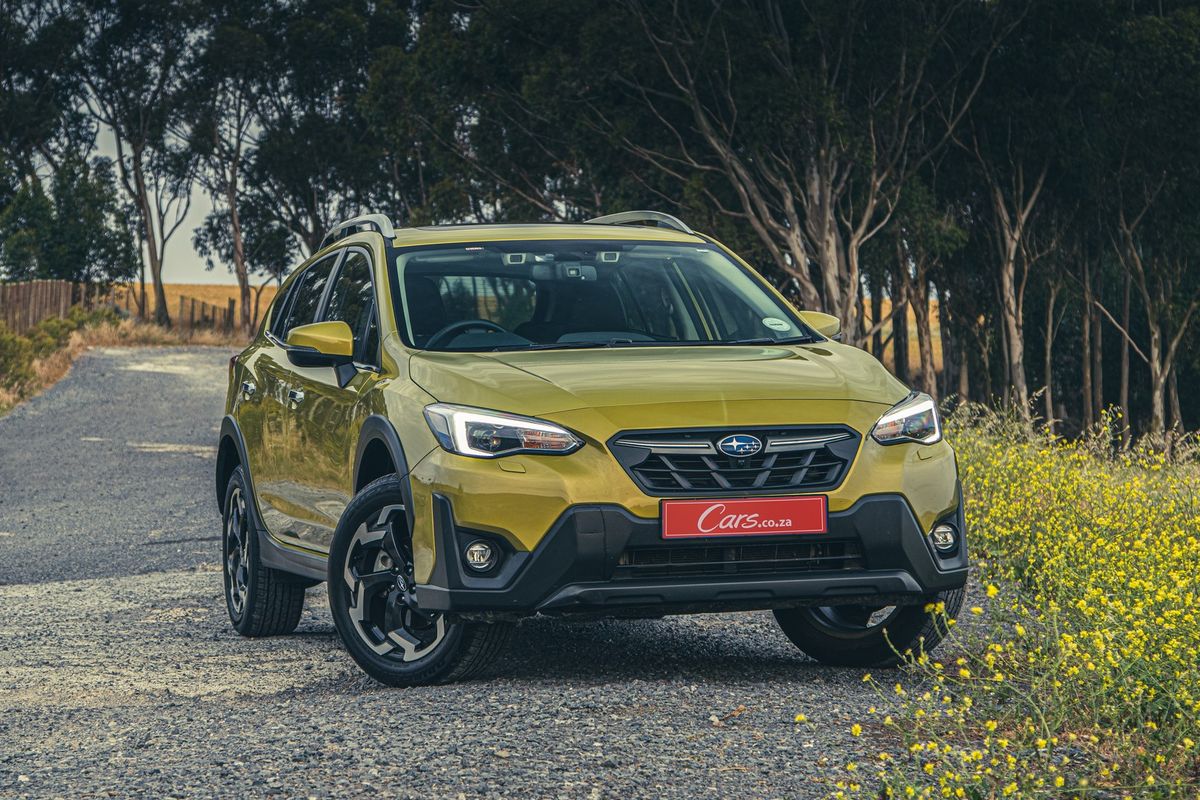
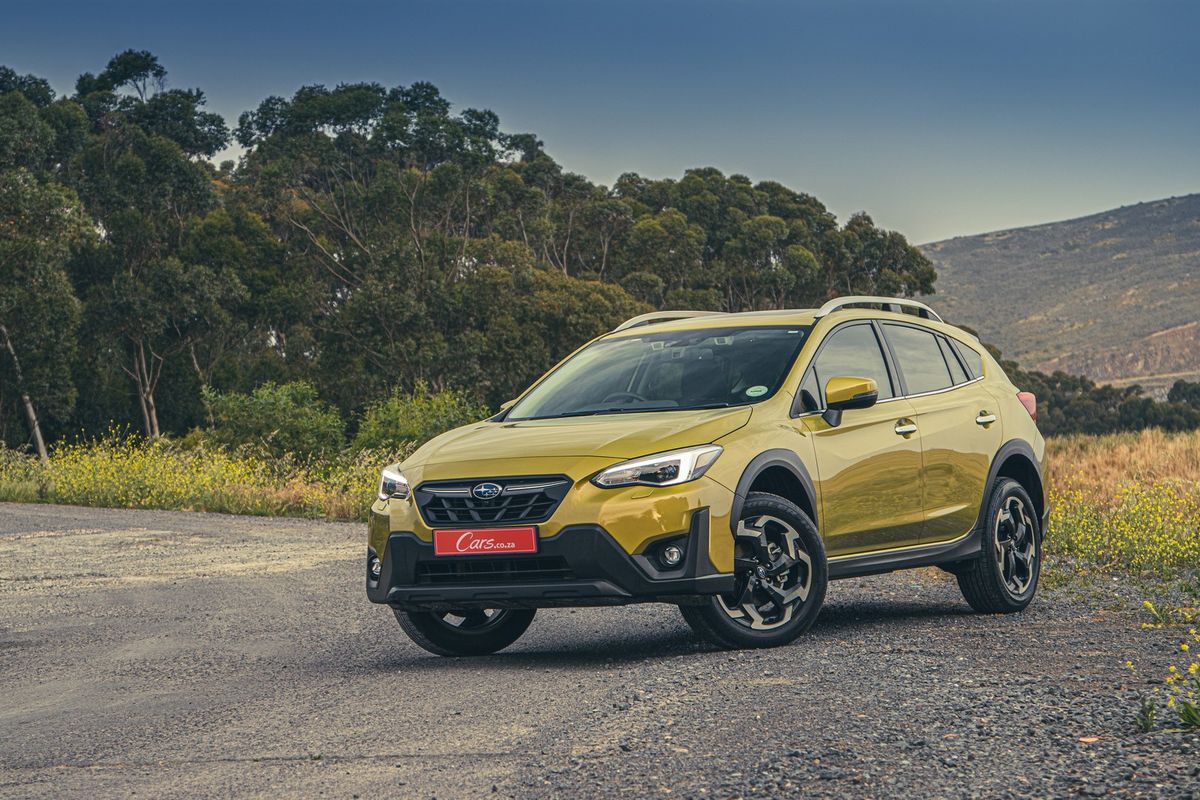
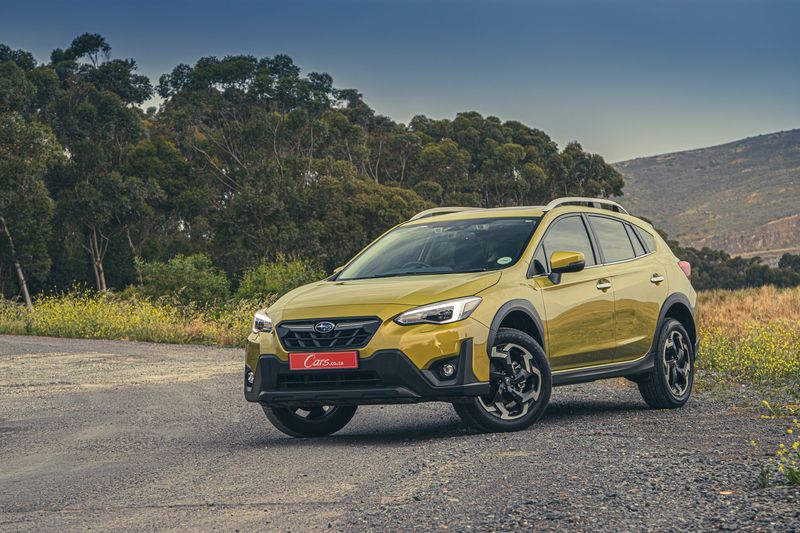
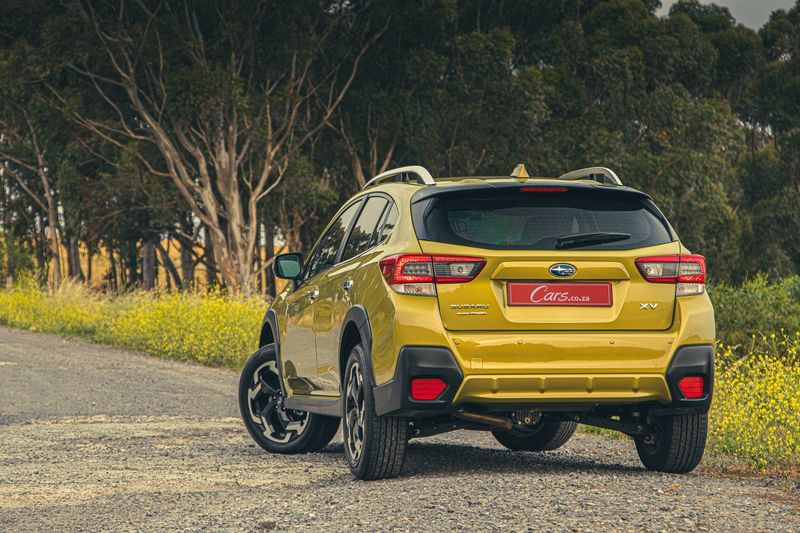
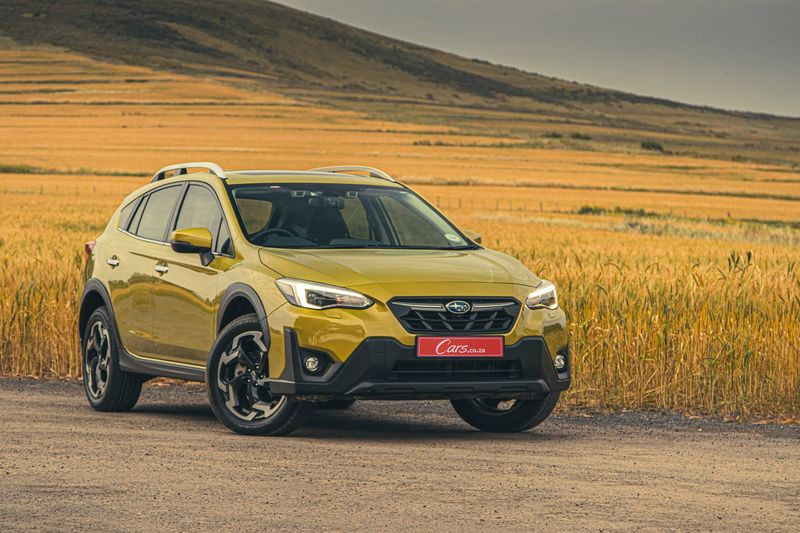
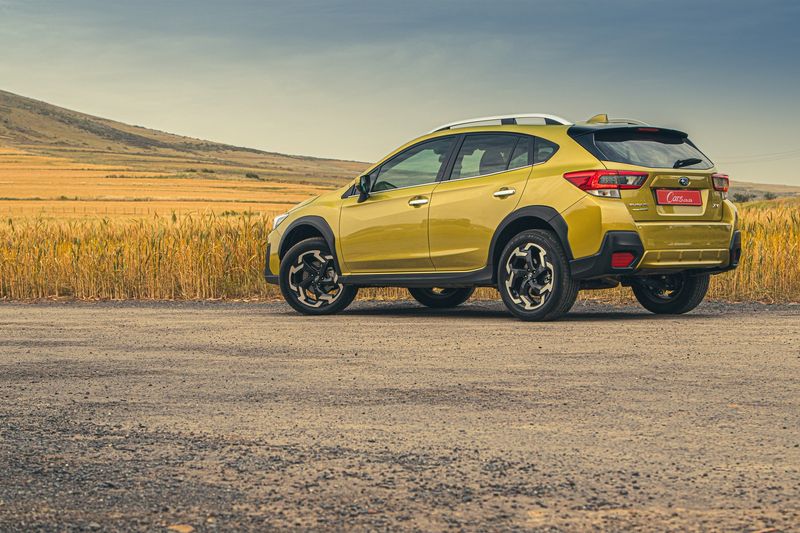
Subaru had the idea to produce a high-riding and all-wheel-driven crossover when the segment was still in its infancy. The XV’s styling is understated, but the test unit’s bold metallic paint finish makes up for it.
Subaru has quite a strong reputation among petrolheads. Who could ever forget those rally-inspired Impreza WRX STIs with their bonnet scoops, gold rims and boot-lid scaffolding as they huffed and banged their way around town? These days, however, although the WRX and its STI variant are still around, the Shibuya-based firm is best known for its SUV line-up; in fact, the brand has a loyal and devoted following.
You see, the Forester family car and its Outback station wagon sibling are a lot more practical and capable than their conservative designs suggest. Although hardcore 4×4 enthusiasts still favour chassis-based vehicles with low-range transfer cases, Subaru’s combination of symmetrical all-wheel drive and good ground clearance has allowed the Japanese marque’s products to travel further faster than most unibody family cars.
With the SUV body style (still) all the rage in the vehicle market, it makes perfect business sense for Subaru to turn its focus to the crossover/family car segment. Don’t get us wrong, the booted Impreza still has its place and is a competent product (plus there is a new WRX model on the way), but the reality is the compact-sedan segment is in decline – and new-vehicle sales statistics bear that out.
In a market that’s dominated by passenger-car models with off-roader-inspired styling (but little in the way of genuine all-road ability), the XV is the real deal.
In a way, Subaru anticipated this market trend well and launched its XV crossover as long ago as 2012. Now, almost 10 years on, the updated version of the 2nd-generation model has touched down in South Africa. The XV has undergone only minor changes, but the brand is hopeful that the updates will help the XV to keep pace with the latest offerings in this rapidly growing segment.
Some of the noteworthy upgrades to the 2021 Subaru XV include a mild visual update at the front of the vehicle; customers have a choice of new exterior colours; the addition of 2 drive modes; an upgraded front-facing camera safety system; memory seat functionality for the driver, plus the Japanese manufacturer says it has tweaked the model’s suspension and steering for more comfort and better responses respectively.
Suffice to say, the segment in which the Subaru XV competes is bursting at the seams! Almost every brand is offering some form of crossover, but the customer who buys a Subaru will be after something that offers more-than-nominal “gravel travel” ability. We’ve narrowed this down to vehicles that offer all-wheel drive and are priced between R500 000 and R600 000 – there aren’t many of them.
The first rival out of the blocks is the Volkswagen T-Roc 2.0TSI 140kW 4Motion Designwith its 2.0-litre turbocharged 4-cylinder and 4Motion all-wheel drive. The next is an interesting offering from Jeep, the 2.4-litre naturally-aspirated Renegade 4×4 Trailhawk, which has a 4WD Low mode built into its electronic stability control system.
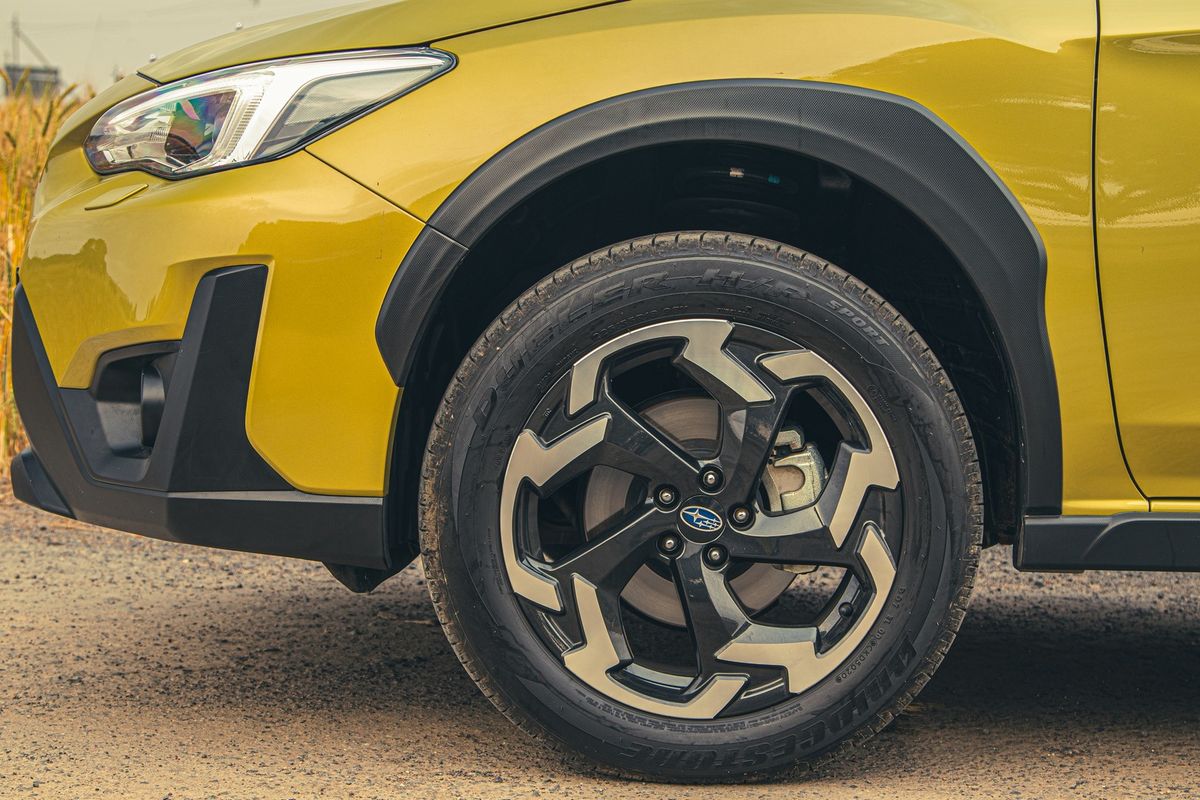
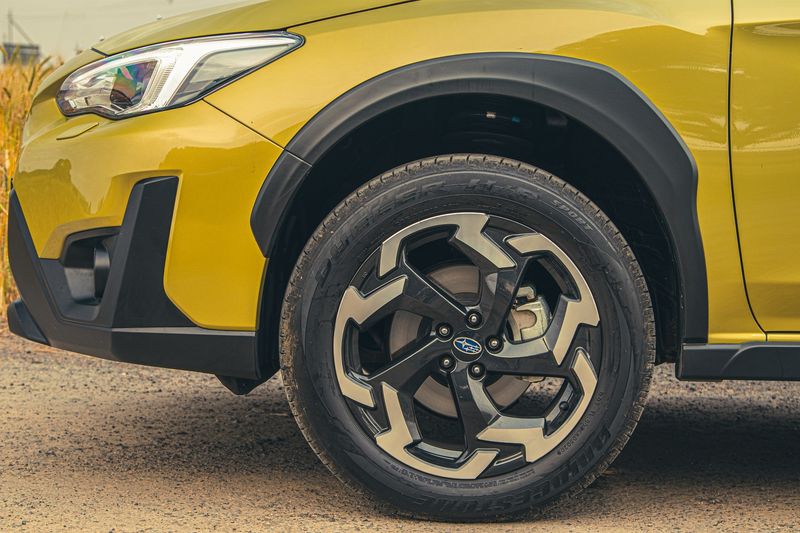
At first glance, the Subaru XV looks like a run-of-the-mill hatchback with a fetching metallic paint finish and handsome dual-tone 18-inch alloy wheels… You could be forgiven for thinking: “Just how capable could it possibly be (when it’s not travelling on ashalt)?” Well, with 220 mm of ride height, symmetrical all-wheel-drive system and protective black cladding, this model can take you a lot further off-road than you think, but more on that later…
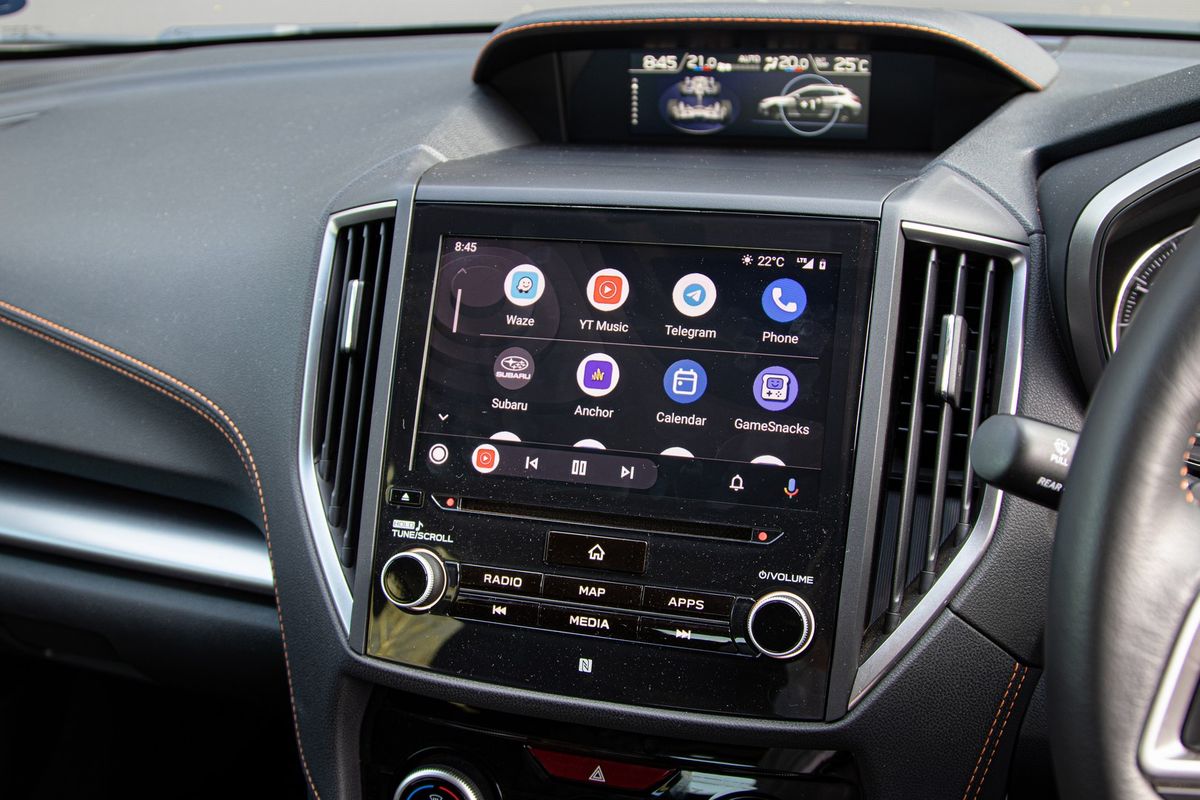
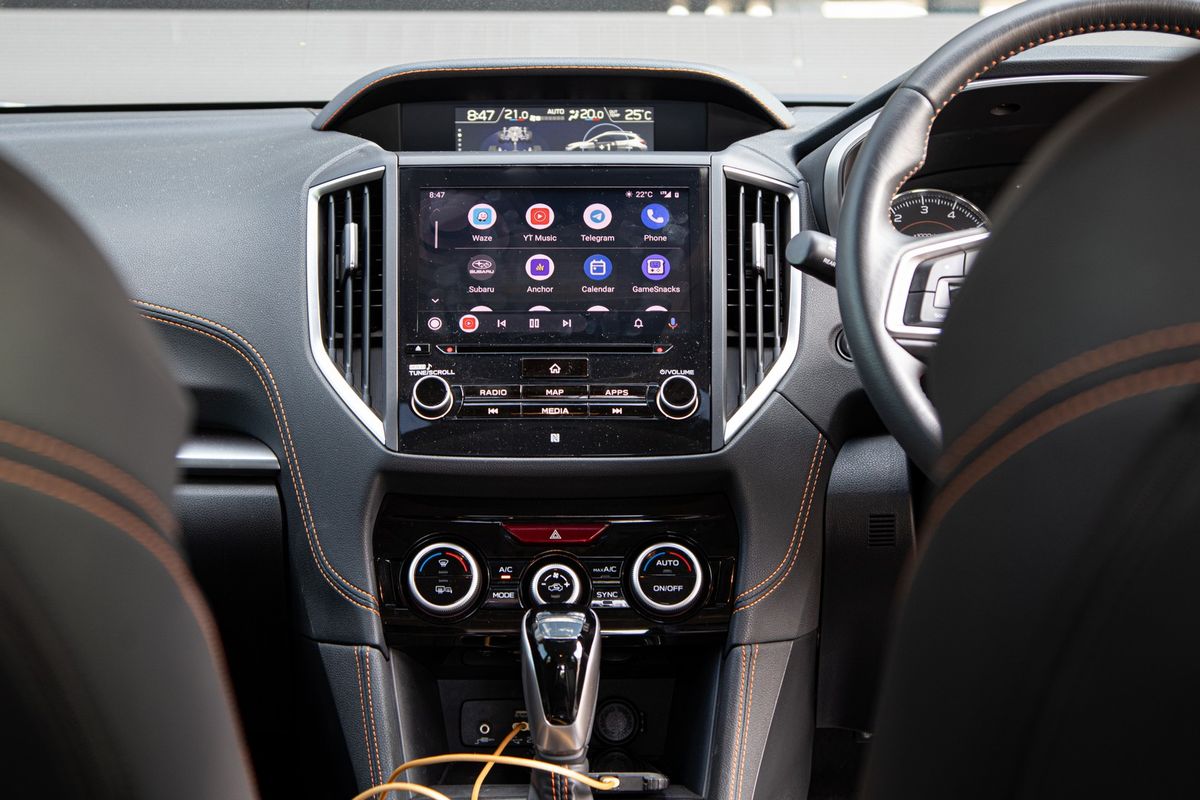
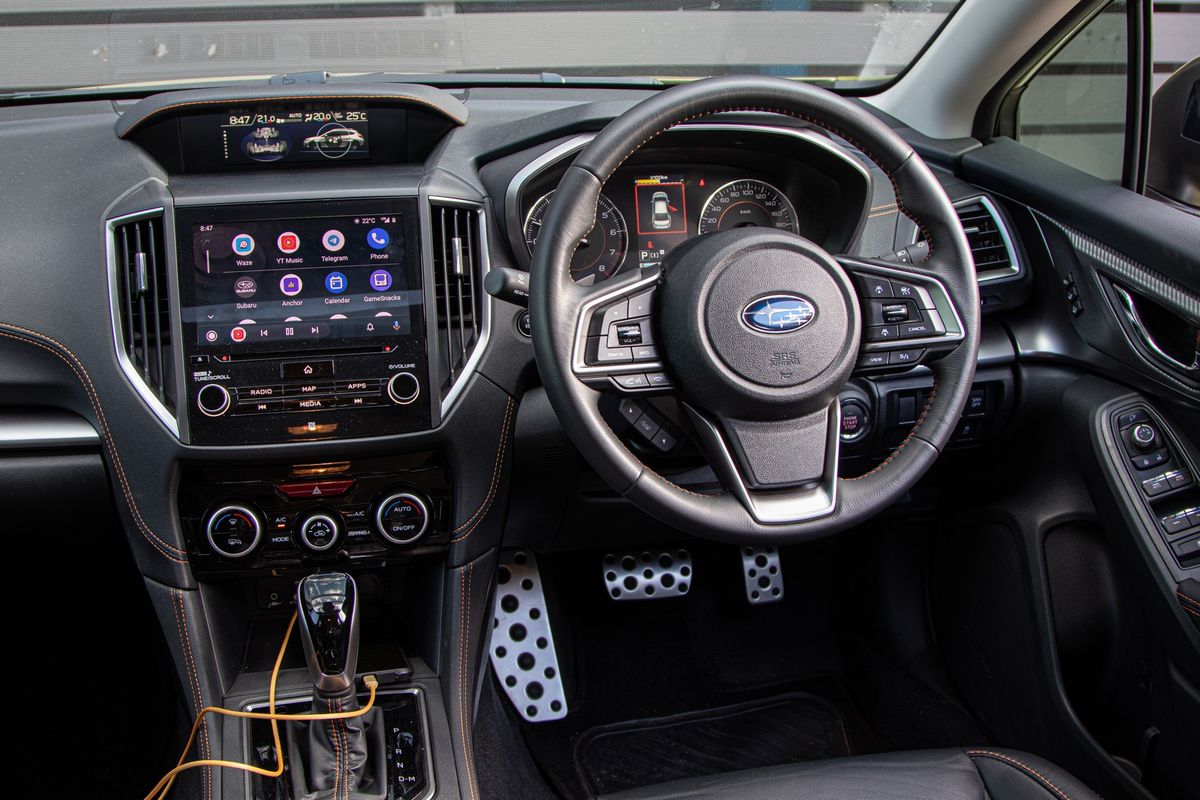
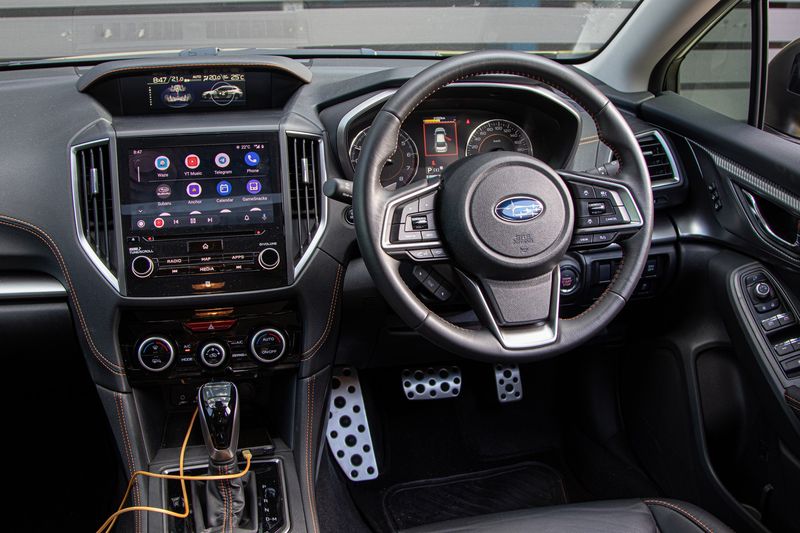
Step inside and the first thing you’ll notice is the large infotainment screen. Subaru knows the XV is aimed at the younger generation who crave connectivity, so the model comes with Apple CarPlay/Android Auto compatibility and 4x USB ports. It’s not an entirely touchscreen-based interface either – there are plenty of conventional buttons. There’s a lot to take in – at first glance, you could be a little overwhelmed by the myriad displays and switches.
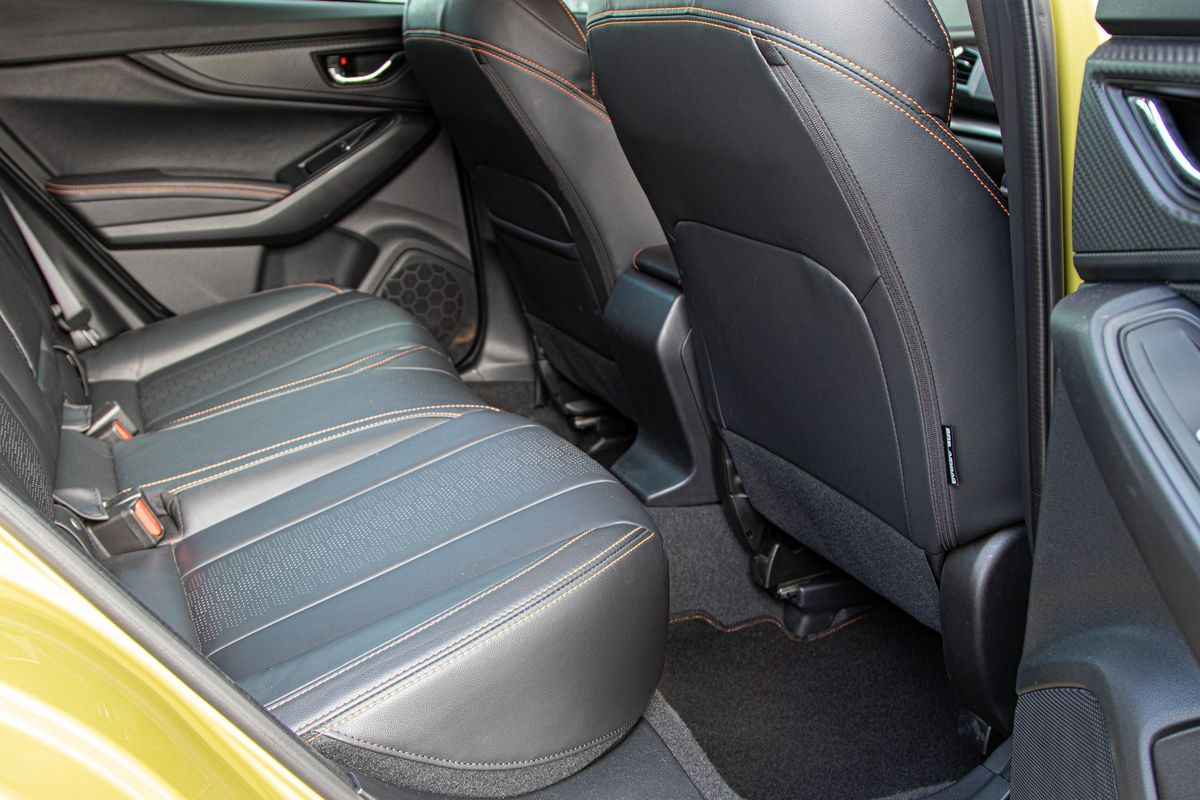
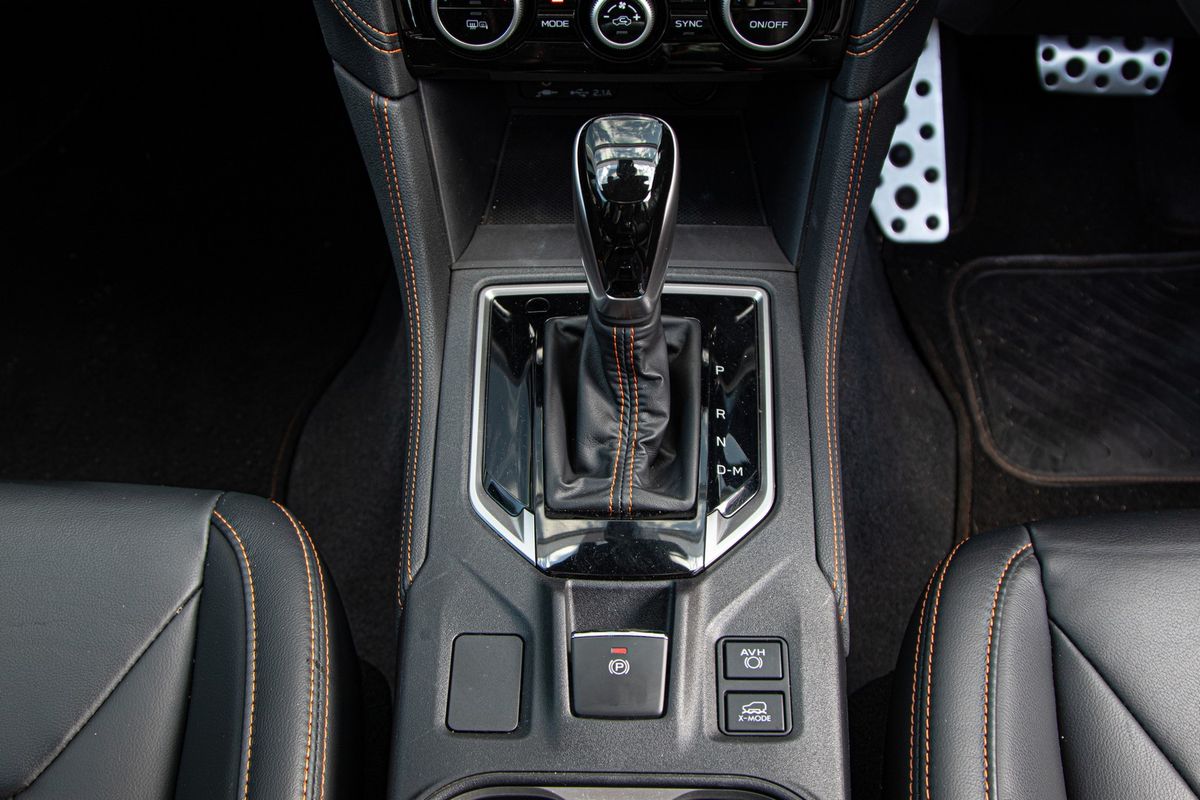
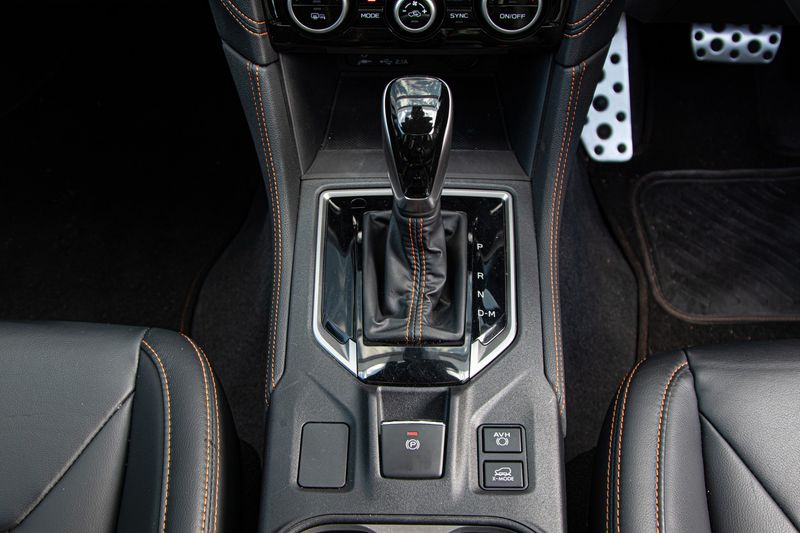
Still, there’s a youthful look and feel about the cabin, with plenty of premium touches such as the leather-trimmed seats with orange contrast stitching and piano-black gloss plastic inserts.
Although the interior design is quite conservative by contemporary standards, the cabin is well finished and the Apple CarPlay/Android Auto infotainment setup is a boon.
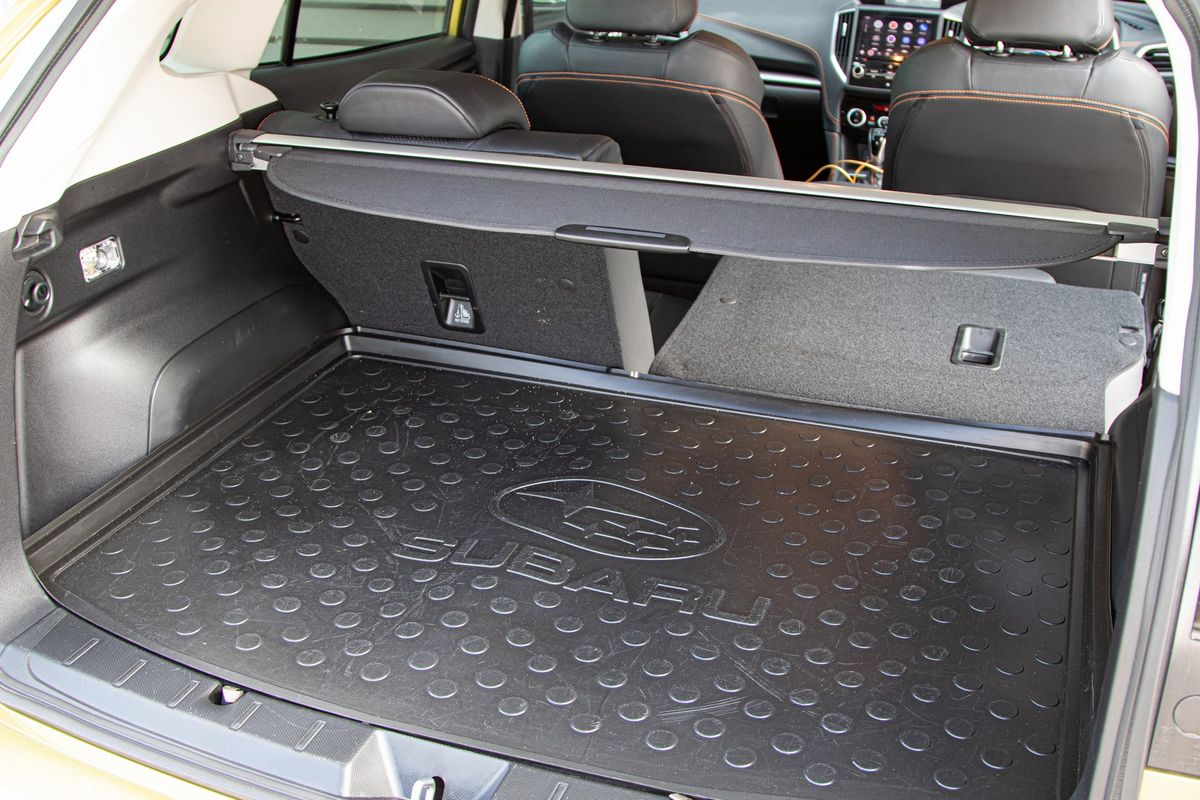
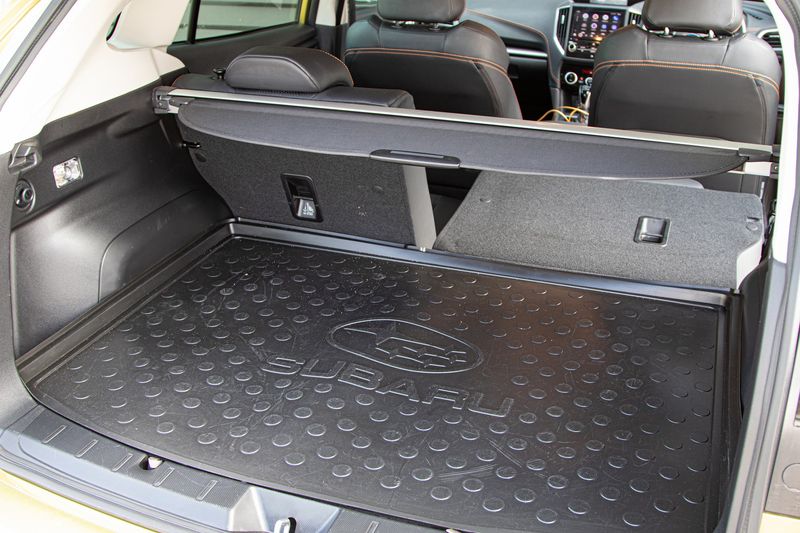
Marginal luggage capacity has been a drawback of the XV (both generations) and sadly the post-facelift iteration fares no better in that regard. In a segment that’s all about families and the lifestyle market, the Subaru’s 310 litres is just not sufficient for the model to be considered a compact family car. You can fold down the 60/40-split rear seatback to get more space, but if load-carrying ability is important, look elsewhere.
The Subaru’s load bay isn’t that short, it’s just notably shallower than those of its front-wheel-drive rivals.
Despite the small load bay, the rest of the cabin is airy and spacious. Even if there isn’t much space for luggage, the XV’s rear legroom is quite generous. We wonder if Subaru’s designers were told “you can have one or the other, not both” and they opted to prioritise rear legroom… This author conducted the sit-behind-yourself test and despite my tall stature, I was satisfied with the aft knee- and headroom.
Comfort and safety features
Subaru’s products are usually loaded with a generous list of features and the updated XV is no exception. There are 2 derivatives on offer with a price difference of R64 000. In this top-spec derivative, you are afforded, inter alia, a sunroof, Xenon lights, auto wipers and -lights, LED foglights, keyless entry and start, rear parking sensors and reverse-view camera, leather trim, as well as the Subaru EyeSight safety suite.
The upgraded Subaru EyeSight system is excellent but can be intrusive if you’re not paying attention. For example, if you’ve stopped at an intersection and the traffic ahead of you then pull away, the car will alert you to that fact. When a pedestrian crossed in front of the XV at one point during the test (they weren’t at risk), the EyeSight cameras detected them, sounded an alert and automatically applied a mild braking force.
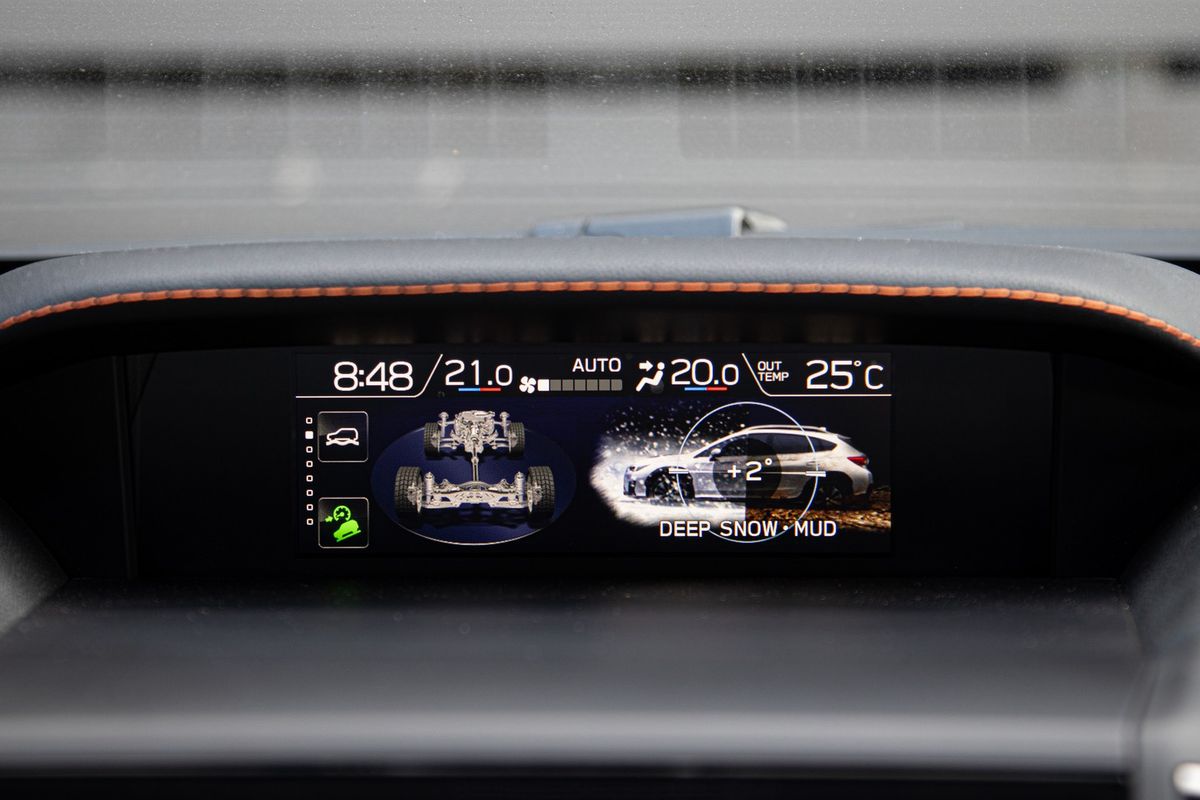
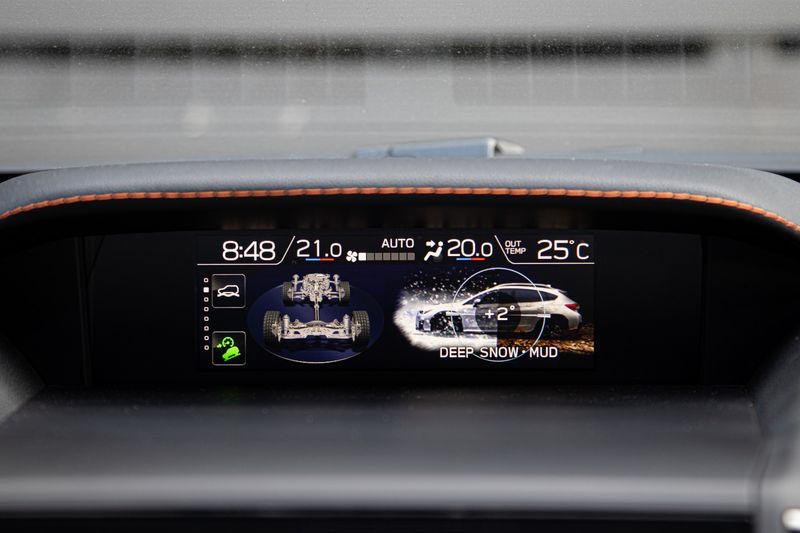
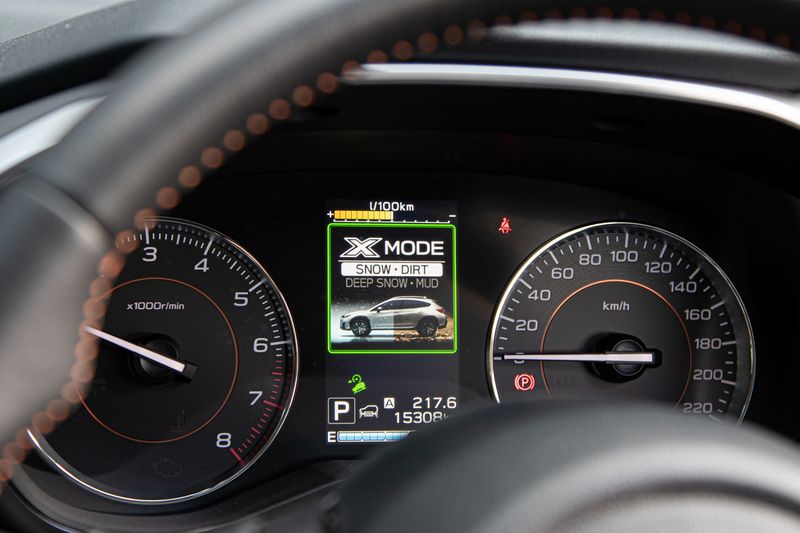
Among other things, the digital display atop the dashboard shows the incline at which the vehicle is travelling.
During our photoshoot for this review, we attempted to reverse really close to the edge of a wheat field and the car hit the brakes automatically when it calculated that we were in danger of “colliding with the scenery”. It sounds like overkill and, yes, you can dial back the system’s sensitivity, but I didn’t. Instead, I used the systems to make me a better driver, by driving more conservatively and observing safer following distances. Subaru’s EyeSight system also includes radar-guided cruise control as well as lane-keeping assist. There are also 7 airbags.
There’s a really cool secondary screen that displays info such as a real-time economy figure, vehicle pitch angle (for when you’re off-roading) and a quick summary of the dual-zone climate control settings.
Ride and handling
Thanks to a tweak of the XV’s suspension, Subaru’s crossover blends surefootedness with a pliant ride quality and admirable body control.
Under the bonnet sits a 2.0-litre naturally-aspirated 4-cylinder petrol engine that produces 115 kW and 196 Nm. Power goes to all 4 wheels via a continuously-variable automatic transmission (CVT). Now, at this point, you may suspect this mechanical combination won’t be the most engaging of powertrains – and you’d be right. Subaru has gone the refinement and efficiency route; therefore, the XV is a competent cruiser.
One of the updates to the XV sees the introduction of some additional drive modes (over and above the X-Mode settings). Dubbed Subaru Intelligent Drive, customers have the choice between Standard and Sport, which is controlled by a button on the steering wheel. Hitting that Sport button doesn’t make a huge difference… other than a slight increase in responsiveness.
Although the XV’s continuously variable automatic transmission doesn’t facilitate driver engagement, it suits the model’s load-back, easygoing demeanour.
This powertrain can be a bit sluggish to respond, particularly when you’re executing 80-120 kph overtaking manoeuvres. Outright acceleration isn’t great either – Subaru’s claim of 10.4 sec for the 0-to-100 kph sprint underscores that. The CVT is smooth (we stand by our claim that Subaru produces the best versions of these transmissions), but if you floor the accelerator pedal, don’t expect a sudden surge of power.
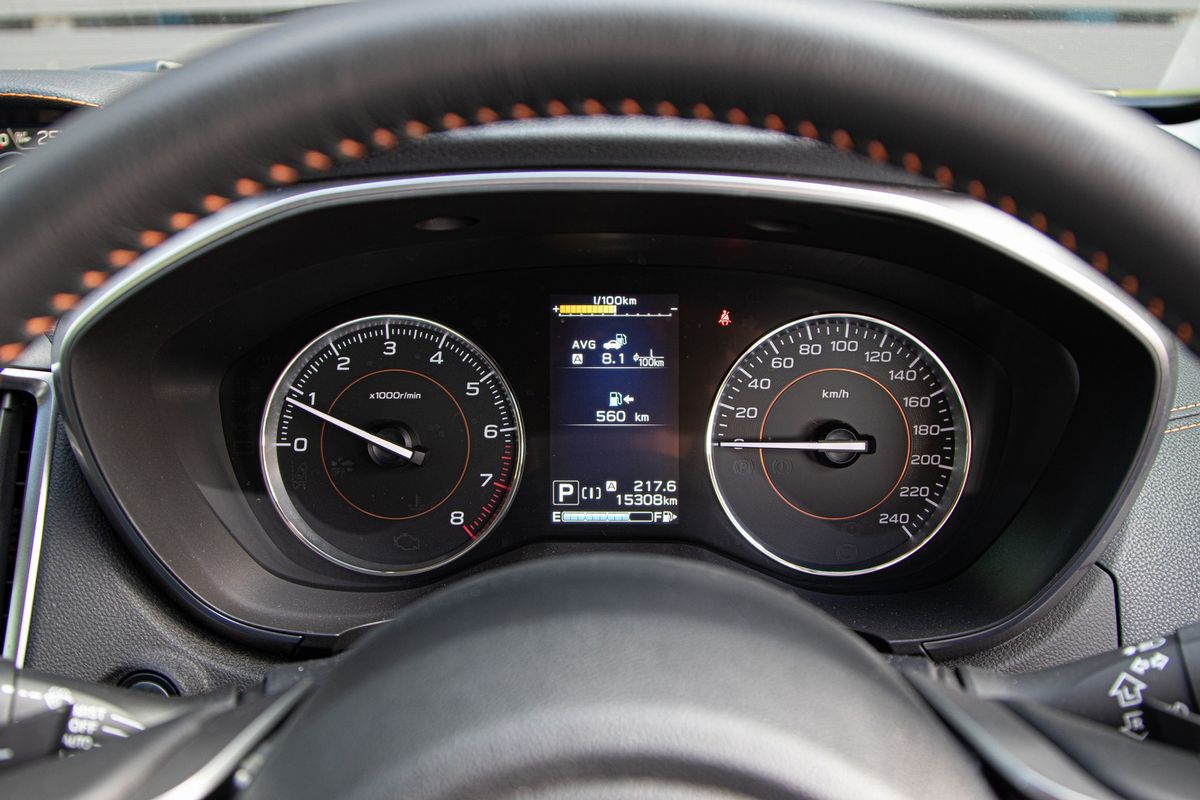
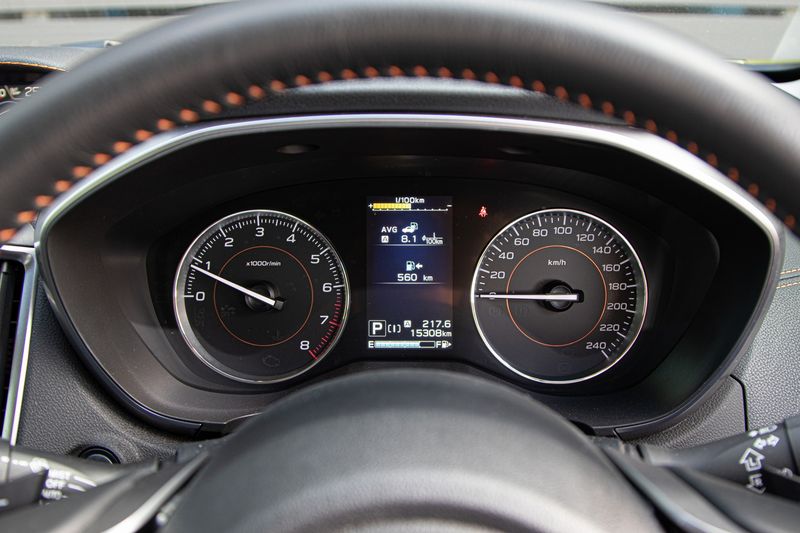
The main benefits of going the CVT route are the economy and cruising comfort, and while we couldn’t get close to the manufacturer’s claimed fuel consumption, 8.1 L/100 km was a fair result.
This latest round of updates also sees Subaru implement some minor changes to the XV’s suspension and steering setups and, while we’ve never had misgivings about the Japanese crossover’s driving manners, the facelifted model’s ride quality feels even more polished and composed while riding on its stylish 18-inch wheels.
The suspension’s pliancy is excellent, providing suppleness and effortlessly soaking up imperfections in the road. Despite its hiked-up ride height, body roll is kept to a minimum and we’re left wondering about the potential of an XV with a turbo engine. Imagine, a Mercedes-AMG GLA 35 rival!
Symmetrical all-wheel drive remains the best part of the XV. It’s not a part-time setup (as on most top-end crossovers) and is very handy in inclement weather. During this unit’s tenure in our test fleet, we once drove home in a heavy rainstorm that lashed Cape Town. In torrential rain and on a stretch of road that’s known for aquaplaning, the XV felt sure-footed and composed; not once did it lose grip.
When you travel on low-grip (non-sealed) road surfaces, the Subaru’s X-Modes provides additional peace of mind.
Then there’s the “gravel travel” aspect. We’ve always maintained that the basis for a credible off-roader (even a part-time one) is decent ground clearance and some form of all-wheel drive, and the XV has both. While the Subaru doesn’t feature a low-range transfer case, the CVT and the X-Mode off-road system actually enables you to travel pretty far off the beaten track.
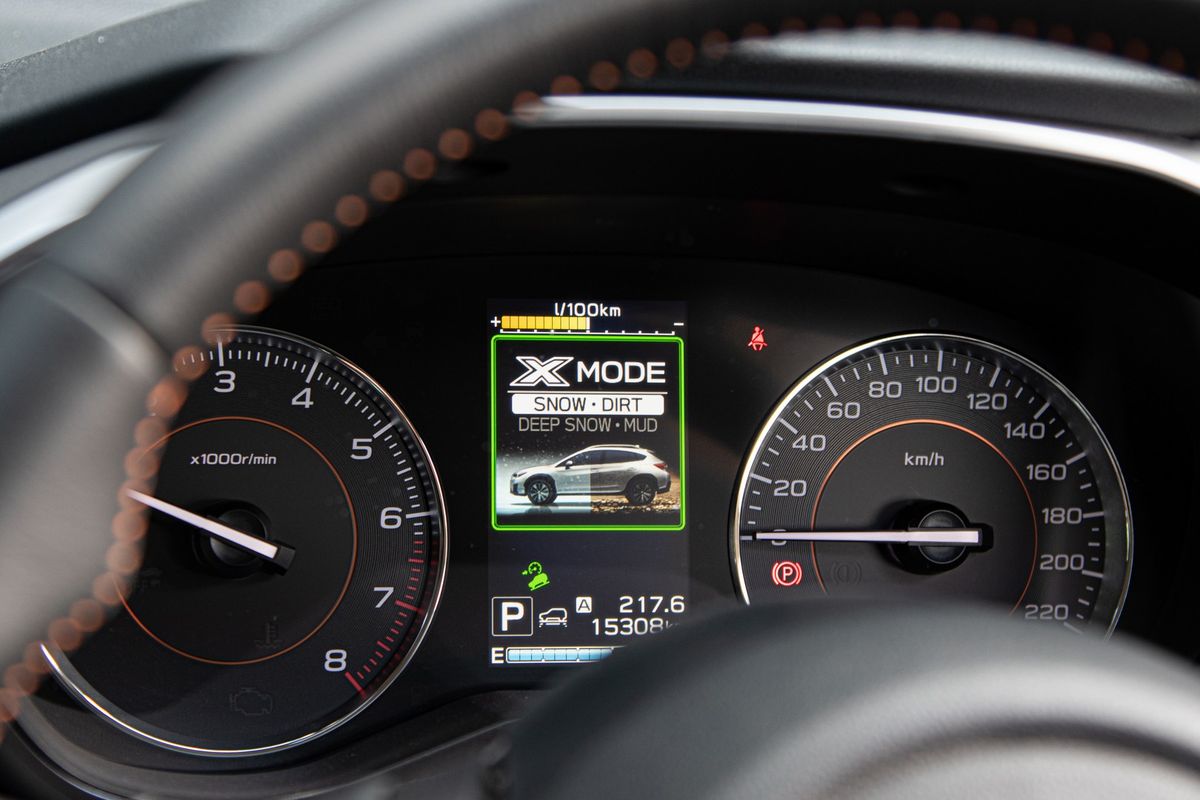
X-Mode incorporates snow/dirt/deep snow/mud settings, as well as hill descent control and, while we didn’t venture too far into the proverbial bundu, there’s a reason why Subarus are hugely popular in the United States and Canada (countries that endure harsh winter conditions). Thanks to the XV’s 220 mm of ground clearance, you’ll be able to clear most obstacles on an unsealed road surface.
How much does the Subaru XV cost in South Africa?
The Subaru XV range starts from R445 000, while this top-spec derivative costs R509 000. The vehicle is sold with a 3-year/75 000km maintenance plan, as well as a 5-year/150 000 km warranty, both of which can be optionally extended.
Now in the 2nd half of its product cycle, the XV still impresses as a comprehensively equipped alternative to premium marques’ crossovers, most of which don’t offer all-wheel drive.
The changes that Subaru has applied to its crossover might be considered minor, but the XV continues to deliver the goods. The 2017/18 Cars.co.za Consumer Awards category finalist impressed us back then (when this model was new) with its equipment levels (especially safety features), ride quality, occupant comfort as well as all-terrain competence (within reason). This updated model is no different.
Should you buy one? With new car prices reaching stratospheric heights, it’s indeed a challenge to find a well-thought-out and generously equipped compact crossover that is seemingly as adept on gravel as on asphalt roads, especially one that comes equipped with excellent semi-autonomous safety features as standard. Even if the XV remains the nonconformist’s choice, those who appreciate its product concept will be not be disappointed.
If you’re prepared to live with the Subaru’s smallish load bay and uninvolving driving experience, then the XV makes a compelling case for itself in comparison to other crossovers (of the premium compact variety). If you’re really concerned about its limited cargo-carrying capacity, perhaps you should consider investing in a Thule roof box…
Peugeot Landtrek vs GWM P Series: Spec Check
How does the newly-introduced Peugeot Landtrek compare to its most obvious rival?
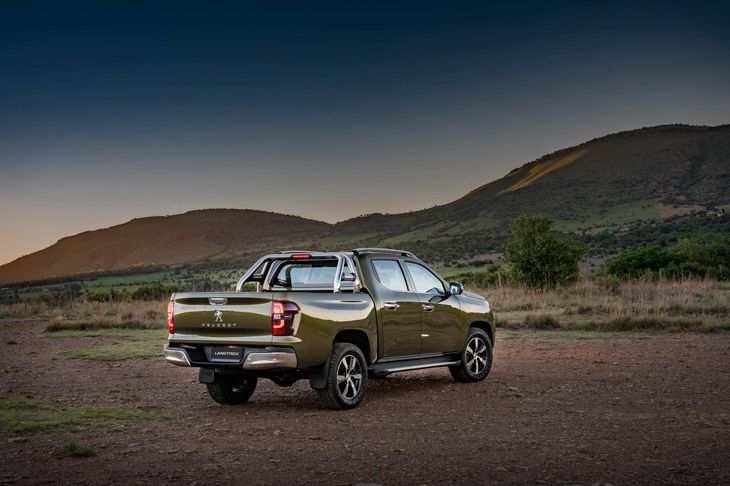
After an absence of many decades, Peugeot has returned to the South African bakkie market with the Landtrek.
The French brand is keen on harvesting some of the local market’s very profitable double-cab bakkie demand, but the competition is significant.
Peugeot has priced the Landtrek way beyond the psychological R500 000 barrier, with its Landtrek 4×2 double cab retailing at R579 900 and the 4×4 at R669 900. Those price points are rather ambitious, to put it mildly.
You can buy a Hilux – for less
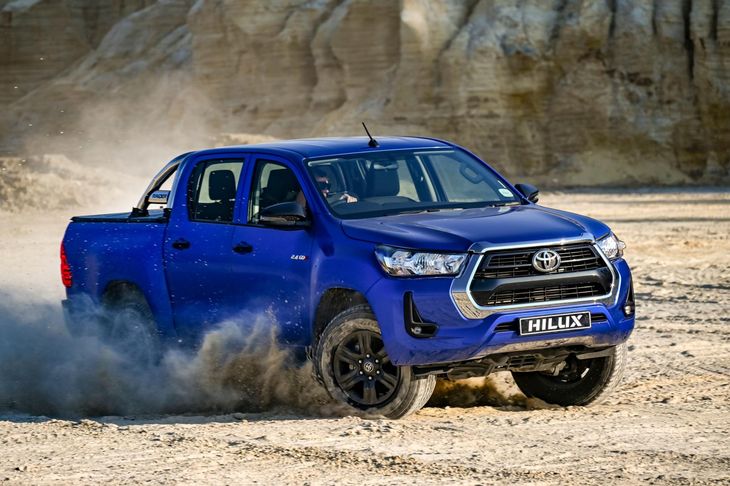
For R30 000 less than the Landtrek 4×4, you can buy a Hilux 2.4 GD6 4×4 auto in Raider speciation. At R638 200 the Hilux is a better bakkie in every possible way, but for the Peugeot’s neatly designed and interesting cabin that looks to be pulled mostly from the 3008 SUV.
An even bigger issue for Peugeot’s Landtrek, is the Chinese question. This is not a French bakkie – at all! It is not even sold in France. The Landtrek is a Chinese double-cab. A rebadged version of the Changan Kaicene F70.
Forget about the idea of a European brand association. The Landtrek should be compared to a rival Chinese bakkie, to see if it offers any unrecognized value. And that becomes even more problematic.
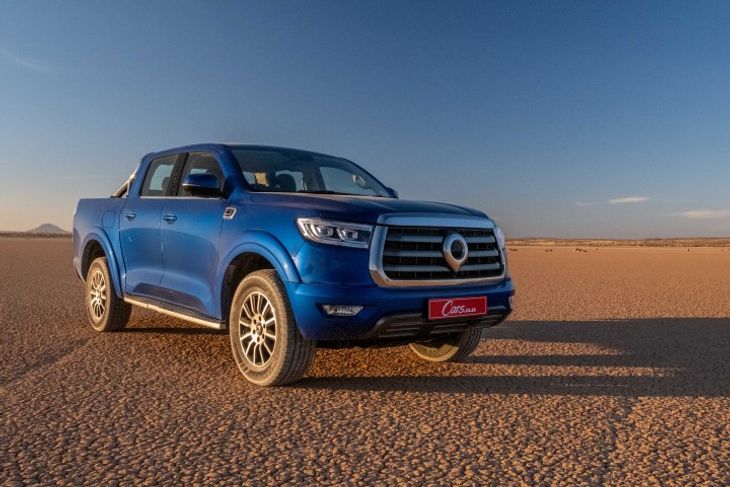
GWM’s P Series has taken the local market by storm. This double cab is a clear indication of the rapidly evolving ability of the Chinese automotive industry to develop a quality product.
Engine specification is perhaps the most significant issue for Landtrek, other than price.
Peugeot only has a 1.9-litre turbodiesel on offer in the Landtrek, boosting 110 kW and 350 Nm. Those aren’t terrible output numbers for an engine of 1.9-litres, but compared to the P-Series, it lags.
GWM’s P Series only has 100cc more capacity, but its 2-litre turbodiesel produces 120 kW and 400 Nm. And crucially, those engine outputs are leveraged by an eight-speed automatic transmission.
Landtrek potentially better than P-Series on the trail
Both bakkies are quite equally matched off-road.
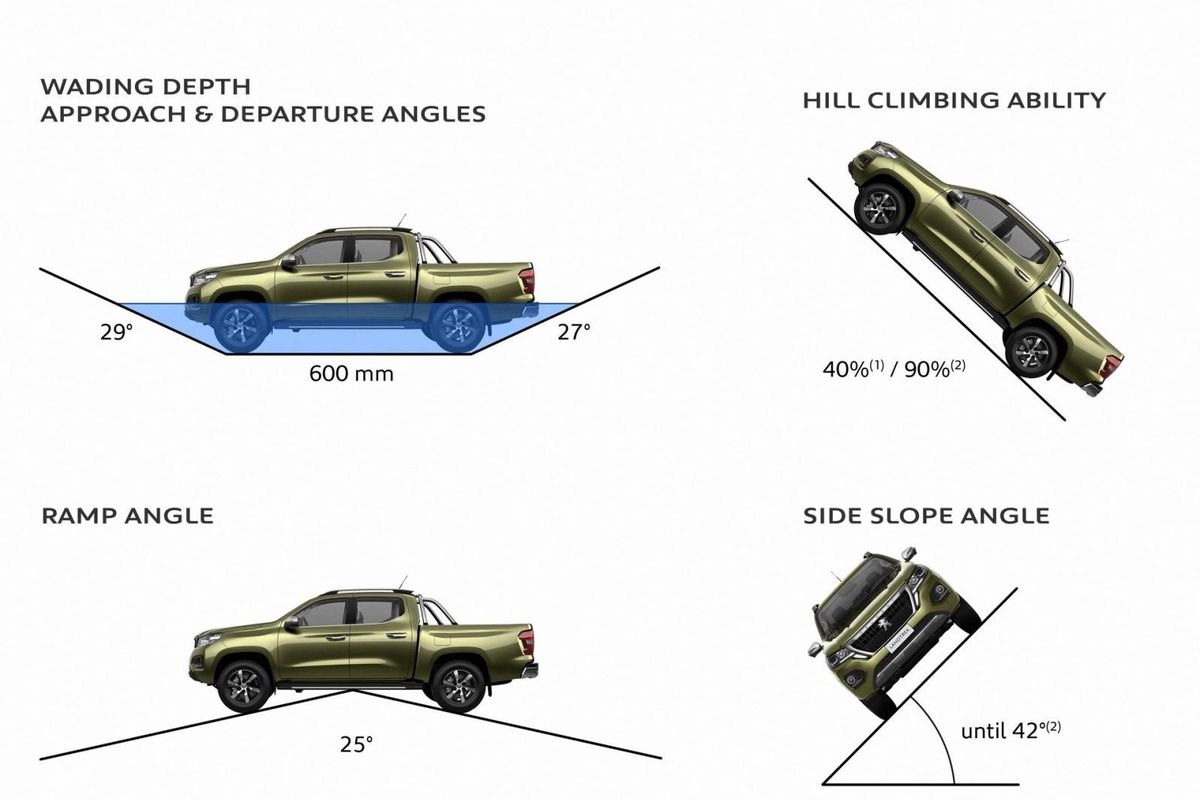
The Landtrek has a marginal 3 mm advantage in ground clearance (235- to 232 mm), with each offering an electronically locking rear differential and low range.
Peugeot can also claim some superiority in approach angle geometry, with the Landtrek’s 29-degree approach angle being greater than the GWM premium double-cab’s 27-degrees.
You can’t ignore the price
GWM’s P Series LT (its top-spec offering) is R599 900 and lacks for nothing, despite being R70 000 cheaper than Peugeot’s Landtrek.
It matches Landtrek’s infotainment offering (the touchscreen is only an inch narrower) but has adaptive cruise control and comprehensive driver assistance systems.
Even the P Series LS 4×4 double-cab, at R494 900, is still competitively equipped and undercuts its Peugeot rival by nearly R175 000.
Volvo has issued a recall for certain S60 and S80 sedans in South Africa. Here’s what you need to know…
The latest recall announcement from Volvo affects S60 and S80 sedans produced between 2001 and 2003. In South Africa, a total of 4 128 cars are affected by this recall.
Following a recent investigation by Volvo Cars and inflator manufacturer, ZF, it has been revealed that there may be a defect with the driver airbag. In the event of a collision and the driver airbag is deployed, it’s said that the driver frontal airbag inflator may rupture and release metal fragments when the airbag is deployed. The affected part is the FG2 Twin Driver Airbag inflator with a 5AT 148N propellant.
One fatality involving this faulty inflator has been recorded and Volvo component testing indicated that roughly 1% of Volvo cars could be impacted worldwide.
Considering the age of the vehicles, some are not active on Volvo’s retail network and Volvo SA will therefore also use the electronic national administration traffic information system (eNaTIS) and National Association of Automobile Manufacturers of South Africa (naamsa) to send a Quality Bulletin (QB) recall letter to current owners.
Toyota has implemented some specification updates for the ever-popular Hilux bakkie. See what’s changed below…
South Africa’s most popular car, the Toyota Hilux, has received a specification update in line with market feedback.
What’s changed in the Hilux range?
In 2020, when Toyota introduced the revised Hilux, only the range-topping Hilux Legend 4×4 automatic double-cab received the full-house feature treatment with nice-to-have features such as a leather interior, JBL premium sound system and Toyota Safety Sense (TSS).
Now, for 2021, Toyota is beefing up the specification for all Legend derivatives, including the Raised Body 4×2, with the inclusion of an electrically adjustable driver’s seat, leather interior, JBL premium sound system with 9 speakers, upgraded dual-zone climate control air conditioning, enhanced smart entry and Toyota Safety Sense which includes a Pre-crash system, Lane Keeping Assist and Adaptive Cruise Control).
As for the Hilux Xtra-cab Legend derivatives, buyers will now be treated to a full leather interior as well as an electrically-adjustable driver’s seat.
The mid-range Hilux Raider specification has also been adjusted to include an alloy spare wheel (all derivatives), height-adjustable driver’s seat (all derivatives), meter illumination control (all derivatives), 60:40 split rear seats (2.4 D/Cab), rear armrest with cupholders (2.4 D/Cab), seat back pockets with hooks (2.4 D/Cab) and upgraded dual-zone climate control )2.8 D/Cab).
In terms of infotainment, Toyota has now removed the integrated navigation system as all derivatives are equipped with Android Auto and Apple CarPlay and navigation can be accessed via a smartphone using Google Maps, Apple Maps and Waze.
Lastly, Toyota will be offering a new Platinum White Pearl body colour as well as a limited run Sand Beige body colour which will only be produced between October and December 2021.
How much does the Toyota Hilux cost in South Africa?
Petrol single cab
Hilux 2.7 VVTi RB S 5MT – R404 300
Hilux 2.0 VVTi S 5MT – R313 700
Hilux 2.0 VVTi S A/C 5MT – R322 900
Diesel single cab
Hilux 2.4 GD S 5MT – R353 700
Hilux 2.4 GD S A/C 5MT – R363 200
Hilux 2.4 GD-6 RB RAIDER 6MT – R473 100
Hilux 2.4 GD-6 RB RAIDER 6AT – R492 400
Hilux 2.4 GD-6 4X4 RAIDER 6MT – R544 300
Hilux 2.4 GD-6 4X4 RAIDER 6AT – R565 300
Hilux 2.4 GD-6 RB SR 6MT – R437 800
Hilux 2.4 GD-6 4×4 SR 6MT – R504 000
Hilux 2.8 GD-6 RB RAIDER 6AT – R562 200
Hilux 2.8 GD-6 4X4 RAIDER 6AT – R629 900
Chassis cab
Hilux 2.0 VVTi 5MT A/C – R301 200
Hilux 2.4 GD 5MT A/C – R340 500
Hilux 2.4 GD-6 4X4 6MT – R486 400
Xtra cab
Hilux 2.4 GD-6 RB RAIDER 6MT – R486 700
Hilux 2.4 GD-6 RB RAIDER 6AT – R505 900
Hilux 2.8 GD-6 RB LEGEND 6MT – R570 200
Hilux 2.8 GD-6 RB LEGEND 6AT – R596 100
Hilux 2.8 GD-6 4×4 LEGEND 6MT – R645 000
Hilux 2.8 GD-6 4×4 LEGEND 6AT – R671 400
Petrol double cab:
Hilux 2.7 VVTi RB S 5MT – R460 600
Hilux 4.0 V6 4X4 LEGEND AT – R792 600
Diesel double cab
Hilux 2.4 GD-6 RB RAIDER MT – R529 700
Hilux 2.4 GD-6 RB RAIDER AT – R546 300
Hilux 2.4 GD-6 4X4 RAIDER MT – R611 400
Hilux 2.4 GD-6 4X4 RAIDER AT – R638 200
Hilux 2.4 GD-6 RB SR MT – R498 700
Hilux 2.4 GD-6 4X4 SR MT – R574 300
Hilux 2.8 GD-6 RB RAIDER AT – R661 700
Hilux 2.8 GD-6 4X4 RAIDER AT – R739 700
Hilux 2.8 GD-6 RB LEGEND MT – R706 600
Hilux 2.8 GD-6 RB LEGEND 6AT – R735 100
Hilux 2.8 GD6 RB LEGEND RS 6AT – R835 100 *
Hilux 2.8 GD-6 4X4 LEGEND RS MT – R848 900
Hilux 2.8 GD-6 4X4 LEGEND RS AT – R882 400
Hilux 2.8 GD-6 4X4 LEGEND MT – R759 500
Hilux 2.8 GD-6 4X4 LEGEND AT – R793 000
* New model added to the line-up
The Toyota Hilux is sold with a 3-year/100 000km warranty and a 9-services/90 000 km service plan.
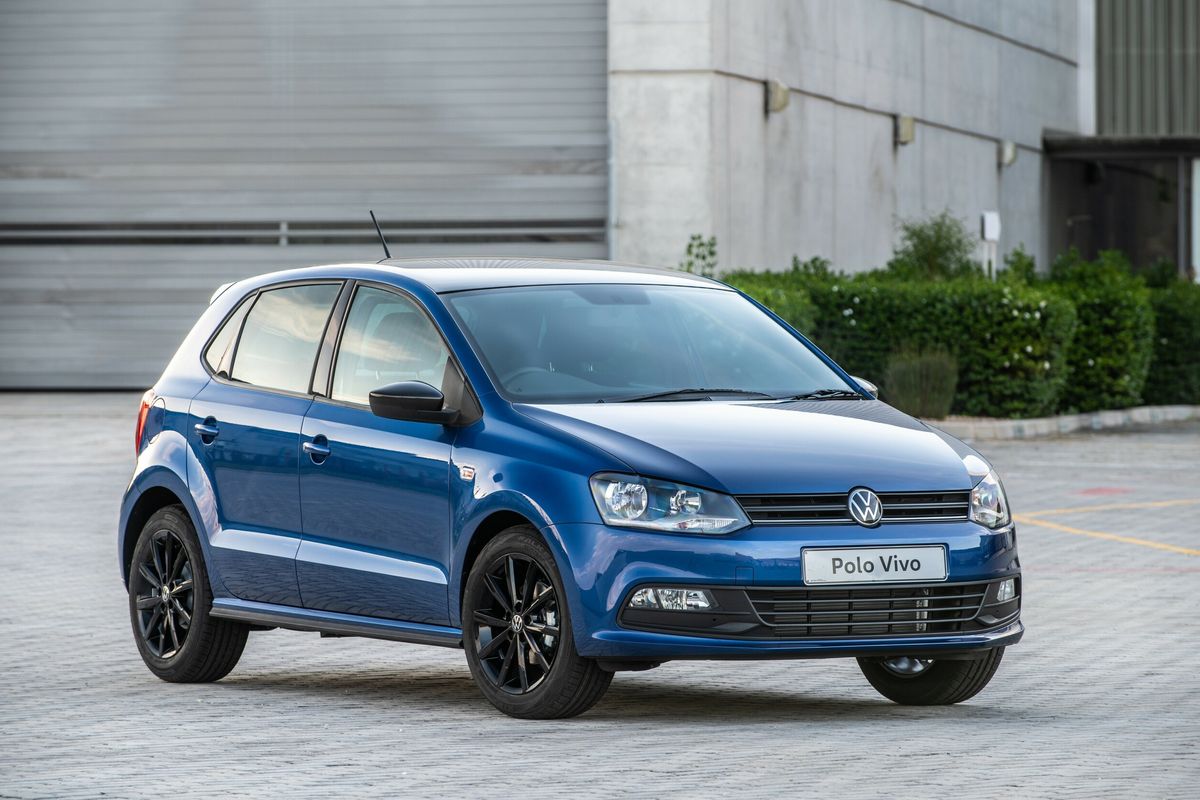
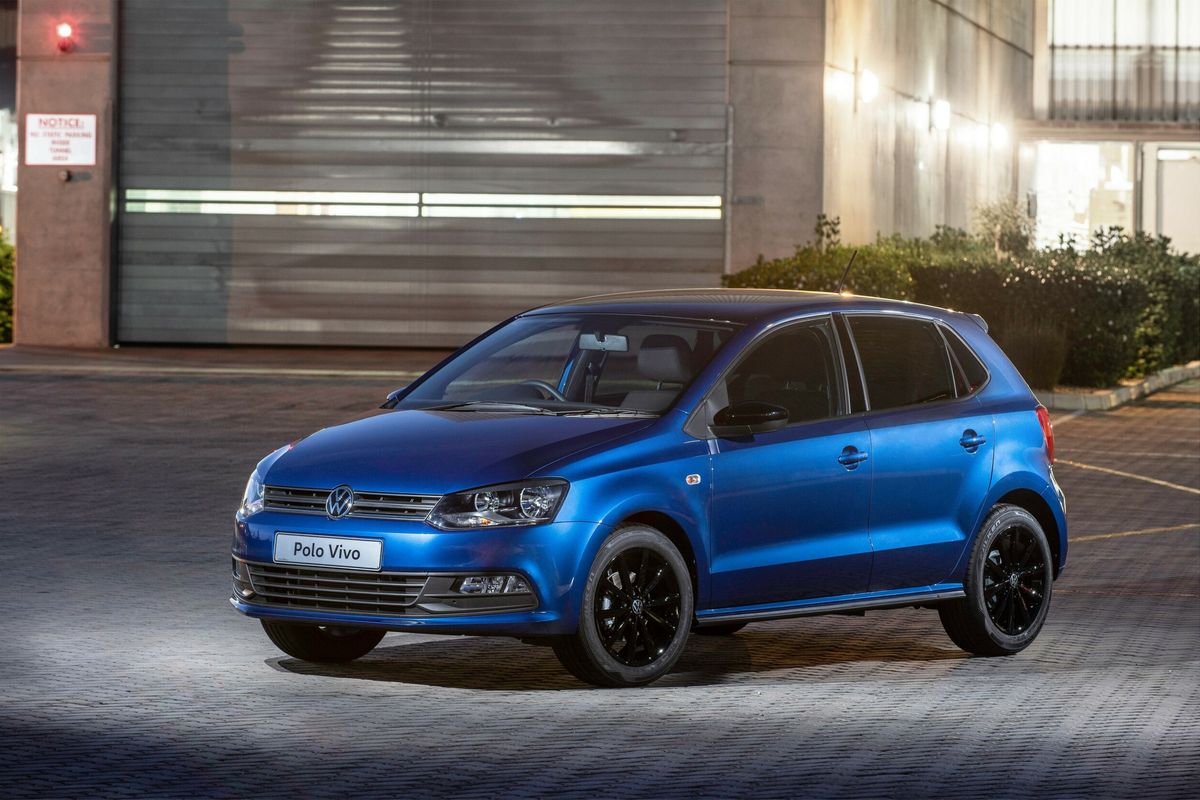
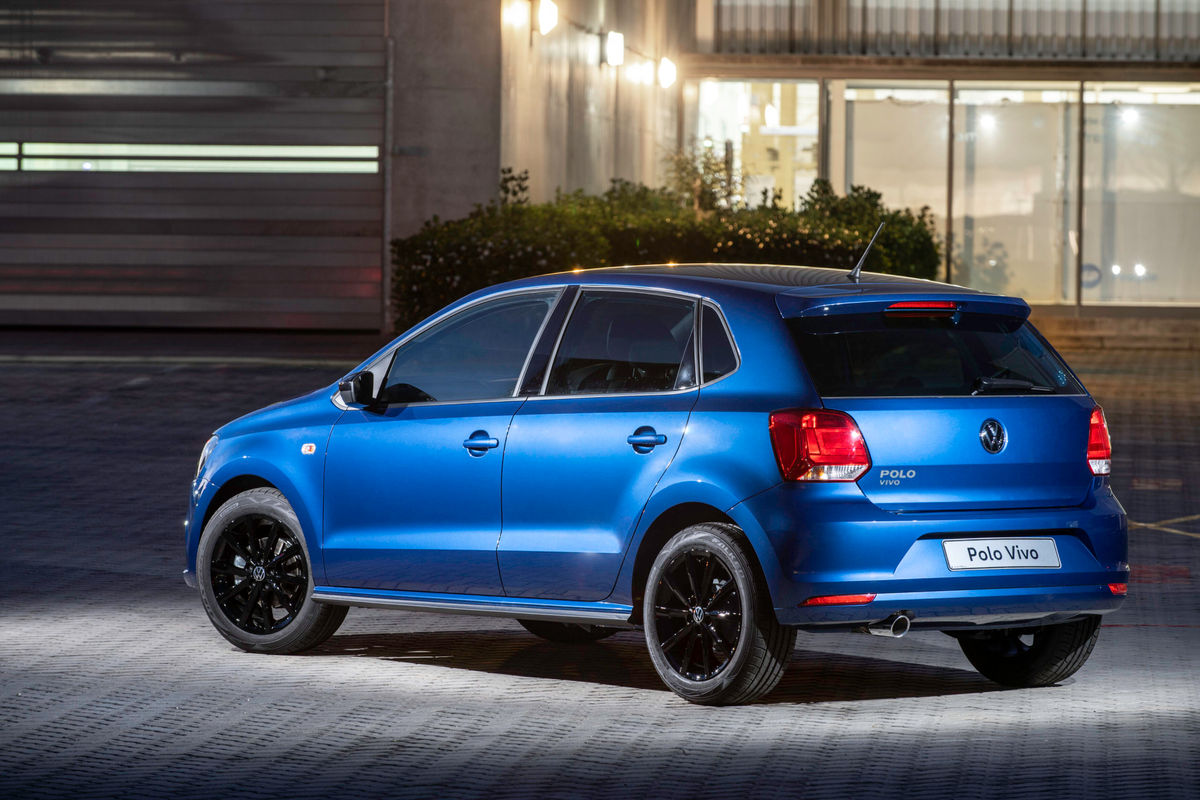
Volkswagen has had success with the Black Style package on other VW models so has decided to try it out on the Polo Vivo. Here’s how to spot one on the road.
The Black Style package was first introduced on the pre-facelift VW Tiguan and the Touareg back in 2019 with the brand claiming they were a success. The Black Package is a not so subtle exterior trim kit that is instantly recognisable on the roads with its black trim options and blacked out optional wheels.
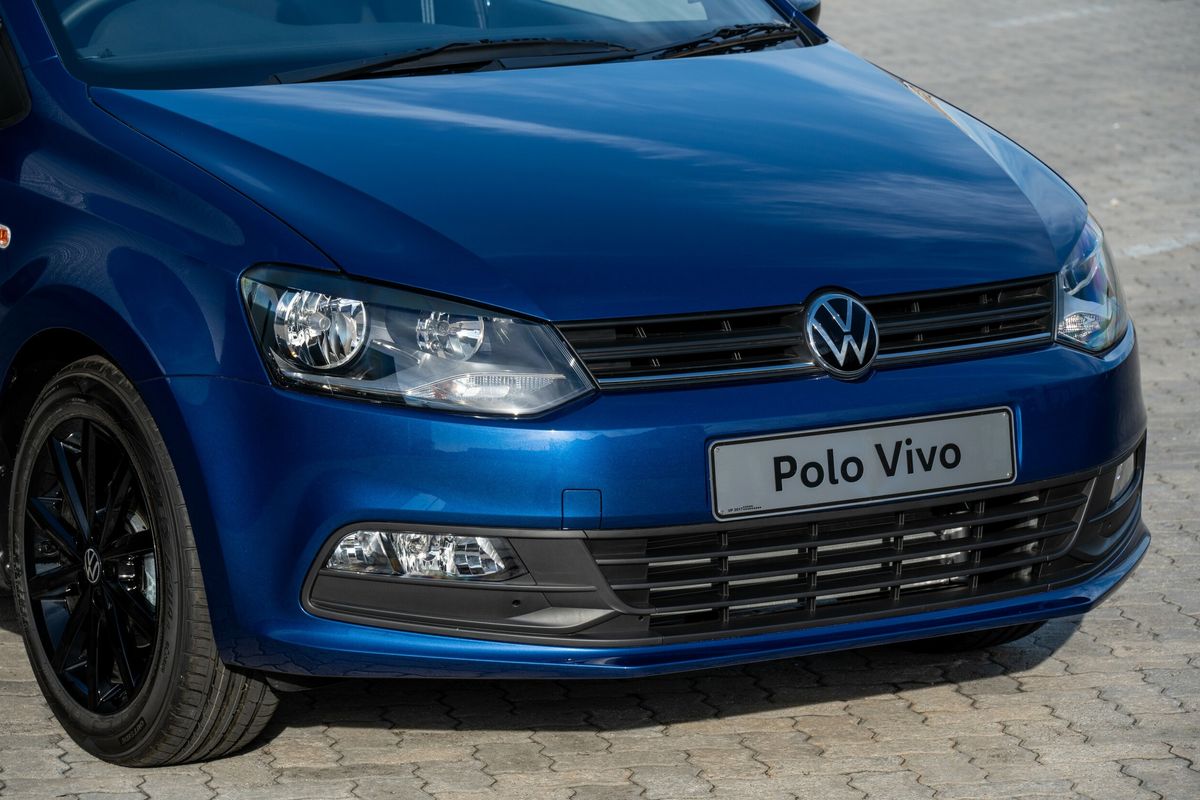
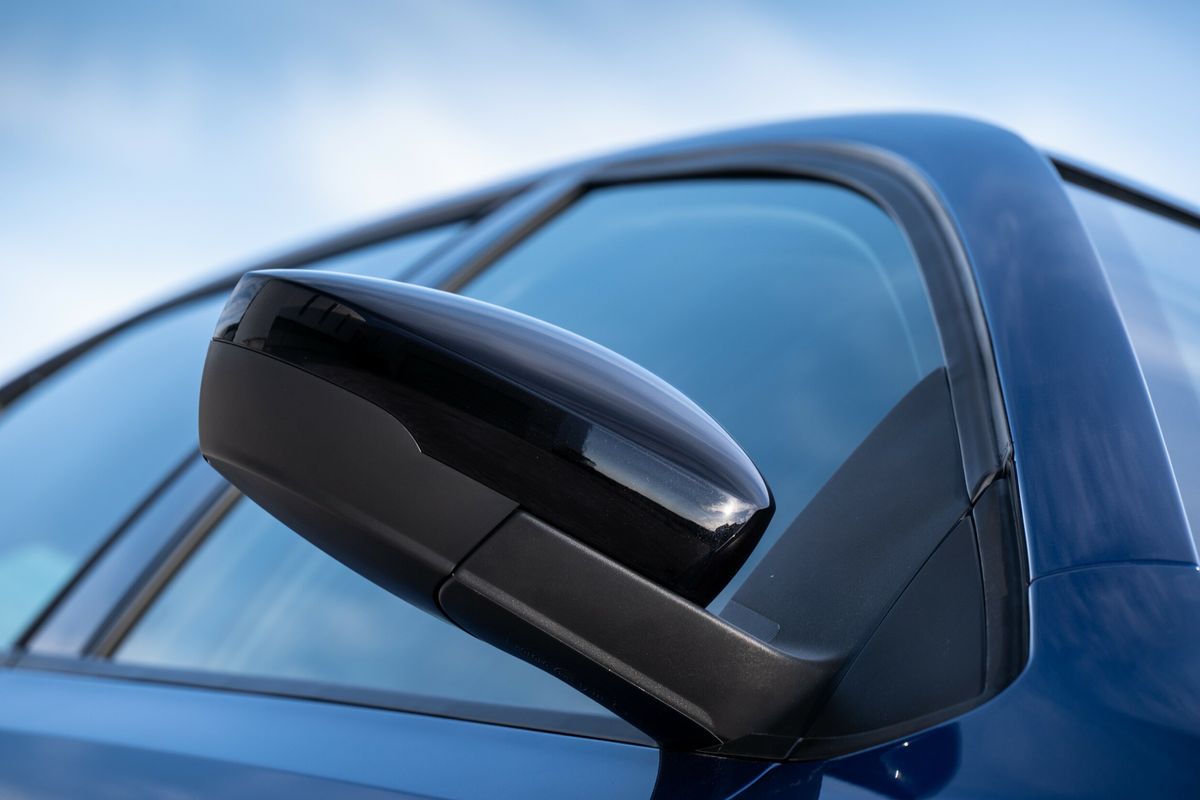
The Black Style package is now available on the Polo Vivo Comfortline and the Highline model. It includes black 16-inch Portago alloy wheels, gloss black mirror caps, a gloss black painted roof, gloss black B and C pillar covers, black side sill covers, body-coloured boot spoiler, privacy glass, chrome exhaust tip as well as anthracite headliner and sun visors.
The cost of the Black Style package on the Comfortline model is R9 000 while adding it to your Highline will cost just R8 250.
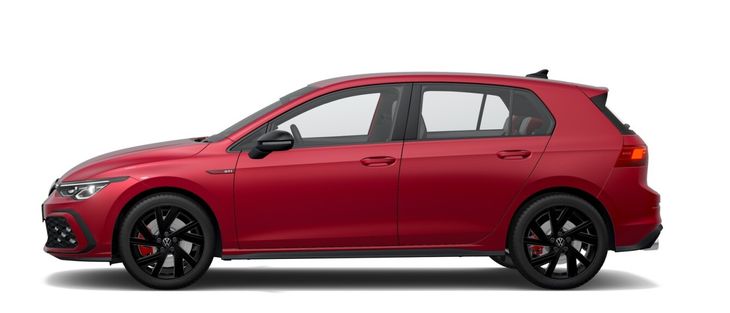
Of course, you can still get the package on the Tiguan and Touareg models and there is even a Black Style package for the brand new Golf 8 GTI. Although, the first sign of a model not meeting sales expectations is the immediate release of special editions or optional packages. Surely that’s not the case for SA’s adored GTI is it?
The GTI kit includes piano black side mirrors, a piano black chrome strip on the front grille as well as black 18-inch Bergamo alloy wheels. The upgrade is available for R8 000.
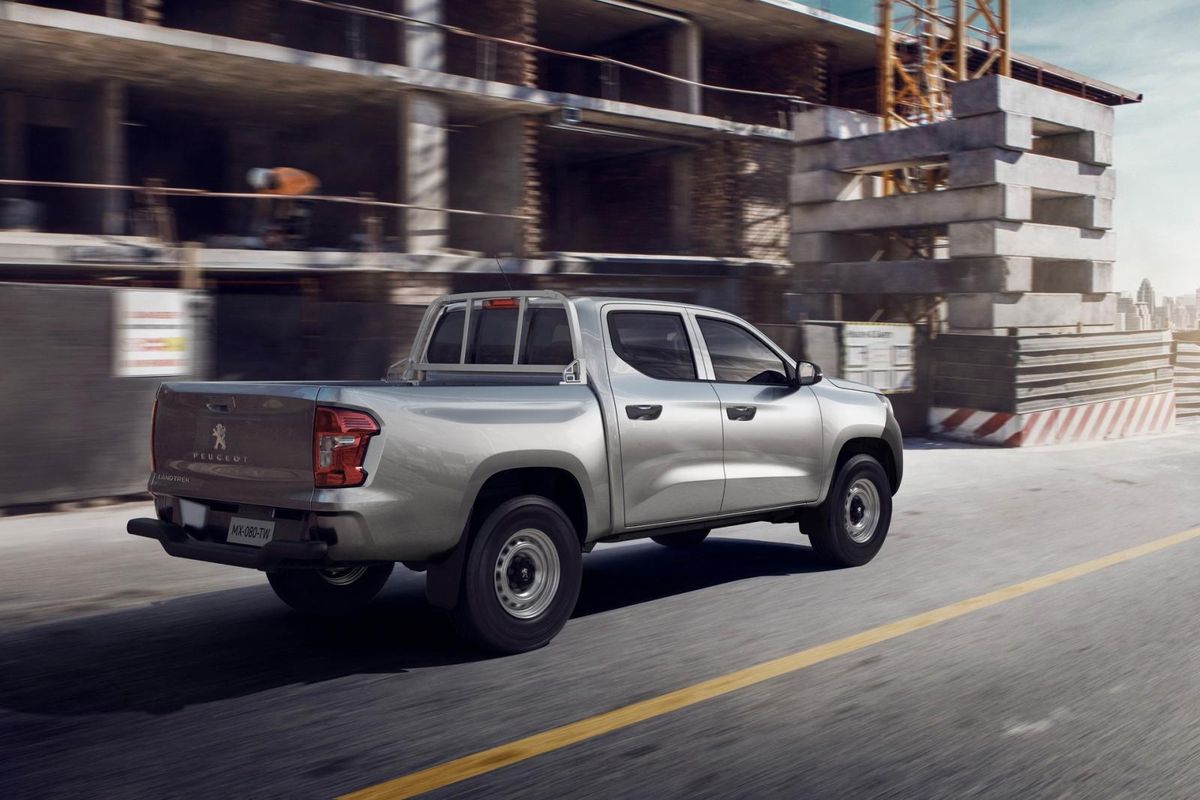
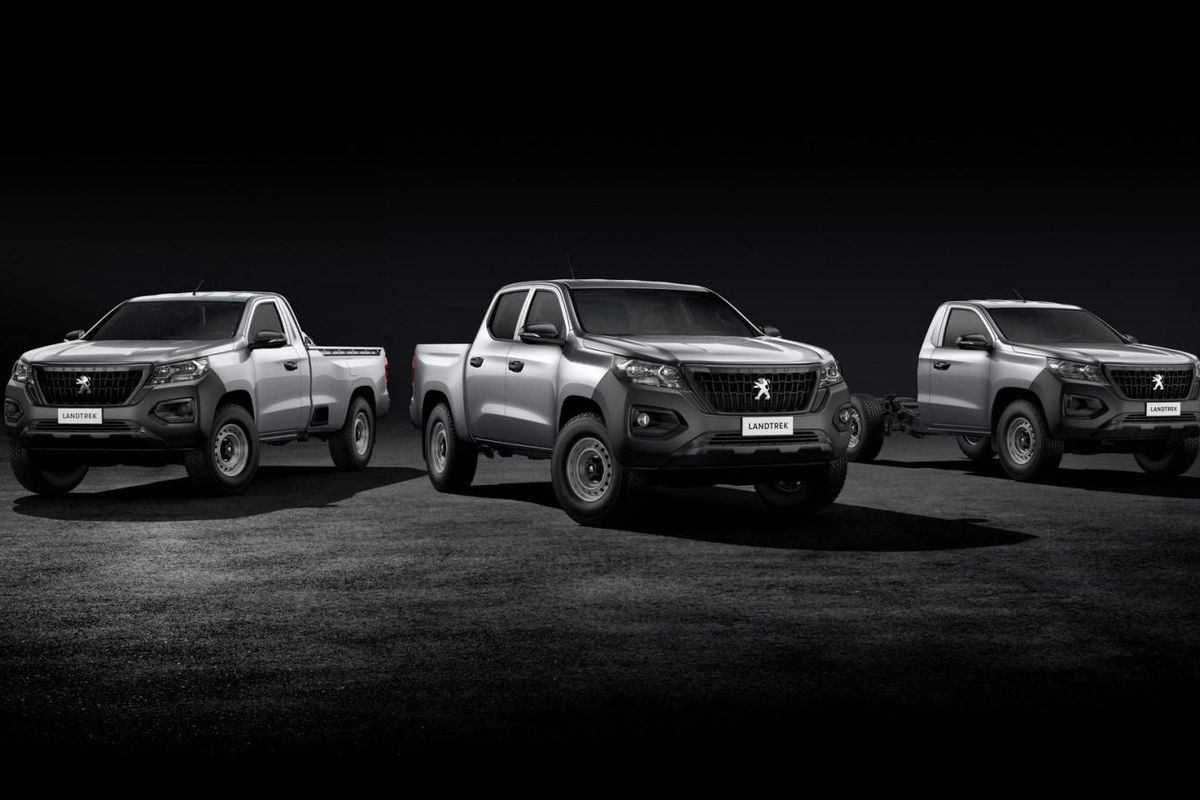
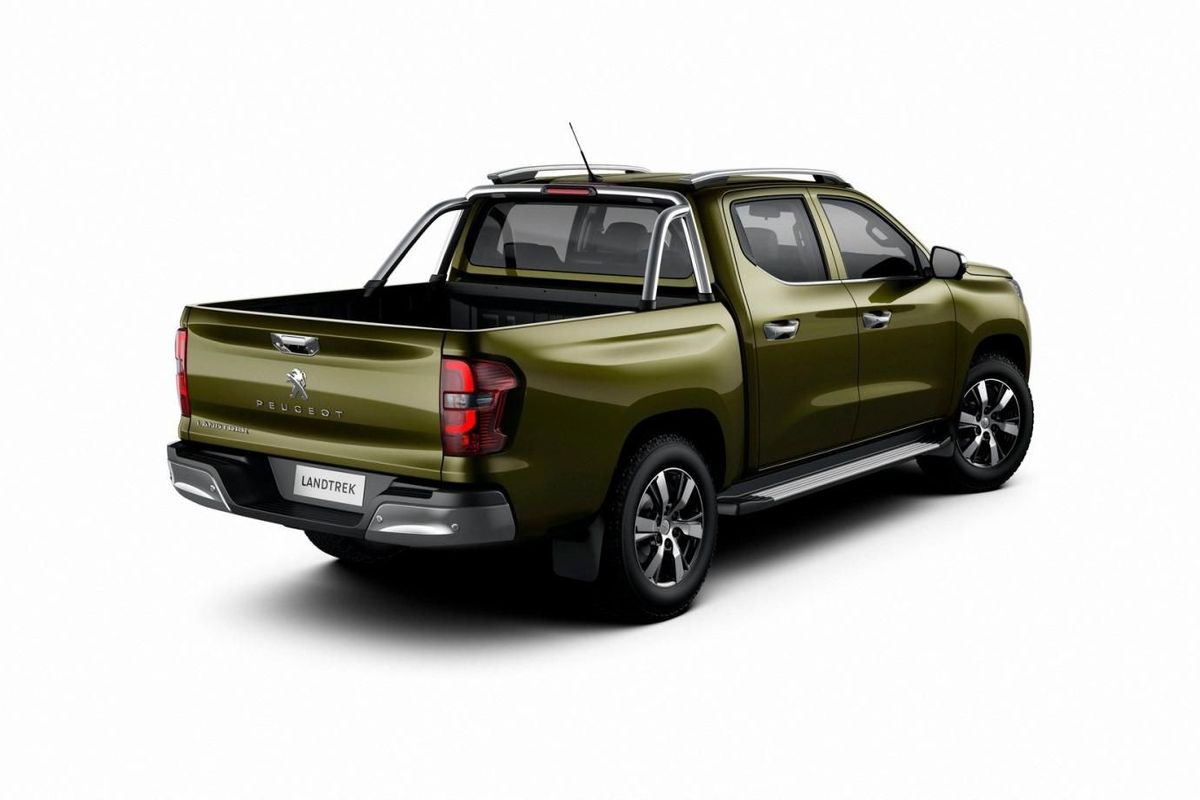
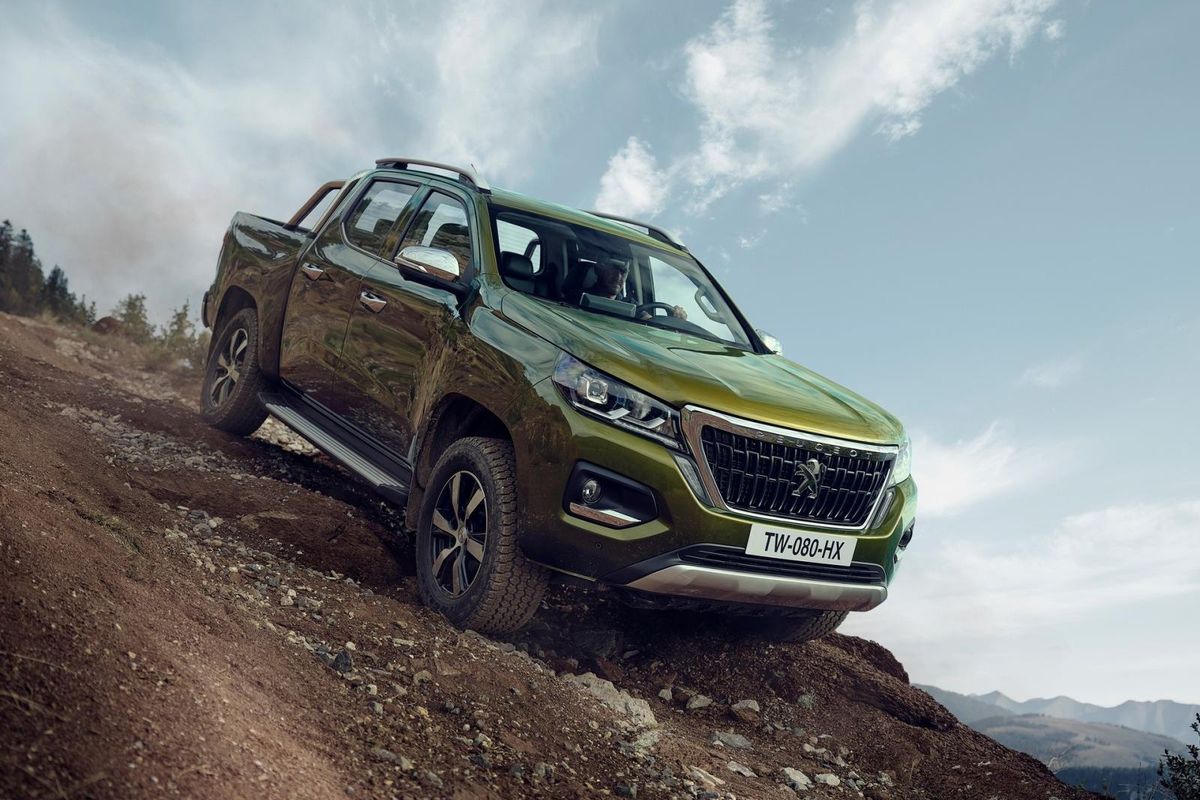
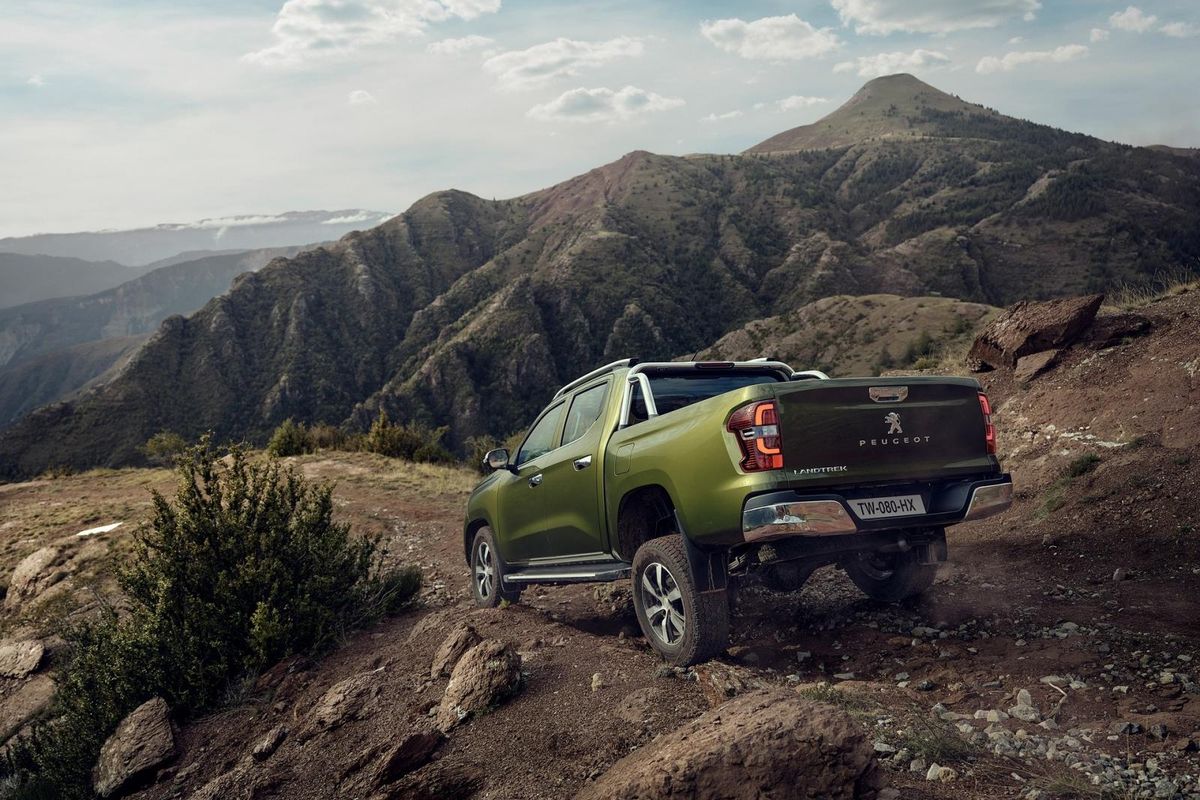
A new contender in the leisure double-cab bakkie segment has arrived in South Africa! Meet the Peugeot Landtrek!
The Peugeot Landtrek was born from a collaboration between Peugeot and Chinese manufacturer, Changan. It’s built on a new platform that also underpins the China-only Changan Kaicheng F70.
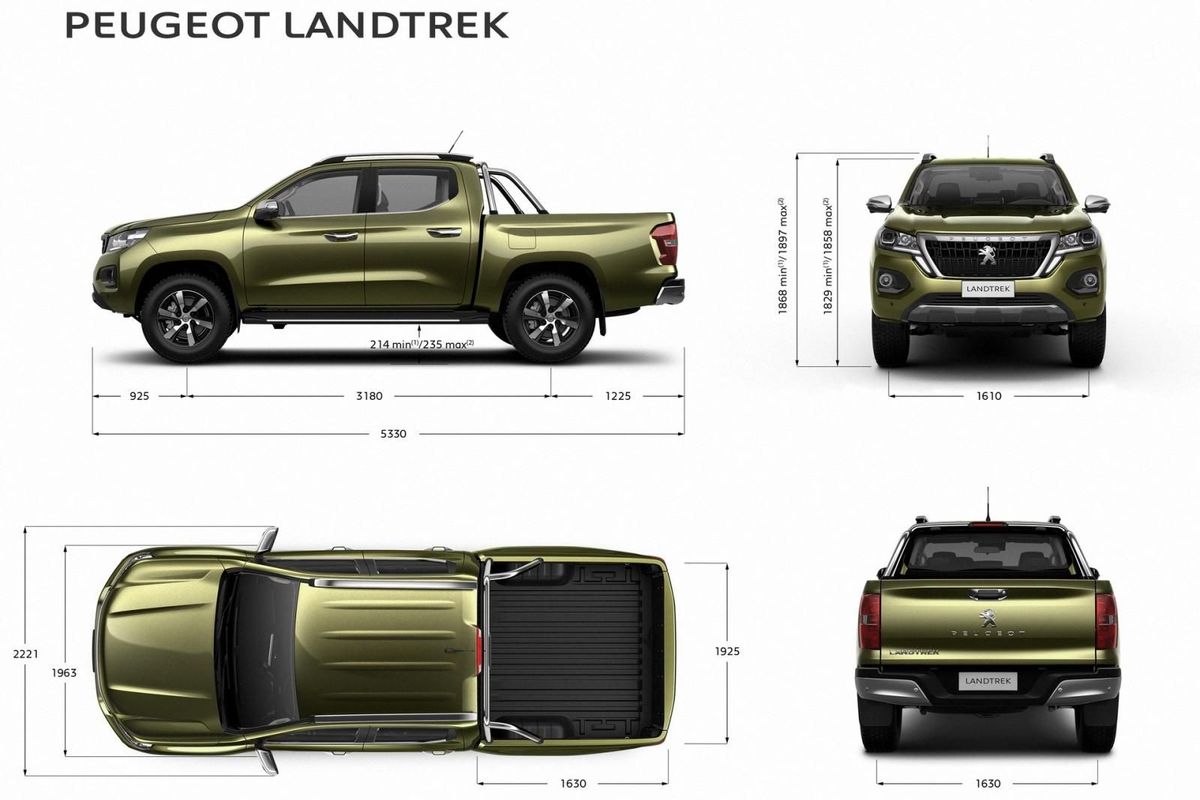
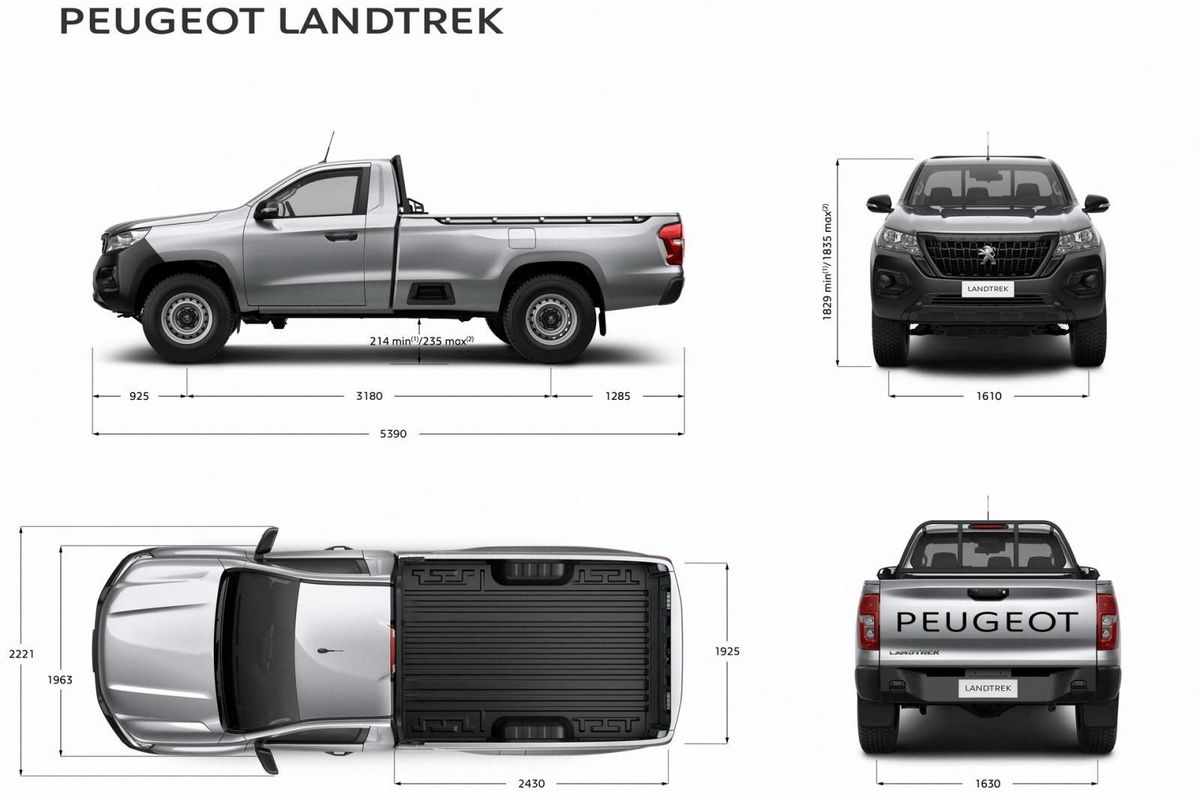
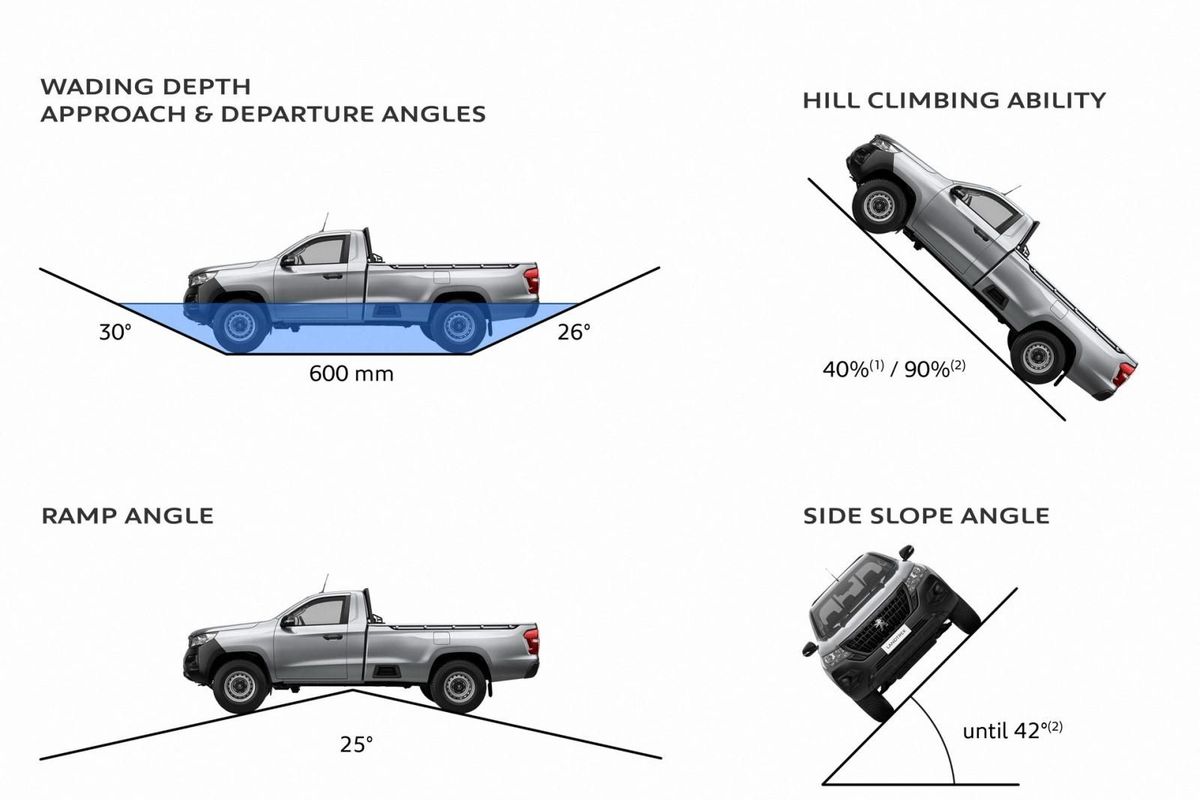
In South Africa, the Peugeot Landtrek will be offered in double-cab guise with a payload of 1.2 tons and a notable towing capacity of up to 3 tonnes. Ground clearance is pegged 235 mm with a wading depth of 600mm. The Landtrek also has an approach angle of 29-degrees, a departure angle of 27-degrees and a break over angle of 25-degrees.
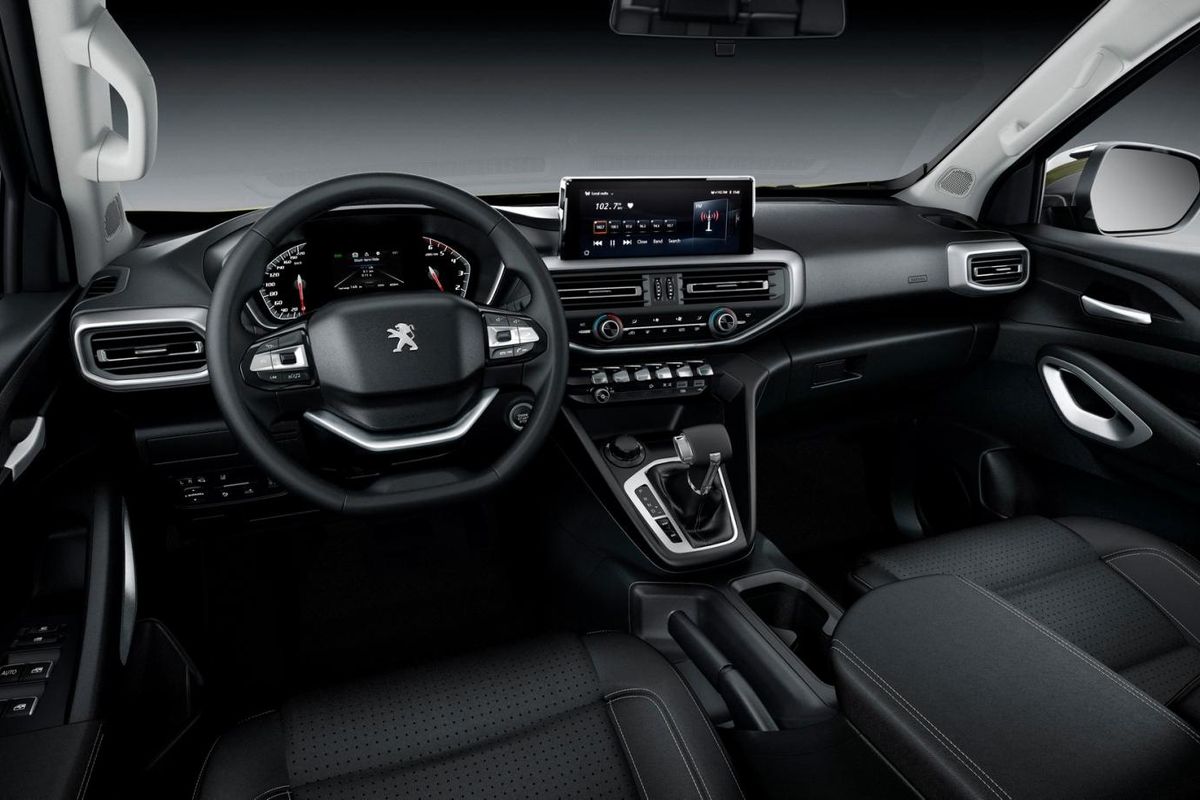
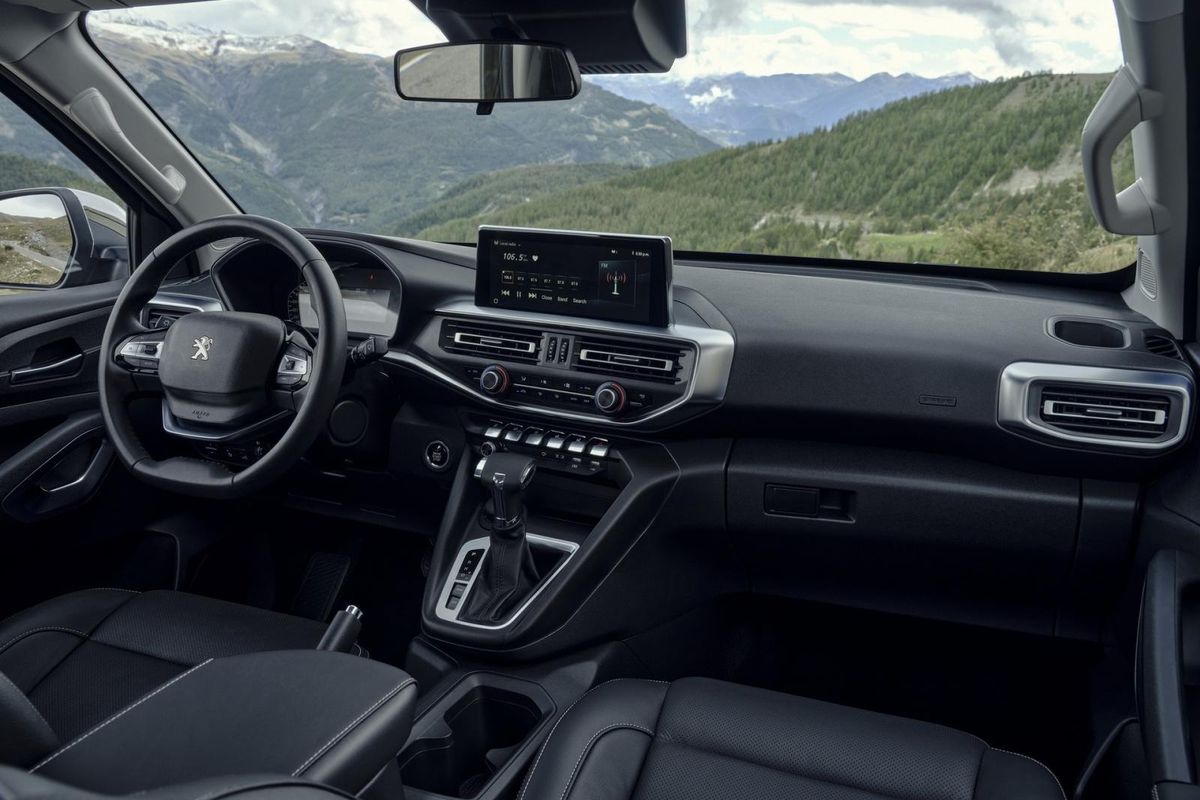
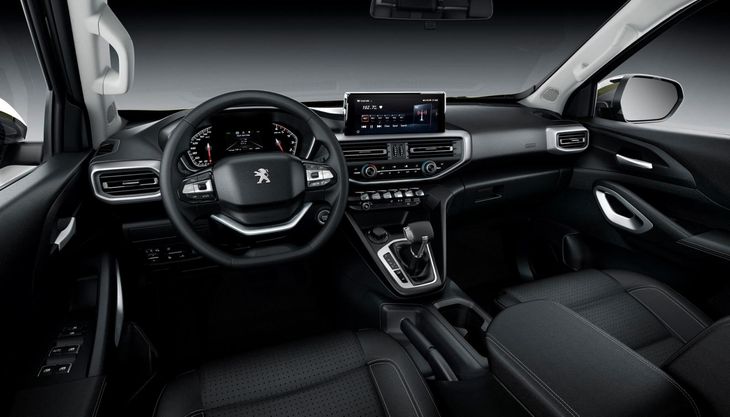
The Landtrek’s interior appears to be quite nice, don’t you think?
Inside, the Landtrek actually looks quite impressive and many of the features are taken straight from Peugeot’s parts bin including a steering wheel from the 3008 and the 10-inch touchscreen from the 508 along with Apple CarPlay and Android Auto capability and a 10GB hard drive. Standard feature specification appears to be quite generous with a 360-degree camera system (up to 4 cameras can be fitted) and dual-zone climate control included in the mix. A total of 6 airbags, electronic stability control, lane departure warning, Trailer Sway Control and hill descent control are also part of the standard kit.
Other useful features include a height-adjustable driver’s seat and rake and reach adjustable steering wheel. A total of 27-litres of storage space is offered in the cabin.
The Landtrek can be had in either 4×2 or 4×4 guise and in South Africa, is powered by a 1.9-litre turbodiesel engine which develops 110 kW and 350 Nm of torque and comes mated with a 6-speed automatic transmission as standard. The Landtrek 4×4 derivatives are equipped with 4H and 4L modes to tackle various terrain as well as a rear differential with a eLocker system that can disengage automatically to gain more traction.
The new Peugeot Landtrek launches in South Africa this week so look out for our Launch Review coming soon! See pricing details below!
How much does the Peugeot Landtrek cost in South Africa?
The Automotive Aftermarket Guidelines or ‘Right to Repair’ came into effect on 1 July 2021 and Ford South Africa has now unbundled its Ford Protect Service Plans from the purchase price of Ford vehicles.
Ford South Africa has announced that as of 1 November 2021, the previously-inclusive Ford Protect Service Plans have now been unbundled from the pricing of a new Ford vehicle, in line with the Automotive Aftermarket Guidelines (Right to Repair) which came into effect on 1 July 2021.
This essentially means that buyers now have the choice to purchase a Ford Protect Service Plan separately, much like purchasing an optional maintenance plan or extended warranty. More so, buyers can either have their Ford vehicle serviced at a Ford dealer or, alternatively, at an Independent Service Provider (ISP). Ford, however, states that “Servicing at a Ford dealer guarantees quality workmanship using factory-trained and certified technicians, genuine Ford parts and lubricants, and access to the latest diagnostic equipment.”
However, consumers are urged to familiarise themselves with the guidelines as advised by Neale Hill, President, Ford Motor Company Africa.
“Customers have the option of selecting where to service their vehicle, but it’s important that they familiarise themselves with the guidelines. For example, if you choose to service your vehicle outside of the Ford dealer network while you have a Ford Protect Service Plan in place, Ford is not obliged to pay the Independent Service Providers (ISP) for any services rendered. The ISP cost will be for your own account – and although the Ford warranty remains in place, should there be a failure as a result of the parts used or the workmanship of the ISP, that portion of the repair may not be covered by the Ford warranty.”
Consumers must also take note that only authorised Ford dealers can conduct recall repairs (no cost to the owner) and factory warranty repairs.
While the service plan is now an added-cost option, the standard Original Equipment Manufacturer (OEM) warranty, or Ford Protect package, remains in place, comprising a 4-year/120 000km warranty, 3-year/unlimited km roadside assistance and a 5-year/unlimited km corrosion warranty.
If a consumer chooses to use an ISP for servicing and maintenance, the vehicle warranty will not be affected. However, if there is a failure as a result of a part or the workmanship, that portion of the repairs will not be covered by the manufacturer’s warranty. Ford also highlights that services need to be done according to the applicable manufacturer service intervals.