So, you’re a petrolhead and you have R1-million to spend on the most powerful new cars on the market in South Africa, what are your options?
It’s no secret that new car prices are over the hill, but if you’re looking for the most powerful new cars for under R1-million in South Africa, then this list is for you!
Nonetheless, here are the 5 most powerful new cars you can buy right now for under R1-million in South Africa!
The cars on this list are ordered from the most powerful to the least powerful and prices are accurate as of October 2021.
Most Powerful New Cars For Under R1-Million in South Africa
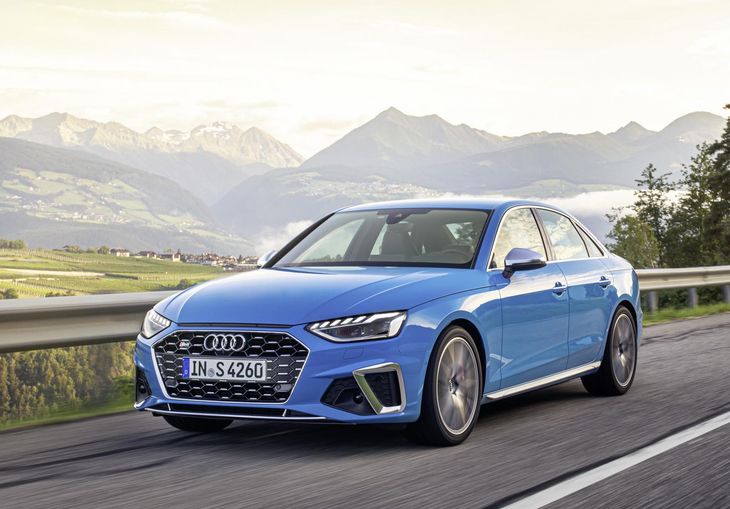
1. Audi S4 TFSI quattro – From R988 500
The Audi S4 is the most powerful new car you can buy for under R1-million in South Africa. It’s equipped with a potent turbocharged 3.0-litre V6 engine that develops a thumping 260 kW and 500 Nm of torque. Zero to 100 kph is claimed in 4.7 seconds with a top speed of 250 kph.
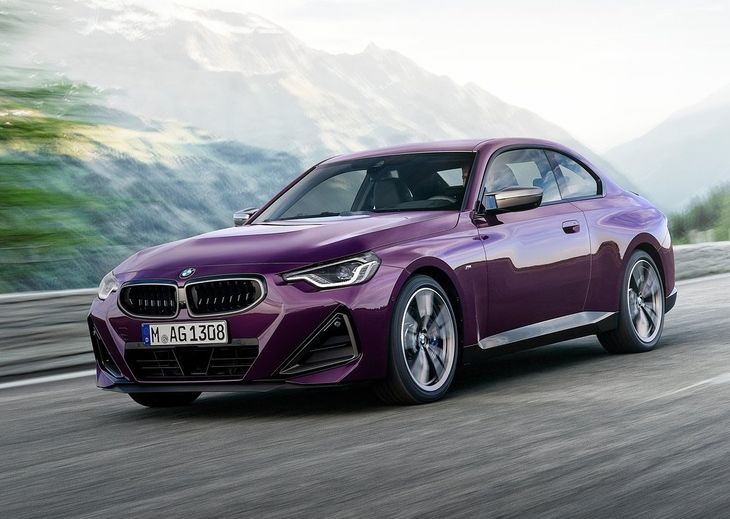
2. BMW M240i Coupe / Convertible – From R879 584 (Coupe) and R987 512 (Convertible)
It might be worthwhile waiting for the new 275 kW BMW M240i to reach SA in 2022.
The outgoing BMW M240i in coupe or convertible guise offers considerable punch with no less than 250 kW and 500 Nm delivered from its twin-turbocharged 3.0-litre, in-line 6-cylinder engine. The BMW M240i coupe is slightly faster than the Audi S4 above with a claimed zero to 100 kph time of 4.6 seconds and a top speed of 250 kph. The M240i convertible, however, claims 2.7 seconds in the sprint to 100 kph. An all-new BMW 2 Series was revealed earlier this year and can be expected locally early in 2022.
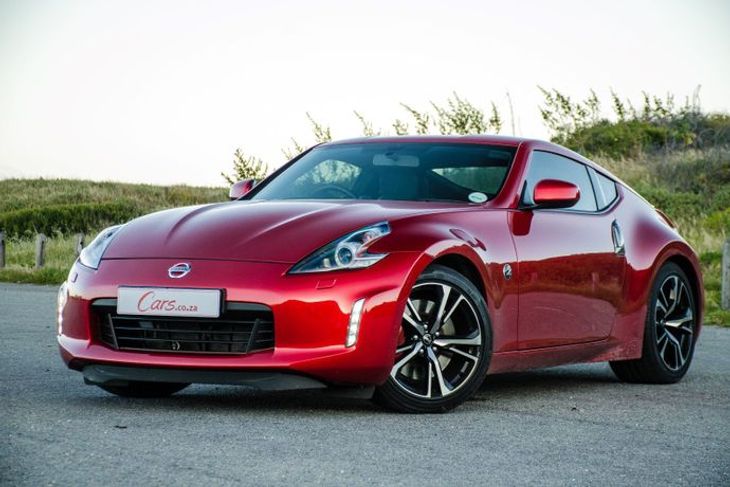
Nissan’s new Z was revealed earlier this year and while we wait anxiously for it to arrive in South Africa, local buyers can still buy the old 370Z, as new. Its high-revving naturally-aspirated 3.7-litre V6 mill pumps out a hearty 245 kW and 363 Nm and Nissan claims 5.3 seconds to sprint to 100kph with a top speed of 250 kph.
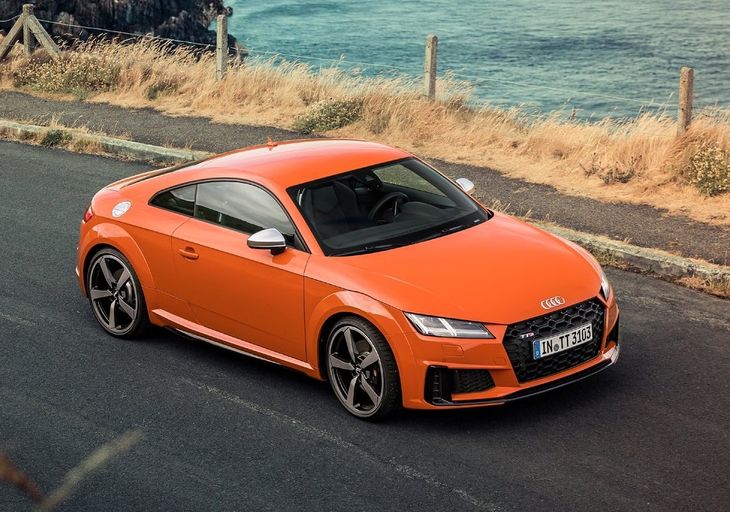
Audi’s TTS is the starting point in the TT range and offers 228 kW and 380 Nm of torque. Its acceleration to 100 kph is claimed at 4.9 seconds with a top speed of 250 kph. If you’re smitten with the TT and can afford to stretch your budget a bit, then the Audi TT RS (R1 083 000) offers mega bang-for-buck with supercar-slaying ability.
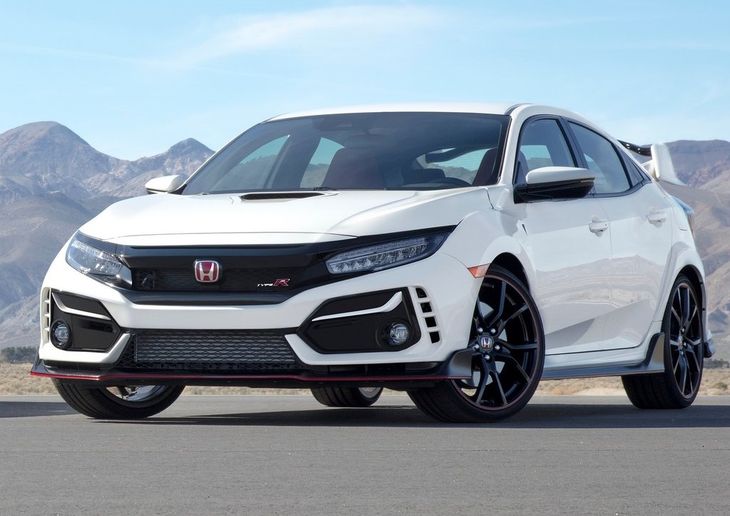
If it’s a sharp-handling performance weapon you are after, few cars can trump the Honda Civic Type R. Its 2.0-litre turbopetrol engine offers 228 kW and 400 Nm of torque. It is the ‘slowest’ car on this list though with a zero 100 kph sprint time of 5.8 seconds and a top speed of 272 kph.
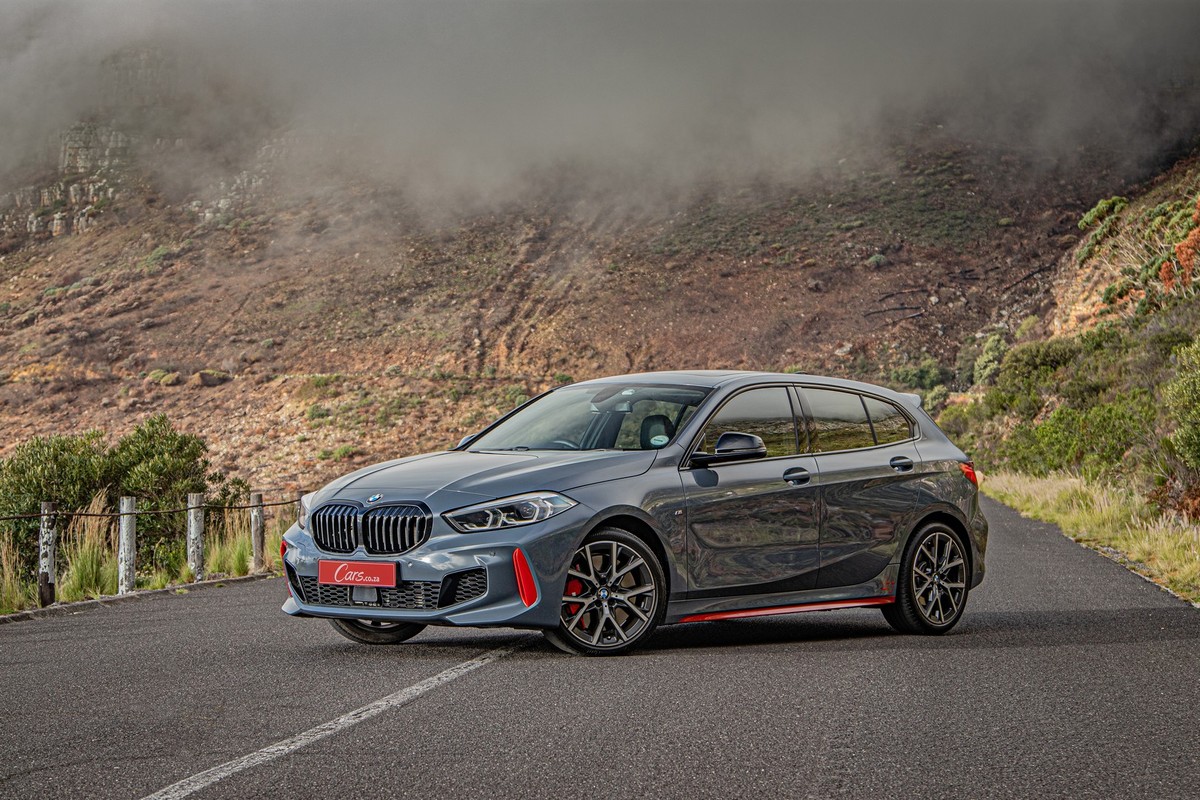
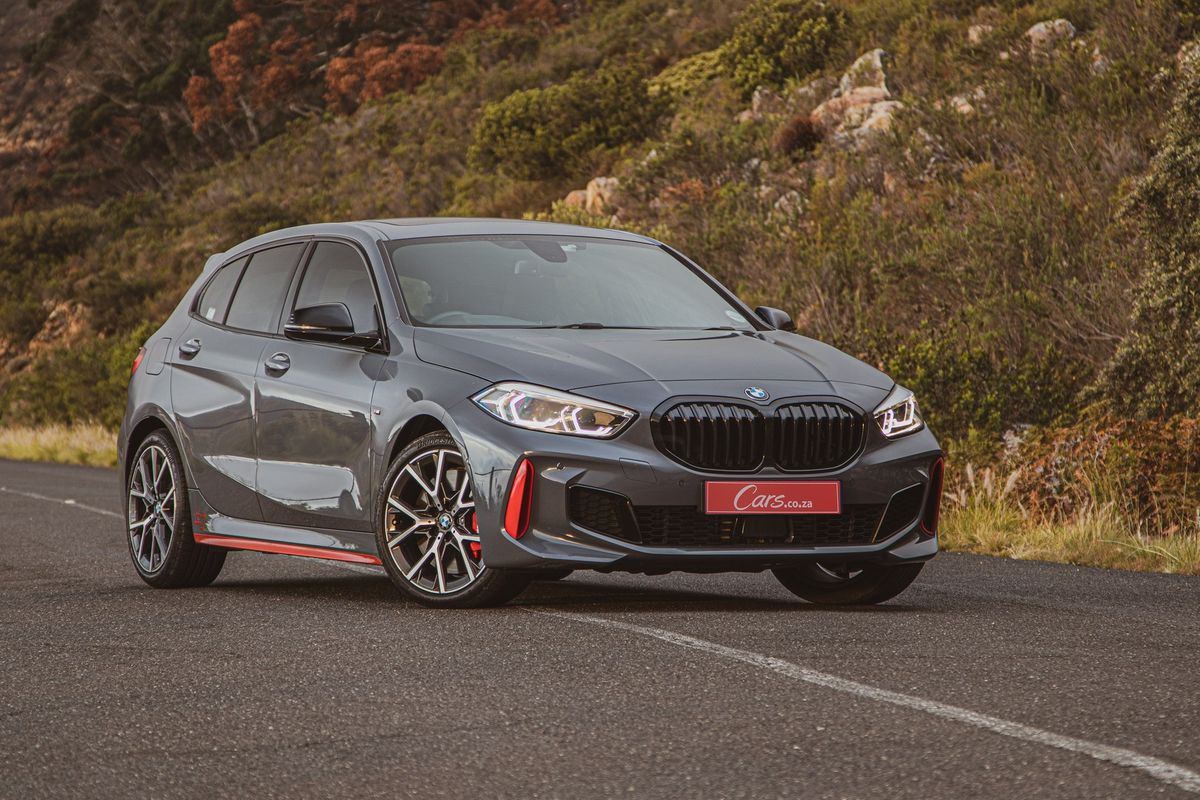
The hot hatch market may no longer be as fiercely contested as it once was, but there are still a handful of credible options available. With the 128ti, BMW hopes to lure customers away from the accomplished Volkswagen Golf 8 GTI, but the newcomer’s premium badge alone may not be enough to win over prospective buyers… the Bimmer needs to deliver excellence in many aspects to post a significant challenge to Wolfsburg’s finest. Well, does it?
We like: Strong engine, build quality, high specification, entertaining to drive
We don’t like: Unengaging soundtrack, polarising red detailing
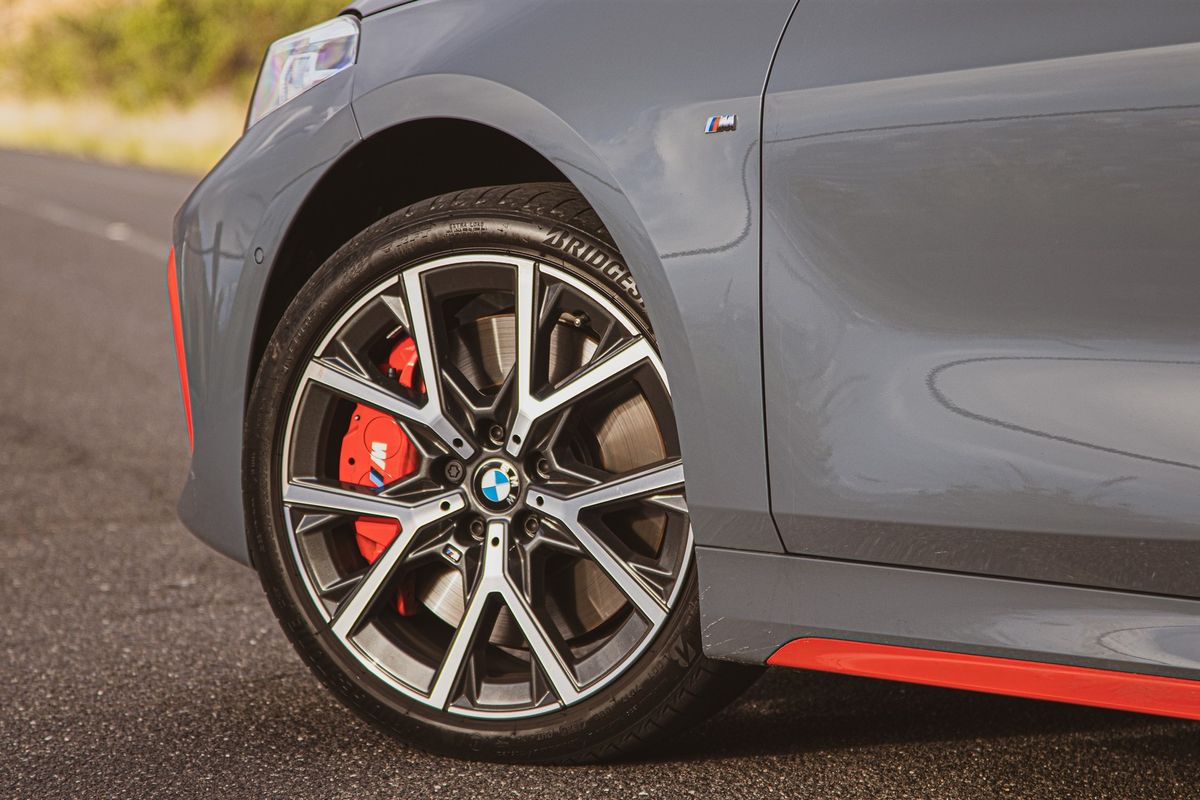
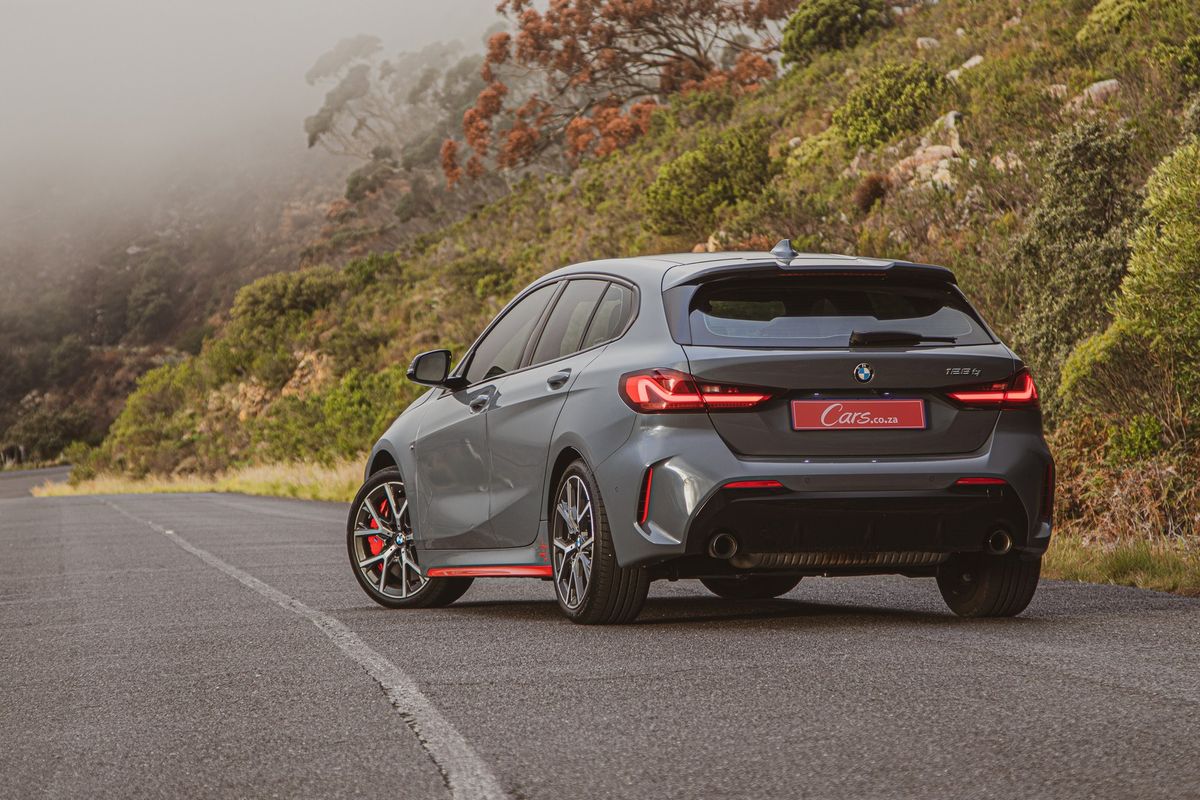
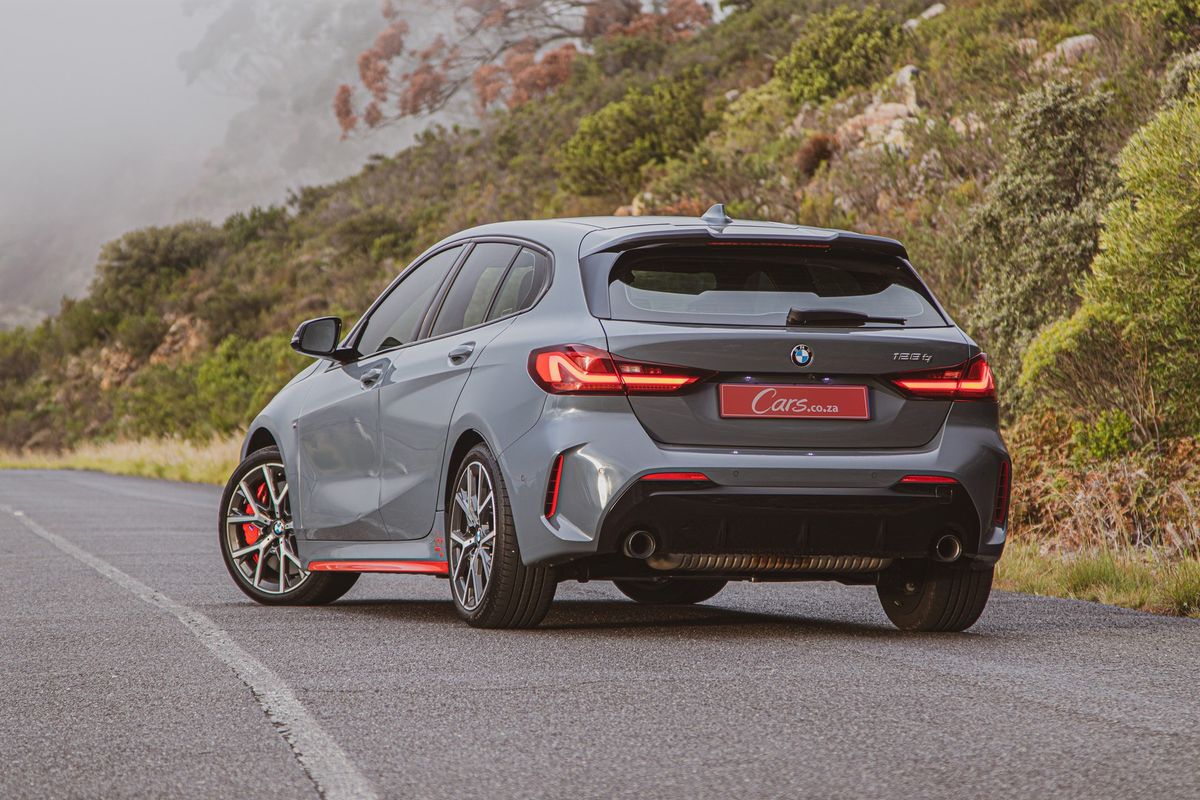
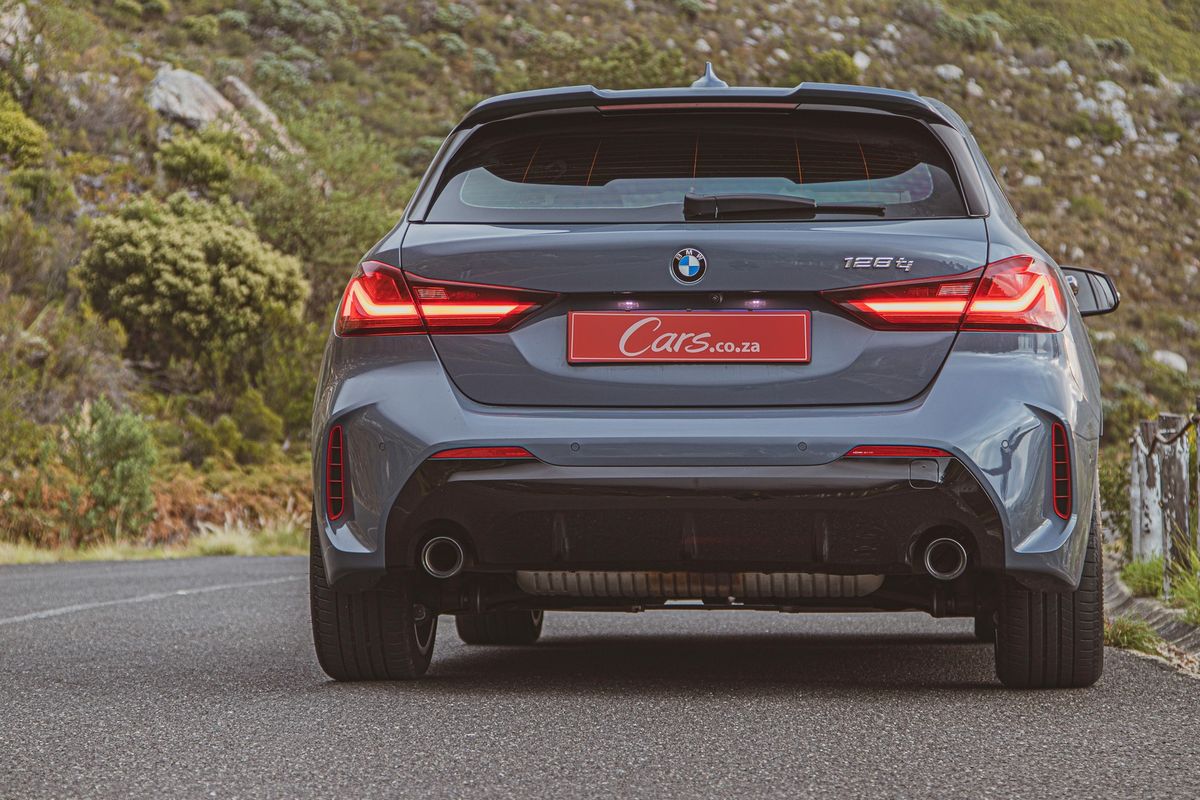
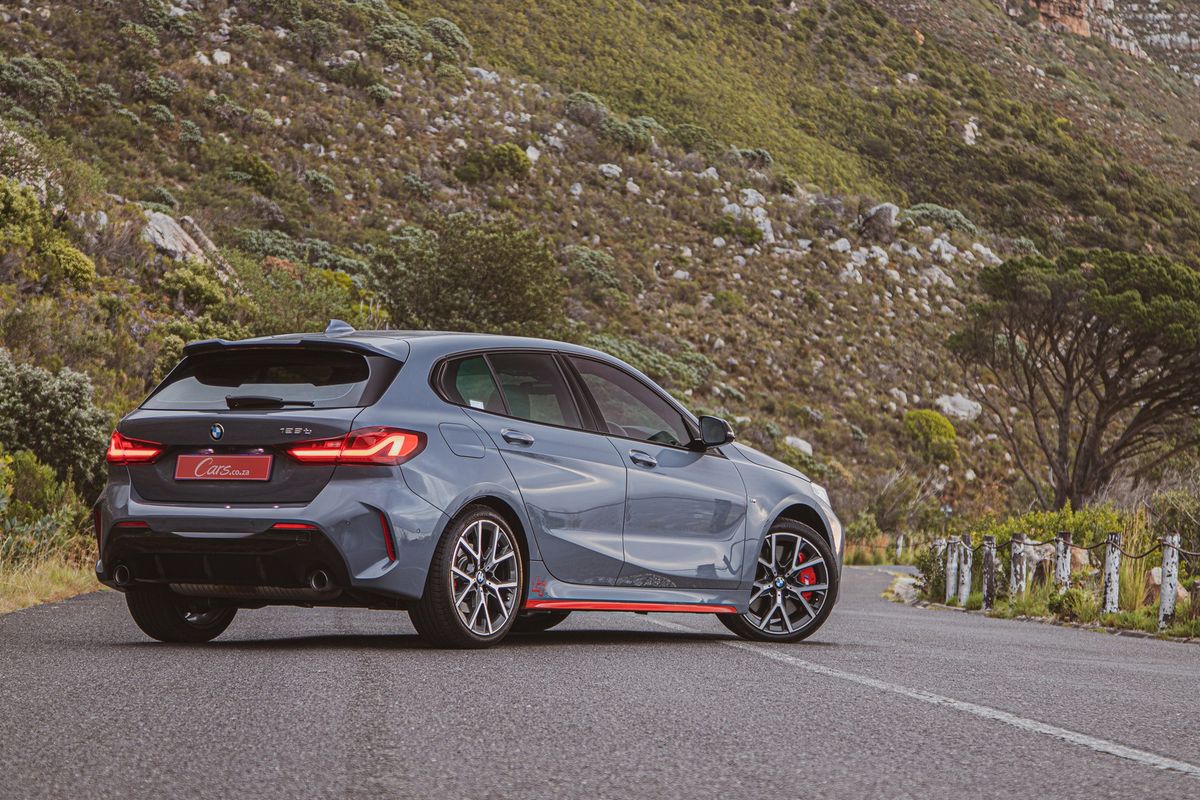
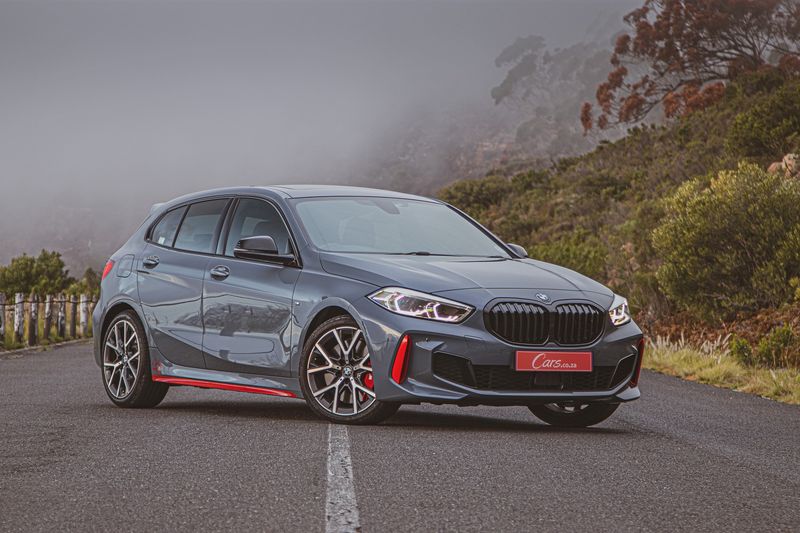
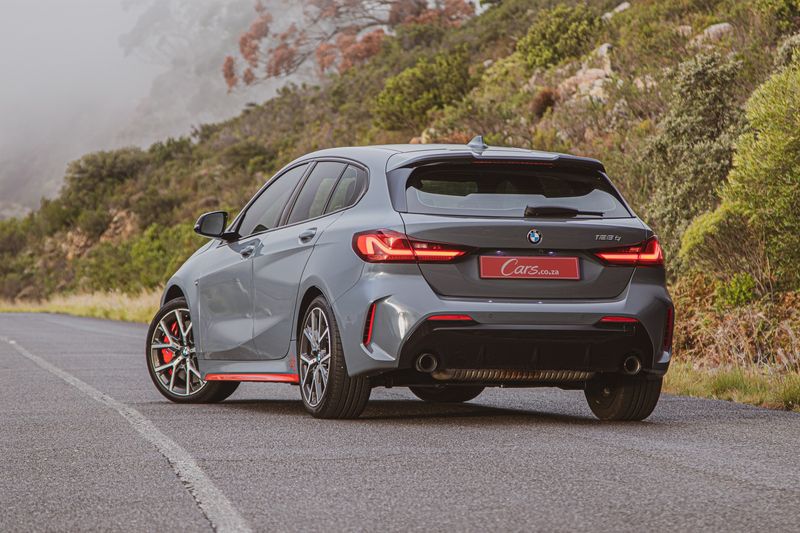
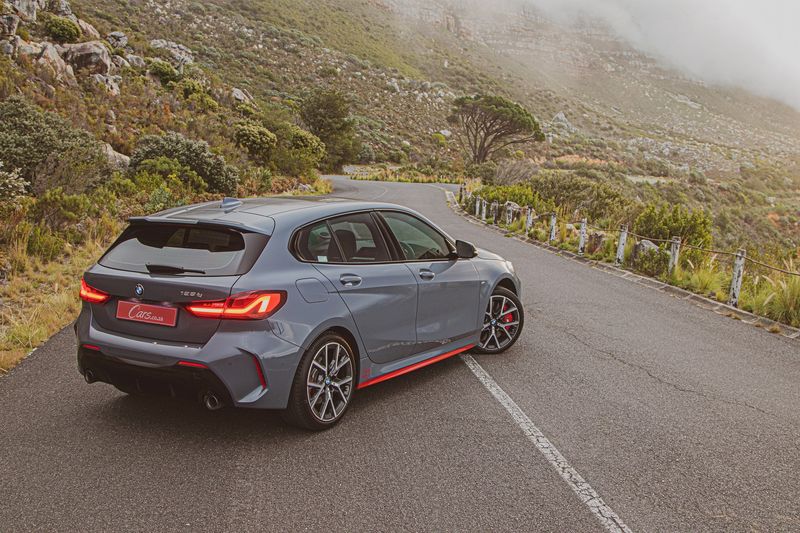
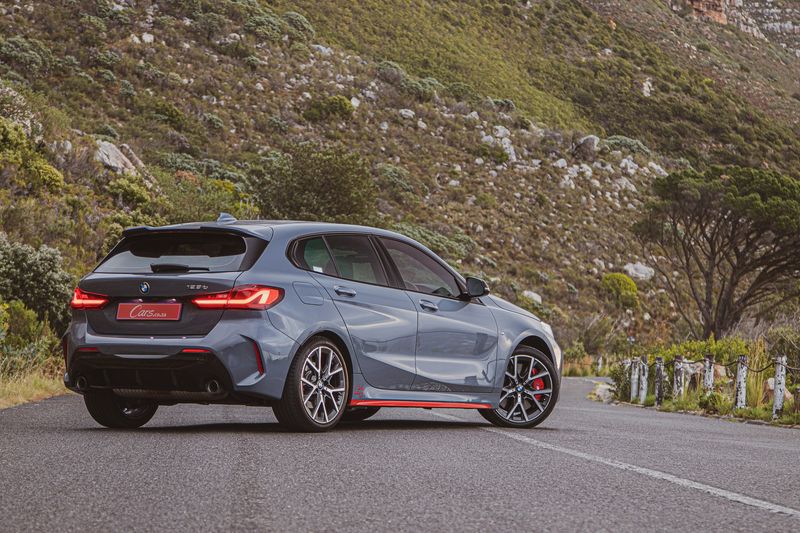
The 128ti has got a great stance and those attractive alloys add to the visual drama.
The idea of a performance-oriented BMW model that’s both front-wheel-drive and 4-cylinder-powered was an absurd notion up to only a few years ago and, even now, many hardened Bimmer fans still can’t get their heads around the concepts of the all-wheel-drive M135i xDrive and this, the front-wheel-drive 128ti. It needs to be noted that BMW built a reputation for producing compact sporty coupes with rorty 4-cylinder motors in the Seventies and Eighties, but since the early Nineties, the BMWs performance aficionados wanted have had inline-6 (or bigger) powerplants.
Alas, there’ll be no 6 cylinder or rear-wheel drive for this generation of 1 Series, which is based on the BMW Group’s UKL2 platform, which is front-wheel-biased and has a transverse engine layout. If you want that desirable combination, then the 2 Series range may tickle your fancy. Still, although previous iterations of the 1 Series were RWD, BMW has now simply chosen to conform to a front-wheel-drive compact car format for its 1 Series and 2 Series Gran Coupe (and Active Tourer, which we won’t get in our market). Audi and Mercedes-Benz have been doing that for years, so how is that a bad thing?
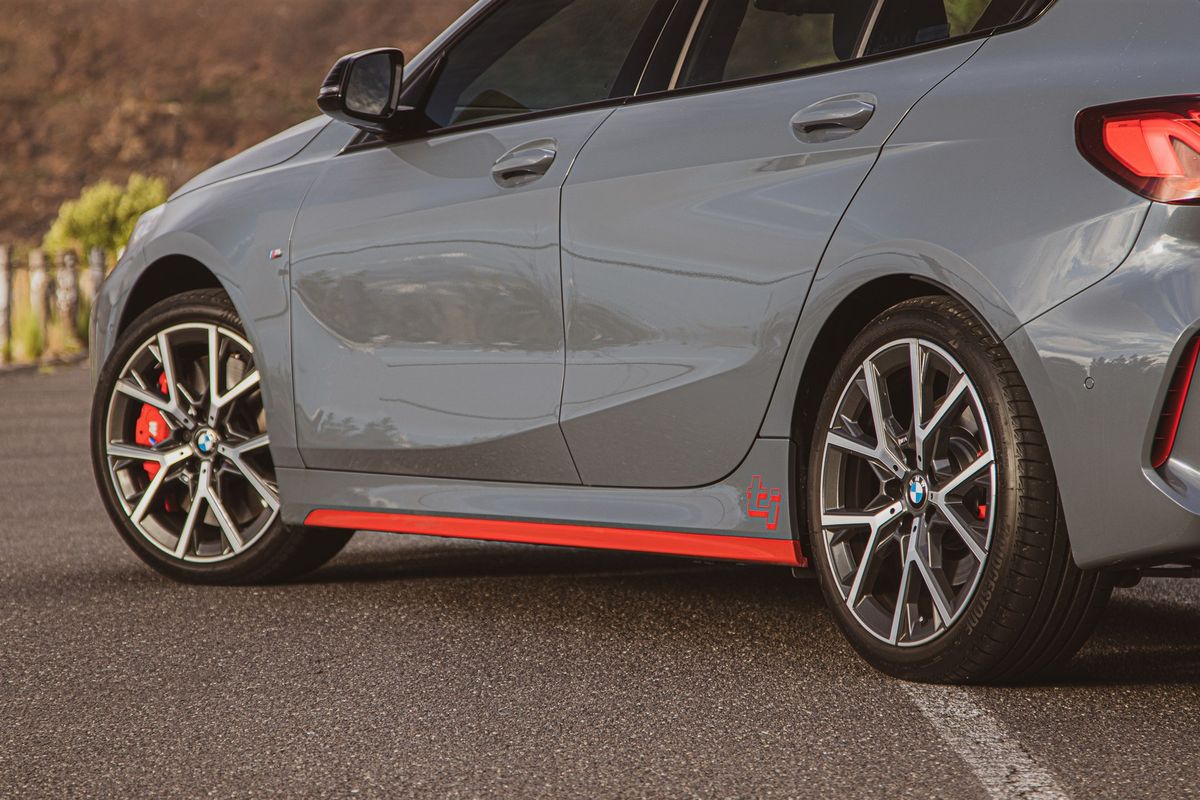
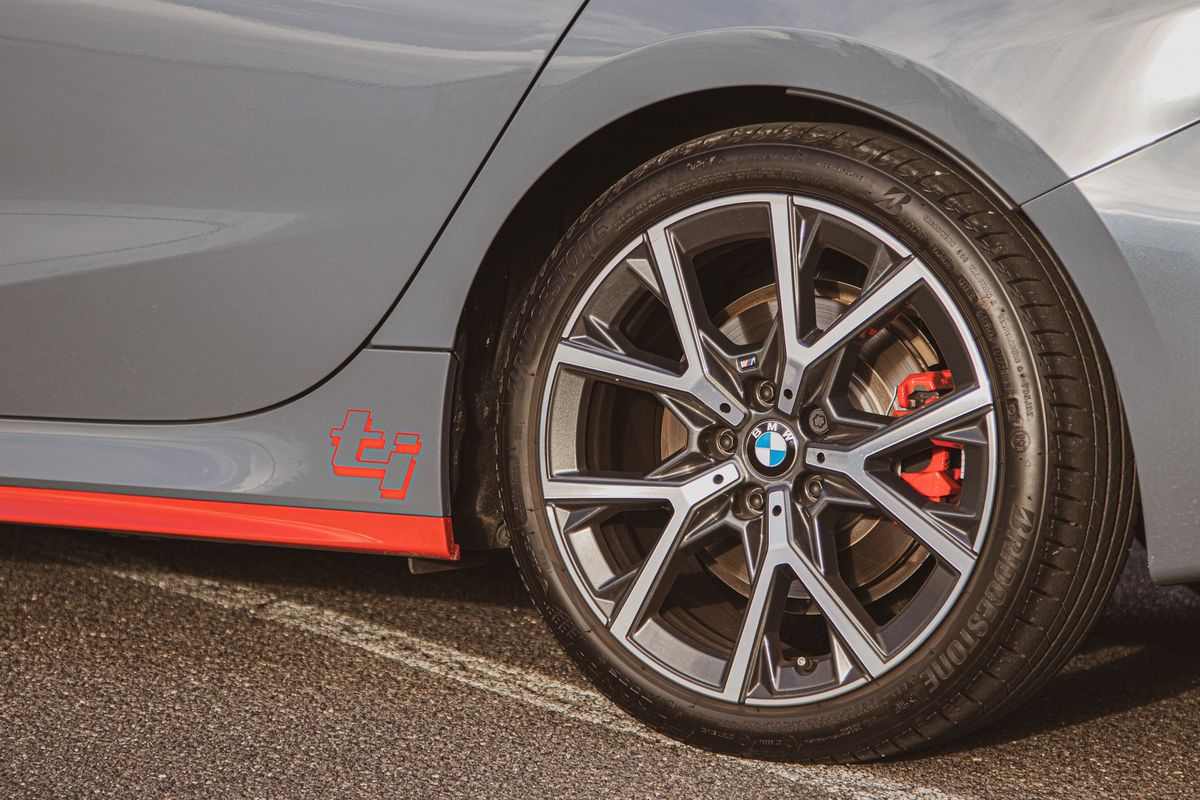
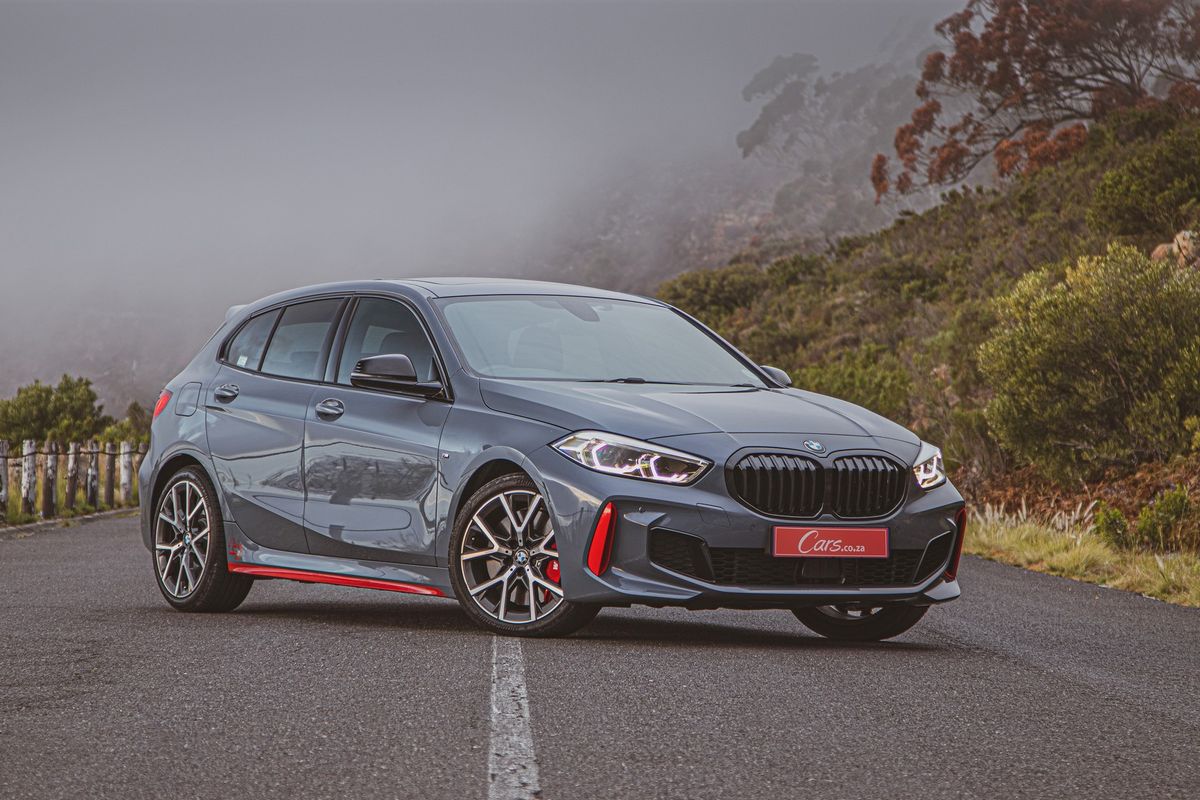
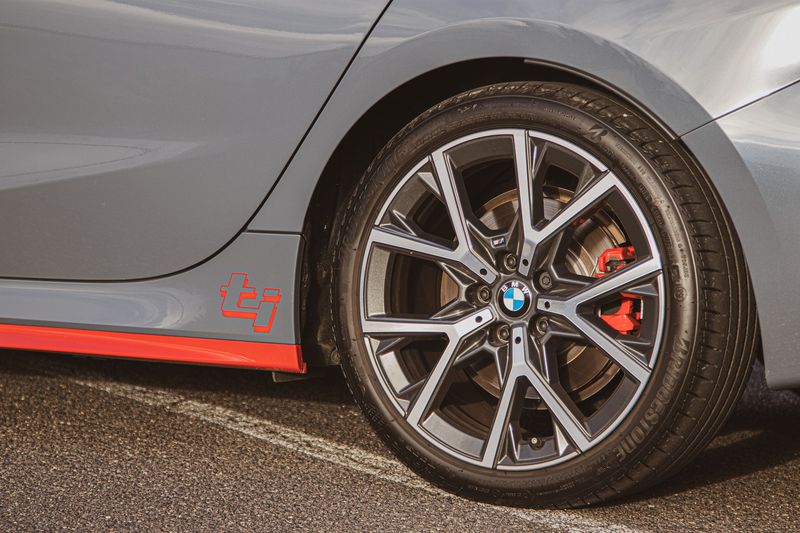
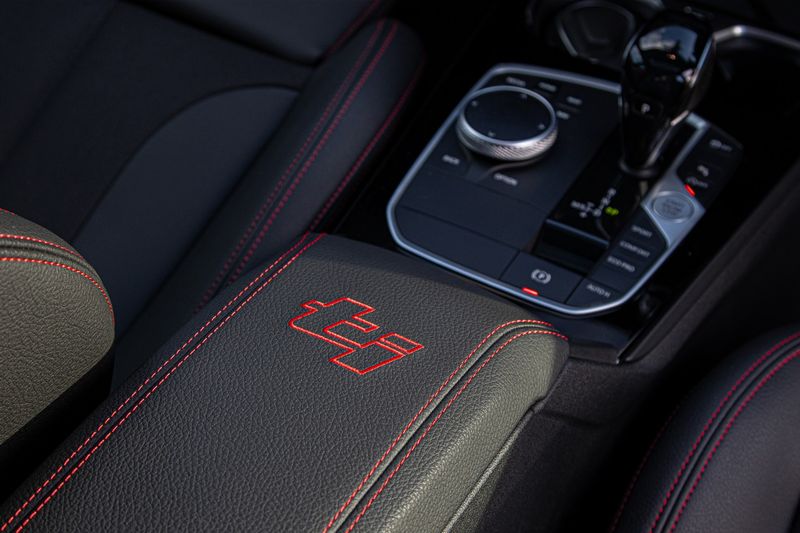
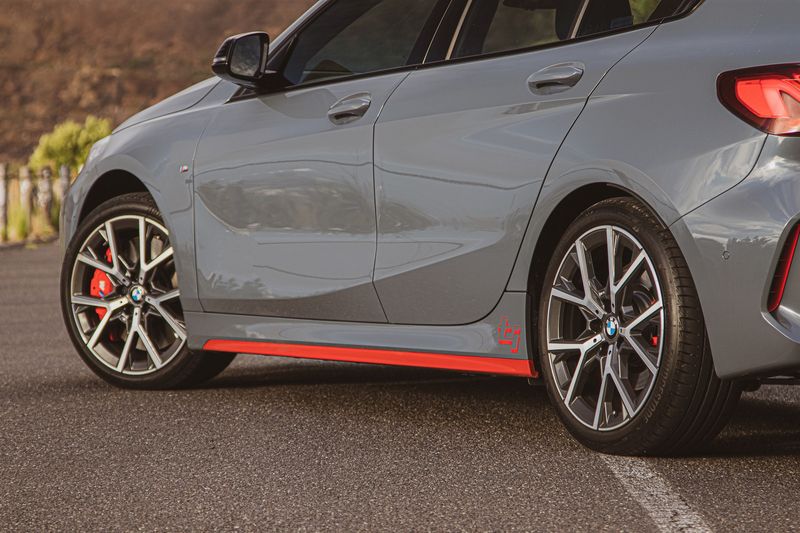
In case you don’t recognise the BMW’s newcomer immediately, there’s distinctive ti badging and red detailing to remind you this is not a run-of-the-mill 1 Series.
BMW hasn’t quite nailed it… yet. Although there’s no denying the M135i xDrive is a very accomplished offering, it does not sound quite as charismatic as before and its driving experience leaves room for improvement. Now we get to the 128ti; we’re frankly surprised BMW has not produced a front-wheel-drive performance hatchback sooner. After all, it has been building sporty Mini models for quite a while.
The 128ti is essentially an M135i xDrive shorn of its all-wheel-drive system and fitted with a reworked suspension and retuned differential. Instead of sending 225 kW and 450 Nm to the front wheels, which would make the car a bit of a handful, the newcomer produces a modest 180 kW and 380 Nm (frustratingly, the European-market version, which is fitted with a particulate filter, churns out 195 kW and 400 Nm). The hatchback further features ti badges on its rump and flanks. Ti stands for Turismo Internazionale, which has been used for some sporty BMWs in the past, such as the 2002ti and the 325ti.
The hot hatchback market has declined over the years, both in terms of the number of models on offer… and the sales volumes that those surviving offerings garner. We can recall the days when there were mass comparative reviews featuring repeat offenders from Ford, Honda, Volkswagen, Renault and Opel. Now we’re at the stage that Renault and Ford no longer offer fiery front-wheel-drive hot hatches in our market, while Honda and Hyundai offer the track-focused Civic Type R and raucous i30 N respectively. The segment’s best-seller soldiers on in its current (Golf 8 GTI) iteration, while Mercedes-Benz tries to work the premium angle with the A250. To say there’s an opportunity for BMW to make a name for itself is an understatement, but given the calibre of its rivals, the 128ti needs to be very good.
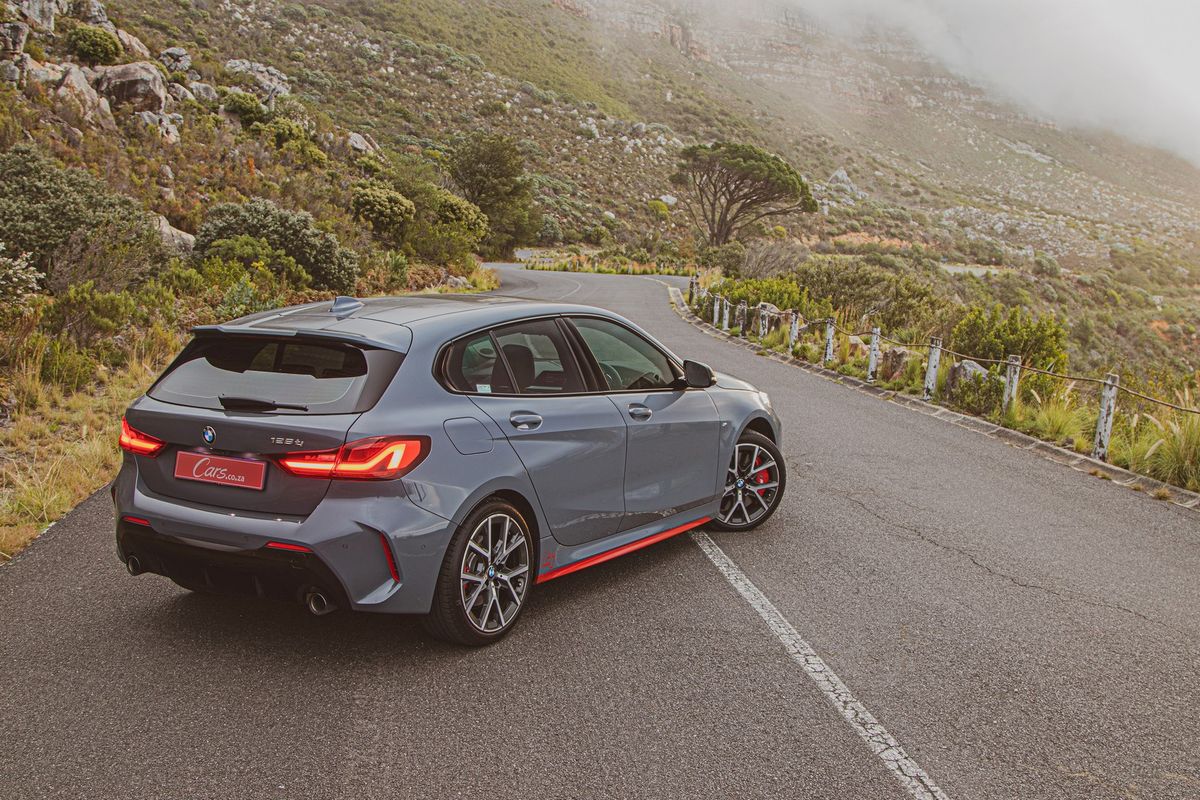
We think the Storm Bay grey exterior finish contrasts nicely with the 128ti’s standard red detailing.
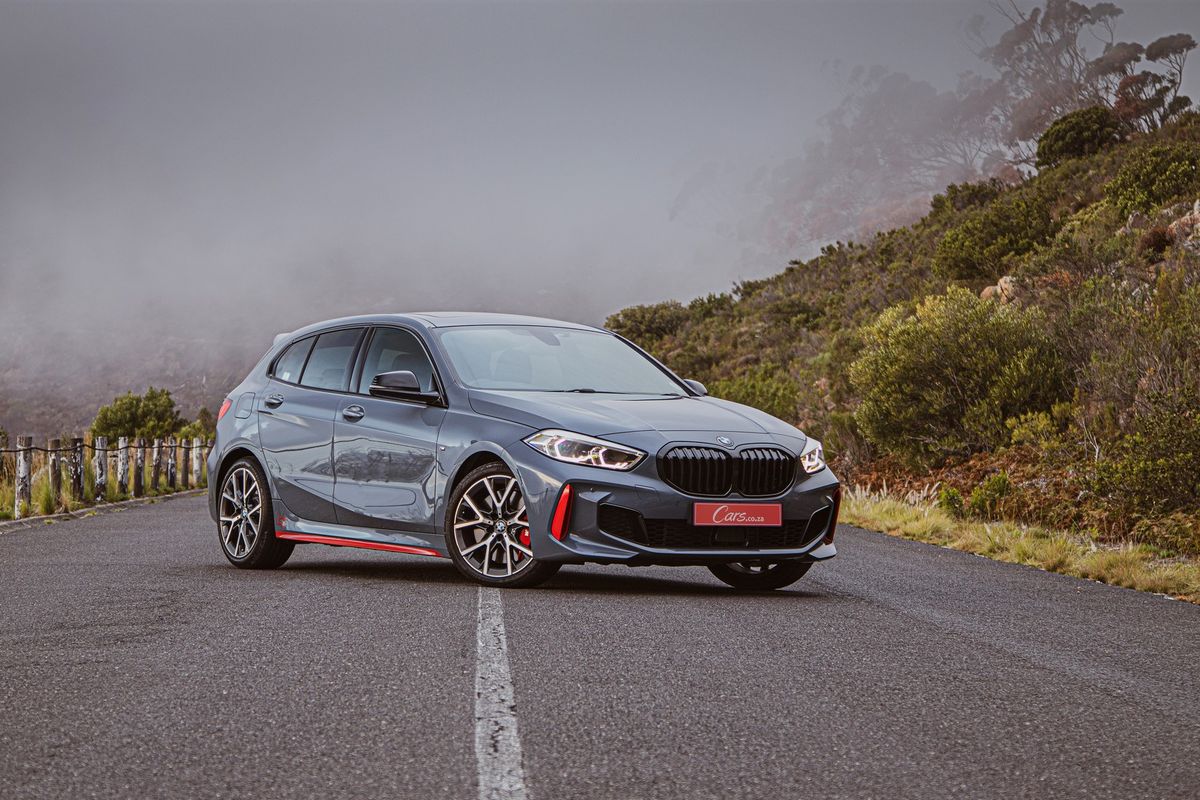
The BMW 128ti stands out from the rest of the 1 Series family courtesy of its red detailing and ti badging. The good news is that the red ti badges in these images are available in different colours depending on your choice of the vehicle’s exterior finish. So, if you think the red accents look too brash and/or unbecoming of your expensive Bavarian premium hatchback, you could always opt for Misano blue, which comes with black ti badging, or Melbourne red, which features no badging at all. Our unit was finished in an appealing Storm Bay grey, and we reckon the red detailing works, although it is polarising.
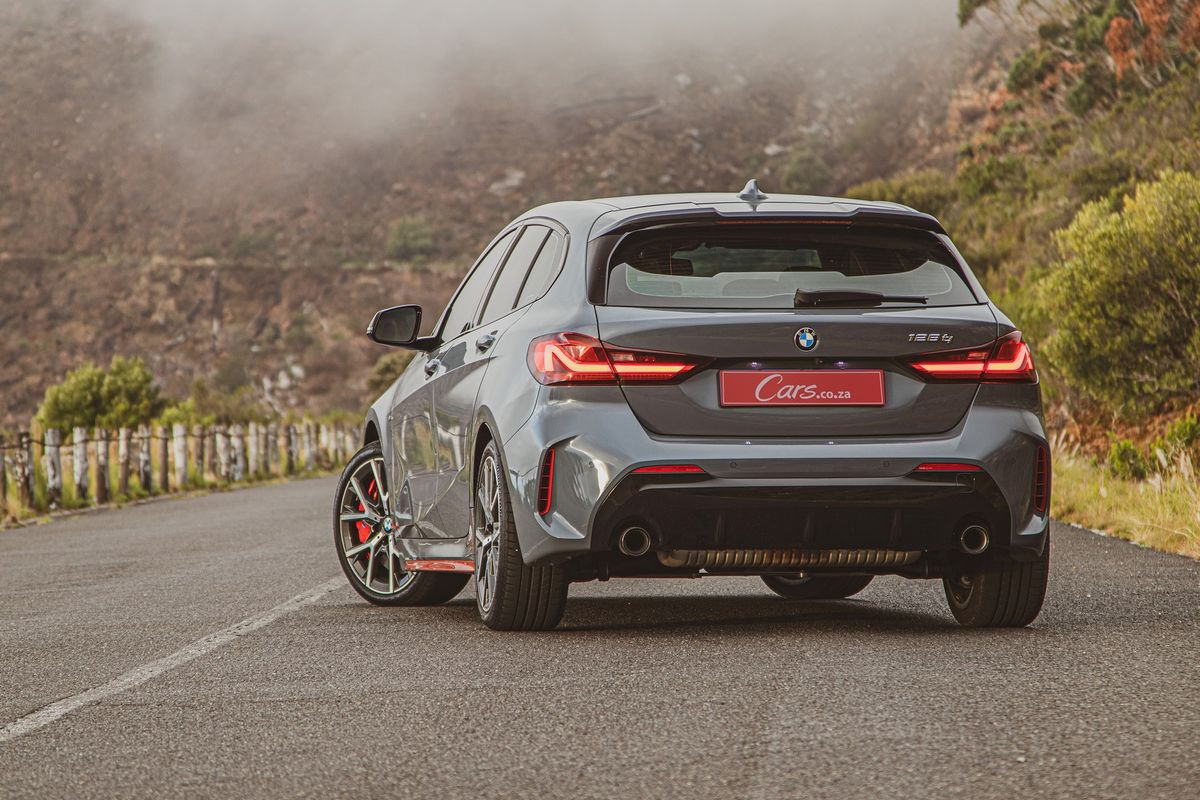
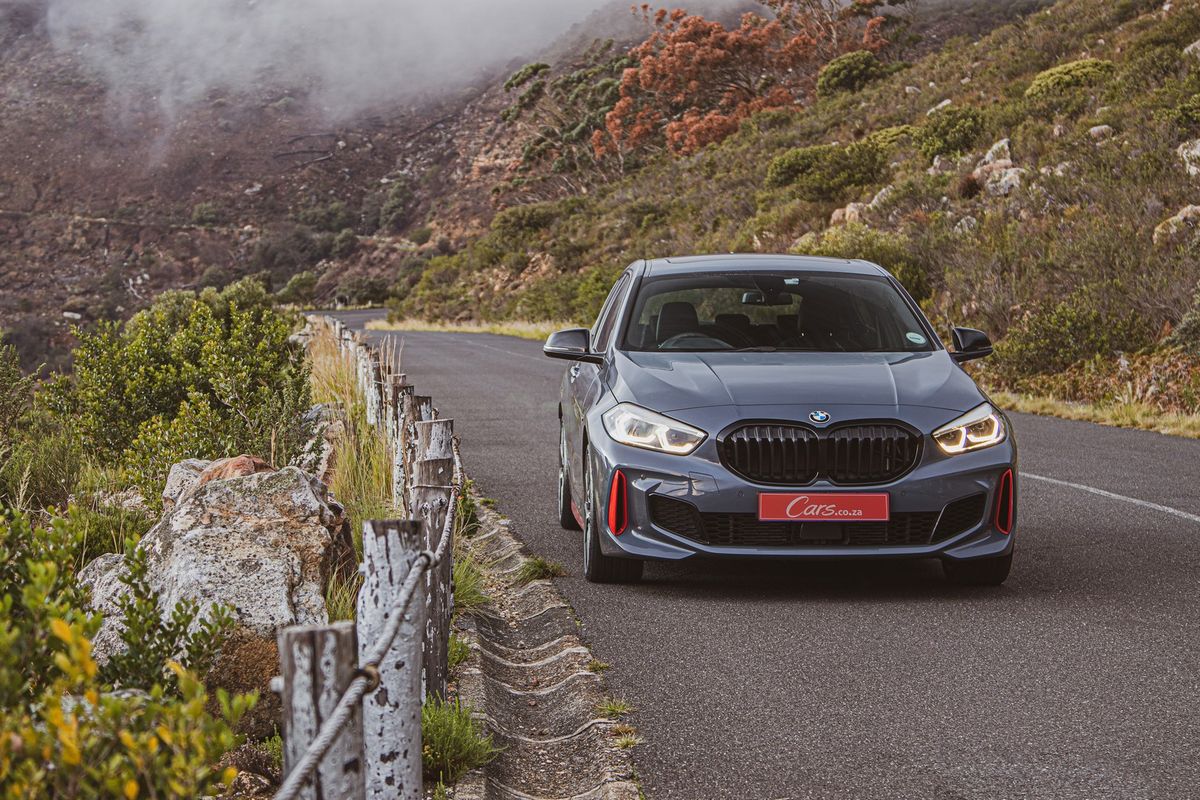
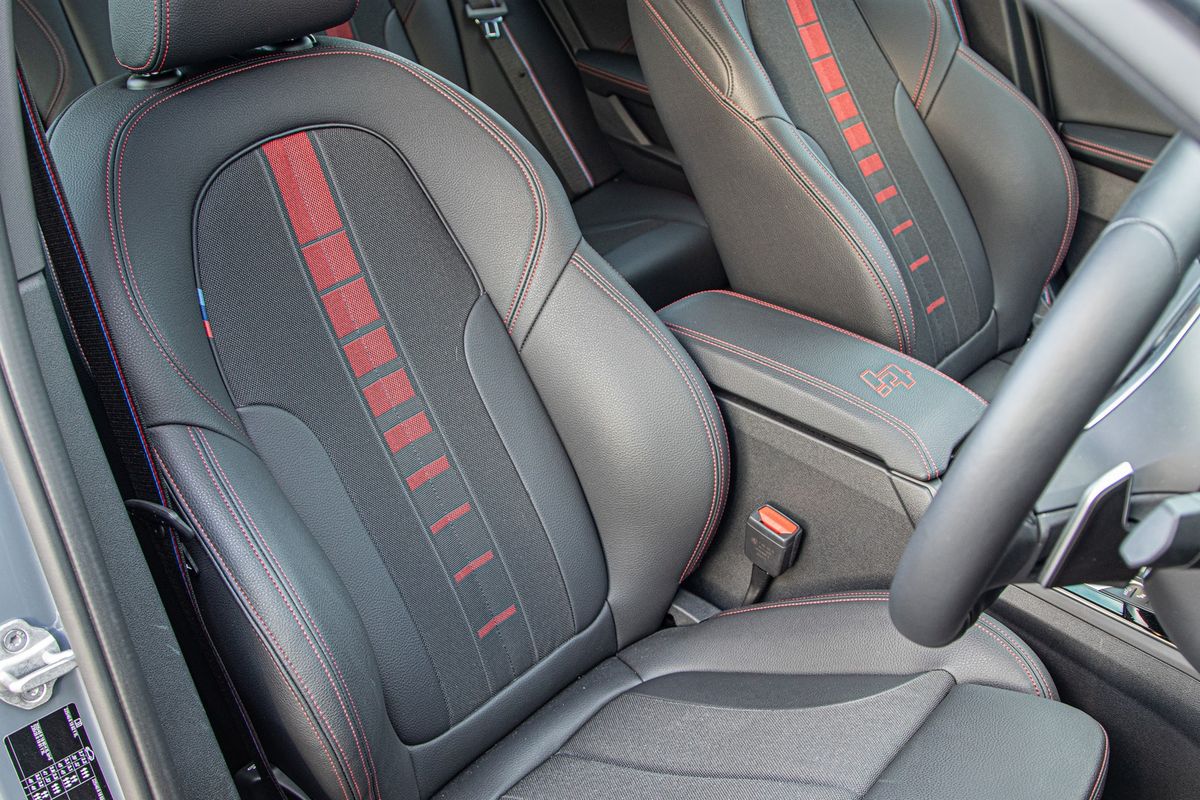
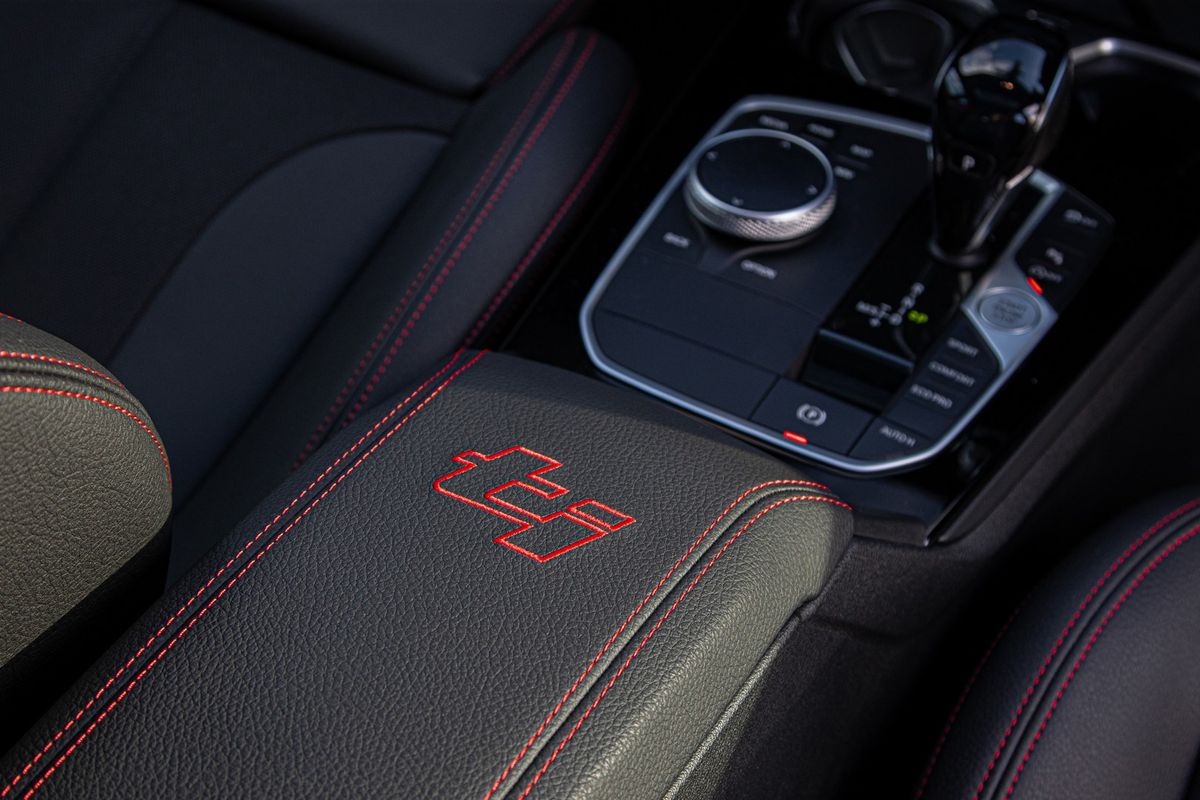
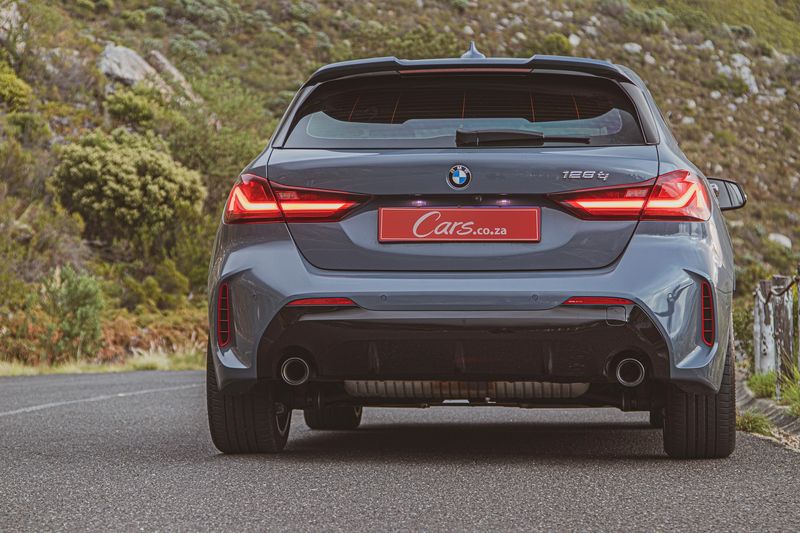
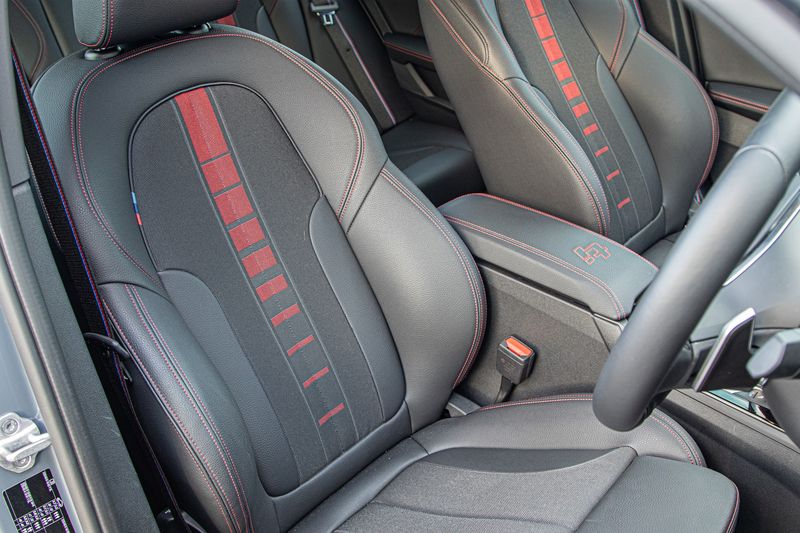
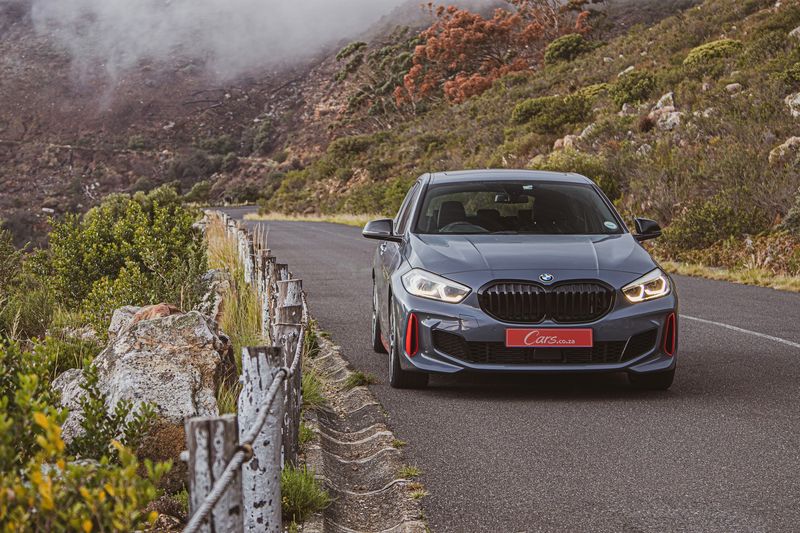
Seeing as the 128ti is a performance derivative, it needs to deliver visual punch – and it does! The exterior execution features a bold black grille, twin exhaust pipes, a sporty rear diffuser, bold alloy wheels, red brake callipers and a tailgate winglet. As for the cabin, has there been a sale on red stitching in Germany recently? There’s an abundance of it on the edges of the BMW’s seats and central armrest. The sports front seats look the part and the M seatbelts are always a great touch. We also really liked the embroidered ti badge on the centre armrest – it really sets this derivative apart from its brethren.
Red stitching and ti badging feature virtually everywhere in the smartly finished cabin.
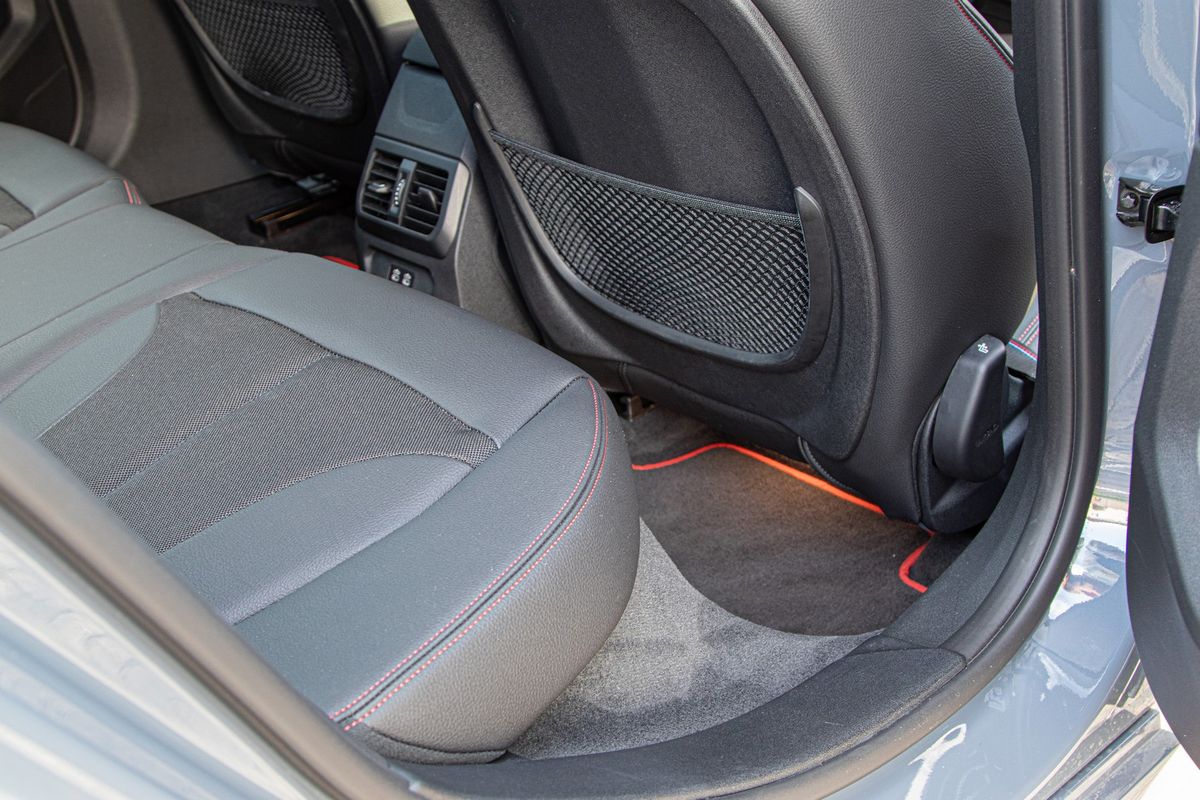
Although some commentators have bemoaned BMW’s decision to switch the 1 Series from a RWD- to a front-wheel-drive platform, the F40-generation compact hatchback is much more practical than its predecessors. Granted, rear legroom is not great (taller folk will feel a bit cramped), but that is an acceptable compromise for being availed of one of the more capacious load bays in the segment. With a claimed capacity of 560 litres, the BMW 128ti’s hold comfortably outguns those of the GTI (374 litres) and A250 (510 litres). Of course, if you require a bit more space, you can fold the rear seats down.
Comfort and safety features
It’s an F40-generation BMW 1 Series, which means the cabin is smartly finished and features plenty of premium touches.
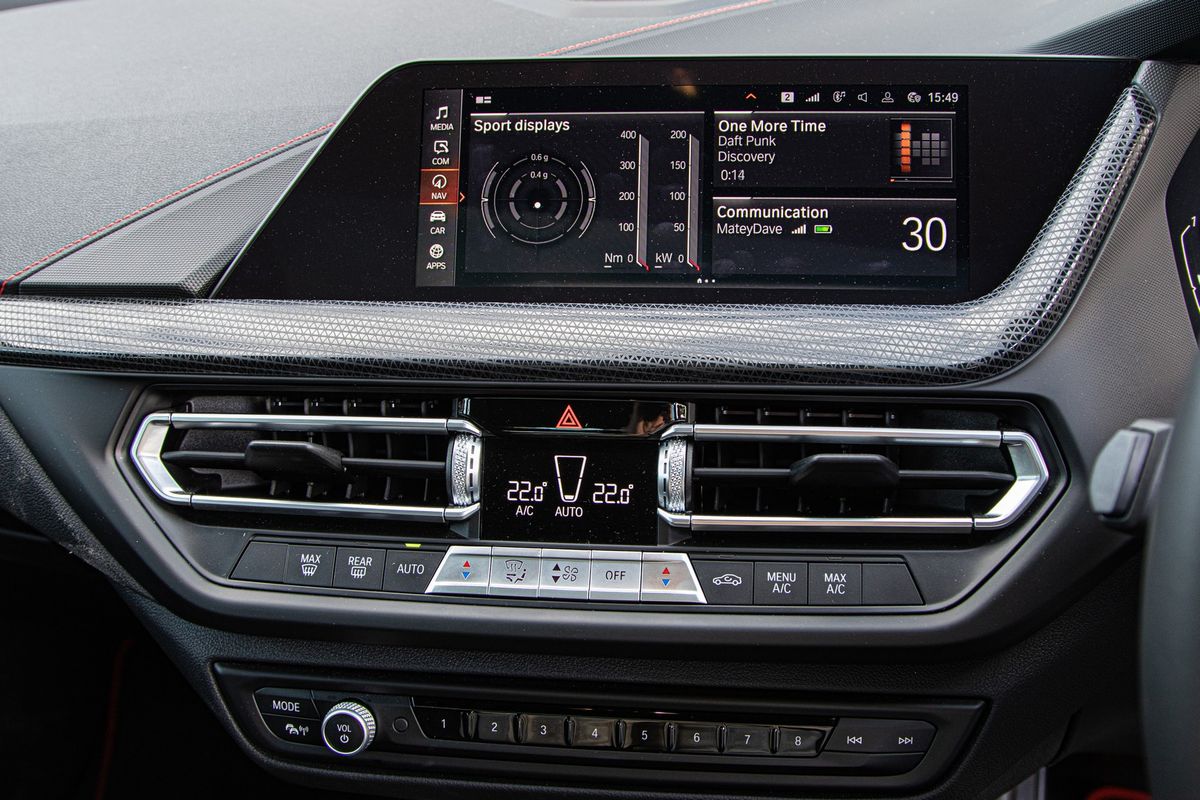
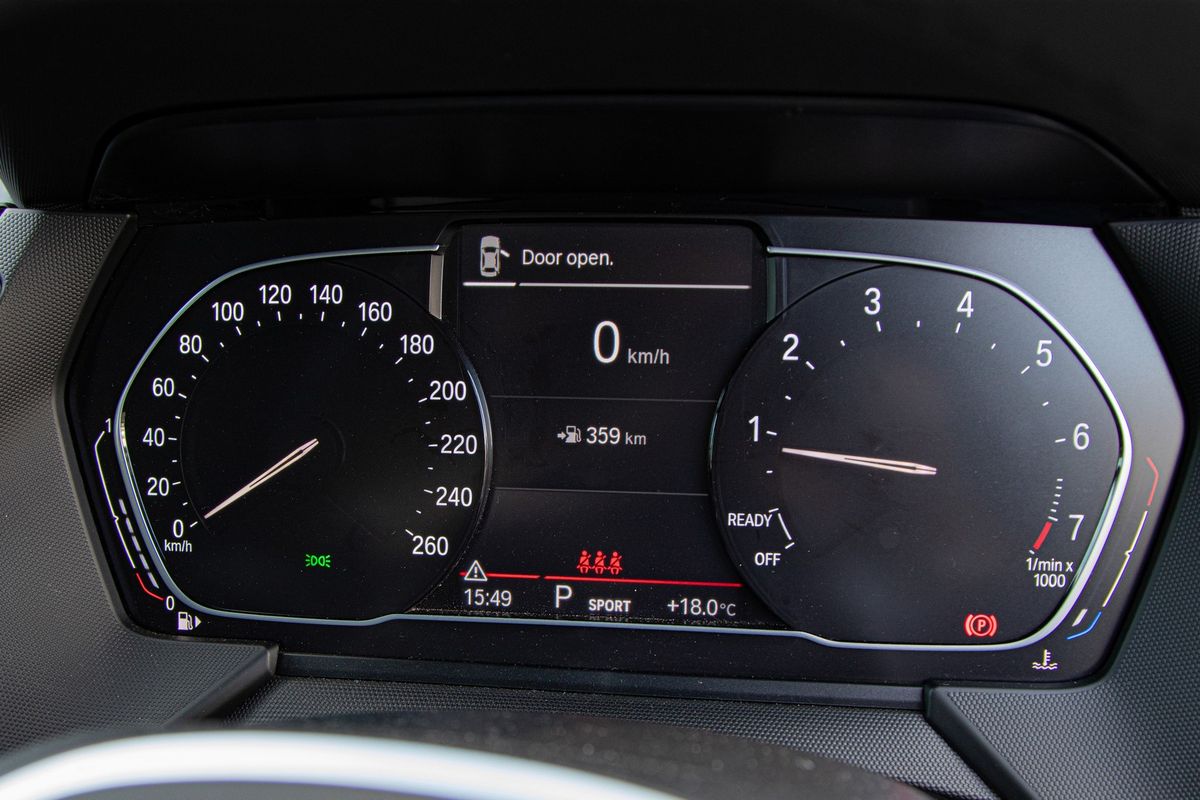
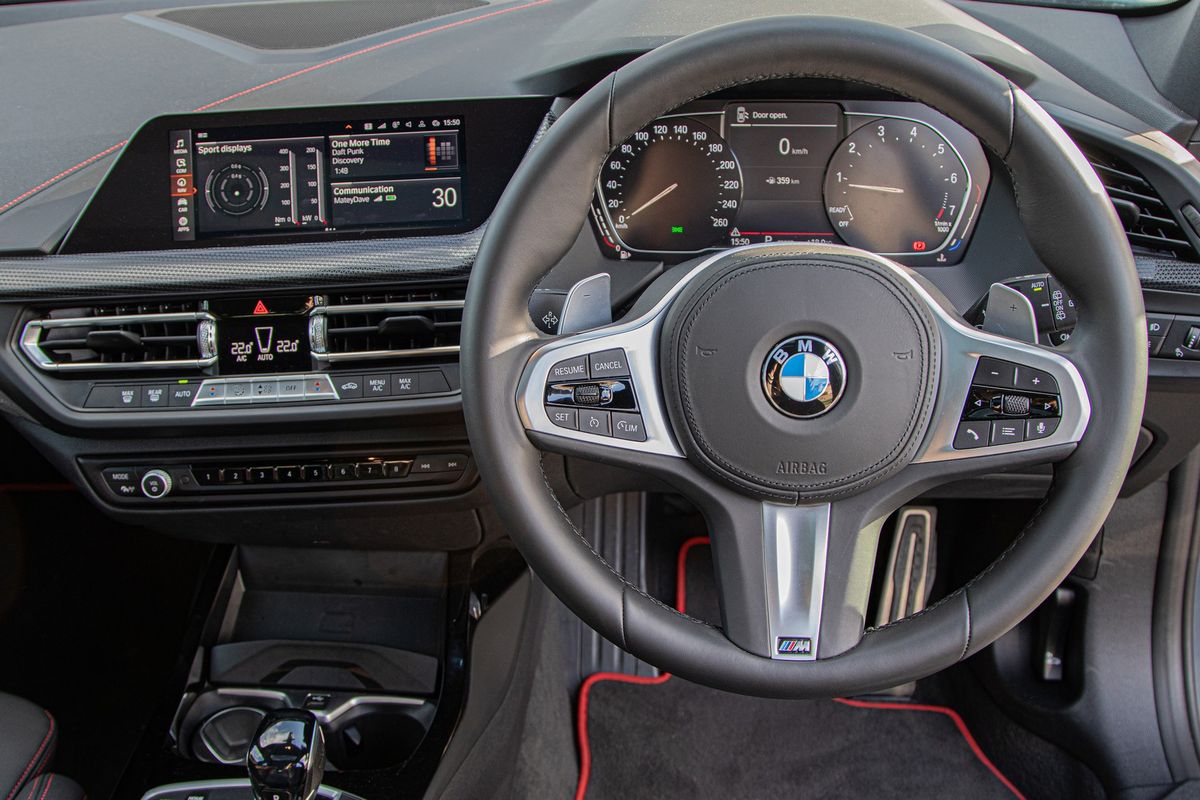
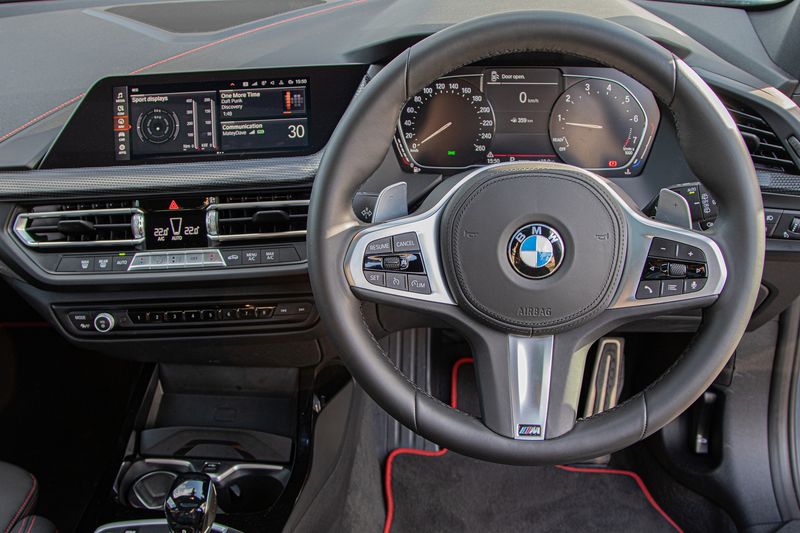
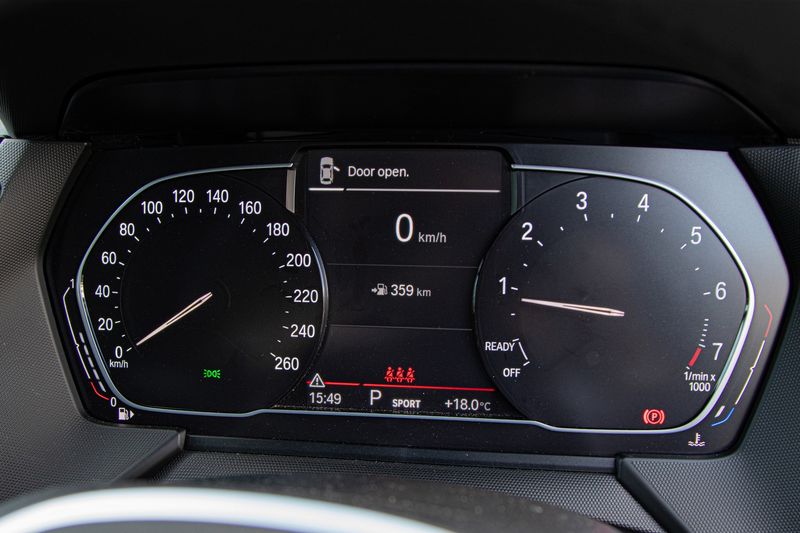
When we first stepped into the BMW’s cabin, we didn’t find it quite as technology-laden as we’d expected. Granted, the flagship M135i xDrive comes standard with the Live Cockpit Professional (with its large side-by-side displays), but the 128ti makes do with a cool half-analogue, half-digital instrument panel. Given the intimidating complexity of the Golf 8 GTI’s digital user interface and lack of buttons on its fascia, however, the BMW was refreshingly different. There are quite a few buttons dotted around the cabin and they feel solid and upmarket, which is good, given the vehicle’s price tag starts with a 7…
There’s no manual gearbox on offer, which some old-school enthusiasts will criticise, but the reality is that when a self-shifting transmission offers this much ease-of-use in combination with sufficient driver engagement, a 3-pedal setup feels decidedly archaic. Unlike many other BMW products, which feature ‘boxes produced by ZF, the 128ti has an 8-speed torque-converter automatic from Aisin.
These front seats are sufficiently supportive, but the broken red striping is an, um, acquired taste.
Then there are those seats… Those descending broken red stripes on the backrests could be called sporty at best… and garish at worst. Phew, why did BMW have to try so hard with those, um, Eighties embellishments? Still, at the end of the day, you won’t be looking at them when you’re driving and besides, comfort and support are the only things that matter in this case. The front seats deliver with aplomb in both regards and the driving position is excellent; we reckon they’re some of the best in the business (this side of the Recaros fitted to the apex versions of the discontinued Renault Megane RS).
Standard features are plentiful (as they should be, at this price point). The 128ti features, inter alia, BMW ConnectedDrive, cruise control with brake functionality, automatically activated lights and -wipers, wireless Apple CarPlay/Android Auto, as well as a multifunction leather steering wheel.
This half-analogue, half-digital dashboard is refreshingly uncomplicated.
Naturally, there are some extra-cost options to choose from as well. Customers have a choice of 5 exterior paint finishes, with the Storm Bay grey you see here coming in at R5 600. A panoramic roof (R15 300) is available, as are adaptive LEDs (R7 900), heated steering wheel (R3 050), tyre pressure sensors (R5 000), heated seats (R5 500), a head-up display (R14 300), automatic parking assistant (R14 000) and a Harman Kardon audio system (R4 900). If you think the standard seats aren’t quite good enough (but really, they are) then some tasty M Sport pews can be specified for an extra R8 900. We’d recommend the wireless charging pad (for R6 400) too. Impressively, some tasty Michelin Pilot Sport 4 performance tyres can be specified as a no-cost option.
Ride and handling
While the 128ti’s handling is sound, it would probably benefit from the fitment of optional performance tyres.
Right, now for the important stuff. What is this pretender to the GTI’s throne like to drive? At the heart of the BMW 128ti is a 2.0-litre turbopetrol motor – it’s identical to the one found in the BMW M135i xDrive. In this application, however, the 4-pot’s been detuned to deliver 180 kW and 380 Nm; those are still potent figures – well, at least they look sufficient. Power goes to the front wheels via an 8-speed automatic ‘box and BMW claims a 0-100 kph time of just 6.3 sec, which is about par for the segment. Engage Sport mode and the powertrain sharpens up nicely, with the engine primed for eager delivery.
The 2.0-litre turbopetrol engine sounds reasonably rorty, but we do wish those exhaust tips emitted some pops and bangs.
Contemporary 4-cylinders (which have direct injection and are turbocharged) don’t sound particularly sonorous, but we feel BMW has got the basics right with the 128ti. In Sport mode, artificial induction noise is piped into the cabin via the speakers, but we would have loved the exhaust ends to emit some pops and bangs. If the Mini Cooper S and its JCW siblings can deliver those, why can’t their cousin? The B48 motor is delightfully responsive, though… there’s just the tiniest bit of lag, but an urgent shove from around 2 000 rpm. You can make use of the entire rev range and while the 8-speed transmission is more than capable when left to its own devices, you can (and should) make use of the shift paddles. They’re not the nicest-feeling examples we’ve experienced, but they exact rifle-bolt-like gear changes.
Is the engine good enough to trouble the other contenders in the segment? We’re going to say, “not quite”. It’s nowhere near as colourful as Hyundai’s i30 N, which does a fantastic job of annoying the neighbours with its rapid-fire-gunshot-aping exhaust, nor does it roar along like a Megane RS300 at full throttle, which evokes a fighter jet’s afterburner. Virtually all cars in this segment are renowned for their (borderline immature) pop-and-bang exhaust setups; although the latest iteration of Golf 8 GTI has matured, there’s still Vrrr-pah! on offer, although many probably wish it was a touch louder still!
The BMW 128ti package is tuned to deliver a great blend of performance and comfort.
Fortunately, straight-line efforts only account for one chapter of a rather exciting book – a real page-turner, in the BMW’s case. Trust us when we say the 128ti offers genuine driver engagement, replete with all the front-wheel-drive hot hatch quirks we’ve come to adore over the years. If you flatten the accelerator pedal with no semblance of mechanical sympathy, you’ll experience brief torque steer. If you task the Bimmer to corner at a wicked pace, you’ll feel that the Torsen differential is hard at work and you, like us, will enjoy trying to find that balance of managing forward momentum and tyre squeal.
As a driver’s car, the 128ti is not quite as instantly reactive as a Honda Civic Type R, for example, but fear not – it’ll thrill the majority of its buyers, many of whom would probably not regard themselves as serious driving enthusiasts anyway. The steering and communicative chassis are worth a thumbs-up too. Granted, the ‘wheel is quite thick-rimmed, but it offers admirable feel, directness and weighting.
It’s not as interactive as a Hyundai i30 N or Honda Civic Type R, but do you really need that?
As far as ride quality is concerned, the suspension and 18-inch wheels and tyres offer a good blend of comfort and dynamism. If you’re serious about driving, then best you tick that no-cost option for the Michelin Pilot Sport 4 tyres. We reckon that if our test unit had those on, our track race video (also featuring the Volkswagen Golf 8 GTI and Toyota GR Yaris) would have shown a slightly different result.
Critically though, BMW’s first front-wheel-drive hot hatch is a sufficiently compelling performance hatchback that is perfectly suited for the daily commute. Yes, the Bimmer’s suspension has a firm, sporty setup, but it’s comfortable enough to pass the family-road-trip test. Remember, the main reason why the GTI sells in the numbers it does is because of its comfort and practicality, not outright performance.
How much does the BMW 128 ti cost in South Africa?
The BMW 1 Series range kicks off at R591 020 for the 118i and this 128ti costs R707 918, before options. A 5-year/unlimited-kilometre warranty and a 2-year/100 000 km service plan are standard.
With its first attempt at a front-wheel-drive hot hatch, BMW has created a genuine rival to the Golf GTI.
In conclusion, then, the BMW 128ti is better than we expected. While this is not a comparative review between the Volkswagen Golf 8 GTI and BMW’s newcomer, comparisons will inevitably be made as both cars are excellent in many of their various facets and we have to commend BMW for aiming so high… Volkswagen has been building GTIs uninterruptedly since the late Seventies. Nothing shows ambition and attitude quite like going up against a rival that’s so firmly entrenched in our market, it’s an icon of the country’s motoring culture. For a first attempt at taking on this segment, BMW should be applauded, because the 128ti does a lot right. We would have liked some more aural theatrics and, ultimately, it’s not as fun on the very limit as something like the Hyundai i30 N or Honda Civic Type R.
But, “on the limit” represents such a tiny part of the entire package, it’s not a dealbreaker. The BMW 128ti offers sufficient performance to entertain its pilot/s while providing sufficient luxury and practicality – and those are the same traits that ensure that the Golf 8 GTI will continue its nameplate’s stellar legacy. Should you buy one? While the Bimmer’s not going to set the fastest lap times or be a benchmark hot hatch, the majority of its clientele are likely to be satisfied with what it brings to the table. It’s a well-priced and credible alternative to a GTI – the fact that it bears a more premium badge is a big plus.
All-New Range Rover Leaked Ahead of Reveal
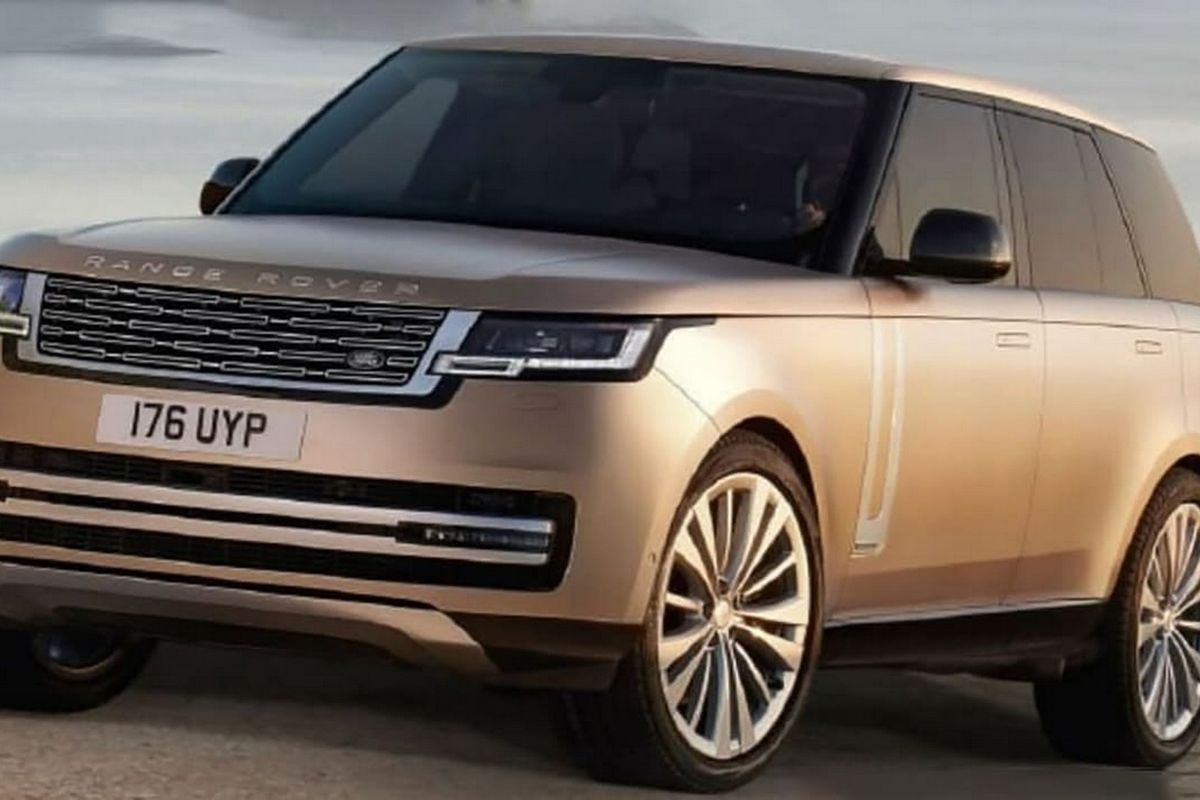
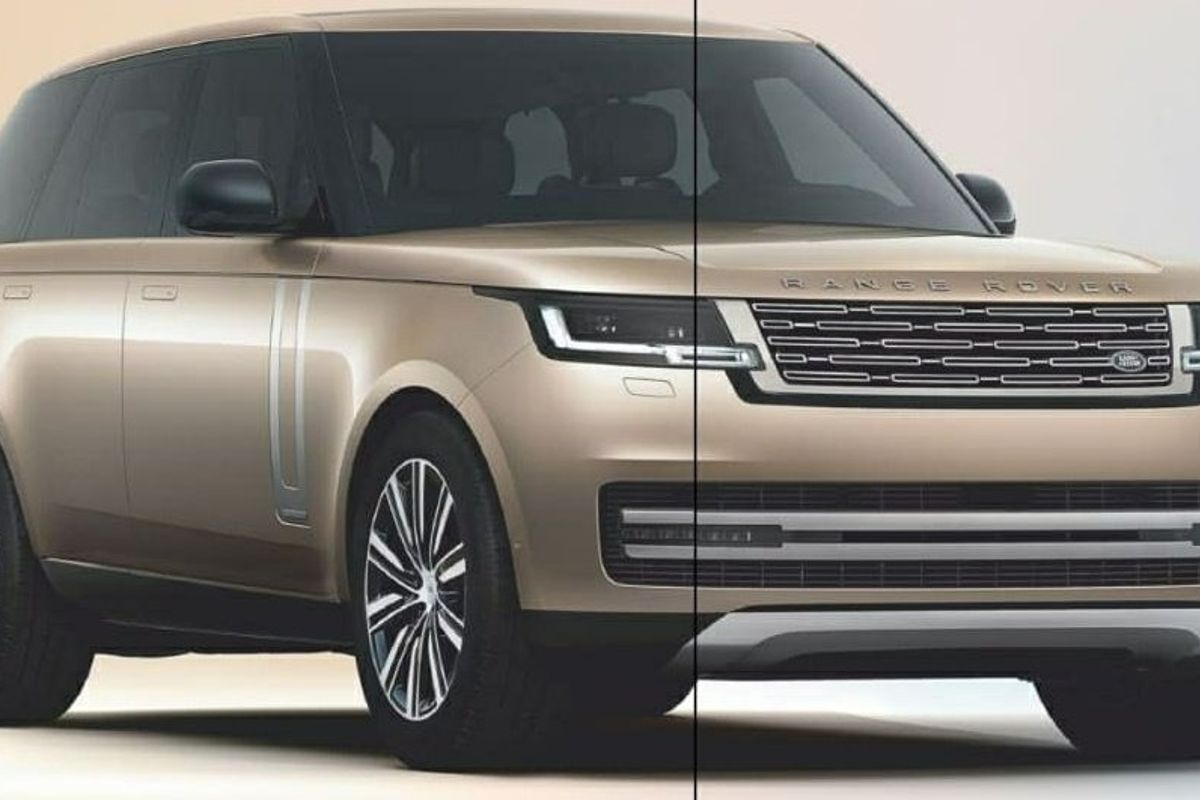
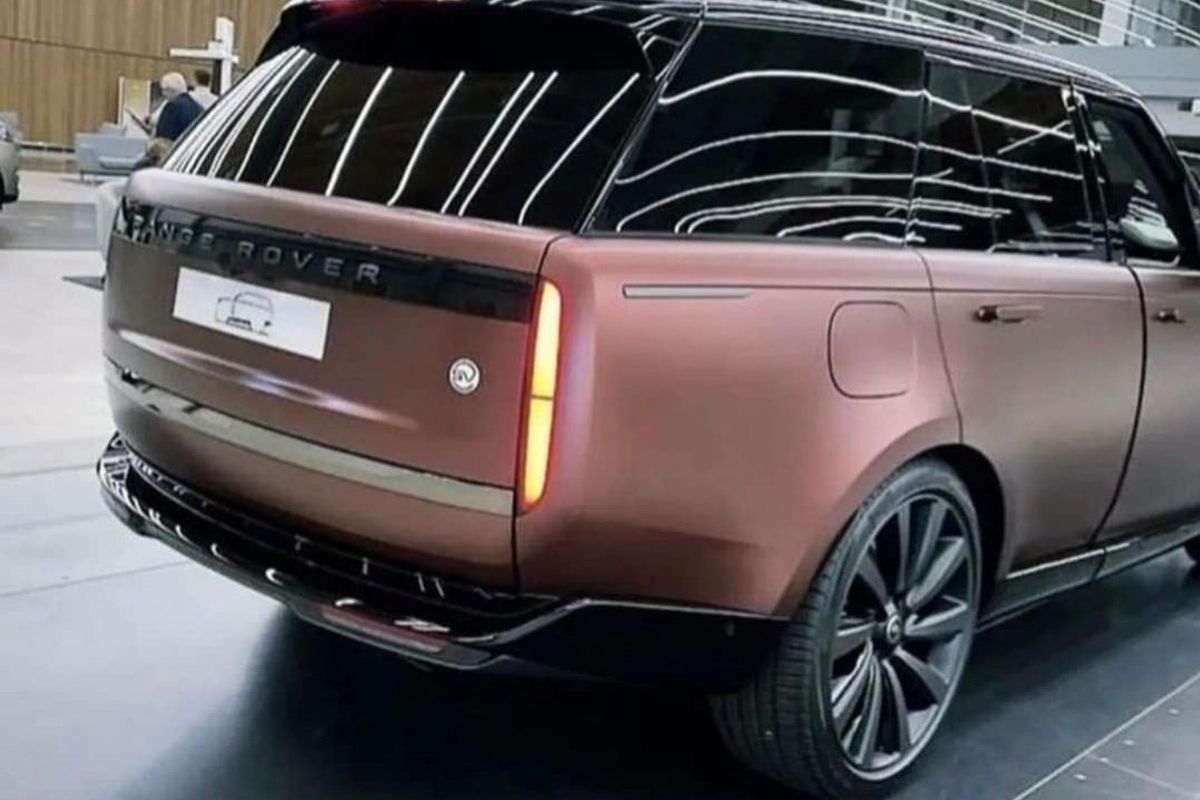
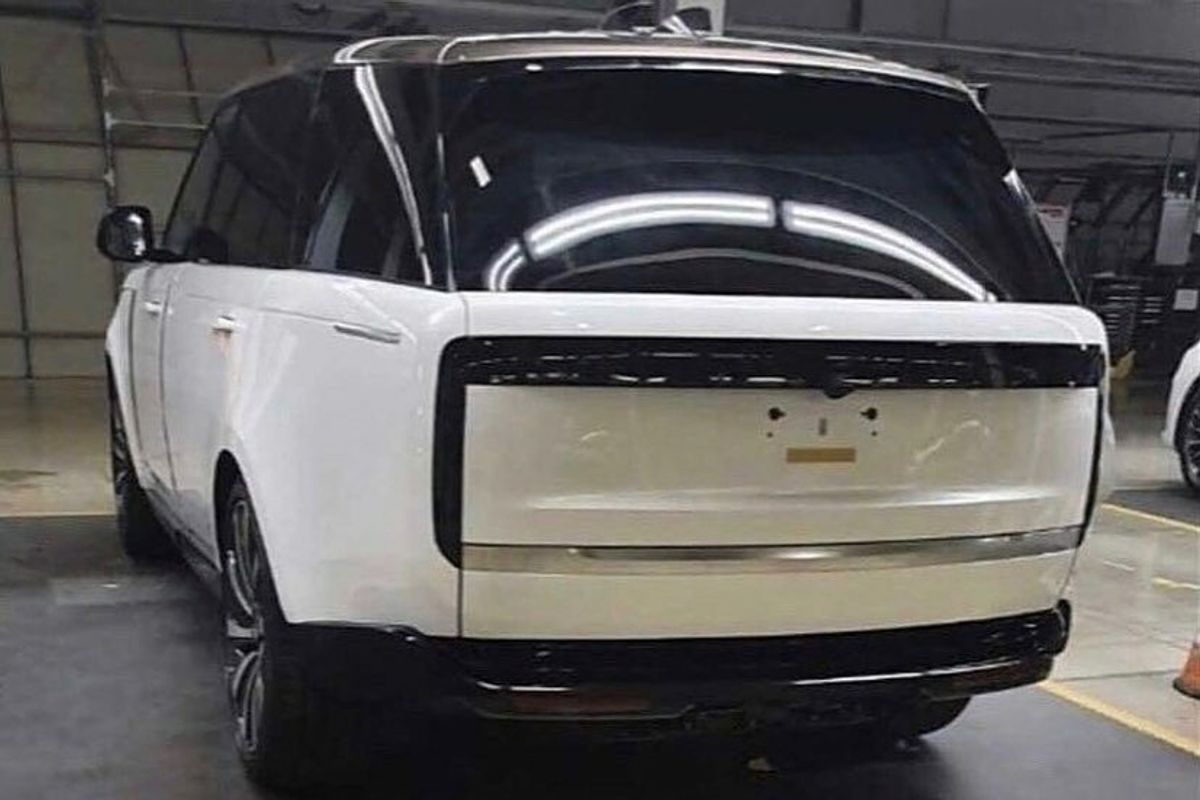
The all-new Range Rover luxury SUV has been leaked ahead of its reveal next week. Here’s what we know so far.
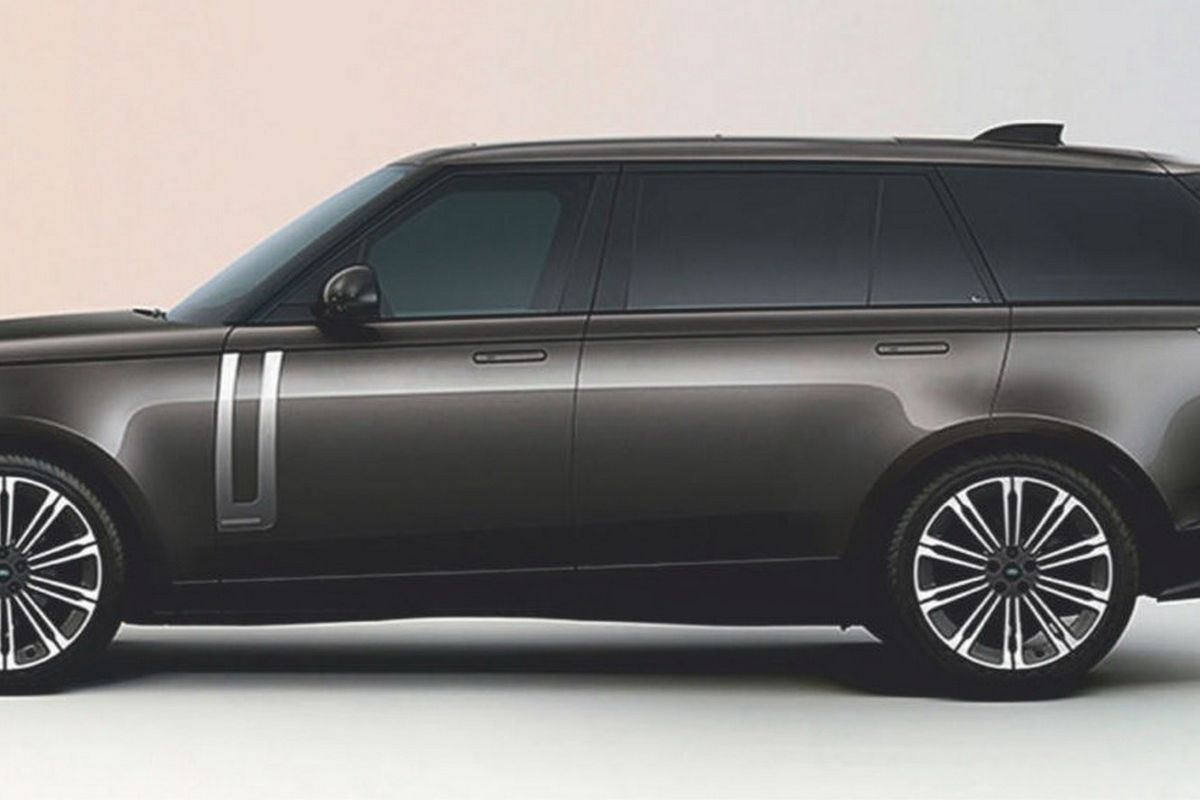
What you see here is the all-new 5th-generation Range Rover and while its official debut is scheduled for the last week in October, images of it have leaked online.
Thanks to the Cochespias instagram account, these images may not be of the highest quality, but we can get a good look at the final design. The front seems to be mostly the same, with some clever touches here and there to give it a modern and minimalist style. It’s the rear of the all-new Range Rover that’s causing some controversy as the British brand appears to have ditched the traditional rear light arrangement in favour of a very unique look. We’re a bit baffled, but when it comes to car design, each to his/her own, so do let us know how you feel about this quirky new look.
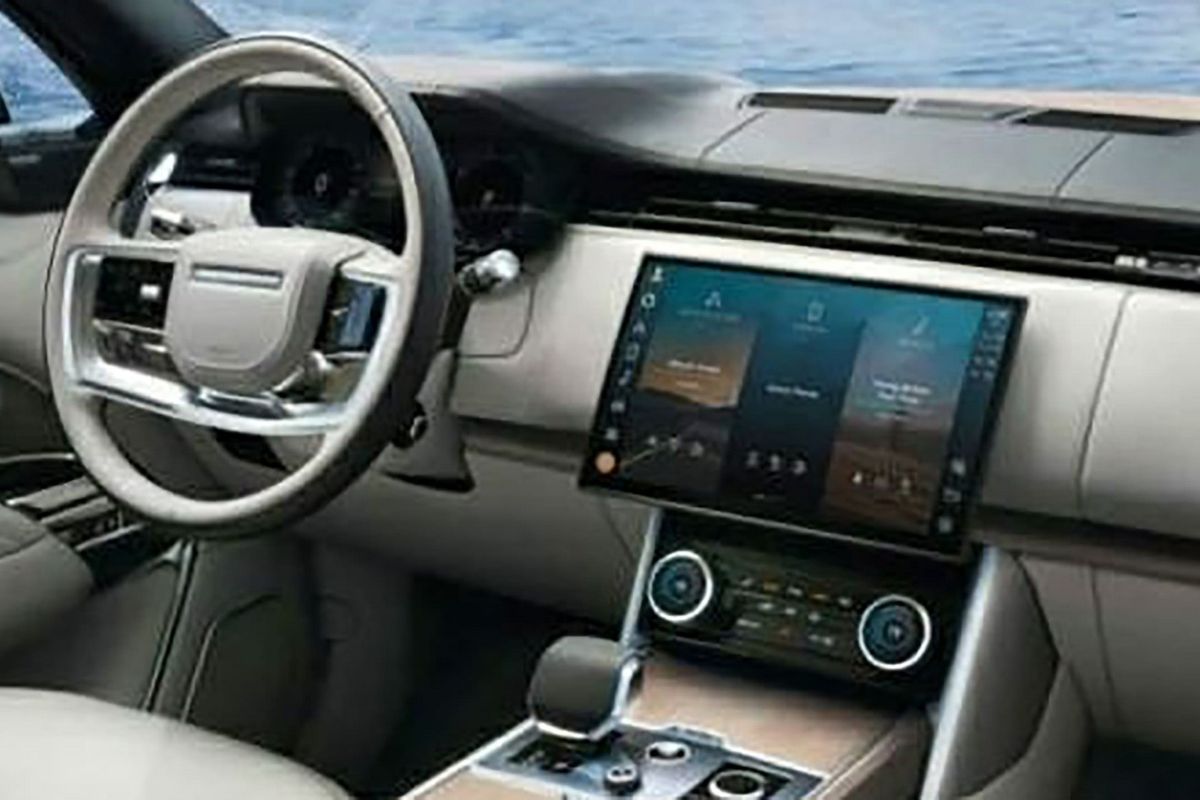
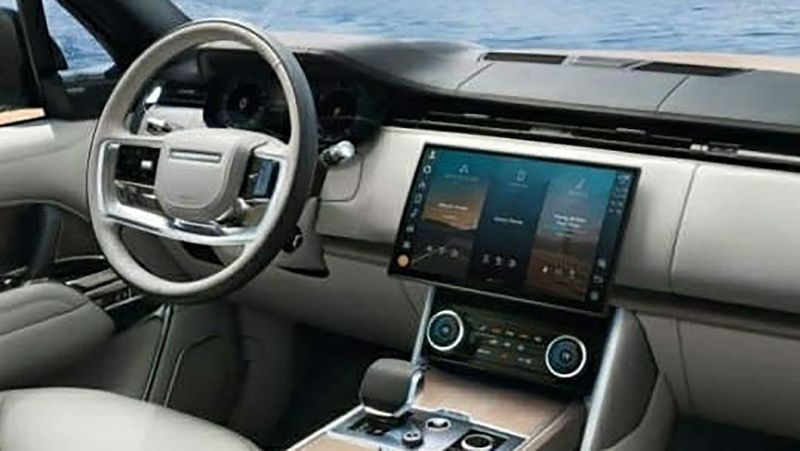
A grainy image of the cabin was also leaked and there’s nothing too dramatic here. We can see there’s an even newer version of Jaguar Land Rover’s Pivi Pro software, which we’re big fans of. There’s a new-look steering wheel too.
As far as engines and powertrain go, we do know there’s a new platform underpinning this 5th generation of Range Rover. Given the way the world is going for electrification, this new platform will definitely be geared towards electrification, but it remains to be seen if the new model will be hybrid, fully-electric or will the range offer both?
What we do know is the 5.0-litre supercharged V8 is finally being retired and what a legacy it has. It’s formed the heart of many Jaguar Land Rover products and impressed with its noise, power delivery and refinement. To replace this iconic powertrain, Jaguar Land Rover has turned to BMW for a version of its 4.4-litre twin-turbocharged V8.
Other potential engines include the all-new 3.0-litre straight-6 petrol engines in varying outputs and if past JLR products are anything to go by, the 400e powertrain will make an appearance too. As a reminder, this is a 2.0-litre petrol engine working in tandem with an electric motor for a combined output of 297 kW and 640 Nm.
We’ll have more info on the all-new Range Rover when it’s revealed.
BMW 128ti Review – Has BMW’s new FWD Hot-Hatch recipe worked?
The BMW 128ti is the most un-BMW ever, with its front-wheel drive and 4-cylinder engine and the brand is hoping to take on the Volkswagen Golf GTI. Watch our video review!
BMW’s 1 Series hatchback has been a success for the brand; a volume-seller filling the void left by what has become a much larger, more expensive 3 Series, and representing many motorists entry point into the brand.
But enthusiasts also loved the rear-wheel-drive drivetrain, coupled with, in some models, a 6-cylinder motor. It was a unique recipe in the world of hot hatches – there was nothing else on the market like it.
However, neither of those features are now available on a 1 Series. There are no 6-cylinder powerplants available, and the power is now sent to the front wheels, or all four.
This meant that the BMW was now going to have to properly square off against some stiff competition, most notably with the ever-popular Volkswagen Golf GTI.
And so, Bavaria has come up with this, the BMW 128ti. With a 2.0-litre, 4-cylinder turbocharged petrol motor up front, sending power exclusively to the front wheels, the two cars couldn’t be more closely matched. Power and torque figures are also almost identical.
In this review, our video guy Ciro De Siena tries to answer the question, has this new hot-hatch recipe from BMW resulted in a delicious and satisfying eggs benedict that you would happily share on Instagram, or is it a sloppy mess that you might write about on TripAdvisor? Only one way to find out.
Porsche Cayman GT4 RS Almost Ready to be Unleashed
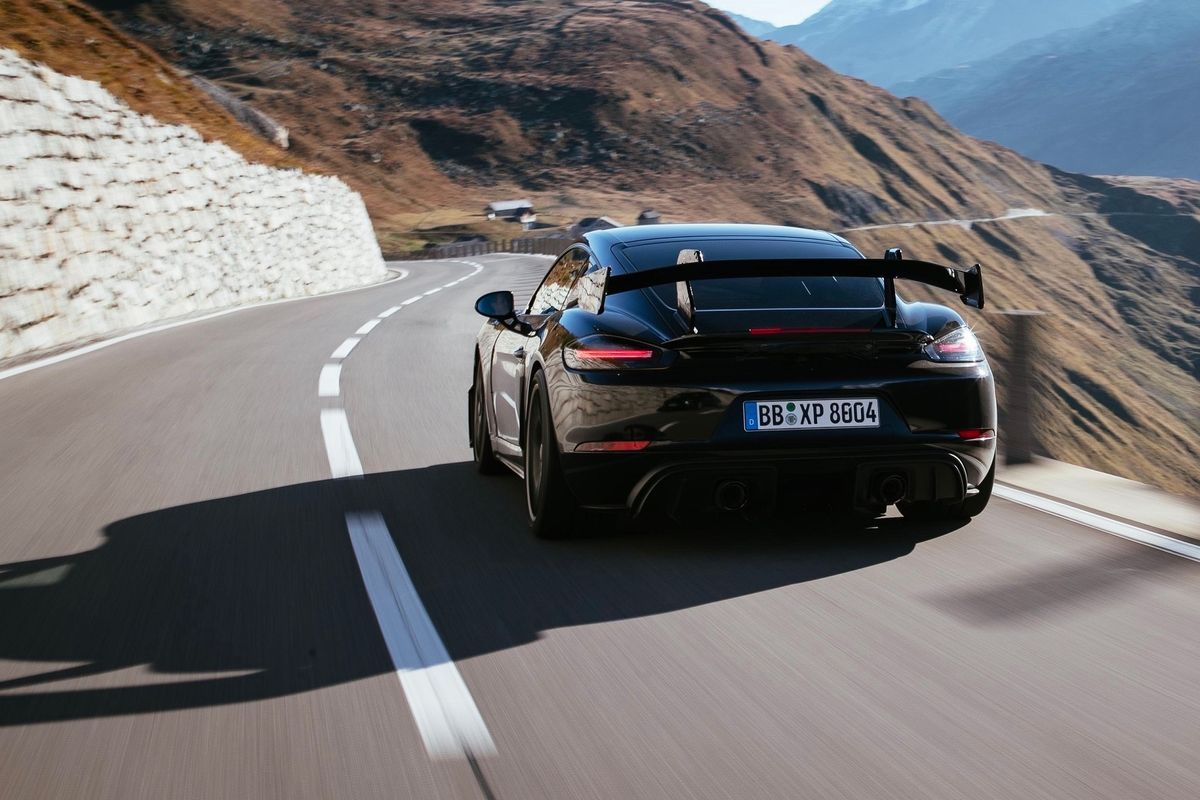
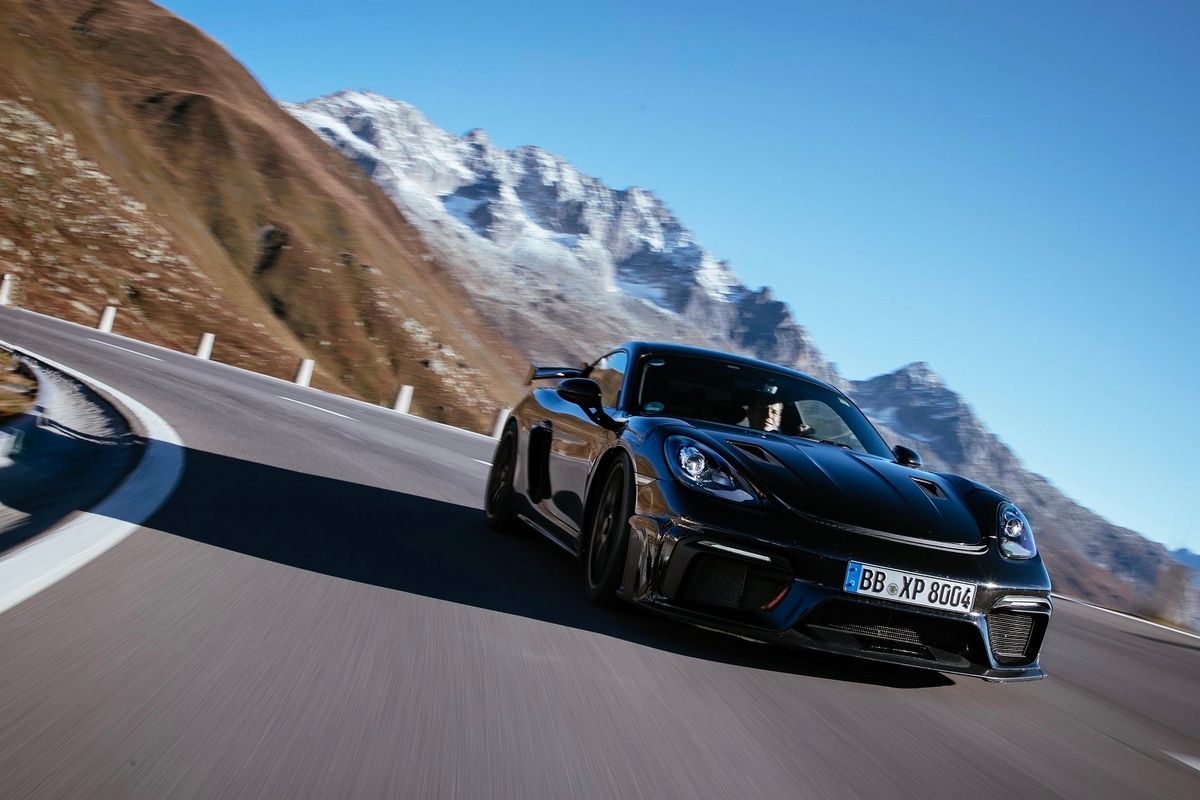
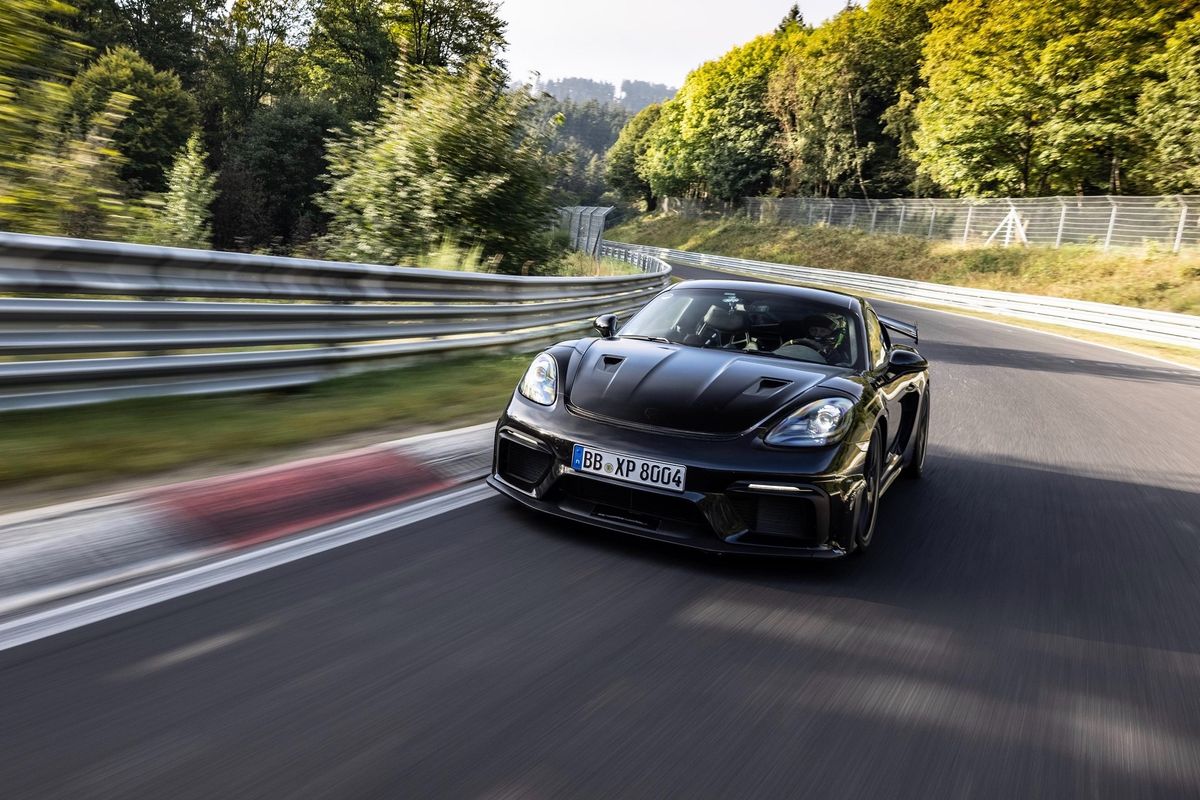
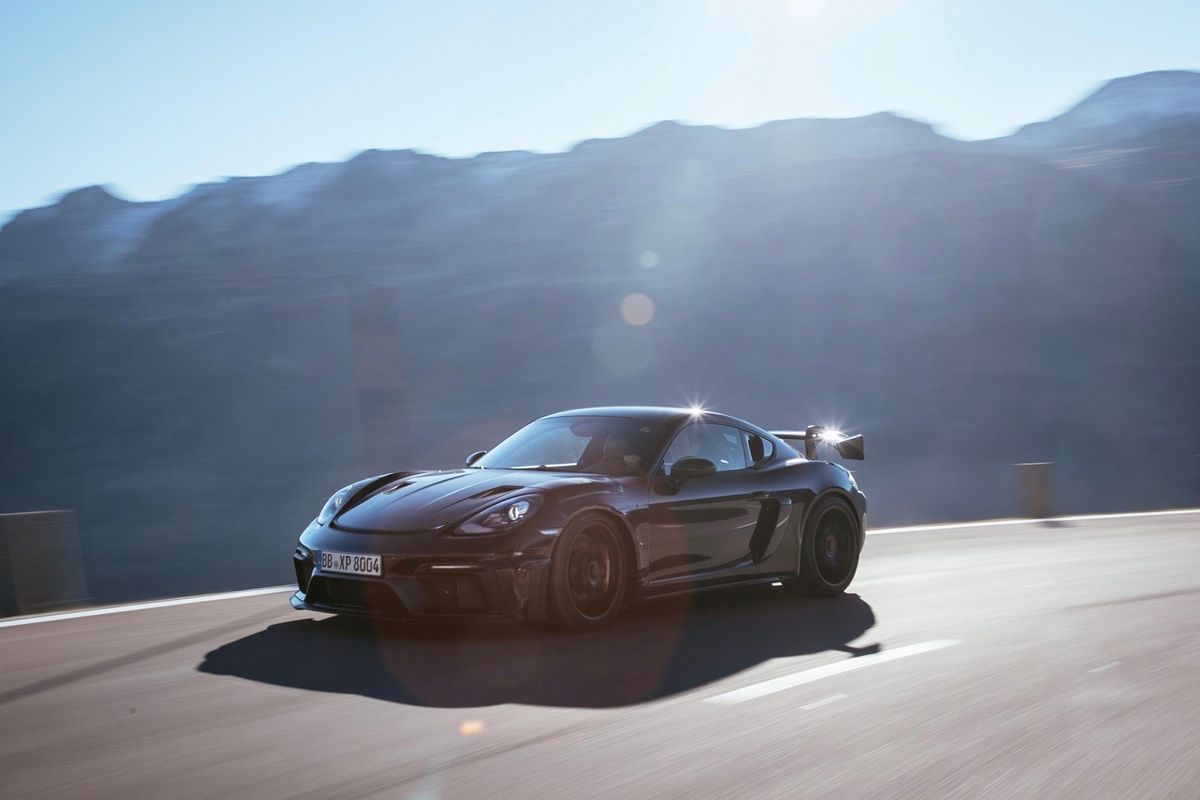
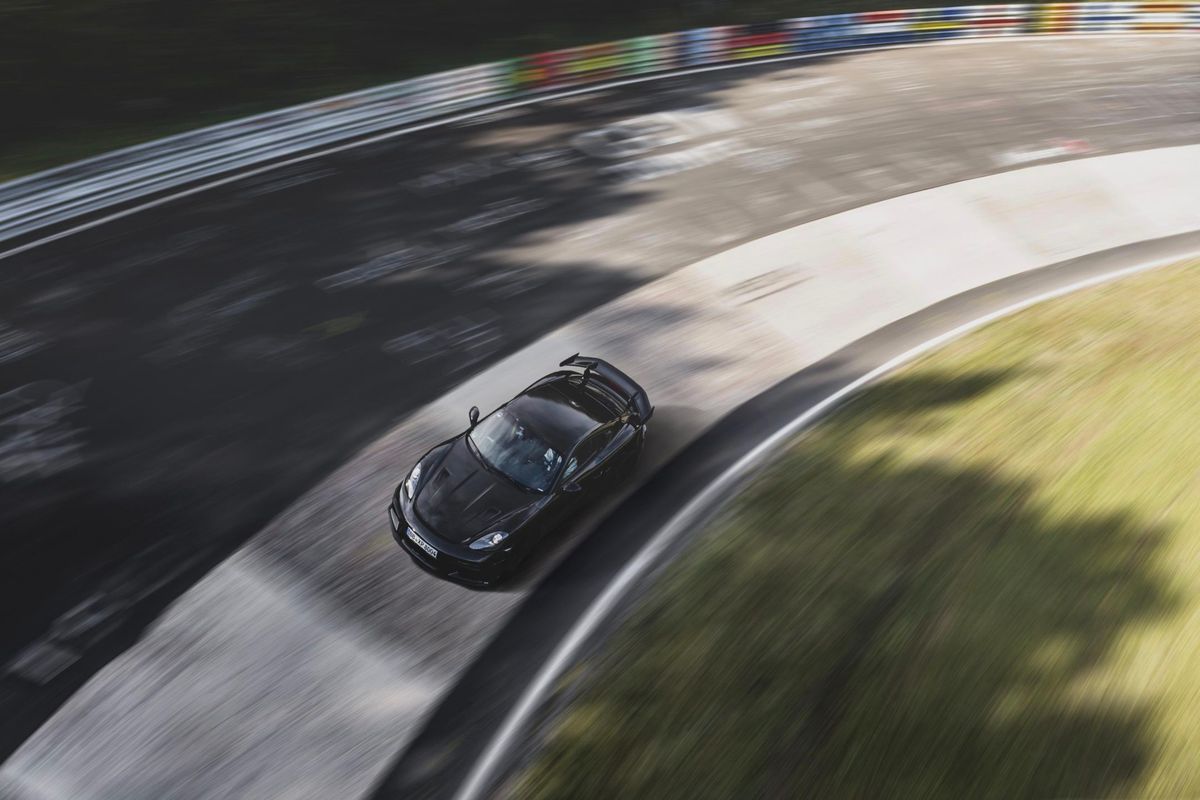
The Porsche Cayman GT4 RS is almost ready to be revealed and as part of its development, it was sent around the Nürburgring-Nordschleife and posted a mind-blowing time.
We at Cars.co.za were smitten with the Cayman GT4. It did so much right, with a gorgeously precise manual gearbox, howling flat-6 engine and the way it drove made you feel like a superstar. It was wonderfully analogue and a reminder that driving is a privilege and an artform. We all thought the GT4 would be the pinnacle of the Cayman range, but rumours have been swirling that Porsche would give it the RS treatment.
We’ve had some experience with Porsche’s fearsome RS range. The Porsche 911 GT3 is one of the ultimate supercars and while it’s not the fastest supercar around, its precision and engagement make it a firm favourite amongst enthusiasts and collectors alike. Then there’s the GT2 RS, which takes the naturally-aspirated flat-6 engine and adds two turbochargers. It’s easily one of the fastest and most intimidating vehicles on the planet and deserves its nickname ‘The Widowmaker.’
Soon these two RS models will be joined by the Porsche Cayman GT4 RS, the new flagship of the Cayman range. Officially, the vehicle has not been revealed, with the content you see here forming part of the pre-production and development process. Of course, for a performance vehicle to be developed properly, it’ll need to spend some time on that famous piece of tarmac called the Nurburgring.
Going flat out around the technical twists and turns over many, many laps will highlight a car’s deficiencies and engineers can adjust to make things faster and/or more comfortable. Of course, once the testing phase of a vehicle’s development is done, there’s nothing stopping the carmaker from attempting a timed lap, which is exactly what Porsche did.
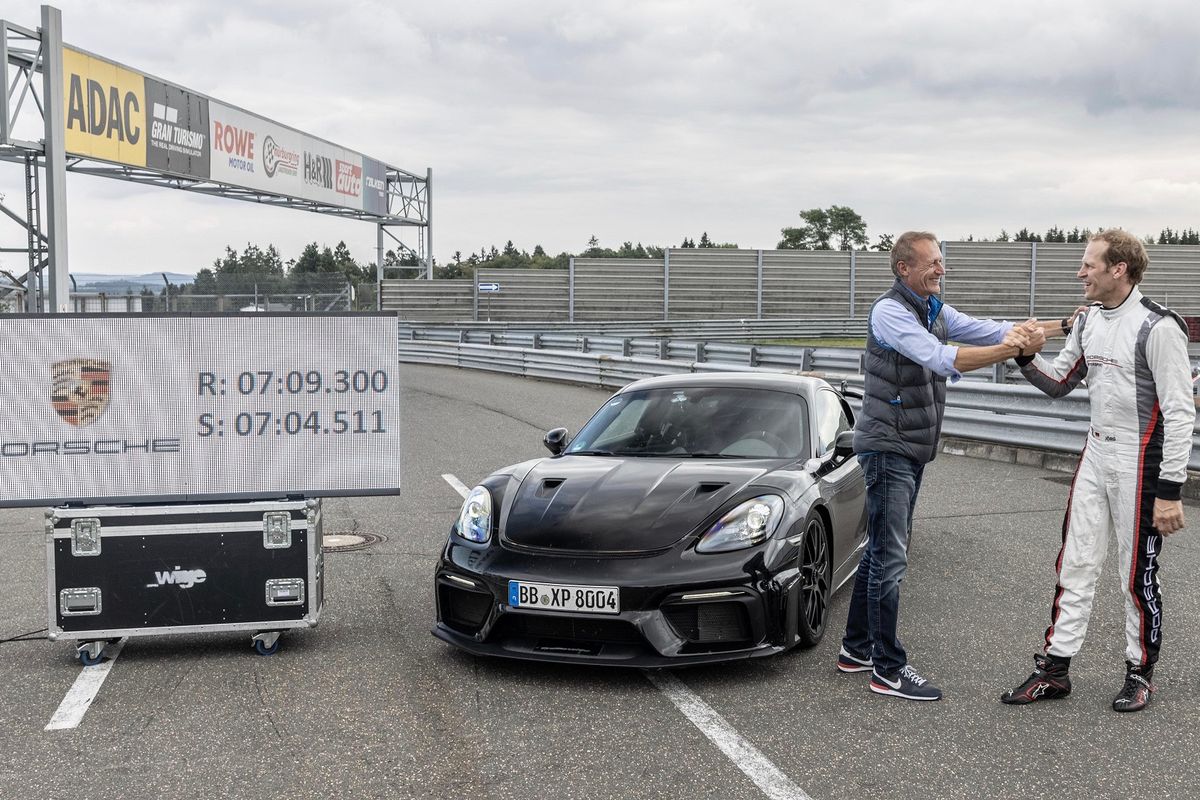
The Stuttgart-based carmaker has a long list of very talented drivers on its books, so it was up to development driver and brand ambassador Jorg Bergmeister who sent the new Porsche Cayman GT4 RS around the 20.832 km Nürburgring-Nordschleife circuit in just 7:09:300. Now for some context as the length of the circuit needs to be clarified.
The 718 Cayman GT4 RS completed the shorter 20.6 km lap, which had previously served as the benchmark, in 7:04.511 minutes – 23.6 seconds faster than its little brother, the 718 Cayman GT4. A 991.2-era Porsche 911 GT3 RS did a 7:05 back in 2018, while the latest Porsche 911 Turbo S could only muster a 7:17.3 in 2021. The new Porsche Cayman GT4 RS is one very quick machine…
Porsche says its new model was fitted with a racing seat and rode on Michelin Pilot Sport Cup 2 R tyres, which the car maker confirmed will be available as optional extras. “During development, we gave the 718 Cayman GT4 RS everything that characterises a genuine RS: lightweight construction, more downforce, more power and, of course, an even higher level of responsiveness and feedback to driver inputs. The fantastic lap time of the Nordschleife is impressive proof of how clearly noticeable these improvements in driving dynamics are,” says Directors GT Model Line, Andreas Preuninger.
We reckon the Porsche Cayman GT4 RS will be officially revealed before the end of 2021.
In light of the recent news that local fuel prices are expected to breach the R20-per-litre mark before the end of 2021, Gero Lilleike ponders the case for rapid and widespread electric vehicle (EV) adoption in South Africa. Is it time to switch to EVs?
There’s a saying that goes something like this, “if you can live and survive in South Africa you can live anywhere in the world”. I think that’s true.
Our beloved Republic is not a utopian country by any stretch of the imagination – it is beset with problems. Unemployment is rising, corruption is rife, crime is rampant, SOEs are broken, fuel prices are soaring, food is expensive, safe public transport is just about non-existent and then there’s the devastating impact of Covid-19 on our communities, economy and (usually resilient) spirits.
I could go on, but the bottom line is that people are suffering and it’s not okay.
As a South African living in this country, you may (or may not) recognise or acknowledge how much stress and trauma we are required to absorb on a daily basis just to live to see one more sunrise. That stress and trauma of survival, over the years, has sadly become a way of life for many South Africans – the norm. Is it right? No, it’s not. Should we as the citizens of this country accept it? Definitely not.
The subject of this article, however, pertains to the recent news that steep fuel price increases are expected for November 2021 and that the price per litre of good old gasoline could surge to R20 and beyond before we see the end of 2021. The news has generated much public frustration and anger, understandably so; it got me thinking about electric vehicles (EVs) again and I couldn’t help but ask…
When is enough, enough?
How much longer can you afford to run your ICE car?
Before I talk about EVs let me quickly touch on the cars most South Africans use on a daily basis — vehicles powered by internal combustion engines (ICE).
When is it no longer worthwhile or viable to run your ICE vehicle? The simple answer to that question is when it’s too expensive for you to do so. So, how do you know when enough is enough?
That limit or breaking point will vary depending on who you are, the car you drive and your financial profile. Only you will know what you are able to afford based on your monthly income and expenses.
Without getting too complicated and, for the sake of this discussion, let’s look at some basic fuel-cost projections as a starting point.
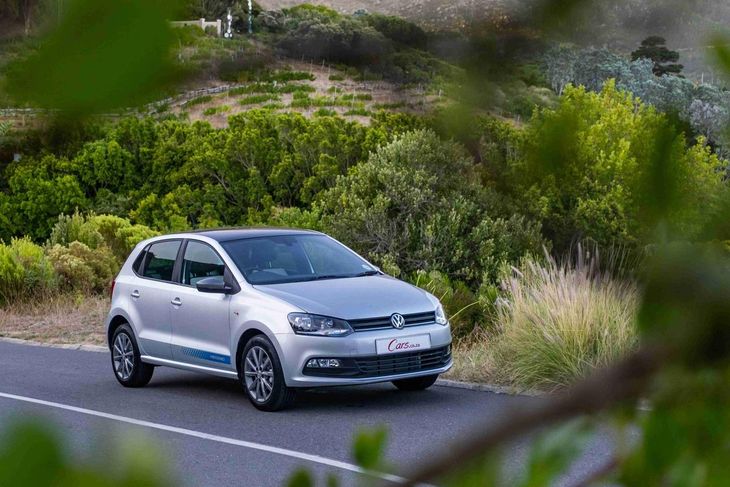
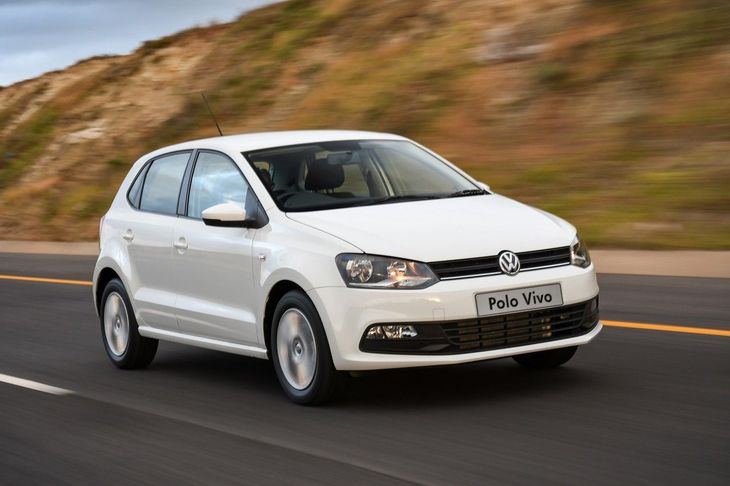
The Volkswagen Polo Vivo is a common sight on SA roads and returns good fuel economy!
Let’s use the popular Volkswagen Polo Vivo 1.4 Comfortline (R246 000), South Africa’s most popular new car, as an example and let’s assume that the average driver achieves an average fuel consumption 6.0 L/100 km, which is fairly realistic for the Polo Vivo.
This may make you wince, but if the fuel price reaches R20 per litre before the end of 2021, it’s not inconceivable that it could balloon to R25 per litre in 2022 – and perhaps eclipse the R30-mark in 2023.
Now, bear with me here and take a look at the fuel-cost projections in the table below to get an idea of what fuel will cost you if you drove a VW 1.4 Polo Vivo for the next 3 years. It goes without saying that thirstier ICE cars will cost you much more to run by comparison… and South African roads are packed with older (generally less fuel-efficient) vehicles that are in less than tip-top condition anyway.
Furthermore, it does not account for the long list of other monthly living expenses, which will most certainly rise too over the same time periods (due to pesky inflation).
See the table below…
Distance Travelled
Fuel Costs
R15 p/litre
R20 p/litre
R25 p/litre
R30 p/litre
25 km p/day
R22.50
R30
R37.50
R45
50 km p/day
R45
R60
R75
R90
100 km p/day
R90
R120
R150
R180
750 km p/month
R675 (1 tank)
R900
R1 125
R1 350
3 000 km p/month
R2 700
R3 600
R4 500
R5 400
10 000 km p/annum
R9 000
R12 000
R15 000
R18 000
20 000 km p/annum
R18 000
R24 000
R30 000
R36 000
30 000 km p/annum
R27 000
R36 000
R45 000
R54 000
So, by studying the table above, you should be able to come up with a decisive answer as to where your financial breaking point is to continue running your ICE vehicle.
Moreover, I can’t help but ask if exorbitant fuel prices can (and will be) the catalyst for the more rapid adoption of electric vehicles (EVs) in South Africa? Looking at the numbers above, I think it definitely can be, but let’s dissect the case for EV adoption in the Republic.
If you haven’t seen/heard our podcast, “Will electric cars work in South Africa? In-depth discussion with Alex Parker”, we strongly suggest that you give it a watch/listen.
Is it time for South Africa to switch to EVs?
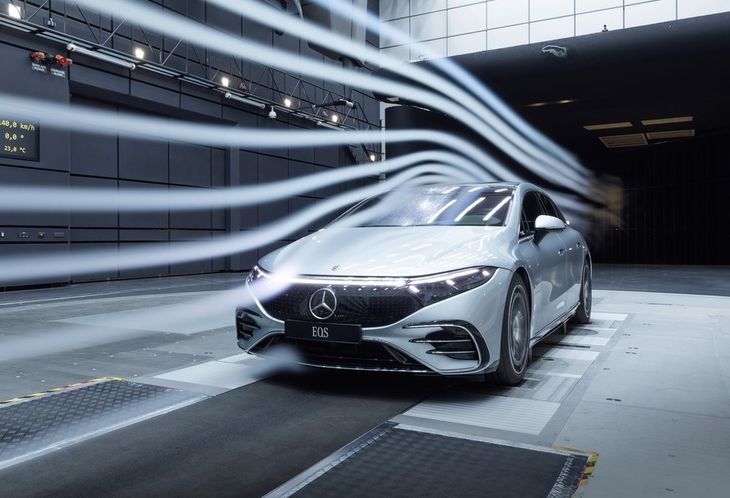
EVs in SA are prohibitively expensive and the forthcoming Mercedes-Benz EQS won’t be cheap.
That’s an interesting question and my answer to that question is… Yes, it is the right time to switch to EVs but unfortunately, for many reasons (see below), conditions that are conducive to the widespread EV adoption just aren’t in place, at least not yet.
Backing and support by the government is a critical factor and unlike other EV positive countries, the South African government doesn’t subsidise or incentivise the purchase of electric vehicles. Instead, EVs are heavily taxed (as luxury vehicles) and EV uptake is therefore stifled, no, suffocated from the get-go. Government EV policy is therefore the first significant hurdle that needs to be addressed and overcome urgently if widespread adoption of EVs is even remotely possible in South Africa. Until that happens, the majority of battery-powered vehicles in the Republic will remain golf carts and forklifts.
In addition to that significant challenge, the few EVs that are currently on sale are prohibitively expensive. Consider the Porsche Taycan, for example. Affordable, entry-level EVs are not available in South Africa and, as a result, the vast majority of local motorists simply cannot afford to switch to EVs, even if they wanted to. Therefore, no matter what the fuel price is, most South Africans will just have to suck it up and blow big chunks of their disposal incomes at fuel stations, use public transport – or buy bicycles, which is a great suggestion if you want to exercise and save the planet at the same time.
We ran a poll on our Cars.co.za Twitter page in which we asked our audience the following question: “Considering that fuel prices in South Africa might reach R20 per litre and beyond in the near future, would you be prepared to purchase an Electric Vehicle (EV) instead of an ICE vehicle if more affordable EV’s were made available in SA?
The majority of respondents (roughly 60%) voted in favour of switching to EVs if affordable options were available in South Africa, while 40% of voters were still in favour of ICE vehicles. Those results, as a basic litmus test, speak volumes for what consumers would buy if they were given the opportunity to do so!
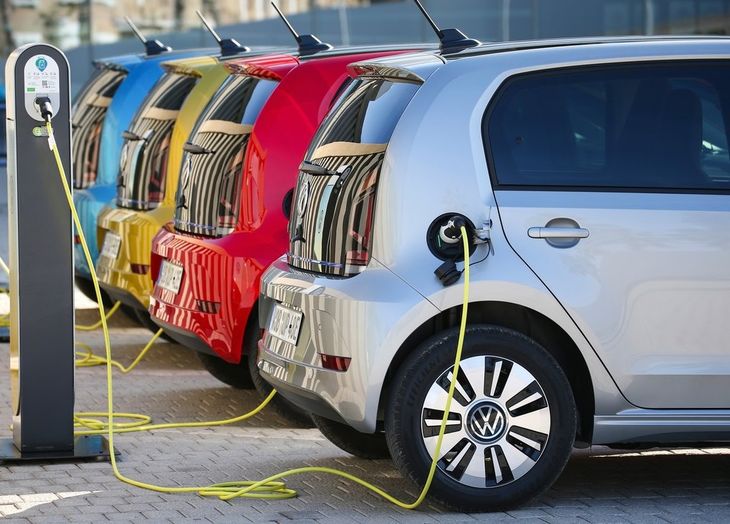
The EV market in South Africa can flourish if affordable, competitively-priced products come to market.
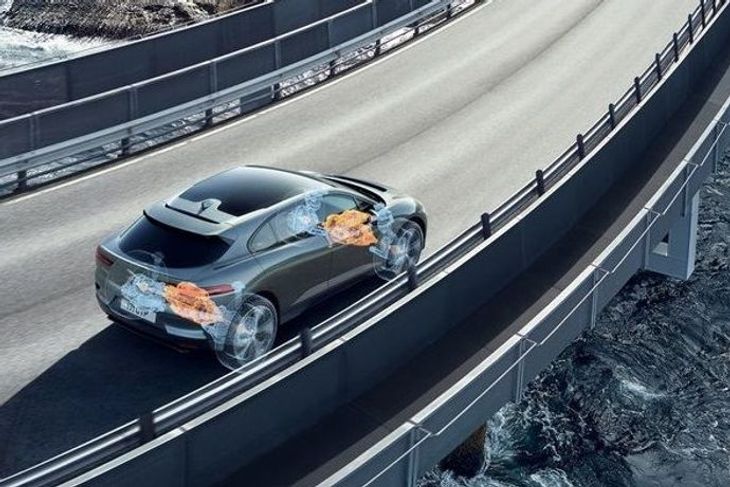
EV infrastructure in South Africa is an ongoing concern for would-be EV buyers, but with significant ongoing investment from OEMs and others, EV infrastructure is improving; all major cities in South Africa are fairly well catered for in terms of charging infrastructure. An example of this is the Jaguar Powerway in partnership with GridCars, which is the result of a R30-million commitment to install 22 charging stations along the N3 between Gauteng and Durban and the N1 between Gauteng and Cape Town, as well as the N2 from Cape Town, along the Garden Route, all the way to East London.
Such initiatives will go a long way to alleviate range anxiety and will ultimately make long-distance EV travel more viable in South Africa. Even so, there is massive scope to improve and expand EV infrastructure in the Republic and perhaps this will only come to fruition when there’s ample demand for it – in other words when EVs become more widely adopted and retail on a much larger scale than what is currently the case (barely a trickle, sales wise). Talk about a chicken and egg scenario. After all, why develop widespread EV infrastructure if there’s virtually no EV market in SA, right now?
Eskom is another issue! If EVs are widely adopted in South Africa, will Eskom be able to supply the electricity needed to charge them? That remains to be seen, but perhaps demand could be met more cleanly and reliably if South Africa embraces renewable energy and moves away from dirty, coal-based energy production, which is becoming more irrelevant in a modern world with each passing year.
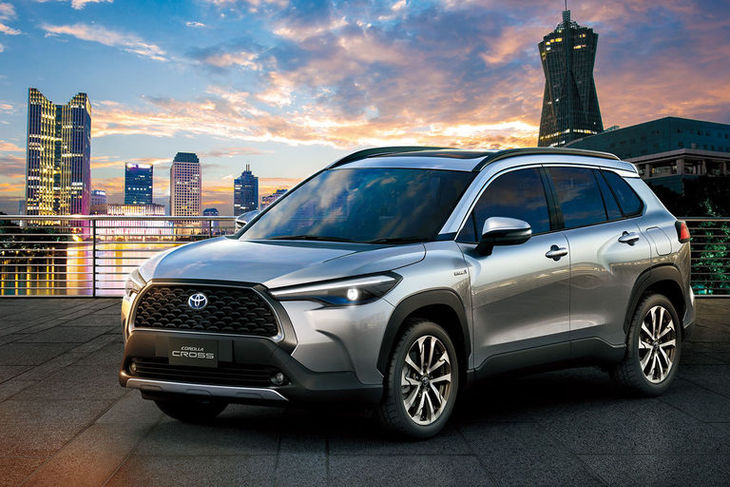
The Corolla Cross Hybrid is the cheapest hybrid vehicle currently offered in South Africa.
This week, Herbert Diess, the chairman of the Board of Management of Volkswagen Group, posted on his LinkedIn profile stating that “Driving a combustion engine car costs up to 50% more compared to an e-car! Autozeitung does the math, taking into account all the costs: Driving a #VW Tiguan costs around 30% more per kilometer than an ID.4. One kilometre in an #Audi Q5 costs around 40% more compared to a Q4 e-tron. And driving a #Skoda Kodiaq is around 50% more expensive per kilometre compared to an Enyaq! It’s time to switch.”
Thankfully, there’s hope! Earlier this year, the Department of Trade, Industry and Competition released an Auto Green Paper on the Advancement of New Energy Vehicles in South Africa, laying the foundation for South Africa to gear up for local electric vehicle (EV) production. This prospect is a critical one for the local automotive industry as well as South African motorists and, if it’s realised, it will essentially evolve and develop local car manufacturing from ICE to EVs, stimulate job growth and bolster the broader automotive industry (including component suppliers) for generations to come.
It’s also a rare opportunity for South Africa to shine again on the world stage, for the right reasons, and accomplish something to be proud of by becoming a major EV player within an African context, but also globally. Wouldn’t that be nice?
The Minister of Trade, Industry and Competition, Ebrahim Patel, has highlighted the urgent need for the government to step up its efforts to accelerate the process towards local EV production: “We must step up efforts to build full electric vehicles in SA to maintain our capacity to export to key markets such as the EU and UK, both of which have set new targets and deadlines to reduce the number of fossil fuel reliant vehicles on their roads. We need charging infrastructure – and must expand the existing 200 charging points for electric vehicles in South Africa using the agreed SABS standard”.
He added: “We don’t want South Africa to become simply a market for electric vehicles produced elsewhere in the world, relegating our car making simply to internal combustion engines. Then, as the world shifts more and more to electric vehicles, we will be left with a stranded asset in the form of a large assembly capability that has not been adjusted to electric vehicles.”
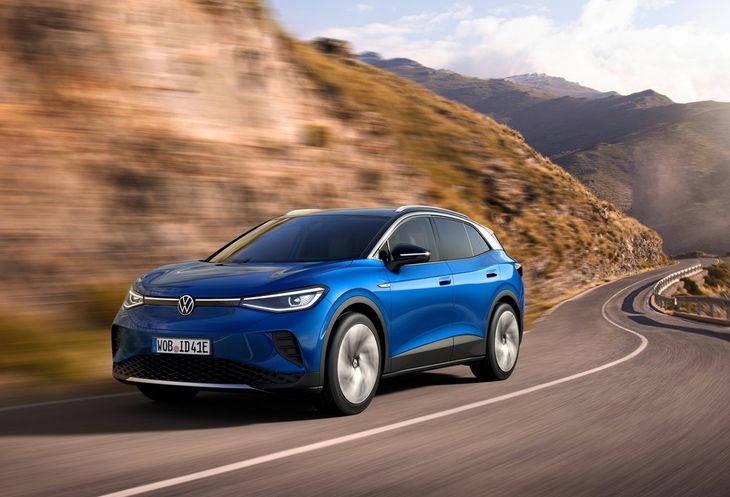
Volkswagen’s ID.4 is expected to reach South Africa in 2022.
If the government can effectively reduce ad valorem tax on EVs and close the chasm between EV and ICE vehicle pricing then EVs will become more attractive to local buyers. If that happens and the demand for EVs increases, then automotive manufacturers and importers will be more inclined to introduce a wider range of EV products to meet the needs of ALL South Africans and not just affluent early adopters. Perhaps then we will see a day when we, as consumers, can enjoy the right to choose what form of propulsion we prefer, EVs included, at prices that are fair and competitive. Is that possible?
Will the South African government seize this significant opportunity and drive the country towards a successful transition from ICE vehicles to EVs or will a golden opportunity once again slip through our nation’s fingers and sink in a pool of our children’s tears? Having asked that, I don’t think it is a total coincidence that several brands are lining up to introduce EVs for local introduction next year… I am holding thumbs (as we all should) that the development anticipates a yet-to-be-communicated concession from our government pertaining to a reduction in taxes levied on (imported) electric vehicles.
Crucially, passenger-car market leader Volkswagen has been running a fleet of EVs in Mzansi as it prepares to launch its ID range of EVs on local soil in the very near future… So watch this space!
Suffice to say, something has to give and until that happens, we have no choice but to accept the fuel-price horror unfolding before our eyes…
When a vehicle buyer looks for a good deal on a used car, the rental car market isn’t usually top of mind. However, it might be a good idea to investigate what retired (de-fleeted) rental vehicles are available when searching for your next car. Here are some of the pros and cons of purchasing a used rental car.
PARTNERED CONTENT
If you’re on the fence about buying a used car, your mind is probably consumed by anxiety and uncertainty in equal parts. You may find yourself asking: How do I know that I’m getting a good deal? How can I be sure that the car is in good condition?
Besides, where do you even start your search? Your first instinct might be to browse the used car lot of your local dealer, but a less obvious resource may give you better options — rental car companies. A former rental car will appeal to some, but others may be sceptical about its history. Since there is a lot of uneasiness about rental car sales, it’s important to do your homework before taking a test drive.
So, what do you need to know about buying a rental car? Here’s a quick, helpful guide:
The life of a rental car
What happens to a rental car when its roaming days are over, so to speak? Whether they’re bringing in newer models or keeping their inventory up-to-date, rental companies need to find ways to make room in their fleets. As it turns out, there’s more than one potential outcome for a retired rental car:
Rebought by the manufacturer
Often referred to as “programme cars”, these are vehicles that were acquired by the rental company with the understanding that the manufacturer/importer will eventually buy them back.
Once back in the manufacturer’s hands, they’re usually sold to licensed dealers at auction before being purchased by consumers.
Rental company sells them at auction
In this scenario, the manufacturer is removed from the equation – the rental car company sells its retired rental cars at wholesale auctions. Since wholesale auctions are less strict about cars’ conditions, these cars usually have higher mileages, well-used tyres or more cosmetic damage than the average car that you’d see on a used-car lot.
Sold for parts
On rare occasions, rental cars that are in especially poor shape are sold for parts or at salvage auctions. Since rental car companies perform routine maintenance on their cars, very few cars meet this fate.
Sold directly to consumers
Here’s the good news – only cars in tip-top shape are sold to consumers. They’re usually around 1 or 2 years old, with little to no damage, and a reasonable number of kilometres on their clocks.
The Pros and Cons of buying a rental car
Just like with any significant purchase, weighing the pros and cons will help you feel confident in your final decision. Here’s a breakdown of the good and bad when buying a former rental car:
Pros
Newer cars at lower prices
The most notable benefit of purchasing a rental car is that newer models will sell for quite affordable prices. Additionally, the Covid-19 pandemic drove retired rental cars’ prices down in South Africa (as a direct consequence of the decrease in tourism). A lack of tourists meant a drastic drop in car rentals, which forced several rental companies to clear out their fleets. (That means better prices for you.)
A well-maintained car
Since car maintenance is an absolute necessity for the rental business, you’re likely to find a car in pretty good shape. Rental cars are maintained as per the manufacturer’s recommendations, which means it’s highly unlikely that you would need to carry out mechanical repairs to the car soon after purchasing it.
It’s still under warranty
Another reason your wallet may be excited by the prospect of you buying a used rental car — your new (to you) car might still have a warranty in place, thanks to the rental company. If there are any issues right out of the gate, an active warranty will save you money on your first visit to a workshop.
Cons
There’s no customer history
While a rental company will ensure that cars are well-maintained, they’re a bit of a mystery when it comes to customer history. Of course, the assumption is that anyone who rents a car will try their utmost to avoid incurring damage so that they won’t be charged extra when they return the vehicle; unfortunately, there’s no way to know what misadventures befell the car earlier in its life.
You may have to compromise on mileage
For a rental car, the mileage might be acceptable, but keep in mind — it’s all relative.
A two-year-old car from a rental company may have more kilometres on its odometer than a pre-owned one – it’s up to you to determine what mileage you would be comfortable with.
It will have a lower resale value
Paying less money now might come with consequences down the road. If you decide to sell your car at a later date, the resale value will be much lower than a pre-owned car. Many buyers are concerned about the wear and tear from former renters, making it difficult to sell at maximum resale value.
Cosmetic issues are usually overlooked
Rental companies typically don’t pay as much attention to upholstery issues, dings and scratches. If you’re concerned about aesthetic issues, give the car a thorough examination before you purchase it.
Final things to consider
In South Africa, a small percentage of rental cars are sold through actual rental companies. Many of them are sold through dealerships, which means you could be purchasing a former rental car without even knowing it! As with any used car, it’s beneficial to ask for documentation about the previous owner.
If you’re set on a particular make and model, do a little shopping around. Although former rental cars are offered at affordable prices, similar deals (such as pre-owned cars with lower mileages) might be available too.
No matter what, you’ll need car insurance
Whether you decide on a retired rental or pre-owned car, your new ride isn’t complete without insurance. Whether your budget is small or infinite, you have multiple options for reliable car insurance.
Ford Ranger Raptor Special Edition (2021) Launch Review
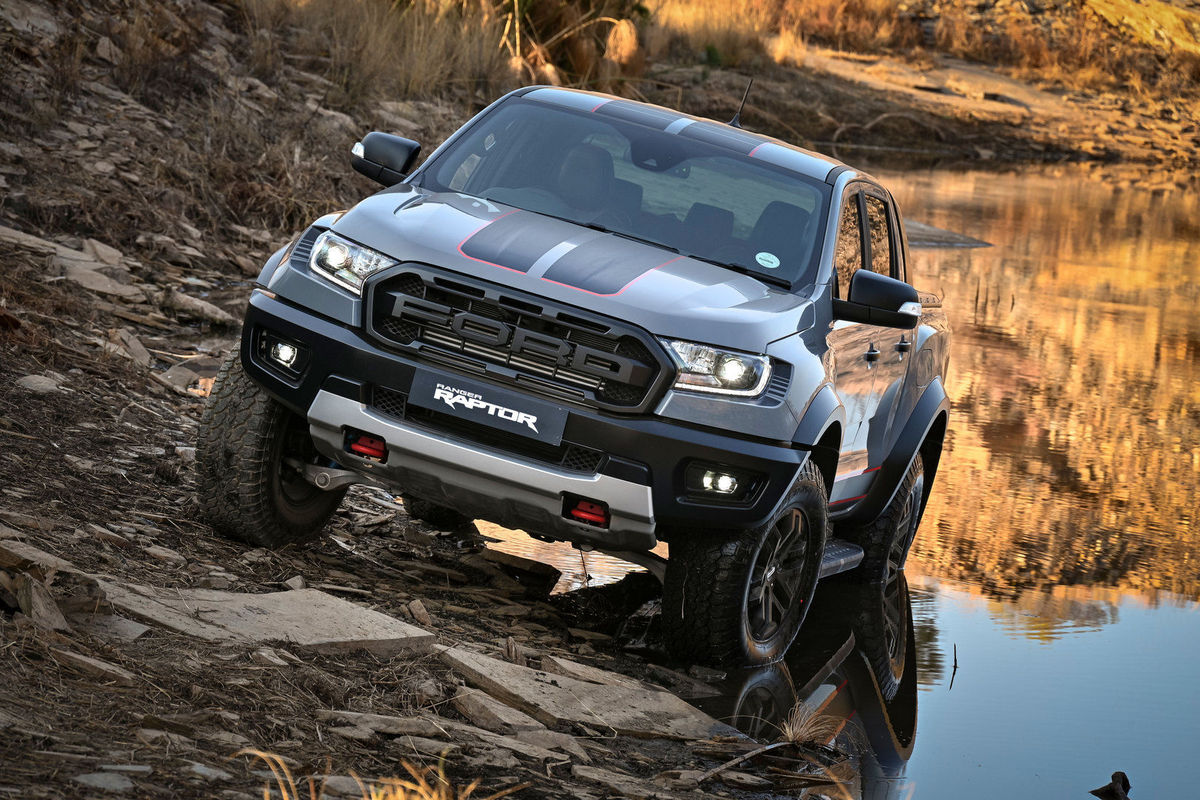
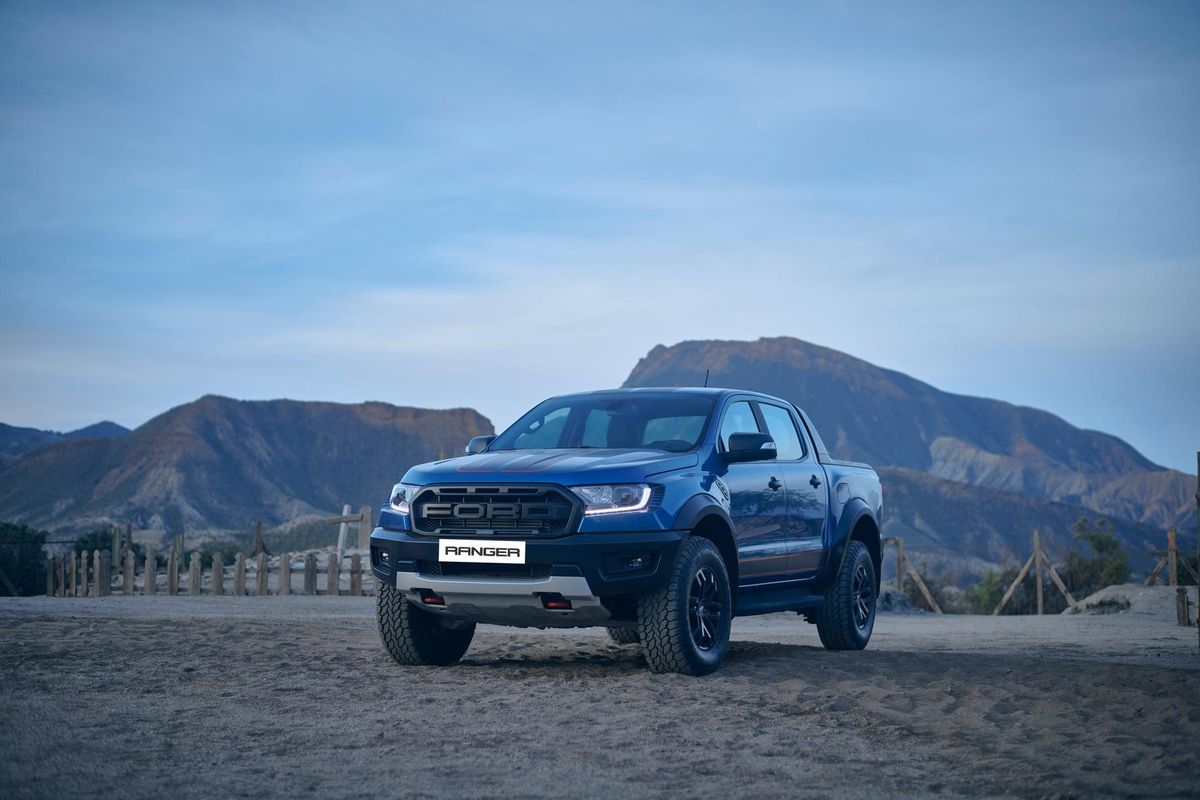
With the all-new Ford Ranger expected to make its local debut towards the end of 2022, run-out editions of the current bakkie are coming thick and fast. The flagship Raptor is the latest derivative to be dolled up; we drove the Special Edition from Cape Town to the Tankwa on South Africa’s longest dirt road to find out what’s so “special” about the newcomer…
What’s new on the Raptor Special Edition?
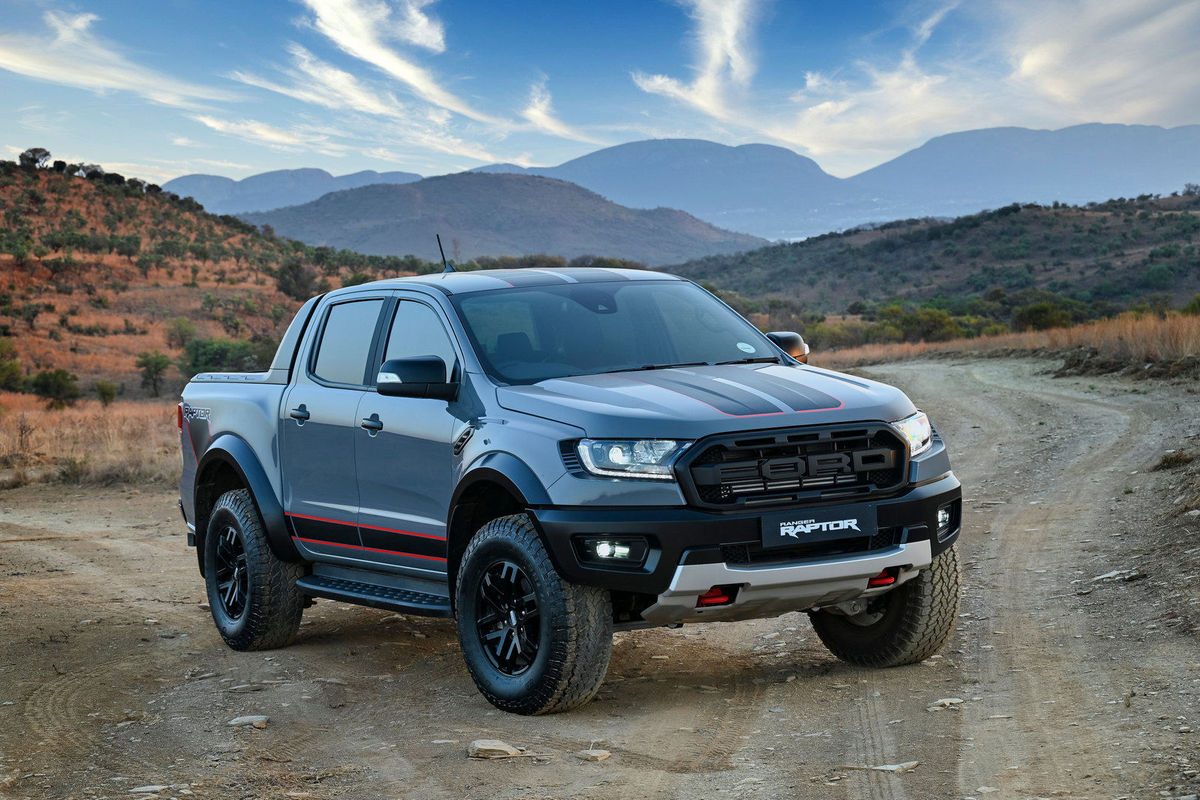
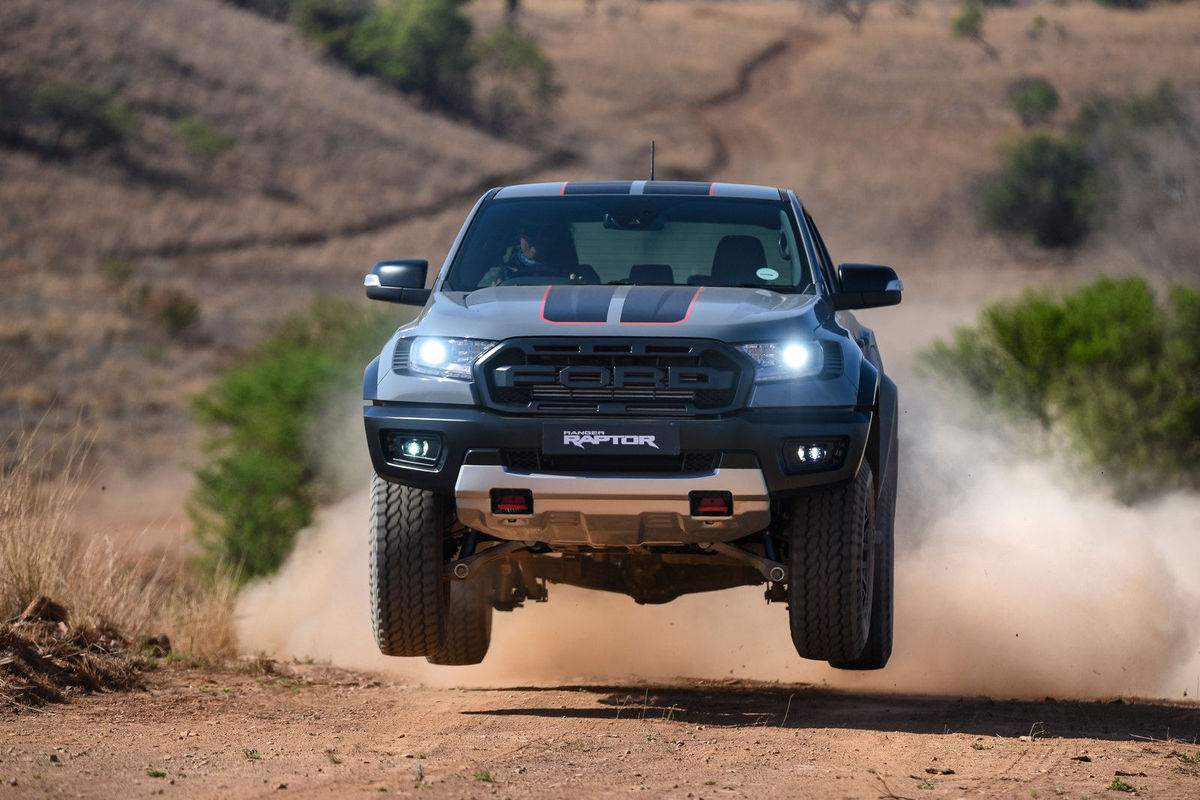
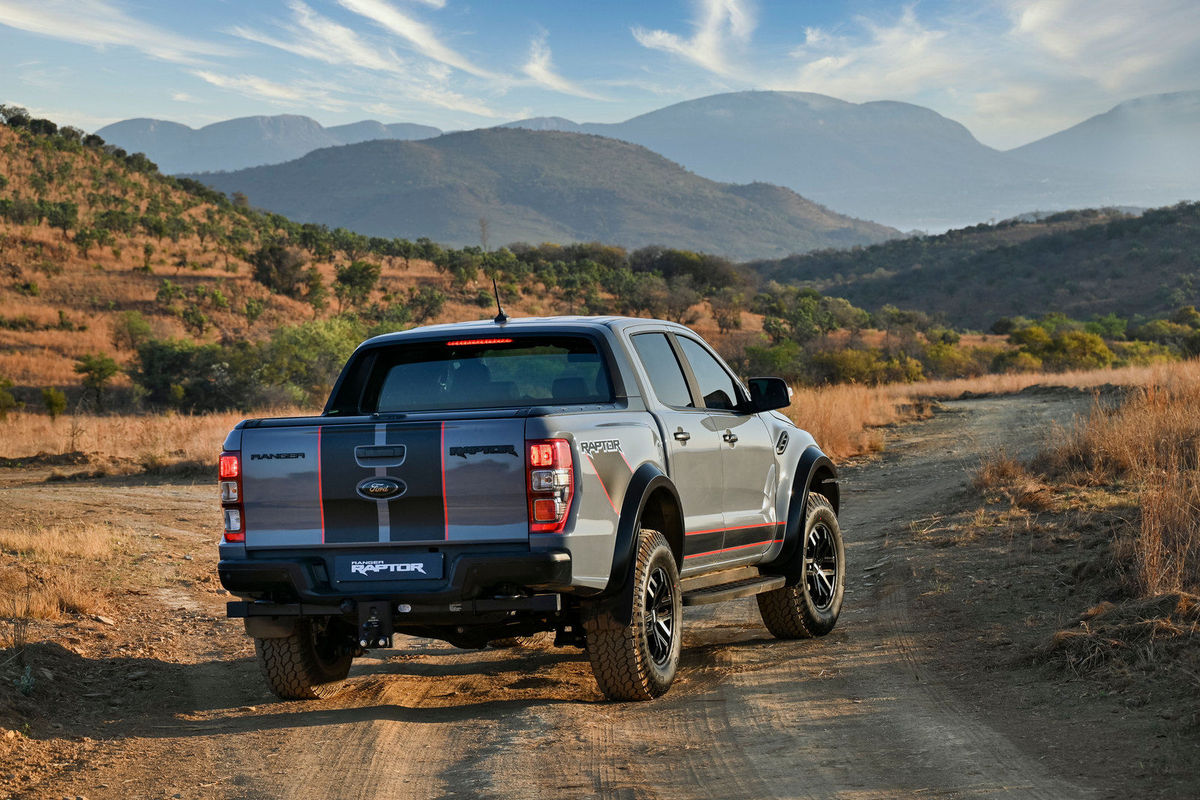
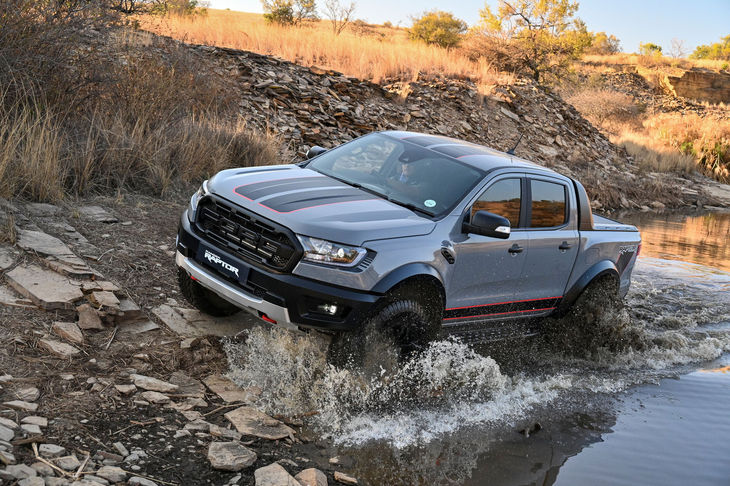
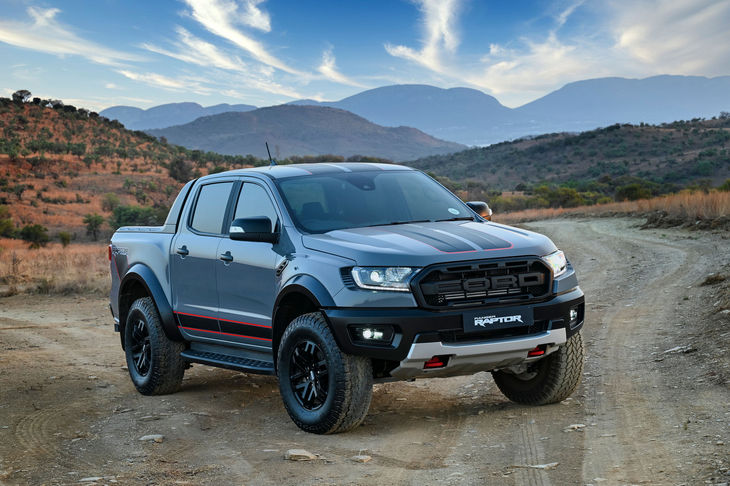
The decals on the bonnet, roof and side of the Raptor distinguish the Special Edition from its standard sibling.
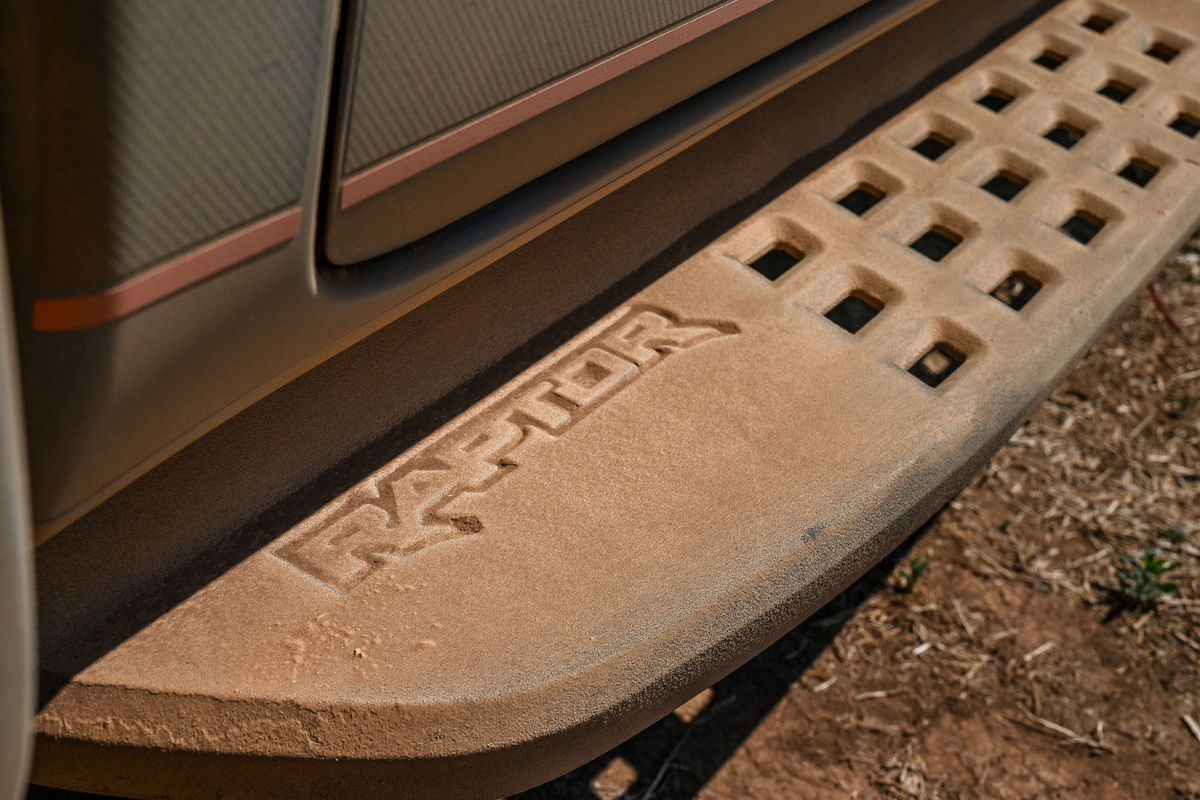
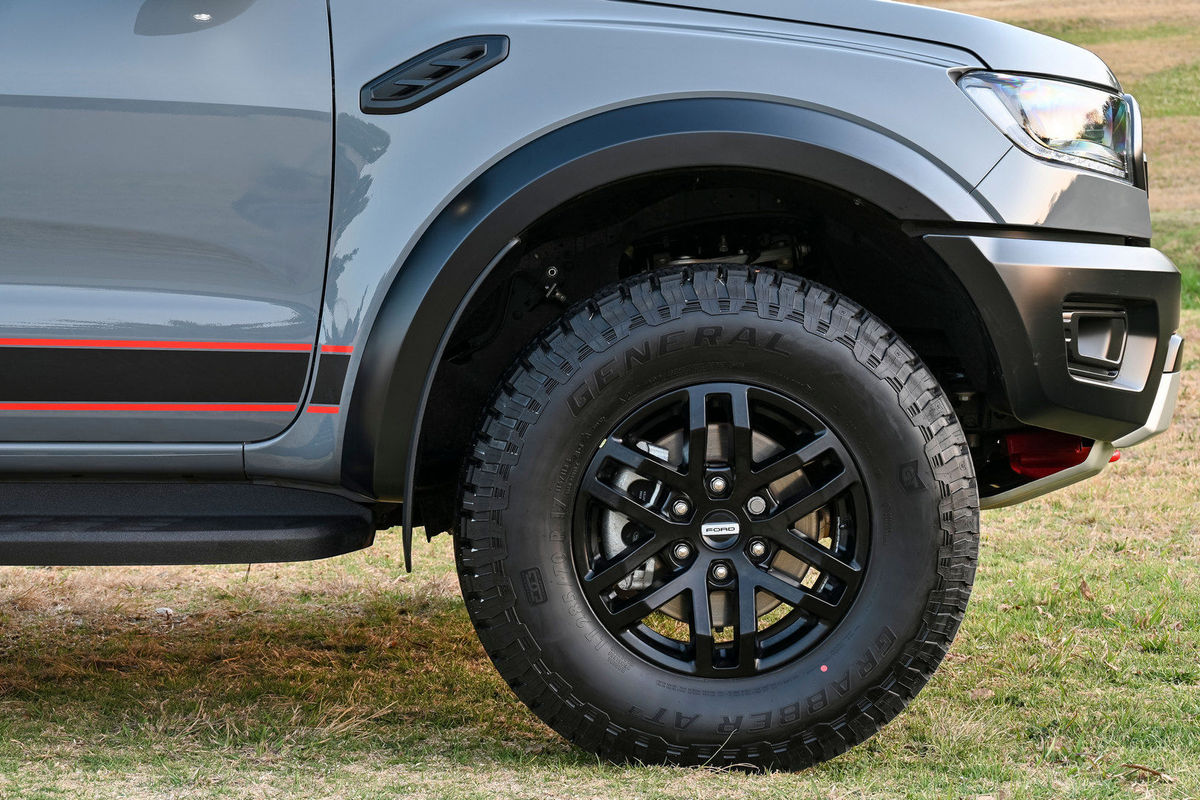
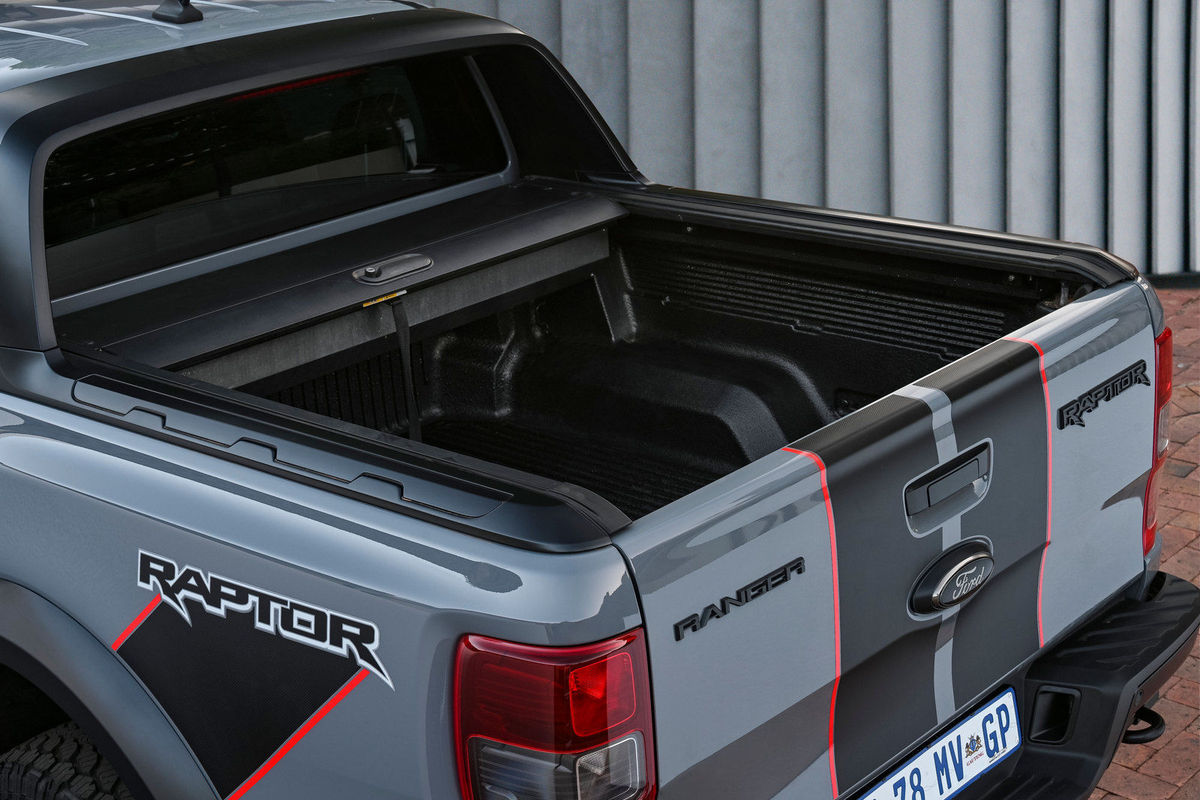
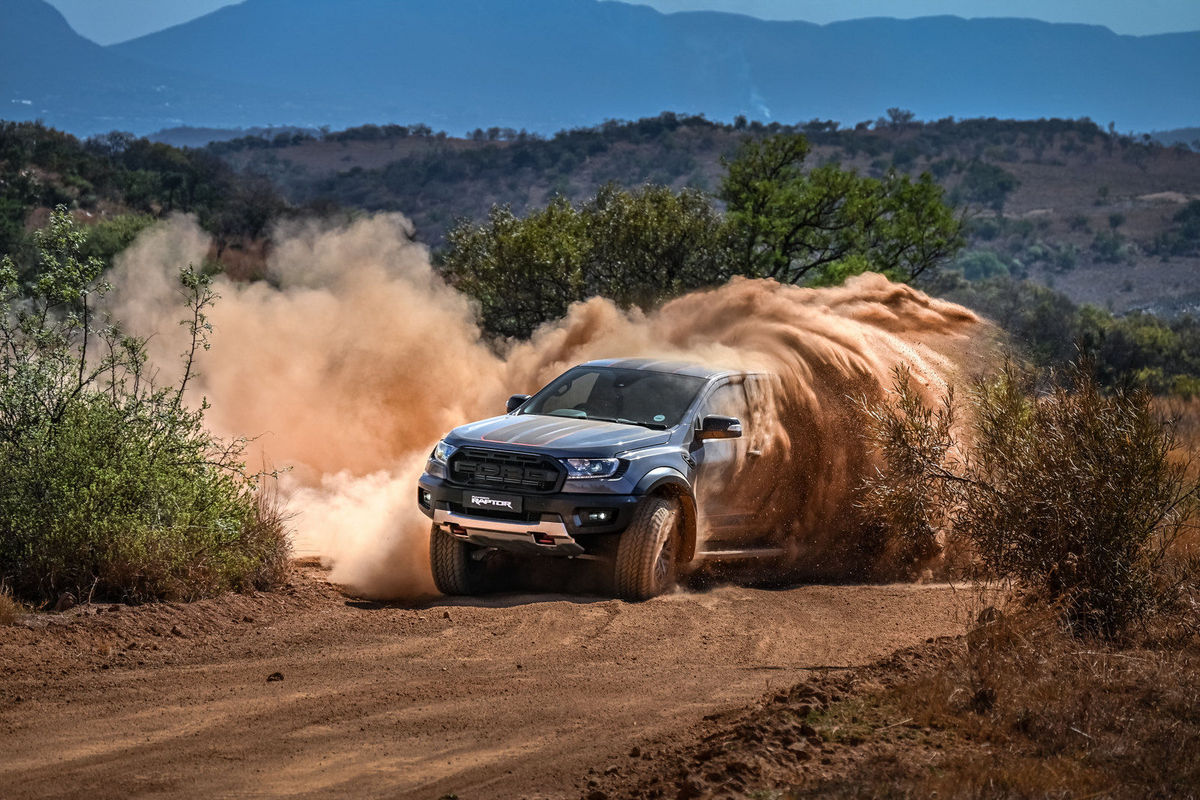
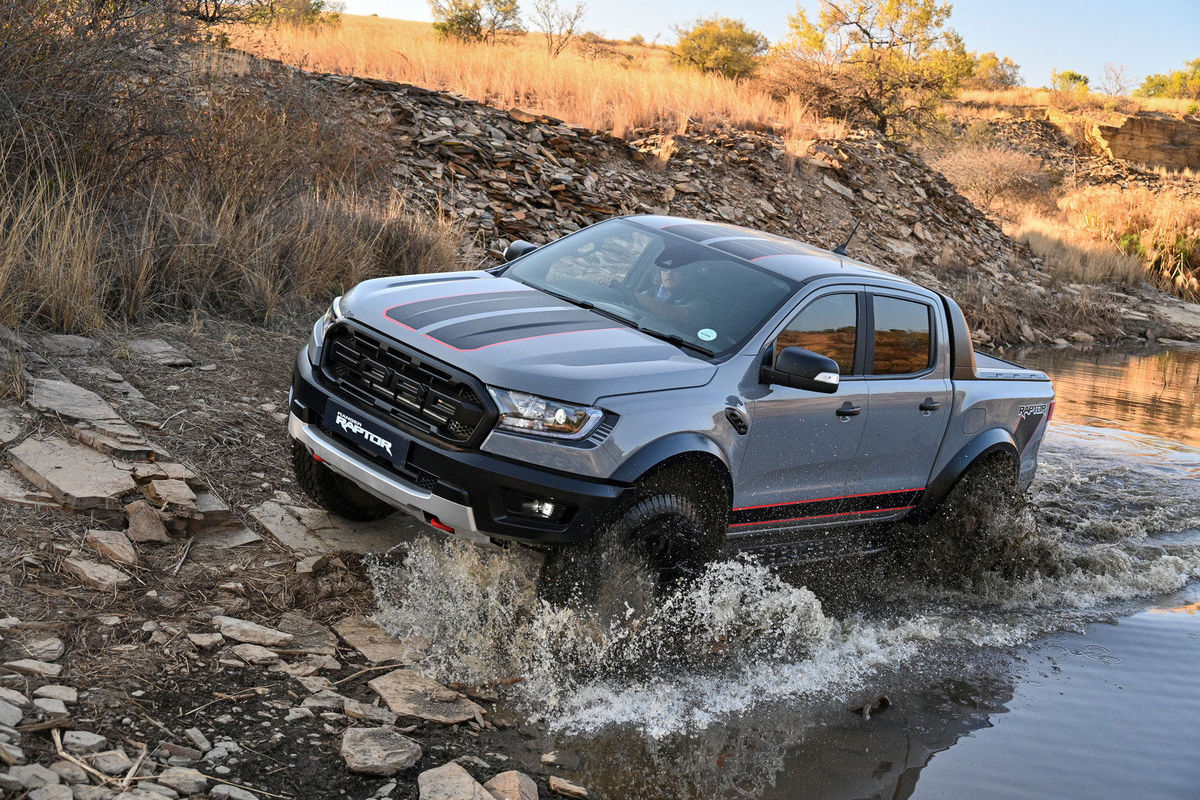
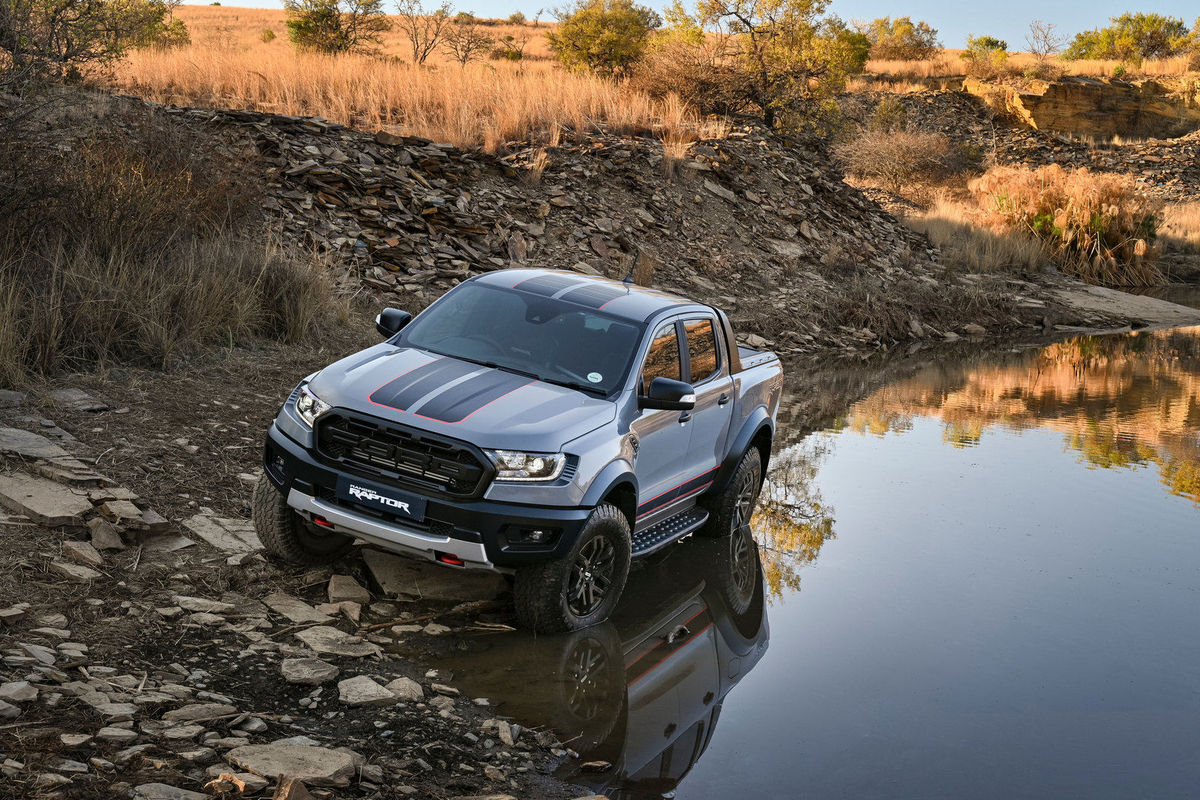
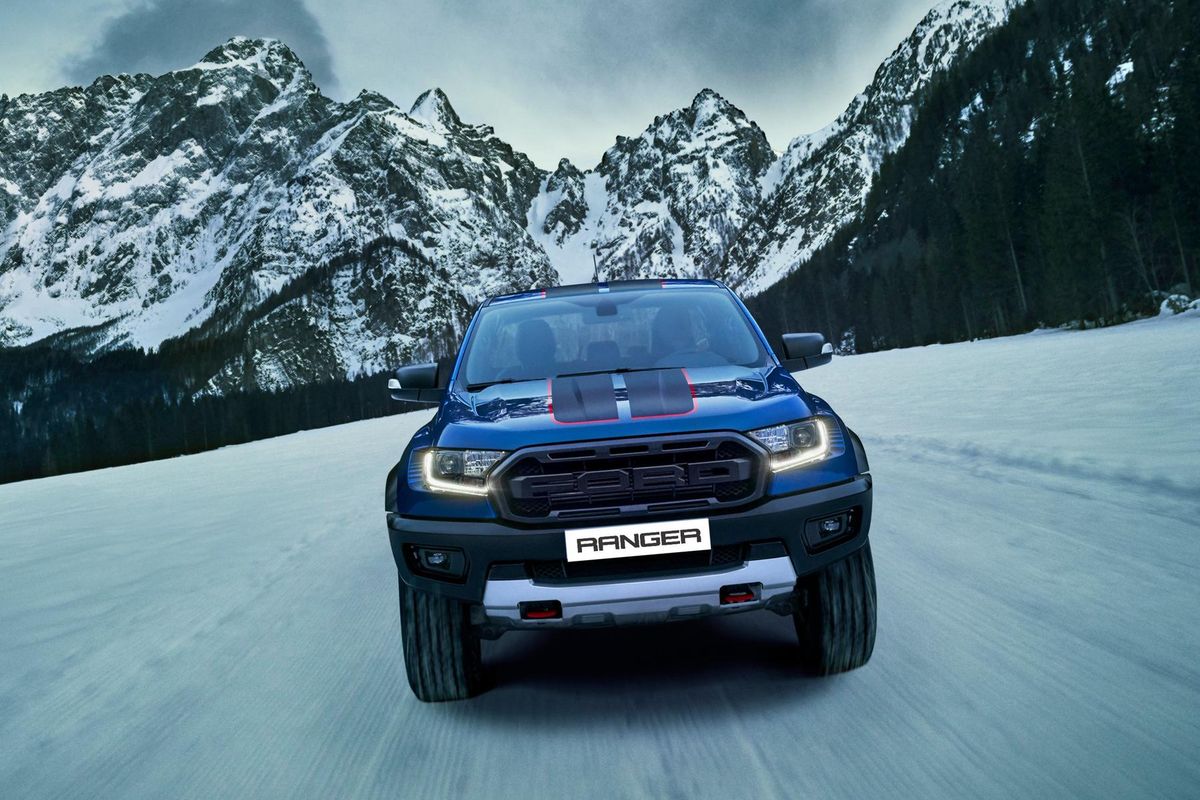
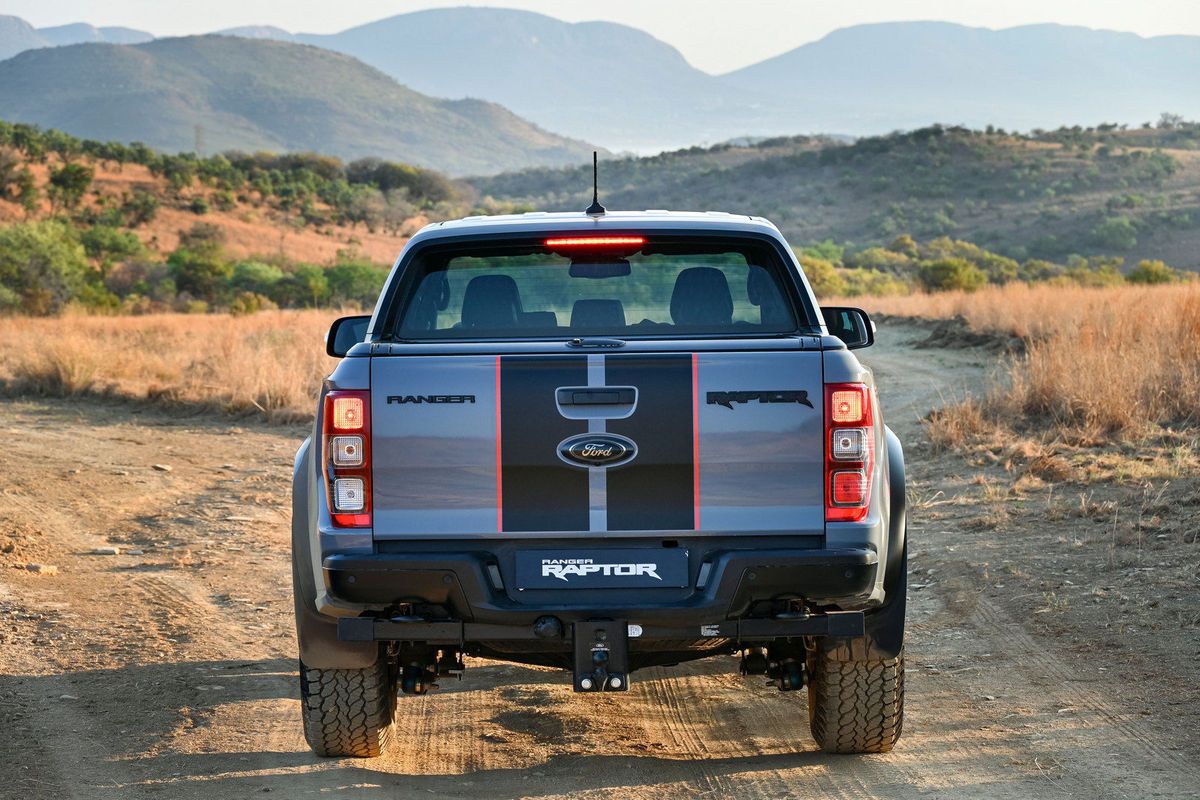
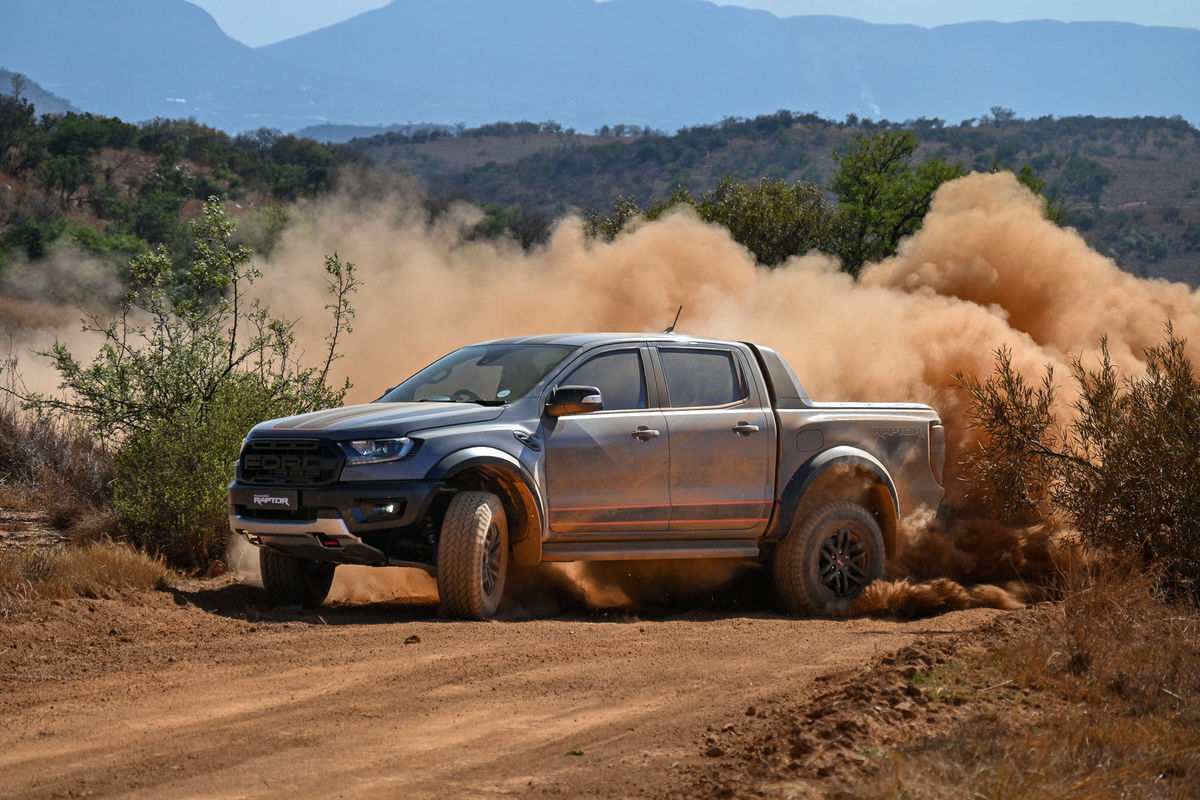
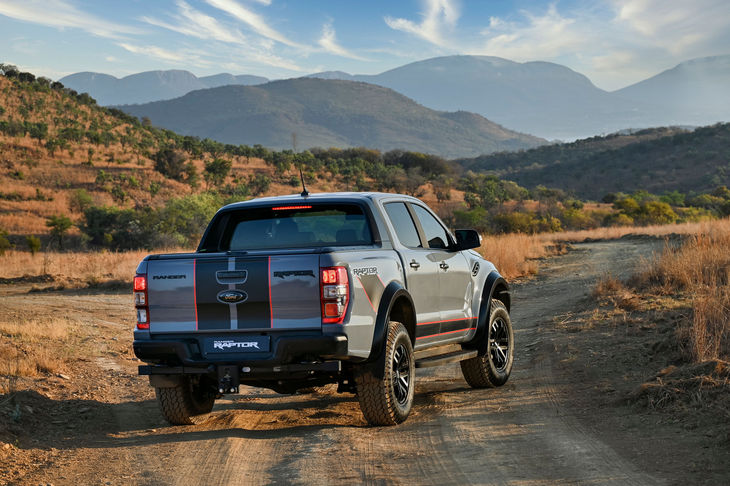
The Ranger Raptor Special Edition is cosmetically enhanced by an exterior sticker kit that adorns the bonnet, roof and sides of the door and load bay. It’s hard to miss with its black finish and red stripes.
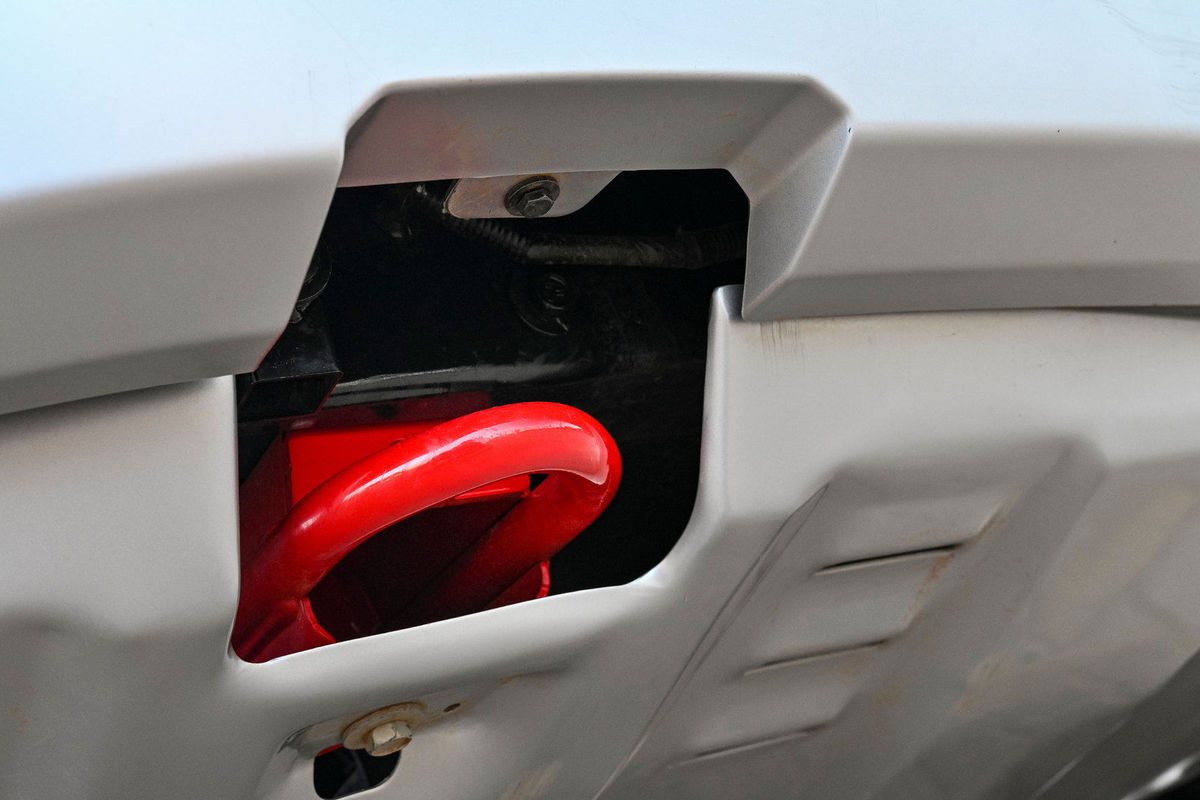
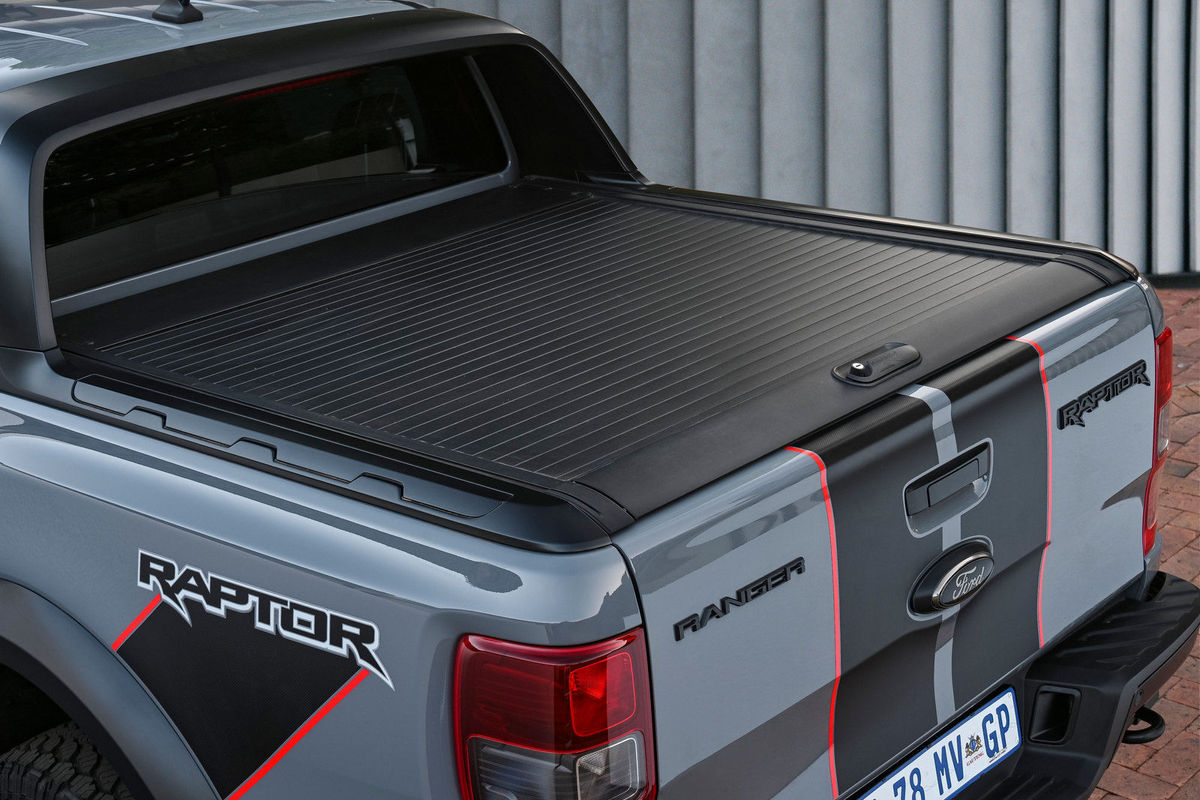
A manually retractable roller shutter has been included in the Special Edition’s price, which, of course, secures the contents of the bakkie’s load bay. The final amendment to the exterior is the red-painted tow points at the front. Ford Motor Company of Southern Africa does like a touch of red paint at the front of a Ranger, you only need to look as far as the Ranger Thunder’s bluff front end to see that.
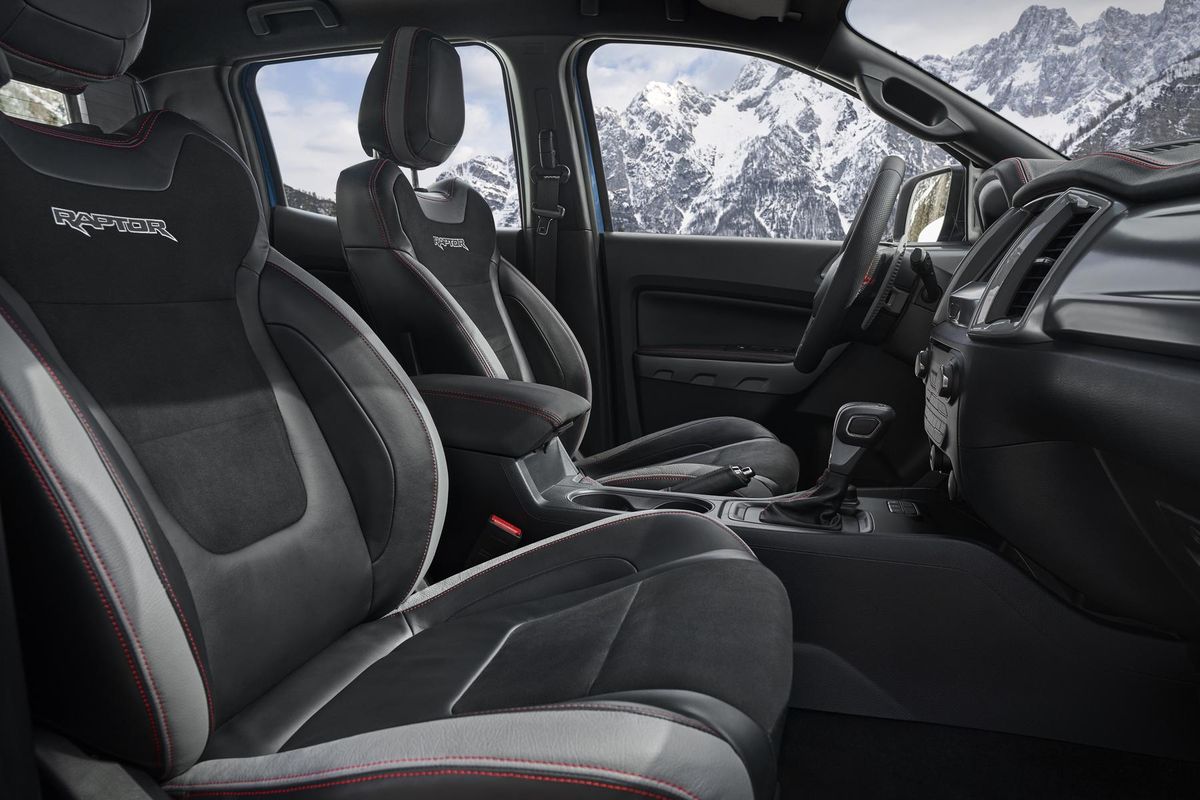
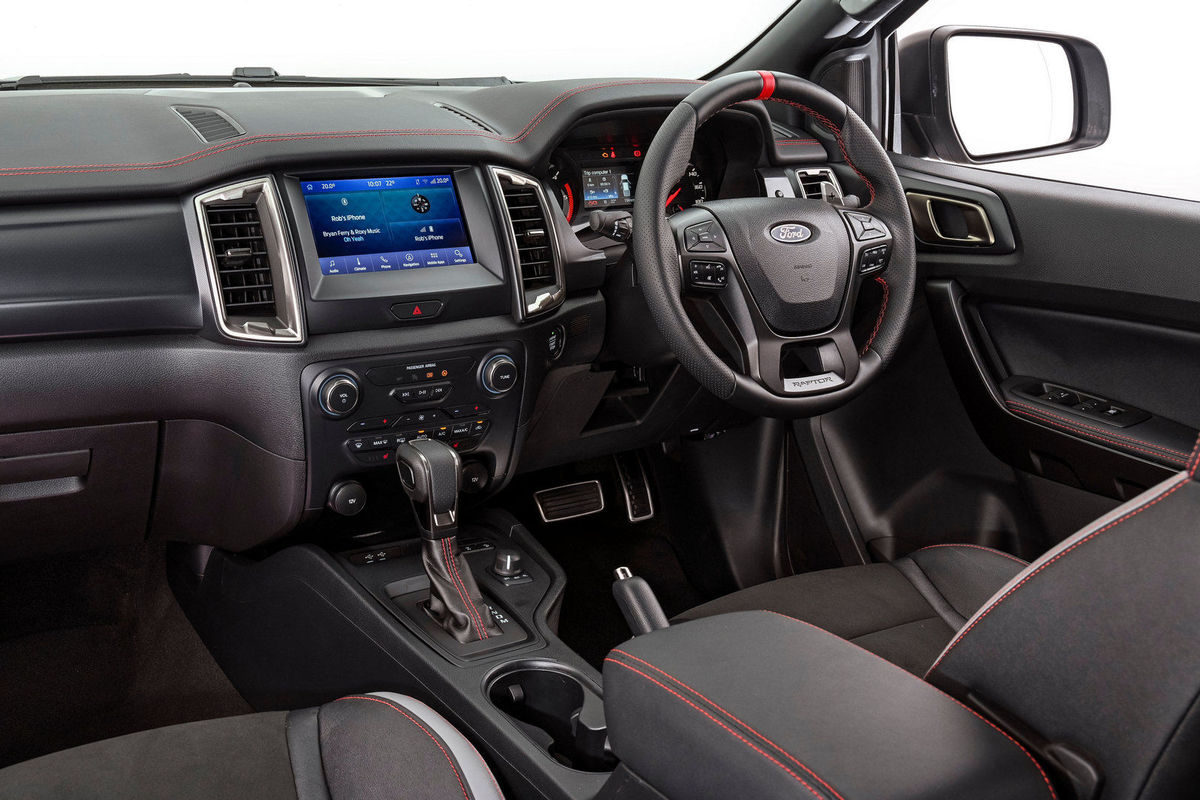
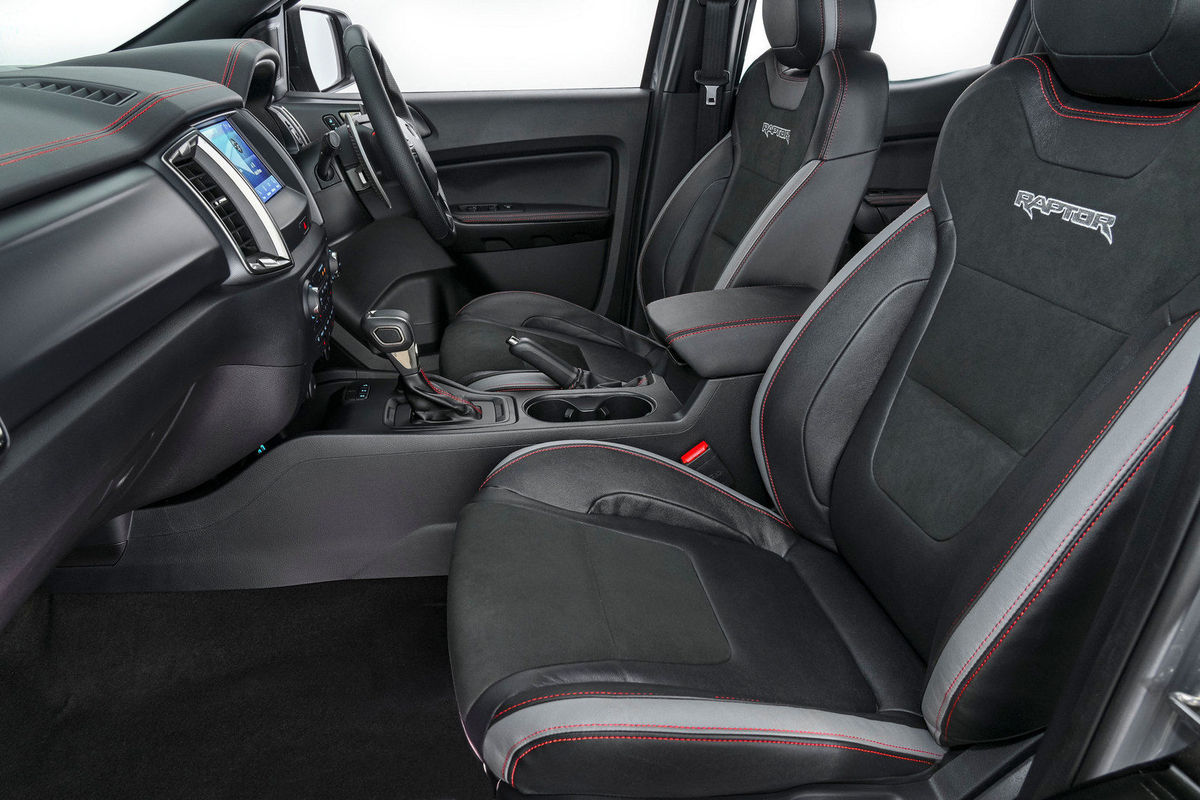
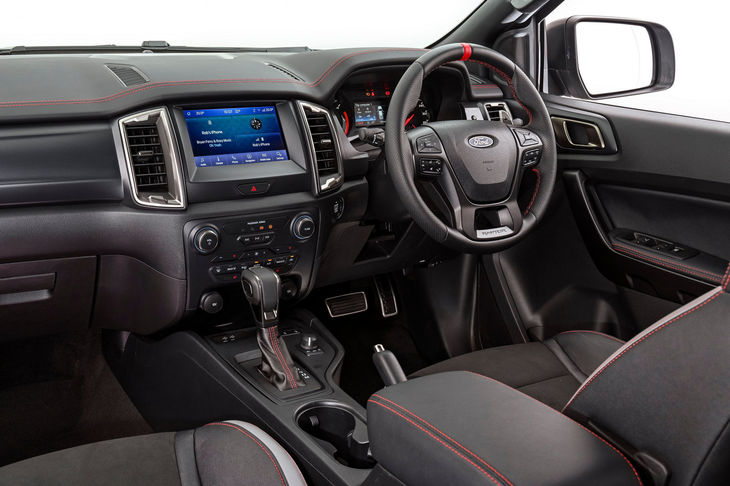
The cabin also incorporates a few minor changes. The traditional blue stitching on the Raptor’s seats and steering wheel is replaced with red threading and the instrument panel is finished in Raceway Grey.
The Special Edition retains the 157-kW 2.0-litre bi-turbodiesel engine.
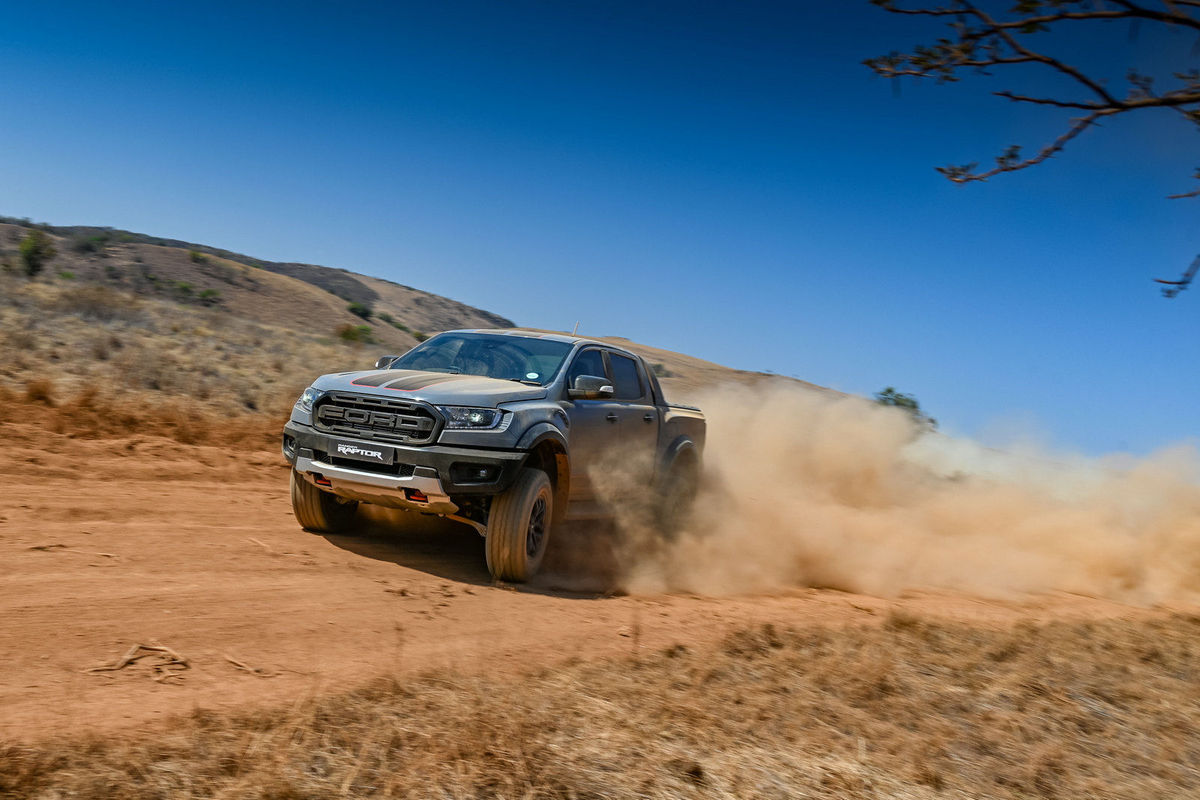
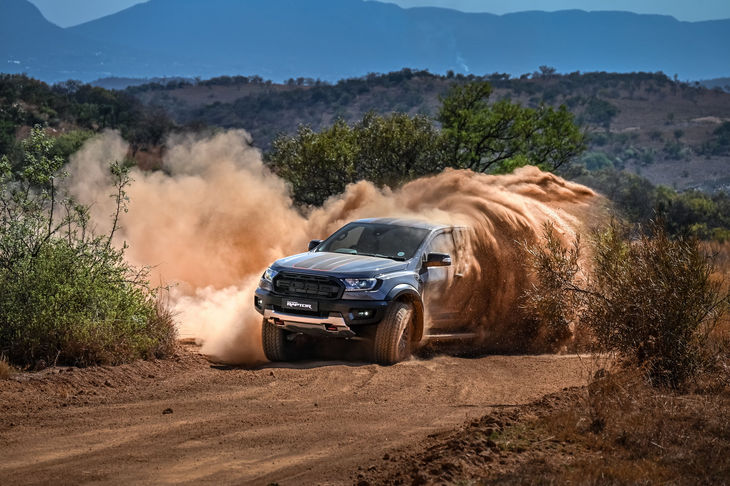
From a mechanical point of view, nothing has changed on the Ranger Raptor, so a 2-day drive on some of the Republic’s quietest roads gave us time to reacquaint ourselves with the locally produced off-road juggernaut. The Raptor is not a performance bakkie, as I think many of us expected it would be (considering the Raptor name and the legacy of the F150 Raptor in the US). This Raptor was simply engineered to be the best 4×4 vehicle it could be. That’s why there is no power increase from the 2.0 bi-turbodiesel (157 kW and 500 Nm), despite many cries from fans to fit the bakkie with a beefy petrol engine. The ‘diesel works just fine in combination with the 10-speed automatic transmission. It’s not as refined as an SUV’s powertrain, but it’s certainly one of the smoother ones in the bakkie segment.
Overtaking acceleration is a little underwhelming compared to something like a Volkswagen Amarok V6, but the Raptor will happily cruise at highway speeds. Actually, it will happily cruise at highway speeds on- and off-road, such is the compliance of the ride quality (Ford has the trick Fox suspension underneath the bakkie’s body to thank for that – on unsealed road surfaces in particular).
The Raptor is easily the most comfortable bakkie on sale today.
According to our guide, the longest dirt road in South Africa runs from Ceres to Calvinia – it’s 200-plus kilometres long. We joined onto this dirt road after going over the Katbakkies pass, a mix of dirt and tar that exits the Cederberg before the vast Karoo landscape dominates your view in all directions – it’s well worth the trip if you don’t mind adding a bit of extra mileage to your journey.
We must have travelled 150 km on gravel roads over the 2 days – and most of that on the Ceres-Calvinia connection. The Raptor is the perfect vehicle for this sort of dirt track. The addition of Fox dampers to the ladder-frame-with-leaf-sprung-suspension setup does so much to bolster the ride quality, it’s as good as the most comfortable SUV – on a dirt road. It’s quiet too and has an air of invincibility about it.
The Tankwa is renowned for ruining tyres and breaking cars, but courtesy of its standard General Grabber 17-inch tyres, the Raptor brushed off hits and jolts with ease. Even the worst of the washboard gravel did very little to upset the ride comfort, something which normally sets bakkies into a fit of shakes, rattles and bouts of sideways crabbing across the road.
Red stitching replaces the traditional blue stitching inside.
So as not to make the trip only about “gravel travel”, we stopped off at the bottom of Du Toitskloof for a real off-road test of the Raptor (the location pops up just after you’ve headed through the Huguenot tunnel). It was a proper test of an off-road vehicle, something that prospective Raptor owners should consider doing just to see how capable this vehicle actually is.
With low range and multiple drive modes such as Rock Crawl, you can tip-toe your way up just about any obstacle. The lockable rear diff will help you out when things get really tricky, but the most notable part of the off-roading experience was just how composed the Raptor Special Edition’s body movement remained while we bumped over rocks, crossed rivers and descended steep negative gradients.
The suspension really is the Raptor’s pièce de résistance, but if you are going to tackle these really rocky or tricky off-road courses often, it might be worth your while to procure a separate set of wheels. The Raptor mags look great, but they protrude slightly outside of the tyre’s centres, so they are often the first contact point with rocks, which means you’re likely to be repairing wheels more than you’d like.
Summary
If you must have a new bakkie – at any cost – and don’t need to transport more than 600 kg of cargo, choose a Raptor.
The Raptor Special Edition carries a R45k premium over the standard Raptor (R965 300 vs R920 300). Whether the sticker kit, roller shutter and red contrast stitching can justify the newcomer’s premium is up to you to decide. This Ford, however, remains the best bakkie on the market. Taking price out of the equation, the Raptor’s ride is as good as some premium SUVs, and its off-road ability is unmatched at this price point. It might lack a little in the performance stakes (considering that its asking price is close to R1 million), but the bakkie certainly makes up for it through its sheer breadth of skills (and, of course, immense ability).
Vehicle Sales Fraud: What to look out for
Start your journey to vehicle ownership with the help of our Street Smart video series, brought to you by Absa Vehicle Finance. In the 3rd instalment, Michelle Moodley from Absa highlights some of the red flags that vehicle owners and buyers need to watch out for to help them recognise some of the tactics employed by fraudsters…
PARTNERED CONTENT
In the first episode of our series, Absa’s Fulufhelo Mandane discussed what you need to consider before you start shopping for a vehicle, the costs of ownership and your various finance options. In the video that followed, Mandane’s colleague Gordon Wood detailed how the new Aftermarket Guidelines, which were recently introduced in the motor industry, affect you as a vehicle owner…
In this instalment of the Street Smart video series, Michelle Moodley, Head of Operations: Sales Enablement at Absa Vehicle and Asset Finance emphasises the importance of taking precautions to avoid falling into the traps of fraudsters. This is in light of the fact thatexisting and potential vehicle finance customers are not exempt from fraudulent schemes.
What’s more, if you intend to buy a vehicle (either privately or from a dealer), there are several ways to check whether a seller is reputable and acting in accordance with respected vehicle-retail standards…
What should customers be cautious of when dealing with official communication from a banking institution?
Moodley: Customers should be careful of communication that doesn’t come from an identifiable e-mail address. For example, an e-mail offering support with a previously declined Vehicle Finance application from a banking institution like Absa, would not come from an e-mail address such as [email protected]. If a customer has doubts, they can contact the bank directly using independently sourced contact information, for example from the Absa website.
Be wary of communication stating that the individual works in partnership with a bank such as Absa or that the customer was referred to them by the bank. Such communication may also promote the use of the fraudster’s verification procedures such as accessing unknown links, websites or contact details created by the fraudster.
Any communication where the client is asked to provide personal information which fraudsters can use to submit fraudulent applications on their behalf should raise alarm bells. Such communication may offer guaranteed approvals, unrealistic benefits etc.
What’s more, be wary of any documents purported to be from a bank with inconsistencies such as spelling errors, different font types, incorrect contact details, a logo in the incorrect position, etc.
What are typical traits displayed by fraudsters?
Moodley: Fraudsters may suggest that customers alter information on their documents, for example, income details, expenses, etc. to ensure that an application gets approved. They may be vague or non-responsive to questions when asked about the vehicle, product features or characteristics etc. AND they always create a sense of urgency and convince people that the deal won’t be available for long or that there are other buyers interested.
A general principle is that if the deal sounds too good to be true, you should ask questions and do your own research.
What should customers look out for when shopping online for a vehicle?
Moodley: When buying online, it is important to ask if you can come and view the vehicle at the business premises. This is to check if there will be any excuses as to why you cannot view the vehicle beforehand.
Be wary of requests for upfront payment before viewing the goods and, if the communication seems suspicious or if you are unsure, look the company up on the internet to confirm the details.
What should customers look out for when buying a vehicle privately?
Moodley: Always meet the prospective seller and ask to see proof of ownership, for example, a copy of the NaTIS document or the last licence renewal request with the seller’s details before any money is exchanged and anything is agreed.
With the rising number of fraudulent scams negatively impacting vehicle buyers, Absa has developed a solution called Private Buy, which makes the purchase of a vehicle from a private seller more credible. We partner with dealers who conduct technical inspections on vehicles which help customers to make more informed decisions when buying a vehicle privately.
What are some important considerations when performing a transaction?
Moodley: Never pay a holding deposit if requested to do so urgently, check the premises of the seller or dealer via Google Maps and look at the surrounding areas and consult your bank’s online guidance around fraud and making secure payments.
Lastly, always buy from known and reputable dealers. Nothing is guaranteed, so do your own research and homework upfront before putting pen to paper.
Don’t hesitate to enquire…
Are you an Absa Vehicle Finance client and suspect that you have been targeted by fraudsters? Click here for assistance with fraud-related matters.
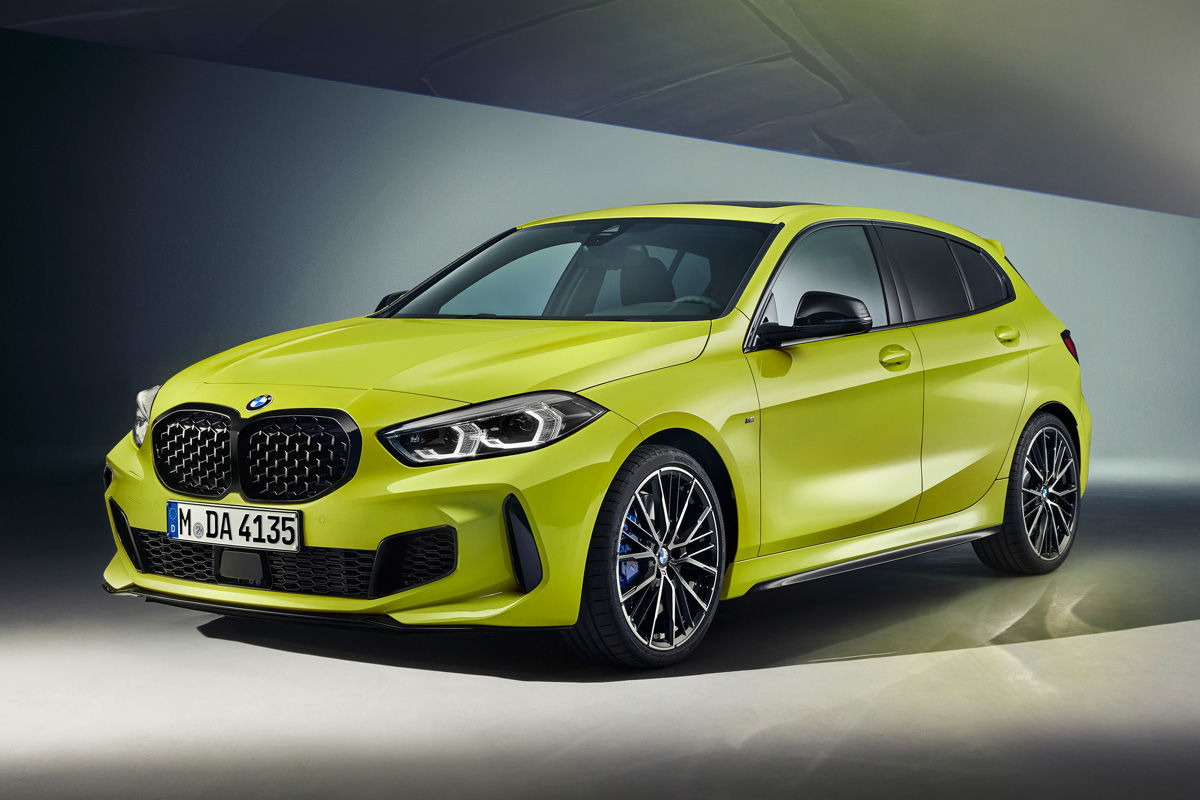
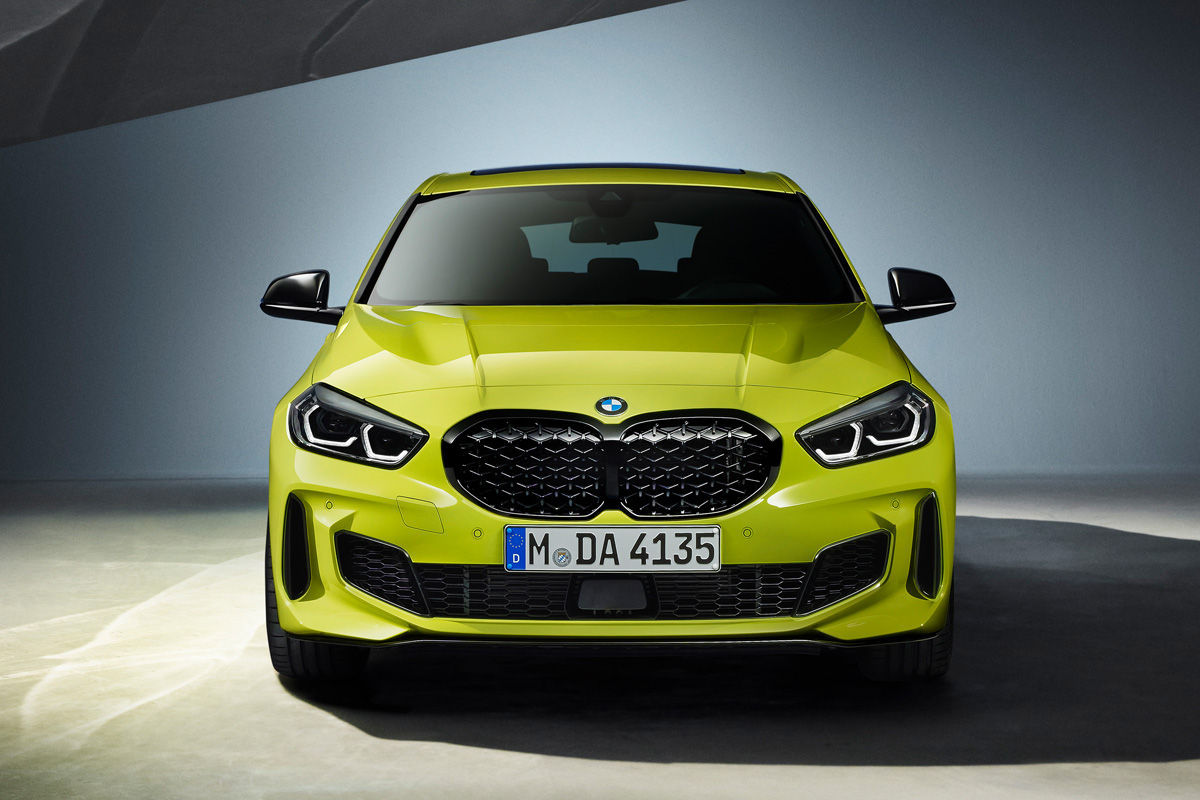
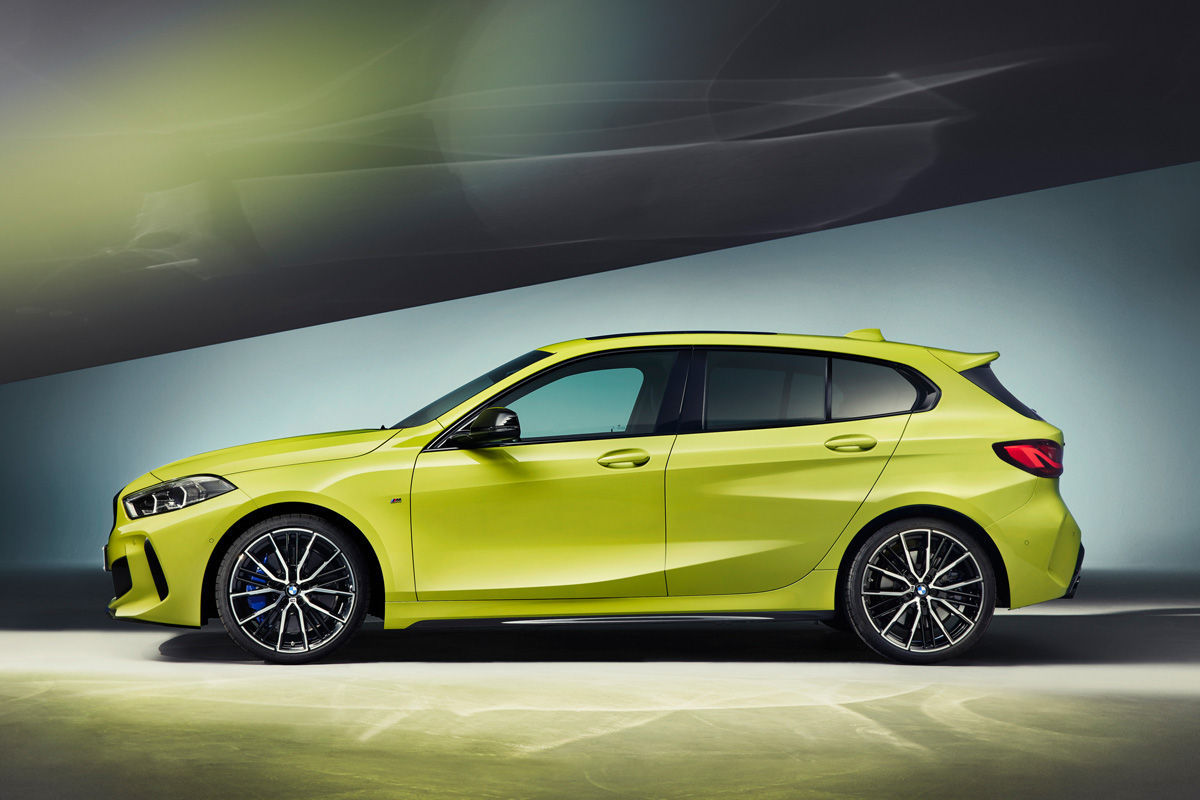
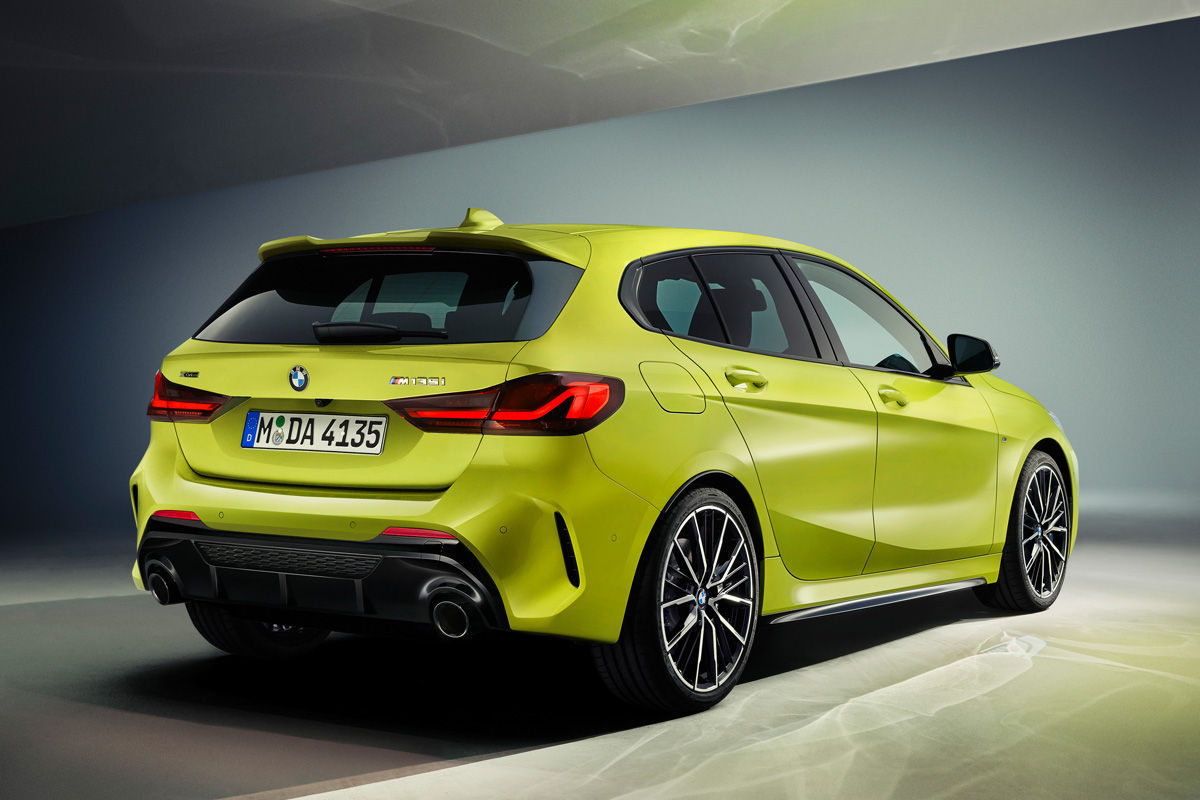
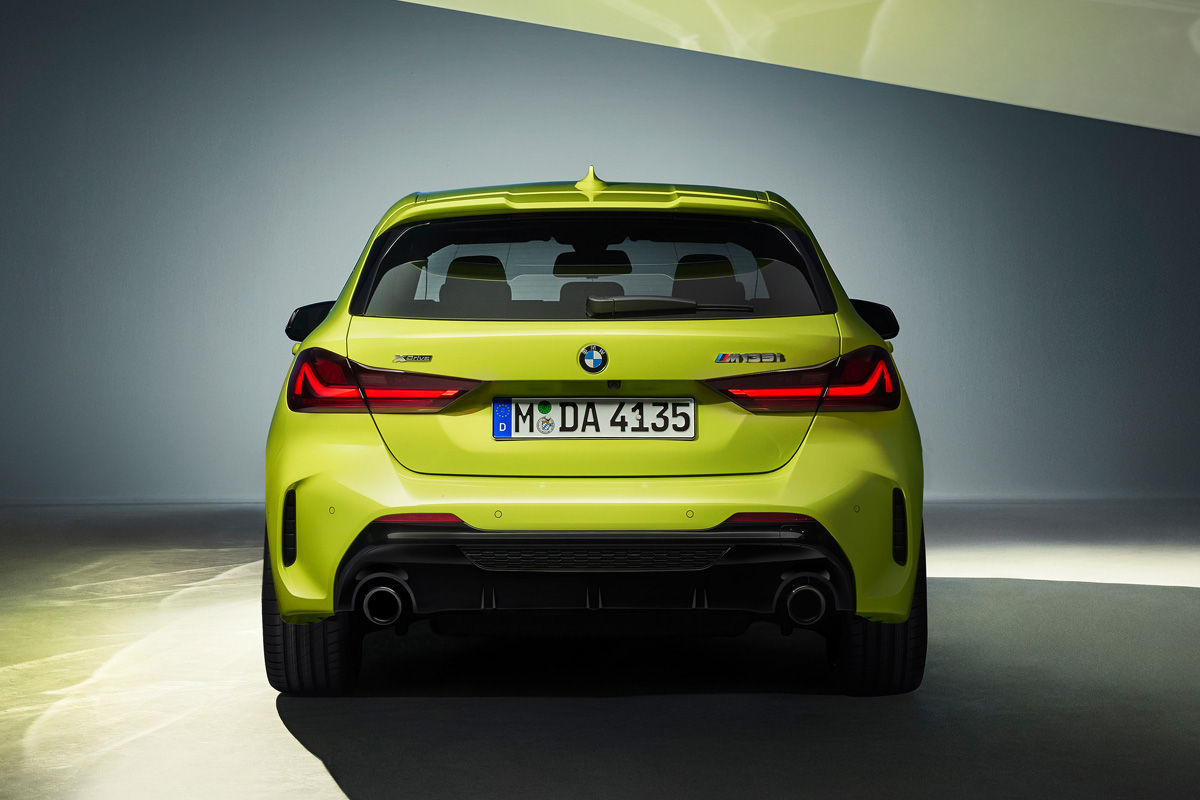
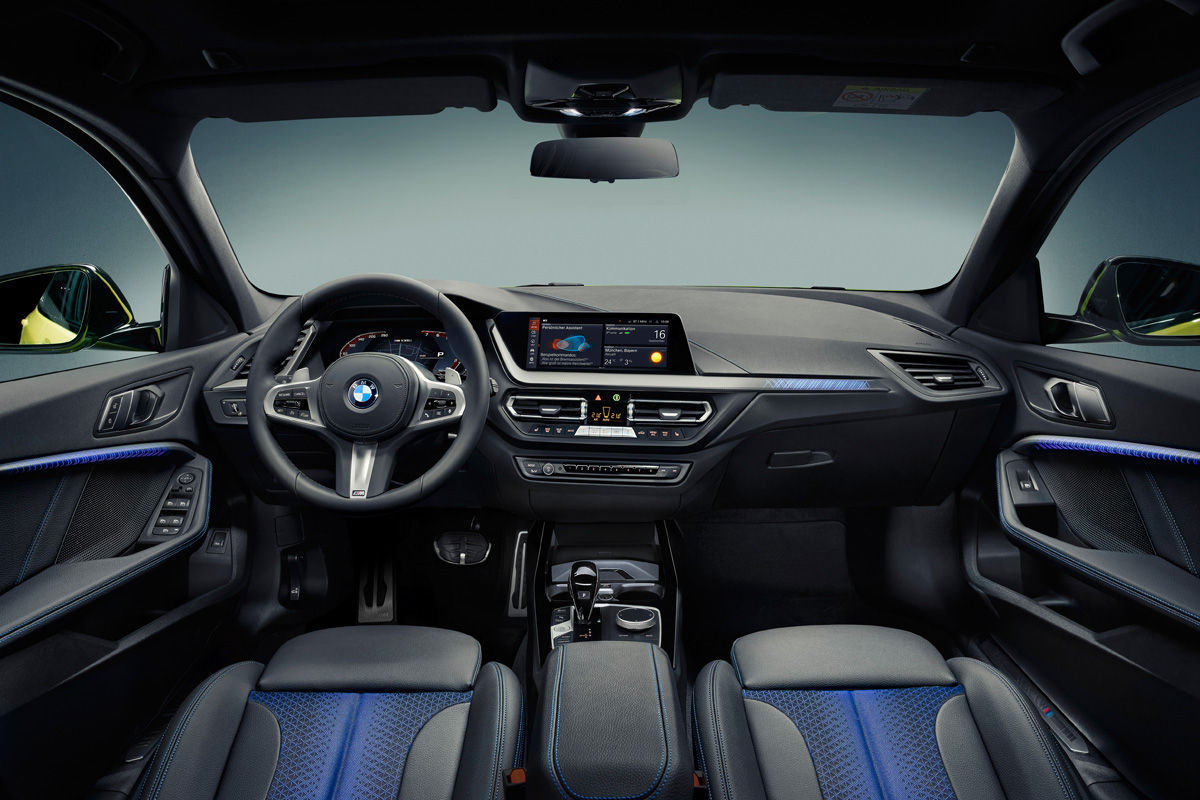
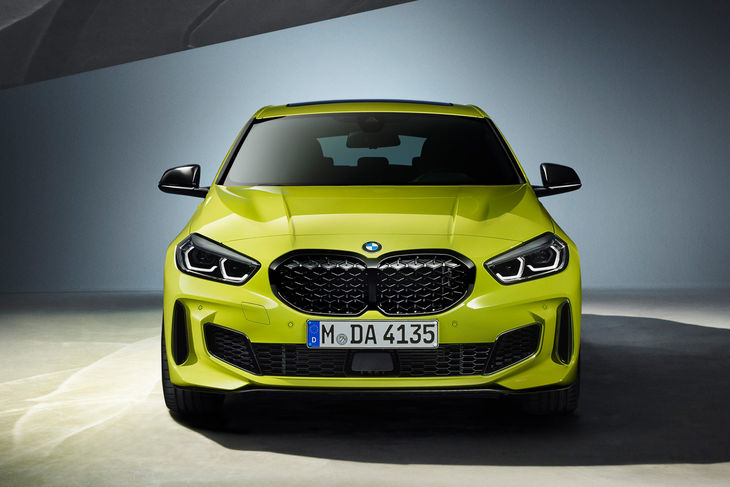
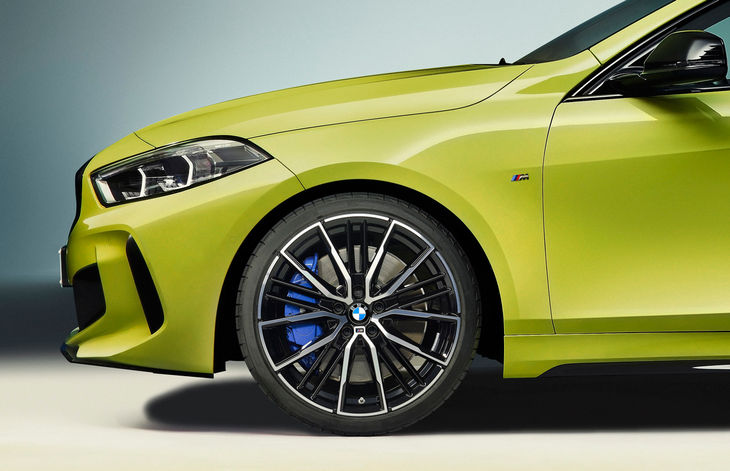
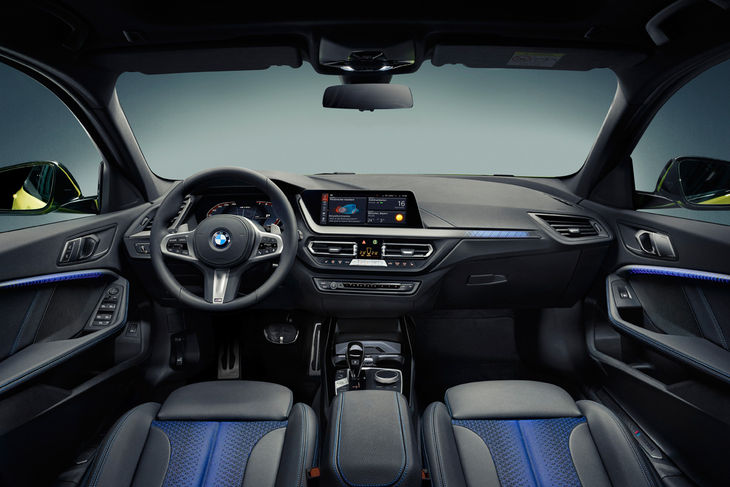
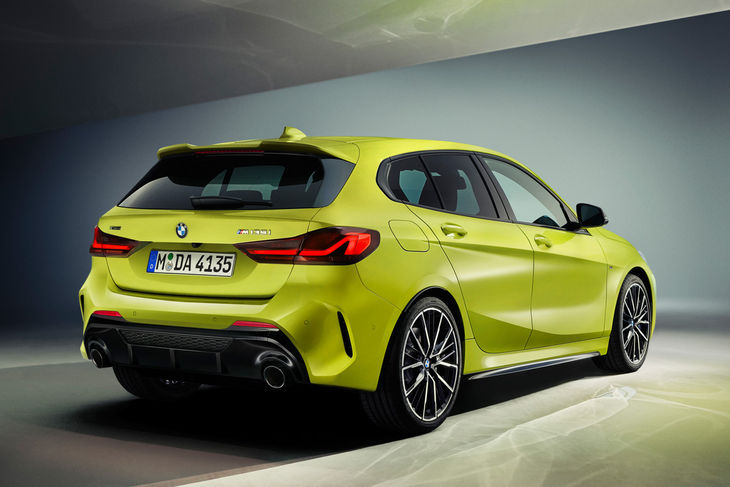
BMW has given its 1 Series flagship a revised suspension and a more spirited exhaust note, but left the M135i xDrive’s peak outputs unchanged… What exactly is the Bavarian marque up to?
Last year, BMW sprung a bit of a surprise when it resurrected its ti nomenclature to introduce the Volkswagen Golf 8 GTI-rivalling 128ti, which became available in South Africa this year; we’ve featured the 180 kW/380 Nm hot hatch in a drag race and track race videos.
Unlike its M135i xDrive big brother, the BMW 128ti is front-wheel-driven, but fans of the Munich-based firm would have noticed that the German hot hatch, in European specification (fitted with a particulate filter) produces 195 kW and 400 Nm, which is uncomfortably close to the 225 kW and 450 Nm of the range-topping 1 Series hatchback…
To make things trickier for the M135i xDrive, it now faces more foes than just the Mercedes-AMG A35 4Matic and Audi S3 Sportback (which we’ve also reviewed)… Since the arrival of BMW’s all-wheel-driven charge, Volkswagen has unveiled the 235 kW/420 Nm Golf 8 R, although it remains to be seen in what state of tune the Volkswagen will be offered in South Africa (it is scheduled to arrive at some point in 2022, semiconductor crisis permitting).
This update to the M135i xDrive serves to enhance the “track-inspired characteristics” of the derivative, BMW says, which is a little unexpected because the 1 Series flagship did not seem to be aimed at hardcore enthusiasts who are inclined to take their cars to track days.
In terms of the suspension upgrade, the front wheels’ camber values have been increased “to optimise absorption of lateral forces when powering through corners”; a hydromount has additionally been used to attach the front suspension wishbones, while the mounts for the trailing and control arms at the rear axle have also been redesigned. At the same time, the spring and damping systems have undergone recalibration, the firm announced.
As standard, the M135i xDrive features, inter alia, near-actuator wheel slip limitation (integrated into the engine control unit), a mechanical limited-slip differential on the front axle (with locking factors of 36% when accelerating and 26% on the overrun) and Performance Control, which works in conjunction with the Dynamic Stability Control to “optimise the car’s steering behaviour with judicious applications of the brakes.”
BMW says these upgrades result in a “significant improvement in roll behaviour in corners, which has a further beneficial effect on steering feel.” Ahh, now we’re getting warmer: the Bavarian brand has sharpened up its 1 Series flagship to make it more engaging to drive.
Watch Ciro De Siena’s previous review of the BMW M135i xDrive:
M135i xDrive ‘not all that sharp’ before
In our review of the pre-update M135i xDrive, which we published in 2020, Cars.co.za’s track test ace and experienced road tester Ashley Oldfield noted the BMW had “a tendency to understeer. In fact, there’s noticeable front-end push” and although the derivative was “nimble enough (and) not an ill-handling car by any means”, it was “just not particularly exciting to drive. All the ingredients are there, but the dish it serves up is decidedly bland.”
And, apart from making the M135i xDrive wieldier, BMW has made sure that the derivative now sounds racier or “more urgent” (as they say), even if only from the inside the cabin.
The Bavarian brand has reduced the backpressure created by the Bimmer’s twin-tailpipe exhaust system that facilitates power delivery and “produces a characterful acoustic accompaniment”, BMW says, which is augmented by the speakers of the audio system.
Irrespective of your position on the practice of using “digital aural enhancement” to make cars sound sportier than they are, many manufacturers do it and BMW says that apart from the engine sounds, a “composition specially created for this model” gets played at start-up.
Lastly, BMW has introduced 3 new colours to the M135i xDrive’s palette: the M paint shade Sao Paulo Yellow non-metallic, Frozen Orange metallic, as well as Frozen Pure Grey.
Strange timing
Updates of the nature that BMW has applied to the 1 Series flagship are usually introduced as part of a general facelift or LCI (Life Cycle Impulse) to the range, but not in this case. If BMW was intending to produce a stronger competitor to the Audi S3, Mercedes-AMG A35 4Matic and Golf 8 R, it would probably have upped the derivative’s outputs in this case.
The likelihood is that the red-accented 128ti, although a front-wheel-drive hot hatch, has pinched a few sales from the M135i xDrive, which has had a rather lukewarm reception from media pundits. To compound matters, the recent introduction of the BMW M240i xDrive coupe will probably have stolen even more of the 1 Series flagship’s limelight.
But here’s some food for thought… Could BMW be working on a true rival to the Mercedes-AMG A45 4Matic+, which would explain why the updated M135i xDrive’s outputs have not been upped? An M2 Coupe, based on the rear-wheel-drive architecture of the new 2 Series, is certainly in the works, but just how much performance is BMW willing to squeeze from its front-biased UKL2 platform, which underpins the 1 Series, 2 Series Gran Tourer and X1/X2? It seems unlikely that BMW would develop the B48 2.0-litre turbopetrol motor to produce all that much more than 225 kW, but watch this space.