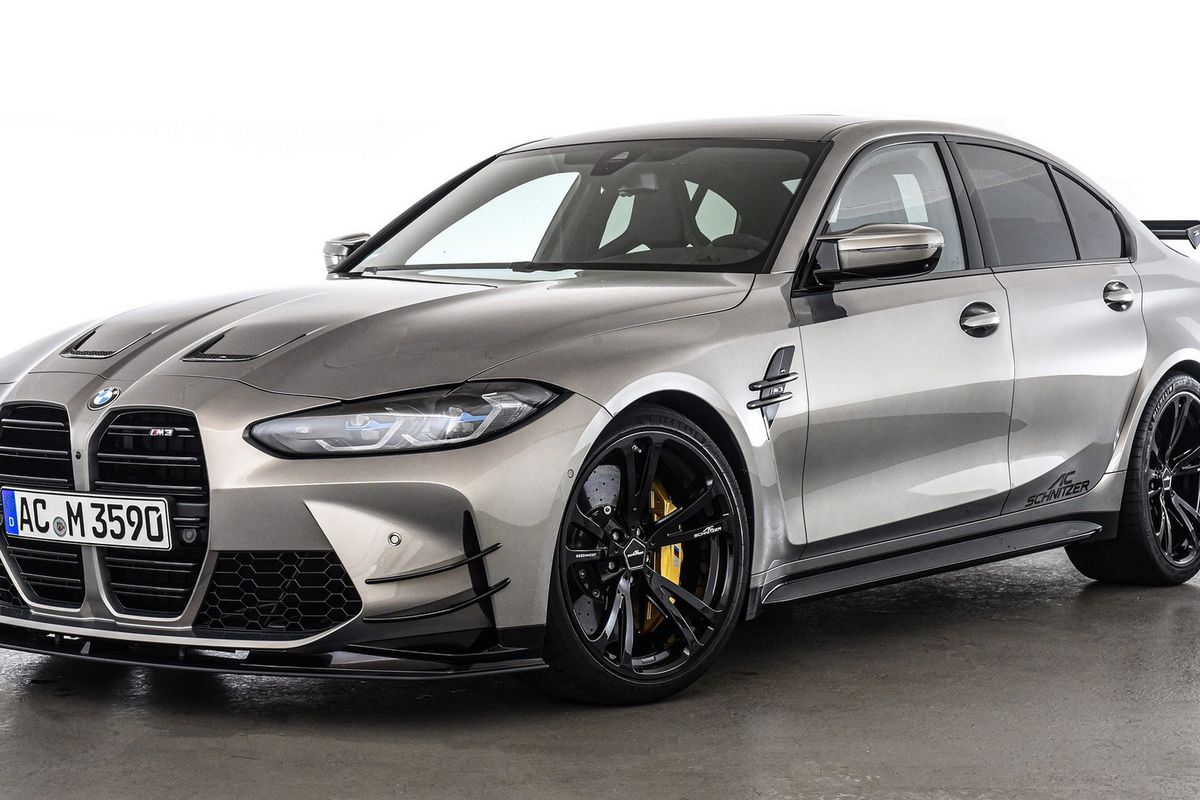
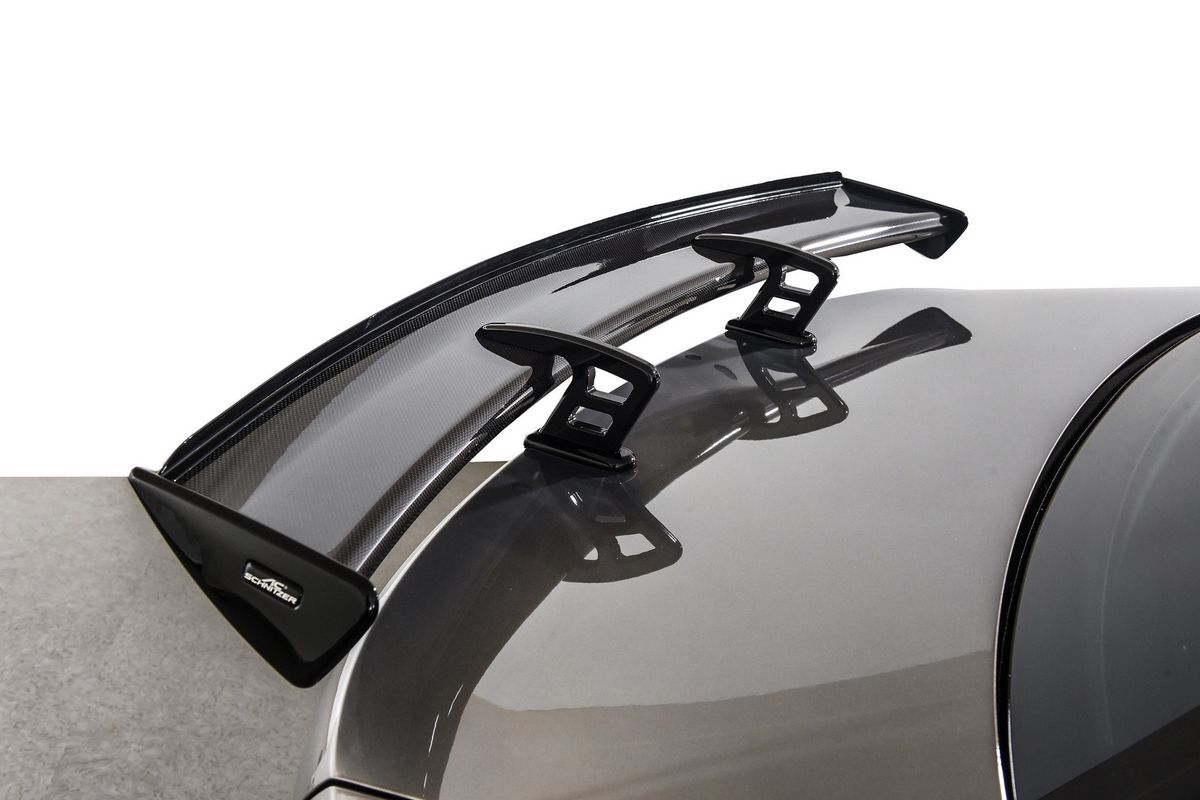
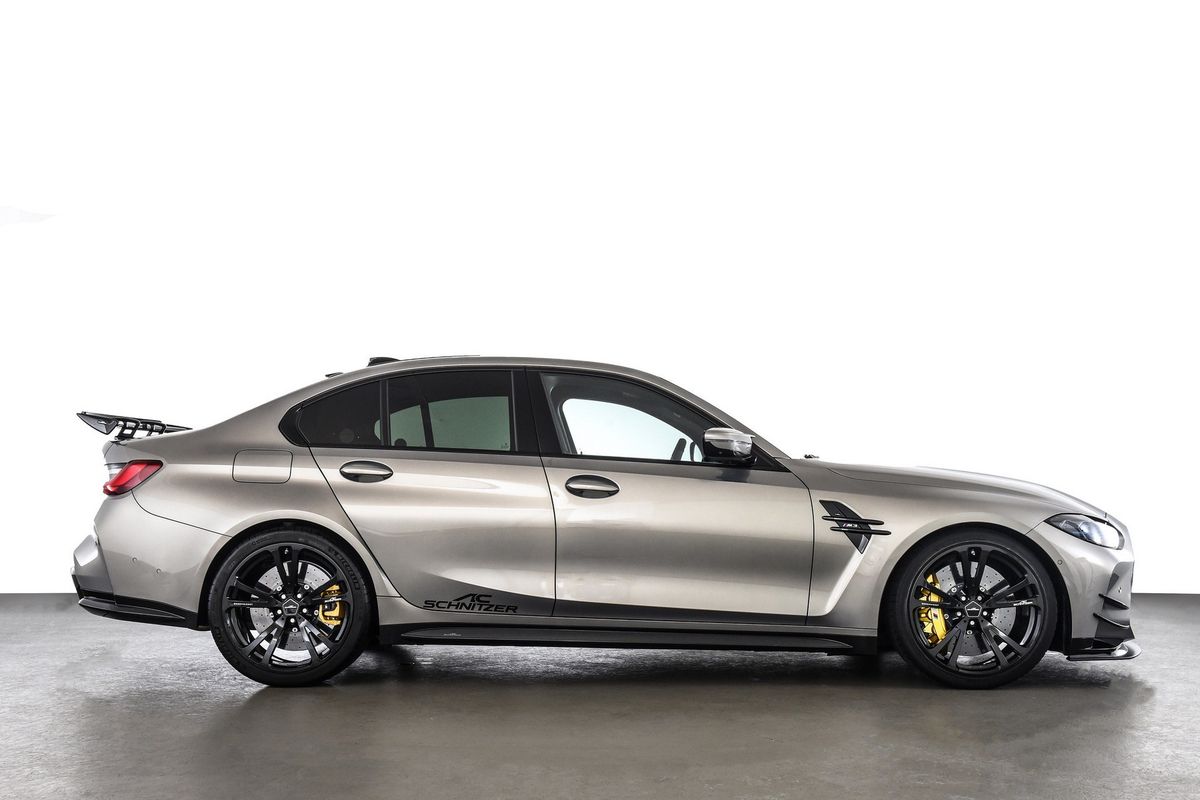
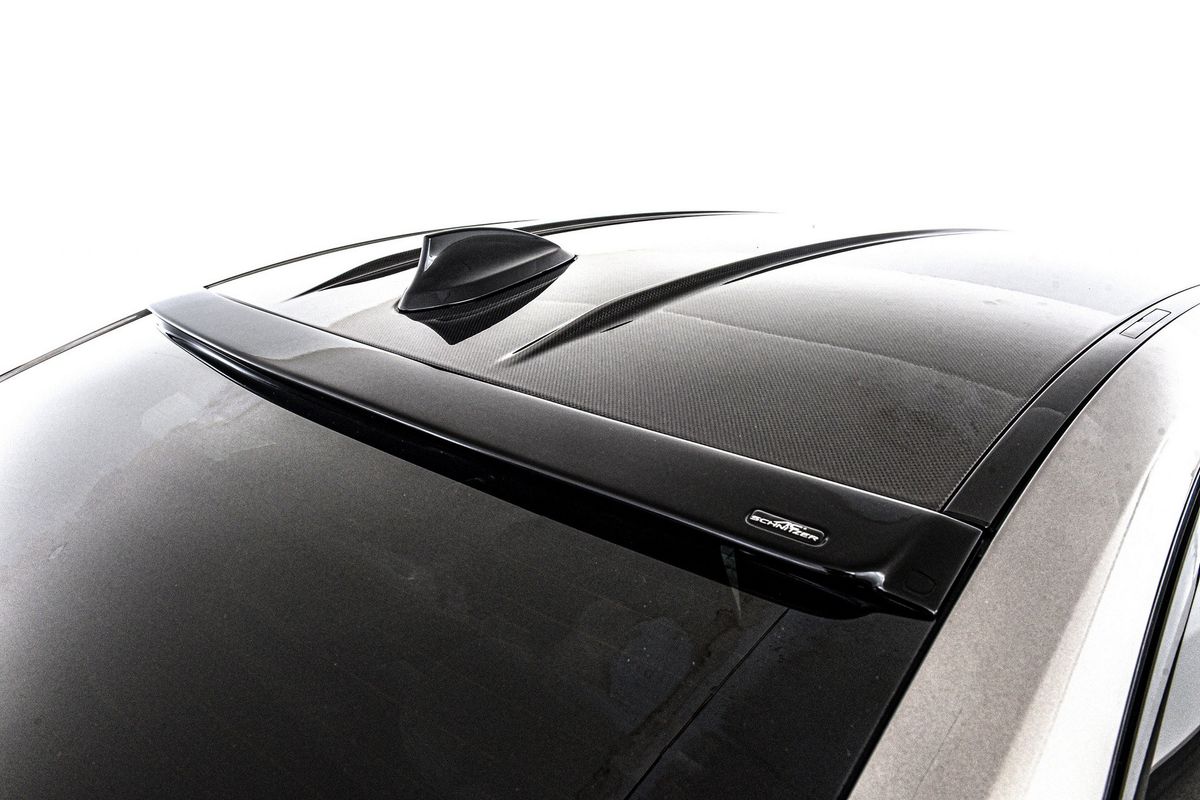
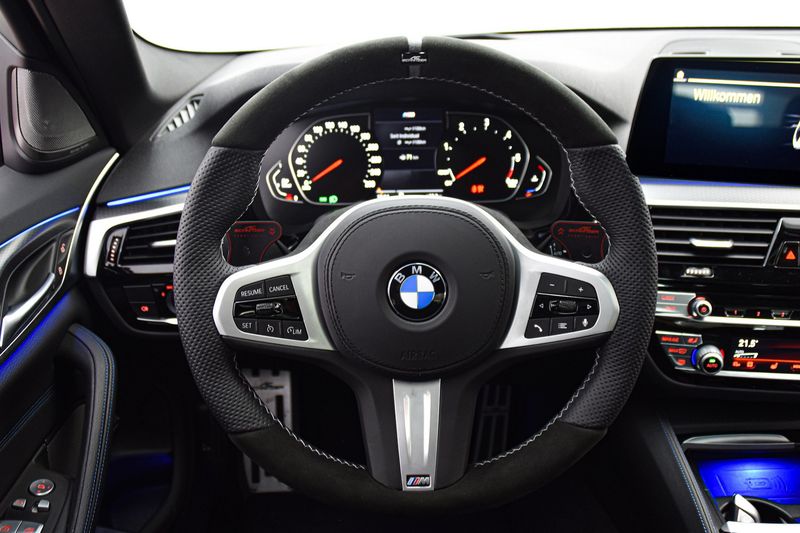
The AC Schnitzer BMW M3 should be your best bet if the standard BMW M3 Competition is too tame!
BMW and AC Schnitzer have an incredible history of taking already accomplished offerings and adding some go-faster bits to make them even more special.
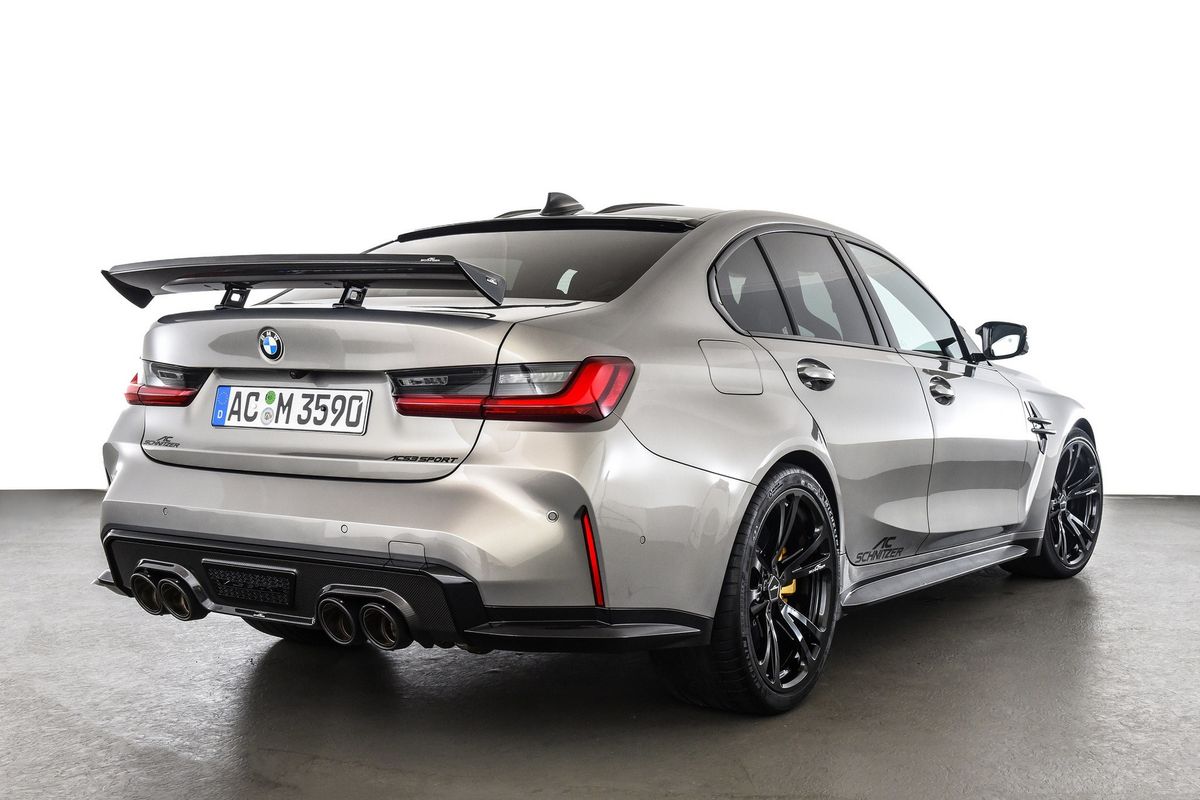
The German tuner has announced its packages for the latest generation of the popular performance sedan. The AC Schnitzer BMW M3 features a complete array of enhancements ranging from more power, aerodynamic enhancements, and suspension upgrades.
AC Schnitzer BMW M3 Performance Upgrades
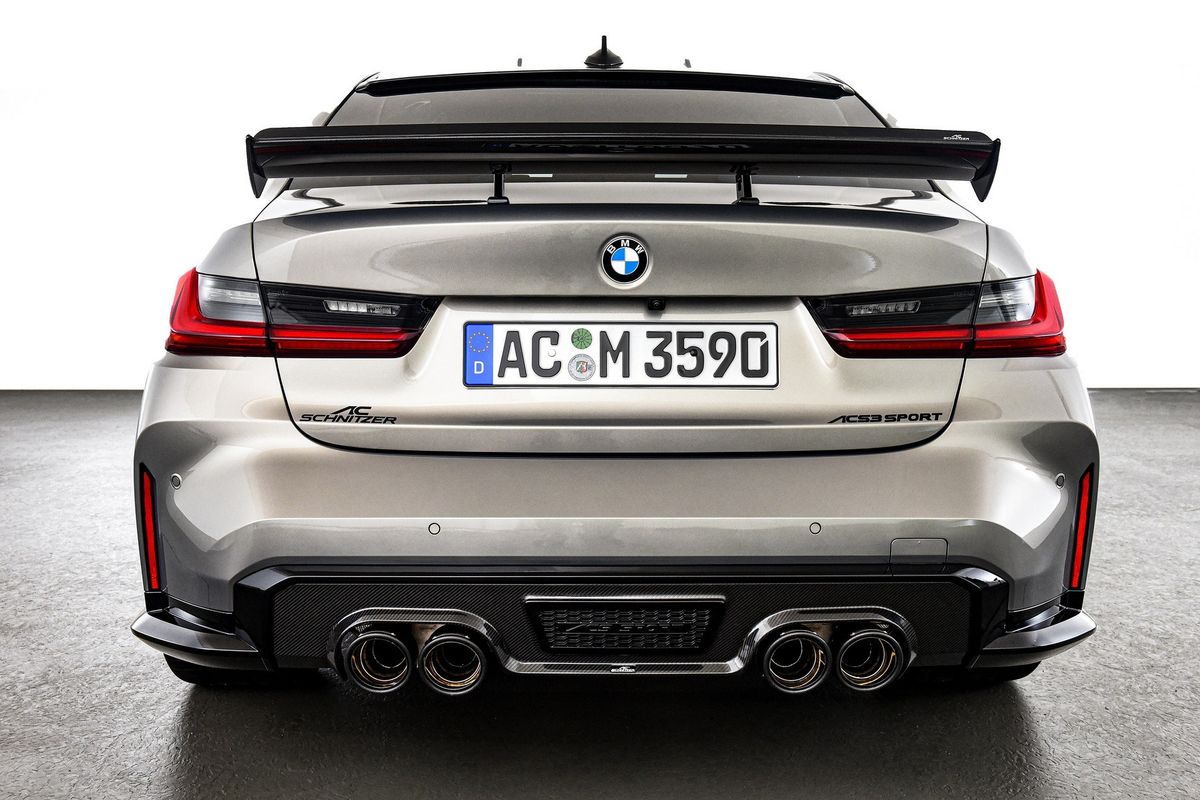
The new AC Schnitzer M3 features an ECU upgrade to take the 3.0-litre turbocharged straight-six petrol engine from 375 kW / 650 Nm to 434 kW and 750 Nm. If you weren’t satisfied with the engine’s tone, the AC Schnitzer BMW M3 also features a sports exhaust with carbon tailpipes. The best part? AC Schnitzer is offering a 4-year warranty.
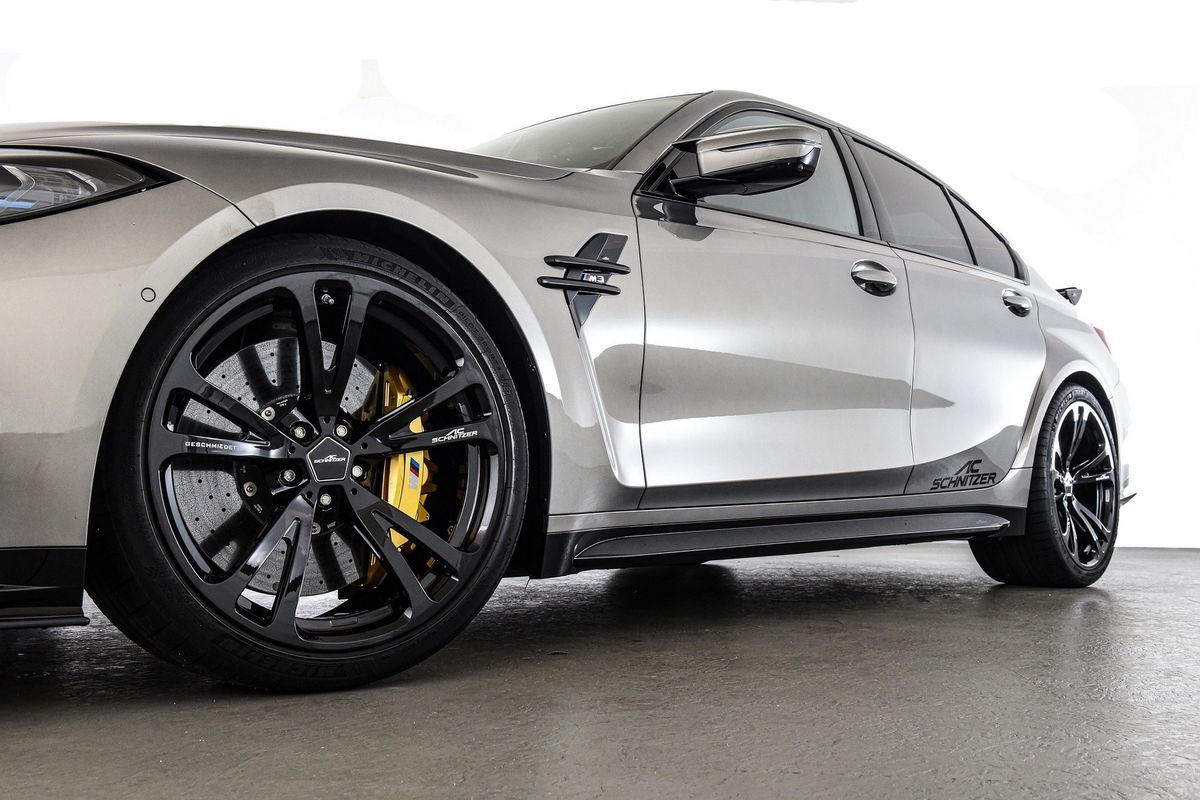
As far as suspension upgrades go, the spring kit features RS coilovers which are both compression and rebound adjustable, and the car can be lowered by 15-20 mm at the front for that stanced look. Some suspension upgrades result in a deteriorated ride quality, but the German tuner says its setup features “good-natured load change reactions and gentle understeer at the limits.”
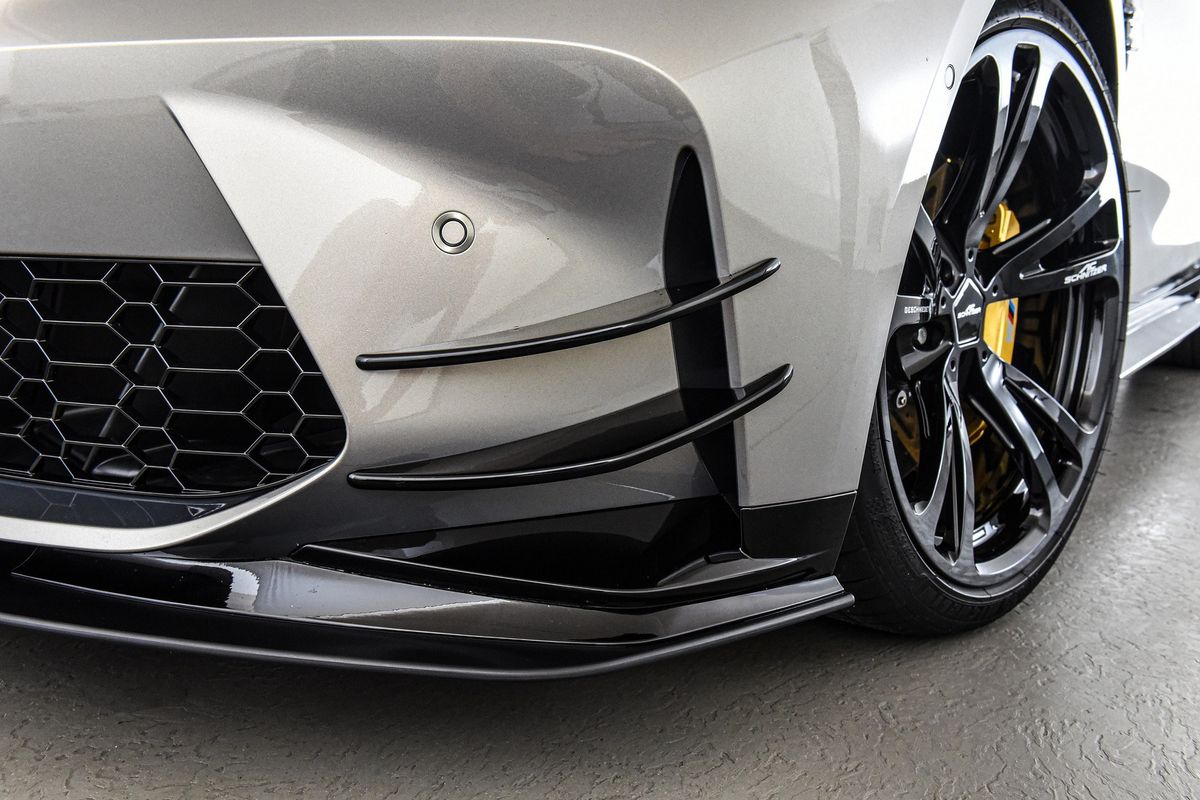
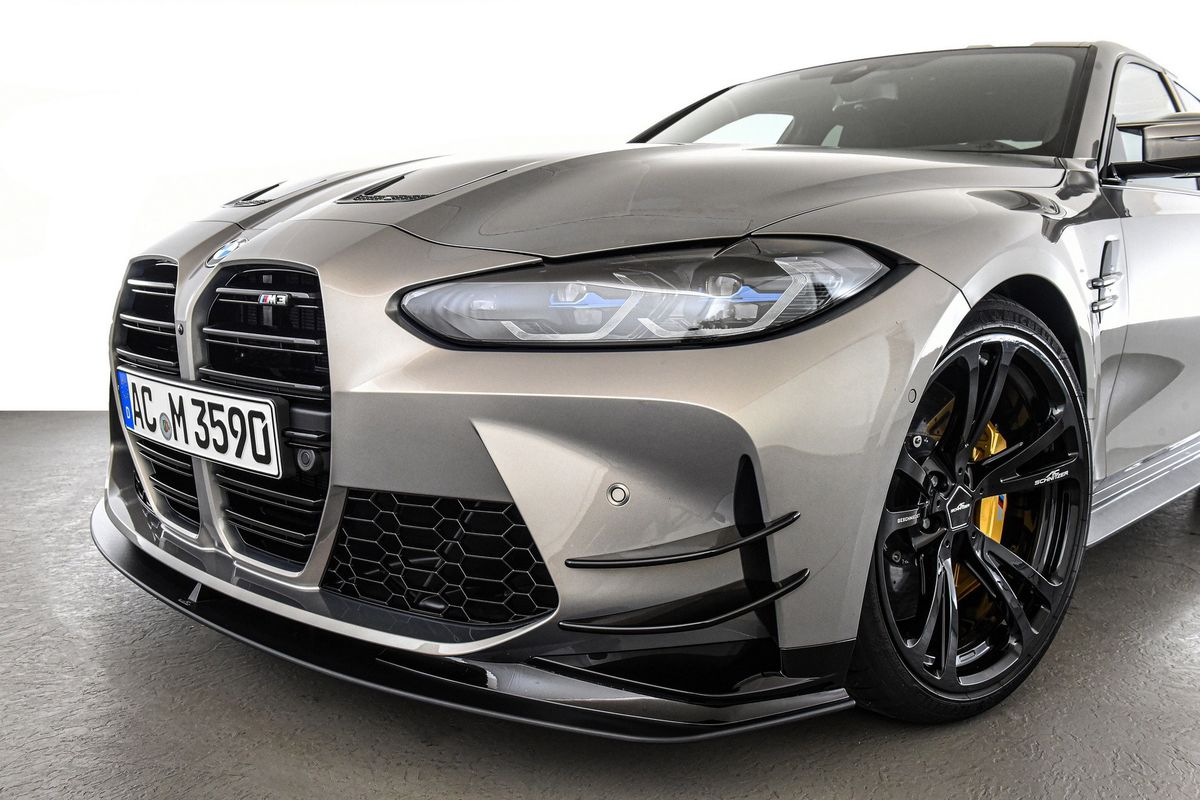
The aerodynamics package looks the part and is functional. The front splitter and flicks provide 40kg of downforce at 200 kph and the winglet on the roof adds a further 20kg. Finally, the boot wing with gurney flap adds another 70kg.
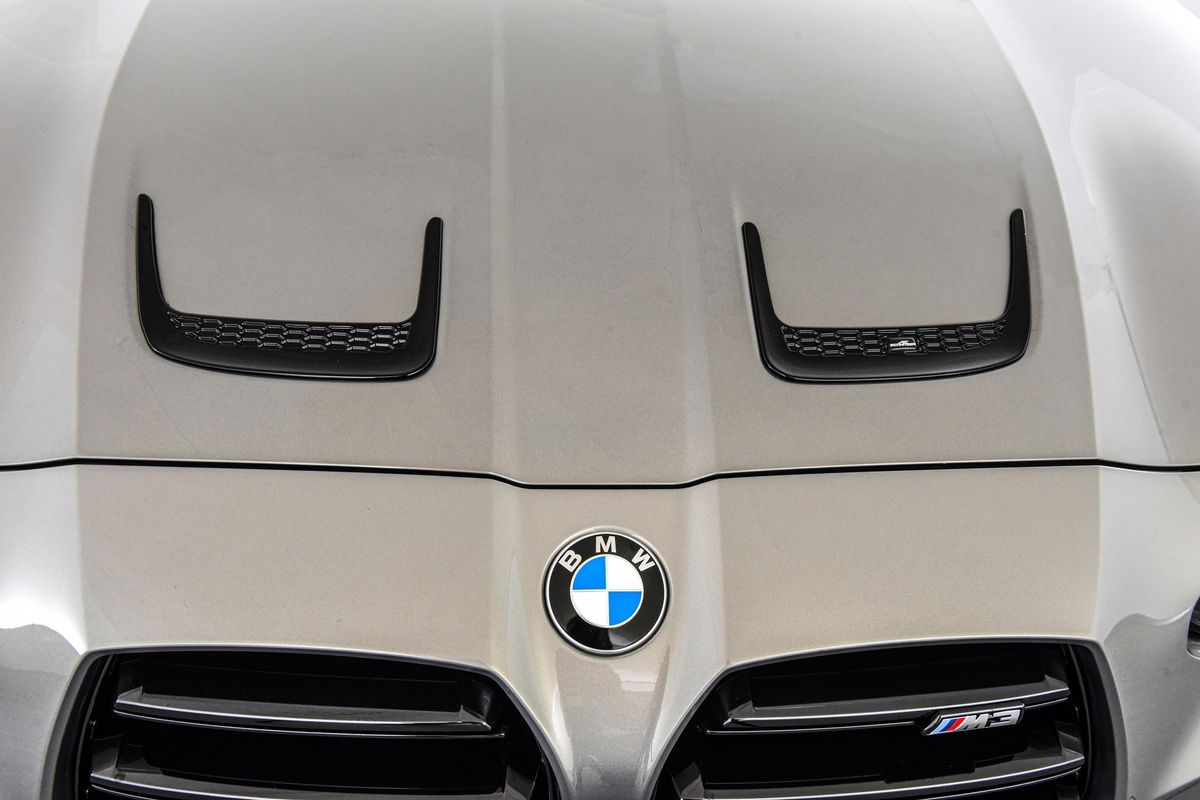
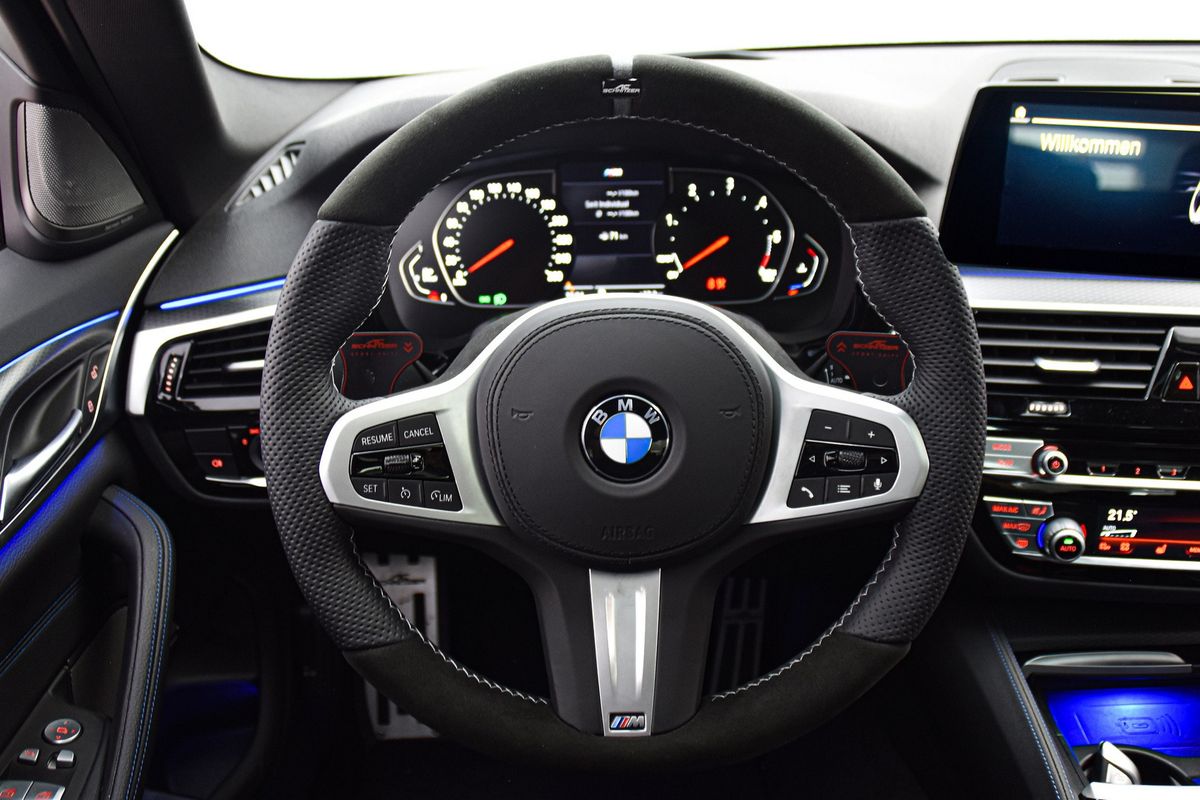
The vehicle gains some tasty 20-inch AC3 Lightweight forged alloy wheels in a variety of colours, and a bonnet with carbon fibre inserts. Inside, the cabin gets its own AC Schnitzer steering wheel which has been redesigned for more comfort and there are larger shift paddles.
AC Schnitzer products are available from selected BMW dealerships in South Africa.
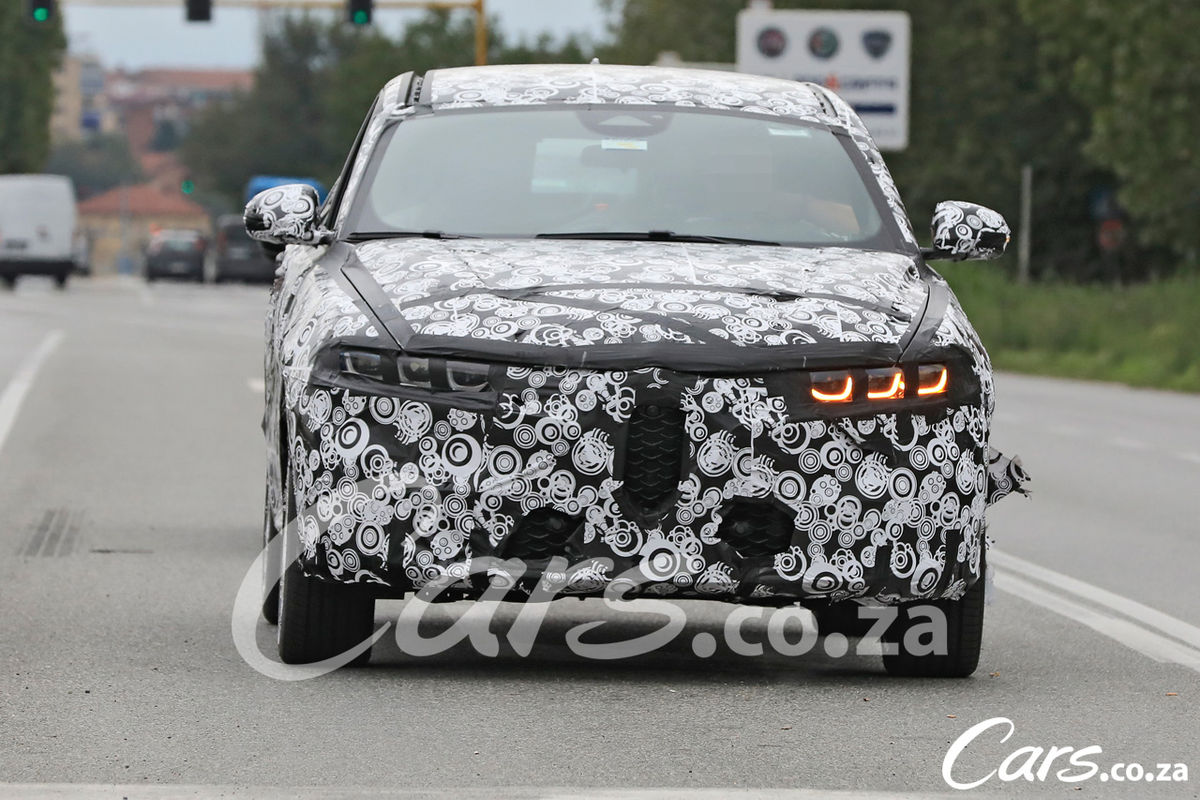
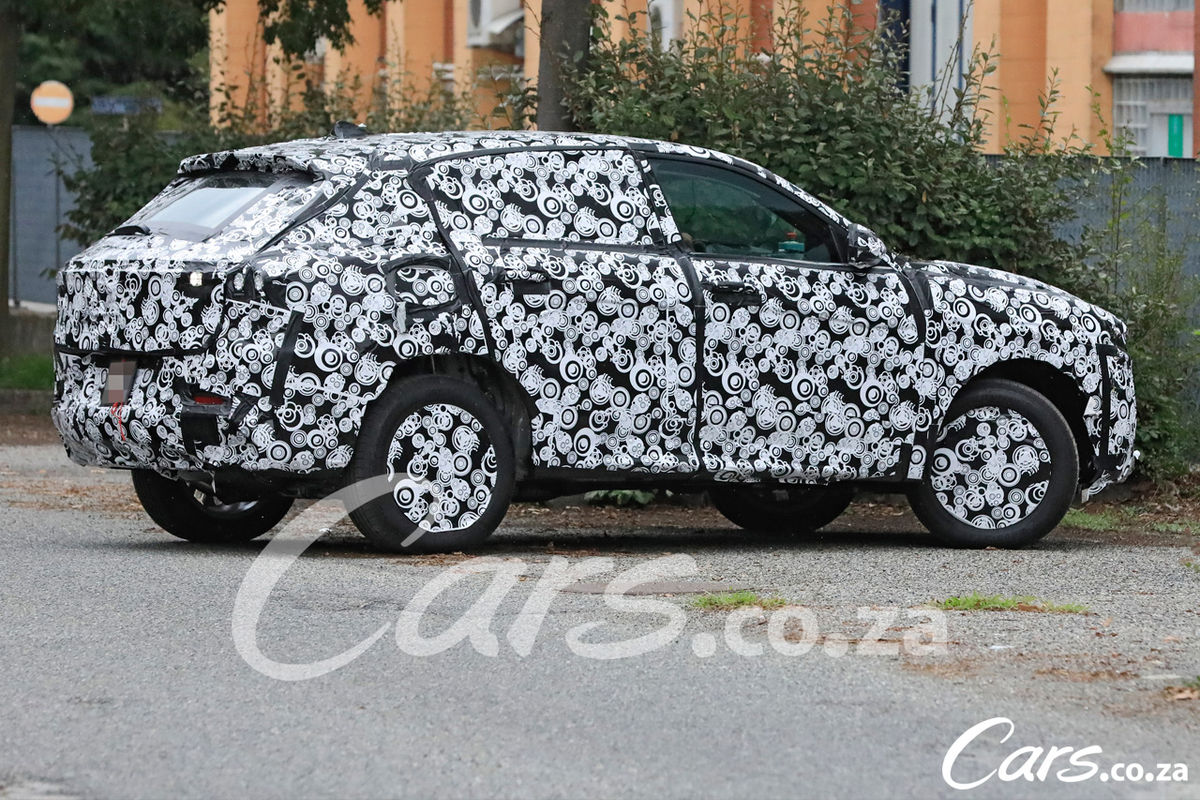
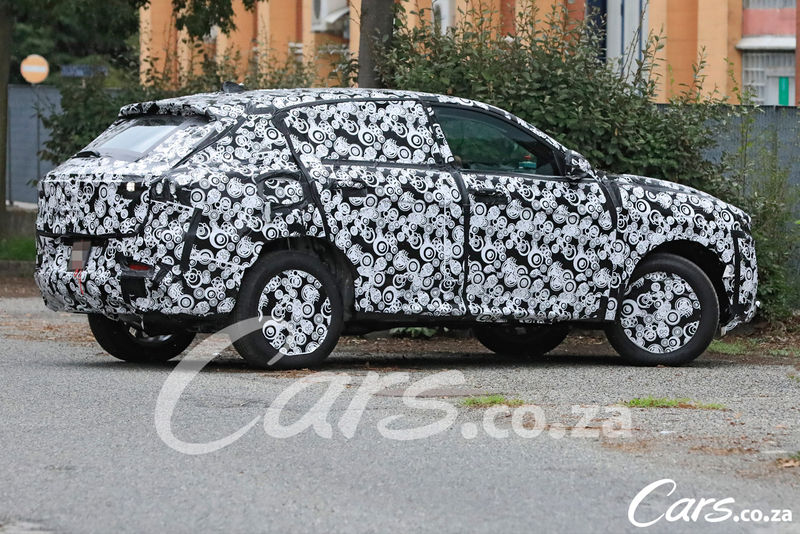
Rumours of Alfa Romeo’s demise have been greatly exaggerated as the Italian brand will be launching a new model every year until 2026.
Picture credit: S. Baldauf/SB-Medien. We have paid for these photos and at the photographer’s request, have watermarked them.
Now that Alfa is part of the Stellantis Group, which comprises Peugeot, Opel, Citroen, DS, Jeep, Fiat, Alfa Romeo to name but a few, attention turns to keeping that brand profitable.
The Peugeot/Opel/Citroen side of the business is booming in continental Europe, with sales in high numbers. Certain products like the Peugeot 2008 and Opel Corsa are nestled comfortably in the top-10 sales charts and demand has never been better. With such success, Stellantis hopes to turn Alfa Romeo around and replicate some of that success.
Chatting to Automotive News Europe, Alfa Romeo boss Jean-Philippe Imparato confirming the Italian brand will have a product launch every year until 2026. First out the blocks will be the Alfa Romeo Tonale, a compact SUV. It has been delayed due to unsatisfactory electrification and Imparato confirmed he wants the new Tonale to be sportier than the Peugeot 3008. We, therefore, assume the two models will be sharing the latter’s PSA EMP2 platform.
At the SA launch of the revised Alfa Romeo Giulia and Stelvio models, a local Stellantis representative confirmed the Alfa Romeo Tonale will have a global reveal in March 2022 and if all goes according to plan, will be touching down in October 2022.
As for the other four new Alfa products, very little is known. We reckon there’ll be at least another SUV, either smaller than the Tonale (think Fiat 500X/Jeep Renegade/Peugeot 2008 size) or bigger than the Stelvio (potentially an Alfa Romeo version of the Jeep Grand Cherokee L). Of course, every petrolhead is hoping for a return of the iconic GTV badge for one last blast before the brand goes completely electric from 2027.
Mazda customers who have been waiting forever to trade that CX-7 for something new could find a solution from the Japanese brand in 2022.
As Mazda expands its CX range, the new variants are being evaluated for local introduction. That means there is potential for CX-60, CX-70, CX-80 and CX-90 to become available to South African buyers.
The world has changed a lot since CX-7 was discontinued locally. In some ways, it was a pioneering product – a large crossover before larger crossovers were popular. Right vehicle, wrong time.
With solid demand for Mazda’s CX-30 and CX-5 among South African crossover buyers, the promise of even larger vehicles could serve a purpose.
The growing CX range will be split into narrow and wide-body derivatives. Aware of the challenges in navigating ancient city and village infrastructure, Mazda’s CX-60 and CX-80 are designed for European markets.
The CX-70 and CX-90, are wide-body versions suitable for markets with generously sized roads and ample parking. Like South Africa.
The CX-60/70 are two-row crossovers, while the CX-80/90 offers three rows of seating – similar in cabin concept, to a Hyundai Palisade.
Although it resisted the demand for diesel engines for many years, Mazda’s 2-litre four-cylinder turbodiesels have proven powerful and reliable. Developing and deploying a six-cylinder turbodiesel could give the brand a significantly increased performance offering for South African customers.
A powerful turbodiesel diesel offering and three-row seating configuration would make any of the large CX-series vehicles very neatly aligned with local customer preferences.
CX-80 or CX-90 would make suitable spiritual replacements for CX-7.
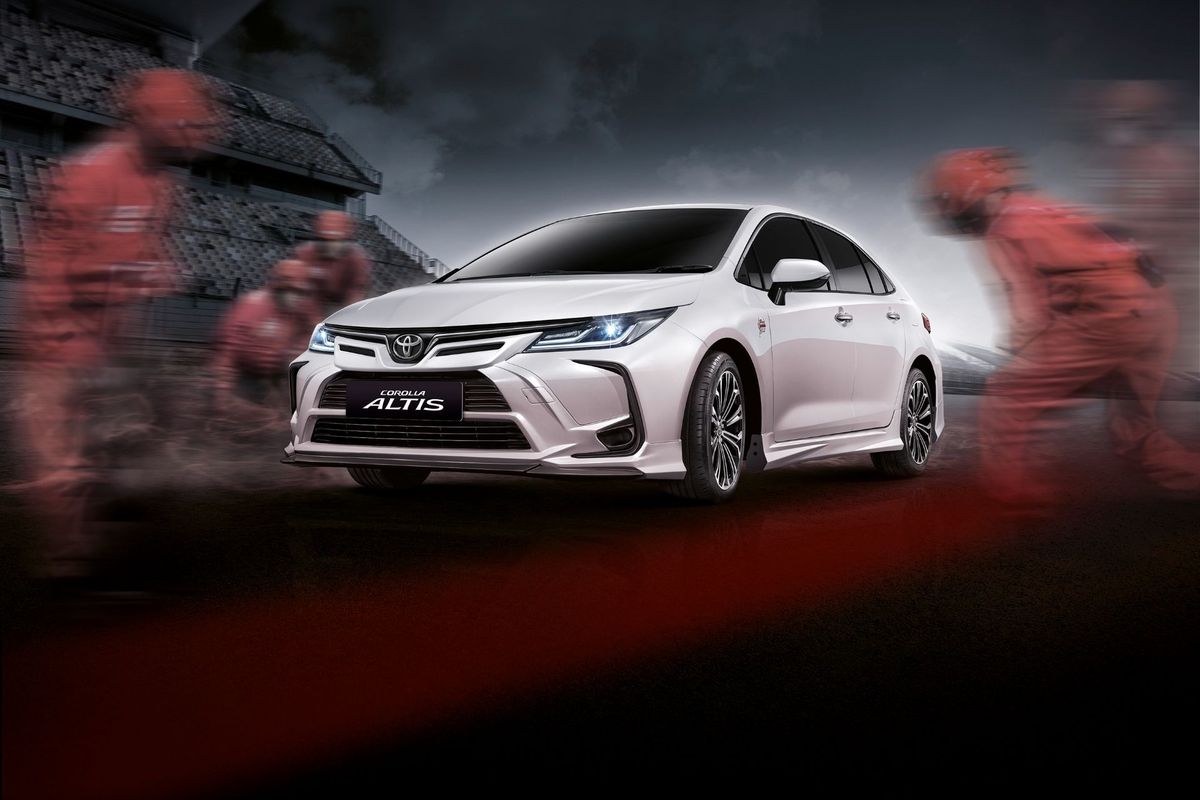
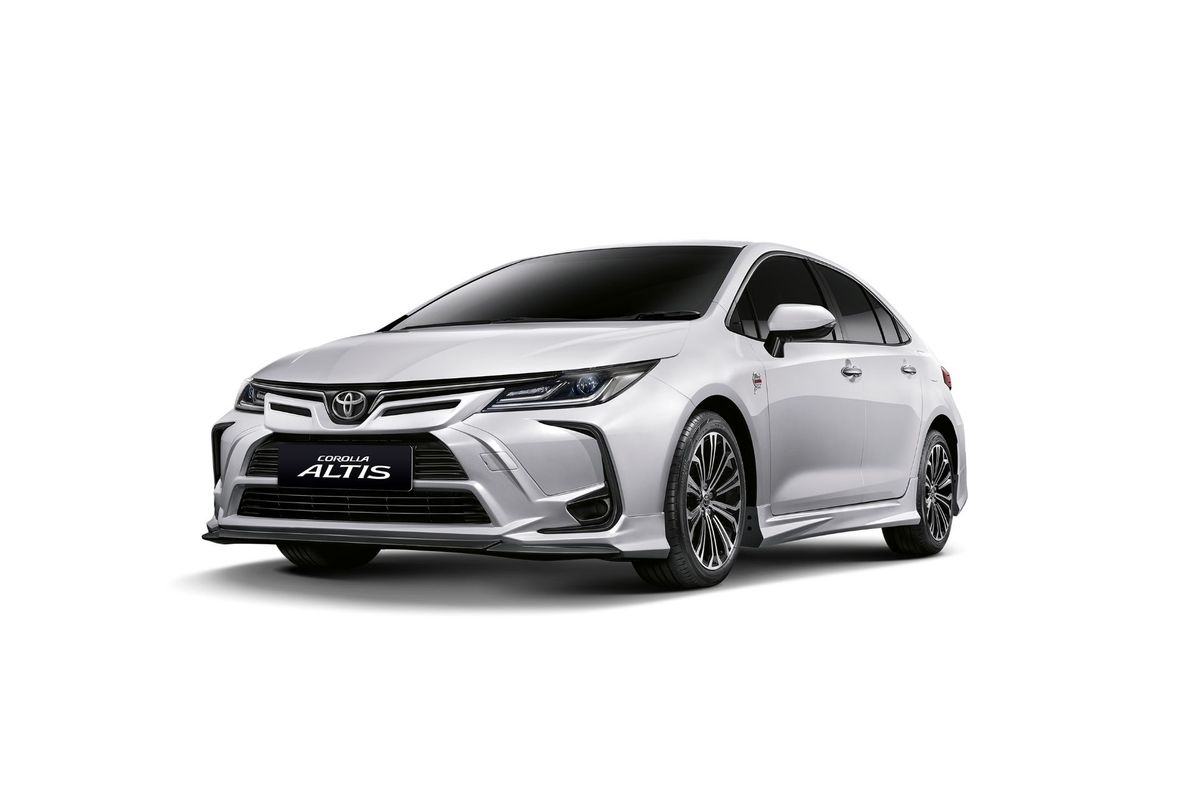
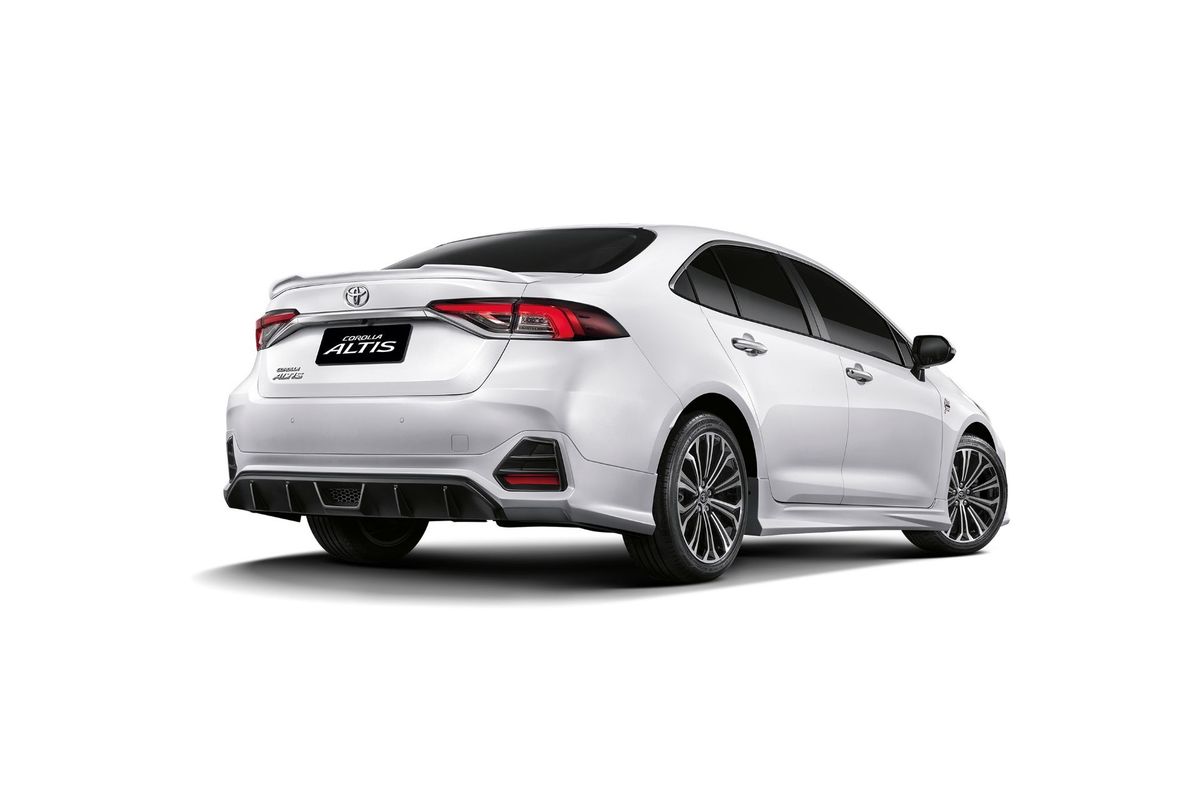
Toyota Thailand has announced a Corolla Nurburgring Edition model and before you get excited, there’s a reason why there’s no GR or GR Sport badging on it.
We all know the Nurburgring, that epic stretch of testing tarmac that carmakers use to test their vehicles to the limit in a safe and controlled environment. It also plays host to numerous racing events and just finishing the race is seen as an immense achievement in itself.
With lap record attempts across all segments still ongoing and using the subsequent time as marketing leverage, the last product we thought we’d see is a Toyota Corolla.
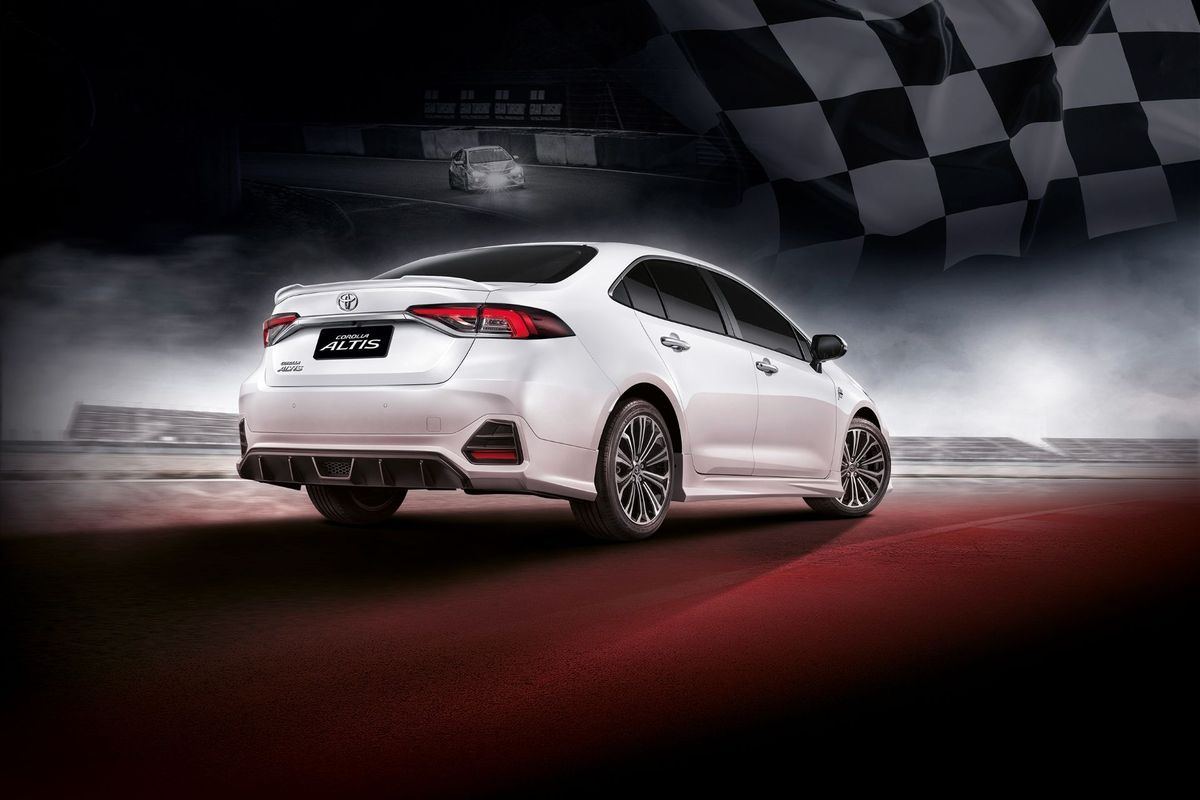
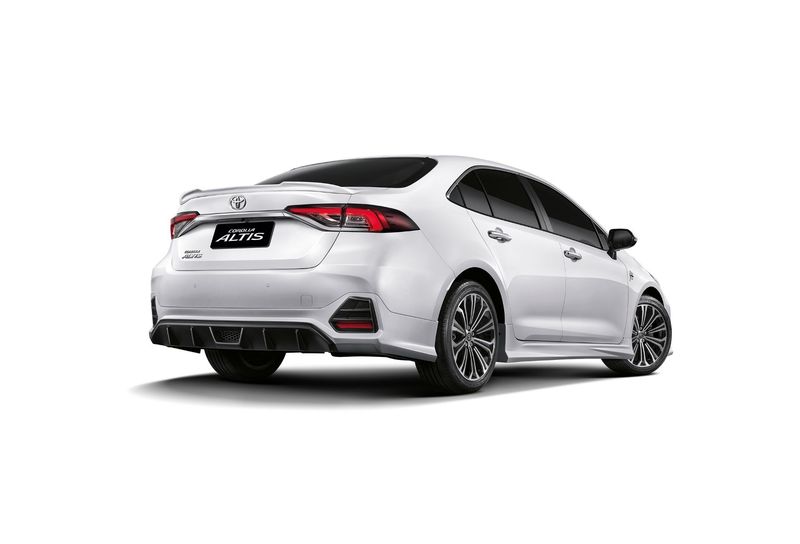
What you see here is a Toyota Corolla Nurburgring Edition from Thailand and while it looks quite sporty, the go doesn’t quite match the show. Toyota Thailand says its Corolla Nurburgring edition was inspired by its Corolla racer that competes annually in the 24-hour Nurburgring race. Impressively, that racecar has back-to-back class wins.
Corolla Nurburgring Edition Upgrades
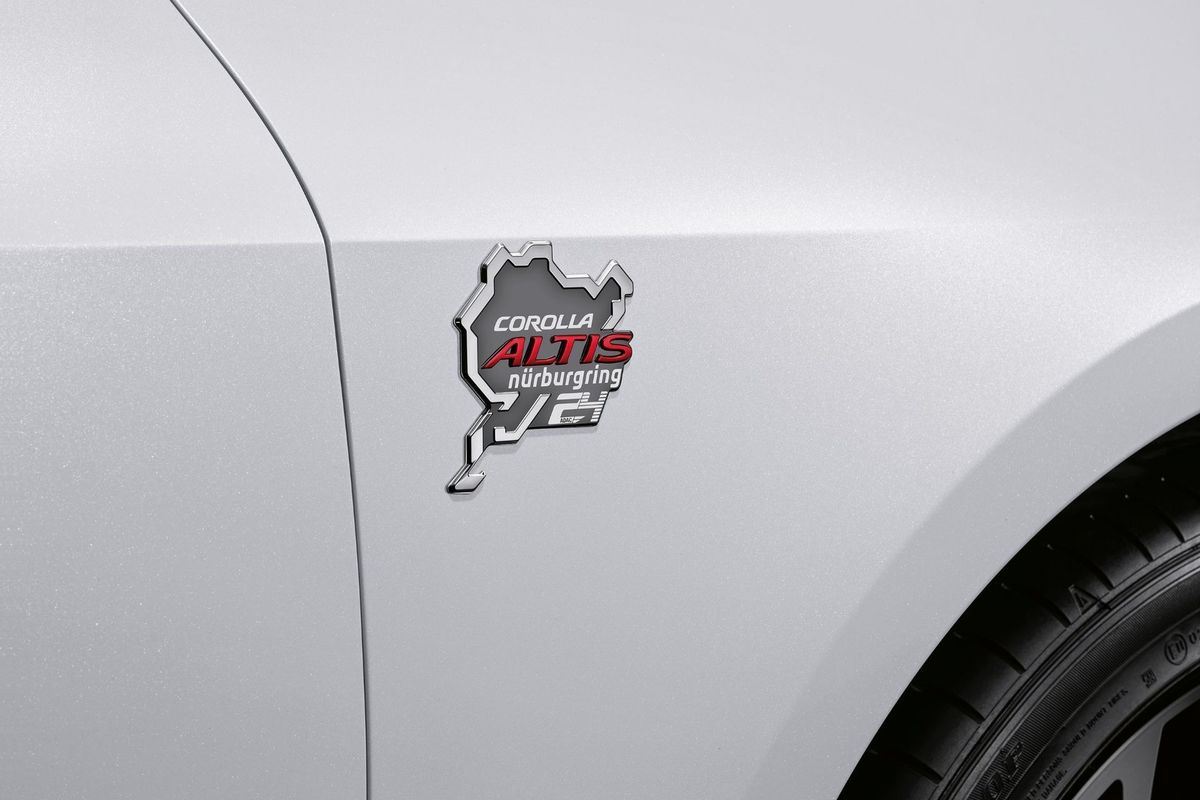
So, what makes this special edition different in comparison to the standard Corolla? Toyota has added on some grille and bumper details, along with some more aggressive side skirts, and a rear bumper complete with diffuser and boot lip. There’s also a rather nice-looking badge on the flanks and some sporty alloy wheels.
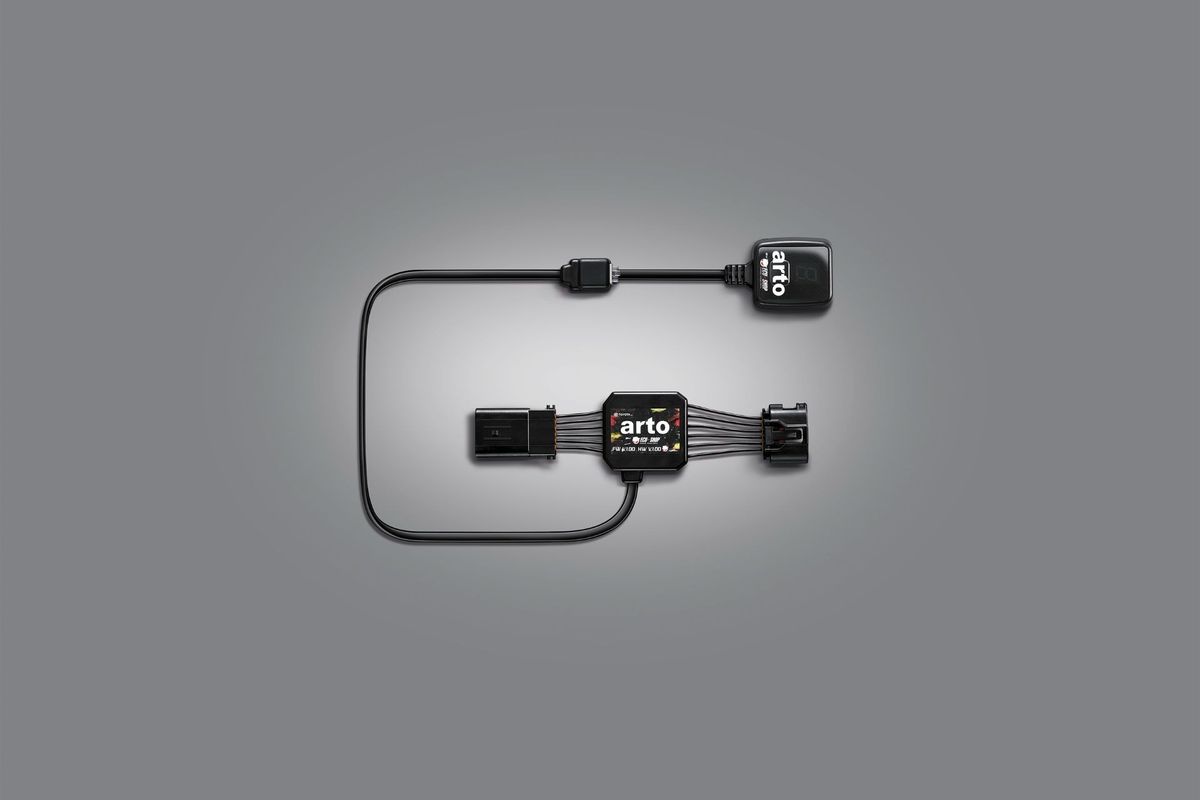
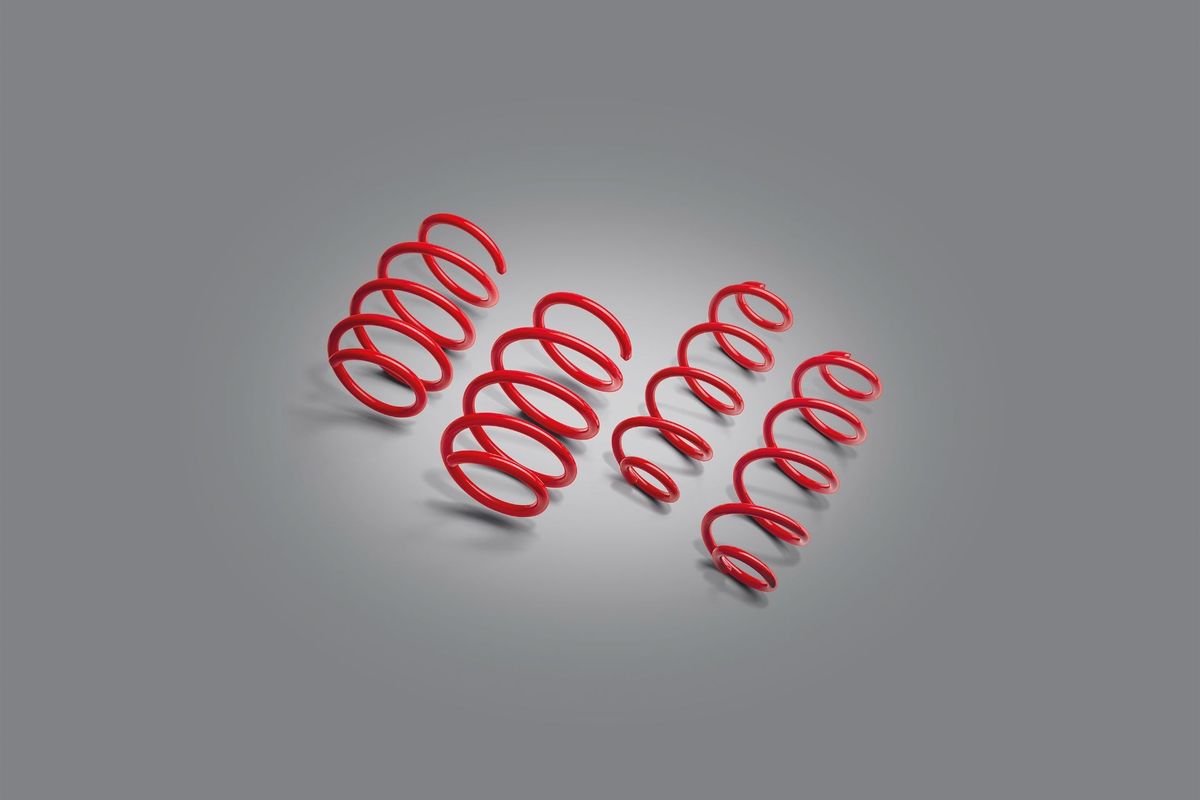
Under the skin, Toyota has given the Corolla Nurburgring Edition a set of sporty springs that also lower the car’s stance. There’s also an upgrade to the car’s ECU with slightly enhanced throttle response. As far as engines go, Toyota Thailand offers a naturally-aspirated 1.8-litre petrol engine with 103 kW as well as a hybrid model. Both models feature front-wheel drive as well as a CVT gearbox. In South Africa, customers have access to the above engines as well as a 1.2-litre turbocharged motor with 85 kW and 185 Nm in a hatchback body style.
What’s a bit confusing is Toyota Thailand already offers a Corolla GR Sport with enhanced looks and a sportily-tuned suspension, so we’re a bit confused by its positioning.
The Kia Sportage GT-Line has touched down in SA and we’ve driven it. With an all-new Sportage due in 2022, you might think this is a run-out special, but there’s more to it than meets the eye.
The Sportage has been Kia’s best-selling model (globally) since it appeared on the world stage back in 1991. More than 5 million units of the Sportage (now in its 4th generation) have been sold and the Korean family car is on the cusp of being replaced by an all-new model. This futuristically styled 5th-gen Sportage will arrive on local shores in 2022, but in the meantime, Kia South Africa has introduced a limited-edition Sportage GT-Line to tide us over.
What is a Sportage GT-Line?
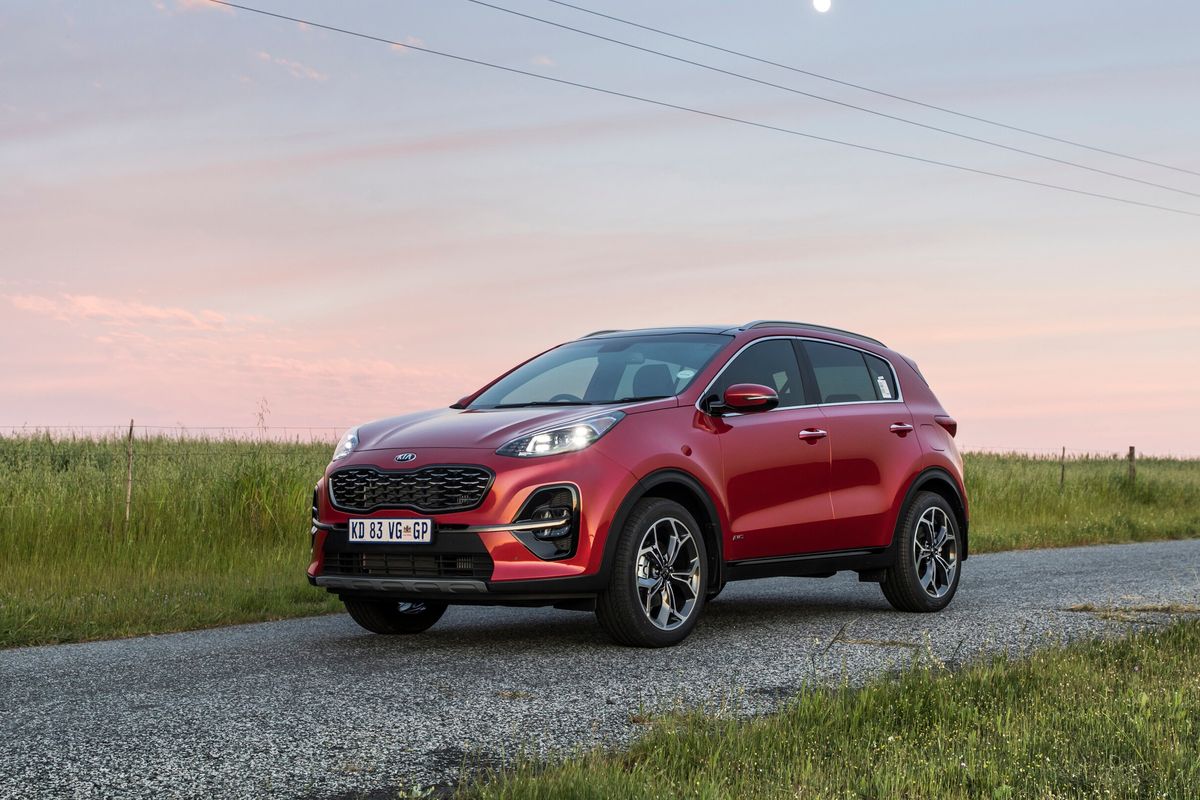
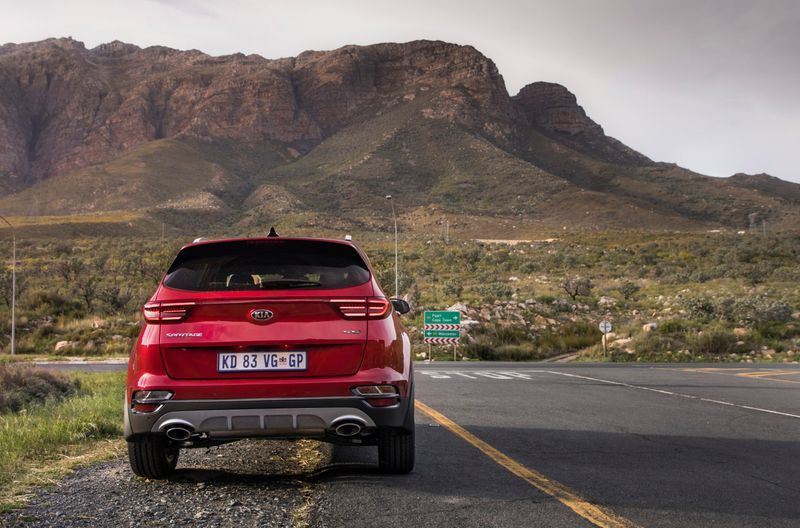
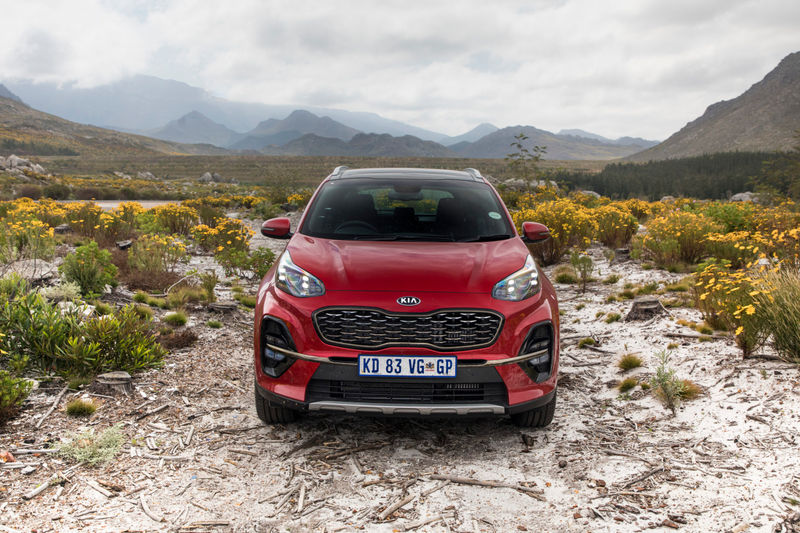
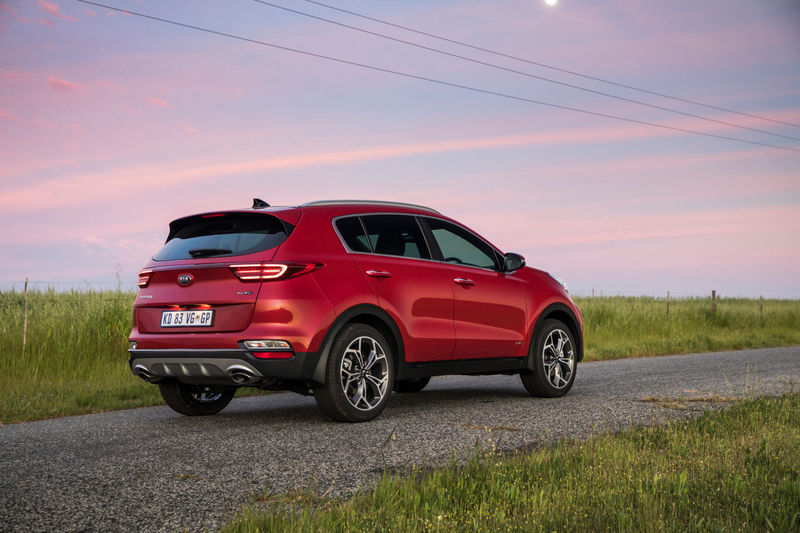
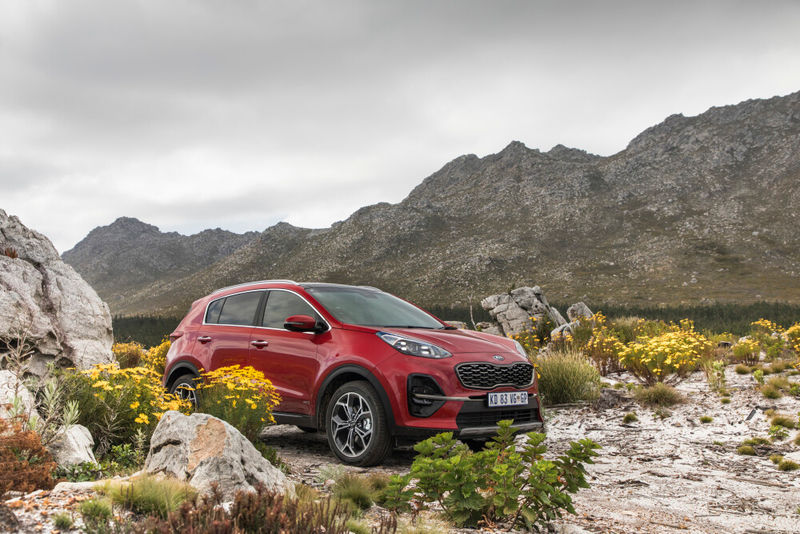
The GT-Line treatment incorporates some sporty cosmetic upgrades and a generous derivative-specific equipment list. The newcomer sports bold-looking 19-inch alloy wheels, vivid LED daytime running lights, and lashings of chrome detailing. Decked out in this Infra Red finish, the Kia Sportage GT-Line really looks the part…
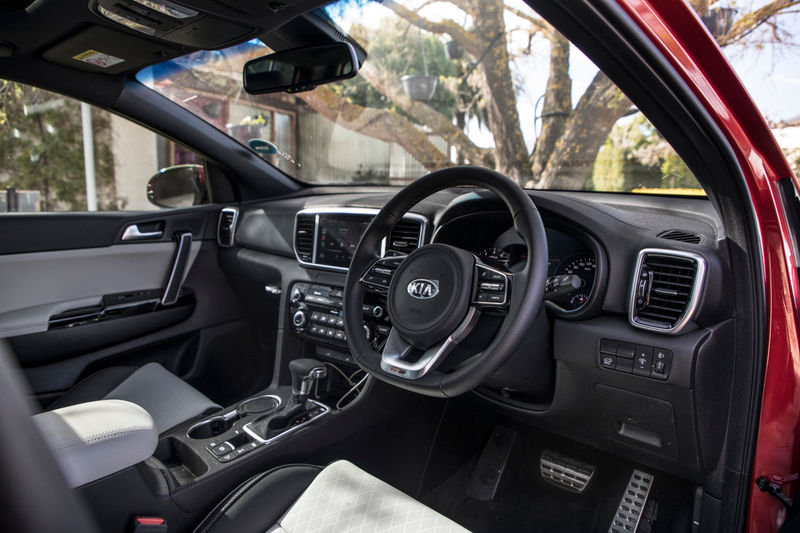
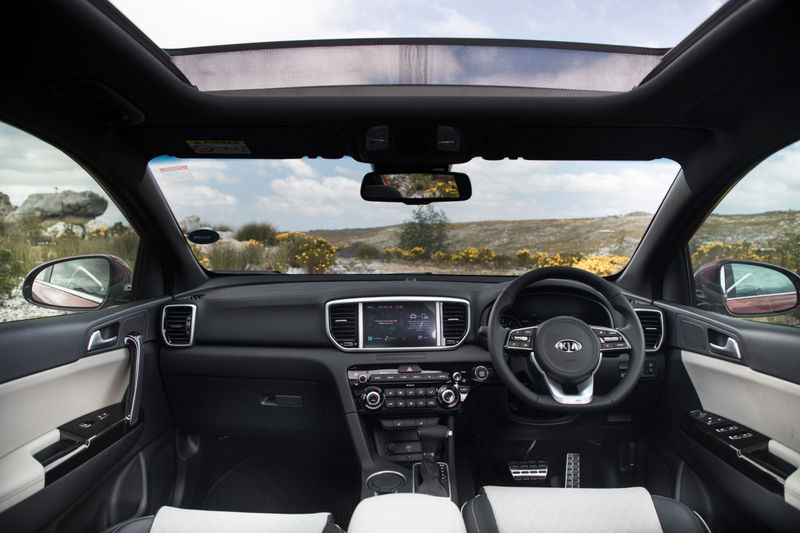
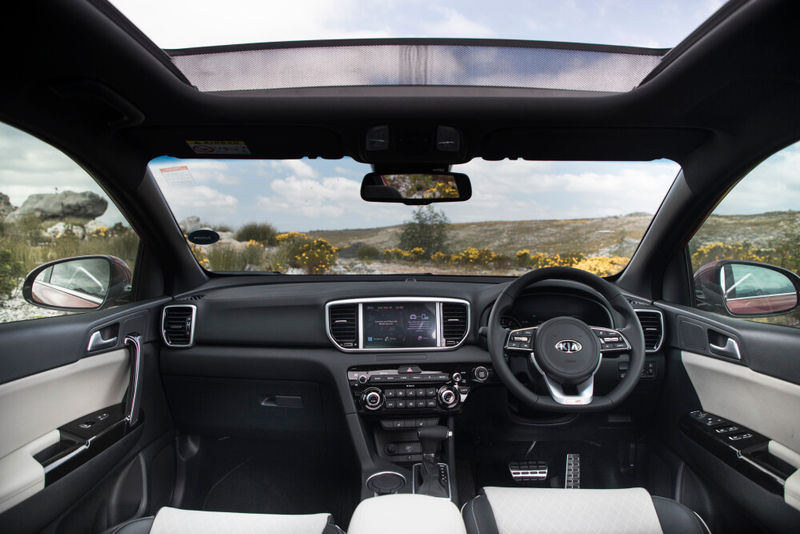
Inside, the GT-Line theme continues with 2-tone leather trim on the seats with a diamond-patterned stitching and a flat-bottomed multifunction steering wheel. As this derivative is 2nd from the top of the range, it comes equipped with a comprehensive array of creature comforts, plus the latest in tech, gadgets and gizmos.
Standard equipment includes an Apple CarPlay- and Android Auto compatible 8-inch touchscreen infotainment system, a wireless charging pad, dual-zone climate control, keyless entry & start, electrically adjustable front seats, heated seats (front+rear), auto headlights, a panoramic sunroof, an electrically-powered tailgate and cruise control.
As far as safety features are concerned, the Kia Sportage GT-Line comes with 6 airbags, electronic stability control, hill-start assist, anti-lock brakes (ABS) with emergency brake-force distribution (EBD), and downhill brake control, as well as a reverse-view camera in combination with front- and rear parking sensors.
Powertrain
To justify its GT-Line badging, the newcomer needs to deliver a notably sportier driving experience than its brethren – a so-so naturally-aspirated petrol or a thrifty diesel motor would not suffice! To that end, the Kia Sportage GT-Line features a 1.6-litre 4-cylinder turbopetrol engine, which punches out 130 kW and 265 Nm. Power goes to all wheels via a 7-speed dual-clutch automatic transmission. Kia claims a 0-100 kph time of 9.1 sec and a 210-kph top speed.
What is the Kia Sportage GT-Line like to drive?
Kia South Africa prepared an impressive (and sufficiently lengthy) test route (it spanned a few hundred kilometres of the Western Cape) so that we could thoroughly assess its new Sportage GT-Line. Also on hand were a brace of Seltos GT-Line units, with which we got reacquainted; the smaller model remains a very accomplished offering!
Considering the Sportage GT-Line rides on stylish 19-inch alloy wheels, we were expecting to hear more road noise than usual and experience a compromised (read: firm) ride quality, but although this 4th-gen Sportage’s quite old, it certainly doesn’t feel obsolete. The low-speed ride comfort is fair; the pliant suspension keeps occupants relaxed.
Kia says that its newcomer can sprint from 0 to 100 kph in a brisk 9.1 sec, but we suspect the Sportage GT-Line is, in actual fact, a tad quicker than its manufacturer claims. The turbopetrol engine is a willing performer, with a fair spread of grunt across the rev range, but the 7-speed dual-clutch automatic transmission deserves the most praise. Not only is it fairly intuitive (it consistently selects the right gears to suit various conditions) – it shifts unobtrusively.
Indeed, the engine feels perkier than its outputs of 130 kW and 265 Nm suggest. The steering-wheel-mounted shift paddles are a tactile pleasure and, when the Sportage GT-Line’s Sport drive mode is engaged, the Kia does not feel like an “uninvolving family car” to drive. The engine’s best trait is its ability to deliver eager in-gear acceleration when you need to execute quick overtaking manoeuvres. The vehicle simply surges ahead with minimal hesitation.
Given its GT-Line designation, you’d expect some sportiness – well, within reason, this is a high-riding family car, after all. It won’t deliver cornering thrills, but there’s a bit more hands-on engagement that sets it apart from its siblings and some segment rivals. The sporty-looking GT-Line-badged ‘wheel is both nice to look at and wield.
The real ace up the Sportage GT-Line’s sleeve is its part-time all-wheel-drive system, however. There’s no low-range transfer case fitted, obviously, but the Kia musters enough grip to be more than useful on the sandiest of dirt roads (we tested this at one of the stops). Should you decide to take your brave pill and venture further off the beaten track, there’s hill-descent control. The all-wheel drive will also come in handy on wet or slippery roads.
How much does the Kia Sportage GT-Line cost in South Africa?
The Kia Sportage GT-Line costs R649 995 and is sold with a 5-year/unlimited-kilometre warranty with roadside assistance and a 5-year/90 000 km service plan. The vehicle will go on sale on 15 October 2021.
Verdict
Should you consider this Sportage GT-Line – or wait for the all-new 5th-gen model? It’s a question many prospective buyers will be asking. With the latter due to land in South Africa at some point in 2022, we got the impression from Kia SA that planning for the new Sportage is still in its infancy…
With its utterly comprehensive standard specification and punchy turbopetrol motor, the Sportage GT-Line makes an interesting case for itself. Logically, the fractionally more affordable turbodiesel-powered derivative will be lighter on fuel, but the AWD version only comes in EX grade, which has substantially fewer features than the GT-Line.
New Toyota Corolla Cross – We take an early first drive
Toyota is gearing up to launch its new Corolla Cross in South Africa in November 2021. It’s also a boon for the local economy as the company has invested heavily in its Durban plant to build the new model here, including the hybrid versions.
In this video, our race-ace Ashley Oldfield travelled to Gerotek in Gauteng for an early pre-launch drive of the new model, and Toyota South Africa kindly provided a film crew for journalists to work with.
And so here is a quick first look at the upcoming model, while we wait for our test unit in November which will allow us to make full video and written reviews for you.
Building locally seems to have had a positive effect on the pricing as the range appears very wallet-friendly indeed:
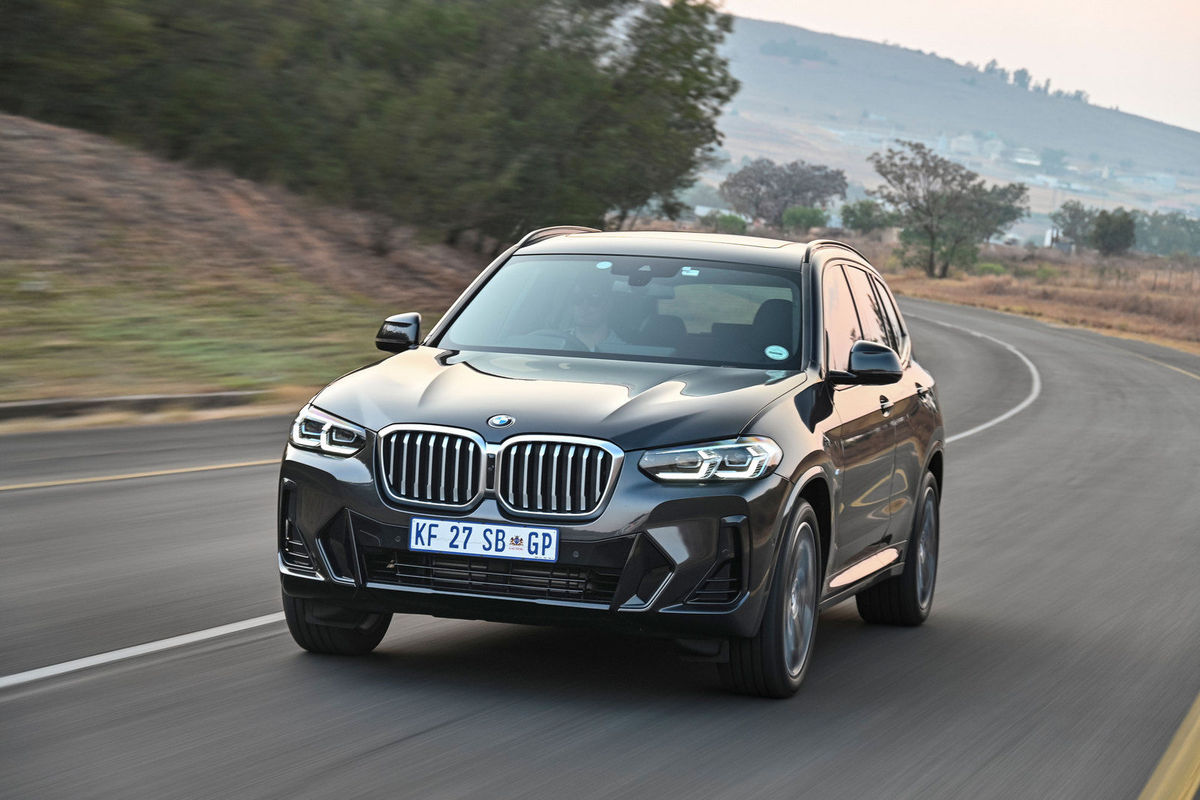
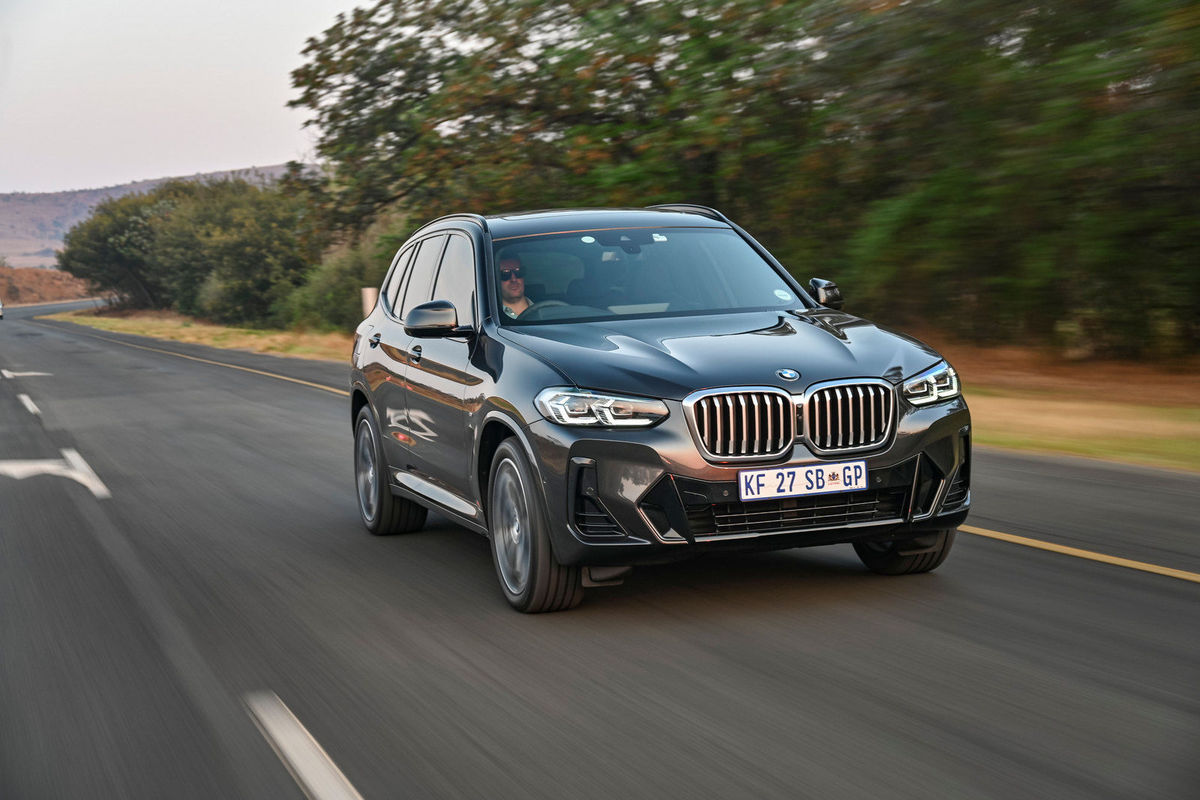
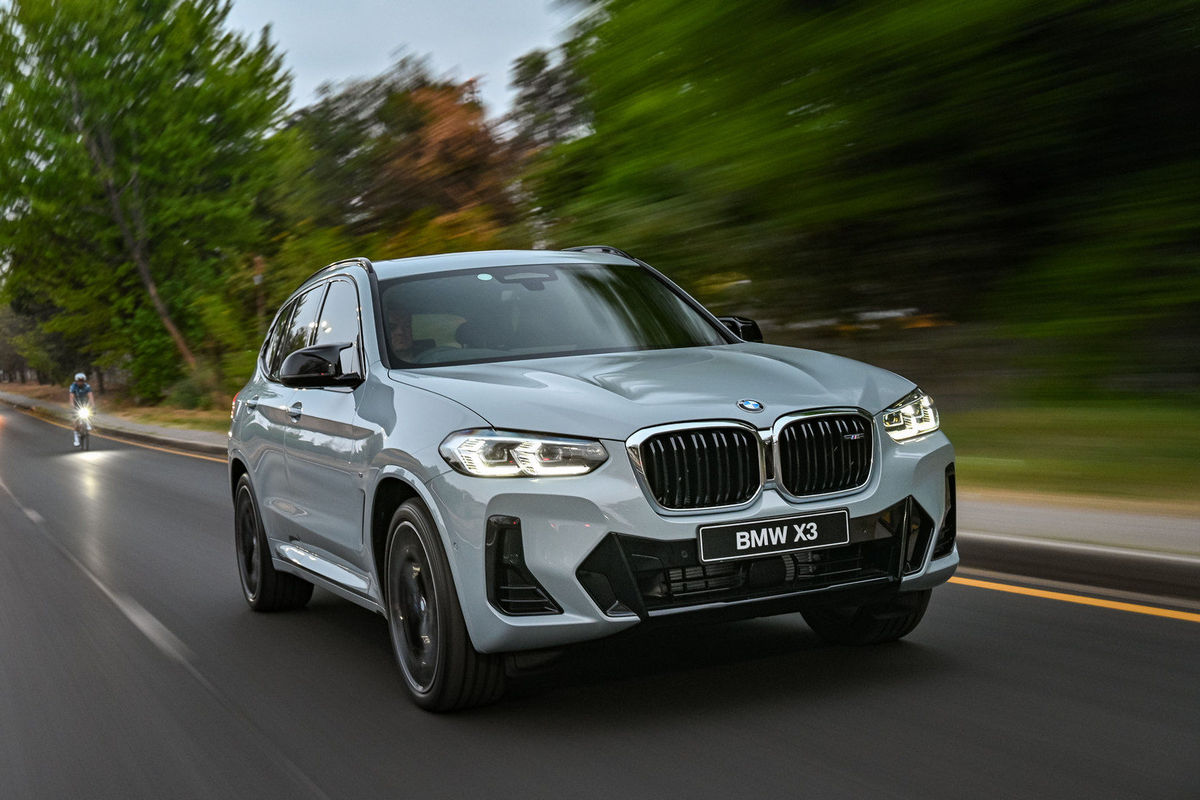
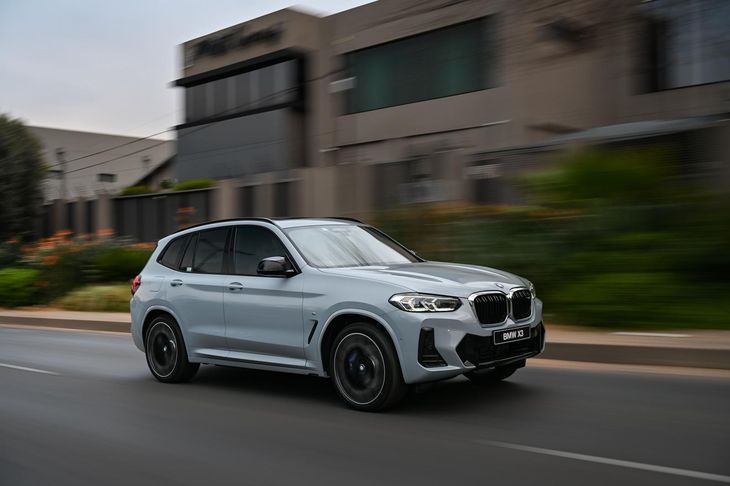
The X3 has become what the 3 Series was a decade ago – the most important model in BMW SA’s lineup. However, the SUV game keeps developing at a rapid rate and, since this generation of BMW’s executive SUV arrived on our shores late in 2017, several rival offerings have joined the fray. Is the revised X3 still at – or at least near – the top of its segment? We travelled to the Highveld to drive the latest iteration of the locally produced Bimmer at its media launch.
What’s new on the BMW X3?
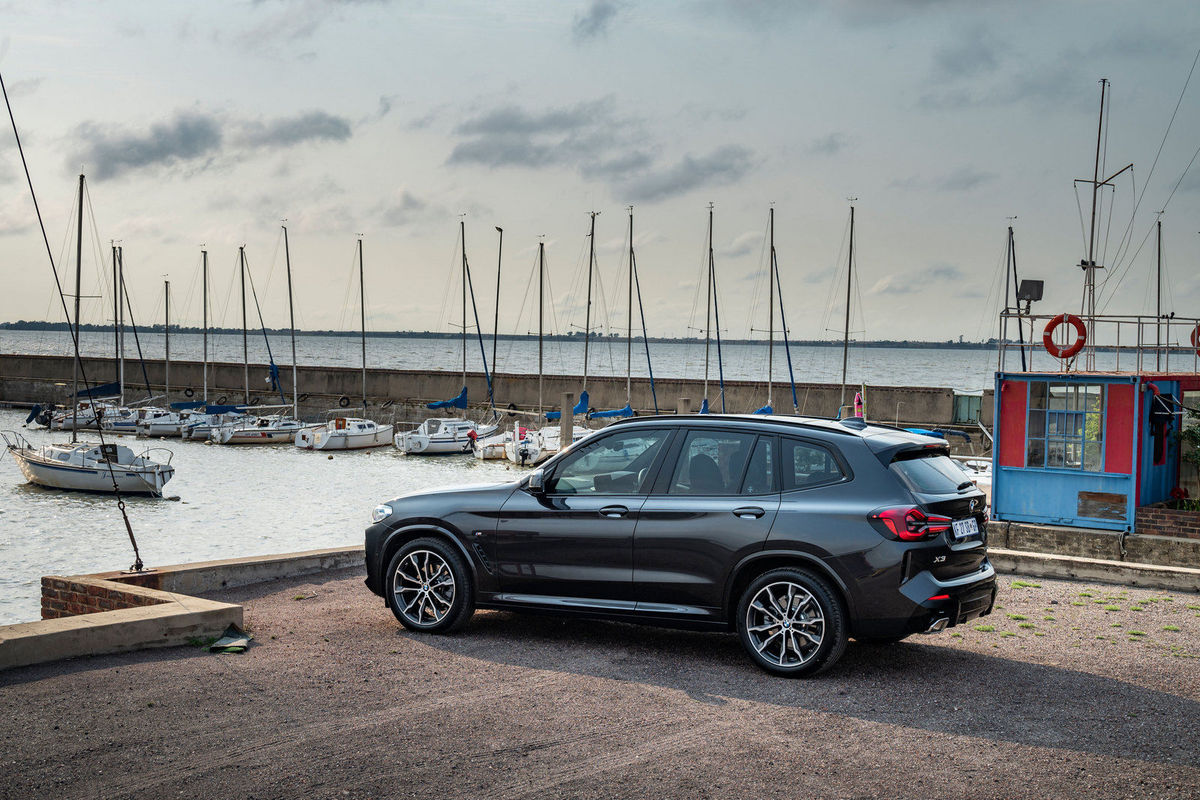
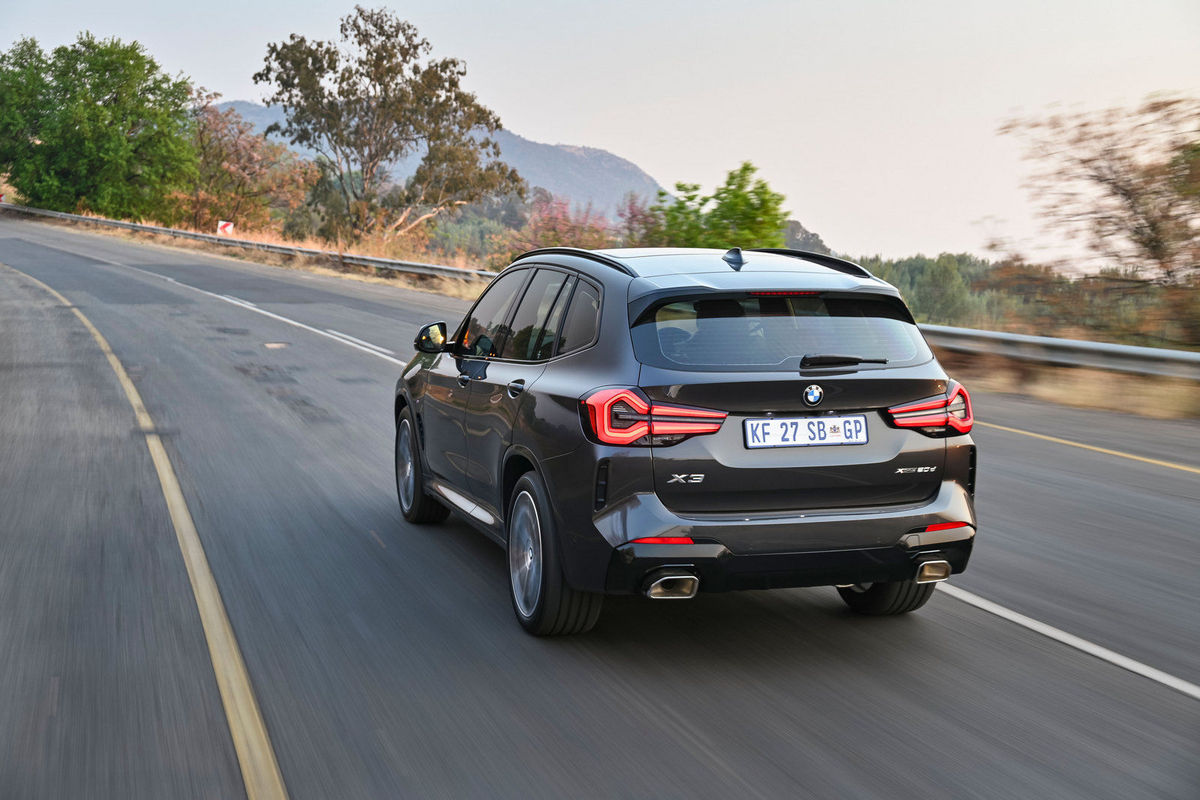
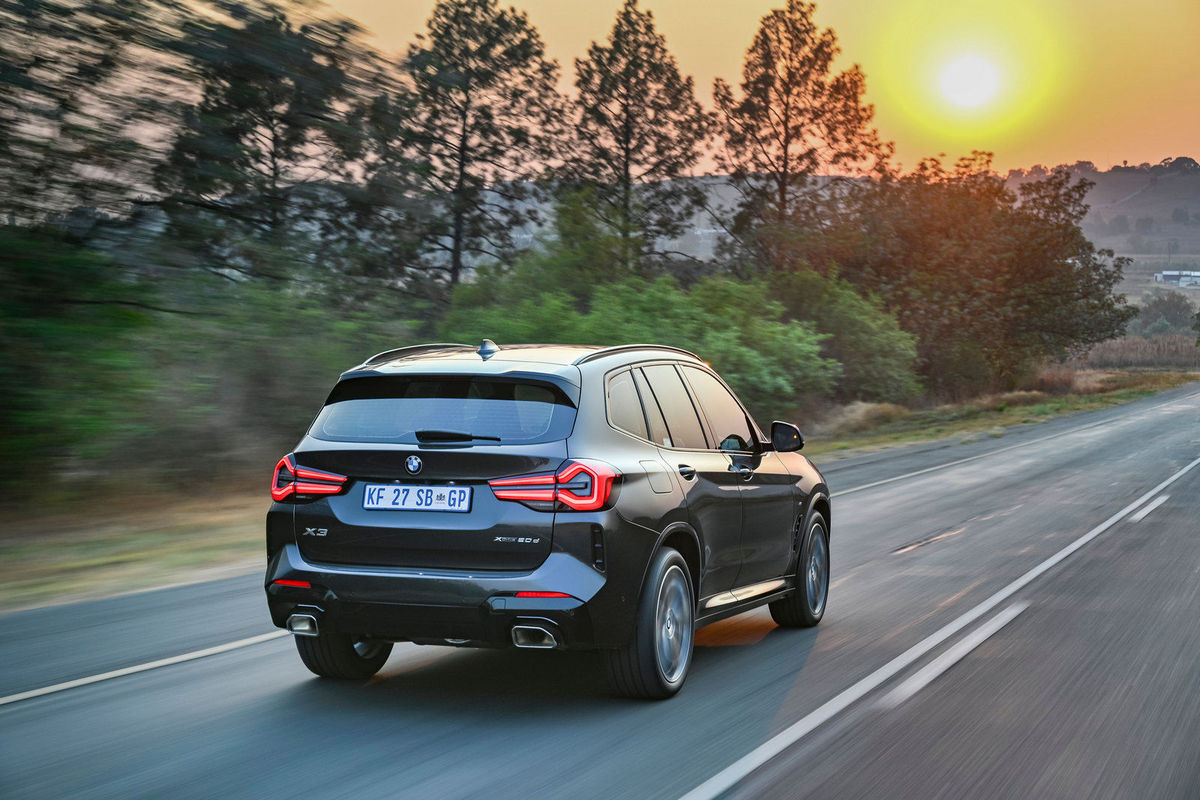
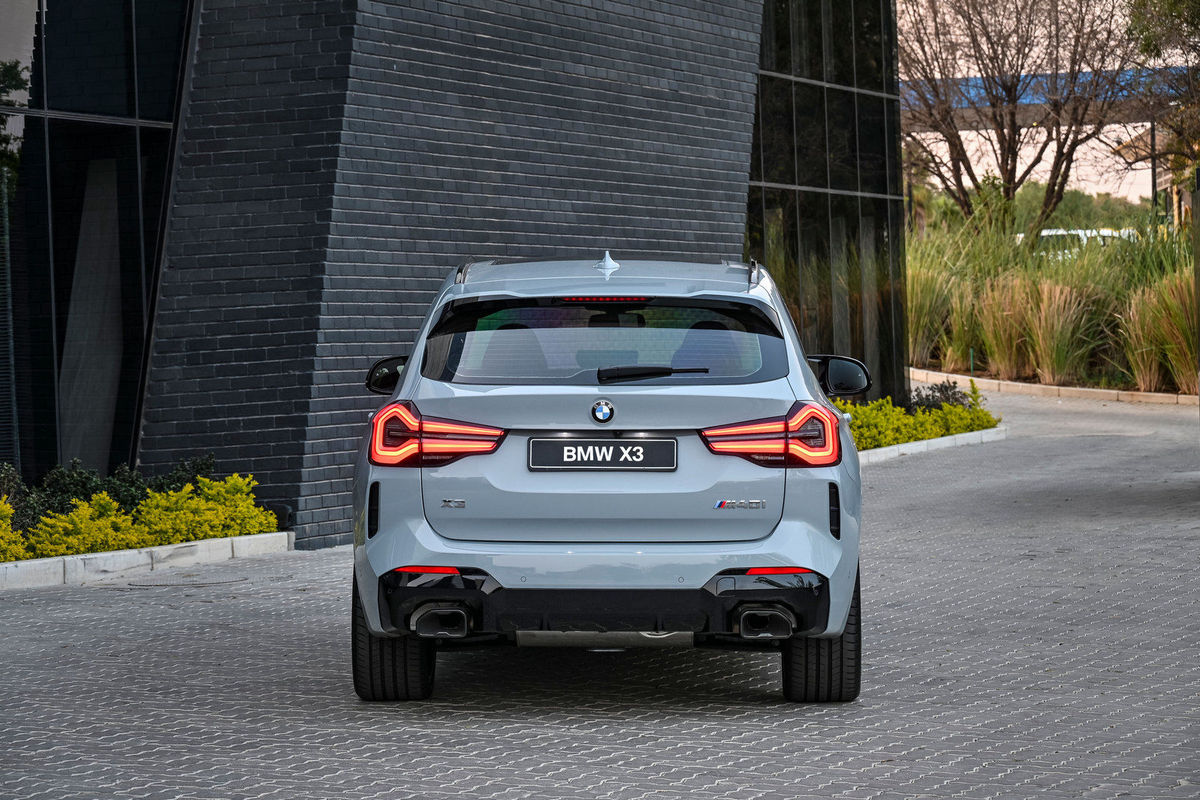
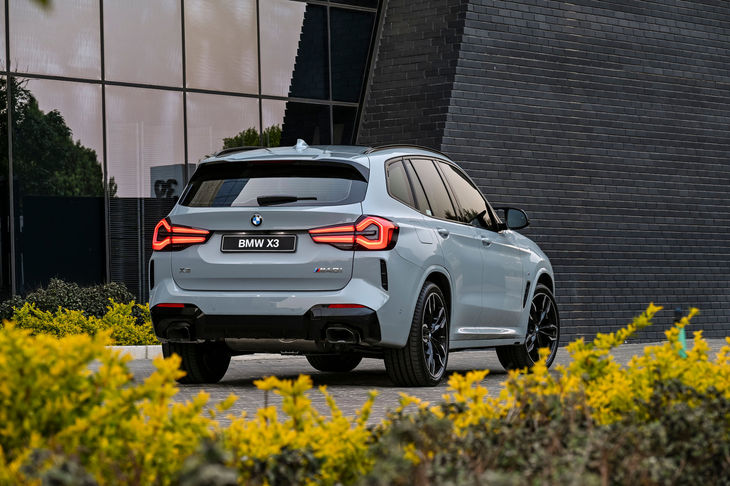
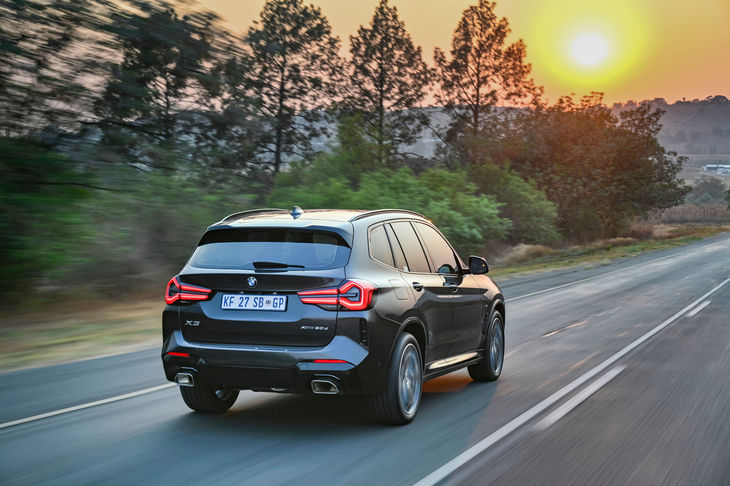
The new design of the tail-light clusters is the most distinctive feature of the facelifted X3.
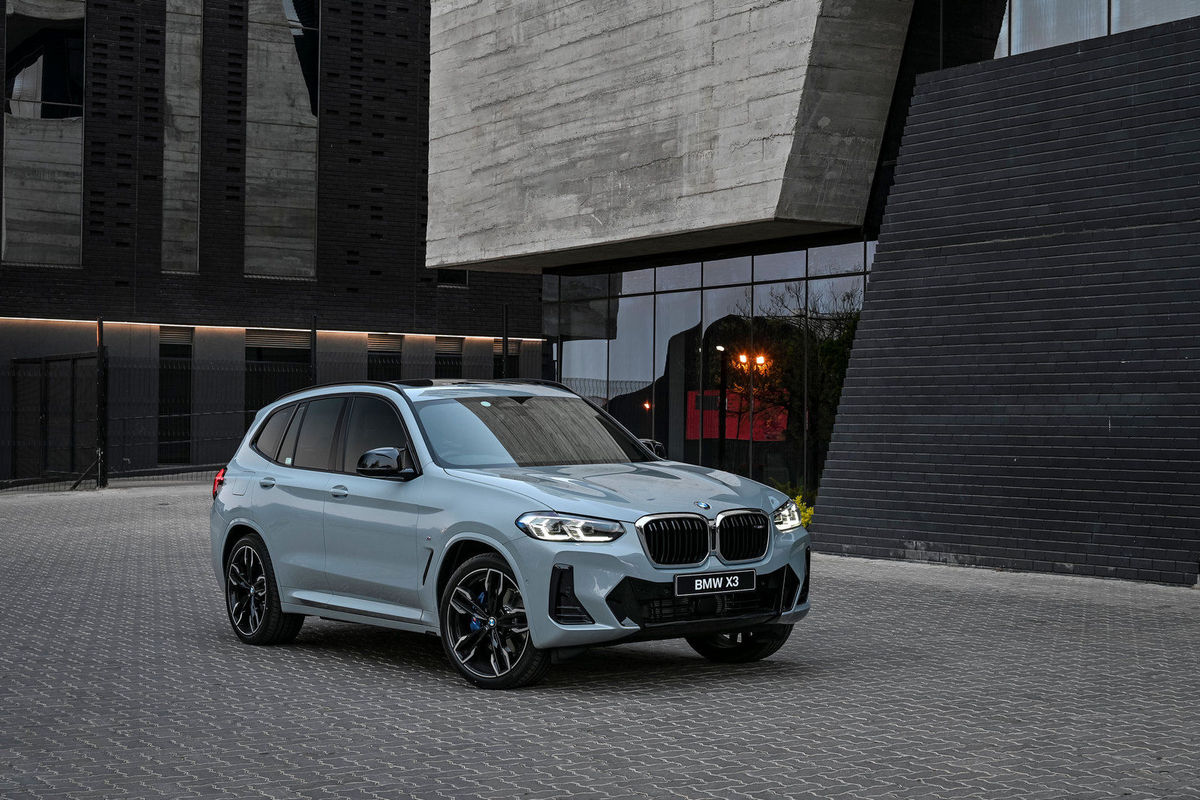
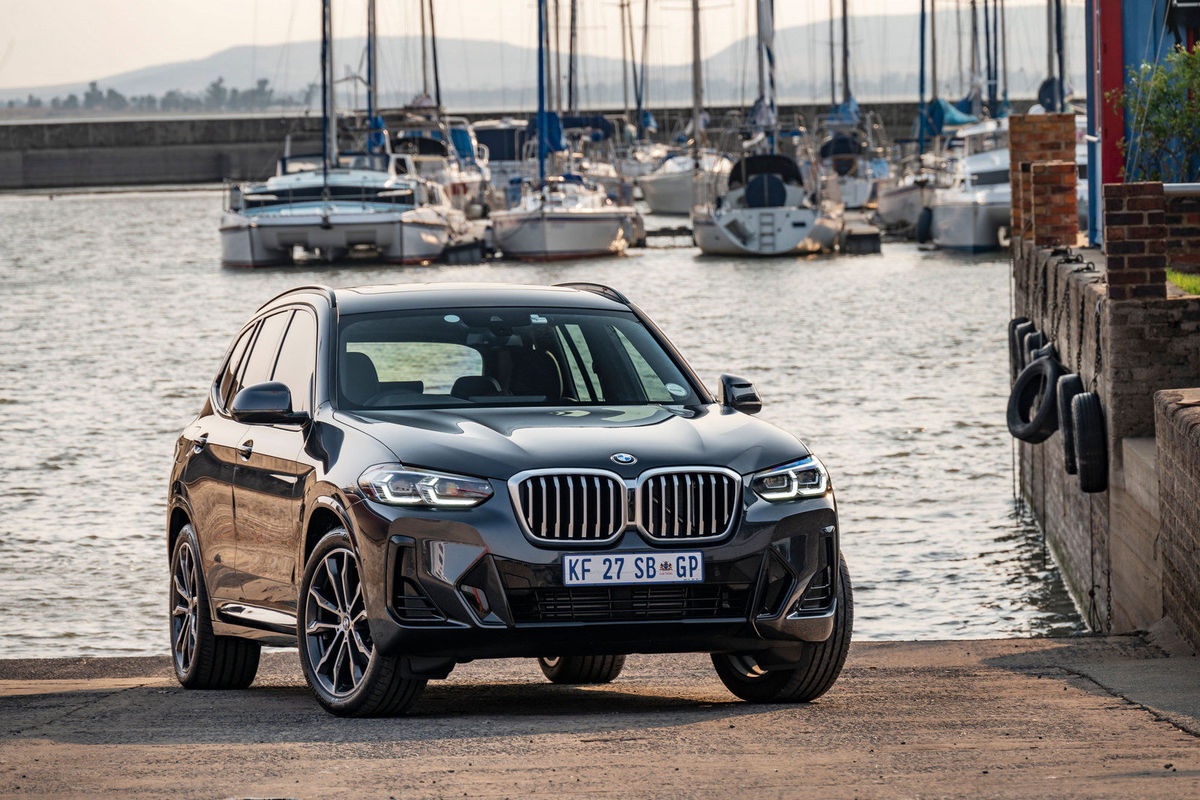
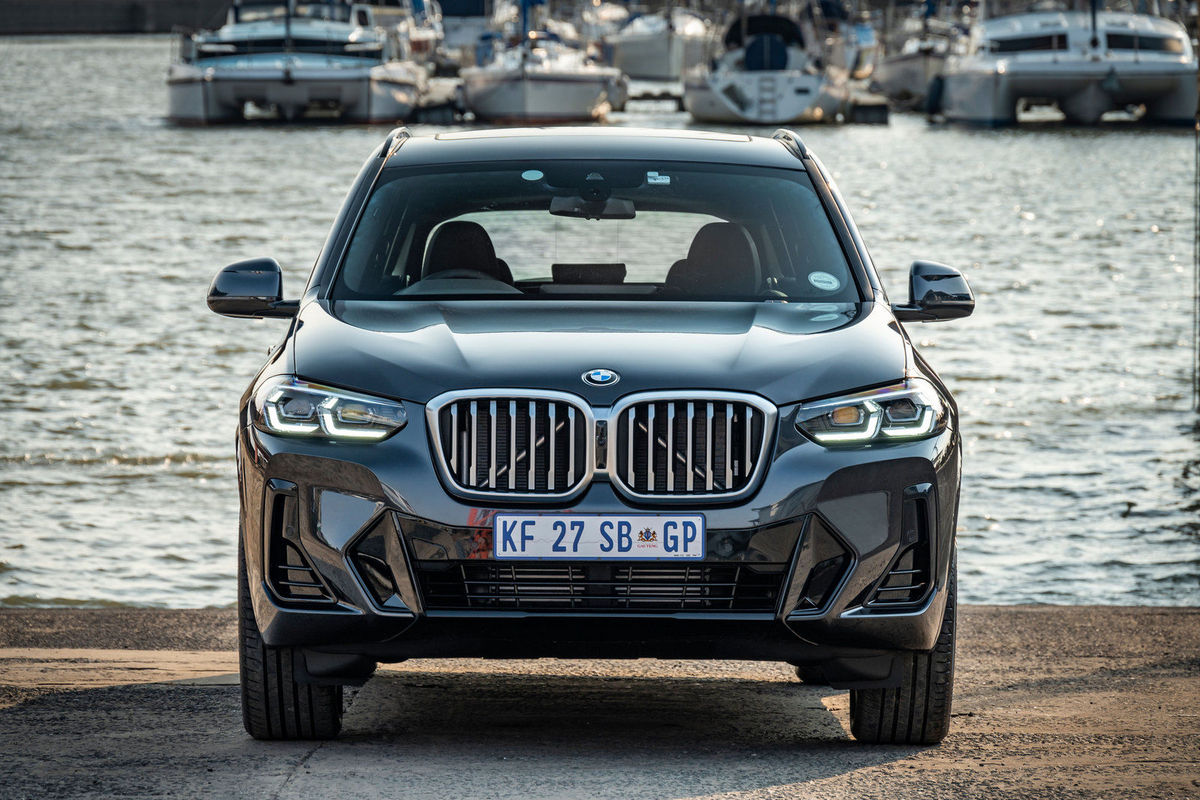
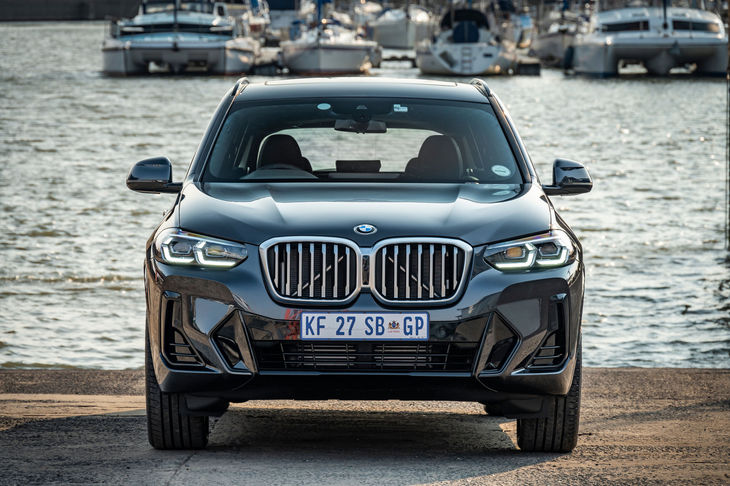
By now, most of us are acquainted with the X3 and where it sits in BMW’s model lineup – the former Cars.co.za Consumer Awards category winner in the Executive SUV category is slightly smaller than an X5, but bigger than an X1. Simple, right? We won’t go into the coupe variant (X4) here, as that’s not available as a facelift yet. The X3, unlike many other contemporary BMWs, doesn’t suffer from “too much grille” syndrome, although the facelift does incorporate a slightly bigger, 1-piece kidney grille. If your kidneys have swollen to the size of the X3’s don’t fret – if you sold one of them, you could, perhaps, afford an X3!
Other styling cues you may notice are the slimmer LED headlights and revised front bumper, as well as the redesigned tail-light clusters, which clearly distinguish the updated X3 from other BMW SUV models.
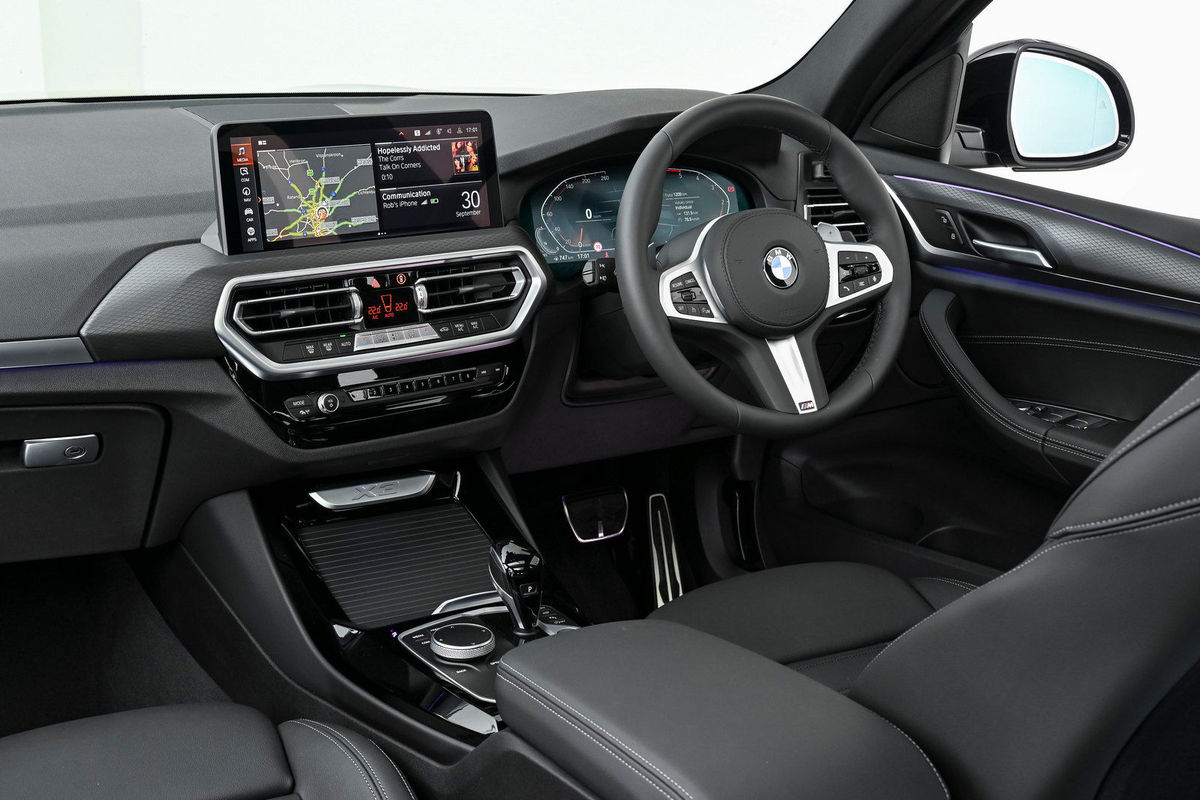
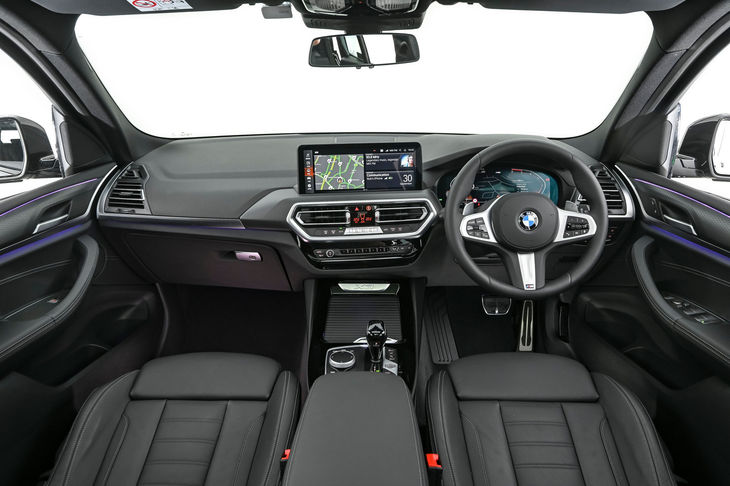
The range’s powertrains (engine and transmission combinations) are carried over from the pre-facelift model, while the interior adopts the G20-generation 3 Series’ layout inside and a much-improved standard specification. BMW now offers a subscription service on some of the options (the ones you would normally specify when you order the vehicle from new), but more on that later…
Which models are the X3’s rivals?
The X3 sits in the extremely competitive Executive SUV segment, in which there are plenty of rivals to choose from.
There is an exhaustive list of competitors in this segment, but BMW has always tried to set the X3 apart by positioning it as the most satisfying-to-drive offering in its class. To put it another way: it’s the model you want because it’s better to drive than the rest. Indeed, the X3 remains decidedly car-like in terms of ride and handling; it corners with suppleness and exhibits a level of body control that defies its SUV tag.
However, the Bimmer’s rivals are also rather good to drive and some of them are more adept at travelling on gravel roads. At this level, you can look at everything from a Jaguar E-Pace to Mercedes-Benz GLC, Volvo XC60, Range Rover Evoque to the upcoming Audi Q5. But with pricing at this premium level, you can’t tell me buyers might not also be looking at models such as an F-Pace or a VW Touareg…
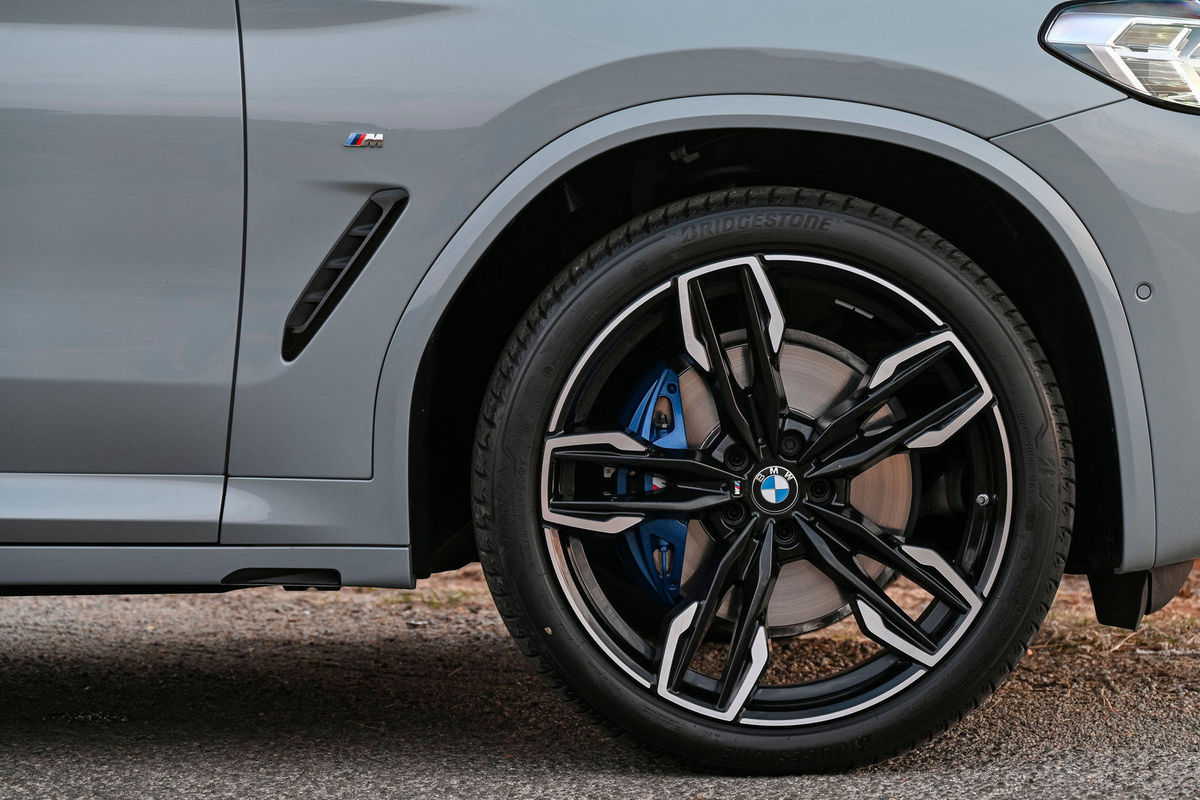
Our time behind the ‘wheel was divided between the powerful M40i and popular xDrive20d. The M40i now comes standard with 21-inch wheels, which local buyers will undoubtedly love, even though those huge, shiny alloys are bound to be impractical for use on a gravel road (unless you’ll be driving so slowly and carefully that you’d hold up a Renault Kwid!). The 19-inch wheels fitted to the xDrive20d are much more usable across a multitude of surfaces, which is the very point of driving an SUV, now isn’t it?
The X3 M40i
The X3 M40i sits on 21-inch wheels as standard.
The M40i has an absolute pearler of an engine. This statement may rile the droves of BMW M-car fanboys, but the single, twin-scroll turbocharged 3.0-litre inline-6 in the M40i is arguably the best engine in BMW’s arsenal. The engine’s linear power delivery (uncorrupted by huge dollops of torque than twin-turbo versions of this motor tend to drop in your proverbial lap) makes the M40i oh-so-satisfying to rev to its redline. Heck, it even sounds good too, especially as the 8-speed ZF automatic transmission punctuates each shift with a pop that reminds of a crack of a headmaster’s cane.
As a performance package that you could use every day or transport your family to the coast, trail running, mountain biking, or whatever your thing is at the weekend, it fits the bill perfectly – minus the 21-inch wheels. Power figures are stated at 285 kW and 500 Nm with a claimed 0-100 kph of 4.5 sec, while fuel consumption isn’t as bad as expected at a claimed 8.9 L/100 km (if you drive it gently, which you won’t).
The X3 20d
The 20d has been the most popular derivative in the X3 lineup.
For obvious reasons, the xDrive20d’s driving experience isn’t nearly as visceral as the M40i’s, but its 2.0-litre turbodiesel is the most popular choice with local buyers, BMW SA says. From inside the comfort of the X3’s revised cabin, the turbodiesel is notably quiet and, considering it is shod with smaller (19-inch wheels) it rode much more comfortably over the potholed roads of the Platinum belt through Rustenburg.
To be honest, the turbodiesel didn’t deliver quite as much performance as I expected from a R900k derivative, especially when it came to overtaking urge, which is, after all, something luxury-car buyers expect given the premium prices manufacturers ask for these vehicles. Claimed performance figures have the diesel at 140 kW and 400 Nm with a 0-100 kph time of 8.0 sec, but the fuel efficiency and smoothness of the engine were the real standouts on the launch drive. Consumption fell well below 6 L/100 km on our route and that’s bound to improve with more mileage on the clock (as the engine loosens up).
What tech does the X3 have?
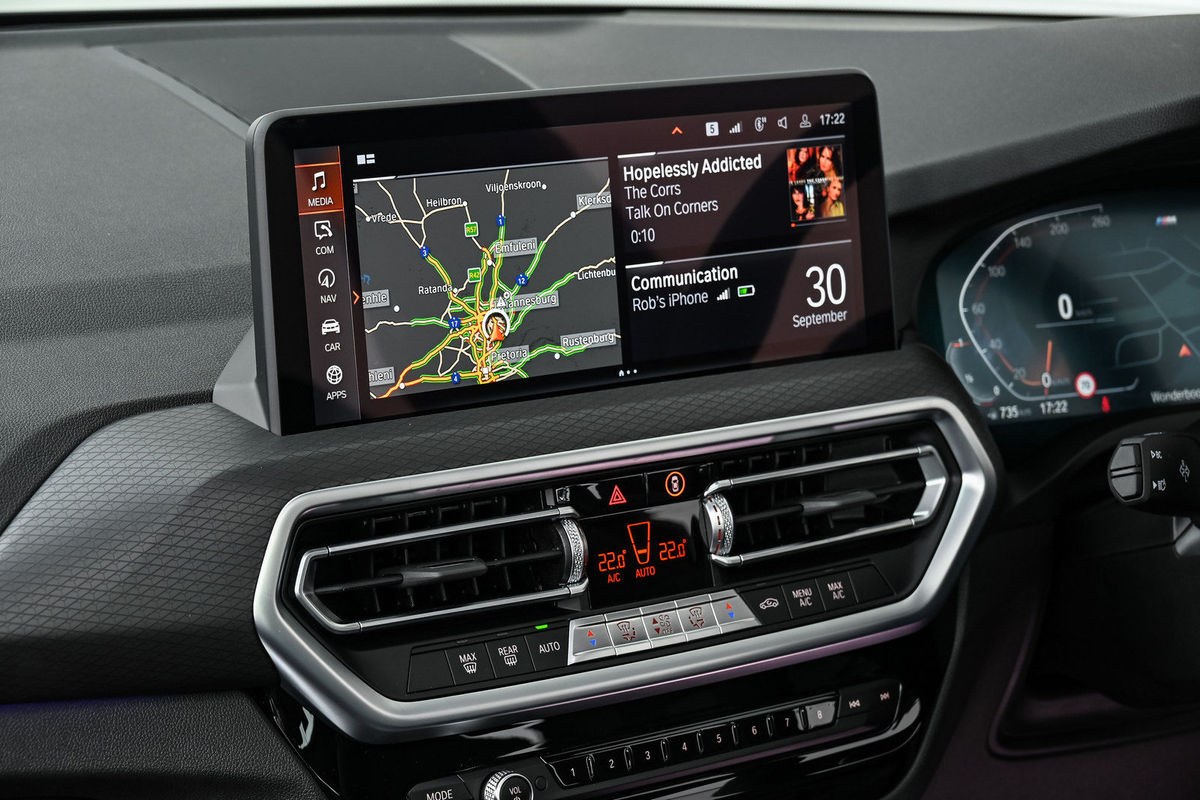
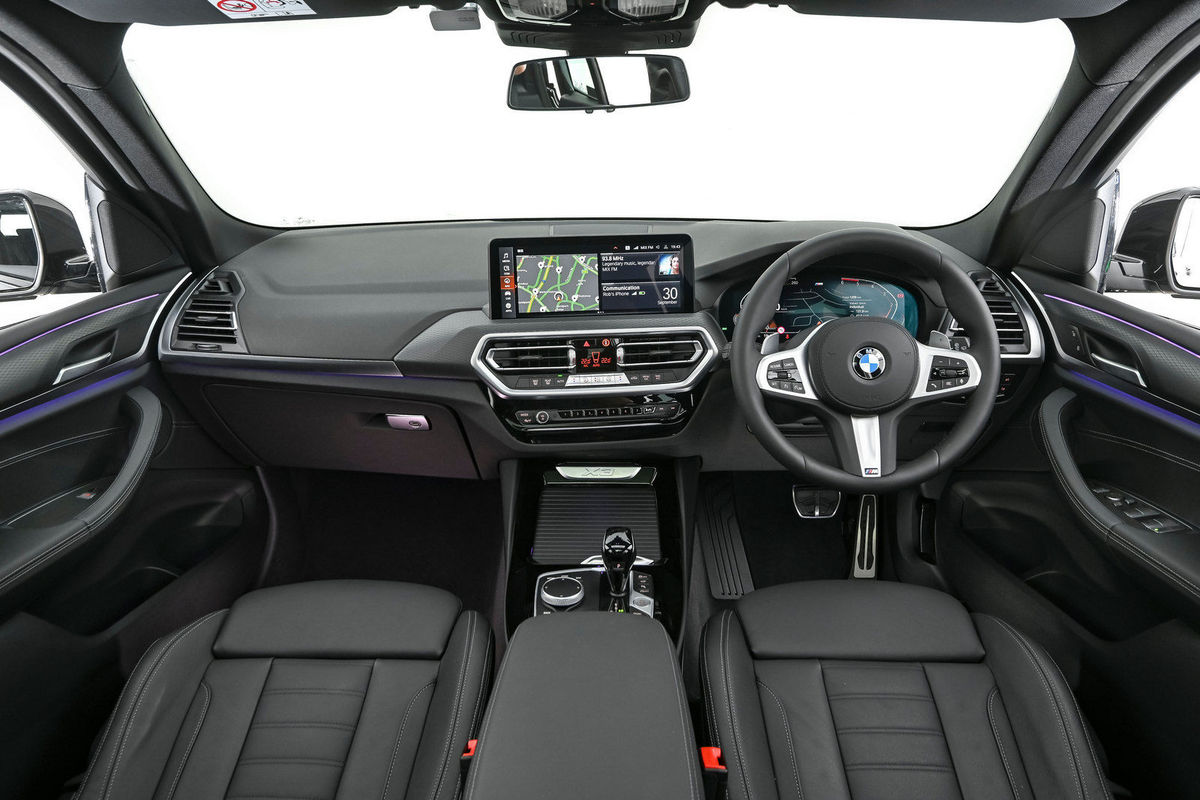
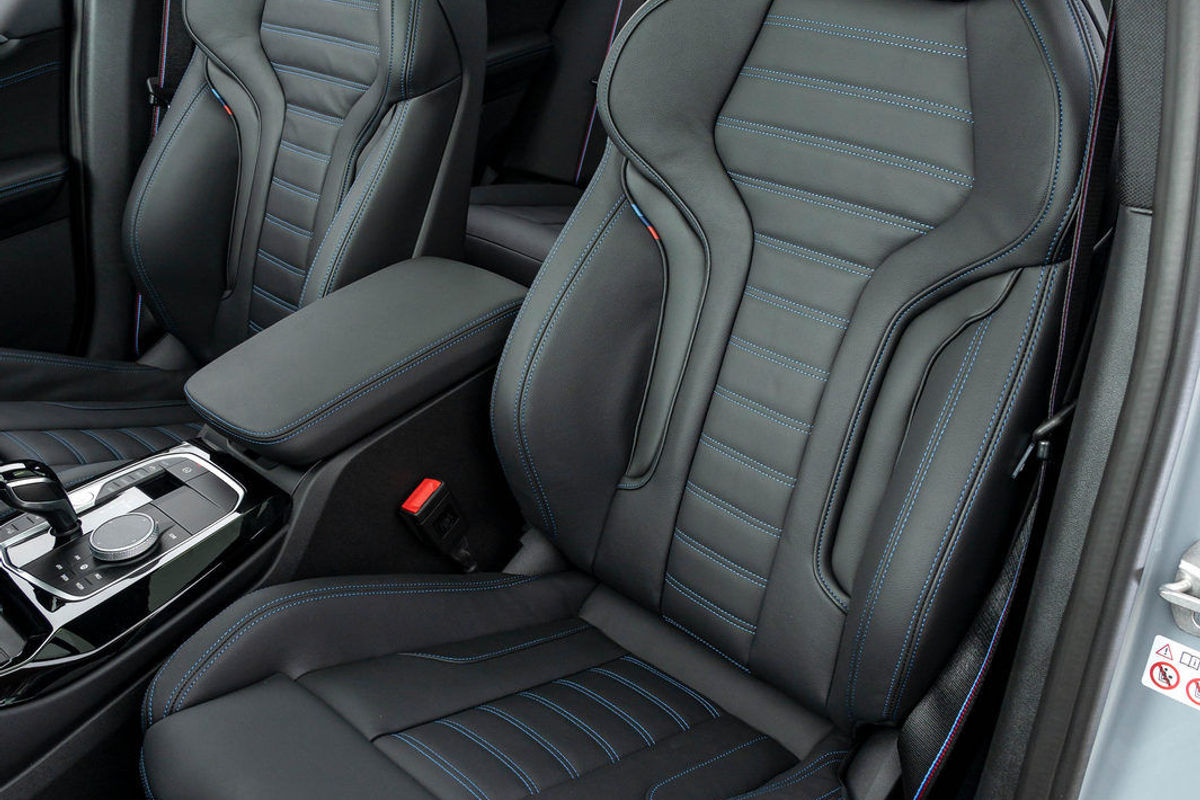
The interior from the 3 Series has been roped in to do duty in the X3 now.
BMW and other German premium brands have long been criticised for being rather stingy with standard specifications – in other words, their models come with long options lists and expensive extras. The updated X3, however, seems to strike a decent balance in terms of stock features, especially with its new subscription service for options. Every X3 derivative comes with a sizeable 12.3-inch infotainment screen and a digital instrument cluster (thank you, BMW SA). Shift paddles are also standard, as is the potent hi-fi audio system (you can still upgrade to Harman Kardon), Apple Carplay and Android Auto.
The reason X3 derivatives are now specced better than before is due to the availability of over-the-air software updates. It’s standard on the facelifted X3 and it has prompted BMW to introduce a decent base specification so that selectable options can be installed on virtually any post-facelift X3, not just ones equipped with larger infotainment screens, for example.
The subscription service allows buyers to choose options when they want them, with the choice to “buy” the features for a month, 6 months, a year or forever. You can try out M Suspension (if your X3 has adaptive dampers), remote services, high-beam assist and the surround-view camera system – to name a few examples – for a month. If you like a service, you can renew it; if you don’t, simply cancel it.
This subscription service makes a lot of sense because you avoid the possibility of speccing, say, R500k worth of options (all of which are included in the initial purchase price of your vehicle) only to use but a fraction of those features during your term of ownership. This way, you can tailor options to your exact needs, plus you won’t take as big a hit in depreciation when the time comes to sell the car/trade it in.
I definitely see this model being introduced by other premium brands as well. Granted, the model isn’t perfect as there are always prerequisites for certain options, so you will need to ensure that your car’s base mechanical spec is high enough that the full gamut of software updates are compatible with your car.
BMW X3 pricing in SA
Every new-car price list appears to be a bit of a shock to the system, but BMW has priced the facelifted X3 in line with its rivals and considering the increased standard spec levels, this updated model isn’t much more expensive than the pre-facelift version. All prices include a 5-year/100 000 km maintenance plan.
The facelifted X3 has a unique selling point in its subscription service for options.
The facelifted BMW X3 is another excellent SUV in a segment where all of its rivals are rather good too, except maybe the now long-in-the-tooth Mercedes-Benz GLC. The X3 package certainly focuses on the locally produced model’s on-road manners, almost to the point where you would be hard-pressed to tell its dynamic ability apart from that of a sedan. The bottom end of the current lineup probably lacks some of that premium performance buyers would want when they’re forking out north of R900k for an Executive SUV, but it will always be a good choice because of BMW’s reputation for sterling after-sales service.
What’s more, the introduction of the subscription model for options may just be the gold star on the X3’s bonnet that could entice a “swing buyer” to choose the BMW over one of its rivals. The knowledge that they can continually improve and update their car over the course of their ownership period will surely be a tempting sweetener.
Hyundai reveals digital steering wheel patent
Hyundai/Kia is steering into the digital future.
*render originally posted by Carbuzz
Hyundai might be proudly Korean, but the company has a collection of global design studios.
One of these is in Germany and the European design centre in Russelheim has gone beyond creating a future vision of the steering wheel.
There is a significant difference between concept sketches and an actual patent application. Hyundai’s decision to evolve its latest steering wheel design to the patent stage shows real intent to make this part of a future model in its portfolio.
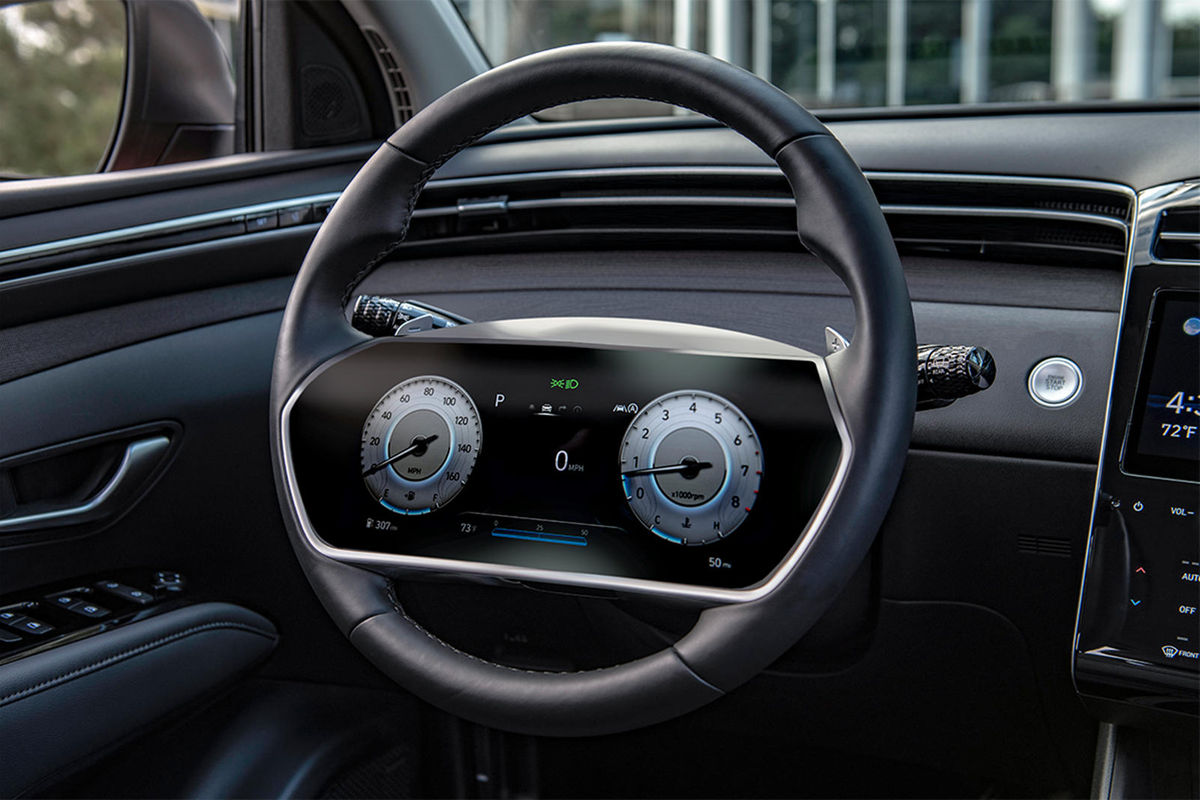
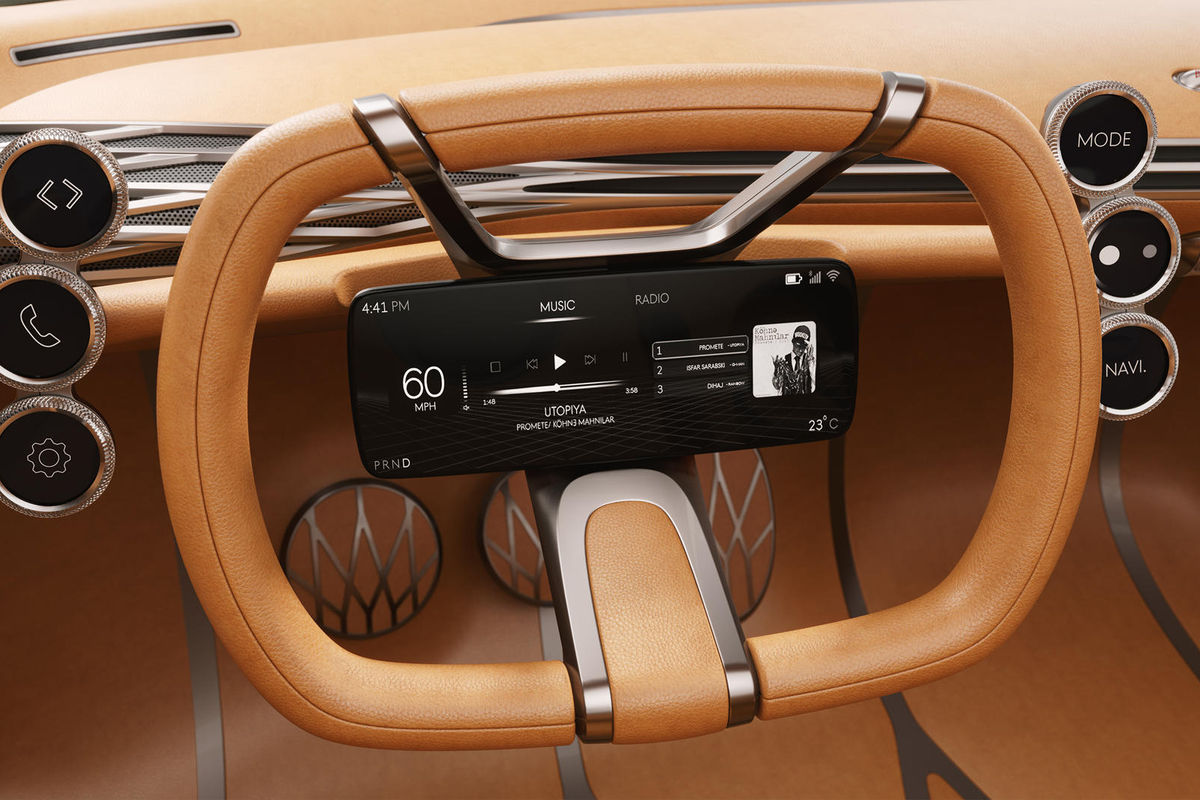
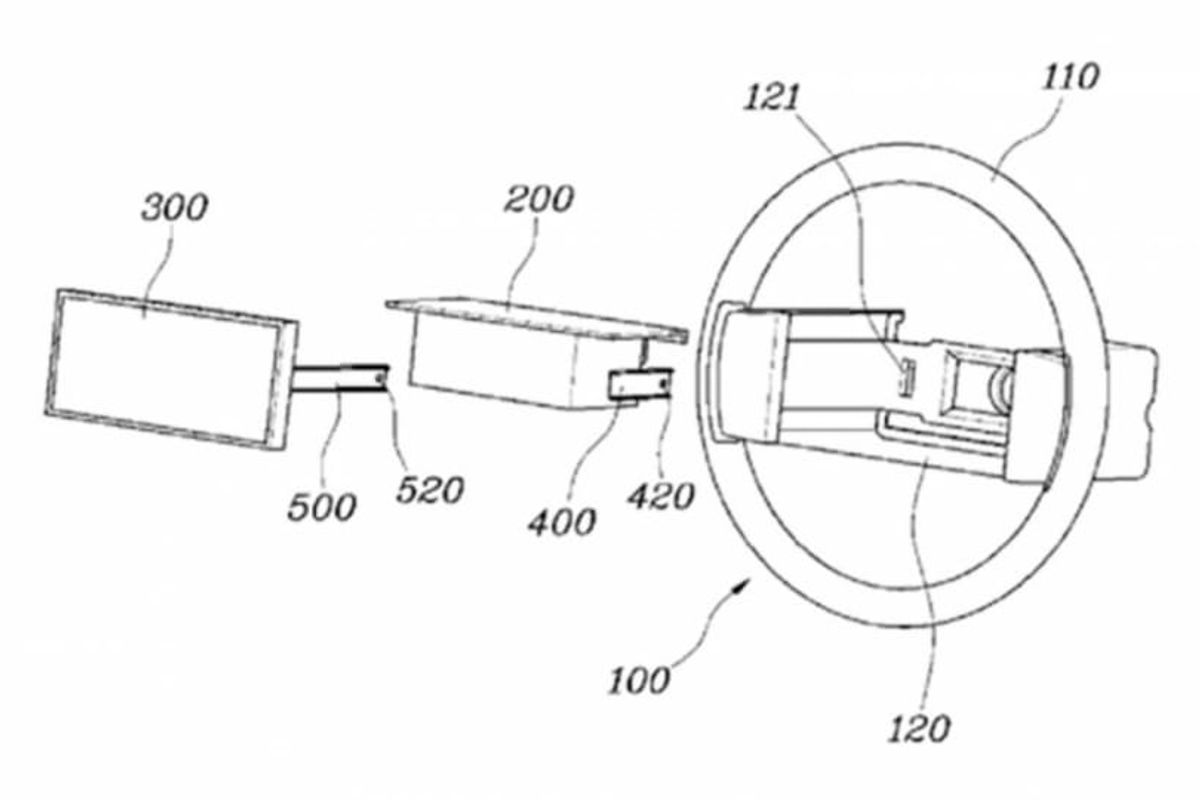
What makes the new steering wheel design so radical? Instead of an airbag boss, it features a digital instrumentation cluster in the middle. The patent application clearly shows a display screen module, placed in the middle of the steering wheel, with CarBuzz creating a graphic rendering of what that could look like.
Hyundai’s designers appear to want to eliminate the traditional dash-mounted instrumentation cluster altogether in some of their future models. To achieve a cleaner look for the cabin architecture, Hyundai’s solution is a steering wheel display screen.
Although the idea is novel, there are some issues. Hyundai says airbag inflation is not compromised by the screen design, although that appears difficult to believe. We assume the screen has a drop-hinge function, which allows the airbag to inflate, as required, but that seems to imply a lot of additional engineering and cost.
The other issue is simple: why? The head-up display has proven to be a great solution, projecting instrumentation binnacle functions into the driver’s field of view and road.
By removing most of the crucial vehicle display functions so far below the road’s field of view, isn’t the Hyundai design merely exacerbating driver distraction issues?
The Hyundai display screen steering wheel patent also foregoes satellite controls. This might indicate that future Hyundai models might be completely reliant on voice for infotainment and cruise control functions.
In 2020, and despite the effects of the Covid 19 pandemic, markets in Europe registered EV (including PHEVs) volume increases of 147% compared to 2019, going from 575 000 units to 1.42 million units. A total 12% of all new passenger cars registered in Europe in 2020 were EVs.
More recently though, in August 2021, EVs and PHEVs secured record market share in Europe while the overall new car market declined by as much as 18%, the worst decline since 2014.
The ongoing chip shortage is a key contributor to a drop in sales. However, the sales performance of EVs and PHEVs is booming in Europe, achieving the second-highest market share at 21% for August 2021.
August EV volumes in Europe at 151 737 represented a year-on-year increase of 61% with total 2021 volumes at 1.32 million units.
EVs Outsell Diesel Cars For the First Time
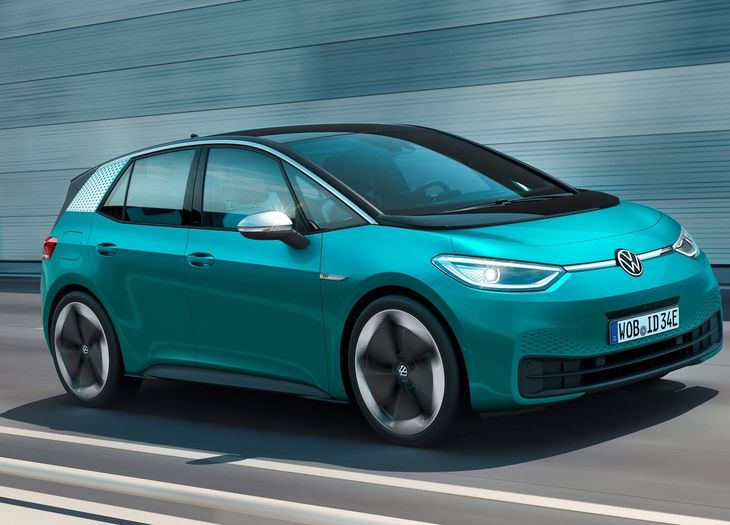
The Volkswagen ID.3 is one of the best-selling EVs in Europe.
For the first time ever, EVs have outsold diesel cars on the old continent. In August 2020, diesel registrations exceeded EV registrations by 158 300 units. A year later, EVs outsold diesel cars by 10 100 units.
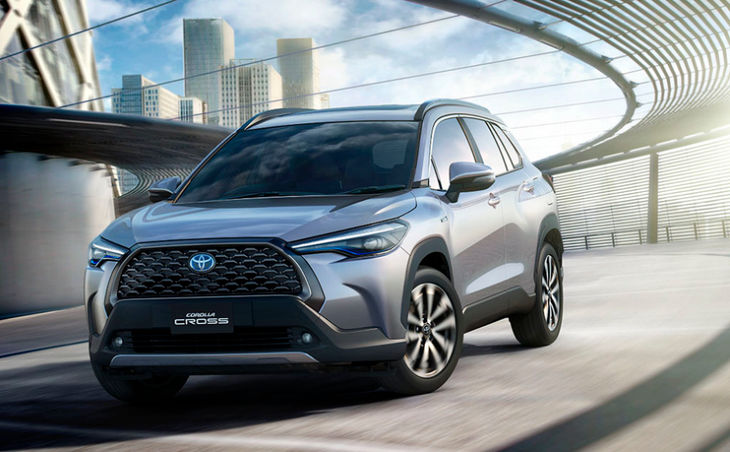
The locally-built Toyota Corolla Cross is the cheapest hybrid you can buy in SA right now.
The uptake of EVs in South Africa remains slow with prohibitively high pricing, lack of incentives, lack of product choice and range anxiety being some of the main factors preventing widespread adoption.
Hybrids, however, form the bridge or transition zone between ICE vehicles and EVs and Toyota is playing a growing role in offering affordable hybrids to South African consumers.
Of course, the updated Toyota Prius Hybrid is still available locally and potential hybrid buyers might also be interested to consider the recently-launched Honda Fit Hybrid.
With the current generation of the Sportage now in its run-out phase, Kia South Africa has introduced a high-end GT-Line derivative of its family car powered by a punchy 1.6-litre turbopetrol engine and adorned with sporty accoutrements inside and out.
We recently reported that Kia South Africa was likely to introduce the European-market version of next-generation Sportage next year and, as to be expected, the Korean marque’s local subsidiary has rolled out a fresh derivative to keep the current model top of mind…
Although GT-Line trim has been in Kia’s global product line-up for a while, it’s relatively new within the South African context. It recently debuted on the Seltos compact family car line-up, in the form of the range-topping 1.4T-GDI GT-Lineand now it has debuted on the Sportage, where is also the only turbopetrol derivative, although, in this case, it’s 2nd from the top in the line-up.
The introduction of the 1.6-litre turbopetrol engine, which is mated with a 7-speed dual-clutch automatic transmission (DCT) is quite notable; it’s the 4th powerplant in the Sportage range and the 3rd petrol-fed motor, but compared with the long-serving naturally aspirated 2.0-litre engine, the new forced-induction 1.6-litre 4-cylinder engine produces peak outputs of 130 kW and 265 Nm, which represents improvements of 15 kW and 69 Nm over the previously most powerful petrol motor in the range.
What’s more, given that it’s equipped with the quicker-shifting DCT, the 1.6 T-GDi AWD DCT GT-Line promises to deliver a notably more spirited driving experience than its brethren. Kia claims a 0-100 kph time of 9.1 sec and a 201-kph top speed for the all-wheel-drive newcomer, with CO2 emissions of 178 g/km, which works out to a claimed fuel consumption figure of about 7.7 L/100 km.
The GT-Line’s exterior upgrade is not significant; the most obvious clues are the 19-inch alloys and LED headlamps, but eagle-eyed observers will notice the fog-lamp housings have been blacked out and chrome finishes have been applied to the grille and door handles.
The interior execution, by comparison, is quite bold, thanks to the fitment of 2-tone leather trim to the seats, which offer electrical adjustment at the front and heating fore and aft. Over and above smart entry with push-button start, dual-zone climate control, plus an Apple CarPlay- and Android Auto compatible 8-inch touchscreen infotainment system, Kia SA has also specified a panoramic sunroof, a wireless charging pad and an electrically powered tailgate. A reverse-view camera, plus front and rear PDC are also standard.
The safety specification includes 6 airbags (dual front-, side- and curtain airbags), ABS with EBD and brake assist, electronic stability control, plus hill assist- and downhill brake control.
Price in South Africa
The new Sportage 1.6 T-GDi AWD DCT GT-Line costs R649 995; it slots in between the 2.0CRDi EX AWD(R623 995) and the top-of-the-range2.0CRDi EX Plus(R651 995) turbodiesel derivatives. The asking price includes a 5-year/unlimited km warranty and 5-year/90 000 km service plan.
We’ll publish a launch review of the new derivative soon.