Hyundai might not build a compact bakkie, but it does assemble some clever little vans.
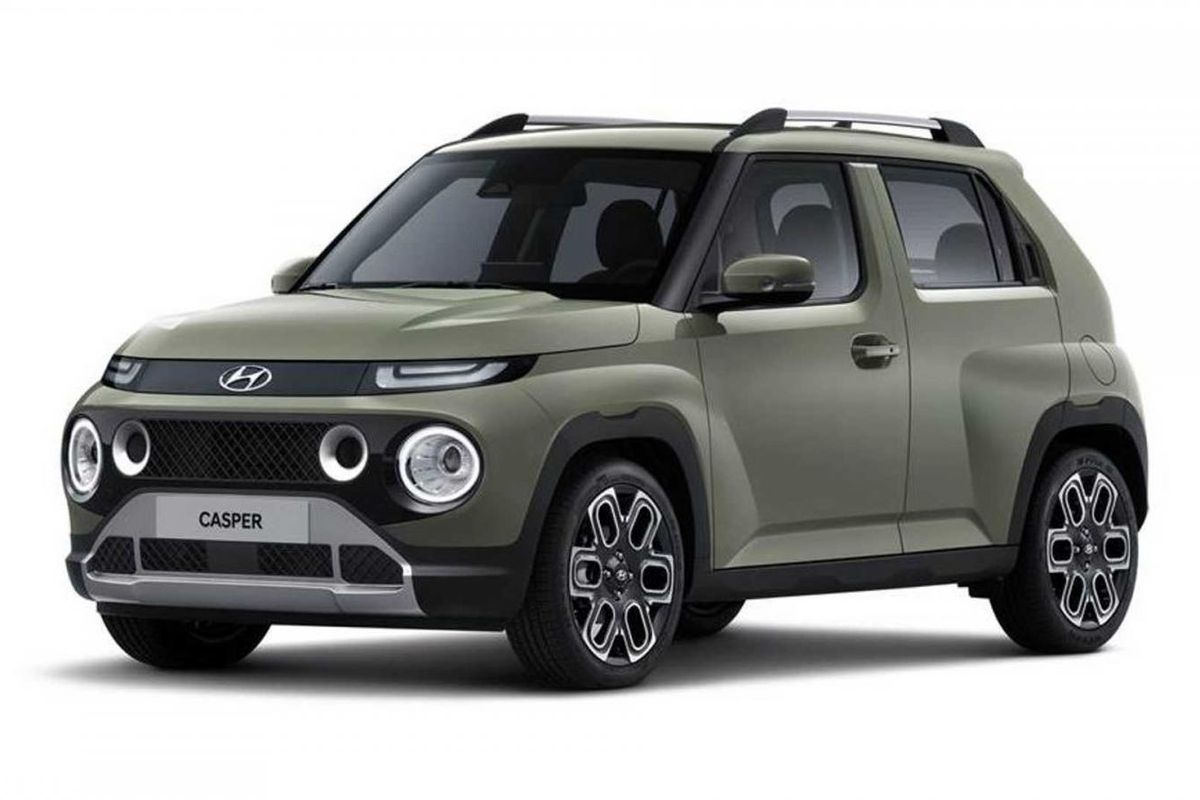
The i10 Cargo, without rear seats and some cargo partitioning (not to mention window bars), is a popular courier vehicle in South Africa. And now there is a new option based on the very same platform, the Casper van.
Hyundai’s new compact crossover looks Kei-car cute, and at only 3.59m bumper-to-bumper, it’s a joy to navigate around town. Or parallel park in a busy urban street.
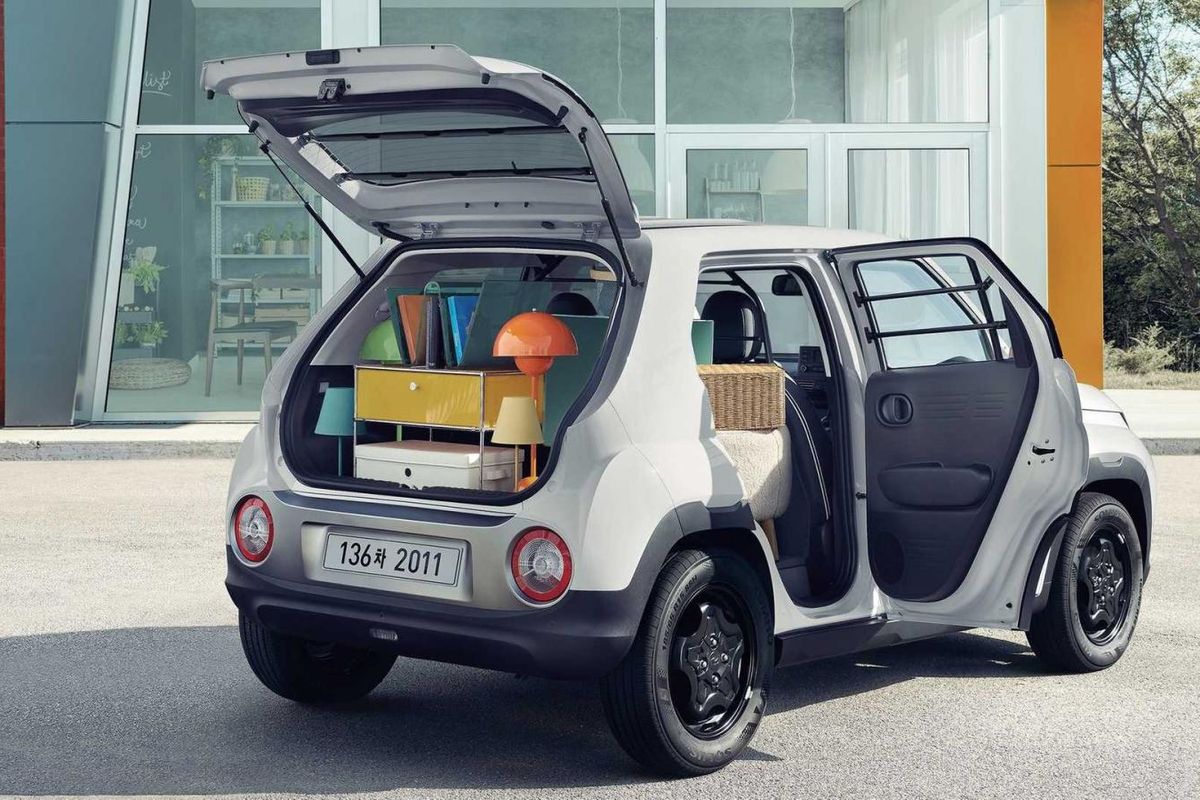
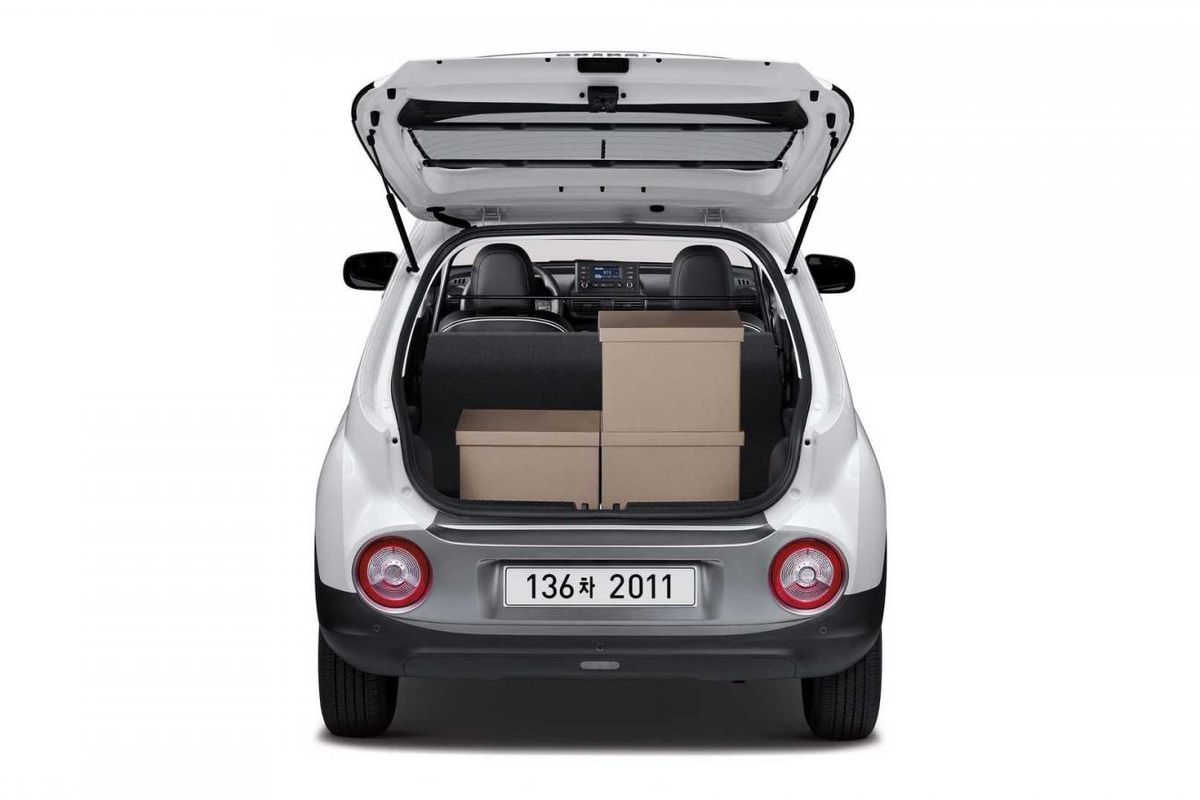
The Casper van follows a proven compact commercial vehicle formula. Hyundai’s assembly people don’t fit it with rear seats, which increases cargo capacity to 940-litres. A lot, for a car that is under 4m in length.
When creating a delivery van from a city car, product planners need to consider the risk of cargo shift. Especially when triggered by heavy braking. To ensure that the Casper van’s parcel load does not convert to projectiles, it has cargo partitioning behind the front seats during emergency braking.
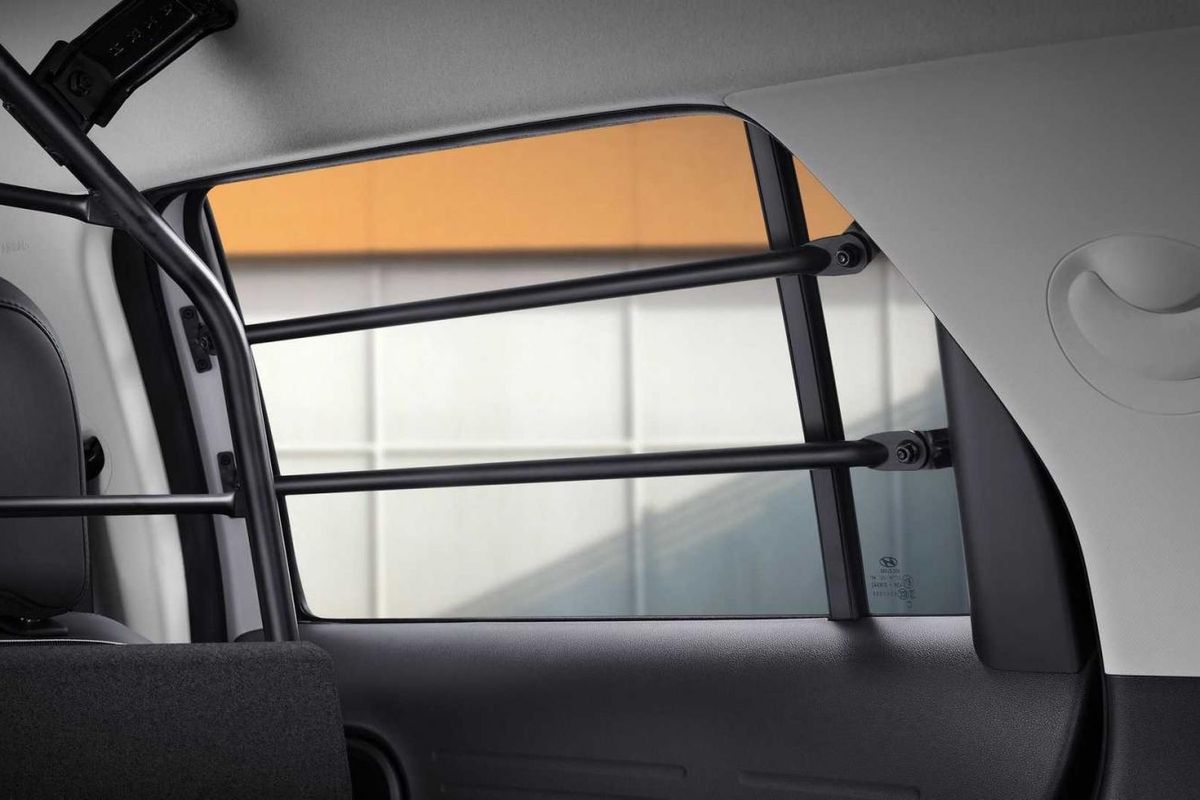
South Africans will also appreciate the intrusion bars behind the rear windows and tailgate glass. It makes it unlikely that this Hyundai’s cargo will go amiss when left unattended and parked.
Powering the Casper van are two versions of Hyundai’s 1-litre petrol engine. The naturally-aspirated option is good for 56 kW and 95 Nm. If you need more power for your short-haul parcel courier business or might want to operate the Casper van at altitude, a turbocharged version boosts 75 kW and 172 Nm.
Hyundai only offers a single transmission choice: the company’s four-speed automatic, which should reduce transmission wear, compared to a five-speed manual. And with the Casper van targeted at urban users, you won’t often miss the presence of a fifth forward ratio.
The specification is clever, too. It rolls 15-inch steel wheels, which should prove robustly immune to even the harshest pothole strike, and the safety kit is impressive. Six airbags are fixed inside the Casper van’s cabin architecture. It also has forward collision warning and high-beam assistance for those low-light deliveries that might take you into rural areas.
The Casper goes on sale in Korea this month, but no word yet on whether it’s under consideration for South Africa. We’ll update you when we hear back from Hyundai SA.
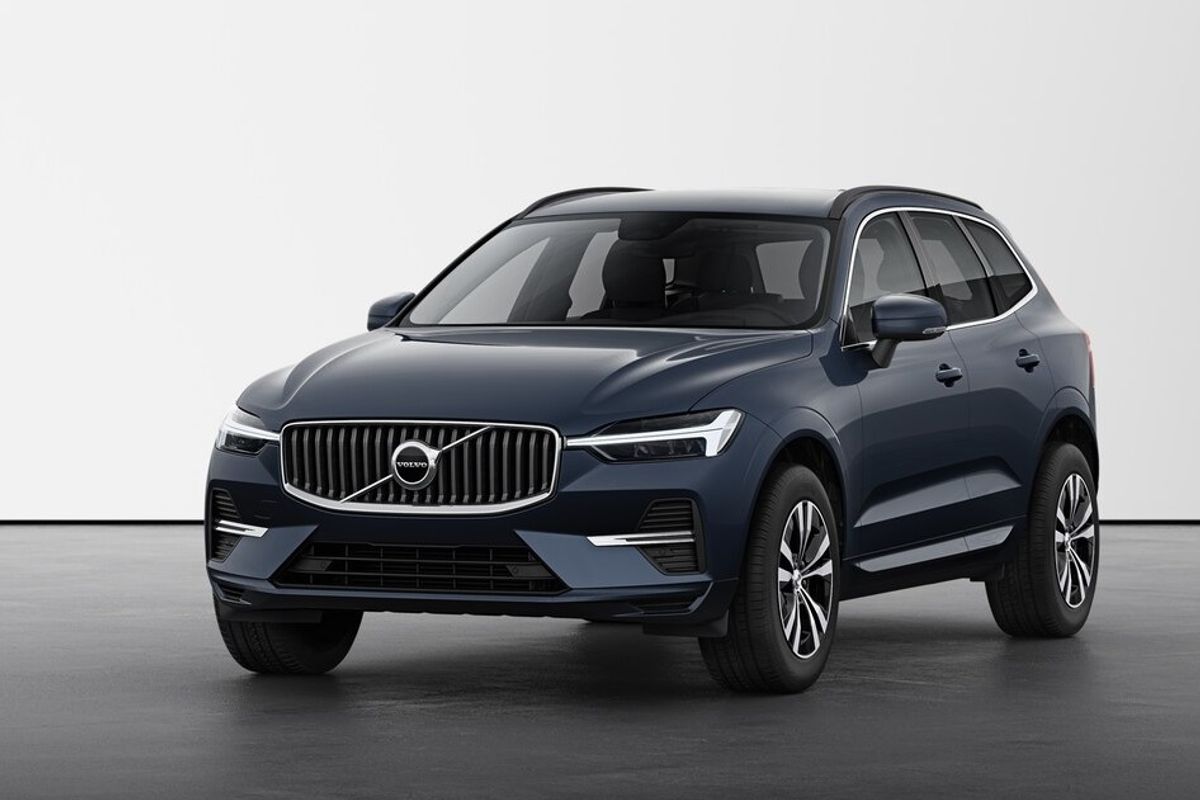
The Volvo XC60 B5 has touched down in SA and it’s the most affordable model in the Swedish brand’s XC60 family. Here’s pricing, plus specification details.
The Volvo XC60 is the brand’s global best-seller and the SA range has been expanded with the introduction of a more value-orientated derivative. The XC60 is also the most popular model sold by the Swedes in SA.
Meet the Volvo XC60 B5, which kicks off the range at R750 000. It will go on sale from the first week of February 2022. What makes it different compared to the rest of the XC60 range? The biggest difference is it’s the only model in the XC60 range that doesn’t feature all-wheel drive.
Underneath the bonnet is a new mild-hybrid 2.0-litre turbocharged petrol engine that produces 183 kW and 350 Nm. Power goes to the front wheels via an 8-speed gearbox and the Swedish brand says this model is good for a 7 second sprint to 100 kph, while consuming just 6.9 L/100 km, thanks to its 48-volt mild-hybrid tech.
Despite its designation as an affordable entry-point to the Volvo brand, the XC60 B5 still comes with a good level of gadgets and comfort features like 18-inch alloy wheels, dual-zone climate control, keyless entry, heated front seats, a power-adjustable driver’s seat, parking assist (front and rear), a reversing camera and inductive smartphone charging. There are a few options on offer, like leather trim.
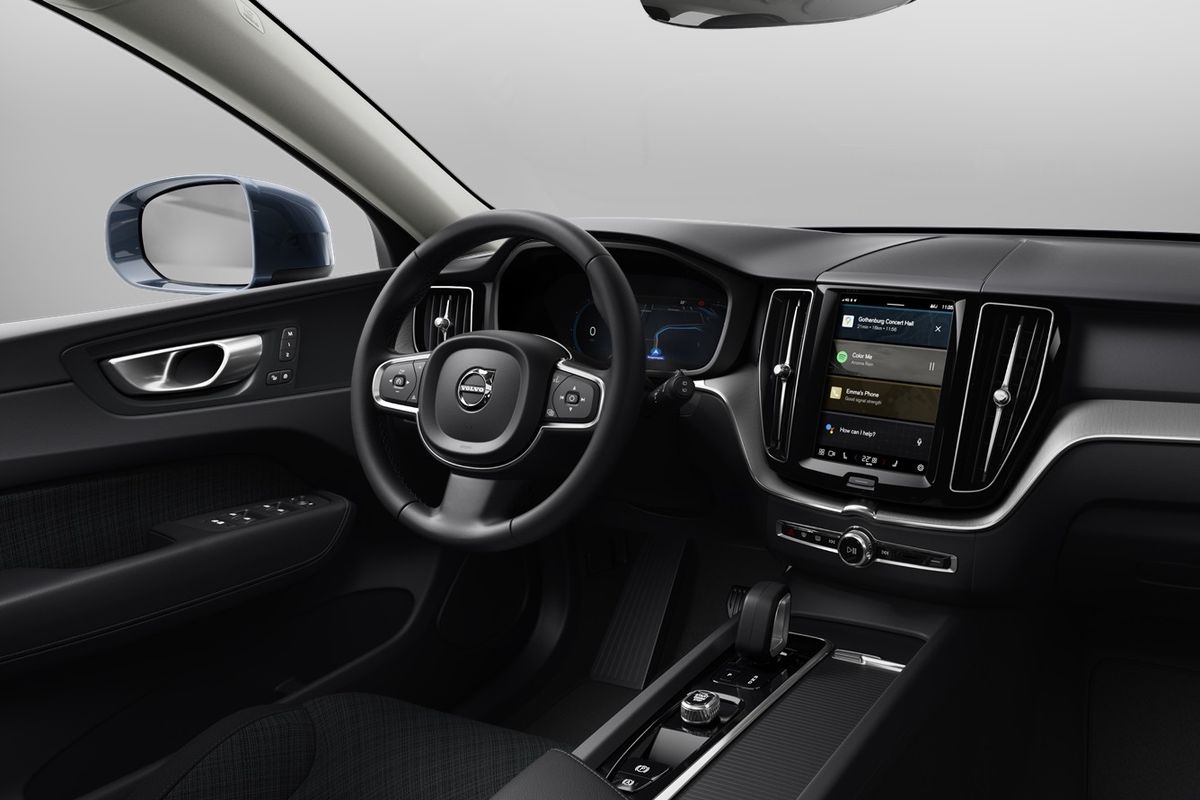
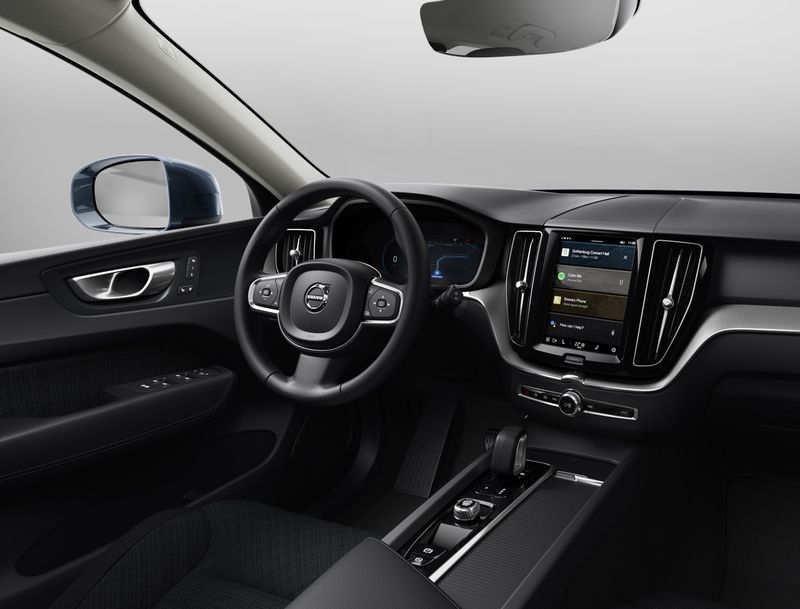
The Volvo XC60 B5 also features the latest Android-powered infotainment system that comes standard with Google’s apps and services, as well as Over-the-Air updates.
“The arrival of the new XC60 B5 FWD puts this efficient yet powerful mild-hybrid powertrain within reach of more South Africans, giving them the opportunity to experience Volvo’s signature luxury and safety. Market-leading technology such as the new Android-powered infotainment system, meanwhile, offers unparalleled connectivity,” said Greg Maruszewski who is the MD at Volvo Car SA.
Despite the company confirming it won’t be releasing any new vehicles until 2025, Jaguar has begun work on a new all-electric platform.
That’s quite the statement to read, isn’t it? No new products until 2025. That’s three years of silence. Parent company Jaguar Land Rover will be busy as there’s a new Range Rover that’s about to go on sale, as well as an all-new Range Rover Sport that’s in development.
But, while the brand is quiet on the launch front, it doesn’t mean it has stopped working. Jaguar will be an electric-only car maker by 2025 and doing a recent investors call, the Jaguar Land Rover boss Thierry Bollore said it will be developing its own new electric car platform.
This news comes from Autocar and it comes as a bit of a surprise as it was previously assumed the British carmaker would be using an electric platform from another company. Going in-house will not be cheap, but this new platform which is apparently nicknamed Panthera should spawn multiple models.
“Concerning the new Jaguar, we’re making unique proportion a priority. That’s the reason why at the moment we do it by ourselves,” Bollore said. “The proportions are crucial to get what we want from Jaguar. The platform is a consequence of proportions we’ve decided on. They’re absolutely bespoke.” said JLR chief financial officer Adrian Mardell.
What does this mean for the future of Jaguar? While Land Rover will continue to offer its premium SUVs, Jaguar will be going up a segment and will attempt to play in the ultra-luxury space, as a rival to Bentley. There will be two electric crossovers and a 2-door coupe from 2025.
Jaguar knows it’s lagging a bit behind, with the all-electric I-Pace taking just 3% of company sales in the last financial quarter and overall sales were just under 14 500 units, which is the worst performance for Jaguar since December 2013, according to Autocar.
Best-selling bakkies in South Africa: January 2022
We’ve again managed to secure Naamsa’s detailed monthly sales figures, allowing us to identify South Africa’s best-selling bakkies for January 2022. Here’s everything you need to know!
South Africa’s new-vehicle market enjoyed a largely positive start to the year, a trend that was echoed in the light-commercial space where year-on-year sales grew 3.8% to 9 629 units. While this segment also includes body styles such as commercial vans, here we’ll focus exclusively on individual models in the traditional bakkie market.
So, which pick-ups did South African buyers flock to in the first month of the year? And which bakkies found themselves consigned to the very bottom of the table (or indeed unable to even crack the top 10)? Let’s take a closer look at the figures.
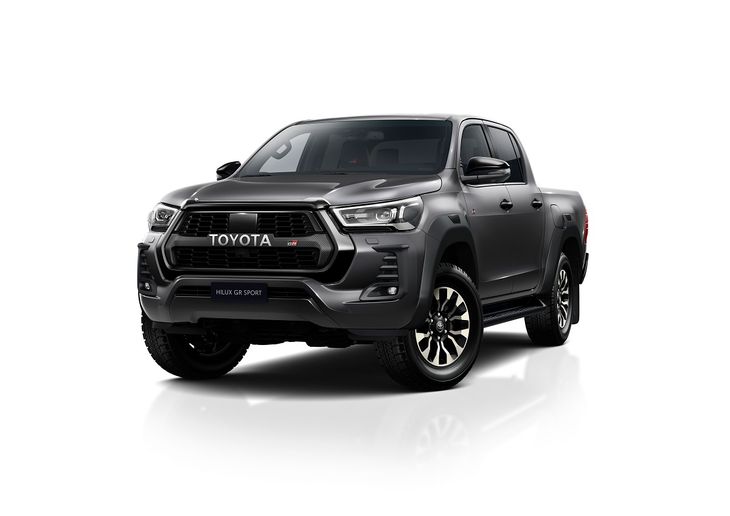
As you were no doubt expecting, the Toyota Hilux (2 803 units) – which earned the title of SA’s top-selling vehicle overall in 2021 before receiving yet more positive press when Nasser Al-Attiyah triumphed at the 2022 Dakar Rally in the V6-powered GR DKR Hilux T1 – was again the country’s best-selling bakkie for the month, more than doubling the efforts of its closest rival. Interestingly, some 243 units were listed as government sales, while a further 159 units were registered in the rental market.
The second-placed Isuzu D-Max (1 141 units) was the only other contender to hit four figures during the reporting period. That’s another fine performance from the ageing Isuzu bakkie considering the long-awaited new-generation version is just a couple of months away from rolling out of the Struandale facility and hitting local roads.
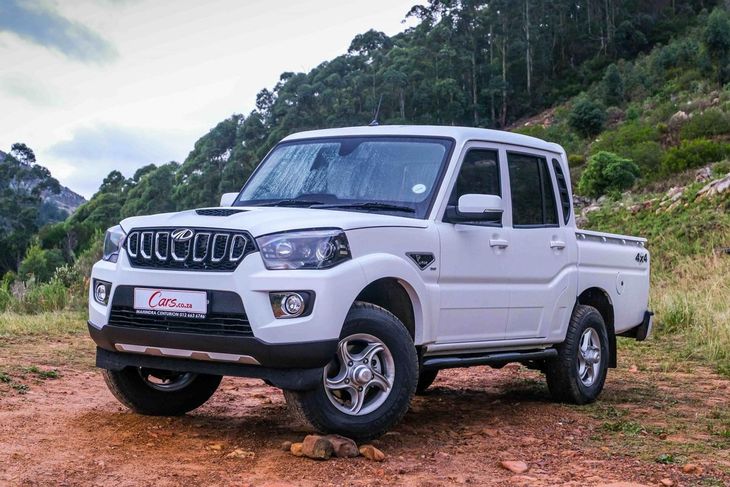
Remarkably, the Mahindra Pik Up – which is assembled in Durban, KwaZulu-Natal – clambered up the table from seventh to third spot, with 618 units registered during the month. That was just enough for it to force the Ford Ranger (608 units) down to what must be an uncomfortable fourth place. We can only guess the reason the Blue Oval brand’s bakkie has fallen off the pace to this extent is due to its Silverton facility gearing up for production of the new-generation model.
Meanwhile, the GWM P-Series (539 units) dropped one place to a still-impressive fifth, just ahead of the GWM Steed, which ended the month on a rather useful 461 registrations, rising three spots. With 445 units sold, the Nissan NP200 – which remains the sole half-tonne bakkie available locally – fell two places to seventh, a mere four units ahead of the Nissan Navara (441 units) produced in the same Rosslyn factory.
Despite almost doubling the number of units registered in December 2021, Toyota’s rugged Land Cruiser 79 (303 units) slipped one place to ninth in January 2022, while the Volkswagen Amarok again completed the table with 195 units. As a reminder, an all-new Amarok will be revealed later in 2022, with the second-generation version set to be based on the new Ranger and thus produced here in South Africa.
Best of the rest in January 2022
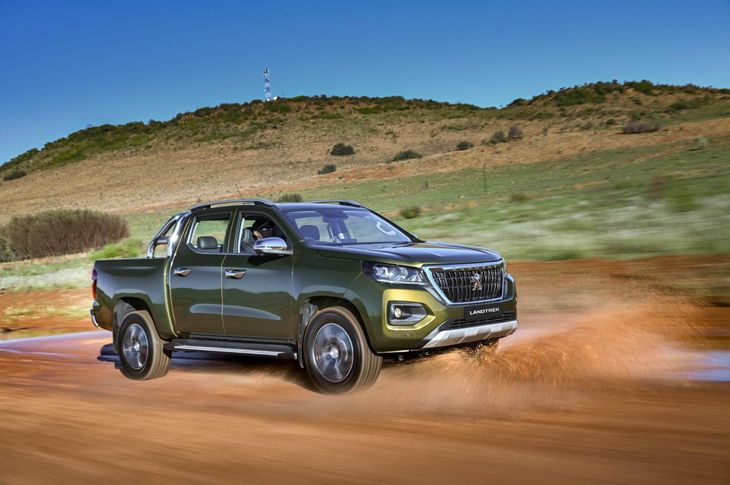
Of course, it’s just as fascinating to examine the performance of the so-called bit-part players as it is to list the sales leaders. Outside of the top 10, the Mahindra Bolero (122) proved the best of the rest in the first month of the year. In its second full month on the market, Peugeot Landtrek registrations grew ever so slightly to 41, while the Mitsubishi Triton’s total dropped a handful of units to 25. Mazda, meanwhile, managed to sell 20 examples of its new Isuzu-built BT-50, a month-on-month improvement of six units.
Export winners in January 2022
What about the export race? Well, here the Hilux dominated as well, with 5 332 examples of the Japanese bakkie shipped from our shores during January. The Ranger’s export figure more than halved month on month to 2 364 units, though that was still miles ahead of the Nissan Hardbody (456), Isuzu D-Max (272) and Nissan Navara (144). For the record, the industry’s overall export sales for January 2022 fell 9.3% year on year.
10 best-selling bakkies in South Africa for January 2022
The Mini Cooper SE is the most affordable new battery-electric vehicle in SA. As the price of petrol continues to climb, interest in the Oxford-based marque’s first all-electric car is bound to increase. However, as a package, it has a few drawbacks… Can the Mini Cooper SE justify its price premium?
We like: The purest Mini driving experience, addictive performance, novelty factor
We don’t like: Range anxiety, stiff ride, pricey, other Mini models offer more value.
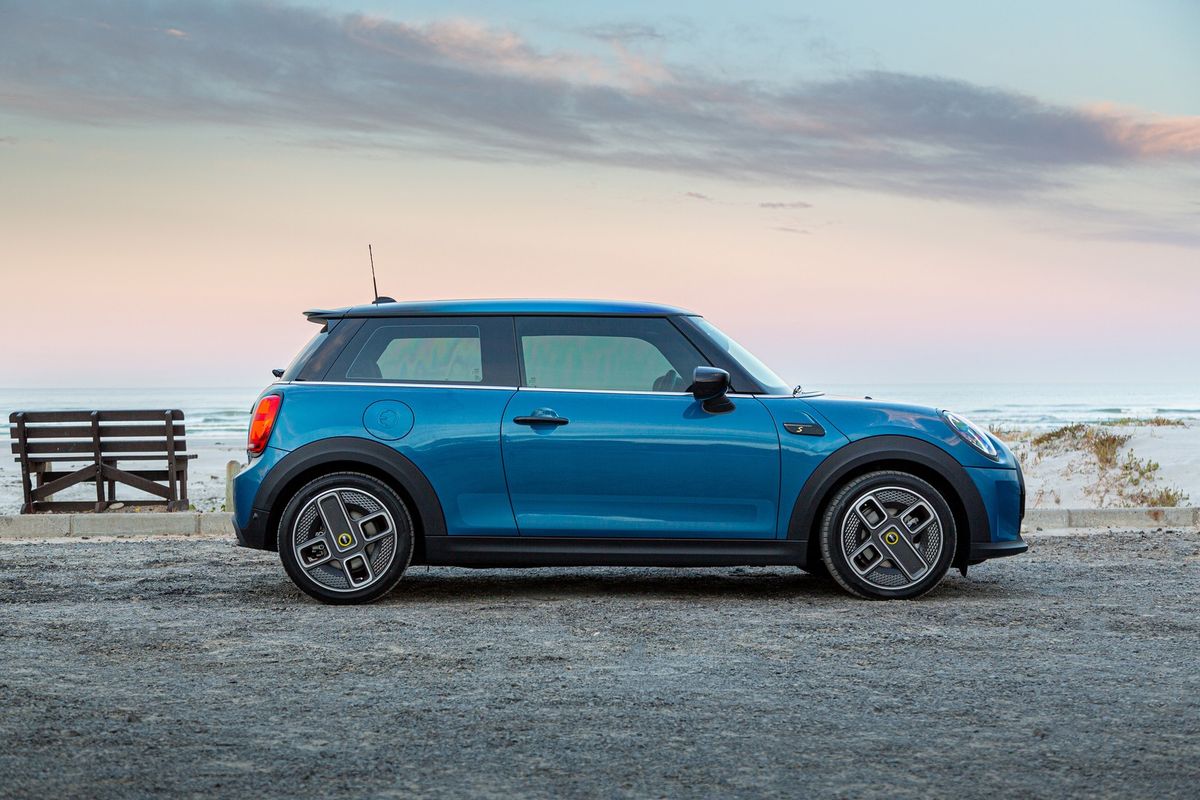
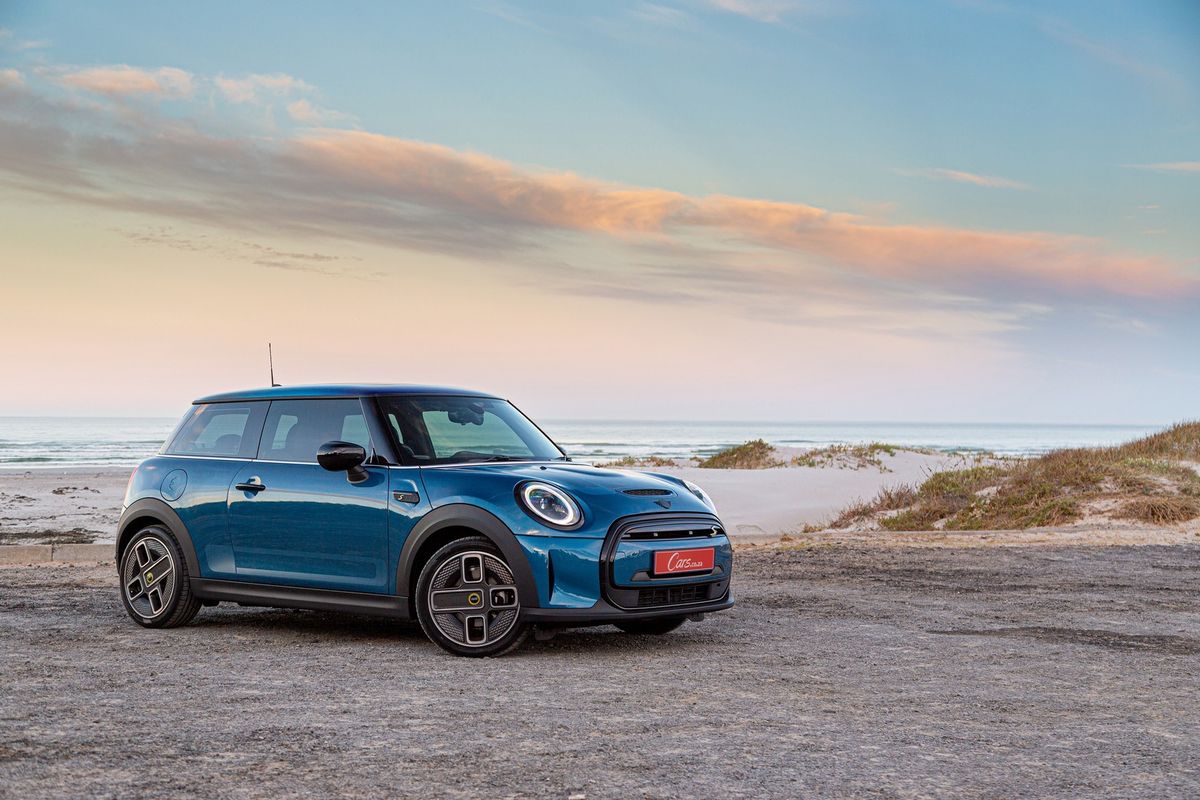
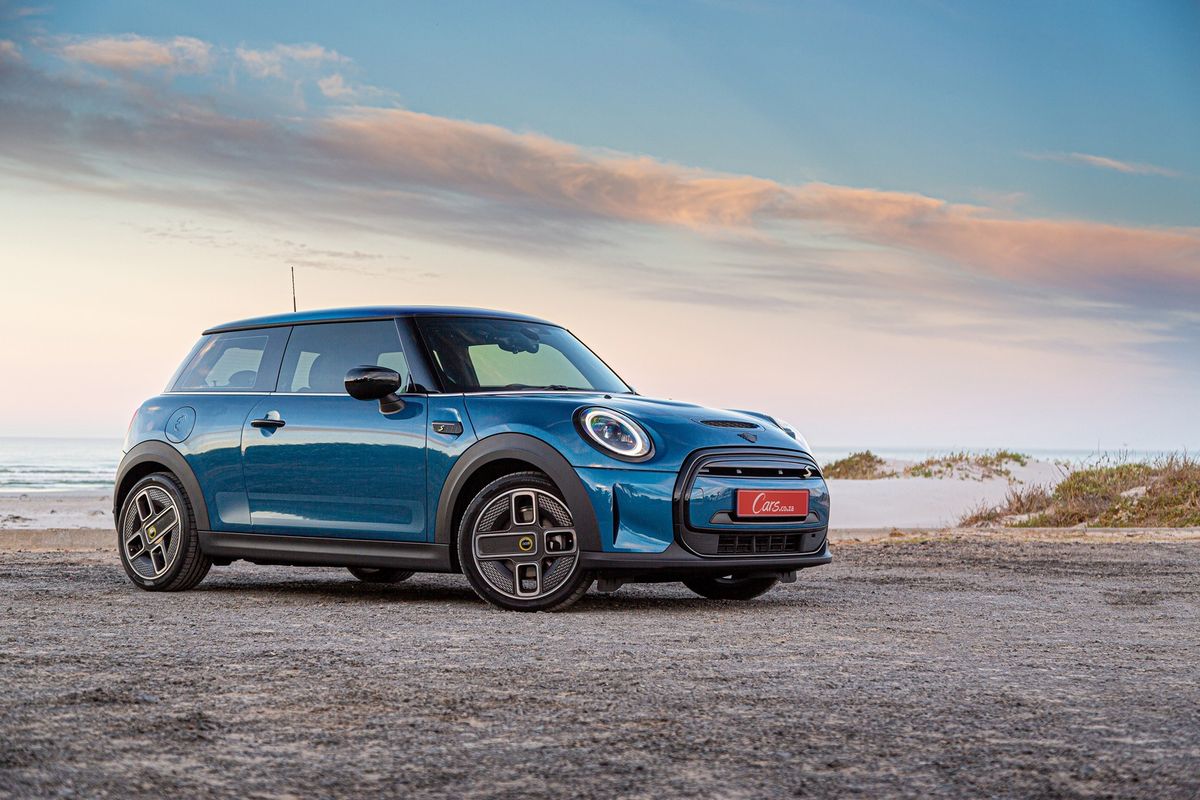
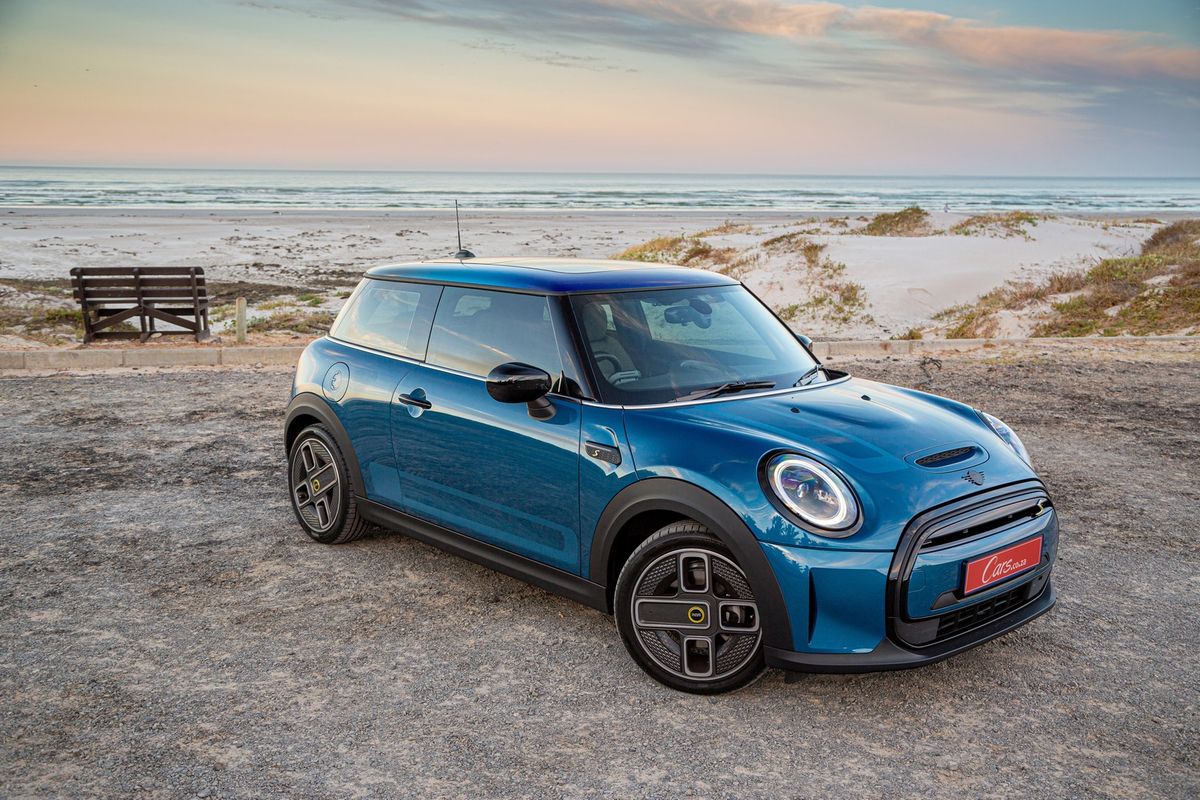
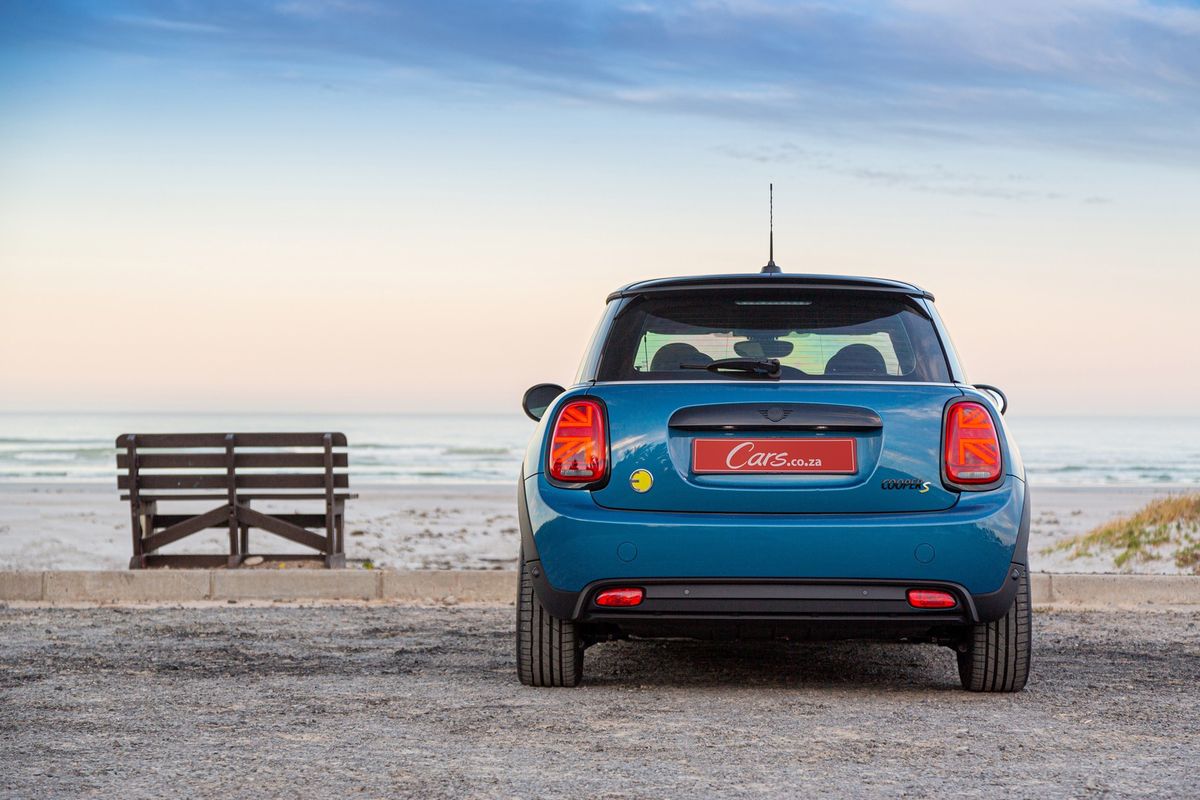
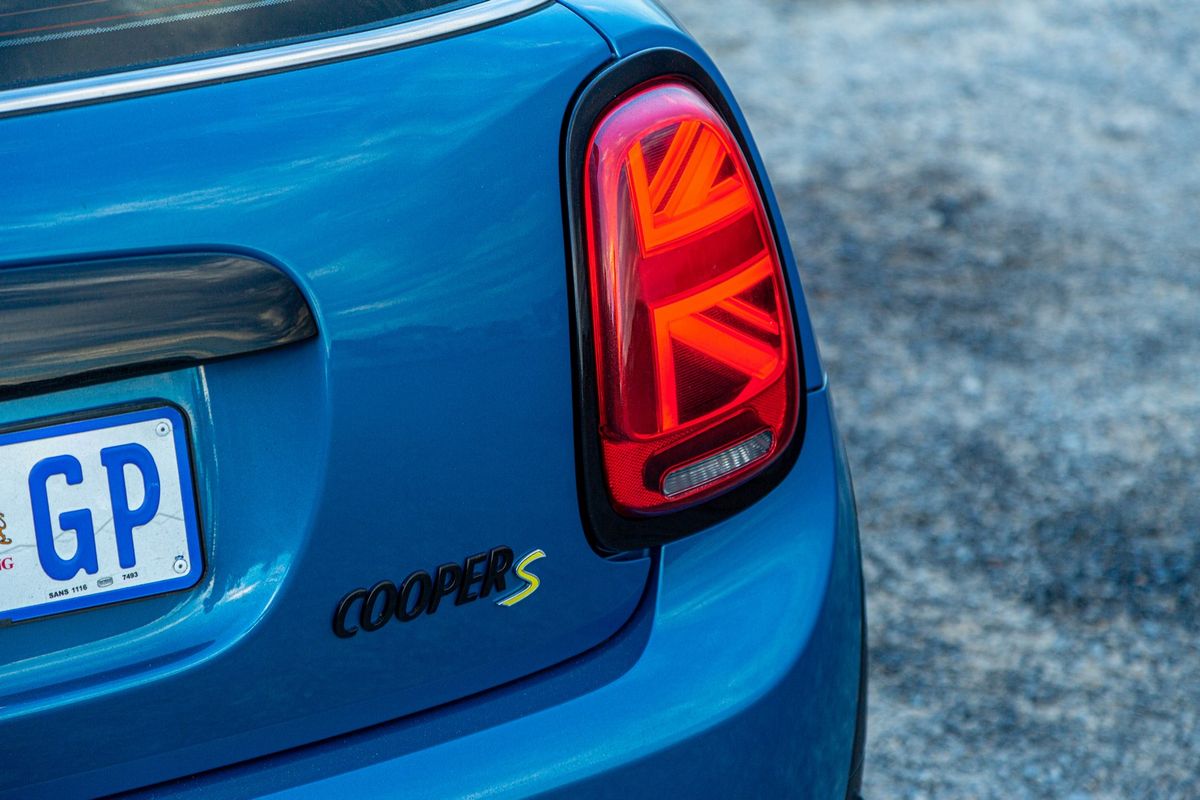
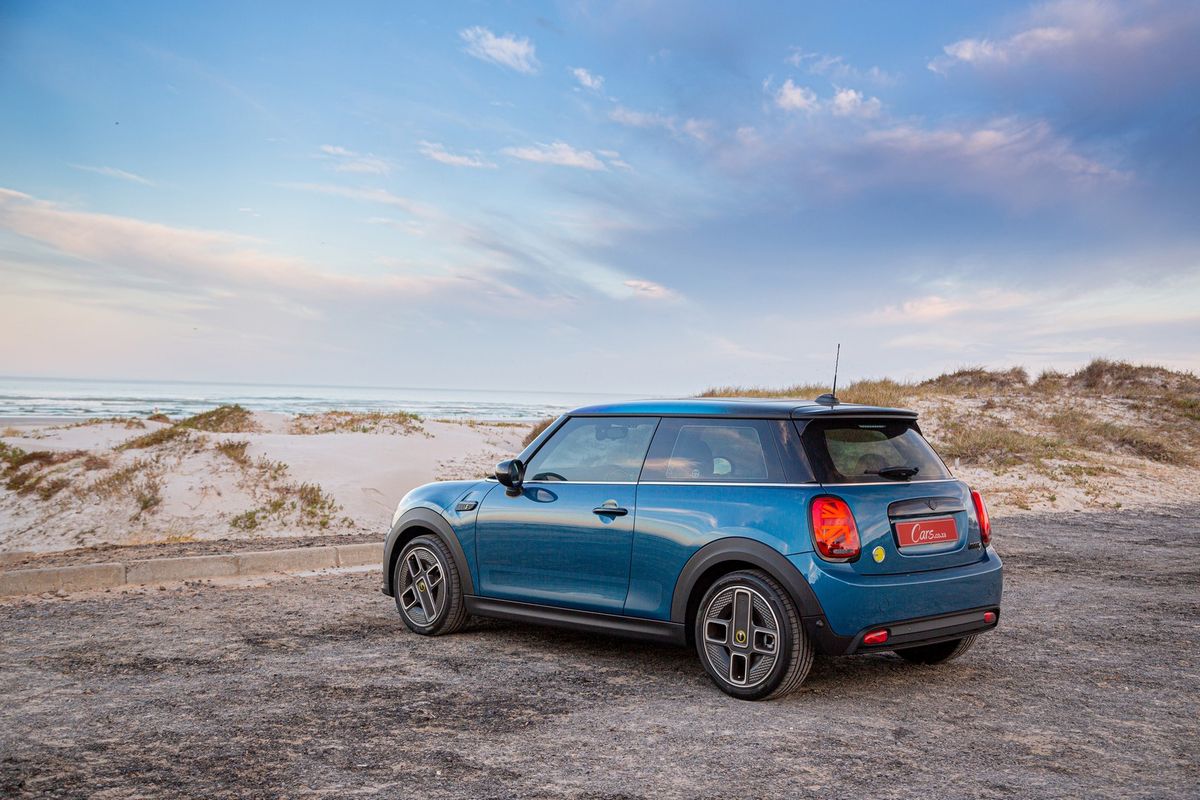
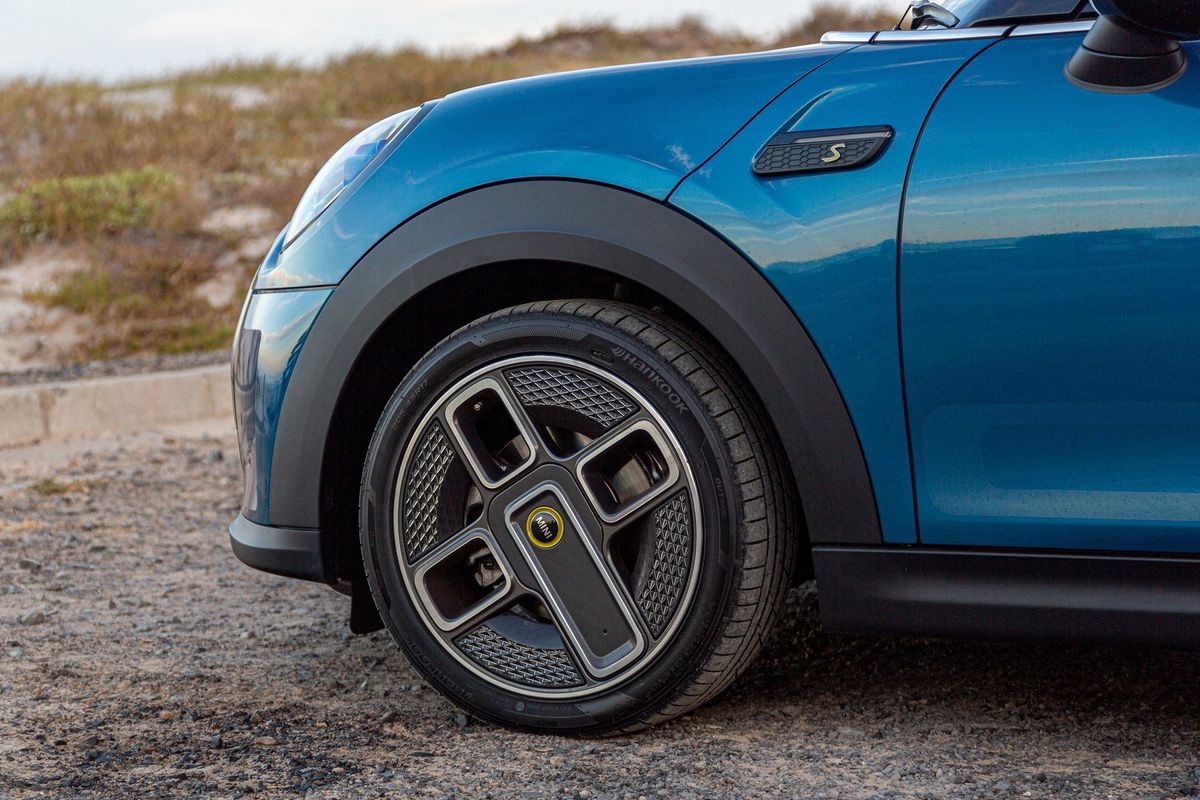
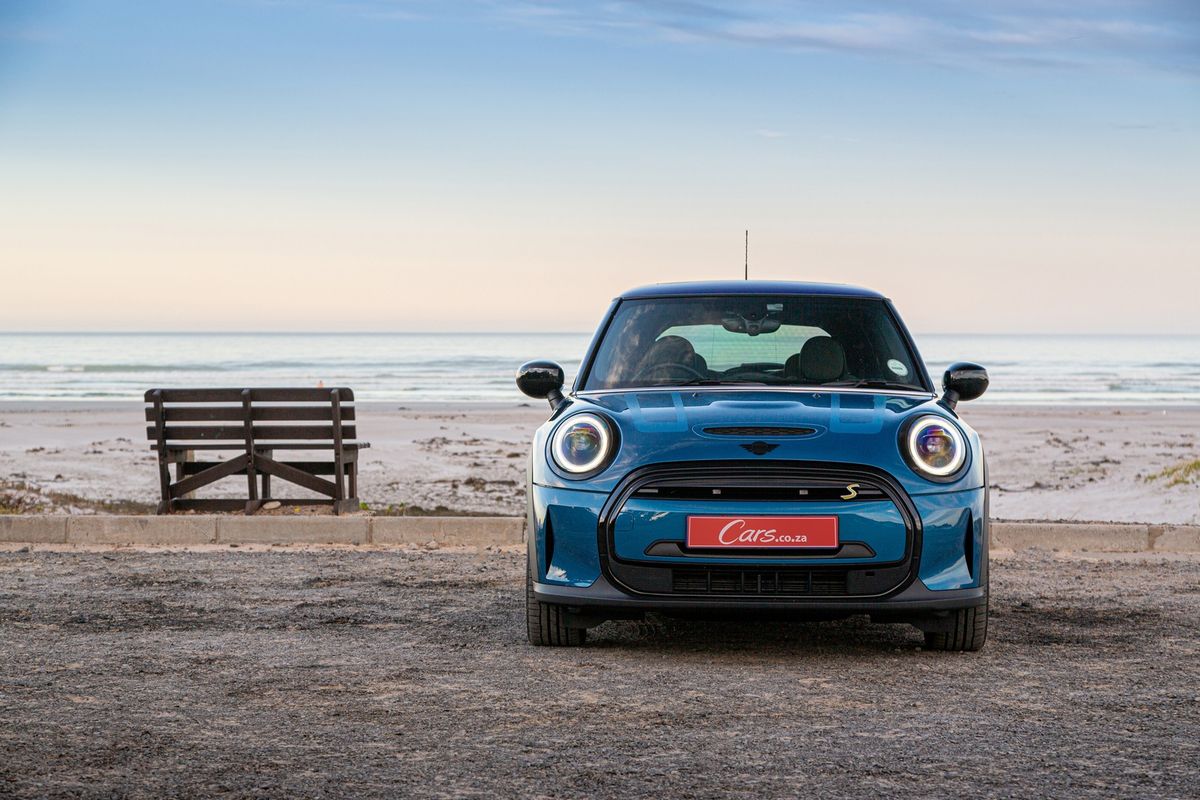
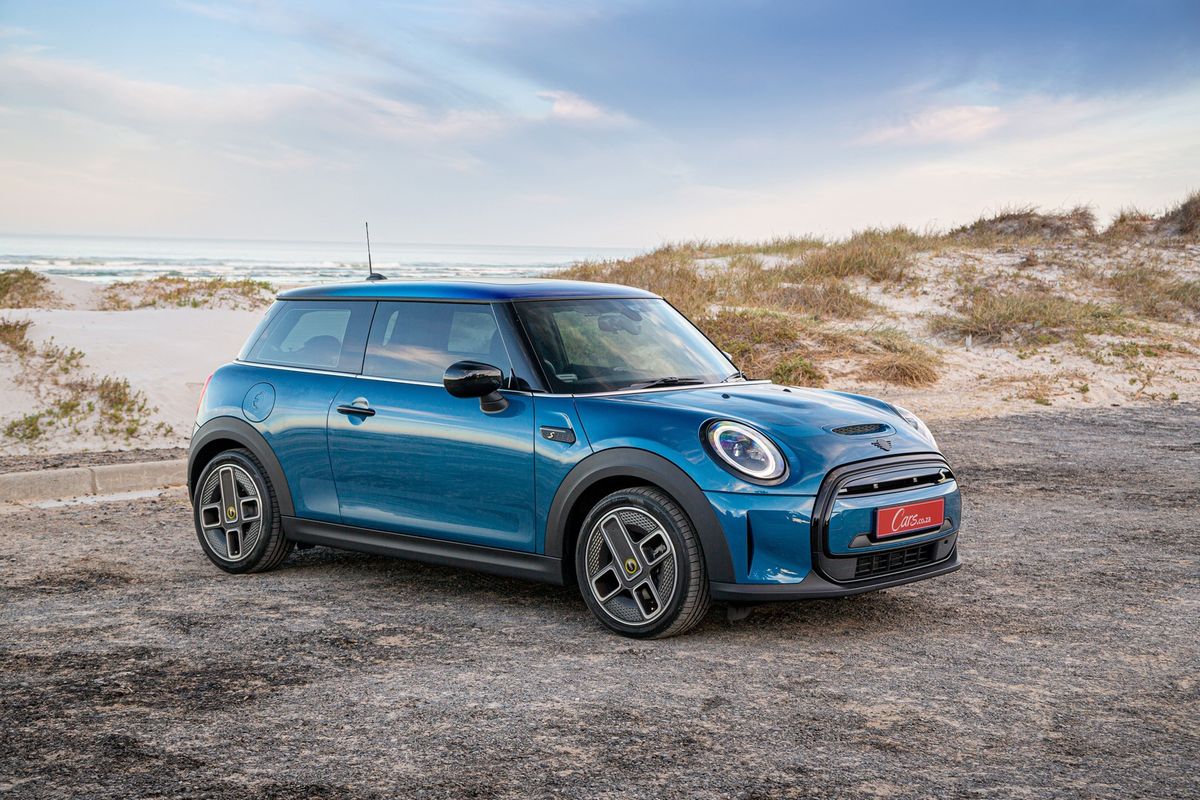
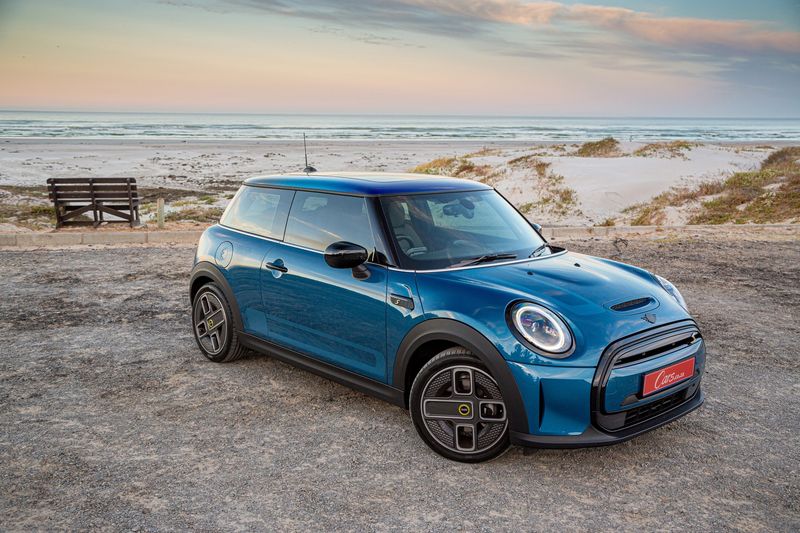
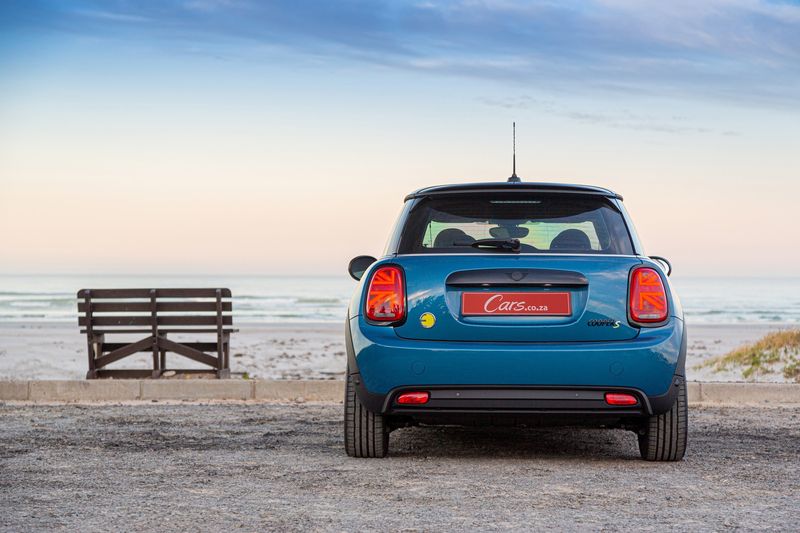
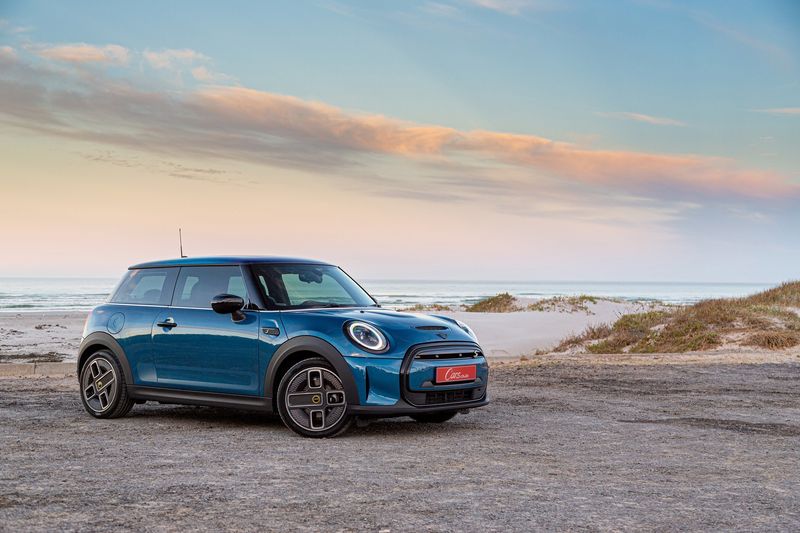
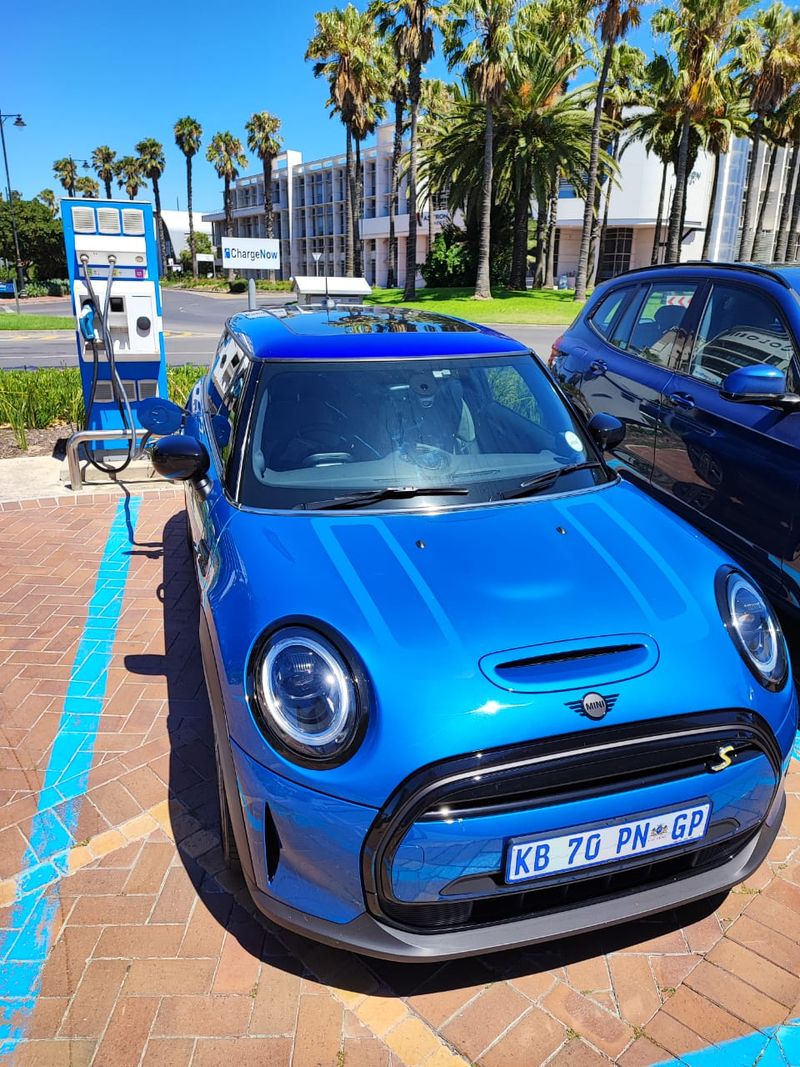
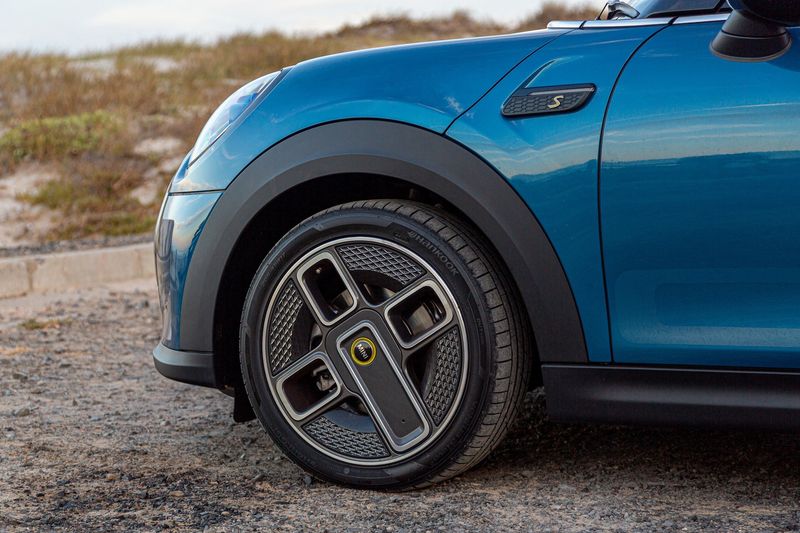
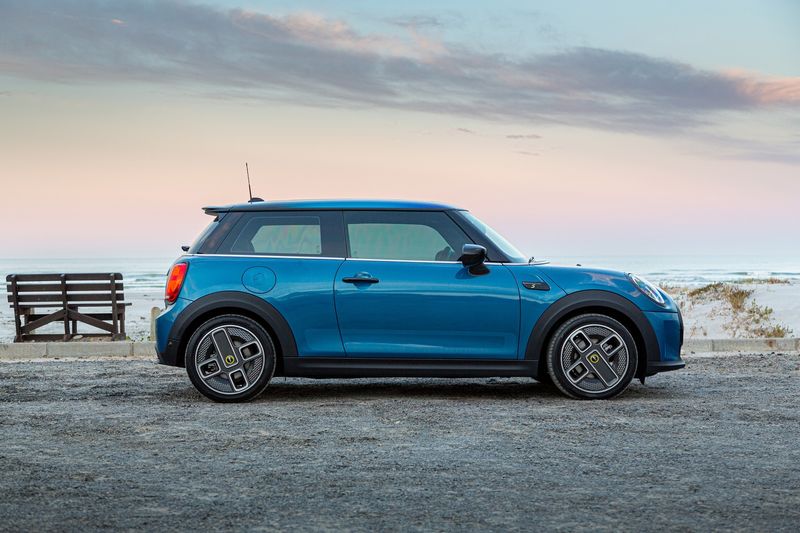
At first glance, this hatchback looks like a run-of-the-mill Mini Cooper (albeit one fitted with rather funky looking wheels). However, upon closer inspection, you’ll notice flashes of yellow detailing, a plug icon on the tailgate and another one on the “fuel-filler cap”. Yes, this is the Mini Cooper SE – the Oxford-based brand’s first series-produced battery-electric vehicle (BEV).
The BMW Group has taken the electric motor from the sporty BMW i3 S and transplanted it into a Mini Cooper body, along with a lithium-ion high-voltage battery pack (the 32-kWh battery was chosen instead of the i3 S’ 42 kWh unit in order to save weight). In the electric-car segment, kerb weight is a real issue. To give you some context, the BMW iX we recently tested weighed all of 2.5 tonnes!
Hefty cars are usually not very engaging to drive and, when your brand is associated with “go-kart-like handling” (for what that’s worth), there has to be some compromise, but more about that later…
The unique wheel design is the easiest way to spot the electric Mini.
As far as rivals are concerned, the Mini Cooper SE almost has the segment to itself. The only other offering is the soon-to-be-discontinued BMW i3 and the Mini competes with the base eDrive derivative. It’s a touch more expensive than the Mini; its price is R754k, whereas the Mini’s is R709k. The Bimmer offers a superior claimed range (217 km vs 260-310 km), but a lower power output. If you’re really eager to have “the Mini experience”, you can get the accomplished Cooper S for way less money. Electric vehicles are taxed heavily in Mzansi, so the taxman is largely to blame for the SE’s lofty purchase price.
Mini decided on a smaller battery for the SE in order to save weight, at the cost of range.
How the Mini Cooper SE fares in terms of…
Design & Packaging
We’ve already touched upon the visual differences between the all-electric Mini Cooper and its conventional (ICE) siblings. We really like the subtle touches the Oxford-based marque has added, such as the quirky alloy wheels and the electric-plug logos. We’re just happy that, unlike most of the current crop of standalone electric cars, the SE doesn’t have a quirky (and polarising) exterior design.
It just seems as if nearly every BEV looks strange for the sake of standing out from the crowd. The BMW iX, Hyundai Ioniq 5 and Kia EV6 are highly lauded, but you can’t say they’re conventionally pretty.
The Cooper SE’s range is somewhat underwhelming, especially if you have to deviate from your usual short commute.
In terms of packaging, the SE has a standard Cooper body and its interior layout is instantly familiar – you feel like you’re part of the car when seated behind the ‘wheel. Rear legroom is nominal and, if you’re a taller-than-average driver (as this author is), you may as well consider the back seats as an extension of the load bay. If you fold the rear seatback down, you get up to 731 litres of utility space.
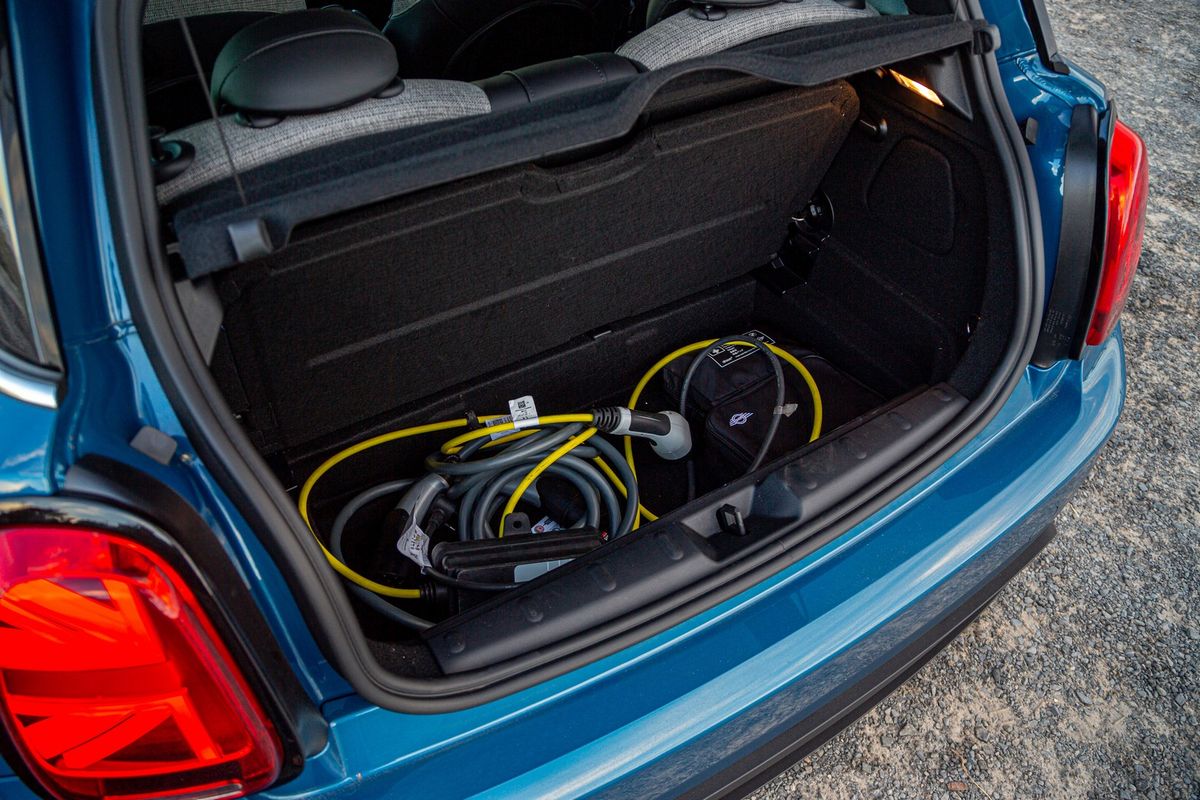
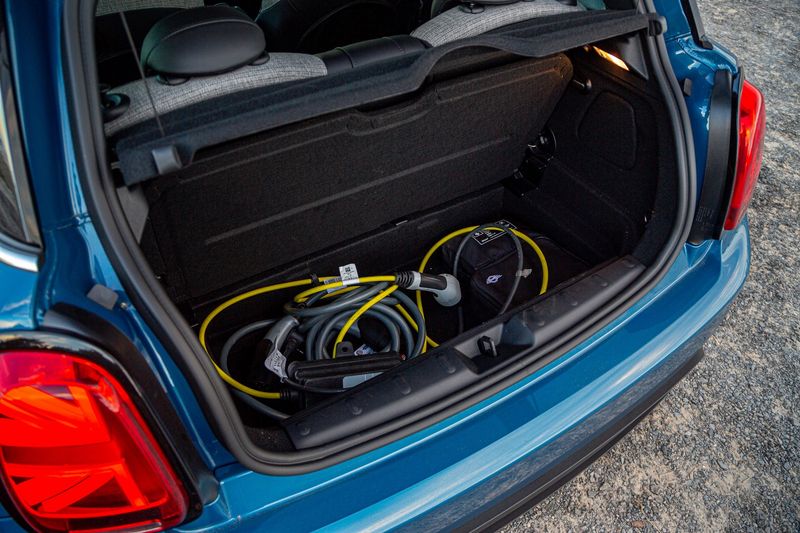
Speaking of the load bay, the electric Mini’s battery pack does fortunately not impinge on luggage space – to its credit, the Cooper SE offers exactly the same load capacity as its ICE-powered siblings. At 211 litres, it’s just about acceptable, with just enough space for a small suitcase and laptop bag. There’s a secondary storage area below the boot floor, which is used to house 2 types of charging cables.
Packaging wise, the SE retains the same-sized load bay as the ICE version, with the charging cables stored below the boot floor.
Performance & Efficiency
The Mini Cooper SE features a single electric motor, which drives the front wheels via a single-speed automatic transmission. Its outputs of 135 kW and 270 Nm put it on par with the current Cooper S’ 2.0-litre turbo-petrol engine. Thanks to the EV drivetrain’s instantaneous power delivery, the Cooper SE feels remarkably lively… at least, quicker than its claimed 0-100 kph sprint time of 7.3 sec suggests.
One of the coolest aspects of the electric-car driving experience is how full power is always available when you want it. There’s no gearing down, no waiting for a turbo to spool up or revs to climb. You just… go. Instantly. In some of the more powerful electric cars we’ve driven, such as the Audi e-tron S and Tesla Model X, this responsiveness can induce motion sickness due to its drastic “throttle on/off” nature.
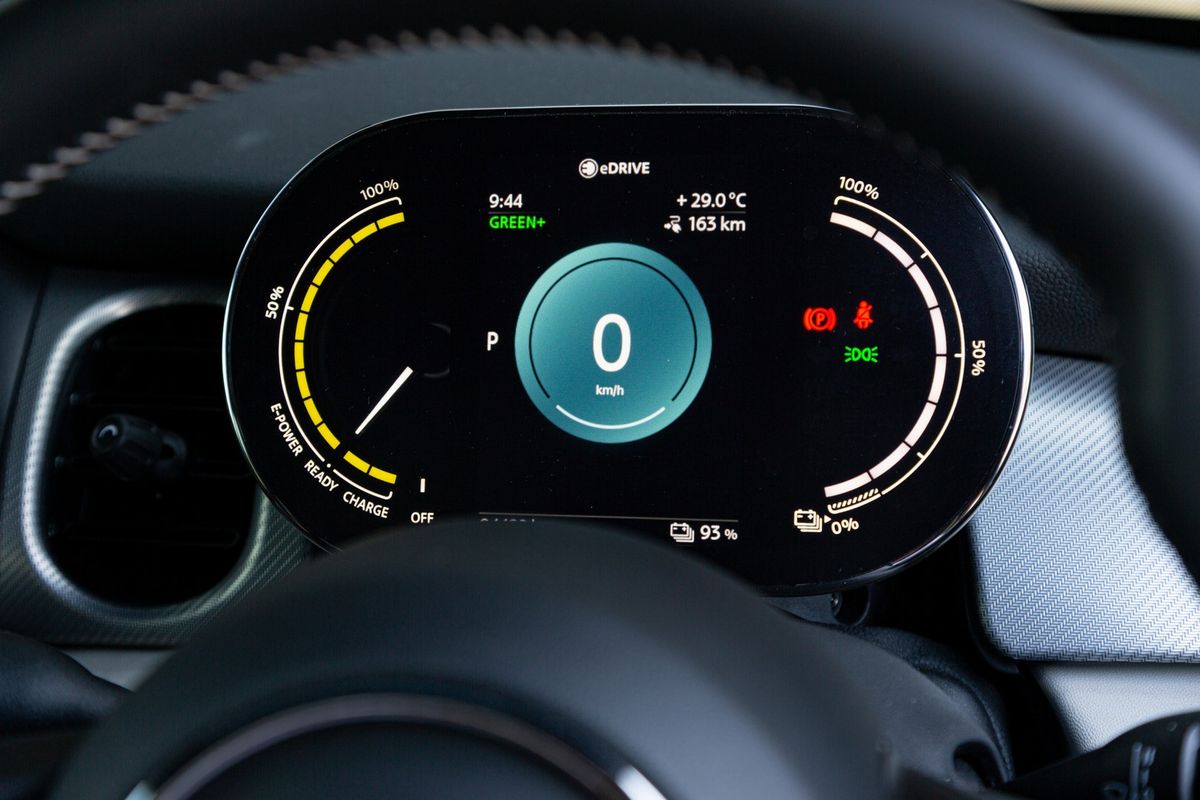
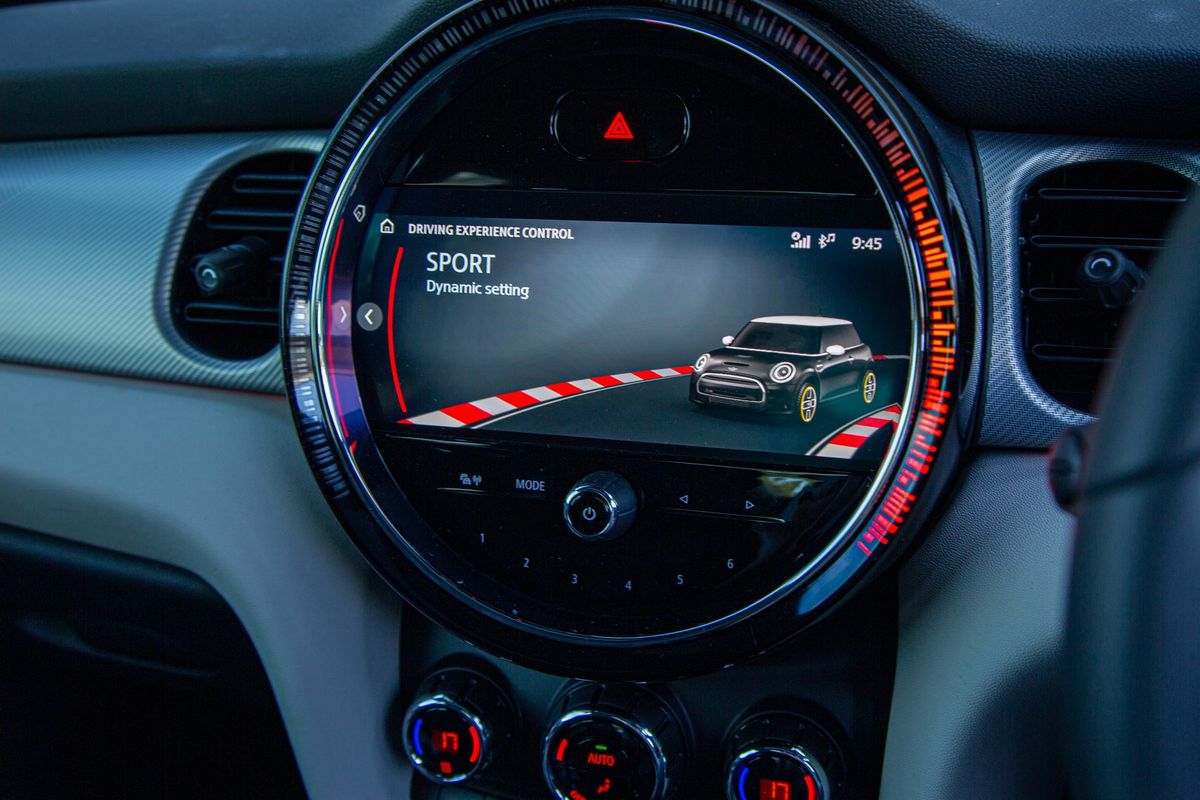
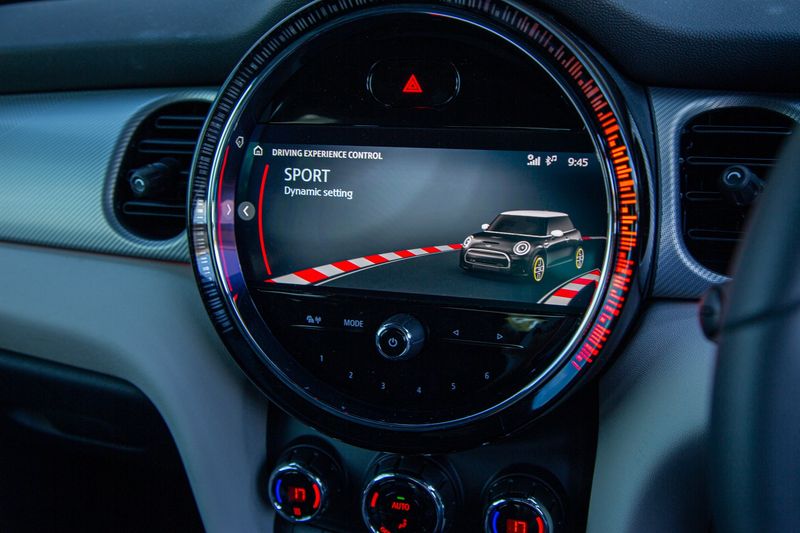
The all-electric Mini comes with a few drive modes, such as Mid (the default setting) and the obligatory Sport. There are two Eco modes: Green and Green+. Green+ gives you the maximum possible range with power diverted from non-essential systems (such as climate control). When the outside temperature indicates 34°C, climate control becomes very essential, so that mode is best saved for emergencies.
While there are sportier drive modes available, we became more concerned with getting as much range as possible.
We utilised Green mode for the majority of our time behind the ‘wheel of the Cooper SE. It dials the throttle response back so you’re not tempted to make Mini’s newcomer dart around as if it’s a child that’s consumed their very first tin of energy drink. What’s more, the climate control is paired back, but there’s still adequate chilled air coming from the vents. Green mode should add 10% to your overall range.
Right, now for the bad news. For all of the fun that you’re going to have while piloting the Cooper SE around town, there’s one major pitfall and that’s the Mini’s range. The worst part is that the official claim is 215 km, but the actual usable range is more in the region of 165-185km – as ever, it depends on your driving style.
That means that you will be restricted to shorter commutes AND that you will need to plan your routes carefully to have any hope of stretching those drives well into triple-digit kilometre trips. There’s a silver lining to the limited range, though. As new fast-charging stations are installed throughout SA’s major cities, it won’t take all that long to recharge the Mini’s modestly-sized battery (if you use fast-charging).
Some naysayers on social media have bemoaned Mzansi’s lack of charging infrastructure, but there are more chargers available than you may think, especially in the metropolitan areas of Johannesburg, Pretoria, Cape Town and Durban. Audi, BMW, Jaguar and Porsche, to name a few examples, have invested in the installation of fast chargers at their dealerships and these facilities make a huge difference. A local company – GridCars – is partnering with OEMs to build a notable charging network in the Republic. If you check out either Plugshare or Chargestation, you’ll see that Mzansi is well on the way.
The other option is to charge the SE at home overnight, via the home-charging cable that ends on a 3-pin plug. Granted, this method of charging is relatively slow – it will take several hours to charge up the Mini if its battery is almost depleted. For example, charging at home overnight for 7 hours 45 min gave 12 kWh, which increased the battery’s charge level from 41% to 80%. Just 41 minutes were needed at the fast charger to gain 19 kWh, which raised the battery’s charge level from 36% to 96%. In those 41 minutes, we caught up with emails and made a few phone calls. The best part? Fast-charging is free.
Charging from a public charging station will allow the Cooper SE to charge above 80%, as well as charge faster.
Ride & Handling
The Cooper SE may resemble a Mini in looks and the way it scampers down the road, but its ride and handling characteristics are different. The first thing you’ll have to get used to is the effect of regenerative braking, whereby the electric motor acts as a generator to convert kinetic energy, which would usually be lost when the car decelerates, into additional stored energy in the lithium-ion battery. You won’t get that much back in terms of electric energy gained, but if you regularly let the Mini coast or lean on its brake pedal on steep downhills, you’re likely to see the range increase slightly.
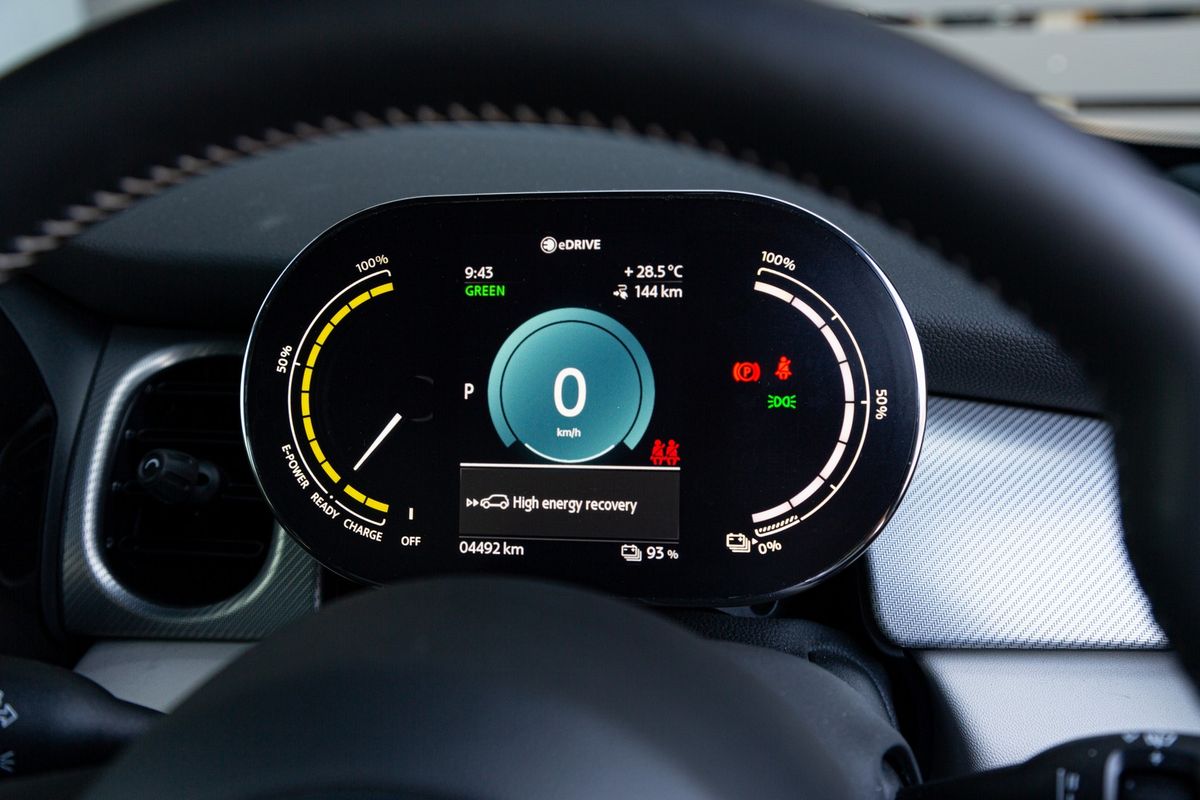
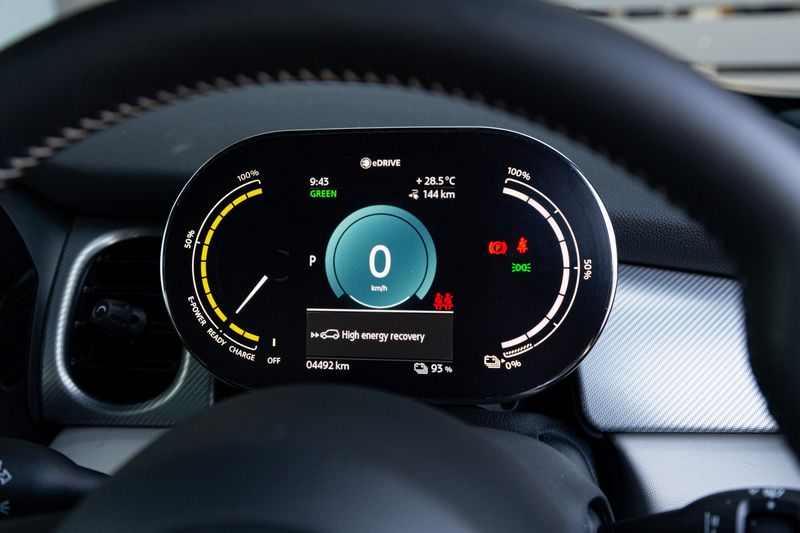
It has 2 regenerative braking settings, but ideally, you should utilise the high energy recovery mode, which facilitates the (most efficient) one-pedal driving style, whereby simply lifting your foot off the accelerator pedal will start the harvesting process and slow the car appreciably. It won’t take you long to get used to it; soon, you’ll be anticipating those intersections and hardly use the brake pedal at all.
The SE is actually really fun to drive and arguably delivers the most ‘Mini’ experience in the range.
Another aspect of BEV ownership is the noise… or at least the lack thereof. BEVs operate in near silence, so much so, that some countries have laws that mandate the fitment of sound generators to electric cars so that pedestrians can hear when such vehicles are in their vicinity. When you drive the SE at low speeds with the driver’s window open, you can hear a gentle hum from the electric motor – that’s it.
Inside, there’s not much to hear, other than the cute-sounding engine start and switch-off tones, but the downside of a quiet cabin is that you will become aware of other noises, such tyre and road noise, as well as wind noise (from around the seals and mirrors). Was that my stomach rumbling or a manhole cover I just drove over? Fortunately, our Cooper SE came with a splendid Harman Kardon audio system.
In time-honoured Mini tradition, the Cooper SE delivers an entertaining hands-on driving experience. Granted, the suspension setup may be too firm for some, but the benefit of the battery pack being located low in the vehicle is that the BEV has quite a low centre of gravity, which means it can corner quickly with minimal body roll. You can, however, elicit tyre squeal if you barrel into bends too hastily.
The low centre of gravity (by virtue of the lithium-ion battery pack being mounted in the Cooper SE’s floor) aids agility.
If you want to drive the Cooper SE as if it’s an extra inThe Italian Job, it will exhibit remarkable agility. The steering is quick and direct and the all-electric Mini can change direction promptly, yet without a hint of drama. It’s almost 200 kg heavier than the Cooper S, but you won’t feel the extra heft from behind the ‘wheel unless you are negotiating tight bends really quickly. The driving position is excellent too.
Comfort features
So, what do get for R710 000? The test unit featured the Collection 2021 specification, which adds R43 500 to the list price, and adds a multitone ombre-effect roof, 17-inch alloy wheels, adaptive LED lights, piano black exterior detailing, sports seats (made from recycled fibre), Nappa leather steering wheel, 8.8-inch infotainment screen, USB/Bluetooth connectivity, and Apple CarPlay to name but a few.
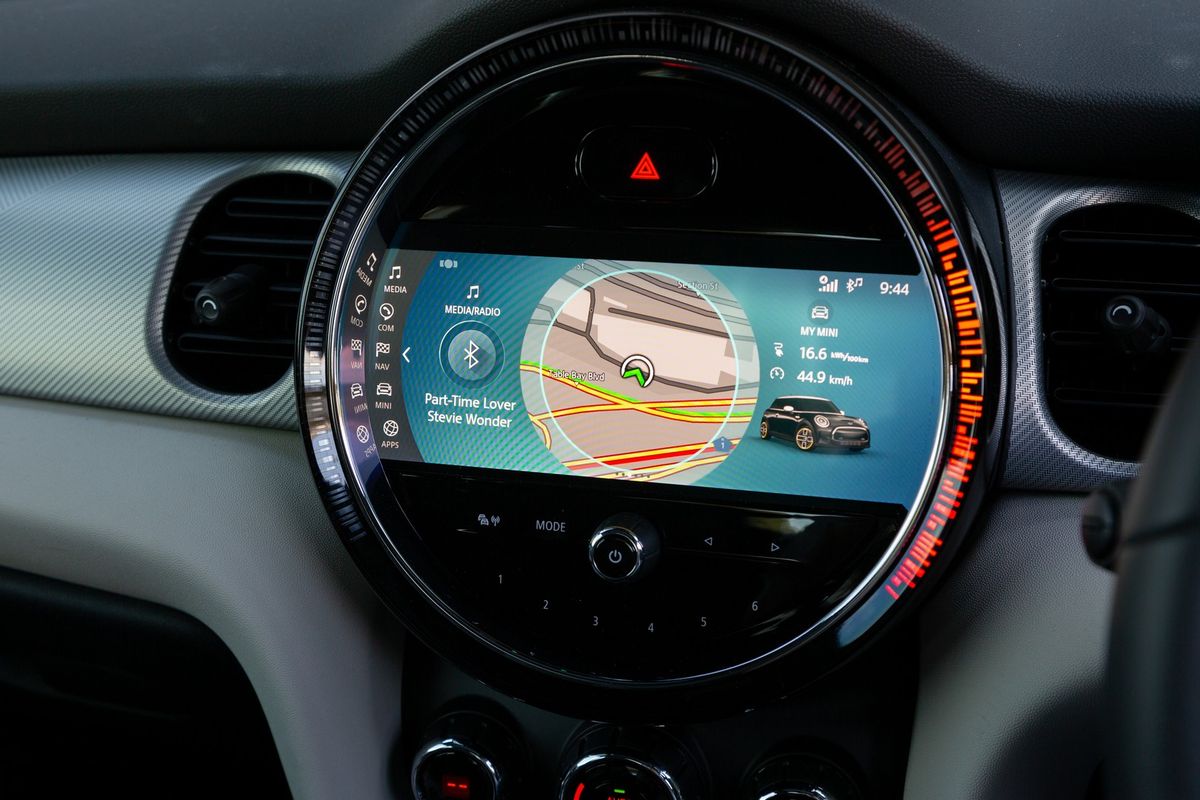
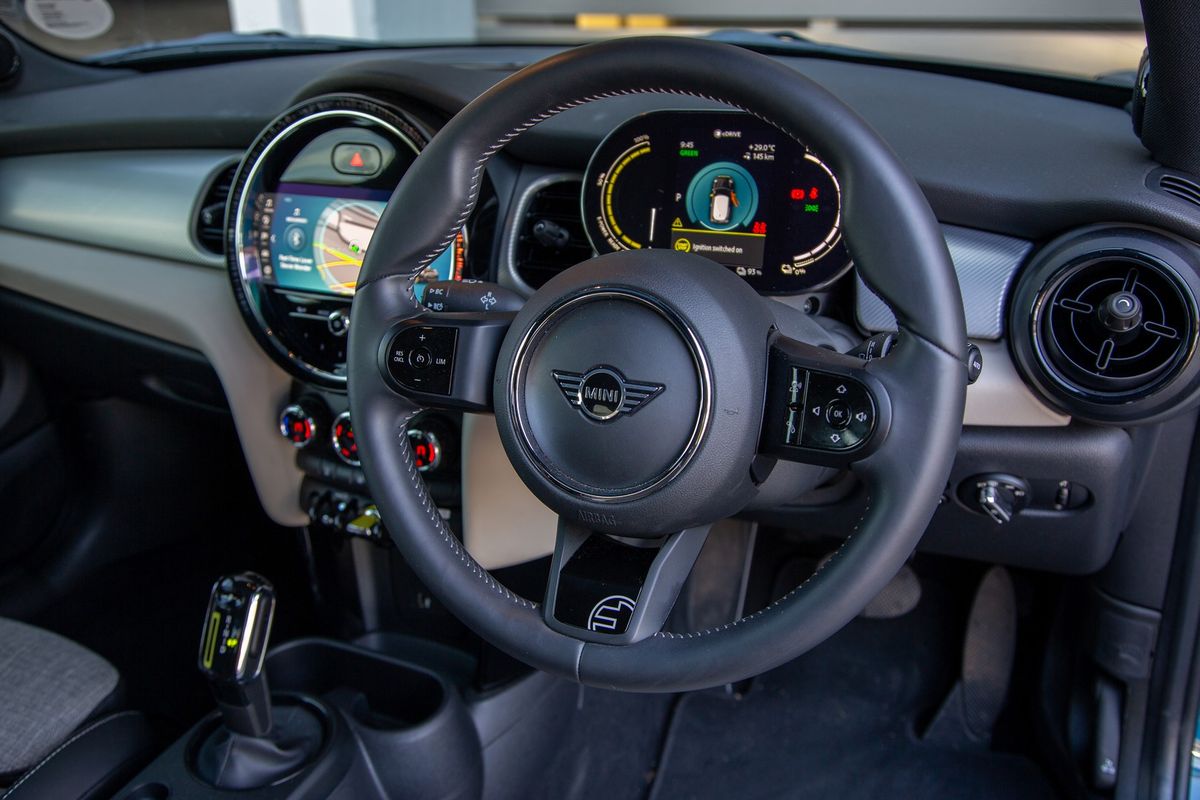
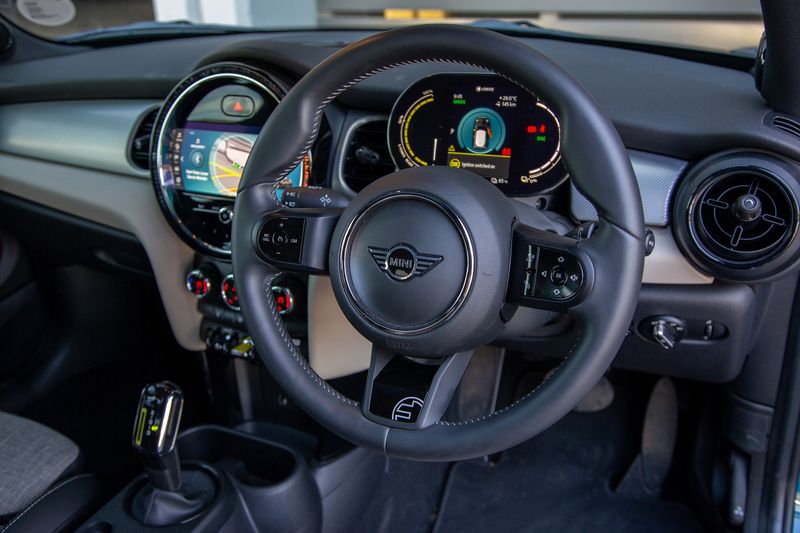
The newcomer’s cabin layout is eye-catching, but its layout is unconventional, which is in keeping with Mini’s non-conformist image. The big, circular infotainment screen, which features an LED bezel that lights up in a variety of colours when you make an input/change a setting is polarising – not everyone in the test team appreciates its, um, informality. We do, however, like the minimalist digital instrument cluster that displays only the basics, such as speed, state of charge, engine state and range. Minis used to have very plasticky finishes, but recent iterations feature more upmarket materials and trims.
The interior is as quirky as any other Mini and has a few EV-specific screens that feed you extra data.
How much does the Mini Cooper SE cost in South Africa?
The Mini Cooper SE sells for R709 400, which includes a 2-year/unlimited km manufacturer- and a 8-year/100 000 km hybrid-battery warranty, as well as a 5-year/100 000 km maintenance plan. Mini offers a variety of finance packages, including one that will allow you to return the vehicle at the end of a set period. Leasing is a good way to dip your toe into EV motoring and find out if a BEV suits your lifestyle.
To work out your home charging costs, multiply the cost you pay for electricity by the battery’s capacity. In the case of the electric Mini, 32 kWh battery x R1.82 per unit = R58. So that’s almost R60 to travel at least 160 km, which is cheaper than the petrol-powered Mini, but the latter is cheaper to buy, which means it will take you quite a while to offset the difference in price. As a reminder, fast-charging is free.
Verdict
While we like the Cooper SE, the range is just too short for anything other than a short point-to-point runaround.
The attraction of using a wieldy and nippy small electric car to commute in a bustling city is undeniable. If you have a 2-car household, you could make a case for using the all-electric Mini as your “daily runabout”… While the mode of transport for long trips will remain a larger internal combustion-engined vehicle, the Cooper SE could be the ideal car with which to “quickly dash to the shops or gym”.
Should you buy one? Unfortunately, even though the Mini Cooper SE offers a novel and engaging driving experience, it loses some (perhaps too much) of its appeal due to its limited range. Simply put, it’s a highly fashionable – but rather expensive – source of basic electric mobility. In the same way that a scooter offers you a quick way to get to the shops, the electrified Mini is only suitable for short commutes.
While we are proponents of electric vehicles and would probably change our lifestyles to accommodate BEVs’ shortcomings, many potential Mini Cooper SE buyers may not be willing to drastically change their driving habits. This is a glimpse at Mini’s near future and, given advances in battery tech and the continued rollout of charging infrastructure, “the BEV ownership proposition” will only grow stronger.
VW Amarok R on Ranger Raptor platform?
Six-cylinder Amaroks are popular. But how will Ford feel about a Raptor rival?
Since VW introduced the V6 Amarok, it has been clear which engine configuration is preferred.
Double-cab bakkie buyers have been quite willing to pay a premium for the larger capacity V6 engine. And VW will be keen to sustain that customer demand, with the new Amarok scheduled for its global reveal, in South Africa, later this year.
Although VW has done a tidy trade in V6-powered Amaroks, it hasn’t followed the example of Ford and other rivals’ example by producing a comprehensive high-performance double-cab with enhanced off-road capability.
VW has focussed more on the leisure double-cab buyers, who want V6 power for safer overtaking and comfier high-speed cruising. But could that change with the change to a Ford Ranger platform?
With new Amarok and Ranger essentially being the same bakkie, regarding structure and powertrain, will Ford share all those Raptor parts with VW?
It is a question that Australian product planners at VW commercial vehicles have considered. The German company’s Australian arm has collaborated with Tom Walkinshaw Performance, to create a more street-focused Amarok V6. But what could the next step be? Surely, it must be something closer in concept and theme to Raptor, with similarly outrageous off-road ability?
In comments to Australia’s CarsGuide, VW staff have admitted that, “there is opportunity for everything in the pick-up segment.” And they aren’t wrong. Bakkie buyers are proving more resilient than any other segment, especially relating to limited-edition variants.
Ford, Nissan and Toyota have all proved that halo double-cab products find great favour with their customers. VW will no doubt wish to have a similar offering with its new Amarok, but whether Ford will allow a Raptor competitor on the same platform, is to be seen.
South Africa’s new vehicle sales figures for January 2022 have been released, with the latest stats illustrating that the industry enjoyed a mostly positive start to the year. Let’s take a look at what you need to know…
According to Naamsa, South Africa’s aggregate domestic new vehicle sales in January 2022 increased a healthy 19.5% year on year to a total of 41 382 units, suggesting the local automotive industry is “continuing on its gradual recovery path to pre-COVID-19 levels”.
However, export sales for January 2022 interestingly fell 9.3% year on year to 19 089 units. Still, Naamsa says it expects this sector to “gain traction during the year on the back of further new model introductions by major vehicle exporters” as well as a generally “favourable global economic outlook”.
WesBank, meanwhile, points out that while year-on-year comparisons are “difficult to interpret” owing to differing pandemic circumstances, it remains positive about the prospects of a continued “slow recovery” of the market during 2022.
“January new vehicle sales kicked off the year at similar levels to the momentum created during the second half of 2021,” said Lebogang Gaoaketse, Head of Marketing and Communications at WesBank. “While some purchase decisions may have been deferred out of December into the new year, January sales provide a solid start to the year, raising the hopes of manufacturers and dealers for ongoing market improvement.”
New vehicle sales summary for January 2022
Aggregate new vehicle sales of 41 382 units increased by 19.5% (6 743 units) compared to January 2021.
New passenger vehicle sales of 30 037 units increased by 26.6% (6 305 units) compared to January 2021.
New light commercial vehicle sales of 9 629 units increased by 3.8% (349 units) compared to January 2021.
Export sales of 19 089 units decreased by 9.3% (-1 962 units) compared to January 2021.
10 best-selling vehicles in South Africa for January 2022
There were no surprises at the top of the list, with the venerable Toyota Hilux again leading the charge as the country’s best-seller. However, Toyota’s Suzuki-built Starlet climbed to second, nudging the Volkswagen Polo hatchback down to third (VW will be hoping its facelifted Polo that’s due later this month provides renewed sales impetus). Toyota’s likewise Suzuki-produced Urban Cruiser, meanwhile, grabbed fourth (just a single unit behind the Polo!) to knock VW’s Polo Vivo down to fifth. The new Corolla Cross snuck in at sixth, while the Suzuki Swift and Haval Jolion placed ninth and tenth respectively, with both models cracking four figures.
10 best-selling car brands in South Africa for January 2022
Toyota retained its crown as the country’s best-selling automotive brand in January 2022, adding nearly 3 000 units to its December 2021 tally. Suzuki Auto SA, meanwhile, climbed to a lofty third place thanks to yet another record sales month (in which the firm shot past the 3 000-unit mark for the second time in its history). Haval also impressed by clambering up the list to snaffle fifth spot just ahead of Renault, while Ford was forced to settle for an unfamiliar eighth place.
1. Toyota – 12 480 units
2. Volkswagen Group – 5 393 units
3. Suzuki – 3 232 units
4. Hyundai – 2 668 units
5. Haval – 2 442 units
6. Renault – 2 247 units
7. Nissan – 2 172 units
8. Ford – 1 639 units
9. Kia – 1 507 units
10. Isuzu – 1 433 units
Top 5 vehicles exported from South Africa in January 2022
Again, the Prospecton-built Toyota Hilux led the exports race in January 2022, with the Kariega-produced Volkswagen Polo hatchback in second and the Silverton-built Ford Ranger in third. We should point out, however, that BMW and Mercedes-Benz did not report figures for January 2022, so it’s not clear how many X3 and C-Class sedan units were shipped from our shores during the month.
So, where to from here? Well, Naamsa says it believes consumer and business sentiment will remain “under pressure” over the short to medium term thanks to incremental increases in the repo rate. The organisation furthermore warns that supply chain disruptions, including the sustained global shortage of semi-conductor units, will continue to hamper new vehicle production and sales during 2022.
Looking even further ahead, Naamsa points out the new vehicle market trend over the next three years is “expected to be upward”, in line with National Treasury’s projected domestic economic growth outlook.
WesBank’s Gaoaketse adds that although consumers have “faced their second interest rate increase since November and fuel prices continue their record high performances”, confidence levels should continue to climb during the year as “inhibiting pandemic regulations subside” and economic improvement “perseveres”.
What’s an F&I Manager? A guide to vehicle finance & insurance
What does F&I mean – and how will it affect your car-buying journey? Irrespective of whether you purchase a car through a dealership with funds that you already have, or through a finance agreement, you will be introduced to the F&I Manager during the process, who will guide you through the all-important paperwork.
PARTNERED CONTENT
When you think of purchasing a new (or used) car, you think of the fun of choosing your perfect vehicle and the excitement of driving your “new ride” off the dealership floor. However, it isn’t that simple…
A salesperson will demonstrate a car and explain its features so that you can decide whether it is the right car for you. If you’re keen on buying the vehicle, you will negotiate the purchase price, which will include the cost of the vehicle, plus any optional features or accessories you’ve specified – and the on-the-road costs, minus the trade-in value the dealer has offered for your existing vehicle (if applicable).
Once you’ve reached an agreement with the salesperson and declared your intention to buy the car, the next part of the car-buying journey will begin… And it is one that is often overlooked, not fully understood – and sometimes, even dreaded – the trip to the F&I manager’s office.
motus.cars, supported by Motus Nissan (previously Imperial Nissan), sheds some light on the final part of the buying process, which has to occur before you take delivery of your new car.
An F&I Manager is responsible for obtaining and reviewing the purchasers’ credit application.
What is an F&I Manager?
The “Finance and Insurance Manager” is the person at the dealership who draws up sales contracts, helps you to arrange payment for the car, and offers you additional products for purchase, such as extended service plans or warranties (which are, technically, types of insurance policies), alarm systems and smash and grab and anti-theft products.
It is important to know that the sale of a new or used car is not official until it’s in writing, that is to say, you’ve signed a binding legal contract.
What exactly does an F&I Manager do?
An F&I Manager is responsible for obtaining and reviewing the buyer’s credit application, which they will submit, along with a copy of their ID and proof of income, to respective banks’ vehicle-finance divisions. Once the buyer decides which of the optional products they want, the F&I manager will explain, in detail, how those products work and roll the additional cost/s into the loan application.
The F&I Manager will structure the application based on the underwriting guidelines of financial institutions and to maximise the buyer’s chances of getting their finance application approved.
If a bank responds with a quote for a vehicle loan (the waiting period can be as short as a few minutes), the F&I Manager will explain the details of the proposed finance agreement to the buyer and, should the latter accept the bank’s terms, print all loan paperwork, obtain all required signatures and arrange for any deposit that may be required before authorising the delivery of the purchased vehicle.
Finally, they will also request copies of required documents from the buyer (including proof of residence, for example, for the purpose of licencing the vehicle) prior to the car’s delivery.
Why and how is an F&I Manager involved in the car-buying process?
You may ask: “Why doesn’t the salesperson can’t just complete everything?” Remember how we said the sale is not official until it is in writing and contracts are signed?
Well, the F&I Manager is one of the few people at the dealership who thoroughly understands the intricacies of vehicle-finance agreements, knows all the optional products that are available through the dealership, and – most importantly – is legally trained to know which forms need to be signed.
What points are discussed with an F&I Manager?
The F&I process begins after a salesperson has obtained a verbal commitment from a customer to purchase a vehicle. They will then take the customer through to the F&I office and introduce them to the dealership’s F&I Manager. The F&I Manager will then ask the customer various questions to establish what additional products (such as extended service plans or warranties, alarm systems and smash and grab and anti-theft products) they may want or need.
If you plan to buy a vehicle on credit, banks can offer different interest rates, balloon payments, deposits, etc. An F&I Manager will have the experience to advise you on what options would suit you best.
What value does an F&I Manager offer during the car-buying process?
The F&I Manager is a crucial part of the car-buying journey because they are the key to ensuring you understand your options – and that you get the best deal, including all the additional products you may need. If you plan to finance your vehicle purchase through a bank, an F&I manager is well-versed at structuring a loan application in a way that it is most likely to be approved, with terms that suit you.
What’s more, you can make use of free tools that are available to help you decide what the best vehicle finance option is for you. Use these simple affordability and finance calculators to help you determine what you can afford and what finance option will be best for your needs. All you have to do is click!
Rumours suggest the next-gen Range Rover Sport will switch to the V8 from the BMW M division.
A story out of the UK from Autocar says the next generation of Range Rover Sport will ditch its ageing 5.0-litre supercharged V8 petrol engine and switch to the 4.4-litre twin-turbocharged V8 petrol from BMW’s M division.
Land Rover is currently hard at work getting its all-new 5th-gen Range Rover onto showroom floors, but the all-new 2023 Range Rover Sport is not too far away. It’s a huge model for Jaguar Land Rover with a remarkable sales success story, with the Sport comfortably outselling the standard Range Rover.
While the new Range Rover is aimed at the top-end of the market, the Range Rover Sport is a bit more accessible and JLR will be using it as a foundation for its electrification campaign. There’s a new electrified platform called MLA Flex which will underpin the large Range Rover models and it’s said to be stiffer and offer more refinement.
With the engine agreement between BMW and Jaguar Land Rover, its rumoured the next-generation Range Rover Sport will lose its legendary supercharged V8 and gain the 4.4-litre twin-turbo V8 from BMW. Given the recent news that BMW’s M division is working on the new M5 with a hybrid version of this engine, it makes logical sense to predict the next Range Rover SVR will feature an electrified turbocharged V8 petrol engine.
Outputs of the outgoing Range Rover SVR were never considered weak and 423 kW and 700 Nm gave it solid performance credentials, with a delicious soundtrack to accompany it. The new BMW V8 motor is rumoured to produce around 550 kW and have a pure electric mode. Let’s not forget BMW M is working on a hybrid electricified performance SUV either, which was previewed with the XM Concept.
The rise of the hardcore performance SUV has been well publicised, with most luxury brands offering a fast high-riding product. Think of your Lamborghini Urus, Aston Martin DBX, Audi RS Q8, Mercedes-AMG GLE 63 S and the BMW X5 M Competition. All have monstrous petrol V8 engines and all are able to decimate the 0-100 kph sprint in under 5 seconds with ease. The downside of these vehicles is the fuel consumption, which is something future iterations will address thanks to the hybrid technology.
As January 2022 draws to a close, indicators are pointing to further fuel price increases for February 2022. Update: Yes, it’s going up.
Update: As of Monday the 31st January, the petrol price will jump by 53 cents a litre for both 93 and 95 grades, while diesel owners will see an increase of 80 cents a litre. The price of illuminating paraffin will go up by R1.01 per litre.
South African motorists suffered brutal fuel price increases during 2021 and as the first month of 2022 comes to an end, the fuel price forecast for February 2022 isn’t looking good.
While we wait for an official announcement from the Department of Mineral Resources and Energy regarding fuel price adjustments for February 2022, analysts are expecting increases.
The price of Brent Crude Oil has been rising steadily during January 2022 and has this week breached the $90 mark for the first time in 7 years. The rise has mostly been driven by the ongoing Russia-Ukraine tensions and the resulting potential threat of possible US sanctions.
This is likely to have a considerable impact on local fuel prices. However, the blow will be softened somewhat considering that the Rand has firmed up against the US Dollar during the same period from R15.82 in the beginning of the month to R15.27 as of today.
In December 2021, fuel prices in South Africa breached the R20 per litre mark for the first time ever. This, at a time when the economy is struggling to recover from the Covid-19 pandemic. Consumers and household budgets are currently under tremendous pressure and rising fuel prices will undoubtedly make life considerably more difficult for millions of South Africans.