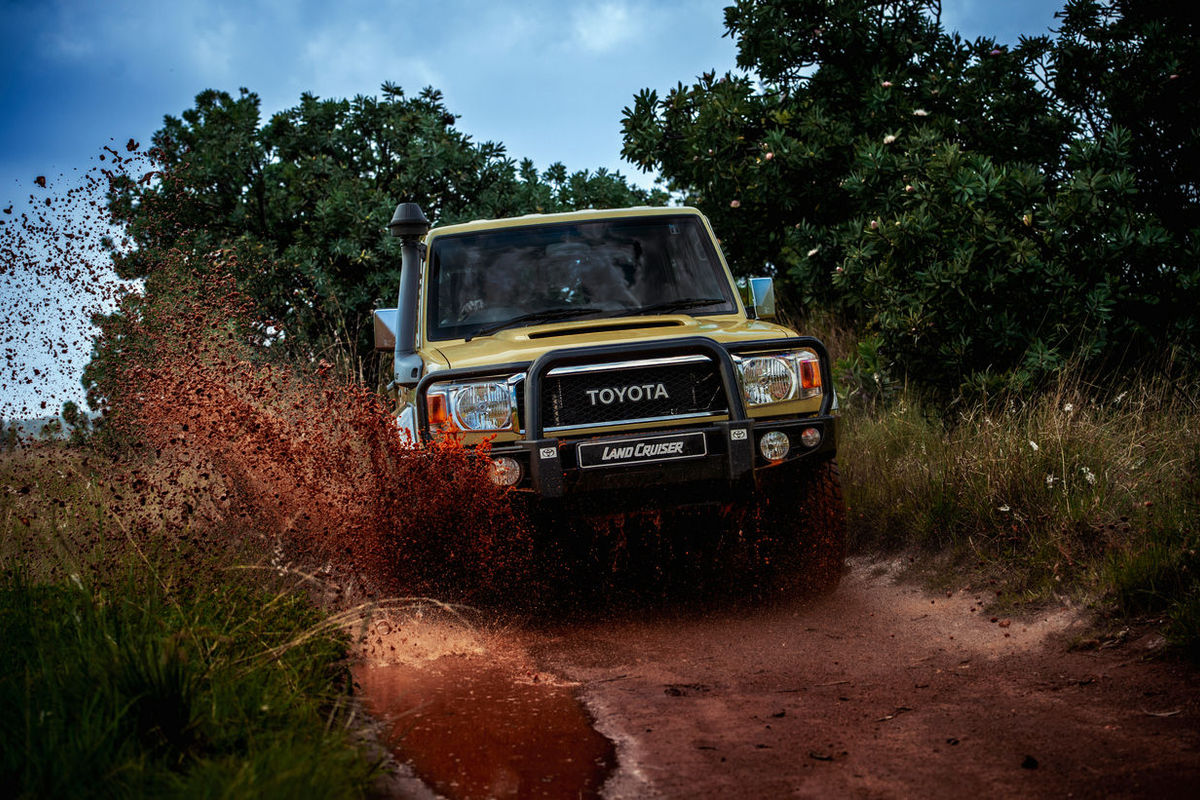
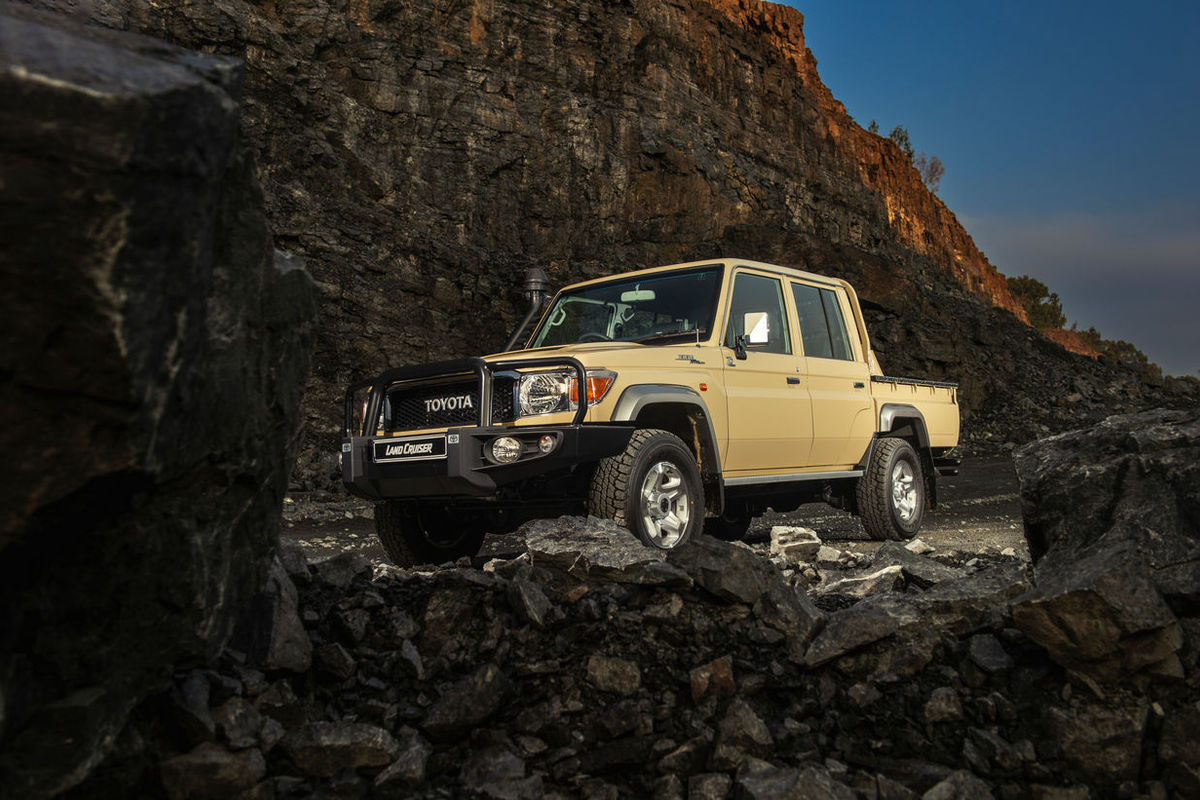
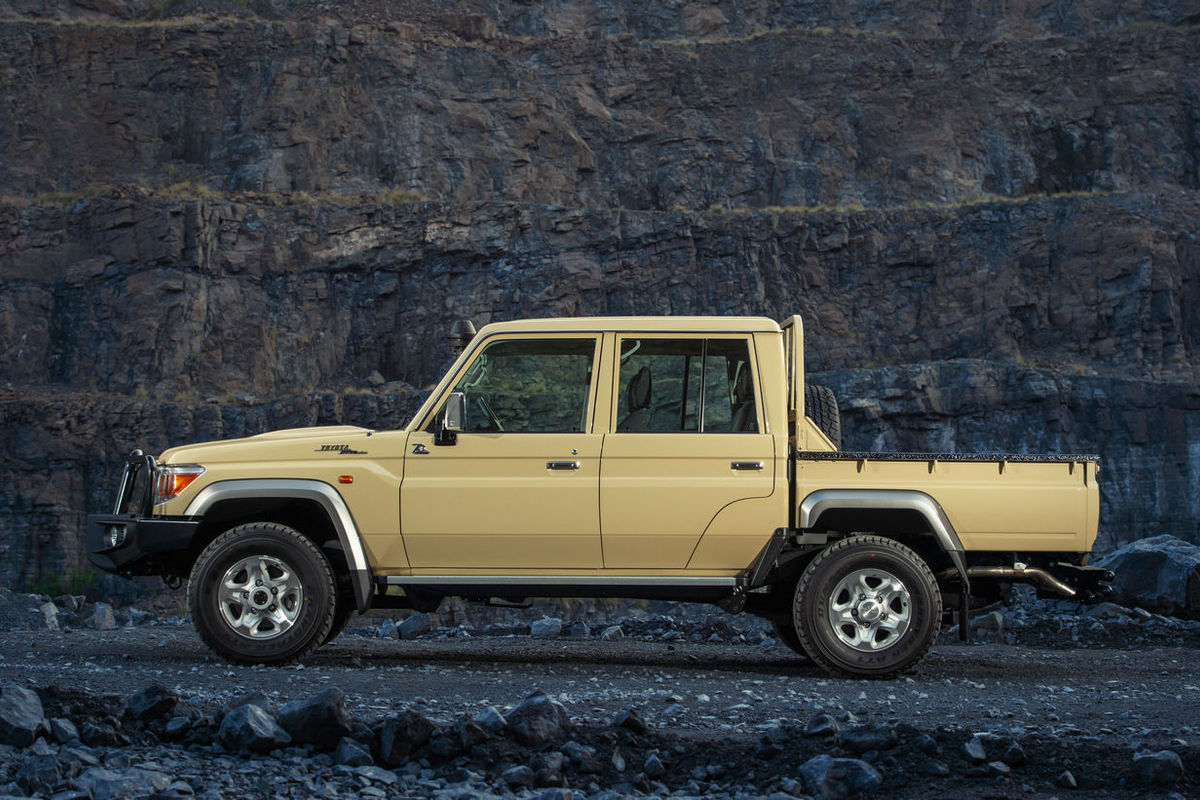
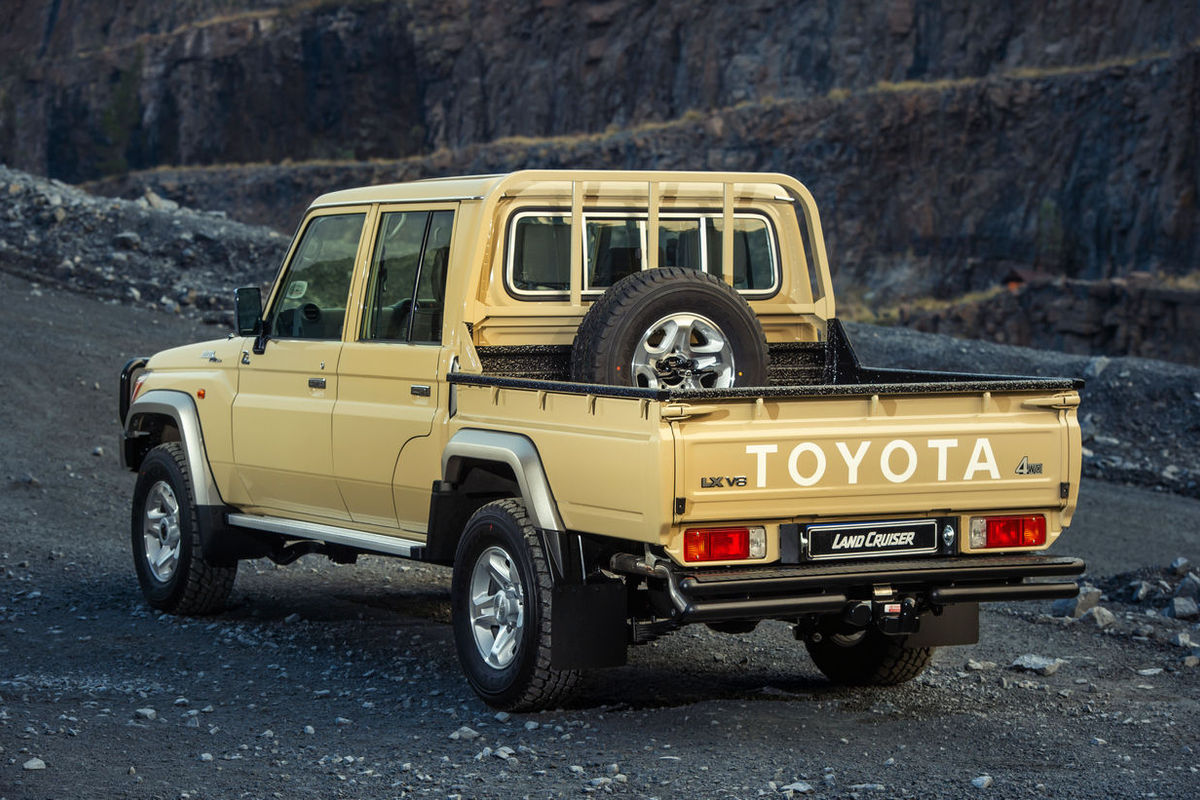
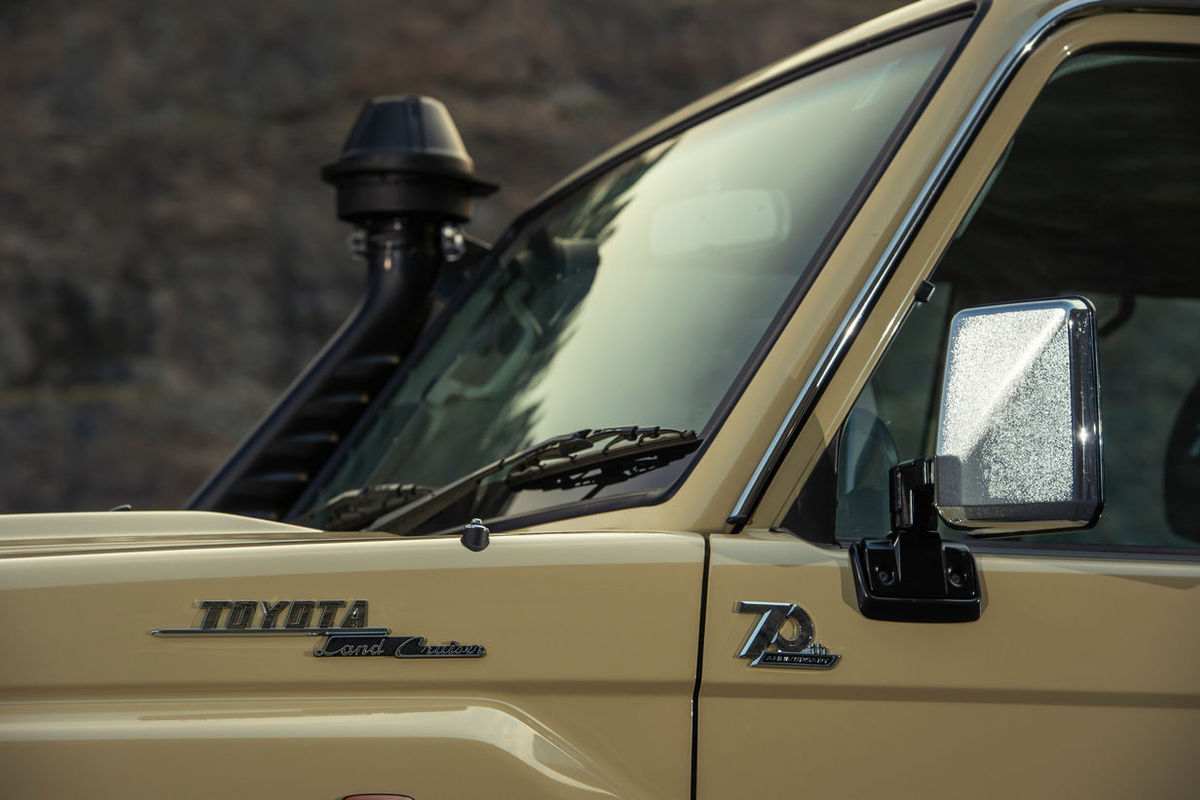
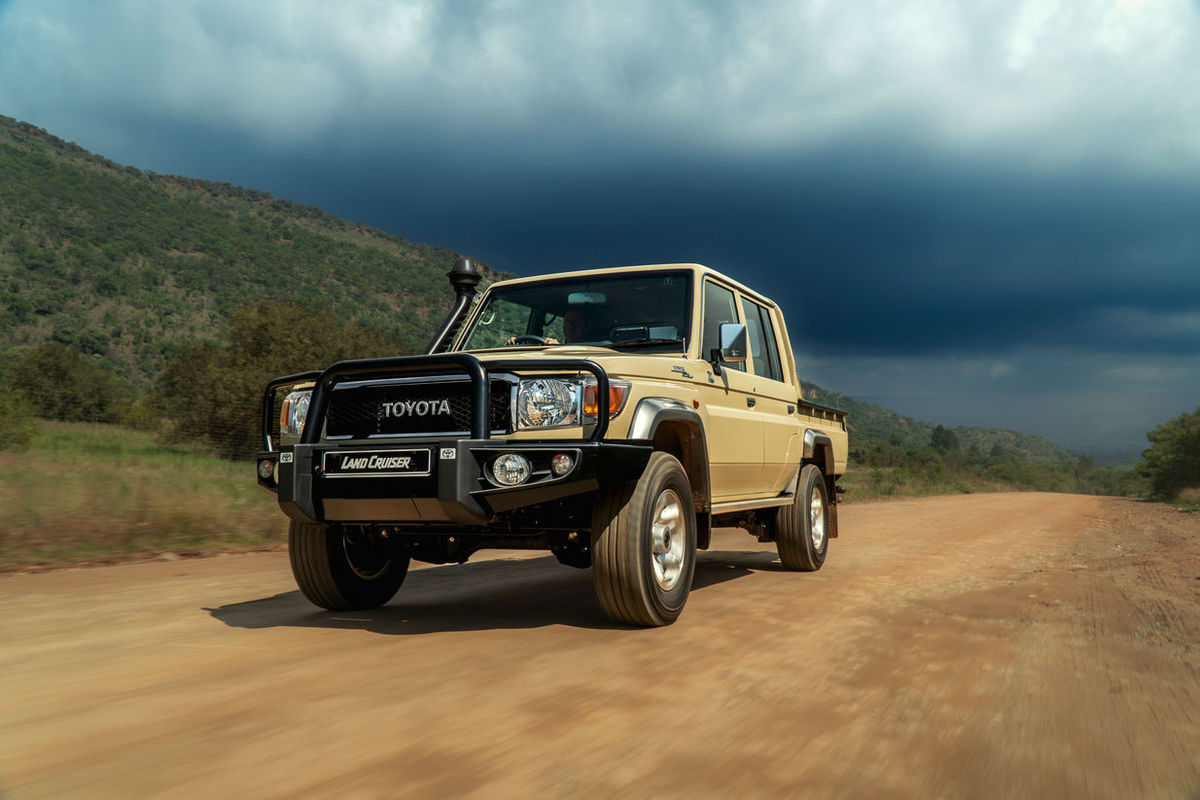
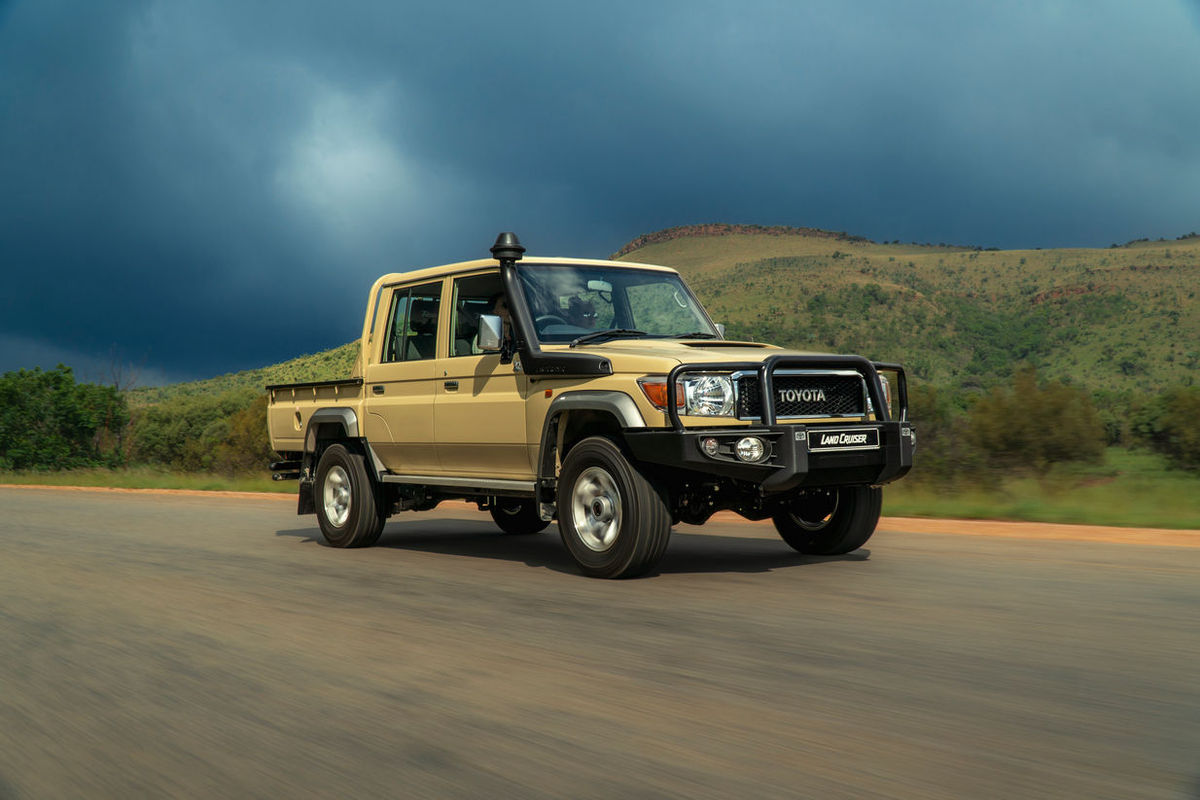
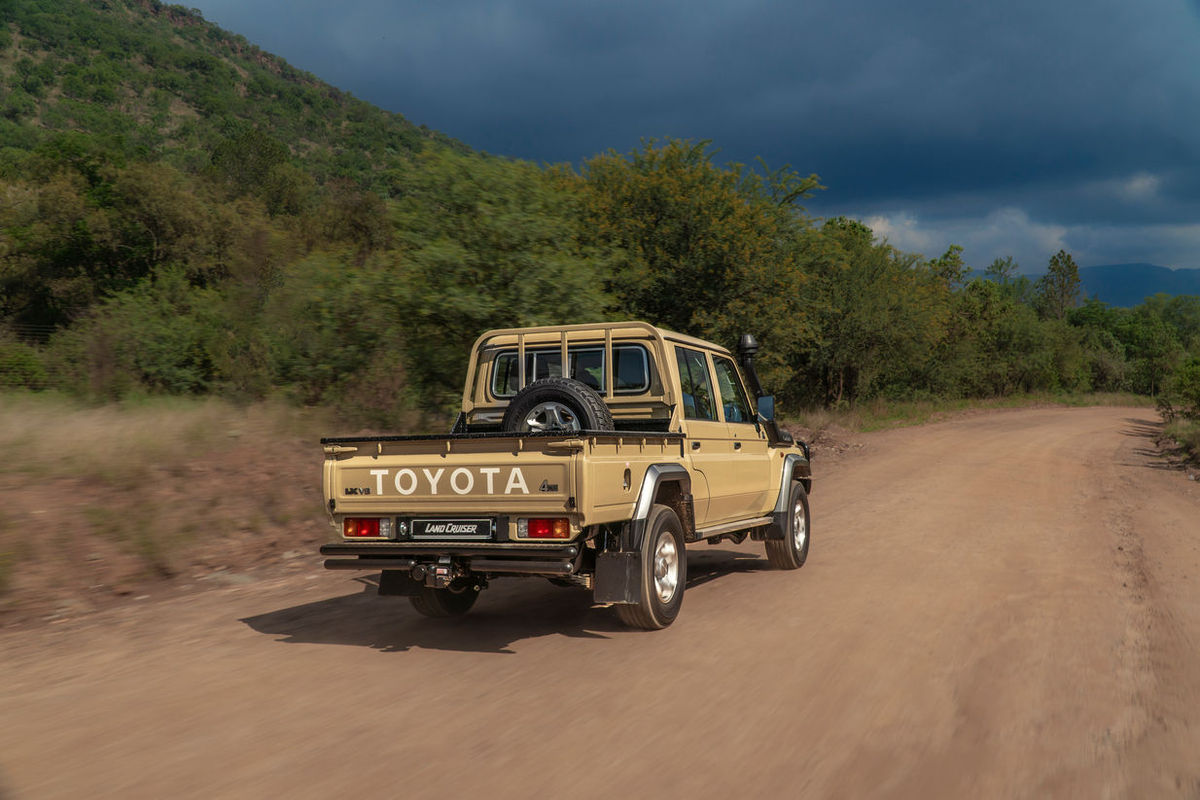
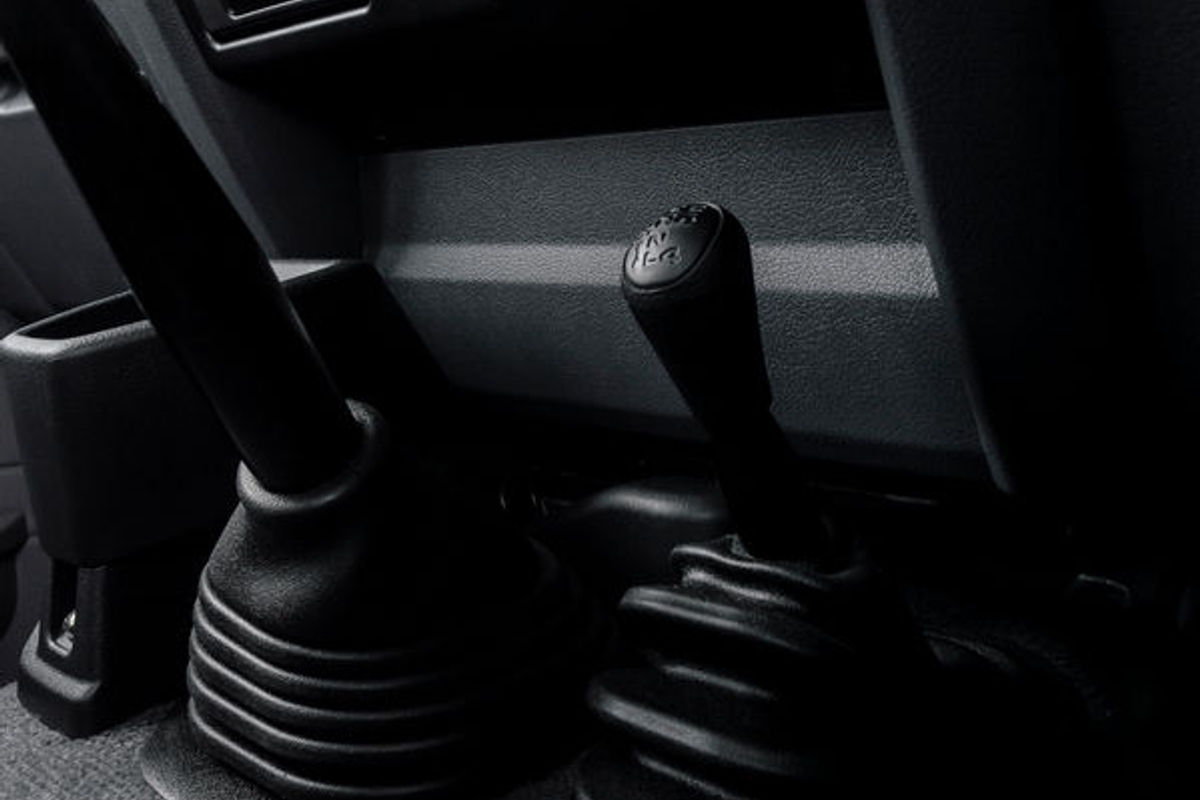
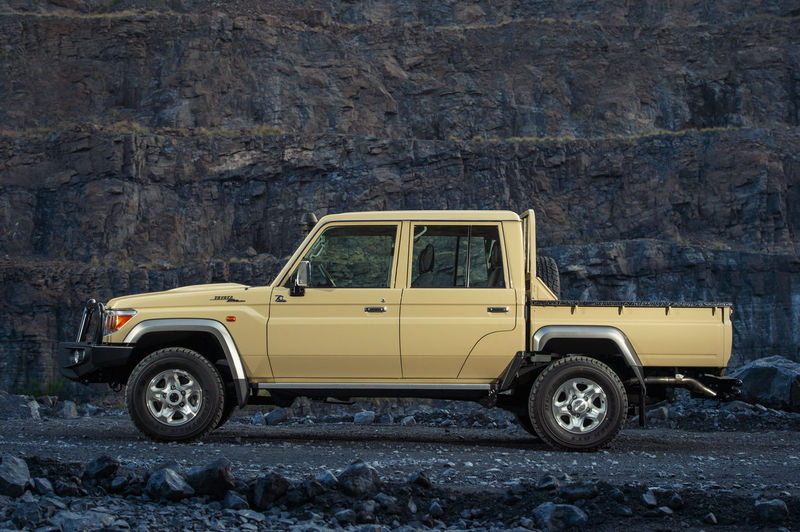
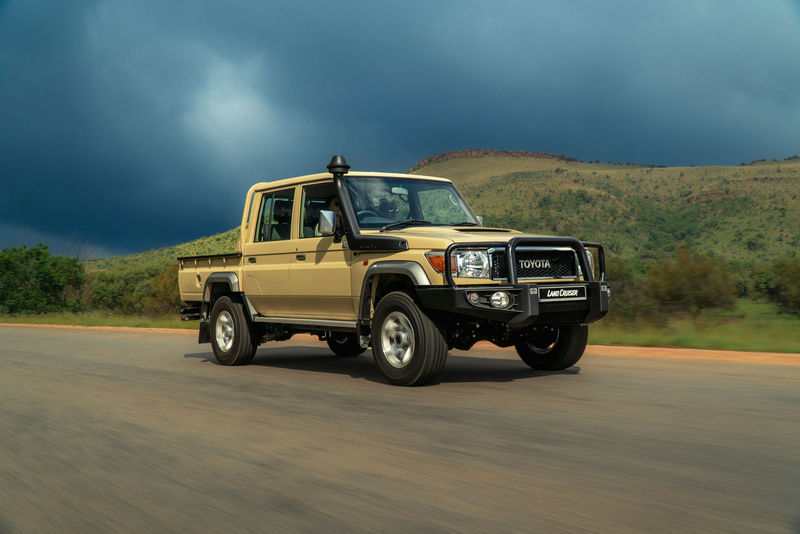
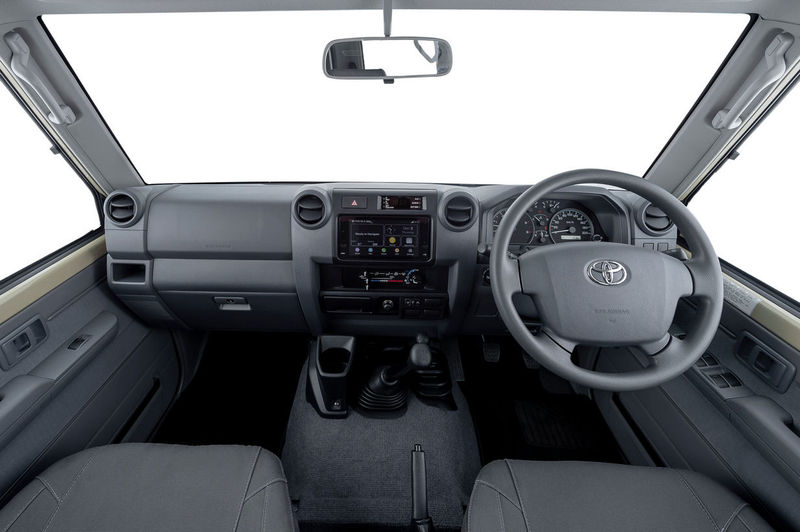
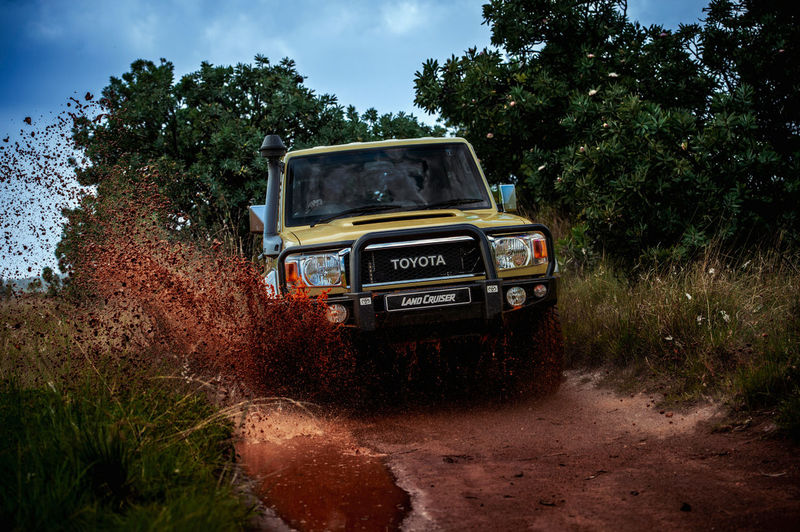
Toyota has announced an array of accessories for its all-new Land Cruiser 300.
It’s not every day that an all-new Toyota Land Cruiser comes along, but when it does, the industry sits up and takes notice. Given the Land Cruiser’s legacy of going anywhere with bulletproof reliability, offroad accessories have become a functional necessity, as opposed to a visual upgrade. The aftermarket offroading industry is big business and you can bet those companies have been working overtime, preparing their wares for the all-new Toyota Land Cruiser 300.
Toyota would naturally prefer it if customers would stick to its own approved range of genuine accessories and has launched a handful of goodies for the new product. While OEM-approved accessories are generally sold at a premium, the obvious benefit is they’re covered by the vehicle’s factory warranty.
Impressively, the range of Toyota accessories for the new Land Cruiser 300 has been a long time coming, with Carsales Australia suggesting the development of these parts was parallel to that of the actual car with work beginning back in 2015.
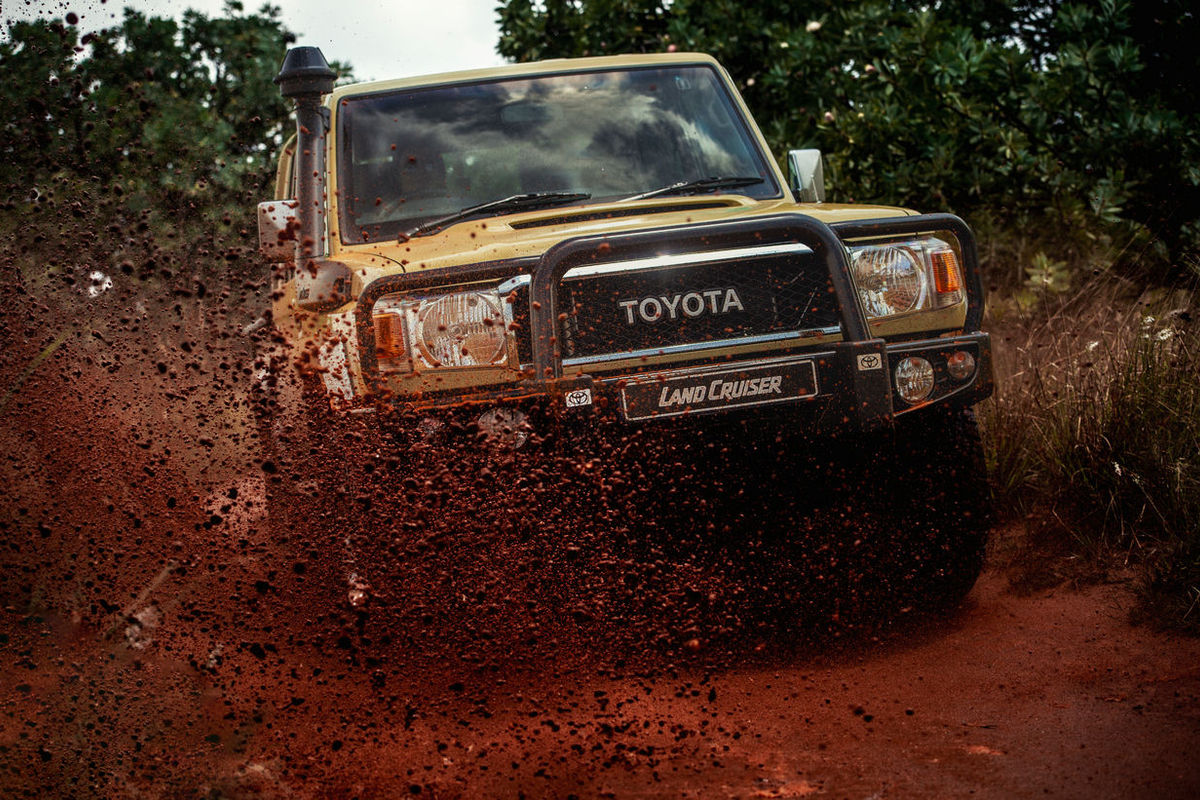
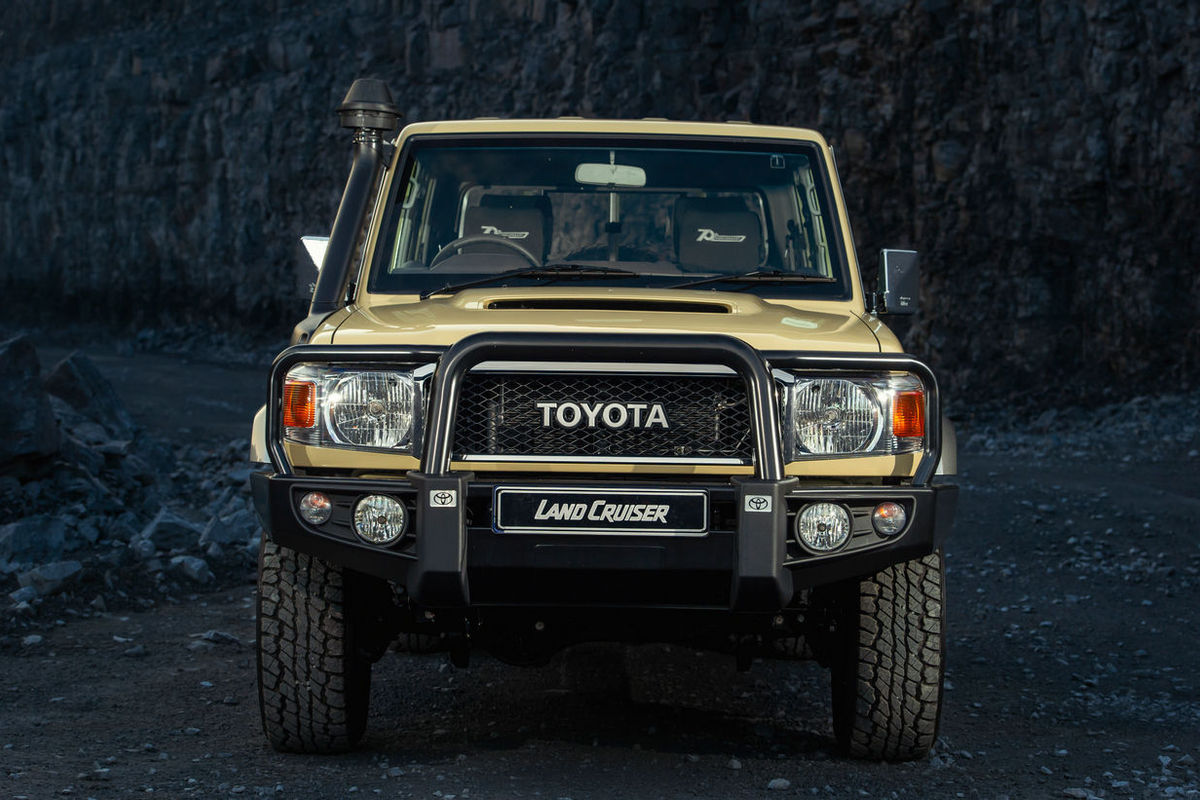
So, what’s on offer? Right now what you see here is for the Australian market, and these bullbars are available in a choice aluminium or steel. The steel option can be painted in a black finish or to match the body colour. The real party trick is the electric winch which has a rating of 9 000 kg and is cleverly concealed behind the number plate when it’s not in use.
Depending on the derivative, these bullbars have affected the Land Cruiser 300 4×4 capabilities with the approach angle being reduced. These bullbars also make provision for the fitment of a Toyota-approved lightbar. For the Aussie model, the 120W light bar has 24 LEDS. Note that lightbars are not approved for use on South African roads.
The factory-fitted roof rails can be fitted with a new-design roof tray that opens a world of possibilities for mounting items. There’s a 3-bar rack on offer that can carry around 90 kg.
If you’re wanting to really explore the offroad, then Toyota has a 5mm aluminium underbody plate to protect the vital internals, an 8 000 kg-rated recovery points mounted to the chassis as well as an air intake snorkel if wading is your thing. For what it’s worth, the standard claimed wading depth is 700 mm.
With these factory-approved Land Cruiser 300 accessories, Toyota hopes to get a bit of a headstart on the aftermarket companies. The new Toyota Land Cruiser 300 is on sale in South Africa in both petrol and diesel options, but given the severity of the semi-conductor shortage, expect long waiting periods as the factory is running at reduced capacity.
Since its introduction in 2014, the Macan has been a smash hit for Porsche – in fact, 80% of the executive SUV’s buyers are new to the iconic German marque. But the world has moved on considerably in the past 7 years… can another round of updates keep the Macan at the forefront of its segment?
Let’s start this review with something we would usually keep for the conclusion: the price. You can get into the Macan for R1 050 000 (October 2021). Now, keep in mind that this supposed “baby” Macan still punches out 195 kW – and it can keep up with hot hatches by accelerating from standstill to 100 kph in only 6.2 sec. You’ll undoubtedly have to tick a few option boxes to specify the derivative to your taste, but that is also the case with the model’s similarly-priced German competitors… the major difference, however, is that with the Macan, even the “entry-level” one, you get a Porsche badge on the nose.
As I cruised along some of the Western Cape’s best roads and steered the (195-kW) Macan into some of the launch route’s twists and turns, the pricing context described in the previous paragraph kept swirling in my head… For similar money (around a bar) you can get a recently facelifted BMW X3 sDrive20i M Sport (135 kW) or a Mercedes-Benz GLC 300 4Matic AMG Line (190 kW). You could even argue, that due to its low-slung, broad-shouldered stance, the Macan is a more natural competitor to the (more expensive) BMW X4 and Mercedes-Benz GLC Coupe variants, but, upon closer inspection, the Macan happens to compare reasonably well with its more traditional German rivals in terms of luggage space – its 458-litre load bay may be about 100 litres smaller than the X3 and GLC’s, but its total claimed utility space (1 503 litres) is less than 100 litres under the figures quoted for those rivals. So… space-wise, the sportier styling of the Macan has not impacted its practicality all that much.
So, I’d like to kick things off by stating the Macan appears to offer excellent value for money and this applies to the S and GTS derivatives as well. I guess what I’m trying to say is that if you’re shopping for a mid-sized luxury crossover with a sporty bent, you may want to visit a Porsche dealer – the Macan is (perhaps surprisingly, given its “exotic” badge) priced to compete with mainstream executive SUVs.
Fresh looks for the Porsche Macan in 2021
The GTS derivative on the left sits considerably lower than its siblings, denoting its performance intentions.
Based on the MLB platform that also underpins the Audi Q5, the Macan (originally styled under the guidance of Michael Mauer) has aged well. It has a lower roofline than most of its rivals which, combined with its broad “hips” make the Porsche appear sportier than the competition. For 2021, there are significant changes to the front-end, with reworked grille/air intakes and a more 3D design overall. Inlays are used to create the perception of both width and “lightness”, while a substantial diffuser expresses sporting intent. On the GTS flagship, gloss black is used liberally to make it appear even more menacing.
Some very bold colours are available, including Papaya Metallic and Python Green. Porsche has further added several new wheel designs to choose from, but it’s worth noting that that standard wheel on the Macan has moved up one size, to 19-inch. The Macan S gets polished, dark-painted 20-inch wheels, and the Macan GTS is fitted with 21-inch rims.
The cabin, too, has received a number of upgrades, most notably to the centre console and transmission tunnel. Whereas previous Macans featured buttons by the proverbial bucketload, the latest model boasts a nice mix of touch-sensitive controls embedded into the transmission tunnel, and physical switches for major controls. The Zuffenhausen-based firm has cleaned up/modernised the overall look of the cabin significantly. A minor gripe, however, is that the centre ventilation outlets are mounted quite low; when you adjust them by hand it’s not difficult to brush the touch-sensitive buttons below them.
As with the outgoing model, a full HD 10.9-inch screen allows for access to the car’s major infotainment functions and doubles as a display for the camera system. Of course, Apple CarPlay and Android Auto compatibility is included. Even the multifunction steering wheels have been revised, although they will be familiar to 911 or Panamera owners. The standard interior colour is black on all derivatives, but Porsche offers a staggering number of trim options. If you delve into the Porsche Exclusive Manufaktur range, you can specify carbon, gloss black, body colour or even burr-walnut finishes.
More power, even sportier dynamics
All engines in the Macan range produce more power than the outgoing derivatives.
All 3 Macan derivatives benefit from a power boost due to the fitment of substantially revised (or new) engines. The turbocharged 2.0-litre 4-cylinder motor in the entry-level Macan is from the widely-used EA888 VW family of powerplants, but tweaked for the Macan’s specific requirements. It delivers a strong 195 kW and 400 Nm of torque, plus it’s coupled with the marque’s 7-speed PDK (dual-clutch) automatic transmission; the powertrain will send power to all wheels only when needed – the Macan is a decidedly rear-biased vehicle. Fitted with the Sport Chrono package, the baby Macan is also capable of achieving a top speed of 232 kph. More than fast enough, then… Drive more measuredly and you could get near Porsche’s claimed combined consumption figure of around 8.8 L/100 km.
Move up a notch to the Macan S and matters get decidedly more serious. Power comes from a twin-turbocharged 2.9-litre V6 that delivers 280 kW and 520 Nm of torque. Porsche says this middle derivative can sprint from 0 to 100 kph in 4.6 sec (when equipped with Sport Chrono) and go on to a 259-kph top speed. The S should consume just shy of 10 L/100 km (claimed combined consumption). Porsche Active Suspension Management (PASM), which actively and continuously adapts the damping force on each wheel for the prevailing road and driving conditions, is standard on the Macan S (and GTS).
And then there’s the GTS flagship. Not only does it look significantly more aggressive than its siblings… it also packs a wallop. It too uses the twin-turbo 2.9-litre V6 engine, but in the GTS, peak power has been turned up to a full 324 kW and the maximum torque is 550 Nm. When equipped with Sport Chrono, it will rocket from 0 to 100 kph in 4.3 sec and on to a 272-kph top speed. Those are some serious performance numbers… The Macan GTS rides 10 mm lower to the ground than its siblings and is fitted (as standard) with a height-adjustable sports air suspension. To achieve improved body control, Porsche has fitted stiffer springs fore and aft; plus the GTS is said to have even better pitch and roll control. All new Macans benefit from steering improvements, particularly in terms of precision and feel.
The new Porsche Macan on the road
The “Goldilocks” pick in the Macan range – the Macan S.
Porsche made examples of all 3 derivatives available for the local launch drive, which took place in the Western Cape. The route included long straight sections, mountain passes, and a variety of surfaces.
When you settle into a Macan (even the base version), you’re immediately reminded that you’re in a Porsche. The high transmission tunnel, typically Porsche instrumentation, and the view over the curvy front fenders create this impression. It feels like a driver’s car, even if the vehicle is standing in the car park. The rear occupant space is okay (but not class-leading) and the load bay is more than sufficient in shape and volume for, let’s say, a family of four. It’s also worth noting the prime build quality – not a squeak or a rattle could be heard during the long route, which included some very coarse surfaces.
The base Macan is probably all the luxury mid-size crossover most people would ever need; it offers a nice balance of performance, refinement and efficiency. At its core, it’s a significantly sharper driver’s car than the competition, but it was also a relaxed, quiet tourer on the long stretches we completed.
I’d say that the Macan S is the pick of the range, because it offers sizzling performance, excellent dynamics (to please enthusiastic drivers) and remains more than comfortable and refined enough to drive to the office (or do the school run) every weekday. It’s not an intimidating sports SUV and, given its asking price of R1 271 000, it compares very well with its more mainstream competitors – most notably the Mercedes-AMG GLC 43 4Matic, which has similar power, more space inside, but which is not remotely as sharp in terms of dynamism.
The physical buttons have been replaced by touch-sensitive controls on the transmission tunnel
Finally, the Macan GTS… It offers the kind of performance that not so long ago was the preserve of serious sports- or near-supercars. There are similarly fast SUVs out there, of course, but what the Macan GTS manages to do is to feel “natural” or “completely adept” at going fast around corners, whereas in most other SUVs or crossovers, you get the sense that a dizzying number of electronic gizmos are doing the work – you’re just a passenger. The Macan GTS still manages to entertain, delight (with its steering sharpness and instant responses) and communicate… well, it somehow “talks” to you through the seat of your pants. In short, it feels like a fast car, not a fast SUV. If you want to make it feel even racier, you can spec it with Porsche Torque Vectoring Plus and grippier Pirelli P-Zero Corsa tyres.
The Macan GTS is priced at R1 551 000, which puts it up against the BMW X3 M40i (285 kW) and the Mercedes-AMG GLC 43 Coupe 4Matic (287 kW). If you’re looking for an executive SUV (mid-sized luxury crossover) that offers the best driving experience, the decision here should be simple.
Verdict
If you’re after an SUV with performance and handling intentions, the Macan still delivers with aplomb.
In typical Porsche fashion, continuous improvement has kept the Macan very much in play… in fact, it compares rather favourably with the latest rival offerings. While it certainly occupies a position on the sportier side of the luxury crossover spectrum, the talents that place it there don’t come at the cost of everyday usability, comfort and refinement. If you’re looking for the maximum amount of interior space from your executive SUV, the Macan may not be the first choice, but it’s not cramped inside by any means. Well-priced, impeccably built and great to drive, the Macan really should be on your radar.
BMW 4 Series Gran Coupe (2021) Price Announced
Pricing for the all-new BMW 4 Series Gran Coupe has been loaded onto BMW South Africa’s website, suggesting a local debut is imminent. Here is the pricing for the Bavarian 4-door Gran Coupe.
The 4 Series Gran Coupe is essentially a sportier-looking 3 Series with a liftback tailgate, or you could look at it as a 4-door coupe. There’s no direct rival from Mercedes-Benz, but the Audi A5 Sportback offers similar packaging. Compared to the outgoing model, the new 4 Series Gran Coupe is 143 mm longer, 27 mm wider, 53 mm taller and has a wheelbase that’s 46 mm longer. The wheelbase is actually 5 mm longer than the 3 Series as well. The expanded dimensions have resulted in a 470-litre boot, which is 39 litres bigger than before and an overall luggage space of 1 290 litres with the rear seats folded down.
Engine lineup for the BMW 4 Series Gran Coupe
BMW SA has confirmed a 3-model lineup for the 4 Series Gran Coupe. Starting off with the 420i Gran Coupe, this model features a 2.0-litre 4-cylinder turbocharged petrol engine delivering 135 kW and 300 Nm. A claimed 0-100 kph of 7.9 seconds and a top speed of 235 kph are being offered, as well as a claimed fuel economy figure of 6.5 L/100 km.
The diesel 420d Gran Coupe is the next derivative and it’ll come to market with a 2.0-litre turbocharged diesel motor serving up 140 kW and 400 Nm. It has a claimed 0-100 kph time and top speed of 7.5 seconds and 233 kph respectively. It’ll be the lightest on fuel here, with a claimed consumption figure of just 4.9 L/100 km.
Headlining the range is the BMW M440i xDrive Gran Coupe and comes out swinging with a 3.0-litre turbocharged 6-cylinder petrol engine delivering 285 kW and 500 Nm. It’s capable of dispatching the 0-100 kph sprint in a claimed 4.7 seconds and run to a top speed of 250 kph. It’ll be the thirstiest of the bunch at 8.2 L/100 km, but you have to pay for that baby M3 performance somehow…
The 4 Series Gran Coupe is available with a number of options. By cleverly grouping the most sensible and commonly-picked options into the Deluxe package for R40 000 for your 420i and 420d, you get a glass sunroof, parking assist, reverse camera and electrical adjustment for the front two seats. There is a choice of colours, most are no-cost options, but some retail for R32 100.
The BMW M440i xDrive comes fully loaded, but a quick glance at some of the options on the configurator turned up Laserlights for R16 500, heated front seats for R6 100, heated steering wheel for R3 050, Parking assistant plus for R8 300 and a trailer hitch for R12 700 to name but a few.
How much does the BMW 4 Series Gran Coupe cost in South Africa?
Land Rover has announced that it will introduce a range-topping Discovery Metropolitan Edition in South Africa in the first half of 2022. Here’s what you can expect…
The 7-seater Land Rover Discovery luxury family SUV range will soon be headlined by the Discovery Metropolitan Edition which is based on the R-Dynamic HSE specification but adds additional styling and comfort equipment features.
Some of the key styling enhancements include Bright Atlas details seen on the grille while the lower bumper features Hakuba Silver inserts. The Discovery Metropolitan rides on stylish 22-inch Diamond Turned alloy wheels with a Gloss Grey finish and black brake calipers further accentuate the look of the wheels while privacy glass and a sliding panoramic roof is also standard.
Inside, the special edition Discovery Metropolitan features Titanium Mesh trim, a heated steering wheel, wireless smartphone charger, 4-zone climate control, head-up display and front cooler compartment to keep your drinks cool. Land Rover’s Cabin Air Purification system with a PM2.5 air filter that detects and eliminates harmful particulates in the cabin.
For those who require formidable towing capacity, this Discovery Metropolitan features Advanced Tow Assist with a towing capacity of 3 500kg.
As for engines, the Discovery Metropolitan will be powered by the familiar 6-cylinder, 3.0-litre turbocharged petrol engine with 48V mild-hybrid technology offering 265 kW and 500 Nm. There will also be a diesel engine on offer in the form of the D300 3.0-litre turbodiesel engine with 221 kW and 650 Nm of torque.
Local pricing details for the Land Rover Metropolitan Edition will be announced closer to its arrival in the first half of 2022.
We headed to Gauteng to get acquainted with the new BAIC B40 Plus on a technically demanding off-road course. Is this purposeful looking Chinese newcomer the answer to the Jeep Wrangler that local 4×4 enthusiasts have been waiting for… well, at least before the next-generation Mahindra Thar arrives on our market?
Did you know that BAIC (pronounced ‘bike’) was founded in 1958 and it has produced vehicles for private and commercial uses (including buses)? It’s one of the top 5 automobile manufacturing groups in China and has joint venture agreements and shared factories with Mercedes-Benz and Hyundai. Interestingly, BAIC is a state-owned company, with Beijing Municipality Government holding the reins.
Within the South African context, BAIC has been assembling D20 hatchback and sedans and X25 crossovers from semi-knocked-down (SKD) kits in Gqeberha since July 2018. SKD means the parts are all pre-manufactured (in China) and then the vehicles’ final assembly takes place in South Africa. BAIC’s Eastern Cape production facility is said to have a claimed annual capacity of 50 000 vehicles.
Meanwhile, BAIC also has considerable off-road vehicle experience – the company has, inter alia, engineered its own military off-roader. In the most recent instalment of the gruelling Dakar Rally, BAIC fielded 3 entries, which completed the event in 13th, 14th, and 15th places overall. The B40 Plus adds an off-roader component to BAIC’s local line-up; an updated model and bigger B80 are due in 2022.
What’s on offer?
While BAIC describes the newcomer’s styling as “bold and unapologetic”, there’s no denying the B40 Plus takes a lot of inspiration from the Jeep Wrangler, right down to the detachable roof mechanism. It may not have the trademark Jeep grille or round headlights, but judging by some social media reaction to the new BAIC, the Chinese and American models “could have been separated at birth”. Let’s not even talk about the B80, which bears a striking resemblance to the ‘Benz G-Class… Perhaps the joint venture between BAIC and its Stuttgart-based partner allows for some sharing of design elements?
There are two engines on offer. A 2.0-litre turbopetrol engine punches out 160 kW/320 Nm and is paired with a 6-speed automatic, while the 2.0-litre turbodiesel produces peak outputs of 110 kW and 350 Nm of torque in combination with a 6-speed manual gearbox. The newcomer’s off-road credentials are decent on paper, with a ground clearance of 210 mm, an approach angle of 37 degrees, a departure angle of 31 degrees and a breakover angle of 23 degrees. BAIC claims its B40 Plus has been put through the wringer; the model has undergone in excess of 7 500 km of off-road testing, the firm says.
The cabin architecture looks upmarket at first glance and, upon closer inspection, instantly familiar. Based on what we can see, the Mercedes-Benz/BAIC joint venture makes allowances for components of the Three-pointed Star to be implemented directly in the Chinese product… The start button appears to have been lifted from the E-Class, while the air vents look sourced from Benz’s compact-car range.
There are 5 derivatives on offer in 3 levels of trim: B40 Plus, B40 Plus City Hunter, B40 Plus Champion. At this price point, the list of standard features is acceptable and the mid-spec City Hunter seems to offer the best value for money in the range. There are some fun colour choices too; the Military Green and Sky Blue hues are especially likely to grab people’s attention!
Trim specifications:
B40 Plus
17-inch alloy wheels ABS Auto-hold Snow/Sport mode Dual airbags Central locking Reverse parking camera Parking sensors 10-inch central display Bluetooth/USB connectivity 6x speakers 60:40 rear folding seats LED daytime running lights Front fog lights Dual-zone auto aircon Tyre pressure sensors
B40 Plus City Hunter
adds: 17-inch dual-colour wheels Electronic stability control Electronic brake assist Traction control Hill-start assist Hill descent control
B40 Plus Champion
adds: Leather steering wheel Leather trim Electric 4-way adjustment for the driver’s seat.
What is it like to drive?
The launch of the BAIC B40 Plus took place at the ADA Training & Outdoor Centre near Hartbeespoort. It’s a specialised facility for testing off-road vehicles, in other words – the perfect place to put a 4×4 through its paces. Our choice of vehicle was the BAIC B40 Plus City Hunter (petrol automatic). Having experienced the technical layout of the ADA before in a Suzuki Jimny, we were not keen to have to deal with the additional complexity of low-range driving with a manual ‘box! Good thing we opted for the petrol auto, as some of our peers suggested the diesel engine suffered from a touch of turbo lag.
That petrol engine is impressive and, during our very short on-road assessment (about 20 km), it felt eager and responsive. The transmission shifted smoothly too, but we noted the instant fuel consumption numbers fluctuated wildly depending on throttle application, with numbers popping into the late teens on 75% throttle applications. Will the B40 Plus suffer the same ailment as some of the Chinese vehicles in our market – in that it’s notably thirstier than its European counterparts? Perhaps, but given Chinese brands’ rapid progress, they’ll soon use powertrains that will rival the best legacy brands can produce.
As far as ride and handling go, again, our on-road evaluation was very brief, but by virtue of being underpinned by a ladder-frame chassis, the B40 Plus cannot be expected to deliver the same levels of composure and refinement as off-road-capable unibody products such as the Subaru Forester. Still, the BAIC should be much more capable when the tarmac ends. As the Toyota Fortuner and other bakkie-based SUVs have shown, a ladder frame is what you want for serious off-roading capability. The cabin was reasonably damped, but the chunky off-road tyres generated quite a bit of road noise.
Off-road, the BAIC B40 Plus performed acceptably. We couldn’t see a button for a differential lock and assumed the vehicle didn’t come with it, but the spec sheets suggest the vehicle has this feature and it’ll come into play automatically. We had a few moments where the BAIC got stuck with one wheel spinning in the air, only to free itself with a lurch as the car’s electronics shuffled the power about and the diff-lock engaged. The ground clearance, fair approach/departure angles and 4H will keep you going in most tricky situations, while 4L should keep the B40 Plus moving in treacherous sand and mud.
Impressively, we also had a go in the pre-production homologation unit that had tallied up over 10 000 km across the Republic on a variety of surfaces; it still felt solid with minimal rattles and squeaks.
How much does the new BAIC B40 Plus cost in South Africa?
The new BAIC B40 Plus range starts from R549 500 and goes up to R629 500 for the top-of-the-range derivative. The newcomer is sold with a 5-year/120 000 km warranty and the brand says “competitive service plan options are available.” Service intervals are 15 000 km/12 months for both the turbopetrol and -diesel derivatives.
Verdict
Our first taste of the BAIC B40 Plus was brief, but consider our interest piqued. With the prices of other off-roaders reaching astronomical heights (Jeep Wranglers start at R750k these days), the Chinese newcomer appears to offer strong value and is more off-road capable than you might think. The cabin is modern and has some nice-looking fittings, but we do wish there was some form of connectivity like Apple CarPlay/Android Auto on offer. There’ll be a slightly facelifted version touching down in 2022 and that will likely come with a few more features, as well as an 8-speed automatic transmission.
We’re eager to spend more time with this interesting newcomer as our on-road test route was too short to pass a definitive verdict. As soon as we have details on the prices of the service plans (which are NOT included in the range’s current prices), we’ll update this article. The B40 Plus is certainly a niche vehicle (as is the long-serving Wrangler, to be fair); also consider the upcoming Mahindra Thar…
A revised BMW 5 Series arrived in South Africa earlier this year. While those seeking outright performance will be eying up the M550i xDrive and M5 Competition derivatives, the Bavarian brand also caters for buyers who are looking for an efficient, moderately appointed “5er”… Does the 520d M Sport offer enough performance, luxury, comfort and refinement to justify its price tag? Gero Lilleike tested the Bimmer along the Garden Route.
The latest iteration of the BMW 5 Series is a formidable offering and there’s more to this 520d M Sport than meets the eye.
As a result of an increasing number of luxury-car buyers opting to spend their Rands on high-riding SUVs, the executive sedan segment is under siege. While that won’t be news to many readers, what that means is that the offerings in this beleaguered segment, of which the BMW 5 Series remains one of the finest, need to be supremely packaged… so as to convince those tempted by the ubiquitous SUV that luxury sedans still have a place in the market. When the G30 5 Series arrived on local soil in 2017, it was praised for raising the bar in terms of its superior blend of refinement, comfort and performance.
The middle child of BMW’s conventional sedan line-up, the 5 Series is rivalled by the Mercedes-Benz E-Class, Audi A6 and Jaguar XF (in the main) and, in an effort to keep the “5er” bang-up-to-date, the Munich-based firm introduced an updated iteration, or Life Cycle Impulse (LCI) – as it’s known internally, late in 2020 with mild styling revisions and notable equipment updates.
Some prospective executive sedan buyers may be inclined to consider the more performance-orientated derivatives such as the M550i xDrive or even the mighty M5 Competition! However, for those whose pockets aren’t that deep (most of us), there’s a more sensible derivative that may appeal to buyers who prioritise comfort and efficiency over earth-shattering performance: the BMW 520d M Sport.
Subtle M details lift the visual appeal of the 520d M Sport, the optional 20-inch alloys certainly lend a sporting edge.
It’s quite a looker, wouldn’t you agree? Over and above its standard (slightly lowered) BMW M Sport suspension, this particular 520d M Sport came specified with rather fetching 20-inch Y-spoke alloy wheels shod with sporty low-profile rubber (a R32 800 option). M-badging and BMW’s high-gloss shadow line imbue the 520d with a stealthier appearance and we think the M Sport treatment lifts the kerb appeal of the otherwise demure sedan appreciably. Even so, with a price tag of R1 049 696 (before options), is the 520d M Sport worthy of your consideration? Let’s take a closer look at what’s on offer…
How the BMW 520d M Sport performs in terms of…
Long-distance travelling is what this 520d M Sport does best.
Handling, ride quality and refinement
We put the 520d M Sport through its paces on a 1 000-km-plus return road trip from Cape Town to Plettenberg Bay. Right from the outset, the Bimmer impressed us with its effortless cruising ability and, indeed, its performance. While the 140 kW and 400 Nm of torque developed by the 520d’s 2.0-litre turbodiesel engine might not sound awe-inspiring, the motor well and truly proves itself on the open road.
We were pleasantly surprised by how briskly the 520d M Sport could accelerate up to the national speed limit, but moreover, by how willing (and able) it was to accelerate further when we needed to execute quick overtaking manoeuvres on the highway. The turbodiesel 5 Series hustles along fairly briskly, so much so, that BMW’s claim of 7.2 sec for the zero-to-100 kph sprint even feels a mite conservative.
The 6-speed automatic transmission works unobtrusively for the most part; shifts are not only well-matched to most driving situations but also virtually imperceptible to the driver. Depending on your driving mood, you can choose between Sport, Comfort and Eco Pro drive modes, which are easily accessible via the buttons in the centre console or in the infotainment menu. It’s a pity ‘shift paddles were omitted.
There’s a mode to suit your every driving mood and the 520d M Sport’s average fuel consumption proved impressive.
Not only is the cabin well insulated from road/wind noise, but the powertrain is highly refined – the engine operates particularly quietly, which is commendable for a turbodiesel, yes, even a modern one!
What’s more, the 520d’s ride comfort was a revelation. One would think the M Sport suspension would produce an overly firm ride quality, especially considering that the test unit came equipped with 20-inch rims shod with low-profile rubber — but it didn’t! The 520d M Sport rode comfortably over poorer surfaces and, even when the sportiest setting was engaged, the suspension was reasonably forgiving.
The M Sport suspension did have some help, though. A push of the Adaptive button on the centre console activated the optional adaptive damping (R12 300), which helped to smooth out the ride quality even further. If you are considering any optional extras, perhaps prioritise that one, because the system was particularly useful on the open road… The 520d M Sport was an excellent long-distance cruiser.
Meanwhile, the sedan’s handling characteristics were aided by Integral Active Steering, which improved dynamic performance at higher velocities but also enhanced manoeuvrability at slow speeds. All considered, it’s no surprise that the 520d M Sport felt quite nimble for its size; it proved a driver’s delight in the handling department with a light steering feel that was pleasantly direct and responsive.
Over and above all of those positive traits of the Bavarian executive sedan, the cherry on top was that the 520d M Sport was a frugal runner to boot. BMW claims average fuel consumption of 5.2 L/100 km for this derivative, but even though we indulged in some (very enjoyable) spirited driving during our test, the evaluation unit ultimately indicated a figure of 6.8 L/100 km, which was admirable!
Cabin luxury, comfort & sophistication
The 520d M Sport’s cabin is eminently comfortable and the updated infotainment system is a notable highlight.
The 520d M Sport certainly appears distinguished (even handsome) from the outside, but it really grabs and holds your attention when you step inside its plush cabin. The sports seats (part of the M Sport package) were not only comfortable and sufficiently bolstered, but the Dakota Cognac leather upholstery brought some vibrance to the cabin. We grant, however, that its hue might be an acquired taste.
As you would expect, there is a host of optional features to consider, but pick wisely. Want to have a heated behind? R6 100, please. Do you seek the convenience of electric seat adjustment? Cough up an additional R15 100. Do you like those cute M-striped seat belts? R4 800. Prefer the BMW Individual leather steering wheel? R7 200. Harmon Kardon Surround Sound? R20 400. Do you see what we mean?
Now with Operating System 7 and BMW Maps, infotainment, connectivity and usability are slicker than before.
Moving on, perhaps the most significant update of the 5 Series pertains to its infotainment system. It now runs on BMW’s Operating System 7 and is neatly presented on a 12.3-inch infotainment screen. In addition to supporting over-the-air software updates, it incorporates BMW Maps (a cloud-based navigation system that’s more accurate than before and offers real-time traffic updates). Voice control comes courtesy of BMW’s so-called Intelligent Personal Assistant and while it stops short of delivering a sci-fi-like “ask and you shall receive” user experience, it responds quite well to the most typical commands.
In terms of connectivity, you’ve obviously got Bluetooth at your disposal and for those who absolutely need more, the system is Apple CarPlay AND Android Auto compatible. The infotainment system can be controlled via touch inputs to the screen or using the steering-wheel-mounted controls or the familiar iDrive controller in the centre console. The menu layout is also fairly simple to navigate. Many of the functions from the infotainment system can also be displayed directly on the familiar customisable digital instrument cluster behind the multifunction ‘wheel, which also adds to the Bimmer’s “tech appeal”.
The digital instrument cluster can be configured according to your info preference; the screen’s resolution is crisp and clear.
Furthermore, the optional Driving Assist Professional package (a R44 600 option) includes useful active safety and driver-assist features such as active (adaptive) cruise control with a stop-go function, front-collision warning with pedestrian detection and emergency brake intervention, steering assist, lane control, -keeping and -change assist, lane-departure warning and rear-cross traffic alert. Passive safety features include a total of 6 airbags, ABS with EBD and electronic stability control (DSC) with traction control.
Overall, the fit-and-finish level of the cabin is exactly where you’d expect it to be in a (premium) executive sedan – the facelifted BMW 5 Series’ perceived interior build quality is, in a word, excellent.
Passengers seated in the rear are afforded ample occupant space (not just those of school-going age and/or with short legs), as well a pair of USB-C charging ports to keep devices topped up on those longer journeys. Two cupholders are provided in the central armrest. As far as boot space is concerned, there’s plenty on offer in the 5 Series with BMW claiming a maximum load capacity of 530 litres.
Space for rear passengers is generous in the BMW 520 M Sport.
Price and after-sales support
The base BMW 520d is priced from R987 296, while the 520d M Sport retails for R1 049 696 (before options). Prices include a 2-year/unlimited km warranty and a 5-year/100 000km maintenance plan.
The BMW 520d M Sport is a great all-rounder, but it’s a pricey proposition when loaded with options.
For what it is (a higher-specced version of the entry-level 5 Series derivative), the BMW 520d M Sport is difficult to fault. Not only does its engine punch above its weight, the entire powertrain is marvellously efficient. More than that though, the high levels of refinement and driving comfort offered by this updated G30-generation 5 Series are, in our opinion, class-leading.
Interior execution is on point for a car in its segment and the infotainment updates will be appreciated by those who want their vehicles to be entirely up to date on tech features, even if just for a while…
We must, however, point out that the BMW 520d M Sport is quite pricey. Even before options, it’s notably more expensive than the equivalent Mercedes-Benz E220d AMG Line (R988 200) and the Audi A6 40TDI sports S Line (R971 500). A quick gander at BMW’s online configurator revealed this test unit was priced at least at R1 250 000 with options loaded (at least those extras that were apparent to us at the time), which can only be a bitter pill to swallow for buyers, especially when you consider there quite a few more powerful and perhaps eye-catching propositions to consider, including (ahem) SUVs…
Nonetheless, quality comes at a price, as they say. If you are looking for a luxurious executive sedan that’s well-balanced in terms of performance and efficiency and care little about massive engine outputs (and ruinous fuel bills), then we recommend that you at least put the BMW 520d M Sport on your shortlist and take it for a test drive. You might just be as pleasantly surprised as we were…
Want a Land Cruiser 300, but with fewer seats and a bigger grille? No problem.
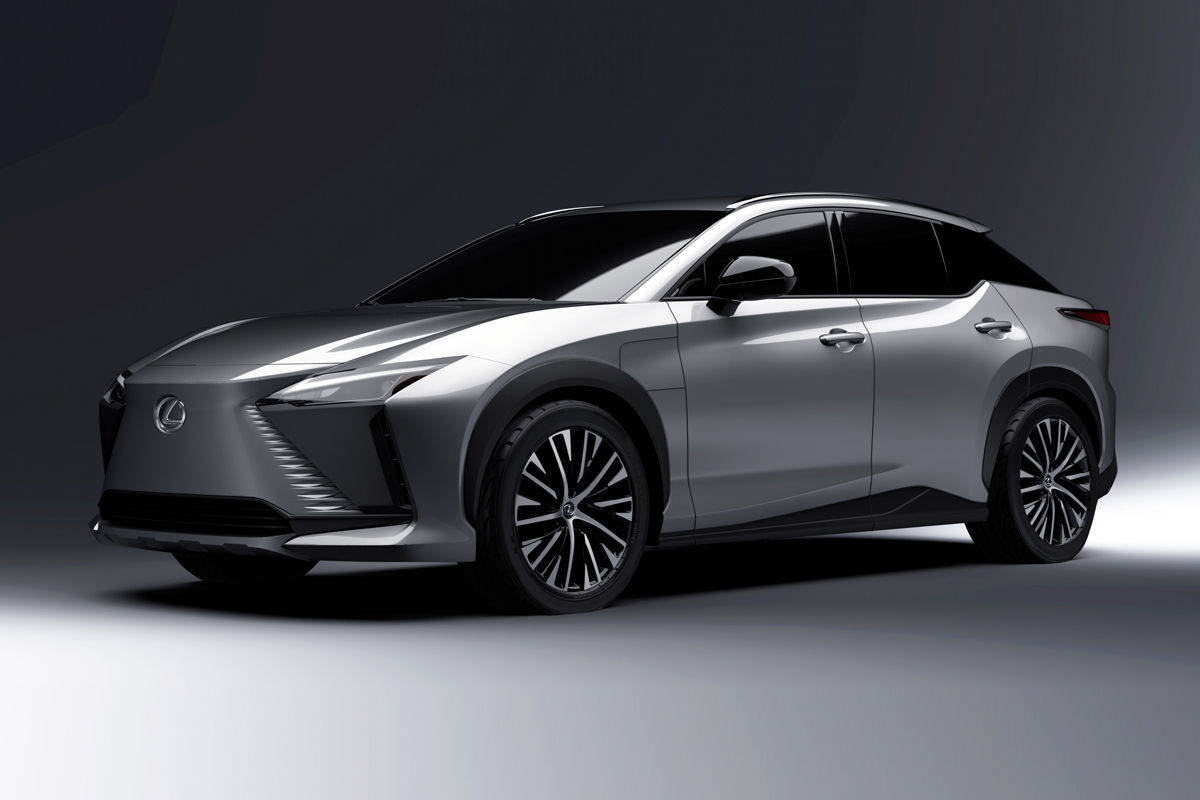
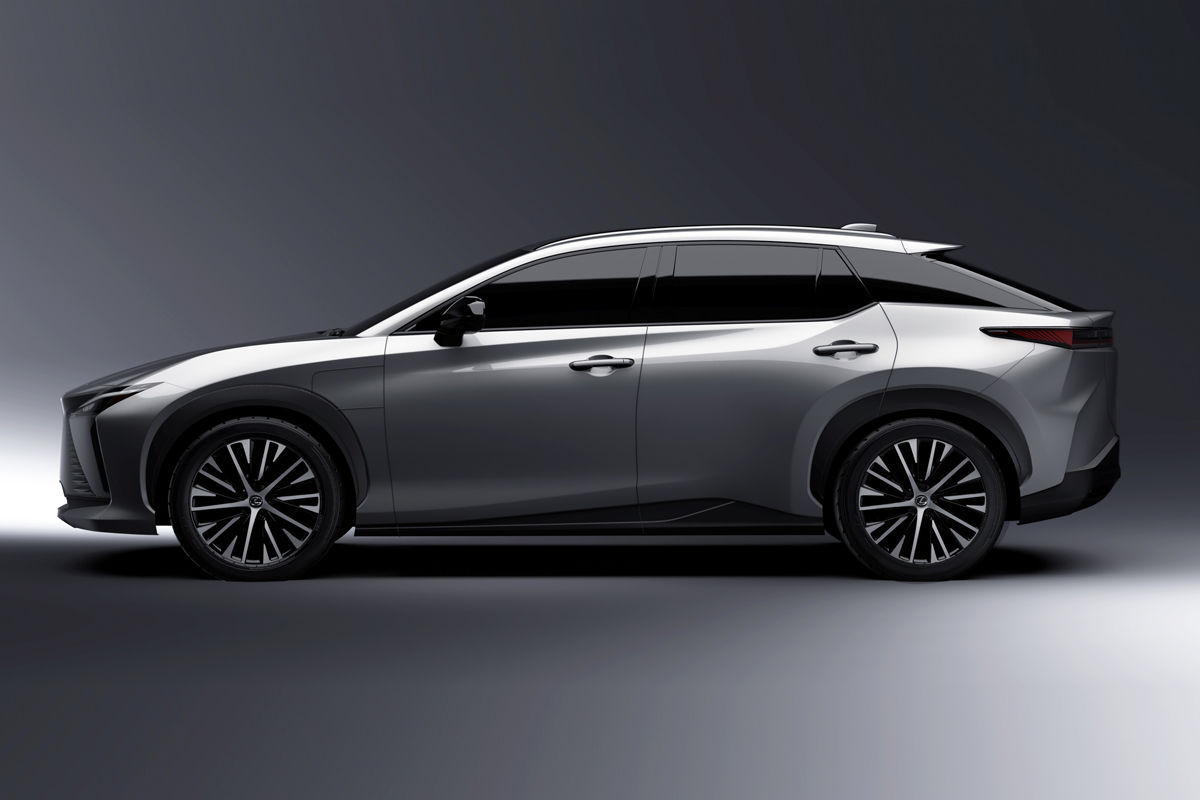
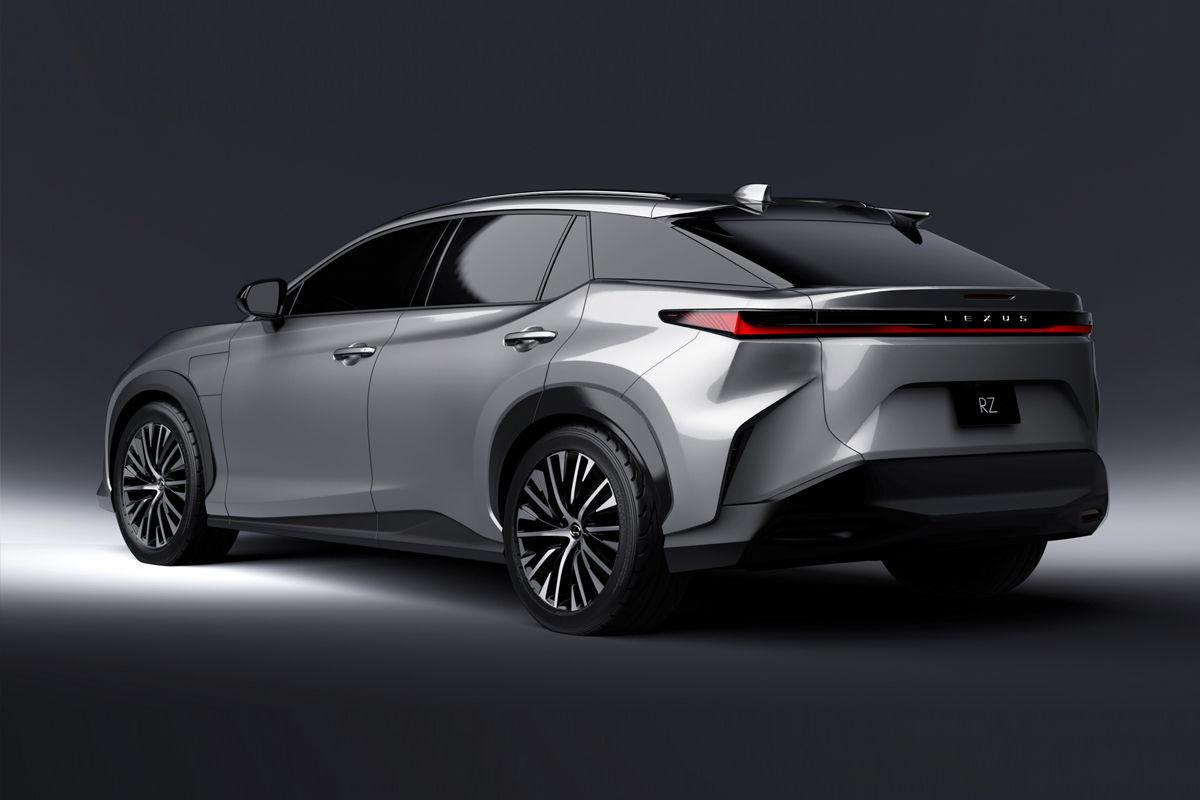
There is now an alternative if Toyota’s Land Cruiser 300 isn’t quite luxurious enough for your adventure travel needs.
The Land Cruiser 300’s Lexus twin has been revealed; it utilises the same platform and powertrain, but offers a bit more in the way of creature comforts inside.
Toyota’s Lexus LX600 adds a typically enormous grille to the front of Toyota’s G-AF platform. You are looking at the world’s most luxuriously appointed and spacious ladder-frame 4×4, with real off-road ability.
Although the Lexus LX600 is primarily marketed at American customers, who don’t have option on the Land Cruiser 300, it could also curry favour in South Africa.
The previous LX570 was quite a unique offering, combing the proven Land Cruiser 200 platform with a potent naturally-aspirated petrol V8. This gave it a much swifter turn of speed than any Land Cruiser 4.5-litre turbodiesel V8.
With the LX600, there is only one engine choice at launch: the 3.5-litre turbocharged V6 petrol, which also features in the Land Cruiser 300. So why would you buy into the Lexus interpretation of Land Cruiser? Cabin comfort.
Infotainment is relayed via a stacked dual-touchscreen configuration, measuring 12.3-inch at the top and 7-inches below. The bigger screen is where you experience all the satnav and audio interfacing, with the smaller screen for HVAC information and off-road data.
The ladder-frame construction might not have given Lexus interior designers that much floor depth to work with, but they’ve managed to work some magic. The LX600 offers a four-seater cabin set-up, delivering unrivalled rear-seat comfort for a Toyota brand stable off-roader.
For optimal comfort, the rear seats can recline up to 48-degrees, and there are footrests that fold out from behind the front seats. This is very much the Lexus idea of business class off-road travel.
An interesting variant on offer with LX600, is the F-Sport. Usually associated with Lexus products that might be used for the occasional track day or spirited drive, an F Sport separate chassis off-roader is odd.
Lexus engineers have managed to package a limited-slip differential at the rear-axle, not just the centre-diff, to give the LX600 F Sport slightly better cornering agility. There is also talk of special damper settings and electric power steering calibration.
Attempting to calm the influence of those optional 22-inch wheels and a ladder-frame platform, is the LX600’s hydraulic active ride height control, which offers four selectable settings.
When will the new Lexus LX600 be available in South Africa?
Lexus South Africa has confirmed that the LX600 will arrive locally in the first quarter of 2022 and specification and pricing details will be communicated closer to launch.
V8 Widebody E30 – Iconic BMW 3 Series with a Supercharged 1UZ
When a discerning customer approached Wayne Exner at Ace Customs to help complete a project car, the team knew they had a challenge on their hands, but they didn’t know how bad it would be.
Looking for a used BMW 3 Series for sale in South Africa? We have over 1400 to choose from!
With the body splitting in place and rust creeping in, the decision was made to strip the entire car, repair the bodywork and chassis and send it in for paint.
The wiring was also a mess and so the team threw all that away and started again. The car came to them with the supercharged 1UZ Lexus V8, but they opted for Spitronics management to help get it running properly.
The striking widebody kit was imported and fitted by Ace Customs and we must say it looks spectacular and very unique.
The wheels were imported from Japan and uprated brakes were fitted. The entire dashboard was pulled and a fully custom, aluminium dash and centre console was created. NOS was fitted for some extra oomph and a full roll cage for rigidity and safety.
The result is this complete one-off, a track and drag car for an owner who loves his track days. And we say kudos to him and the team for pulling it off, and giving South Africa another build we can be proud of.
Calvin Fisher had a rather disturbing week with the car that South African motoring enthusiasts obsess over the most…
There he was. Standing in my garage, on my property. Staring at the GTI. Who was he? Well, a security guard for a well-known armed response company. The one with three letters. Why was this a problem? Well, I didn’t call him. Also, I don’t even subscribe to that particular firm; I’m a client of a rival home-security company. So, what the hell was going on?
The Golf GTI has been so popular in SA, it’s accounted for 50% of all Golfs sold in SA.
He explained that he had seen the Volkswagen Golf 8 GTI parked on my driveway earlier and couldn’t help but stop and have a closer look, despite the fact that the vehicle was now pulled into my garage. He’d spoken to the electrician who was busy installing some new lighting on my property; the sparky had no idea what was happening when the “man with a gun” (as he described the officer) asked if he could have a better look at the German hatchback. To cut the story well short, he left enlightened as to why, just because his job involves home security, it wasn’t okay to wander onto people’s property because something shiny caught his eye. I would’ve been harder on him if I wasn’t already convinced the GTI in question wasn’t something of a hex – one with a serious effect on folks. Let me explain…
The following account is completely non-fictional. Just facts. It began almost immediately. I had just swapped the sublime Audi S3 sedan, which is arguably a superior whip in what I like to call the “everyday superhero” category, for the new GTI. Despite being finished in Turbo Blue, the Ingolstadt-based brand’s sedan had gone largely undetected while it was in my care. As for the appliance-white GTI? Within a minute of taking custodianship of the test unit, an Opel Corsa, Polo GTI and a 10-year-old BMW M3 tried to race me. The sheer nerve – we were in chock-a-block CBD traffic! Still, they wanted blood.
The new Golf 8 GTI launched locally in August 2021.
I eventually found my way onto the freeway with the GTI, but it was full of yet more challengers. And there were other types of characters that materialised in the wake of Wolfsburg’s finest. I’ll categorise them as best as I can, and we can begin with the aficionados. Like sharks, these fans would circle the GTI, literally. They’d pull up close behind me, pull out and pass slowly to absorb a rear 3-quarter view, flank me and ultimately move ahead of me. Many things would happen during this choreographed dance. The driver would throw thumbs-up signs at me, grin wildly, or grimace fiercely. Their co-pilot would be doing the same, or they’d be snapping pics of me, or filming me. I say me, but I mean “it”. This wasn’t my test car. It was their test car. So that’s the rivals and aficionados out the way. What’s next?
Well, it has to be the creeps. Look, I don’t believe this is normal behaviour, but I’ll let you be the judge. Creeps come in many flavours, similar to the ones above, but they’ll try to hold your attention by overstaying their welcome. I mean that far too literally. I had multiple of these types follow me for well over 20 km on long stretches of the freeway, they would deliberately miss their turnoffs just to stick in close proximity to the GTI. What was this about? Heaven forbid they follow you to your next stop, which I engineered to be a garage forecourt to fake-refuel or fake-shop for some arbitrary item you don’t need. Just so that they can stalk you, stare imploring you with that “And? And?” expression in their glazed-over eyes. Man, it got uncomfortable.
On one occasion during the GTI test, I decided to take my wife out for dinner. The conversation in the car was lovely, the skies were yellow and pink as the sun was close to setting, and then it happened. That unsettling notion that eyes were upon us. You know what, I’m going to correct myself from earlier. Remember when I said people were staring at the car, and not us? Well, with the creeps you can throw that rule out because buddy, let me tell you… Such piercing stares into my soul, well, that was on a different level. “Oh God, not again…” my wife muttered into her hands. But yes, oh yes, again.
No other hot hatch commands the status that the GTI has attained.
Look, I’m a fan of the GTI legacy, and the car remains a masterclass in the segment it helped to establish. And I like this latest iteration of the Volkswagen Golf GTI – it remains one of the few cars that can shine on a racetrack and a mountain pass just as well as in front of a fancy restaurant or posh hotel room. But I’ll confess that I am surprised with the level of obsession it enjoys in this country. Then again, perhaps I shouldn’t be.
This is a land where, for several generations, every second Golf that was sold wore a GTI badge. Despite a declining C-segment, the Golf GTI continues to sell. Indeed, it is the only version of the Golf that Volkswagen South Africa will sell here – until the R is released, that is. But even that cannot hope to gain such a legion of fans, rivals, and creeps as the GTI. I’m morbidly impressed.
The Audi A4 is one of the brand’s most important models and as the current B9 generation reaches the end of its lifecycle, attention shifts to the next-generation A4 which is due in 2023.
The fifth-generation Audi A4 came to market back in 2016 and received a significant styling and equipment update in 2020. The Ingolstadt-based firm, however, is preparing an all-new A4 model that is expected to be revealed in 2023. As such, we expect to see spy images of the next-generation A4 in months to come.
The Audi A4 forms part of a historical battle between other German luxury business class sedans such as the new BMW 3-Series and new Mercedes-Benz C-Class. Products from other marques such as the Jaguar XE and Lexus IS also compete in this segment.
In South Africa, the business class sedan segment is in decline with buyers rather opting for SUVs. Nonetheless, the A4 is here to keep the battle alive!
What can you expect from the new Audi A4?
The next A4 will take cues from Audi’s electric designs and perhaps this 2021 A6 e-tron Concept provides a few clues as to what’s to come.
Audi’s head of technical development, Oliver Hoffman spoke to UK publication, Auto Express, hinting at what’s on the cards for the new A4.
For starters, the new A4 will be built on the same MLB platform that underpins the current A4 and will likely be powered by a revised version of the EA888 2.0-litre turbopetrol engine from Volkswagen.
The revisions to the EA888 engine is said to include variable-section turbines within the turbocharger which will improve throttle response and result in higher overall outputs. Higher pressure fuel injection is also expected, all of which will bode well for improved performance over the current A4.
However, the new A4 range will transition towards electrification with mild-hybrid 48V technology as well as Plug-in Hybrid Electric Vehicle (PHEV) variants. A diesel-powered A4 is also expected and we could also see an all-electric A4 come to market later in the new A4’s lifecycle.
Commenting on the possibility of an electric A4, Hoffman had this to say, “We are really happy to have a strong partnership within the Group – with Porsche for PPE [platform], with VW for MEB [platform], and our own platform, the MLB. We have the power to develop and produce dedicated platforms for most technologies. We’ve looked at a platform where we can have both powertrains, but it’s a compromise. So I’m really happy that we are able and we have the power to do both.”
From a styling perspective, the new A4 is likely to take inspiration from Audi’s latest electric products. Audi’s current interiors are wonderfully minimalist in design and the new A4 is likely to showcase further refinement in the firm’s reductionist design approach.
We will keep a close eye on developments regarding the new Audi A4, so stay tuned for more details!