Diesel is rapidly disappearing in the European product matrix.
In new luxury vehicles, Rudolf Diesel’s engine technology might soon become a rarity.
Once the industry darling in terms of powertrain, turbodiesels are being rapidly displaced in most passenger car segments. The latest data from Europe is a stark indication of how swiftly this change is happening.
Europeans have for decades been the most loyal turbodiesel customers, preferring the diesel engine configuration to petrol. With generous government incentives and diesel fuel subsidies, the ownership benefits of running a turbodiesel vehicle were many.
Since the diesel emissions crisis in North America, regulators have hurried to undo most of the incentives for diesel vehicle ownership in Europe. And that also influences South Africa, which sources most of its luxury turbodiesel vehicles, from Europe.
What do the numbers indicate? According to data from Schmidt Automotive, European diesel sales have now been surpassed by EVs. And those numbers electric numbers aren’t hybrids, they are pure electric vehicles.
Pure electric powertrain sales in Europe reached just over 20% in December, passing the 19% of diesels. And the diesel numbers include diesel-hybrids – although those are very much a niche product.
With customers demanding more pure electric vehicles, and fewer diesels, product planners will react accordingly. And that means fewer luxury SUVs and sedans, with diesel engines. Say goodbye to those German luxury cars with V6- and V8 turbodiesels that managed to provide a terrific balance of performance and economy.
In absolute terms, the South African market is very different due to the proportional size of our bakkie and rugged SUV segment. The bakkie and ladder-frame SUV market is dominated by diesel in South Africa, yet both those vehicle classes are negligible in Europe.
Powertrain choices for double-cab bakkie and SUV owners, especially locally produced vehicles, won’t be under pressure. Diesel engines will prevail for many more years.
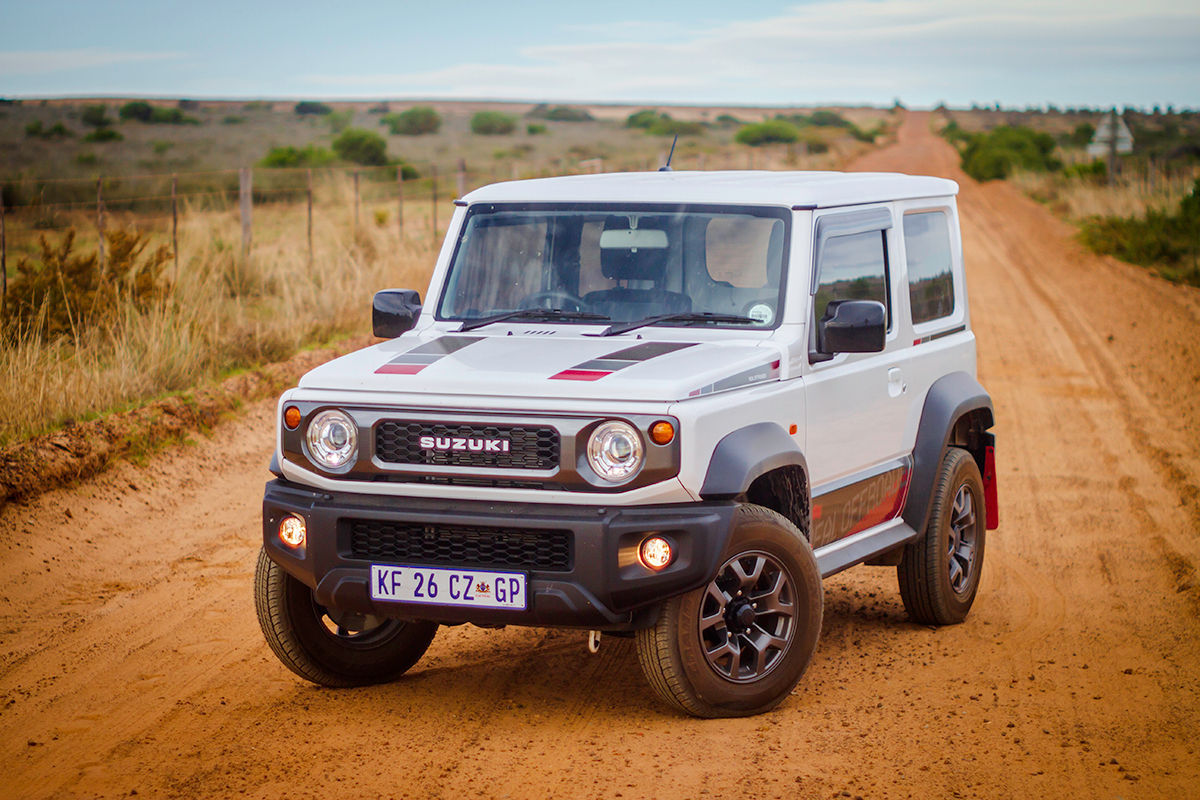
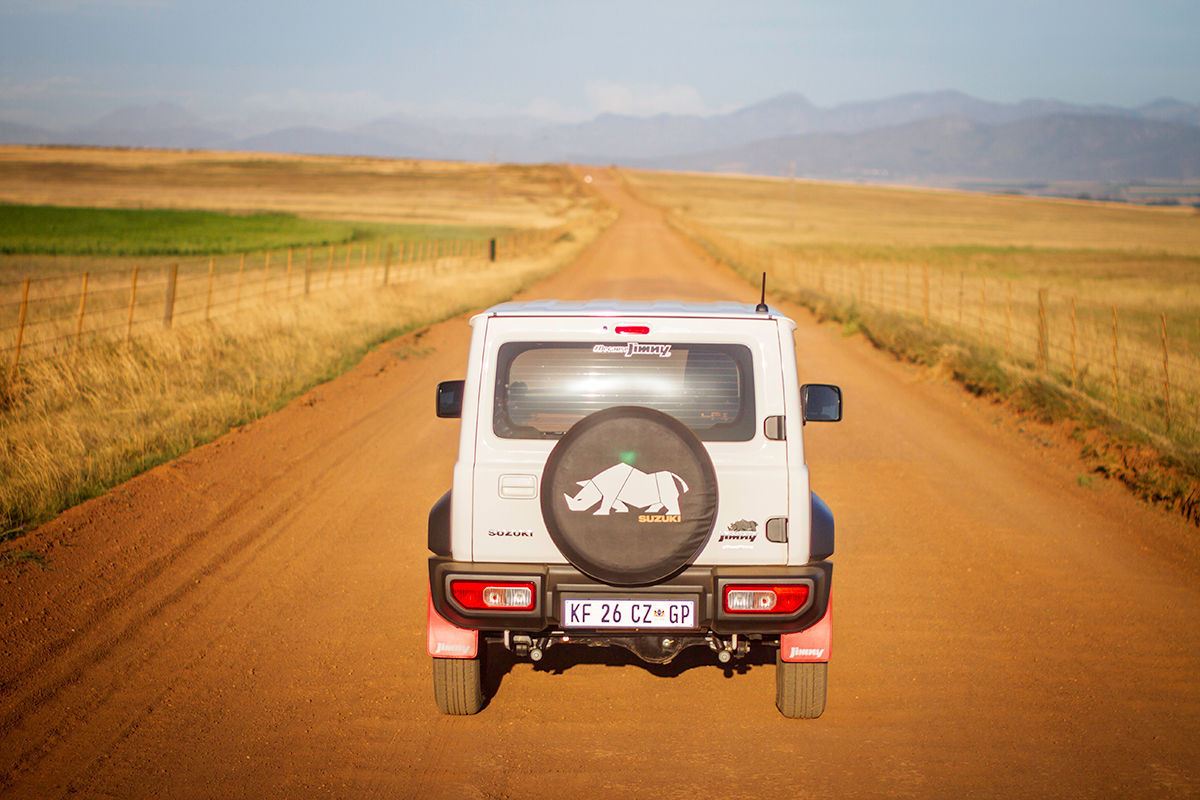
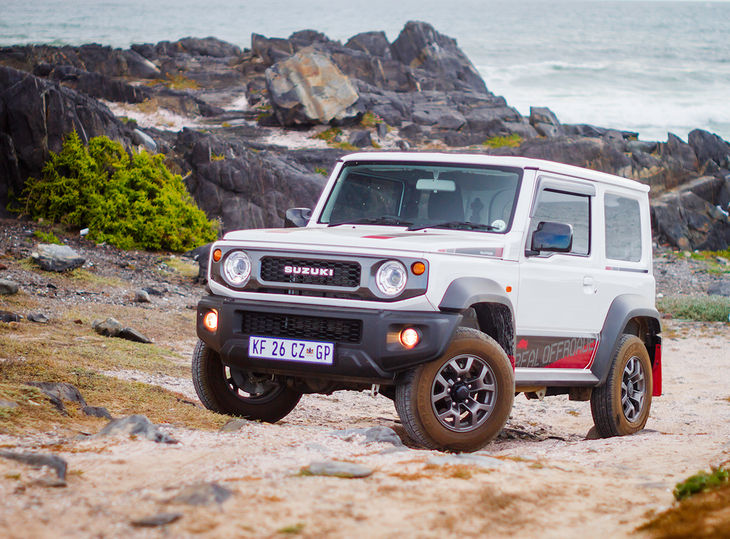
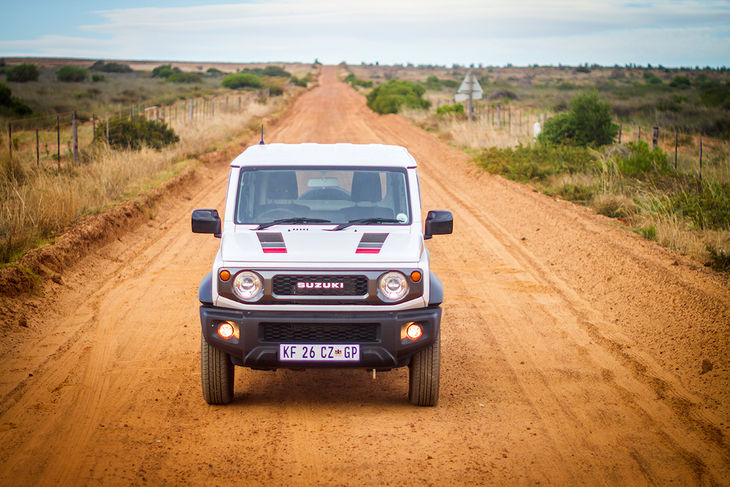
Small, simple – and broadly adored by all. But what is it like to live with Suzuki’s tiny 4×4 in a Big Sky country?Let’s take a look at Jimny’s strengths and weaknesses.
Allow me a meerkat automotive metaphor. Everyone adores the meerkat. Fearless. Family-oriented. But you wouldn’t really want one as a pet. And, in some way, it’s a similar scenario with Suzuki’s Jimny.
Nobody pours any scorn on Suzuki’s tiny 4×4. Land Rover and Land Cruiser owners respectfully acknowledge Jimny drivers in traffic and fellow owners wave at you (a Defender tradition – now passed on to Suzuki Jimny owners).
The Jimny’s adulation is universal and not difficult to understand. It is designed to look cute – but not at the cost of its core competency. Everyone knows that beyond its charming Kei-car proportions, the diminutive Suzuki offers genuine off-road ability and durability.
Suzuki’s Jimny is a complete antithesis to the crossover vehicle segment. Crossovers are made to look as if they have genuine all-terrain ability, but they certainly don’t – it’s a woefully dishonest image.
But the Jimny isn’t perfect – as I discovered, after spending the festive season with one. It does some things very well… and other things, very poorly, so the Jimny certainly has its problems.
I have notable experience with these little Suzuki off-roaders. Some years ago, I ran a Jimny manual for nearly a year. It was an experience textured with frustration and reward… and not in equal measure.
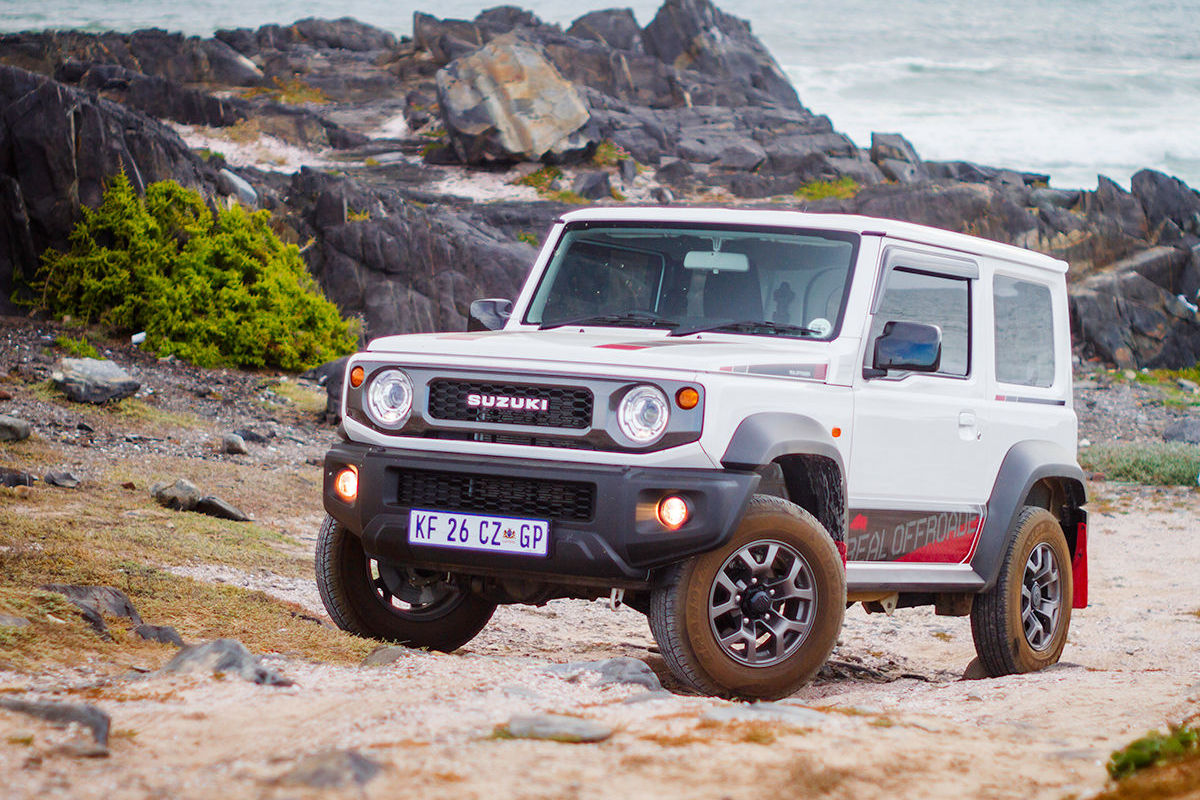
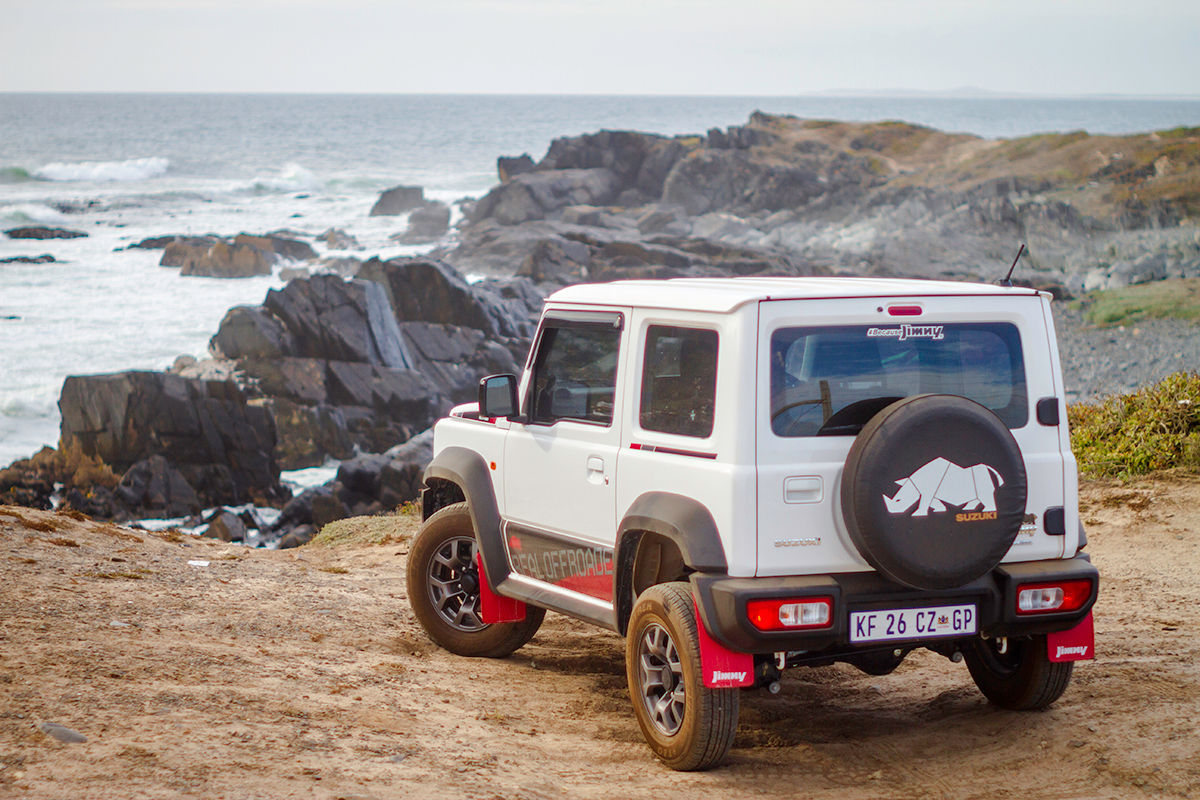
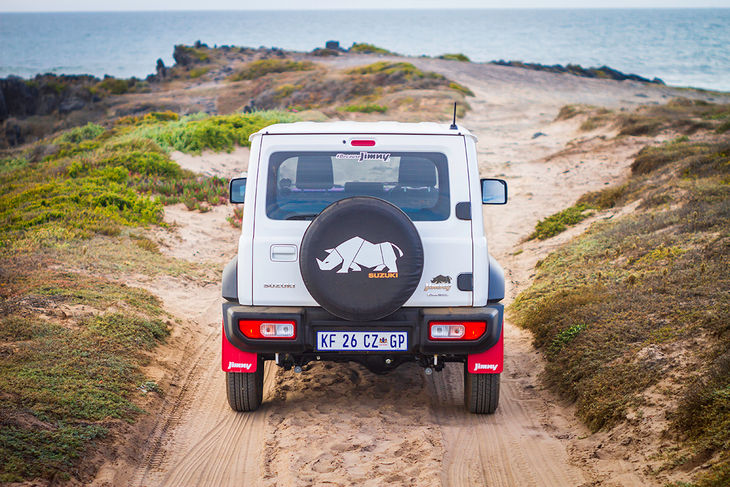
There is no other vehicle this small, that can get to remote vantage points.
Good in the city – but terrible between cities
The Jimny might have a new design and more potent powertrain, but it hasn’t really grown. Those Japanese Kei-car roots remain in place.
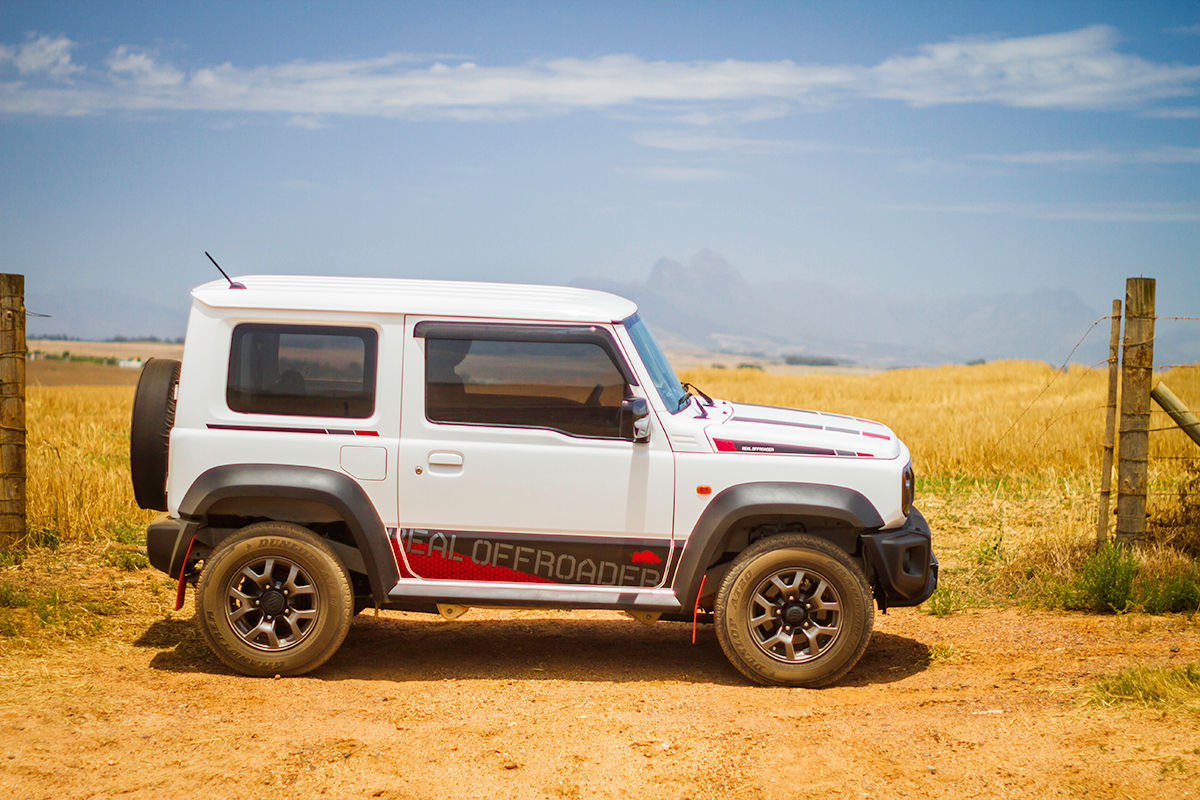
At only 3.48 metres in length, it is a tiny vehicle. Combine those city-car dimensions with 210 mm of ground clearance and Jimny becomes a vehicle that is unrivalled in any urban driving environment. Forget about the Smart Fortwo or even Suzuki’s Celerio. The Jimny has Messi-like agility, which you use to effortlessly navigate through any inner city.
Suzuki’s lilliputian 4×4 is terrific at flowing in and out of the most challenging parallel parking spots. It might not have rear parking sensors or a reverse-view camera, but you have such a great all-round field of view that electronic parking aids are hardly necessary.
When you venture onto crumbling urban roads or even need to roll over some pavement infrastructure to make a turn, the Jimny’s long-travel suspension works a charm. With most compact city cars, bumpers and side sills are scratched or dinged to ruin when the pavement becomes a necessary part of your driving or parking experience… not so in this Suzuki!
The Jimny is wonderful at very low speeds, such as on a short journey to the store or coffee shop. However, any trip that requires highway driving exposes its weaknesses. The Kei-car size, modest engine specification and a very troubled aerodynamic profile become very apparent at speeds approaching 120 kph.
I assumed Suzuki’s 75 kW 1.5-litre engine would drastically improve the asthmatic cruising performance I remember from the previous-generation Jimny. I was wrong. The truth is, you can’t journey in the far right lane of any dual-carriage road or highway with confidence. You can try, but the fuel-consumption consequences are severe.
There is no question that a 4-speed automatic transmission might work fine for driving duties under 80 kph, but the lack of a 5th or 6th ratio limits the Jimny’s acceleration spectrum to around 120 kph.
With a kerb weight that’s half of those of its rivals, the Jimny is a delight to place and navigate in off-road terrain.
On any longish journey that involved highway driving, the Jimny was a chore to pilot. The steering wanders, which is not unusual for a ladder-frame-based vehicle with a short wheelbase and high centre of gravity, but it’s made a lot worse if you live in a city with potent wind climatology.
The Jimny has a lot of proportional side surface area in relation to its wheelbase and ride height. In strong winds, it requires assertive steering responses and anticipation when driving at highway speeds.
I don’t know how you solve Jimny’s highway cruising issues. Kei cars were never designed to do 120 kph – that’s just not a thing, in Japan.
Although the Jimny is now a global product (and a very successful one), one must remain mindful of where it comes from and the experiences of those Suzuki engineers and product planners that developed the diminutive off-roader. They commute in Hamamatsu – they are highly unlikely to undertake journeys comparable to Johannesburg to Cape Town via the N1.
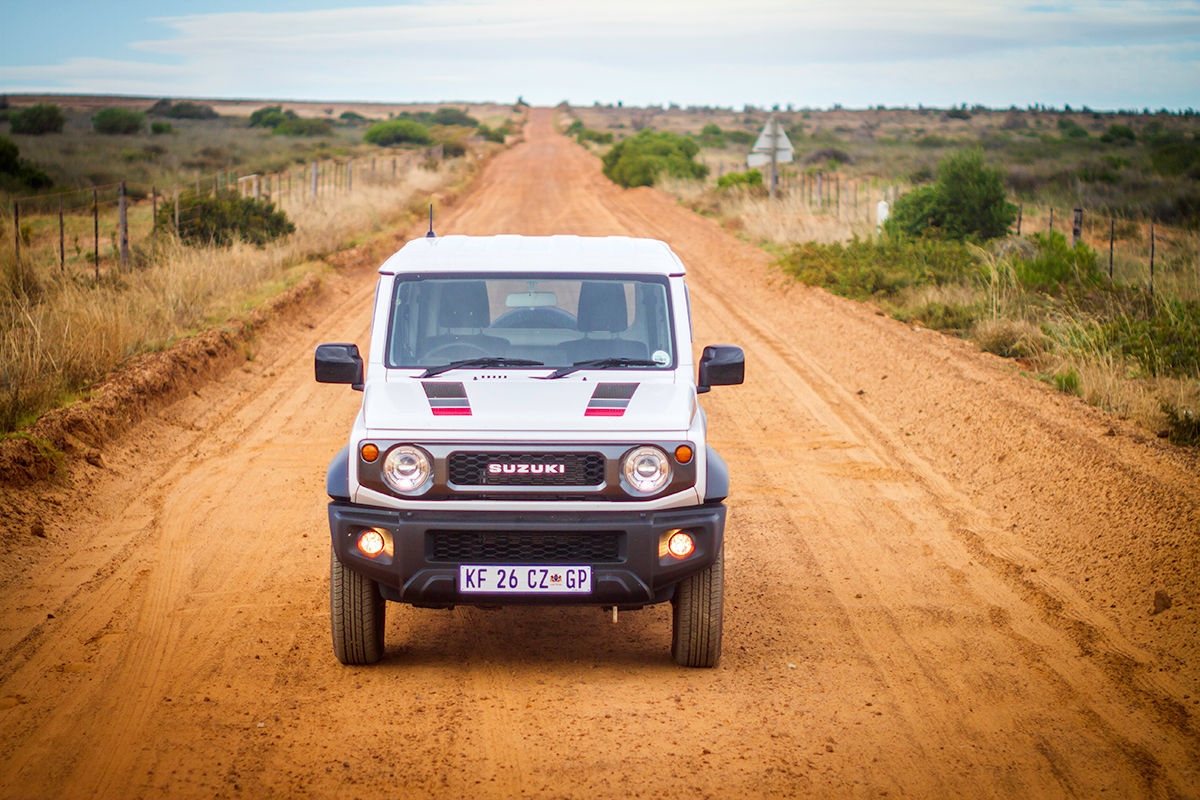
The current Jimny might be nearly 19% more powerful than its predecessor, but it needs even more power to overcome the drag created by that near-vertical windscreen, short roofline and blunt rear.
I imagined how much better the Jimny would be with about 85 kW of power, but that in itself creates another issue. This is a vehicle with very low cornering limits. You edge your way through roundabouts. The slightest tightening of steering angle or increase in throttle input generates tyre screech.
Simply put, the Jimny’s uncompromised compact off-roader platform isn’t reconcilable with more potent highway cruising performance. The need to develop enhanced traffic awareness and frequently change lanes are part of the ownership destiny with any Jimny. To compensate for its lack of lane assist or blind-spot monitoring, it has an even better and more reliable solution: enormous wing mirrors.
Despite being a tiny vehicle, the Jimny has wing mirrors that would not look out of place on a Land Cruiser 79 double-cab bakkie. And that means each time you need to dive into the slower lane there is no anxiety in doing so, a quick glance at that massive left-wing mirror will give you complete lane-changing confidence.
Large and heavy objects fit securely in the back. But normal luggage can slide around, a lot.
It’s not a family vehicle
For solo adventurers and couples, the Jimny has a usable cabin architecture. It helps if you have sober comfort expectations, too.
Its seats are underpadded and not shaped to the best ergonomic standards. Especially those rear seats – which aren’t suitable for anything beyond an hour’s driving for most passengers.
Suzuki’s interior designers have done some clever things with Jimny’s available seat manipulation. The front passenger seat can be folded flat and slide way forward to create a sleeping surface. It’s genius and true to Jimny’s purpose as an occasional overnight venue for overlanding adventurers.
With the rear seats in place, there is so little cargo space, Suzuki’s doesn’t even bother to equip the Jimny with a parcel shelf.
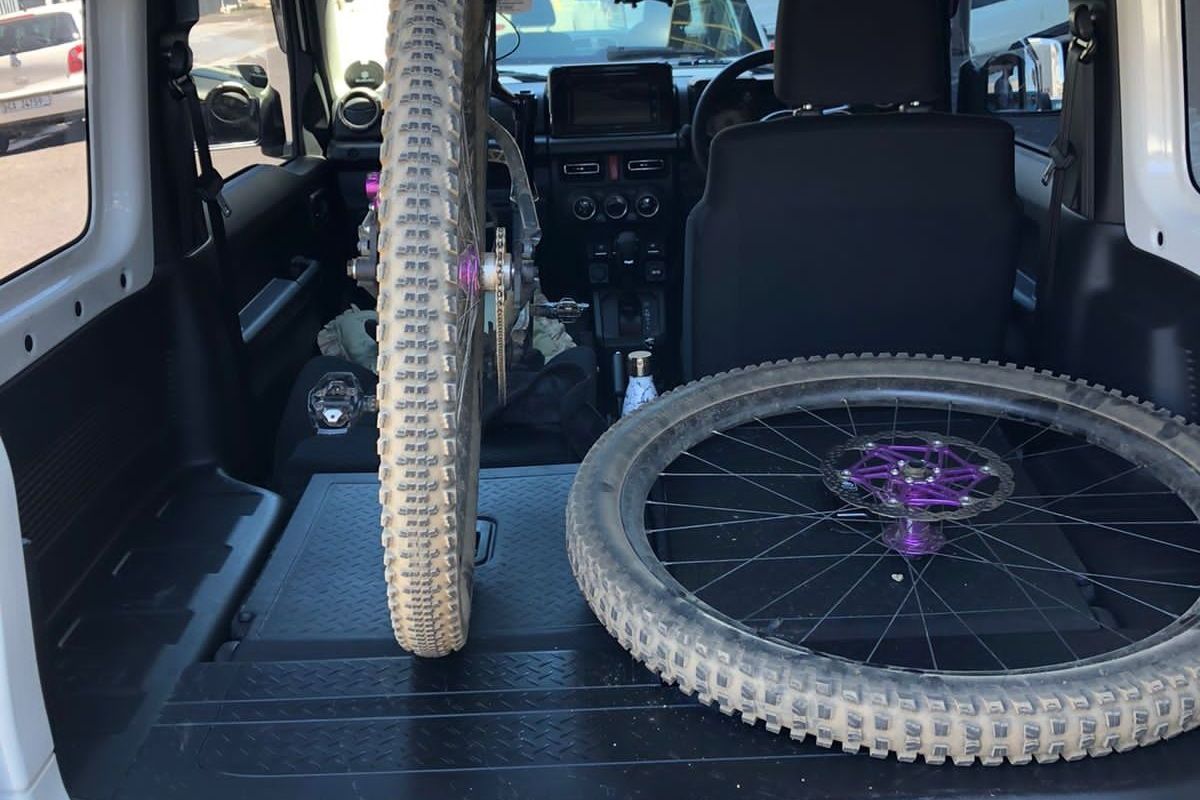
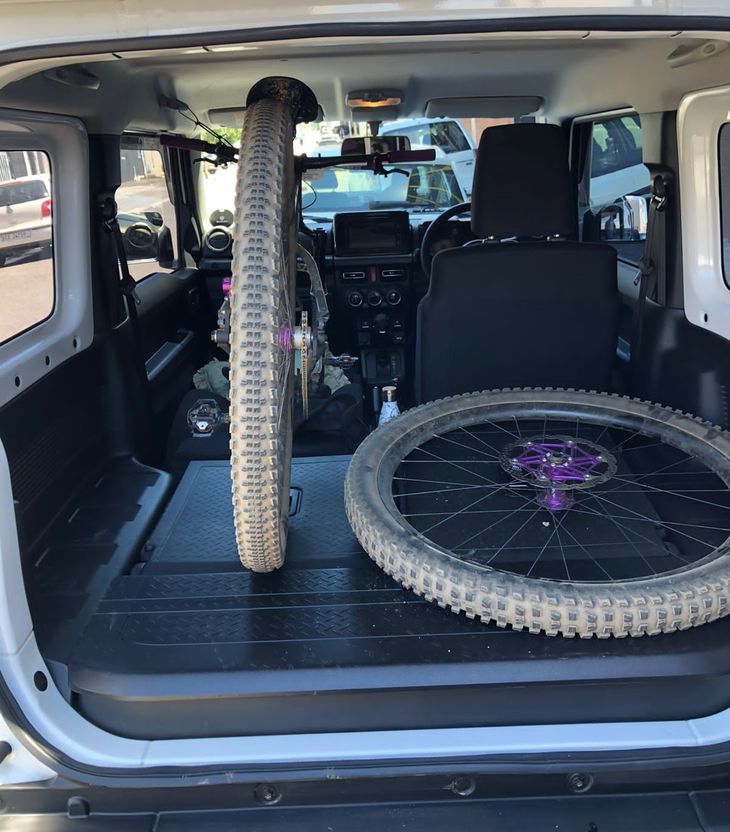
Carrying mountain bikes inside? Not really a great idea.
For a vehicle that triggers so much anti-FOMO and instils a sense of adventure, the Jimny can be heartbreakingly frustrating to load up. I dislike external racks. And although Jimny’s roof gutters (yes, it has roof gutters), make it very convenient to mount a roof rack, that only exacerbates its centre of gravity instability and aerodynamic drag issues.
Your best option is having those rear seats permanently folded down, which creates a hard plastic-lined flat load surface. It’s not grippy, though, which means that cargo tends to slide around annoyingly.
I admire those Jimny owners who tour Botswana and Namibia in their vehicles. They deserve all the conscientious packing accolades.
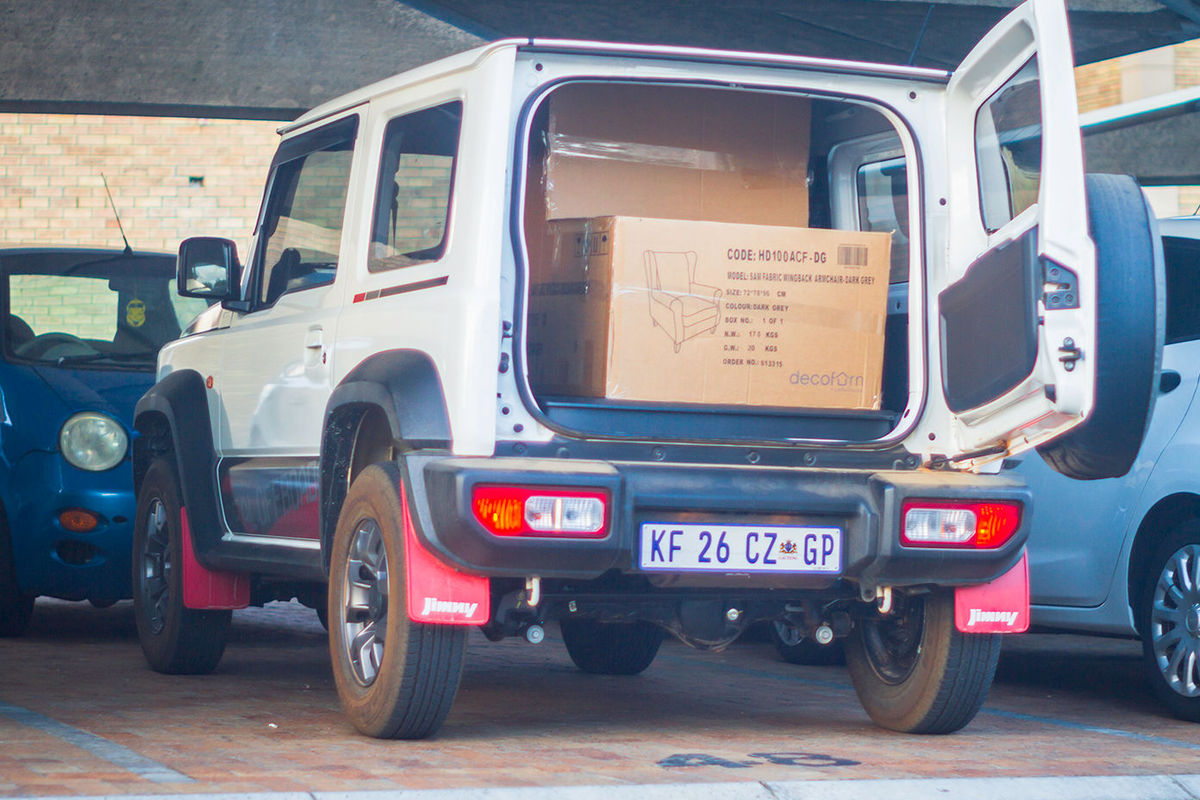
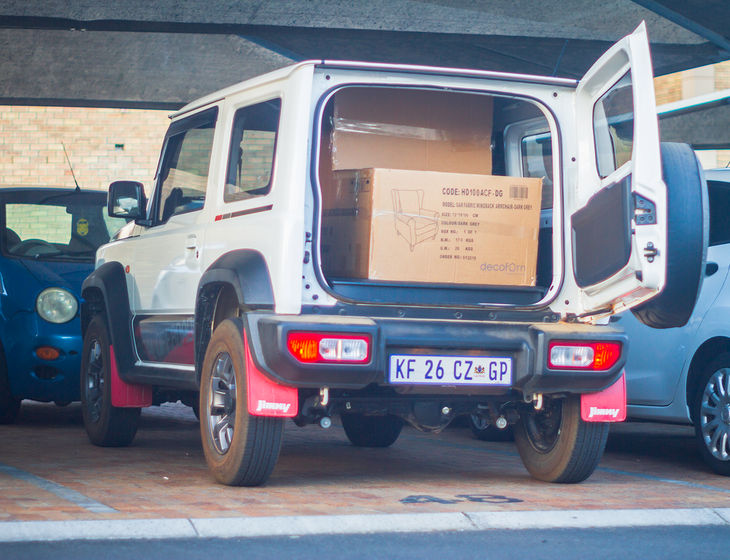
Despite often frustrating my ambitions relating to the transportation of mountain bikes or people, the Jimny deserves credit for its blockiness, however. Thanks to its very square proportions, you can fit quite a large furniture box in the back of a Jimny, which isn’t that easy with many compact crossovers that have tapered rooflines.
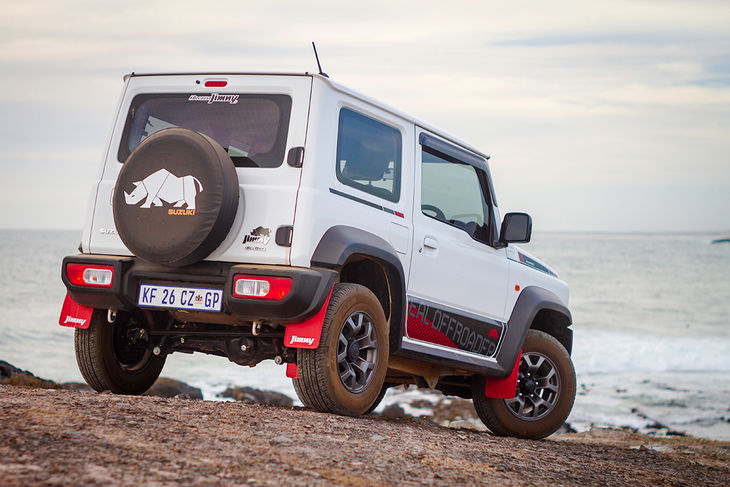
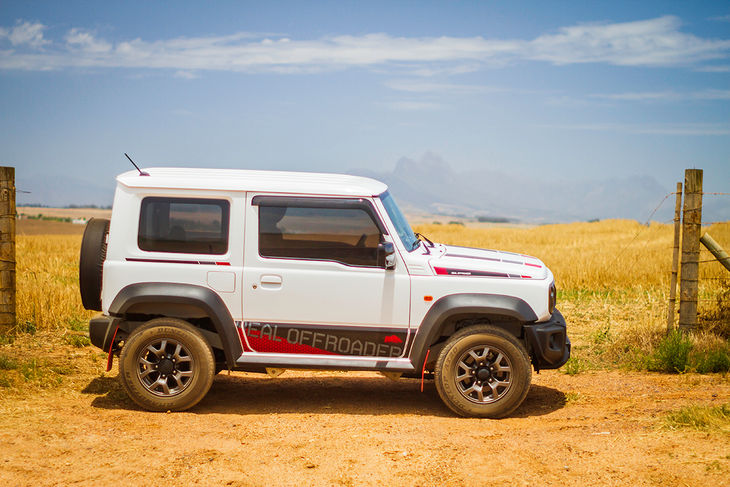
When you look at the Jimny from this perspective. You realise that it is most definitely not aerodynamic.
Small vehicle – big fuel numbers
After a year of significant fuel price increases, some may look upon the Jimny as an adventure vehicle with more tolerable costs regarding its fuel economy. But that’s a misplaced perception. You’ll never get close to Suzuki’s claim of 6.8L/100 km for Jimny fuel consumption.
The Jimny might be small and light, but it’s no fuel fairy. Not even nearly. We averaged 8.5L/100 km and most of that was due to Jimny’s poor aerodynamics.
If the automatic transmission had 5 or 6 speeds, instead of only 4, that would help reduce the fuel burden a bit, but the most debilitating influence on Jimny’s mileage is its boxy shape, especially at cruising speeds.
Would a turbodiesel engine be better? Possibly. But nearly 9L/100 km is the kind of real-world consumption that edges toward that of a mid-sized turbodiesel SUV.
Heritage grille. Ready for adventure. Try and resist the charm. You’ll fail.
Why does everyone else like it so much?
The rap sheet is long: too small inside to function as a passenger vehicle; too slow for confident highway cruising and too heavy on fuel, considering its weight, engine specification and performance.
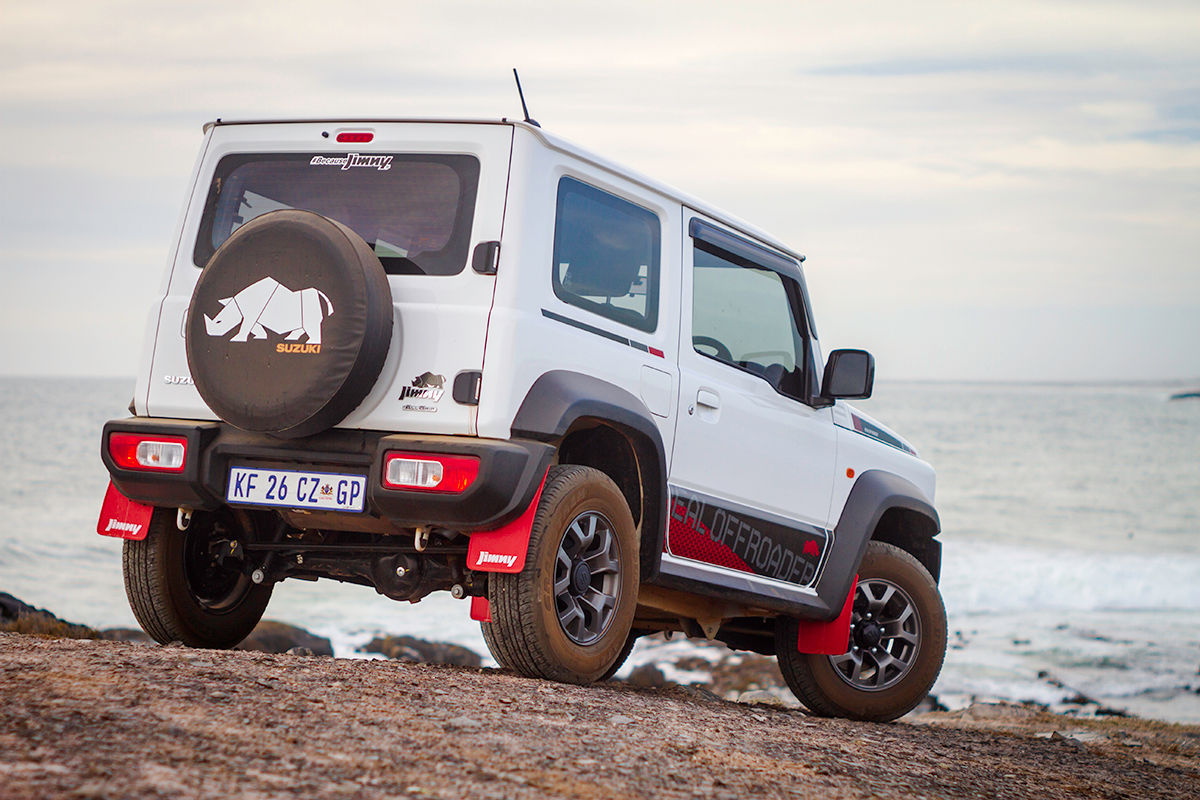
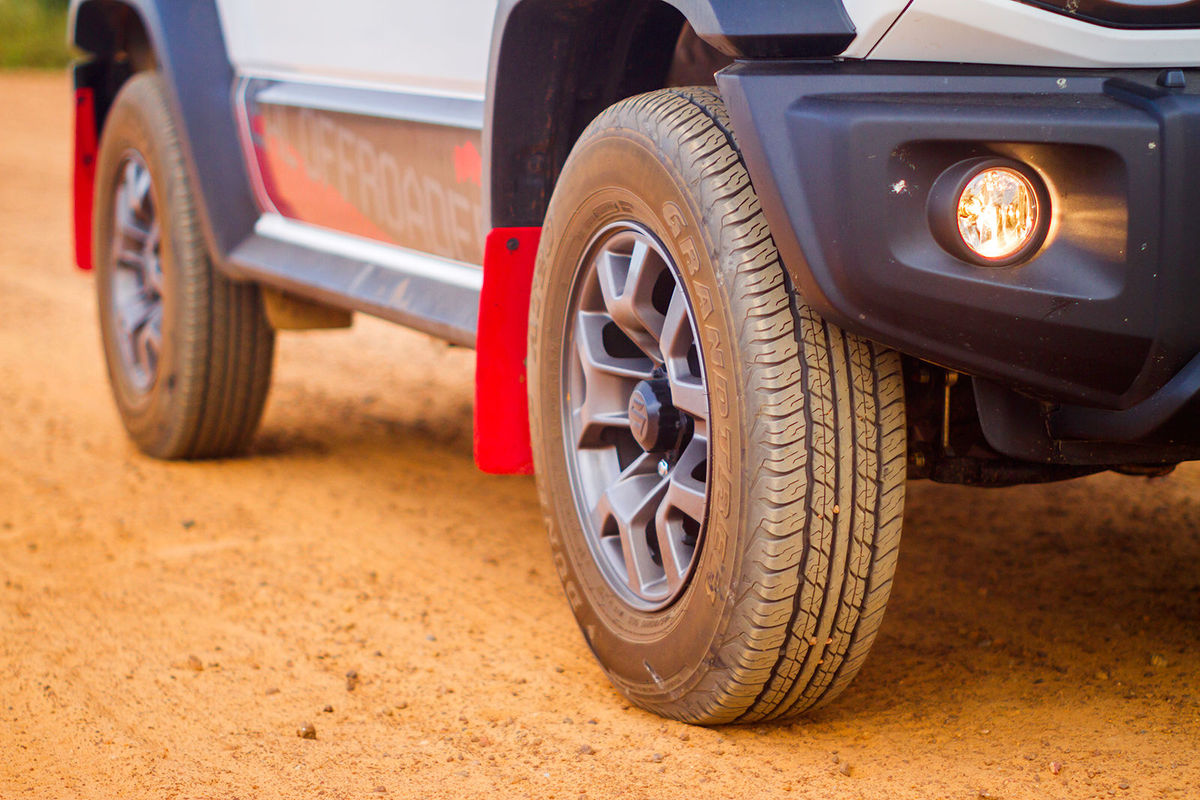
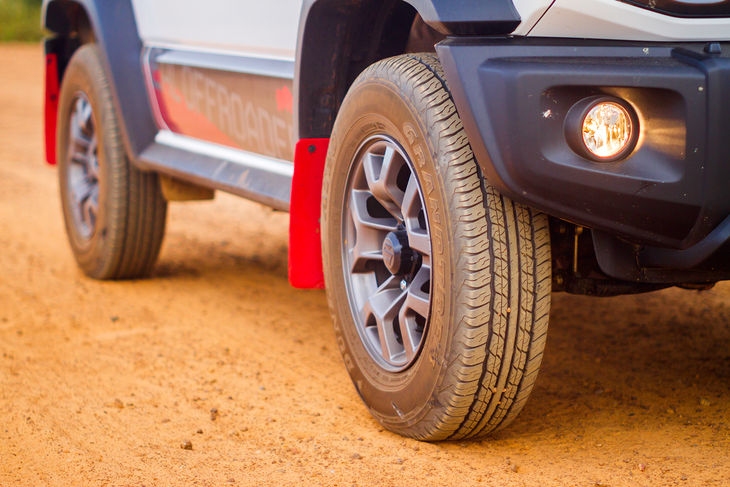
The Jimny has all these issues, so why did people give the Jimny envious glances during the vacation season, when I was driving it? Could it have been those red 1990s WRC heritage mud-flaps? Maybe.
The reality is that Jimny is one of the very few double-take vehicles still in production… and that is a concept worth explaining.
Fewer and fewer cars make me look back at them once I have completed a locked-up journey and walked to my venue. I found myself irrationally staring at the Jimny from my apartment’s living room window. Or from inside a coffee shop. Part of the deeper charm, I guess, is that you drive a Jimny, instead of being insulated from the driving experience – which is the case with most modern cars.
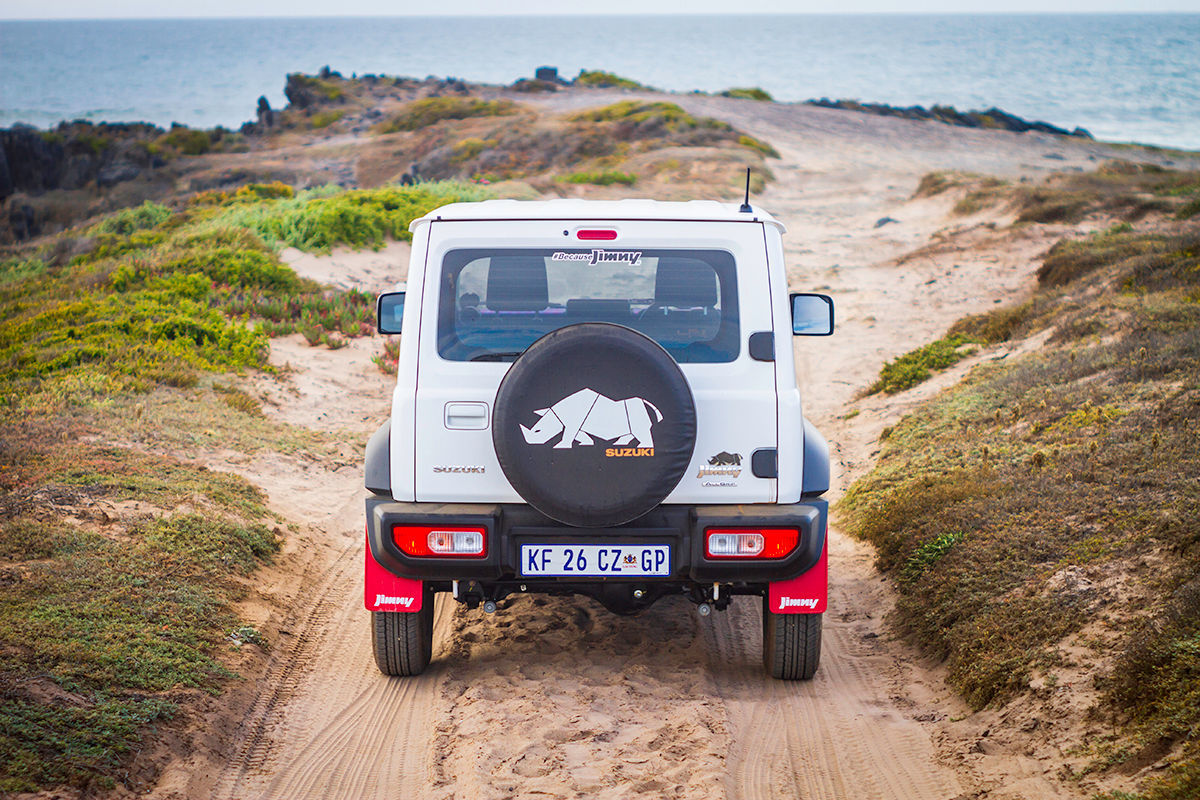
Rhino graphics might be a sensitive issue locally. But they are true to Jimny’s marketing heritage. Red mud-flaps? Terrific.
Buying advice – Is the Jimny worth its price?
The Jimny isn’t cheap and, for many consumers, a compromised crossover will be a much more practical option. Most new compact crossovers will be much better at highway driving and should roll along mild gravel roads without bother. Crossovers in the Jimny’s price range will also have usable rear seats, not to mention a useful cargo area.
But crossovers are about compromise. The Jimny isn’t. Its off-road potential is limitless, although long-range desert driving can require some careful planning due to its heavy fuel consumption/tiny tank.
If you intend to buy one to make a statement, don’t do it – there are more sensible ways to spend your money. However, suppose you commit to planning a few long weekends away each year, during which you will navigate into some properly challenging terrain. In that case, the Jimny is a terrifically analogue adventure driving experience.
There is something to be said for a 4×4 that makes you part of the terrain conquest – as opposed to being merely a passenger and allowing traction control systems, huge tyres and a flood of torque to roll you over technical off-road terrain.
The family vehicle caveat is very real. I had passengers that were only 1.5-metres tall in the back, and they complained about seating comfort after only a few minutes. If you don’t have kids and want to use Jimny as an all-conquering urban runabout, it excels in that role. But this remains a two-passenger vehicle – something worth remembering.
Tyres are much smaller and narrower than other low-range enabled 4x4s. And a lot cheaper to replace.
At R377 900, the Jimny 1.5i GLX automatic is not a bargain, but, if you consider the total ownership experience, it is a value proposition. You’d need to spend double or triple that price to acquire a vehicle of matching off-road ability (unless you can deal with the harshness of a Mahindra Thar).
Jimnys are highly durable, with a low threshold of electronic complexity. Mechanically, the engine is relatively unstressed, too. Interestingly, the design change from centre console buttons to a traditional floor-mounted low-range shifter has made the latest Jimny even more reliable.
Deeply annoying at times, but also deeply rewarding as a long-term ownership experience – with excellent residual value – the Jimny is a forever vehicle… something that will last generations and generate many unforgettable adventures. And those are ownership values that can’t be applied to many of today’s new vehicles…
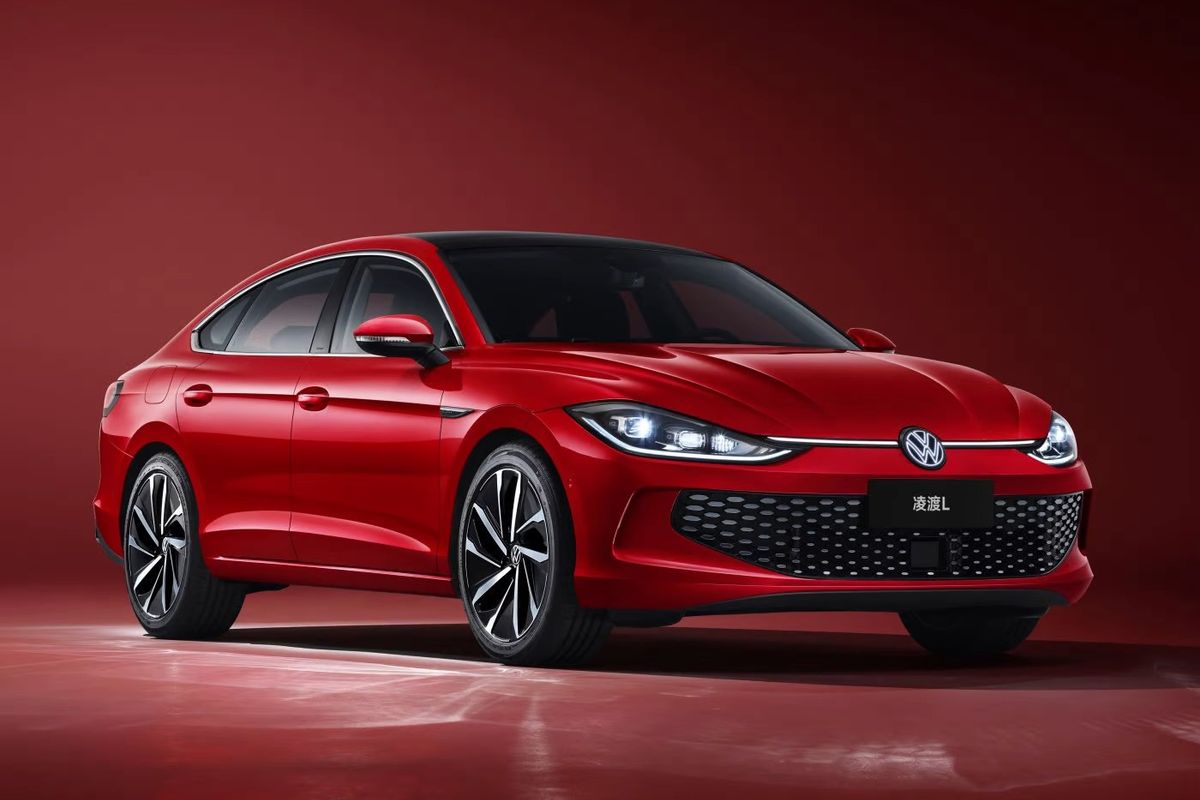
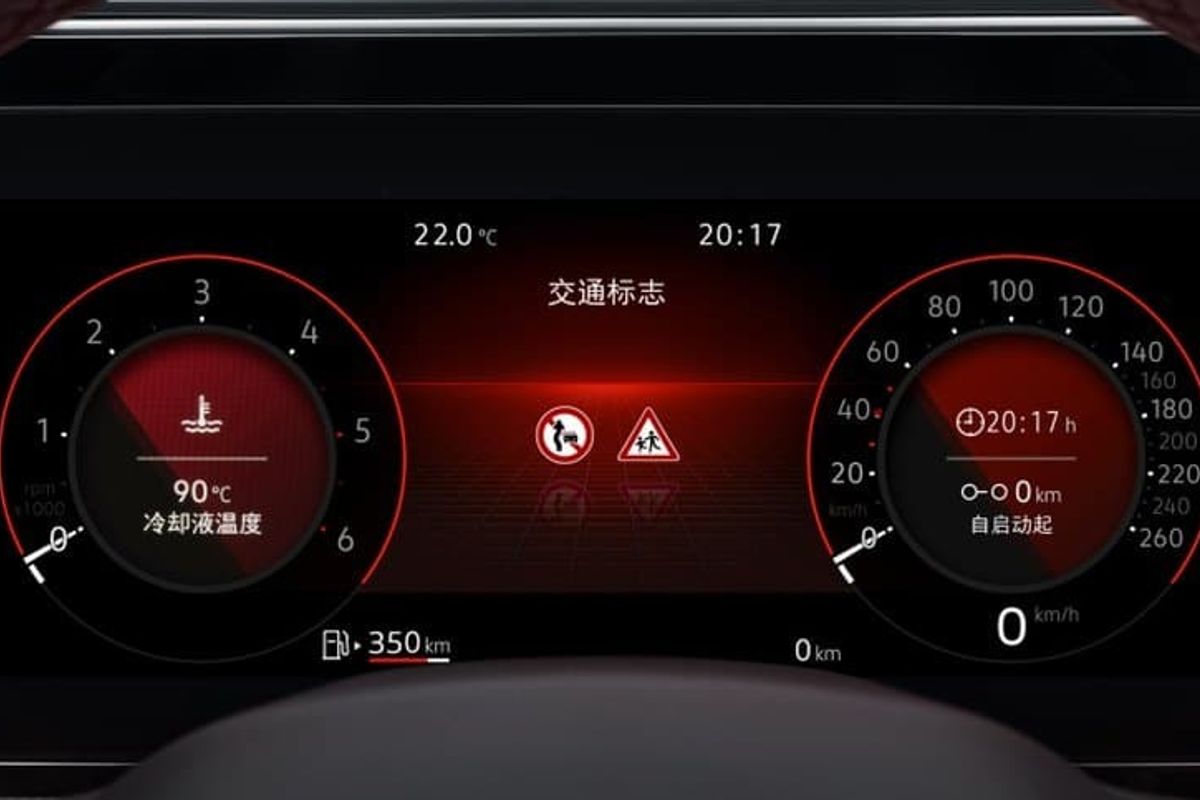
Volkswagen Lamando L Revealed but Sadly Its China-Only
The Volkswagen Lamando is proof that the sedan body style is not quite dead.
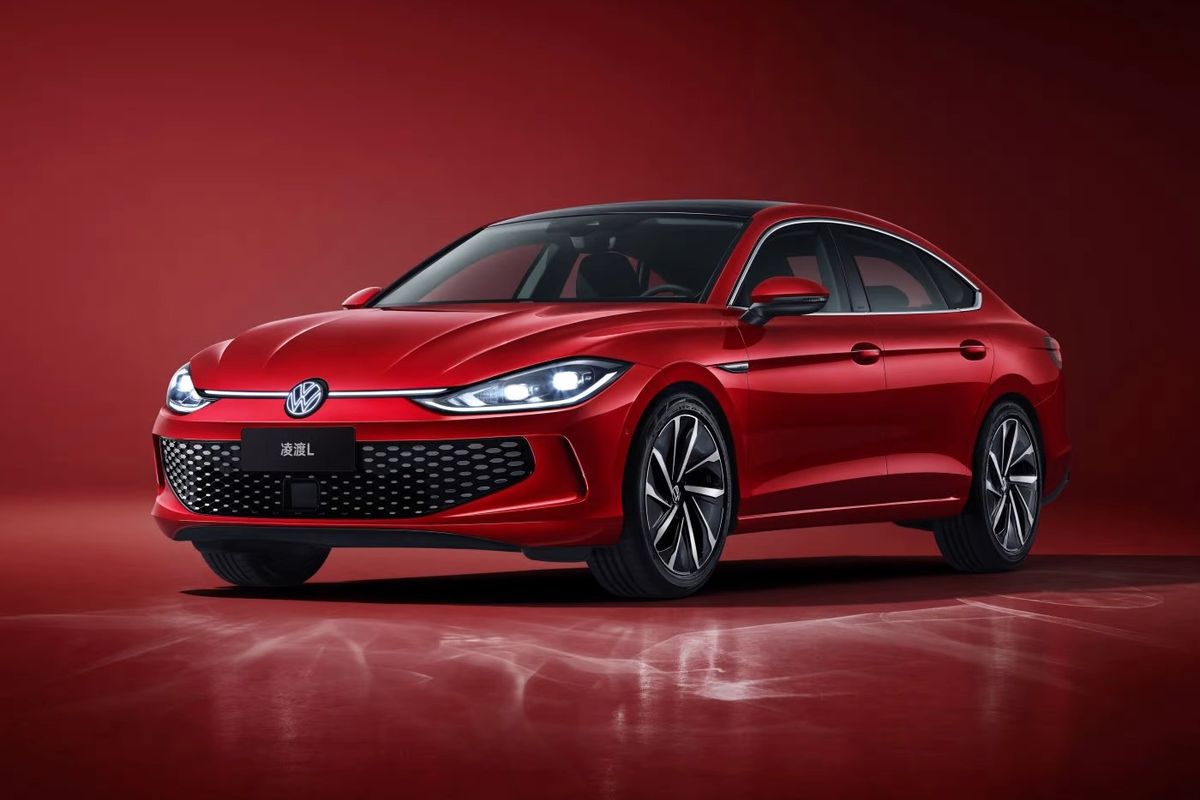
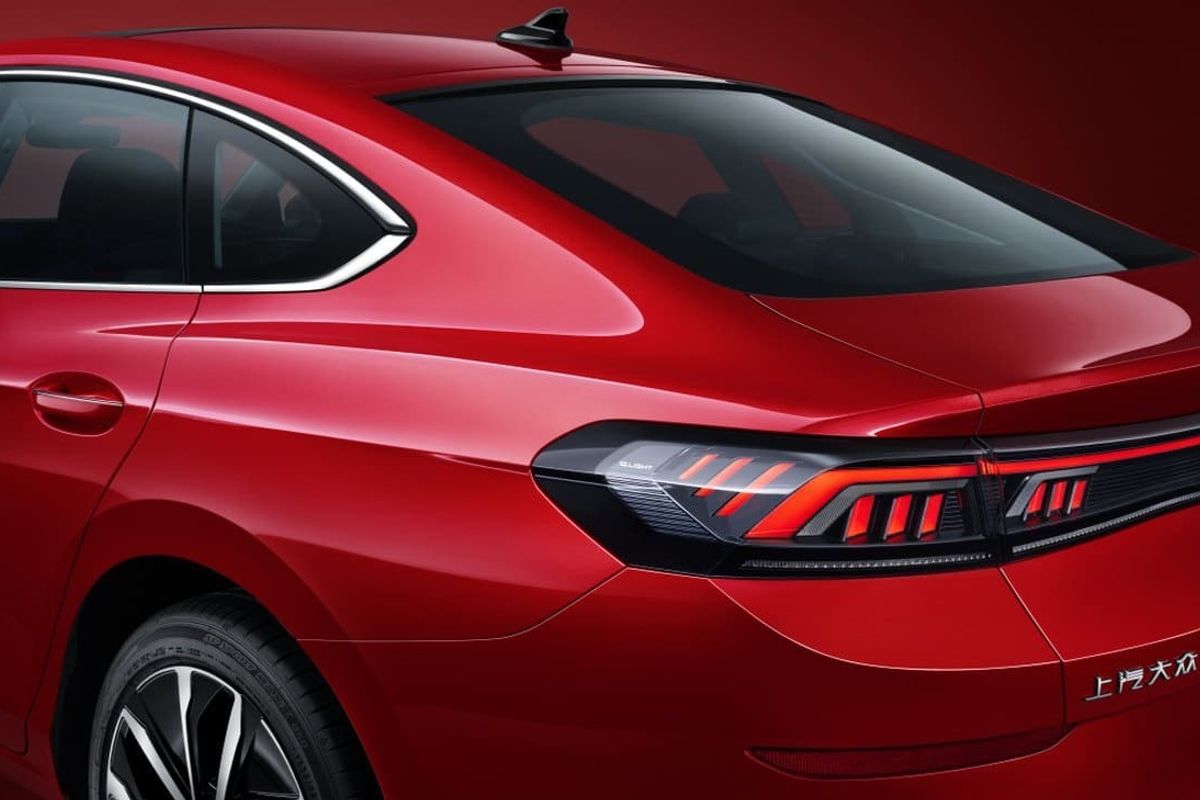
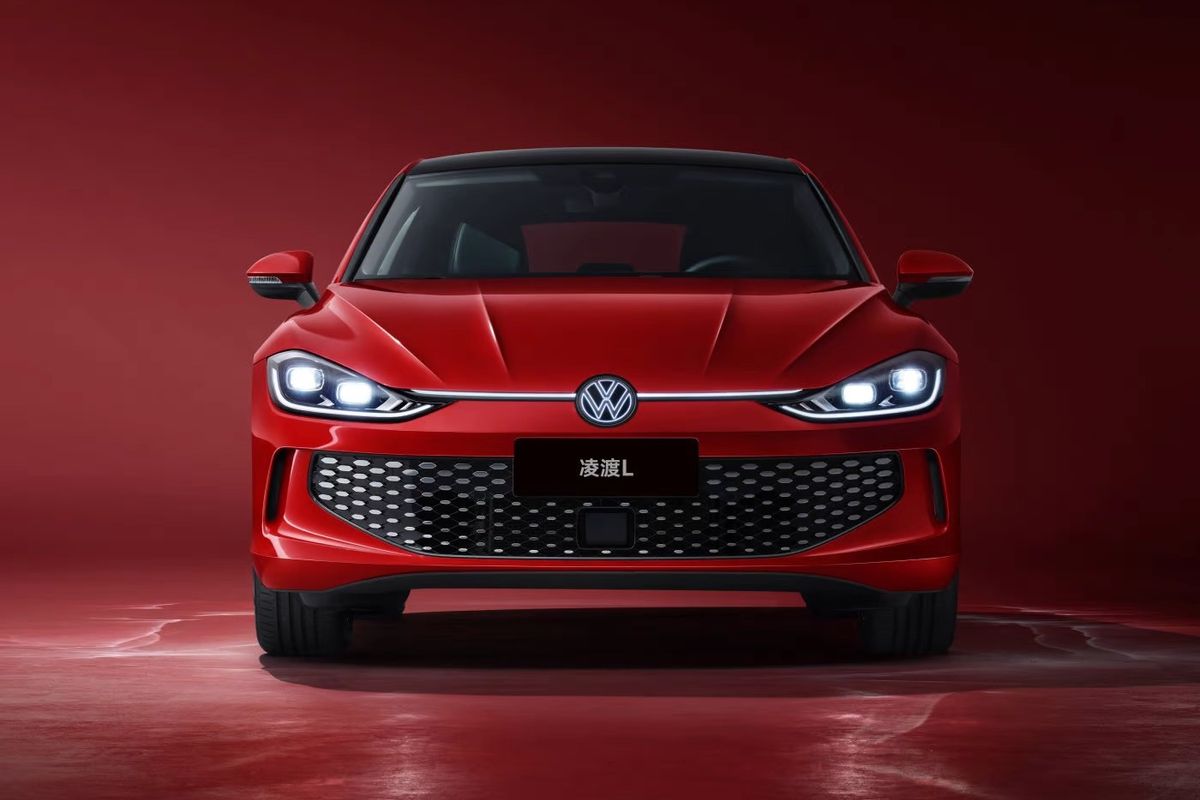
This rather good-looking car is the Volkswagen Lamando L and while there are some visual similarities between it and the striking Peugeot 508, there’s nothing shared mechanically between them.
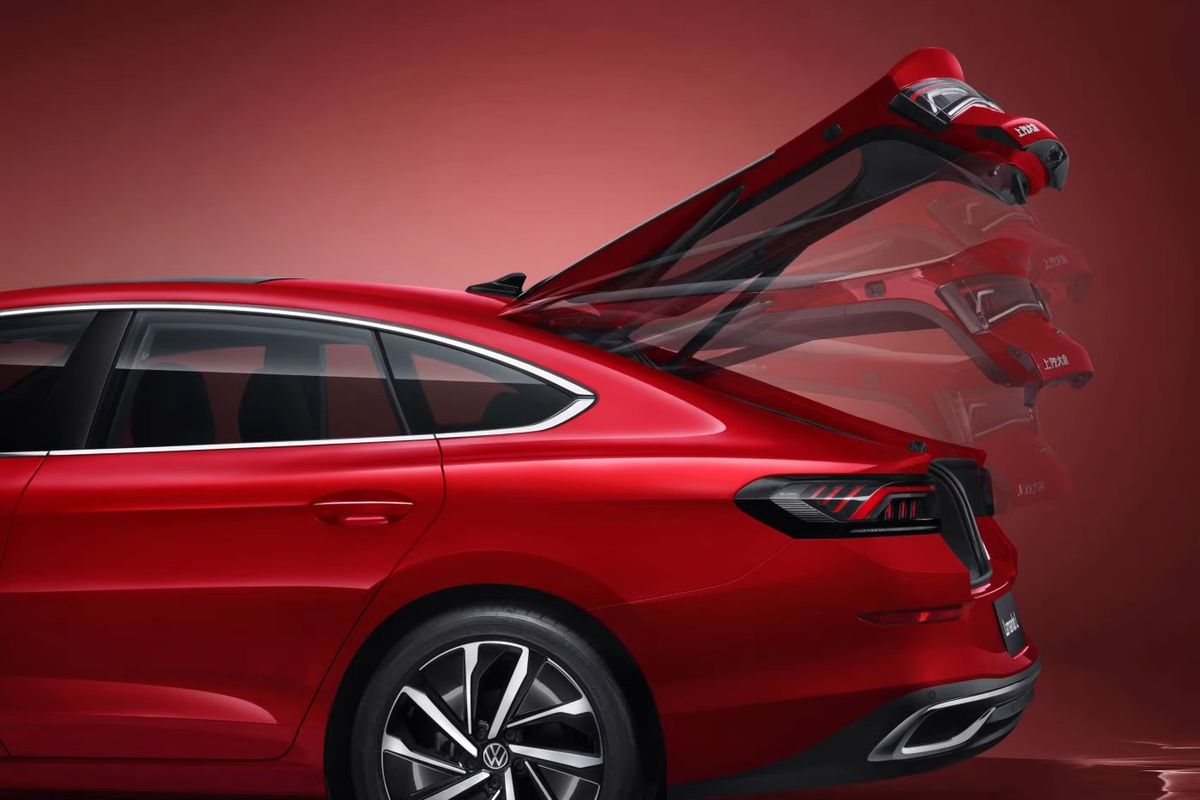
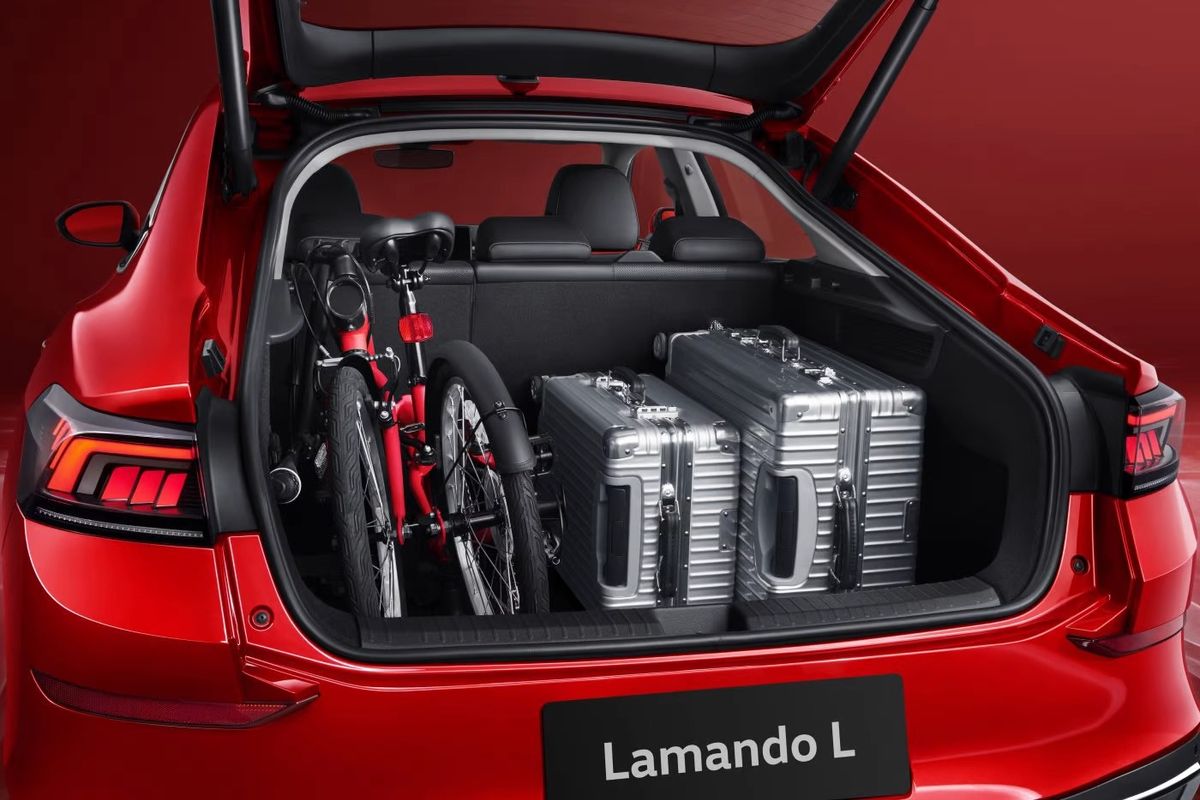
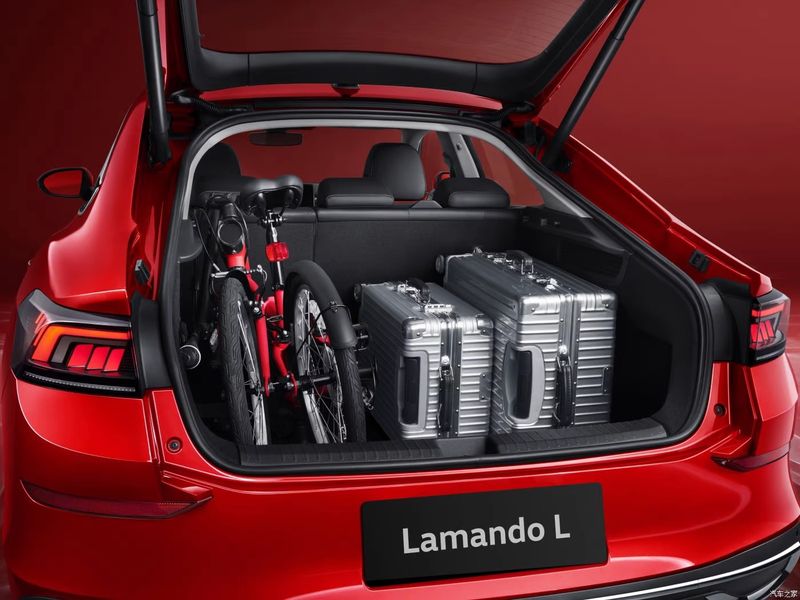
It’s a sedan but not quite as we know it, with it technically being classed as a 5-door liftback. Think of the Audi A5 Sportback, with its 5-door setup, but it looks a bit like a coupe.
The Volkswagen Lamando features a sloping roofline and frameless side windows, and this new generation of Lamando is underpinned by the MQBevo platform, which can also be found under the current Golf and Caddy. As far as dimensions go, the Lamando is 4.78 metres long, which is just shorter than the big Volkswagen Touareg.
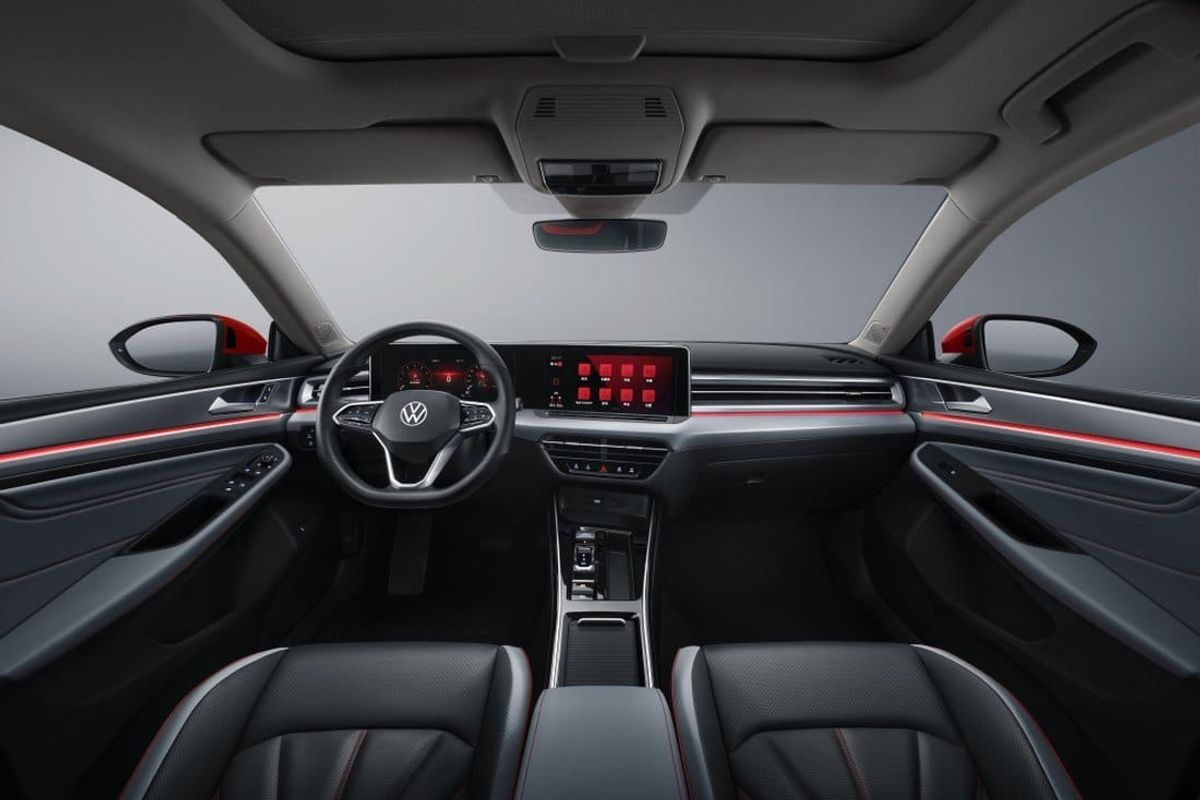
The exterior is good-looking, with lots of interesting quirks. As red is a deeply symbolic colour for the Chinese market with associations to luck, joy, and happiness, this Lamando is finished in Kings Red Metallic. Inside, the cabin gets the brand-new infotainment system that we’ve seen and experienced in the new-spec Volkswagen Tiguan and Volkswagen Golf 8 GTI.
You’d think a car of this size and stature would get a commanding engine range, but it appears that the only engine on offer is the turbocharged 1.4-litre petrol with 120 kW. Pity.
Sadly, this vehicle is earmarked for the Chinese market, which still has a strong desire for the sedan body style. The last sedan sold in South Africa was the Volkswagen Arteon, which was withdrawn from our market on the back of poor sales. There are still a few units floating around on our listings, with both petrol and diesel being available.
A teaser image suggesting a high-performance Volkswagen Golf is due to be revealed soon, but what could it be?
The current Volkswagen Golf family has something for everyone. The standard Volkswagen Golf 8 GTI offers a great blend of performance, luxury, and tech, while the all-wheel-drive Golf 8 R will be touching down in SA in 2022.
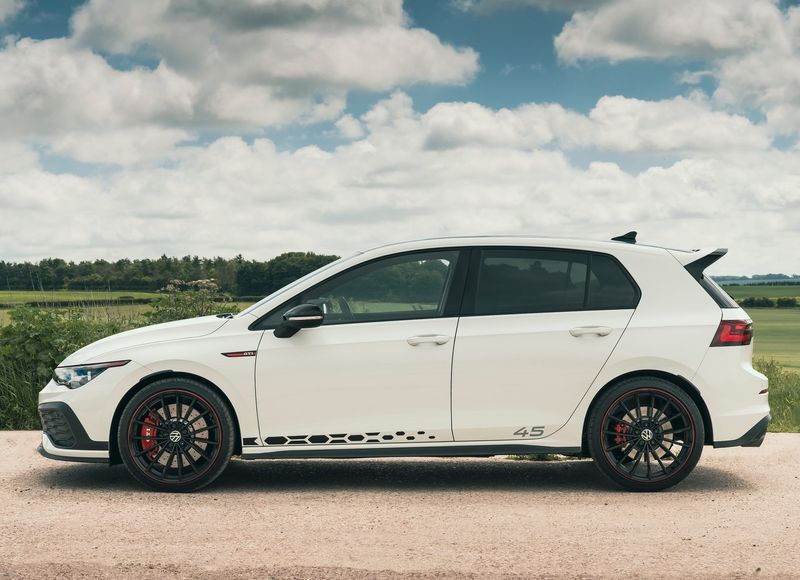
For the European market, there’s a Clubsport model that’s based on the standard GTI, but with more performance. This teaser raises a few questions, however.
From what we can see, the wing looks very close to the one found on the Volkswagen Clubsport and the shape is not too radically different.
The current Clubsport 45, which is offered in Europe.
We know Volkswagen is capable of making quick and specialised performance weapons, as witnessed with the introduction of the VW Golf Clubsport S, which made its way to SA in very limited numbers. Could this be the all-new Clubsport S, complete with trick tyres and a stripped-out cabin, ready for the Nurburgring?
As UK publication Evo pointed out, 2022 does mark 20 years since the debut of the original Mk4 R32. That car featured a thundering 6-cylinder petrol engine and SA Veedub fans will rejoice if there’s an R32/VR6 successor.
Another possibility is this platform will gain the 2.5-litre 5-cylinder turbocharged petrol engine. We used to think this powertrain was exclusive to Audi, but seeing as its available for the SEAT Cupra Formentor sports SUV, we can’t rule it out. It’s unlikely, but not impossible, but the idea of around 290 kW in a hot Golf sounds like a recipe for a lot of fun.
We’ll find out exactly what exactly this high-performance Golf is in a few weeks.
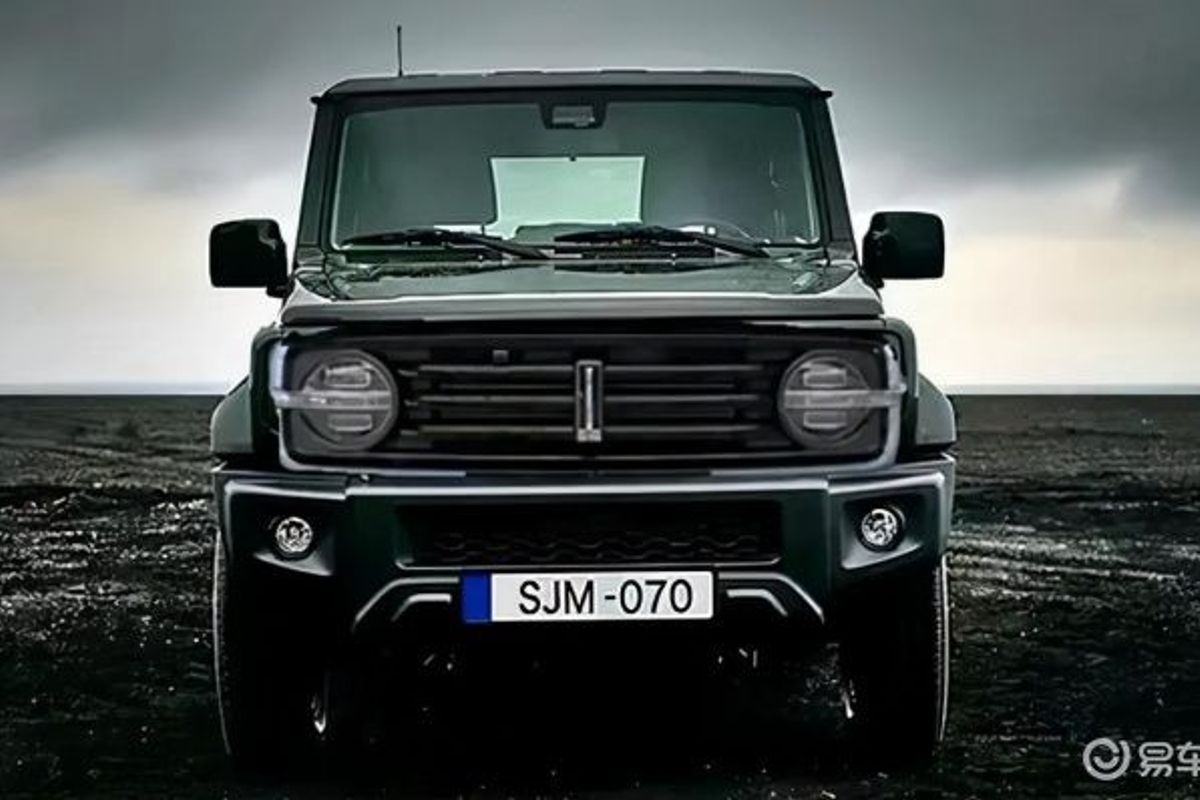
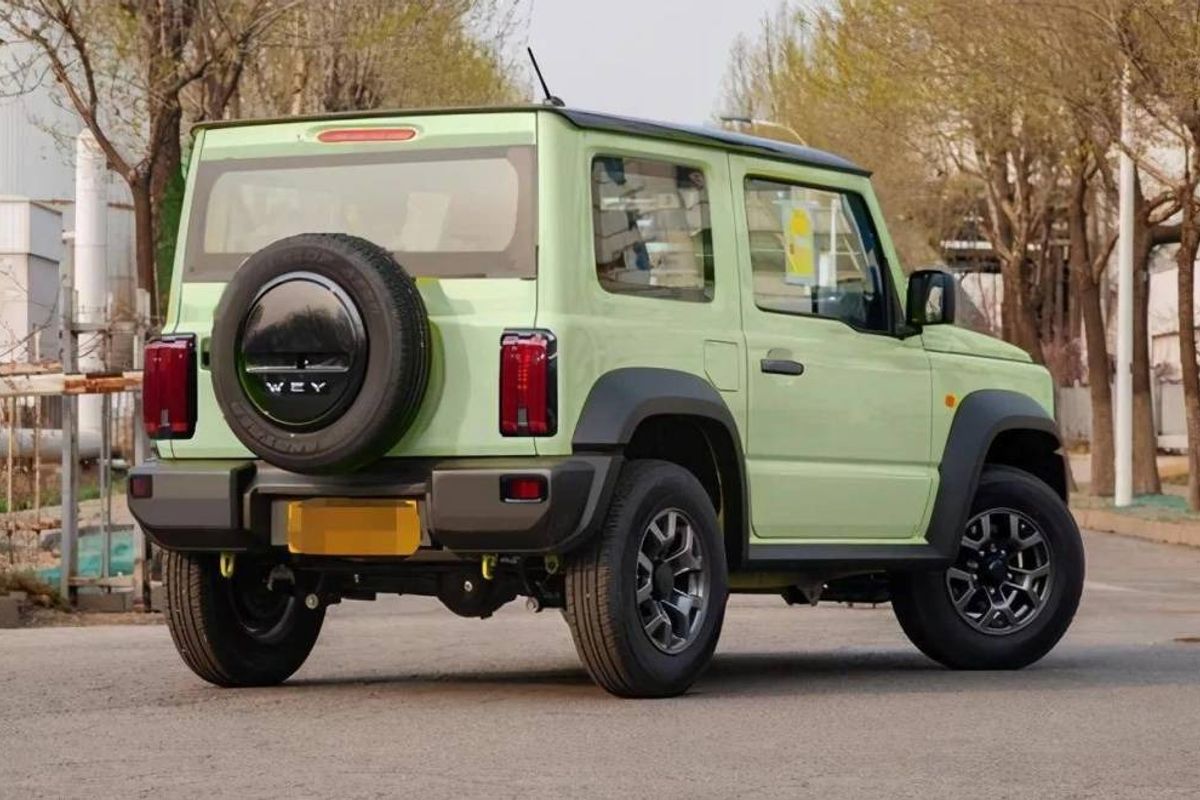
The GWM Tank 100 has leaked early and looks to be pitched directly at the Suzuki Jimny.
Update: So it turns out that the images you see here are in fact cheeky Photoshop efforts and not the real GWM Tank 100. It has yet to be revealed, so we’ll look out for it in the future.
What you see here is the latest product from the Chinese carmaker. It’s the GWM Tank 100, and it looks to be inspired by and will be taking on the Suzuki Jimny. GWM’s Tank brand focuses on high-end offroad capability, and the range will comprise of multiple differently-sized SUVs. The Tank brand was revealed in 2021, and already over 84 000 units were delivered that year.
The current model lineup comprises the Tank 300, a mid-sized SUV as well as the big Tank 700 and Tank 800 – two large flagship SUV offerings. The Tank 500 is a steel ladder frame platform SUV that’s aimed at the Prado. The Tank 500 is powered by a 3.0-litre turbocharged V6, boosting 260 kW and 500 Nm with a 48V mil-hybrid system.
What you see here thanks to CarsGuide, is the GWM Tank 100 which is likely to be the smallest Tank offering. Now we’re not design specialists, but there look to be quite a few similarities between the Tank 100 and the vehicle it’s aimed at, the Suzuki Jimny.
As far as engines and offroad capabilities go, rumours suggest it will feature a low-range system with three differential locks. Impressively, the rumoured engine could be punchy with a 2.0-litre turbocharged petrol motor with 167 kW and 387 Nm. These outputs are more than double the Suzuki Jimny’s.
It’s still early days for now, but as soon as we get official confirmation from GWM, we’ll update this story.
Ford is developing an all-new Ford Mustang which is expected to be revealed this year.
The Mustang is a huge money-spinner for Ford and it has consistently been crowned as the world’s best-selling sports car. Production for right-hand-drive markets has contributed to the Mustang’s overall success and it has sold strongly ever since the 6th-generation Mustang landed in South Africa back in 2016.
Now, a new 7th-generation Mustang (known internally as the S650) is in the making and Ford will undoubtedly look to build on the success of the iconic muscle car. No pressure.
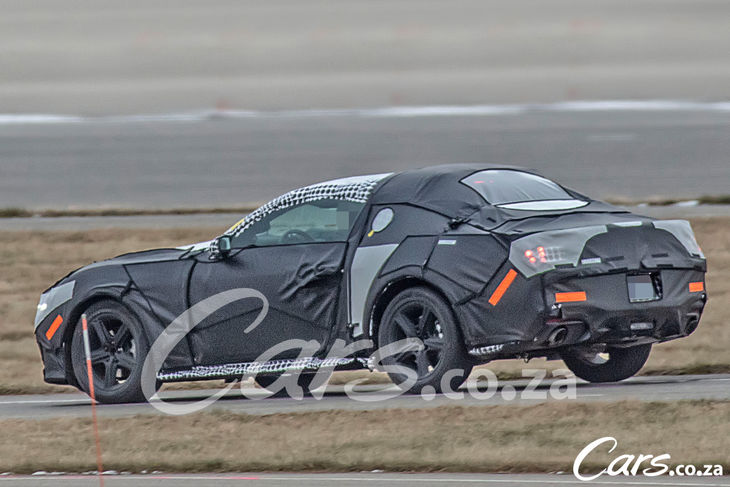
What you see here is a heavily camouflaged Mustang prototype in a production body, giving us a first look at what to expect from the new Mustang. At first glance, it doesn’t appear to be a radical design departure from the current generation but the Mustang’s front-end will likely be more angular while retaining its muscular bonnet and vertical front-end design albeit with a new bumper and headlight design. Also, note the larger air dams seen at the corners of the lower grille… The rear-end is also likely to sport a new rear bumper design and while this prototype has the familiar taillight design with 3 vertical bars, it remains to be seen whether they will be carried over to the new generation Mustang.
What will power the new Ford Mustang?
Official powertrain details have not yet been revealed but the guesswork gets a little more interesting in terms of layout and powertrains for the new Mustang. The rumour mill suggests that the new Mustang will forego its current rear-wheel-drive layout and will instead adopt an all-wheel-drive layout and may also be powered by a hybrid powertrain which is indeed a major shift from the big, burly V8-engined and rear-tyre-shredding Mustangs we know and love today.
Furthermore, there is the possibility of an all-electric Mustang that could come to fruition too, possibly with an enhanced electric powertrain sourced from the Mustang Mach E.
The new Ford Mustang is expected to go into production in 2023 which means that a reveal can be expected later in 2022. This is a developing story and we will keep you updated as soon as more details about the new Mustang emerge.
Despite the big electric powertrain push, not all brands are completely doing away with their internal combustion engines.
Global electric vehicle sales are ever increasing and while South Africa does lag behind as far as choice is concerned, there’s no denying that the past few years have been dominated by the electric car revolution.
Many European brands have already confirmed they’ll be ditching petrol and diesel, in favour of electricity, like Fiat. Given the coverage, you’d think the end of the petrol and diesel engine is near, but this is not quite the case.
While electric-powered cars have risen in prominence, one of the legacy carmakers has confirmed it has not abandoned its internal-combustion engine program. This is surprising, considering the fanfare around the new BMW iX and BMW i4.
BMW Development Director Frank Weber told German website Auto Motor und Sport that BMW is currently working on a new generation of petrol and diesel engines that will range from six-cylinder to eight-cylinder. No models were mentioned, but if we go on what’s due for revision in the next few years, you can expect to see these shoe-horned into the bigger vehicles.
“One thing is certain for us: we still need the state-of-the-art combustion engine for a few more years to effectively reduce CO2 emissions in the passenger car sector globally. That’s why we’re working on a new generation of engines: petrol, diesel, six-cylinder, eight-cylinder. They will then also be technologically prepared for the coming emission standards. With the six-cylinder engine alone, we are reducing CO2 emissions more massively than has ever been the case with a generation change. We are helped here by the fact that legislation is beginning to be standardized around the world. In order to reconcile emission requirements on the one hand and performance requirements on the other, we looked at the entire charge cycle and found a promising approach there.” said Weber.
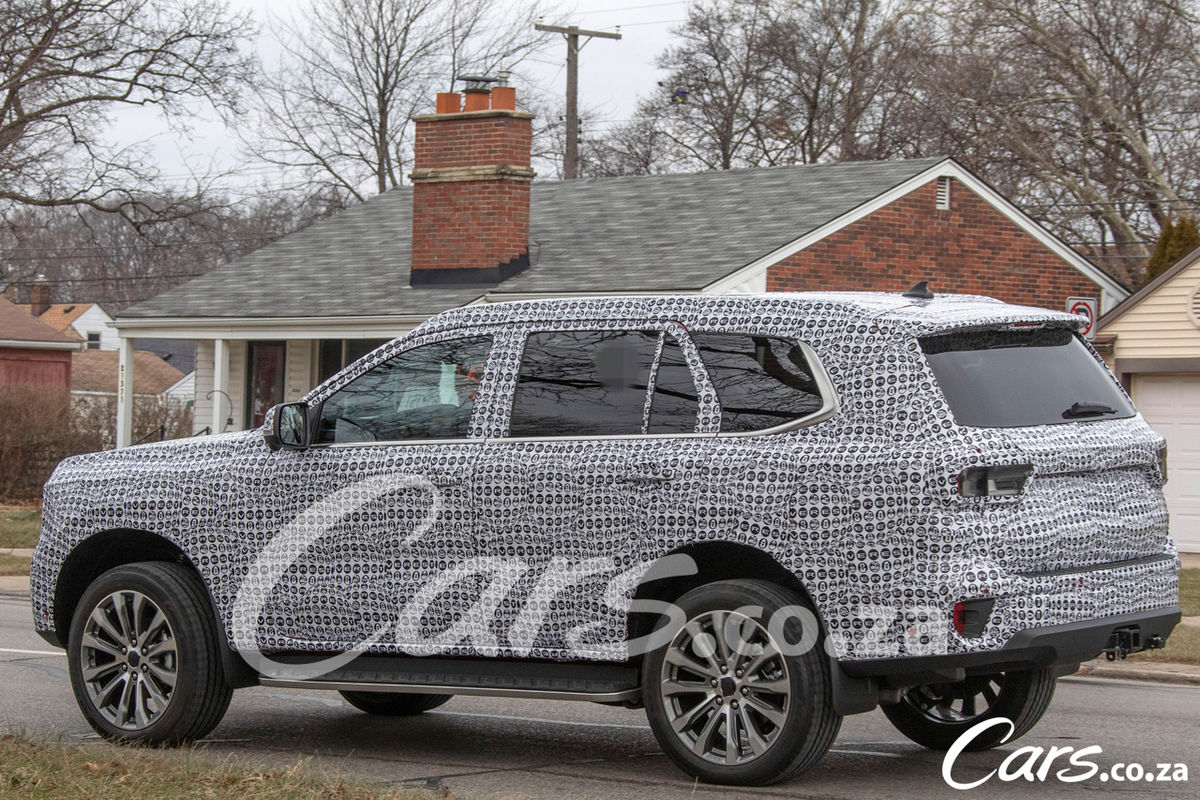
Ford will soon reveal its 3rd-generation Everest in full. The Blue Oval’s next 7-seater Adventure SUV, which is based on the new Ranger, will be unveiled during the first quarter of 2022, which raises hopes that the upcoming Toyota Fortuner rival might arrive in Mzansi before the end of the new year…
Update: The camouflage is falling away as spy photographs taken in January 2022 show the Ford Everest in a bit more detail. What’s very clever is that if you zoom in, the camouflage used is not your ordinary mix of swirls and shapes, but rather clever use of letters, spelling out Everest. This mule was spotted near Ford’s facility near Dearborn, Michigan in the US. Pics by S. Baldauf/SB-Medien.
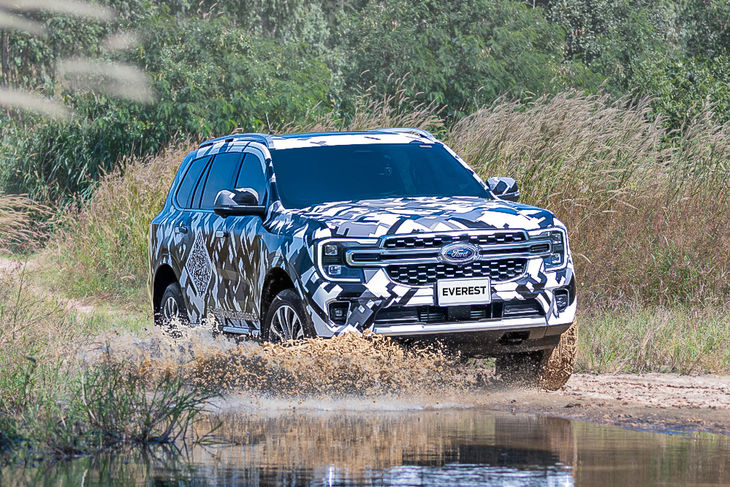
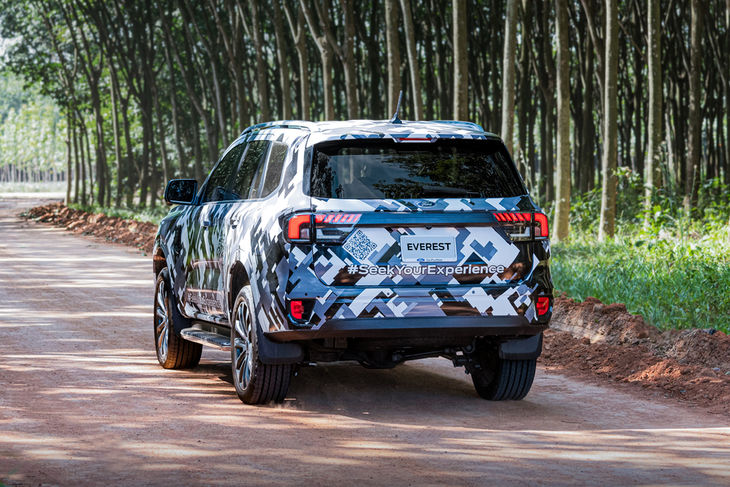
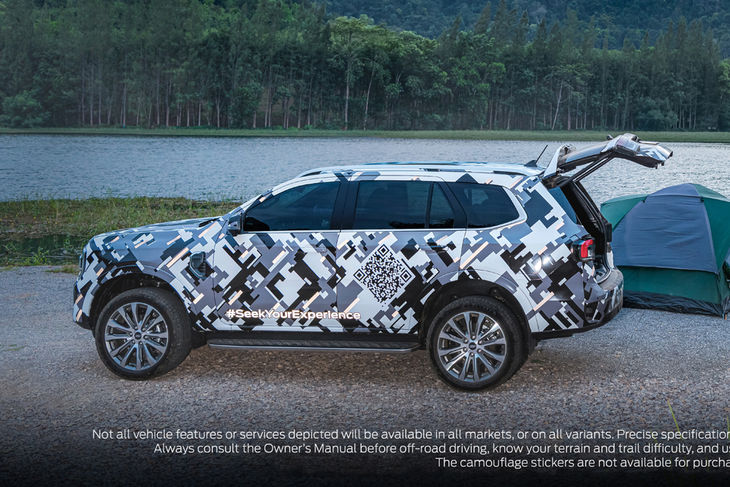
Ford has released images of the next Everest undergoing the final testing phase of the Blue Oval’s global testing programme for the new model. The finer details of the newcomer’s exterior execution, which was penned by Lee Imrie – an exterior designer at Ford Australia – remains hidden under a cloak of digitised camouflage that incorporates “clever reflective strips”, however.
What IS evident, however, is that the next-generation Everest shares the new Ranger’s prominent new grille (replete with a strikethrough crossbar) and C-clamp headlight treatment, its wheel arches seem more elaborate, and the rear three-quarter lights appear larger, than on the current model (the latter cue suggests this version will be longer than the outgoing model) and lastly, the tailgate features wraparound LED tail-light clusters (with a boomerang-shaped lighting signature); they are connected by what is either an LED light bar or a cosmetic trim strip that’s covered by the black tape.
“We created an artistic pattern that hints at adventure,” said Imrie. “The camouflage consists of a series of rectangles (tilted on a 45-degree angle) that were inspired by mountain peaks.
“We made sure the vehicle’s design remains hidden by designing the camouflage pieces in isolation. This means when it’s applied to the vehicle, it’s a completely random pattern,” he added.
So far, the outgoing Everest (and its fellow bakkie-based SUVs – the Isuzu MU-X, Mitsubishi Pajero Sport and Haval H9, for that matter), have failed to trouble the Toyota Fortuner in terms of sheer sales numbers in the South African market (even though the high-end versions of the Ford are liberally equipped). However, the Isuzu and upcoming Ford will soon be much newer than the segment leader.
The new model’s flagship is likely to be powered by the new Ranger’s 3.0-litre V6 turbo-diesel engine, which produces peak outputs of about 186 kW and 597 Nm, while more affordable derivatives will feature Ford’s YN2S-series 157 kW/500 Nm twin-turbo 2.0-litre four-cylinder diesel. All engines will be paired with a 10-speed automatic transmission.
It’s feasible that the model’s independent front- and solid rear-axle (with Watt’s linkage) suspension will be retained; AWD versions will again offer Terrain Management off-road drive modes.
Inside, the new Everest’s cabin will again feature a roomy 7-seater configuration, but its ambience will be more upmarket, thanks to the fitment of a fully digital instrument panel, and a 10.1- or 12.0-inch SYNC4-equipped touchscreen infotainment system (which operates many of the functions that were selectable via hard buttons the on outgoing model’s fascia).
The setup also incorporates mobile internet connectivity and a new off-road display mode that provides driveline, steering angle, pitch and roll angles and other info. A 360-degree camera and the ability to start, check various functions of-, as well as lock/unlock the vehicle via the FordPass Connect mobile app will probably be carried over from the new Ranger.
The Ford Motor Company of Southern Africa has not announced exactly when it will launch the new Ranger, but it should be during the latter half of 2022. Given that the new Everest will be revealed months before that, we don’t believe the 7-seater Adventure SUV will arrive in our market long after its bakkie sibling. Will it be produced in FMCSA’s Silverton plant, like its predecessor was, however? Perhaps, but considering the Blue Oval will also produce the new-generation Volkswagen Amarok in Mzansi, not necessarily; Ford may opt to import the newcomer from Thailand instead. We’ll keep you posted!
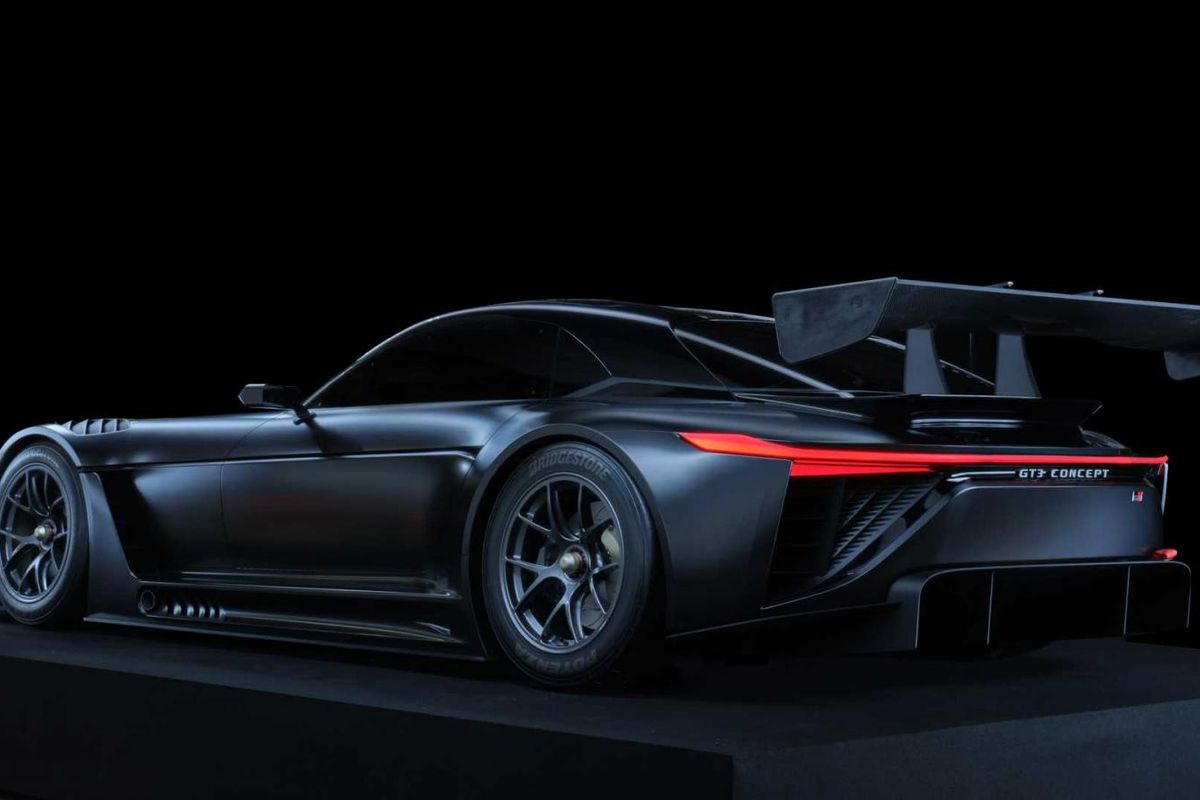
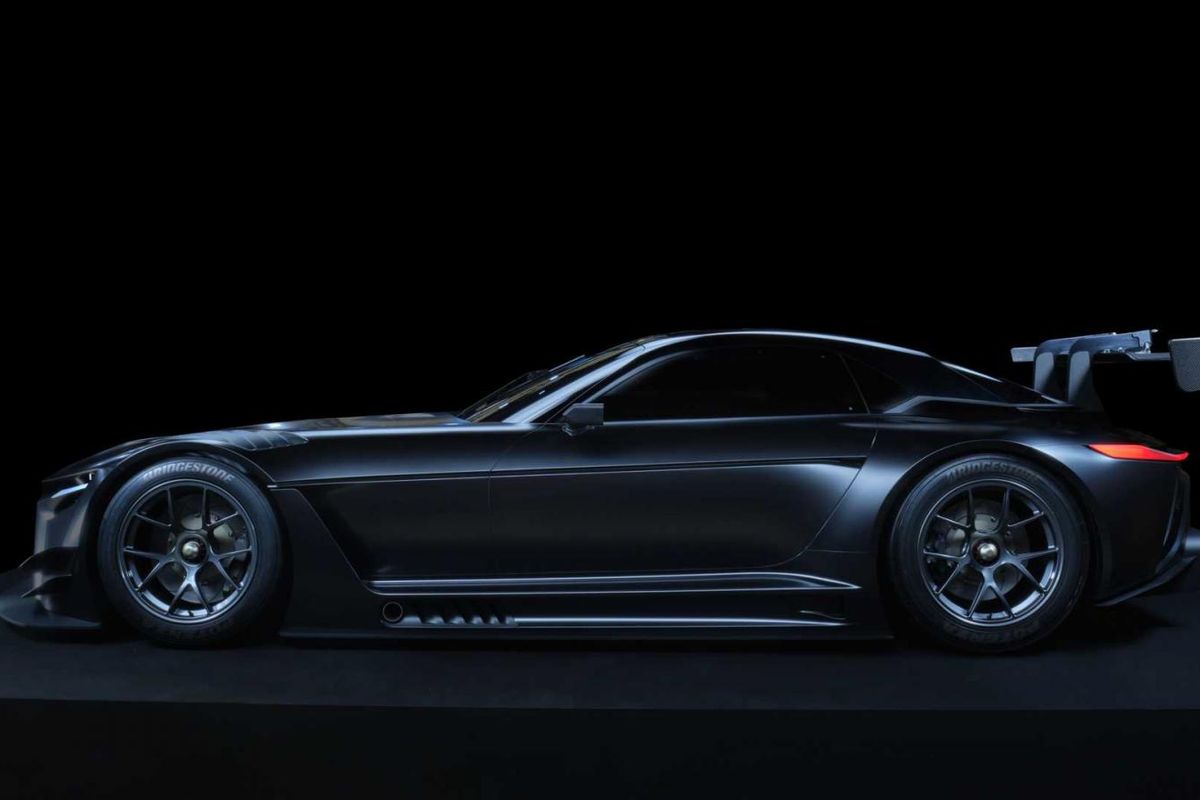
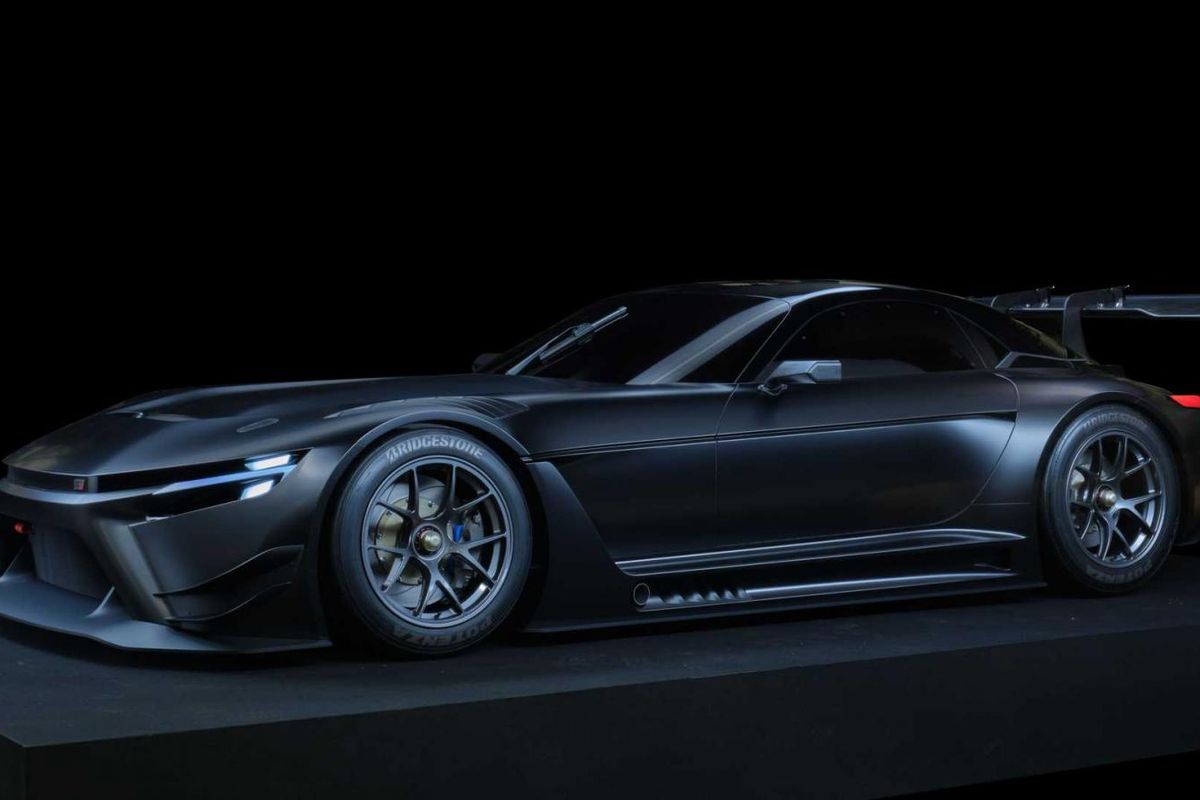
As part of its presence at the Tokyo auto show, Toyota has shown a new interpretation of its legendary GT2000, with a 2022 road racer feel. The original Toyota sportscar, which had a starring role in the 1967 James Bond movie ‘You Only Live Twice’, is regarded as the start of Toyota’s ascendence to a global automotive superpower.
The new concept car is called the GR GT3, which doesn’t align closely with any of the brand’s historical or current performance car models.
Although the front-engined proportions are similar to Toyota’s J29, it appears to be a much more focussed driver’s car, than even the current Supra. And it is too large, to be considered a reborn MR2 – not to mention the issue of GR GT3 not appearing to be mid-engined.
Hidden streak headlights, a wraparound lightbar at the rear, huge wings, winglets and intake streaks are all the kind of design features we are more accustomed to seeing on Lamborghinis, than Toyotas.
The overall design theme is dramatic. A long bonnet (hinting at a large displacement powertrain) and sloping roofline are classic GT road racer. But the GT3 affix alludes to something that is very driver-focussed, in the spirit of Porsche’s most rewarding 911s.
Toyota might be angling to increase customer participation in its GT3 customer car racing business. Still, there is no question that GR GT3 will have the imagination of Gazoo road car fans interested, too.
Hot on the heels of the launch of the new Chery Tiggo 4 Pro, the Chinese firm has announced that the 7-seater Tiggo 8 Pro will be arriving on local soil much sooner than originally planned.
Now, Chery has announced that following increased customer and dealer demand, the firm has expedited the launch of the forthcoming flagship Tiggo 8 Pro which was expected to arrive in Q2 of 2022 but will now likely make landfall in Q1.
“The success of the Chery Tiggo 4 Pro has surprised our dealer network, who reports increasing interest and sales of all models in the range. We have also welcomed five more dealers in the short few months since its introduction, which means that customers can now choose from one of 42 dealers across South Africa to test drive and purchase their new Chery,” says Tony Liu, Executive Deputy General Manager of Chery South Africa.
Chery Tiggo 8 Pro – Main Features
Chery will offer 2 derivatives for the Tiggo 8 Pro and both will be powered by a 1.6-litre turbopetrol engine with 136 kW and 290 Nm of torque.
Apart from offering 7-seat capability, the Tiggo 8 Pro will also be equipped with features such as a Surround View Monitor, 8-speaker Sony sound system, up to 3 high-definition TFT displays, climate control air conditioning and a pharmaceutical-grade N95 air filtration system.
Further specification and pricing details will be confirmed closer to launch.