Toyota getting help from Suzuki and Daihatsu

Toyota, Suzuki and Daihatsu to combine on new mid-engine platform.

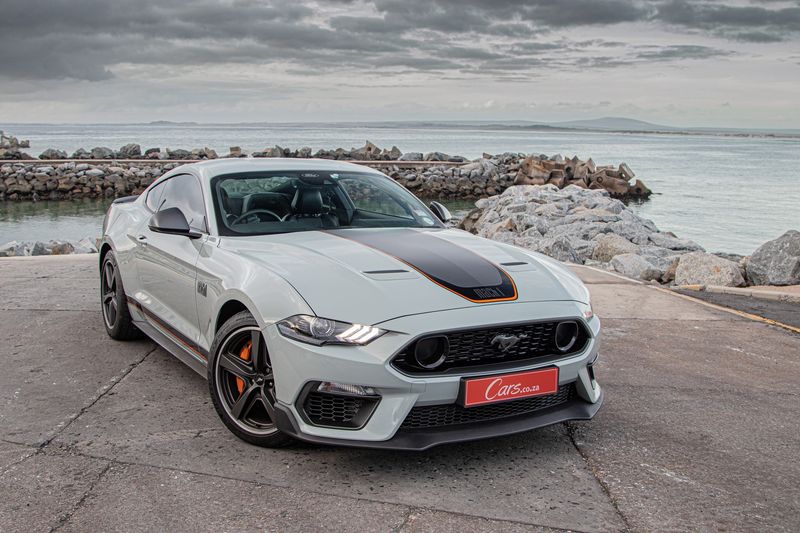
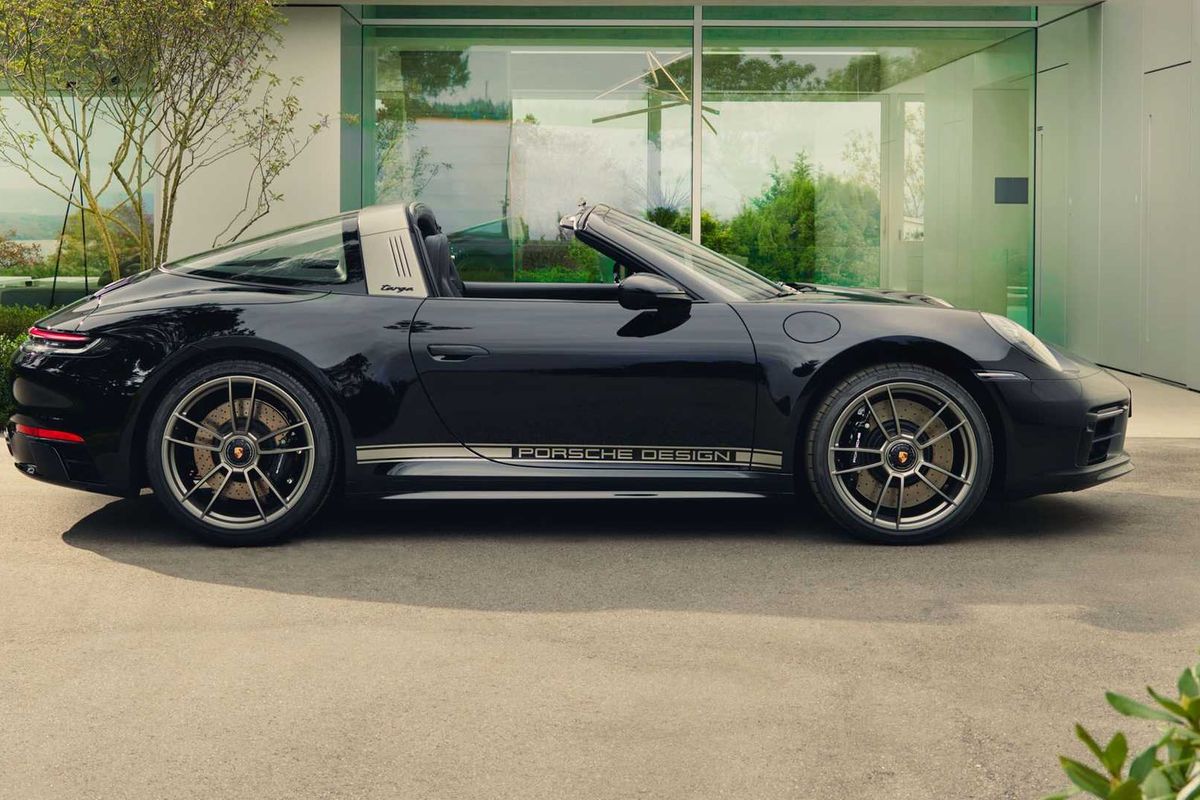
Industry rumours from Japan suggest that Toyota wants to reengage with a mid-engine sports car project.

Best Car Web reports that the rumoured vehicle will be built on a new platform and is scheduled for 2025. Even more interesting is that Toyota is not doing it alone, but with the help of Suzuki and Daihatsu.

Cooperation is a reality for most automakers, as R&D costs have surged. Despite its size and standing in the industry, Toyota is not indifferent to pooling resources. Especially when the goal is to create niche products outside its traditional bakkie, SUV and crossover competencies.  

The Supra is an excellent example of this. A car with true Toyota sportscar heritage, which would not have happened without the assistance of BMW.

Suzuki has successfully partnered with Toyota on a raft of recent badge-engineered products, some of which have been launched in the South African market.

But the issue of a new mid-engine sports car, would appear almost fanciful. With many brands promising to be full-electric by 2030 (including Lexus) the idea of Toyota bringing a new petrol performance car to market by 2025, on a dedicated mid-engine platform, seems odd.

Chances are, it won’t be a pure ICE vehicle but rather a hybrid. That said, the cost of engineering a mid-engine hybrid, would be high.

Toyota has announced incredibly ambitious electrification plans for 2030, with a flood of new models and vehicle platforms being promised. Among this future product matrix, the probability of a mid-engine petrol-hybrid sports car, could be entirely reasonable.

And how does Suzuki and Daihatsu factor into all of this? Well, it might have some cute Suzuki Cappuccino or Daihatsu Copen legacy styling influences. Although most Toyota performance car followers, are probably hoping for a new MR2. 

Related content

Toyota Belta Announced and Yes, It’s a Suzuki

Toyota MR2 To Return?

Toyota commits to 30 new EVs by 2030 – Including a Hilux

Toyota and its premium brand Lexus showed 15 new concepts as it bids to produce 30 new EVs by the end of the decade.

Toyota has taken its time before committing huge investments into EVs. While European brands have gone ‘all-in’ on the battery revolution, Toyota has investigated other forms of zero-emissions possibilities such as hydrogen, something it still believes to be part of its future model lineup. Toyota plans to be carbon neutral by 2035 and in achieving that goal it plans to produce both carbon-neutral vehicles and carbon-reducing vehicles. It also plans to increase production of zero-emissions vehicles to 3.5 million globally by 2030 equating to around one-third of its current sales volume and up from the 2 million vehicles it had previously expected to sell by that date.

Further investment was also made into battery development including solid-state battery development. Gerald Killmann, Vice President of TME R&D confirmed that prototype testing has already taken place on solid-state battery vehicles and that they would likely make their introduction on hybrid vehicles before wider deployment across BEVs. Solid-state batteries produce higher output, longer range and require shorter charging times. Killman also mentioned that Toyota expects to see a 50% reduction in battery cost per vehicle, without deteriorating range, in the second half of the 2020s; thereby making battery electric vehicles more affordable and accessible.

President of Toyota, Akio Toyoda introduced the new concept models that will fill its electric portfolio over the next 15 years. The bZ range (such as the bZ4x) will expand to include a midsize SUV and a compact SUV, which is said to have Europe and Japan in mind.

Mr Toyoda also stated that its current lineup would feature electric versions at reasonable prices. Interestingly, the concepts show a bakkie not too dissimilar from a Hilux that certainly indicates the brands intentions to at least investigate an all-electric version of SA’s favourite bakkie. During the reveal, it was also mentioned that Toyota would look into building on its off-road heritage to create new exciting recreational experiences or finding new ways to combine versatility with dynamic driving.

Lexus will be the driving force for the Japanese form as it plans to launch EVs in every segment it competes by 2030. Its first EV will be the RZ Crossover, looking to launch in Europe during 2022. From there a large SUV will follow and then a sedan which will cover the RX and IS models in its current lineup.

There is also mention of a Lexus supercar, which it calls a new Sports Battery EV.

With bold proportions and low ride height essential to a sports car, it will showcase the unique driving performance of a Lexus and become a model that symbolizes the future of the brand.

Acceleration time will be in the low 2-second range, cruising range over 700k m, and with the possible use of solid-state batteries in mind, we will aim to create a truly high-performance Battery EV

Related content

4000 km in 4 days in the new Toyota Hilux

New Electric Cars for SA in 2022

New VW T7 Multivan Gets Offroad Chops

Volkswagen’s new T7 Multivan people-mover is built for purpose and looks good in standard guise, but what if you wanted to take your T7 into the wild? Delta 4×4 has imagined a solution!

So, you’re an adventurer and you like the new Volkswagen T7 Multivan but you don’t want to use it as people-mover in the city, how boring. Instead, you want to modify it so that you can conquer the wild. What are your options? 

Well, at this point, there aren’t any aftermarket conversions available for the new T7 right now but German 4×4 specialist, Delta 4×4, has imagined the new T7 as a go-anywhere adventure bus and we think it’s cool. The images you see here are computer-generated images but they show the potential of what’s possible.

Starting from the outside, this rugged T7 Multivan is fitted with 18-inch beadlock wheels shod with Loder all-terrain rubber while the protruding wheel arch guards and stainless steel bull bar with integrated PIAA lights add some more ruggedness to the overall look. 

The vehicle is also equipped with a useful roof rack to cargo your cargo and mounted LED lights provide additional illumination at night. 

In terms of improving the vehicle’s go-anywhere ability, the ride height has been raised by 40 mm with the fitment of Bilstein shock absorbers and Eibach springs.   

This T7 eHybrid combines a 1.4-litre turbopetrol engine with an electric motor to produce a total output of 160 kW and makes use of a 13 kWh battery mounted low in the floor. The T7 can also be had in ICE form with either a 100 kW 1.5-litre turbopetrol engine or a 150 kW 2.0-litre turbopetrol. A diesel engine will join the range later and a 7-speed DSG transmission is fitted across the range. 

The availability of the T7 Multivan in South Africa has yet to be confirmed. 

Do you like the look of this T7 Multivan with offroad chops? 

Buy a used VW Caravelle on Cars.co.za 

Related Content 

Volkswagen Reveals its Cars for 2022

VW Crafter: Experimenting with ‘Van Life’

Toyota Fortuner Given Spec Upgrade

The Toyota Fortuner has received a few spec upgrades. Here’s what’s been added plus how much you can expect to pay for the Fortuner range.

The Toyota Fortuner is South Africa’s most popular SUV. The 7-seater SUV is available with 2 diesel engines, as well as 4×2 and 4×4.

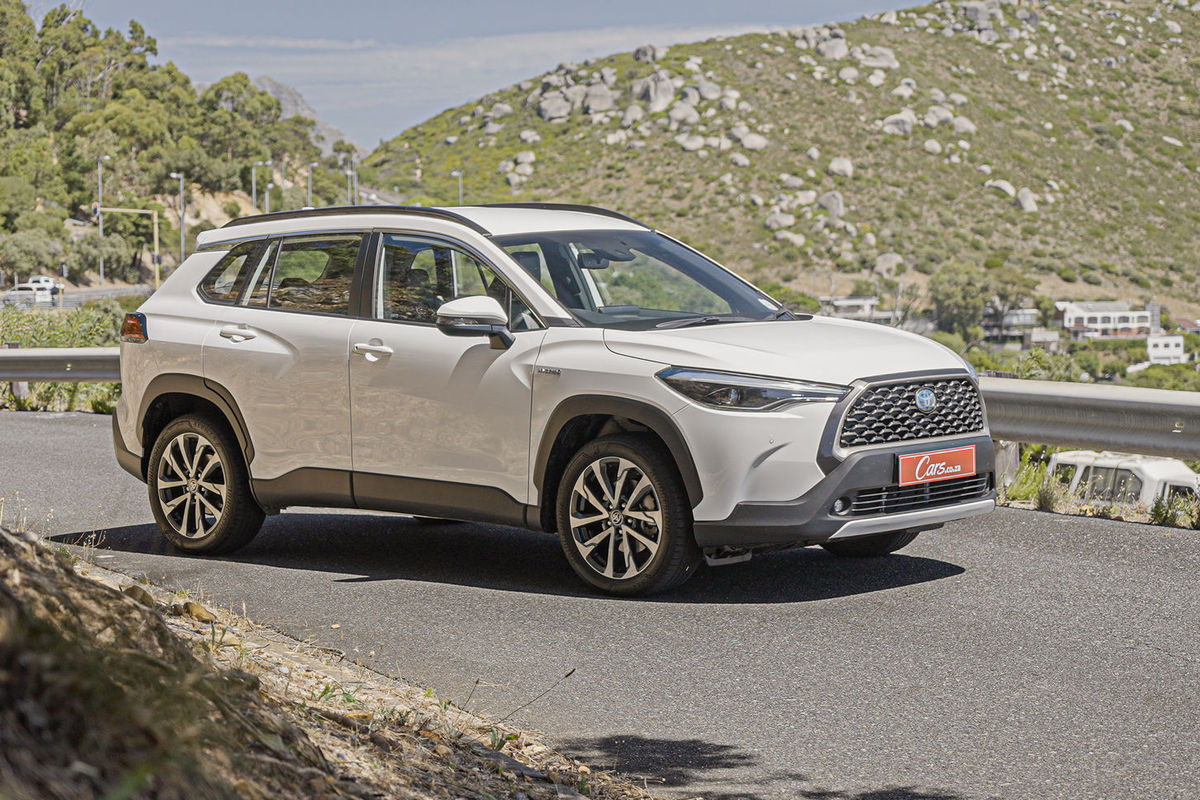
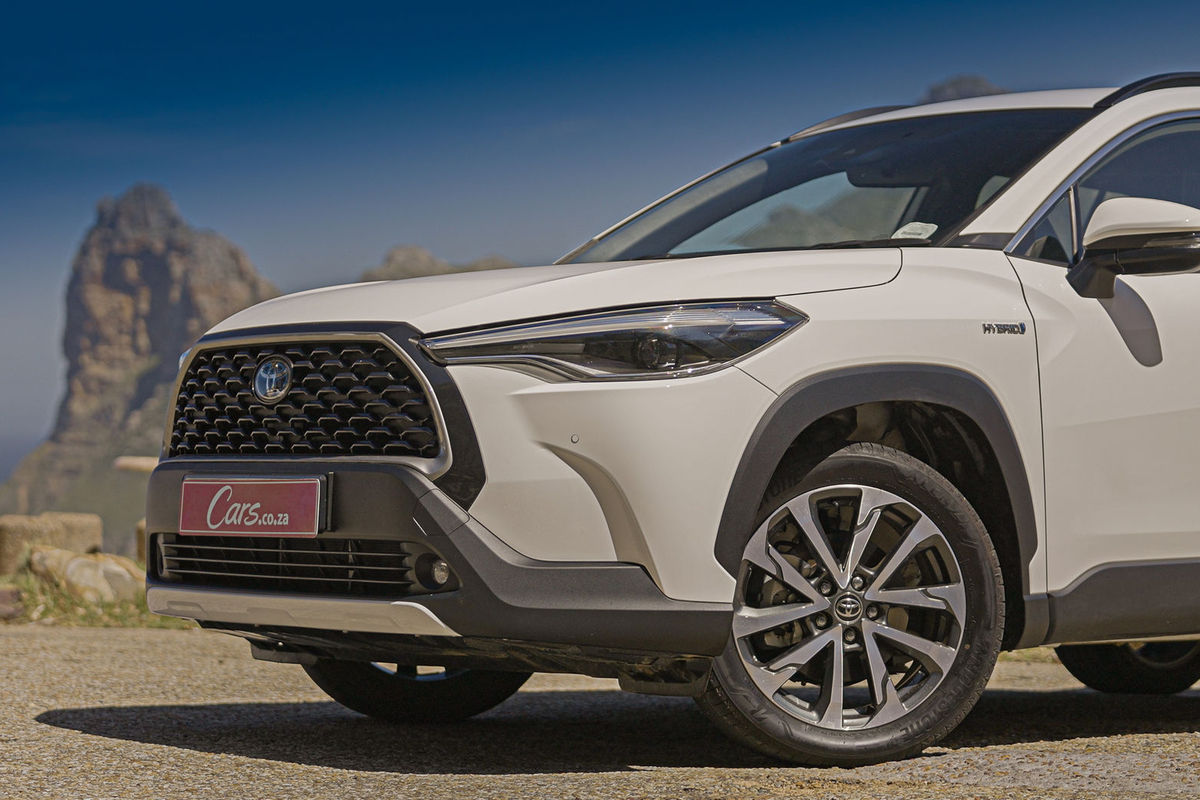
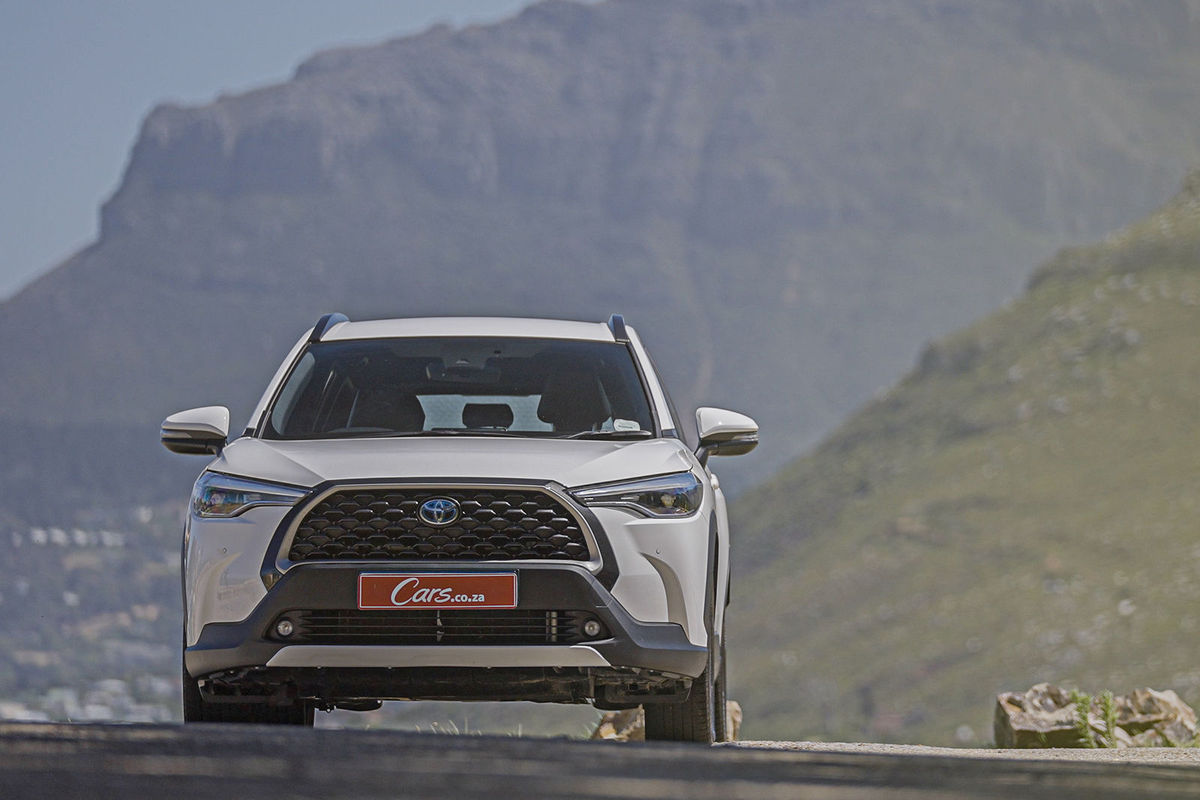
Despite new offerings like the Corolla Cross and Urban Cruiser, the Fortuner still reigns supreme. Toyota SA reckons that Fortuner’s stellar sales record stems from constant communication with its customers and understanding their ever-changing needs. Toyota has taken feedback and enhanced its current offering with additional features.

What’s new?

The 2.9 Fortuner gains an upgrade to its air conditioning which becomes a dual-zone climate control, while the flagship VX model gets a panoramic camera. Fans of quality audio will be happy to note the 11-speaker JBL Premium Audio system has been added. Interestingly, the on-board satellite navigation has been removed, with Toyota saying that customers were using the smartphone navigation thanks to Apple CarPlay and Android Auto connectivity.

As far as safety and security is concerned, the Toyota Safety Sense system on the VX grade gains blind-spot monitoring and rear cross-traffic alert. There’s also an enhanced smart entry system.

The colour line-up on the 2.4 and 2.8 models remains unchanged with seven options. On the VX model, Pearl White has been replaced by Platinum White Pearl.

Engine & Transmission Options

The proven 2.4 and 2.8 GD-6 turbodiesel engines continue with the 2.4 GD-6 producing 110 kW and 400 Nm, while the 2.8 delivers 150 kW and 500 Nm. The 2.4 is offered with a 6-speed manual gearbox and a 6-speed automatic, while the 2.8 is automatic only.

How much does the upgraded Fortuner cost in South Africa?

All Fortuner models are sold with a 3-year/100 000 km warranty and a 9-services/90 000 km service plan. Service intervals are set at 10 000 km and customers can purchase a variety of service plans and warranty extensions from their nearest Toyota dealer (220 countrywide).

2.4 GD-6 RB MT           R599 000

2.4 GD-6 RB AT            R621 400  

2.4 GD-6 4×4 AT           R651 700

2.8 GD-6 RB AT            R724 400

2.8 GD-6 4×4 AT           R798 000

2.8 GD-6 RB VX AT      R764 600

2.8 GD-6 4×4 VX AT     R837 100

Further Reading

Toyota Corolla Cross launch review

The Fortuner reviewed – SA’s best?

Sneak images show radical new Mini design – inside and out

Bold new interior design for Mini’s EV.

New images have been captured of the forthcoming Cooper S EV, in China.

A series of exterior images and a single cabin photo show some telling details concerning the new battery-powered Mini.

For the British compact car division of BMW, electrification is vital. Its small cars are under pressure. Although correctly sized for the inner-city markets where they have traditionally been popular, the cost of electrifying a small car is high. And this risks pushing Mini beyond an acceptable pricing threshold.

The current Mini Cooper SE also has quite a limited range, which is fine for inner-city commuting, but possibly a weakness for weekend journeys. Especially in markets with poor recharging infrastructure.

Mini’s new Cooper S EV has a semi-panelled front, with the traditional mesh grille replaced by solid moulding. The traditional round headlights remain in place, but the bonnet is now a flush stamping, discarding the scoop, which features on Mini’s current Cooper SE electric.

The tailgate has been significantly redesigned, too. Gone are the two vertically orientated rectangular lights. These are replaced by triangular-shaped taillights, which mark a departure from legacy Mini design influences on the Cooper range.

Like many other hatchbacks and crossovers, the new Mini Cooper S EV has a solid detail panel, joining the taillights, to accentuate the vehicle’s width – when viewed from the rear.

Beyond the evolved exterior styling and design, there are many changes to Cooper’s cabin architecture. The most noticeable of these is the lack of an instrumentation binnacle.

Mini’s designers have opted for a clean dash from the driver’s point of view. Vehicle and road information is projected by a HUD.

The Cooper S EV will retain that Mini centre stack infotainment screen, which is expected to have enhanced touchscreen functionality. Fiddly ergonomics have been an issue with Minis and their commitment to traditional tab switches and toggles – paying homage to the brand’s original design logic, from the 1960s.  

Designers have retained some of the toggles and switches on the new Cooper S EV, but the component shapes appear much larger than before, making it easier to operate them.

Images of the new Cooper S EV were captured by Instagram user: wilcoblok.

Alfa Romeo Tonale For SA in 2022

It’s been nearly 3 years since the concept of the Alfa Romeo Tonale, the smaller sibling to the Stelvio executive SUV, debuted at the Geneva Show and the production version is due to be revealed in March 2022 after numerous delays. 

When Alfa Romeo was under the leadership of the late Fiat Chrysler Automobiles (FCA) chairman Sergio Marchionne, the group invested a reported $1 billion in the rear-wheel-drive Giorgio platform, which underpins the current Giulia and Stelvio, to spearhead yet another attempt to re-establish the Milanese brand in North America.


The Alfa Romeo Tonale concept caused a sensation when it debuted at the 2019 Geneva Show.

This move, which ultimately failed, spelt the end for the Mito and Guilietta, the latter of which was finally discontinued last year. However, FCA subsequently conceded that in order to safeguard the future of Alfa Romeo in a market dominated by crossovers, it had to produce at least 1, perhaps 2, SUV-inspired front-wheel-drive family cars, for which, of course, the Giorgio platform isn’t suitable.

So, the Italian marque showed its hand by unveiling the arrestingly styled Tonale concept at the Geneva Show in 2019, replete with sharp, futuristic styling. It was ostensibly based on FCA’s small, wide platform, which also underpins the Jeep Renegade and Compass and, when images of a supposed production version surfaced as early as October 2019, we believed its gestation would be brief.

However, the finalisation of the FCA-PSA merger which gave birth to Stellantis and, to an extent, the onset of the Covid-19 pandemic delayed the arrival of the Tonale. In mid-2020, FCA reportedly sent a letter to its suppliers telling them to stop working on research, development, and tooling for future subcompact models, adding to the fuel to the rumour than PSA’s Common Modular Platform would be adapted to underpin those models instead. Development has also subsequently been hampered by the ongoing global chip shortage as well as calls by CEO Jean-Philippe to improve the model’s hybrid powertrain’s performance. 

Although the Tonale won’t be quite as outrageously styled as the concept – the “production unit” shown here has conventional side mirrors and headlamp clusters, although the tail-light units at least have an ornate lighting signature – it will certainly look notably more distinctive than the models it will rival, including the Audi Q3/Q3 Sportback, BMW X1/X2, Mercedes-Benz GLA and Volvo XC40 etc.

While engine options remain unconfirmed, the 1.4-litre 4-cylinder turbopetrol that does service in the Renegade and Compass (producing 103 kW/230 Nm in the former and 125 kW/250 Nm in the latter), should be retained, although the naturally aspirated 2.4-litre 4-cylinder is probably a non-starter. Reports are also pointing to a 97 kW 1.6-litre turbodiesel engine being offered too. However, the newcomer is expected to make its debut as a plug-in hybrid, powered by a turbocharged 1.3-litre petrol engine with an 11.4-kWh lithium-ion battery pack, with a combined output of up to 179 kW and an all-electric range of around 80 km. Exact outputs and range claims have yet to be officially revealed 
While the Alfa Romeo will probably be offered with a 6-speed dual-clutch automatic transmission, it’s not clear whether the Tonale will be offered with an all-wheel drivetrain. Also, most observers believe a Quadrifoglio variant is unlikely to come to fruition.

The Alfa Romeo Tonale has been earmarked for introduction in South Africa towards the end of 2022. 

Is Brennero next?

Meanwhile, it was previously reported that FCA would invest in its plant in Poland to build hybrid and electric models for Fiat, Jeep… and Alfa Romeo!

Starting in the 2nd half of 2022, the plant will produce the turbopetrol-, hybrid and EV versions of successors to the 500X and Renegade and the 3rd model is most likely to be the Alfa Romeo Brennero, which is the brand’s forthcoming compact crossover that will slot in below the Tonale and effectively replace the Giulietta.

Related content:

Alfa Romeo Updates Giulia & Stelvio Quadrifoglio

Drag Race: BMW X4 M Competition vs Alfa Romeo Stelvio Quadrifoglio

Audi Q3 Sportback (2020) Review

Mercedes-Benz GLA (2020) Launch Review

Volvo SA Reveals Unique XC40

Kia Sportage (2021) Review

With an all-new Sportage expected to arrive on the local market during the first half of 2022, Kia Motors SA recently added a stylish (and punchy) GT-Line derivative to the outgoing range’s line-up. Should you wait for the all-new Sportage, or does the 1.6T GT-Line AWD represent a worthwhile value proposition? 

We like: Still one of the best-looking models in its class, strong powertrain, generous spec, refinement.

We don’t like: The cabin execution is not as distinctive as the GT-Line eye-catching exterior treatment.

Fast Facts 

  • Model tested: Kia Sportage 1.6T GT-Line AWD
  • Price: R649 995 (December 2021) 
  • Engine: 1.6-litre turbopetrol
  • Power/Torque: 120 kW / 265 Nm
  • Transmission: 7-speed dual-clutch transmission
  • Fuel economy: 7.5 L/100km (claimed)  
  • 0-100 kph: 9.1 sec (estimated)
  • ​​Load capacity: 466–1455 litres

Serious about buying?

Check out our new and used Kia Sportage stock here.

Some dealers offer specials. Visit the new car specials page.


This generation of the Kia Sportage was introduced in 2016, but it’s still a striking design, isn’t it?

What is it? 

The Sportage is the Korean brand’s mid-size SUV, which, since its debut in 1991, has proven very popular – more than 5 million units of the model have been sold worldwide. This 4th-gen model was launched in South Africa in October 2016, which was only 5 years ago, but there’s already an all-new 5th-gen model on the horizon. In fact, Cars.co.za was meant to be driving the newcomer in Europe in the 2nd week of December, but the discovery of the Omicron variant of the Covid-19 virus (more to the point, the international travel bans that were instituted as a result thereof) put paid to those plans.

To bridge the gap between the supply of units of the current 4th-gen Sportage coming to an end and the arrival of the all-new 5th-gen model, Kia Motors SA recently launched a GT-Line AWD derivative of the outgoing model. This author is well-positioned to provide feedback about the product because he attended the local launch event and later took the derivative on an extended road trip to the Overberg.

Kia’s GT-Line trim adds a sportier look, especially in terms of a model’s exterior styling. It’s not over the top – there’s just enough going in terms of visual cues to separate such derivatives from their siblings.

Kia’s newcomer has no shortage of rivals – the SUV/family car segment is chock full of offerings from myriad brands. The Kia Sportage faces opposition from the Volkswagen Tiguan, Mazda CX-5, Toyota RAV4, and its cousin, the Hyundai Tucson. Other players worth noting are the Peugeot 3008, Citroen C5 Aircross, Subaru Forester, Honda CR-V, and Renault Koleos. Let’s not forget the immense value offered by the Haval H6, which comes to market with a punchy 2.0-litre turbopetrol engine, an automatic dual-clutch transmission (DCT) and all-wheel drive considerably less than all of the above.

Given the Kia Sportage 1.6T GT-Line AWD’s sporty looks and upmarket positioning, we’ve chosen the Mazda CX-5 and Volkswagen Tiguan as its direct rivals.

Read More: See how the Kia Sportage GT Line stacks up against the Mazda CX-5 and Volkswagen Tiguan


The rectangular buttons on the Sportage’s fascia prove that the model dates from the middle of the previous decade.

How it performs in terms of…

Performance and economy

Kia has chosen a suitably punchy powertrain to match the GT-Line’s eye-catching, sporty exterior; the newcomer is powered by a 1.6-litre 4-cylinder turbopetrol engine, which is paired with a 7-speed automatic DCT. The engine produces hearty peak outputs of 130 kW and 265 Nm – in fact, we found the Sportage felt a bit more eager than its claimed 0-100 kph acceleration figure (9.1 sec) suggests. What’s more, the newcomer’s overtaking capability really came to the fore during our trip to the Overberg (and back); the test unit had no difficulty executing quick 80–120-kph overtaking manoeuvres.

The Korean brand’s DCT has certainly come a long way. Gone are the days of hesitant downshifts and slightly jerky upshifts… the auto ‘box seems well-calibrated to the engine’s characteristics and it shifts promptly and smoothly. While the DCT’s more than adept at selecting the right gears on its own, you can actuate manual gear shifts by using the well-placed paddles behind the steering wheel… if you like. 

The test unit indicated an average fuel consumption of 7.8 L/100 km – not bad after travelling 750 km fully loaded with cargo.

One would expect an eager 1.6-litre turbopetrol engine to be a bit thirsty, but thanks to the GT-Line’s switchable drive modes (Normal, Sport and Eco) you can decide whether you want a relaxed, spirited or frugal driving experience. We utilised the Eco mode for most of our 750-km road trip and were delighted to find the GT-Line consumed 7.8 L/100 km, which was very close to the 7.5 L/100 km Kia claims.

Ride and handling

Given the test unit’s GT-Line designation, you’d expect it to deliver a driving experience that incorporates a measure of sportiness. Look, this Sportage is not a performance variant, but it’s still relatively engaging to drive with reasonably sharp responses to driver inputs and commendable road-holding. It’s good to know that driving a family-oriented medium SUV can still be a pleasurable pastime!


The GT-Line trim incorporates 19-inch wheels plus dual exhaust outlets. 

We initially thought the Kia’s suspension setup was a bit on the firm side, but it isn’t overly so. Most high-spec derivatives in this segment ride a bit stiffly because, among other things, they are specified with larger-than-average wheels shod with skinnier tyres (the GT-Line, for example, comes standard with 19-inch wheels clad in 245/45 rubber). Okay, so the Sportage’s ride is also less than plush, but it’s not a deal-breaker… You are likely to feel a few bumps in and around town (given the varying quality of SA’s roads), but the dampers cope ably with road imperfections when you’re driving at highway speeds.

The 1.6T GT-Line AWD also deserves a thumbs-up for its overall on-road refinement; the cabin is well insulated from road-, wind- and mechanical noise, especially considering that the vehicle’s design is more than half a decade old. Once we arrived at our destination, we emerged from the Kia’s cabin feeling fresh and relaxed, thanks mostly to the Sportage’s excellent driving position and supportive seats.

This derivative comes with an all-wheel-drive (AWD) system and, while the GT-Line is not marketed as an out-and-out off-roader, customers may appreciate the benefits of being availed additional grip in adverse weather conditions and when traversing gravel roads. The Kia’s part-time AWD setup sees the Kia use primarily its front wheels for propulsion, with obvious benefits to fuel economy, while the rear wheels come into play when the car detects a loss of grip at the front end. If things get challenging, there is a button to lock the centre diff to bring both axles into play; hill descent control is also available.


The slick-shifting 7-speed DCT impresses; we made extensive use of the cupholders.

Interior execution and features

The 4th-gen Sportage may be in the twilight of its product cycle (its successor is already on sale in some markets), but GT-Line’s interior does not feel obsolete – it’s still a nice space to occupy. We’ve mentioned the comfortable, plush-feeling seats; the interior materials and finishes also feel good – we have no issues with the cabin quality. Kia’s fit-and-finish is easily on par with more premium offerings.

As far as spaciousness is concerned, the Sportage offers sufficient rear legroom (the author, who is of above-average height, could complete the sit-behind-yourself test without feeling squashed in), while the Korean medium SUV’s load bay capacity is rated at 466 litres, which is more than the CX-5’s (442 litres), but less than that of the Tiguan (520 litres). The Toyota RAV4 has the most capacious load bay in the segment (580 litres), but in the case of the latter, you have to put up with a sluggish engine range and an uninvolving driving experience. Surely the Kia’s smaller load bay is a worthwhile trade-off?


Rear passengers are afforded charging facilities for their devices, as well as good legroom.

So-called run-out derivatives, which manufacturers and importers tend to release before one generation of a product is replaced by another, are usually packed to the rafters with standard equipment – the GT-Line is no exception. It’s fantastic to be availed of nearly every conceivable gadget and gizmo; there are no optional extras. Smart entry with push-button start, dual-zone climate control and heated front seats are certainly nice-to-haves, while Apple CarPlay and Android Auto connectivity, a panoramic sunroof, a wireless phone charger and bi-LED automatically activated headlights add high-end luxury.

The list of safety equipment is comprehensive too. The Kia Sportage 1.6T GT-Line AWD comes with anti-lock brakes (ABS) with electronic brake-force distribution (EBD) and emergency brake assist (EBA), front-, side- and curtain airbags, downhill brake- and electronic stability control, hill-start assist, ISOfix child-seat mounting points, as well as a reverse-view camera with front/rear parking sensors.


The infotainment system is shown with Android Auto active. If you get lost during your journey, Waze is your best friend.

Price and after-sales support

The current Kia Sportage range starts from R465 995 and this 1.6T GT-Line AWD derivative retails for R649 995. Every Sportage derivative comes with a 5-year/unlimited-kilometre warranty (including roadside assistance) and a 5-year/90 000 km service plan. 

Book a test drive here!

Buy a used Kia Sportage on Cars.co.za

Verdict


The 4th-gen Kia Sportage has bowed out with a flourish. With car prices nudging upwards, especially upon the introduction of new ranges, the GT-Line represents a good value.

This, the outgoing Kia Sportage, does not feel obsolete, possibly because the medium SUV segment has matured to such an extent that most improvements that manufacturers make to their models seem incremental in nature. But, in a world where tastes and trends can change dramatically in a short passage of time, the Korean brand’s family car still holds significant appeal, not only in terms of packaging – it still looks great – but as an ownership proposition. Remember, the 4th-generation Sportage touched down in 2016 and, almost 6 years later, it remains a value offering that still sells in good volumes.

The cabin architecture is admittedly starting to look a bit dated, but that is to be expected given that the latest models tend to favour swathes of digital touch surfaces over fascias and centre consoles that are peppered with physical buttons. Is this a good thing? We’d say no, having spent a few times wiping fingerprints off the touchscreens of many vehicles. You can’t beat the tactile feel of pushing buttons.

With the 5th-gen Kia Sportage due in SA in 2022, we think it’s got some rather big shoes to fill. So, should you go ahead and buy the last of the current-shape model now or wait for its successor to arrive in the local market? At its current price point, we think the GT-Line represents impressive value and we have noted that the derivative’s asking price hasn’t increased dramatically since its launch. Back then, the 1.6T GT-Line AWD retailed for R599 999. The next model will introduce new levels of tech and connectivity, but we expect it will be pricier, which is why we recommend you consider the GT-Line.

Related Content: 

All-new Kia Sportage: 6 cool things

Kia Sportage 5th generation engines announced

This week’s news you need to know (December 2021, Week 2)


In this week’s automotive news you need to know: VW teases more of the next Amarok to leverage some of the new Ranger’s hype, Toyota tries to counter the Raptor with an on-the-side aftermarket Hilux, the Mazda2 looks identical to a Yaris – because it is – and the BMW i3 Sedan is a 3 Series that should have been an i3.

New Amarok teased – Treading carefully

Amarok sketch

The dust hasn’t quite settled after the announcement that the next Ranger and new Amarok would share platforms and components (as part of a wider co-operation agreement between Ford and VW), because many Ford fans feel aggrieved that the German marque will ultimately benefit more from the marriage of convenience than its American partner. Ford Motor Company of Southern Africa’s engine and assembly plants will be quite eager to produce extra volume to churn out TWO bakkie models in Silverton. Plus, South African bakkie buyers should be rejoicing… Ideally, you would get the best of both worlds – the Amarok’s build quality and refinement, in addition to the Ford’s off-road abilities and interior tech. The days of OEMs doing it all themselves are long gone. Best we come to terms with it.
> Read more: 2023 Volkswagen Amarok: More Details

The 3rd-generation Amarok (many people would say it’s the 2nd all-new iteration of the bakkie since 2011, but Volkswagen obviously disagrees) has the perfect opportunity to silence the naysayers and shake the reputation of “just being the fastest bakkie”. The Wolfsburg-based brand needs to reposition its bakkie as a proper off-road vehicle, not just a fast, fancy one. It’s what the Amarok needs more than anything and, judging by VW’s decision to cosy up to Ford, its management knows that. It is an exciting time to be a bakkie enthusiast; from my vantage point, all I see are benefits for the consumer.

Toyota Hilux – It’s Fox versus Old Man Emu

GDV Hilux

Apart from the odd month or two once in a proverbial blue moon, Toyota has dominated SA bakkie sales with various iterations of its Hilux, oh, for as long as I can remember. However, in terms of bragging rights for ultimate off-road ability, the Ford Ranger Raptor has had its Japanese rival’s number. The Ford’s party trick is its Fox shocks, which highlight just how important it is to keep those patches of rubber on the ground, especially in low-grip terrain. One can’t help but think of the atmosphere in Toyota boardrooms whenever Ranger Raptor is mentioned during competitor reviews. “Awkward” comes to mind.

> Read more: Toyota Hilux Gets GDV Racing Treatment

The fact that the GDV Racing project, which ropes in Dakar legend Giniel De Villiers, is sanctioned by Toyota SA (TSAM) comes as no surprise. The package does not transform a Hilux into a Raptor rival; think of it as a flirtation with the performance bakkie concept to enhance the Hilux’s capabilities. The silver bullet is the Old Man Emu BP51 suspension, which is immensely capable and on par with Fox. Consumer interest in this venture will be closely monitored. If it fizzles out, it wouldn’t have cost Toyota much; if it’s a success, TSAM will probably bring this in-house and produce a pukka Raptor fighter.

Mazda2 – Stop staring… it’s rude

Mazda2 Yaris

Yes, folks, whether you’ve carefully observed, stared intensely, tilted your head at various angles or squinted, you’ve probably arrived at the same conclusion. Yes, this new, makeshift Mazda2 petrol-hybrid derivative is a rebadged European-spec Yaris, which is why it reminds you of its GR Yaris brother, which has created such a stir in Mzansi. Badge engineering is nothing new… Heck, it has enabled Toyota to launch 3 products in SA that it didn’t develop itself (the Suzuki-based Starlet, Urban Cruiser and Rumion); it’s very cost-effective and shortens the timeframe in which products can be brought to market.

> Read more: Latest Mazda2 is a Toyota Yaris

But let’s not get too complacent, folks. Manufacturers have to walk a fine line between allowing “just enough” and “too much” resemblance between similar – but differently-branded – products. I am much more in favour of platform and component sharing if the models that have much in common with each other are styled and packaged to be distinctly different products. Even legendary machines such as the mighty Mercedes-AMG CLK DTM shared head and taillights with garden variety C-Classes and Lamborghini has been sharing parts with Audi for years. It’s perfectly okay – as long as it is done tastefully.

i3 lives on as a BMW 3 Series. Pity.

3 Series i3 Sedan

The Chinese EV market is the biggest there is, globally. It is, therefore, no surprise that BMW AG has doubled its efforts to increase market share on the Mainland. In the South African context, the 3 Series plays a unique role in successful people’s lives. It’s an aspirational vehicle – a mark of success. If you do well, you buy a Golf GTI and, if you do even better, well, you want a 3 Series. That’s how it’s been.

> Read more: BMW’s new i3 has 590 km of range

Isn’t odd that the technology incorporated in the i3 Sedan – a 3 Series BEV that is unique to China – is precisely what the original i3 would need to take the next step in its product evolution? Why doesn’t BMW plough it back into the i3 instead of binning the model (in 2022)? The i3 has its drawbacks: carbon-fibre-reinforced plastic features extensively in the BEV’s body, which raises the little car’s price tag and, yes, early versions had paltry battery ranges. But the i3 did so much to help establish BMW’s i sub-brand around the globe… it deserves more than to be relegated to a badge on a 3 Series’ boot lid.

Lexus NX to Debut New Infotainment System in 2022

Lexus fans will be happy to know that the luxury Japanese firm will be ushering in a new infotainment system that will make its debut in the new NX crossover due in South Africa in 2022. 

The new Lexus NX is due to land in South Africa early in 2022 and when it arrives, customers will be treated to the very latest infotainment technology from Lexus. 

The new infotainment system is housed in a large 14-inch touchscreen which is said to be glare-free and offers simple functionality and is pegged to be far more intuitive than the current system. 

With Lexus’ Connected Services activated, the driver will have access to Drive Connect Cloud Navigation that incorporates zoom, pan, tilt and intuitive touch control functionality. The navigation also includes Google Point-Of-Interest and you can share your journey with your loved ones if you wish. System updates can also be carried out over-the-air. 

The new infotainment system will also feature a new Voice Assistant which responds to natural language and can be used for a variety of tasks such as setting the climate control, audio settings or navigation, it can all be done by saying, “Hey, Hi, Hello, Okay Lexus”. 

The system will of course be Apple CarPlay and Android Auto compatible and will be able to connect wirelessly, as standard. Pairing via Bluetooth is said to be quick and up to 5 devices can be paired (only 2 can be paired at the same time). Music lovers will also be able to stream music via Apple Music using WiFi connect.   

With the Lexus mobile app, owners will also be able to start their cars remotely, store vehicle settings while also offering user profiles that the vehicle will recognise. With a driver profile stored on the app, the settings can be applied to any Lexus that has this new infotainment system. 

We look forward to testing this new infotainment system in the new NX early in 2022 and it’s also expected to be offered in other Lexus models in due course. 

Buy a used Lexus on Cars.co.za

Related Content 

Lexus ES (2021) Launch Review

Lexus UX 250h F Sport (2021) Specs & Price

Lexus LFA could return with 700 kW hybrid

GWM Steed Bakkie Updated for 2022

Chinese bakkie maker GWM has given its Steed workhorse a few upgrades. Here are details and specifications.

The GWM Steed has been around for quite some time and while the arrival of the GWM P-Series has stolen nearly all the limelight, the Chinese brand wants the Steed to remain relevant to the workhorse portion of the market. 

GWM has announced the new and upgraded Steed will be hitting dealerships from the middle of December and this model will be replacing the outgoing Steed 5, Steed 6 and Steed 5e. 

The changes and upgrades are substantial with spec updates, some design work and a revised engine. There will be two grades on offer; S and SX, and both a single-cab and double-cab derivative. Customers will have a 6-speed manual gearbox paired to a diesel engine. Speaking of engine, there are increases of 5 kW and 15 Nm (now 110 kW and 320 Nm), and the torque is available 400 rpm lower. Lag is said to have been reduced, with improvements to throttle response. 

Impressively, GWM has addressed the safety issue after the AA NCAP results showed poor performance from the Steed. Research and development work in both locally and China has seen improvements with the addition of dual airbags and anti-lock brakes as standard across the range.

In December last year, the AA released NCAP results that didn’t bode well for the Steed even though the very base model was tested. The vehicle in question was the entry level without Airbags or ABS. Taking this extremely seriously, the R&D and product planning teams both domestically and in China, jumped to action and just 12 months later we bring you a vehicle that is not only updated, but moreover even more safe than ever before. With the launch of this new generation Steed, we are delighted to announce that all our Steeds now come with dual airbags

Visually, the updated GWM Steed has a new-look front grille and bumper, the latter being colour-coded. The cabin gains a black trim change.

GWM Steed Levels of Trim

S Grade:

Power Steering
Outer tie down Hook rail
Remote Central Locking
Dual Front Airbags
Radio AM/FM with USB
Power adjustable mirrors + Electric windows
Manual Aircon
16-inch Steel Wheels
Electronic 4WD (2H, 4H & 4L modes): 4×4 Model Only

Note: Upgrade vs previous Steed version without Airbags & ABS +EBD

SX Grade (In addition to the above spec on S Grade):

Front & Rear Fog lamps
Rear Bumper & Rear park Distance Sensors*
Guard Rail (Single Cab only)
Partial Leather seats & Steering
16-inch Alloy Wheels + Tyre Pressure Monitor*
ABS + EBD
Power adjustable mirrors + Electric windows
Auto Aircon (Double Cab Only)
Chrome plated Front Grille & Door Handles

Note: * – Upgrade vs previous

The model line-up for the 2022 Steed is split as follows, Single Cab will be available in 2.0 S 4×2 6MT; 2.0 S 4×4 6MT; 2.0 SX 4×4 6MT, again only in diesel derivatives. The Double Cab offering is 2.0 SX 4×2 6MT and 2.0 SX 4×4 6MT.

Pricing for the new GWM Steed will be announced in due course, with the brand adding that a service plan is available as standard only on the Double Cab version (3 years/40 000 km), however, an optional purchase service plan is available for Single Cab. The new Steed will continue from its predecessor offering a warranty of 5 years/ 100 000km.

Further Reading

Big Bakkie drag race

GWM King Kong – the bakkie to rule them all