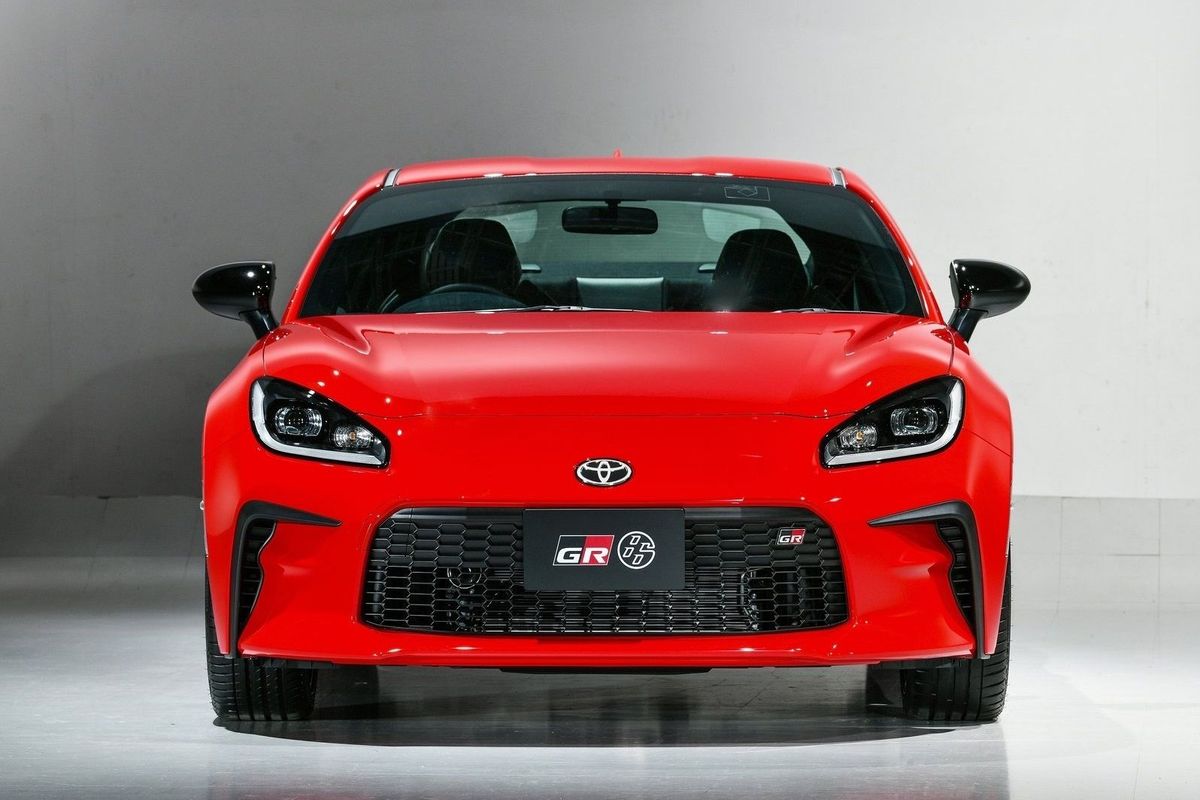
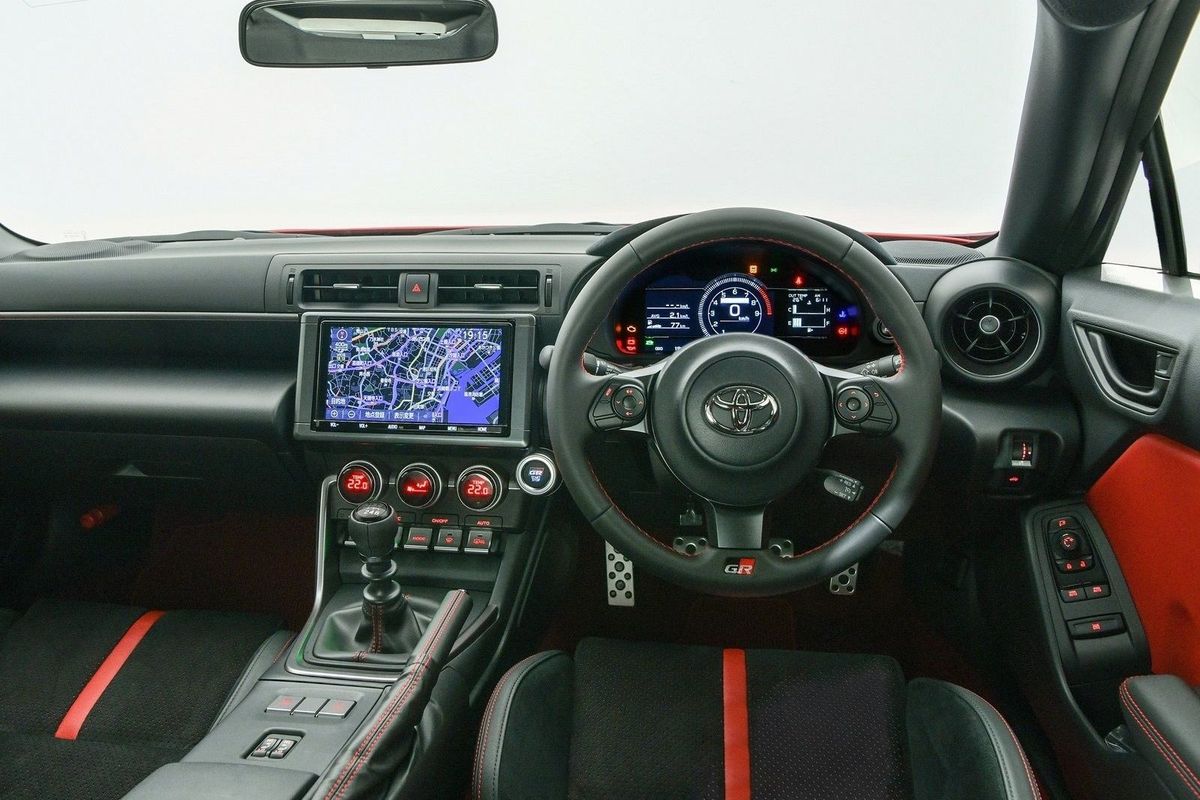
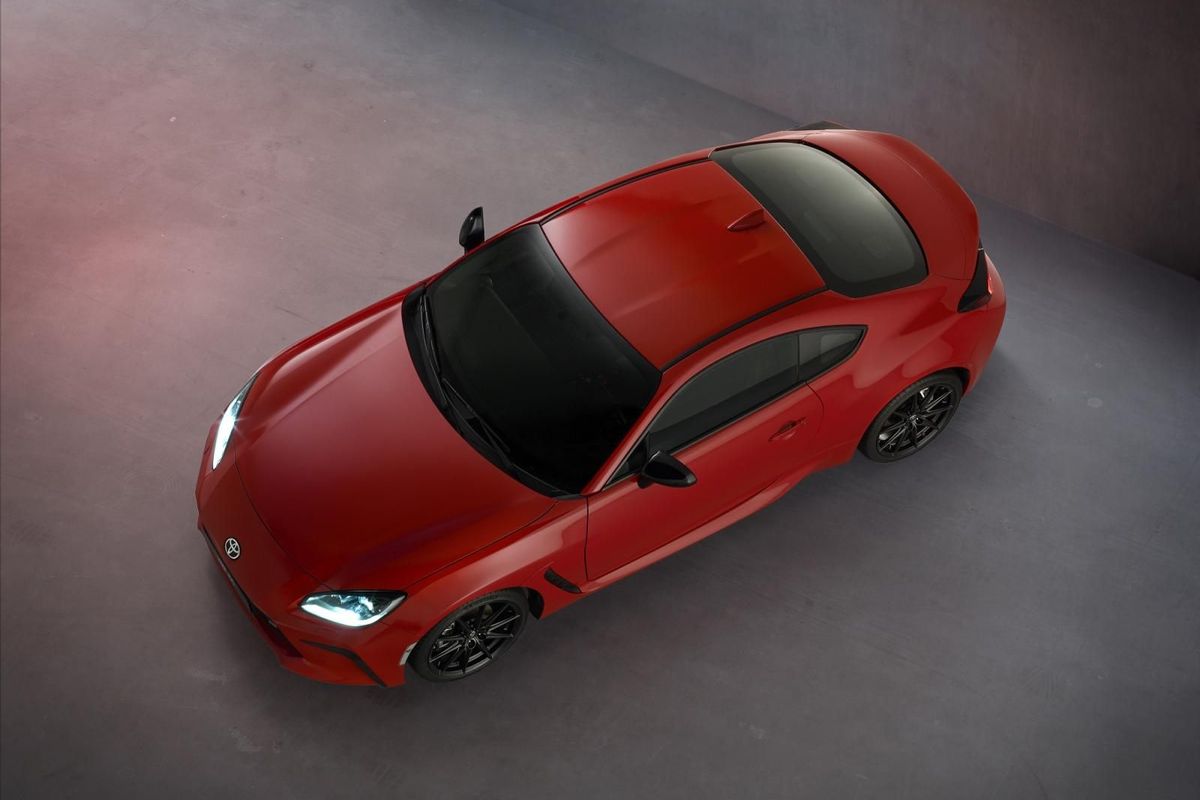
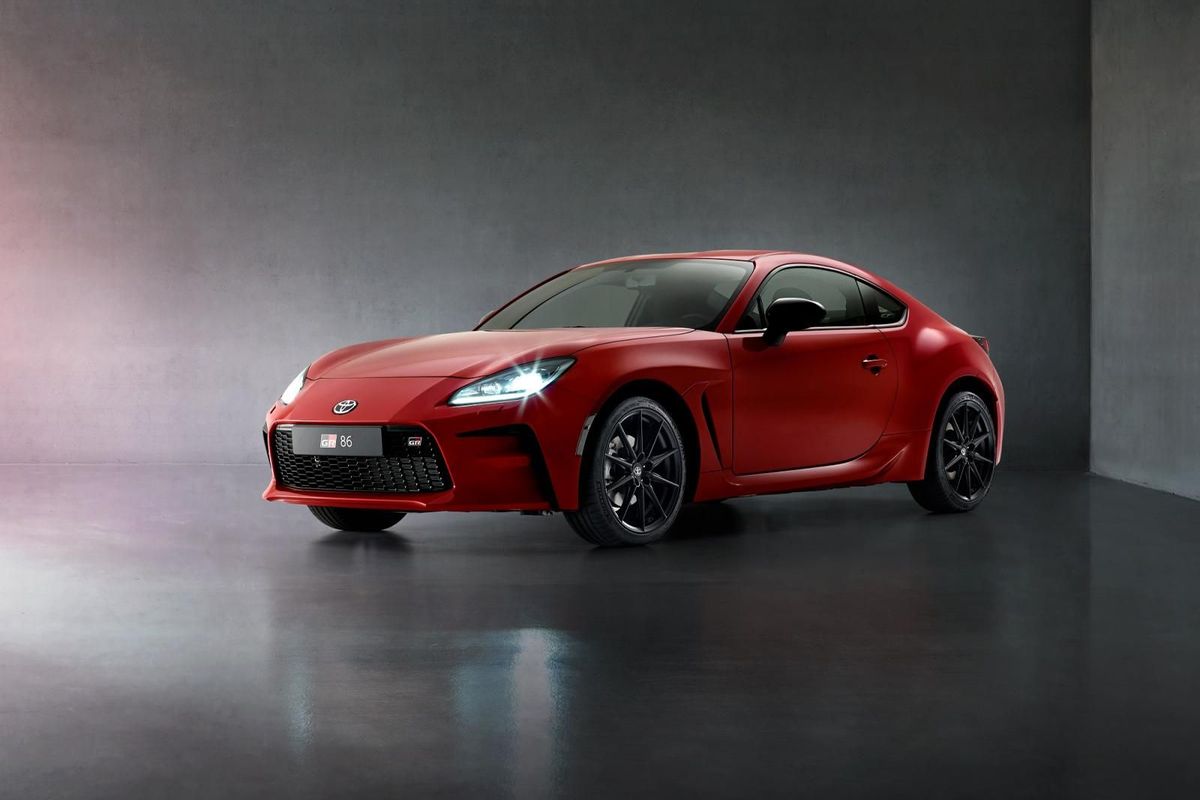
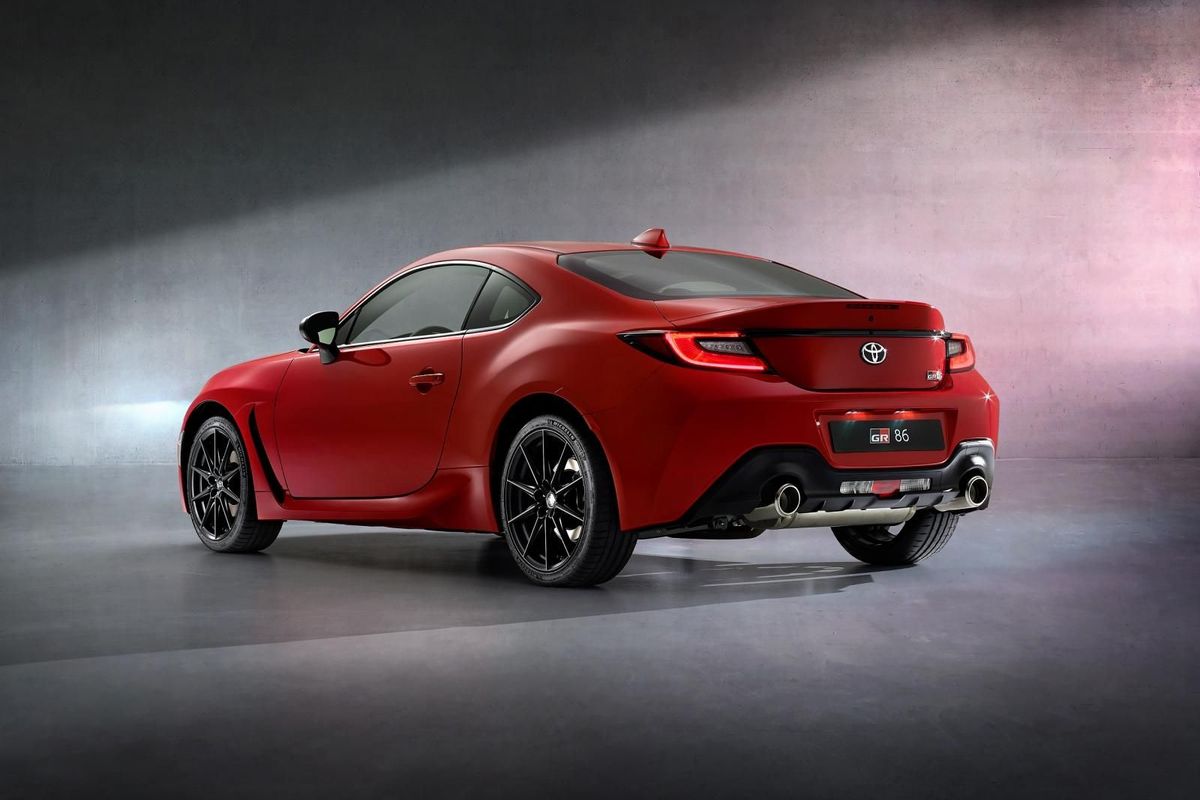
After a long wait, the all-new Toyota GR86 has been revealed. Here are some details about the naturally aspirated rear-wheel-drive coupe.
The Toyota GR86 is a lightweight, rear-wheel-drive coupe that’s been engineered from the ground up to be an enthusiast’s car. It ticks all the boxes for driving engagement; rear-wheel drive, nimble, light, manual gearbox and a rev-happy naturally-aspirated motor. Granted, most modern performance hatchbacks would leave it for dead, but that’s not the point of this car.
As the saying goes, ‘it’s more fun driving a slow car fast, than a fast car slow’ and the GR86’s thrills could be had at 70 kph, with plenty of manageable driving action. It wasn’t without fault though, that engine could have done with a touch more torque and it became surprisingly expensive at the end of its lifespan.
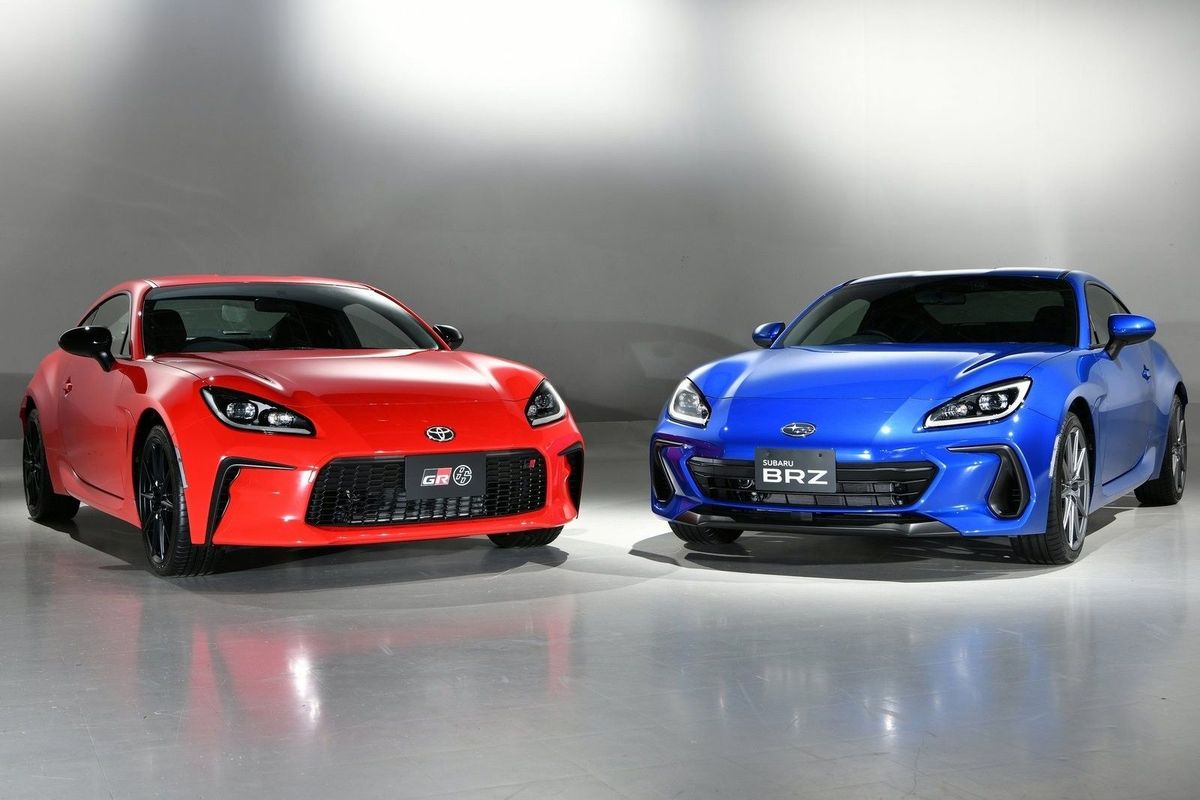
Now for 2021, there’s an all-new Toyota GR86. Again developed in conjunction with Subaru, who revealed its BRZ late in 2020 for the North American and Japanese markets only, the new GR86 brings a new design, new suspension and most importantly, a new engine. The new Toyota ’86 is the third model in the GR portfolio, underlining Toyota’s ambition to shake off its predictable and no-fun image from a few years back. With the Supra GR and the new Yaris GR (due in South Africa in the middle of 2021), Toyota is keen to show it still knows how to build fun and engaging driving machines.
The new engine is again a lightweight, horizontally-opposed 4-cylinder petrol unit, but capacity has been up to 2.4-litre. Power is rated at 173 kW and 250 Nm, which is a big jump from the 147 kW and 205 Nm of the outgoing 86. Toyota has worked extensively on the car’s weight-saving program and there are lightweight materials across the board, such as aluminium roof and body panels. The work doesn’t stop there though, with torsional rigidity increasing by around 50% and the vehicle tips the scales at 1 270 kg – about the same as a Volkswagen Golf. Toyota claims it will be the lightest 4-seater coupe in its class.
By keeping the weight down and maintaining a low centre of gravity, the Toyota GR86 should be a hands-on driving machine. The previous generation sold more than 200 000 units, proving there’s a case for a back-to-basics analogue sportscar. We’re yet to hear from Toyota SA with regards to local availability, but Toyota has confirmed a European market introduction with more details coming this year.
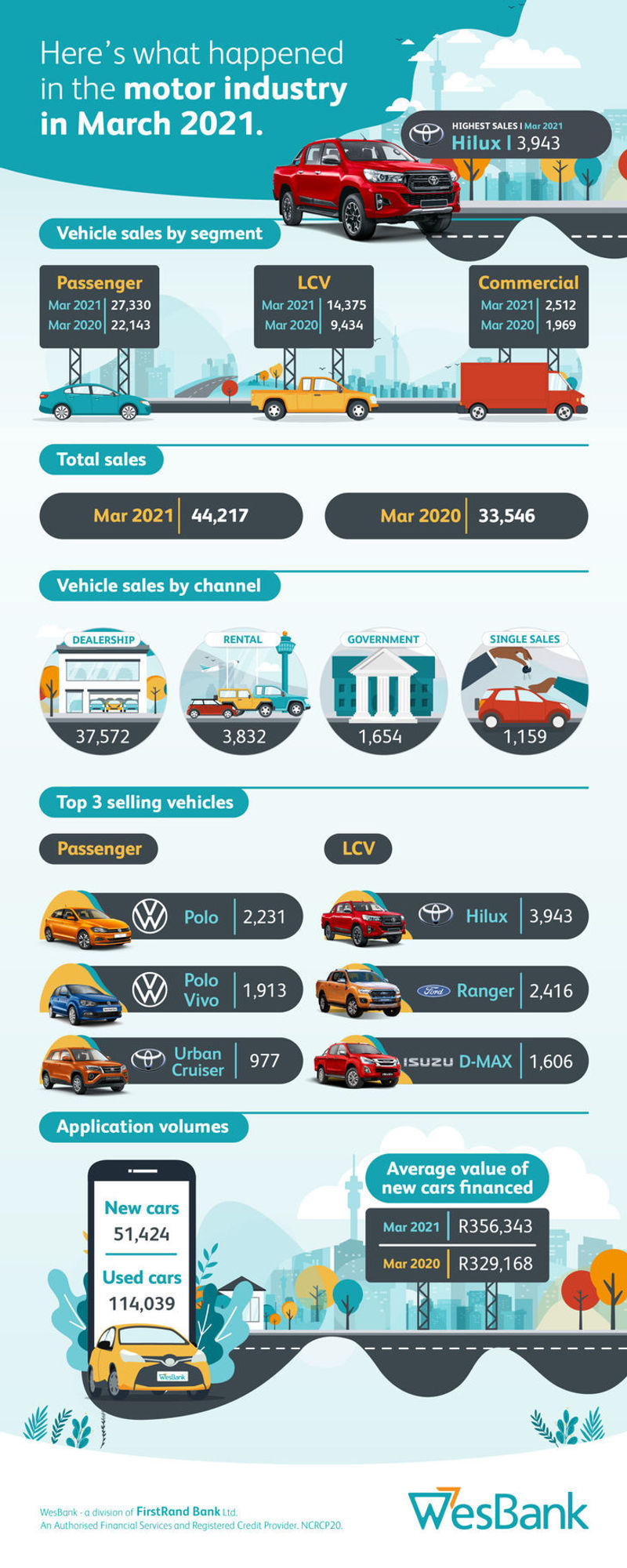
The Automotive Business Council (naamsa) has released new car sales figures for the month of March 2021. A full year has now passed since the Covid-19 lockdown commenced which consequently sent the automotive industry into a deep downward spiral for much of the year. Now, however, the industry appears to be on the mend… See the new car sales summary below!
Commenting on the automotive industry’s recovery, naamsa CEO, said: “the turnaround in the new vehicle market has commenced during March 2021 compared to the corresponding month last year when the country lockdown restrictions resulted in the temporary suspension of vehicle production and sales towards the end of March 2020.
“The industry is expected to start recapturing lost demand on its recovery path in 2021, considering the close correlation between new vehicle sales and the country's anticipated annual GDP growth rate in excess of 3%. However, structural constraints, which exist in the economy, coupled with the growing debt of the country and the ongoing electricity capacity limitations that business may be faced with in the future do not bode well for a quick recovery. New vehicle sales in 2021 may also be hampered by stock shortages of some models in the coming months, caused by COVID-19 induced manufacturing supply chain disruptions, such as the current global shortage of semi-conductors, or computer chips, an important part of modern vehicles”
New Car Sales Summary – March 2021
Aggregate industry sales of 44 217 units up by 31.8% (from 33 546 units in March 2020)
Passenger car sales at 27 330 units up by 23.4% or 5 187 units compared to the 22 143 units sold in March 2020.
Light Commercial Vehicle (LCV) sales at 14 375 units up by 52.4% or 4 941 units compared to the 9 434 units sold in March 2020.
Vehicle exports at 40 026 up by 38.6% or 11 137 units compared to the 28 889 units exported in March 2020.
While the automotive industry and the South African economy, in general, is on the road to recovery, uncertainty driven by the ongoing Covid-19 pandemic will persist for the foreseeable future. Compounding insecurity is the increasing instability of local electricity supply from Eskom with further load shedding expected as South Africa heads into winter.
Lebogang Gaoaketse, Head of Marketing and Communication at WesBank Vehicle and Asset Finance commented, “With interest rates remaining stable at their low levels, a constantly – albeit slowly – improving supply of imported vehicles, and a slightly healthier economy operating within eased levels of restrictions, we expect the market to continue recovering well. While we have seen a significant increase in the average deal size financed by WesBank, we don’t expect new vehicle prices to increase dramatically. This will also provide added stimulus to the market and is a positive sign of consumer sentiment and ability to participate in the new vehicle market.”
The used car market, however, remains positively buoyant and continues to provide value for local buyers.
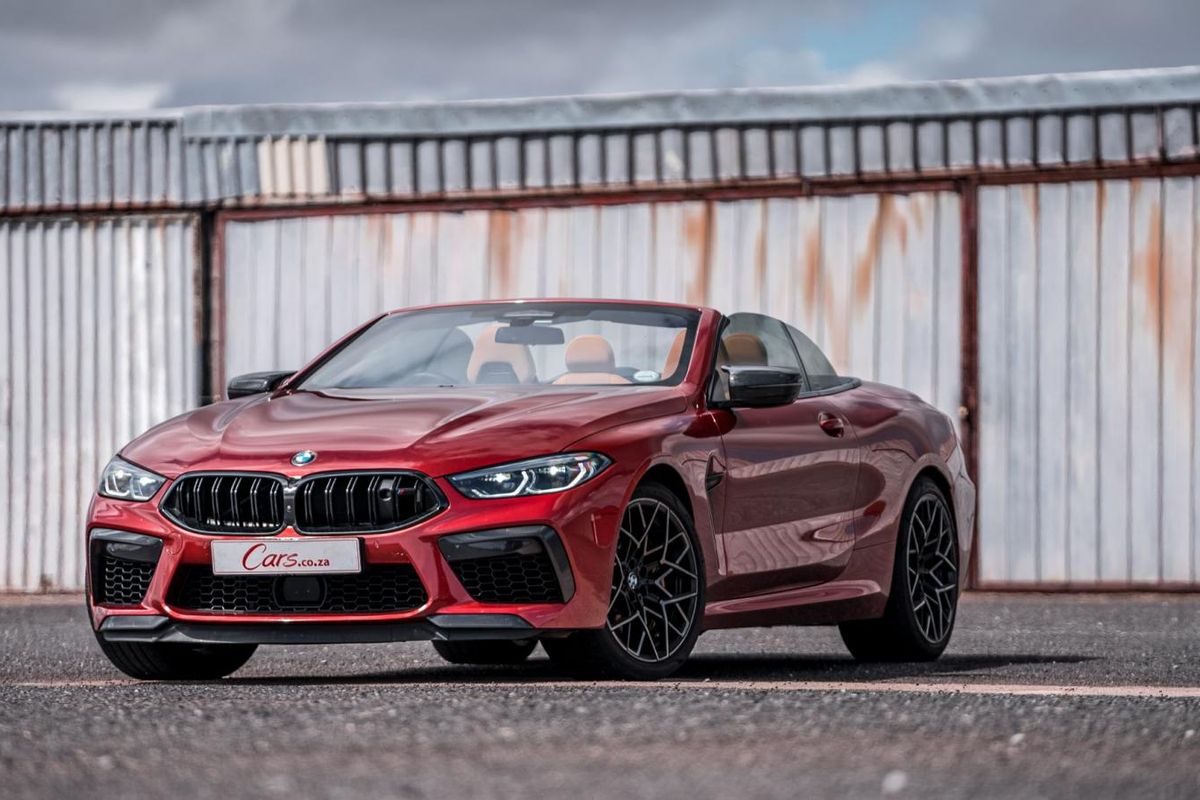
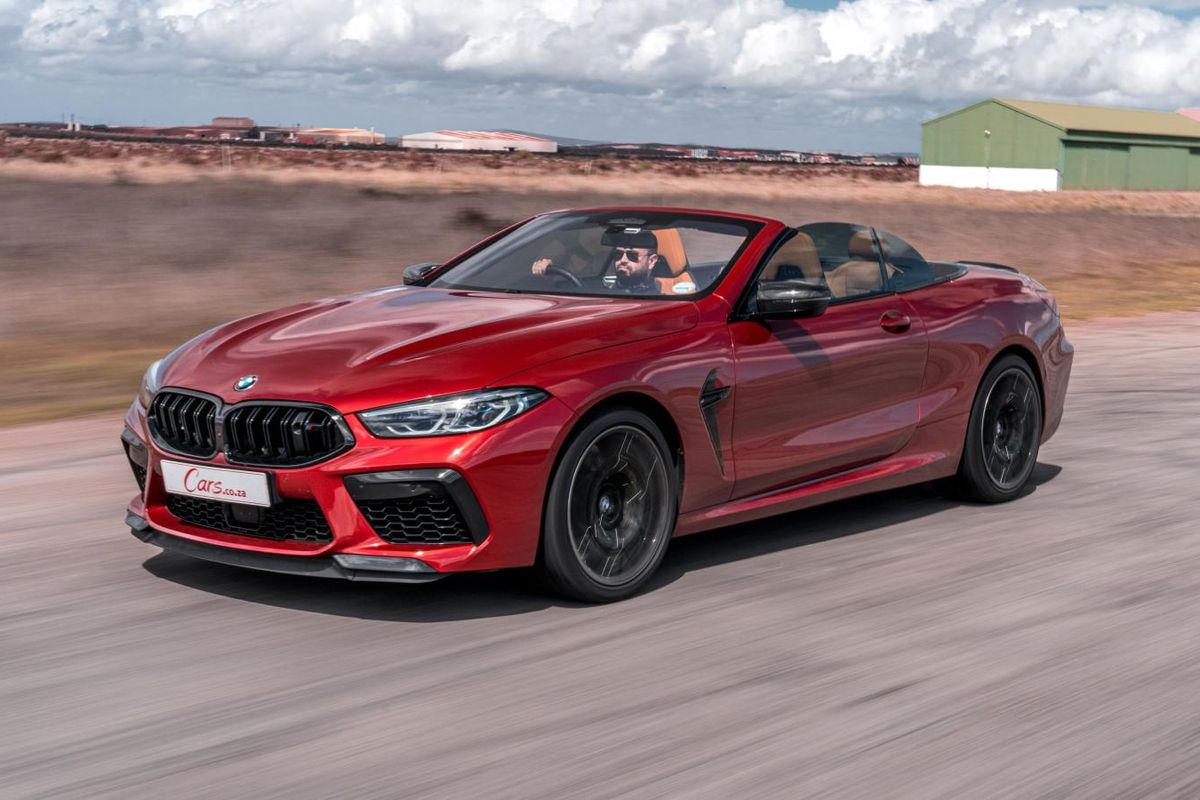
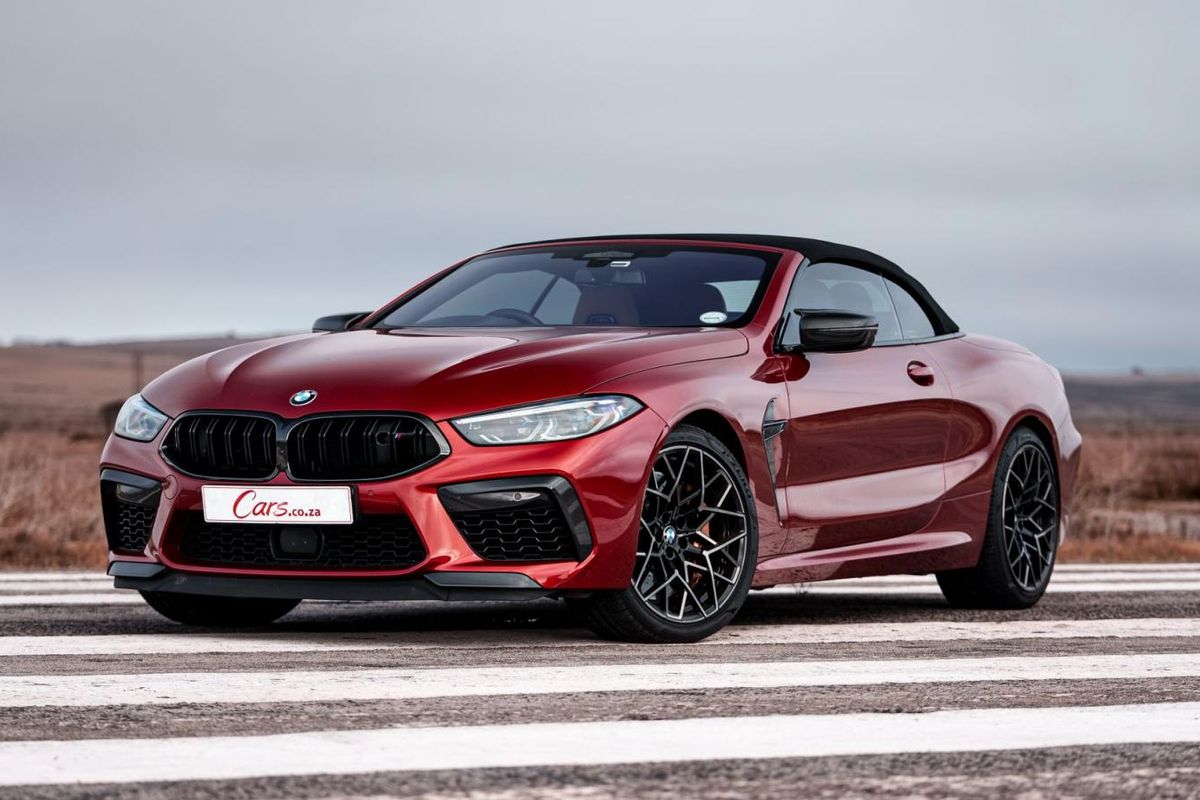
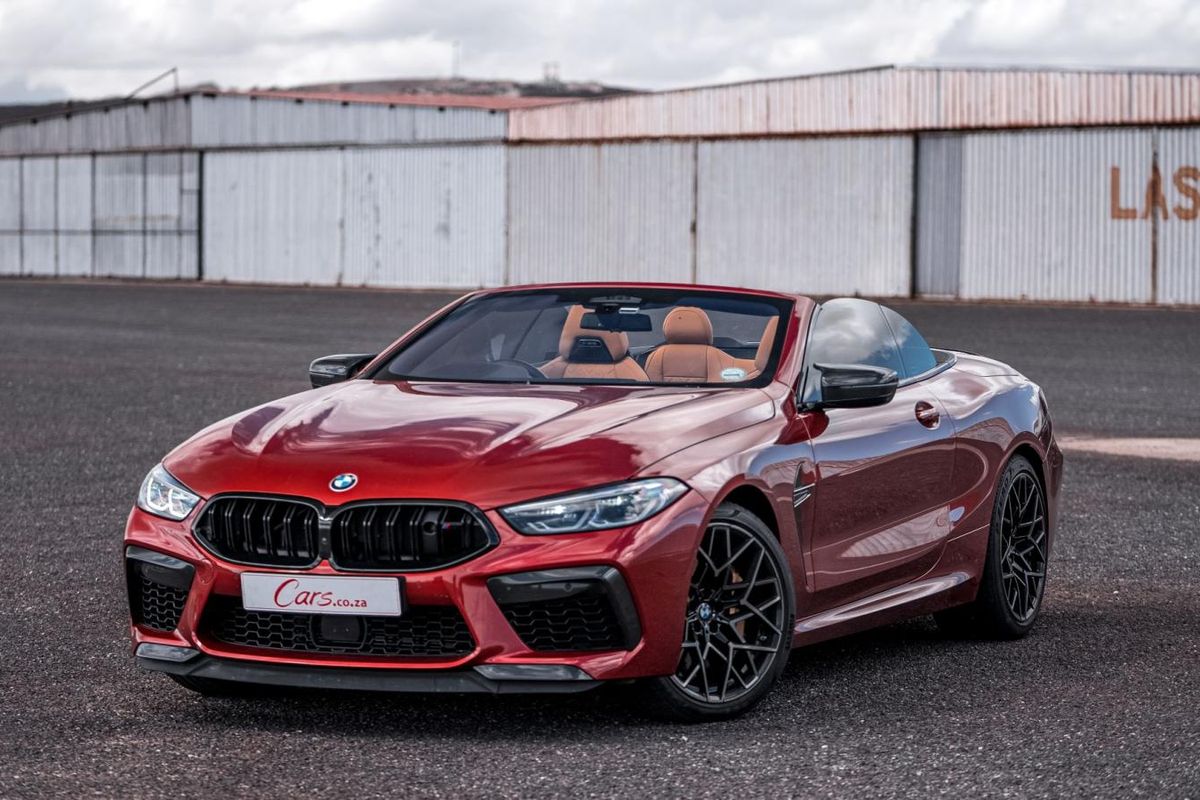
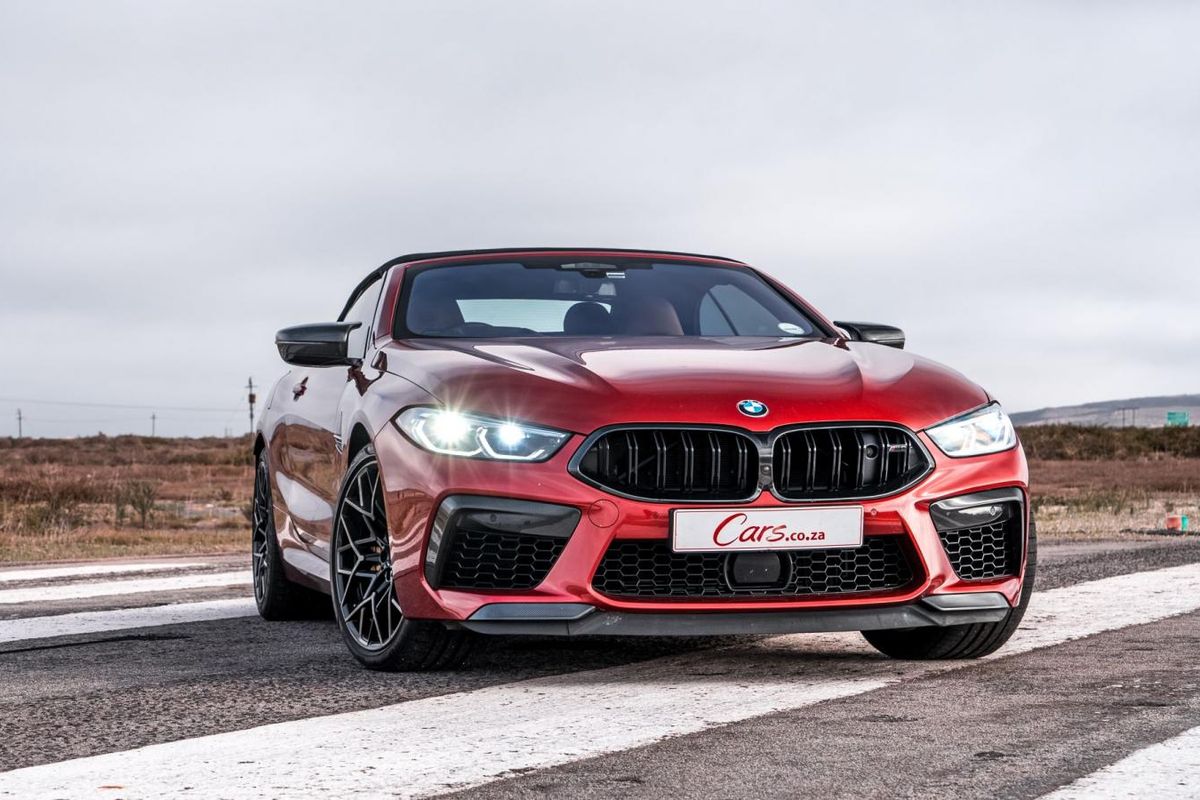
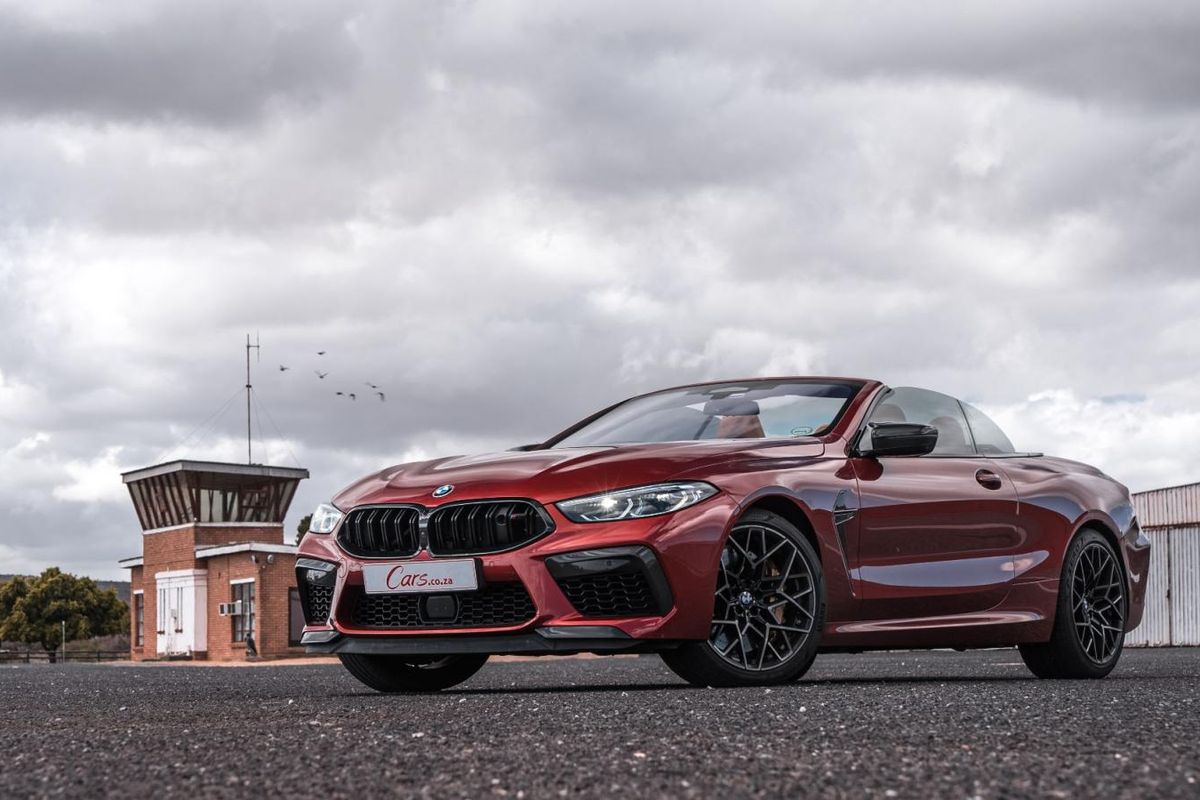
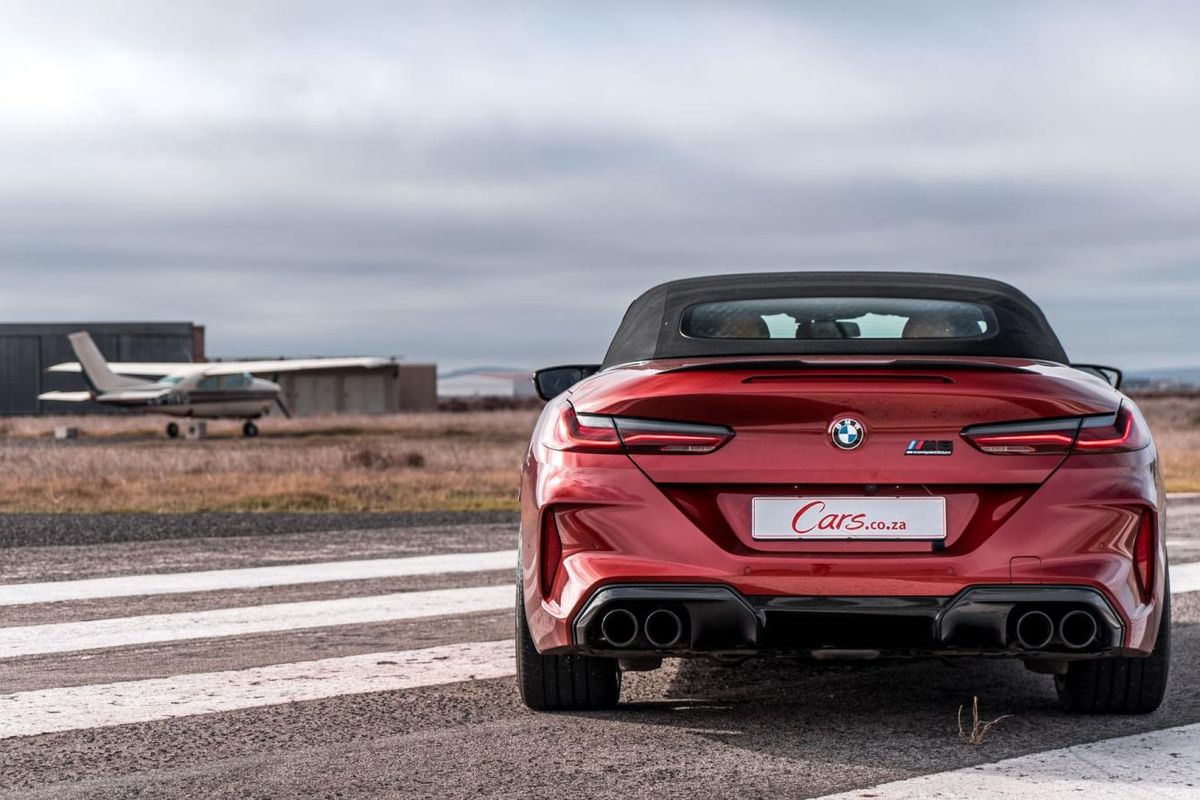
BMW's first-ever M8 is also available in convertible guise. While undeniably fast and seductive, the M8 Competition Convertible is also very, very heavy – and prohibitively expensive. Then, of course, the big question remains: Is this R3.6-million drop-top powerhouse a true M car?
We like: Rocketship performance, excellent build quality
We don’t like: Not as "tactile" as an M car should be, eye-wateringly expensive
Fast Facts
Model tested: BMW M8 Competition Convertible
Price: R3 630 862 (as of April 2021, no options fitted)
Engine: 4.4-litre V8, twin-turbocharged petrol
Power/Torque: 460 kW/750 Nm
Transmission: 8-speed automatic gearbox
Fuel Consumption: 10.7 L/100 km
Load capacity: 280-350 litres
?Top speed: 250 kph
What is it?
The first M8 ever takes the M-car brand into a new, hyper-expensive territory where "drama" is valued as much as ability.
The M8 Competition (whether in Coupe, Gran Coupe or Convertible form) sits at (or very near) the pinnacle of BMW's product line-up. It boldly forges into new territory for the brand, but also runs the risk of upsetting M-car traditionalists, of which South Africa has many. You see, at face value, BMW's M Division appears to be playing the numbers game with this car and, in this day and age, it seems the bigger the numbers, the better…
Let's start with the name. Essentially the new 8 Series replaced the previous 6 Series. So why didn't the Munich-based brand just call it the 6 Series, then? Well, 8 is bigger than 6 and therefore, from a marketing point of view, arguably more attractive. Besides, you can justifiably charge more for an M8 than an M6, can't you? Then there is the sheer size and weight of the thing…
Even with BMW's Carbon Core technology, this M8 still weighs around 2 tonnes, so it needs the "most powerful engine ever fitted to an M car" to deliver its smashing performance. But what impact will all that weight have on its dynamic abilities? After all, BMW M cars are supposed to be more than just straight-line dragsters…
With a whopping price tag of R3.6 million, the M8 Competition Convertible is currently arguably without rivals if you're looking for a super-fast, ultra-luxurious 4-seat convertible. But its asking price does set it on a collision course with smaller, but similarly fast exotics, from the likes of Porsche and Aston Martin, no less.
So, is this BMW cashing in on the allure of the M brand, or is the M8 Competition Convertible the real thing? Let's find out.
How it rates in terms of…
Performance
The M8 Competition offers various opportunities for finetuning the drivetrain to the driver's exact requirements.
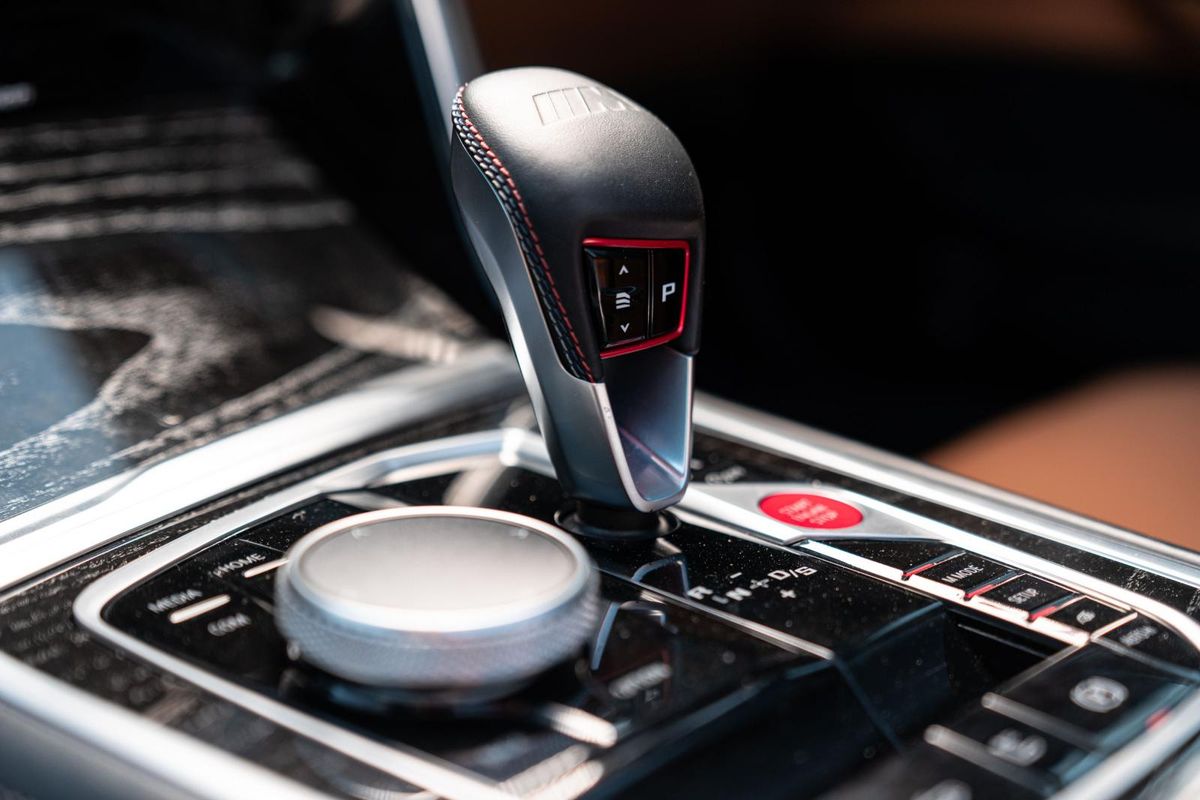
To reiterate, the most powerful engine ever fitted to an M car sits underneath the M8 Competition's long bonnet. The twin-turbo 4.4-litre V8 thumps out maximum outputs of 460 kW and 750 Nm of torque. Peak torque is available across a long stretch of the rev range (from 1 800 to 5 800 rpm), which means the powerplant always has huge reserves of grunt available. The engine is mated with an 8-speed automatic transmission and, as is the case with most M cars, you have various settings to play with to set the car up to your specific requirements. I initially thought the M8 Competition was a little lazy to respond to initial throttle inputs (when left to its own devices) – in normal driving, it rushes through the gears to the top very quickly for greater efficiency. However, a previous driver had set up one of the M buttons on the steering wheel to my exact preference, and once that was pressed the performance potential became very clear as the M8 leapt in response to some decidedly delicate throttle inputs.
Watch the M8 Competition Convertible in a drag race against a Range Rover Sport SVR
BMW claims a 0-100 kph time of 3.3 seconds, which is downright startling given the fact that this bulky roadster weighs around 2 tonnes! Oh, and it only takes 11.3 seconds to reach 200 kph from a standstill! The top speed is limited to 250 kph, but you can optionally have the top-end raised to 300 kph. So, there's no denying the M8 Competition's performance credentials, it will comfortably run with the exotic machines it is priced against. And, despite initial concerns around throttle sensitivity, once it has been set up with responsiveness in mind, it reacts to driver inputs with alacrity.
In terms of aural character, the car falls well short compared with other high-performance machinery, however. Even with the roof down and the sportiest exhaust setting engaged, it's all a bit "shy", muffled.
Ride & Handling
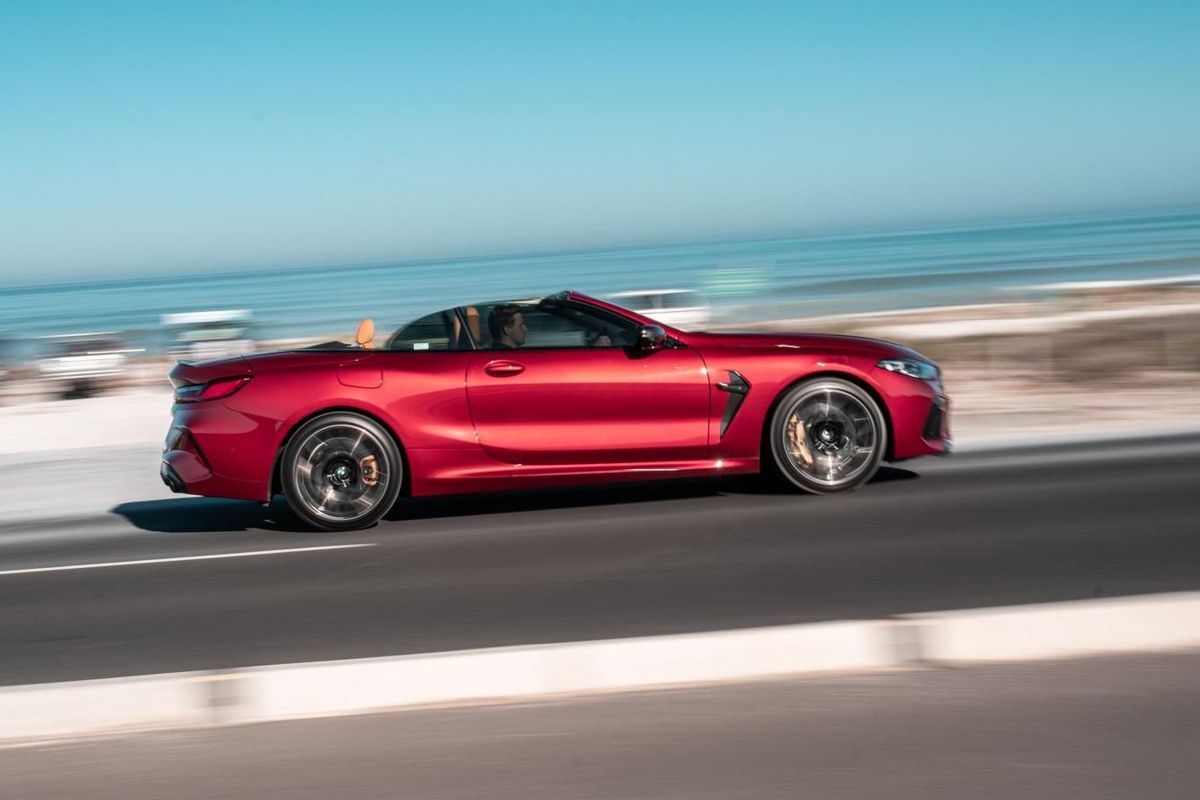
Though developed on the race track, the M8 Competition Convertible feels more at home cruising the beach front.
The M8 Competition Convertible rides on BMW's Adaptive M suspension (with variable damper control), and to harness all that power, it also gets the firm's xDrive all-wheel-drive system, albeit one that is rear-biased. However, depending on your driving ability and/or appetite for risk, you may want to explore either the 4WD Sport mode (which sends more power to the rear wheels) or DSC off, in which case the M8 is rear-wheel-drive only. BMW suggests the latter is meant for the "experienced wheelman".
Furthermore, BMW seeks to emphasise that the M8 Competition, even in Convertible form, remains a true M car and, as such, the firm has spent considerable time and effort developing the car on some of the world's most challenging racing circuits, including the Nurburgring. In fact, BMW says that the M8's model-specific chassis technology has been designed and tuned with the specific demands of track use in mind. We can't quite imagine anyone in South Africa taking their R3.6-million drop-top to a track day, but if you are so inclined, rest assured that your car even has a newly developed integrated braking system, the M-specific version of which presents the driver with 2 different brake-pedal-feel settings (Sport and Comfort).
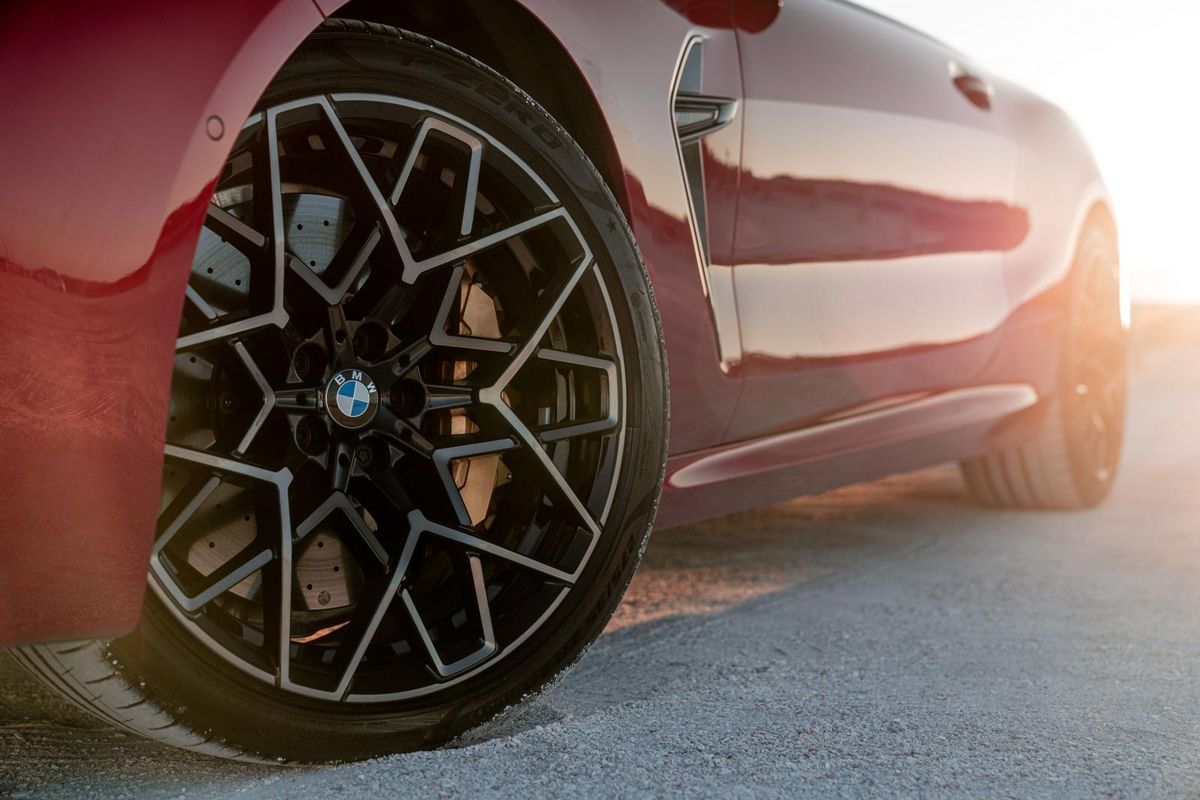
Striking 20-inch wheels on our test car. Note the M8 offers the driver two different brake performance settings.
With BMW's Carbon Core tech as a basis, the M8 Competition Convertible didn't display the worrisome creaks and groans one might expect from such a large, heavy convertible. Instead, the body feels reassuringly rigid, even when traversing surface-angle changes. In normal driving, and on smooth surfaces, the M8 wafts along like a big luxury car, creating the perception that it's a GT – not a sportscar.
If you dial in some "sportiness" via the various controls, the M8 Competition Convertible immediately transforms into a more engaging, responsive beast, but it never quite shrinks around the driver like the best sportscars do. One is always aware of its size and heft, and when the road surface deteriorates, the M8's confidence can be ruffled too. But make no mistake, on the right road (even if the surface is damp), the M8 Competition Convertible is stupendously fast from point A to B – and if the drivetrain setup is appropriate for the conditions, it will be a deeply satisfying experience for the driver, too. Even if the steering feels overly light (and possibly less communicative than it should be) at first, it becomes better with familiarity.
Design & Interior
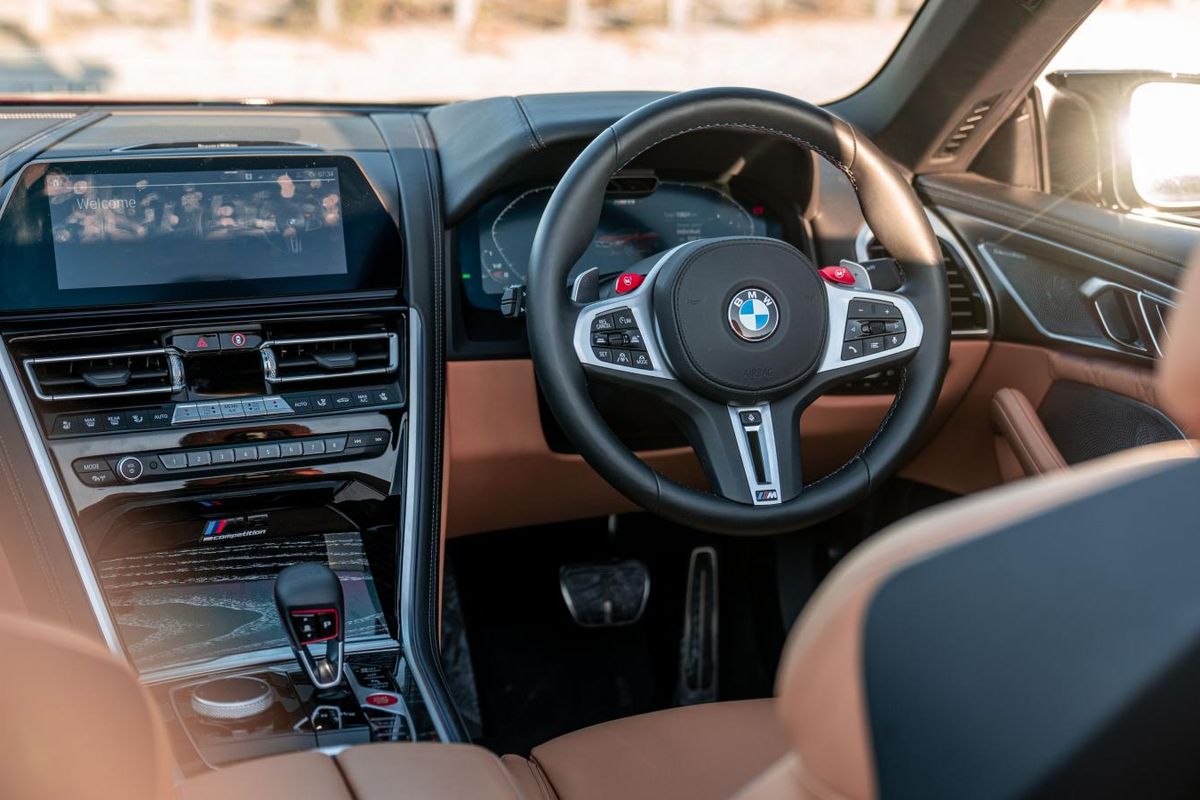
For a car at this price level, perhaps BMW's could've added some more "wow" to its very predictable cabin layout.
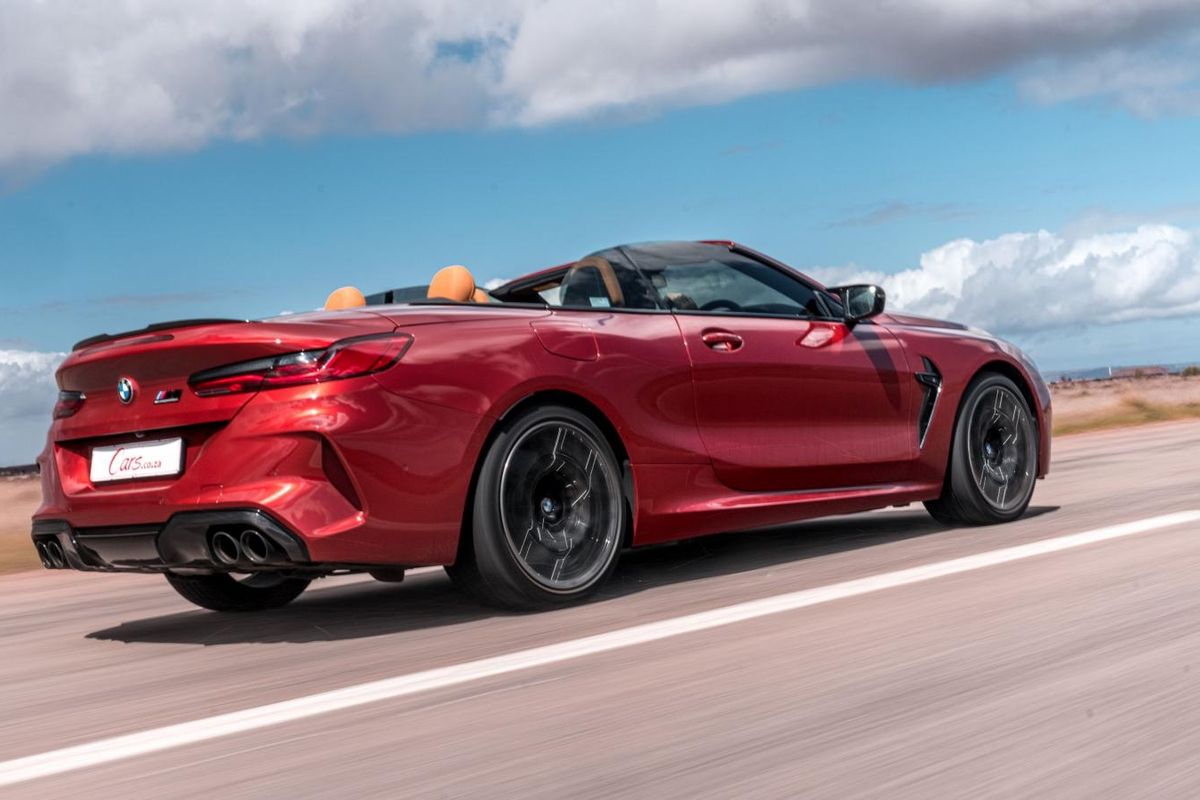
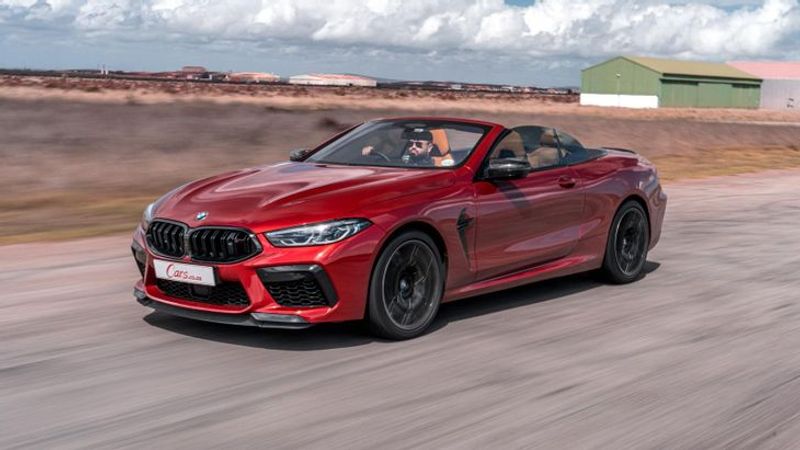
When you spend this much on a new convertible, you probably want people to notice you (oh, and your car, but mainly you). If the rubber-necking we encountered during our test term with the M8 Competition is anything to go by, BMW has nailed the aesthetics, even though our test team remains unconvinced. Nevertheless, this is an imposing machine with a broad, muscular stance and striking 20-inch alloy wheels that fill out the wheel arches nicely. It was also interesting to note that it garnered far more attention with the roof down, rather than up.
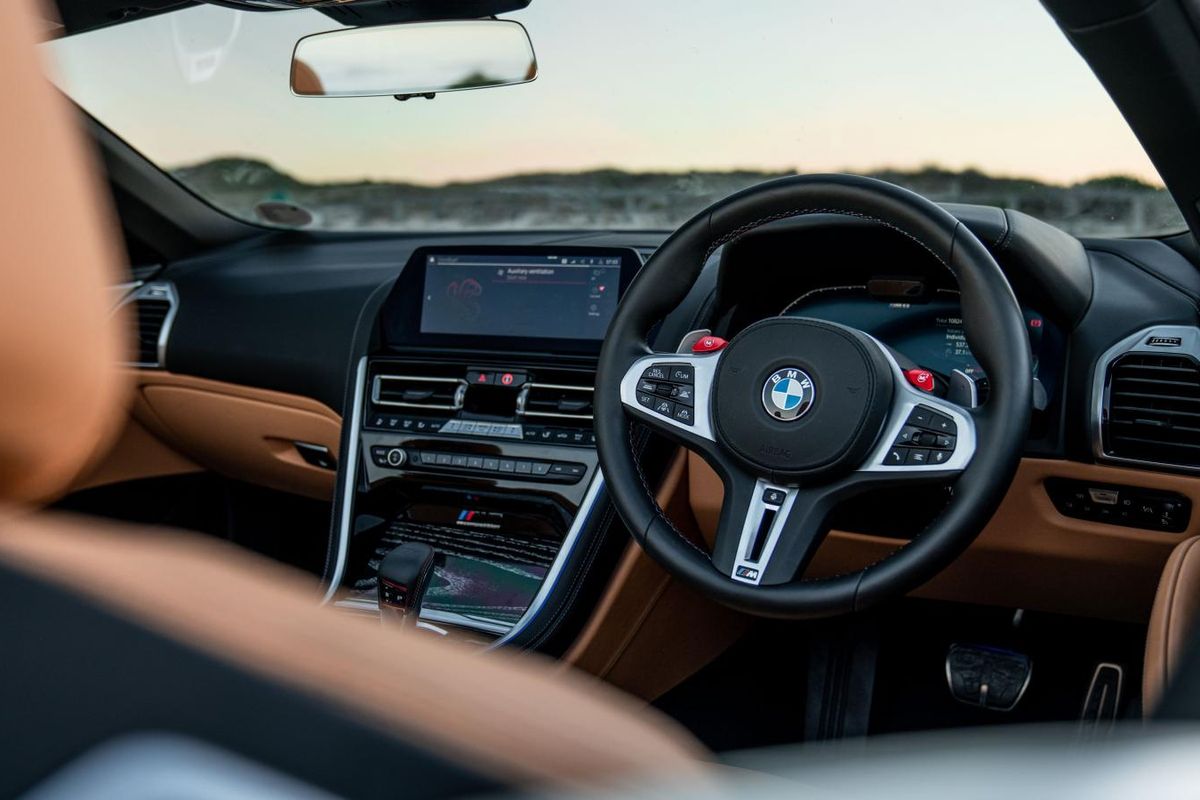
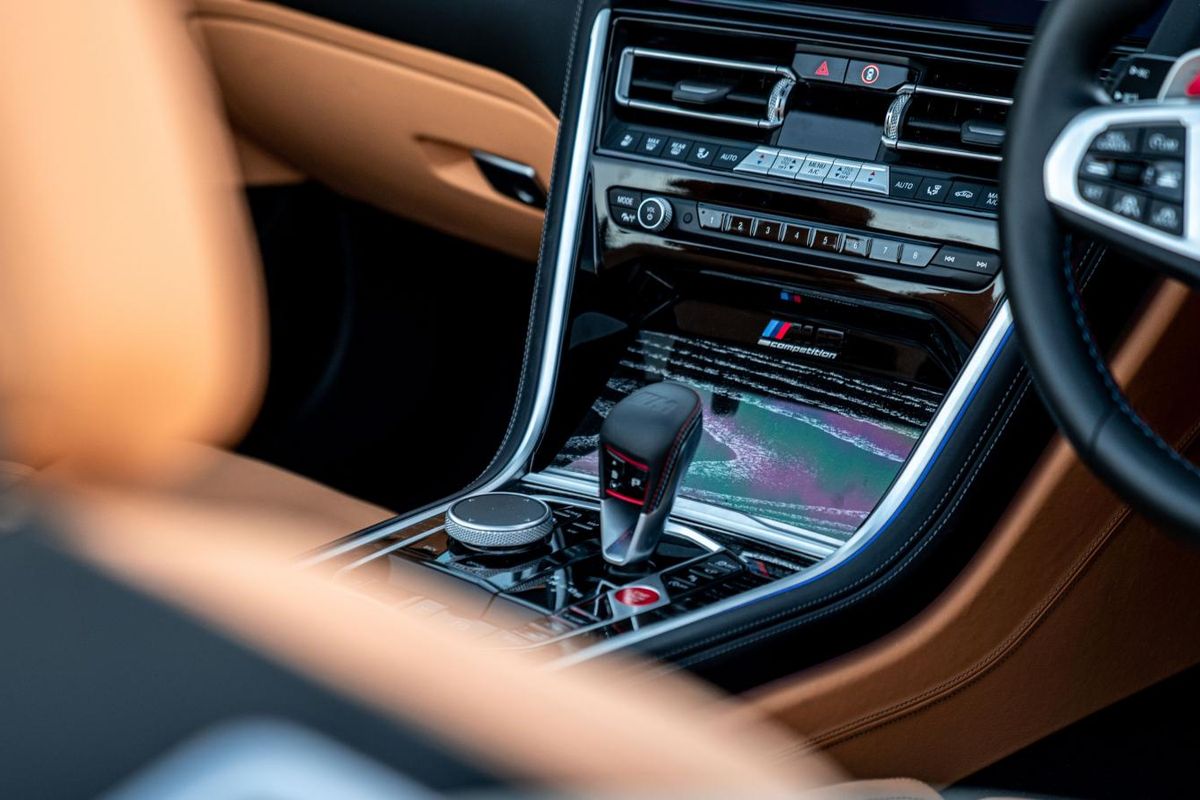
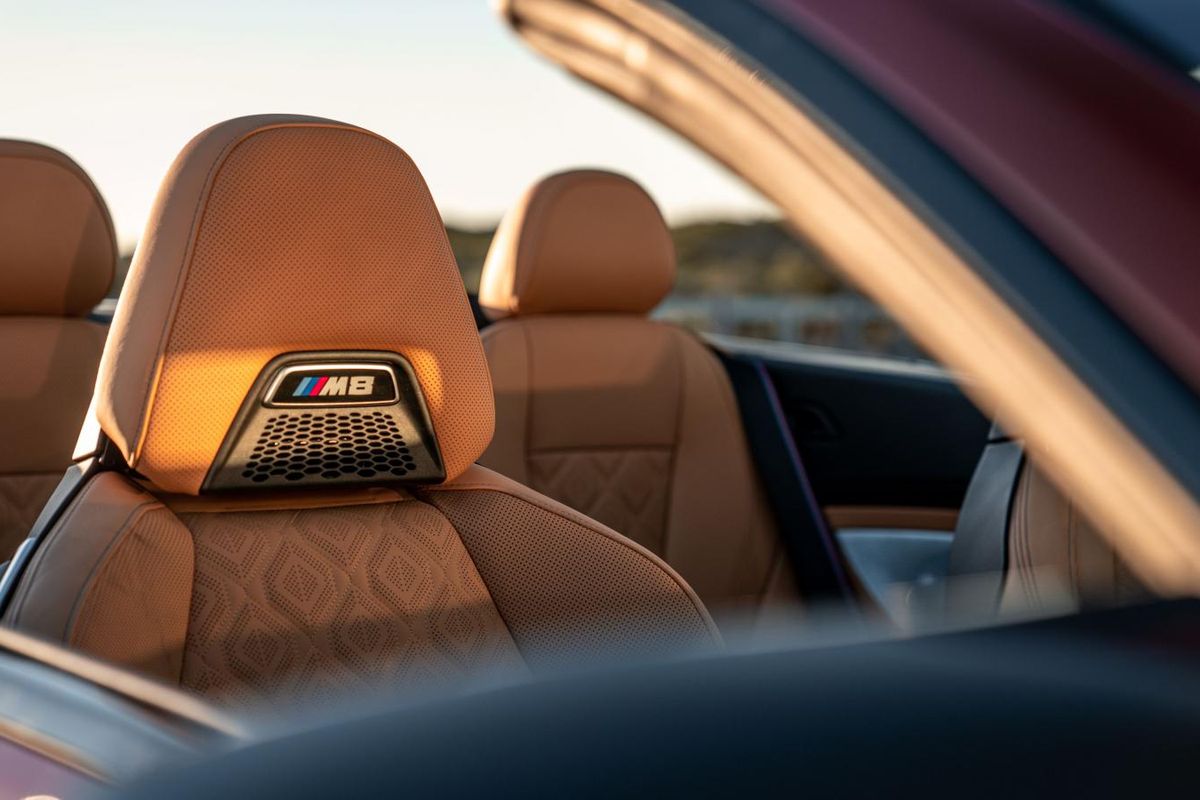
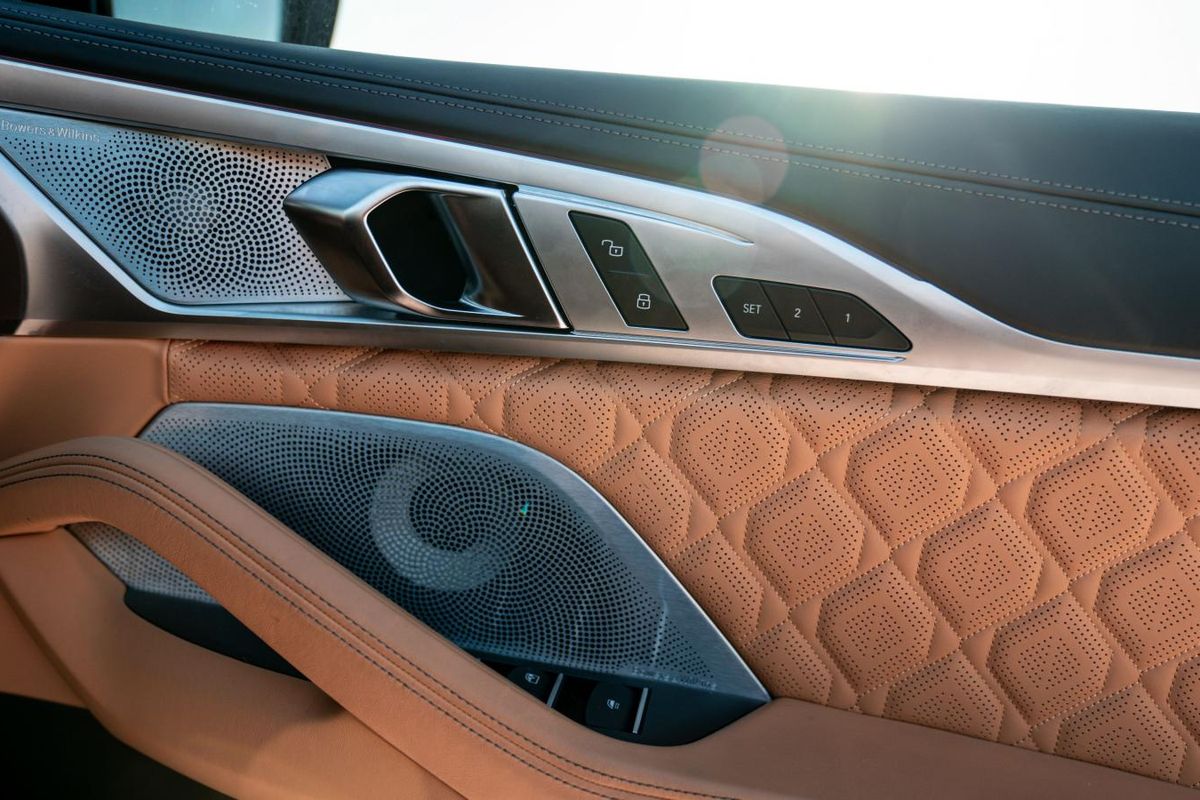
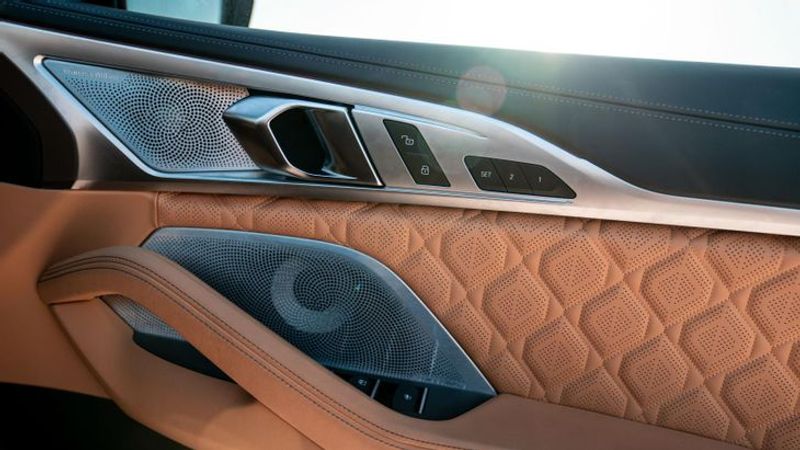
Inside, the M8 Competition Convertible certainly ticks the boxes in terms of quality (it has one of the most solid BMW cabins we've experienced in a long time), clever features (a highlight being the neck-level heating system) and comfort (the front seats are superb). While it lacks "drama" overall, there is very tasteful detailing (the ambient lighting is really special, and the quilted leather on the doors plush).
Beautiful detail of the leather application on the doors.
For such a big car, however, the BMW is quite compromised in terms of practicality. Rear legroom is very limited (but obviously more generous than in the back of a Porsche 911), and the boot capacity is reduced by the folding roof mechanism. Still, you can get quite a few overnight bags into the boot, even with the roof stowed. The exotics the BMW is priced against certainly are left behind in that regard.
Price and after-sales support
The BMW M8 Competition Convertible sells for R3 630 862 before options (April 2021). A 2-year/unlimited km warranty and 5-year/100 000 km maintenance plan are included in the price.
Verdict
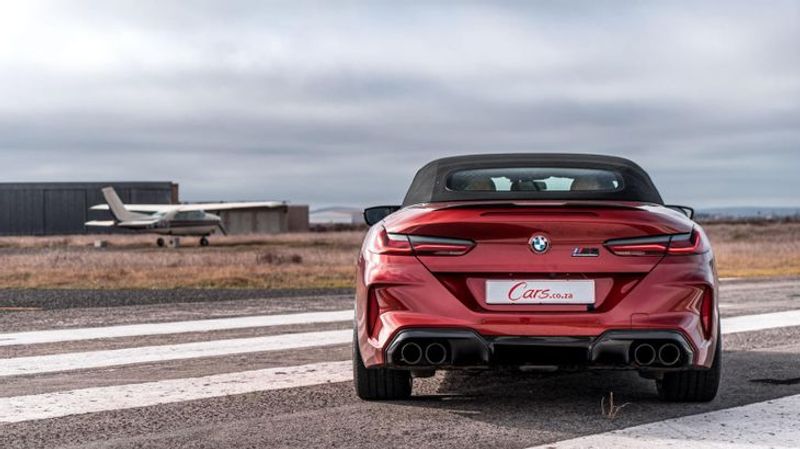
The only view most challengers to the M8 Competition Convertible would ever get to see.
On price, there is no direct rival for the M8 Competition Convertible in South Africa at the moment. So, if a super-luxurious, massively fast 4-seater convertible with considerable head-turning appeal is what your're after, it is certainly worth a closer look. But we're not convinced that BMW's ultimate drop-top is quite special enough, either as an M car – or a R3.5-million+ luxury convertible.
Firstly, it doesn't quite "carry itself" as a pure M car, because it lacks the intimate tactility and visceral character that we've come to expect from BMW's best. While we understand that the Bavarian marque may want to stretch its presence into the lucrative super-luxury segment, we're not convinced the M8 Competition Convertible has the super-GT aspect down, either… At this price level, the Bimmer's cabin doesn't represent enough of a style upgrade over its cheaper siblings, particularly when you consider that buyers could also consider vehicles from Porsche, Bentley, Aston Martin etc.
Weeks after the M2 CS left our offices, it's still frequently the subject of much enthusiastic talk. The M8? It's just not as memorable. Granted, perhaps it's unfair to expect every M car to deliver equally on all fronts, but we certainly think the top-dog M should be more special… So much of a vehicle's chance of success in this super-luxury segment is dependent on aspects that are hard to quantify – emotional design, aural character, tradition etc. Perhaps there's a little too much science in the M8 Competition Convertible – and not quite enough soul.
Drag Race: BMW M8 Competition vs Range Rover Sport SVR
You know that old saying, "When life gives you two V8 performance cars, do a drag race"? Well, that's exactly what happened here…
The media test car gods smiled on us and while we had the latest Range Rover Sport SVR on test, a BMW M8 Competition Cabrio arrived at the Cars.co.za office.
And so we thought, well, this could be fun, even if the cars aren't exactly direct rivals. So we rented an airstrip outside Cape Town and set up a quarter-mile drag race and a rolling start drag race between these two V8 powerhouses. Watch the video to see the results!
Ford is well aware that its flagship Ranger offerings are priced out of the reach of many bakkie fans. The XL Sport version was built to offer most of the workhorse- and lifestyle bakkie experience, but at a more affordable price. We examine "how much bakkie" you get for your money if you go the close-to-bottom-spec route.
We like: Adequate engine, value for money, offroad tyres are great for SA's poor roads, looks great
We don’t like: Good value undercut by a strong pre-owned market, could be too basic for some
Fast Facts:
Model tested: Ford Ranger 2.2TDCi double cab 4×4 XL Sport auto
Price: R559 500 (March 2021)
Engine: 2.2-litre turbodiesel 4-cylinder
Power/Torque: 118 kW/385 Nm
Transmission: 6-speed automatic
Fuel consumption: 8.2 L/100 km (claimed)
What is it? ?
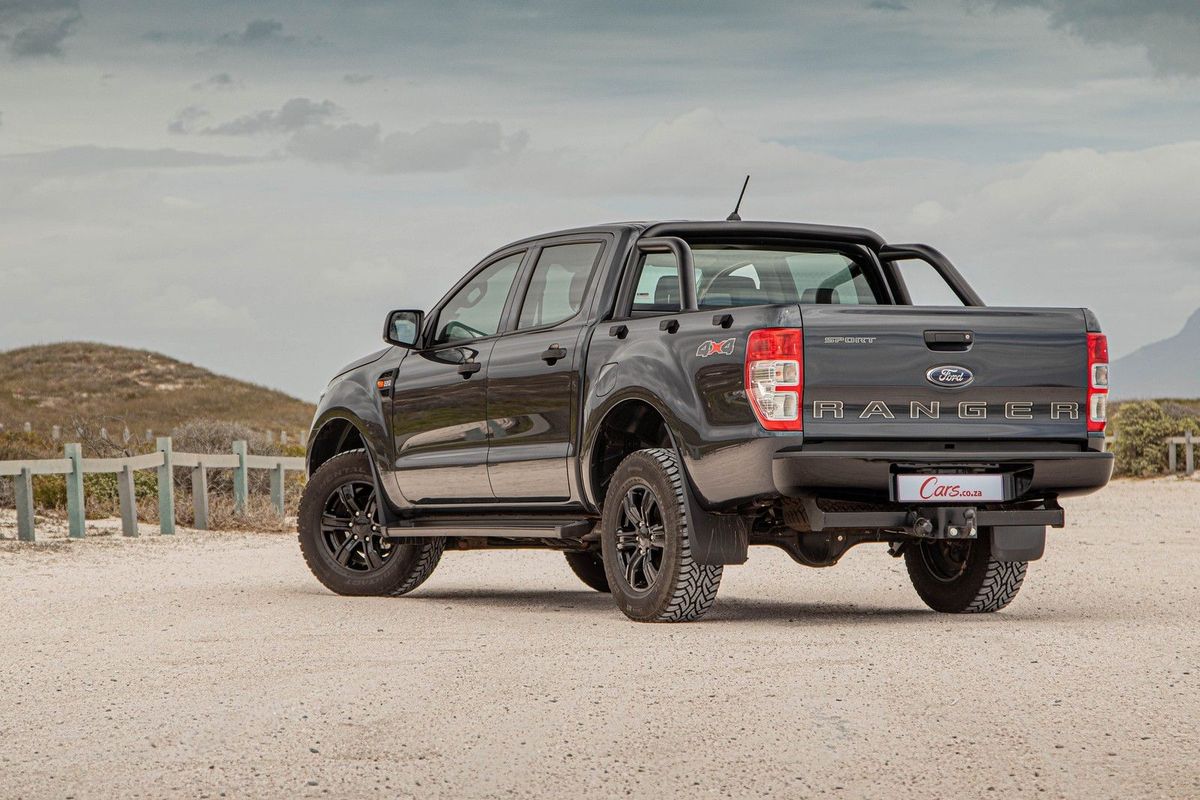
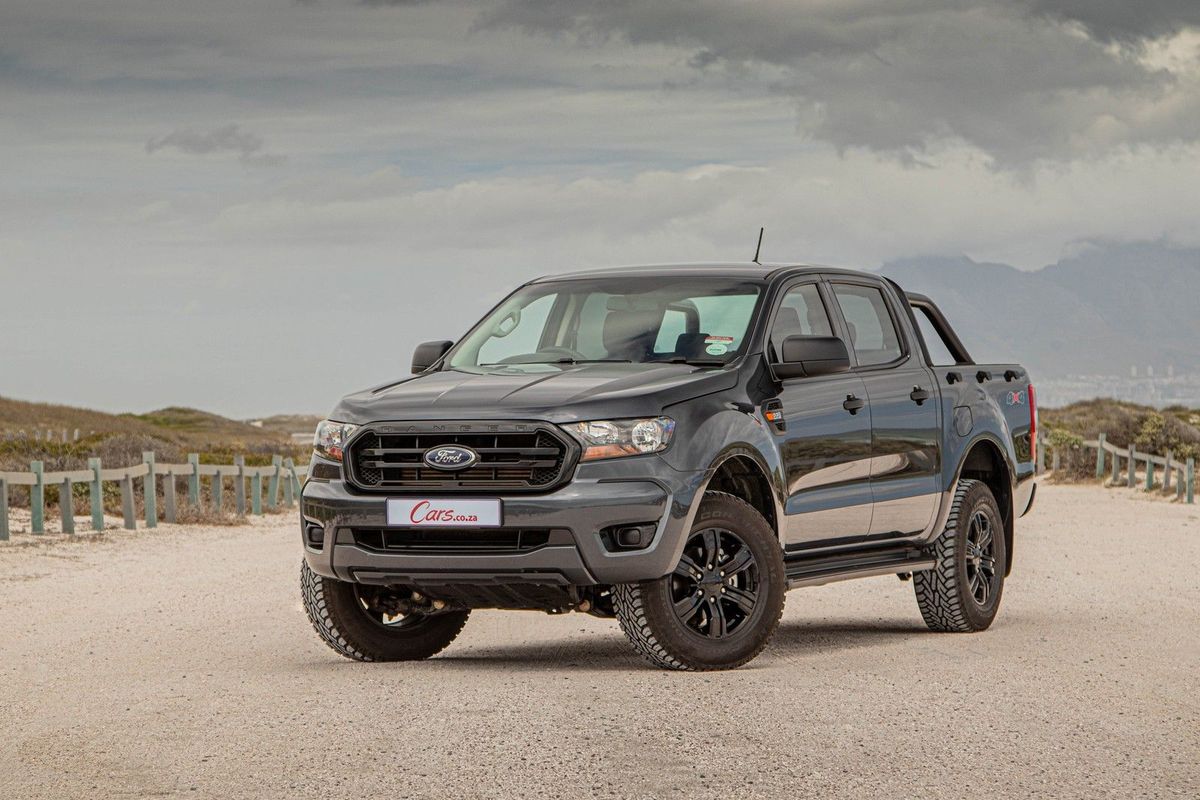
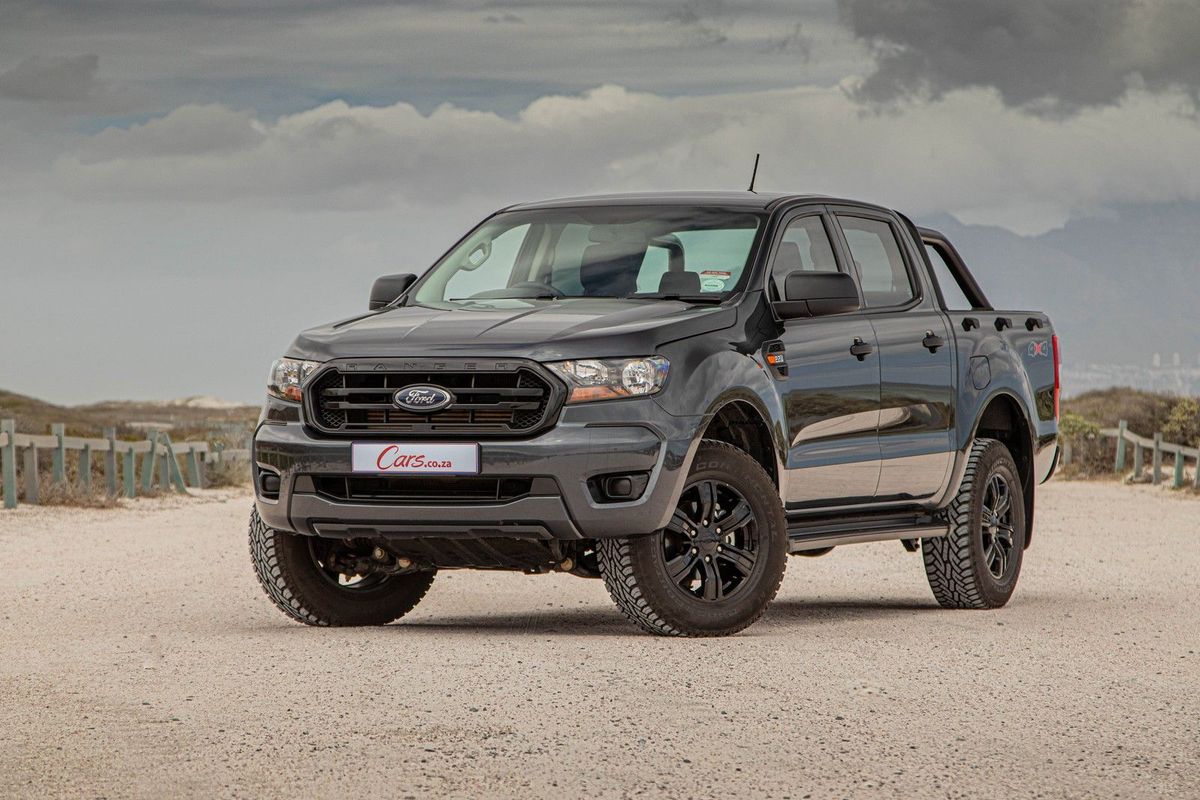
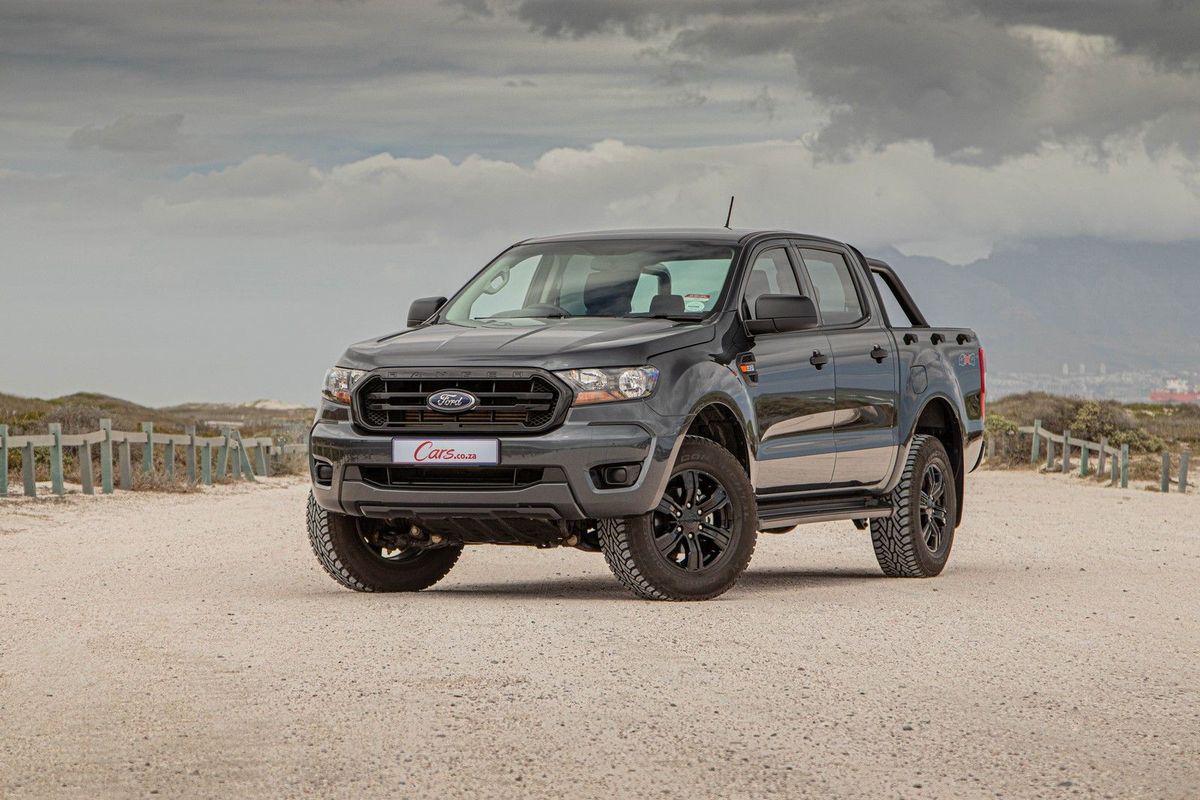
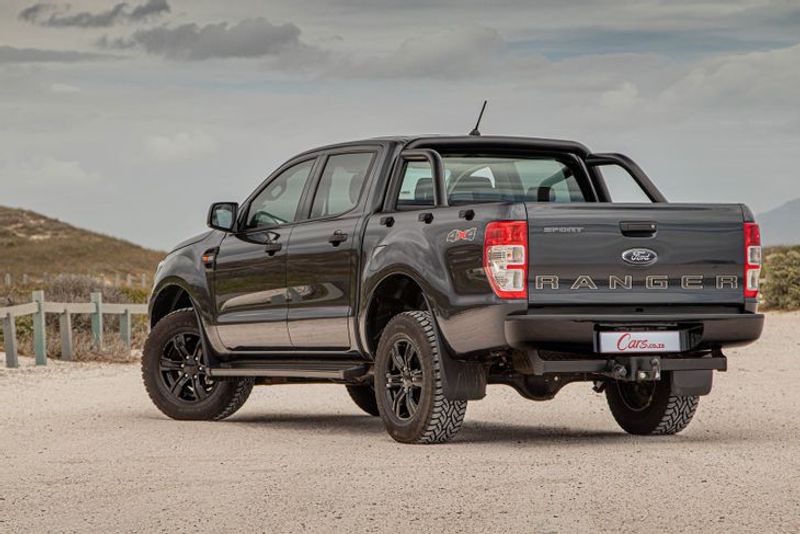
The Sport pack showing off the black grille, black wheels and black sports bar.
While many bakkie enthusiasts dream of owning a Ranger Wildtrak or -Raptor, the reality is that the asking prices of those flagship bakkies have reached astronomical heights. This is not a purely Ford problem as top-spec offerings from Volkswagen and Toyota have both skyrocketed, with the former being oh-so-close to the R1-million mark. Double-cab bakkies aren't only luxurious indulgences for South African consumers, however. Granted there's been a shift towards lifestyle use, but the core roles of business and utility remain. The price band for the Ford Ranger is enormous, it starts at R328 000 and stretches to R888 900. The lower end of the scale is dominated by industrial-spec workhorses, but what if we told you that mixing business with pleasure was not just a cliche?
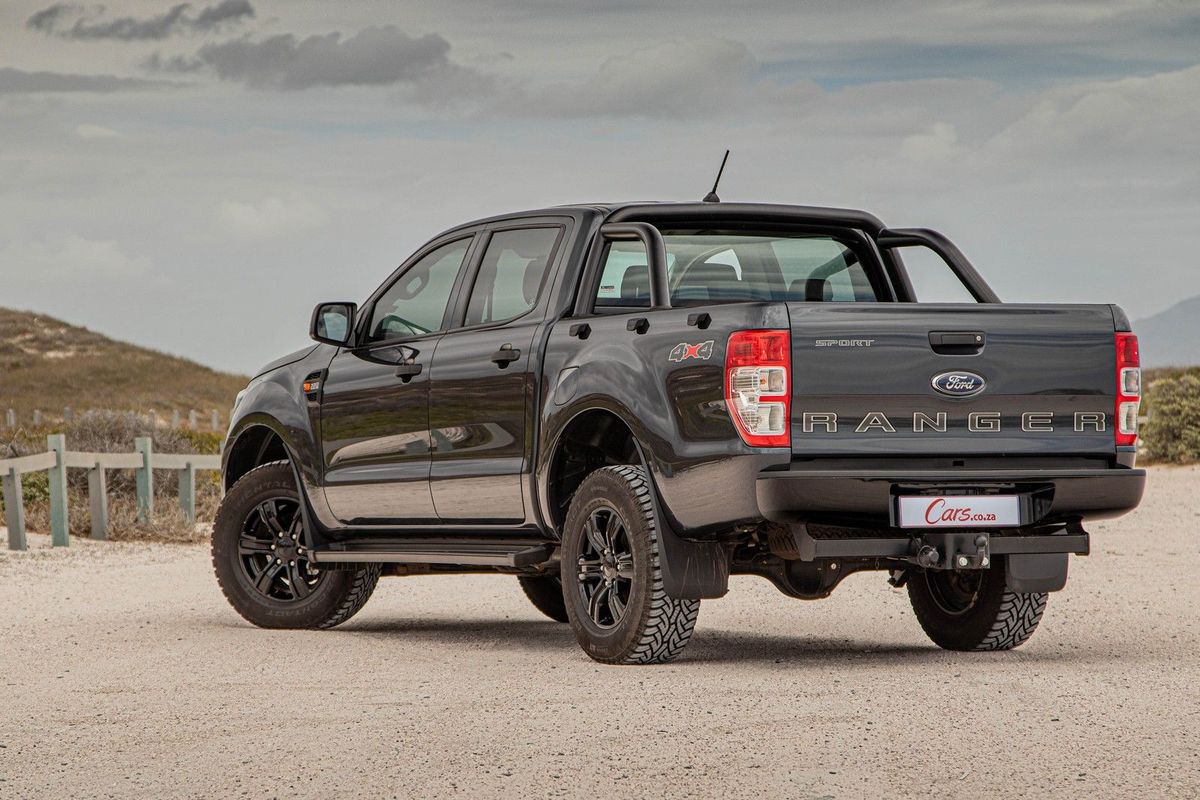
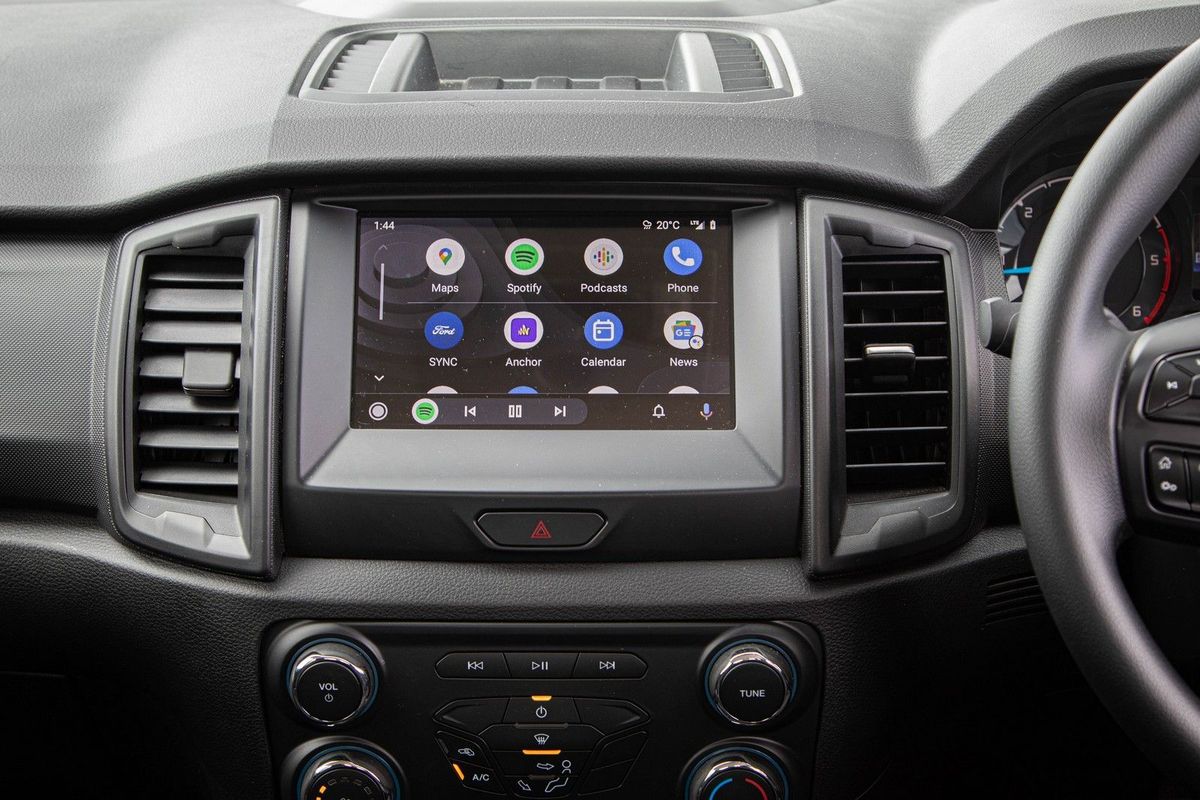
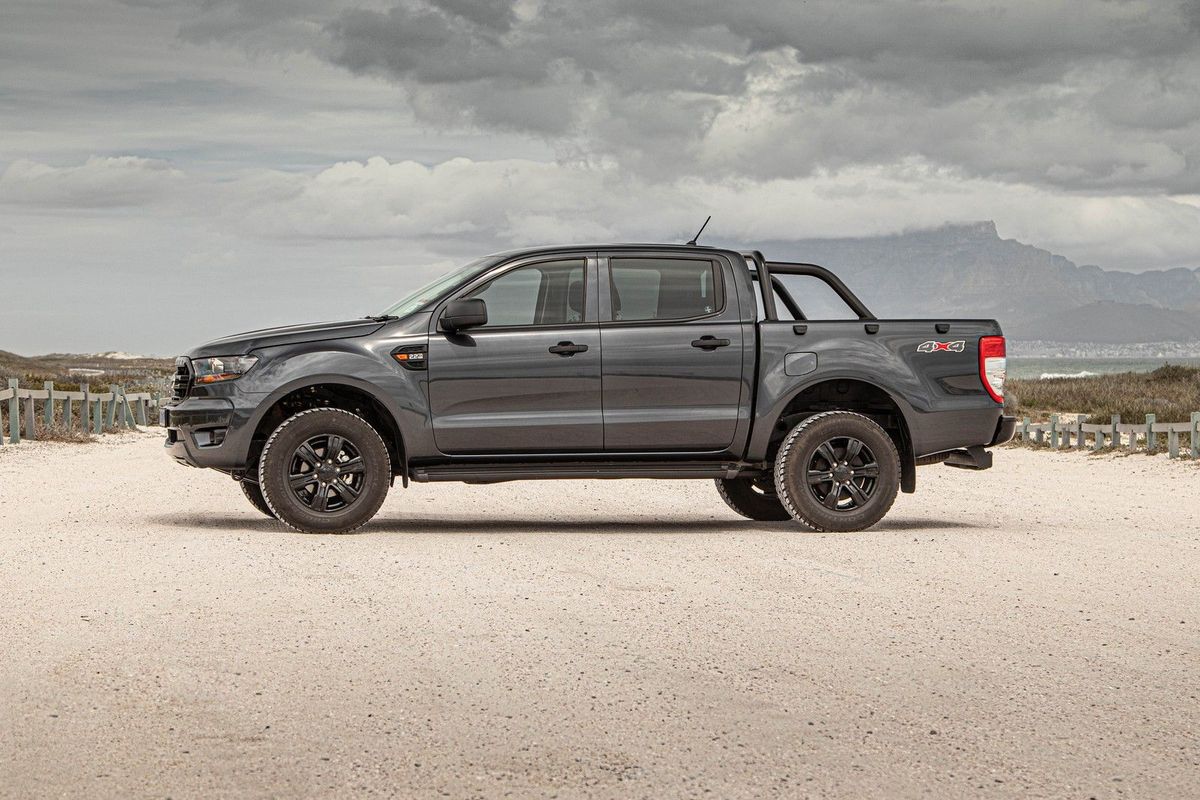
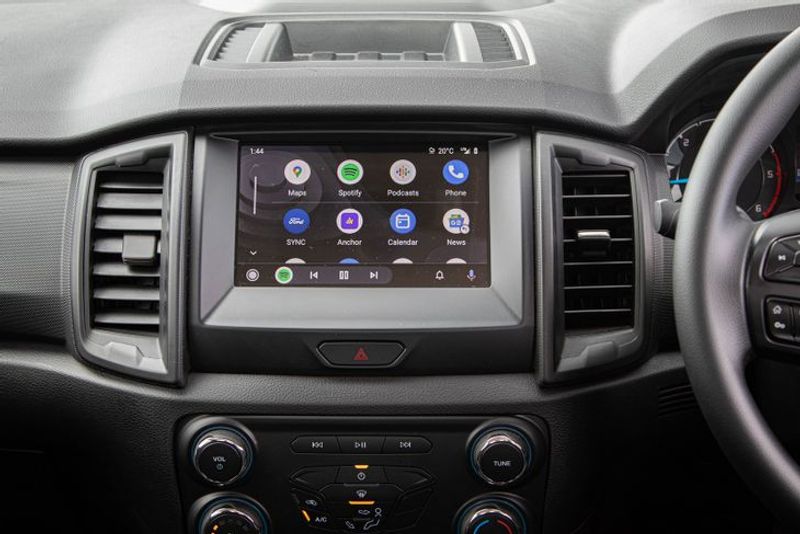
Ford recently introduced a Sport pack for its XL-grade Ranger derivative. This is not a vehicle we'd usually get for testing as it is primarily a workhorse, but the addition of the Sport pack brings a lifestyle edge that notably broadens the bakkie's appeal. The XL Sport treatment incorporates a gloss-black grille, with a matching sports bar, rear bumper and 17-inch alloy wheels, plus the test unit was fitted with the excellent Ford SYNC3 infotainment system with Apple CarPlay/Android Auto connectivity. This modern unit replaces the rather basic system that comes out of the factory.
The package is a proper back-to-basics offering, but it doesn't feel bareboned. There's no modern Ford biturbo 2.0-litre diesel engine here, with the Blue Oval sticking with the tried-and-tested older-gen 2.2-litre 4-pot turbodiesel unit. Is this mutton dressed as lamb, or has Ford managed to make a compelling value-for-money product? Let's take a look.
How it performs in terms of…
Performance and ride/handling
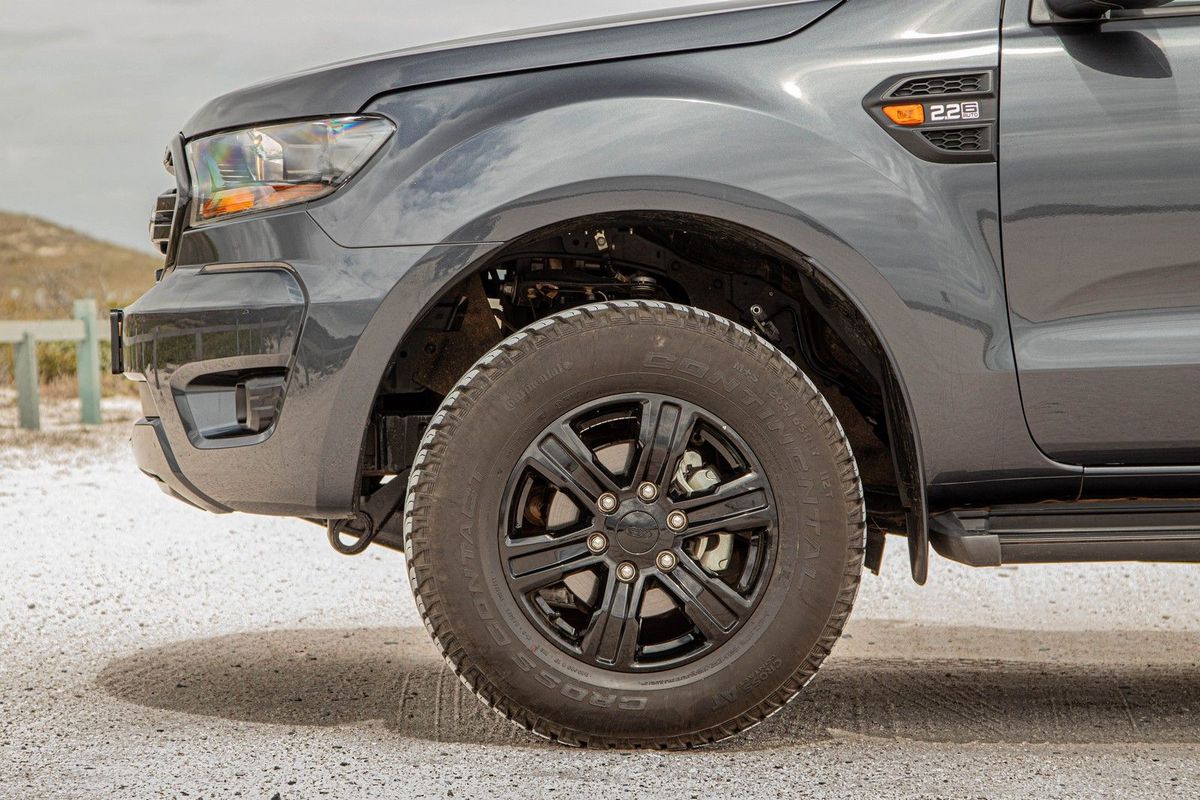
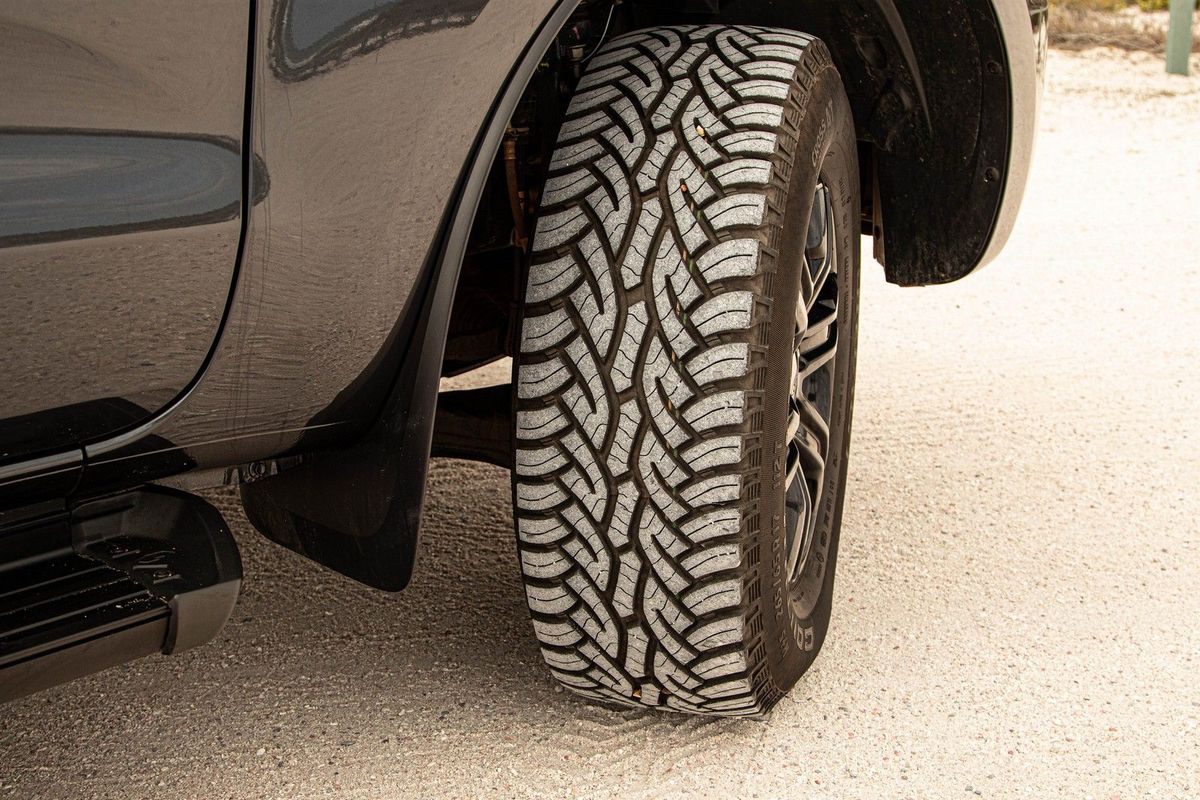
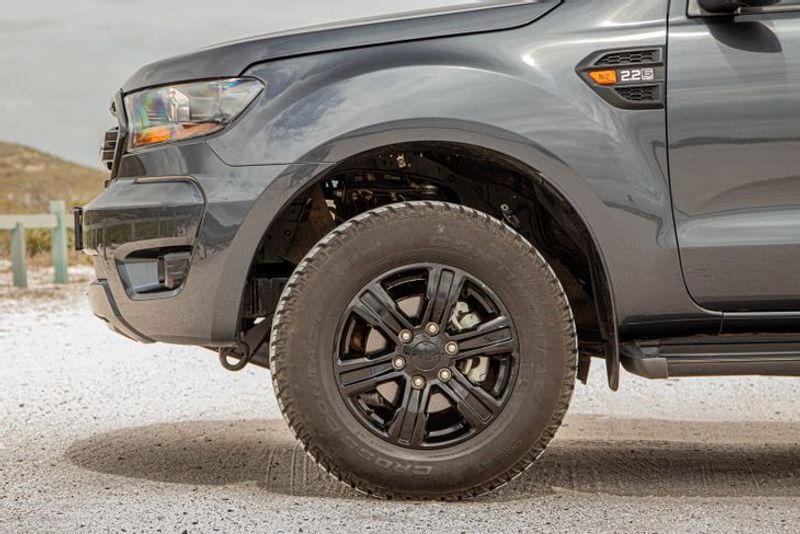
Offroad tyres aren't just for show – they can take serious punishment
Ford's new-generation powertrains are fantastic; the 2.0-litre engines offer a great blend of power and economy, and the 10-speed transmission intuitively selects the appropriate ratios at the right time. The Ranger XL Sport is different – it uses an older-spec motor and a 6-speed automatic 'box. The 2.2-litre 4-cylinder diesel offers up 118 kW and 385 Nm, which are sufficient outputs for day-to-day use. It's not the most eager of powertrains when you need maximum acceleration, but you never feel there's a shortage of grunt when overtaking on a national highway. The transmission may not be the fastest- shifting 'box in the business, but you have to remind yourself this is a blue-collared working-class hero. A manual gearbox is also available, but most of our readers are unlikely to go the 3-pedal route.
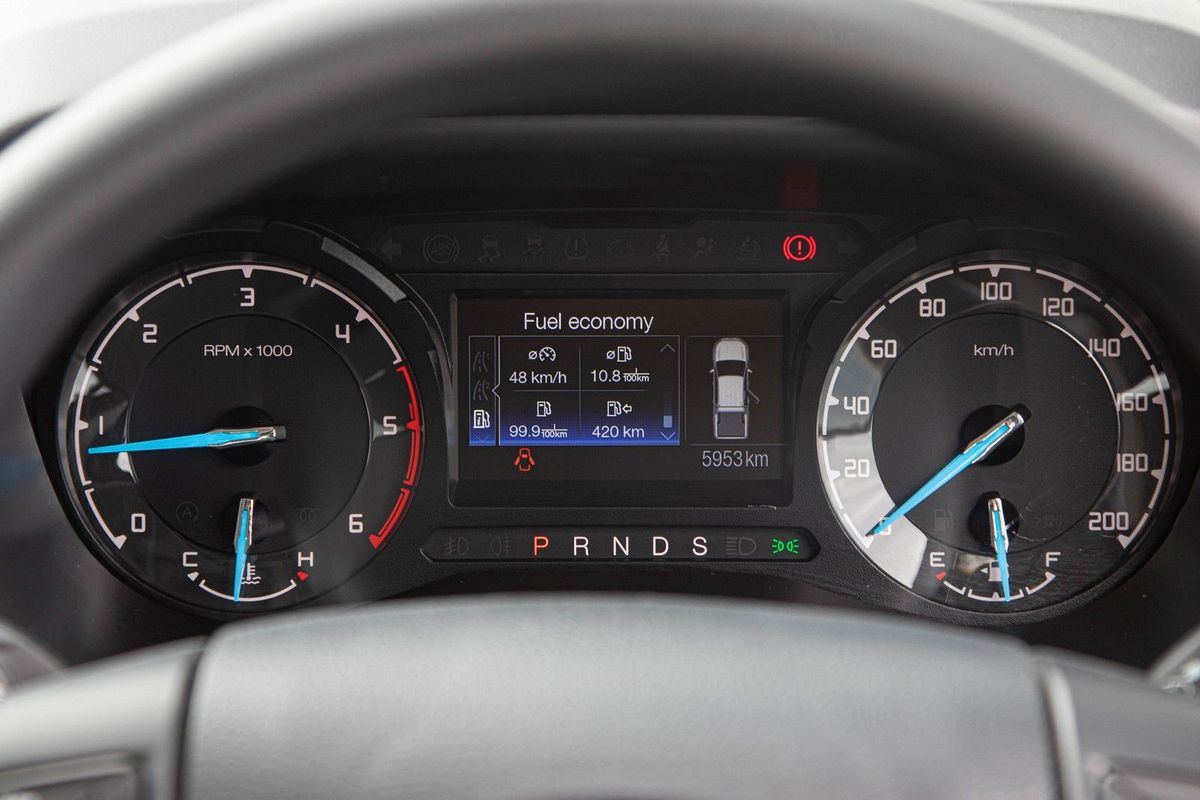
When it came to fuel economy, we were hoping to see returns of under 10 L/100 km, but excessive inner-city urban driving with traffic saw the consumption figure climb up. By the time the vehicle went back to Ford, the trip computer read 10.8 L/100 km, which was not ideal, but not unexpected. Add a few open-road trips into the mix and we reckon the Ranger XL Sport would dip under 10 L/100 km.
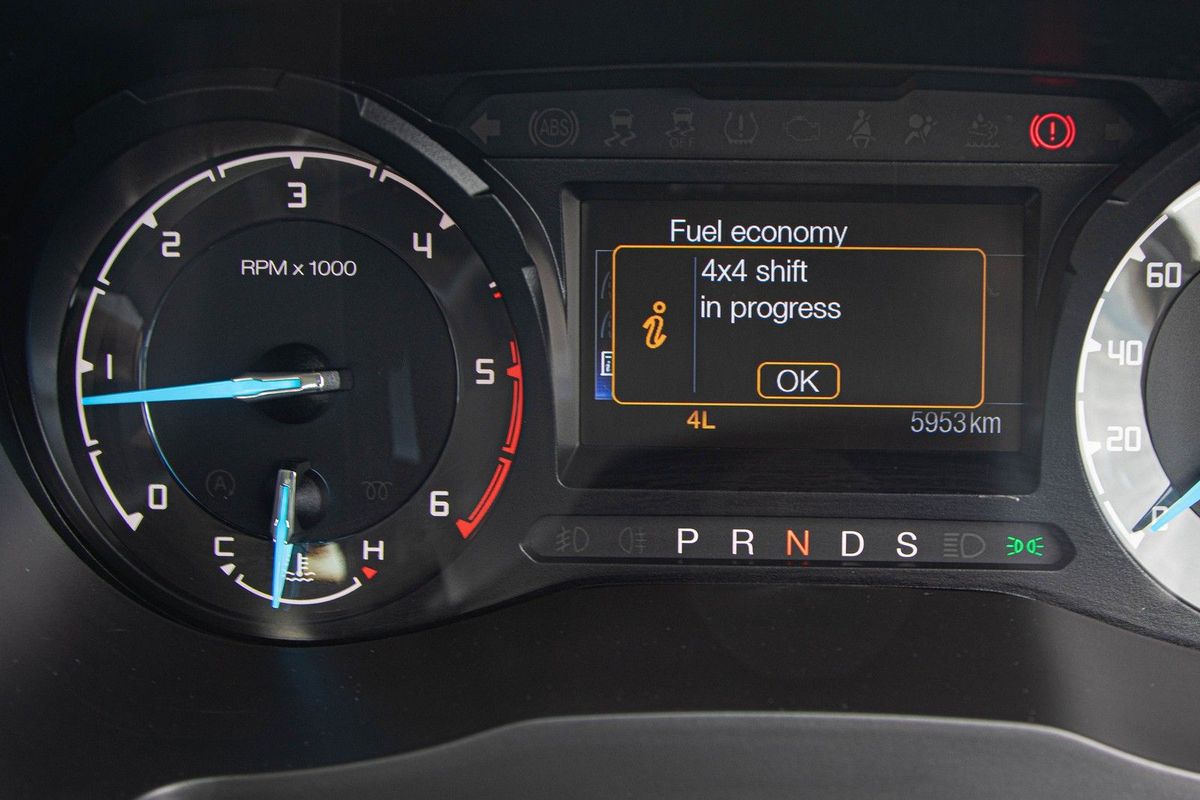
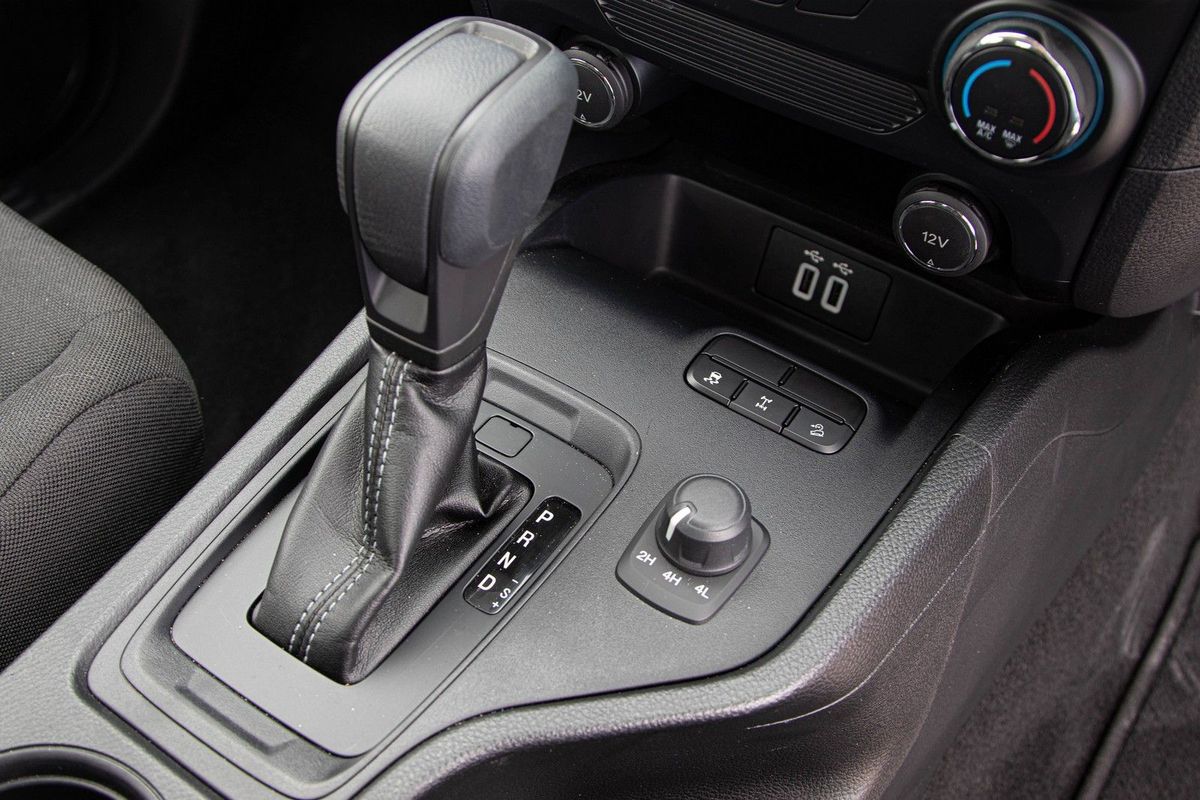
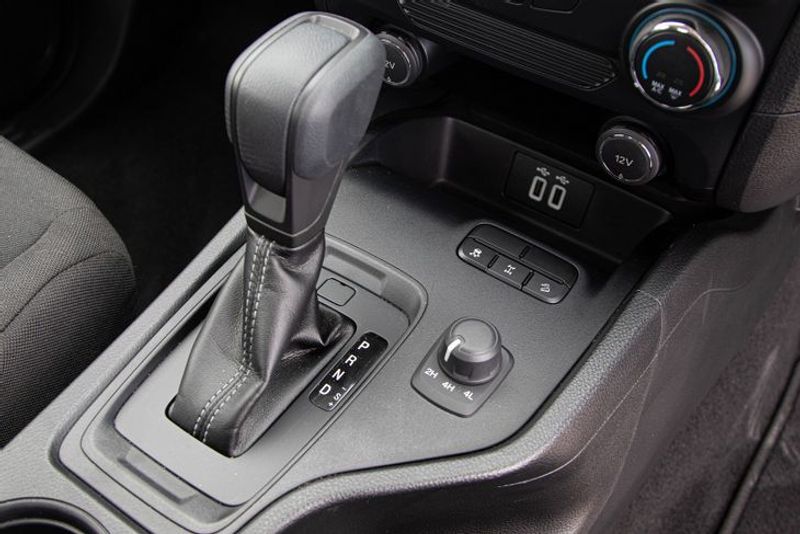
Despite its dapper cosmetic accoutrements, is the Ranger still a capable off-roader? We put this to the test on the vehicle's launch (late in 2020), when the Ford traversed with the kind of obstacles most Ranger owners are unlikely to encounter. The bakkie performed admirably; we even waded through a river to test out the claimed 800-mm water clearance. The 4×4 operation is simple: you toggle between 2 High, 4 High and 4 Low with a rotary dial (4L, of course, still requires you to come to a complete stop and engage neutral. The tyres (265/65 R17 Goodyear Wranglers) helped extensively on the launch, but interestingly, our test unit came with 17-inch alloys wrapped in chunky 265/65 Continental Cross Contact off-road rubber. While we didn't test those, they certainly looked the part.
The 6-speed auto works well and shifts smoothly. Note the 4×4 rotary dial, lockable diff, hill descent control and twin USB ports. Sorted!
With such extensive off-road experience under our belt, we conducted more of a "real-world test" of the Ranger in and around Cape Town. Usually, specialised off-road tyres produce unpleasant levels of road noise on asphalt surfaces, but we're happy to report the Ford Ranger XL Sport didn't seem to generate any more tyre rumble than a double-cab bakkie shod with standard tyres. On longer trips, when travelling at higher-than-average speeds, the rubber did make its presence known, but the hum was drowned out by some of our favourite road-trip tunes played through Spotify and Android Auto.
As far as ride quality is concerned, the Ranger is a body-on-frame double-cab bakkie, remember, so when unladen, the rear end can jiggle about, but that's to be expected. In case you don't know, when there's no weight on their leaf-sprung rear axles, bakkies can bounce, jiggle and shimmy at higher speeds. While it'd be impossible to eliminate this characteristic entirely, the latest Rangers in XLT and Wildtrak guise have received some tweaks to the suspension to dial this out with mixed success. The Ranger XL Sport has none of this and it feels old-school, but at this price point, we can't complain.
Exterior design & Packaging
The Ranger XL is, arguably, as basic as it gets when it comes to exterior execution, but the Sport pack adds some notable visual updates that ramp up the Ford's road presence/kerb appeal. We've already mentioned the off-road-specific tyres, which are really great from a visual point of view, but their chunky sidewalls are also likely to withstand some serious pothole impacts.
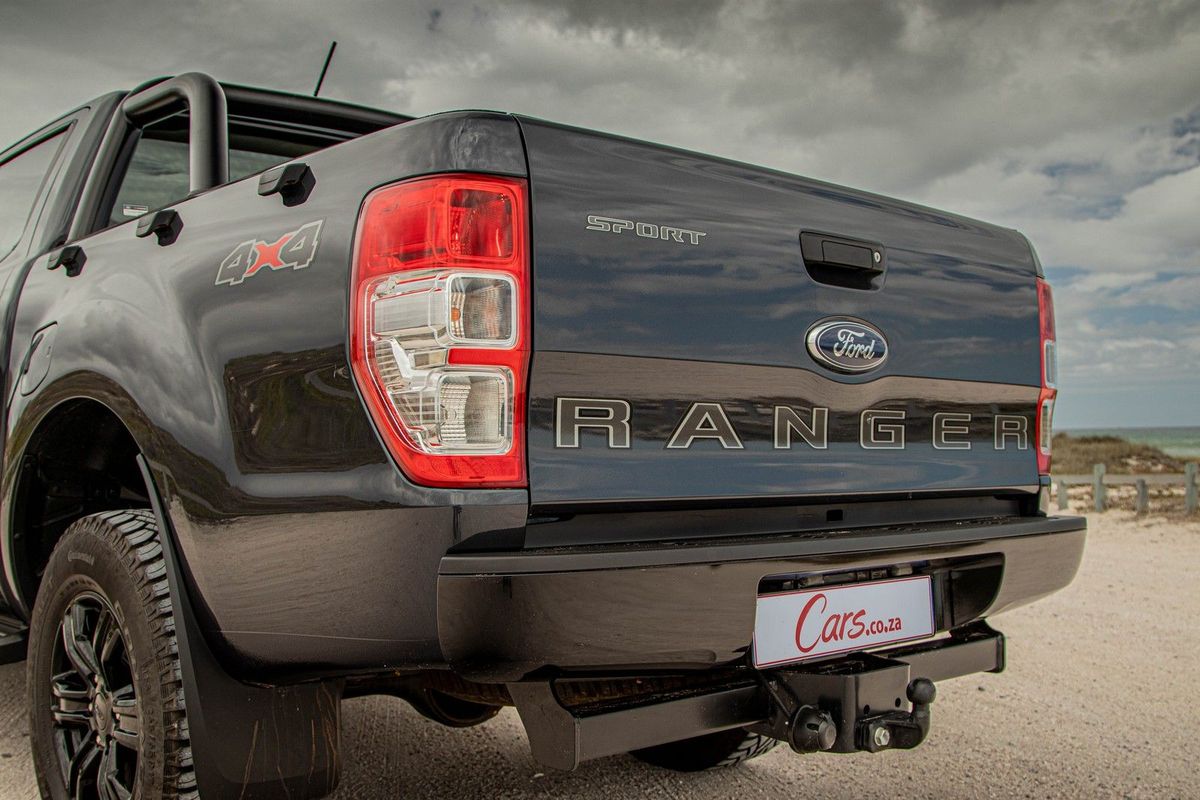
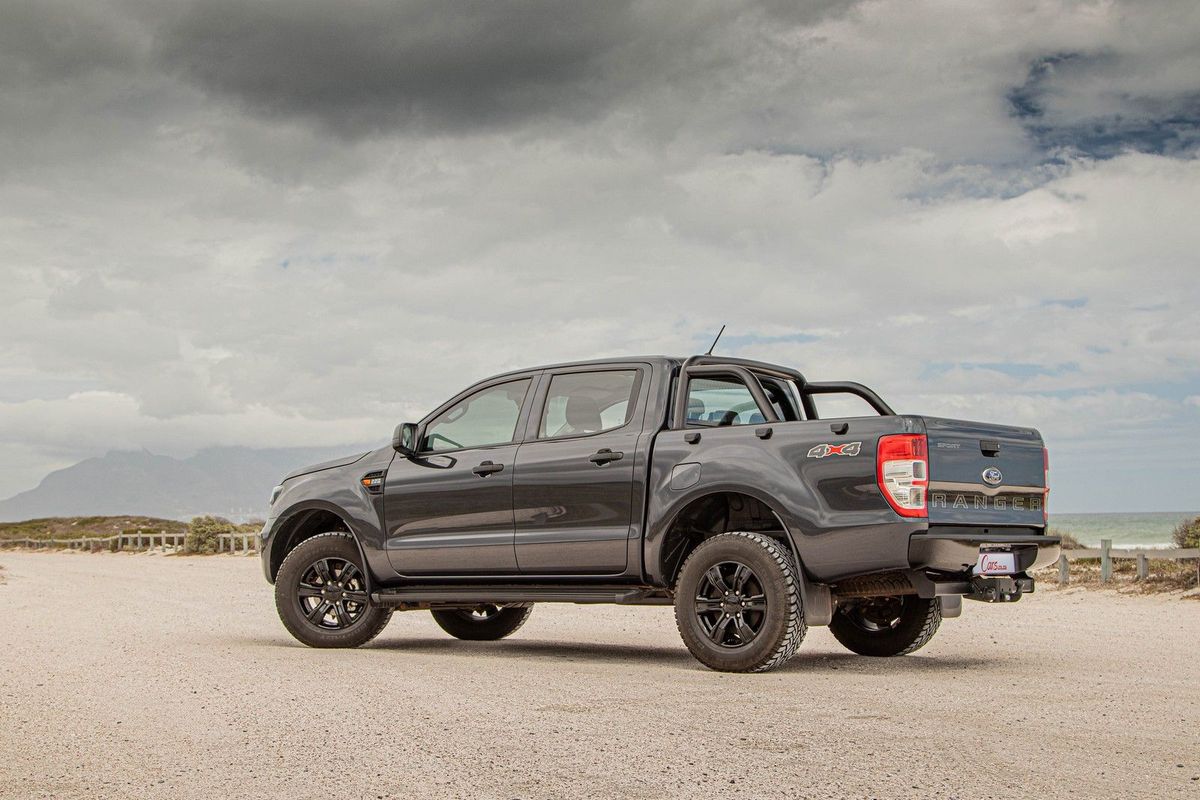
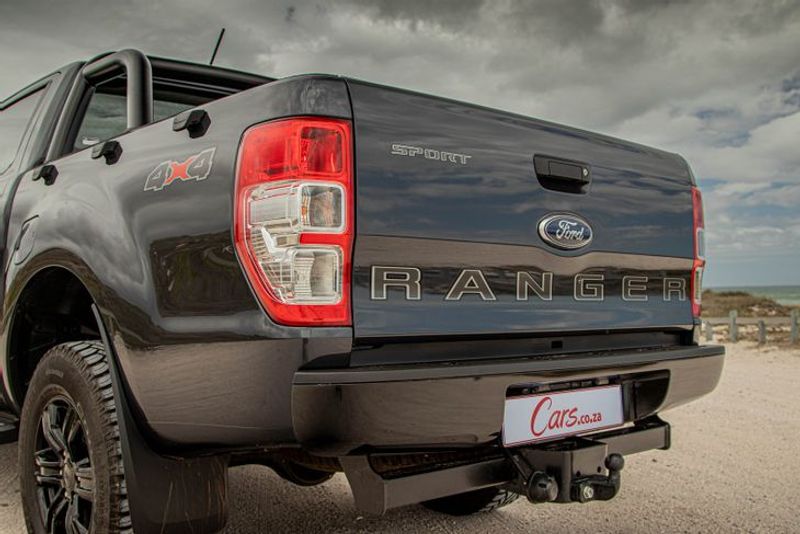
The 17-inch Panther black alloy rims also give the vehicle a lifestyle edge compared with the standard bakkie's stock wheels. There's a big black gloss grille too and we'll bet that'd be an imposing sight in other motorists' rear-view mirrors! A black rear bumper has been fitted, as well as a tubular sports bar. Customers can also opt for black side steps for R5 000. There's a nice sport badge on the rear too.
A subtle Sport badge and slightly different bumper are the key visual differences
Interior execution and features
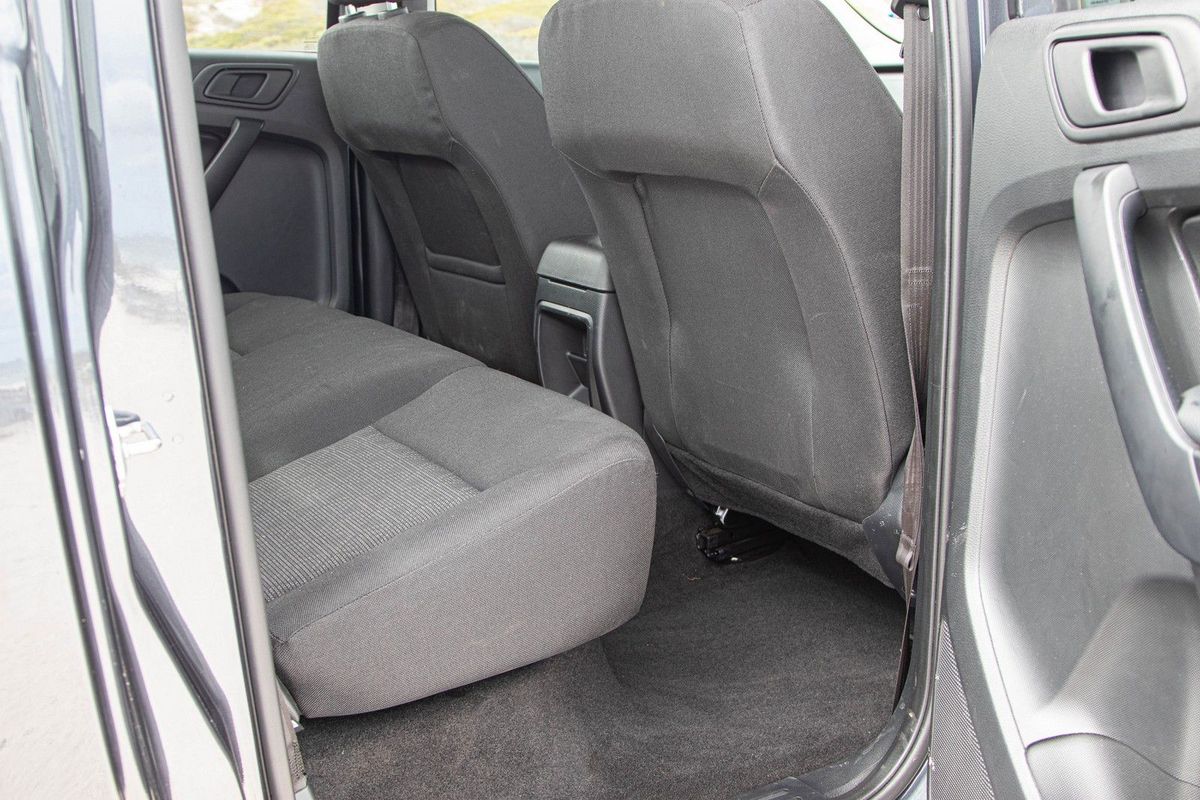
Given its workhorse origins, it would be rather unfair to expect the XL Sport to have a luxury level of interior spec, but just about everything you'd need in terms of mod cons is present and correct. There is a simple unfussiness to the cabin layout, but some may be put off by the extensive use of cheap-looking and cheap-feeling plastics. This is the bottom-spec Ranger, however, so you can't be too demanding.
Everything you'd need is here. Manual air conditioner at full power for those hot summer days.
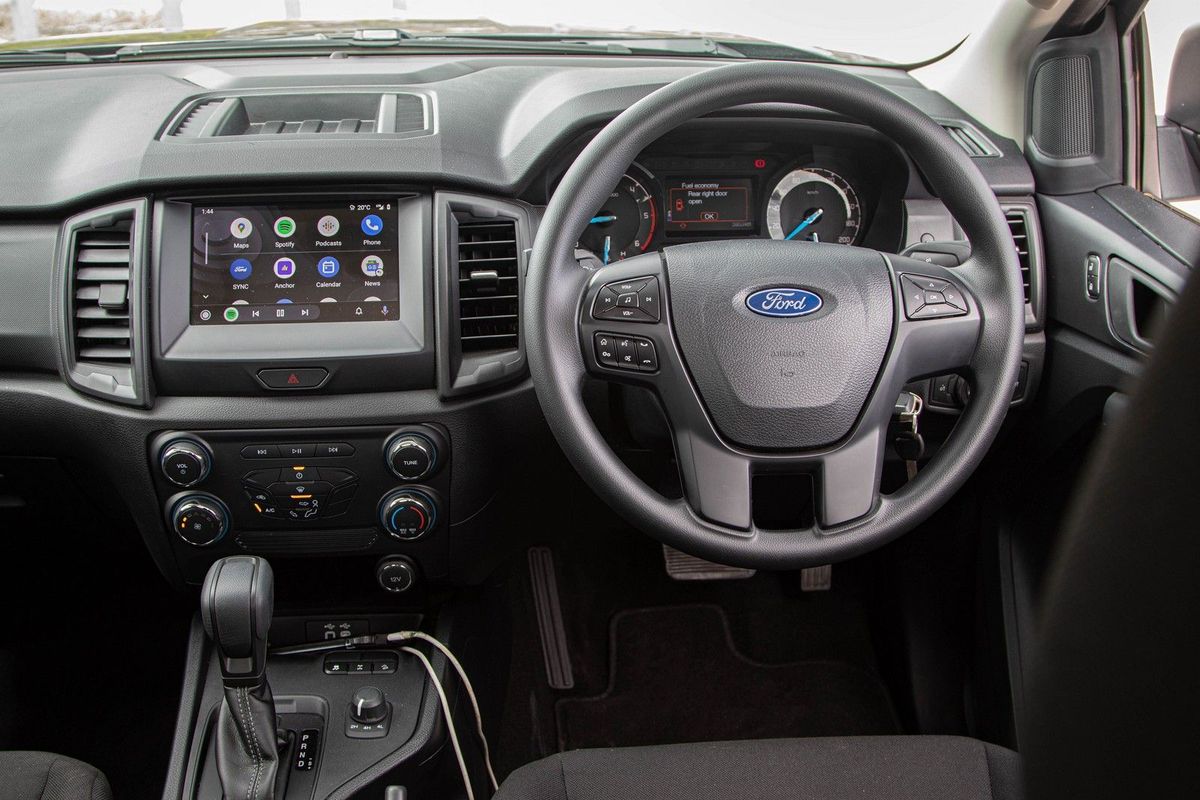
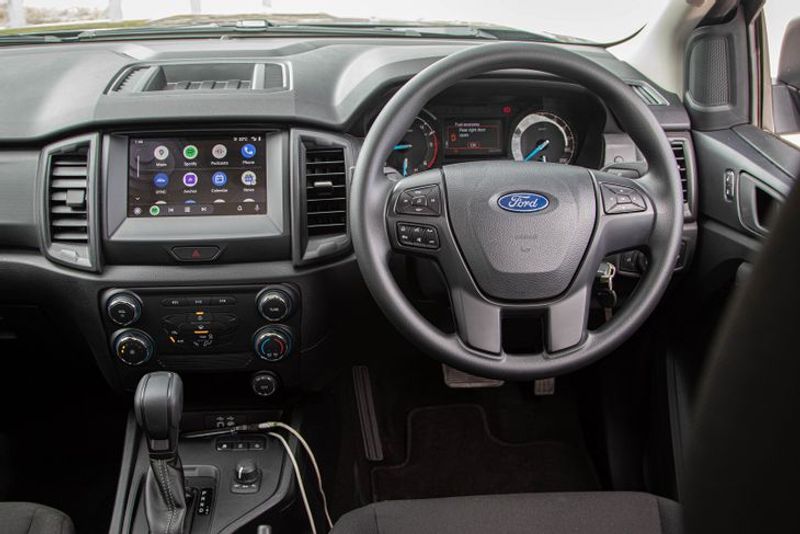
We understand this is a basic offering, but the lack of rear parking sensors in something as large as a double-cab bakkie may cause many stressful parking situations. Thankfully, this is available as an extra-cost option. In terms of the requisite features, there's air conditioning, fabric seats, front/rear electric windows, remote central locking, aux/USB connectivity, as well as daytime running lights. The arguably class-leading 8-inch infotainment system was fitted to this vehicle and for R6k, we'd heartily recommend going this route as it adds hands-free telephony, music streaming and navigation into the mix.
You cannot even begin to compare the standard infotainment unit to the SYNC3-equipped system, they're light-years apart. Given its hands-free operation, which is safer to operate, we're in full support of it. Voice command is supported and works well. Saying, 'Hey Google, navigate home' will activate Google Maps and navigation. Other instructions, like asking for music from your favourite band on streaming services, work well and the system will even read out WhatsApp messages and allow you to reply, all without your hands leaving the 'wheel.
Android Auto in operation. Simply connect your device via Bluetooth and USB port, and you gain an array of additional functions.
Price and after-sales service
The XL Sport Pack is priced at R16 500, the optional 8-inch infotainment system costs R6 080 and the dealer-fitted side steps command an extra R5 050. All in, our 4×4 auto test unit was priced at R559 500. The Ford Ranger is sold with a 4-year/120 000 km warranty, 6-year/90 000 km service plan, 5-year/unlimited km corrosion warranty, and 3-year/unlimited km roadside assistance.
An honest and hard-working bakkie that does the basics right.
Given the difficult financial climate, we applaud Ford for offering prospective buyers a cost-effective way to upgrade the versatile Ranger XL. Despite its basic underpinnings, there's something refreshing about an honest and uncomplicated vehicle that is fit for purpose. The Sport pack gives the bakkie a welcome image boost, but our favourite part of this kit has to be the wheels. Not only do they look the part, but those thick-walled off-road tyres should soak up the horrendous swathe of potholes littered on our roads. Price-wise, the XL Sport significantly undercuts its flashier XLT and Wildtrak siblings and while more expensive Rangers offer newer powertrains, more refinement and extra creature comforts, the XL Sport offers 75% of that experience at a pocket-friendlier price. That's a win in our books.
You could always look to the demo and pre-owned market too, where significant savings are to be had. The recently revised Toyota Hilux Raider and all-new GWM P-Series are the Ranger XL Sport's key rivals. The former offers legendary reliability and the after-sales backing of a 3-time #CarsAwards Brand of the Year winner, while the GWM is keenly priced and well specified, but still an unknown quantity on the local market. Suffice to say, it's a huge credit to the Blue Oval that the Ranger remains a frontrunner given that the current generation of the bakkie has been on our market for almost a decade.
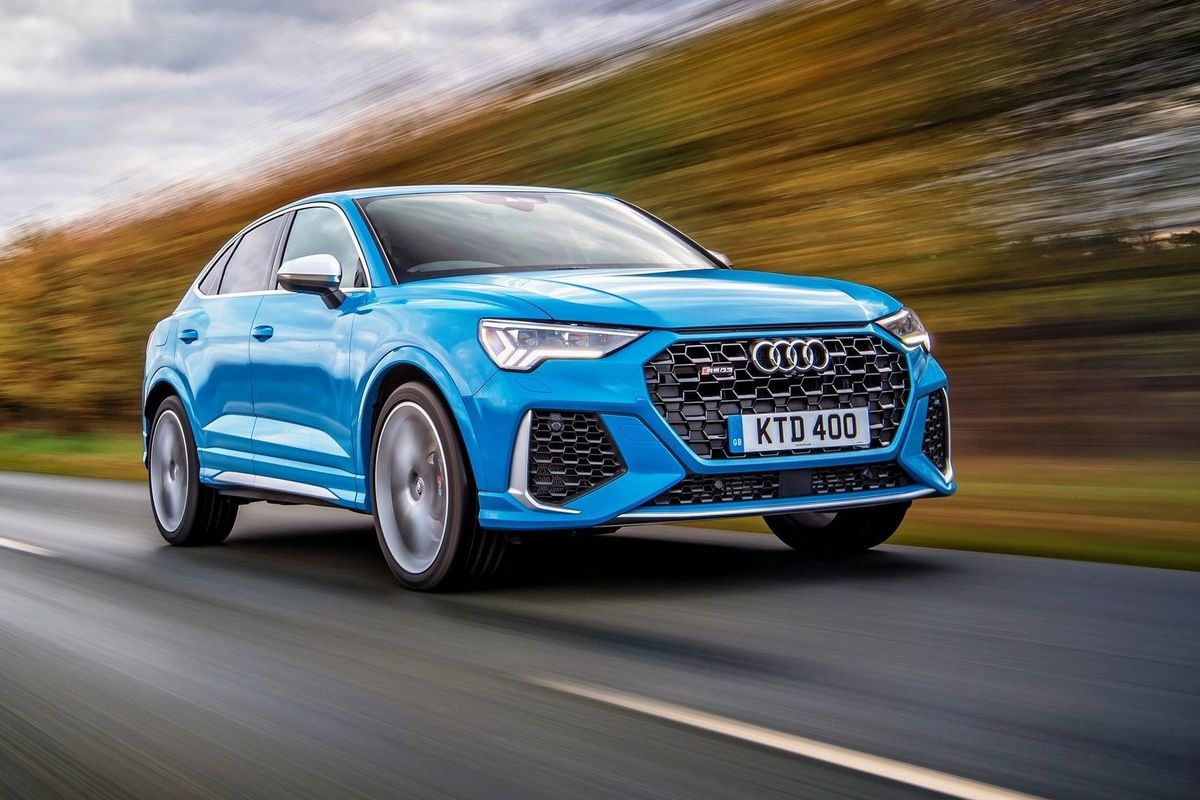
Specifications and pricing for the Audi RS Q3 and Audi RS Q3 Sportback have been announced ahead of the vehicle's introduction in the 2nd quarter of 2021.
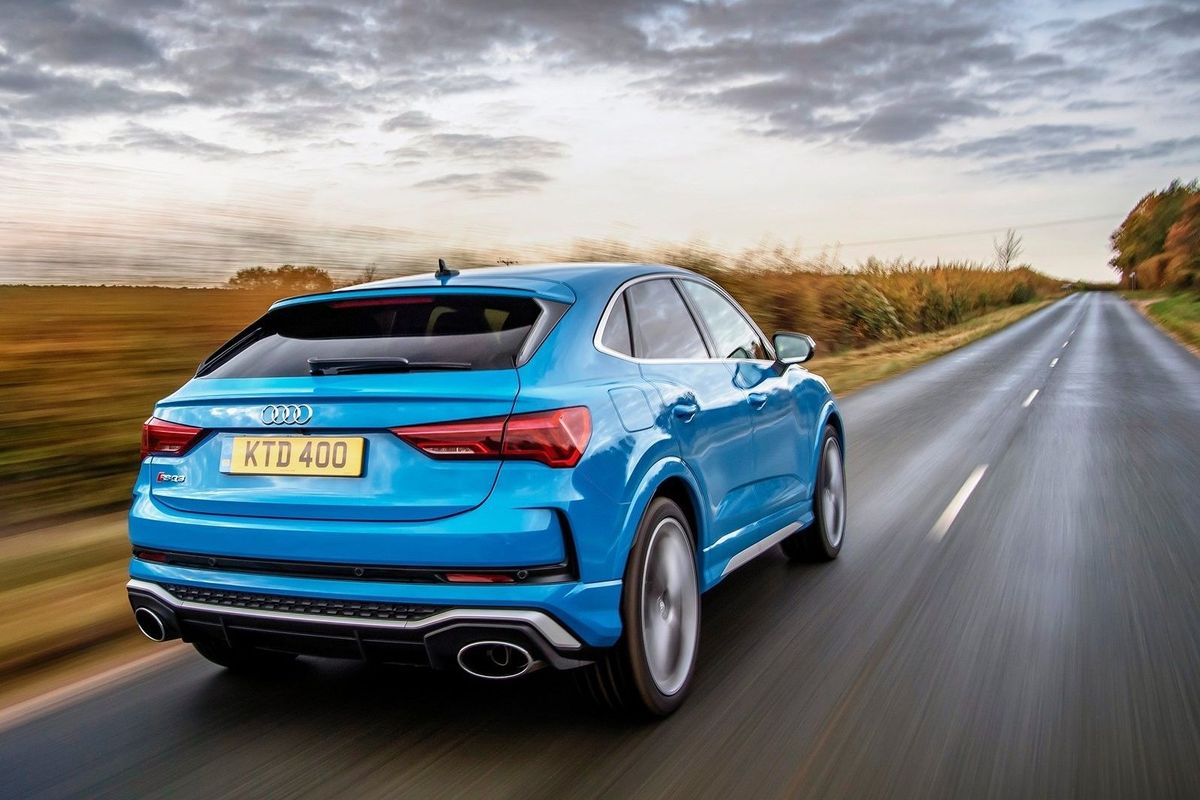
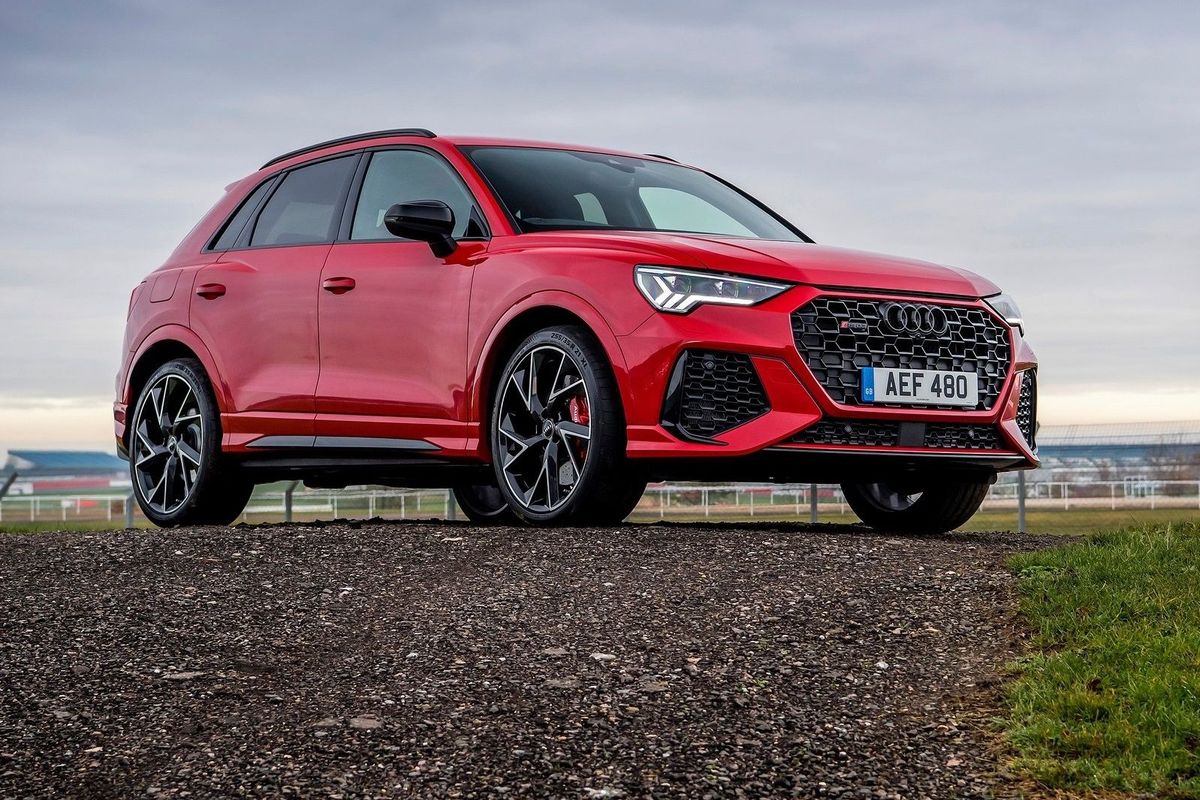
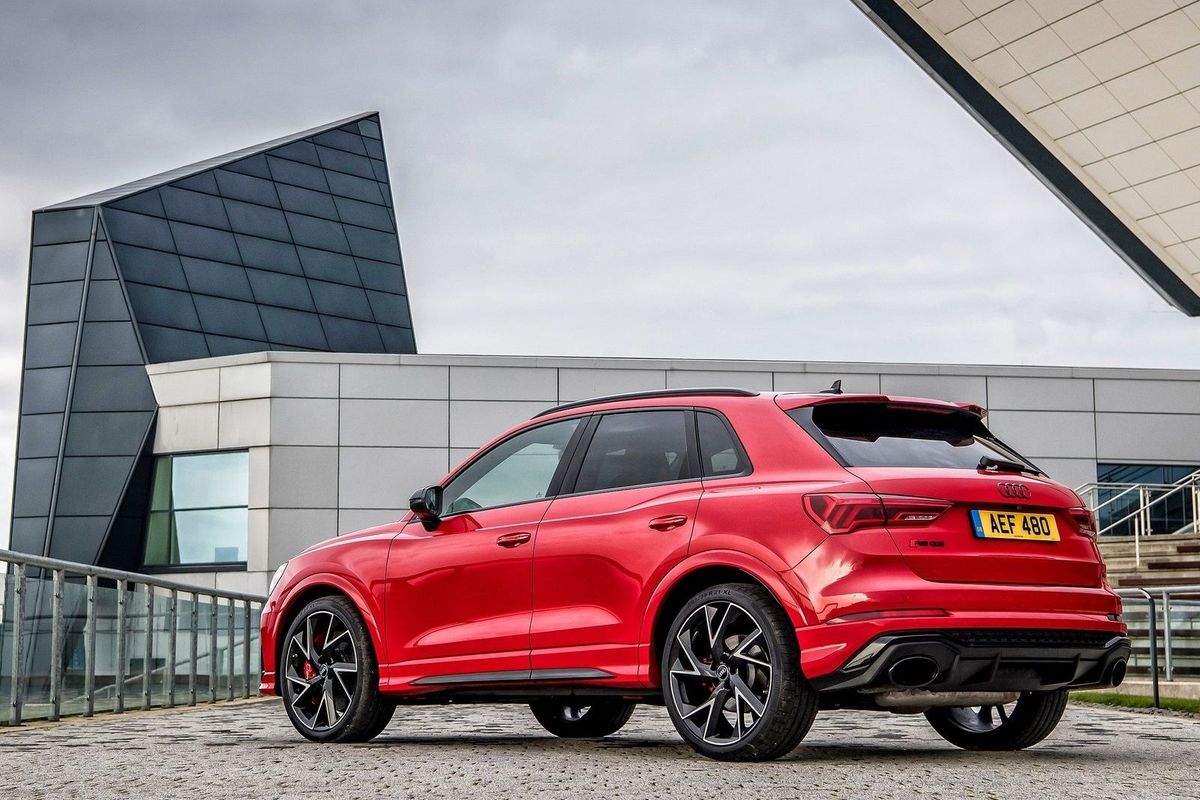
The Audi RS Q3 range is due to hit showrooms in the 2nd quarter of 2021 and pricing has been announced ahead of the duo's arrival. The key difference between the standard RS Q3 and its Sportback sibling is the body style. The former is a typical SUV shape, while the Sportback adopts the striking SUV-coupe look with a sloping roof line.
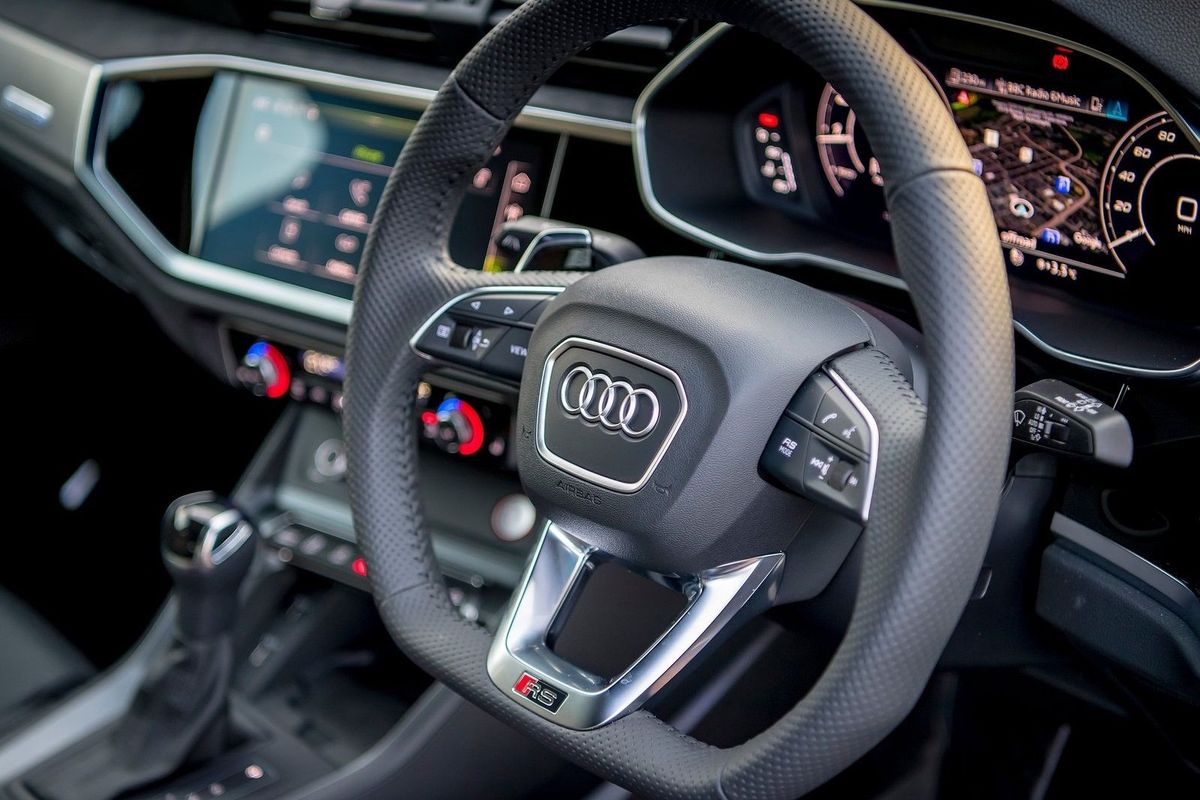
You'll be able to separate these flagship RS offerings over their lesser derivatives thanks to huge honeycomb grilles, large wheels, RS badging, and large oval exhaust tips.
As far as rivals go, the Audi RS Q3 is a rival to the Mercedes-AMG GLA 45 S. BMW doesn't have a direct rival as the X2 M35i doesn't quite have the power outputs to match its German compatriots.
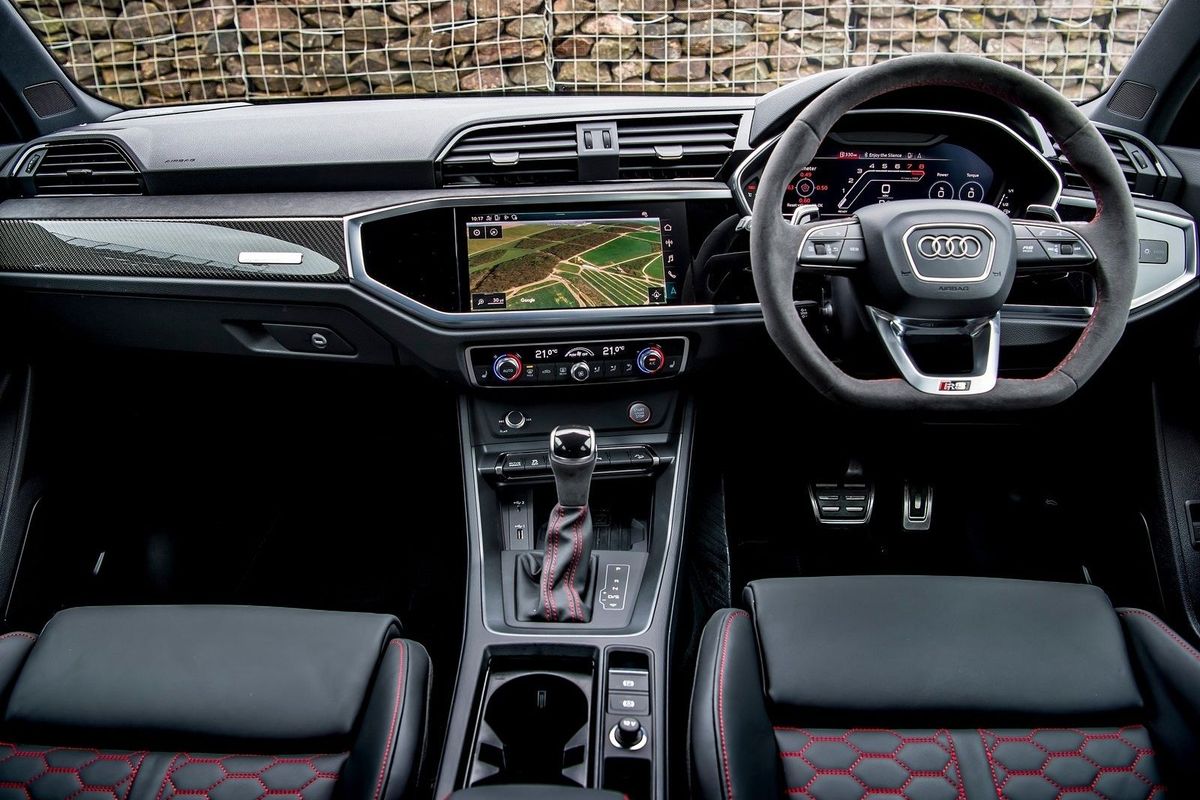
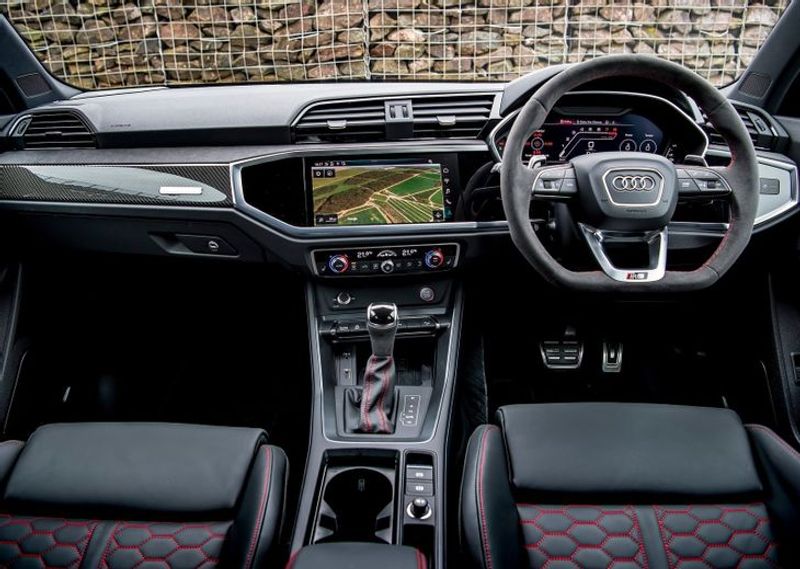
Inside, you can expect the latest iteration of Audi cabins complete with the haptic feedback touchscreen infotainment system and Audi's Virtual Cockpit digital dashboard.
Power comes from the turbocharged 2.5-litre 5-cylinder motor that we've experienced a few times in various RS3 versions, but in this application, power and torque are rated at 294 kW and 480 Nm. Audi says its sporty duo is good for 0-100 kph in just 4.5 seconds. Power is sent to all 4 wheels via a 7-speed S-Tronic dual-clutch transmission. The delicious 5-cylinder soundtrack can be enhanced through an optional RS exhaust.
The standard features list looks comprehensive, with Matrix LED headlights; comfort key; 21-inch wheels; RS sports seats; RS sports exhaust; fine Nappa leather with honeycomb stitching upholstery; Audi virtual cockpit plus; MMI navigation plus; lane departure warning; Bang and Olufsen premium sound system with 3D sound; progressive steering; rear view camera system; Audi drive select; and the Audi smartphone interface all fitted.
The Audi RS Q3 hits dealers from the 1st of April 2021 and is priced as follows (inclusive of all taxes) and comes standard with a five year Audi Freeway Plan.
As development work presses on with the all-new Range Rover, Land Rover Special Vehicle Operations has launched a pair of exclusive new Range Rover special editions created by its SV Bespoke personalisation team. These exclusive vehicles are confirmed for South African market introduction.
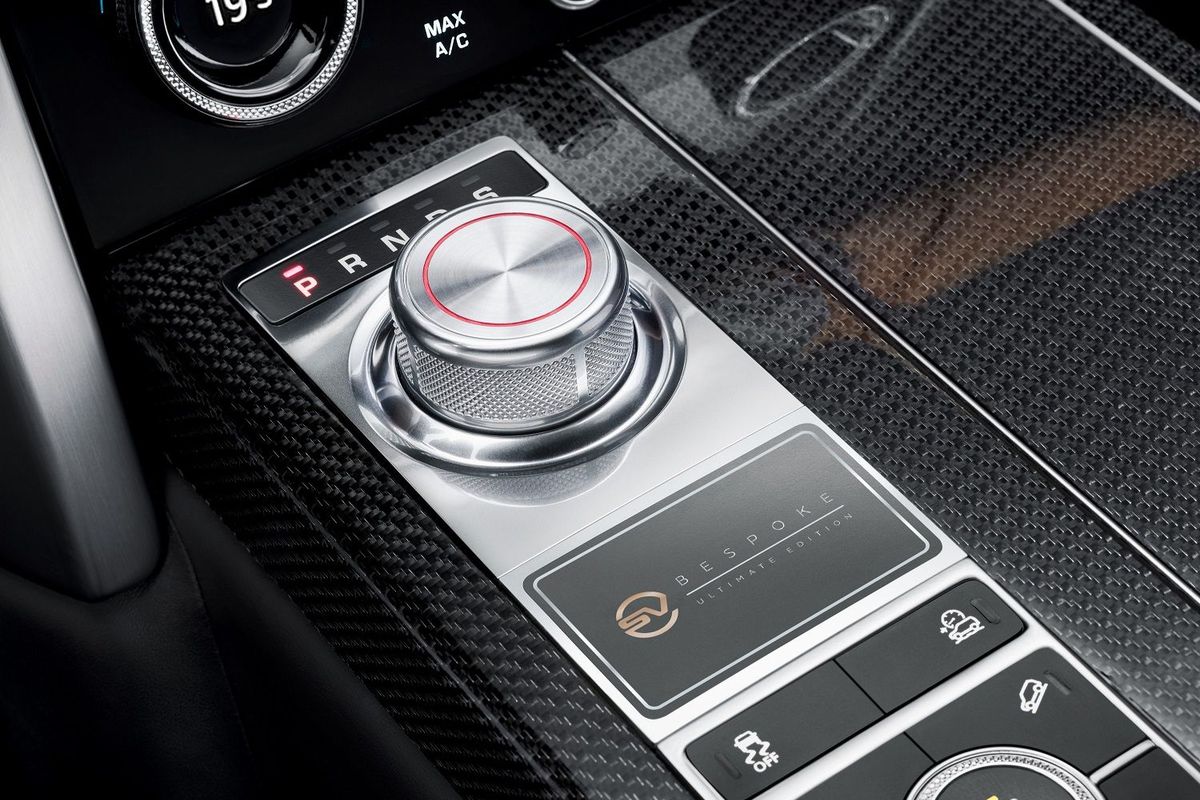
The full name is quite impressive; Range Rover SVAutobiography Ultimate and this takes customisation and bespoke fitments to its highest level. Finished off by the Special Vehicle Operations Technical Centre in the UK, these vehicles showcase what's possible when you want true personalisation.
“Range Rover has defined the luxury SUV segment for more than half a century, with our SVAutobiography models offering customers a world-class travel experience – whether driving, or being driven. These new Ultimate editions elevate that refinement and sophistication even further.” said Mark Turner, Commercial Director, Land Rover Special Vehicle Operations.
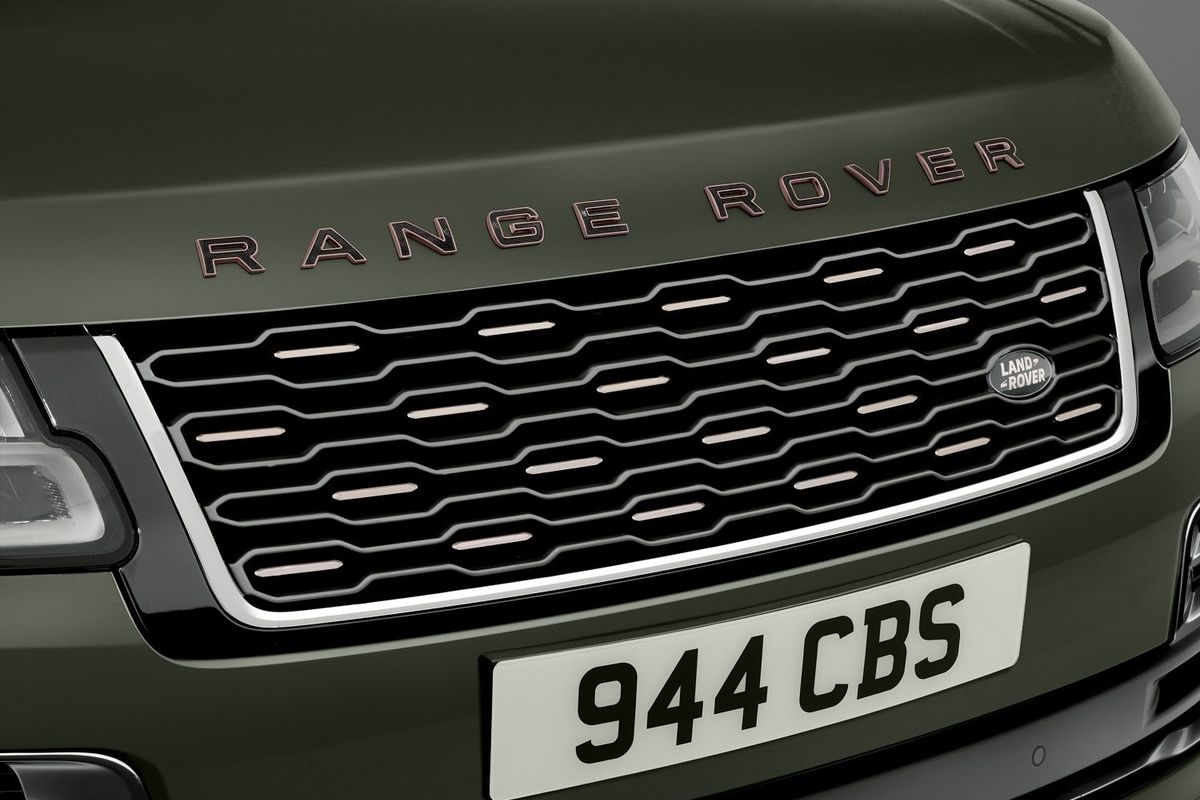
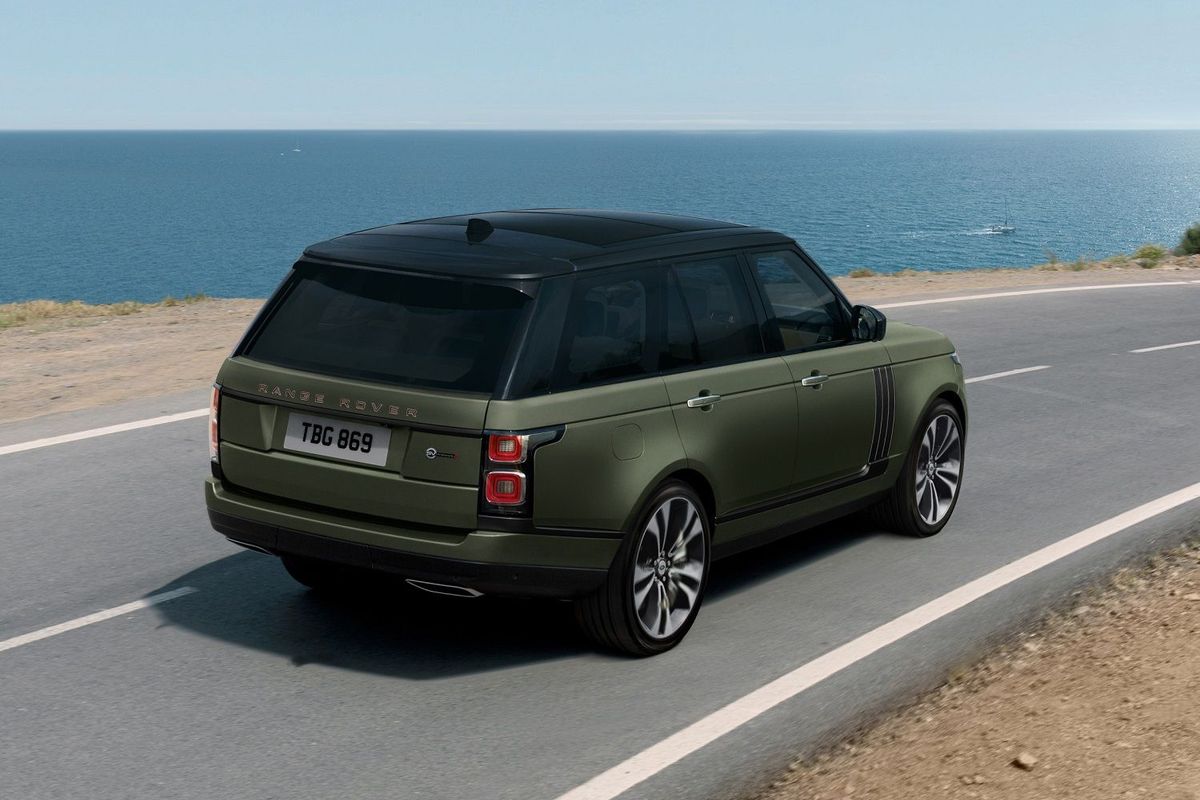
That colour for starters is totally unique. It's a satin-finished Orchard Green paintwork complemented by a Narvik Black roof and copper detailing. The badges are copper-edged and there's subtle SV badging inside and out. There's even illuminated Ultimate edition treadplates.
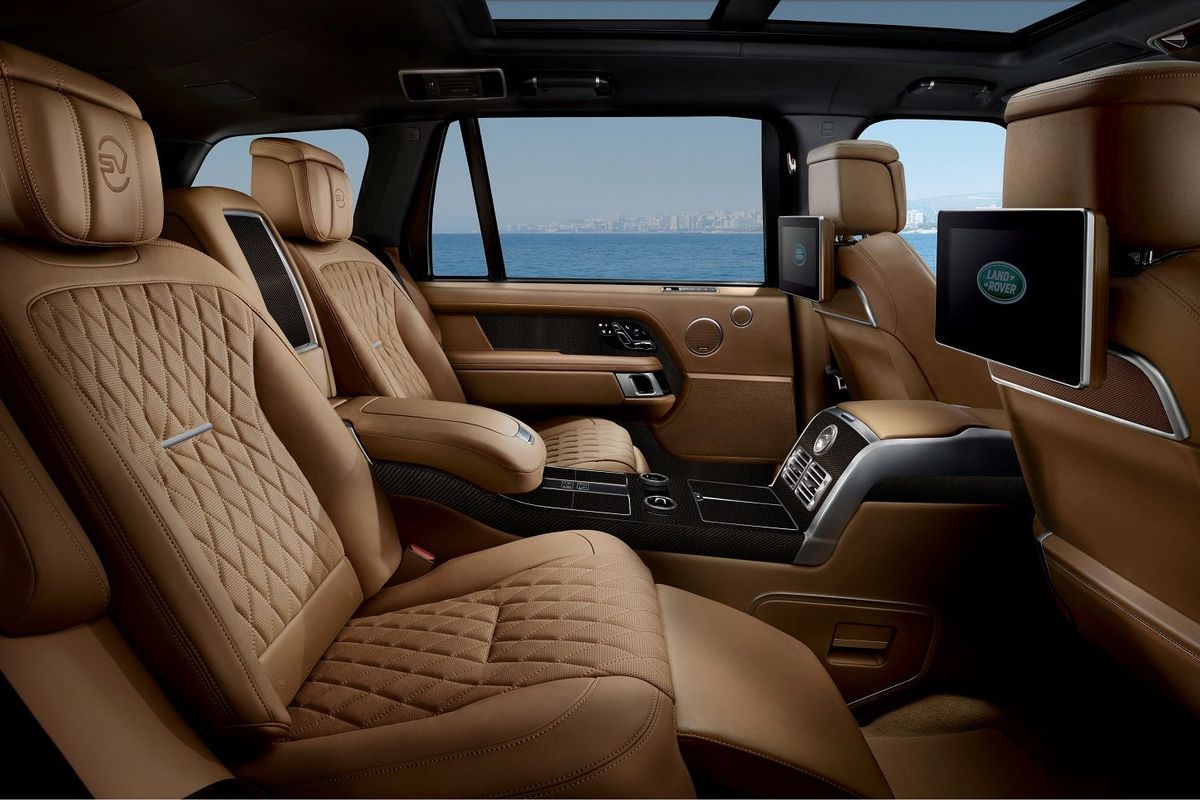
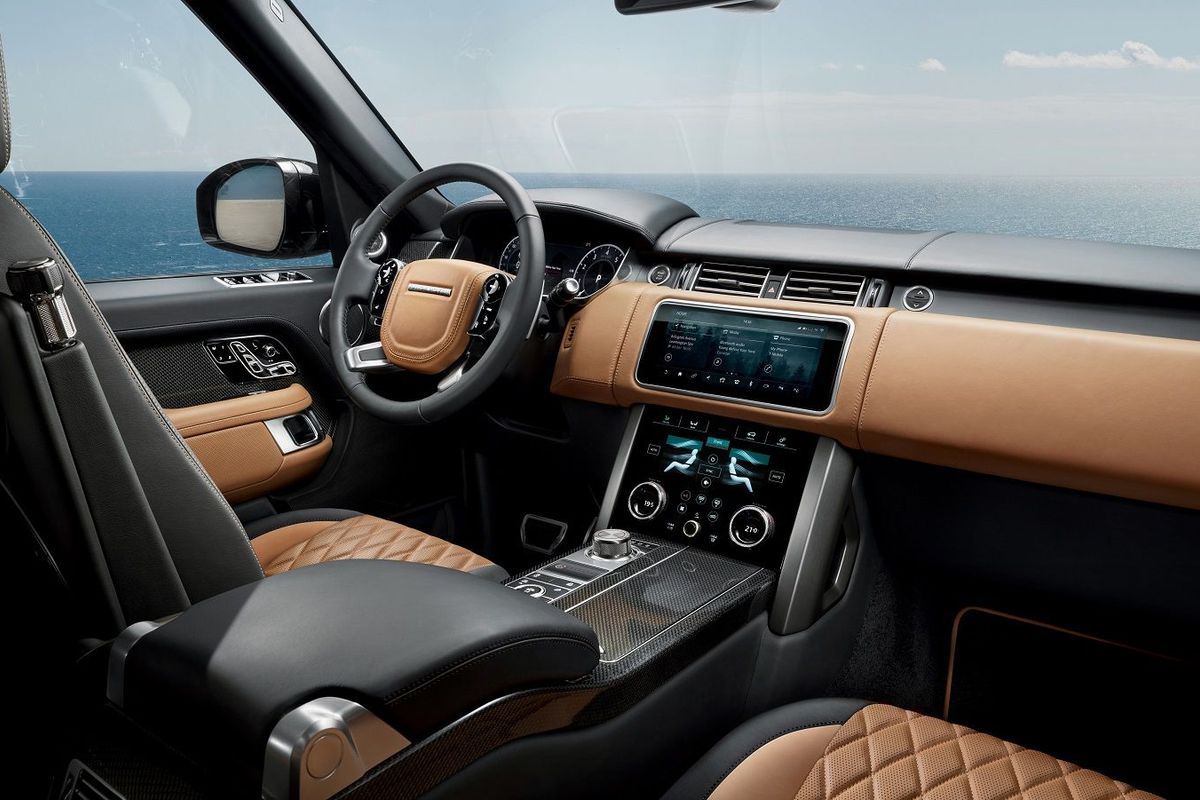
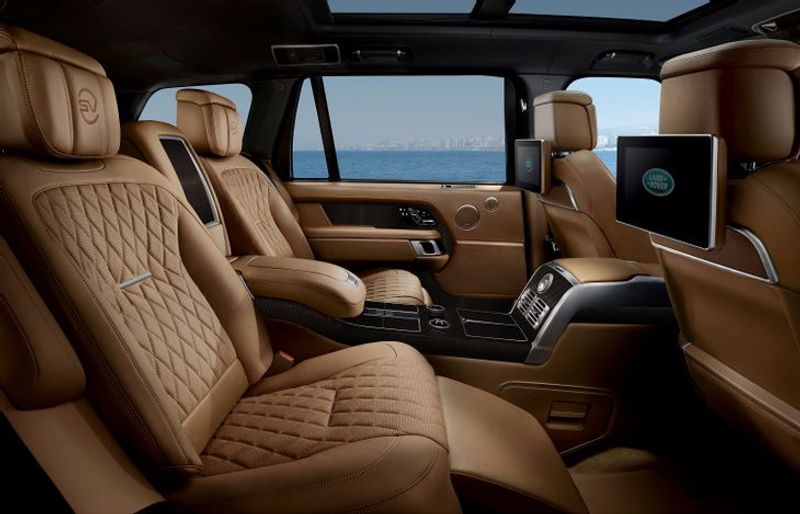
The SVAutobiography is long-wheelbase, meaning rear passengers are treated to exceptionally high levels of comfort and refinement. Reclining airline-style heated and cooled semi-aniline leather rear seats provide over 1.2m of rear legroom, hot stone massage function, plus calf and footrests for rear occupants. A full-length centre console with integrated Zenith timepiece, refrigerated compartment and deployable tables make it a potential office on the go. The Vintage Tan leather interior trim and Copper Weave Carbon Fibre finishers looks sensational, but Range Rover is also offering the ultimate leather from the Italian artisans at Poltrona Frau.
In terms of engines, there's a 416 kW supercharged 5.0-litre V8 motor, but if you're keen to show off your eco credentials, then we reckon the P400e plug-in hybrid should be your port of call. This vehicle is capable of driving up to 40 km on pure electric power alone. We reckon most will go for the fantastic V8 engine though and Range Rover itself says it's the most driver-focused of the pair.
You're properly spoilt in the back. Look at that legroom!
For BMW aficionados, an M3 badge was once the holy of holies, but since the 4 Series and M4 came along, it no longer is. Not only is the M3 lumped with its coupe sibling’s controversial grille design, but the Munich-based brand’s next model is likely to make the super sedan obsolete.
New Coke. It’s the most storied corporate blunder in modern history. In 1985, Coca-Cola infamously reacted to a successful campaign by its competitor Pepsi and decided to change the recipe for-, and branding of, the world’s bestselling soft drink. This marketing broadside was met with an unprecedented public outcry and plummeting sales. The extent of the disaster was such that 78 days after the launch of New Coke, Coca-Cola reverted to its old formula and launched Classic Coke.
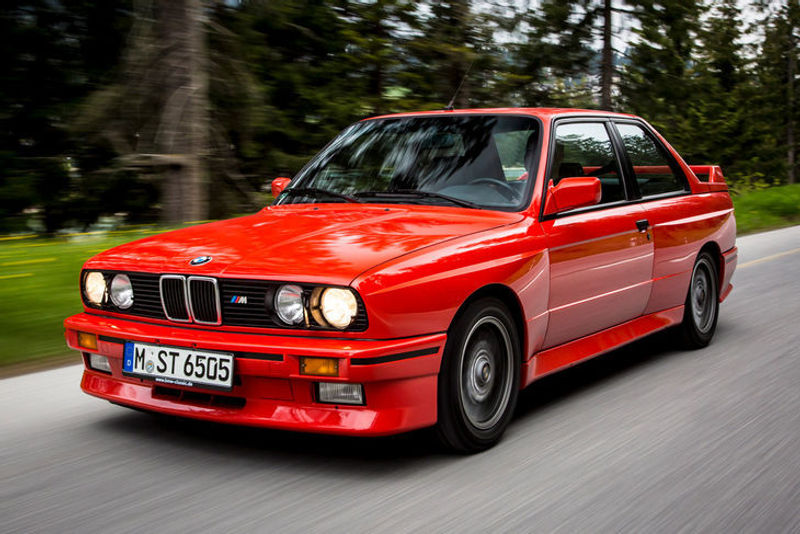
The original (E30-generation) M3 was the progenitor of BMW’s touring car championship-dominating race car in the ’80s.
Subsequently, a saying developed in the industry: “(You) don’t mess with Coke.”
In the automotive world, and more to the point, the sportscar market, the Porsche 911 is the closest equivalent of Coca-Cola. Launched in the Sixties (considered for replacement by the 928 grand tourer in the Seventies, but that never happened), the 911 is a rear-engined coupe that (to be unkind) looks a bit like a stretched VW Beetle; with or without turbos, air- or watercooled, rear- or all-wheel-drive, Porsche’s definitive sportscar’s basic packaging and elemental driving experience have remained constant. That is why it is a motoring icon.
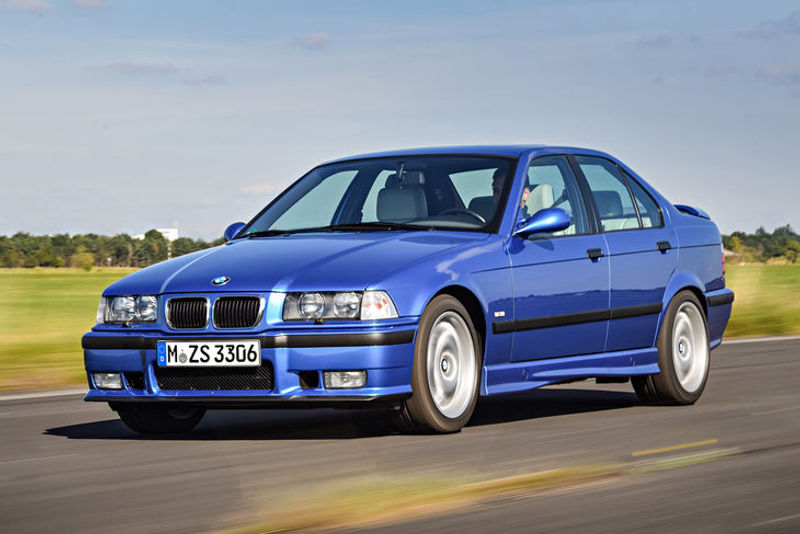
A 4-door M3 is not a new concept, even the 2nd-generation (E36-based) M3 had a sedan variant.
BMW M3, from hero to whipping boy
For BMW, the M3 badge is hallowed, at least it was. Launched in 1985, the boxy E30-generation M3 became world-famous by virtue of its giant-slaying abilities and touring car championship successes around the globe. When the 2nd generation (E36-based) M3 came out, BMW introduced sedan and cabriolet versions to broaden the sportscar’s already considerable appeal, then skipped the sedan version with the E46-generation, only to offer the E9x version in all 3 configurations yet again; they were endowed with the same motors and ‘boxes; an M3 was an M3, no matter what body it had.
When BMW decided to can the 3 Series Coupe and Convertible nomenclatures and replace them with 4 Series variants in 2013, including the Gran Coupe, which, incidentally, became the best-selling body shape in the range, “M3” became a rather awkward topic of after-dinner conversation.
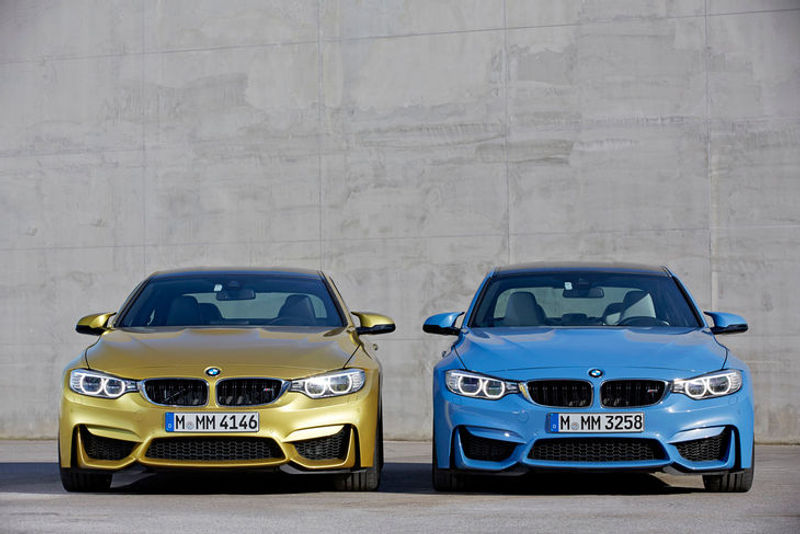
Having gone to the trouble of splitting the 3- and 4 Series, the front end of the first M4 (left) looked identical to that of the M3 (right).
You see, the “3” was supposed to denote a sedan product under the new naming regime, so from that point onward, an M3 badge could only feature on a 4-door M car, nothing else.
M4 m-shmore
The sedan and convertible variants of the M3 have always played second fiddle, in terms of sales, to the svelte coupe versions, so BMW effectively decided against leveraging its most revered nameplate by making the M3 exclusively a sedan. Then, after cooking up all the fuss and fanfare about differentiating between 3 Series and 4 Series, the previous generation M3 and M4 (co-launched in 2014) looked virtually identical from the front anyway, so there really was nothing going for the M3 apart from “space for kids”, which, for something as utterly indulgent as a performance car, is not a USP in the least.
Okay, so BMW launched the new M3 and M4 recently and, having risked so much and been so ballsy to festoon the 4 Series with those “tall kidneys” (ostensibly to truly set it apart from the buttoned-up 3 Series sedan), the M Division slapped the grille on the M3 too, which reduced the once-beloved nameplate to variant status once more. BMW may argue that buyers wouldn’t want to drive something that looked like just another warmed-up or M-badged 3 Series and, apparently, that twin-turbo 3.0-litre I6 needs the extra cooling that only that gaping maw of a grille and air-scooped bumper can provide.
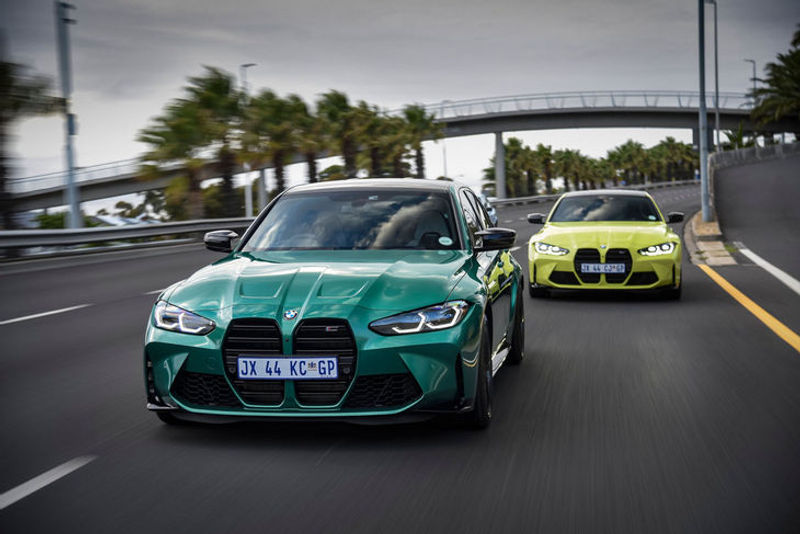
As with the previous generation M3 and M4, the new models’ (G80 and G82) front ends look identical.
WTF: Why The Face
Oh, whatever… Enough has been written about that grille; there’s little point to revisit the topic, but, for what it’s worth, yes, it looks better in the metal and, in combination with a dark exterior finish and when “blacked out”, the kidneys look really distinctive. The biggest problem that the new (G80-generation) M3 has, in fact, is that it may soon be superfluous… irrespective of its dramatic front-end treatment.
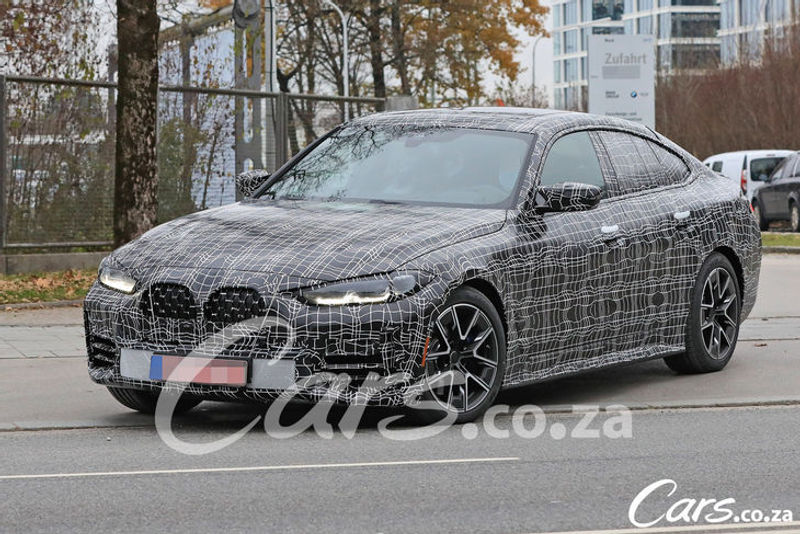
Remember that nugget about the 4 Series Gran Coupe (GC) being the best-selling variant of the previous 4 Series (the new one technically debuted with the unveiling of the i4, but that’s another story)? When the next iteration of the 4 Series GC comes out in the near future, and we have this on good authority, there will finally be an M4 version of it. For the M3, this is a major problem: the M4 GC will a) have that front-end treatment too, b) have a sportier silhouette than the 3 Series sedan – on which the M3 is based and c) usurp the M3’s only real selling point: its multitude of doors.
Camouflaged pre-production units of the 4 Series Gran Coupe have already been photographed. There will be an M4 too.
An opportunity missed
If you thumb through marketing material for the new M3 and M4 (figuratively), it’s all a blur of contrasting colours, red buttons and paddles, gaping vents/scoops and brash carbon-fibre embellishments; BMW’s M Division is going through its second puberty and it’s not pretty – even a trifle unbecoming. Some reviewers say that the new M3 has become “the new M5”. Well, it could only wish to measure up to the rapid-but-restrained M5s of BMW’s past.
If BMW had done something refreshing, instead of grille-a-fying its sports executive sedan out of sheer hubris, the M3 could have been something unique. Imagine a potent-but-understated M-car, which is what it used to be. Consider the appearance of the M340i xDrive, which yes, probably skirts the limits of good taste anyway; now picture that 3 Series sedan dialled up to 10. I’d want a car like that.
Why could the BMW M3 not look like a more muscular version of the M340i xDrive?
Back to Coca-Cola…
The western world’s favourite soft drink has, of course, diversified through the years (I still can’t figure out why Coke Light/Diet Coke and Coke Zero exist in the same universe), just as the Porsche 911 has. However, their monikers/brands still signify exactly what they used to.
Not so the M3. When shopping for a classic car, it’s striking that the convertible, coupe and even estate versions of models seem to be the most collectable. In years to come, I think I might have trouble explaining how an M3 is the dog’s proverbials, but only up to 2014, after that, you should shop for an M4. The cool kids are going to say I’m a crazy old coot.
Porsche: focused on the future, but true to its past
Pandemic, what pandemic? Porsche set a new revenue record in its 2020 financial year! In fact, its value grew to 28.7 billion euros, surpassing the previous year’s figure by more than 100 million euros. But in a rapidly changing world, how does a company so rooted in tradition adapt to ensure its survival in the future?
In terms of deliveries and, it's worth noting, despite a temporary shutdown of production, Porsche delivered more than 272 000 vehicles to customers worldwide last year, just 3% less than the previous (best-ever) year, in 2019. The profit before tax was 4.4 billion euros, which was higher than 2019's figure.
“The financial year 2020 was successful for Porsche, despite challenging circumstances,” said Oliver Blume, Chairman of the Executive Board of Porsche AG. “There are 4 reasons for this: our attractive product range, convincing electric models, our brand’s innovative strength and the determination with which we approached our crisis management.
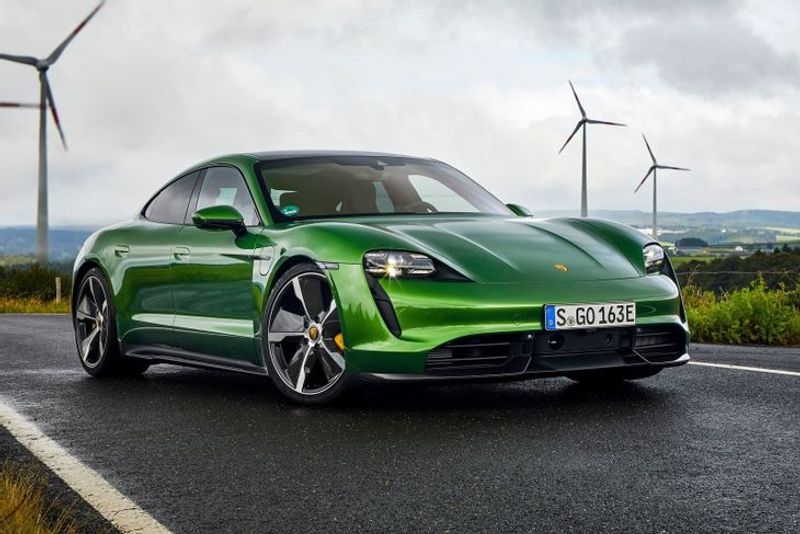
"More than 20 000 units were delivered of the Taycan, the first all-electric Porsche sports car. This makes it the most successful electric sportscar in its class. More than 50 international awards attest to this. Among other things, the Taycan was named the ‘world’s most innovative car’. Porsche stands for a robust core business, sustainable action, social responsibility and innovative technology,” he added.
Leaner, but no compromises on investing in the future
More than 20 000 units of the all-electric Taycan were sold in 2020.
According to Lutz Meschke, deputy chairman of the Executive Board and member of the Executive Board for Finance and IT at Porsche, the fact that such record figures were achieved despite the difficult global situation was made possible by a very swiftly established cost and liquidity management system.
“Our top priority in the crisis was liquidity. We needed to reduce all costs that were not absolutely necessary.” At no stage did Porsche lose sight of its long-term strategic direction. “We didn’t scrimp at all when it comes to the future topics. We continue to proceed at full speed on transformation, digitalisation and electrification. Attempting to economise in these areas will very quickly result in a loss of competitiveness. Our cost and liquidity management provided a benchmark. We protected our business so we can get going again at full steam once the crisis ends,” he added.
Targeting CO2 neutrality by 2030
“Sustainability is an important part of our Strategy 2030 – holistically: economically, ecologically and socially,” said Blume. “We launched a comprehensive decarbonisation programme with a firm target in mind: Porsche wants to have a CO2-neutral balance sheet throughout the entire value chain by 2030. We will achieve this by systematically avoiding and reducing CO2 emissions. All of the major sites like Zuffenhausen, Weissach and Leipzig have been CO2-neutral since 2021. We’ve earmarked more than a billion euros for decarbonisation over the next 10 years. We’ve reached the first milestone: the Taycan Cross Turismo, which had its world premiere at the beginning of March, is the first vehicle that will be CO2-neutral throughout the use phase.”
The new eFuels project is of particular importance to Porsche, as it predicts the internal-combustion engine will be around for quite some time to come.
Importantly, according to Detlev von Platen, Member of the Executive Board, Sales and Marketing, the "image of sustainability" is increasingly important for consumers. "It's not enough to produce EVs to be seen as sustainable. Increasingly, especially younger consumers buy into brands because of what those brands are doing for the environment. Porsche must be seen as actively taking responsibility."
In 2020, a 3rd of all Porsche vehicles delivered in Europe were fully or partially electric; worldwide it was 17%. By 2025, half of all new Porsche vehicles sold will have an electric motor and, by 2030, more than 80% of the Zuffenhausen-based firm's new vehicles will be electric. These are bold claims for a company that has its core appeal so deeply rooted in motorsport, the internal-combustion engine etc.
What about Porsche's "traditions"?
Fear not, Porsche fans, the company is not going to abandon the things we love most of the brand. It has already stated that the 911 is very much last in line for electrification. But, remember, this is also a brand that is proud to claim that 70% of the vehicles it has ever produced, are still on the roads today. How do those vehicles fit into Porsche's future plans? Well, it recently announced a major investment in e-fuels (synthetic fuels), which it claims can make an internal-combustion engine as clean as an EV.
Porsche plans to continue with its tradition of using motorsport as a test-bed for future road-car technologies.
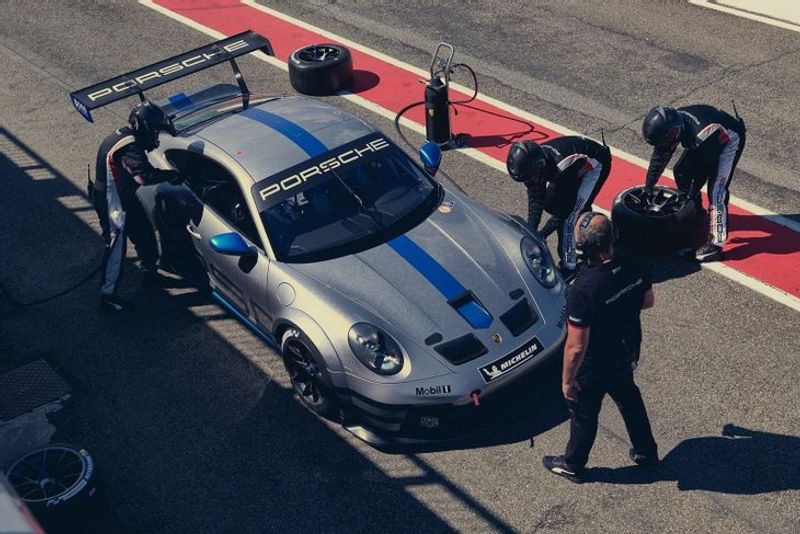
"It's not the internal combustion engine that's the problem, it's the fuel it burns," said Dr Michael Steiner, member of the Executive Board, Research and Development. One of the major benefits of eFuels is that it can be used without any adjustment to an existing engine, and offers a reduction of about 85% in CO2 when viewed from a "well to wheel" perspective. This dramatic decrease makes them eFuel-powered vehicles as "clean" as EVs. Porsche plans to start running eFuels in its GT3 racing cars soon…
On that front, Porsche's relationship with motorsport looks set to continue for many decades to come…
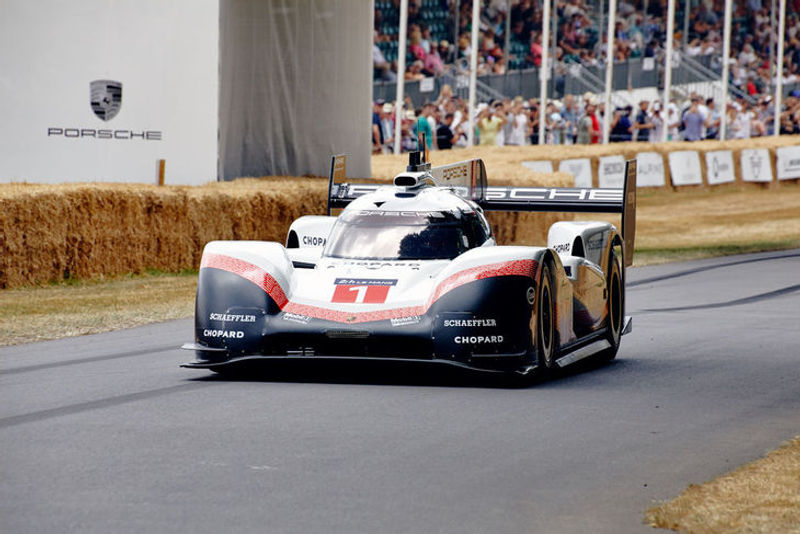
"Absolutely yes," responded Steiner to a question of the ongoing relevance of motorsport for Porsche in this changing world. "Take the example of the Taycan," he explains. "We used the lessons learnt from the 919 racer, about the 800V system, and implemented them. Then, in Formula E, you have to run a vehicle as efficiently as possible. So, for example, if you can be better on the brakes, in terms of the regenerative system, you are more efficient. Also, there are many lessons to be learnt about the thermal management of batteries, so absolutely, motorsport continues to play an important role for us."
Nissan has revealed its latest Nismo vehicle, and it isn’t what you would expect…
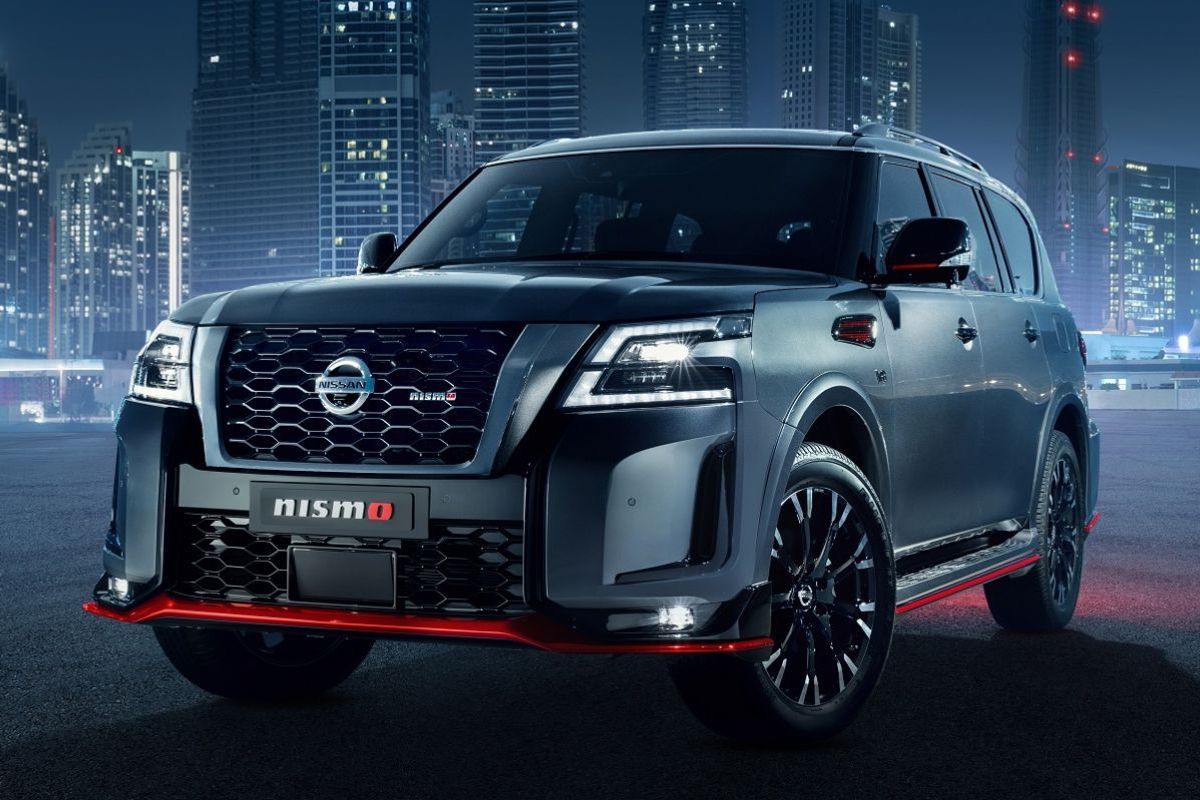
The Japanese brand has now attached the Nismo badge to its enormous ladder-frame 4×4, creating the Patrol Nismo.
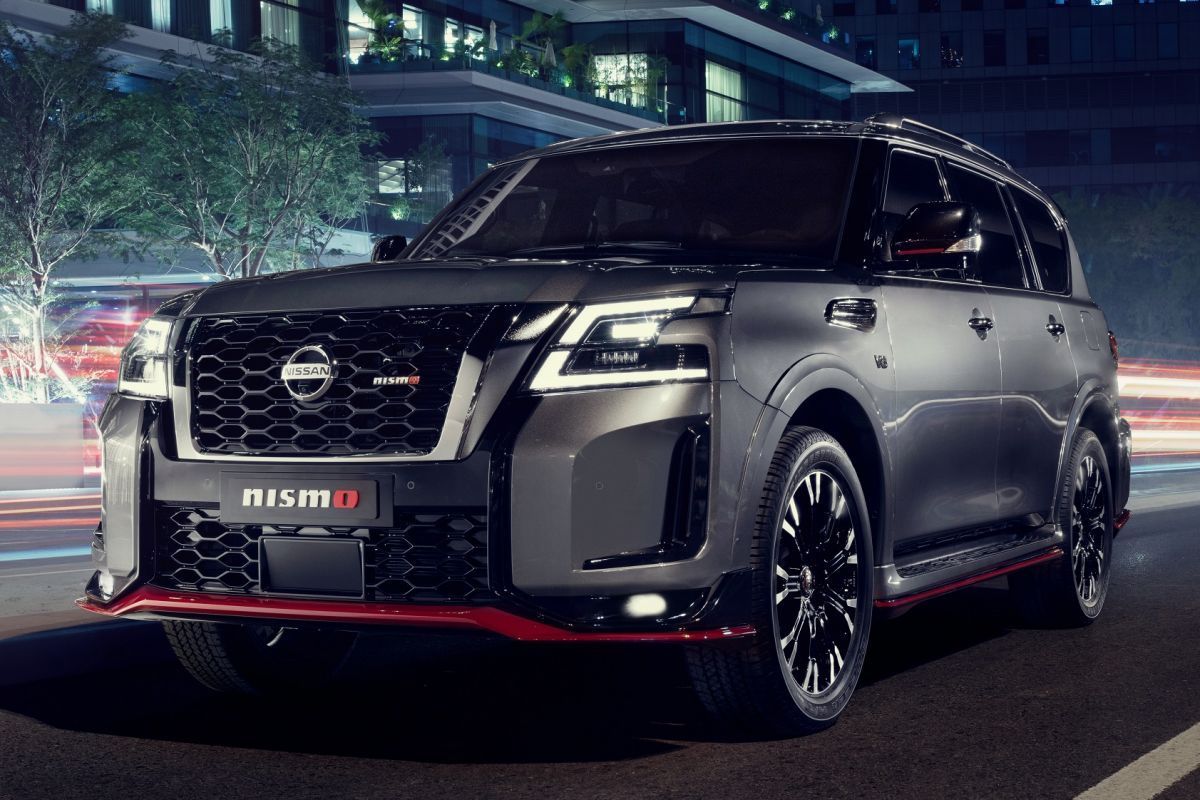
There is charming madness to this Patrol Nismo and Nissan even mentioned that some of the exterior styling changes have very real aerodynamic benefits, despite the fact that the Patrol Nismo remains a 2 690 kg luxury SUV with a relatively high centre of gravity.
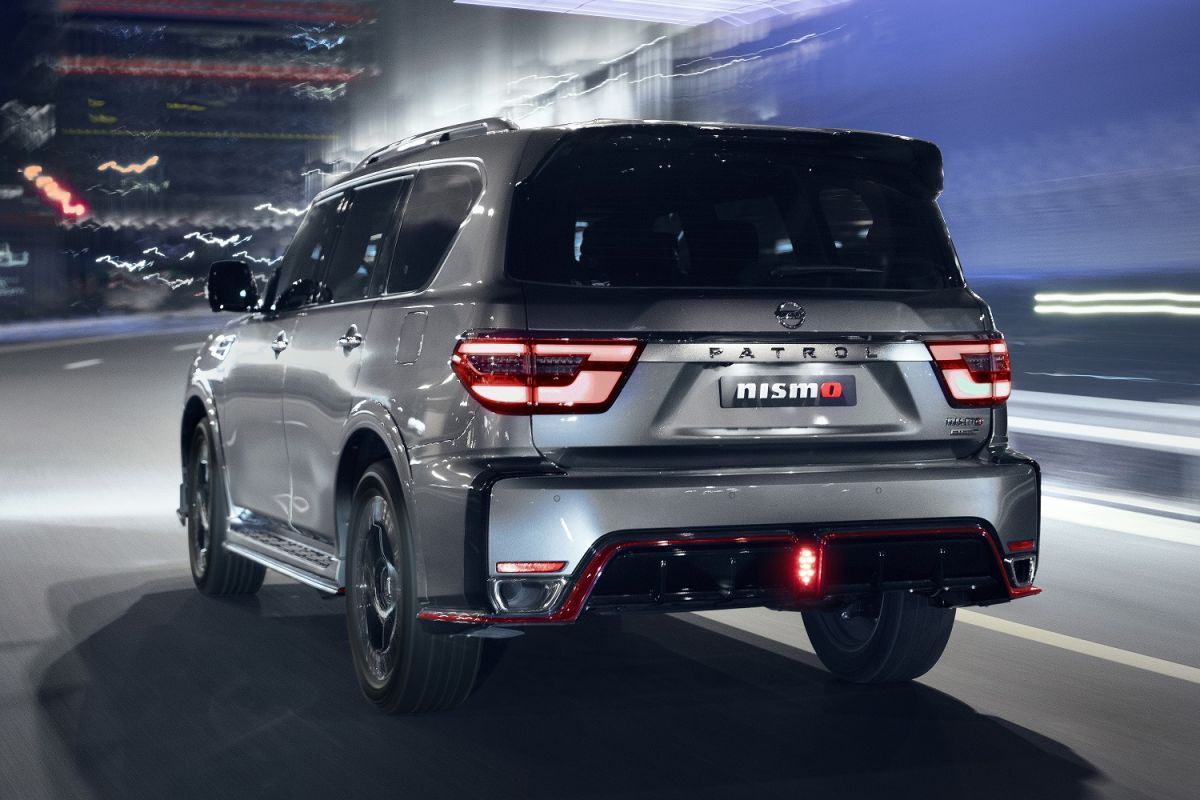
New side skirts and bumpers, with red accents, are the main Nismo differentiators, although the massively imposing Patrol grille has gained hexagon patterning. Strange aerodynamic claims aside, the reshaped front bumper should improve cooling airflow to the engine and brakes. At the rear, an integrated diffuser is also part of the Nismo kit.
The Patrol Nismo also rolls huge 22-inch alloy wheels, but these are 4.5kg lighter than the standard alloys. Rotational weight and inertia savings are worth noting.
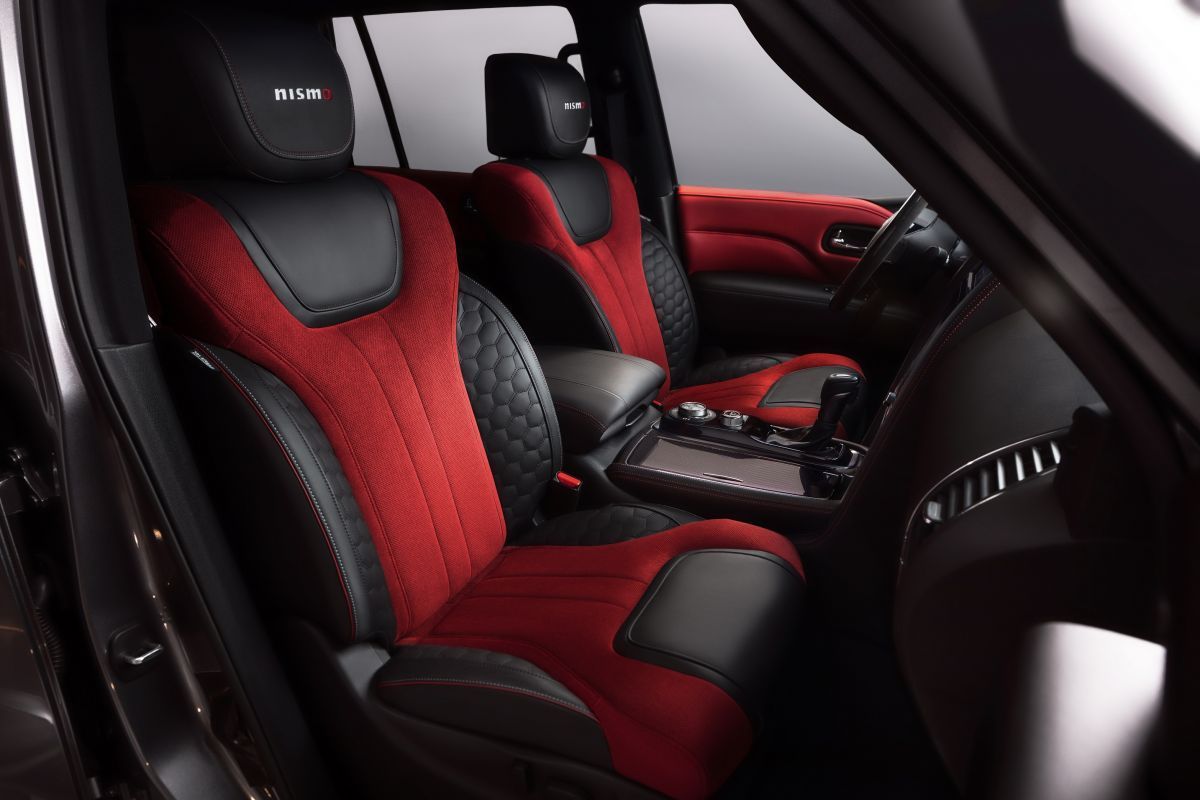
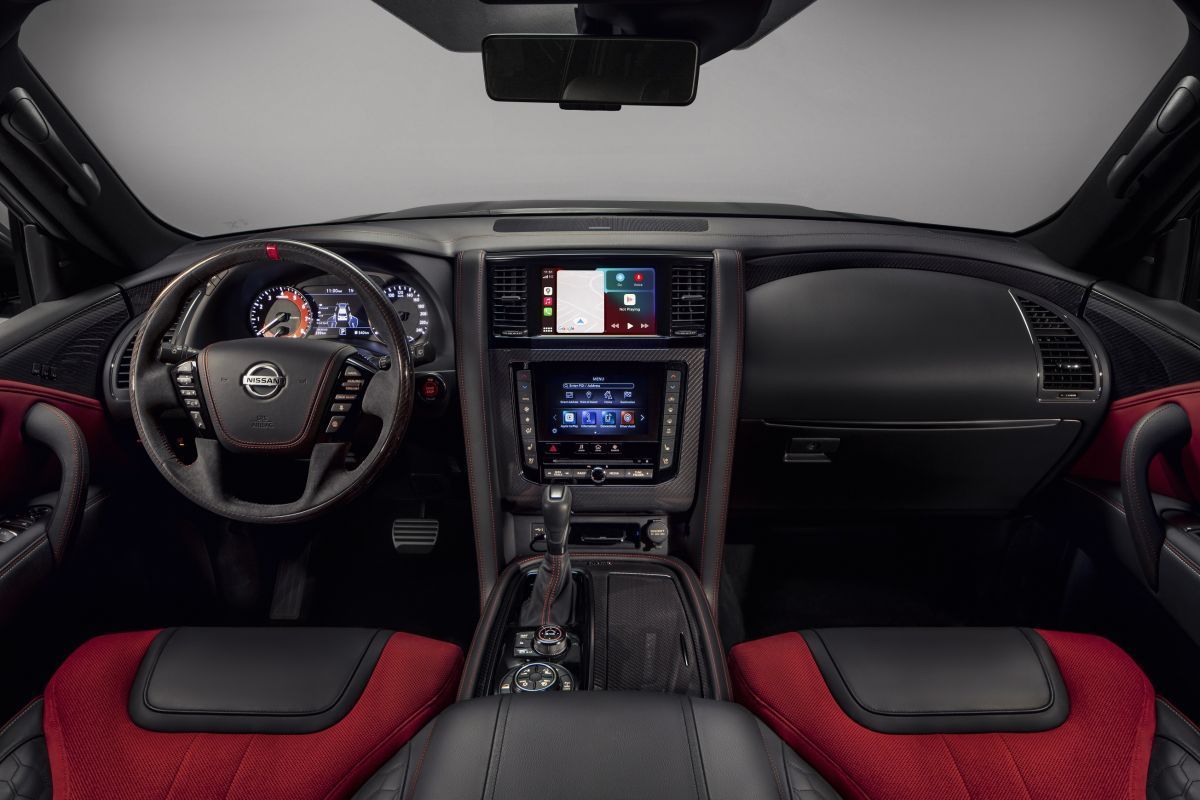
Inside the Nissan Patrol Nismo you’ll find red Alcantara and leather on the seats and door panels. Naturally, the shifter and steering wheel trim is also held together with red stitching.
Powering the Patrol Nismo is Nissan’s large-capacity 5.6-litre V8 engine. It does without turbocharging and produces 319kW and 560Nm. To Nissan’s credit, it has allowed for a touch more power on this Nismo Patrol, with the company’s engine specialists managing to raise the V8 output from 298- to 319kW.
In an attempt to balance the handling of this gargantuan Nismo product, Nissan’s engineers have also added Bilstein shock absorbers as an upgrade to all four-wheel corners.