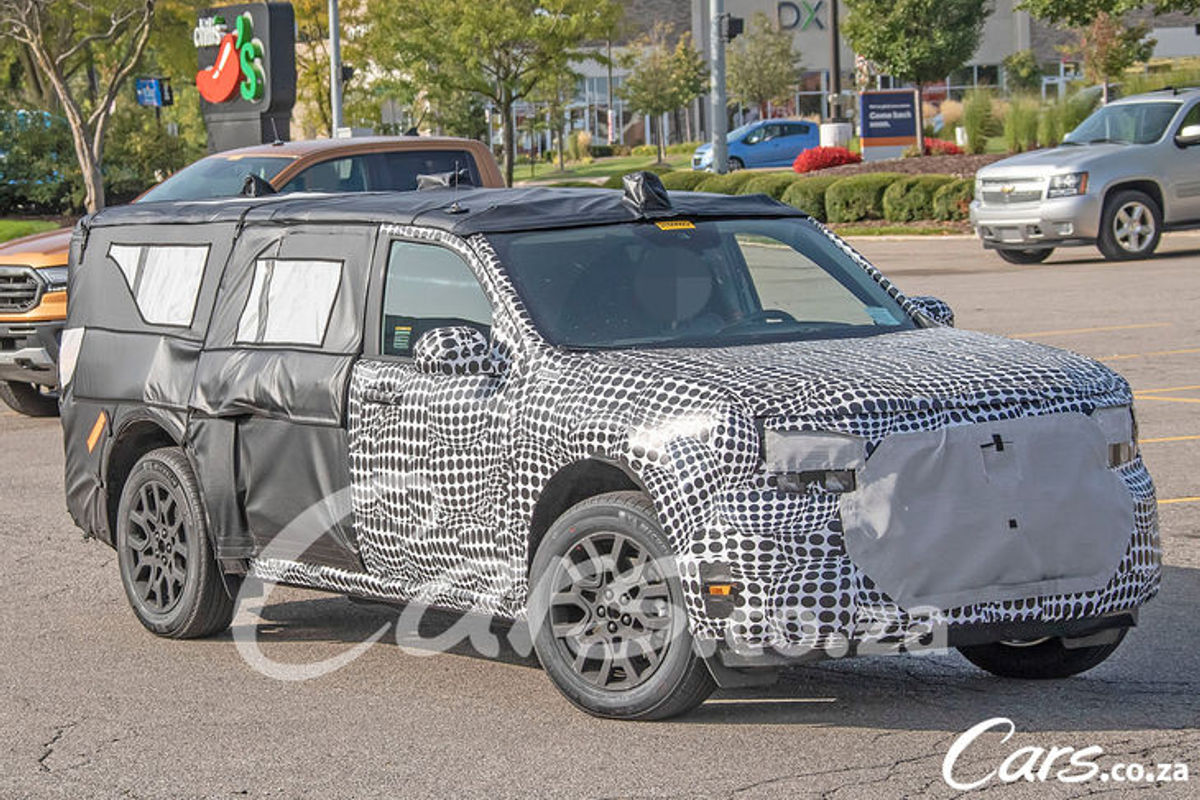
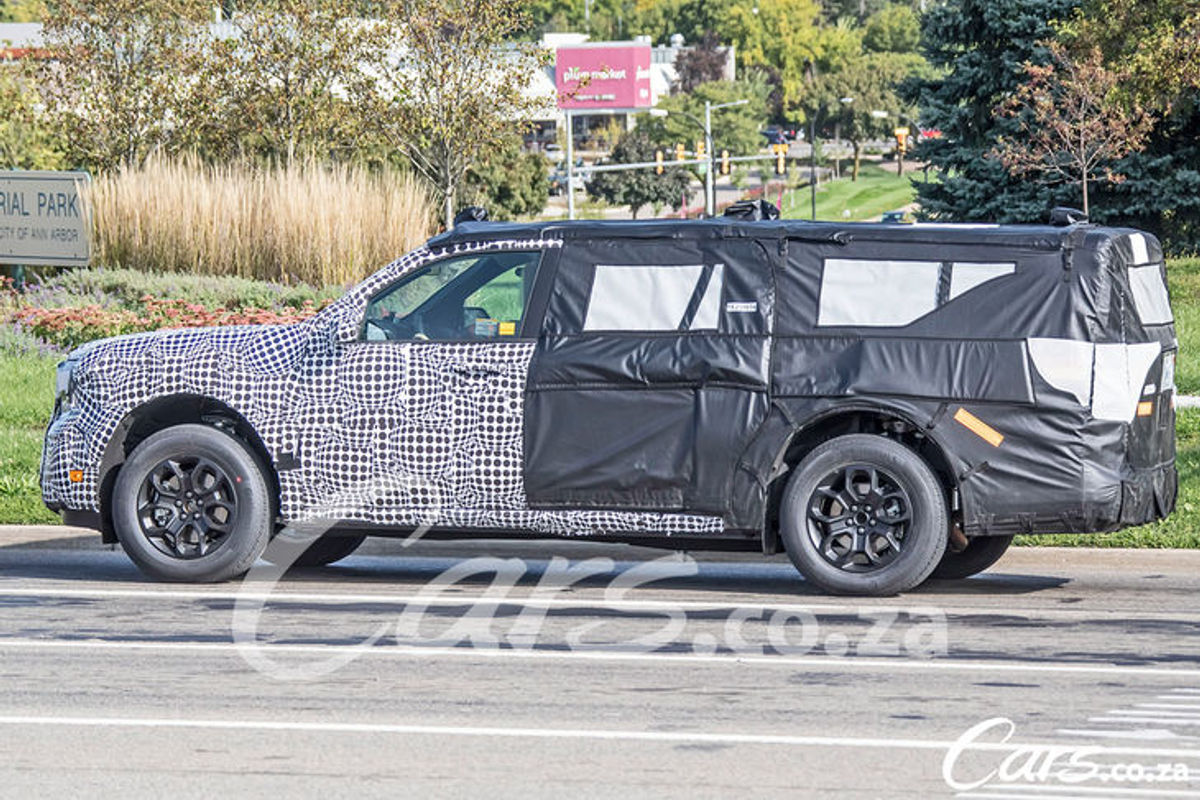
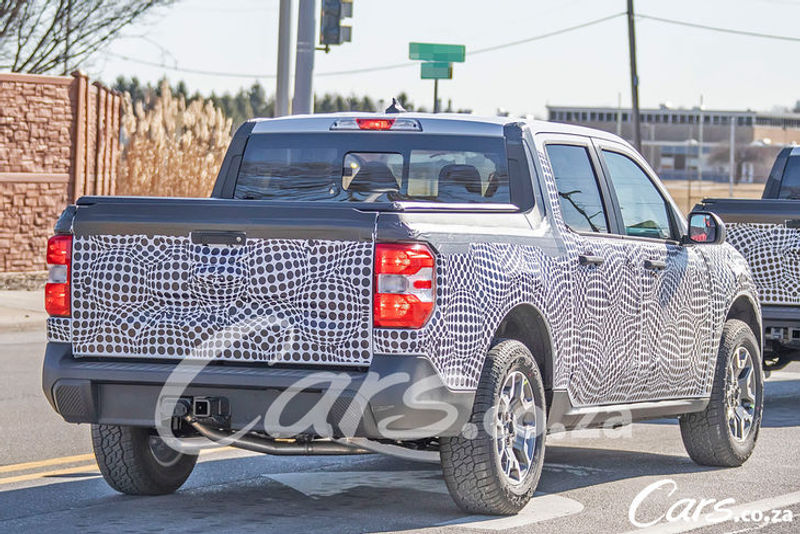
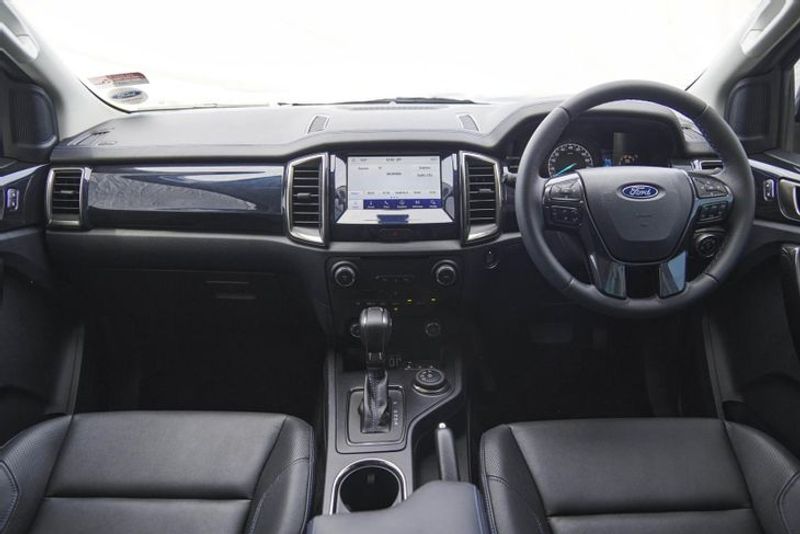
The compact Ford Maverick bakkie is a step closer to production reality. It's been spotted out and about again, clearly showing off its angles and some of its features.
Picture credit: S. Baldauf/SB-Medien. We have paid for these photos and at the photographer's request, have watermarked them.
The latest set of spy photographs gives us a good idea of the shape, size and proportions of the new Ford Maverick. The newcomer, which will slot in below the Ranger, will be built alongside the Bronco Sport family car at Ford's Hermosillo Assembly Plant in Sonoro. At this stage, there's no word on right-hand-drive production which means that South African availability is in doubt.
A full reveal is expected at some point this year and, as speculated, the Maverick will share at least some styling cues with the Bronco Sport, which should give it a bold and suitably rugged appearance. Given its passenger-car underpinnings, the Maverick will ride lower than the Ranger and because its load bed won’t be required to haul significant loads (because of the Bronco Sport underpinnings), the package’s cabin space – and creature comforts – will be prioritised. The model will be produced in front-wheel-drive guise, with part-time all-wheel-drive possible for high-end derivatives.
In terms of the engine line-up, reports suggest naturally aspirated 121-kW 2.0-litre 4-cylinder petrol and a turbopetrol 134-kW 1.5-litre 3-cylinder motors will be offered, both in conjunction with an 8-speed automatic transmission, as well as a manual gearbox. There's also talk of a powerful 2.0-litre 4-cylinder turbo packing 186 kW and 373 Nm.
The Automobile Association (AA) has commented on unaudited mid-month data released by the Central Energy Fund and the fuel forecast for April 2021 shows significant increases looming which will have a severe impact on consumers.
In the 2021 Budget Speech, Minister of Finance, Tito Mboweni, announced a 26 c/l increase in the fuel levy that will come into effect in April 2021. The timing of this fuel levy increase could not be worse as international oil prices have been rising steadily and the Rand-Dollar exchange rate has been eroded, which in itself, does not bode well for local fuel prices.
“As things stand today, petrol is set for a 90 cents-a-litre rise, diesel for an increase of 66 cents, and illuminating paraffin an increase of 62 cents,” the AA says. These fuel price projections, however, do not account for the 26c/l fuel levy increase and the picture could worsen further for the remainder of the month. That means that consumers can expect to pay about R1.16 more for a litre of petrol while diesel could see an increase of 92 cents per litre.
“The rampant upward march of international oil prices has quickened alarmingly in the first weeks of March. The basic fuel price for petrol, for instance, shot up from R6.55 a litre at the February close-out, to R7.40 a litre in the first two weeks of March. Over the same period, the average Rand/US dollar exchange rate weakened by about 30 cents,” notes the AA.
A litre of 95 ULP inland currently costs R16.32 and could cost as much as R17.48 in April 2021 and of that, R6.10 will be taxed through the General Fuel Levy and the Road Accident Fund, accounting for at least 35%. As for diesel, at a current price of R14.12 which could rise to R15.04, the taxed amount will be R5.96 or at least 40%!
The fuel price increase not only has a devastating impact on consumers, but the entire value chain and the economy in general, suffers. South Africans are already battling the economic fallout resulting from the Covid-19 pandemic but the dire economic situation experienced by millions of people is further compounded by corruption and overspending at the hands of the government.
The AA says the government can no longer ignore the knock-on effects of severe fuel price rises. “The cost is not only direct, but throughout the value chain, and is battering consumers from all sides. It requires urgent review to help ease pressure on consumers who are battling to stay financially afloat,” the AA concludes.
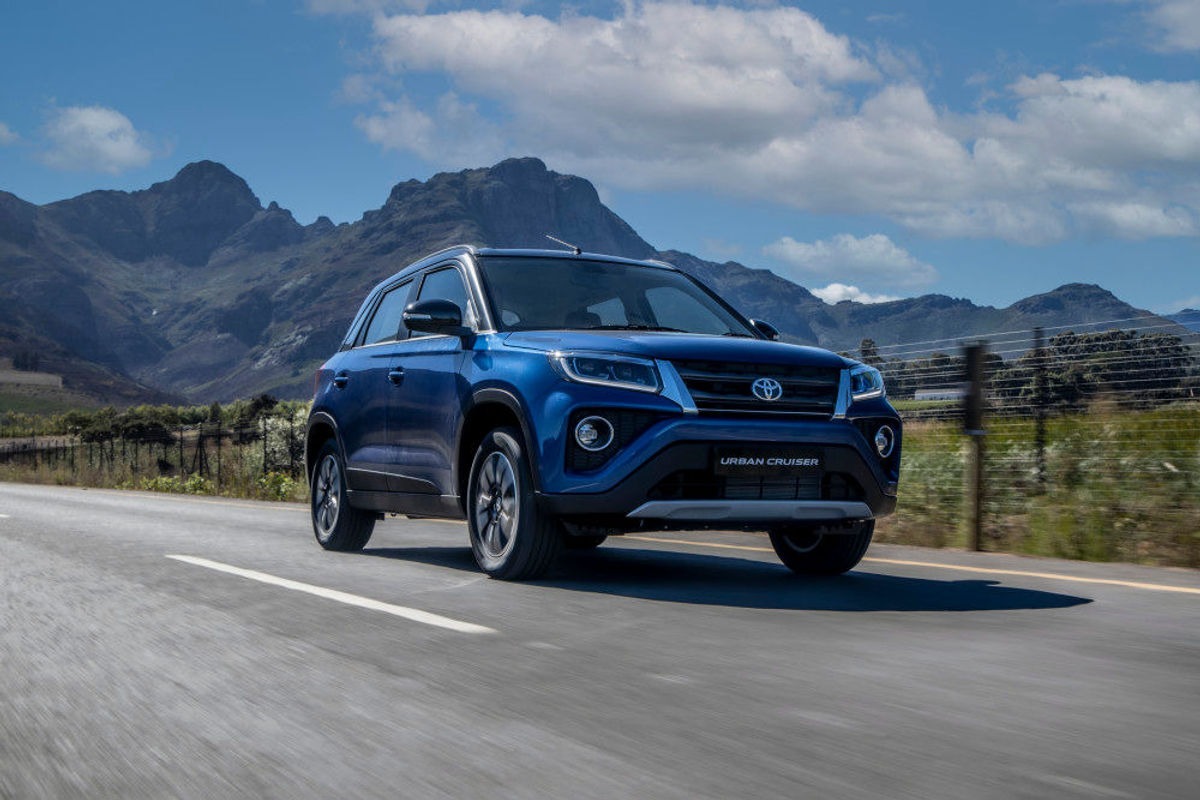
With the arrival of the Indian-made Urban Cruiser, Toyota has upped its game in the popular compact family-car segment with an offering that's more practical – and affordable – than the boutique C-HR model. Cars.co.za journalist Gero Lilleike spent a weekend with the newcomer and filed this report…
A couple of years ago, Toyota and Suzuki reached a product-sharing agreement whereby, inter alia, Toyota would supply Suzuki with 2 hybrid vehicles while Suzuki would build Toyotas based on its Baleno and Vitara Brezza, which, as you may have seen, have now arrived in the South African market (as the Starlet and Urban Cruiser). What's more, other shared models could be released in the near future…
The local introduction of the Urban Cruiser follows hot on the heels of the Vitara Brezza; we spent a weekend with the newcomer to find out what it's like to drive and what it offers in terms of features.
Styling of the Urban Cruiser
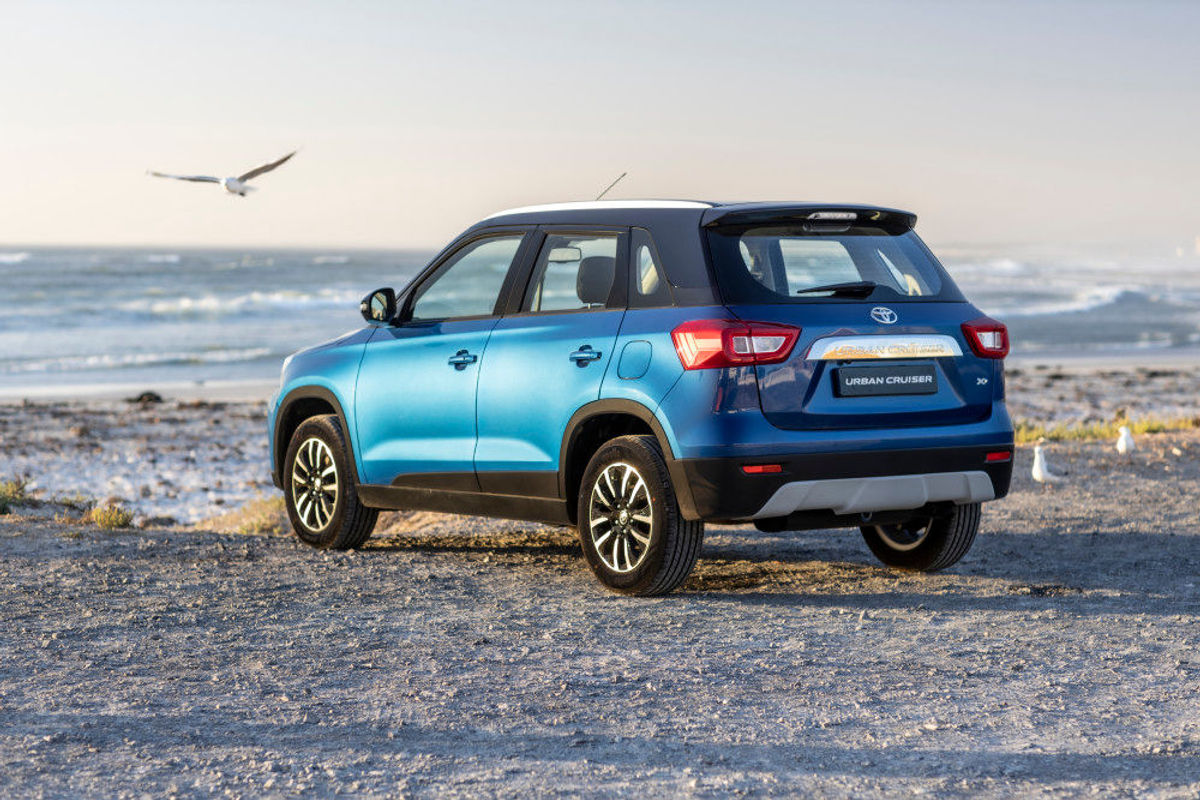
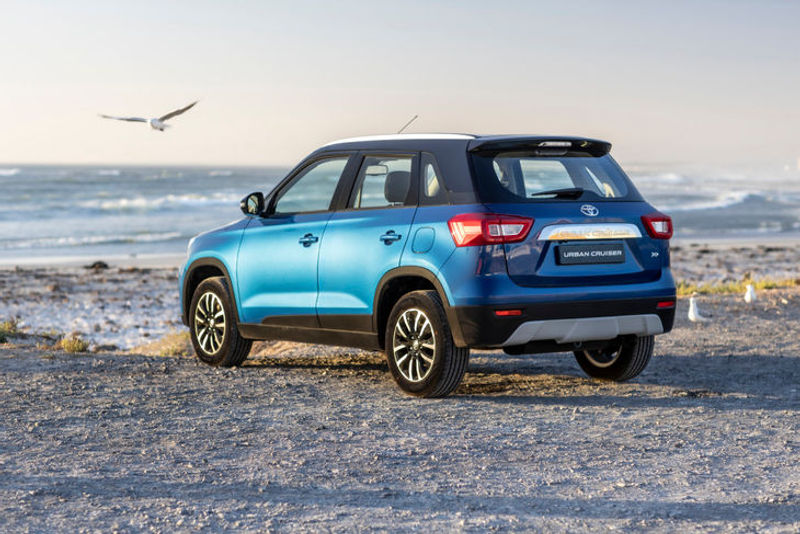
A raised ride height and protective cladding make the Urban Cruiser suitable for navigating potholed roads and mounting kerbs.
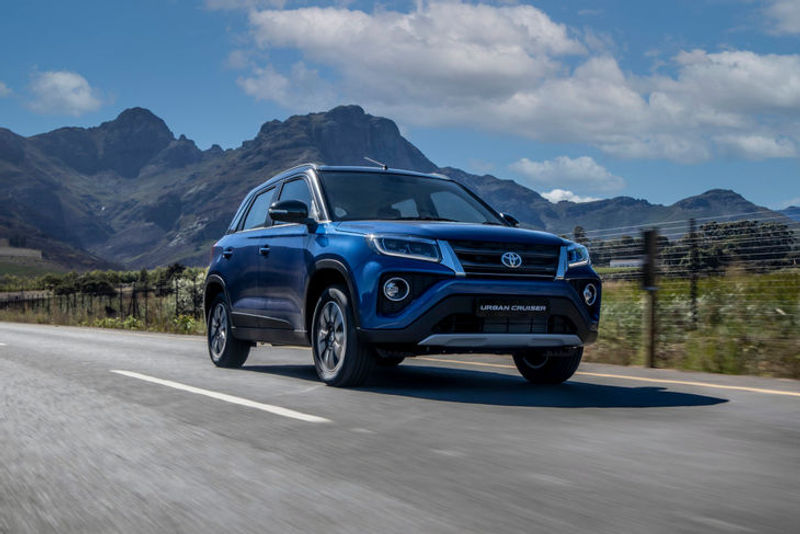
The Urban Cruiser certainly looks the part; it features rugged design elements such as plastic cladding (seen around the wheel arches and side skirts), roof rails as well as light-grey bumper guards. The useful ground clearance of 198 mm will not only help the Toyota hop onto pavements in town – it should prove more than handy when you need to traverse a gravel road now and again.
We drove the range-topping Urban Cruiser 1.5 XR automatic derivative, which additionally features automatic LED headlights with rain-sensing wipers and is shod with 16-inch alloy wheels.
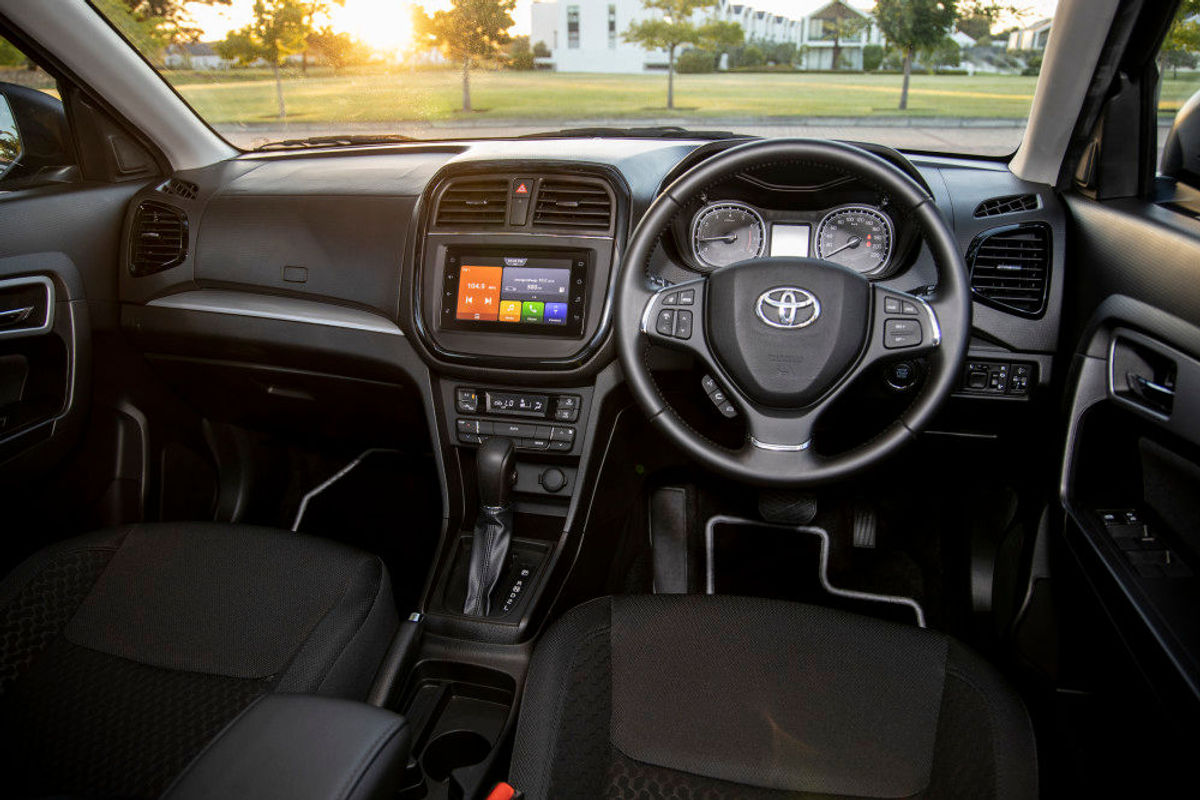
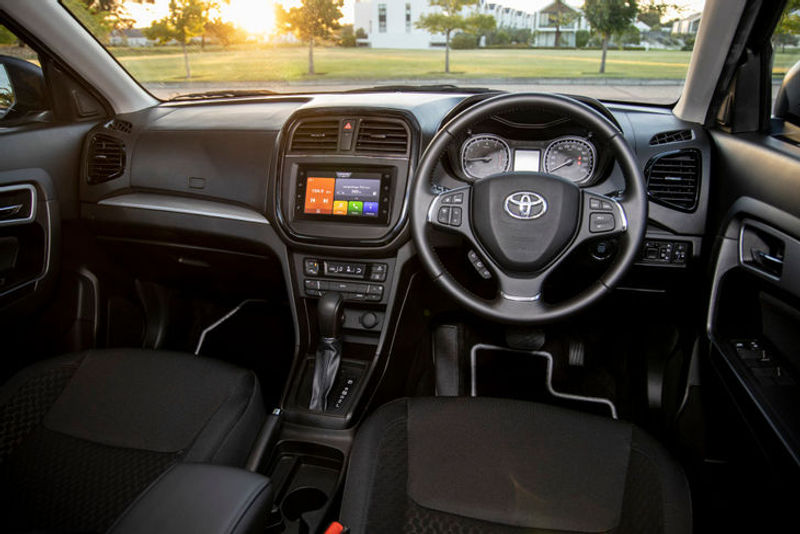
The Urban Cruiser's interior offers most of the basic features that buyers in this segment are looking for.
When you step inside the newcomer's cabin, the first thing you'll notice is the chunky fascia. Hard plastics of varying quality dominate the interior and the perceived build quality is average.
In XR specification, the Urban Cruiser comes equipped with additional features that you won’t find in the XI and XS derivatives. Those key features include cruise control, an auto-dimming rearview mirror, 12V sockets, a cooled glovebox and a leather-wrapped steering wheel, to name but a few.
A reverse-view camera is standard and the feed is projected onto the central infotainment touchscreen, which is compatible with Apple CarPlay/Android Auto and includes Bluetooth connectivity. It’s a basic system, but it’s very easy to use!
The steering column is only adjustable for rake, but the 'wheel is equipped with mounted controls for the audio system and cruise control. The driver’s seat does offer height adjustment, which is useful.
Space for rear passengers is sufficient but not generous; taller aft passengers are especially likely to find the legroom a bit tight. Toyota claims a 328-litre luggage capacity, which is good, with a full-size spare wheel located under the load-bay floor. Should you need to load larger items, the rear seats can be folded down in a 60:40 configuration, but note they don’t fold completely flat.
What’s the Urban Cruiser like to drive?
The Urban Cruiser offers good general performance with the benefit of returning pleasing fuel consumption.
Equipped with a naturally-aspirated 1.5-litre petrol engine, the same unit that powers the Suzuki Vitara Brezza, the Urban Cruiser offers outputs of 77 kW and 138 Nm. For a vehicle of this size, those numbers are just about sufficient to propel the 1 140 kg kerb weight with relative ease. However, we do suspect that at altitude, a fully-laden Urban Cruiser might lose its puff on uphill sections.
However, there’s a remedy for this kind of situation thanks to the 4-speed automatic transmission. The driver can engage "L" (low gear), which keeps the transmission in the lowest forward ratio so that you can get the most from the engine at slow speeds (such in creeping in traffic), but you can also engage "2", which is useful for pulling away on low-grip surfaces.
I wasn’t expecting a 4-speed automatic derivative to be particularly exciting to drive, but I was pleasantly surprised by how responsive the Urban Cruiser's powertrain was to inputs, particularly when being launched from a standstill. The Toyota is quite a nippy car in the urban environment and it gets up to highway speed quite easily/with very little fuss.
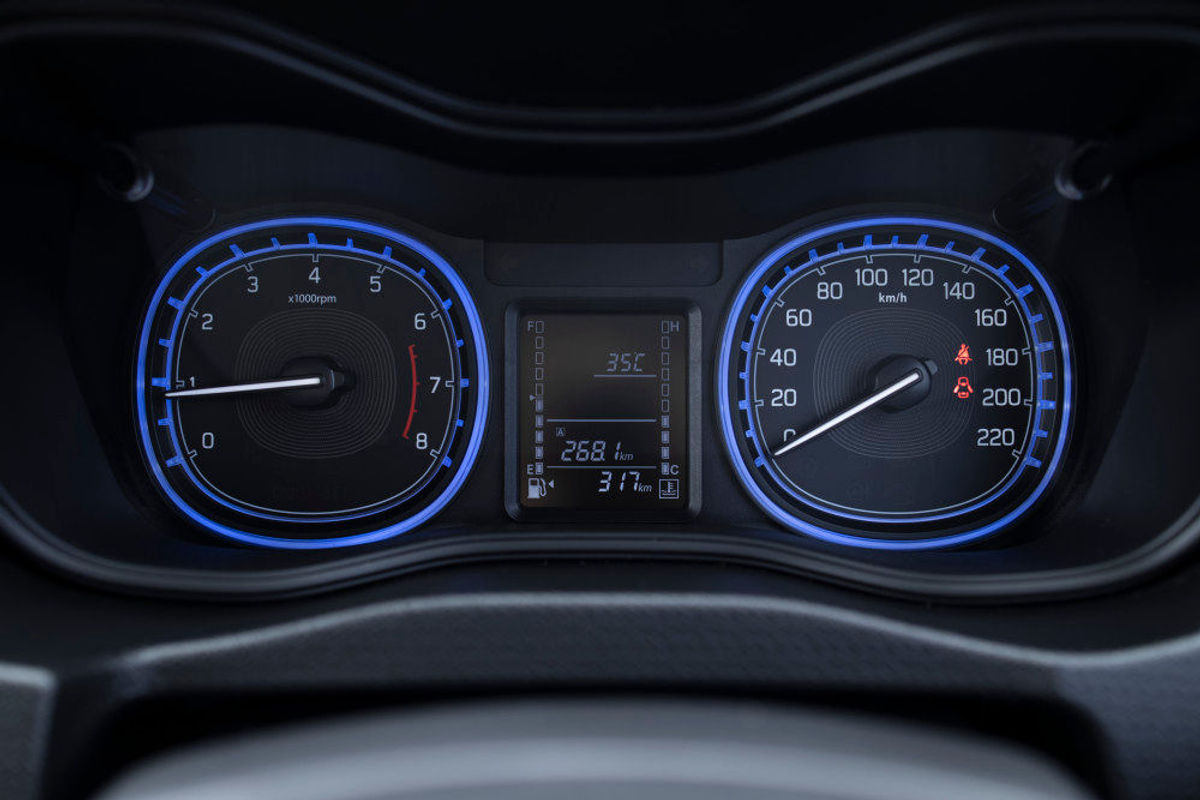
In terms of fuel consumption, Toyota claims an average figure of 6.2 L/100 km and during our truncated (2-day) test we saw an indicated 8.5 L/100 km, which is higher than we expected. However, we are certain that lower figures are achievable in the long run if the Urban Cruiser is driven with fuel conservation in mind.
What we liked most about the Urban Cruiser was its balance of ride quality and handling ability. Not only does it feel sure-footed with a comfortable ride, but the steering wheel was responsive to inputs, which made it quite fun to hustle the Urban Cruiser through corners. We did, however, notice significant wind noise entering the cabin at highway speeds, which some buyers may find annoying.
Final thoughts
With a Toyota badge on the nose, the Urban Cruiser is likely to be very popular in South Africa.
As an overall product and much like its Starlet sibling, we think that the Urban Cruiser will find favour with many local buyers who are looking for a basic, affordable compact car, or in this case, a crossover. Toyota South Africa aims to sell upwards of 600 Urban Cruisers per month and it will be interesting to see how well it will be received by consumers in the coming months.
Even so, consumers must remember that this is essentially a budget crossover and cost-cutting measures are evident throughout the vehicle's interior, either in terms of fit-and-finish or with the materials used. Ultimately, you get what you pay for… We will have the Toyota Urban Cruiser for a full test soon, so be sure to look out for a thorough evaluation.
How much does the Toyota Urban Cruiser cost in South Africa?
The Toyota Urban Cruiser is sold with a 3-year/100 000 km warranty and a 3 services/45 000 km service plan. Intervals are every 12 months or 15 000 km. Customers can purchase an additional service plan and warranty options via the 220-strong dealer network. Prices are as of March 2021.
Renault is the latest car company to undergo a change in corporate identity.
The French brand has confirmed that it will soon standardize a new logo, the ninth in its history.
With graphic designers and product managers negotiating and refining the new logo since 2019, seeking to deliver an uncluttered identity with no signature or typography.
Renault design director, Gilles Vidal, has guaranteed that all Renaults will wear this new logo by 2024. “A true timeless signature, without superfluous effects or colours, with a contemporary takeover of the lines, an essential part of our graphic heritage."
Renault has been quite conservative with its brand logos. A single design carried the company from 1992 to 2015, yet the rapid deployment of this logo was deemed a task of great urgency.
In this brave new world of battery-powered vehicles, Renault is planning seven new electric models by 2024, the traditional badge doesn’t work that cleanly on a flat body panel. With its new interlaced diamond design, Renault thinks that its corporate identity will be more fittingly displayed on the front of its vehicles.
The other issue is broader awareness and an attempt to signal transformation. As Renault attempt to move to an electric vehicle drivetrain offering, it wishes to distance itself from the company’s petrol and diesel heritage, this new badge being curial in that regard.
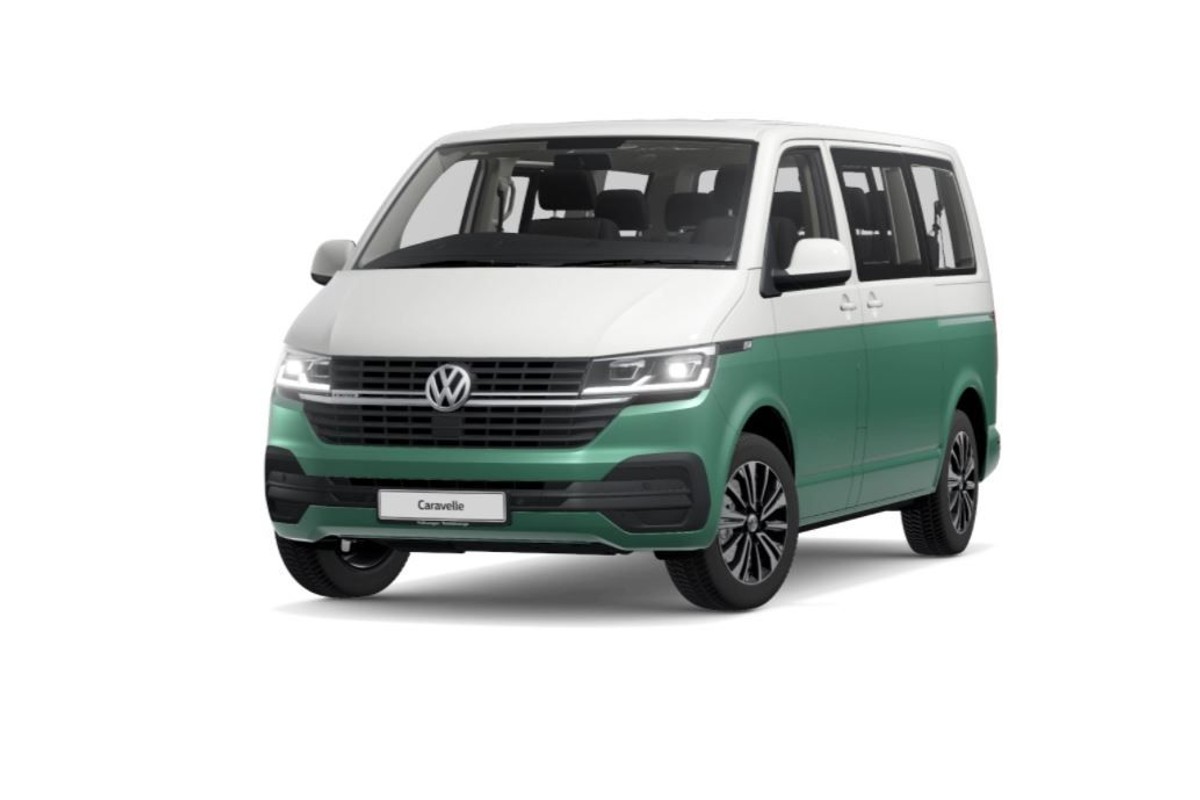
Volkswagen Kombi T6.1 (2021) Specs & Price Announced
The Volkswagen Kombi is about to touch down in South Africa. Here's what's on offer, plus how much you can expect to pay.
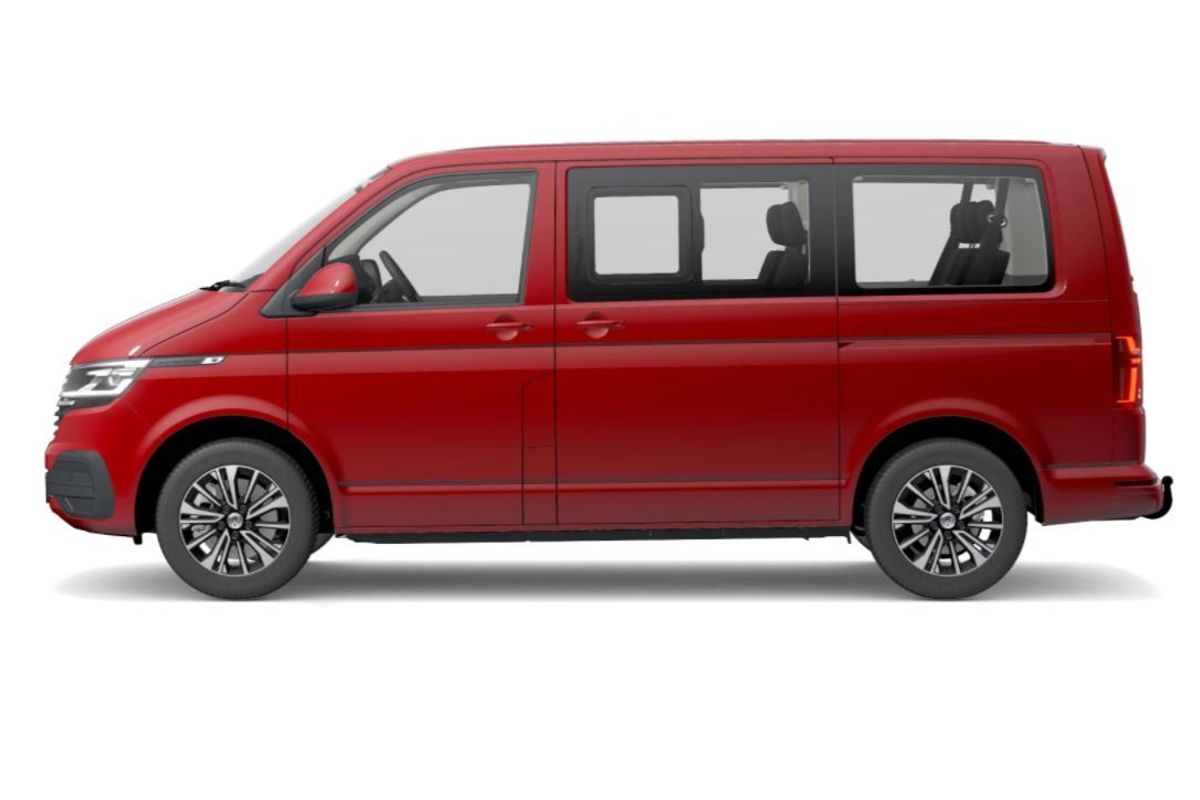
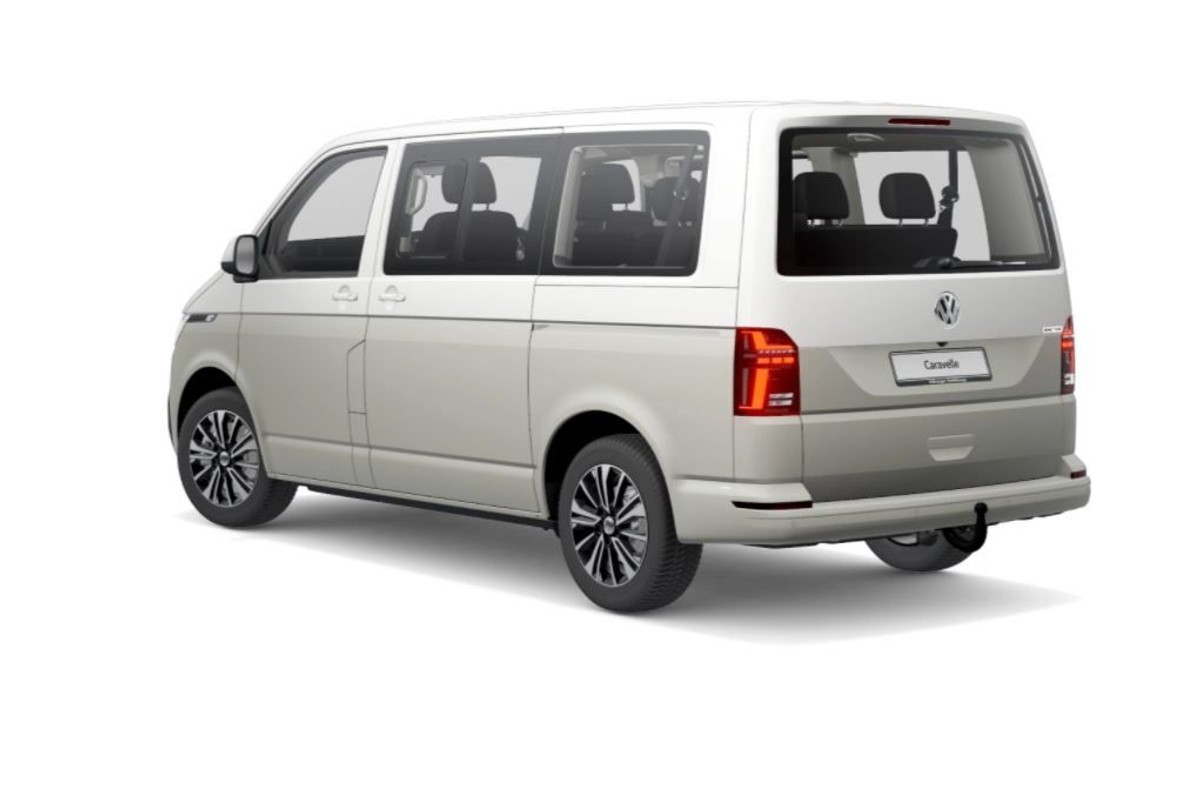
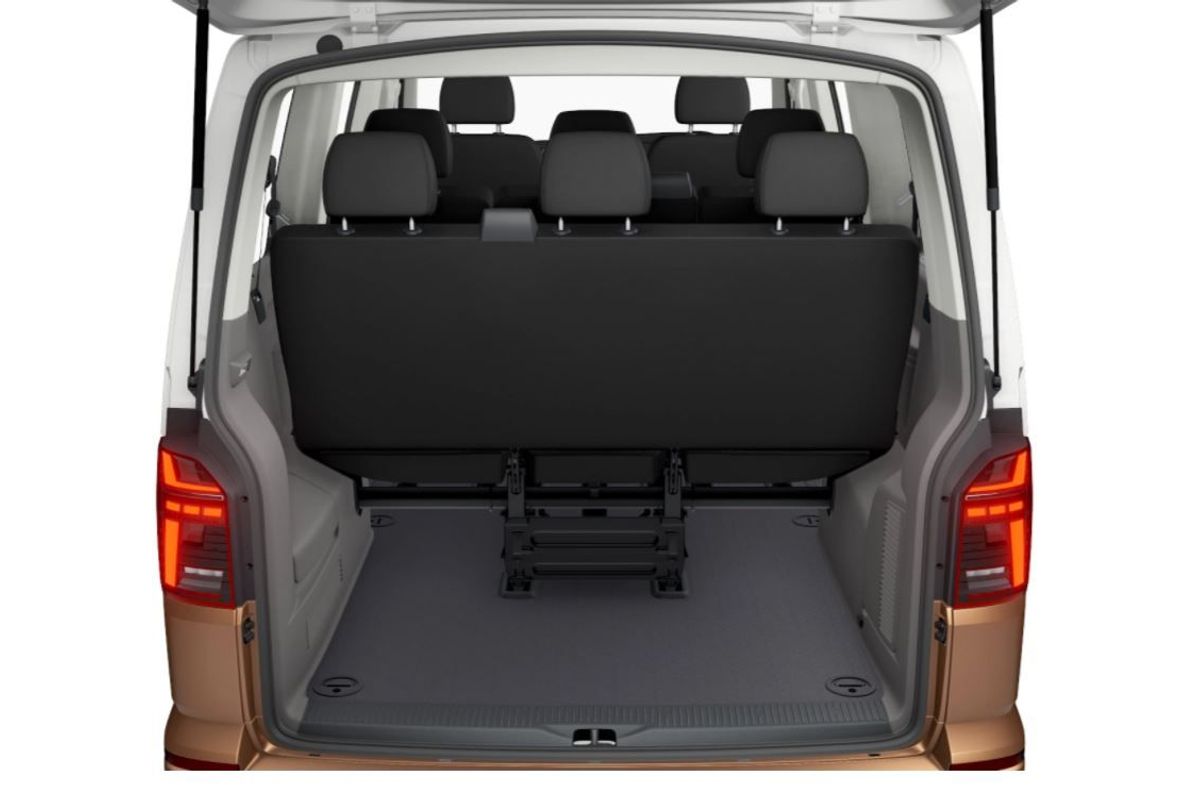
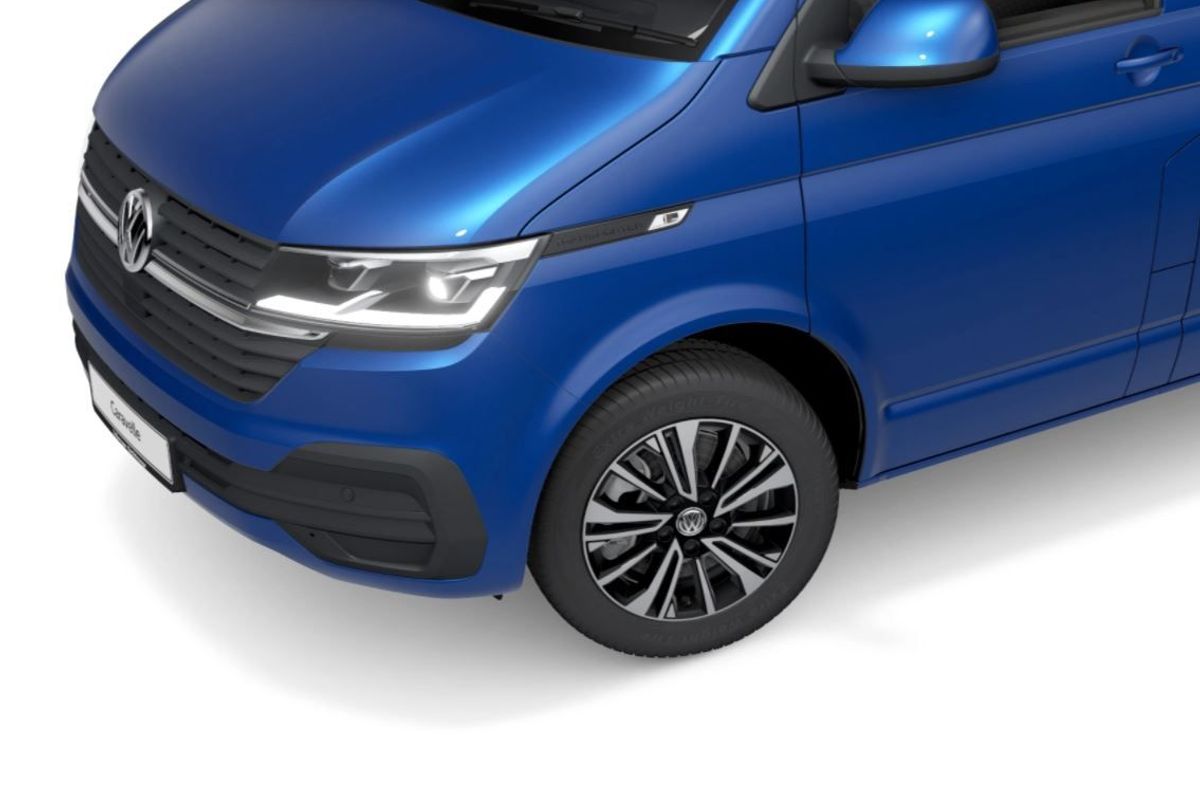
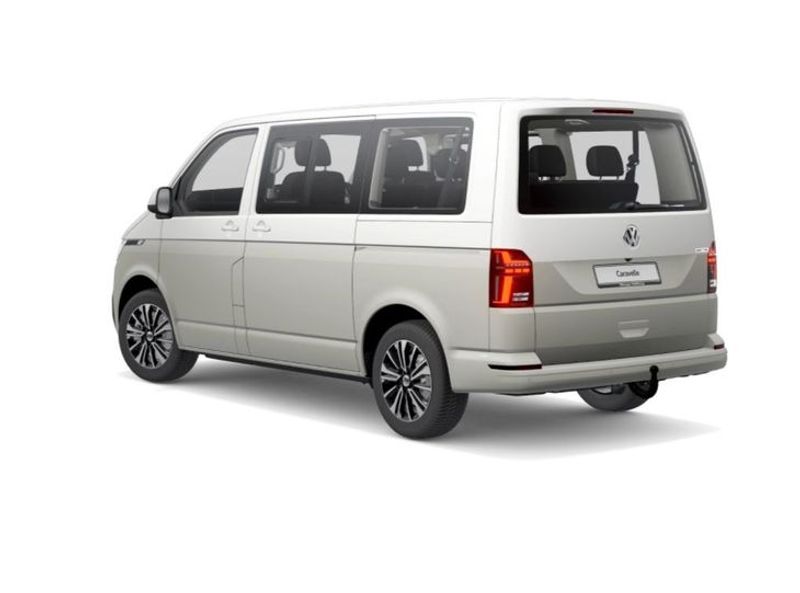
Volkswagen Commercial continues its offensive with the arrival of the Kombi. Positioned below the luxurious Caravelle flagship, the Kombi offers genuine 8-seater capability at a more pocket-friendly price.
The Volkswagen Kombi has three engine options. All are 2.0-litre turbodiesel 4-cylinder powerplants but in varying states of tune. Starting off the range in the short wheelbase Trendline is the 81 kW and 250 Nm. VW claims 0-100 kph in 15.5 seconds, with an efficiency claim of 6.9 L/100 km. You can also get this engine in a higher power output of 110 kW and 340 Nm. It's a tad faster at 12 seconds to 100 kph and consumes 6.6 L/100 km. The flagship model offers a biturbo setup (the others are single-turbo setups) and that produces an impressive 146 kW and 450 Nm. It also features 4Motion all-wheel drive and is good for a 0-100 kph time of 9.8 seconds and will consume 8.2 L/100 km. All Kombi models have an 80-litre fuel tank.
The entry-level model features a manual gearbox, while the other two both feature the 7-speed DSG.
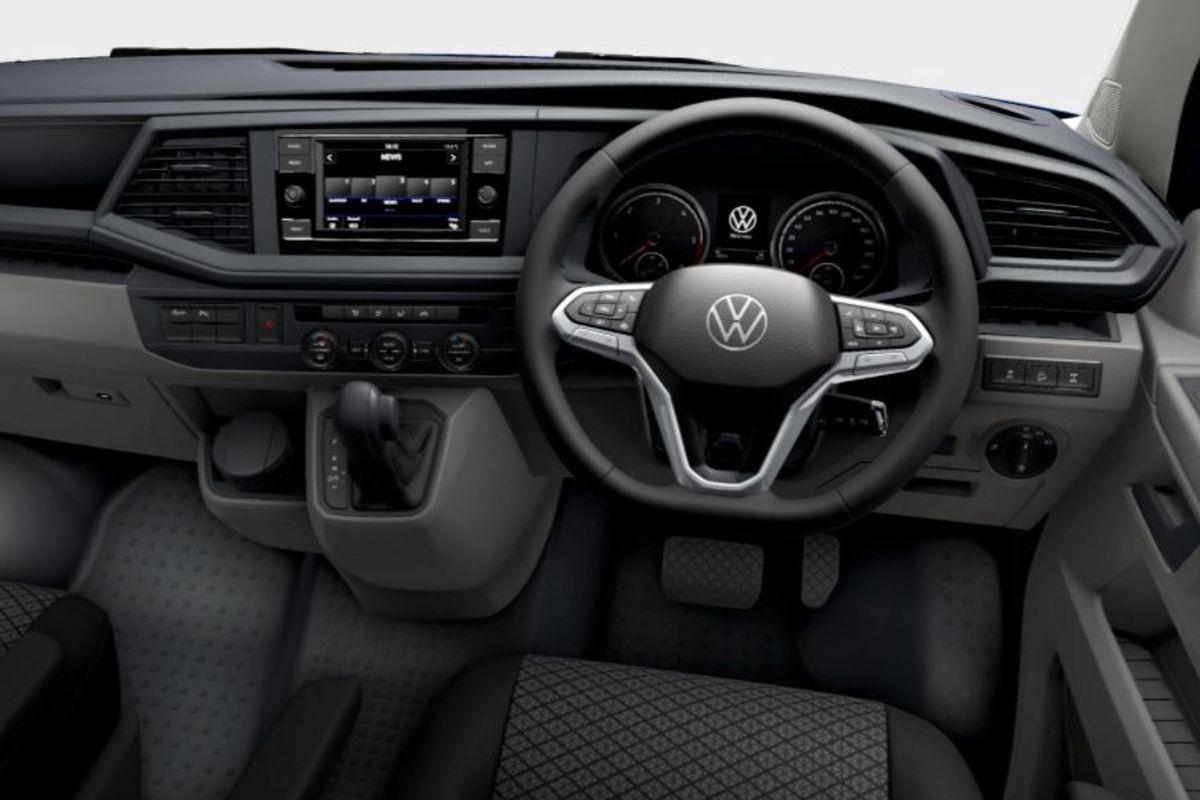
When it comes to wheels, the entry-level rides on 16-inch alloys with the other two going the 17-inch route. Features-wise, the Trendline has Electrically adjustable and heated exterior mirrors, Radio "Composition Colour" with 16.51 cm (6.5-inch) color touch screen, 2 USB interfaces (type C) in dashboard, 6 speakers (2 tweeters, 2 woofers, 2 full-range speakers), Leather*-wrapped multi-function steering wheel (3-spoke), Climatic® air-conditioning system in cab, including rear passenger compartment with electronic control, 2nd evaporator and 2nd heating in passenger compartment with ventilation, and H7 twin halogen headlamps.
The flagship Trendline Plus 4Motion Kombi gets the above, plus LED headlamps and LED rear position lamps with headlamp washer system, Cruise control system including speed limiter, Fixed tow bar (incl. trailer stabilisation), Rear-view camera system (static lines), Park Distance Control – front and rear, Climatronic® air-conditioning system in cab, including rear passenger compartment with 2nd evaporator, 2nd heating system, headliner and additional controls in the passenger compartment, Electrically adjustable, heated and folding exterior mirrors, folding possible via vehicle key,
As far as options go, you can get the really cool two-tone paint for R33 300, a more comprehensive Discover Media Navigation infotainment system for R35 900 and for those who really want to go adventuring, there's the option of heavy-duty suspension and shock absorbtion costing R6 800.
We'll be driving the new Volkswagen Kombi in the coming weeks, so stay tuned for a detailed driving impression.
How much does the new Volkswagen Kombi cost?
The vehicle comes with a 5-year/ 60 000km maintenance plan and a 3-year/ 120 000km manufacturer warranty. There's also a 12-year anti-corrosion warranty. The service interval is 15 000km
This Week’s News You Need to Know (March 2021, Week 2)
In this week's news you need to know: Haval looks to duplicate the H2's success in the family-car segment, are we ever going to see the return of the 'wagon?, Aston Martin signals its intention to join the gathering band of electric-only manufacturers and the BMW 4 Series Convertible joins the fray.
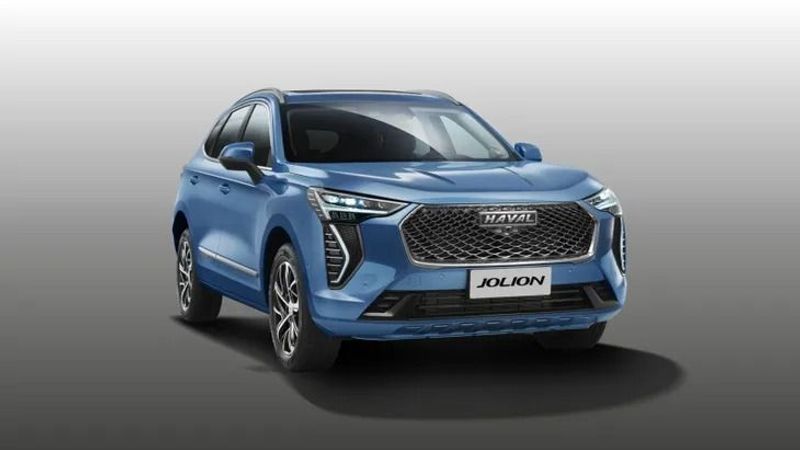
Haval Jolion
We’ve seen it before: While a brand is making good returns from riding the success of a current product, it tactically holds back the introduction of a new model for fear of suffering "cannibalisation of sales". In the gaming world, Sony did it by holding back the release of the PS5 while PS4 sales were still solid. It’s a great way to extend future-safe returns.
The same business case exists with Haval and its new Jolion. Sales of the facelifted H2 have been stellar in South Africa, even in contracting market conditions (4 465 units of the Chinese compact family car, to be precise, were sold in 2020). Those numbers illustrate that consumers are being pried away from mainstream brands by a (now) well-established product that makes that "leap of faith" buyers feel they need to take much easier, especially on their pockets. Haval has played a smart game in the spec department, baiting consumers with standard features other manufacturers charge a premium for.
Now, the Jolion's waiting in the wings, ready to be released to a nation of consumers who are much more inclined to take that leap on a brand-new Haval product. It's been suggested that it will be priced in and around the R350k to R400k mark, which is rather alluring for family-car buyers who want something fresh. The Jolion also appears to be larger than the H2 and heading directly for the segment in which the Toyota RAV4 and Volkswagen Tiguan reign supreme. If VW’s not getting concerned, it should well be and for valid reasons – the H2's sales numbers reflect a strong market appetite for an emerging brand's products. That same appetite is a rather infectious thing in a market where consumers are hunting deals in a post-Covid financial apocalyptic meltdown. This certainly is one to watch.
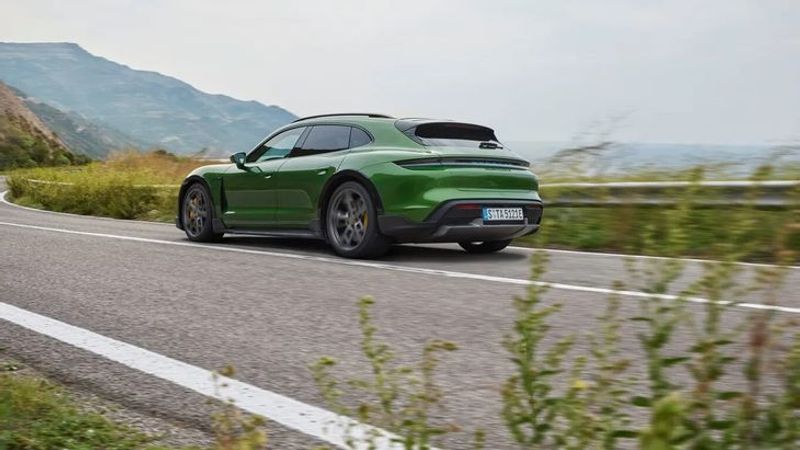
Taycan Cross Tourismo – The resurgence of the 'wagon
Cars like the Porsche Taycan Cross Tourismo reaffirm my view that the station wagon is making a comeback – in some shape or form. Be it the orthodox shape or something "a little alternative" like the shooting brake, there's a glimmer of hope that consumers' fixation with SUVs is not absolute. Sadly, station wagons just don’t sell in notable numbers. We love to romanticise them while staring blankly (and lovingly) into the distance, but when it comes to putting pen to paper we hold back. Why, though?
My view is that the type of buyer who opts for a 'wagon is usually a die-hard petrolhead as opposed to a consumer of mass-produced products with cookie-cutter designs… The type of person who’ll step out of their RS6 at a petrol station and approach you to ask probing questions about the handling capabilities of the Hyundai i30 N you're testing. I speak out of personal experience here, obviously.
Let’s just say that if my glimmer of hope could one day become a shining light and, ultimately, a reality, I’d like to see some other models find their way here. The South African market gets shafted in this regard and in a rather unique way. Cars like Volkswagen’s Arteon Shooting Brake, and from the same stable, the Golf R Variant… (I’ll stop if this if it's getting a little too much for you… or should I rather continue? Okay, great) Jaguar’s XF Sportbrake… Mercedes AMG E63 S Estate… the Volvo V60 T8 Polestar…The Alpina B5 bi-turbo 'wagon. The list continues. They’re all there, but no one’s buying them, at least not in the Republic. Perhaps the fashion trend is just not… trending yet?
But let me remind you that fashions tend to make comebacks; it’s all about popularity. Perhaps it’s not quite the wagon’s turn just yet and it hasn’t been for the past 10 years. We know that history has a way of repeating itself and with manufacturers all but removing estate variants from their product lists, perhaps they know something we don’t and the Station-wagon Resurgence is around the corner.
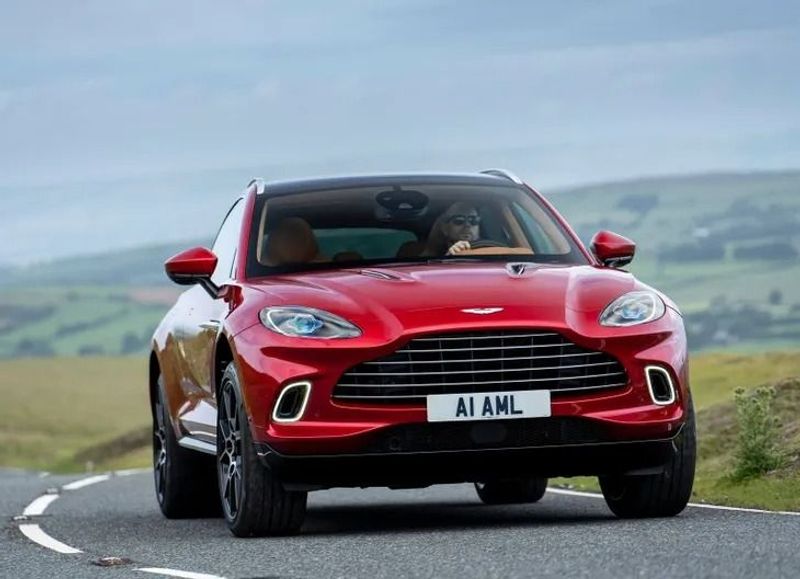
Aston Martin's going electric
For those living under a rock, the quintessentially British manufacturer Aston Martin has seen a recent injection of interest (and, of course, capital) by Canadian-born international playboy, Lawrence Stroll, who heads a consortium that has acquired a 16.7% stake in the firm. Stroll himself has been responsible for transforming brands like Michael Kors and Tommy Hilfiger into the apparel powerhouses they are today. If anyone is fit for purpose to do the same with Aston Martin, it’s Stroll (cue that triumphant power tune).
Blessed with sharp business savvy and a proven track record, Stroll acquired the Force India F1 team, which was subsequently renamed Racing Point. The team's been rebranded again for 2021, to match the name of Stroll's other major acquisition, Aston Martin. The Gaydon-based firm has, as reported, abandoned its GT aspirations to focus its efforts on the next chapter: Electrification.
An "acute reshuffle of pure intentions" was to be expected given the zeitgeist of the Continental motor industry, but an electric Vantage? What, are you kidding me? Although all-electric Astons won't see the light of day before 2025, don’t be surprised if the company's F1 programme becomes the springboard for technology advancements, which will infuse future road-going cars. Just remember that there is an Aston Martin Valkyrie parked in the garage that’s been mothballed (for now) due to the abandonment of Le Mans hyper-class aspirations; that machine has a head start in the hybrid/electrification process.
Coupled with that and the 20% stake Mercedes-Benz has in Aston, we’re noting that there is a lot of IP floating around that the 2 camps could consolidate to launch an attack on the Volkswagen Group.
I can't imagine that we'll see an electric Vantage as a Bond car anytime soon. I suppose the next thing they'll tell me is that 007 is ditching the dry martini for kombucha. I don’t know, but we are living in strange times and anything is possible, but at the very least Aston Martin’s future is looking much more than sustainable than it did but a short while ago.
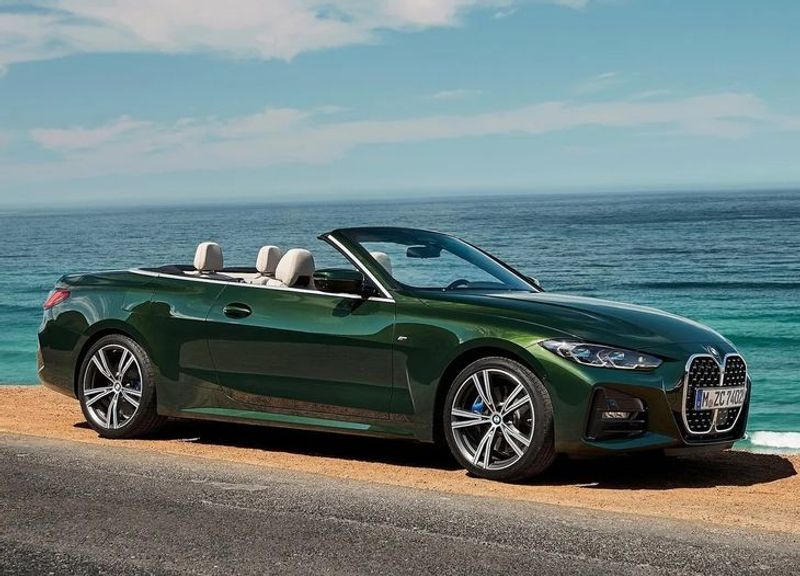
G80 BMW 4 Series Convertible – Future classic material?
I recently took a leisurely walk with my trusty camera at my side (how Cape Town of you, Brent) and spotted a stock E46 M3 Convertible with a manual 'box. Imagine the relief I felt when I realised that amid the crazy, turbulent world of motoring, this convertible has aged rather well. It surely deserves the title of "future classic"; then my thoughts suddenly turned to the new G80, which is now available.
Did you ever expect the E46 Convertible to reach this revered status? I certainly didn’t. It proves that car design often takes a "long-term view" and our tastes will never stay the way they are for very long.
Convertibles are still popular and I firmly believe that convertible buyers, as a community, have officially been freed from that douche-bag status that plagued them for so long. Small victories, people.
Whether or not the current G80 shape will stand the test of time and eventually be held in the same high esteem by BMW aficionados as the E46 Convertible (I surely can't be the only punter who regards the old 3 Series ragtop sublime), well, I'm not convinced. However, it is possible that the G80 could become a classic and I look forward to being proven wrong (it won't be the first, or last, time).
The single-cab battery bakkie that makes sense
Another American battery bakkie – but one that is the 'right' size.
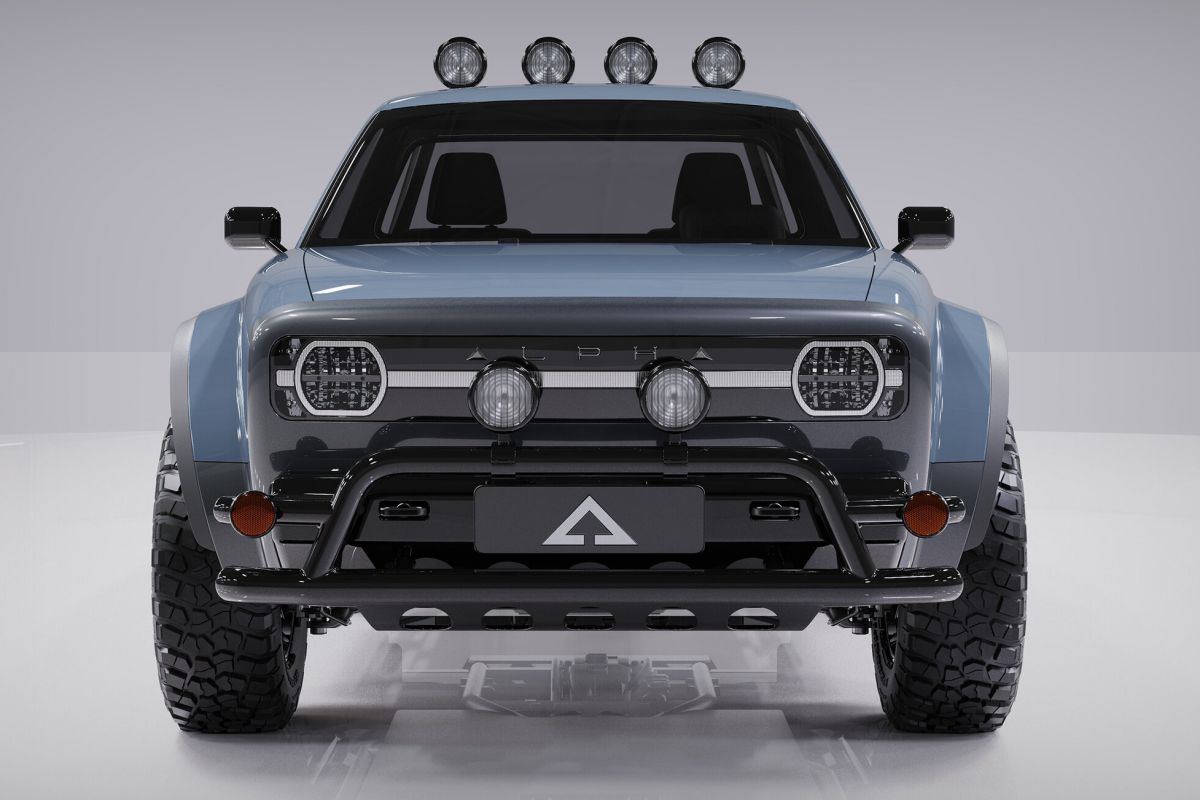
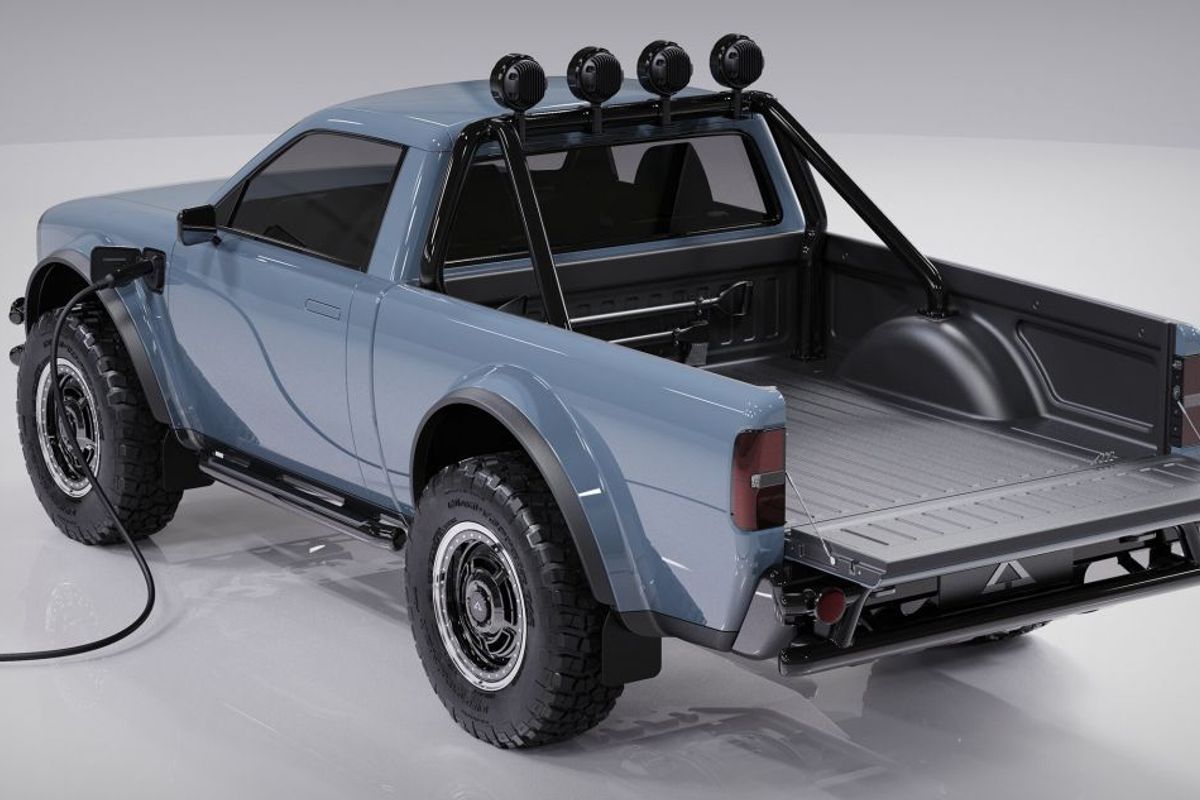
For buyers who are more familiar with the Hilux/Ranger size bakkie, and prefer a single-cab configuration, the market for battery power is quite niche. But now there is the promise of a new option, which is only 4.67m long, making it a lot more driveable, in theory, for most markets.
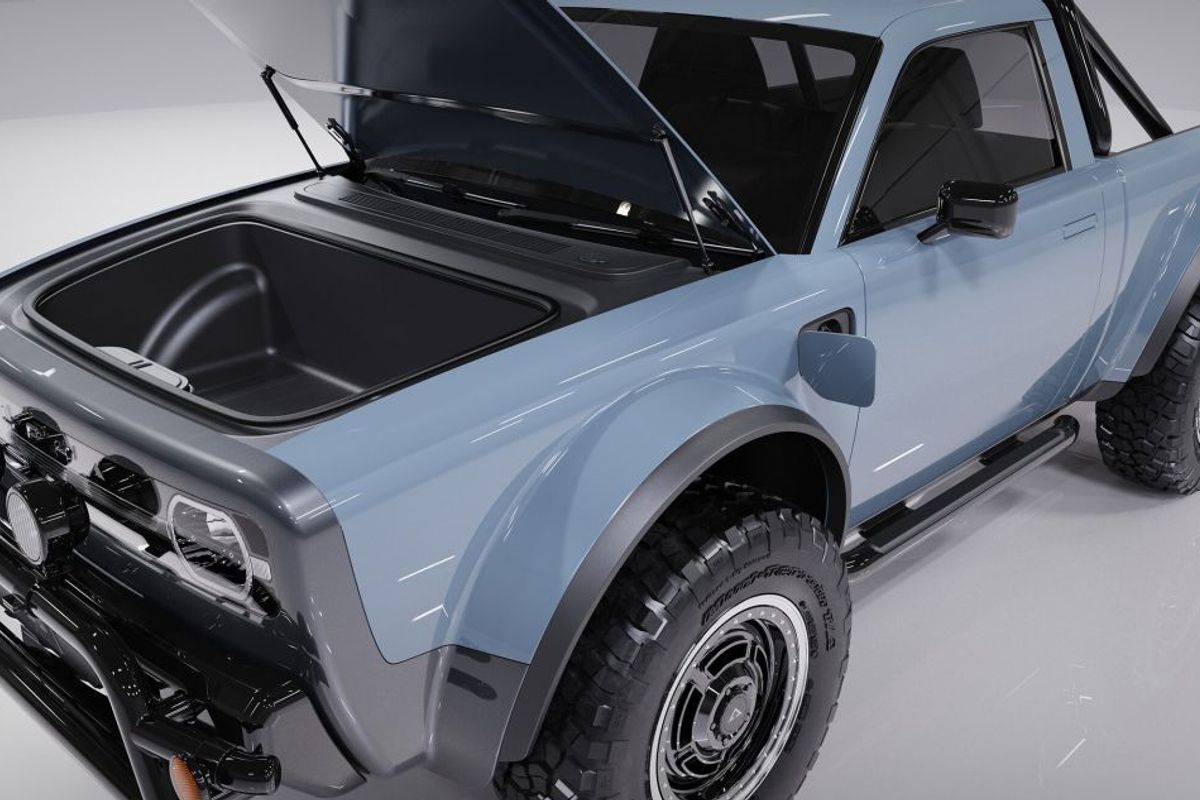
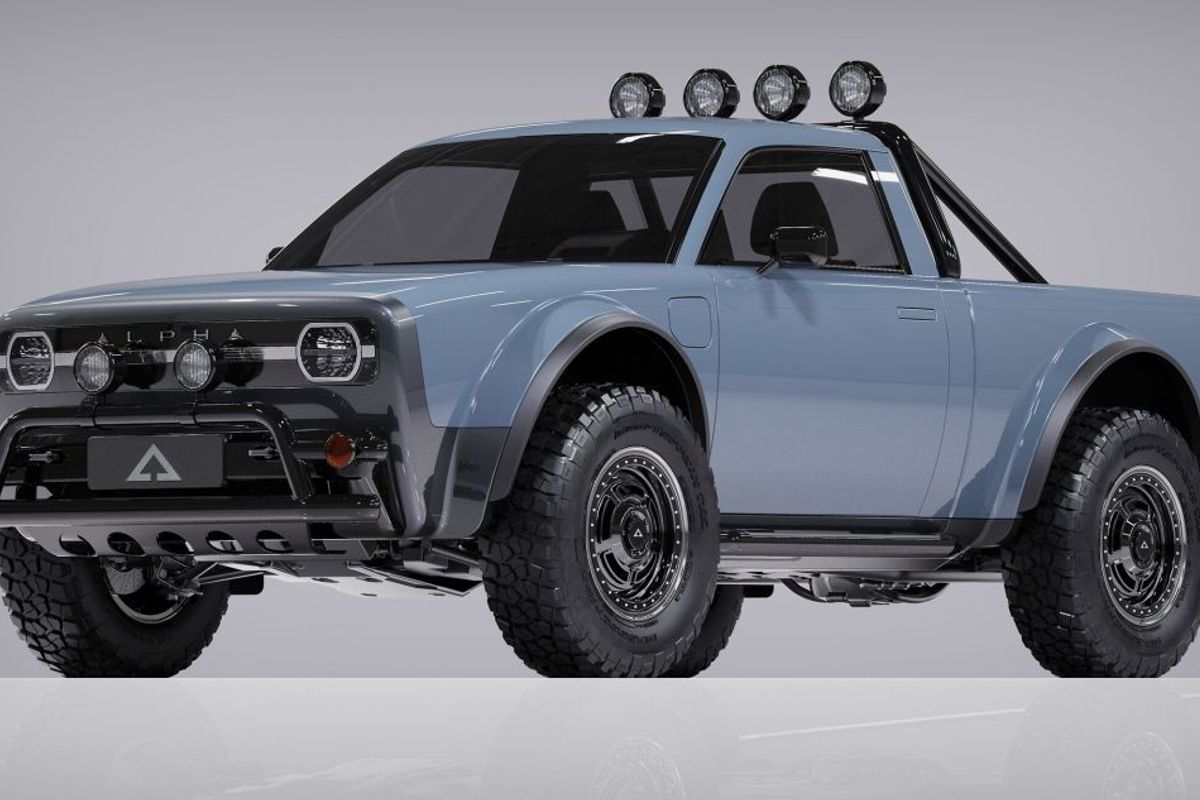
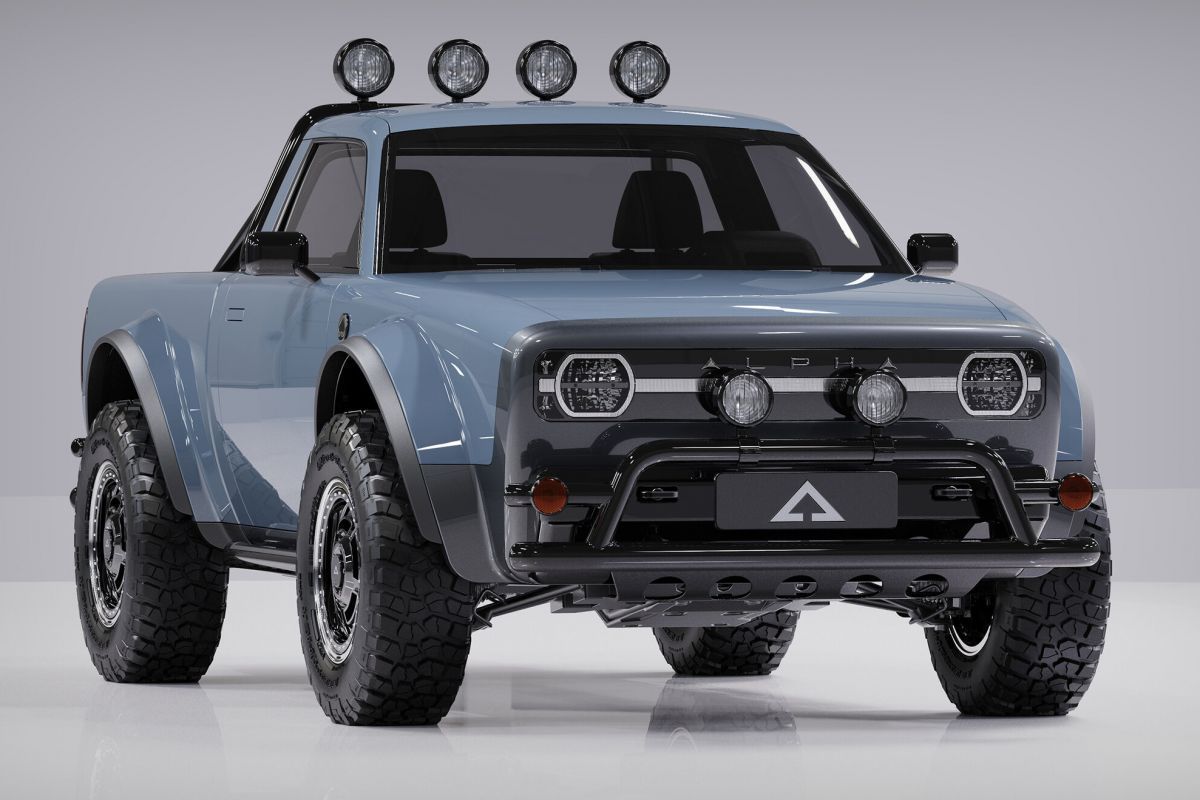
The bakkie in question is Alpha’s Ace Wolf, which looks like it has just rolled out of a 1981 dealership. Styling and exterior design is nothing like the Cybertruck or anything from Rivian.
With this bakkie, retro design theme abound, including a small steel nudge bar up front and very conventional bakkie proportions. Alpha won’t say much about the Ace Wolf platform, although it is expected to be a skateboard type design, instead of the classic bakkie ladder frame.
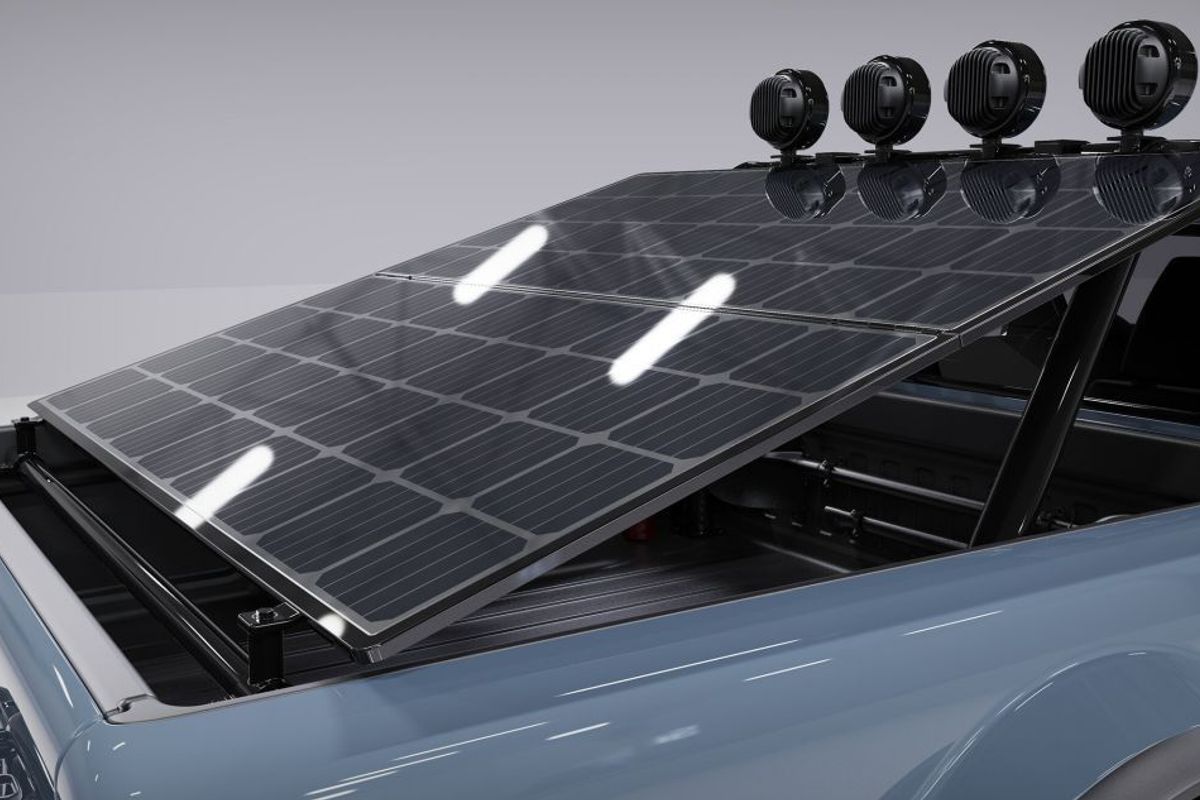
There’s a spacious frunk above the front wheels, which is secure and weather-safe stowage space, whilst a deployable solar panel can be fitted to the loadbox.
Alpha says that it is planning to use a lithium-ion battery pack in the 75- to 85 kWh range, which should be entirely adequate, considering the size of this bakkie, which is not much larger than a Ranger.
There are no power or torque claims for the Ace Wolf’s electric motors, but Alpha does commit to it having 440 km of usable range. Performance is brisk instead of radical, with Alpha claiming its single-cab can run the benchmark 0-100 kph sprint in only 6.5 seconds.
Interestingly, the default drive configuration is through the front-wheel only, with an optional second electric motor for the rear axle, making it four-wheel-drive. The only other mid-to large-size bakkie with front-wheel drive is Honda’s Ridgeline.
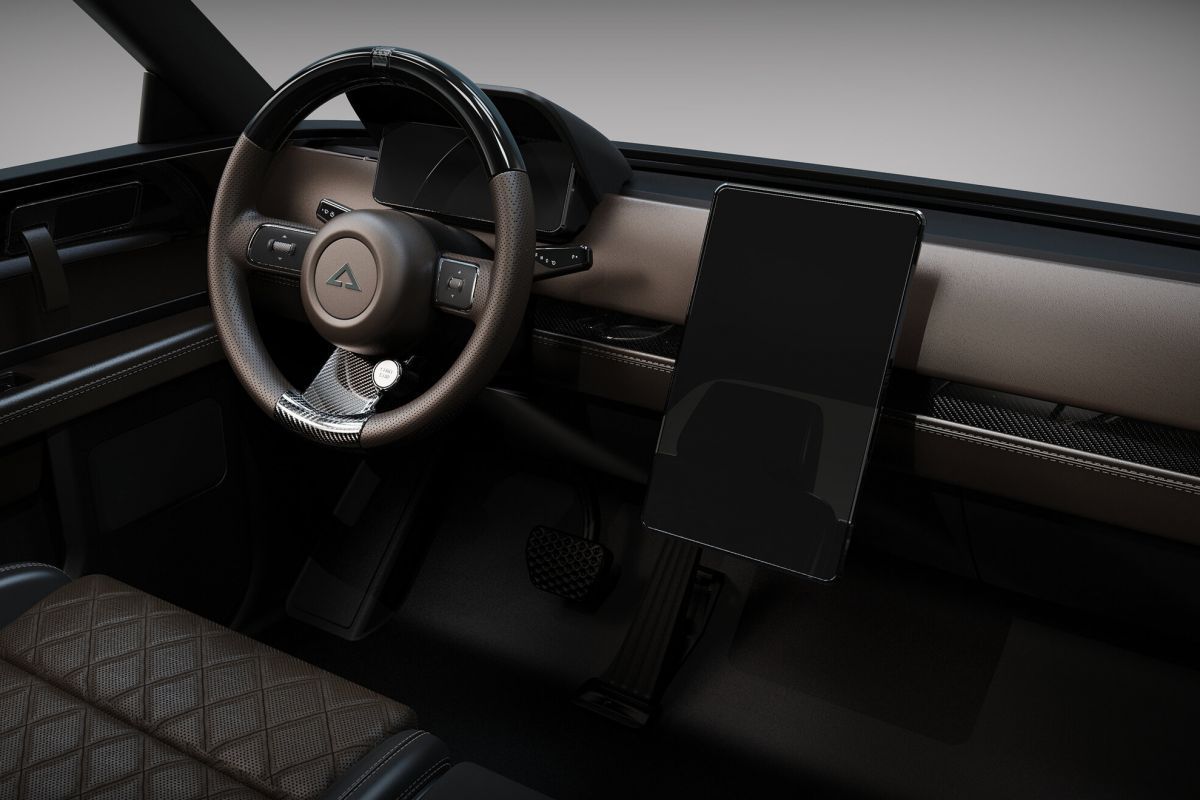
The Ace Wolf’s cabin has only two seats and a very simple ergonomic layout, with the obligatory oversized infotainment screen, and dark chocolate trim. Very Hilux circa 1980, indeed.
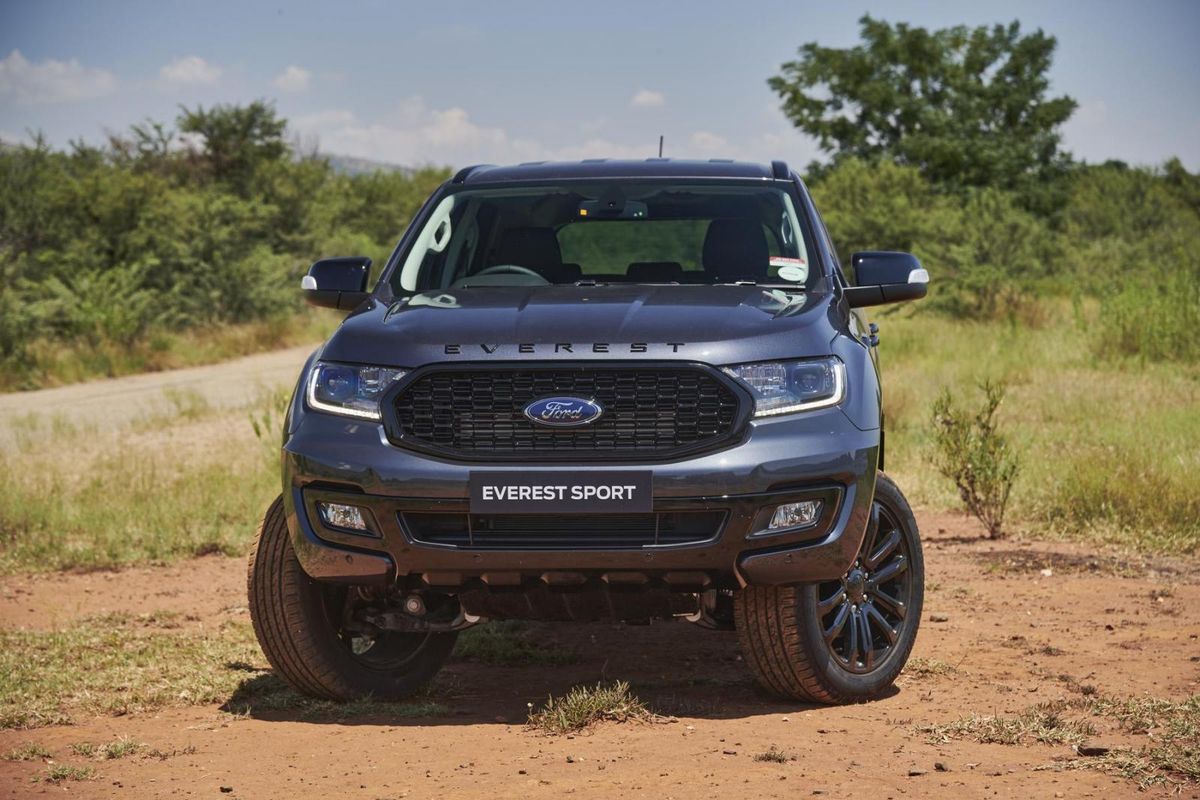
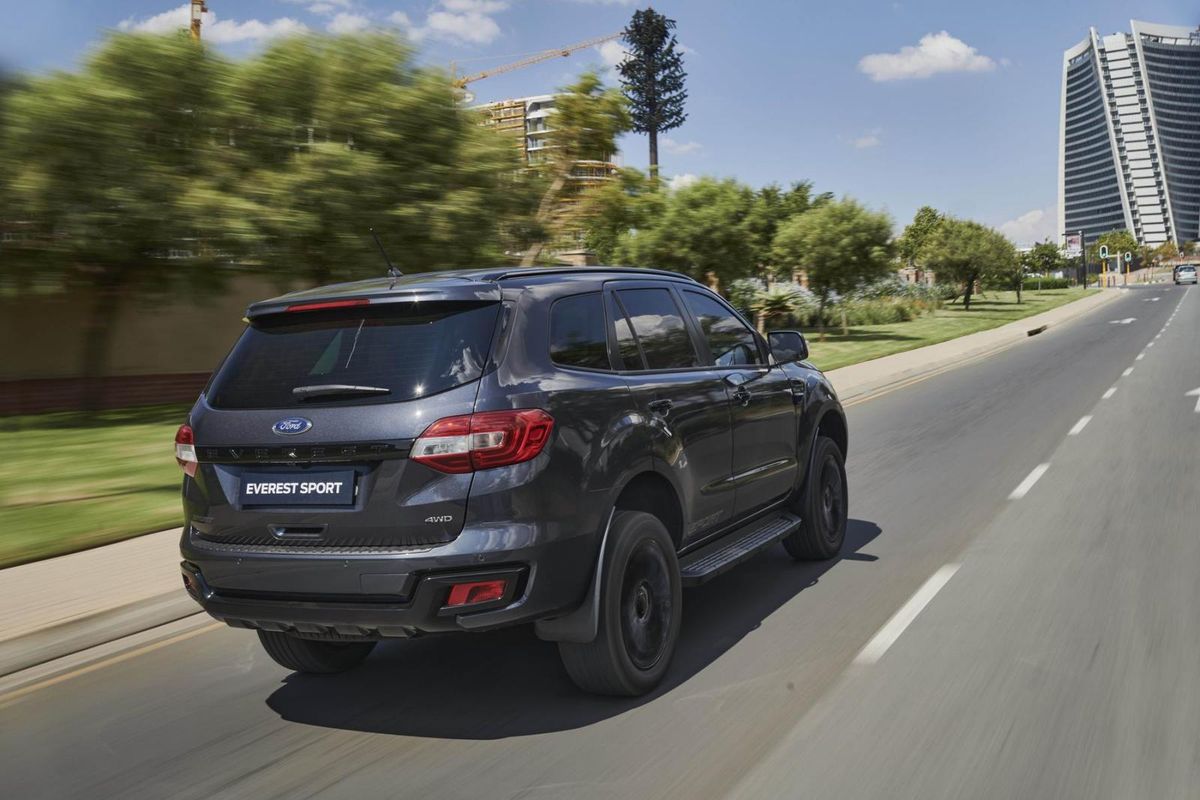
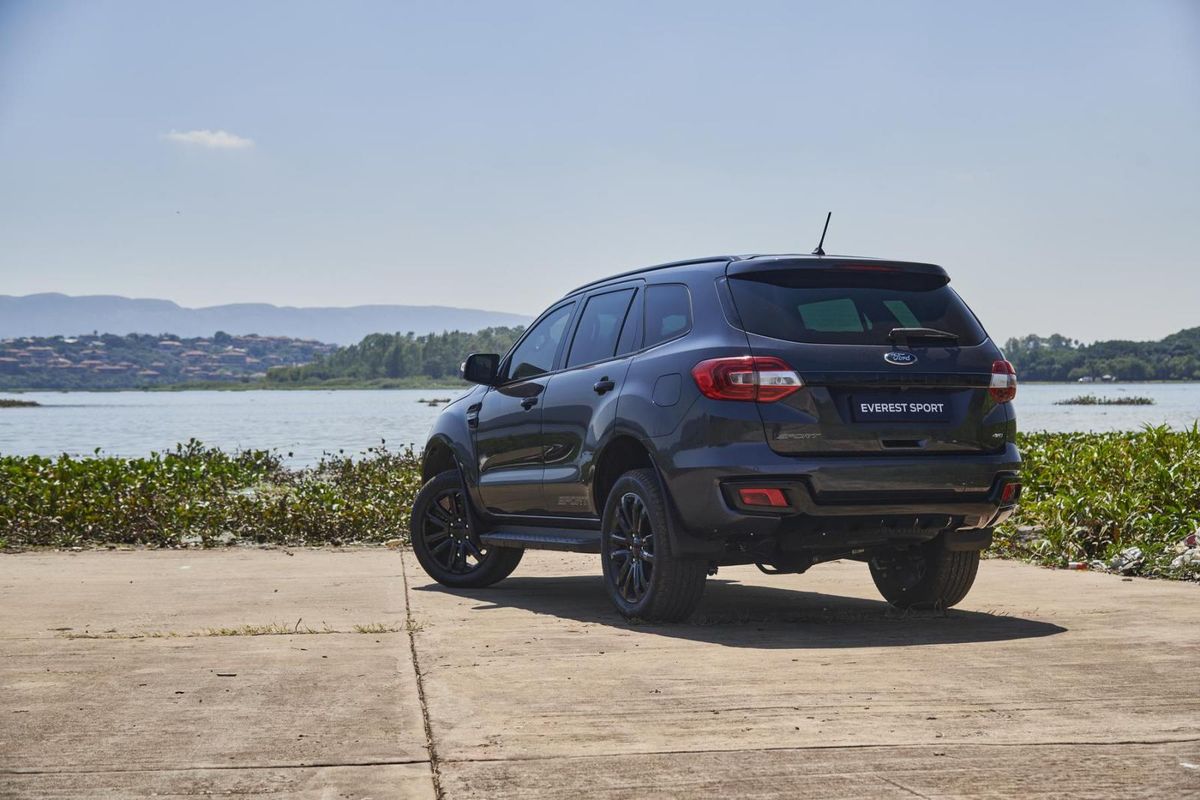
Ford SA is now offering an Everest Sport to local customers. See specs and pricing details below.
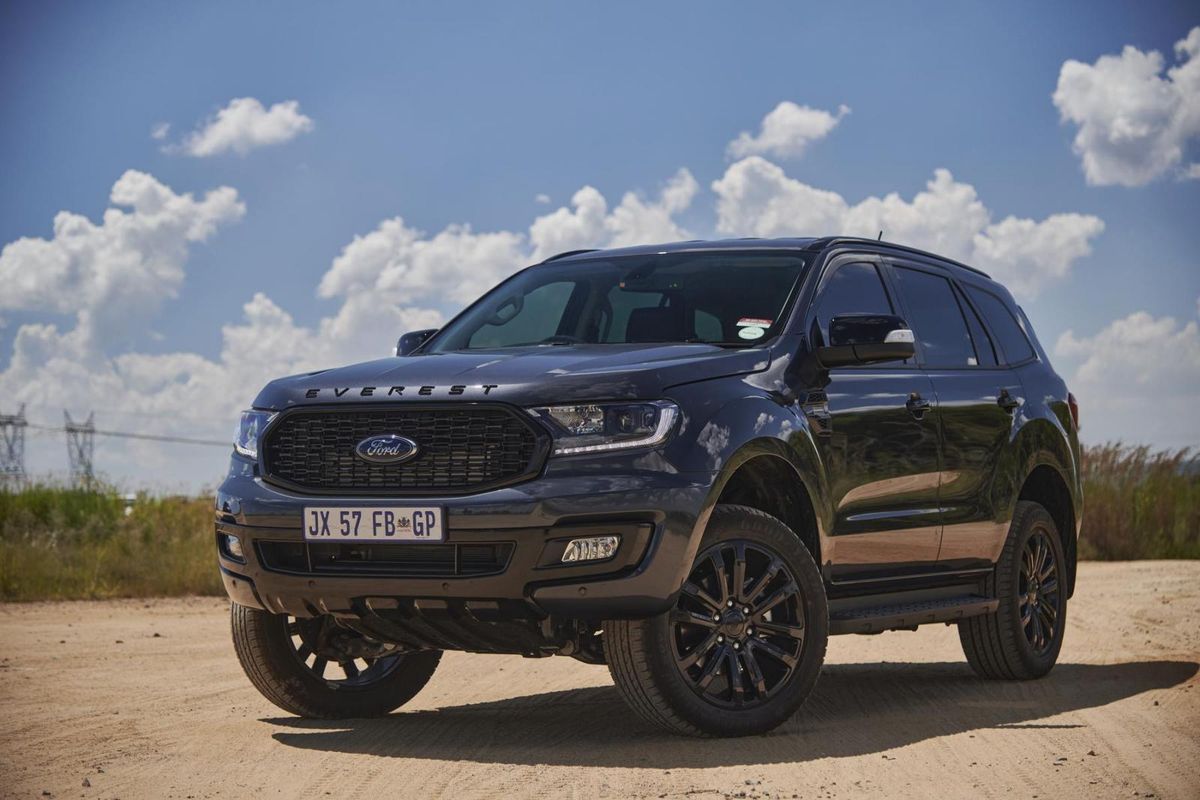
The Ford Everest is not only a popular choice in the 7-seater Adventure SUV segment but it’s also hugely capable offroad. For those buyers looking for a bit more visual punch from the Everest, Ford South Africa now welcomes the Everest Sport to market.
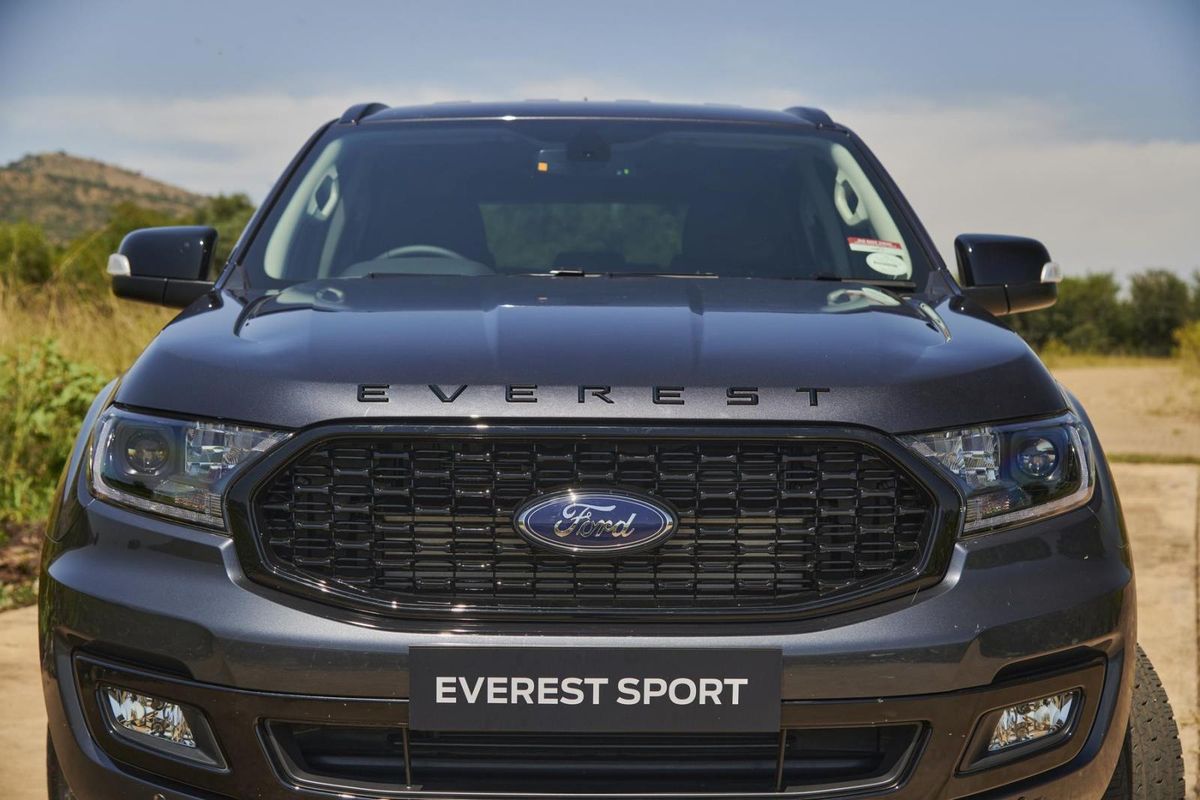
Apart from wearing Sport decals to differentiate it from the Everest pack, the Everest Sport also wears a black mesh grille with a black surround. Also note the ‘Everest’ lettering seen on the nose of the bonnet as well as the black 20-inch alloy wheels and black roof rails. Customers can choose between a range of body colours including Frozen White, Diffused Silver, Moondust Silver, Agate Black, Sea Grey and Copper Red.
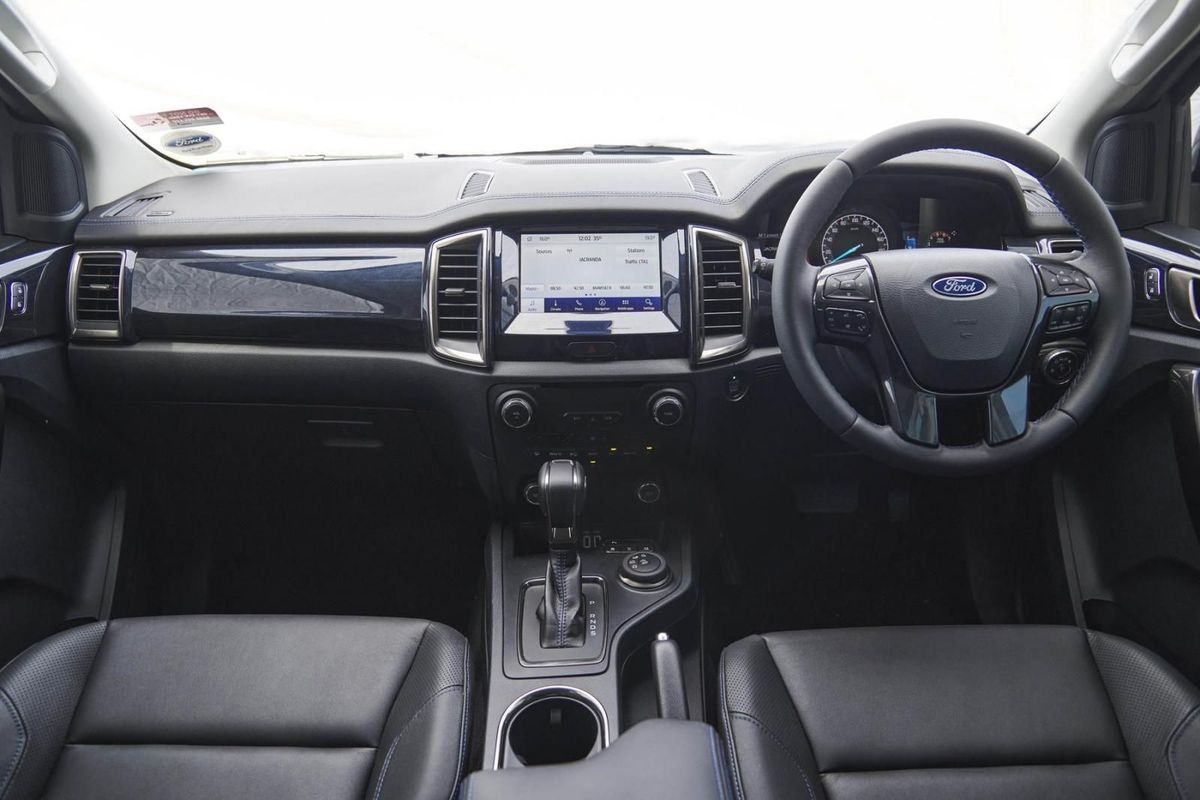
Inside, the Ford Everest Sport gets sporty leather seats with blue stitching and the dashboard gets a soft-touch leather treatment. Features-wise, the new Ford Everest Sport has LED headlamps and daytime running lights, cruise control and front and rear park sensors with a rear-view camera. It also has the excellent SYNC3 infotainment system complete with Apple CarPlay/Android Auto and Trails for Africa 4×4 trails.
In terms of engine choice, The Everest Sport is powered by Ford’s 2.0-litre single-turbocharged diesel engine offering 132 kW and 420 Nm of torque and comes mated with a 10-speed automatic transmission. The Everest Sport can be had in both 4×2 and 4×4 guise. An electronic locking rear differential is fitted as standard. The 4×4 models benefit from the Terrain Management System which has offroad modes like snow, mud, rocks. For additional peace of mind Electronic Stability Programme with traction control, Trailer Sway Control, Hill Launch Assist and Roll Over Mitigation is fitted, with Hill Descent Control helping with those tricky drops.
How much does the Ford Everest Sport cost in SA?
All Everest models come standard with Ford Protect, comprising a four-year/120 000km comprehensive warranty, three-year/unlimited distance roadside assistance and five-year/unlimited km corrosion warranty. A six-year/90 000km service plan is included, with 15 000km service intervals.
GWM’s new P-Series bakkie has finally arrived in South Africa to take on some formidable competition in the highly-competitive leisure double-cab segment. Does it stand a chance? We recently tested the range-topping P-Series LT 4×4 automatic to find out if it has what it takes to become a major player in this lucrative segment. Let’s dive in and take a closer look…
We Like: Value-for-money, interior execution, lots of practical features, reasonable performance, great price
We Don’t Like: Grille design is iffy, ride quality could be more refined and we want more power and torque!
Fast Facts
Model tested: GWM P-Series LT 4×4 automatic
Price: R544 900 (as of March 2021)
Engine: 2.0-litre turbodiesel
Power/Torque: 120 kW/400 Nm
Transmission: 8-speed automatic
Fuel economy: 9.4 L/100 km (claimed)
Tow rating: 2 250 kg (braked)
What is a GWM P-Series?
The GWM P-Series has arrived to take on the segment’s heavyweights.
GWM is typically known as a brand that has primarily served the lower end of the single and double-cab segment with its range of Steed bakkies. When GWM unveiled its P-Series back in 2019, the Chinese automotive giant made it abundantly clear that it wanted its newcomer to rank in the “Top 3” pick-ups worldwide alongside Ford and Toyota’s bakkie juggernauts. That’s an ambitious goal for GWM, but if you consider the considerable success that GWM’s SUV brand, Haval, is currently experiencing worldwide and locally, then perhaps a Chinese bakkie storm is indeed brewing.
The P-Series was recently launched in the South African market and, in contrast with its Steed brethren, the newcomer caters for a more discerning leisure double-cab bakkie buyer with bolder exterior styling, a generously-equipped and modern cabin and the promise of significant 4×4 capability. The top-of-the-range P-Series LT 4×4 automatic rivals the likes of the Toyota Hilux 2.4 GD-6 4×4 and the Ford Ranger 2.2 TDCi 4×4 and, on paper, the P-Series offers marginally better power and torque outputs as well as an impressively-equipped cabin that arguably leaves the competition in the dust.
South Africa is a major bakkie market and since the P-Series’ introduction late in 2020, we have seen many examples on the roads all over Mzansi. Is that a sign of what’s to come? Can the P-Series steal the hearts of (traditionally very brand-loyal) bakkie enthusiasts and claim a sizable share of this lucrative segment? Let’s dissect the new GWM P-Series to find out just how good it really is…
How does the GWM P-Series fare in terms of…
Kerb Appeal
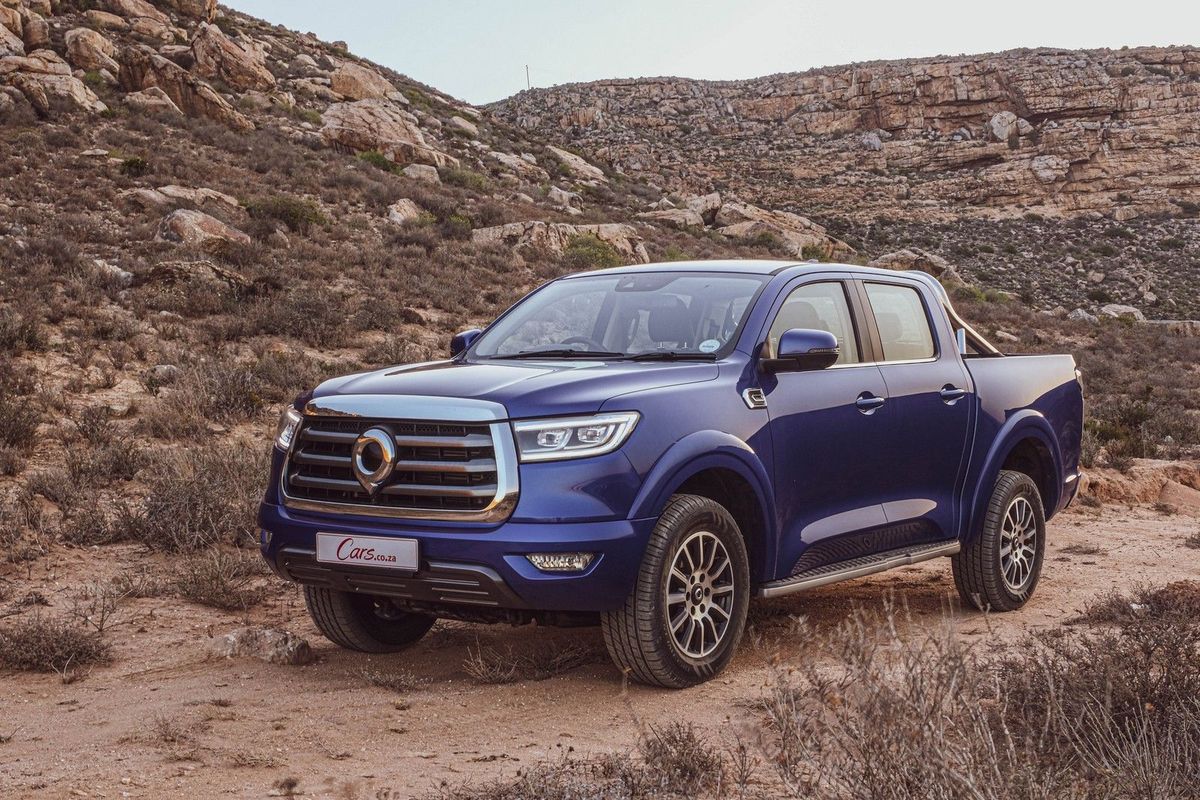
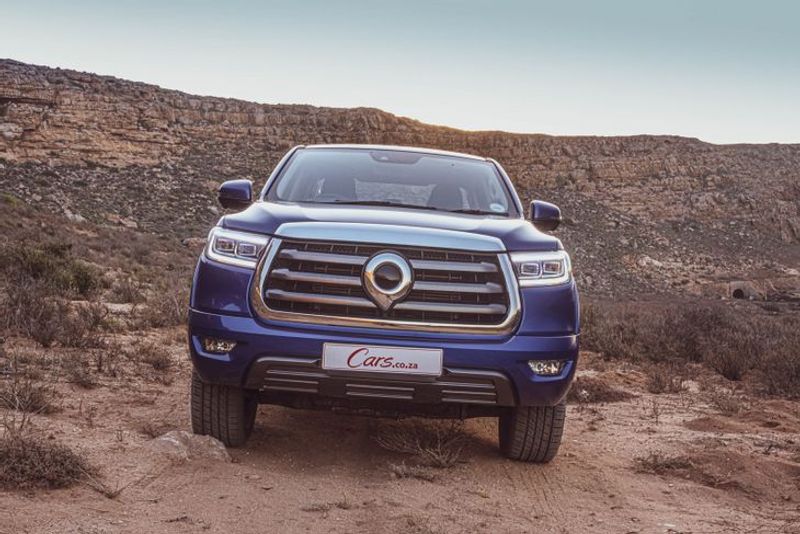
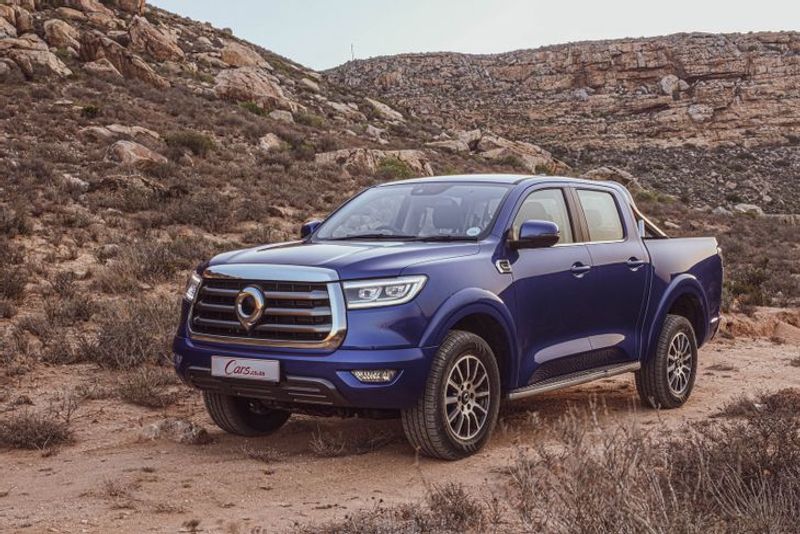
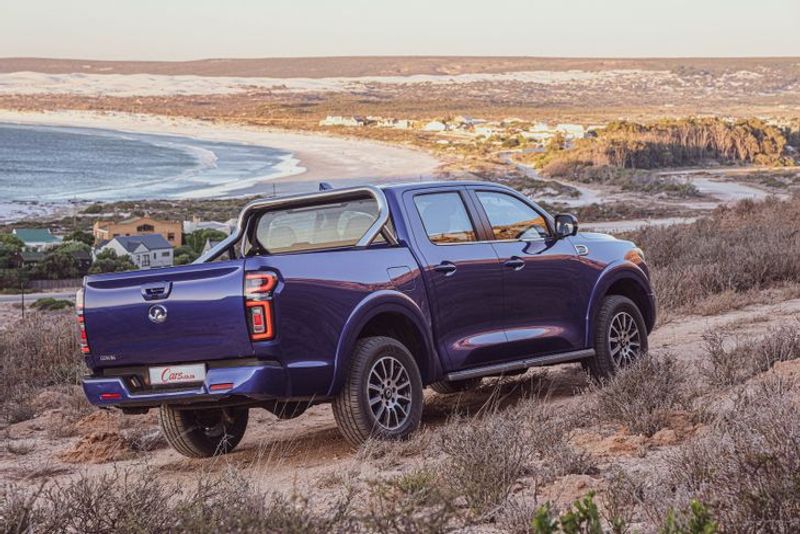
There’s nothing small about the new P-Series. It’s big, bold and shiny.
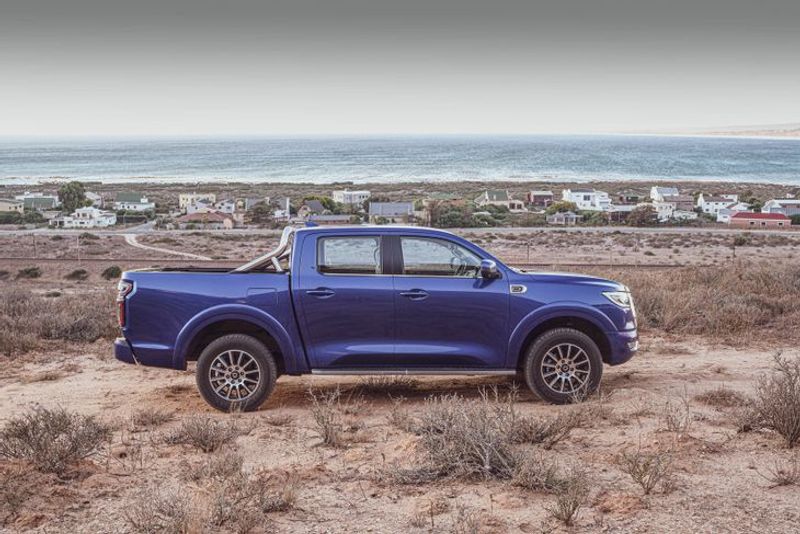
For GWM, size really does matter. Don’t let the images of the new P-Series deceive you, this is a sizeable bakkie! The P-Series is 5 410 mm long, 1 886 mm tall, 1 934 mm wide and has a 3 230-mm wheelbase. To put those numbers into perspective, the P-Series is larger in all directions than both the Ford Ranger and Toyota Hilux…
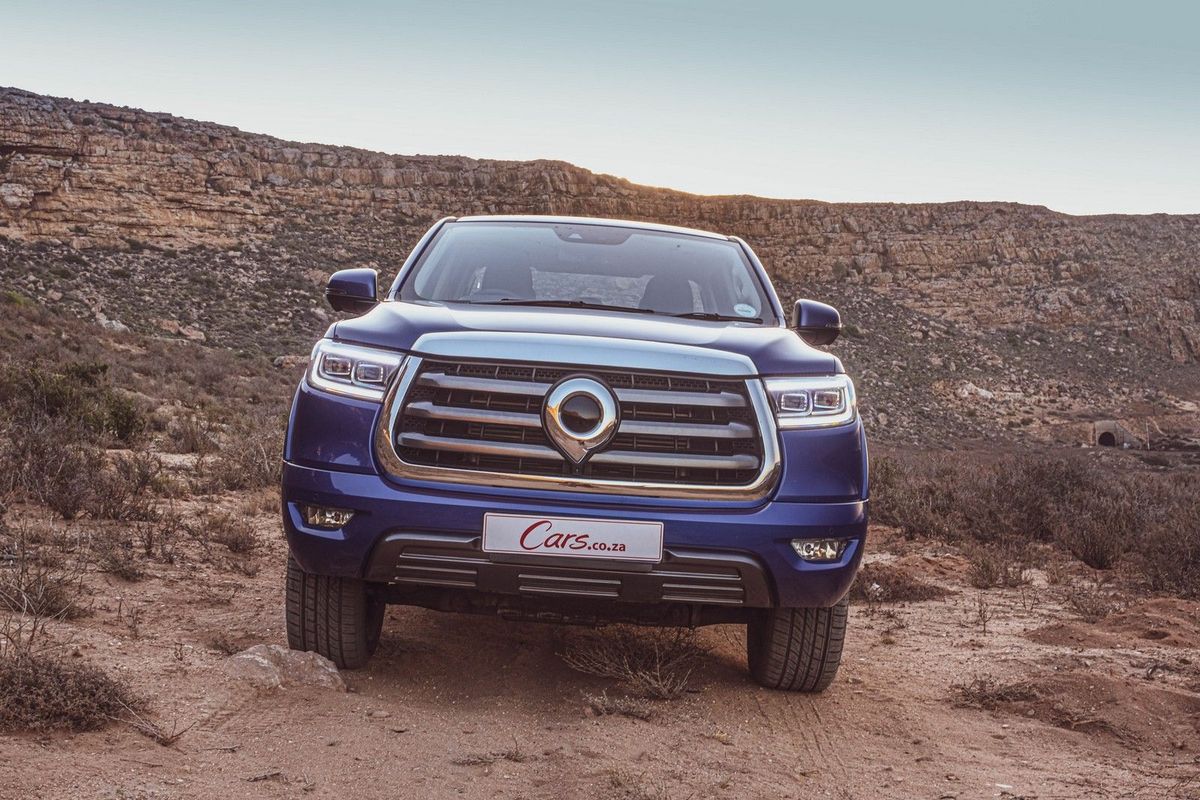
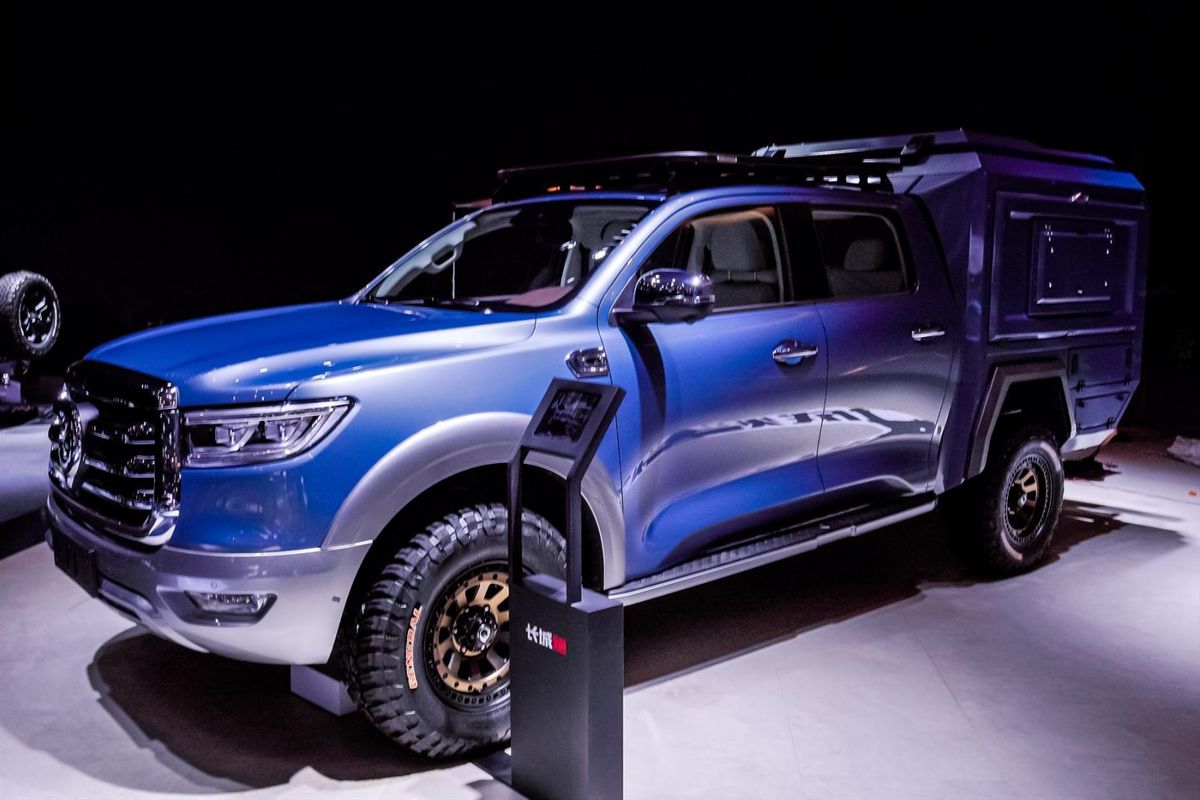
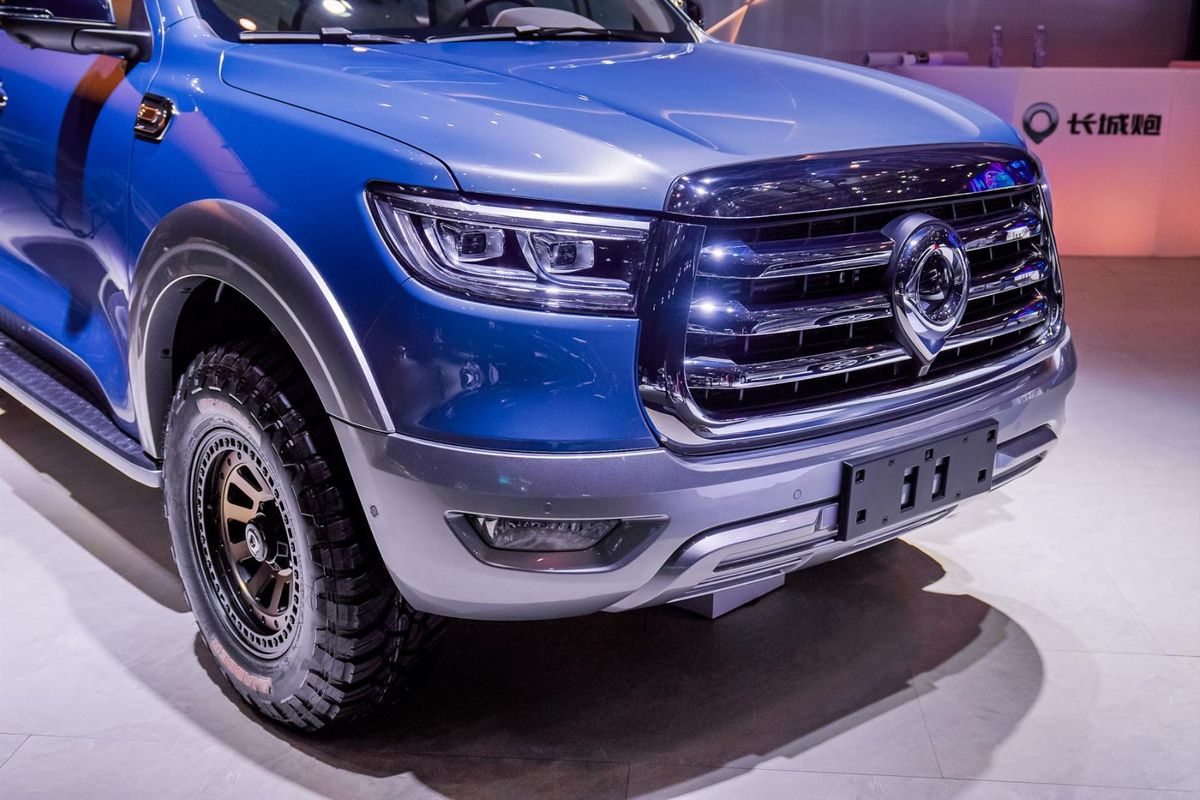
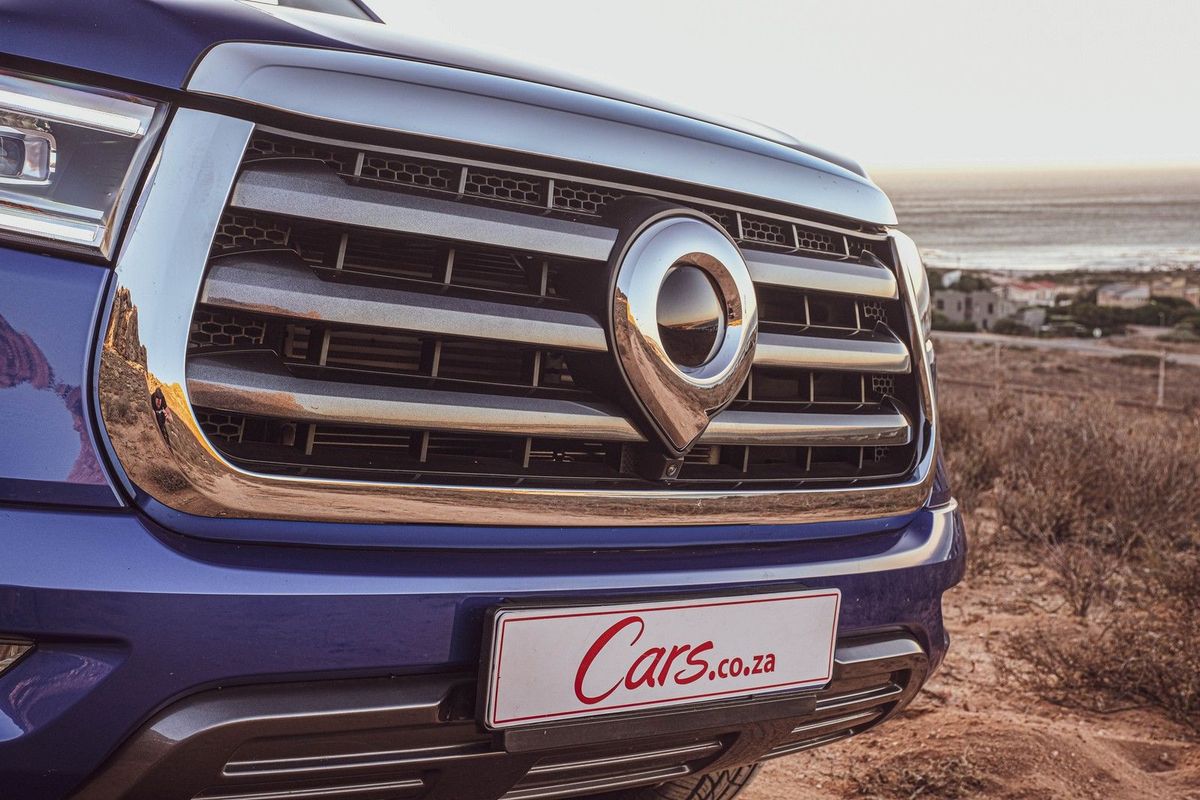
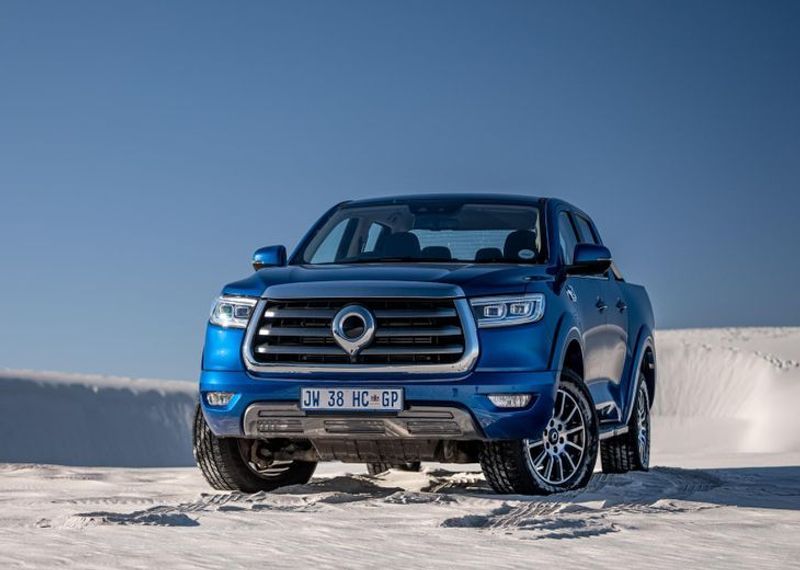
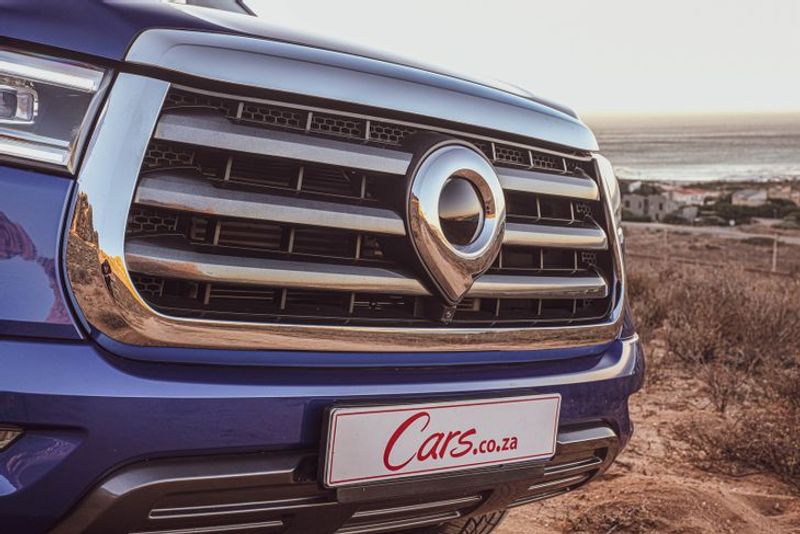
The P-Series also wears what just might be the biggest and thickest chrome grille and brand logo ever seen on a bakkie (in the South African market, anyway). Talk about making an entrance… that’s one huge shiny schnozz! The large-and-in-charge grille is flanked by LED headlights with integrated daytime running lights, while smart-looking LED clusters are fitted at the rear. The chunky grille is further complemented by an equally-chunky chrome sports bar that completes the brightwork.
We think the P-Series brings a bold look to the road, but we also think that the swathes of blingy chrome might be too polarizing for some (if not a mite impractical). Even so, the kerb appeal on display by this vibrant Blue Sapphire P-Series is quite impressive and it may very well cause a stir, or perhaps a raised eye-brow, when you pull up next to a Ranger or Hilux at the traffic lights.
Interior Execution and Features
The P-Series’ interior execution and standard features list are mightily impressive for a bakkie at this price point.
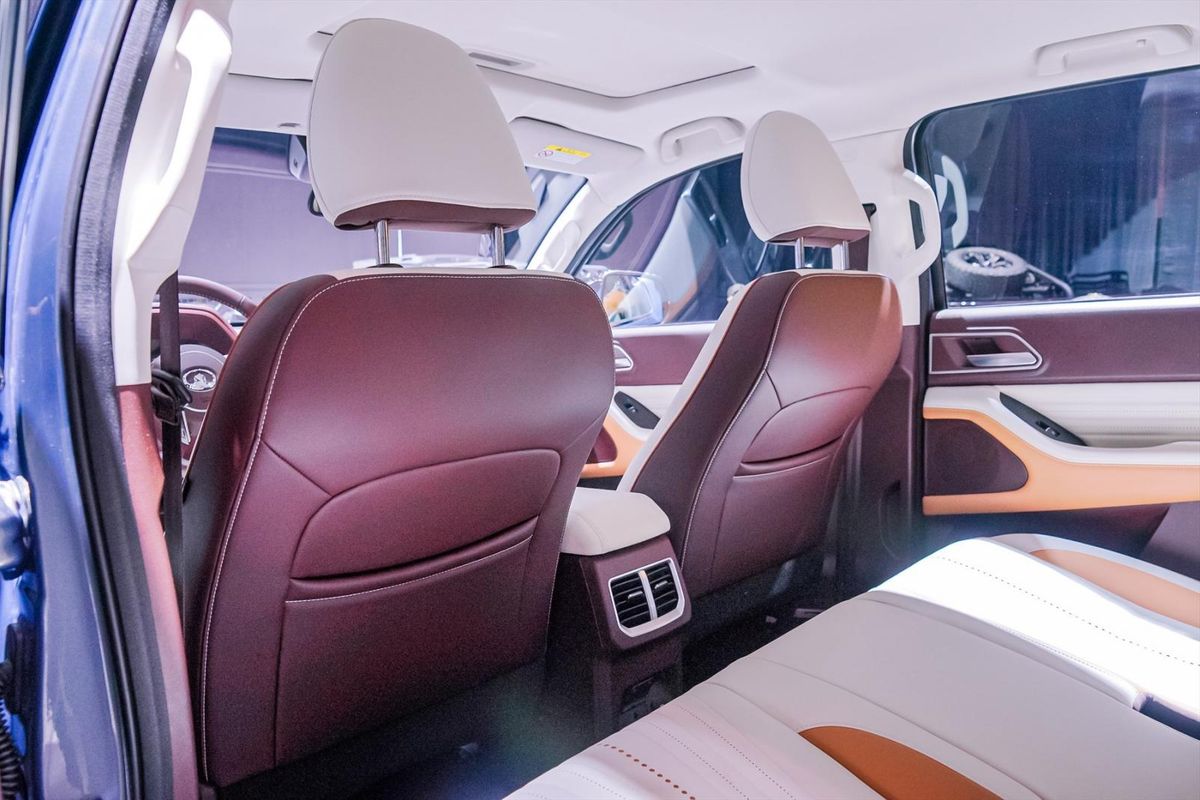
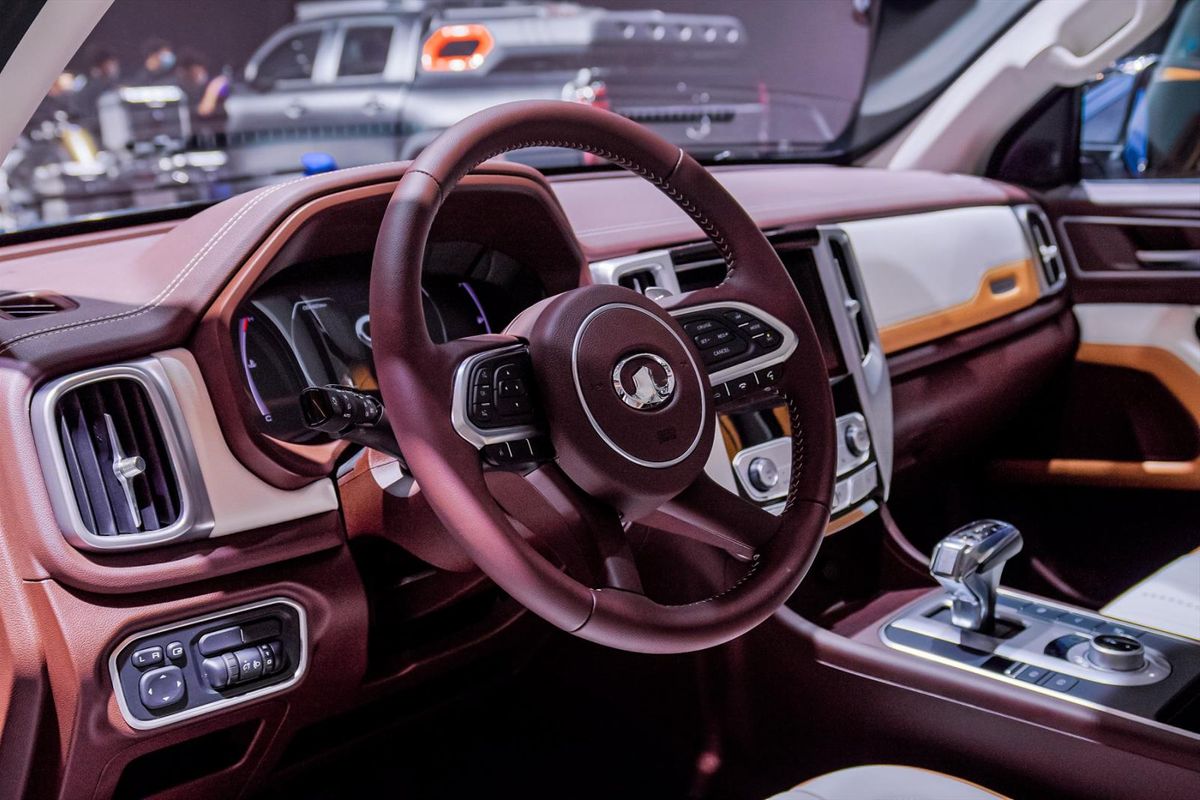
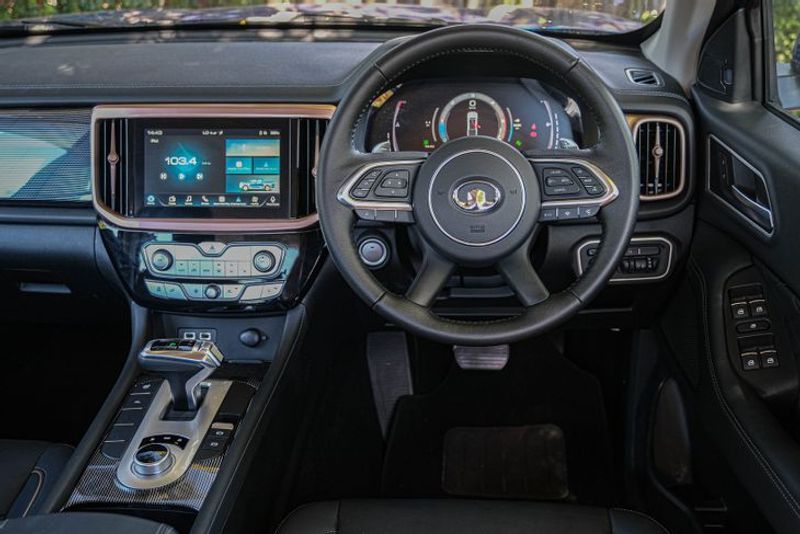
Step inside and you are met with an interior that looks and feels decidedly upmarket and luxurious. This LT derivative is lavishly furnished in quilted leather upholstery, which extends to the upper dashboard, while the door inners also feature a quilted leather design that further adds a sense of theatre to the (let us remind you, bakkie’s) cabin. There are, of course, harder plastic surfaces present too, but they don’t detract from the overall pleasantness of the layout. Notably, perceived build quality also appears to be on par, or perhaps even better than, some other offerings in this segment. To give you an example, the presentation of the transmission lever is far better than what you’d find in a Ford Ranger.
The neatly-framed 9-inch infotainment touchscreen, which is flanked by vertical air vents, provides quick and easy access to the core multimedia functions such as Bluetooth telephony and is compatible with Apple CarPlay and Android Auto. A host of vehicle functions and settings can also be accessed via the system’s submenus and adjusted according to your preference. The operating system isn’t as slick as Ford’s SYNC3 system, but its menu layout is easily navigable and straightforward to use.
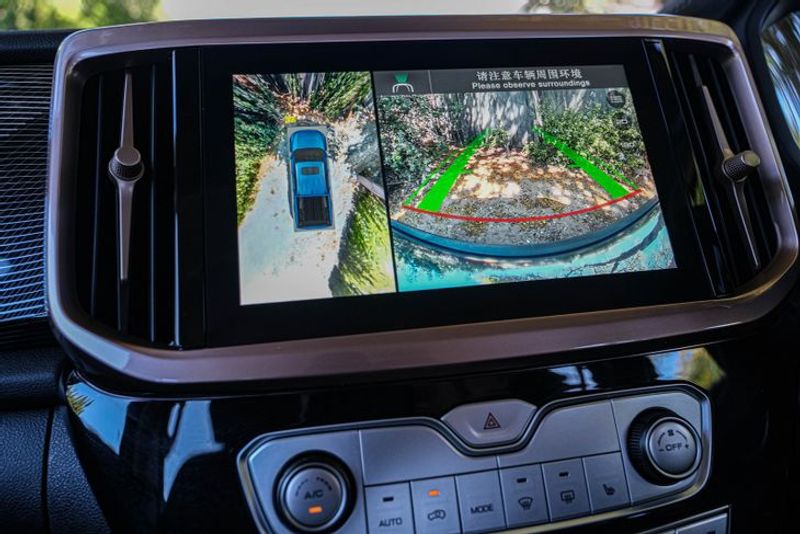
Unlike other bakkies, the P-Series is equipped with 4 cameras that project a 360-degree view onto the touchscreen. This is perhaps one of the most useful features and you will need it when you have to manoeuvre this Chinese behemoth in and out of tight parking spaces. A reverse-view camera with guidelines is standard too.
Meanwhile, the P-Series is surprisingly well-equipped with safety technology that you wouldn’t necessarily expect to find in a bakkie at this price point, such as blind-spot warning, lane-departure warning, lane-keeping assist, lane-centre keeping, rear cross-traffic alert and traffic-sign recognition. A total of 7 airbags are also fitted, as is an autonomous emergency braking function with pedestrian detection.
The high-definition 360-degree camera is a useful feature and a first in this segment.
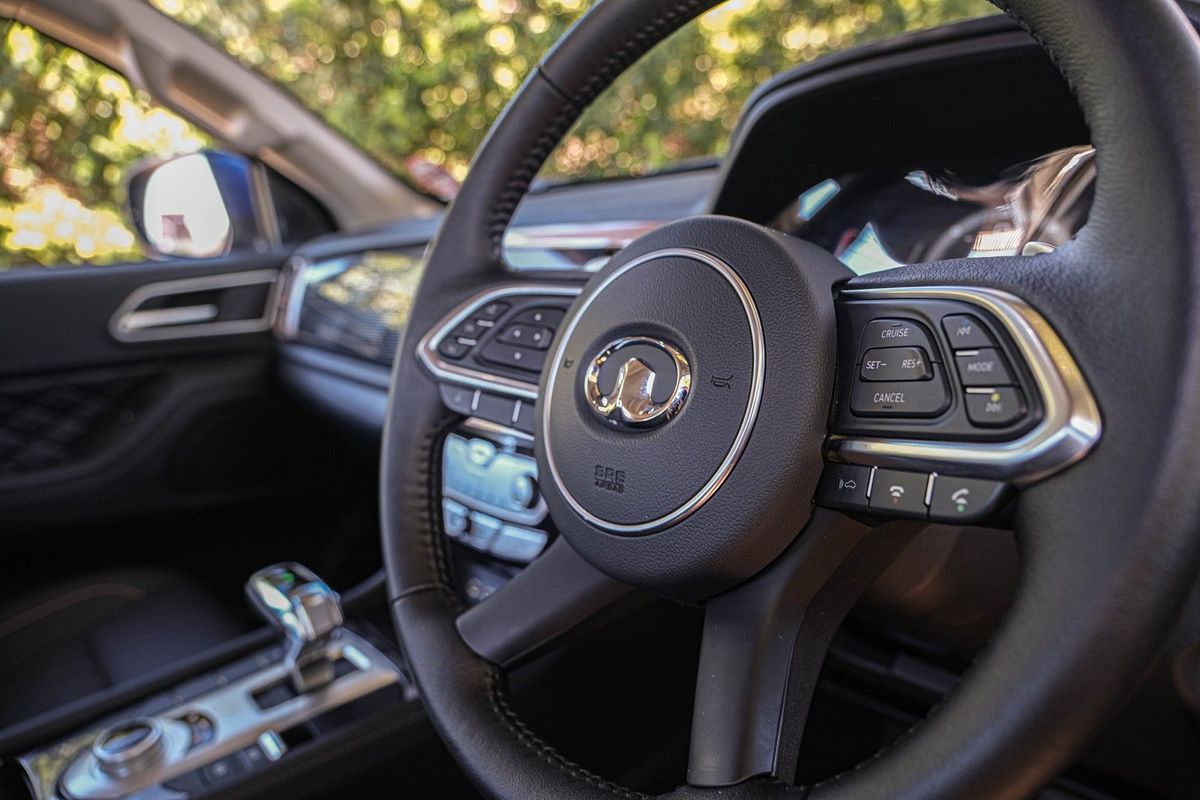
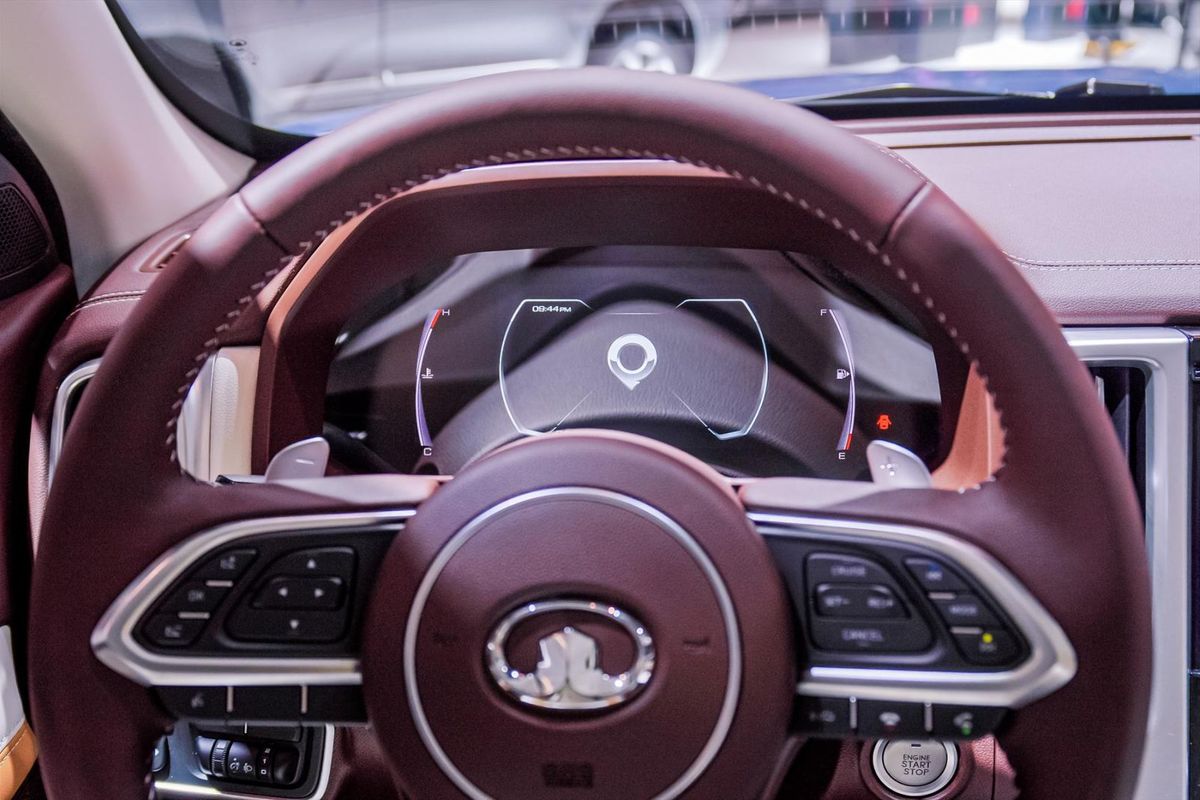
The lane-support system is displayed directly ahead of the driver in a 7-inch digital instrument cluster that further contributes to the upmarket look of the cabin. The instrument cluster, however, isn’t configurable. As for the steering wheel, it’s wrapped in leather and is equipped with mounted controls for the audio system, adaptive cruise control, telephony and voice control function.
Other nice-to-have features include heated front seats, a pair of USB ports, a 220V outlet, keyless entry with push-button start, auto-dimming rear-view mirror and single-zone climate control.
Overall, the cabin of the P-Series (in LT guise) is arguably the most aesthetically-pleasing and luxurious bakkie interior on the market – for that, GWM certainly deserves a round of applause. More than that, however, the sheer number of standard mod cons and safety features considerably broadens the value-appeal of the P-Series. Is this the closest to an SUV cabin that a bakkie can offer?
Powertrain performance
?The P-Series has middling outputs but it’s still more than the equivalent rivals from Ford and Toyota.
The GWM P-Series came to market with a single turbodiesel engine that powers the 16-derivative range, which includes both commercial and passenger variants in 4×2 and 4×4 configurations.
The engine is a 2.0-litre 4-pot that produces 120 kW and 400 Nm and while those outputs are not class-leading, they compare favourably with those of its rivals and the powerplant is mated with an 8-speed ZF automatic transmission. It’s worth mentioning that the engine sound has a typical diesel thrum to it, but it’s more refined than we expected and thankfully it’s not overly noisy or intrusive.
Out on the road, the P-Series’ power delivery isn’t lacking, but a noticeable degree of turbo lag is evident under harder acceleration, especially from a standing start. When left to its own devices, the auto transmission seems to adapt readily to your driving style and shifts unobtrusively in a variety of traffic conditions, but it’s nonetheless nice to have the mounted paddle shifters at your fingertips should you feel the inclination to drop a few cogs to quickly execute an overtaking manoeuvre. It’s fair to say that the P Series’ on-road performance is dutiful and about on par with its equivalent rivals.
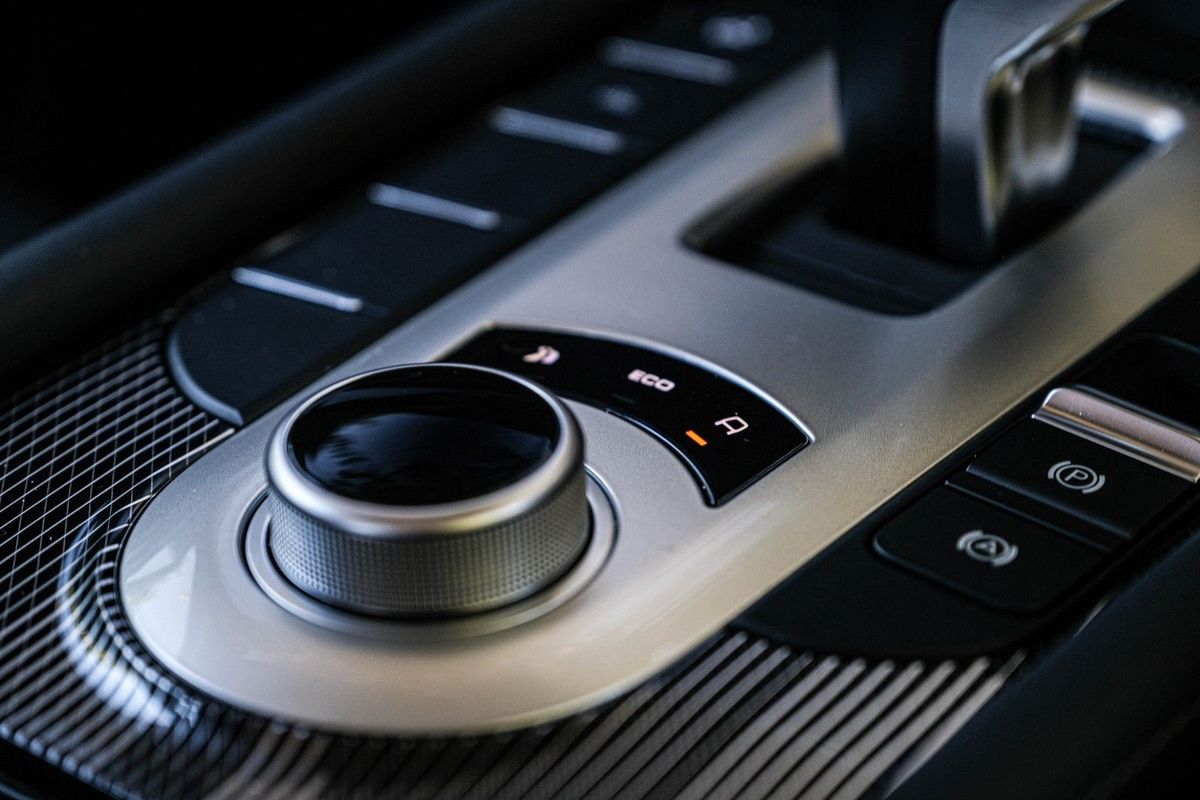
The driver can also turn a dial in the centre console to toggle between drive modes, which include Normal, Eco and Sport, to suit their preference. It must be said, however, that Sport mode is more useful when traversing an off-road course (when you need the transmission to hang on to a gear a bit longer to overcome an obstacle) as opposed to, say, hoofing it on the highway.
As far as fuel economy is concerned, GWM claims 9.4 L/100 km for this derivative, but during our test (mostly a mix of city and highway driving) we saw indicated figures of between 11.5- and 12.0 L/100 km, which is comparatively on the higher side for bakkies with similarly-sized engines in this segment.
Ride and handling
On asphalt roads of average quality, the GWM P-Series provides good levels of ride comfort. The suspension is firmly-sprung, by top-end bakkie standards, but the ride quality is still quite forgiving. Like most offerings in this segment, the GWM’s rear multi-link suspension does feel jittery and jiggly when the load bin is unladen and this is further exacerbated when driving on a gravel route or going off-road. This P-Series is fitted with 18-inch alloy wheels shod with road tyres, which translates into a firmer ride on a gravel road.
The steering feel is light, but it’s quite vague and feels “dead” around the centre position, but there is a button on the centre console that allows you to adjust the steering feel according to your preference or to the driving situation i.e. lighter in the city and firmer on gravel, but this feature ultimately doesn’t improve steering feedback.
In terms of the newcomer’s dynamic ability, well, the P-Series’ general handling characteristics are fairly good, it’s handling is not as precise as we’d hoped but this is mostly a result of the aforementioned electrically-assisted steering, which doesn’t offer much in the way of feedback. So, overall then, we feel that the P-Series’ ride/handling balance is average, but definitely not class-leading.
Off-road ability
Dune driving formed the basis of our offroad test and the P-Series rose to the challenge.
In an effort to test the P-Series’ offroad performance, we pitted it against the similarly-priced and recently-launched Ford Ranger 2.2 XL Sport 4×4 in the Atlantis dunes outside Cape Town.
A key point of difference of the P-Series is that it offers a torque-on-demand all-wheel-drive system (developed by Borg-Warner) while most other bakkies, barring the Volkswagen Amarok, offer part-time all-wheel-drive capability. What that means is if you are driving on-road, the system will direct torque to the rear axle (2H). When the road surface deteriorates, on a gravel road, for example, the system will automatically switch into 4H in an effort to improve traction.
For serious off-roading, the driver can engage 4L by simply pressing a button in the centre console, which allows you to crawl over harsh terrain and if you experience severe loss of traction on more complex obstacles, a rear differential lock can be engaged at the press of a button as can hill-descent control, should you need it. The P-Series does have 232 mm of ground clearance, which is useful, but not class-leading, as well as a 27-degree approach angle and a 25-degree departure angle.
Our initial experience of driving the GWM in the dunes revealed that the GWM’s on-demand system wasn’t as effective as a direct switchable 4×4 system (as you would find in the Ranger, for example). However, with 4L engaged and traction control switched off, you access a mode called Cross Country Expert Mode and with this mode engaged, the P-Series navigated the soft sand with far more ease and confidence. The P-Series’ ride quality in the sand was firmer and ultimately harsher than what we experienced in the Ranger, but even with road-biased tyres fitted, the P-Series was fairly impressive in the dunes. At one stage, it was necessary to engage the diff lock to help the P-Series free itself and it worked without any issues at all. The Borg-Warner system does make a noticeable mechanical noise as the system engages which can be disconcerting at first, but you soon realise that it’s working its magic for you.
Nonetheless, it’s worth stating that as the P-Series is a new product, the full scope of its off-road capability still needs to be proven in local conditions; the P-Series was primarily tested on fine sand during our test, which, to reiterate, it handled with the assistance of general-purpose tyres. We, therefore, feel that further testing in various off-road conditions, against benchmark products such as the equivalent Toyota Hilux would ultimately yield more conclusive results. As such, we look forward to putting the P-Series through its paces in much harsher terrain against its rivals in the future. Watch this space!
Practicality
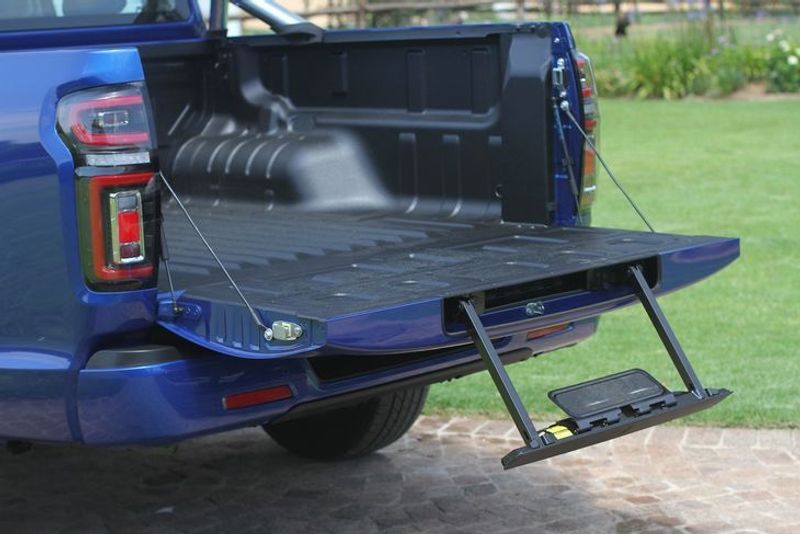
Access to the load bin is now much easier thanks to a built-in step in the tailgate.
Double-cab bakkies, by their very nature, are not very practical city cars. Due to its size, the P-Series poses a challenge to anyone living in an urban environment and even seemingly simple manoeuvres can be tricky to execute. The grille is so big, it needs a parking space all of its own…The aforementioned 360-degree camera and the rear parking sensors do, however, assist when you need to park the P-Series safely.
Apart from offering a sizable load bed with a drop-in bed liner, the P-Series can be optionally-equipped (for an additional R12 892 excluding VAT) with a segment-first step that’s built into the tailgate so that you can conveniently step into the load bed, which is quite a nifty feature. The tailgate itself is also fitted with gas struts, which gently lowers the tailgate and prevents it from slamming down and it also requires less elbow grease to close, which is nifty.
One of the main gripes we have with double-cab bakkies is that they don’t offer much, if anything, in the way of oddment space. For example, if you want to hide your laptop, where do you put it? Behind your seat, under the seat, in the load bin? It’s ridiculous! However, in the GWM, at least there’s some kind of solution! If you lift the rear bench’s base upwards, you will find recesses that allow items of a certain size to be safely stored under the seat. This feature also means that the rear passenger compartment can be used to load larger items too. The backrest can also be flipped forward if necessary.
Lastly, we must mention the P-Series offers acres of legroom for rear passengers, which bodes well for family use, especially on those adventures that require long journeys to and from the destination.
How much does the GWM P-Series Cost in South Africa?
Pricing for the GWM P-Series starts from R339 900, but the top-specification P-Series LT 4×4 automatic is priced from R544 900 (as of March 2021). A 5-year/100 000 km warranty and a 5-year/100 000 km service plan are standard.
When it comes to value-for-money, this P-Series LT is unbeatable.
Our maiden test of the GWM P-Series double cab was illuminating. In many ways, the P-Series is the first, proper example of the direction that the leisure-double cab segment is headed and it’s telling that this direction is coming from the east, driven by a Chinese brand that’s perhaps underperformed given all the value its bakkies offer.
The cabin of this P-Series LT derivative is not only luxurious and SUV-like, but generously equipped with features that are typically found on more expensive cars, let alone double cabs. More importantly, there is no leisure double cab at this price that offers this much value. Indeed, GWM’s newcomer will be hugely attractive to buyers who favour value-for-money over (often blind) brand allegiance.
The P-Series needs to prove its long-term reliability; GWM will have to work hard to convince fiercely-loyal bakkie enthusiasts to switch to a P-Series. The fact that the LT comes with a 5-year/100 000 km warranty and -service plan is an indication that the Chinese brand believes in its product. Given sister brand Haval’s progress in our market, that peace-of-mind after-sales back-up could be the clincher.
New GWM P-Series LT 4×4 vs Ford Ranger XL Sport – In-Depth Review and Buying Advice
Very rarely has a car caused as much of a stir as this. The new GWM P-Series bakkie, which is known as the GWM POER in other markets and the GWM Cannon in Australia, has arrived on our shores and seems eager to upset the status quo in South Africa's bakkie market.
In this video, we take the top-of-the-range P-Series double cab 2.0 LT 4×4 out onto the Atlantis dunes outside Cape Town, and we're joined by the similarly-priced Ford Ranger XL Sport 4×4. While these bakkies are not necessarily rivals, the fact that they are similarly priced illuminates what good value the P-Series represents.
We wanted to go in-depth with this review and so it is a lengthy one, where we take a good look at the interiors of both bakkies, the features and tech on offer, the load bed size, general ride and comfort on and off-road, and of course pricing and warranties.
Watch the video for insight but also have a look at our thorough written review of the GWM P-Series… Click here to read the full review.