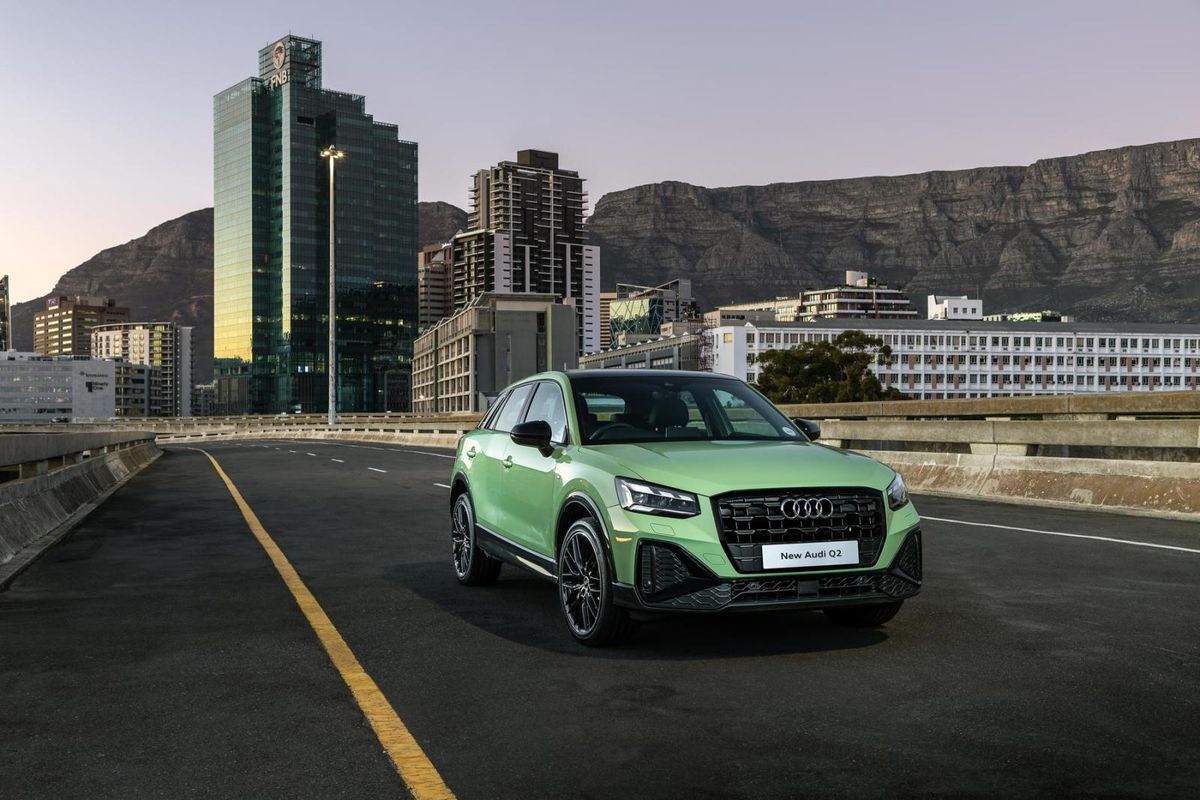
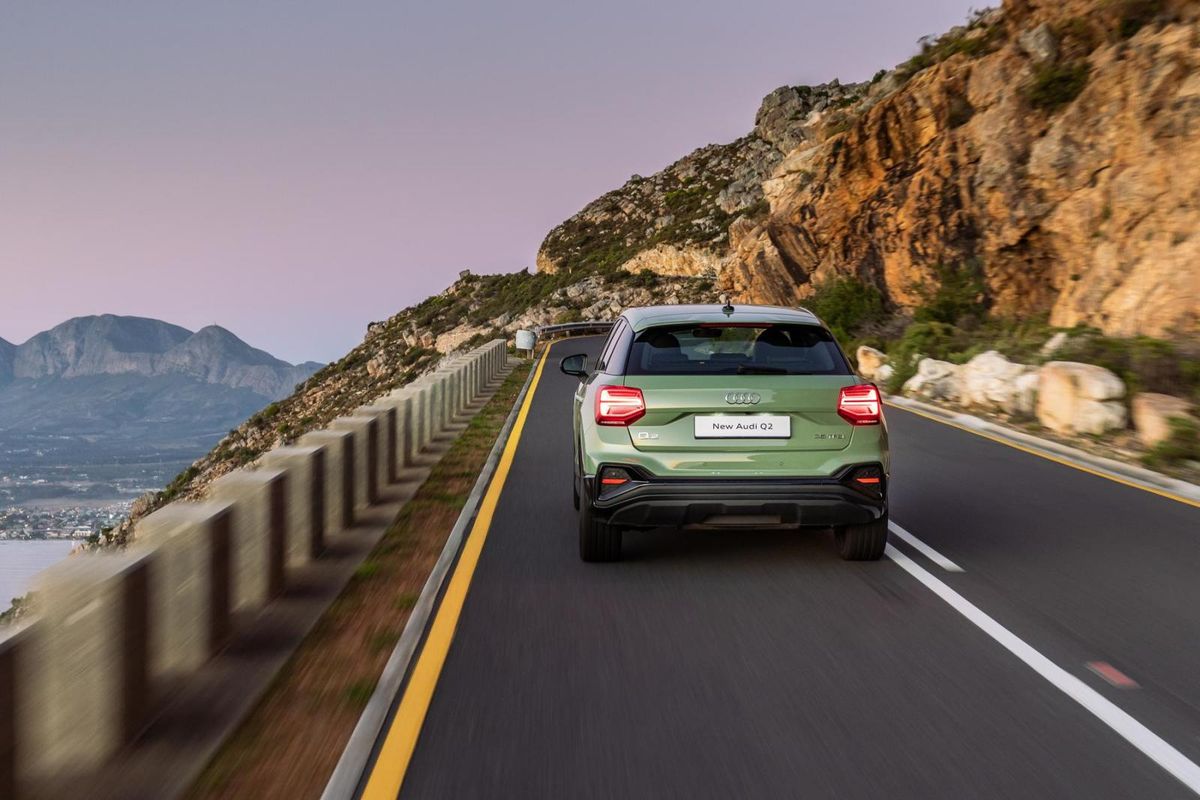
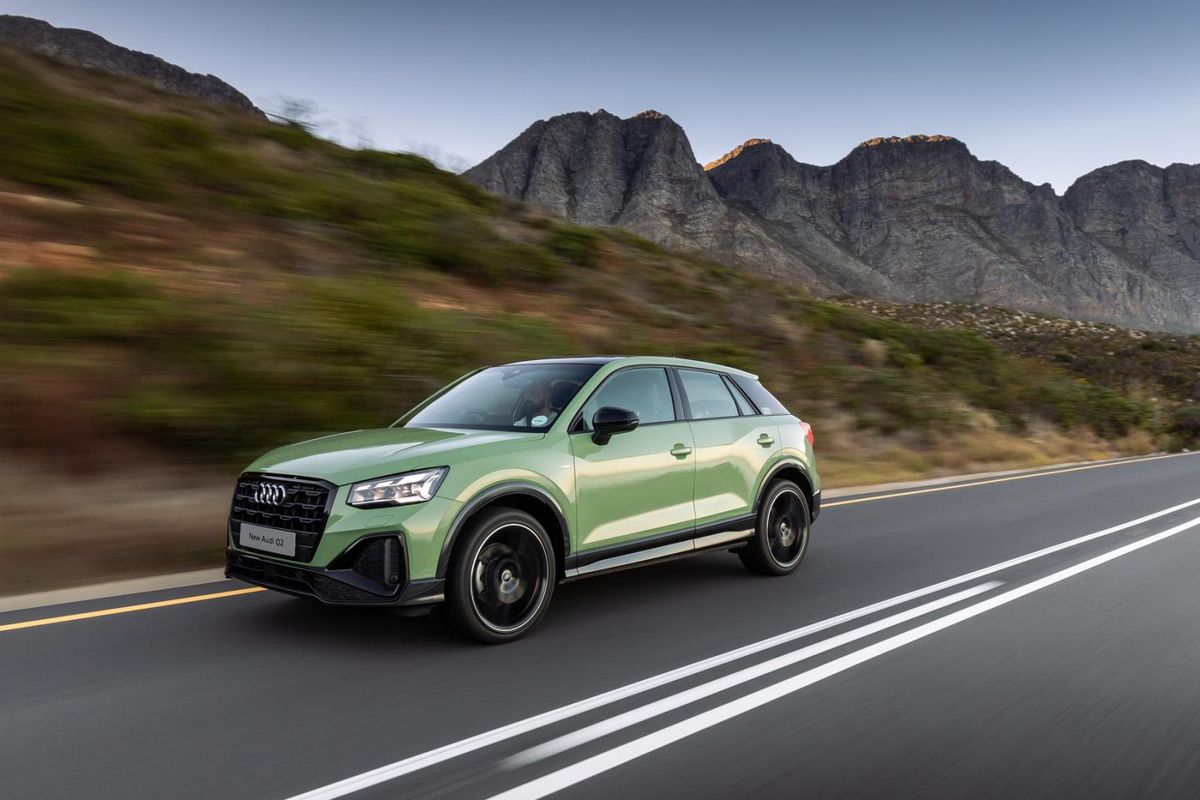
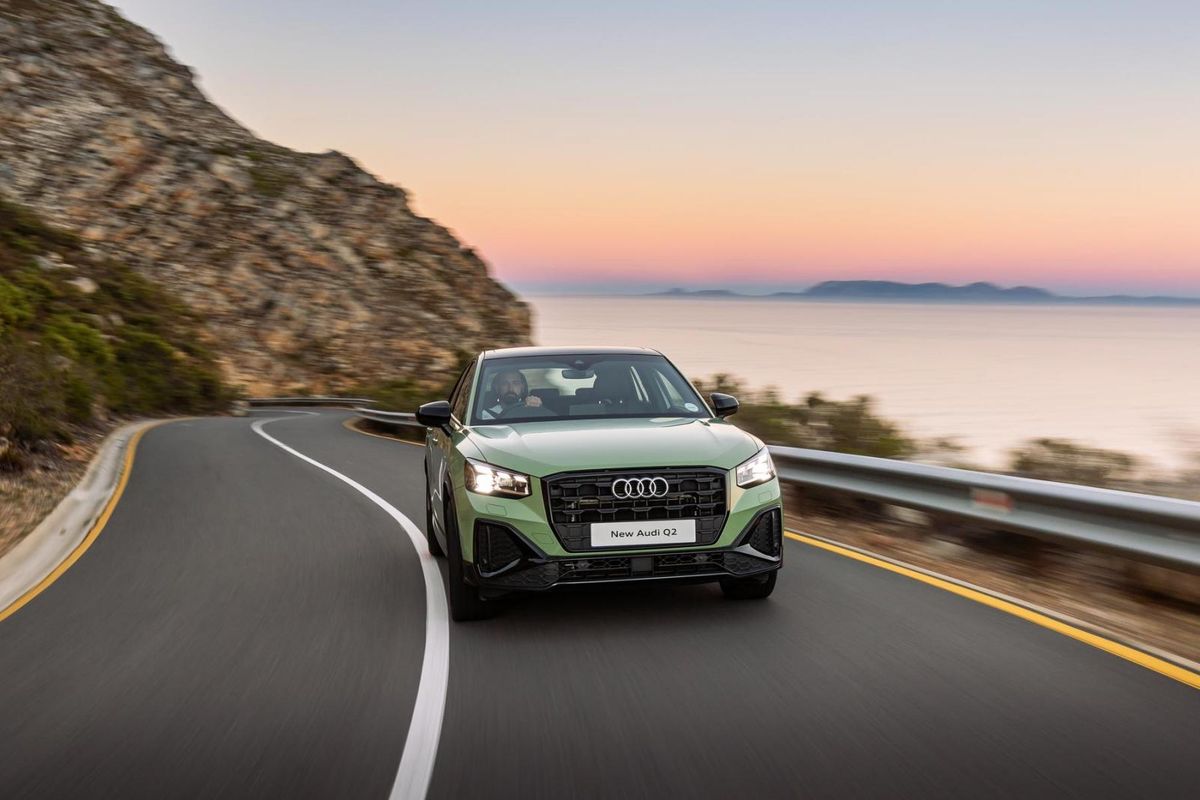
Audi’s smallest crossover, which is also a slightly older cousin of the Volkswagen T-Roc, is the latest model in the Ingolstadt-based brand’s lineup to be refreshed. We drove the updated Q2 in and around Cape Town ahead of the newcomer's official retail launch on June 1 2021.
What’s new on the Audi Q2?
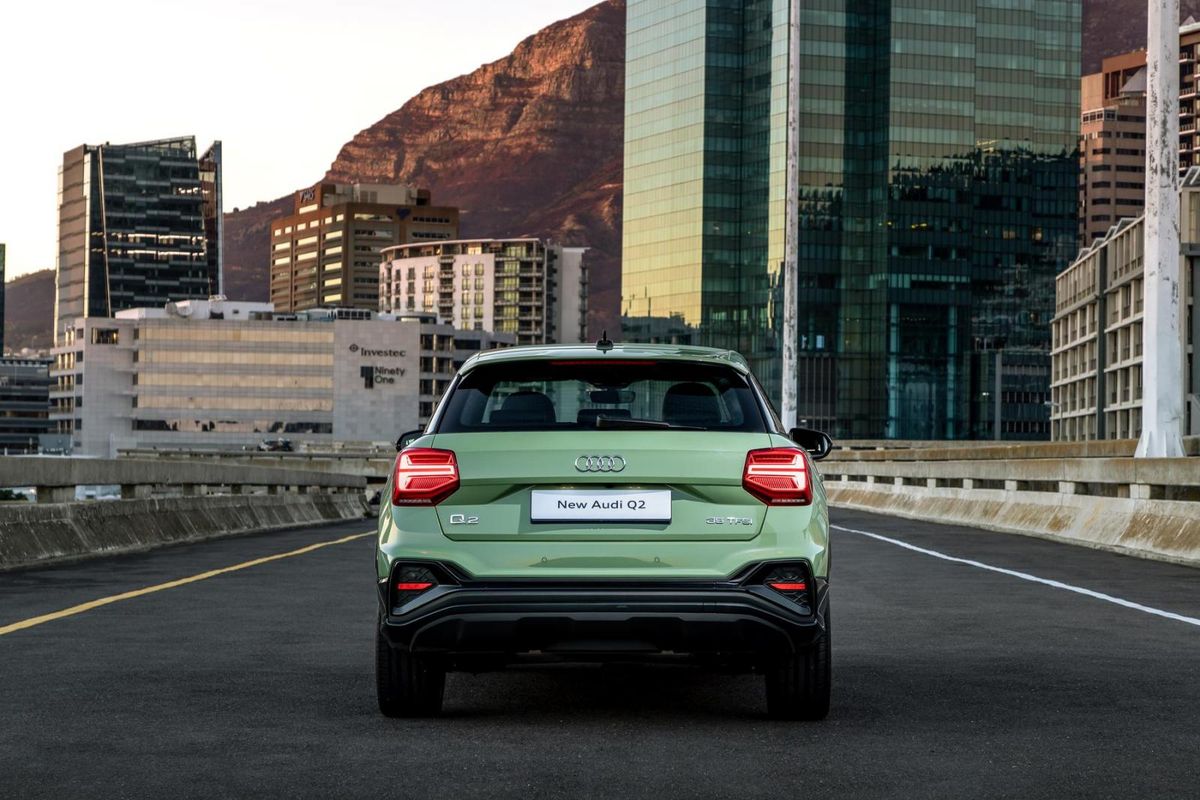
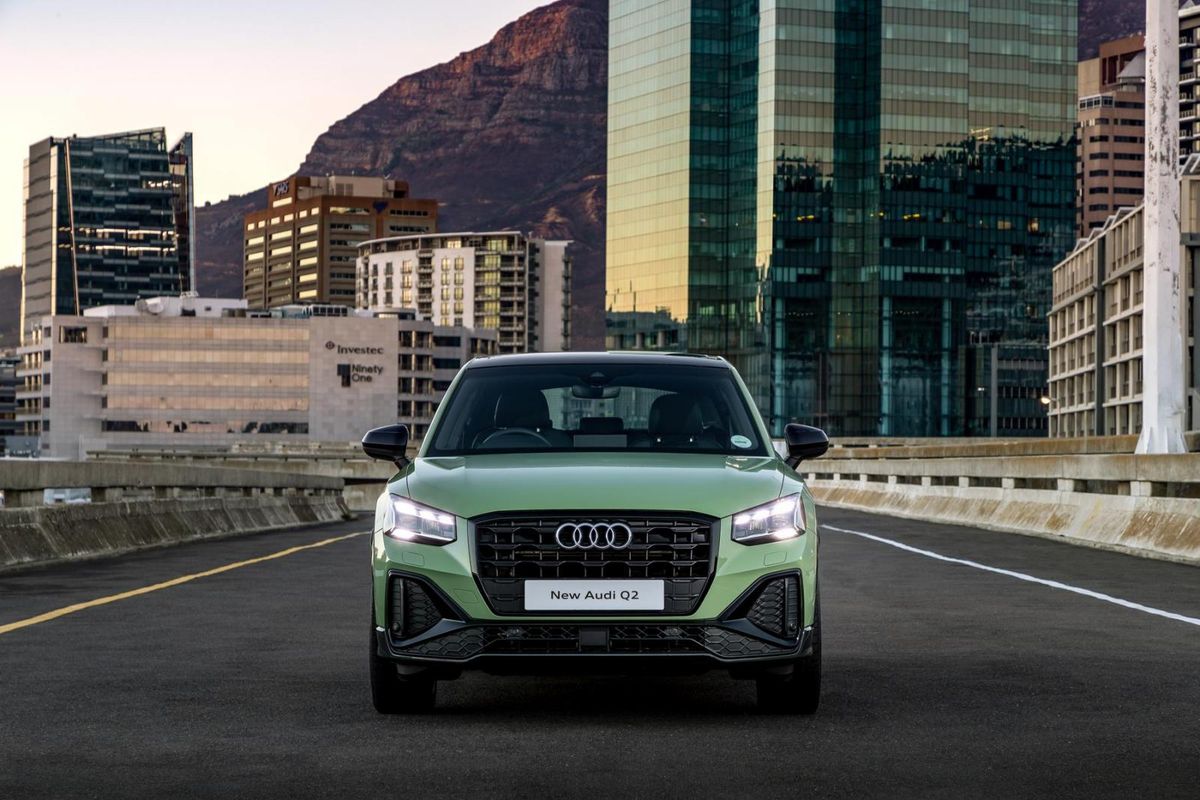
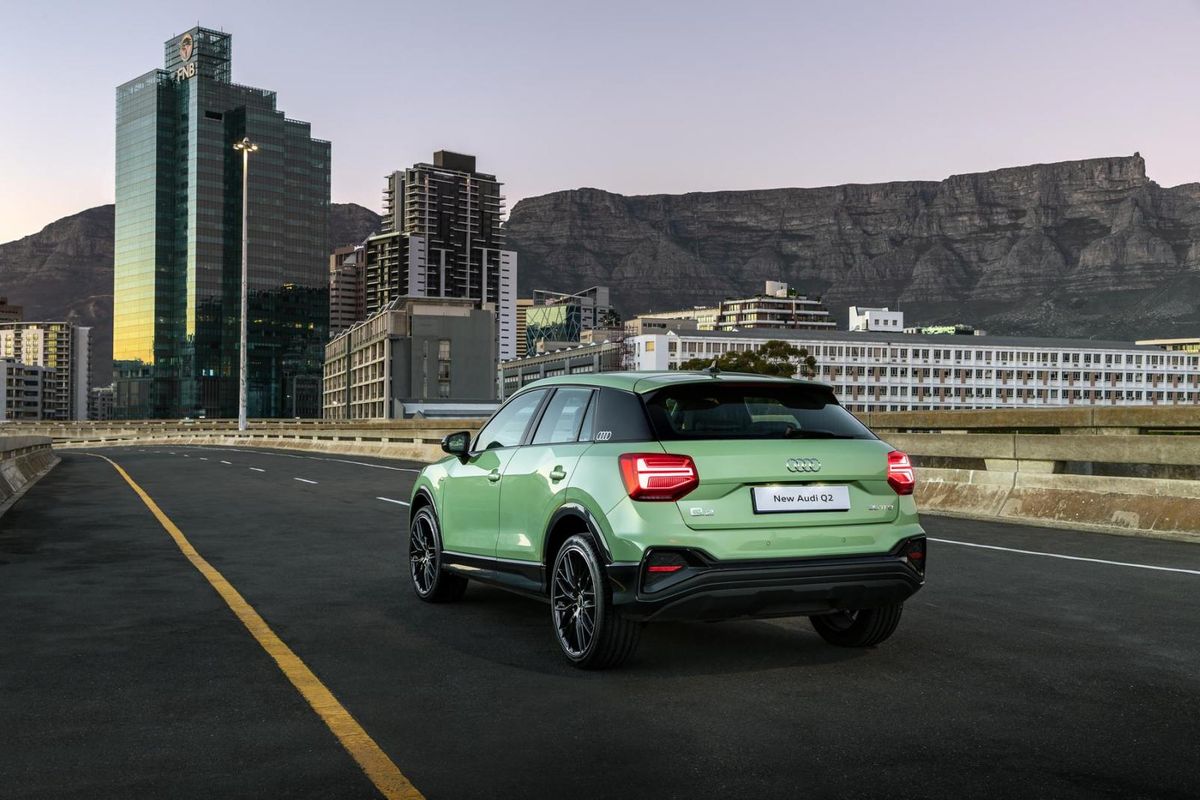
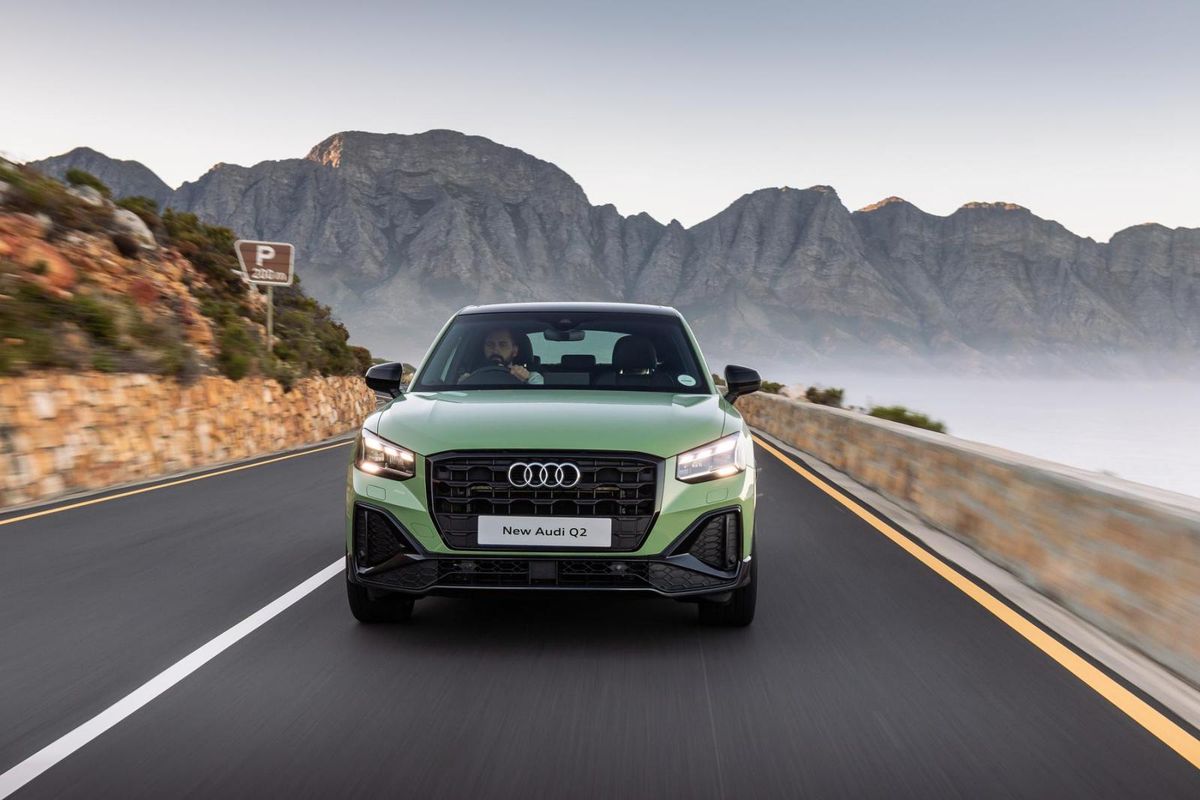
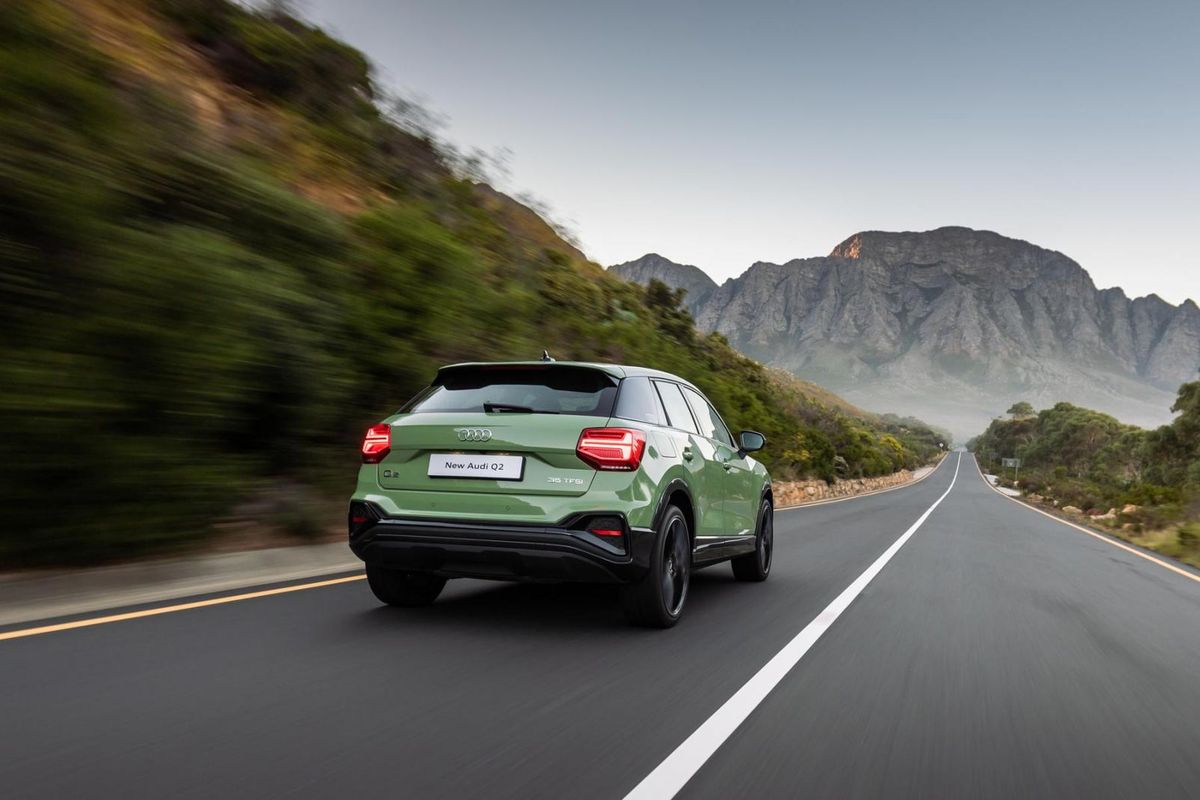
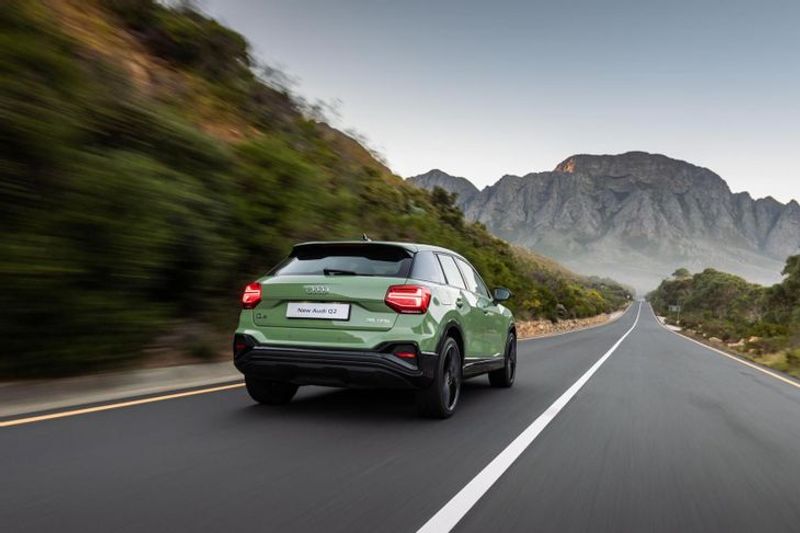
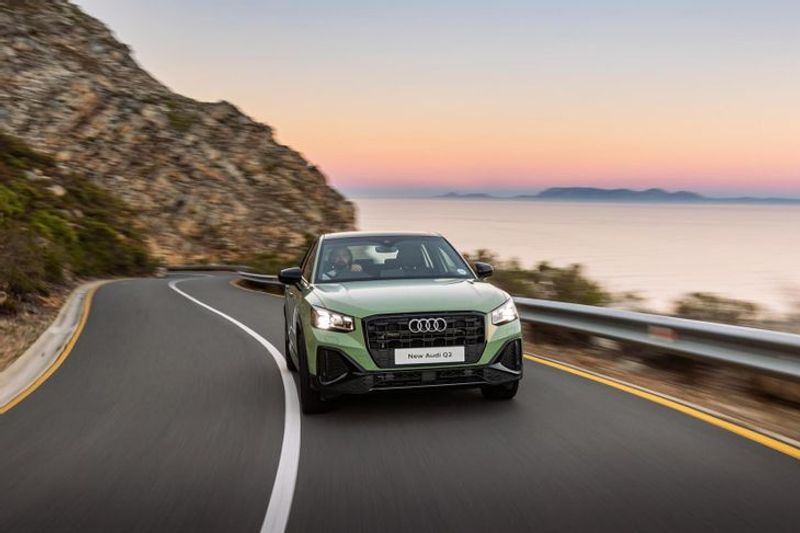
It’s rare to see a car's dimensions change when it undergoes a facelift, but the Q2 has, in fact, become 17-mm longer (although its width and height remain unchanged). With the Q2 favouring design over outright practicality, much of the facelifted version’s upgrades pertain to aesthetic details. The Matrix LED headlights' front lighting signature incorporate a new slanted "3-block" design and the lower sides of the bumper are much larger, which makes the Q2 appear more aggressive. The gaps within the grille have also expanded, which endows the front end with more width (it’s a small, but clever, change).
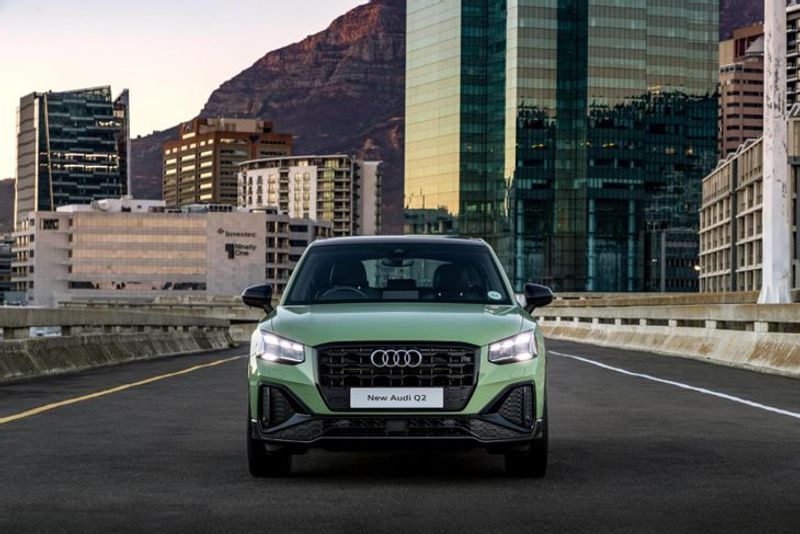
Meanwhile, new exterior colours have been made available, including the Apple Green you see here in the images. In the flesh, it’s more olive green or commando green but maybe that’s the colour apples are in Ingolstadt! Other new colour options include Manhattan Grey, Navarra Blue, Arrow Grey and Turbo Blue.
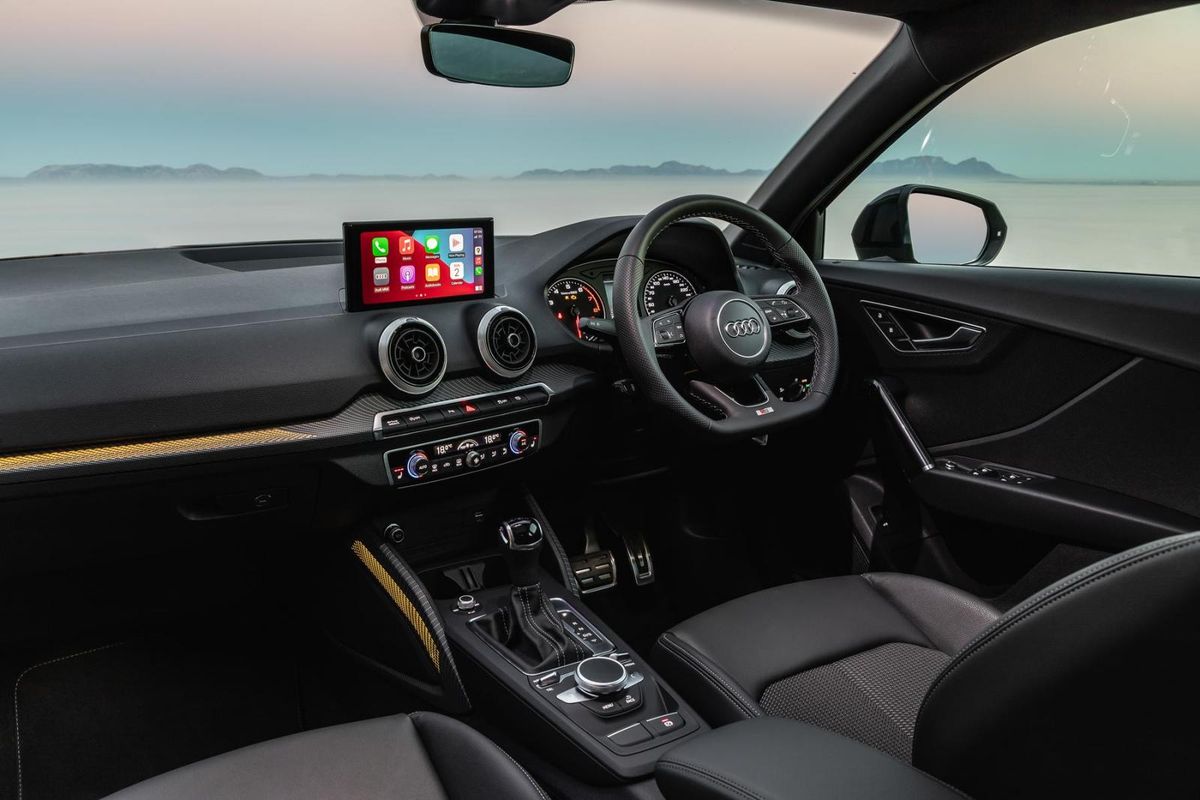
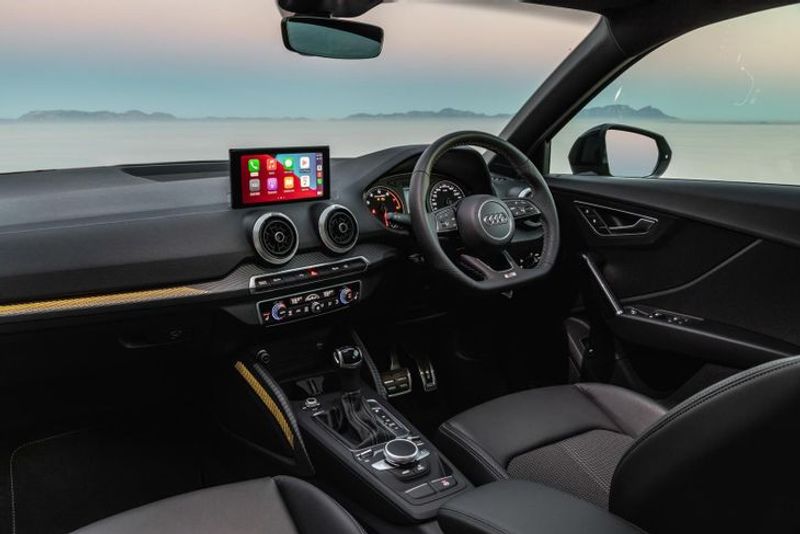
The jet booster-style air vents in the cabin now feature silver surrounds that make them stand out from their black and grey surroundings. To brighten up the interior, there is now an option to add lighting inserts adjacent to the transmission tunnel and along the dashboard on the front passenger's side. Ten different lighting colours can be selected, so there's bound to be one that would match your mood.
The final notable change is the substitution of the 7-speed S-tronic ‘box with an 8-speed automatic transmission. This appears to be a global change in markets that utilise VAG's 1.4-litre turbopetrol motors.
One engine for the Q2
The facelifted Q2 changes from a dual-clutch 'box to a torque converter auto.
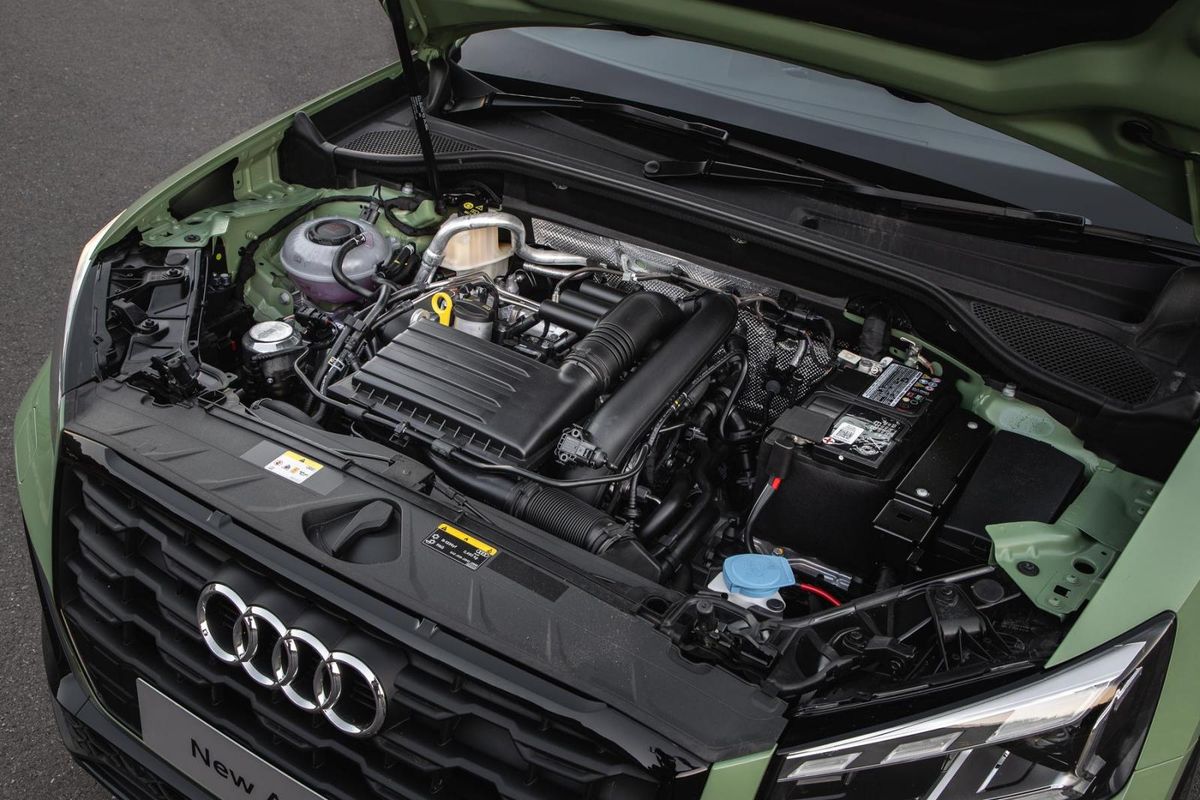
As was the case with the Q3 (which was launched in 2019), the Q2 is offered exclusively in 35 TFSI guise. The 1.4-litre turbopetrol produces 110 kW and 250 Nm of torque, but is, to reiterate, paired with the 8-speed automatic transmission in this case. The new ‘box introduces a smart-looking new transmission lever and does a perfectly acceptable job of ensuring that the Q2 makes the best use of its torque.
Acceleration from standstill is decent, but not exciting. The Q2’s not meant to be a city racer so its powertrain delivers power smoothly and prefers to stay away from the redline, where it feels a bit strained.
Mid-range overtaking ability is a strong point of the powerplant; it positively gallops from 80 to120 kph, which allows you to zip past traffic safe in the knowledge that the Q2 will have enough shove on tap to execute swift overtaking manoeuvres on single-lane back roads.
Fuel consumption appears to be another boon of the facelifted Q2. After a day of driving in the rain over different types of terrain, we saw an indicated consumption figure of 6.4 L/100 km, which appears to be very similar to what we were able to achieve with the pre-facelift Audi Q2, which we tested for a few weeks a while ago.
What’s it like inside the Q2?
The lighting inserts can be adjusted to any of 10 different colours.
Aside from the changes to the air vents, the new transmission lever and the optional mood-lighting system, the interior is identical to that of the pre-facelift model. The wireless charging pad is in the armrest centre console, while two fast-charging USB-C ports are available for rear passengers.
Connectivity options are included in the option packs: the Tech Package will get you smartphone connectivity (incl. Apple Carplay and Android Auto), as well as Navigation Plus and the Virtual Cockpit digital instrument cluster. Our test unit came with the standard analogue instrument dials, which I hadn’t seen in an Audi for a long time, so the Tech Package would be the very first option I would specify.
Overall, the Q2 interior is quite upmarket: the standard seats may not be particularly fancy-looking, but they are comfortable and supportive and, if you'd like, you can always upgrade to the S-Line seats. As with all modern Audis, the cabin exudes a sense of luxury and excellent build quality – you get the impression the interior materials are just a slight step up from those in its (also German) rivals.
If you’re considering the Q2 as a family car, there are better options in Audi's lineup. Rear legroom is tight, especially behind taller front passengers, but at least the load bay is reasonably sized (405 litres).
What’s the Audi Q2 like to drive?
The Q2 remains a comfortable and stable drive with amicable road manners.
As standard, the Q2 comes with progressive (electric power) steering, which essentially quickens the 'wheel's ratio the more lock you add. I imagine the system would be ideally suited to Alpine routes with lots and lots of hairpins or when nipping through traffic round town, but you don’t really feel its effect on wide sweeping roads.
The ride quality of the Q2 was quite good, albeit on the road surfaces chosen for the test route. Throughout its extended lifespan, the MQB platform has provided excellent comfort and good damping over mixed terrain. The unit we drove rode on 17-inch wheels (included in the Advanced Line) shod with tyres that had chunky sidewalls: it was a good combination of appealing looks and a comfortable ride!
Quietness within the cabin when driving at freeway speeds, meanwhile, is excellent, we discerned no wind noise on engine groan to speak of…
Summary
The price of the facelifted Q2 hasn't changed drastically from the outgoing model.
The Q2 is to Audi SUVs what the A1 is to its hatchback line-up – an entry point to the brand. It’s stylish and well-made with enough performance to keep buyers happy. It’s aimed at those seeking standout style over the outright family-car practicality. The design tweaks and fresh colour palette have improved the appeal of the Q2, which arguably wasn’t quite bold enough when it was launched 4 years ago.
The pricing of the new Q2 range starts off at almost exactly the same point as where the old model left off, which means that the new features have not compelled Audi to hike up the line-up's asking prices. This seems to be a bit of a trend of late; Audi is more aggressive with its base prices, which appears to be having some effect – the brand claims that its new vehicle sales increased during the 1st quarter.
Audi Q2 pricing in SA
The Audi 5-year/100 000 km Freeway (maintenance) plan is included in the price.
After Stinger, comes Pegas, to continue Kia's sedan presence.
Although the trend towards crossovers has mostly diluted the traditional compact sedan’s marketability, Kia is planning to bring a new one to South Africa.
The company’s current product portfolio is a collection of hatches (Picanto/Rio), SUVs (Seltos, Sportage, Sorento), a crossover (Sonet), huge MPV (Grand Sedona) and the K2700 bakkie. No sedans, but that is set to change. Soon.
Despite most brands gravitating towards a similar model mix as Kia, without a compact sedan, the Korean is going slightly contrarian, with its Pegas, scheduled to be introduced to the local market next month.
It’s not the most elegant or contemporary of Kias, in terms of exterior design, nor is it intended to be. The tiny 14-inch wheels tell you all there is to know about this sedan’s purpose as a fleet or ride-hailing service vehicle.
This is a compact sedan targeted at emerging markets, instead of Europe. This should make it ideal for local buyers who need the safe lockable storage space, of a boot, as opposed to a hatchback, with its glass window above the luggage area.
The Pegas isn’t a new vehicle, for Kia. It debuted back in 2017, at the Shanghai auto show, and shared its platform is related to the previous-generation Soul.
With a 2 570 mm wheelbase, cabin space should be good, and the boot rates at a generous 475-litres.
Powering the Pegas is Kia’s robust 1.4-litre Kappa-series petrol engine. Outputs are average, with 70 kW of power and 133 Nm of torque. Drive is to the front wheels, via a choice of either four-speed automatic or five-speed manual transmissions.
Although the local specification grades aren’t available yet, Kia markets the Pegas in other geographies with a choice of either a 3.8-inch audio display system (entry-level), or the brand’s highly functional 7-inch touchscreen infotainment system, with smartphone mirroring.
The standard grade Pegas has four airbags but does without ESP, while a higher equipment level adds stability control intervention and a reversing camera.
For Kia, with its stylish product line-up locally, the Pegas might be an odd fit. But if the price point is very competitive, there could be buyers who find its Korean cabin architecture and proven engine worth the investment.
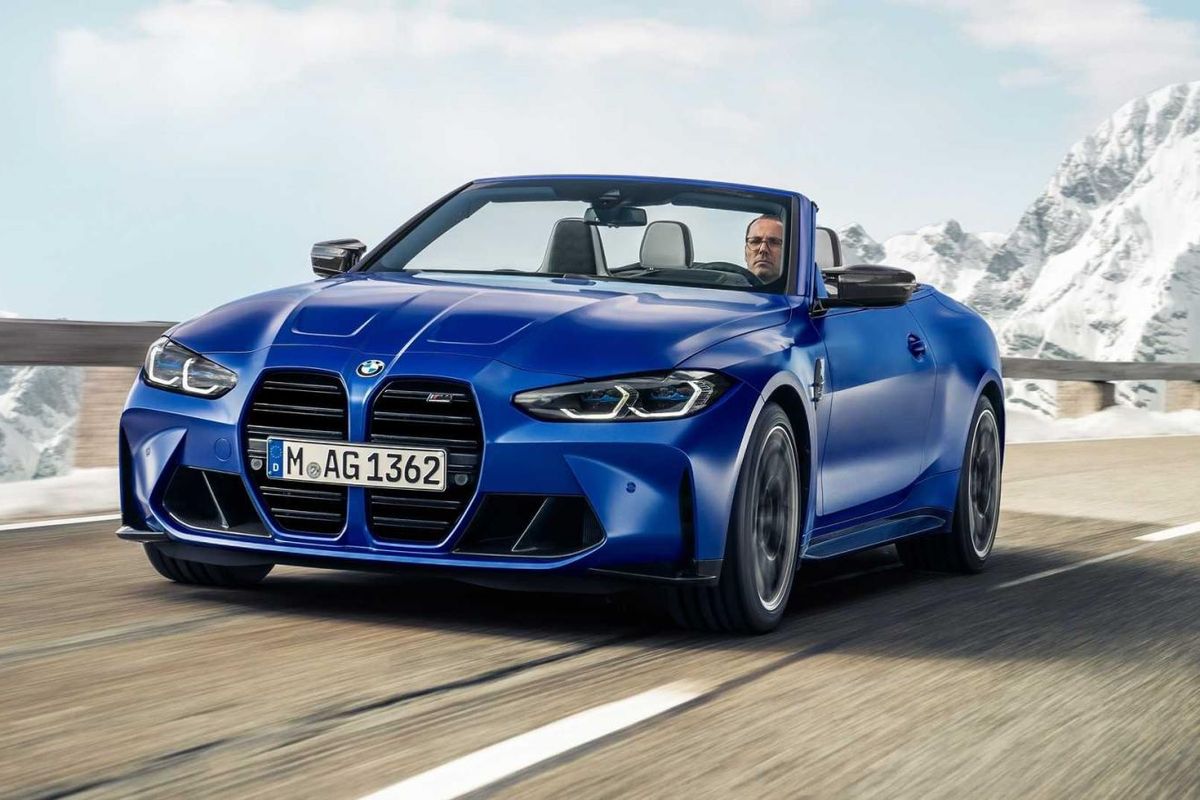
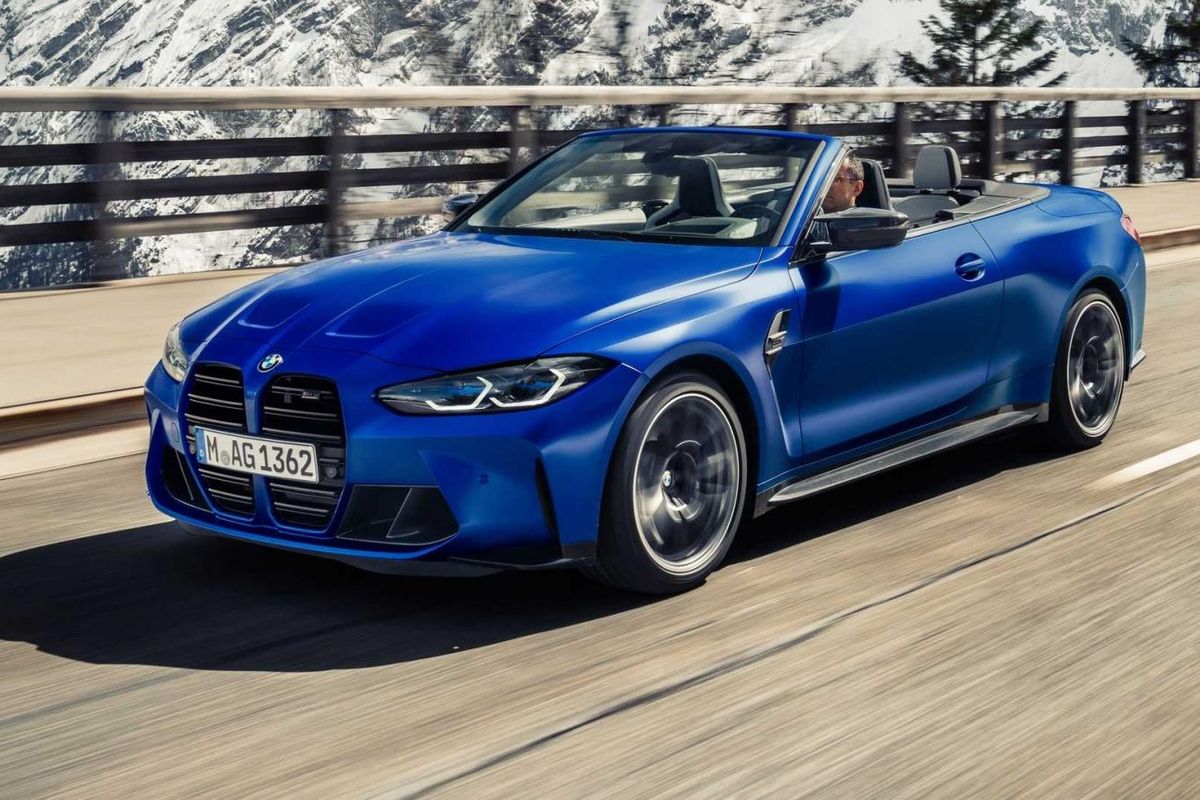
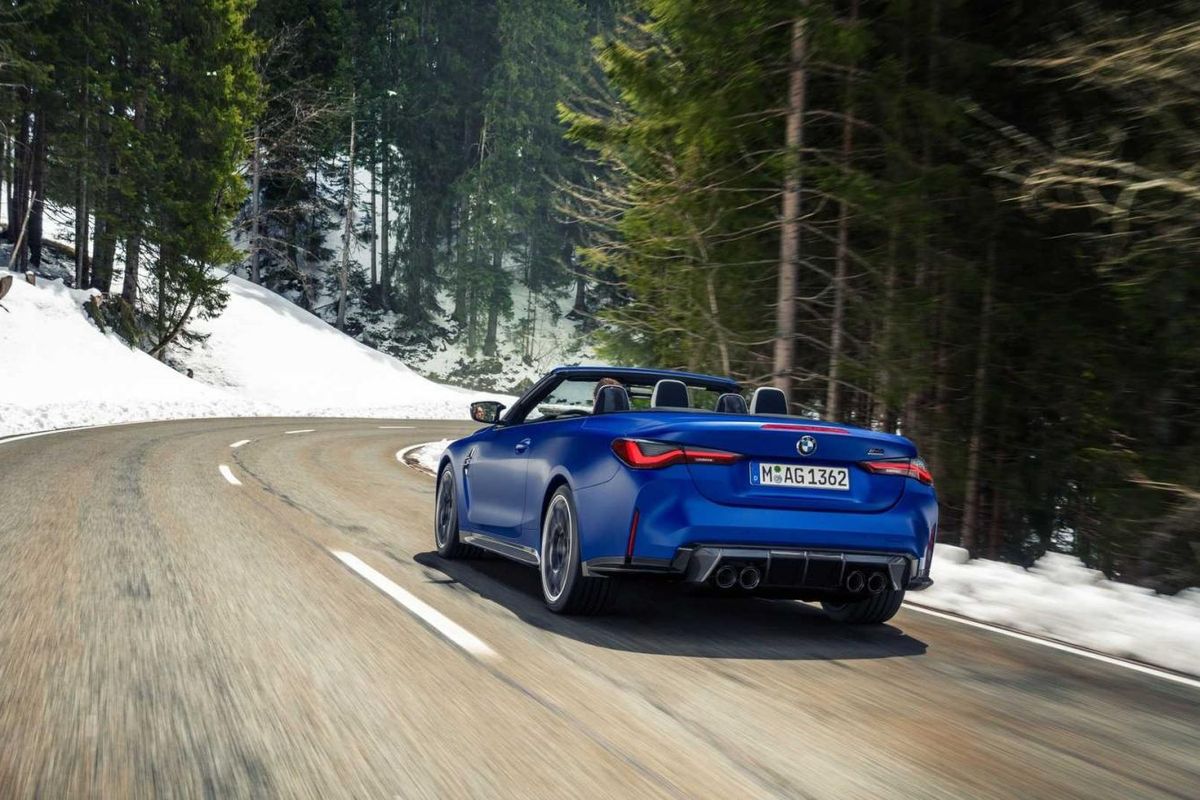
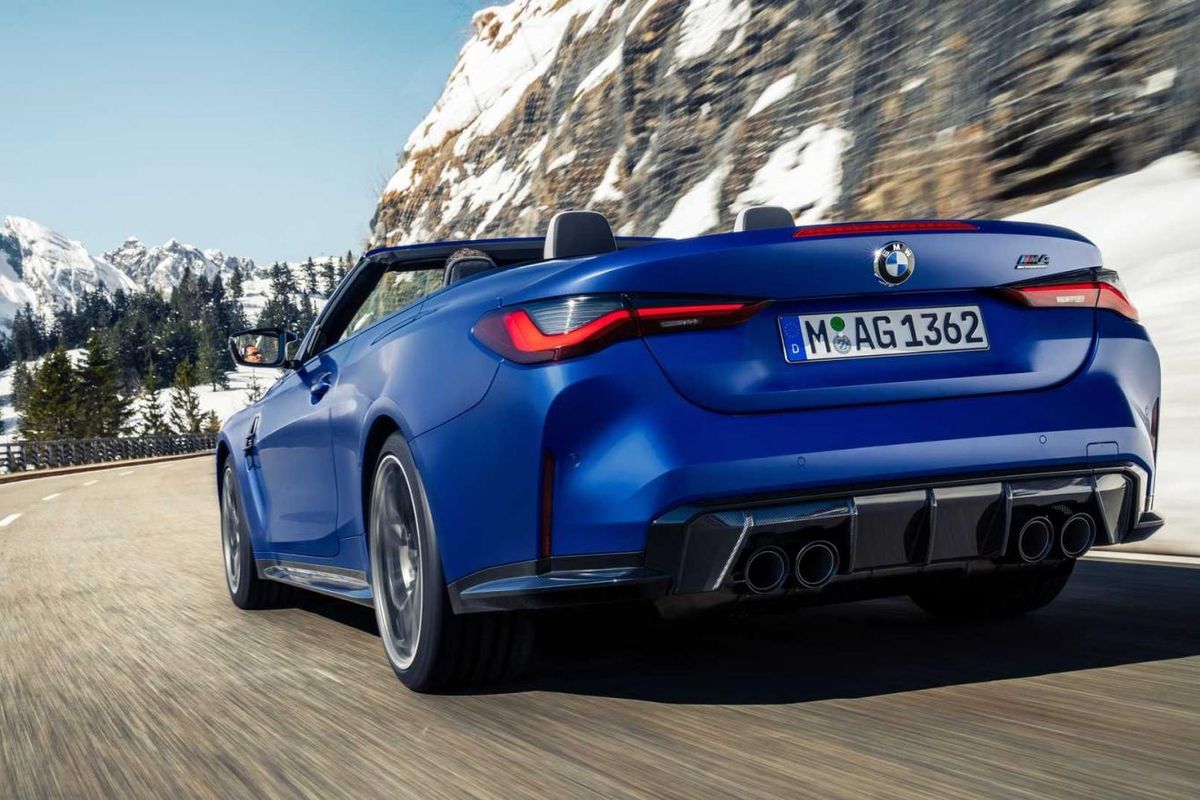
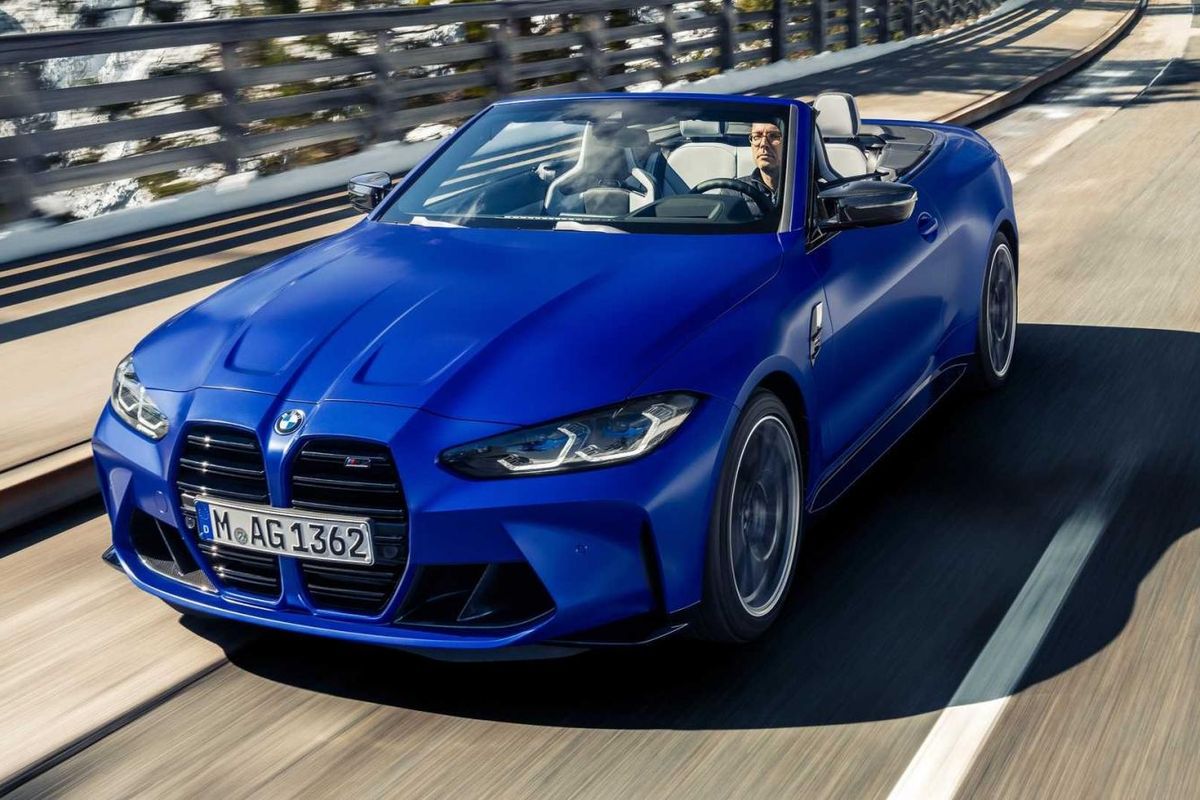
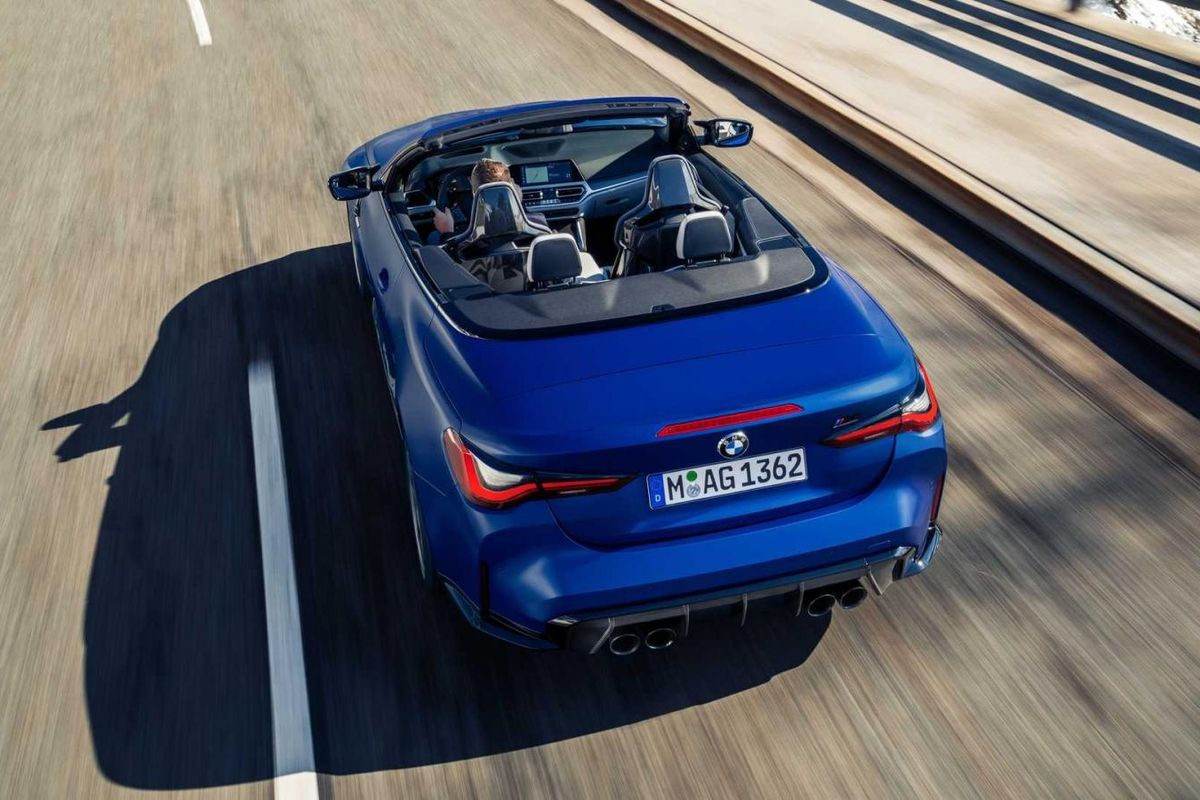
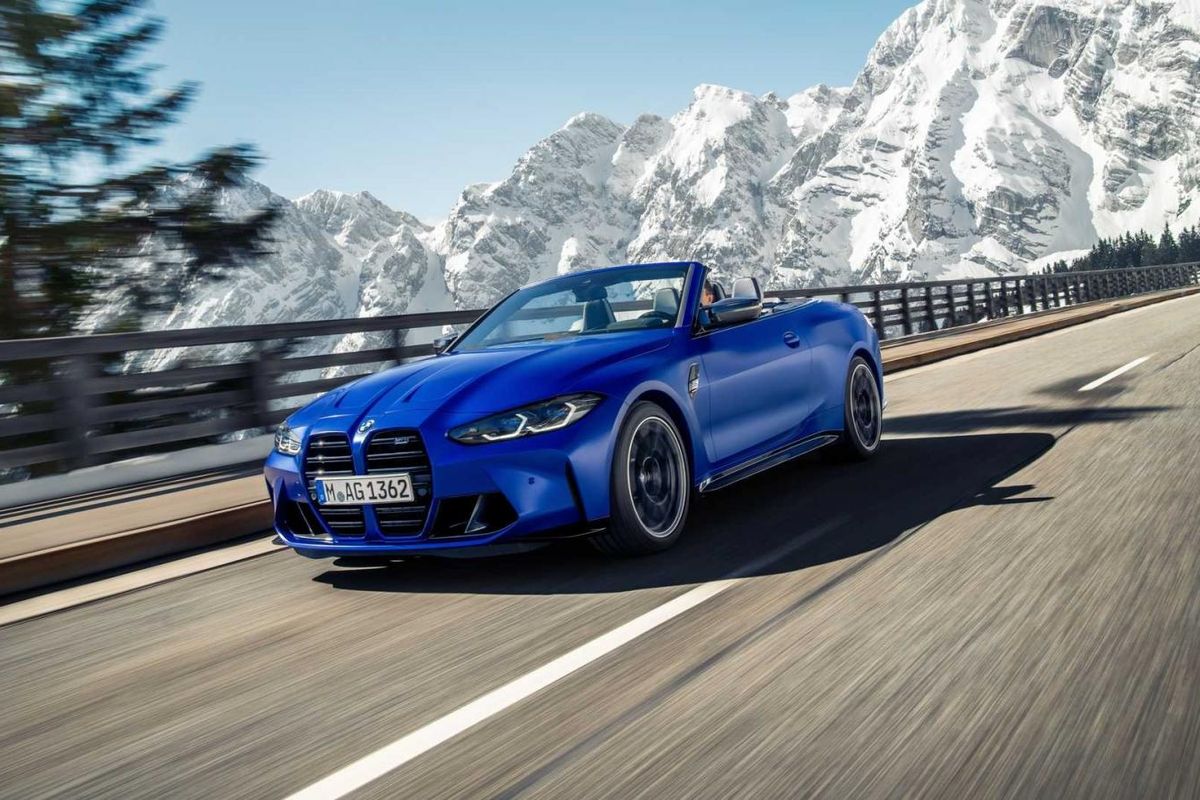
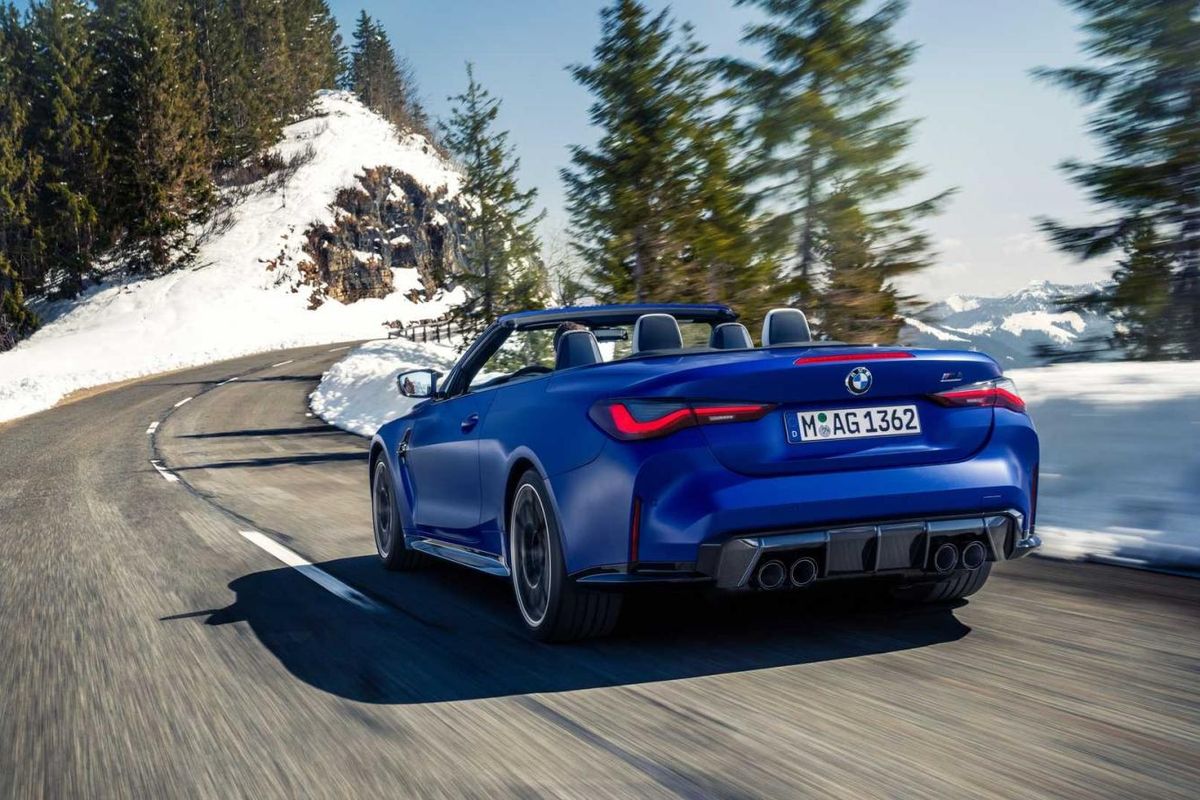
BMW has unveiled its convertible version of its potent M4 and it'll land in SA before the end of 2021.
Converting a sports coupe into a convertible version is no easy feat. See, the roof forms an integral part of a vehicle's rigidity and structure, and simply chopping it off causes many issues with dynamics. Then there's the subjective design question. Some vehicles look great in the convertible form, others not so much.
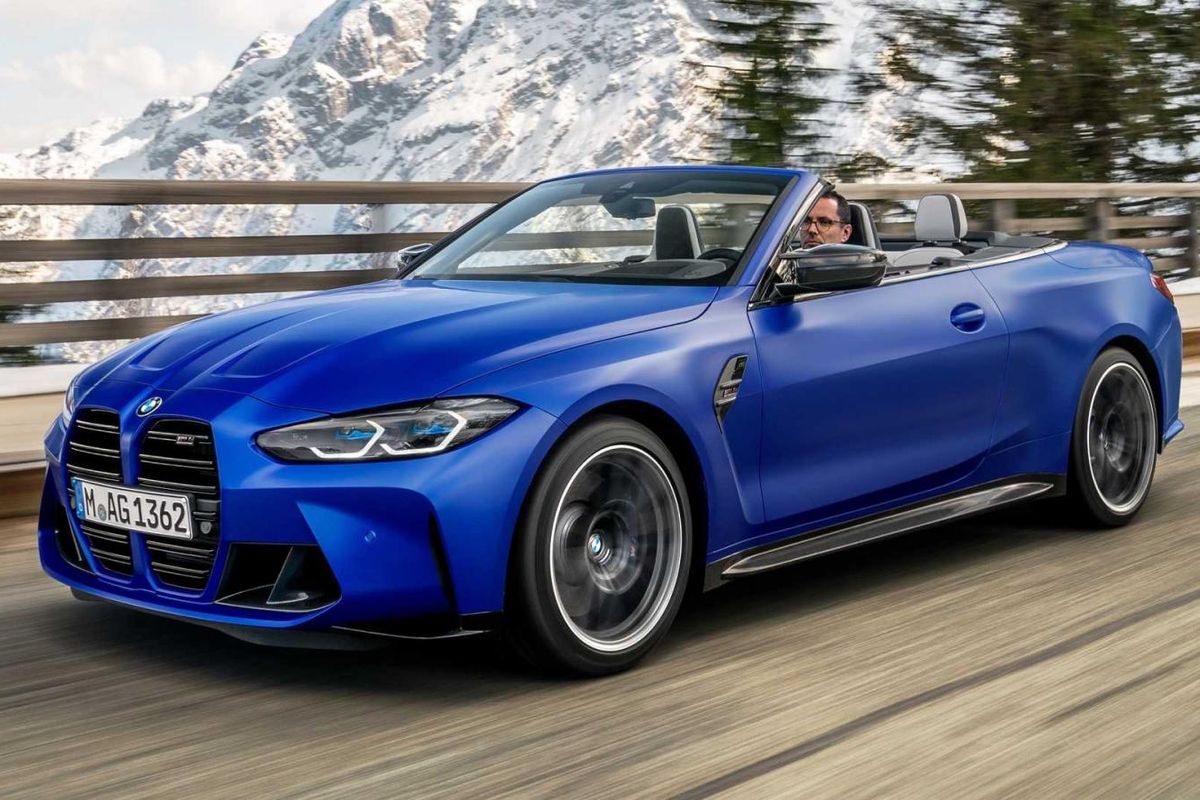
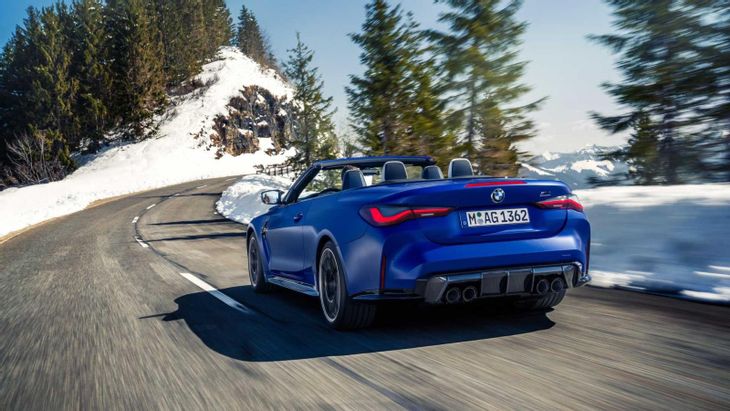
In the case of the 2022 BMW M4 Competition Convertible xDrive, we feel BMW has ticked the boxes for image. Some would argue the convertible is a prettier and more interesting design than that of the BMW M4 coupe. Interestingly, BMW's xDrive system makes its debut on the M4 Convertible for the first time.
The roof mechanism is a retracting fabric setup that can open and close within 18 seconds at speeds of up to 50 kph and impressively, the entire mechanism is 40% lighter than the folding hardtop from the previous-generation BMW M4 Convertible.
As far as powertrain options go, the BMW M4 Competition Convertible features the same 3.0-litre twin-turbocharged 6-cylinder engine as its coupe and M3 sedan siblings. The S58 motor produces 375 kW and 650 Nm, and power reaches all 4 wheels via an 8-speed gearbox. When it comes to performance, BMW says its M4 Competition Convertible xDrive will sprint to 100 kph in just 3.7 seconds and dash to 200 kph in 13.1 seconds. Opt for the M Driver's Package and your 250 kph electronic limiter will be moved to 280 kph.
BMW has retained its trick driving modes and there are selectable 4WD, 4WD Sport, and 2WD settings. Drifts in a BMW M4 Competition Convertible with the top down? Sign us up.
The vehicle rides on 19-inch forged alloy wheels at the front, with 20-inch units at the rear. Ceramic brakes are available as an option. Inside, the cabin is identical to that of the BMW M3 and M4 hardtop derivatives.
When is the BMW M4 Competition Convertible xDrive coming to SA?
The new BMW M4 Competition Convertible with M xDrive will be available in South Africa from the fourth quarter of 2021.
Audi RS6 Video Review – The Supreme Station Wagon just gets better
The Audi RS6 has always been an impressive combination of power, handling dynamics, comfort and practicality. We rated the previous generation very highly and it proved to be impressively quick, even when pitted against lighter, more powerful competition. Watch Ciro de Siena get to grips with the all-new 2021 Audi RS6.
We were excited to finally get our hands on the latest C8 generation RS6 Avant. Firstly, it's just nice to see a new, modern station wagon on our market. We also knew it was sporting the powerful twin-turbo V8 found in other Volkswagen group products such as the Bentley Continental, riding on an all-new chassis.
So, is this latest RS6 new and improved? Or just new? We sent Ciro De Siena to a deserted airstrip outside Cape Town to find out.
The facelifted Audi Q2 has touched down in South Africa. Here are the specifications and pricing for the newcomer.
After hitting South African showrooms 4 years ago, Audi has given its Q2 compact SUV a facelift. Physically, its dimensions remain unchanged, but if you look closely, there are slight visual updates to the front and rear. There's a new colour palette to choose from, including Apple Green which you see here. Inside, the cabin gets a slight update too.
What's On Offer?
Audi South Africa is launching its updated Q2 compact SUV with one shared engine/gearbox combination across the range. The 1.4-litre turbocharged petrol 4-cylinder motor produces 110 kW and 250 Nm, and power goes to the front wheels via an 8-speed Tiptronic automatic gearbox. Audi claims a 0-100 kph sprint time of 8.8 seconds and a top speed of 213 kph.
There are three models on offer: Standard, Advanced and S line.
The standard trim line includes: 16-inch wheels and the blade in body colour.
The Advanced trim line includes: 17-inch wheels; blade in Manhattan grey; bumper in contrasting paint (grey finish); LED rear lights; sports seats and index fabric upholstery.
The S line includes 18-inch wheels; blade in Platinum grey; bumper in full paint finish; LED rear lights; sports seats; index fabric upholstery and sports suspension.
Audi Q2 Packages
The Audi Q2 is available with a number of packages, designed to remove the endless options on the configurator.
Comfort Package: electric tailgate; 4-way lumbar support; seat heaters in front; storage and luggage compartment package with two rear USB ports.
Tech Package: MMI navigation plus; Audi smartphone interface; Audi virtual cockpit.
Black styling package: only available on the Advanced and S line models and includes Singleframe in black; front and rear bumper trims in black; exterior mirrors in black; side blade in black; 19-inch 10-spoke Y style wheels in black; sports suspension. This package is only available with the Advanced and S line models.
S line interior package:only available on the Advanced and S line models and includes decorative inserts in matte brushed aluminium; S line emblems; headliner in black fabric; interior aluminium look; pedal and foot rest in stainless steel; scuff plates with aluminium inserts in front and illuminated with “S” logo as well. This package is only available with the Advanced and S line models.
Standard Features and Equipment
The Audi Q2 range features LED headlights; Audi music interface; Audi sound system; comfort automatic air-conditioning; cruise control system; driver information system with colour display; power-adjustable exterior mirrors; leather-wrapped multifunction steering wheel; progressive steering, rear parking aid; start/stop system with regenerative braking.
Updated Range Rover Velar in SA (2021) Specs & Price
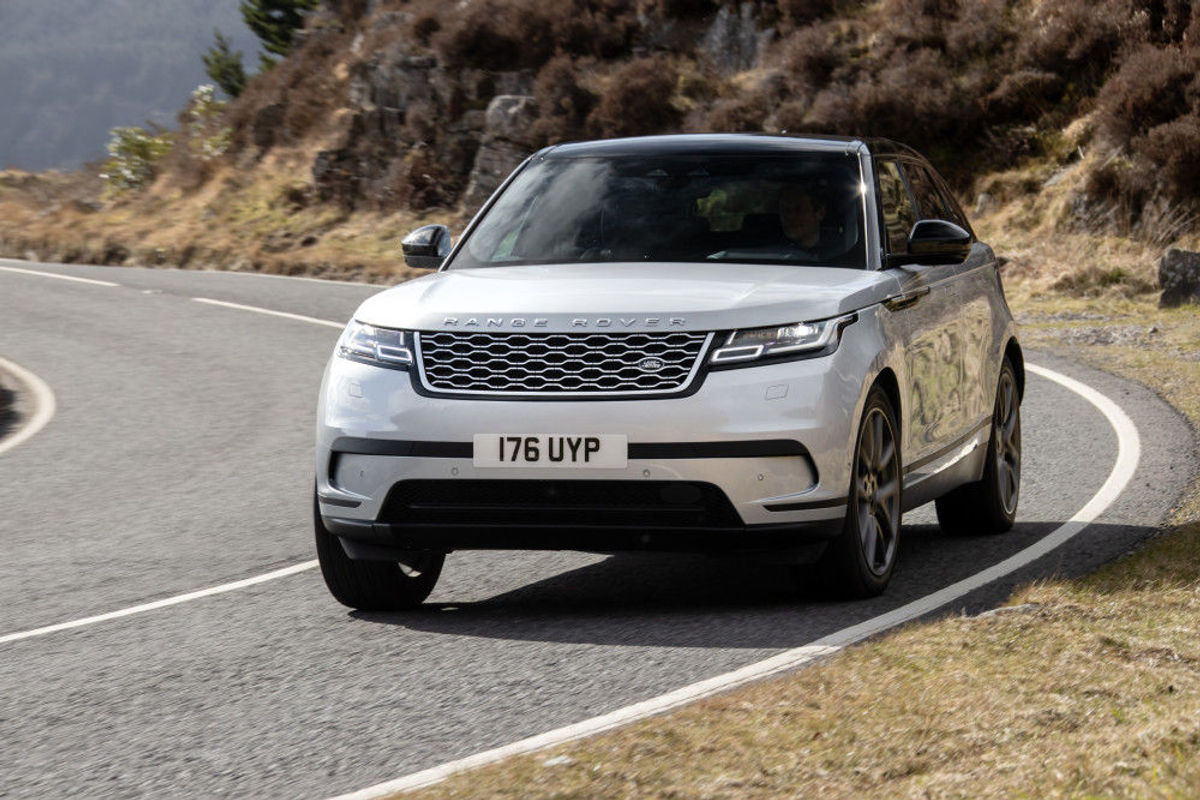
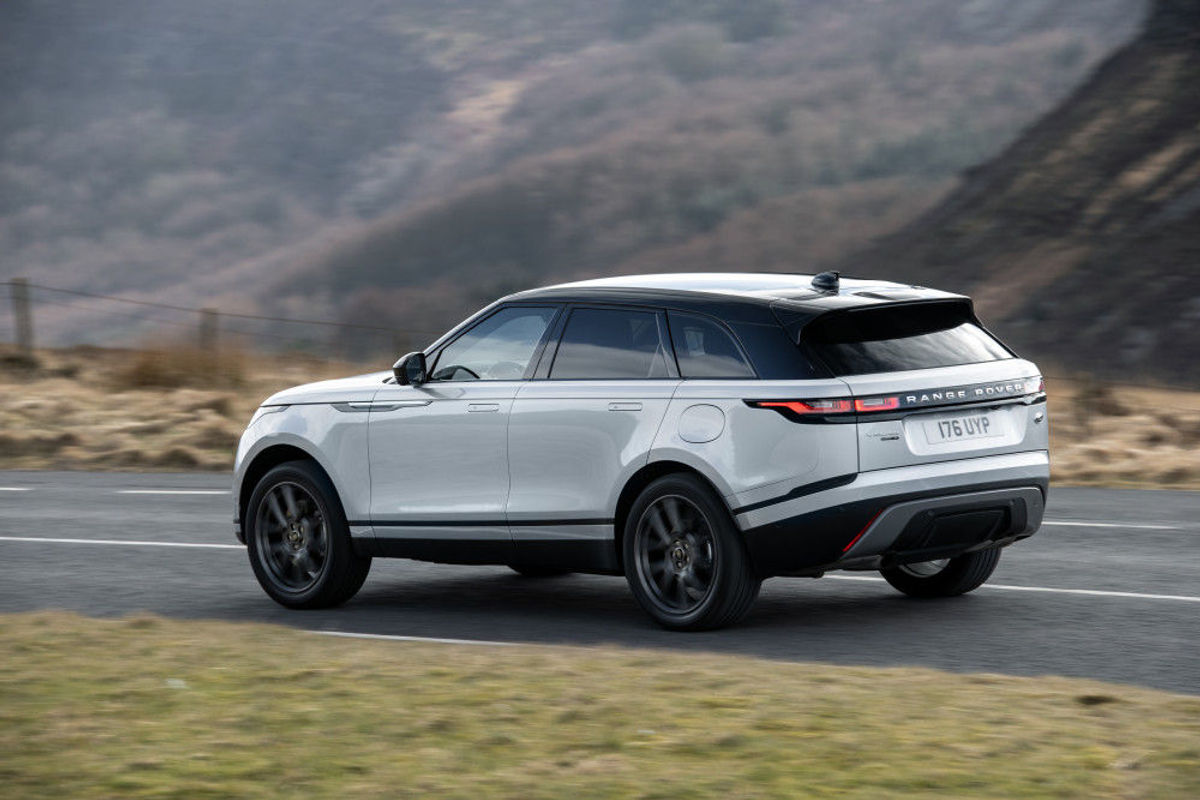
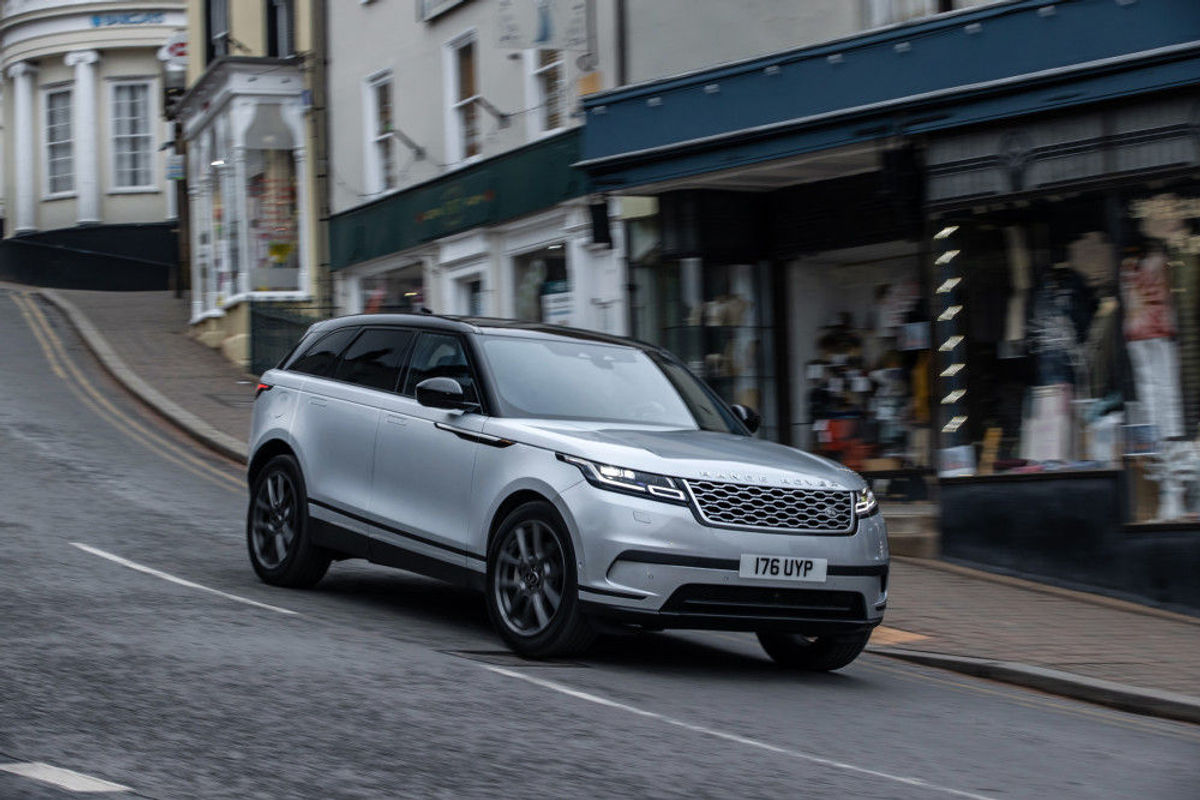
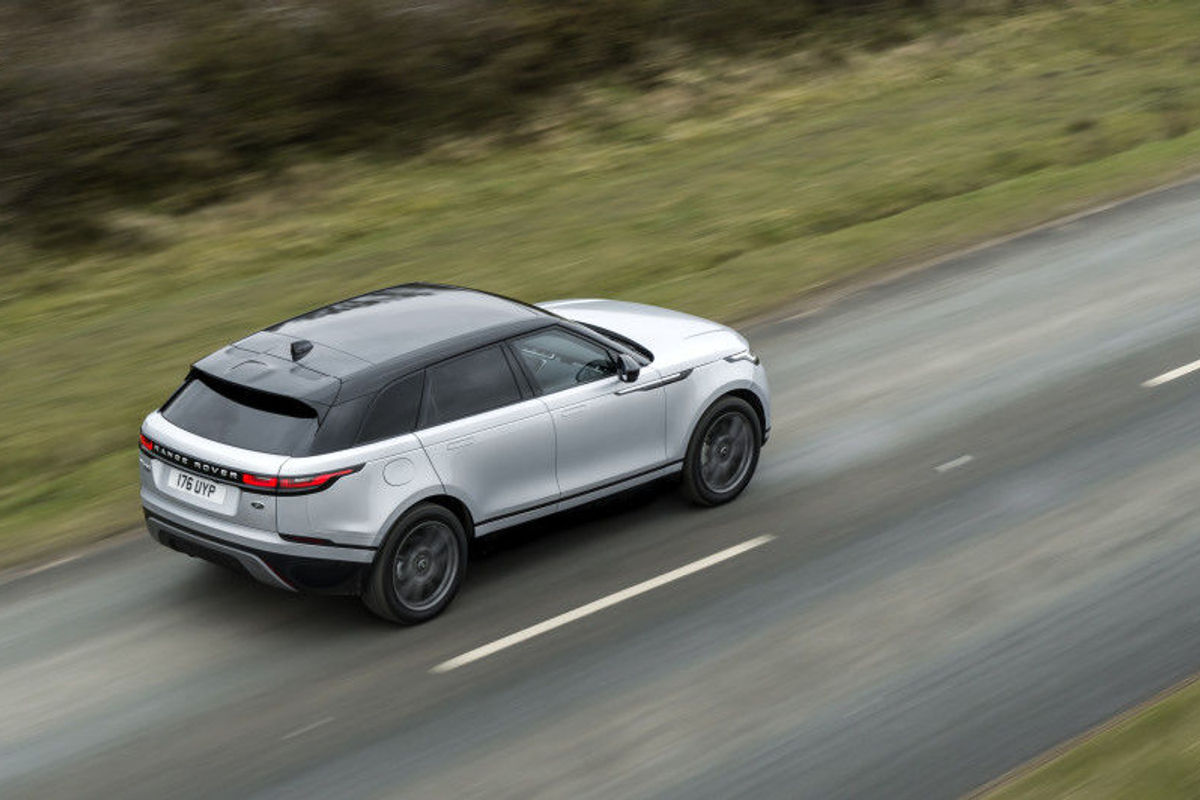
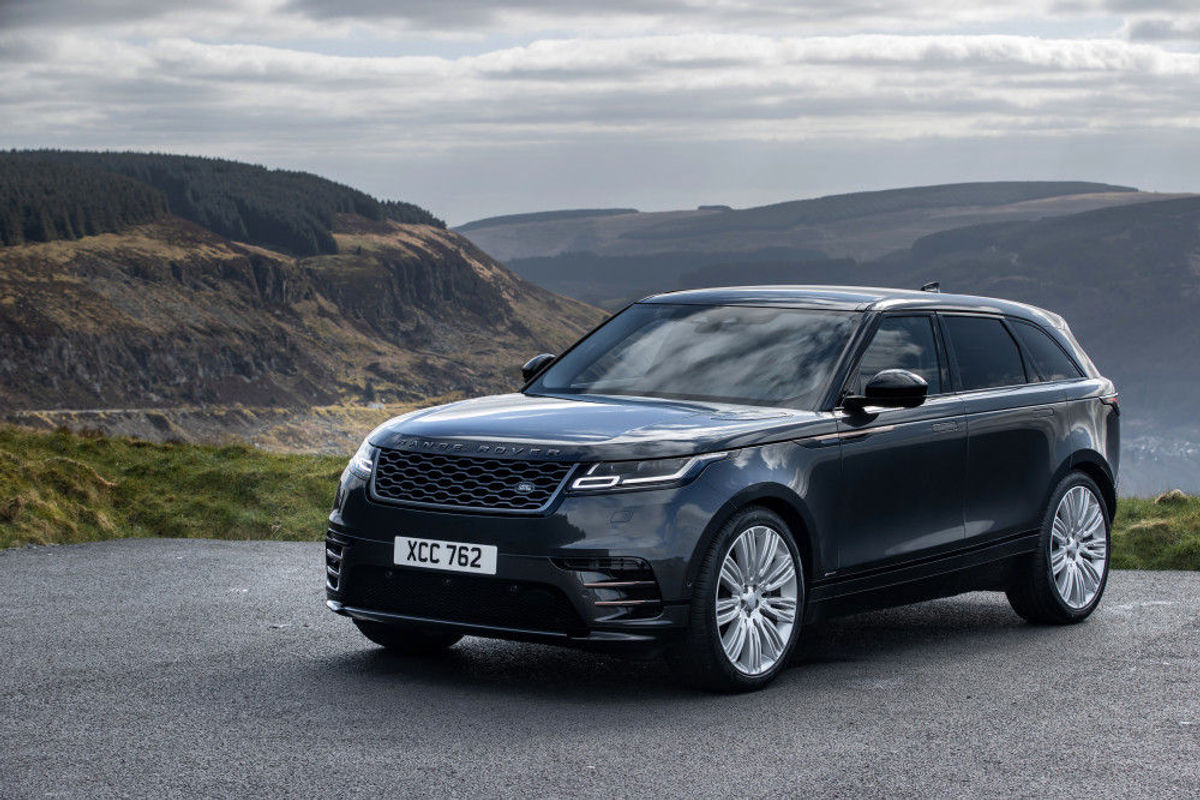
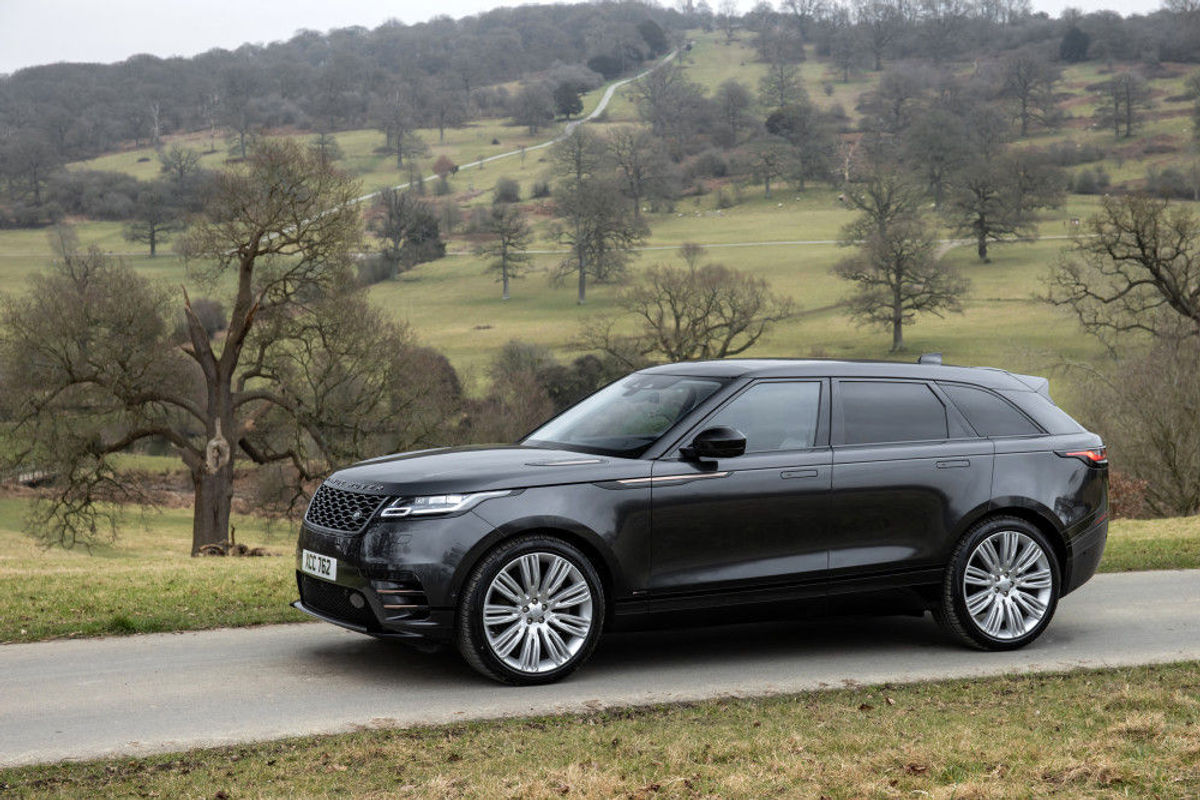
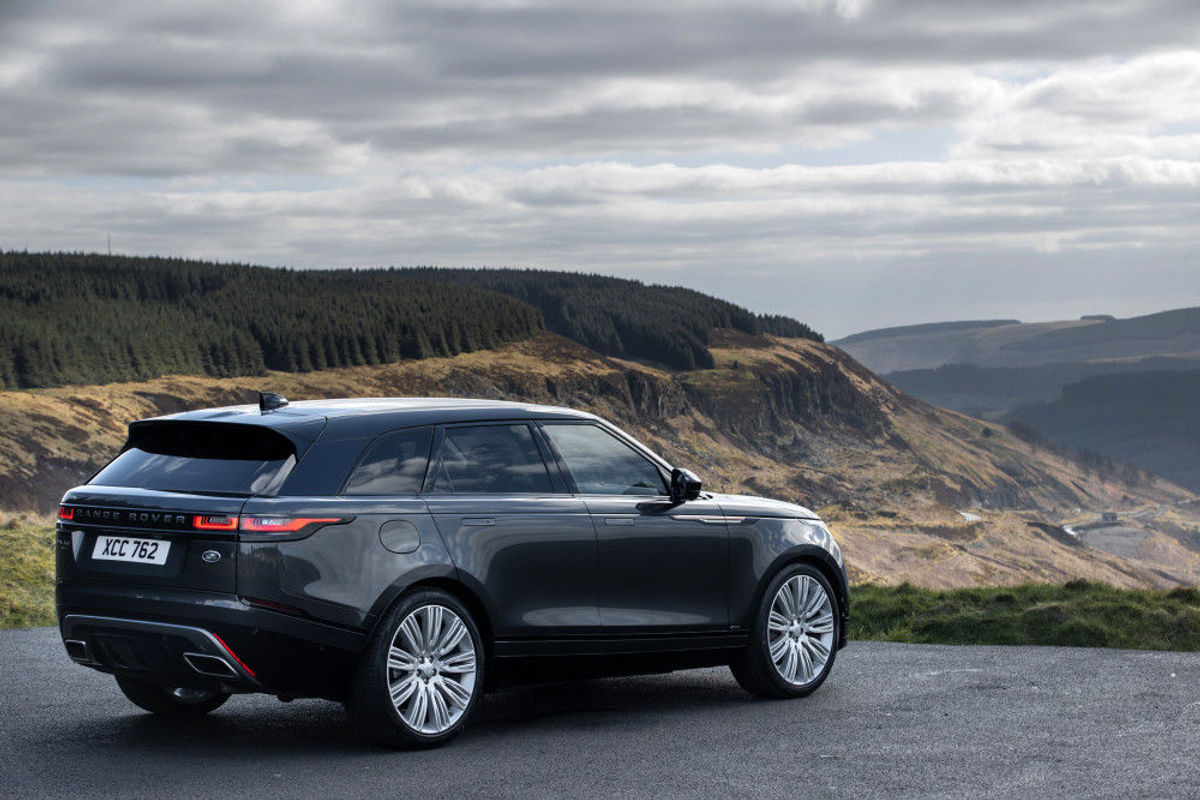
Land Rover has updated its mid-size Range Rover Velar SUV offering in South Africa. The Velar gains updated interior technology, enhanced engines and the introduction of the Plug-in Hybrid Velar P400e as well as a limited Velar Landmark Edition. See what’s on offer below!
The stylish Velar SUV, which was introduced locally back in 2017, has been updated!
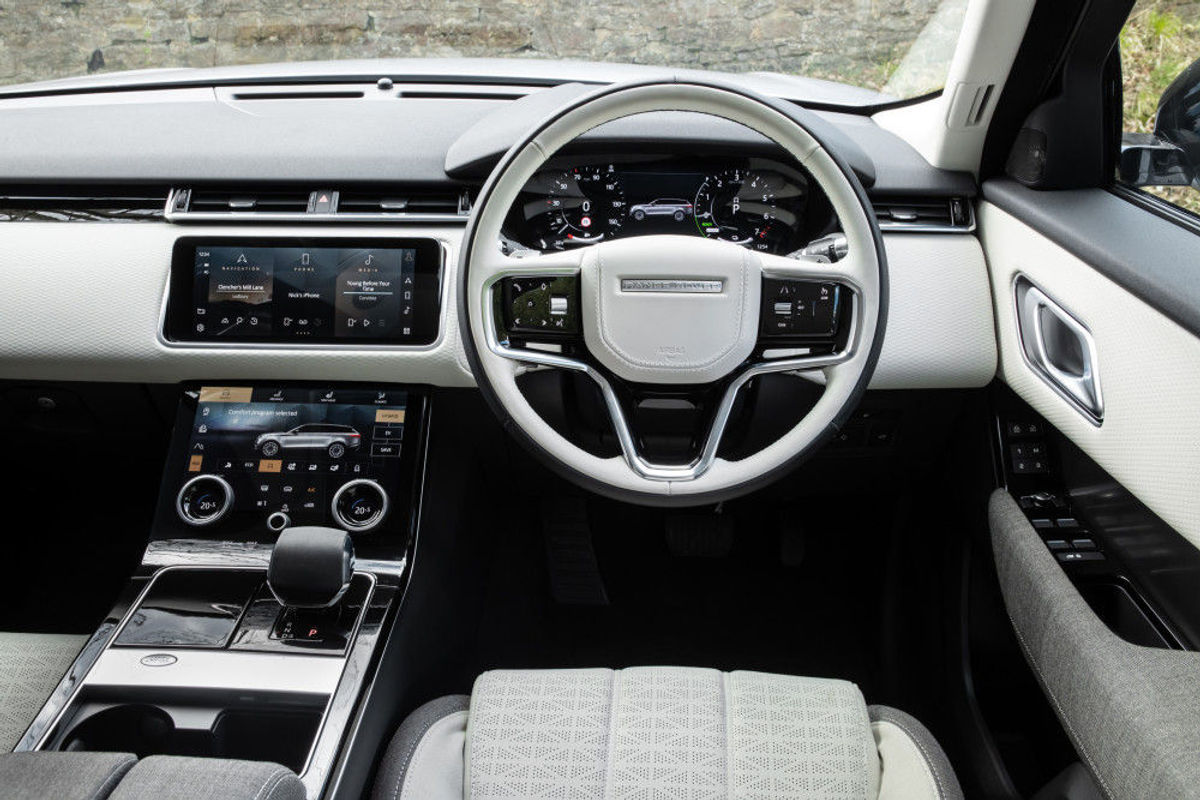
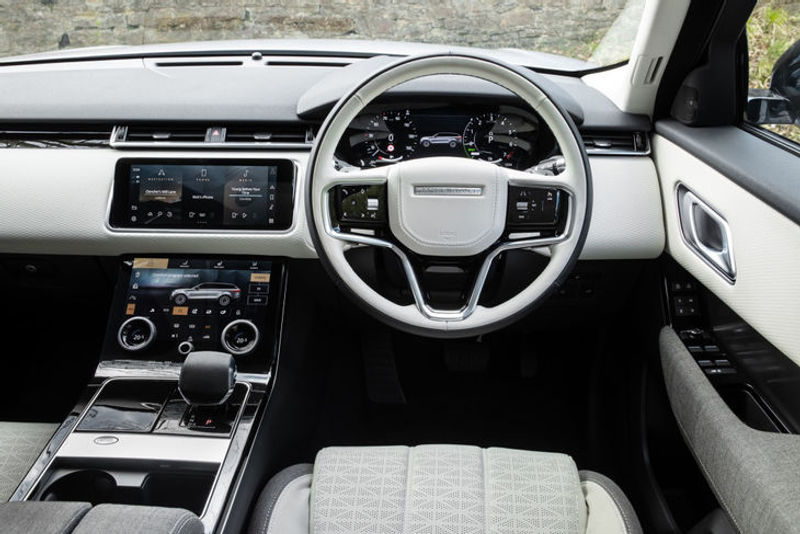
Note the new steering wheel and the new drive selector…
Significant upgrades have taken place inside the Velar. The dual-screen infotainment system now gains the latest Pivi/Pivi Pro operating system which is now slicker and more user friendly but importantly, faster to operate. Updates are conducted ‘over the air’ and features such as Spotify music streaming features for the first time and 2 smartphones can now be connected via Bluetooth. An embedded data connection also provides access to the latest maps, apps and software.
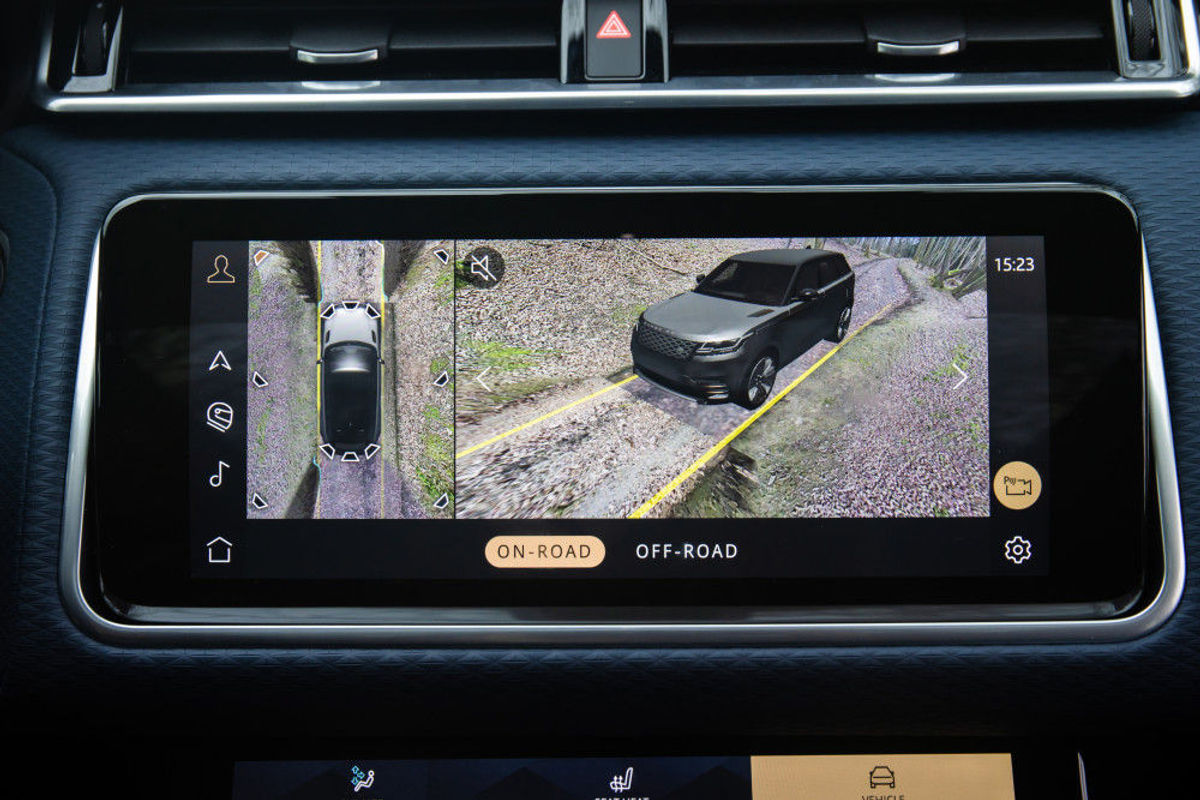
Some other fancy features include Active Road Noise Cancellation as well as a new cabin air filtration system which can be activated using the ‘Purify’ button found on the lower touchscreen. The Velar also gains a second-generation Activity Key which now features an LCD watch/screen allowing the user to remotely start, stop, lock and unlock the vehicle. Land Rover’s ClearSight Ground View gives the driver a view of the underside of the vehicle as well as a useful 180-degree view to aid safe maneuvering. The Velar also gains a new steering wheel with integrated smart buttons while a drive selector now replaces the previous rotary gear selector.
Velar Landmark Edition in SA
A special Velar Landmark Edition is also now available to buyers and is based on the R-Dynamic SE specification.
The Velar Landmark Edition gains a black contrast roof, 20-inch black alloy wheels and can be had in either Hakuba Silver, Lantau Bronze metallic, Santorini Black or Eiger Grey.
New Velar P400e Plug-in Hybrid (PHEV) now in South Africa
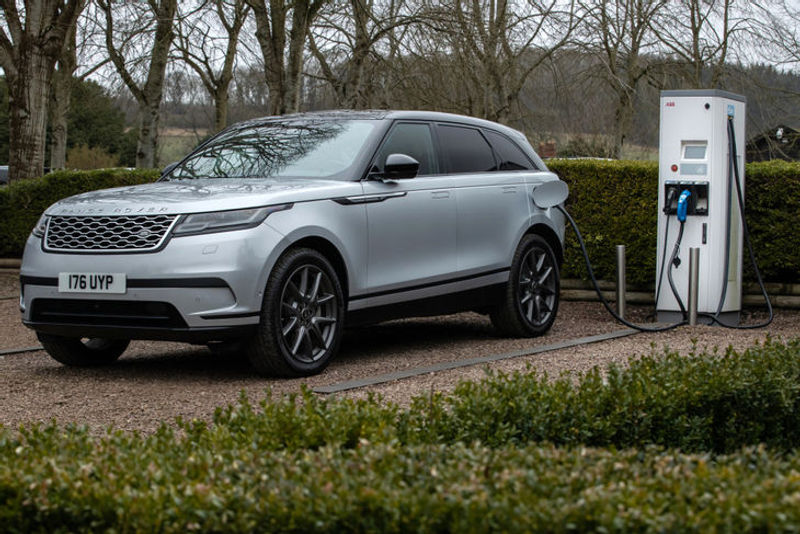
The P400e PHEV now joins the local Velar lineup…
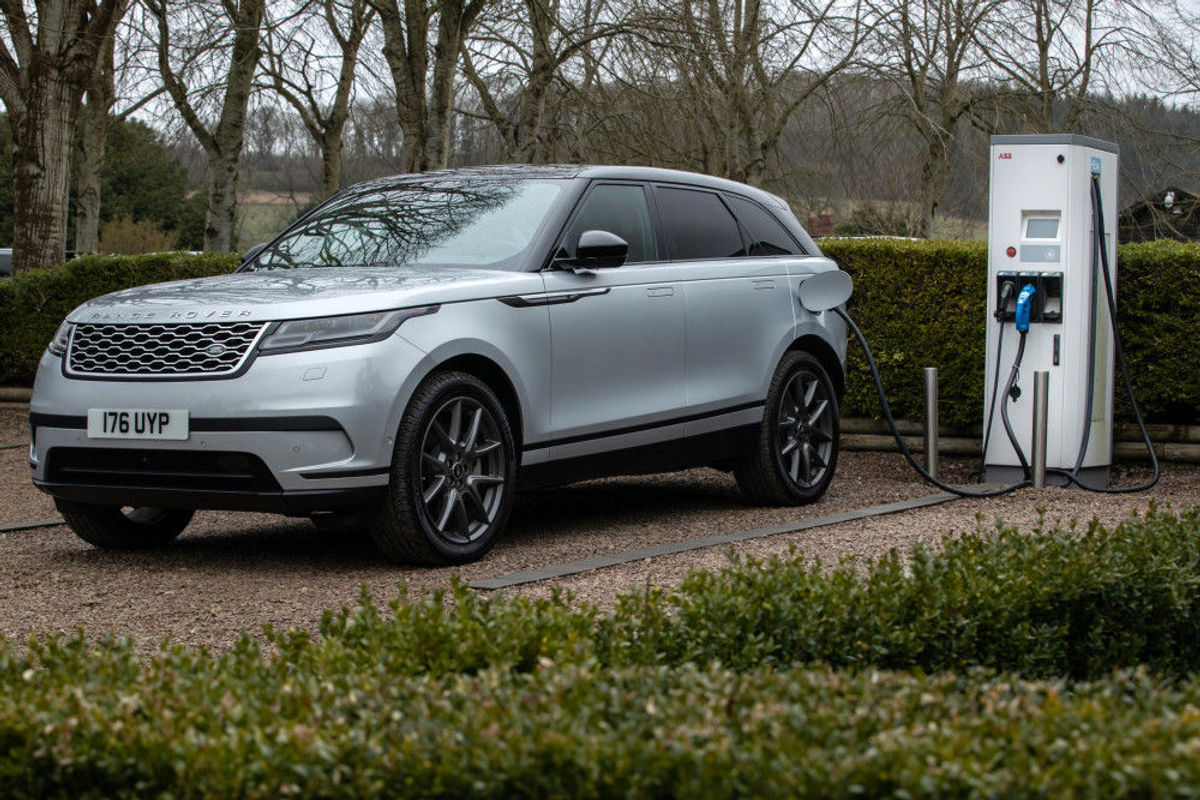
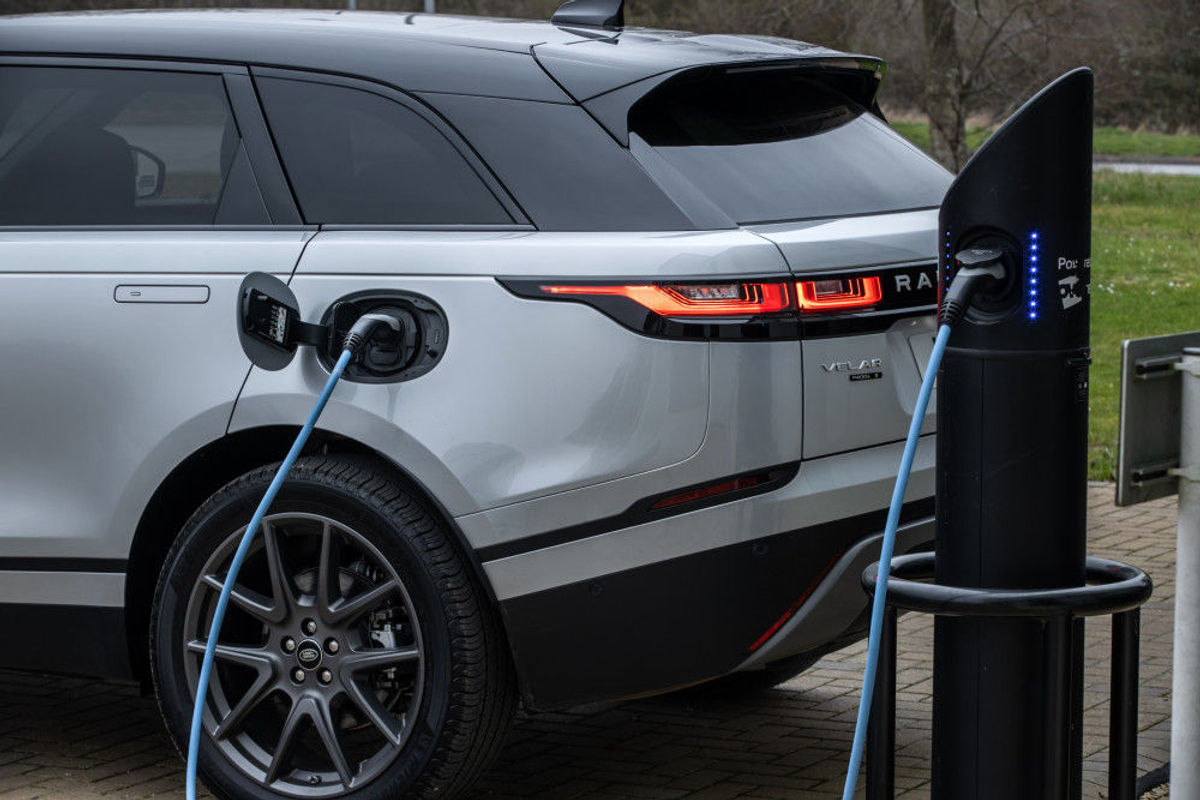
The new Velar P400e PHEV combines a 221 kW 2.0-litre petrol engine and a 105 kW electric motor to produce a total system output of 297 kW and 640 Nm of torque. Using an 8-speed automatic transmission, the Velar P400e claims a zero to 100 kph sprint time of 5.4 seconds!
Equipped with a 17.1 kWh lithium-ion battery which is located underneath the load bay floor, charging the Velar P400e can be charged to 80% charge in 30 minutes using a 32 kW DC fast charger or 1 hour 40 minutes using a 7kW wallbox. A Mode 2 charging cable takes the longest with a 5 hour, 29 minute charge time to get up to 80% charge. In terms of fuel efficiency, 2.3 L/100km is claimed with an all-electric range of 61 km. The driver can choose between 3 modes including EV, Hybrid or Save Mode (prioritises engine).
Updated Engines for Velar
The Velar gains 3.0-litre, straight-6 Ingenium engines as seen in the P340 which delivers 250 kW and 480 Nm, while weighing some 12.9 kg less and featuring mild-hybrid technology. The Velar P340 is said to sprint from zero to 100 kph in 6.3 seconds.
A straight-6 diesel engine in the Velar D300 produces 221 kW and 650 Nm and is some 7kg lighter than the outgoing V6 diesel and offers a zero to 100 kph sprint time of 6.5 seconds.
A next-generation 2.0-litre diesel engine is also available in the Velar D200 (replaces the previous D180 and D240) and produces 147 kW and 430 Nm.
Buyers can also opt for the 2.0-litre petrol-powered Velar P250 with 184 kW and 365 Nm.
How much does the Range Rover Velar Cost in South Africa?
Velar D200 S – R1 290 100
Velar D300 S – R1 458 600
Velar P250 S – R1 290 100
Velar P340 S – R1 438 700
Velar P400e S – R1 651 200
Velar D200 R-Dynamic SE – R1 382 900
Velar D300 R-Dynamic SE – R1 551 300
Velar P250 R-Dynamic SE – R1 382 900
Velar P340 R-Dynamic SE – R1 531 500
Velar P400e R-Dynamic SE – R1 739 100
Velar D200 R-Dynamic HSE – R1 492 000
Velar D300 R-Dynamic HSE – R1 631 000
Velar P250 R-Dynamic HSE – R1 492 000
Velar P340 R-Dynamic HSE – R1 611 200
Velar P400e R-Dynamic HSE – R1 834 000
Velar D200 Landmark Edition – R1 428 200
Velar D300 Landmark Edition – R1 596 600
Velar P250 Landmark Edition – R1 428 200
Velar P340 Landmark Edition – R1 576 800
The Range Rover Velar is sold with a 5-year/100 000km warranty and a 5-year/100 000km maintenance plan.
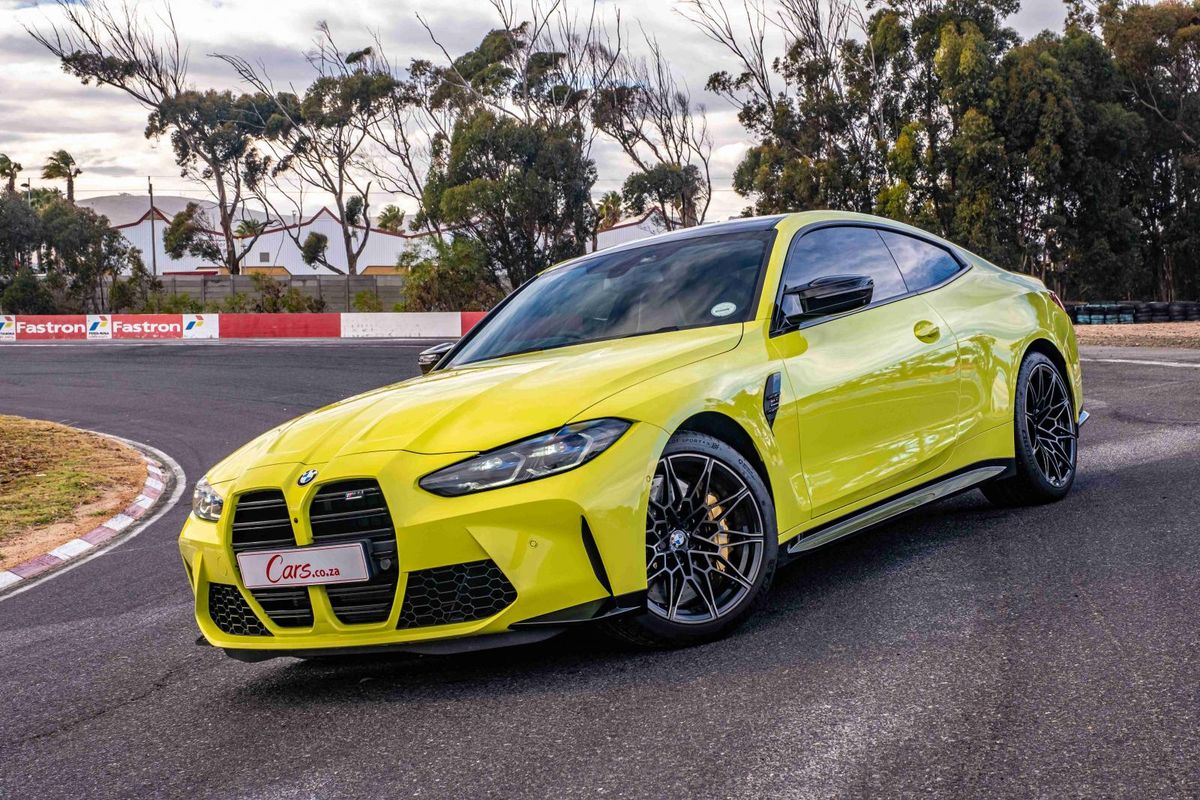
BMW M4 Competition (2021) Review
The BMW M4 Competition is endowed with head-turning looks and its twin-turbo inline 6-cylinder engine produces suitably succulent power outputs. The newcomer can certainly achieve no-less-than-astonishing velocities, but is it still a visceral driver’s car and does its overall package add up to a worthwhile purchasing proposition? We recently put the M4 Competition to the test to find out if BMW’s M Division has created its sharpest performance coupe yet…
Just how good is the 2021 BMW M4 Competition? This review will cover key aspects of the M4 to help you make an informed buying decision.
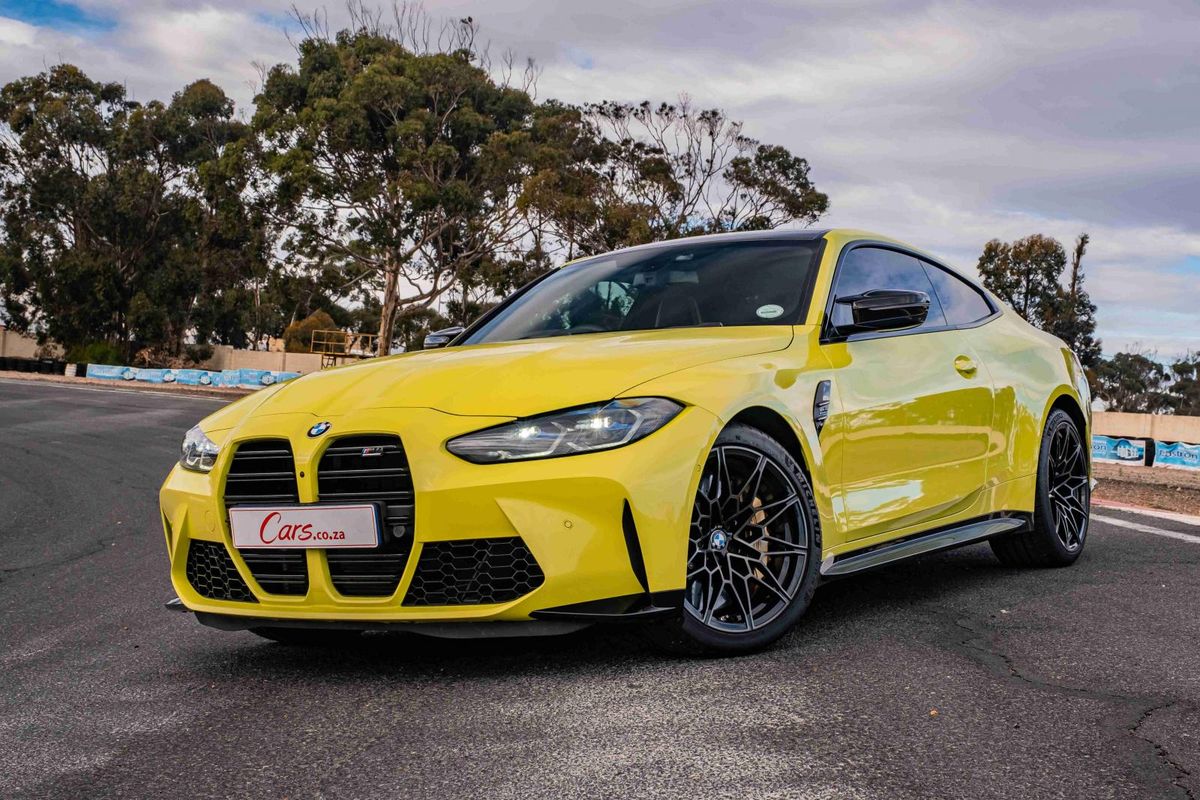
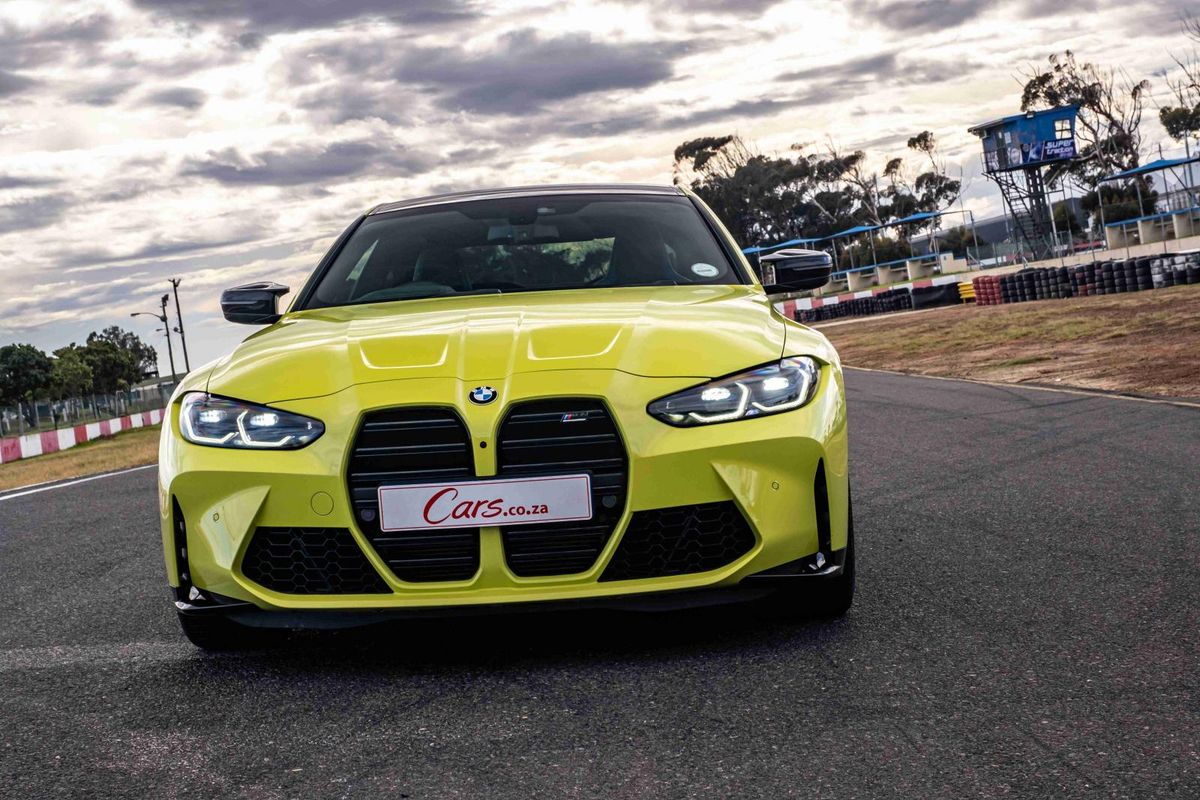
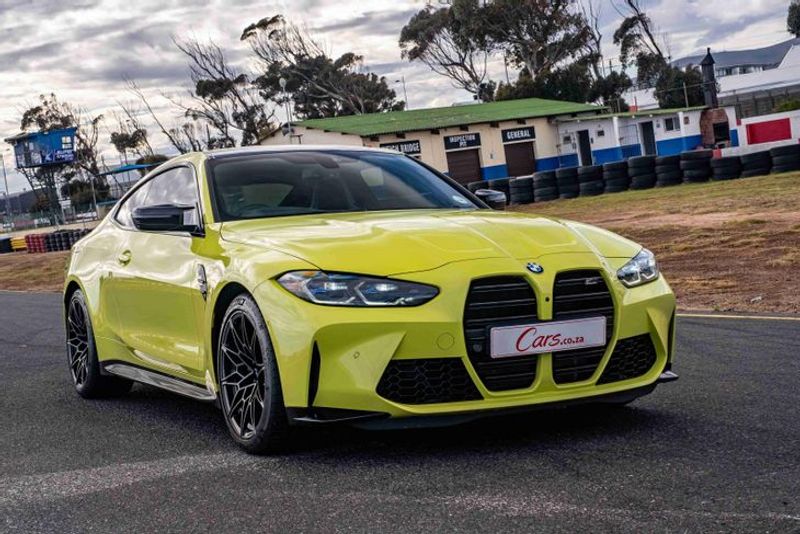
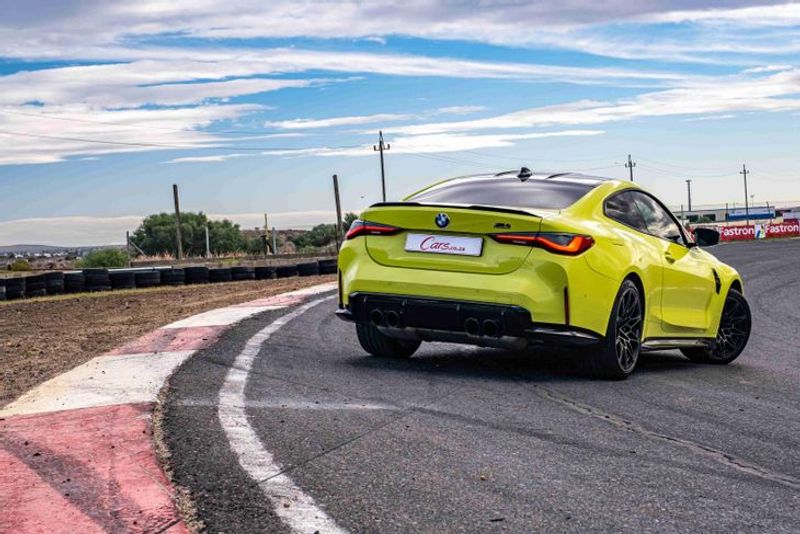
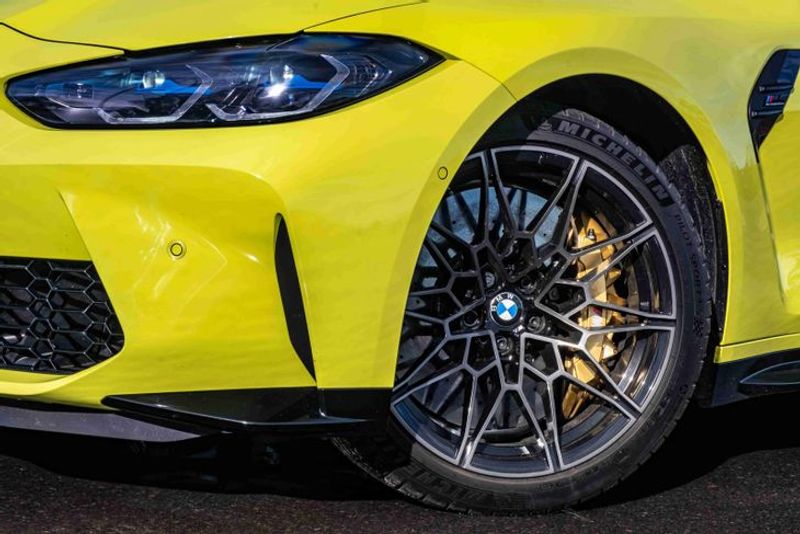
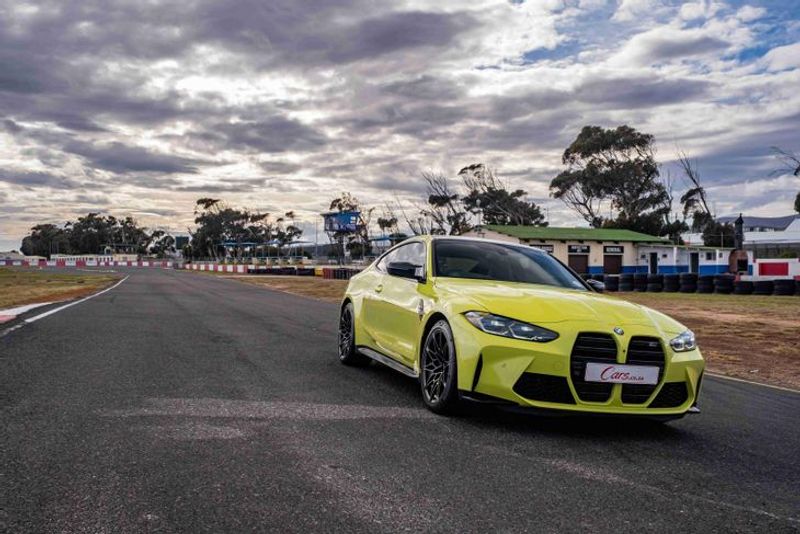
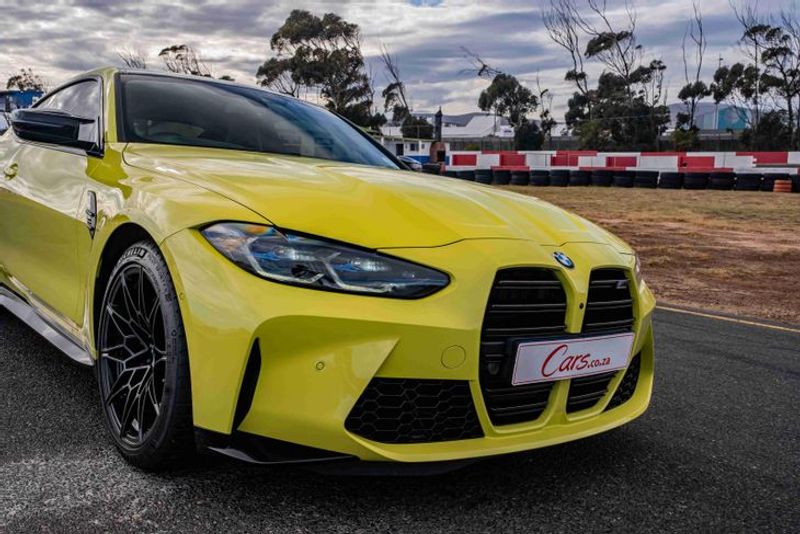
BMW’s new oversize kidney grille still divides opinion, but there’s no denying that the M4 Competition has mega kerb appeal.
The G82 BMW M4 Competition Coupe and its G80 M3 Competition sedan sibling arrived in South Africa earlier this year and while much has been said and written about the pair’s new oversized (and tall) kidney grilles, we were understandably excited to get to grips with the new M4 Competition when it recently joined our test fleet. BMW’s dynamic duo are historically regarded the best driver’s cars that the Munich-based firm’s M Division has ever produced, barring, arguably, the outgoing BMW M2 and more hardcore M2 CS. Naturally then, the new-generation M3 and M4 have big performance shoes to fill.
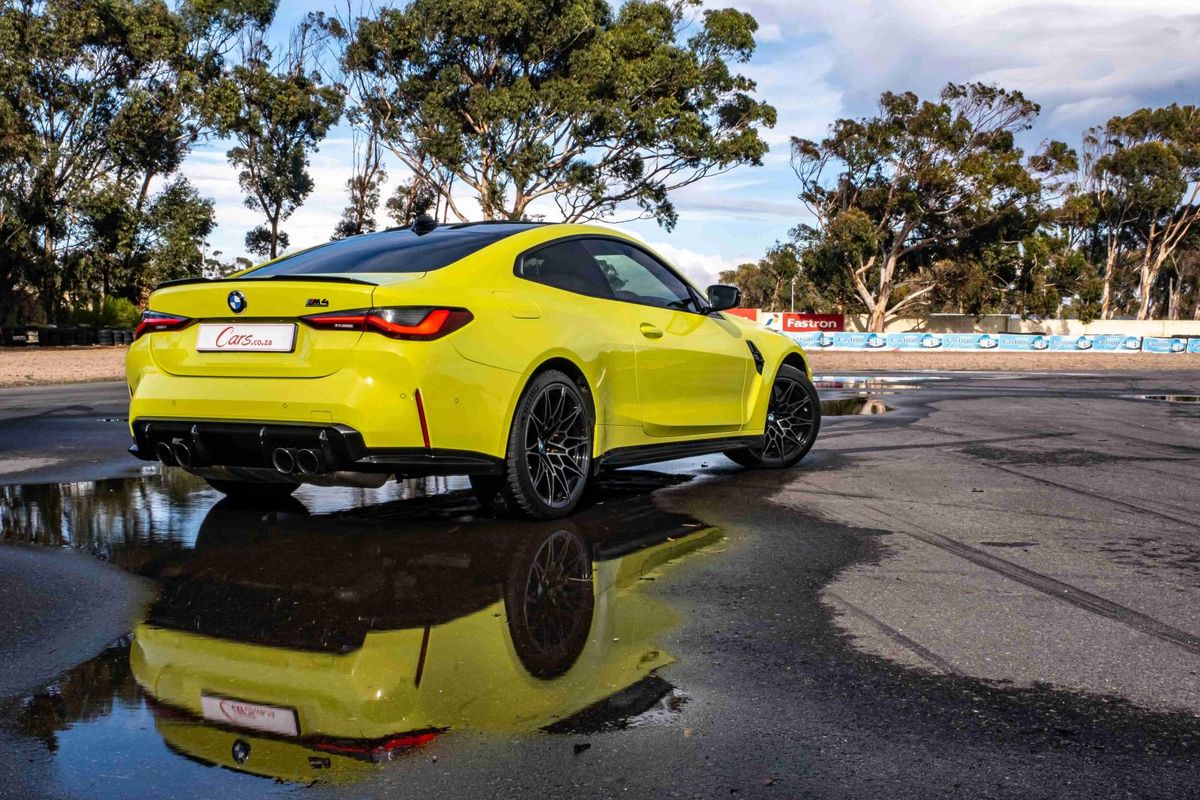
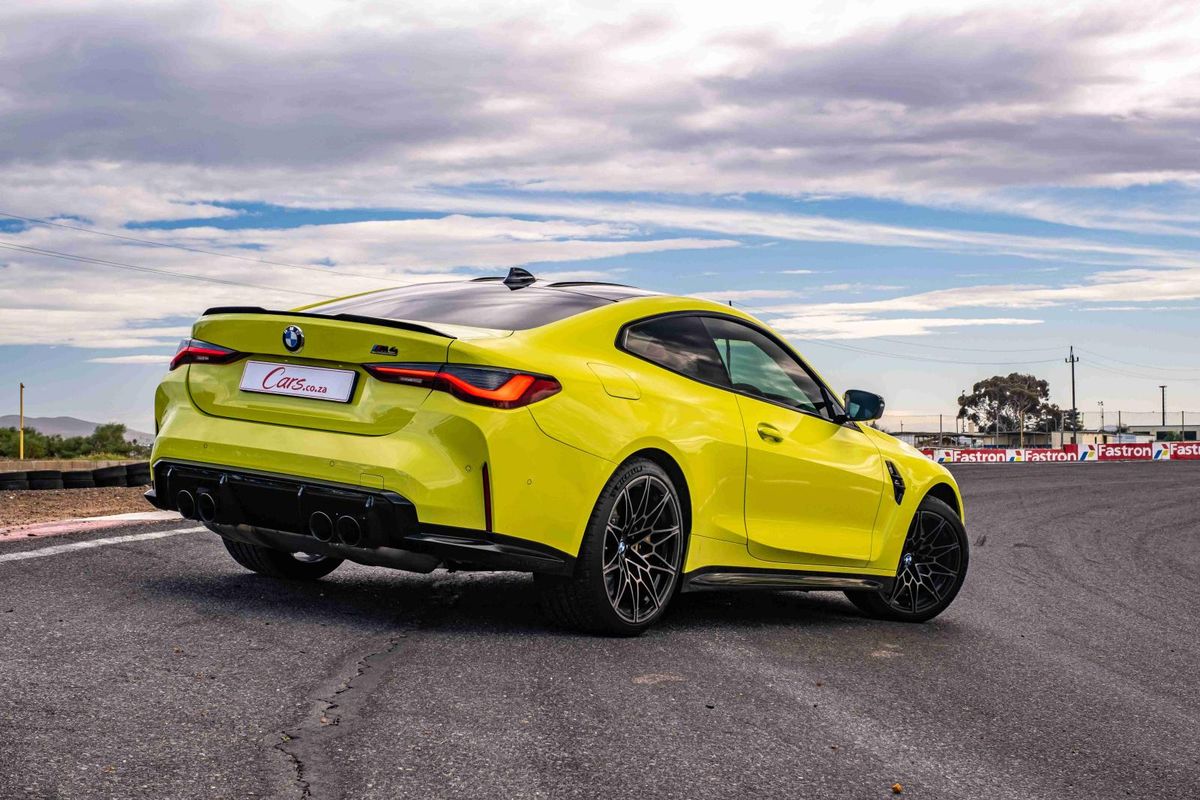
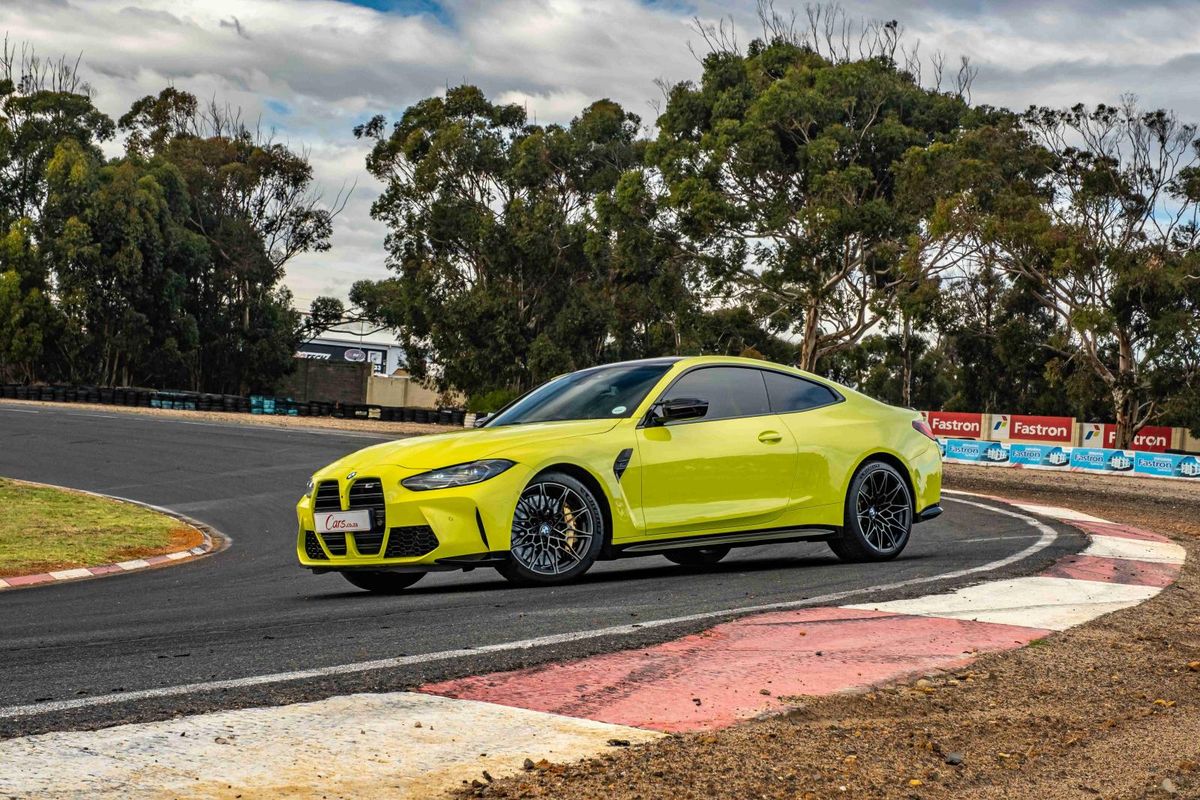
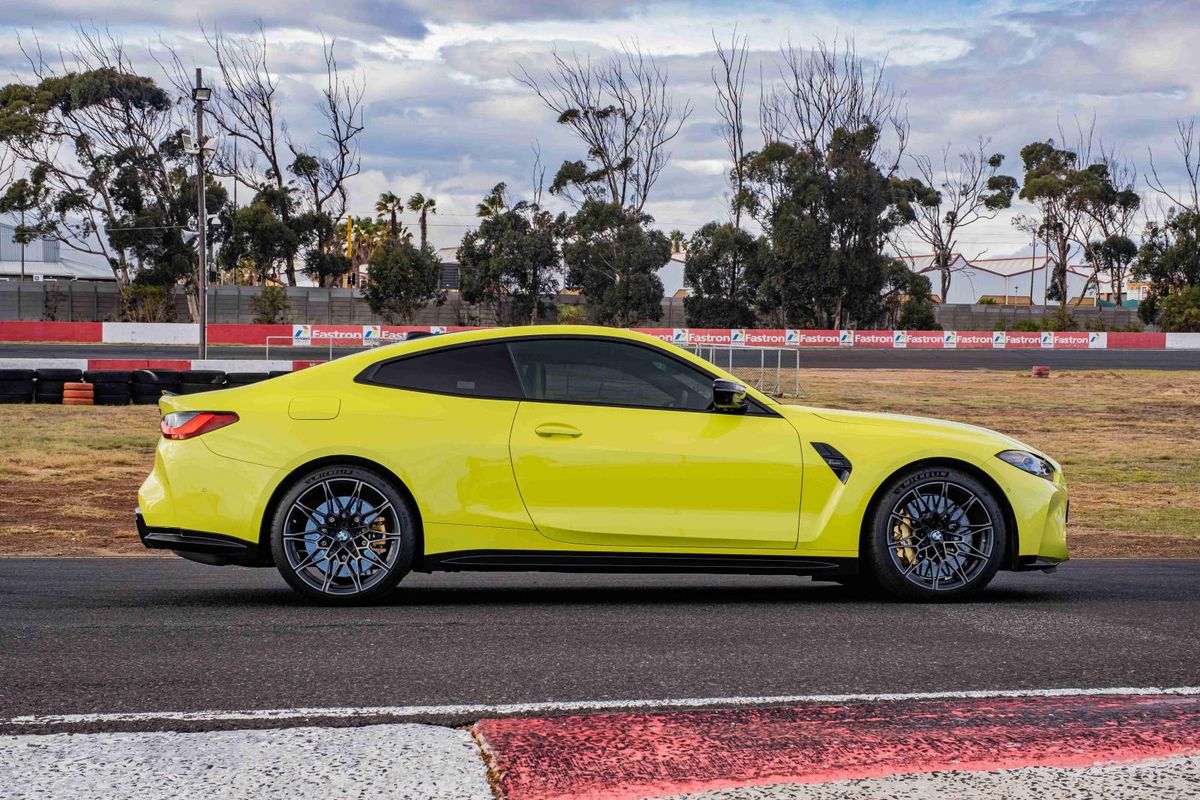
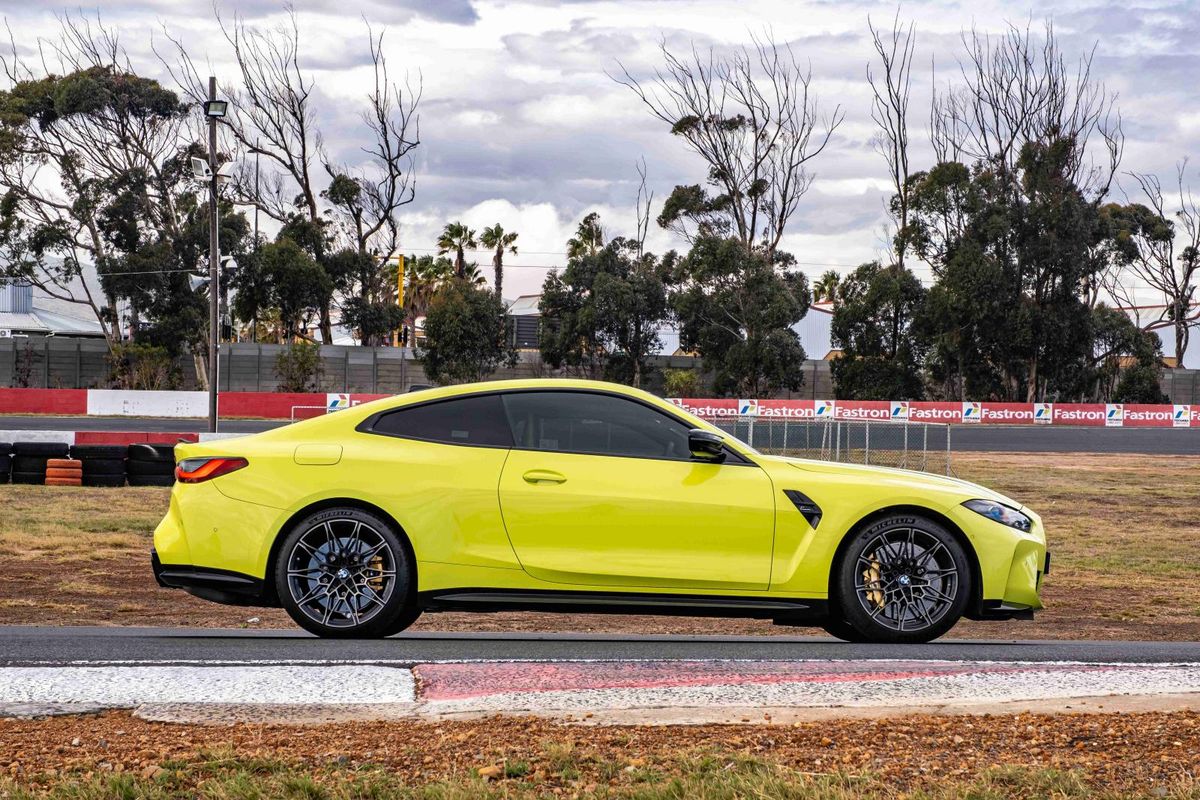
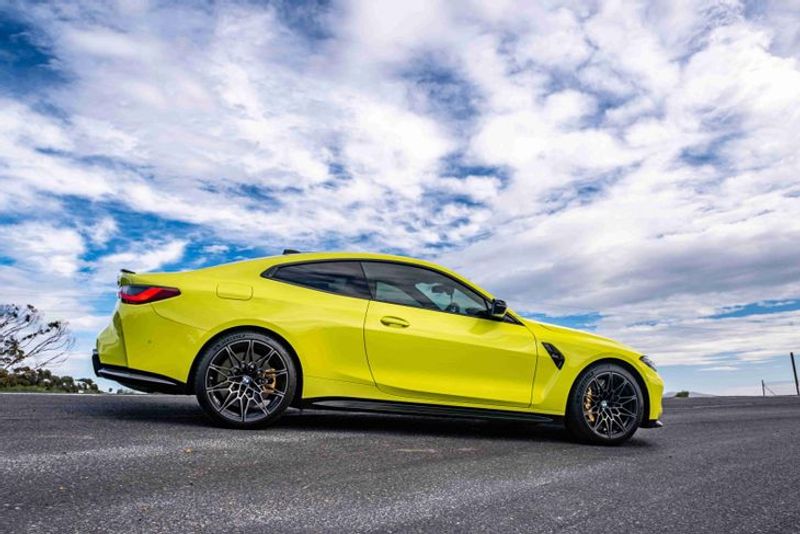
If that grille design bothers you, get over it! There’s nothing subtle about this car and if you love drawing (and getting) attention then you will love the M4 Competition! A variety of exterior hues are on offer, but this bright and bold Sao Paulo Yellow paint job generates almost as much public attention as those large “nostrils” emblazoned on the front of the car. We think the M4’s grille looks brash and purposeful in the metal, especially in conjunction with the model’s sculpted, muscular bonnet and slim LaserLight LED headlights. In fact, from all angles, the new M4 Competition screams performance!
All-wheel-drive M xDrive versions of the M3 and M4 have been revealed and will arrive on the local market later this year, but this M4 Competition promises delectable rear-wheel-drive thrills and notable handling performance. Just how good is the new M4 Competition and does the overall package justify its near R2-million price tag? Let’s take a closer look at what the new M4 Competition has to offer…
What’s the interior of the M4 Competition like?
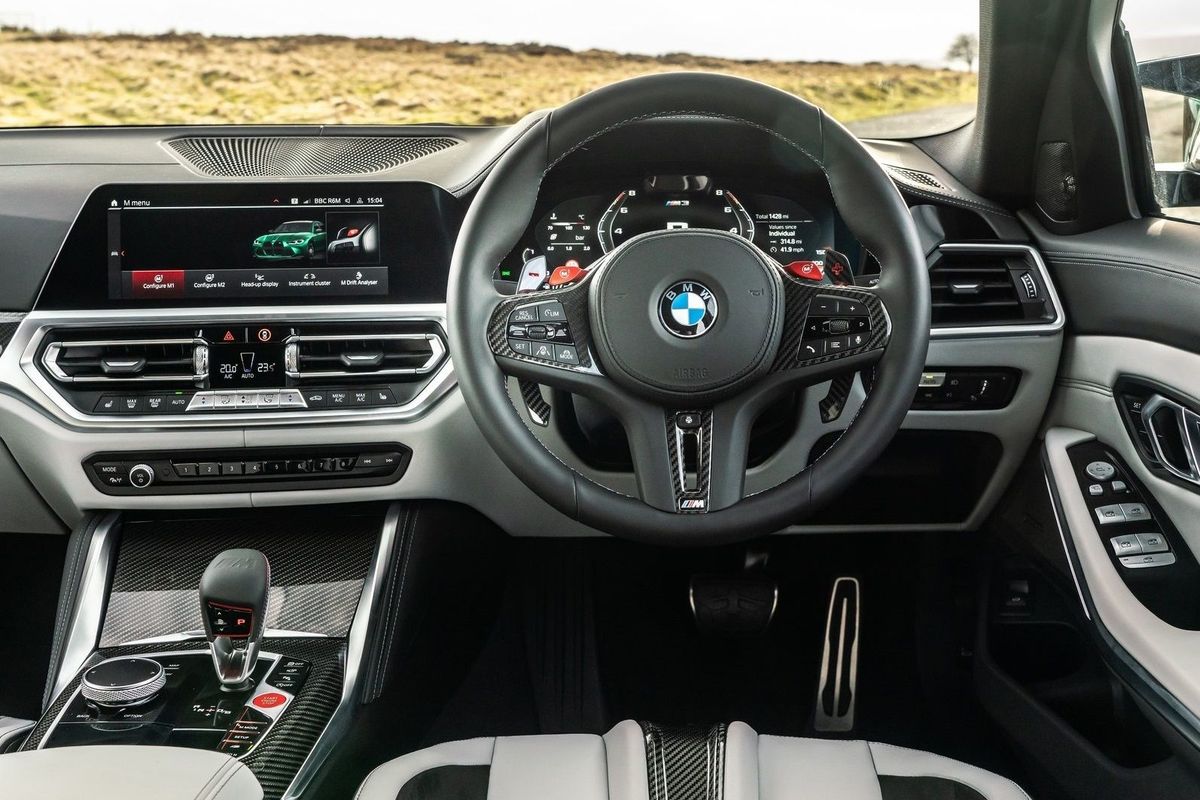
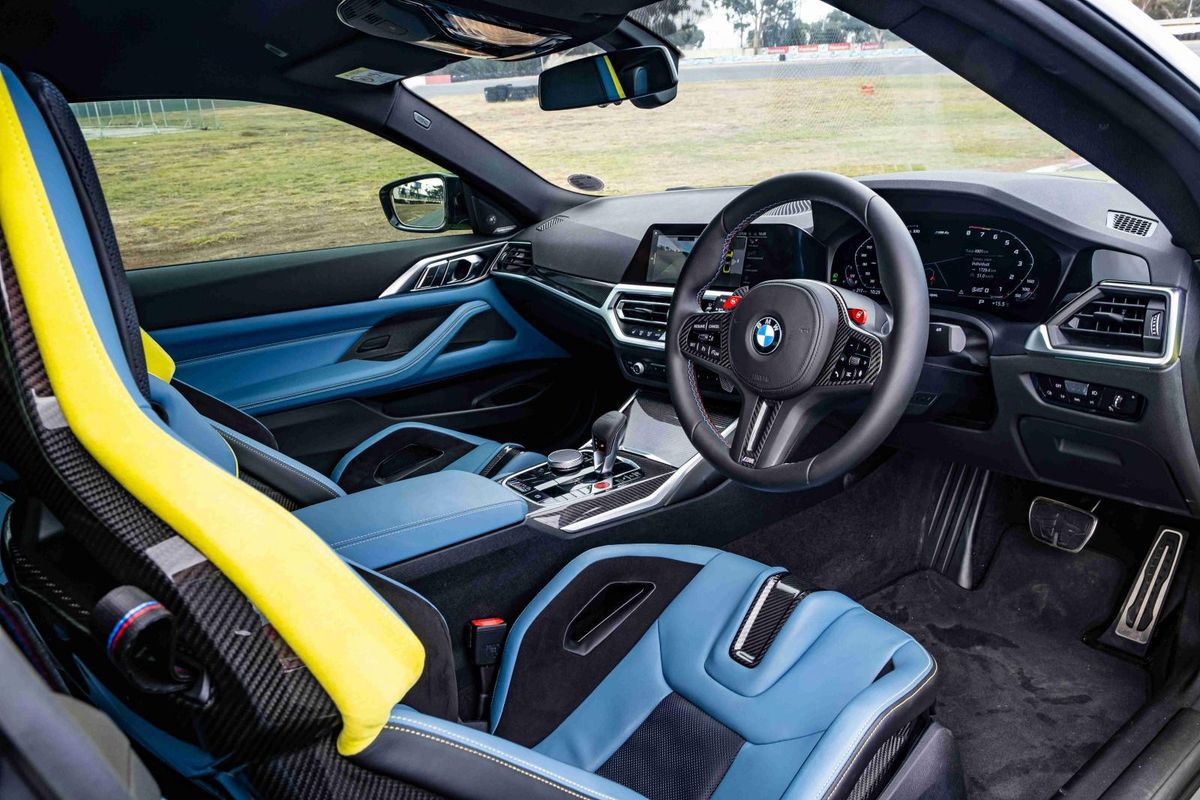
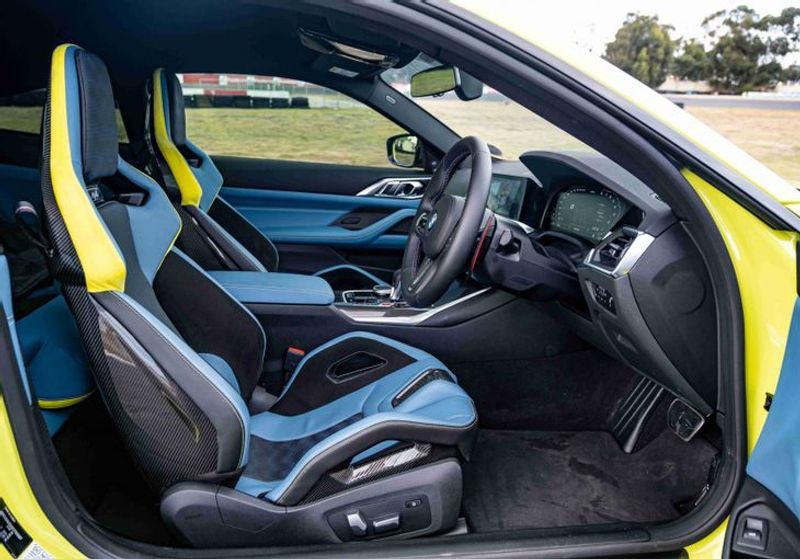
The optional M carbon bucket seats add a sense of drama to the M4 Competition’s overtly sporty interior.
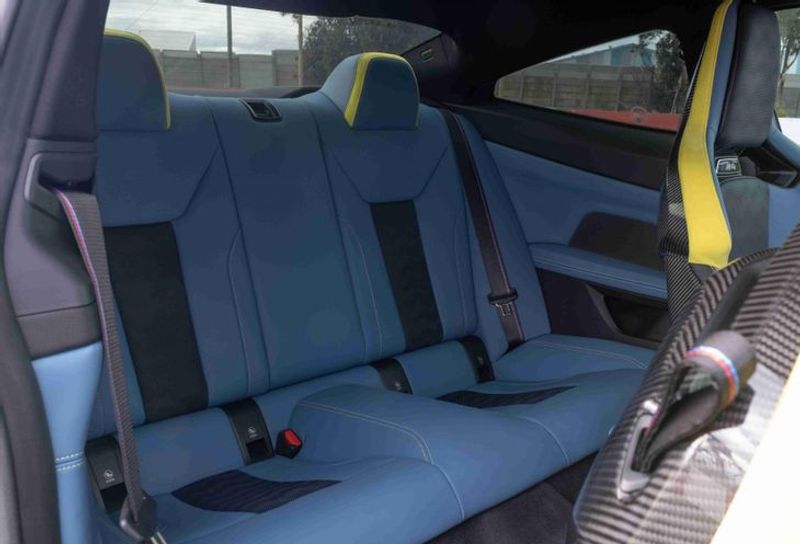
The interior of the M4 Competition is suitably sporty to match the “high drama” of its extroverted exterior design and the slim-fit and optionally-available M Carbon bucket seats (R82 500) fitted to this test unit are said to be almost 10 kg lighter than the standard front sports seats. In this fine example, the seats are wrapped in a Yas Marina Blue and Black Merino leather combination with the beefy bolsters finished in Alcantara. The M Carbon seats provide excellent support but be warned: larger drivers or front passengers might find them too slim and figure-hugging, almost to the point of being uncomfortable. If you’re, um, “big-boned”, rather opt for the standard seats. The pronounced bolsters also make it awkward to get in and out of the M4 Competition, but with some practice, you soon get the hang of it.
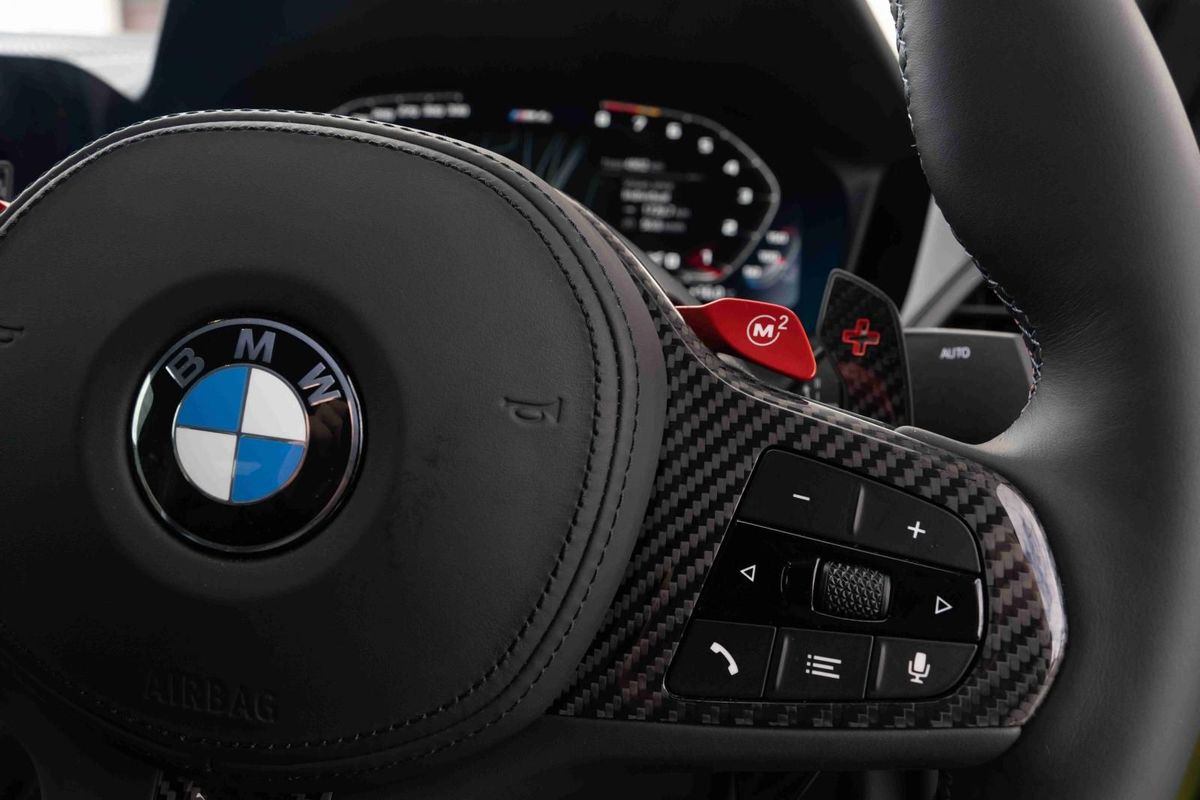
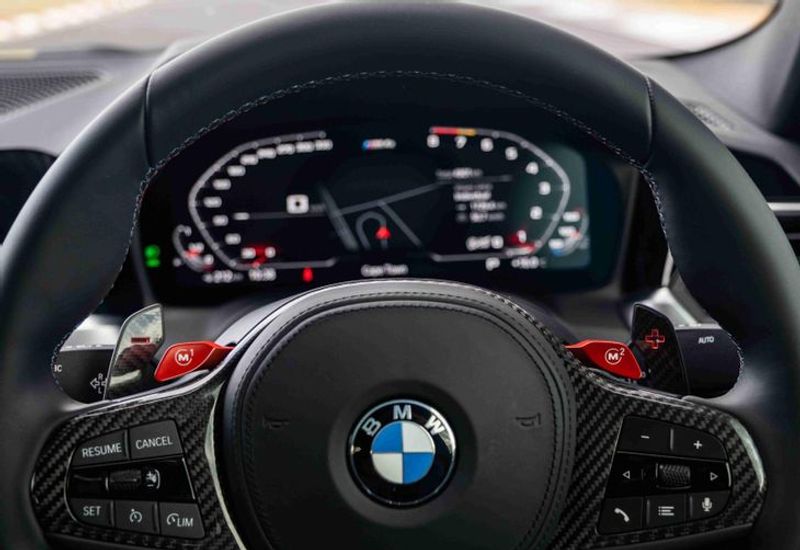
Numerous M4 badges are dotted around the cabin to remind you that you are NOT sitting in a more affordable and demure 4 Series derivative and carbon-fibre trim features on the centre console, steering wheel and dashboard, which add to the purposeful look. Also, note the generously proportioned carbon-fibre shift paddles on the M steering wheel. The tiller is thick-rimmed and feels substantial (as well as grippy), while the familiar red M1 and M2 hot buttons provide easy access to your preferred performance settings, which you can configure to your liking via the M Menu in the car’s infotainment system.
The driver now has more control and flexibility to adjust key performance settings in the new M4 Competition.
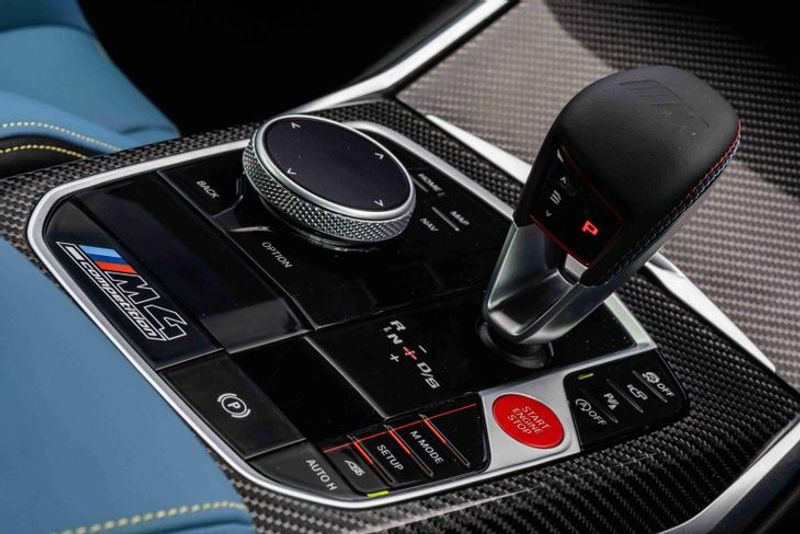
The M4 Competition offers a trio of M Modes (Road, Sport and Track) to suit your driving intent, but the driver can fine-tune the vehicle’s performance settings by pressing the “Setup” button in the centre console. In this menu, you can choose your desired settings for the engine, transmission, chassis, steering, brakes and exhaust. This is also where you can manually tweak the 10-step M Traction Control (with DSC off) setting to achieve perfect dynamic performance (and drifts) to suit the conditions in which you are driving. Furthermore, in conjunction with M Dynamic Mode (MDM), controlled drifts can be perfected and dialled in with confidence – on the safety of a track or skid pan, of course… Another nifty feature is the M Drift Analyser, which will analyse, measure and rate the quality of your drifts!
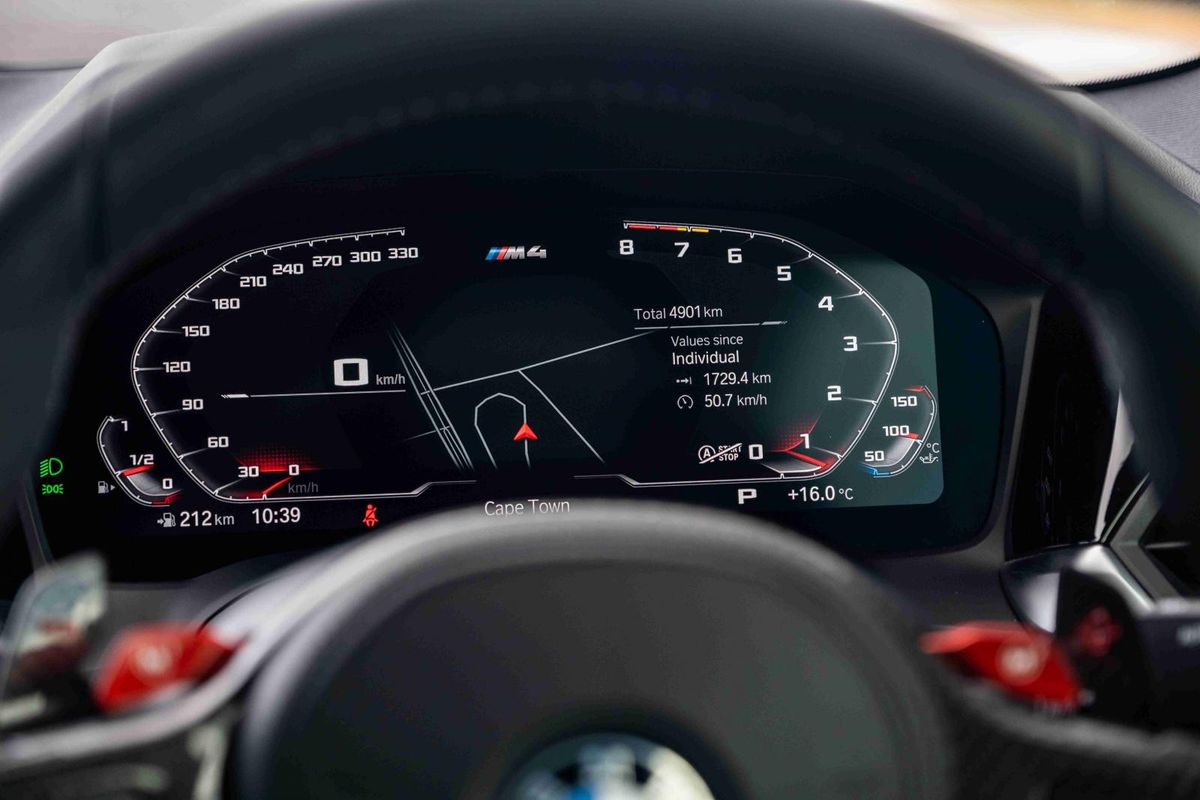
The display of the 12.3-inch digital instrument cluster can be configured to suit your preference and when sportier settings are engaged, the cluster and head-up display adopt layouts that suit the drive mode you’ve selected. The 10.25-inch infotainment system is familiar (from the 4 Series and other contemporary BMW models) and easy to navigate either via touch inputs or by using the iDrive Controller. It comes equipped with ConnectedDrive services, integrated navigation, Bluetooth, voice control, Apple CarPlay and Android Auto compatibility, plus a wireless charging pad is fitted for your convenience.
You can set your favourite drive settings for the M1 and M2 buttons which can be easily accessed.
Lastly, take note of the exhaust button in the centre console – you can use it to wake up your neighbours and their pets first thing in the morning, which is a very handy feature… if you’re evil incarnate.
Overall, we think the M4 Competition’s interior looks the part and imparts a sense that you are about to experience something special as soon as you press that red Engine Start button. Let’s press it, then!
What’s the M4 Competition like to drive?
If it’s driving thrills you’re after, the M4 Competition delivers…
It is, in a word, marvellous!
Of course, before I took the M4 Competition for a drive for the first time, my colleagues repeatedly warned me that the Bimmer’s rear-end liked to step out often and with little effort. Alrighty then…
At start up, the powerful 375 kW/650 Nm twin-turbocharged 3.0-litre inline 6-cylinder engine comes alive with a distinct bark, which is followed by an urgent gurgle that emanates from the Bavarian speed merchant’s quad tailpipes. For a moment, I was convinced that I had arrived in heaven…
Not wanting to prod and poke the beast just yet, I decided to ease into the drive with the Bimmer’s settings dialled in for optimal comfort and efficiency. I was soon struck by how usable the M4 Competition is on our notoriously poor road surfaces. The new M3 and M4’s underpinnings are said to have been specifically engineered to be significantly stiffer (or taut) than those of the outgoing models, which laid the foundation for BMW’s engineers to scale up the performance of the newcomers’ brakes and suspension, resulting in sharper-, but also a more balanced, driving experiences. That was the idea, anyway…
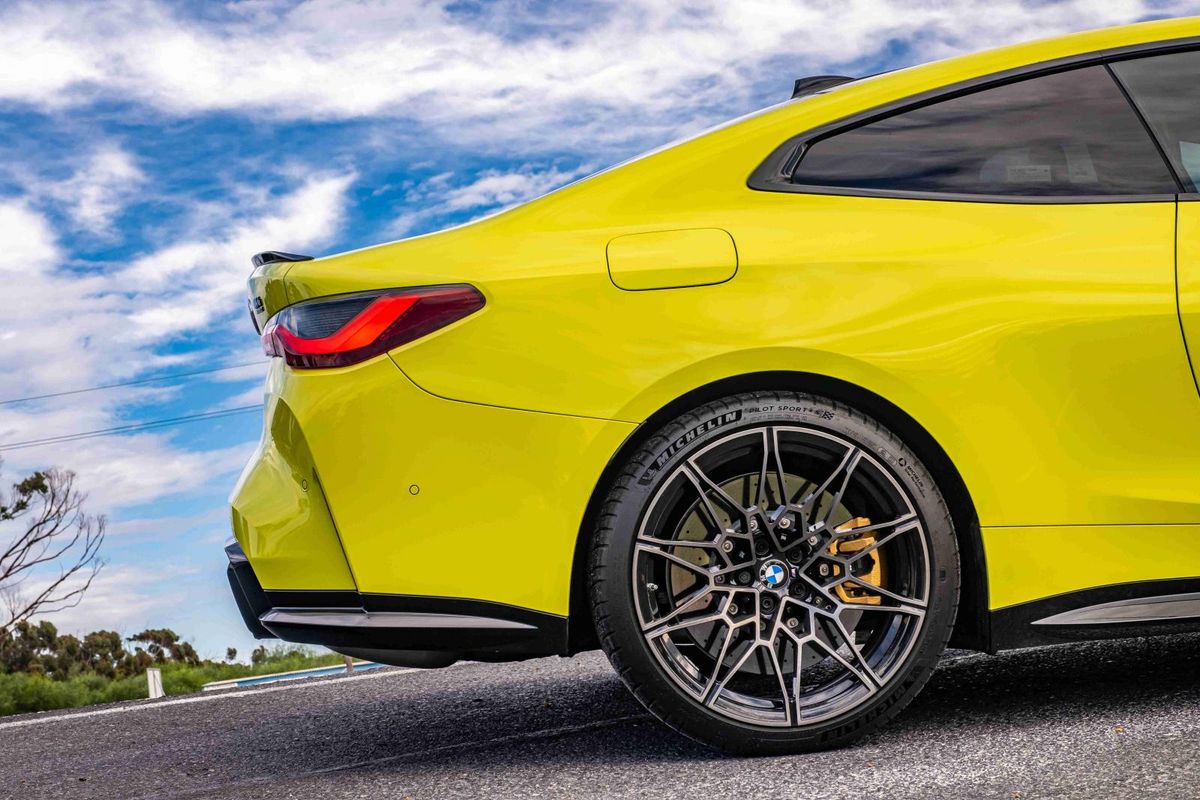
M Carbon Ceramic brakes are optional and you can choose between either Normal or Sport braking performance via the Setup menu.
Sure, the Adaptive M Suspension is firmly sprung – as it ought to be on a car of this calibre, but it wasn’t overly rigid or crashy over poor surfaces. I later discovered that the M4 Competition’s ride quality is surprisingly forgiving, even with its sportier settings engaged. Apart from the stellar performance that this car offers, its sheer adaptability makes it notably more suited to everyday use than its predecessor.
As my driving confidence increased, I started playing with the M4 Competition’s drive modes and settings and, on occasion, opened the 6-cylinder’s taps and unleashed the full might of this brilliant engine.
There’s no fluffing of feathers here. Full-bore acceleration in the M4 Competition is a thrilling and engaging experience and you better have your wits about you when you fully depress the accelerator pedal, because even when the stability systems are not switched off, the coupe’s rear-end has a propensity to shimmy and briefly fishtail as the rear wheels claw the tar for traction. Oh, and don’t be surprised if this behaviour continues as you flick the paddles to select 2nd and even 3rd gears… Before you know it, you will be rocketing towards the horizon at serious speeds. The M4 Competition means business!
The new 8-speed automatic transmission in the new M4 Competition is more refined than the outgoing dual-clutch unit.
BMW claims a 0-to-100 kph sprint time of 3.9 sec, but the M4 Competition feels more like a 3.5-second car. It’s fast, very, very fast… It’s worth mentioning that this test unit was also equipped with BMW’s optional M Carbon Ceramic brakes; they provide sharp and responsive stopping power, but they are a R141 000 option. Then again, if you’re willing to spend R2-million on a performance car…
Some BMW fans might be upset that the highly praised M-DCT dual-clutch transmission from the previous M4 has been substituted by a conventional 8-speed torque-convertor automatic (made by ZF), but they really shouldn’t be… This new transmission is, in our opinion, noticeably smoother-shifting than the M-DCT and the ‘shifts still feel appreciably quick! It’s better suited to the new, more grown-up, M4.
Fuel efficiency should not be of tremendous importance to the M4 Competition’s target market, but for the record, while BMW claims a figure of 10.2 L/100 km, we never saw figures under 13 L/100 km.
How good is the new M4’s handling?
The M4 Competition delivers sharp and accurate dynamic handling ability.
The new M4 Competition is 122-mm longer, 17-mm wider and 5-mm taller than the previous-generation M4; its wheelbase has also grown (by some 45 mm). It’s also important to note that the new M4 Competition weighs roughly 185 kg more than before (it has a kerb weight of around 1 800 kg, so it’s not light).
Even if the new M4 Competition is heavier in its current iteration, that extra heft that it needs to lug around is not necessarily noticeable when the coupe’s cornering at heady velocities… Perhaps the more powerful engine and increased track widths (which aid stability/road holding) do a fair job of nullifying the weight gain or, at the very least, the perception thereof. In fact, the new M4 Competition feels quite nimble and agile on its rubber – plus, because the rear (20-inch) tyres are an inch larger than the front (19-inch) ones, the Bimmer’s nose is said to bite into corners with significantly more urgency. In fact, there’s so much more control and precision at the driver’s disposal that more power can be laid down so much earlier when exiting corners. This really is an impressive high-performance machine!
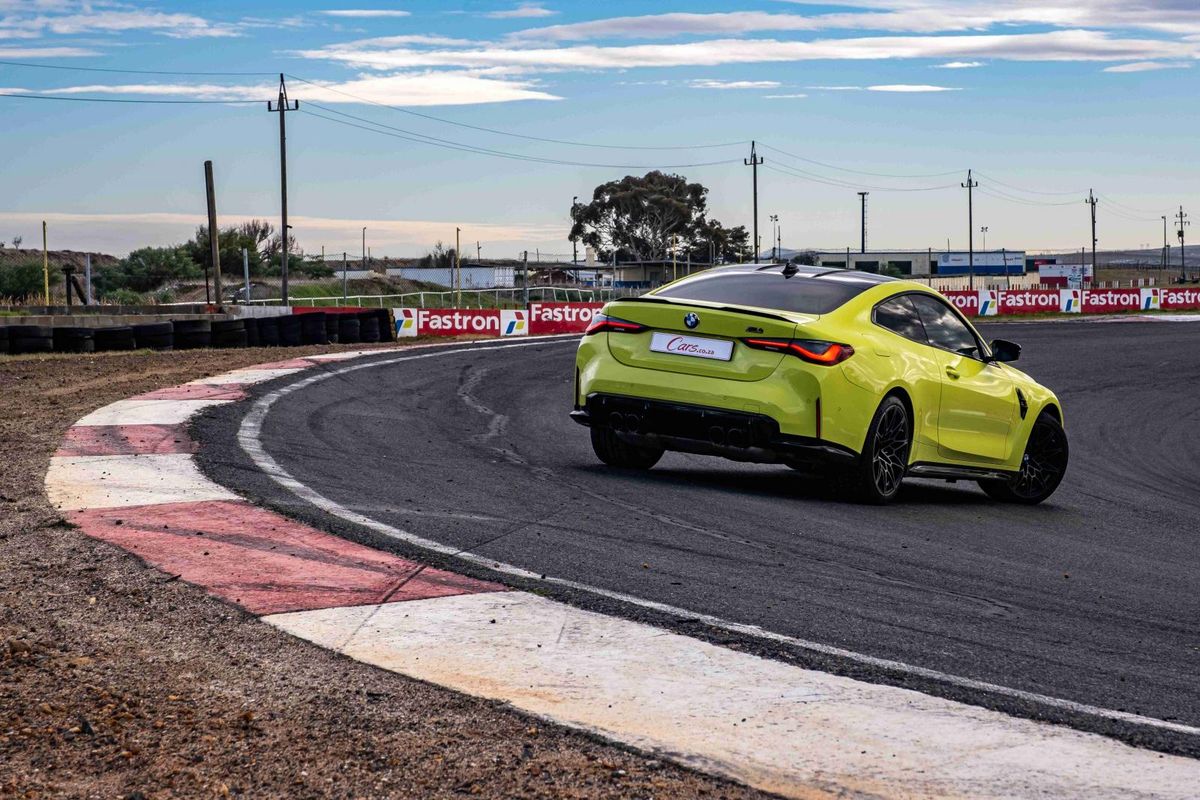
The M4 Competition’s M Servotronic steering is impressively responsive to inputs (and even delivers a notable measure of feedback to the driver, which marks an improvement over the previous model). The driver can set the steering to favour Comfort or Sport, depending on their preference. Even though I didn’t get a chance to explore the full breadth of the newcomer’s dynamic handling ability (I drove it on public roads only), our in-house race-ace, Ashley Oldfield, was much braver behind the Bimmer’s tiller when he drove it on an undisclosed circuit in the Winelands…
He had the following to say about the new M4 Competition’s dynamic handling ability: “The best thing you can do before engaging M Mode is to check the tyre temperatures; at anything below 40C there just isn’t enough heat to facilitate sufficient traction for performance driving. The car’s a slippery snake when you power out of corners, but the long-wheelbase makes the rear-end quite ‘catchable’ when it steps out of line. You still need a good ‘bum gyro’ to feel the car underneath you, but despite the BMW being quite quick to break traction – it’s not snappy, which inspires the confidence to make bigger power applications on corner exits, until you finally scare yourself too much and rein it in. There’s always DSC Sport for those who want added protection before attempting to switch traction control off entirely.”
Much of the M4 Competition’s improved predictability near or at the limit can be attributed to the conventional automatic transmission, which transitions between its gears in a much smoother motion. While in its sportiest setting, the previous M4’s dual-clutch ‘box actually felt jarringly brutal when you’d actuate ‘shifts; it kind of felt like someone inside the ‘box was using a bludgeon to swop cogs.
Should you wait for the xDrive version or go ahead and try your hand at the rear-wheel-driven model currently on sale? Have a serious conversation with the person in the mirror first and check your ego at the door when you do. The aft-propelled M4 Competition is the default choice for the so-called purist or experienced driver, which many believe they are until they end up starring in a Youtube crash video.
Is the BMW M4 Competition practical?
Rear head- and legroom will be on the tight side for taller passengers.
By virtue of having 2 fewer doors than its M3 Competition, the M4 Competition has an obvious disadvantage to its sedan sibling in terms of practicality and its sveltely sloping roofline doesn’t help rear headroom either. However, we still found the newcomer to be surprisingly capable of transporting not only more than a pair of occupants, but a variety of goods too.
Due to its longer wheelbase (compared with the previous-generation 4 Series/M4), the quality of rear accommodation has improved marginally in the M4 Competition. By pulling a lever on one of the front seats, passengers can access the rear bench; those of average size will be able to sit relatively comfortably, but taller passengers must expect both head- and legroom to be at a premium.
In terms of load-carrying ability, BMW claims a 440-litre capacity for the M4 Competition’s boot and, with the rear seats folded down, we were able to load no fewer than two 6-foot surfboards in through the rear cabin (along with additional luggage). We were also surprised to discover that you can fit a bicycle (with one wheel removed) into the BMW’s hold, which was rather impressive!
How much does the BMW M4 Cost in South Africa?
The BMW M4 Competition Coupe is priced from R2 238 002, before options. Pricing includes a 2-year/unlimited km warranty and a 5-year/100 000 km maintenance plan.
The M4 Competition is a marked improvement over its predecessor…
The M4 Competition positively exudes kerb appeal. Everywhere we drove in this car, people would stop, stare and record images and videos on their smartphones. In effect, that gaping grille, for better or for worse, has put all eyes on the M3/M4 Competition. Regardless of the haters, that’s good marketing and something that’s more than likely to result in increased interest and, ultimately, more sales.
Looks aside, the dynamic ability and sheer performance of the M4 Competition is nothing short of phenomenal – it has, in our opinion, raised the bar in the performance-coupe segment (the Alfa Romeo Giulia Quadrifoglio will have to take on the M3 for ultimate honours). For driving purists, this rear-wheel-drive M4 M Competition will be a near-irresistible proposition, even at its near R2-million asking price.
Yes, it’s eye-wateringly expensive, but if you consider the Mercedes-AMG C63 S Coupe, which is similarly priced, is due to be replaced soon (and its successor will have a 2.0-litre turbocharged hybrid power unit instead of a twin-turbo 4.0-litre V8), this throaty 6-cylinder Bimmer starts to look an incredibly attractive proposition for performance-car aficionados. Yes, you can of course opt for the facelifted Audi RS5 Coupe for much less money (priced from R1 394 500), or even consider the Porsche 911 Carrera S Coupe for a touch over R2 million. The latter might be an especially tempting alternative…
Tough choices, but if you can afford it and are prepared to live with that grille, we can’t think of a good reason not to put the M4 Competition right at the top of your performance-coupe shortlist.
Frequently Asked Questions
What are the different models of the 2025 BMW M4 available in South Africa?
The 2025 BMW M4 range in South Africa includes the M4 Competition Coupe, the M4 Competition Convertible, and a limited edition M4 CS model.
What are the engine specifications of the new BMW M4?
The standard M4 Competition models are powered by a 3.0-liter turbocharged 6-cylinder petrol engine that produces 390 kW and 650 Nm of torque. The M4 CS version has an increased output of 405 kW.
What are the 0-100 kph acceleration times for the new M4?
The M4 Competition Coupe with all-wheel drive accelerates from 0 to 100 kph in 3.5 seconds. The convertible version does it in 3.7 seconds, and the M4 CS achieves it in 3.4 seconds.
What is the price of the 2025 BMW M4 in South Africa?
As of May 2025, the M4 Competition Coupe AWD is priced at R2,238,002, and the M4 Competition Convertible AWD is priced at R2,338,842.
What are the warranty and service plan details for the M4?
The BMW M4 comes standard with a 5-year/100,000 km service plan and a 2-year/unlimited km warranty.
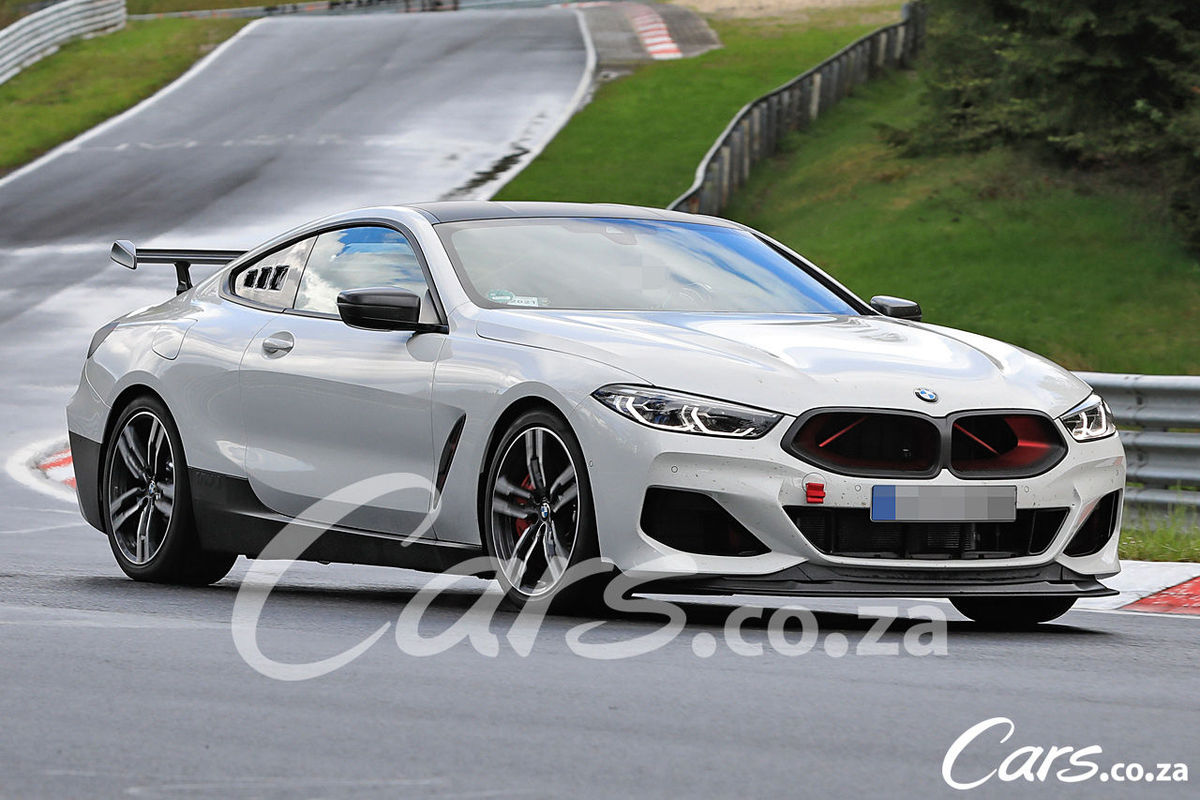
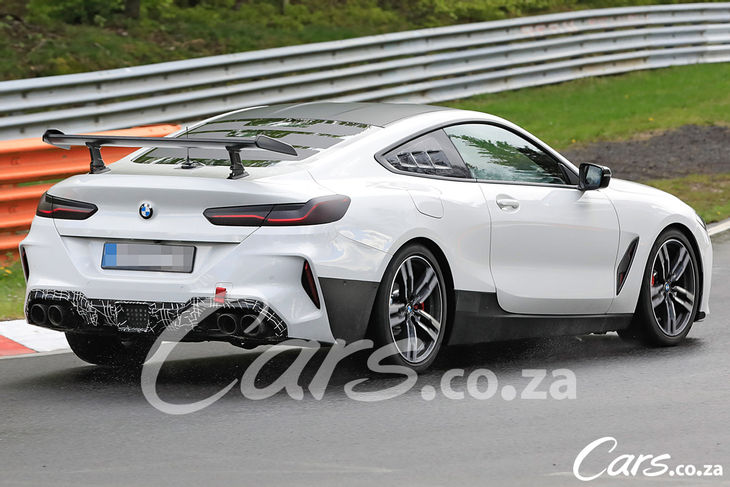
This strange-looking BMW M8 has caused a stir among the petrolhead community. What is BMW up to?
Picture credit: S. Baldauf/SB-Medien. We have paid for these photos and at the photographer's request, have watermarked them.
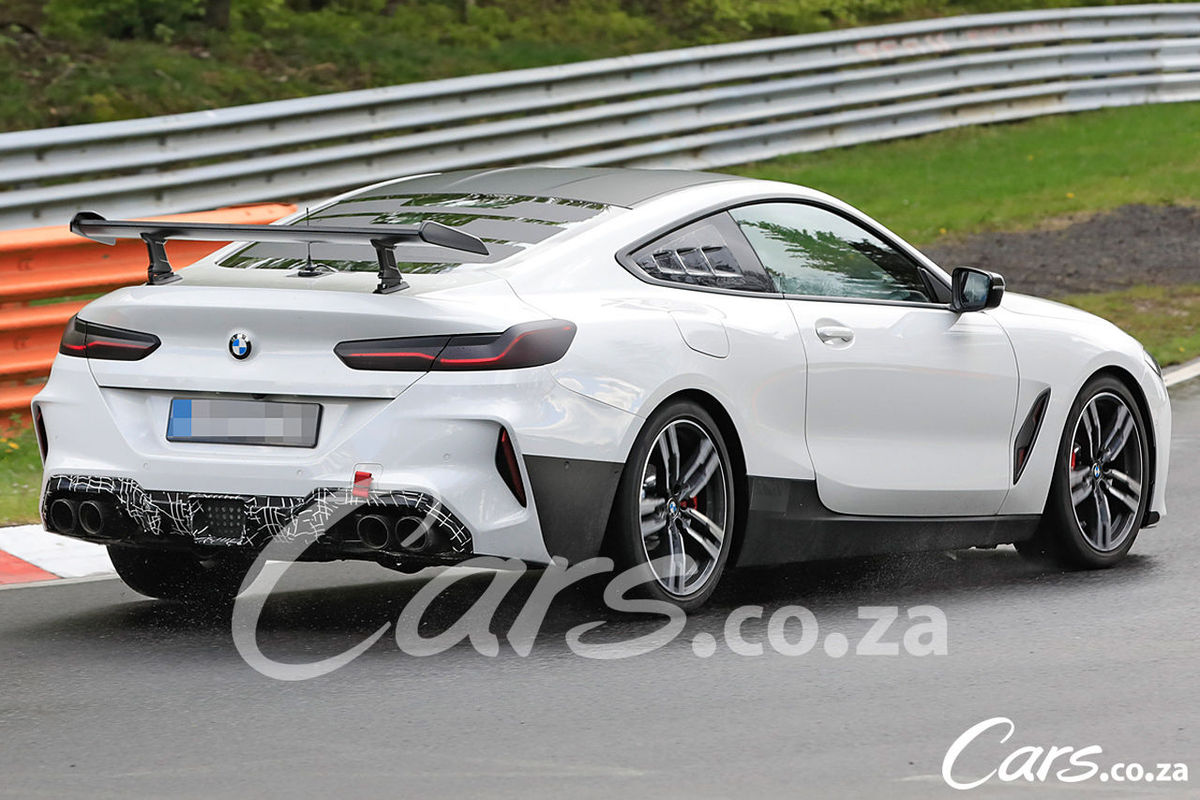
These photographs were sent to us by our spy photographers in Europe with the subject line "BMW Mysterious 8 Series Coupe Mule". When your sources don't know what it is, then you know something is up. These spy photographers essentially live at the Nurburgring and readily identify the mules doing laps. This white car, however, has everyone stumped.
From what has been suggested so far, the engine is rumoured to have been shifted from the front to a mid-engined setup. If you look closely, where the rear passenger side window would be, there are intakes. Some have speculated this is a BMW M8 CSL – essentially a stripped-out road-legal racer that will take the M8 to an even higher level of performance. The current BMW M8 Competition pumps out 460 kW and 750 Nm from a twin-turbocharged 4.4-litre V8, and its said to sprint to 100 kph in just 3.2 seconds.
If this is the BMW M8 CSL, then we expect a small power bump, but under the skin, there'll be extensive weight-saving and revisions to the suspension and aerodynamics. Hence the neat wing perched on the rear. The photographers also noted the performance brakes were finished in red, when BMW M brakes are usually blue.
Other rumours doing the rounds say this is a new BMW race car that is earmarked to compete in the Le Mans Endurance Racing series or even a GT3 racer. What is going on? What is BMW up to with this crazy-looking 8-Series?
SVI MAX 3 Bulletproof Land Cruiser (2021) Specs & Pricing
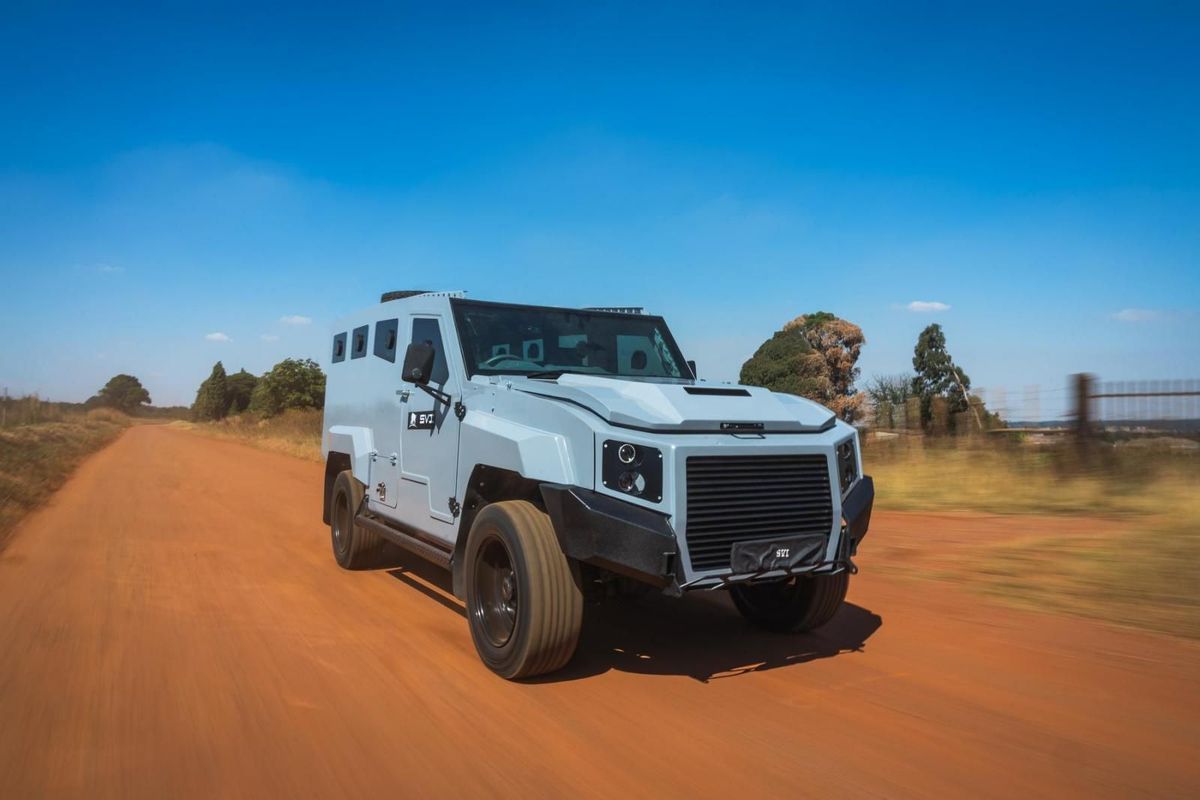
South African armouring specialists SVI has released its 2nd derivative of the MAX 3 range and here's what you need to know about the Troopy.
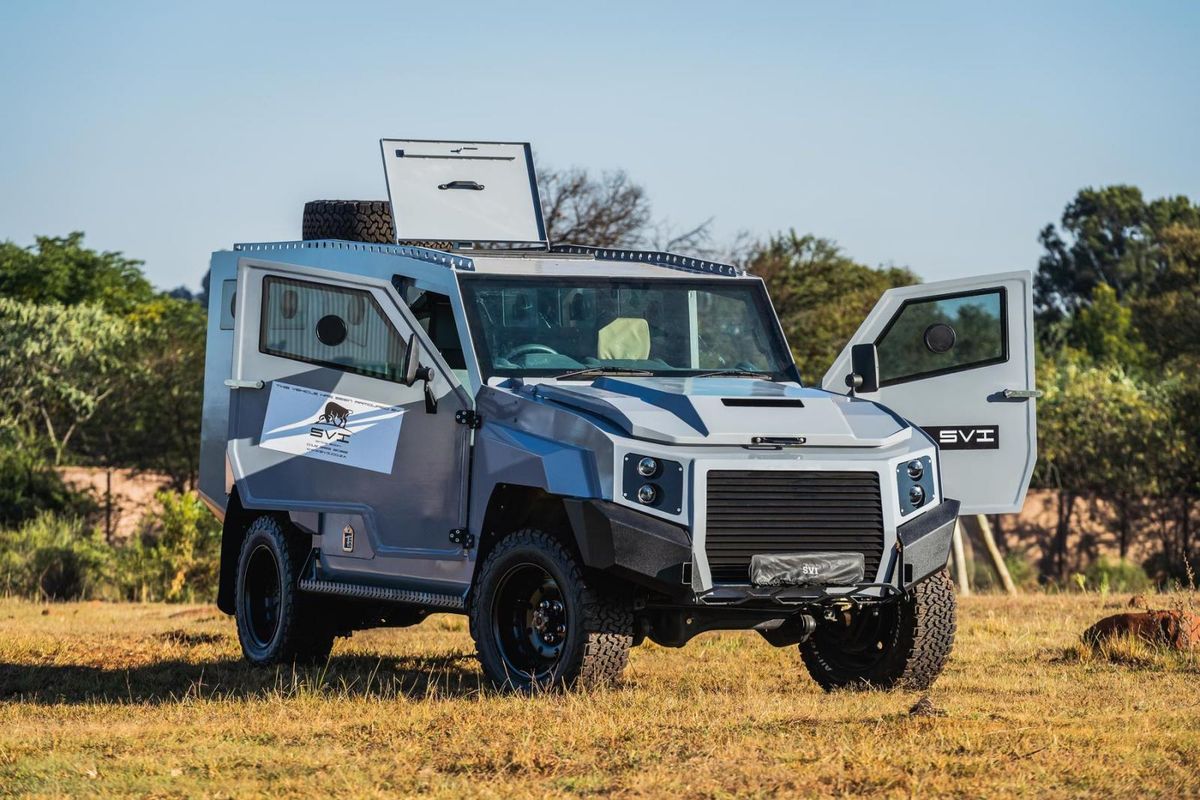
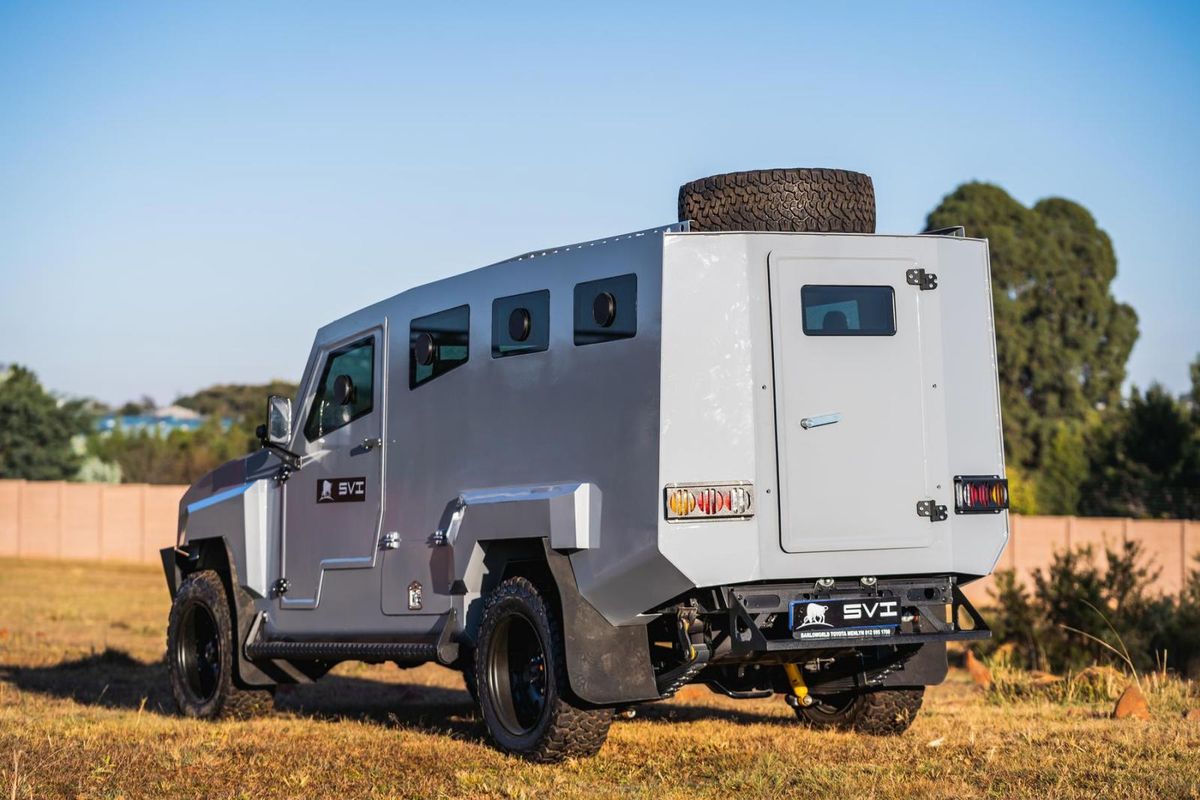
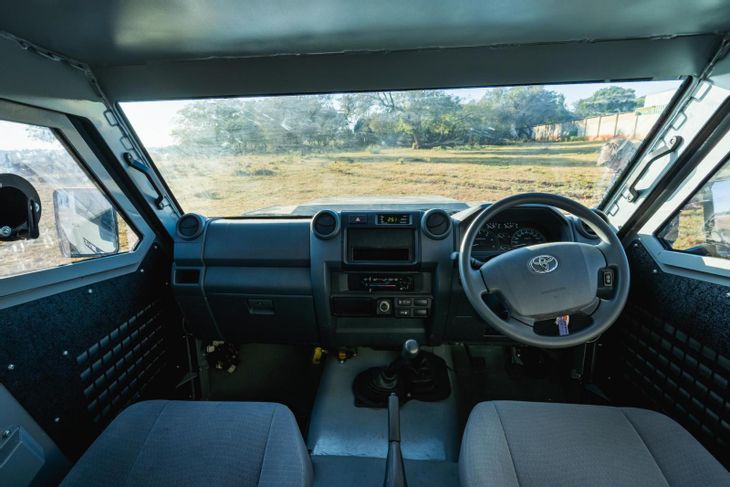
SVI is a mechanical engineering company based near Pretoria and specialises in making bulletproofing for vehicles, but it also assembles its own armoured vehicles. We've had first-hand experience driving its armoured Ford Ranger , but what you see here is a huge step up. This is the SVI MAX 3 and it's an 8-seater armoured vehicle.
Built on the Toyota Land Cruiser 79 platform and using its powertrains, the SVI MAX 3 features upgraded suspension, wheels and tyres as well as B6 armouring which is rated against assault rifles. Impressively, you can upgrade it even further to B7 grade and blast protection.
Under the bonnet is a 4.5-litre 8-cylinder turbocharged diesel engine which is good for 151 kW and 430 Nm. It has a top speed of around 140 kph. Servicing is fairly straightforward thanks to its Toyota powertrain and drivetrain and spare parts/service items are available at any Toyota dealership. SVI does recommend a service interval of 5000 km given its usage profile.
The SVI MAX 3 is also available in single-cab and double-cab derivatives. SVI claims its MAX 3 Troopy is aimed at the mining, security, anti-poaching and convoy protection industries.
How much does the SVI MAX 3 cost in South Africa?
Depending on the configuration, the SVI MAX 3 price starts from R1.8 million excluding VAT and the price includes an SVI warranty of 1-year/50 000 km.
Hyundai Palisade (2021) International Launch Review
When Hyundai releases the Palisade – its boldly styled 7-/8-seater flagship – in South Africa during the 2nd half of 2021, the Korean brand will take on luxury marques’ Premium SUVs with a product that not only looks the part, but offers superior practicality as a large family vehicle. We recently drove it in Sydney.
There might be a long-haul flight and several time zones between Australia and South Africa, but the countries have quite a bit in common. Here are the most obvious things: a predilection for socialising around a fire with a tinned beverage in hand (in anticipation of charring meat over coals), an obsession with watching professional athletes (that play for teams named after wild animals) run after leather balls, using colourful language laced with novel expletives, ubiquitous bureaucracy, dumbfounding politics, as well, of course, as an unflinching devotion to all things SUV, which starts with double-cabs.
If you want a 7- or 8-seater you have to either buy a Premium SUV or a high-spec people-mover (bus), right? Not anymore.
Unsurprisingly then, the 2 outdoorsy and generally convivial nations have similar kinds of vehicle markets, but the biggest difference (as far as off-roaders are concerned) is that Down Under, parking lots aren’t filled with Toyota Fortuners. Why? Because there’s another large off-road-inspired family vehicle that is well entrenched here: the full-sized crossover, such as the Toyota Kluger and Mazda CX-9.
Comparable vehicles, such as the Nissan Murano or Subaru Tribeca have never, um, gained traction in South Africa because they weren’t offered by premium brands (which would have made their lofty sticker prices more palatable) and, to be fair, it’s difficult to top the Fortuner’s sheer value for money proposition as an off-road-capable 7-seater.
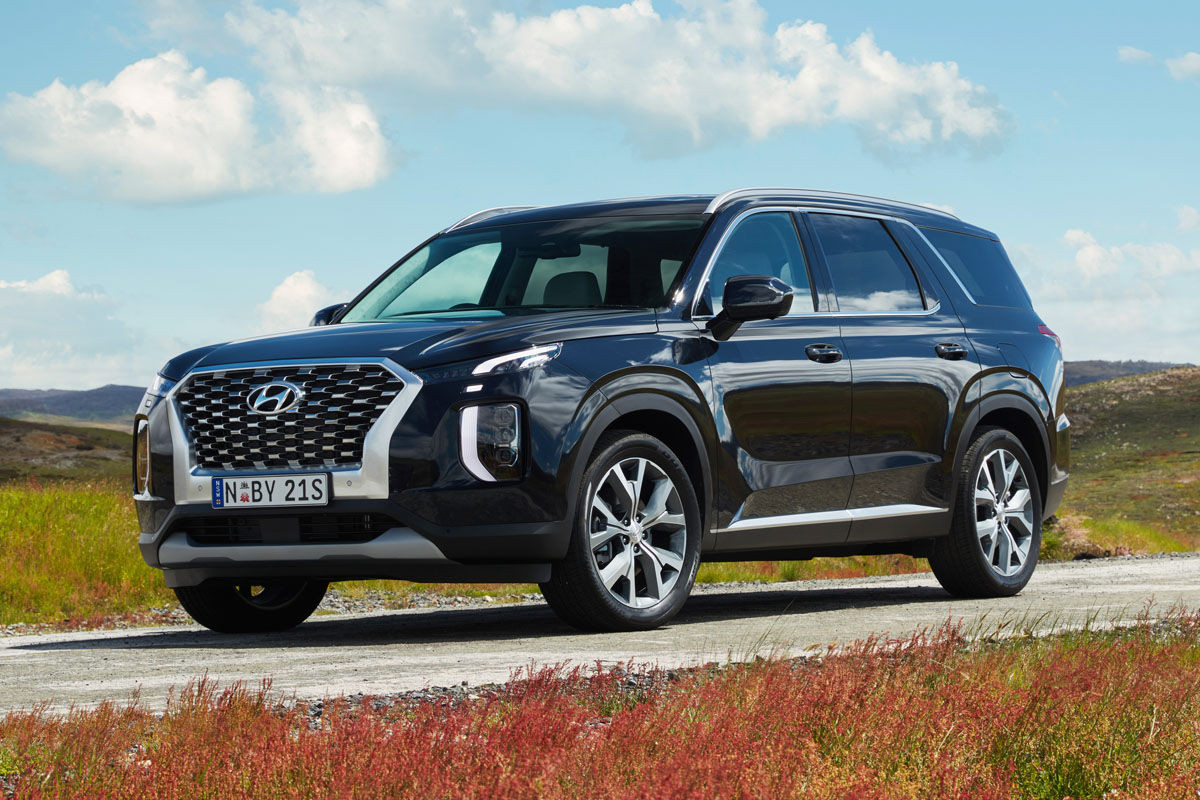
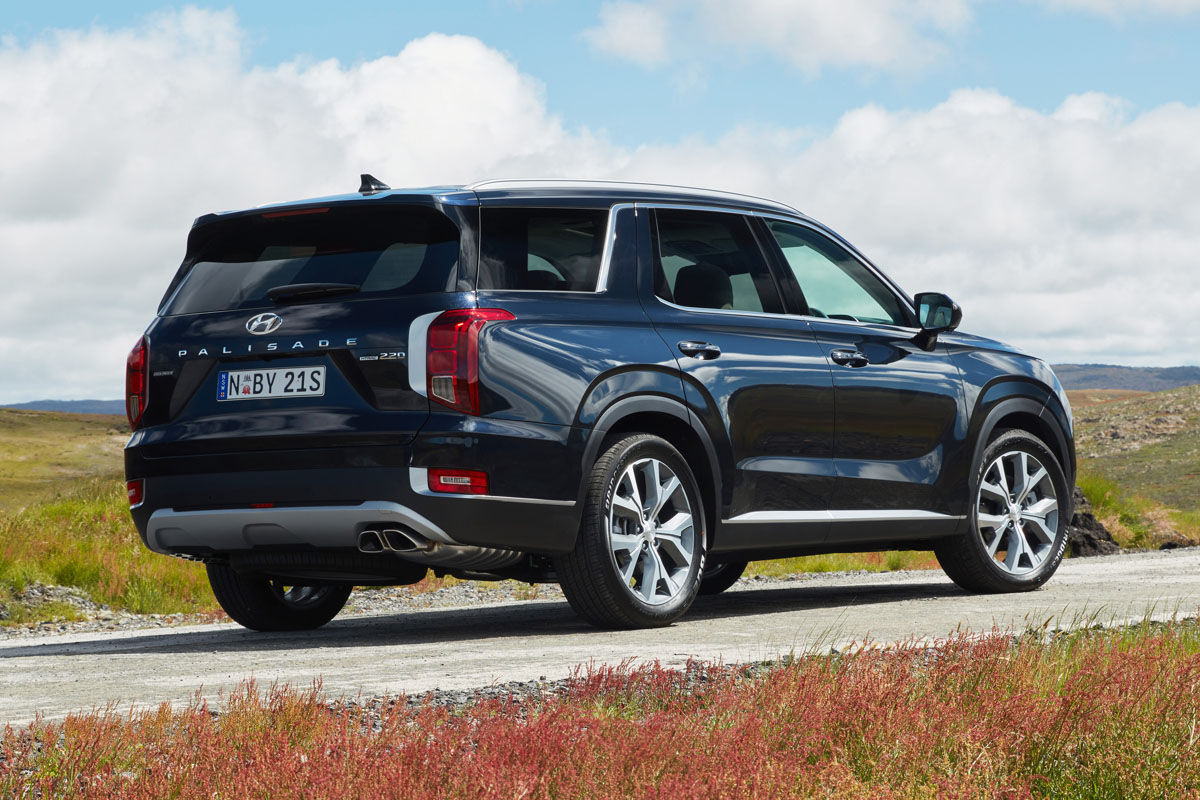
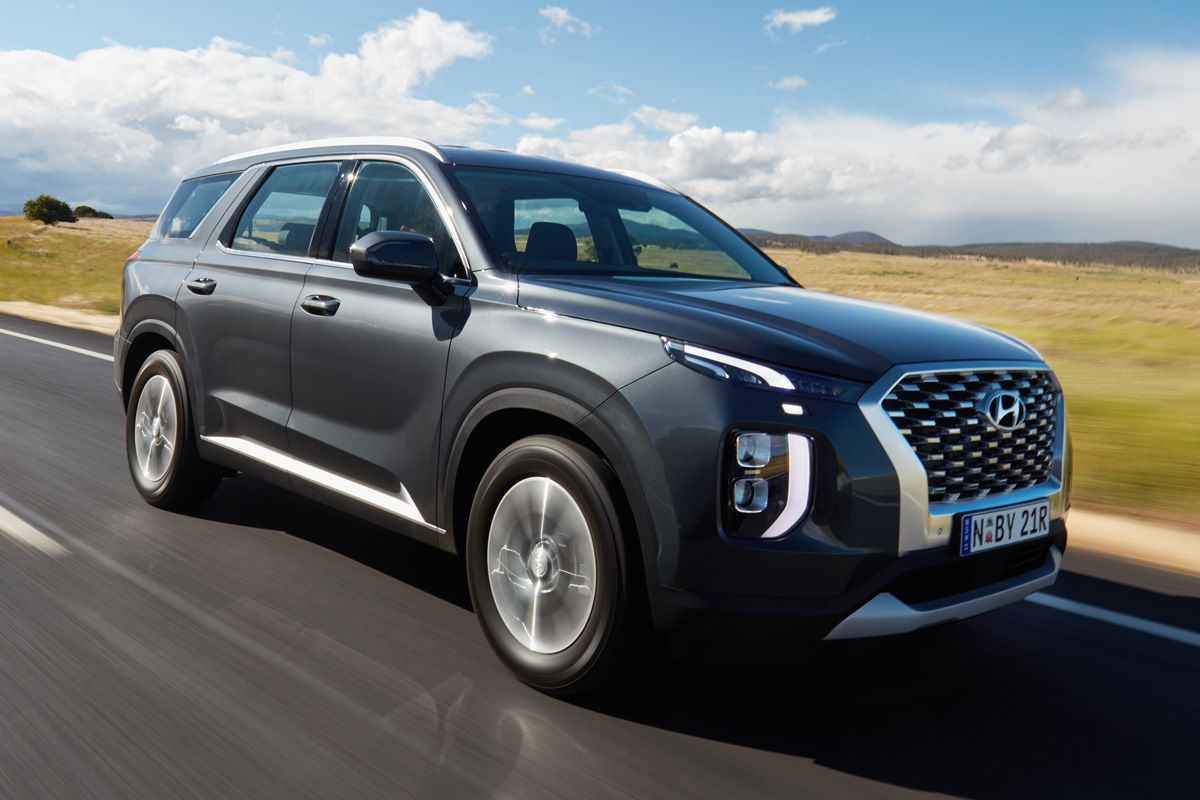
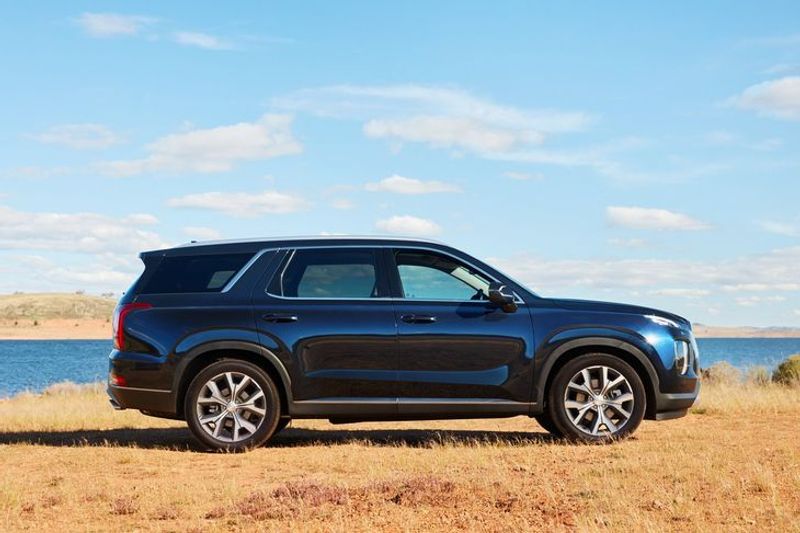
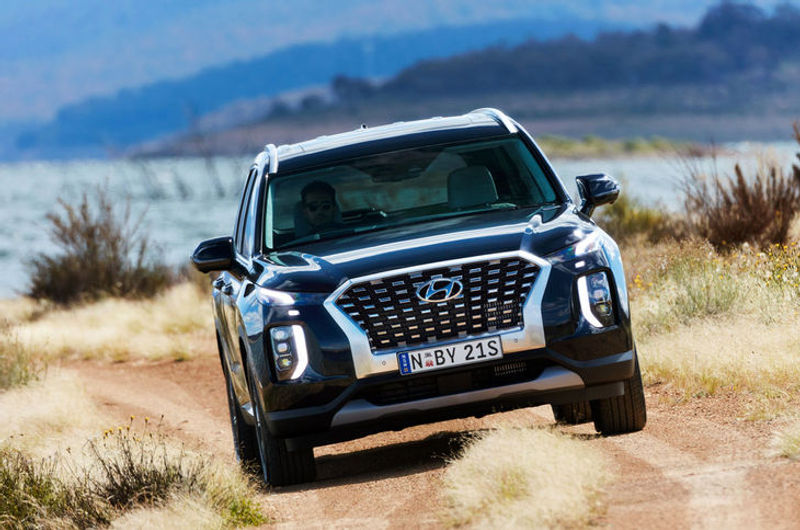
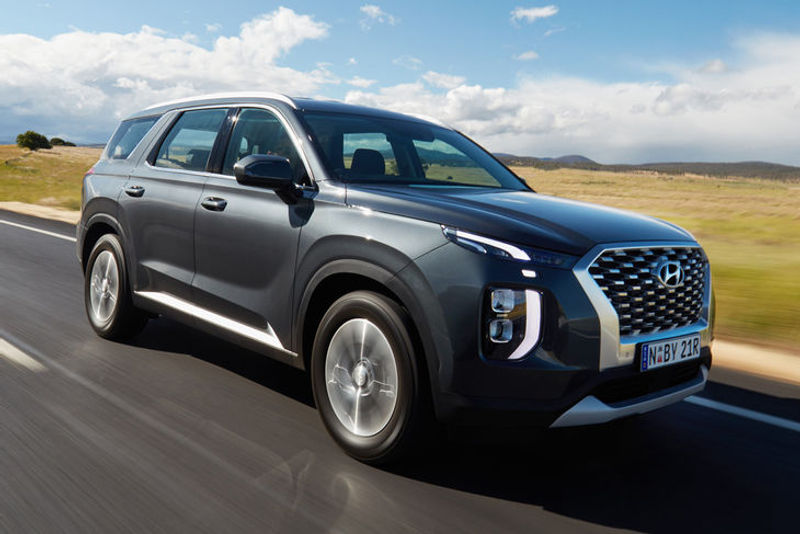
The Palisade is not as wide nor tall as it might appear in images, but it is just under 5 metres long.
What kind of vehicle is the Hyundai Palisade?
The Palisade, however, which is based on the 2020 World Car of the Year-winning Kia Telluride, is in a different league – an unashamedly imposing big rig that was originally intended primarily for North America, but is now being produced for right-hand-drive markets at Hyundai’s Ulsan plant in South Korea. No, it’s not a body-on-chassis off-roader, but a spacious, comfort-oriented and liberally specified unibody vehicle – that fact will detract virtually nothing from the newcomer’s considerable showroom appeal.
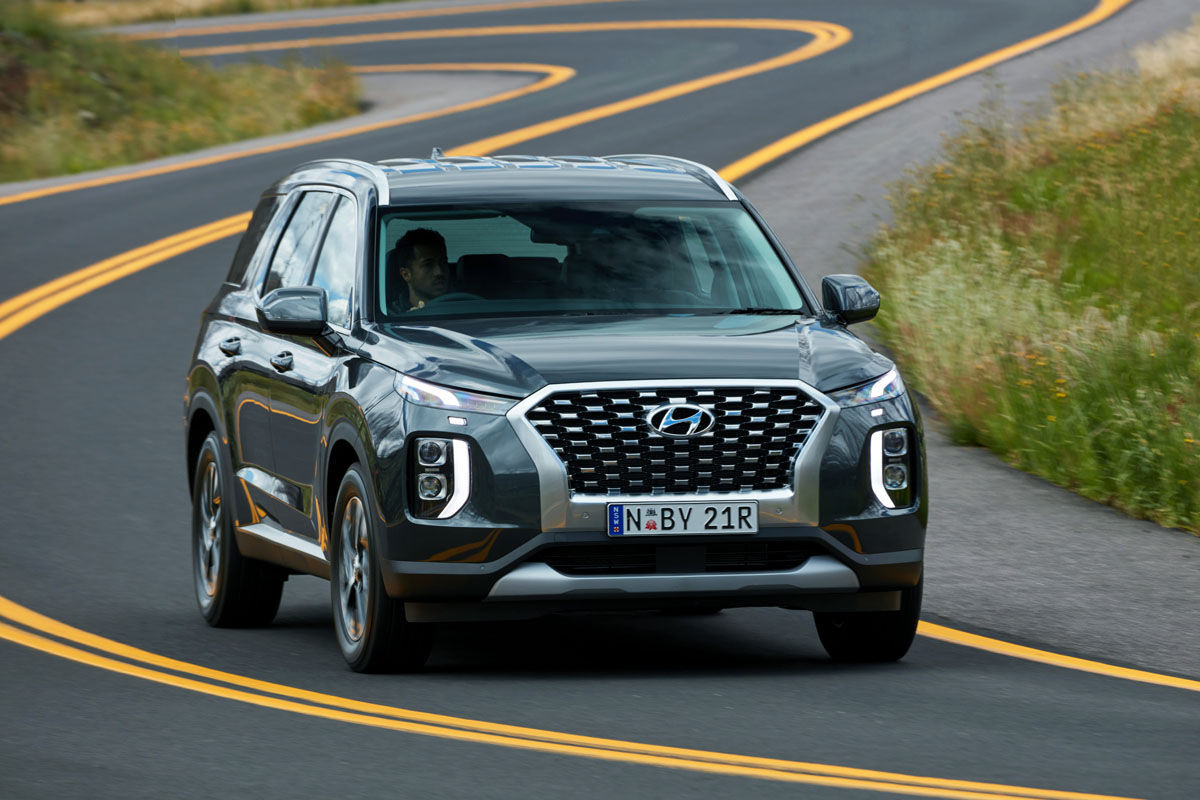
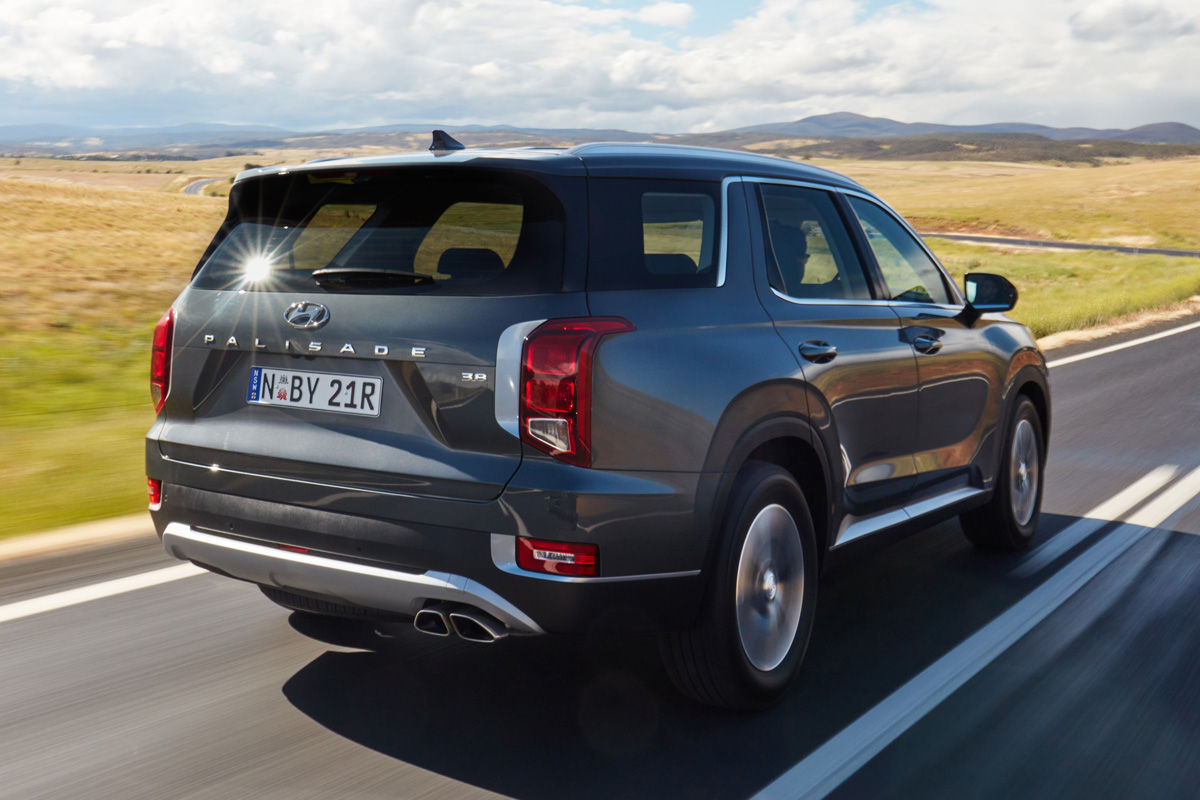
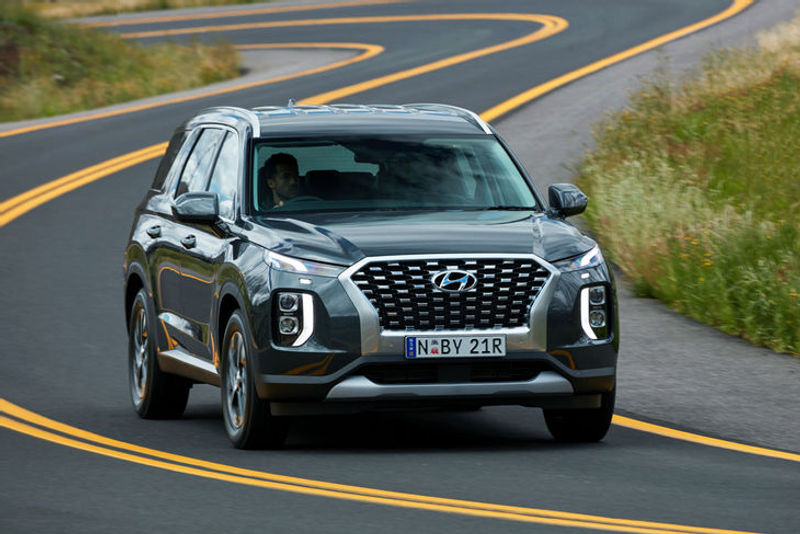
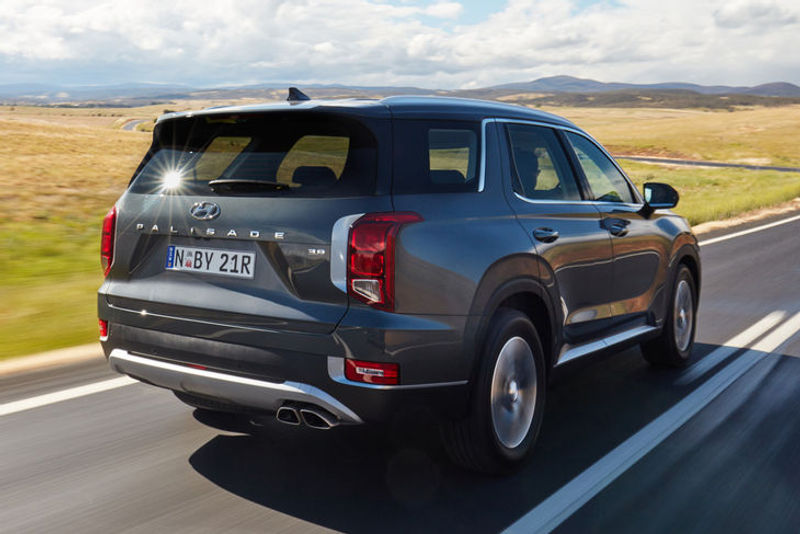
The Palisade’s bold, squared-off styling, especially from the front, where the oversized, thick-rimmed grille and long, boomerang-shaped LED lighting elements dominate, make the vehicle look bigger than it is. It is about 6 cm longer, but slightly narrower, than a BMW X5, while its roofline is about 8 cm lower than that of the flagship Fortuner.
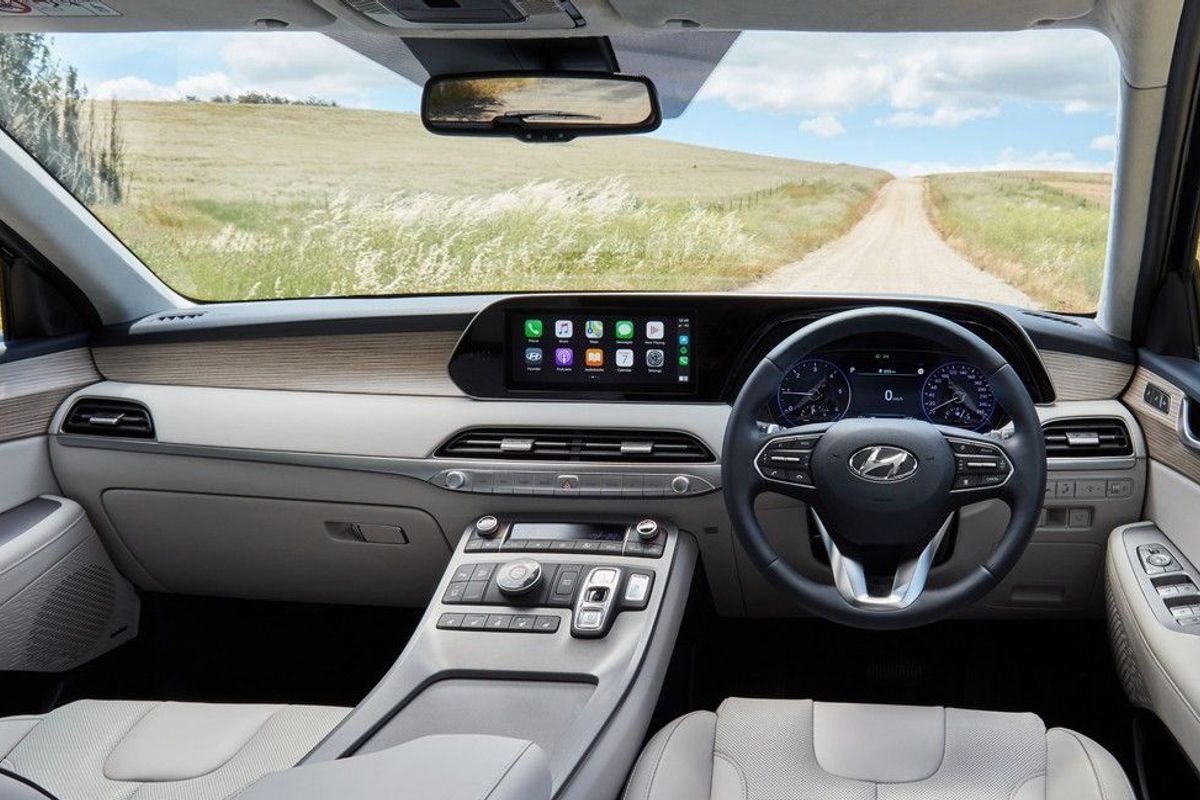
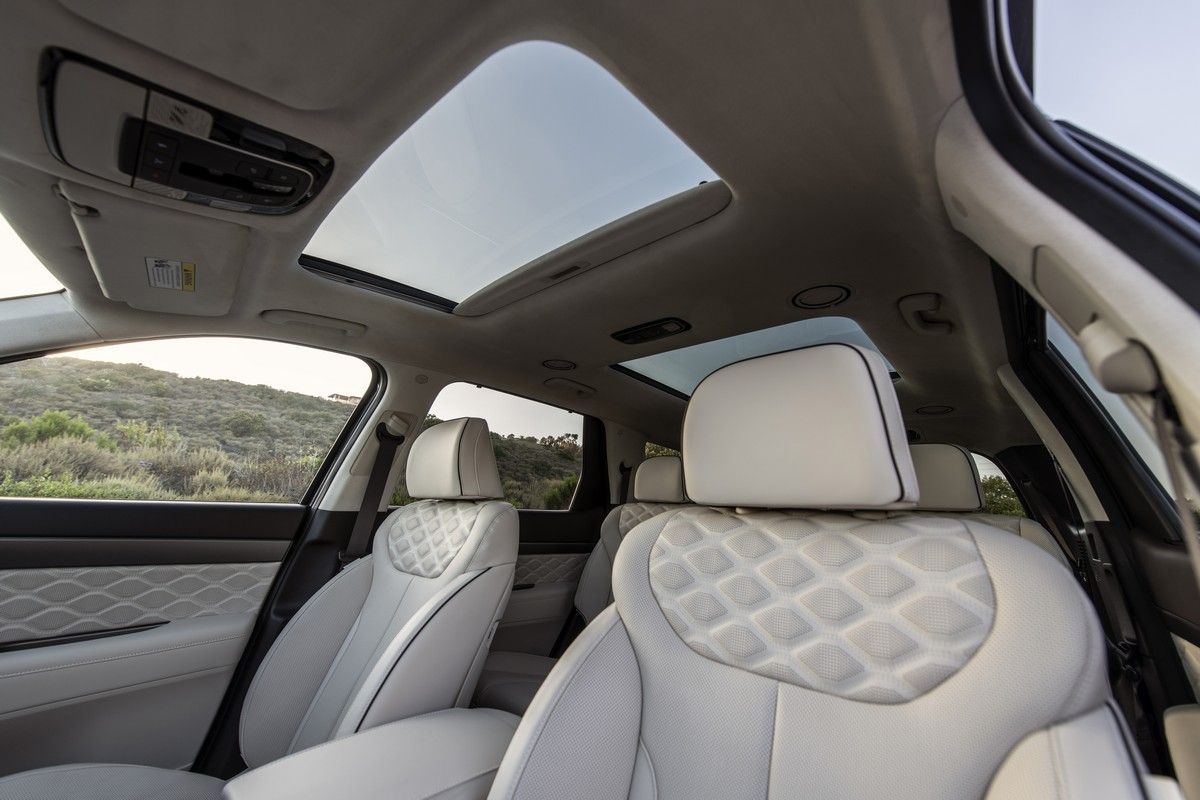
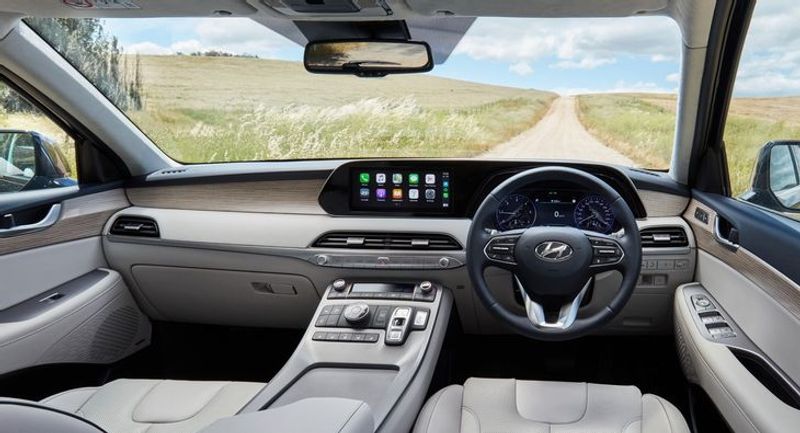
Although the Palisade's trump card is its spacious, feature-packed interior, its cockpit is tastefully and luxuriously appointed.
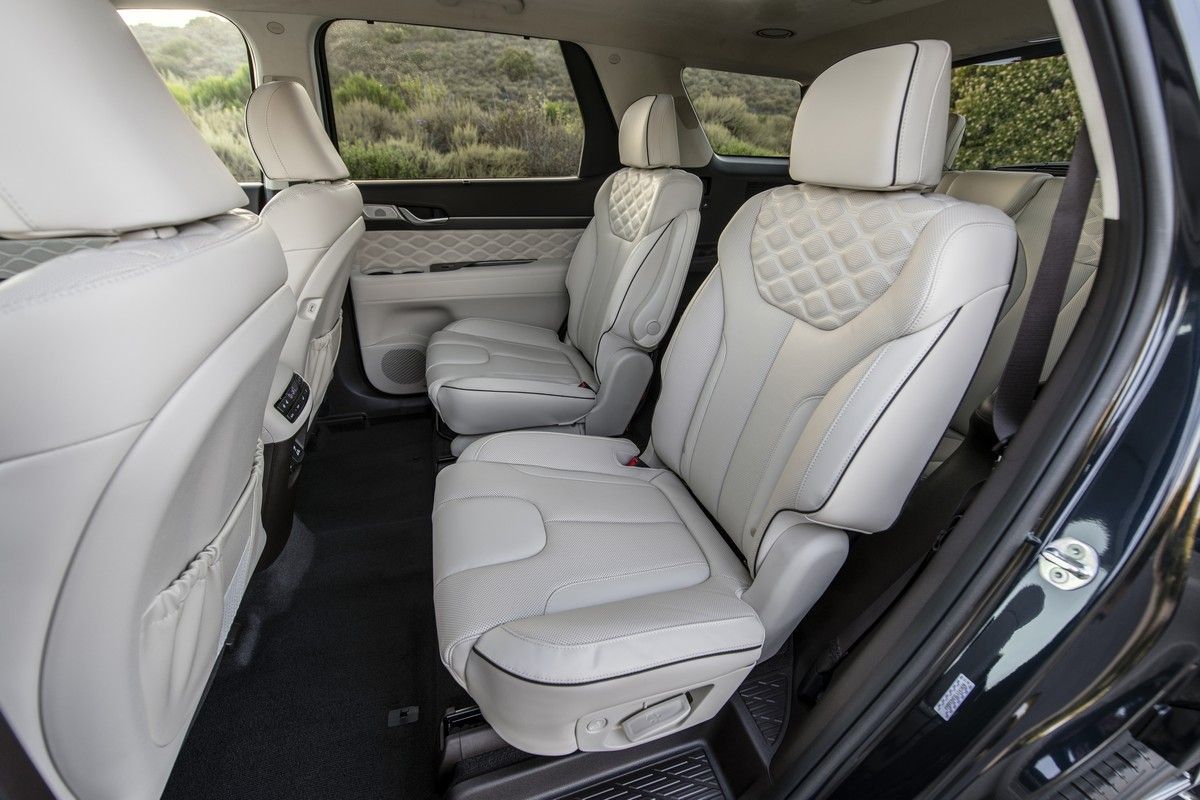
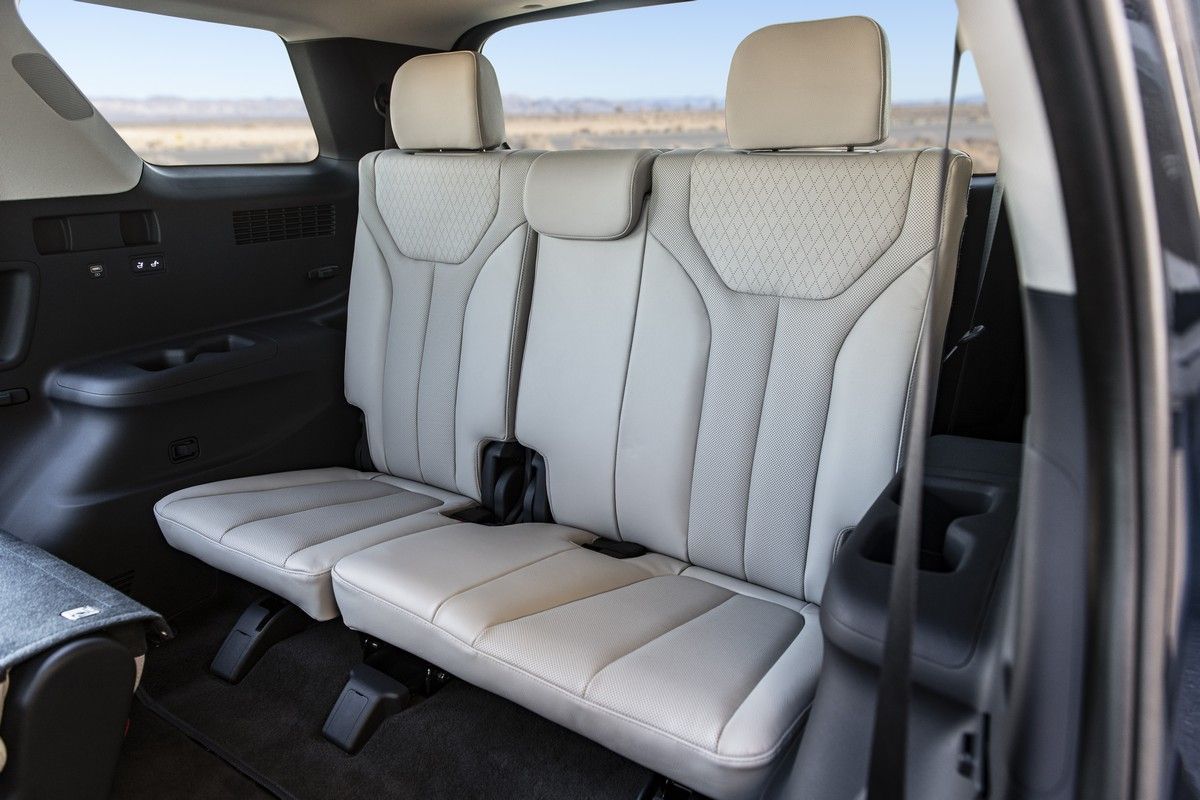
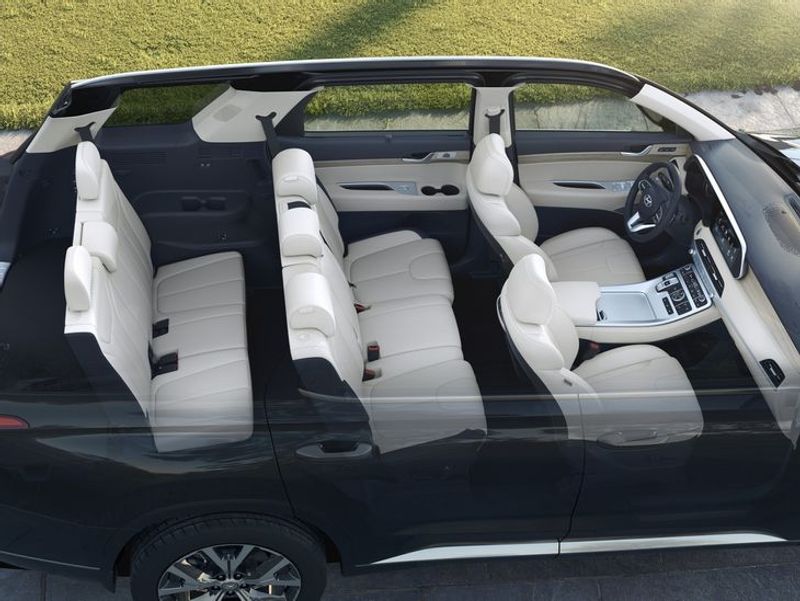
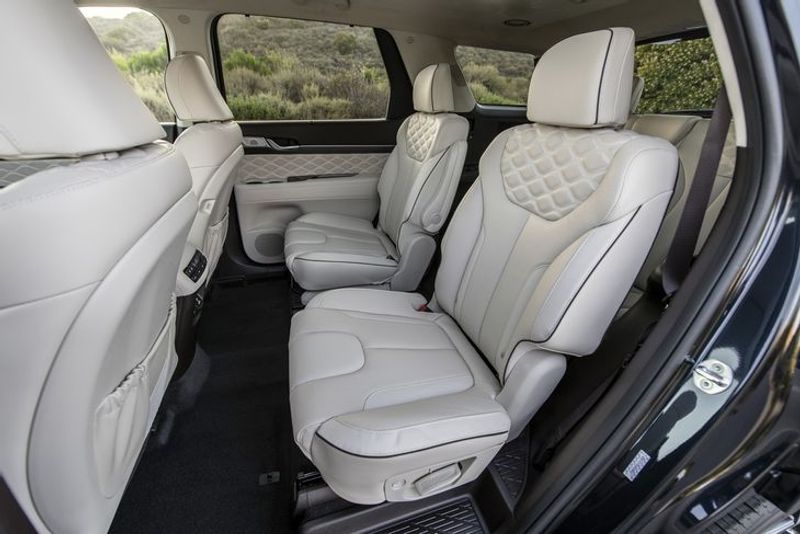
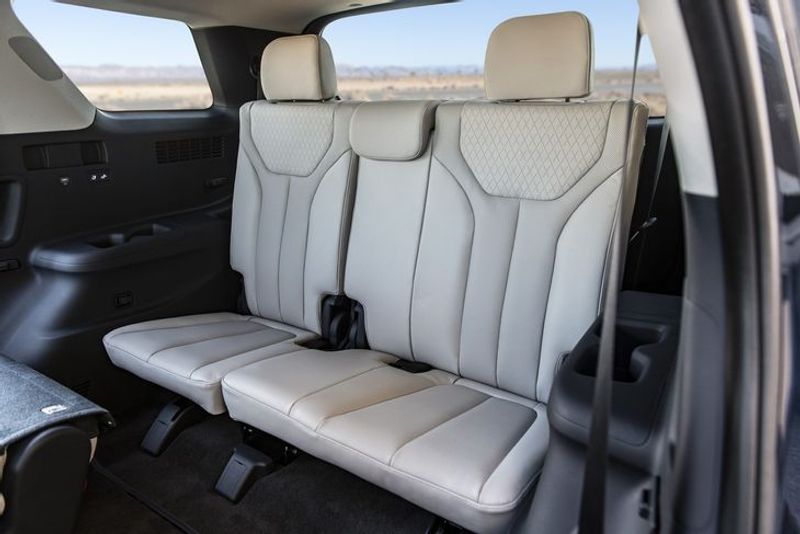
The newcomer feels cavernous inside, however. Hyundai offers the model in either 8-seater or 7-seater configuration and, in the case of the latter, the 2nd row comprises a pair of captain’s chairs that are heated and ventilated. With a claimed 1 120/1 077/798 mm of legroom for the front-, 2nd- and 3rd rows, the Palisade accommodates its occupants in consummate comfort, the last row is even tolerable for a pair of adults on short trips.
Apart from a boarding step and 220 mm of foot clearance to aid entry/egress to the 3rd row, walk-in switches are located on the base of the middle row to activate a slide- and forward-tilt function so that aft passengers can get in. Of course, on the 7-seater version, which is apparently most likely to be offered in Mzansi, the little ones need only file through between the captain’s chairs (the middle seat is removed in the 2nd row) to get to their seats.
Although it remains to be seen whether the 8-seater will be offered in SA, this cutaway shows how spacious the Palisade is.
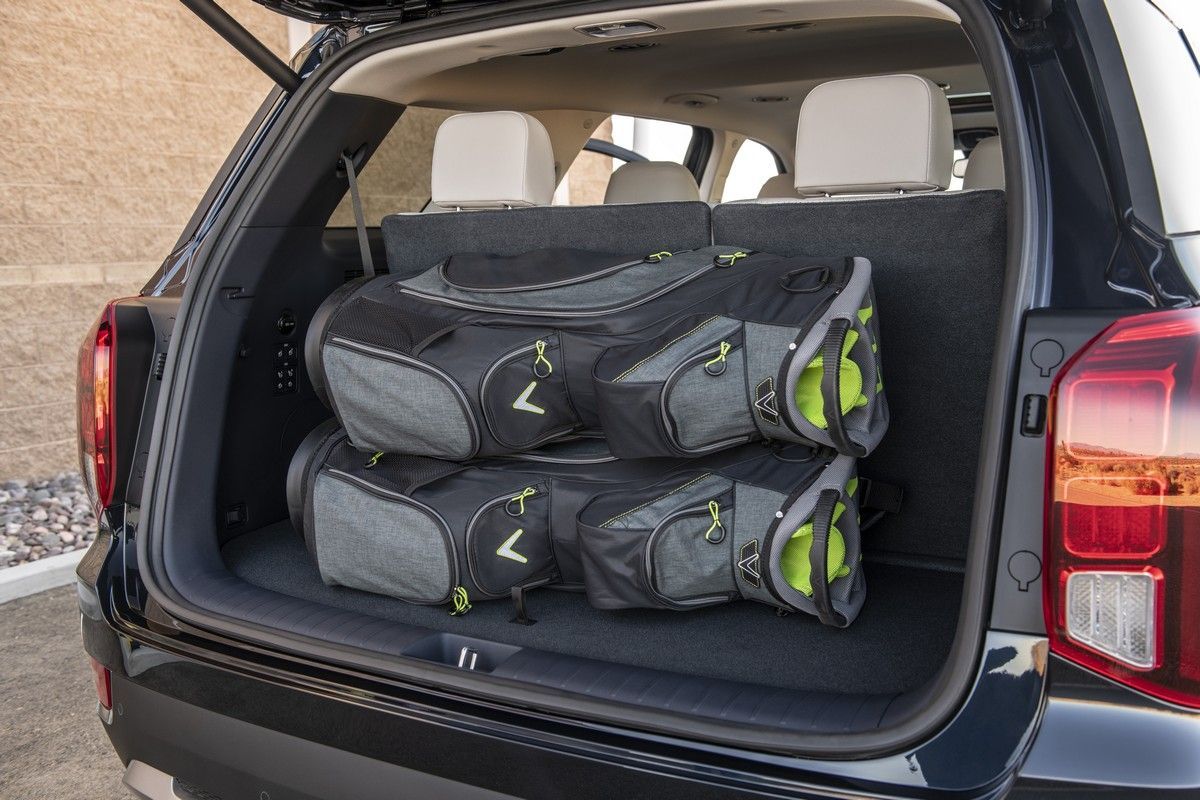
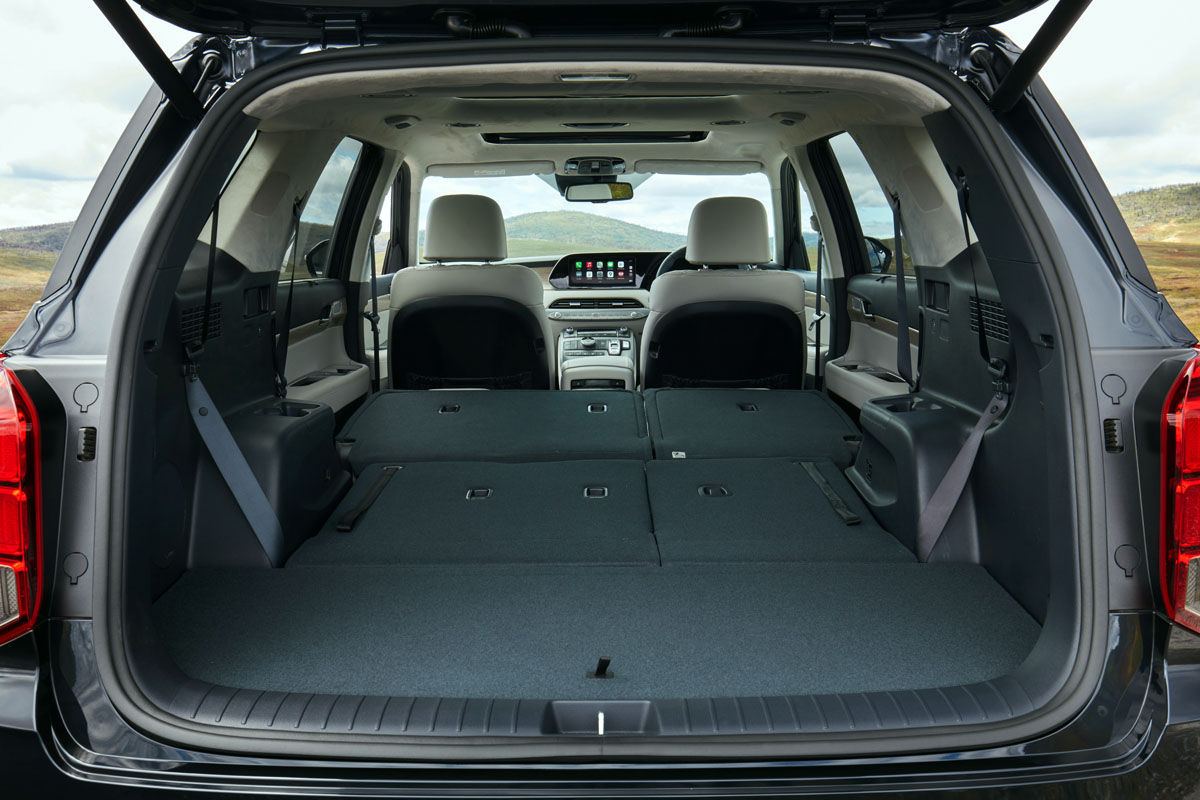
The Palisade’s luggage capacity with all 3 rows in place is only 311 litres, but when the rear seats, which can recline by 10 degrees and split 60:40, are stowed that number goes up to a generous 704 litres. The 2nd-row seatbacks can be folded flat by pressing release buttons in the load bay to create an utterly expansive loading area. What’s more, on top-spec derivatives, the tailgate is both electrically powered and remote operated.
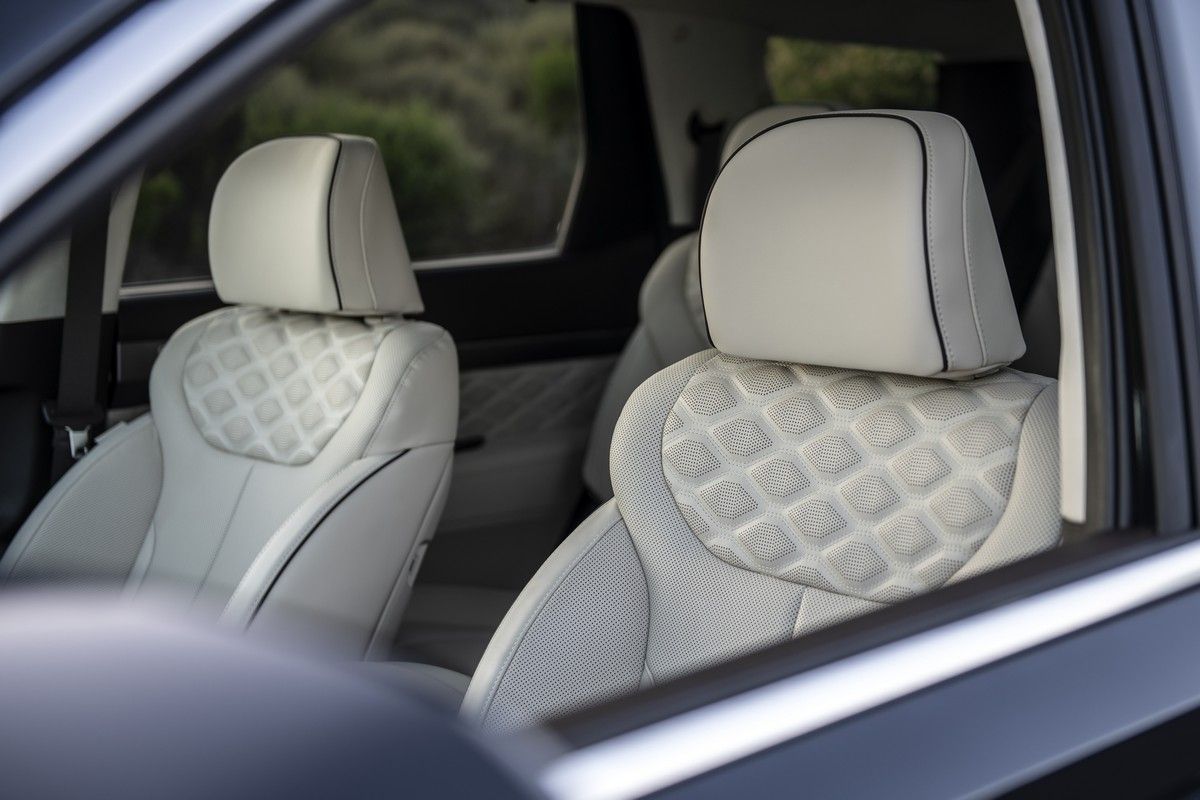
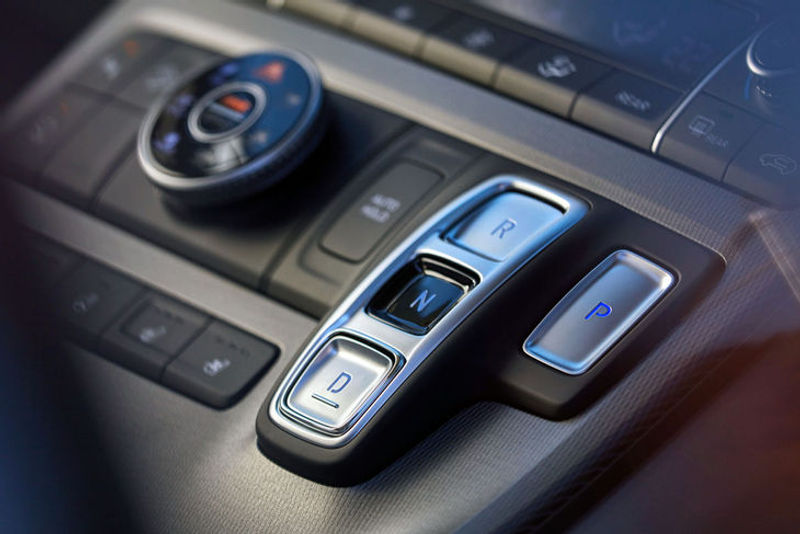
What’s most impressive about the study in practicality that is the Palisade’s interior is that Hyundai nonetheless got the premium cabin execution spot on. Swathes of plush off-white leather (okay, not perfectly practical), wood-look inserts and satin chrome trim abound, the facia features a 10.25-inch infotainment touchscreen (with Apple CarPlay and Android Auto compatibility) and the floating centre console is adorned with a climate control panel, a shift-by-wire transmission selector and a rotary drive-mode controller.
By fitting an electronic push-button transmission selector, Hyundai has freed up a lot of space in the Palisade's centre console.
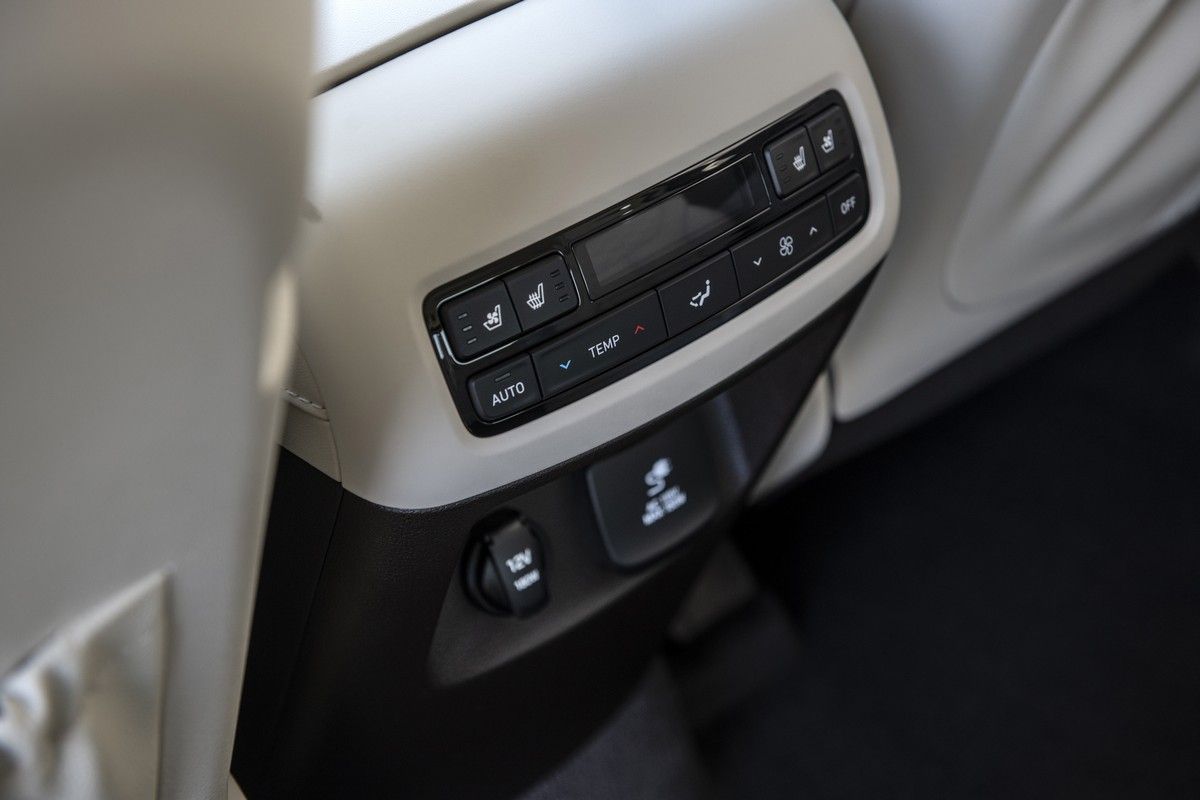
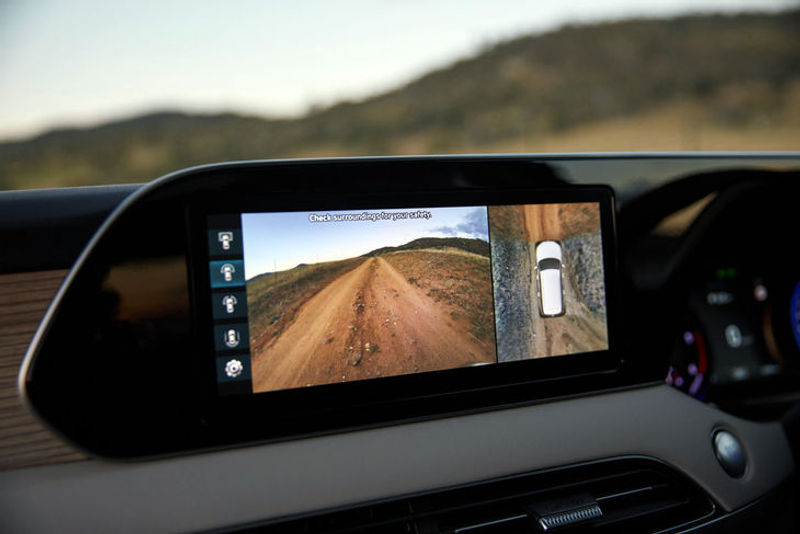
Although South African spec is yet to be finalised, luxury accoutrements can include, inter alia, electrically-adjustable front seats (12-way and with memory function for the driver) that are both heated and ventilated, a head-up display, surround-view cameras, a heated steering wheel, suede headliner, 12-speaker Infinity premium audio system, a dual-panel sunroof (with tilt function for the front panel, combined with a rear sunblind), tri-zone climate control and heated 2nd row (and cooled, in the 7-seater’s case) seats.
Loads of driver assistance tech
And, as befitting the flagship SUV-cum-people-mover in Hyundai’s line-up, the driving technologies make a notable difference to the way the newcomer feels to pilot. From the obligatory perched driving position, the Palisade is palpably easy to commandeer – considering its bulky dimensions. If you activate the Smart Cruise Control (adaptive, with stop & go) in conjunction with lane-keeping- and lane following assist, the Hyundai will vary its pace to match traffic conditions and make small steering inputs automatically.
If you're worried about scratching the 20-inch alloys, a surround-view camera system augments the reverse-view function.
When you indicate, before changing lanes (for example) the entire 7-inch supervision cluster (in the otherwise analogue) instrument binnacle displays a wide blind-spot view, although, having said that, the lane departure and blind-spot collision avoidance assist warning beeps can be somewhat vociferous in cut-and-thrust peak-hour Sydney traffic.
On-road refinement, meanwhile, is very impressive, which suggests extensive sound insulation and acoustic tuning and the ride quality is luxuriously pliant (it is, perhaps, only limited by the fitment of 20-inch wheels shod with 245/50 tyres on the top-spec version). The steering is responsive and accurate given the Palisade’s cruiser-like character, but largely bereft of feel. Lateral body movement under hard cornering is well suppressed.
If the Palisade is offered in South Africa exclusively in turbodiesel guise, it's very likely to come standard with AWD.
In Australia, the Palisade is offered with a choice of a 217 kW/355 Nm 3.8-litre V6 GDi petrol engine with front-wheel drive, or a 147 kW/440 Nm 2.2-litre 4-cylinder CRDi turbodiesel motor, both in combination with an 8-speed automatic transmission.
Fortunately for Mzansi, the eminently flexible (but commendably refined and relatively fuel-efficient) turbodiesel version is more likely to be offered in our market, which means the Palisade will also feature part-time all-wheel-drive. That means over and above Comfort, Eco, Sport and Smart drive modes, the AWD Hyundai will feature a Multi-Terrain Mode system that incorporates Snow, Sand and Mud traction control settings.
For its size and heft, the Palisade feels far from ponderous to drive; its on-road refinement is admirable.
Overall, it’s the family-friendly cabin that stands out most about this model, which is ultimately a people-mover disguised as an SUV. As standard, there are 2 roof-mounted vents for the 2nd and 3rd occupants and up to 16 cup- or bottle holders positioned around the cabin. While you can top up a smartphone by using the wireless charging pad in the centre console, there no fewer than 7 USB ports (two per row and one for multimedia input) and, should you require even greater charging capability, a quartet of 12V electric outlets from front to rear.
Family-friendly features SUVs don't usually have
A number of additional features, such as Driver Talk, Quiet Mode, Rear Occupant Alert and Safe Exit Assist help the driver communicate with, accommodate and safeguard rear occupants while they’re sitting in, or departing, the Palisade.
A Driver Talk feature uses a high-def microphone and the audio system to allow the driver to speak to 2nd- and 3rd-row occupants (through the speakers mounted in the C-pillars) without raising their voice.
The advantage of the 7-seater configuration is the fitment of a pair of captain's chairs and easier access to the 3rd row.
Quiet Mode, in turn, mutes the speakers in the rear and sets the front speakers’ volume low to allow rear occupants a quieter environment to talk to one another – or to get some sleep on long-haul journeys.
Rear Occupant Alert utilises an ultrasonic sensor in the headlining to detect movement in the cabin to prevent the unintentional leaving behind or locking-in of children or pets in Palisade.
And, to reduce the likelihood of occupants exiting Palisade when the surroundings make it unsafe to do so, Safe Exit Assist (SEA) works in conjunction with the radar sensors on either side of the rear bumper to detect vehicles approaching from the rear.
The 3rd is not an afterthought in the Palisade, it offers fair legroom, USB outlets as well as a quartet of bottle holders.
If a door is opened while an approaching vehicle is detected, the SEA system will issue an audible alert and display a message in the instrument cluster to warn the exiting occupant(s) to “watch for traffic”.
Apart from dual front and side airbags, curtain airbags extend across all three rows. Eight-seat derivatives feature 5 top-tether child-seat anchors (4 tether points in 7-seaters), as well as a pair of ISOfix mounting points in the 2nd row, with an additional mounting point in the 3rd row. What remains on the Palisade's list of active and passive safety features is comprehensive.
Summary
So, could the Palisade succeed in the sunny Republic, where its smaller Santa Fe sibling has struggled? Hyundai SA does not expect to sell many units of the newcomer, but this parking-bay- and rear-view-mirror-filling Hyundai offers rather a lot of what really matters to aspirational buyers; it’s one of the most purposeful looking, tastefully appointed and feature-rich large family vehicles money can buy.
The bold front-end styling of the Palisade is likely to fill the rear-view mirrors of vehicles ahead of it with aplomb.
Apart from the buying public's badge snobbery/brand allegiances, what obstacles will the Palisade need to overcome? For what it’s worth, although the all-wheel-driven 2.2-litre turbodiesel derivative has approach-, departure- and break-over angles of 18.5-, 21.2- and 16.3 degrees, its 203-mm ride height and shiny 20-inch wheels (on the top-spec versions) will limit the extent of its off-road capabilities.
And lastly, the Palisade does have a Trailer Stability Assist system and Trailer connecting guidelines on the rear-camera image (to assist the driver with trailer hitching), but its braked-trailer tow rating (2 200 kg) is lower than most of its rivals. That figure is based on the trailer-obsessed Australian market's standards of measurement for tow ratings, so let's rather wait for confirmation on the SA specification.
Of course, what the Palisade will cost remains to be seen, but suffice to say Hyundai might snaffle a few of the sales that the market’s luxury marques were hoping to get from their premium SUV offerings.