Volkswagen Caravelle T6.1 (2021) Review
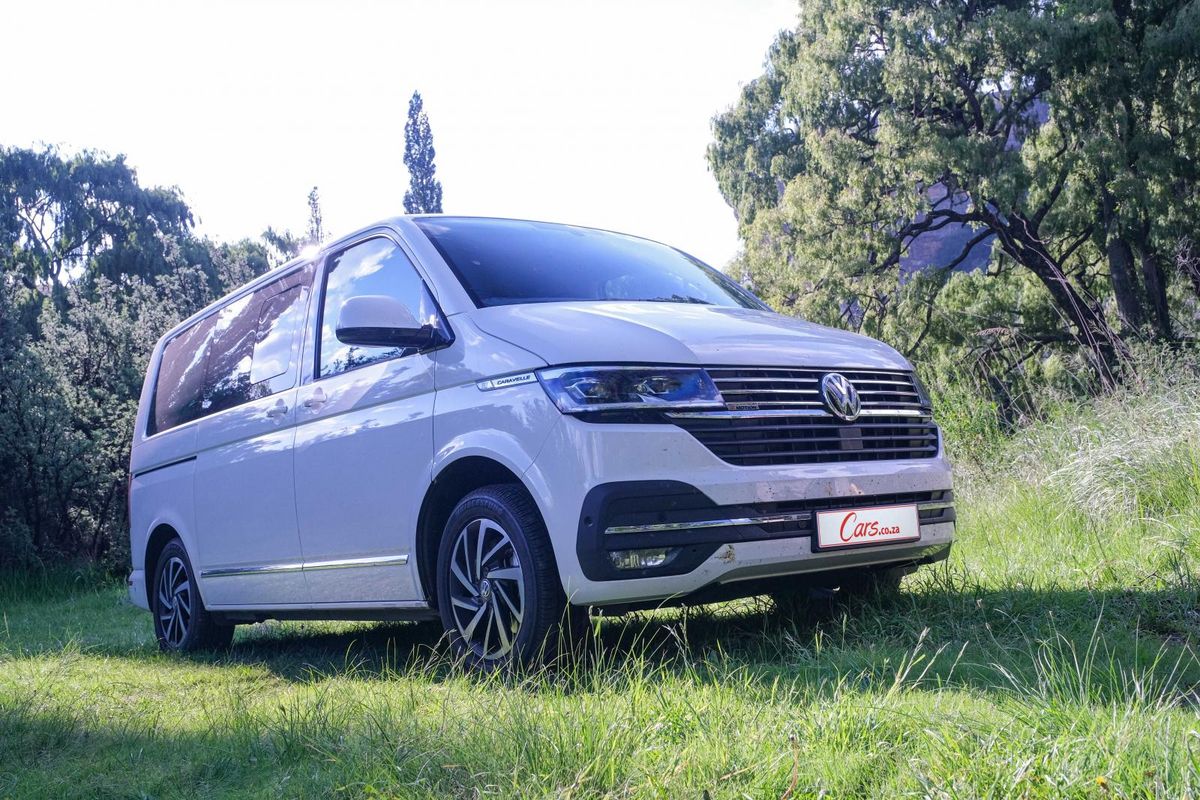
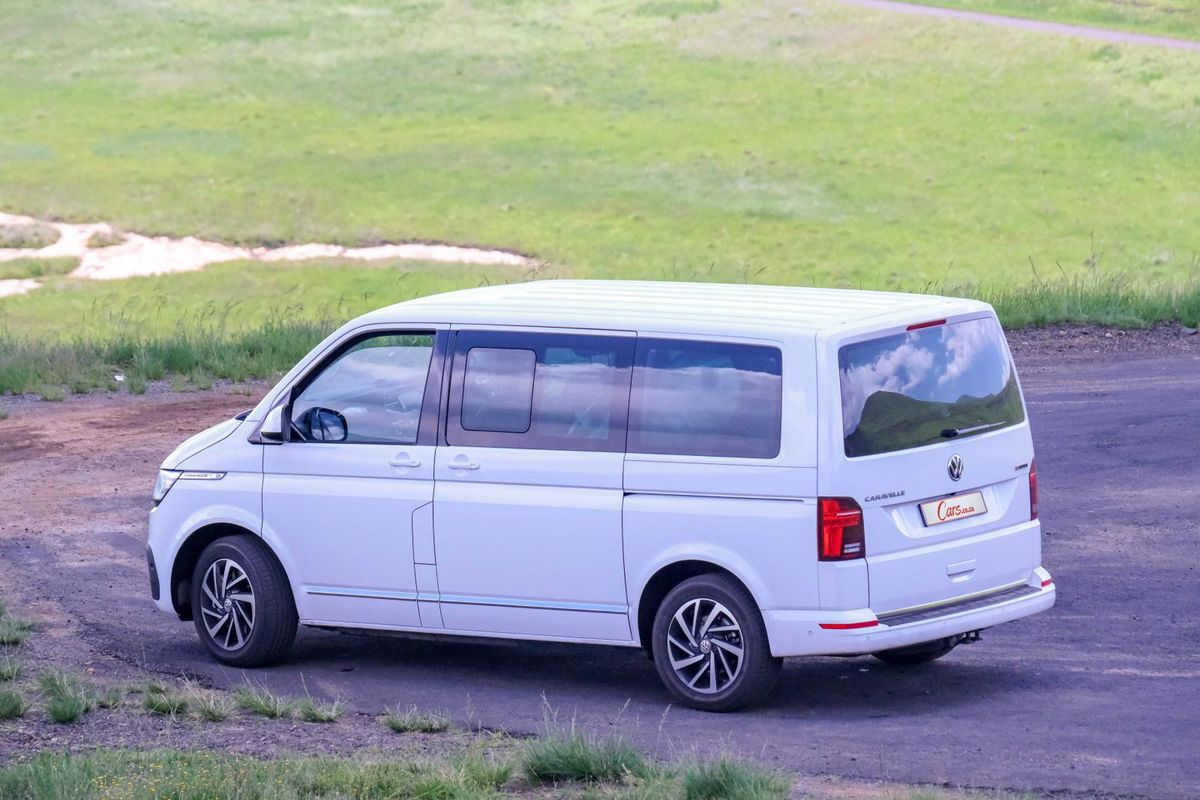
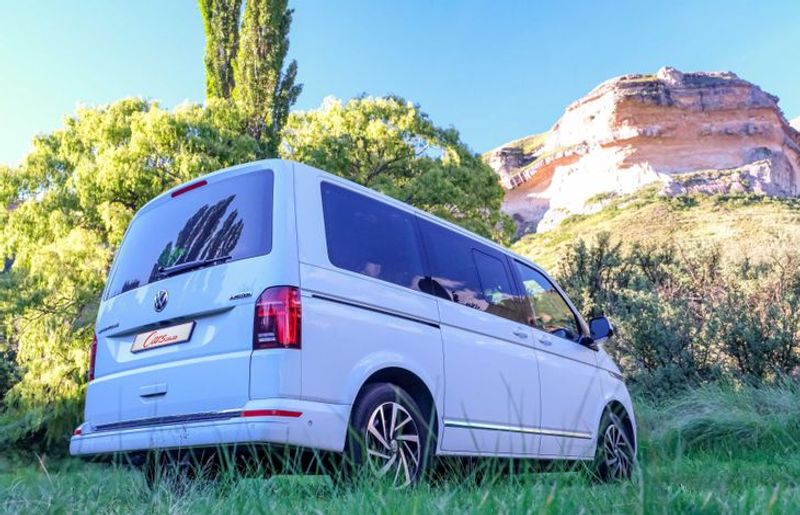
With social distancing being the order of the day throughout the recent festive season, Cars.co.za journalist Gero Lilleike decided to venture out of Cape Town and into the great outdoors to undertake the ultimate camping road trip with the updated Volkswagen Caravelle. Take a look at how the T6.1 performed!

We Like: Engine performance, comfortable ride and handling, practicality 

We Don’t Like: Spare wheel is not easy to inspect/change, some marginal interior materials 

Fast Facts

  • Model Tested: Volkswagen Caravelle Highline 4Motion
  • Price: R1 166 600 (Januray 2021)
  • Engine: 2.0-litre turbodiesel
  • Power/Torque: 146 kW / 450 Nm
  • Transmission: 7-speed automatic 
  • Fuel Consumption: 7.4 L/100km (claimed)
  • Fuel tank capacity: 80 litres (Range: 909 km)

Serious About Buying? 

Check out full specification details and finance estimates here

Some Volkswagen dealers regularly offer specials: Look at New Car Specials here!

What is it? 


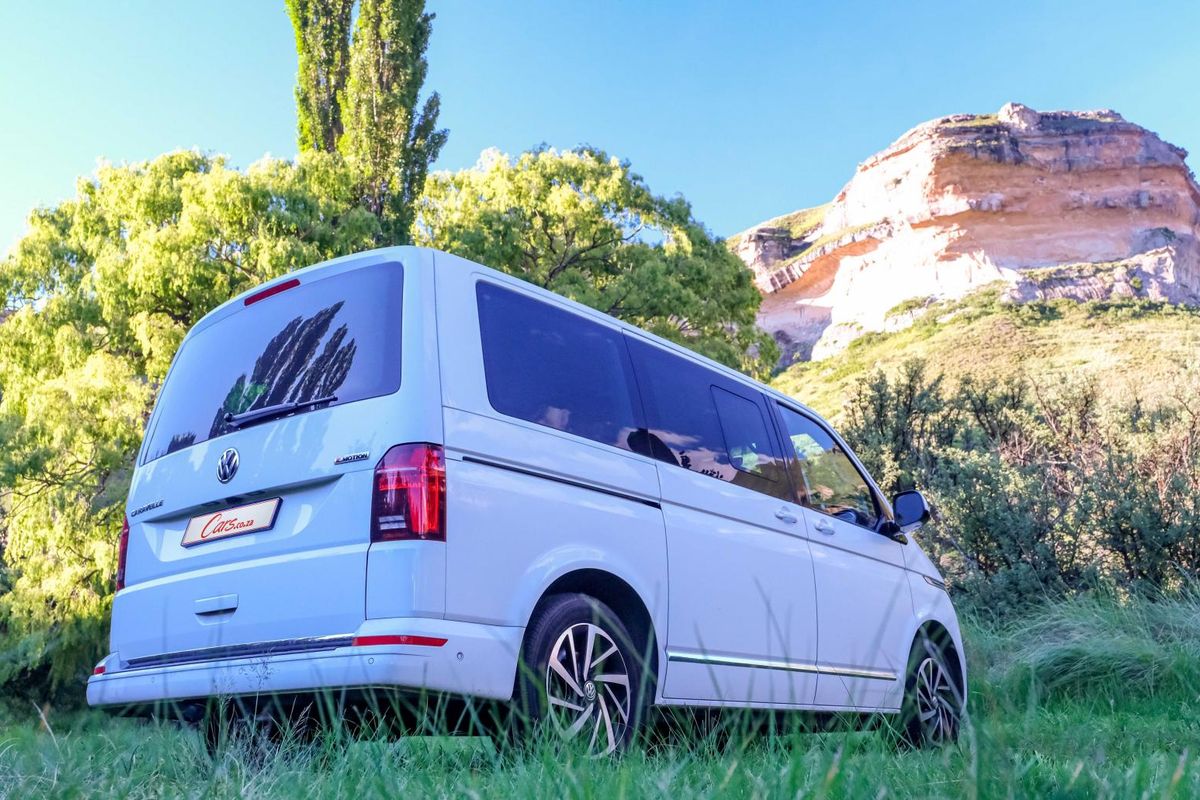
With the latest updates, the Caravelle is now a more sophisticated product. 

If you don't already know this, the Caravelle sits above the Kombi in Volkswagen’s range of people-movers and the updated T6.1 Caravelle will finally reach local showrooms this month replete with enhanced styling and a modernised interior. In fact, the revised cabin is equipped with the latest infotainment and connectivity features on offer from the Wolfsburg-based marque. 

The latest updates have pushed the Caravelle further upmarket, where it squares off against the similarly-priced Mercedes-Benz V-Class. We briefly sampled the latest Caravelle at its official launch last year, but more recently we were afforded the opportunity to live with the luxury minibus during the festive season. 

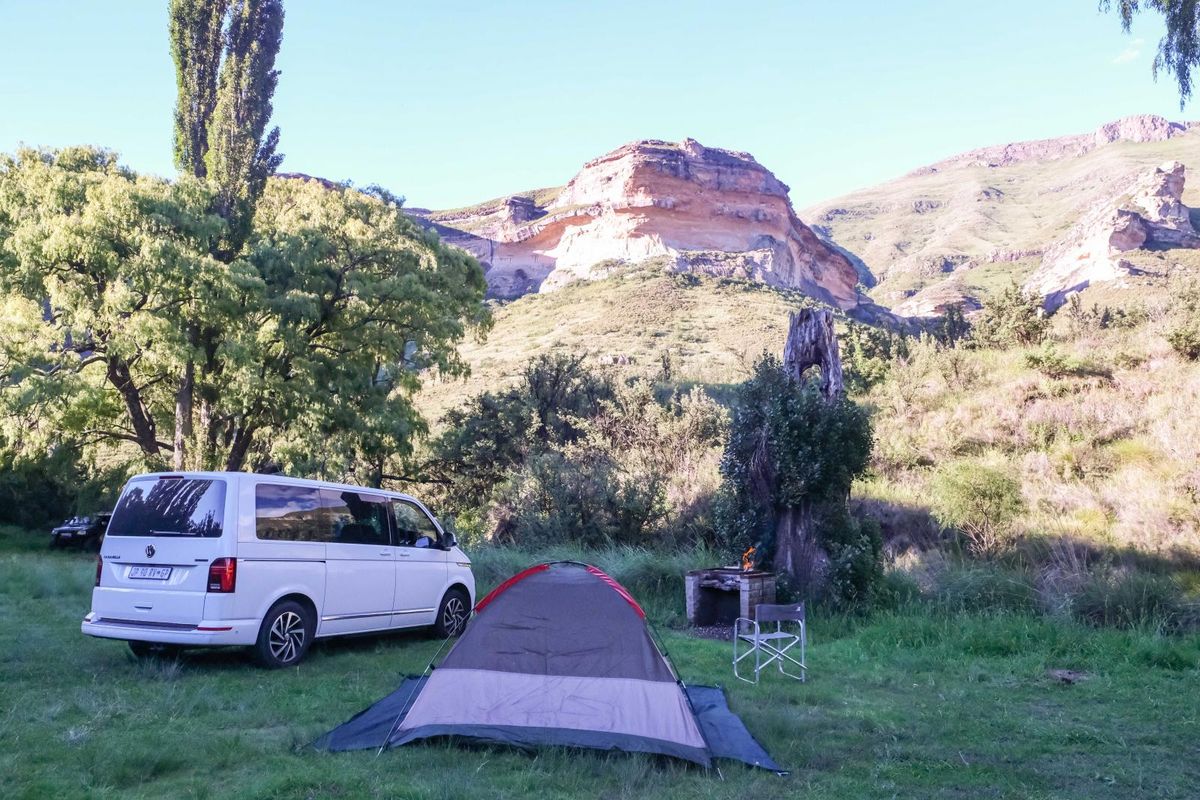
Camping is perhaps the best way to achieve social distancing while still being able to travel and explore the country safely; Cars.co.za journalist and resident outdoorsman Gero Lilleike decided to take social distancing to the next level and embark on a 4 000-km camping road trip that would not only expose the Caravelle’s long-distance driving ability, but also test its practicality.

How does it fare in terms of…

Practicality
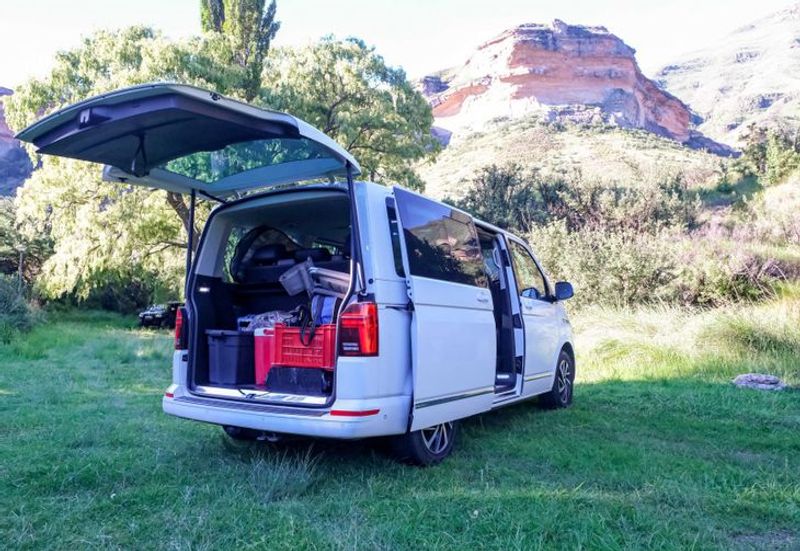

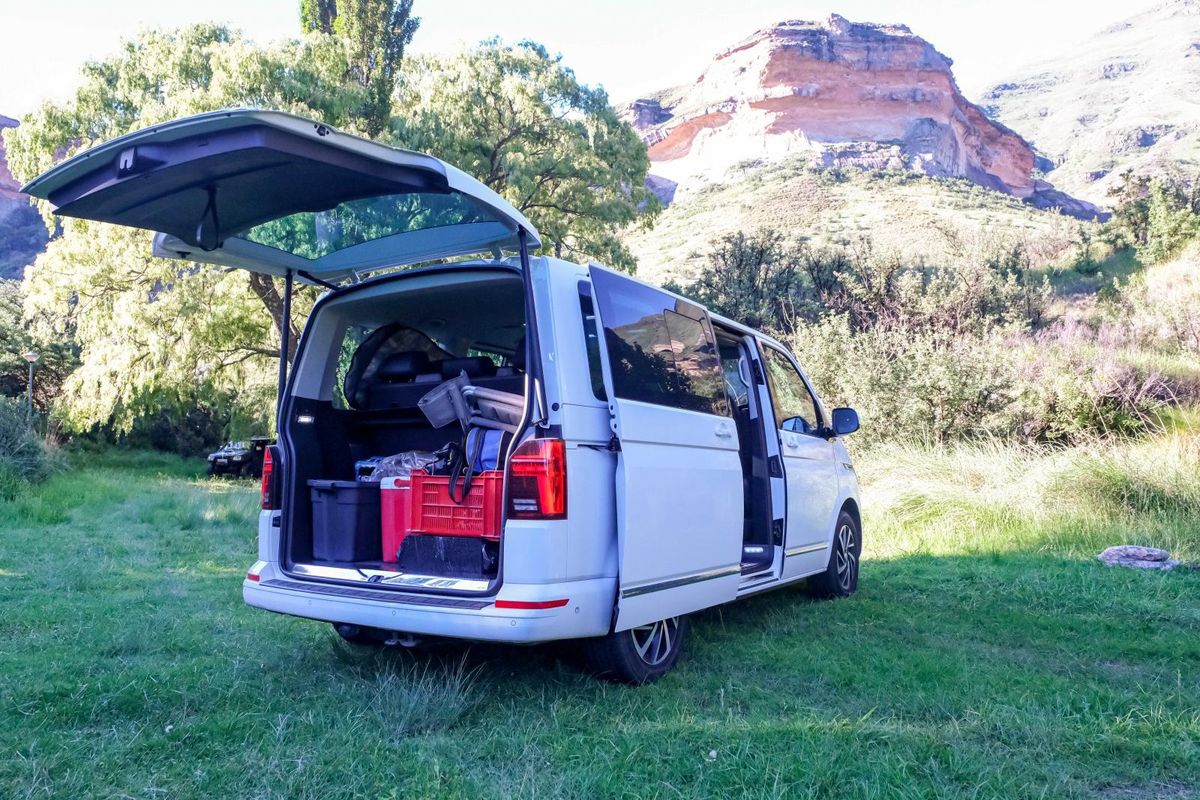
The Caravelle has lots of space for luggage and camping gear.

Buyers of large family cars appreciate (load- and people-carrying) flexibility above most other aspects of their vehicles and in that regard, the Caravelle certainly excels. Volkswagen's contender can seat up to 7 passengers in comfort – and even offers separate ventilation outlets for the rear occupants, I might add, but its talents comfortably extend beyond that…  

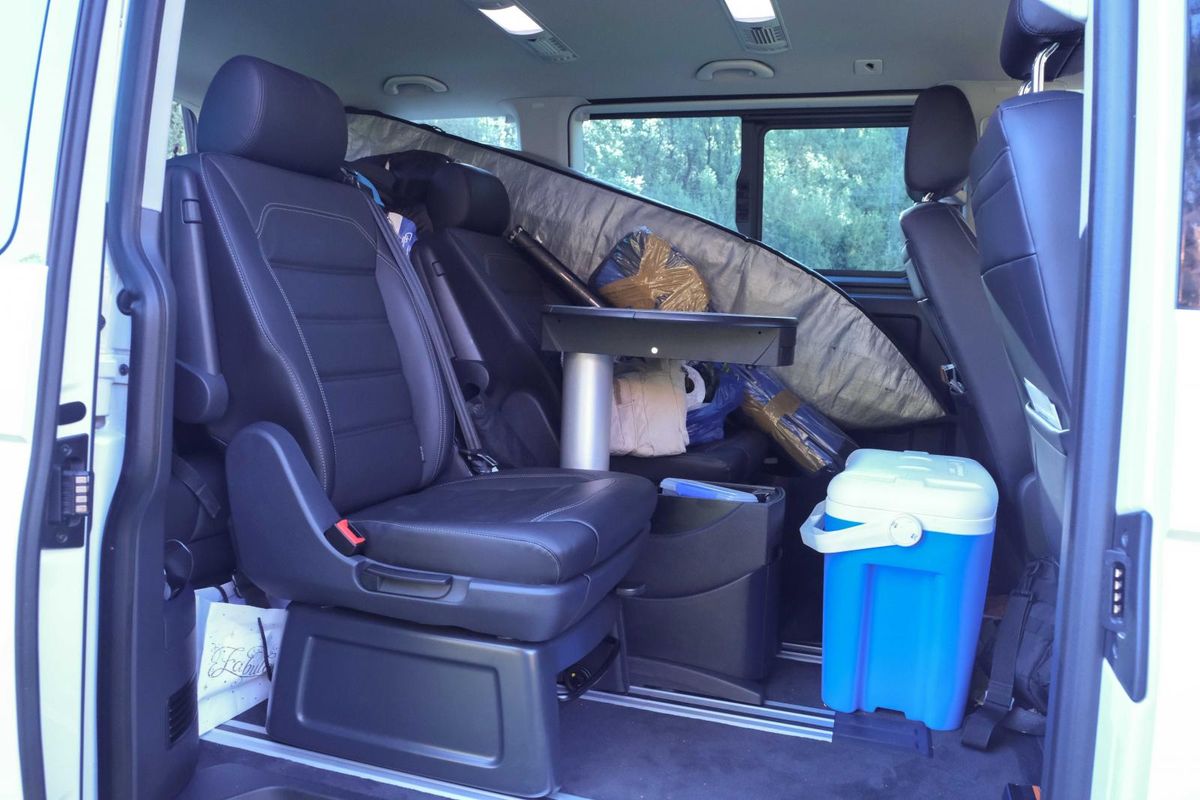
Whether you are part of a big family, small family or, like me, one half of a childless couple, the adaptability of the Caravelle means that you have a practical solution for just about any situation. Due to the fact that the seats are fixed on a rail system, the rear bench and middle seats can slide fore or aft to either create a larger load bay or to improve legroom. Moreover, the rear seatback can be folded down to create a flat surface that can be used to load longer items – or even serve as a bed for the kids at your favourite camping spot. The middle row features 2 individual seats that can swivel while a central foldable table with storage space is particularly useful. The middle seats can be adjusted to face forward or you can opt for a meeting-style setup where they face rearwards. 

We had lots of luggage and camping equipment to haul to our destination, which meant that only the 2 middle seats were free to use during our trip as we used the rear bench as extra storage for bags and equipment. The foldable table served as a mobile work station and with multiple 12V sockets available, we were able to use the Caravelle as a charging station for laptops, cellphones and camera equipment by using an inverter, which is a must-have piece of equipment on any camping trip, unless, of course, you are Bear Grylls.

I even managed to pack a surfboard, which I slotted in down the side of the interior and it never got in the way; it's a testament to the sheer amount of space available in the Caravelle!
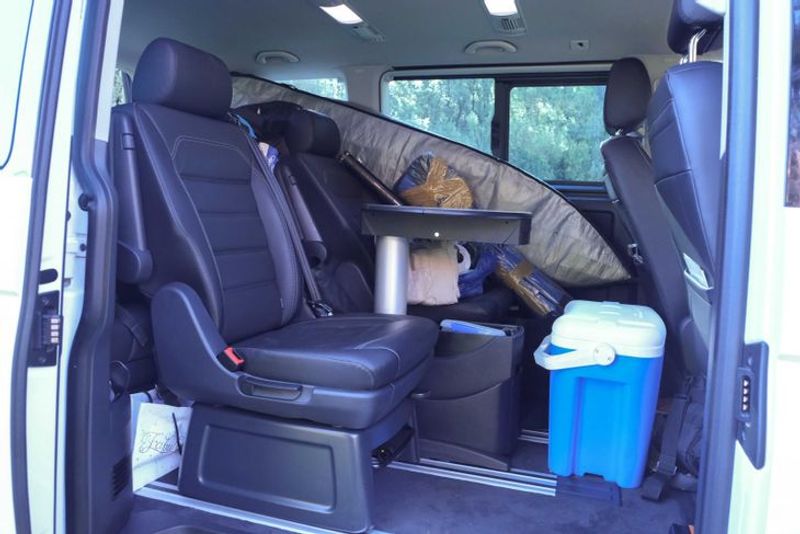

We were surprised at how much luggage and gear the Caravelle could load… note the surfboard…

Furthermore, ingress to the Caravelle’s cabin is via a pair of electrically-powered sliding doors – we particularly like that they can be opened, paused and closed with a one-touch pull of the handle. 

The extra storage compartments (located under the rear bench) are also nifty. There are 3 separate compartments and they are surprisingly spacious and useful to store small and medium-sized items out of sight, which means you can organise your packing more effectively. However, the plastic covers are made of plastic of marginal quality and they feel less-than-hardwearing as a consequence. It's also worth noting that the rear tailgate opens upwards, which means that you won't be able to access the load bay if you are parked tail-first in close proximity to a wall or another vehicle. 

We also experienced a flat tyre on our journey and we quickly discovered that releasing and installing the spare wheel (which is placed underneath the vehicle) is a fussy process that requires at least 2 people to carry out; not only is the spare' heavy, but its location makes the task of liberating it from its well quite awkward. That's the worst of our criticisms as for as practicality is concerned, however. 

Performance and economy
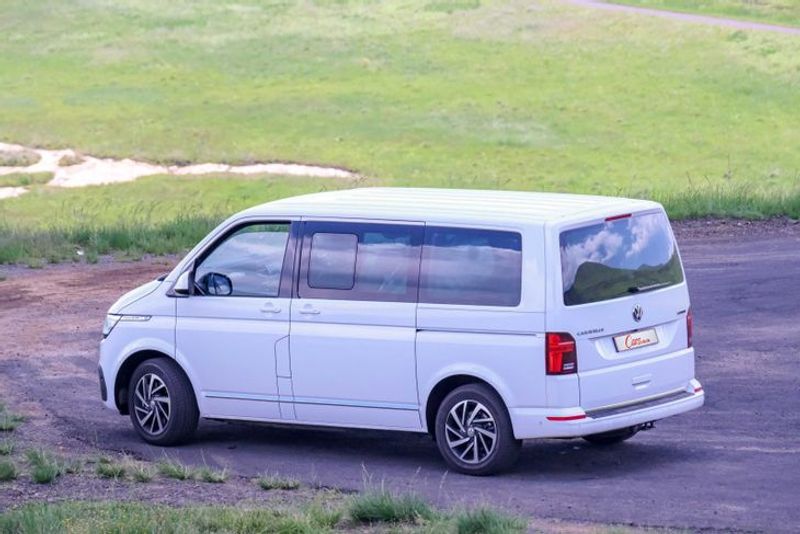

The Caravelle is worth its salt over long distances; it offers enough power and comfort to ensure a pleasant driving experience.

Apart from offering considerable practicality as a family vehicle, the Caravelle’s on-road performance is refreshingly spirited. With its 2.0-litre bi-turbodiesel engine producing 146 kW and 450 Nm of torque and paired exclusively with a 7-speed automatic transmission, the powertrain provides ample shove to shuffle along the T6.1 with a fair turn of speed.

Under hard acceleration, a brief moment of lag is experienced as the turbos spool up, but when they come on song, the Caravelle pulls forward with purpose and the um, bus, is particularly adept at executing overtaking manoeuvres quickly and effortlessly on the highway. The transmission, in turn, shifts smoothly and unobtrusively, which contributes appreciably to the overall driving comfort.

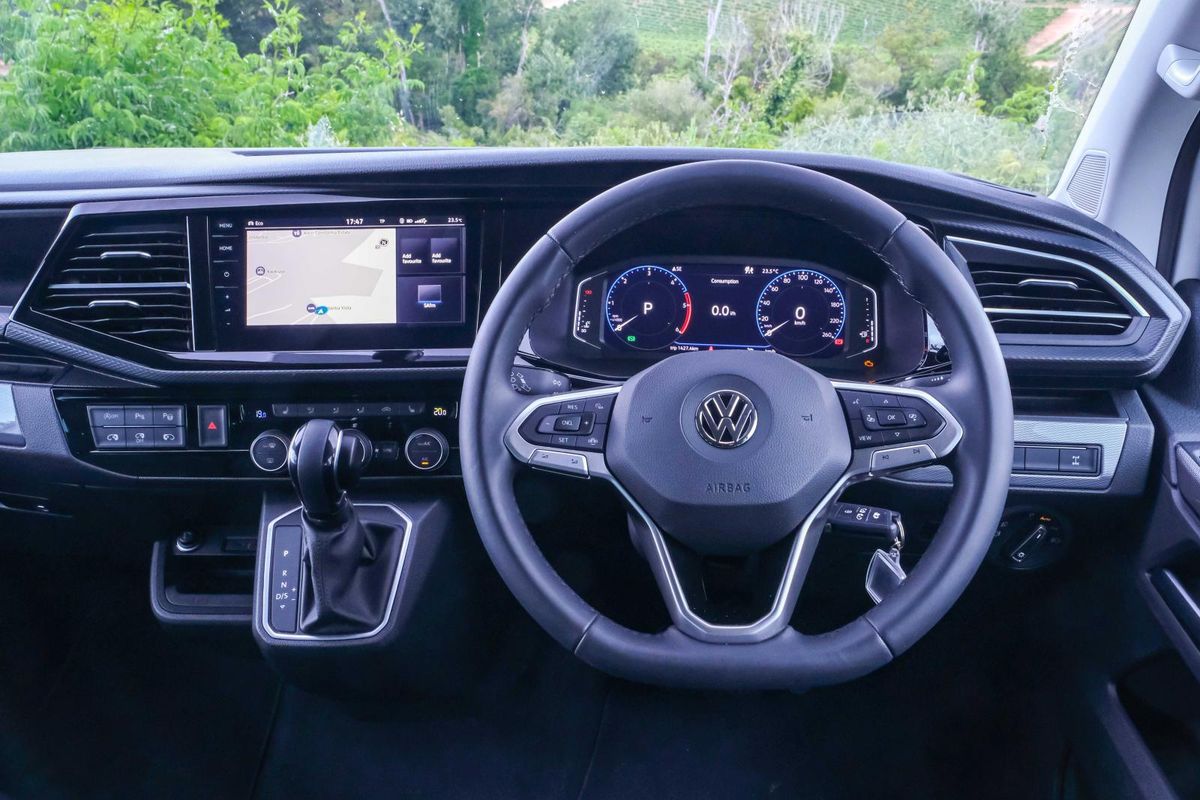
We found the engine wonderfully refined – it’s not a clunky or noisy diesel motor. What's more, the cabin is so well insulated from mechanical noise that the T6.1 tends to warp your perception of speed; it's much faster than what the driver perceives. With that said, the cruise control (accessed via the multifunction steering wheel) is a good way to ensure that you remain within speed limits.  

In terms of fuel-efficiency, Volkswagen’s official claim is 7.2 L/100 km, but that's ambitious. During our trip, the onboard computer displayed figures between 9.7 and 10 L/100 km, which was fair.   

Ride and handling


The Caravelle delivers a comfortable ride quality, but body roll is noticeable while cornering. 

The Volkswagen’s ride quality is generally good – on most tar surfaces – courtesy of a supple suspension that manages to absorb imperfections with aplomb. It also fares well on gravel, but, by virtue of the lower-profile rubber fitted to its wheels, the Caravelle is more suited to traversing sealed roads. Volkswagen’s 4Motion all-wheel-drive adds further confidence, especially in wet conditions. 

The Caravelle’s steering, meanwhile, is lightly weighted and fairly responsive to inputs. Handling-wise, the T6.1 is sufficiently wieldy for a vehicle that's based on the Transporter commercial-vehicle platform (even though Volkswagen hides it rather well), but due to its bulk, it loses some of its composure under cornering. The Volkswagen stands some 1 990-mm tall and has a kerb weight of 2 357 kg, which translates to a fair amount of lean and body roll under cornering, but this effect can, of course, be countered by brushing off some speed and making more measured steering inputs.     

Interior and features
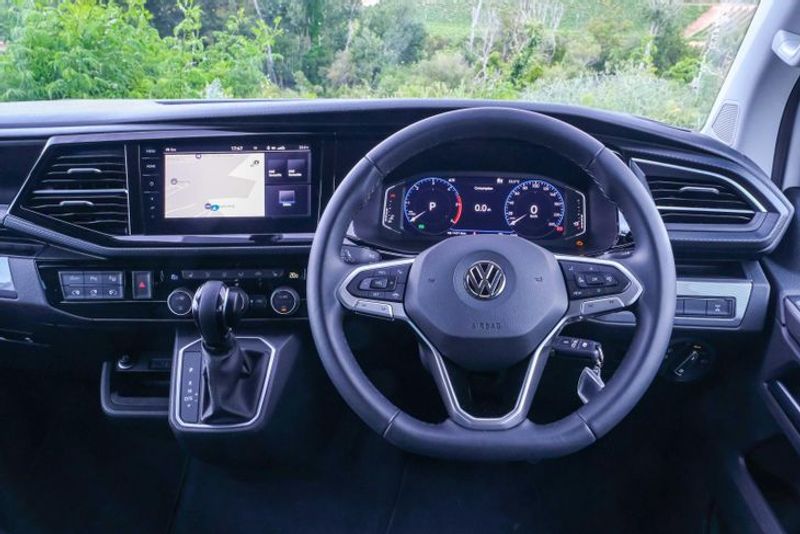

The Caravelle comes well equipped with standard features.

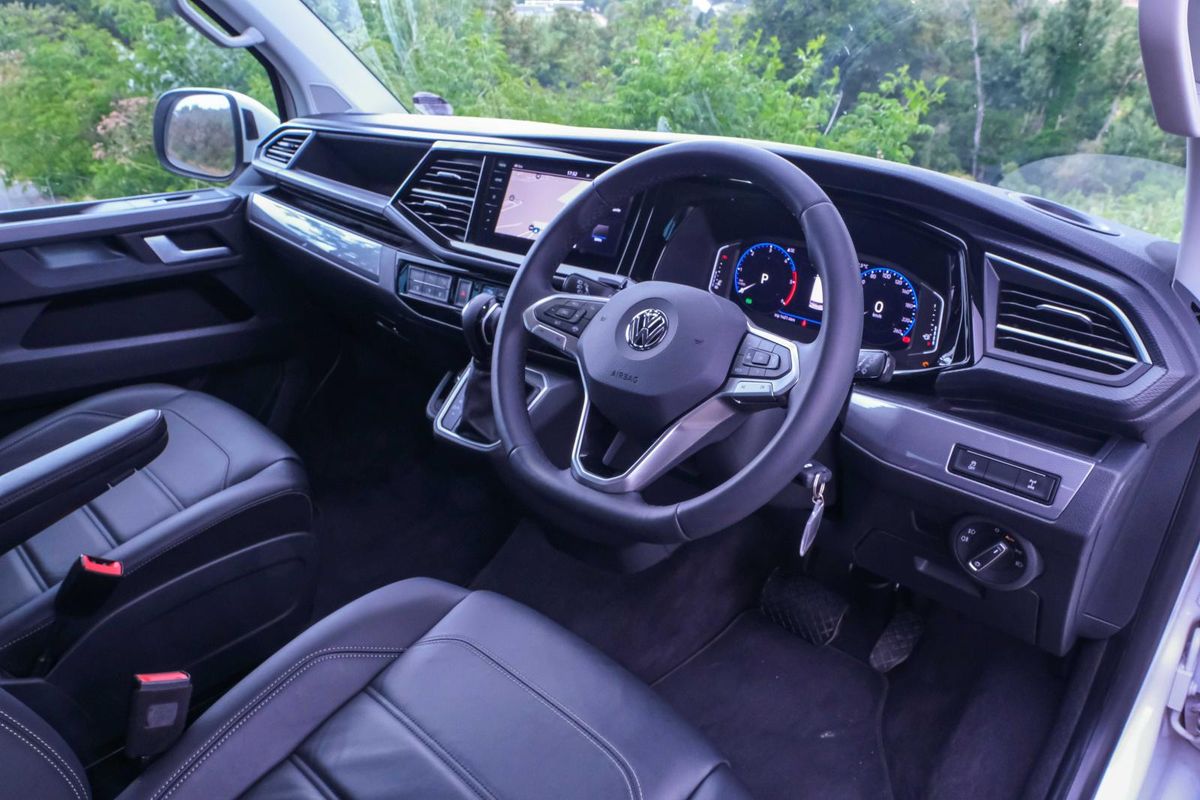
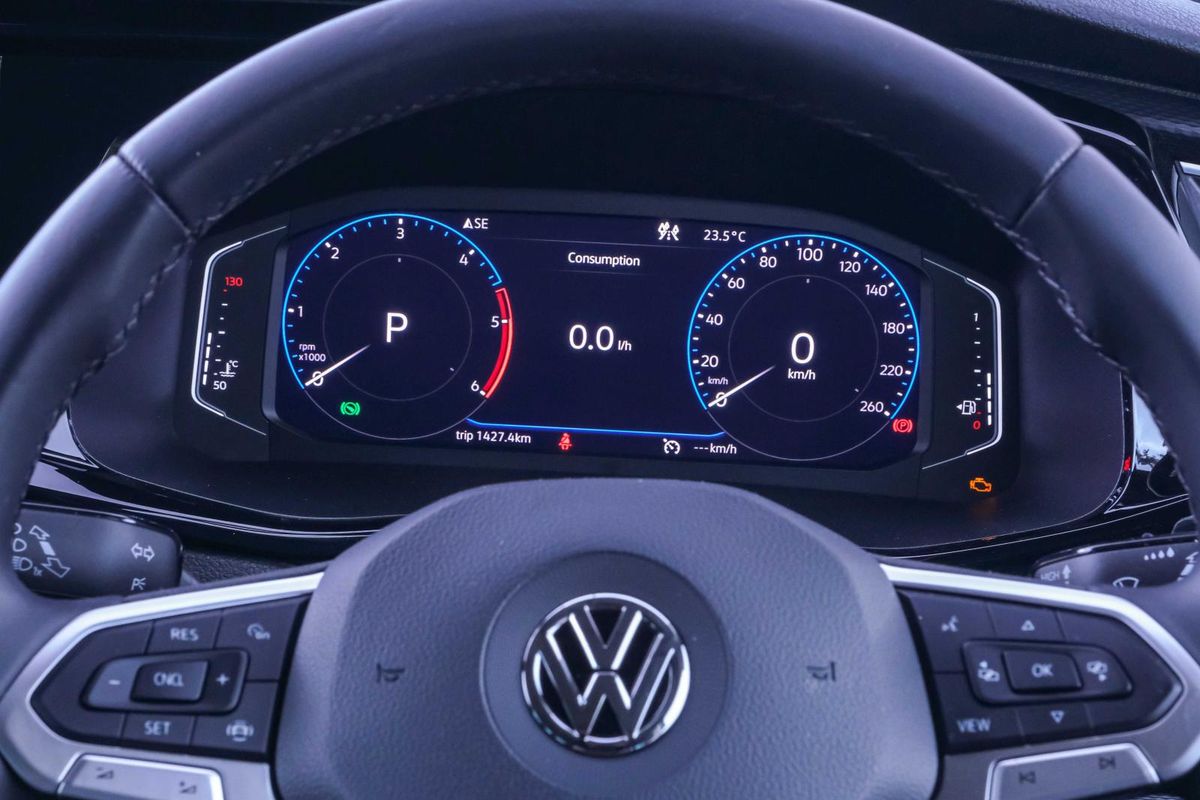
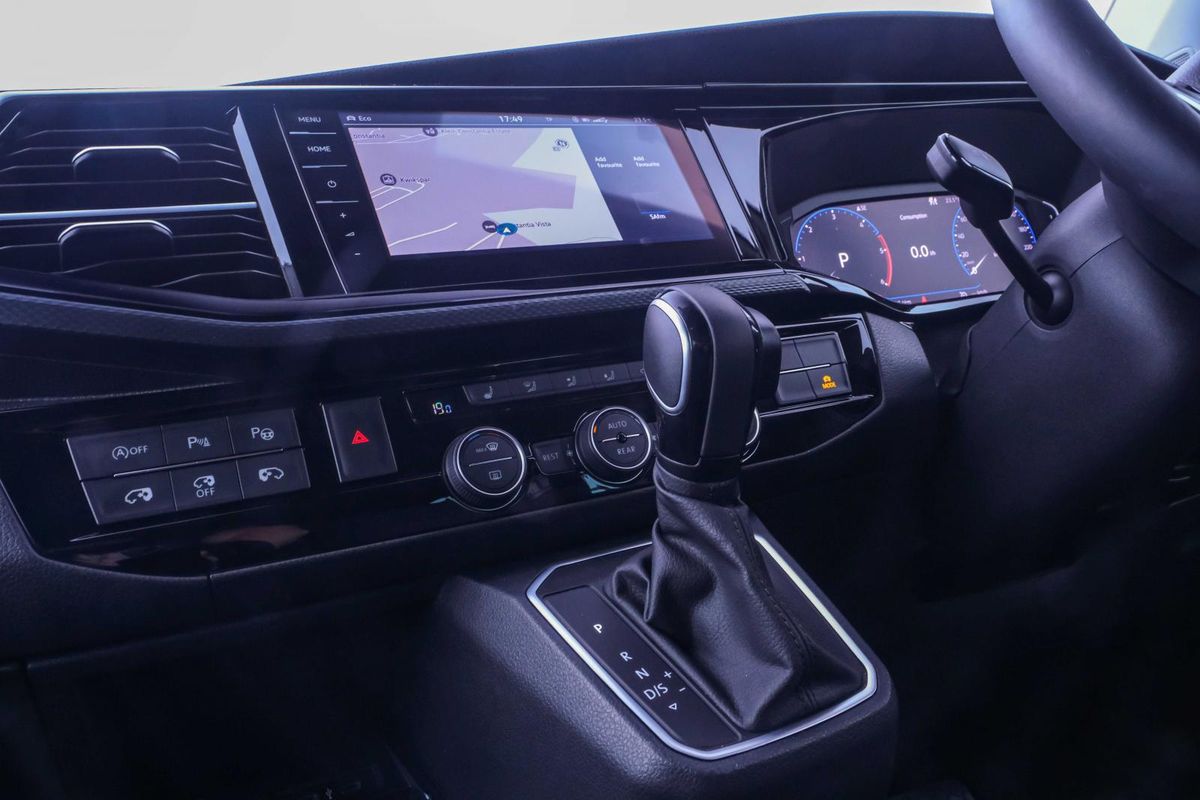
The Caravelle’s cabin boasts good perceived build quality; its overall design is unspectacular, but still pleasing to the eye and the general layout is ergonomically sound. Volkswagen’s Discover Pro Media infotainment system is standard and features integrated navigation, which is useful. The menu layout is intuitive and easy to use and, in combination with the 10.25-inch configurable digital instrument cluster, the Caravelle exudes a notably premium look and feel. There’s even a wireless charging dock for your smartphone, but this is an optional feature.

It must be said, however, that the infotainment screen does attract a considerable amount of dust and fingerprints and it’s advisable to keep a soft cloth at hand to wipe the panel clean. It’s also worth mentioning that the infotainment system shut down and rebooted without warning on at least 4 occasions during its tenure in our test fleet; we hope that it was an issue with this particular unit.

The interior materials in the cabin are mostly of the utilitarian variety and while this bodes well for a long service life, we do think that Volkswagen could have added some more soft-touch areas and higher-quality materials in certain areas to further boost the premium look and feel of the interior. Nonetheless, the Caravelle's cabin is a comfortable space to occupy during a long road trip! 

There’s also an impressive list of useful active safety features offered on the Caravelle including crosswind assist, trailer assist, rear traffic alert, manoeuvre braking function, lane assist, hill start assist, hill descent assist and park assist, the latter of which is useful to manoeuvre the large Caravelle into parking spaces. The T6.1 is fitted with 6 airbags and a reverse-view camera with static guidelines. 

Price and warranty

The Volkswagen 2.0 BiTDI Highline 4Motion is priced from R1 166 600 and is sold with a 3-year/120 000 km warranty and a 5-year/60 000 km service plan. 

Buy a new or used Volkswagen Caravelle on Cars.co.za

Verdict
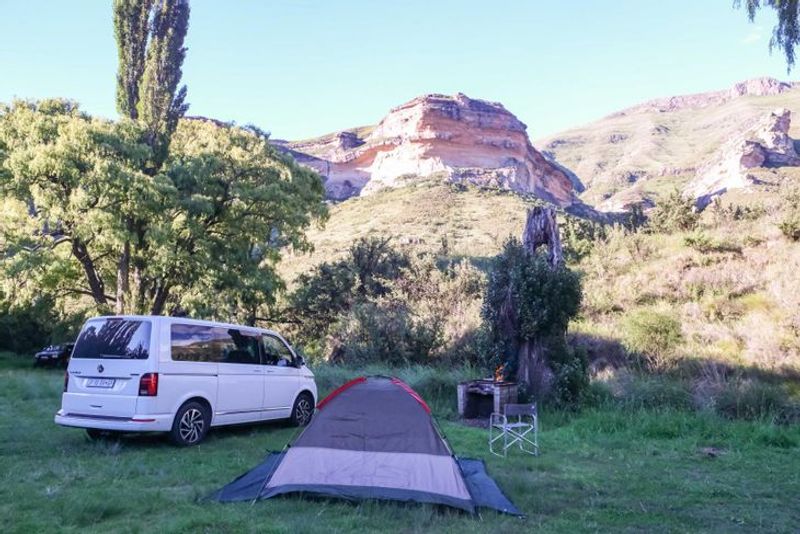

The Caravelle proved itself on this test and we think it's worth a closer look in this segment. 

The latest Caravelle’s long-distance performance is mightily impressive – not only was the T6.1 pleasant to drive, but it proved to be hugely practical, arguably more so than a conventional SUV. In addition, the Volkswagen’s enhanced on-board technology and upgraded interior were not only timely improvements – they have bolstered the purchasing proposition of the model. 

Since the launch of the Caravelle T6.1 in October 2020, its 7-figure price tag (R1 166 600) has been widely criticised, which is a trifle unfair if you consider that the asking price for the Volkswagen’s primary rival, the Mercedes-Benz V250d, starts at R1 099 606 – and the vehicles offer similar outputs and features. It must also be noted that the Caravelle offers slightly more in the way of nice-to-have standard features, such as heated front seats, integrated navigation and a standard reverse-view camera, to name a few, which means it represents better value for money than its rival from Stuttgart. 

Sadly, however, premium brand snobs will likely place badge perception above overall value. Remember the Volkswagen Arteon? It was an award-winning product, but it sold poorly in Mzansi because buyers don't perceive Volkswagen as a premium brand that can compete against the likes of BMW, Benz and Audi. If the badge on the nose means little to you, then the Caravelle deserves your attention. It's also worth mentioning that the outgoing Kia Grand Sedona, which will be replaced by the new, renamed-to-Carnival model this year, offers exceptional value under the R1-million mark. 

This Caravelle T6.1 is more competitive than ever and definitely worth considering if you are in the market for a practical family vehicle and feel less than inclined to be swept up by the SUV craze…   

Related content: 

Spy Shots: 2021 Volkswagen Polo (Updated)

2020/21 Cars.co.za Consumer Awards – Powered by WesBank; Finalists
New Cars For SA in 2021

VW issues Golf 8 software upgrade

South African consumers have had to wait patiently for the local arrival of the Golf 8 range, which will be spearheaded by the GTI in a few months' time, but the upshot of the delay is that our market won’t be affected by the voluntary update that Volkswagen has issued for 56 000 units of its premium hatchback.

The Golf 8 was the best-selling car in Europe in 2020, which is impressive considering that production of the Teutonic hatchback was temporarily halted in May, Autocar reports, due to issues with the onboard emergency call system, which resulted in customer cars being stored for up to a month while the Wolfsburg-based endeavoured to find a solution to the problem.

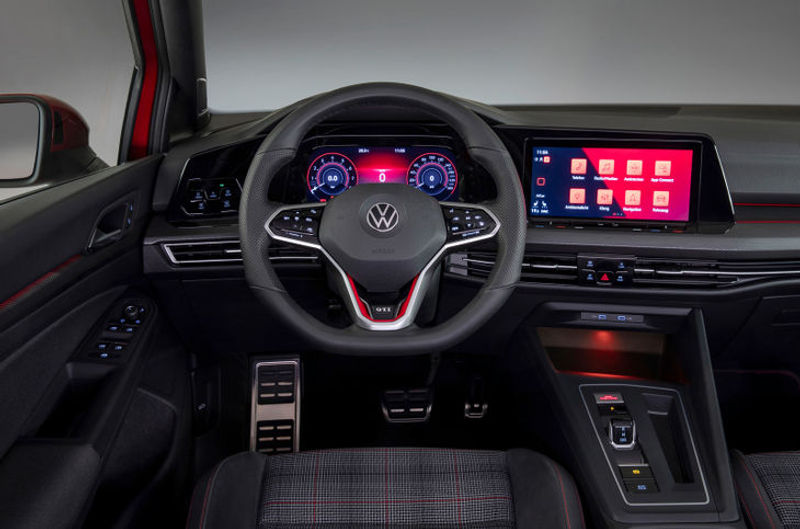
ICYMI: Volkswagen Golf 8 GTI (2020) International Launch Review


The 8th-generation Golf relies more on technology and digital interfaces than any of its predecessors. 

Last year, VW's much-publicised software issues, which delayed the launch of the Golf 8 in 2019 and have also plagued the ID.3 electric vehicle, effectively triggered an organisational shake-up in the German group’s structure. In July, the brand announced that its head of Digital Car & Services, Christian Senger, would leave the company a little more than a year after taking up his position.

He was replaced by Dirk Hilgenberg, who, like his predecessor, spent most of his career at BMW (at Rolls-Royce aviation’s engine division), before being headhunted by VW.

Volkswagen AG also announced that its Ingolstadt-based brand, Audi, would lead the implementation of digital vehicle integration technology across the German group.

DB2019PA00198 Medium
Senger joined VW in 2016 (as the brand's E-Mobility product boss), but he left the company last year.

As a result, Audi CEO Markus Duesmann became the VW Group board member for car software. Duesmann, to whom Hilgenberg reports, promised that 5 000 IT professionals, coders and engineers would be recruited by his division over the next 12 months.

Now, ostensibly as a direct consequence of the VW Group’s "tech shake-up" (and subsequent recruitment drive), the brand has announced a “voluntary service measure” for Golf 8 units that were produced before July 2020; it’s not technically a recall, however, because it isn’t mandatory and can be completed during a regular service.


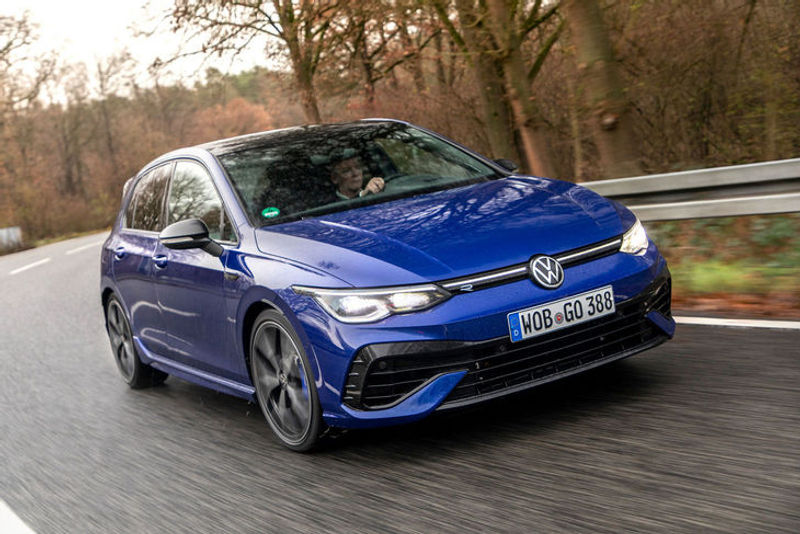
In November last year, Volkswagen revealed the Golf 8 R with a peak output of 235 kW, as well as an optional drift mode.

The voluntary update campaign affects 56 000 examples of the Golf 8 across the globe and, according to Autocar, fixes software issues affecting the infotainment system and reverse-view camera.

Meanwhile, the Golf 8 GTI is scheduled to be launched in South Africa in the 2nd quarter, while the range’s flagship – the R model, will arrive in the final quarter of 2021.

Related content:

Volkswagen Golf 8 GTI (2020) International Launch Review

Configure your Golf 8 GTI now

Volkswagen Golf 8 GTI Clubsport Not for SA

Golf 8 R revealed with 235 kW, optional drift mode

Will you pay R1 million for a VW Golf 8 R? 

#CarsAwards – Best Entry Level Cars in SA

Meet the finalists in the Entry Level category of the 2020/21 #CarsAwards powered by WesBank!

Now in its 6th year, the #CarsAwards was conceived to be South Africa's definitive automotive awards programme and is backed, for the 5th year running, by the country's leading supplier of vehicle finance, WesBank.

Read more about the 2020/21 Cars.co.za Consumer Awards powered by WesBank here 

Best Entry Level Cars in SA 

Budgets are tight. Fuel costs are rising. Yet buying an affordable car doesn’t mean you should compromise on safety, technology and quality. The winner of this category represents as much good car as possible for the money. Value is very important, as are running costs and all such “common sense” considerations. The price cap in this category is set at R200 000.

This category is guided by both eligibility factors and Pillars of Success. 

Eligibility factors for this category include a list price that does not exceed R200 000 (as of October 1, 2020) and pricing must include the cost of all necessary optional features to meet the eligibility criteria. 

Eligible vehicles must be equipped with ABS and dual front airbags. 

Pillars of success for this category include fuel economy, value for money, practicality and brand strength.

Visit www.carsawards.co.za for more information. In no particular order, the finalists are as follows:

Hyundai Atos 1.1 Motion

Hyundai’s popular Atos nameplate returned to South Africa in 2019 and represents an attractive value offering in the entry-level car segment. The 1.1 Motion offers good build quality, generous specification, a surprisingly refined driving experience, as well as commendable fuel efficiency.  

View specification details for the Hyundai Atos 1.1 Motion

Suzuki S-Spresso 1.0 S-Edition

Suzuki introduced the pint-sized S-Presso, which offers quirky, youthful styling and a host of desirable features that entry-level buyers will appreciate, during 2020. It has some high-riding appeal with a ground clearance of 180 mm, but, more than that, it’s interior is cheery and the newcomer is powered by a perky engine that consistently returns excellent fuel consumption.

View specification details for the Suzuki S-Presso 1.0 S-Edition

Suzuki Swift 1.2 GL

The Swift accounts for most of Suzuki South Africa’s new vehicle sales and is, therefore, a very important model for the award-winning Japanese manufacturer. The Swift has won the Budget Car category for the last 2 years (2018/19 and 2019/20), but the Indian-made hatchback’s value for money proposition is so competitive that the 1.2 GL derivative fits into the entry-level category.

View specification details for the Suzuki Swift 1.2 GL

See last year's #CarsAwards winners here!


Honda goes full-crossover with new Jazz

Bring your sense of adventure with Honda's Jazz.

The 2021 Tokyo auto show might be a digital affair, but that has not prevented Japanese car companies from preparing some interesting concepts.

One of the more attainable and relatable cars set to be part of the 2021 Tokyo auto show experience, is from Honda. The company has taken its popular and reliable Jazz hatchback and converted it to a proper crossover.

This Jazz Crosstar concept is based on a hybridised Jazz platform, with Dal electric motors supplementing the performance of its 1.5-litre petrol engine. It is also the reason you’ll notice the peculiar dual-grille bumper design.

Core performance numbers are what you’d expect from a Jazz. The total system output is 80 kW and 253 Nm, with a CVT transmission converting those numbers to modest acceleration. Honda claims 0-100 kph in 9.4 seconds, with a 175 kph top speed.

This Jazz Crosstar concept is not about acceleration numbers. It is all about the accessories. You’ll notice the elaborate roof rack system, intended to hold whatever you can’t fit inside, on top. That said, the Jazz has a terrifically adaptable cabin architecture and 1 203-litres of luggage space with its rear seats folded, so if you end up actually using those roof racks and their storage boxes, you’ll be planning a very long journey.

By far the best aspect of this Jazz Crosstar concept, are its wheels and tyres. Anybody who travels huge distances on gravel roads will tell you: steel wheels are more durable than alloys. The Crosstar rolls black painted steelies rolling appropriate Toyo Open Country all-terrain tyres, with a mildly aggressive tread pattern and generous sidewall.

Those tyres will make a discernible difference on gravel roads and with the large sidewall, they should offer good impact absorption over larger bumps and potholes. The Crosstar concept also has 152 mm of ground clearance, which is 16 mm more than a conventional Honda Jazz.

Related content

Honda WR-V (2020) Review

5 Cheapest Automatic Compact SUVs in SA

New Honda Jazz for SA in 2021

All-New Toyota Fortuner Due in 2022?

A Toyota engineer has said the all-new Toyota Fortuner will be revealed in 2022. Here's what we know so far. 

In an interview with AutoCar India with Yoshiki Konishi, chief engineer at Toyota Motor Corporation, it has been revealed the all-new Fortuner will be revealed in 2022. 

The interview was extensive, with loads of nuggets of information on the changes. The good news is the body-on-frame assembly willl be retained, in order to keep its offroading credentials intact. Interestingly, in terms of powertrain, hybrid technology is being discussed. “We need to introduce high efficiency powertrains on our Fortuner, which depends on the region,” explained Konishi.  “At this time, a (pure) diesel powertrain is not the best. It’s difficult to meet regulations. So, we need to change from diesel to a diesel-plus-hybrid system, or also another powertrain,” said the product head.

There will be a complete revision of its electronic and electrical (ENE) architecture, and the hydraulic power steering setup will be replaced by electric power steering, which Konishi said 'will make the vehicle easier to drive.'  There will also be extensive changes to the safety systems, like stability control and assistance systems. “We will introduce electronically-controlled VSC (vehicle stability control) technology into the next Fortuner,” he said, before adding, “We are on the way to introduce connectivity features step by step.The next generation of the Fortuner will have some additional items. It will have (greater) digitisation and ADAS.”

These developments are substantial, but we suspect the timing isn't. The South African market received the updated Toyota Fortuner towards the end of 2020 and based on product lifecycles, the earliest our market could possibly receive a new model is late 2023. The report is sourced from India, a market which just received its updated Fortuner in January 2021. 

We'll keep tabs on the development of the all-new Toyota Fortuner.

Further Reading

2020 Toyota Fortuner: 5 Key Changes

Nissan X-Terra Fully Revealed

Ford Everest Range Updated in SA

Toyota Fortuner (2020) Specs & Price

UK tuner beefs up Toyota GR Yaris

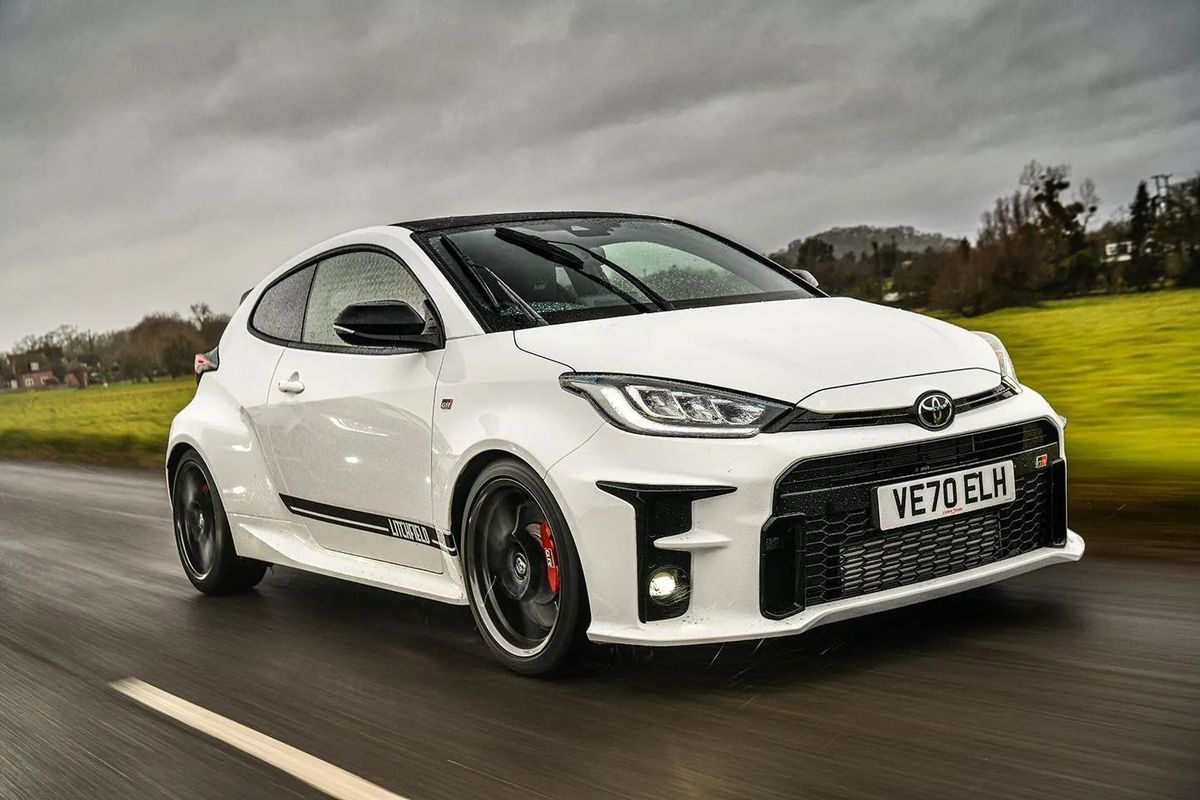
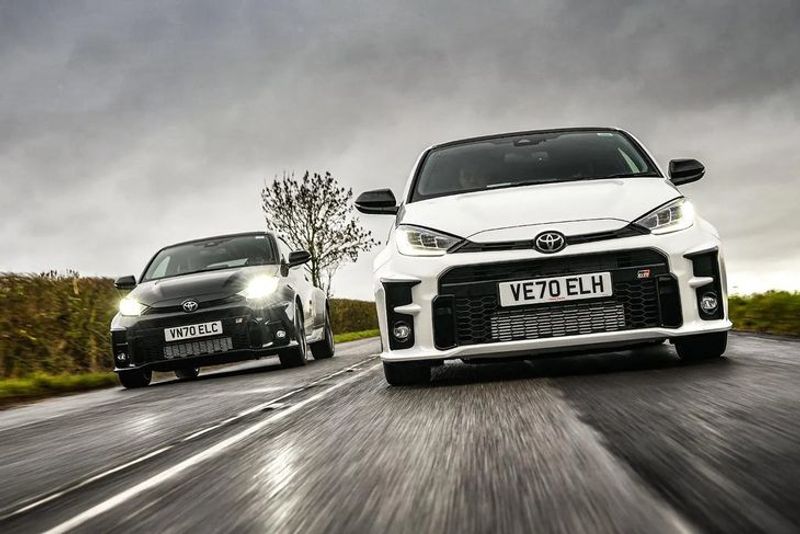
While hot-hatch aficionados eagerly await the local arrival of the rally-bred Toyota GR Yaris, which produces 200 kW in standard trim, a Hampshire-based tuner has been cranking up its 3-cylinder turbopetrol motor to produce 224 kW and is developing a slew of custom components for the newcomer.

Developed with the express purpose to homologate Toyota’s contender for the world rally championship, the all-wheel-driven GR Yaris is built in the Japanese firm's Motomachi factory, in a dedicated section of the plant that is reserved for the production of GR sportscars.

ICYMI: Toyota GR Yaris (2021) International Launch Review


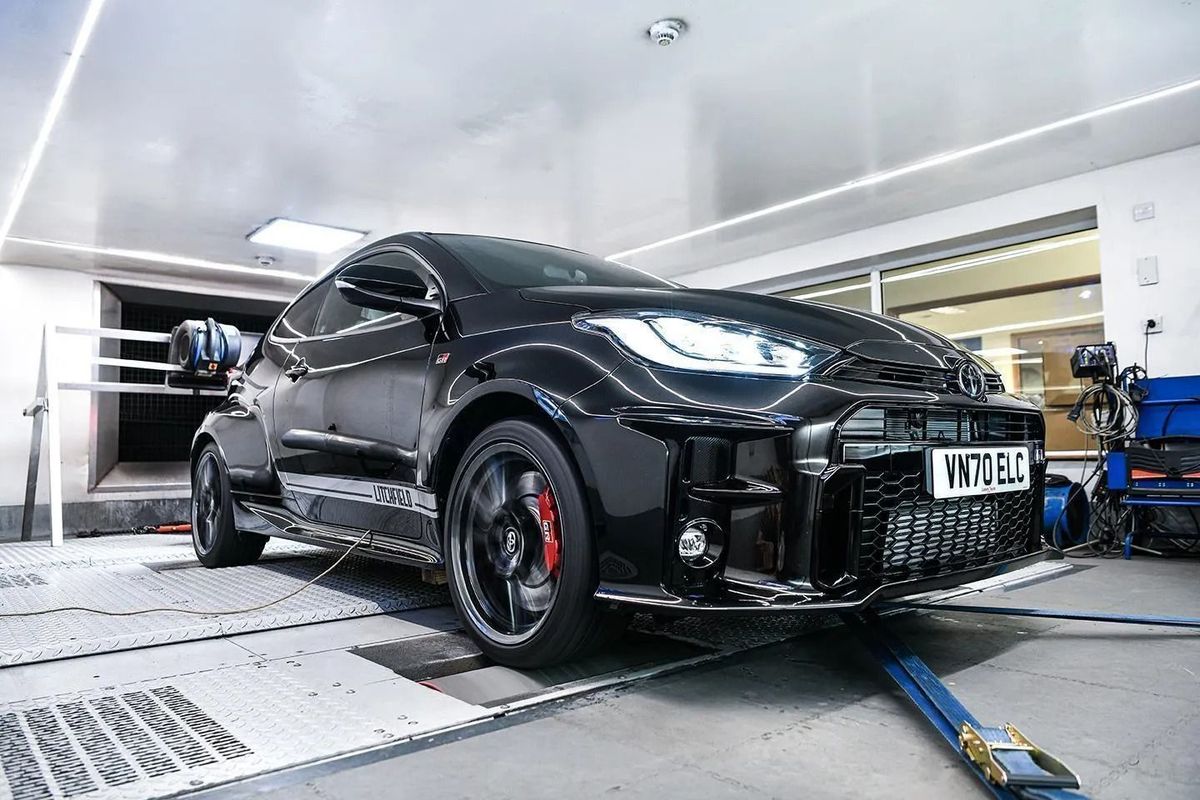
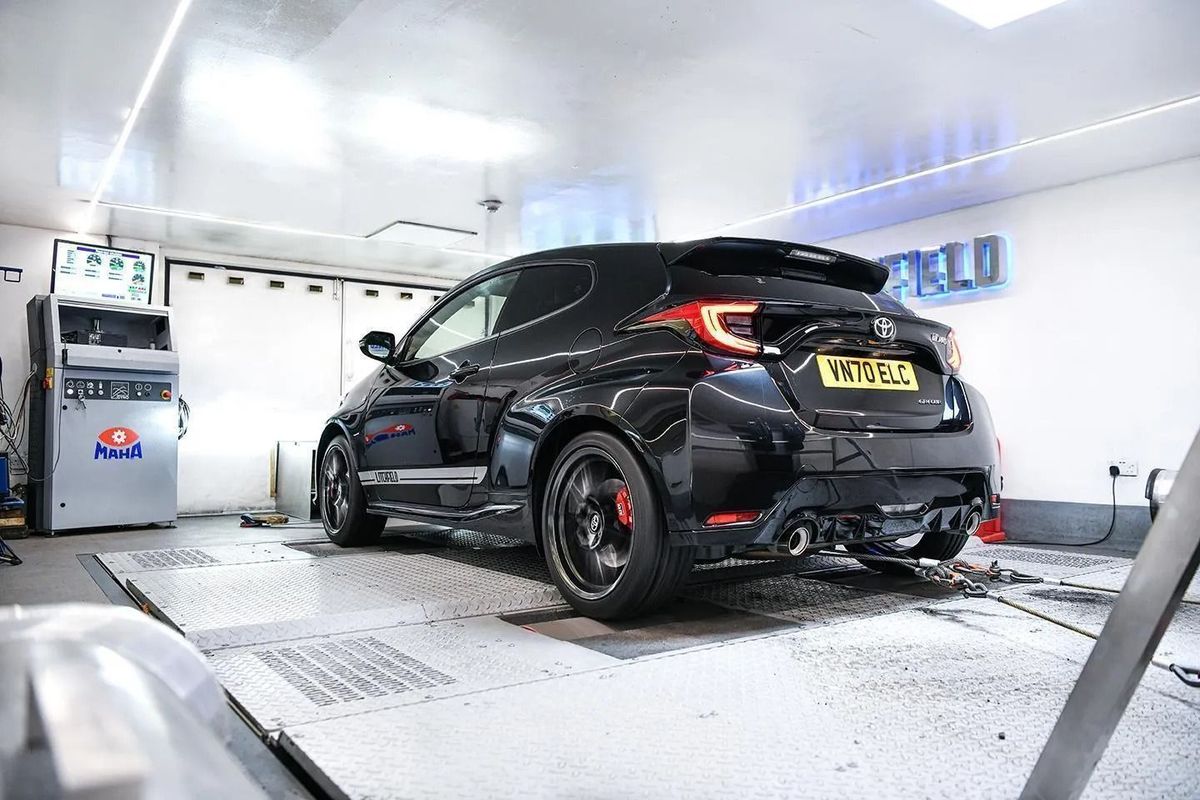
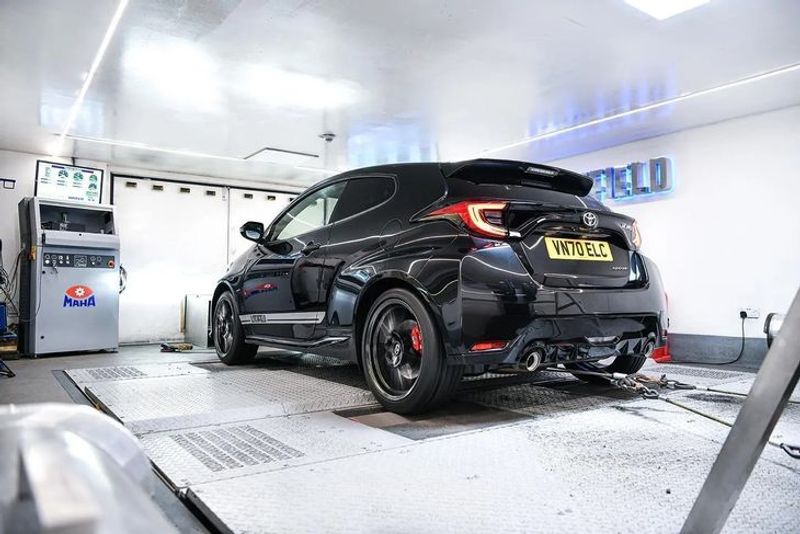
Litchfield conducting a dyno test on the more muscular GR Yaris, the initial engine upgrade comprises tweaked ECU software.  

We’ve seen spy pics of what appears to be a prototype of an even hotter GRMN version undergoing testing, but while Toyota may – or may not – be working on a more potent GR Yaris of its own (consider that once the firm has sold enough units of the car to satisfy competition regulations, it may quietly suspend production… that's what the overwhelming majority of manufacturers do), tuners have been fettling the Japanese hot hatchback; many of them are JDM-based, but some are from Europe – well, in this case (in a post-Brexit world), the neighbouring United Kingdom.  

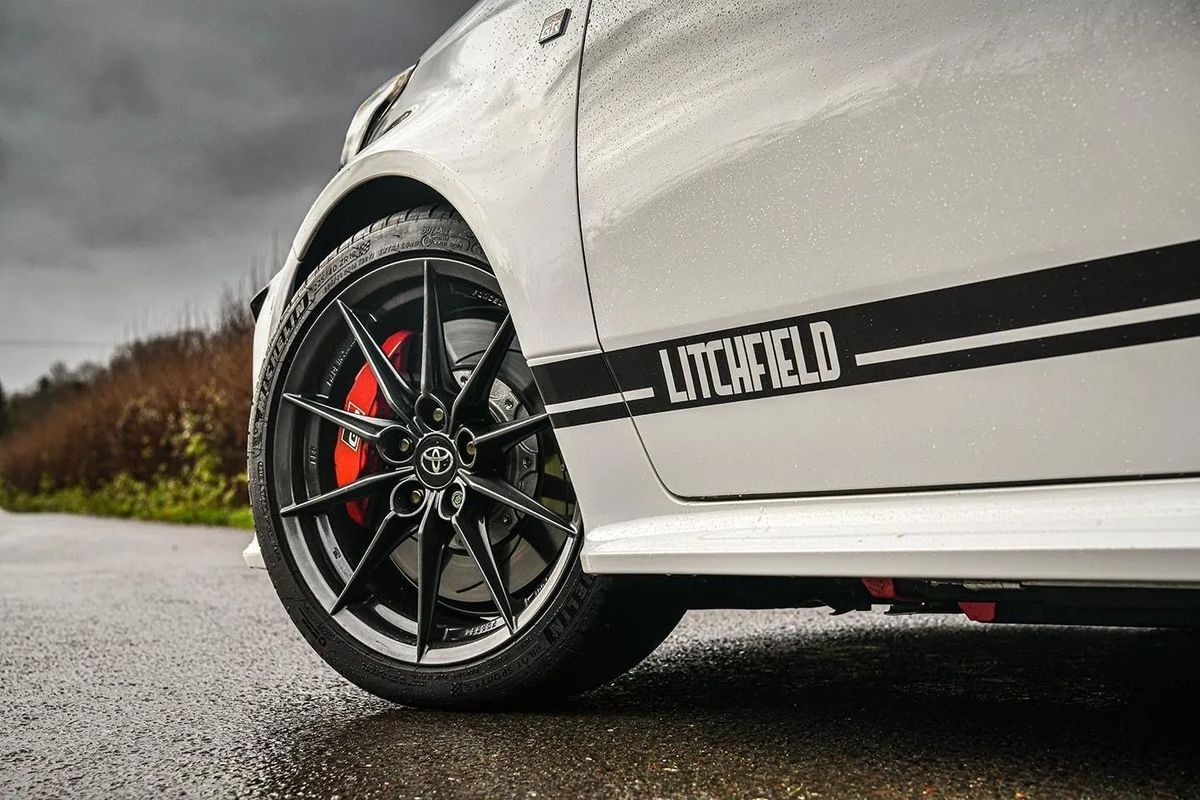
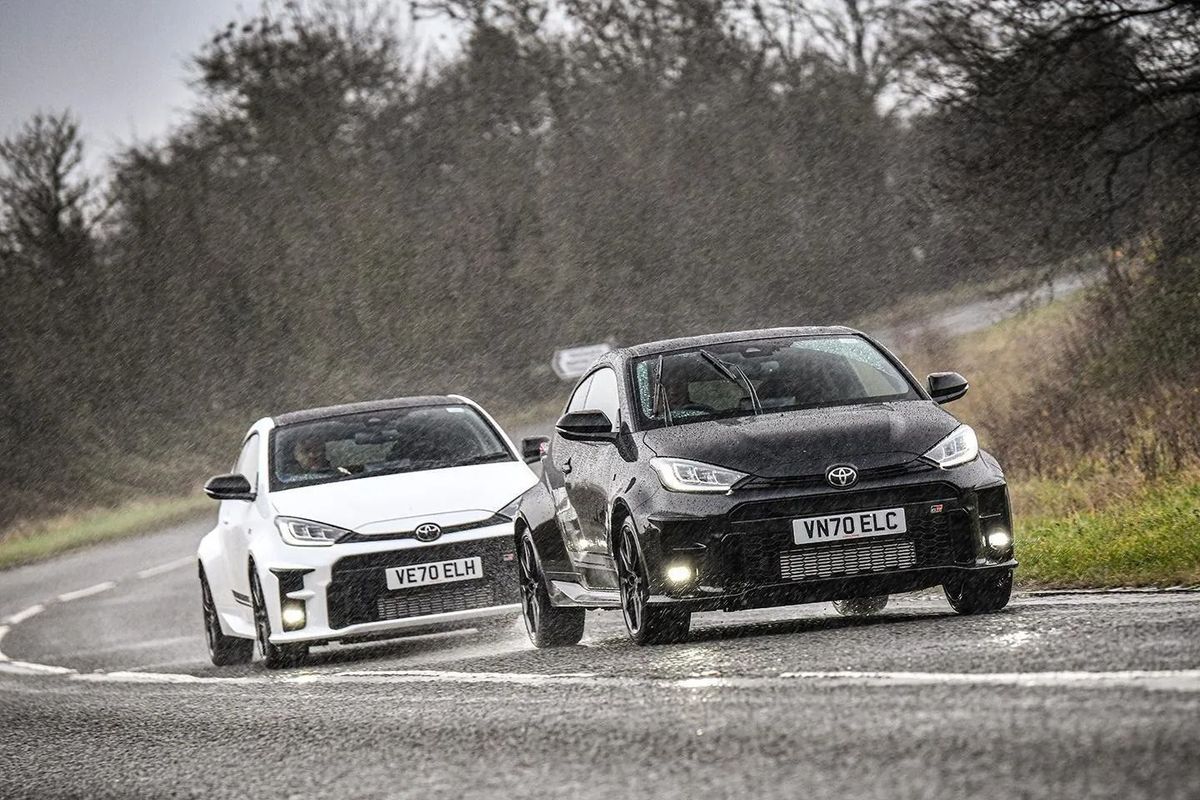
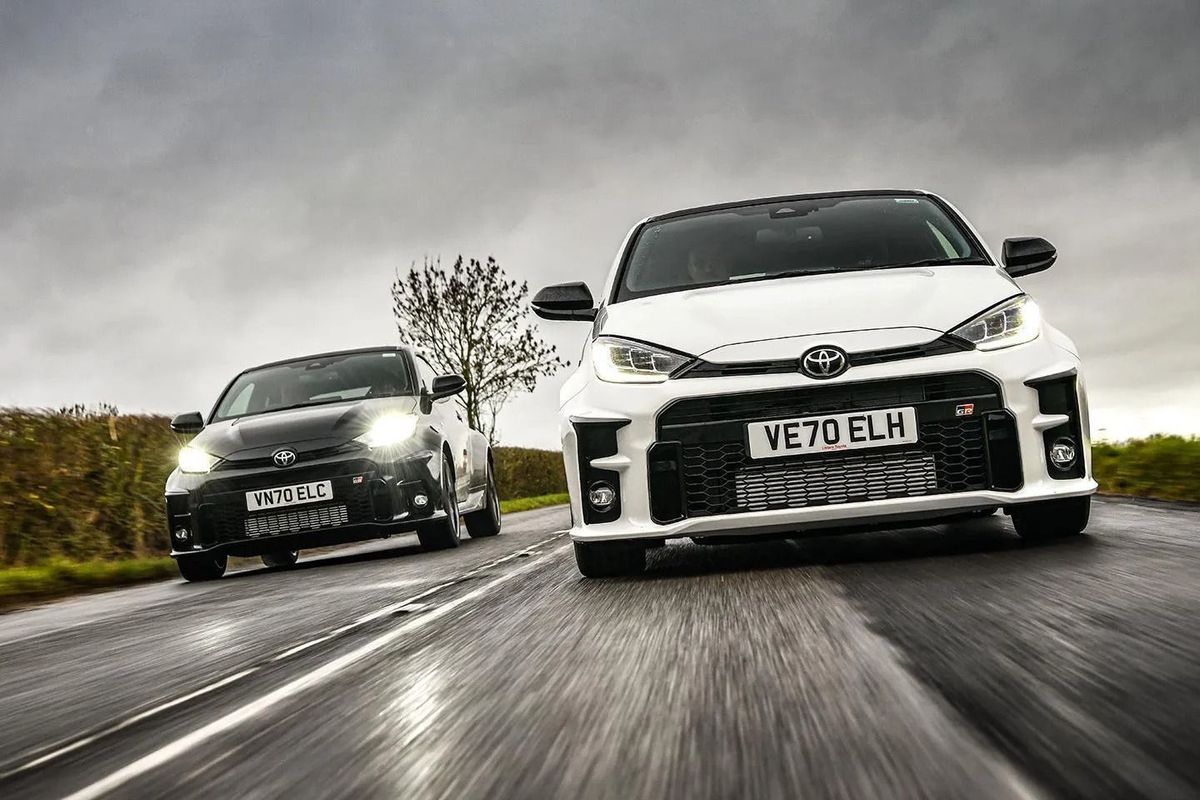
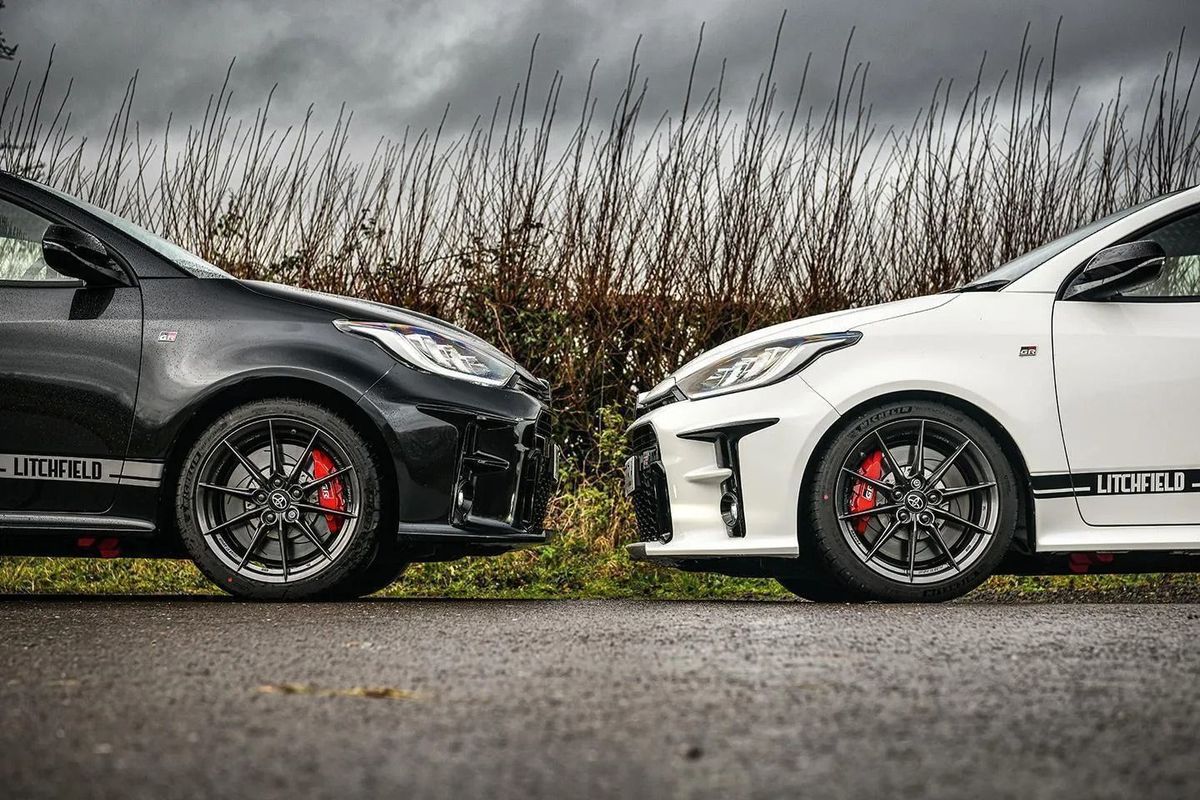
Litchfield, which also produces upgrade kits for performance cars such as the Alpine A110, BMW M2 and Ford Focus RS, bought a pair of GR Yaris units shortly after the vehicle’s UK launch late last year and is developing a plethora of aftermarket parts, such as performance exhaust systems, a bolt-in roll cage, a new intake system, an ECU tuning package, an uprated intercooler, polyurethane bushes, as well as race seats for the car, Autocar reports. 


The customer coilover kit from Nitron is said to lower the ride height AND improve the GR Yaris' ride quality.

In standard trim, the GR Yaris’ 3-cylinder, 1.6-litre turbocharged engine offers up 192 kW and 360 Nm, but there is also said to be a high-output version that produces 200 kW and 370 Nm… and we understand the South African market is likely to get the latter.

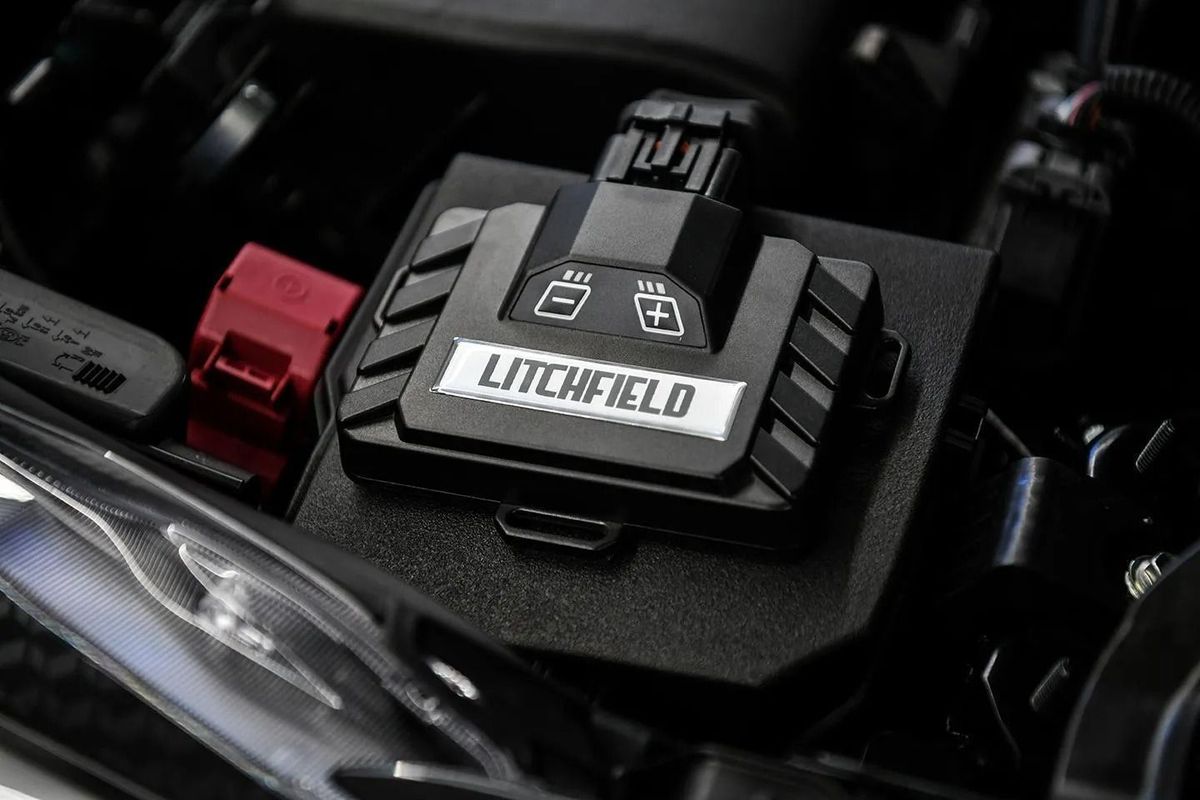
In developing new engine management software for the GR Yaris’ ECU, Litchfield has effectively reverse-engineered its way into the Toyota’s control systems. The firm has been testing a piggyback system that extracts at least 224 kW from the mechanically unmodified "triple" motor, representing a gain of about 24 kW over the standard car, but is also refining the software tweaks to ensure "smooth, consistent" power delivery.


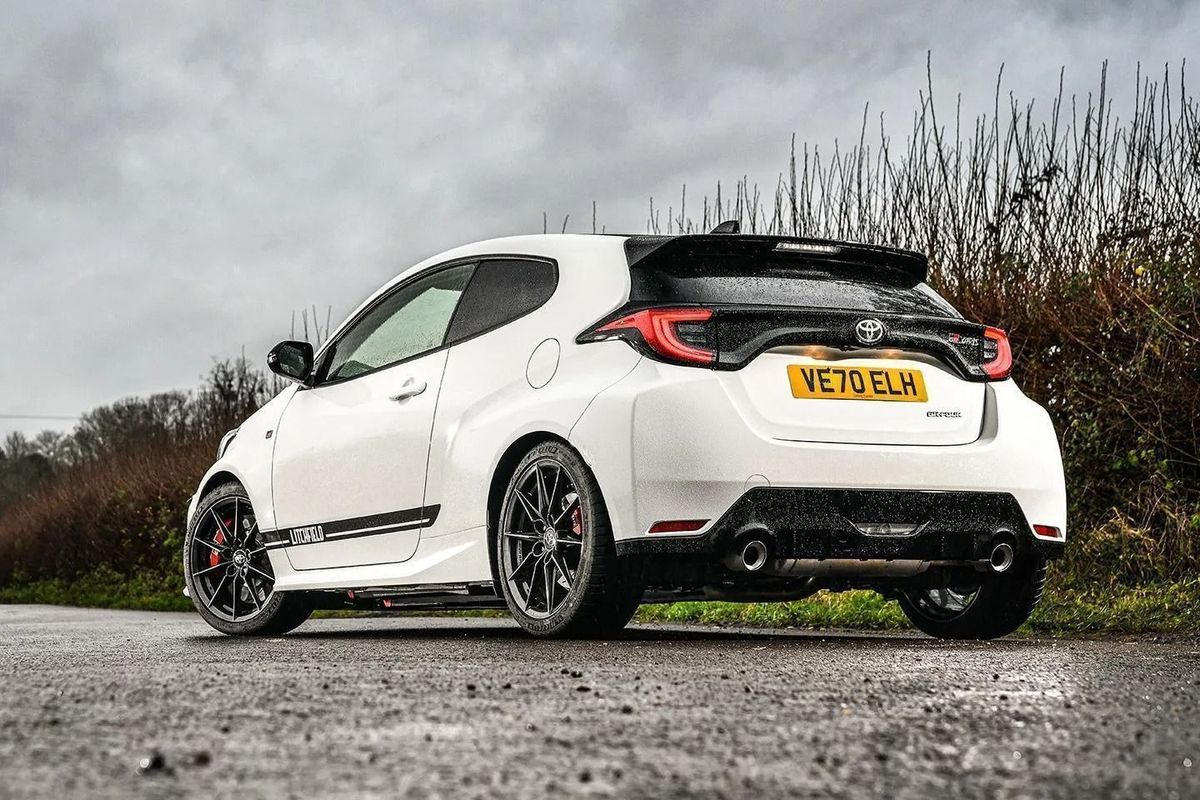
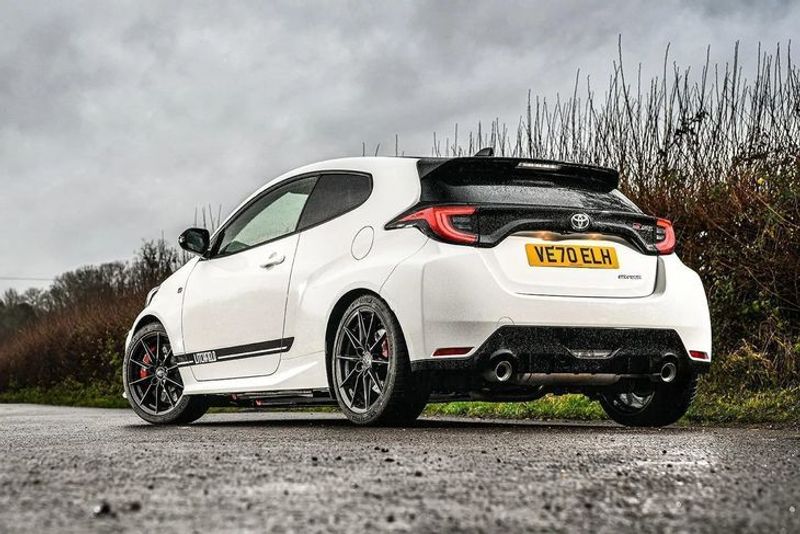
Note the more aggressive stance now that the wheels sit more tightly in the Toyota's wheel arches.

The GR Yaris’ all-wheel-drive system can apportion power between its front and rear axle dynamically via the Normal (60:40), Sport (30:70) and Track (50:50) drive modes. Whereas the standard model (equipped with a 6-speed manual gearbox) is said to bolt from 0 to 100 kph in 5.5 sec, Litchfield may hope to shave a 10th or two off that time.

Meanwhile, the company is planning to offer a pair of suspension upgrade packages for the Toyota, both of which are said to "result in a lower ride height and improved ride quality without compromising the factory-specification car's dynamic characteristics," at least according to the tuner.


During the initial development phase, Litchfield has extracted 224 kW from the 1.6-litre 3-pot motor, how much more is to come?

To that end, Litchfield is developing a custom coilover kit in conjunction with UK suspension company Nitron. The prime setup offers 3-way adjustment “for maximum capability”, but the firm has also fashioned a 2-way kit that “locks-in” the basic optimised in-house settings at a lower starting price. A by-product of the mod is a lower, decidedly hot hatch-like ride height and a sportier stance.

In the meantime, we await the Toyota GR Yaris’ arrival on local shores. We will publish local specs and pricing info as soon as official details become available. 

Related content:

Toyota GR Yaris for SA in mid 2021

Toyota GR Yaris (2021) International Launch Review

GR-parts make GR Yaris look fiercer

Why the Ford ST brand died in SA

Spy Shots: 2021 Volkswagen Polo (Updated)

Spy shots of the facelifted Volkswagen Polo have landed. Here's what we know about the popular compact hatchback ahead of its estimated arrival in 2022.

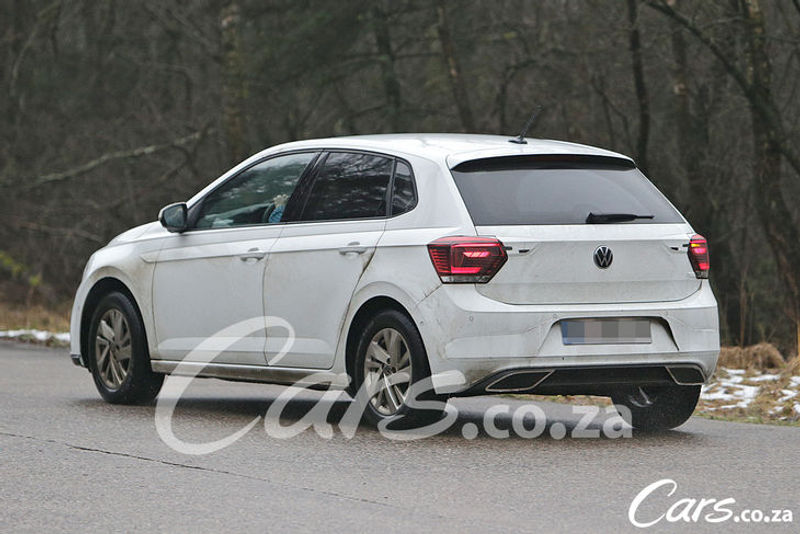
Picture credit: S. Baldauf/SB-Medien. We have paid for these photos and at the photographer's request, have watermarked them.

*Update* In January 2021, prototypes of the facelifted Volkswagen Polo were spotted on the road. At first glance, we can see a revised front end, complete with new headlights. We suspect the updated Polo will feature Golf 8-like lights at the front as this unit's headlamps are carefully camouflaged. There's also a change to the boot lid and the rear lights have been tweaked too. The real changes will be under the skin, with improvements and enhancements likely in the refinement, performance, and efficiency departments. 

Given its popularity in SA and the fact that the VW plant in Uitenhage contributes significantly to both local and international markets, it wouldn't surprise us to see Polo prototypes running around the Eastern Cape before the end of the year. As for showroom arrival, we expect the updated Polo to be revealed before the end of 2021 and hitting dealer floors in 2022. 


The changes aren't immediately apparent, but if you look closely, you'll see some tweaks to the rear lights as well as a new bootlid.

The current iteration of the Volkswagen Polo has been on sale for some time. Officially launched in South Africa back in January 2018, the Volkswagen Polo has been a popular compact hatchback, tallying up more than healthy sales numbers. Globally, the Volkswagen Polo was revealed in the middle of 2017.

With almost 3 years of local market dominance, you can bet Volkswagen has started internal discussions on the facelifted model. Given the fact that Volkswagen's Uitenhage plant churns out Polos for both the local and international markets, the updated Polo is of paramount importance. 

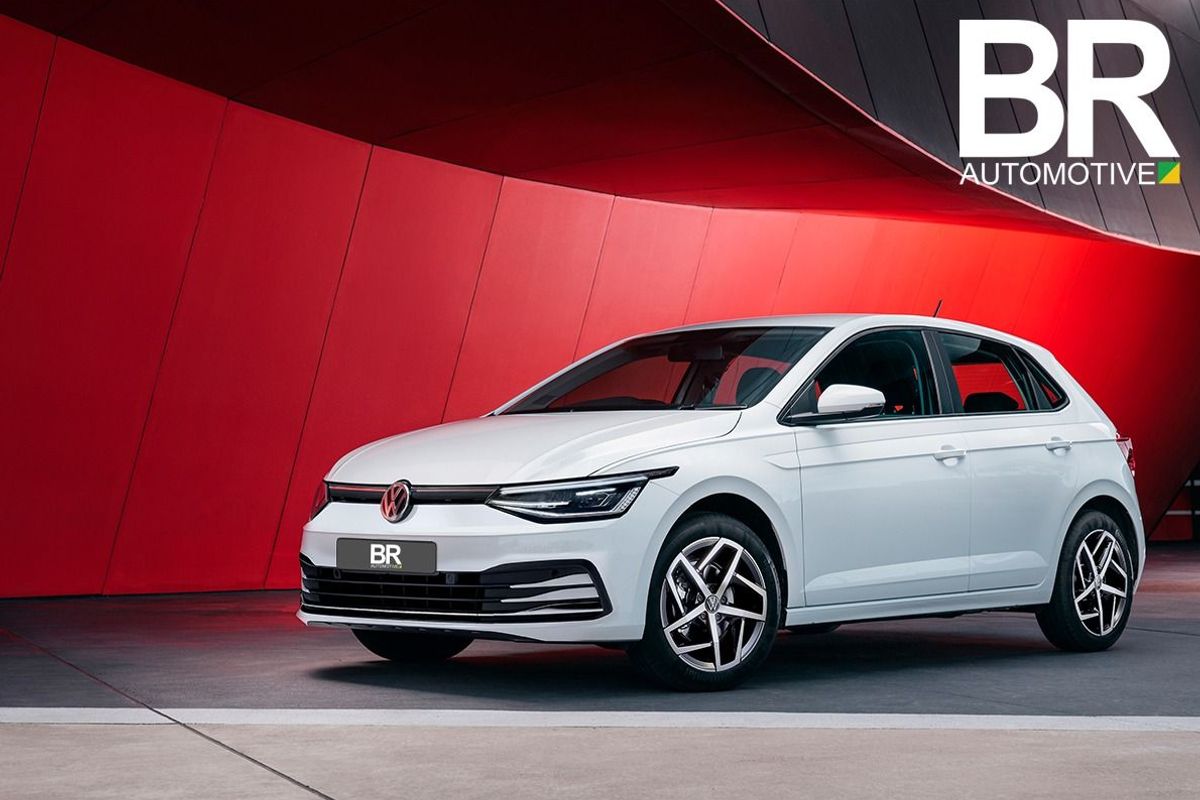
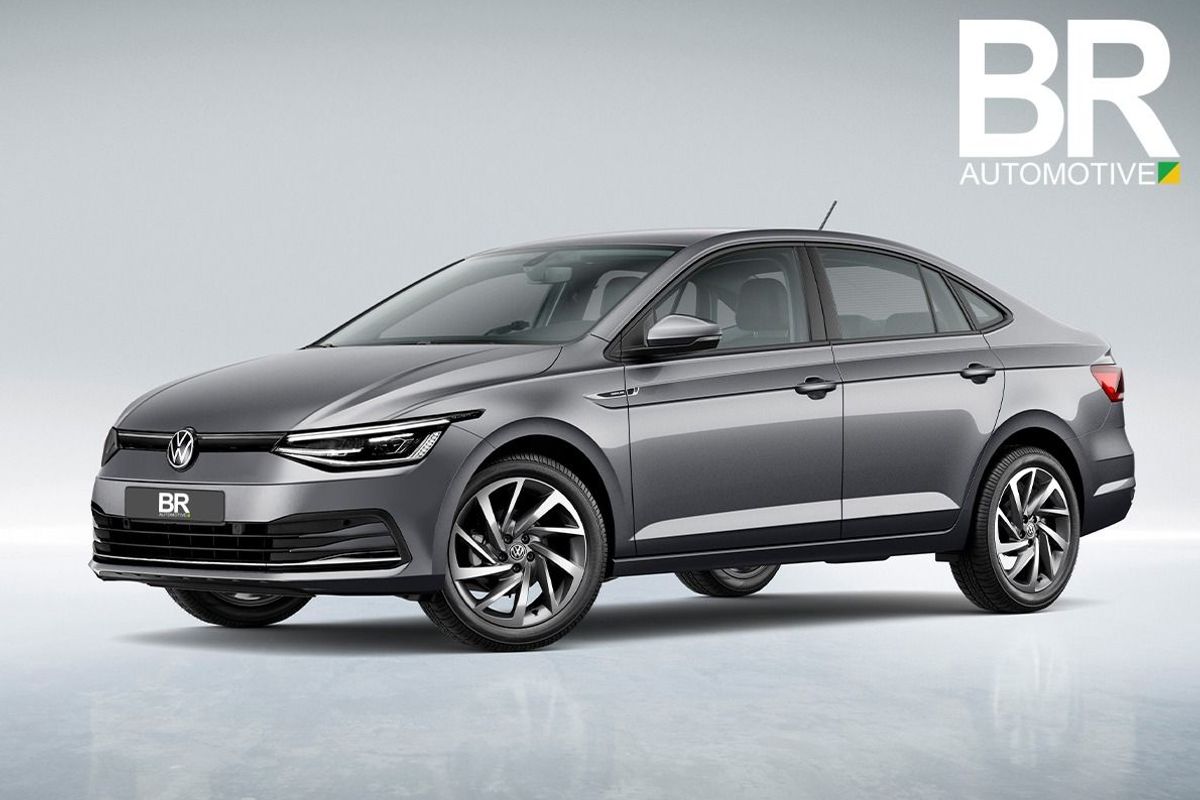
Brazil Automotive has done a render of the Volkswagen Polo and if you, like us, think this looks unusually familiar, you'd be right. The front of the Volkswagen Golf 8 has been superimposed onto the nose of the Polo, and we think it looks great. This new face is not unique to the Golf 8 either and we've seen a variation of this design language on the updated Tiguan SUV. 

What can we expect in the updated Volkswagen Polo? Volkswagen is a firm believer in incremental improvements, so don't expect a major overhaul both in terms of visual design and under the skin changes. We can speculate and suspect there will be updates to the infotainment system, cabin trim as well as revisions to the powertrain in an effort to make them more efficient.

As it stands, Volkswagen SA currently offers the Polo with a few powertrain combinations revolving around the 1.0-litre turbocharged 3-cylinder petrol motor. It's available in 2 states of tune (70 kW and 85 kW) and there's a manual gearbox or dual-clutch auto on offer. For those wanting some firepower, the 2.0-litre Polo GTI is also available, but that's dual-clutch only.  

Further Reading

2021 Volkswagen Polo Sedan Revealed

Volkswagen Polo 1.6 Conceptline (2016) Specs & Price

Volkswagen SA has built 200 000 new Polos

Video Comparison: 2018 Volkswagen Polo & 2017 Volkswagen Polo

Volkswagen Polo GTI (2018) Specs & Price

New Opel Corsa OPC with only 100 kW

Big power cut for OPC variants.

Despite its shrinking local presence, fans of the Opel brand do have some exciting battery-powered models to anticipate.

The German value car brand is rapidly transitioning to an electric vehicle offering and not forgetting about its legacy OPC customers.

Although the notion of OPC badging and a lack of rear exhausts might trouble established Opel performance car customers, the company is promising an authentic driving experience.

During the tumultuous last five years, as Opel has attempted to settle its business, the OPC brand was greatly neglected. Since the discontinuation of Opel’s previous-generation Corsa, there has been no new OPC version. The best the brand has been able to deliver is a sportily clad GSI rebadge that was tossed onto the local market back in mid-2019.

Opel has now confirmed that it will introduce a high-performance version of the latest Corsa next year. Fans of the brand should brace themselves for a very different driving experience as this new OPC will use the Corsa-e platform and powertrain.

There will be no turbocharged four-cylinder engine option or manual gearbox. Opel’s new OPC will also have a great deal less power. Using the Corsa-e’s lithium-ion battery pack and electric motor configuration, it will store 50 kWh of energy and deliver only 100 kW of power.

Compared to the previous OPC’s 152kW petrol engine, that could leave many potential Opel hot hatchback customers a touch confused- and disappointed.

Design flair will be a given and with its electric power- and drivetrain, the new OPC will have a much better centre of gravity and better cornering stability. It should also be credibly quick from 0-100 kph, as the current Corsa-e runs that performance benchmark in only 7.6 seconds.

Expect top speed to be governed to a relatively low threshold, to preserve battery cell integrity and conserve range.

Related content

Opel Corsa SA Engine Details Announced

The Journey Karoo: To Hell and Back in the Opel Crossland X

Opel launch new lightning bolt

Toyota Quantum Updated in SA

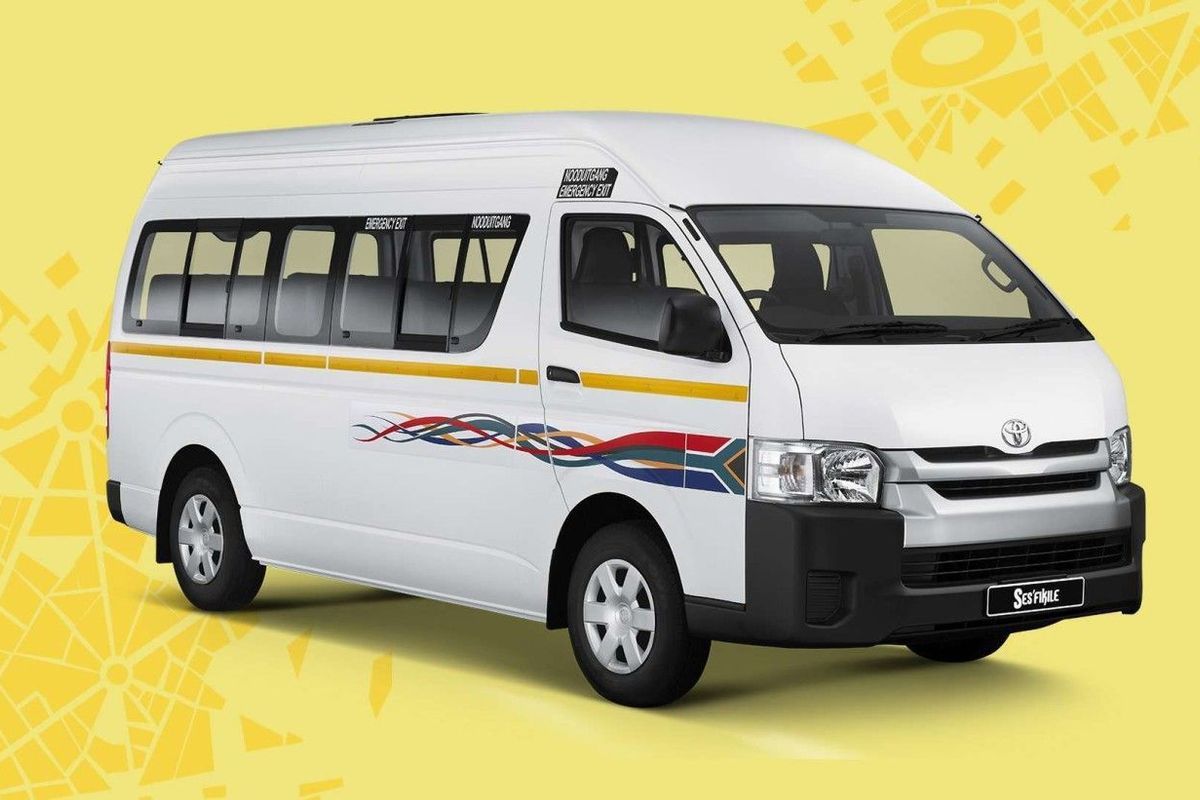
Toyota has updated its Quantum and Hiace Ses’fikile people-movers in South Africa. See the changes below. 

Taxis transport millions of South Africans to and from work every day and the taxi industry forms the backbone of public transport in South Africa. The Hiace Ses’fikile and Quantum models are a common sight on our roads and they are locally produced at Toyota’s Prospecton facility in Durban. 

With the Covid-19 pandemic gripping the country, Toyota SA has fitted a driver guard inside the Hiace Ses’fikile to improve safety for both the driver and passengers. Hiace Ses’fikile’s produced from October 2020 are fitted with this guard. 

Moving onto the changes for the Quantum range, the Quantum GL bus (11- and 14 seater) gains 16-inch alloy wheels replacing the previous steel wheels. An upgraded rear-view mirror with an auto-dimming function and reverse camera display is now also offered and is also available for the Quantum Panel Van and Crew Cab derivatives.  

Toyota has also discontinued non-air-conditioned derivatives from the Panel Van and Crew Cab ranges and the rear air-conditioned Crew Crab derivative has also now been discontinued. 

See the updated Toyota Quantum range with pricing below…

Toyota Quantum – Price in SA

Quantum 2.8 LWB Panel Van 3-s  – R535 700

Quantum 2.8 SLWB Panel Van 3-s – R574 600

Quantum 2.8 LWB Crew Cab 6-s  – R545 300

Quantum 2.8 LWB GL Bus 11-s – R669 800

Quantum 2.8 SLWB GL Bus 14-s – R684 900

Quantum 2.8 LWB VX Bus 9-s – R985 600

A 3-year/100 000km warranty and 9-services/90 000 km service plan is standard.

Buy a used Toyota Quantum on Cars.co.za

Related Content

Toyota working on battery Cruiser

Next-gen Toyota Land Cruiser Loses V8

Toyota Hilux (2020) Review

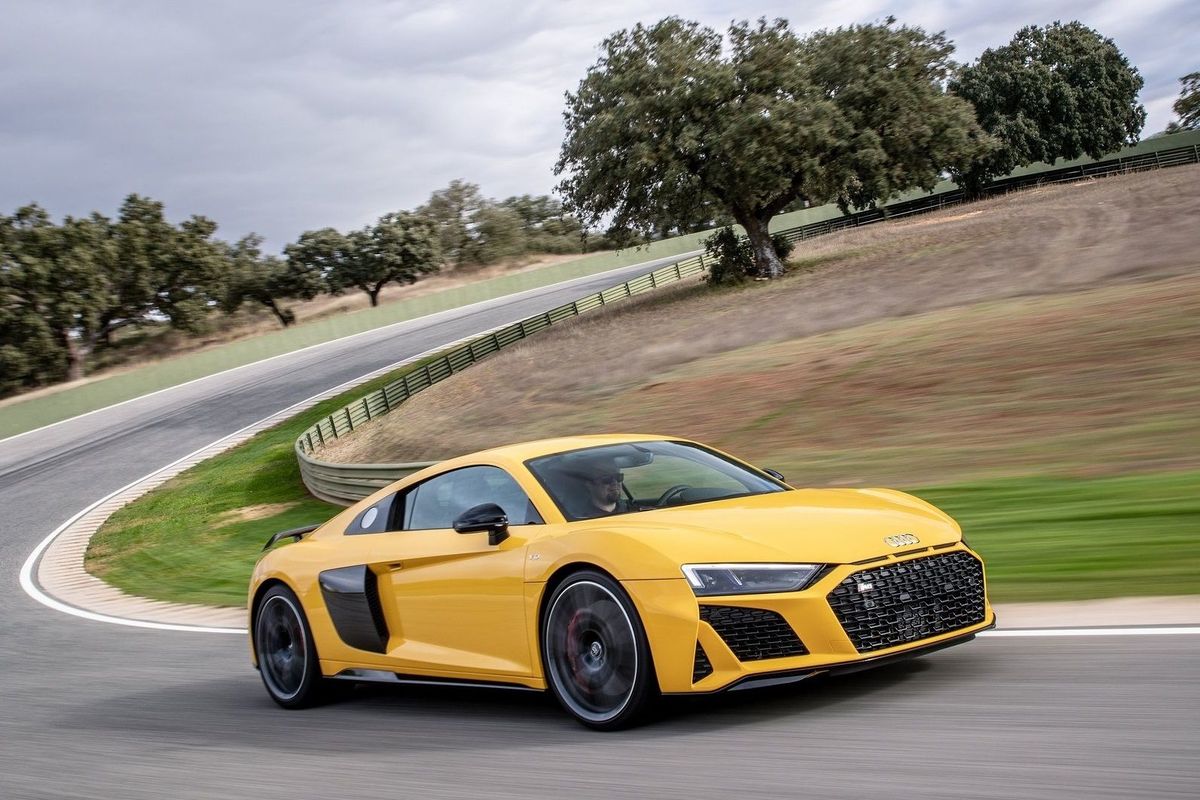
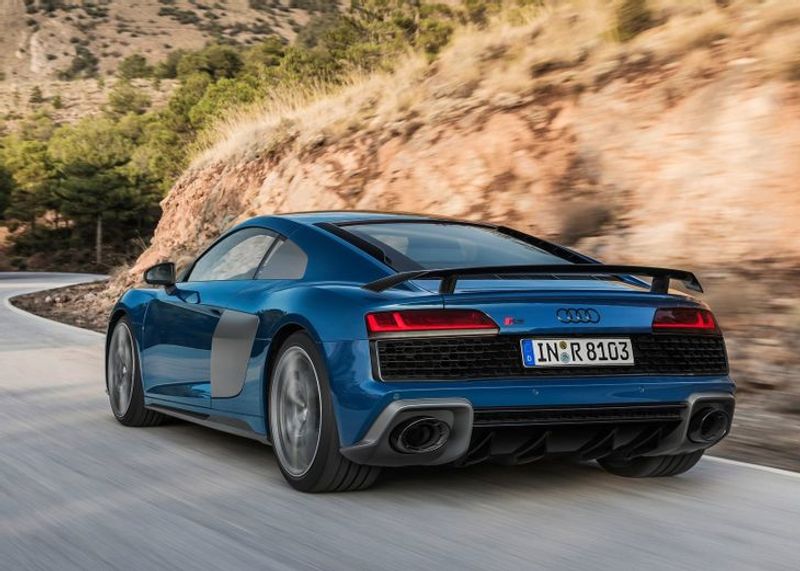
Audi R8 (2021) Specs & Pricing

After a long wait, the latest generation of Audi R8 supercar is about to touch down in South Africa. Here are the specifications and pricing.

We attended the launch of this supercar in Spain, on a very wet Ascari circuit back in December 2018. We came away impressed with its abilities, particularly in the rain. 

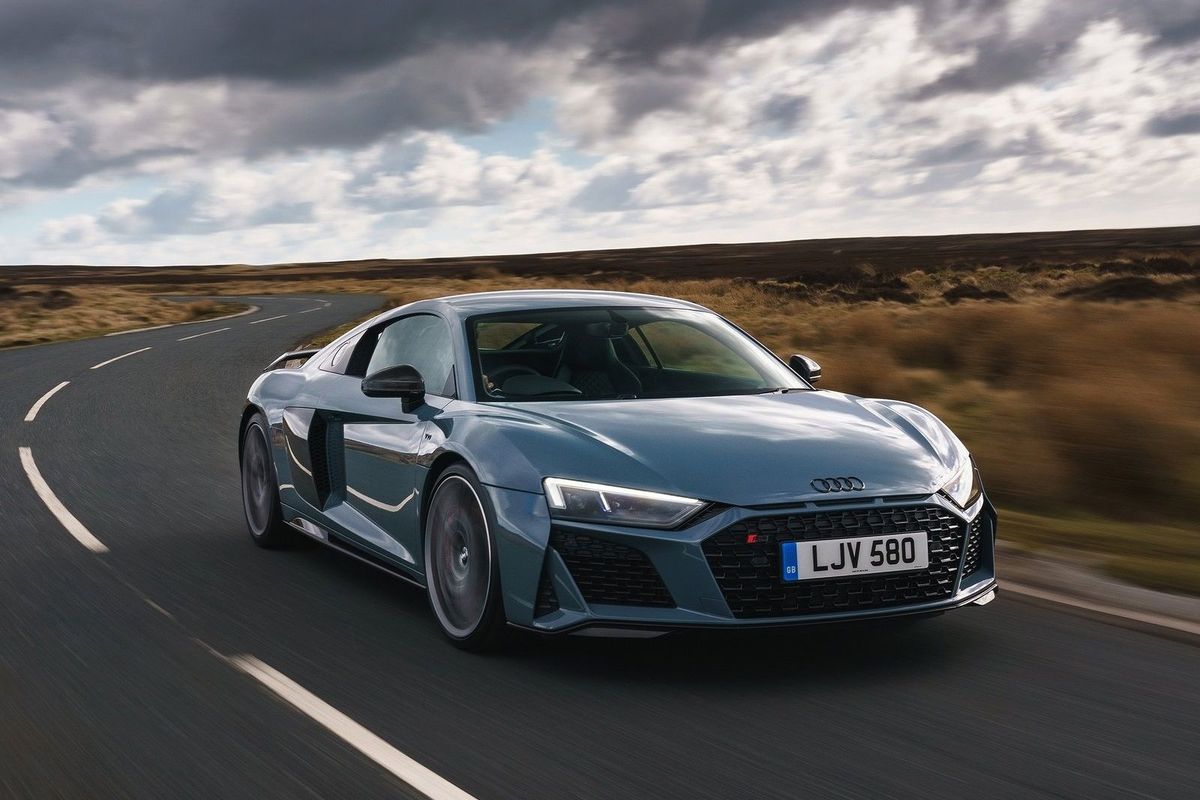
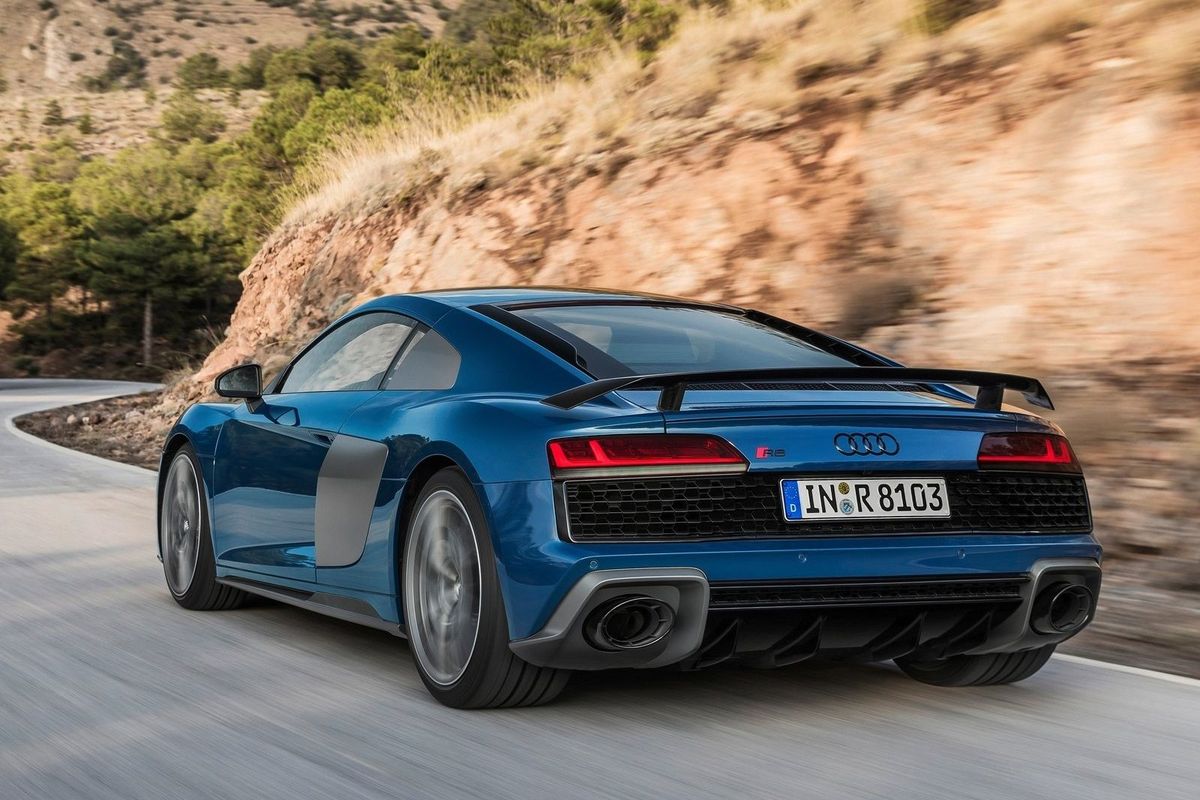
What has changed?  On the outside, you'll notice sharper-looking sheet metal with aesthetic detail revisions to the front and rear. There are enlarged oval exhausts and 3 slots on the bonnet, which are a tribute to the 1984 Sport Quattro Group B rally car. Don't fret too much about this "tribute", the new Audi A1 has them too. However, the critical changes lie under the skin, where Audi Sport has stiffened its supercar's suspension and installed an anti-roll bar (made of carbon) at the front.

The latter is much lighter than the unit on the pre-facelift version, which was made out of steel. There are also tweaks to the steering setup to give a bit more feel and involvement.

The iconic 5.2-litre naturally-aspirated V10 motor is retained. For the SA market, it produces a screaming 449 kW and 560 Nm. Thanks to quattro all-wheel drive and a clever launch control system, Audi claims this generation of R8 can sprint to 100 kph in just 3.1 seconds and run into a top speed of 331 kph.

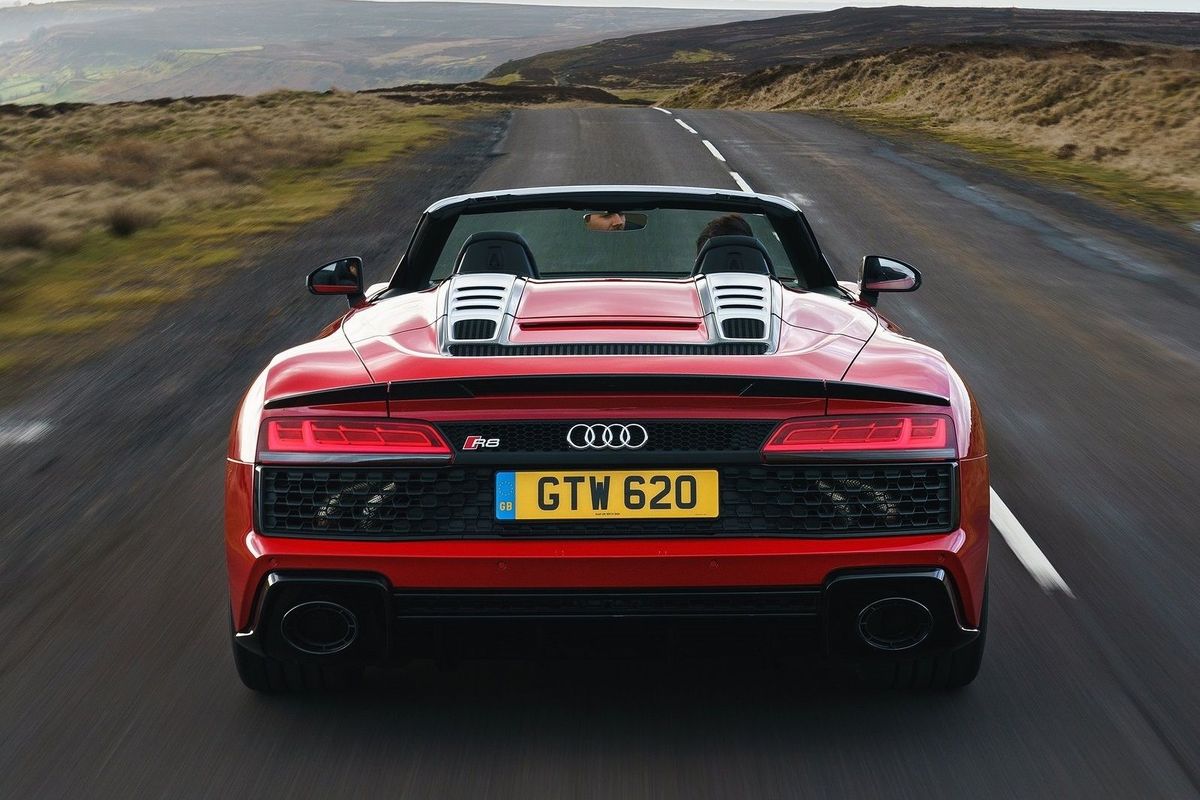
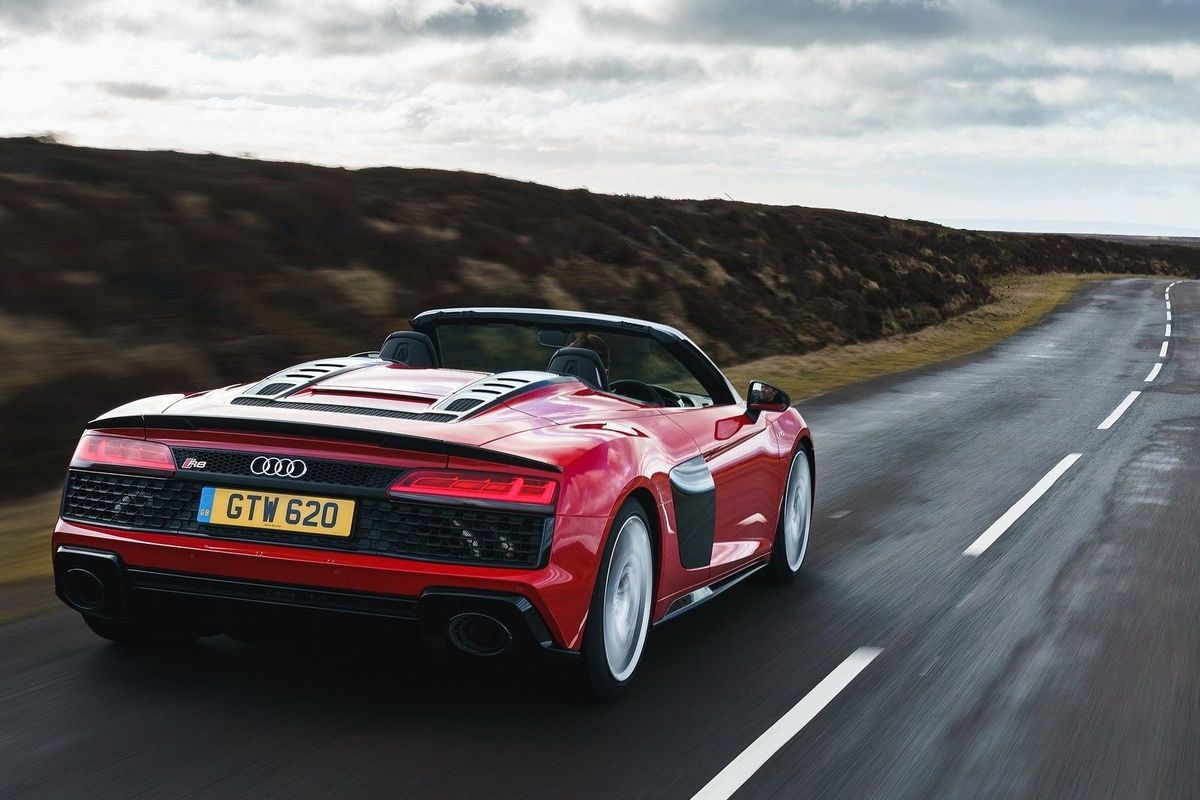
Audi South Africa is offering its new R8 in both coupe and spyder body styles, and there'll be numerous options available too. A cursory glance at Audi.co.za highlighted some of these; Carbon styling package (R150 000) , Laserlight headlamps (R64 500), Audi magnetic ride (R35 000), Dynamic steering (R27 000), and you can even get a gloss carbon engine cover for R77 300. There are also a few colours to choose from, but be mindful of the flagship Crystal paint range which starts from R30 000. There are a handful of alloy wheel designs to choose from, all 20-inch in size. 

Standard equipment levels are high, given its flagship status. A Bang & Olufsen sound system is standard fare, as is the Audi Virtual Cockpit with built-in MMI Navigation.

Browse Audi R8 units for sale

Audi R8 Price in South Africa (January 2021)

R8 Coupe   R3 336 000

R8 Spyder  R3 592 500

Further Reading

Audi R8 (2019) International Launch Review

Audi R8 V10 Spyder (2017) Quick Review

Audi R8 V10 Plus (2016) Review

Audi Releases Rear-Wheel-Drive R8