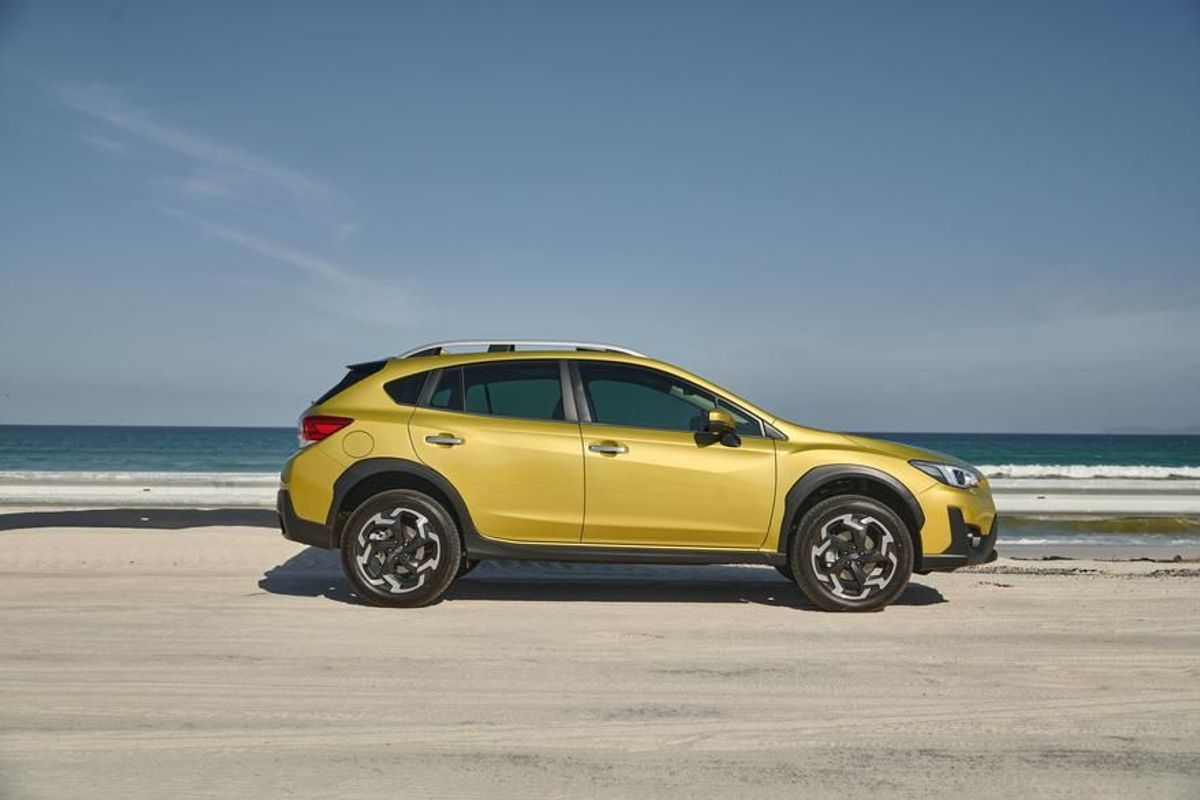
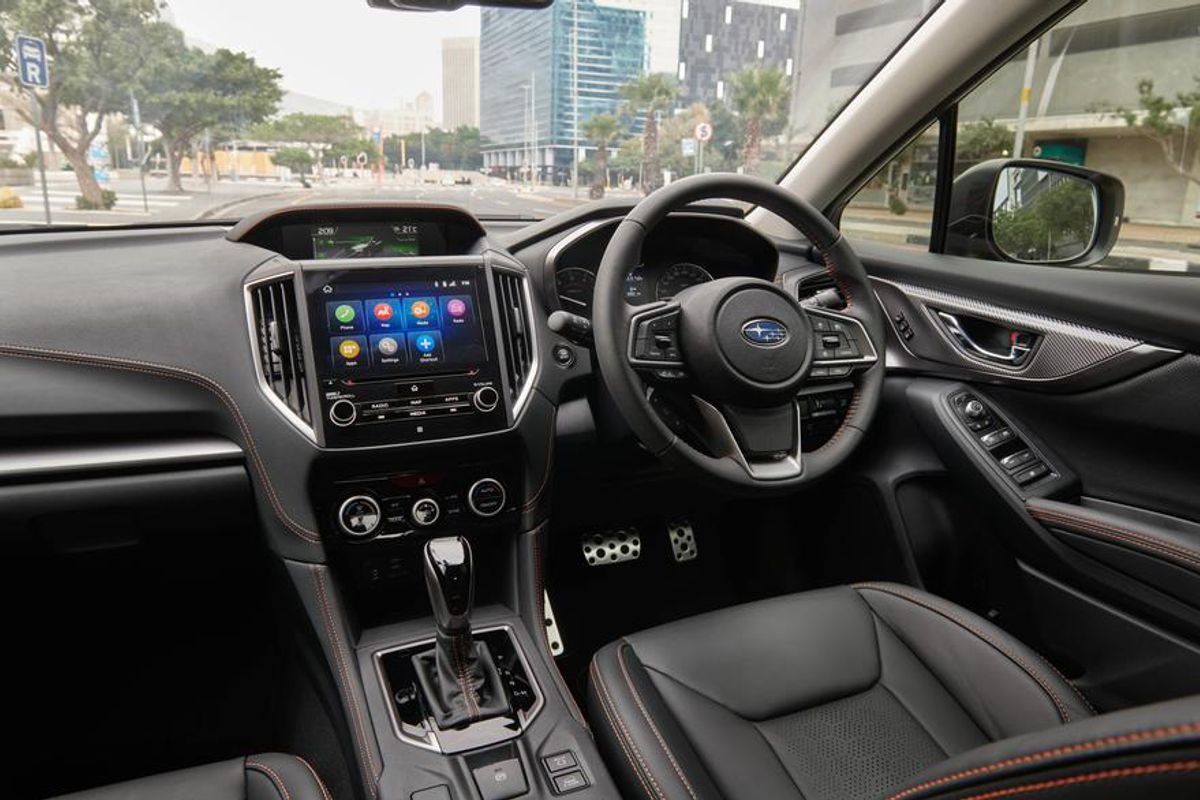
The updated Subaru XV crossover is now available in South Africa! See what’s changed and how much you can expect to pay for the XV below…
What’s new?
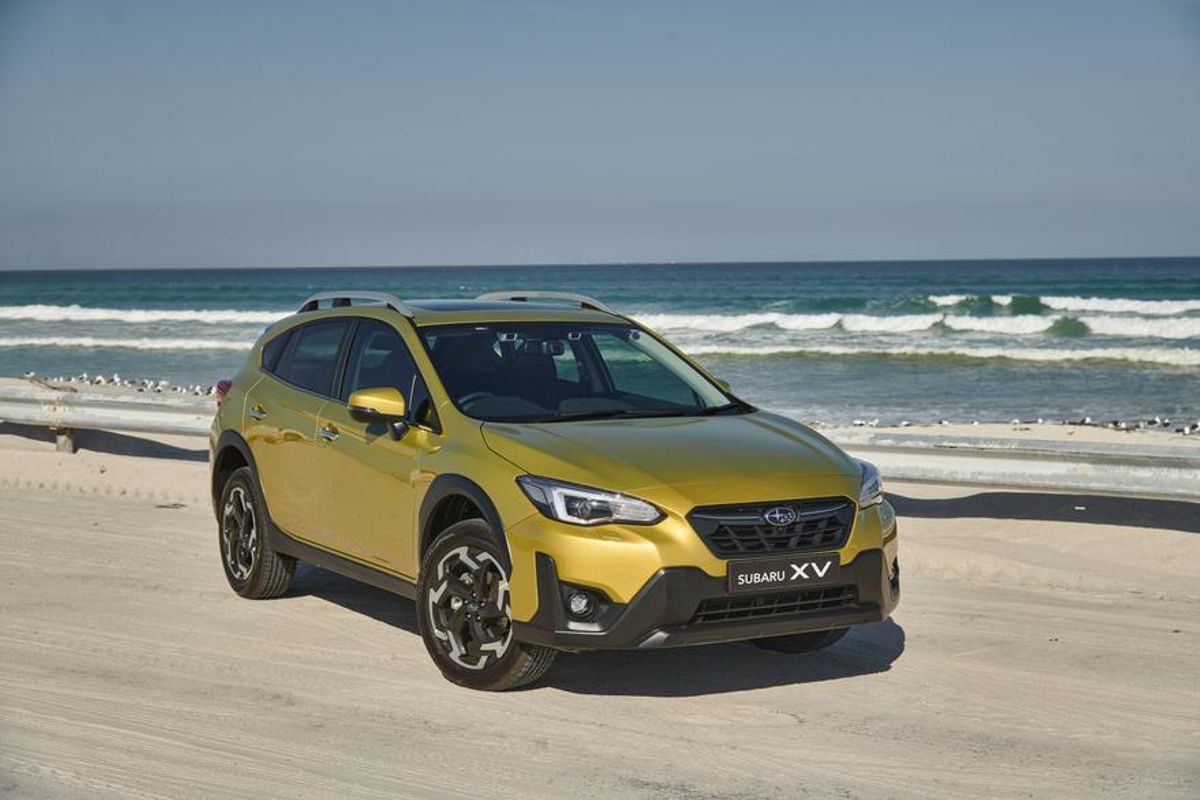
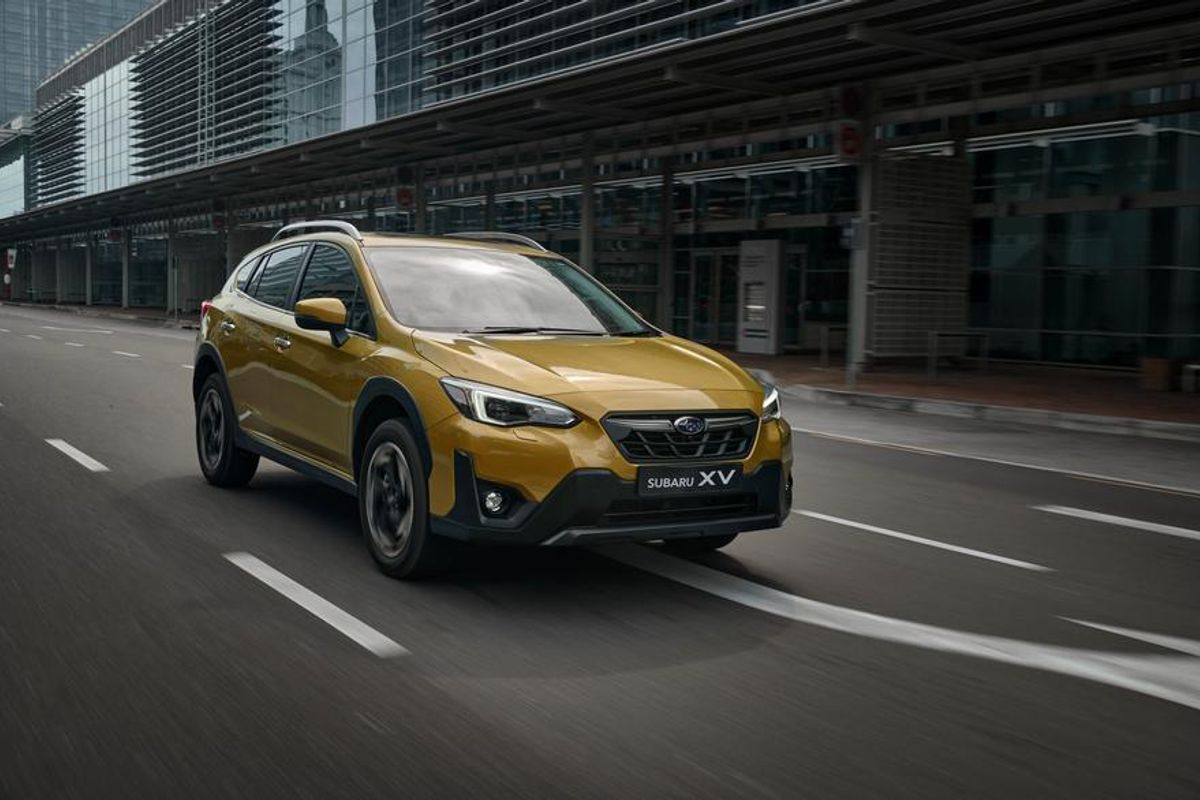
The Subaru XV now sports a freshly designed face featuring a revised lower grille and bumper as well as added contours to the fog light surrounds.
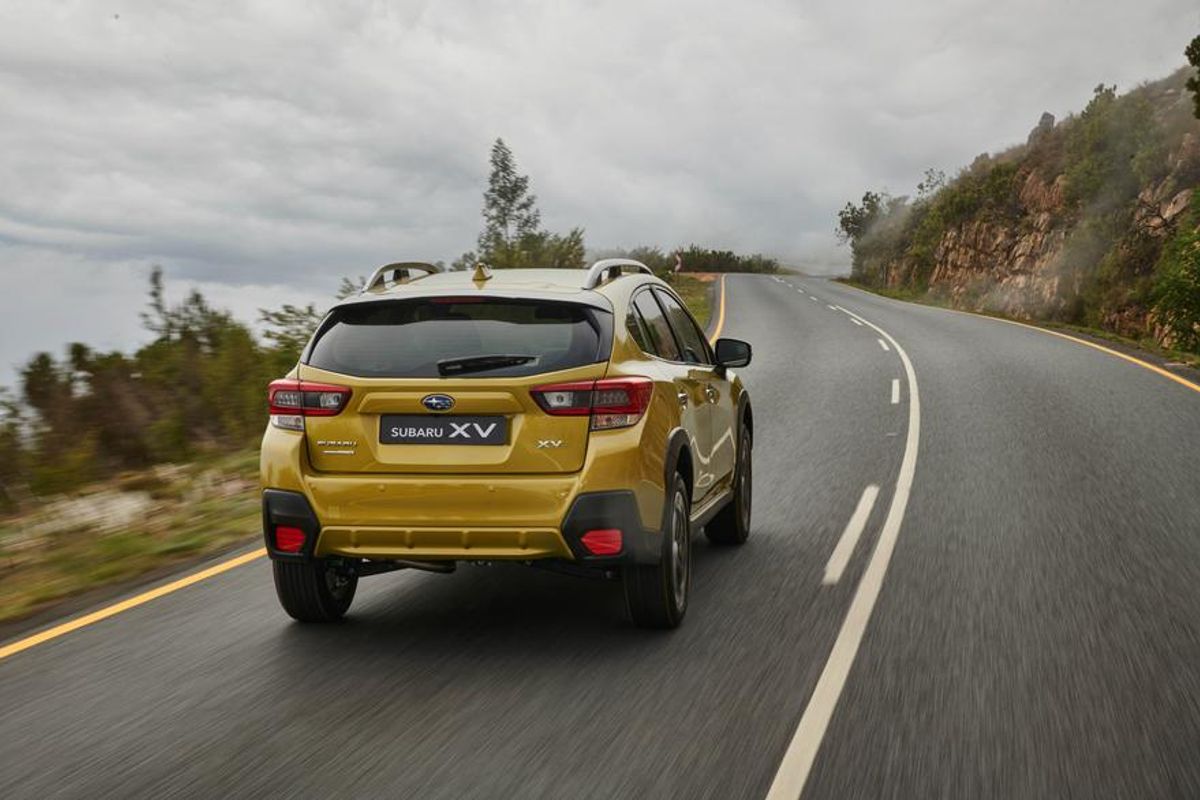
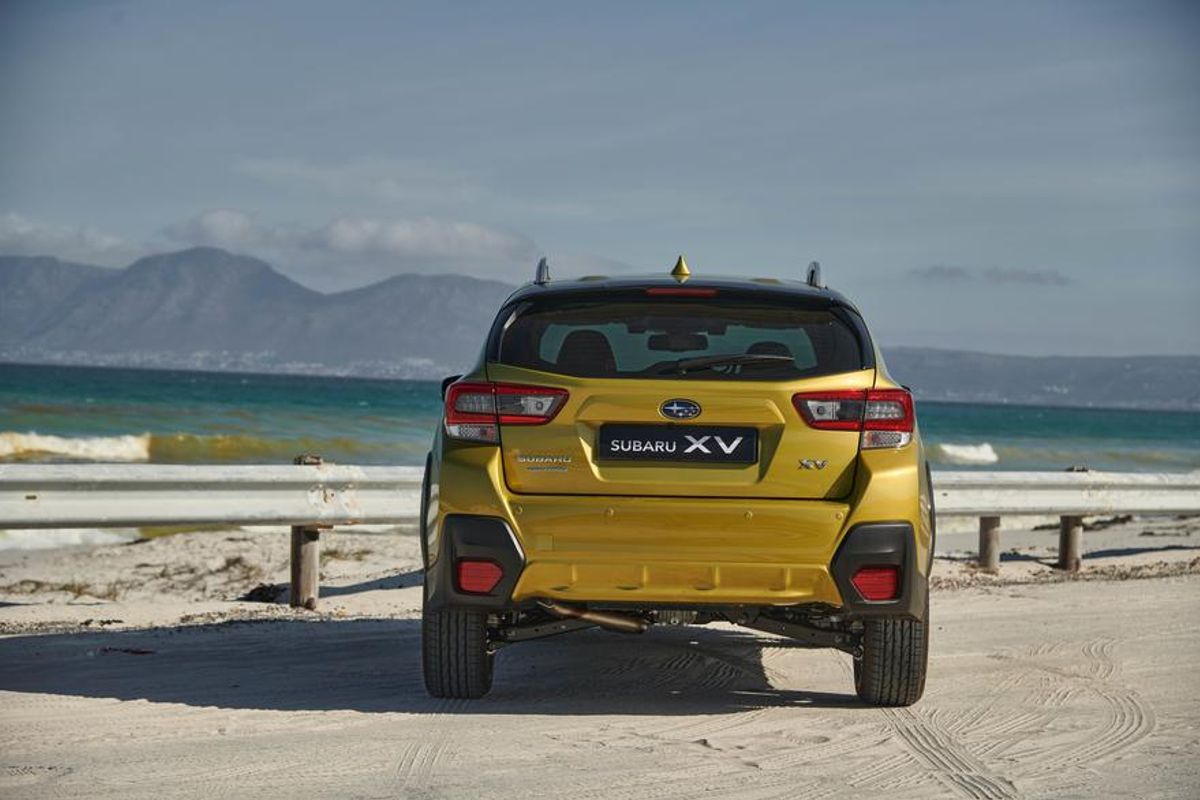
The XV can also be had with new 17- or 18-inch alloy wheels and buyers can also opt for the new Plasma Yellow or Horizon Blue Pearl body colours.
The XV offers a useful ground clearance of 220mm and Subaru has revised the XV’s suspension in an effort to enhance driving comfort and steering response.
The XV now offers better safety spec including Subaru's EyeSight Driver Assist technology.
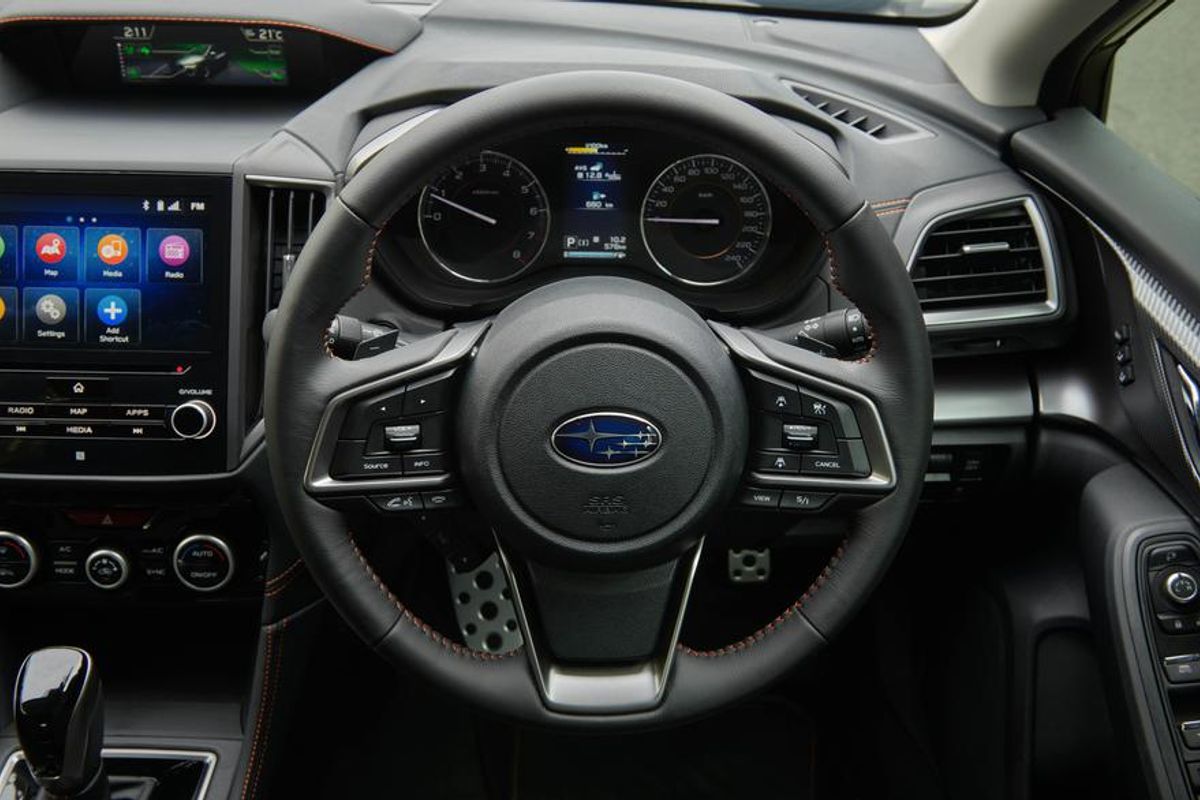
Subaru’s Intelligent Drive or SI-Drive is now offered in the XV and allows the driver to choose modes to prioritise either comfort and efficiency or sportiness.
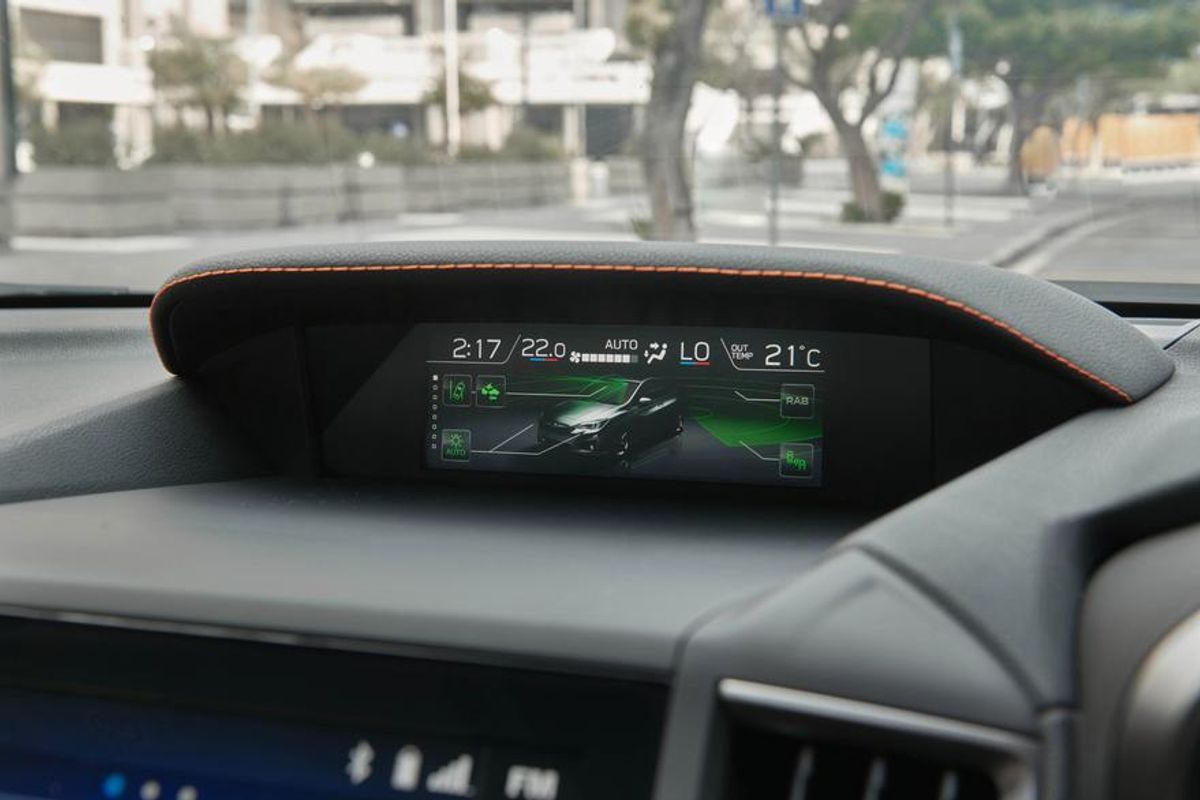
Safety has also been improved with the addition of a Front View Monitor which together with an integrated camera enhances safety when maneuvering in confined spaces or avoid obstacles in an offroad situation. This feature is part of Subaru’s Vision Assist safety suite which also includes a BLind Spot Monitor (BSM), Reverse Automatic Braking (RAB), Lane Change Assist (LCA) and Rear Cross Traffic Alert (RCTA).
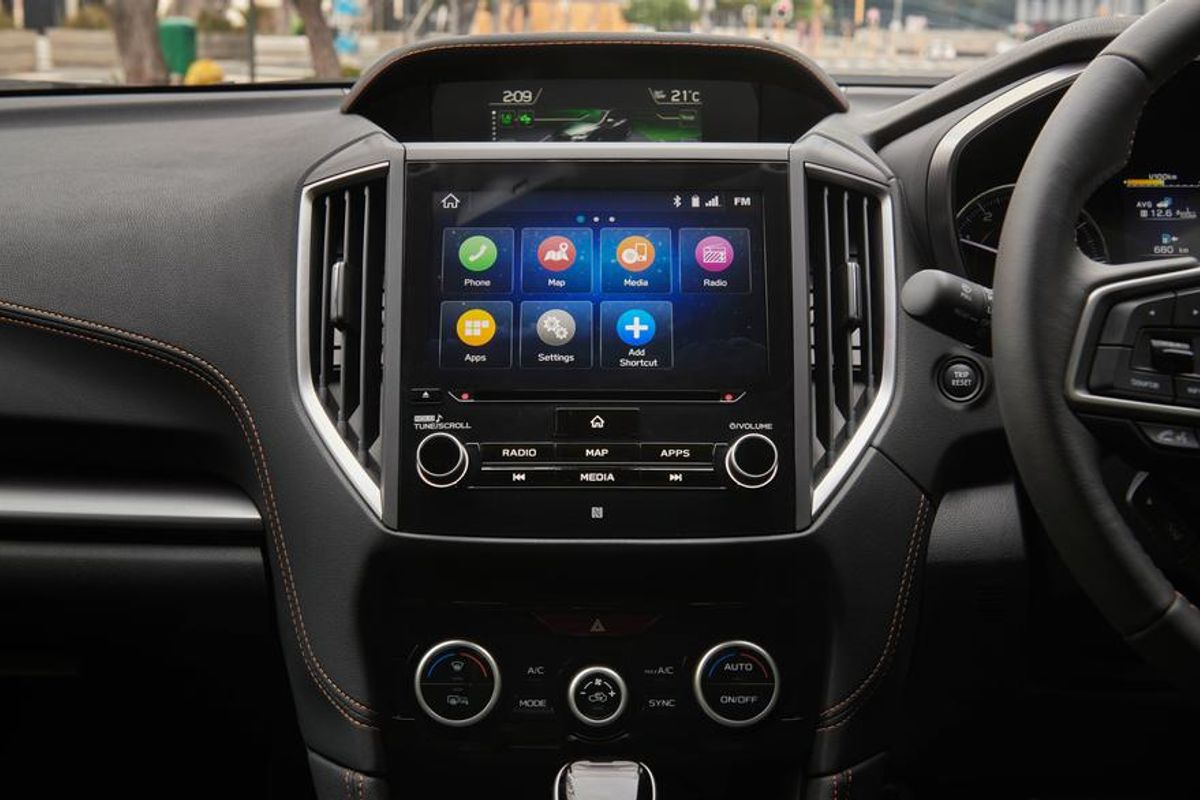
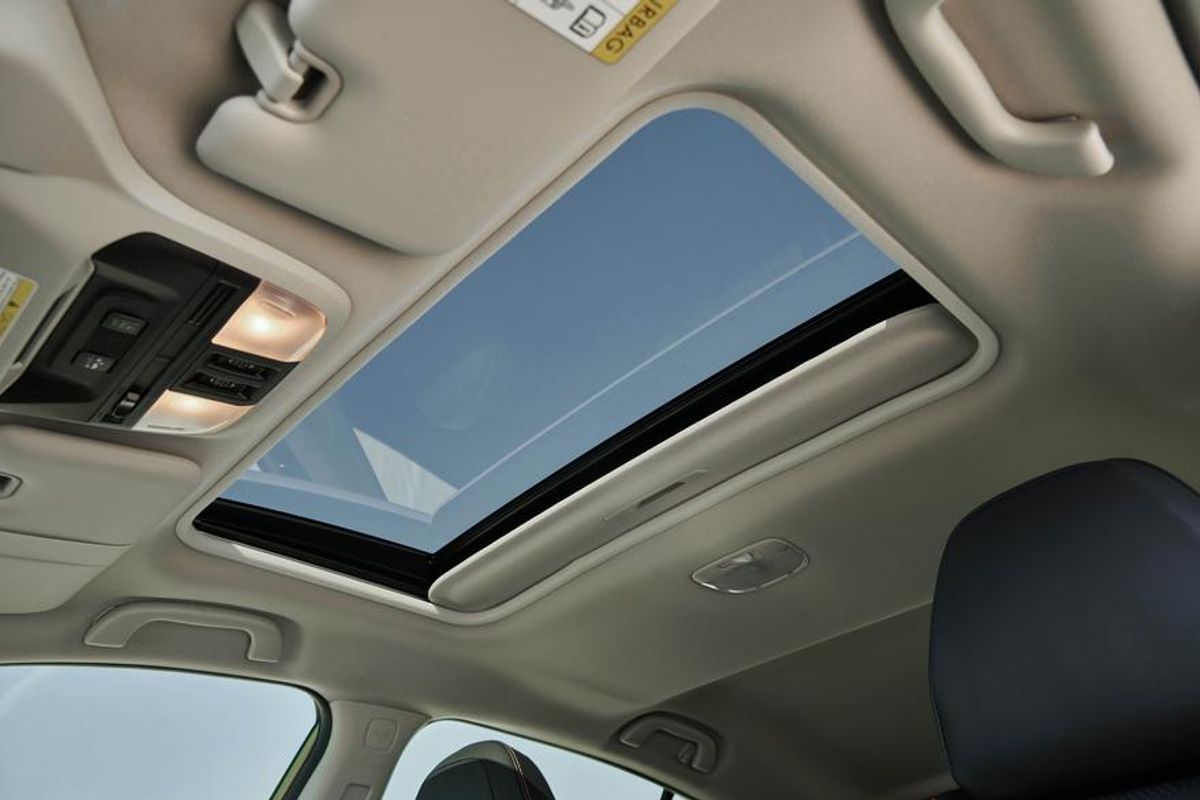
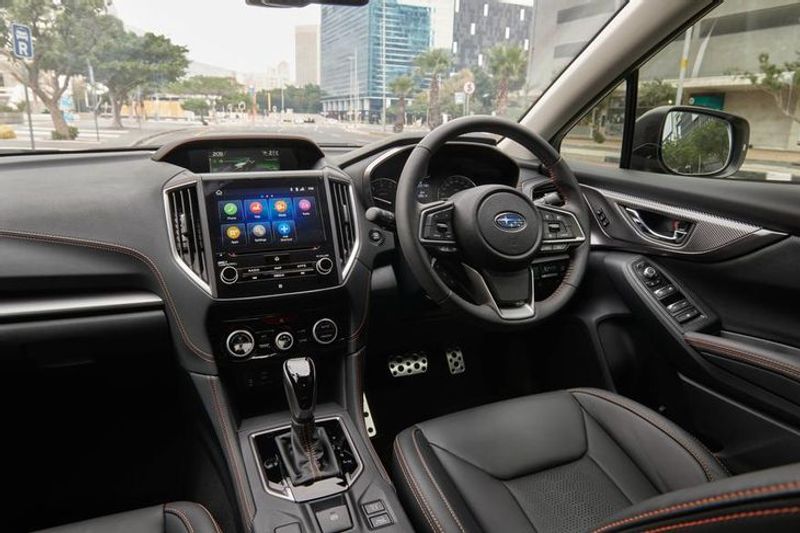
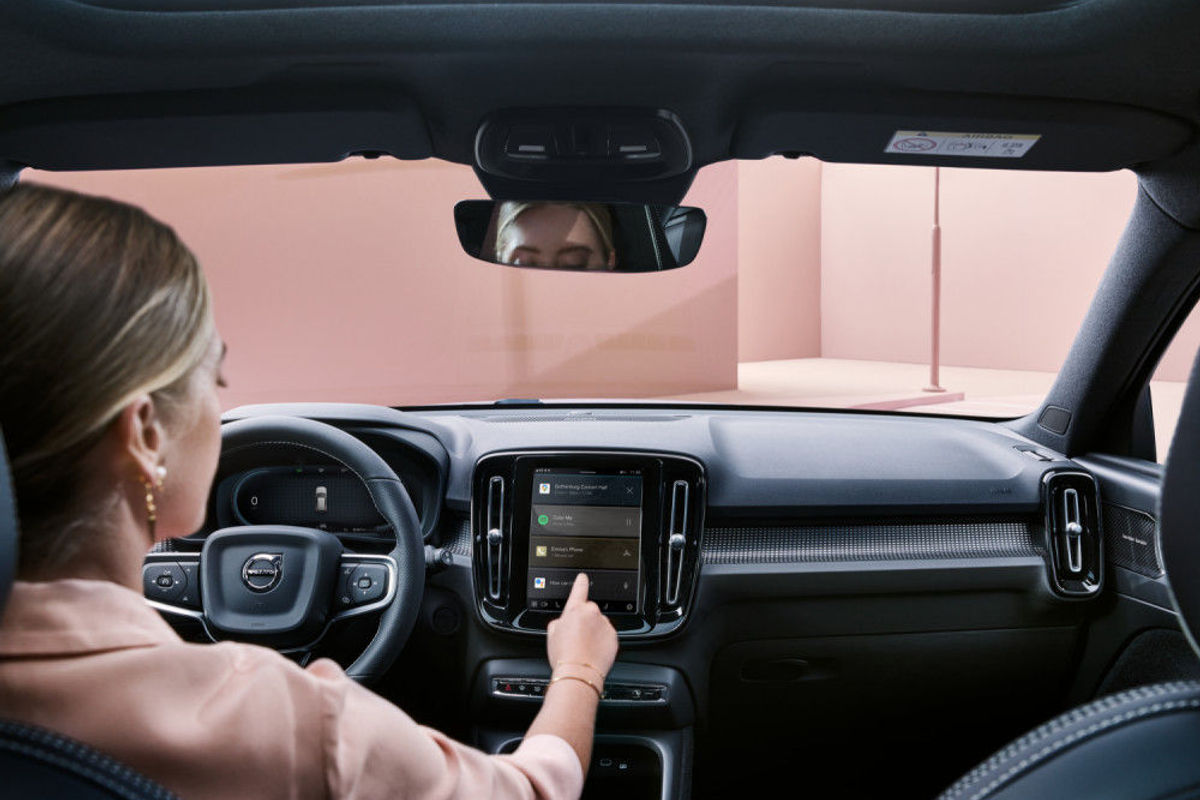
In terms of infotainment, an 8-inch touchscreen infotainment system is fitted and is compatible with Android Auto and Apple CarPlay. A total of 4 USB ports are also included and a new memory seat function is now a new feature. A sunroof and Subaru’s EyeSight Driver Assist technology is also offered!
What engine does the Subaru XV have?
The XV is powered by a 2.0-litre Boxer engine with 115 kW and 196 Nm on offer and is mated with a Continuously Variable Transmission (CVT) with a 7-speed manual mode and shift paddles behind the steering wheel.
Nteo Nkoli, Marketing Lead of Subaru Southern Africa says, “These updates to the XV compact SUV enhance what was already a highly competent vehicle. Now safer, more comfortable and with added tech and colours, the XV truly embodies the themes of fun and adventure.”
What is the price of the Subaru XV in South Africa?
Subaru XV 2.0i CVT R445 000
Subaru XV 2.0i-S ES R509 000
Subaru XV models are sold with a 3-year/75 000km maintenance plan as well as the 5-year/150 000km warranty. Extensions are optionally available.
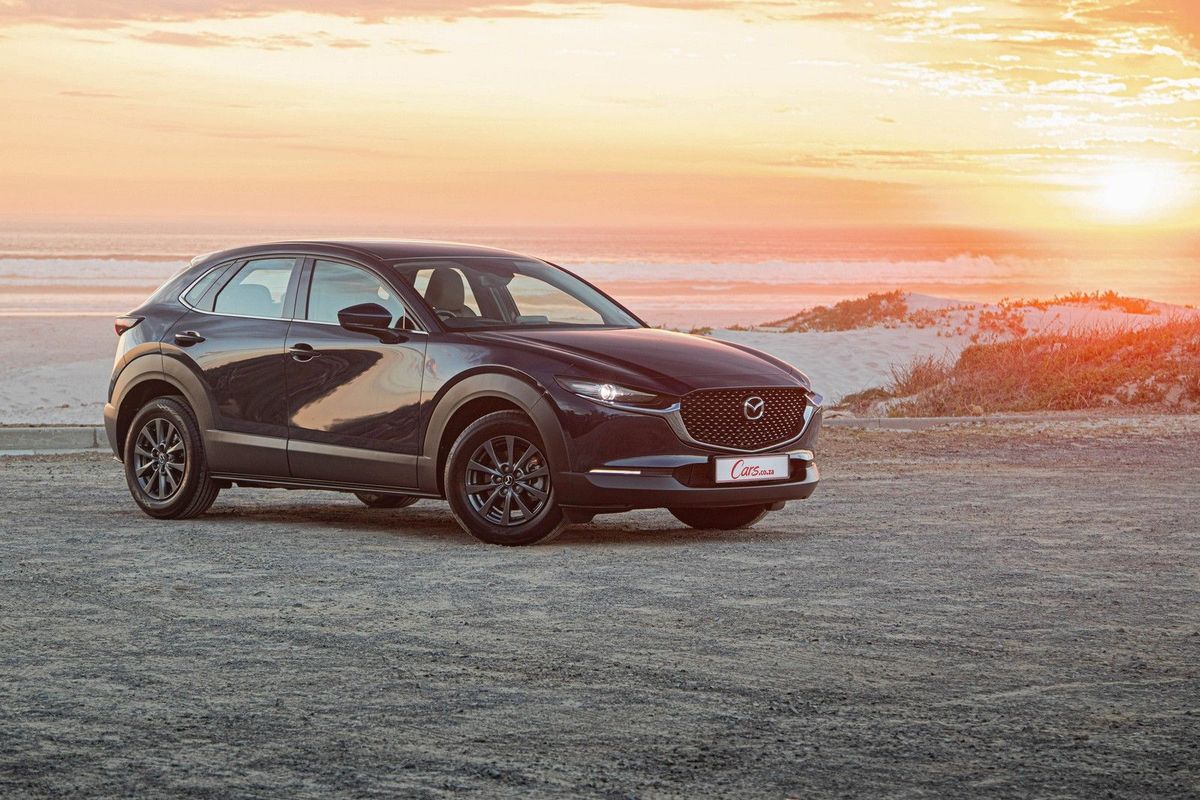
Although we were initially quite impressed with the Mazda CX-30, we recently had an opportunity to give the Japanese marque’s crossover a thorough week-long evaluation… Is Mazda’s “in-betweener model” indeed good enough to tempt you away from compelling Korean and German rival offerings?
Eyeing out the Mazda CX-30? This review will help you make an informed buying decision!
We like: Modern styling, minimalist cabin, exceptional finishes, refined driving experience.
We don’t like: Not the most engaging powertrain, price overlaps with that of the excellent CX-5.
Fast Facts
Model Tested: Mazda CX-30 2.0 Dynamic
Price: R499 900 (April 2021)
Engine: 2.0-litre naturally-aspirated 4-cylinder petrol
Mazda South Africa appears to be in good shape; sales of its well-polished products are on the up and the Hiroshima-based brand has an enduring reputation for good reliability and dependable after-sales service. Mazda’s product line-up is small enough to be focused, yet diverse enough to offer everything from compact hatchbacks to family cars, plus there’s a new BT-50 double cab waiting in the wings!
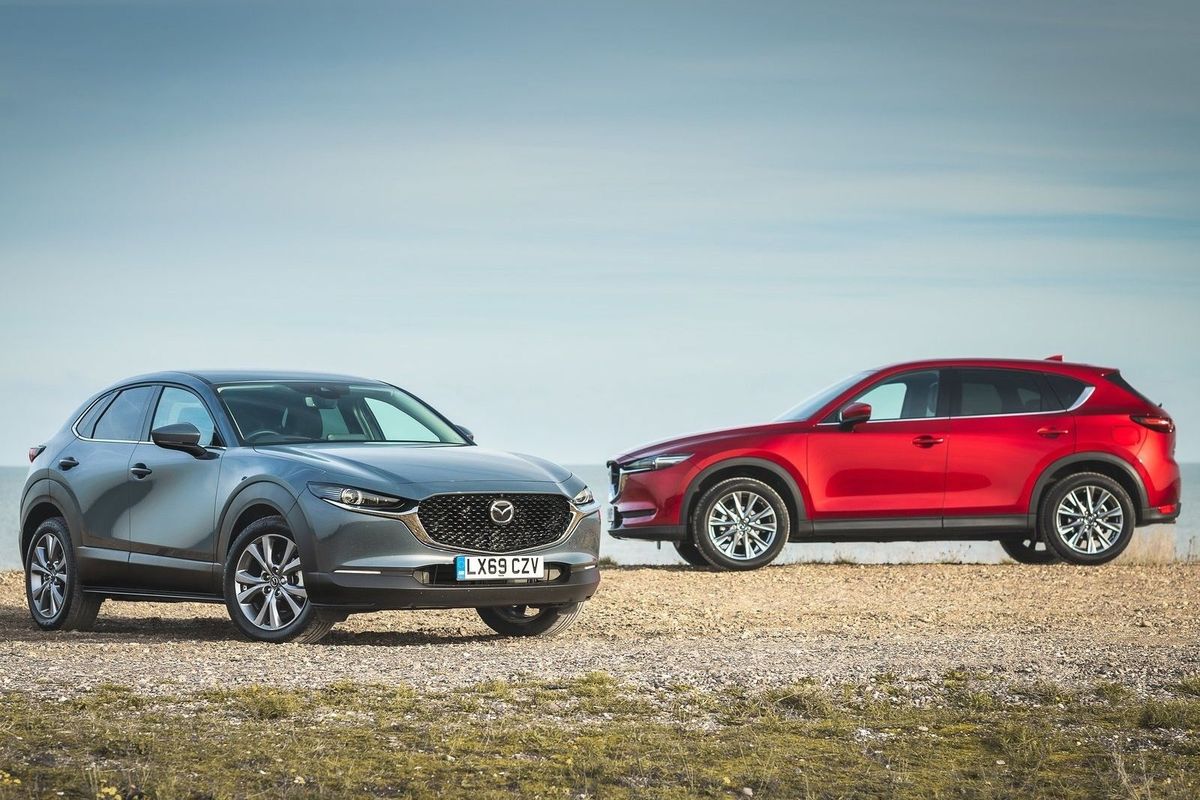
The recently launched CX-30 sits squarely between the CX-3 compact family car and the award-winning CX-5 family car. Logically, you’d think the perfect name for this model would be CX-4, but that badge is reserved for a product offered exclusively in the Chinese market. It is rumoured the Mazda CX-5 will be replaced by a CX-50, which will be pitched squarely against the German premium brands.
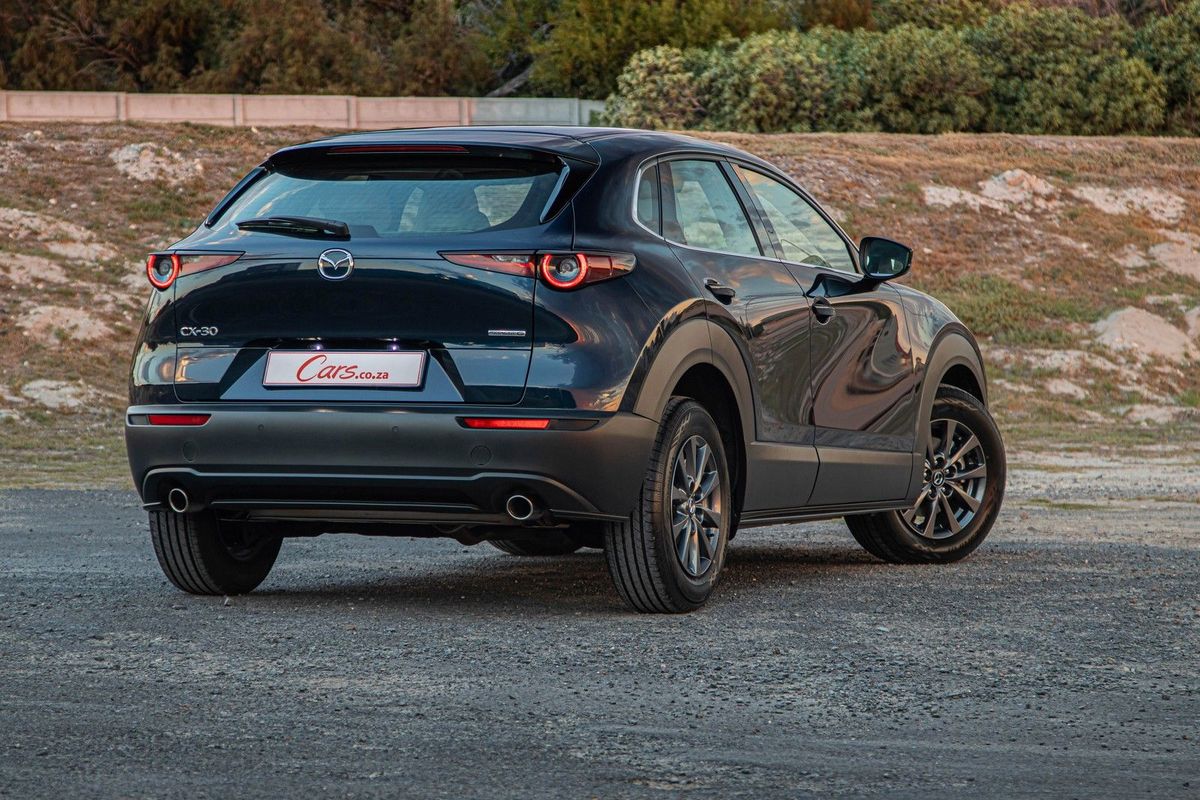
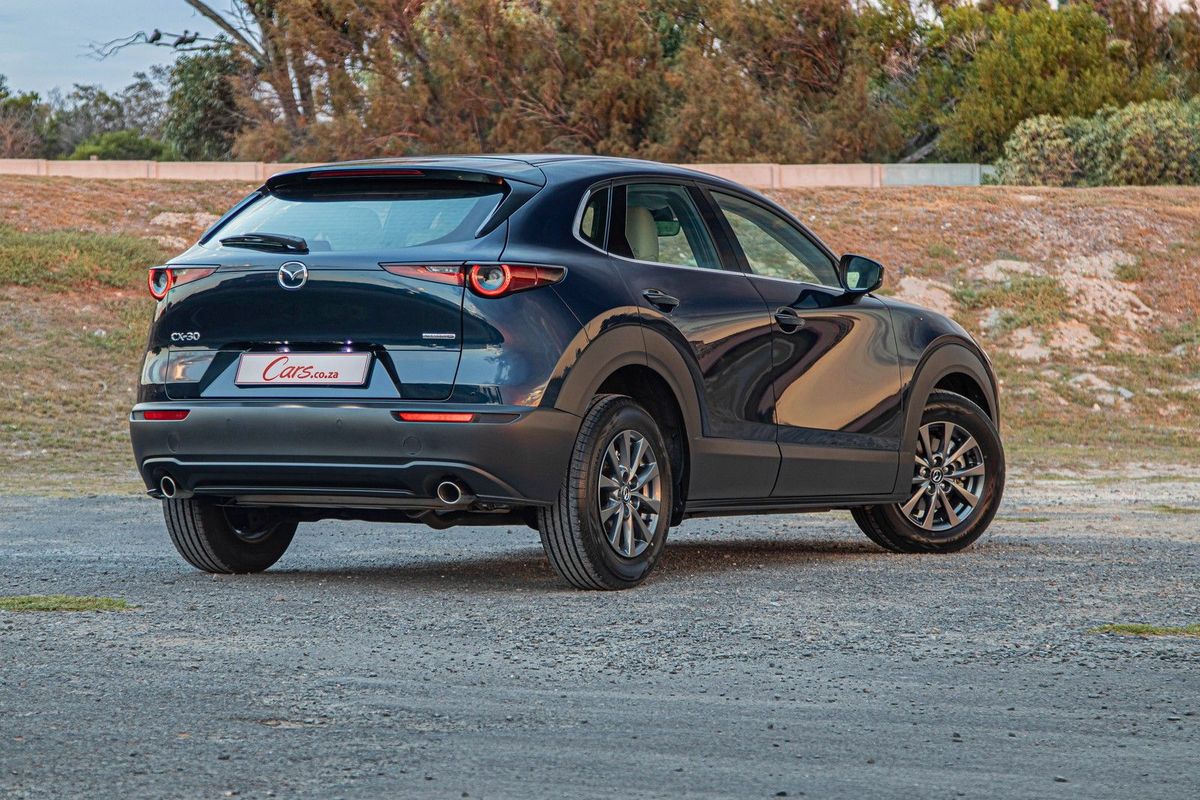
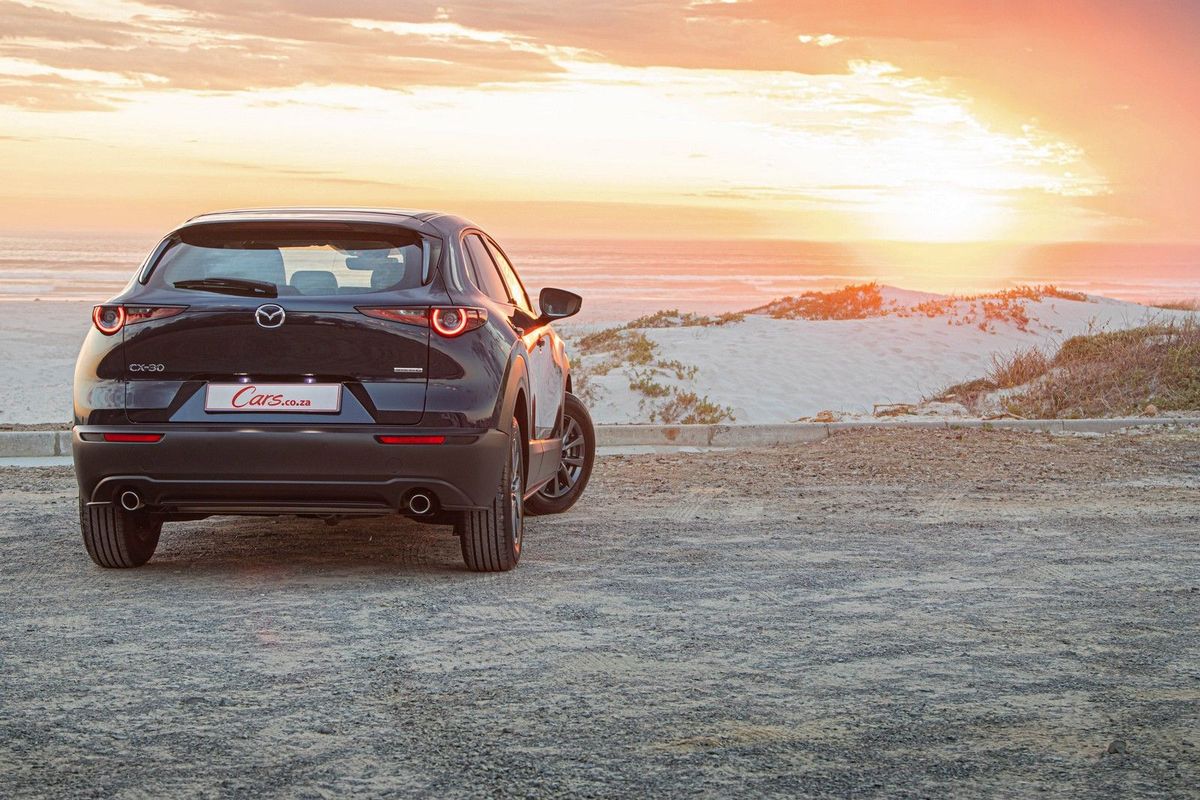
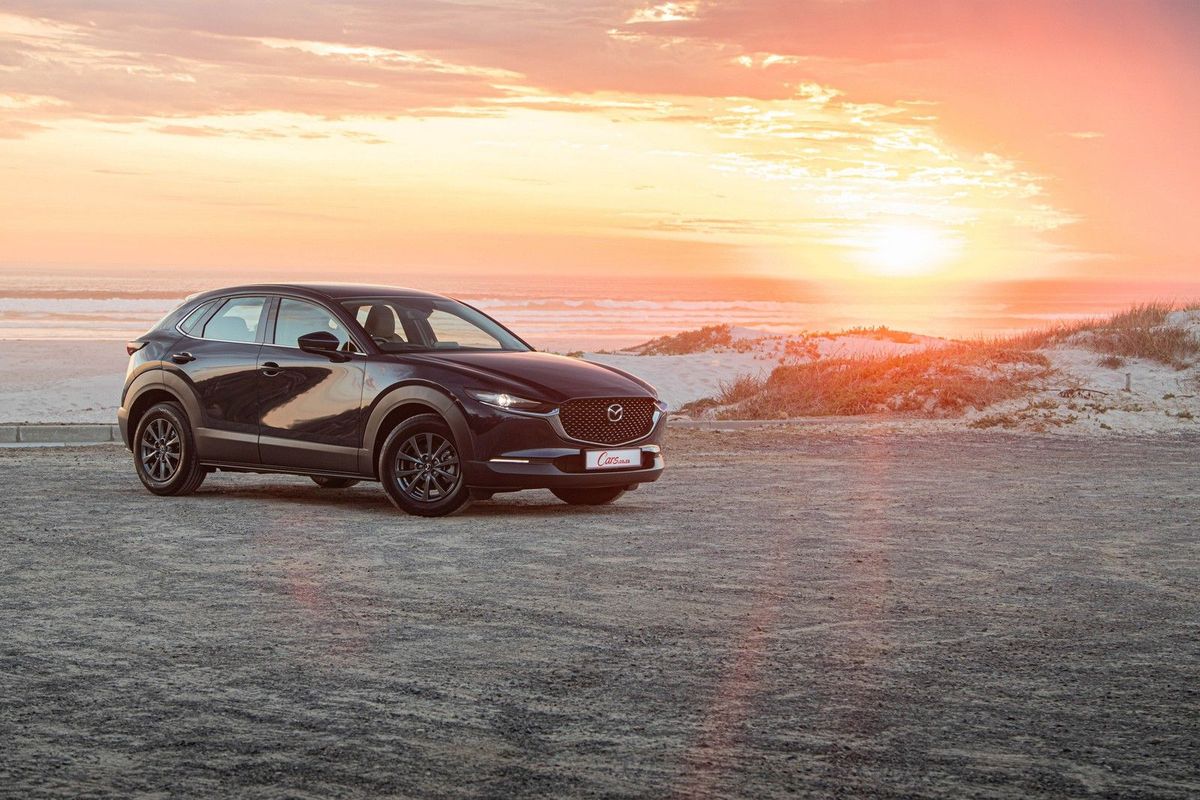
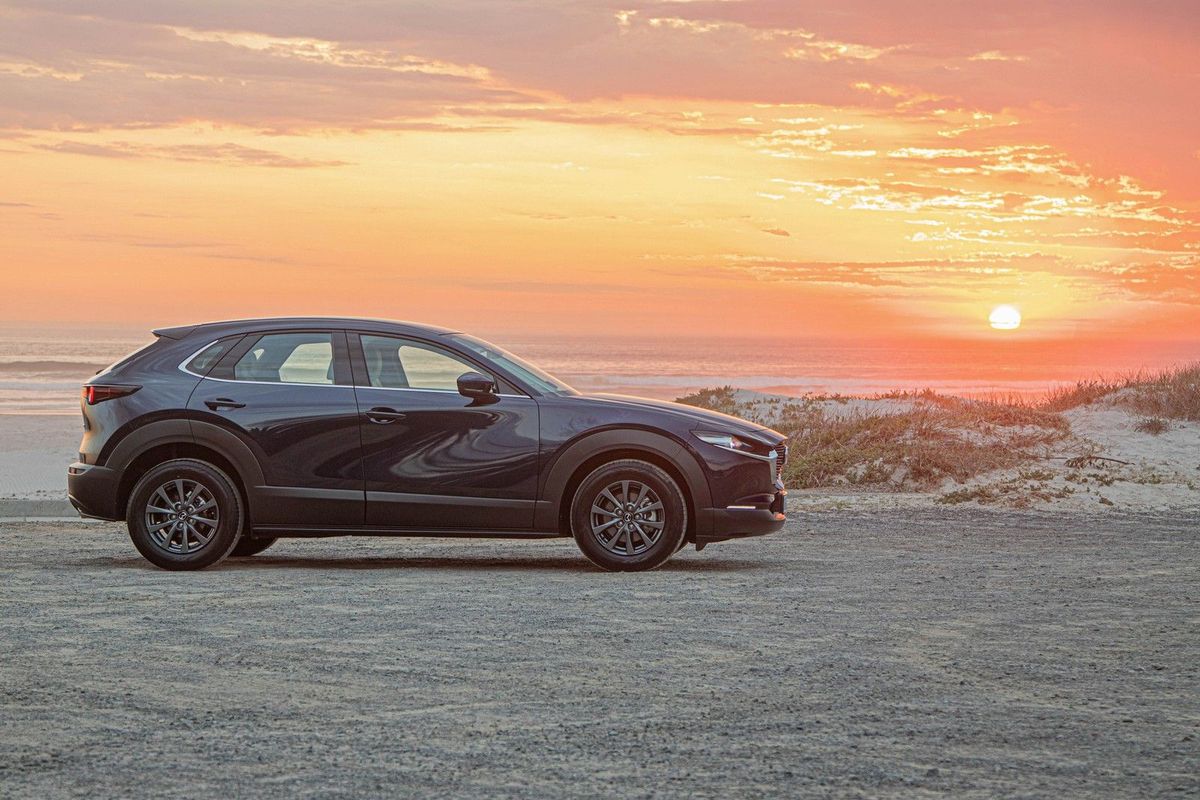
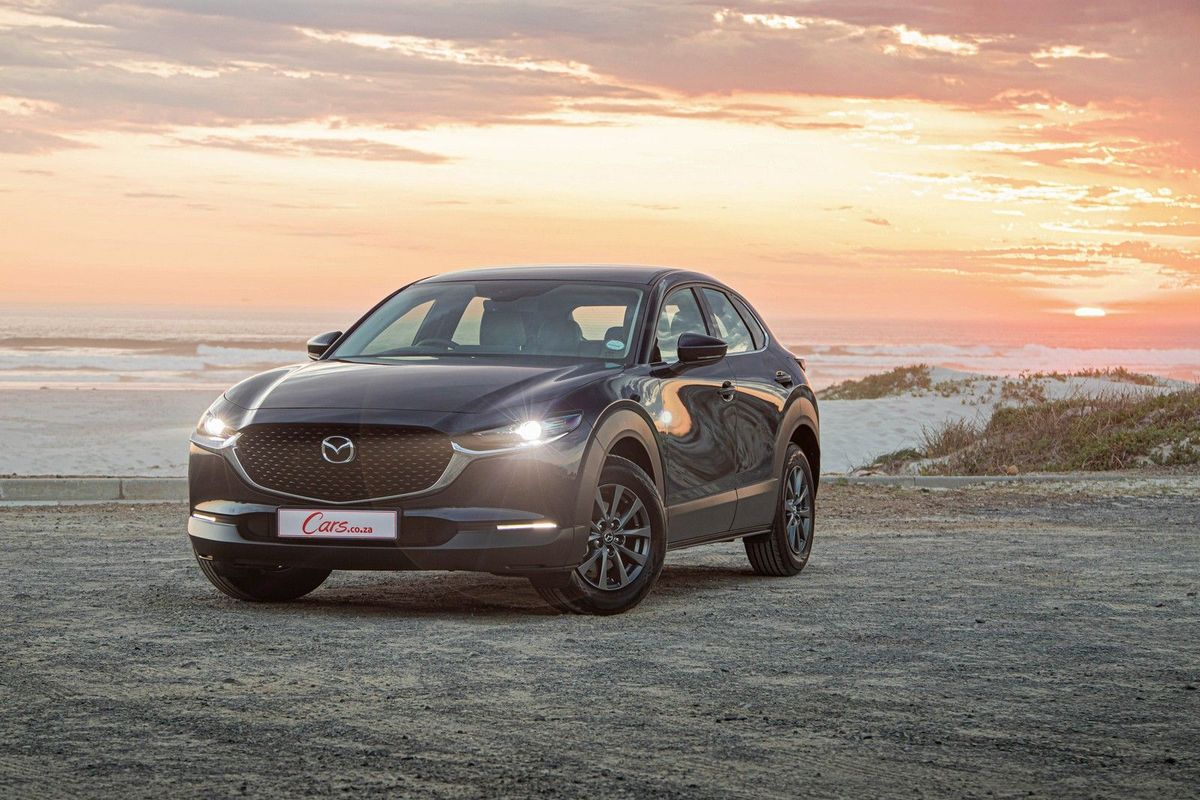
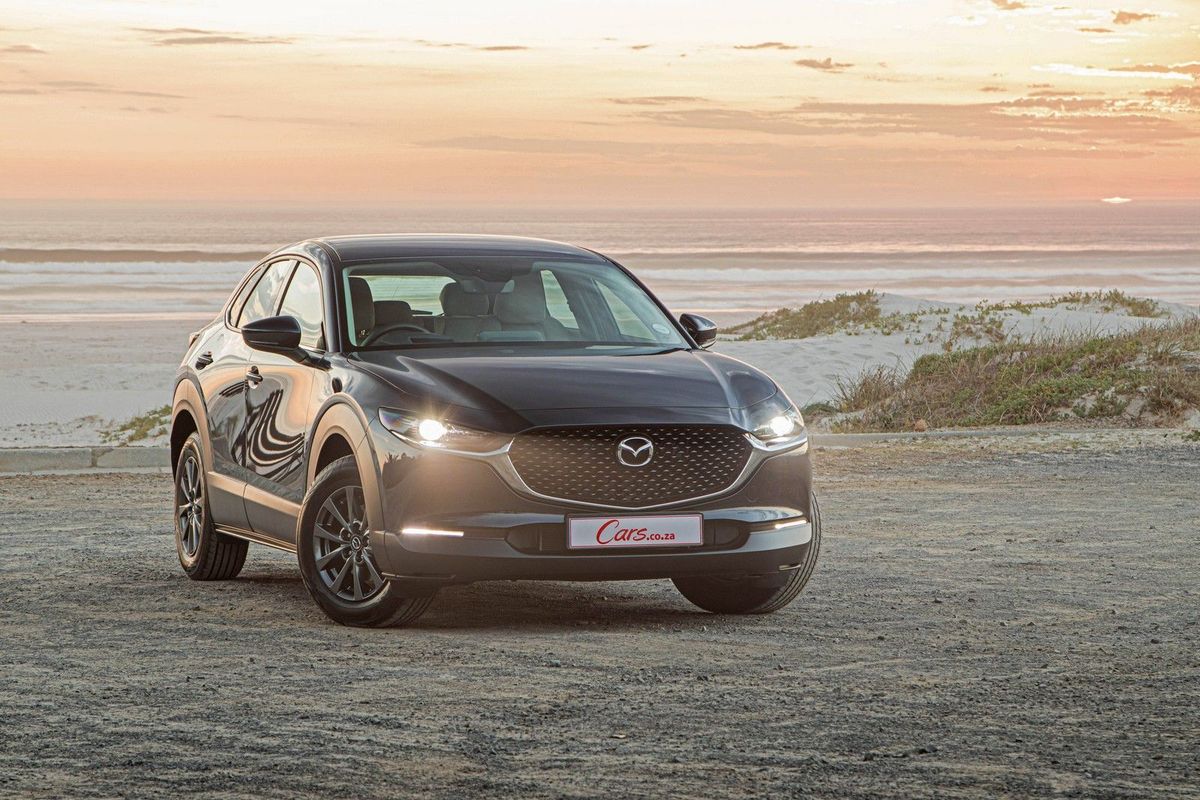
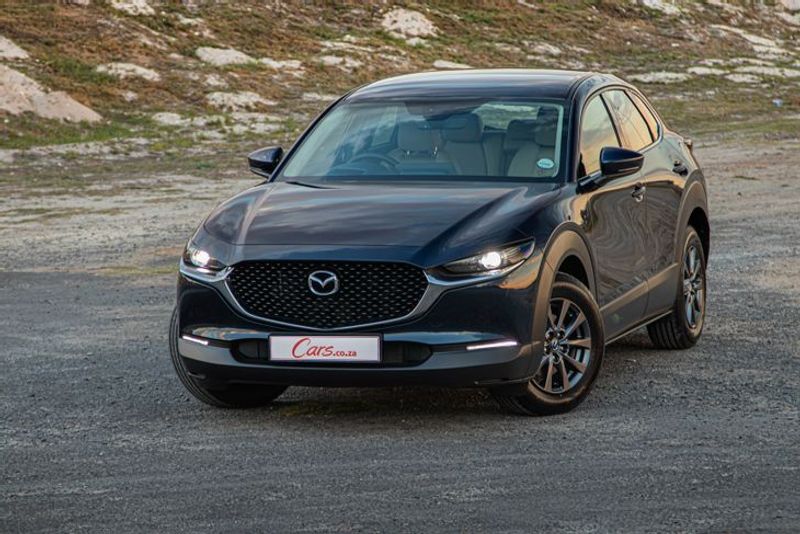
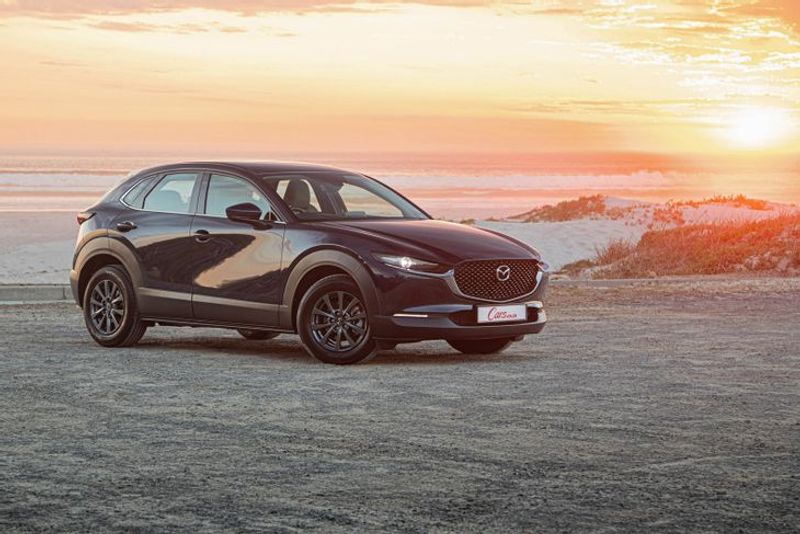
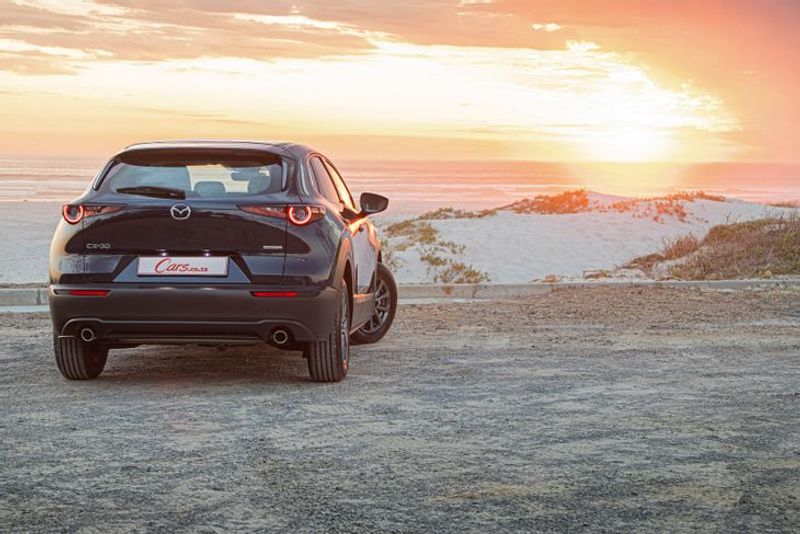
The CX-30 is based on the Mazda3 and shares a number of components and elements with its hatchback sibling. The model’s styling, even when clad in the test unit’s unassuming charcoal exterior finish, is striking; somehow Mazda’s designers have mastered the art of penning timeless 4-wheeled artworks. Consider the CX-5, for example, it’s been around for some time and yet still looks remarkably fresh.
How does the Mazda CX-30 perform in terms of…
Performance and efficiency
The naturally-aspirated petrol engine and 6-speed auto get the job done, but it’s not the most enthusiastic powertrain.
Although the CX-30 is offered with a 2.5-litre turbocharged motor in some markets, the South African-spec CX-30 range utilises the familiar 2.0-litre naturally-aspirated SkyActiv-G 4-cylinder petrol engine mated with a 6-speed automatic transmission. The motor delivers 121 kW and 213 Nm and powers the front wheels; we’ve had considerable experience with this setup in other Mazda models.
We’ve now had the chance to sample the vehicle on the Highveld (during its local media launch) and at sea level. At Gauteng’s altitude, naturally-aspirated engines usually lose around 17% of their outputs, but despite this handicap, we were satisfied with the CX-30’s performance, even if it was workmanlike. For a start, to get the best out of the motor, you have to use the accelerator pedal a bit zealously to build up revs, resulting in a coarse and unrefined engine note. This was particularly evident when overtaking on the national highway. Down at sea level, the car felt a bit more responsive, however.
The engine and transmission combination works well when you drive the Mazda in a relaxed and gentle manner, but when you need to summon overtaking acceleration in cut-and-thrust driving conditions, the powertrain won’t deliver the urge we’ve come to expect from cars in this segment, most of which have smaller engine capacities – but are turbocharged. If you drive in a restrained manner you should be able to achieve reasonable fuel-economy returns. While our indicated figure of 8.9 L/100 km is some way off the claimed 6.6 L/100 km, we suspect most of our testers drove the CX-30, um, enthusiastically.
Ride and handling
Even in this run-of-the-mill grey colour, the Mazda CX-30 is a visually striking vehicle from every angle
Mazda’s contemporary passenger cars are engaging to drive and the CX-30 is no exception. Granted, the ride quality is on the firmer side, but that pertains to most offerings in this segment. The Mazda CX-30 rides much like the Mazda3 hatchback… and that’s a good thing. The latter has impressed us over the years with its refinement and comfort, and the CX-30 emulates its sibling in those regards.
The 2.0 Dynamic rides on stylish 16-inch alloys shod with 215/65 R16 tyres that offer a good blend of road-holding and pliancy. The steering setup is good too; this Mazda may be a crossover, but it’s responsive to inputs and offers a level of driver engagement that makes its driving experience anything but boring. The ‘wheel is light too; it makes short work of quick cornering and parallel parking alike.
Comfort levels, meanwhile, are excellent, with impressive on-road refinement, especially in terms of road- and wind-noise insulation. You get the impression you’re behind the ‘wheel of a premium car.
Interior execution and features
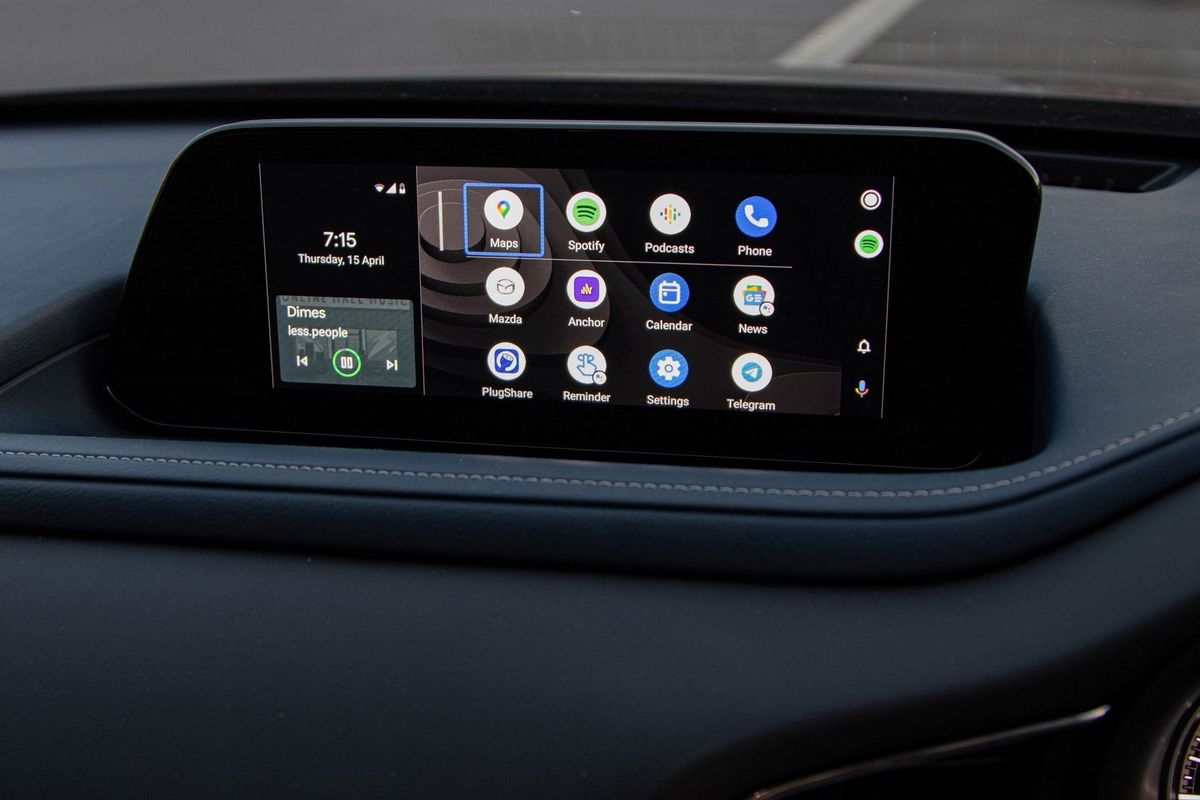
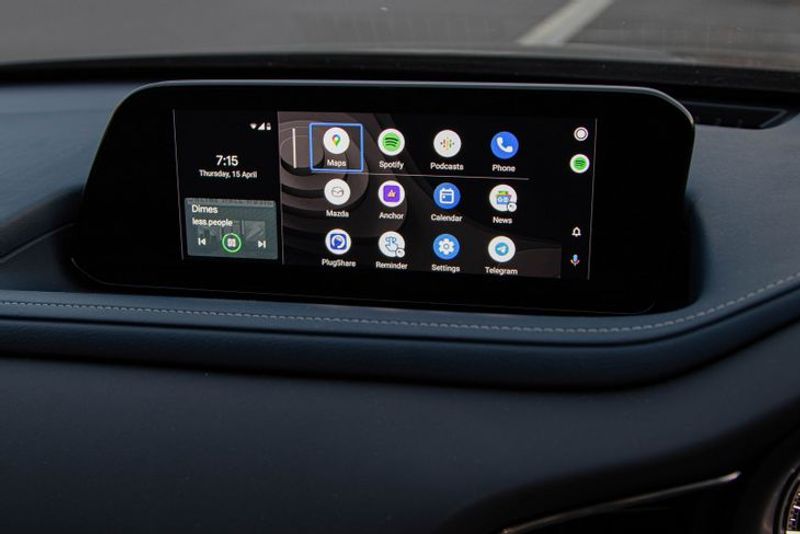
Android Auto on duty. There’s no touchscreen, “for safety reasons”. Google Voice Assistant it is, then.
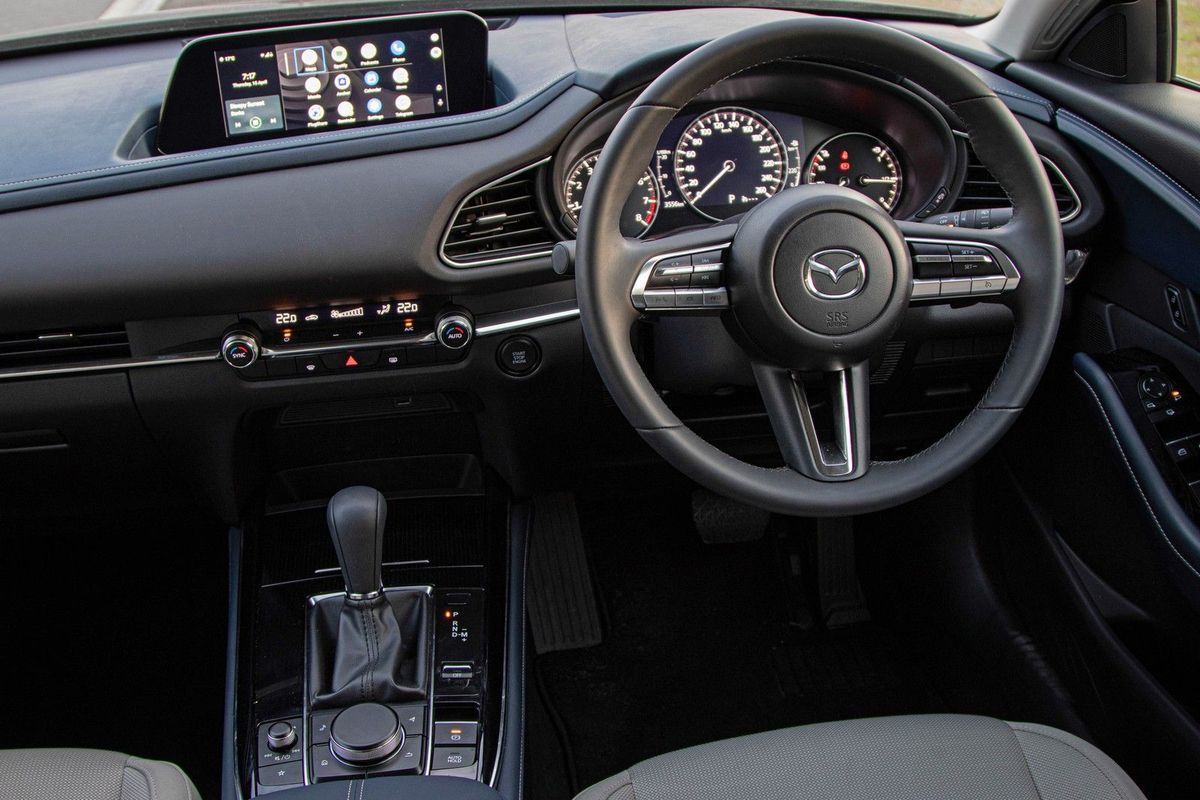
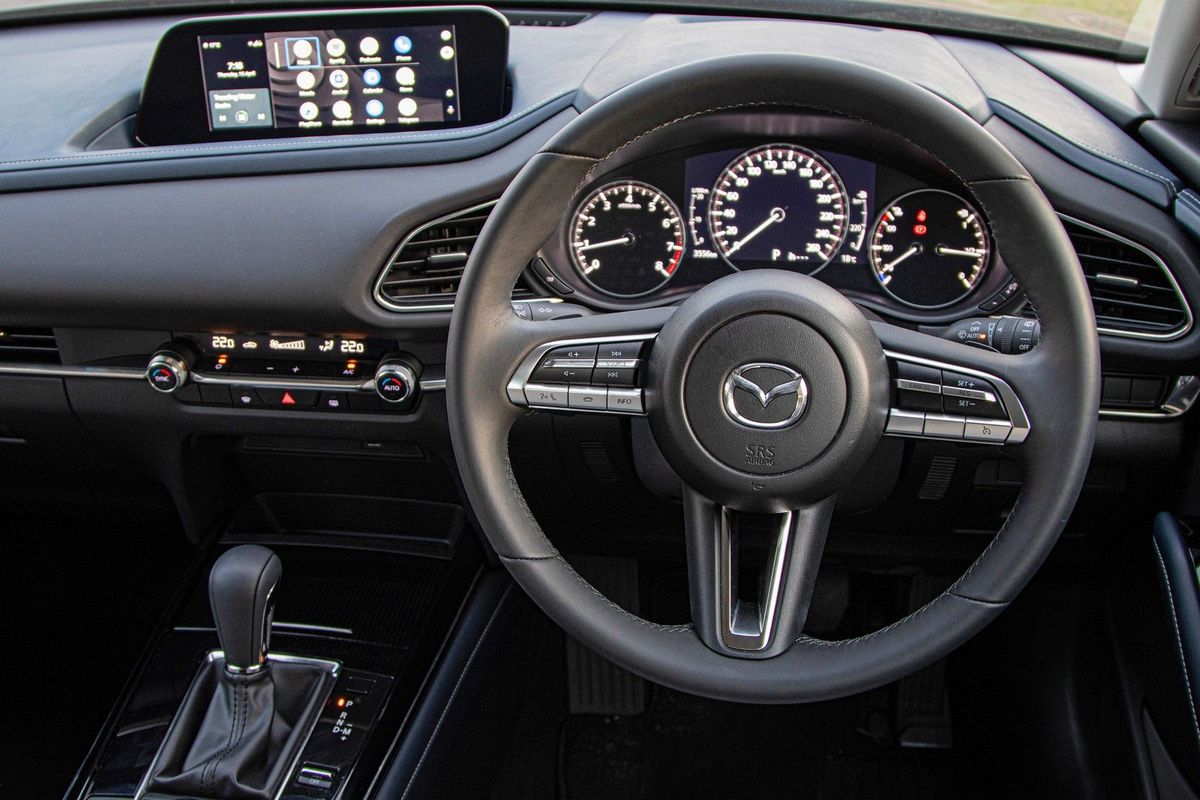
If you were put off by our comments about the relative lack of urgency from the CX-30’s engine, the cabin’s quality and features make up for it. When you step inside the Mazda, you’re likely to be struck by the interior’s elegant minimalism and subtlety; we certainly liked it! There’s something so contrived about a deluge of distracting buttons and flashy screens – the CX-30’s cabin is restrained and classy.
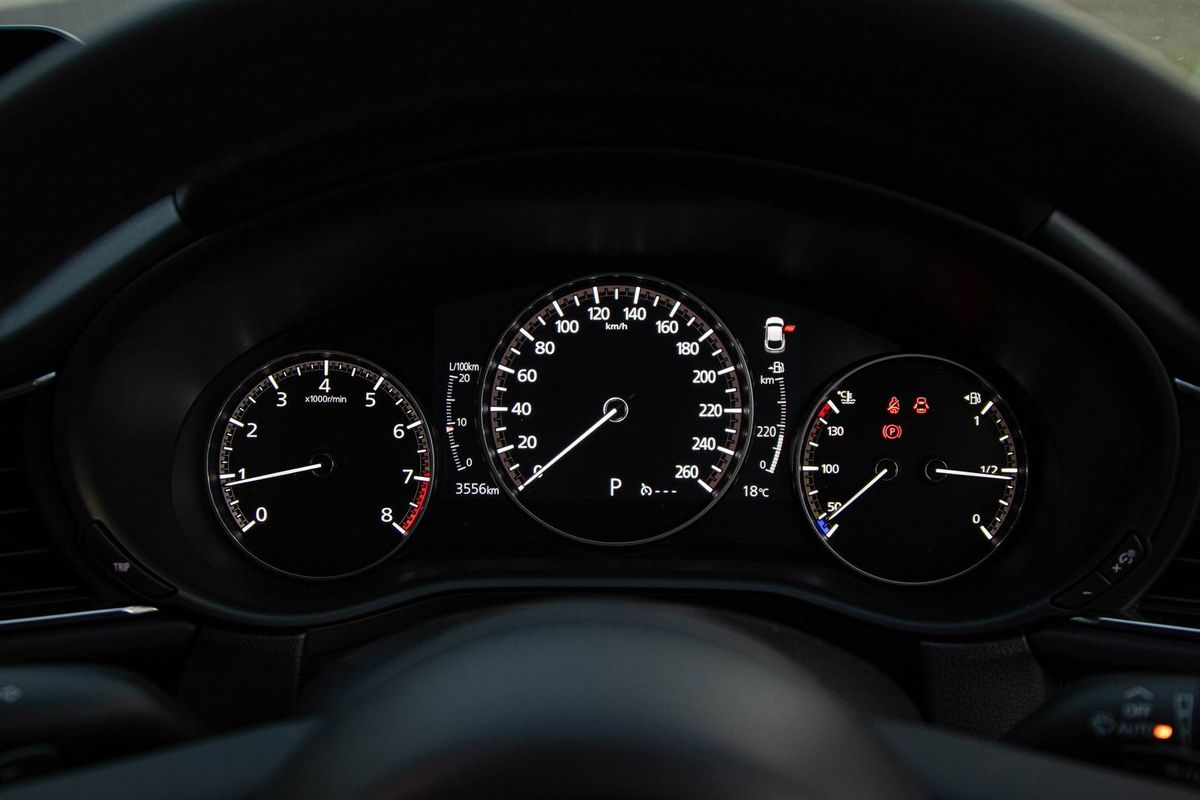
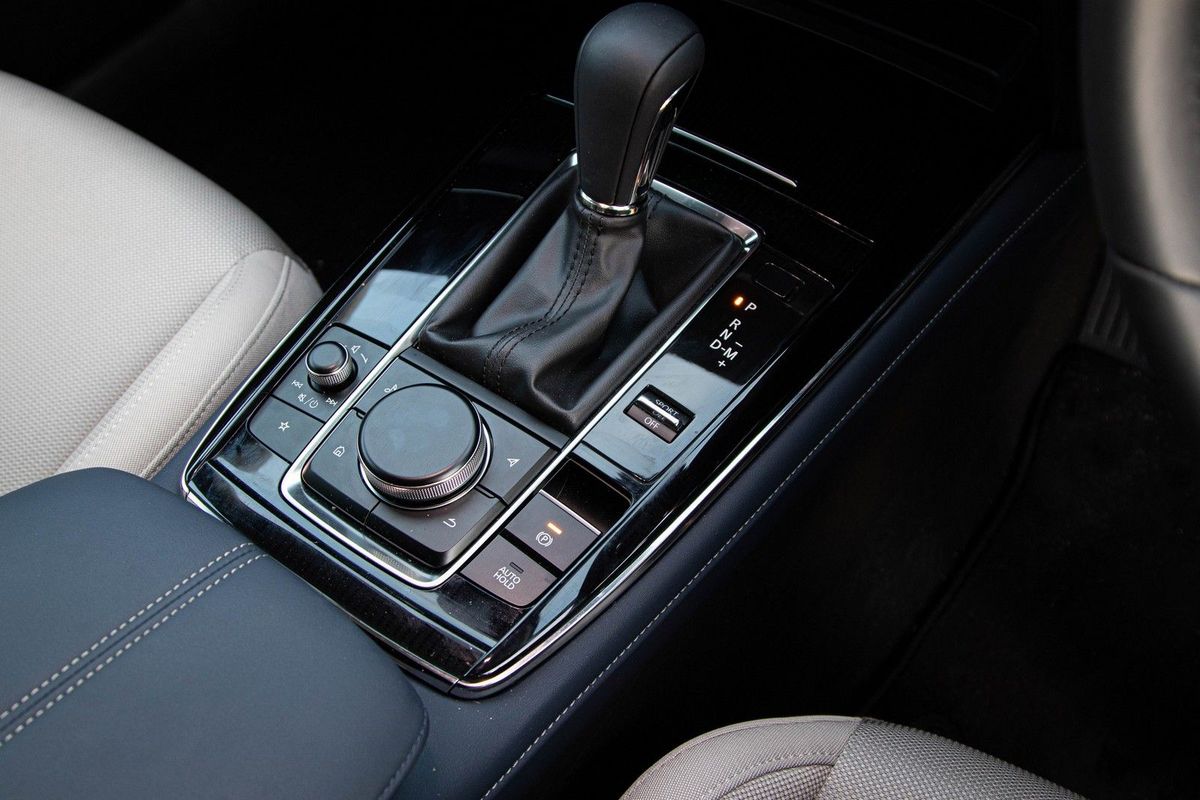
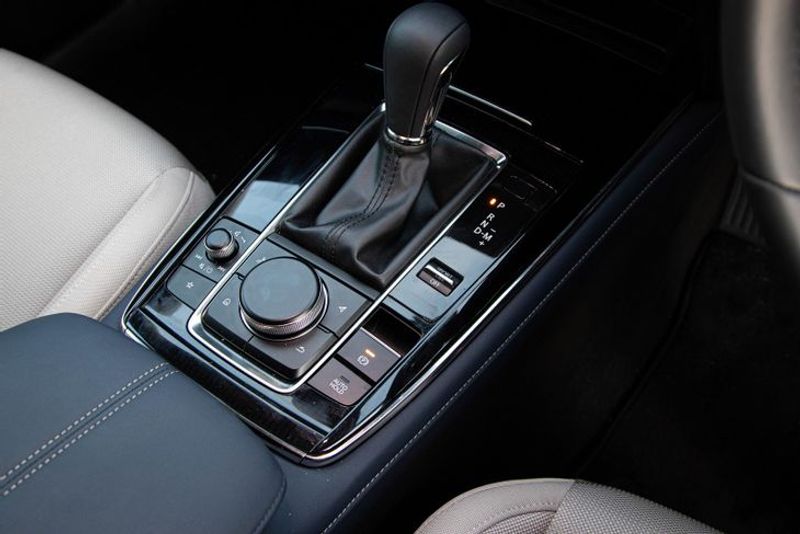
A sense of luxury abounds: the cabin feels excellently finished (especially at this price point), plus you get the impression the finishes and materials will be hard-wearing. The digital instrument cluster and infotainment screen look mode and offer a slick and simple user experience. There’s no touchscreen “for safety reasons”, Mazda says; instead, the newcomer has a traditional click wheel with which to navigate through the few menus. We noticed the infotainment screen’s resolution is of better quality than the CX-5’s. In fact, the CX-30’s entire cabin feels a step up from the older, bigger model.
As far as connectivity options go, Mazda has equipped its CX-30 with Android Auto and Apple CarPlay compatibility, voice-command recognition as well as Bluetooth telephony and audio streaming.
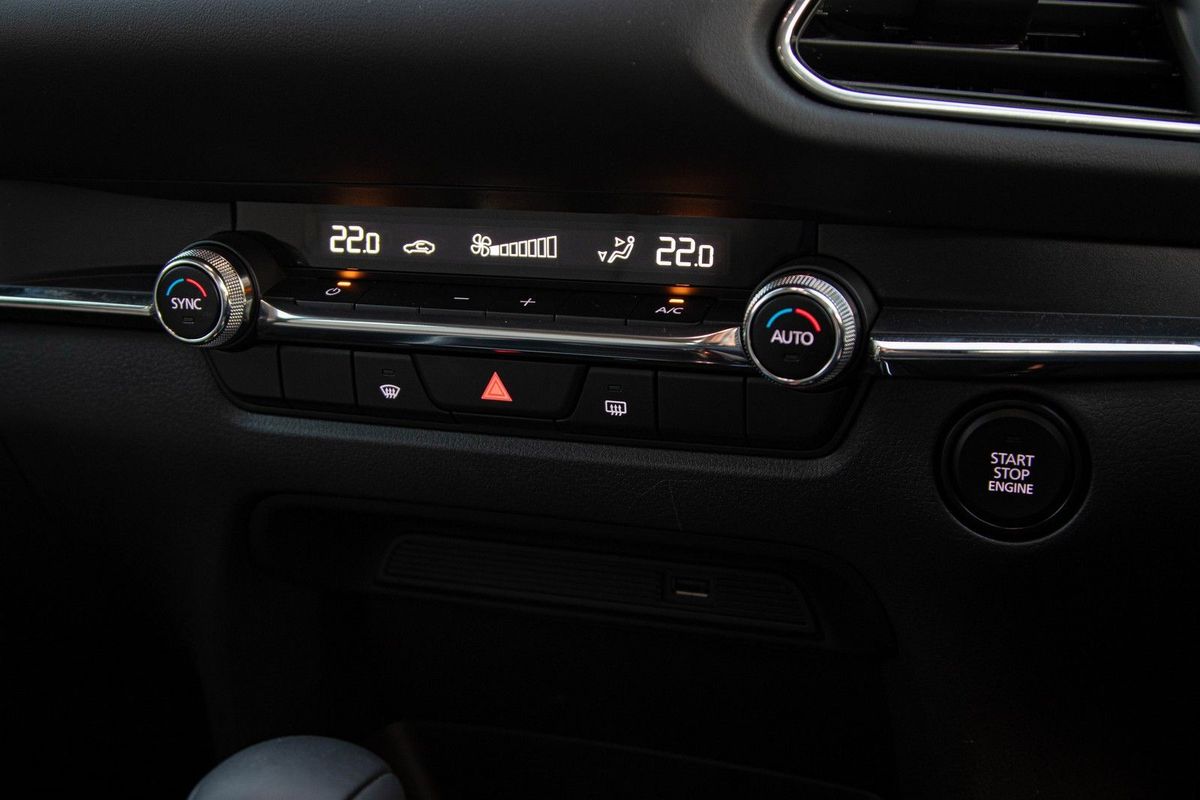
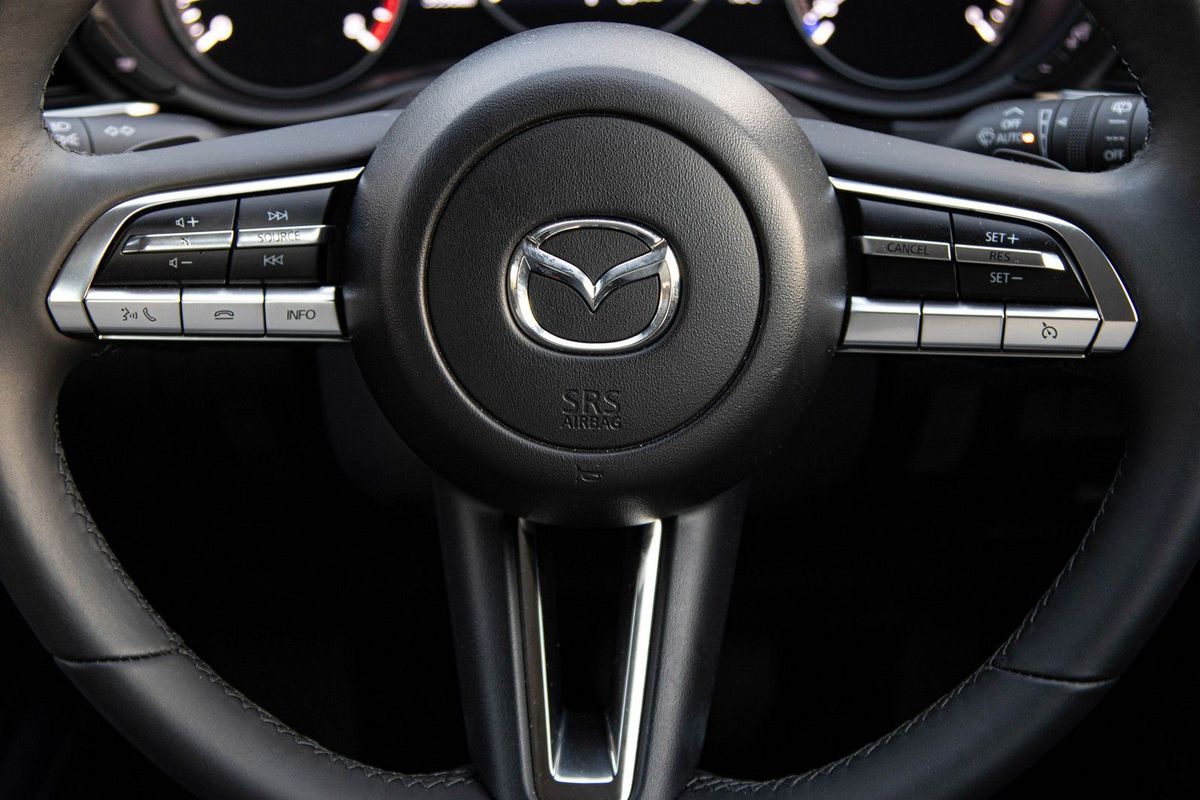
There are 3 trim levels in the Mazda CX-30 range: Active, Dynamic, Individual – the mid-range derivative is the subject of this review. The standard spec is good, it includes keyless push-button start, MZD Connect infotainment with an 8.8-inch screen, front- (driver and passenger), driver’s knee-, side- and curtain airbags, a USB port, a head-up display, cruise control, LED headlamps and 16-inch grey metallic alloy wheels. Dynamic trim adds Apple Carplay and Android Auto, steering wheel-mounted shift paddles, rear air vents, dual-zone climate control, smart advanced keyless entry, and rear parking sensors.
In case you were wondering, in return for the R50 000 price premium over this derivative, the top-spec Individual additionally features a reverse-view camera, a frameless auto-dimming rear-view mirror, leather upholstery, a BOSE audio system with 12 speakers, as well as 18-inch silver-metallic alloy wheels. Safety-wise, the CX-30 comes with those 7 airbags, ABS with EBD and dynamic stability control.
Practicality
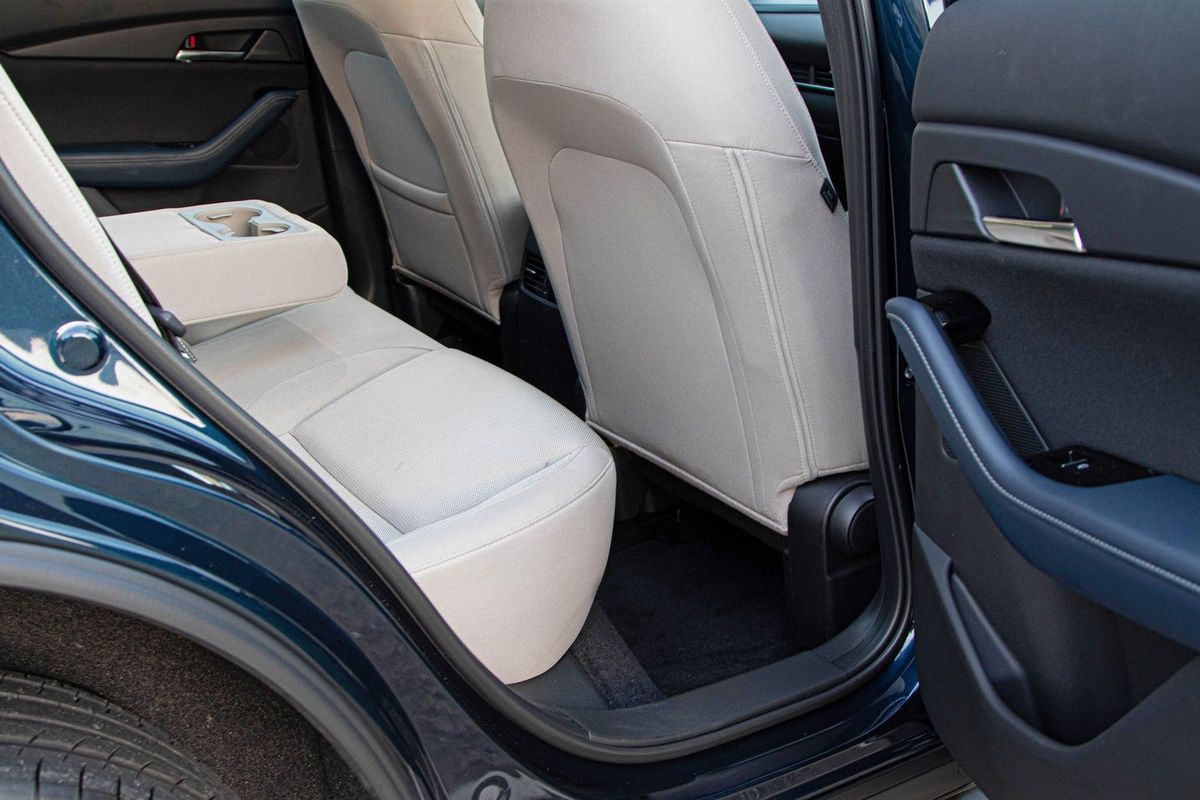
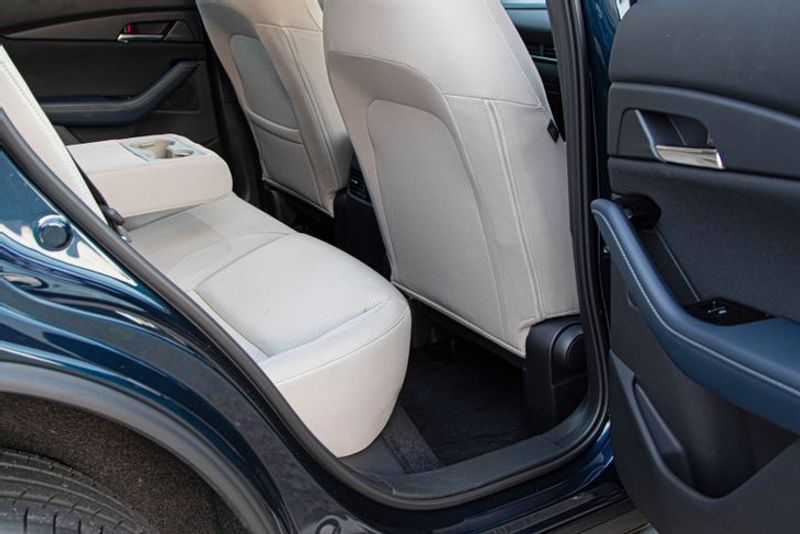
Rear legroom in the Mazda CX-30 is adequate, but if you need more space look to the similarly-priced CX-5
While the driver and the front passenger are afforded plenty of space and the rear bench can seat a pair of average-sized adults or three children in comfort, taller aft passengers are likely to complain about a lack of headroom. The reason for that is the Mazda CX-30’s attractively tapered roofline, which unfortunately reduces the vertical space available for rear occupants.
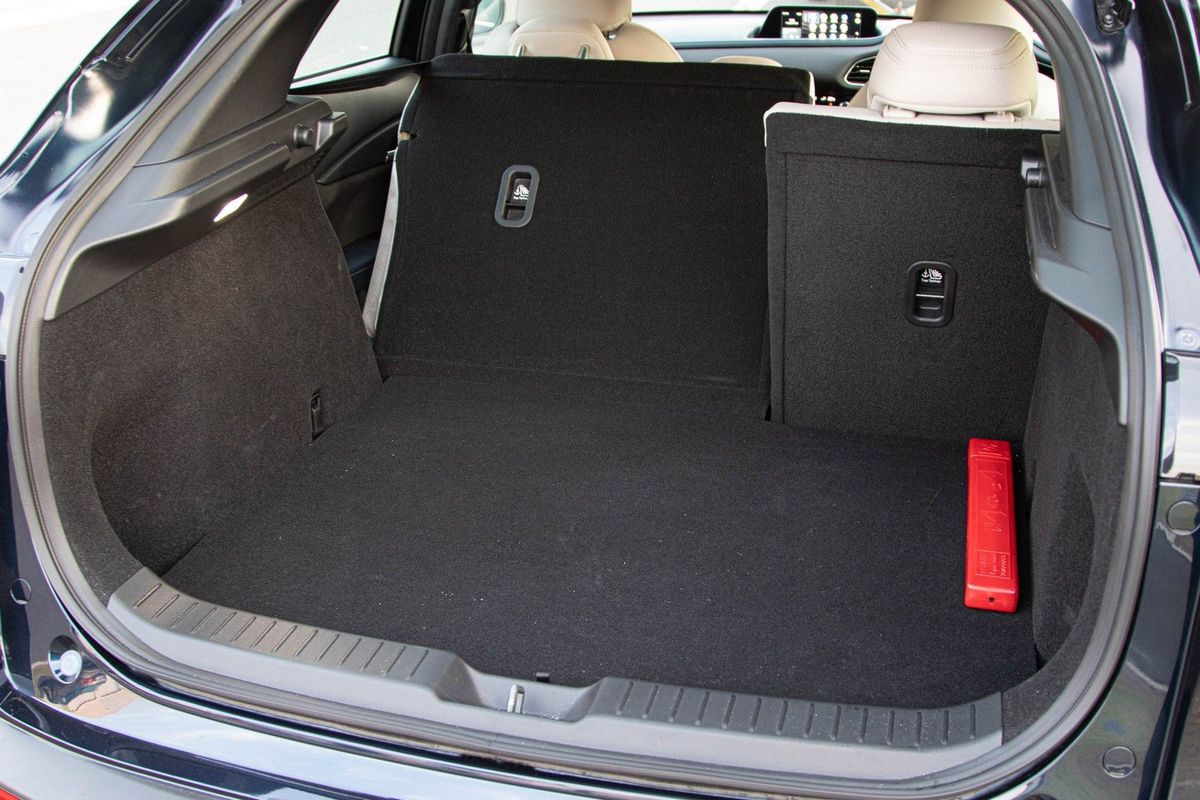
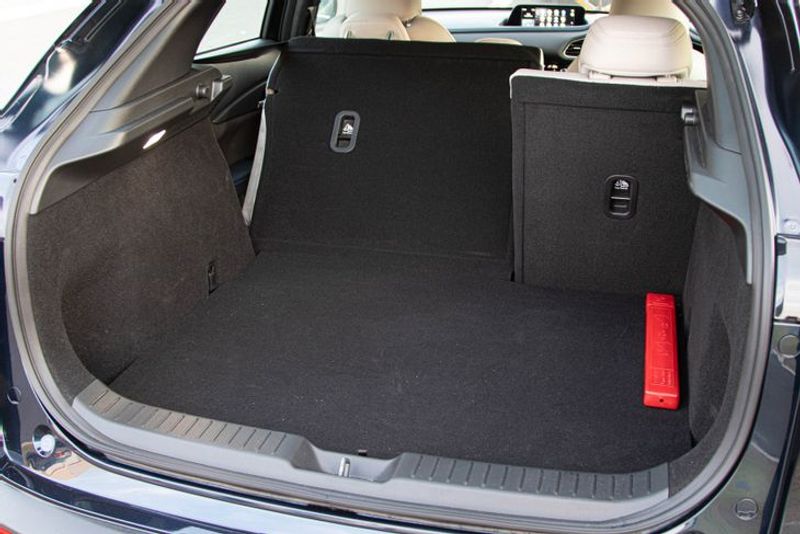
Luggage space is sufficient; Mazda claims a 295-litre capacity, which is a touch smaller than in the CX-30’s rivals. If you want to load bulkier items, you can fold down the 60:40-split rear seatback forward.
The Mazda CX-30’s boot folds in a 60:40 split.
How much does the Mazda CX-30 cost in South Africa?
The Mazda CX-30 pricing starts at R469 000, with this mid-spec 2.0 Dynamic derivative retailing for R499 000 (May 2021). The flagship Individual version costs R540 000. Every Mazda CX-30 comes with a 3-year/unlimited-kilometre service plan and factory warranty, 5-year corrosion warranty and 3 years’ worth of roadside assistance.
The CX-30 is a stylish and competent product that’s let down by a so-so engine. However, we think the pros outweigh the cons
Given that the CX-30 2.0 Dynamic retails for R500 000, we expected much of this newcomer and aside from its so-so powertrain and the (admittedly not critical) impracticalities caused by its stylish tapered roofline, the Mazda is an impressive, eminently stylish offering. Not only is it suitably refined and engaging to drive, but the newcomer’s premium-looking and -feeling cabin is classy. To sweeten the deal, Mazda has equipped its crossover with a generous helping of standard features; in contrast with some of its competitors, there isn’t a myriad of optional-extra boxes that may need to be ticked…
The Mazda CX-30 is considered to bridge the gap between the CX-3 and CX-5, but in reality, it doesn’t. Price-wise, the CX-30 2.0 Dynamic costs a paltry R100 less than the CX-5 2.0 Dynamic Automatic. Yes, it offers a similar powertrain and a more advanced cabin, but it has a smaller load bay and less rear cabin space than its (albeit ageing) award-winning family-car sibling.
So, compared with its newer sibling, the CX-5 seems a better value-for-money proposition, but then the CX-30’s target market is quite select. Like the (also recently launched) Volkswagen T-Roc, Mazda’s newcomer is tailored for a discerning clientele: fashion-conscious urbanites; upwardly mobile couples with small (or no) children. It all comes down to a matter of taste… and, of course, budget!
What engine is available in the Mazda CX-30 in South Africa?
The Mazda CX-30 in South Africa is powered by a 2.0-litre, naturally aspirated Skyactiv-G petrol engine. This engine produces 121 kW of power and 213 Nm of torque and is exclusively paired with a 6-speed automatic transmission across all models.
Is the Mazda CX-30 an SUV or a hatchback?
The Mazda CX-30 is a compact crossover. It is positioned between the CX-3 and the CX-5 in Mazda’s SUV lineup. While it shares its platform with the Mazda3 hatchback, it offers a higher ground clearance and a more rugged body style, making it a distinct crossover model.
What is the safety rating of the Mazda CX-30?
The Mazda CX-30 has a 5-star Euro NCAP safety rating. It scored highly in tests for adult and child occupant protection. Standard safety features include seven airbags (including a driver’s knee airbag), ABS with EBD, and Dynamic Stability Control. Higher-end models also feature a range of advanced driver-assistance systems.
What are the different models of the Mazda CX-30 available in South Africa?
The Mazda CX-30 is available in several trim levels, including the Active, Dynamic, Carbon Edition, and Individual. Each model comes with a progressive list of standard features, with the top-of-the-range Individual model offering premium equipment like a 12-speaker Bose sound system and additional driver-assist technologies.
Speculation around a 3.3-litre V6 engine being the preferred power plant for the GR Hilux has been rife for some time but more definitive reports have now emerged from Down Under pointing to tantalising outputs that are sure to get Hilux enthusiasts very, very excited.
How does 230 kW and 687 Nm grab you? Those figures are certainly worthy of a GR badge and if this is indeed the case, the GR Hilux is bound to be a formidable bakkie both on tar and in the dirt. Also, the GR Hilux is also purported to make use of a 10-speed automatic transmission, much like the current Ford Ranger Raptor.
Further details have yet to be revealed but if the GR Hilux is to perform at its full potential it will most certainly feature an uprated chassis and a beefed up braking and suspension system to cope with the rigours of high-speed offroad driving in difficult terrain. The Ranger Raptor is currently regarded as the most capable offroad bakkie in this regard.
Furthermore, as Ford will be responsible for the development of the next Volkswagen Amarok, there's a good chance that the relationship will spawn a high-performance Amarok R which will be based on the new Ranger Raptor and could pack as much as 220 kW!
We certainly look forward to a future showdown between the new Ranger Raptor, GR Hilux and Amarok R!
We will keep you informed as further information on the GR Hilux comes to the fore!
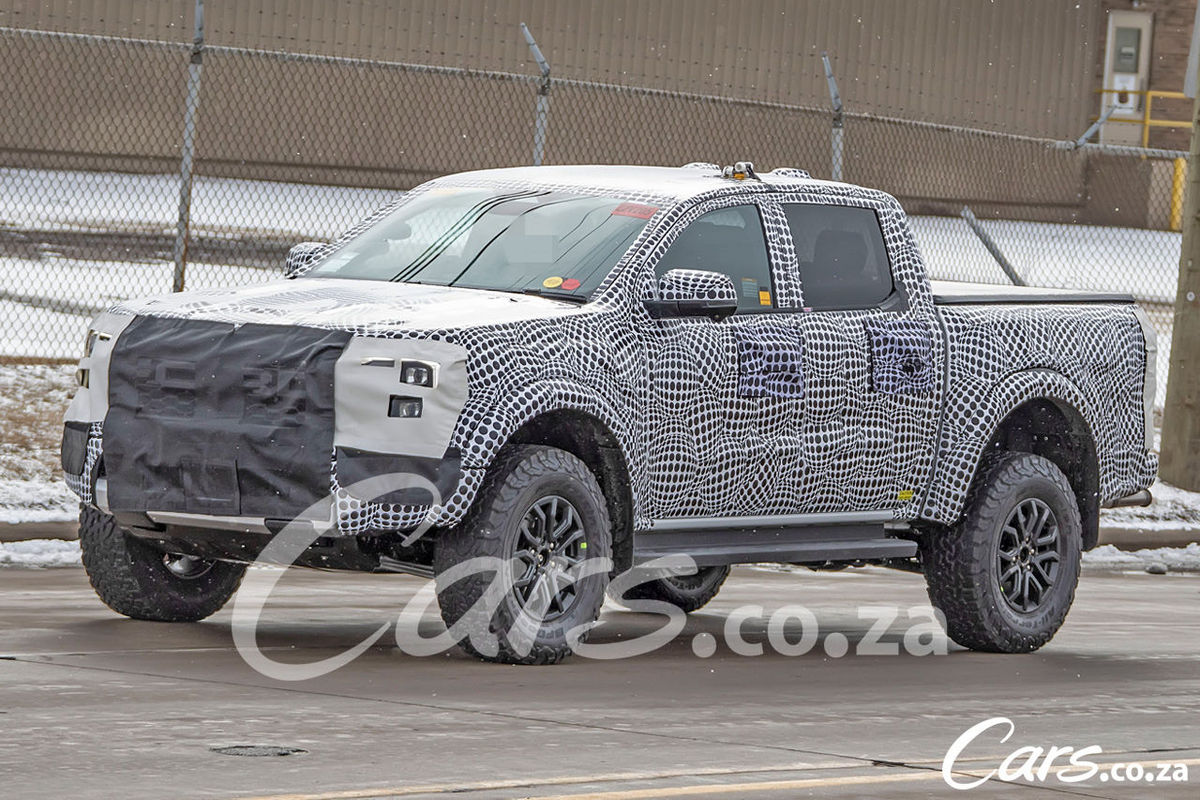
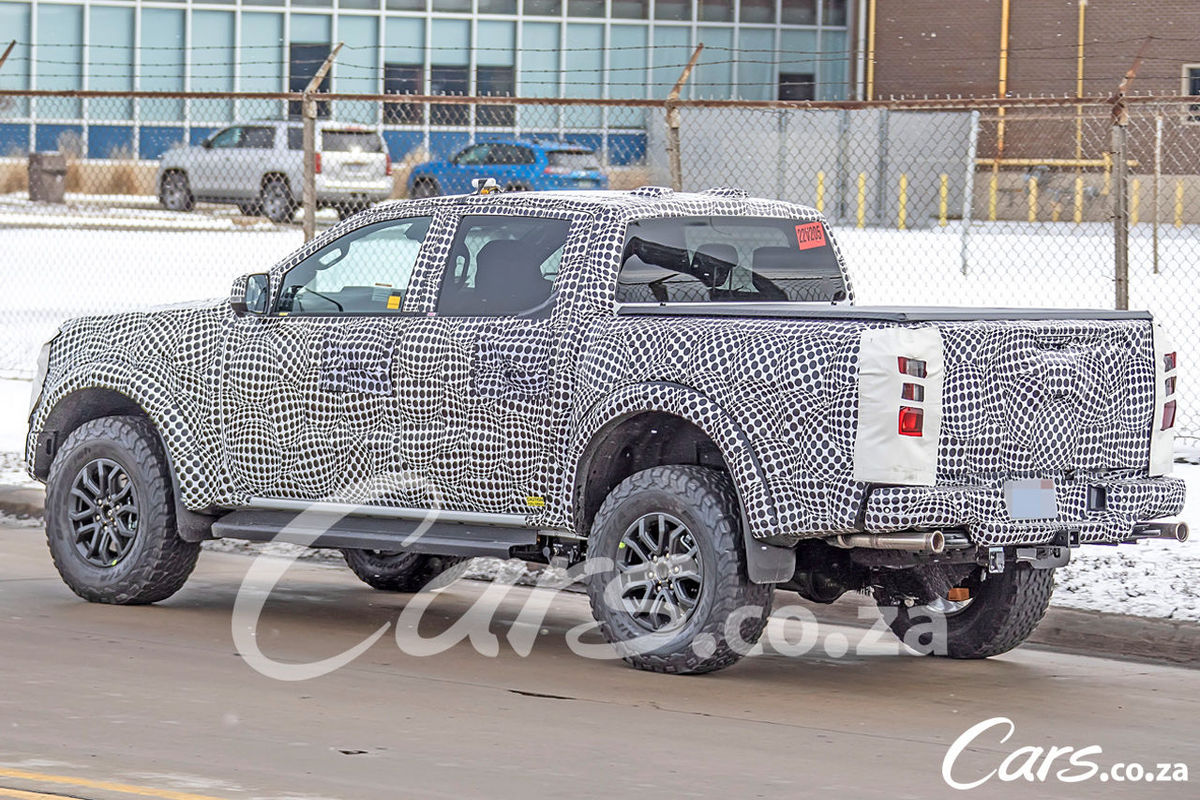
The 2023 Ford Ranger has been spotted in the wild as it prepares an all-new model that will be paired with the next-generation Volkswagen Amarok.
Picture credit: S. Baldauf/SB-Medien. We have paid for these photos and at the photographer’s request, have watermarked them.
While the body is covered from head to toe in black vinyl, it actually gives a somewhat better perspective of the size and design than the previous camouflaged versions we spied months back.
What we now see on the 2023 Ford Ranger is a squarer more wide-body style bakkie that’s more chiselled than the current, rounded Ranger that’s on sale at the moment. More detail is shown as the vinyl cover clings to the front fascia of the Ranger showing some headlight and grille interplay as well as the basic front bumper design. It still looks like the Ranger’s sturdier design will take cues from the latest Ford F150, the world’s best-selling pick-up truck.
Ranger with Fox dampers
Interestingly, this covered 2023 Ranger was out testing with a Ranger Tremor, which is a US-only version of the Ranger that is half Ranger, half Raptor – it features 2-inch Fox dampers on each corner and a 20mm raise in ground clearance. The Vinyl covering hides the suspension componentry so it’s difficult to tell, but does suggest that Ford is back-to-back testing new dampers for the 2023 Ford Ranger.
There are exposed mounting points on the rear of the Ranger suggest that this could be a Wildtrak version as these points normally mount the black sports or rollover bar seen on the Wildtrak version.
The 2023 Ford Ranger will be built in South Africa at Ford’s Silverton plant in Tshwane. The ranger will also be built alongside the next-generation Volkswagen Amarok as the two brands globally join forces on bakkies and commercial vehicles in order to cut costs.
What will power the all-new Ranger is still to be revealed but considering Ford’s 2-litre bi-turbodiesel engine is still relatively new, (it was introduced in 2019) it will likely continue for at least the next 5 years before being replaced. That doesn’t mean we won’t see it being improved to produce more power and torque upon the new Ranger’s official release. There is still a slight chance that the American spec Ranger engine (2.3L Ecoboost turbopetrol) could make an appearance as well, but in all likelihood that engine will be used for American spec Rangers only.
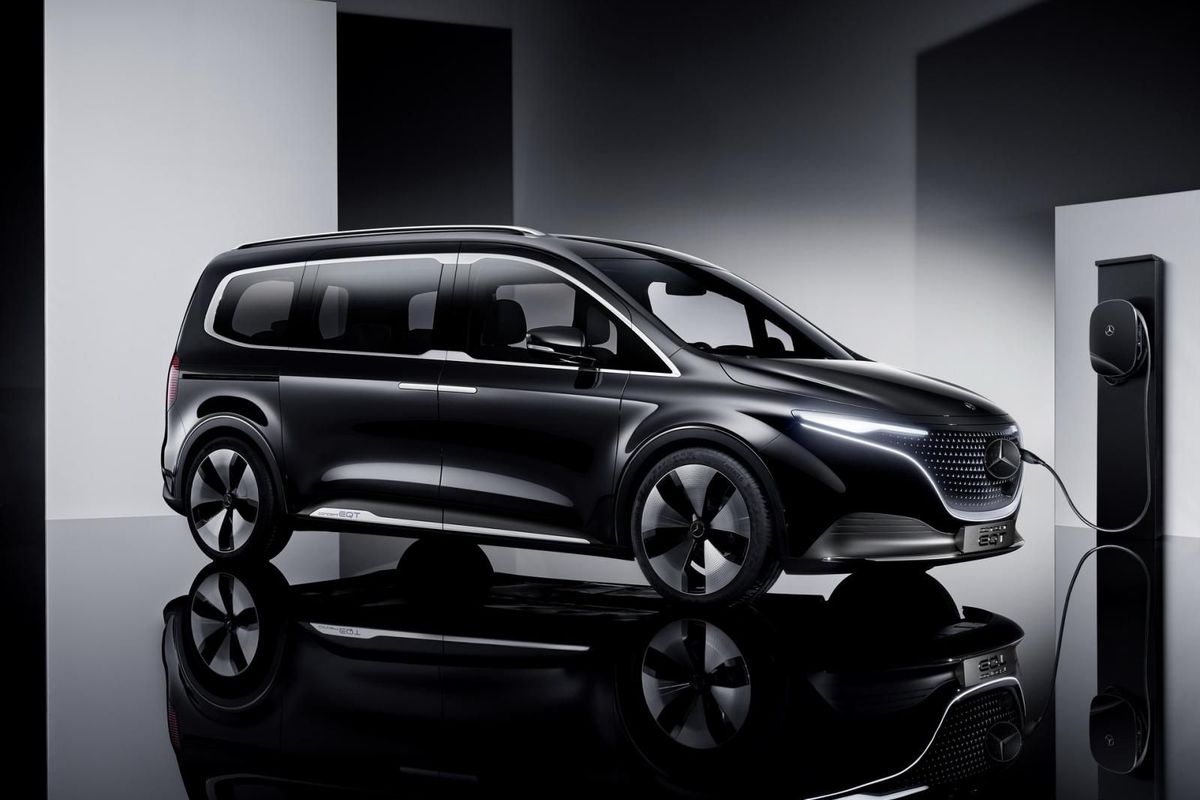
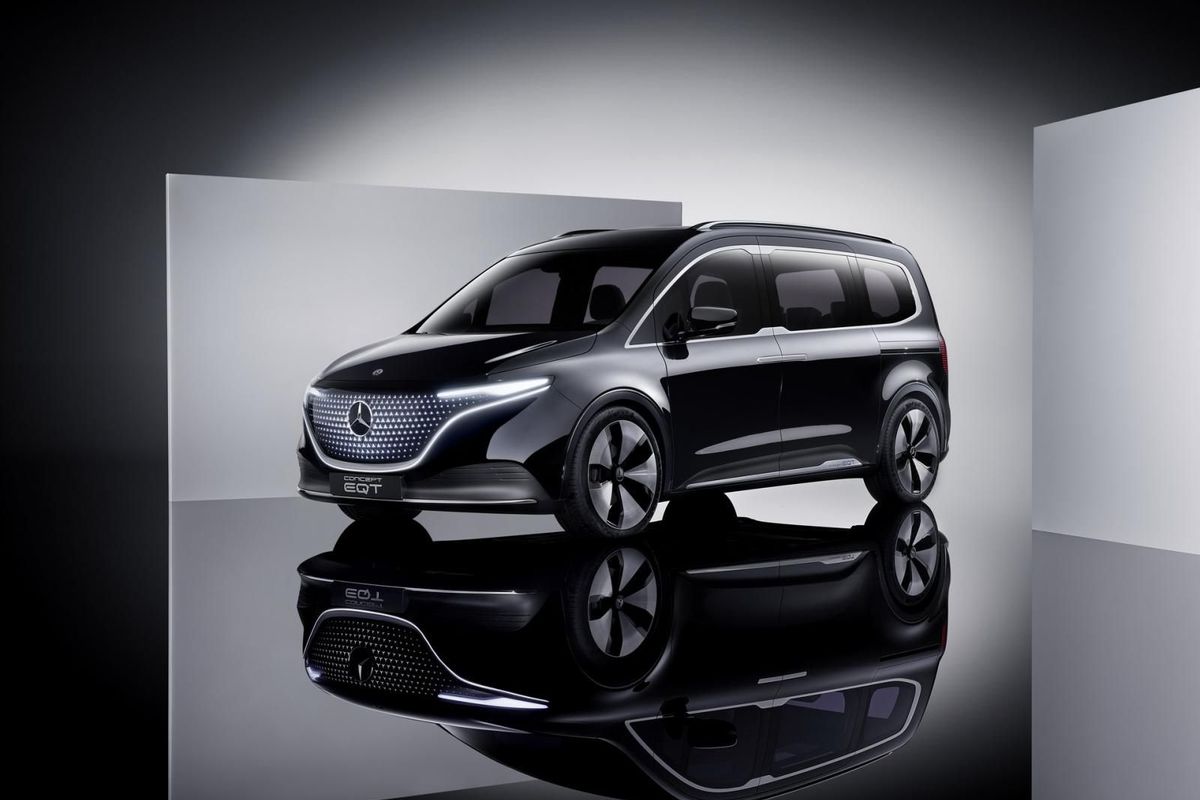
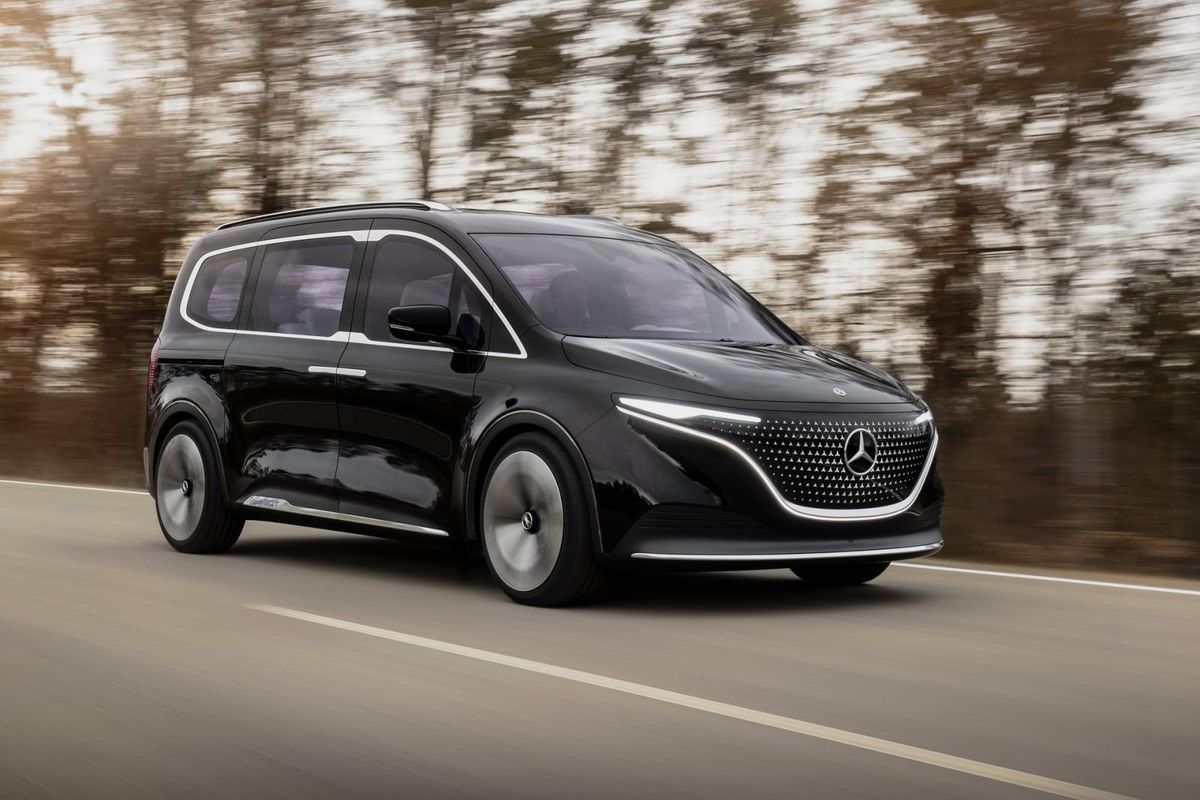
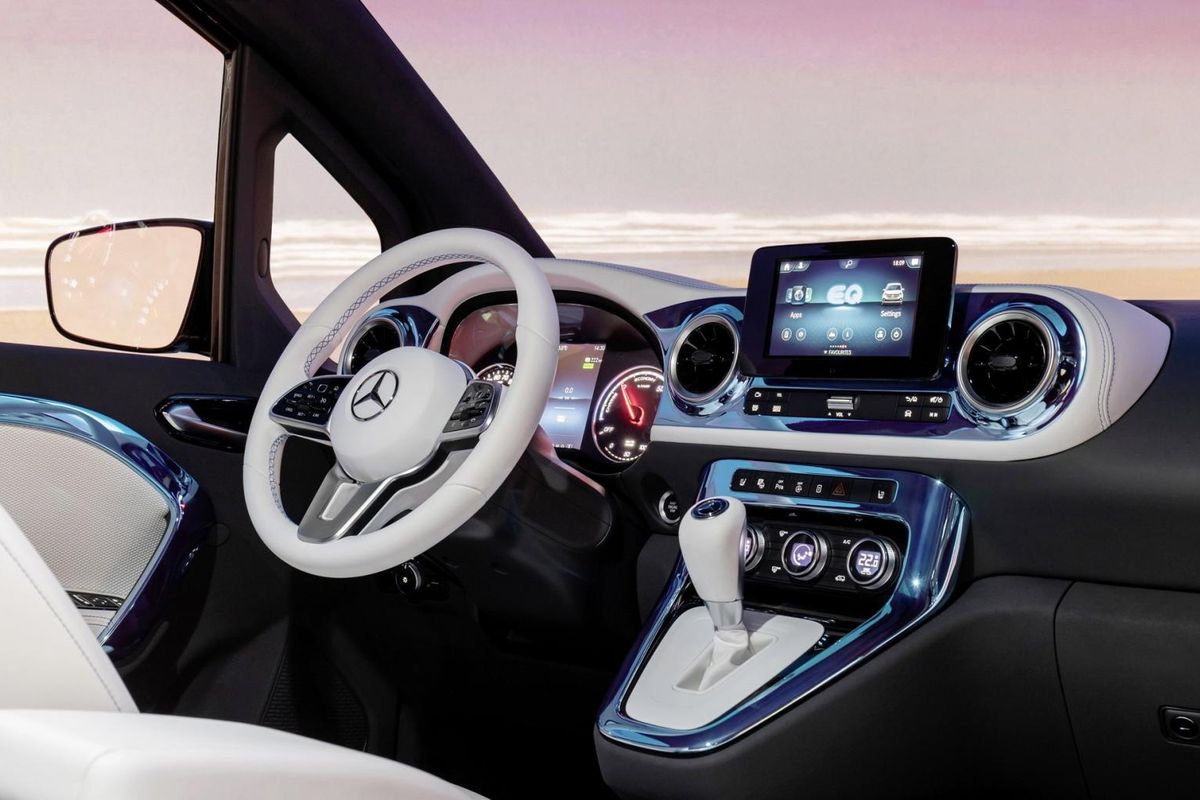
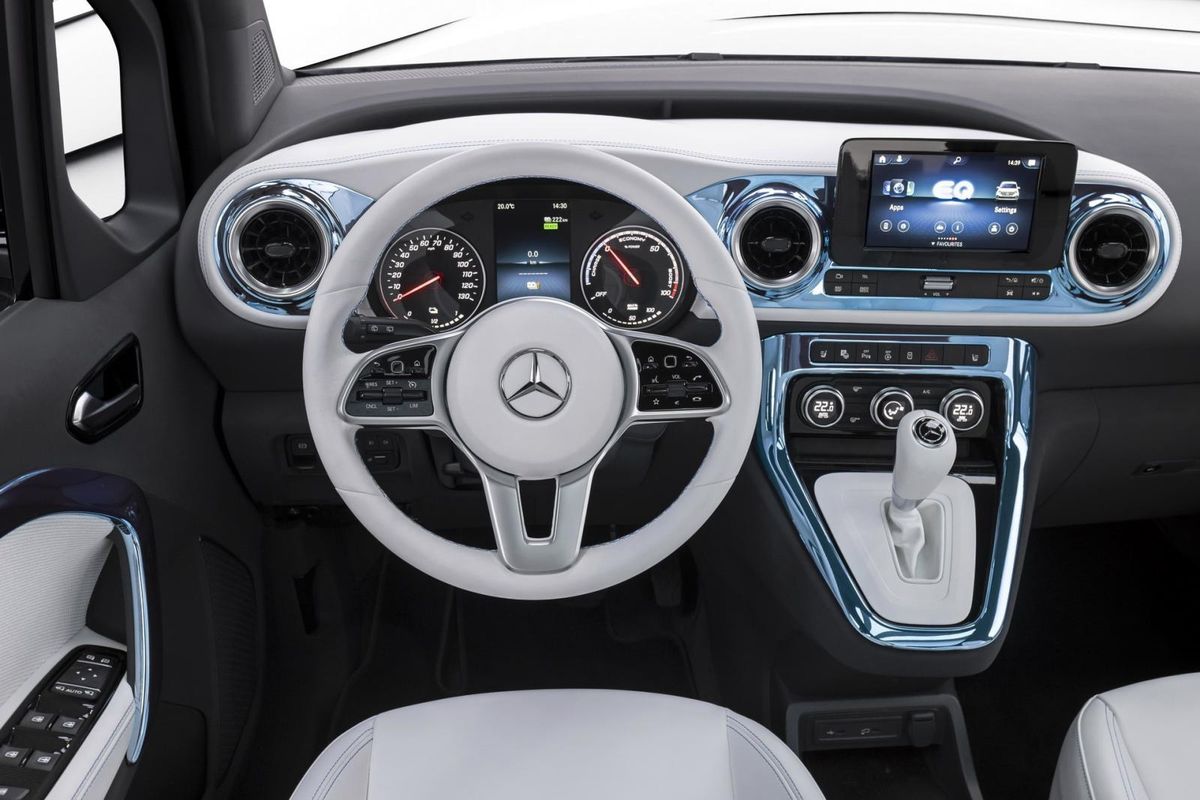
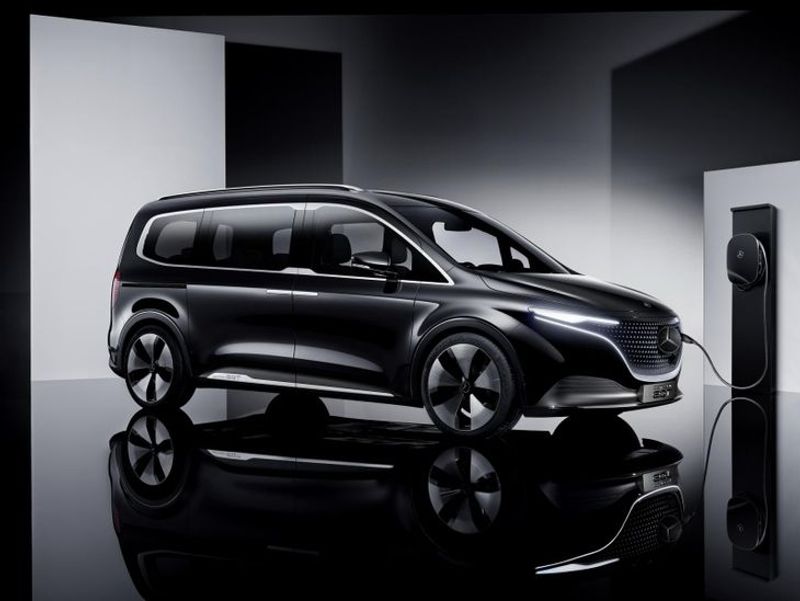
Mercedes-Benz EQT Concept Previews Production T-Class
Mercedes-Benz is preparing to launch its production version T-Class small van but to whet our appetites and give us a little taste of what's to come, check out the EQT Concept.
Mercedes-Benz continues to offer a model for every conceivable segment and while this concept is tagged as an 'EQ' model, there will be conventional petrol and diesel engines for the standard production Mercedes-Benz T-Class.
The Mercedes-Benz T-Class is the replacement for the Citan, but interestingly the Citan name will stay on as a commercial offering. Think of the Mercedes-Benz T-Class as a rival to the Volkswagen Caddy. The upcoming Mercedes-Benz T-Class will be co-developed alongside the Renault Kangoo, a popular model for both passengers and cargo in the European market.
The Mercedes-Benz EQT Concept confirms the Stuttgart-based manufacturer will be investing in electrification across its portfolio. If the EQT gains the same electric powertrain from the Renault Kangoo E-Tech, then expect a range of around 265 km. The internal combustion engines will also make an appearance for the standard T-Class and these are expected in the form of Renault's 1.3-litre turbopetrol and 1.5-litre turbodiesels.
While final specifications aren't yet available, we can see two sliding doors that appear to offer an aperature big enough to allow passengers access into the third row of seats – no need to fold or slide the second row.
Further details and a production reveal are scheduled for later this year.
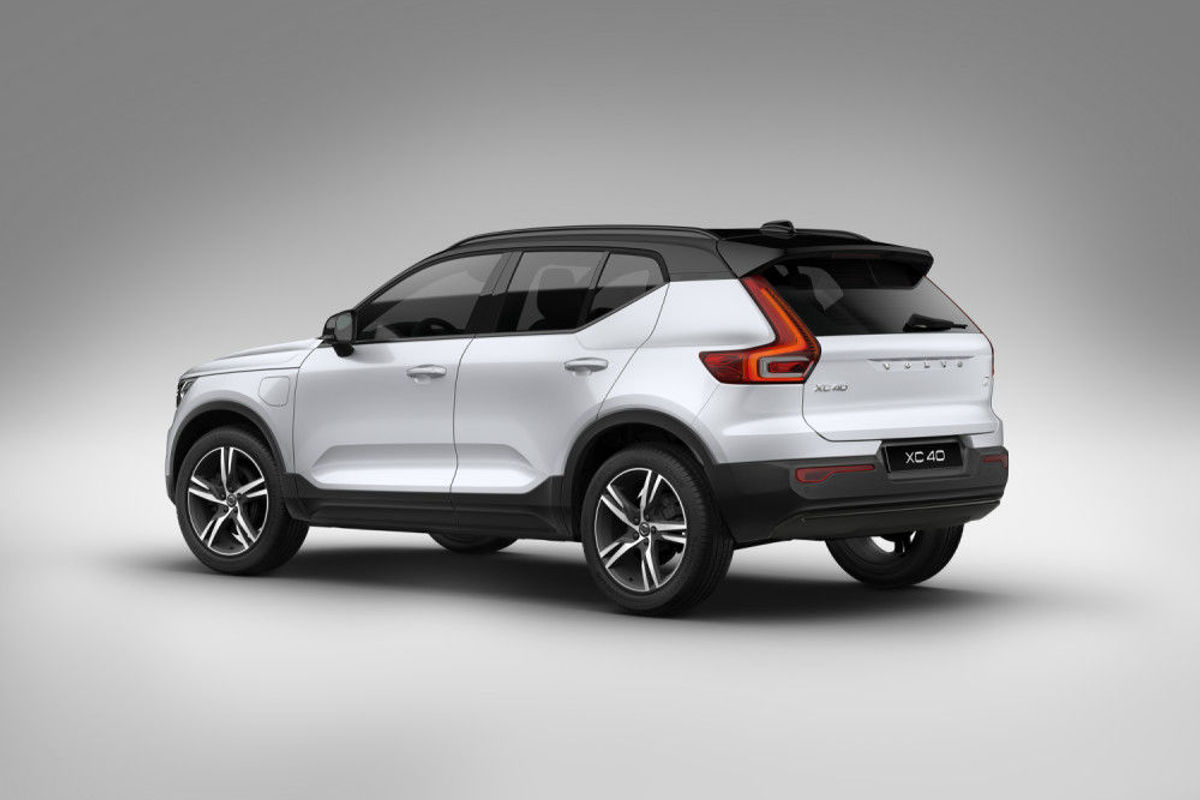
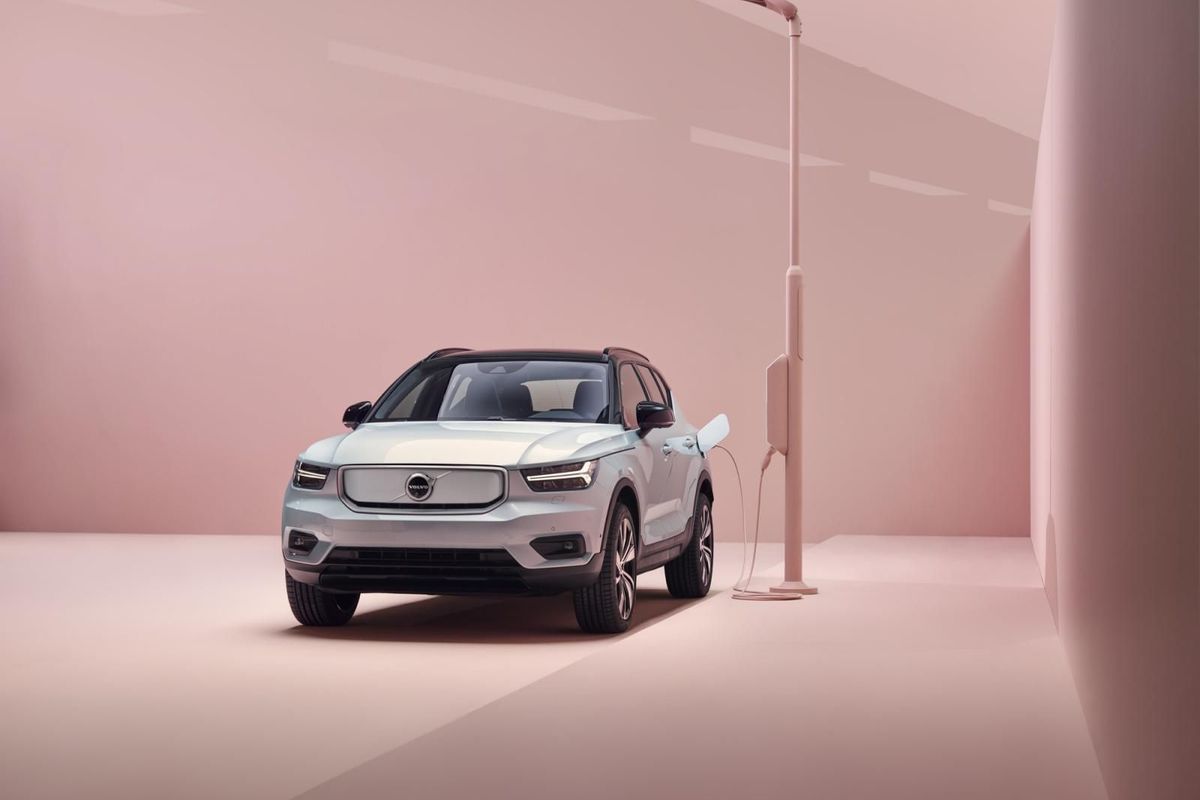
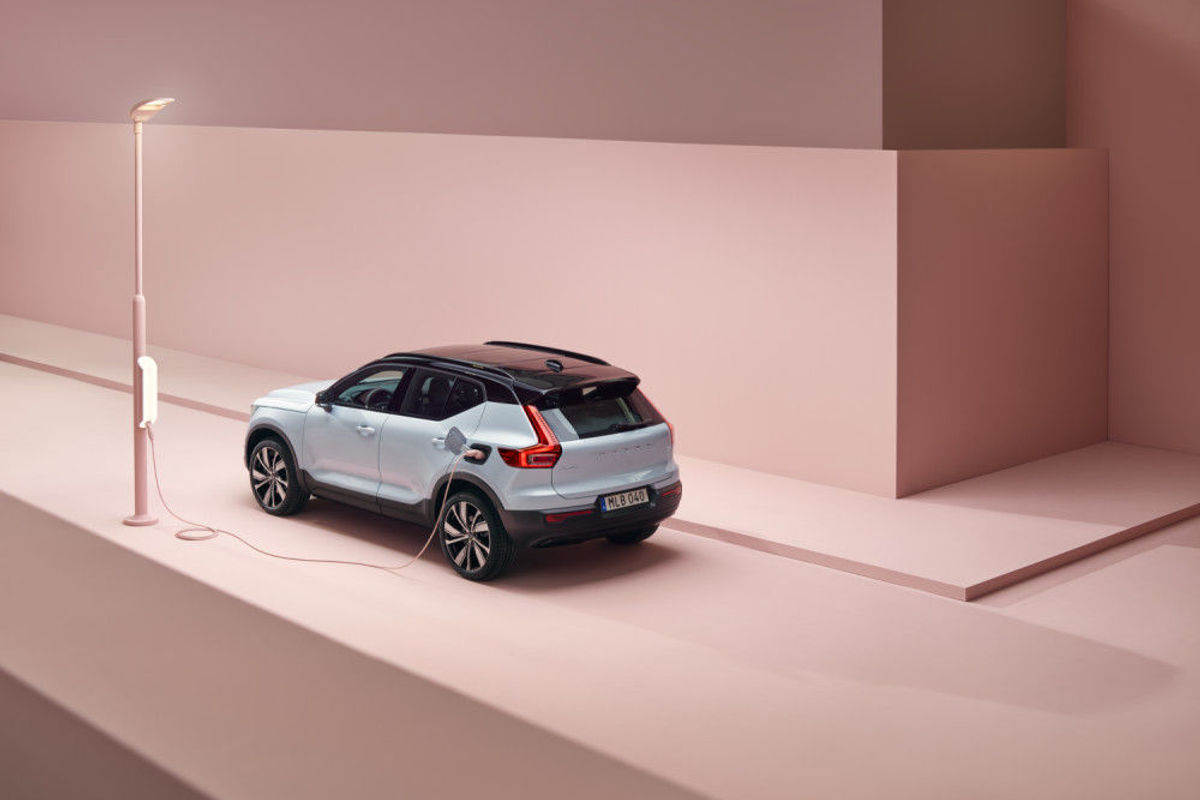
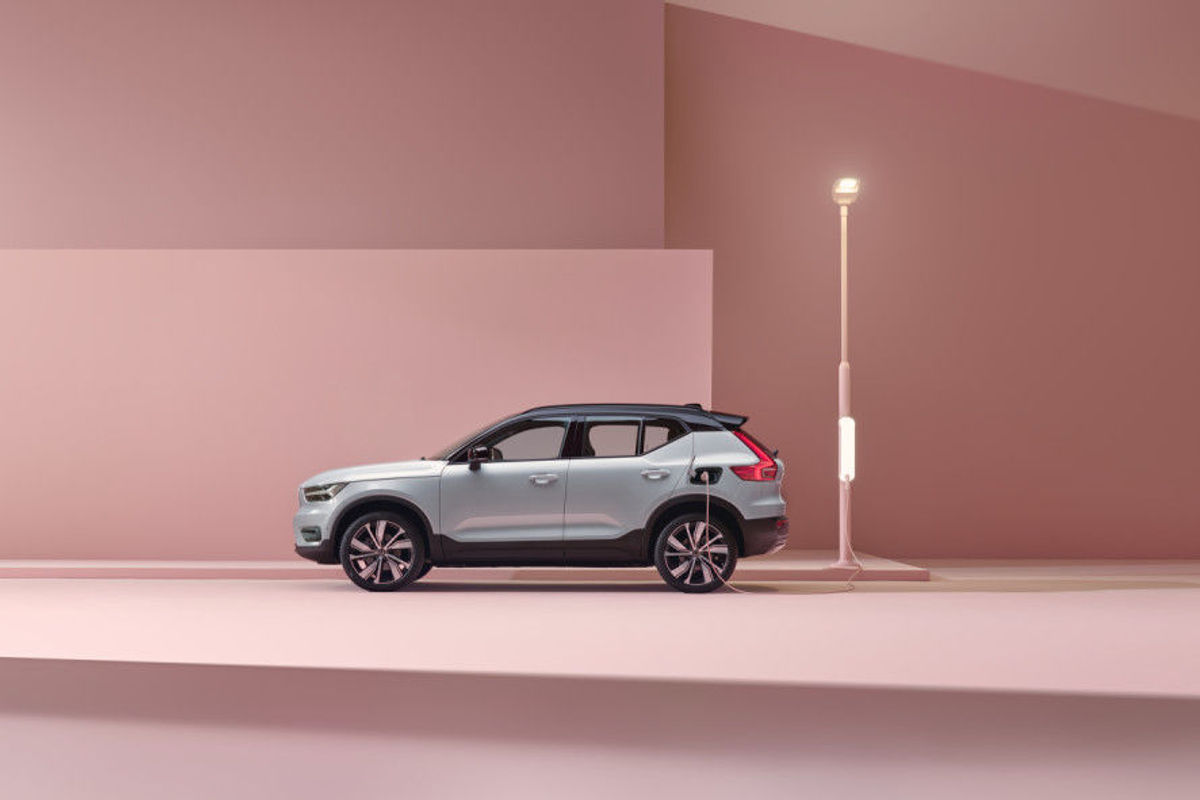
Pre-orders for the all-electric Volvo XC40 P8 Recharge commences today with first deliveries expected in August 2021.
Volvo recently reported a global sales increase of 40.8% in Q1 2021 and the XC40 Recharge accounted for 26% of all Volvos sold worldwide in March 2021.
Buyers who are keen to get into the all-electric XC40 P8 Recharge can now place an order via Volvo’s new My Volvo website, which makes purchasing a Volvo quick and simple without having to leave your home.
“All-electric vehicles sold in South Africa have traditionally come with hefty price tags – and this has undoubtedly been a deterrent. We know that there is an appetite in South Africa for electric cars and we were determined to give customers an attractive price,” says Managing Director at Volvo Car South Africa, Greg Maruszewski.
The XC40 Recharge is the Swedish brand’s first all-electric vehicle and the XC40 P8 Recharge is powered by 2 electric motors producing 304 kW and 660 Nm of torque. Acceleration from zero to 100 kph takes just 4.9 seconds with an electric range of 418 km.
The XC40 P8 Recharge also comes with a Volvo CARE package which includes a 5-year warranty and maintenance plan, 3-years insurance, a home charger with charge cables and access to a petrol car for 2 weeks per year for 3 years.
“The Volvo XC40 P8 Recharge all-electric is clearly a sign of things to come; last month the company announced that it would only manufacture electric cars by 2030, with all sales to be online. So, our future is clear, and it will be fully electric, sustainable, and online,” concludes Maruszewski.
How much does the Volvo XC40 P8 Recharge Cost in South Africa?
The rumour mill keeps grinding away, regarding Ford’s next-generation Raptor.
Sources close to FordAuthority, have allegedly confirmed the configuration for Ford's Ranger Raptor 2.0 – and no, it won’t have a four-cylinder engine, anymore.
The new Ranger Raptor will be rolling a 3-litre EcoBoost V6, combusting petrol. This engine architecture does duty in the current Explorer ST.
Ford’s most potent tune of the 3-litre EcoBoost V6 makes some very impressive numbers, especially for a bakkie. If product planners at the American brand decided to use the 3-litre EcoBoost V6 without any upgrades, it should boost 298 kW and 563 Nm of torque.
Power nearly doubles over the current 2-litre bi-turbodiesel’s 157 kW, whilst the torque gain is less impressive, at 12%.
The most significant improvement in Range Raptor’s driveability should be its acceleration and overtaking performance at highway speeds – both of which, are less than impressive, with the current diesel Raptor.
With so much power, the new Ranger Raptor V6 will also make for an excellent dune driving vehicle, although its fuel consumption will probably border on the ridiculous side of thirsty.
In the American and Australian markets, where owners have the purchasing power to feel indifference toward fuel prices, the idea of a Ranger Raptor V6 makes sense. South African bakkie buyers are inherently biased towards diesel, and that could be an issue for the new Ranger Raptor to overcome.
There is no question that any buyer who can afford a Ranger Raptor, will not be bothered by their fuel expense increasing with the switch from diesel to petrol. But to some, a reduction in range could be an issue, when planning that adventurous off-road expedition. Expect a range extending tank to be an option, either from Ford or on the aftermarket.
This week’s news you need to know (May 2021, week 1)
In this week's motoring news you need to know: Honda could be targeting the Toyota Fortuner (or just replacing the BR-V), Nissan South Africa builds a better Navara, the Subaru Outback is likely going to be the best car you'll never buy and Ferrari continues the hold the flame aloft for the mighty V12.
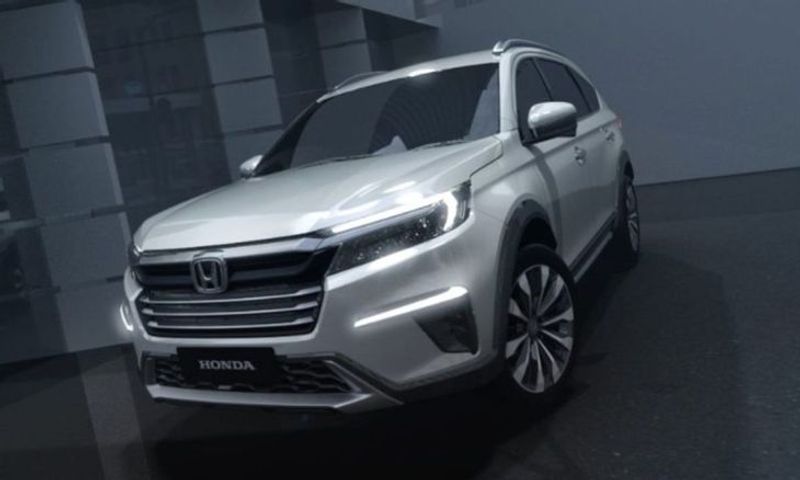
Honda N7X – your uber has arrived
Is the N7X concept merely a precursor to a vehicle that will be popular with Uber XL operators… or is there more to it? Honda will have to provide more, um, clarity and purpose if it wants to step out of the shadow, sharpen up that katana, down the saki and take the fight to its fellow Japanese brand Toyota and its omnipotent Fortuner, which is as much of a household brand as Sunlight Liquid and Q20.
Honda’s latest would-be offering in the people-carrying sector looks like a bit of a non-event so far, but bear in mind the newcomer is but in the introductory phase at this point – anything can happen in between now and when the model actually goes into production. Let’s hope that it will emerge as a legitimate Fortuner rival which will help to keep Toyota's mainstay honest. If there aren’t any distinguishing factors between the N7X and the current, Uber-spec BR-V, another disappointment is on the cards. It’s about time that Honda steps things up, though. It'd be the honourable thing to do.
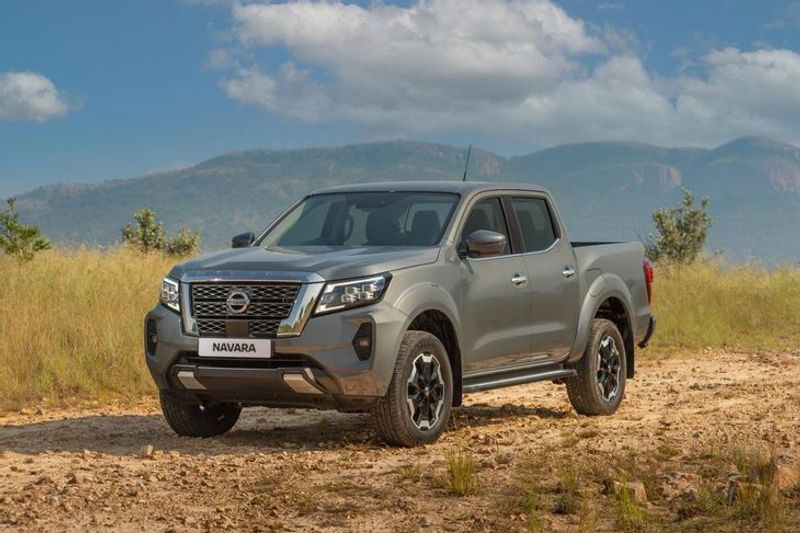
Nissan Navara – Time to shine
Stop me if I've said this before, but the standards of the South African leisure bakkie market have evolved a lot through the years. Toyota, Ford and, to a lesser extent, Isuzu have led that charge in (what can only be) a frantic bid to please the market at all costs. More luxury, more premium features, more of the stuff a premium sedan has… but in a bakkie. It sounds a bit silly to say it, but we've made a monster.
One manufacturer that has, however, been a little slow on the uptake is Nissan, which hasn't developed its Navara with the same kind of urgency or intensity that Toyota and Ford have devoted to their hyper-evolved Hilux and Ranger respectively. However, that could all be changing – if we peel away the layers of fanfare around the release of the new Navara, we can see that, by and large, there are some solid underpinnings that the manufacturer has honed/improved to give the people the kind of bakkie they demand. Who knows? It might even have the ability to go off-road (forgive my sarcasm).
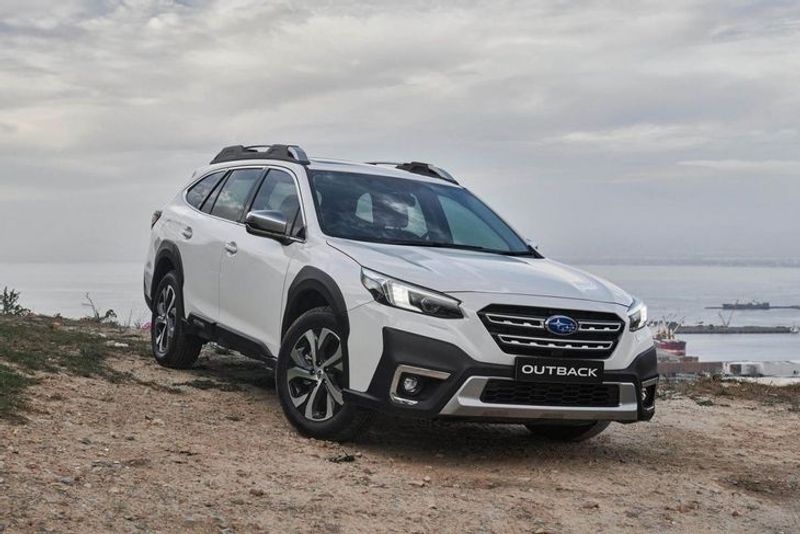
Subaru Outback – The identity crisis
Subaru is a brand that has been kind of lurking for the past decade (or so). The champion of symmetrical all-wheel-drive (AWD) passenger cars doesn't dominate in any segment, nor does it have the sheer clout of its ally Toyota, but that’s okay because it's a brand that serves its purpose. Reborn (quite literally) in the rally world, Subaru followed in the footsteps of Lancia (with the Integrale), attracted a cult-like following with the Impreza WRX STi and amassed loyal customers across the globe, especially in the US. In fact, the boxer-engine-and-AWD combo has been intrinsic to the brand’s lasting success.
Since the heady days of its involvement in the WRC (that's where the firm's Rally Blue paint finish comes from), Suburu has dropped its boy-racer image and eased into a more mature, people-carrying role. That's “adulting” (we all have to go through it). Subaru’s latest Outback looks to continue in that unflappable all-purpose role even though it's not entirely clear whether the model's an SUV or an estate!
I also can't help but wonder if someone who owned a WRX STI (GC8-generation) in the '90s would stroll into a Subaru dealer today (while pushing a pram and with a spouse and couple more kids in tow) to test the new Outback. Do you know what? The Outback's not inexpensive, but they just might; yes, indeed, Subaru fans are that loyal.
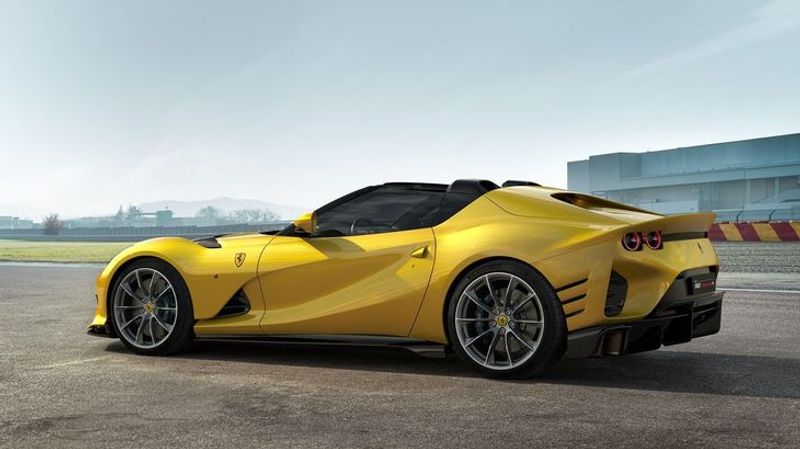
Ferrari 812 Competizione – ‘sustainable’ V12 motoring
What if I told you that V12s will be around for the next 30 years – there isn’t anything to worry about, they're not being killed off? It's a comforting thought and well, looky here. Despite the motoring world finding itself in the convoluted transition between ICE age retirement and the EV revolution, if you’re able to see the wood for the trees you’ll know that V12 engines and cars like the 812 Competizione will be around for some time. Why? Because as long as rich customers want V12s, boutique brands like Ferrari will happily produce them and charge you (very dearly) for the privilege of owning a vehicle with a full dozen cylinders wedged under its bonnet. Believe me, the mighty buck will invariably find a way to circumvent emissions laws and defy those myriad impassioned rants made at environmental forums.
The V12 engine has been at the epicentre of nostalgic motoring provocation and no brand has captured that raw emotion quite like Ferrari, which has embedded the 12-pot into its DNA ever since old man Enzo threw his first tantrum. The V12 will remain after its maker ceases production and disappears. The British Motor Corporation might be no more, but its body panel jigs for the original MINI have since been acquired and used to prepare completely new cars. There are other "restomod" success stories and the same will happen if people still want V12-powered cars in future (provided they can afford 'em).
New Electronic Drivers License for SA?
A new, more efficient driver’s license card system is being developed and is expected to be rolled out in the middle of the 2021/2022 financial year, according to Transport Minister, Fikile Mbalula.
If you are a licensed motorist in South Africa you are likely to have experienced some form of inefficiency at your local traffic department. The Covid-19 lockdown has only exacerbated the inefficiencies but thankfully the Transport Department is taking action to improve the situation.
The Driving Licence Card Account (DLCA) is responsible for producing driver’s license cards and in its annual performance plan, it was announced that a new driver license car system is in the final phase of design.
The DLCA said, “The introduction of the new driving license involves a new design of the driving license card, and the re-engineering of processes to allow for agility and focus on delivering services efficiently and quickly. The project will allow for the adoption of digital technologies such as blockchain and other related technologies which will form the platform of an integrated transport system ”.
Fikile Mbalula has acknowledged that serious intervention is necessary to alleviate pressure at Driving Licence Testing Centres (DLTCs).
“Driving Licence Testing Centres (DLTCs) provide an important service to our motorists, as they are an important support system to enable mobility. The difficulties experienced by citizens in booking slots through the online platform is a serious cause for concern. We are gravely concerned that preliminary investigations suggest that corruption is the principal driver of lack of availability of booking slots in various DLTCs across Gauteng,” Mbalula said.
“The onset of the COVID-19 pandemic laid bare these challenges, most of which are a consequence of corruption in the system,” he added
The intention of the new driver’s license card system is to improve efficiency, stem corruption and modernise the process through the adoption of technology that will eliminate or drastically reduce the need to queue at DLTCs.
The DLCA will also modernise the production of driving licenses which will include a new machine that will produce better quality license cards but also lay the foundation for a mobile or e-driving licence.
This means that motorists will have the option for both a physical driver’s license card as well as an electronic license.
We expect to see the rollout of the new driver’s license card system towards the end of 2021 or early in 2022. We will keep you updated as soon as more information becomes available.
Audi RS6 Avant vs Mercedes-AMG E63 S – Drag race and rolling race
All the power you could ever ask for in a 4-door family car meant for the Autobahn. What happens when we put them against each other in a drag race?
We are very excited to bring you a clash between these two German sledgehammers. These cars are the product of a manic German power war, which has resulted in family cars having more power than Lamborghini supercars.
And so the test car stars aligned, we hired an airstrip outside Cape Town and we staged a few epic 400-metre races between the brand new Audi RS6 Avant and the facelifted Mercedes-AMG E63 S.
The Mercedes has the upper hand in the power and torque department but Audi has a reputation for awesome launch control systems. So sit back, relax, and enjoy this super-saloon (and wagon) shoot-out.
Looking for a used Audi in South Africa? We have over 2 400 to choose from!