If you want to buy a car but you're not entirely sure what type of car you should be considering, then this article will provide you with some guidance. It's important that you choose a car that fits your lifestyle and that it's able to fulfil your specific motoring needs.
Hatchbacks, crossovers, SUVs, bakkies, sportscars, there are so many different cars to choose from, but where do you start? Every car buyer has specific needs and those needs should inform the decisions you make when figuring out what type of car you need to buy. The questions listed here, and the answers you provide, will reveal the course of action you need to take in order to buy the car that's suitable for your specific lifestyle and needs. Answer the following questions to get a better idea of what you should be looking for in a car.
What will you be using your car for?
Top Tip: Purchase a vehicle that will cater to your car needs most often.
Do you mostly use the car for your business commute or family travel? What kind of lifestyle do you lead? Do you practice sports like mountain biking, surfing, diving or enjoy doing 4×4 trails? For example, if you travel mostly in urban areas and only do general driving, then a city car would make the most sense as opposed to a 4×4, for example. Choose a car that suits your specific needs and requirements.
How many people should the car be able to transport?
If the purpose of your vehicle includes transporting more than just yourself, you will then need to consider just how much seating and space you need in the car. Do you have children? If so, how many and at what ages? Do you have pets and do they travel with you often? Catering for others' needs is just as important as catering for your own. Unless you can afford multiple cars in the household, your choice should satisfy most of your needs most of the time.
How important is safety and safety features to you?
Would you rather buy the safest car you can afford or are luxury features a prime consideration considering the comfort of those who travel with you? We suggest setting a minimum safety feature requirement when you look to buy a car. For instance, 2 airbags, ABS with EBD, brake assist, and electronic stability control should be fitted to any vehicle you consider. Make safety a non-negotiable.
Do you want a manual or automatic car?
Do you enjoy controlling the performance of the car or are you happy to relax and let the car do the work? Some people find driving a manual car tedious, others find driving an automatic car boring or frustrating. You need to decide what will suit you best. Current trends show that buyers favour automatic transmissions, especially in built-up urban environments where congested traffic conditions are common.
Do you want a petrol or diesel car?
Diesel cars offer far superior fuel economy and more driving enjoyment than a petrol car with an equivalent engine size because of the high torque value generated low down in the engine rev range. However, diesels generally require higher maintenance due to more frequent oil changes and are generally a bit more expensive than the equivalent petrol model.
What are the conditions of the roads you frequent?
If you live in a big city with well-maintained tar roads, you have a much wider range of vehicle to choose from, while those living in more rural areas with lots of dirt roads will need to choose a vehicle more suited to the rugged terrain.
What is the weather like?
The climate should also influence your vehicle purchase, especially if you live in an area with extreme weather conditions. Areas that frequently experience heavy rain or snow may require a larger 4×4 type vehicle, while those which experience extreme heat may warrant a convertible or air conditioning at the very least.
Cost considerations when buying a car
Affordability
What car can you realistically afford to buy and own? Assess your affordability by taking a close look at your monthly expenses and your disposable income. Your disposable income (the amount of money left over after deducting all your monthly expenses from your income) will determine what car you are able to afford. If your disposable income is not sizable enough, you are not likely to qualify for car finance. If you don't have any disposable income then you simply can't afford to buy a car on credit. Whatever you do, don't buy a car you can't afford because this will likely lead to financial hardship or being blacklisted.
Different types of cars come with different inherent risk profiles, regardless of the risk profile of the driver, and thus will come with different insurance premiums. Sporty cars will generally come with higher insurance premiums compared to normal city cars. Check with your car insurance provider before you make the purchase to see what your premiums will be for the specific car you have in mind.
Maintenance costs
The various vehicle types will each come with their own maintenance and repair costs. Even though you might be able to afford a particular type of car, you might not be able to afford the additional costs that come with repairs and maintenance years down the line.
Resale of the car
Some manufacturers have a better reputation for reliability and low maintenance costs than others and so obtain higher resale values than rival makes. Keeping track of Customer Satisfaction Index (CSI) and Initial Quality Survey (IQS) reports from institutions like JD Power are a good benchmark in performance.
If you are looking at buying a new car or a used car, it’s important to choose a car that you can afford to spend money on. This article highlights the factors you should consider before buying your next car.
How much do you earn?
Affordability is the most important factor to consider when buying a new or used car.
The car you are able to afford should be based on your income and how much you are willing and able to spend on a car on a monthly basis. Consider the following,
Net Income – Your take home’ salary after tax deductions,
Disposable Income – Net income minus monthly expenses.
*Tip: The general accepted rule of thumb is that you should not spend more than 20% of your total income on car payments.
Example of how much to spend on a car
When calculating how much you can spend on a car, it’s important that you allocate funds proportionally according to how much you earn. If you over-spend, you will accumulate debt over time and put your financial security at risk.
Net Income p/m
R 15 000
Monthly Expenses p/m
R 10 000
Disp. Income
R 5 000
Car Payment
R 3 000
Disp. Left
R 2 000
It’s also worth remembering that paying your monthly finance for a car is only one of the many costs associated with owning a car. Let’s take a look at some of the other costs of car ownership.
What costs should you consider before buying a car?
Purchase Price – The price you buy the car for will affect how much you pay every month. The more expensive the car, the more you can expect to spend in monthly instalments.
Down Payment – The more money you pay upfront, the less your monthly instalment will be. You can trade-in your current vehicle or sell it privately which can contribute towards a larger down payment.
Interest Rate – Higher interest rates generally mean higher monthly instalments.
Financing – The length of your financing term will determine your monthly instalment.
Insurance – Your monthly insurance cost will depend on the type of car you choose to drive and your driver risk profile.
Maintenance – Car maintenance is expensive and every car will have its own maintenance costs. Some cars are more expensive to maintain than others.
Fuel – The fuel price and the distances you travel will influence the cost of owning a car.
Depreciation – The car you buy will lose value over time. Different cars depreciate at different rates.
Fees – Car registration and licensing fees will add to the cost of owning a car.
*Tip: Consider all the costs associated with owning a car before buying a car. This will give you a realistic indication of what car you can afford to spend.
How can you save money when buying a car?
Buying a car is expensive and can easily become a financial burden. To save money when buying a car, consider the following,
Pay Cash
Pay cash for the car if you can. This means that you won’t have to worry about monthly instalments and crippling interest rates.
Financing
If you can’t pay cash for the car, you will have to finance the car. Aim to pay off your car as quickly as possible at the lowest interest rate you are able to obtain.
Short financing periods (24 months) generally translate into higher monthly instalments at a higher interest rate,
Long financing periods (48 months -72 months) generally translates into lower monthly instalments at a lower interest rate,
Long financing periods are expensive because you pay more interest over longer periods of time,
Take the time to shop around for the best car finance you can find.
Down Payment
Try to make your down payment as large as you possibly can, you may even be able to apply for a shorter financing period.
No down payment often leads to an ‘upside down loan’ which means that you owe more than what the car is worth. Avoid this situation at all costs.
Used cars
Consider buying a used car with low mileage that is one or two years old,
Used cars are generally cheaper than new cars,
Used cars depreciate slower than new cars.
Choose the right car
Buy a car that you need and can afford rather than buying a car that you want and can’t afford.
*Tip: If you can’t afford a car, don’t buy a car.
Summary
The amount of money you choose to spend on a car will depend on your personal financial situation and how much you are willing to spend on a car. Remember, buying a car is expensive and you should therefore buy a car that you are able to afford and maintain over time without compromising your financial security.
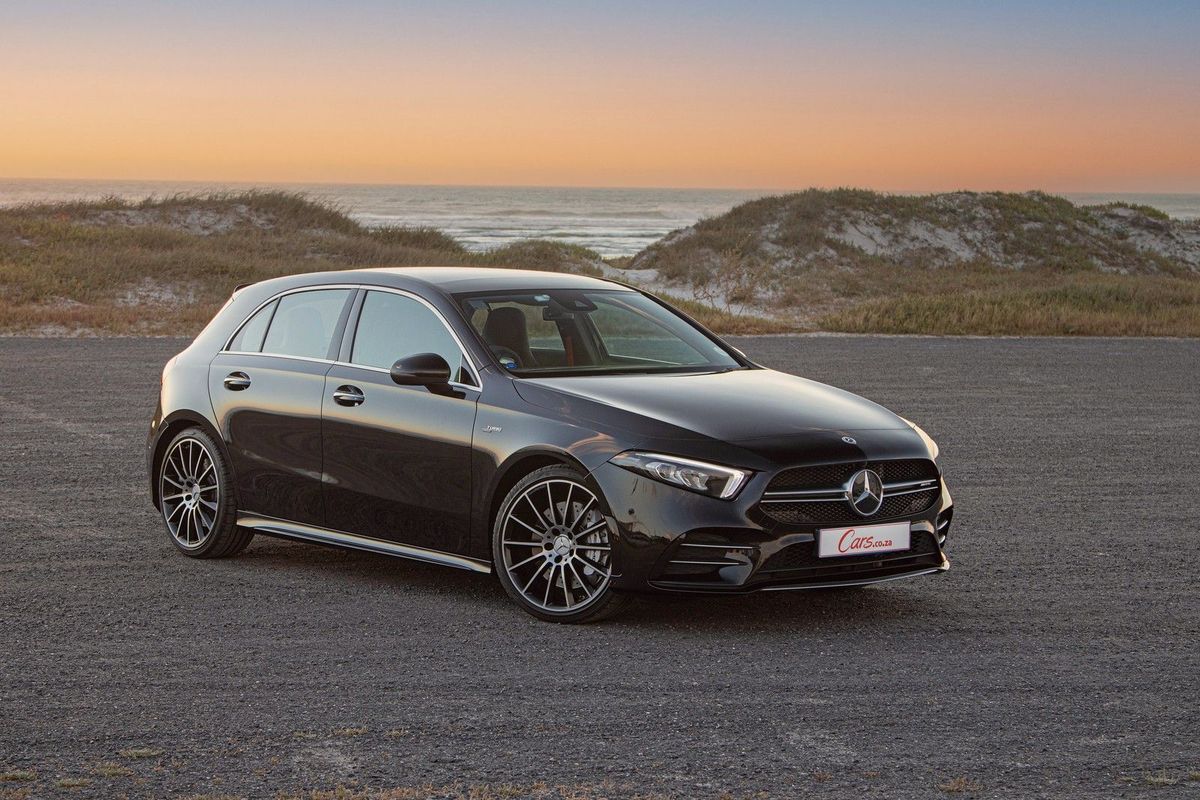
Mercedes-AMG A35 (2020) Review
There's a canyon-sized gap between the Mercedes-Benz A250 and the range-topping AMG A45 S and to bridge this gap, the Affalterbach-based performance brand has created the 35 range and carefully positioned it between the two. On paper, the A35's performance looks enticing for those whose budgets can't quite stretch to an A45 S but still want more street-cred than that offered by the lukewarm A250. Is it worth considering the A35, or should you sell your organs and rather go for broke with the A45 S?
We like: Strong and engaging engine, fun to drive, still retains the modern Mercedes-Benz premium look and feel.
We don’t like: Firm ride, intrusive tyre noise, pricey
Plugging the gap between the A250 and the A45 S is the A35, and it's aimed squarely at the BMW M135i and Audi S3.
To plug the gap between the 165 kW Mercedes-Benz A250 which retails for R698 240 and the hyper-hatch that is the 310 kW A45 S (R1 156 840), Mercedes-AMG has created the A35. Available in both hatchback and sedan guise, the 35 range also includes the CLA, should you be interested in a slinky sedan coupe. It's not just internal battles that Mercedes-AMG is facing as the rest of the segment has shifted.
Rivals from BMW have neutered its flagship 1-Series, by chopping two cylinders and losing its wild rear-wheel-drive setup in favour of all-wheel drive. The BMW M135i is a match for the A35 in terms of power output, but boasts a smidge more torque. Audi has recently revealed its all-new S3 and it'll touch down in South Africa in 2021, boasting the same power and torque outputs as the A35. Finally, SA's favourite, the Golf R, now in its 8th generation will be landing in 2021, packing 235 kW and 420 Nm, which is expected to set the cat amongst the pigeons when it arrives later in 2021.
Given the pace that the segment is progressing, the Mercedes-AMG A35 must deliver AMG-like performance and Mercedes-like luxury. Does it do this with enough purpose to warrant a purchase?
How it performs in terms of…
Exterior Design & Packaging
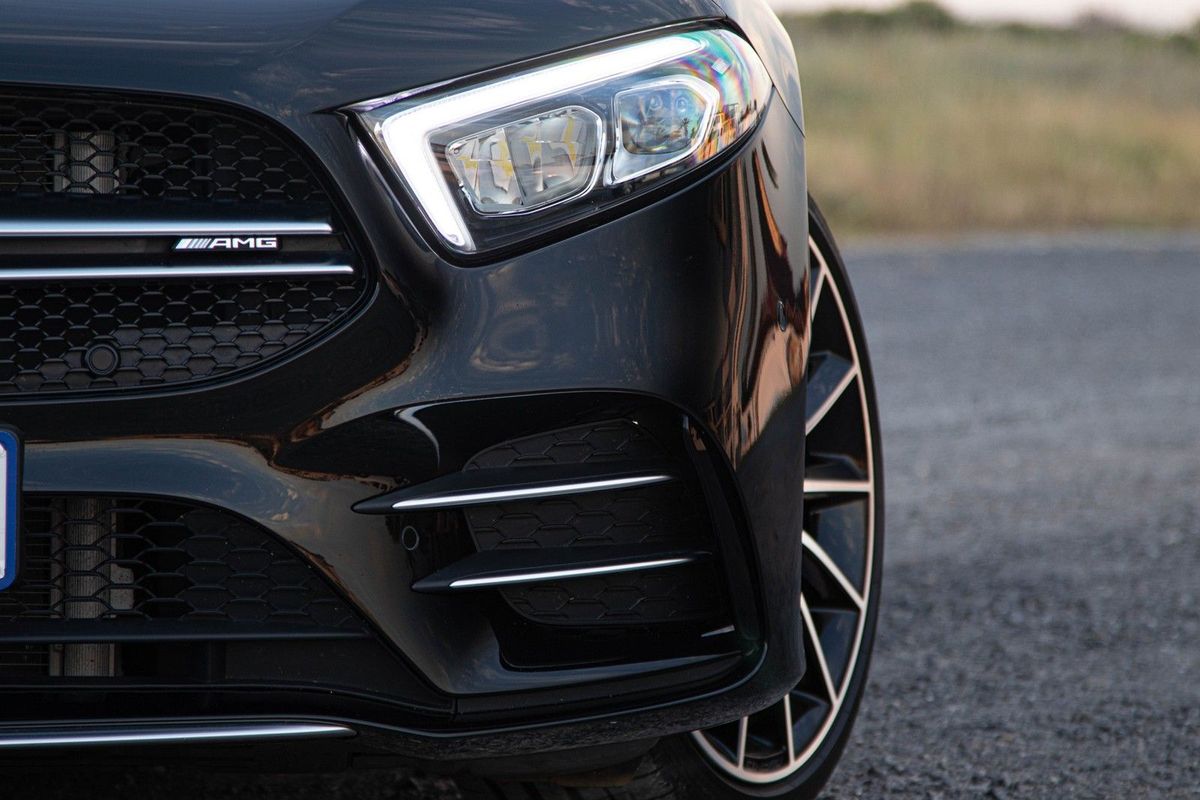
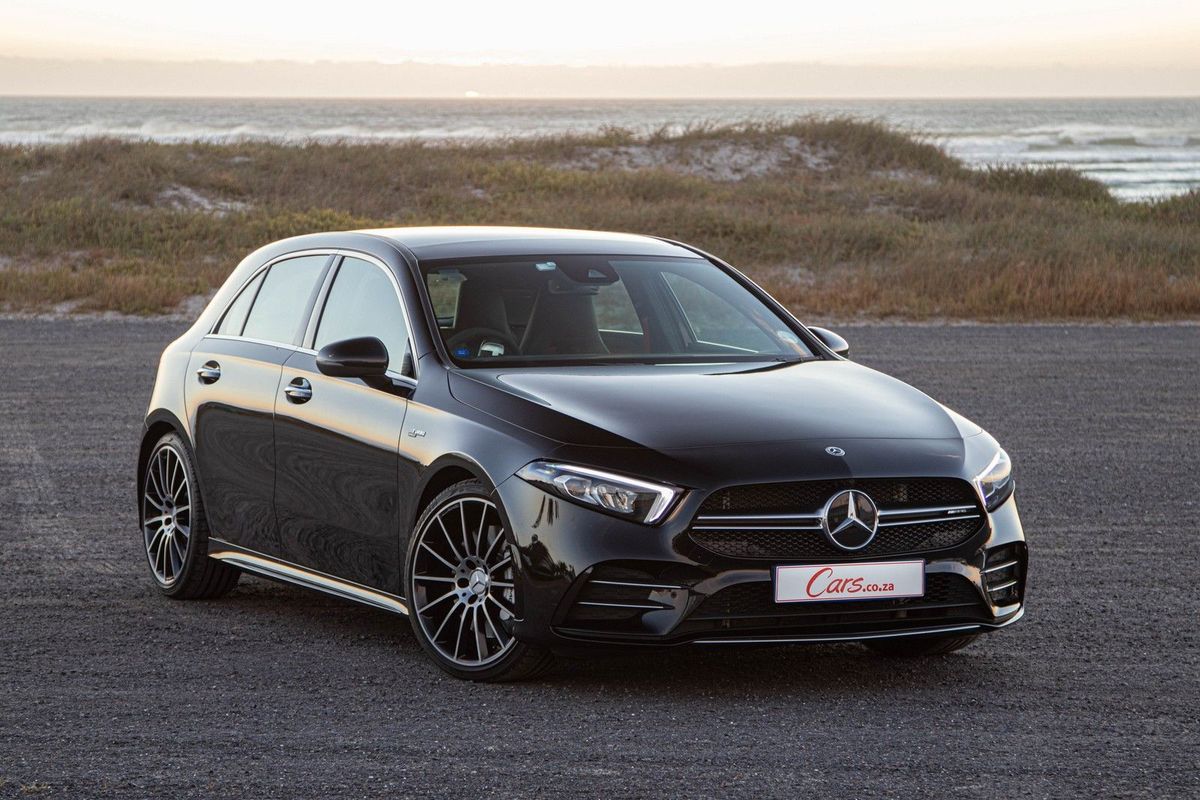
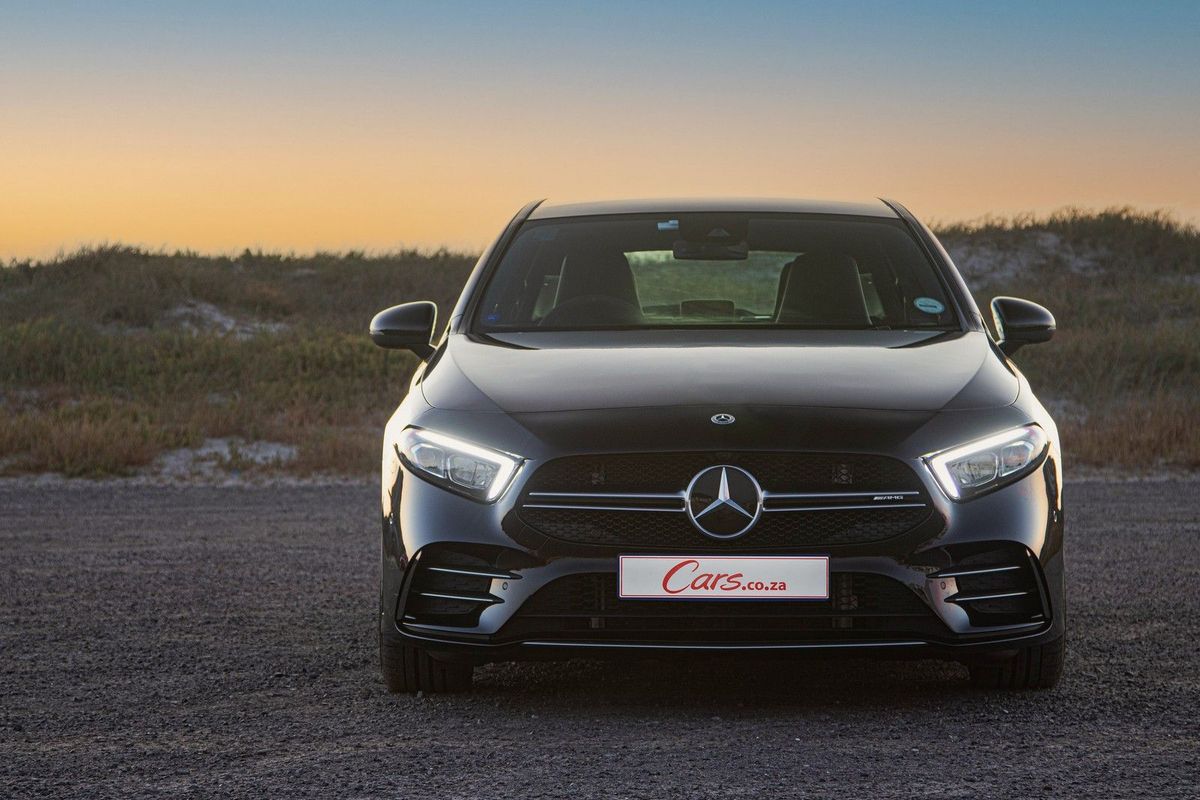
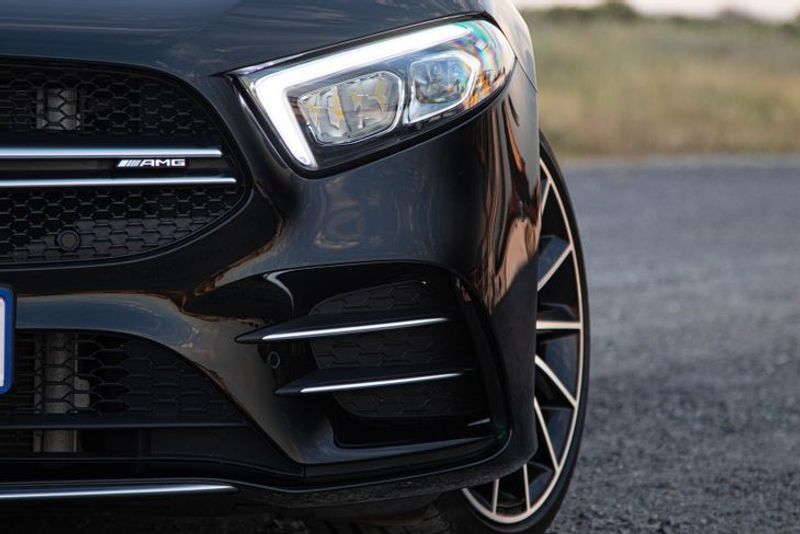
It's no Panamericana grille, but this grille with the AMG badge will have to do.
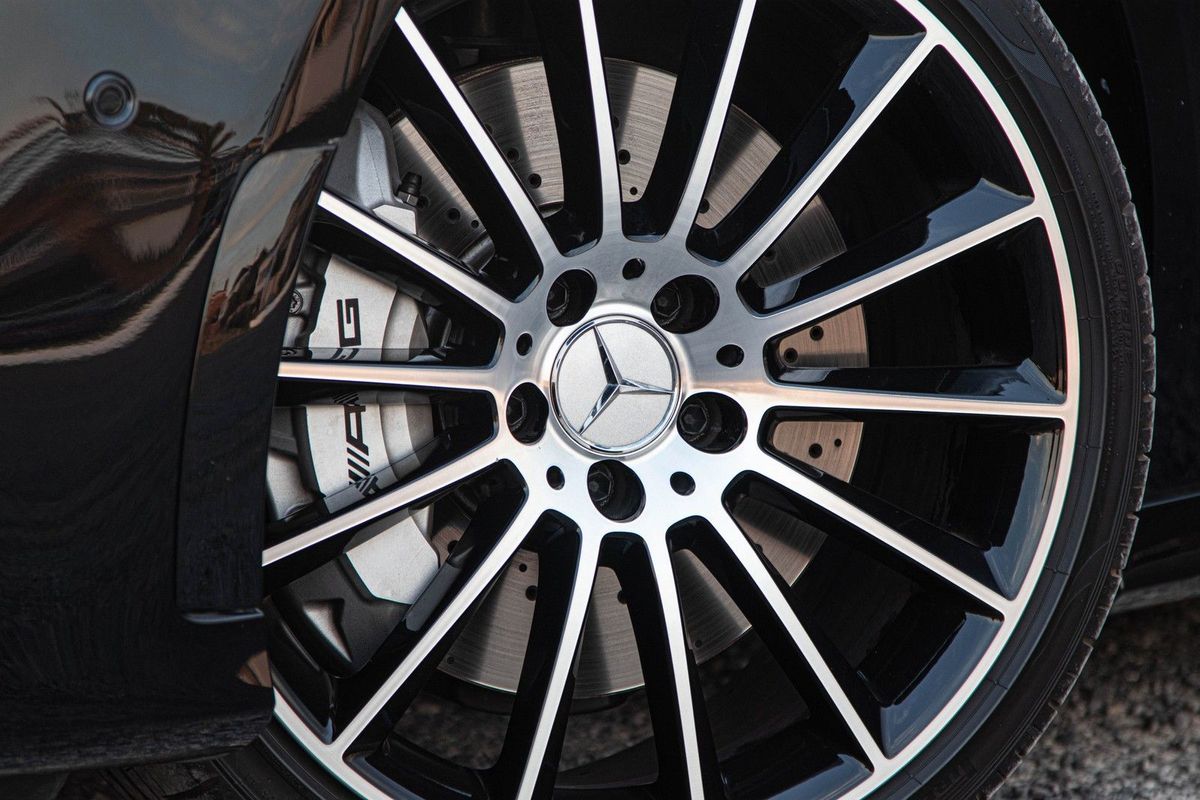
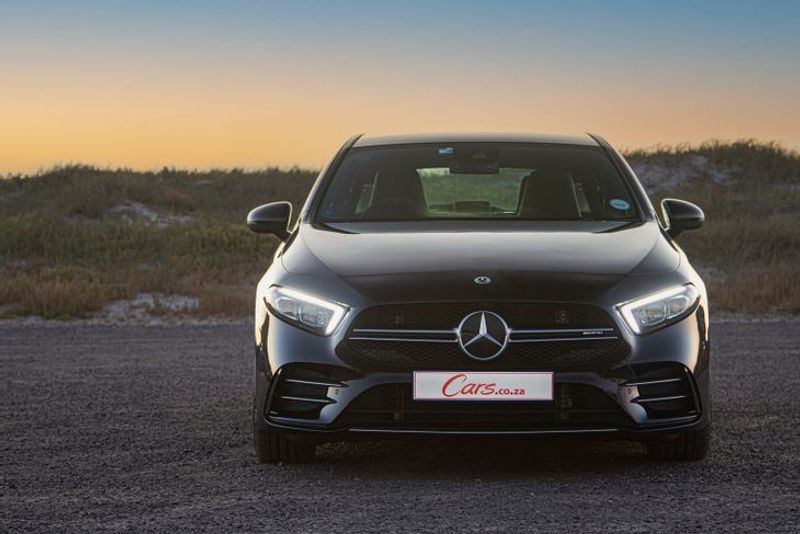
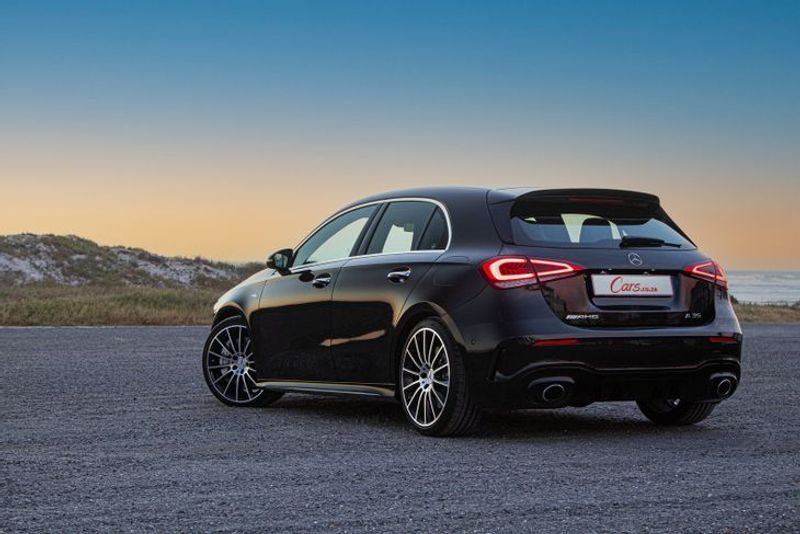
When petrolheads think of a typical AMG hatchback, perhaps an image that comes to mind is of a car with extraverted amounts of aerodynamic aids. By comparison, our A35 test unit looked remarkably underwhelming. Referenced against the configurator, we noted our test unit was rather barebones, riding on the standard wheels and finished in the standard night black paint. If you're wanting to resemble an extra from The Fast and the Furious franchise, have a casual gander in the configurator where you can get vivid yellow paint, bolder wheel designs as well as the aerodynamic package, complete with splitters and huge rear wing. There are also 4 alloy wheel designs to choose from if you must…
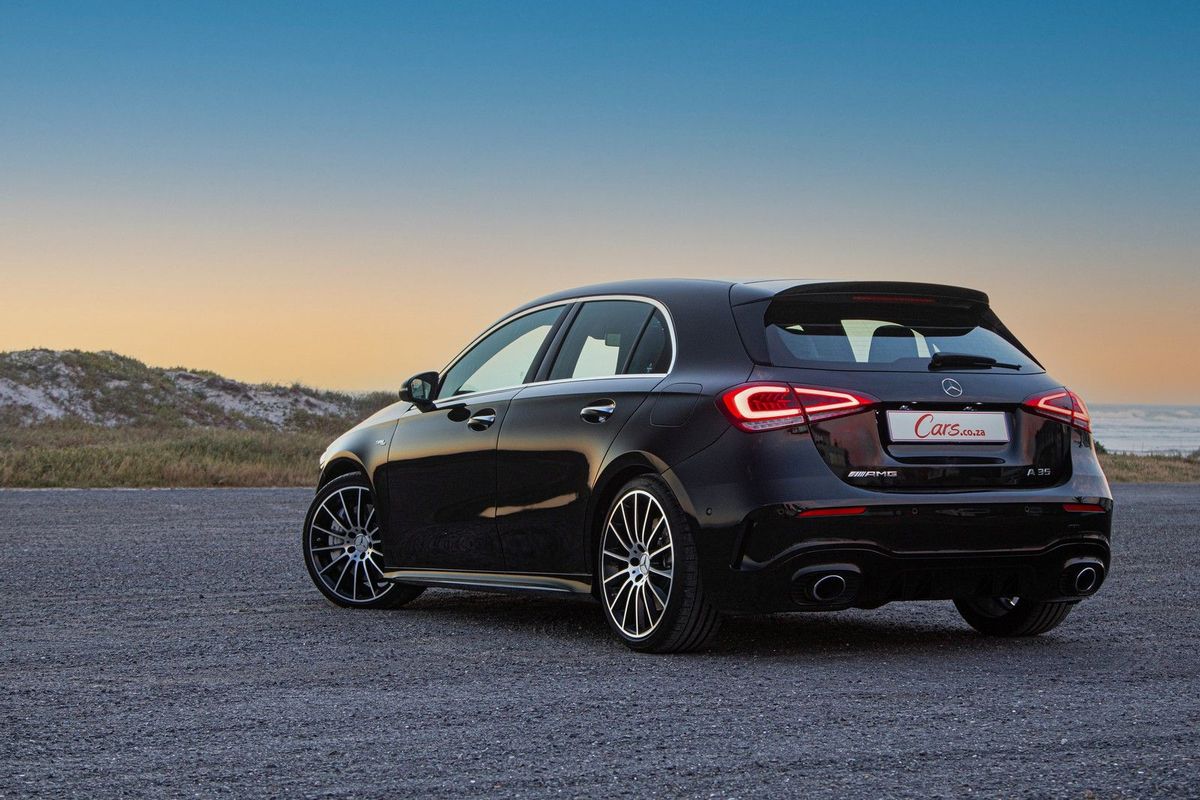
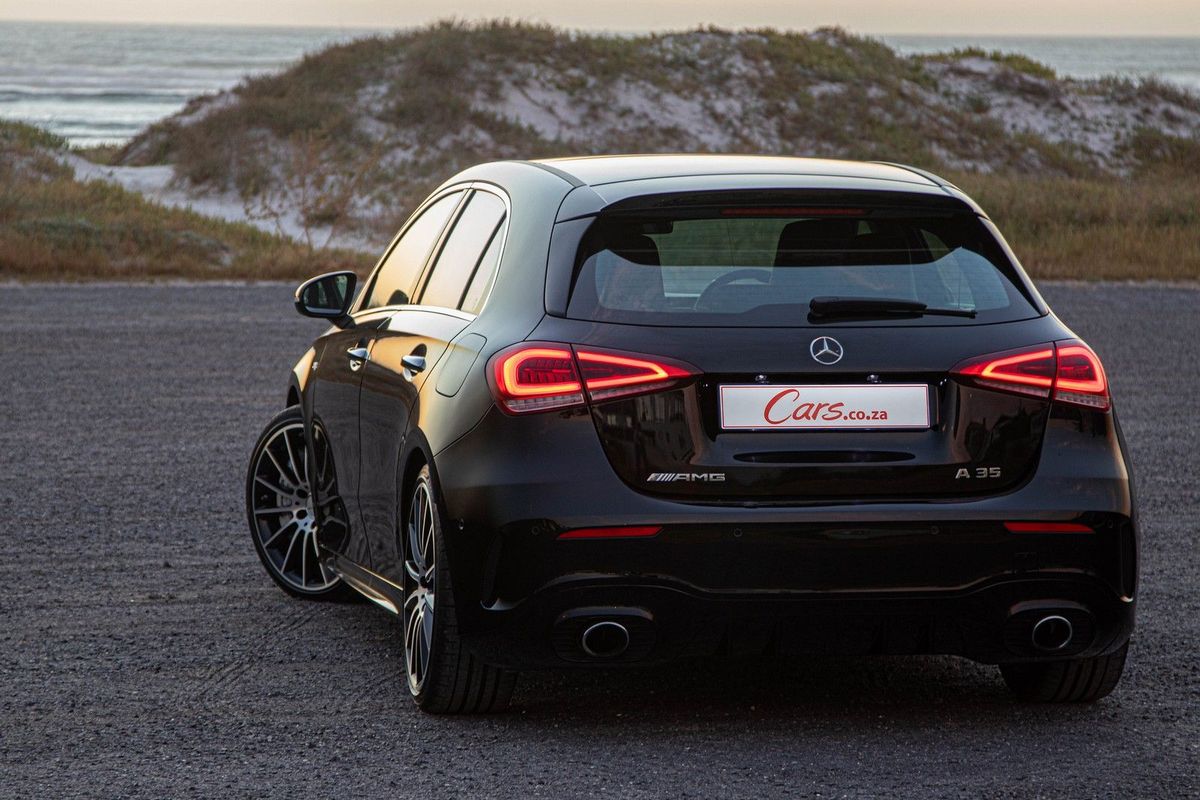
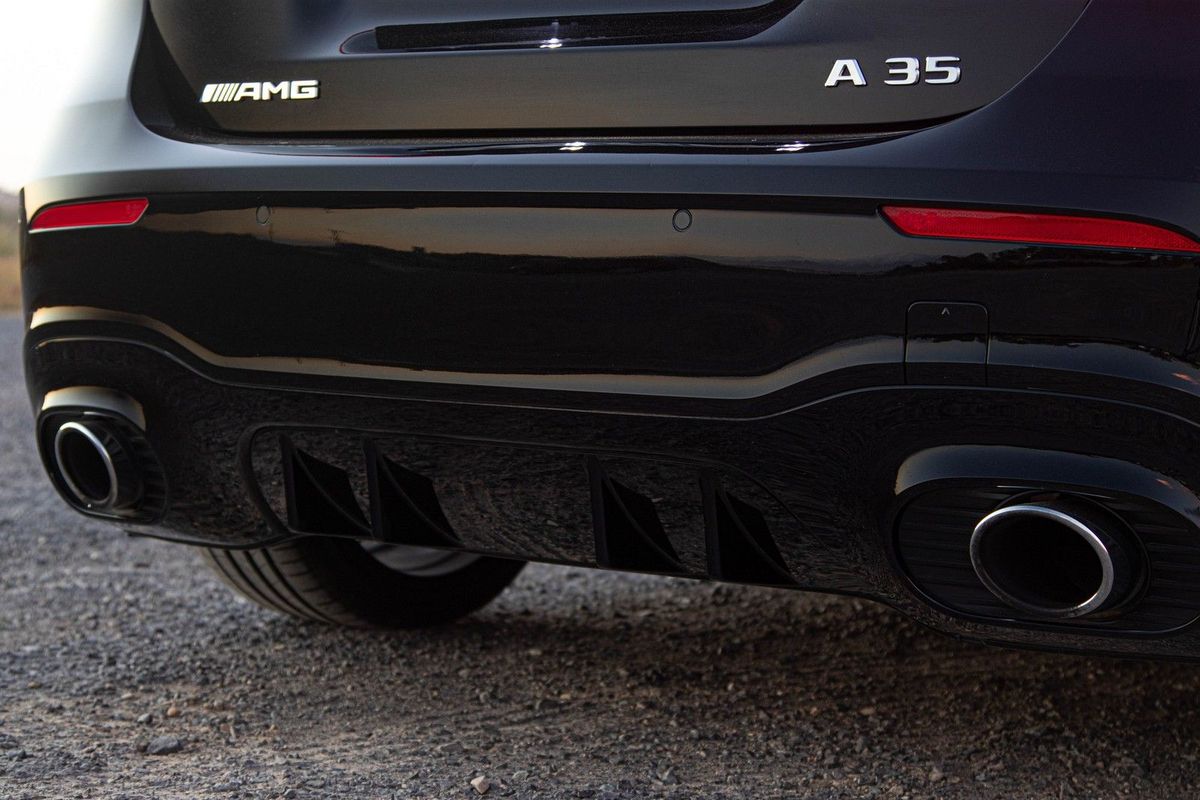
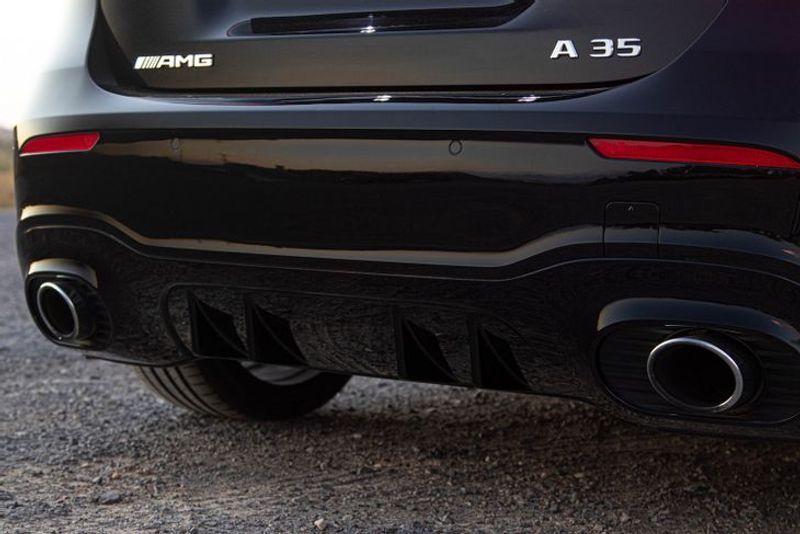
To separate it from both the run-of-the-mill A250 and the full-bore A45 S, the A35 receives an AMG-specific grille. It's not the Panamericana vertical slat grill as that's reserved for the A45 S, but it's enough to give the A35 its own identity. The key tell-tale sign that this is no ordinary A-Class is the twin exhausts at the rear, and given its performance, it's likely to be the view most other road users will see.
Twin exhausts and subtle A35 badge tell you this is no ordinary A-Class.
Performance and ride/handling
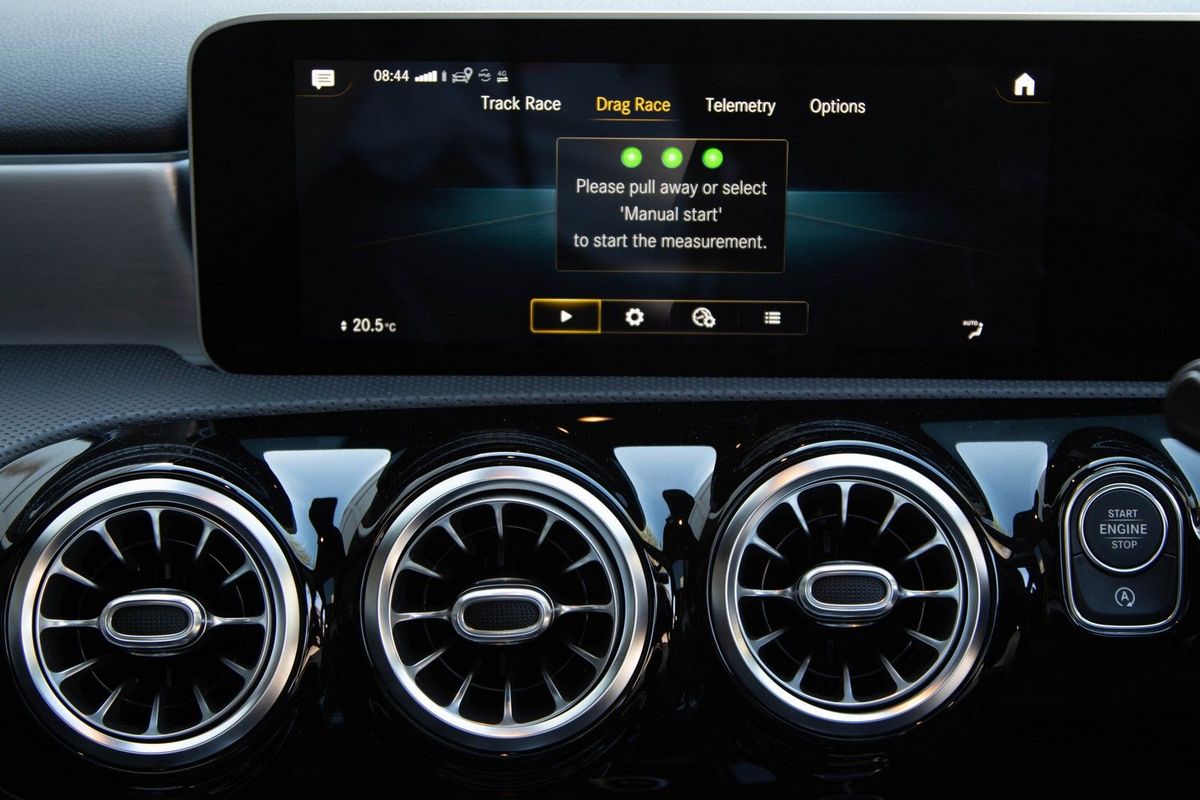
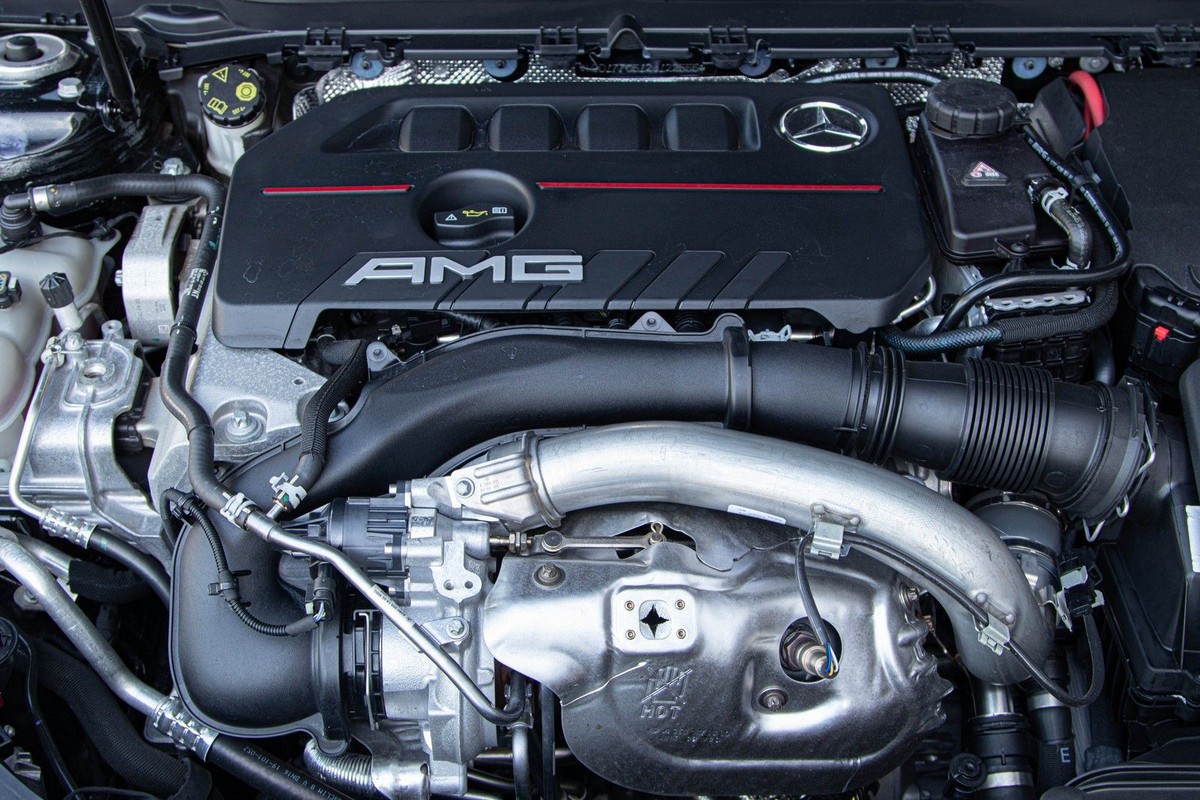
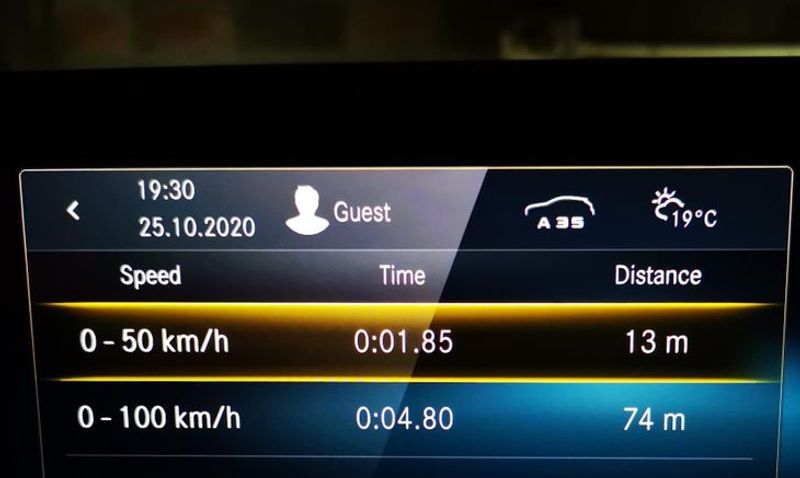
Powering the A35 is a modified version of the Mercedes-Benz's A250 2.0-litre motor. AMG has tweaked it and bolted on a new turbocharger, and outputs sit at 225 kW and 400 Nm putting it squarely in the middle of the segment. Our test unit featured the Race Pack telemetry system (R4 700) that allows for lap time recordings as well as performance analysis and measurements. On a long, deserted straight road, we put the system to the test and dialled up the race start function.
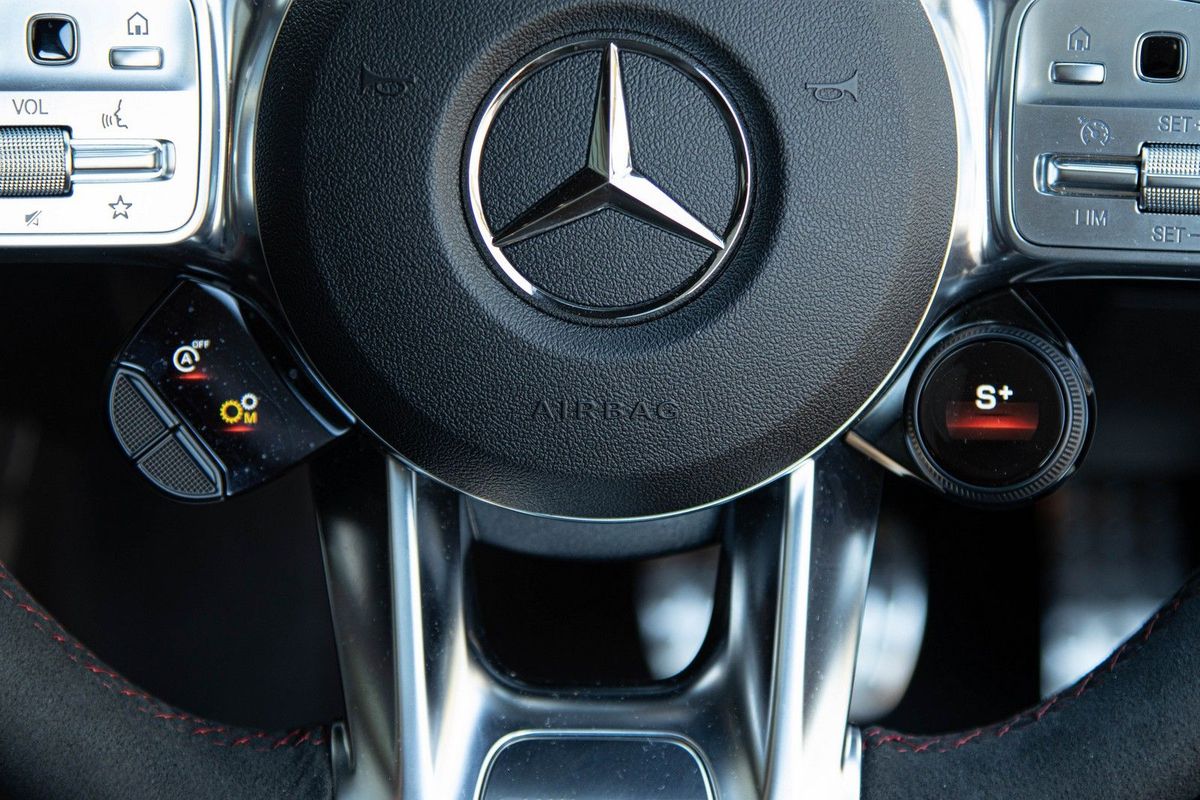
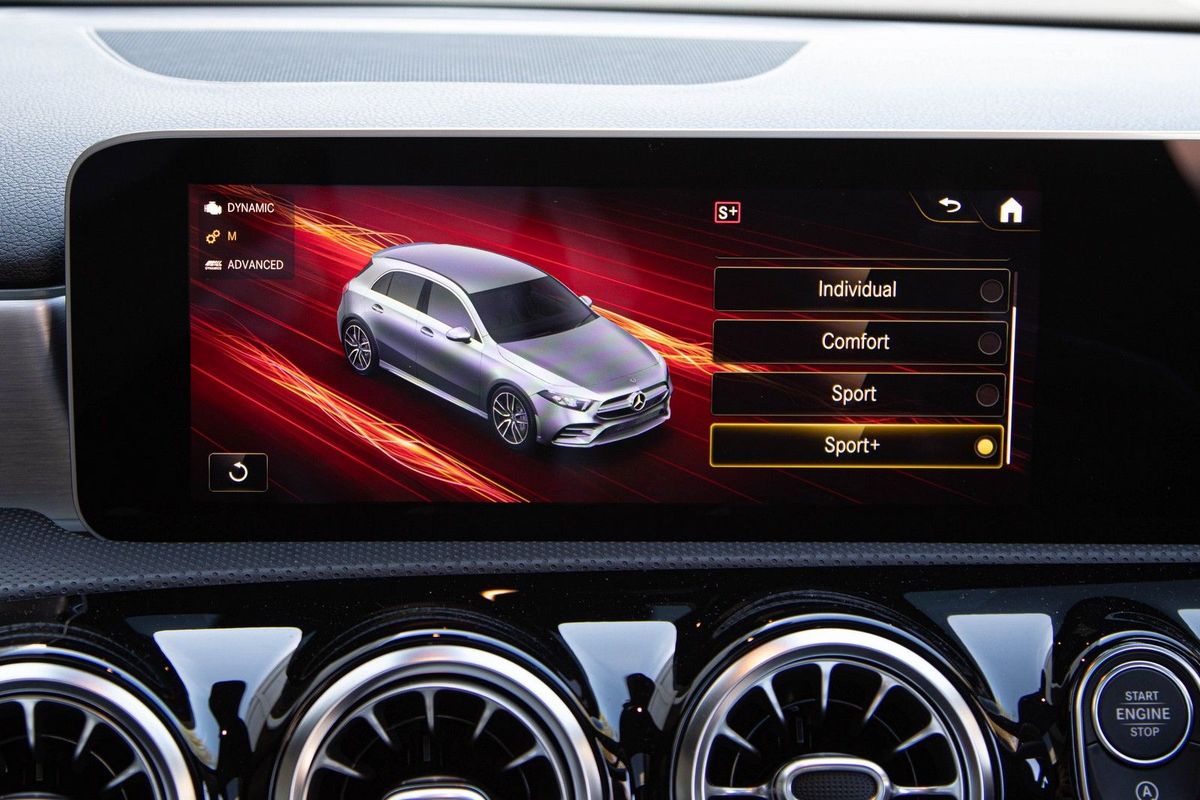
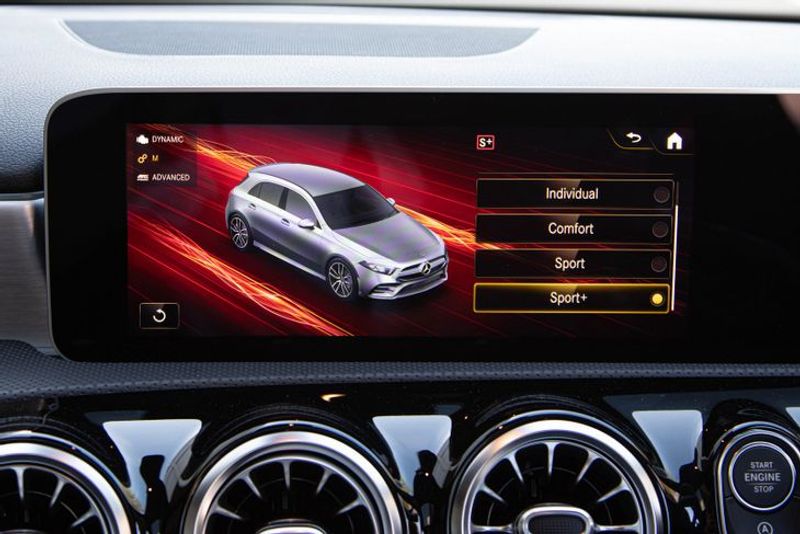
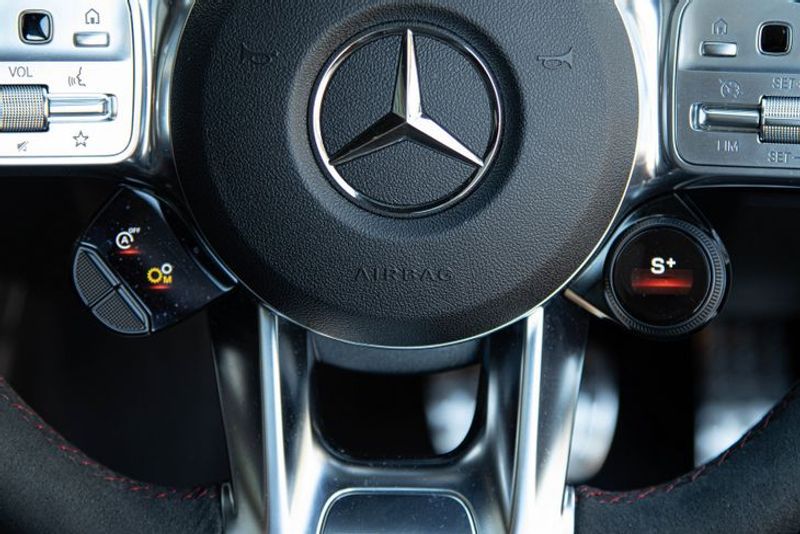
It's refreshingly easy to operate too, with a simple turn of the steering-wheel dial to Sport+. Left foot to depress the brake and hold the vehicle in position, right foot to bury the throttle all the way. A cute graphic appears and the engine revs climb. Release your left foot to unleash all 225 kW and 400 Nm onto the tarmac. Boom! The A35 scoots off the line with minimal hesitation and in just 4.80 seconds, 100 kph was reached. AMG itself claims 4.7 secs so this was a great result on the first attempt. What's really impressive is the first-generation A45 from 2013/2014 boasted a claimed 0-100 kph of 4.6 seconds, and we would bet the new A35 would run the older model very close in a straight line.
With the engine in its most dynamic setting and the gearbox set to manual, the A35 is confidence-inspiring and fun to drive in the twisties
Throw some corners into the mix and the A35 delivers some predictable fun. The 4Matic all-wheel-drive provides excellent levels of grip, but with the car in Sport+, the powertrain cleverly sends a bit more shove to the rear axle in an effort to dial out understeer, typical of all-paw performance vehicles. For those who aren't confident when pressing on, the A35 will give you an ego boost when you throw it into some mountain passes as the whole process is entirely manageable and you're not going to encounter any nasty surprises. You'll run out of bravery long before the A35 loses stability.
The steering is accurate and direct but ultimately could benefit from a bit more feel This, however, is a criticism we level at nearly every performance car these days. Try to drive a BMW M240i in the same manner and you'll be fighting the car's stability control as the rear wheels step out.
The dual-clutch transmission has been tuned by AMG too, and delivers quick shifts that give you a thump in the back. The paddles themselves have a lovely tactile action and feel. With each shift in Sport+, lovely pops and bangs are heard out the back. Speaking of sound, the engine has a pleasant growl to it. Tired of the noisy shenanigans and don't want to upset your neighbours? Simply turn the driving mode dial back into comfort, the exhaust flaps close, and the car reverts to its default setting – merely a premium hatchback doing an average commute.
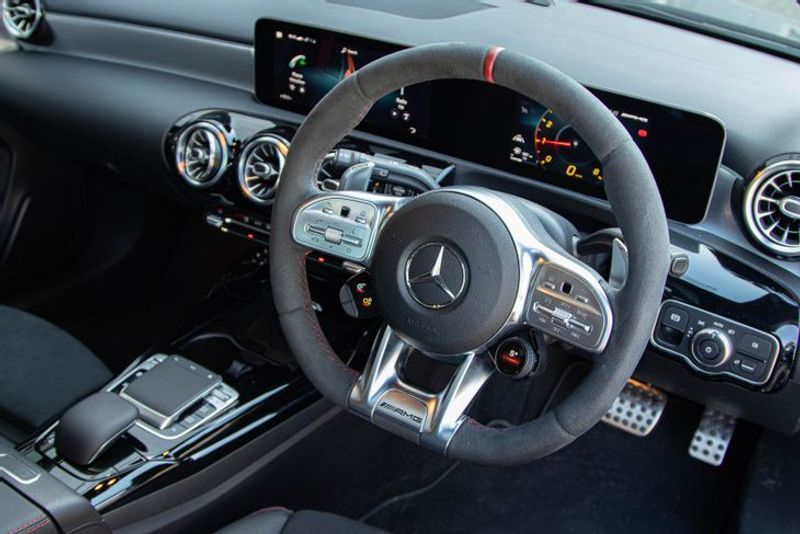
Despite lacking the full MBUX experience, the cabin is still an exciting and technology-laden place to be
Downsides? The Mercedes-AMG A35 has a firm ride, which is to be expected, but its rivals have more comfort and refinement dialled into them. While we all dream of driving these fast machines at pace to our heart's content, they still have to fulfil their primary role of transportation and a level of everyday comfort is necessary. It's adequate, sure, but you will feel those rough corrugations on the tarmac. There's also a considerable amount of road noise, even on the standard wheel setup. For additional comfort, Mercedes-AMG does offer adaptive dampers as an option for R24 000.
Interior execution and features
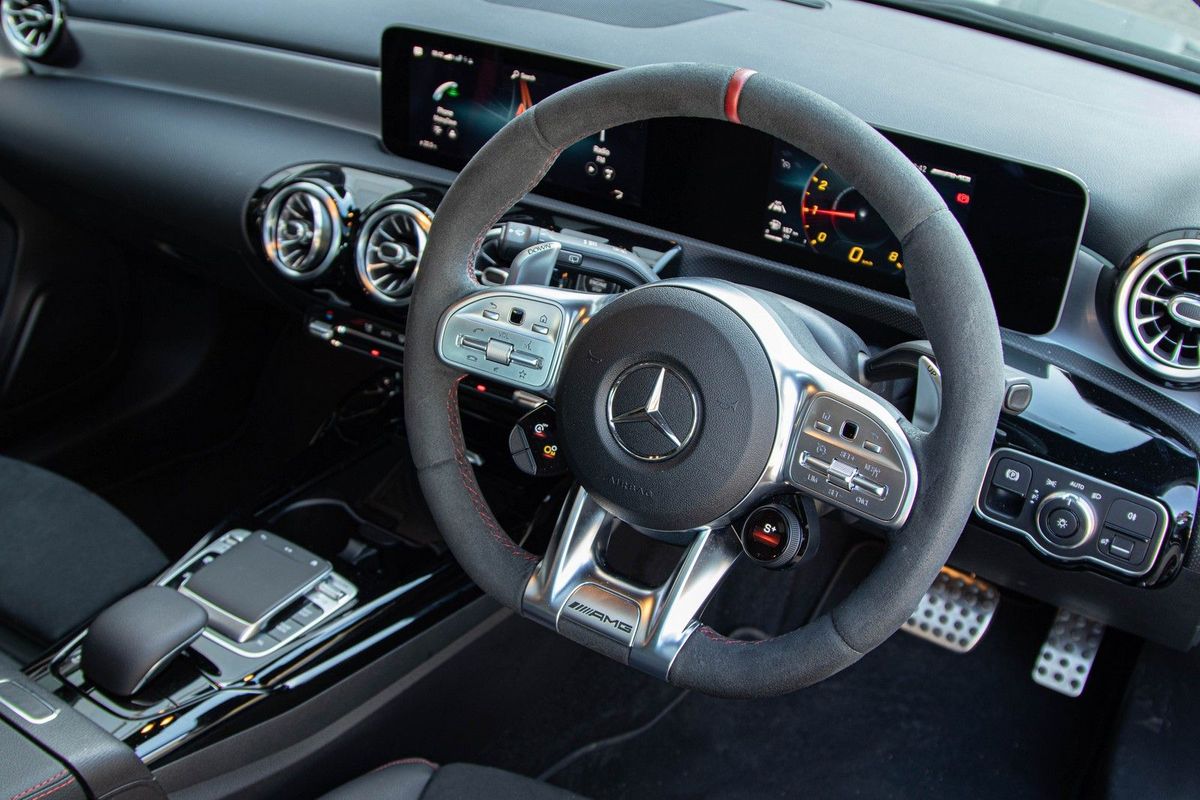
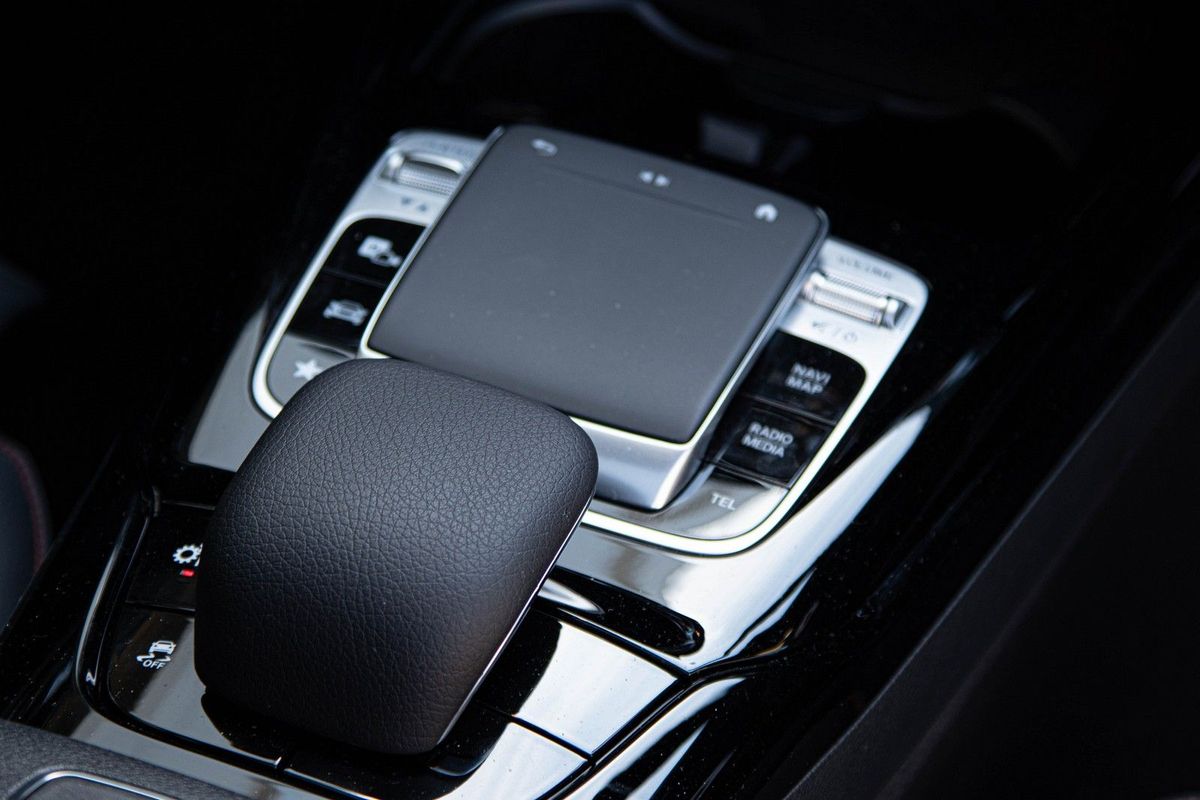
As we've mentioned, our test unit was curiously devoid of optional extras. Common practice from the German OEMs is to load the media demonstration units to the hilt with every conceivable option, so testers can evaluate all the tech. When we encounter a car that's not fully loaded, we assume there's been a mistake. In the case of this A35, this assumption was unfair as you're still getting a considerable amount of standard features which you'd expect in a premium product with a price tag of over R800k. Stepping inside, you'll notice the AMG steering wheel which is both a joy to look at and hold. New to the car are the rotary mode selectors, which we've spoken about above. Now it's quicker and easier to simply turn these to toggle settings like engine modes, start/stop on and off as well as activating gearbox manual override. These dials also contribute to the overall sportiness of the interior and give the driver the impression that you're driving something special.
These dials are game-changers and we won't be surprised to see many other manufacturers adopt similar switchgear.
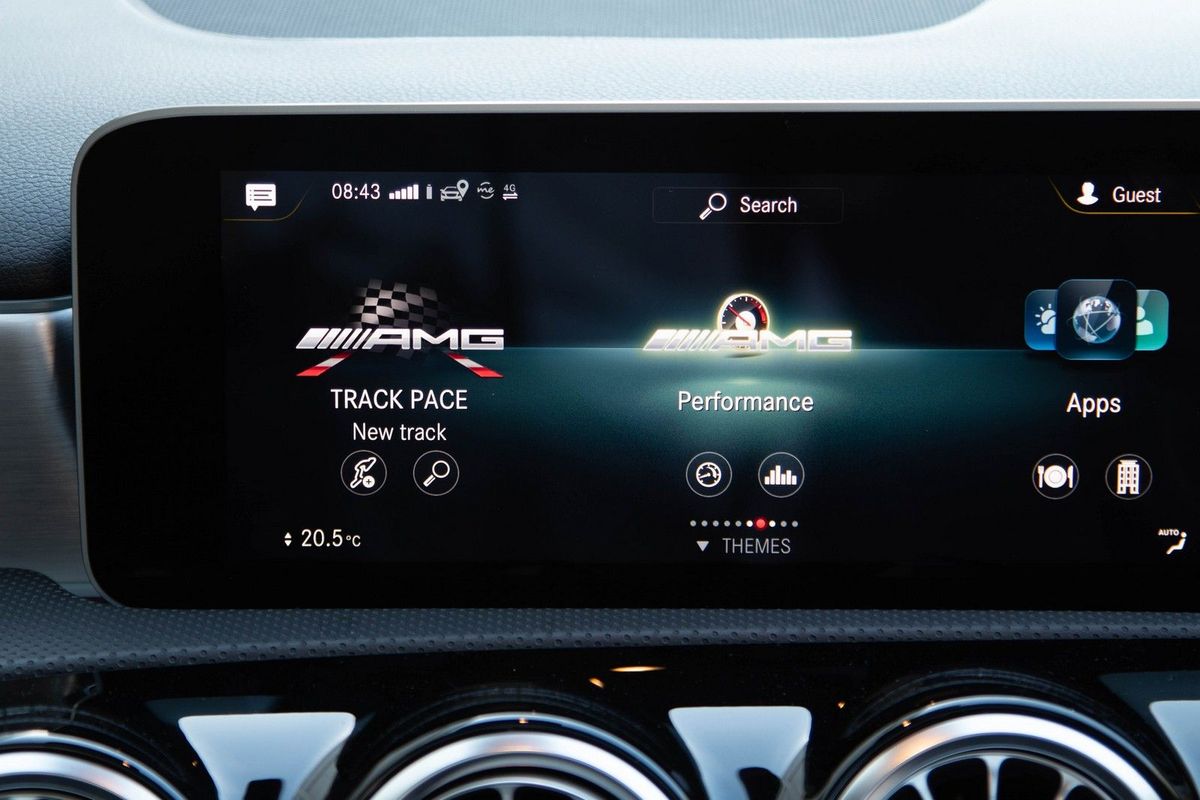
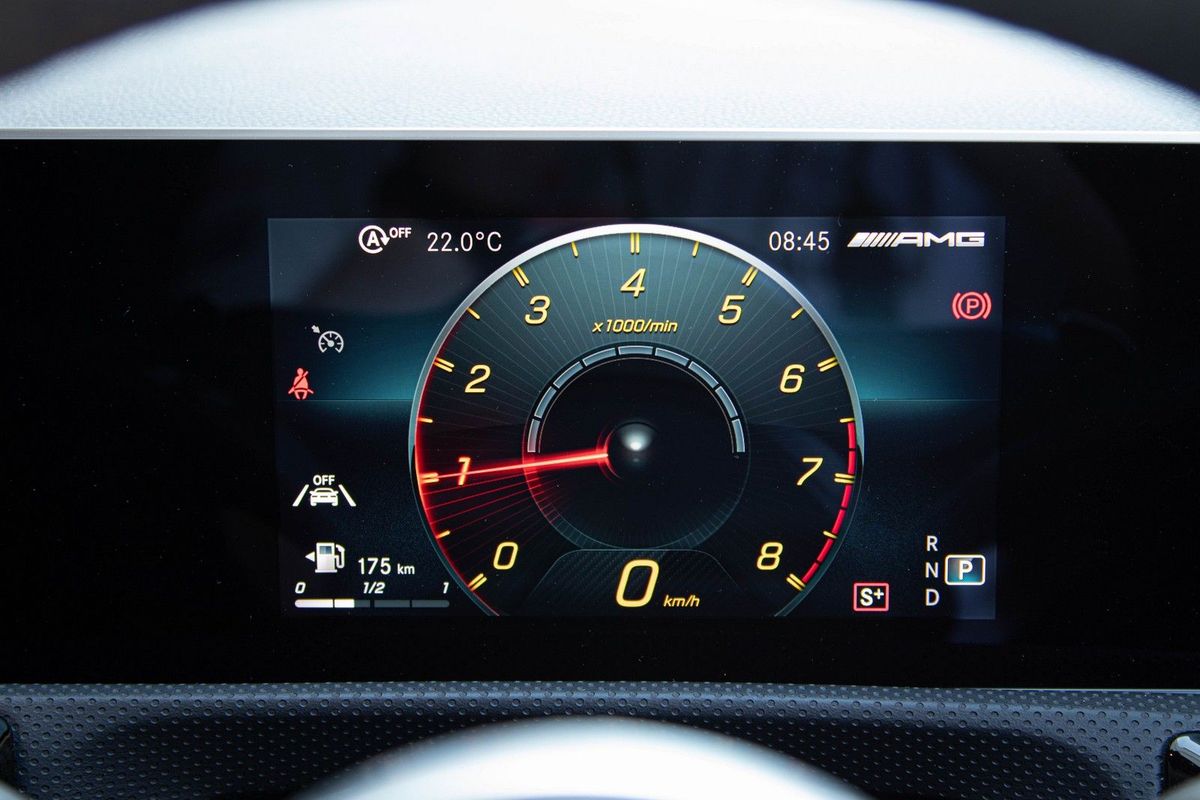
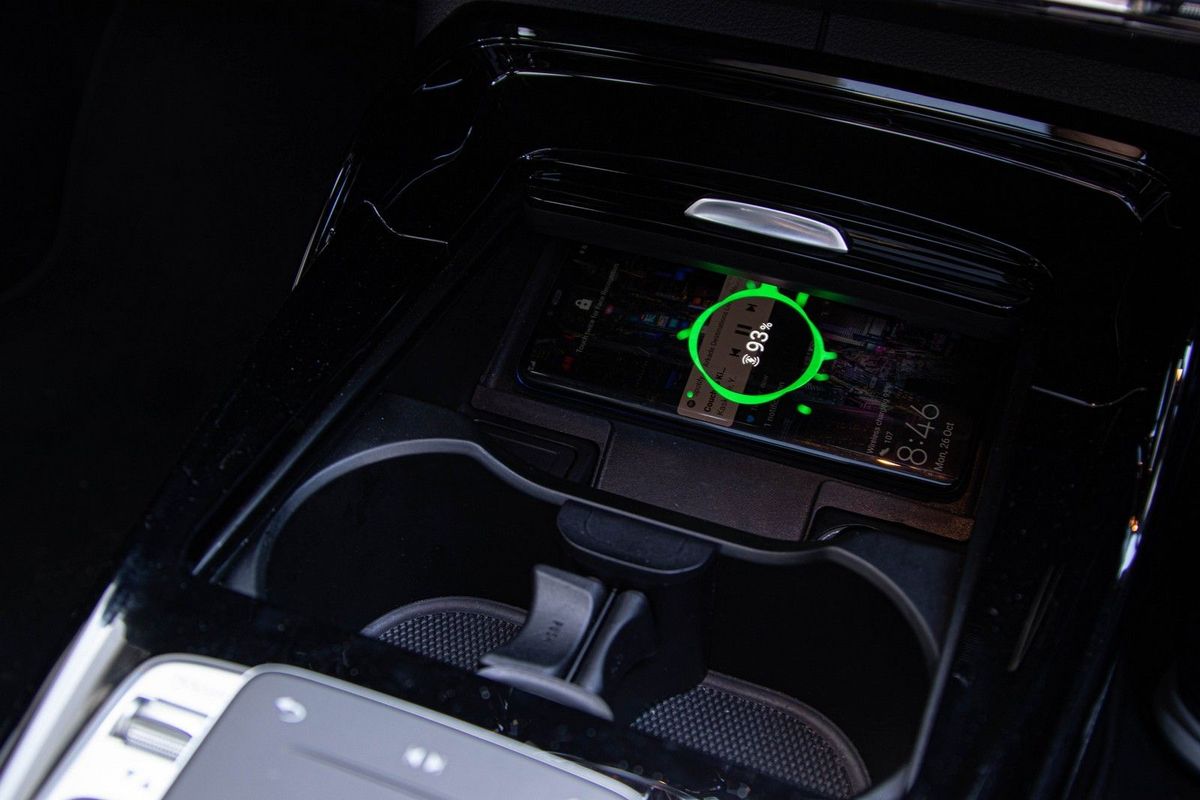
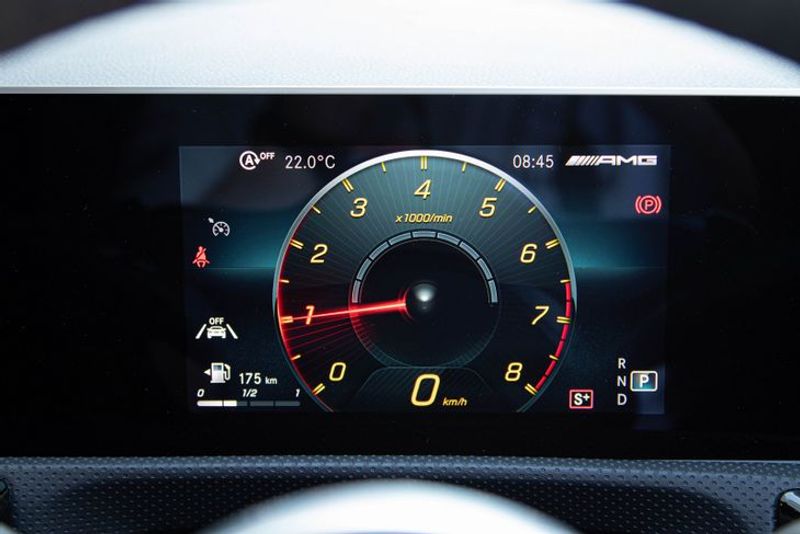
The next eye-catching cabin feature is the MBUX digital infotainment system. Granted, our test unit didn't have the full 10.25-inch display, but there are enough graphics, modes and settings here to keep most tech enthusiasts happy. Annoyingly, the vehicle comes with two USB-C ports, which will require an adaptor to allow your phone to be connected to the vehicle and make use of the Apple CarPlay/Android Auto. Our test unit came with a wireless phone charging pad (R3 600 option) but we think it's worth it. The vehicle also features the digital assistant, which is quite useful if you need to execute a specific task. Shouting, 'Hey Mercedes, temperature to 20 degrees.' is likely the quickest way to get the climate control into action without lifting a finger.
The basic MBUX features customisable themes and all the info you'd need is delivered on a crisp and colourful display.
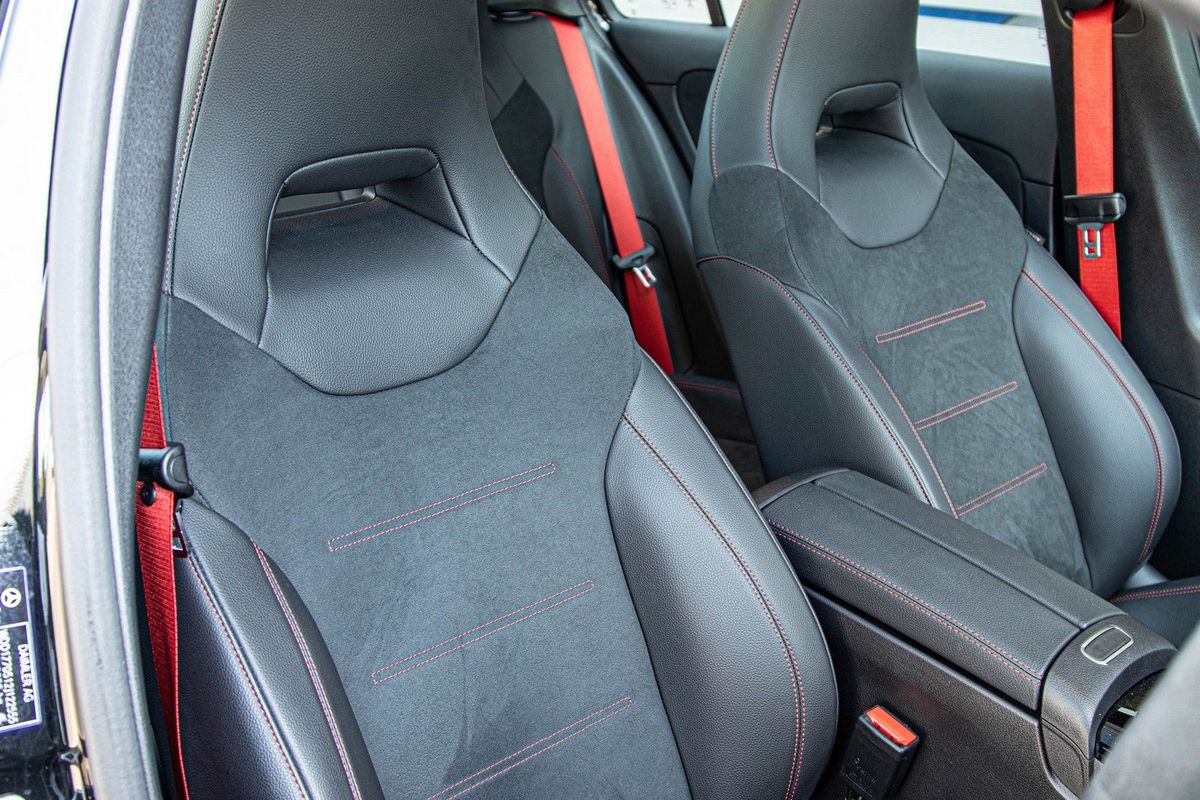
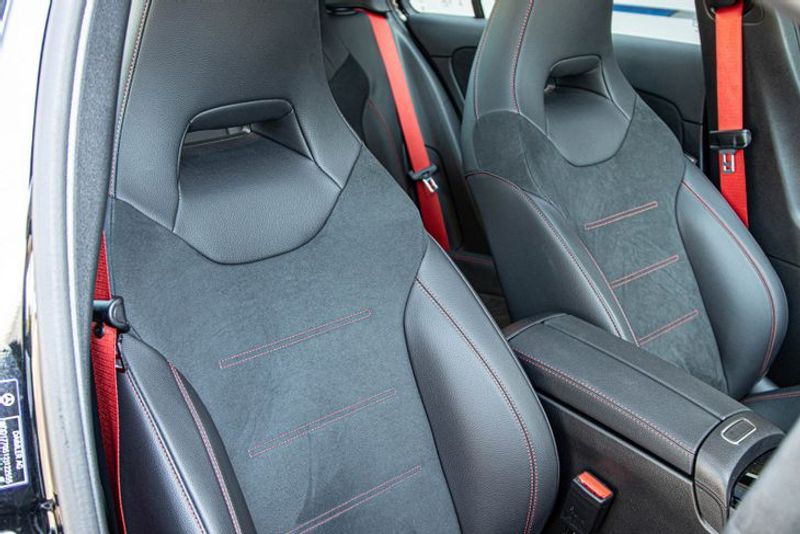
Our test unit featured the standard sport seats which are both comfortable and supportive, and really embrace the sporty theme with the red seat belts. Mercedes-AMG offers a number of seating options, but if your budget allows, we'd go for the full bucket seat experience complete with heating and electronic adjustability, for R61 000. In terms of practicality, rear legroom is a tight squeeze, but we'd happily sacrifice that in favour of a substantial and spacious boot, something which the A35 does boast.
Sporty seats with red seatbelts? Yes please!
Price and after-sales service (December 2020)
The Mercedes-AMG A35 hatchback retails for R883 000 before options, and there is a sedan model available for R890 520. The vehicle is sold with a 2-year/unlimited km warranty and a 5-year/100 000 km maintenance plan.
This is the cheapest way to get an AMG product in your driveway and petrolheads can take comfort in knowing this is no tarted-up A250. While the engine may not be one of those fabled handbuilt units that Affalterbach is known for, AMG has still worked its magic and the motor delivers significant thrills. Let's not forget AMG's hard work in other areas either, like the gearbox software, the suspension and the brakes. If you're not keen on following the masses and going for the current shape Volkswagen Golf R and don't want to wait for the newer model or its Audi S3 sibling, then the A35 offers an attractive balance between performance and luxury. Having driven the BMW M135i and Audi S3, we'd say the Mercedes-AMG A35 has both licked terms of engagement and thrills. It feels exciting and engaging to drive quickly, which is not something that can be said for the BMW and Audi but they do however pip the A35 in terms of ride comfort.
We've come to know AMG as a power-crazed brand, but the A35 doesn't echo this ethos. Instead words like predictable and safe come to mind, but there's still credible performance to satisfy the average motorist. Plus, if you choose your options carefully, you can create a vehicle that has every comfort and convenience feature ticked. You could go all out and make your A35 resemble an A45 S, or go the subtle and stealthy understated look like this black test unit…
Should you buy one? If you're someone who is wanting to tick those performance and luxury boxes in one easy move and don't require the additional space that an SUV can offer, then the A35 is an easy sell. Or is it? As we near the end of 2020, the first A45 S units have started to appear on Cars.co.za and other listing sites and we estimate that 6 months from now, we're going to be seeing the price of low-mileage hyper hatches move into the same bracket as fully-loaded new A35 units. Decisions, decisions…
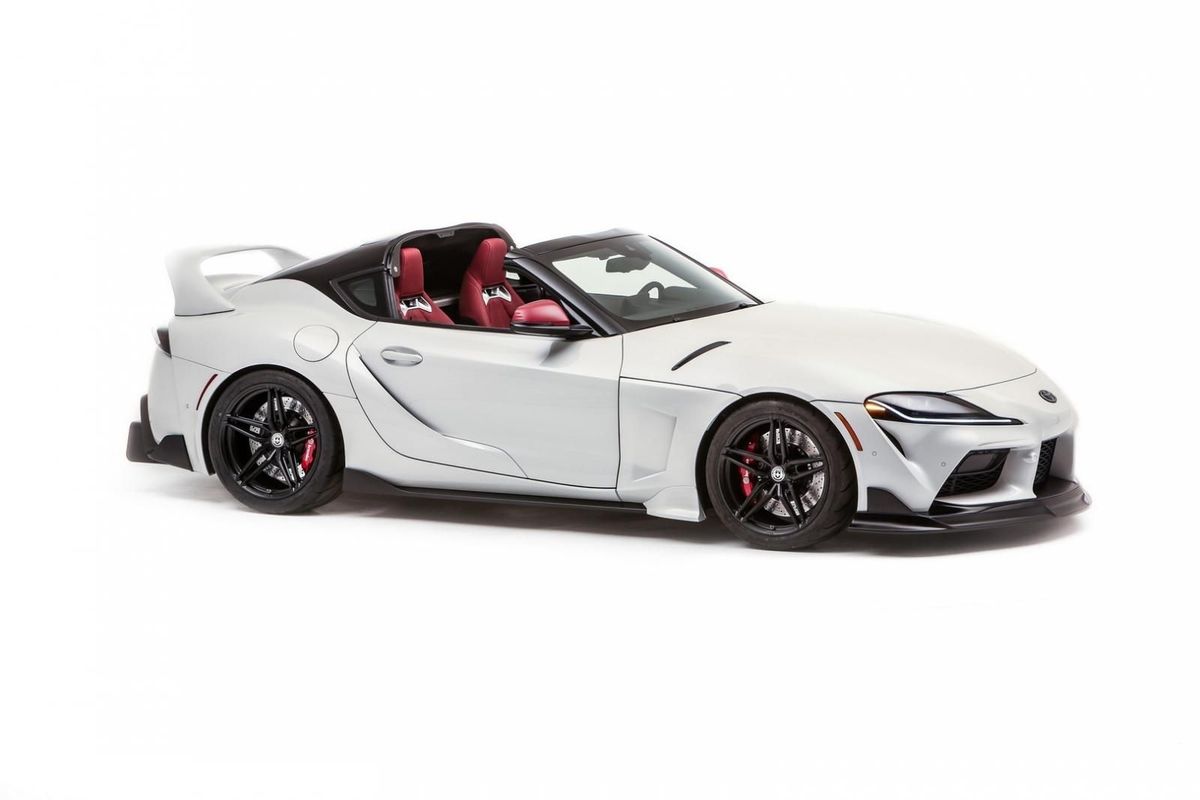
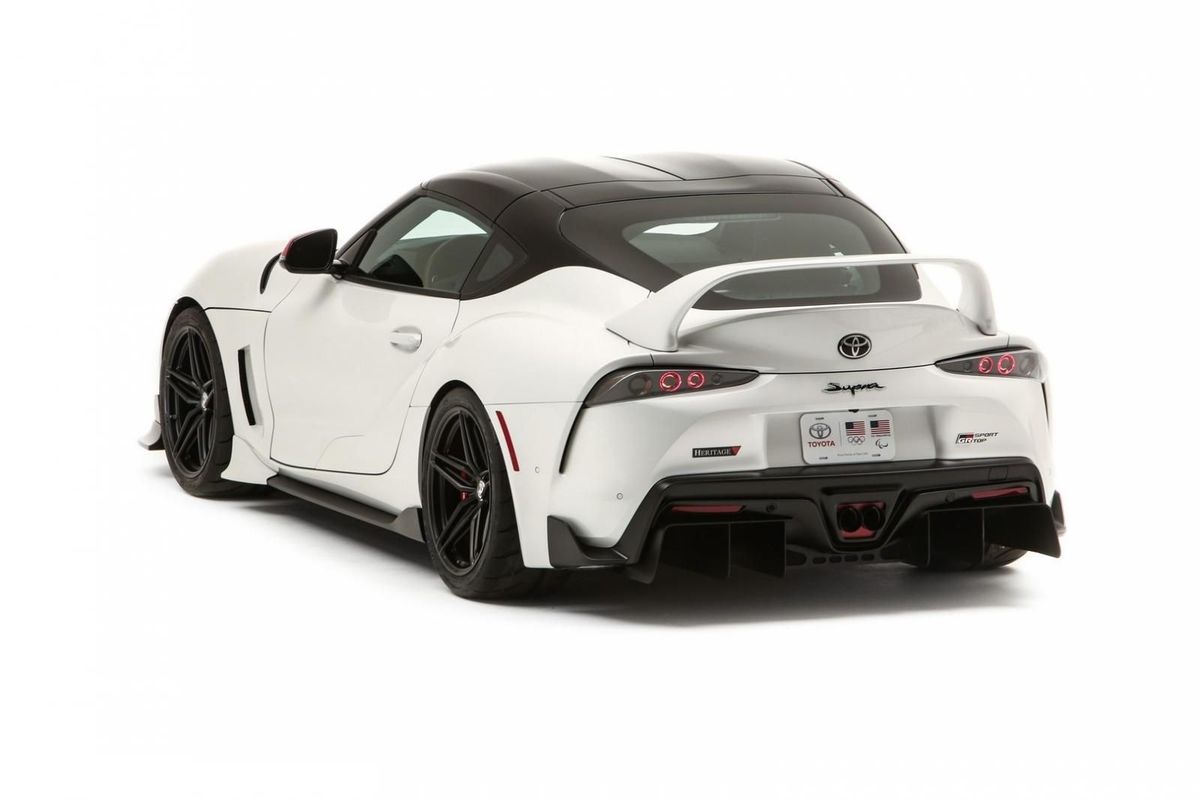
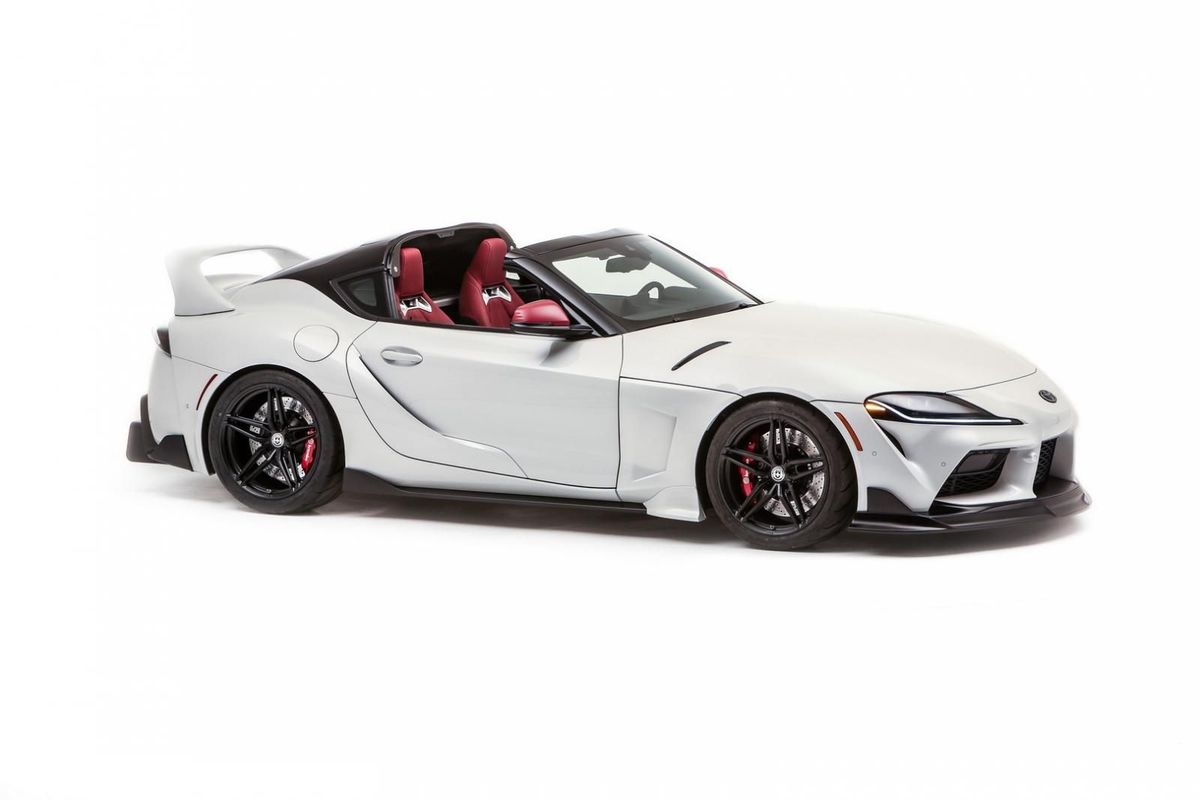
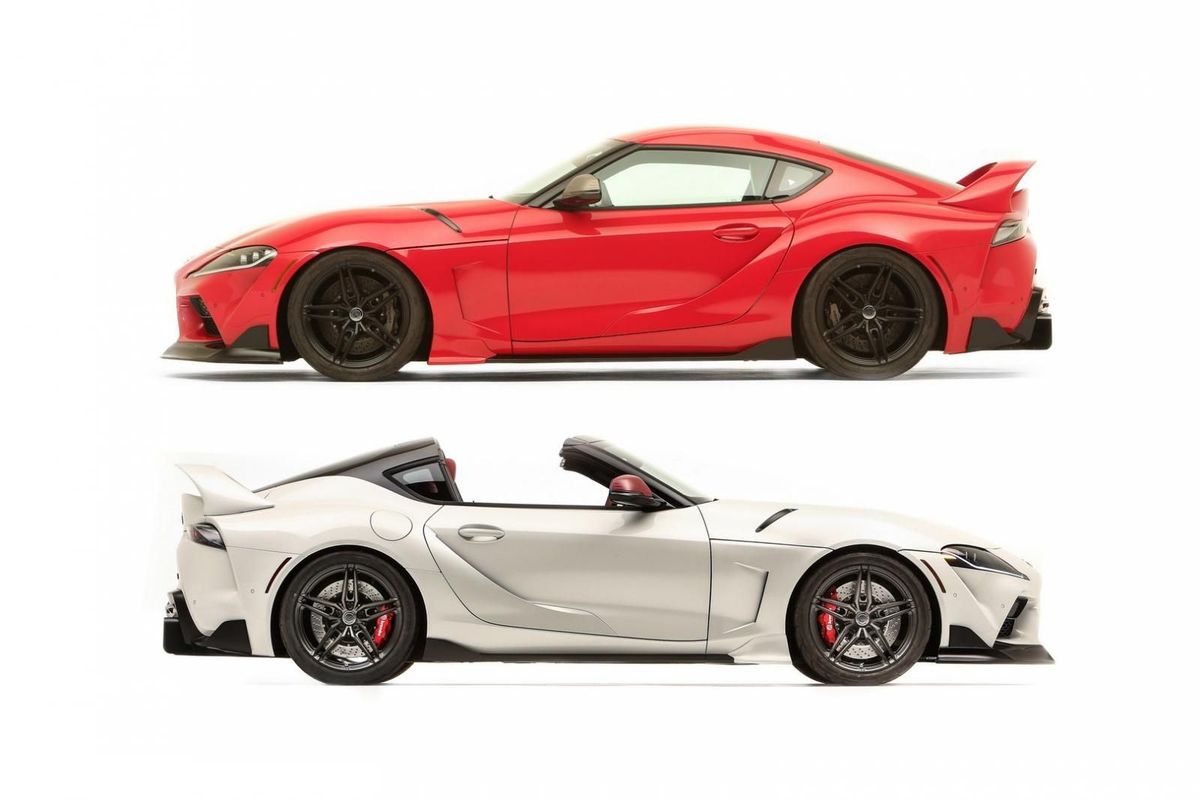
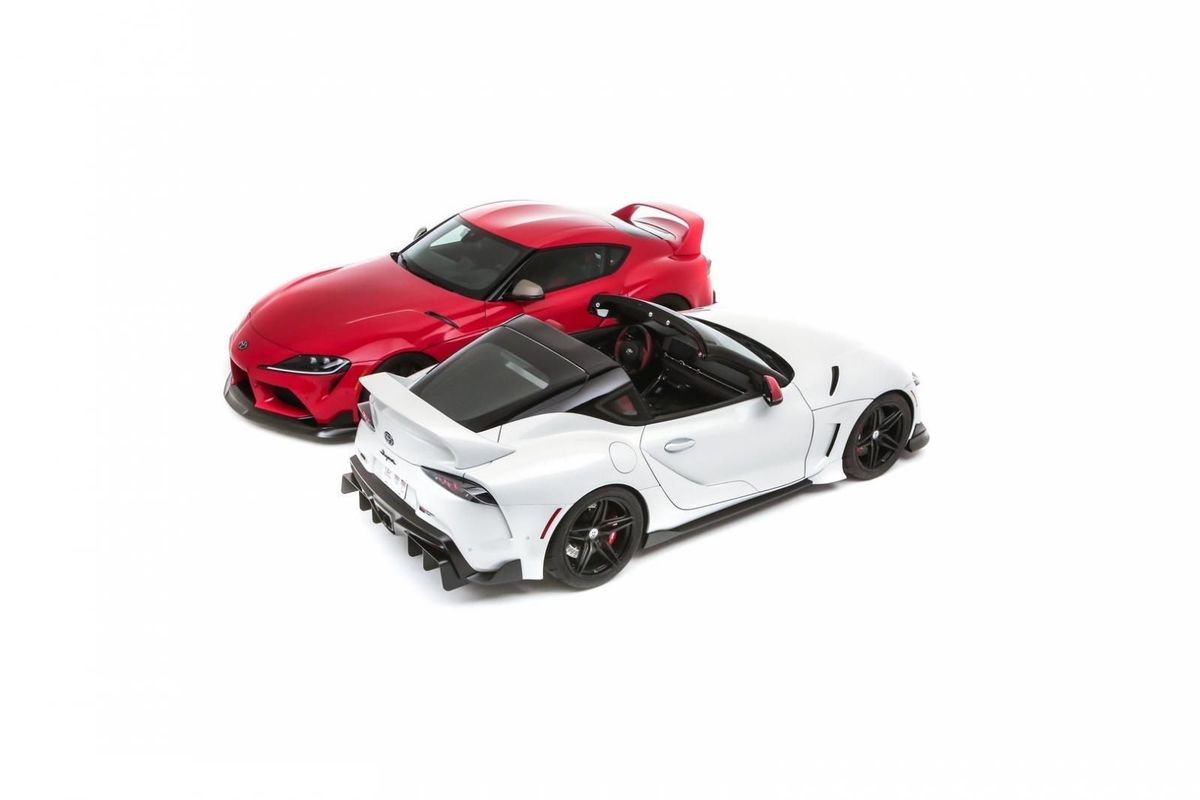
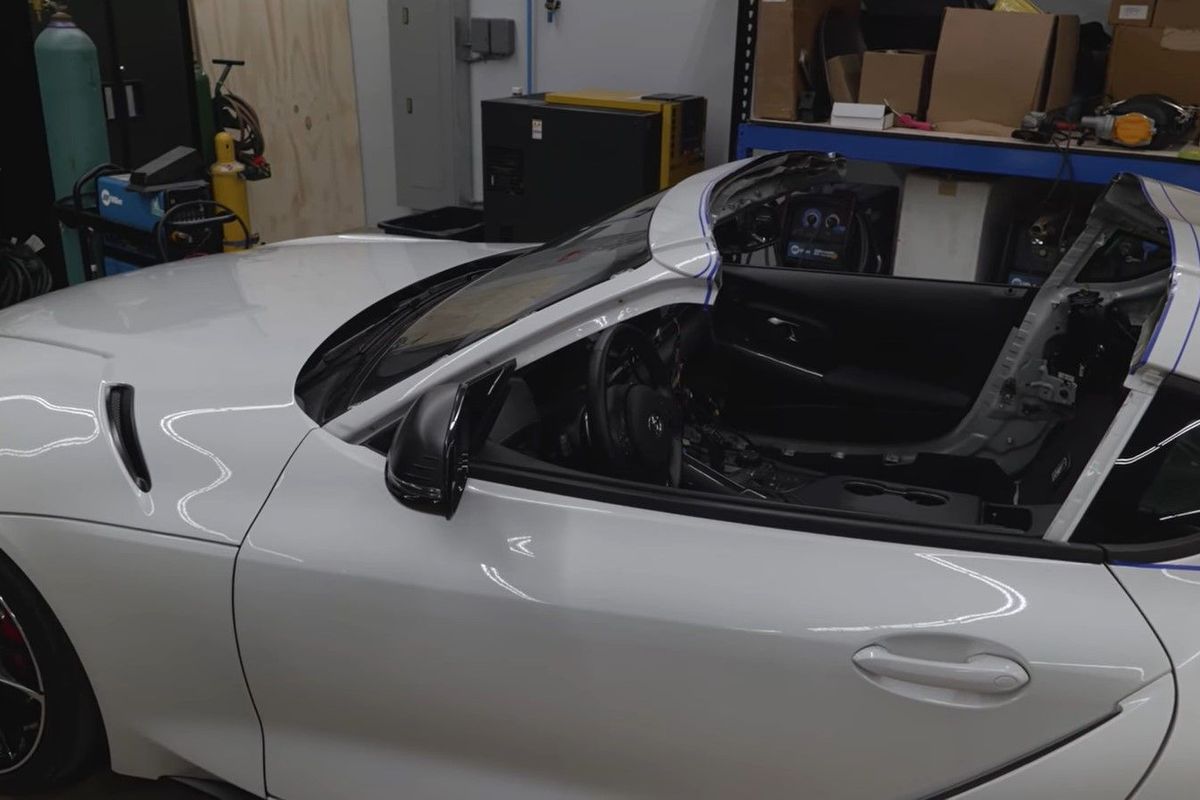
For 2020 SEMA360, Toyota teased the GR Supra Sport Top featuring a 2-piece targa composite roof that can be taken off and stored in the boot. Other modifications include a large rear wing, stainless steel rear diffuser and a strengthened body to ensure optimum rigidity.
Powering the GR Supra is a 3.0-litre, 6-cylinder turbopetrol engine producing 250 kW and 500 Nm and mated with an 8-speed automatic transmission. Toyota has not yet revealed whether the one-off GR Supra Sport Top will feature any power upgrades.
Take a look at the 2 videos below showing how this special car comes to life…
Building a Removable Roof for the GR Supra: Episode 1
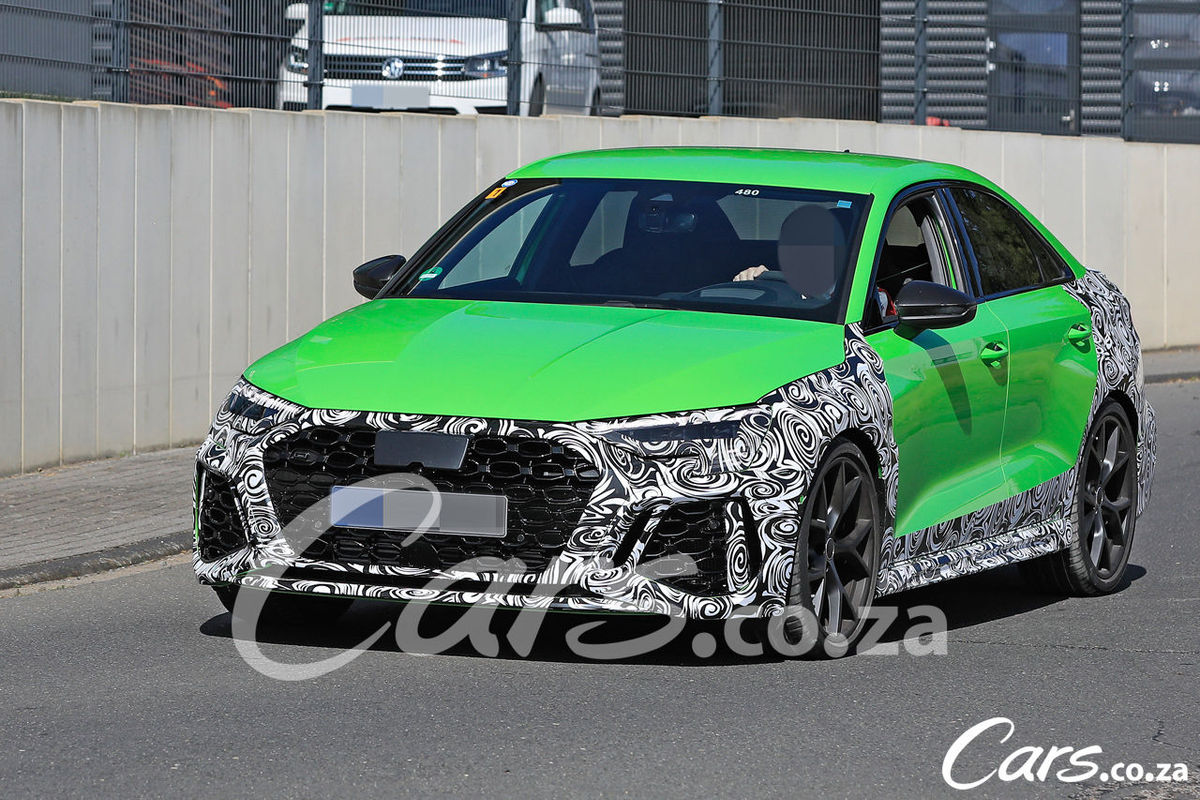
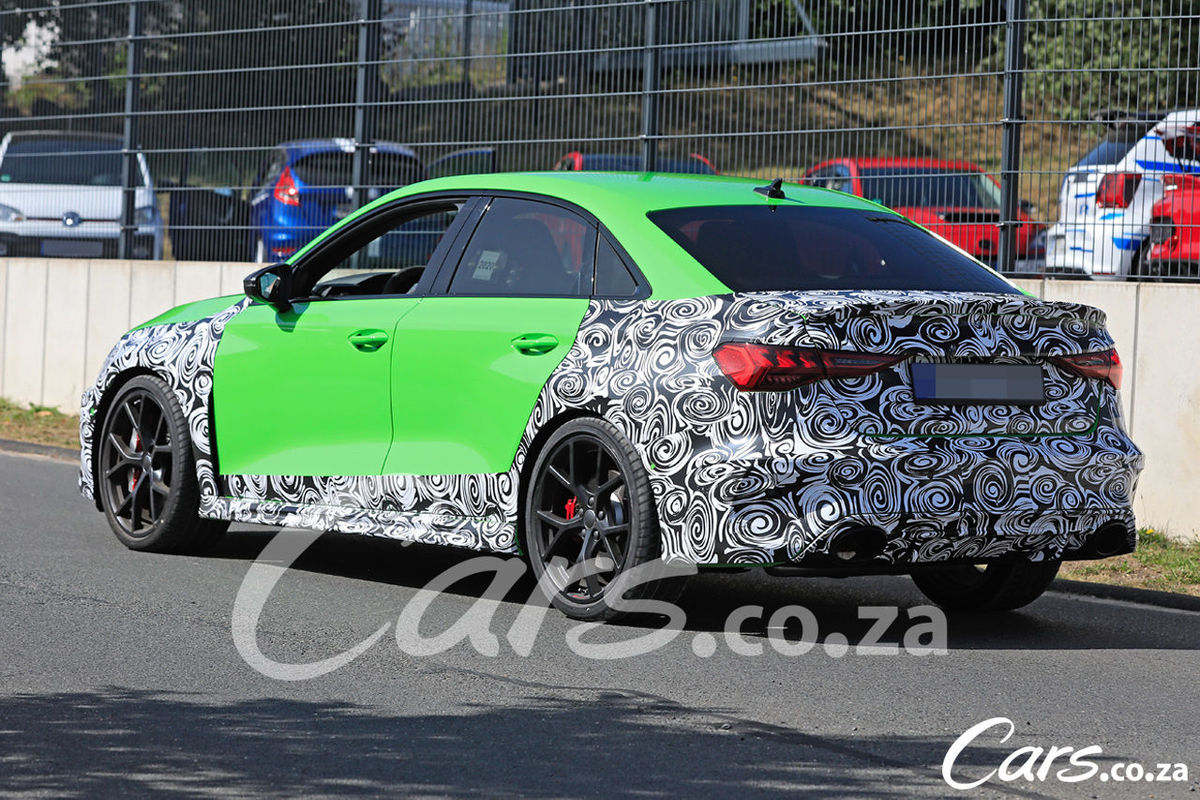
The first prototypes of the all-new Audi RS3 sedan have been spotted on public roads. Here's what we know so far about the Mercedes-AMG CLA 45's nemesis.
Picture credit: S. Baldauf/SB-Medien. We have paid for these photos and at the photographer's request, have watermarked them.
Updated: Chasing the newly-launched Mercedes-AMG A45 S will not be easy for the next-gen Audi RS3, but as a report from Auto Express claims, the newcomer could potentially have around 310 kW from its iconic 2.5-litre 5-cylinder engine.
In an exclusive interview with Auto Express, Audi Sport’s Sales and Marketing chief, Frank Michl, described the upcoming RS 3 “one of the success stories of the brand. I think [the RS 3] is one of the most emotional Audi Sport cars and is a major part of the brand’s DNA, even going back to the original quattro. You can be sure that for every future RS model we will always take forward the good aspects and characteristics.” He added the new model is still some months away from a reveal, but the source says the official debut is set for September 2021.
The Audi RS3 is a rival to the Mercedes-AMG A45 S, but in sedan guise, it's fair to compare like-for-like and the CLA 45 S becomes the real opponent. Audi revealed its 4th-generation A3 Sportback and while there's considerable interest in the mainstream consumer models, petrolheads are chomping at the bit for news regarding the S3 and particularly, the fearsome RS3.
Powered by the 2.5-litre turbocharged 5-cylinder motor, the Audi RS3 has proven popular for its immense power, in-gear prowess and engine sound. There's simply nothing quite like the iconic howl of an RS3 going at full throttle. For 2021, Audi will continue to use the 2.5-litre turbocharged 5-cylinder, but outputs should increase from the current 294 kW and 480 Nm, to over 300 kW and 500 Nm. Its Affalterbach-based rival packs 310 kW and 500 Nm, so matching those numbers would make for an interesting on-paper comparison. As before, the Audi RS3 will use quattro all-wheel drive and a quick-shifting S Tronic transmission. With that combination of potent engine, all-wheel drive and dual-clutch transmission, the current RS3 sedan hits 100 kph in a claimed 4.1 seconds. We're hoping the newcomer will shave a tenth or two off of that.
What you're looking at here is the sedan version of the Audi RS3, arguably the best application of the powertrain. We've already seen Audi RS3 Sportback prototypes towards the end of 2019, but the presence of the sedan finally confirms there will be a 4th-generation A3 body style. We're likely to see a reveal of the production Audi RS3 before the end of 2020, with a market introduction in SA sometime in 2021.
Apart from introducing more crossovers and electric models in the future, the next-generation 3-door Mini is coming in 2023 and its design is expected to be thoroughly modernised.
Car designers have a tough job, particularly those tasked with taking a brands heritage, such as Mini, into the future. The classic, boxy shape of the 3-door Mini is widely recognised and much-loved around the world, but how does one preserve that design heritage and take the model into the future in a meaningful way?
Mini will be grappling with this challenge as it works on the next-generation 3-door Mini. In an Autocar interview with Mini brand boss, Bernd Körber, stated that “What’s important is that the entire portfolio needs to have the DNA of Mini. After more than 60 years, it’s necessary that Mini makes a bold step ahead, but it also has to stay true to its core, and that’s the three-door hatch. What you’ll see in 2023 is that we’ve clearly modernised it by taking a big step – the biggest step in the last 20 years – but it will be unmistakably a Mini.”
There’s no doubt that the process needs to be negotiated carefully to achieve the right balance. The approach to the design is an important one as Körber highlights by using the Porsche 911 as a reference, “Don’t screw with an icon” he says, “The 911 has to be carefully developed over time because it’s what Porsche stands for. It’s similar for us, and similar in that at one point Porsche had to make a step beyond what it was associated with, and now they have a much broader portfolio.”
However, when it comes to the iconic 3-door Mini hatch, designers need to proceed with more caution.
Mini design chief, Oliver Heilmer, sums it up, “The closer we’re coming to the next generation of what Mini is known for – the three-door hatch – the more careful we need to be to not change too many things in a single step. We’ll keep what is well known for being a Mini: that’s not just design features but the proportions, compact feel and friendly personality.”
We will keep you updated as more details become available.
Take a look at what double-cab bakkie products are expected to arrive in South Africa in 2021.
Double-cab bakkies remain hugely popular in South Africa and buyers can expect a host of new or facelifted product to reach the local market in 2021. As you can expect, Covid-19 has had an adverse effect on production and product timings and this will likely persist for some time to come. Nonetheless, take a look at what you can expect to see in South Africa in 2021!
Which one of the following bakkie products are you looking forward to most?
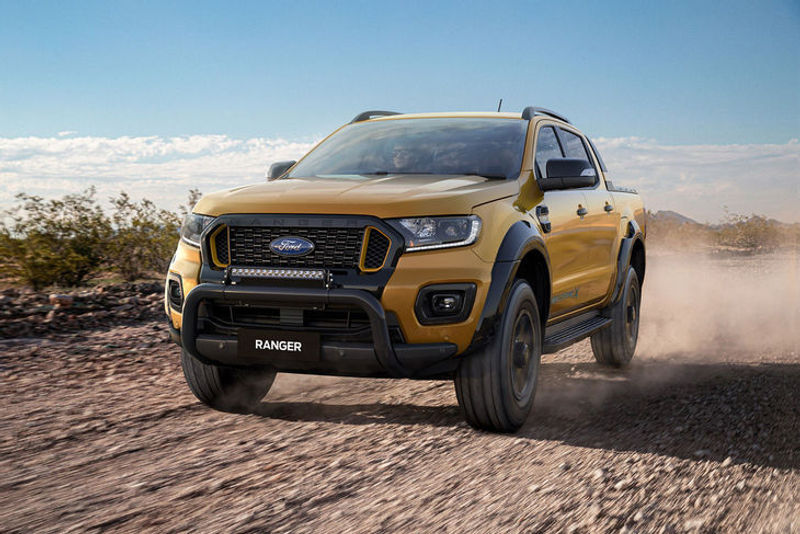
Ford will look to update its popular Ranger bakkie in 2021 before production of the all-new Ranger begins at the brand’s production facility in Silverton towards the end of 2021 or early in 2022. We suspect that the Ranger update will follow from the recently-revealed Australian-spec Wildrak X which will see a host of visual enhancements and equipment upgrades come to market. We further expect this update to become available in the first or second quarter of 2021, but Ford SA declined to provide exact timings.
New Peugeot LandTrek
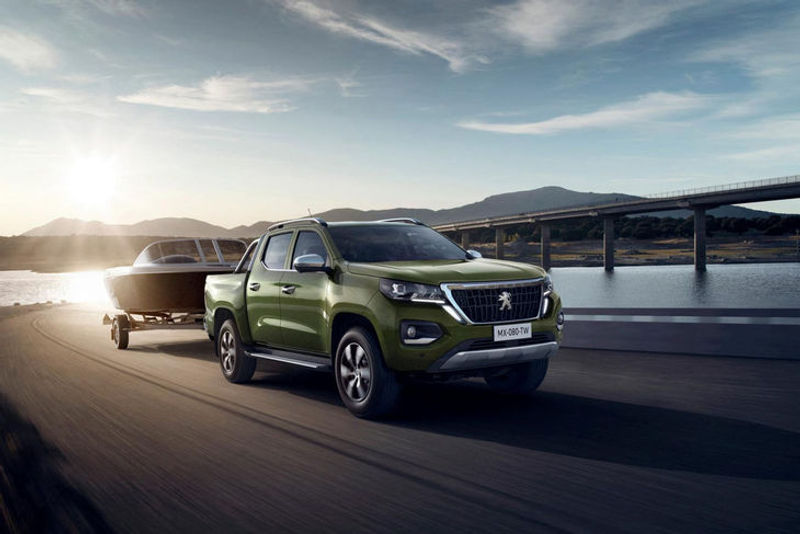
The French carmaker will look to enter the highly-competitive double cab bakkie segment with the Landtrek due in the fourth quarter of 2021. The Landtrek is likely to be offered in 3 body styles including single-cab, double-cab and chassis cab, catering for both the workhorse and lifestyle market. It’s expected to come to market in 4.2 and 4×4 guise with both a petrol and diesel engine choice including 2.4-litre turbopetrol engine offers outputs of 157 kW and 320 Nm of torque while a 1.9-litre turbodiesel engine develops 112 kW and 350 Nm of torque. A 6-speed manual and 6-speed automatic transmission are expected.
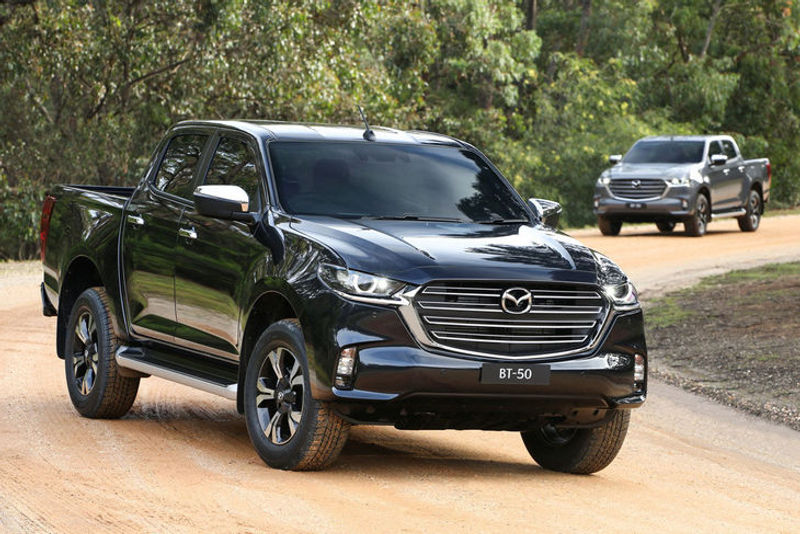
Mazda revealed its new BT-50 earlier this year and while it’s based on the new Isuzu D-Max, it features styling more in line with Mazda’s passenger cars. It’s expected to arrive in South Africa in the first half of 2020.
The BT-50 will share the engine found in the D-Max which is a 3.0-litre turbodiesel unit with 140 kW and 450 Nm of torque and buyers will be able to choose between either a 6-speed manual or 6-speed automatic transmission, in 2- and 4-wheel-drive guises, the latter with a locking rear differential.
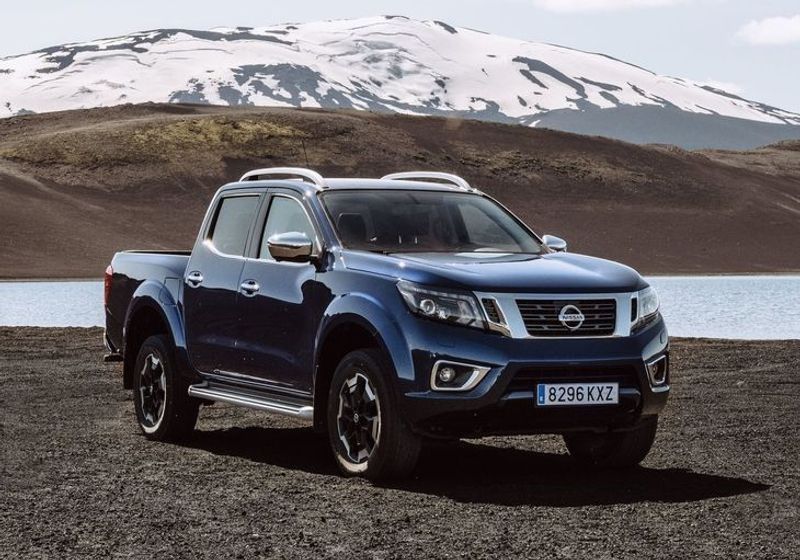
Following a R3-billion investment to upgrade its Rosslyn plant in Pretoria, Nissan will look to produce the facelifted Navara as of 2021. The Navara is expected to receive exterior and interior updates before the next-generation Navara comes to market from 2022.
In addition to suspension upgrades, perhaps the most notable improvement is an updated 2.3-litre diesel engine which now features not one, but 2 turbochargers. Outputs remain the same at 140 kW and 450 Nm. The Navara also benefits from a new 6-speed manual transmission which is said to offer easier and more refined gear shifts with improved synchronisation and reduced vibration. The 7-speed automatic transmission has also been reworked to improve comfort, refinement and responsiveness.
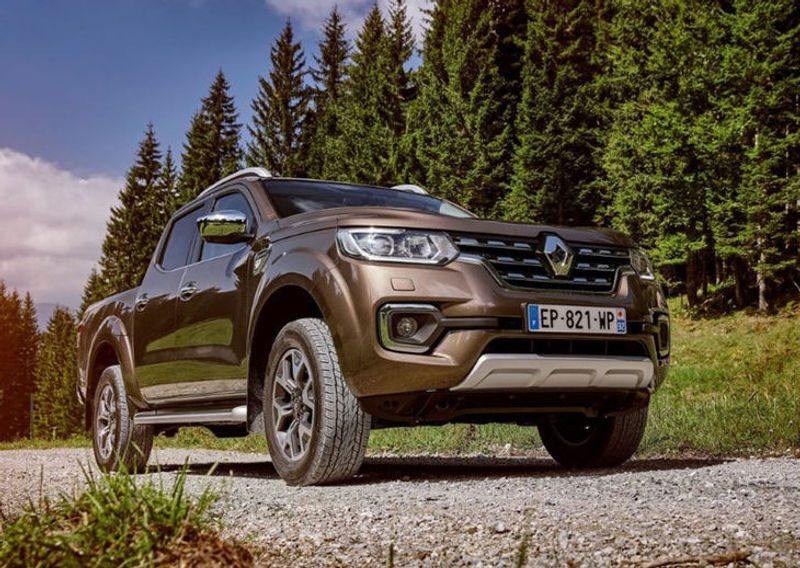
It’s been on the cards but unconfirmed for a few years that Renault South Africa is trying to get its hands on the 1-tonne Duster Oroch double cab and Alaskan leisure bakkie. In March 2019, it was confirmed that both these models would reach South Africa in 2021 in facelifted form. However, considering the Covid-19 pandemic and the resultant global impact its had on the motoring industry, it remains to be seen whether the duo will see the light of day locally.
Based on the Nissan Navara, the Renault Alaskan makes use of a 4-cylinder 2.3-litre twin-turbodiesel engine, which offers peak outputs of 140 kW and 450 Nm of torque and is mated to a 7-speed automatic transmission. The Duster Oroch, on the other hand, is equipped with a choice of 2 naturally-aspirated petrol engines and a turbocharged 1.5-litre diesel engine, however, it’s not yet clear which of these would be offered locally.
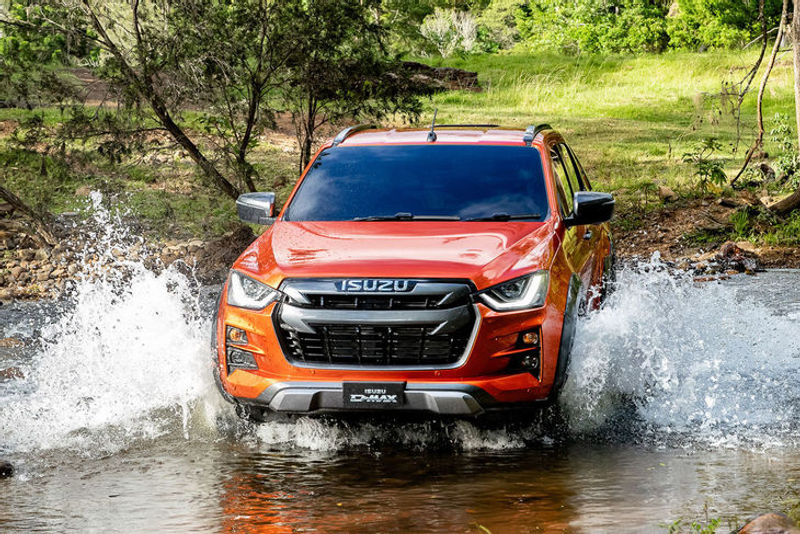
The new D-Max’s styling will be much bolder than the current model and the now-dated interior will be significantly overhauled and will be equipped with the necessary tech and comfort features to make it competitive in this segment.
In terms of engine power, the new D-Max is fitted with a thoroughly updated 3.0-litre turbodiesel engine that not only more refined than before but also offers outputs of 140 kW and 450 Nm (in the Australian market), however, the local specification has yet to be confirmed.
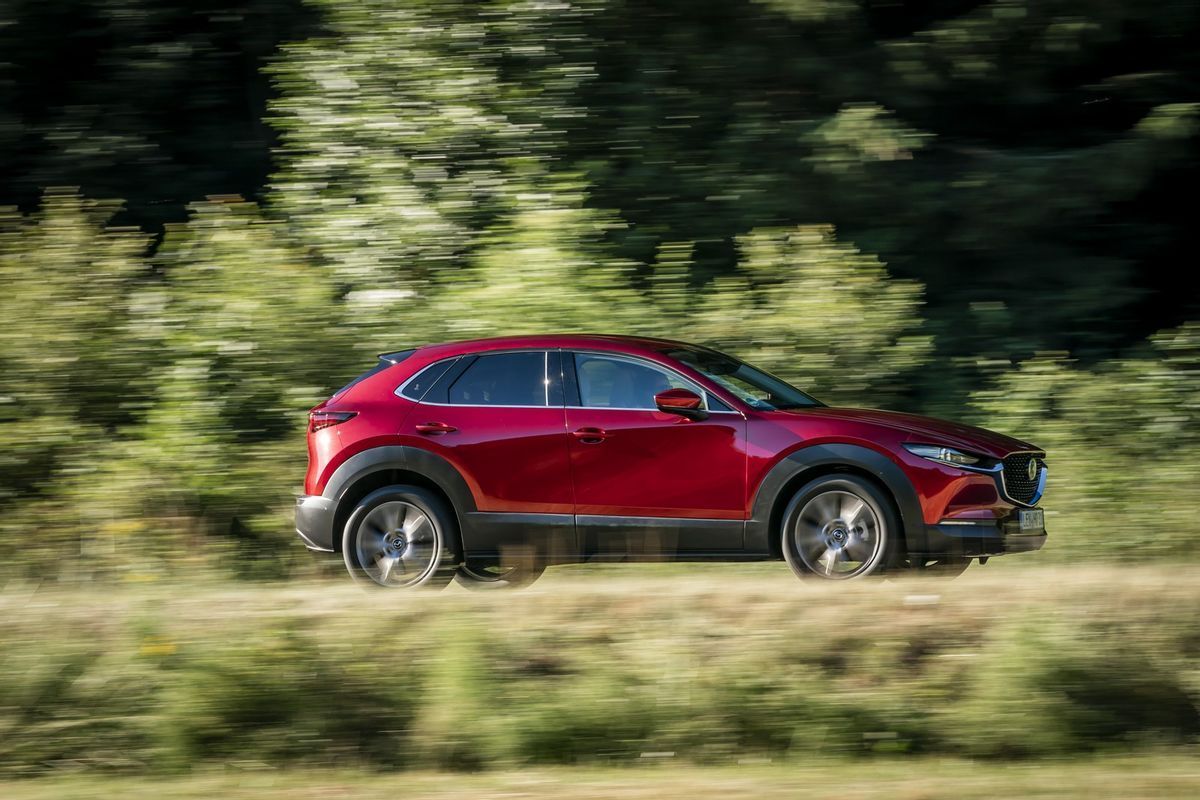
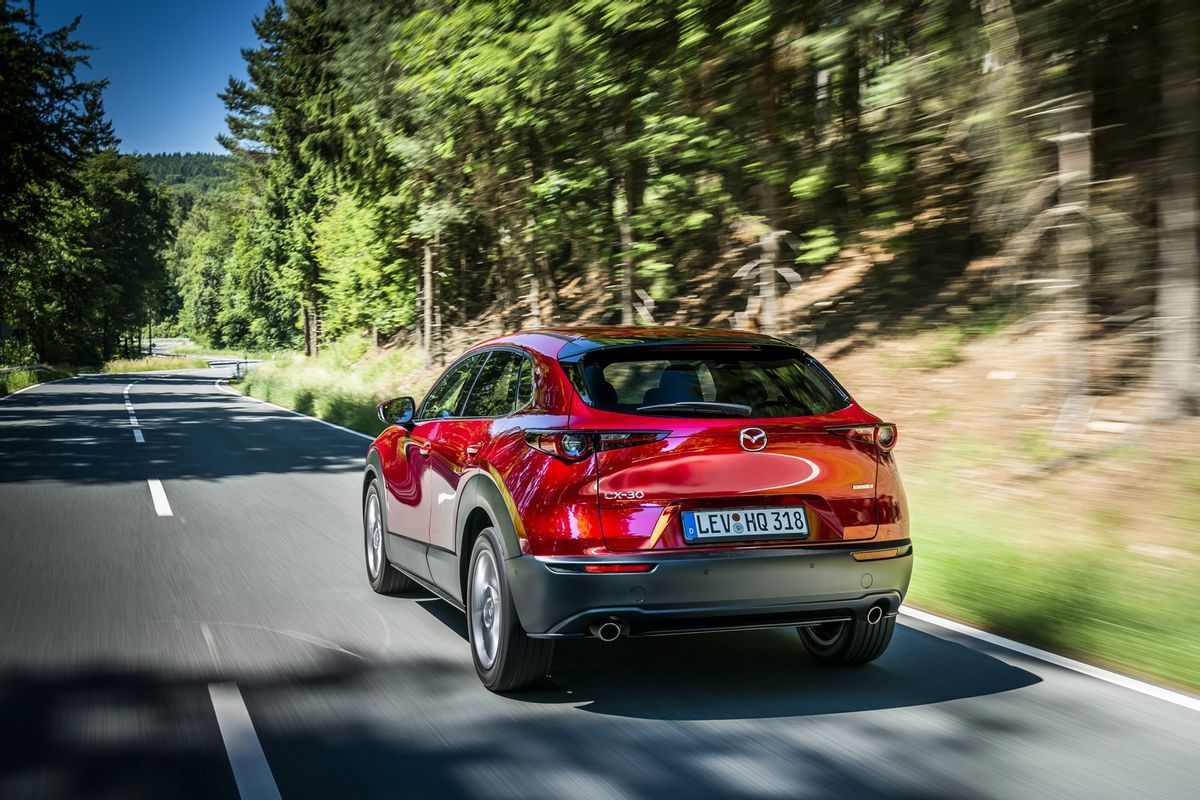
It’s been a long time coming but Mazda will finally introduce the new CX-30 SUV in South Africa in February 2021.
Mazda had plans to bring the CX-30 to local market early in 2020 but Covid-19 happened and a delay was inevitable. Now, Mazda has confirmed that the CX-30 will launch locally in February 2021.
The CX-30 compact SUV will slot in between the brand’s CX-3 crossover and CX-5 family car and is built on the same platform as the new Mazda3 while also sharing the same engine offerings and suspension.
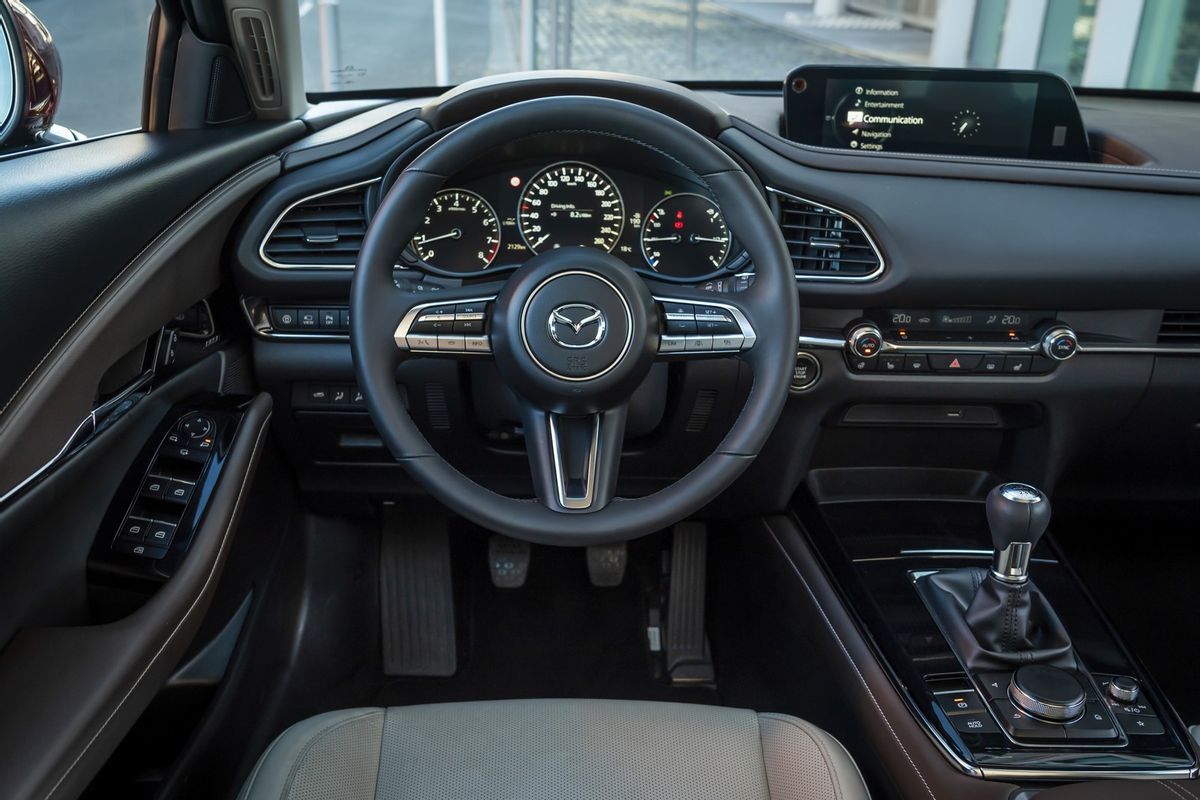
Mazda’s appealing Kodo design philosophy shines through with a coupe-like silhouette enhancing the CX-30’s kerb appeal appreciably. The interior is typically Mazda in its design execution which is to say that it’s neat with a minimalist design and comes equipped with an 8.8-inch infotainment system as well as a Bose sound system.
Instead, Mazda will persist with a 88 kW / 153 Nm 1.5- and 121 kW / 213 Nm 2.0-litre naturally-aspirated petrol engine for the CX-30 when it arrives and it will be offered in conjunction with either a 6-speed manual or 6-speed automatic transmission.
Local specification and pricing for the CX-30 has yet to be confirmed but we will keep you informed as soon as official information becomes available.
Driving this Festive Season? Here’s What You Need to Know
The 2020 festive season looms and while the second wave of Covid-19 grips the country, many South Africans will still be travelling to destinations across Mzansi. Here's some important information to be aware of before you hit the road!
The Christmas holiday season is upon us and many holidaymakers will be heading out onto South African roads to destinations around the country for rest and relaxation. However, with the second wave of Covid-19 infections currently ripping through the country, extra precautions need to be taken to keep yourself, your family and those around you safe from potential infection.
More so, traffic volumes on all major routes are also expected to increase over this period and as a road user, it's your responsibility to ensure that you do what is necessary to get you and your family to your destination safely. Busy holiday periods are a notoriously dangerous time to be on the road and every year, hundreds and thousands of lives are lost on our roads. With planning and preparation, you needn't become a statistic…
To help you prepare for your trip, we have compiled a list of holiday tips for you to consider before you depart, along with the necessary emergency numbers should you need them.
Things to do before leaving for holiday
Covid-19 related precautions
Make sure all occupants in your car/vehicle have masks and even pack a few extra masks in case you need them.
If you are a taxi operator, all occupants (including the driver) must wear a mask at all times while in transit.
Minibus taxis are also advised to have windows open to ensure adequate ventilation and to adhere to the 70% passenger limit set out by government in the Covid-19 regulations.
When stopping in a public space, such as a fuel station, be sure to wear your mask at all times and sanitise/wash your hands often, especially after touching public spaces.
Make sure that hand sanitiser is widely available in your vehicle for all passengers to use freely. It's also advisable to carry your own sanitiser on your person so that you can use it as and when you need to.
Take note of the current Covid-19 curfew which is from 4:00 am to 11:00 pm daily and plan your journey accordingly. Failure to adhere to the curfew may lead to a fine or even possible arrest as you will be contravening Covid-19 regulations.
Make sure your car is in full working order before you depart
Check that your brakes, fluid levels and all your lights and indicators are working properly. This is particularly important for older used cars.
Be sure that you have a spare tyre as well as a wheel spanner and car jack in case you need to change a tyre.
Check that all your tyres, including the spare, are inflated correctly and have sufficient tread.
Be sure that all seat-belts and baby-seats are in working order and the correct size.
Have your car serviced if necessary.
If you are towing a trailer or caravan
Ensure the rearview mirrors on your car are properly adjusted.
Check the tyre pressure of the trailer/caravan's tyres.
Check that the lights and indicators of the trailer/caravan are working correctly.
Ensure the towbar and the towing equipment is secure.
Plan your route beforehand
Be sure you know exactly where you are going and how to get there. Getting lost can be very dangerous, as well as time-consuming. Use the website Google maps (maps.google.co.za), or conventional maps to check and plan your route.
Make sure you have the necessary cash available for any toll roads and fuel.
Let a friend or loved one know where you are going, what route you are taking and what your estimated time of arrival will be. Also, let your family know when you have arrived at your destination safely.
Plan your stops carefully and book accommodation in advance if required. Getting accommodation en route can be difficult during the peak holiday season.
Check the weather report before you embark on your journey (www.weathersa.co.za).
Take note of potential roadworks along your route and plan accordingly.
2-litre bottle of water (for emergency drinking, or to be used for the car if necessary).
Hand sanitiser
First aid kit.
Motor oil.
Food (padkos).
A fully-charged cell phone.
Cell phone car charger.
Traditional map, or GPS navigation system, or both.
Emergency triangle and a flashlight.
Get your documents in order
Make sure your driver's license has not expired and that your vehicle license disc is still valid.
If you have an AA membership, make sure it has been renewed.
Check your car insurance policy and be aware of exactly what is covered, what emergency services they provide and what their emergency numbers are.
If you are crossing any borders, make sure your passport or other required documents are up to date and that you have them with you.
Things to consider while on the road
General driving rules
KEEP LEFT, PASS RIGHT.
Do not overload your vehicle.
Don't drink and drive.
Drive with your headlights on, even in the day.
Obey the speed limit.
Don't use your cellphone while driving. Always use a hands-free kit or connect you phone via Bluetooth.
Avoid distracted driving including eating while driving etc.
Every person in the car must be wearing a seatbelt.
Avoid fatigue while driving
Take breaks often or every 200 km.
If you are feeling tired, rather find a place to rest and do the trip in multiple phases.
The effects of caffeine and other stimulants used to keep you awake are only temporary. People often feel more tired once the initial effects wear off. Use such stimulants carefully, and remember they are not a substitute for quality rest.
Navigation devices and applications
There are many GPS Navigation systems available to keep you on the right track during your trip.
The cost of one of these navigation devices will generally range from around R1 000 upwards.
These navigation systems can also point out places of interest, restaurants along the way and places to rest.
If you have a smartphone, download the Trip Advisor app for travel-related information.
Useful South African emergency numbers
Emergencies
10111
Ambulance
10177
The AA
0861 000 234
National 24-hour emergency
112
Crime Stop
086 001 0111
The Cars.co.za team wishes you a safe and wonderful festive season. Please drive safely and take care on the roads. See you in 2021!
Fake exhaust sound for Transit
Limited edition van? Absolutely a thing, now.
Ford has revealed a new project with its British performance partner, MS-RT.
Although most Ford performance car enthusiasts would expect a more focussed Fiesta or Focus ST, this limited edition project aims to deliver the ultimate Transit Connect.
The market for stylized compact vans might be very niche, but MS-RT have done a stellar job of giving the Transit Connect a more meaningful presence.
Only 30 of these R120 specification Transit Connects will be built and they will all be panel vans, finished in white, with contrasting black and red graphics.
In the tradition of all things fast and Ford, the Transit Connect R120 rolls multispoke OZ alloy wheels.
MS-RT has trimmed the R120 cabin with leather seats, featuring red stitching, and a smaller diameter composite sports steering wheel
Although Ford has not instructed MS-RT to fiddle with the Transit Connect R120’s 1.5-litre turbodiesel engine, it has added a quad-exhaust system.
Best of all, German aftermarket supplier Maxhaust, has supplied an artificial sound augmentation device.
This syncs with an app that Transit Connect R120 owners can access, allowing them to adjust the exhaust sound augmentation delivered by the R120’s speakers.