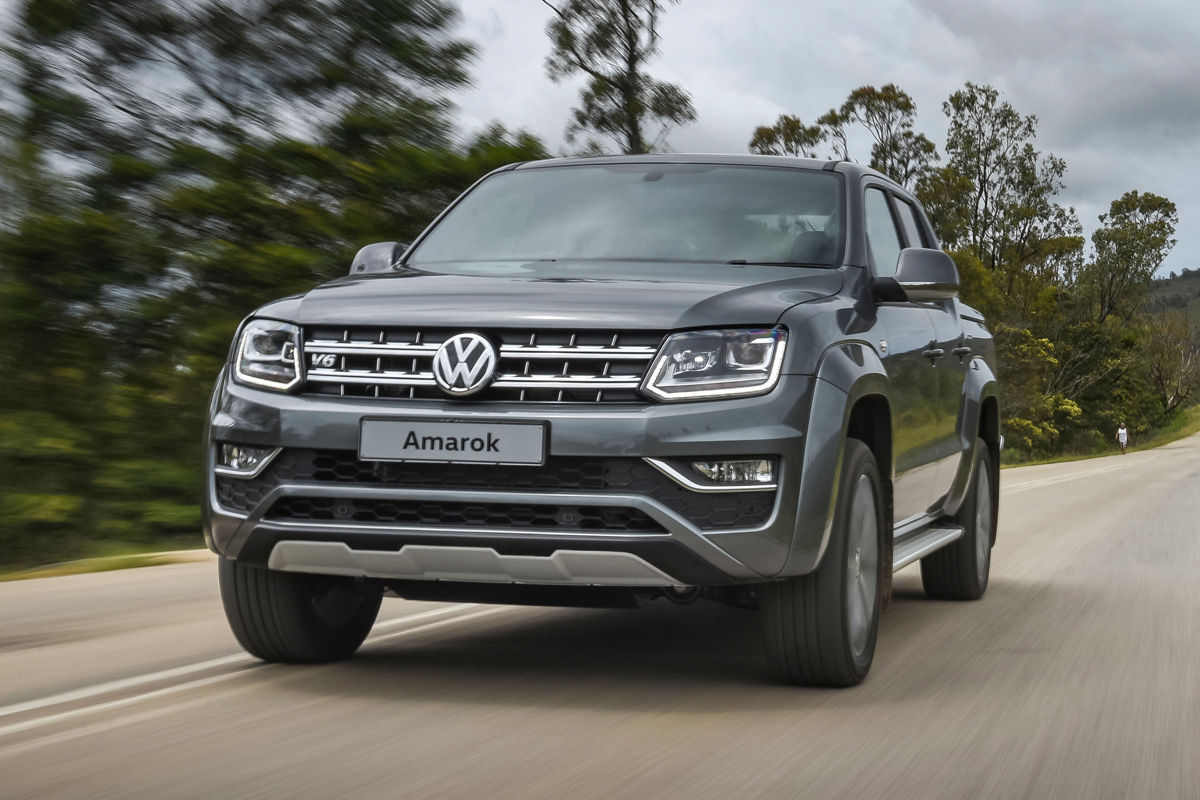
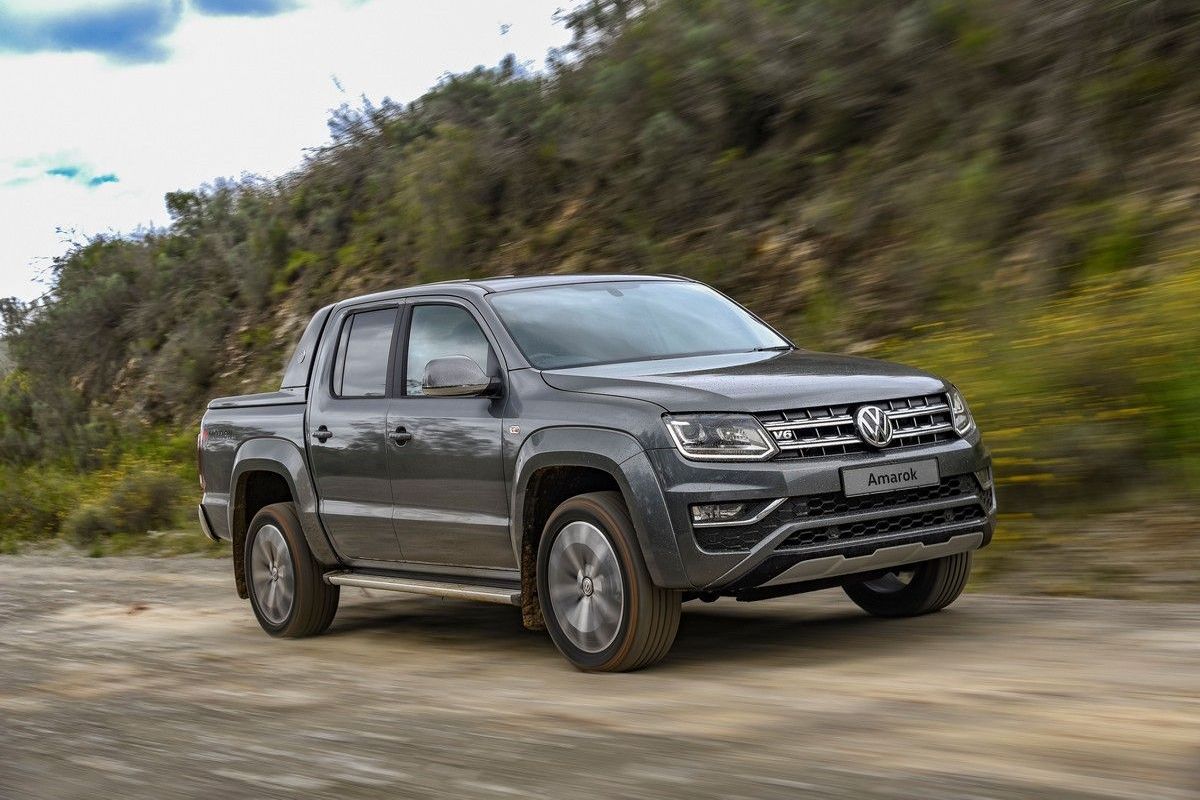
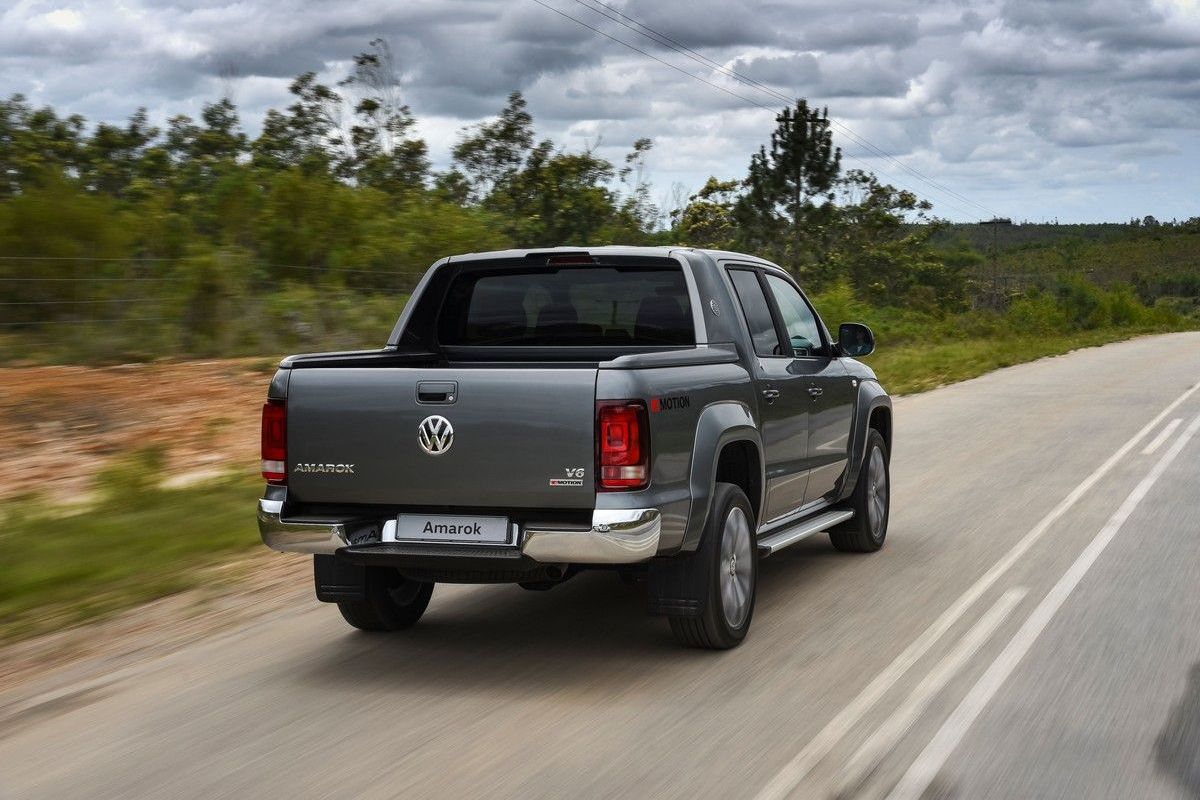
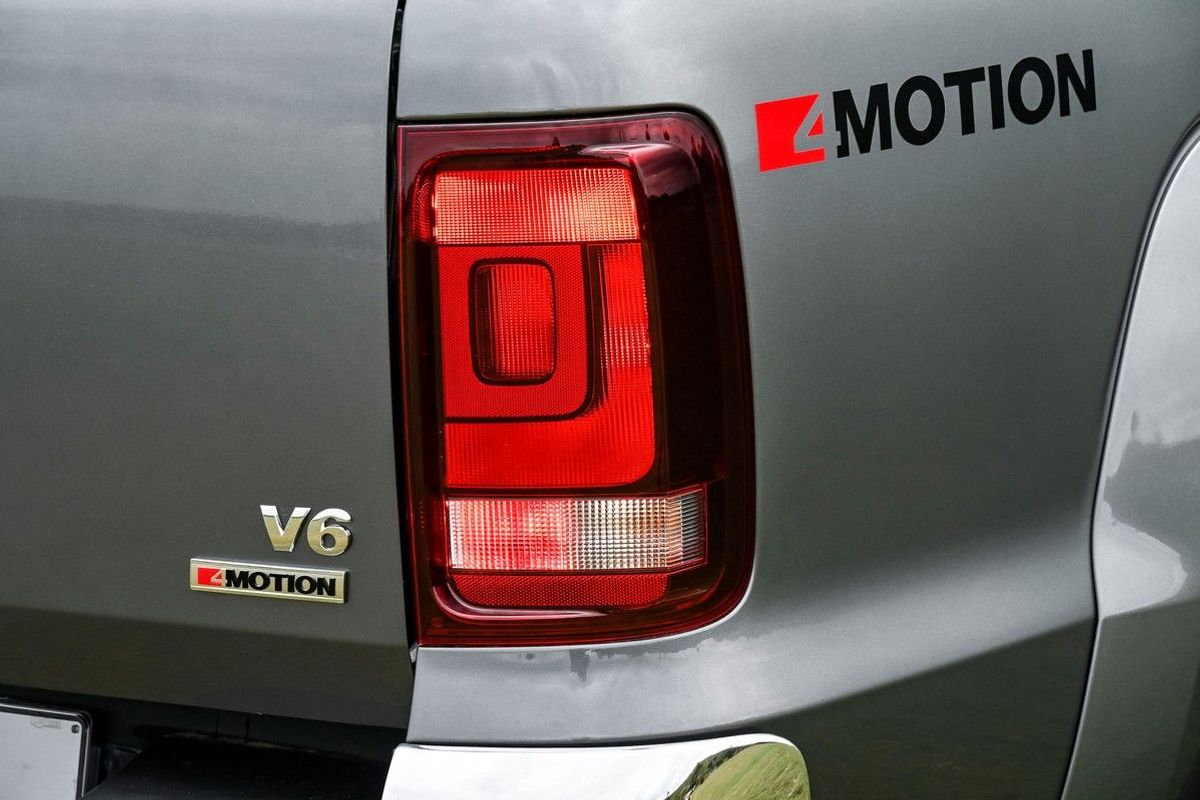
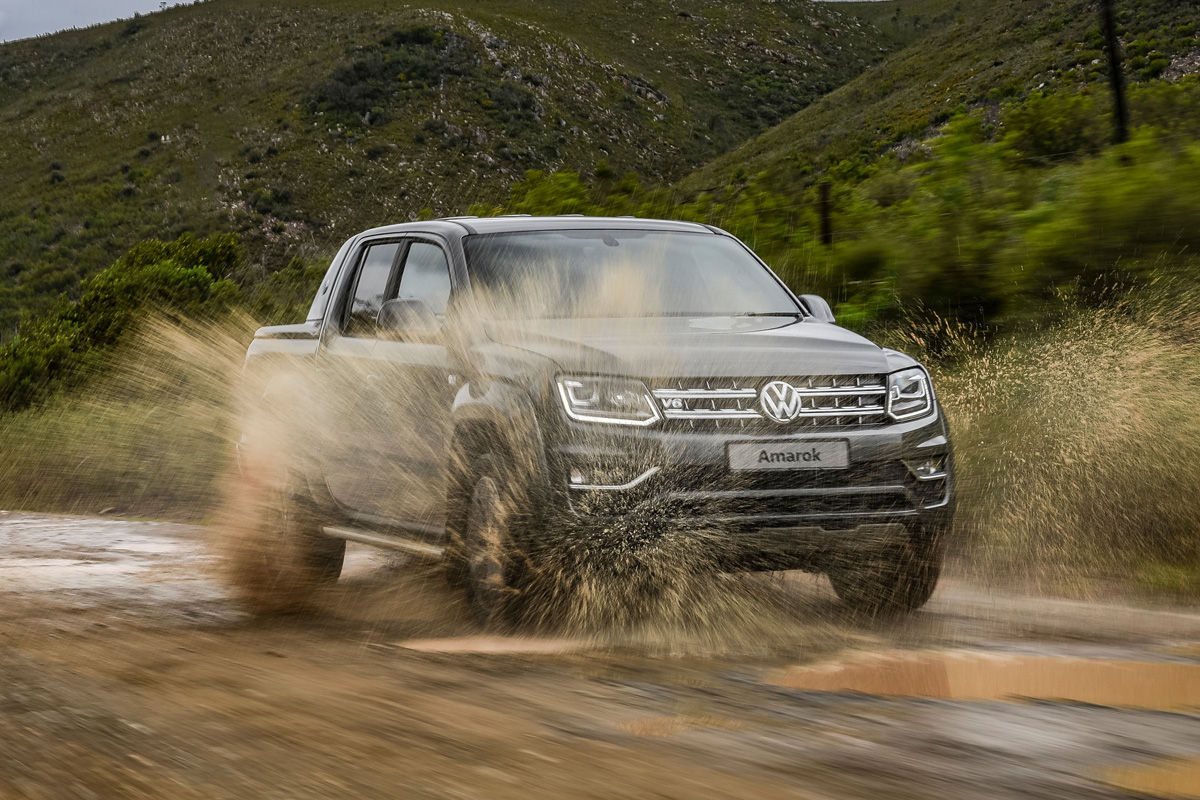
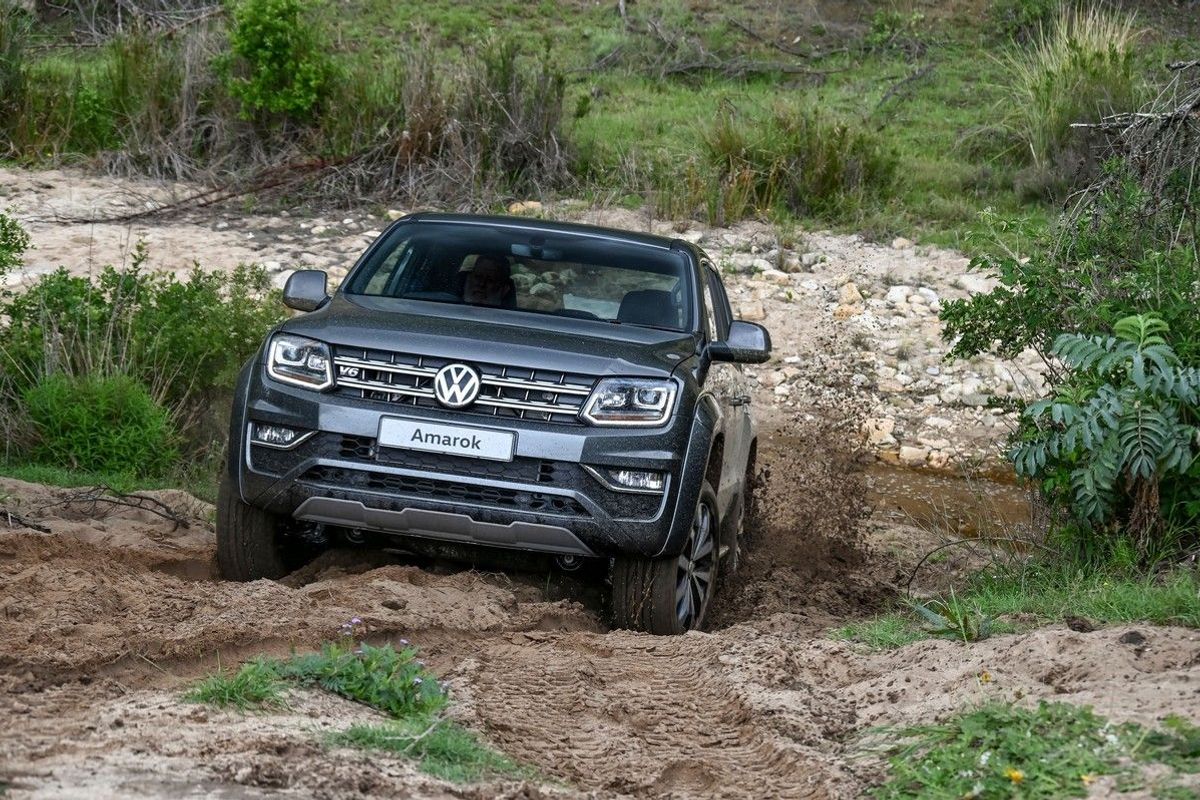
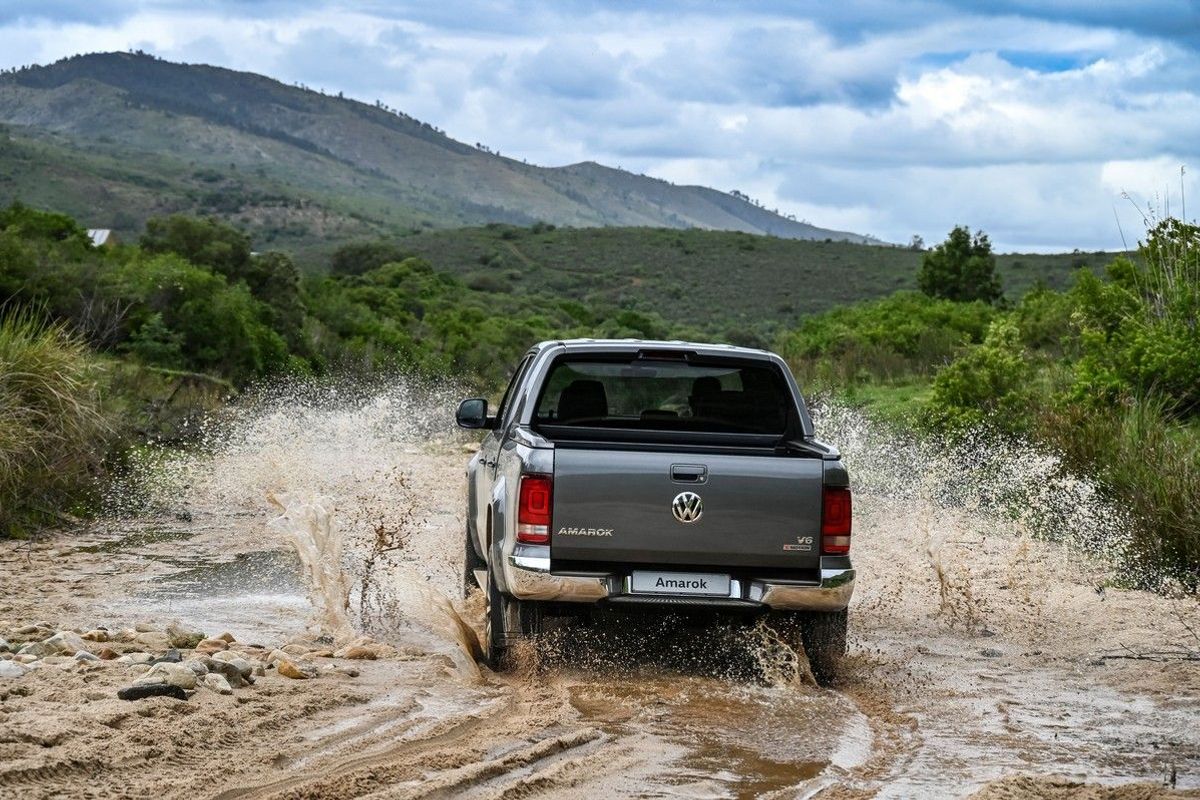
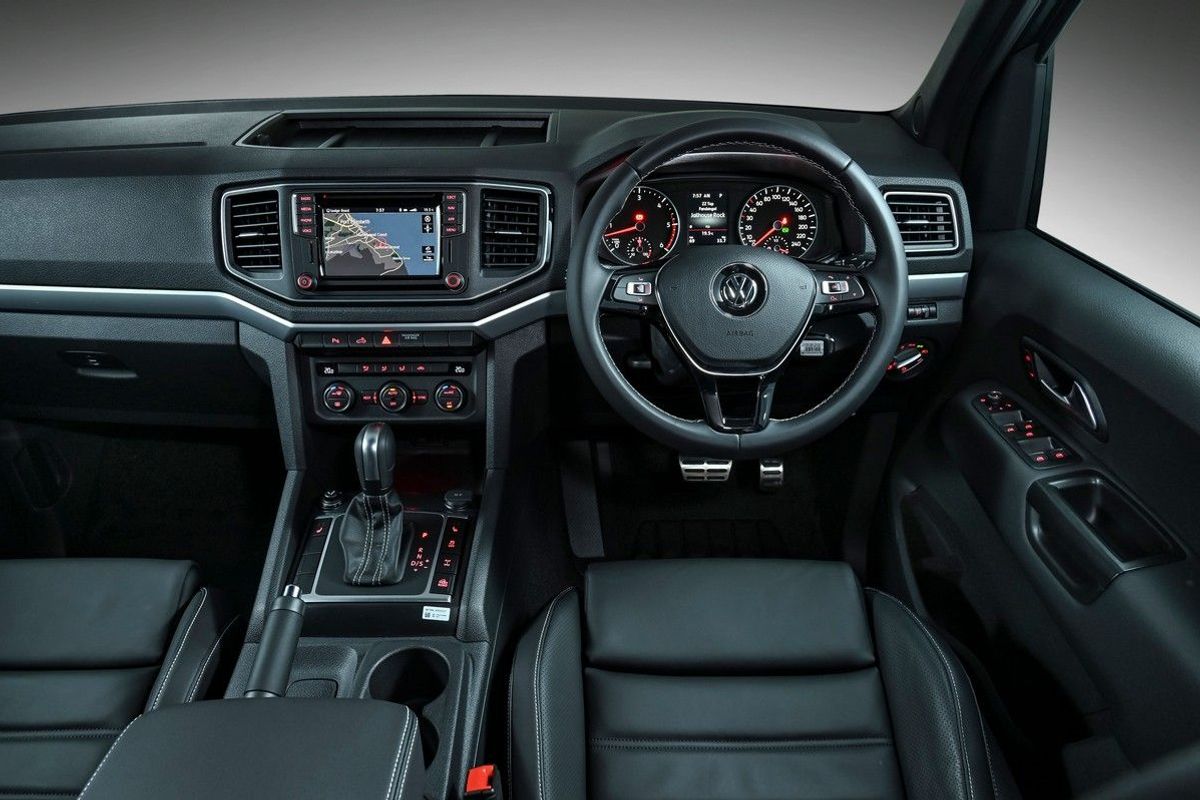
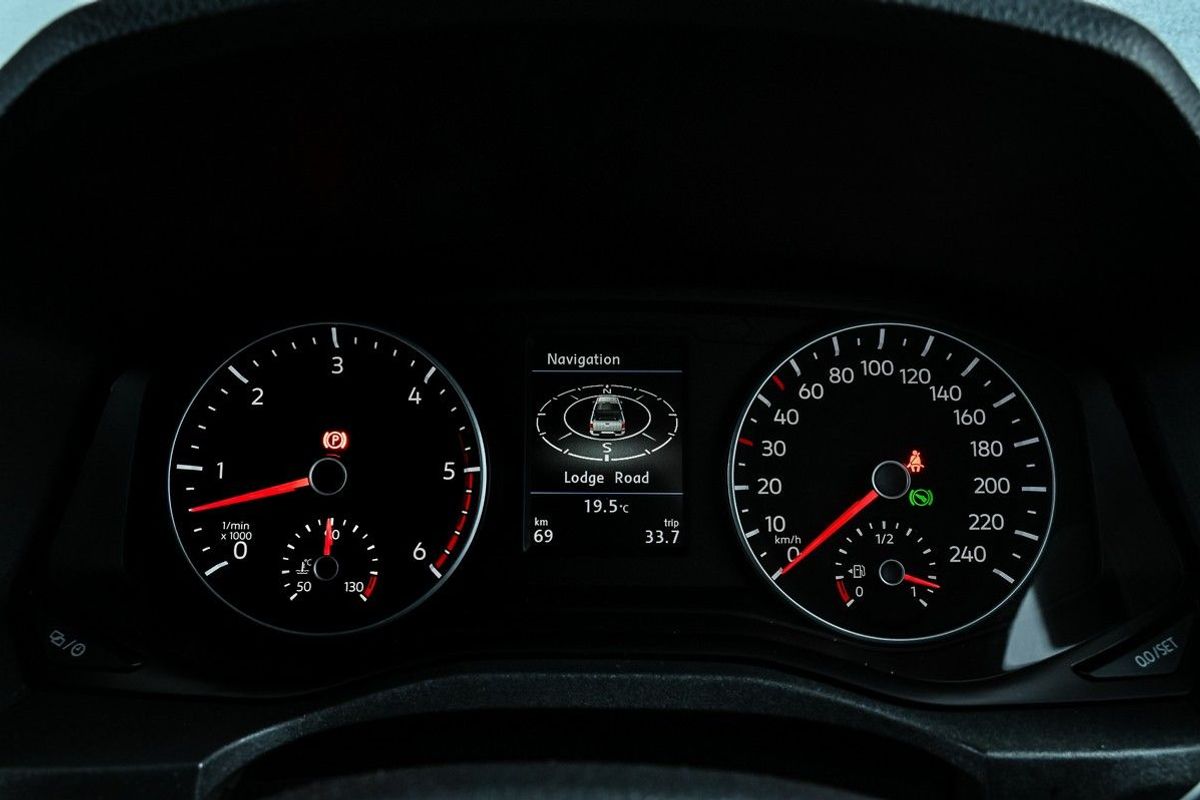
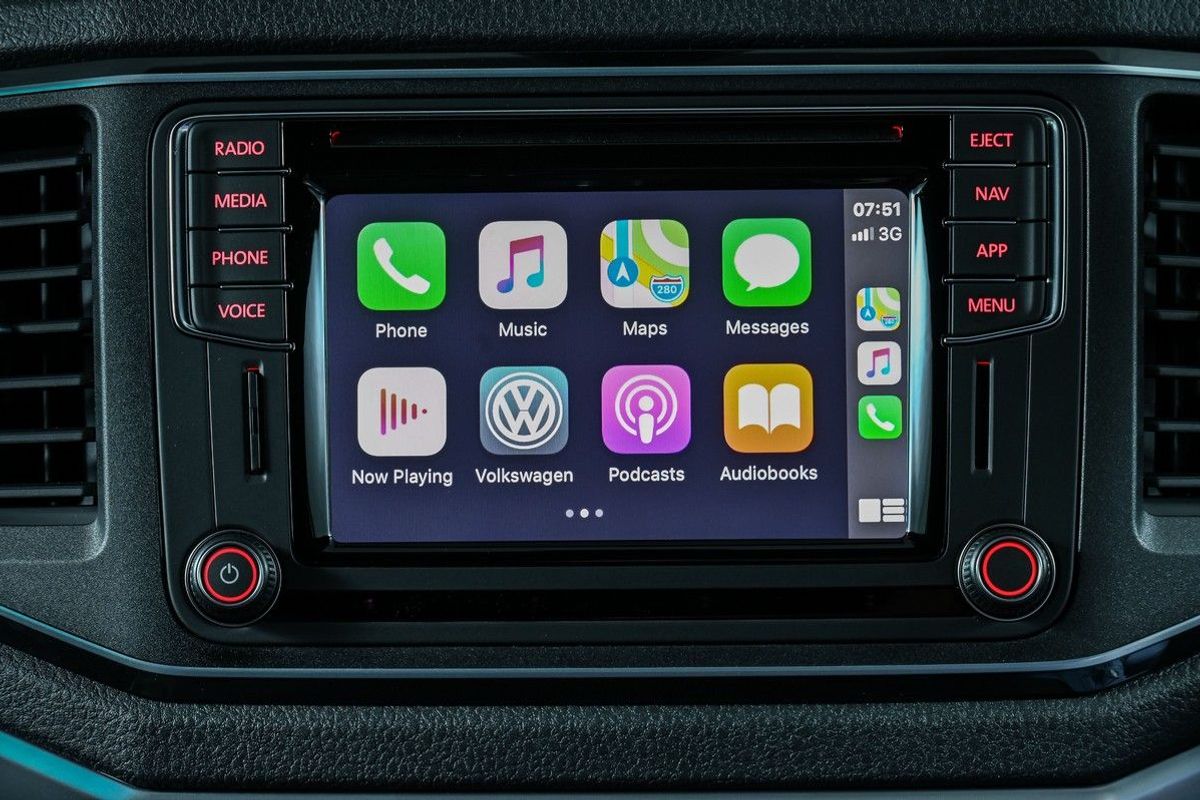
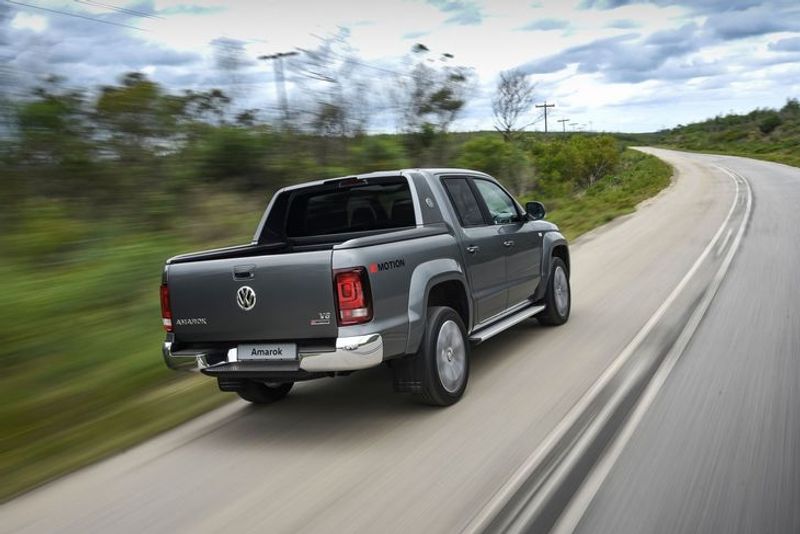
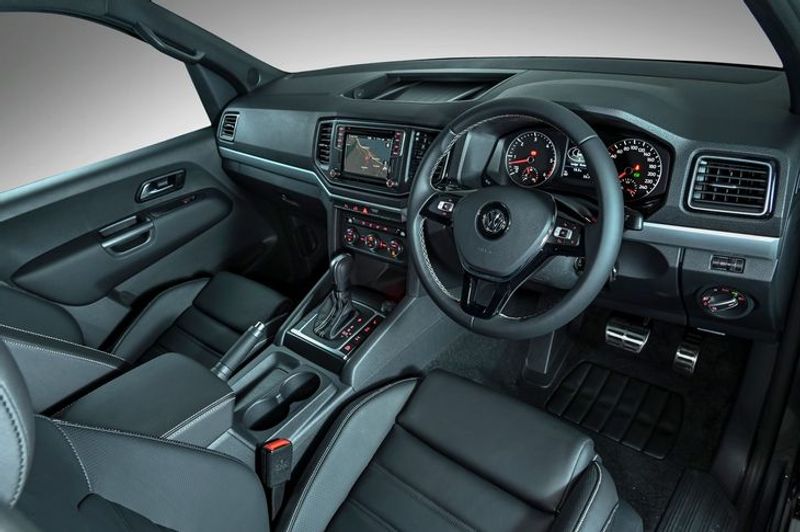
It's taken more than 2 years for the 190-kW Volkswagen Amarok to reach South Africa. Not only does it become the most powerful standard bakkie in SA, but in Extreme spec, the upgraded 3.0 V6 TDI eclipses the outgoing Mercedes-Benz X-Class flagship as the market’s most expensive double cab. Its asking price? A shade under R1 million.
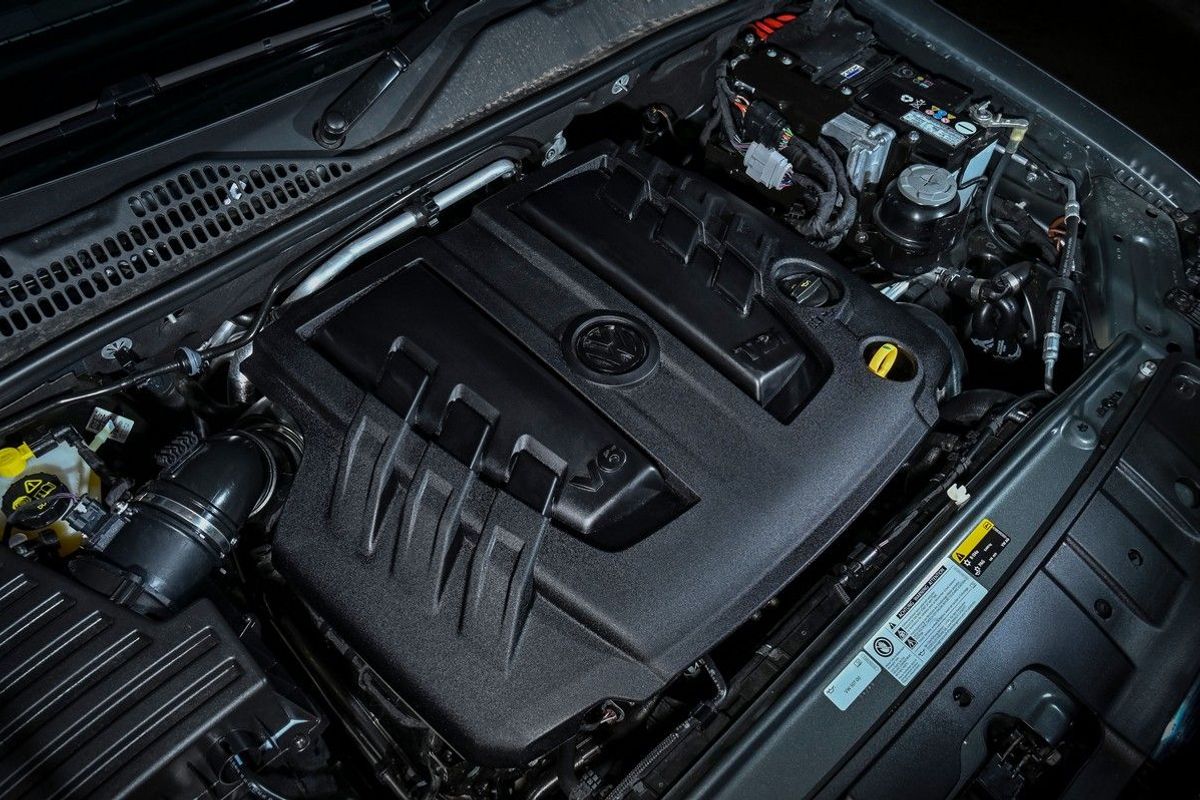
Back in 2018, Ciro De Siena travelled to Oman to drive the much-anticipated, high-powered Amarok, of which the peak outputs from its 3.0-litre V6 turbodiesel have been pushed up to 190 kW and 550 Nm of torque (25 kW and 30 Nm more than the outgoing version).
Peak power is produced from 3 000 to 4 500 rpm and maximum torque from 1 400 to 2 750 rpm, all of which is channelled through an 8-speed automatic transmission. Suffice to say the newcomer is one of the quickest double cabs! Thanks to its launch control system, the bakkie is said to complete the 0-to-100 kph sprint in just 7.6 sec and go on to an astonishing 207 kph. The average fuel consumption is a claimed 9.5 L/100 km.
But wait, doesn't the X350d double cab 4Matic Power (still listed, at R985 113) already produce 190 kW? Yes, but thanks to an overboost function, the new Amarok can stretch its max power output to 200 kW for 10 sec, which is why it’s “the most powerful new bakkie on sale in SA."
The flagship Amarok’s safety features are supplemented by off-road ABS (with disc brakes all round, which it needs!) and stability control. The launch of the Highline and Extreme 4Motion 190 kW derivatives comes as VWSA celebrates the Amarok's 10-year anniversary in the local market.
When Ciro reflected on his stint behind the ‘wheel of the 190-kW Amarok, he said: “The engine absolutely hauls. The feeling of acceleration is almost what you’d experience in a hot hatch and coupled with SUV-like road manners, the Amarok is frankly excellent at eating up mile after mile of tarmac. The way this engine builds speed is remarkable.” Of course, we hope to get a chance to give the newcomer a thorough review soon.
The Amarok has about 2 years left in its current form before the Wolfsburg-based brand will join forces with the Blue Oval to create a “super bakkie” in 2022. Despite its advanced age, VW’s maiden double cab still has the largest bin, loading width and cabin in its class.
The Amaranger will be built by Ford at its Silverton plant in Pretoria. If you want to know more, read How the AmaFord changes everything.
Pricing: Revised Amarok range (Nov 2020):
Amaroks come standard with a 3-year/100 000 km manufacturer warranty, 5-year/90 000 km service plan and 6-year anti-corrosion warranty.
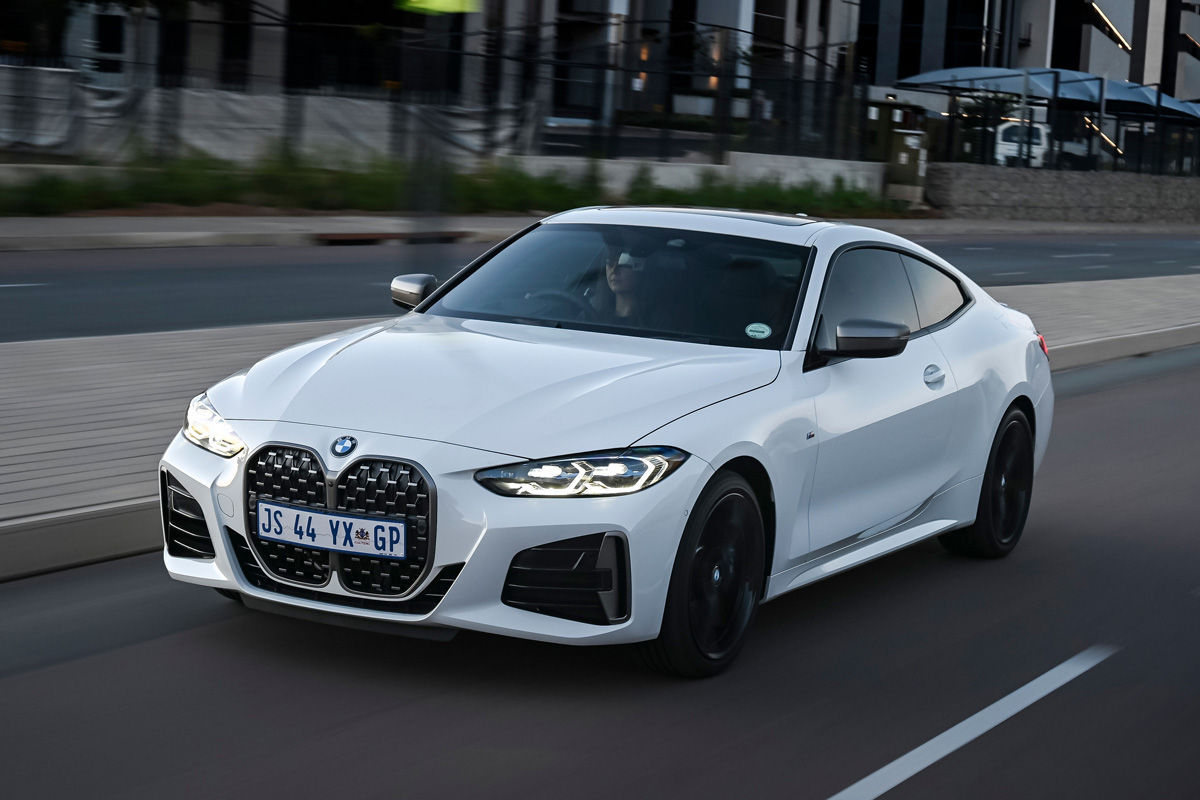
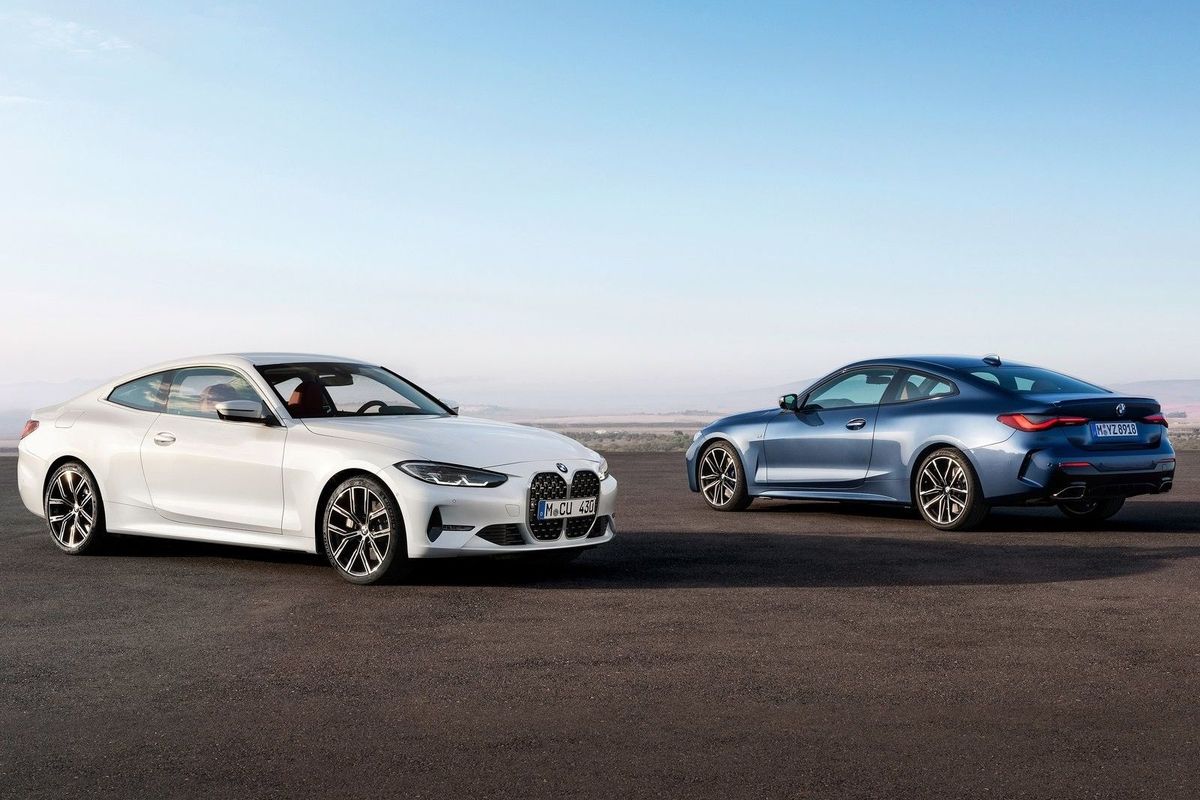
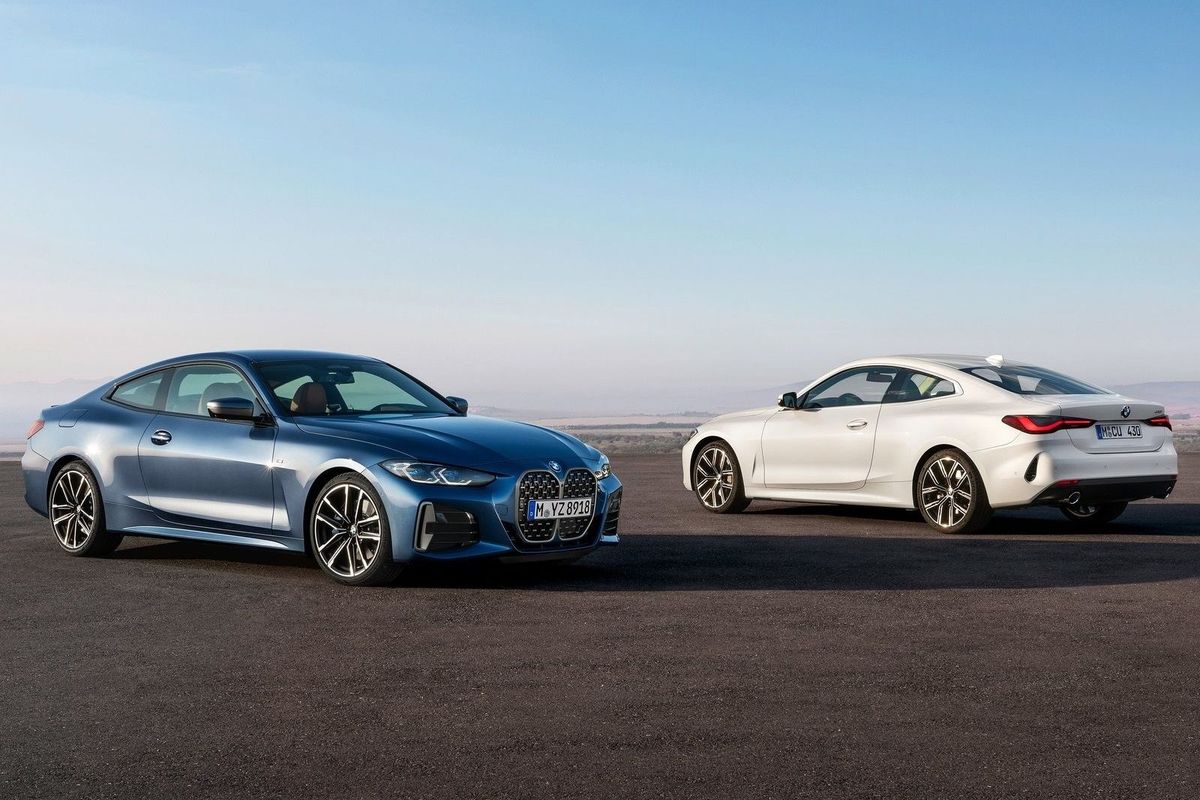
With its popular 3 Series bound by marketing- and package-related 'non-negotiables' – and sales of SUVs making up a huge chunk of its business anyway – who could blame BMW for testing the waters with an unconventional 2nd-generation 4 Series? Contributor Ian McLaren squinted his eyes before sampling the new sports executive coupe.
Of the nearly 800 000 units of the 1st-generation 4 Series Coupe that BMW sold since 2013, around 45% of those orders were for the 4-door Gran Coupe variant. While sales of the all-important 3 Series continued to prosper during this time, it’s a testament to both the firm's design team – and marketing nous – that a model that was so closely related (in terms of packaging) to the 3 Series could still find favour among enthusiasts.
Keen to explore the potential of this newfound niche, BMW has boldly “pushed the boat out” in terms of the shape and design detailing of the G22-generation 4 Series. It has also endeavoured to further distinguish the Coupé from its sedan sibling by way of added quality and dynamic ability.
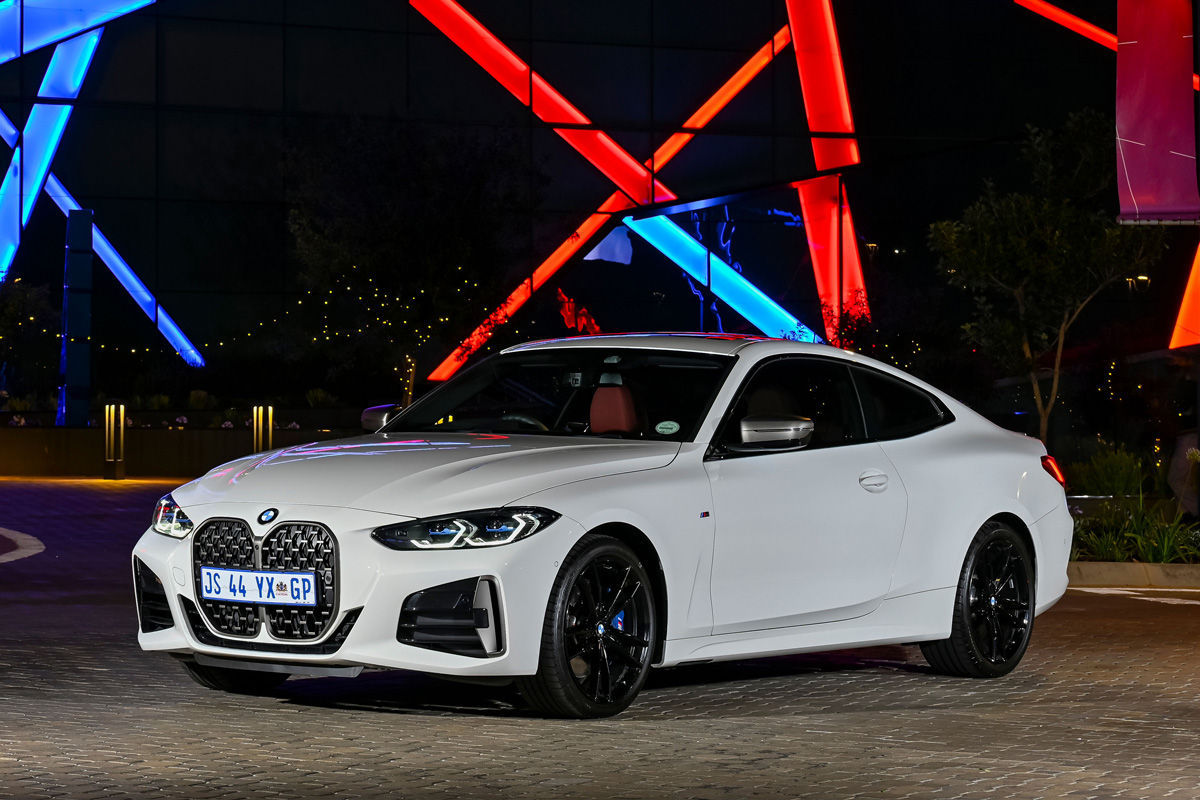
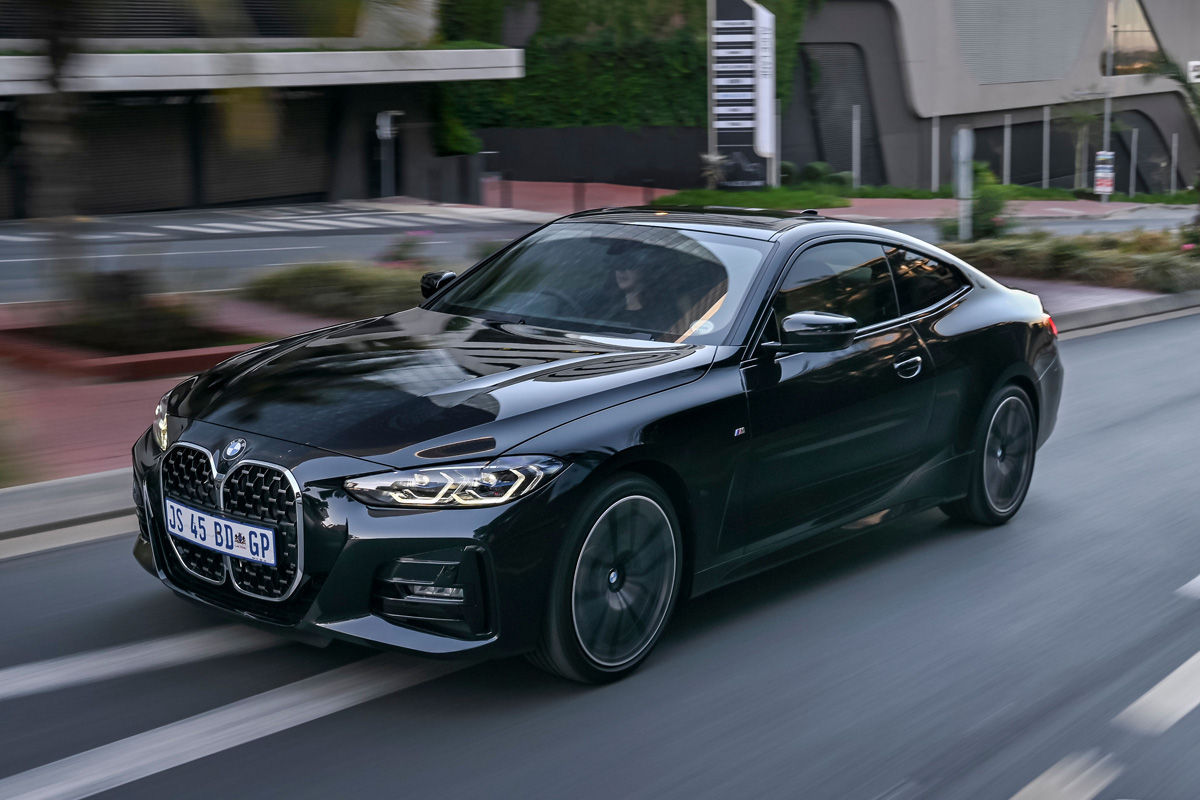
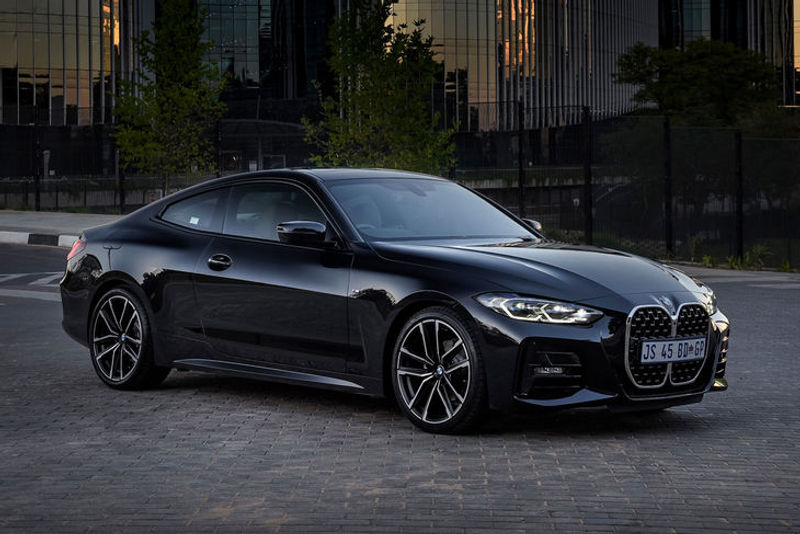
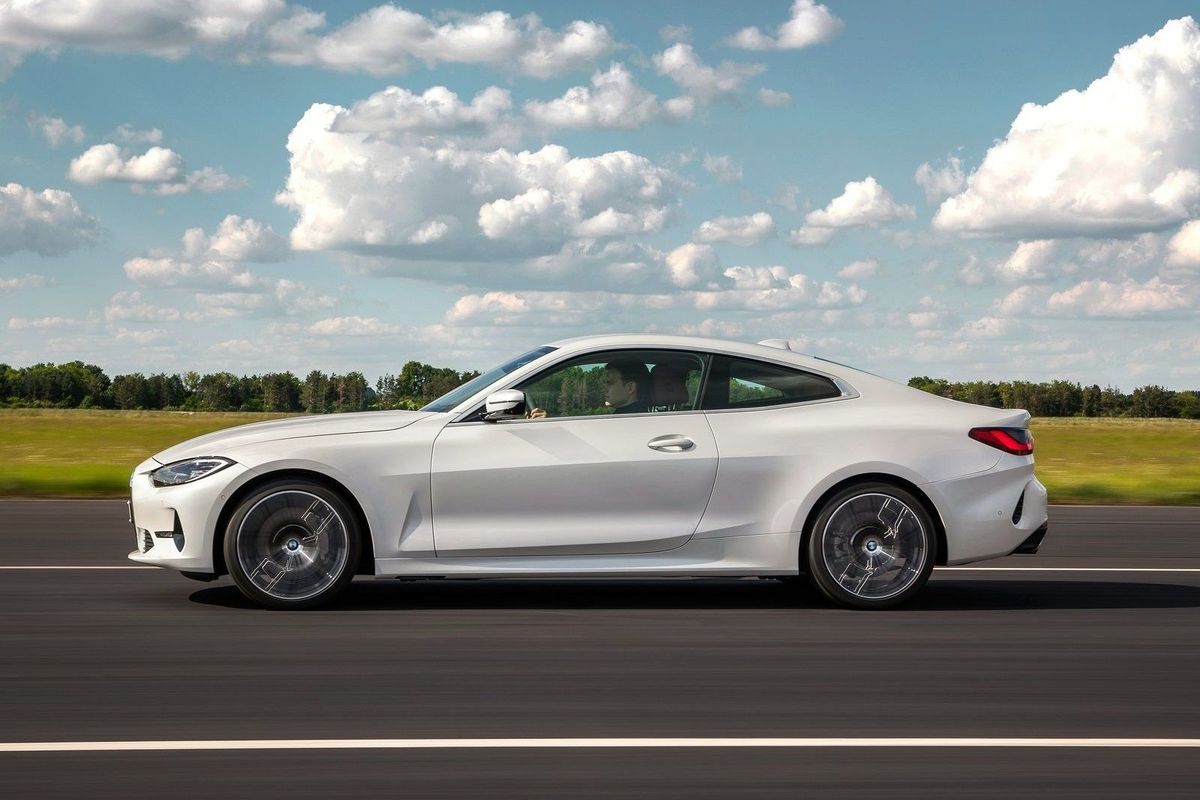
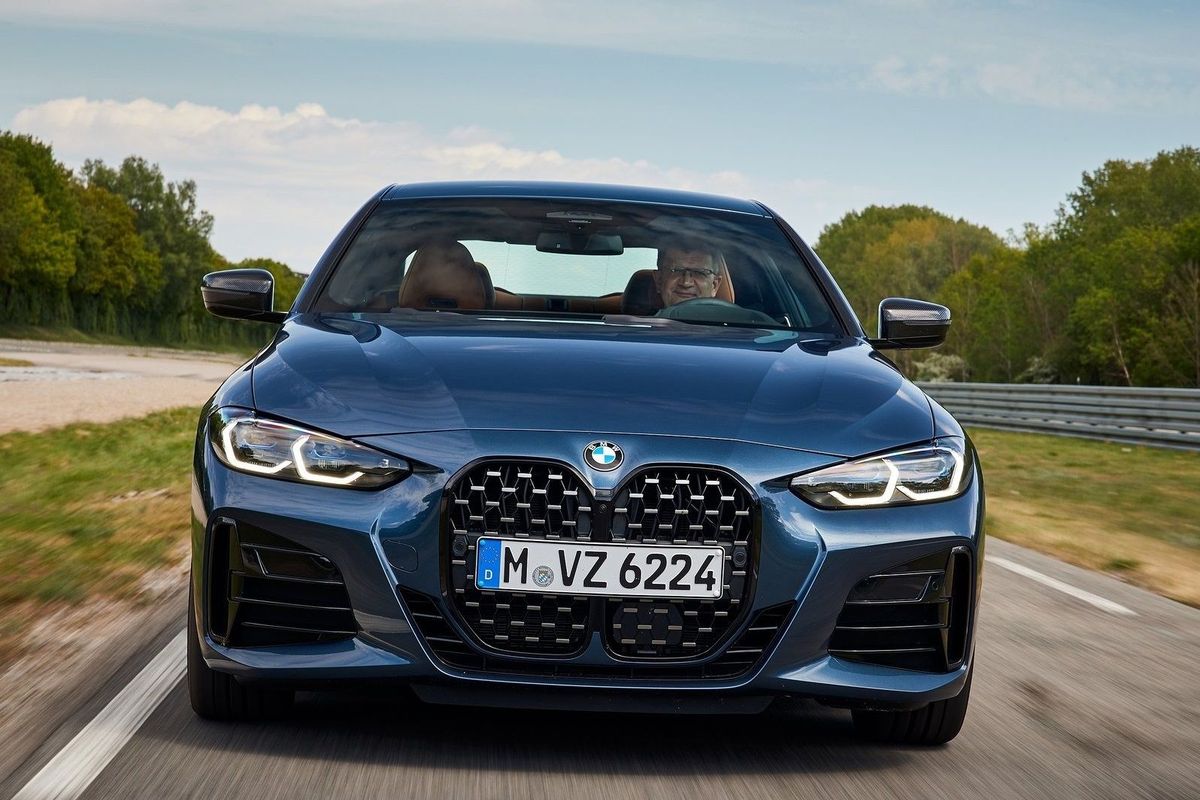
It can be tricky to tell some premium marques' sports executive variants apart from each other, but the G22 puts that to bed.
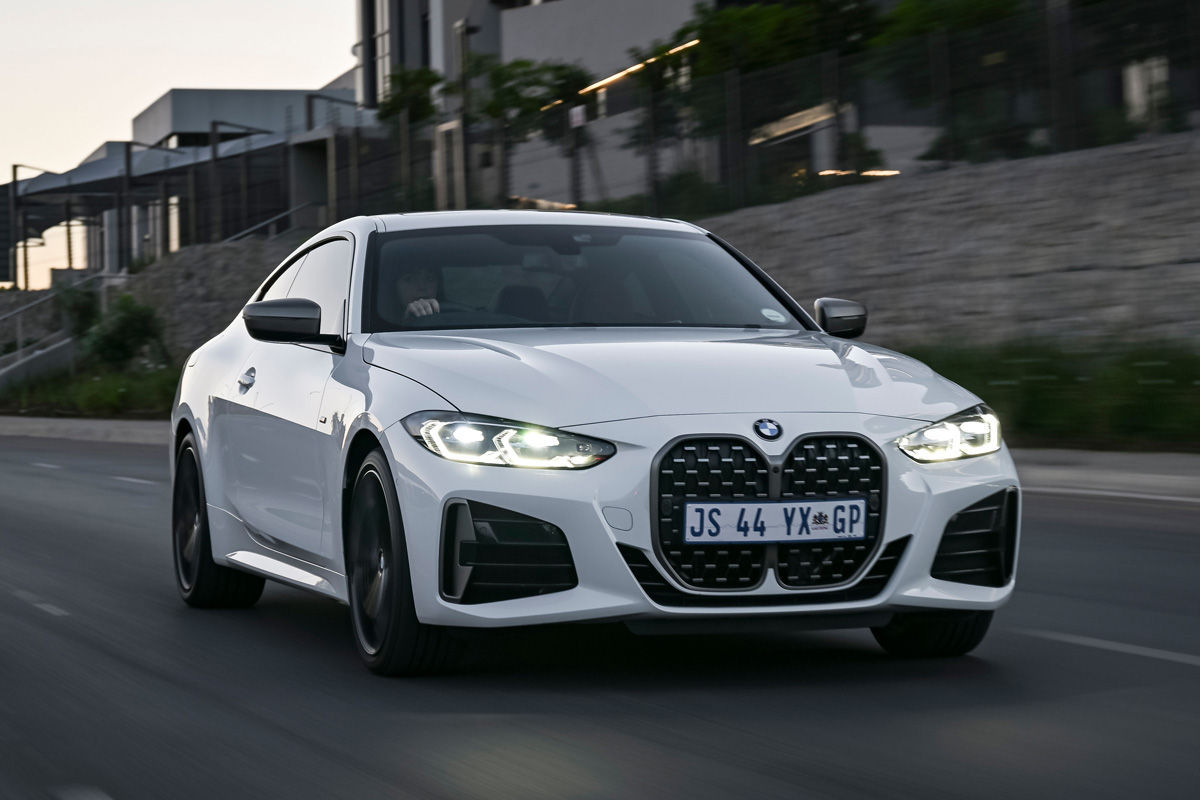
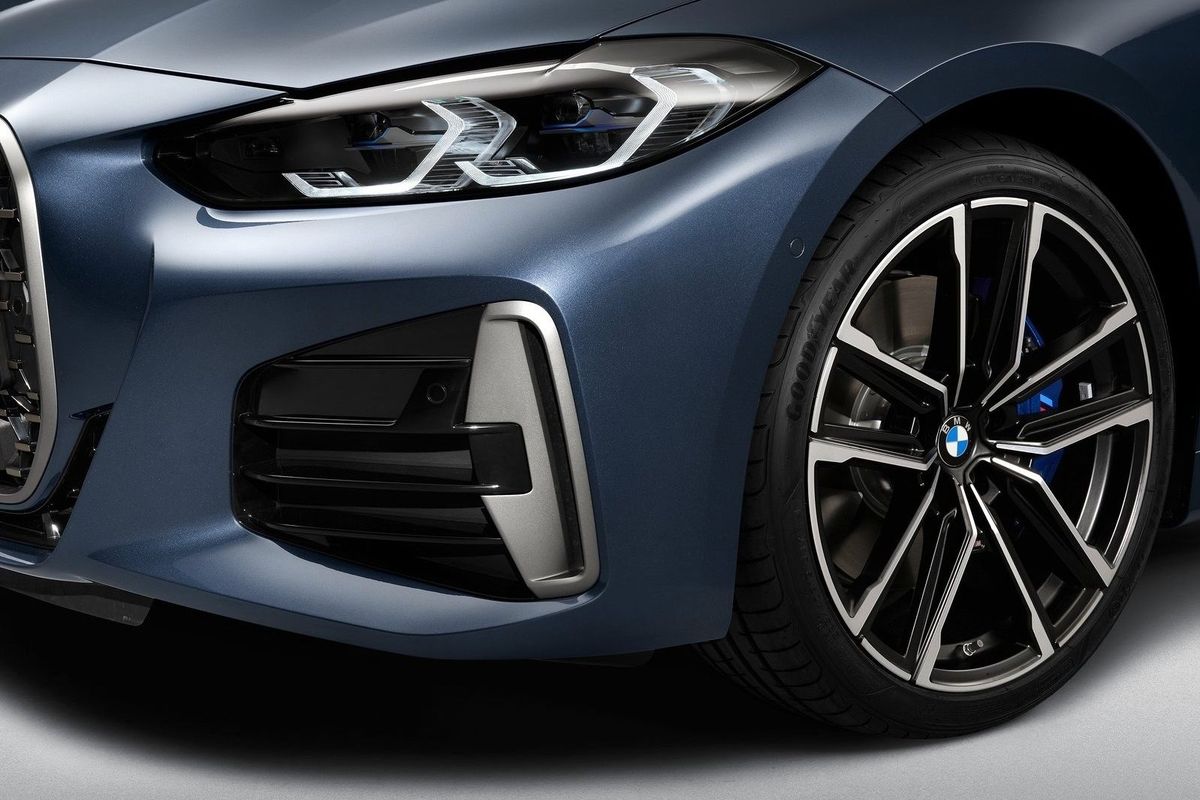
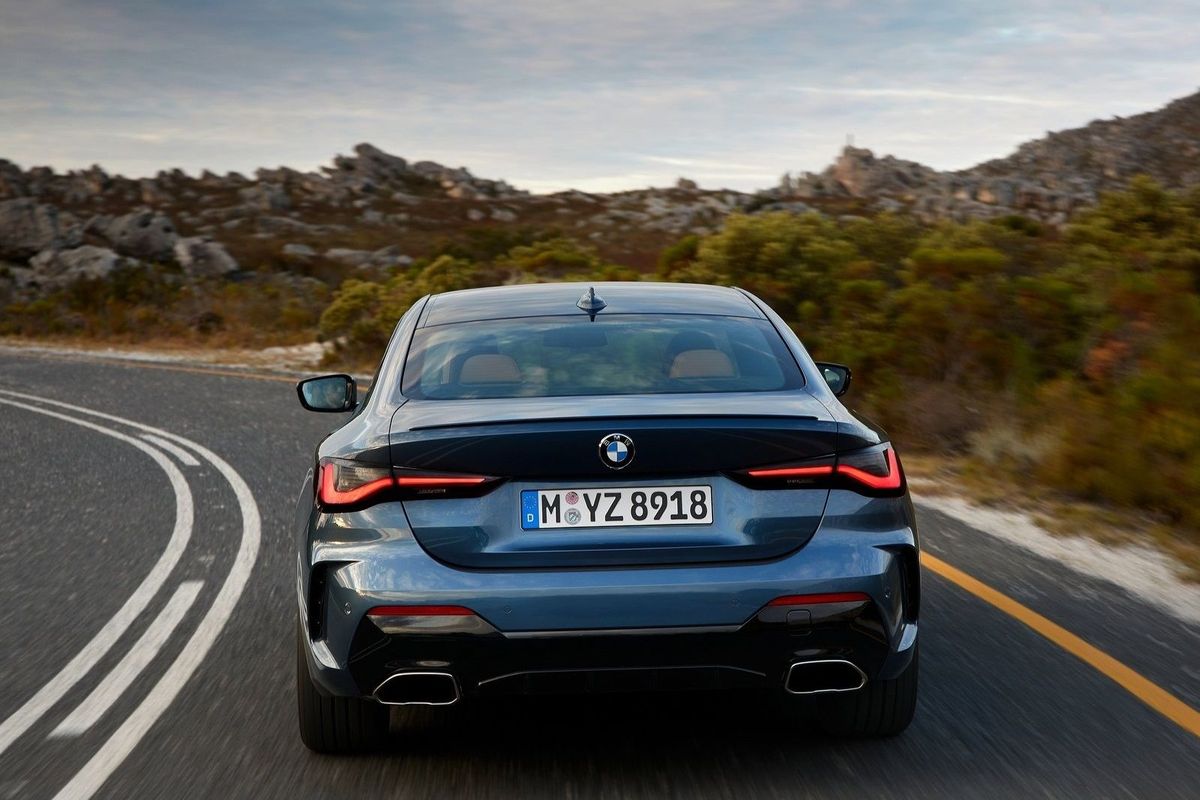
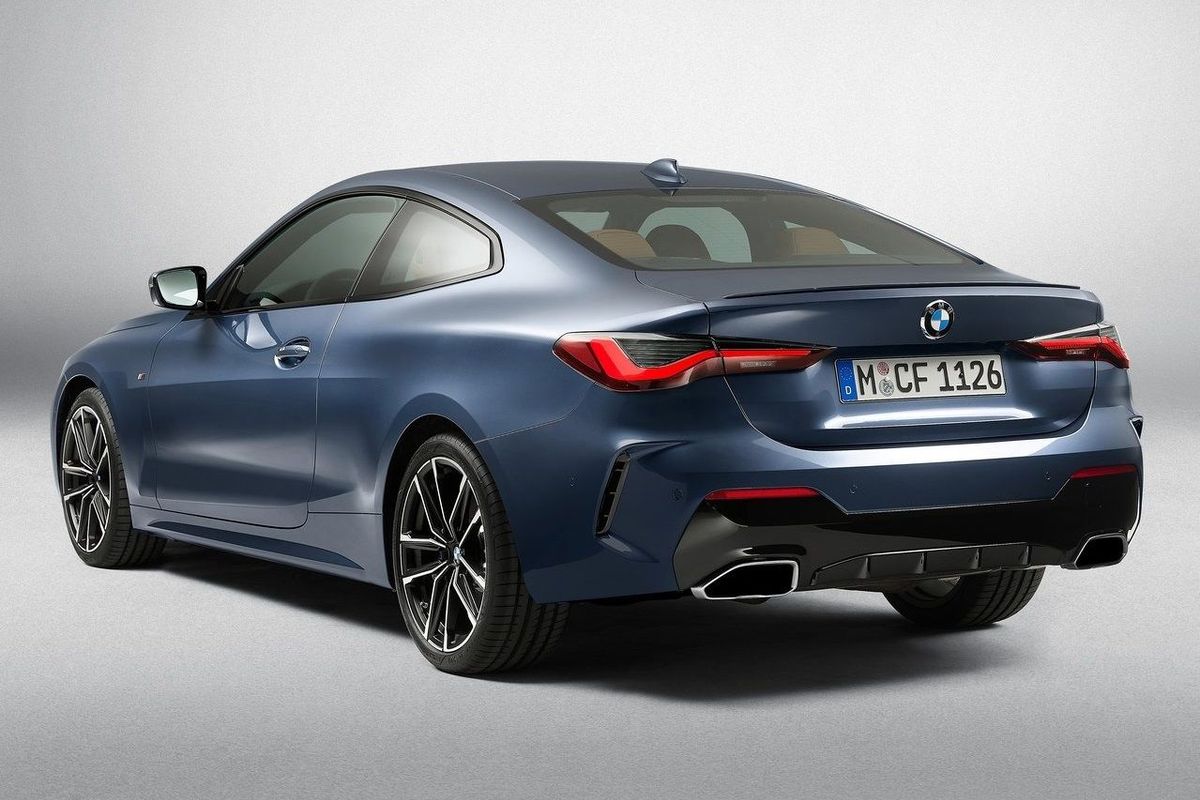
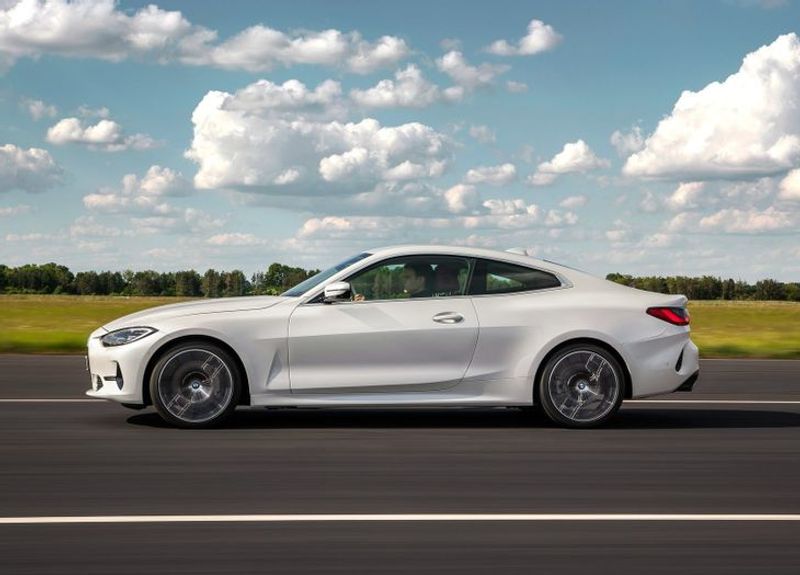
Irrespective of whether you like the upright grille design or not (you’re not likely to be sitting on the fence!), there’s no denying that the new 4 Series is an attention-grabbing coupe; 128 mm longer and 27 mm wider than the previous 2-door Four, the 2nd-generation car also boasts a heightened kerb presence thanks to its longer wheelbase, lowered ride height and wider track widths, front and rear, compared with the outgoing model.
Although it shares its CLAR platform with the contemporary 3 Series (and several other medium- to large-sized BMWs, for that matter), the Four nevertheless gains additional strengthening in areas like the front bulkhead and strut brace in order to make the Coupe that much more rigid than its 3 Series equivalent. BMW claims a slight decrease in luggage capacity in the new car, yet 440 litres should still easily swallow two golf bags.
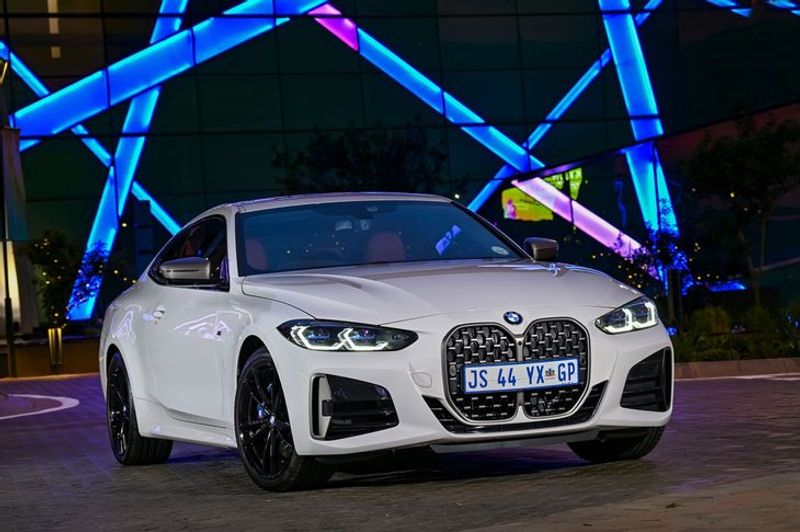
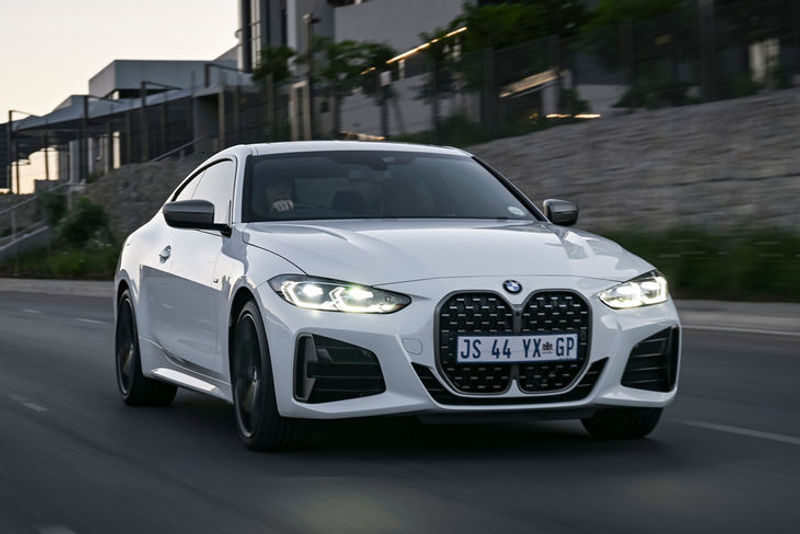
While 2 lower-tier 4 Series Coupe derivatives are available with the optional M Sport Package exterior upgrade – including wheel sizes ranging between 17- and 19-inches – the top-of-the-range (for now) M440i xDrive is sold replete with this sportiest of styling packages.
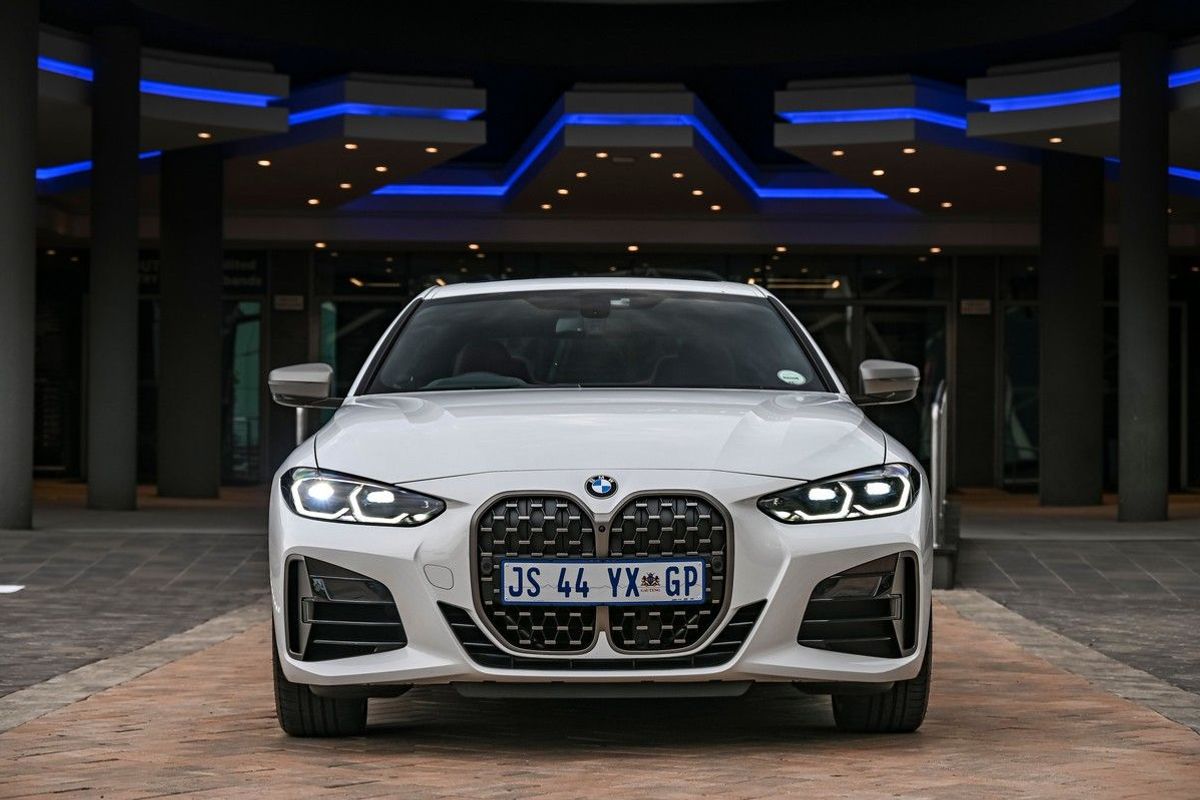
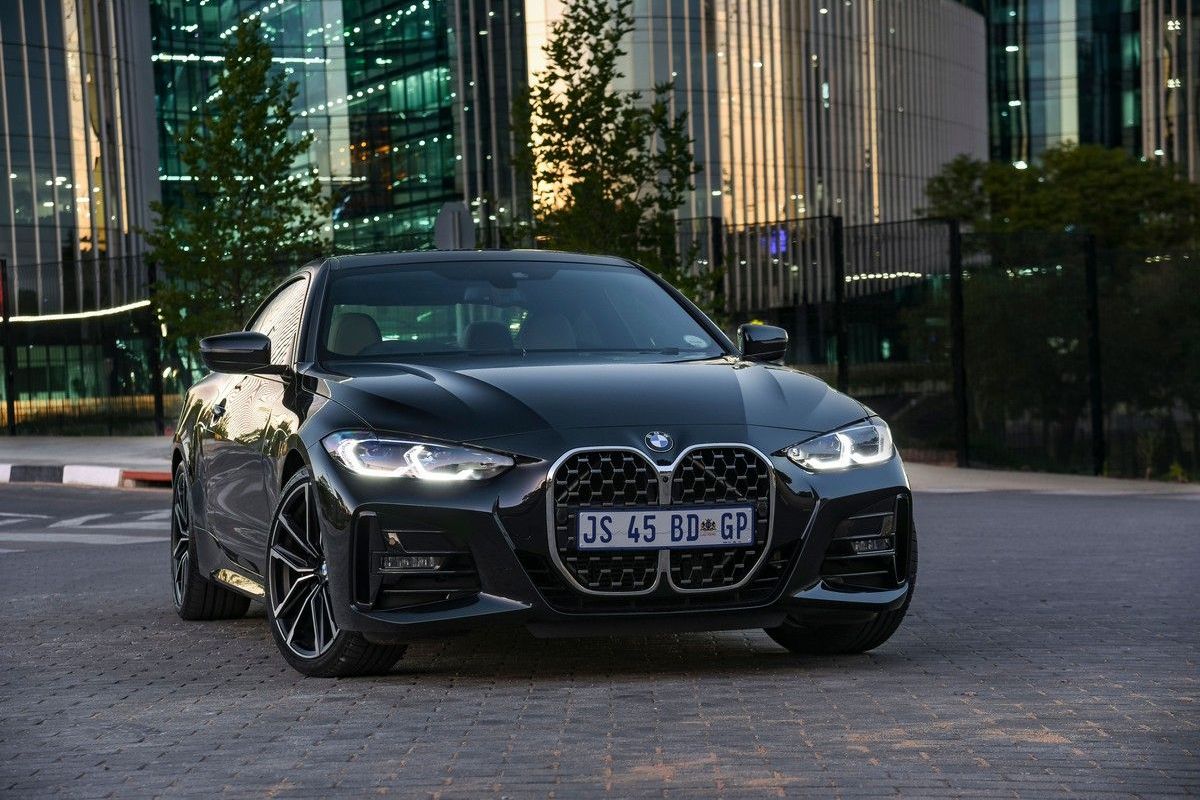
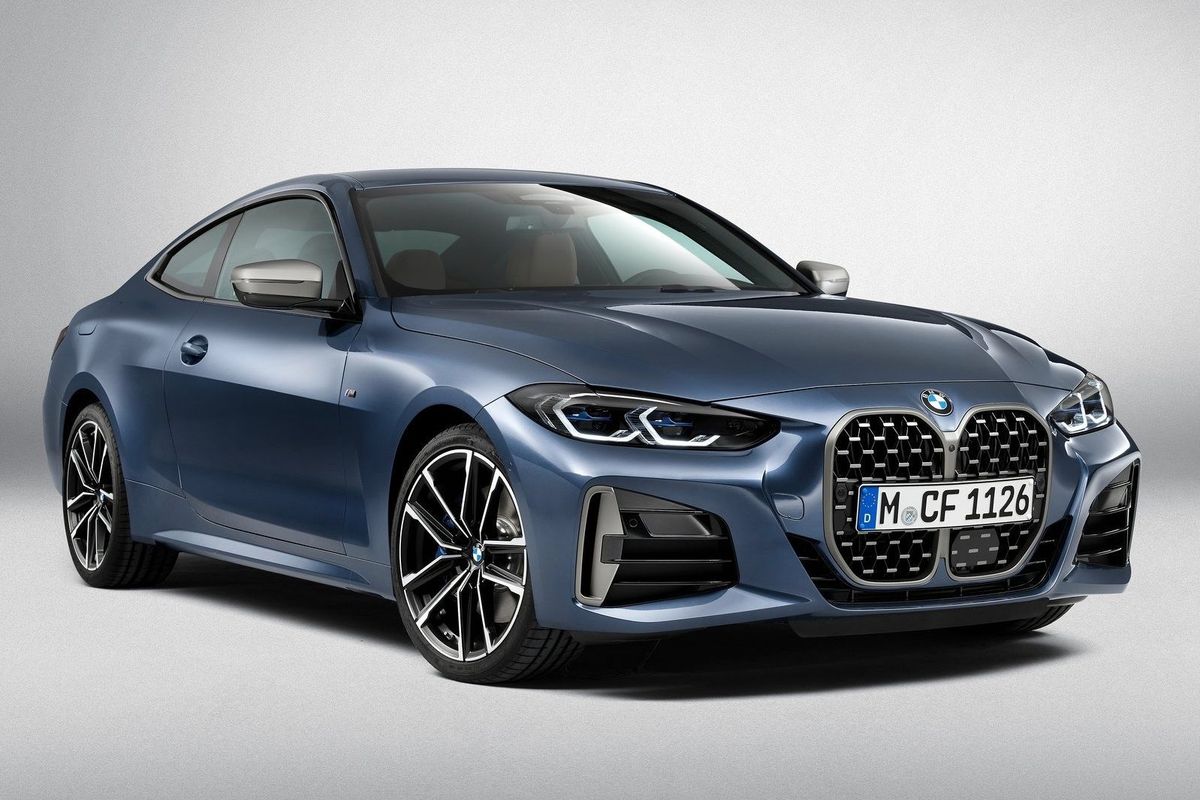
The upright grille has dominated conversations to such an extent that people have ignored the balanced proportions of the G22.
The range
With the new Gran Coupe and Convertible variants due to arrive in South Africa in the 1st quarter of 2021 (and the M4 Coupé following before the middle of the year), the new 4 Series Coupe's launch line-up offers a choice of 2 turbopetrol engines and 1 turbodiesel unit.
Powered by a 2.0-litre, 4-cylinder petrol engine, the 420i Coupe produces 135 kW and 300 N.m of torque, which is delivered to the rear wheels via an 8-speed Steptronic (automatic) transmission. The same drivetrain configuration is also featured in the 420d Coupe, with its turbodiesel motor supplying 140 kW and a healthy 400 N.m of torque, the latter available between 1 750 and 2 500 rpm.
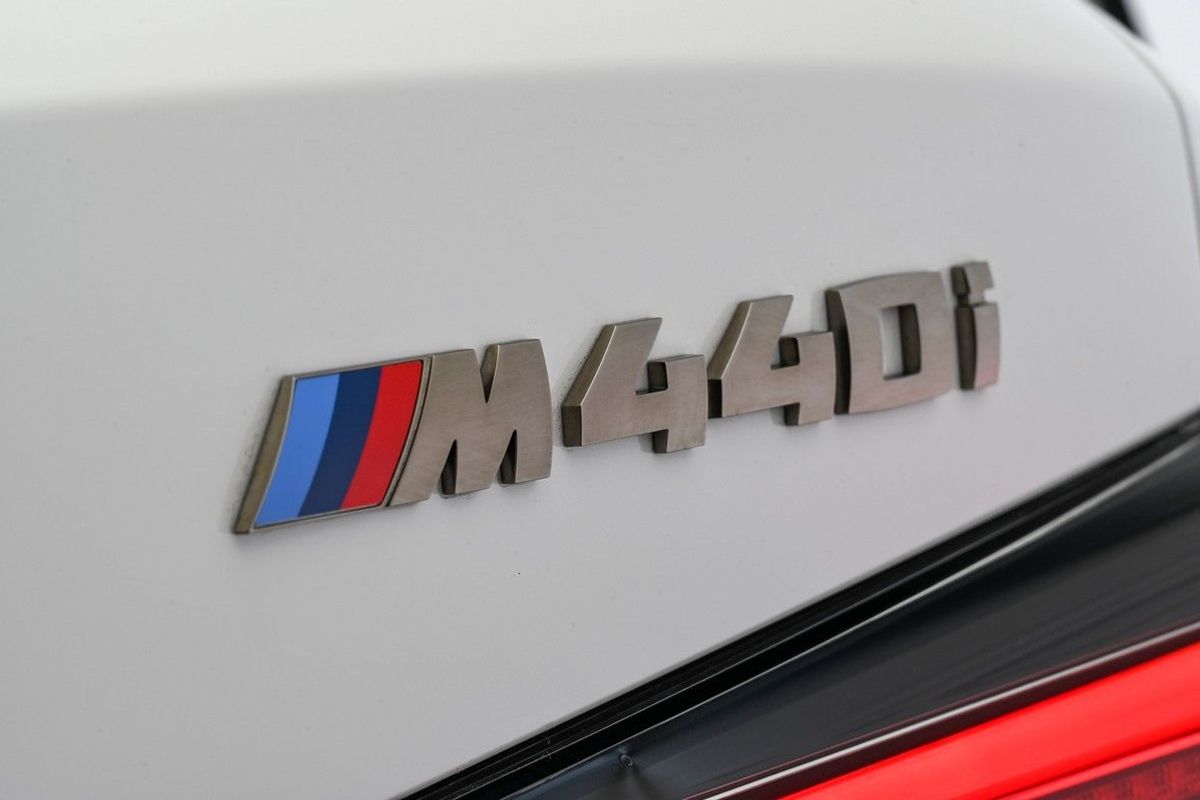
The M440i xDrive, meanwhile, offers beefy outputs of 275 kW and 500 Nm from its 3.0-litre turbocharged inline-6, all of which is apportioned to all 4 wheels as driving conditions dictate. Featuring a launch control function, this junior M-car has a claimed 0-100 kph sprint time of just 4.5 sec.
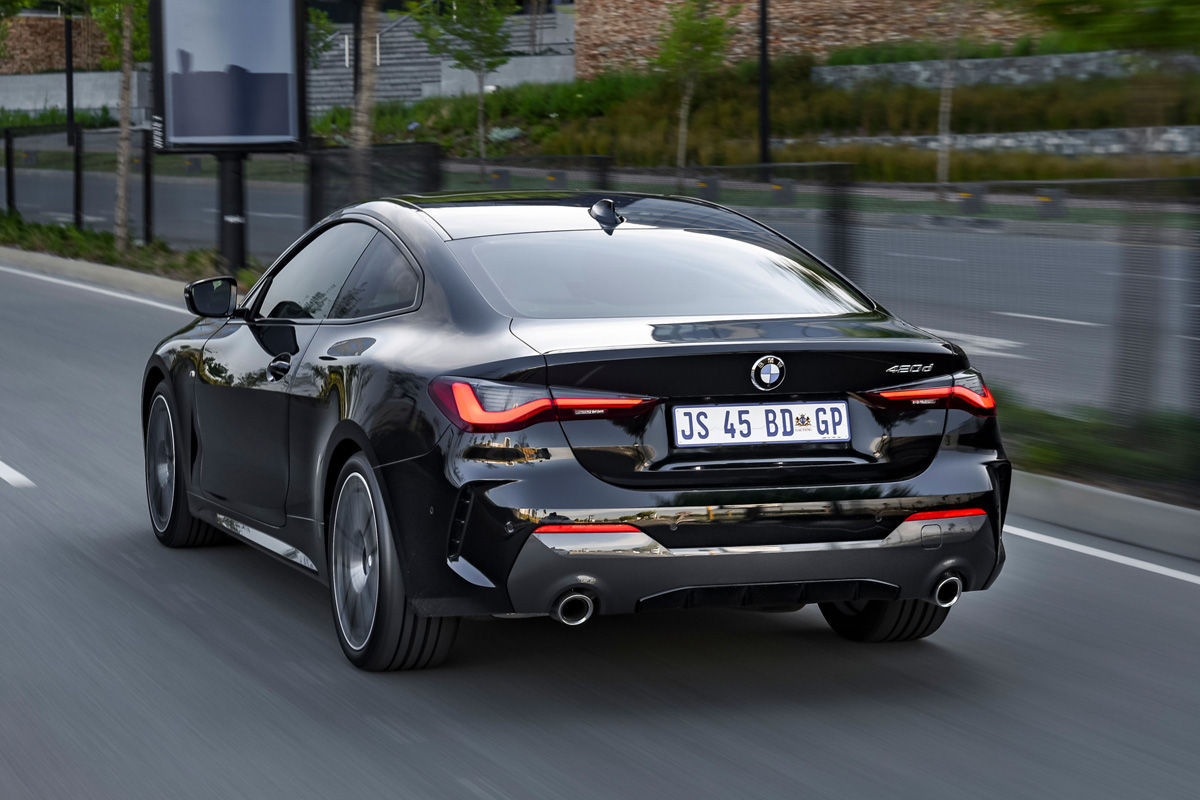
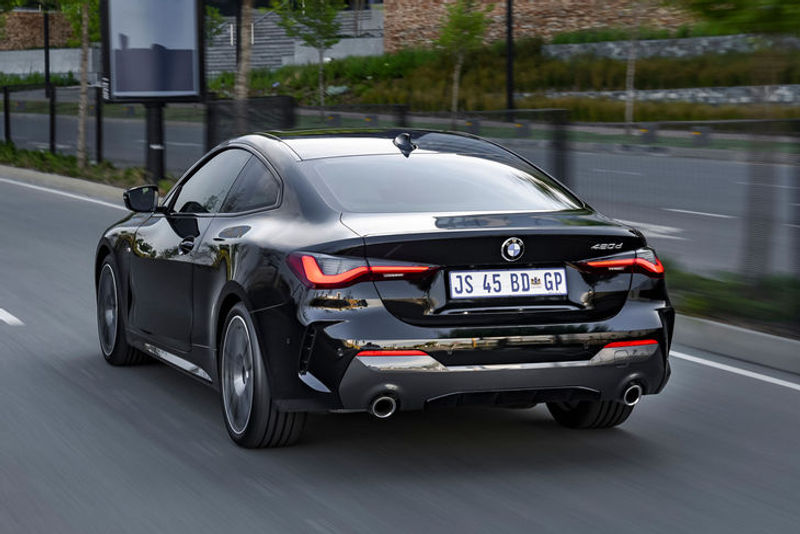
The 420d is an excellent long-haul cruiser; the M Sport package sharpens its looks, but the bigger wheels compromise its ride.
On the road
Otherwise impressively refined and – by virtue of BMW’s class-leading Steptronic transmission – silky smooth in its workings, the 420d Coupe can feel somewhat overwhelmed by the level of expectation that comes with wearing an optional M Sport package. That said, while it’s a drivetrain easily up to the task of (efficient) open-road cruising, overtaking acceleration doesn’t quite match up with the various M badges scattered around the exterior. Ride comfort, too, is compromised by the fitment of the associated larger wheels, which are shod with corresponding low-profile tyres. I would either order my 420d Coupe sans a badge on the rear or, better yet, keep the car in standard form when it comes to exterior upgrades.
More convincing when it comes to wearing its M-sourced kit is the M440i xDrive. This temporary flagship derivative’s standard adaptive M Sport suspension copes better in all driving modes with its 19-inch alloy wheels, while making the most of the 4 Coupe’s modified front suspension (including adjusted camber, compared with the 3 Series), its M Sport-tuned transmission and electronically controlled (M Sport) differential.
Incidentally, the M440i xDrive (or, shall we say "M4 Lite") features a Sprint Function, which allows the driver to engage the raciest of the 3 driving modes (Eco Pro, Comfort and Sport) via a flick of steering-wheel-mounted transmission paddle.
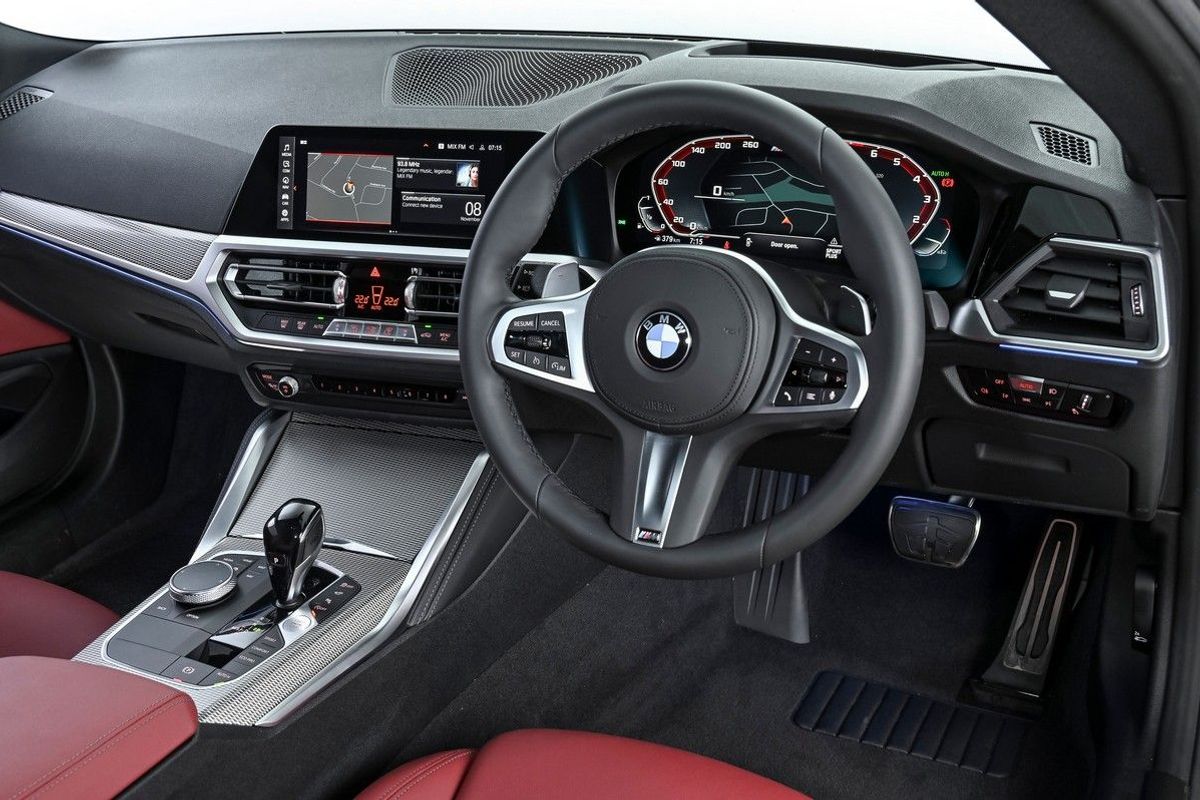
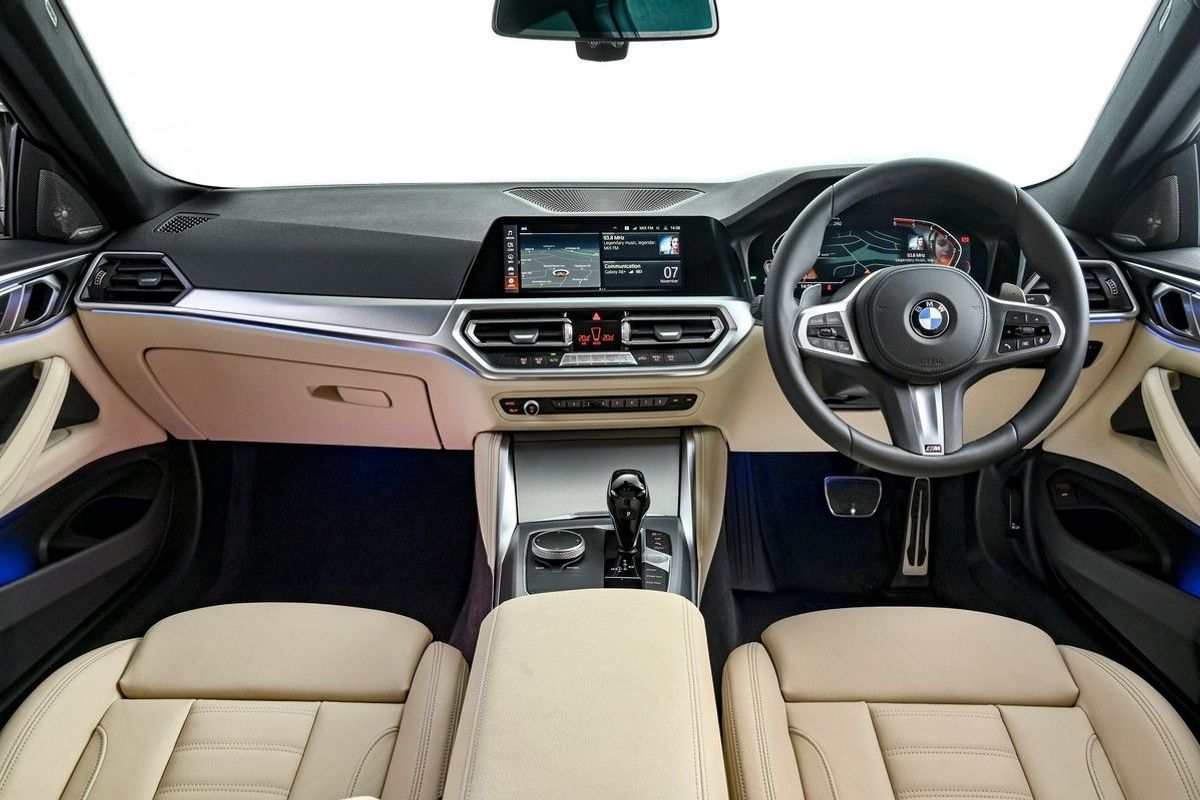
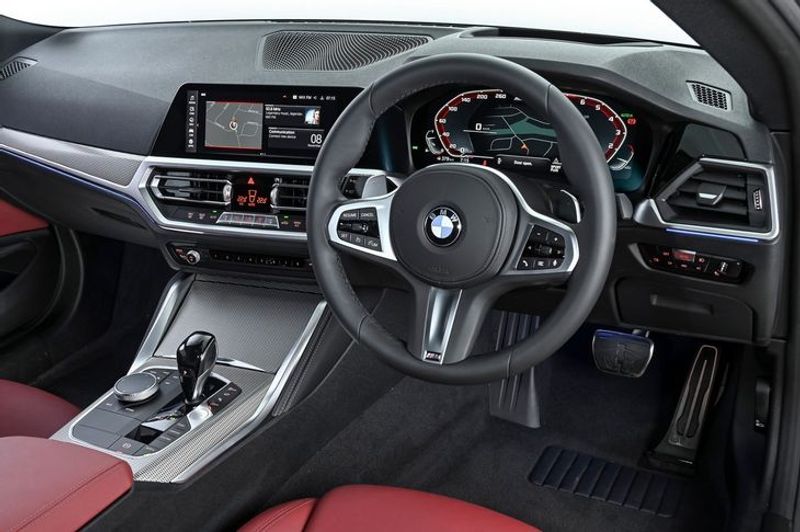
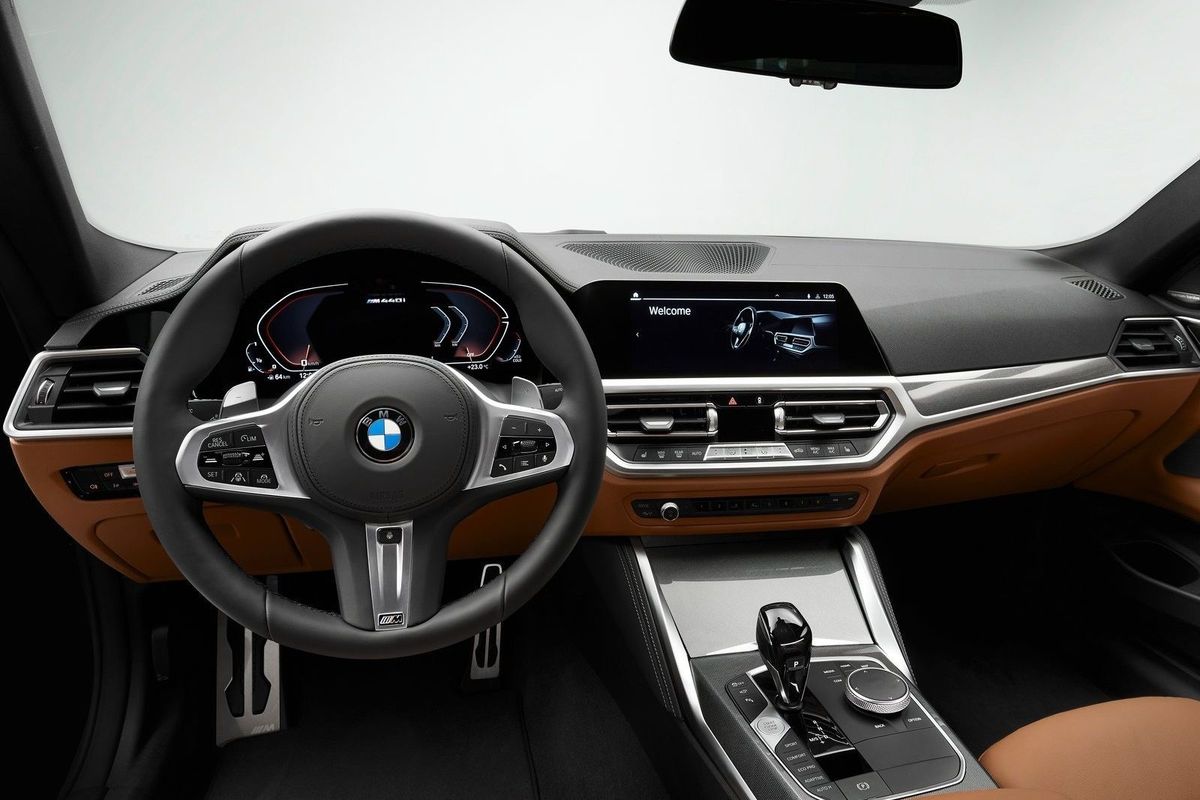
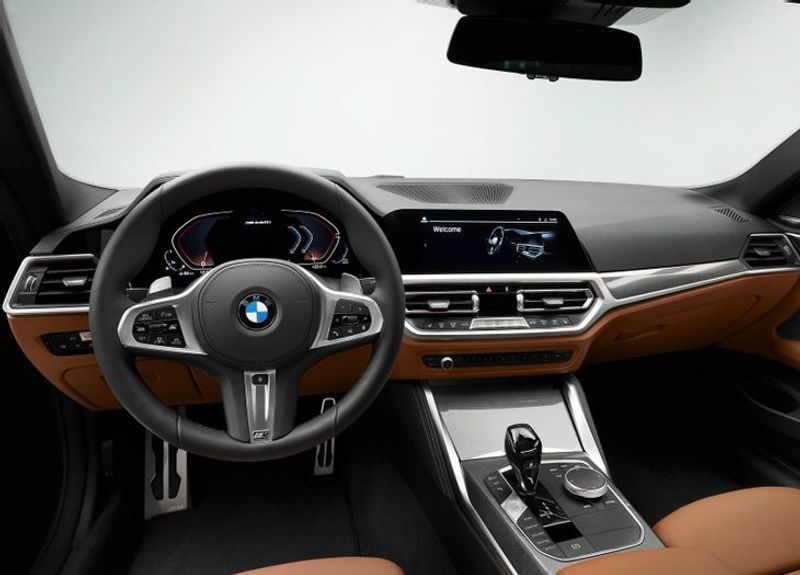
The 4 Series' interior architecture is very similar to that of the 3 Series, but its standard spec is slightly sportier.
With a fresh focus on dynamic ability, the new 4 Series Coupe’s centre of gravity has been lowered by 21 mm compared with the previous model, with the front seats positioned that much lower within a cabin that feels both impressively well specified and, indeed, put together. Standard throughout the range is BMW’s crisp digital 12.3-inch instrument cluster and 10.3-inch touch-enabled (and voice-activated) infotainment display.
From a low-slung driving position, the M440i xDrive, in particular, feels both effortlessly sophisticated and comfortable on the open road, while offering pin-sharp turn-in and near class-leading (assuming you include a 911 within its list of rivals) levels of mid-corner poise and body control in the twisties. It remains impressive how BMW’s xDrive all-wheel-drive system manages to make the car feel rear-wheel-driven in most conditions.
Sure, much of this performance-based derivative’s exhaust note is piped into the cabin via the car’s audio system, but enough of the Bavarian brand's characteristic (and soulful) 3.0-litre inline-6 soundtrack remains, which will undoubtedly please the Bimmer faithful.
The G22-generation 4 Series is a much more sophisticated offering than its predecessor… and feels quite different to the 3er.
Summary
Not everyone will love the styling of the new 4 Series Coupe, but that’s the whole point. For a marque with a proud history of individualistic designs and characterful packaging, BMW largely plays it safe these days. However, with non-trend-driven models like the 8 Series and, indeed, 2nd-gen 4 Series Coupe, the Bavarian brand is free to exercise its freedom of (creative) expression within a sea of otherwise necessary mainstream offerings.
If you fancy the 4er’s new face and appreciate the level of individual expression this niche model brings to the party, BMW’s newest coupe certainly backs up its bold stance with both class-leading levels of in-car- and on-road sophistication, allied with impressive dynamic ability.
Based on the G22-generation M440i xDrive, the forthcoming new M4 should prove to be a force to be reckoned with. Who’re you calling ugly?!
BMW has launched the controversially styled new 4 Series Coupe in South Africa. The local line-up features a blend of turbopetrol and -diesel engines, while the flagship M440i xDrive is the warm-up act to the mighty BMW M4.
BMW is determined to clearly differentiate the 4 Series from its 3 Series sibling and demonstrate that the former is not simply a 2-door version of the G20-generation sports executive sedan. To that end, the all-new G22 4 Series boasts radical styling – the exterior design was first previewed in Concept 4 form, but that grille is polarising. However, many of those who've seen the newcomer in the metal say "the snout" is strikingly effective!
Under the skin is the CLAR (Cluster Architecture) and the newcomer features a wheelbase that's 42 mm longer than that of its predecessor (2 851 mm). The BMW 4 Series is also slightly longer and wider, as well as being 57 mm lower, than the 3 Series. It also has a sportier suspension setup.
BMW SA offers the new 4 Series Coupe in standard and M Sport Package levels of trim. The M440i xDrive comes standard in M Sport trim, but for those wanting more, there is an M Performance launch edition that will include extras such as M Sport suspension including the M Sport differential, anthracite roof lining, Shadow Line, Interior trim finishers in Aluminium Tetragon, M Aerodynamics package with front apron, side skirts and wheel arch trims in body colour, M Rear spoiler in body colour and 18-inch M light-alloy double-spoke style 848 M Bicolour/MT wheels with runflat tyres.
Inside, there's an M leather steering wheel and sport seats for driver and front passenger.
Powertrain and performance
BMW is offering its new 4 Series Coupe in 3 flavours. Kicking off the range is the 420i, which comes to market with a 2.0-litre turbocharged 4-cylinder petrol motor. It produces 135 kW and 300 Nm, and BMW says its good for a 0-100 kph in 7.5 sec.
For the turbodiesel fans, a 2.0-litre 4-cylinder forced-induction diesel motor propels the 420d and it produces peak outputs of 140 kW and 400 Nm. Gone are the days when diesel vehicles were slow – the diesel-powered 420d outsprints its 420i sibling, with a claimed time of 7.2 sec.
Finally, the M440i xDrive (the flagship of the range until the M4 Competition arrives next year) has a 3.0-litre turbocharged 6-cylinder motor with 275 kW and 500 Nm. Thanks to its standard all-wheel drivetrain, it boasts a claimed 0-100 kph time of 4.5 seconds.
When it comes to efficiency, BMW claims average fuel consumption figures of 6.4 L/100 km, 4.8 L/100 km and 7.8 L/100 km for its 420i, 420d and M440i xDrive derivatives respectively. All models have 8-speed automatic transmissions.
BMW 4 Series price in South Africa (November 2020)
The prices below include a 2-year/unlimited km warranty and a 5-year/100 000 km maintenance plan.
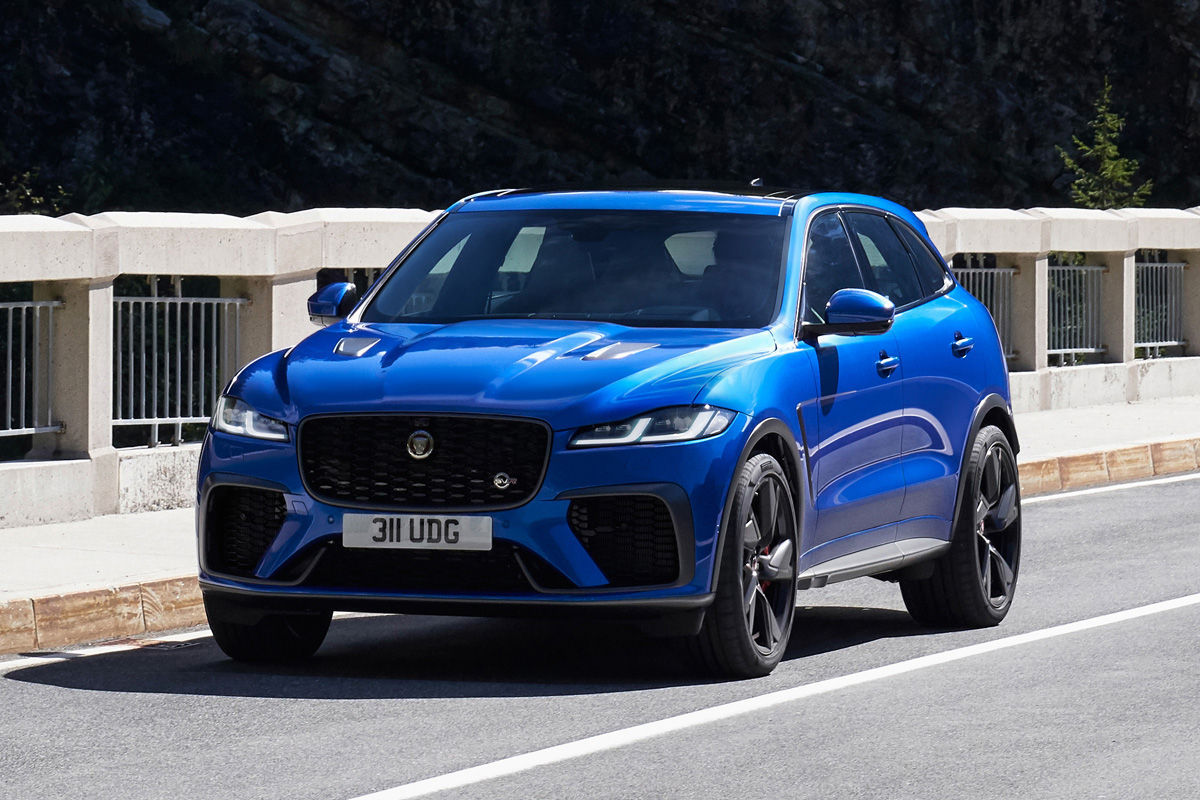
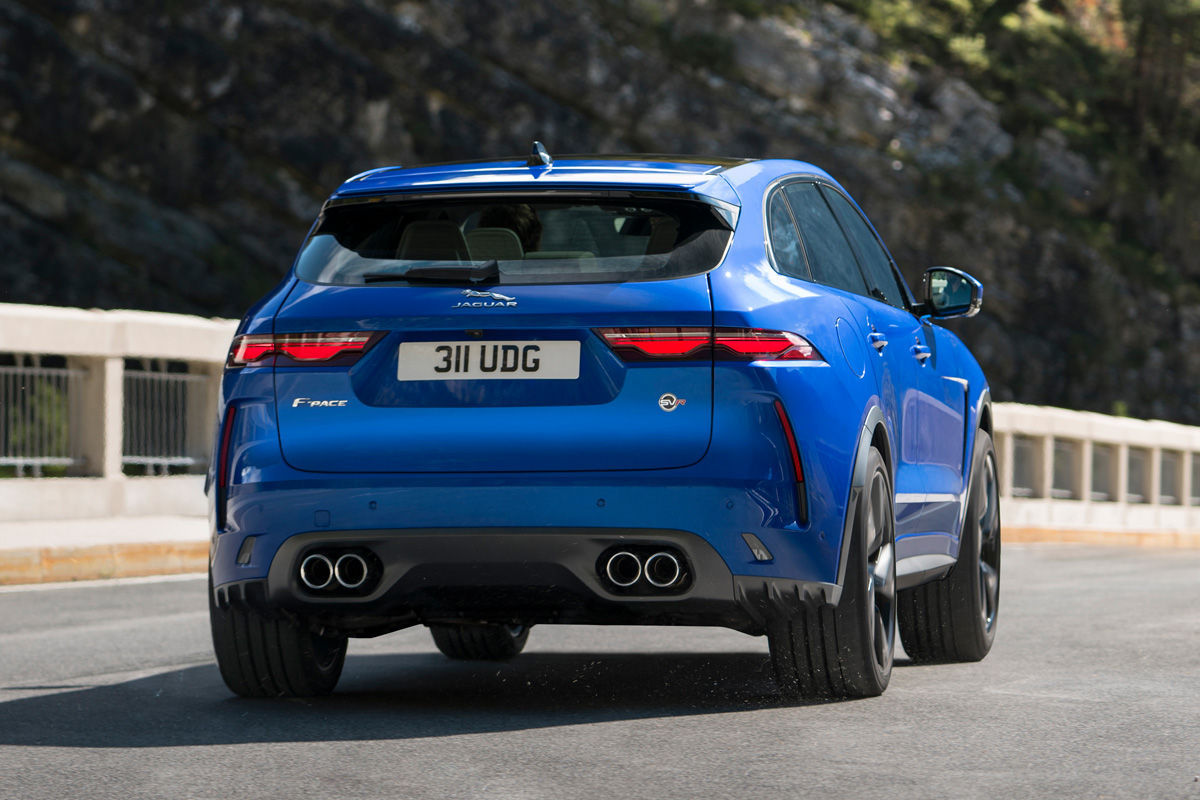
Having recently updated its F-Pace, Jaguar has now revised the range's brutish 5.0-litre supercharged V8-engined SVR flagship, which features a number of detail updates and, oh, of course, is even faster than its predecessor.
The F-Pace range is now based on Jaguar’s new Electronic Vehicle Architecture – dubbed EVA 2.0 – and, like its brethren, the SVR features a number of subtle updates to its styling, aerodynamics, engine, drivetrain, chassis and onboard tech.
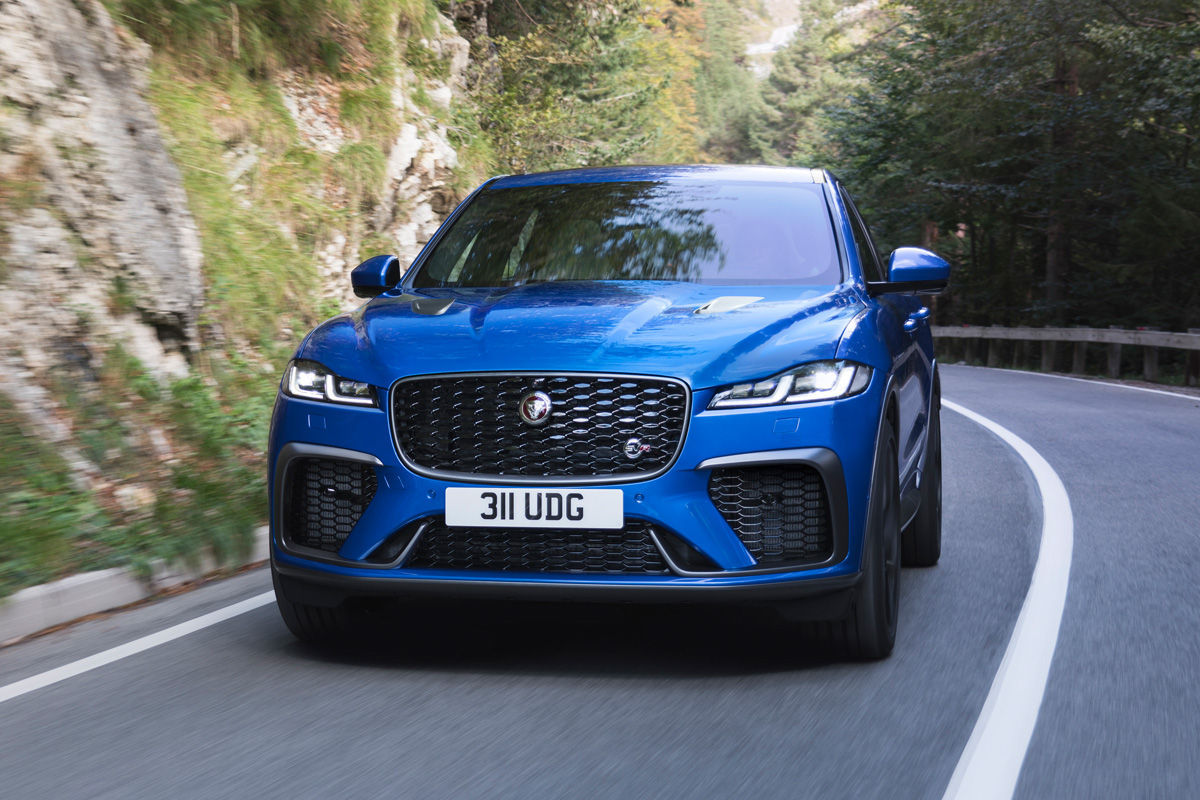
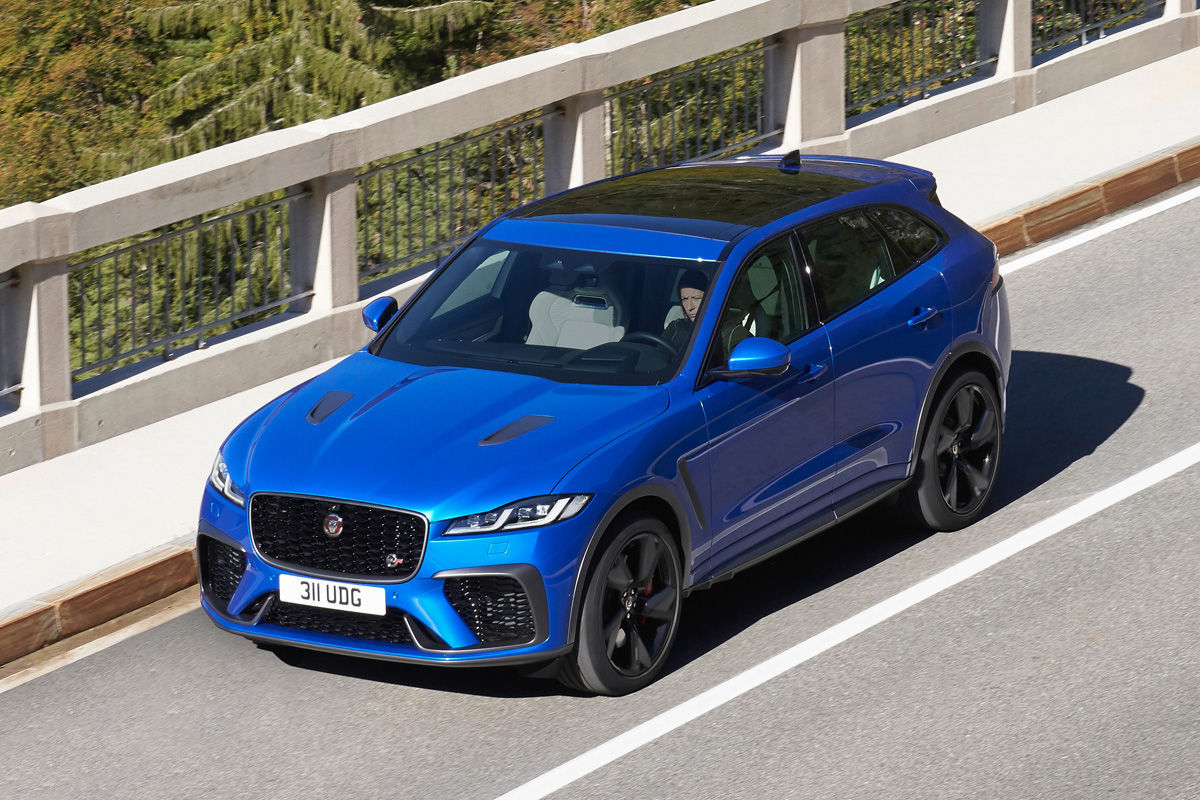
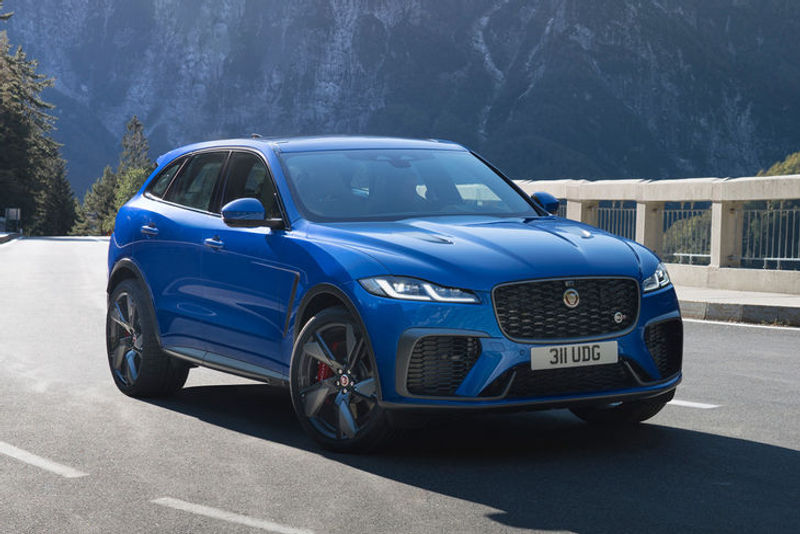
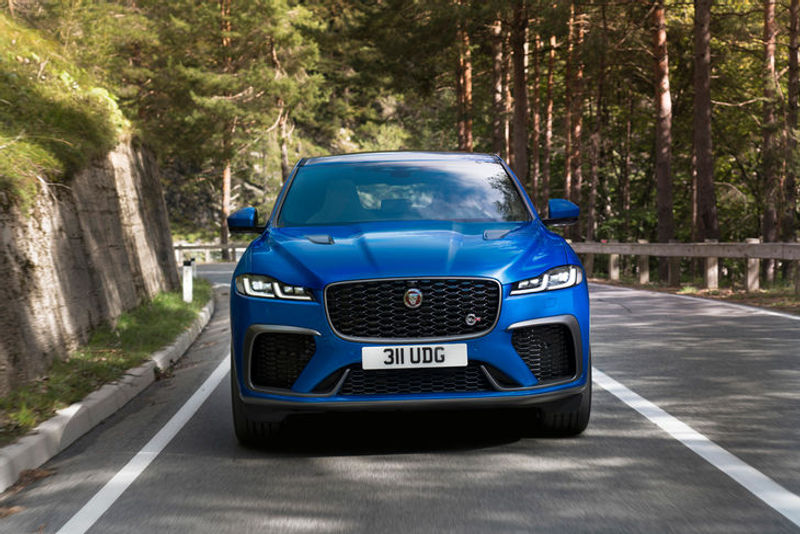
The revised F-Pace SVR can be distinguished by its reshaped front bumper with larger, more squared-off air intakes, which are said to benefit brake- and engine cooling, plus a broader “power dome” in the bonnet. The front splitter is wider and flatter, which Jaguar says contribute to a 35% reduction in aerodynamic lift and overall, the executive SUV’s drag coefficient has been reduced from 0.37 to 0.36 Cd.
Apart from its sharpened styling, the F-Pace SVR looks particularly menacing on those optional 22-inch alloy wheels.
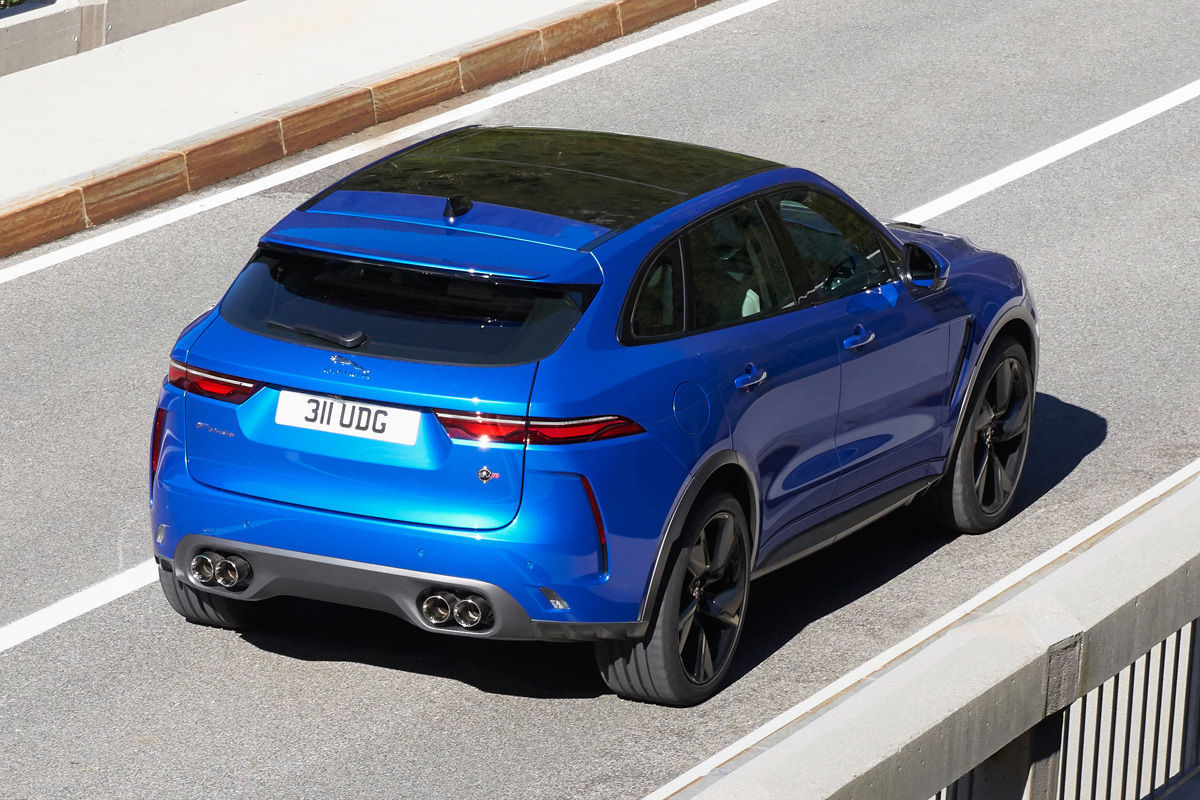
Like its facelifted brethren, the SVR features new LED headlights (with optional pixel LED tech), slim tail-light clusters and optional gloss black/satin grey 22-inch alloy wheels.
The heart of the SVR – that sonorous supercharged 5.0-litre V8 – still produces peak power of 405 kW, but Jaguar has squeezed another 20 Nm out of it to hike maximum torque to 700 Nm. What’s more, the Coventry-based firm has mated the venerable V8 motor with the 8-speed torque-converter automatic transmission from the limited edition (and exclusively left-hand-drive) Jaguar XE SV Project 8 super sedan.
The improved torque, better aerodynamics and the provision of a new Dynamic Launch feature, which uses driveline inertia to maintain power to the wheels during gear changes, enable the SVR to shave 3 tenths of a second off its claimed 0-100 kph time, which is now 4 sec dead. Top speed has also increased marginally (286 kph), while claimed fuel consumption has improved to (a still ambitious) 12.2 L/100 km.
Apart from sharpening the SVR's steering responses and brake-pedal feel, Jaguar's retuned the adaptive dampers.
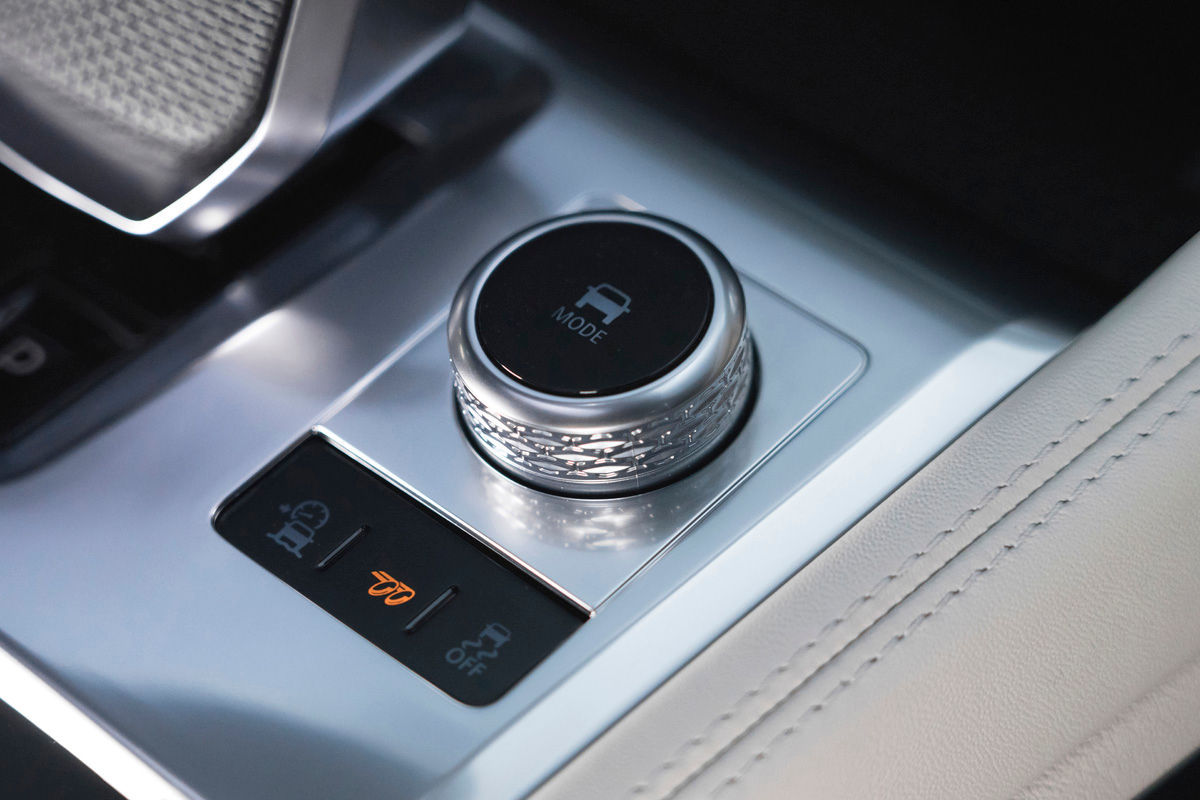
Jaguar says it also modified the SVR’s dynamics systems, steering- and adaptive-damping settings and improved the performance SUV’s braking feel. As before, All-Wheel Drive with driver-configurable Intelligent Driveline Dynamics is standard.
Specifically, the F-Pace flagship’s Dynamic drive mode has been retuned, while a new electronic power-assistance system is said to facilitate more immediate responses to steering inputs and updated adaptive-damping tuning, in conjunction with revised chassis bushes, provide a more refined ride quality at low speeds.
Apart from being recalibrated, the SVR’s braking system is augmented with a new Integrated Power Booster that “delivers a sportier and shorter (feeling) brake pedal.”
Jaguar has lashed Alcantara and Windsor leather in strategic areas, along with a number of other detail upgrades.
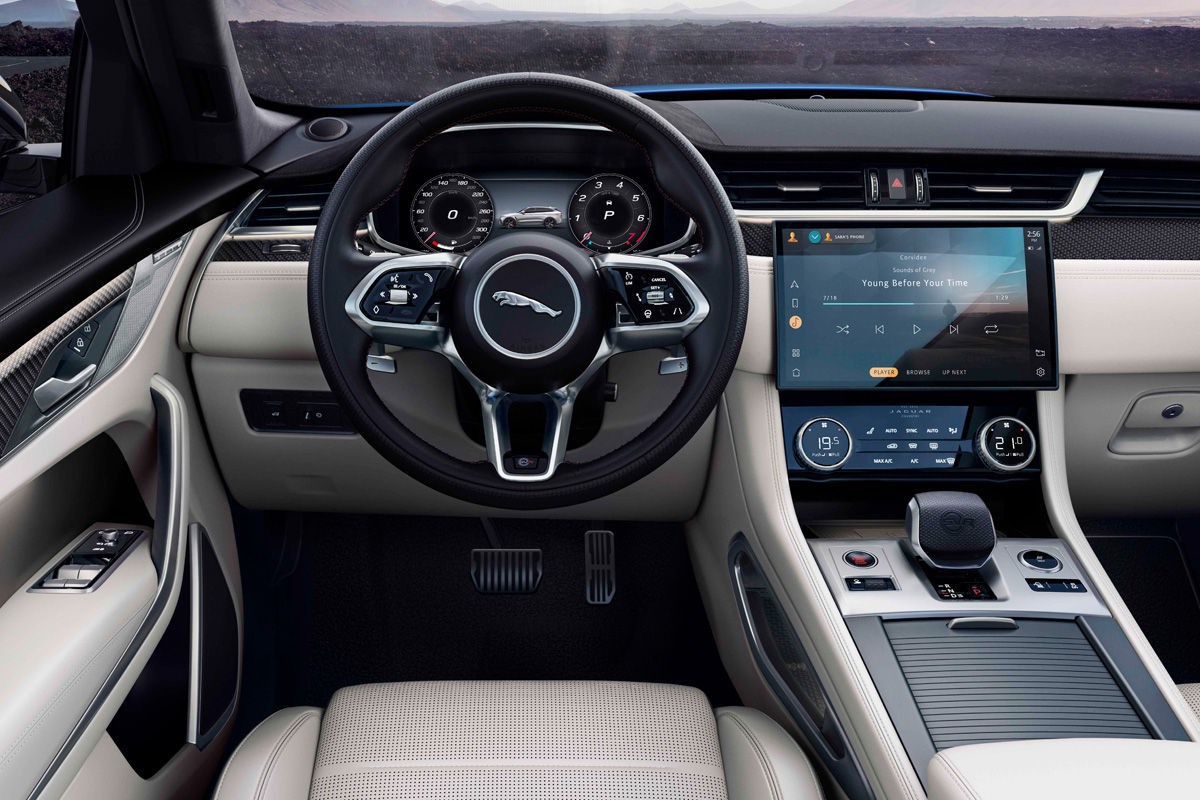
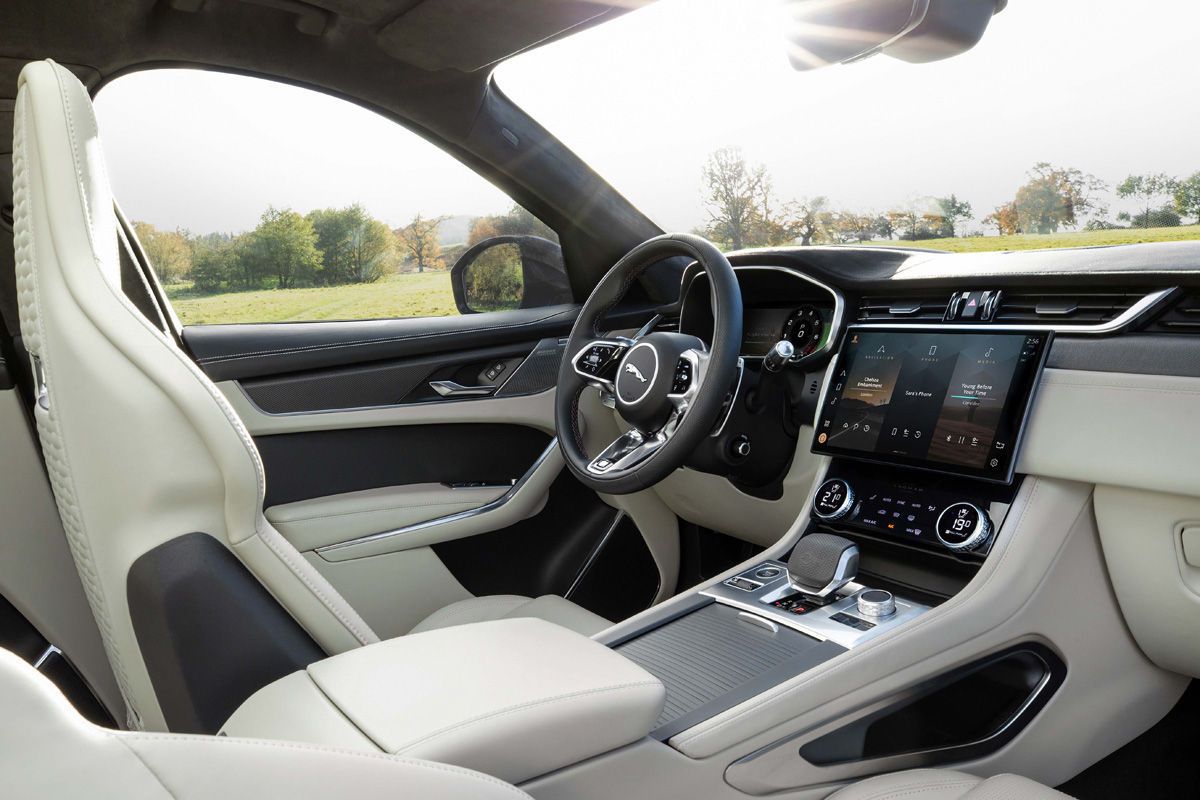
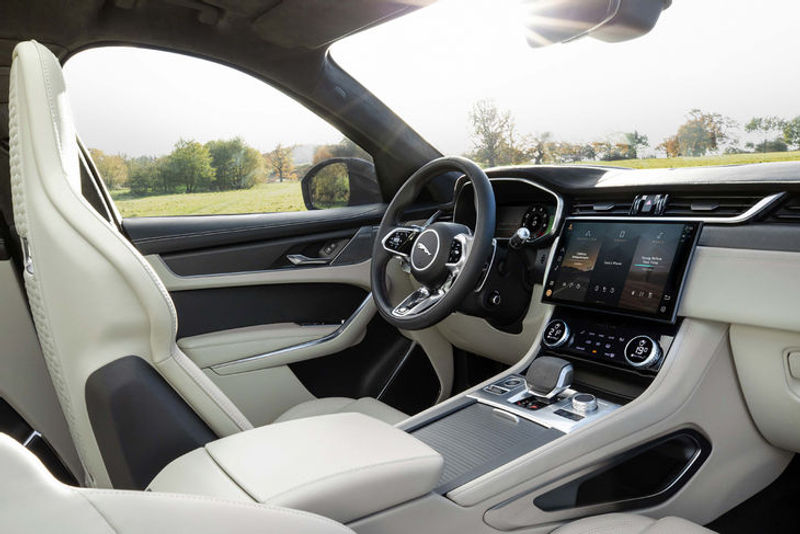
Meanwhile, the Jaguar’s interior has been mildly revised and features enhanced materials, such as Alcantara-trimmed seat- and door inserts and Windsor leather on the central cubby. The 12.3-inch HD interactive driver display, for example, is wrapped in Alcantara with ebony stitching, while aluminium-patterned finishers feature as standard (open-pore carbon-fibre inserts are optionally available).
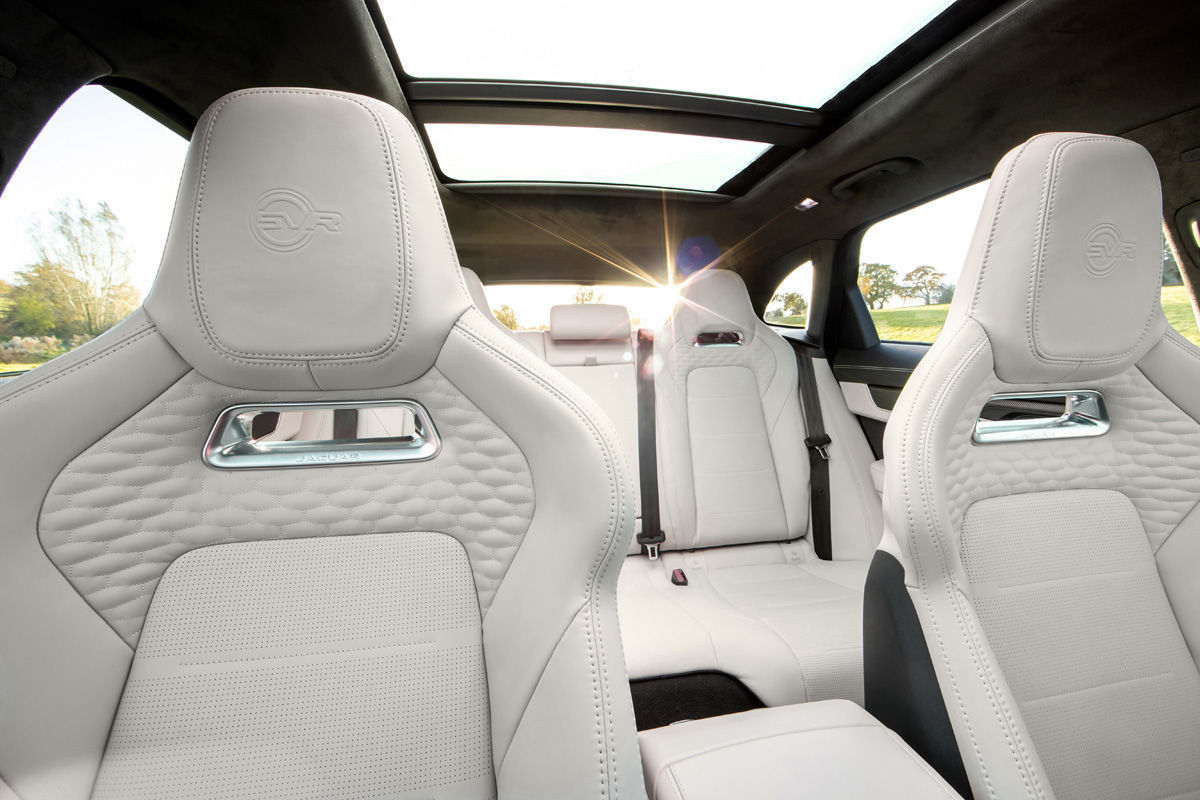
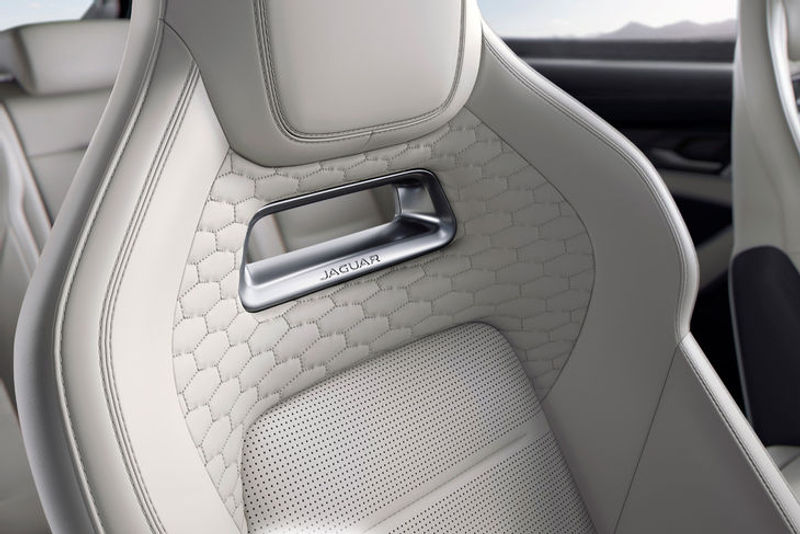
Buyers can upgrade to slimline semi-aniline leather sports seats with heritage logo-inspired diamond embroidery across the front shoulder section. These feature an embossed SVR logo on the headrests and unique perforation across the backrests; the same pattern appears on seatbacks.
The attractively detailed sports front seats are bound to be a popular optional extra.
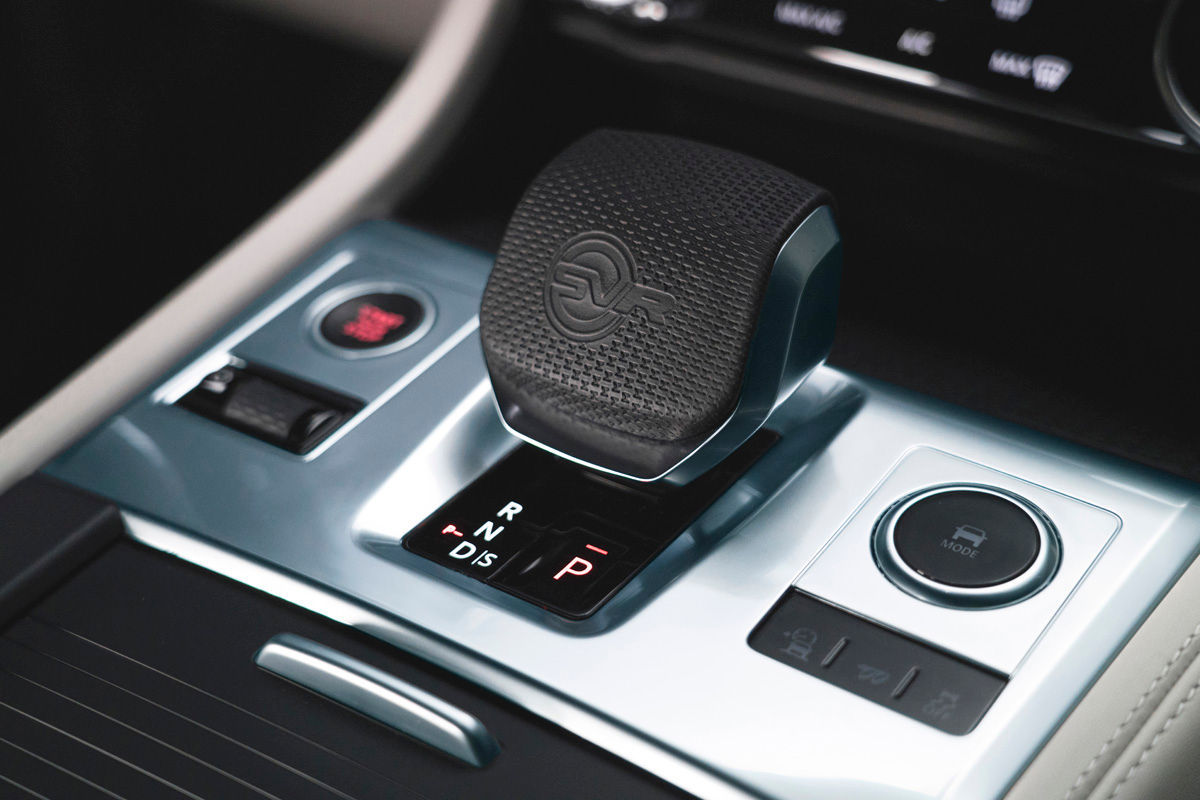
The transmission lever is finished in dimpled leather and features an embossed SVR logo, while the split-rim sports steering wheel is adorned with zinc-alloy shift paddles.
Lastly, the F-Pace SVR features all of the advanced technologies found in the updated range, including Pivi Pro infotainment, Software-Over-Air capability, Active Road Noise Cancellation and the latest Advanced Driver Assistance Systems.
The updated Jaguar F-Pace will go on sale in South Africa in early 2021 and the SVR version should arrive before mid-year. Jaguar South Africa says the performance flagship is available to order already with a starting price of R1 835 700.
All Jaguar vehicles come with a standard 5-year/100 000 km Jaguar Care Plan and warranty.
Hyundai has announced its new vehicle platform, to rival VW.
The Korean company has spent a significant portion of its R&D budget on developing the new E-GMP platform. With Hyundai planning on having 23 electric vehicles in its product portfolio by 2025, the E-GMP is a crucial enabler towards that goal and expected to underpin 11 new models.
What MEB is to VW, this new E-GMP engineering solution is to Hyundai (and Kia). Configurable to work with products from the C-Segment to Hyundai’s largest vehicles, in the 5m range, the E-GMP platform promises many benefits.
Hyundai’s engineers have managed to contain the power- and drive units into a very compact package. This allows for a completely flat floor section, giving interior designers more space and freedom to accommodate passengers in greater comfort than ever before.
The E-GMP’s electric drive and motor system might be compact, but it will not lack potency. Although Hyundai has not confirmed the exact battery options, in terms of chemistry or specification, it says that up to 447 kW of power output will be available in the E-GMP platform’s most powerful configuration.
Hyundai’s electrical powertrain specialists have used a new hairpin wiring set-up. They claim the E-GMP’s motors spin 70% faster than anything available in the company’s electric powertrains to date.
With the ability to run up to 800V of current, there is also rapid charging capability. Hyundai is benchmarking 500 km of range as its standard offering with all new E-GMP platform electric vehicles.
Replenishing sufficient energy to achieve 80% of that range should take only 18 minutes of charging. Perhaps more impressive are the performance claims.
Hyundai is tabling 0-100 kph acceleration of only 3.5 seconds and a 260 kph top speed for its E-GMP vehicles. This is a much higher maximum velocity than rival legacy car companies are claiming for their electric vehicles.
The National Association of Automobile Manufacturers of South Africa (NAAMSA) has released new vehicle sales figures for November 2020.
Despite leaving the national lockdown behind for the last few months, the South African vehicle market continues to struggle as it slowly tries to recover. Here are the numbers that matter from November’s vehicle sales data.
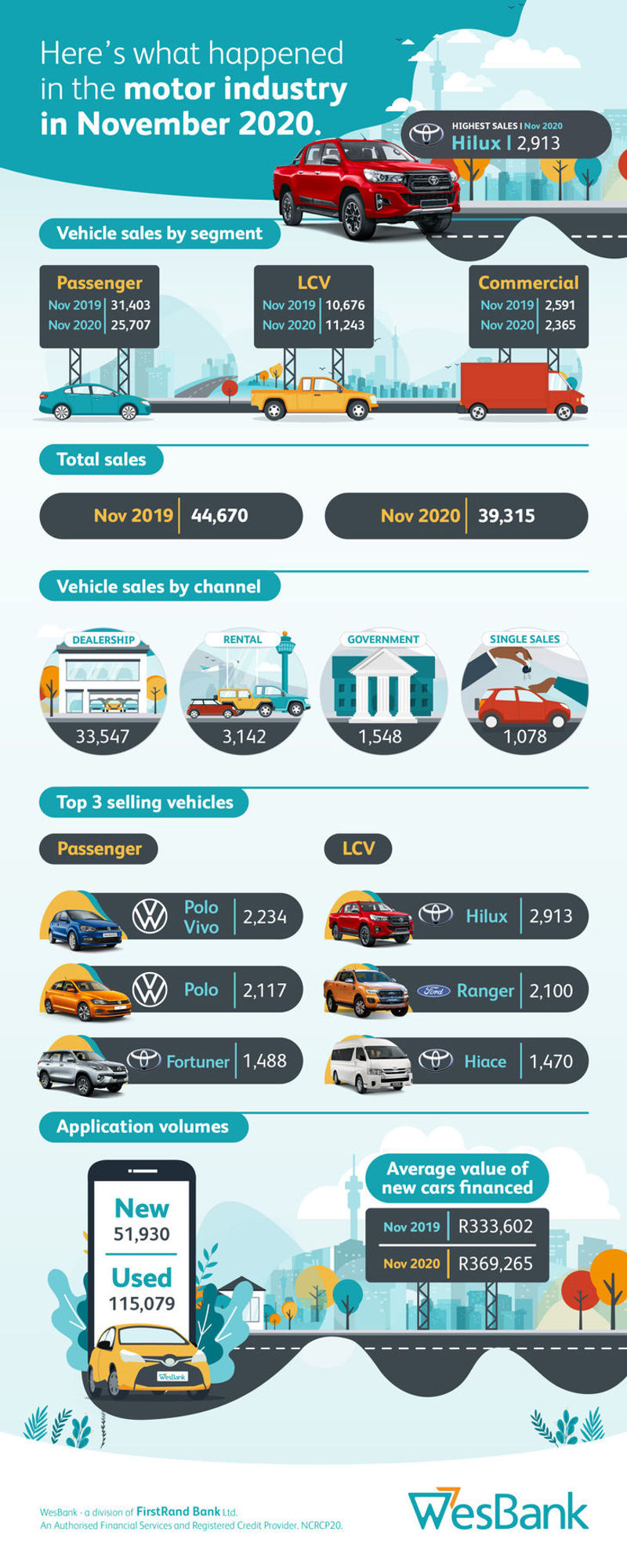
Compared with October 2020, 563 more vehicles were sold in November 2020. A total of 39 315 vehicles were sold in stark contrast to November 2019 where 44 670 vehicles were sold. This represents an annual decline of 12% which is the closest the market has come to last year’s sales figures since March 2020.
Exports also remain slow to reach last year’s levels as those figures were also down by 7.6% vs the same period last year.
New Car Sales Summary: November 2020
Aggregate new vehicle sales at 39 315 units down by 12% (-5 355 units) compared with November 2019
+1.4% (563 units) up on October 2020
New passenger car sales of 25 707 units down by 18.1% (-5 696 units) compared with November 2019
-4% (-1 091 units) down on October 2020
Light Commercial Vehicle (LCV) sales of 11 243 units up by 5.3% (+567 units) compared with November 2019
+14.2% (1 599 units) up on October 2020
Exports of 34 588 units down by 7.6% (-2 622 units) compared with November 2019
+3% (+1 114 units) up on October 2020
Top-Selling Car Brands in South Africa for November 2020
Toyota – 9 441 units
Volkswagen – 6 950 units
Ford – 3 895 units
Nissan – 2 744 units
Hyundai – 2 609 units
Top-Selling Vehicles in South Africa for November 2020
Toyota Hilux – 2 913 units
VW Polo Vivo – 2 234 units
Ford Ranger – 2 100 units
VW Polo – 1 815 units
Toyota Fortuner – 1 488 units
Sales outlook
WesBank CEO, Chris de Kock says new blended working arrangements have reduced the demand for consumers to own cars. “For those who do, it is likely that their annual mileage will reduce considerably, increasing the time between replacement cycles. The South African economy will simply not be able to support a market of 500,000 vehicles per year,”says De Kock.
Passenger car sales were 18,1% lower than November 2019, recording 25,707 unit sales. This is 5,696 units less than November last year and 989 units less than last month, potentially indicating shifts in the market in terms of demand. Dealers will have been relieved to only see a 5,9% decline in consumer demand in the sector as consumers continue to show renewed appetite for vehicle purchases.
Bigger news was the 5,3% growth in Light Commercial Vehicle (LCV) sales to 11,243 units. This is a significant 1,590 more units than October and is the first positive growth sales number since lockdown began. Consumer demand at dealer level was slightly softer, but still 2,8% up on November last year.
De Kock says that the shift in market demand is the result of two significant trends, both centred around affordability. “Consumers are clearly seeking to reduce their monthly instalment by buying a more affordable vehicle,”says De Kock. “The evidence of this can be seen in the market growth of the new car segment offering lower priced vehicles where customers seem willing to substitute high profile brands for more practical and affordable options.”
Also contributing to this trend is in the increase in new vehicle prices, now averaging close to double digit inflation this year. “The other trend is the shift towards the used car market, again driven mostly by the buydown effect,” says De Kock.
Year-to-date sales reached 343,276 units at the end of November, down 30,6% on the same period last year.
“The low interest rate environment is expected to stay for quite some time, allowing consumers an ideal opportunity to combat affordability and many are taking the opportunity to fix their rates in their finance agreements,” says Lebogang Gaoaketse, Head of Marketing and Communication at WesBank Vehicle and Asset Finance.. “A vehicle remains a big-ticket purchase consideration for any household budget and is consequently a key indication of confidence in the market. November sales show a more positive picture of that confidence slowly returning.”
Nikola Badger bakkie not happening
GM not happy with Nikola
The burgeoning electric bakkie market has suffered its first casualty.
With Bollinger, Nikola, Rivian, Lordstown and Tesla having revealed and promised customers enormously powerful electrically powered bakkies, the hype has been huge.
Although some of these brands had more engineering legacy than others, most specifically Tesla, which has proven its ability to build electric vehicles, others have caused suspicion.
The most ambitious of all, was most certainly Nikola. As Ford partnered with Rivian, GM did much the same with Nikola. Promises were made of futuristic hydrotec technology and a double-cab bakkie that would come to market with incredible powertrain numbers.
A sophisticated hydrogen fuel cell would generate 120 kW, whilst lithium-ion batteries had the potential to supply an additional 160 kWh of energy. Peak power was rated at 675 kW.
Despite the concept bakkie’s size, Nikola claimed an operational range of 965 km. It was amazing. Too amazing.
Experienced electrical engineers murmured discontent at Nikola claims and tabled surprise at the fact that a creditable company, such as GM, was along for the ride. Earlier this year Nikola took deposits for its Badger bakkie and promised that an advanced concept would be shown later in the year.
That deadline lapsed and Nikola has now announced that its Badger bakkie project, has been cancelled. The company is in desperate trouble, with severe fraud allegations being levelled against its founder and a group of automotive industry associates.
Nikola proudly espoused that it had futuristic technology and GM would provide the bakkie platform and production knowledge, to make its Badger double-cab unbeatable. In truth, this was never going to be the case.
It now appears that the entire project was an empty shell of promises and clever Photoshop work. GM’s hope to access advanced powertrain technology has been a waste of time with its Nikola partnership and shown yet again, that in the race for electrification, not everything is as it seems.
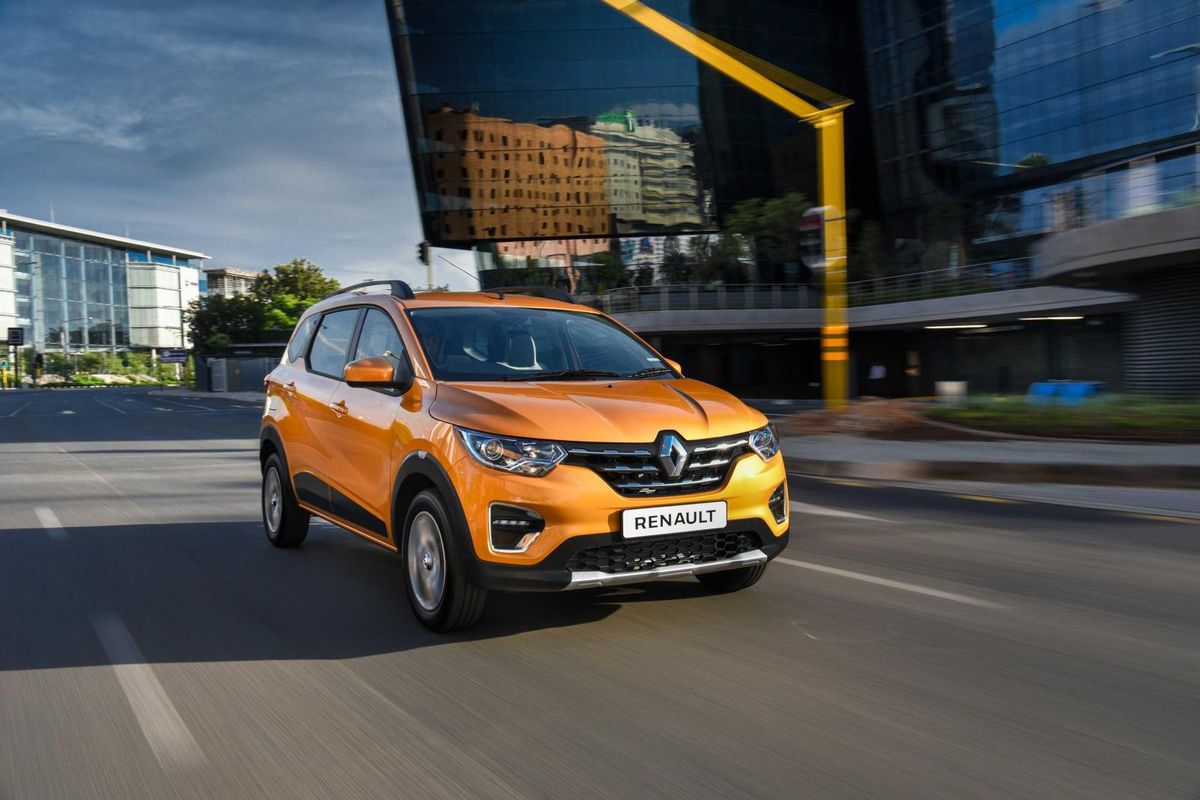
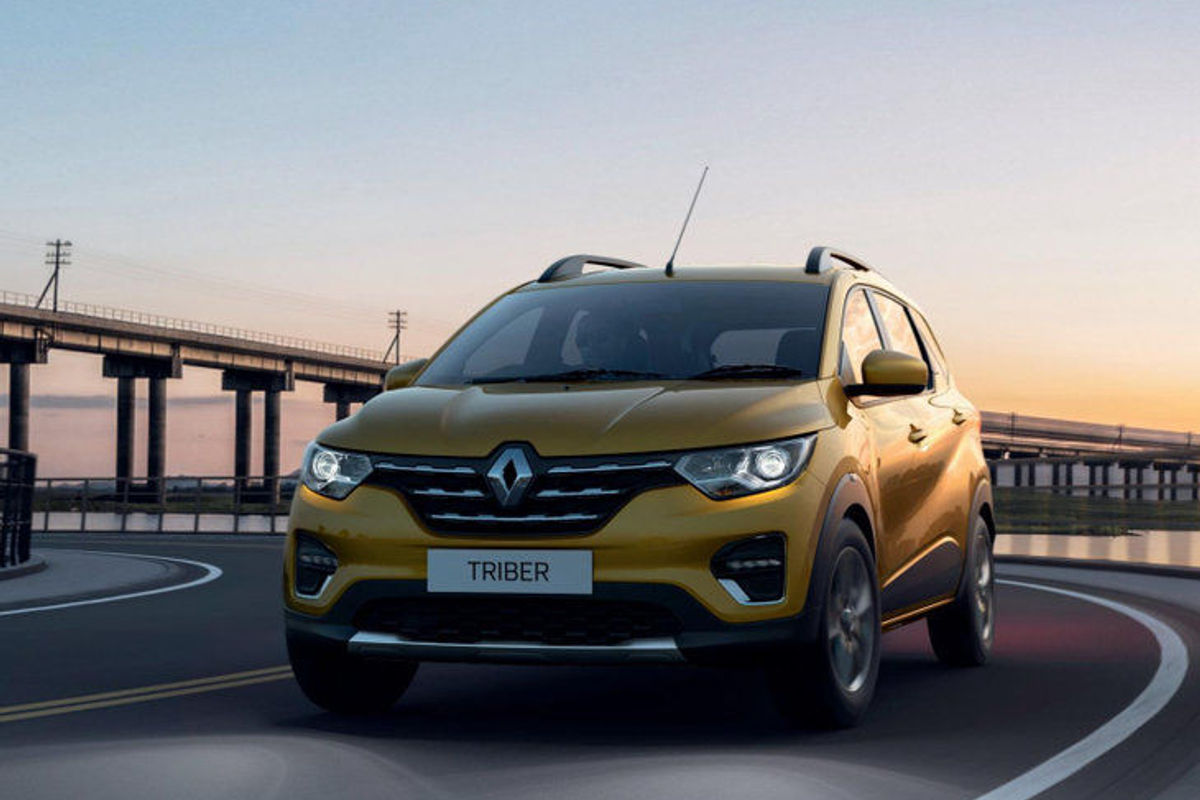
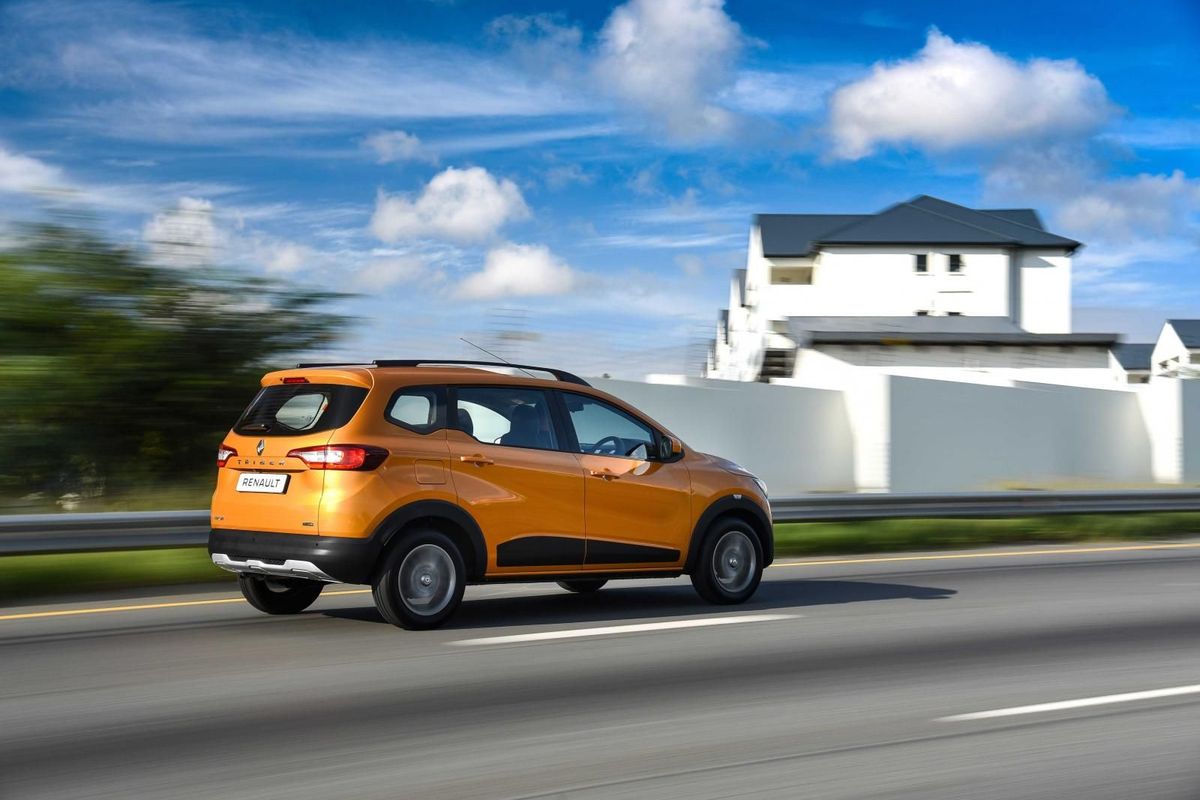
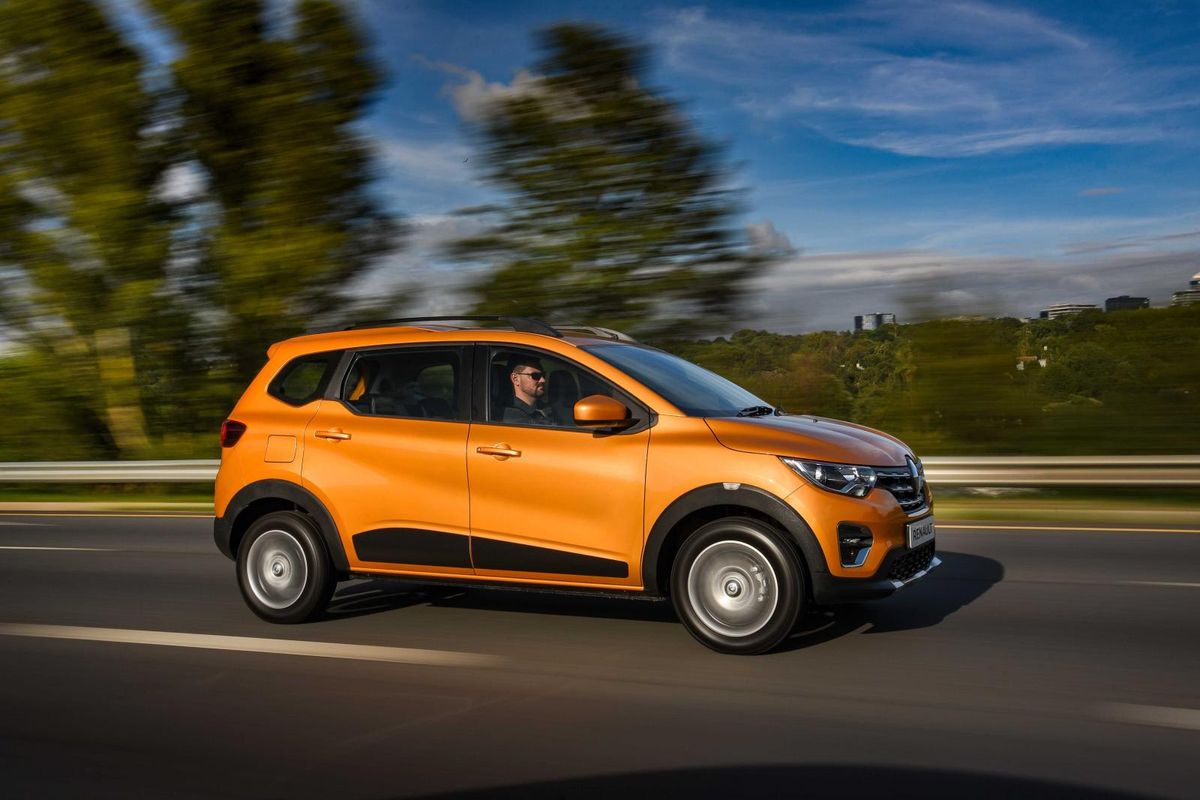
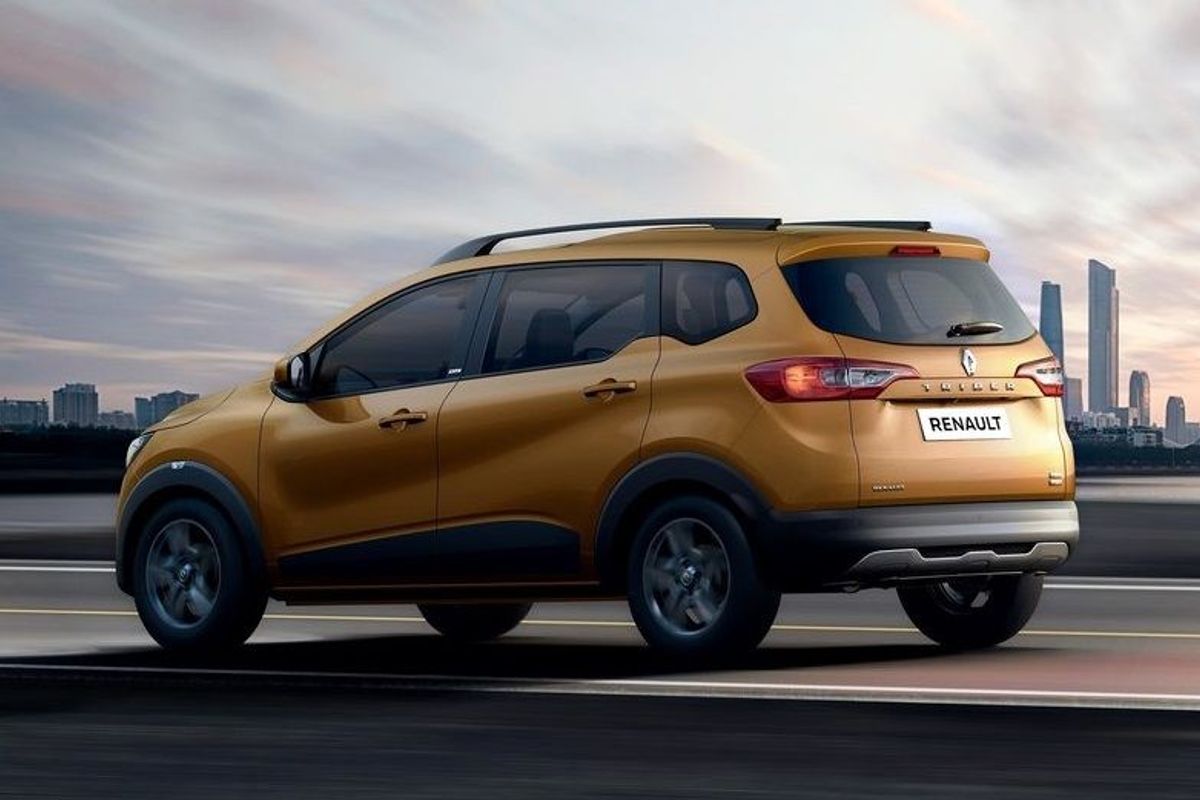
Having sold more than 2 500 units of its Indian-made 7-seater small crossover model since it was introduced in the South African market early in 2020, Renault has consolidated its Triber range by adding a new top-of-the-range derivative fitted with a 5-speed automated manual transmission (AMT).
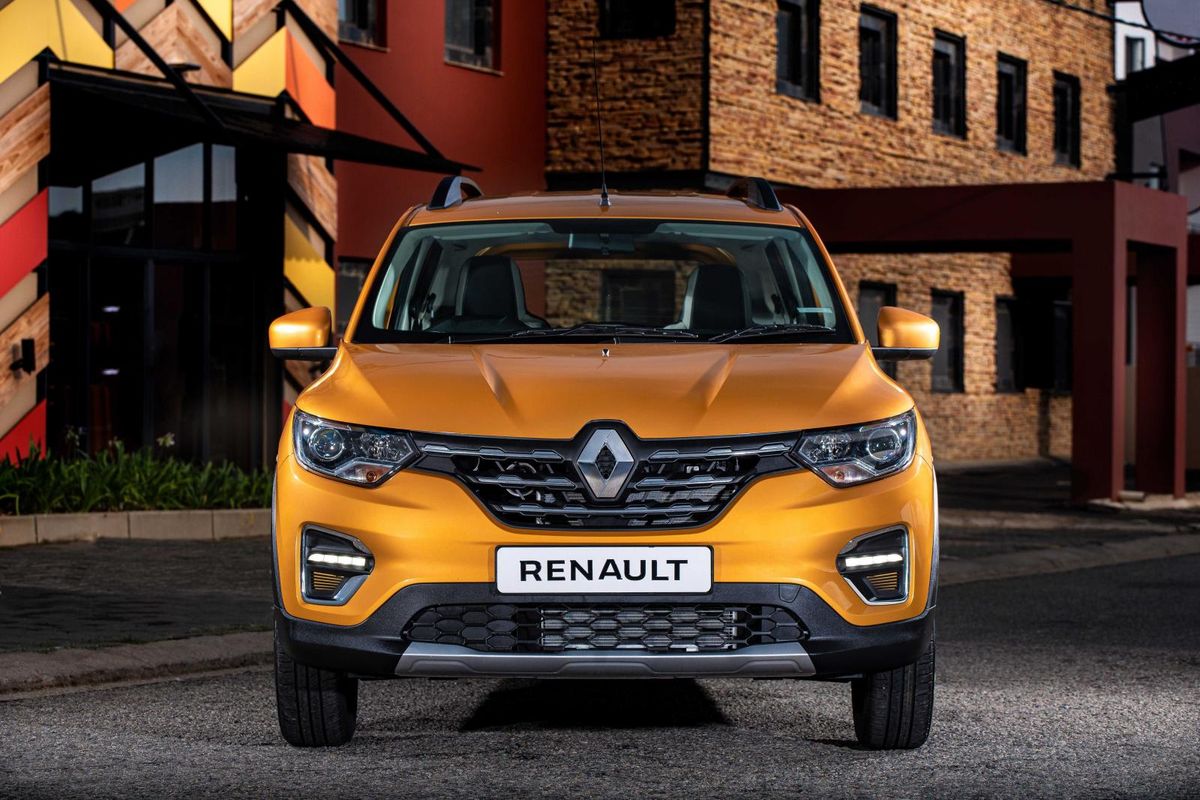
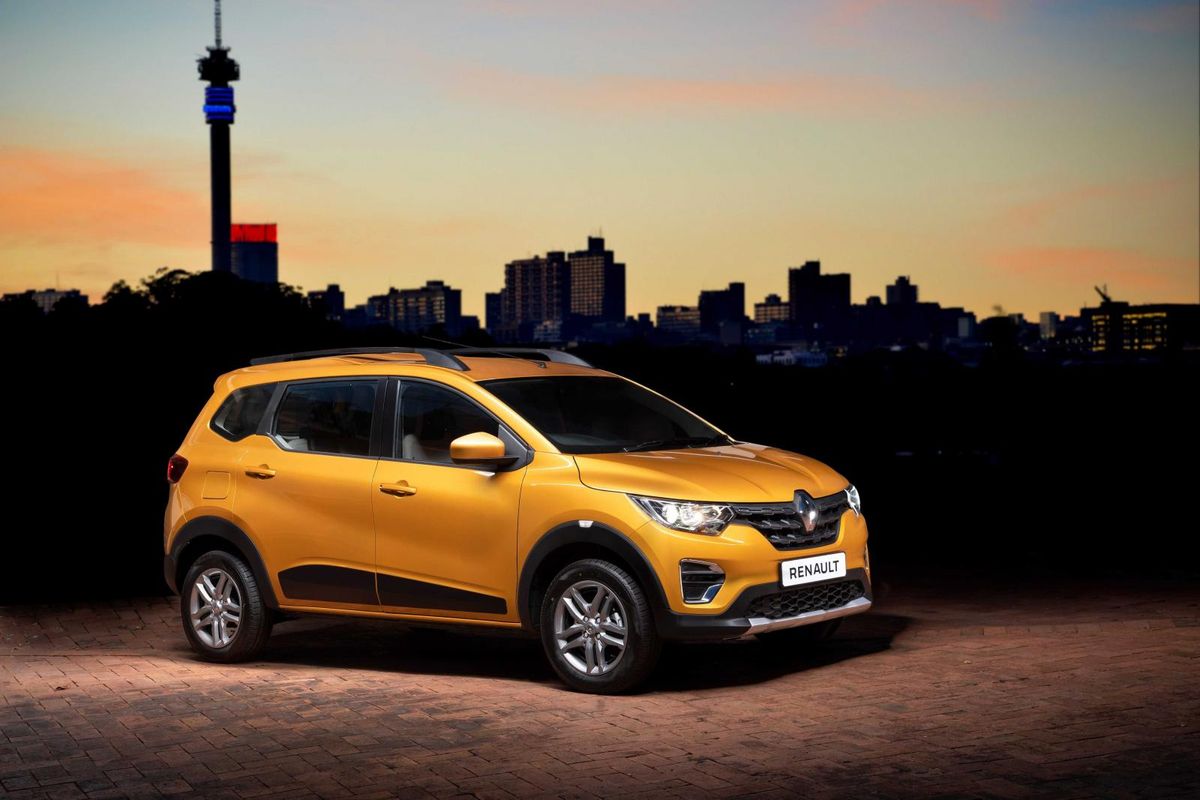
To recap, the Triber is based on a modified version of the CMF-A platform, which underpins the popular Kwid hatchback and competes against rivals such as the Suzuki Ertiga, Honda BR-V and Toyota Avanza. Standing less than 4-metres in length, the Triber is surprisingly spacious and shares some design cues with the familiar Captur and Kadjar, including the clamshell bonnet and LED daytime running lights. We understand that the model was specifically tailored for Renault’s customers in the BRICS countries (Brazil, Russia, India, China, South Africa).
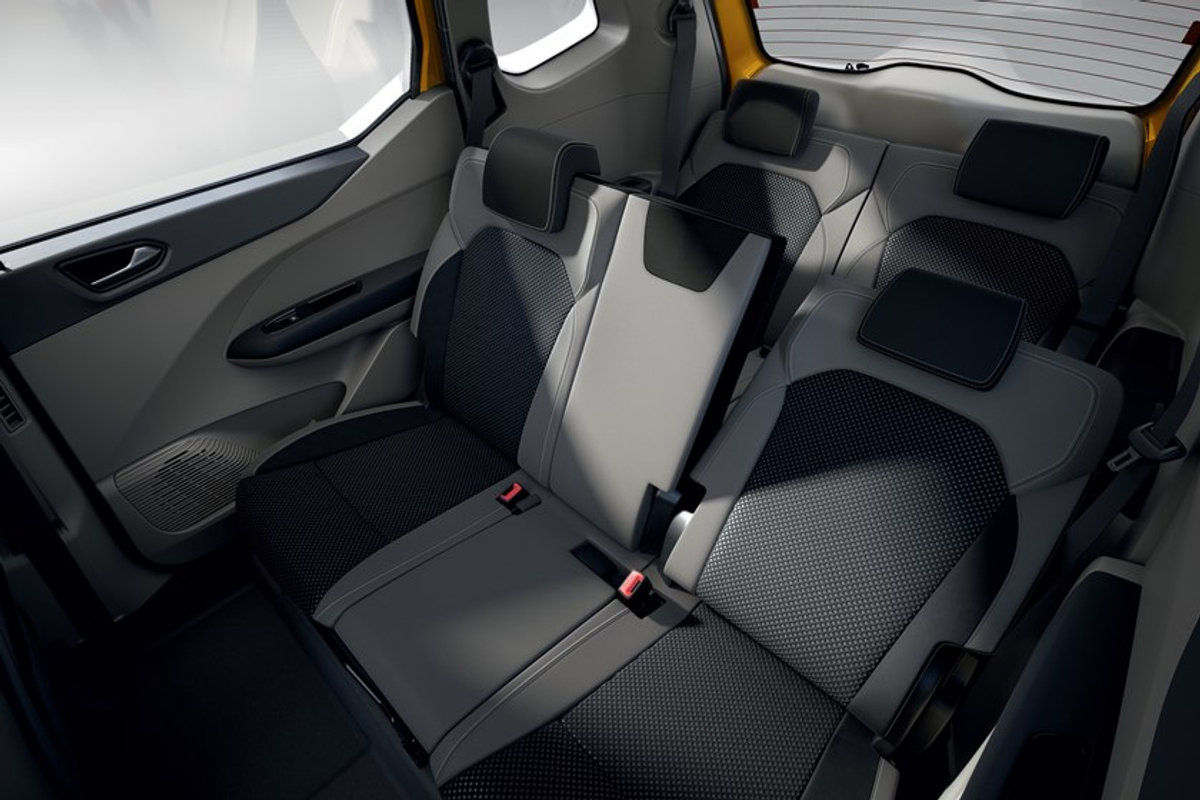
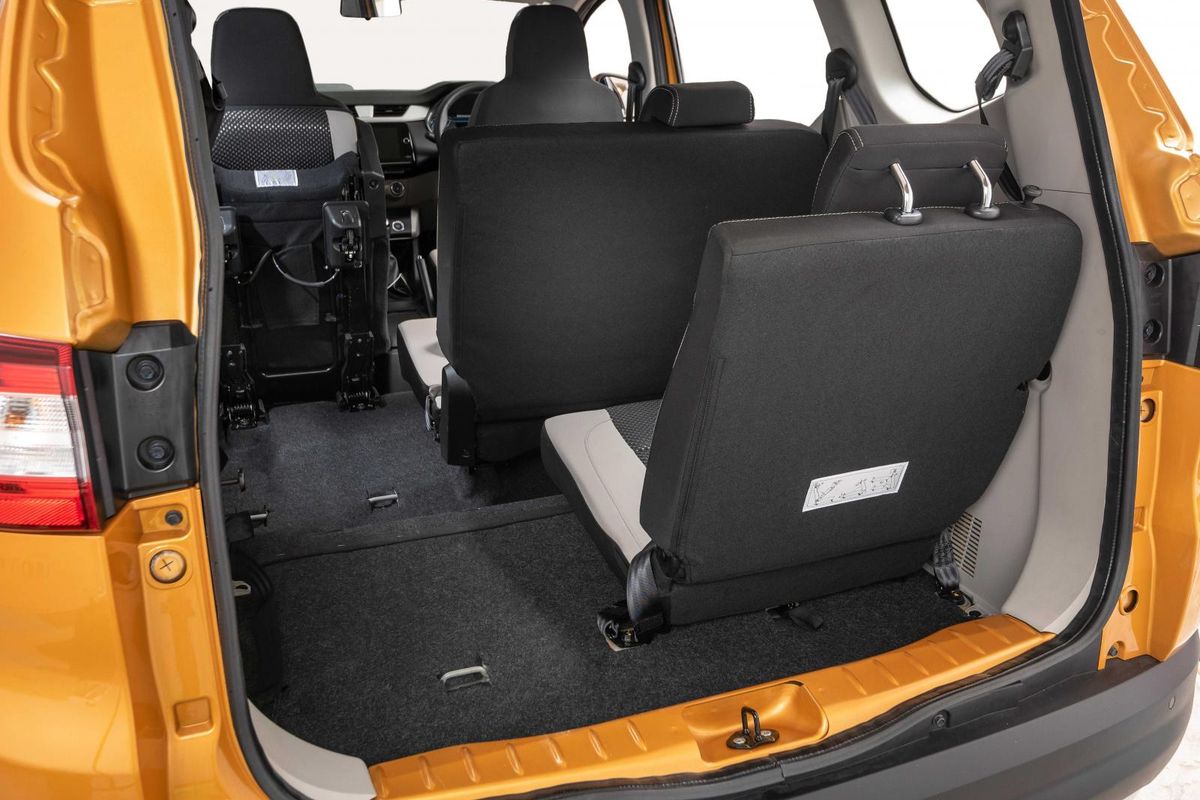
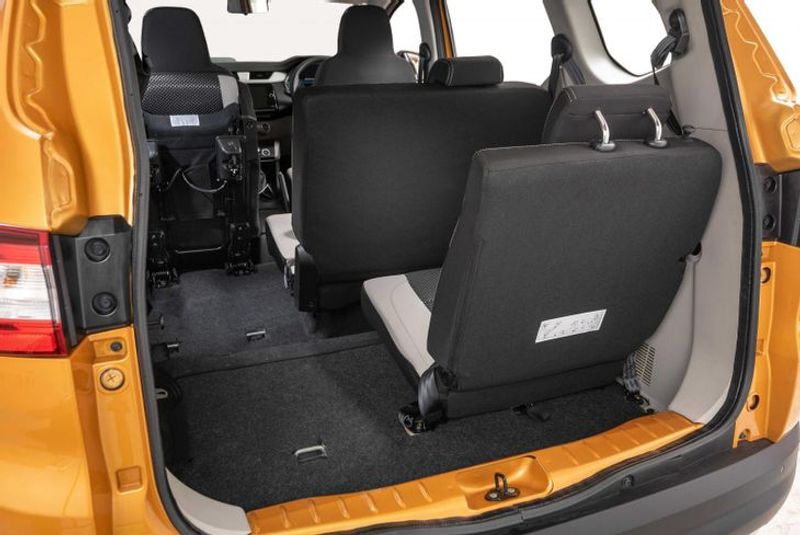
The option of 7 seats adds practicality, but a 5-seat configuration is easily achieved by simply removing the third row.
In terms of practicality, the Triber comes with roof rails capable of holding a 50-kg load, while ground clearance is a claimed 182 mm, which is useful for kerb hopping or traversing the odd rural road.
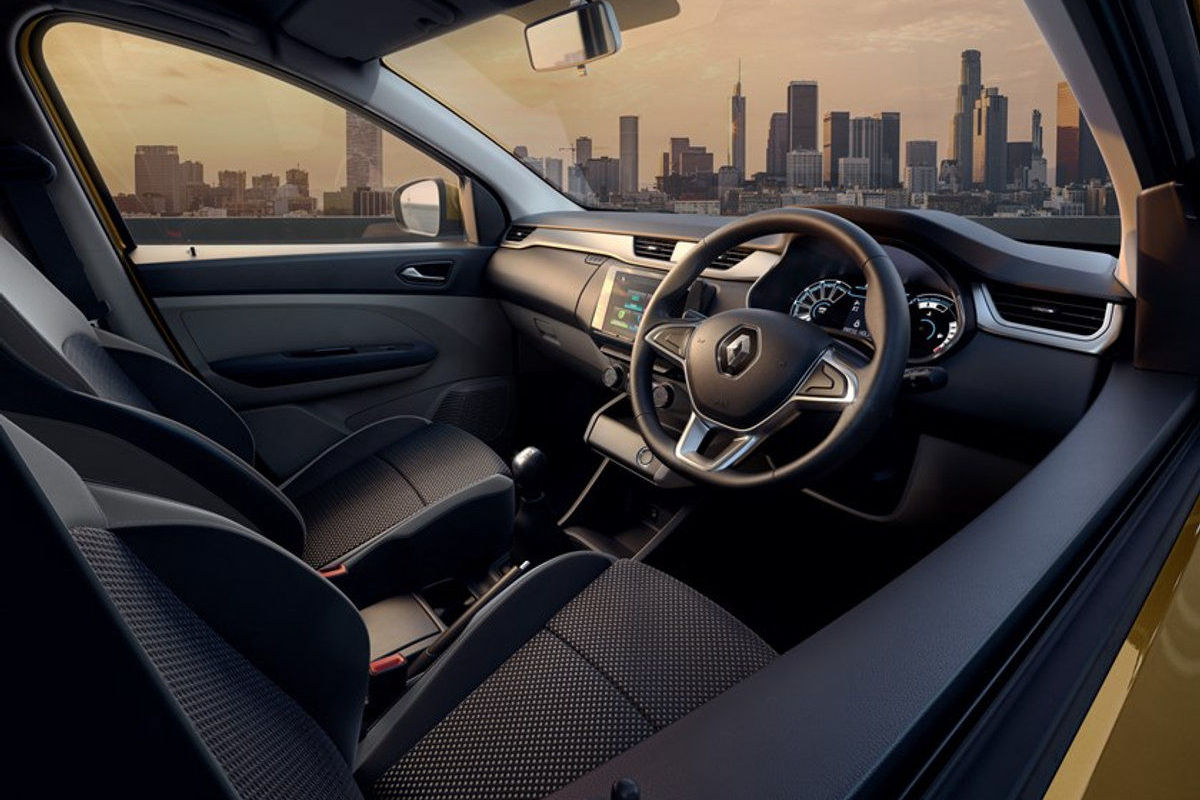
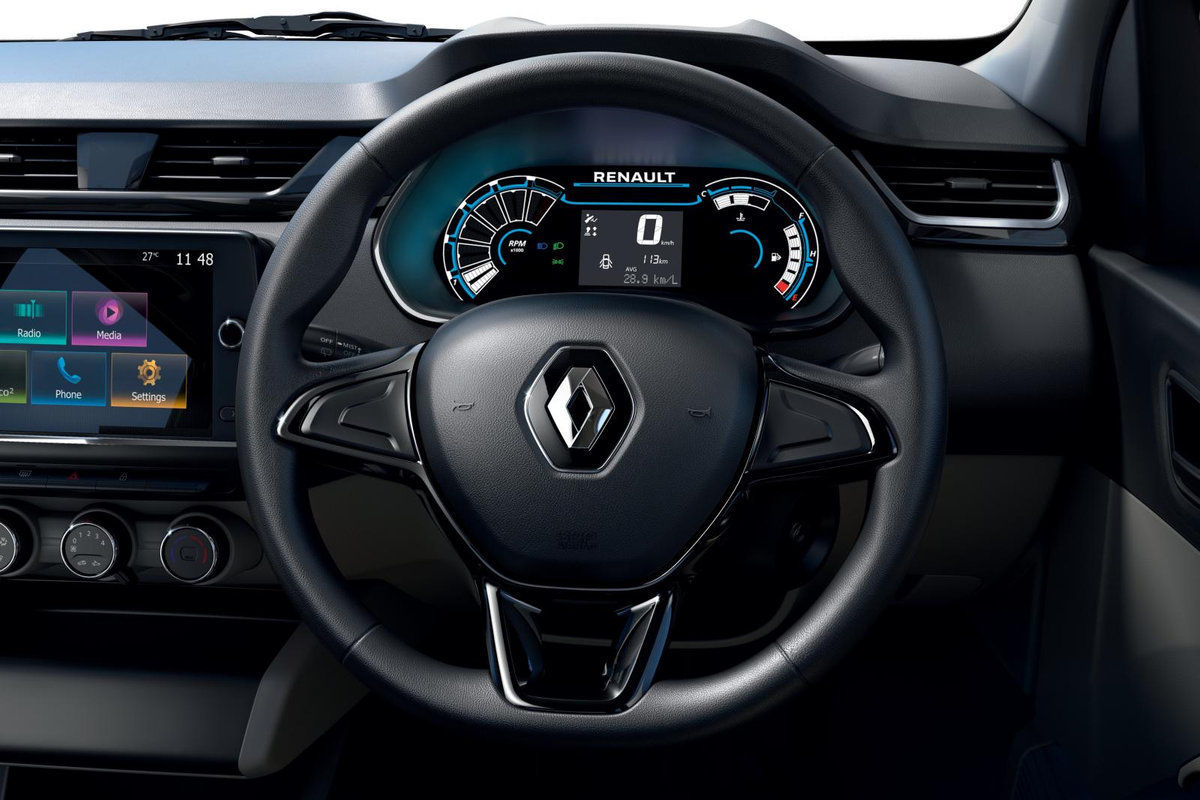
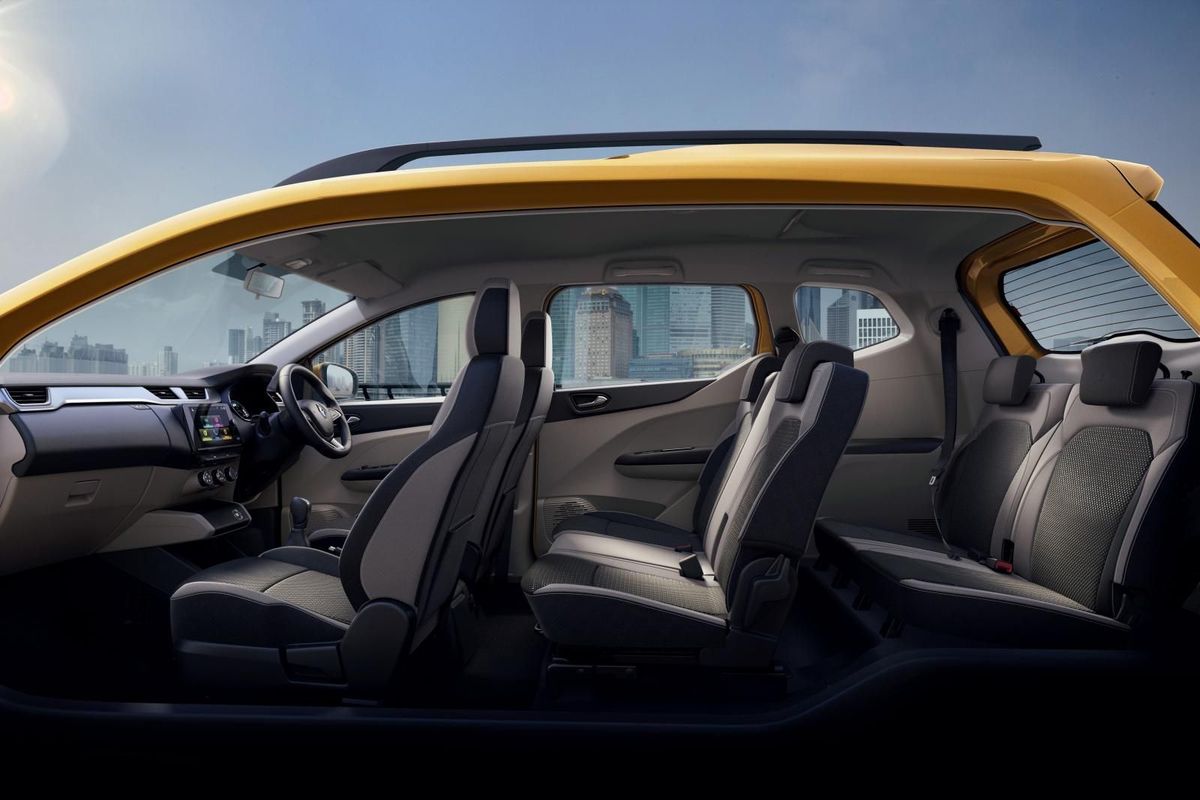
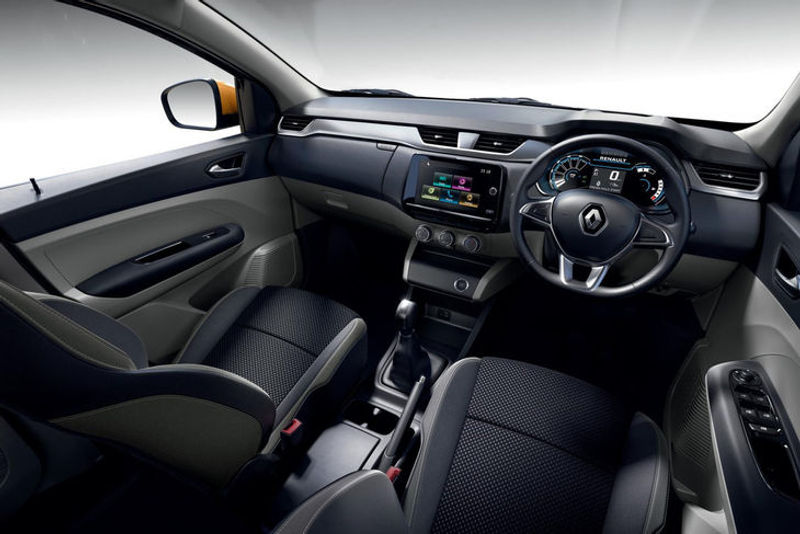
Inside, the Triber features a dual-tone interior and dashboard, the latter with chrome-look trim, an LED instrument cluster and 3 rows of seats, of which the rearmost are removable – to either prioritise passenger portability or luggage space. Renault claims that there are 100 seating configurations in the Triber and, with the 3rd row of seating removed, the stated luggage capacity is 625 litres.
Better specced that you might expect
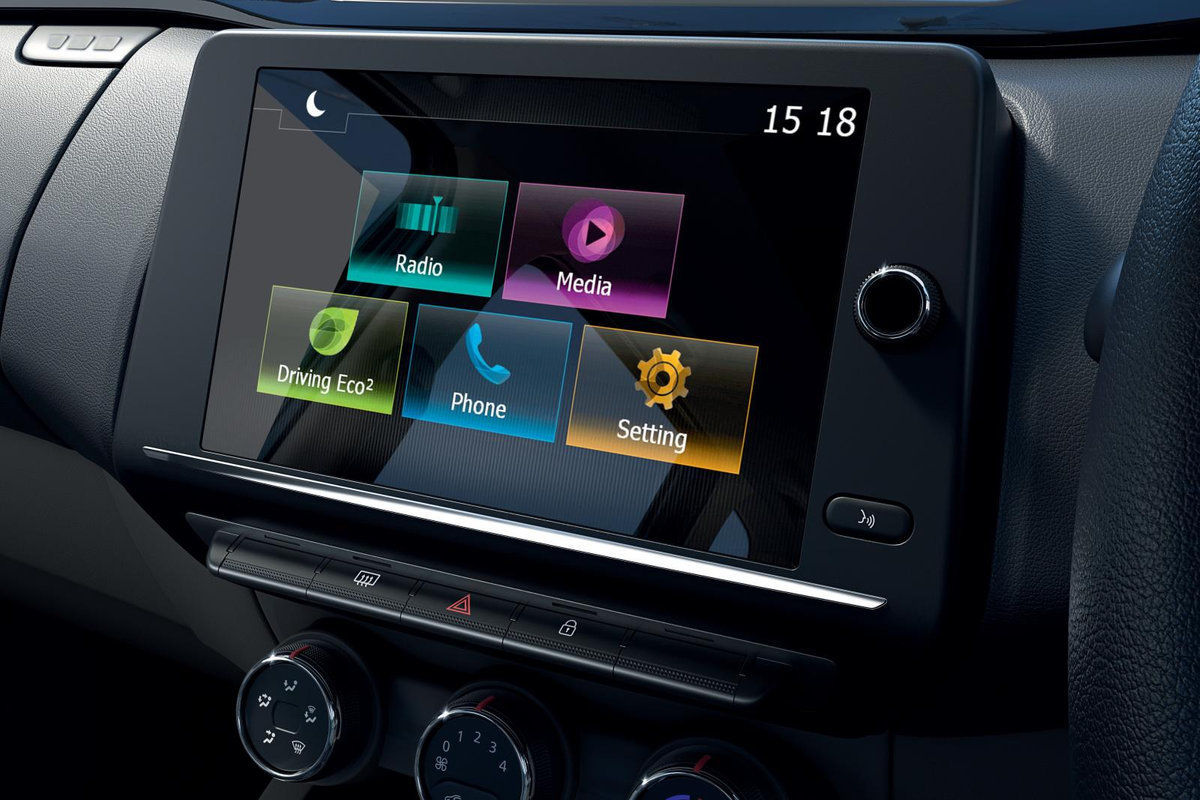
To ensure the requisite occupant comfort, the Triber has a dedicated air-conditioning matrix that additionally pipes air to the 2nd and 3rd-rows and, in Dynamique and Prestige derivatives, infotainment is provided by an 8.0-inch touchscreen system, which is compatible with either Apple or Android smartphones, offers navigation and supports Apple CarPlay as well as Android Auto.
Compared with the entry-level Expression derivative, Dynamique versions feature front seatback pockets, a seat drawer under the driver's seat, a cooled lower glove box, an upper glove box, a 12V socket and electric windows for the 2nd row, as well as rear speakers. The top of the range Prestige, which is now also available in automatic guise, additionally features, inter alia, keyless entry with push-button start/stop, a pair of tweeters, a 12V socket for the 3rd row and a reverse-view camera with guidelines.
A simple, yet stylish interior design should find favour with buyers.
Renault’s proven 1.0-litre, 3-cylinder engine, which produces 52 kW and 96 Nm of torque is paired with either a 5-speed manual gearbox or, in the case of the 1.0 Prestige, the 5-speed AMT. According to the French firm's local subsidiary, the claimed fuel economy of the Triber is 5.5 L/100 km irrespective of which of the 2 transmissions it uses.
Safety-wise, Renault has equipped the Triber with remote central locking, ABS and EBD, dual front airbags and rear parking sensors. Prestige derivatives additionally feature 2 front side airbags.
Renault Triber – Price in South Africa
1.0 Expression 5-spd manual
R183 900
1.0 Dynamique 5-spd manual
R193 900
1.0 Prestige 5-spd manual
R209 900
1.0 Prestige 5-spd AMT (automatic)
R219 900
In terms of after-sales service, the Triber comes with a 2-year/30 000 km service plan and a 5-year/150 000 km mechanical warranty. Services take place at 15 000 km intervals.
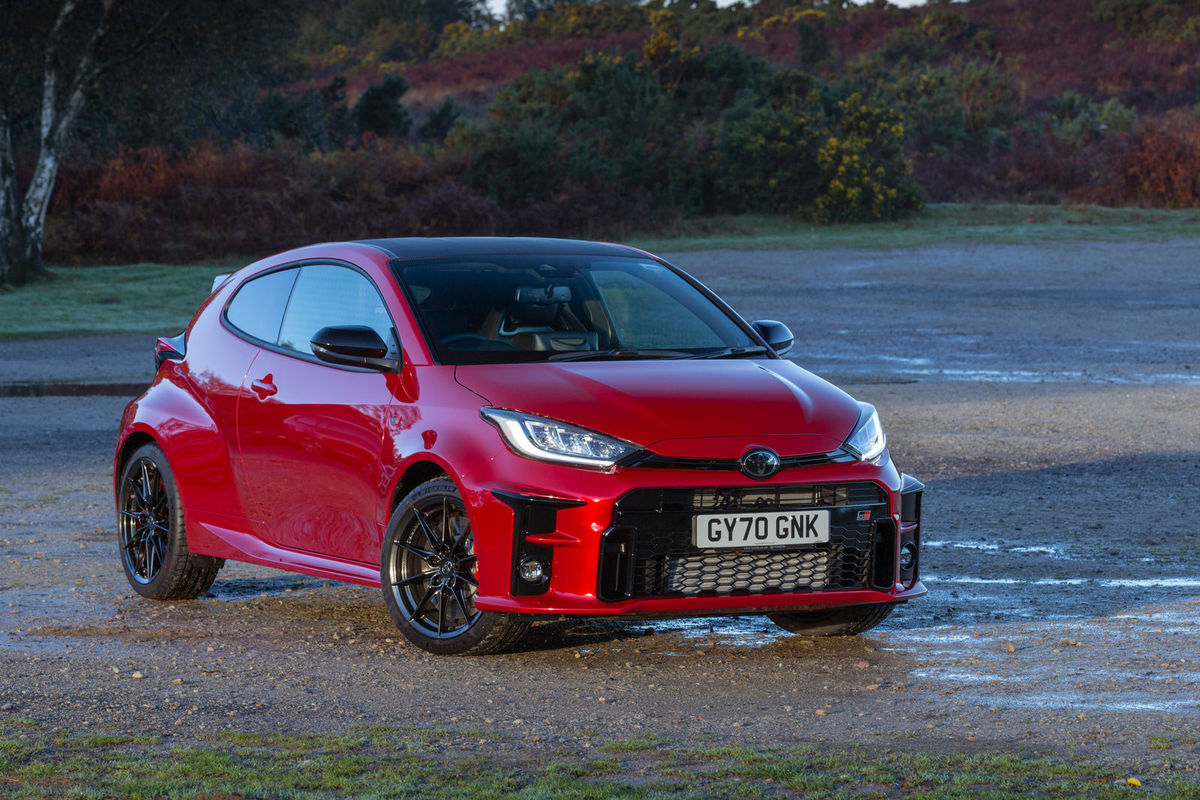
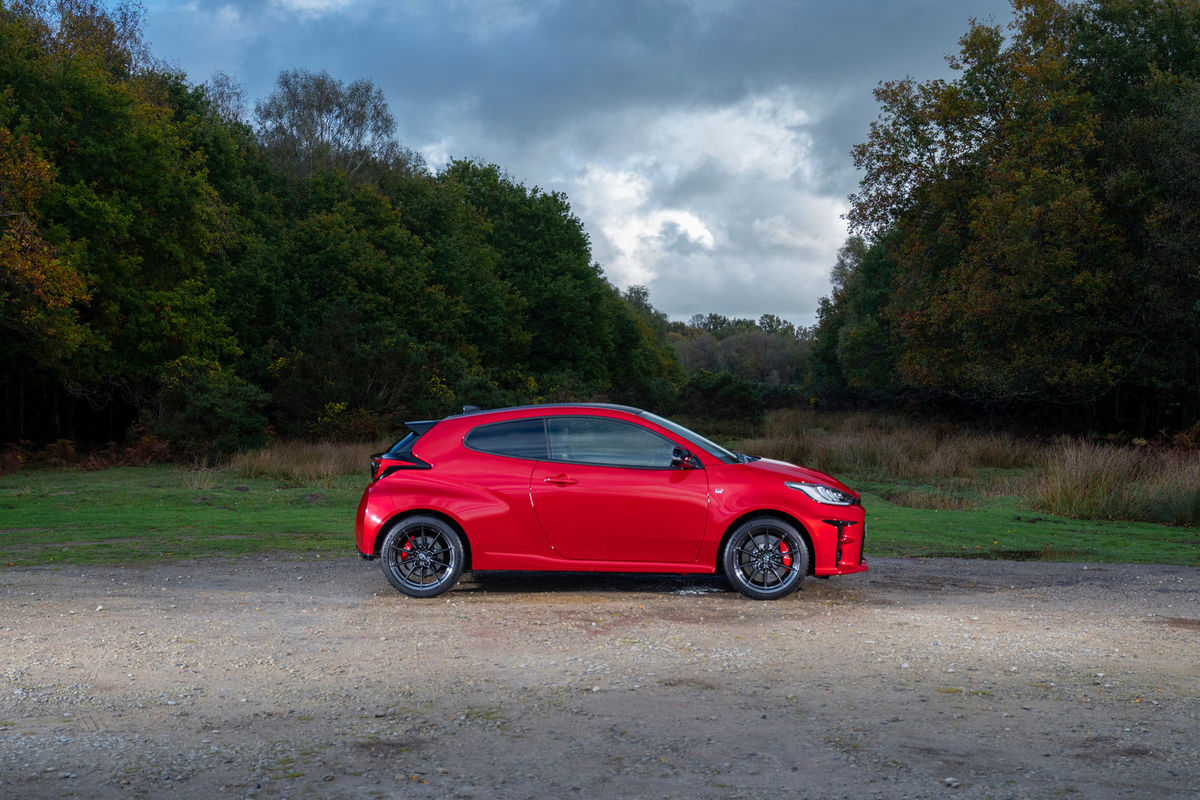
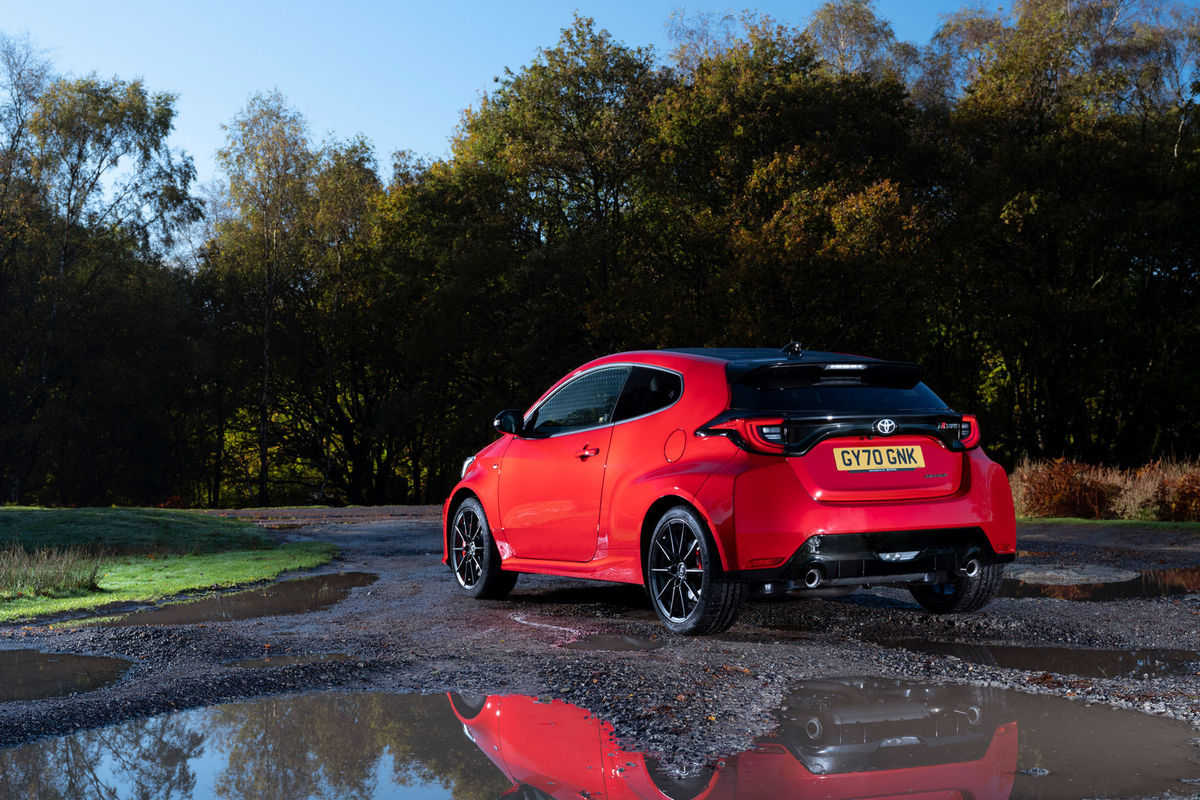
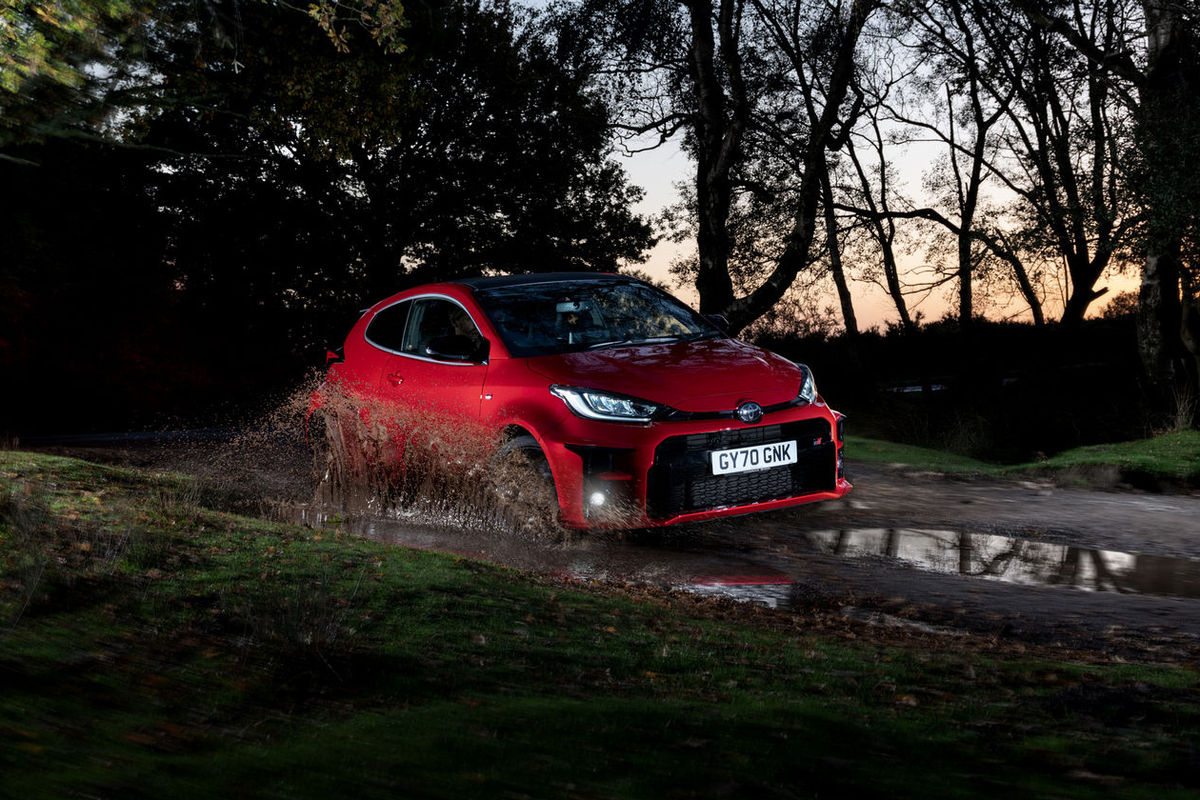
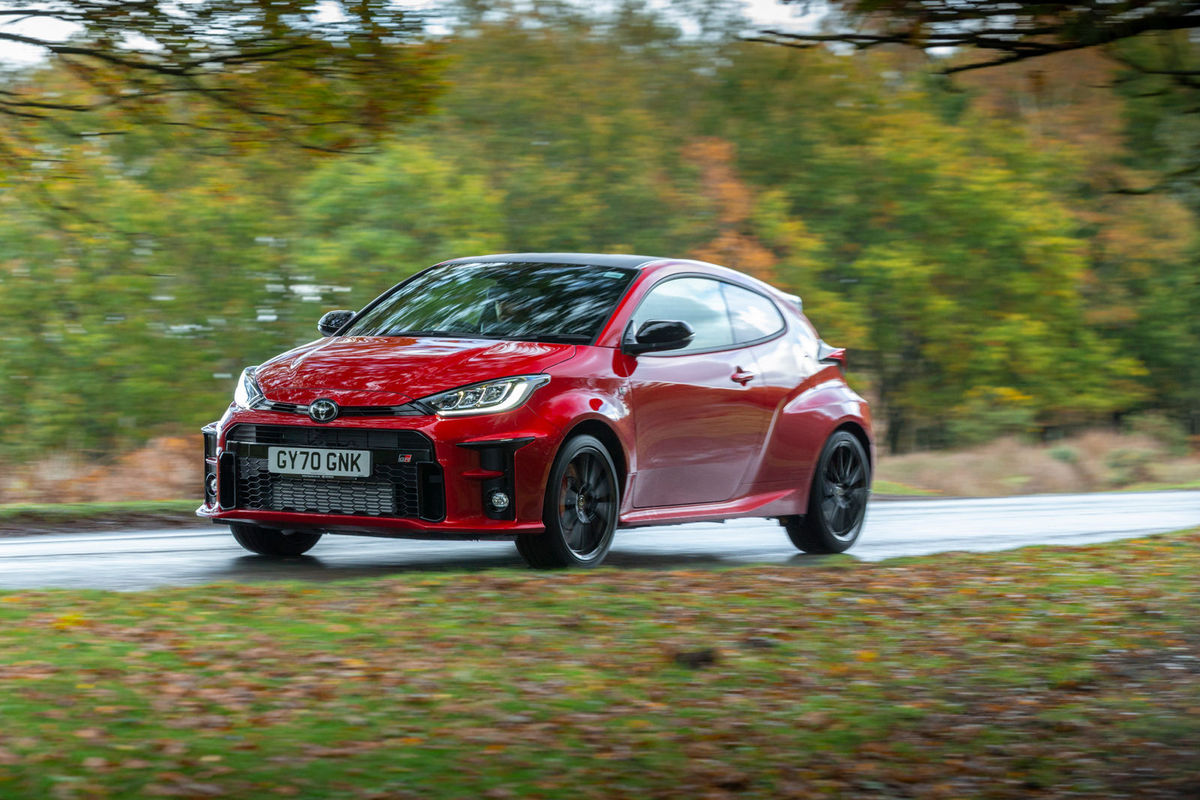
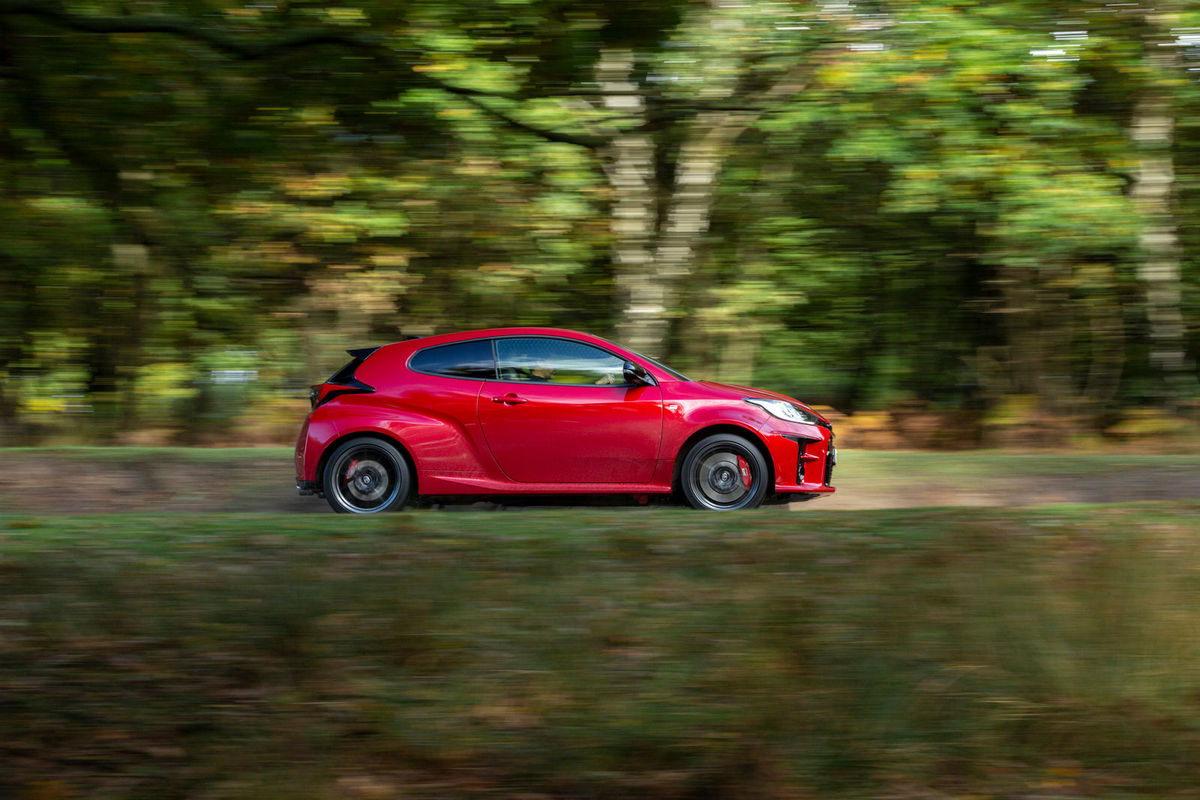
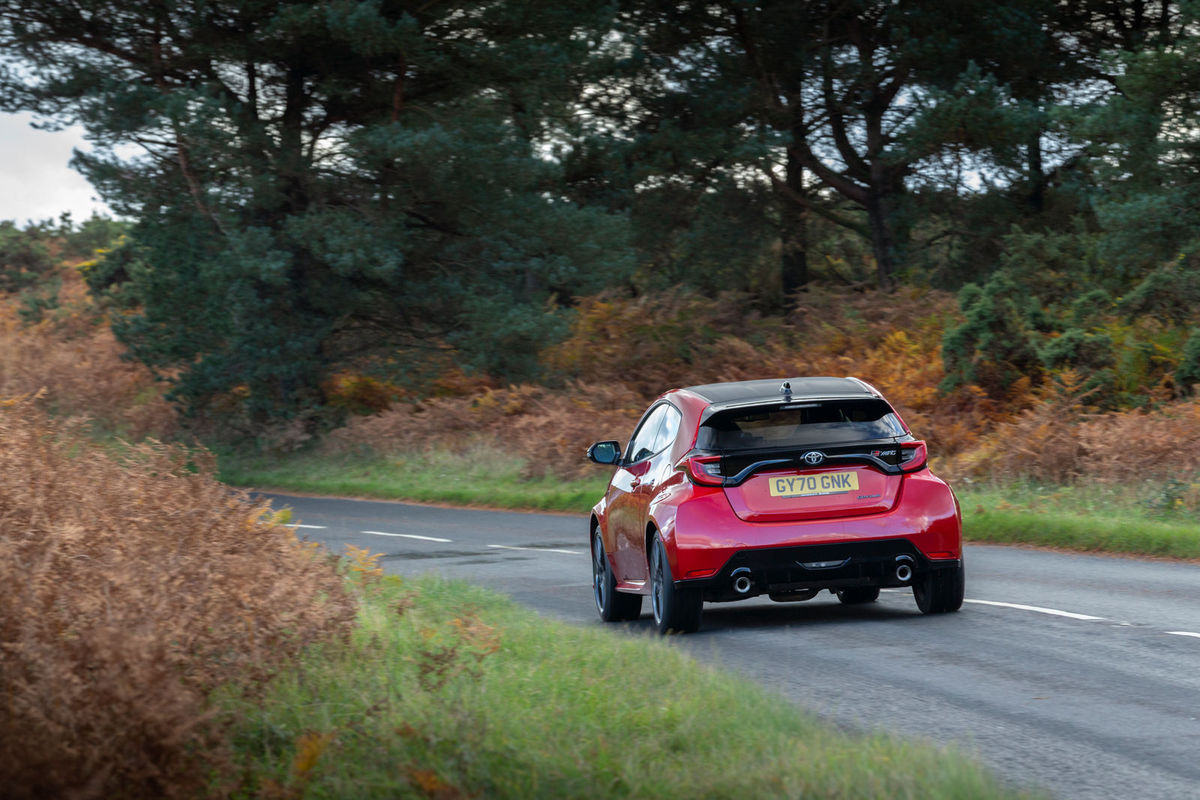
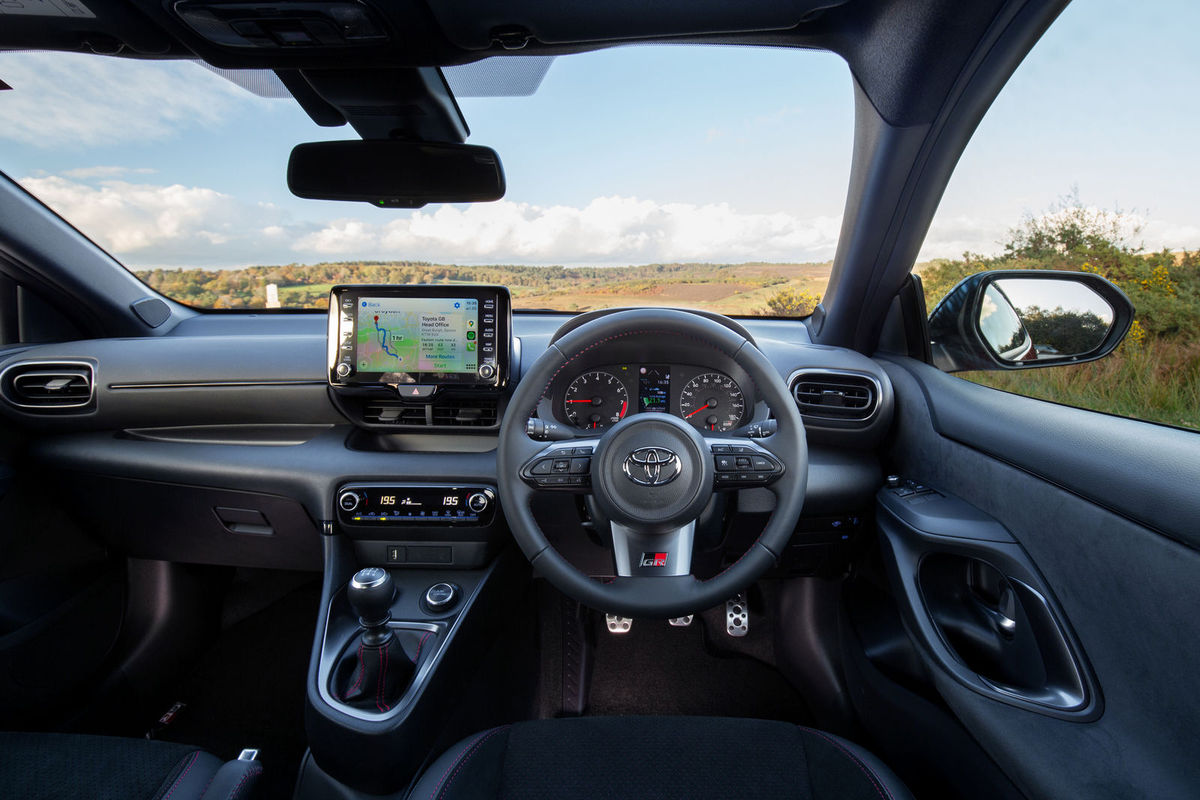
The Toyota Gazoo Racing South Africa website has confirmed that the new GR Yaris will indeed be ‘launching soon’ in South Africa!
The news that Toyota will be introducing the new Gazoo Racing (GR) Yaris in South Africa should get Toyota fans very excited!
Toyota has confirmed that the pocket-sized powerhouse will go on sale locally in mid-2021 with specifications and pricing to be revealed closer to the launch.
You may recall that the previous Yaris GRMN did not go on sale in South Africa and only 3 units were used locally for marketing purposes. The good news is that this situation would not be the case for the GR Yaris and it will go on sale to the public but we suspect that it will be offered in limited numbers.
The Yaris GRMN was a potent little firecracker and the new Yaris GR looks to take that fun-to-drive recipe to the next level.
Drawing on Toyota Gazoo Racing’s rally heritage, the GR Yaris packs a punch with a 3-cylinder, 1.6-litre turbocharged engine that offers up 192 kW and 360 Nm but there is also said to be a high-power version that offers 200 kW and 370 Nm. It has yet to be confirmed which variant the South African market will get but the TGRSA website currently shows that the 200 kW GR Yaris is destined for South Africa and we hope that is indeed the case.
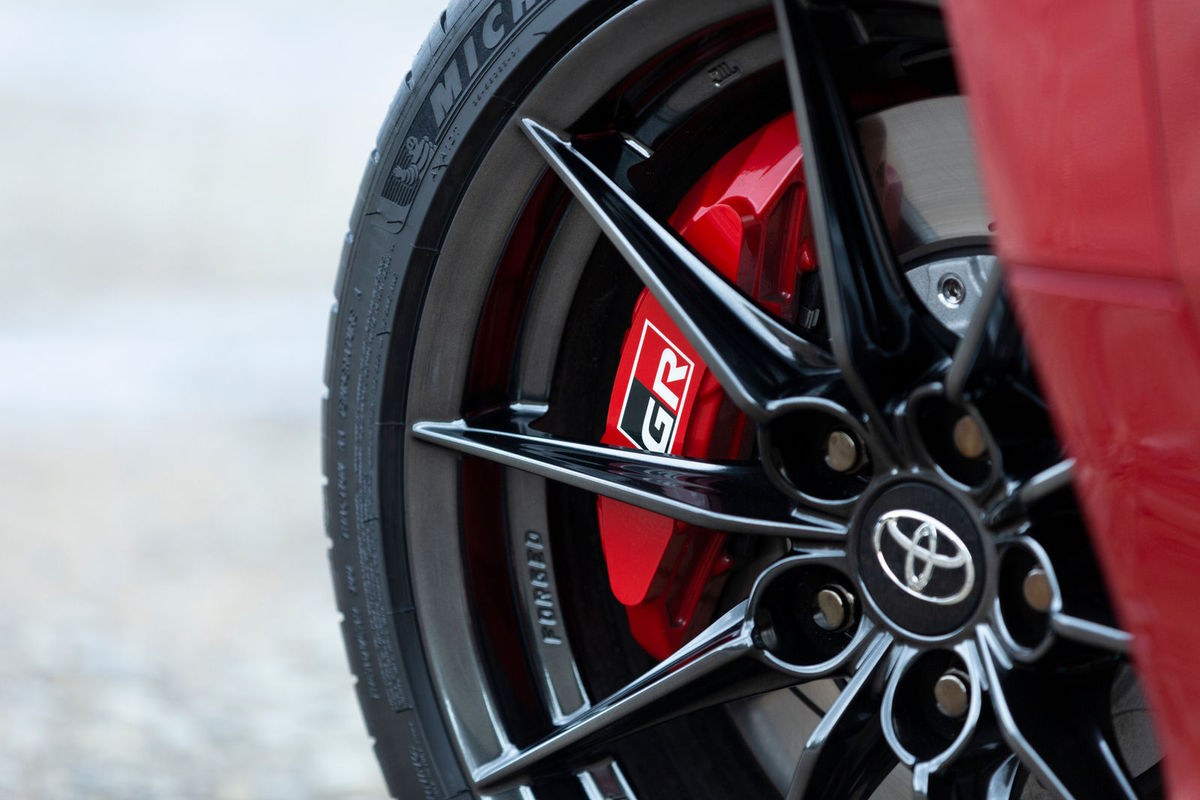
Unlike the front-wheel-drive Yaris GRMN, the new GR Yaris features an all-wheel-drive system that can split power between the front and rear axle depending on the situation via modes such as Normal (60:40), Sport (30:70) and Track (50:50). An optional Circuit Pack, which comprises a Torsen limited-slip differential on both the front and rear axle, performance-tuned suspension and 18-inch forged alloy wheels with Michelin Pilot Sport 4s 225/40R18 tyres are also offered for the GR Yaris.
The GR Yaris employs the service of a 6-speed manual transmission and acceleration from zero to 100 kph is claimed at sub 5.5 seconds and the hot hatch will dash to a top speed of 230 kph.
Local pricing has yet to be announced but we will surely keep you updated as soon as more details come to the fore.
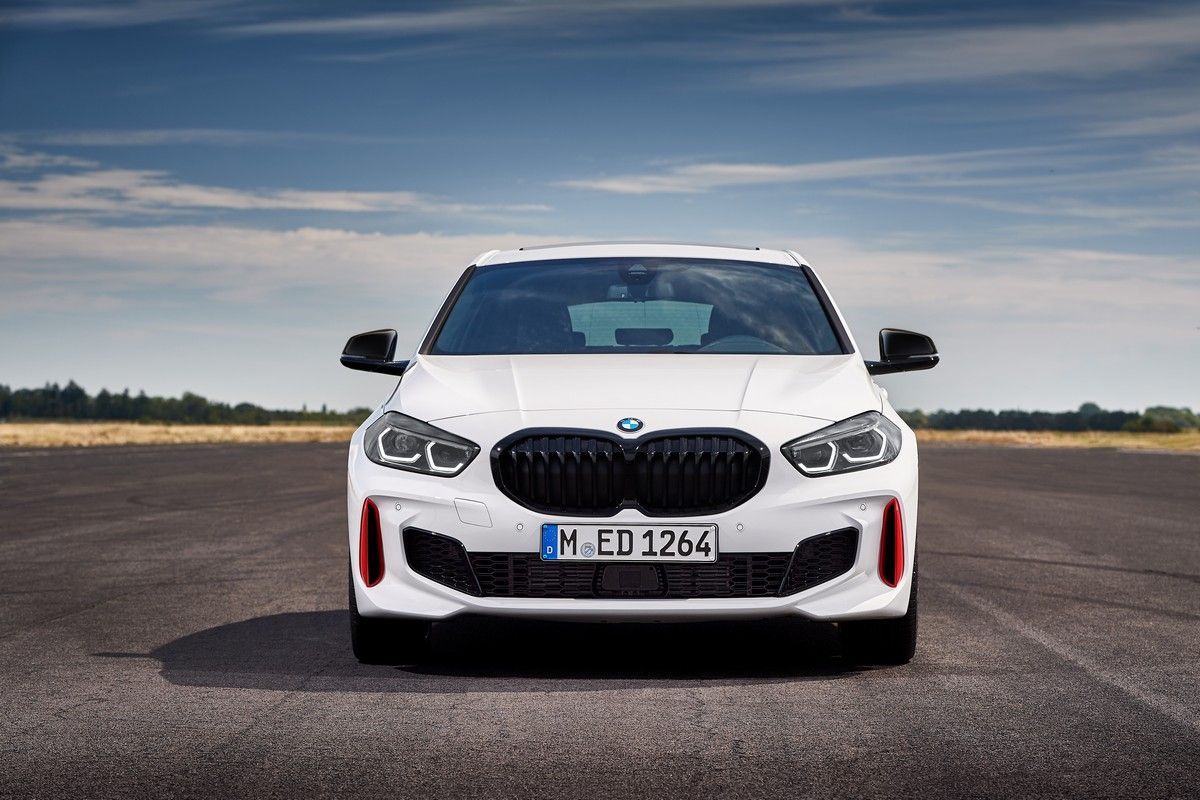
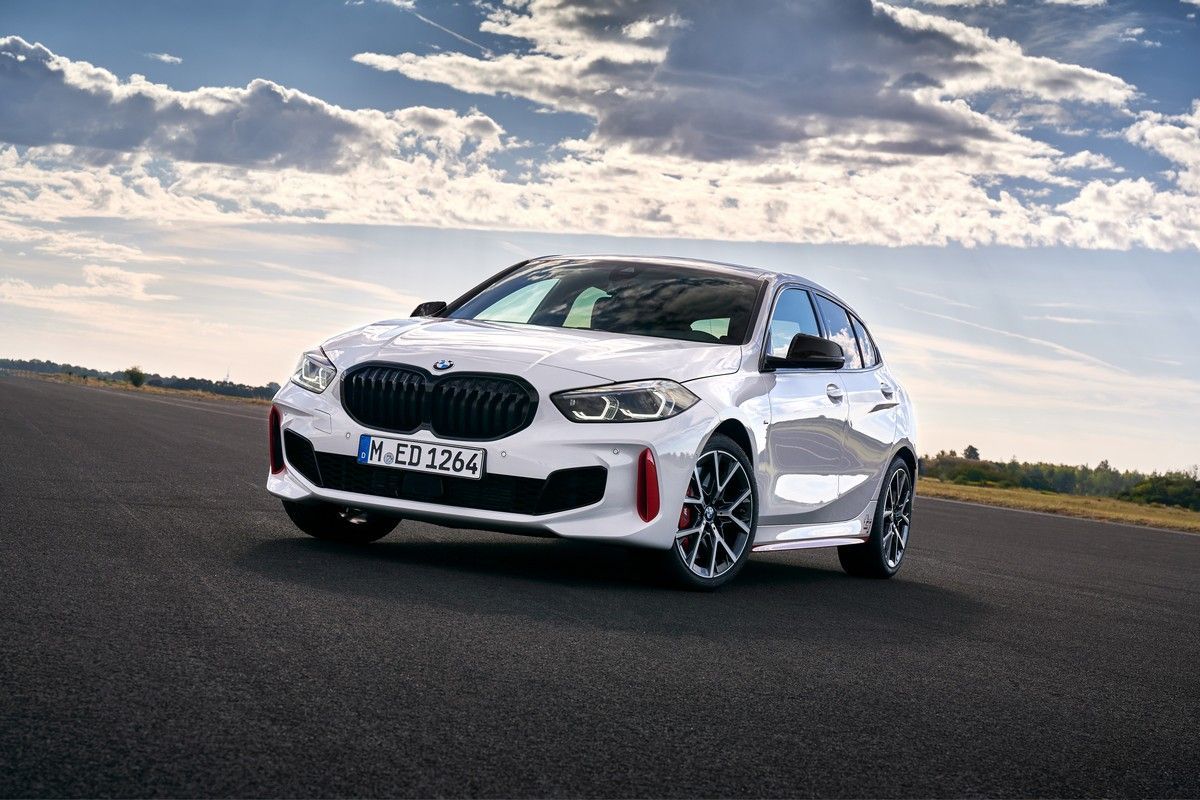
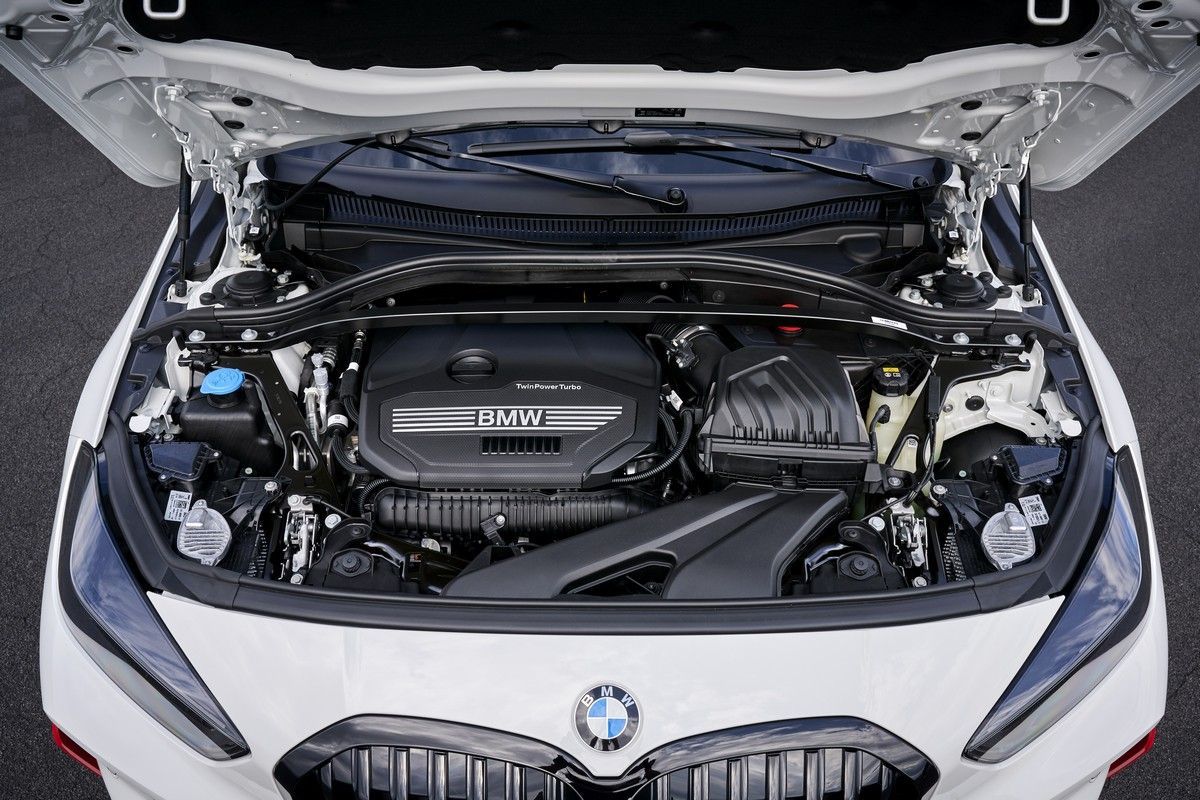
BMW will launch its 128ti premium hot hatch in South Africa soon. Fitted with a limited-slip diff, M Sport suspension and a 180-kW 2.0-litre turbopetrol motor, the 128ti is claimed to bolt from 0 to 100 kph in 6.3 sec and marks BMW’s first serious stab at the traditional front-wheel-drive hot hatchback market. Although Mzansi won’t get the full-fat 195 kW/400 Nm version as offered in Europe, the newcomer’s outputs are almost identical to that of the Golf 8 GTI.
Ever since BMW waded into premium compact hatchback segment with the 1 Series, be it with the rear-wheel-driven 1st-gen (E81/E82/E87/E88) or 2nd-gen model (F20/F21), the Munich-based manufacturer has curiously avoided a confrontation with the benchmark Volkswagen Golf GTI and fellow front-wheel-driven (FWD) hot hatches. Why? Well, the firm initially put its performance focus on 1 Series derivatives with inline-6 turbopetrol motors, which manifested as the 130i and 135i and later, the M140i. The 1M Coupe, meanwhile, was a precursor to the 2 Series Coupe flagship, the M2.
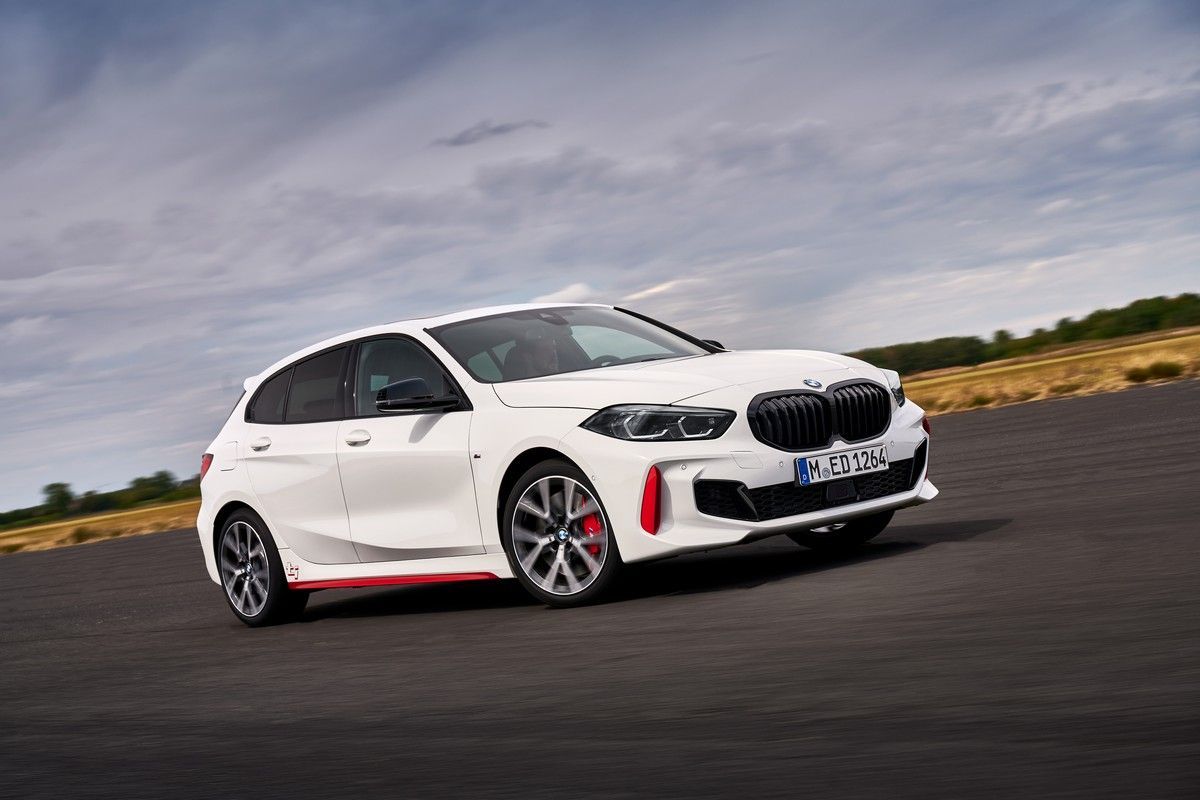
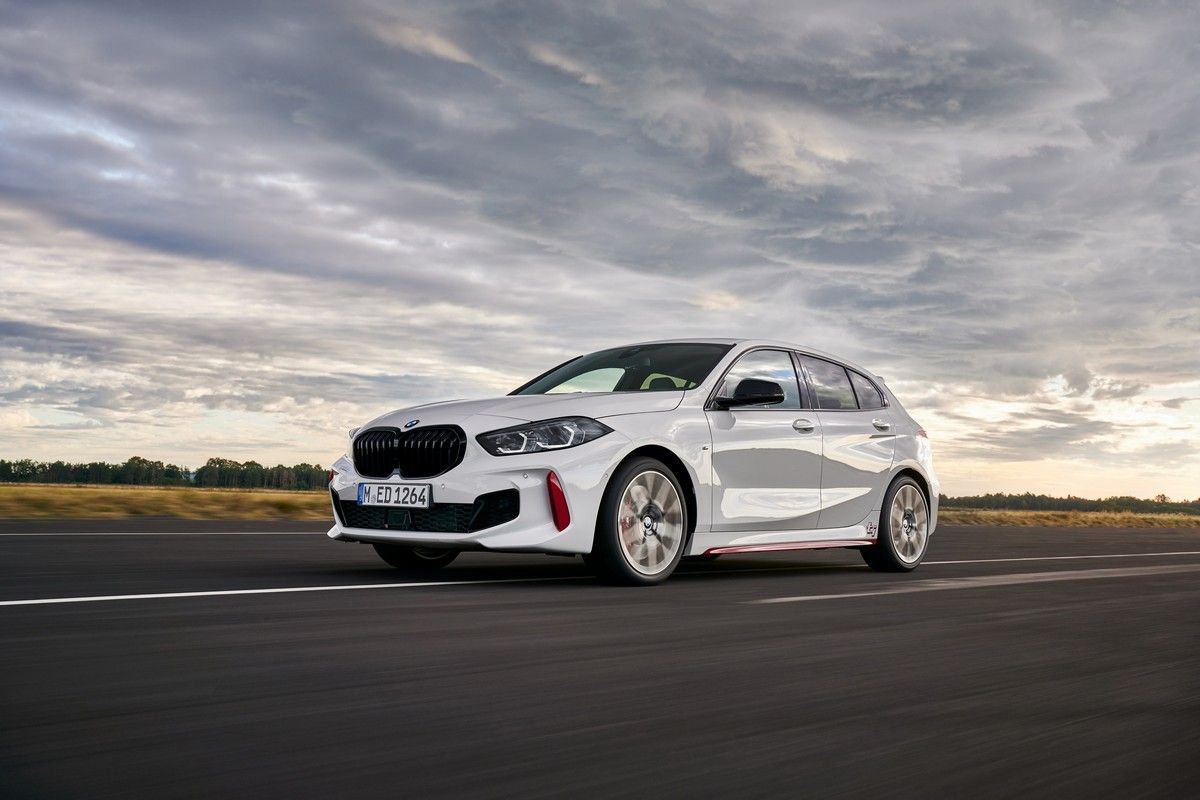
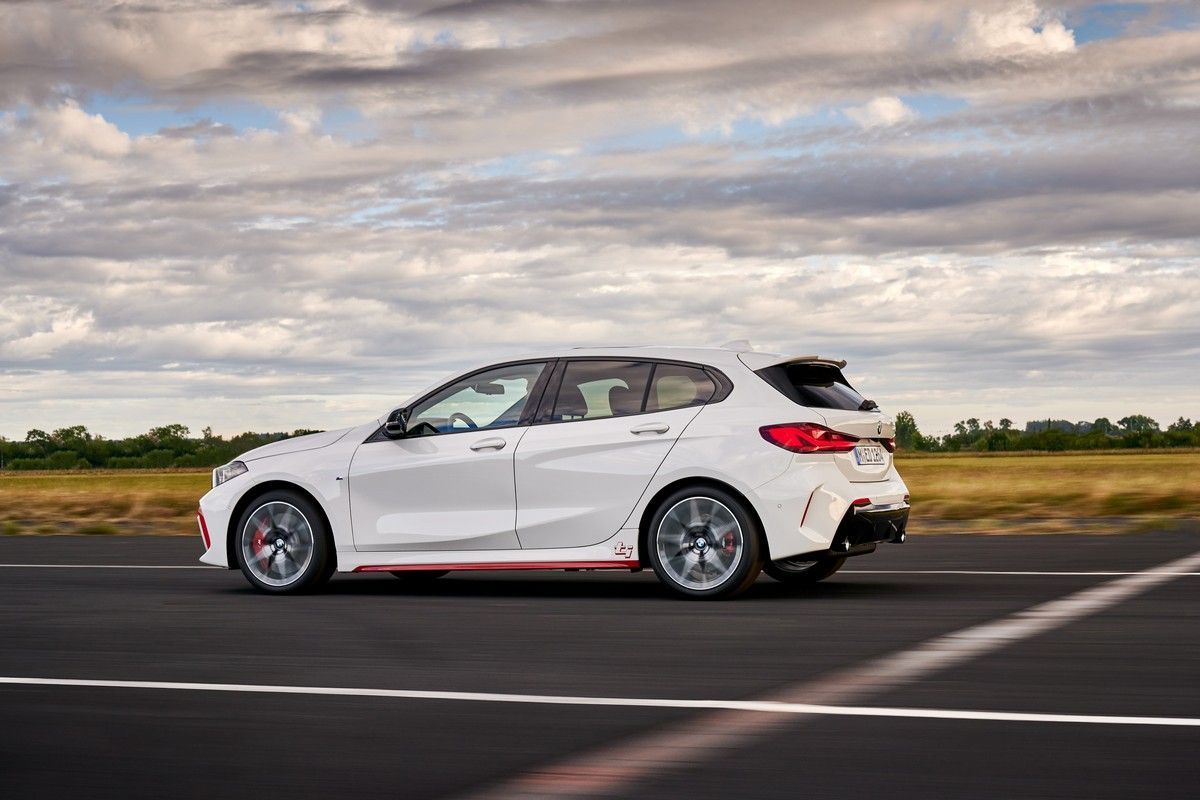
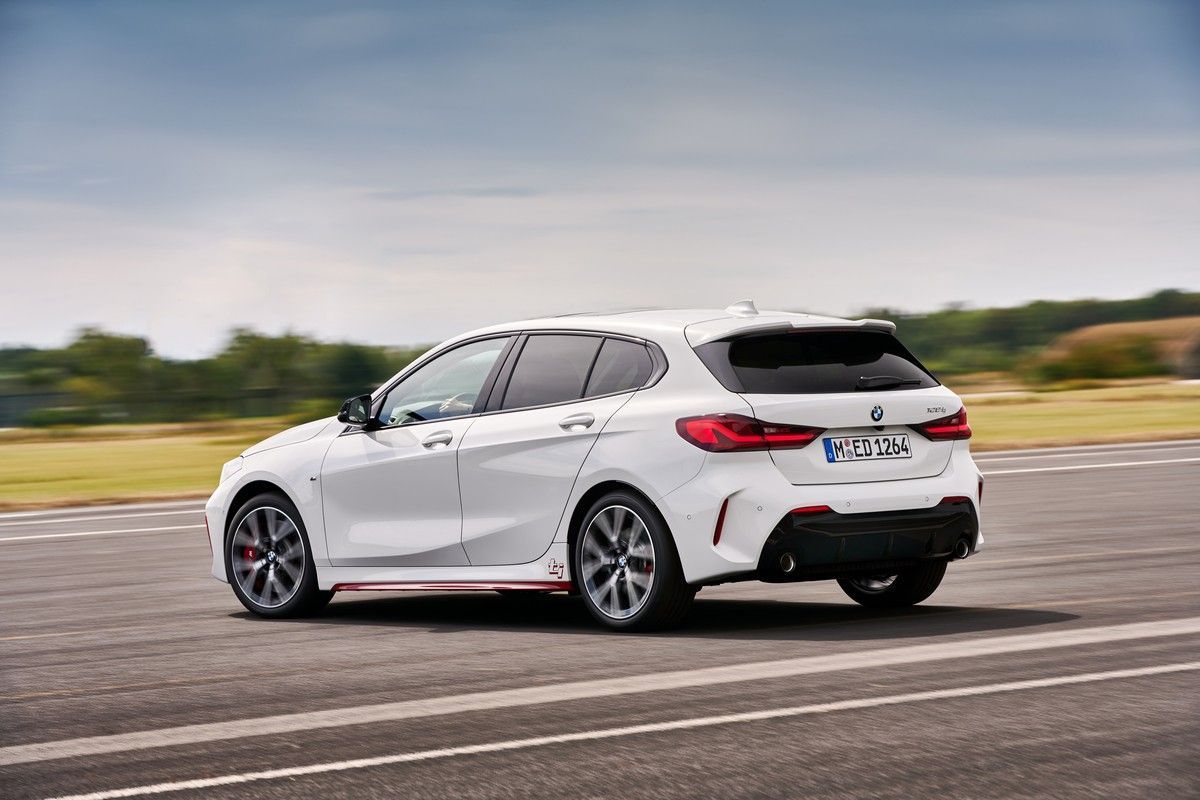
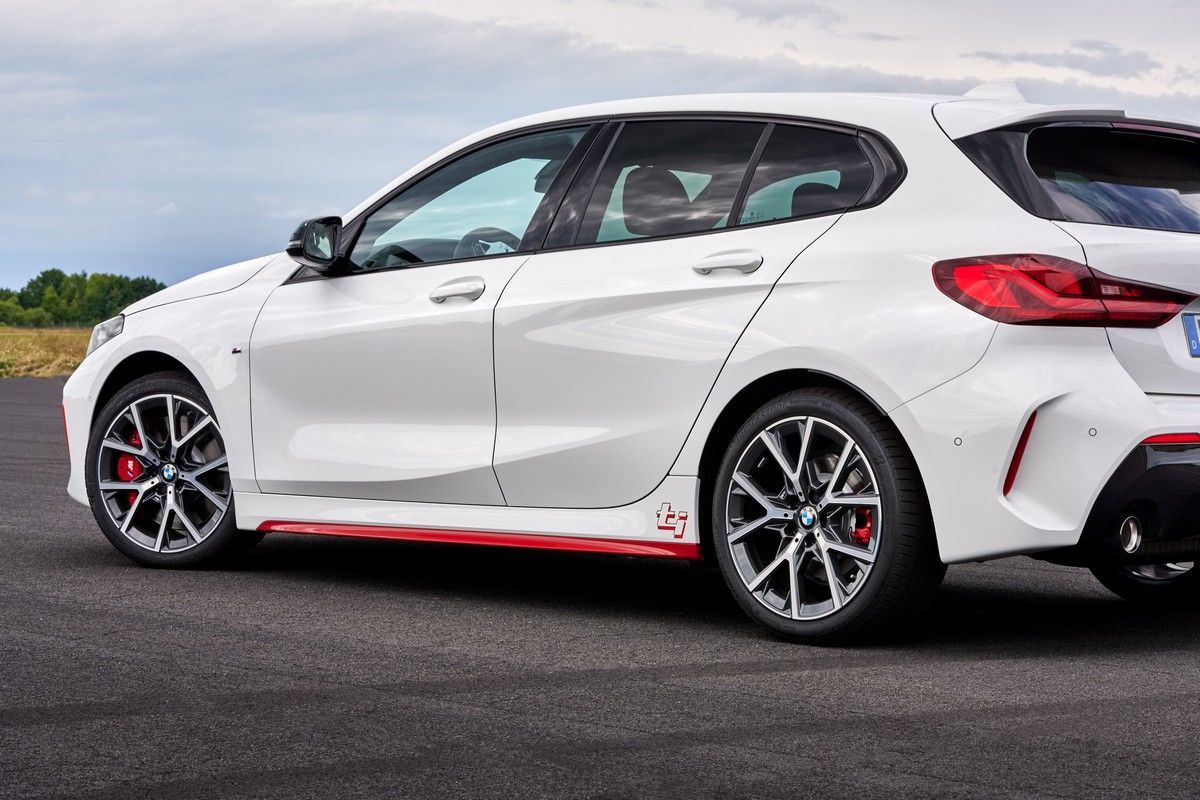
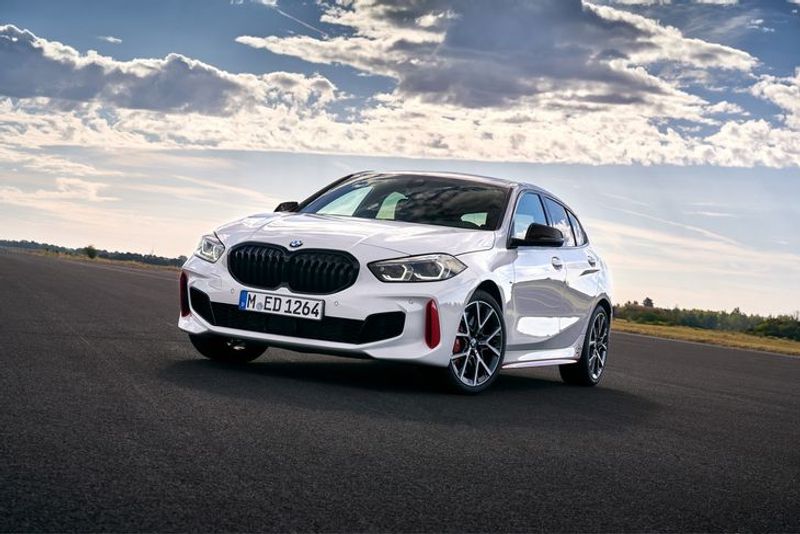
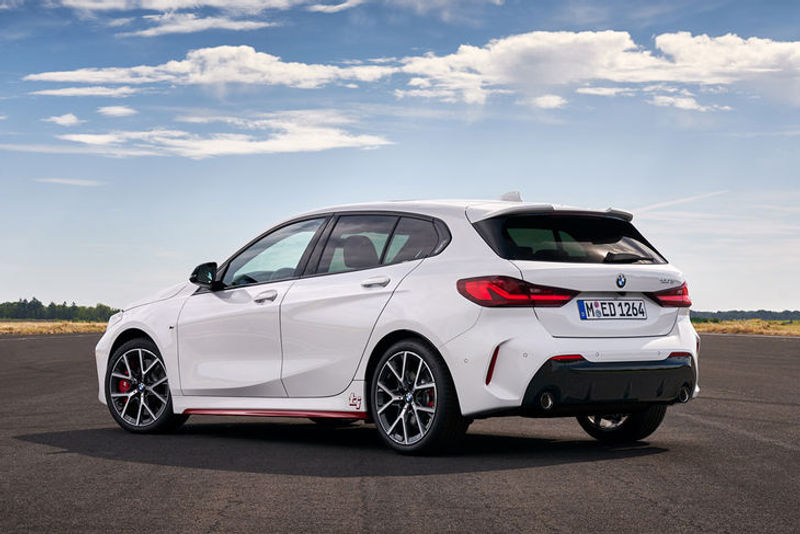
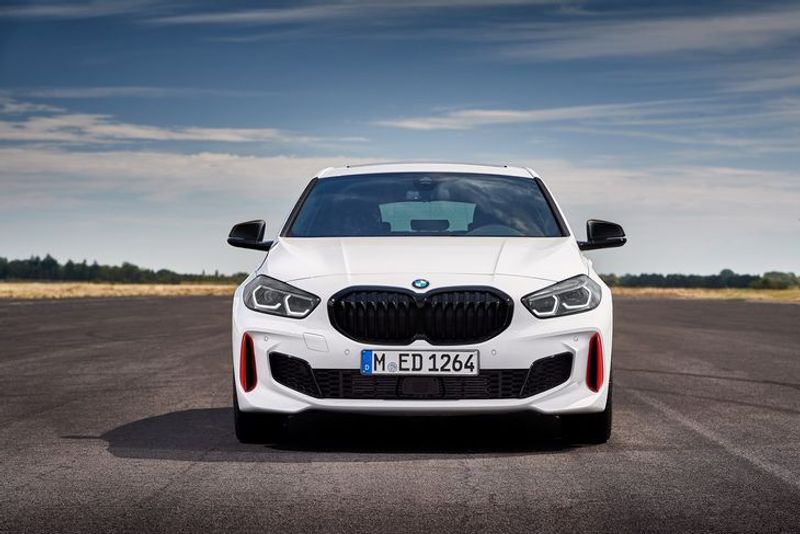
The 128ti can be distinguished by its black grille and red accents on the bumper vents and side skirts.
However, when BMW switched to a FWD platform for the third (and current) F40-generation 1 Series, it began by aiming low with the entry-level 118i (powered by a 1.5-litre 3-cylinder engine) and, from there, ventured into Audi S3, Golf R and Mercedes-AMG A35 territory with the potent all-wheel-driven M135i xDrive flagship – read our recent review. More versions of the 1 Series are offered in overseas markets, but in Mzansi there is a near-R250k chasm between the aforementioned cheapest and dearest derivatives – and nothing but 118i trim lines in between. Well, that will change when the 128ti arrives in Mzansi during the first quarter of next year and the newcomer will rival more than a mid-range Audi A3 Sportback and Mercedes-Benz A-Class!
In BMW’s new front-wheel-drive (unless with xDrive, on top versions) compact car era, however, a showdown with the Golf GTI, Renault Megane RS, Hyundai i30 N, Honda Type R and other models is inevitable. Given that the Volkswagen Golf GTI is such an influential player in the premium compact hatchback segment (even though it may no longer be the benchmark hot hatch in terms of outright performance), BMW needs to package a sporty 1 Series derivative that will appeal to typical GTI buyers; a hot hatch with kerb presence and pedigree, but also a superbly balanced driver’s car. Of course, the BMW’s arrival is also juxtaposed with the recent unveiling of the dual-clutch-automatic version of the facelifted Hyundai i30 N.
BMW has used the “ti” nomenclature on its past models, albeit rather sparingly.
Why a “ti”?
You might be wondering what’s with the “ti” (Turismo Internazionale) suffix, which is more commonly associated with an Alfa Romeo trim line. Well, BMW used it on its 3 Series Compact derivatives at the turn of the last century, but the brand has been using the designation (sparingly) since the ’60s. To be fair, the BMW might be reluctant to call its newcomer “M128i” because it has decided to associate the M prefix with all-wheel-drive derivatives as far as its compact models are concerned. Besides, any association with the 1970 Nurburgring 24 Hour-winning 2002ti is positive!
The Munich-based firm previously teased a pre-production version of the 128ti undergoing calibration test drives on the hilly roads of the Eifel around the Nürburgring Nordschleife and, of course, on the famous race track itself. It’s evident BMW is keen to follow the GTI’s example and make its new hot hatch look eye-catching and purposeful, but without upstaging the M135i xDrive, of course.
The 128ti was apparently developed with British B-roads foremost in mind; it’s set up for handling balance, not track excursions.
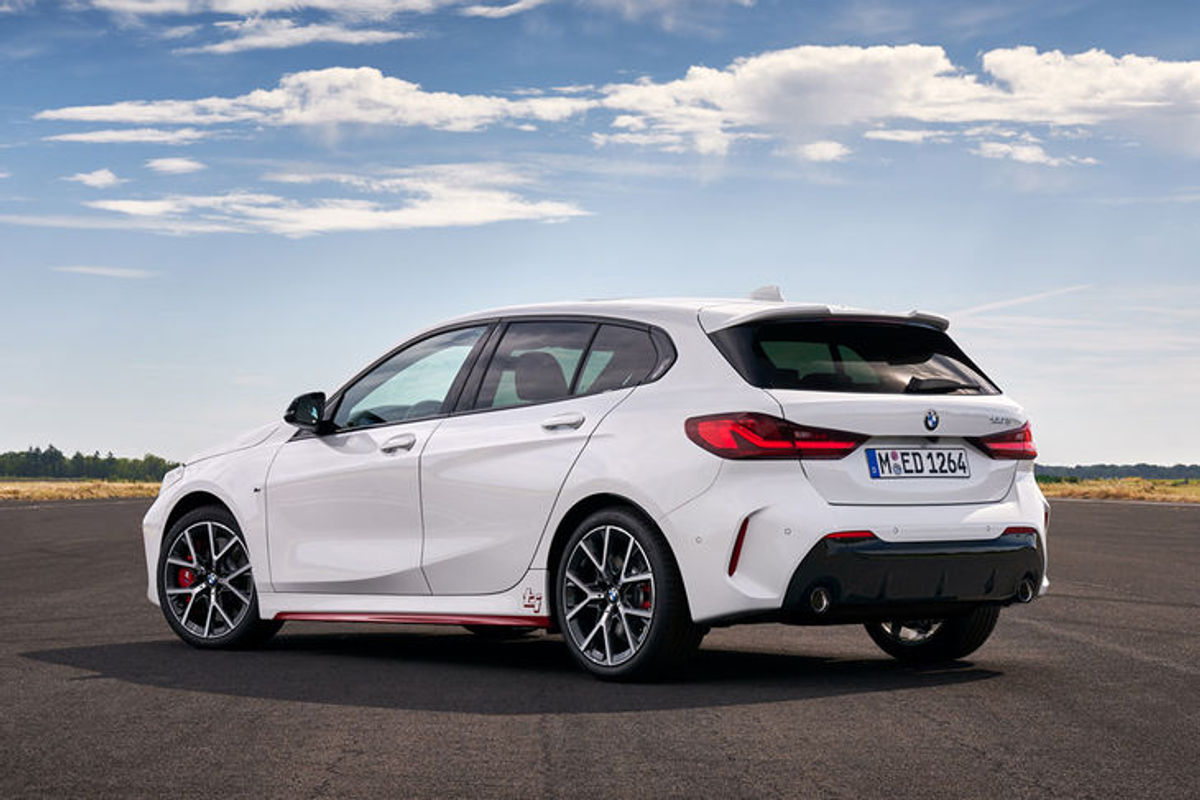
To that end, the newcomer features M Sport bumpers fore and aft with high-gloss black inserts and specially sculpted side air intakes, as well as air vents at the rear that are finished in red. The side skirt extensions and “ti” livery ahead of the rear wheel arches are in a matching red, unless the car is finished in Melbourne Red or Misano Blue metallic, when the accents come in black.
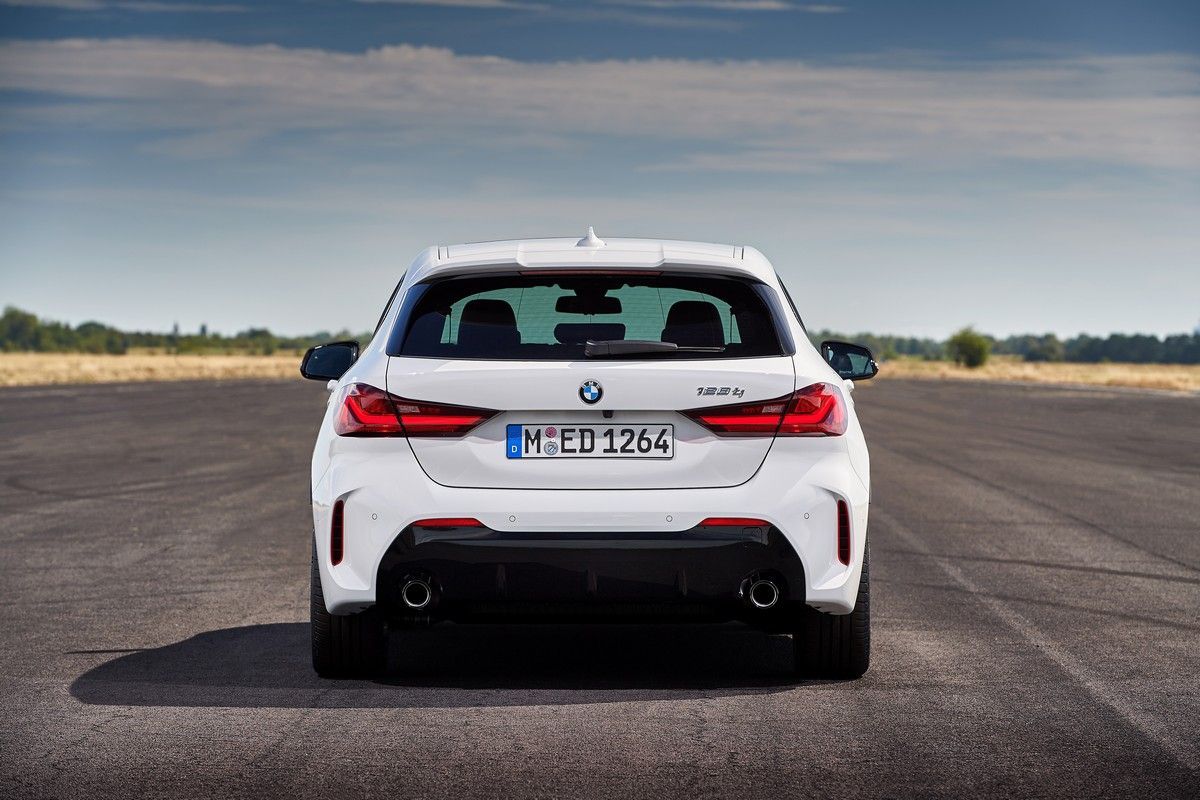
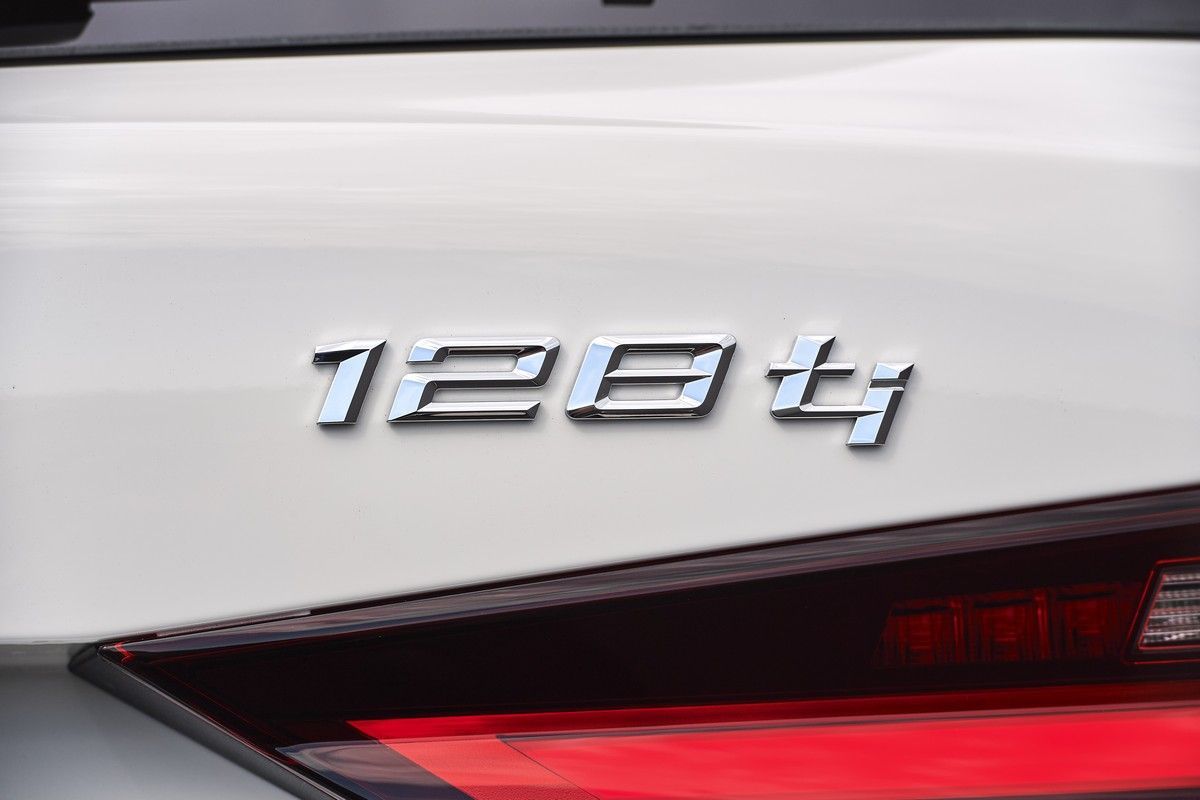
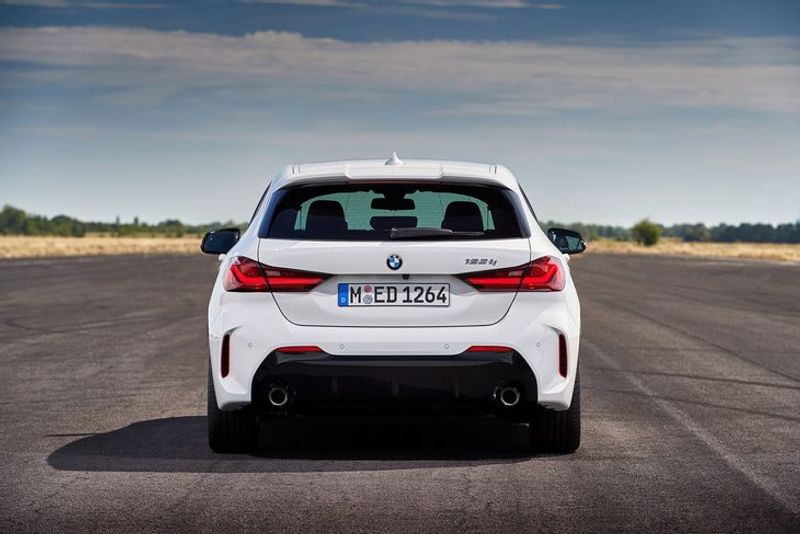
What’s more, the 128ti features a black grille, -side-mirror caps and BMW Individual High-gloss Shadowline window trim, while a darkened “BMW Individual” headlight finish is optional. The “128ti” badge on the tailgate is in chrome, the two tailpipes each have a diameter of 90 mm and the South African cars will be shod with 8J x 18 inch light alloys wrapped in 225/40 R18 92 Y XL tyres.
The black faux diffuser in the bumper is the biggest clue that this is the 128ti, the red accents are very subtle at the back.
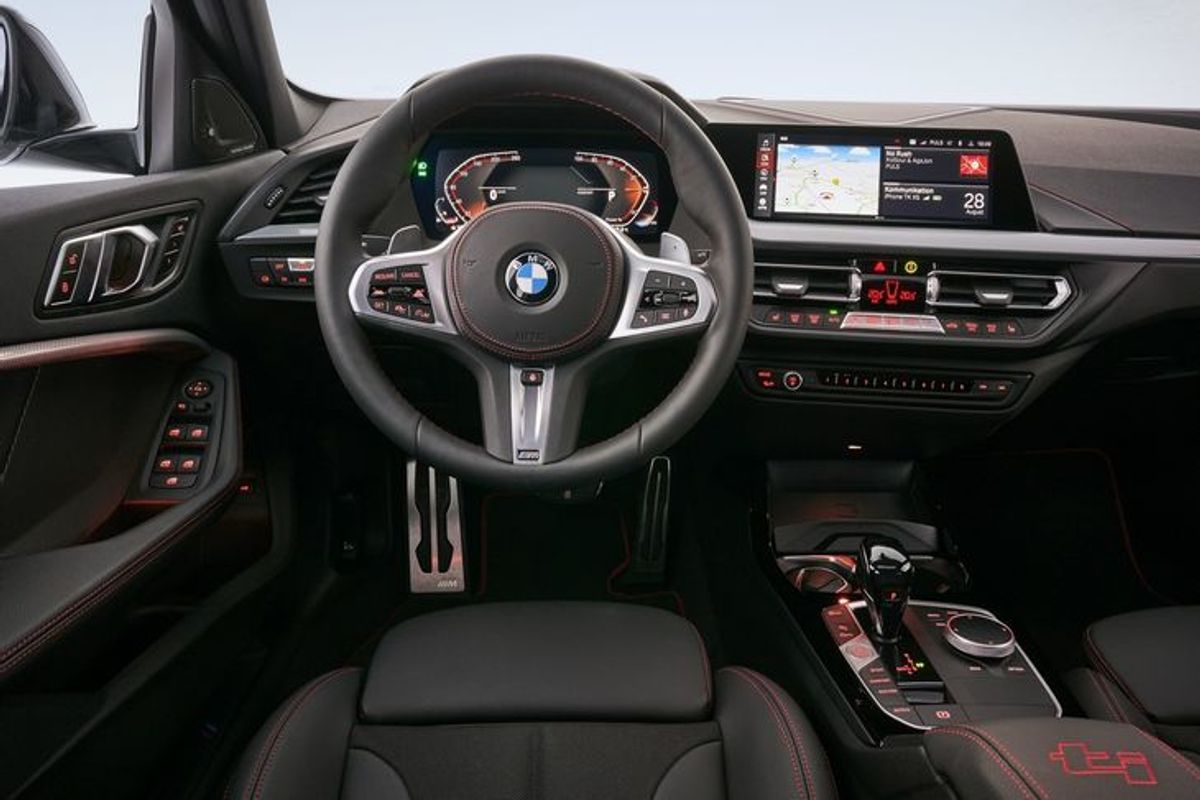
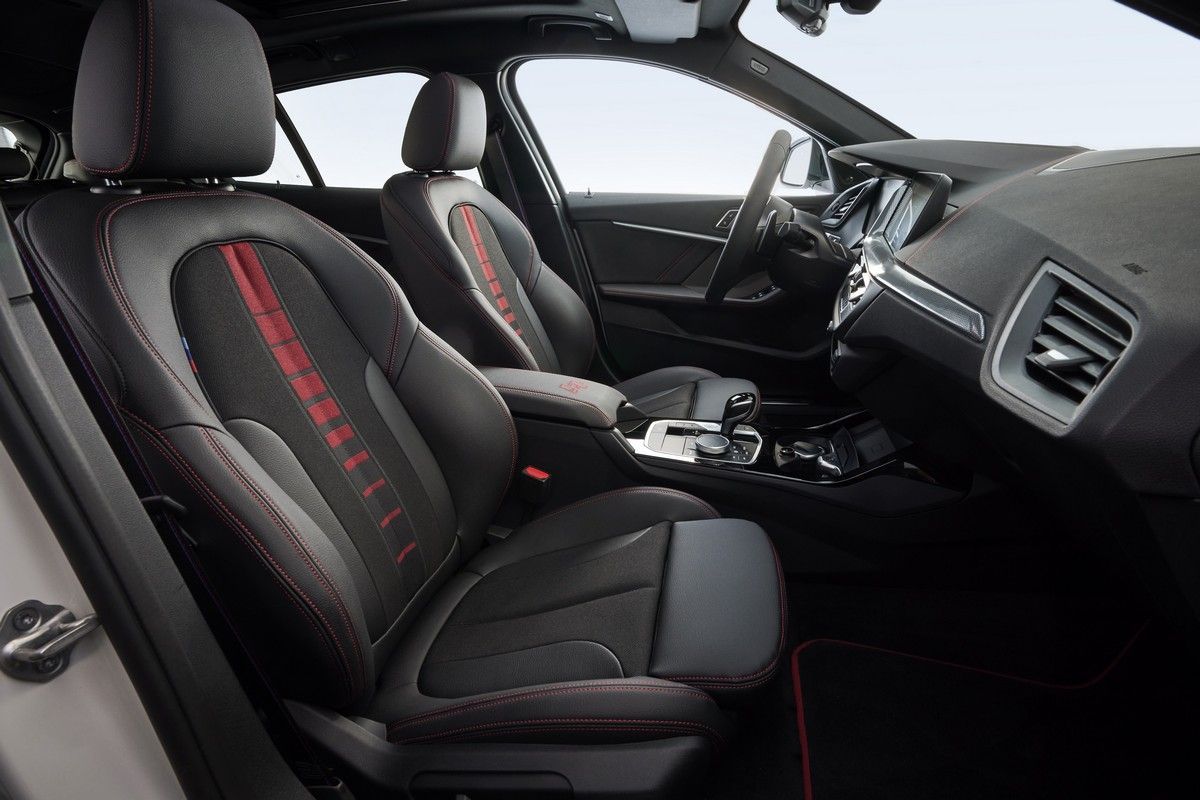
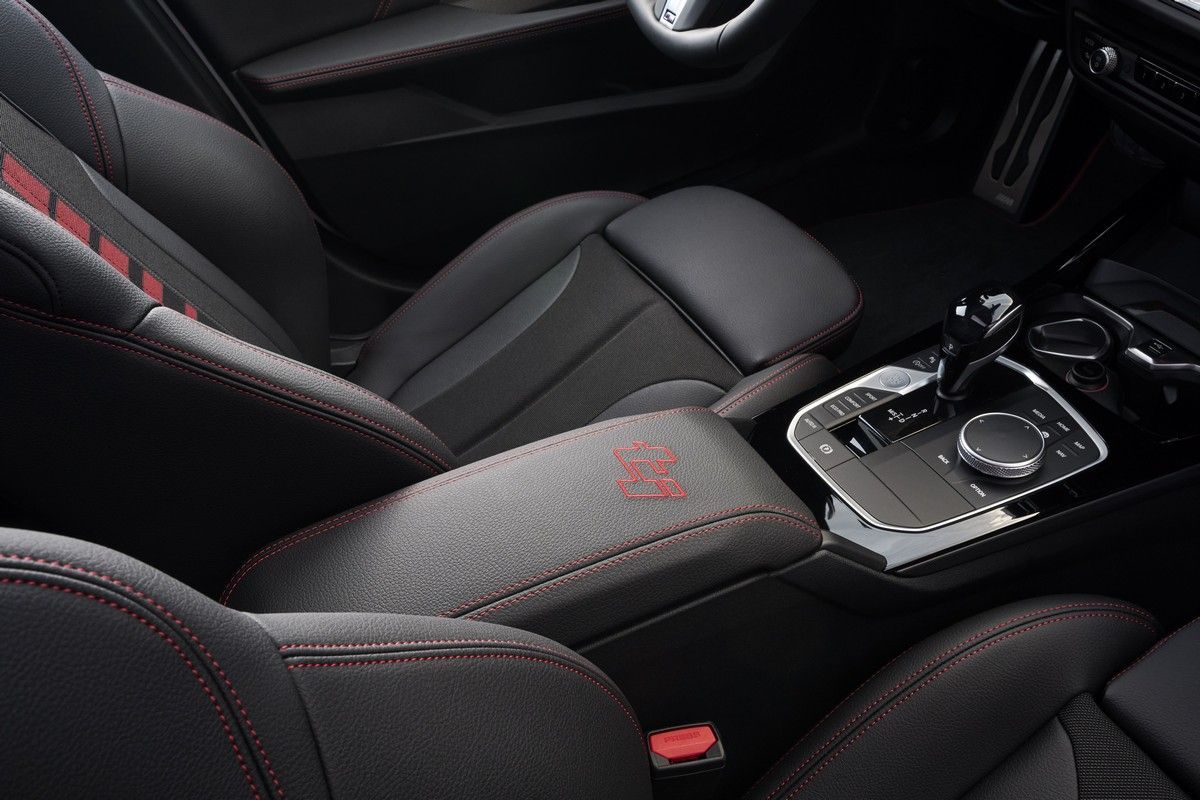
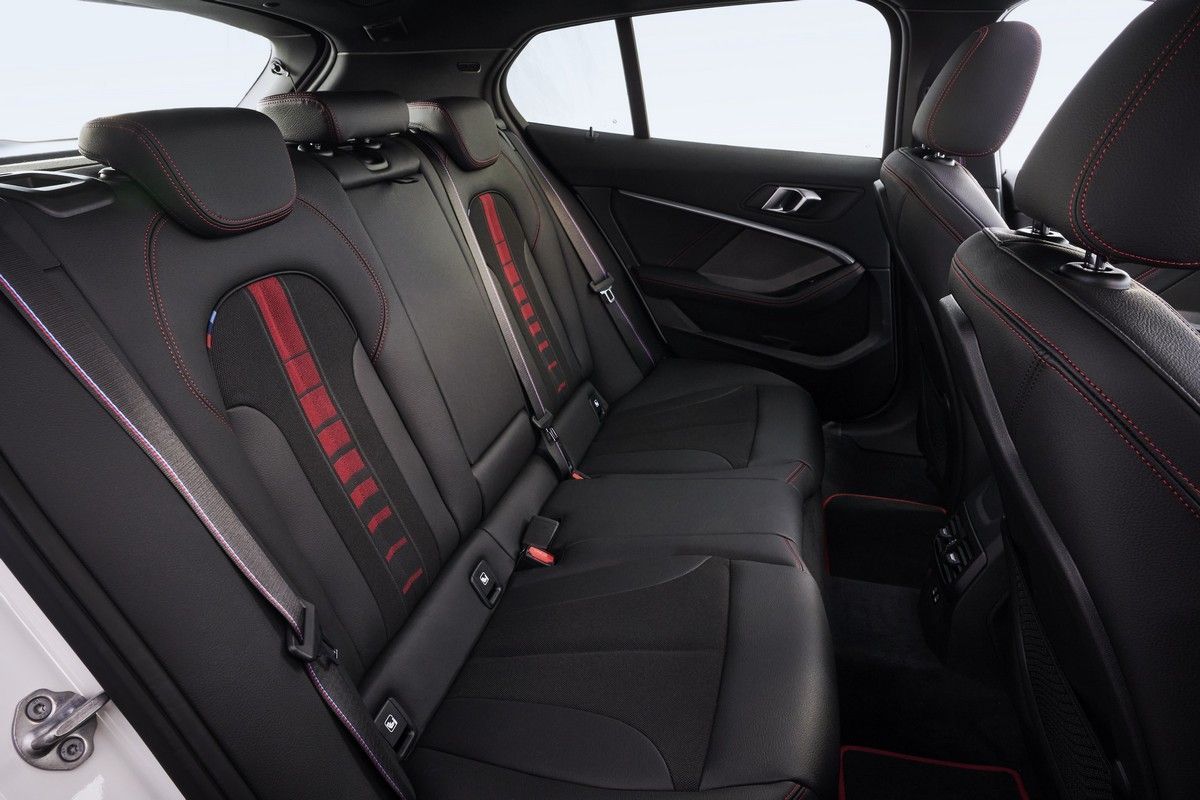
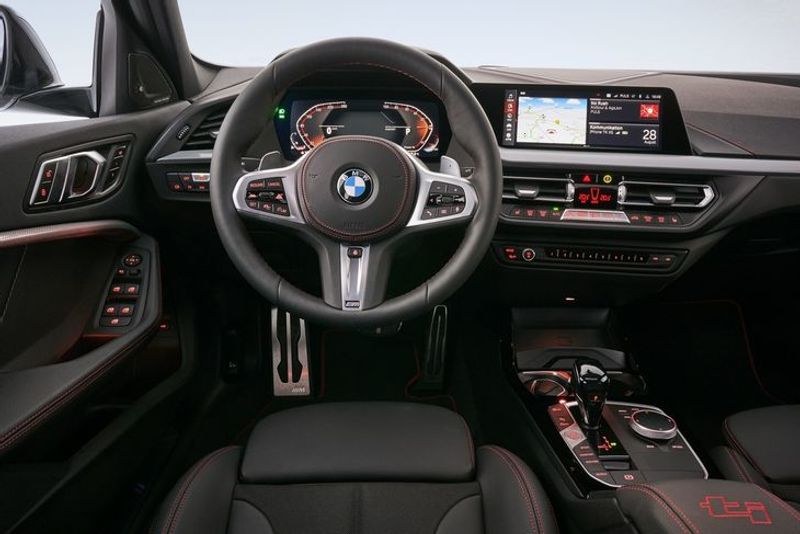
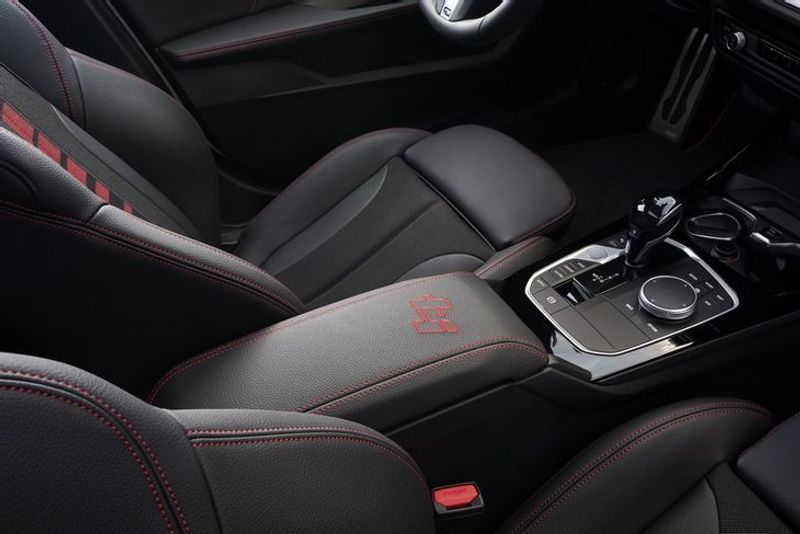
The racy-red theme continues in the BMW’s interior, which features a plethora of accents. A red-stripe pattern adorns the backrests of the standard Sensatec/cloth sport seats, while a red “ti” is embroidered into the centre armrest, matched with contrast stitching on the door panels and armrests, instrument panel, floor-mat edging and the standard M Sport steering wheel.
Standard spec includes a black headliner, an M footrest, stainless steel-capped M pedals, M strips on the front door sills, and M seat belts, but sport seats or M Sport seats (with integral head restraints and extendable seat surfaces) are optional, trimmed either in Trigon/Sensatec upholstery in black with special BMW M piping and blue contrast stitching or – like the sport seats – with Dakota leather in Magma Red or black.
Prospective 128ti buyers will appreciate the sports steering wheel and M-branded stainless-steel-finished pedals and footrest.
Where it fits in
The 128ti will slot into the 1 Series line-up just below the M135i xDrive, but whereas the latter is all-wheel-driven and produces 225 kW and 450 Nm from, the 128ti is front-wheel-driven (but fitted with a Torsen limited-slip differential) and according to BMW SA’s website, produces 180 kW (from 5 000 to 6 500 rpm) and 380 Nm (from 1 500 to 4 400 rpm) from its 2.0-litre 4-cylinder turbopetrol motor, mated with an 8-speed Steptronic sport transmission. The European and UK version produces 195 kW and 400 Nm; it’s not clear why the 128ti earmarked for South Africa and Australia will be a slightly detuned version, but we’d guess it might have to do with hot climate conditions, fuel quality, higher cost per unit or perhaps simply because BMW does not want to cannibalise M135i xDrive sales.
BMW claims its newcomer is capable of bolting from 0 to 100 kph in 6.3 sec and achieving a top speed of 243 kph, but the 128ti doesn’t only rely on its punchy powertrain – it carries over some of the M135i’s hardware, such as the lowered (by 10 mm) M sport suspension, which includes firmer anti-roll bars and anti-roll bar mounts with high preload, as well as stiffer springs and shock absorbers.
The Ti detailing in the centre armrest is matched by red contrast stitching on the seats, door cards and steering wheel rim.
Along with a model-specific steering setup, BMW has also fitted an M Sport braking system (but with red calipers), that consists of 360 mm ventilated discs with aluminium 4-piston monoblock fixed callipers at the front, while 300 mm discs are fitted at the rear.
Crucially, the front-wheel-drive 128ti is around 80 kg lighter than its flagship sibling and the limited-slip diff, with locking factors of 31% when accelerating and 26% when decelerating, is assisted by BMW Performance Control, whose “sharper” yaw-moment distribution boosts rear-axle agility and the 1 Series range’s integral ARB (near-actuator wheel slip limitation) technology, which works in conjunction with DSC to reduce power understeer – a typical drawback of front-wheel-drive cars – “without the need for corrective inputs to stabilise lateral dynamics,” BMW says.
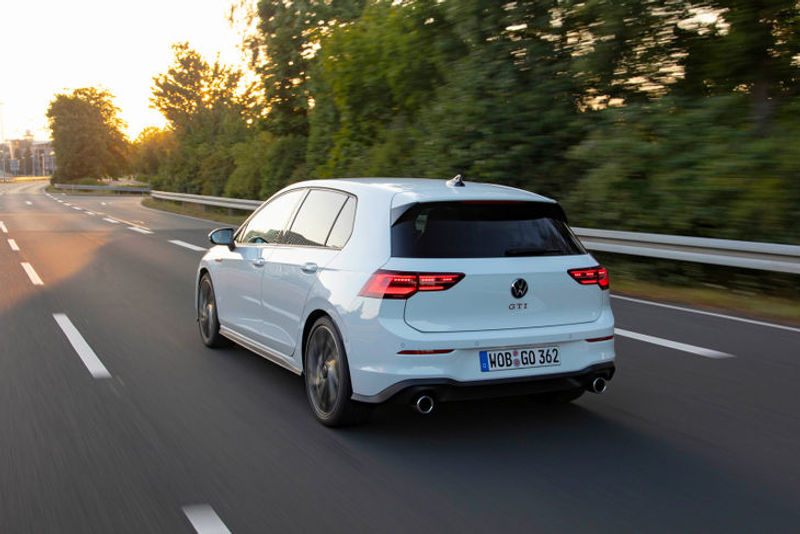
The Volkswagen Golf 8 GTI is also scheduled to arrive in South Africa early next year. Read our launch review here.
Now for the proverbial tale of the tape. Usually, a high-end (but non-M) 1 Series derivative would be compared with 2.0-litre turbopetrol versions of the Audi A3 Sportback and Mercedes-Benz A-Class; but seeing as Audi does not currently offer anything between its 1.5-litre turbopetrol- and S3 derivatives, the Bimmer’s first and best premium-marque competitor is the Mercedes-Benz A250 AMG Line, which delivers 15 kW and 30 Nm less than its Bavarian rival. Compared with the Volkswagen Golf 8 GTI, the 128ti produces an identical peak power output (180 kW) and just 10 Nm more torque.
The Bimmer closely trails the Megane RS 280 Lux/Cup, i30 N N-DCT and Civic Type R in terms of maximum torque output (by 10 Nm to the Renault, 12 Nm to the Hyundai – which is not yet confirmed for the South African market – and 20 Nm to the (manual-only) Honda. Of the trio of cars, perhaps the Megane RS 280 Lux is the most natural 128ti competitor, but we don’t believe it’s in the same league as the BMW in terms of premium appeal. In the table below, we’ve also included the figures of the limited-edition RS 300 Trophy and Golf 7.5 GTI TCR, both of which arrived in SA recently.
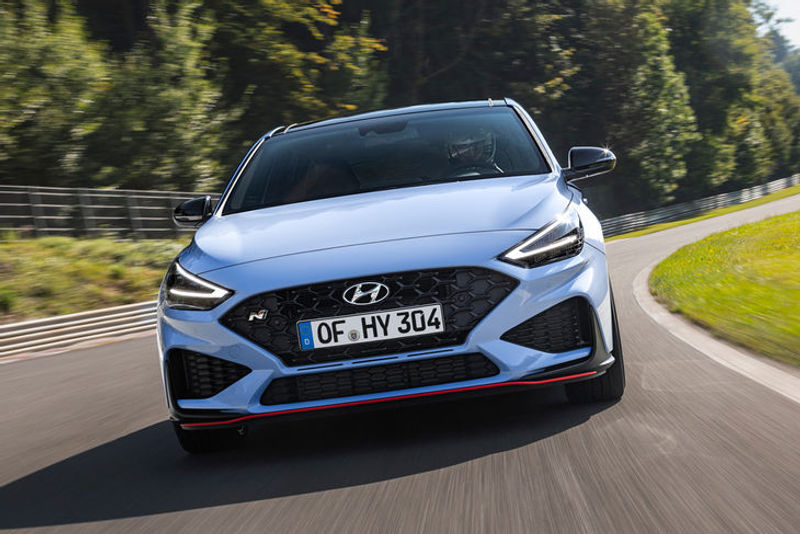
With the introduction of a dual-clutch automatic ‘box, the facelifted Hyundai i30 N has a bigger target market. Read more.
Here’s a breakdown of what the market’s headlining hot hatches produce:
The all-new BMW 128ti will be arriving in South Africa in the first quarter of 2021, which is round about the same time as the arrival of the new Volkswagen Golf 8 GTI. Let’s get ready to rumble.