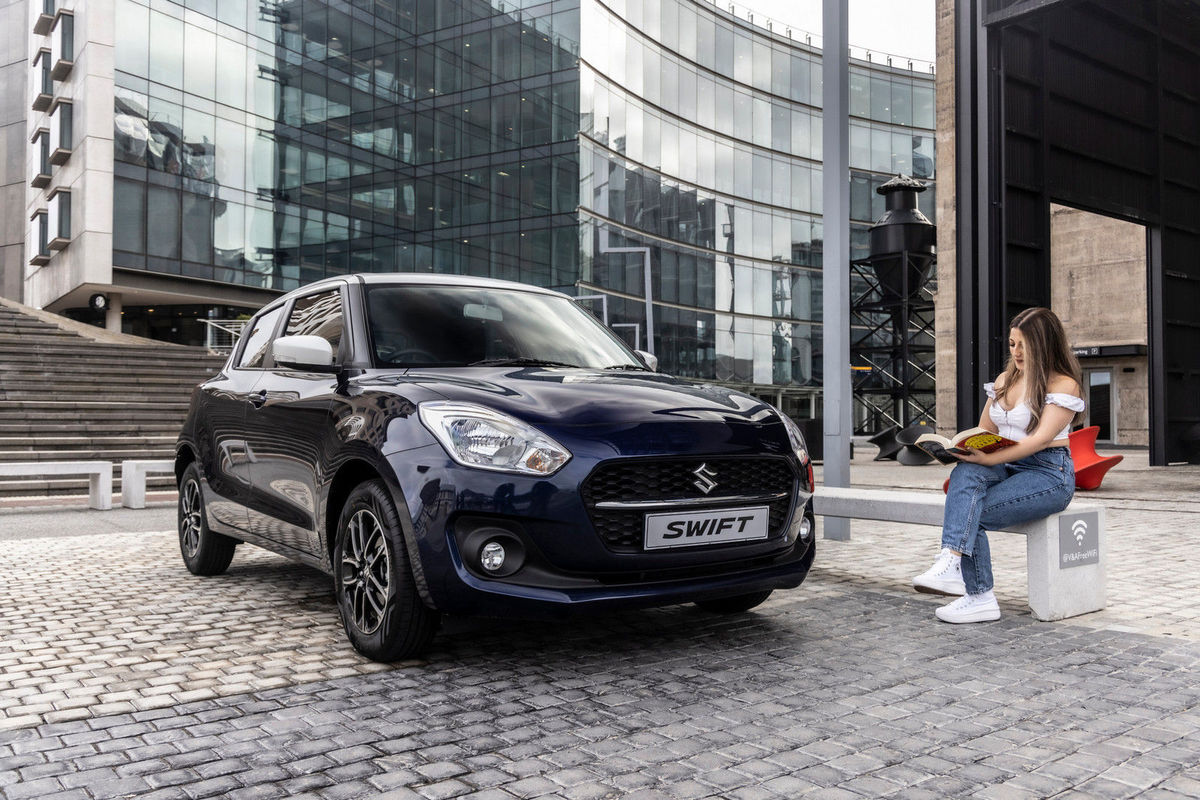
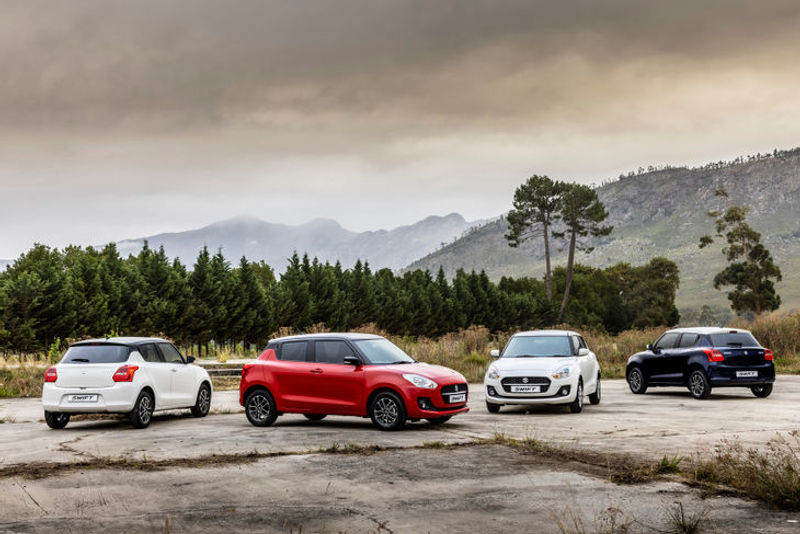
Suzuki – the fastest-growing automotive brand in the country – has updated its top-selling model, the Swift. We headed out to Gordon’s Bay to give it a whirl.
What’s new on the Suzuki Swift?
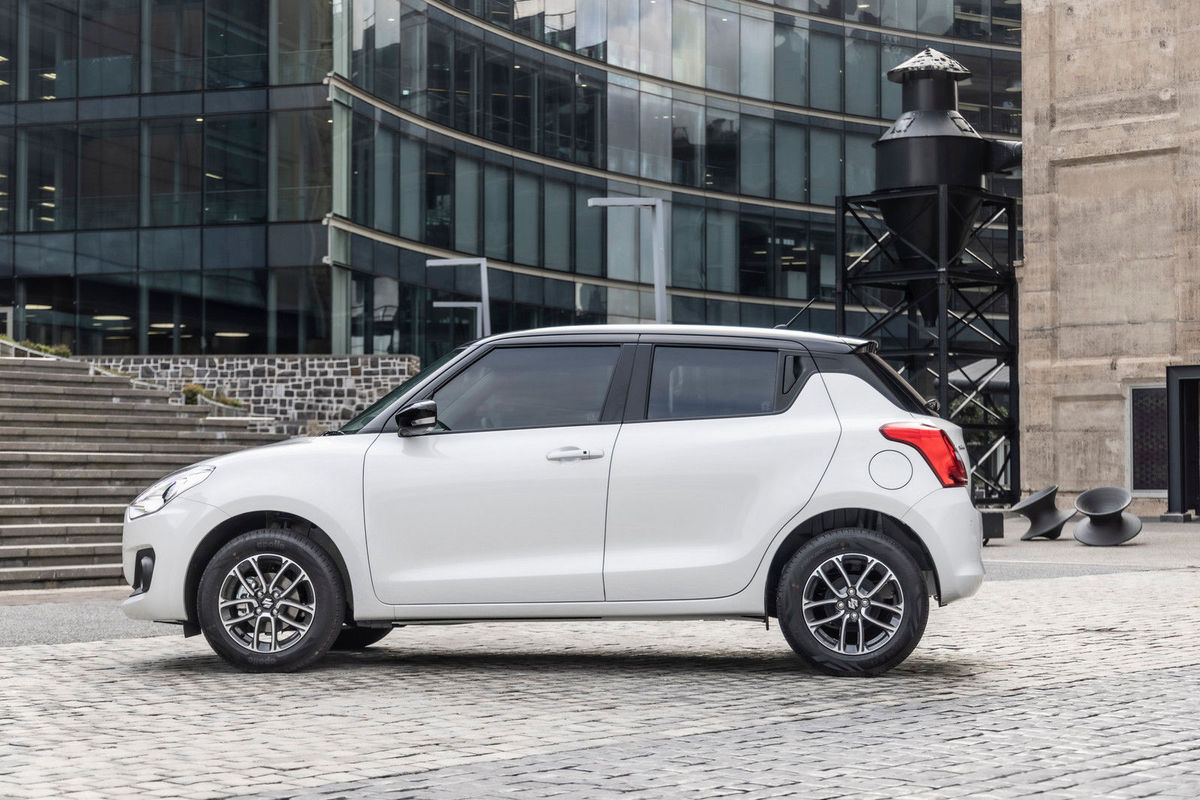
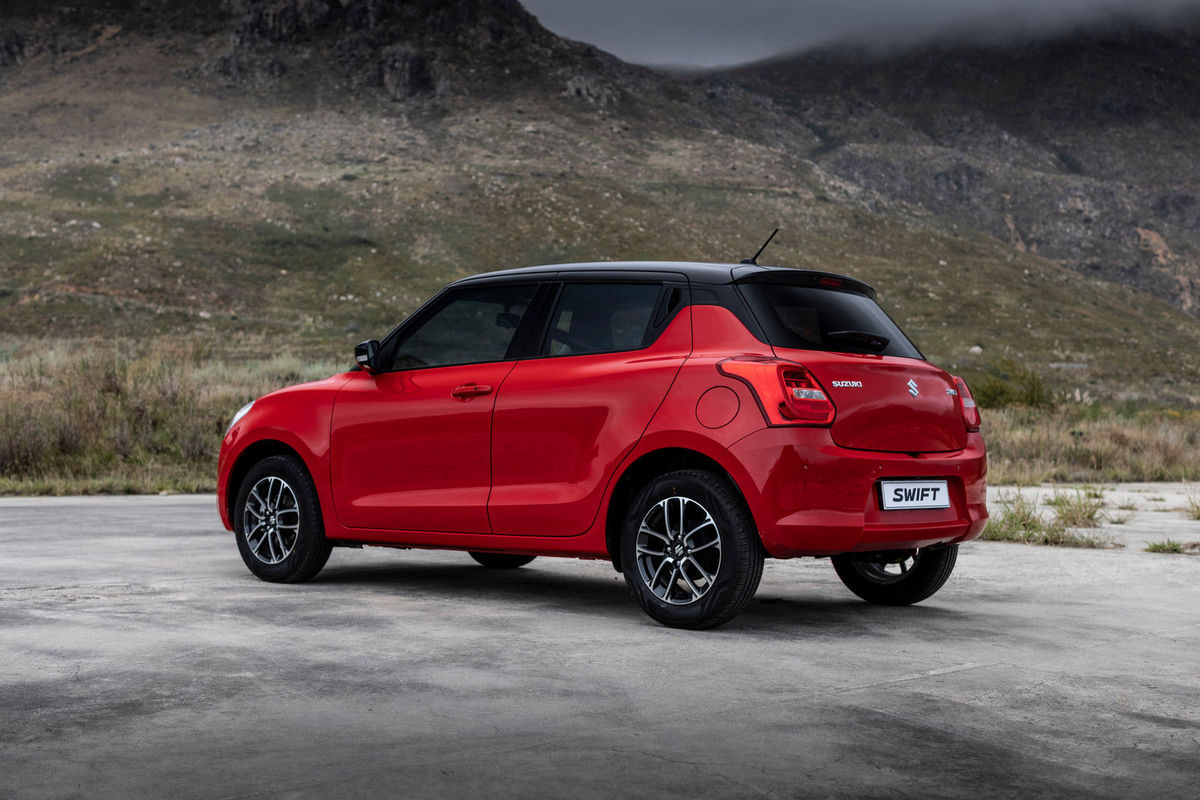
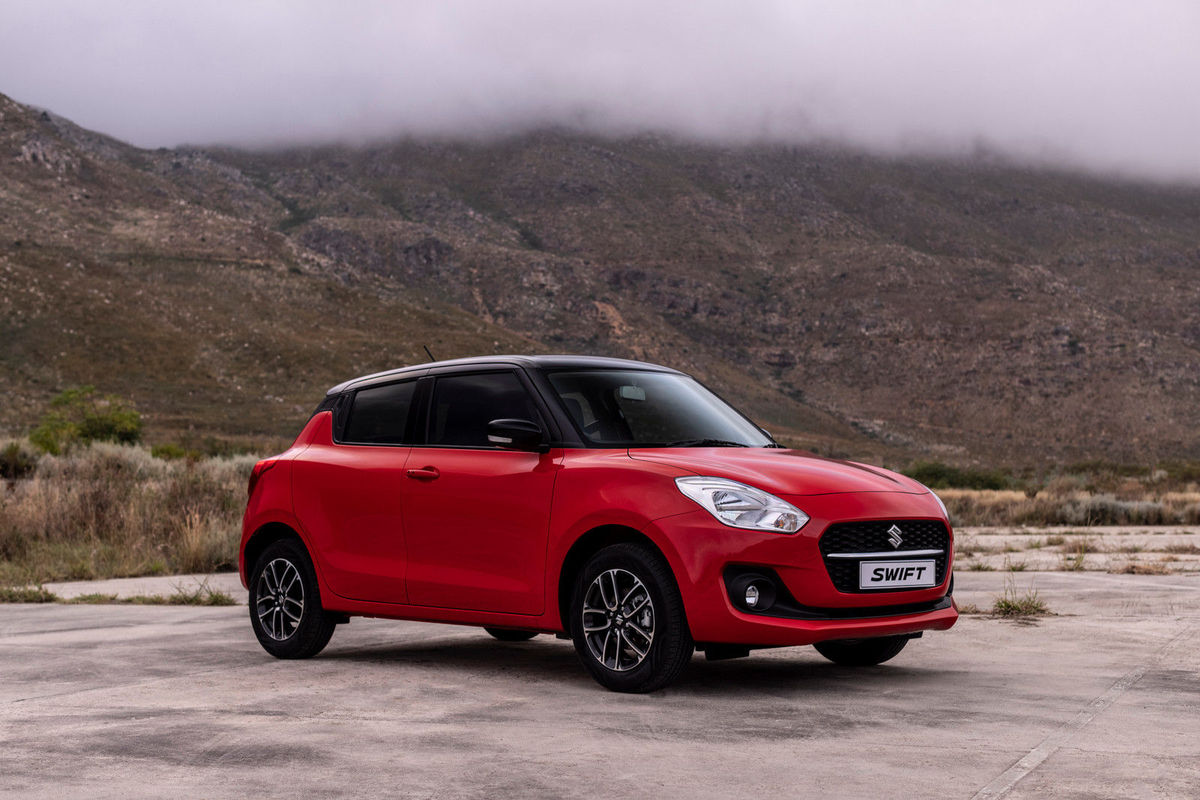
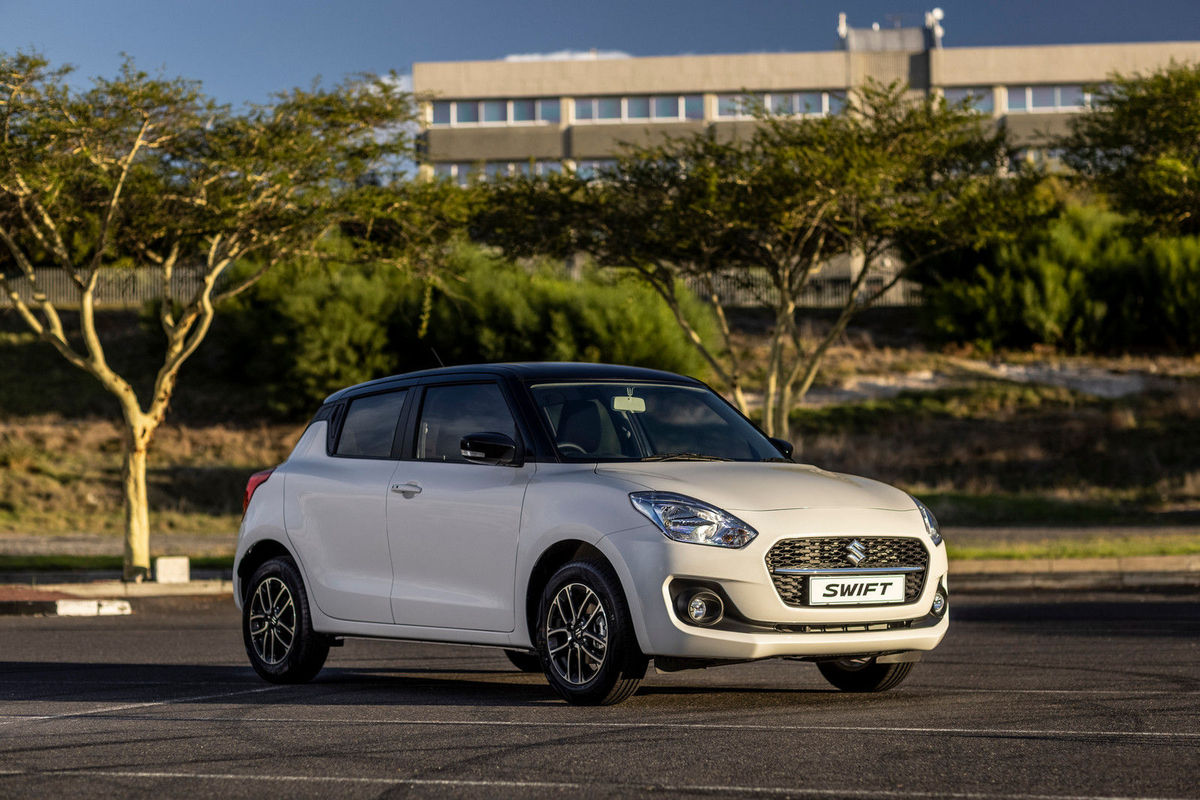
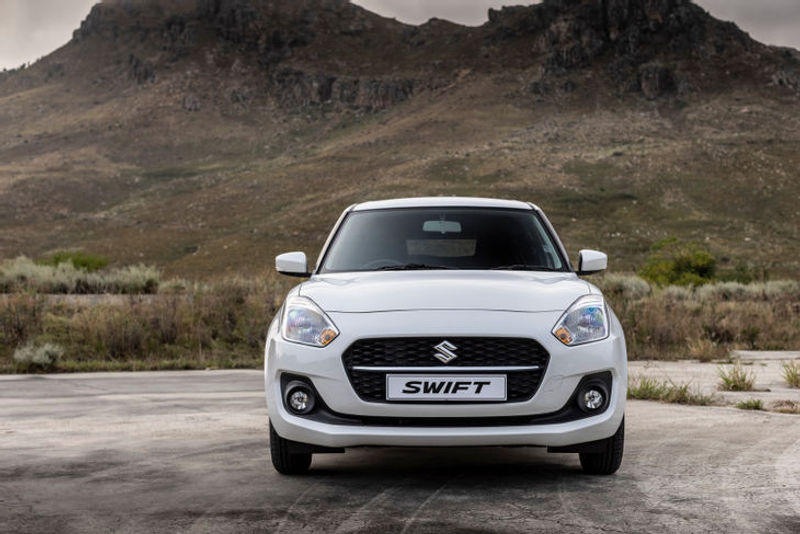
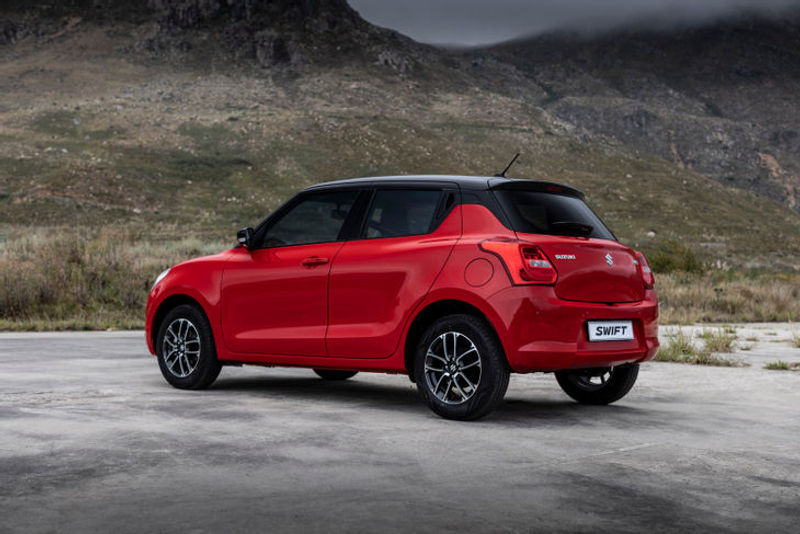
Even Suzuki regards this update to its popular compact hatchback/budget car as "minor". The revision incorporates a few new colours (including some 2-tone options on the GLX derivatives) and a new 15-inch alloy wheel design. If you have a look at the front grille, you’ll notice the addition of a chrome strip that looks a little like a French moustache… that’s also part of the update.
A big move on the safety front is the inclusion of electronic stability control across the range. Hill-start assist is now included on the AMT (automated manual) derivatives, which makes the task of pulling away on an incline a much simpler affair. Rear parking sensors have been added to GA and GL versions, while the GLX is additionally fitted with a reverse-view camera.
The silver strip midway through the bumper is part of the minor visual update.
Aside from the minor inclusions, the rest of the package remains unchanged; it's powered by the simple naturally aspirated 1.2-litre 4-cylinder petrol engine with 61 kW and 112 Nm of torque. It’s a very fuel-efficient powerplant that enables the Swift to regularly return average consumption figures well in the ballpark of the manufacturer's claim of 4.9 L/100 km.
As for pricing, in spite of the raft of new updates, Suzuki SA has instituted no more than an inflationary increase across the Swift range. The Swift has always been a budget car that offers customers excellent value and has walked away with a trio of consecutive #CarsAwards Budget Car of the Year wins.
What’s the Suzuki Swift like to drive?
New 16-inch alloy wheels and two-tone paint schemes are now part of the Swift's offering.
Suzuki may be a value-for-money-oriented car brand (most of its models – at the very least, the top-selling ones – can be grouped into "budget car" segments), but the Japanese firm certainly knows a thing or two about how to make a small car fun to drive. The Swift Sport is an absolute hoot to drive, but even when at the 'wheel of a 63-kW 1.2-litre version, there’s still some fun to be had.
It’s a light car and quite agile because of its low kerb weight, but, unlike some of its competitors, it doesn’t feel ungainly or tinny. The 5-speed manual has such a natural and quick shift action; you can’t help but enjoy making snap(py) shifts. At 120 kph, the revs are a little on the high side (at about 3 500 rpm), which brings with it a bit of engine noise, but as a city runabout, the Swift’s eager to just get on with it.
What’s connectivity like in the Suzuki Swift?
The top-spec 1.2 GLX comes standard with a 7-inch touchscreen infotainment system that’s identical to that seen in the updated Ignis and the Vitara Brezza. There’s a USB port that enables Apple Carplay and Android Auto connectivity, whereas the 1.2 GL features a standard CD player radio with Bluetooth connectivity and a USB port, while the 1.2 GA has a simple radio without mobile connectivity options.
Is the Suzuki Swift spacious and comfortable?
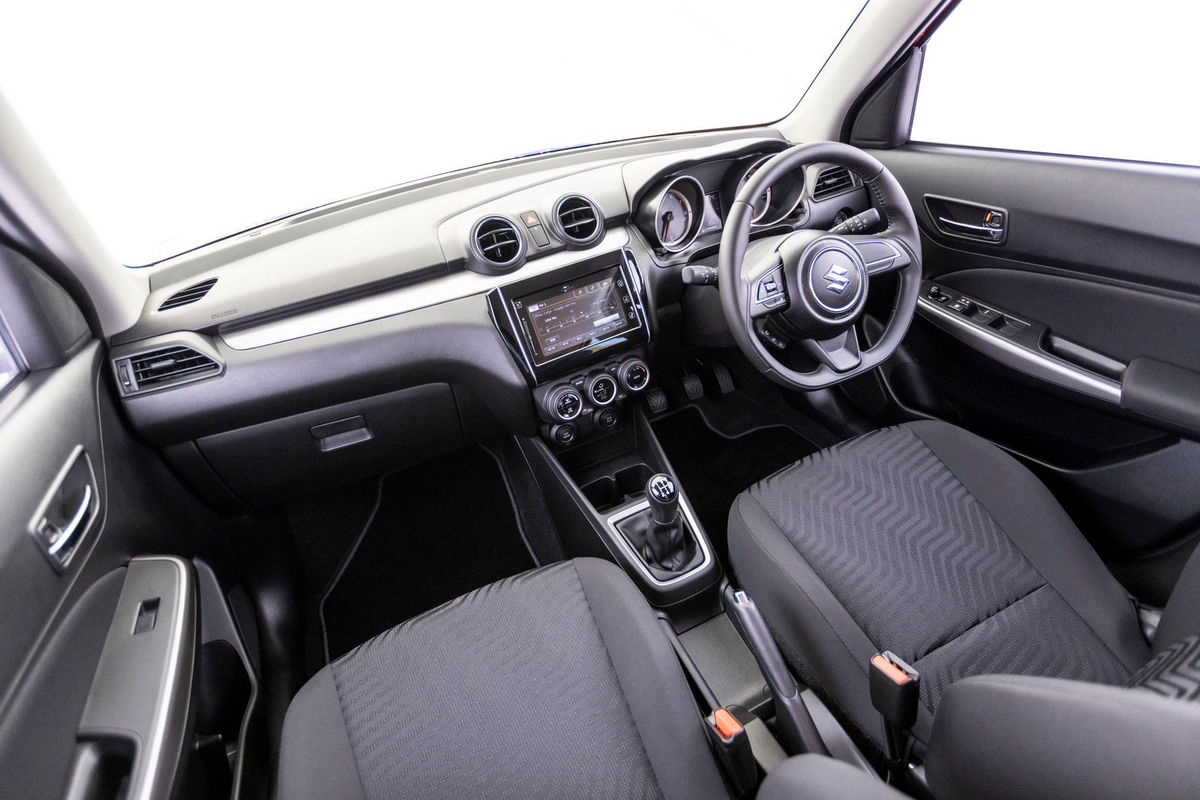
The GLX interior now features a reverse camera built into the infotainment system.
The 1.2 GLX is well-appointed with a leather-trimmed steering wheel and gear lever. The steering column is height- and reach-adjustable and, impressively, the driver's seat is height adjustable too.
In terms of overall dimensions and, therefore, interior space, the Swift is on the smaller side, at least compared with its rivals (which admittedly are more expensive) and has a fairly meagre claimed luggage capacity of 268 litres. Passenger space up front is acceptable, however. There are 2 cupholders in front of the gear lever, a small shelf for a smartphone, as well as door pockets.
The rear legroom is tight, especially when you're seated behind taller drivers, but the seatback’s not uncomfortably tight against your knees if you're an adult aft passenger of average height.
Is the Suzuki Swift safe?
The addition of electronic stability control will almost certainly increase the Swift's appeal in the eyes of safety-conscious buyers, because it reduces the risk of getting into a road accident in the first place. Dual front airbags are standard as is ABS/EBD. The only addition we'd like to see at this end of the market is the inclusion of curtain airbags, but as it stands, the Swift offers as much safety kit as its rivals.
Rear parking sensors across the range, as well as the aforementioned reverse-view camera for the 1.2 GLX, are great additions and should reduce those frustrating bumps and scuffs that inevitably occur.
Suzuki Swift pricing and after-sales
Suzuki Swift 1.2 GA MT – R180 900
Suzuki Swift 1.2 GL MT – R199 900
Suzuki Swift 1.2 GL AMT – R214 900
Suzuki Swift 1.2 GLX MT – R218 900
Suzuki Swift 1.2 GLX AMT – R234 900
The retail price includes a 5-year/100 000 km promotional warranty and 2-year/30 000 km service plan.
Summary
The Swift remains an excellent value for money offering that's fun to drive.
This update to the Suzuki Swift incorporates changes that really are minor, but it was certainly worthwhile to add electronic stability control to the local line-up… A safer car is a better car. Obviously, Suzuki didn’t want to mess with its winning Swift formula, or the range's price list, for that matter, so it remains a great buy and excellent value-for-money proposition for those shopping in the budget-car segment.
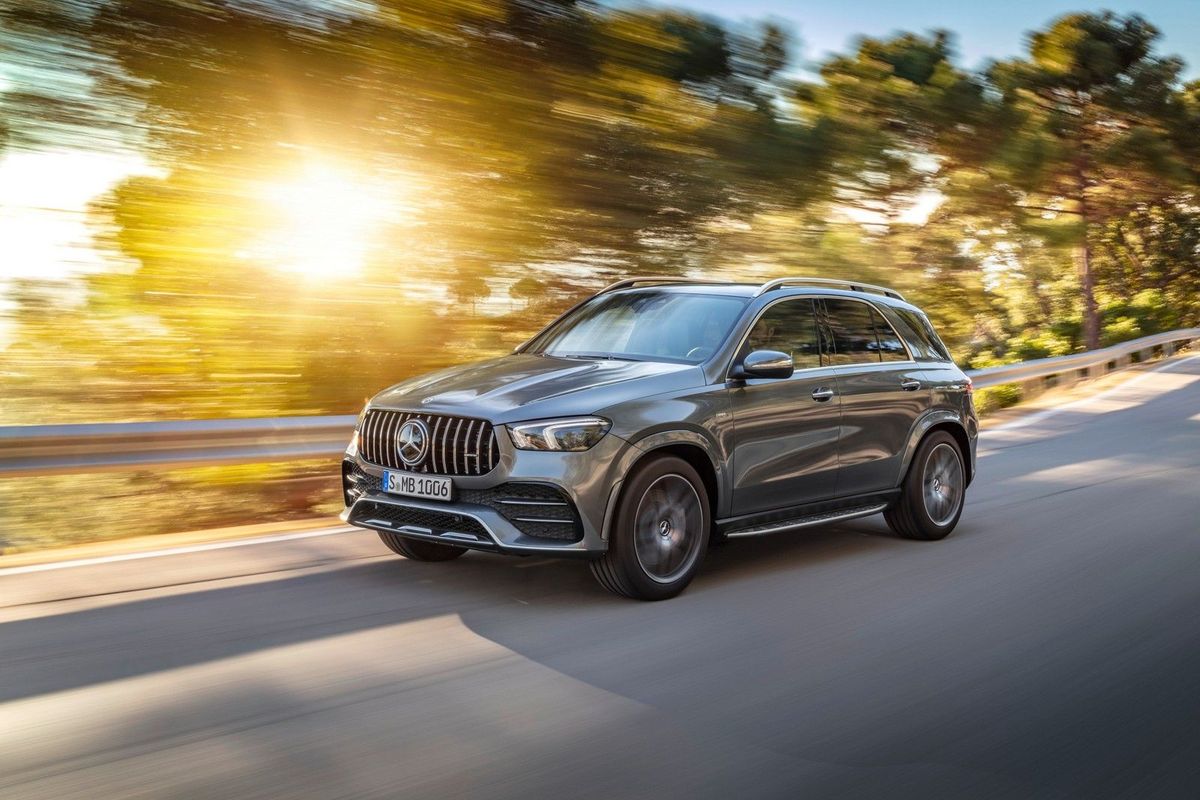
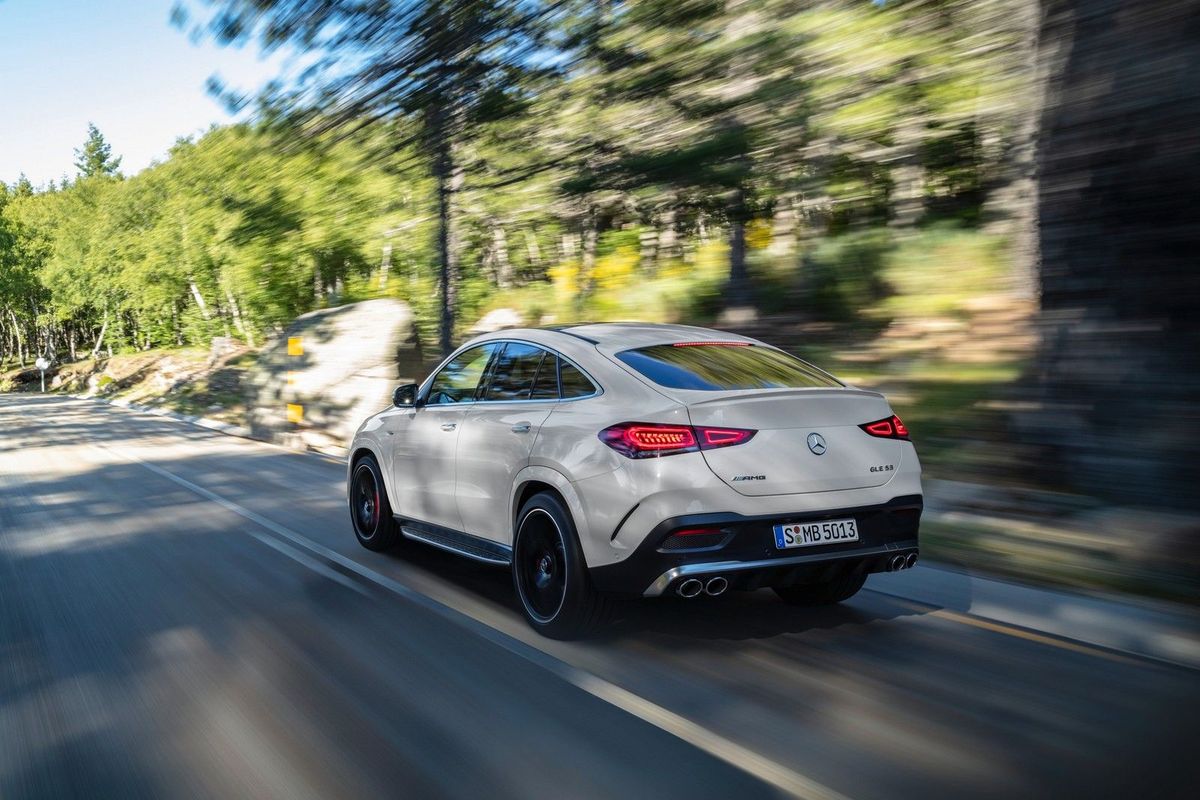
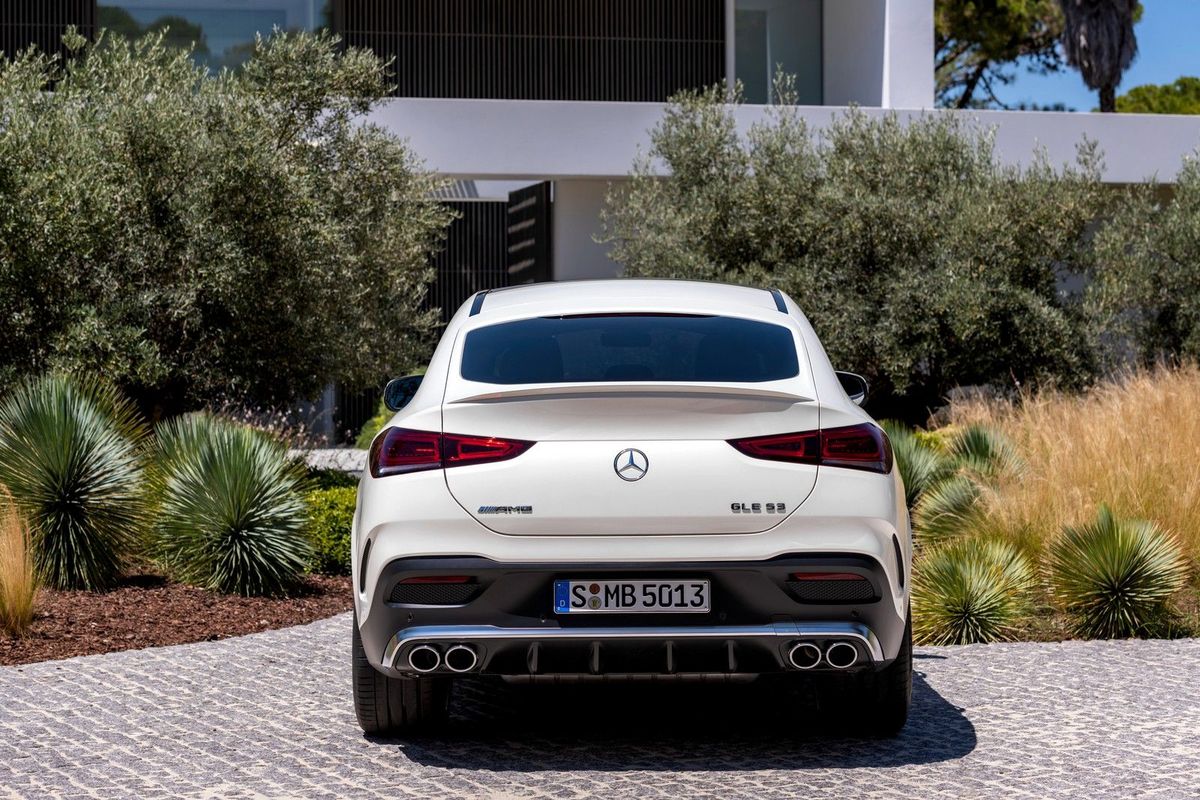
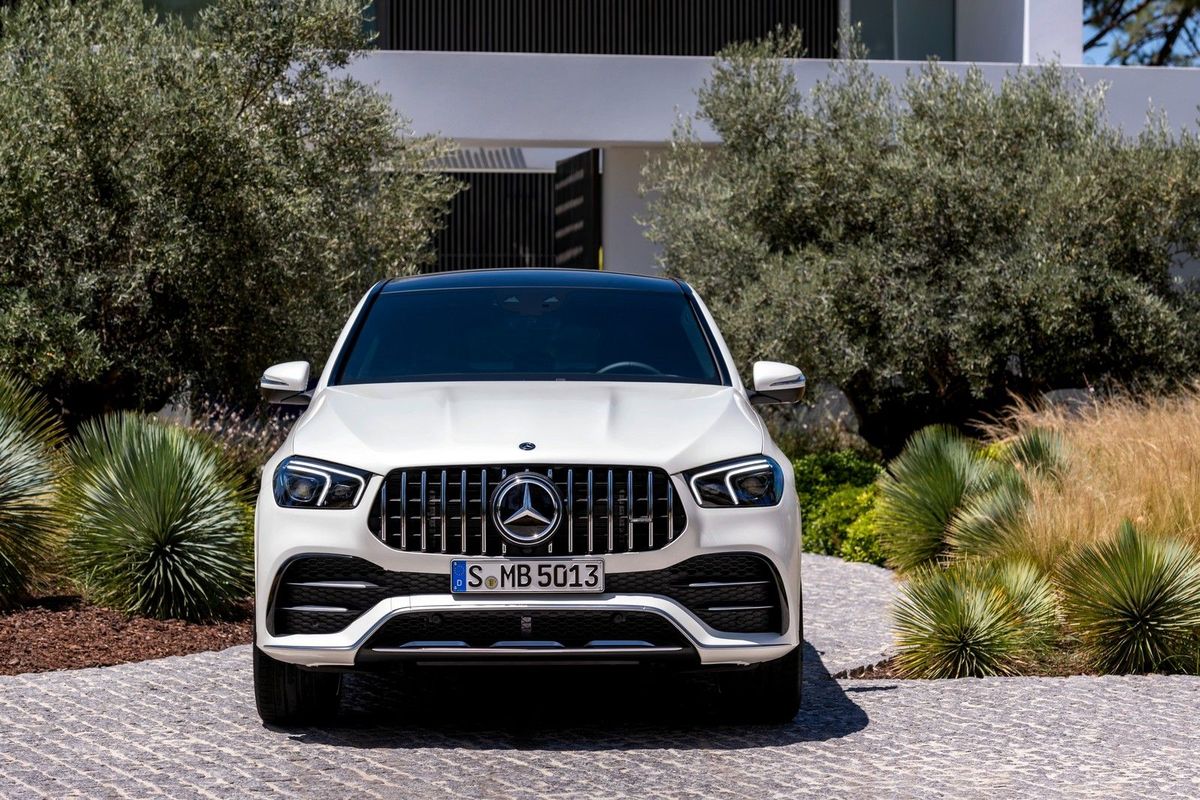
Mercedes-AMG has launched its GLE 53 4matic+ and GLE 53 4matic+ coupe in South Africa this week. Here's how fast they are, plus how much you can expect to pay.
Mercedes-Benz and Mercedes-AMG is taking full advantage of the demand for premium SUVs and has launched even more options for high net worth individuals. The GLE is a large SUV available in 5- or 7-seat configurations, and with a variety of petrol and diesel engines.
For the AMG fans, you're options are restricted to petrol only. Two engines are on offer, the 53 and the 63. The 53-badge is your entry-point into AMG GLE ownership. If you're wanting even more, then look to the 63 S range, complete with biturbo V8 power.
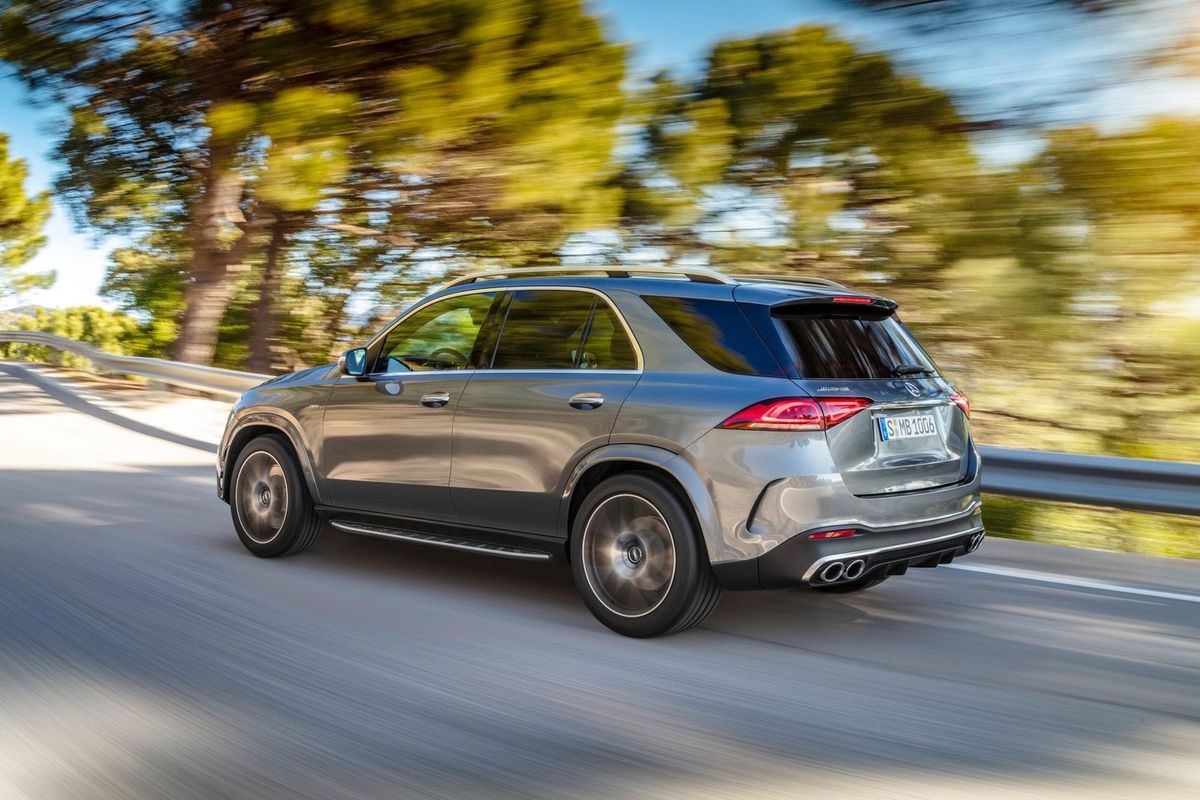
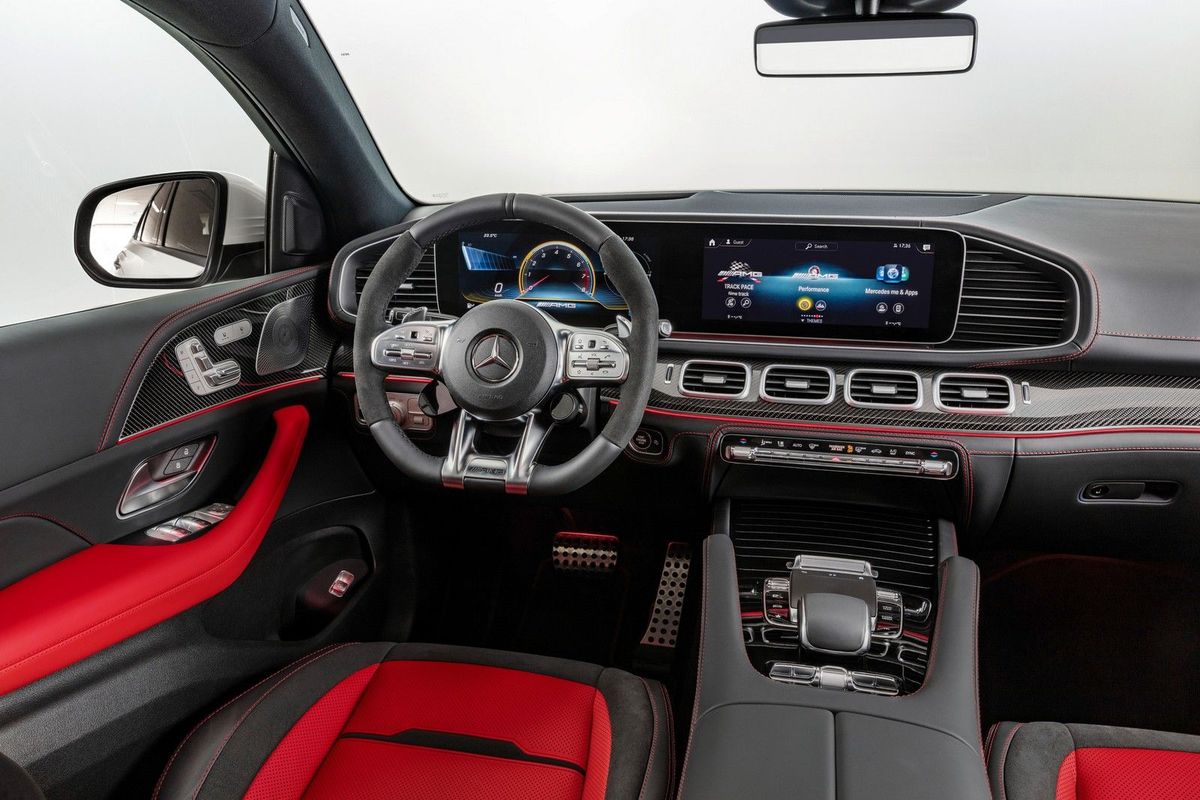
The newcomers are seperated from their lesser siblings with an AMG-specific radiator grille, large wheels (20-22 inch available), flared wheel arches, AMG badging and quad exhausts. Inside, the cabin gains red contrasting topstitching on the upholstery and red seat belts, AMG-specific interior features and controls. There's also an AMG Performance steering wheel in black Nappa leather with red contrasting topstitching and red 12-o'clock marking. Both the GLE 53 and GLE 53 coupe come with the MBUX infotainment system with AMG-specific features.
Mercedes-AMG 3.0-litre engine
The engine is a 3.0-litre electrified inline 6-cylinder motor with twin turbocharging and an electric auxiliary compressor. Power is rated at 320 kW and 520 Nm, with power going to a variable all-wheel drive and a 9-speed automatic gearbox.
Mercedes-AMG claims a 0-100 kph time of 5.3 seconds and it will run to an electronically limited top speed of 250 kph. The electrification technology is impressive with the EQ Boost starter generator briefly provides an additional 16 kW of output plus 250 Nm of torque and additionally feeds the 48 V on-board electrical system. While fuel economy is unlikely to be high on the typical AMG customer's priorities, Mercedes-AMG claims its new 53 products consume 9.3 L/100 km.
The Mercedes-AMG GLE 53 range features air suspension with sporty spring/damper set-up and adaptive adjustable damping ADS+ (Adaptive Damping System). There are three modes Comfort, Sport and Sport+ available, with additional offroad modes of Trail and Sand, should you wish to take your Mercedes-AMG SUV offroad.
“As the inventors of the performance SUV, it is important to us to continue to lead when it comes to innovations, driving dynamics, individuality and design. The new GLE 53s offer more power than their predecessors, and the Coupé adds style and elegance to our SUV family. Both guarantee a thrilling driving experience,” says Johannes Fritz, Co-CEO for Mercedes-Benz South Africa and Executive Director for Mercedes-Benz Cars.
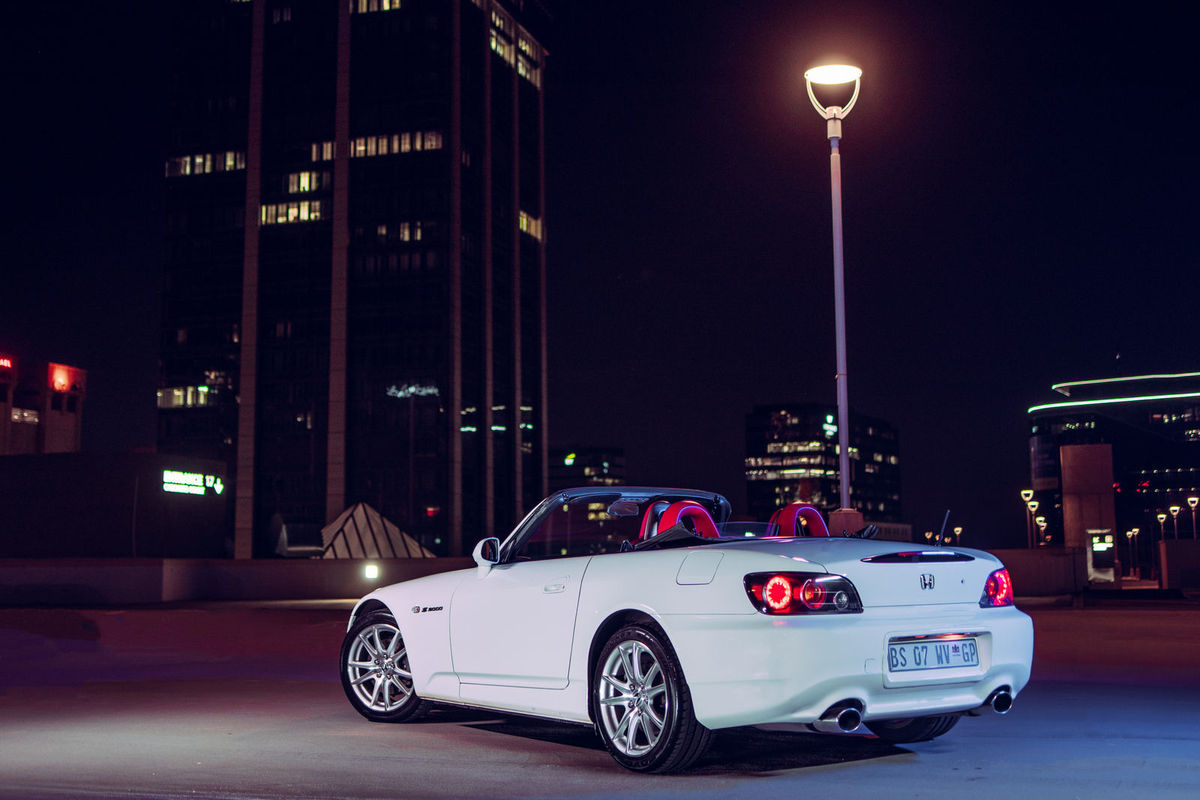
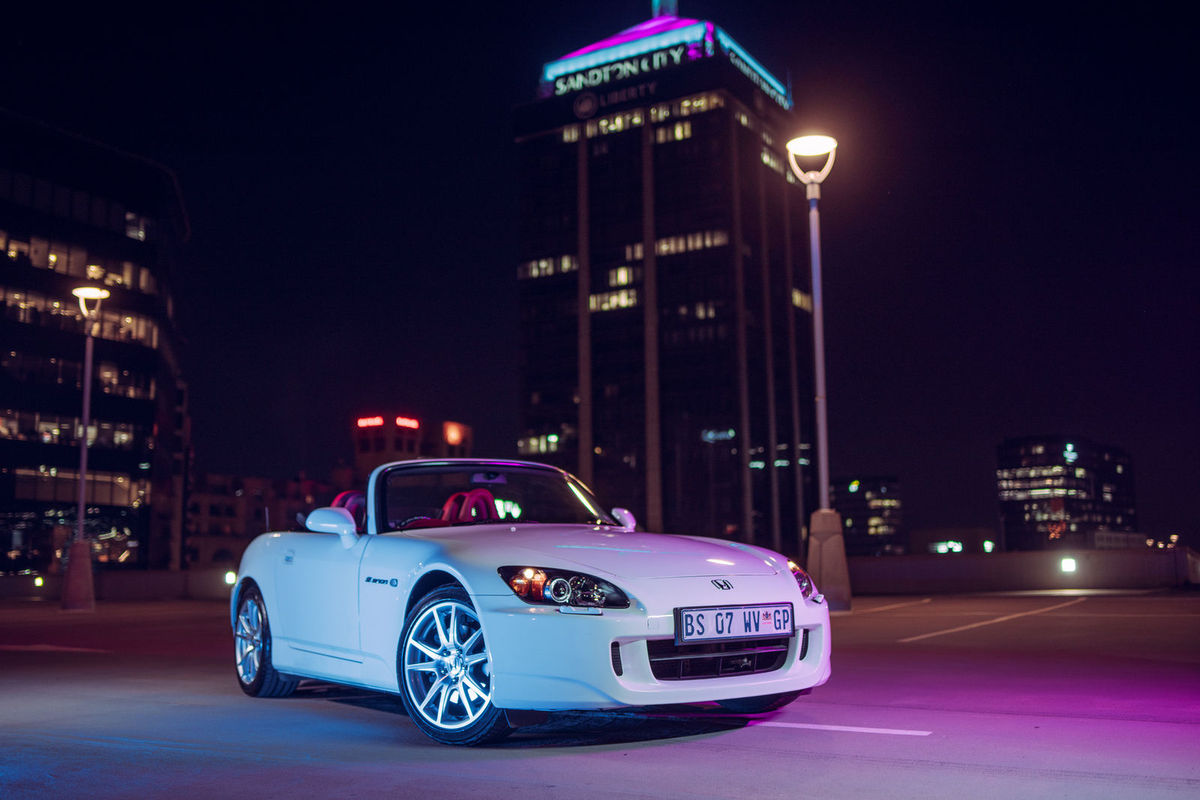
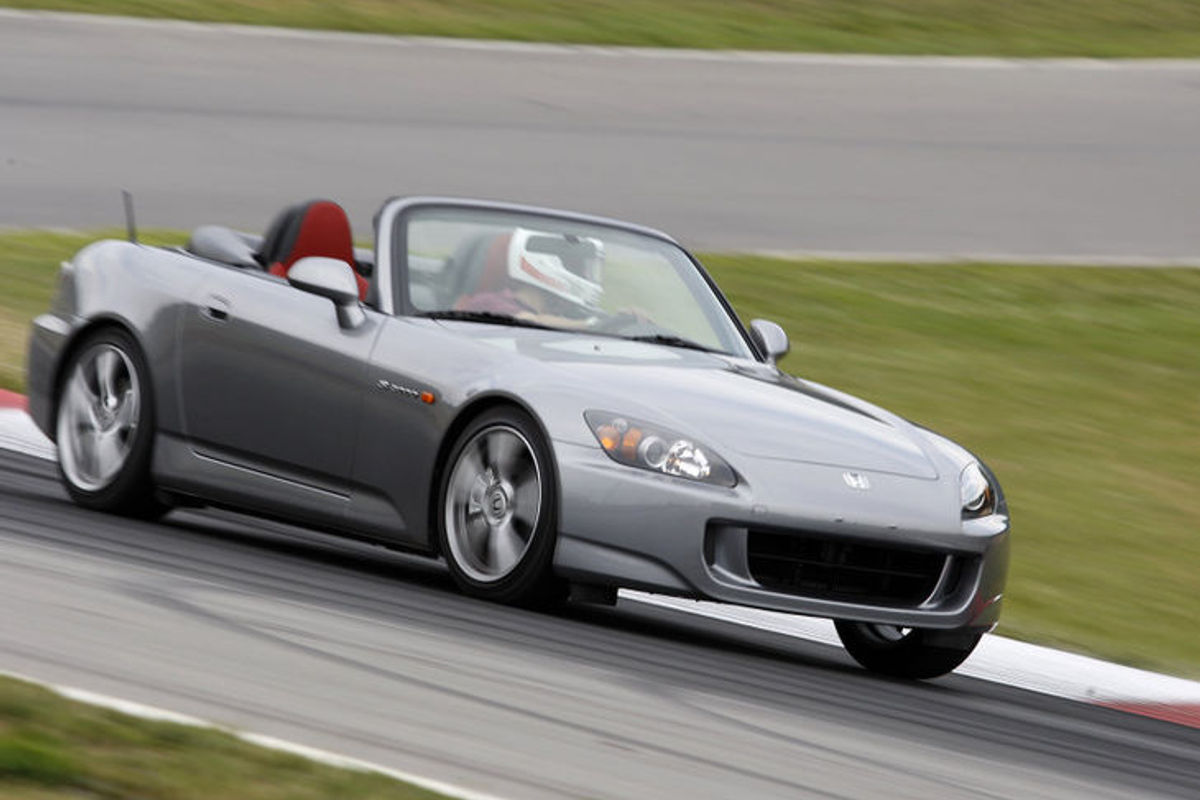
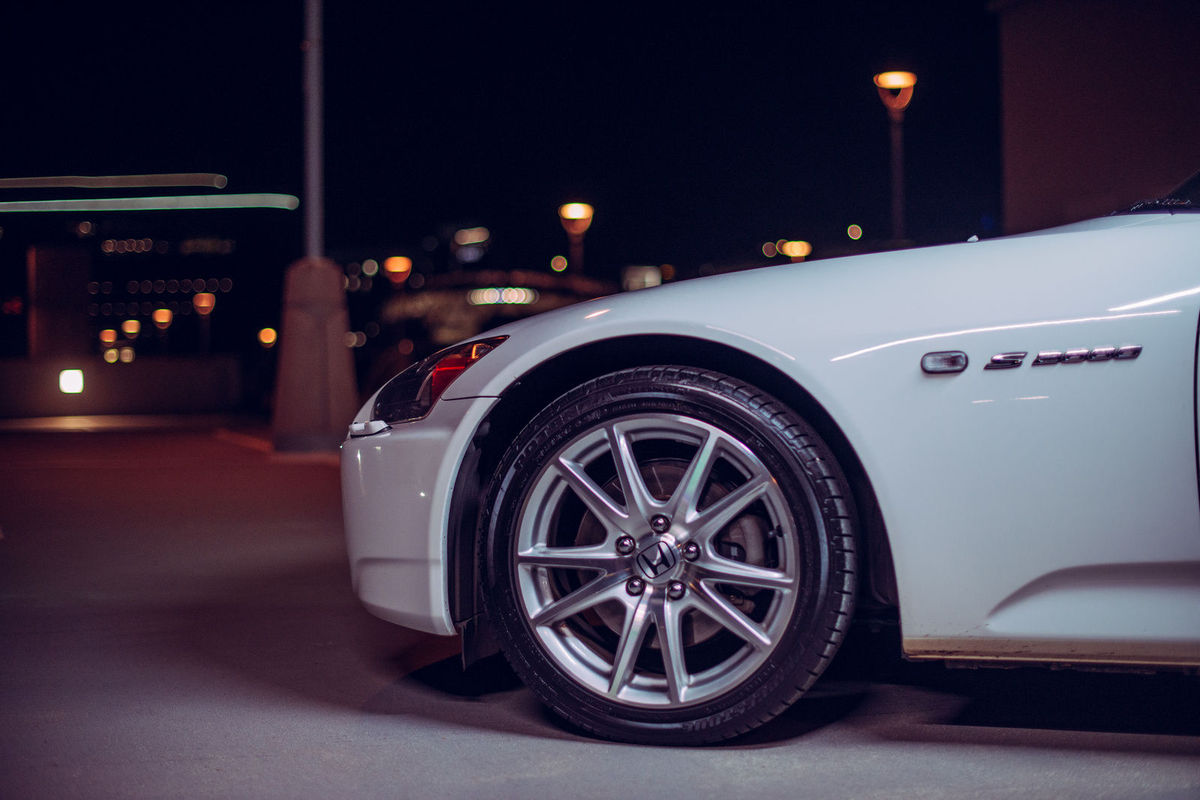
Aspirational Japanese modern classics – there aren't that many to speak of, at least not when compared with the many exceptional models that European brands have produced. Thankfully, there is one example from the Far East that almost everyone agrees is certain to reach classic-car status. Enter the Honda S2000.
At the 1995 Tokyo Show, Honda caused a stir when it unveiled the Honda Sport Study Model concept car. Powered by a 2.0-litre 5-cylinder motor, the SSM heralded the return of a Honda roadster –something the brand hadn’t offered since the S800 was discontinued in 1970. Honda then proceeded to tease the world with the SSM at various events, until 1999, when the S2000 made its debut.
Many enthusiasts' first exposure to the S2000 was its starring role in the Need For Speed Underground console/PC game, or perhaps it was Suki’s dazzling pink Veilside S2000 in the 2Fast 2Furious movie – whatever the case might be, the S2000’s rather small dimensions and striking proportions would likely have raised more than a few raised eyebrows and a elicited a number of intrigued smirks.
The keys to the S2000’s appeal, however, were its balanced, lightweight chassis and the screaming F20 4-cylinder DOHC-VTEC motor with a peak power output of 177 kW and a stratospheric 9 000-rpm rev limit! Finish the package off with a deliciously notchy 6-speed manual gearbox and legendary Honda reliability, and the result was more special than anyone could ever have imagined…
Most people's first exposure to the S2000 may have been in the cult Fast and Furious movies.
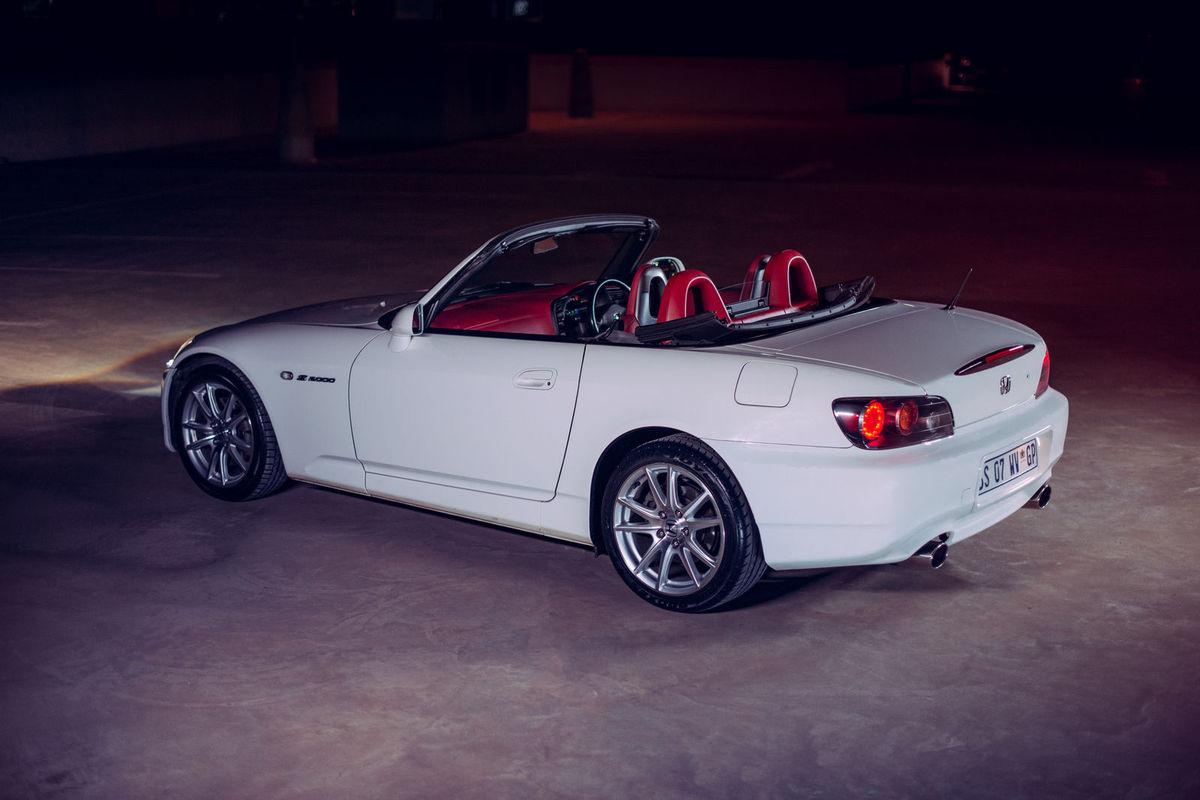
Two models of S2000 were offered with 2 different engines and various versions of those engines, however, only the AP2 S2000 with the F20C 2.0-litre inline-4 was offered in South Africa. You will, however, find a few of the earlier AP1 S2000’s floating around the Republic – S2000s are snapped up so very quickly and, as a result, some people feel that it's easier to just import them.
Shigeru Uehara was the engineer in charge of the S2000's development, and with iconic cars such as the legendary NSX and Integra Type-R on his CV, he most certainly knew a thing or two about honing cars' handling characteristics. A close friend of Ayrton Senna, Uehara was a "car guy" through and through and in true Japanese style, he loved "going sideways". As a result, the S2000’s handling was set up to be perfectly balanced just for that, something which led to many AP1s spitting themselves backwards out of a corner at the point where the soft and squishy bit behind the 'wheel ran out of talent.
A decision was made, perhaps wisely so, to bless the AP2 with slightly tamer handling, something that was achieved by reducing bump steer/the vehicle’s tendency to oversteer. What this translated to was a more progressive loss of traction at the edge as opposed to the AP1’s snappy tail-wagging party piece.
Aside from this and a few cosmetic changes, there was not much to differentiate between the AP1 and AP2. From 2006, VSA (Vehicle Stability Assist) was available and subsequently became standard fitment in 2008 – a welcome addition, considering the S2K’s penchant for dishing up some lairy oversteer action.
How does the S2000 compare with its modern counterpart?
Honda has never made a successor to the S2000, despite the outcry from fans and owners.
This a question that elicits a pang of sadness to answer – since the S2000, Honda has not launched another front-engined RWD sportscar. In fact, one would be forgiven for thinking that the Minato, Tokyo-based brand just isn't too keen on performance cars altogether (even though it's been an engine supplier in Formula One for the past 6 years). CVTs are generally the order of the day now and while the Civic Type-Rs are fun and fast, they’re not quite the same as the topless, meticulously balanced "S2K". “But there’s a new NSX!” you may say. Yes, but it’s not available locally and even if you could afford to import one, its hybrid powertrain and trick four-wheel-drive systems are a far cry from the simple and mechanical cult two-seater. It would likely cost north of R4 million, too, which is just plain silly.
Is the S2000 still good by today’s standards?
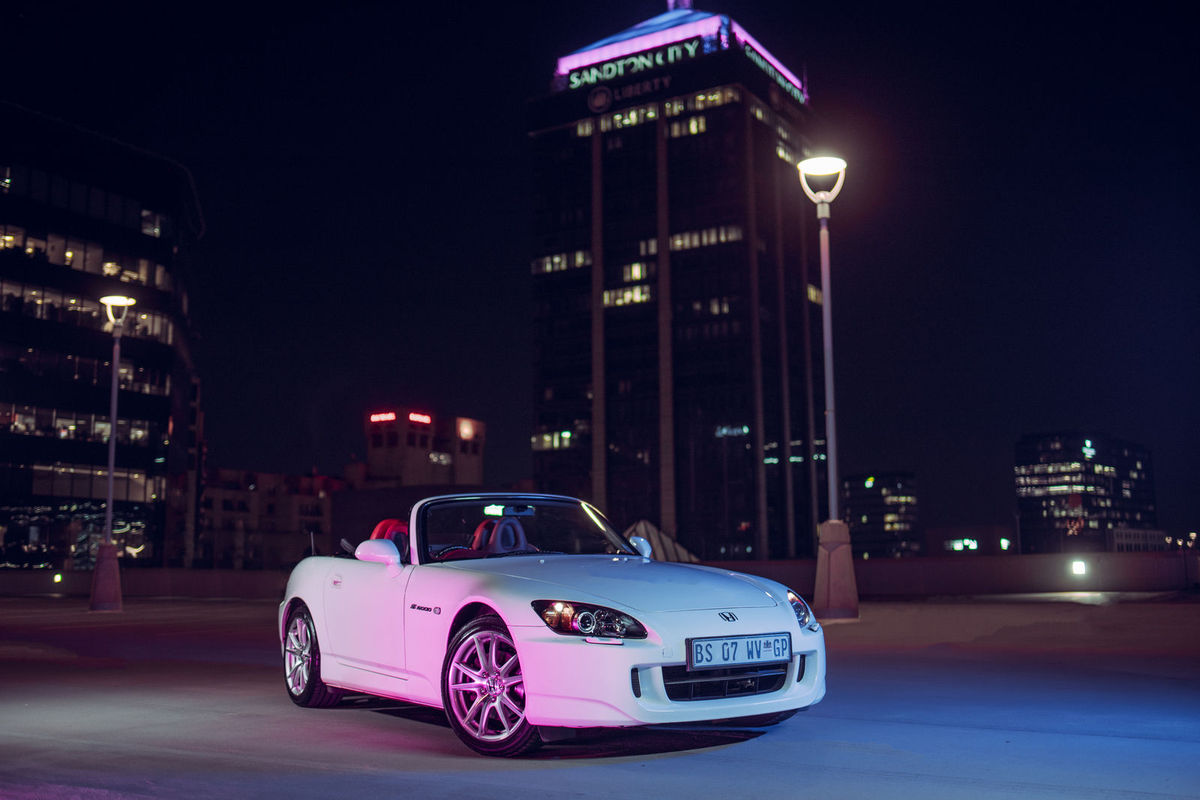
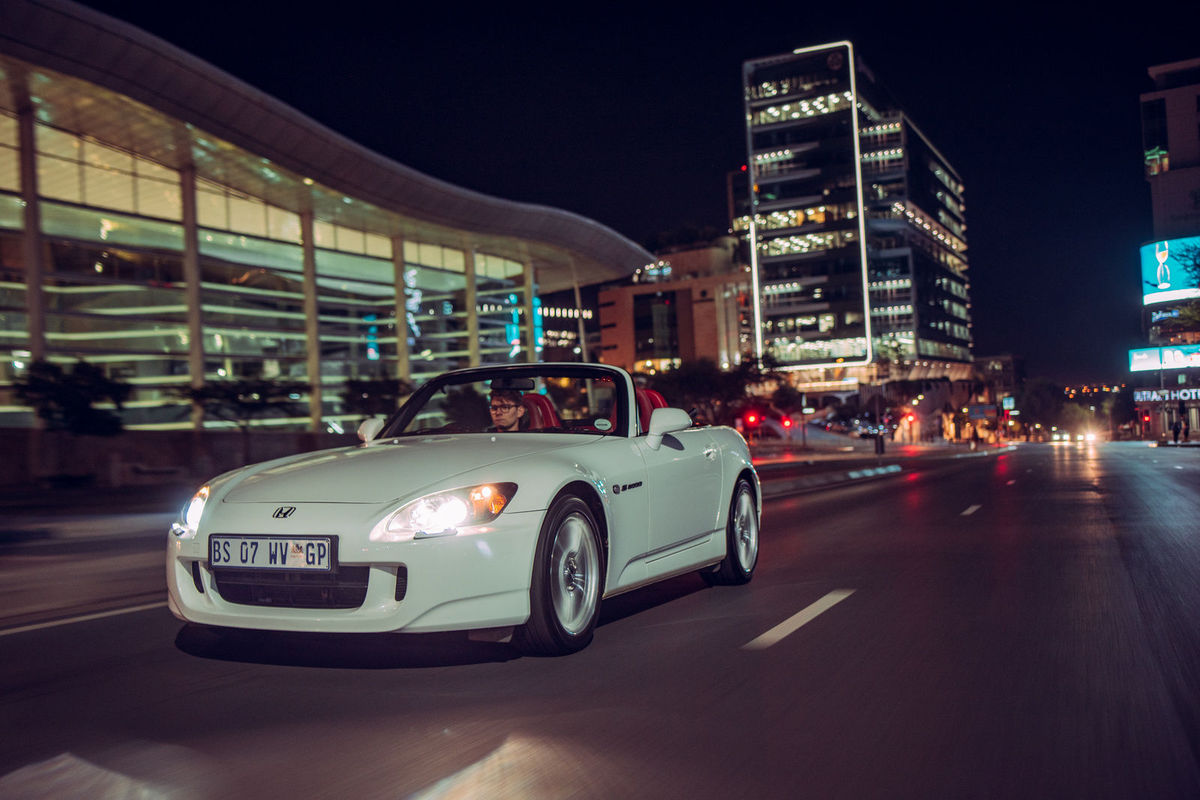
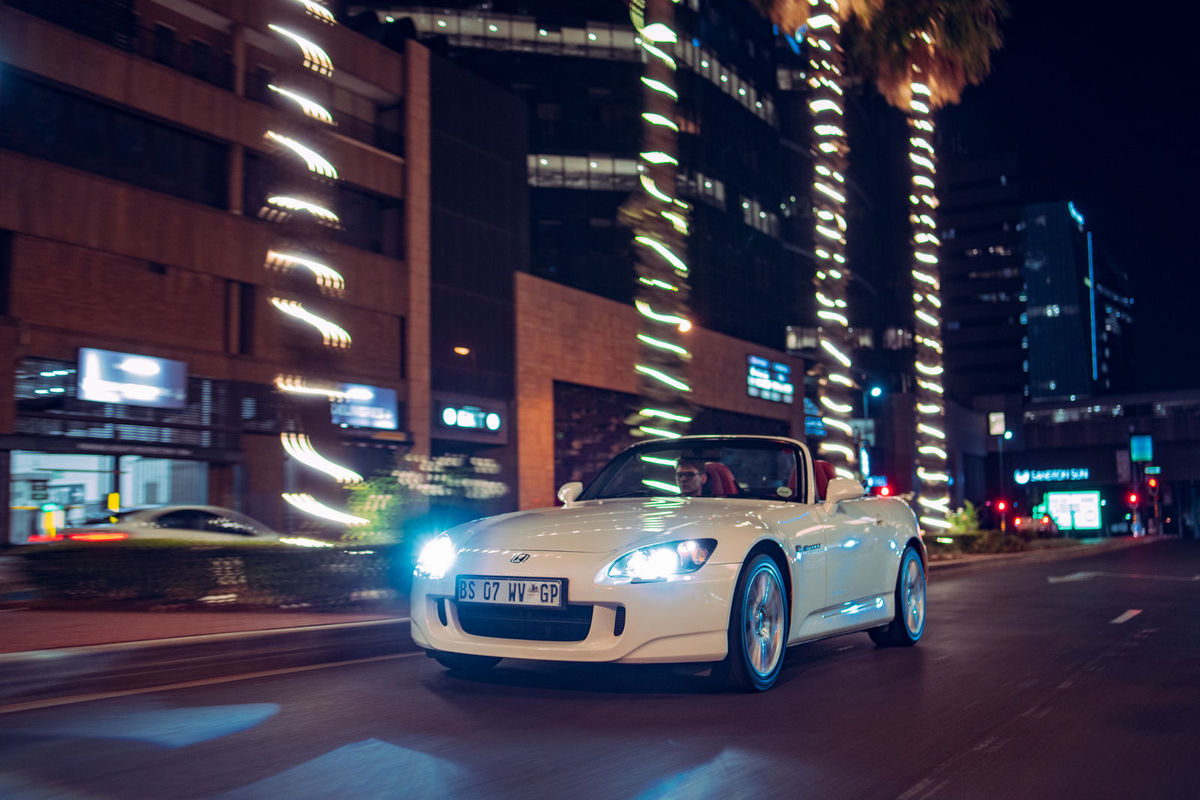
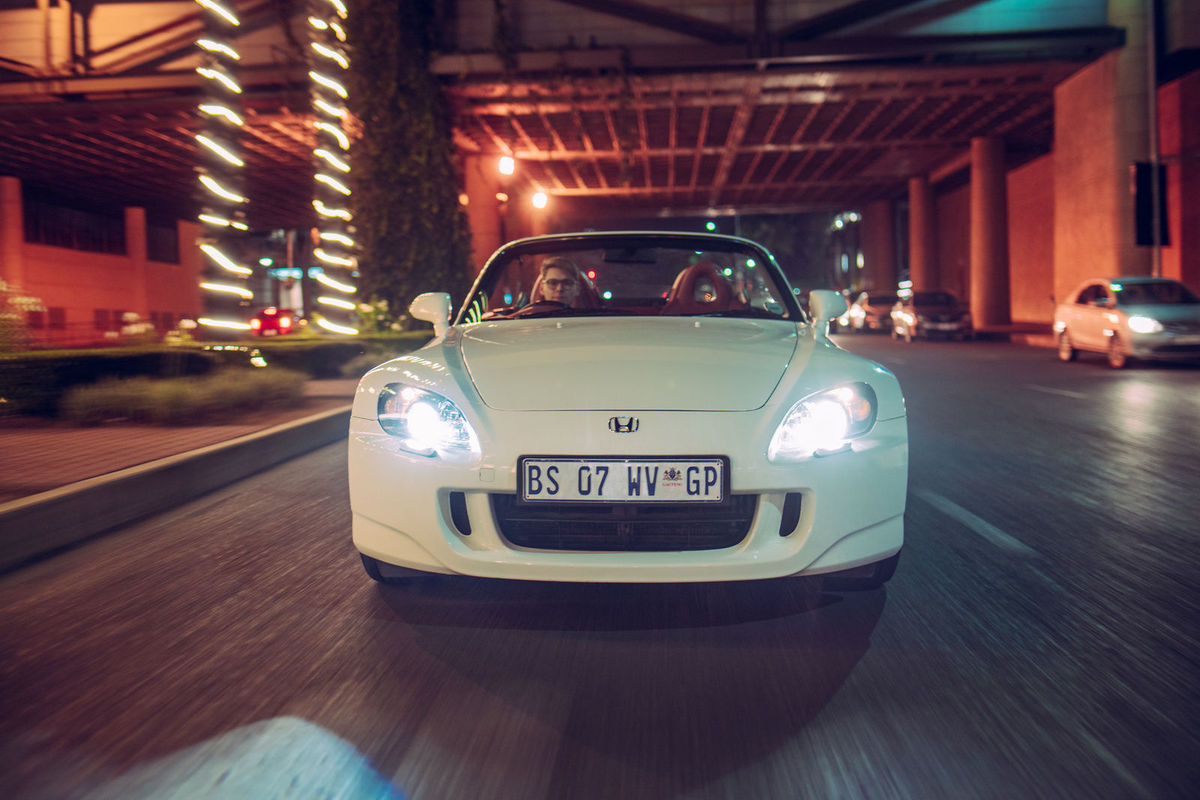
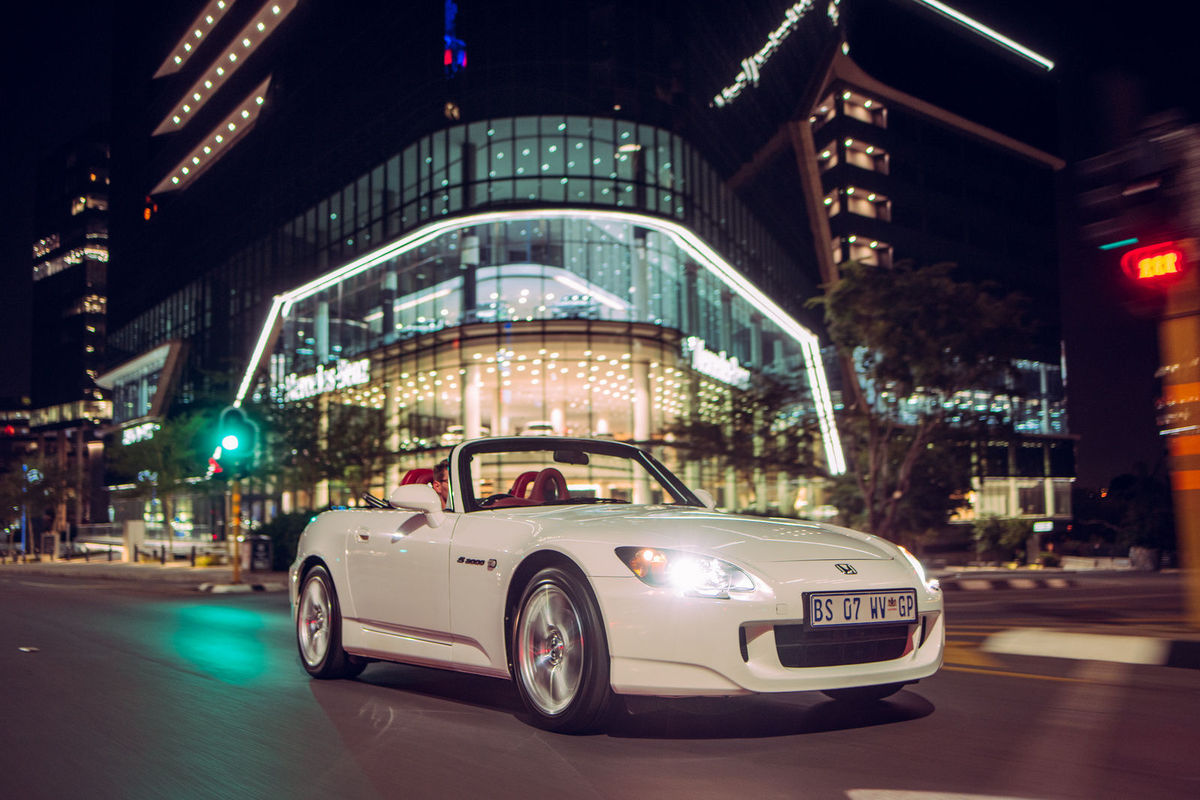
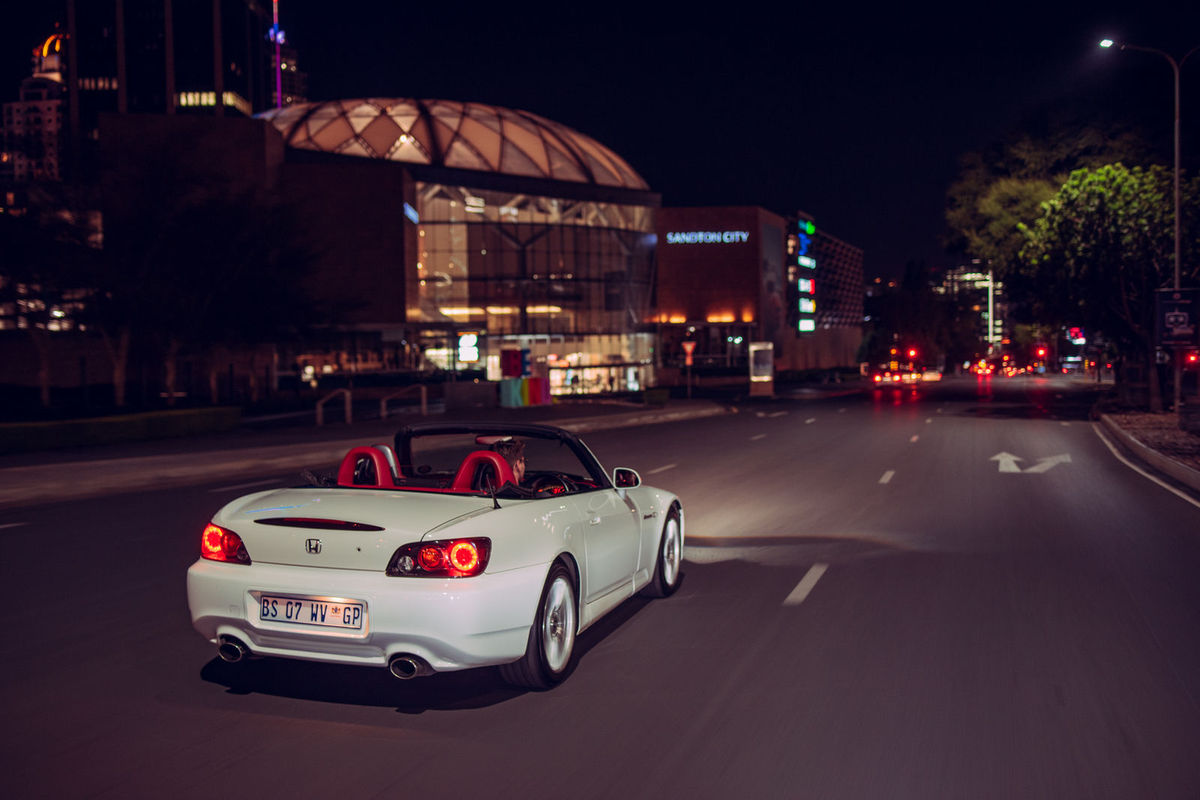
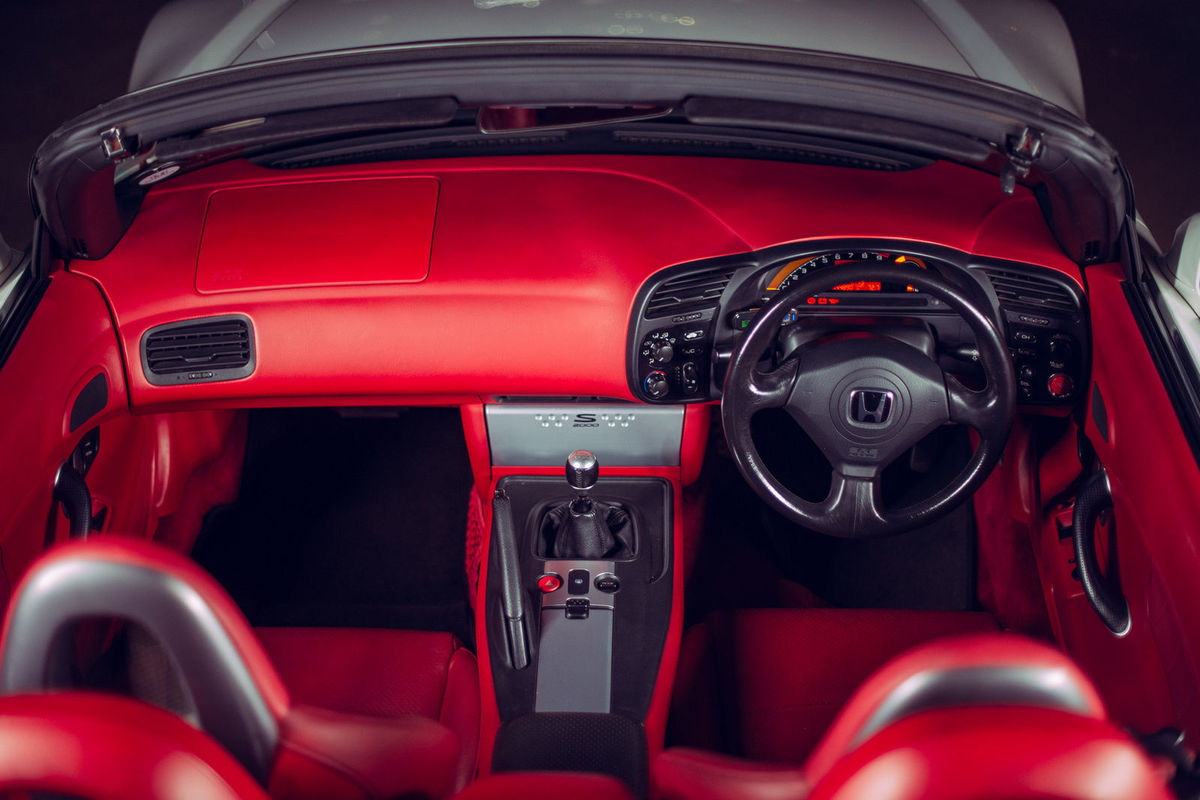
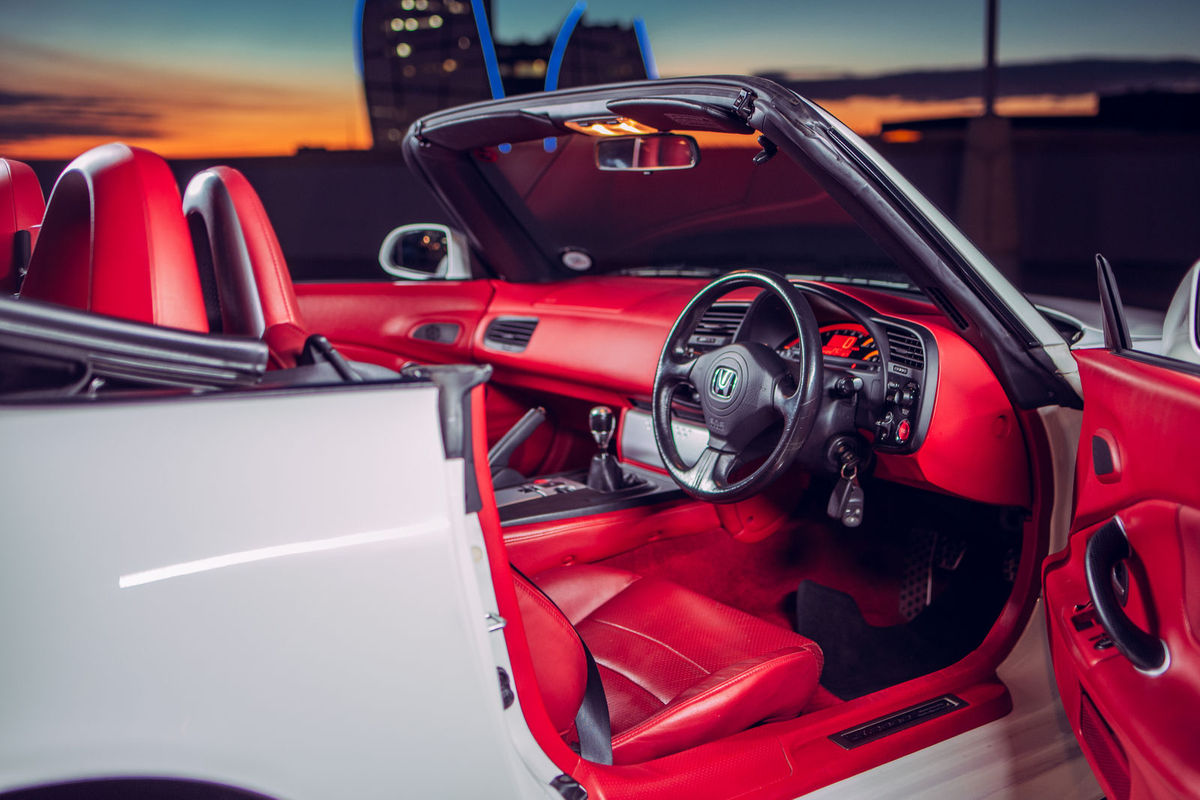
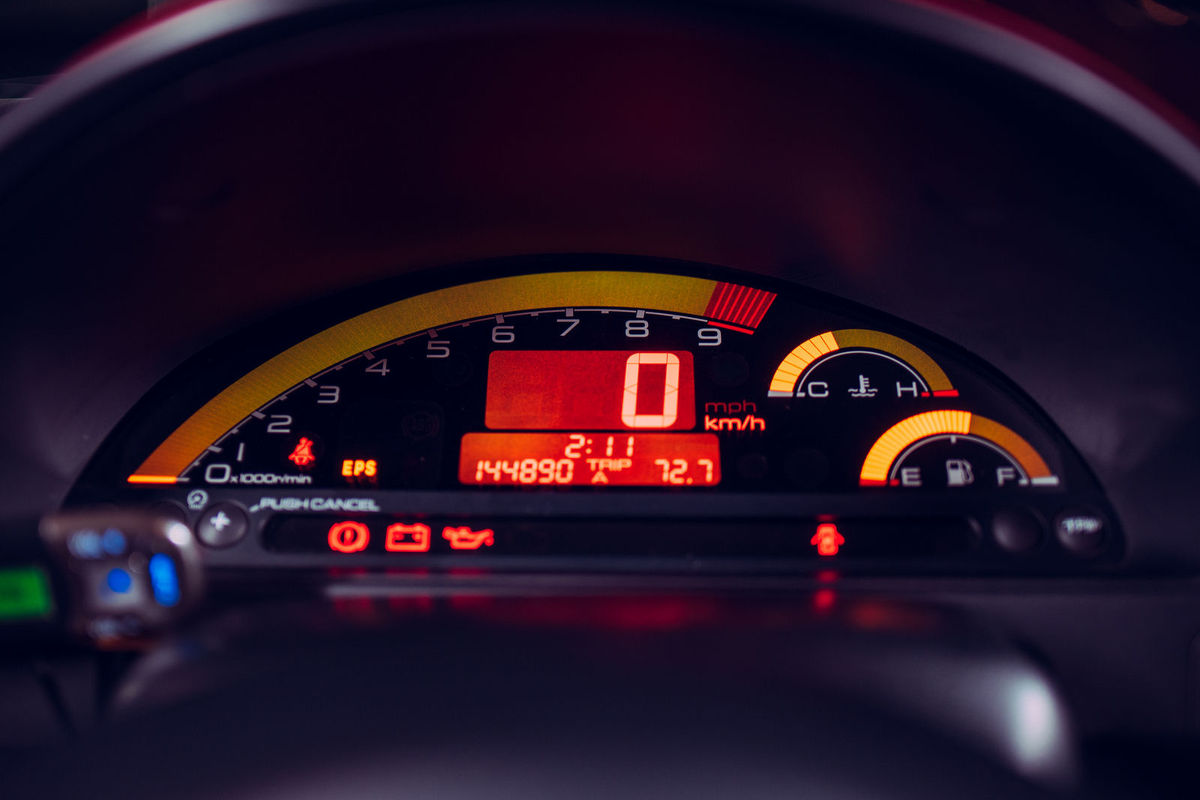
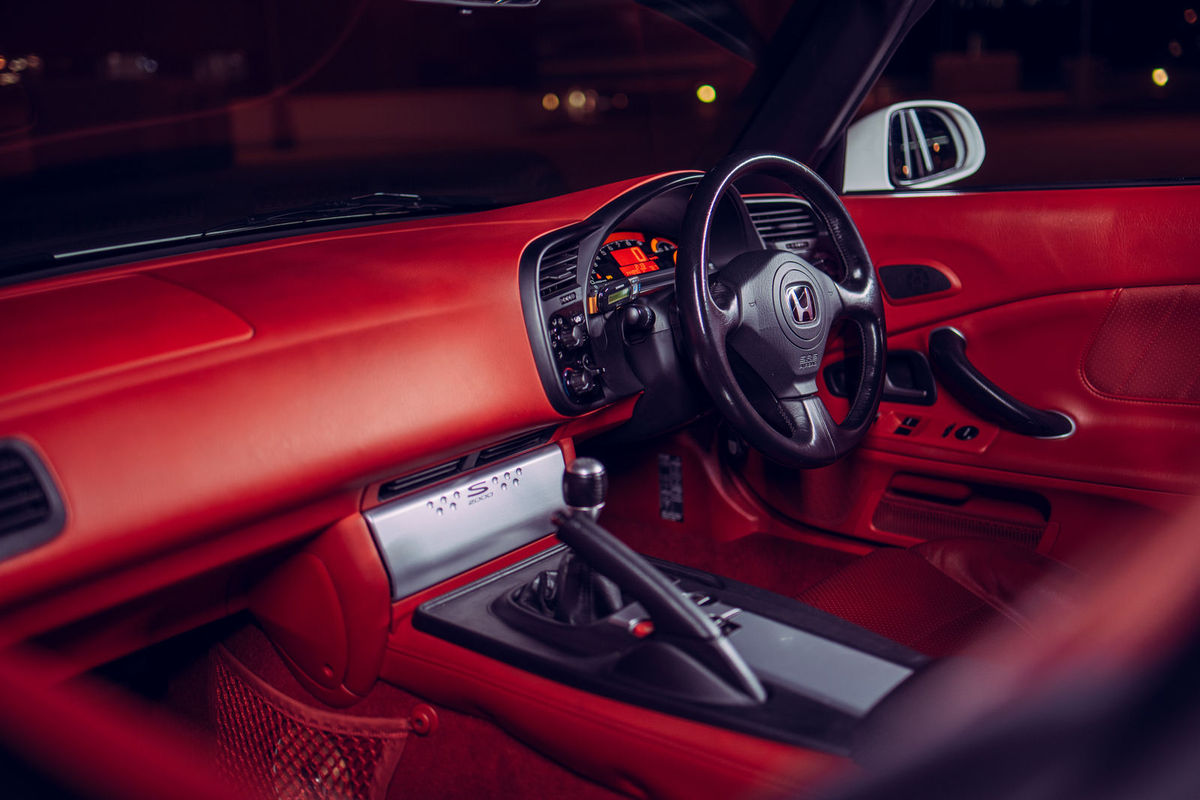
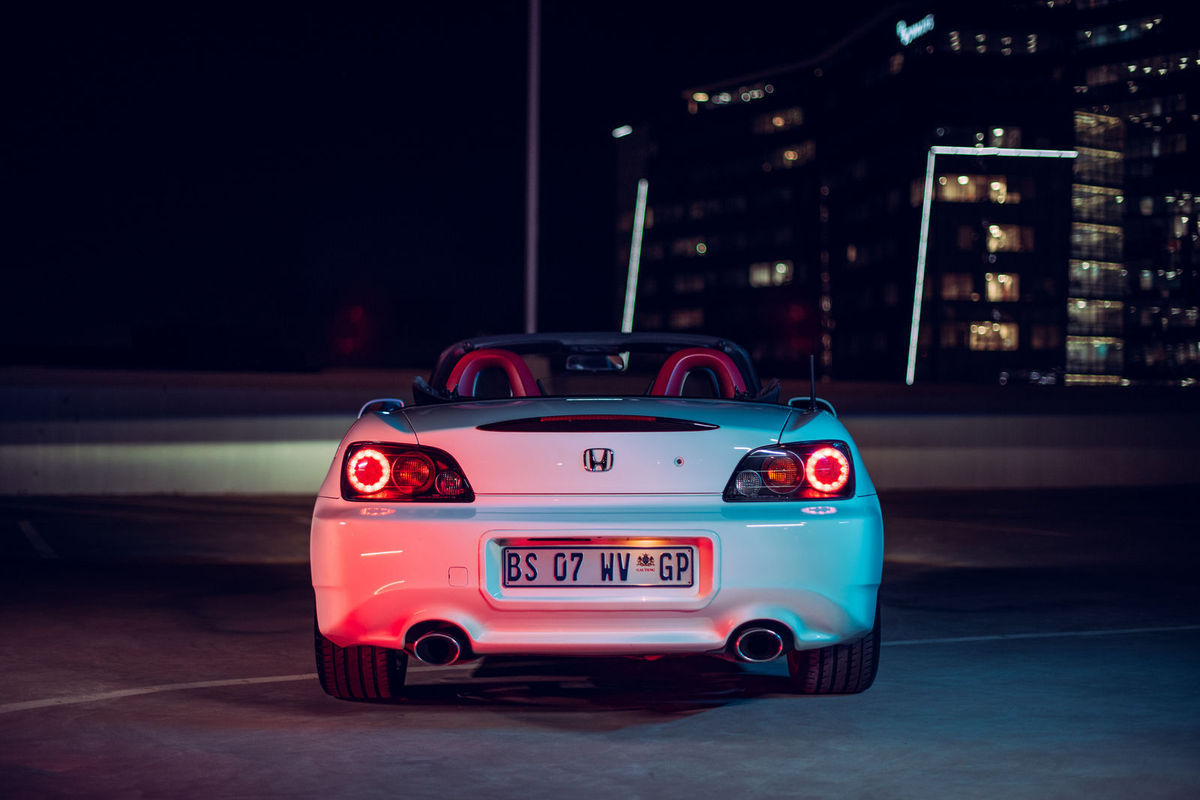
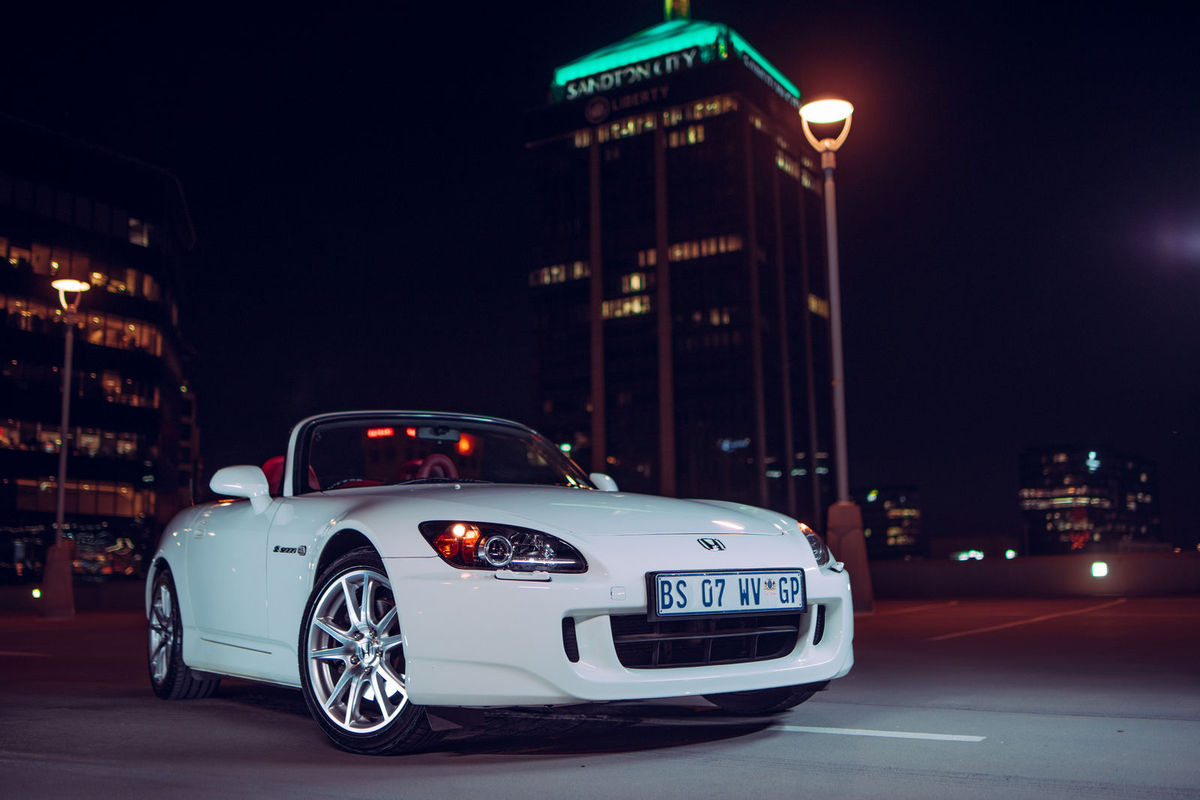
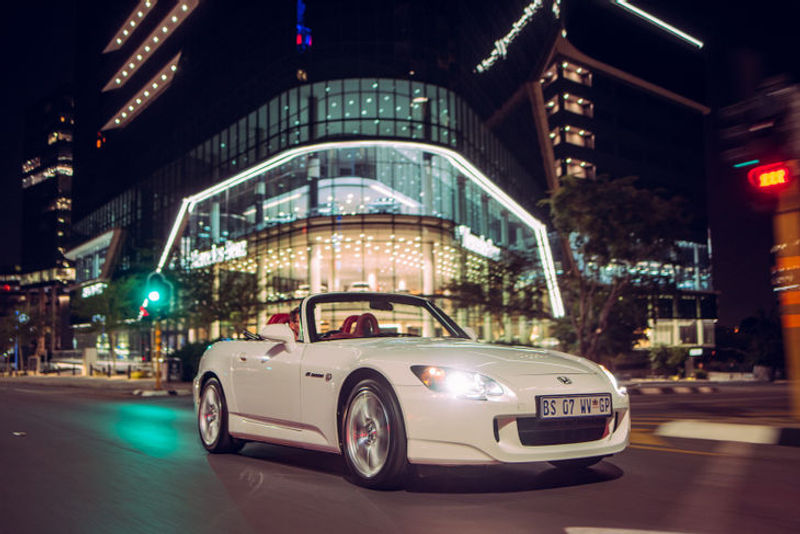
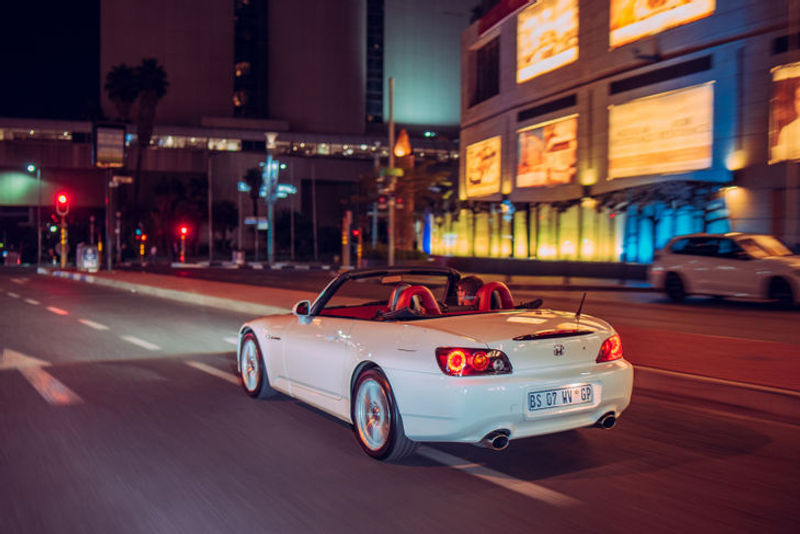
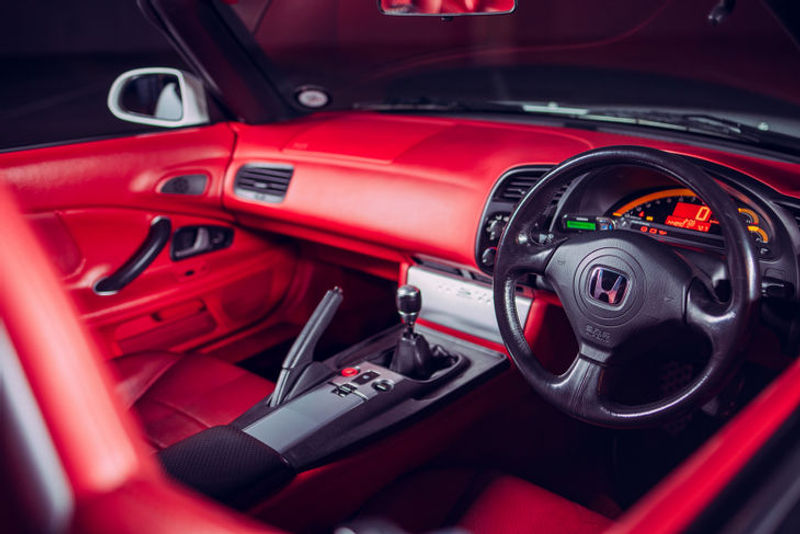
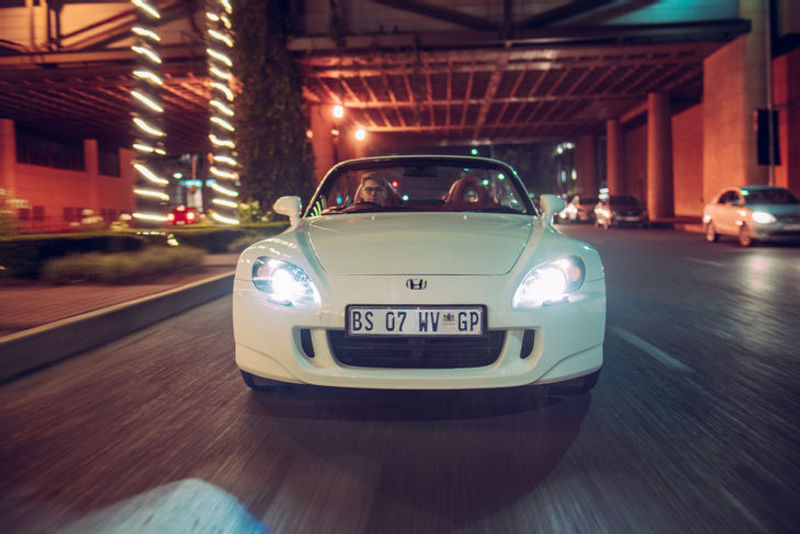
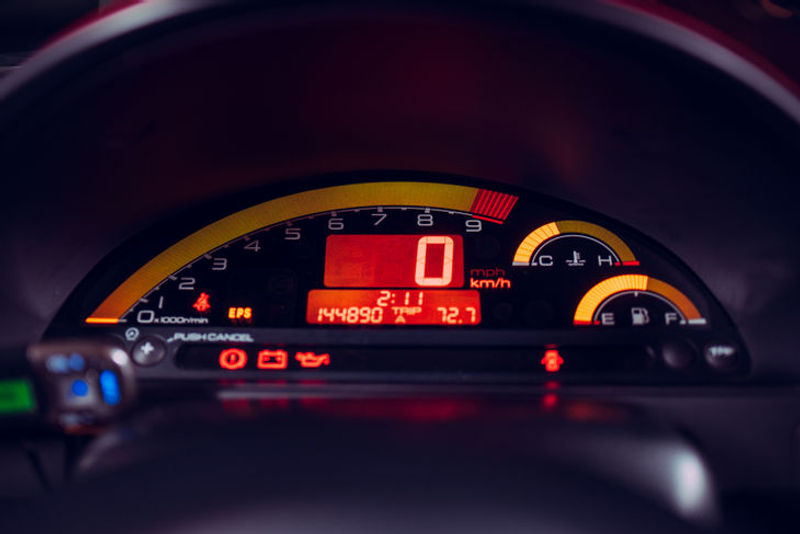
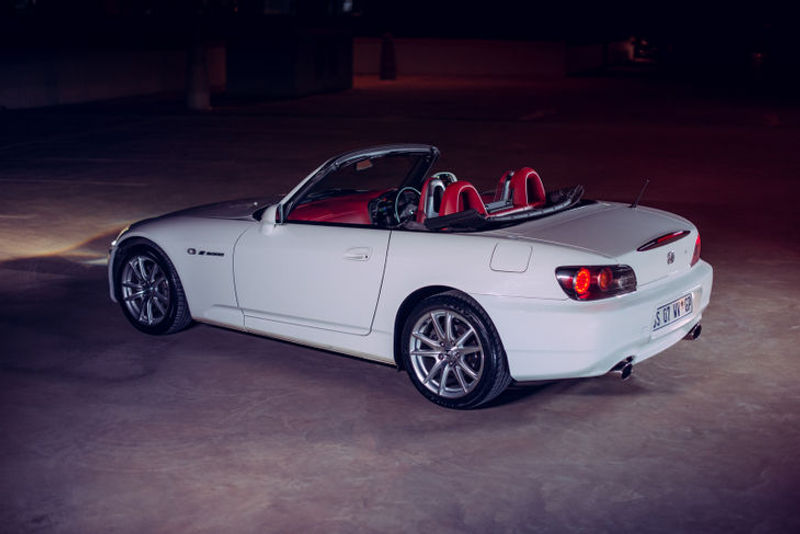
As you lean down to give the door handle a gentle tug to open the door, you are welcomed by Japanese simplicity at its best. The cabin features a lot of plastic, but Noughties-era Hondas had a magical way of making plastic feel premium and that’s just what you’re treated to in an S2000. Our shoot vehicle was finished in spectacular Grand Prix White over a red interior, and while you won’t find obnoxious features such as lane-keep this and blind-assist that, the instrument cluster is a spectacularly retro digital item that, to put it simply, gives you "the fizz."
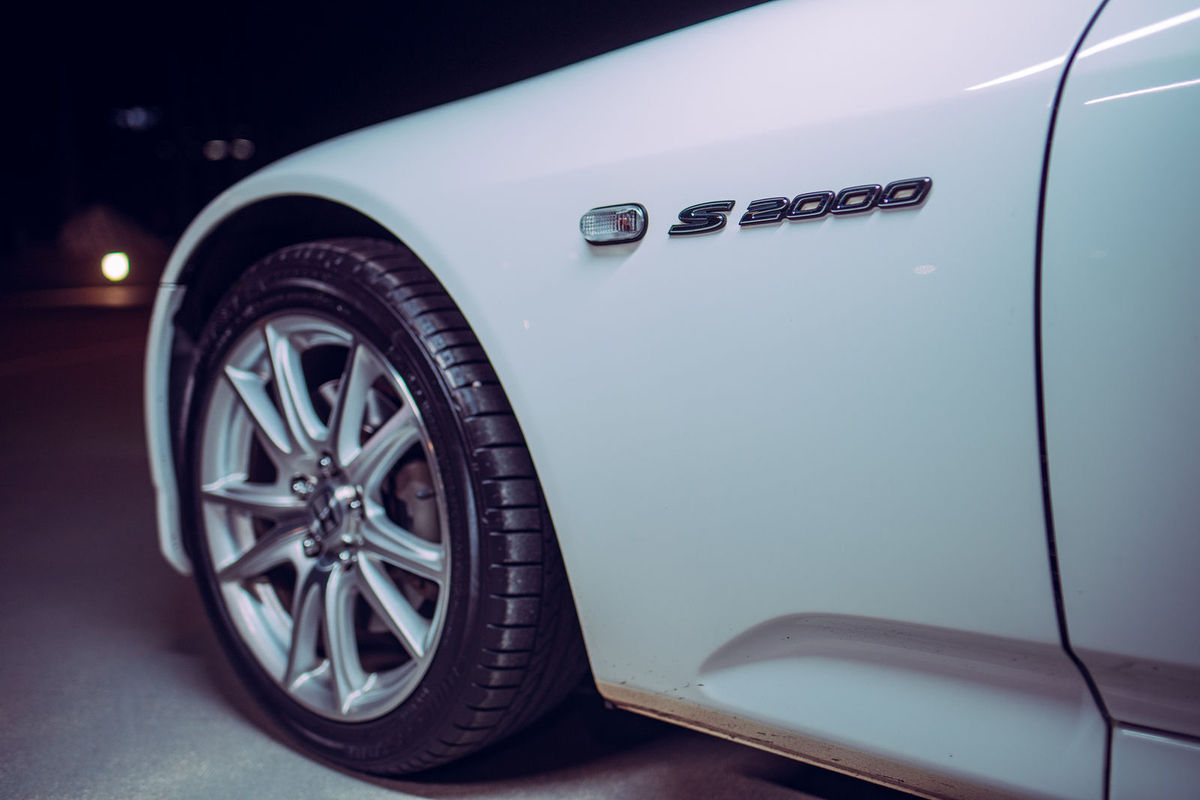
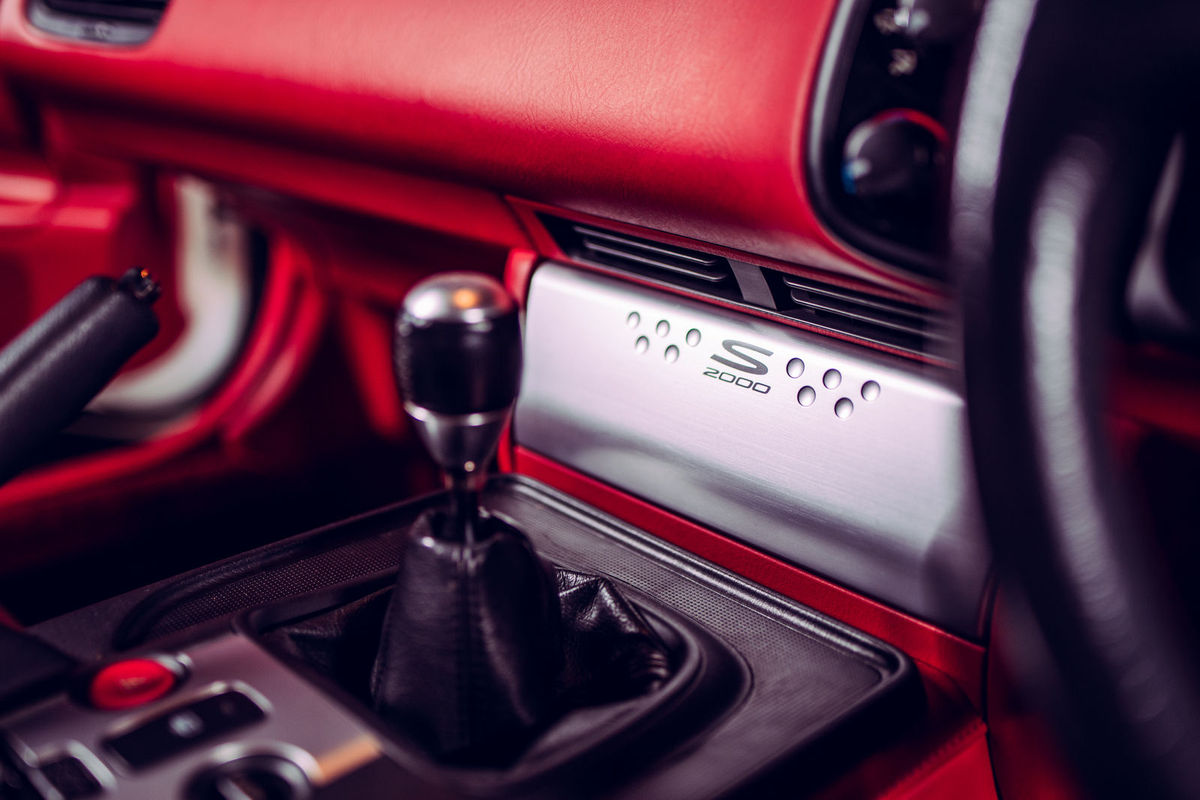
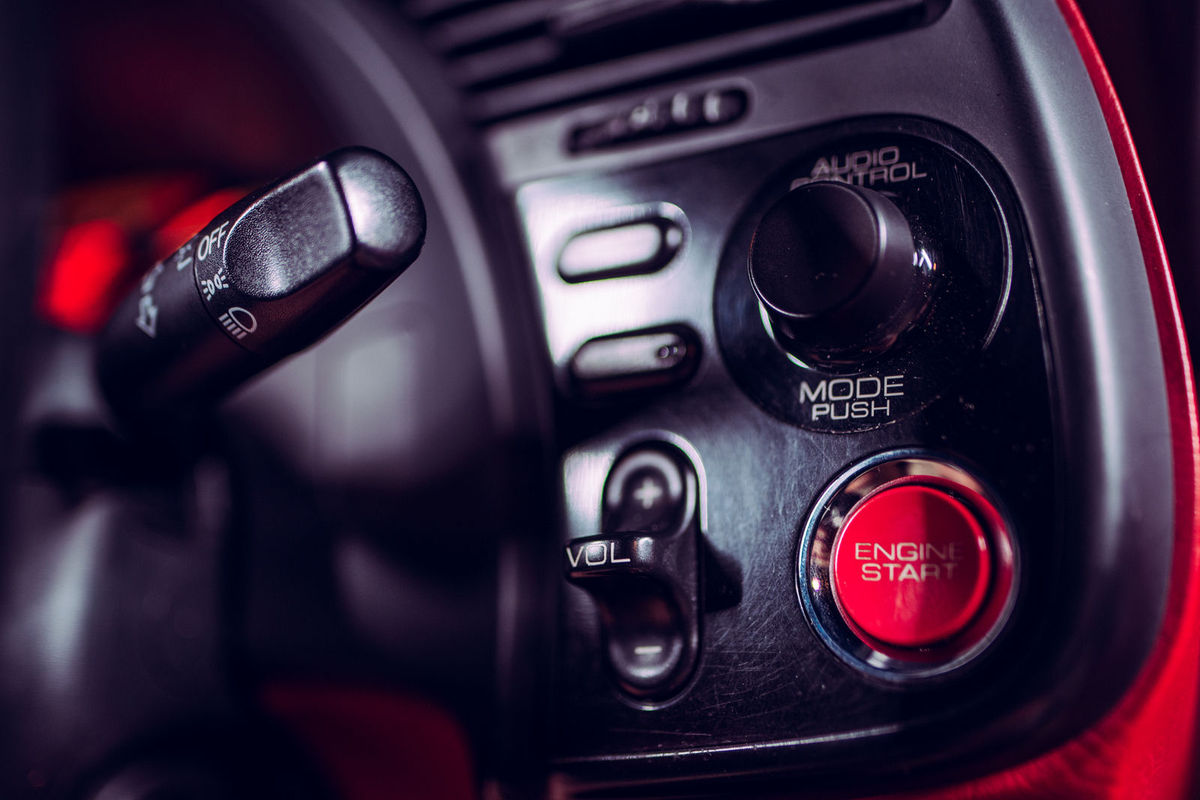
As you slip into the leather seats, it feels as if you’re being gently hugged, with everything that you could possibly need for a thrilling drive perfectly within your reach. The clutch is weighty enough to feel sporty, but it's not so heavy that it’ll leave you walking in circles for the rest of your life. The radio is hidden behind an ‘S2000’ badged metal flap where the centre console and dashboard meet, however, there are also radio controls just to the right of the instrument cluster so as not to festoon the steering wheel with buttons galore.
The steering is electronically assisted, but not overly so, resulting in a firm, but relatively communicative, steering setup. Later cars were fitted with drive-by-wire throttle control (reportedly in order to accommodate the traction control system), however, the 2005 AP2 that we had a go in had a good old-fashioned throttle cable.
The interior feels plasticky, but the instrument cluster was futuristic for its time.
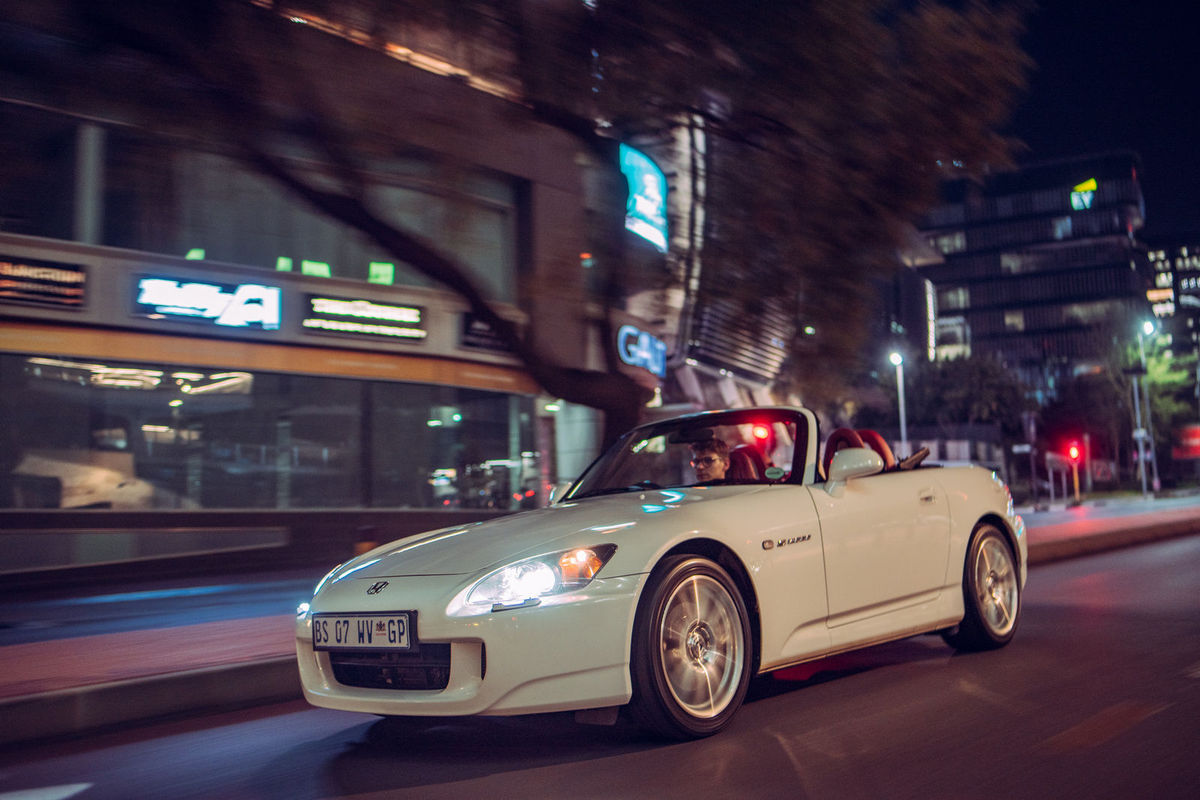
The crisp and dense Joburg evening air definitely helped the naturally aspirated F20C motor feel a little livelier up on the Reef – in true N/A (naturally aspirated) fashion, it pulls linearly – and without much fuss –through the rev range until just below 6 000 rpm, at which point the "V-TEC kicks in, bru" and the intake cam adjusts itself. There is an audible change in induction noise, and the hike in power output is definitely noticeable. With your right foot firmly planted on the accelerator, your bleeding ears suggest that you might want to swop cogs, but the ‘80’s disco display in front of you suggests that you should keep going – there is another 1 000 rpm or so left, after all. It’s a bizarre experience and certainly requires re-calibration, especially to those who are used to the modern glut of forced-induction motors.
Never mind the fact that the S2000 is still alarmingly quick, especially with the top dropped and an interesting feeling of exposure to the outside thanks to the relatively high driving position (should you be in the region of 6 ft tall). You can tell that the S2K was made for smaller people, but at no point does this translate to a feeling of discomfort. The ride is supple yet planted, with the rear providing an analogue form of communication to one’s posterior – tune in perfectly and you really do get a sense that a great deal of time, effort, money and engineering know-how culminated in the way that the S2000 feels to drive and, of course, it handles. It's unlike anything money can buy today unless you turn to the farms of the UK ie: Lotus and Ariel (who, incidentally, still make use of Honda motors).
So it will definitely be a classic – what’ll break, though?
Honda's V-TEC system goes down in history as one of the most reliable performance introductions ever.
Well, um… it’s a Honda, so not much. There are a few important things to consider, though. Due to its JDM street racer appeal and its appearance in a few movies, many examples of the S2000 have been modified, and of the few that haven’t been "fettled", a great number of them will have rather high mileages. Familiarise yourself with what a stock S2000’s engine bay looks like – modifications can cause headaches down the line, especially if the rest of the engine hasn’t been tuned properly to work with the mods. Due to the S2000’s low torque figure of just 208 Nm (at a lofty 7 800 rpm), turbocharging and supercharging are common modifications, but again, can become an absolute nightmare should the necessary improvements have not been done across the board.
One of the most common modifications (and the least likely to do any considerable damage to the motor) is a retune in which the VTEC crossover is lowered to 4 500 rpm from 5 800 rpm in order to increase the engine’s peak power curve. Should the previous owner have modified the vehicle in any way whatsoever, it would be wise of them to advise you as such. A good tell-tale of modification is to check if the stock NGK PFR7G-11S spark plugs are fitted and more importantly, torqued correctly to 28.5 Nm – a loose spark plug will almost certainly end in tears in an S2000 motor.
VTEC is a pretty hardy system that allows more fuel and air into the cylinders, thus increasing power. There are no known common faults with the system, however, due to the motor’s high-revving nature, the oil should be checked and changed on a regular basis. Every 10 000 km should do, but make sure to use 10W30 fully synthetic oil only. S2000s have been known to develop a bit of drinking problem as they age, consuming as much as a litre of oil every 1 500 km or so – this doesn’t happen to all cars, but it’s a good idea to determine whether or not the vehicle you’re interested has a known issue.
Even to this day, 9 000 rpm is unheard of.
A notable rattle on start-up would indicate that the timing chain tensioner is on its last legs, something which may cause some serious damage should the engine timing go awry. These are relatively inexpensive to replace, though, and not the most difficult DIY job for those of us who like to get our hands a little dirty. There are also strengthened aftermarket units available, which should be considered as they will never need replacing again. Regular checking of the valve clearances is also recommended, just to ensure that the rev-happy F20C is perfectly healthy.
Ask the owner if the vehicle overheats or if it ever has – no more than seven bars should be displayed on the digital temperature gauge. If it has ever overheated, it’s best to just walk away as this is a frightful gremlin that’ll most definitely return.
Should there be a slight hesitation when pulling away during the all-important test drive, it could be one of a couple of issues, a faulty lambda sensor or a failed manifold absolute pressure sensor (MAP) that sits atop the inlet manifold. MAP sensors can sometimes be cleaned, but if it’s the lambda sensor, a replacement will be necessary.
Worn soft-top catches will make a noticeable rattling noise and likely result in water making its way between the windscreen rail and roof, however, this can be a relatively inexpensive and easy DIY replacement.
Rust was never a serious issue with S2000s, however, the rear wheel arches are the most susceptible to rust as Honda didn't exactly apply underbody rust protection liberally. It’s really important to take a close look for inconsistent panel gaps and dodgy paint finishes, which may suggest that the vehicle has been in an accident.
Whether you choose to go the good condition – but modified or high mileage – but unmodified route, that’s up to you. The first prize would obviously be an unmodified low-miler, but finding one’s guaranteed to be quite a challenge. S2000s are in such high demand that they seldom "last a day online" if they’re in good condition.
Where do I find one?
Prices have never dropped on the used market, but finding a low mileage model is particularly tough.
Well, that’s the tricky thing – as mentioned, there are people who monitor forums and classifieds closely, and lap up good S2000s the moment they’re listed. A look online at the time of writing only coughs up a handful of S2000s, and they’re a bit of a mixed bag ranging from a poorly modified one that isn’t running for just over R100k to four immaculate examples at the R250k mark, presenting with around 150 to 200k on the clock. The unfortunate thing with vehicles as good as the legendary S2000 is that people tend to hang on to them, especially considering that their values are starting to climb.
It's arguably the most modern of analogue sports cars that one can find and, at a push, some may even describe it as peerless. There’s something wonderfully desirable about an otherwise sensible Japanese brand's ability to create iconic vehicles that far outshine those of its German rival brands. Of course, E85-generation BMW Z4 and 986 Porsche Boxters are superb in their own right, but none are quite as timeless or clinically precise as the lithe S2000. Fingers crossed that Honda decides to revive the S2000 nameplate in the near future, and if it doesn't, best you find a minter and hang on to it!
Electric Toyota BZ SUV Teased
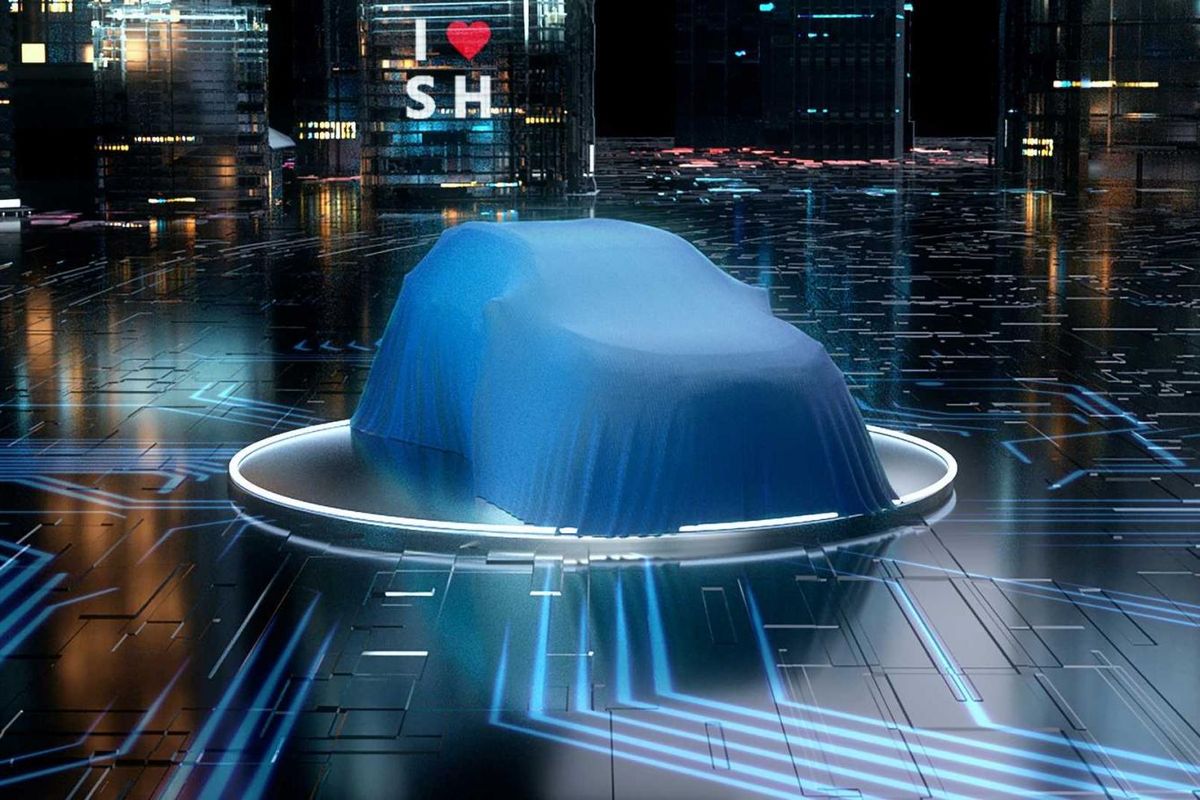
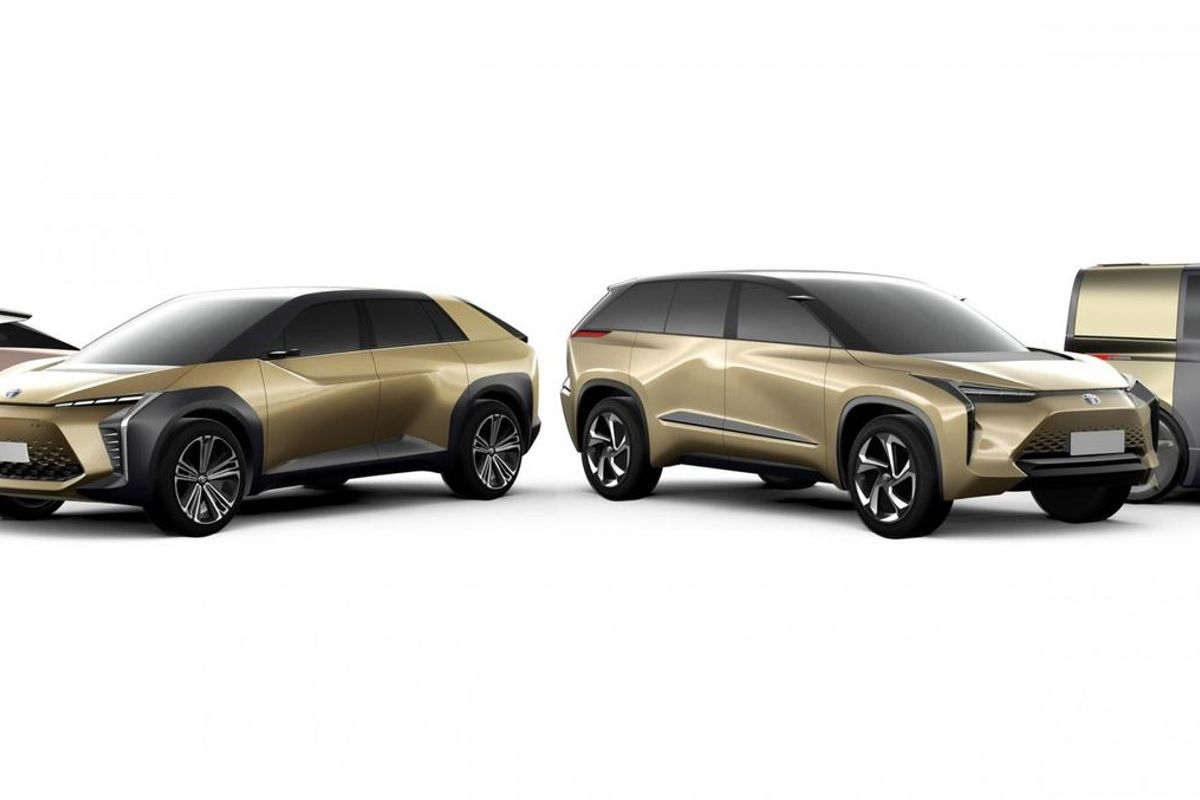
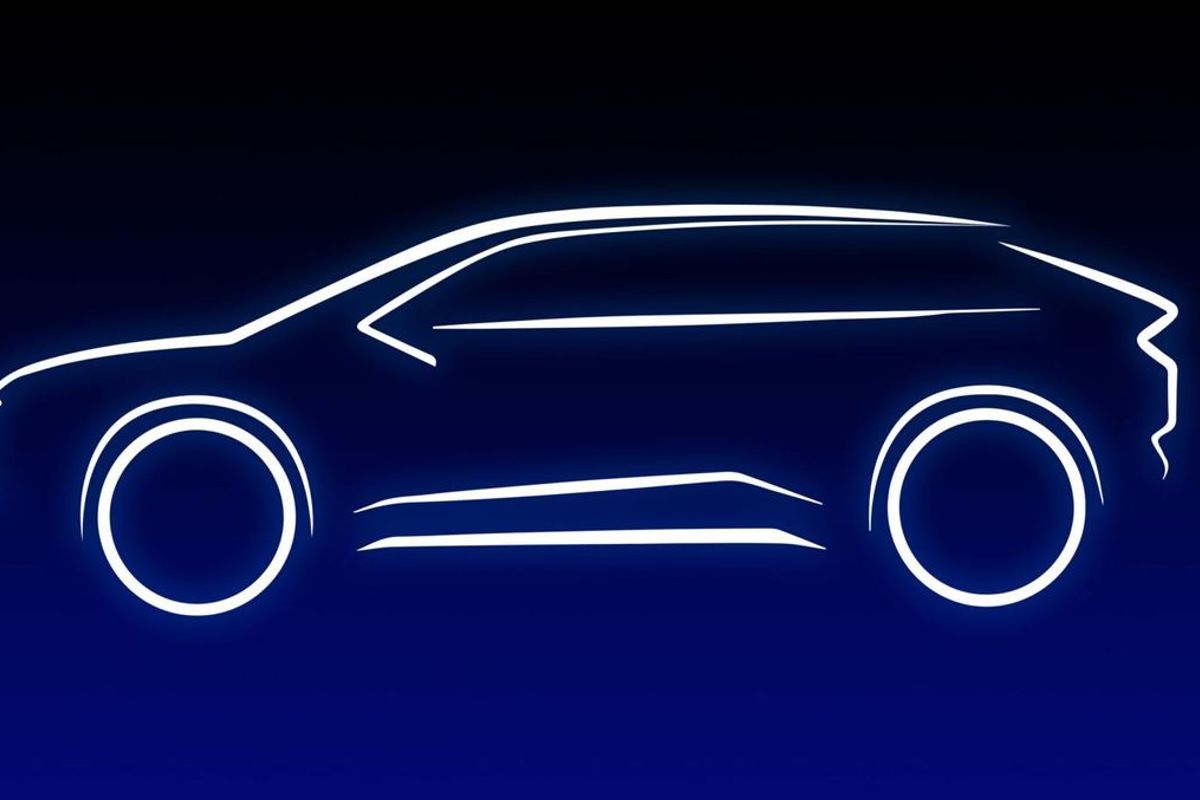
Think of this as the future of RAV4. The forthcoming Toyota BZ has been teased with some images and a short video ahead of its official reveal next week at the Shangai motor show.
Toyota might be late to the electric vehicle party, but it now has a name for its first offering in the realm of ‘new’ EVs.
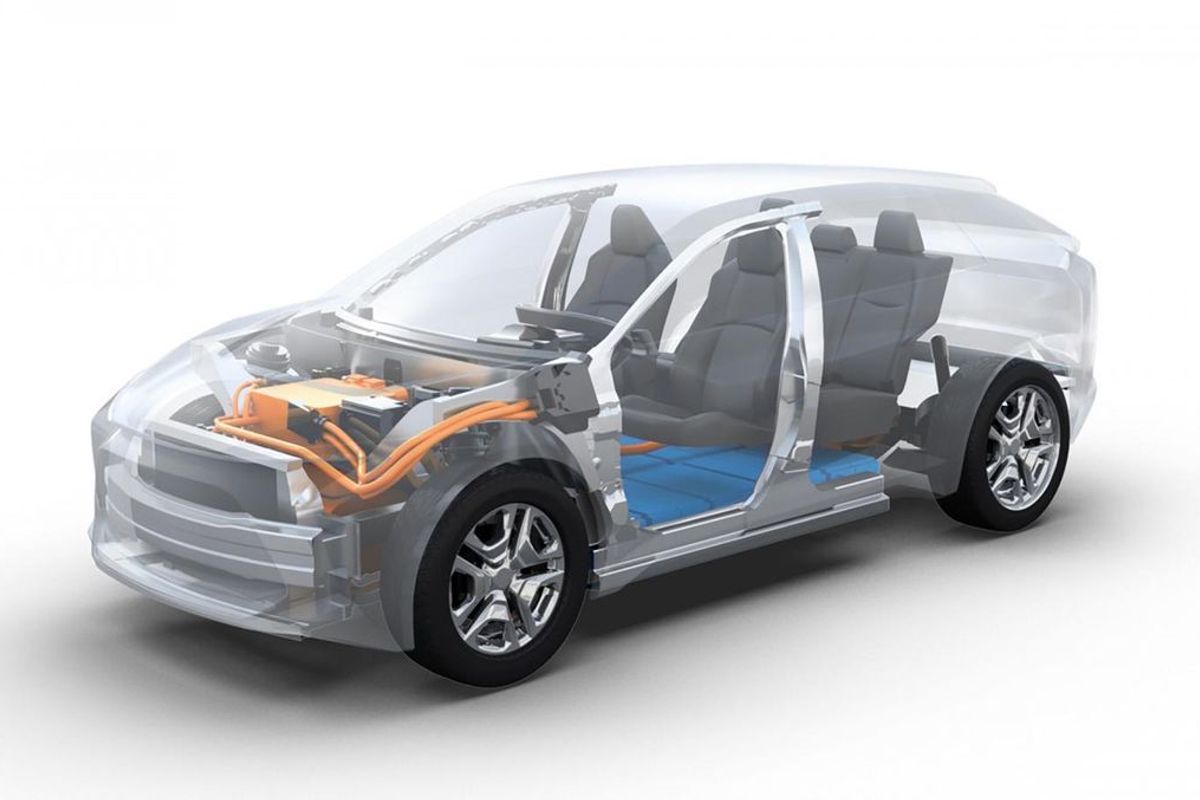
The Japanese automotive giant is taking all the knowledge gained from decades of Prius and Lexus hybrid engineering, and applying it to the new joint-venture platform.
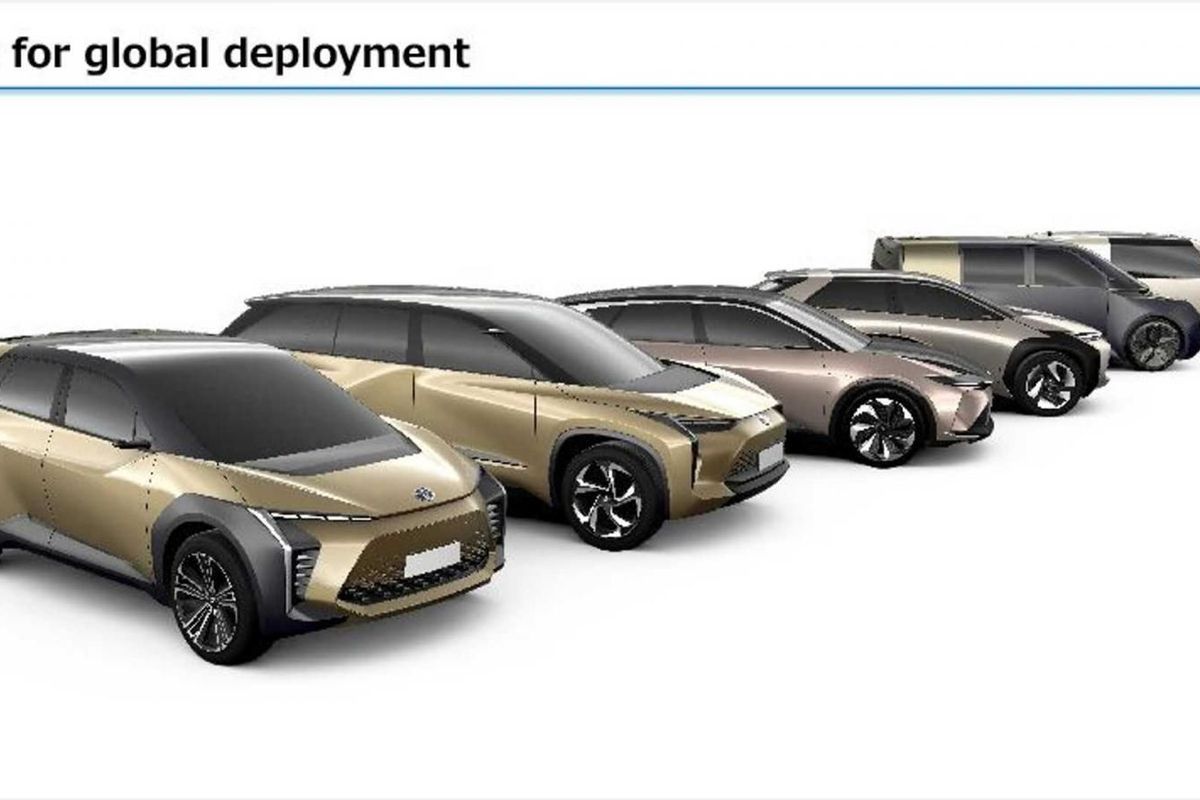
Developed in partnership with Subaru, this e-TNGA platform is Toyota’s equivalent of VW’s MEB, which has enabled the ID range of electric vehicles.
Toyota has observed its rivals and knows that the mid-sized crossover/SUV segment is where the intersection is between price parity and product demand, for electric vehicles.
Toyota has now teased its forthcoming EV SUV and it's due to be officially revealed next week at the Shangai motor show, but it's expected to be presented in concept form. It's worth mentioning that Toyota's luxury brand, Lexus, will also be showing the LF-Z Electrified Concept in Shangai.
Patent documents have revealed that Toyota is registering the ‘BZ’ model name. Unpack that acronym and you get ‘beyond zero’, which is a clever instance of marketing from the Japanese brand.
The BZ will be similar to a RAV4 in size, but the cabin should be generously larger. Without a traditional internal combustion engine at the front, the wheelbase can be stretched, without ballooning overall vehicle length – and that means a lot more room, for passengers.
With the e-TNGA platform, Toyota’s engineers have the option of placing an electric motor at either axle, or both, creating a variety of BZs for all customer applications.
Expect the model range to be much the same as VW’s ID.4, with single- and dual-motor variants, with the latter possibly being all-wheel drive.
If you are wondering whether the ‘BZ’ name has any Toyota legacy, it does trace back to a ‘BZ-Touring’, which formed part of the Corolla line-up, in the 1990s.
While BMW regularly adds suffixes to its M cars (Competition, DTM, CS and GTS) these days, it has only applied the CSL badge to its models twice – on the 3.0 CSL “Batmobile” and the ultimate version of the E46 M3. These spy images, however, suggest the Bavarian marque is planning a very special version of the new M4.
Image credit: S. Baldauf/SB-Medien
Whereas the iconic 3.0 CSL “Batmobile” from the Seventies was a homologation special (BMW built a limited number of units in order to campaign racing versions of the car in motorsport competition), the E46-generation M3 CSL (Coupe Sport Leichtbau, which translates to Coupe Sport Lightweight) was the final version of the 3d-generation of BMW’s sportscar and, as its name suggested, it was a reasonably stripped-back version of the car meant to satisfy hardcore driving enthusiasts.
Produced in 2004 (just 1 383 were built, of which but a handful were sold in South Africa), the M3 CSL was laced with carbon-fibre, fibreglass elements, thinner rear glass and even pressed wood to reduce the coupe’s kerb weight by 110 kg. Apart from aerodynamic addenda, the CSL had stiffer springs, a mildly uprated 3.2-litre straight-6 engine mated with a (now controversial) SMG transmission, retuned electronic stability control software and it was shod with semi-slick Michelin tyres.
Although BMW hasn’t introduced a CSL version of the (now) M4 yet, it did produce a plethora of special examples of the previous generation (F82) model, although most of them saw the light towards the end of the car’s production run… By contrast, the new M4 (G82), which recently arrived in South Africa, is still showroom fresh – surely the M Division can’t be working on special versions, let alone a CSL version, yet?
Ordinarily, no, it wouldn’t. However, BMW’s M Division will celebrate its 50th anniversary next year (2022) and should roll out some special machinery to mark the occasion. Martin Schleypen, a spokesperson for BMW M, was recently quoted as saying: “Maybe there will be one or the other birthday present we will give to you or ourselves (next year).” What’s more, according to BMW BLOG, Markus Flasch – the CEO of the BMW M Division – has hinted at the revival of the CSL moniker…
BMW M4 CSL speculation
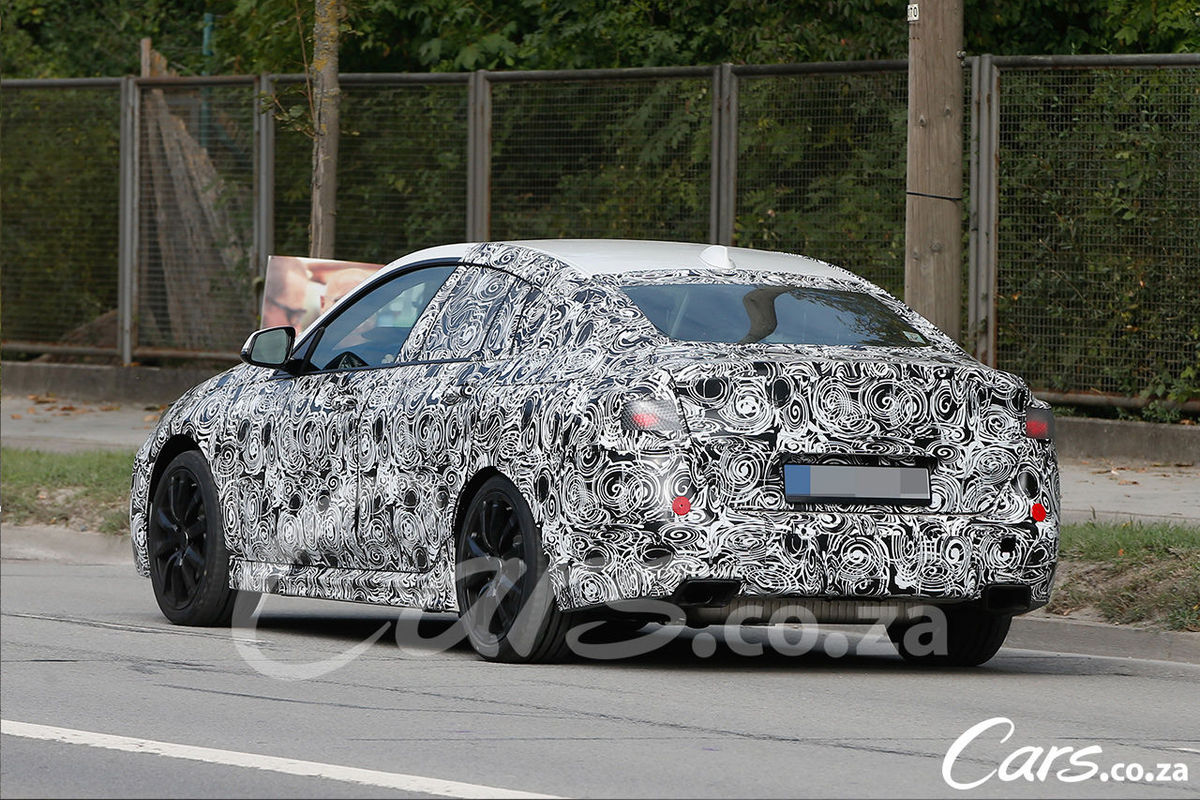
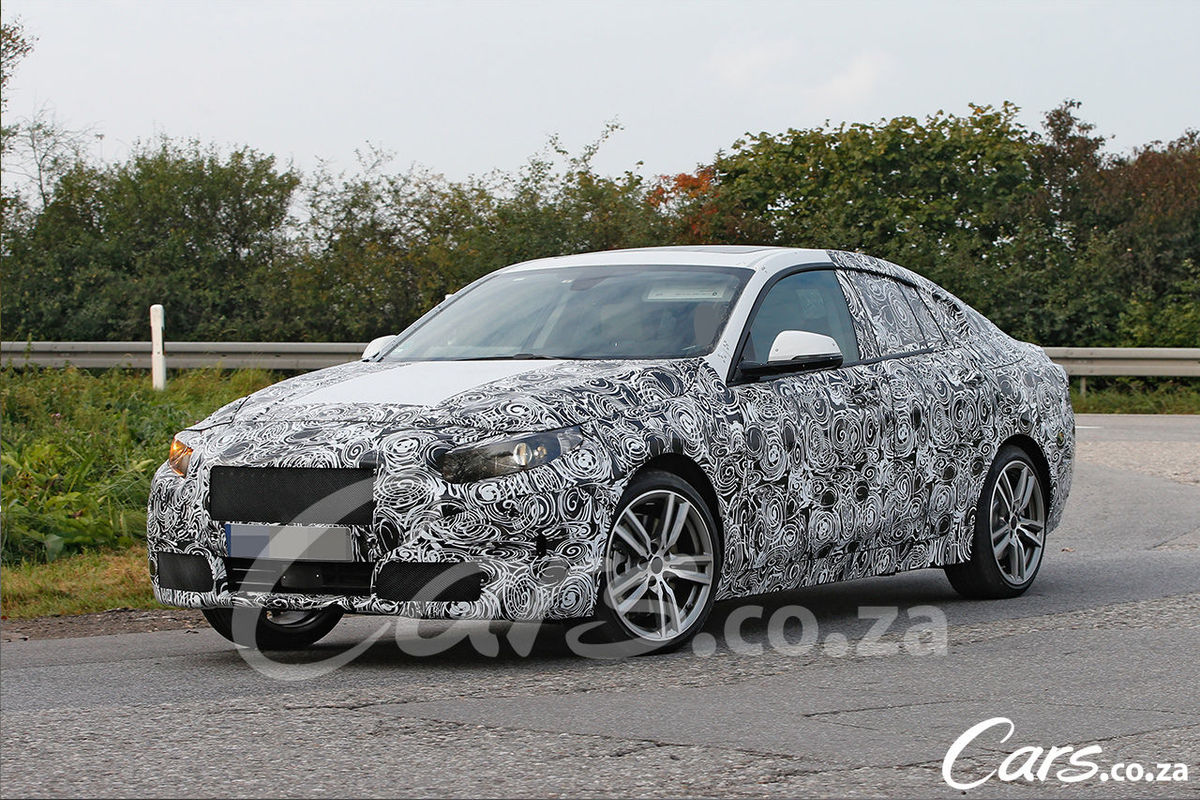
Now, to lend weight to rumours that a BMW M4 CSL will be launched in 2022 (BMW BLOG doesn’t believe the M Division will produce more than a couple of hundred units, if production does indeed go ahead), our spy photographers have snapped a pair of disguised M4 prototypes that appear to be adorned with a number of altered aerodynamic addenda – we can only speculate about the cars’ powerplants, but they are likely to produce more than the M4 Competition’s 375 kW and 650 Nm of torque.
As was the case with the BMW M3 CSL, the prototypes appear to have bespoke features that the standard M4 doesn’t… A notably higher rear spoiler adorns the boot lid and there’s a reshaped lower-profile splitter (with winglets) at the front.
Earlier this year, it was reported that Flasch was seen driving an apparent Frozen Edition example of the new M4, but that we don’t believe that these prototypes are merely early examples of a “special trim line”. Watch this space!
Jaguar has bolstered its local sportscar offering, with a new F-Type engine option.
The characterful British sportscar, will now field a second 5-litre V8, offering less power and performance. Jaguar’s marketing logic is to offer the sound signature of its large-capacity V8 engine, at a more affordable price point.
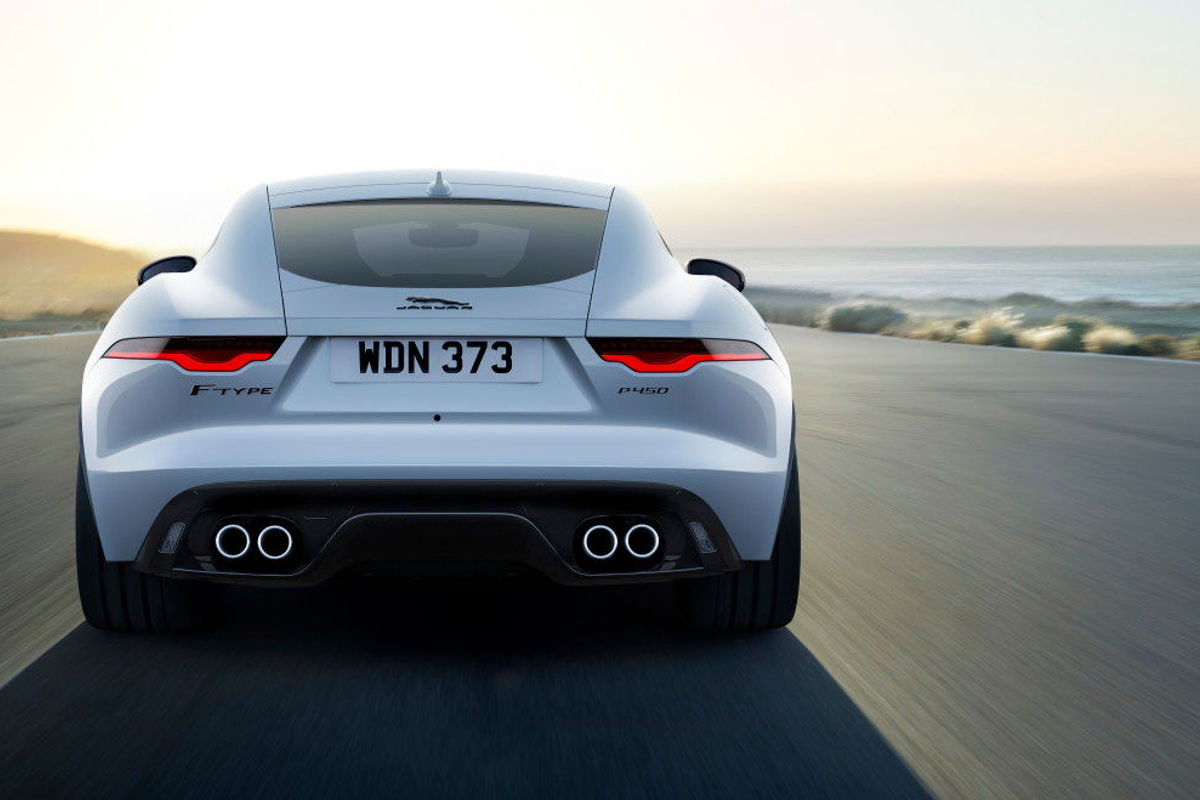
Enabling this is the F-type P450. It uses a milder version of JLR’s 5-litre supercharged V8, boosting 331 kW and 580 Nm. Those outputs are down from the 423 kW and 700 Nm on offer in Jaguar’s F-Type P575, but the strong V8 acoustics should be equally dramatic with the less power P450 engine.
Like the P575, Jaguar customers will have the option on either an all-wheel or rear-wheel-drive configuration, for the new P450.
Although it is slower than the P575, this new Jaguar F-Type variant is still rapid, in absolute terms. It will run the benchmark 0-100 kph sprint in 4.6 seconds and is capable of a 285 kph true top speed.
Jaguar South Africa will be introducing the P450 coupe and convertible derivatives during the second half of this year. For those driving enthusiasts who value the drama of a V8 engine sound, but find the prospect of an F-Type P575’s power potentially overwhelming for most scenarios, the P450 could be a choice solution.
If you fancy the idea of a V8-powered F-Type but don’t want the dilution of all-wheel drive to handle 423kW, the rear-wheel-drive P450 would be an ideal configuration.
ZF’s eight-speed automatic transmission and fully adaptive dampers at all four wheels should make the F-Type P450 a useable V8 sportscar in all road and traffic conditions. The pre-facelift F-Type V8 was a handful in rear-driven format but the introduction of all-wheel-drive, a few years later provided a more balanced driving experience.
With the Easter weekend now a distant memory, Transport Minister, Fikile Mbalula last week announced road safety statistics for a period that is typically marred with high fatalities on South African roads. However, the numbers don’t quite add up…
On April 8, Transport Minister, Fikile Mbalula, announced that a total of 235 fatalities occurred across the country’s provinces during the Easter period as a result of 189 crashes.
As the 2020 Easter period was nullified by the Covid-19 hard lockdown, 2019 figures are therefore more reflective of typical fatalities over this deadly period. As such, Mbalula said that in 2019, 193 crashes resulted in 260 fatalities, which would indicate a crash reduction of 2.1% and a fatality reduction of 9.6%.
However, the numbers don’t add up as highlighted by the Automobile Association (AA), “Published numbers from the Road Traffic Management Corporation (RTMC) – which reflect official data – show that during the 2019 Easter period, 228 people died on South African roads. Should this be the case, then this year’s preliminary number of 235 fatalities over the Easter period would be an increase not a decrease. However, Minister Mbalula yesterday noted that 260 people died over the Easter period in 2019, which would indicate a decrease. These numbers do not reconcile with each other, rendering commentary on them redundant,” says the AA.
It must be noted too that 260 fatalities in 2019 is nowhere to be found in official government documetation and the AA warns that “any number provided now for the deaths over Easter 2021 is preliminary and comparing it to any final number from previous years is statistically irrelevant and premature.
Data Accuracy is Critical
“We have a situation where the Minister of Transport says government is making headway in achieving road safety goals but his assessment is based on questionable data. No valuable conclusions can be drawn from these numbers because of the difference and unreliability of the statistics,” notes the AA.
Furthermore, the AA also notes the importance of data accuracy in the fight against road fatalities, “effective statistics are vital to ensuring proper allocation of resources and in determining the effectiveness of government’s road safety awareness campaigns, something which cannot be done with the current numbers. We would suggest these numbers, and the reporting mechanisms used to record and calculate them, be reviewed as a matter of urgency”
Death Rate Still Too High
Despite discrepancies in the data, the fact remains that far too many people’s lives are being claimed on South Africa’s roads.
Based on the data provided, pedestrian fatalities remain a problem with fatalities increasing from 30% to 35% compared to 2019.
“While we are not able to place reliance on the numbers presented, one death is one death too many. We also cannot be perpetuating a message that continually blames drivers for the high fatality rates. We know that human error causes crashes but this means that all involved must look for ways to build safe systems that acknowledge this factor and make allowances for it”, says the AA.
Furthermore, the AA believes that road safety intervention by traffic law enforcement should be a daily occurance.
“Road safety cannot be a seasonal or event-driven, it has to be a continuous programme. Unless we realise this, and the importance of road safety to our society and economy, we will not solve the carnage on our roads, and we will also never meet the UN road safety targets for 2030”.
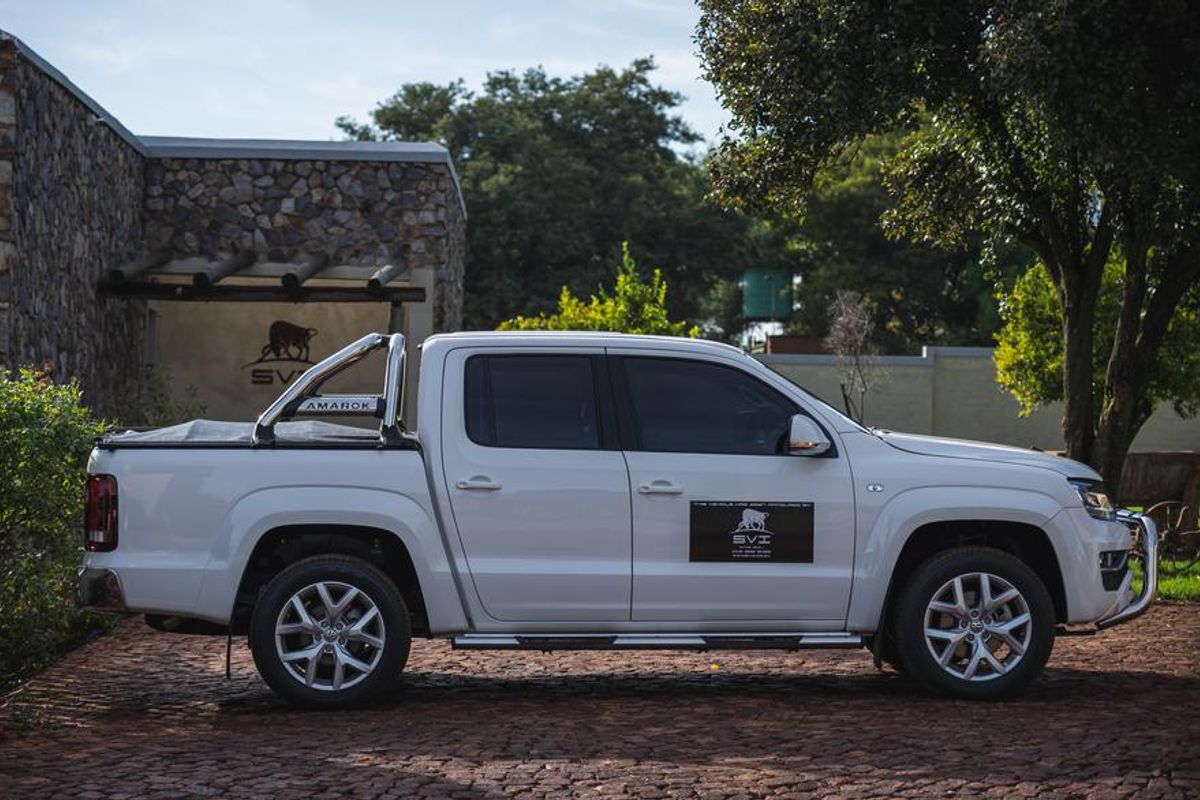
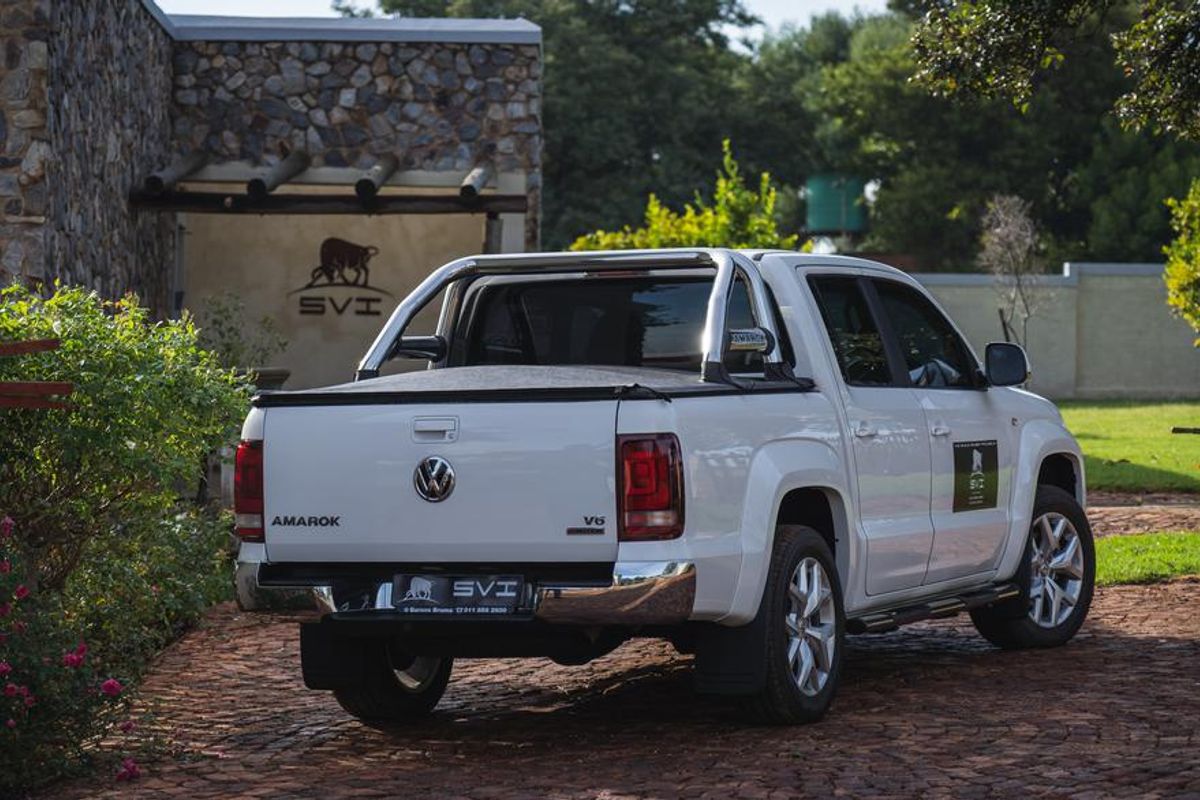
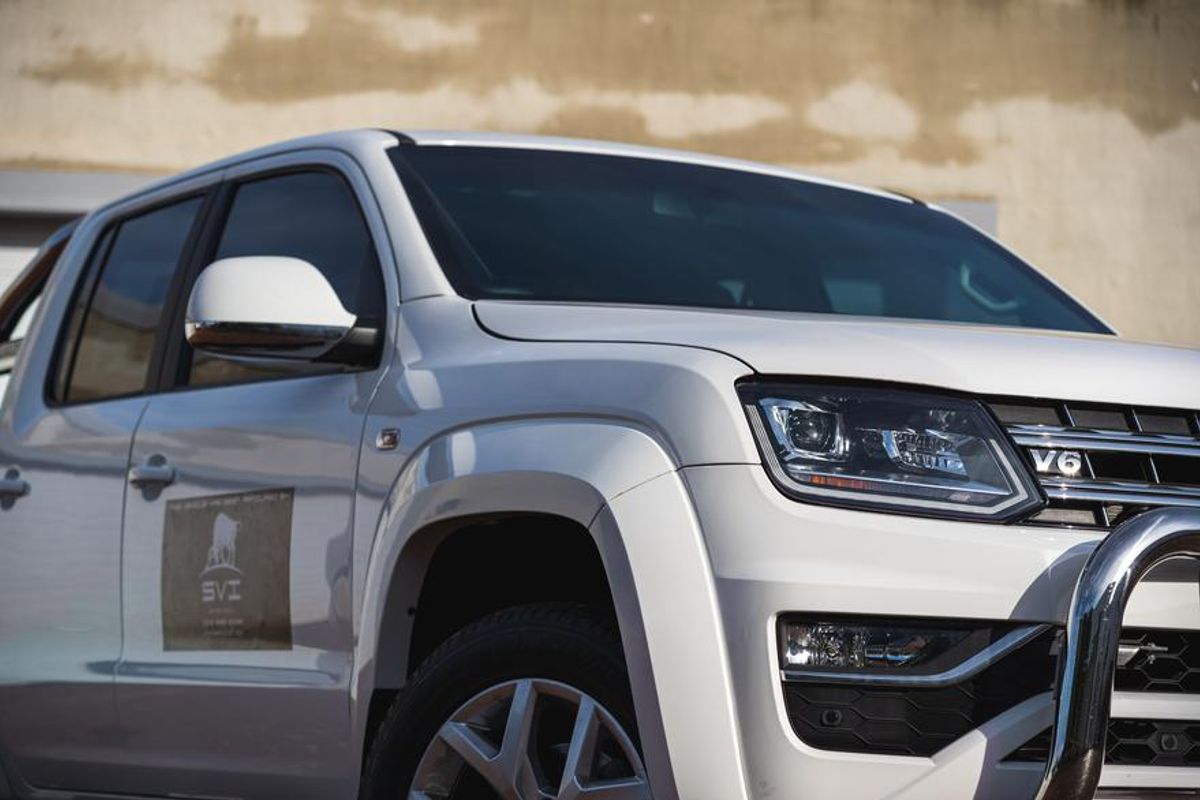
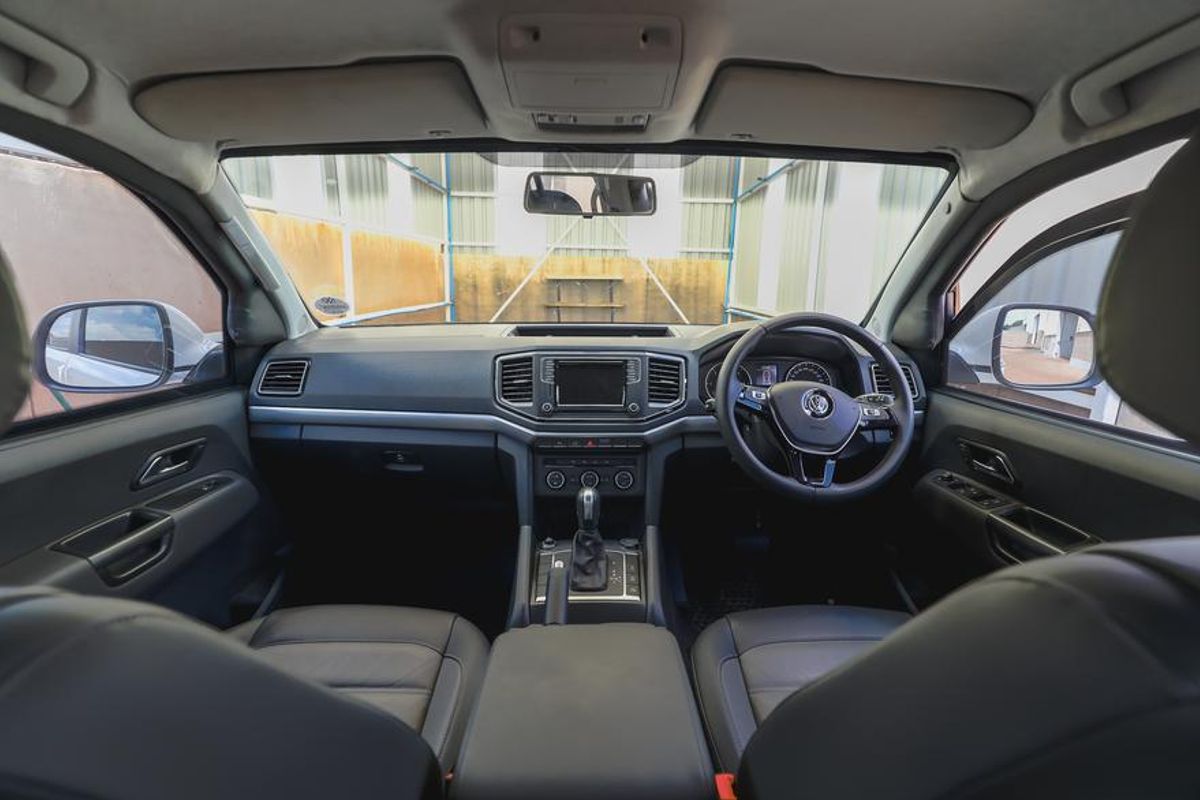
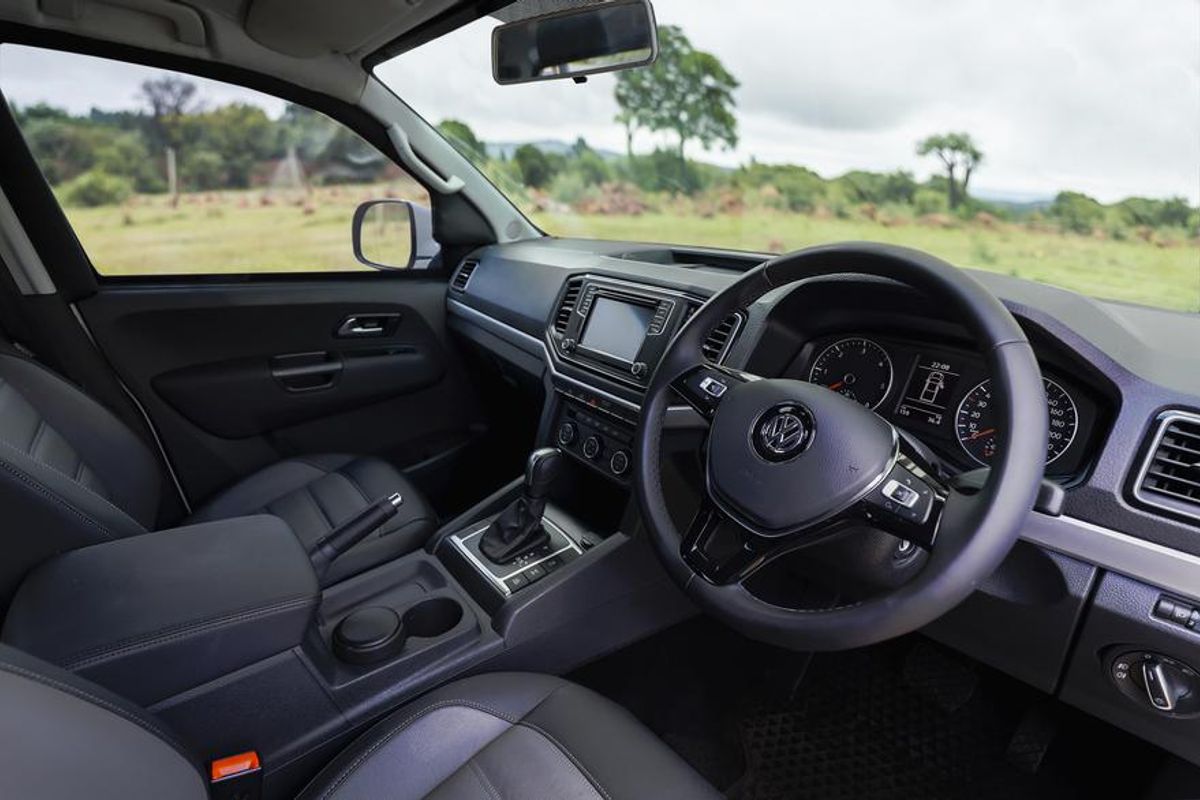
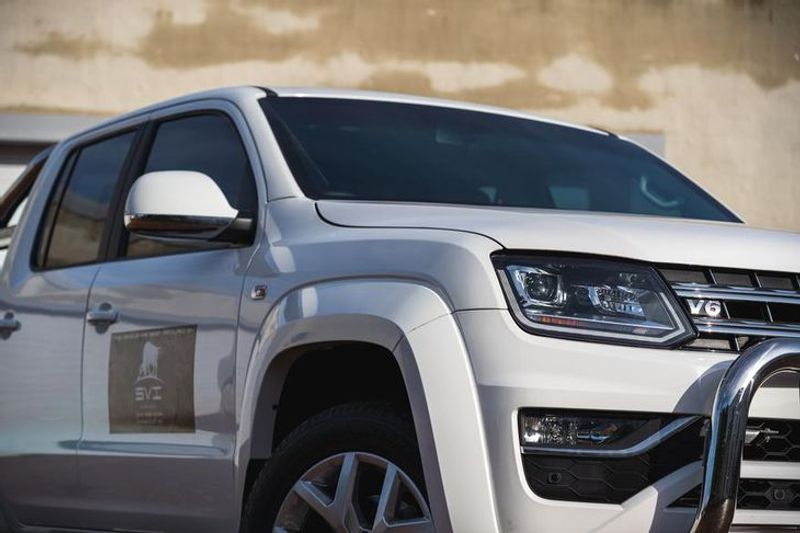
Vehicle armour specialists, SVI Engineering, is now offering armoured protection for the Volkswagen Amarok V6 double-cab bakkie! See specification and pricing details below!
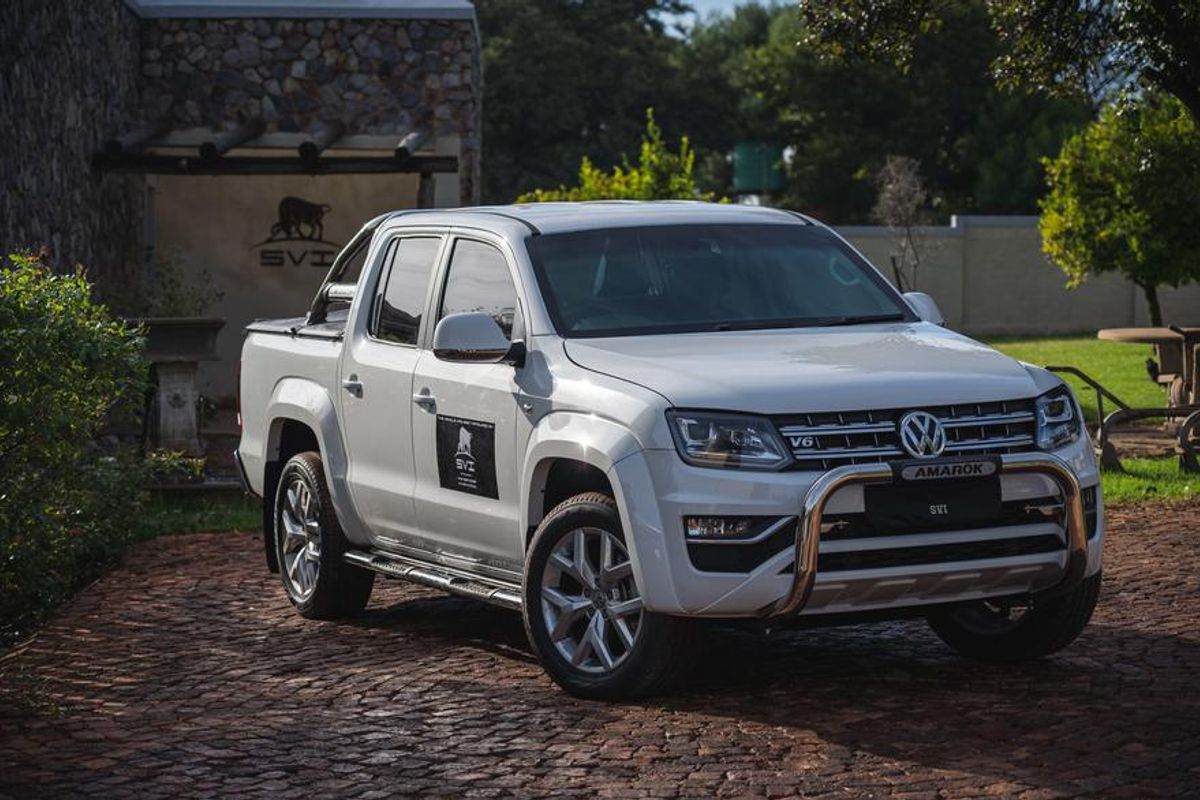
There is an increasing demand for armoured vehicles in South Africa and SVI Engineering specializes in this domain, supplying solutions to private, corporate, security, mining and government sectors. The Volkswagen Amarok V6 is the latest product to receive SVI’s armoured treatment, making it the most powerful armoured bakkie in South Africa.
What armoured protection is offered for the VW Amarok V6?
SVI Engineering has solutions for a variety of applications, but B6 protection is proving to be a popular choice in armoured protection.
For the Volkswagen Amarok V6, SVI Engineering offers basic B4 armouring which offers handgun protection and is the perfect anti-hijack solution. However, a higher level of civilian armoured protection, known as B6, can also be specified. B6 armour can withstand an attack from assault rifles including an AK47.
To achieve this B6 conversion, the interior of the Amarok is stripped down to its bare metal and it’s then built up using special steel armoured plates and composite materials are used for the body. The standard windows are replaced with 38 mm armoured glass.
As the weight of the vehicle increases by up to 650 kg for the B6 conversion, the suspension is also upgraded to cope with the additional mass. In comparison, the B4 level of protection only adds 280 kg of additional weight.
The powerful 190 kW / 580 Nm 3.0-litre V6 turbodiesel engine offers more than enough shove in this application and no further engine enhancements are therefore required.
What does the armour conversion for the VW Amarok V6 cost?
Customers can expect to pay R433 000 for B4 protection while the B6 level of protection is priced from R655 000 before options and comes with a 1-year/50 000km armour warranty for road use. Pricing excludes VAT and the cost of the vehicle.
If you are interested in finding out more about what SVI Engineering has to offer, you can visit www.svi.co.za.
This week’s news you need to know (April 2021, week 1)
Does Toyota now have the ultimate trio of fun cars? Is there enough fossil fuel left in the world to keep the Nismo Patrol going? Has Mercedes-Benz forgotten about the CLS? Will Porsche save the internal combustion engine from an early grave? Brent vd Schyff looks to answer these probing questions in this week's automotive news you need to know…
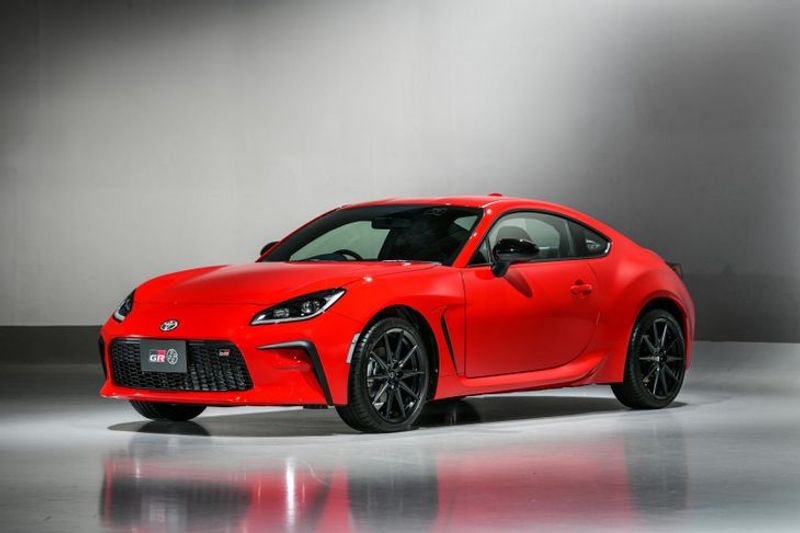
Toyota GR 86 – The gateway
Face it, the Toyota 86 had big shoes to fill. From the start, it had certified JDM (Japanese domestic market) giant-killer status. Just think of the legendary AE86 "Hachi-Roku" being pedalled by Takumi Fujiwara, who carted tofu up Mount Akina in the 90s cult classic, Initial D. There's a proper nostalgic flashback! And what's the recipe for thrills and spills? An elemental rear-wheel-drive sportscar with an affordable price tag. All you need to do is build a reasonably powerful naturally aspirated motor (with an engaging drivetrain) into a compact, and sufficiently wieldy, coupe. It's beautiful in its simplicity.
Just to clarify, we’re not asking Toyota to eclipse the Supra brand here. We’re just asking for a lighter and more powerful GR 86, which the current version should have been, but wasn't (perhaps Toyota and Subaru wanted to leave enthusiasts and tuners scope to leave their own marks on the 86/BRZ, we'll never know). On paper, it seems like those questions have been answered; if the new GR 86 is set up to be the final piece in the puzzle of what is the holy trinity of fun cars developed by Toyota (following the GR Supra and -Yaris), then, bravo, TMC, you've emphatically raised the flag – and are flying it proudly.
Nissan Patrol goes Nismo
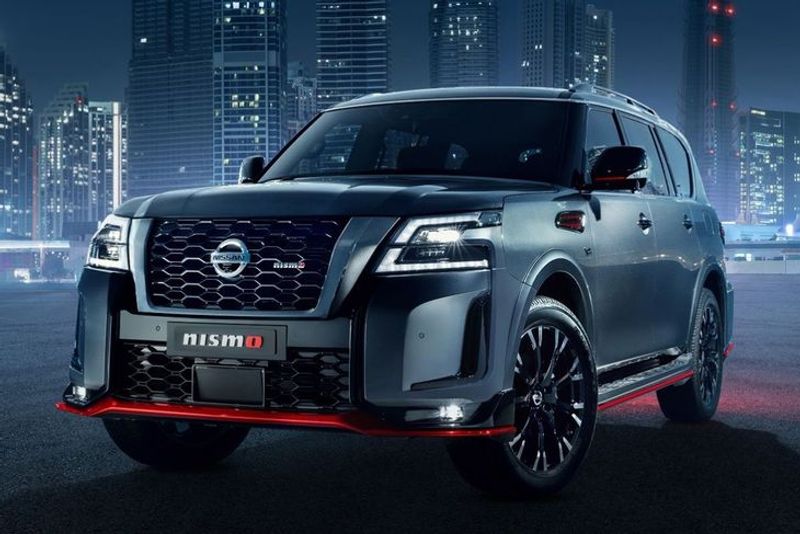
The latest OEM to join the “Performance SUV” segment is… well, Nissan. Yes, I can't say that I saw that coming either. The newcomer is based on the long-serving and ever-popular Patrol, but, in contrast with its off-roading brethren, it's imbued with Nismo upgrades, including a hand-built 319 kW/560 Nm motor, Bilstein shocks, extra bracing and 22-inch wheels. Here’s a point that we die-hard petrolheads tend to forget: these are the types of cars that contribute heavily towards manufacturers' bottom lines. In the case of Porsche, the original Cayenne took the brand's status from "must survive" to "thriving".
The Patrol’s been a runaway success in the UAE, which has an insatiable thirst for big SUVs. Coincidentally, the Nismo's V8 is probably extremely thirsty, but if you live in the part of the world that produces fuel at a giveaway price, that’s probably low on your list of concerns. Come to think about it, perhaps emigration to the Gulf isn’t such a bad idea, especially if you have petrol coursing through your veins.
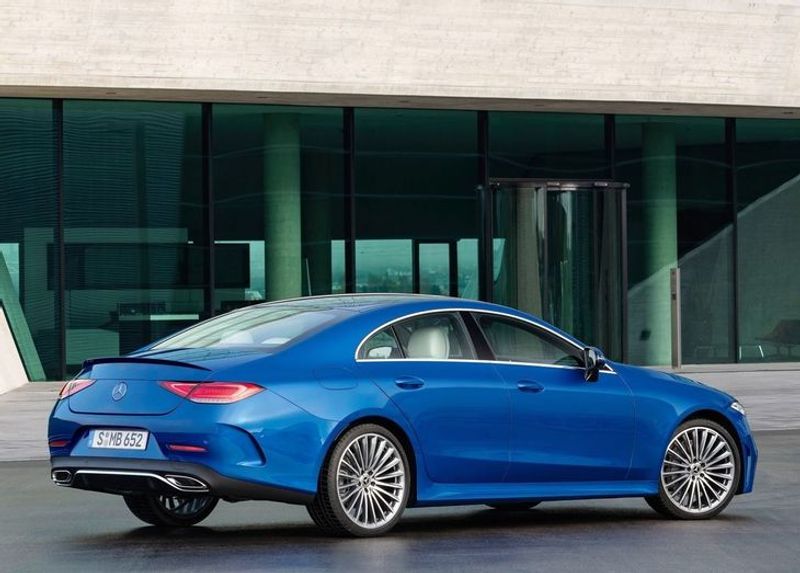
Mercedes-Benz CLS – The forgotten son
Is this the perfect example of derivative fatigue we've been talking about? Sales trends suggest that buyers in the market for a luxury vehicle (that's not a 2-door sportscar or 1st-class sedan) are going to favour bigger, more spacious models (probably SUVs). An arrestingly styled "4-door coupe" supposedly offers a kind of nonconformist appeal that well-wheeled individuals crave, but only intellectually –because when they whip out their chequebooks or personal electronic devices (to authorise an EFT on conclusion of a vehicle purpose, I suppose), they tend to pause to reconsider other options…
Why? Well, if those buyers like the idea of commuting to their workplaces in luxury and sophistication, the E-Class (upon which the CLS is based) provides those talents in conjunction with 4-door practicality and a conventionally shaped boot (for less), while the GLE or GLE Coupe premium SUVs have that rear-view-mirror-filling/drop-off-the-kids-at-private-school appeal. That's why, from my viewpoint, the CLS seems lost somewhere in the Sindelfingen-based brand's lineup. It's not really unique enough to stand out enough from its sibling products, let alone other executive-sedan-based variants in the market.
Perhaps some buyers truly like the CLS' coupe-inspired lines, but at its price point, wouldn't such buyers much rather step up to a potent AMG-badged GT4 than cruise around in a stylised E-Class?
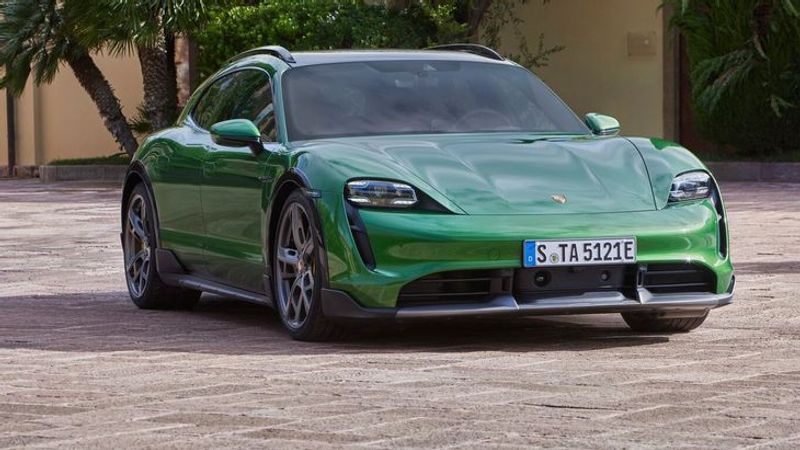
Porsche’s efueling program – Redemption is at hand
Wrapped in white robes, with a shepherd’s crook in hand and a full head of wavy long hair, Porsche’s efueling program seems to be the saviour we petrolheads need, parting the stormy seas of the EV revolution and showing us the way to the promised land (inserts triumphant victory music). Okay, if you’re not up to speed with it, it’s a programme being undertaken by a bunch of smart people at Porsche to find a zero emissions-based fuel to keep the internal combustion engine alive. Trust me here, it’s a big thing.
Motorsport has – and always will be – the testbed for technology. While GT racing is a rich man's sport, the technology developed in pursuit of on-track success will inexorably find its way into your road car at some point, so pay close attention! Keep an eye on this fueling programme, along with Porsche’s plans to go public; parent company Volkswagen wants to emerge from the murk of the Dieselgate saga and the VW Group's obvious intentions to virtue signal its way to a cleaner reputation means that Porsche will eventually get the funding that's needed to make efueling part of the automotive mainstream.
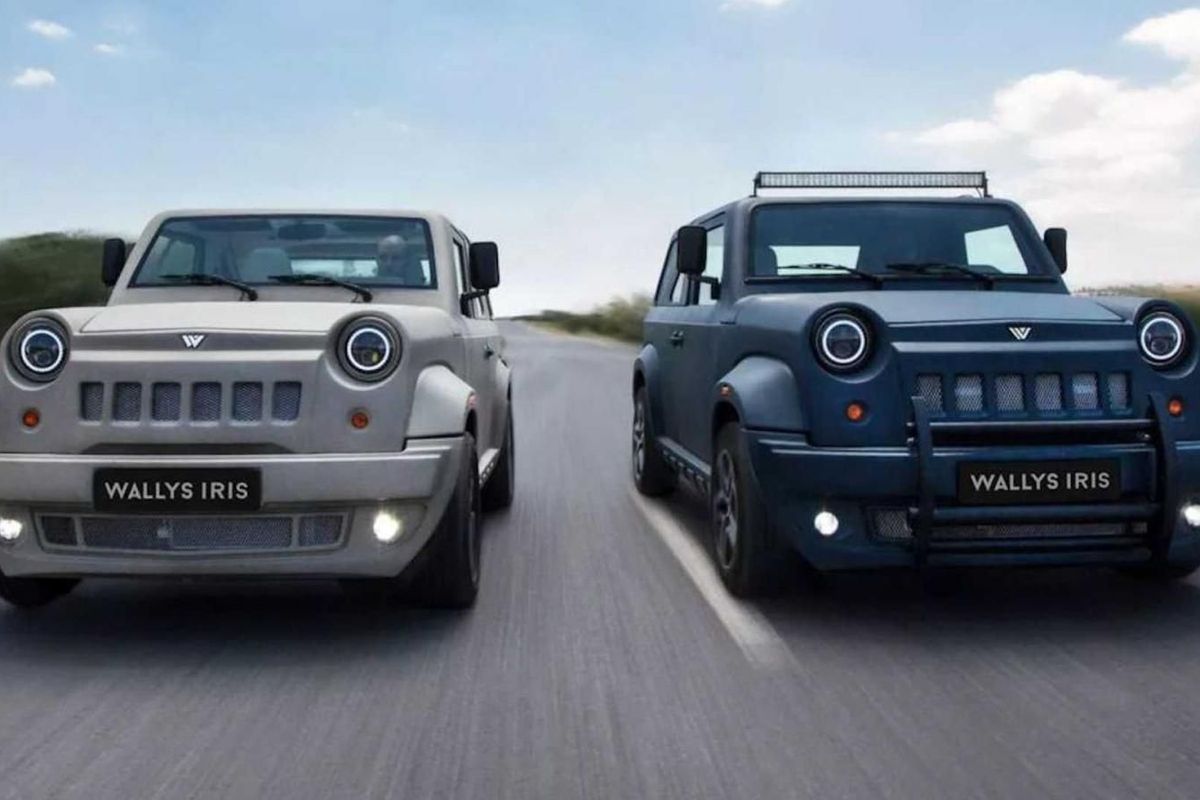
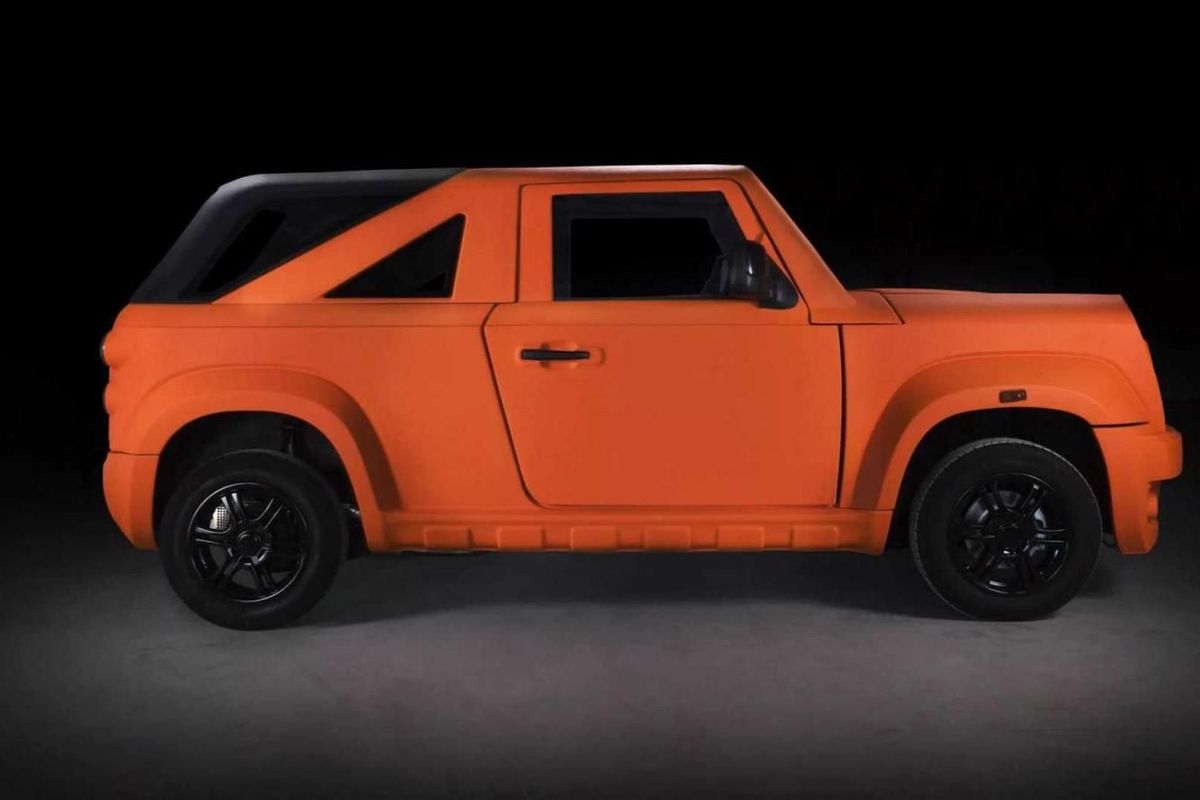
Wallyscar Iris is a Tunisian built ladder frame crossover
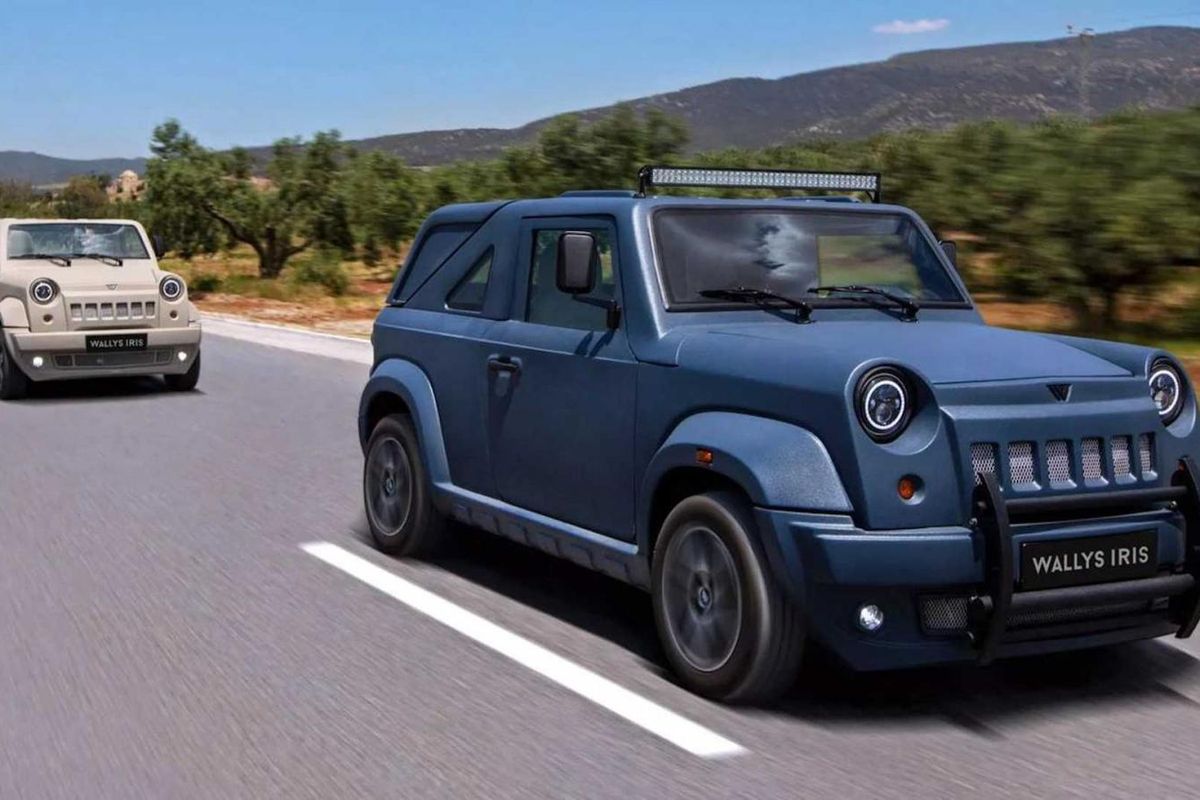
If the Willys Jeep – was a modern budget crossover, this is what it would look like…
The call for an African car remains strong, with the continent’s potential huge customer numbers and lack of public transport creating a vast market.
Establishing a new car company to challenge legacy brands, isn’t easy. But some African entrepreneurs and engineers aren’t afraid of the challenge. And two of them, are the Tunisian brothers, Zied and Omar Guiga, who run Wallyscar.
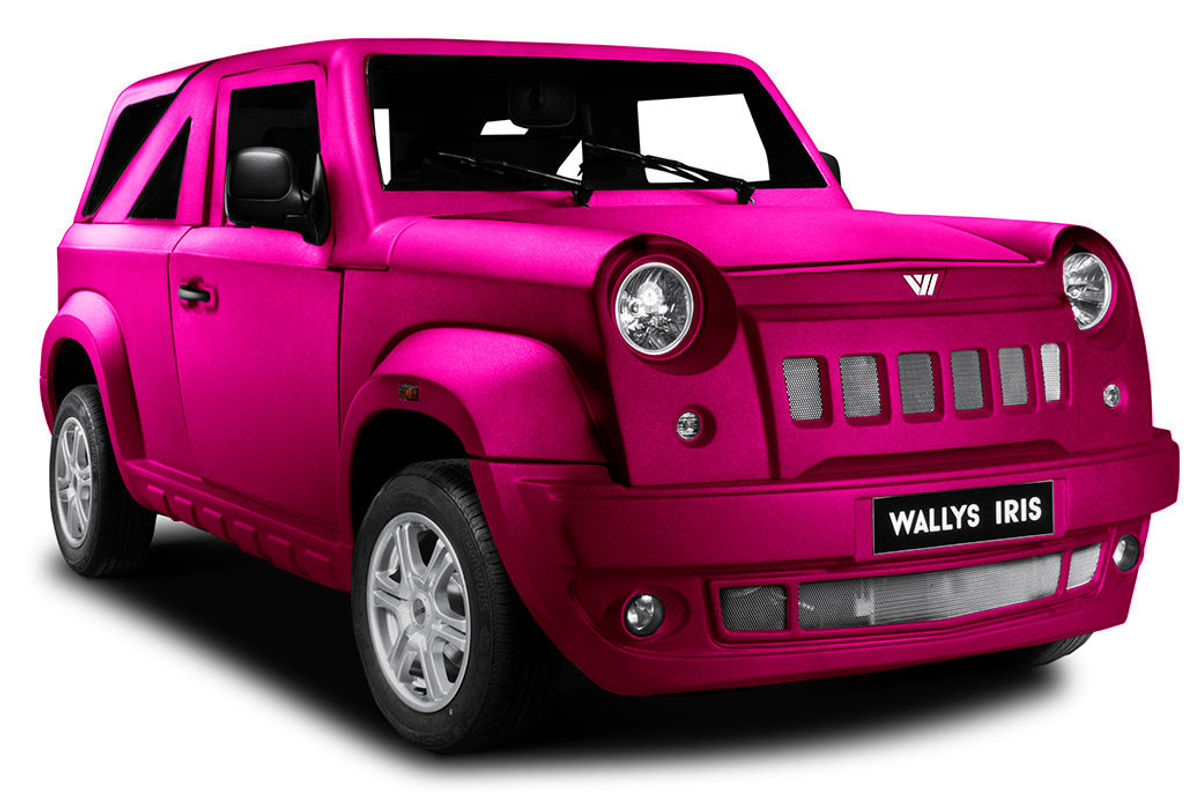
The name might sound like a misinterpretation of a children’s book, but it is a clever play on Jeep’s product heritage. Operations at Wallyscar started in 2006, and the company’s product offering is a Jeep inspired front-wheel-drive vehicle called the Iris.
Its styling is unapologetically relatable to that of Jeep’s round headlight crossovers, with the ‘Wally’ name being a play on Jeep’s legendary ‘Willys’ roots.
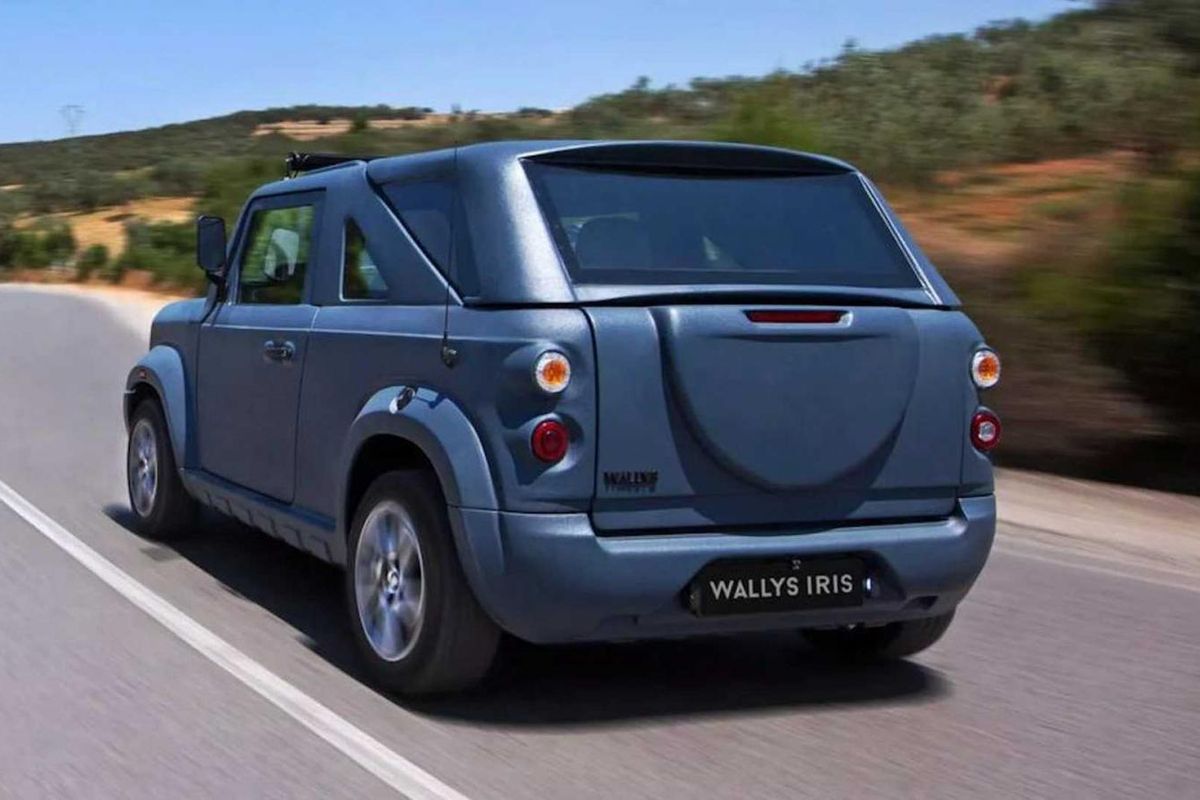
The somewhat original and slightly outrageous styling is made possible by fibreglass bodywork, which won’t be of much value in dissipating crash energy, but it makes the Iris quite cheap to build.
Engineered for Tunisian conditions, the Wallyscar Iris doesn’t mind rolling thousands of gravel road miles.
Although it is front-wheel-drive, there is a separate steel chassis, with the fibreglass bodywork on top, which should make the design very durable. The idea of a steel ladder frame crossover is quite novel.
Iris engine details and price
Powering the Iris is a Peugeot-Citroen sourced 1.2-litre three-cylinder engine, good for 61 kW. It drives the front wheels via a five-speed manual gearbox, and Wallyscar says the Iris will run a 0-100 kph benchmark sprint in 13.2 seconds and power to a top speed of 158 kph.
The fibreglass bodywork has a removable rear roof section, and although it has four seats there are only two access doors.
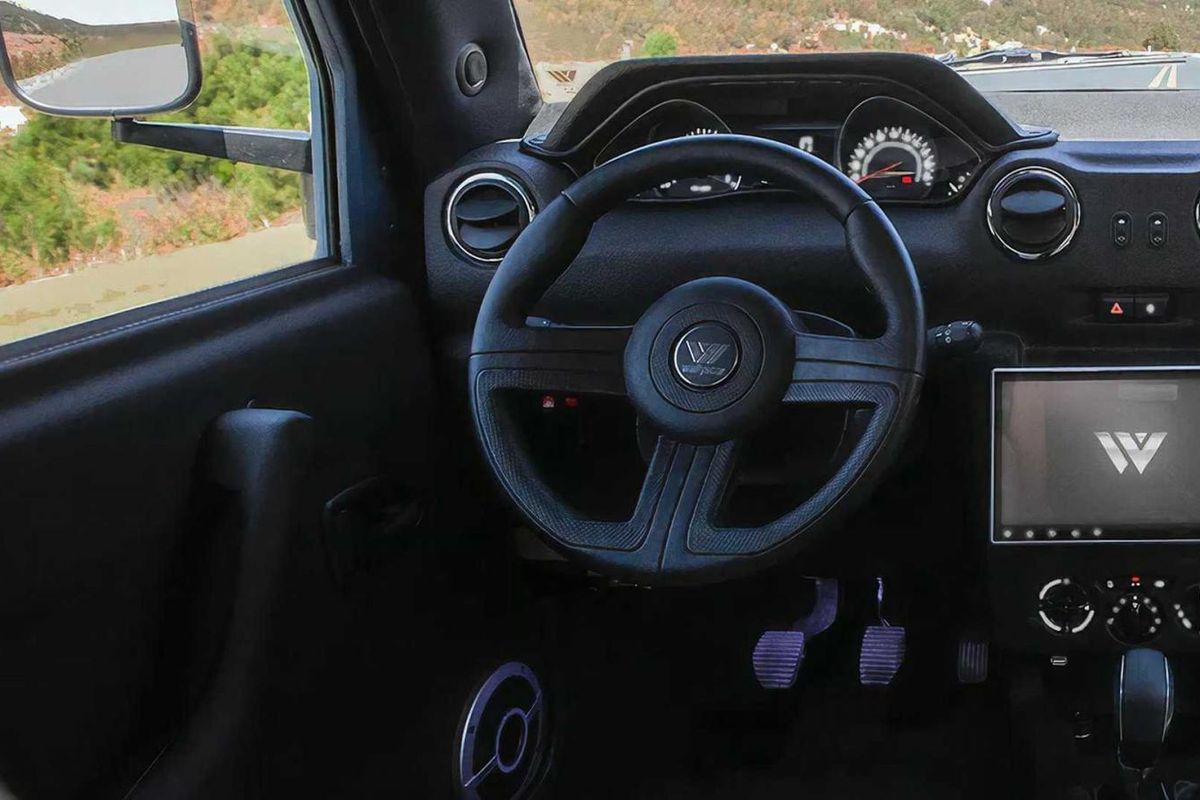
Most of the cabin switchgear is recycled Peugeot-Citroen componentry, but you can have comfier seats, an armrest and touchscreen infotainments system as upgrades.
If the idea of a front-wheel-drive, steel frame crossover appeals to you, this African-Mediterranean product offering prices at R190 000.