No, Toyota is not squashing Suzuki

Does the local arrival of the 2nd Suzuki product to wear a Toyota badge preview a bleak future for Suzuki Auto SA? While there is a limit to the Japanese brands' model-sharing agreement and Suzuki is doing quite well on home soil, Toyota SA has arguably got the better deal in the long run. 

Late last year, Toyota SA introduced the Starlet budget hatchback in South Africa to replace its long-serving Etios; it was instantly recognisable as a rebadged Baleno – an honest, if unremarkable, Indian-made model that Suzuki Auto SA launched in Mzansi in late 2016.


The Starlet not only rolls off the same production line in India as the Baleno; the models look virtually identical.

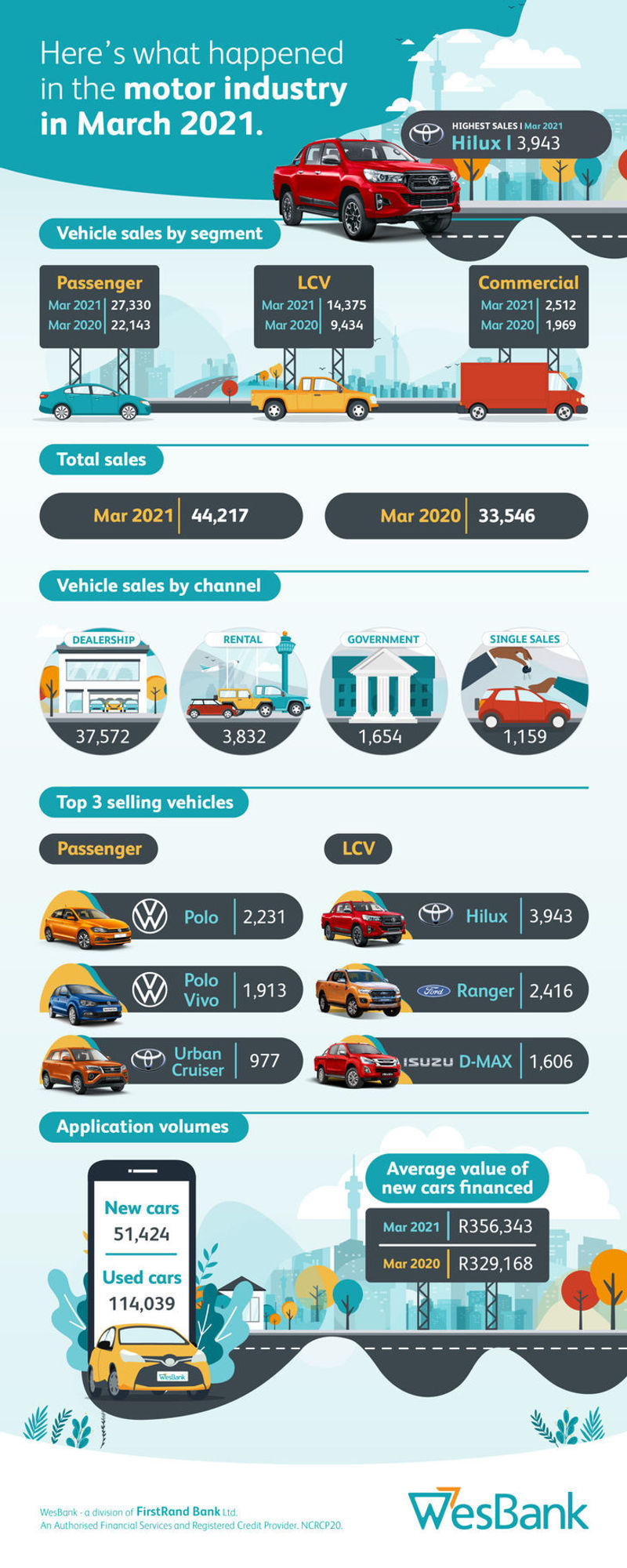
Whereas the Baleno hardly troubled the new vehicle sales stats during its first 4 years on the market, the Starlet, which is almost identically specified to its Baleno twin, achieved immediate success. To illustrate my point: In the few months that the Starlet was on sale in the Republic in 2020, Toyota sold almost 6 times as many units as Suzuki did of the Baleno for the entire year. The Starlet even bagged a #CarsAwards category win at its 1st attempt.

Now, following hot on the heels of the local launch of the Suzuki Vitara Brezza budget crossover, comes the Toyota Urban Cruiser. It’s the same story as above, even if the models don’t look as near identical as the Baleno and Starlet. But whereas the Baleno never sold well (for Suzuki Auto SA anyway), the keenly-priced Vitara Brezza (a B-segment crossover/SUV) is almost exactly the kind of product that South African new-vehicle buyers have an appetite for right now. The only question is: Will they buy the much-in-demand car from plucky Suzuki… or the market giant Toyota?


The Vitara Brezza is the top-selling SUV in India (with 38.8% of the entry-SUV market and 18.4% of all SUV sales).

A mutually-beneficial partnership

So how did Toyota acquire the right to start selling rebadged Suzukis? Well, Toyota was very keen to increase its market share in the lucrative Indian market, while Maruti Suzuki (the runaway market leader in that country), was eager to acquire TMC’s hybrid- and autonomous driving technologies, both of which are becoming increasingly important as the market evolves – even in the developing world.  

The companies, which decided to co-operate as long ago as 2016, signed an agreement for a capital alliance in August 2019 to establish and promote long-term cooperation; Toyota duly acquired a 4.94% stake in Suzuki, while the latter bought a 0.21% stake in the former.


This is a physical manifestation of what Suzuki is getting out of the deal; a hybrid RAV4 clone named the Across.

Toyota produces 2 hybrid vehicles for Suzuki, of which the first is the Across (or A-Cross), which is a petrol-electric RAV4 for the European market (it's built in Turkey) and the other is reported to be a Corolla Estate (produced in the UK). Suzuki, on the other hand, will supply Toyota with the aforementioned Baleno, Vitara Brezza, but also, some reports say, the Ciaz budget sedan and Ertiga small MPV – could the last two be heading for Mzansi in Toyota guise as well? Time will tell.

Badge-engineering has a chequered past

But wait, the thousands of ZA consumers who are deeply devoted to Toyota and everything it represents surely won’t be duped into buying products that are Toyotas in name only? Or will they?

For South African motorists of a certain vintage, badge-engineering or, for a more accurate (if somewhat less glib) description, “badge-interchangeability” is a huge turnoff. For the sake of brevity, badge-engineering is a (largely derogatory) term that was coined for the practice of manufacturers selling identical models under separate brands. In other words, they’re the same but wear different badges.


While Ford and Mazda were churning out badge-engineered models, the "wet-look" Corolla was selling up a storm.

So, let me take you back about 40 years or so, when Toyota still had a white horse in its emblem and adopted the “Everything keeps going right” slogan and sold many thousands of the Corolla compact sedan (and its Conquest hatchback variant) to become the country’s leading passenger vehicle manufacturer. Toyota ascended to the top of the pile at the cost of Ford, which admittedly dramatically reduced its role in Mzansi due to sanctions/disinvestment.

It was also in that era that Ford and General Motors adopted strategies to produce cars for specific regions (rather than global models, which are now the norm). In South Africa, the Blue Oval produced cars under the Samcor banner and duly slapped Ford and Mazda badges on cars interchangeably, such as the Laser/Tracer/Meteor, which were clones of the Mazda 323 hatchback/sedan; the Telstar and 626 were identical and so were the brands’ bakkies. 

Those products weren’t stellar (in terms of design, performance/efficiency – and especially build quality) and that product strategy hurt Ford especially. Sales slumped and even though the Blue Oval returned to SA officially after the dawn of democracy and the current (T6) Ranger became the country’s 2nd favourite bakkie, Ford never quite managed to recover its brand cachet in the local passenger-car market. And that’s that.

Why Toyota’s trying it now

You see, since those heady days of big hair, shoulder pads, synth-pop and pyramid schemes (oh, and lots of other dodgy things), Toyota has lost its lead in the passenger-vehicle market to Volkswagen. The Uitenhage-based firm kept the CitiGolf going (and going), launched the first of its Polo offerings in the late ‘90s (the Polo Vivo came later) and haven’t looked back since.

20Hatch 009
The Corolla Hatch is a handsome offering, but buyers aren't flocking to the compact market the way they used to.

If Toyota wants to wrestle back the market leadership from VW in Mzansi, it needs a stronger model line-up than what it has now. TMC is not renowned for building budget cars (which is Suzuki's forte) and while the Yaris, which arrived here in 2nd-generation guise in the mid-Noughties was nifty, subsequent versions were much less adorable – the current Thai-sourced model is, well, humdrum.

Moreover, the Corolla – statistically the bestselling car in the history of the automobile ­­– is not only rather pricey these days, but completely out of step with purchasing trends. Sales figures indicate consumers favour compact crossovers over sedans and hatchbacks. The year 2020 was a proverbial dumpster fire, of that there is no doubt, but Toyota sold fewer than 1 500 current-shape Corollas (4- and 5-door versions), which was a veritable disaster.

Granted, the Corolla Quest sedan sells well on the basis of its good value and fleet potential, but the brand lacks small SUVs (other than the boutique C-HR and the bargain-bin Rush – if that’s still on sale) to slot in below the RAV4 family car. That’s why the Urban Cruiser is such a godsend for Toyota SA; the newcomer should sell like hotcakes, because, if the Starlet’s performance is anything to go by, as long as a product is well-made and wears a Toyota badge – it will sell! Don't forget that the Toyota Avanza, for example, is a rebadged Daihatsu; it's certainly not Toyota's first re-badging exercise. 


The Indian-made S-Press is a popular entry-level offering; it is Suzuki Auto SA's 2nd-best seller.

Where does it leave Suzuki?

Look, such is Maruti Suzuki’s dominance in the Indian market (50% share at the end of 2020) that it can afford to relinquish some ground to Toyota (3%) on the subcontinent. Suzuki is currently producing the Starlet and the Urban Cruiser for Toyota at its own plants, although production of the latter will reportedly shift to TMC’s Karnataka plant at some point in 2022.

Therefore, Suzuki – and its component suppliers, no doubt – will be all too happy to produce more products (even if they don’t necessarily wear Suzuki badges), but what about Suzuki Auto SA’s position in all of this? Whereas its mother company is dominant in India, where Toyota is but a bit player, in the Republic, the situation is well and truly the opposite.


The Urban Cruiser is the model that Toyota's been waiting for; it's not as smart as the CH-R, but it has much wider appeal. 

Following a resurgent 2020, during which the multiple #CarsAwards – powered by WesBank category winner Suzuki Swift was the 15th-best-selling model in the entire South African market, Suzuki Auto SA registered its best-ever sales month in February 2021. The Swift compact hatchback, which won the Entry Level category of our 2020/21 awards programme, accounted for the lion’s share of those sales, while the Baleno – plus the Ciaz and Ertiga, if they happen to be assimilated by the mighty TMC in future – accounted for just over a hundred of the 2 142 units sold.   

Therefore, there is no need to fear for the future of Suzuki Auto SA – at least not yet. Although the firm won’t be too miffed about the market’s perennial underappreciation of the Baleno, perhaps it could have sold many hundreds more of the Vitara Brezza had the pesky Toyota Urban Cruiser not come along… But the firm will sell quite a few of them anyway.

If the model-sharing agreement between the Japanese firms remains unchanged, Toyota SA will benefit the most from it because the models it has acquired neatly plug a couple of gaps in the firm’s local product line-up. Should TMC decide in future that it also likes the look of the S-Presso, Swift and Jimny, however, the picture could change drastically for Suzuki SA.

Related content:

China's stealthy progress – what it bodes for SA

The end of empire for VW

It's okay to desire a 4-cylinder BMW

GWM P Series could be the perfect Chinese bakkie
VW's Accelerate Plan: Golf, Tiguan to live on

More lights for BMW M3 grille

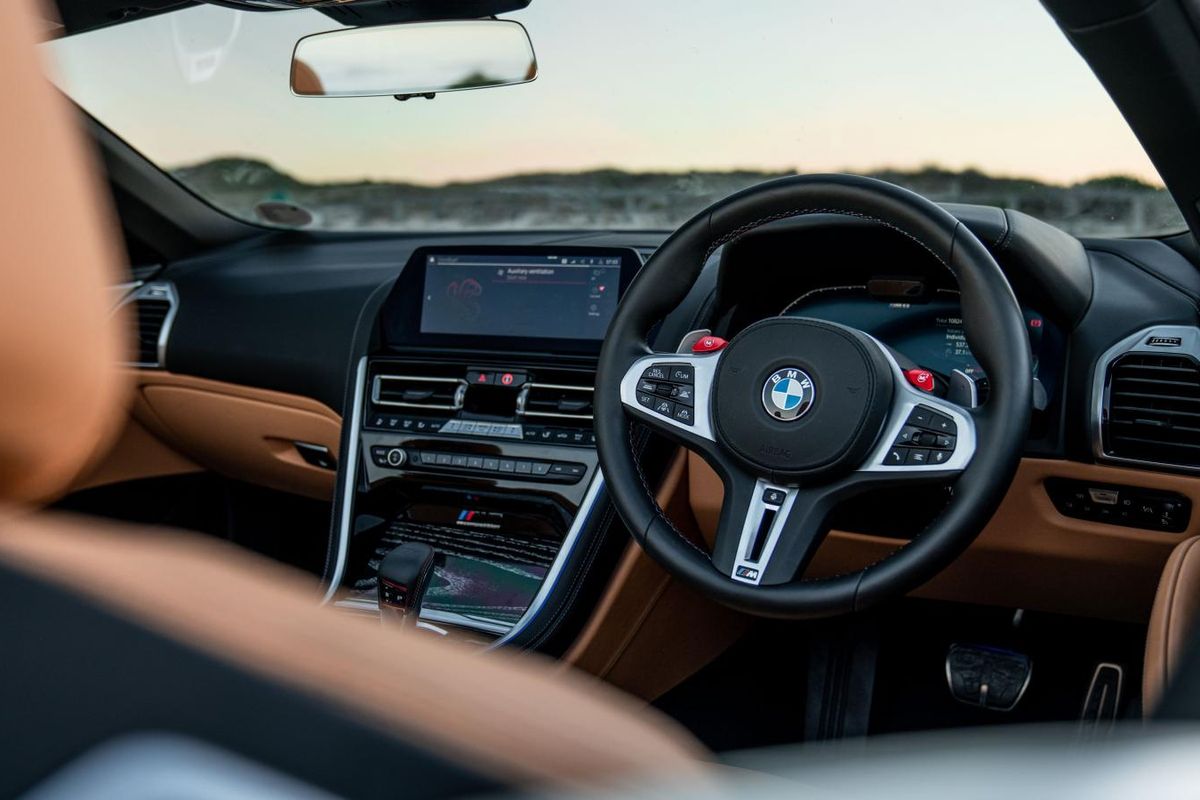
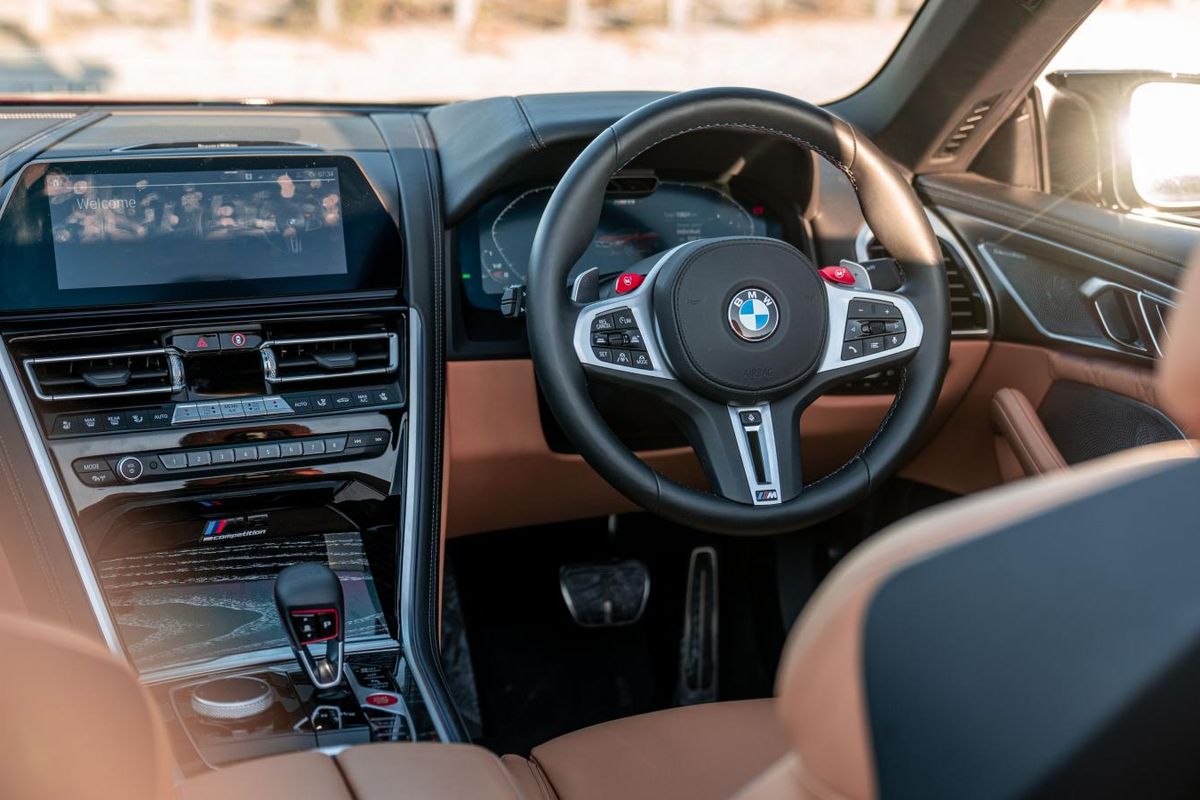
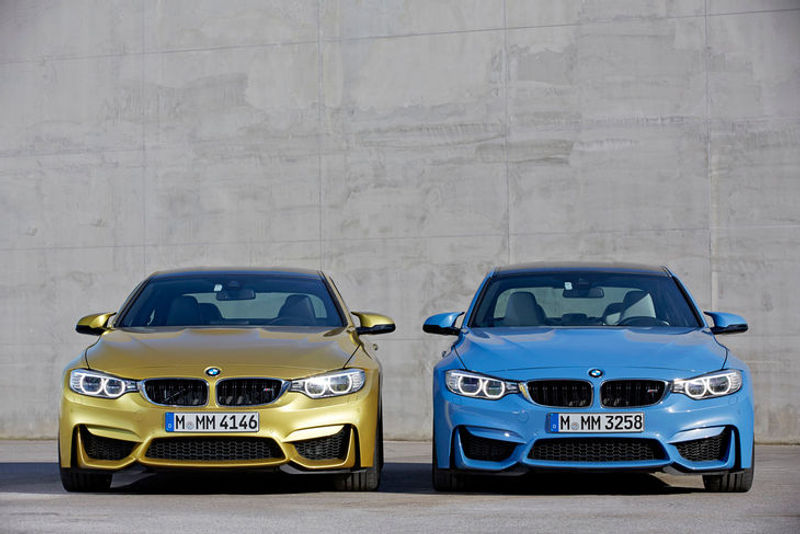
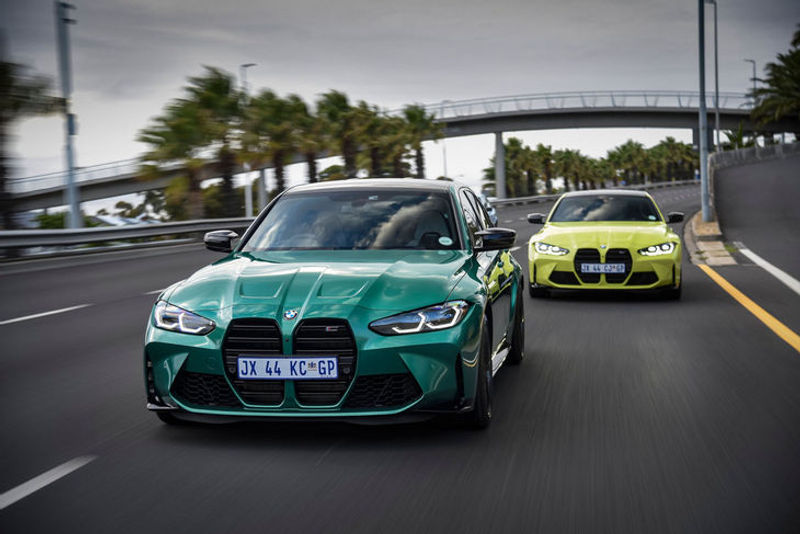
BMW’s most controversial-ever M3 and M4 have been readied for safety-car duty. For once, the Bavarian marque's M-Division is playing good cop – these machines will "light the way" to the world’s fastest riders when rain and/or incidents interrupt MotoGP races.

Although the factory specification G80 and G82 M-cars are very adept at lapping race circuits at heady speeds, BMW’s technicians have added some changes for these new safety cars.

The most noticeable are those colourways, which are not traditional BMW motorsport white with blue and red stripes. The MotoGP safety cars are dark grey, in the case of BMW’s M3 Competition, and Sao Paulo yellow, for the two-door M4.

Beyond the distinguishing colours, these MotoGP safety car M3/M4 variants get all manner of additional illumination. There are additional flashing front lights (as if the grille is not warning enough, to get out of the way), and rooftop lightbars.

Those rooftop lightbars might look cool and serve a very definite purpose in the role of being a safety car, but they will marginally increase the M3/4s centre of gravity and aerodynamic drag coefficient.

Inside the rear seats have been removed (which should net a worthwhile reduction in mass), whilst rollbars not only provide structural support, but also increase lateral rigidity.

Any notable mechanical upgrades? BMW has added an ever freer-flowing exhaust system, that should slightly improve throttle response and most importantly: make these M3/4 safety cars sound even more purposeful.

BMW will also supply an M5 CS, finished similarly to the M3 safety car.

Hyundai Kona N Teased Yet Again

We've known that Hyundai was preparing a Kona N for almost a year, but the Korean firm has now confirmed that its newcomer will debut soon, replete with design cues from the facelifted model. What's more, it will be mechanically similar to the 206-kW i30 N hot hatch (with the dual-clutch auto transmission). 

*Update March 2021* Hyundai released some teaser images of its new Kona N and while they're tagged as teasers, they don't hide much.

Hyundai has announced that the "the newest member of its N (family) will be the hotly anticipated Kona N – the first SUV in the (N Division's) high-performance line-up". We can't say we're surprised… In April 2020, our spy photographers snapped a pre-production version of the flagship of Hyundai's European-flavoured compact family car being put through its paces around the Nurburgring. Nonetheless, the N Division's decision to go ahead and build a performance-oriented small crossover is quite audacious for the (traditionally risk-averse) Korean marque.

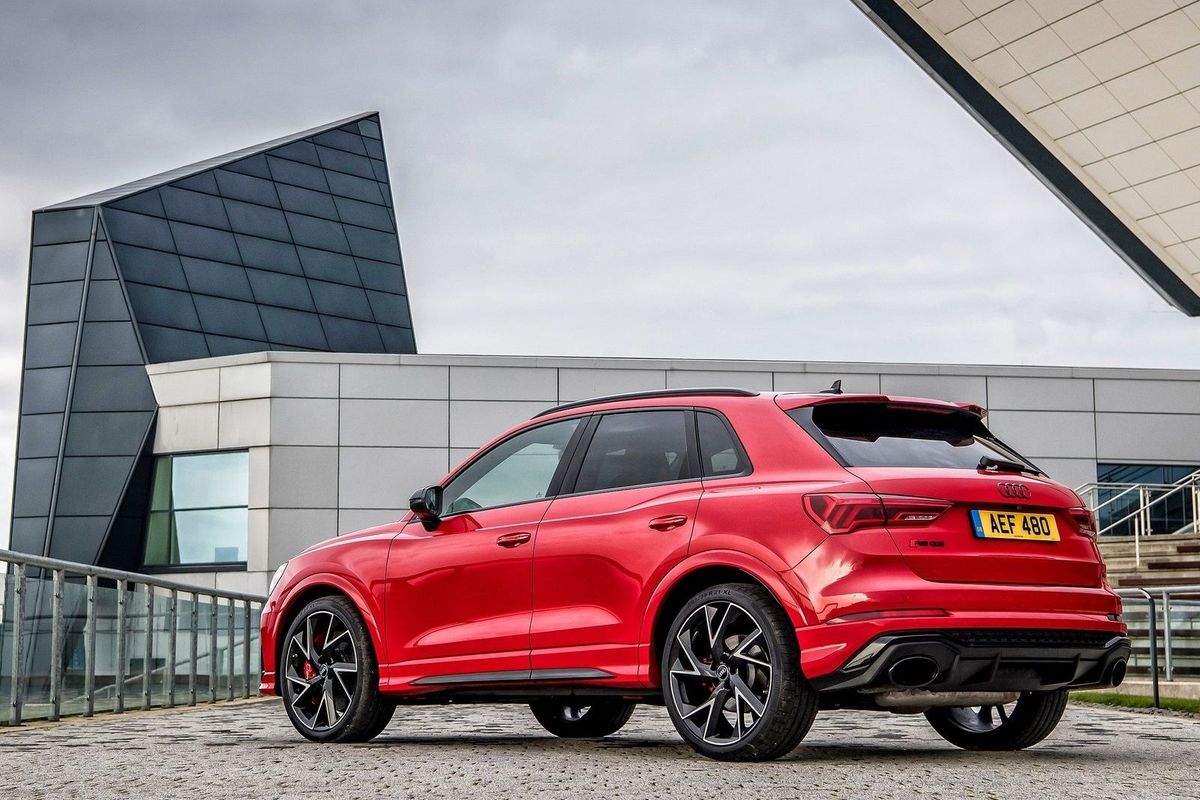
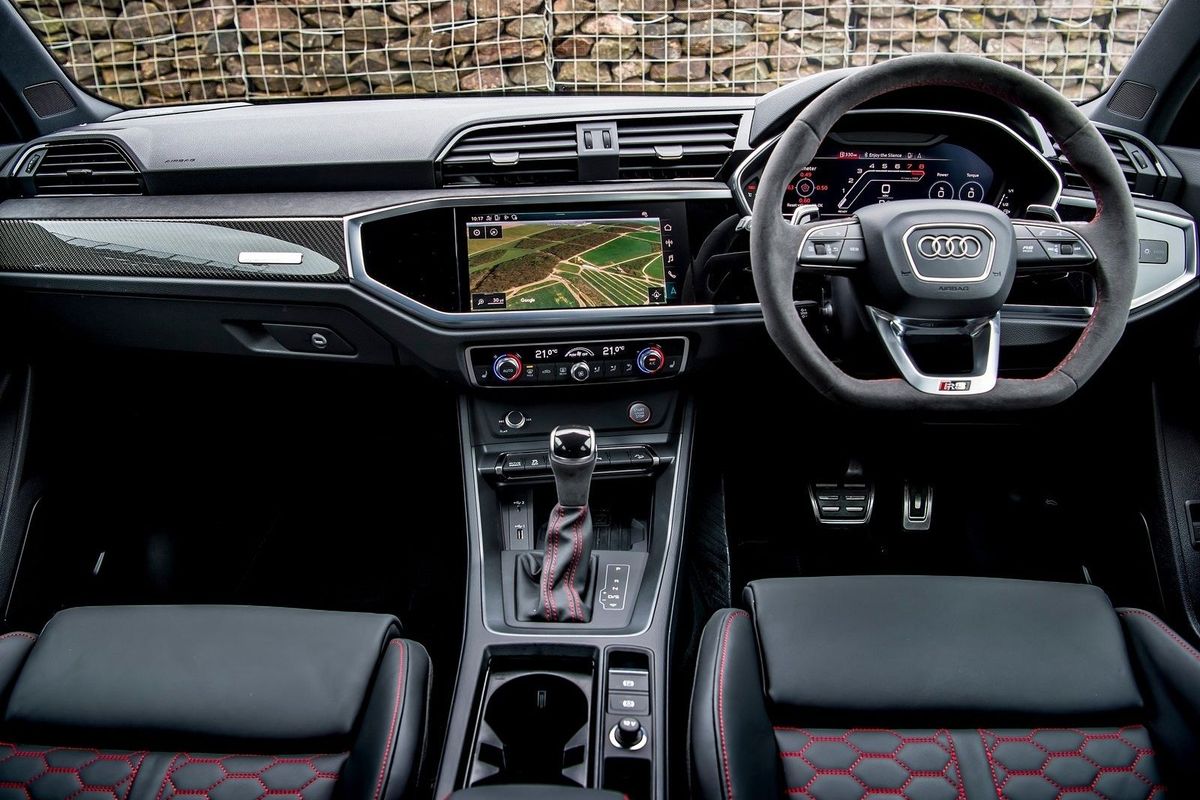
Audi's Quattro division and Mercedes-AMG have dipped their proverbial toes in the water with the Q3 RS and GLA45 4Matic and Volkswagen offers the T-Roc R, which is a direct rival to the upcoming Kona N, although it won't be offered in South Africa… It's a tiny niche of the market, even tinier than the subsegment for rapid compact hatchbacks such as the VW Polo GTI and Toyota GR Yaris.  

Hyundai KonaN 2
Last year's spy photo of the Kona N. Image watermarked at the request of the photographer S. Baldauf/SB-Medien.

Having said that, it's a no-brainer to bring the Kona N to fruition, because the Korean brand's compact family car, which was eventually launched in South Africa in late 2018, is based on the i30's underpinnings and is likely to share myriad components with the revised i30 N – equipped with an 8-speed automatic transmission, which is set to be introduced locally during the 1st half of 2021. 

So far, Hyundai has revealed precious few details about the "all-new Kona N", apart from confirming that it will be powered by a 2.0-litre 4-cylinder turbopetrol mated with an 8-speed wet dual-clutch transmission (N DCT) and that it will offer, inter alia, "a variety of high-performance driving features, such as launch control and an exciting sound experience."


Here's a clue to the Kona N's final look. There's a lot more in the way of air inlets in the facelifted N Line version's frontal aspect. 

That leads us to believe the Kona N could produce up to 206 kW and 392 Nm (the latter from 1 950 to 4 600 rpm), but Hyundai might be reluctant to make its newcomer match the performance figures of the facelifted i30 N for fear of cannibalising sales of the latter, especially in Europe, where compact family cars rule the roost. We anticipate the 2.0-litre mill might be slightly detuned in the Kona N.

Still, other accoutrements from the i30 N that could feature on the Kona N include an electronically controlled suspension and limited-slip differential (eLSD), a rear stiffness bar and uprated N braking system (of which the discs have been increased to 360 mm), a bespoke drive-mode system (which Hyundai calls "N Grin Control"), including the N Grin, N Power and N Track Sense shift modes.


The N Line features a sporty diffuser and side-mounted tailpipes, but the Kona N will have a pair of large-bore exhaust ends. 

As to which design cues might lurk under the camouflage of the car in the teaser images, we'd suggest the facelifted Kona, which is 40 mm longer than its predecessor (the car that's currently offered in Mzansi) and features a longer bonnet, a refreshed grille design and widened LED daytime running lights, provides a good indication, although the bumpers, especially, of the Kona N will be exclusive to the model. The N-Line (for example, although it's unlikely to come to SA) eschews black cladding in favour of a sporty body kit and features a trio of mesh-covered mini air intakes above the front grille. 

Inside, the Kona N's front sports seats are likely to be trimmed in black artificial suede and leather with Performance Blue contrast stitching and the instrument cluster may include an active variable LED red zone and shift indicator. Apart from sporty, metallic-finished pedals, the seatbelts will probably feature Performance Blue accents – as they do in the i30 N.


This facelifted Kona features a digital instrument cluster and upgraded infotainment system. The N model should have sportier detailing.

With the recent facelift, the Kona has gained an electronic handbrake, ambient LED lighting (for the centre cup holder as well as the driver and front passenger's footwells), updated speaker- and vent surrounds, as well an 8-inch touchscreen infotainment system with wireless Android Auto and Apple Car Play. The 10.20-inch digital instrument cluster and -touchscreen units might feature too.

“As the N brand’s first ‘hot SUV’, the Kona N will offer plenty of versatility and driving thrills that N-thusiasts (sic) have come to expect from the brand. You can take this vehicle anywhere – from road to the track,” said Till Wartenberg, Vice President and Head of N Brand Management and Motorsport Subdivision at Hyundai Motor Company.

What's interesting about Wartenberg's statement is that it suggests the Kona N will be "the first" of a number of performance-oriented SUVs to come from the brand, which lends credence to the rumour that an N model based on the all-new Tucson is in the works. As for the possibility of the Kona N being made available in South Africa, well, it's not great…

The Kona is the least popular model in Hyundai Automotive SA's compact family car line-up (which includes the Venue and new Creta); although the facelifted Kona is likely to arrive at some point in 2021, the N model is an ultra-niche offering and even if the Korean brand's local distributor could make a case for launching it here, it would be positioned at a disadvantageous price point.

Related content:

Hyundai unveils facelifted Kona & N-Line derivative

Hyundai Creta (2020) Specs & Price

Updated Hyundai i30 N confirmed for SA

Full reveal: All-new Hyundai Tucson

Next Hyundai Tucson 'will spawn 254-kW N model'

Spy Shots: 2022 Audi Q9

Audi is readying its biggest SUV yet. The Audi Q9 will be taking on the Mercedes-Benz GLS and BMW X7 when it is revealed in 2022.

Picture credit: S. Baldauf/SB-Medien. We have paid for these photos and at the photographer's request, have watermarked them.

German carmaker Audi is preparing a Q9 super SUV which will take the fight to the 7-seater Mercedes-Benz GLS and BMW X7, and we're sure it will ruffle some Range Rover feathers too. Back in 2018, Audi boss Robert Stadler hinted that something big was coming at the launch of the Q8. 

Now the first mules of the Audi Q9 have been spotted and the one you see here is conducting winter tests. Interestingly, the wrap you see is what Audi uses for its China-only vehicles, a hint of a potential market perhaps? We do know the US market does like a large SUV too. As far as platforms go, Audi can call upon the vast arsenal of the Volkswagen Group and we reckon the new Audi Q9 will be underpinned by the same MLB Evo as its Q8 sibling (as well as the Porsche Cayenne, VW Touareg and Bentley Bentayga). Granted, it would need to be extended a touch to allow for genuine 7-seat functionality, but it is rumoured that a 6-seat setup will also be offered.

With regards to engines, again Audi can dip into the family reserves and there's a staggering away of petrol, diesel and hybrid options on offer. We reckon on the diesel side of things, the 3.0-litre V6 TDI will be offered, but for those wanting some petrol power, potentially the 4.0 TFSI turbocharged V8 could be used. The latter is available in a variety of outputs and can be had with a monstrous 478 kW and 850 Nm – the same setup as the Lamborghini Urus. RS Q9 anyone? 

The Audi Q9's development is still in its early days, but we'll keep an eye on how this goes. 

Further Reading

Audi SQ7 and SQ8 (2021) Specs & Price

Audi Q7 (2021) Review

New Audi Cars for SA in 2021


Volvo XC40 Recharge Pure Electric Confirmed for SA

Volvo SA has confirmed the arrival of its first all-electric car to our shores. Here's what you can expect from the Volvo XC40 Recharge Pure Electric.

The global market has reacted strongly to the all-electric SUV segment. The Audi e-tron, Volvo XC40 Recharge Pure Electric, Mercedes-Benz EQC, Jaguar I-Pace and BMW iX3 are all on offer globally, but of those, it's only the Jaguar that's available in South Africa. Until now. Volvo SA has confirmed it will be bringing in XC40 Recharge in the next few months, with dealers taking orders in April and the first customer cars set to be delivered in August. 

The XC40 Recharge Pure Electric has impressive numbers on paper. With its two electric motors producing 304 kW and 600 Nm, it's going to be the fastest Volvo in SA with a claimed 0-100 kph in 4.9 seconds. In terms of range, just over 400 km on a single charge is the claim and you can get 80% battery capacity in about 40 minutes if you're connected to a fast charger. 

Volvo's XC40 Recharge Pure Electric has proven popular for the Swedes, with thousands of pre-orders. By the time production had started at Volvo's Belgium facility at the beginning of October 2020, every car scheduled to be assembled that year had already been accounted for. With the mechanical hardware cleverly positioned under the car, this makes it surprisingly practical. Where the internal combustion engine used to be in the front, there's now a 30-litre storage compartment. 

The big concern about electric car ownership in SA usually centres around charging station infrastructure and Volvo SA will be addressing this its own charging network at its dealerships. By the end of 2021, every Volvo dealership will have a charging station. Even if you're not near a Volvo dealership, you can tap into the BMW, Jaguar and Grid Cars networks too, as the OEMs have standardised the charging plugs. 

In case you're worried there are insufficient chargers, you have no reason to fear as SA has over 257 chargers (March 2021) and more are being installed all the time. As we've said before, when we rank South Africa in terms of charging stations per EV, we rank better than the Netherlands. South Africa has 2.5 EVs per charging station, which means we’re pretty well catered for EV charging points… at our current EV capacity. If all else fails, charge overnight at home and while loadshedding cuts the power for 2 hours, you still have adequate overnight charging time.

Volvo intends to bring the XC40 recharge to SA in small numbers, but enough to meet suspected demand. The brand is also currently updating its dealer network with charging stations so that by the end of 2021, all 20 dealers will have a charging station available. Initially, these dealership charging stations will be 11 kW chargers, which are some way off the 60 kW 'fast chargers' which we see on the Jaguar Powerway, but as studies have shown, most charging is done at home overnight, so these chargers tend to be used in emergency situations anyway.

The price for the Volvo XC40 Recharge Pure Electric will be announced soon.


The Volvo XC40 Recharge features an Android-based infotainment system

Further Reading

Understanding the electric car terms

Which countries are winning the electric car race?

Volvo Announces All-Electric Strategy & New Model

Cleaner look for XC60

VW’s Accelerate Plan: Golf, Tiguan to live on

By turning vehicles into software-based products, Volkswagen envisions a networked fleet of electrified vehicles will that receive regular over-the-air updates and have built-in features and services that owners can either specify or subscribe to, whenever they want, throughout the lives of those cars.

However, apart from implementing a data-based business model and “making autonomous driving available to many people before the end of the decade” (as part of its new Accelerate plan), Volkswagen has also undertaken to continue developing internal-combustion-engined products such as the Golf, Tiguan and T-Roc, albeit with increasingly higher levels of electrification.  

“E-mobility was just the beginning: the real disruption has yet to come. With our strategy we will Accelerate towards the digital future,” Ralf Brandstätter, the chief executive of Volkswagen (pictured above) said last week. “In the coming years, we will change Volkswagen as never before.”

For that to happen, Volkswagen intends to grow the integration of software into vehicles (and the digital customer experience) into a core competency of the group, which will scale the software throughout its respective brands' line-ups. To this end, Volkswagen has spearheaded the development of a customer-centric digital ecosystem, with the ID models blazing the trail.

From the middle of 2021, VW’s ID. Digital agile project unit will provide “over-the-air” updates every 12 weeks to ID-family EVs so that they will remain up to date throughout their service lives and incorporate new functions/technologies as and when they become available. The group expects that a fully networked fleet of over 500k vehicles will be on the road in 2 years’ time, through which Volkswagen will be able to transmit direct customer feedback to new functions.


It's widely expected that the ID.4 compact family car will be the first Volkswagen EV to be offered for sale in South Africa.

You will spec cars as you drive them

In other words, future Volkswagen Group products will no longer be largely specified at the point of being ordered/purchased by customers and/or the factories where they are produced. Okay, so your choice of exterior finish, interior trims and motor/battery combo will have to be, but, as for the rest, you will pay only for functionalities and associated services that you need.  

This data-based business model is aimed at lowering entry barriers to EV ownership and offering attractive service packages to customers. In doing so, Volkswagen will generate extra revenue over the service life of its vehicles through charging and energy services, through software-based functions that customers can reserve as needed, or through automated driving.

That also means that future models will have significantly fewer derivatives because vehicles will have virtually everything on board and customers can add desired functions any time by using the vehicle’s digital ecosystems. This will, of course, greatly reduce production complexity too.


Volkswagen will make a range of features and services available in models, you can spec/activate them when you want to.

Faster e-mobility expansion

By 2030, Volkswagen hopes to account for more than 70% of BEV deliveries in Europe and in excess of 50% the United States and China. It will continuously optimise the Modular Electric Drive Toolkit (MEB) with improvements in acceleration, charging capacity, range and intends to launch “at least one new BEV model every year”. In 2021, VW will introduce the all-wheel-drive ID.4, followed by the sporty ID.5 and the ID.6 7-seater electric SUV in China.
Fortunately for VW customers in countries with fledgeling EV markets, the combustion engine fleet will also be developed further in parallel to the “e-campaign”. All of the core models, including the Golf, Tiguan, Passat, Tayron and T-Roc will be succeeded by new versions.

“We will still need combustion engines for a while, but they should be as efficient as possible, which is why the next generation of our… world models will be fitted with the latest generation of plug-in hybrid technology, with an electric range of up to 100 km,” Brandstätter said.


Volkswagen released this sketch of the Project Trinity sedan in profile.

Project Trinity

If Volkswagen’s Accelerate plan has a flag-bearer, it’s the brand’s flagship project, Trinity, which will debut as a production all-electric sedan (based on the next-generation high-performance all-electric drive toolkit for flat vehicles – the Scalable Systems Platform) in 2026.

Apart from reportedly delivering a full-charging time comparable to the duration of refuelling the tank of a conventional combustion-engined vehicle, the all-new EV architecture will deliver benchmark distances between recharging, thanks to extensive weight-reduction measures, plus it will be equipped with Level 2+ automated driving tech from the outset (and Level 4 in future).

“With Trinity, customers will be able to experience everything Volkswagen has planned for the future in a vehicle for the first time (in 2026). In Trinity, all of the elements will come together. The vehicle will set new standards in three respects: technologically, in terms of the business model 2.0, and with new production approaches at the Wolfsburg plant,” Brandstätter added.

Selling around 6 million units per year gives the company the critical mass it needs to scale autonomous driving, whose development is sophisticated, and to roll it out worldwide. Starting with Trinity in 2026, Volkswagen will therefore take the lead in the Volkswagen Group by establishing a neural network across its fully networked vehicle fleet over which vehicles will continuously exchange data, for example on the traffic situation, obstacles or accidents.

This will enable Volkswagen to create a self-learning system with millions of vehicles that will benefit customers of all of the Group’s brands, the company said.

Related content:

ID.6 is VW's largest EV yet

Volkswagen ID.4 Bakkie Rendered

New Volkswagen ID.4 Revealed

Tesla boss test drives VW's ID.3

Toyota Urban Cruiser (2021) Specs & Price

The Toyota Urban Cruiser lands in South African showrooms in March 2021. Here's how much you can expect to pay, plus trim levels and specifications for the new model.

Hard on the heels of the recently-launched Suzuki Vitara Brezza comes the Toyota-badged equivalent. It's called the Toyota Urban Cruiser and yes, it looks like the same situation we had with the Suzuki Baleno and Toyota Starlet. While at first glance there are some visual similarities, the Toyota Urban Cruiser does have a slightly different front end.

Read: Toyota Urban Cruiser (2021) Launch Review

Powering the Toyota Urban Cruiser is a 1.5-litre naturally-aspirated 4-cylinder petrol engine. A quick glance at the technical data shows this is the Suzuki-sourced K15B engine, and it produces 77 kW and 138 Nm. Toyota SA is offering the choice of a 5-speed manual gearbox and a 4-speed automatic transmission. Toyota claims a fuel consumption figure of 6.2 L/100 km. All Urban Cruisers are front-wheel driven.

Toyota is offering the Urban Cruiser in 5 derivatives with 3 levels of trim. All Urban Cruiser models are also equipped with the Toyota Connect telematics system which includes an in-car Wi-Fi hotspot and complimentary 15Gb data. Once linked to their profile, customers can manage their vehicle via the MyToyota App. This intuitive app allows on-demand service bookings, vehicle information and history, tracking data as well as Toyota Connect data recharge services and much more.

Urban Cruiser XI Features

  • 16-inch steel wheels
  • LED projector headlamps
  • LED daytime running lights
  • Overhead console
  • Display audio
  • Android Auto/Apple Carplay
  • Toyota Connect
  • Side door mouldings and skid plates
  • Push start
  • Rear parking sensors
  • Flip and fold away rear seats

Urban Cruiser XS Features

  • 16-inch alloy wheels
  • Roof rails
  • Body-coloured outside door handles
  • Coloured Power+Power fold mirrors
  • Electric Demister
  • Rear window wiper/washer
  • Reverse camera
  • Auto Aircon
  • Rear armrest
  • Upper glovebox
  • Driver seat adjust
  • Cup holders x2
  • 60/40 folding rear seats

Urban Cruiser XR Features

  • LED fog lmaps
  • Auto headlamps
  • Cruise control
  • Auto rearview mirror
  • Rain sensing wipers
  • 12V x2 power sockets
  • Front-rear armrests
  • Leather steering wheel
  • Glovebox light
  • Cooled glovebox
  • Front footwell light
  • Luggage room lamp
  • Additional tweeters

When it comes to safety, the Toyota Urban Cruiser features 2 front airbags and anti-lock brakes with EBD across the range. 

We'll have more information when the Toyota Urban Cruiser launches locally during the month of March 2021.

Toyota Urban Cruiser Price in South Africa (March 2021)

The Toyota Urban Cruiser is sold with a 3 years / 100000km warranty and a 3 Services / 45 000km servicing plan. Intervals are every 12 months or 15 000km. Customers can purchase an additional service plan and warranty options via the 220-strong dealer network.

Toyota Urban Cruiser 1.5 XI Manual                 R247 900

Toyota Urban Cruiser 1.5 XS Manual                R267 800

Toyota Urban Cruiser 1.5 XS Automatic            R289 000

Toyota Urban Cruiser 1.5 XR Manual                R294 500

Toyota Urban Cruiser 1.5 XR Automatic             R315 700

Further Reading

Suzuki Vitara Brezza (2021) Specs & Price

Suzuki Vitara Brezza (2021) Launch Review

2021 Suzuki Brezza Review – We test Suzuki's new crossover in South Africa

Toyota Urban Cruiser: More Details Emerge

Nissan Magnite (2021) International Launch Review

Volkswagen Amarok 190 kW (2021) Launch Review

The 190-kW version of the 3.0-litre V6 turbodiesel-powered Volkswagen Amarok double cab quietly arrived in South Africa at the end of 2020 and we've had a chance to drive the eagerly awaited newcomer in and around Cape Town. What is SA's most powerful and fastest (standard) bakkie like to drive? Read on…

Volkswagen South Africa finally introduced its upgraded flagship Amarok in the first week of December 2020. For clarity, Volkswagen SA offers its Amarok V6 in Highline and Extreme trim and, for those whose budgets can't quite stretch to R922 (which is what the cheaper Highline costs), the 2.0-litre biturbo 4-cylinder derivatives still represent fair value. The 165-kW versions of the V6 have fallen away.

So what's special about this new flagship offering? After all, its predecessor was a multiple #CarsAwards – powered by WesBank category winner; many testers fondly nicknamed the bakkie The Kalahari Ferrari due to its thumping motor's immensely strong pulling power. Compared to the then equivalent offerings from Toyota and Ford, the Amarok felt leagues ahead in terms of sheer grunt. 

Now the Amarok's 3.0 V6 TDI has been tuned to produce a peak output of 190 kW and, if that isn't eye-opening enough, if you flatten that accelerator pedal the turbo will deliver extra boost for 10 sec, which will push the maximum punch up to 200 kW, albeit momentarily. In a hot hatch, that number is exciting, but in a bakkie? Petrolheads will rejoice, but cynics will probably suggest it's all a bit vulgar.

Maximum torque is 580 Nm (up from 550 Nm), all of which is available from 1 400 rpm, which speaks volumes of the Amarok's overtaking ability. Performance is brisk, with the 0-100 kph sprint said to take 7.6 sec, while the average fuel consumption figure is 9.5 L/100 km (claimed). There's an 8-speed automatic 'box on duty, in combination with selectable 4Motion all-wheel-drive, including Off-road mode.

Specs, features and pricing of the Volkswagen Amarok here


The standard level of equipment is good, but the Amarok's cabin is feeling its age.

What's it like to drive?

The launch of the Volkswagen Amarok 190 kW took quite a different format from the usual new-vehicle presentation. Even though it appears Covid-19's 2nd wave has all but receded, Volkswagen essentially dropped off its new offering at our office and gave us a destination to get to with the vehicle. Our destination wasn't too far in terms of direct distance, but the alternative route was almost double and promised a variety of road surfaces, spectacular scenery, and the best part, this route would be way quieter, avoiding Friday afternoon commuter traffic. It was time to test out that engine!

After our Candy White 3.0 V6 TDI double cab Highline 4Motion test unit had been dropped off, we had a quick glance at the spec sheet – just a solitary optional extra was fitted to bakkie: a set of 19-inch Milford alloy wheels. With road trip snacks at the ready and Android Auto playing our favourite tunes through the Amarok's infotainment system (don't fear, Apple CarPlay is also supported), we hit the road.

Now, what about that improved overtaking ability Volkswagen was crowing about? Well, the Wolfsburg-based brand's newcomer is blisteringly quick – bewilderingly so. With 580 Nm just a stab of the right foot away, the 190-kW Amarok's reserve of in-gear urge effortlessly surpasses everything else in the bakkie segment (that's if you disregard the 3.0-litre V6 turbodiesel-engined Mercedes-Benz X-Class X350d double cab 4Matic, which is on its way out). The VW's transmission, meanwhile, does a fine job of effortlessly slotting each of those 8 cogs with no noticeable lurching on up- or downshifts. 

We're surprised Volkswagen didn't slap a GTI badge on the Amarok's rear tailgate – with this kind of performance, it certainly deserves one. We jest, don't send hate mail. The best part is you don't need to put your foot flat either, usually, a half-throttle application is enough to see the Amarok V6 surge ahead of slower vehicles. With all this muscle power, the 190-kW Amarok will make a fine towing vehicle.


4Motion all-wheel-drive provides plenty of grip when the tar turns into sand or gravel.

While the bakkie's in-gear acceleration/overtaking oomph is breathtaking, we found the fuel economy to be the real eye-opener. Granted, if you're going to make that V6 TDI flex its muscles all day and every day, you'll have to top up that 80-litre tank with diesel rather often. However, drive sedately and resist the temptation to storm off and you'll get very close to Volkswagen's claim of 9.5 L/100 km. Throughout the duration of our test weekend, we saw an indicated 8.9 L/100 km at one stage, but given how addictive it can be to surf on a wave of 580 Nm, that's unlikely to happen very regularly.

Our launch route didn't include any 4×4 trails, but there was a long straight sand road to traverse, so we channelled our inner Giniel De Villiers and "put foot" (to use the very apt and uniquely South African expression). Before you all shout at us about the local motorsport legend being a Toyota star, De Villiers' Dakar win was, in fact, achieved behind the 'wheel of a TDI-powered RedBull Touareg back in 2009 (for context, it was the first Dakar Rally to be held away from the African continent and the first time a turbodiesel-powered vehicle won the gruelling event).

Sails through the sand

TDI trivia aside, the 190-kW Amarok V6 felt remarkably stable on the notoriously low-grip surface. If you are a keen off-roading enthusiast, Volkwagen's bakkie offers 237 mm of ground clearance, plus there is off-road ABS to help you out in tricky situations. As before, there's no low-range ability, but we suspect the short 1st gear and the lockable rear diff will get you out of most trouble spots.

In reality, most bakkies are purchased for their cargo-carrying capacity and despite the Amarok's age, it still offers the largest bin with the widest loading width. While its rear leaf-sprung suspension still jiggles about on uneven road surfaces (especially when not transporting cargo), it's certainly not the worst of the current crop of bakkies… 
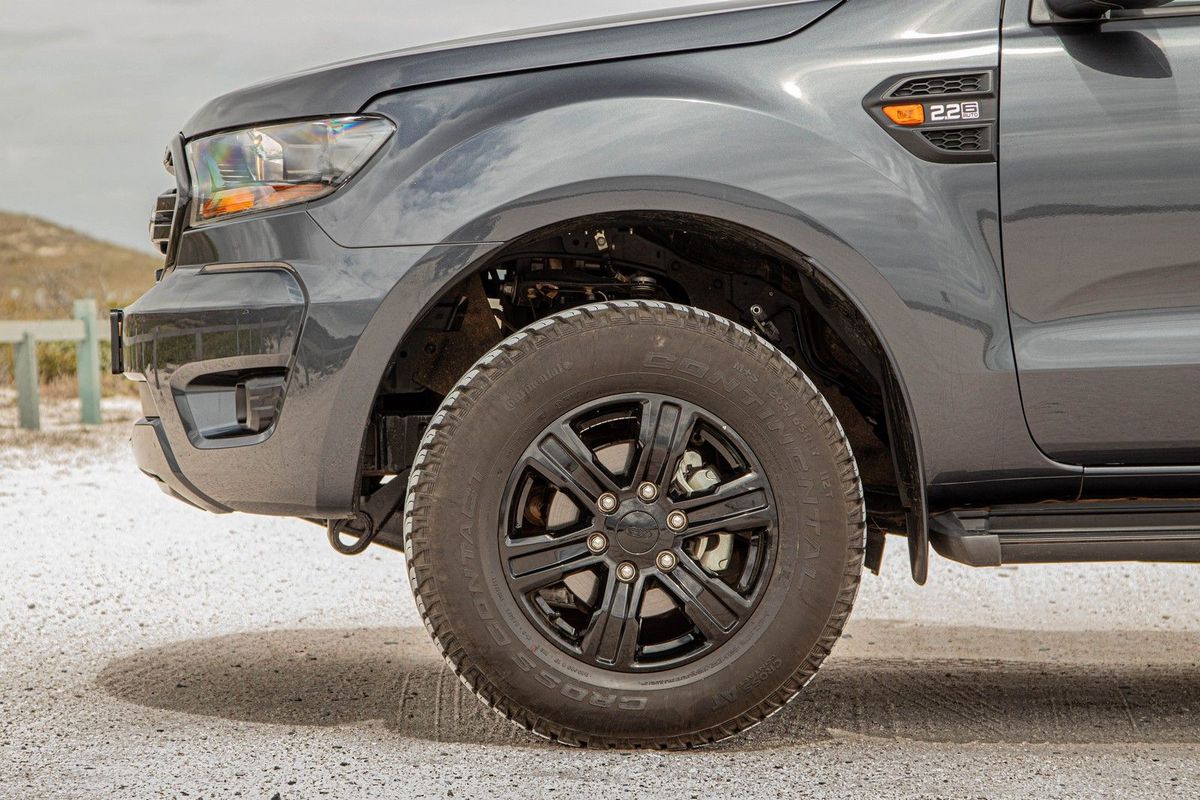
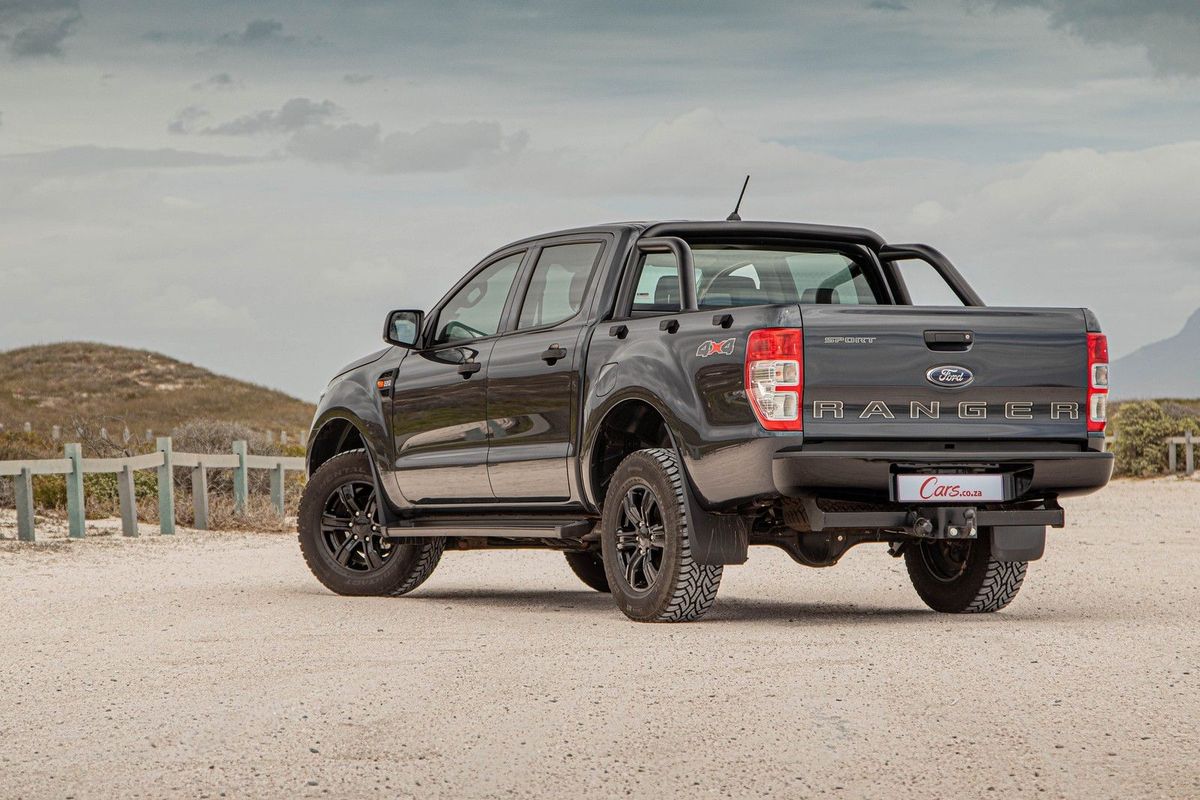
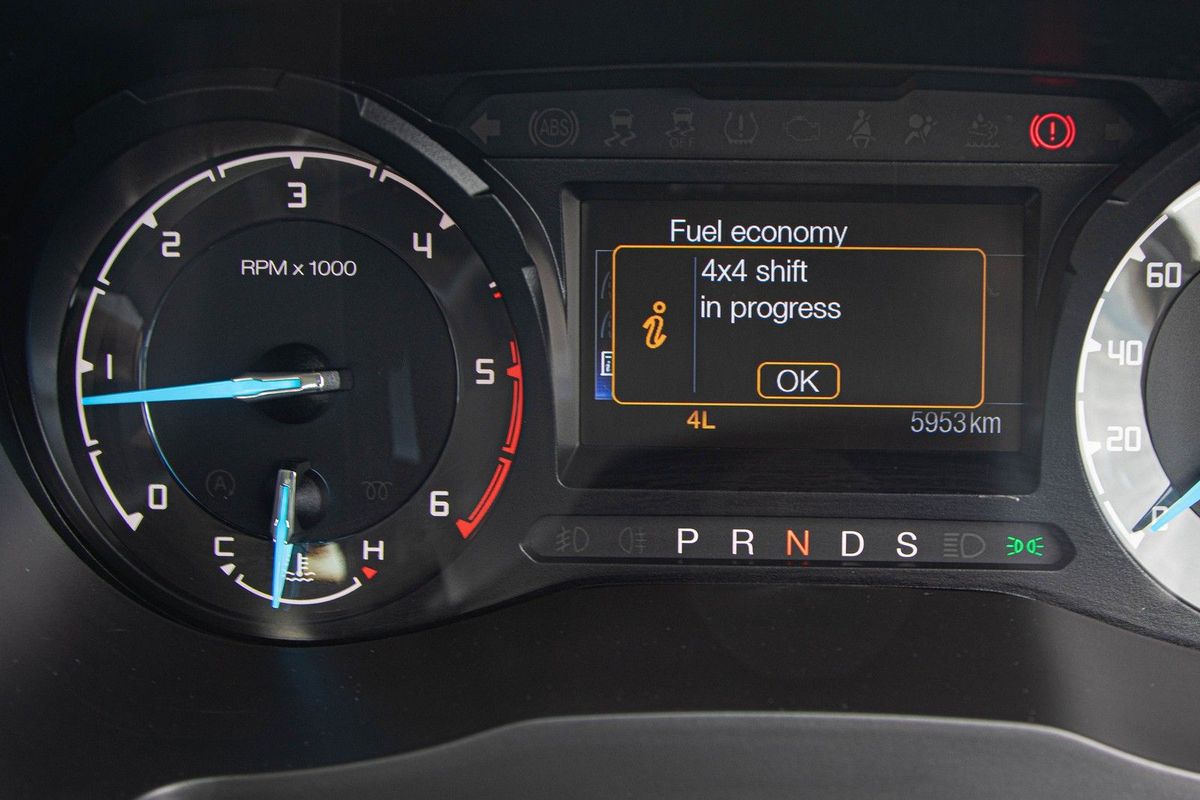
However, given the recent advances made by the Ford Ranger and Toyota Hilux, the Amarok is starting to show its age in some departments. It's on-road refinement used to be up there, but the latest iteration of the Hilux has it licked in that department, while the Ranger's connectivity and active safety equipment is comparatively better. They don't have a thundering 3.0 V6 TDI motor, however…


It's the in-gear performance that raises the heartrate and eyebrows. Surely it's unnatural for a bakkie to be this fast!

Summary

Make no mistake, the 190-kW 3.0 V6's sheer performance is hands-down the biggest highlight here, but is it enough to compensate for the advanced age of the Amarok package? While the VW's cabin has virtually all the creature comforts you'd need, like the aforementioned Android Auto/Apple CarPlay connectivity and heated seats, the bakkie lacks some of its rivals' active safety features. Then, of course, there is the question of the price tag – it's oh-so-close to the R1-million mark, which is steep for a bakkie, plain and simple. Just ask Mercedes-Benz how its X-Class pricing strategy worked out. 

The good news is that if you do want to be the cool guy at the braai and impress your mates with SA's Fastest Bakkie (straight out of the showroom, we reiterate), the first demo has already been loaded up on Cars.co.za and the chance to own one might just be closer than you think… provided you're prepared to settle for a unit that has already clocked up a few kilometres. 

With Ford and Volkswagen joining forces to work on the all-new Ranger and Amarok, this is the last hurrah for this generation of Volkswagen's first double cab, and what a swansong it is! If only this engine had been available a little earlier in the model's lifecycle… 

We secretly hope the new platform and collab project will result in a vehicle that has the suspension and off-road capability of the Ranger Raptor, but is powered by this V6 engine. Just imagine that…


With such a powerful engine, the 190 kW Amarok would be right at home on this slipway towing a boat out of the water

Volkswagen Amarok 190 kW Price in South Africa (March 2021)

The V6-powered Amarok comes standard with a 3-year/100 000km manufacturer warranty, 5-year/90 000 km Genuine Easy Drive Service Plan and a 6-year anti-corrosion warranty. The service interval is 15 000km. 

Amarok Double Cab 3.0 V6 190kW    Highline                     R921 900

Amarok Double Cab 3.0 V6 190kW    Extreme                     R996 000

Further reading:

Start your search for a demo Volkswagen Amarok here

Volkswagen Amarok 3.0 V6 TDI Extreme 4Motion Review

W580 is VW's Special Edition Amarok

190-kW VW Amarok: SA's most expensive bakkie

How the AmaFord changes everything

Volkswagen Amarok Raptor in the works?

Amarok platform could handle the upgrades 

There is a general tinge of sadness about the VW Amarok. Everyone knows the bakkie’s retirement date is soon to be measured in mere months, instead of years.

As with any successful product, towards the end of the model lifecycle, the special edition variants start happening. It is part proven product strategy but also a way to include some newer technologies, with an older platform.

South Africa’s twin bakkie market, Australia, has shown no shyness in giving the Amarok a retirement party of value. With enormous demand for VW’s V6-powered Amarok and an appetite for enhanced OEM double-cabs, the Australians have triggered a joint-venture between Tom Walkinshaw developments and VW.

The result is VW’s Amarok W580, which has finishing design and suspension upgrades, from Tom Walkinshaw’s technicians and engineers. But is there potential for even more?

VW’s Australian marketing executives admit that the huge demand for Ranger Raptor type bakkies, cannot be ignored. But how best to service that demand?

There are no concrete product plans from VW for an Amarok rolling 17-inch wheels with huge volume off-road tyres, but the market is certainly there.  Especially if one looks at Ford Ranger Raptor sales.

The Amarok W580 rolls 20-inch wheels and has a tyre and suspension set-up that is biased towards road driving. That said, with its enormously strong ladder frame, there is no question that Amarok’s platform can handle a more extreme suspension configuration and tyres choice, for getting air over jumps and crushing the most challenging terrain.

Tom Walkinshaw’s staff would be the best people for VW’s development of a Range Raptor rivalling Amarok.

There might be a potential conflict in terms of product development trajectory between Ford and VW, with the former taking responsibility for the next-generation Amarok. But as part of the current German double-cab bakkie’s production runout, a hardcore off-road version would be a great send-off.

Related content

Amarok could become more hardcore

Volkswagen Amarok V6 TDI (2021) Review

Next-Gen VW Amarok To Get R Version

Land Rover Defender SVX On The Way? 

Land Rover’s purchase of Bowler in 2019 sets the stage for the development of a high-performance Defender. 

The new Land Rover Defender has been selling up a storm since its introduction in South Africa in 2020, but there’s more to come! 

In standard form, the Defender is a formidable offroad vehicle but all indications point to the development of a high-performance Defender SVX. In 2019, Land Rover purchased Bowler which is well-known for producing modified, rally-ready Land Rovers and will now be absorbed into Jaguar Land Rover’s performance arm, Special Vehicle Operations (SVO). It’s therefore entirely conceivable that a high-performance Defender is on the way.  

Land Rover recently revealed its high-power Defender V8 boasting 368 kW and 625 Nm from its 5.0-litre V8 and capable of sprinting from zero to 100 kph in 5.2 seconds. The Defender V8 is expected to form the basis for the Defender SVX which will likely feature technical upgrades including a beefed-up suspension and body kit fit to tackle difficult terrain.

We will keep you informed as this development progresses. 

Buy a used Land Rover Defender on Cars.co.za

Related Content  

Comparison: Land Rover Defender vs Toyota Prado

Best Luxury Cars For Off-road Driving

Land Rover Defender Bakkie Coming?