The Indian-made Nissan Magnite compact family car, which was recently awarded a 4-star rating in ASEAN NCAP crash testing and is already on sale in Indonesia, is set to arrive in South Africa in the coming months (1st quarter 2021). The local market will offer the Magnite with a 1.0-litre turbopetrol engine.
Last year, Nissan South Africa's marketing director, Kabelo Rabotho, confirmed the Rosslyn-based brand was looking at introducing 2 new compact crossover/SUV products (the Magnite, as well as the next-generation Qashqai – in the 4th quarter – as well as the Navara-based Terra SUV, the latter towards the end of the year. There's no word on when the next-generation X-Trail will arrive, however.
The Magnite is underpinned by the CMF-A+ platform that also underpins the Renault Triber and it's the cousin to the French firm's upcoming Kiger, which is also earmarked for Mzansi. It's produced at the Oragdam plant in India and rivals lower- to mid-spec derivatives of the Ford EcoSport, Hyundai Venue and Volkswagen T-Cross, Kia Sonet, Mahindra XUV 300, Renault Captur and Suzuki Vitara.
Wait, isn't that a Datsun? The Magnite's styling incorporates cues of its sibling brand's design language, but it's no coincidence.
Autocar India reports that while "ASEAN NCAP has confirmed that the Magnite has received a 4-star crash test rating… sources tell us that crash test results for the Magnite conducted by Global NCAP (which local readers will recognise for the body's #SaferCarsforAfrica programme) are expected to be out in the coming months."
The India-spec Nissan Magnite features safety features such as dual front airbags, front seatbelt pre-tensioners with load limiters, ABS, EBD, rear parking sensors and front passenger seatbelt reminder as standard. Turbocharged iterations of the model (more about this later) also feature ISOfix child-seat mounts, ESC, traction control, hill start assist, brake assist, a 360-degree parking camera and a tyre-pressure monitoring system. The Indian publication points out Global NCAP only considers the standard safety equipment while testing and awarding its crash test rating…
An instant hit in India…
The Magnite's styling is eye-catching; some may even go so far as to say its chunky detailing is reminiscent to that of the Hyundai Venue. It features the prerequisite raised ride height (205 mm), sleek headlights with L-shaped LED DRLs, as well as accoutrements such as front and rear skid plates, rugged plastic cladding around the wheel arches, roof rails, and at least 16-inch wheels/alloys.
The newcomer has attracted massive interest in its home market by virtue of Nissan India's "aggressive pricing strategy for all variants", which has resulted in a long waiting period for some variants.
Incidentally, it’s no surprise that the Magnite's grille has a Datsun look to it; this crossover was meant to have a Datsun badge but it bears a Nissan badge instead. You might be wondering why this is the case and it makes sense if you consider that Datsun is being scaled-down globally and instead of scrapping the project entirely, it has now been allocated to Nissan…
The Magnite's interior architecture is clean and simple, but Nissan has not skimped on creature comforts and infotainment.
In terms of what will power the newcomer, Nissan SA has confirmed that an all-new 1.0-litre turbopetrol engine will be offered in South Africa in conjunction with a 5-speed manual or a continuously variable (CVT) automatic transmission. According to a Nissan India product brochure, the manual version produces 100 kW and 160 Nm, while the CVT has a slightly lower peak torque of 152 Nm. That suggests that the naturally aspirated 72 kW/96 Nm 1.0-litre petrol, which ostensibly helps the Magnite to be "most affordable compact SUV in the Indian market, won't be offered here.
As for the interior, the newcomer’s overall design is very minimalist. Lower- to mid-spec versions in the Indian market feature dual-tone trim, electric windows, a multifunction steering wheel, a 3.5-inch LCD drive info display, a 6-speaker audio system, and surprisingly, auto climate control, plus electrically adjustable and folding side mirrors.
We expect that SA-market derivatives are likely to feature at least some of the following features: 16-inch alloys, fog lamps, an 8-inch touchscreen infotainment system with (apparently wireless) Apple CarPlay and Android Auto, a 7-inch TFT driver info display, voice recognition technology, a reverse-view camera, as well as push-button start.
The Magnite's load bay has a 336-litre capacity and the rear seatback can split in 60:40 configuration.
Interestingly, the top-spec Magnite derivative in India features LED headlamps, cruise control, the aforementioned 360-degree around-view camera and tyre-pressure monitor, as well as an all-black interior. Nissan will also offer an optional Technology Package, which includes a wireless charging pad, air purifier, ambient mood lighting, puddle lamps, and JBL speakers.
Suffice to say the specifications and prices for the Magnite in the South African market are still being finalised, but we expect most of the previously mentioned features to be offered, depending on whether Nissan has designs on the top end of the compact family car market, or hopes to offer the Magnite primarily as an alternative to lower-end compact hatchbacks.
We’ll bring you updates on the Magnite’s local line-up as soon as more info becomes available.
Good news for Mazda fanatics as the iconic rotary engine is officially making a return, but in a rather interesting application.
Mention the words 'Mazda' and 'rotary' and images of the iconic RX-series of performance vehicles will come to mind. The RX-7 was already a superstar, but it was elevated to stratospheric heights in the first Fast and the Furious movie, where Vin Diesel's character piloted a particularly striking red 3rd-generation FD model. The subsequent RX-8 was a good car, offering a combination of style and a high-revving rotary motor.
Sadly the rotary engine was discontinued as the cons outweighed the pros. Notorious for seal failure, high consumption and high emissions, the rotary motor was shelved in favour of traditional internal combustion engines. What's interesting is the company’s in-house research department tasked with evolving the rotary engine technology, has never seen a funding cut, despite no current Mazda vehicles powered by the Wankel. Back in April 2020, patent documents were filed showing a rotary engine in a hybrid setup.
Right now the most advanced vehicle in Mazda's stable is the MX-30, an all-electric SUV. While it looks good with its suicide doors, overseas reports have been disappointed with its meagre range. The MX-30 can mustre just 200 km based on the European WLTP cycle. Now with a rotary engine in the mix working as a range extender, this should theoretically double the range to 400 km, which is far more palatable to the electric car sceptics.
In an interview with The Detroit Bureau, US Mazda operations boss Jeff Guton confirmed there will be an MX-30 with a rotary range extender launched to the North American market. “We have launched the MX-30 in Europe, which is our first battery-electric vehicle. And we will be making that product available in the future with a rotary range extender. Any chance of it coming to the US? Yes, it will, though we haven’t talked about the date publicly yet,” Guyton said.
While the return of the rotary motor is welcomed, could anyone have predicted it would be to bolster an electric car's range? As far as South African Mazda's offerings for 2021 go, we're unlikely to see the MX-30 with the CX-30 and BT-50 bakkie taking centre stage.
2020/21 Cars.co.za Consumer Awards – Powered by WesBank; Finalists
Cars.co.za is proud to announce the 39 finalists of the 2020/21 Cars.co.za Consumer Awards – powered by WesBank.
Now in its sixth iteration, #CarsAwards annually recognises the best purchasing propositions in 13 respective segments of the domestic new-vehicle market and is widely acknowledged as South Africa’s definitive automotive awards programme.
With the support of WesBank, #CarsAwards has grown in reach, influence and stature. The theme for this year’s programme is “Be Part of the Journey – My Car, My Freedom”.
“As South Africa’s leader in vehicle and asset finance, it is important to us to align our brand with impactful industry initiatives, particularly those that add value to consumers. There are many aspects to consider when making a major budget-impacting decision such as buying a car. As such, consumers should have access to credible opinions and objective data on the models of cars and features available in the market, to assist them in making an informed purchasing decision,” says Ghana Msibi, CEO of WesBank Motor.
“Our successful partnership with Cars.co.za in powering the Cars.co.za Consumer Awards is now in its sixth year. It seems fitting that this year’s awards theme is ‘My Car. My Freedom’. After the months of lockdown and restrictions to movement we have all had to endure, being able to get behind the wheel and drive across our country’s roads and highways is certainly a sense of freedom. However, if you are still deciding which car is right for you and your needs, the 2020/21 Cars.co.za Consumer Awards category finalists and eventual winners should go a long way in guiding you to that decision.”
Categories reflect a changing marketplace
The 13 category winners will be selected from the list of 39 vehicles, which includes model derivatives from no fewer than 19 brands represented in the South African market. All vehicles available on the South African market on October 1, 2020 were eligible, not only new products that were launched during the past 12 months.
The 39 finalists for the 2020/21 programme were selected by the extended Cars.co.za editorial team; each member scored the 65 pre-selected semi-finalists individually, based on the "Filters of Eligibility" and the "Pillars of Success" of the 13 respective categories. Once the scores were tallied, 3 finalists remained in each of the segments.
Compared with the preceding #CarsAwards, Performance Car and Fun Hatch have been replaced with new and more relevant categories: Entry-Level and Premium Crossover. Nonetheless, as many as 10 of the previous programme’s category winners have made the list of finalists again, although only four of them with exactly the same derivative as in 2019/20: Volkswagen Polo, Mazda CX-5, as well as BMW X3 and X5 respectively.
“We made some revisions to the categories to make sure that they are in line with what South Africans are shopping for in the new vehicle market, but also factored in which segments had seen significant activity in terms of new launches,” says Cars.co.za Consumer Experience Manager Hannes Oosthuizen. “We also consider pricing movements, to make sure that our categories remain relevant to the consumer.”
Suzuki, Toyota have the most finalists
Whereas the 2019/20 #CarsAwards Brand of the Year, Volkswagen, had the most semi- finalists (7), followed by Suzuki (6) and Toyota (5), the Japanese marques, both of which have won the Brand of the Year title on two previous occasions, lead the list of finalists with 5 contenders apiece – the Wolfsburg-based firm has 4, followed by BMW and Volvo (3 each). Citroën, Honda, Isuzu, Land Rover and Subaru, which weren’t represented in the decisive round of the programme last year, each have at least one finalist in 2020/21.
Full list of 2020/21 #CarsAwards finalists
Entry Level
Hyundai Atos 1.1 Motion
Suzuki S-Presso 1.0 S-Edition
Suzuki Swift 1.2 GL
The Suzuki Swift was last year's Budget car winner but fits into this year's Entry Level category.
Budget Car
Suzuki Baleno 1.4 GLX
Suzuki Ignis 1.2 GLX
Toyota Starlet 1.4 XR
Both the Suzuki Baleno and Toyota Starlet feature as Budget Car finalists this year, it is a very tight category.
Compact Hatch
Ford Fiesta 1.0T Trend auto
Suzuki Swift 1.4T Sport auto
Volkswagen Polo 1.0 TSI Comfortline auto
The VW Polo is back this year to continue its winning streak in the Compact Hatch category.
Compact Family Car
Kia Seltos 1.5 CRDi EX+
Renault Duster 1.5 dCi Prestige
Volkswagen T-Cross 1.5 TSI 110kW R-Line
The Kia Seltos is a top challenger this year, hoping to steal the T-Cross' title.
Family Car
Citroën C5 Aircross 1.6T Shine
Mazda CX-5 2.0 Dynamic auto
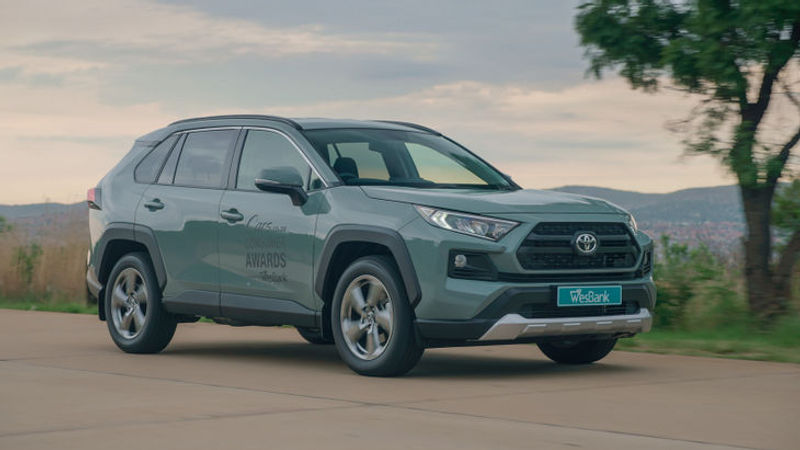
Toyota RAV4 2.0 AWD GX-R
Reigning Family Car champ the Mazda CX-5 is back to defend its trophy.
Adventure SUV
Ford Everest 2.0 Bi-Turbo 4WD XLT
Isuzu M-UX 3.0 4WD
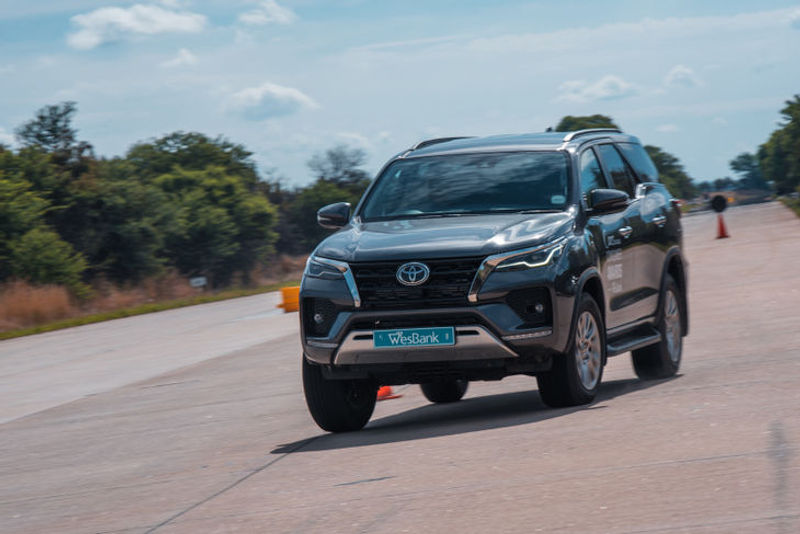
Toyota Fortuner 2.8 GD-6 4×4 VX Auto
The facelifted Isuzu MU-X has shown improvements worthy of inclusion as a finalist this year.
Executive SUV
BMW X3 xDrive20d M-Sport
Range Rover Evoque P250 R-Dynamic SE
Volvo XC60 D5 R-Design
The same 3 contenders are up against each other in Executive SUV this year, maybe the Consumer Survey could change the outcome this time around.
Premium SUV
BMW X5 xDrive30d M Sport
Land Rover Defender D240 HSE
Volvo XC90 T8 Twin-Engine R-Design
The new Defender has proven to be both rugged and premium in the judges' eyes.
Crossover
Mazda CX-3 2.0 Individual Plus
Subaru XV 2.0i-S ES
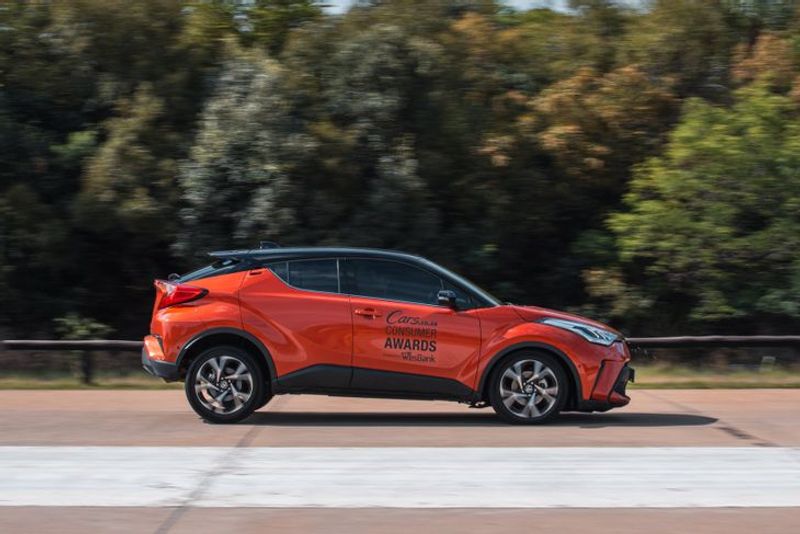
Toyota C-HR 1.2T Luxury
The Crossover category is an all-Japanese affair in the finals.
Premium Crossover
Audi Q3 Sportback 40 TFSI quattro S Line
Mini Countryman Cooper S
Volvo XC40 T5 AWD R-Design
In the new Premium Crossover category, Audi's recently-launched Q3 Sportback has made the cut.
Hot Hatch
Honda Civic Type R
Hyundai i30 N
Volkswagen Golf GTI TCR
The GTI badge has been a serial winner of awards at the CarsAwards event, can the new TCR version continue that trend?
Leisure Double-Cab
Ford Ranger 2.0 Bi-Turbo 4×4 Wildtrak
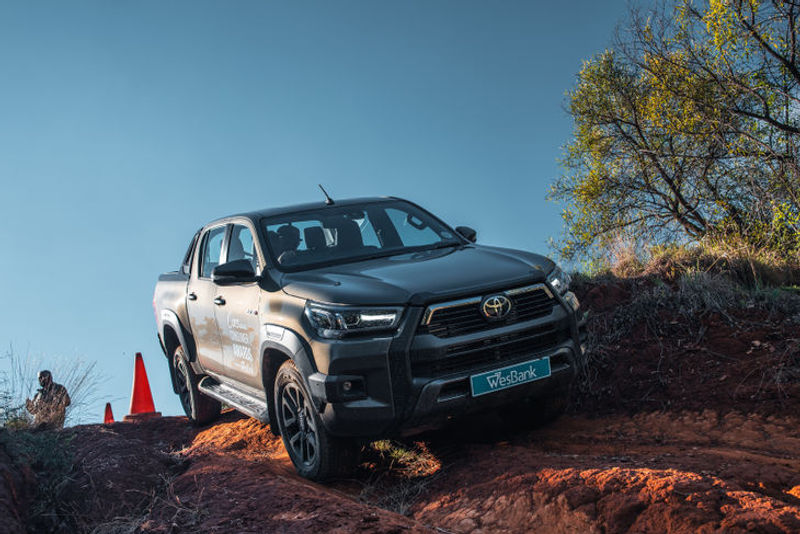
Toyota Hilux 2.8 GD-6 4×4 Legend Auto
Volkswagen Amarok 2.0BiTDI Highline Plus 4Motion
Facelifted for 2020, this looks to be the Hilux's best shot yet at taking the Leisure Bakkie title.
Sport Executive
Audi A4 40 TFSI Sport S Line
BMW 330is Edition
Mercedes-Benz C300 AMG Line
Audi's revitalised A4 will be up against familiar rivals in the Sports Executive category.
Each of the three finalists per category will now be subjected to back-to-back testing at the renowned Gerotek proving ground in Gauteng by the combined judging panel (the 6 Cars.co.za editorial team members and 14 respected guest judges from various backgrounds and fields of expertise) on 3 and 4 November 2020.
Combined judging panel for the 2020/21 #CarsAwards (in alphabetical order):
Khulekani Dumisa (Khulekani on Wheels), Aluta Maqoko (Entrepreneur), Juliet McGuire (Freelance), Brenwin Naidu (Sowetan & Sunday Times), Leanne Manas (Morning Live), Dasen Thathiah (eNCA), Ciro de Siena (Cars.co.za), Nafisa Akabor (Tech Journalist), David Taylor (Cars.co.za), Ernest Page (Performance with Page), Jacob Moshokoa (Eyewitness News), Phuti Mpyane (Business Day), Wendy Knowler (Consumer Specialist), Mpho Letsholonyane (SuperSport & Power 98.7), Wezile Bonani (Bay FM), Gero Lilleike (Cars.co.za), Kojo Baffoe (freelance), Thami Masemola (In4Ride), Ashley Oldfield (Cars.co.za) and Lerato Matebese (Top Gear).
The 20 judges’ scores for each of the 39 finalists will only count for 50% of the final standings, however. The other 50% will be based on rankings that the respective vehicle brands represented by the finalists achieved in the Cars.co.za Ownership Satisfaction Survey, conducted in partnership with data specialists Lightstone Consumer. The data incorporates feedback from thousands of vehicle owners, based on their experiences of their vehicles (less than five years old and serviced through franchised outlets).
“The Cars.co.za Consumer Awards – powered by WesBank is designed to be a guide for all new passenger vehicle buyers, not only those who follow motoring publications," Oosthuizen concludes. “With 50% of the final scores determined by brands’ rating in the survey, a vehicle only really stands a very good chance of winning if it is a good product in the eyes of the judges and if its brand delivers solid after-sales service.
It goes without saying that ongoing public participation in the Ownership Satisfaction Survey enables Cars.co.za to deliver the most relevant and accurate data-driven insights to consumers. The survey also represents a golden opportunity for owners to have a say in the outcome of the 2020/21 #CarsAwards. Have your say at bit.ly/CarsSatisfSurvey
Next-gen Toyota Land Cruiser Loses V8
Is it the end of the road for Toyota's V8-powered Land Cruiser? A report suggests the all-new model will be powered by V6 motors only.
A report from Autoweek suggests Toyota's iconic flagship vehicle will lose its V8 and the all-new Land Cruiser 300 Series will be powered by 6-cylinder engines. There will be petrol and diesel options, the latter with a headline-grabbing 3.3-litre V6. Petrol fans can rejoice as there's reportedly a 3.5-litre twin-turbocharged V6 in the works, and being a Toyota product, there's a hybrid derivative expected.
What else do we know about the new Land Cruiser 300? We know the last Land Cruiser 200 is rolling off the line at the end of the first quarter in 2021. As customers anticipate the end of lifecycle for Land Cruiser 200, demand for these Toyota luxury adventure vehicles has soared. In some markets, orders for Land Cruiser have increased by more than 20%. The all-new model should be physically similar in terms of dimensions, but Autoweek's report says it will sacrifice a small portion of its offroad talents in favour of a more luxurious on-road experience. The all-new Toyota Land Cruiser is expected to be revealed in April 2021, if the report from Bestcarweb.jp is anything to go by.
This Japanese outlet sums up the new model's changes succintly. Assembled on the TNGA platform, the new Toyota Land Cruiser 300 will also see substantial revisions to the suspension, 4WD tech as well as the aforementioned engine updates. Want a Toyota Land Cruiser, but the 200 is sold out and you don't want to wait for the 300? Can we suggest the recently-updated Prado, complete with a 150 kW diesel engine?
Spy shots of the soon-to-be-revealed BMW 4 Series Gran Coupe have emerged. Here's what you need to know about the 4-door coupe.
Picture credit: S. Baldauf/SB-Medien. We have paid for these photos and at the photographer's request, have watermarked them.
While many have suggested the pretty 4-door Gran Coupe is what the BMW 3 Series should have always been, it never sold in enough numbers to justify such a claim. Nevertheless, BMW thinks there's enough demand to satisfy the creation of a new 4 Series Gran Coupe and these spy shots show a near-ready prototype on European roads. It's immediate rival would be the Audi A5 Sportback.
We can see right away it adopts the 4 Series design cues, from the bold and controversial nose, to the neat tail lamps at the rear. Judging by the size of these exhausts, we reckon this is the M440i xDrive derivative. Powered by a 3.0-litre turbocharged 6-cylinder petrol engine developing 275 kW and 500 Nm, and it's good for a 4.5 second run to 100 kph. The current BMW 4 Series engine lineup for SA includes this motor, as well as a 4-cylinder 20i petrol and 20d diesel.
Given its shape and hatchback rear, expect the new 4 Series Gran Coupe to shade the 3 Series when it comes to rear boot space, at the expense of rear headroom. It will also adopt the 4 Series switchgear and cabin layout, in an effort to differentiate it from the 3 Series sedan.
Expect to see the new BMW 4 Series Gran Coupe revealed by the middle of 2021.
With those big exhausts, this is the BMW M440i xDrive Gran Coupe.
Ford is developing a new Indian-built C-segment SUV that will share its underpinnings with the new Mahindra XUV500. Could it be destined for South Africa?
Ford and Mahindra have been engaging in talks over a possible joint venture to co-develop at least 7 new models but it has now been reported that negotiations are off the table and that a JV is no longer on the cards. However, all is not lost and despite the failed talks, it appears that the 2 car manufacturers will still produce a new C-segment SUV which is known internally as ‘Project Black’.
Mahindra is due to launch its new XUV500 this year which will form the basis for Ford’s new SUV and it's expected to be revealed in the first quarter of 2022. The new SUV from Ford will rival the likes of the Kia Seltos, Hyundai Creta, Mazda CX-3, Honda HR-V, Nissan Qashqai and Suzuki Vitara, to name a few. Both models are expected to be produced at Mahindra’s Chakan facility in India.
Ford’s new SUV will reportedly be sold as a 6- or 7-seater and while it will share some componentry with the XUV500 (such as doors, windows and windscreens), both models will feature their own design identity in line with each brand’s design language. The interior execution will be different too, with Ford’s interior expected to be more upmarket in look and feel.
As for what will power the new Ford SUV, it’s likely to share the all-new 134 kW / 400 Nm 2.0-litre turbodiesel engine that’s expected to propel the new XUV500 as well as a 2.0-litre petrol engine with 142 kW and 380 Nm. A 6-speed manual transmission and a 6-speed automatic transmission is expected too.
Will it come to SA?
The Kuga namelplate is just about dead in SA, which means there's potential for a new family car product to join the range.
It appears that Ford’s new SUV will be a ‘Built for India’ model only but it’s not inconceivable to think that it could be introduced in South Africa at some point in the future. If you consider that the SA-spec EcoSport and Figo are sourced from the Indian subcontinent, then it could very well be a possibility as conditions are similar.
The Kuga family car was once the most popular offering in its segment and while the Kuga fire saga all but destroyed the Kuga nameplate locally (which may be why we are not getting the new Kuga), we could make an argument for Ford South Africa to strategically introduce a new family car model to fill the sales void that now exists between the smaller EcoSport and larger Everest adventure SUV. Do you think Ford should discontinue the Kuga nameplate in South Africa and introduce a new model to replace it?
It’s almost 2 years since the concept of the Alfa Romeo Tonale, the smaller sibling to the Stelvio executive SUV, debuted at the Geneva Show and, against the backdrop of the approved merger of FCA and PSA comes news that the newcomer is finally coming to market in November.
When Alfa Romeo was under the leadership of the late Fiat Chrysler Automobiles (FCA) chairman Sergio Marchionne, the group invested a reported $1 billion in the rear-wheel-drive Giorgio platform, which underpins the current Giulia and Stelvio, to spearhead yet another attempt to re-establish the Milanese brand in North America.
The Alfa Romeo Tonale concept caused a sensation when it debuted at the 2019 Geneva Show.
This move, which ultimately failed, spelt the end for the Mito and Guilietta, the latter of which was finally discontinued last year. However, FCA subsequently conceded that in order to safeguard the future of Alfa Romeo in a market dominated by crossovers, it had to produce at least 1, perhaps 2, SUV-inspired front-wheel-drive family cars, for which, of course, the Giorgio platform isn’t suitable.
So, the Italian marque showed its hand by unveiling the arrestingly styled Tonale concept at the Geneva Show in 2019, replete with sharp, futuristic styling. It was ostensibly based on FCA’s small, wide platform, which also underpins the Jeep Renegade and Compass and, when images of a supposed production version surfaced as early as October 2019, we believed its gestation would be brief.
However, the finalisation of the FCA-PSA merger (the shareholders yesterday voted in favour of the establishment of Stellantis) and, to an extent, the onset of the Covid-19 pandemic has delayed the arrival of the Tonale. In mid-2020, FCA reportedly sent a letter to its suppliers telling them to stop working on research, development, and tooling for future subcompact models, adding to the fuel to the rumour than PSA’s Common Modular Platform would be adapted to underpin those models instead.
Will that development affect the Tonale, though? Perhaps not… According to motor.es, a Tonale Launch Edition will go on sale in Europe in November this year and the rest of the range will apparently be launched, as well as in other markets, in early 2022.
Although the Tonale won’t be quite as outrageously styled as the concept – the “production unit” shown here has conventional side mirrors and headlamp clusters, although the tail-light units at least have an ornate lighting signature – it will certainly look notably more distinctive than the models it will rival, including the Audi Q3/Q3 Sportback, BMW X1/X2, Mercedes-Benz GLA and Volvo XC40 etc.
Engine options remain unconfirmed, but the 1.4-litre 4-cylinder turbopetrol that does service in the Renegade and Compass (producing 103 kW/230 Nm in the former and 125 kW/250 Nm in the latter), should be retained, although the naturally aspirated 2.4-litre 4-cylinder is probably a non-starter. However, the newcomer is likely to debut as a plug-in hybrid, powered by a turbocharged 1.3-litre petrol engine with an 11.4-kWh lithium-ion battery pack, with combined outputs of either 140 kW or 176 kW and an electric-only range of approximately 42 km in the WLTP cycle.
While the Alfa Romeo will probably be offered with a 6-speed dual-clutch automatic transmission, it’s not clear whether the Tonale will be offered with an all-wheel drivetrain. Also, most observers believe a Quadrifoglio variant is unlikely to come to fruition.
Is Brennero next?
Meanwhile, Motor1.com's Italian edition recently reported FCA would invest in its plant in Poland to build hybrid and electric models for Fiat, Jeep… and Alfa Romeo!
Starting in the 2nd half of 2022, the plant will produce the turbopetrol-, hybrid and EV versions of successors to the 500X and Renegade and the 3rd model is most likely to be the Alfa Romeo Brennero, which is the brand's forthcoming compact crossover that will slot in below the Tonale and effectively replace the Giulietta.
The introduction of the Volkswagen T-Roc compact family car rounds off the Wolfsburg-based brand’s range of crossovers and SUVs in Mzansi. Here are the 6 coolest aspects you need to know about the trendsetting T-Roc.
PARTNERED CONTENT
1. Fresh contender for a changing market
“Oh no, not another SUV”, some of you might you say, but although many segments of the new-vehicle market have steadily declined over the past 5 years, South Africa’s SUV market grew by 44% between 2015 and 2019. What’s more, there’s little to suggest the “SUV boom” will subside in the foreseeable future – international experts estimate global demand for compact SUVs will almost double over the next decade. That’s why, barely a year after introducing the T-Cross, Volkswagen South Africa has launched another attractive model into the compact crossover/SUV space.
The T-Roc sets a new benchmark in the compact crossover segment with its functionality, dynamic handling and technology. It slots in above the T-Cross and below the Tiguan in the Volkswagen SUV range, offers maximum personalisation, innovative digitalisation, perfect connectivity, class-leading driver assistance systems, dynamic engines and, above all, a modern and expressive design.
Incidentally, the launch of the T-Roc coincides with new naming for the trim lines under Volkswagen's "Y" structure line up. The Design line is aimed at customers looking for more styling elements, while the eye-catching R-Line is aimed at customers looking for sportier levels of specification.
2. Distinctive exterior design
Compared with the appearance of its fun-loving, but fundamentally sensible, T-Cross compact family car sibling, the stylish T-Roc positively exudes non-conformist appeal and its packaging (both inside and out) is packed with standout design details.
A wide radiator grille, flanked by integrated dual headlights, dominate the look of the front-end and the resulting repositioned lighting signature makes the T-Roc’s nose unmistakable, even at night. In profile, the newcomer’s elongated silhouette is emphasised by a striking chrome element that stretches from the A-pillars all the way to the C-pillars (across the entire roofline) – it’s clearly a deliberate coupe-like design cue!
To add a sense of purpose to the off-roader-inspired look, dark plastic trim, applied around the wheel arches and side sills, as well as the vehicle's front and rear, serves to protect the bodywork. The rear bumper styling, in turn, is aimed to frame the tailgate and give the T-Roc a sportier look.
And, remember what we said about trendsetting? The T-Roc is the first Volkswagen SUV that can be ordered with 2-tone paintwork – in other words, with a roof section (including the A-pillars and exterior mirror housings) that contrasts with the rest of the vehicle’s paintwork…
On the Design derivatives, customers have a choice of pure white, red and black on the roof and exterior mirror housings. These roof and exterior mirror housings can, in turn, be paired with various exterior colours, thus giving T-Roc customers 26 different colour options (with 21 on the R-Line).
3. Customisable interior
The T-Roc is based on Volkswagen’s modular transverse matrix (MQB), which means the newcomer offers a Golf-like level of ride comfort; it is 80-mm longer than the T-Cross compact family car and 162 mm shorter than the Tiguan family car. It offers a high driving position (but no shortage of headroom) and the cabin is eminently practical, with ample storage spaces in the centre cubby, door pockets, glovebox and under the front armrest.
The T-Roc’s claimed luggage capacity is 445 litres, but if you fold the 60.40-split rear backrest down, up to 1 290 litres of utility space is freed up. You can specify a load-through hatch for long loads or height-adjustable luggage compartment floor, the latter of which will avail with you a completely flat loading surface. The optional electric tailgate is easy to open from the driver’s seat or using the remote key fob.
Suffice to say the T-Roc’s interior reflects the sophisticated exterior design; it’s slick, modern and elegant, yet retains a robust SUV feel combined with Volkswagen’s characteristic build quality.
To further enhance the individual offering, the Design derivatives, which feature a Limestone Grey dashboard, fascia/centre console and door inserts, can be specified with 3 optional interior accent colours: Ceramique, Curcuma Yellow and Ravenna Blue. The standard comfort cloth seats (including lumbar-support adjustment) feature a Tracks 4 pattern, but if a buyer selects one of optional accent colours, that hue is duplicated in the pattern of the seat fabric.
The standard interior accent colour in the top-of-the-range R-Line derivative is Caribou Grey, which is complemented by luxurious Vienna Leather Quartz/Ceramique upholstery (which is optional on the Design derivatives). The R-Line has sports front seats with a heating function (as well as lumbar support) and the cabin features tasteful red, as opposed to the standard white, LED ambient interior lighting.
In terms of convenience features, the T-Roc comes with a 3-spoke leather-trimmed multifunction steering wheel, dual-zone climate control, voice control, electrically adjustable and heated side mirrors (they can also fold in the R-Line), high-beam assist, a rain sensor, auto-dimming rear-view mirror, height- and length-adjustable front armrest (with a storage box, 2 air vents, 2 cup holders and rear 12V socket), plus PDC all round.
What's more, there are a number of options with which to upgrade the Volkswagen’s interior, including – inter alia – the customisable digital instrument cluster (Active Info Display), a panoramic sunroof, the Beats by Dre audio system (which includes 6 speakers, a subwoofer and an 8-channel digital amplifier), keyless entry, a Park Package (parallel-parking assistant “Park Assist” with reverse-view camera) and an electrically-detachable, mechanically-swivelling tow hitch.
4. Innovative digital offering
To say connectivity is at the heart of the T-Roc in-car experience is a huge understatement! The T-Roc comes standard with the “Composition Media” infotainment system, which comprises an 8-inch colour touchscreen, a DAB digital radio receiver, Multi-device Interface (MDI) and USB connections (2 ports at the front and another pair – for charging devices – in the rear. In addition to availing Bluetooth telephony and audio streaming functionality, the system can play music from WMA and MP3 files, simultaneously pair with 2 compatible devices, and cast your smartphone onto the touchscreen via MirrorLink apps, Apple CarPlay and Android Auto (all of which comes courtesy of App-Connect).
The optional 8-inch “Discover Media” Navigation infotainment system builds on the Composition Media setup by adding music management, navigation data and vehicle information. The system’s navigation data is displayed via 2D/3D map on the ‘screen, offering a choice of Fast, Short and Eco routes. Dynamic navigation is based on TMC+, branded points of interest and Speed Limit Display.
Buyers that upgrade to the “Discover Media” setup also benefit from Wireless App-Connect, which eliminates the need to connect your smartphone to the USB port to access the system. While a wireless charging pad is standard on the R-Line, it can be ordered for the Design derivatives.
Lastly, We Connect Go is a standard app-driven feature that conveniently pairs the T-Roc with a user’s smartphone via Bluetooth courtesy of the vehicle’s onboard DataPlug. The We Connect Go app functionality includes the following: vehicle data, access to the nearest or preferred Volkswagen dealers and the ability to automatically record and track trips (for tax logbooks, for example).
5. I.Q Drive technologies
In terms of standard features, all T-Roc derivatives have ABS, electronic stability control, dual front, -side and curtain airbags, a blind-spot monitor, fatigue detection, ISOfix attachment points (for mounting child seats on the rear bench), as well as a tyre-pressure monitoring system.
Furthermore, the newcomer also incorporates several IQ.Drive technologies, which support Volkswagen's journey to autonomous driving and assist the driver in terms of parking, driving and security. These features can be specified in groups via the optional IQ.Drive Small or Big Packs.
Adaptive cruise control (ACC with stop & go function) prevents you from exceeding a pre-set top speed and enables you to maintain a minimum distance to the vehicle in front. And in traffic jams, this means that your T-Roc can brake and pull off again completely automatically
Front Assist, which underpins the City Emergency Braking and Pedestrian Monitoring functions, uses sensors to detect situations where the distance to the vehicle ahead or a person in the road is critical and it helps to shorten the vehicle’s stopping distance. In a dangerous situation, the system alerts the driver by visual and audible signals and can even automatically apply braking in an emergency.
Autonomous Emergency Braking uses a number of technologies in the car to assist the driver when they are unable to, while Traffic Jam Assist utilises functions from the Adaptive Cruise Control and Lane Assist to enable convenient and safe stop-and-go driving in heavy traffic situations.
Lane Assist, meanwhile, is activated via the multifunction steering wheel and operates from 65 kph. If the vehicle starts to depart from the lane, the Lane Assist function will warn the driver by means of an audible system, vibrating of the steering wheel or a corrective steering intervention.
Blind Spot Monitor Plus can warn you about changing lanes with a corrective steering intervention. This function works from speeds as low as 15 kph and is supplied in conjunction with the Rear Traffic Alert. Rear Traffic Alert is able to detect whether any vehicles start to approach when you are reversing out of a parking space. If you fail to respond to its warning, the system can prevent a collision by applying the brake.
6. Performance & Efficiency
The initial T-Roc product line-up consists of just 3 derivatives, but it nonetheless caters for professional commuters and driving enthusiasts alike.
The entry-level 1.4 TSI Design derivative, for example, is powered by a proven 1.4-litre turbopetrol motor mated with an 8-speed Tiptronic automatic transmission. By virtue of its peak outputs of 110 kW and 250 Nm, this – the most affordable derivative – can accelerate from 0 to 100 kph in 8.4 sec, yet has an impressive claimed average consumption of just 6.9 L/100 km (aided by Start-Stop with brake-energy recuperation).
The 2.0 TSI Design and R-Line derivatives, by contrast, offers notably more spirited performance courtesy of the quick-shifting 7-speed dual-clutch DSG automatic transmission, which offers the option of driver-actuated gear shifts via the steering-wheel-mounted paddles on the R-Line, as well as the 4Motion all-wheel-drive system, replete Driving Profile Selection (including Eco, Sport, Comfort, Off-road) and Individual profile settings.
The top-of-the-range 2.0 TSI R-Line will appeal particularly to those who value an engaging driving experience… It features LED headlights and DRLs, dynamic cornering lights, 19-inch Suzuka alloy wheels (finished in dark graphite), along with body-coloured R-style bumpers, flared wheel arches, sill extensions and rear spoiler. Not only does it look the part – it’s equipped with a sports suspension. Volkswagen claims the 2.0-litre turbocharged TSI (140 kW/320 Nm) will zip from 0 to 100 kph in 7.2 sec, reach a top speed of 216 kph and consume an average of 8.3 L/100 km.
The T-Roc was designed to be noticed – is a seamless blend of style, comfort and convenience in one beautiful package that shows the world you’ve arrived. Every derivative comes standard with a 3-year/120 000 km warranty, 5-year/90 000 km Volkswagen Service Plan (which can be extended or upgraded to a maintenance plan), as well as a 12-year anti-corrosion warranty. Service intervals are 15 000 km.
There'll be a frustrating start to the new year for South African motorists who will face significant increases in both the cost of diesel and petrol.
The increases are scheduled to come into effect on the 6th January and the Automobile Association (AA) says petrol, diesel and paraffin will be going up in price.
After analysing the unaudited month-end fuel price data released by the Central Energy Fund, the AA had this to say, "The Rand has continued to advance against the US dollar, which is a pleasing outcome considering the severe beating the currency took earlier in the year. But even the currency's ongoing strength has not been enough to contain oil's march back towards its pre-COVID-19 price levels."
The AA does point out that the Rand's daily exchange rate dipped near R14.50 to the US dollar during December, with the average exchange rate hovering near R15, but the killer appears to be the near 13% increase in the price of international petroleum products. Petrol is due to increase by 40 and 43 cents per litre, for 95 and 93 respectively. Diesel customers can expect an increase of 55 cents per litre and 54 cents a litre for 0.05% and 0.005% respectively. Paraffin consumers will be hit with a 55 cents a litre increase.
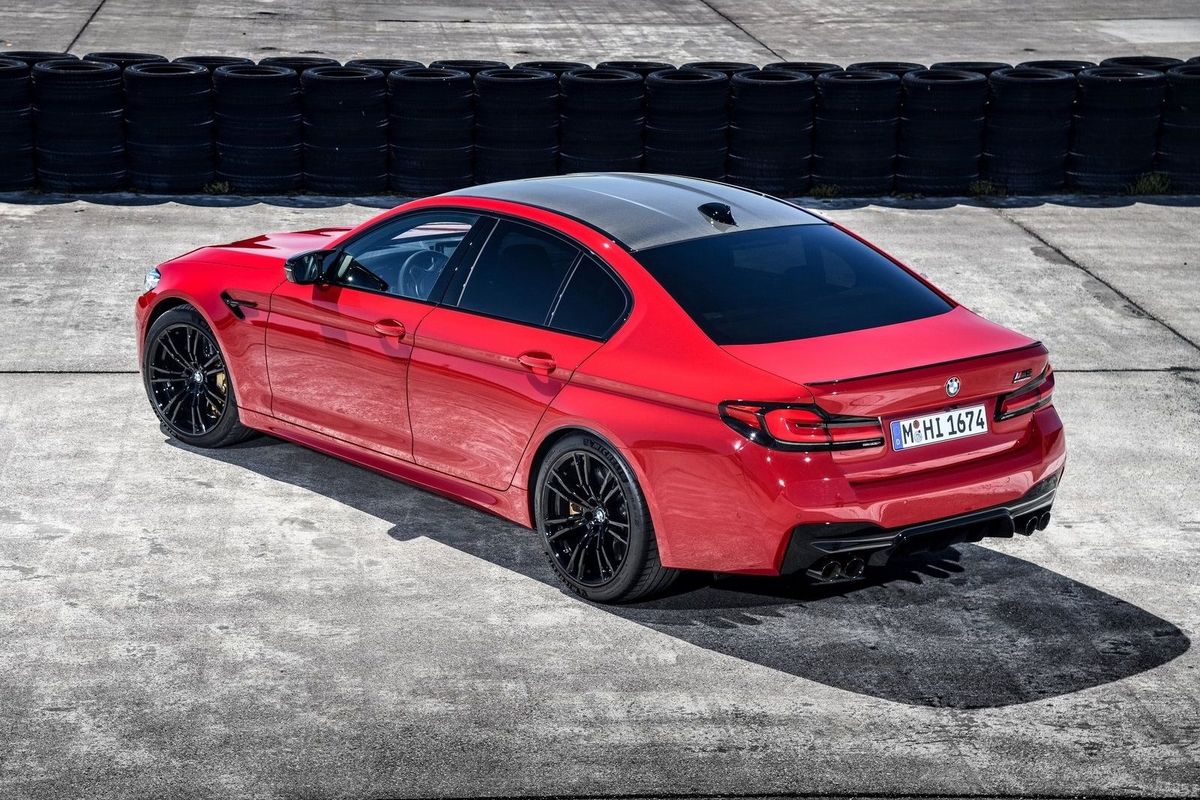
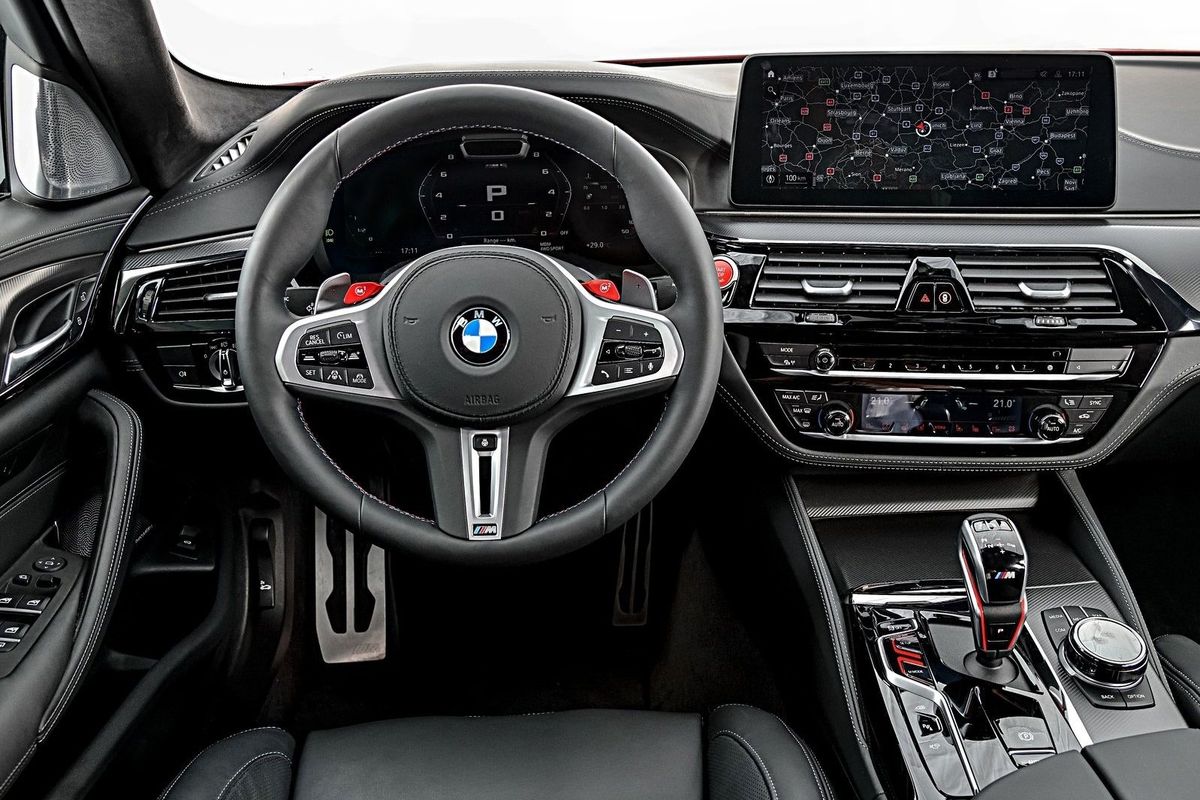
The boss of BMW’s M Division, Markus Flasch, has offered Bimmer enthusiasts a sneak peek of the imminent M5 CS super sedan, which features a higher power output, a reduced kerb weight and a plethora of gold-bronze detailing. It's scheduled to make its official debut later this month.
We knew it was coming – Cars.co.za published spy images of the M5 CS in May last year, but in a brief walk-round video posted on BMW M’s Instagram account late last year, Flasch has partially lifted the cover off the hottest version of the facelifted M5…
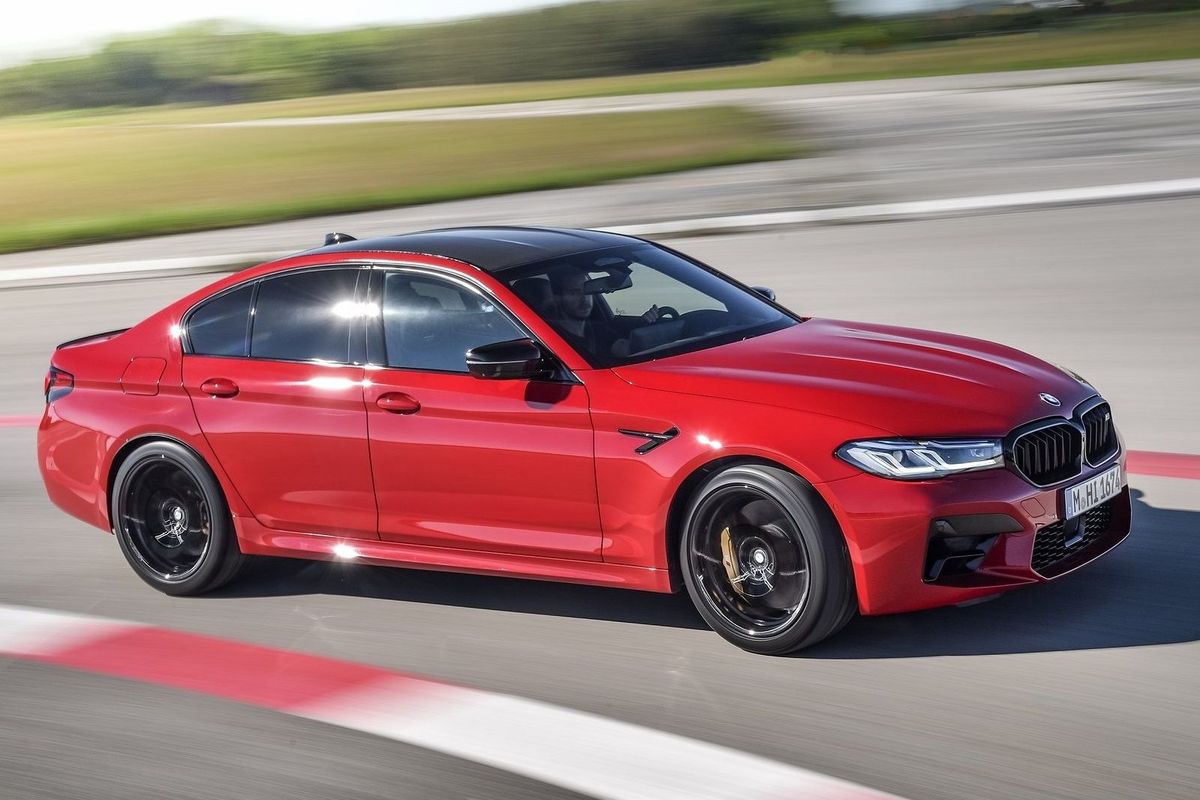
He said the M5 CS (Clubsport) will produce 635 horsepower – most commentators believe the number he quoted was in German horsepower (PS), which gives the sedan an effective 626 bhp (or 467 kW) output. That’s marginally higher than the M5 Competition’s 460 kW, but moreover, the newcomer will be “70 kg lighter” than its sibling, which should trim its kerb weight to just over 1 800 kg (DIN).
Whereas the M Division’s 750-Nm 4.4-litre twin-turbo V8, which is mated with an 8-speed automatic transmission, propels the all-wheel-driven M5 Competition from 0 to 100 kph in 3.3 sec, the M5 CS may well complete the benchmark sprint in about 3 seconds!
BMW says the newcomer will consume between 11.3 and 11.1 L/100 km, but performance aficionados will be more interested to know that if the M Drivers Package is offered as standard (it's optional on the M5 Competition), the M5 CS won’t be limited to 250 kph, but surge past 300 kph.
Flasch presented the M5 CS clad in a matte black paint finish and although the German executive didn’t reveal the car in full, he highlighted the sedan’s brushed gold-bronze trims grille surround, side strakes and forged alloy wheels. Stopping power is provided by “exclusive” carbon-ceramic discs, clamped by red-finished callipers.
The biggest surprise is perhaps the motorsport-inspired yellow lighting signature of the M5 CS’ headlights; although Flasch did not reveal any interior details he said: “This car is a true four-seater so you can expect something in the rear.”
We, therefore, expect that apart from the provision of carbon-fibre front sports seats (as offered on the new M3 and M4), it’s likely the M5 CS will have a pair of matching scalloped bucket seats at the back instead of the 5 Series’ traditional bench (BMW anoraks will recognise that early versions of the 2nd-generation M5 were also 2+2s).
Flasch said the M5 CS would be fully revealed soon: “in January 2021”. It will be the fourth CS derivative recently produced by the Munich-based firm after the M2 CS, which arrived in South Africa late last year, and the CS variants of the superseded F80 and F82 M3 and M4.
Picture credit: S. Baldauf/SB-Medien.
Suffice to say the newcomer will feature retuned suspension- and steering geometry as well, as revised engine and transmission mapping. Late last year, it was reported that AutoBild’s Guido Naumann lapped the Lausitzring in an M5 CS prototype in a marginally faster time (1:31.88) than a 991-generation Porsche 911 GT3 (1:32.00).
It remains to be seen how many M5 CS units will be earmarked for the South African market; in the meantime, the facelifted M5 Competition is already listed on the site.