Why the VW Polo’s SA sales slide matters less than you think
The locally built Volkswagen Polo hatch may have tumbled from the top 10 in South Africa, but it’s still the Kariega factory’s financial bedrock – for now, anyway…
- Polo hatch has tumbled down SA’s sales charts
- Exports of the Kariega-built hatch have surged
- Explaining the paradox of the SA-built VW Polo
Based on the Kariega-built Volkswagen Polo hatchback’s sustained slide down South Africa’s sales charts over the past few years, you might think members of the German firm’s local brains trust are currently huddled around the boardroom table, performing a series of deep-breathing exercises in a bid to settle their collective nerves. But there’s a reason they’re likely not panicking – well, not about Polo sales in SA, anyway.
Look, there’s no escaping the fact the Polo hatchback has endured a torrid time in Mzansi’s new passenger-vehicle market of late. This former favourite dropped clean out of the top 10 in 2025, plummeting 6 rankings to a lowly 13th as local sales slipped a considerable 23.4% year on year to 9 390 units.
Just how far have Polo hatch sales fallen in SA?

While that’s certainly not a small number, it pales in comparison to this locally made model’s performances in years gone by. Yes, the Polo hatch was SA’s 2nd best-selling passenger vehicle as recently as 2021 (with 18 235 units), before it tumbled from the podium in 2022 (15 697 units), clung to 5th in 2023 (11 748 units), slipped further to 7th in 2024 (12 253 units) and finally settled for 13th last year. That has to sting.
But, despite this hatchback’s rapid sales decline on SA soil, the top dogs at the German brand’s local headquarters are likely not panicking about the Polo’s local performance. Why not? Well, there’s another significant part of the business that’s often overlooked by the public…
Polo leads SA’s export sales for 7 straight years

Yes, we’re talking about exports. Here the Polo continues to dominate, despite the seemingly endless challenges that come with building cars in South Africa. In fact, as the hatchback’s local registrations have slid, its export numbers (which naturally reach far greater volumes) have surged. It’s by no means a flash in the pan either; the Polo has led South Africa’s new-vehicle export charts for the past 7 years running.
Here’s a quick look at the recent numbers. Polo exports from Kariega dipped 15.7% year on year to 69 056 units in 2021, thanks largely to the lingering worldwide semiconductor shortage sparked by the COVID-19 pandemic. In 2022, as many as 98 312 units were shipped from local shores, representing a healthy 42.4% year-on-year recovery. A further 3.3% gain was realised in 2023, when a considerable 101 546 units were exported.
Then, in the very same year that the Polo dropped off the list of SA’s 5 best-selling passenger cars (that is, in 2024), the hatchback’s export numbers soared a further 29.5% year on year to a record 131 487 units – besting the previous high of 108 422 units set in 2019. Though the export number decreased 8.9% year on year to 119 770 units in 2025, that was still easily the nameplate’s 2nd best showing ever.
2026 marks 30 years of Polo production in SA
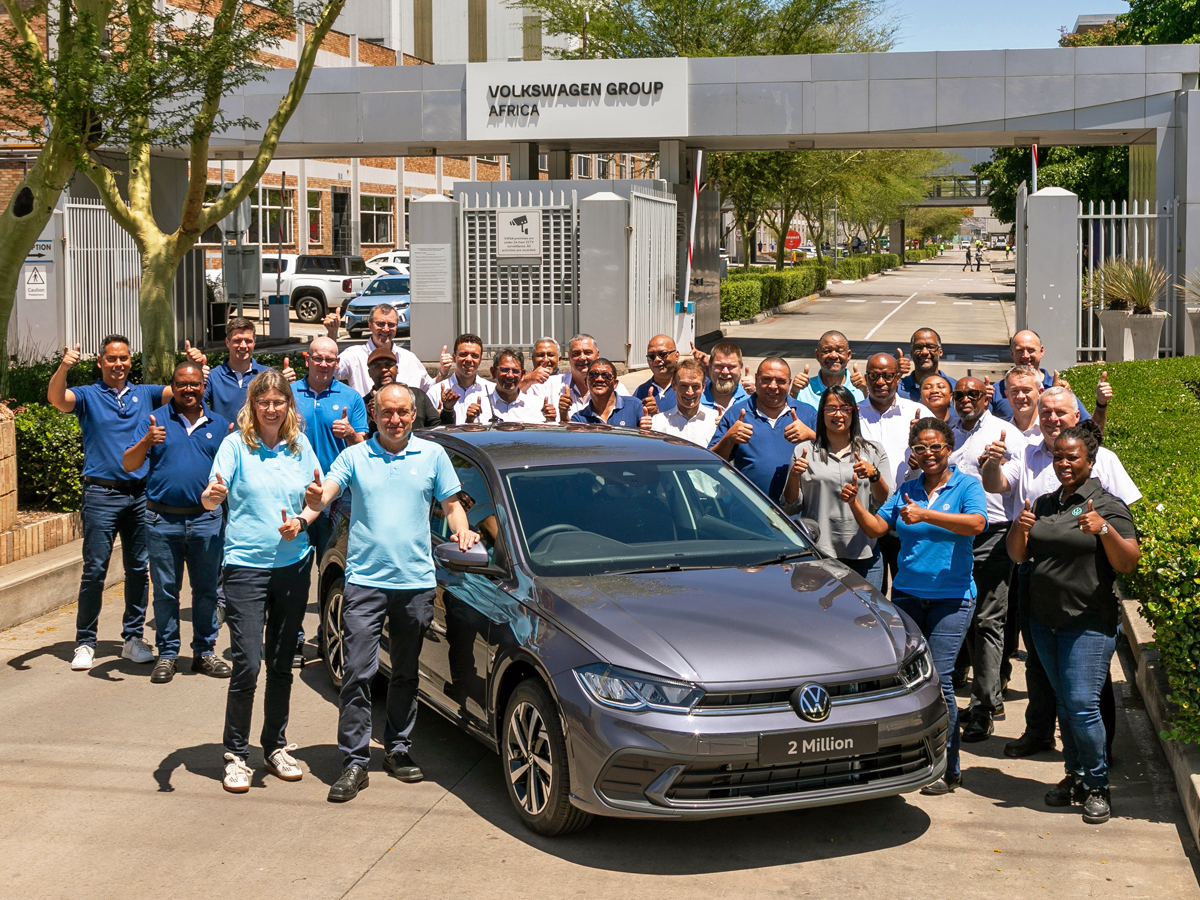
Why do exports matter so much? Well, in a market as comparatively small as ours, a major local manufacturer’s long-term profitability relies heavily on its export performance (just ask Nissan). So, if VW Group Africa could choose growth in just one of these two areas, it would surely go for exports every single time. In short, the Polo’s export performance is what makes the Kariega plant viable – for the time being, anyway.
While it’s worth keeping in mind that more exports equal more import-duty credits – also known as “production rebate certificates”, earned through the Automotive Production and Development Programme (APDP2) and serving to reduce the cost of importing other models – VW already has a substantial surplus of those.
| YEAR | LOCAL SALES | Y-O-Y CHANGE | EXPORTS | Y-O-Y CHANGE |
| 2021 | 18 235 units | +11.6% | 69 056 units | -15.7% |
| 2022 | 15 697 units | -13.9% | 98 312 units | +42.4% |
| 2023 | 11 748 units | -25.2% | 101 546 units | +3.3% |
| 2024 | 12 253 units | +4.3% | 131 487 units | +29.5% |
| 2025 | 9 390 units | -23.4% | 119 770 units | -8.9% |
And that just illustrates the company’s massive export volumes. Though these credits can be traded to rival importers, Volkswagen has been trying to convince government for some time to allow it to monetise them in some other way (after all, why help competitors eat further into your local market share?).
For the record, VW’s Kariega plant in the Eastern Cape has been building the Polo since 1996, with more than 2 million units produced over those 30 years. From the start of July 2024, the factory officially became the sole exporter – for left- and right-hand-drive European and Asia-Pacific markets – of the Polo (including the GTI), delivering the hatchback to 38 markets around the world.
Europe’s not ready to end Polo sales just yet
But isn’t Europe – including the SA-built Polo’s largest export markets of Germany, France and the United Kingdom – moving away from small petrol-powered hatchbacks, you ask? Well, though the Polo hatch very much appeared to be on the chopping block in the Old Continent back in 2022, Thomas Schäfer, CEO of the Volkswagen brand (and former head of VW here in SA), by the middle of 2024 suggested this model would continue “until the end of this decade”.
Then, another high-ranking VW executive revealed late in 2025 that “there will be an update to the combustion Polo”, adding that the Wolfsburg-based automaker could “continue to build combustion-powered cars for as long as we need to – there is no limit”. In effect, a significantly updated version of the SA-built hatchback – complete with a mild-hybrid powertrain – looks set to soldier on in Europe (alongside the upcoming fully electric ID Polo) for a good few years yet.

Sure, VW Group Africa would love to sell more Polo hatchbacks locally, but in the grander scheme of things, it’s the export market that matters more. So, while the likewise Kariega-built Polo Vivo attempts to hold off an influx of Chinese- and Indian-sourced budget models, VW’s local division will contently continue shipping thousands of Polo units from the Port of Gqeberha to the rest of the world every single month. While the global market – and primarily Europe – still wants them, that is.
What about life after the Polo hatch?
Besides, the future of Volkswagen’s local operations – including plans to expand its export reach into Africa, theoretically reducing its significant reliance on Europe as an export destination – lies on the shoulders of the upcoming Tengo crossover, which is set to join the production line towards the end of the year. And, indeed, the next potential production project planned for Kariega (likely a localised version of Brazil’s upcoming Tukan bakkie … if all goes to plan, anyway).
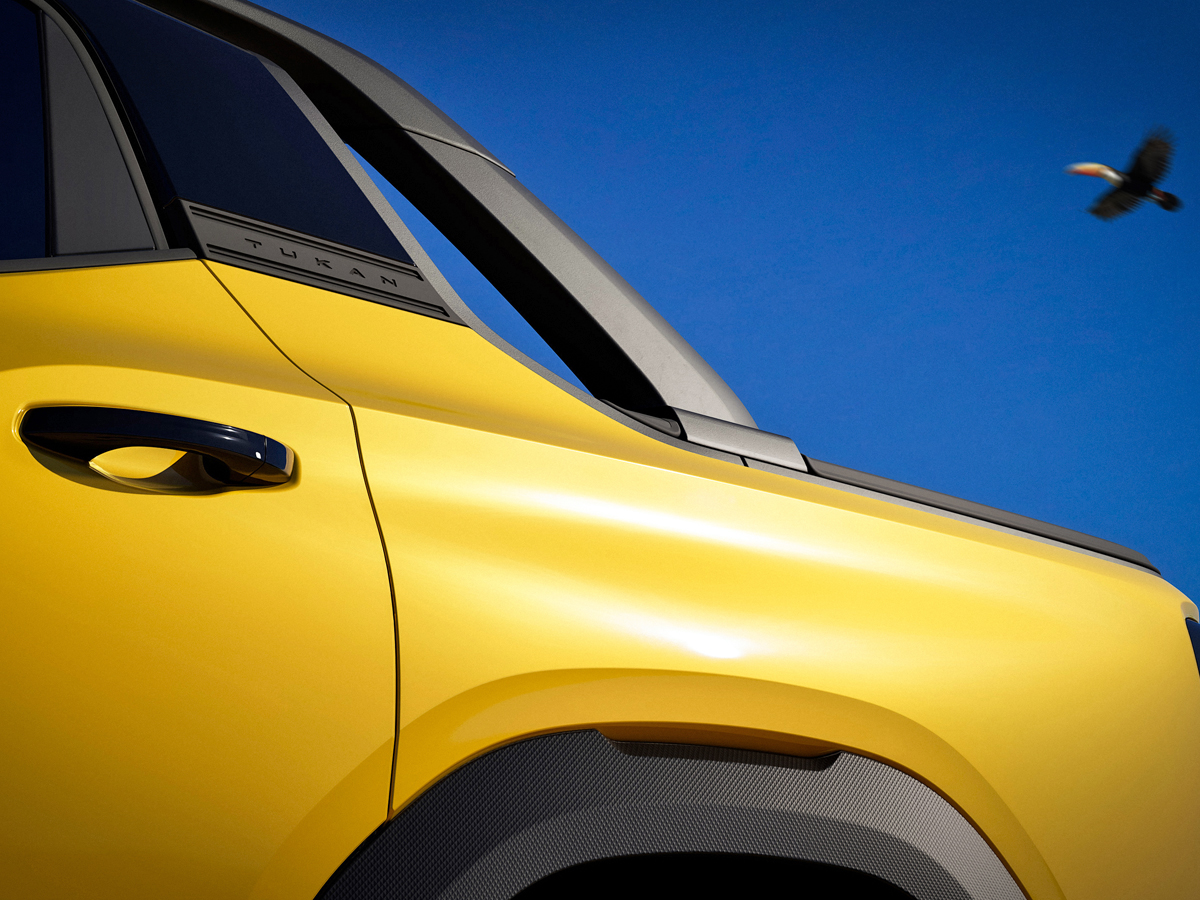
These plans are central to Volkswagen’s efforts to secure the long-term, post-Polo future of its Kariega plant, particularly as warnings of large-scale deindustrialisation in South Africa’s automotive manufacturing industry continue to grow louder (and sales of cut-price imported vehicles positively surge). And that’s the topic surely being feverishly discussed around VW Group Africa’s boardroom table right now…
Find a used VW Polo on Cars.co.za!
Related content
SA’s 10 best-selling hatchbacks in 2025