Hyundai has revealed details of its upcoming Staria MPV people-mover and it looks mightily impressive…
South African’s will be familiar with the H1 people-mover which is sold locally but the Korean brand is working on a far more stylish and luxurious offering.
Hyundai has shown and revealed further details of its forthcoming Staria MPV which is a radical and welcome departure from the bread-box design that defines the silhouette of the H1.
The Staria adopts an ‘inside-out’ design approach which prioritises the use of interior space and expands it to the exterior and it has been designed to cater for both family and business use.
Staria exterior design
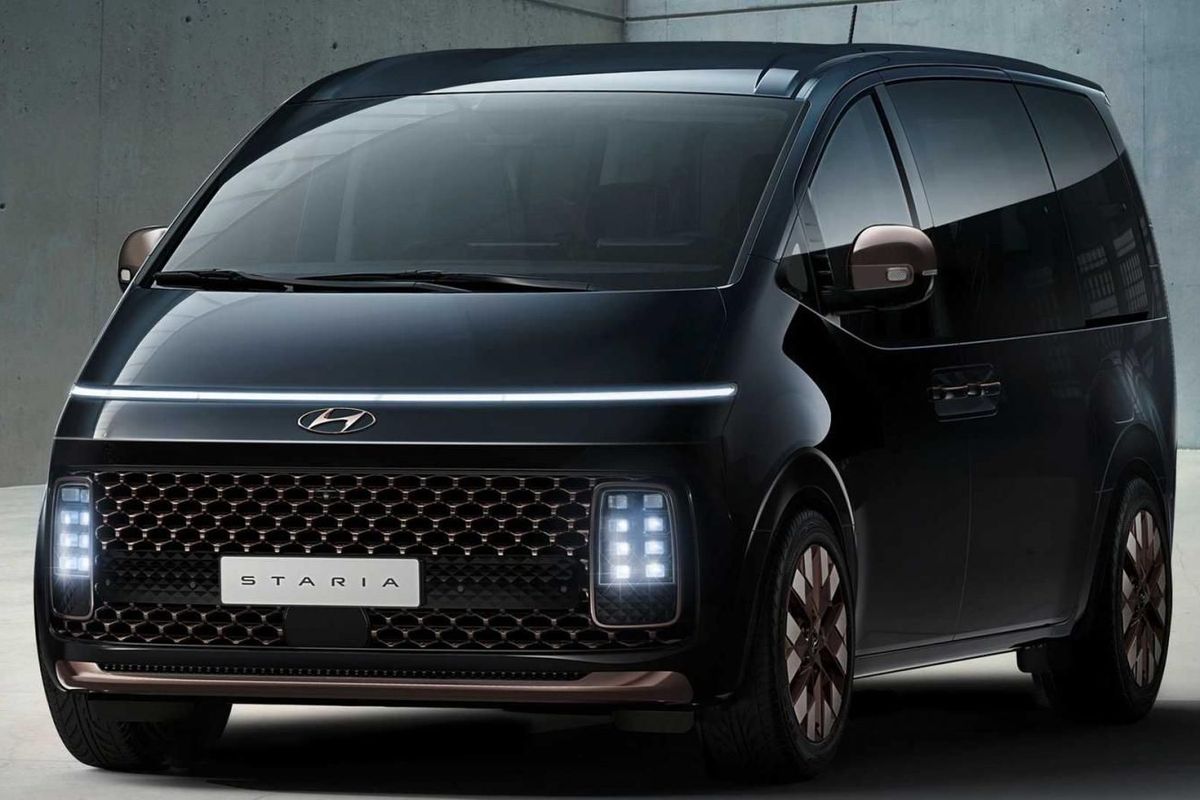
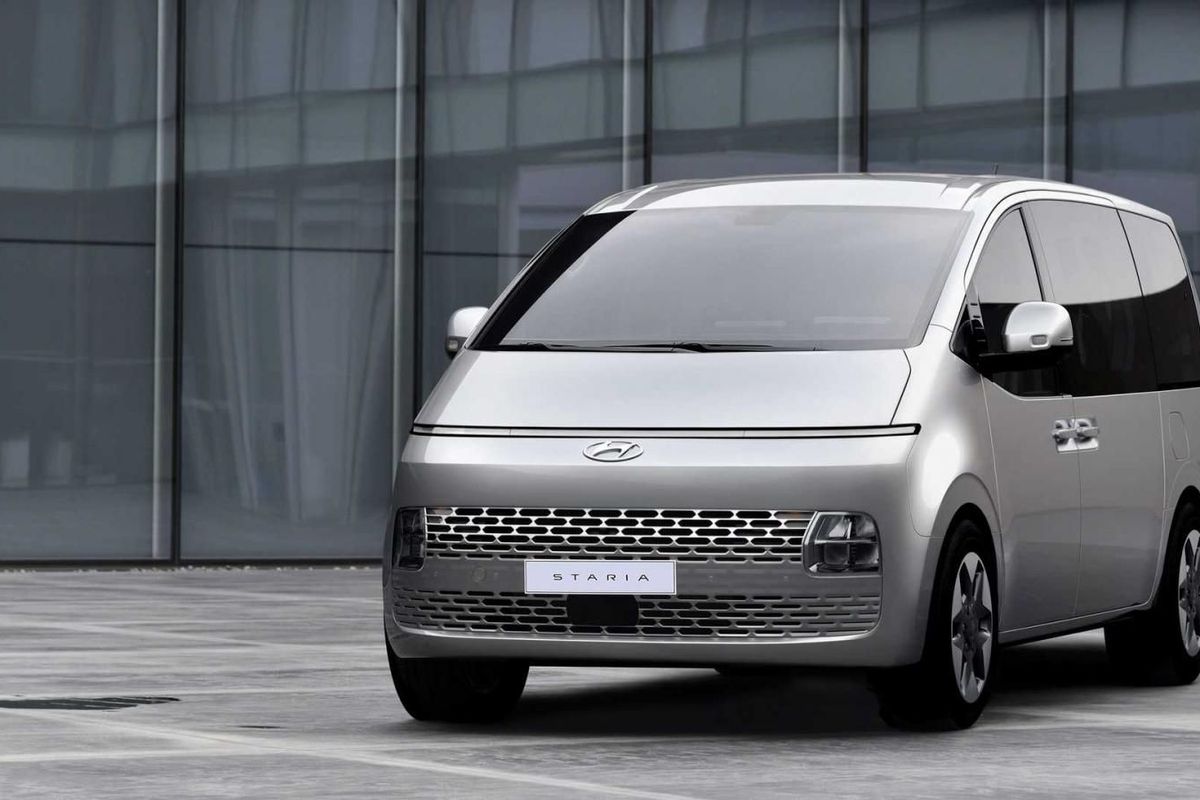
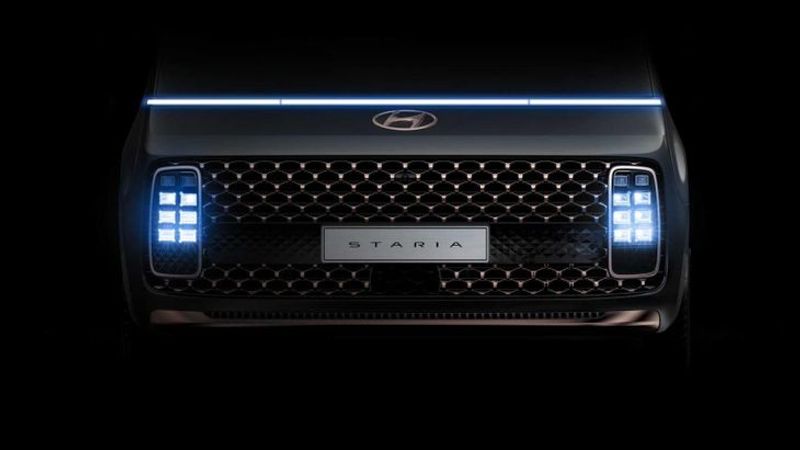
The Staria resembles a spaceship with a basic but striking front-end design.
The exterior design of the Staria is decisively futuristic, with the curve of it’s silhouette said to resemble the curve of the Earth’s horizon when viewed from space at sunrise. Ok then…
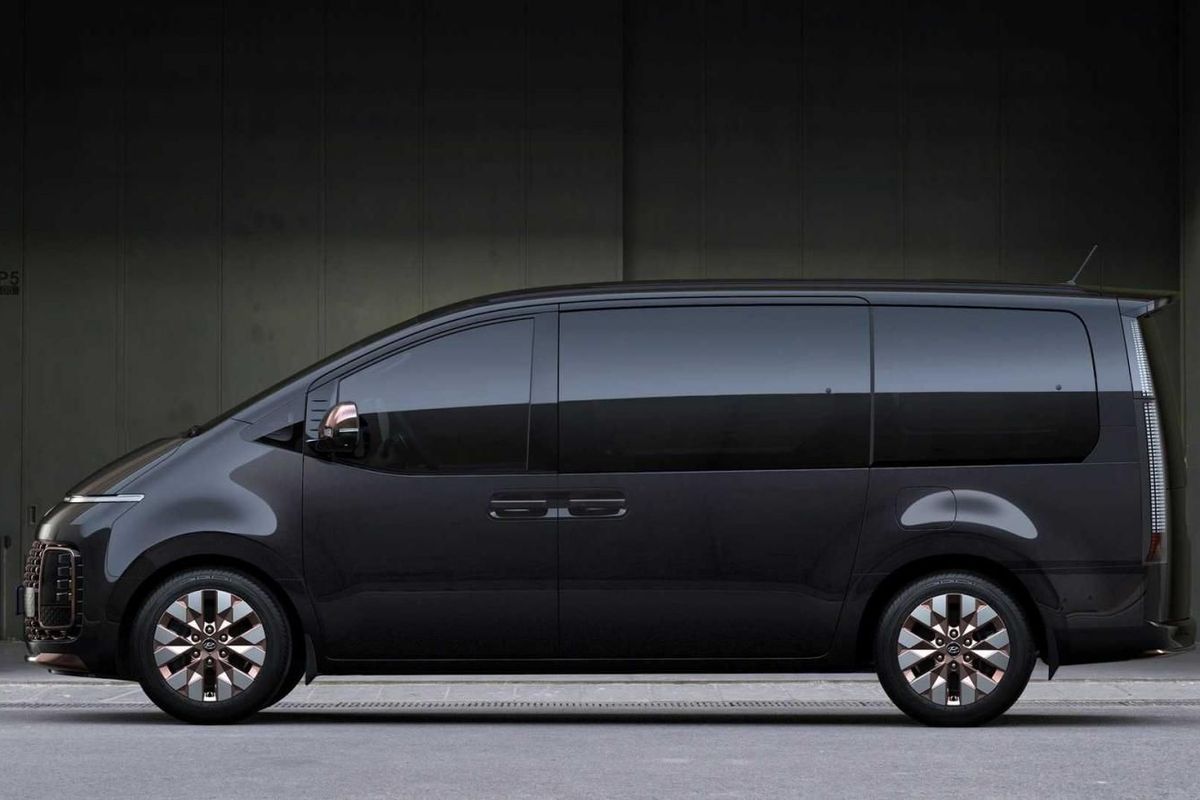
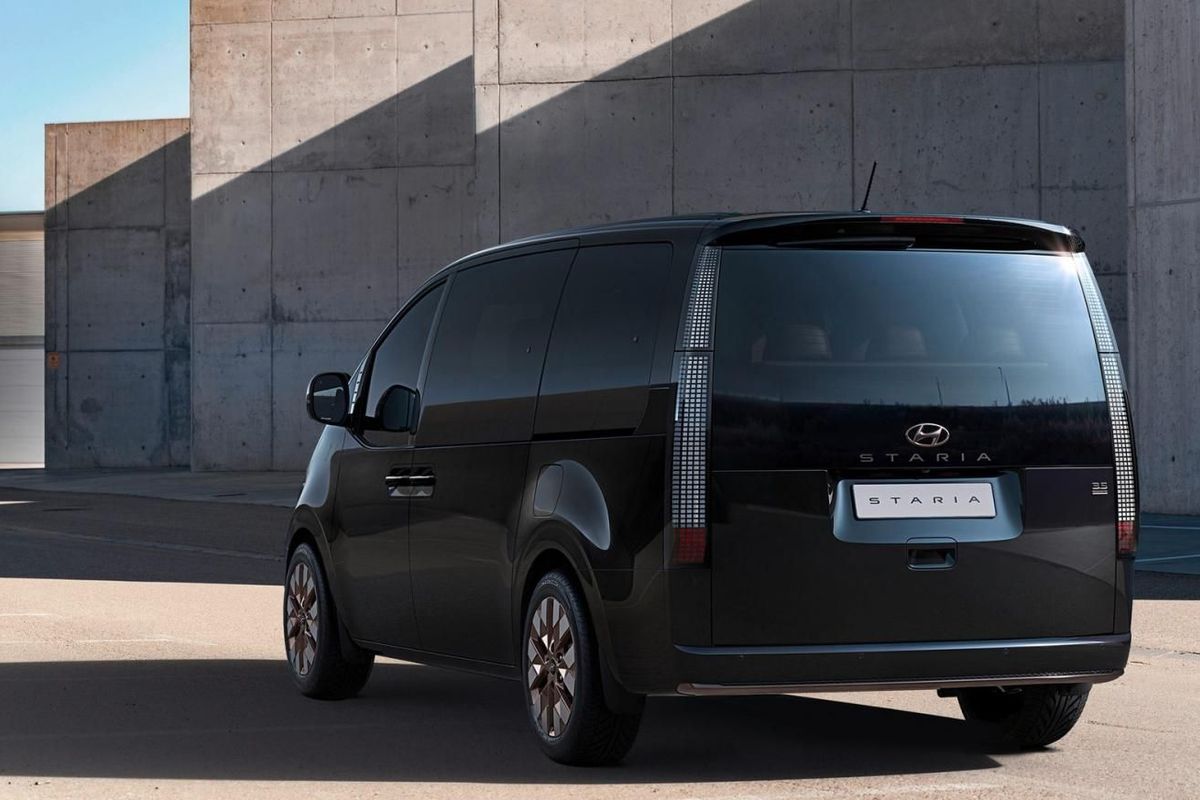
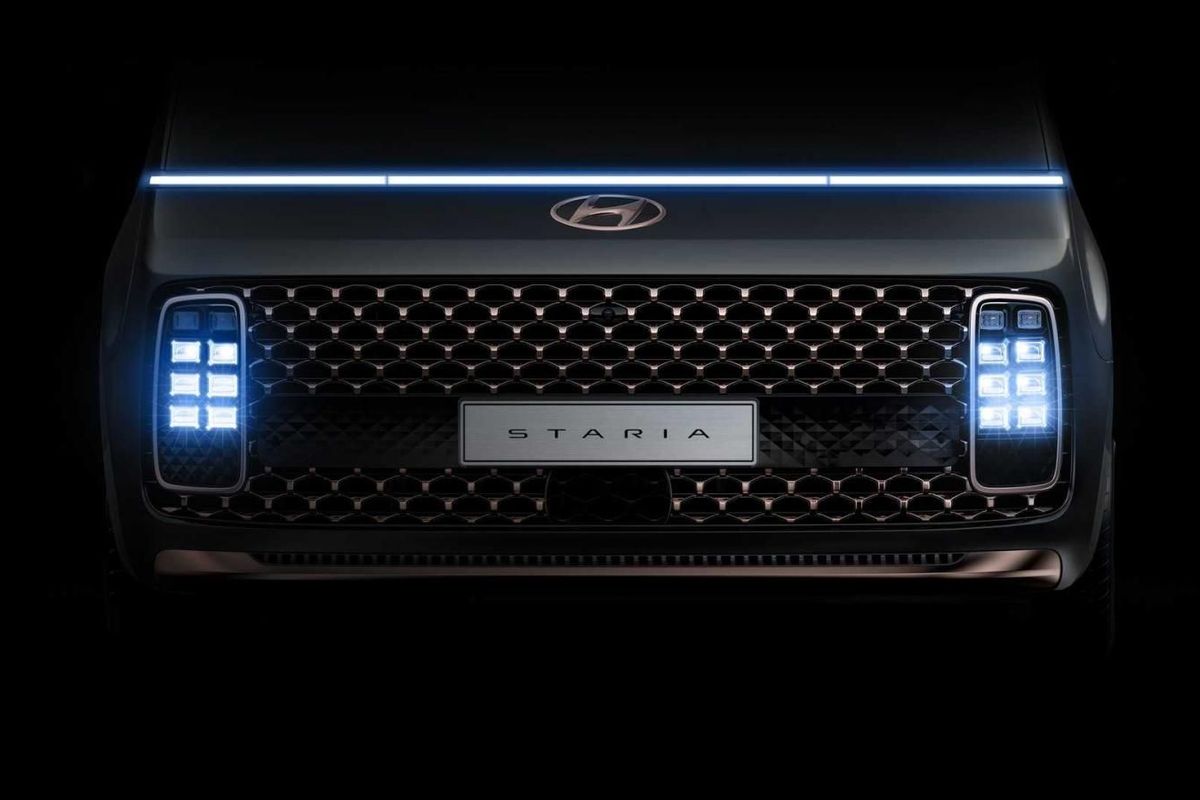
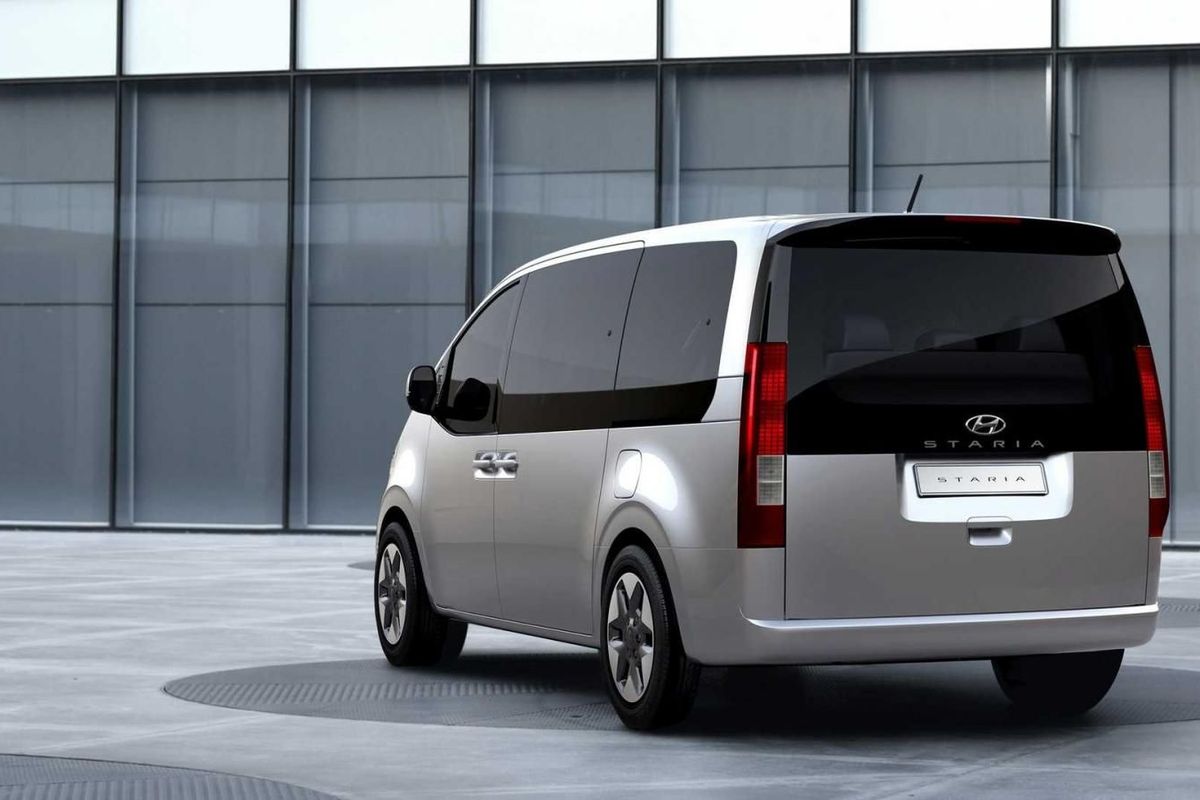
The front-end features a horizontal DRL strip as well as a uniquely-patterned grille which is flanked with low-set 8-piece headlights. From the side, the Staria features a lowered beltline which allows for a panoramic glasshouse which creates a sense of openness when sitting inside the Staria. Inspiration for this design is derived from a Korean architectural style known as hanok which connects the outside world with the inside. At the rear, the Staria features vertical tail lights with a wide rear window.
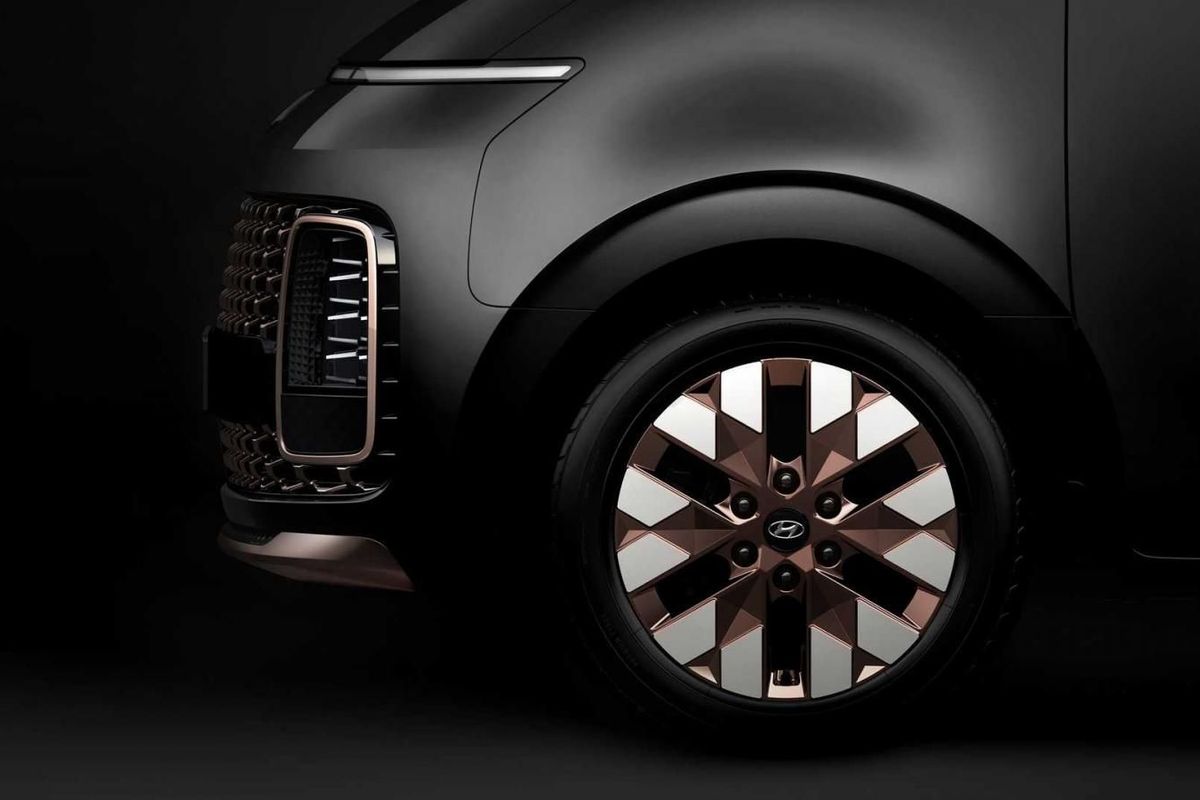
A more premium-looking version, called the Staria Premium, features a unique mesh pattern for the grille, chrome surrounds for the LED headlights and a tinted brass-chrome finish seen on the Hyundai emblem, wheels, mirrors and door handles. This version rides on exclusive 18-inch wheels with diamond pattern and graphics.
Lounge-like interior for Hyundai Staria
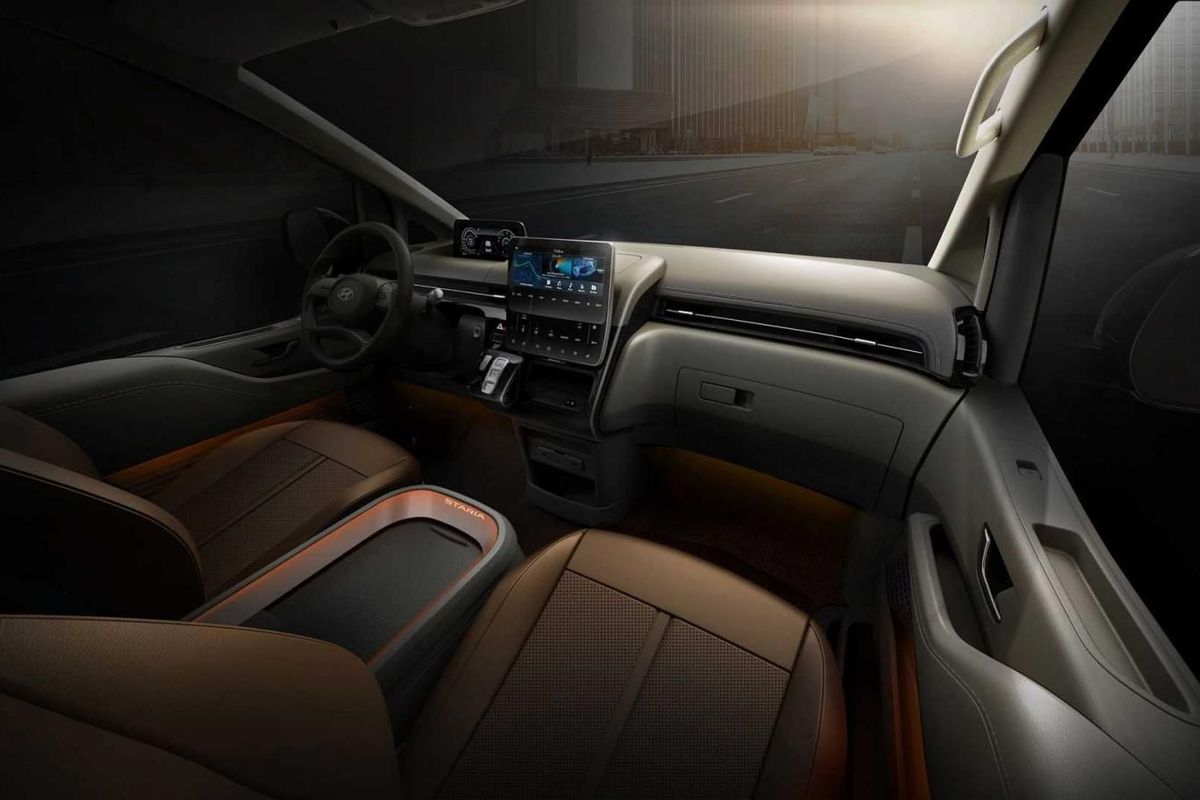
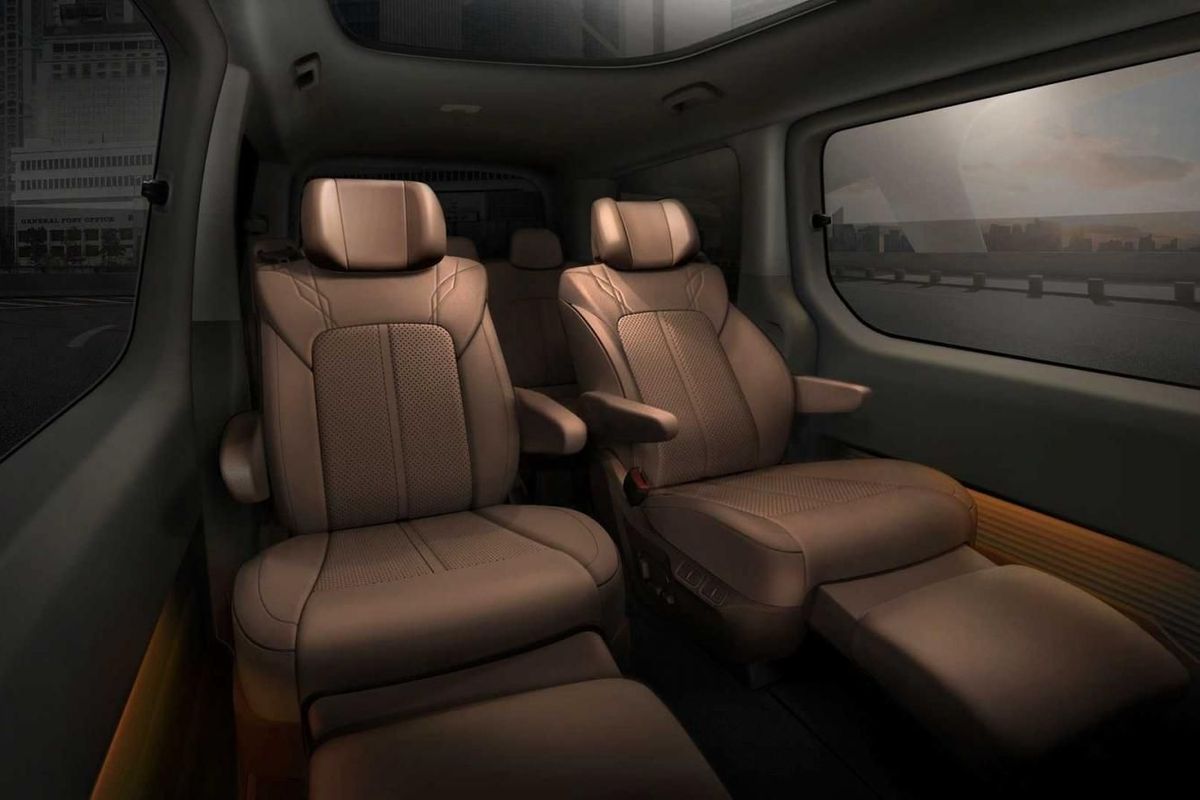
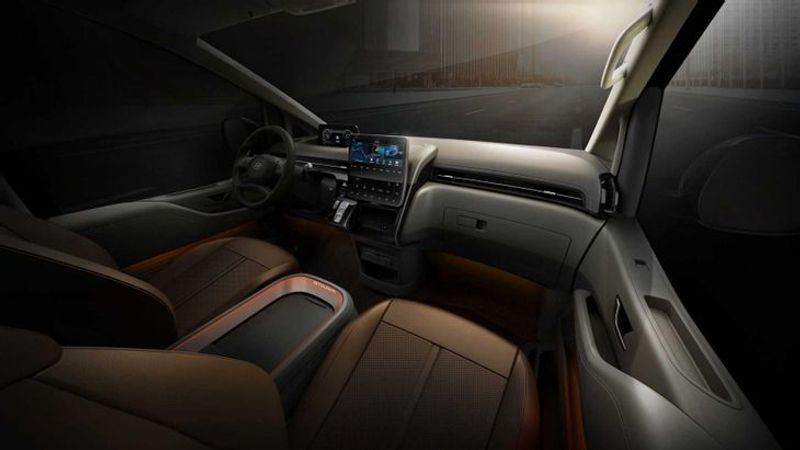
The Staria features expansive glass with its interior inspired by the lounge of a cruise ship.
Hyundai says that the Staria’s interior is inspired by the lounge of a cruise ship with luxurious fittings while the expansive windows provide generous views of the outside world. The Staria features a 10.25-inch instrument cluster placed on top of the dashboard as well as a large central touchscreen and and a button-type electronic shifter.
The front-cabin is equipped with ample storage space, as you would expect in a MPV, while the centre console neatly houses cupholders, USB ports and general storage for front passengers.
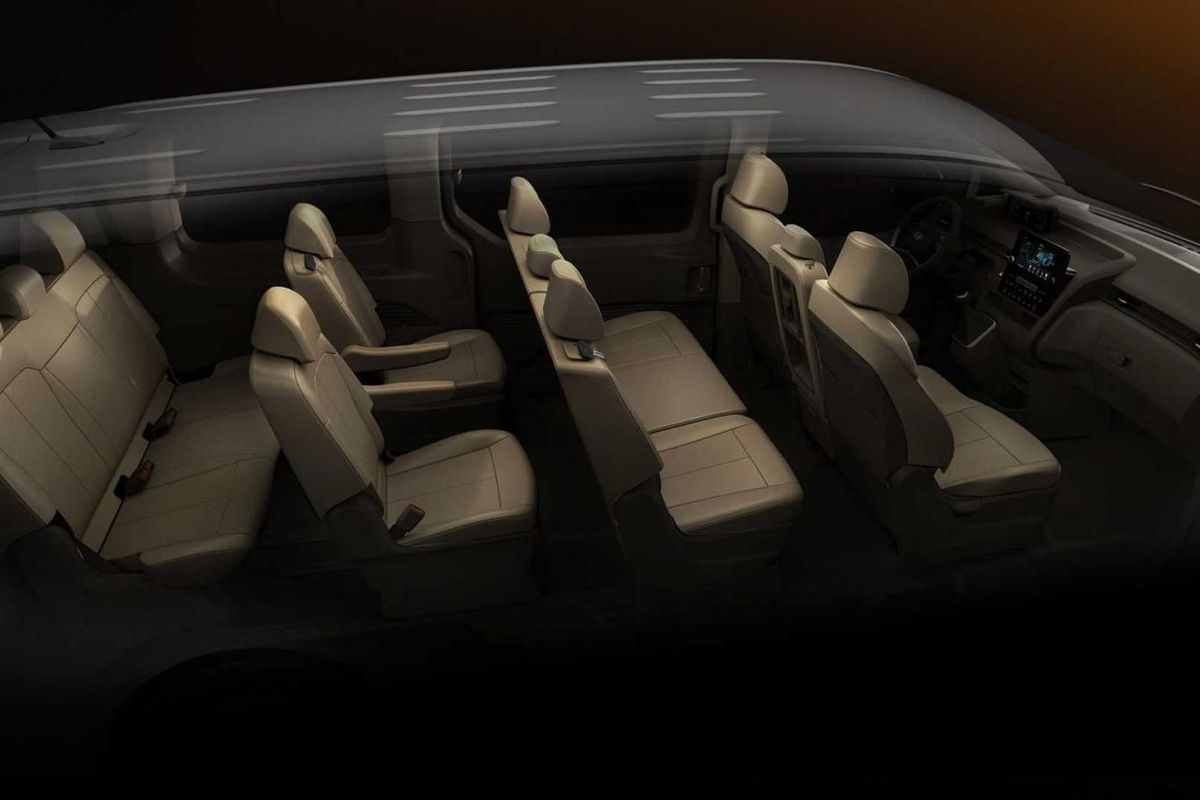
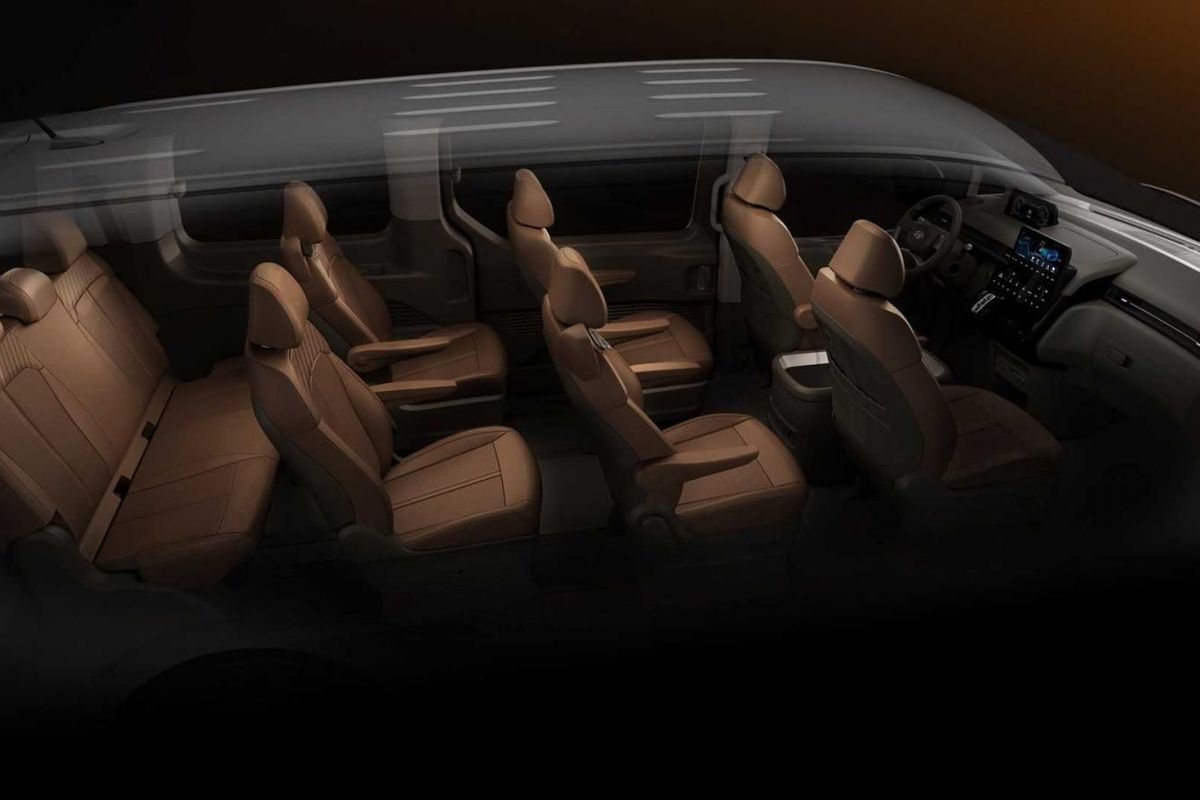
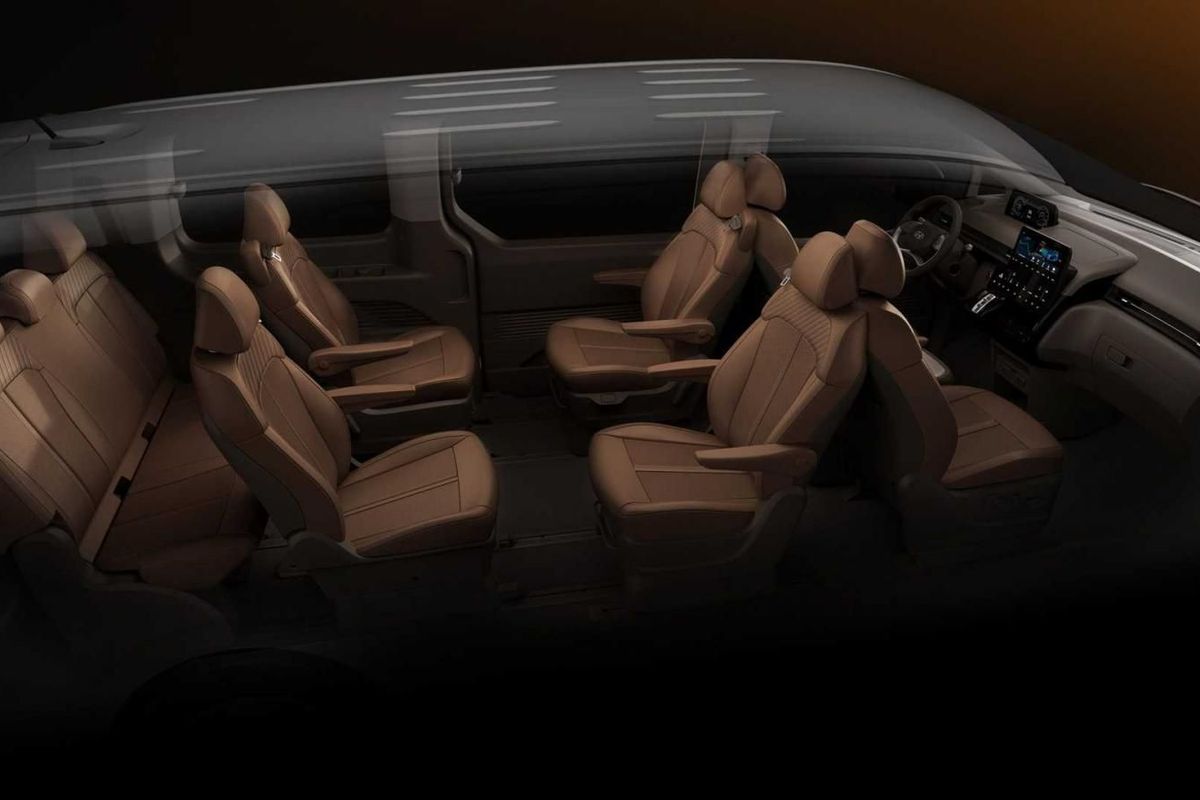
The Staria can seat 2 to 11 passengers, depending on the customer's needs. Premium derivatives will be offered in 7-, 9- and 11-seat configurations with additional interior feature upgrades to match the exterior. Second row seats (9-seater) are also able to swivel 180-degrees to face passengers in the third row while the second row in the 7-seater version feature a one-touch relaxation mode which reclines the individual seats much like an electric armchair in your lounge. A 64-colour mood lighting further enhances the interior experience.
Powertrain details for the Staria have yet to be confirmed but a full reveal is expected in coming weeks/month (first half of 2021). We will keep you informed as more details become available.
Do you want to see the Hyundai Staria in South Africa?
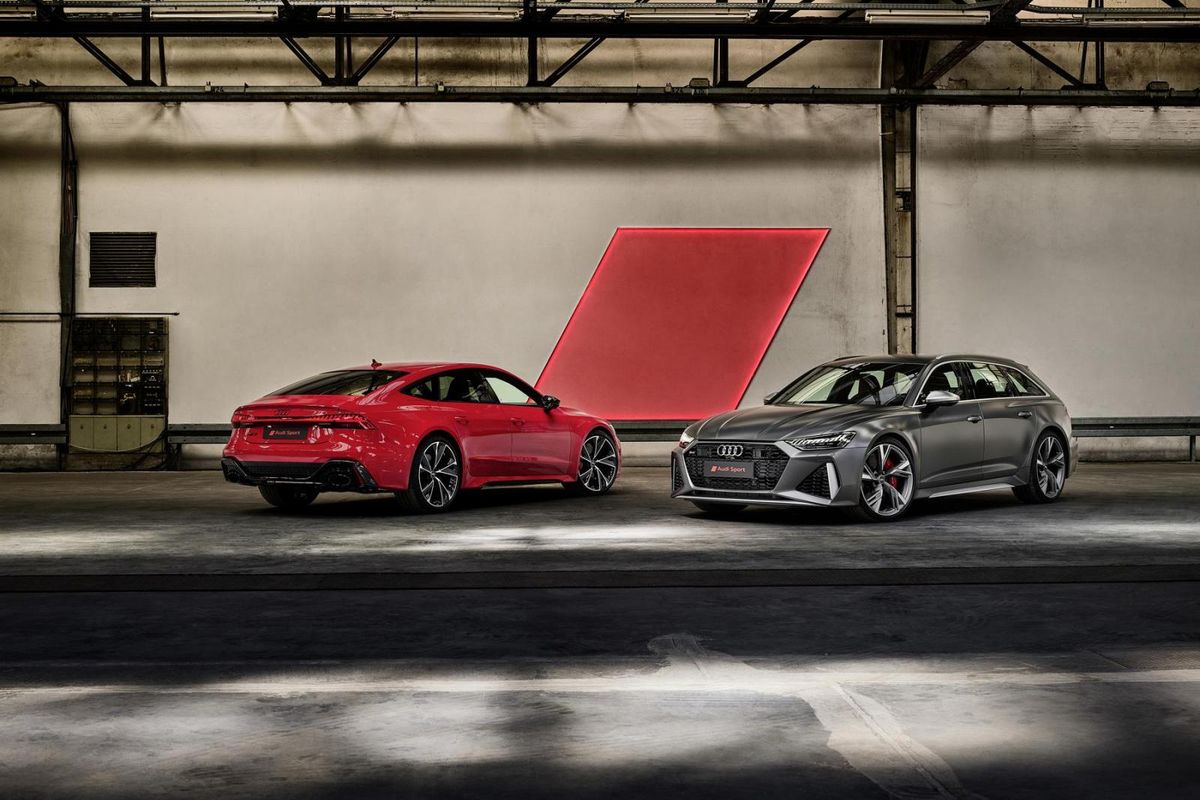
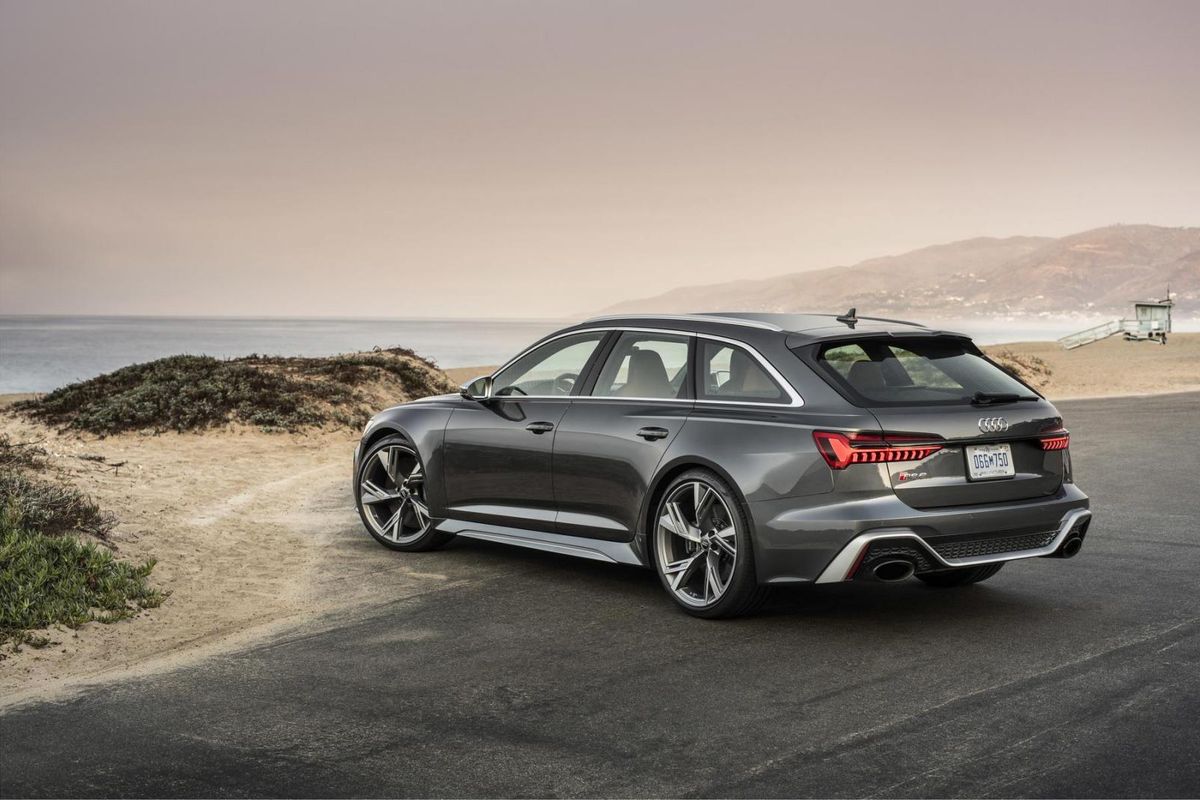
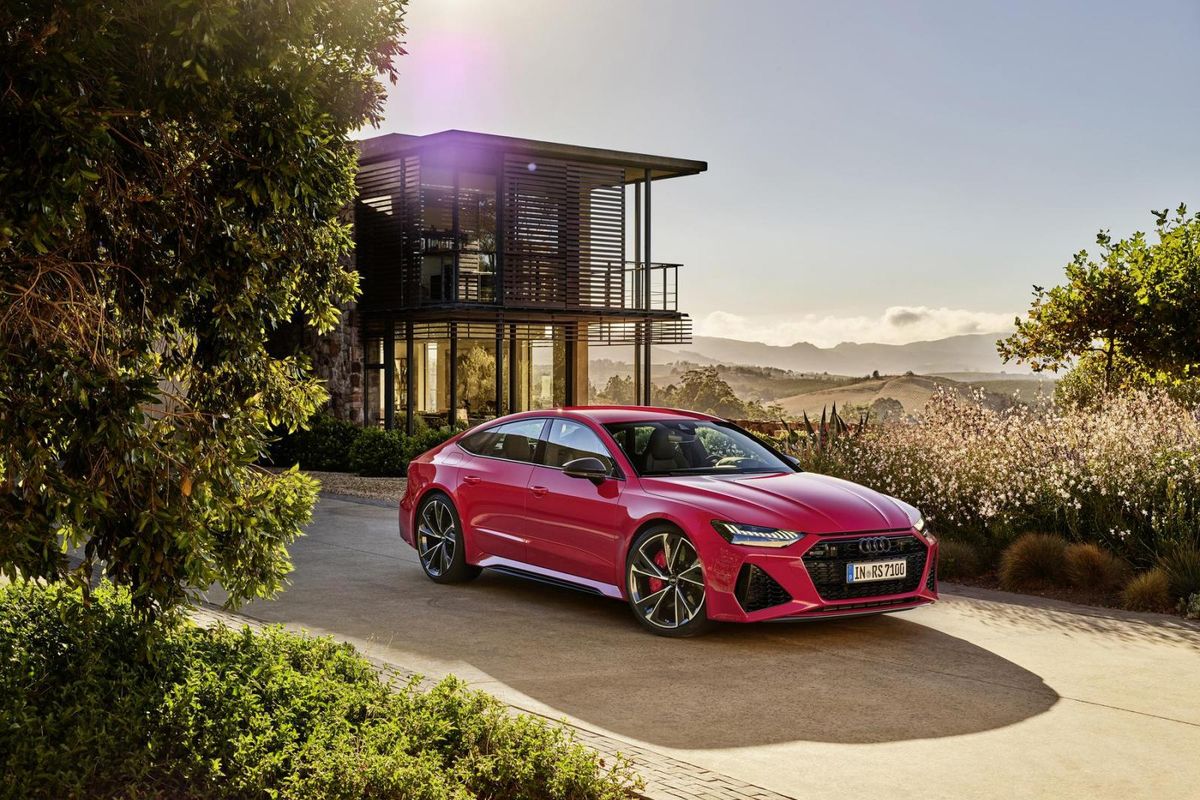
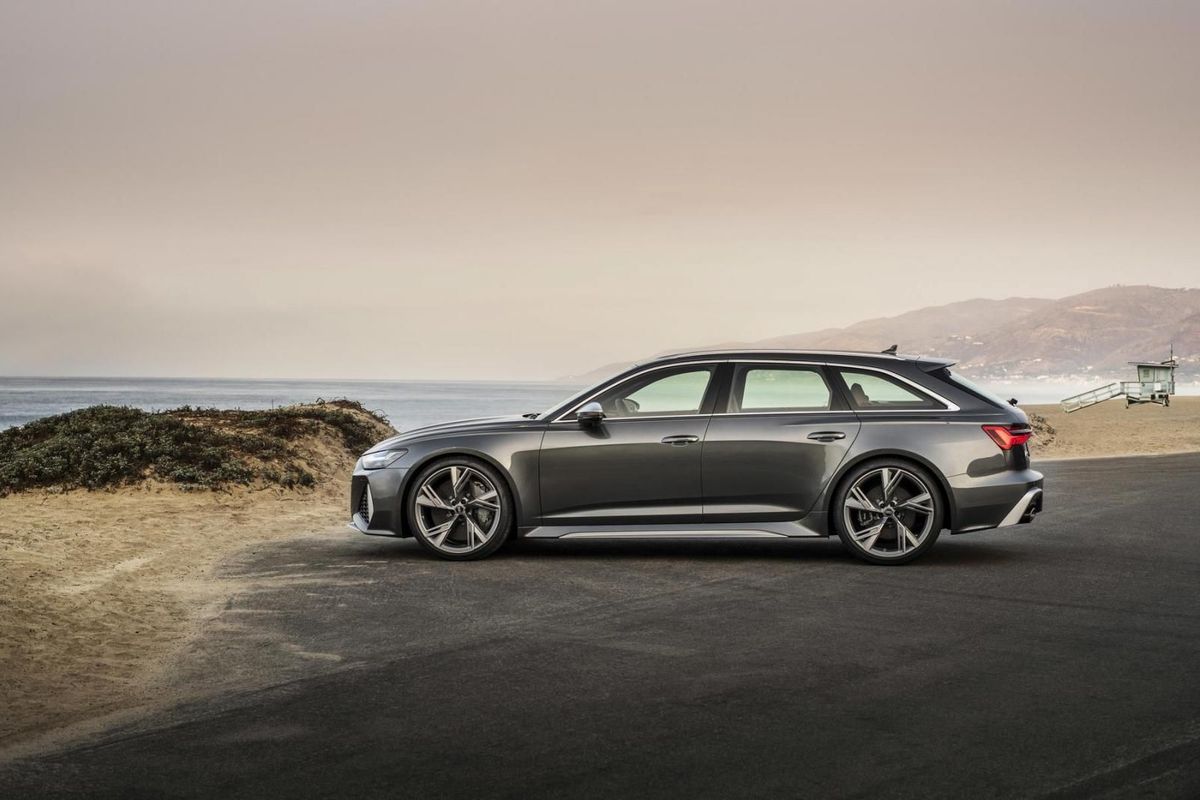
Pricing and specification details for the new Audi RS6 and Audi RS7 have been announced ahead of the performance duo hitting showrooms in April 2021.
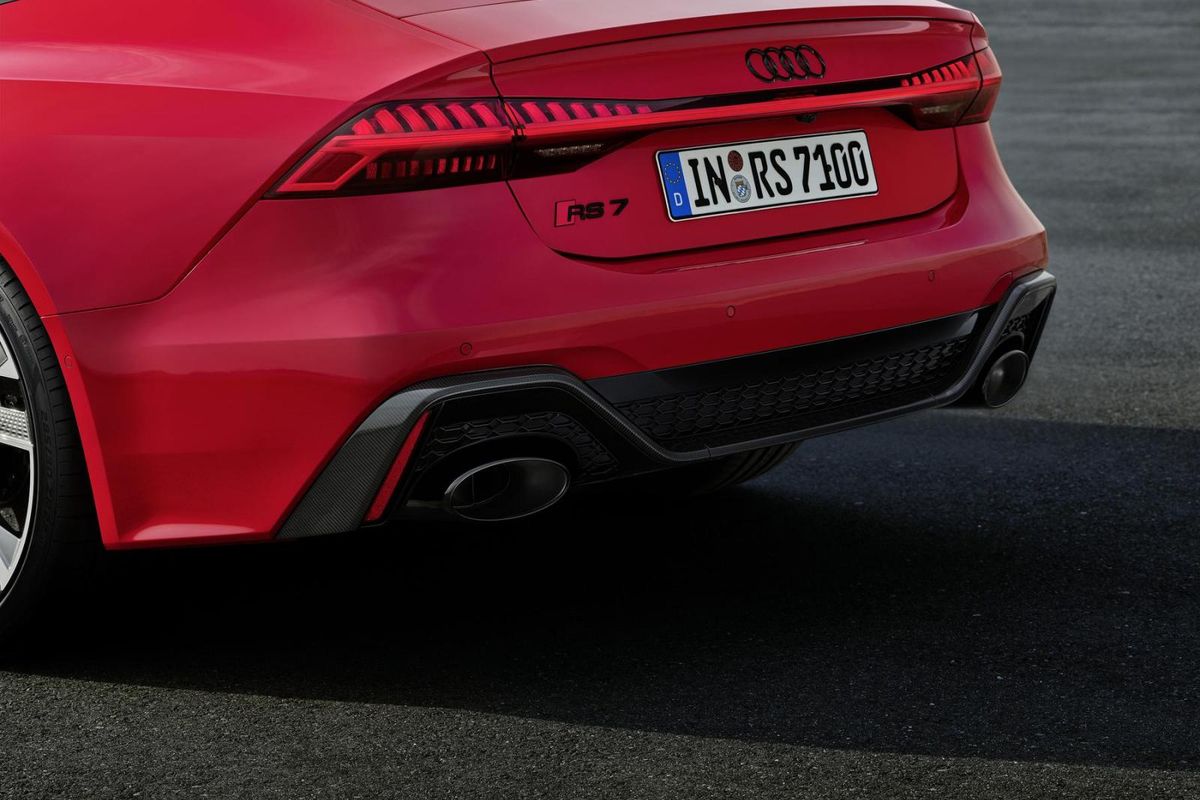
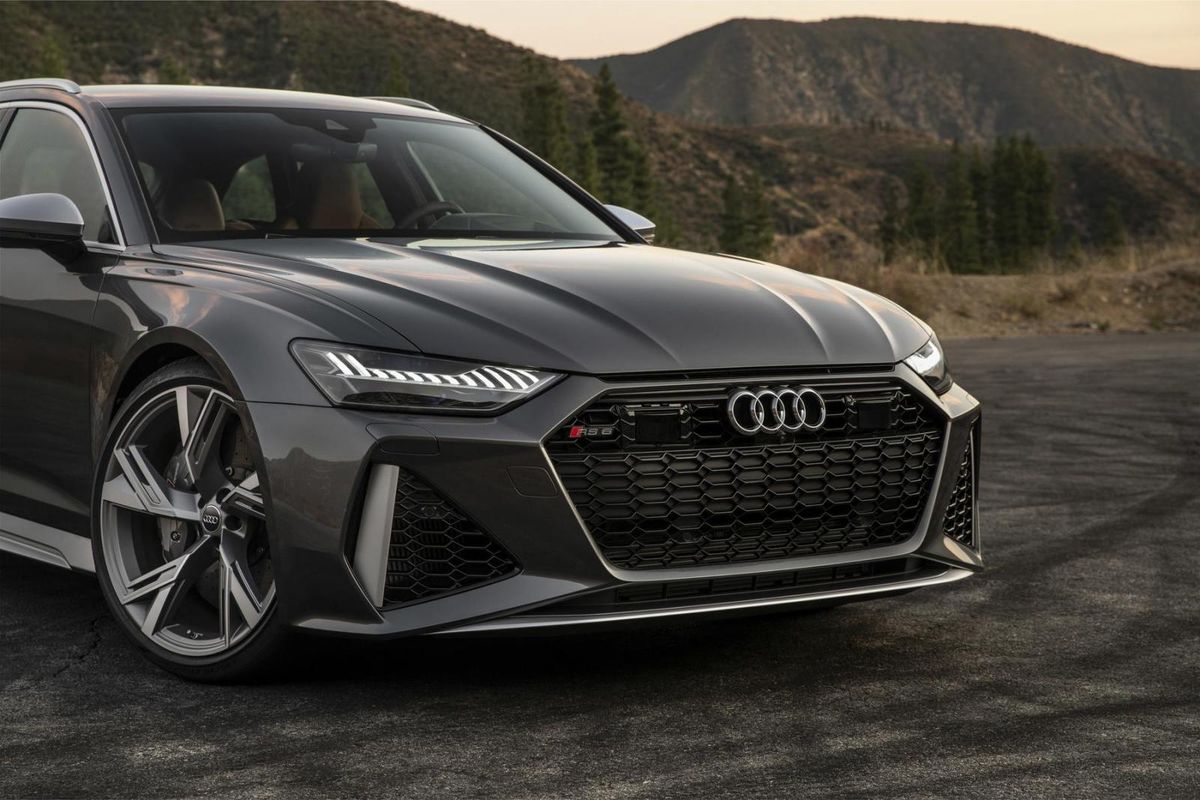
The Audi RS6 station wagon and RS7 Sportback have a cult following globally and the performance duo are due to touchdown in South Africa. Headlining the new models is the engine; a 441 kW and 800 Nm twin-turbocharged 4.0-litre V8 petrol unit. Both vehicles have an 8-speed tiptronic transmission and quattro permanent all-wheel drive. Cleverly, the quattro system can send up to 70 percent to the front wheels and up to 85 percent to the back wheels, depending on conditions.
A quattro sport differential is also available, enhancing the handling even further. When it comes to straight-line sprints, both the Audi RS6 and RS7 are said to sprint to 100 kph in just 3.6 seconds. A limited top speed of 250 kph can be increased to 280 kph with the RS Dynamic package. Despite its performance focus, the new Audi RS6 and RS7 have a mild hybrid system to save fuel, plus the vehicle even deactivate individual cylinders, eeking out more range and improving economy.
Both the Audi RS6 and RS7 feature RS adaptive air suspension. The RS Dynamic Package adds in all-wheel steering, which will improve high-speed agility, as well as enhancing low-speed maneuverability. There are six driving modes, plus drivers can configure RS1 and RS2, with individual adjustments to the engine and transmission management, the power steering, the suspension, the dynamic all-wheel steering, the quattro sport differential, the engine sound and the characteristics of the automatic air conditioning.
The performance duo ride on 22-inch RS-specific alloy wheels, and in terms of stopping power there are internally ventilated and perforated discs (420 millimetres at the front, 370 millimetres at the rear). Customers can go for optional RS ceramic brakes, which are lighter.
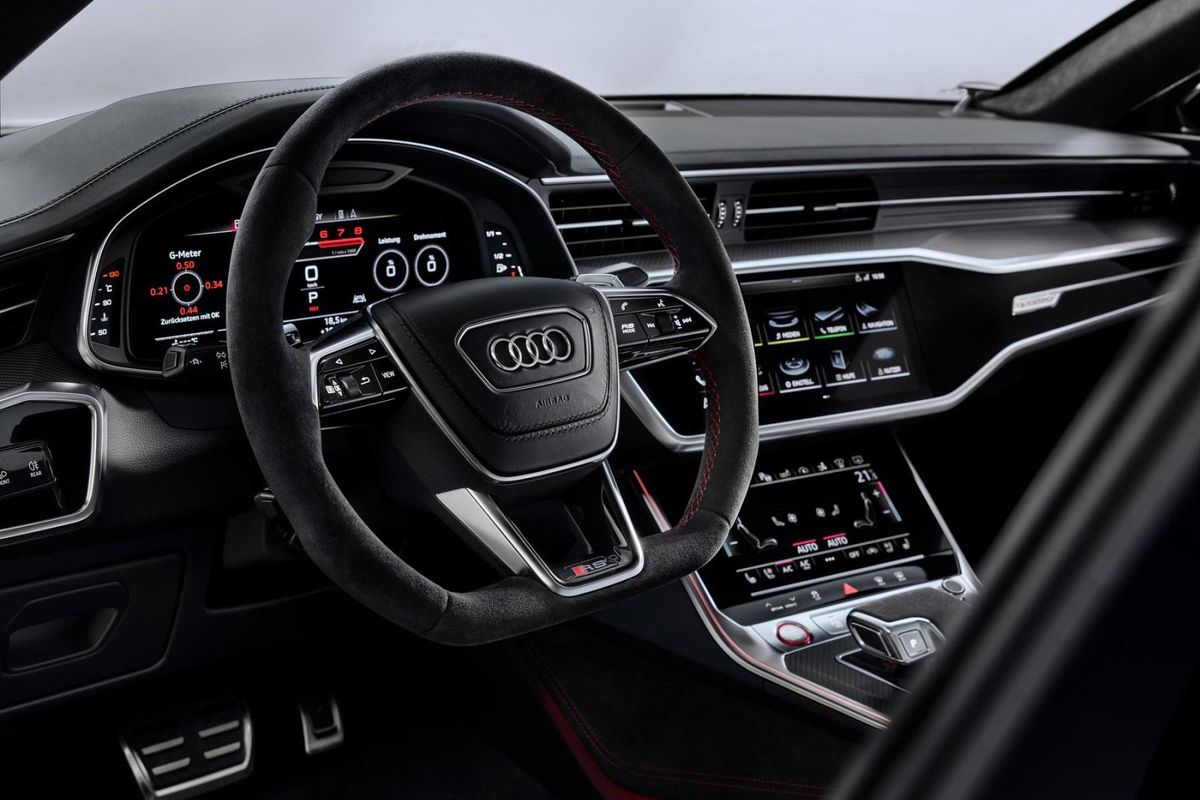
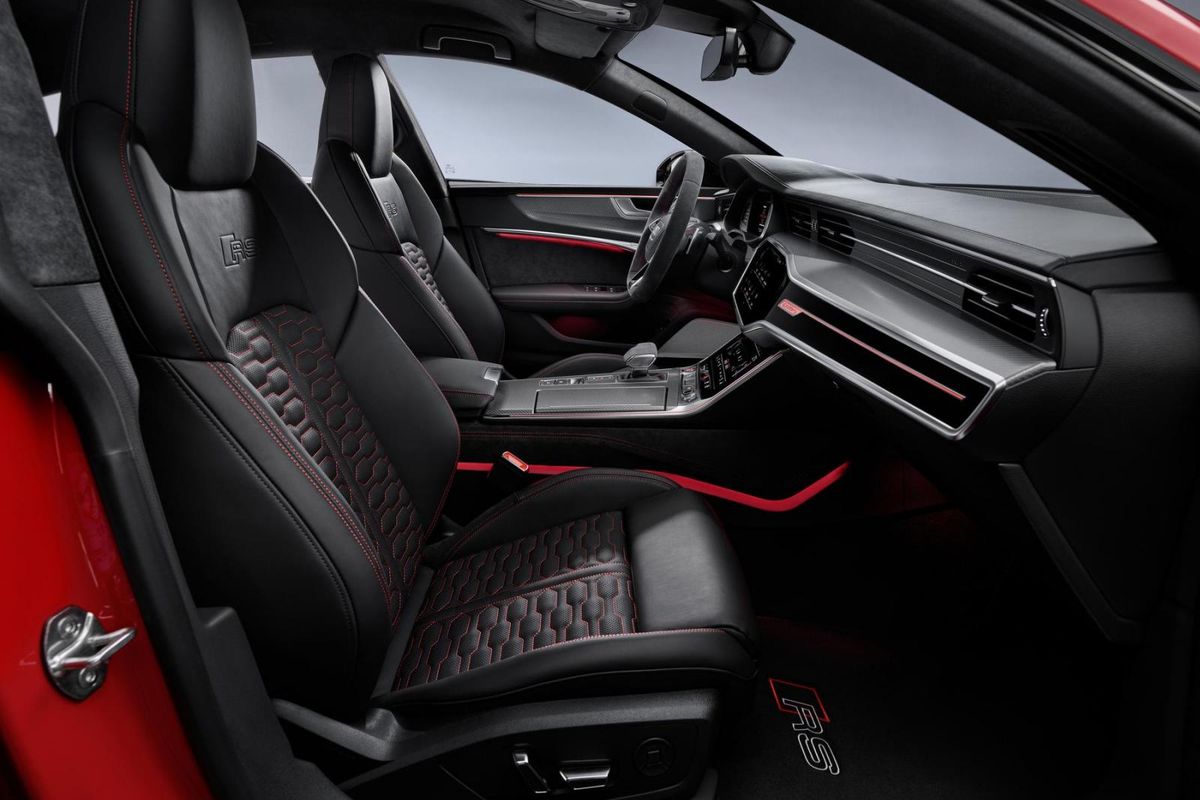
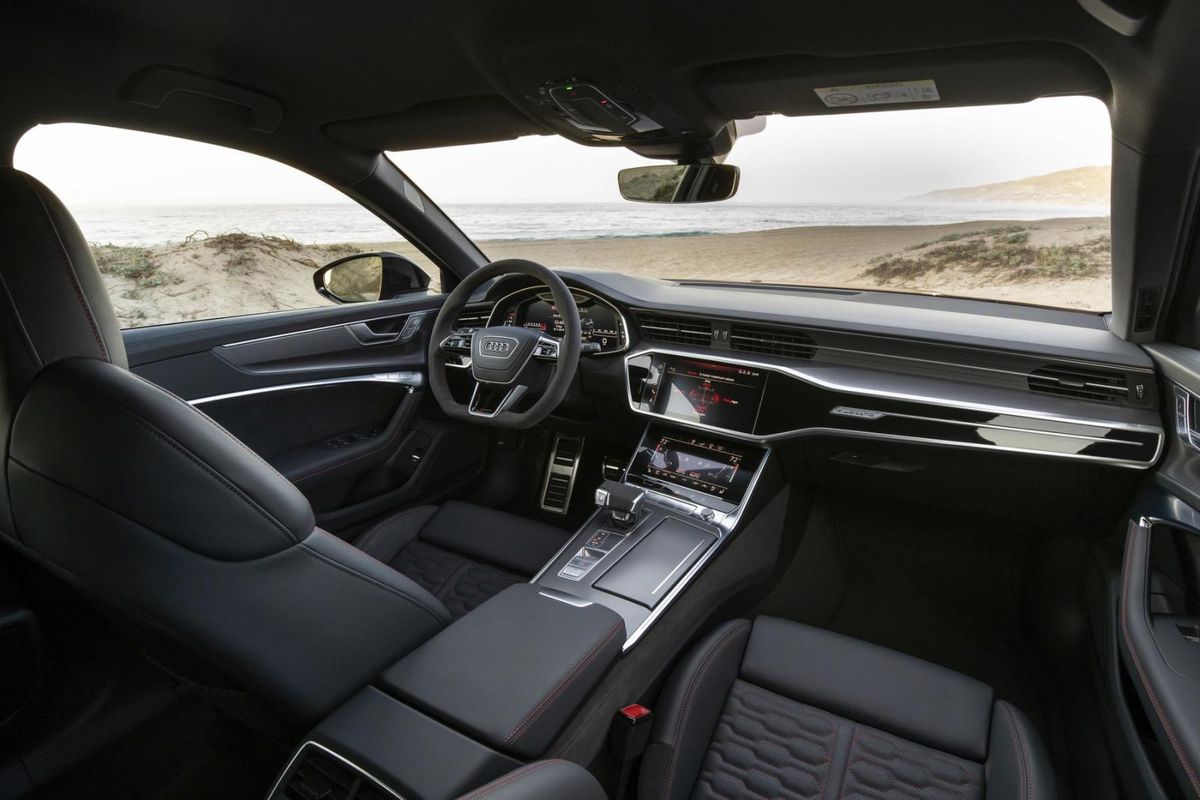
Inside, the Audi RS6 and RS7 feature the stylish flat-bottomed, fully perforated RS sport leather steering wheel with new large RS aluminium shift paddles. RS sport seats upholstered with Valcona leather, featuring a honeycomb pattern and RS embossing are fitted as standard, but you're probably going to be interested in the RS design package brings a splash of colour, with contrasting red stitching on the Alcantara steering wheel rim, gear lever gaiter and knee pads. The package also features seat belt straps with red edging and RS floor mats. Being a wagon, the Audi RS6 boasts practicality galore, with a luggage compartment has a capacity of between 565 and 1 680 litres.
At this pricepoint, the features and gadgets are top-notch and Audi has loaded an array of convenience, connectivity, and driver assistance equipment like lane change assist; park assist package (360-degree camera, intelligent park assist); tour assistance package (adaptive cruise control and assist); and Audi pre sense rear package.
We're keen to get behind the wheel of the performance duo, there's just something alluring about a fast Audi…
How much does the new Audi RS6 and RS7 cost in South Africa?
The new Audi RS 6 Avant and RS 7 Sportback will officially go on sale in South Africa from 1 April 2021. The RS models are priced as follows (inclusive of all taxes) and comes standard with a five year Audi Freeway Plan:
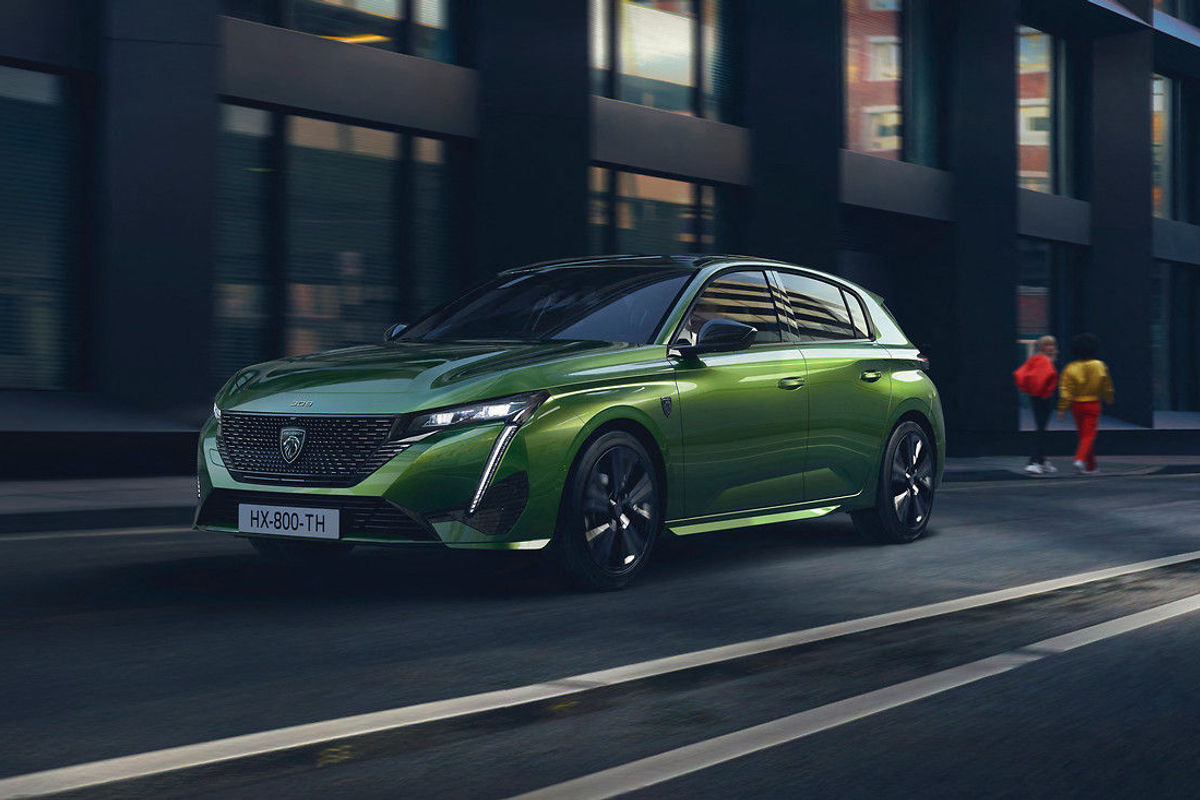
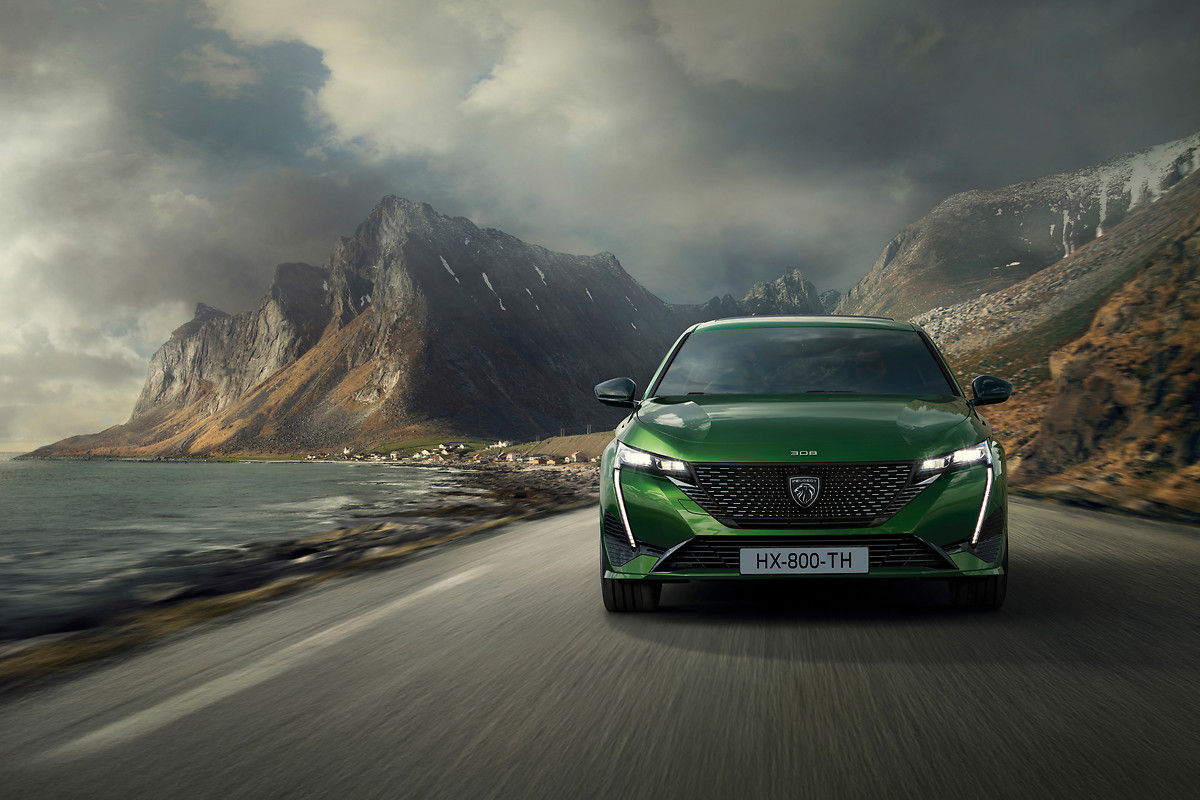
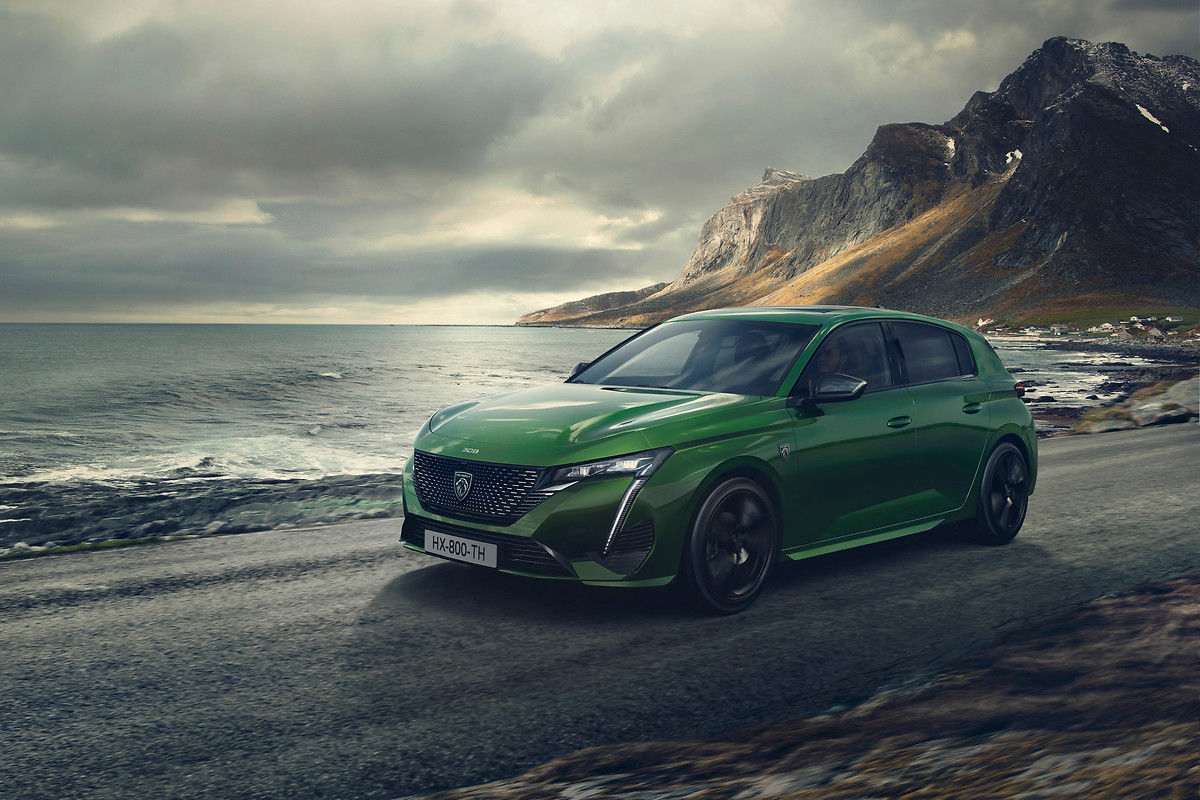
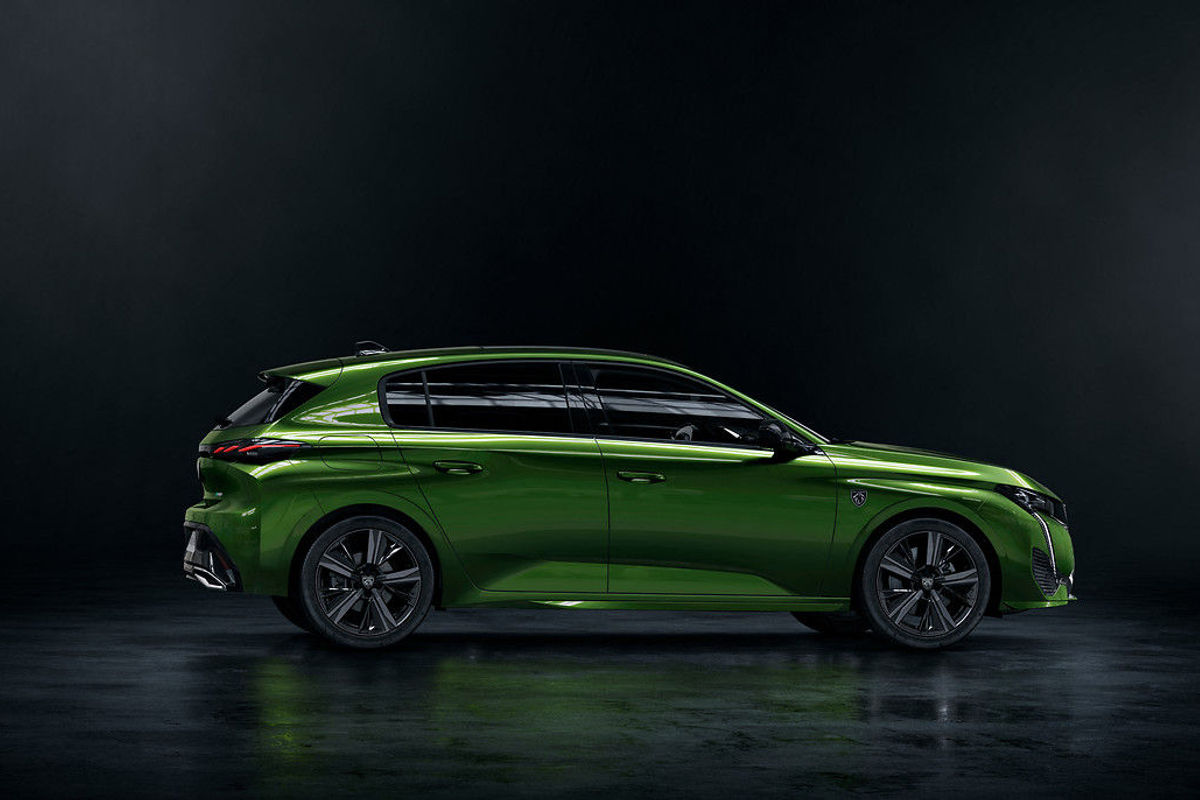
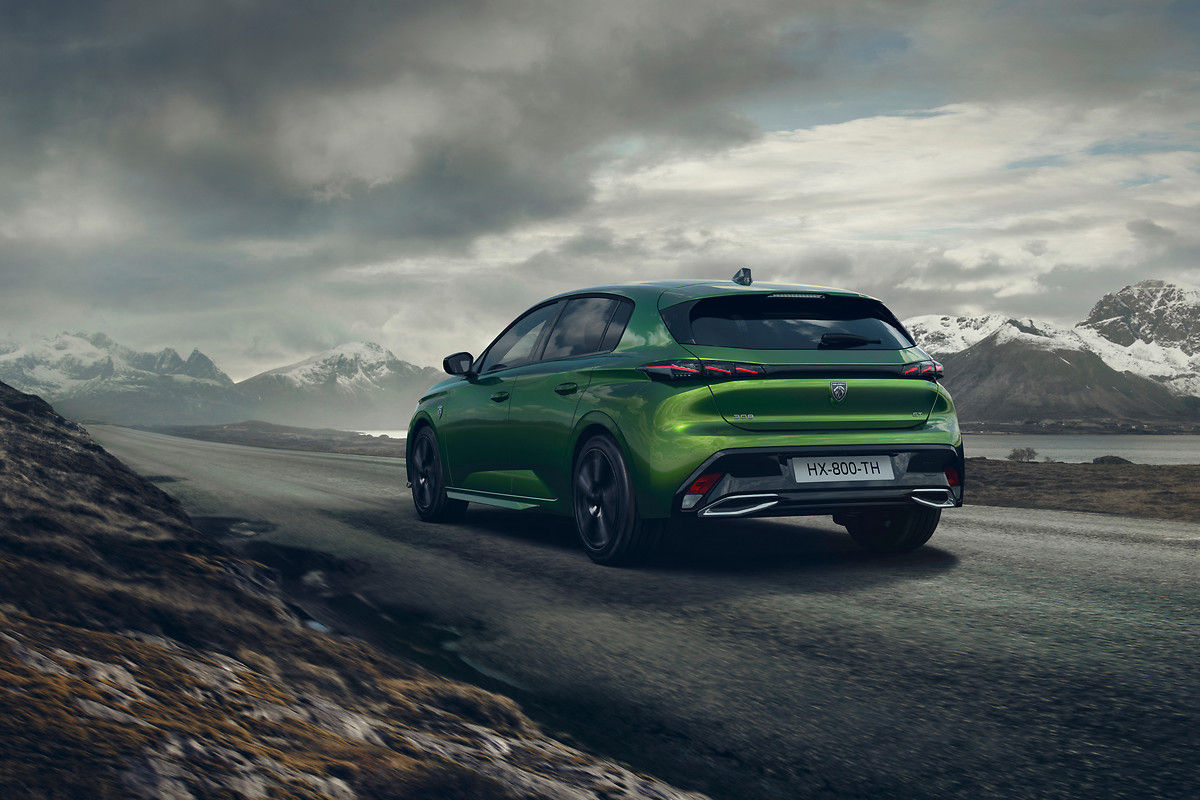
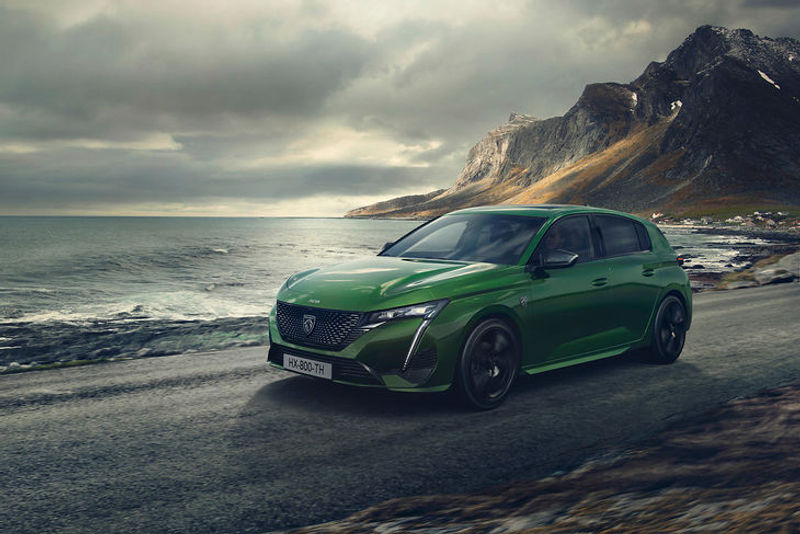
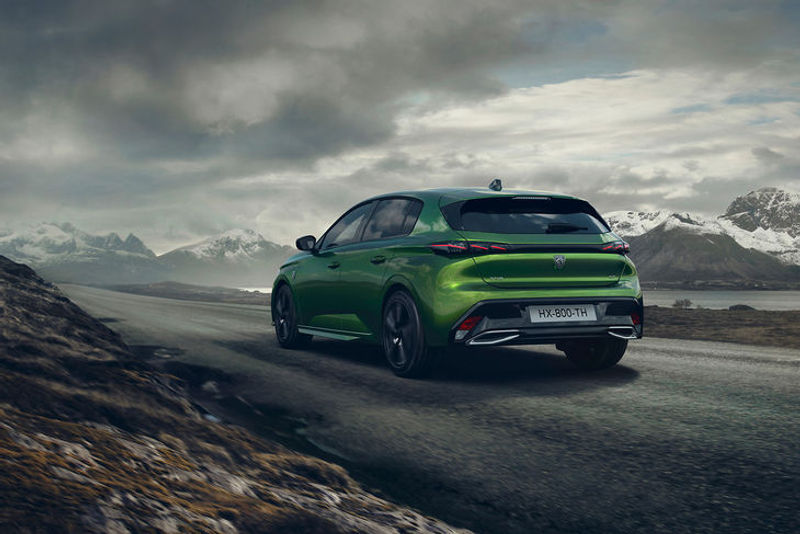
Peugeot has unveiled the first model to wear the brand’s new lion's head badge. The new 308, which will go up against the VW Golf, Toyota Corolla hatchback and other premium hatchbacks, looks edgier than its understated predecessor, incorporates 2 hybrid derivatives and has a much more tech-laden interior.
Although the current-generation 308 has been discontinued in the South African market, it was an underappreciated compact hatchback; the outgoing 208 supermini is currently the Guyancourt-based firm’s biggest hatchback in Mzansi, followed by a slew of crossovers, including the recently introduced 2008 and later this year our market will welcome the facelifted version of the 3008.
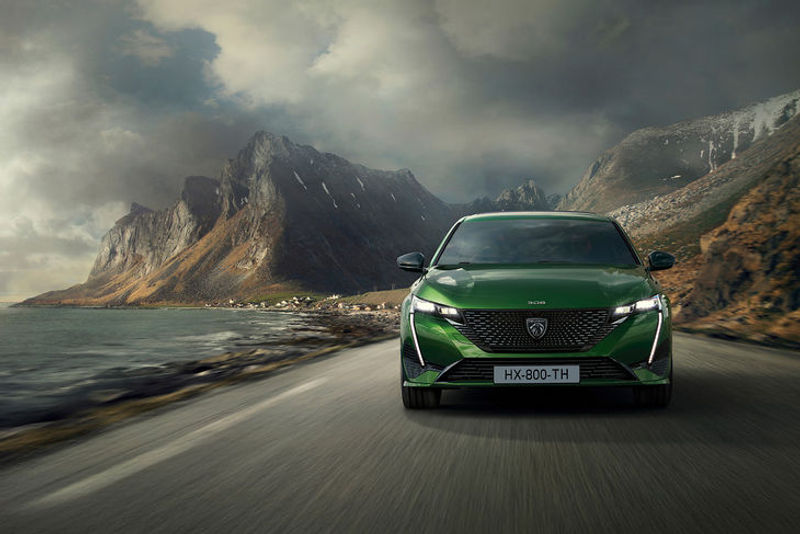
The newcomer’s styling takes its cues from the aforementioned revised 3008, although its features are admittedly more refined than those of its SUV-inspired sibling. The front-end is notably sharper, replete with a plunging bonnet line, slimline headlights that are integrated into the edges of the enlarged grille (with that updated badge) and Peugeot’s fang-like LED daytime running lights.
Like its predecessor, the 308 is based on the EMP2 platform, but it has grown in length (by 110 mm), courtesy of an extended wheelbase (by 55 mm) that frees up more rear legroom; it also sits 20 mm lower than before. The newcomer’s drag coefficient has improved to 0.28 courtesy of that reprofiled bonnet, a sharply raked windscreen and the sharp air-channelling crease (continued from the sides and integrated into the wraparound light bar) on the French car’s spoiler-adorned rear-end.
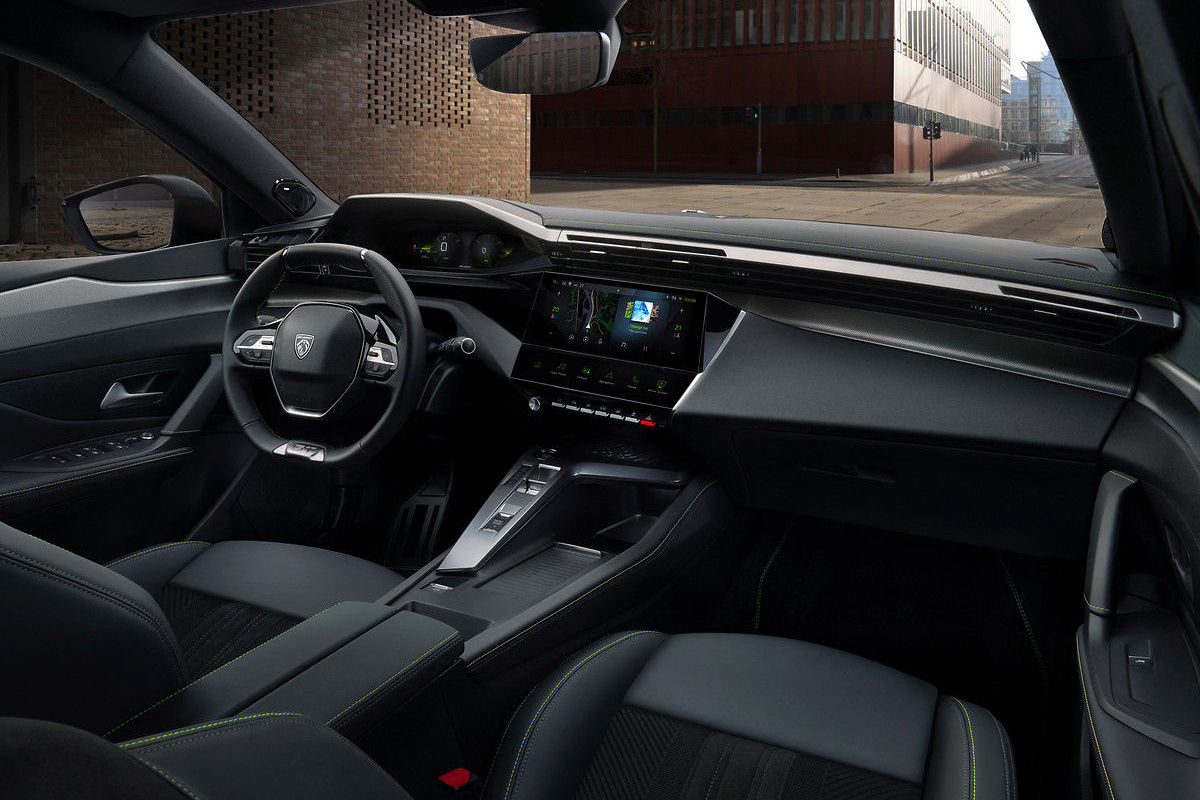
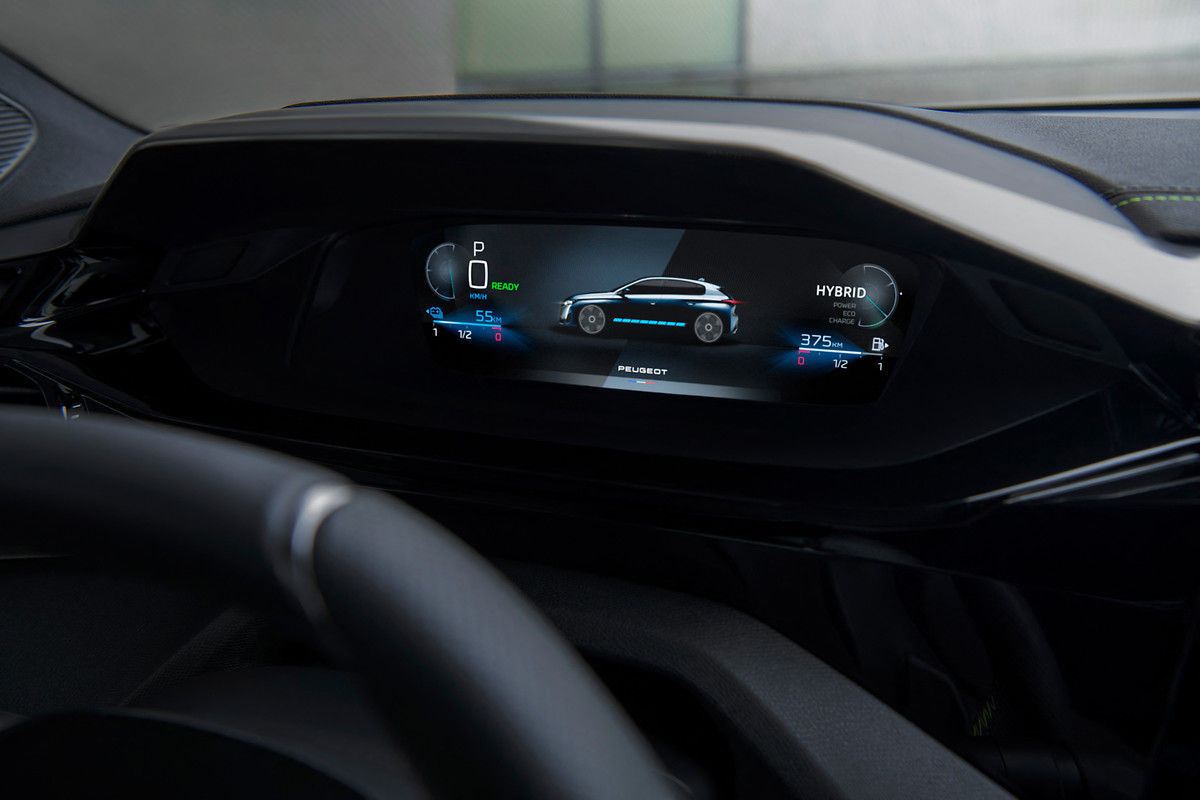
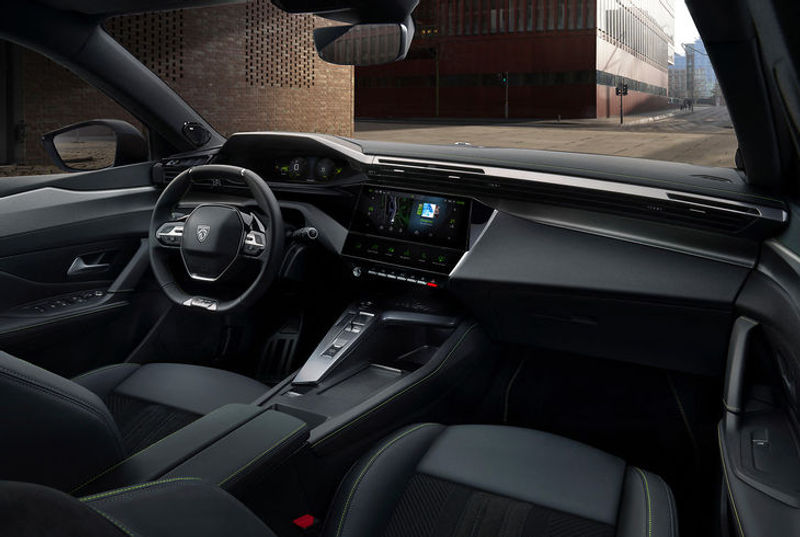
But while the newcomer’s exterior styling is much as expected, given the direction of Peugeot’s current design language, the 308’s interior is heavily revised, beginning with the i-Cockpit shrunken multifunction steering wheel and the digital instrument cluster, which utilises 3D image technology.
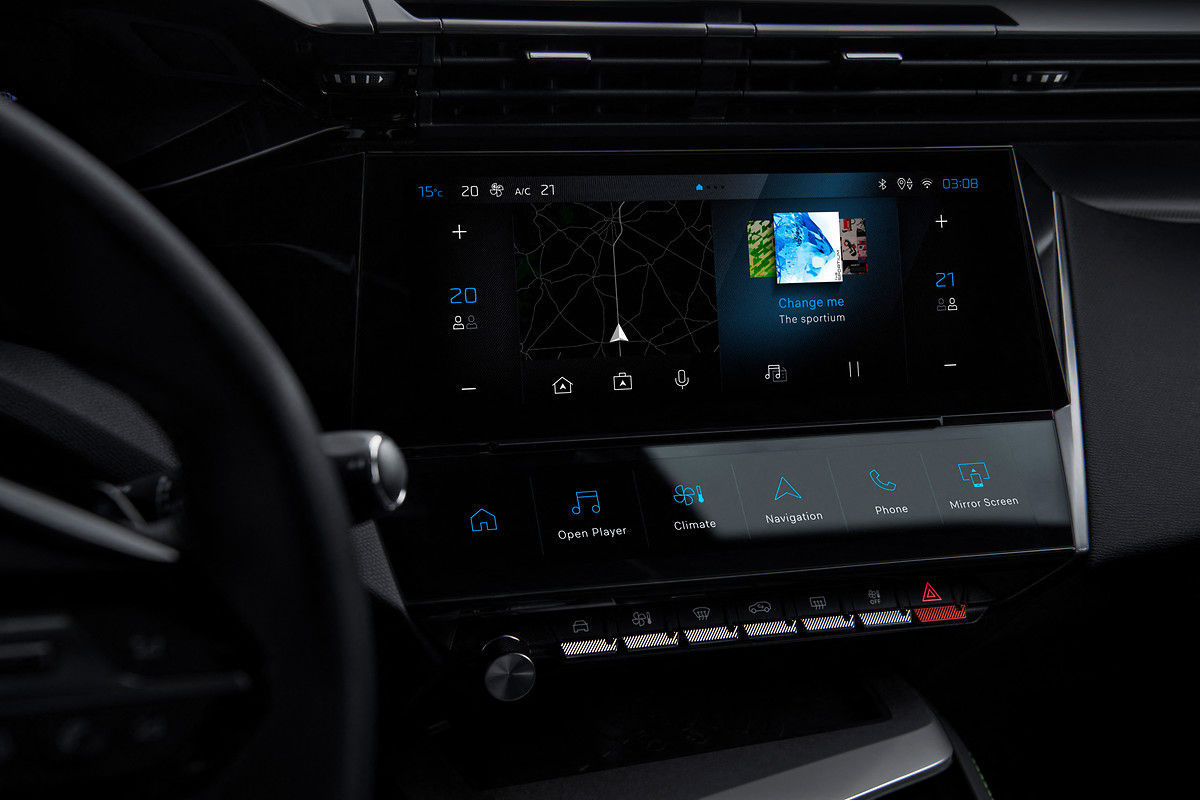
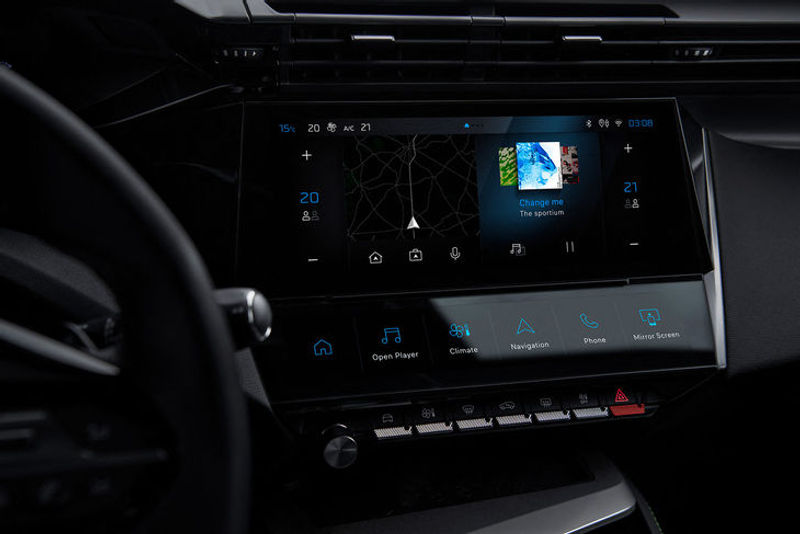
A centrally mounted 10-inch touchscreen, which is angled towards the driver, has replaced many of the fascia’s buttons and switches. However, a row of so-called 'i-toggle' switches below the screen can be individually configured to control separate functions, according to the driver's preference.
Apart from offering wireless Android Auto and Apple CarPlay compatibility and a customisable new graphical interface that uses a widget-based organisation system, the system allows 8(!) individual profiles to be stored and 2 smartphones to be paired simultaneously. Drivers can also use the new “OK Peugeot” voice control function to change infotainment settings on the fly.
Ergonomically, a new, smaller air-conditioning unit has allowed for a redesigned centre console housing a button-style drive direction selector and drive mode switch, while a wireless phone charging pad, a 34-litre storage cubby and a pair of USB sockets are provided. Top-spec derivatives feature a combination of Alcantara and embossed leather trim and the front seats can be equipped with 10-way electric adjustability as well as a multi-programme pneumatic massage system.
The claimed luggage capacity, meanwhile, is a more-than-handy 412 litres, which means the 308 has a more capacious load bay than the Volkswagen Golf 8.
As for the turbopetrol line-up of the range, there is an 81-kW 1.2-litre 3-cylinder petrol derivative with 6-speed manual gearbox, as well as a 95-kW version with an 8-speed automatic transmission.
There will be a pair of plug-in hybrid options available from launch, both of which combine a turbopetrol engine with an 81-kW electric motor and a 12.4-kWh battery. The first has a 110-kW engine, produces a combined 132 kW and has a pure-electric range of 60 km (WLTP), while the other has a 132-kW engine, develops 165 kW in total and has a pure-electric range of approximately 59 km.
Meanwhile, the new 308 features, inter alia, Peugeot Drive Assist 2.0 – the latest development of the French marque’s semi-autonomous driver assistance technology – which can automatically adapt the speed of the car around curves at speeds of up to 180 kph, for what that’s worth.
Other available features include an electronic parking brake, long-range blind-spot-monitoring, rear cross-traffic alert, a reverse-view camera with a 180-degree field of view (or an optional 360-degree surround-view setup), high-beam assist, traffic-sign recognition and adaptive cruise with a full stop-and-go function (the latter exclusively on automatic derivatives).
Audi’s pragmatic new CEO, Markus Duesmann, is attempting to balance the brand’s electric vehicle ambitions with its internal combustion inventory.
Like many other automotive companies that trade strongly in Europe, Audi has a frightful set of new emissions regulations to contend with.
The EU’s new Euro 7 engine regulations have been deemed impossible by some. Brussels is attempting to create a significant disincentive for any future petrol and diesel engine development, by setting nearly impossible standards for manufacturers to adhere to.
A 50% emission reduction has been set for internal combustion engines, by 2025. The message from politicians in Europe, to the automotive industry, could not be clearer: go electric, or go away.
Audi boss, Duesmann, has admitted that the company will attempt to keep its current diesel and petrol engines relevant, for the 2025 deadline. But an investment in new internal engine architectures or castings is simply not feasible under Euro 7.
Speaking to the Frankfurter Allgemeine Zeitung, Duesmann has confirmed that Audi will not pursue any new engine development, for petrol or diesel. Engineers in those departments will busy themselves with attempting to keep the company’s current engine portfolio ‘legal’ to 2025 and beyond.
The cost to comply with emissions will be severe, but Audi has no choice. It will cost slightly less to adapt current engines than engineering a completely new line of Euro 7 compliant engines from scratch.
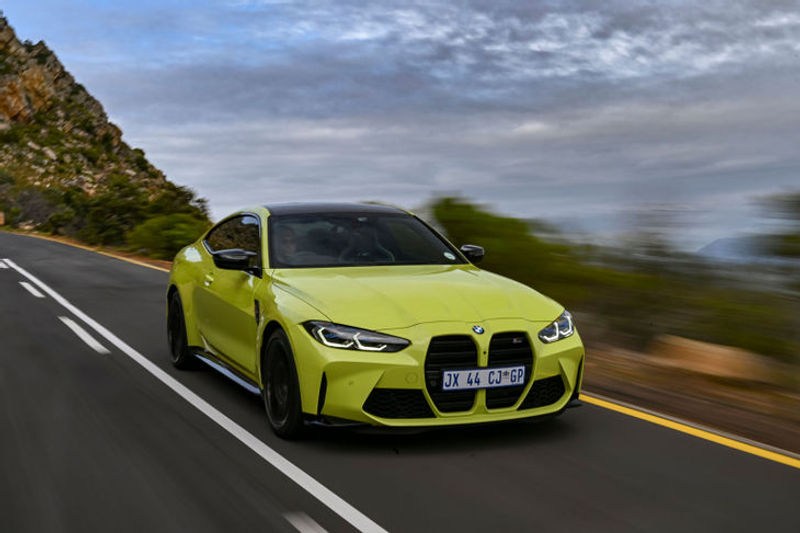
BMW M3 and M4 Competition (2021) Launch Review
There are few – if any – BMW products that create as much excitement as the BMW M3 and M4. The M3 and M4 are meant to be unimpeachable driver’s cars, which is why they are held to lofty standards, but in recent times their esteem has been eroded by the likes of the Alfa Romeo Guilia Quadrifoglio and, in the power stakes, the Mercedes-AMG C63 S. Are these new models everything BMW hoped they'd be? We drove the newcomers at their local launch in Cape Town.
What’s new on the BMW M3 and M4?
The all-new M3 and M4 are, of course, based on the G20-generation 3 Series platform. South Africa will only receive the Competition versions of the Bavarian juggernauts, which means our models are more potent than the standard cars. The Competition cars only come with auto transmissions, but are available in rear-wheel drive, with M xDrive (all-wheel-drive) versions coming towards the end of 2021.
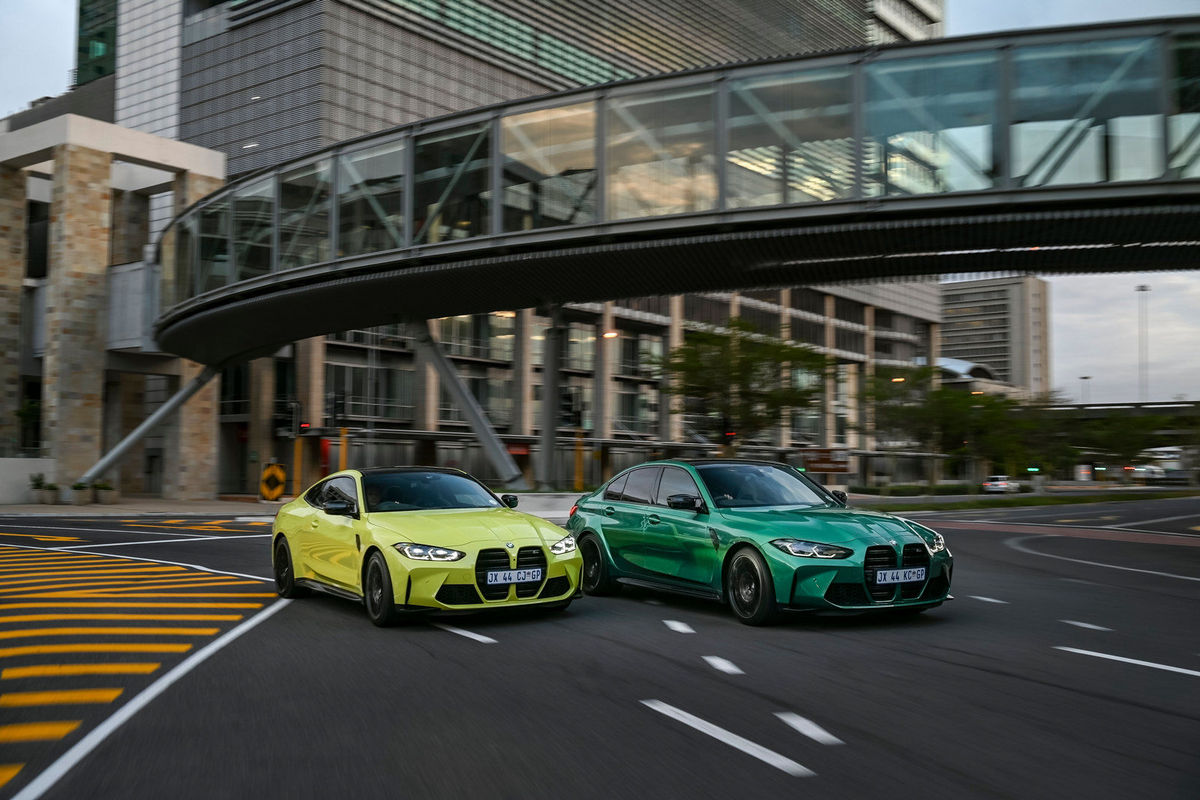
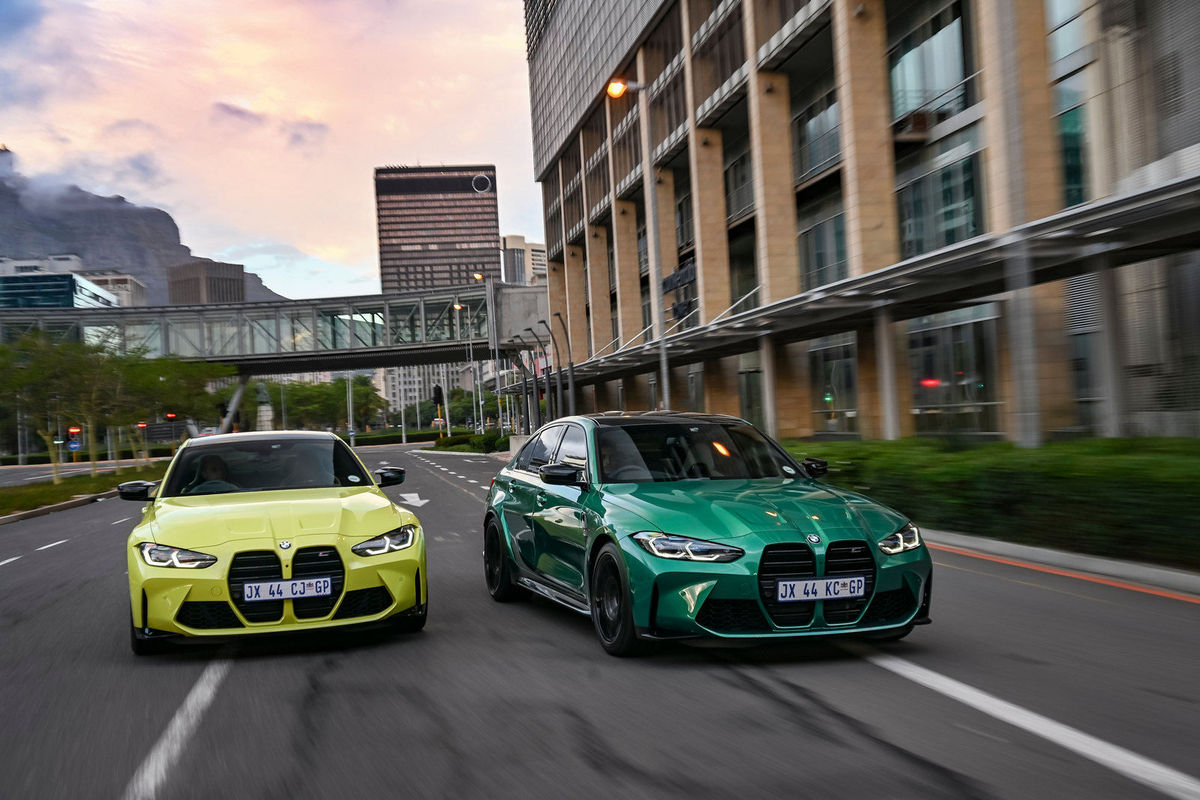
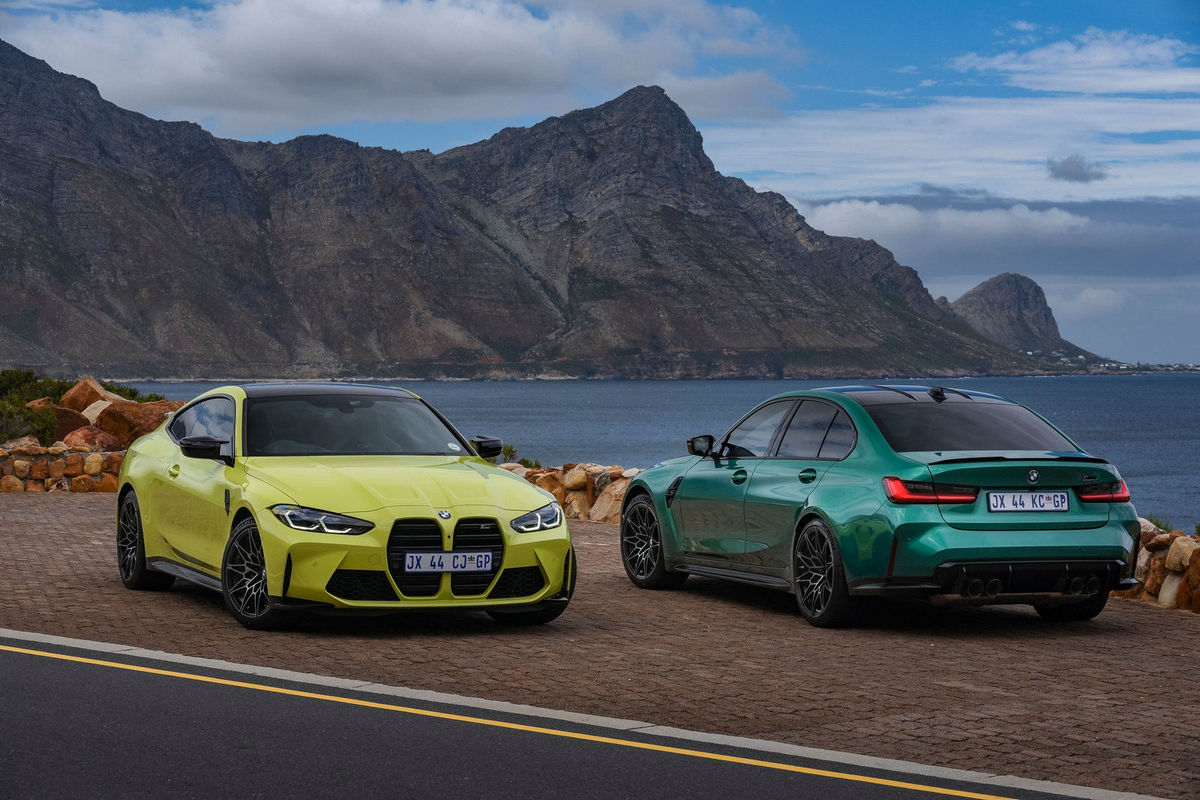
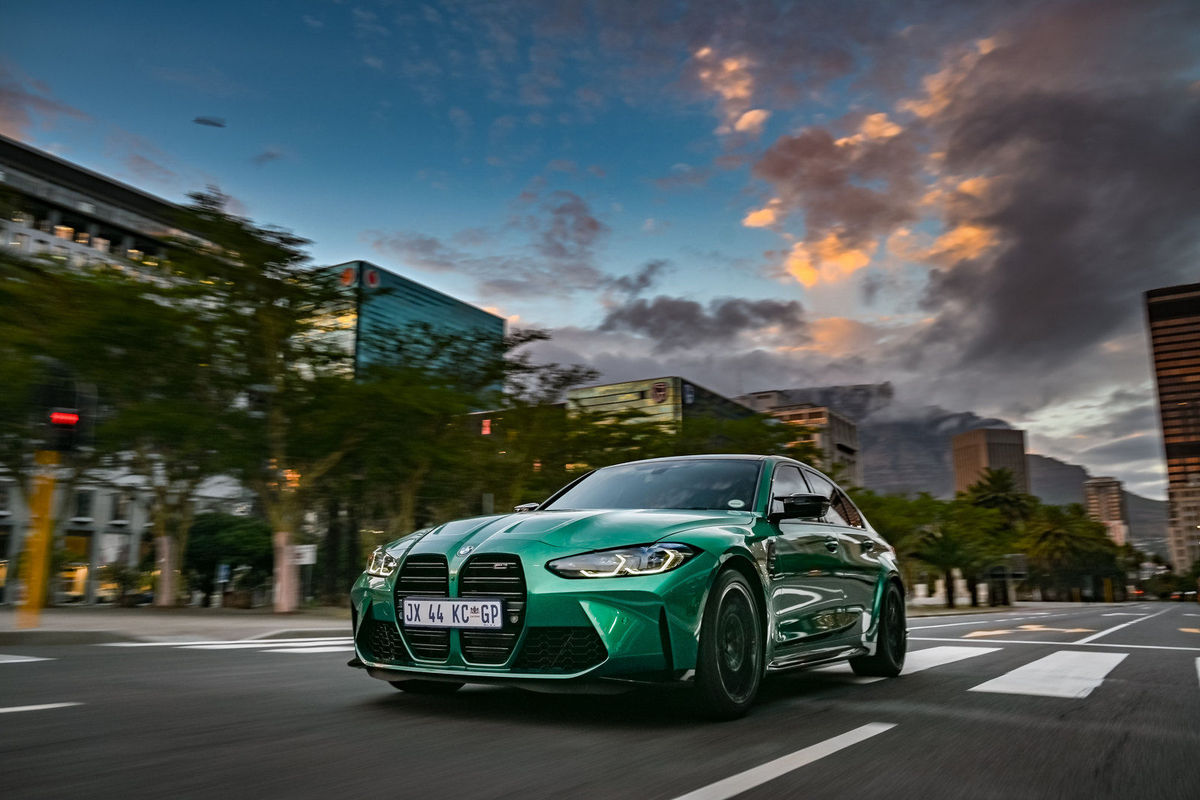
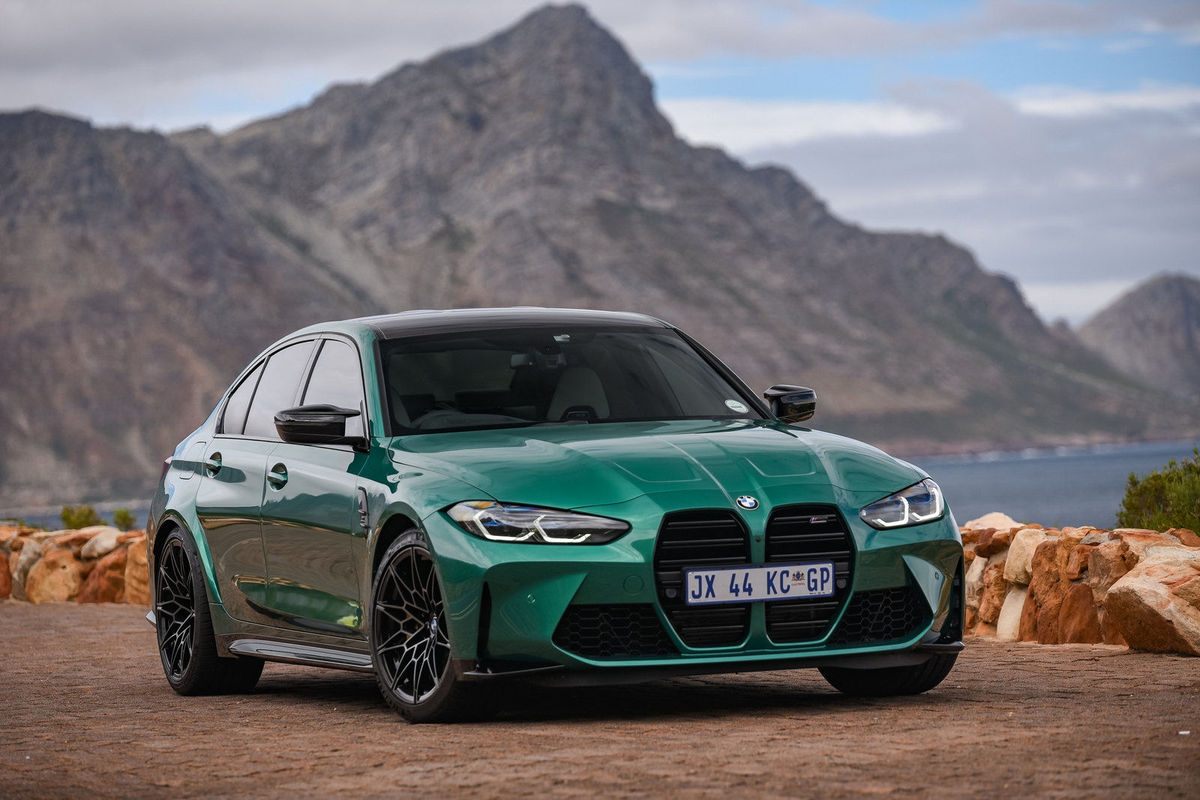
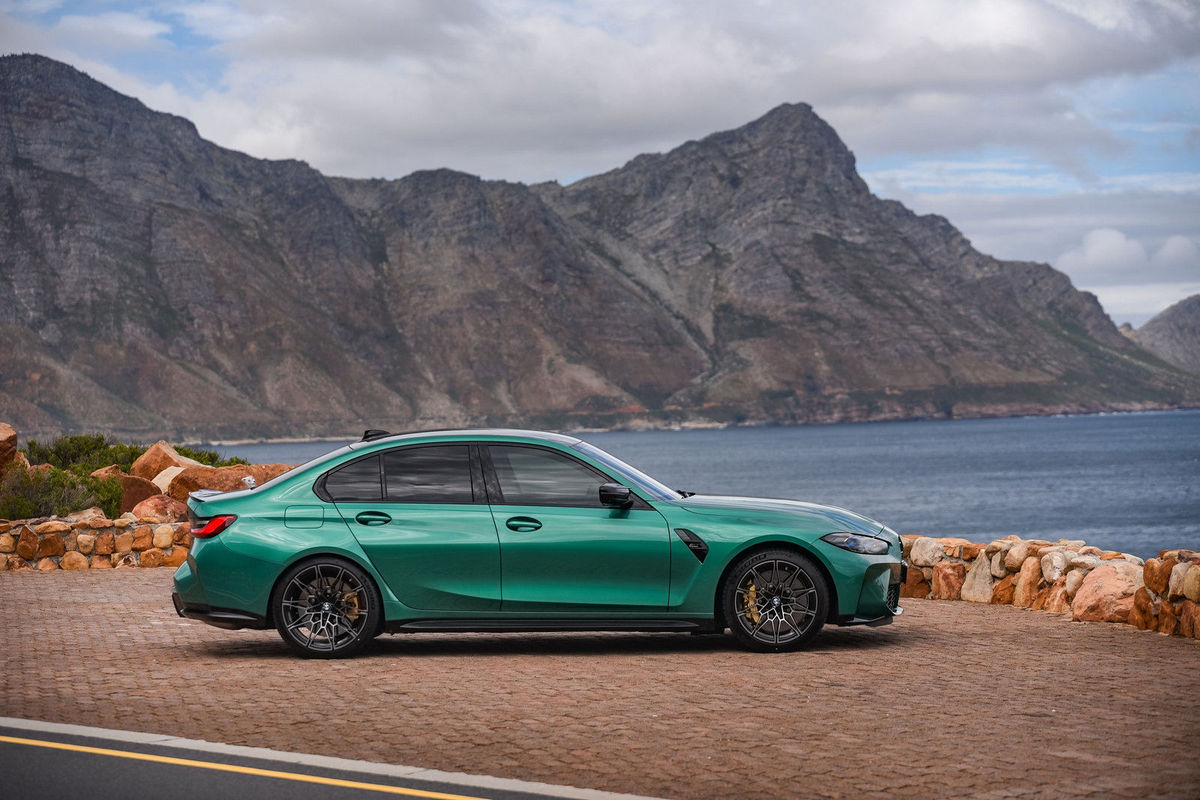
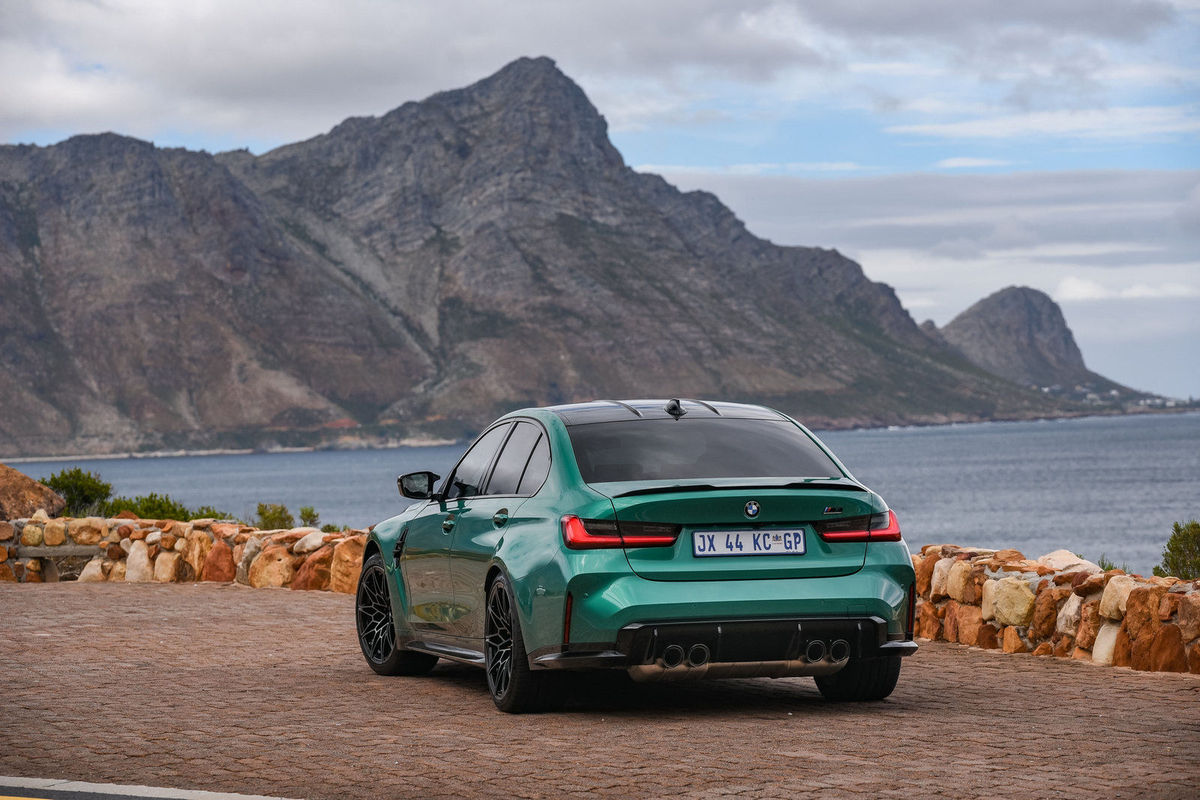
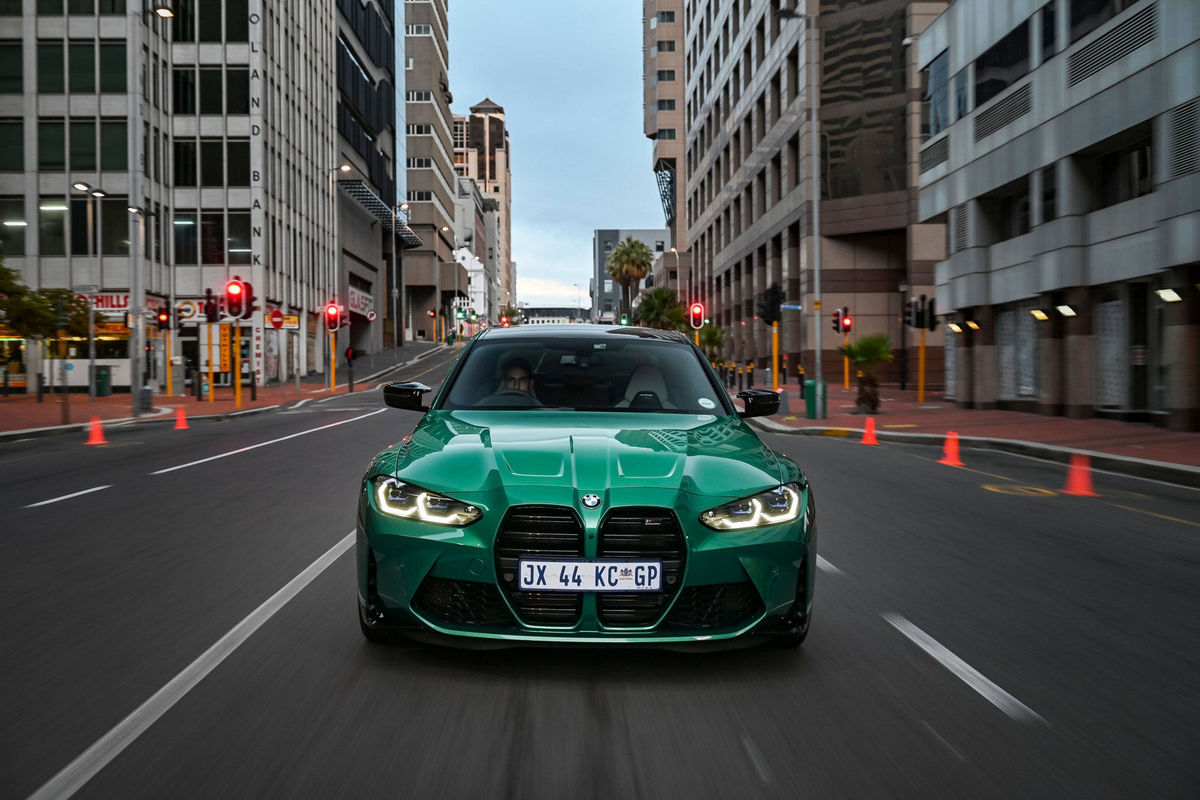
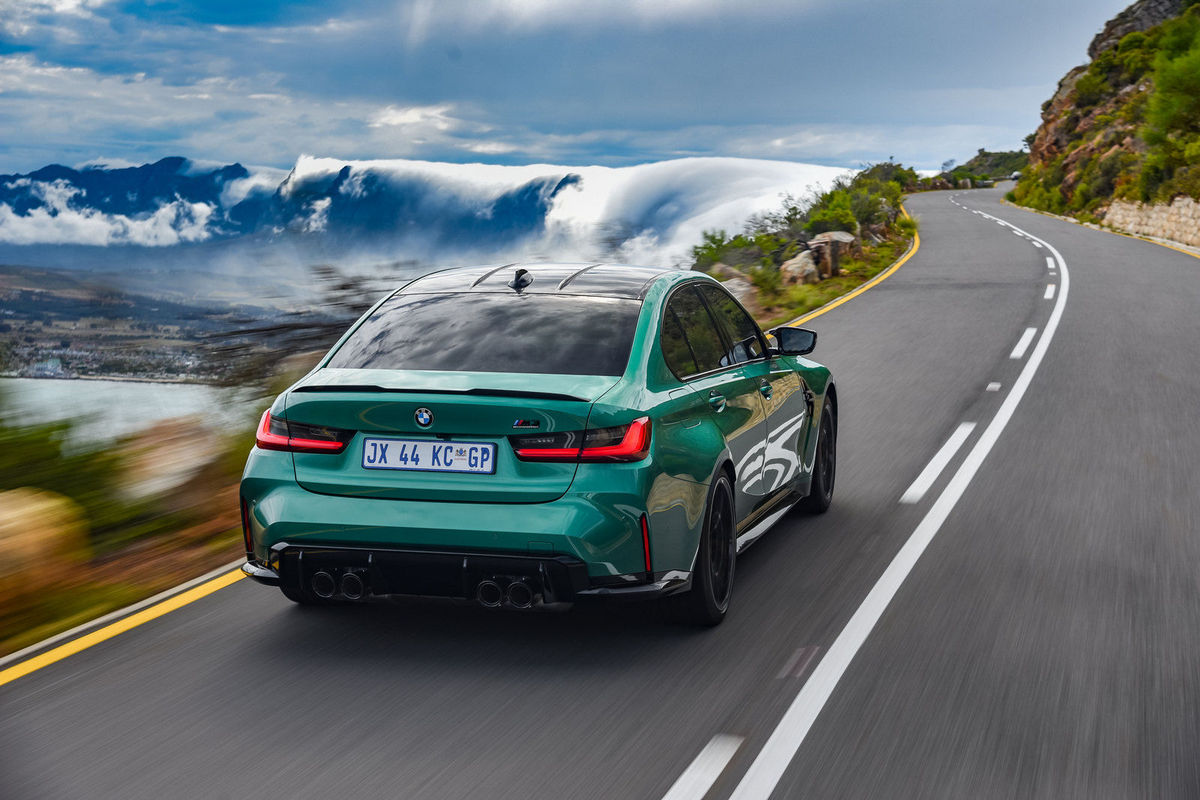
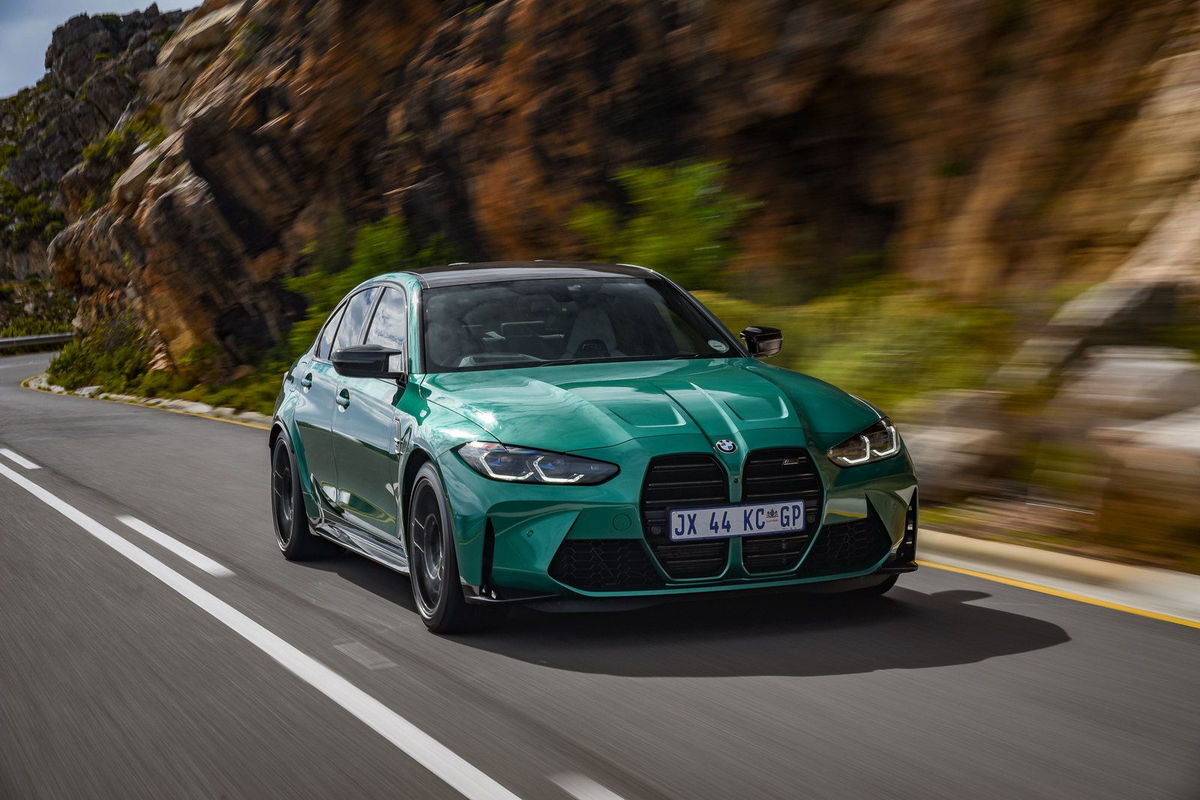
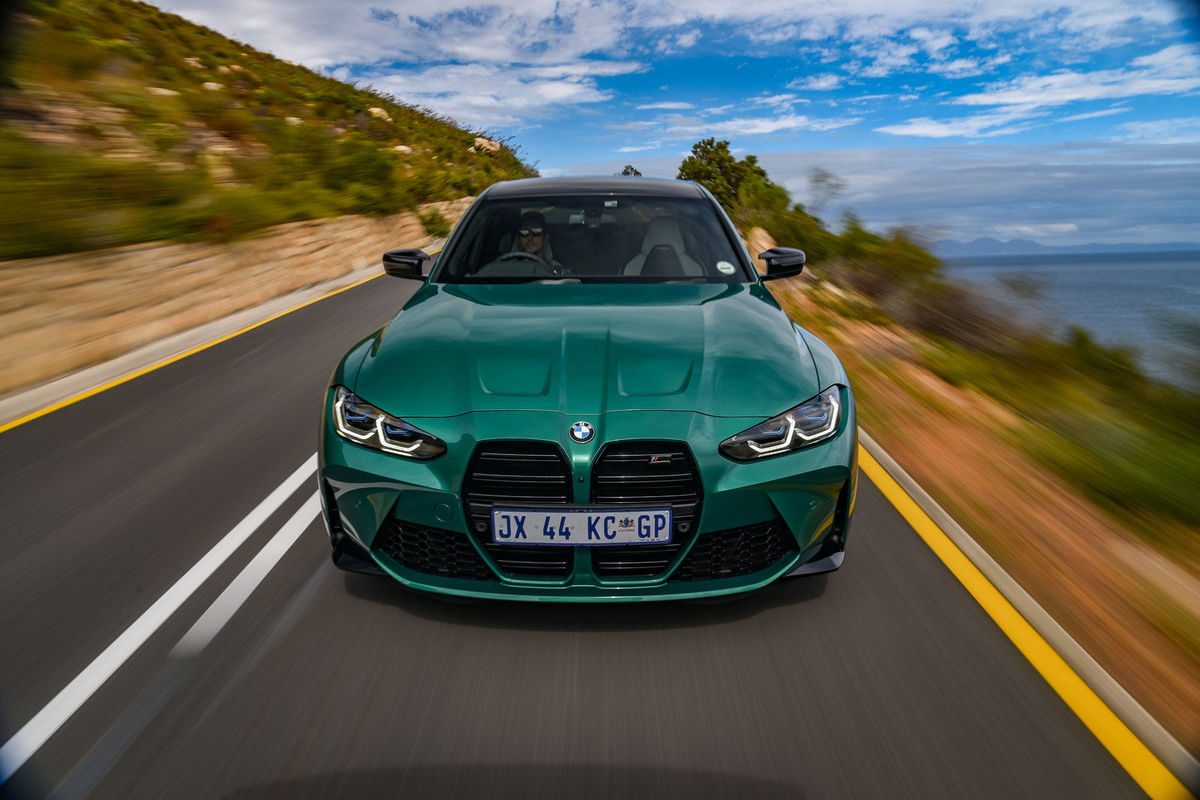
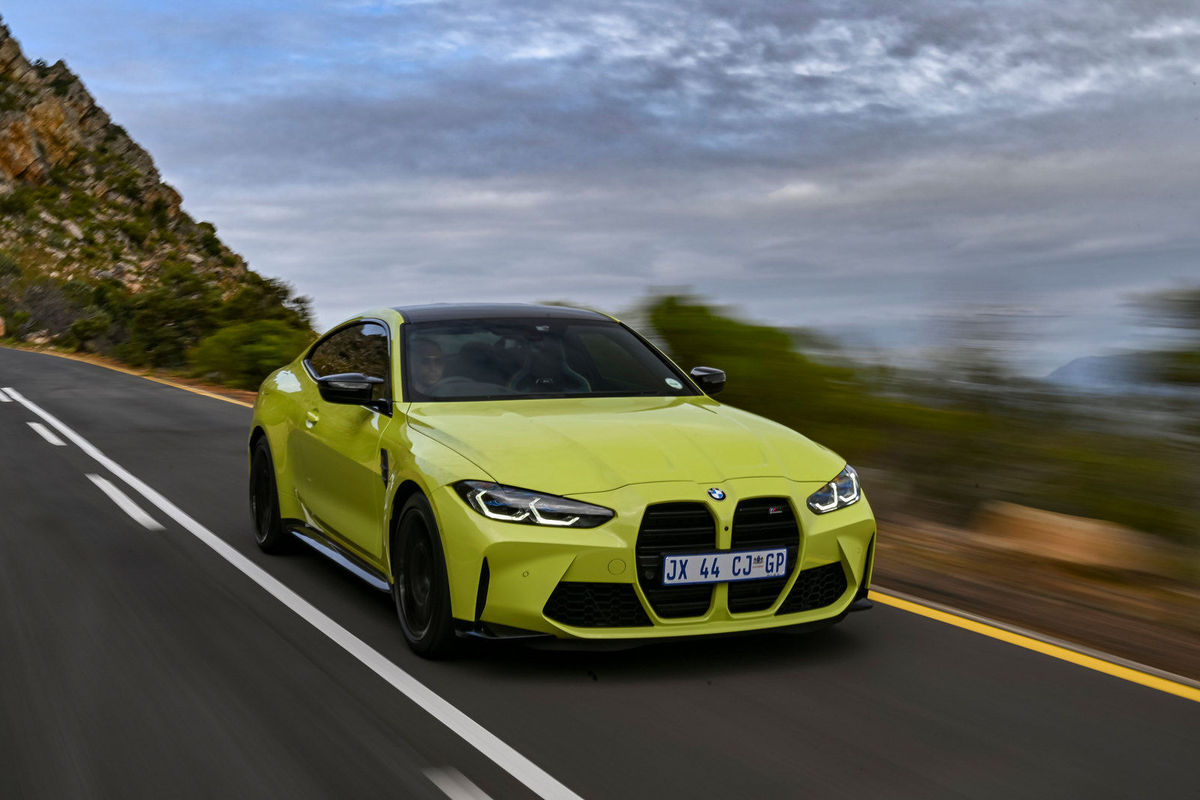
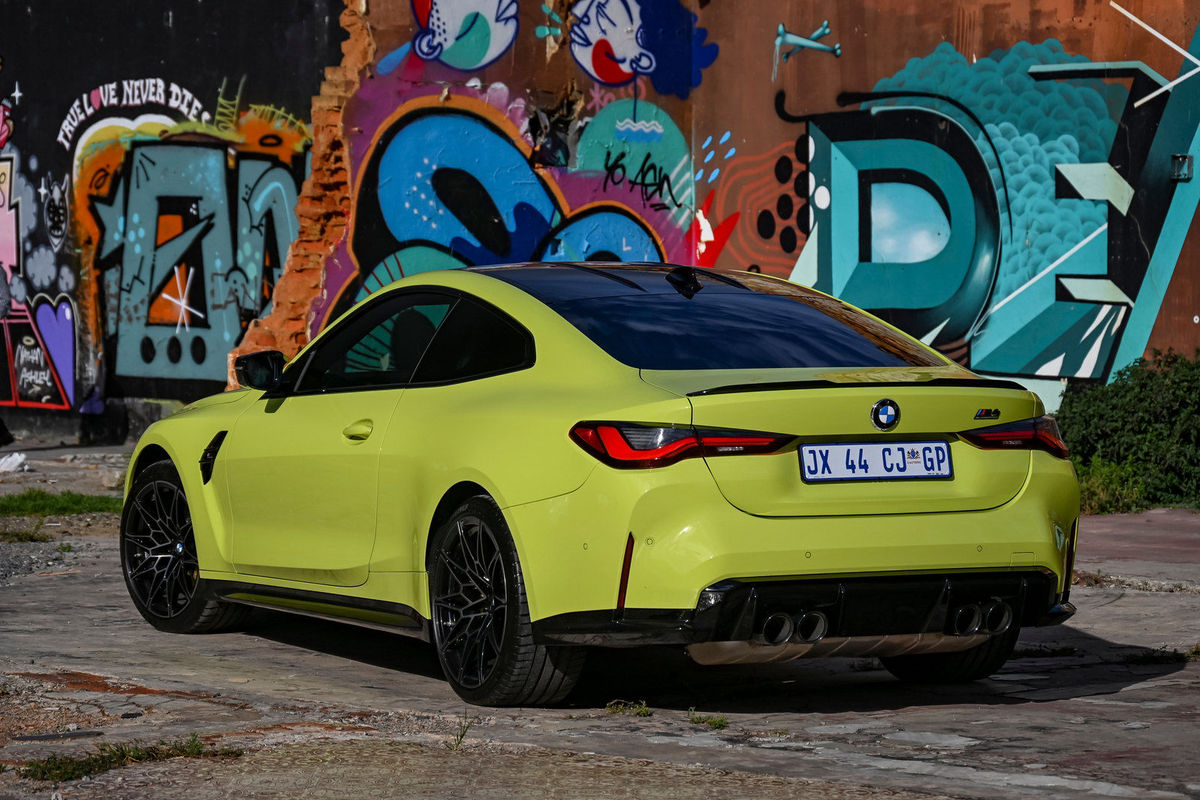
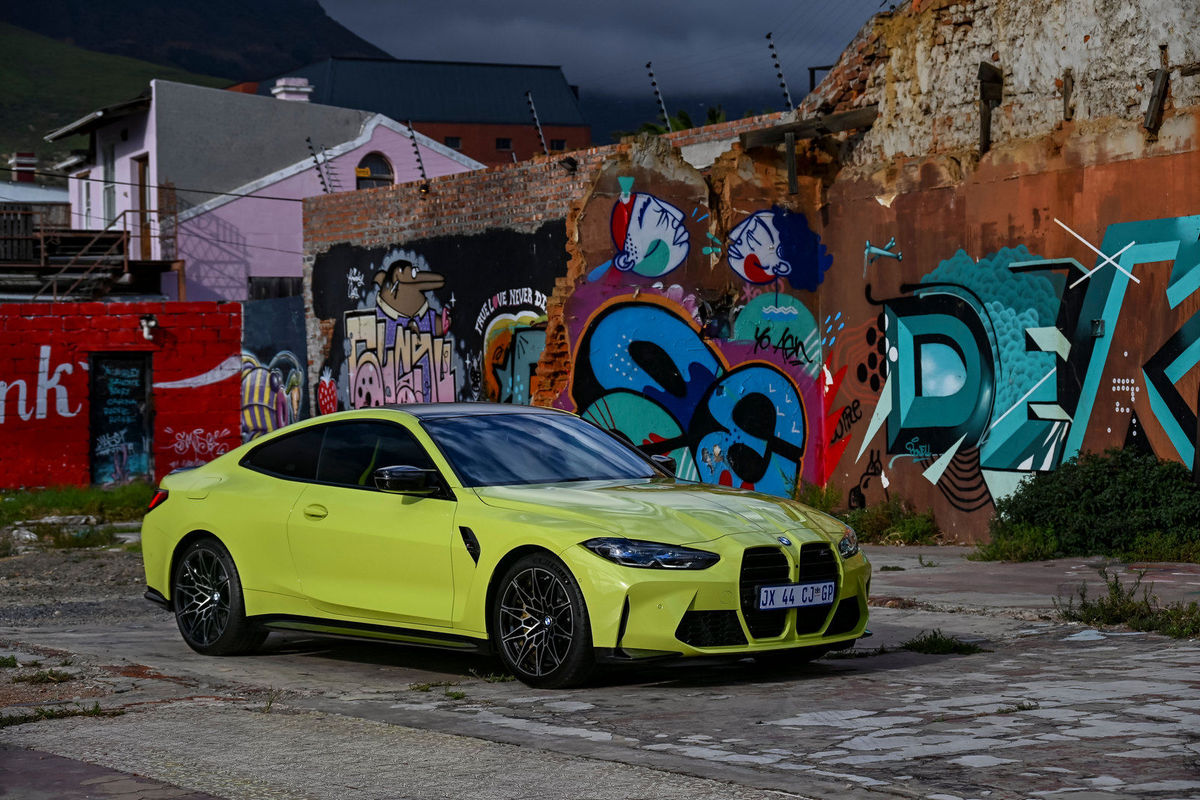
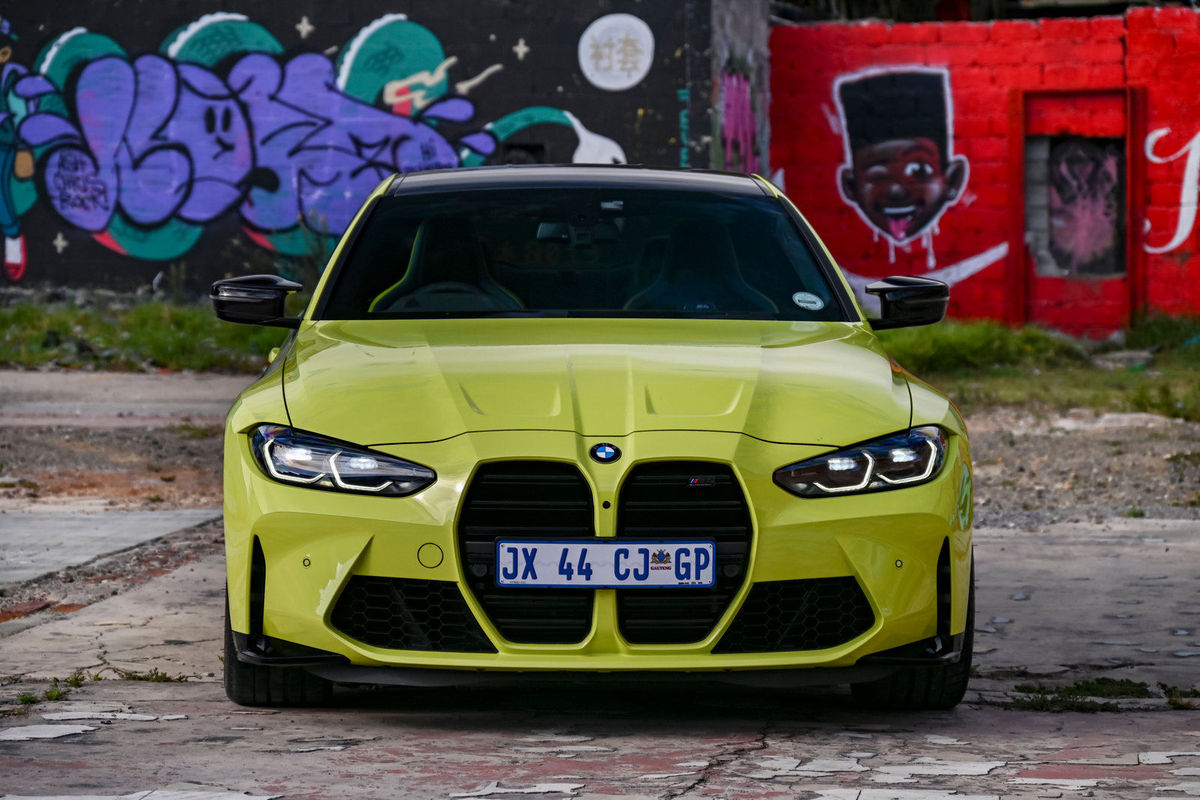
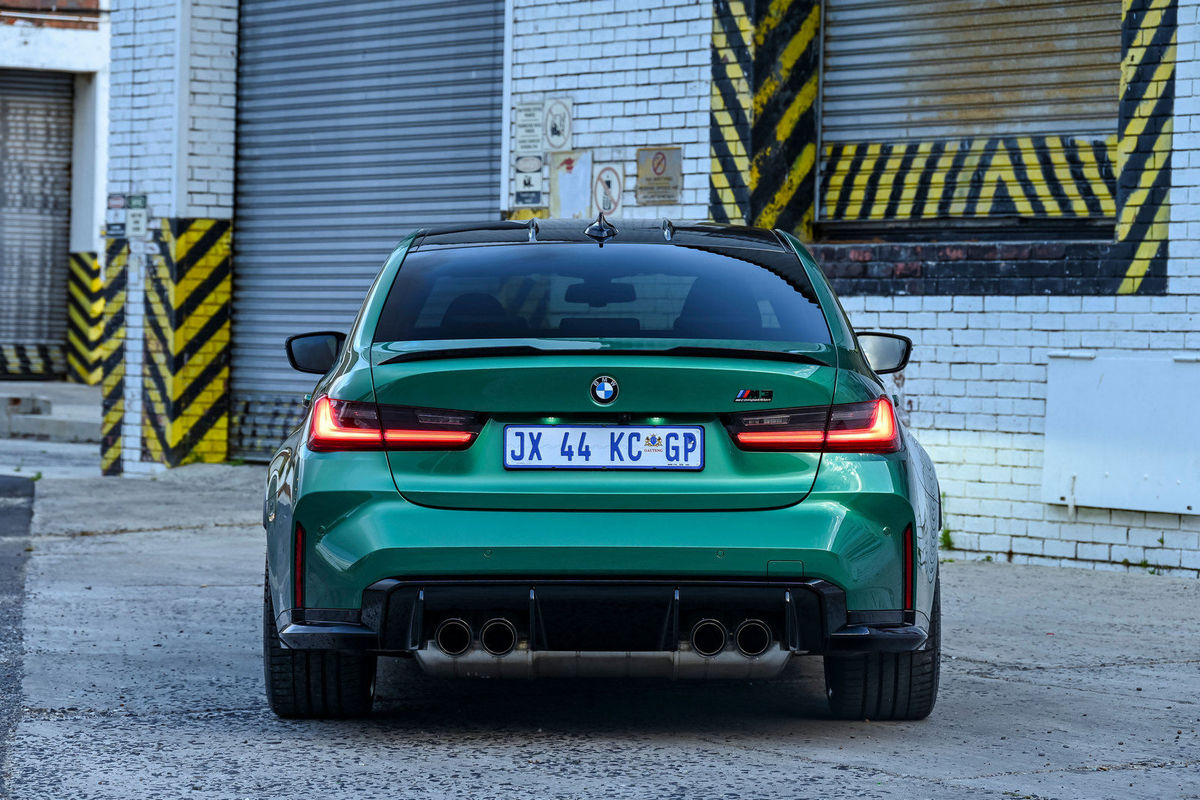
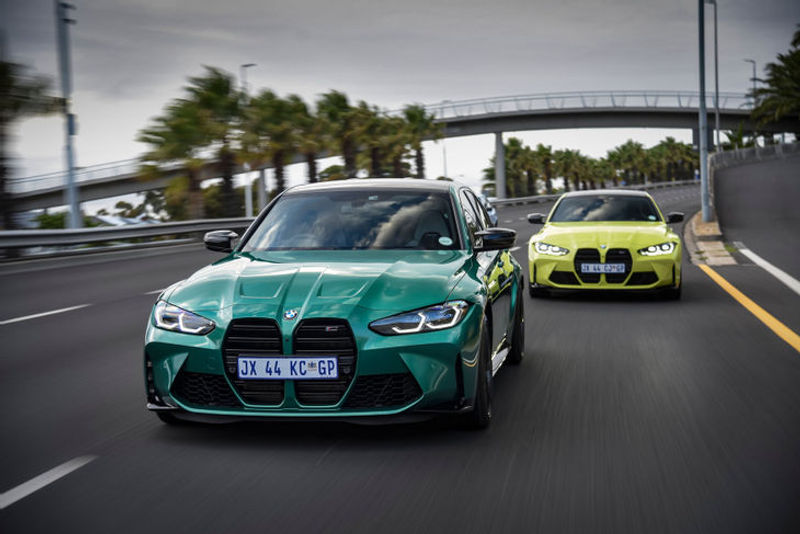
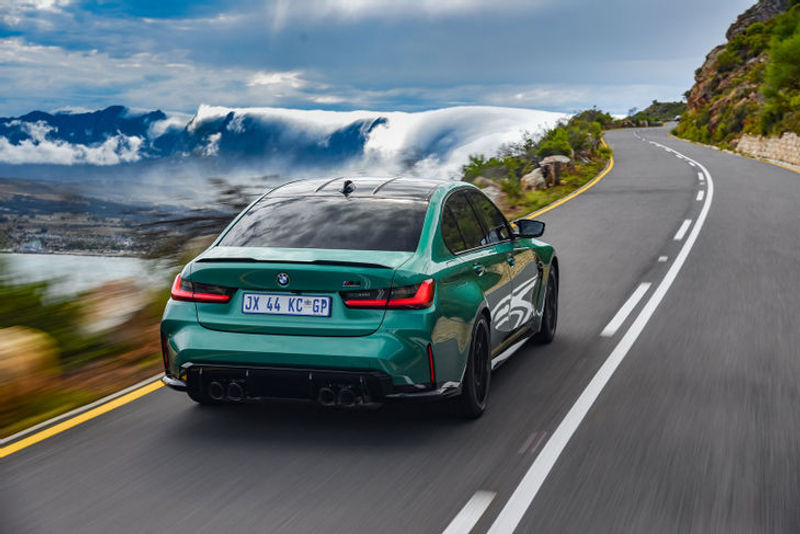
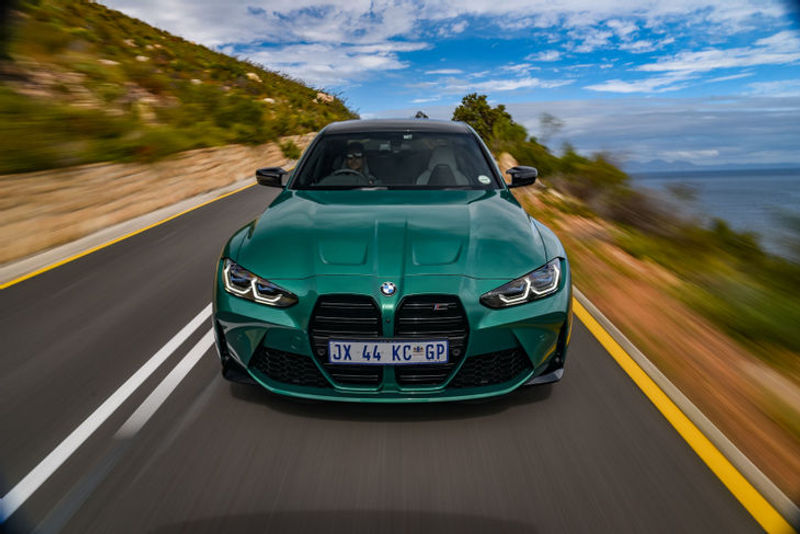
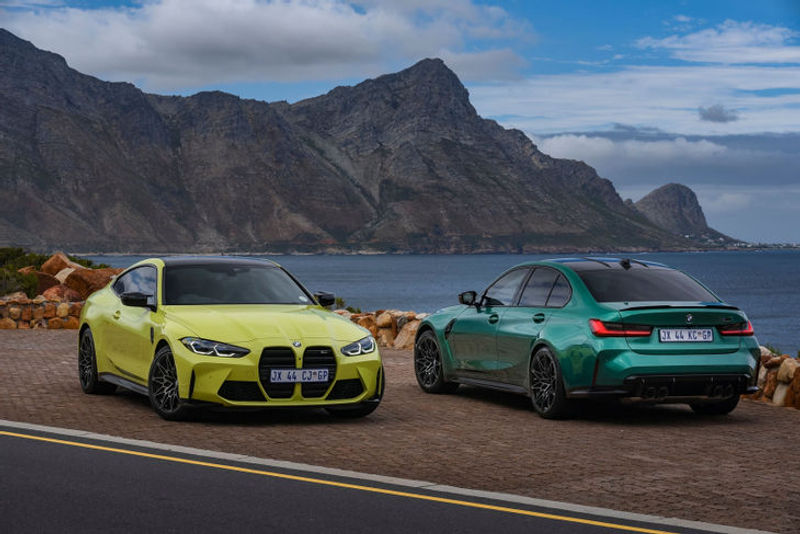
From the outside, it’s pretty easy to see the key points of difference in the new models' design. That perenially controversial front-grille adornment continues to create a mix of opinions and even when you see the cars in the flesh, it’s still a love-it-or-hate-it cue for most observers. The M3 (the sedan), with its blistered rear arches, looks the more purposeful of the 2 designs, whereas the M4’s elongated coupe roofline cuts a smooth, air-piercing profile. On closer inspection, there are numerous air flicks and vents, which were specifically designed to improve aerodynamic stability at high speed, on both cars.
The offending tall kidney grille on the front of the M3 and M4 has polarised opinions.
Under the M3/M4 bonnet’s "power bulges" lurks a 3.0-litre twin-turbocharged straight-6 petrol engine connected to a torque converter 8-speed ZF automatic, the latter of which has replaced the M-DCT dual-clutch ‘box used in the previous-generation cars. This change of shifter is the single biggest change on the M3 and M4, making the cars feel like entirely different machines to their predecessors.
Lining up the statistics make for interesting reading. The new models are heavier than the outgoing cars by some 185 kg (both cars tip the scales at 1 800 kg), which is a lot for a medium-sized sedan and coupe with sporting pretensions. They are also slightly longer (122 mm) and ever so slightly wider (26 mm for the M3 and 17 mm for the M4) than the outgoing F80/82 generation cars. In order to produce more speed from the bigger, heavier cars, BMW M has installed a more powerful engine capable of producing peak outputs 375 kW and 650 Nm, which culminate in 0-100-kph times of under 4 sec.
How fast is the M3/M4?
The blistered arches on the M3 make it the more purposeful looking of the two new M models.
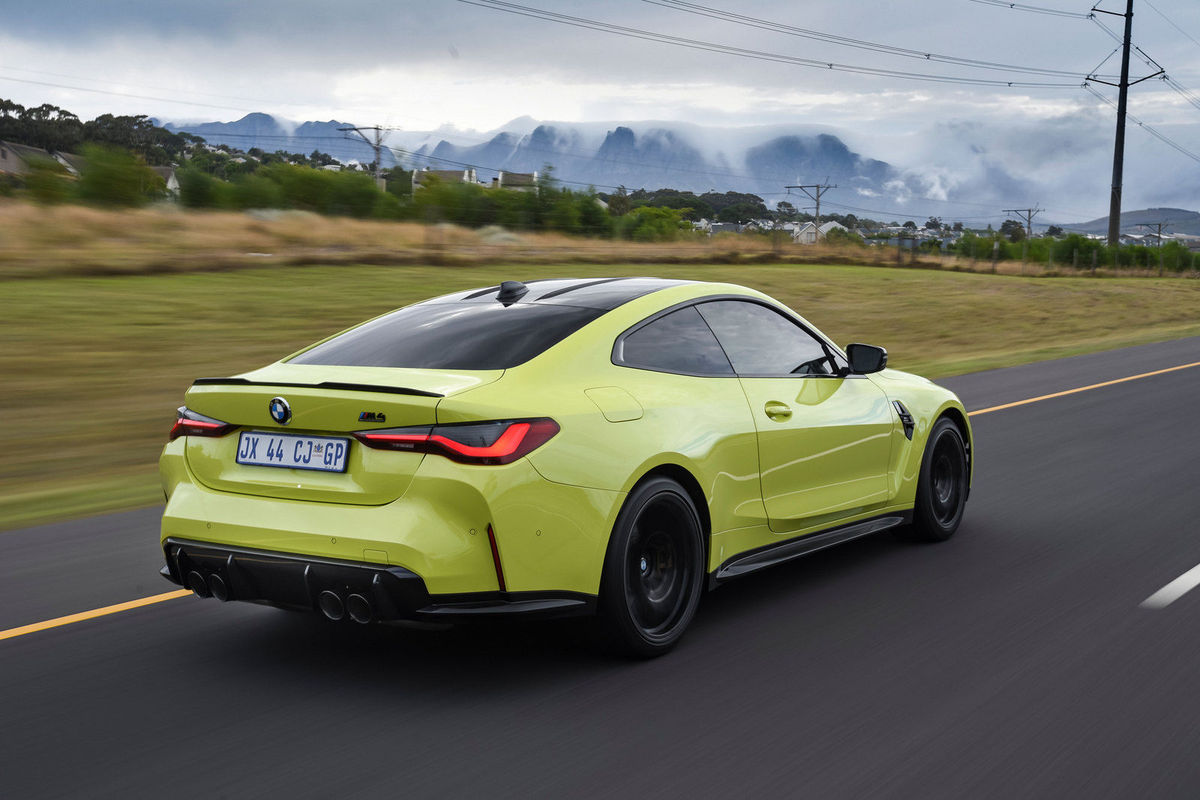
Aside from the obvious statistics like the 3.9-second sprint to 100 kph and the 290-kph top speed (with the M Drivers Package), the new M3 and M4 feel less wild than their predecessors. The M-DCT box in the previous sedan and coupe was quite abrupt on full-throttle upshifts, which would lead to sudden breaks in traction and a skittish rear end. You had to have your wits about you – and lightning reactions when driving the F80 M3 Competition anywhere near its limits. The new 8-speed ZF automatic delivers the power without that rabid kick to the rear wheels every time you pull for an upshift on the newly designed (and rubberised) paddles-shift levers. It’s smoother through the gears and, even when provoked, the rear end doesn’t whip around as quickly; it does so progressively, making it easier to control.
As a consequence, the M3/M4 doesn’t feel as brutally fast as those headline numbers suggest. It’s one of those cars where you put your foot down and without fuss, you’re suddenly travelling well beyond the national speed limit. Its high-speed stability is superb and if you had it out on the Autobahn or a closed road, you would feel quite comfortable sitting at 200 kph plus for miles (okay, kilometres) on end.
What’s the M3/M4 like to drive?
It's more poised and balanced than before. A much easier car to drive fast.
In order to get a better feel for the cars' handling characteristics, we were afforded a few laps on track in each model. Before you set off with tyres a screechin', take a bit of time to tinker with the iDrive system to set up your preferred driving modes, for which there is a multitude of options. Most of you will be familiar with modes for the engine, gearbox, chassis and steering characteristics, but you now also have 2 modes for braking (Normal and Sport). The intensity of Sport braking can catch you off guard the first time you experience it, especially if the M3/M4 is equipped with optional carbon-ceramic discs.
On the track, I was expecting the M3 to unleash its Mr Hyde persona, because previous generations of the car could leave you shaken if you dared to provoke them without exercising a modicum of caution. Instead, the newcomer, although devastatingly fast, was poised and balanced – not intimidating at all. It’s the first M3 in a while that I feel you can push to its limits within the first few laps of getting in it.
The asymmetric tyre setup (where the front end is fitted with 19-inch alloys and the rear with 20-inch rims) is meant to give you a more direct front-end while simultaneously providing more traction on the rear when accelerating out of corners. It’s hard to tell if that’s the case after just a few laps, but the hyper-fast steering rack delivers immensely quick turn-in to bends and the suspension doesn’t jolt or feel unsettled by sudden directional changes. In other words, you can feed in the power sooner than before, safe in the knowledge that grabbing an upshift isn’t likely to induce a butt-clenching tank-slapper.
The M cars now use a ZF automatic gearbox instead of the dual-clutch model previously.
BMW's modern turbocharged engines offer marvellously linear performance cars and this 375 kW version is no exception. There’s no huge burst of torque at any point in the rev range, but a progressive surge that shoves you forward right up to the motor's redline.
Out on the road, it’s much easier to get familiar with these Bavarian twins right from the get-go. The steering gives you great directional control, while there’s plenty of grip from the Michelin Pilot Sport 4s. You can upgrade the tyres to the Cup 2s if you feel you want more performance, albeit from a set of essentially semi-slick tyres, which would limit the M3/M4's everyday practicality.
The new M3/M4 is much more forgiving to drive on varied road conditions, even with the damping set to Sport Plus. It rides bumps better and settles on the suspension without wobbling (as heavier cars tend to do). Even when you drive over a good old freeway expansion joint, which is historically the nemesis of BMWs shod with low-profile run-flat rubber, it doesn't feel as if the car's about to split in half.
Overall, it’s an impressively easy car to drive fast, especially one with this much power… and from a brand that has produced quite a few cars of late that seemed to have pent-up anger management issues.
What are the insides like?
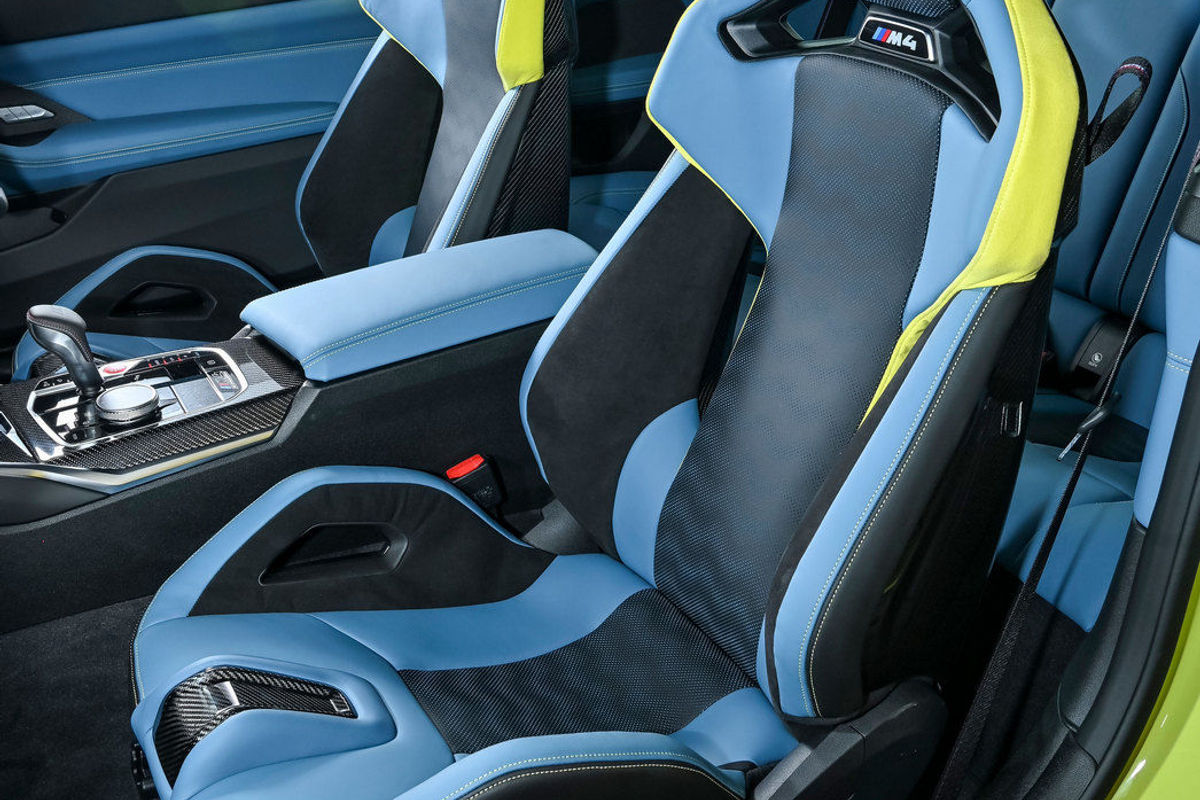
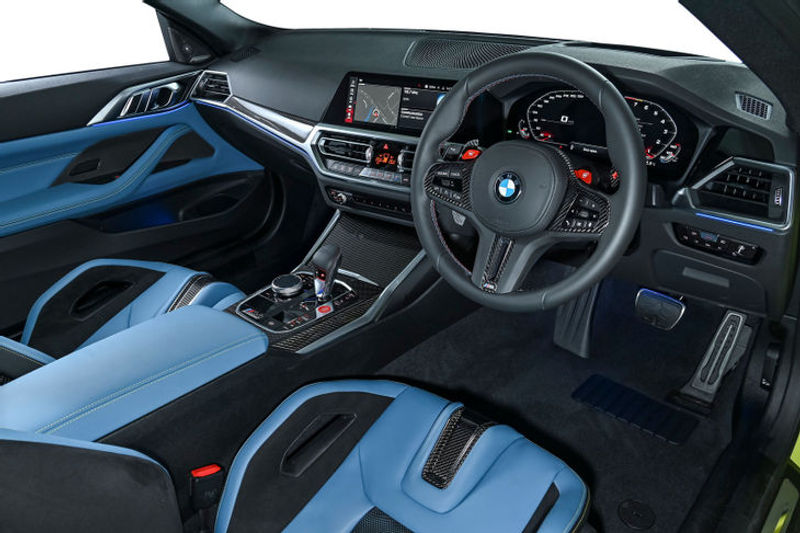
The Yas Marino blu/black interior creates a vivid colour pallette with the Sau Paulo yellow bodywork.
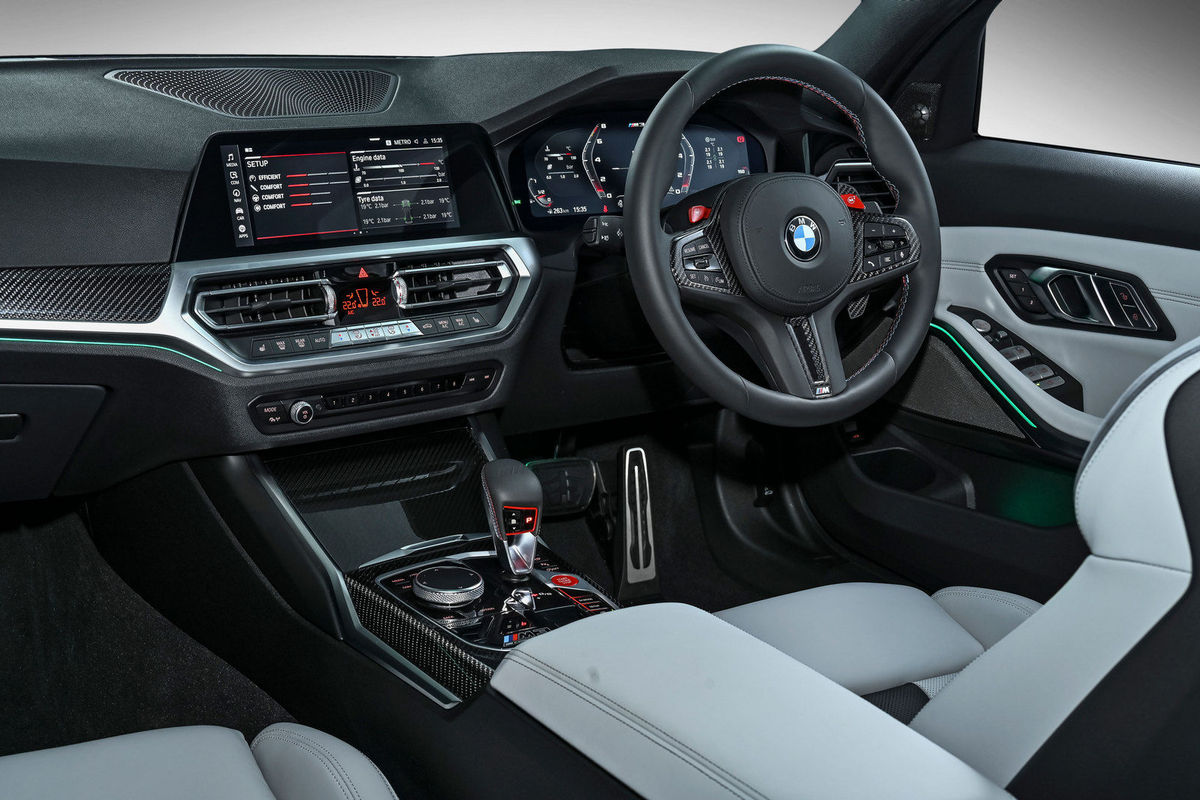
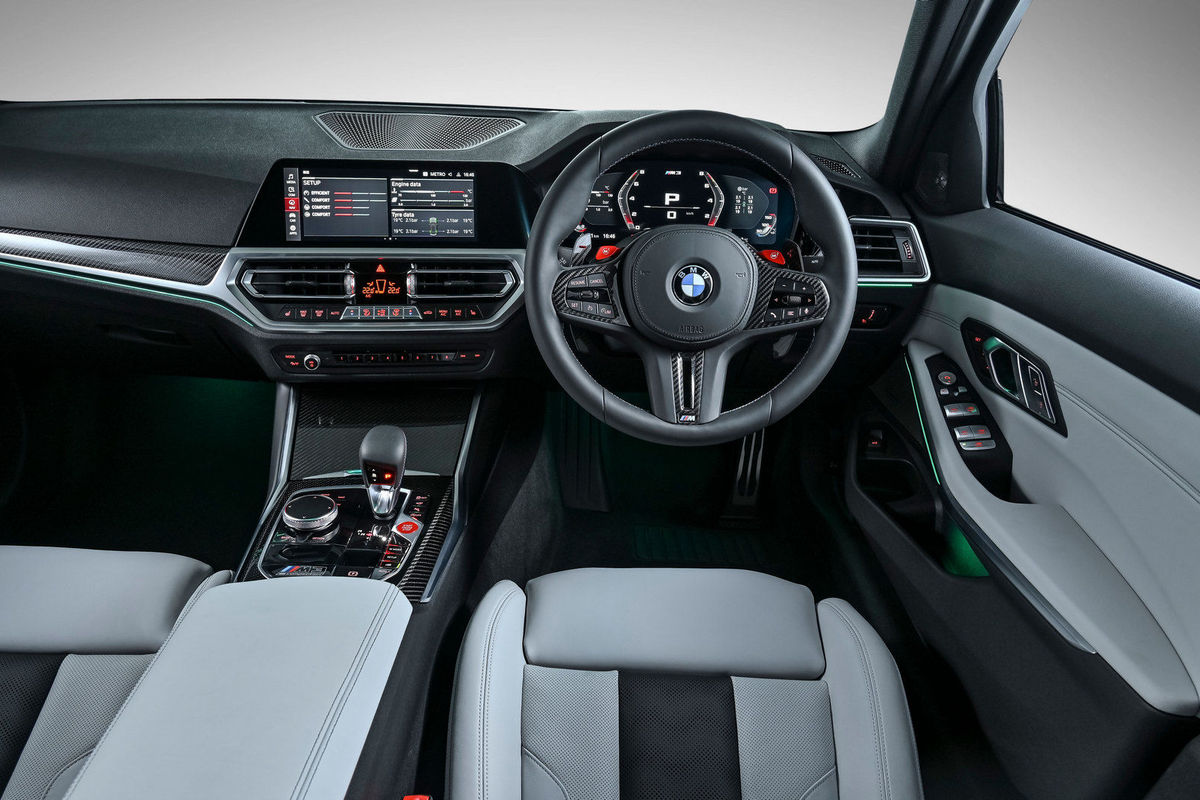
All M3 and M4 derivatives in the South African market will be sold with the carbon interior package which, as the name suggests, includes carbon-fibre inserts around the cabin, most notably on the inside of the steering wheel, the transmission-lever surround (plus the iDrive console) and in front of the passenger seat. It’s not wildly different from the look of the standard 3- or 4-Series interior, unless you additionally specify the (R80k) bucket seats, which are 10 kg lighter than the standard ones and offer better structural rigidity and support. You slide in over the side bolsters and are met by what feels like (let's just call it) a crotch support between your legs, just like the 5th belt in a race car. The seats can best be described as slim-fit, so if you’re of a burlier design, you may find them a bit uncomfortable.
Interestingly, the M3/M4 does not have a long options list. There is plenty of standard kit with the only options being the bucket seats, carbon-ceramic brakes, performance tyres and lightweight wheels.
Summary
Some may call the pair more boring than before, but they're now more usable for a much broader range of driving abilities.
After my first experience of the new M3 and M4, it seems BMW has toned back some of the craziness of the previous-generation cars – these cars are eminently manageable. Some may say that the Munich-based firm has made its headline sports sedan and -coupe a trifle boring as a consequence, but the new-generation M3/M4 is a performance sedan/coupe with notably better balance, incredible precision and more usable power delivery than ever before. The dynamics may be catering more to the mass market, but the design certainly isn’t – not with those divisive kidney grilles!
At near as dammit R2 million, the M3 and M4 are no longer the performance bargains they once were; they've become aspirational models with asking prices that are closing in on supercar premiums. The allure of the new M3, especially, is undeniable and we can’t wait to pitch it against its familiar rivals. Paradoxically, this launch drive has also highlighted what a performance bargain the M340i xDrive is.
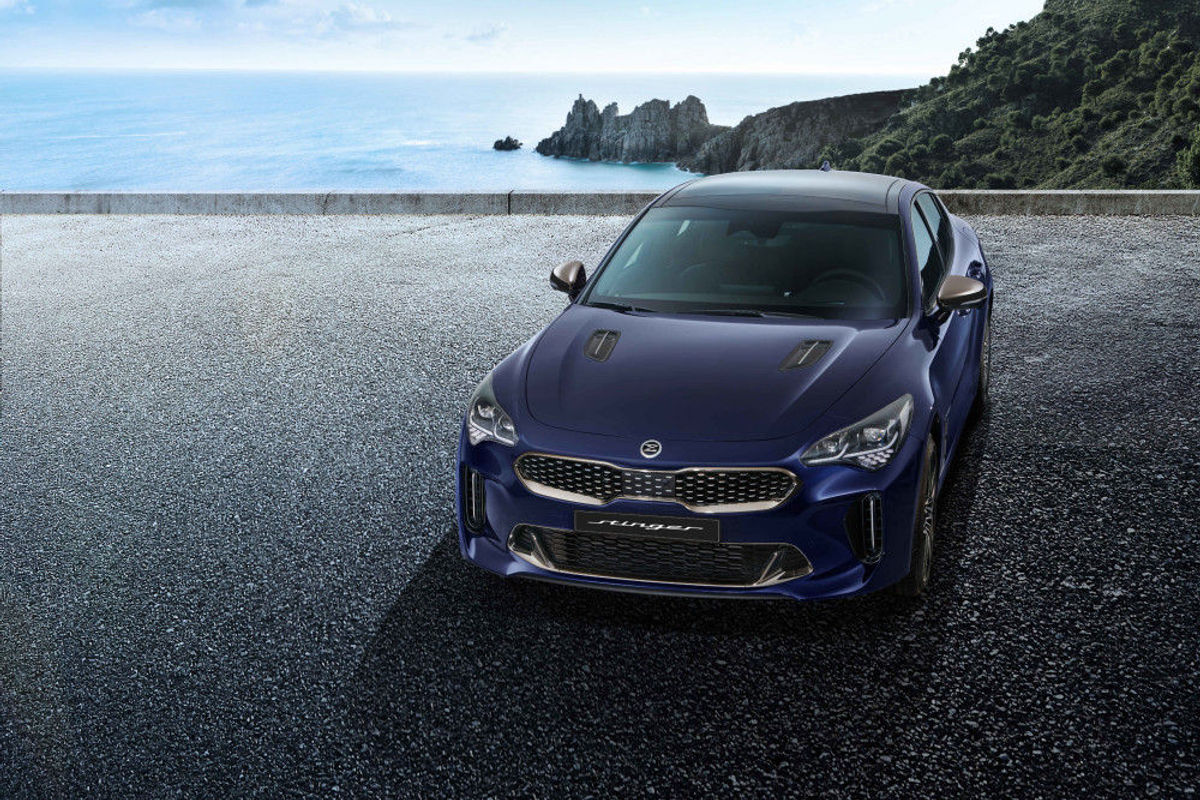
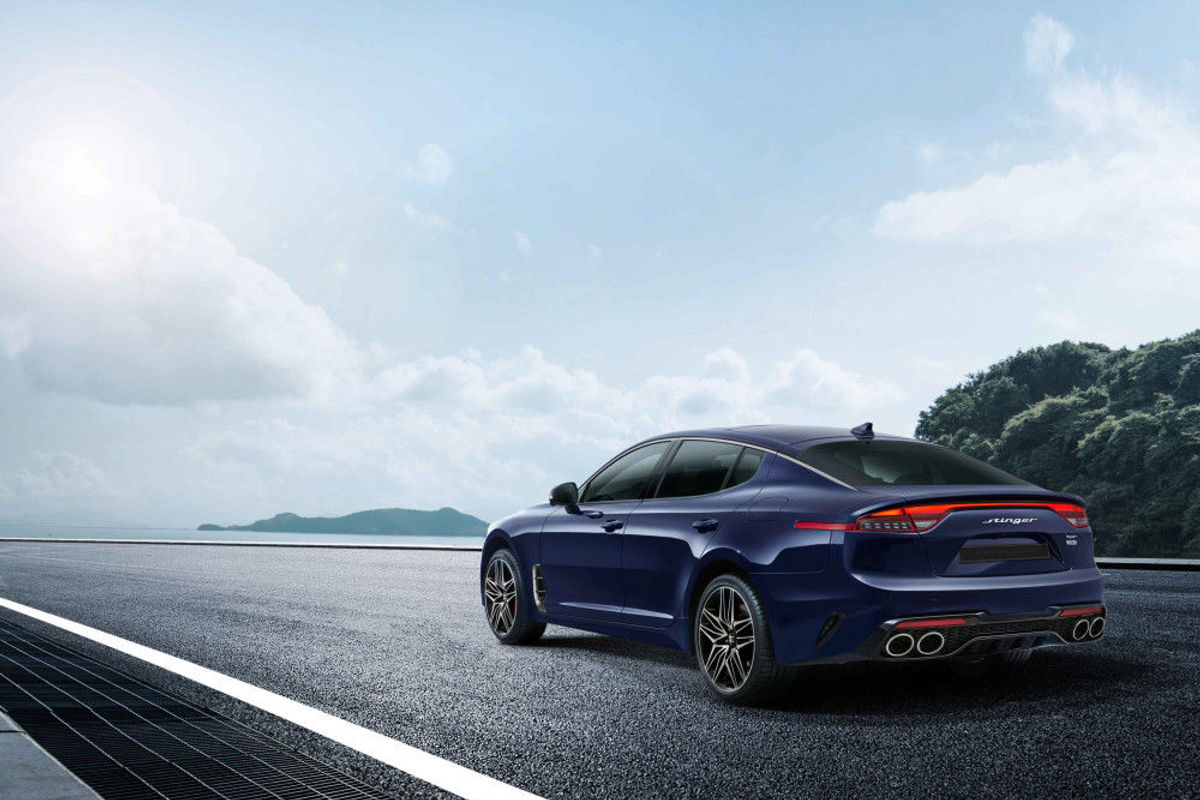
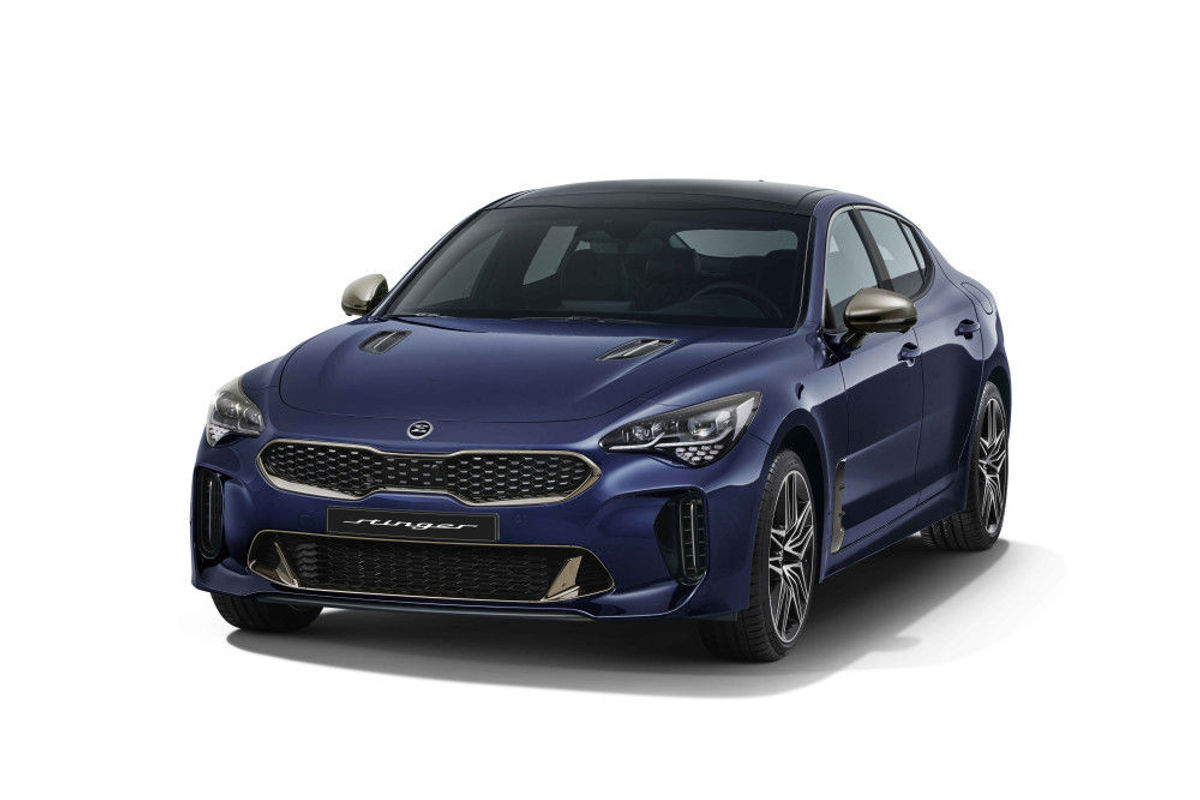
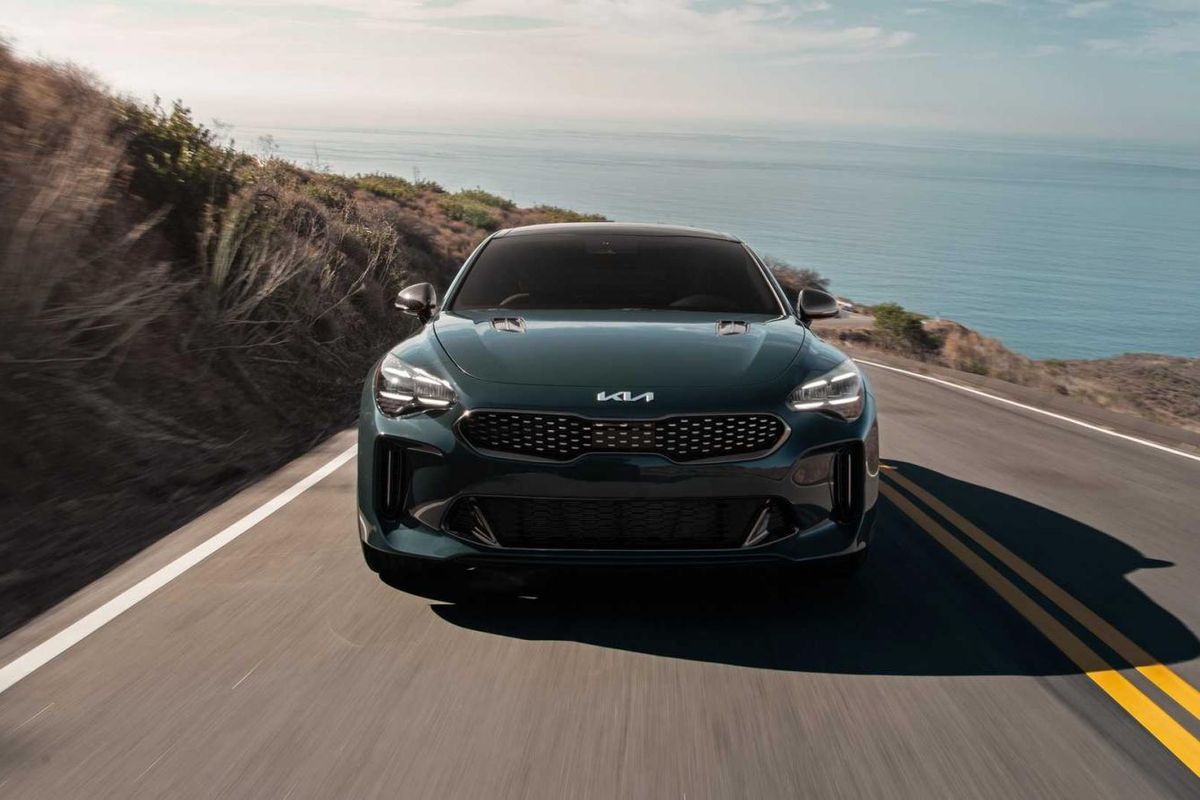
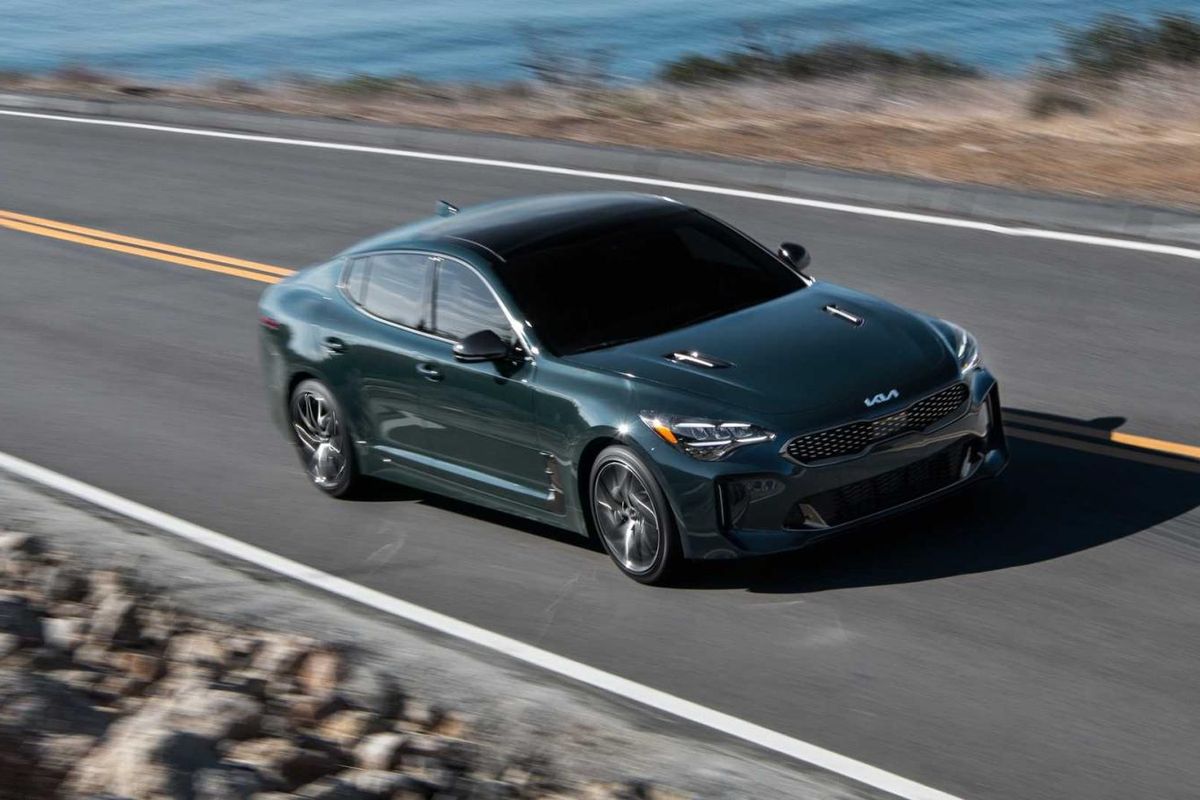
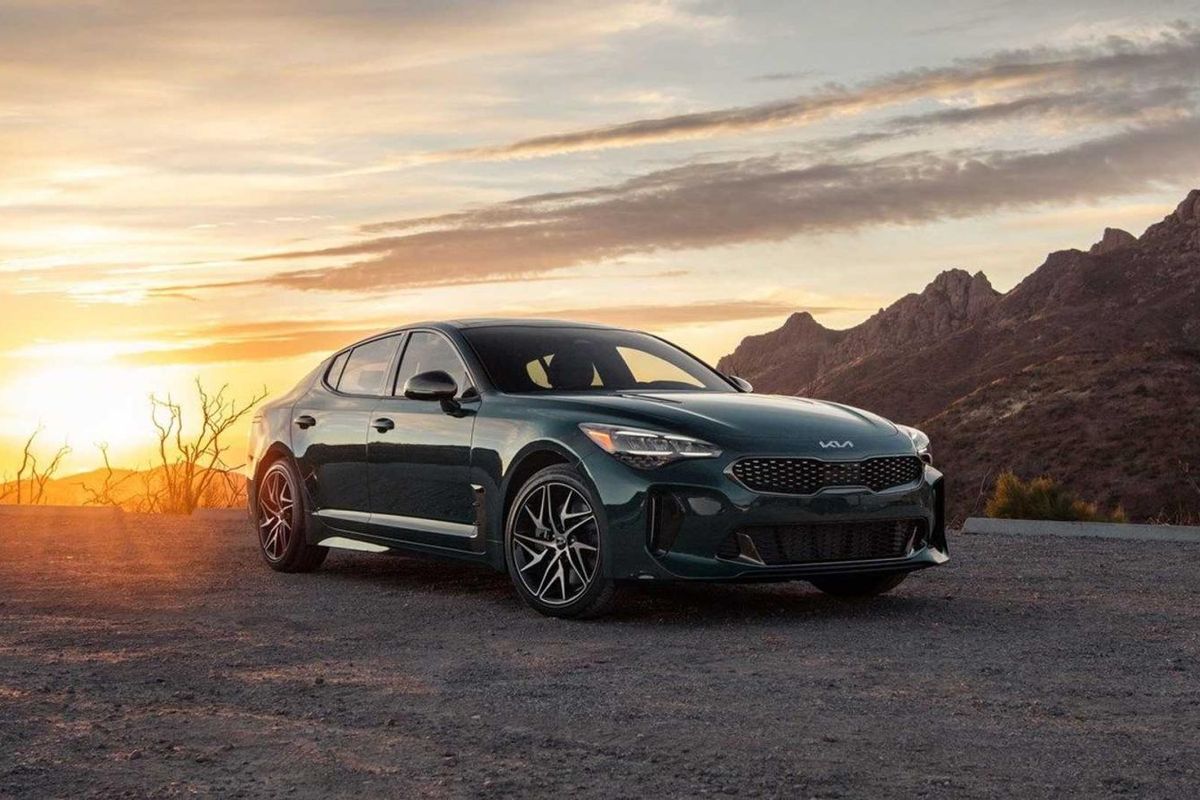
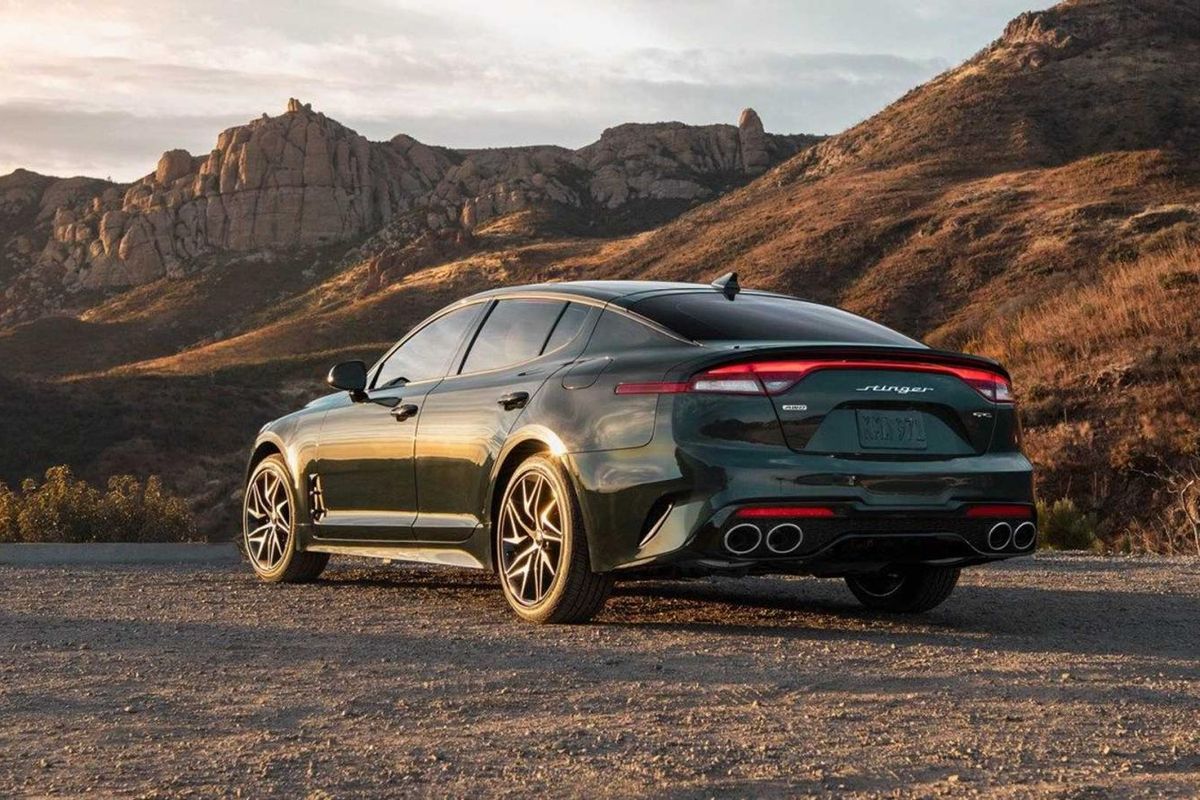
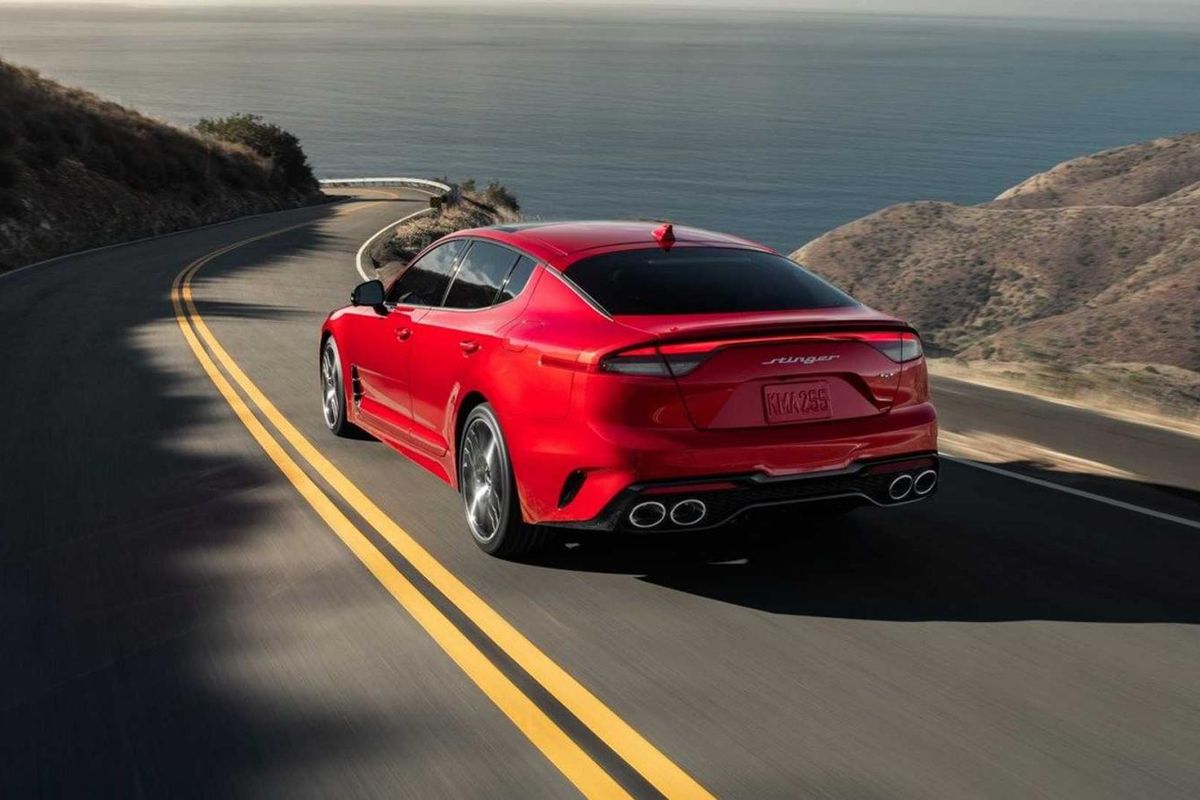
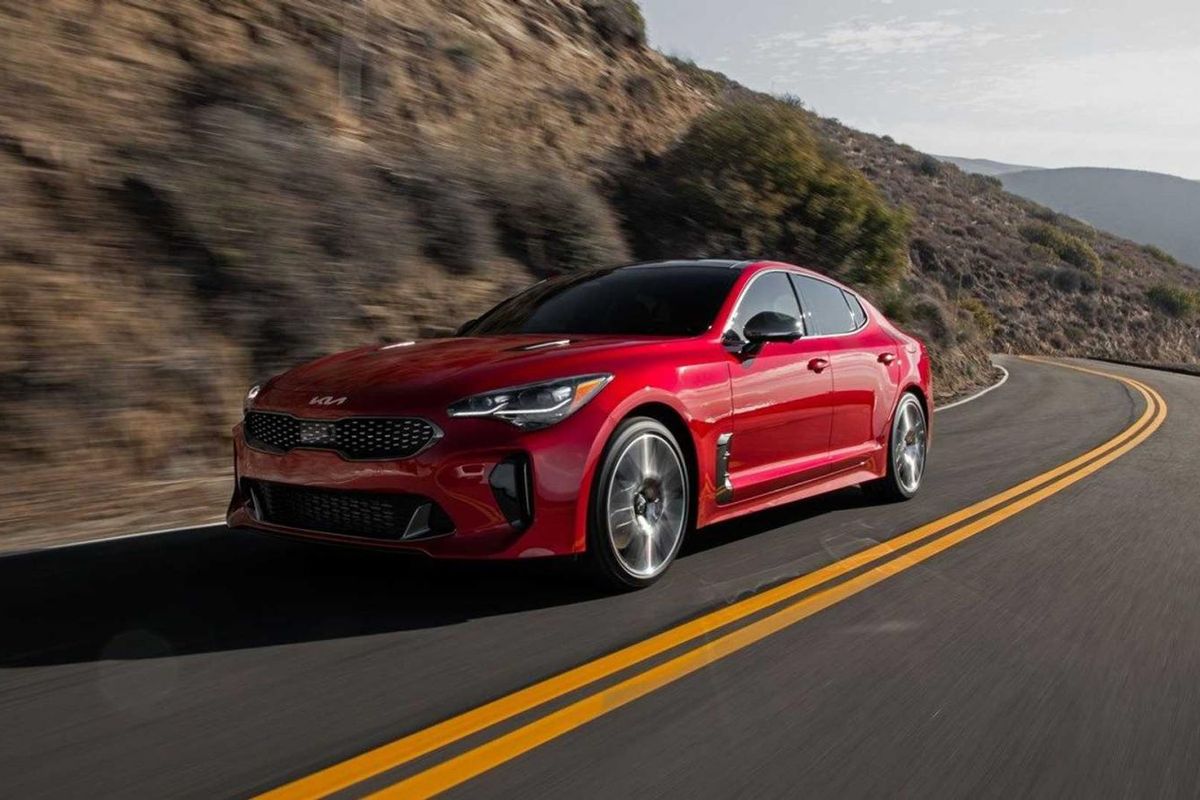
Kia has revealed its updated Stinger fastback sports sedan which now features more power, enhanced styling as well as a revised interior. See what’s changed below…
We tested the Stinger back in January 2019 and we came away mightily impressed by what Kia had achieved with this V6-powered, rear-wheel-drive car that was hugely entertaining to drive while also being well-mannered as a daily driver.
The Stinger wasn’t all perfect though, and one of our criticisms was aimed at Kia’s choice of some of the interior materials which were not up to standard in a car of this calibre.
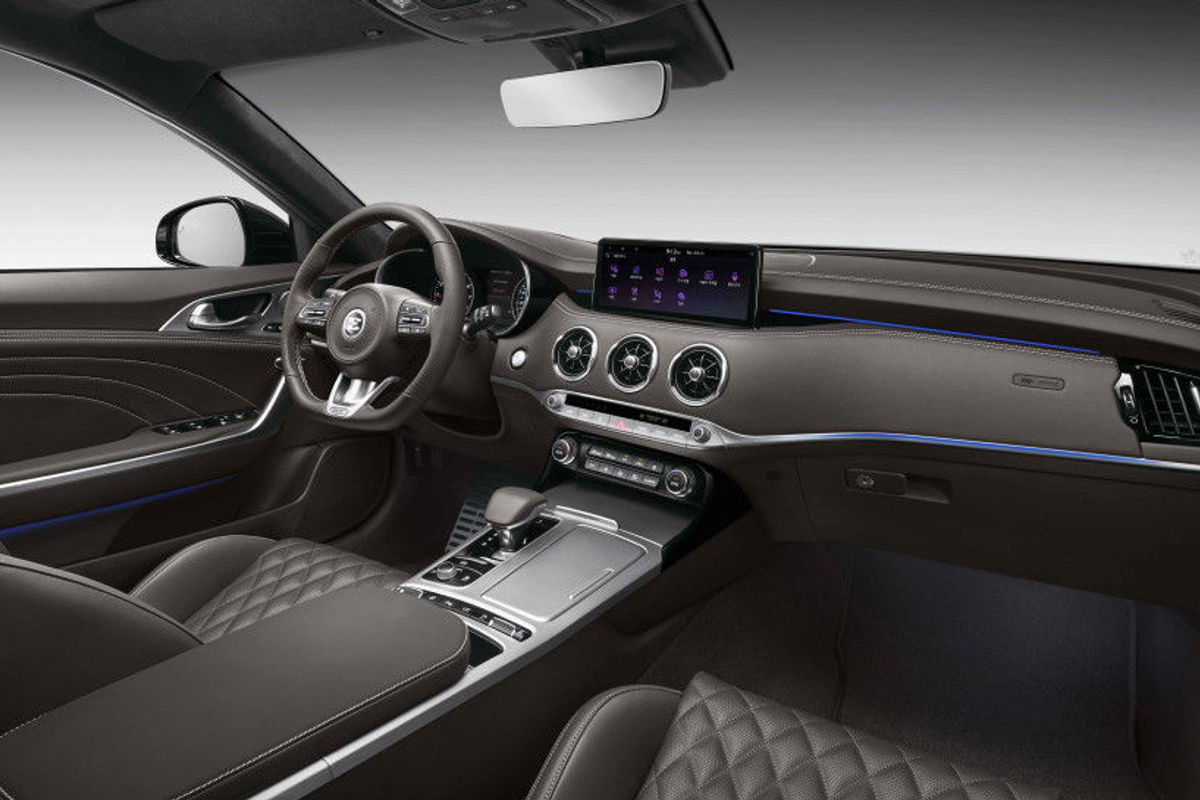
However, with this latest update, Kia has looked to enhance the Stinger’s exterior styling while also paying closer attention to lifting the perceived quality of the interior.
Kia Stinger, what’s changed?
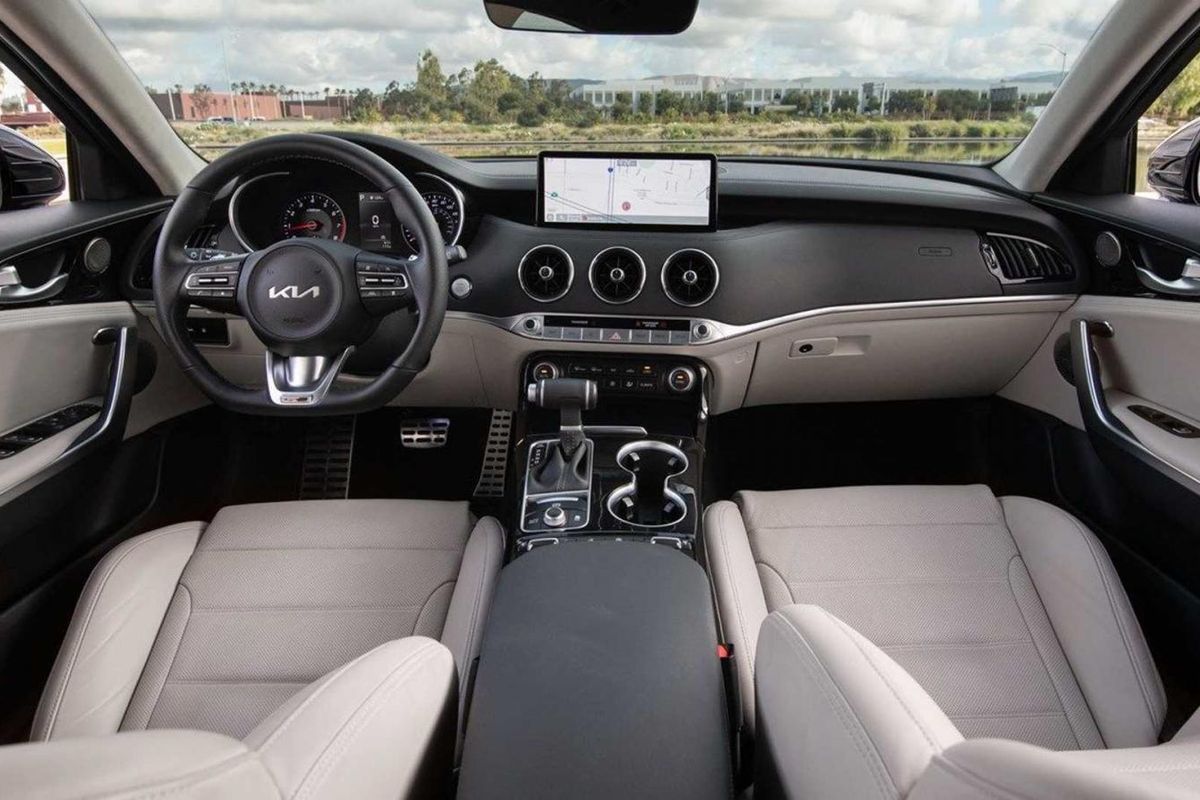
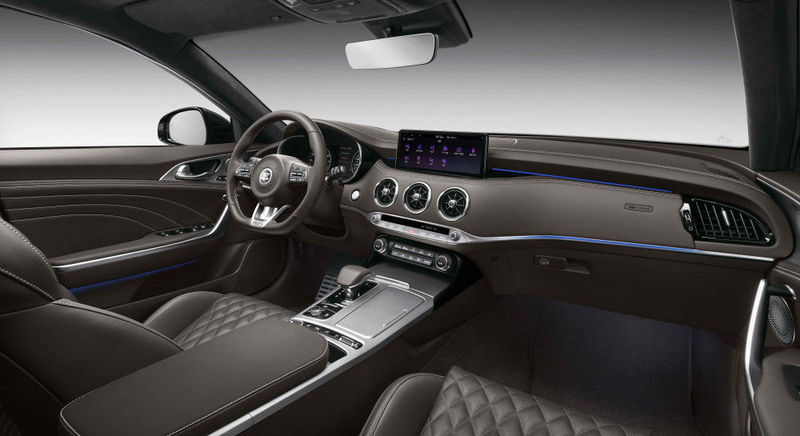
The Stinger's interior has been improved with new and better materials while also offering more choice in terms of finishes.
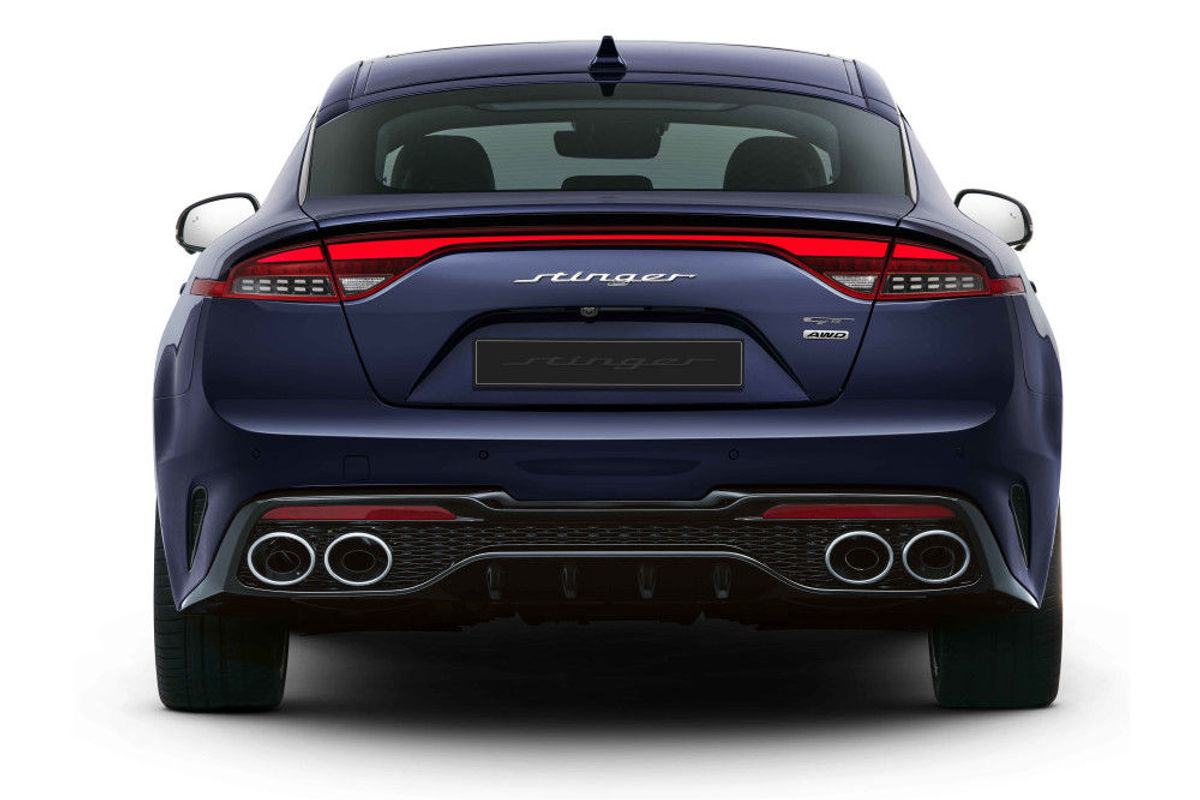
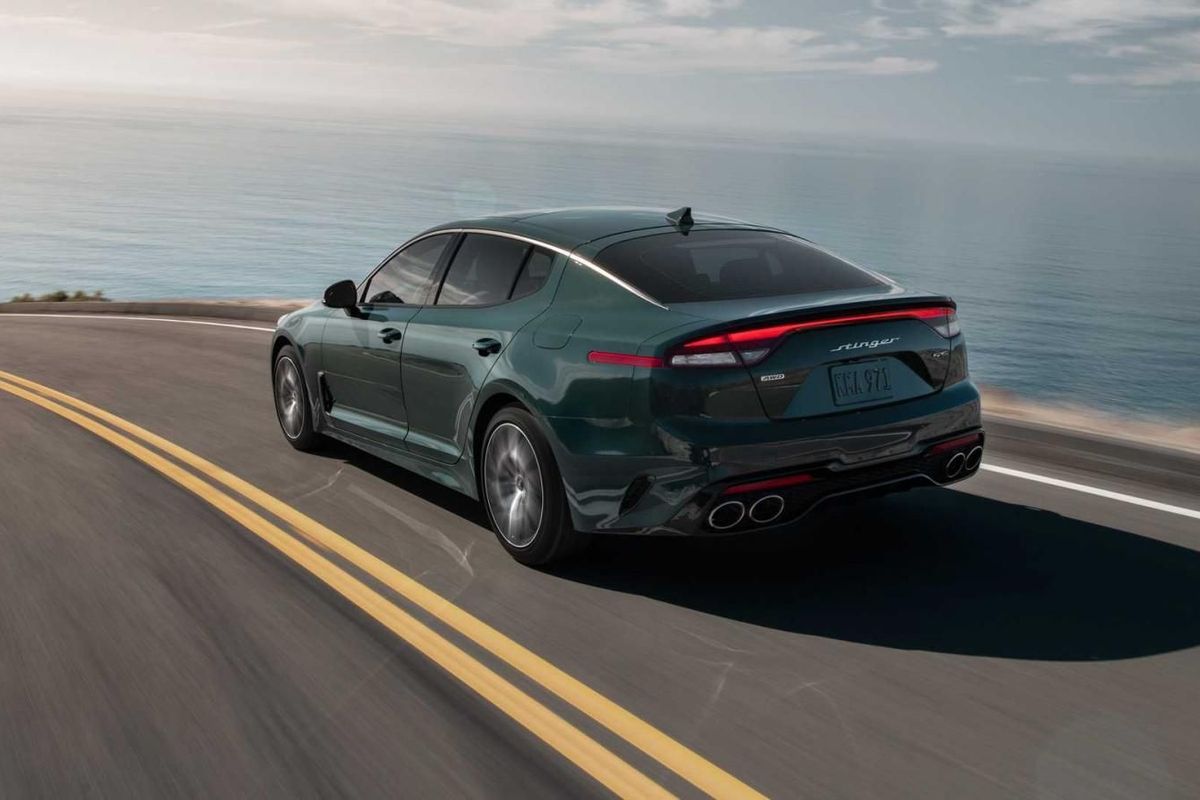
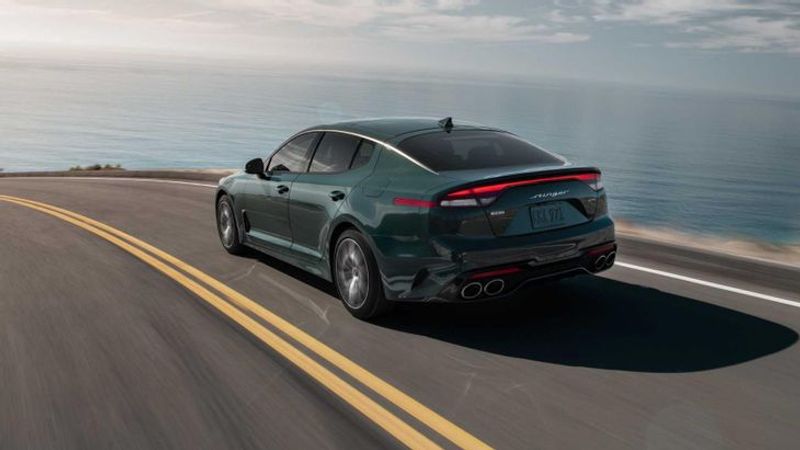
The updated Kia Stinger gains new LED headlight clusters that are more visually impactful, as well as a revised LED daytime running light signature. The rear light clusters have been revised too and also feature a new light signature that runs the full width of the car. The new indicators comprise 10 LED units that are arranged in a grid pattern that resembles a chequered flag.
Kia has also added 2 new allow wheel choices to the mix in either 18- or 19-inch sizes and the Stinger can also be specified with larger, wide-bore exhaust mufflers in bright silver as well as a sportier rear diffuser which beefs up the rear-end design appreciably.
More than this, customers can also choose between 2 new exterior packages including a Dark Package which features a gloss black diffuser surround, black wide-bore muffler tips and a black Stinger badge on the tailgate. The North American market will have the choice of a Black Package with 19-inch matte black lightweight wheels, a rear wing on the boot lid and blacked-out mirror housings and side fenders.
Moving inside, the lower section of the steering wheel features a new metallic finish that matches a new chrome surround seen around the 7.0-inch instrument cluster. A frameless rearview mirror is also fitted.
Depending on the specification, the dashboard and door trim has new contrasting stitching and new aluminium or carbon fibre trim can be specified for the centre console. The 10.25-inch touchscreen infotainment system has been upgraded with a gloss black finish along the front of the dashboard. A 64-colour mood lighting system is also fitted.
New upholstery choices are also on offer including Nappa leather in Saturn Black, Red or Beige which is offered in addition to synthetic leather choices.
More power for Kia Stinger
A new variable exhaust system has enhanced the aural note of the Stinger's V6 engine.
The Kia Stinger forges on with a 3.3-litre turbocharged V6 but outputs have been bumped up to 274 kW and 510 Nm, a mere 2kW increase. The Stinger, however, forges on with an 8-speed automatic transmission and is capable of a zero to 100 kph sprint of 4.7 seconds and depending on the market, is sold in rear-wheel-drive guise or with all-wheel-drive capability. A new electronic variable exhaust system enhances the sound of the V6 engine. In other markets, a new 4-cylinder 2.5-litre turbocharged engine is also offered with outputs of 224 kW and 422 Nm.
Despite the Stinger being an impressive product, a spokesperson from Kia South Africa has confirmed that the updated Stinger will sadly not be offered in South Africa.
BMW M2 CS vs Mercedes-AMG A45 S – Standing and rolling start quarter mile
We put the wild Mercedes-AMG A45 S against the hardcore BMW M2 CS on the runway for some head-to-head drag races.
Sure, right off the bat, this might be a strange match up. But if you happened to have an A45 S and a BMW M2 CS in your garage at the same time, wouldn't you want to race them? Well, that's exactly what we've done.
We've filmed and published many drag races over the years here at Cars.co.za and we've been shouted at a lot by you, our valued audience, in the comments. For some reason, drag racing really seems to get our favourite petrolheads riled up and so for this video we wanted to comprehensively test these cars against each other.
And so, given that the M2 and the A45 represent a RWD vs AWD issue, we ran the standing start race three times and then switched to a rolling start.
We do hope this offers a fair and equal match-up for these two cars.
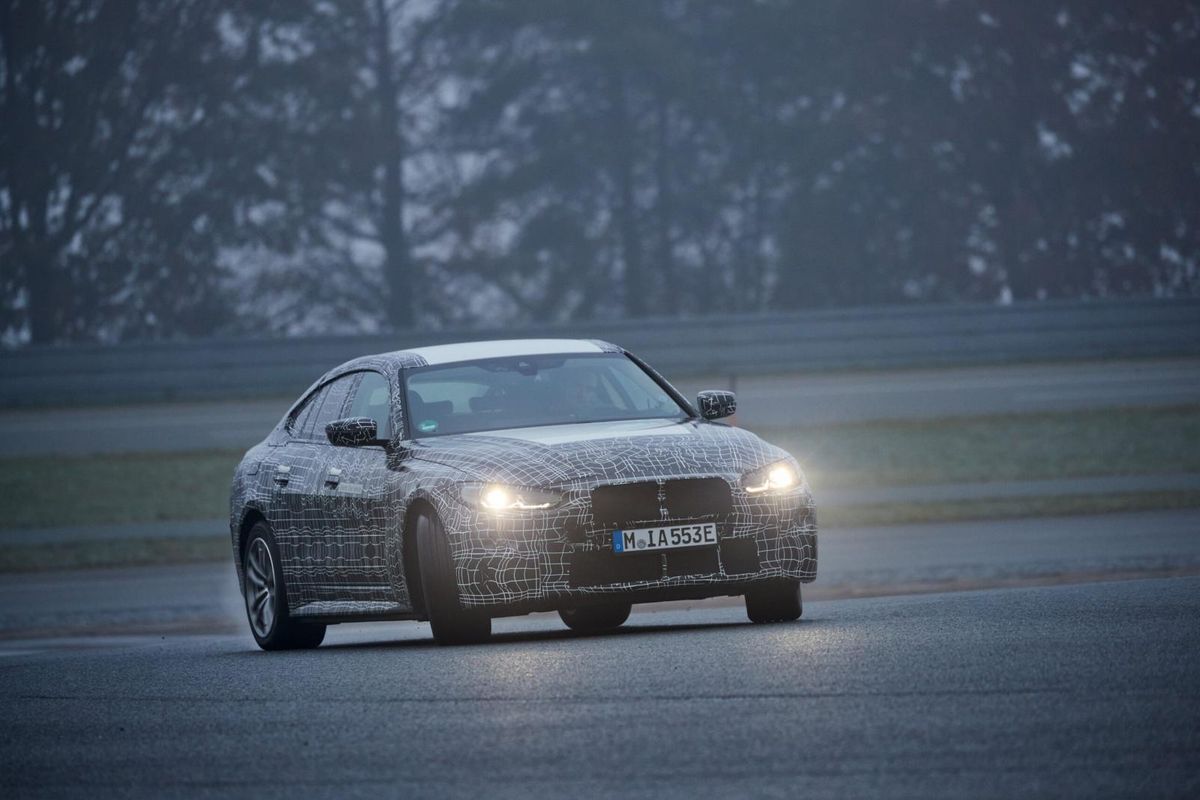
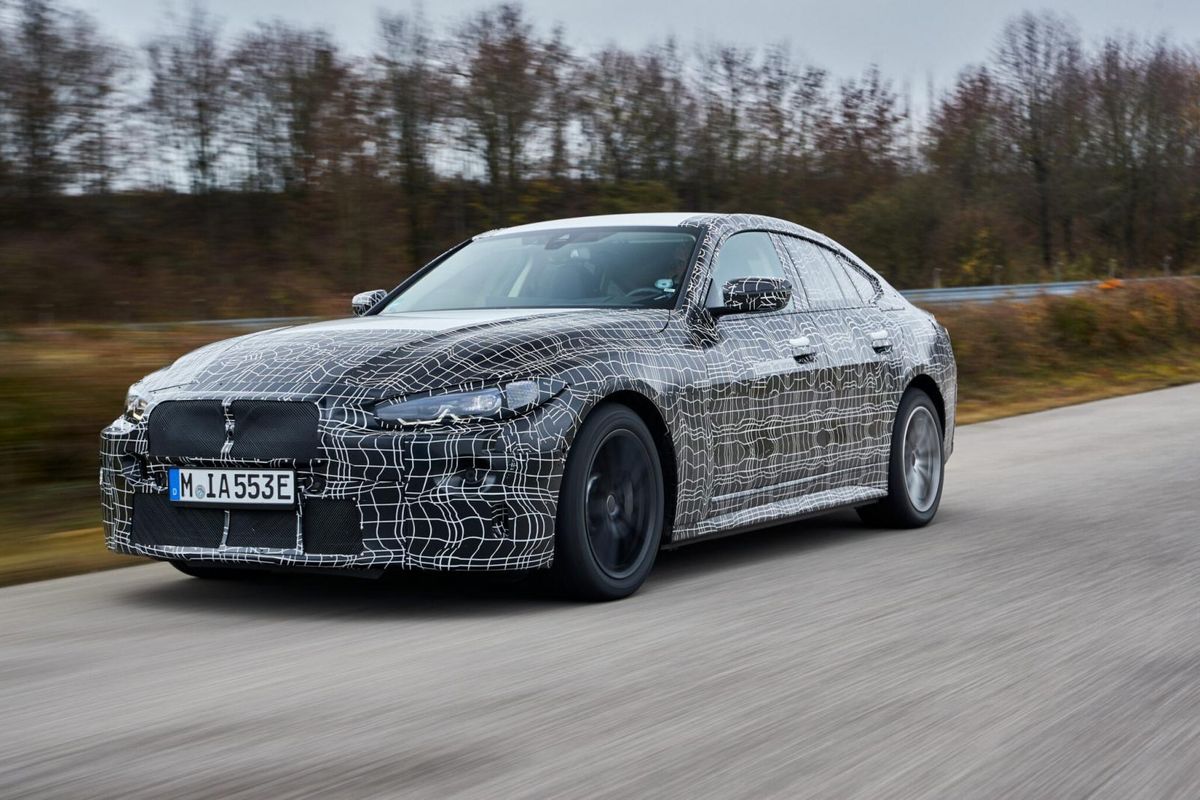
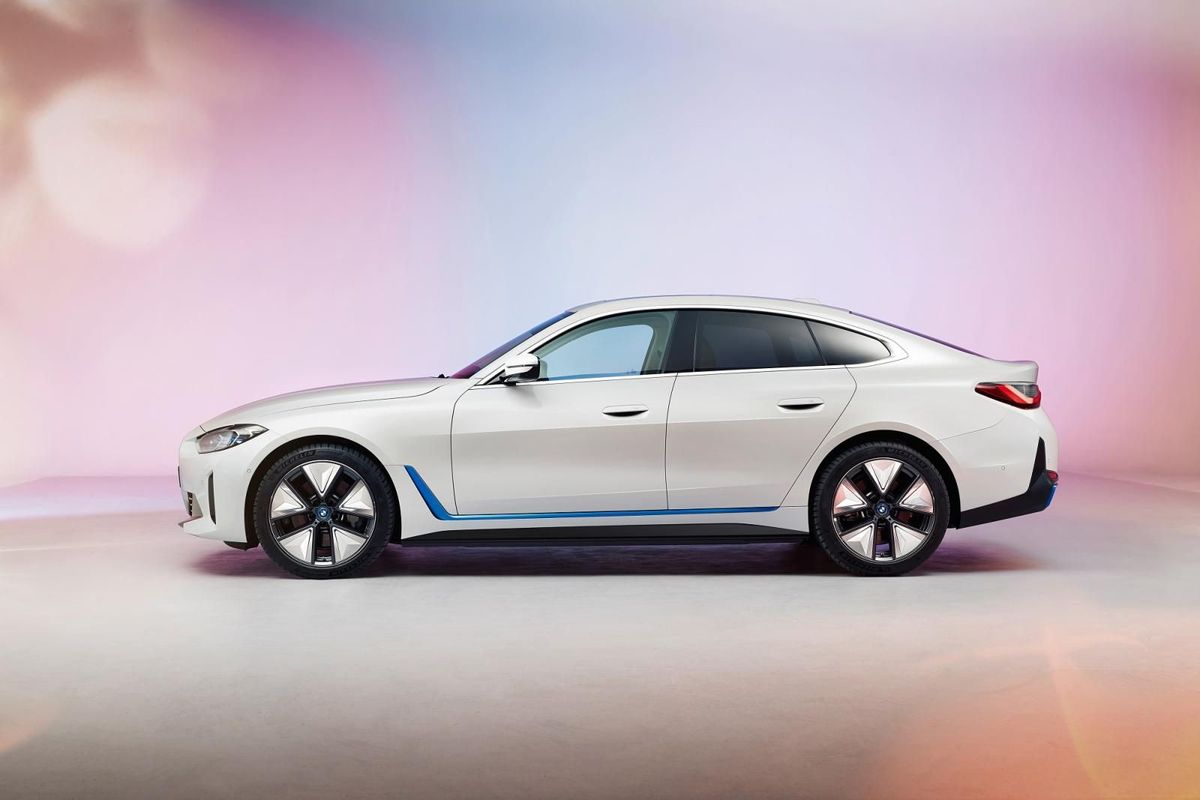
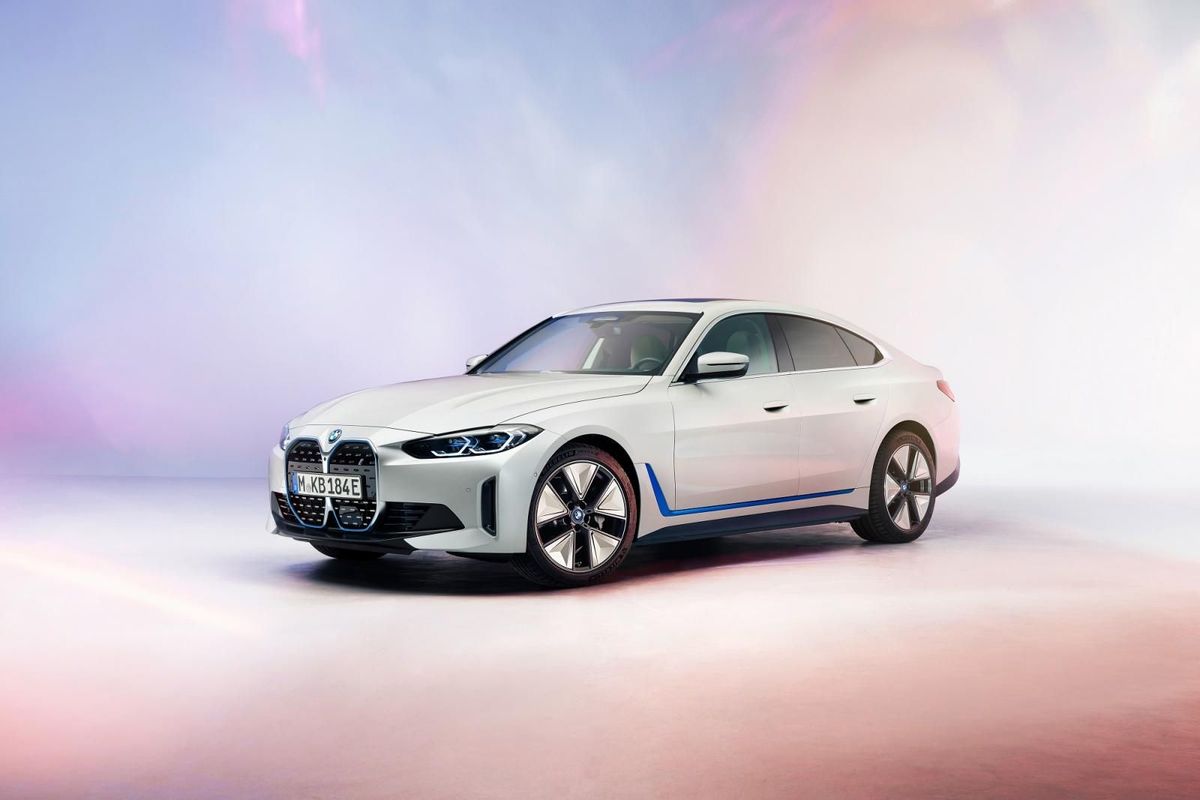
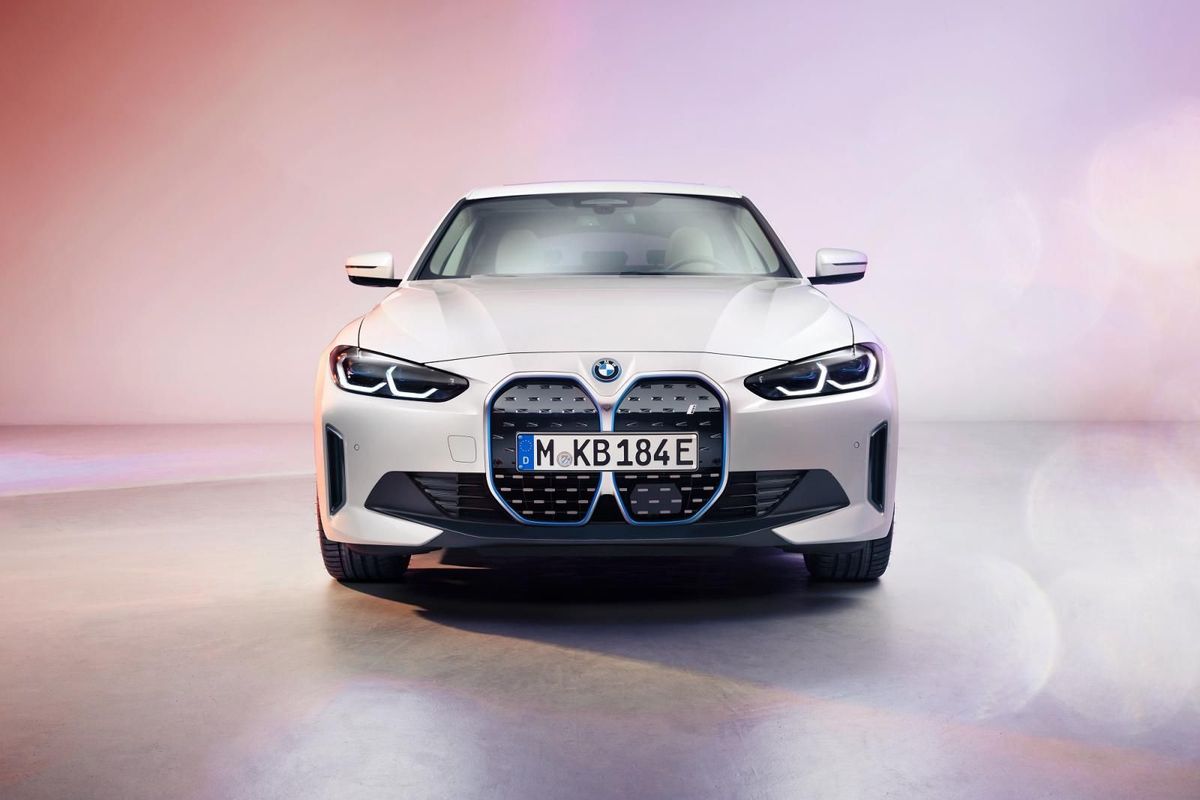
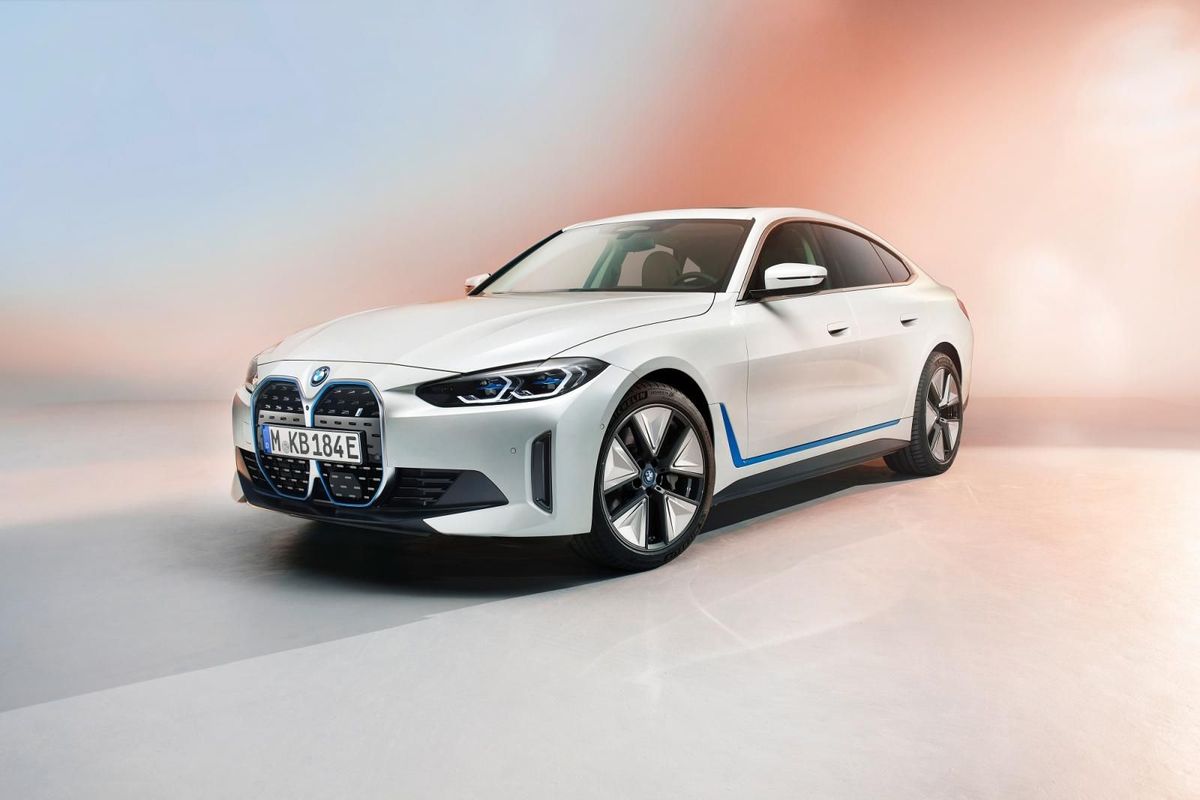
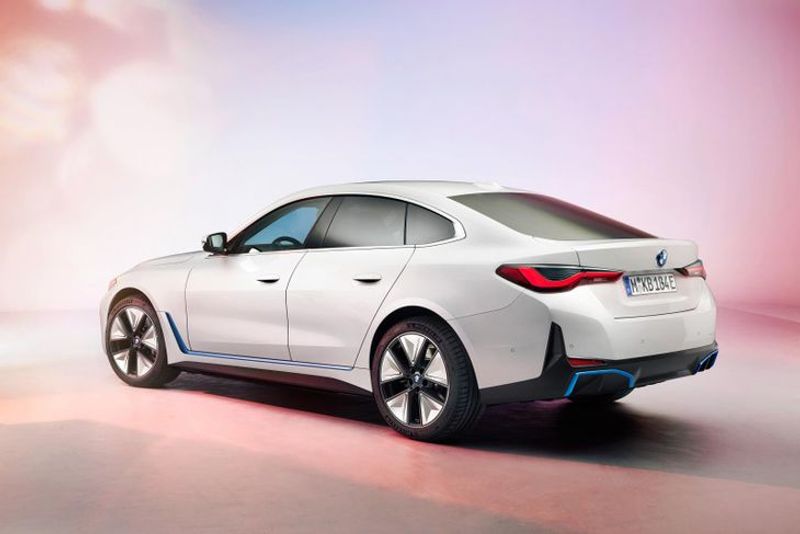
The electric BMW i4 has been revealed. While all the details are not readily available, the announcement by BMW gives us a good look at the Bavarian brand's electric ambitions.
During the 2021 BMW Group Annual Conference, the Munich-based manufacturer took the covers off the new BMW i4. “With its sporty looks, best in class driving dynamics and zero local emissions, the BMW i4 is a true BMW. It makes the heart of the BMW brand now beat fully electric,” said Pieter Nota, member of the Board of Management of BMW AG responsible for Customer, Brands, Sales.
The all-new BMW i4 is an all-electric vehicle that resembles the 4-door Gran Coupe. Don't get confused between this and the yet-to-be-revealed BMW 4 Series Gran Coupe, the latter will still be offered with internal combustion engines. BMW will be offering its new i4 in a range of different versions, with the difference being range and power output. BMW also gave us a little teaser, saying there will be a BMW M Performance derivative. An all-electric BMW M car sounds very tantalising and the brand claimed it will offer 'BMW typical sportiness, comfort and sustainable performance.'
As far as range is concerned, the highest distance offered by the BMW i4 is 590 km based on the WLTP cycle. For the performance fanatics, the new BMW i4 will have a power output of up to 395 kW and will accelerate from 0-60 mph in 'around 4 seconds.'
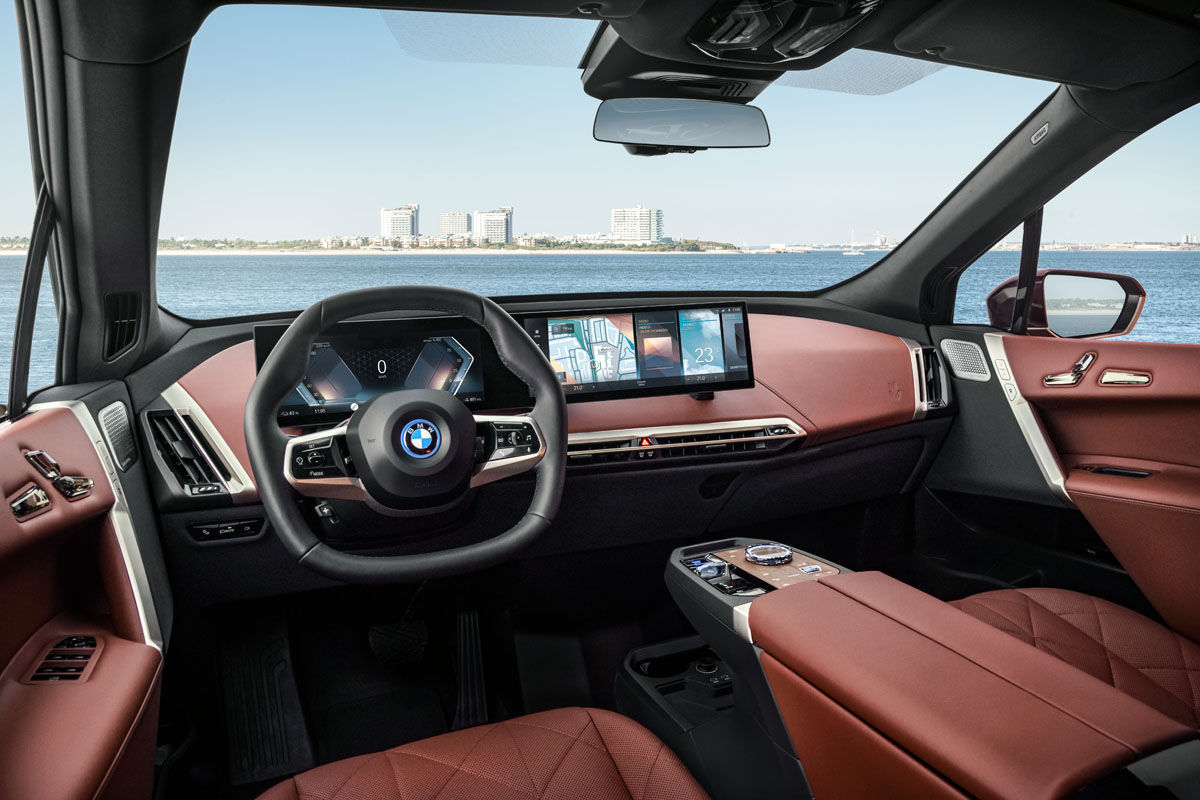
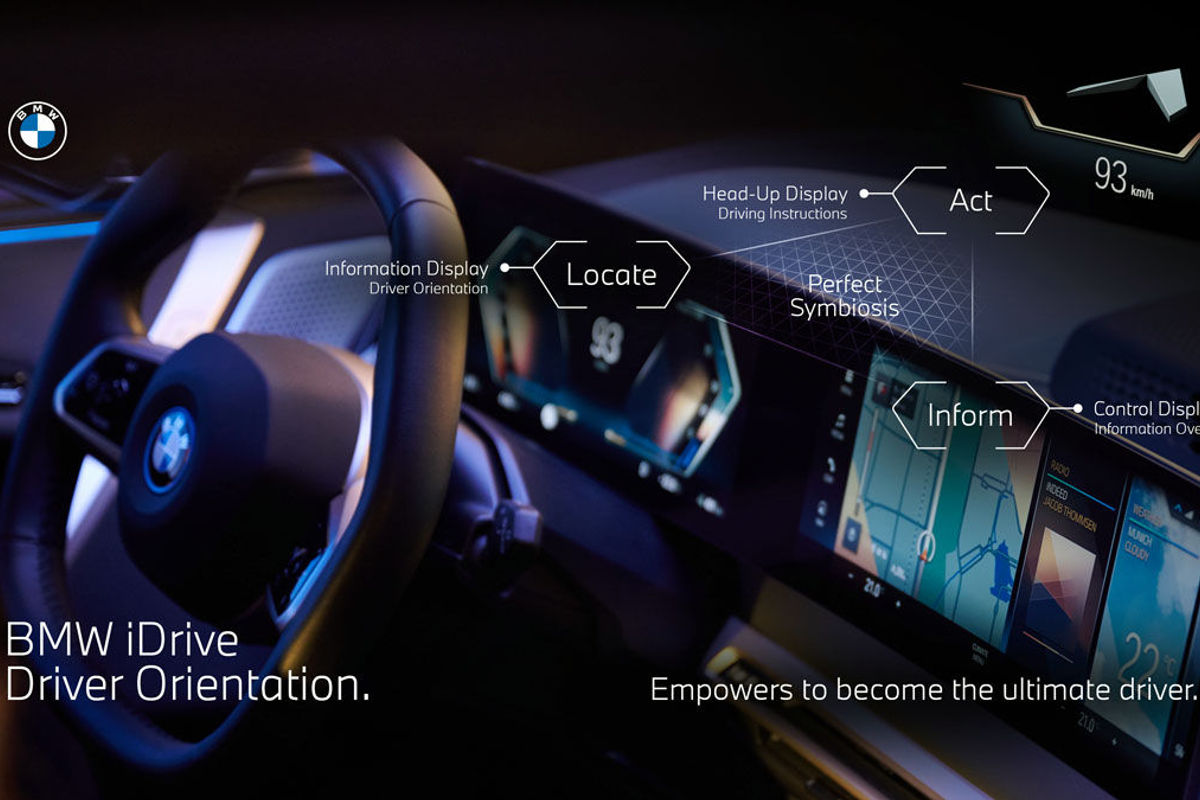
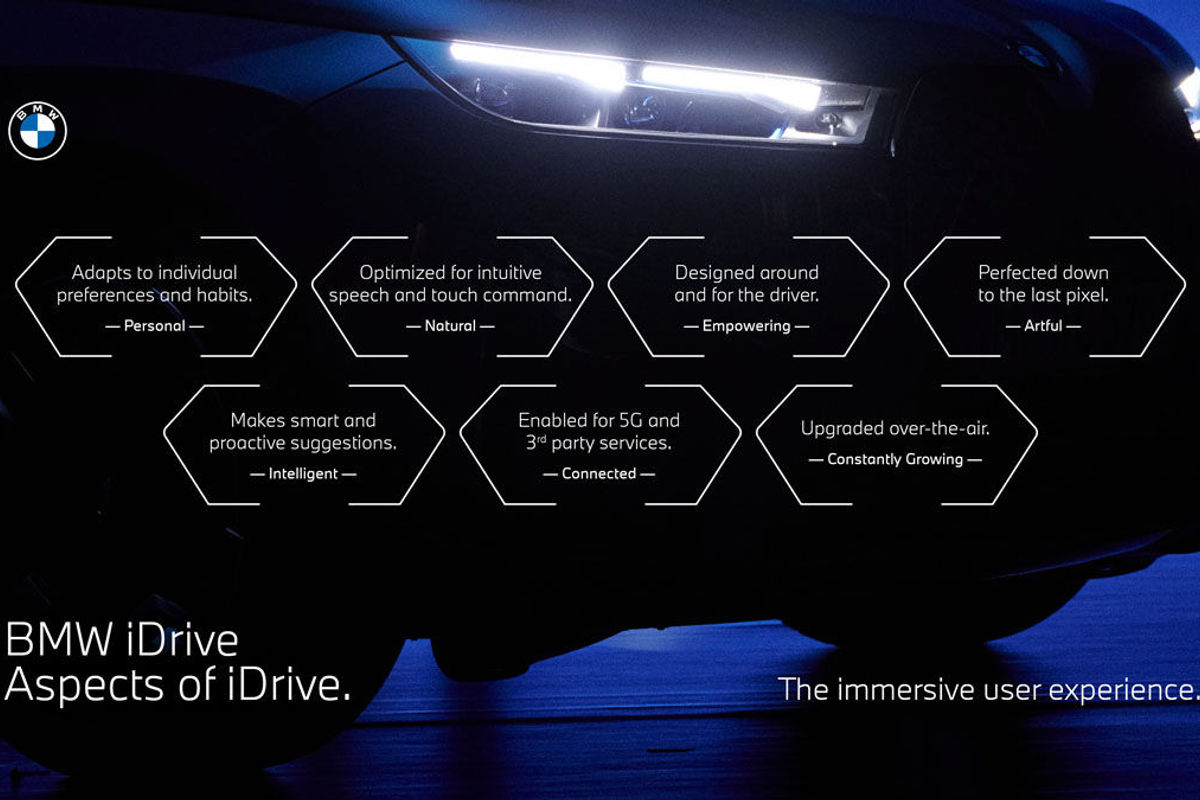
Twenty years since the introduction of iDrive in the E65-generation 7 Series, BMW has previewed the 8th-generation of its renowned infotainment system, which will debut in marque’s upcoming iX and i4 electric vehicles. Here is an octet, fittingly, of interesting facts about the new iDrive 8…
1. Expansive curved display
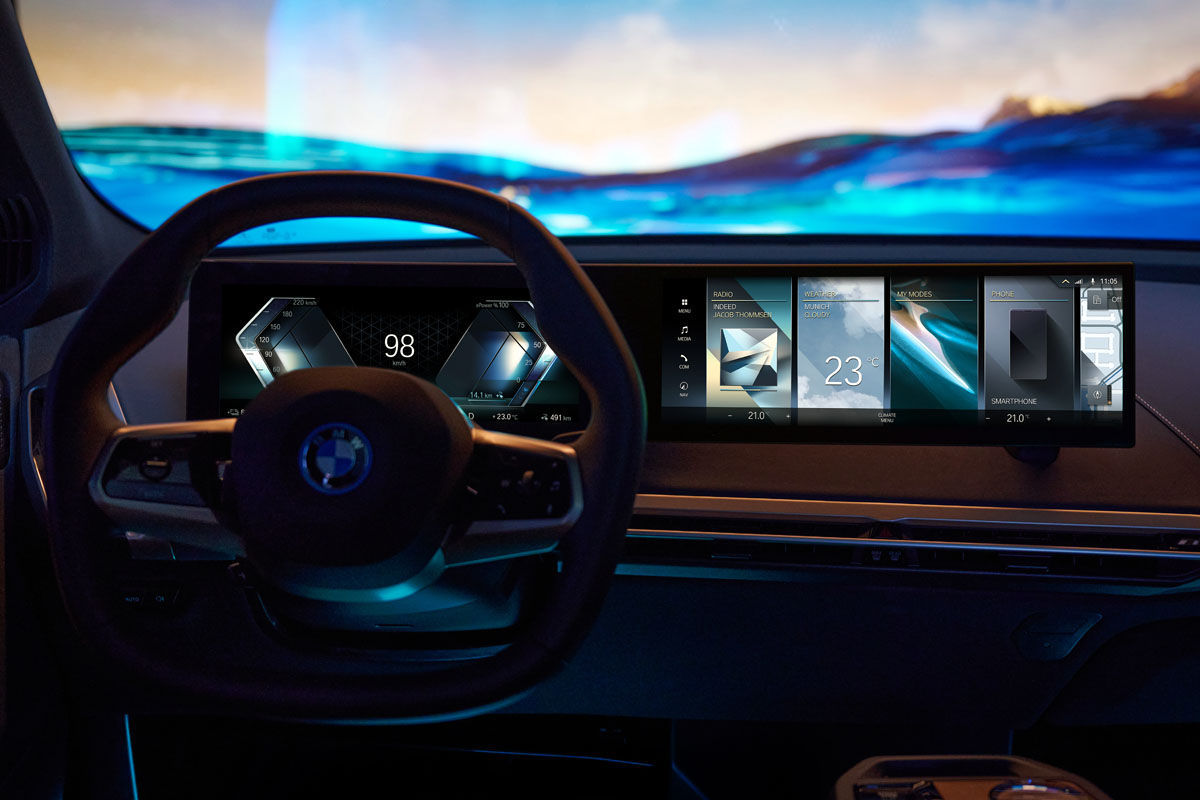
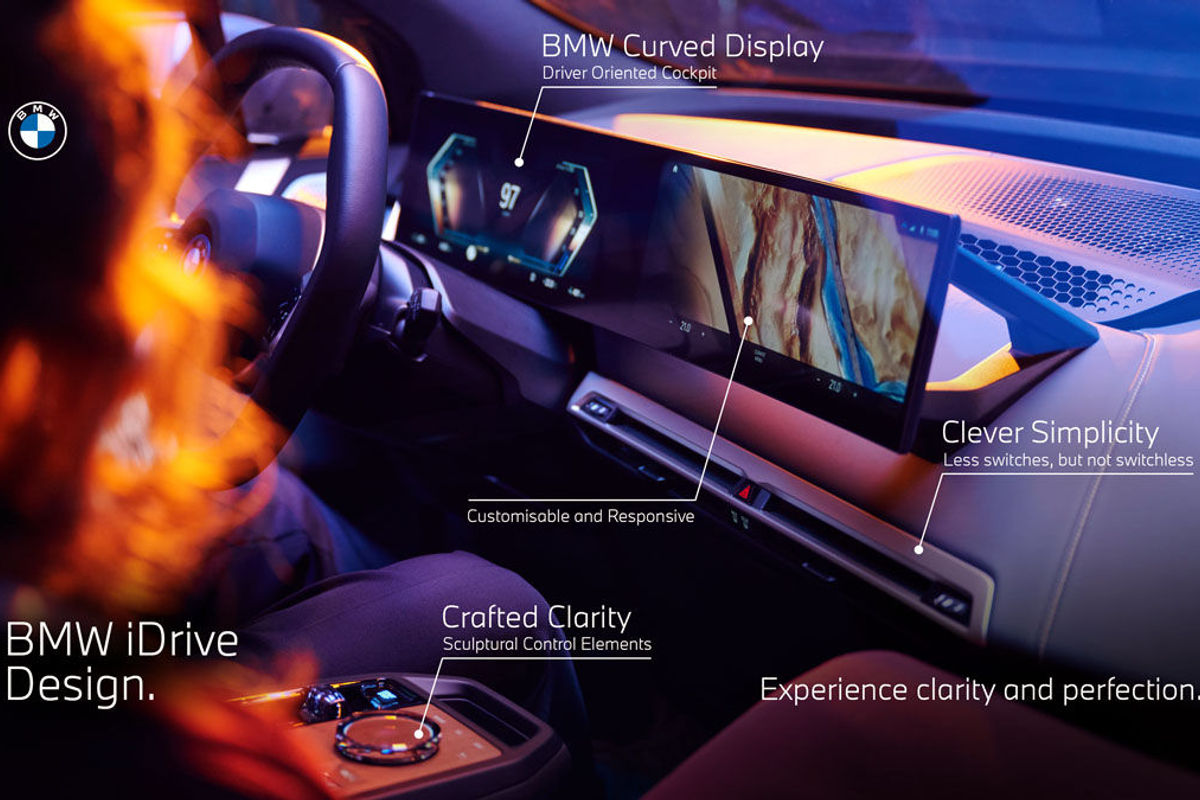
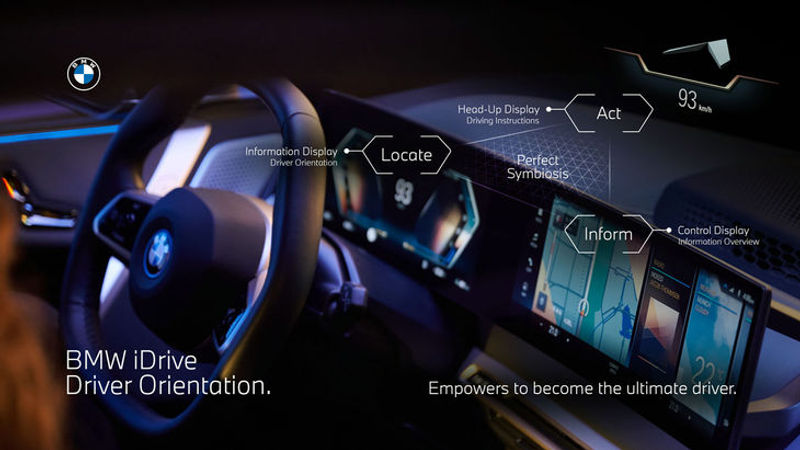
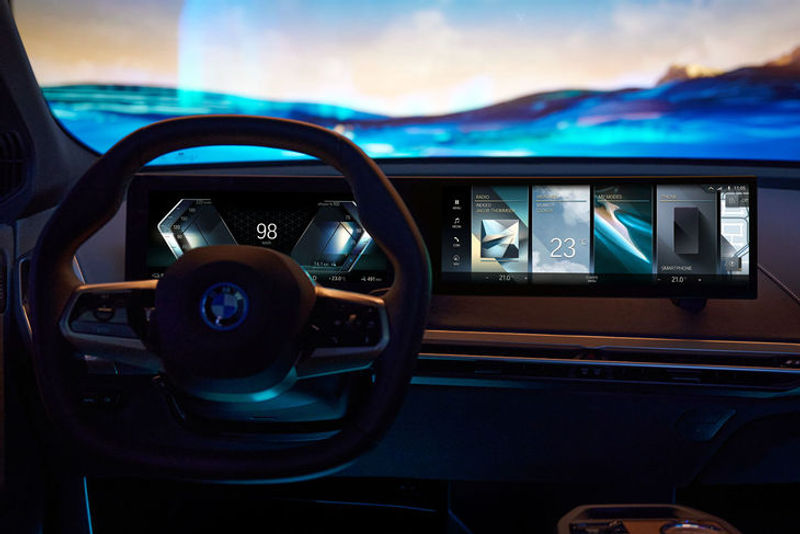
At the heart of iDrive 8, which is underpinned by a significantly upgraded software package aimed at improving the speed of command recognition, is a pair of screens – a 12.3-in instrument display and a 14.9-in infotainment touchscreen, which are housed in a single curved panel with a resolution of 200ppi. The display is mounted atop the dashboard and angled slightly towards the driver.
2. Reduces buttons, but retains iDrive controller
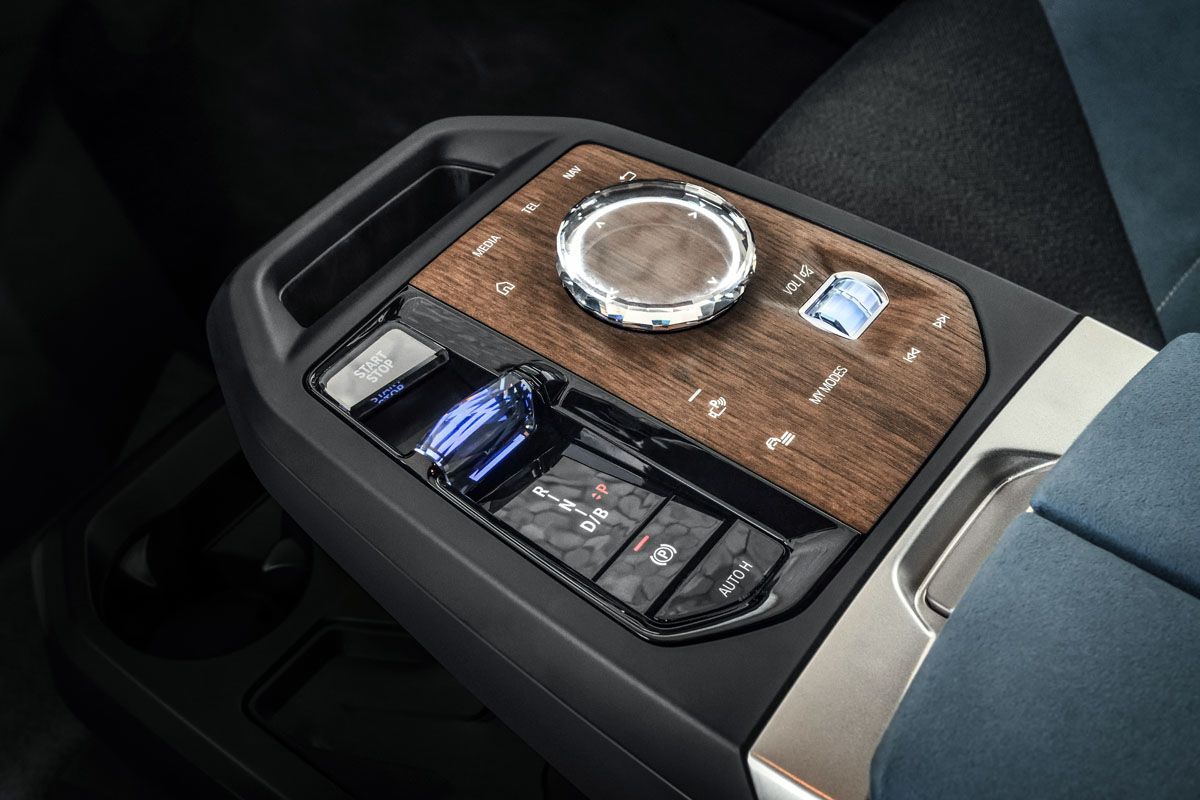
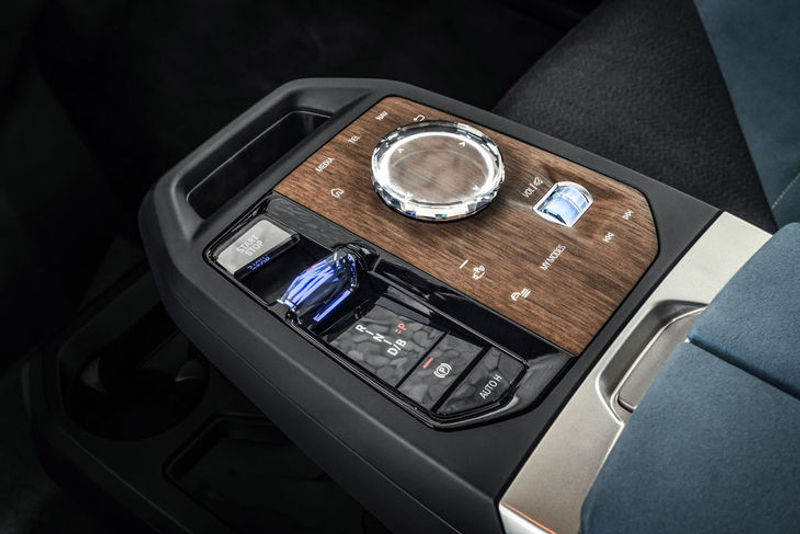
iDrive 8 might be more touch-input-based than its predecessor, but BMW has persisted with the centre console-located rotary controller, which can be used in conjunction with touch inputs, voice commands and gesture controls. The adoption of iDrive 8 has also allowed the Munich-based firm to reduce the number of physical buttons by half (climate control functions, for example, are inputted digitally).
What’s more, the new iX features capacitive touch controls on its hexagonal-shaped steering wheel, a slider arrangement for gear selection (as opposed to a traditional transmission lever), as well as an updated head-up display unit that incorporates fresh graphics as well as new augmented reality functions.
3. New 3D-graphics & display modes
BMW has introduced an entirely new graphical design language, which is applied across iDrive 8’s menus and apps. The 3-dimensional graphics and layouts are said to bring a “more immersive user experience” and “greater detail” to the plethora of customised display modes that the driver/s can choose from.
The look is supposed to be as information-rich as possible, with a constantly changing flow of info shown in the centre of the digital instrument panel.
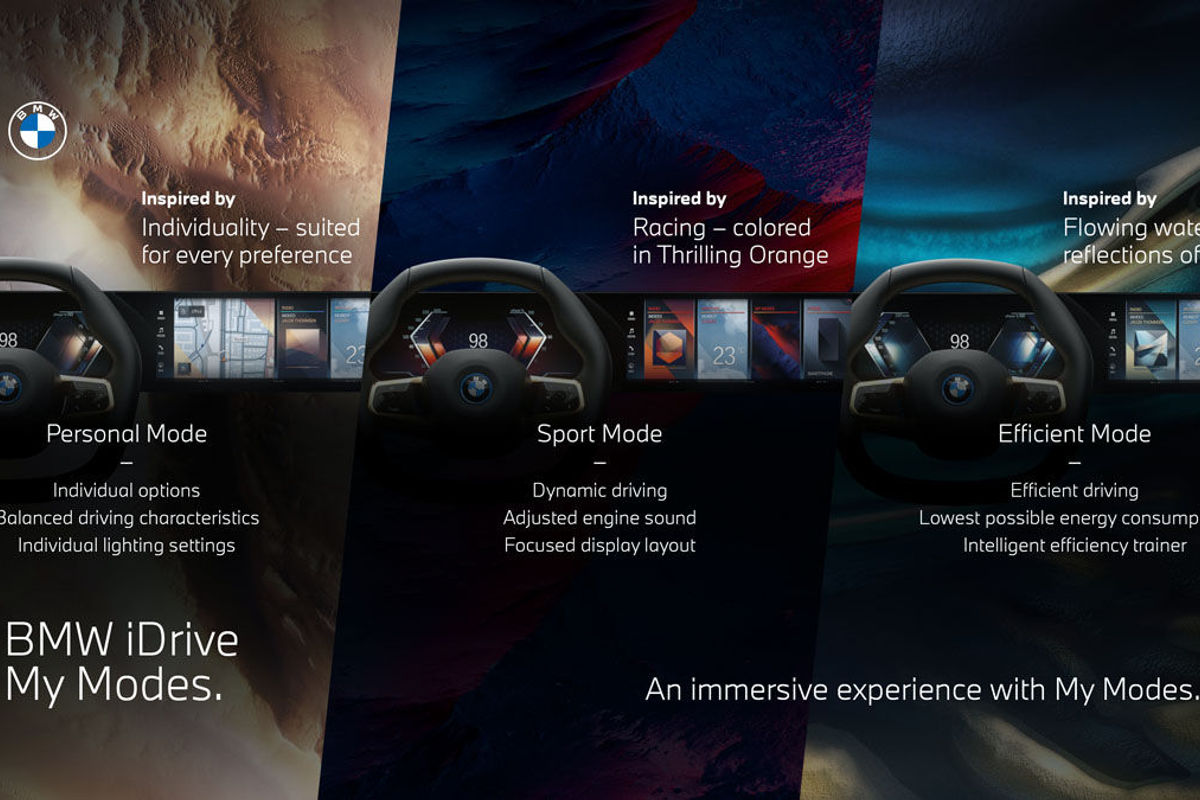
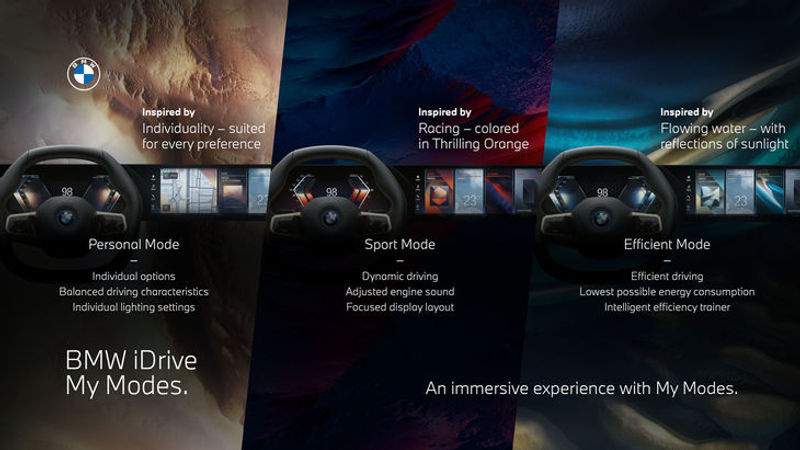
Apart from Efficient, Sport and Individual display modes, there is a Calm mode that allows the driver to reduce the amount of information to just the speed of the vehicle, Focus has been designed for what BMW calls “extremely dynamic driving situations,” while Gallery pairs back the level of information to the bare minimum, to prioritise space for apps, widgets and navigation.
4. 'Call me whatever you like'
You can still hail the BMW Intelligent Personal Assistant with the “Hey BMW” voice command, but with the updated version of the voice-assistant software, users can give their “digital helper” a name of their choice; the system also makes use of visual prompts on the info displays when handling tasks.
Lastly, all Intelligent Personal Assistant settings can be saved to a BMW ID profile, which has been expanded with better personalisation and functionality.
5. It anticipates where you’re going
Thanks to what BMW calls “Learning Navigation”, the onboard satnav system is no longer passive – in works in conjunction with the more in-depth BMW ID to predict where the driver may intend to travel. BMW’s example of where this may come in handy is during the daily commute. The car will predict that the driver wants to go to the office, but may want the navigation on anyway, to get a sense of traffic and so that they can be warned of any delays ahead. As such, the navigation system will automatically prepare the best route anyway.
What’s more, Autocar reports that "the digital services for the navigation, parking and charging are now fully integrated into BMW’s cloud-based Map system. It uses probability models based on information provided by the widely used HERE map."
6. Higher personalisation
iDrive 8 is not all about crisp graphics and slick functionality, however… The system also optimises the vehicle’s interior ambience and its user/s driving experience/s.
The new My Modes feature, which has replaced the current iDrive’s Drive Experience Control, can be used to alter up to 10 parameters, ranging from the colour of the interior ambient lighting and the weight of the steering to the graphics on the instruments and central touchscreen.
7. It supports 5G
Meanwhile, the new system steps up over-the-air updates significantly, because iDrive8 supports 5G networking with high-data bandwidth for faster software updates.
In line with Volkswagen’s plans to adopt a data-based business model, BMW will allow for the live over-the-air retrofitting of functions. In other words, iDrive 8 will allow owners to upgrade selected functions of their vehicles after they've started using their vehicles. These will include lighting and driving assist systems (including semi-autonomous features) in markets where the technology is supported.
8. You get your own 'welcoming party'
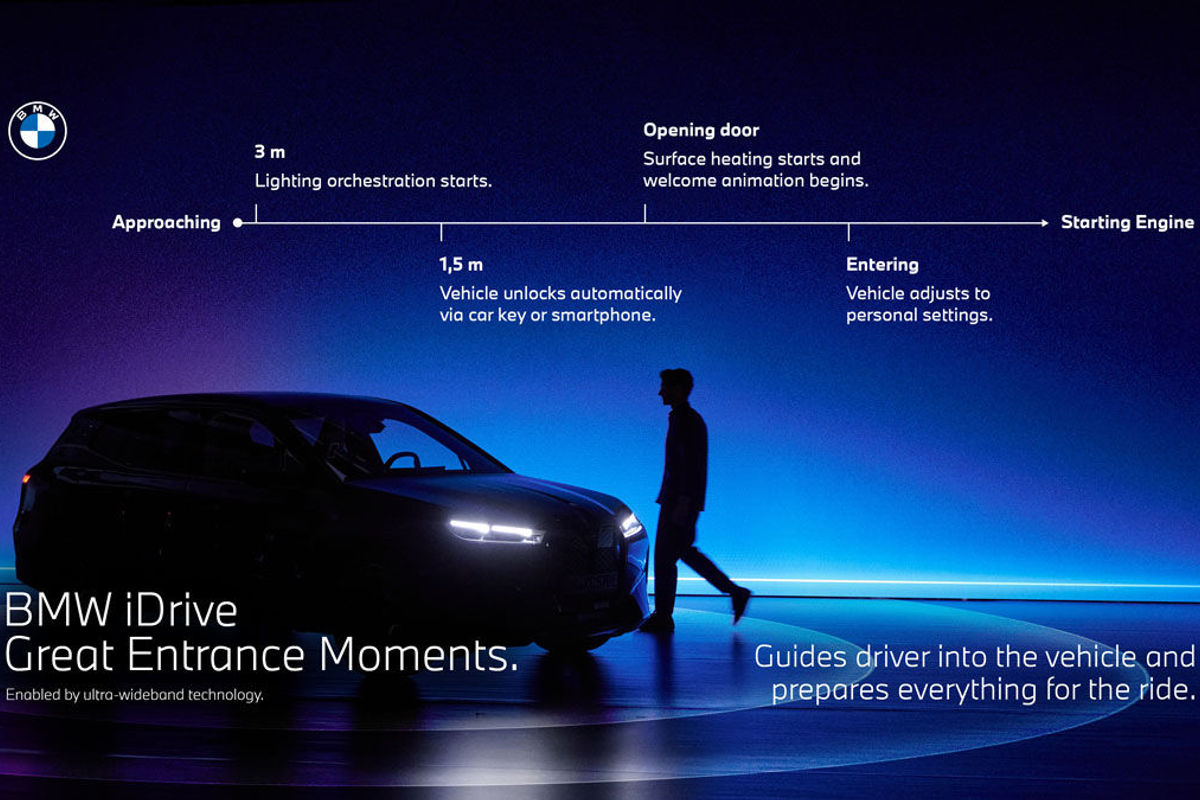
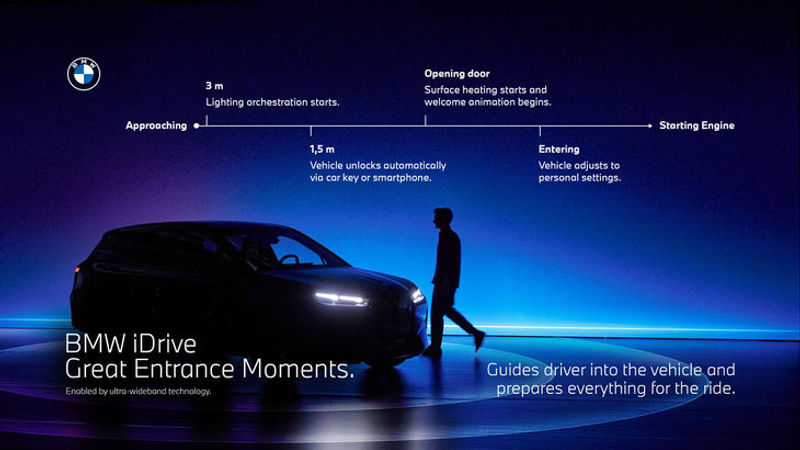
Finally, cars with iDrive 8 will feature a new welcome/start-up programme, powered by ultra-wideband radio technology. The car senses when the driver is approaching the car by communicating with their key/smartphone. Then, when the driver is 3m away from the vehicle, the cabin will light up with soft exterior and interior lighting patterns. The door handles and boot handle illuminate too and, when the door is opened, the iDrive system starts up automatically.
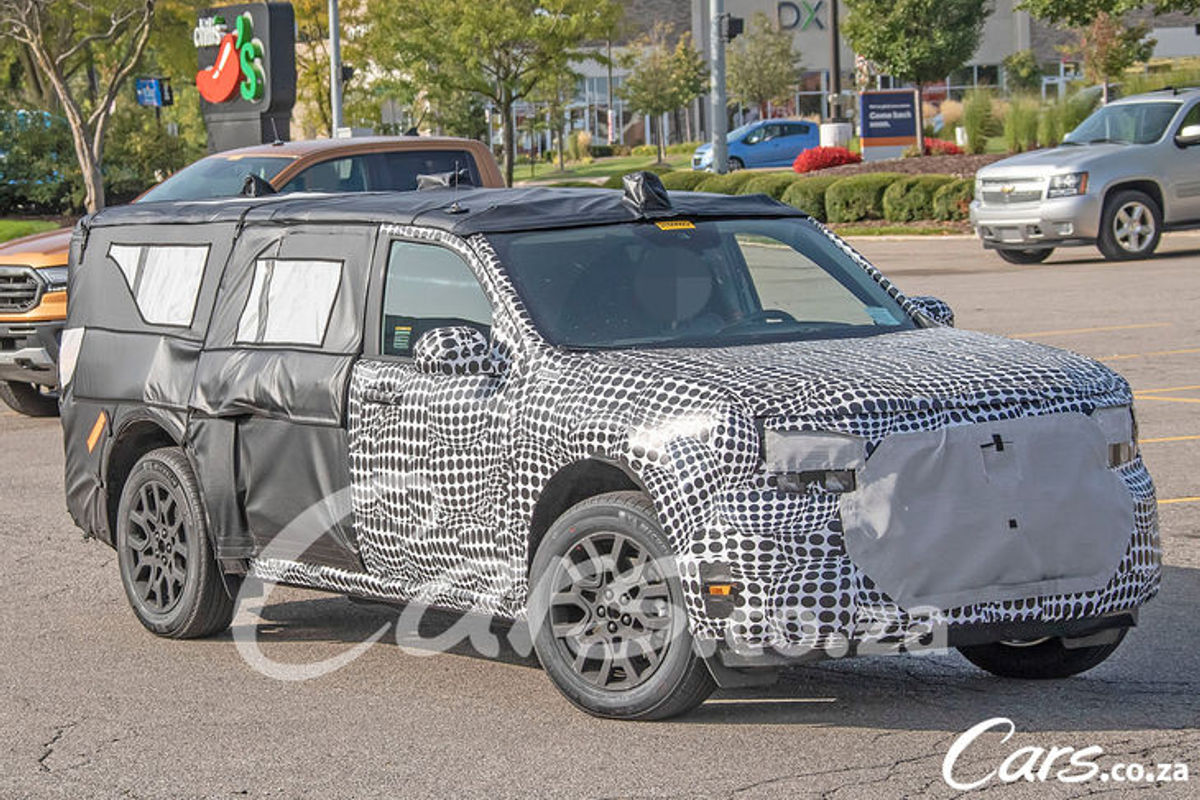
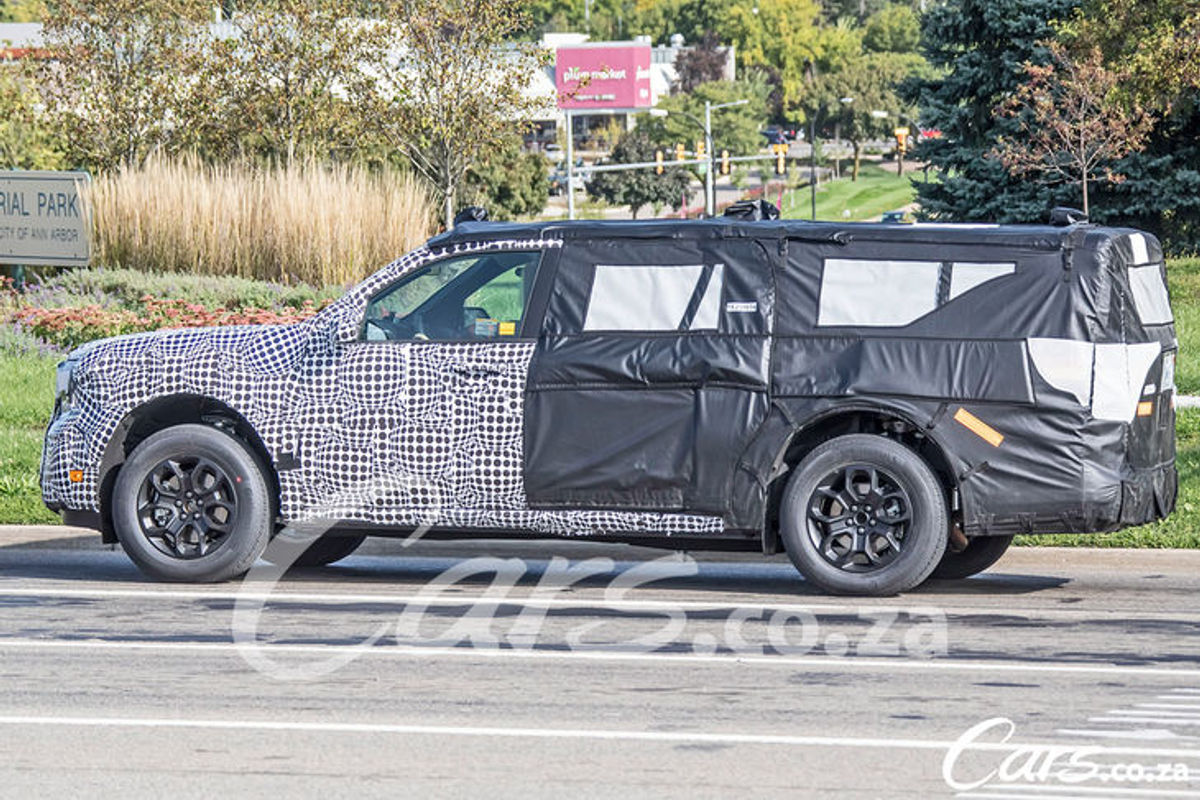
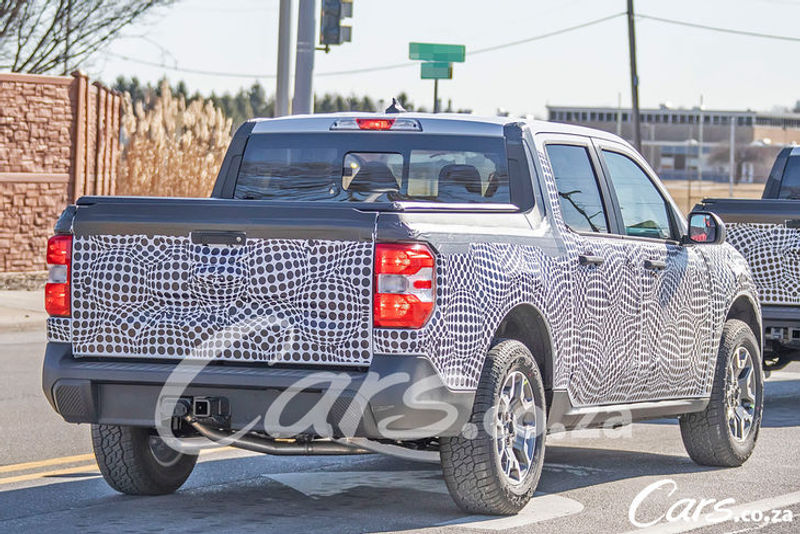
The compact Ford Maverick bakkie is a step closer to production reality. It's been spotted out and about again, clearly showing off its angles and some of its features.
Picture credit: S. Baldauf/SB-Medien. We have paid for these photos and at the photographer's request, have watermarked them.
The latest set of spy photographs gives us a good idea of the shape, size and proportions of the new Ford Maverick. The newcomer, which will slot in below the Ranger, will be built alongside the Bronco Sport family car at Ford's Hermosillo Assembly Plant in Sonoro. At this stage, there's no word on right-hand-drive production which means that South African availability is in doubt.
A full reveal is expected at some point this year and, as speculated, the Maverick will share at least some styling cues with the Bronco Sport, which should give it a bold and suitably rugged appearance. Given its passenger-car underpinnings, the Maverick will ride lower than the Ranger and because its load bed won’t be required to haul significant loads (because of the Bronco Sport underpinnings), the package’s cabin space – and creature comforts – will be prioritised. The model will be produced in front-wheel-drive guise, with part-time all-wheel-drive possible for high-end derivatives.
In terms of the engine line-up, reports suggest naturally aspirated 121-kW 2.0-litre 4-cylinder petrol and a turbopetrol 134-kW 1.5-litre 3-cylinder motors will be offered, both in conjunction with an 8-speed automatic transmission, as well as a manual gearbox. There's also talk of a powerful 2.0-litre 4-cylinder turbo packing 186 kW and 373 Nm.