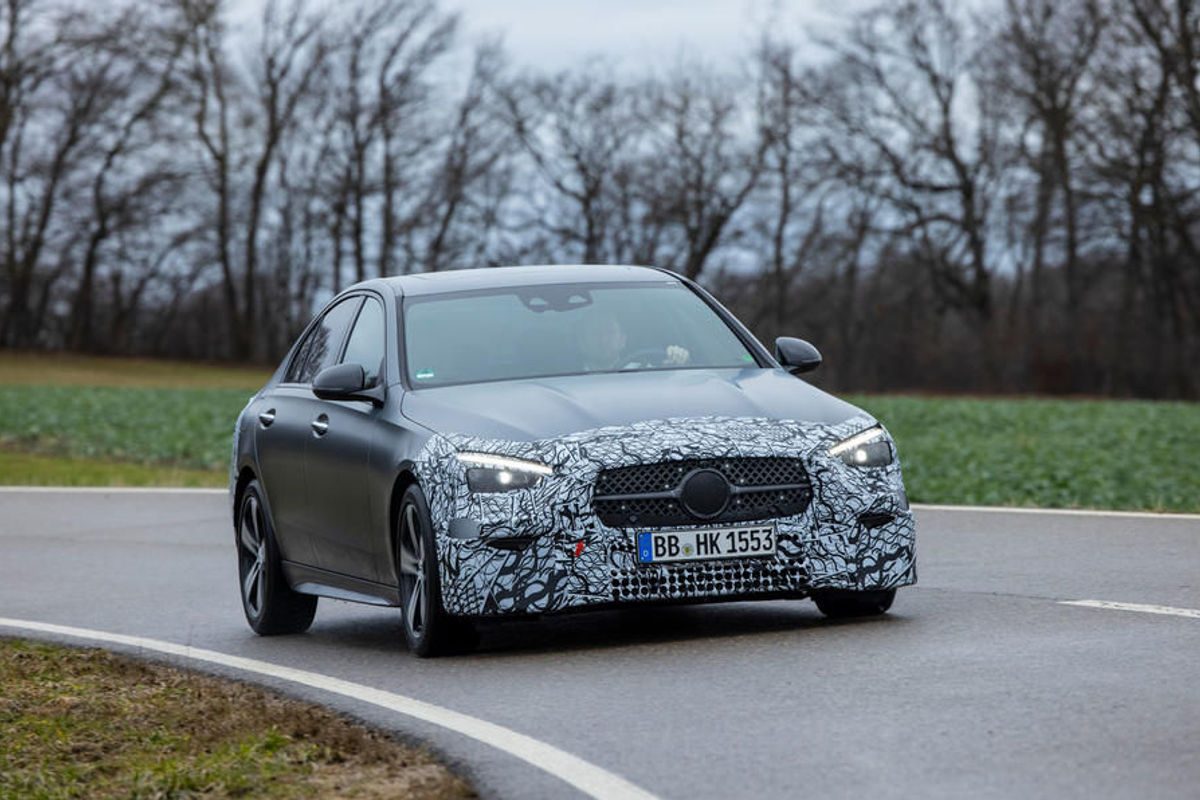
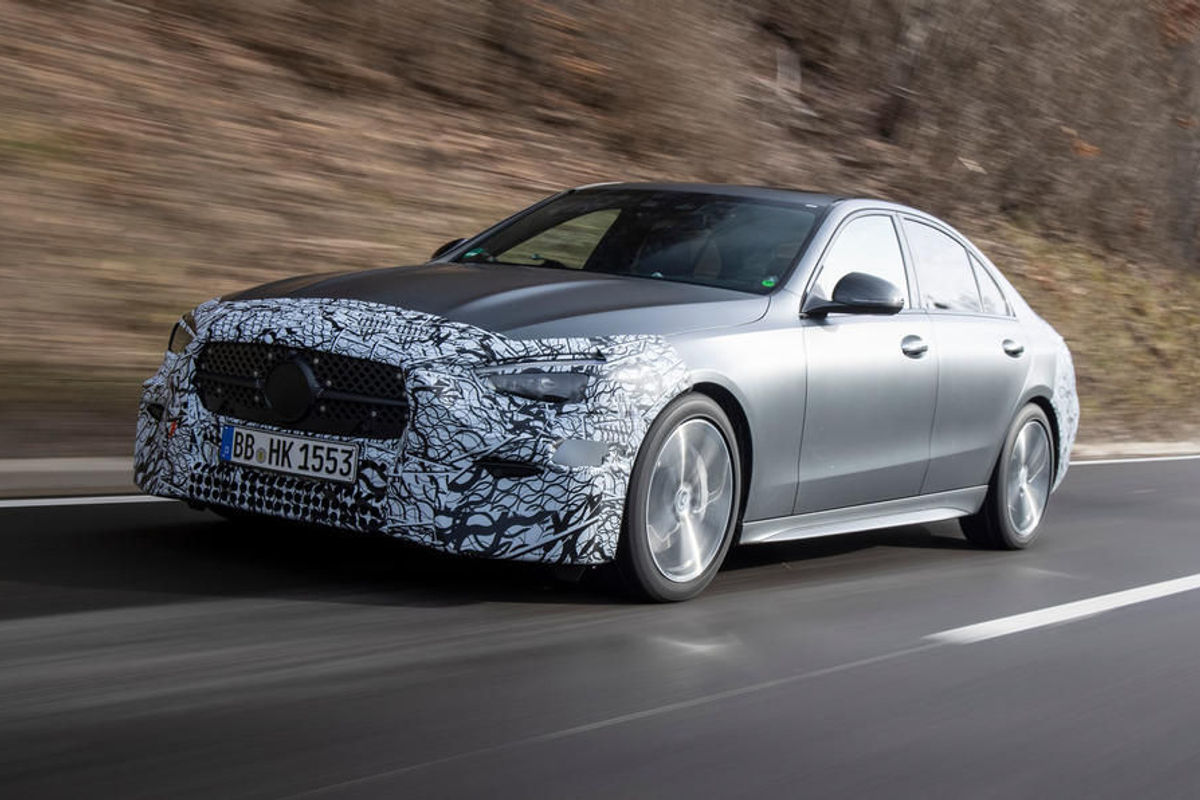
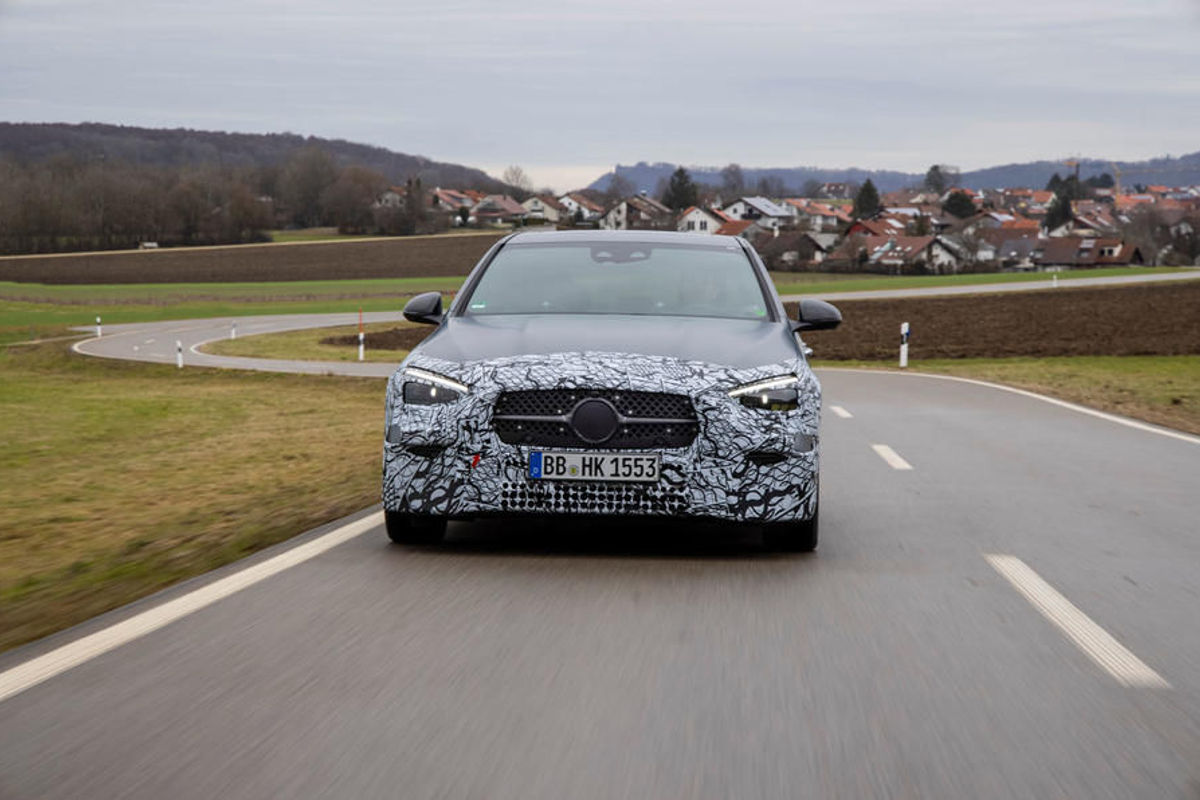
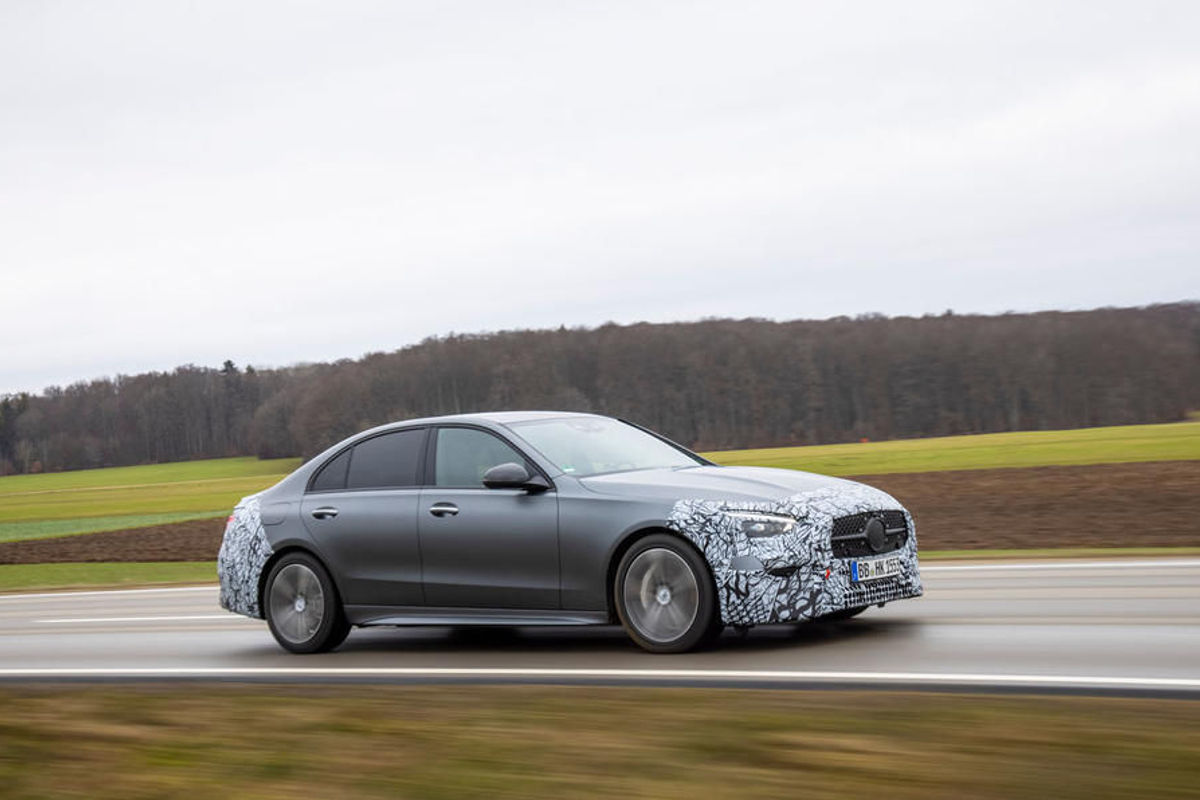
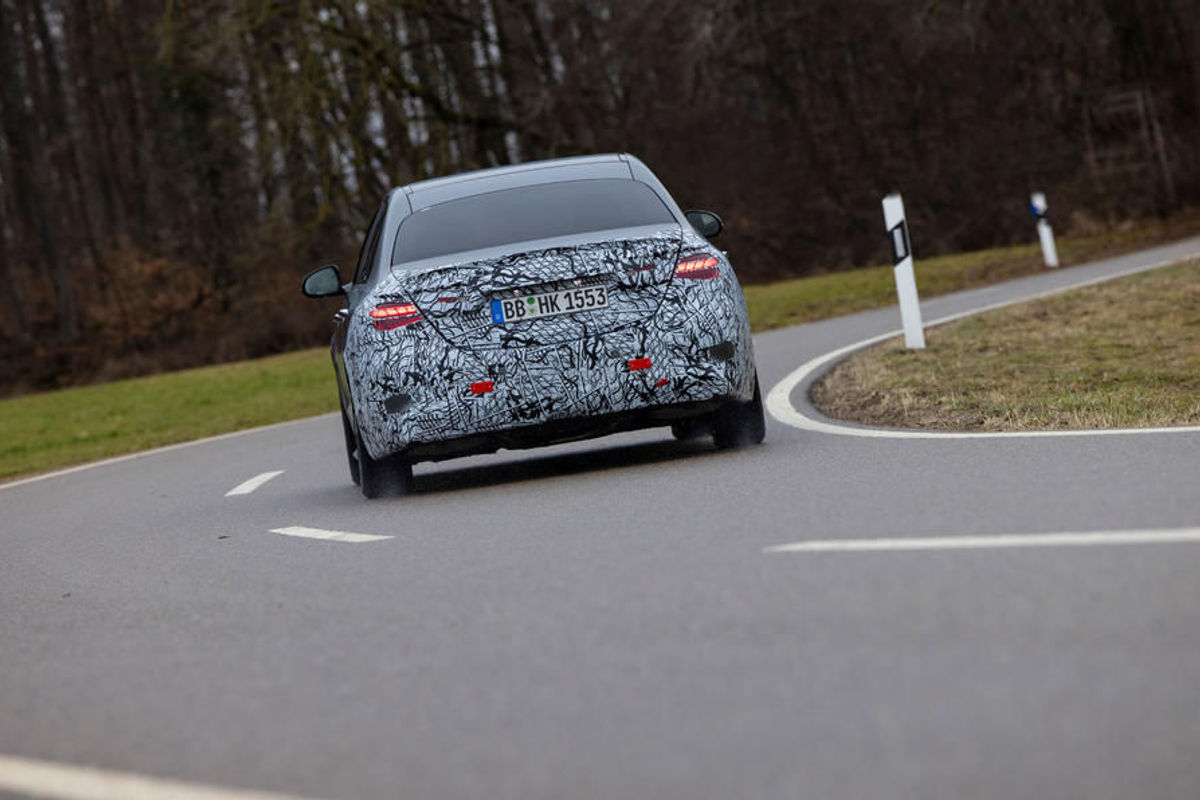
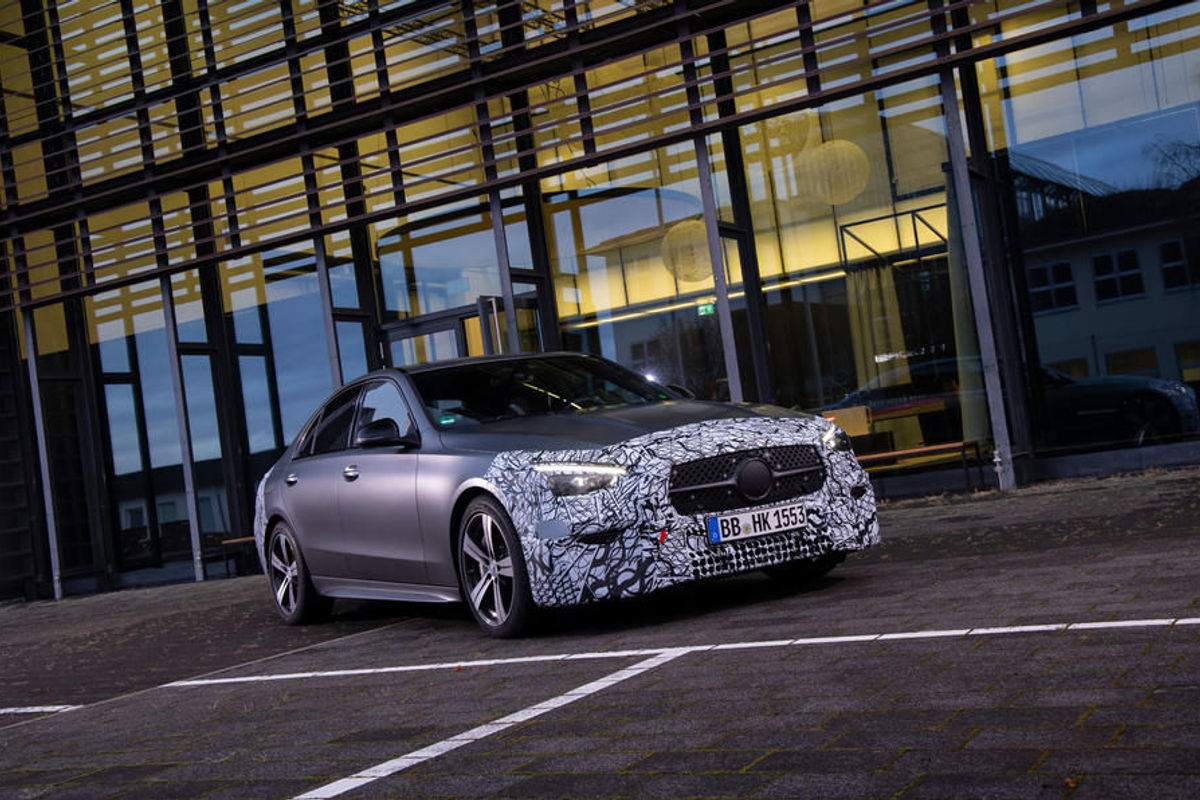
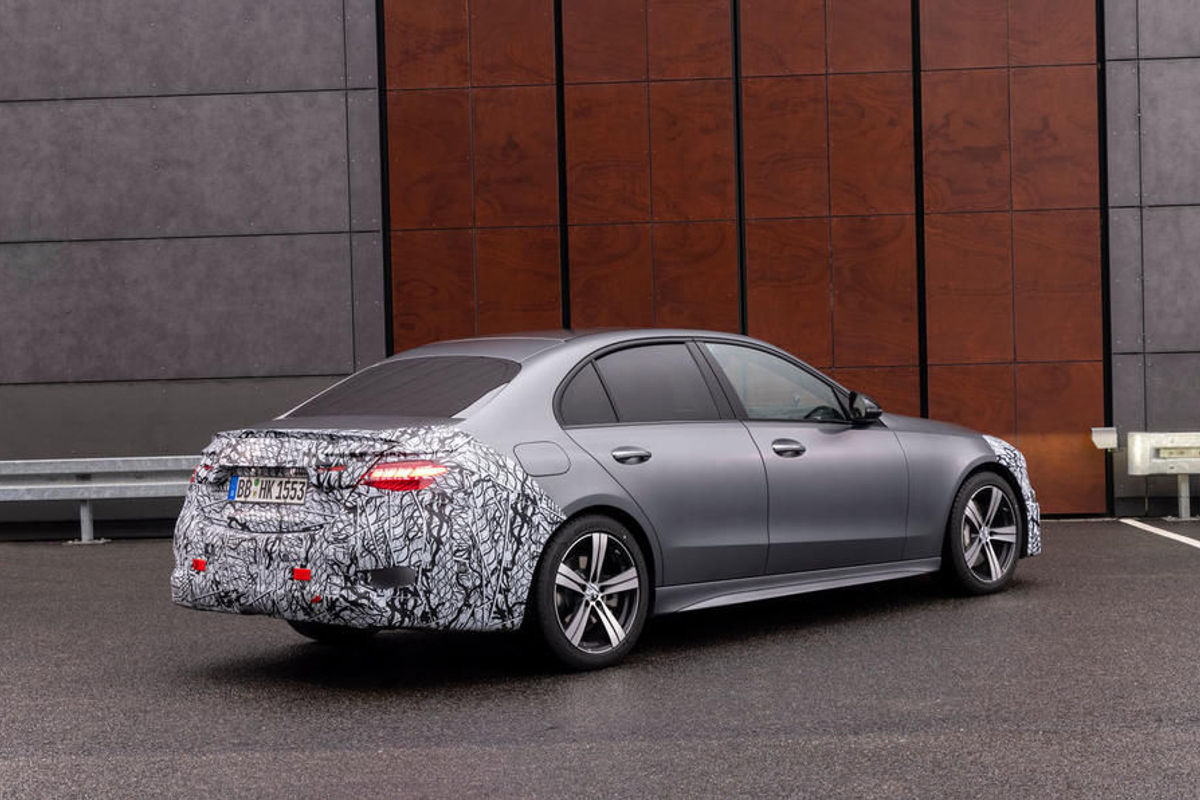
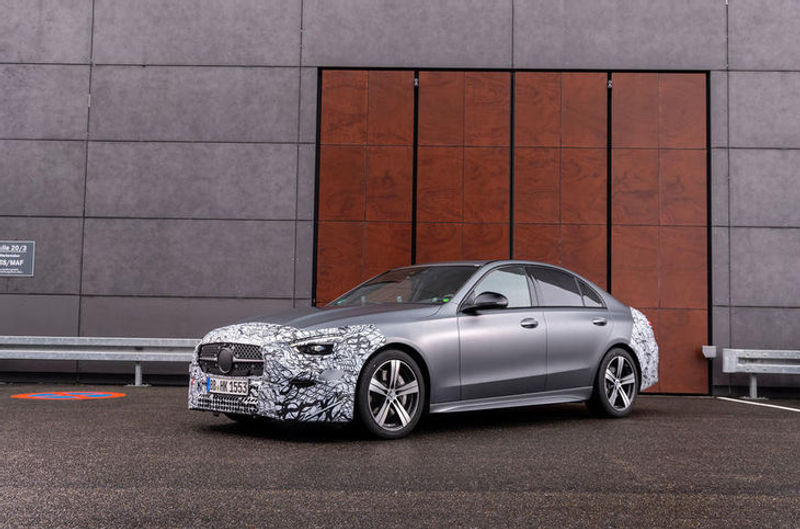
Mercedes-Benz has revealed its second all-electric model. Meet the EQA!
What you see here is essentially an all-electric Mercedes-Benz GLA. Merc itself says the new EQA is a close relation to the GLA, and is the first all-electric compact car offering from the German brand.
There will be multiple derivatives of EQA to come, but for now there's this the EQA 250. Under the bonnet, there's a 140 kW electric motor, which gives the EQA a range of 486 km based on the NEDC cycle. Consumption is rated at 15.7 kWh/100 km. For those wanting more, there'll be an all-wheel drive model, as well as models that have over 200 kW and long-distance versions that are said to offer at least 500 km. In terms of battery size, the Mercedes-Benz EQA offers a 66.5 kWh.
The technology claims are impressive. Merc says its new EQA features something called Navigation with Electric Intelligence that gets you to your destination fastest, while taking into account charging times, which should ease some of that range anxiety. It's smart enough to allow for charging stops, terrain, traffic and driving style. If you're worried about enough chargers, Mercedes-Benz says there are more than 450 000 AC and DC charging stations on the Mercedes Me Charge network in 3 countries. Mercedes Me Charge also allows charging at more than 175 000 public charging points across Europe.
Mercedes-Benz says its EQA features trick aerodynamics that contributes to its efficiency. Impressively, the EQA is the first model from Mercedes-EQ whose aerodynamic development has been undertaken entirely digitally. The underbody is completely enclosed, the wheels are aerodynamic and there are special spoilers to help deflect air.
Naturally, there's an array of intelligent driving aids such as Active Lane Keeping Assist and Active Brake Assist, and in the event of a crash, the vehicle's body is designed to protect the battery from being pierced, which would likely result in a fire. Inside, the Mercedes-Benz EQA features MBUX infotainment system, complete with the Hey Mercedes digital assistant. There's an Edition 1 model that offers luxuries like 'eather seats, through which can be seen a fabric in the signature Mercedes-EQ colour pure blue. The instruments, with their electric vehicle-specific displays, pick up on the same colour scheme with rosé gold-coloured and blue highlights.'
Mercedes-Benz EQA Price
Mercedes-Benz Europe has released pricing for the EQA and it comes to 47 540.50 Euros, which is around R855 000. As for South African availability, it's unlikely we'll be seeing the Mercedes-Benz EQA on our roads any time soon. Fans of the 3-pointed star can look forward to the bigger Mercedes-Benz EQC SUV making landfall in 2021.
So you’ve got money that's burning a hole in your pocket and you're keen on buying a sporty modern-classic. Indulging your youthful spirit is all good and well, but, ever so often, by the time you can afford the car of your dreams, you usually crave in-car comfort too. Of course, a super-sedan is the answer – something with ample power, usable space, and a wonderful surround sound system (through which you’ll be blasting Classic FM, no doubt).
There are many special cars to choose from that offer varying levels of those desirable characteristics. However, you’ll be hard-pressed to find a more perfect vehicle for this application than a big-engined Mercedes-Benz – better yet, an AMG model, with its svelte interior and stonking performance.
Initially, the performance variant of the W203-generation was the C32 AMG sedan. It sported a silky smooth supercharged V6 and was rather quick, but it was by no means widow/er maker. It also suffered from a few mechanical foibles and was overshadowed by the inimitable BMW E46 M3.
Come 2005, the C32 was replaced by the C55, the latter replete with a 5.4-litre naturally aspirated V8 and extended nose (to accommodate the bigger V8 in the Benz's engine bay). Gone were the mechanical foibles, too, and the end result was one of the most manageable performance packages ever to have come out of Affalterbach.
It featured a plethora of desirable creature comforts too. In fact, the majority of C55s came equipped with a rather long list of features such as bi-xenon headlamps, rain-sensing wipers, satnav, electric rear blind, a Harman/Kardon sound system, 10-way adjustable front seats with electric rake- and reach adjustment for the steering column, climate control, cruise control and an auto-dimming rear-view mirror. It even had a device that few modern cars have anymore – a 6-CD changer. What more could one need?
How does it compare with its modern counterpart?
The C55 AMG replaced the C32 AMG and incorporated a raft of updates.
It would seem as though this recipe worked rather well for Mercedes-Benz. The current Mercedes-AMG C63 S is still selling up a storm even though its platform has been around for a while. It offers a similar sort of "fizz" to the C55 AMG, if you will, in the sense that you know that there is significantly more power under the bonnet than what you would ever need – that simple notion, in itself, stirs something within.
What the new vehicle lacks in cubic capacity (4.0- as opposed to 5.4 litres) it makes up for with the addition of 2 turbochargers. Of course, it is much faster, but that’s progress! The older car affords more feel through the steering wheel with its hydraulic setup, whereas the new car's electronically assisted system can be optimised through the drive modes. Nearly 10 years and a whole model cycle separate the 2 Benzes and, of course, the technology that goes into the W205 model differs hugely to what went into the W203, but the basic principle of a powerful V8 in a practical, comfortable sedan remains.
That’s not to say that the C55 isn’t advanced, however. Its gearbox featured Touch Shift and AMG SpeedShift technology. Put simply, SpeedShift operates in a “direct-drive” mode in 2nd to 5th gears, providing the sensation of a manual-equipped car during high-performance driving scenarios. It’ll automatically shift down during hard braking and prevent upshifts on sharp corners – it’s a clever system, for its age! What this translates to on the road are smooth and unobtrusive shifts when pottering around, but snappy shifts when you’re pushing on – it’s another nod to the theme of "fast, yet comfortable, transport".
How does it ride… Surely in an old Merc (squidgy) manner?
The Merc's of this generation were not meant to be the pinnacle of handling prowess that BMW was at the time.
If you’ve driven a contemporary Mercedes-Benz, you’ll immediately notice that the C55 gets down the road in a similar fashion to its successors. The ride quality is neither firm nor soft; it has "Goldilocks damping", if you will. The venerable Benz has an independent, 3-link front- and independent 5-arm multilink rear suspension, which is connected to the road via AMG-specific 18-inch double-spoke wheels that are 190-mm wide up front and 215 mm at the rear. Not only do the rims look the part – they allow for a decent amount of rubber at each corner to help absorb bumps and suppress NVH levels, to a degree.
Is the C55 really that much better than the C32?
Well, yes. A lot better, in fact. The C32 was sufficiently fast and made lovely noises, but rust was known to appear in its rear wheel arches. Having said that, by virtue of galvanisation, "tin worm" was less of a problem from 2004. A lot can be said for the concept of a big engine in a small car, but the 1st series-produced C-Class AMG merely set the scene for what was to come… The C55's package was all the more appealing than that of its predecessor because of its reduced complexity and undeniably brutish nature – we all love a howling 6 with a bit of supercharger whine, but it hardly compares to a free-breathing V8.
Behr gearbox coolers were fitted to all C55s in place of the troublesome Valeo unit found in the C32 – the latter had a tendency to give up the ghost and start mixing transmission fluid with coolant. That unwanted consequence would invariably lead to a gearbox and torque converter repair bill that could bring tears to your eyes. Speaking of which, the gearbox oil should be changed at around 90 000 km.
Oh dear, will it bankrupt me?
A simple formula means that the C55 wasn't prone to breaking, unless unmaintained or mistreated.
Unlike most German vehicles that are getting on in years, it actually won’t – there really is very little that can go wrong. One might find the occasional leak from worn breather pipes and, the fact that the M113 V8 uses 16 spark plugs is a bit of a nuisance (as is trying to get to them), but the lack of complexity and niggly faults is likely to be the biggest drawcard to those who are looking to add a C55 to their collection.
Will collectors, um, collect them?
Of the 630 000 W203s sold during the generation’s life cycle, only 4 000 were C55 AMGs. That’s less than 1%… The Benz is such an endearing thing, the likes of which we don’t see too often these days – a fast car that doesn’t look too fast, as opposed to a slow car that looks fast. It’s the sort of vehicle that appeals to those who value genuine performance over attention.
A minter should cost an arm and a leg, then?
The C55 AMG isn't yet on the collector's radar, so there are still a few bargains to be had on the 2nd hand market.
You’d think so, but C55 prices are actually incredibly reasonable. You’ll pay notably less for a clean C55 than you will an equivalent E46 M3, despite the E46’s cooling system, which is hewn from chocolate and the bearings, which are, in turn, fabricated from said chocolate’s foil wrapper. A cursory browse on Cars.co.za brings up 4 listings, all for less than R160k, all with around 145 000 km on the clock. The cheapest E46 M3 presents with 40 000 km more mileage, at around R40k more.
The Mercedes-Benz C55 AMG really is a modern-classic bargain – it’s fast, comfortable, rare and unsettlingly reliable. It’s for these reasons that I’m certain of its future credentials as a collector’s piece, so click on this link to find yours ASAP.
Porsche has revealed a more affordable version of its breakthrough electric vehicle, the Taycan.
This new entry-level model has a less potent battery pack and lower overall power output. But it is also rear-wheel drive, which should be a point of appeal, for Porsche traditionalists.
The new Taycan base model sits below the ‘4S’ derivative and uses a smaller 79.2 kWh battery pack. A single rear axle electric motor delivers 300 kW of power. The removal of the motor and the lighter battery pack mean the entry-level Taycan is just over 90 kg lighter than the Taycan 4S.
As with all things Porsche, there is an upgrade option. You can order your base specification rear-wheel-drive Taycan with a Performance Plus battery, that rates at 93.4 kWh of energy density. That boosts peak power from 300- to 350 kW.
The irony is that both the 300- and 350 kW Taycans both have a similar 0-100 kph benchmark acceleration time of 5.1 seconds, due to the mass burden of that larger battery pack on the 350 kW version.
Range is always an issue when considering a high-performance vehicle drawing its power from onboard batteries, and the base specification Taycan should manage 412 km on a charge. The Performance Plus variant ups that to 489 km. Those numbers are short of a comparable Tesla, with the Model S claiming a range of 647 km.
Porsche claims that its new rear-wheel-drive Taycans will recharge from 5- to 80% battery capacity in just under 23 minutes.
For those who believe that the best Porsches have always been rear-wheel drive, the new Taycan base model is an interesting offering. Priced at R2 222 700 it isn’t what one would call affordable, but compared to the 4S or Turbo, it offers a much lower price point.
The 420kW Taycan 4S retails for R2 586 000 whilst Porsche’s lead derivative, its 500kW Taycan Turbo, requires a significant R3 426 000 investment to secure ownership.
Porsche Taycan Pricing in SA (Jan 2021)
Porsche Taycan RWD – R2 222 700
Porsche Taycan 4S – R2 586 000
Porsche Taycan Turbo – R3 426 000
Porsche Taycan Turbo S – 4 027 000
Renault Kiger Concept Shown, Coming to SA (Update)
Renault has revealed the Kiger show-car which previews a new small SUV destined for India and other markets, including South Africa…
Update: Renault India released this teaser image of the new Kiger. The new vehicle is set to be revealed on the 28th of January 2021.
Renault’s crossover and SUV family is about to grow with the addition of the new Kiger and it will stand alongside current offerings such as the Triber, Captur and Duster.
The Kiger show-car measures less than 4 metres in length and gives us a good idea of what the production version of the Kiger will look like when it goes on sale in India and other markets from 2021. Renault says the Kiger will have a ground clearance of 210 mm which will be useful on gravel or for inner-city pavement hopping.
“The creative association of French and Indian designers was the best way to meet the needs and expectations of a clientele increasingly fond of style, dynamism and novelty. As with Triber, we are once again demonstrating our ability to innovate, by offering a new model with a dual personality, both urban and outdoor. Kiger Show-car is very close to the future production model,” said Laurens van den Acker, EVP, Corporate Design of Groupe Renault.
The Kiger is expected to reach South Africa in the second half of 2021.
However, being a show-car, the Kiger seen here has a few features that probably won’t make it to production, obviously, such as the green detailing, chunky 19-inch show wheels and the ‘Aurora Borealis’ exterior which changes according to the light and angle from you view it as well as fluorescent touches that serve to highlight elements such as the aluminium door handles, bumper inserts, strappings, logo contours and brake callipers. The Kiger show-car also boasts double-stage LED headlights and green turn indicators. The rear taillights feature a double-C motif which is likely to be carried over into the production version. The interior is likely to be similar to that offered in the Triber, but we have yet to see official interior images.
Our understanding is that the 1.0-litre turbopetrol will be updated with more power and torque for the Kiger and will eventually be introduced into Triber. Currently, the turbopetrol (which isn’t yet offered in SA) makes 74 kW and 160 Nm of torque. Figures for the version that will go under the bonnet of the Kiger are assumed to be 86 kW and 180 Nm, which makes it more in line with what competitors from Hyundai and VW are currently offering.
Will it come to SA? The answer is yes and based on current information from Renault South Africa, the Kiger is due to arrive in South Africa in the third quarter of 2021. Provided that Renault South Africa is able to price the Kiger competitively, it should sell very well.
Meet the finalists in the Compact Family car category of the 2020/21 #CarsAwards powered by WesBank!
Now in its 6th year, the #CarsAwards was conceived to be South Africa's definitive automotive awards programme and is backed, for the 5th year running, by the country's leading supplier of vehicle finance, WesBank.
With household budgets stretched to breaking point, the reasonably affordable modern-day family car has to wear many hats – from compact traffic dodger to spacious school-run specialist and even weekend getaway machine. Practicality and spaciousness are important considerations, but so are safety, technology, fuel efficiency and a modicum of lifestyle flexibility.
This category is guided by both eligibility factors and Pillars of Success.
Eligibility factors for this category include a list price between R350 000 and R450 000 (as of October 1, 2020) and pricing must include the cost of all necessary optional features to meet the eligibility criteria.
Eligible vehicles must be equipped with ABS, minimum of 4 airbags, electronic stability control (ESC), split-folding rear seats, service plan and air conditioning.
Pillars of success for this category include engine flexibility, fuel economy, space and practicality, design and quality appeal, comfort, and safety.
Visit www.carsawards.co.za for more information. In no particular order, the finalists are as follows:
Volkswagen T-Cross 1.5 TSI R-Line
Volkswagen won the compact family category at its first attempt in the 2019/20 #CarsAwards. With funky looks, spaciousness and a solid engine line-up, the T-Cross is one of VW and the segment’s top-sellers. For the 2020/21 programme, we’ve nominated the 110kW derivative.
In late 2018, the plucky Renault Duster was replaced by an extensively reworked model (with a fresher face and improved levels of build quality) to continue the rich legacy of its predecessor. Powered by a potent, yet extremely frugal, turbodiesel motor, the Duster is a strong candidate.
Kia has earmarked an assortment of SUVs for introduction in South Africa and the Seltos is the first of those new products. The stylish newcomer, whose line-up was recently bolstered by the addition of a turbodiesel-powered derivative, offers commendable levels of spec, plus great fit and finish. With this new punchy-yet-frugal motor, the Seltos isn’t here to make up the numbers.
Take a look at what new and facelifted products are due for introduction in South Africa from BMW in 2021!
BMW is expected to have a relatively quiet year in terms of new vehicle introductions but the models that are on the way are sure to ruffle a few feathers in their respective segments. Also, BMW is expected to expand upon its local electric vehicle (EV) offering with the addition of the iX3 SUV which will join the i3 electric hatchback in BMW’s electric offensive.
BMW will launch its 128ti premium hot hatch in South Africa soon. Fitted with a limited-slip diff, M Sport suspension and a 180-kW 2.0-litre turbopetrol motor, the 128ti is claimed to bolt from 0 to 100 kph in 6.3 sec and marks BMW's first serious stab at the traditional front-wheel-drive hot hatchback market. Although Mzansi won't get the full-fat 195 kW/400 Nm version as offered in Europe, the newcomer's outputs are almost identical to that of the Golf 8 GTI.
BMW fans can look forward to the arrival of the new M3 and M4 Coupe on local soil in the first half of the year. Whether you like the grille or not, you can’t dispute what’s lurking in the engine bay. Both the M3 and M4 are powered by a twin-turbocharged 3.0-litre inline-6 engine developing no less than 353 kW (or 375 kW in the Competition derivatives) while torque is pegged at 550 Nm and 650 Nm respectively. Standard versions are fitted with a 6-speed manual transmission while the Competition derivatives make use of an 8-speed M Steptronic transmission. Only the M3 Competition and M4 Competition are destined for South Africa which means we won’t get the choice of a manual transmission on local soil. Local specification and pricing details will be revealed closer to launch.
The new 4 Series Coupe arrived late in 2020 and the range will be bolstered with the Convertible and Gran Coupe in 2021. The list of powertrains for the 4 Series Convertible comprises 4- and 6-cylinder turbopetrol and -diesel engines mated with an 8-speed Steptronic automatic transmission (replete with ‘wheel-mounted shift paddles), although we anticipate that only the 420i, 430i and M440i xDrive will be offered in South Africa. As for the 4 Series Gran Coupe, a 3.0-litre turbocharged 6-cylinder petrol engine developing 275 kW and 500 Nm is expected in the range-topping M440i xDrive derivative and it's good for a 4.5 second run to 100 kph. A 2.0-litre turbocharged pertrol and diesel engine option is also likely. Look out for specification and pricing details closer to launch.
BMW’s facelifted 5 Series is due in showrooms very soon and whereas the line-up no longer has a 3.0-litre 540i derivative, marking the first time a 5 Series range won't feature a straight-6 engine in the Republic, it will gain the thumping M550i xDrive, which combines 390 kW of V8 muscle with all-wheel-drive traction. See specification and pricing details here.
The BMW M5 CS is due in SA this year and only 5 will be allocated to the South African market. We have known for some time that its engine would produce 467 kW, which is marginally higher than the M5 Competition’s 460 kW, as well as the fact the Clubsport would be 70 kg lighter than its sibling by virtue of incorporating numerous lightweight parts.
Those details have now all been confirmed, but the claimed performance figures of the super sedan, which is powered by a 750-Nm 4.4-litre twin-turbo V8 mated with an 8-speed automatic transmission, is nonetheless stupefying. BMW claims the M5 CS can bolt from standstill to 100 kph in 3 sec dead, from 0 to 200 kph in 10.4 sec and go on to an (electronically-limited!) top speed of 305 kph.
Based on the popular BMW X3, the electric iX3 will rival the Mercedes-Benz EQC and Audi e-tron. The iX3 is powered by a 5th-generation eDrive power unit consisting of a 210 kW/400 Nm electric motor, which is mated with an 80-kWh lithium-ion battery pack sending power to the rear wheels. BMW says that the iX3 will dash from zero to 100 kph in 6.8 seconds with a limited top speed of 180 kph. Range is claimed at 460 km from a full-cycle charge on the WLTP standard. Look out for more details closer to the iX3’s local launch!
Take a look at what new and facelifted produces are coming to South Africa from Mercedes-Benz in 2021.
German luxury car brand, Mercedes-Benz, will look to introduce a number of new and facelifted products to South Africa in 2021. Apart from launching a range of AMG products locally, the Affalterbach-based firm will also look to welcome its first all-electric vehicle to South Africa towards the end of 2021.
The S-Class is the pinnacle of luxury for Mercedes-Benz and the new S-Class is expected to be nothing short of phenomenal in terms of luxury execution, refinement and sheer kerb appeal. The S-Class is powered by a range of hybridised powertrains with 48-volt technology as well as the choice of a plug-in hybrid setup while an all-electric EQS is also in development. The headlining powerplant in the S580 is a twin-turbocharged 4.0-litre V8 that's good for 350 kW and 700 Nm and is paired with a 9-speed automatic transmission. Local specification and pricing details will be made available closer to launch.
Powered by the most potent V8 engine that Mercedes-AMG has ever installed in a road car and laced with motorsport-derived components, the 537-kW GT Black Series is the ultimate version of the Affalterbach-based performance division’s 1st standalone model. Last year, the AMG GT Black Series became the fastest production car to lap the famous Nurburgring in Germany with a lap time of 6:43:61.
The AMG GLE 63 S was meant to arrive in 2020 but inevitable Covid-related delays has pushed timings into 2021 and although Mercedes-Benz SA was not able to confirm exactly when it will land, we expect it in the first half of 2021.
The AMG GLE 63 S is powered by a twin-turbocharged 4.0-litre V8 engine which incorporates Mercedes-Benz’s EQ Boost 48V starter-generator mild-hybrid system. Outputs are impressive at 450 kW and 850 Nm and in conjunction with a 9-speed Speedshift automatic transmission, this burly SUV will rumple from zero to 100 kph in just 3.8 seconds! Pricing is expected to come in at about R2 862 920.
You can also expect to see the Mercedes-AMG GLS 63 reach South Africa during 2021.
Like many other models, the arrival of the facelifted E-Class has also been delayed but will hopefully reach local showrooms soon. The latest E-Class boasts a visual update on the outside but most of the changes can be seen inside where updated trim finishes and equipment upgrades are perhaps more forthcoming. See specs and pricing details for the updated E-Class here!
The all-electric EQC SUV is due to arrive in South Africa towards the end of 2021. The EQC has already conducted extensive testing in South Africa and we had the opportunity to sample it back in 2019. The EQC 400 is powered by 2 motors, combining to push out 300 kW and 765 Nm with an 80 kWh battery. There's one motor on the front axle and a second at the rear, making it an all-wheel-drive vehicle. Pricing for the EQC has yet to be confirmed, but we’ll inform you as soon as it drops!
Having optimised the F8 Tributo’s performance by upping its twin-turbo 3.9-litre V8’s peak outputs to 590 kW and 898 Nm, German tuning firm Novitec has produced a bespoke aerodynamic kit to ensure the Ferrari has the show to match the go!
Last year, Cars.co.za reported that Novitec had developed a range of engine, suspension and exhaust mods to beef up the F8 Tributo, which produces more-than-sufficient maximum figures of 530 kW at 7 000 rpm and 770 Nm at 3 250 rpm in standard trim – it’s powered by the most powerful V8 engine that Ferrari has ever put into series production. But for some well-heeled aficionados, 530 kW could never be enough…
The carbon-fibre-laced front splitter distinguishes the Novitec creation from its factory-built siblings.
With the installation of a Novitec N-Tronic control module, which tweaks the engine mapping, ignition and boost pressure, the F8 Tributo's outputs go up to 579 kW at 8 000 rpm and 882 Nm at 3 000 rpm. Then, with the Power Stage 2 update, which combines the N-Tronic with a custom stainless-steel exhaust system (with catalyst-replacement pipes), the headline figures are 590 kW at 7 950 rpm and 898 Nm at 3 100 rpm.
That means that instead of accelerating from 0 to 100 kph in 2.9 sec (as the Ferrari does in standard trim), the Novitec F8 Tributo is claimed to dispatch the benchmark in just 2.6 sec, before going on a top speed of “in excess of 340 kph”.
Carbon fibre accoutrements feature all along the flanks of the Novitec F8 Tributo, there is even an extra vane in the side inlet.
However, the car that Novitec presented last year looked much like a standard F8 Tributo, apart from riding on sports springs that lower the car’s ride height by 35 mm and being shod with bespoke Vossen-Novitec rims and tyres – 21-inch at the front, with 22-inch at the back.
Now the tuning firm has unveiled a strikingly styled body kit for its fettled F8 Tributo, of which all parts are optionally available in naked-carbon with a high-gloss clear coat.
The Novitec F8 Tributo has larger wheels at the back (22-inch alloys) than at the front (21-inch alloys).
The front aspect is characterised by a 2-piece spoiler incorporating an elaborate carbon-trimmed air intake, as well as flaps on the side air intakes (to reduce lift at high speeds). The bonnet vent, meanwhile, is garnished with an insert finished in the same composite material.
More carbon-fibre trim features on the Ferrari’s side skirts, wing mirrors, side-intake deflectors and large rear wing. Buyers can upgrade the rear fascia by specifying a cover, air outlets and fins to affix to the production diffuser. Alternatively, a bespoke Novitec diffuser is also available.
Buyers can personalise the Novitec F8 Tributo's interior to heart's content… as long as there are Alcantara and carbon inserts!
To personalise the modified Italian supercar's wheels, buyers can choose from 72 colours and brushed or polished finishes. The top-of-the-range wheel has a 5 twin-spoke design with a centre-lock look.
Lastly, there are various exhaust systems to choose from; the fanciest one is made from lightweight Inconel and plated with gold, which makes a bold statement when you open the engine cover… and helps to dissipate heat. The tailpipes are trimmed in a combo of carbon and stainless steel.
BMW’s M division managed to rack up an impressive record sales year in 2020 despite difficulties caused by the ongoing Covid-19 pandemic.
It seems that the only thing spreading faster than Covid-19 is the popularity of BMW M cars.
The Munich-based firm’s M performance arm has posted an impressive sales record in 2020, making it the current leader in the performance and high-performance car market. BMW M increased its sales by 6% in 2020 totalling 144 218 units sold.
Markus Flasch, chairman of the board of the BMW M GmbH said, “The fact that we were able to conclude this exceptionally challenging year with yet a further record is great validation of our consistent growth strategy. We can be particularly proud of the fact that we were able not only to defend our market dominance as the most successful provider of performance and high-performance automobiles, but also to have even expanded it.”
Comparatively, BMW M extended its sales lead over its arch-nemesis, Mercedes-AMG, which recorded a 5.3 decrease in sales in 2020, selling 125 129 units. In 2019, the sales gap between the 2 German performance brands was a mere 3 700 units but BMW M’s lead had now grown to 19 089 units.
What M models contributed to the success?
BMW's M SUVs, namely the X5 M and X6 M played a role in the M division's sales success in 2021.
The new BMW M3 and BMW M4 boosted sales even further, despite the new polarising grille design that continues to both enchant and divide consumers. BMW M3 and M4 sales are expected to increase globally as these new models become available in more markets worldwide in 2021 (the new M3 and M4 is launching SA in the first half of 2021). In fact, the expectation is that the M3 and M4 will outsell the previous F80 and F82 generations respectively. Other key growth markets for BMW M include USA, China, Russia, Korea, Italy and the UK.
As for 2021 and beyond, BMW M will look to launch the M5 CS in January 2021, followed by the M3 Sedan in March. Later in the year, a four-wheel-drive M xDrive derivative will be added to the M3 and M4 range and an M4 Convertible will also be revealed. An M3 Touring is also currently in development.
Perhaps the most interesting development is that BMW M will unveil its first electric M car in 2021 and while details are scant at this stage, we will be following this development closely. BMW M will also celebrate its 50th anniversary in 2022 and Markus Flasch has already announced “a year full of surprises”: “If I mention the keyword special edition models, it should be clear what our customers can look forward to during the anniversary year” he said.
We will keep you updated these developments come to fruition, so stay tuned!
Volkswagen is expected to launch no less than 6 new or updated products in South Africa in 2021. See what’s coming below!
Volkswagen is a much-loved car brand in South Africa and it’s no surprise that it’s currently the best-selling passenger car brand in the country with a current passenger market share of 21.6%, which is an all-time record for the Wolfsburg-based firm.
While 2021 will be a relatively quiet year for Volkswagen in terms of new vehicle launches, there are some very exciting products due to arrive in South Africa which will not only satisfy local fans of the brand, but will also boost sales figures locally too. Take a look at what’s coming!
The new Golf 8 will arrive on local soil in the second quarter of the year and GTI fans will finally get their first taste. The Golf 8 GTI draws power from an EA888 2.0-litre turbocharged and direct-injection 4-cylinder engine with peak outputs of 180 kW and 370 Nm and will come paired with a 7-speed DSG. The sprint from zero to 100 kph is done and dusted in 6.3 seconds with a top speed of 250 kph. Pricing will be announced closer to launch.
A facelifted Tiguan family SUV is on its way and it will arrive with a new grille and bumpers and wear the latest VW logo proudly. The Tiguan’s interior will feature an updated steering wheel and the latest MIB3 infotainment system and top-spec variants will be equipped with a new 480-watt Fender Premium sound system. We may even see the arrival of the Tiguan R… Specification and pricing will be released closer to launch.
Following the updated Caravelle T6.1, Volkswagen will now introduce the updated Kombi in the second quarter of 2021. The current diesel engine range is expected to remain but styling and interior execution is expected to be enhanced. Local pricing and specification will be revealed closer to launch.
Volkswagen Commercial will introduce an automatic transmission as well as 4Motion all-wheel-drive capability to the Crafter range. If your business needs to carry loads over any given distance then the Crafter will be of interest to you. Pricing and specification details will be communicated closer to launch.
A new Caddy will make landfall in South Africa this year to cater for both family (Caddy MPV) and business buyers (Caddy Cargo) looking for a practical vehicle. The Caddy’s interior now adopts nice-to-have features seen on the brand’s passenger cars such VW’s Digital Cockpit and a larger infotainment system. Petrol and diesel engines are on the cards but exact powertrain details for the local market will be confirmed closer to launch.
Volkswagen will end the year off with a very loud bang… or vrrphaa, with the introduction of the new range-topping Golf 8 R which will pack a turbocharged 2.0-litre petrol engine with outputs of 235 kW and 420 Nm in conjunction with an updated 7-speed DSG and all-wheel-drive ability. It will be fast off the line with Volkswagen claiming a zero to 100 kph sprint time in just 4.7 seconds. We wouldn’t be surprised if it’s a few 10ths faster than the claim either!