Is this the world’s fastest bakkie?

With more power and performance than most supercars, surely the Hennessey Mammoth 1000 is the world's fastest bakkie?

When it was first unveiled, the Dodge Ram 1500 TRX was no slouch. Packing a 523 kW supercharged 6.2-litre V8 engine, it was capable of 0-100 kph in 4.5 seconds. It's a huge jump compared to South Africa's fastest bakkie, the 190 kW Volkswagen Amarok which is said to sprint to 100 kph in 7.6 seconds.

Hennessey decided that wasn't enough, and the Texas-based tuner set out to build an extreme package. The image you see here is just a rendering for now from Hennessey, but the Mammoth 1000 should resemble this. Featuring a raised ride height and new 20-inch Hennessey wheels as well as an LED lightbar, the Mammoth 1000 gains what Hennessey dubs its Off-Road Stage 1 package. Does this mean there could be an even more ballistic option in the future? Only time will tell. 

Aside from the visual upgrades, Hennessey has worked extensively on the Hellcat 6.2-litre supercharged motor and it now produces 755 kW and 1 314 Nm. An upgraded supercharger, new pulleys, new headers, new exhaust and an uprated ECU to tie it all together are just some of the upgrades. Performance-wise, Hennessey reckons 3.2 seconds to 100 kph is possible. "The RAM 1500 TRX is exciting in stock configuration, but I'm seeking extraordinary," said CEO John Hennessey. "The Mammoth 1000 upgrades completely transform this impressive pickup into something astonishingly powerful, visually exciting, and indisputably unique."

Hennessey says it will be building just 200 units in 2021. Brace yourself for countless YouTube drag race videos showing the Hennessey Mammoth 1000 eating supercars.

Further Reading

Volkswagen Amarok V6 TDI (2021) Review

Spy Shots: Ford F-150 Raptor in the Works

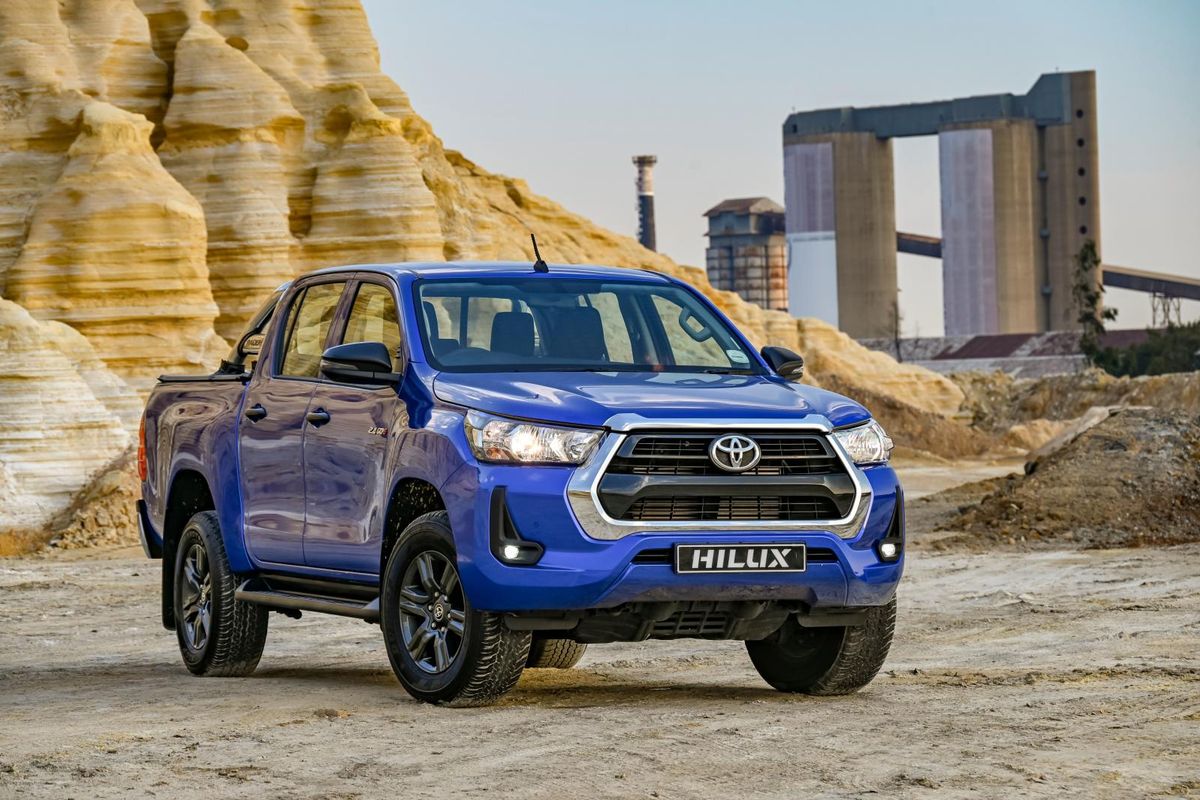
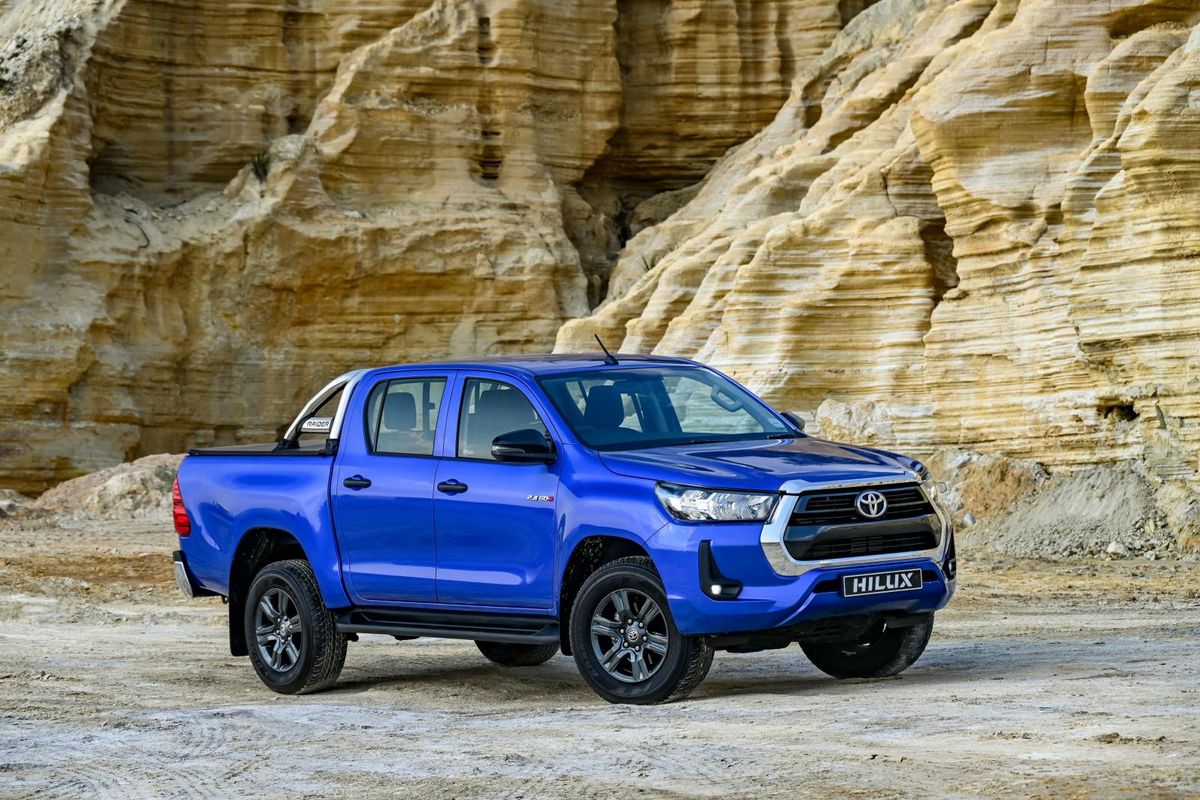
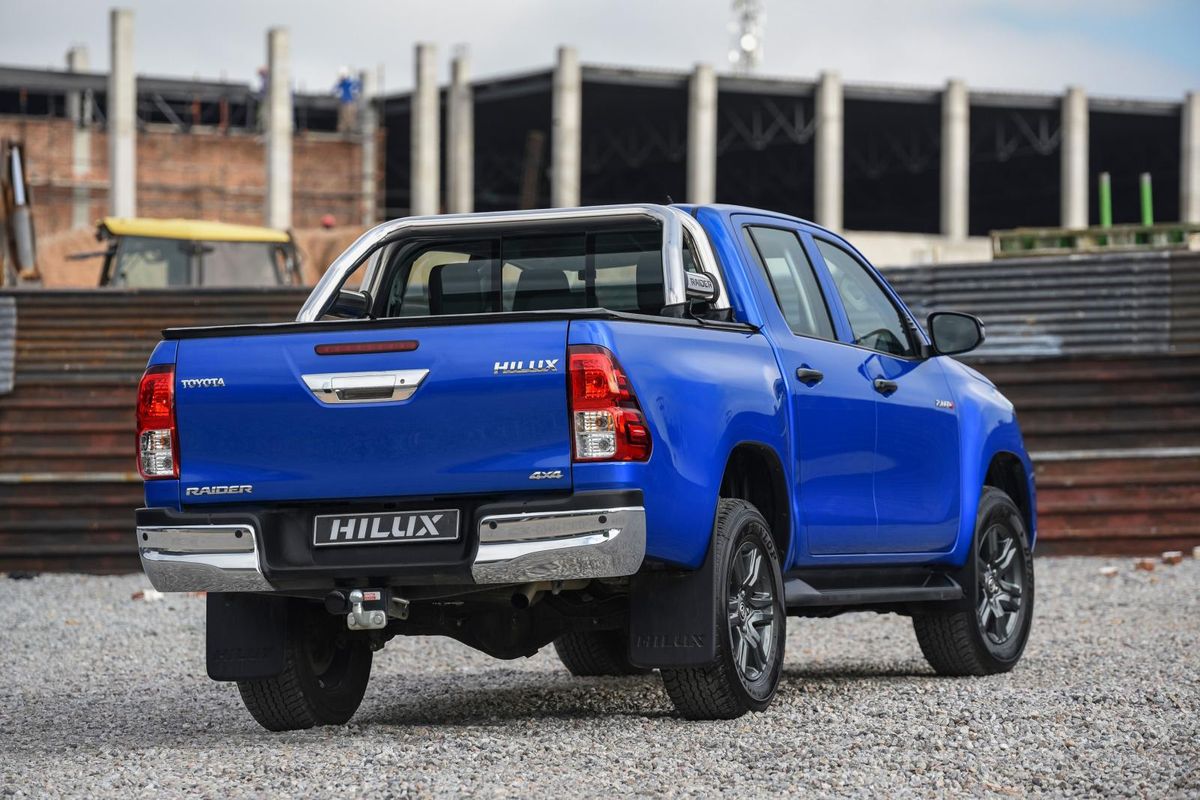
Toyota GR Hilux To Fight Next Ranger Raptor, Amarok R

RGMotorsport Announces Performance Upgrade for Raptor


#CarsAwards – Best Family Cars in SA

Meet the finalists in the Family Car category of the 2020/21 #CarsAwards powered by WesBank!

Now in its 6th year, the #CarsAwards was conceived to be South Africa's definitive automotive awards programme and is backed, for the 5th year running, by the country's leading supplier of vehicle finance, WesBank.

Read more about the 2020/21 Cars.co.za Consumer Awards powered by WesBank here 

Best Family Cars in SA 

The typical family car fulfils a wide variety of duties and needs to be a practical, safe all-rounder. The winner of this category should be ideal not only for the morning school run, but also the school holiday run to a distant location. In judging this category we’ve placed particular emphasis on interior flexibility, comfort and safety.

This category is guided by both eligibility factors and Pillars of Success. 

Eligibility factors for this category include a list price between R450 000 and R600 000 at the time of semi-finalist voting (October 1, 2020), including the cost of all necessary optional extras to meet the eligibility criteria. 

Eligible vehicles must be equipped with ABS (Anti-lock Braking System), ESP (Electronic Stability Control), a minimum of 6 airbags, split/fold rear seats, service plan, air conditioning and the vehicle must be fitted with an automatic transmission (including CVT and dual-clutch).

Pillars of Success for this category include engine flexibility, fuel economy, space and practicality, design and quality appeal, comfort, safety and In-Car Entertainment (ICE). 

Visit www.carsawards.co.za for more information. In no particular order, the finalists are as follows:

Mazda CX-5 2.0 Dynamic Auto

The CX-5 is a stalwart of the #CarsAwards family-car category, which it won in the 2017/18 and  2019/20 instalments of our programme. For 2020/21, the 2.0-litre Dynamic Auto derivative has again been nominated to uphold Mazda’s honour. The stylish CX-5 continues to offer excellent build quality, practicality and a balance of comfort and safety features that is hard to beat at the price.

View specification details for the Mazda CX-5

Toyota RAV4 2.0 AWD GX-R

The RAV4 is distinctly different from its understated forebears and is based on the TNGA platform, which underpins a variety of Toyota models. It’s been a perennial top-seller for the brand and the XA50 generation builds on that legacy, with improved practicality, driving refinement, comfort levels and interior features. In GX-R trim, you get a stylish package with the bonus of all-wheel drive.

View specification details for the Toyota RAV4 

Citroen C5 Aircross 1.6T Shine

After a lengthy absence, Citroen is back in the South African new-vehicle market. The French marque offers an array of fresh, stylish and well-priced products; competing in the family-car category is the striking C5 Aircross – possibly the most impressive model in Citroen’s line-up.

View specification details for the Citroen C5 Aircross 

See last year's #CarsAwards winners here!

Living with the Citroen C5 Aircross

We spent some quality time with the Citroen C5 Aircross during the recent end-of-year break. The French contender is well-liked by our test team and a finalist in the 2020/21 Cars.co.za Consumer Awards – powered by WesBank. The holiday period gave us a chance to experience what the Citroen was like to live with.

The best thing about conducting an extended test is that it provides an opportunity to form a more in-depth understanding (and, sometimes, appreciation) of a new model. That’s not to say our usual 10-14 day test isn’t thorough – because all testers need to have a chance to drive test cars during the rest of the year, individuals may not necessarily get enough seat time to notice all of a vehicle's quirks and talents. 

Our test unit was the C5 Aircross in flagship Shine specification. This trim level adds niceties such as a panoramic roof, rear-parking camera, partial leather trim and keyless entry, to name but a few.

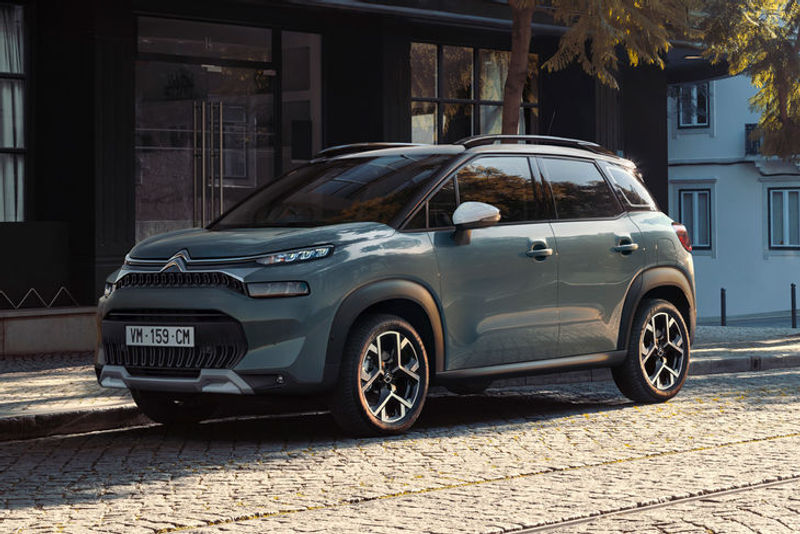
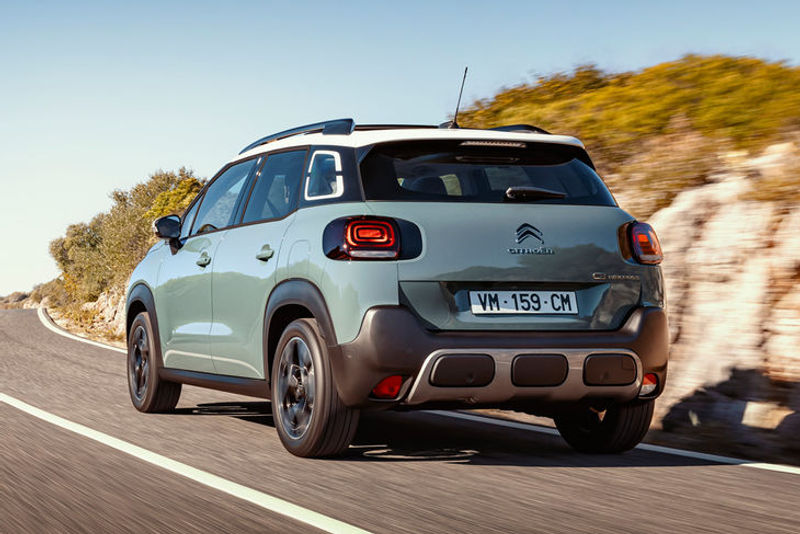
Seeing as contemporary vehicle design is greatly influenced by the need to adhere to ever-stricter safety standards, facilitate aerodynamic efficiency, conform with brands' design language and so on, it's rare to find a vehicle that really stands out from the crowd, aesthetically-speaking. The Citroen C5 Aircross is a design masterpiece – not only is it totally unique, but its design is interesting from every angle…

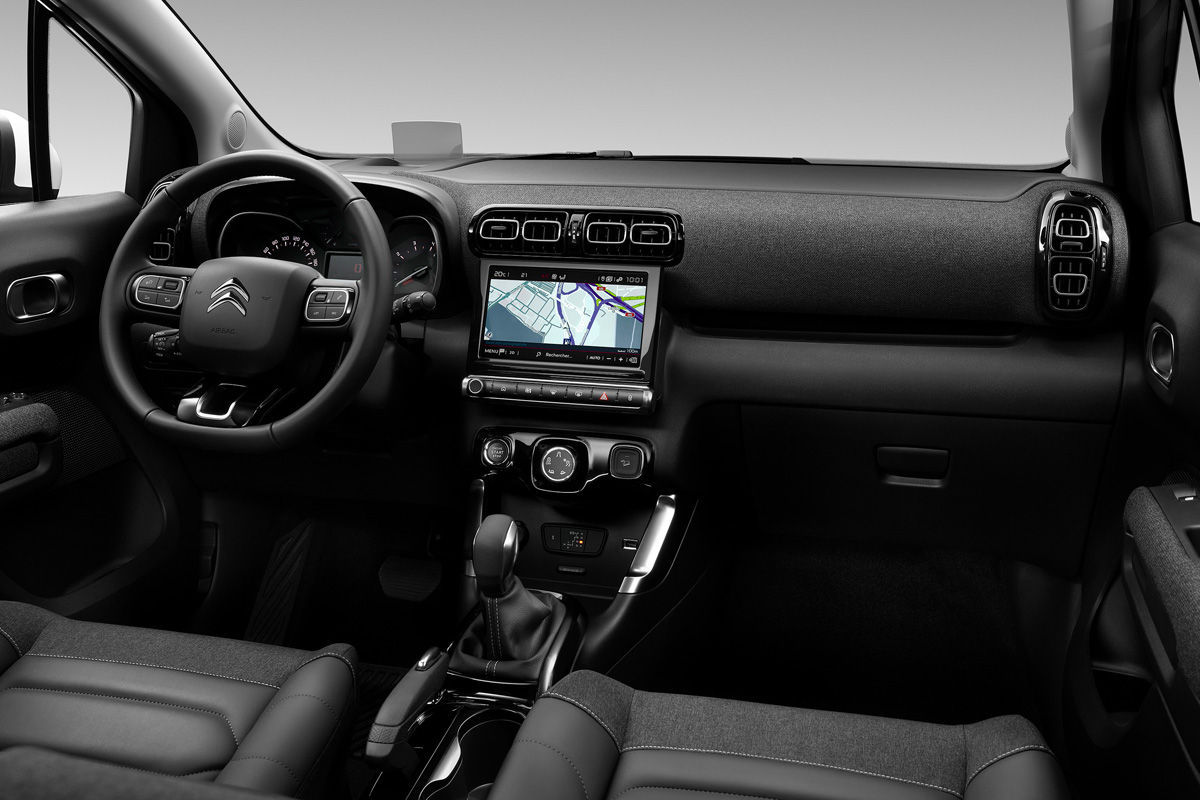
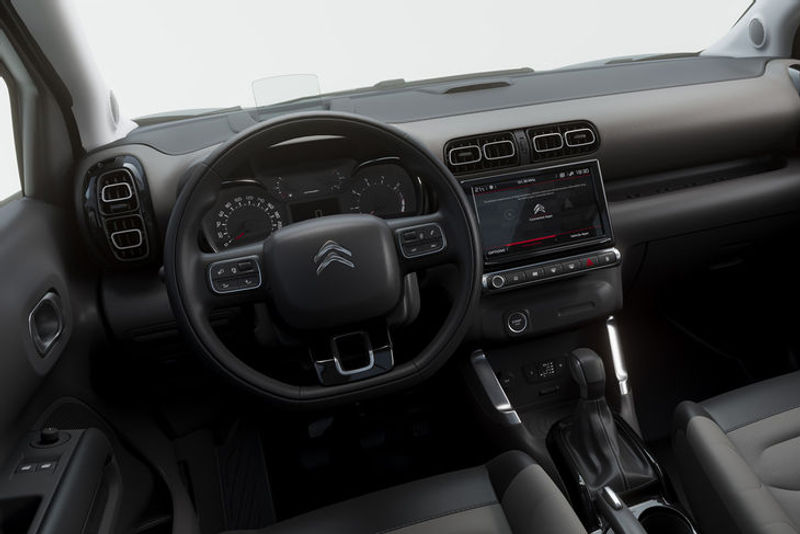
That distinctive front end must be quite the sight in other road users' rear-view mirrors! What's more, the black side-cladding boasts anti-dent Airbump tech, so there's very little chance that your vehicle will be damaged by car doors that are carelessly swung into its flanks in a parking lot, for example. The unique style extends to the French model's suitably funky, but high-functioning, cabin. The seats look great and the digital instrument panel features a selection of themes and appears thoroughly futuristic. You can see there's been a focused effort to make the vehicle interesting… and a hot topic of discussion. 

After 1 200 km and a few weeks' travel on tarred- and gravel roads, here are our thoughts about this stylish family car…

3 Things To Like about the C5 Aircross

Comfort and features


The C5 Aircross' interior styling is ornate but stops short of being fussy. Note how well the digital displays' layouts are co-ordinated. 

The Citroen C5 Aircross scores full marks for occupant comfort and standard specification – there are no optional extras to consider. Also, Citroen claims its C5 Aircross is engineered to deliver a smooth and absorbent ride quality, but marketing spin aside, the suspension really is comfort-focused. We do suspect the higher-profile 235/55 R18 Michelins are the unsung heroes here. Not much effort is required to turn the steering wheel from lock to lock. Okay, there's not much feedback, but it's in keeping with the car's requirement to provide relaxed family transport. It's effortless to drive and that's exactly what you want.

A wireless charging pad and Android Auto connectivity are virtual prerequisites in a vehicle costing half a million Rand, and we were delighted the Citroen C5 Aircross had both. The audio system is good, too.


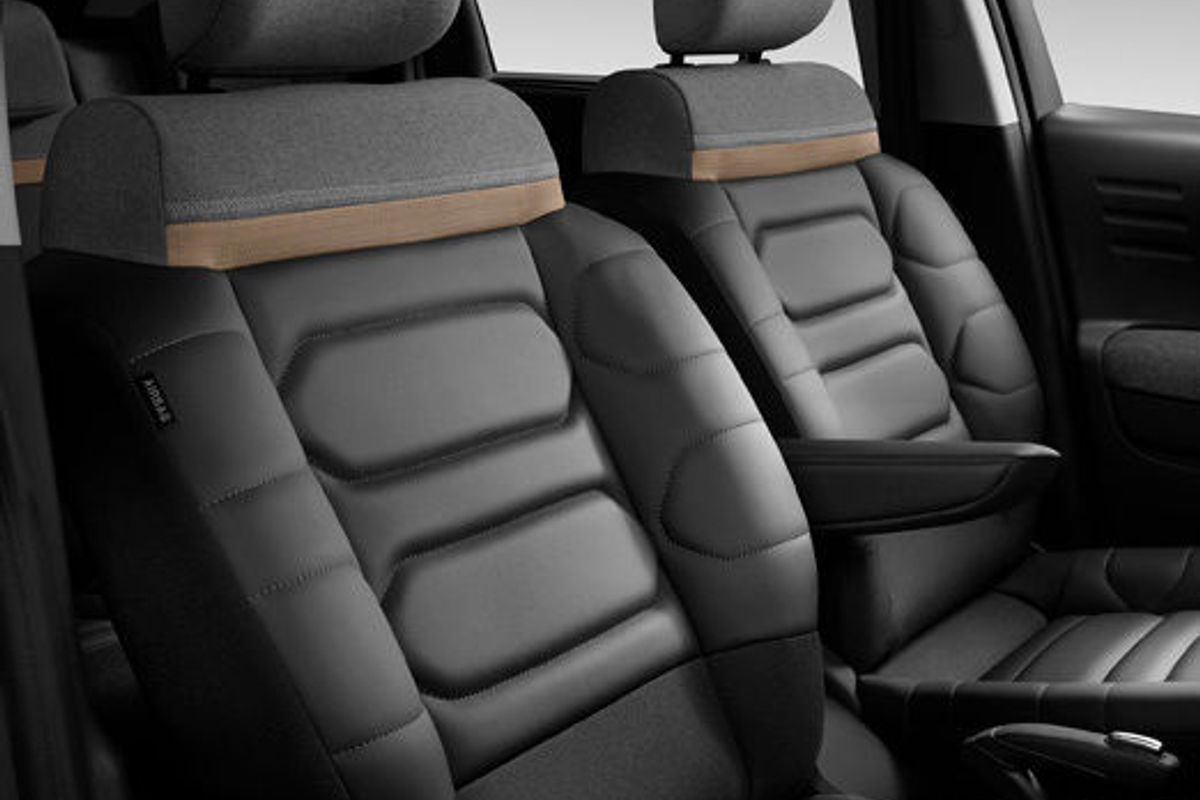
Don't be fooled by the retro-inspired stitching, the Citroen's driver's seat offers superb long-haul comfort.  

The position of the Citroen's driver's seat, meanwhile, is excellent. You're not perched "on a ledge" – as you would be in a larger SUV; not everyone prefers that – but you don't fall into the cabin either, as you would in a conventional hatchback, especially if you are of above-average height. The Shine-trim seats are great – not only do they look the part, but they are surprisingly comfortable over long distances. 

Practicality


Storage, storage, storage!

As opposed to double-cab cabins, for example, the C5 Aircross' interior layout has been well thought out and customers have ample places to hide their odds and ends. If our tester's mobile device didn't need to be charged on the convenient wireless pad, it could be placed conveniently in a recess next to the transmission selector. This recess is perfectly sized for keys, a wallet and a smartphone.

Oh? Do you need more space? Can we mention the centre armrest whose depth defies belief? At one stage, we had a jersey, camera and a 1-litre water bottle stowed in there, and there was still room for more stuff. The Citroen's luggage capacity, meanwhile, is on par with that of the popular Volkswagen Tiguan – 520 litres without the rear seats folded down.


That's a 1-litre bottle and the bonus is that this storage area receives plumbing from the climate control system, so it's chilled.


Safety Features


The safety radar module can be spotted just under the Citroen's registration plate.

Citroen has given its C5 Aircross a comprehensive safety package. It can be argued that some of the active features are a little intrusive, but we soon worked out that you can disable the automatic lane-keeping assist, which is activated above 70 kph, if its machinations become a trifle irritating. For the most part, we left it engaged. We appreciated the emergency braking alert, which warns the driver when a vehicle suddenly stops in the Citroen's path. What's more, there's a system that monitors driver alertness, so if you start feeling drowsy during a long-haul journey, the car will suggest that you take a break. 

In what's surely an industry first, the C5 Aircross also features an integrated dashcam, located near the rear-view mirror. It's constantly recording and in the event of an incident, its footage can be downloaded.

Dislikes? 

Our 1 200-odd kilometres at the 'wheel of the C5 Aircross were pleasant and enjoyable, with the test unit charming us with every mile. However, there were some minor niggles. Firstly, the powertrain (a 1.6-litre turbocharged petrol engine mated with an automatic transmission) is not particularly frugal. It's not a gas-guzzler, but our consumption hovered around 9 L/100 km. Those figures are average when the majority of our driving was on the open road – many of the Citroen's competitors are "lighter on the juice". Still, it's a small price to pay for a punchy engine that delivers good in-gear performance for overtaking.

Our other gripe was with the ergonomics/user experience of the (otherwise slick-looking) infotainment system. We're big fans of hands-free connectivity features such as Android Auto and Apple Carplay and will use them whenever available. However, if one of those is running, you have to exit the application and return to the car's native system to change something like a climate-control setting. Sometimes you just can't beat conventional buttons and switches! Speaking of switchgear, there are 'shift paddles, but we found that vehicle does a perfectly good job of changing gears by itself, so they're largely redundant. 


This yellow warning light initially worried us, but a quick Google search solved the minor issue.

The Citroen C5 Aircross did produce a tiny electronic gremlin during its extended tenure in our test fleet and it took some googling to get to the bottom, literally, of the issue. It turned out that the frontal radar sensor, which is located on the lower bumper underneath the number plate, is susceptible to extreme heat and it caused a warning light to appear on the dashboard. It came on during a spell of particularly hot weather when the test unit was parked in the blazing sun for protracted periods. To resolve, simply start driving again and the airflow will soon cool the affected area, after which the warning light will disappear.

Buying Advice

Should you buy a C5 Aircross in light of Peugeot Citroen South Africa's historic reputation for iffy after-sales support? What about depreciation and parts backup? Well, if you're willing to place your trust in the recently consolidated company's rejuvenated dealer network (the Opel brand is now part of the firm's portfolio too), there are certainly bargains to be had.

While we deem the list price of a brand-new top-spec C5 Aircross Shine fair at R560 000 (January 2021), it's astoundingly good value if you're prepared to go the demo route. A quick search on Cars.co.za's used car listings turned up 2019 models with mileages ranging from 4 900 km to 13 000 km retailing for around R390 000. We feel that those are extraordinarily tempting deals for a modern and safe family car; seeing as someone else (the vehicle's original owner or the dealership itself) has taken the first, ostensibly heaviest, depreciation hit, you could take full advantage of the lower purchase price…

Browse through Citroen C5 Aircross units for sale in South Africa here

Further Reading

Citroen C5 Aircross 1.6T Shine (2019) Review

Citroen Returns to South Africa

2020/21 Cars.co.za Consumer Awards – Powered by WesBank; Finalists

Peugeot 2008 (2021) Specs & Price

French carmaker, Peugeot, has released pricing and some specification details for the new 2008 compact SUV ahead of its local launch in early February 2021. 

Taking design notes from the larger Peugeot 3008 SUV and the compact Peugeot 208 hatchback, this is the new 2008 compact SUV. It's a striking vehicle, both inside and out. A total of 3 trim levels will be available including the base Active derivatives, mid-spec Allure derivative and the top-spec GT derivative. 

In terms of engine choice, the South African market will receive a 1.2-litre turbocharged petrol engine with  74 kW / 205 Nm mated exclusively with a 6-speed manual transmission in the entry-level 2008 Active derivative or buyers can opt for the more powerful 96 kW / 230 Nm version of this engine mated exclusively with a 6-speed automatic transmission.

The new 2008 is based on the new CMP platform and has a length of 4.3 metres. With a wheelbase of 2.6 metres, cabin space is prioritised. The 2008 features an updated version of the i-Cockpit digital dashboard which is familiar from the larger 3008 family SUV. Apple CarPlay and Android Auto will be offered as well as up to 4 USB sockets. A sunroof will be optionally available at an additional cost of R21 750. 

We will be attending the local launch of the new Peugeot 2008 and will keep you updated as soon as more SA-specific details become available. See pricing below!


The cabin of the new Peugeot 2008 is perhaps one of the most striking in this segment. 

New Peugeot 2008 – Price in South Africa 

2008 Active 1.2T 74 kW MT6 – R359 900

2008 Active 1.2T 96 kW AT6 – R399 900

2008 Allure 1.2T 96 kW AT6 – R429 900

2008 GT 1.2T 96 kW AT6 – R479 900

The 2008 will be sold with a 5-year/100 000km warranty and a 3-year/60 000 km service plan. 

Further Reading

2020 Peugeot 208 Revealed: Now With Electric Power

Peugeot 3008 GT Line+ (2018) Quick Review

New Peugeot 5008 Unveiled

Peugeot 308 1.2T Allure Auto (2018) Quick Review

Hyundai Teases New Bayon Crossover

Hyundai has released more revealing teaser images of its forthcoming Bayon compact crossover. 

In November 2020, Hyundai released a teaser image of the taillight of a new compact crossover called Bayon. Now, further teasers have been released which are more revealing. See the images in the gallery. 

The Bayon is the latest product offering from Hyundai and traces its name to the French city of Bayonne. In terms of size, this new crossover is a B-segment vehicle. That means it effectively sits below Kona in the Hyundai crossover line-up.

Product planners for Bayon are going to use the i20 platform. Although i20 and Kona are not that much different in size, Hyundai believes there is sufficient differentiation in the market for a viable business case for Bayon.

Bayon is expected to be revealed in the first half of 2021 and may very well be a Europe-only model as the Venue currently serves markets outside of Europe, including South Africa. It, therefore, wouldn't make sense for Hyundai to offer the Venue and Bayon in the same market. 

There are no concrete mechanical details relating to this new Hyundai, but one can extrapolate that powertrains will be broadly similar to that found in i20.

As a compact crossover, the Bayon will be front-wheel-drive. That means the i20’s 1.2-litre naturally-aspirated engine, good for 62 kW, should be an entry-level option.

For those who seek a bit more performance from the Bayon, Hyundai should also offer its turbocharged three-cylinder engine, enhanced with mild-hybridization. Two output grades of this engine exist (74 kW and 88 kW), and either would serve as a credible powertrain for the i20.

Gearbox options should follow on from the i20 powertrain specification and offer a six-speed manual or seven-speed dual-clutch for Hyundai’s latest crossover.

Look out for more details closer to the official Bayon launch in the coming months. 

Related content

Hyundai Venue vs Volkswagen T-Cross (2020) Comparative Review

Hyundai Creta (2020) International Launch Review

Update: Hyundai Bakkie Based on New Tucson?

Opel SA to be absorbed by Peugeot Citroen SA

Peugeot Citroen SA has confirmed it will be incorporating Opel South Africa into its stable. 

Outside of South Africa, Opel was snapped by the PSA Group back in 2017 and it was only a matter of time before this global decision impacted Opel South Africa's operations. Officially, Peugeot Citroen South Africa (PCSA) has become the official distributor of Opel's products and this comes into effect in January 2021.

“Of course, we are very excited to be distributing Opel vehicles” said Leslie Ramsoomar, Managing Director of Peugeot Citroen South Africa, “the brand has a large following locally, and the future product line up is very exciting, with 4 product launches or updates planned for this year."  PCSA says the changes should result in minimal impact to dealers and customers. Customers can be assured that they will still have access to the same service points. 

Meanwhile, PSA Group and FCA (Fiat Chrysler Alfa) have merged to become the 4th largest carmaker. There's a new name for the group too, Stellantis. Under Stellantis, there's Abarth, Alfa Romeo, Chrysler, Citroen, Dodge, DS Automobiles, Fiat, Jeep, Lancia, Maserati, Opel, Peugeot, Ram, and Vauxhall.

The news comes as the all-new 6th generation Opel Corsa goes on sale officially in South Africa. 

Further Reading

Opel Corsa (2021) Specs & Pricing Announced

New Opel Corsa OPC with only 100 kW

FCA and PSA Merge to Become Stellantis (Updated)

New Land Cruiser On The Way

Demand for the current 200 Series Land Cruiser is soaring and a new model is expected to be revealed this year, reportedly on the model's 70th anniversary. 

Last year we reported that Toyota’s industrial engineers started the planning process for the the retooling of its Land Cruiser 200 production line as production of the current model is expected to come to an end in March 2021. The rumour mill is currently suggesting that the new Land Cruiser will be revealed in early August which lines up perfectly for the model's 70th anniversary. 

Perhaps the most iconic vehicle that Toyota produces, the current Land Cruiser 200 has been in production since the mid-2000s. It has changed little over time, with Toyota merely adding infotainment and driver-aids as they have become available.

Goodbye V8?

The core Land Cruiser 200 values haven’t altered much over time. Whilst its rivals have mostly transitioned to a monocoque configuration the Land Cruiser 200 remained a ladder frame. Its huge 4.5-litre V8 turbodiesel engine might never have been the most powerful in its class, but its reputation for durability under all conditions, and using all fuel grades, has been tremendous. A recent report suggests that the new incoming Land Cruiser 300 will drop its V8 engine in favour of a 3.3-litre V6 diesel engine as well as a twin-turbocharged 3.5-litre V6 petrol engine. A hybrid Land Cruiser is also on the cards. 

Demand for Land Cruiser 200 Soars


Many will be sad to say goodbye to the Land Cruiser 200 and the forthcoming 300 Series has big shoes to fill. 

As Toyota winds-down Land Cruiser 200 production, with a scheduled last unit assembly date diarised for March 2021, demand for these Toyota luxury adventure vehicles is soaring. In some markets, orders for Land Cruiser have increased by more than 20%.

There is no question that many loyal followers of the Land Cruiser model range, which has some of the most dedicated customers around, are fearful of what Toyota might deliver with the replacement.

For many, the 4.5-litre V8 engine has been a strong product feature and the news that this engine may be retired might not sit well with Land Cruiser loyalists and a V6-powered Land Cruiser 300 will certainly test the allegiance of Toyota’s traditional ‘Cruiser customer base.

As production ends and demand increases, dealers may very well sell out months before the new Land Cruiser 300 arrives, leaving an uncomfortable gap in the market. The Land Cruiser 200 is hugely popular amongst local buyers and a few months in 2021 without any supply, could see some downgrade to the new 150 kW Prado diesel.
As with any popular model at the end of its production run, Toyota is expected to market a special edition of the Land Cruiser 200 before it retires. Watch this space! 

Related content

Toyota working on battery Cruiser

New Land Cruiser bakkie is riot proof

Why the next Toyota Hilux might get a 3.3 D-6D

Toyota Updates Land Cruiser for 2021

Volkswagen Amarok V6 TDI (2021) Review

As evidenced by multiple wins in the annual Cars.co.za Consumer Awards – powered by WesBank, Volkswagen has made continuous improvements and a host of refinement upgrades to the Amarok to keep its contender at the sharp end of the battle for Leisure Double-Cab superiority. Now, armed with the most powerful turbodiesel engine on the bakkie market, the venerable German offering is more potent than ever.

We like: Ride refinement, performance, build quality

We don’t like: Eye-watering price, tight rear legroom

Fast Facts 

  • Model: 3.0 V6 TDI Extreme 4Motion
  • Price: R996 000 before options (January 2021)
  • Engine: 3.0-litre turbodiesel V6
  • Power/Torque: 190kW/580Nm 
  • Transmission: 8-speed automatic
  • Fuel consumption: 9.5 L/100 km (claimed) 
  • Top speed: 207 kph

What is it? ?


Still looks the part, doesn't it? Flagship Extreme model boasts 20-inch alloy wheels as standard while body-colour "sports bar" is optional.

An all-new Amarok (which will be based on the next-generation Ford Ranger) is expected to be introduced in 2022 – and it will be manufactured right here in South Africa (by Ford). The current model has been on the local market since 2011 and is, therefore, enjoying a much longer product life than what is usually the case. Volkswagen got many aspects of the 1st-generation Amarok spot on…

While single-cab workhorse versions never took off on the local market, the premium character and inherent refinement of the big VW made it a leading contender in the Leisure Double-Cab segment. In fact, it has won this segment in the Cars.co.za Consumer Awards – Powered by WesBank for 2 years in a row, defeating the market favourites from Ford (Ranger) and Toyota (Hilux).

Its victories had a lot to do with the fitment of VW's lusty 3.0-litre V6 turbodiesel engine, which is turned up to 190 kW (from 165 kW) in the 3.0 V6 TDI Extreme 4Motion. Priced just R4 000 shy of a million, it's the most expensive bakkie on sale in Mzansi. During the month the VW spent in our test fleet, we hit the long road (which included gravel- and off-road excursions) to find out whether it can justify its price tag.
How it performs in terms of…

Performance and ride/handling


We did a lot of gravel-road driving in the Amarok, an area where it remains one of the best on the market.

In addition to being the most expensive bakkie on the market, the Amarok is also the most powerful. The 3.0 V6 TDI (which used to be the engine in the Porsche Cayenne turbodiesel), now produces 190 kW (from 165 kW), but can even deliver 200 kW for short bursts of time. Torque is up to 580 Nm (up from 550 Nm), available from 1 400 to 3 000 rpm and is sent to all four wheels (4Motion permanent all-wheel drive) via an 8-speed automatic transmission. Volkswagen claims a 0-100 kph time of 7.6 sec and a top speed in excess of 200 kph. As we discovered with the 165-kW variant, the Amarok is seriously quick, but I do think that, for most buyers, winning drag races will not be a priority; they'll likely to enjoy the bakkie's stonking overtaking acceleration and serious towing power (it has a 3.5-tonne braked tow rating). 

But, having said that, the Amarok V6 TDI is not a bakkie that constantly reminds you of its vast power reserves. The power is there, and instantly accessible, of course, but in general driving conditions, it's a refined and smooth operator, with the 8-speed 'box rushing through the gears to get you the perfect balance of sustainable cruising ability and economy. If you really want to "wake up" the beast, it's best to indicate your intentions to the gearbox by tapping the transmission lever down into "S" mode, or by using the 'shift paddles mounted on the steering wheel. In terms of fuel economy, Volkswagen claims an average consumption of 9.5 L/100 km, but a more realistic return would be around the 12 L/100 km mark, especially if you're planning to make use of the Amarok's stupendous shove more often than not.


The heart of the most powerful (and fastest) bakkie on sale in South Africa.

There was a time – not that long ago – that installing such a powerful engine in a bakkie's engine bay would be regarded as a bit reckless, given the historically relatively utilitarian underpinnings of these "workhorses". There are no such concerns with the Amarok, though, as it has always driven more like a well-sorted SUV than a pick-up. We drove the Amarok on a wide variety of surfaces, including loose gravel and wet tarred roads and it never failed to impress with its stability and ride refinement. Somehow, it's less prone to the rear-end skittishness that afflicts so many other bakkies. Road-holding is, of course, aided by the 4Motion all-wheel-drive system. Oh, remember to hit the "Off-road" button when driving on gravel roads, as it recalibrates and boosts the effectiveness of the ABS on low-grip surfaces.

When you head off the beaten track, the Amarok continues to impress, although it's not ultimately as capable as say, a Hilux – largely because it cannot match the Toyota's ground clearance and (to some extent) axle articulation. Still, as long as you can clear an obstacle, you're likely to go over (or through) it with ease thanks to the V6's sheer grunt. It continues to amaze us just how capable the Amarok is off-road without a low-range 'box or selectable off-road modes. The very low-geared 1st ratio, great throttle modulation and a lockable rear diff help its cause, but it's not a class-leader in the really rough stuff.

Exterior design & Packaging


Swoopy Extreme-badged "sports bar" looks the part… but is of little practical use.

By virtue of receiving numerous updates and detail refinements through the years, the Amarok arguably remains one of the most handsome pick-ups on the market. This Extreme-badged variant is particularly pleasing to the eye. Finished in Indium Grey metallic and riding on striking (standard) 20-inch Talca alloy wheels, this particular example also featured a body-coloured "sports bar", which is an optional extra. Rounding off the neat exterior look are bi-xenon headlights with LED daytime running lights, a blacked-out B-pillar and 4Motion side decals.

The Extreme's limited practicality is a drawback, however. It's not a problem that's unique to the Amarok, but considering this vehicle's high asking price, one would have expected some sort of load-area cover, whether by a traditional tonneau (canvas) cover, or perhaps a roller-shutter system – as fitted to the new Hilux RS. Plus, for the nicely-sized load bay to be useable, it really needs to be rubberised as standard.

Volkswagen claims the Amarok's cabin is the most capacious in its class and it certainly is generous in terms of width (shoulder room) and height (headroom), but it is not a class-leader in the area of rear legroom. There are no such issues at the front, however, where the steering column offers a generous range of adjustment (rake and reach); the VW's cabin width and excellent seats give it a luxury SUV feel.

Interior execution and features


Amarok still boasts one of the classiest cabins in the bakkie segment.

Although lacking in soft-touch plastics on the fascia, there are enough premium surfaces and detailing in the Amarok's cabin to make it look "expensive". This Extreme gets special Nappa leather with contrast stitching, 14-way electrically adjustable front seats (with heating) and a leather-wrapped steering wheel with shift paddles. It has a typically (for the brand) neat fascia layout, with analogue instrumentation flanking a digital information screen. Dual-zone climate control, cruise control and a comprehensive infotainment touchscreen system is fitted (the latter of which includes satellite navigation). Of course, a reverse-view camera is part of the deal, as are automatically activated wipers and lights.

On the safety side, the Amarok offers ABS with EBD, an electronic stability programme and tyre pressure monitoring, but it lags its rivals in the airbag count. The Amarok comes from an era when rear airbags were not considered a high priority in this segment, but times have changed, and the lack of any airbag protection in the rear could be of concern to those buyers hoping to use the VW as a family vehicle. 

Price and after-sales service

The Amarok 3.0 TDI V6 Extreme 4Motion sells for R996 000 (before options, January 2021). Included in the price are a 3-year/100 000km warranty and 5-year/90 000 km service plan. Service intervals are scheduled for every 12 months/15 000km.

Browse for a new or used Volkswagen Amarok on Cars.co.za

Verdict


Even after a decade, the Amarok's combination of handsome design, refined and powerful performance and SUV-like ride/handling continues to impress.

In most ways, the VW Amarok 3.0 V6 TDI Extreme is a more convincing R1-million bakkie than the now-discontinued Mercedes-Benz X-Class ever was. This is quite an astonishing achievement, given the advanced age of the Amarok platform. But is this particular derivative worth more than R100k in outlay compared with, for example, the Ford Ranger Raptor and latest top-spec Toyota Hilux? The answer to that question ultimately depends largely on how desperately you need that extra oomph (perhaps you need to tow sizeable trailers often). Engine aside, the Amarok remains a class-leader in terms of refinement and ride comfort, but it now trails newer offerings when it comes to cabin packaging (rear legroom), features (keyless entry, adaptive cruise control etc.) as well as safety (no rear airbags). 

Related content:

New Amarok design Down Under

Bakkies coming to SA in 2021

BMW M3 and M4 Pricing in SA

SA's favourite performance car breaks the bank.

BMW's M3 and more recently the M4 have been the most coveted of all BMW's M models over the last 3 decades. More often than not the Bavarian manufacturer has got the combination of performance, driveability and style spot on, making it the segment benchmark. For this generation (G80/82) BMW has gone to town on the styling front with its M specific grille causing aggressive polarisation. Whether you like it or not, it seems like it's here to stay and looks likely to slowly find its way onto upcoming M products in the coming years.

The M3 and M4 were simultaneously revealed back in September 2020, with local models said to be available from March 2021. The local lineup is initially limited to the Competition models, which produce more power (375 kW/650 Nm compared with 353 kW and 550 Nm) and are exclusively fitted with an 8-speed dual-clutch gearbox. The South African allocation will initially be rear-wheel-drive only. Later on, BMW will bring in the xDrive version which is equipped with all-wheel-drive and a selectable rear-wheel-drive mode. Expect these towards the end of 2021.

There's no need to worry about losing control, however, as BMW has fitted the new M3 and M4 with an M Dynamic mode that gives the driver access to 10 stages of traction control, similar to something you would see in a GT racing car where a driver progressively adds or removes traction control depending on the grip levels. As has become custom on M models, shortcut buttons on the steering wheel (M1 and M2) allow the driver to pre-programme their favourite settings so they can be quickly accessed without having to struggle through the iDrive menus.

The official spec on the new M models hasn't been publicised yet, but we're hoping that SA buyers will have access to the optional M Race Track Package, which is said to reduce vehicle weight by around 25 kg thanks to features including M Carbon ceramic brakes, special M light-alloy wheels and M Carbon bucket seats. 

Thanks to Zero2Turbo.

BMW M3 /M4 Price in South Africa (January 2021)

BMW M3  R1 860 000

BMW M4  R1 940 000 

Related content

Smaller grille for new BMW M4

New BMW 4 Series: Grille Warfare

Ferrari-Engined BMW M3 – We Drive It

All-Electric Mercedes-Benz EQA Revealed

Mercedes-Benz has revealed its second all-electric model. Meet the EQA!

What you see here is essentially an all-electric Mercedes-Benz GLA. Merc itself says the new EQA is a close relation to the GLA, and is the first all-electric compact car offering from the German brand. 

There will be multiple derivatives of EQA to come, but for now there's this the EQA 250. Under the bonnet, there's a 140 kW electric motor, which gives the EQA a range of 486 km based on the NEDC cycle. Consumption is rated at 15.7 kWh/100 km. For those wanting more, there'll be an all-wheel drive model, as well as models that have over 200 kW and long-distance versions that are said to offer at least 500 km. In terms of battery size, the Mercedes-Benz EQA offers a 66.5 kWh.

The technology claims are impressive. Merc says its new EQA features something called Navigation with Electric Intelligence that gets you to your destination fastest, while taking into account charging times, which should ease some of that range anxiety. It's smart enough to allow for charging stops, terrain, traffic and driving style. If you're worried about enough chargers, Mercedes-Benz says there are more than 450 000 AC and DC charging stations on the Mercedes Me Charge network in 3 countries. Mercedes Me Charge also allows charging at more than 175 000 public charging points across Europe.

Mercedes-Benz says its EQA features trick aerodynamics that contributes to its efficiency. Impressively, the EQA is the first model from Mercedes-EQ whose aerodynamic development has been undertaken entirely digitally. The underbody is completely enclosed, the wheels are aerodynamic and there are special spoilers to help deflect air.

Naturally, there's an array of intelligent driving aids such as Active Lane Keeping Assist and Active Brake Assist, and in the event of a crash, the vehicle's body is designed to protect the battery from being pierced, which would likely result in a fire. Inside, the Mercedes-Benz EQA features MBUX infotainment system, complete with the Hey Mercedes digital assistant. There's an Edition 1 model that offers luxuries like 'eather seats, through which can be seen a fabric in the signature Mercedes-EQ colour pure blue. The instruments, with their electric vehicle-specific displays, pick up on the same colour scheme with rosé gold-coloured and blue highlights.' 

Mercedes-Benz EQA Price

Mercedes-Benz Europe has released pricing for the EQA and it comes to 47 540.50 Euros, which is around R855 000. As for South African availability, it's unlikely we'll be seeing the Mercedes-Benz EQA on our roads any time soon. Fans of the 3-pointed star can look forward to the bigger Mercedes-Benz EQC SUV making landfall in 2021.

Further Reading

Mercedes-Benz GLA (2020) Launch Review

6 Things You Need to Know: Updated Mercedes-Benz SUV range

Mercedes-Benz Plans 6 New EVs

Mercedes-Benz EQC – a local taste