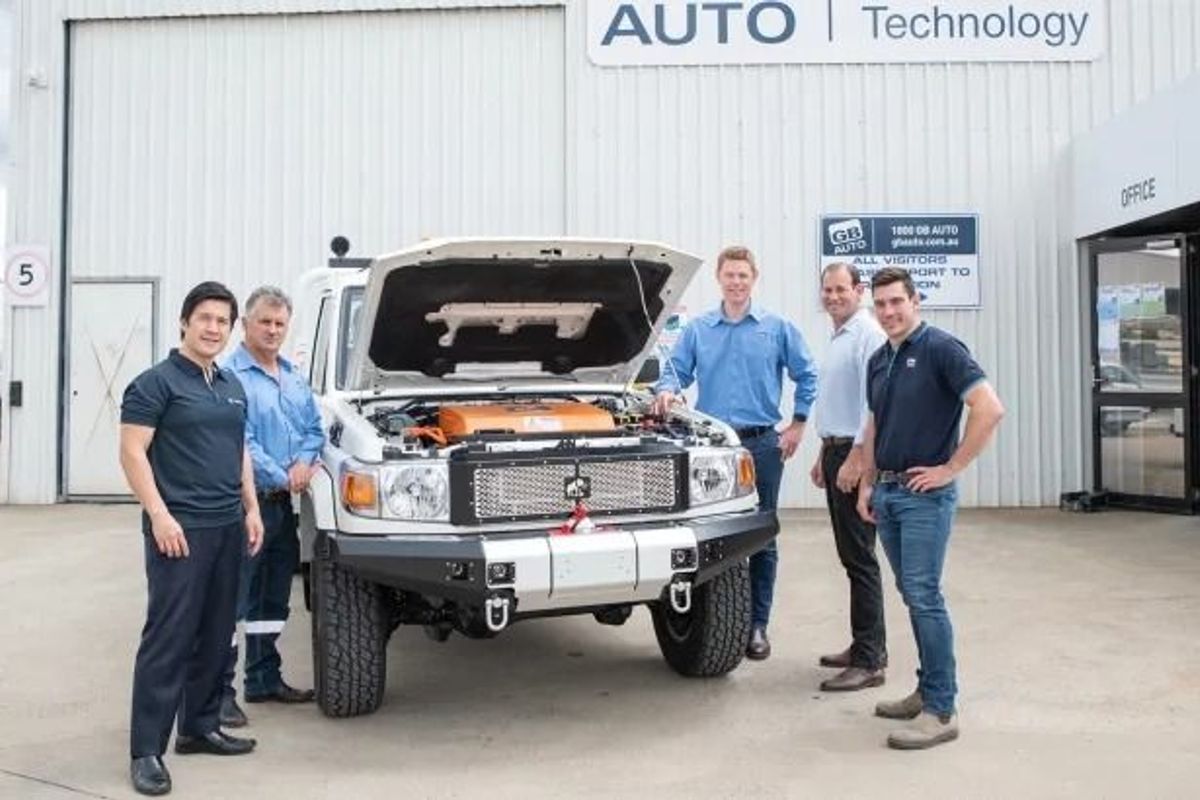
Update: The electric Toyota Land Cruiser has gone into production, but there's a catch – it's not going on sale to the public. Earlier, we reported an Australian mining company was testing an electric Land Cruiser for its underground operations. Given that ventilation in an underground scenario is a tricky affair, emissions from vehicles compound the problem. The solution is electrification and now the demand will be met. Australian engineering firm GB Auto penned a deal with $250 million to convert and supply up to 2000 vehicles over a 4 to 7 year period. The Dutch company Tembo 4×4 will be supplying the electric hardware.
CarAdviceAu reports the electric Land Cruiser will cost $125 000 (about R1.4 million) and the vehicles will have a 72 kWh battery powering a 110 kW and 250 Nm electric motor. Given the size of the motor which is substantially smaller than the internal combustion motor it replaces, batteries are stored in the bonnet as well as in the space where the fuel tank used to be.
The world’s least likely candidate for powertrain electrification has been revealed.
Unquestionably the hardiest of all bakkies, Toyota’s Land Cruiser 70 single-cab, is undergoing a battery test cycle in Australia.
Although the Land Cruiser 70 is unavailable in most developed markets, these bakkies remain enormously popular in Australia, for many of the reasons they are such legends in the South African environment: durability.
Despite the current Land Cruiser design dating to 1984, the integrity of its engineering has allowed this bakkie to become essentially timeless. For hardcore mining, construction and agriculture applications, the Land Cruiser 70 remains unrivalled.
The idea of replacing its six- or eight-cylinder diesel engine options with a battery pack and electric motor, would appear very odd, but that is exactly what Toyota is prototyping.
Partnering with one of the world’s biggest mining companies, BHP, Toyota’s Australian engineers are attempting to retrofit an electric power- and drivetrain to the Land Cruiser 70 single-cab.
Although Toyota is not at liberty to reveal who it is sourcing the batteries from, or what their energy density is, the Land Cruiser 70 electric looks very capable.
One of the benefits of replacing its conventional engine options with a battery pack and electric motors will be a significantly reduced centre of gravity. This should give the bakkie better stability at cruising speeds, on gravel roads, and make it less intimidating to drive at extreme pitch and roll angles, off-road.
For BHP the primary objective is to reduce the fire risk at its mining operations. Although diesel fuel has a much lower flash risk than petrol, many of these bakkies do venture underground, into the mining infrastructure, where any fire is potentially catastrophic.
One of the interesting modifications that can be seen on this Land Cruiser electric prototype, is the wraparound plastic bullbar. It appears to be moulded from a high-impact polymer and looks great, whilst also providing most of the protection that you would expect from a steel bullbar, at a much lower mass.
The first month of the year is generally when households are most under pressure financially. How did our first January under Covid-19 lockdown conditions go down? We sift through the numbers.
January saw a decline in overall car sales that was in line with what Naamsa experts expected. The slow recovery is still in progress though as the numbers continue to trend upwards (from the huge dip in April and May last year). The LCV market continues to defy the massive sales bleed of Covid-19, showing that buyers of bakkies and taxis are still replacing or renewing vehicles regularly and that leisure vehicle buyers are taking bakkies more seriously as everyday vehicles.
Exports continued to grow during January on the back of huge local investments from most of the big players in the local automotive manufacturing industry.
New car sales summary for South Africa – January 2021
Aggregate new vehicle sales of 34 784 units down by 13% compared to January 2020.
Passenger car sales of 23 853 units down by 18% compared to January 2020.
Light Commercial Vehicle (LCV) sales of 9 301 units down by 4.9% compared to January 2020.
Exports of 22 771 units up by 39.7% compared to January 2020
Sales outlook
According to Naamsa “For the first quarter of 2021 trading conditions in the new vehicle market are expected to remain challenging due to slow demand compared with the pre-COVID-19 first quarter comparison, exchange rate volatility and the negative impact on household expenditure by fuel and electricity price increases. However, considering the close correlation between new-vehicle sales and the country's GDP growth rate, the Reserve Bank’s forecast of a domestic economic growth rate of 3,6% for 2021 presents a favourable scenario for a sound rebound of the new vehicle market in 2021, from the exceptional low base in 2020. It should be noted that the 2020 new vehicle market recorded its lowest aggregate sales total in 18 years. The macroeconomic effects of COVID-19 will, therefore, continue to undermine business and consumer confidence and inhibit growth over the medium term. Although the current low interest rates, coupled with low inflation, could be regarded as building blocks to stimulate the new vehicle market, a full recovery to pre-COVID-19 new vehicle sales levels could take around three years.
Vehicle export numbers have been regaining momentum but in terms of a recovery much will depend on an improvement in the economic climate of the South African automotive industry’s main trading partners. Vehicle exports are important to the viability of the domestic automotive industry as exporting remains key to generate sufficient economies of scale and to achieve improved international competitiveness.
There is big news from the world’s biggest diesel engine producer.
Isuzu is planning a restructuring of its diesel powerplant range, with interesting consequences for bakkie fans of the brand.
The Japanese company has been the world’s largest supplier of diesel engines, for many years. But the new wave of electrification in passenger vehicles is changing Isuzu’s planning requirements.
Although battery-powered bakkies are only due to come online later this year, Isuzu is clearly recognising the influence they could have on its future market share. To ensure that all the very best Isuzu engineers are deployed to protect and enhance its profitable bakkie business, Isuzu is willing to outsource its large capacity diesel engine business.
Isuzu has signed a contract with Cummins, to supply the bulk of its truck engines. This allows the company’s R&D resources to be poured into D-Max engine development.
It might be a disappointment for Isuzu’s truck customers, but this is good news for the company’s loyal bakkie owners.
With more talented Isuzu engineers working on the D-Max engine line-up, expect improvements in power and configuration. Isuzu has also entered a working agreement with Volvo, regarding hybridisation.
This could deliver an exciting new range of hybrid powertrains for Isuzu’s D-Max and MU-X. Saving development and assembly costs on its big truck engines, will make it possible for Isuzu to extract all the potential from its 1.9-, 2.5- and 3-litre four-cylinder bakkie engines.
What the Cummins truck engine agreement gives Isuzu, is more freedom to pursue the development of its smaller diesel engines, which are of most importance to South African customers. Isuzu has a terrific legacy and reputation for durability, although the current bakkie engines are comparatively down on power, compared to Hilux and Ranger.
Meet the finalists in the Crossover category of the 2020/21 #CarsAwards powered by WesBank!
Now in its 6th year, the #CarsAwards was conceived to be South Africa's definitive automotive awards programme and is backed, for the 5th year running, by the country's leading supplier of vehicle finance, WesBank.
In this time of the ever-expanding crossover genre, there is growing consumer demand for stylish, yet practical SUV-themed vehicles that can be bought for similar money to a traditional C-segment hatchback. In this new category we are looking for a vehicle that manages to offer both eye-catching looks inside and out, the latest infotainment systems and practicality.
This category is guided by both eligibility factors and Pillars of Success.
Eligibility factors for this category include a list price between R400 000 and R600 000 (as of October 1, 2020) to ensure exclusivity and status. Vehicles in this category must be a crossover/small SUV shape of the Toyota CH-R, Mazda CX-3 etc.
Pillars of success for this category include design and quality appeal, powertrain technology, luxury, brand strength and practicality.
Visit www.carsawards.co.za for more information. In no particular order, the finalists are as follows:
Mazda CX-3 2.0 Hikari
The Mazda CX-3 is one of the more stylish offerings in its segment, replete with its sleek bodywork and well-appointed cabin. Moreover, the CX-3 manages to strike a near-perfect balance between performance and economy, making it a strong contender in this category.
Born from a desire to meet the market’s growing demand for crossovers, the second-generation XV boasts an attractive combination of styling, performance/economy balance, all-wheel-drive ability, practicality and safety. The Subaru is further equipped with a full complement of comfort and convenience features, all of which makes it a compelling proposition in this category.
The C-HR is a niche offering in Toyota’s stable by virtue of its head-turning styling and edgy packaging; to upwardly mobile urbanites, it offers oodles of non-conformist appeal. An updated C-HR came to market in 2020, ushering in much-needed connectivity and safety upgrades.
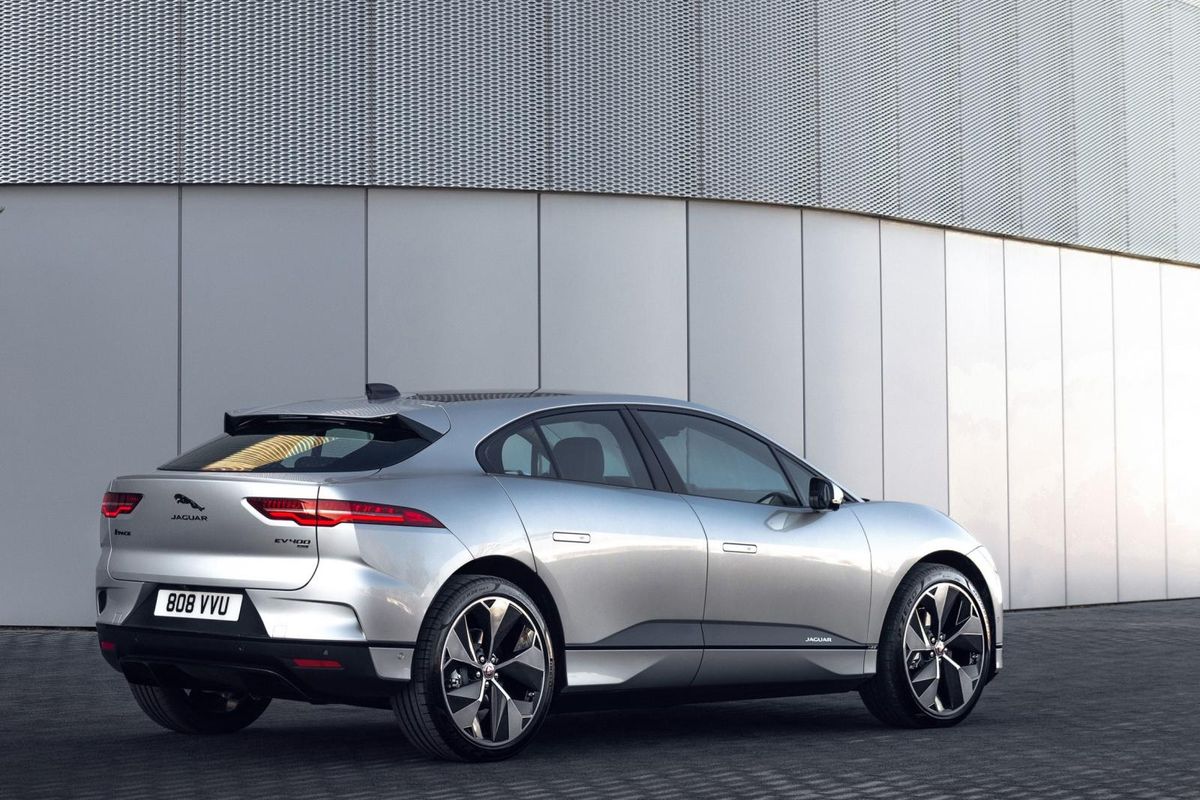
Jaguar South Africa has launched pricing and spec details for its updated I-Pace electric SUV. Here's what you can expect to pay for this state-of-the-art machine.
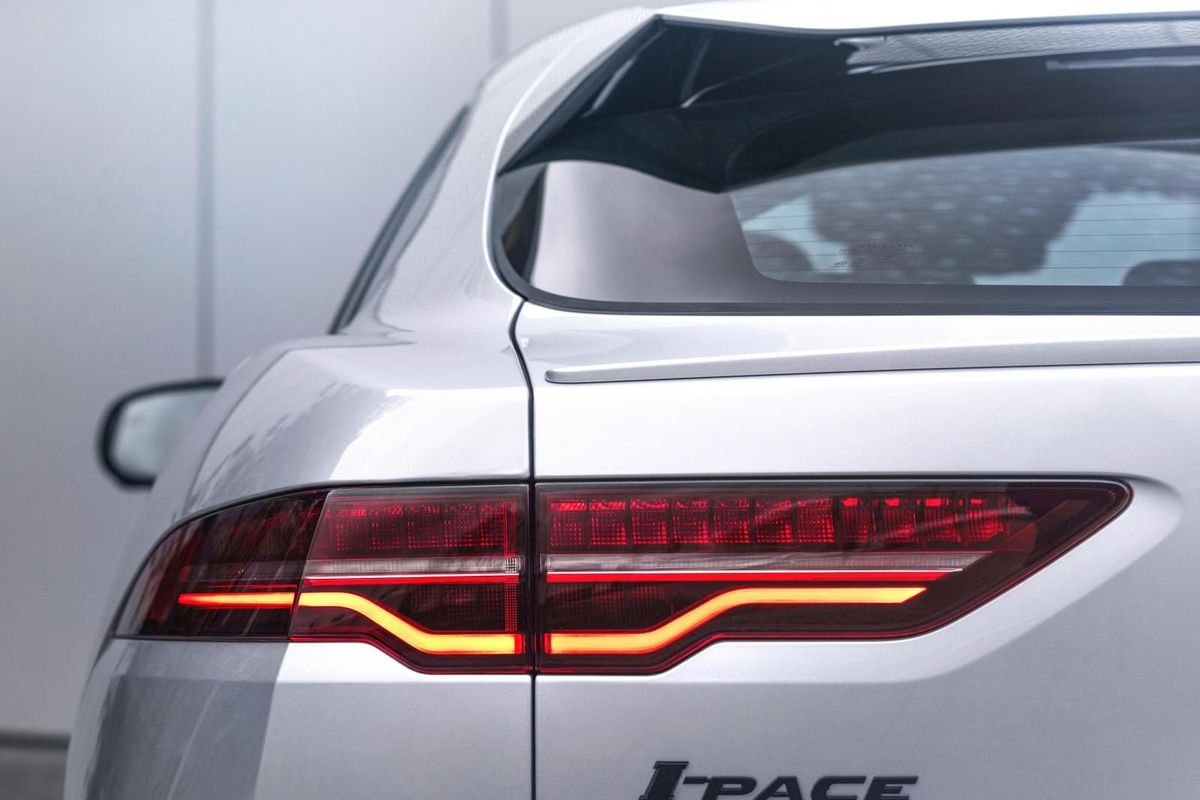
The updates to Jaguar's electric I-Pace are not visible to the naked eye, but comprehensive enough under the skin.
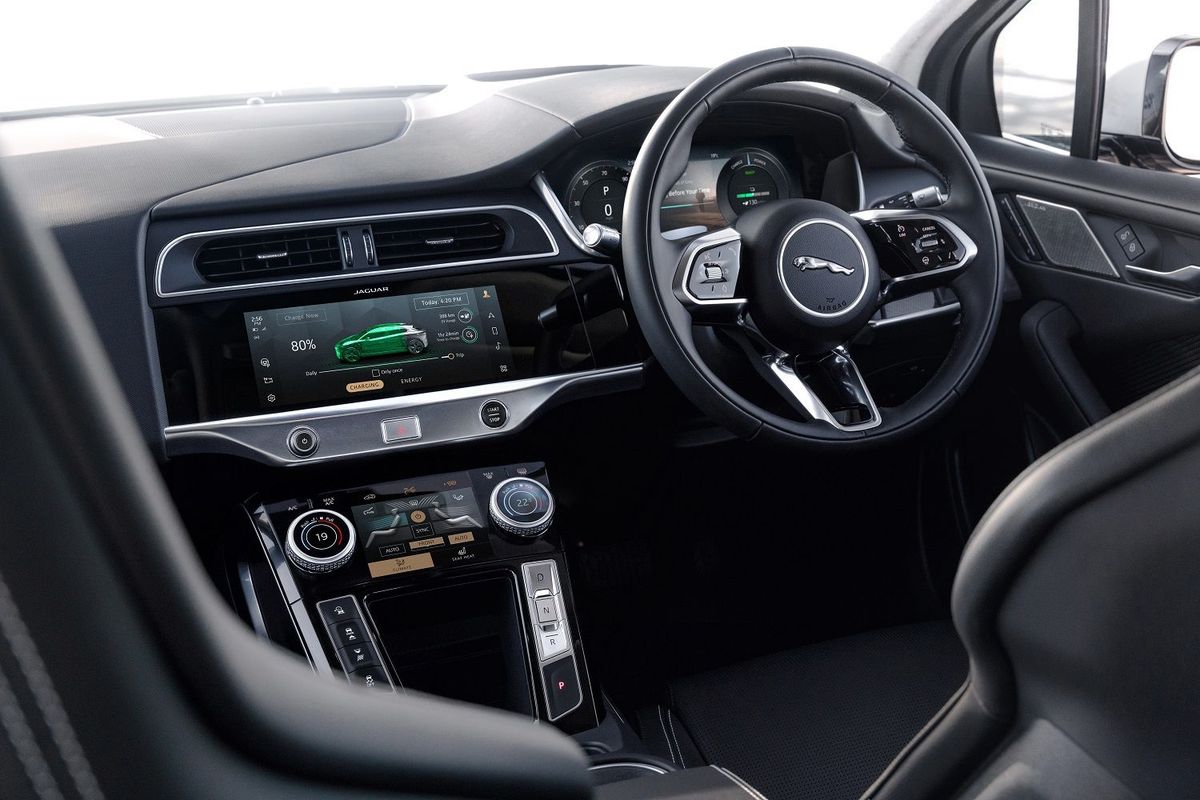
The headline changes come to the infotainment system, the charging setup, and the driving assistance technology. Pivi Pro is Jaguar Land Rover's infotainment system and having experienced it in the group's various ICE products, we've come away impressed. Now its the Jaguar I-Pace which gets this system. A 12.3-inch high-definition virtual instrument cluster together with 10-inch and 5-inch upper and lower touchscreens and multi-function, haptic rotary controllers gives off an experience closer to that of a tablet or high-end smartphone.
Cleverly, this system has its own power source, meaning its quick to boot up, plus there are some AI/algorithms thrown in and the car will optimise routing, voice guidance even knows to remain quiet when you’re travelling through areas you know, and maps will always be up to date thanks to software-over-the-air (SOTA) functionality. For those wanting full connectivity, there's an optional wireless device charging pad and the vehicle is fitted with Apple CarPlay and Android Auto.
On the hardware side of things, the Jaguar I-Pace now comes with an 11kW on-board charger as standard, enabling customers with access to three-phase electricity supplies to enjoy significantly faster charging. A full charge on an 11 kW wallbox will take 8.6 hours, perfect for those overnight charges. Through your standard wallplug a full charge takes 12.75 hours. If you're fortunate to have a powerful 100 kW in your area, 127 km of range will take just 15 minutes. Total range is estimated at 470 km based on the WLTP cycle and Jaguar reckons its average customers doing the daily commute would only need to plug in once a week.
Many of Jaguar Land Rover's newer products also feature the Clearsight rearview mirror, which is actually a camera and display unit. Its powerful, offering crisp images even at night.
Jaguar I-Pace Price in South Africa (February 2021)
The I-Pace is offered with an 8 year or 160,000km battery warranty on top of the standard Jaguar Care plan which offers a 100,000km warranty and servicing within in 5 year period, whichever comes first. All new or Approved Pre-Owned Jaguar customers in South Africa also receive complimentary driver training at the state-of-the-art Experience Johannesburg facility in Lonehill, Johannesburg.
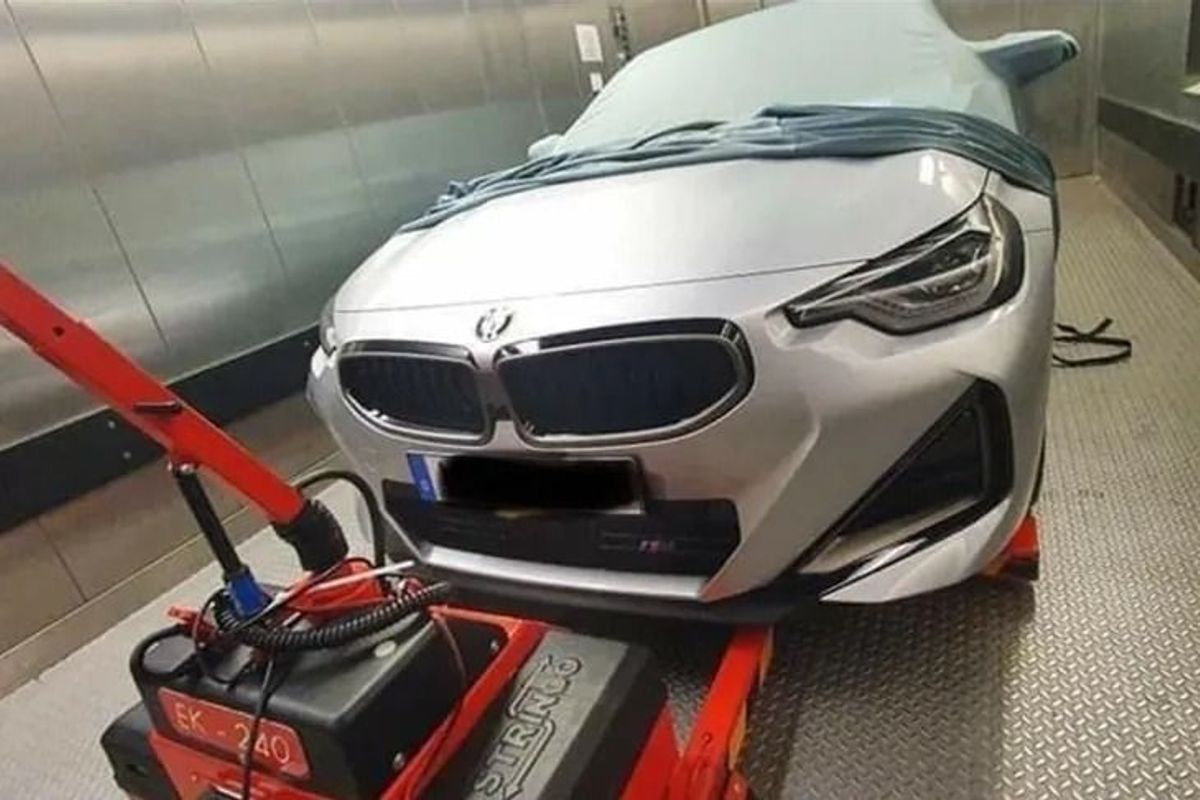
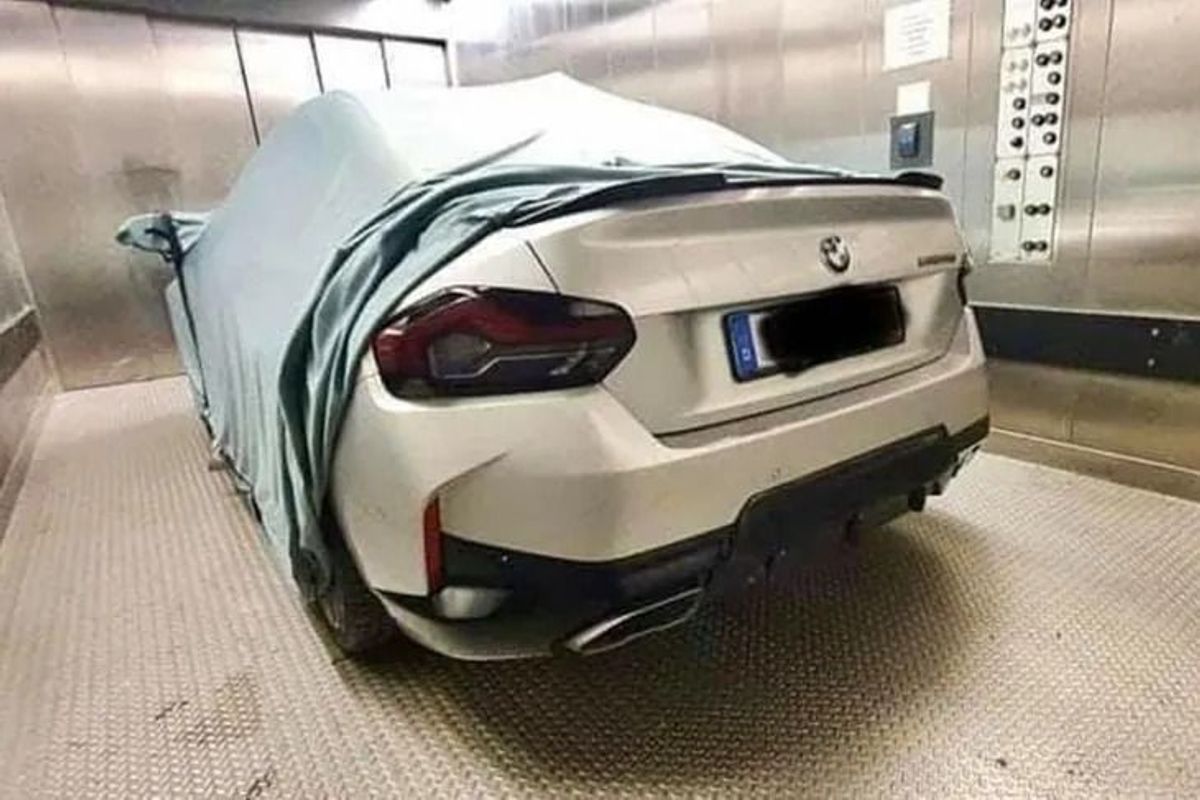
A disguised prototype of a next-generation BMW 2 Series Coupe has been filmed while undergoing testing on a Californian highway. The clip, which includes tantalising close-up tracking footage, reveals a few interesting tidbits (and one or two possible red herrings) about the upcoming model’s design.
Now that the fanfare about the low-volume local introduction of the BMW M2 CS (of which almost the entire consignment of units was sold via an auction recently) has blown over, the production cycle of the F22-generation model (on which the M2 and its brethren are based) is evidently nearing its end and the countdown to the official reveal of its successor (codenamed G42) can commence!
Picture credit: S. Baldauf/SB-Medien. We have paid for these photos and at the photographer's request, have watermarked them.?
Without a doubt, the 2nd-generation 2 Series 2-door is eagerly anticipated, because, unlike its predecessor, it won't be based on the hatchback's front-wheel-drive platform (as is the case with the 2 Series Gran Coupe)… Instead of being based on BMW’s Front Architecture platform, the Coupe will adopt an evolution of the brand’s Cluster Architecture (CLAR) platform and be closely based on the Z4 Roadster. This means the compact 2-door coupe will be rear-wheel driven, which will please purists who have been less than convinced by the 2.0-litre 4-cylinder turbopetrol and all-wheel-drive M135i– and M235i xDrive.
The wait for the 2er Coupe has been drawn out; in April last year, a pair of leaked images of (what appeared to be) the upcoming model was posted on a fan forum. The partly obscured silver-grey car in those images drew instant comparisons with the aforementioned roadster, which was famously co-developed with Toyota, especially by virtue of its broad, slim kidney grille and the shape of the tail-light cluster(s).
The BMW 2-Series was leaked earlier in 2020, giving us a glimpse of the new face.
Then, in September, our spy photographer shot a heavily-camouflaged test unit endowed with a pair of two large exhausts. It was undoubtedly a pre-production version of a 2 Series Coupe, however, because it was clearly smaller than the recently-launched 4 Series, but had far more elegant proportions (long nose, cab-rearward configuration and a short, kicked-up boot section) than its FWD/AWD siblings.
Now, the YouTube channel KindelTechAuto has published this video, in which a photographer's car cruises up to a 2 Series Coupe prototype while it's travelling on a highway somewhere in the Golden State. Judging from the footage, it's not the exact same car as we photographed last year. The headlamps indeed look teardrop-shaped and the car's bonnet features a pronounced power dome, but the videographer noted that the car had retro-looking recessed door handles and that the famous Hofmeister kink in the rear window (which is so subtle in the 4er that you could miss it) had been disguised with padding.
As for which version of the 2 Series Coupe it might be, the chances are that it is, at best, an M Sport or M-flavoured derivative. If the new range carries over the Z4's powertrains, there should be 145-kW 2.0-litre 4-cylinder turbopetrol (220i), a 285-kW 3.0-litre inline-6 turbopetrol (M240i) and probably the 190-kW 2.0-litre 4-cylinder turbopetrol that does duty in the 330is Edition…
As for the mighty M2, that should only be revealed during 2022. It's unlikely to be as potent as the M3/M4's 353 kW/375 kW twin-turbo 3-litre inline-6, but expect a peak output of well above 300 kW.
Sources suggest the 2 Series Coupe (G42) will be fully unveiled near the end of 2021; we expect it to arrive in SA next year, with the flagship M2 potentially only arriving in 2023.
Should I buy a car from a dealer or a private seller?
There are significant differences between buying a used car from a car dealership and buying one from a private individual. To aid you in selecting your best buying method, we have identified both the advantages and disadvantages of both options.
Buying a used car from a car dealership
Advantages of buying from a dealership
The biggest plus to buying from a dealership can be summed up in the phrase “peace of mind”.
Car dealerships are obliged by law to guarantee title against stolen vehicles and ensure there are no previous unsettled financial agreements still pending on the vehicle.
Dealerships must declare and rectify all known defects. This is normally done before the vehicle is put up for sale.
A dealer sale always comes with a limited guarantee, as well as an inspection report (ask to see it). If anything goes wrong within the guarantee period, it is the dealership’s responsibility to rectify it.
Added peace of mind comes in the form of extended warranties that are normally available for an additional cost.
Dealerships are usually safe, professional environments in which to inspect and transact.
The dealership will handle all of the necessary paper-work and can aid with financing and insurance if required.
Dealerships are service oriented and will go the extra mile to meet your needs.
Most dealerships accept trade-ins, should you wish to trade-in your current vehicle against your purchase.
Disadvantages of buying from a dealership
Dealership cars are usually more expensive than private sales.
While you will be informed about the condition of the vehicle, specifics regarding how the vehicle was driven, or any information on the previous owner/driver remain unknown.
Dealerships can be relentless in pursuit of sales and are often aggressive with their follow-ups.
Buying a used car from a private seller
Advantages of buying from a private seller
Privately sold vehicles will generally be cheaper than dealership vehicles.
Private sellers are usually more willing to negotiate price.
By dealing directly with the current owner/driver, you will be able to gather a lot more information about the car and how it has been driven and cared for.
The transacting environment is usually more relaxed, with less pressure from the seller than is customary with a dealer sales rep.
Disadvantages of buying from a private seller
Scammers often advertise attractive car deals in an attempt to trick would be buyers.
Private sellers often take chances. The advertised car may be a stolen car or a rebuild.
Physical safety is always a concern. Ensure that you meet in a safe environment and never go alone.
Banks do not finance used cars sold by private sellers. You would ultimately have to pay the full amount in cash, or get a personal loan.
There is always the risk of defects and mechanical problems with the car that occur after the purchase has been made, and while the Consumer Protection Act will protect you to a point, it is not always enforced.
To ensure that you are getting a good deal; the buyer needs to do a host of background checks on the seller, as well as checks on the car to ensure that everything is in order.
Once the sale is concluded, the new owner is responsible for all paperwork, transferring ownership at your city’s vehicle registering department and getting new plates issued.
There is no option to trade-in your current vehicle. This needs to be dealt with independently.
Summary
Buying a used car from a private seller generally results in a cheaper purchase price, but comes with added risk. It is often worth paying the slightly higher price to purchase from a dealership to obtain the security and peace of mind offered.
This week’s news you need to know (Jan 2021, Part 2)
In the final week of January, BMW sprung a big surprise by revealing its most powerful production car yet – the M5 CS. In other news, we will soon be getting an all-new Renault crossover from India, Hyundai continues to put pressure on VW's GTI and R products, while more manufacturers are looking to blow their marketing budgets at Le Mans. Brent vd Schyff tells it like it was…
King of Sedans – The ultimate dad car
Your "bouncer in a slick suit" is back. Only this time your bouncer’s been on that hard isolation gym routine; he's jacked and the suit’s decidedly more Gucci than Markhams. Yes, folks, the king of super sedans is back on the throne and not shy about declaring his intention to utterly dominate a rarefied (and somewhat absurd) market sub-segment. BMW has a learnt a thing or two during the past few years – it's particularly adept at exploiting the popularity of the CS badge, which gets the masses frothing right into the rev limiter. Locally, rarity is ensured by Mzansi being allocated only 5 units. Why so selfish, Germany?
The M5 CS' peak output figures of 467 kW and 750 Nm are exactly what you'd expect from BMW ultimate performance model, let alone -sedan, and the brand's marketing department commissioned a dreamy promo video laced with Procar-infused visuals, which, fair warning, may reduce you to tears. Those tears you secrete may be due to the fact that you’ve realised that you’re not going to be able to afford one and even if you could, the inevitable auction that will be held to find buyers for the 5 units allotted to our market, will mean that your money might be safer if you invested it in a 3-year-old GT3.
One thing’s for sure and that is despite certain critical comments, there’s a twin-turbo 4.4-litre V8 at the heart of the beast. If you claim to be a true BMW disciple, you’re surely not going to be upset about that. I have overlooked the fact that yes, there was once a manual M5 and this isn’t purely rear-wheel-drive, but honestly – and in the clear light of day, super sedans have become too powerful (and, therefore, fast) for their own good and, because CPUs can make faster computations than an over-enthusiastic driver's brain, you need things like x-Drive and an auto 'box. The average man on the street simply does not have the ability to drive a manual with that much power, combined with the myriad things that can quickly go wrong in extremis. And, if you want to achieve those performance figures… the Nürburging's calling!
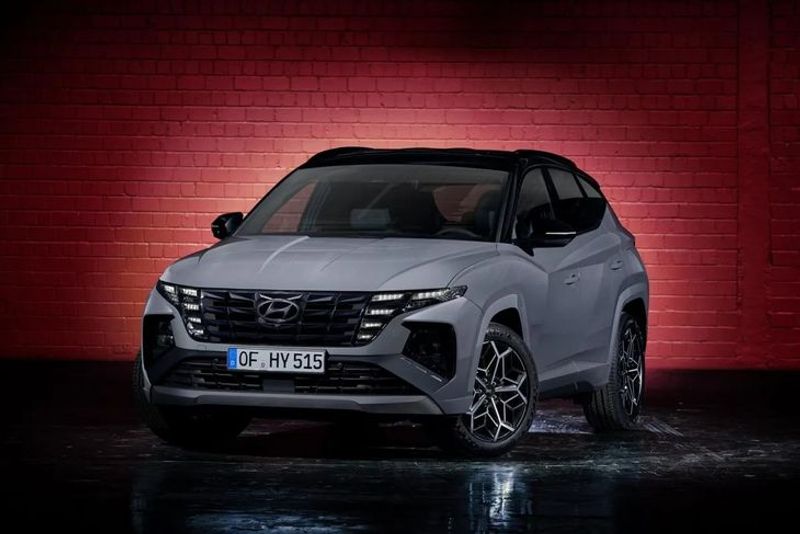
Hyundai Tucson N – Performance SUVs – Mind games
If you’re not familiar with the term “Roman Circus”, allow me to enlighten you, dear countrymen. “Roman Circus” is a term that was derived from the time of hippodromes and coliseums, places that would entertain the fickle mob to the point that they’d be distracted and kept too preoccupied to focus on the real matters at hand, such as corruption and poor service delivery – well, that's according to historians.
Doesn't that sound familiar? Isn't the "Performance SUV" effectively a Roman Circus that's distracting us, so that we don't realise that virtually the entire automotive market (not only the segments once occupied by humble family sedans and 'wagons) is being overrun by SUVs? Are OEMs banking that if they keep producing “performance SUVs" for long enough, one day we'll be pleased to have obscenely-fast, high-riding behemoths (with running boards and electrically-operated tailgates) instead of genuine, dyed-in-the-wool and fit-for-purpose performance cars? We’re wiser than that, aren’t we? I digress.
Now that its SUV side is getting the N treatment, it’s rather obvious that Hyundai is hoping to compete with Volkswagen in all sectors. The Tucson N Line is a thinly disguised precursor to a future Tucson N, which will compete with the Tiguan R that's due to be introduced in Mzansi in the near future. The real question that needs answering is this: Could Hyundai convince deeply faithful Volkswagen buyers (some of whom have owned only VWs their entire motoring lives) to divert their cash to Korea? It will certainly make for healthy competition; if the Golf GTI-rivalling I30 N is an indicator, Hyundai's on the right track.
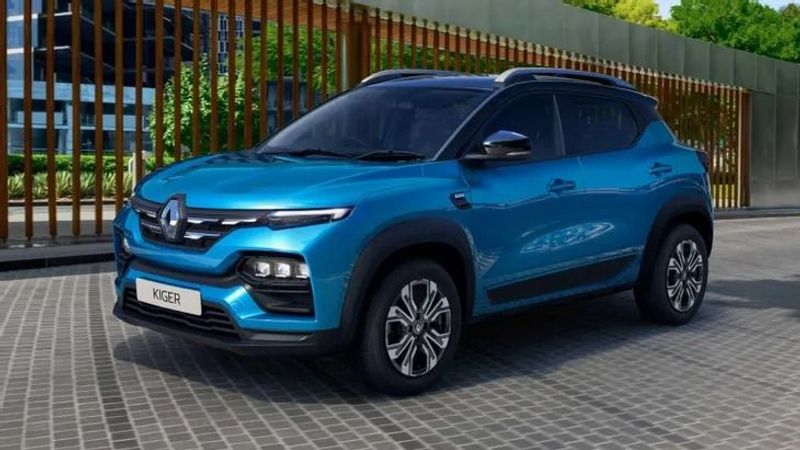
Renault Kiger – another one!
The Renault Kiger is yet another newcomer to the small crossover fray, the combatants of which seek to attract suburban dwellers with city-life aspirations allied with penchants for having weekend adventures where there is no wifi signal (provided they can indeed bear such an inconvenience). Unfortunately, in all too many cases, the pricing of the products is out of step with the earning power of the target market. We’ve seen the decline over the years, where, sadly, earning potential has been outperformed by the cost of goods and services. That's amid a global pandemic that has destroyed many happy scenarios.
It all makes for a tough situation for consumers who so desperately want to experience that “new car” feel. Interest rates, being as low as what they are right now, have offered a degree of relief, but what begs the question is at which point will government intervention be required to provide further relief by lowering import duties? It sure would help the middle-income sector enjoy new cars like the Kiger and breathe life into this segment without the need to cook up complex finance structures, balloon payments and extended financing terms, which just worsen the situation further anyway. Someone, please tweet Cyril.
Redbull Advanced Technology joins Le Mans
If ever you’re driving along at night (remember those evening drives we enjoyed in the halcyon pre-Covid era? Aaah, sweet nostalgia) and you’re blinded by oncoming LEDs attached to a morbidly expensive premium SUV (the glare may hasten your need to have a cataract operation), you have the technology advancements from Le Mans prototype racing to thank for that. Cold comfort, I know. It’s often said that more technology finds its way into road cars from endurance racing than Formula One. KERS systems, hybrid technology and performance turbodiesel engines all stem from developments made for the top-performing class of the 24-hour race. The same can be said for the hybrid tech, which is the car world's focus in the short to medium term, at least until the electrification question can be properly answered.
The theory is that if a technology can run without fault for 24 consecutive hours of sustained, punishing use, then it should work okay in your 2022 Audi A3. Therefore, the tie-up between Red Bull Advanced Technology and Oreca is a big deal. They will be joining the ranks of Porsche and Audi who are ditching their Formula E racing programmes to compete with Toyota and Peugeot in the 24 Hours of Le Mans. The real victors, at the end of the day, will be the consumers who benefit from future technological advancements in road cars. I wonder which innovation will find its way to the production line next…
#CarsAwards – Best Executive SUVs in SA
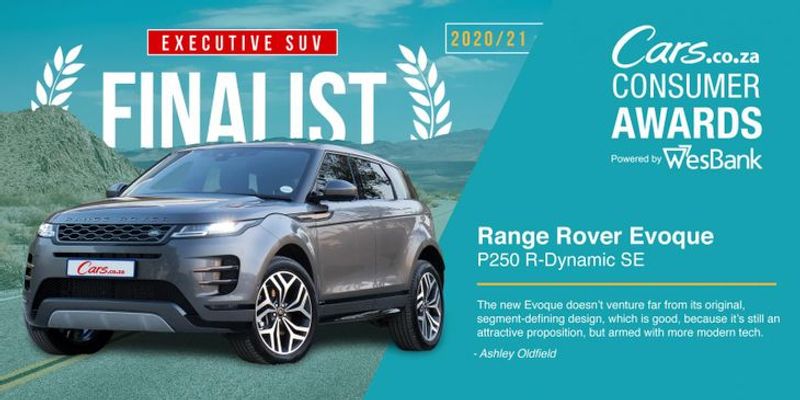
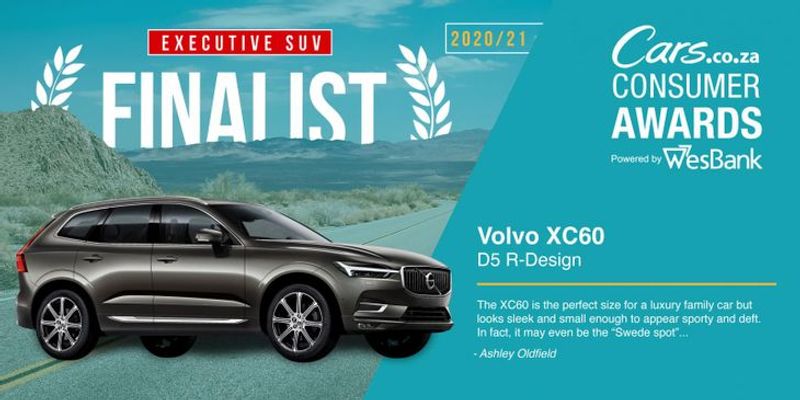
Meet the finalists in the Executive SUV category of the 2020/21 #CarsAwards powered by WesBank!
Now in its 6th year, the #CarsAwards was conceived to be South Africa’s definitive automotive awards programme and is backed, for the 5th year running, by the country’s leading supplier of vehicle finance, WesBank.
Increasingly regarded as the status symbol to have, most premium brands now offer road-biased SUVs that combine prestige and practicality in a package that is characterised by superior refinement. Drivetrain performance and refined road manners are a priority as is a cabin that features upmarket materials and the most up-to-date technology.
This category is guided by both eligibility factors and Pillars of Success.
Eligibility factors for this category include a list price between R800 000 and R1-million (as of October 1, 2020) to ensure exclusivity and status. Eligible vehicles must be a medium-sized SUV of the Audi Q5/Merc GLC category, including their “coupe” derivatives.
Pillars of success for this category include powertrain technology, luxury, brand strength, design and quality appeal, driving dynamics and space and practicality.
Visit www.carsawards.co.za for more information. In no particular order, the finalists are as follows:
BMW X3 20d M-Sport
The BMW X3 has found notable favour with buyers looking for a stylish, practical and lifestyle-oriented SUV. Not only does its larger dimensions afford passengers with more space, it’s a pleasingly refined and well-balanced product overall. The X3 is also the reigning #CarsAwards winner in this category and is looking to successfully defend its title in the 2020/21 programme.
Depending on whom you ask, the new Range Rover Evoque is arguably the most stylish offering in the Executive SUV segment and, while it’s the smallest model in Land Rover’s stable, it’s more spacious than its predecessor and offers impressive levels of tech and refinement.
Gothenburg-based brand Volvo is on a roll and the XC60 – which won this category in the 2018/19 #CarsAwards – is one of its most popular SUV models. Built on the same platform as the XC90, it’s superbly refined to drive and offers one of the most luxurious cabins in its class.
The AA has confirmed the petrol price changes for February 2021 and SA motorists are in for substantial hikes. Here's what you need to know.
The Automobile Association (AA) has blamed the slow oil price and Rand/Dollar vulnerability for the sharp increase in the price of petrol, diesel and paraffin.
Set to come into affect in the first week of February 2021, petrol is expect to rise by up to 82 cents a litre, diesel by 59 cents and illuminating paraffin by 60 cents.
"Unfortunately our mid-month concerns over the advancing oil price have been borne out in practice. There has been a slow, but steady, rise in the price of oil which is likely to cause ongoing pain at the pumps. Almost all of the fuel price increases reflected by this month's data are attributable to the stronger oil price, and the average Rand/US dollar exchange rate has remained generally flat for the month, despite some large daily swings."
Despite the Rand dropping to an all-time low of over R19 to the dollar last April and the currency has since appreciating to approximately its pre-COVID-19 level, the changes in the oil price have offset this. "The record low exchange rate fortunately went hand-in-hand with record low oil prices, so the impact went largely unnoticed as fuel prices plunged. But economic or policy shocks which weigh on the Rand are likely to have a more significant effect on the fuel price now that international oil prices have rebounded," the Association concludes.