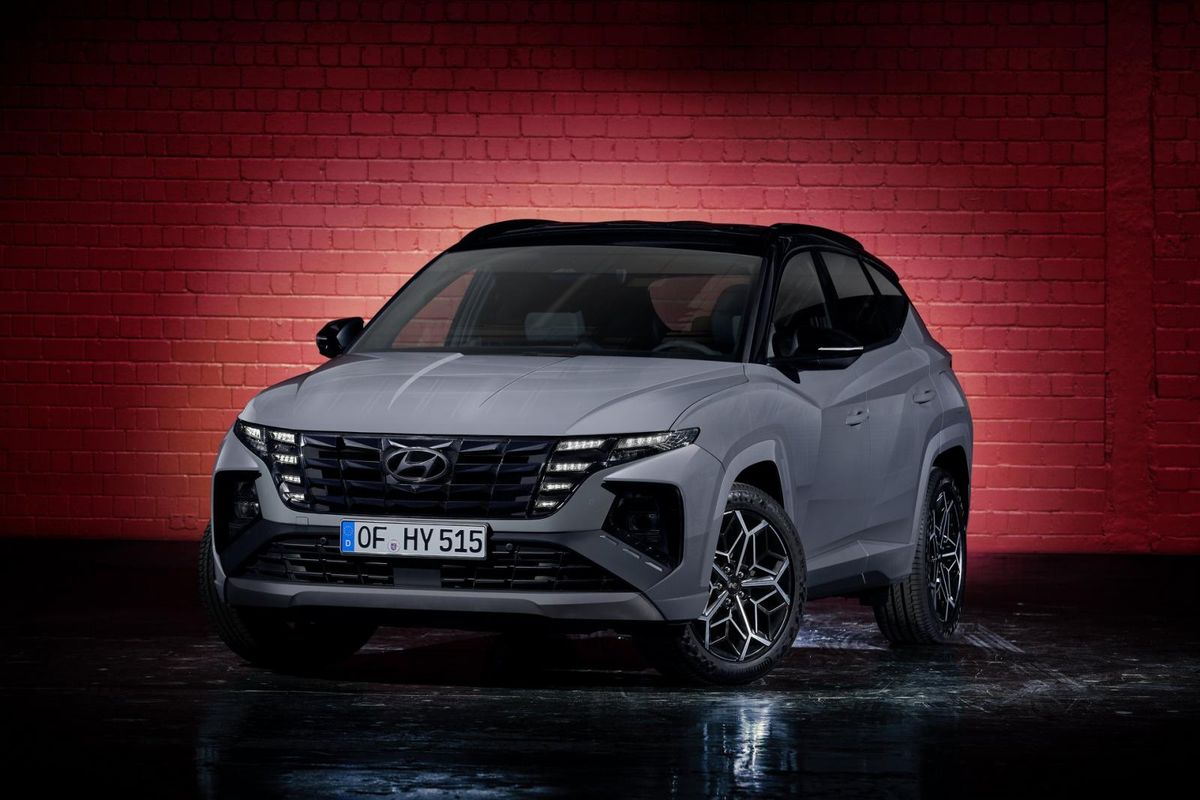
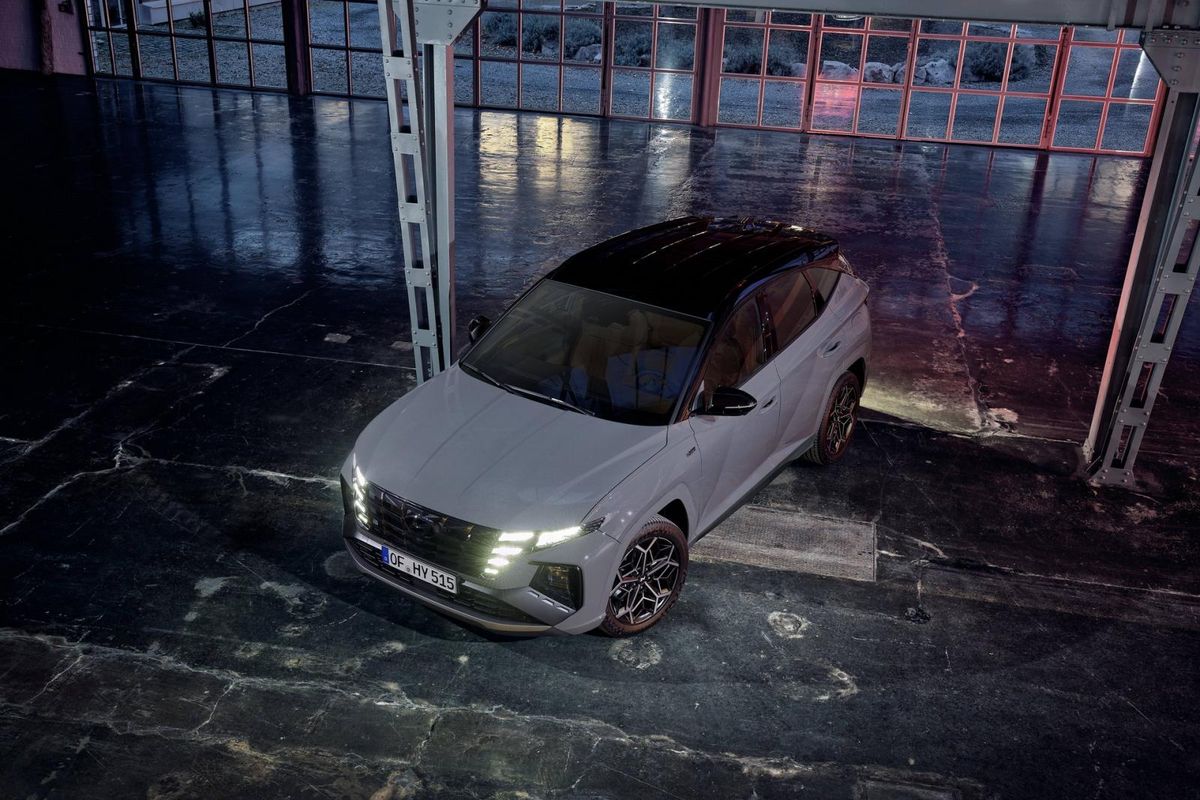
Following the reveal of the all-new Tucson family car last year, Hyundai has now revealed a sportier Tucson N Line.
When the new Hyundai Tucson was revealed last year, it ushered in bold styling, underpinned by Hyundai’s ‘Sensuous Sportiness’ design language which arguably makes it the most striking offering in the family car segment. South Africa will receive the new Hyundai Tucson in the second half of 2021.
Now, however, Hyundai has revealed the Tucson N Line, boasting sportier exterior and interior styling. The Tucson N Line, however, will not feature any major performance upgrades and according to Hyundai, the Tucson N Line will be available with the 110 kW 1.6-litre turbopetrol engine offered in the new Tucson, including the Tucson Hybrid / Mild hybrid, but excluding the low-power diesel derivative. A fully-fledged Tucson N is also likely and it could pack as much as 254 kW.
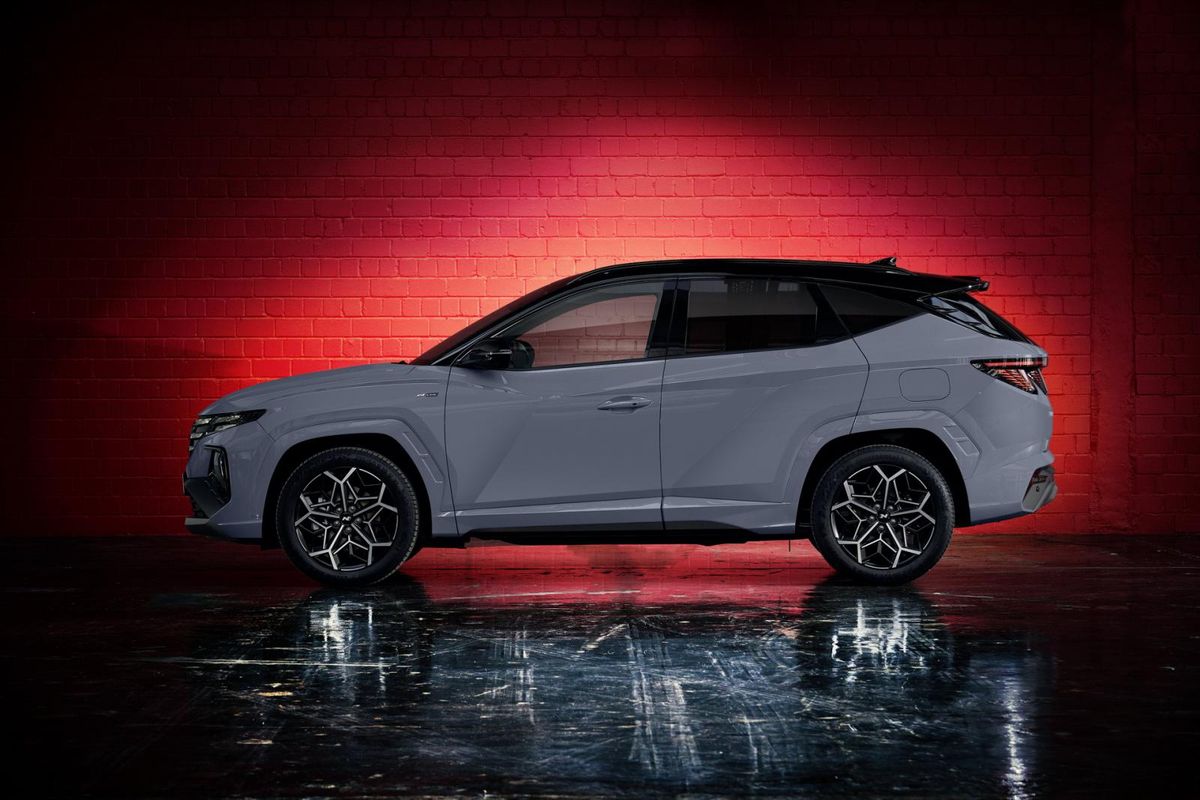
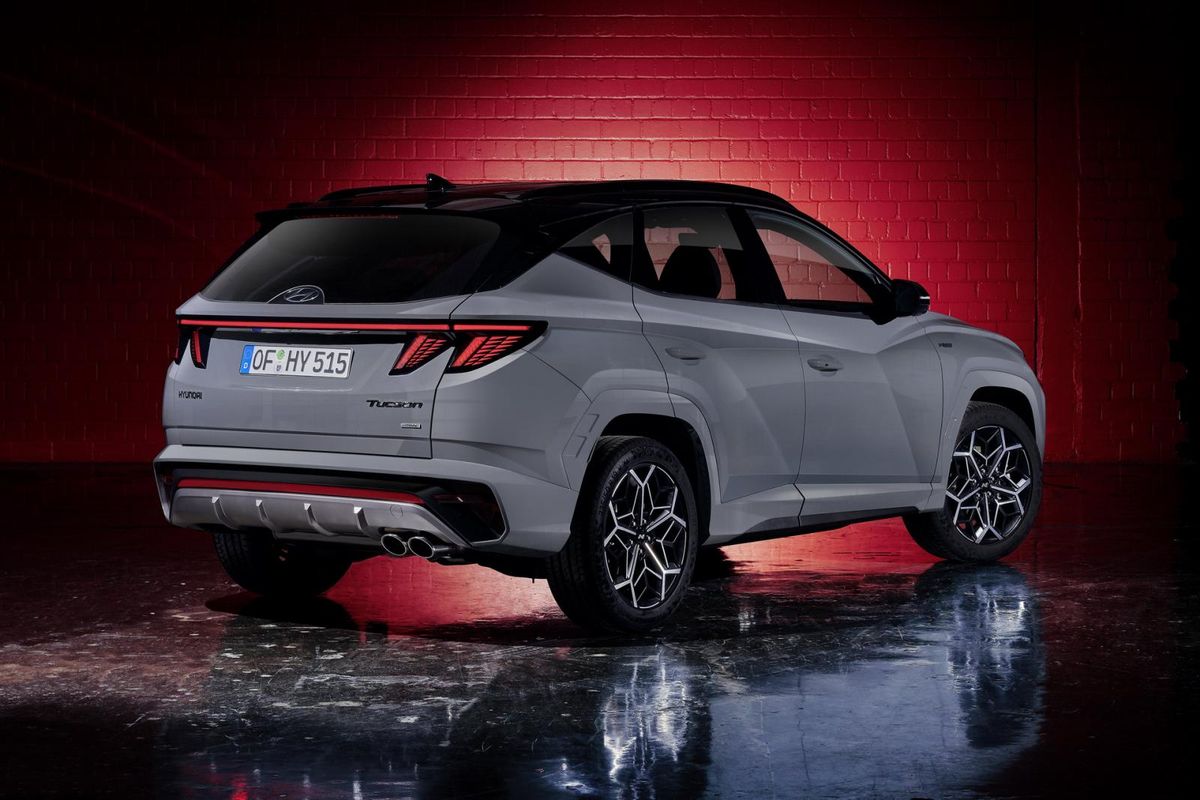
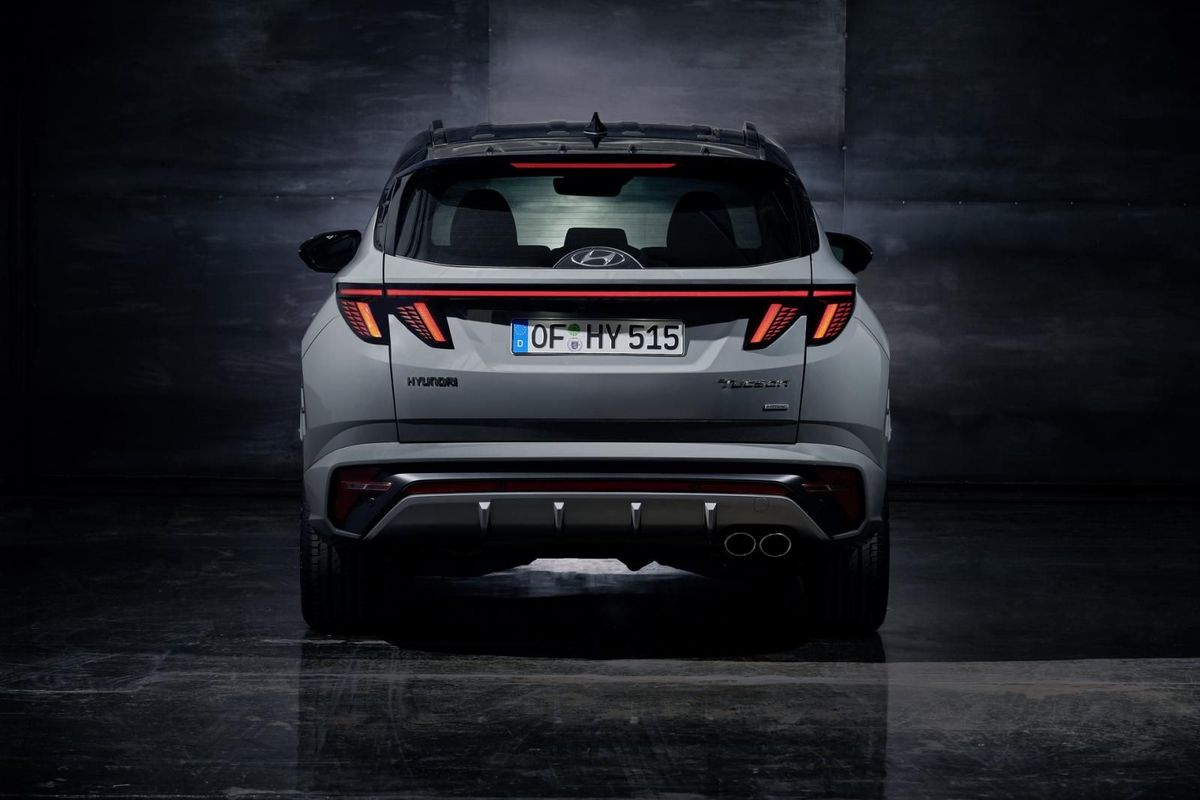
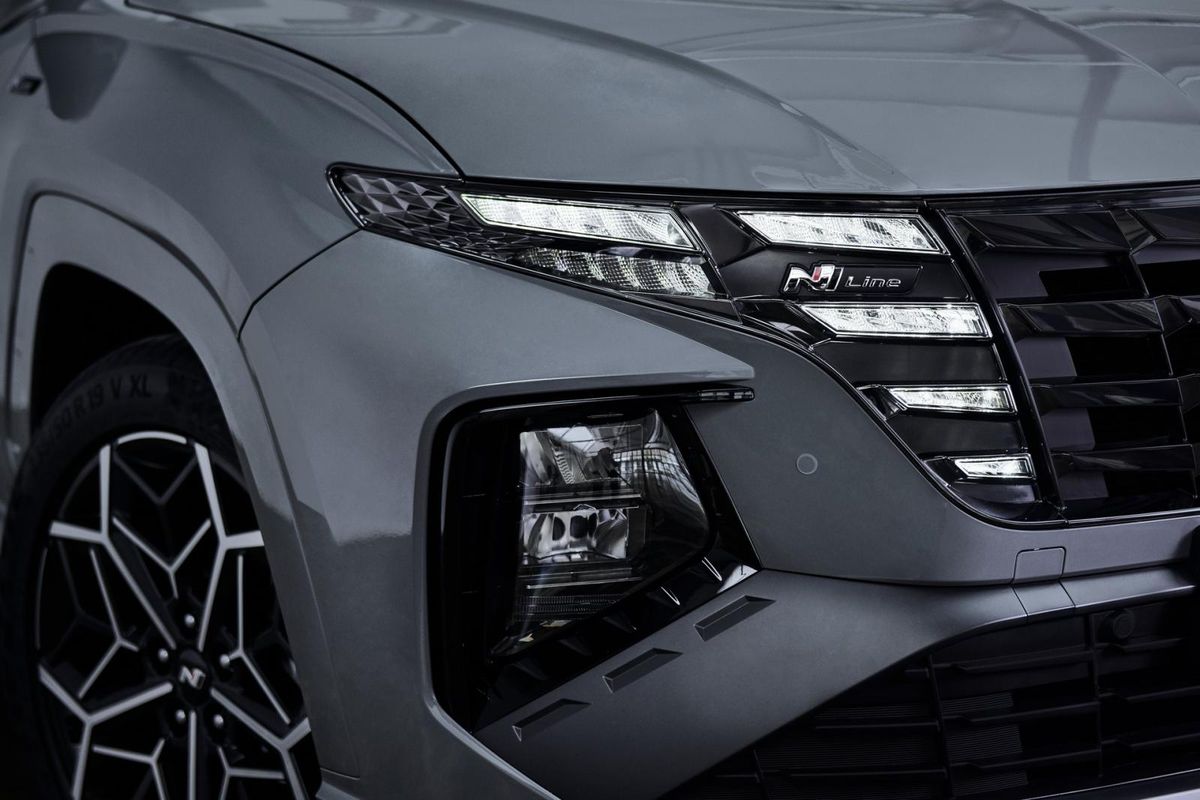
In terms of styling, the Tucson N Line wears a striking grille design that’s both taller and wider than the standard Tucson and features “parametric jewels” for a unique effect while the lower section features larger air intakes and a rectangular bumper section finished with silver skid plates. The rear end gains a longer spoiler with fins for a sportier look. A red reflector band and diffuser further adds to the sportiness of the Tucson N Line as does the twin-tip exhaust system. An Electronically Controlled Suspension (ESC) will be offered as an option in an effort to enhance comfort and performance by adjusting damping force based on parameters such as speed, road surface, cornering, acceleration and braking.
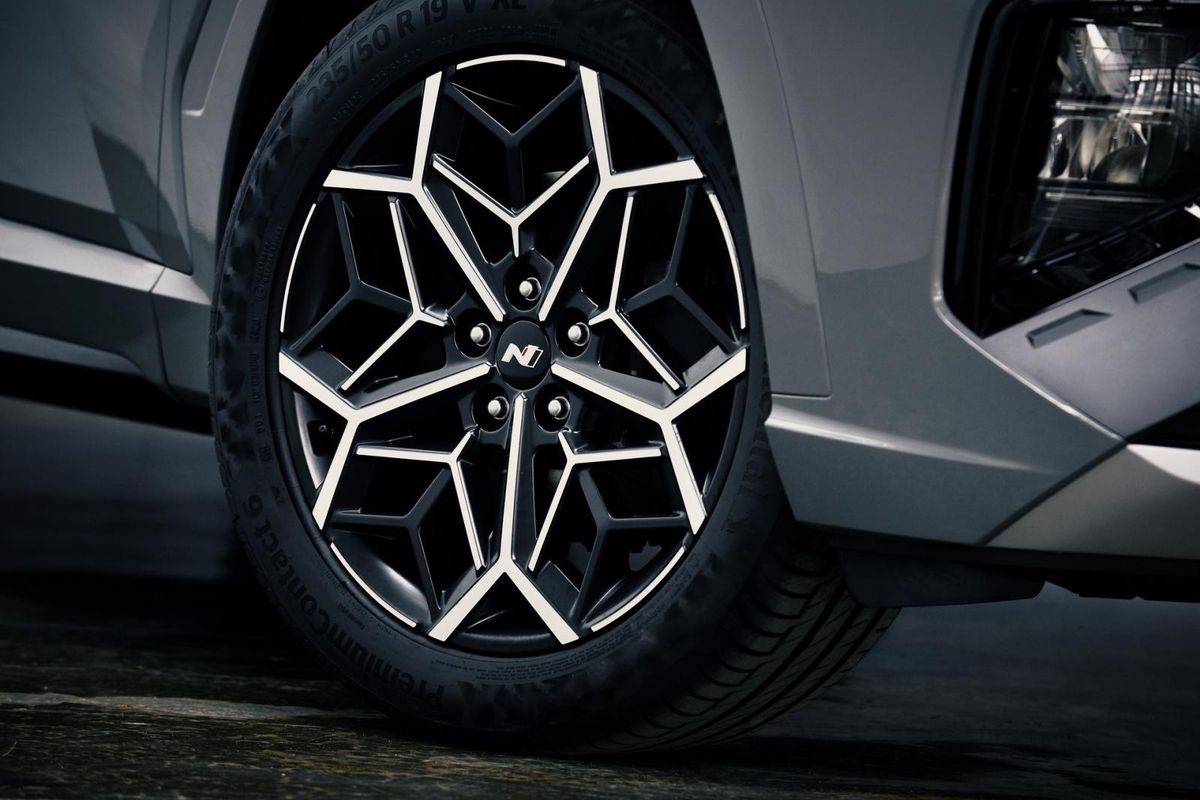
The Tucson N Line rides on 19-inch alloy wheels and a total of 7 exterior colours will be offered as well as two-tone options with a Phantom Black roof in conjunction with 5 body colour choices.
The Tucson N Line features a few sporty touches but it's not over the top.
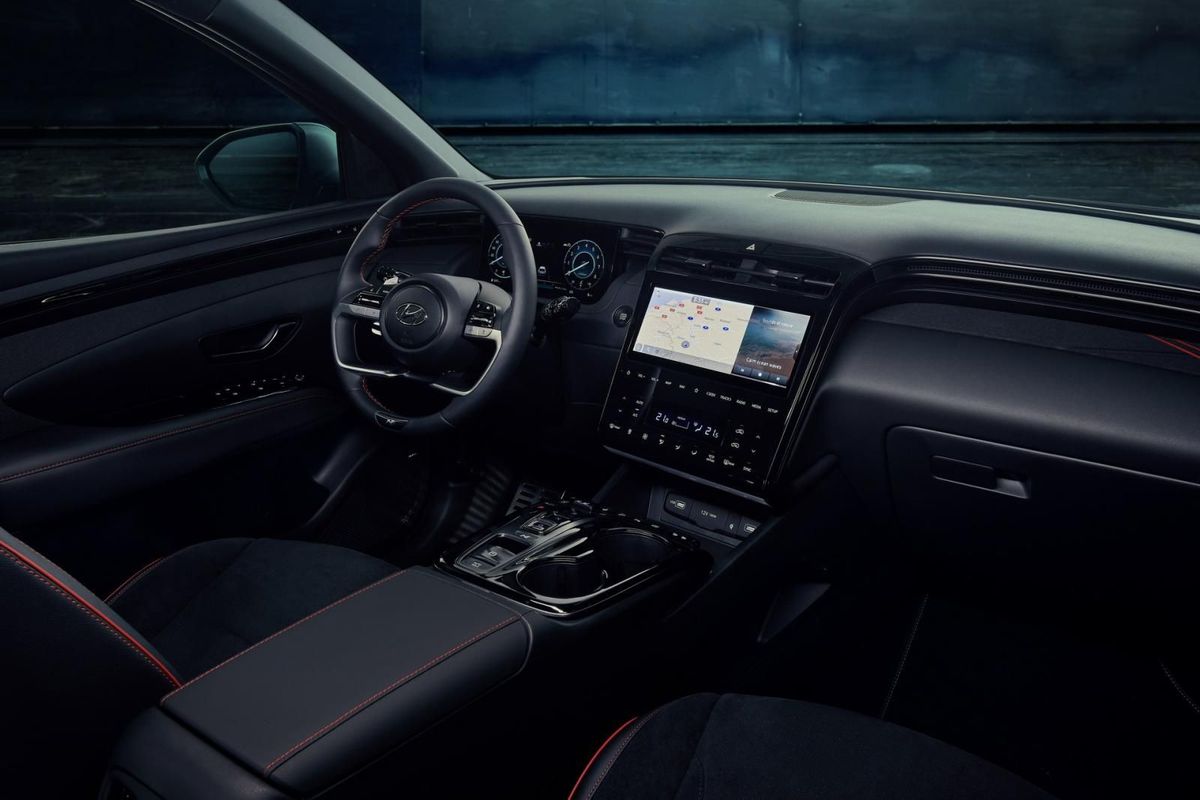
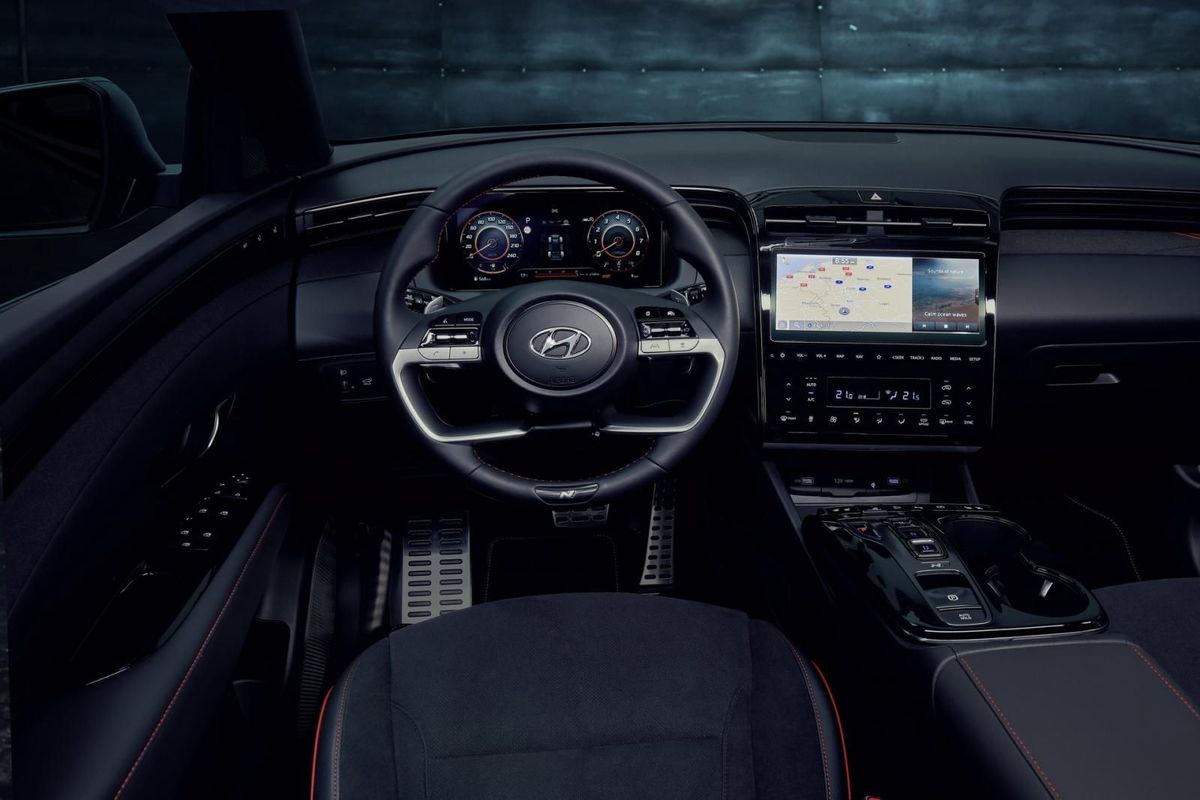
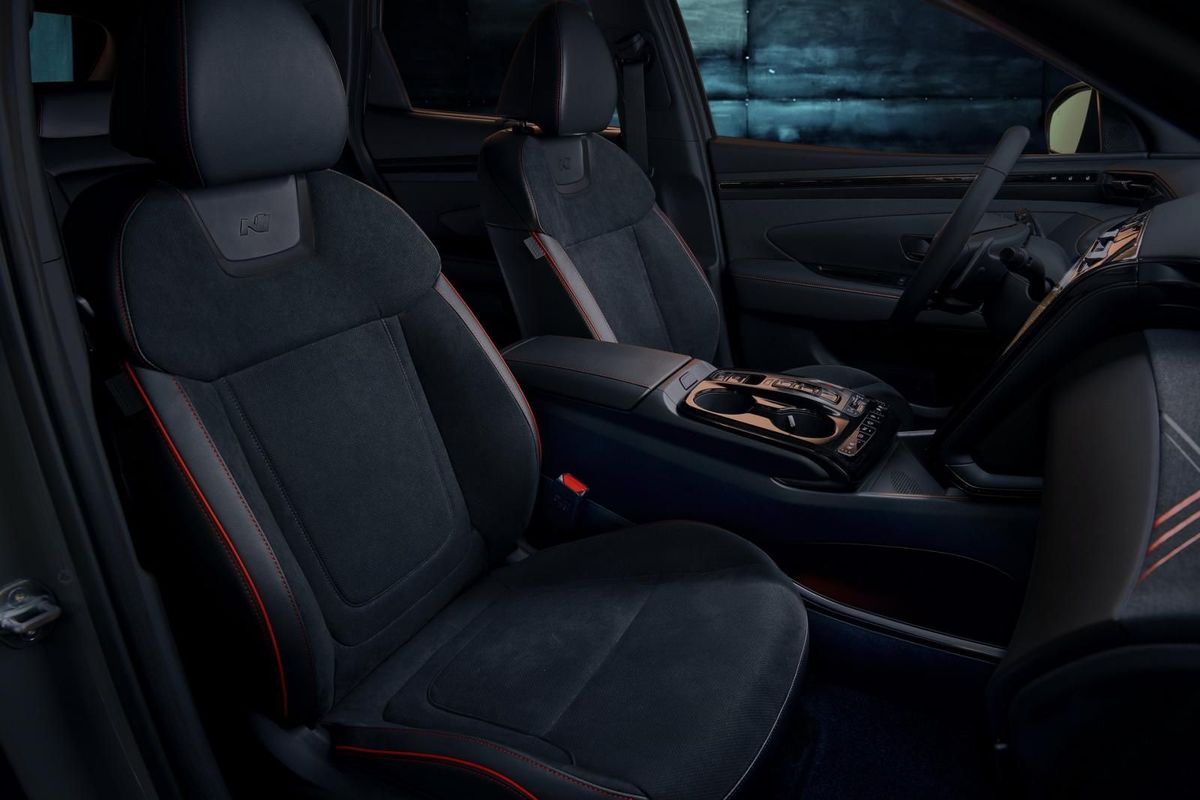
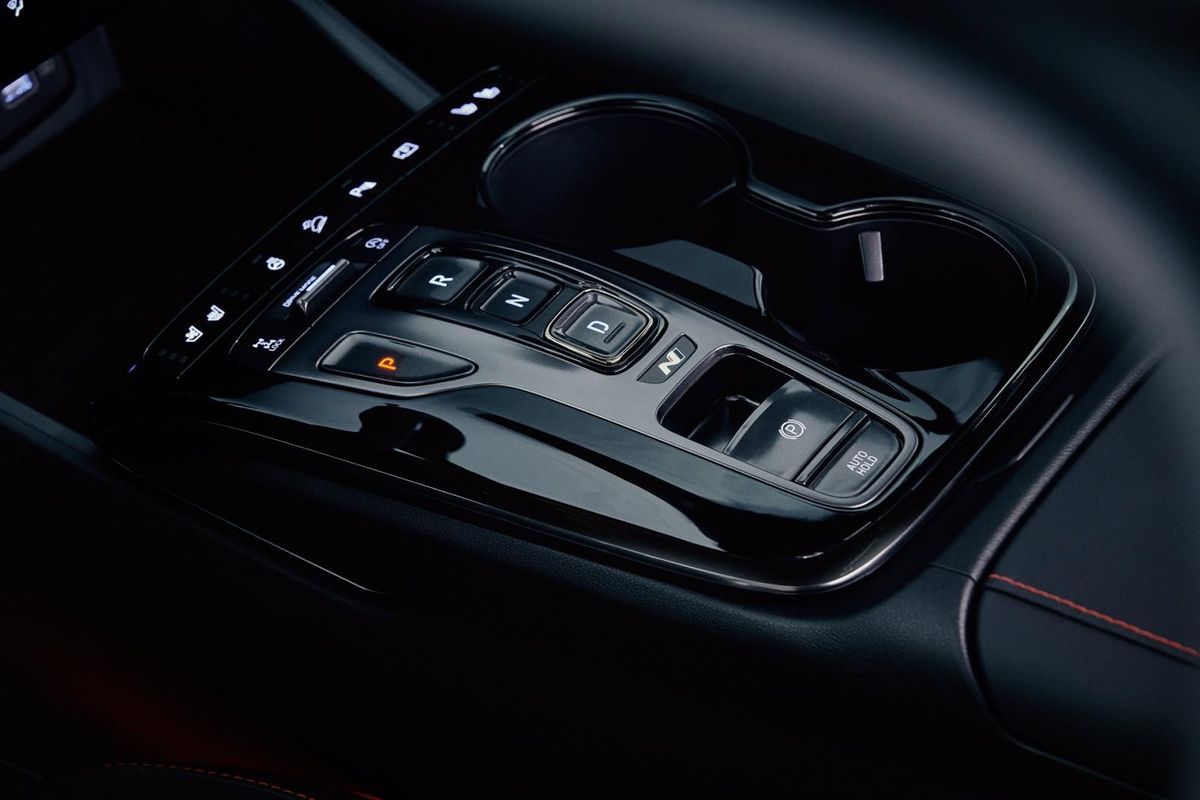
On the inside, the Tucson N Line gains an exclusive colour pack along with N Line seats upholstered in black suede and leather with red stitching. Red stitching is also seen on the door trims and armrest. An N steering wheel is also fitted and further N details on the centre console while also featuring metal metals.
Other key interior features include a fully digital dual-cockpit comprising a 10.25-inch open instrument cluster and a 10.25-inch AVN touchscreen with Hyundai Bluelink connected car services. Other nice-to-have features include 3-zone climate control and ventilated front seats with front and rear heating function.
The Tucson N Line is due to go on sale in Europe in the second quarter of 2021 and it has not yet been confirmed for South Africa.
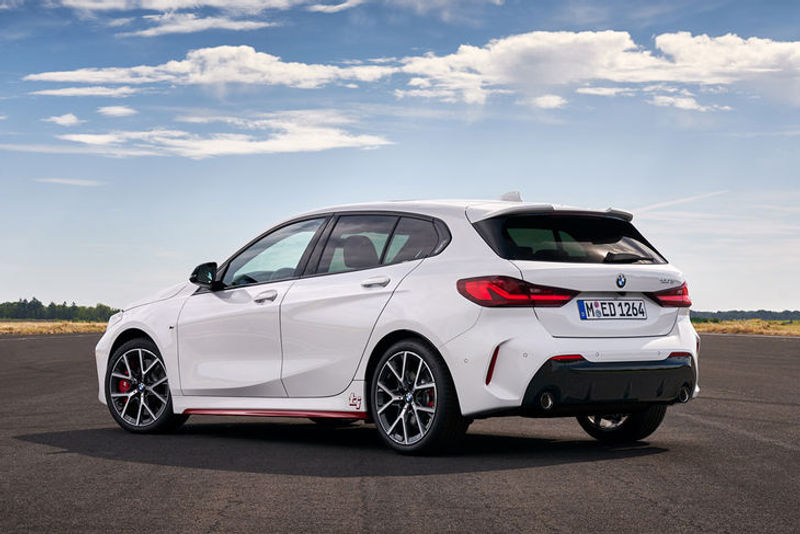
The upcoming local introduction of the BMW 128ti, a true front-wheel-drive addition to the hot hatch brigade and a car that’s probably closer to the top-selling Volkswagen Golf GTI in its product pitch and -packaging than anything else on the market, should really be a big deal.
Only it isn’t, at least not in the eyes of many BMW aficionados. You could blame that on the fact the current 1 Series is, fundamentally, the least sporty iteration of the premium compact hatchback that BMW has produced. With its front-, as opposed to rear-wheel-drive platform that prioritises practicality and refinement, the 128ti will plug a yawning hole in the range’s line-up, which is footed by a far-too-sensible 118i and headed by an all-wheel-driven M135i xDrive, which delivers the requisite vrrr-pahs and sheer grunt but, in the opinion of many critics, stops short of being truly involving to drive.
Before the 128ti, BMW hadn’t built a performance-oriented hatchback (except for in Oxford, of course, but it wore a Mini badge).
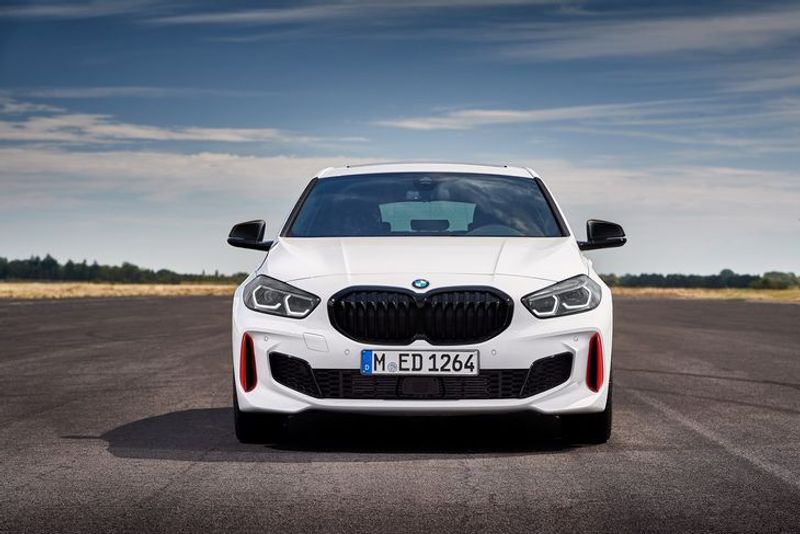
The 128ti has racy, but tasteful detailing that’s more in keeping with M cars from a more restrained and dignified BMW era (which explains why it wears a ti badge – componentry aside, it’s not quite shouty enough to wear an M badge by today’s standards, is it?). And, of course, Bimmer’s newcomer owes much of its exposure to being labelled a “Golf GTI rival” by the motoring media.
But let’s say that, in a crazy alternate universe, Volkswagen decided not to produce an 8th-generation Golf GTI, for whatever reason. In that case, would anyone care about the 128ti, a front-wheel-drive BMW – “as was the dour 2 Series Active Tourer”, detractors might whisper – powered by a 180 kW/380 Nm (in our market) 2.0-litre 4-cylinder turbopetrol, mated with an automatic transmission?
No, because for a multitude of South African Bimmer fans, a 4-cylinder engine is something that powers a BMW derivative that they can afford, as opposed to a BMW derivative that they want…
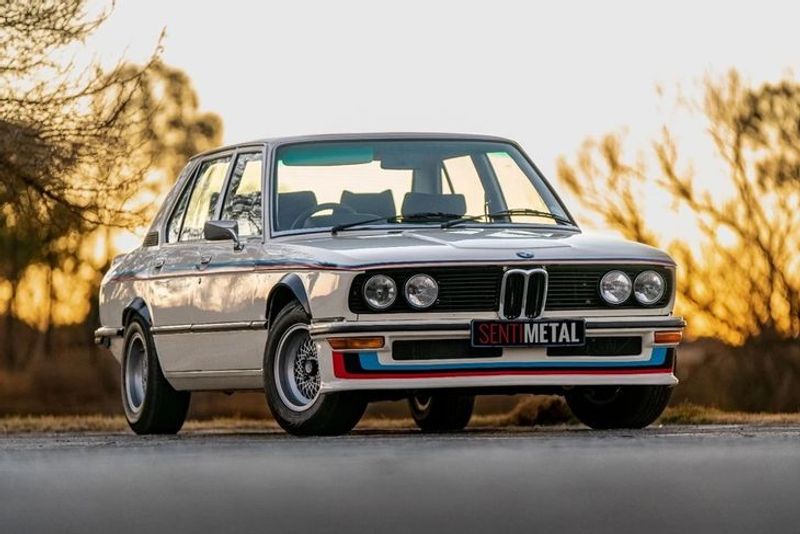
Within the domestic context, history strongly favours the BMW inline-6. The E12 was the first 5 Series range to be assembled in the Republic (production began in the mid-Seventies); the original 5er featured 4-cylinder engines too, but the characteristic wail and compelling performance of the Munich-based brand’s inline-6 motors truly established the Bavarian brand in South Africa.
There was an inline-6 in the engine bays of legendary BMWs that were developed, built and sold exclusively in South Africa: the 530 MLE (arguably the world’s first unofficial M-car); the 745i – a first-class sedan with a supercar (M1) engine; the 333i and 325is. It made the brand a powerful force in sanctioned motorsport (production and modified), street- and drag racing, drifting and even spinning.
In the early Nineties, the proliferation of double-overhead camshafts (expanding the 24-valve configuration to BMW motors beyond those in M cars) and variable valve timing (VANOS) gave rise to potent 2.5-, 2.8-, 3.0-litre engines in the brand’s ranges. And when BMW began making turbopetrol engines again, it started with a 3.0-litre inline-6 (N54), which debuted in the pre-facelift E92 3 Series Coupe.
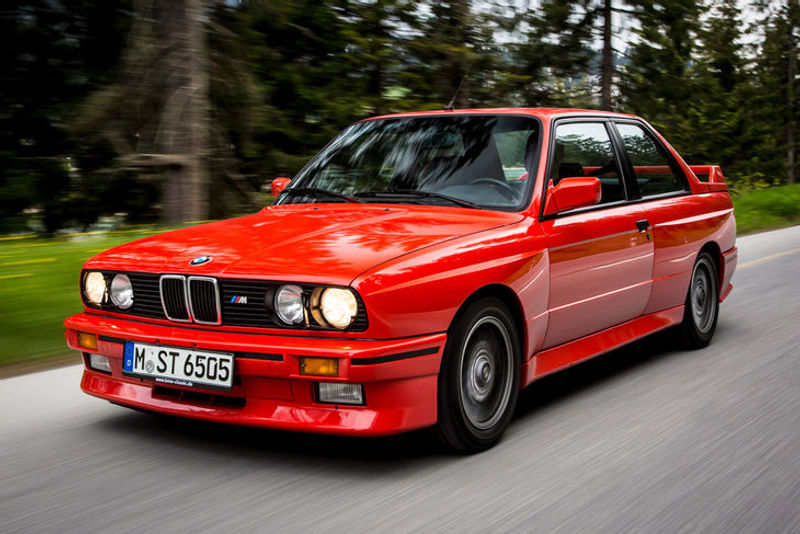
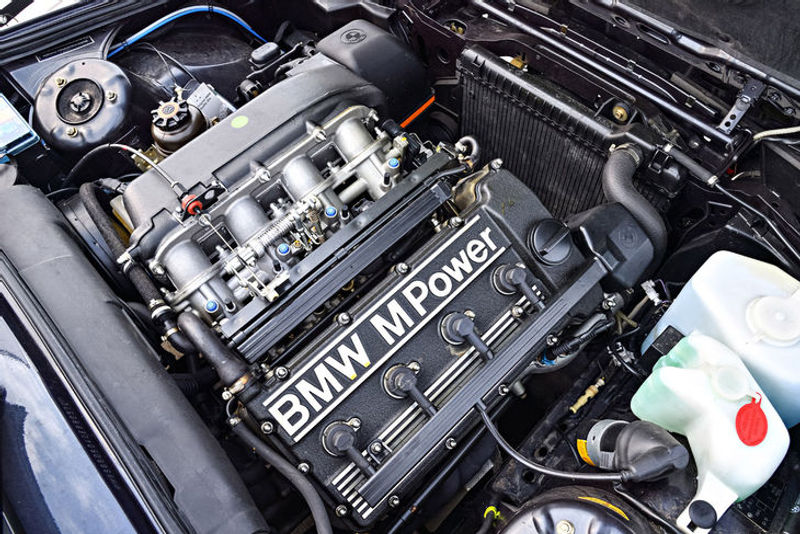
Of course, there have been brilliant 4-cylinder BMW engines before! The brand’s 4-pots from the Seventies and Eighties included its first turbocharged petrol- and F1 world title-winning engines, but by the time the brand was well-established in South Africa, we missed out on iconic 4 cylinders, such as those in the E30-generation M3, which dominated touring-car racing, and its 318is contemporary.
Although local BMW fans could aspire to own a 333i or 325iS, they missed out on the visceral original M3 and its rorty 4-pot motor.
The 1st-gen M3 was built exclusively in left-hand-drive guise so that BMW could compete in Group A of the DTM; its free-revving 2.3- and (later) 2.5-litre 4-cylinder motor produced up to 175 kW in its top (road-car) spec. As for the latter, it was BMW’s “contribution” to the 16-valve hot-hatch craze in the late ’80s/early ’90s – its peppy M42 1.8-litre mill developed peak power of 100 kW at 6 000 rpm.
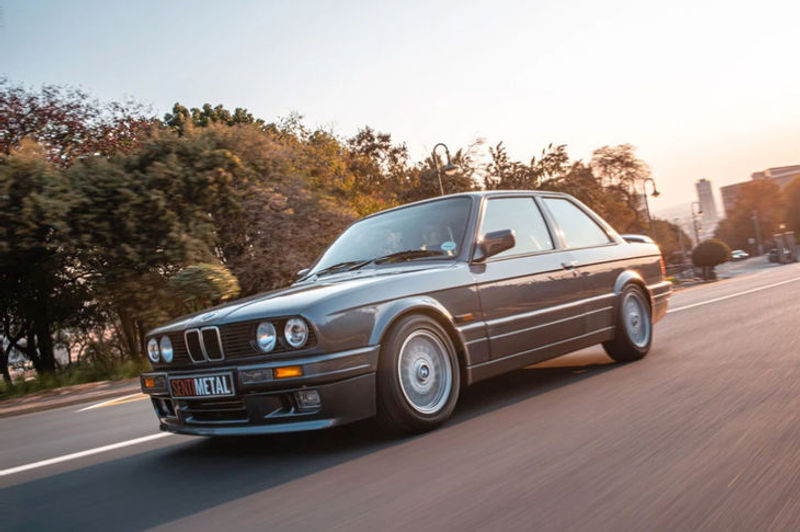
But back in the Republic, during that era, apart from the inline-6 motors in the 320i, 323i, 325i, 333i and 325iS, the E30-generation 3 Series sported merely sensible 1.6- and 1.8-litre 4-cylinder engines.
The E30-generation M3’s motor was based on the block of the long-serving M10 engine and the head of the M5’s S38 mill.
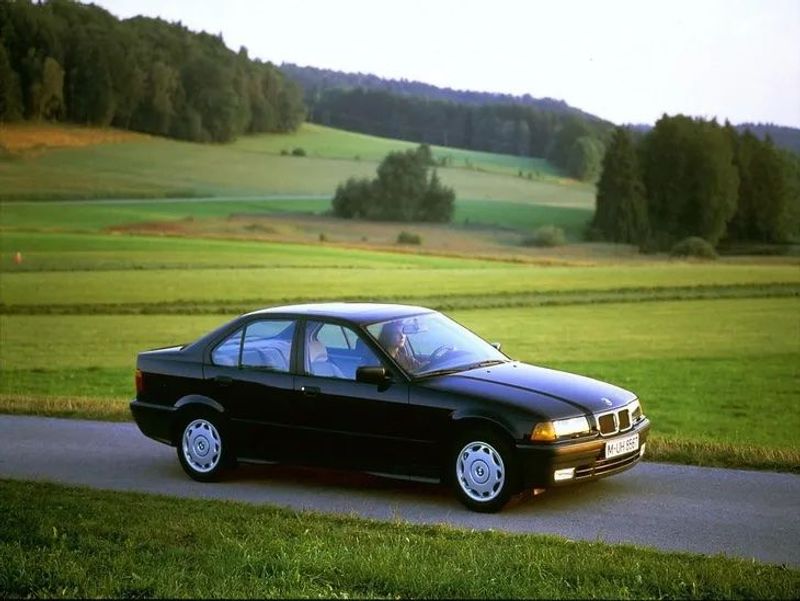
Then, when BMW’s inline-6 was really hitting its stride, the 1.8-litre 4-cylinder motors in the entry-level E36-gen 316i and E46-gen 318i just made up the numbers. They weren’t sparkling to drive and sounded abjectly miserable. Despite early hiccups, the 4-pot’s torquey turbodiesel counterparts did attract a cult following, because if you were desperate to buy into the brand during the production span of the E90-gen 3 Series (’05-’12), you’d have considered selling your gran to the pirates to get a 320d, if only to avoid buying the lumbering 320i with its valve-stem-seal-eating N46 2.0-litre petrol.
Fortunately, that 110-kW 320i (which BMW SA produced in bulk, also famously in bare-bones Start spec… sorry to remind you of that) arguably represented the low point of the BMW 4-cylinder petrol engine, because turbocharging has truly given it a new lease of life. And, thanks to inflation, growing complexity and downsizing, 6-cylinder BMW motors have not only become scarcer, but the derivatives that they’re fitted to are prohibitively expensive. See also: Has the 3 Series ‘lost its soul’? It’s a fair question.
The 318i and 318is were two of the little gems in the E36-generation 3 Series, but BMW didn’t capitalise on their initial success.
BMW has unquestionably produced excellent small turbopetrol engines of late, but by virtue of the brand’s pursuit of higher refinement and efficiency, the 4-pots still play supporting roles in the current (G20-gen) 3 Series and other models. The 330i, for example, produces a hearty 190 kW/400 Nm, but its motor’s digitally enhanced soundtrack has no sense of theatre, unfortunately.
Which brings me nicely back to the plucky 128ti, which will soon sit slap-bang in the middle of the local line-up of the 3rd iteration of the 1 Series. Having honed its skills of producing spirited and engaging front-wheel-drive models fitted with transversely mounted 4-cylinder engines with Mini, the BMW Group is finally ready to let its main brand reap the benefit.
The new 128ti is a hot hatch; it does not need to be in the shadow of the M140i… or even the contemporary M135i xDrive.
You see, the 2 previous iterations of the (exclusively rear-wheel-drive) 1 Series were always meant to be topped by derivatives with longitudinally-mounted inline-6 engines under their bonnets, including the 135i, 1M, M135i, M140i and, in terms of the outgoing 2 Series, the sublime M2, M2 Competition and M2 CS. Even though the 4-cylinder motors weren’t treated like the proverbial red-haired stepchildren in the previous (F20-gen) 1 Series, they weren’t the starring attractions either.
And therefore, I hope the F40-gen 1 Series will finally come into its own with the arrival of the 128ti in the coming weeks, which will have a configuration and handling/performance balance that is better suited to the model’s design than the somewhat overwrought M135i xDrive. Yes, it will indeed be a rival to the Volkswagen Golf 8 GTI; I can think of no better benchmark for BMW’s debutant.
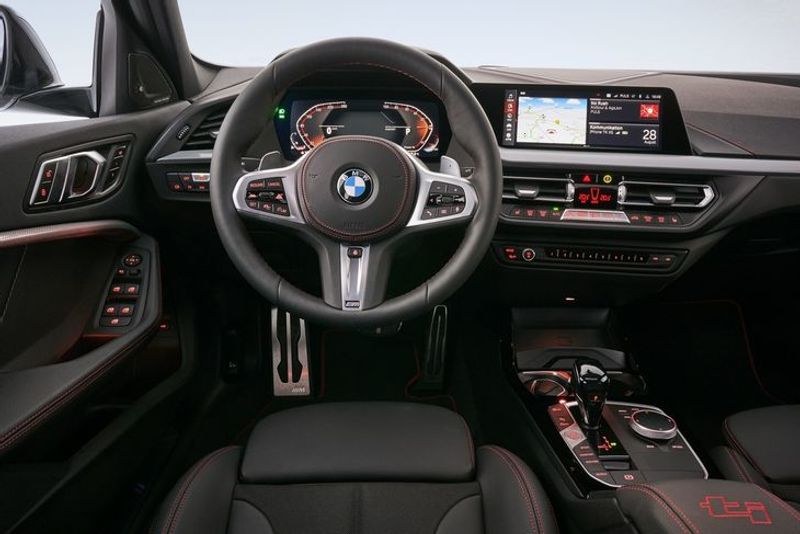
Prospective 128ti buyers will appreciate the sports steering wheel and M-branded stainless-steel-finished pedals and footrest.
I remember how I passed my driver’s licence test while at the ‘wheel of my mum’s metallic green E36-generation 318i back in late 1995 or early 1996… Compared with the previously mentioned 8-valve 316i, that pint-sized sedan had such a sweet-revving little 1.8-litre 4-cylinder 16-valve engine and the 1.9-litre unit that followed it (in the 318is) was even punchier.
Evidently, BMW does have the ability to produce sweet 4-pot petrol motors, you just have to wait for the right one to come along. No pressure then, 128ti.
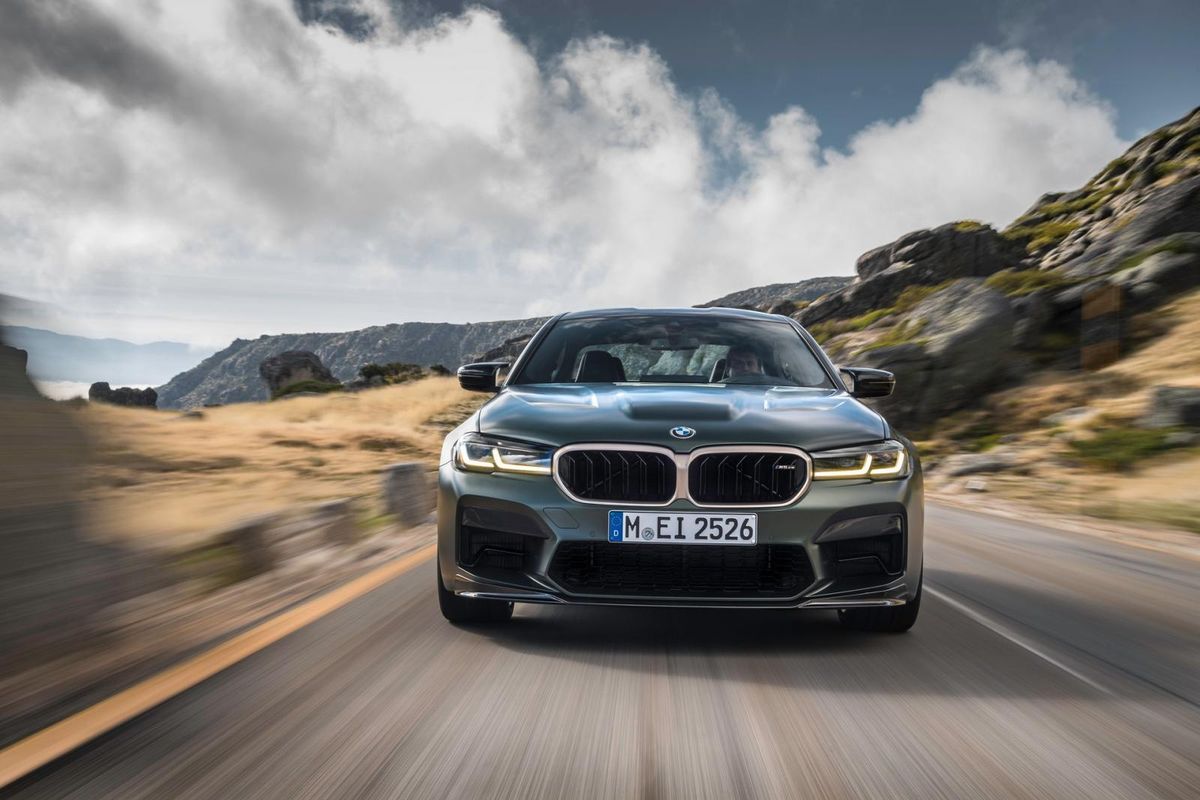
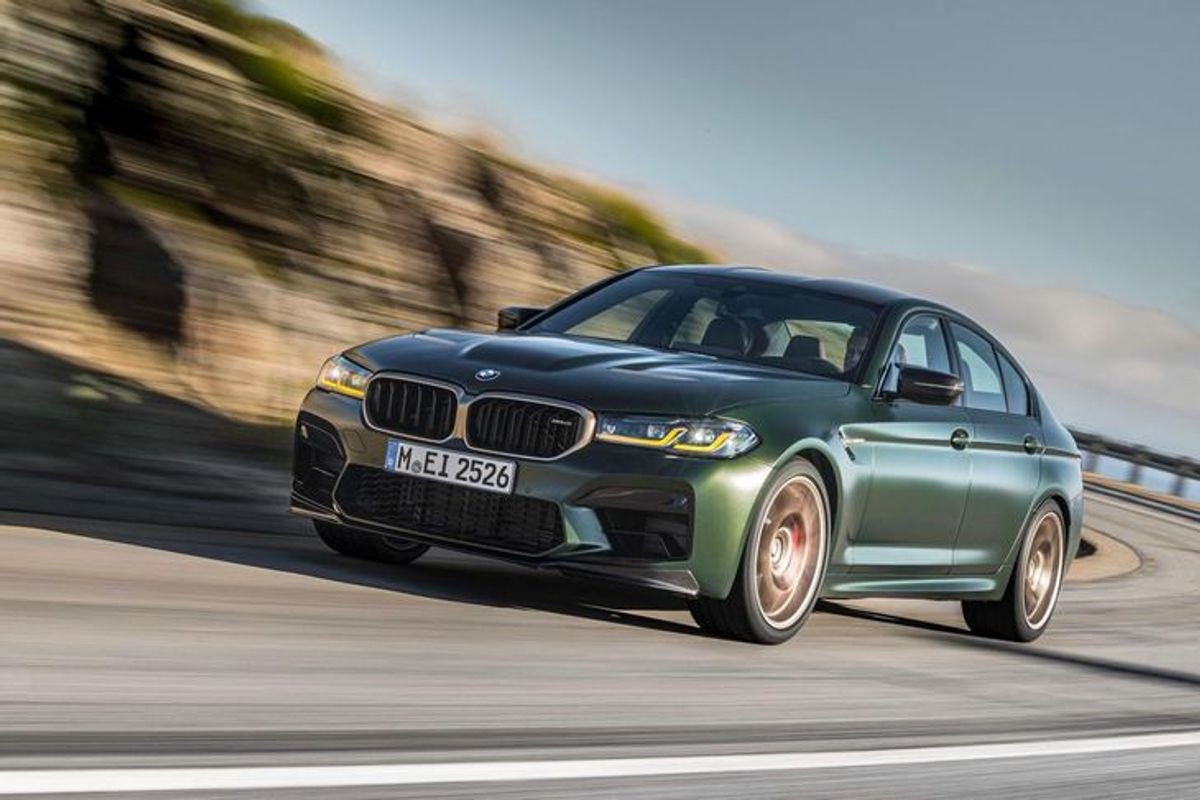
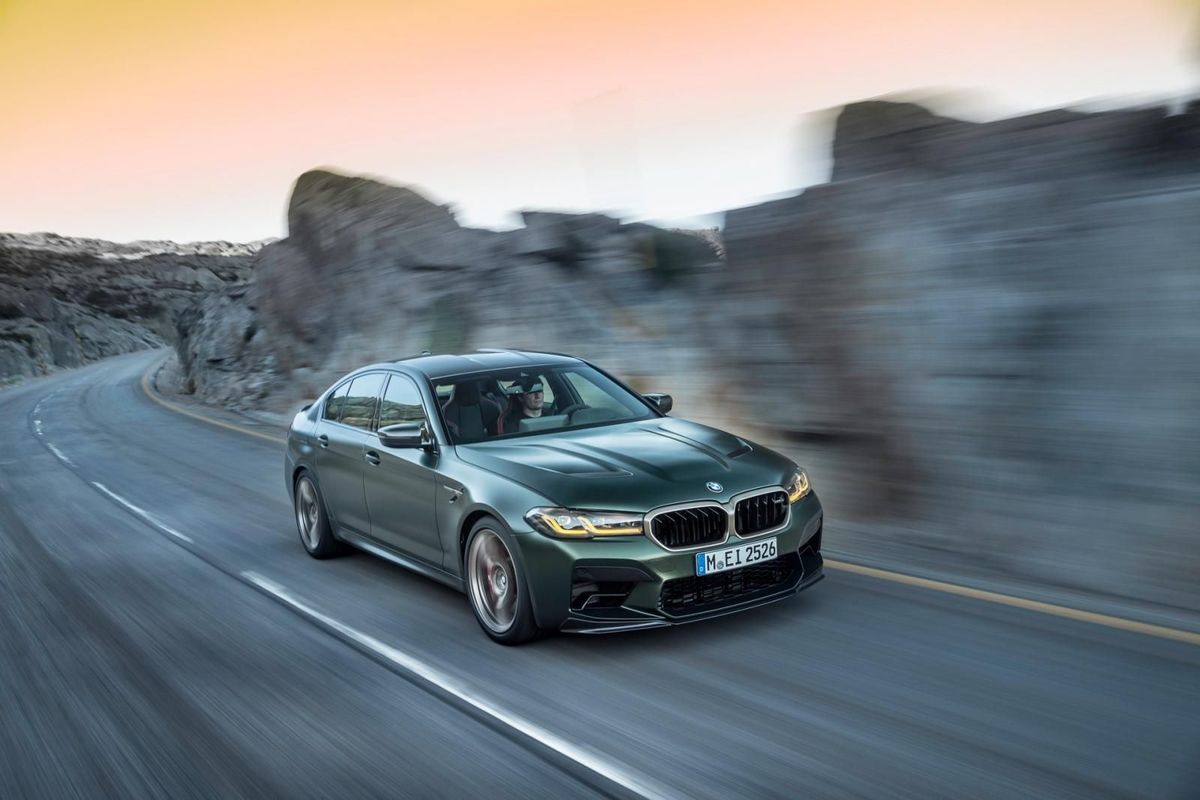
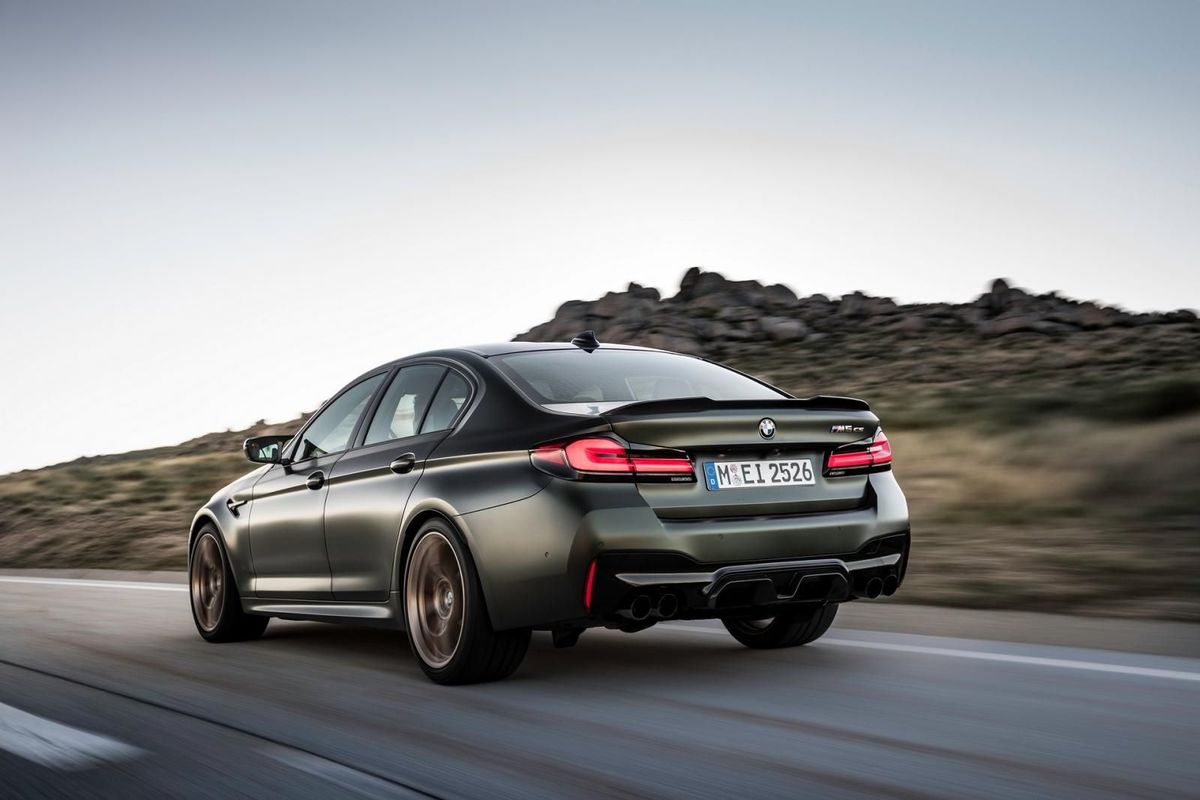
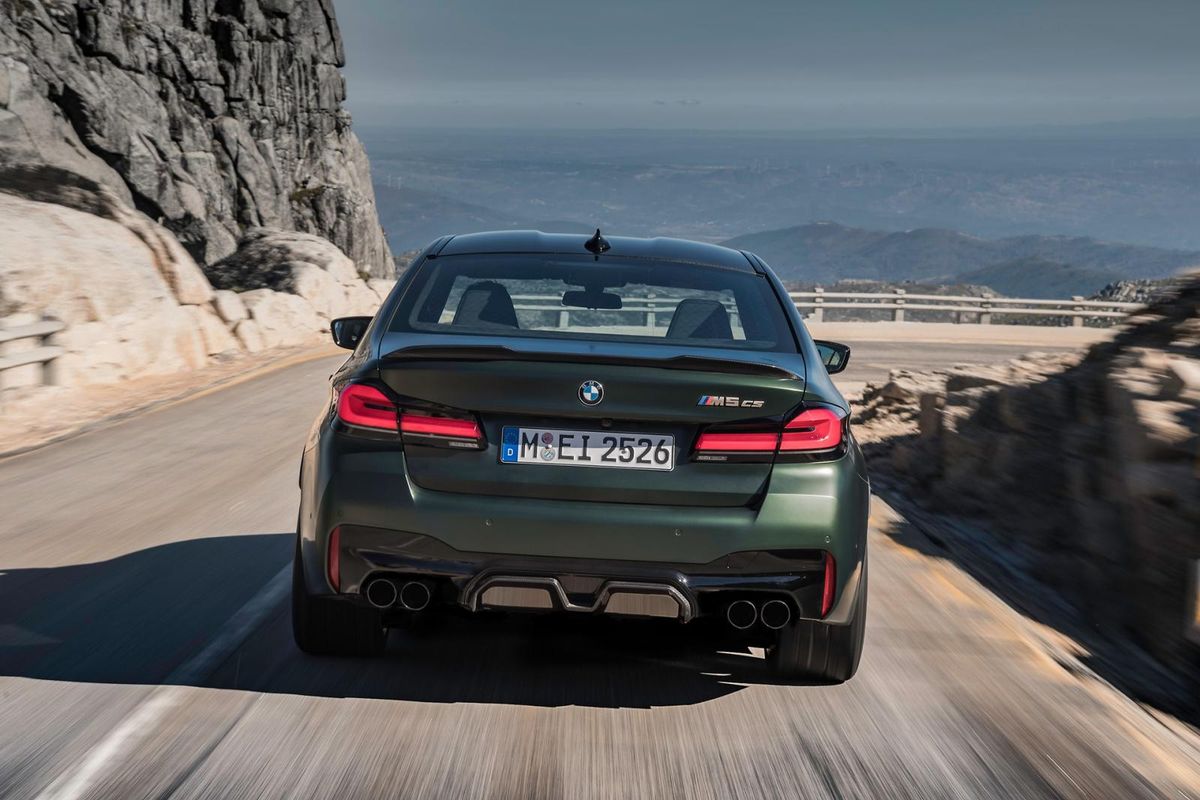
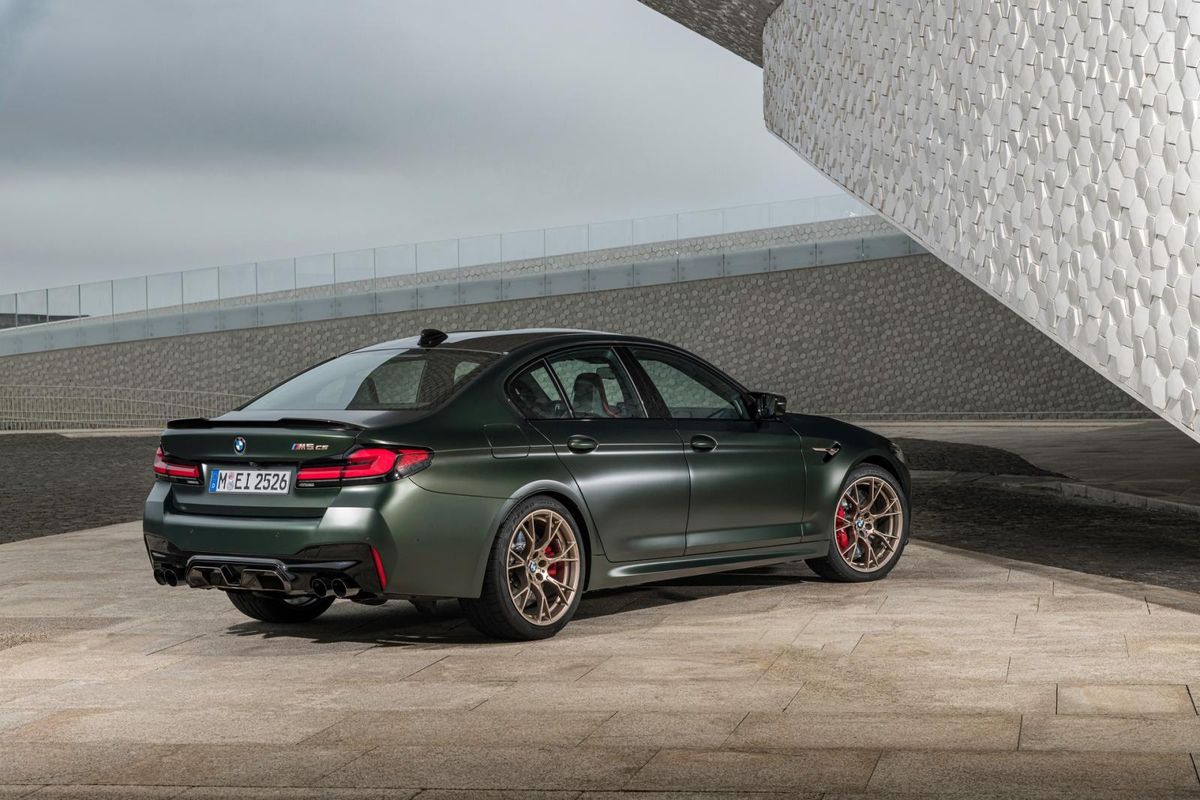
BMW M has officially revealed the M5 CS, which not only represents the pinnacle of its iconic super sedan, but is the most powerful and fastest-accelerating car the brand has ever produced…
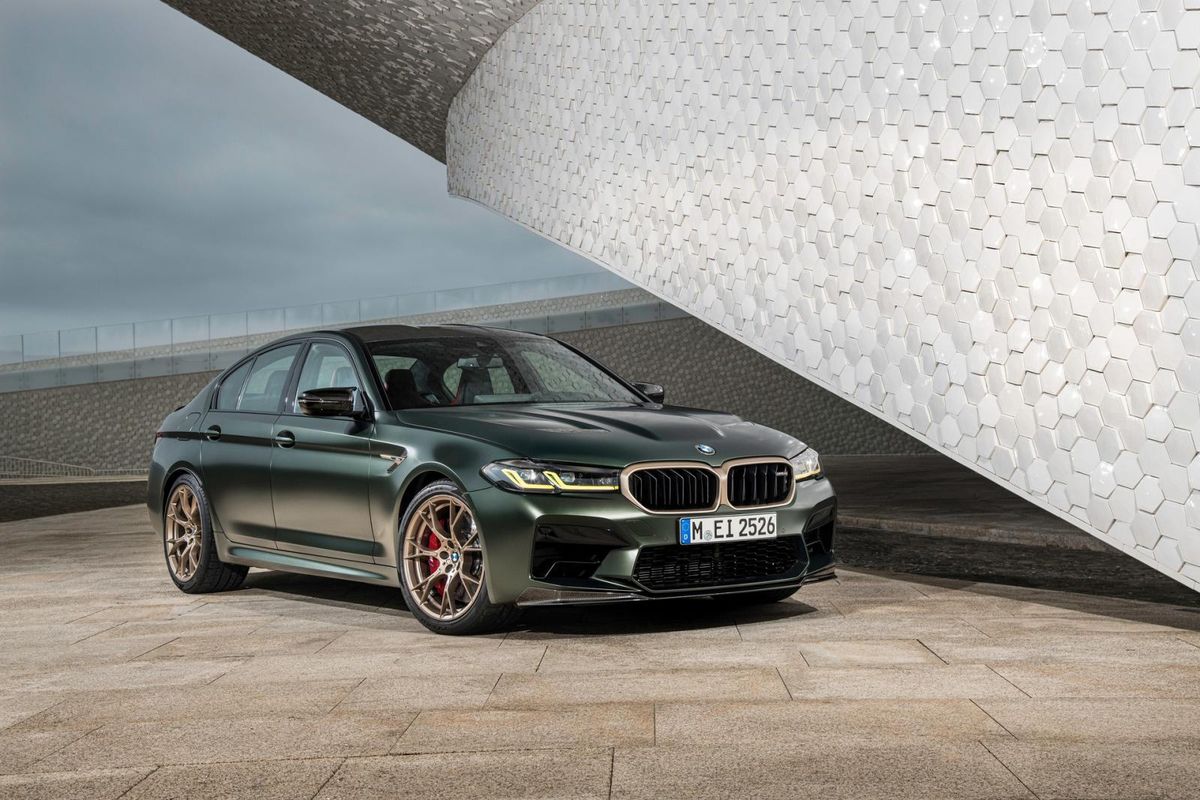
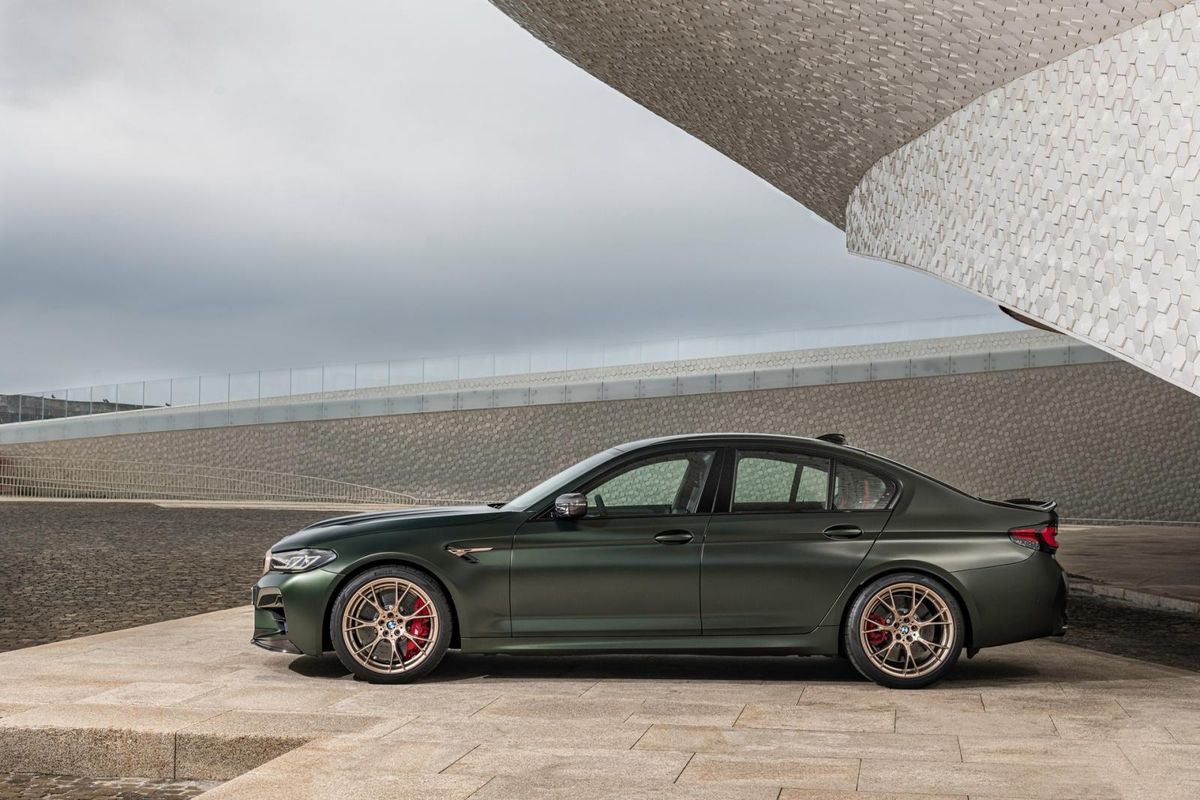
As Cars.co.za reported recently, the boss of the Bavarian marque’s performance division, Markus Flasch, partially revealed the M5 CS on Instagram late last year, when he highlighted the sedan’s characteristic brushed gold-bronze grille surround, side strakes and forged alloy wheels, plus he divulged a few tantalising details about the (then upcoming) super sedan.
The M5 CS has been fitted with the upgraded suspension from the M8 Gran Coupe Competition.
So, we had a good idea of what the newcomer would look like, knew that its engine would produce 467 kW, which is marginally higher than the M5 Competition’s 460 kW, as well as the fact the Clubsport would be 70 kg lighter than its sibling by virtue of incorporating numerous lightweight parts.
Those details have now all been confirmed, but the claimed performance figures of the super sedan, which is powered by a 750-Nm 4.4-litre twin-turbo V8 mated with an 8-speed automatic transmission, is nonetheless stupefying. BMW claims the M5 CS can bolt from standstill to 100 kph in 3 sec dead, from 0 to 200 kph in 10.4 sec and go on to an (electronically-limited!) top speed of 305 kph.
BMW has applied a number of carbon-fibre-reinforced plastic panels to its ultimate super sedan.
The attention to detail in the newcomer is also pretty astonishing. Yes, the engine produces only 17 kW more than the M5 Competition (467 kW at 6 000 rpm and 750 Nm of torque from 1 800 to 5 950 rpm), but BMW has fitted the motor with a redesigned oil pan with an additional sump and indirect charge-air cooling, plus stiffer engine mountings (with spring ratings of 900N per mm, Autocar reports).
Over and above a recalibration of the M xDrive all-wheel-drive system, the M5 CS’ suspension tuning is more focused than that of its M5 Competition sibling. For one, the newcomer’s shock absorbers, which were developed for the M8 Gran Coupe Competition, trim the super sedan’s ride height by 7 mm and are said to reduce fluctuations in wheel loads. In combination with new spring bearings for the damper control measures, the M5 CS is evidently optimised for sharper on-the-limit handling (no wonder it has Nurburgring silhouettes in its front-seat headrests, but more about later…).
BMW's reworked the M5 CS' front and rear suspension geometry, while 20-inch P Zero rubber help it to hug the road.
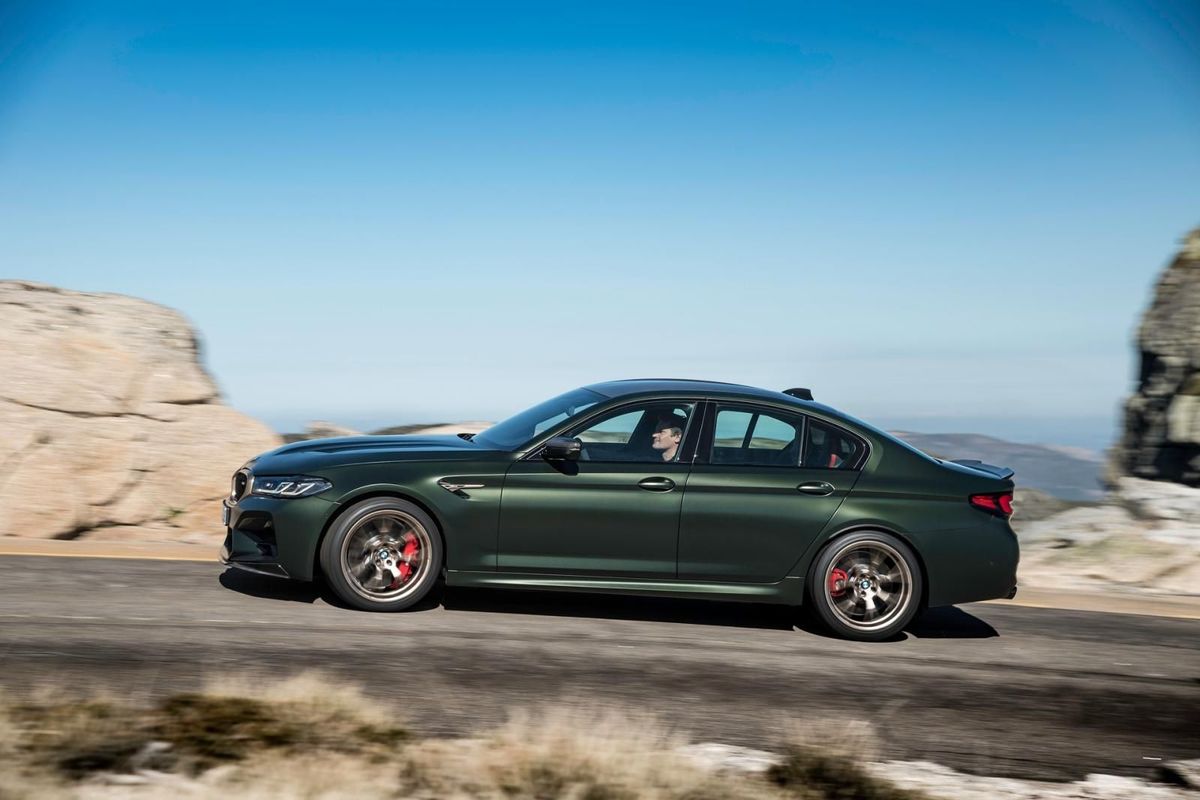
The gold-bronze-finished 20-inch alloys are shod with 275/35 front and 285/35 rear Pirelli P Zero Corsa tyres and, if you look through their spokes, you’ll notice the standard M carbon-ceramic braking system. It comprises 6-piston fixed red calipers (fore) and single-piston floating calipers (aft), plus BMW claims it weighs 23 kg less than the steel-disc setup that features on the M5 Competition.
To reduce the sedan’s kerb weight to just over 1 800 kg (1 825-kg DIN), the M5 CS’ bonnet, front splitter, side-mirror caps, rear spoiler, rear diffuser, M Power engine cover and intake silencer are all made from carbon-fibre-reinforced plastic (CFRP). In fact, some elements feature exposed carbon fibre, the manufacturer says.
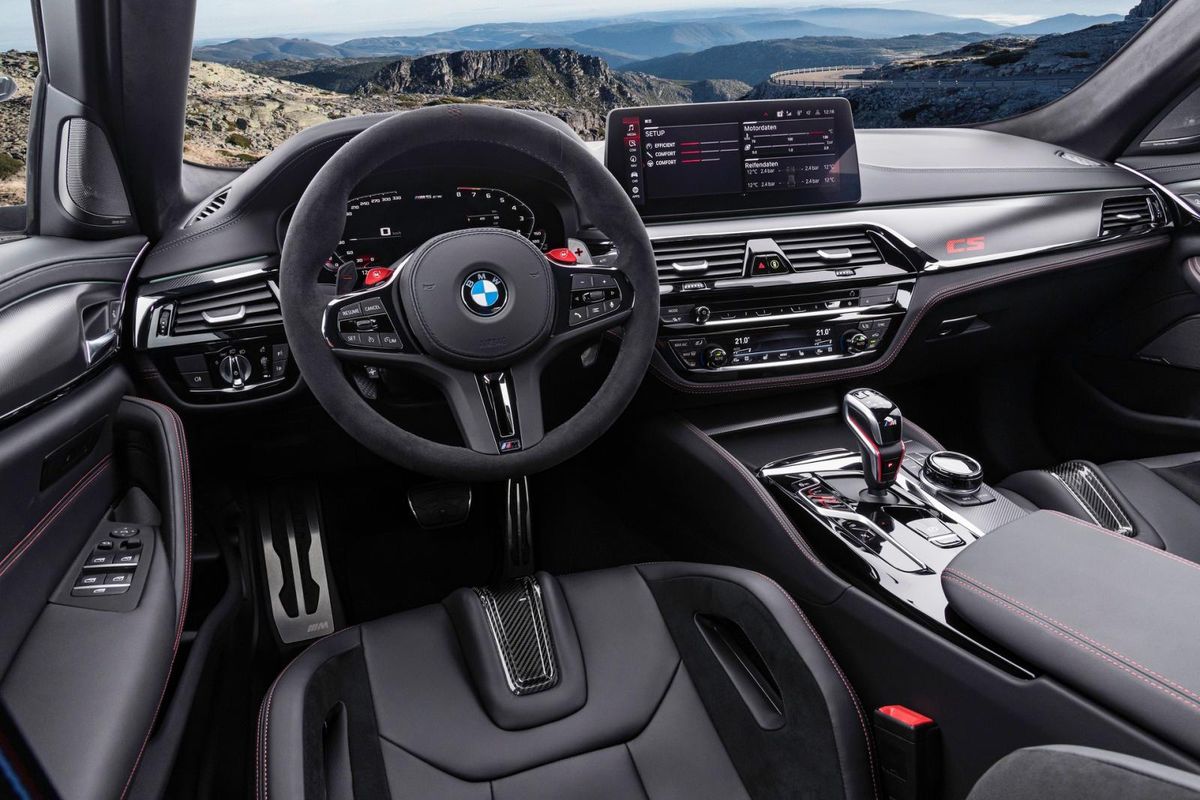
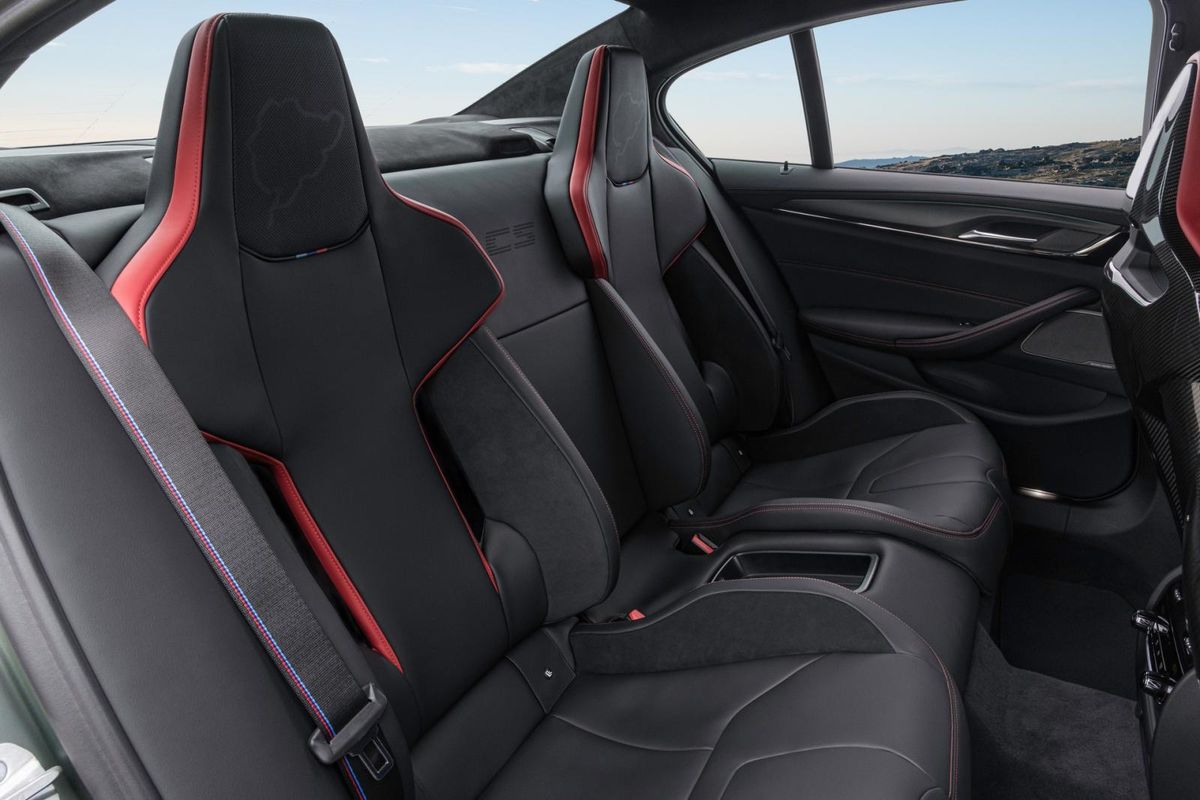
The M5 CS' interior is awash with racy red detailing, leather trim, carbon-fibre inlays and Alcantara.
Meanwhile, the L-shaped lighting elements of the standard BMW Laser headlamps shine yellow when on low- or high beam (or when the welcome light comes on). Apart from M5 CS badging, the door sills are illuminated with M5 CS badges and various trim elements have a Shadowline finish.
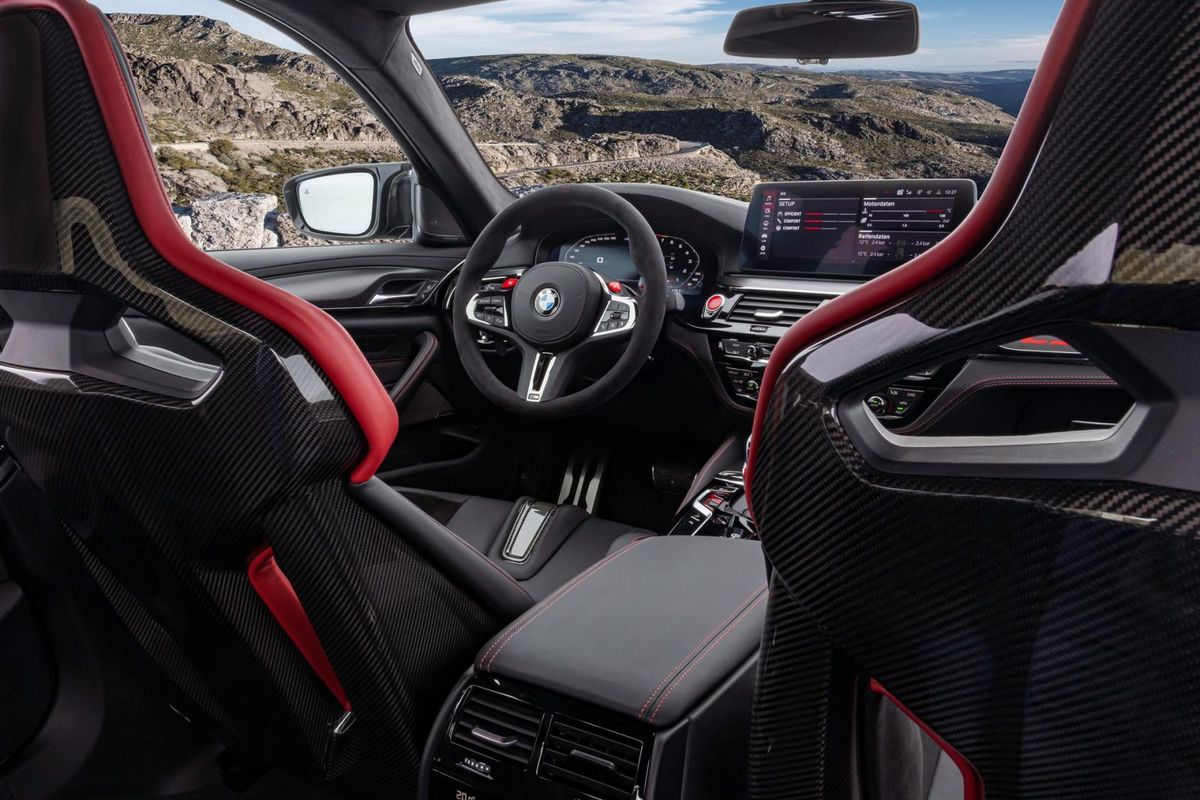
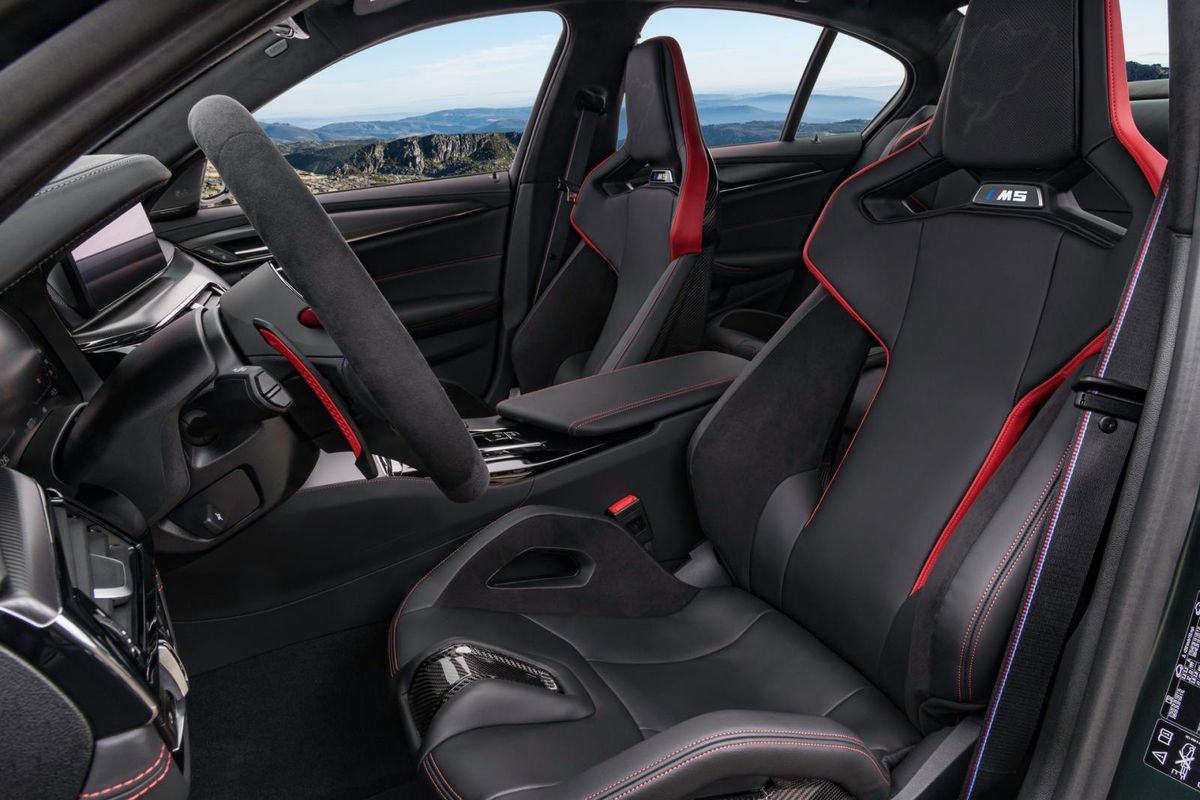
Flasch had hinted that the M5 CS would have a bespoke treatment at the back of the cabin and sure enough, the newcomer features 4 individual M carbon-fibre bucket seats as opposed to a pair for sports seats and a bench. Those in the front have integrated headrests embossed with an outline the Nürburgring Nordschleife, while electric adjustment and heating are standard.
The M5 CS is BMW's first super sedan since the E34-gen M5 to be offered with a 2+2 seating arrangement.
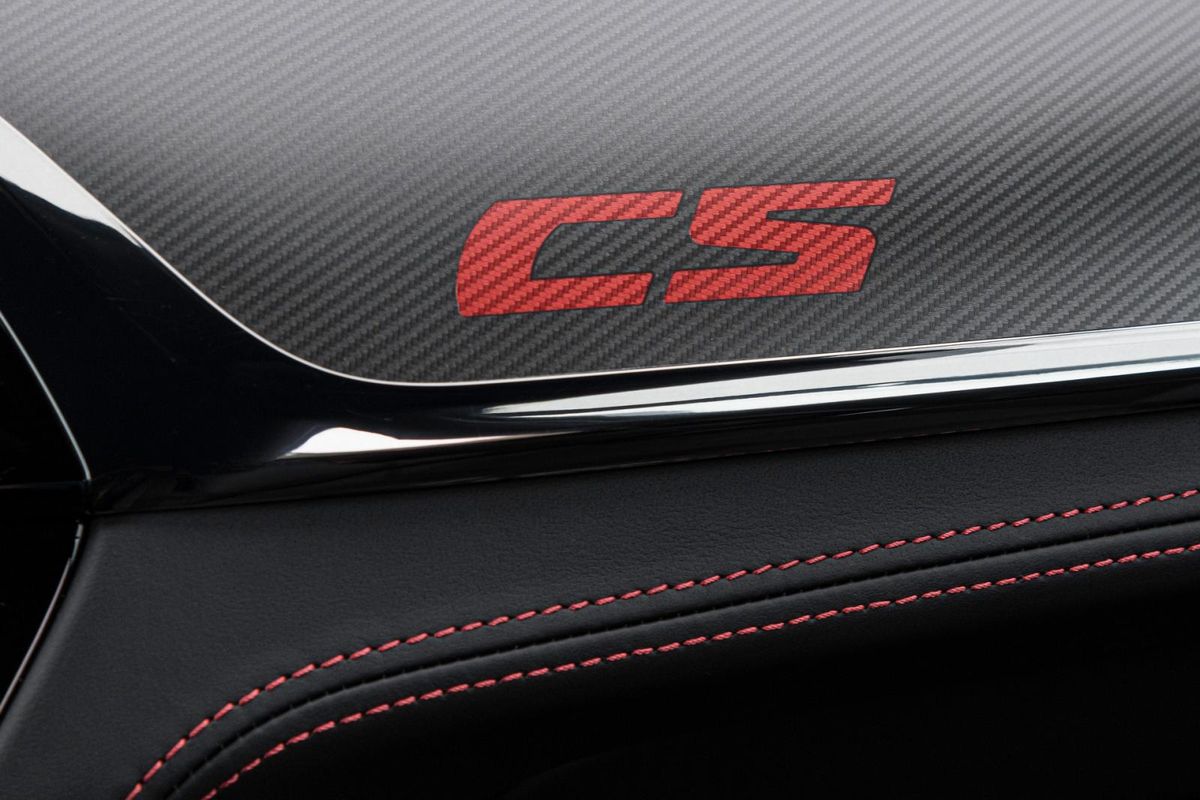
BMW has also fitted an Alcantara-trimmed steering wheel. The red-accented shift paddles and M buttons tie in with the seats’ side inserts, the contrast stitching, centre console highlights and CS logo on the carbon-fibre-pattern fascia trim. Alcantara headlining complete the package.
Suffice to say the M5 CS will be produced in very limited numbers; only 5 units have been earmarked for the South African market and deliveries will begin in the 3rd quarter of 2021.
Audi is expected to have a very busy year in 2021 with a long list of new or facelifted product due to reach South Africa. See what’s coming from the German luxury brand!
2021 is set to be a bumper year for Audi and fans of the brand have much to look forward to as a flood of product is expected to reach the South African market, mostly in the first half of the year. In fact, a wide range of performance-orientated RS Audis will look to satisfy those with a need for thrilling performance.
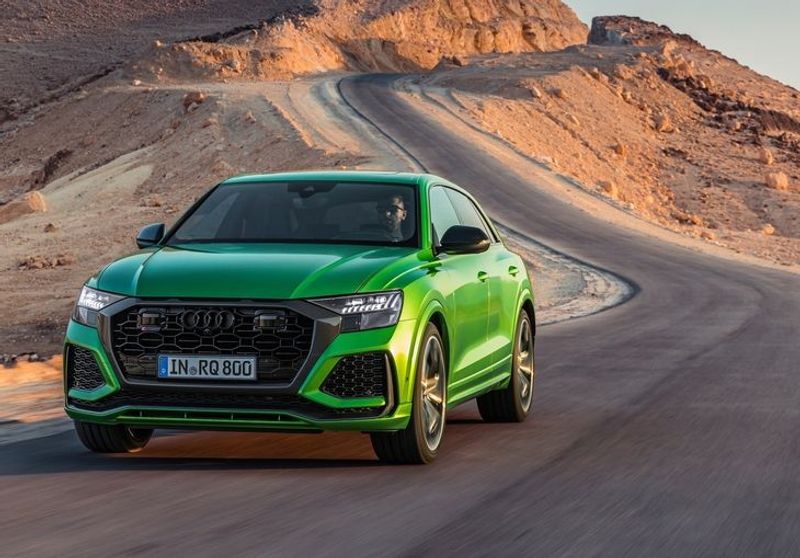
Covid-19 prevented the introduction of Audi's potent RS Q8 SUV last year and it will now be introduced early this year. It will bring massive firepower to the road with a 441 kW/800 Nm 4.0-litre bi-turbocharged engine that will ensure a zero to 100 kph sprint time of 3.8 seconds before smashing a top speed of 305 kph. Pricing will be confirmed closer to launch.
Other products to be introduced in the first quarter include the new Audi S8, RS6, RS7, RS Q3, RS Q3 Sportback, SQ7 and SQ8. Facelifted products due in the first quarter include the S4, S5, RS4 and RS5. Audi has already welcomed the updated R8 supercar to the local market.
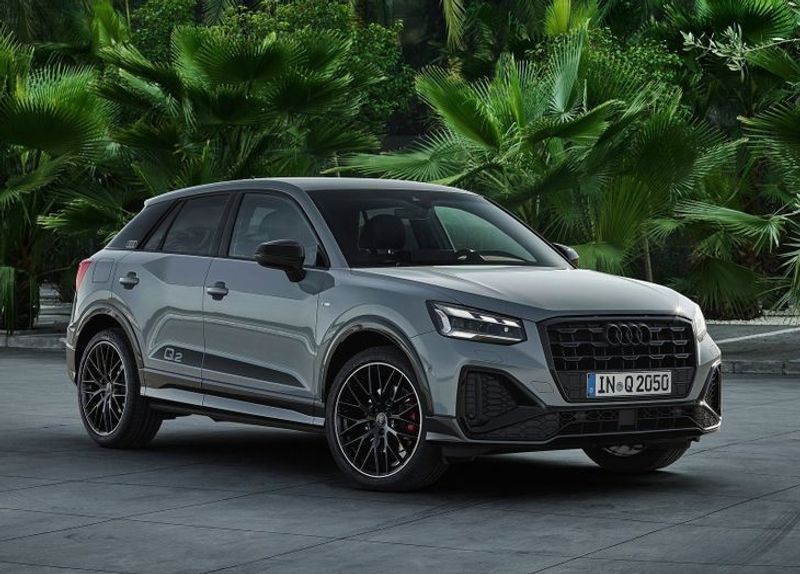
Audi’s compact Q2 has been given a thorough update and now boasts a new-look front end with the option of LED and Matrix LED headlights. Customers can also opt for the advanced and S Line trim levels, which give more visual punch. Audi claims the S Line Q3 is "even more expressive." The interior has also benefitted from the refresh with a host of desirable optional features available. The current 1.0-litre and 1.4-litre turbocharged engines are expected to carry over locally. Local specification and pricing details will be communicated closer to launch.
The facelifted Audi Q5 is also expected to arrive in the second quarter of 2021.
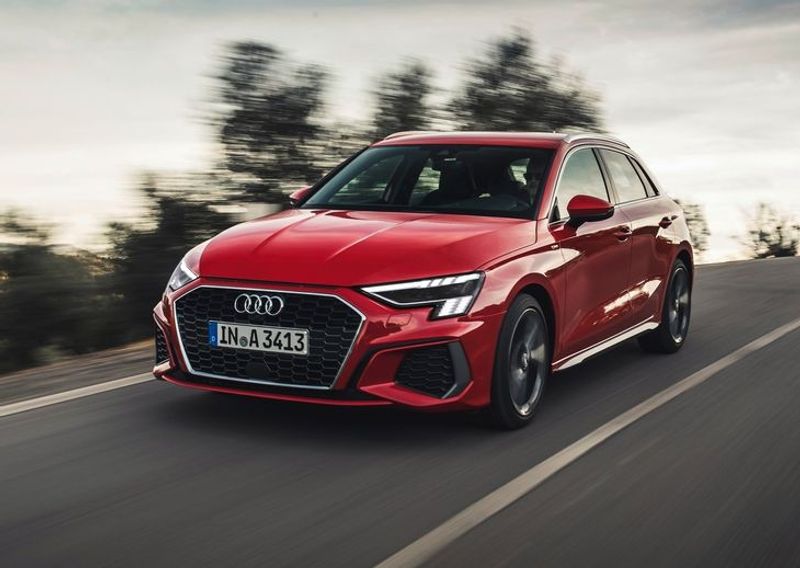
Audi’s premium A3 hatchback will be sold in Sportback guise only and will later be joined by the new A3 sedan. The best news is that there will be a successor to the iconic RS3 too, complete with its monstrous 2.5-litre 5-cylinder motor. Rumours suggest power will climb from the current 294 kW and 480 Nm, to over 300 kW, going to all 4 wheels via the quattro setup. The new S3 retains its 2.0-litre turbocharged 4-cylinder motor and packs 228 kW and 400 Nm. Look out for pricing details closer to launch.
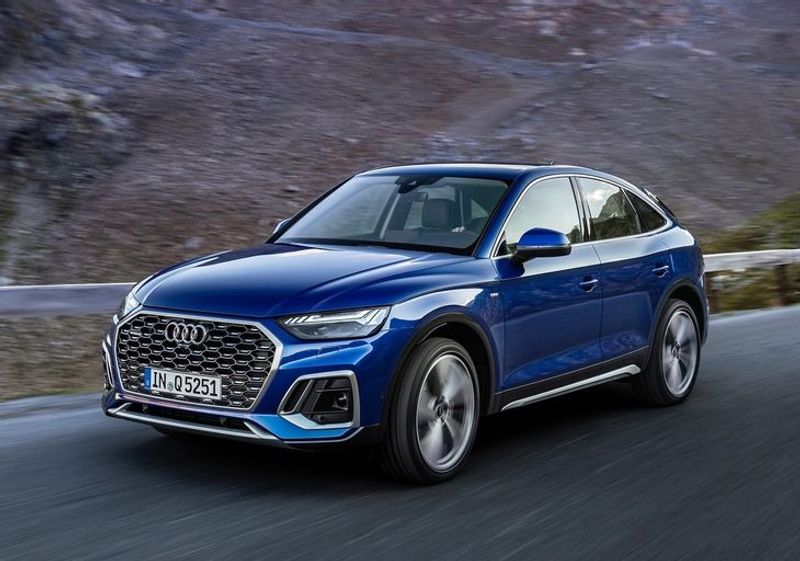
The new Q5 Sportback will make landfall in the final quarter of the year to take on the Merc GLC Coupe and BMW X4. There are just 2 engines on offer: a 2.0-litre turbocharged 4-cylinder with 195 kW and 370 Nm, while the range-topping SQ5 features the 3.0-litre turbocharged V6 producing 260 kW and 500 Nm. Both models feature automatic transmissions as well as quattro all-wheel drive. Local pricing and specification will be revealed closer to launch.
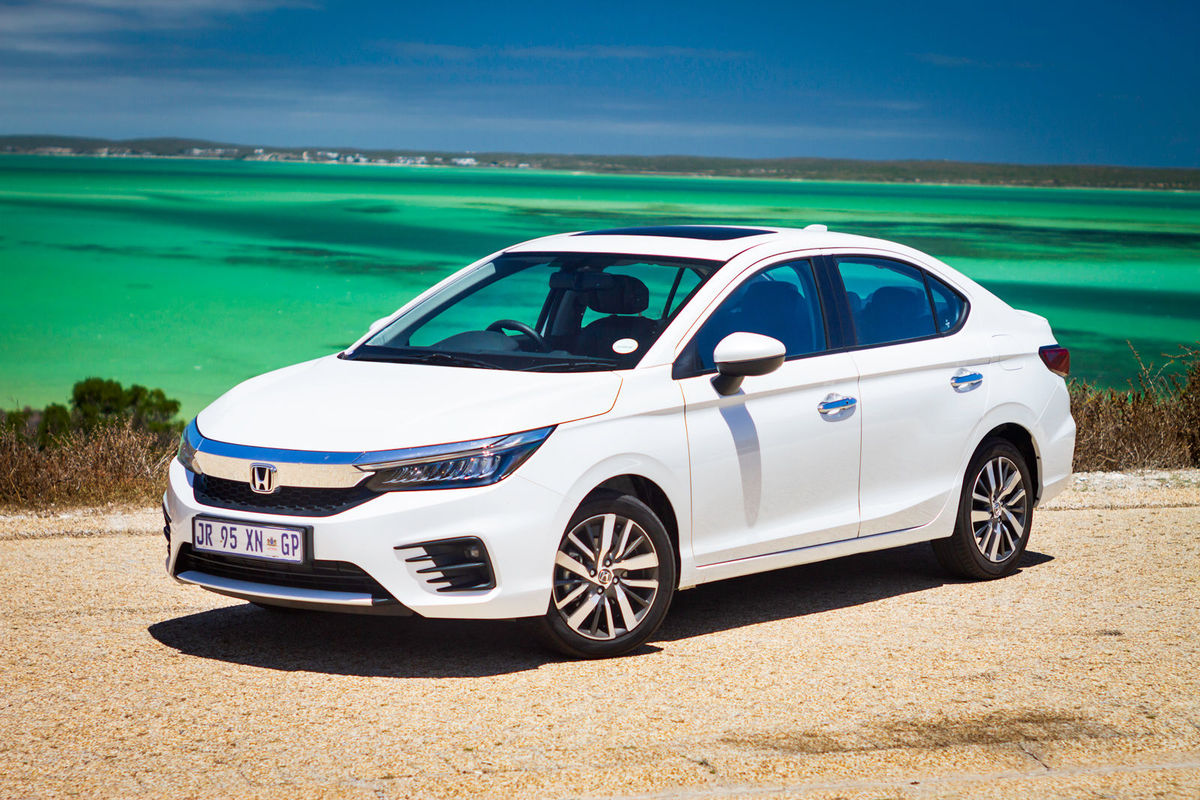
What happens when an avid mountain biker goes on holiday with a traditional family sedan, instead of something with proven ability on gravel roads? Cars.co.za correspondent Lance Branquinho did just that with Honda’s new Ballade and learnt that you don’t know you miss some things until they are gone. Or reappear.
Time waits for no-one, so the saying goes… In 2000, a Honda Ballade was very much the average South African family vacation vehicle. Twenty years later, I have to explain to strangers what it is.
This Japanese compact sedan is no longer a favourite of South African families. If a vehicle doesn’t have some lower-door cladding, a raised ride height and chunky tyres, well, nobody seems interested.
Double-cab bakkies, SUVs and crossovers are now the dominant modes of family motoring. But what about a month spent at the 'wheel of Honda’s new Ballade? Does it rekindle a familiarity of something that was once entirely adequate… or trigger frustration?
3 things to like about the Ballade
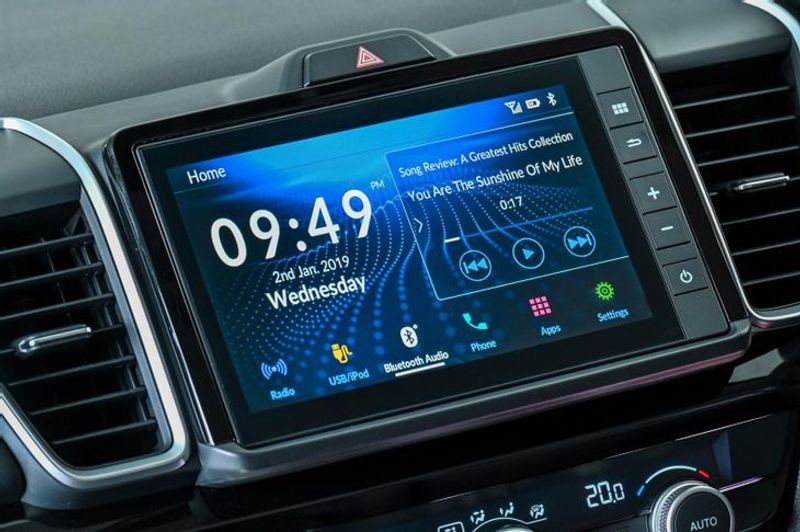
The new-generation Honda Ballade offers a much more presentable, functional and user-friendly touchscreen interface.
Timely infotainment upgrade
I am, by and large, technology-agnostic, but I do recognise that a quality infotainment setup can make a very meaningful difference to the contemporary in-car experience. That said, Honda has been quite poor with its touchscreen offerings. The graphics on Honda’s infotainment systems tend to look like something from a late 1990s console game, with menus about as intuitive as a French cuisine recipe… in French.
The Ballade features Honda’s latest infotainment system and, suffice to say it's vastly superior to that of its predecessor. Goodbye to bizarre cosmic graphics, hello to legible icons and slicker interfacing.
Look, I'm unlikely to ask too much of an infotainment system. All I need it to do is to pair with my smartphone and make it easy for me to select the AM band on the radio. Thus the new Ballade proved entirely competent at fulfilling my limited infotainment needs. It never caused frustration, which was a refreshing experience, considering my technophobic lack of user intuition.
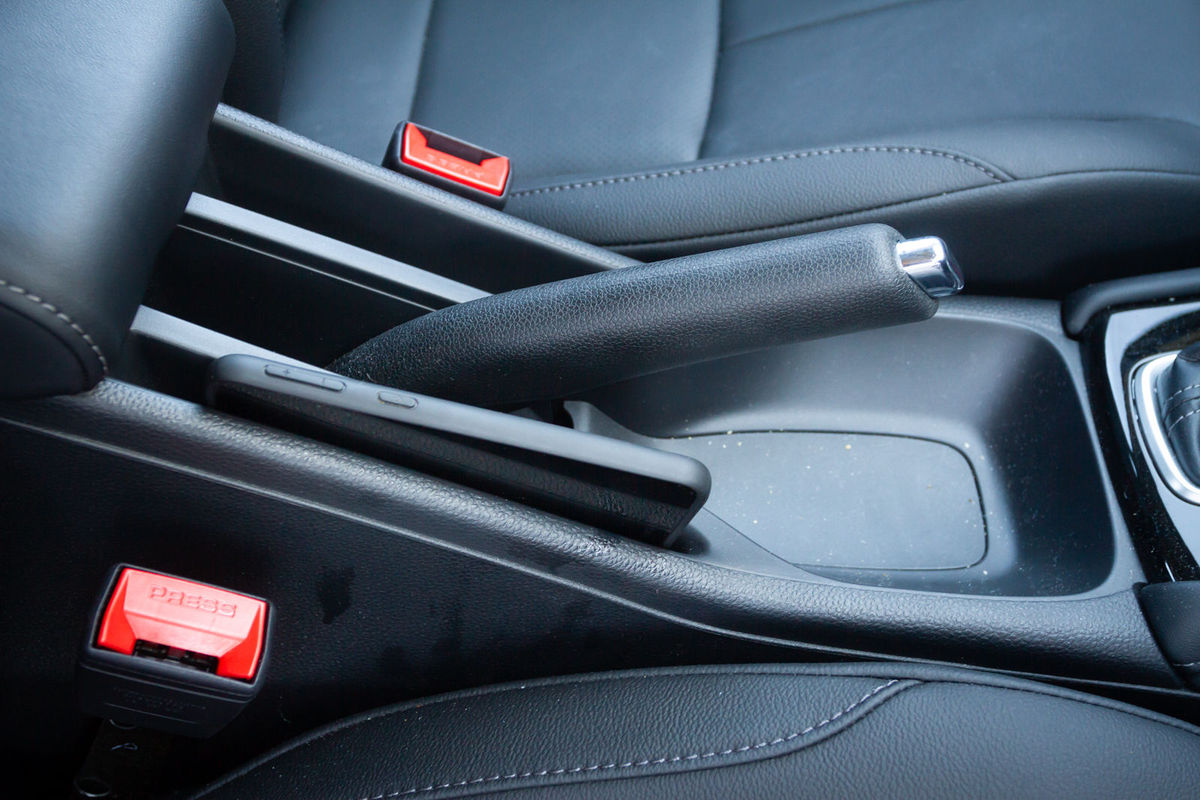
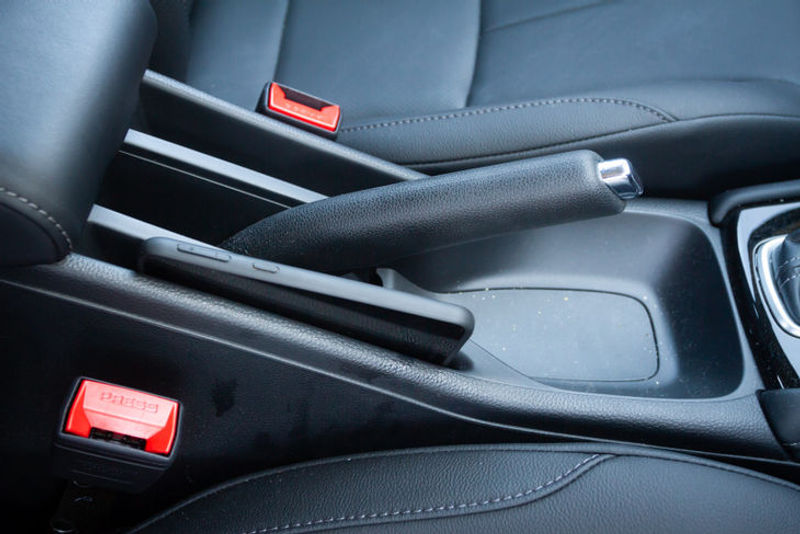
Although the Ballade faltered in its ability to provide convenient storage for my mountain bike (but more about that later), it has some ingenious touches within the cabin’s architecture… The parking brake lever is flanked by a pair of utility slots for coins and smartphones. If you feel like a fool for putting your smartphone in the cupholder (like most of us do), these storage spaces are brilliant.
Honda avails a pair of slots (1 on either side of the parking-brake lever) to house the driver and front passenger's smartphones.
Endearing transmission
The Ballade’s powertrain is anything but revolutionary. Whereas many vehicles priced around R400k in the local market are turbocharged, this Honda is powered by an atmospheric 1.5-litre petrol engine.
The peak outputs are 89 kW and 145 Nm, which are hardly stirring. And then there is the gearbox, which, well, doesn’t actually have any gears. "Transmission" is a more accurate description – the Ballade utilises a continuously variable example (CVT). Have you ever met a car enthusiast who likes a CVT? Exactly.
Living with Ballade for a month forced me to reconsider some biases, though. During the usual 7-day test cycle, the droning nature of a CVT is bound to be annoying, but that is largely due to unfamiliarity.
By the time I had been driving the Honda for 2 weeks, I found the CVT’s constant rev-range performance pleasing. And quiet. Refined. I have been a CVT transmission sceptic for many years and scoffed at engineers when they attempted to explain its benefits: less internal friction, lower maintenance and smoother performance…
The Honda's unbothered driving experience is a boon. Cars with modest power outputs and conventional planetary-geared auto 'boxes, by contrast, tend to spike shift points and create surges of engine noise.
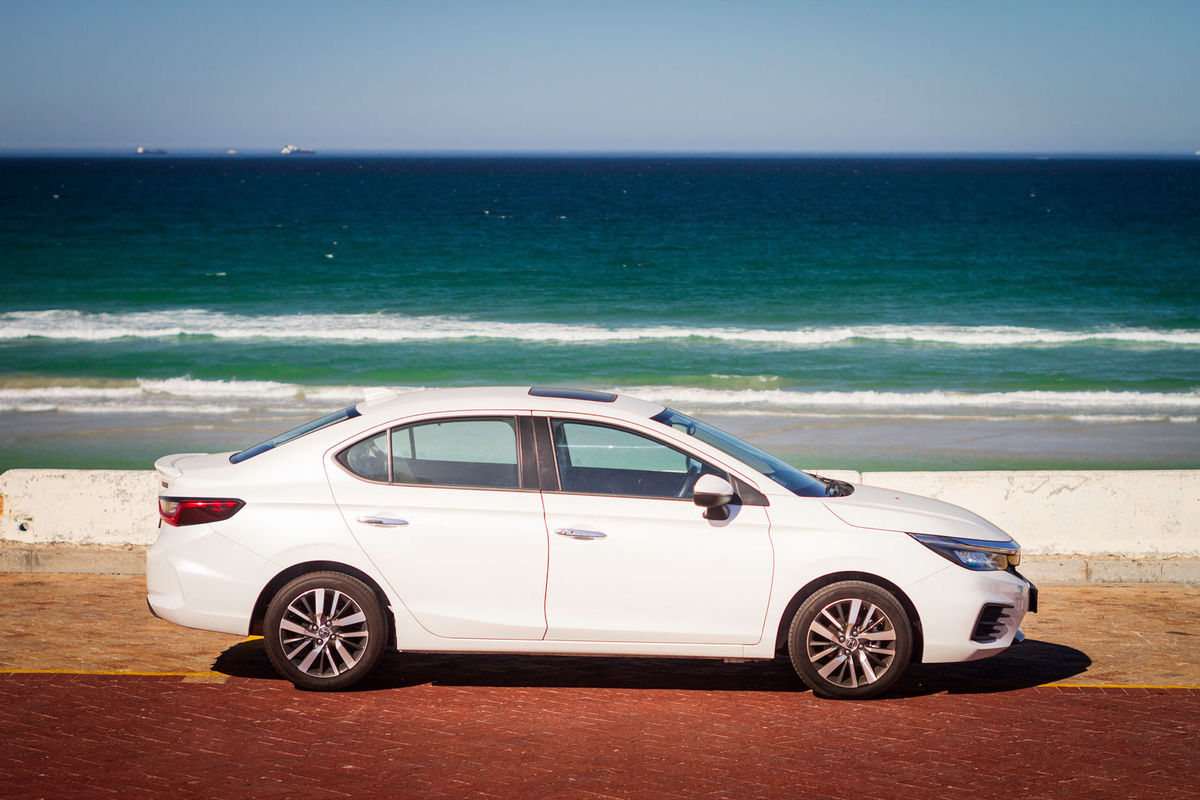
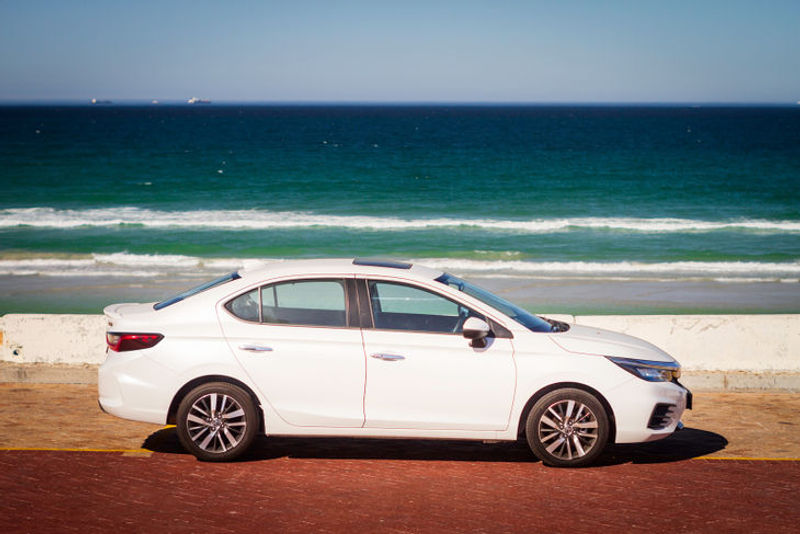
A raised ride height has its place, but the on-road stability and manoeuvrability of a compact sedan are just as valuable.
The inherent stability of a sedan
I did not venture onto dirt roads with the Ballade often. Although gravel routes link some of South Africa’s greatest venues and adventure locations, it is hardly the natural terrain for a compact family sedan.
After a year of driving mostly bakkies, SUVs and crossovers, it felt rather peculiar to spend a few weeks in a model with a much lower ride height than those (comparatively tall) vehicles. You have to relearn a sense of dimensional awareness with the car, anticipate where its corners are when you're parking and be particularly mindful of high kerbs in the claustrophobic urban environment.
The raised ride height of a bakkie, SUV or crossover delivers a more confident field of view. There's no question about that. But it also makes for an inherently less agile vehicle. You can’t undo the physics that control lateral stability and raising a vehicle’s centre of gravity makes it more susceptible to body roll and pitch.
Despite its incongruous ‘RS’ badging, the Ballade reminded me how much we take a lower centre of gravity for granted. It tracked with such confidence, despite its humble platform, suspension and tyres.
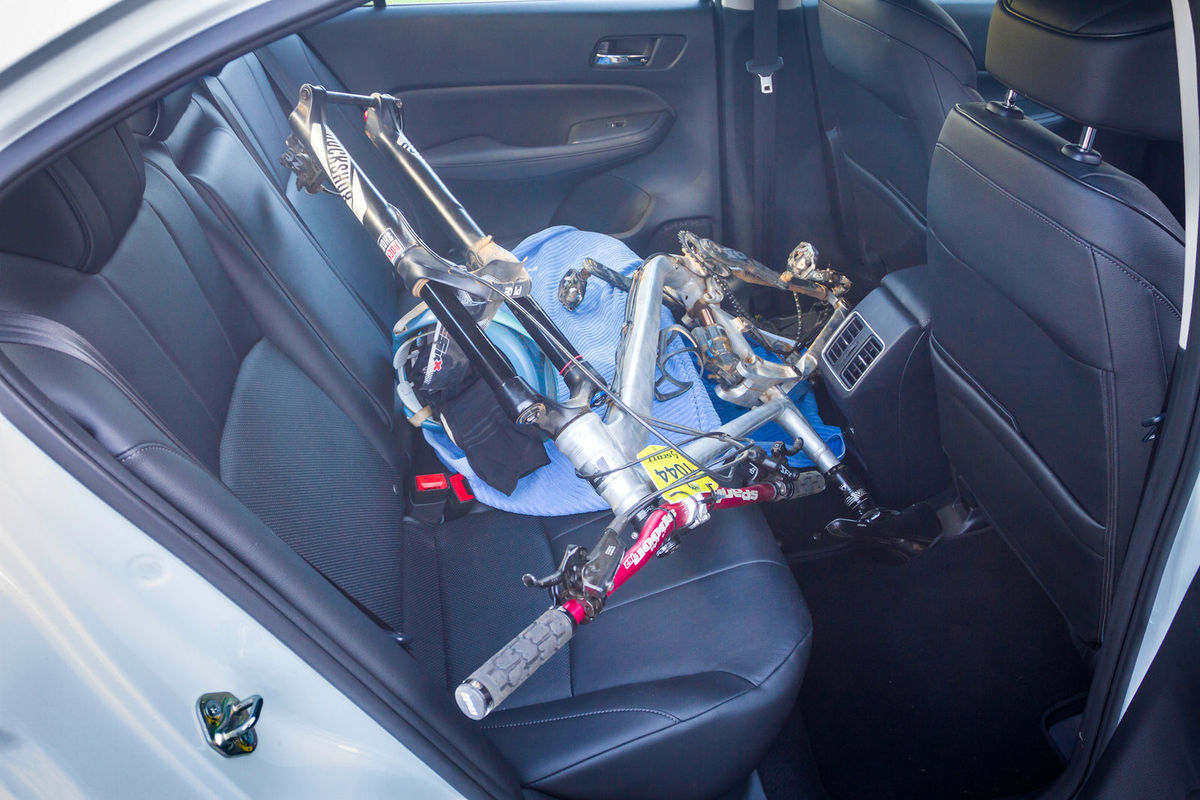
The Ballade's rear seatback doesn't split and fold forward, which made it tricky to transport a mountain bike in the car.
Dislikes?
Limited practicality
Okay, I admit it: I'm a bakkie person… My legacy outdoor activities include mountain biking and water sports and the gear required to pursue those hobbies doesn't fit conveniently (if at all) in a mid-sized family sedan. Some sedans have folding rear seats, but the Ballade isn't one of them. It's simple: rear benches with hinges and 2-piece structures add to the production cost and, therefore, asking price of a vehicle.
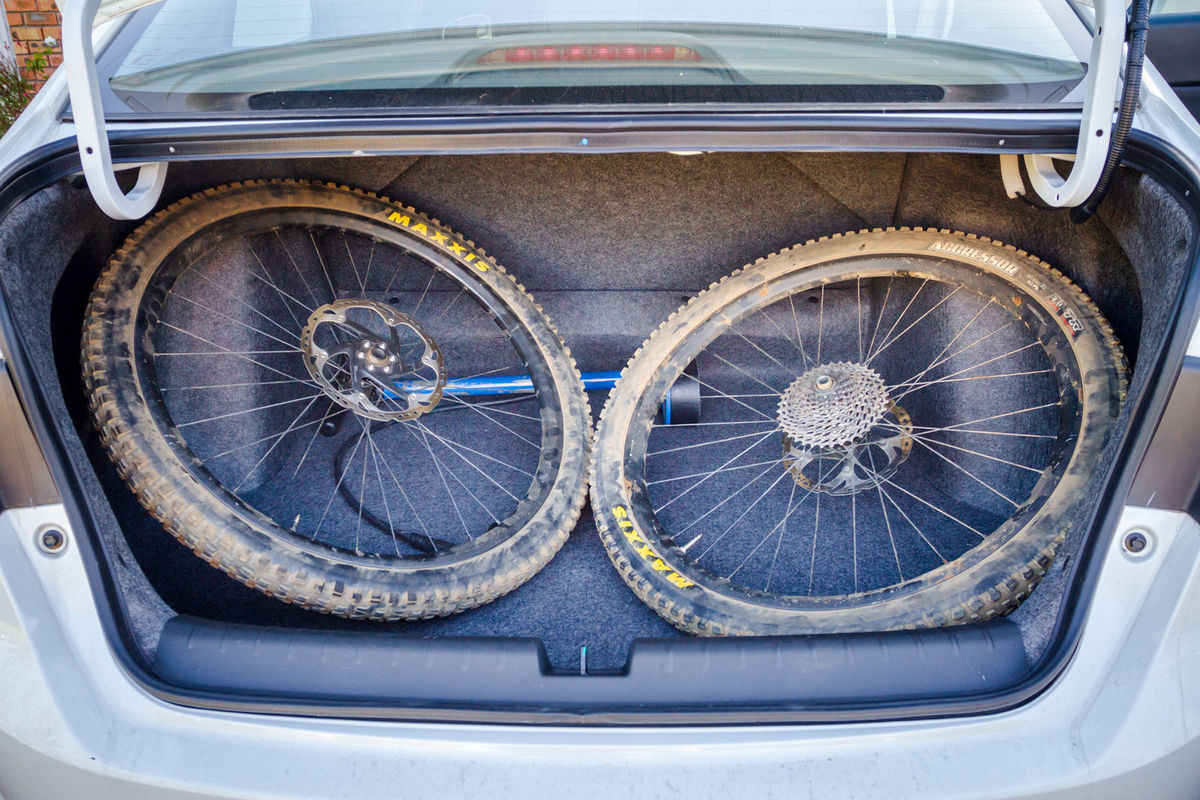
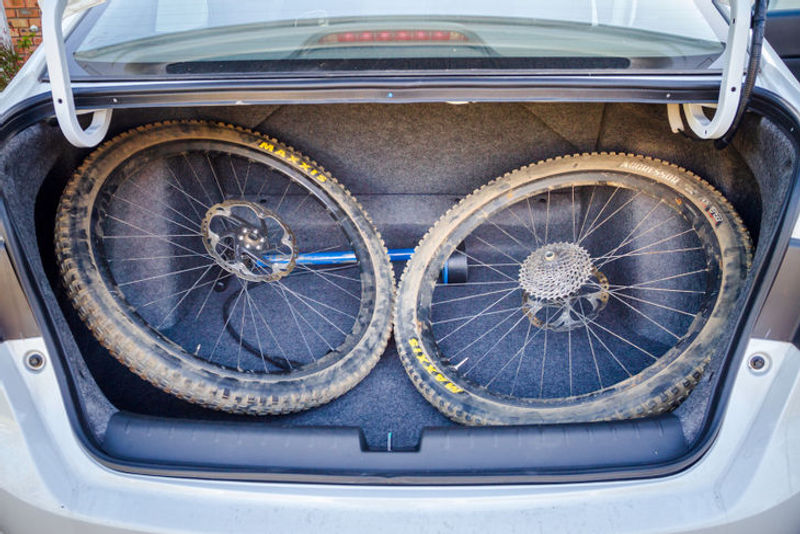
Despite the Ballade not having a tailgate or seats that fold, I was determined to make it work as a utility vehicle. My intentions were swiftly defeated, however. The only way that I could get my mountain bike into the Honda was by removing both wheels, but they did, for the record, fit rather tidily in the boot.
Having carefully draped a towel or blanket over the rear seats and floor, I gingerly eased the bike frame into the cabin through one of the rear passenger doors. It managed to fit. Just. But I also needed to slide the front passenger seat as far forward as it would go on its rails. If you have mountain bikes or surfboards to transport, the Ballade isn’t ideal, but that could be said of most similarly configured sedans.
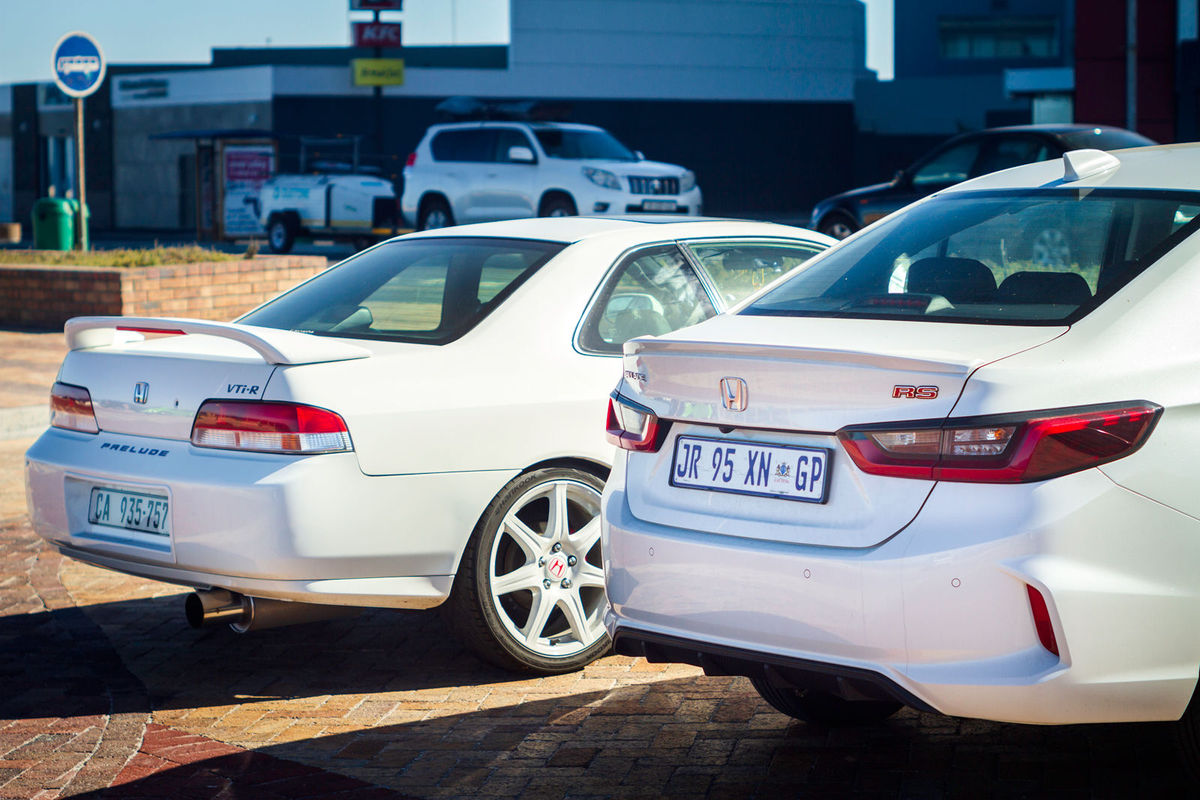
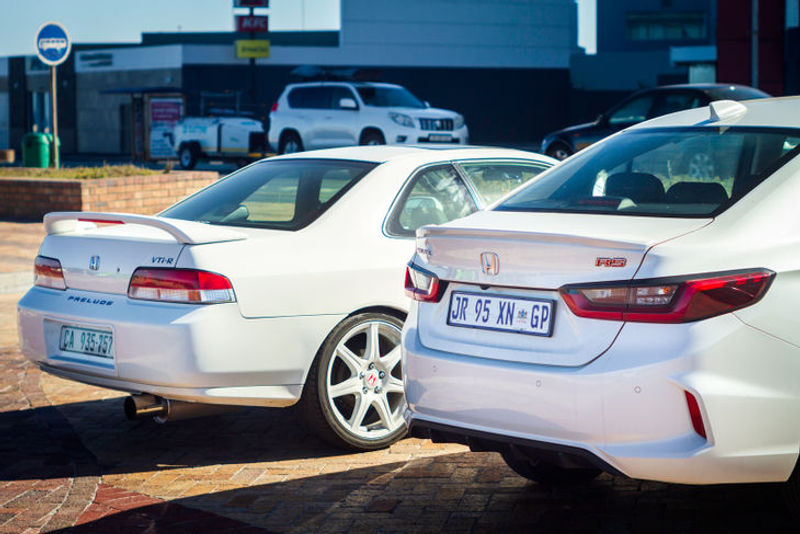
The Ballade's name is as historic as that of the Prelude, although the RS badge would be better suited to the venerable coupe!
Buying advice
Believe it or not, the Ballade was once SA’s premier premium front-wheel-drive family sedan. It combined daring design, brilliant Honda engines – and a strange association with Mercedes-Benz – in the Republic. Over the past 2 decades, however, the Japanese brand (like so many others) has gained a much more diverse product portfolio, with much less of an emphasis on the traditional sedan business.
No, the new Ballade does not have the cachet of is 1980s or 1990s forebears. But it is an entirely honest compact family sedan.
Toyota dominates the shrinking mid-sized value market for sedans in South Africa with the Corolla Quest. Honda, meanwhile, now appeals mostly to retirees or buyers who see some sense in its lower sales volumes. How is it advantageous that Honda isn’t a huge brand in South Africa? Well, in theory, you are more likely to get a service booking, on schedule, at a Honda dealership. In theory.
Honda has a great reputation for reliability and that makes its products terrific long-term ownership propositions, something that should mitigate the steep depreciation from a relatively high purchase price.
To reiterate, if you have many outdoor toys and use them frequently, the Ballade isn't for you. That holds true for most of its rivals as well. You will be much better served with a comparable crossover or SUV. But if you live a very urbanised routine and want to drive something dependable with 4 doors that isn’t a Toyota, the Ballade offers a much better experience, overall, than one might expect at 1st acquaintance.
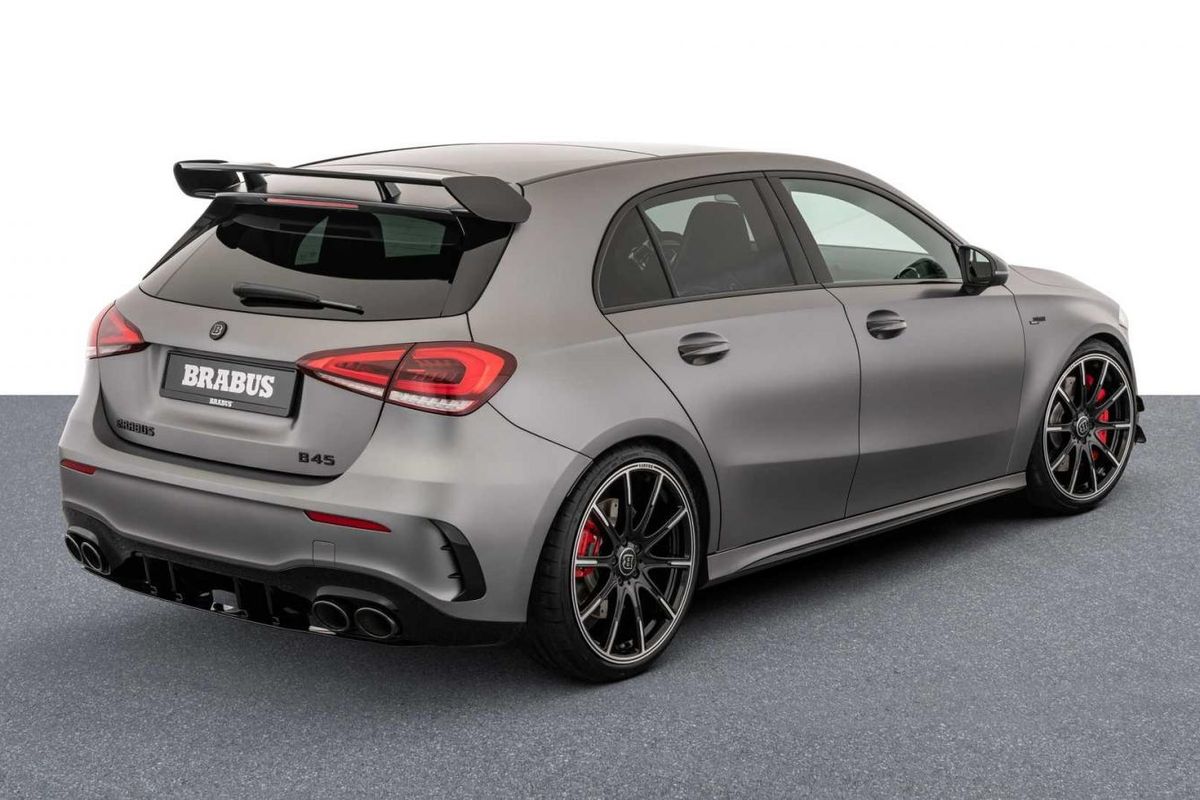
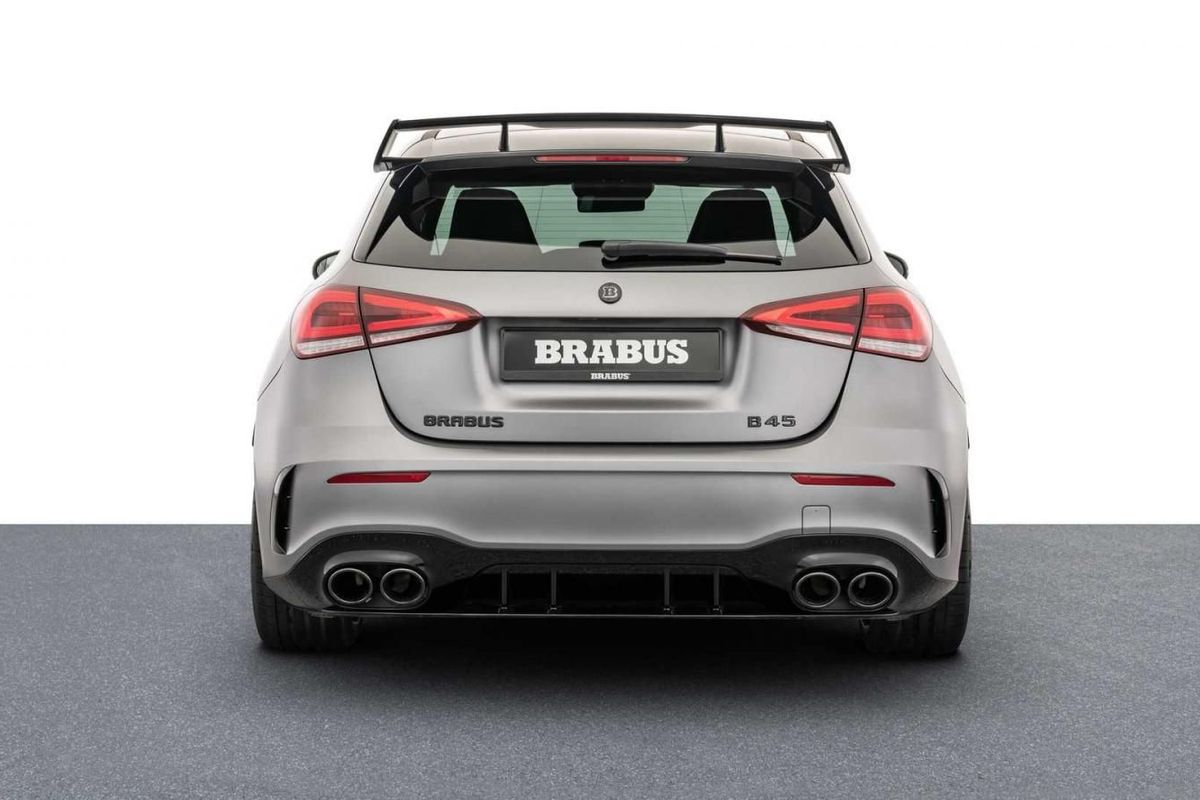
Do you find the Mercedes-AMG A45 S not thrilling enough? Does its 310 kW and 500 Nm not excite you? Brabus has the answer.
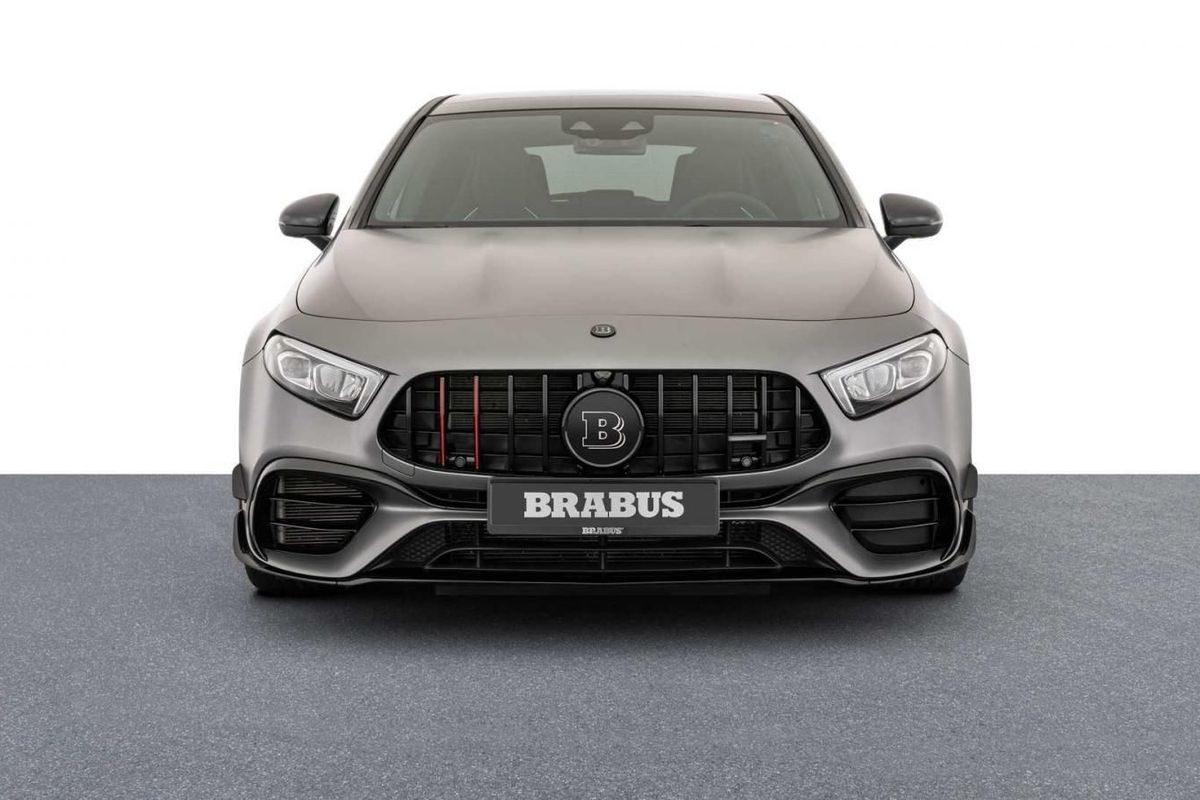
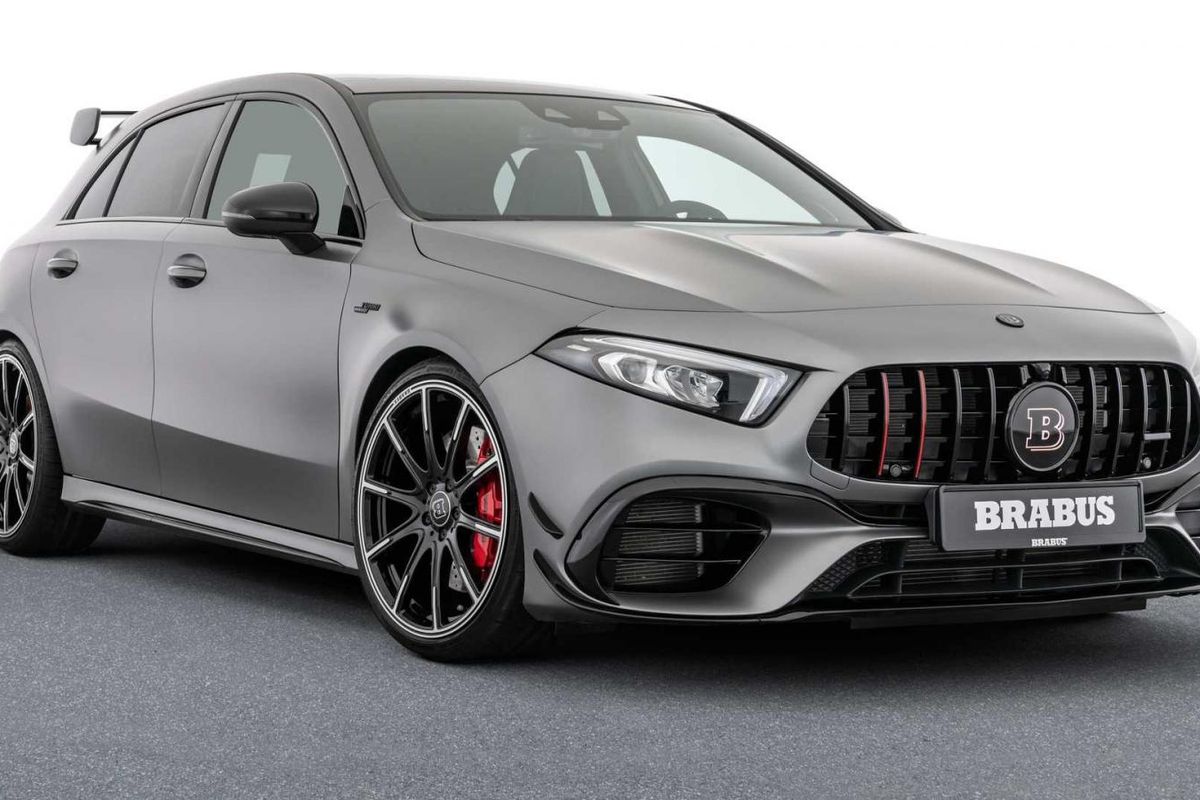
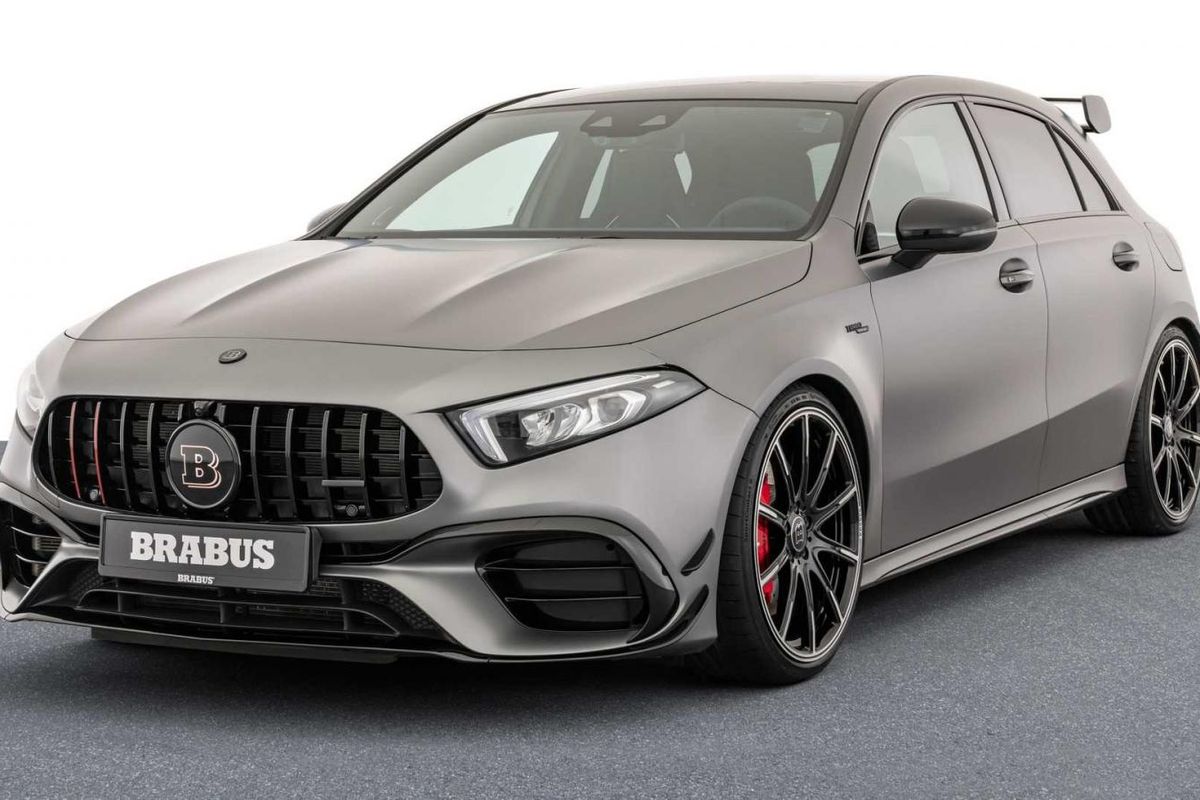
German tuner Brabus has a superb reputation for taking AMG's products and enhancing them even further. The Mercedes-AMG A45 S is the latest vehicle to receive the Brabus magic touch. The standard car's outputs of 310 kW and 500 Nm are extraordinary, allowing the hatchback to blitz to 100 kph in a claimed 3.9 seconds. It's undeniably fast, and it makes a mockery of older supercars, while retaining all the comfort and practicality you'd expect from a Mercedes-Benz hatchback.
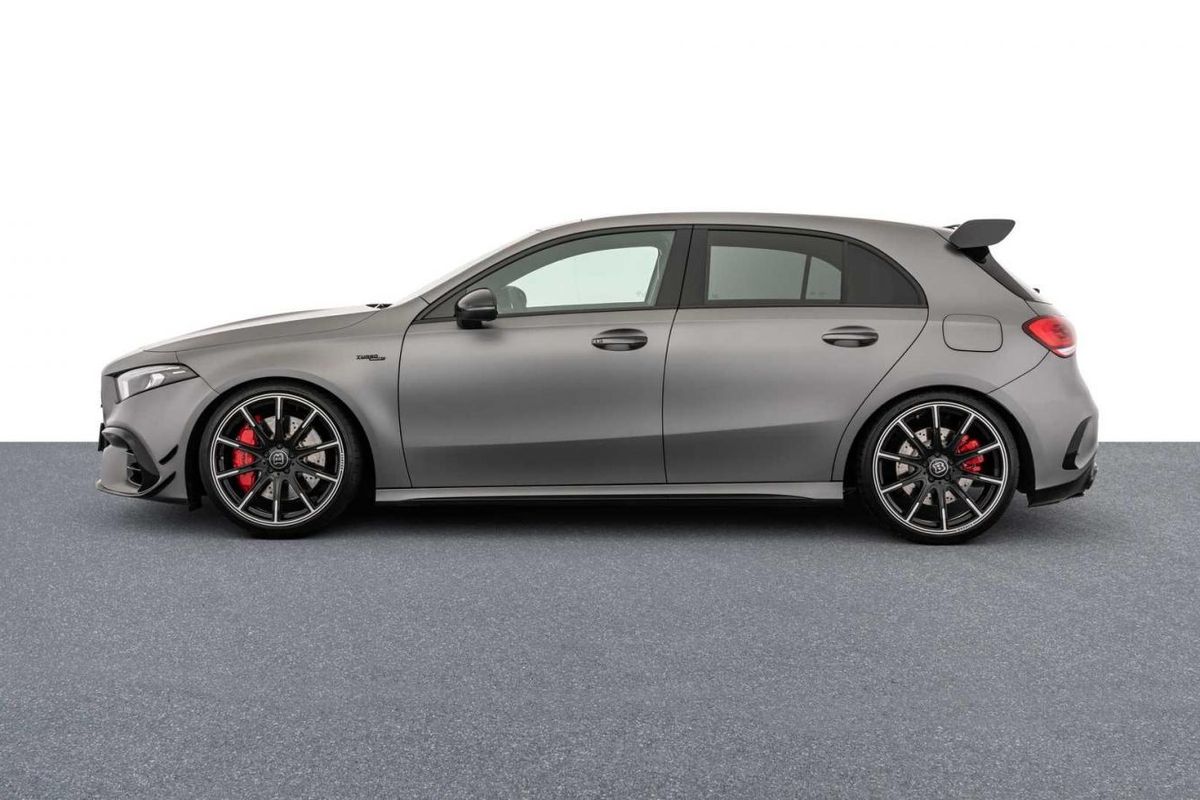
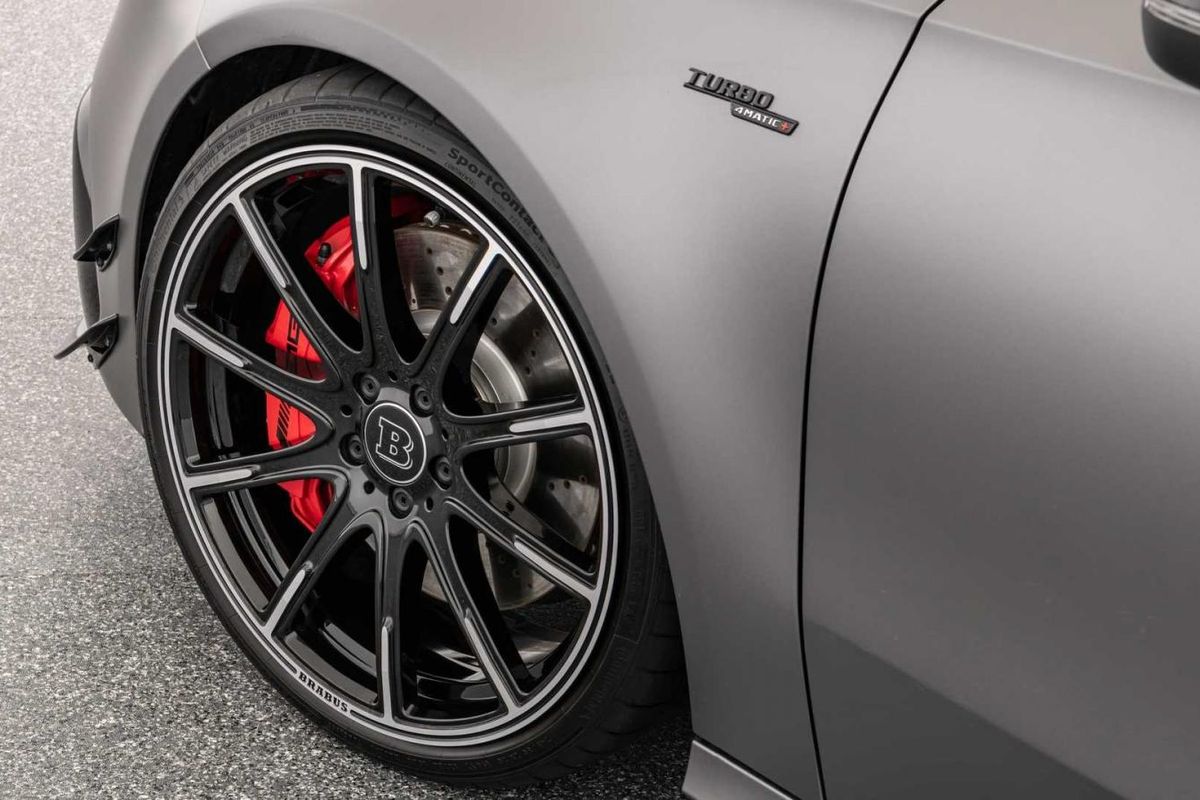
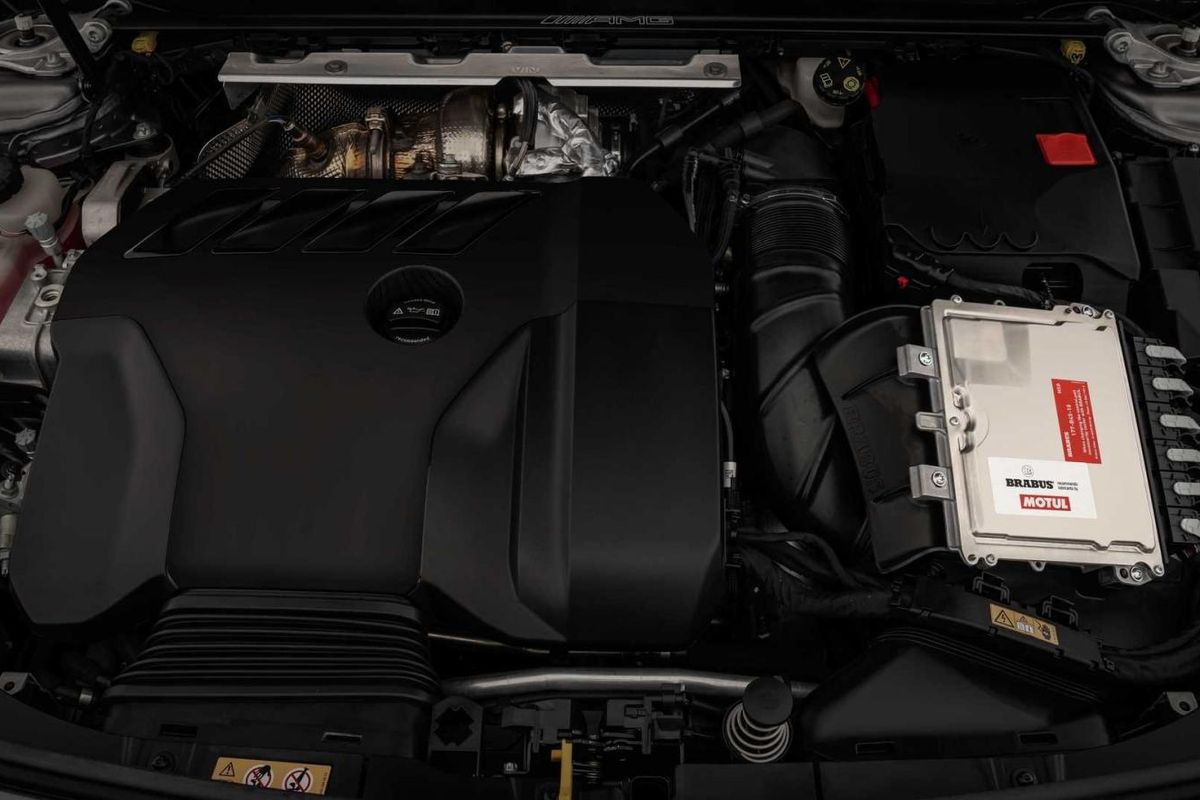
Brabus has taken the world's most power mass-produced 4-cylinder motor and cranked up the juice. With the Brabus magic, outputs are now at 331 kW and 550 Nm, and the German tuner says its interestingly-named B45 is good for a 3.7 second run to 100 kph. The electronic top speed limiter has remained and if the road is long enough, 270 kph is possible. The B45 sits lower to the ground thanks to a custom adjustable suspension and at each corner, you'll find 20-inch Brabus wheels.
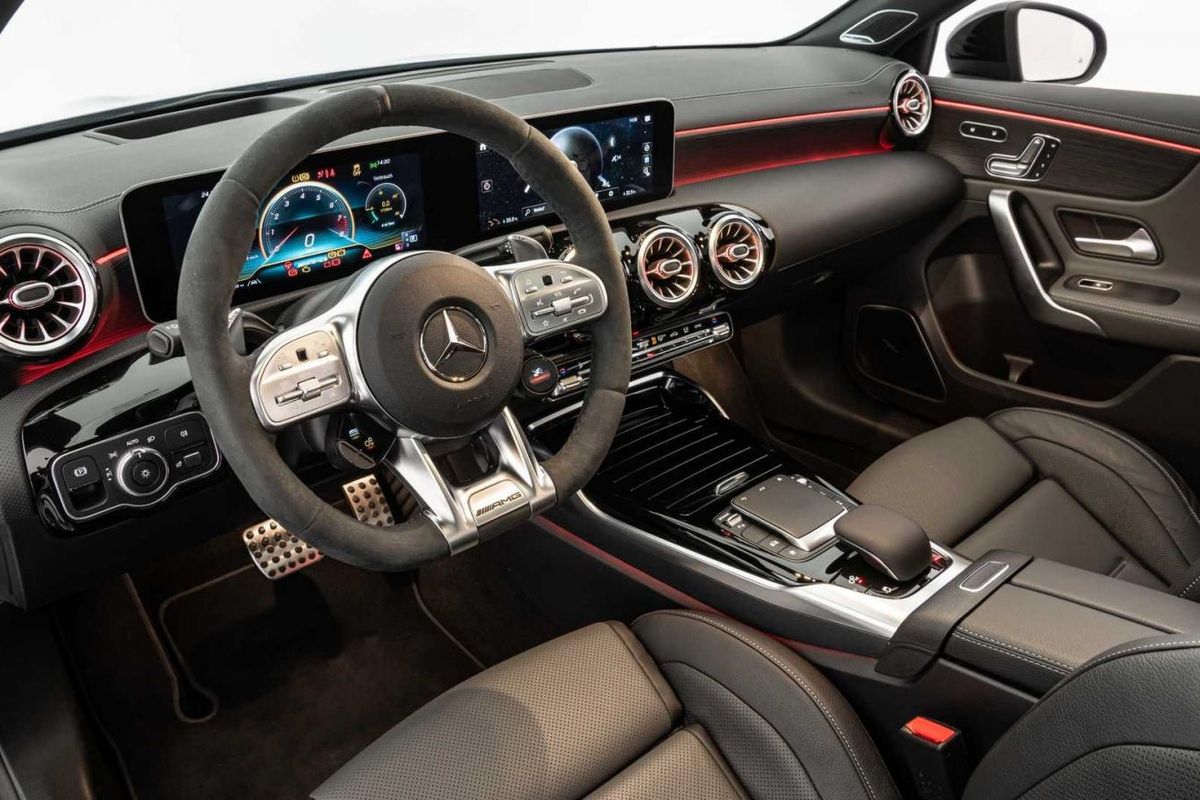
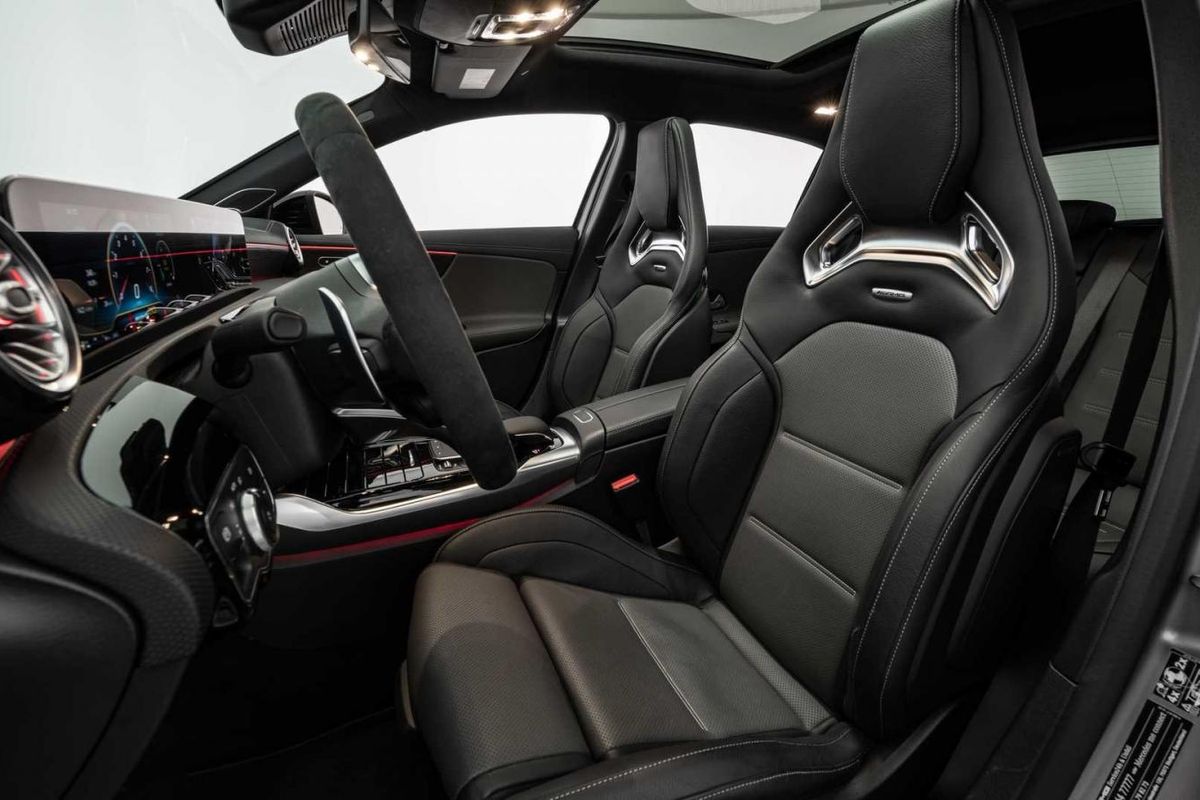
Inside, Brabus is offering customised leather and aluminium pedals.
You (and us included) are likely to be concerned about the mechanical reliability of extracting so much power from a compact motor, but Brabus is offering a 3-year / 100 000km warranty to help allay fears.
The Bloodhound Land Speed Record (LSR) is looking for a new backer as Covid-19 throws a spanner in the spokes of the ongoing world speed record attempt.
The Bloodhound LSR project is looking for a new owner. The project has faced many challenges in recent times and while funding is an ongoing pressure, the ongoing Covid-19 pandemic has not only caused major delays for the project but fundraising efforts have also been severely impacted. As a result, current owner and Chief Executive, Ian Warhurst, is now stepping away from the project.
After committing to the project in 2018, Warhurst and the Bloodhound LSR team conducted high-speed testing in 2019 on Hakskeen Pan in the Northern Cape, South Africa, achieving a peak speed of 1 011 kph which was more than the 805 kph target for testing. The run validated computer modelling and ultimately proved that the Bloodhound has the legitimate record-breaking ability. The goal for the overall project is to set a new land speed record which currently stands at 1 228 kph set in 1997 by the ThrustCC and driven by Andy Green, a former RAF pilot, who was expected to drive the Bloodhound into the history books once again.
The next phase of the project includes the fitment of the Nammo monopropellant rocket that will allow the car to reach a top speed of over 1 287 kph on the specially-prepared surface on Haksteen Pan which is essentially a dried up lake bed. The Bloodhound LSR team is aiming to achieve the record in 2022. The rocket installation and the cost of taking Bloodhound to South Africa and breaking the 800 mph or 1 287 kph barrier will cost roughly £8 million or over R167-million.
Andy Green commented, “In my opinion, the Bloodhound team has built the best Land Speed Record Car ever. It made our 628 mph test run look easy! We’re now raring to get to 800 mph+, to showcase this technical marvel and to invite a global audience to join in an incredibly exciting adventure. After the horrible 2020 pandemic year we have all just experienced, the world needs a good news story, and Bloodhound is ready to deliver it”.
It remains to be seen if the project can be rescued but it will be a sad state of affairs if the Bloodhound LSR is scrapped after so much effort has gone into it. Do you think a high-speed record project such as Bloodhound LSR is worth it?
#CarsAwards – Best Adventure SUVs in SA
Meet the finalists in the Adventure SUV category of the 2020/21 #CarsAwards powered by WesBank!
Now in its 6th year, the #CarsAwards was conceived to be South Africa's definitive automotive awards programme and is backed, for the 5th year running, by the country's leading supplier of vehicle finance, WesBank.
We’re looking for the ultimate recreational vehicle to transport a family and all their holiday and lifestyle gear in comfort to almost any destination, on- or off-road. Off-road ability is emphasized, in combination with practicality, comfort, and long-distance cruising.
This category is guided by both eligibility factors and Pillars of Success.
Eligibility factors for this category include a list price between R600 000 and R800 000 (as of October 1, 2020) and pricing must include the cost of all necessary optional features to meet the eligibility criteria.
Eligible vehicles must be equipped with Electronic Stability Control (ESC), a minimum of 6 airbags, split/fold rear seats, a minimum ground clearance of 200 mm and all-wheel-drive ability.
Pillars of success for this category include performance, space and practicality, in-car entertainment, comfort and all-surface ability.
Visit www.carsawards.co.za for more information. In no particular order, the finalists are as follows:
Toyota Fortuner 2.8 GD-6 4×4 VX Auto
South Africa’s favourite adventure SUV and current #CarsAwards category champion has received an update for 2020 and while it gains minor styling tweaks, engine outputs have increased appreciably. More so, Toyota has updated the Fortuner’s spacious interior, which features enhanced connectivity features as well as offering improved safety specification.
Ford’s Everest is a spacious, well-specified and capable 7-seater variant of the Ranger bakkie and the range received a thorough update during 2019. South Africans have a love affair with large, rugged SUVs and Ford has served up exactly what they’ve been asking for… a macho, versatile machine that can tackle the rough stuff and transport a large family in comfort.
The MU-X is based on the underpinnings of the soon-to-be-replaced Isuzu D-Max and is, of course, powered by the Japanese bakkie’s bulletproof turbodiesel motor. The MU-X was updated during 2020 with most of the updates focused on improving interior feel and luxury. Renowned for excellent after-sales service and reliability, Isuzu is also one of the most respected brands in South Africa.
Cars.co.za correspondent Ian McLaren was the custodian of Audi’s flagship Premium SUV, for a full month, during the festive season. He reports back on his experiences.
While we usually form our opinions of new models by attending media launches (or conducting week-long tests) of those vehicles, the best way to thoroughly acquaint oneself with the intricacies of a product is to assume ownership of a test unit for an extended period of time. While that's not always possible over the course of a calendar year (when vehicles are rotated between motoring journalists in short bursts), the traditional end-of-year break presents a good opportunity to find out how well a particular model “fits in” with a reviewer’s lifestyle. In my case, this includes accommodating a wife and 2 toddlers…
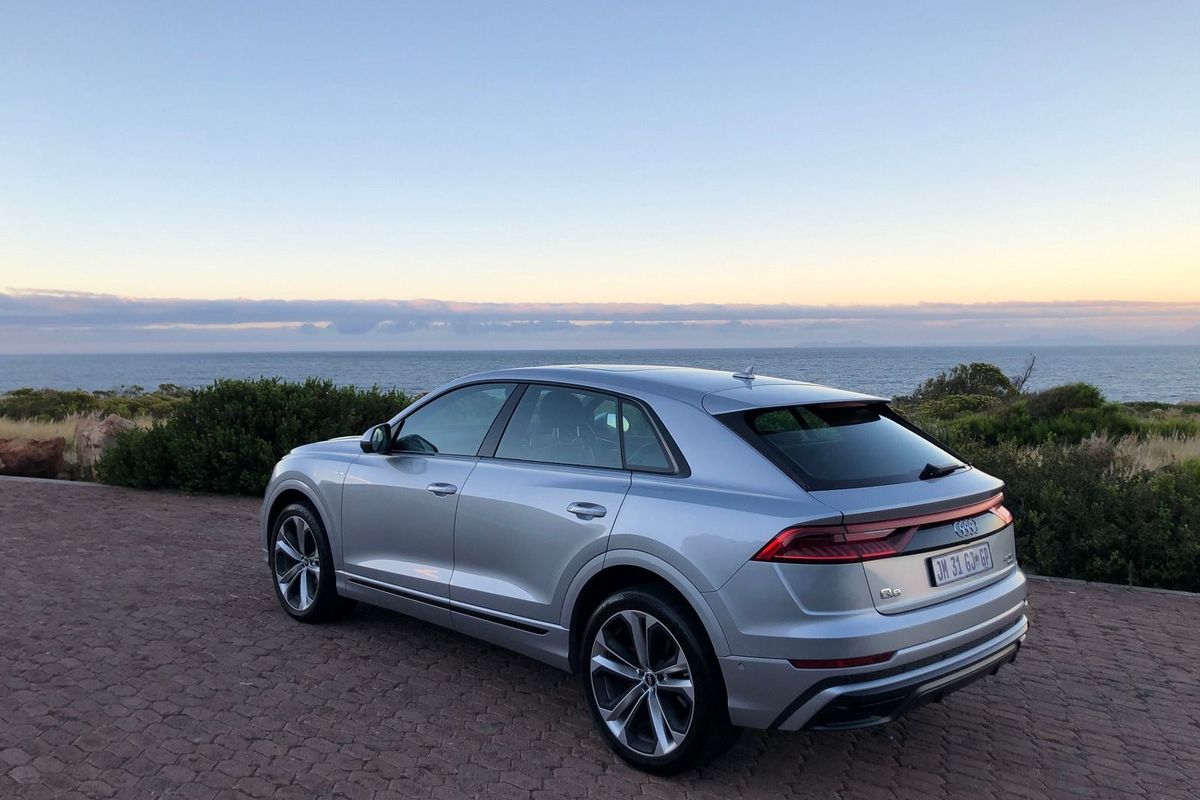
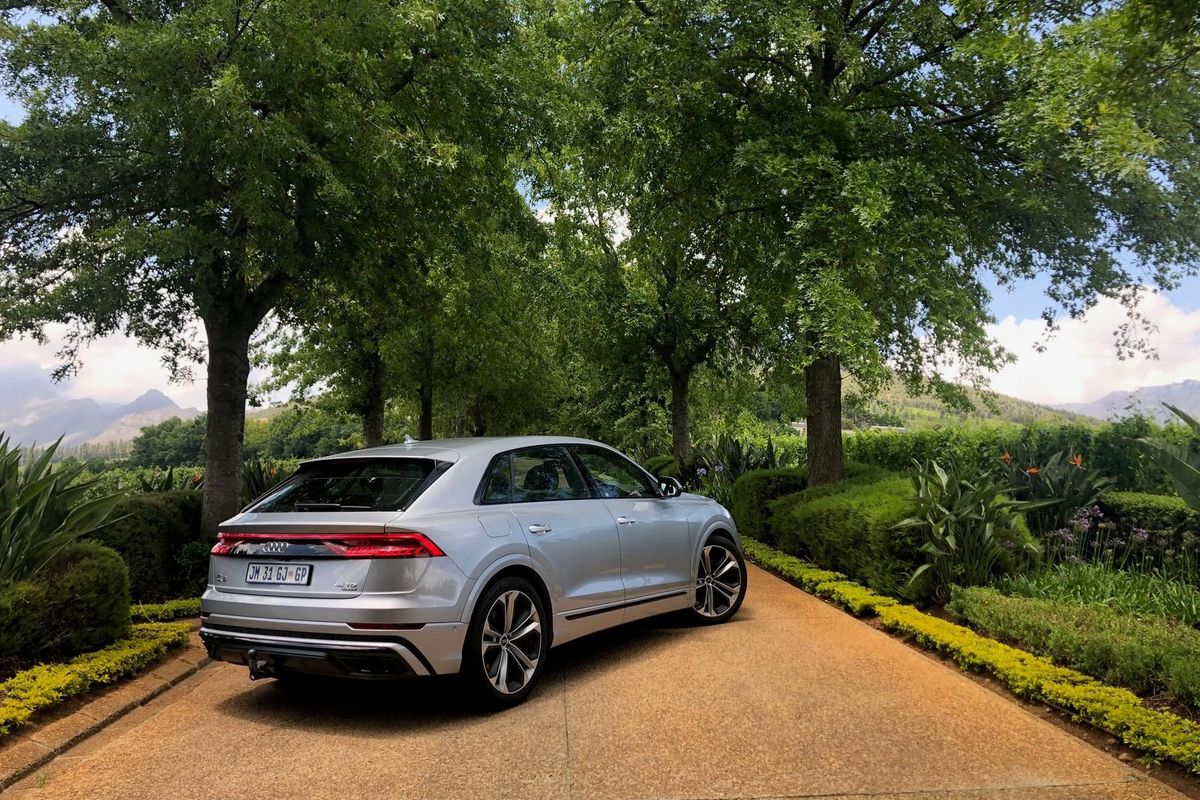
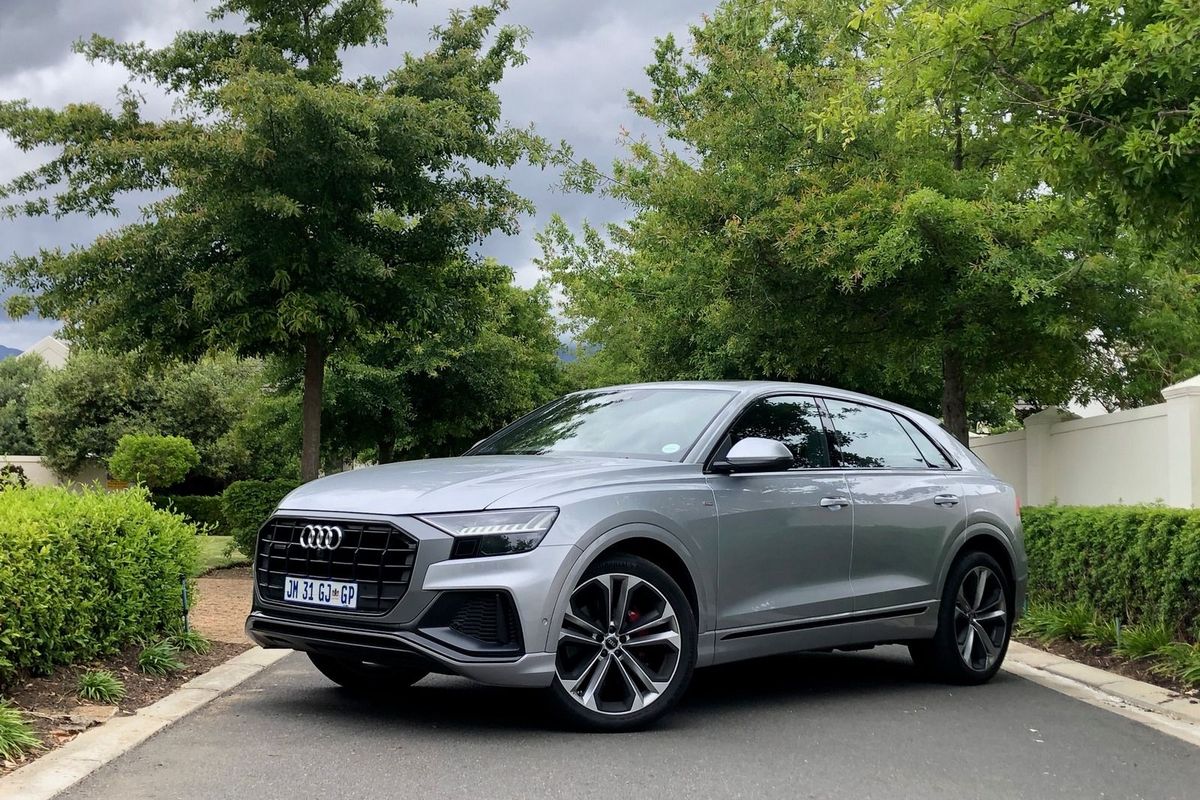
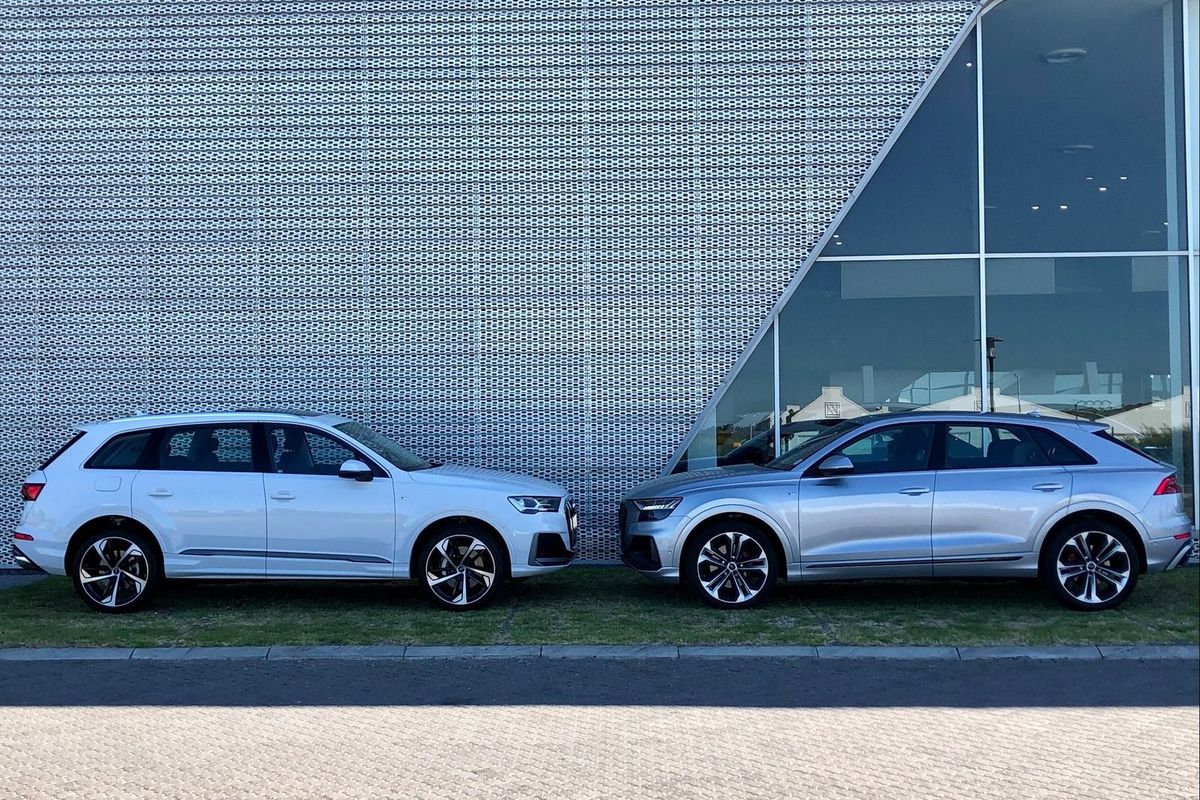
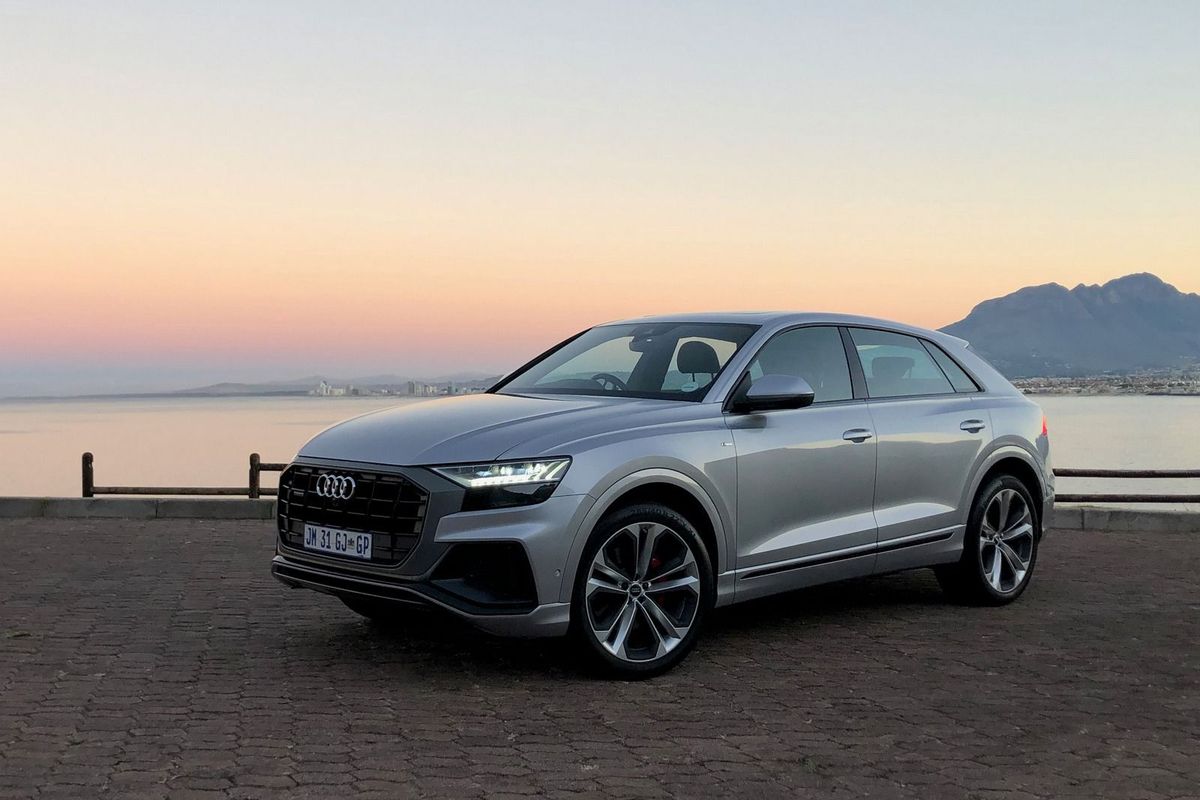
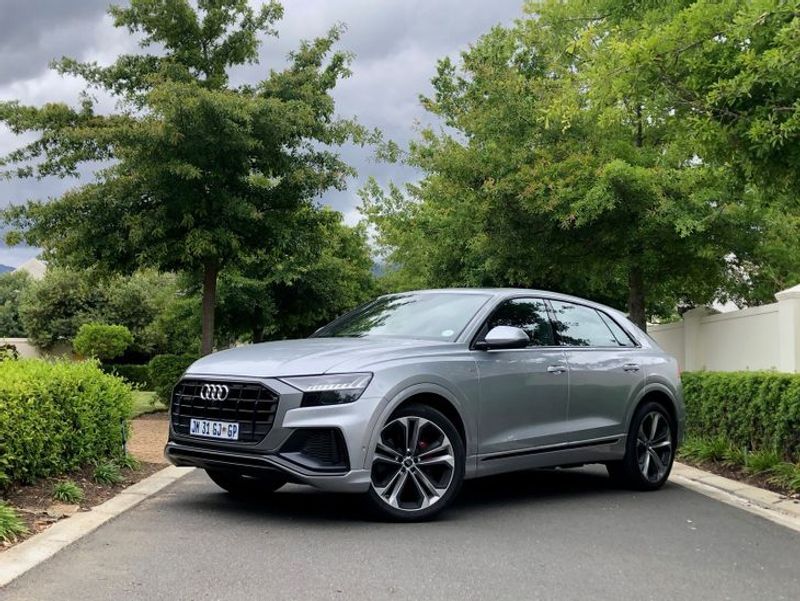
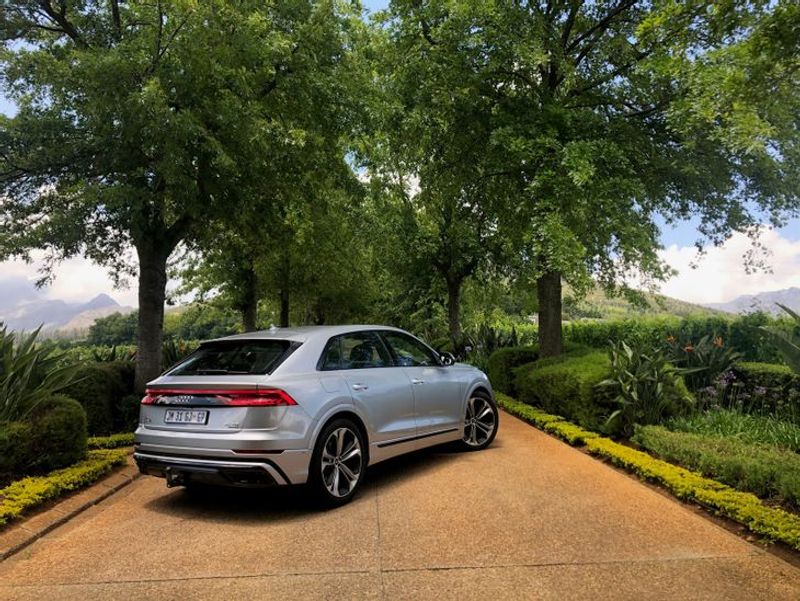
Although it's a relative latecomer to the swept-back-roofline Premium SUV brigade, the Audi Q8 has an arresting shape; compared with its rivals (such as the BMW X6 and Mercedes-Benz GLE Coupe, for example), it looks sufficiently distinct from the model on which it is based (the Q7). This is not always the case in this segment where, more often than not, the most notable difference between the SUV and coupé-inspired models is the gradient of the tailgate's slope. Of course, the 2019 introduction of the Q8 also preempted the mid-life facelift of the Q7, which we saw on our market towards the end of 2020.
The Q8 is 66 mm shorter and 35 mm lower than the Q7, but because it's 27 mm broader than its more traditionally-shaped sibling, it has a more imposing stance. While the Q7 is able to accommodate a 3rd row of seats (remember, it rides on the same wheelbase as the Q8), the sleeker of these 2 packages loses little in the way of rear passenger comfort or, indeed, luggage capacity below its ramped roofline.
3 things to like about the Q8
The Q8 separates itself from the Q7 in its design better than say, the BMW X6 does from the X5.
Distinctive styling
Impressively capable and no less versatile than its rivals, the (recently facelifted) Q7 hasn’t made as big of an impression in the local market as Audi would have hoped; it may have something to do with South Africans' apparent dislike of the Q7's station wagon-like profile or their predisposition to what the competition is offering. Even so, there's little chance of the svelte Q8 blending into the background!
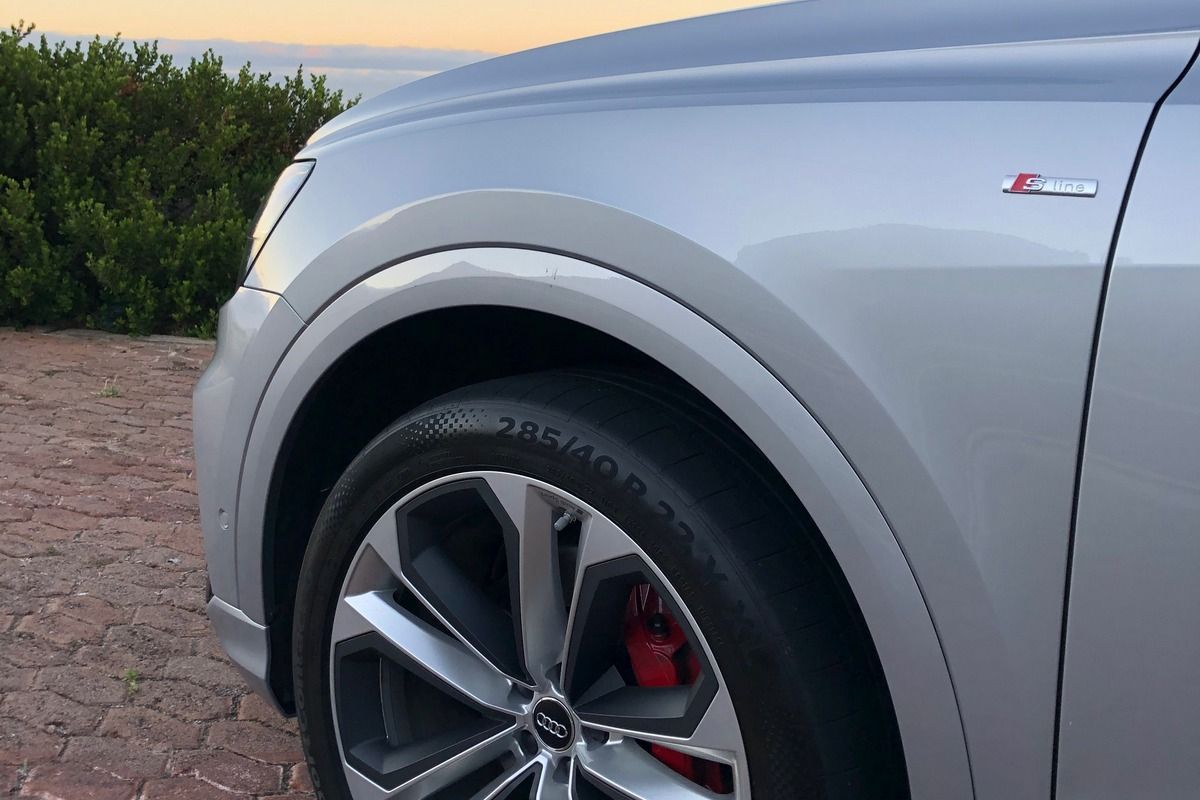
While I do appreciate the aesthetic value of Audi’s imposing chrome-look grille, the optional Black appearance package fitted to this particular Q8 test unit does arguably offer broader appeal by virtue of its subtlety. The pricey (at an additional cost of R80 840) and also-optional S line Platinum Package adds further presence via various bodywork upgrades, red brake calipers and 22-inch forged alloy wheels.
A party trick on most modern premium Audis is the brand’s head-turning lighting pageantry. This includes the LED elements' signature welcome sequences, which are guaranteed to spark conversation.
Comfort and versatility
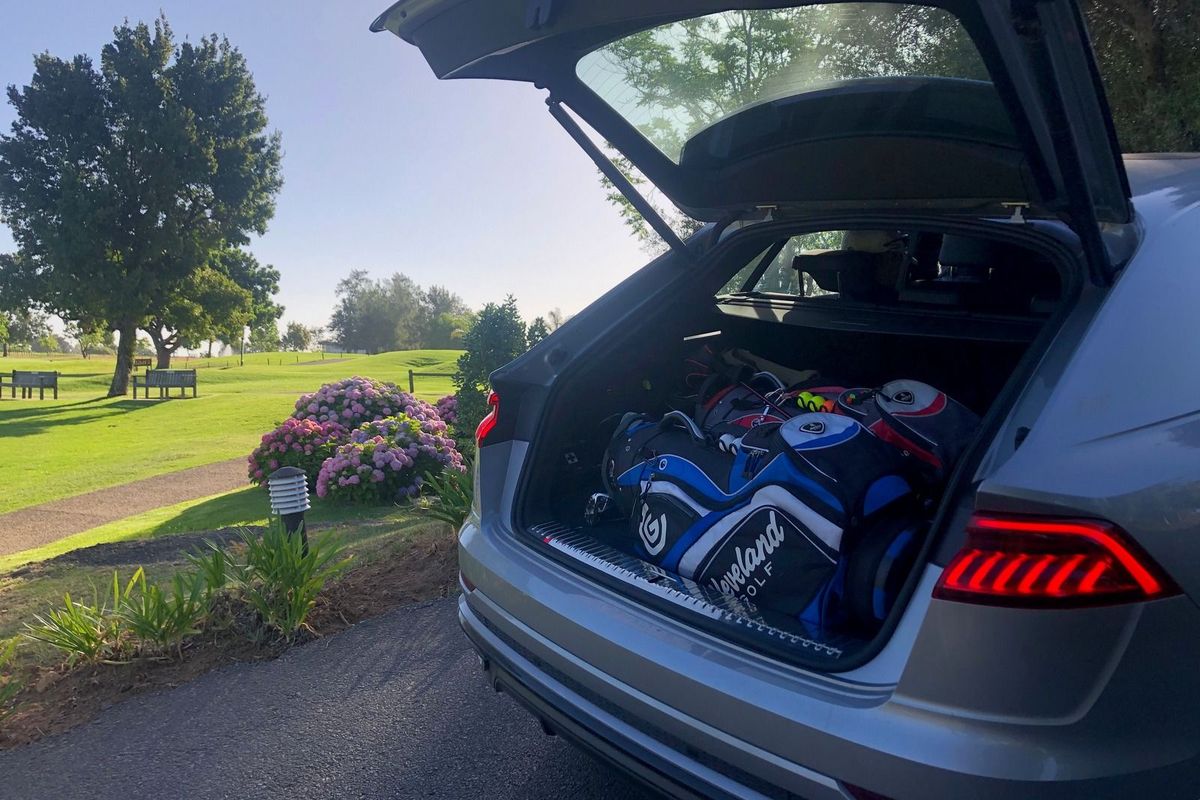
Sloping rooflines don't affect the load-bay capacity when loading flatter items, like 3 sets of golf clubs.
The fitment of 22-inch wheels and corresponding low-profile rubber may be counterproductive to any semblance of ride comfort, yet included in the abovementioned S line Platinum Package is adaptive air suspension, which works seamlessly behind-the-scenes to ensure the near-2.3-tonne Q8 delivers as close to A8 first-class sedan levels of ride comfort and on-road stability as possible.
That said, while it’s fun witnessing fellow road-users reactions to the Q8’s burly frame lifting steadily from its crouched cruising height at traffic intersections, I remain intrigued as to which upgrades are going to be applied to future performance-focused derivatives (SQ8 and RS Q8), the current setup is most decidedly comfort-oriented – even when the Audi is in its Dynamic drive mode. In this regard (and I wouldn't mind being proved wrong) I would suggest the Q8’s Cayenne Coupé cousin is perhaps better placed to deliver dynamic prowess; Audi’s primary objective for the Q8 is to exude sophistication…
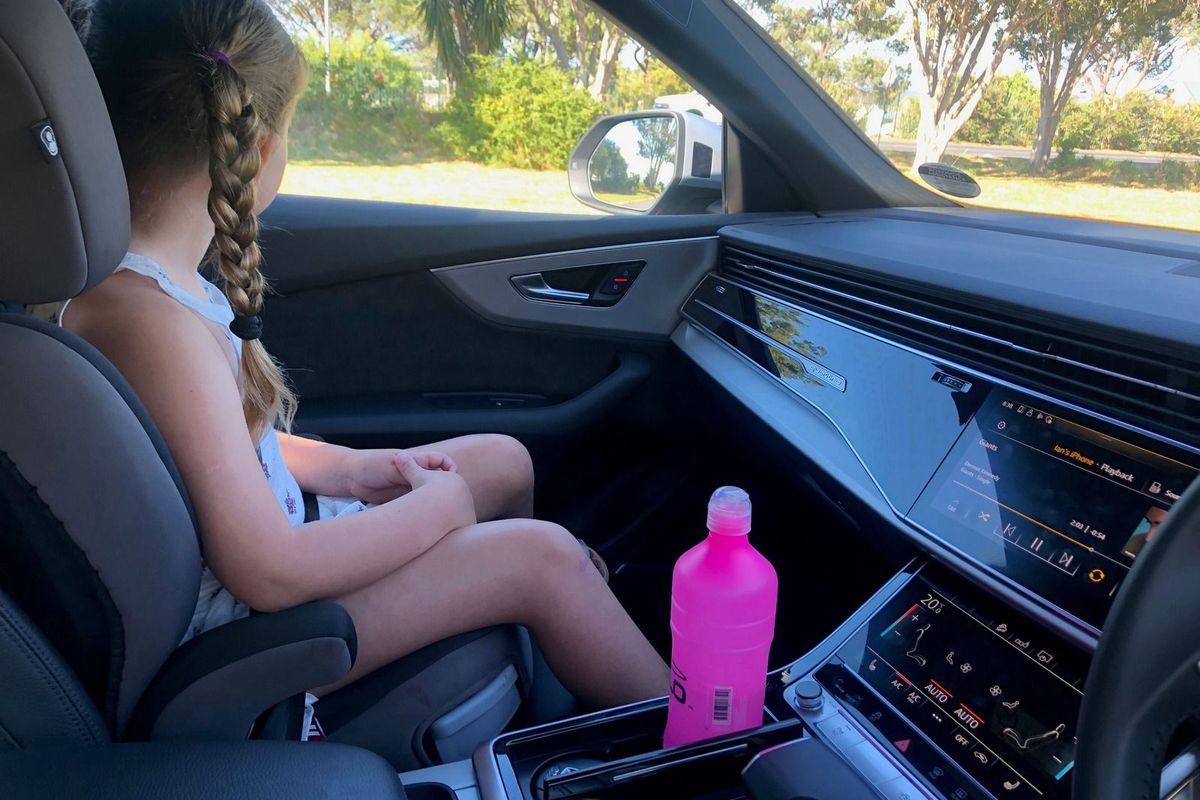
Boasting ISOfix child seat anchorage points both in the 2nd row and front passenger seat (for which the airbag can be easily deactivated), my children enjoyed more legroom and comfort all-around than they required (or appreciated). During December midday heat the Q8’s standard 4-zone climate control system, which features console- and B-pillar-mounted vents focused towards the rear seats, was a godsend.
While the Q8’s luggage compartment easily helped Father Christmas transport my daughter’s new 20-inch bicycle to our home, it also comfortably swallowed 3 sets of golf clubs (with drivers) on dad’s day off.
Efficiency
Initial fuel consumption seemed very impressive, but after a combining city driving average fuel consumption over the month read 9.2L/100 km.
The Q8 was launched exclusively in 55 TFSI (V6 turbopetrol) guise, but Audi South Africa later introduced this Q8 45 TDI derivative. In this application, the brand’s excellent 3.0-litre V6 turbodiesel mill offers 183 kW and 600 Nm of torque delivered to all 4 of the Audi's wheels via an 8-speed Tiptronic transmission. Apart from coping admirably with this package’s not insignificant kerb weight, the powertrain has an impressive claimed (and all-but-achieved during my time behind the 'wheel) combined fuel consumption of 9.2 L/100 km.
Curiously, with the 85-litre fuel tank filled, the onboard distance-to-empty readout peaks at 900 km. It then remains at this mark for around 100 km before then beginning its steady countdown.
Dislikes?
While there’s a lot to like about the Q8 package – not least its eye-catching styling and impressive levels of on-road and in-car sophistication – by their nature, all of the products offered in this automotive niche of the market seem to favour style over substance. Sleeker profile and head-turning looks aside, would there be any real benefits to owning a Q8 compared with its reserved, practical Q7 sibling?
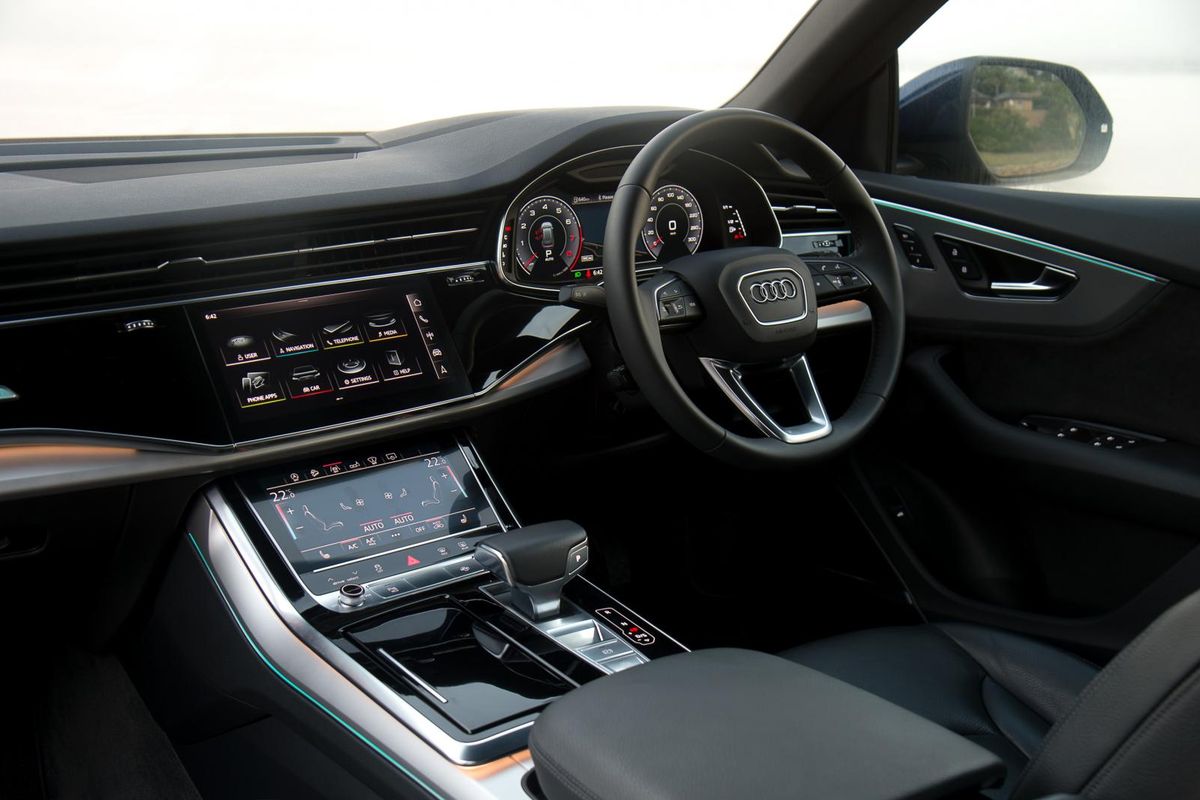
Technically, no, but those who are enchanted by the Q8 45 TDI quattro's looks are bound to regard its premium over the Q7 45 TDI quattro S line (R185 000, January 2020) entirely justifiable. Another criticism, which can be levelled at many models in this price bracket: as neat and clever as the dual touchscreen system looks when new/clean, it’s near impossible to keep the surfaces free from smudges/fingerprints.
Buying advice
The Q8 looks resplendent in its natural environment – the driveway of a wine farm.
I feel Audi has stolen a march on its rivals in this niche (as well as in the segment in which the A7 Sportback competes) insofar as the Q8 package feels suitably different and charmingly quirky compared with its closest relation. Unlike with the BMW X5 and X6 siblings, for example, it wouldn’t surprise me to see the sloped roof Q8 ultimately outsell the more traditionally shaped Q7 in our market.
As with any premium purchase these days, some vigilance is required when specifying additional features to your Q8, because it would not be difficult to push the asking price uncomfortably close to the R2-million mark. That said, the aforementioned S line Platinum pack (including larger wheels, air suspension and cosmetic enhancements) is a box I would be inclined to tick from the outset.
The new BMW M3 and M4 will reach South Africa soon and BMW’s M Division has released a series of videos highlighting the key aspects of these high-performance models. Check it out!
The new G80 BMW M3 and M4 will finally reach South Africa at the end of the first quarter (March 2021) and they will arrive in Competition guise boasting 375 kW and 650 Nm developed by a twin-turbocharged 3.0-litre, inline-6 engine and mated with an 8-speed M Steptronic transmission. Adaptive M suspension will also be standard and a 10-stage-adjustable M Traction Control function will allow the driver to adjust traction to suit the conditions.
Performance is expected to be impressive with the obligatory zero to 100kph sprint claimed to take just 3.9 seconds. The M3 and M4 wear BMW’s controversial and polarising upright grille designs and feature muscular and sculpted bodywork and M-specific details such as M light alloy wheels (with M Compound brakes), quad M tailpipes, rear spoiler, side sill extensions and a carbon fibre roof, to name a few.
Still not convinced? Well, BMW M has released a series of informative videos detailing key aspects of both the M3 and M4 including performance and weight, cooling system, tyres, seats and rims. We suspect that more videos will be released soon. Watch the videos below for insight!