BMW’s M division managed to rack up an impressive record sales year in 2020 despite difficulties caused by the ongoing Covid-19 pandemic.
It seems that the only thing spreading faster than Covid-19 is the popularity of BMW M cars.
The Munich-based firm’s M performance arm has posted an impressive sales record in 2020, making it the current leader in the performance and high-performance car market. BMW M increased its sales by 6% in 2020 totalling 144 218 units sold.
Markus Flasch, chairman of the board of the BMW M GmbH said, “The fact that we were able to conclude this exceptionally challenging year with yet a further record is great validation of our consistent growth strategy. We can be particularly proud of the fact that we were able not only to defend our market dominance as the most successful provider of performance and high-performance automobiles, but also to have even expanded it.”
Comparatively, BMW M extended its sales lead over its arch-nemesis, Mercedes-AMG, which recorded a 5.3 decrease in sales in 2020, selling 125 129 units. In 2019, the sales gap between the 2 German performance brands was a mere 3 700 units but BMW M’s lead had now grown to 19 089 units.
What M models contributed to the success?
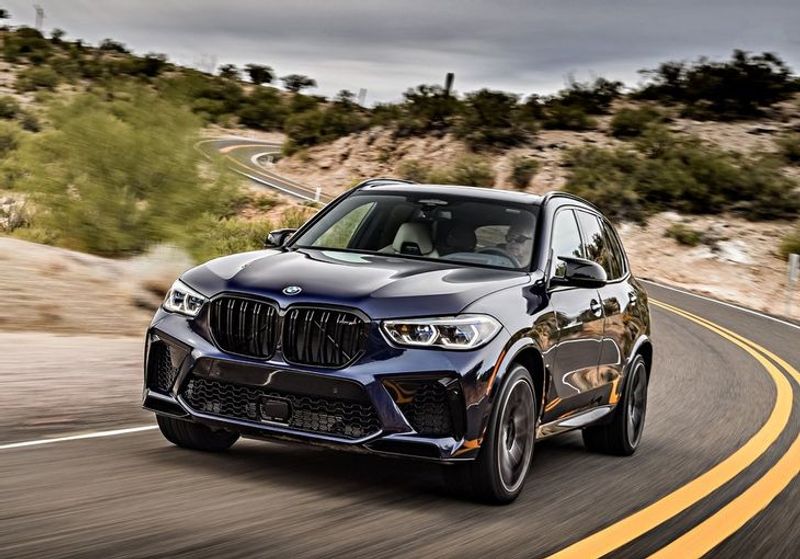
BMW's M SUVs, namely the X5 M and X6 M played a role in the M division's sales success in 2021.
The new BMW M3 and BMW M4 boosted sales even further, despite the new polarising grille design that continues to both enchant and divide consumers. BMW M3 and M4 sales are expected to increase globally as these new models become available in more markets worldwide in 2021 (the new M3 and M4 is launching SA in the first half of 2021). In fact, the expectation is that the M3 and M4 will outsell the previous F80 and F82 generations respectively. Other key growth markets for BMW M include USA, China, Russia, Korea, Italy and the UK.
As for 2021 and beyond, BMW M will look to launch the M5 CS in January 2021, followed by the M3 Sedan in March. Later in the year, a four-wheel-drive M xDrive derivative will be added to the M3 and M4 range and an M4 Convertible will also be revealed. An M3 Touring is also currently in development.
Perhaps the most interesting development is that BMW M will unveil its first electric M car in 2021 and while details are scant at this stage, we will be following this development closely. BMW M will also celebrate its 50th anniversary in 2022 and Markus Flasch has already announced “a year full of surprises”: “If I mention the keyword special edition models, it should be clear what our customers can look forward to during the anniversary year” he said.
We will keep you updated these developments come to fruition, so stay tuned!
Volkswagen is expected to launch no less than 6 new or updated products in South Africa in 2021. See what’s coming below!
Volkswagen is a much-loved car brand in South Africa and it’s no surprise that it’s currently the best-selling passenger car brand in the country with a current passenger market share of 21.6%, which is an all-time record for the Wolfsburg-based firm.
While 2021 will be a relatively quiet year for Volkswagen in terms of new vehicle launches, there are some very exciting products due to arrive in South Africa which will not only satisfy local fans of the brand, but will also boost sales figures locally too. Take a look at what’s coming!
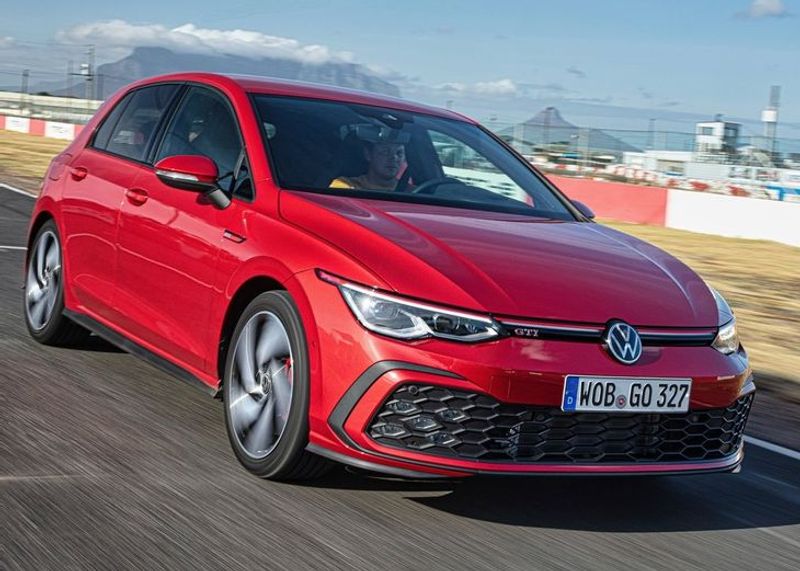
The new Golf 8 will arrive on local soil in the second quarter of the year and GTI fans will finally get their first taste. The Golf 8 GTI draws power from an EA888 2.0-litre turbocharged and direct-injection 4-cylinder engine with peak outputs of 180 kW and 370 Nm and will come paired with a 7-speed DSG. The sprint from zero to 100 kph is done and dusted in 6.3 seconds with a top speed of 250 kph. Pricing will be announced closer to launch.
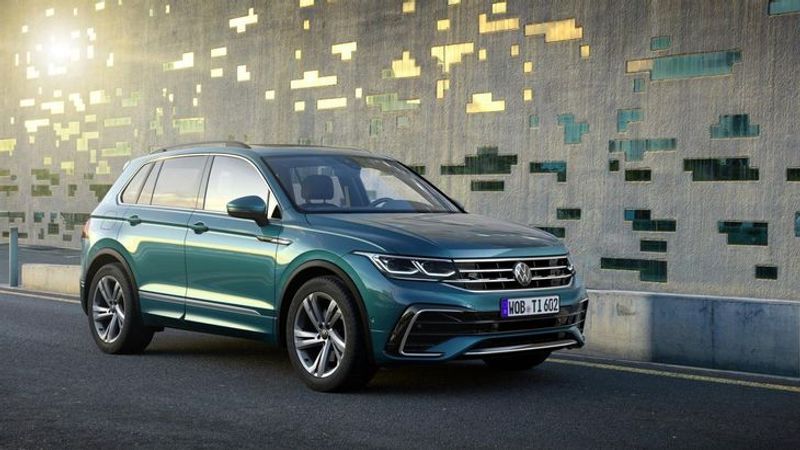
A facelifted Tiguan family SUV is on its way and it will arrive with a new grille and bumpers and wear the latest VW logo proudly. The Tiguan’s interior will feature an updated steering wheel and the latest MIB3 infotainment system and top-spec variants will be equipped with a new 480-watt Fender Premium sound system. We may even see the arrival of the Tiguan R… Specification and pricing will be released closer to launch.
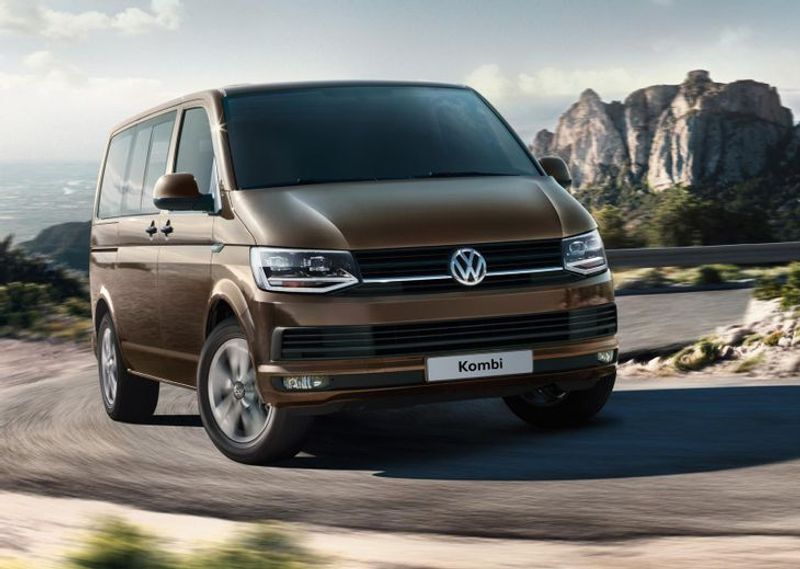
Following the updated Caravelle T6.1, Volkswagen will now introduce the updated Kombi in the second quarter of 2021. The current diesel engine range is expected to remain but styling and interior execution is expected to be enhanced. Local pricing and specification will be revealed closer to launch.
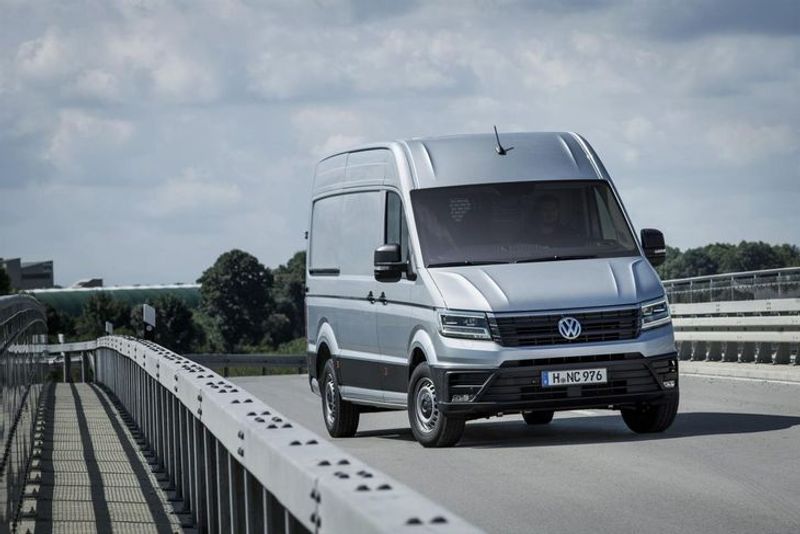
Volkswagen Commercial will introduce an automatic transmission as well as 4Motion all-wheel-drive capability to the Crafter range. If your business needs to carry loads over any given distance then the Crafter will be of interest to you. Pricing and specification details will be communicated closer to launch.
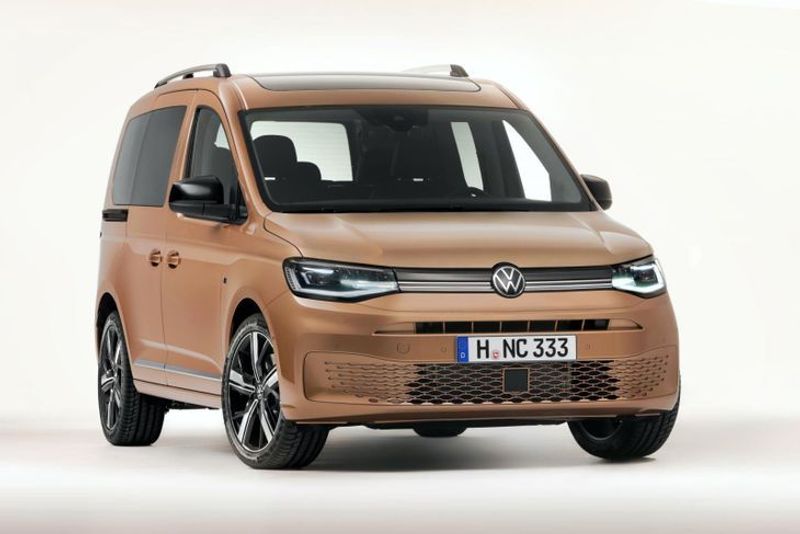
A new Caddy will make landfall in South Africa this year to cater for both family (Caddy MPV) and business buyers (Caddy Cargo) looking for a practical vehicle. The Caddy’s interior now adopts nice-to-have features seen on the brand’s passenger cars such VW’s Digital Cockpit and a larger infotainment system. Petrol and diesel engines are on the cards but exact powertrain details for the local market will be confirmed closer to launch.
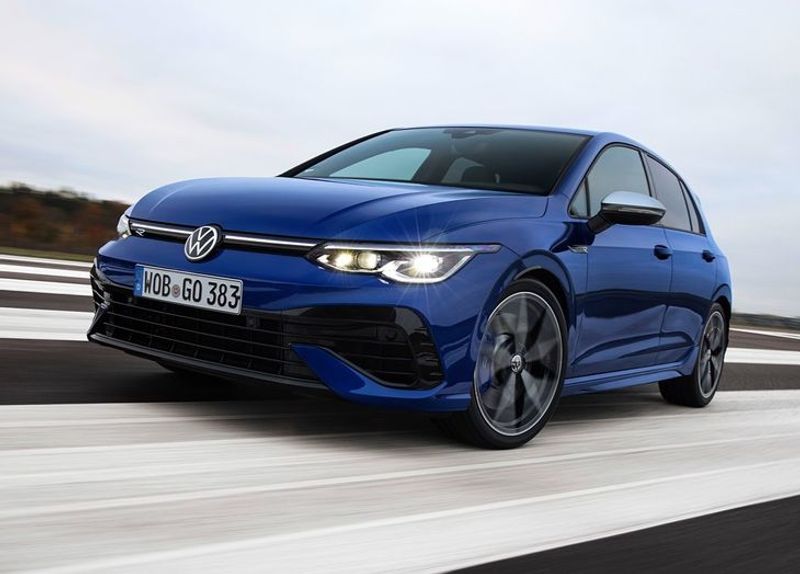
Volkswagen will end the year off with a very loud bang… or vrrphaa, with the introduction of the new range-topping Golf 8 R which will pack a turbocharged 2.0-litre petrol engine with outputs of 235 kW and 420 Nm in conjunction with an updated 7-speed DSG and all-wheel-drive ability. It will be fast off the line with Volkswagen claiming a zero to 100 kph sprint time in just 4.7 seconds. We wouldn’t be surprised if it’s a few 10ths faster than the claim either!
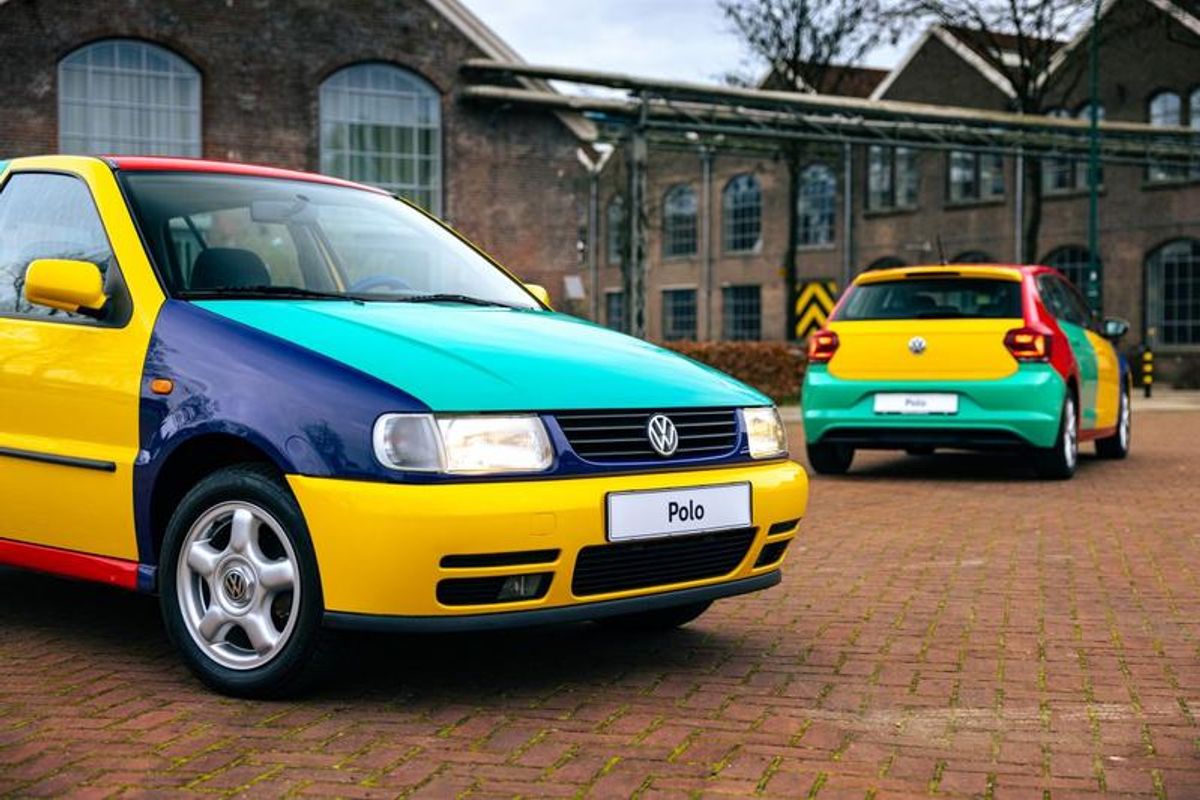
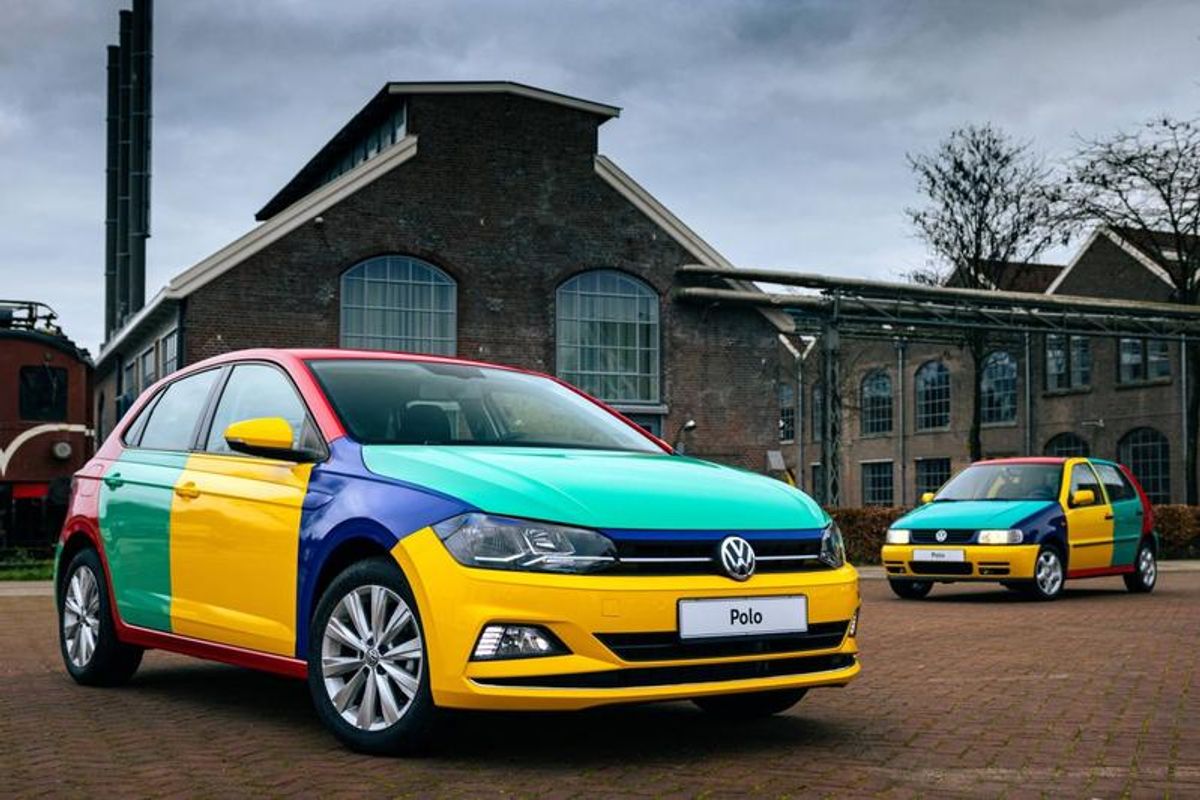
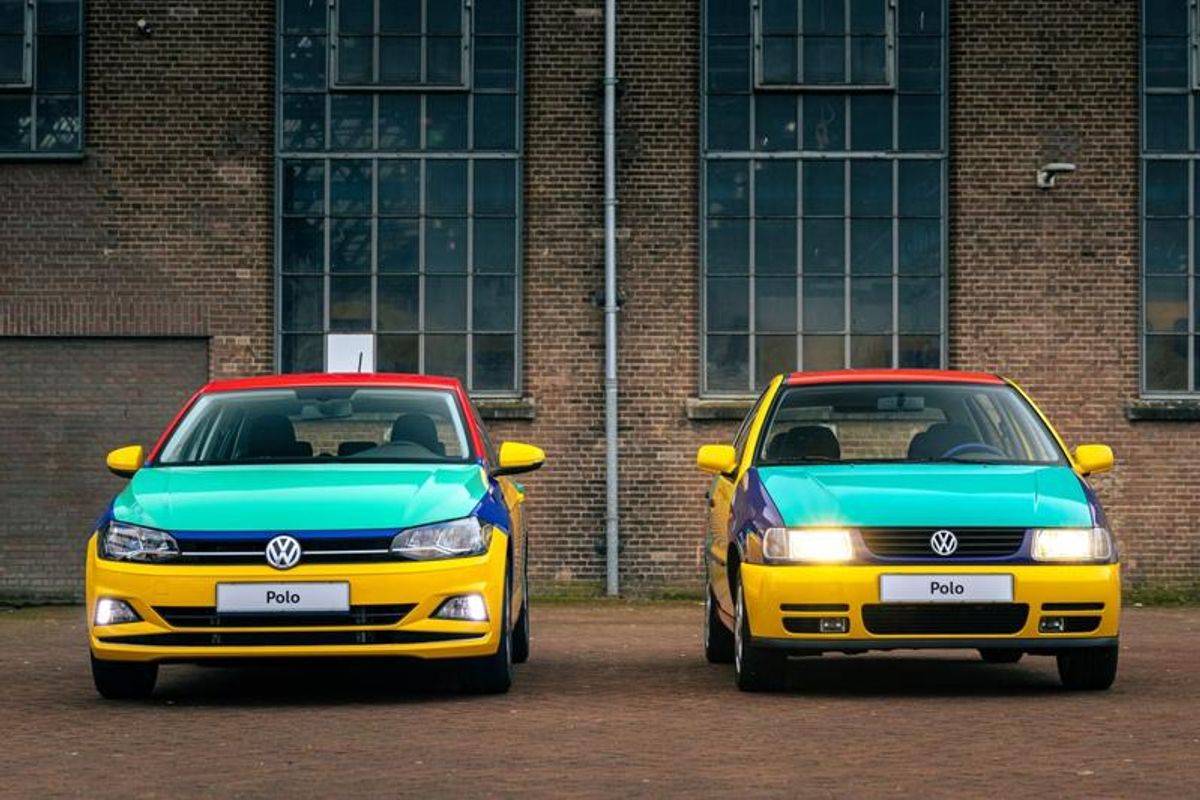
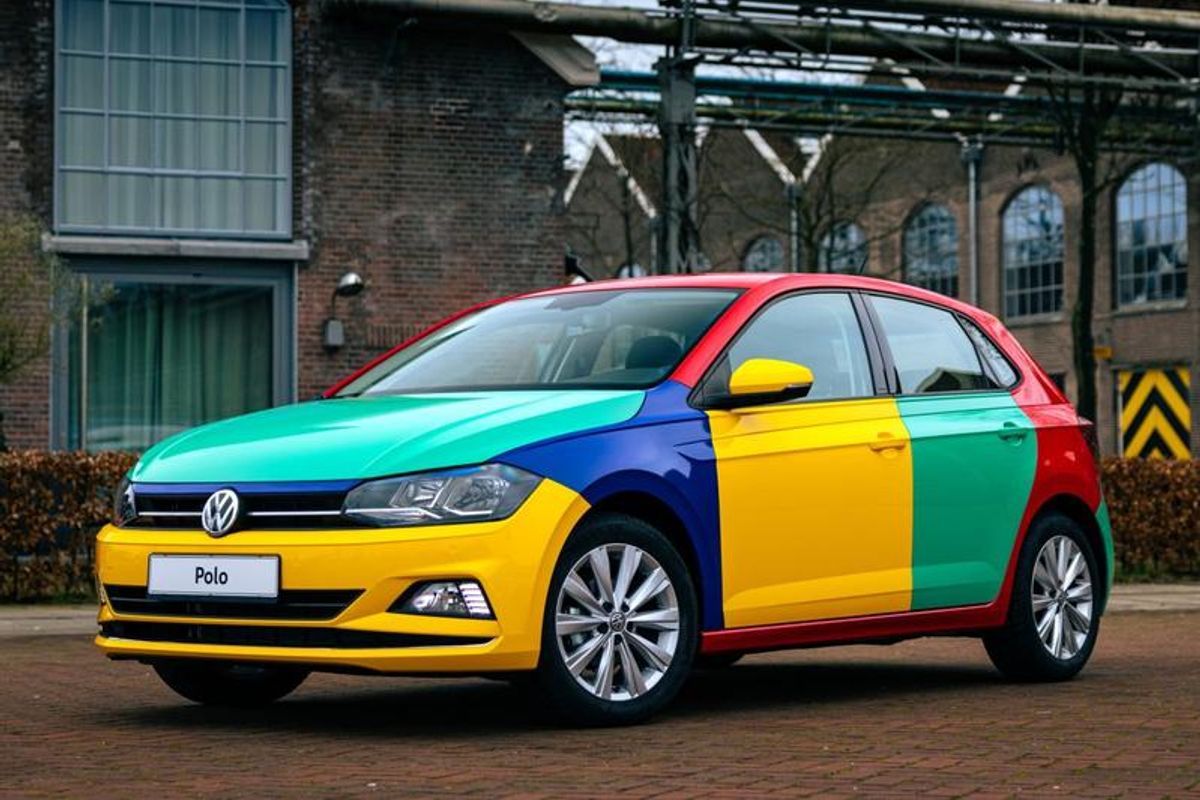
If you are a follower of all things VW Polo, you’ll remember the incredibly vivid design of the original Polo sedan when ordered in its Harlequin limited edition colourway.
Originally never intended as a production option, the multicoloured panels were supposed to illustrate the flow and ability of VW’s industrial engineering systems. What started in 1995 as an assembly quality control exercise, eventually became a massive design statement for VW and its Baukasten system.
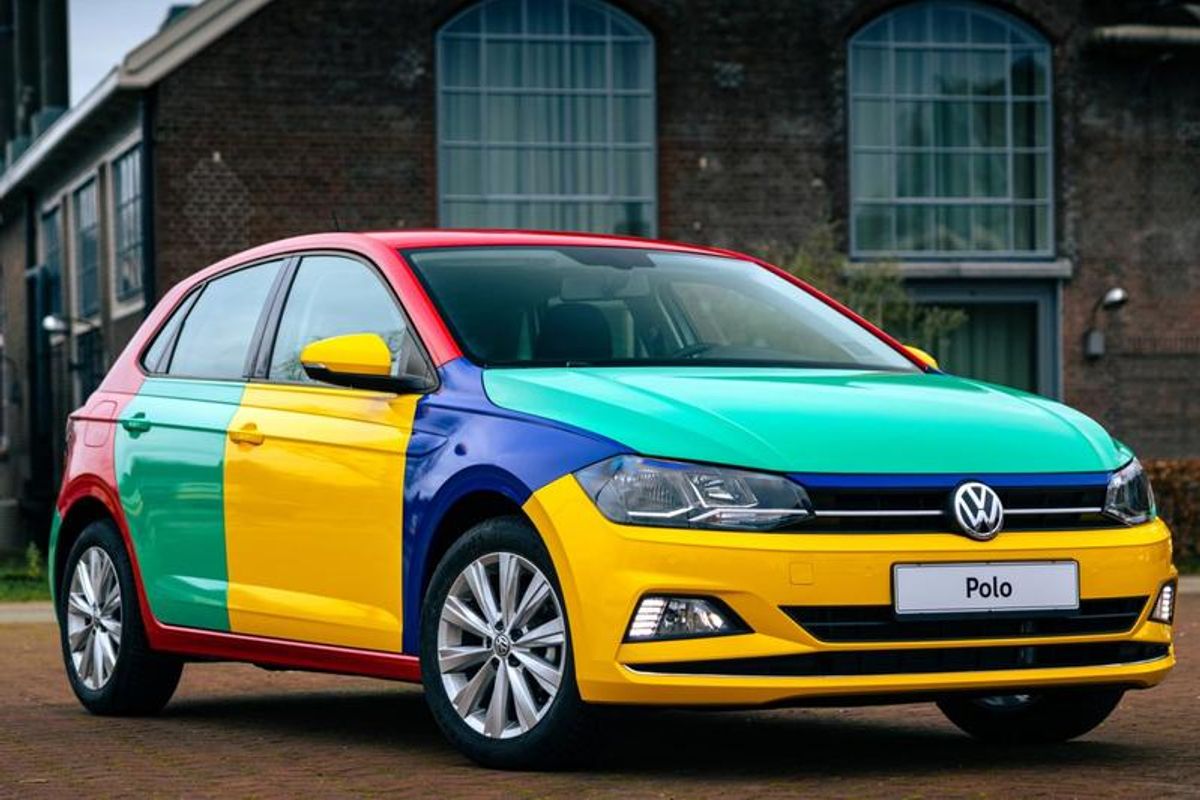
Even today, these Harlequin Polos are valued by collectors. And now, nearly two and half decades after the original Polo Harlequin, there is a multicoloured version of the sixth-generation VW compact hatchback.
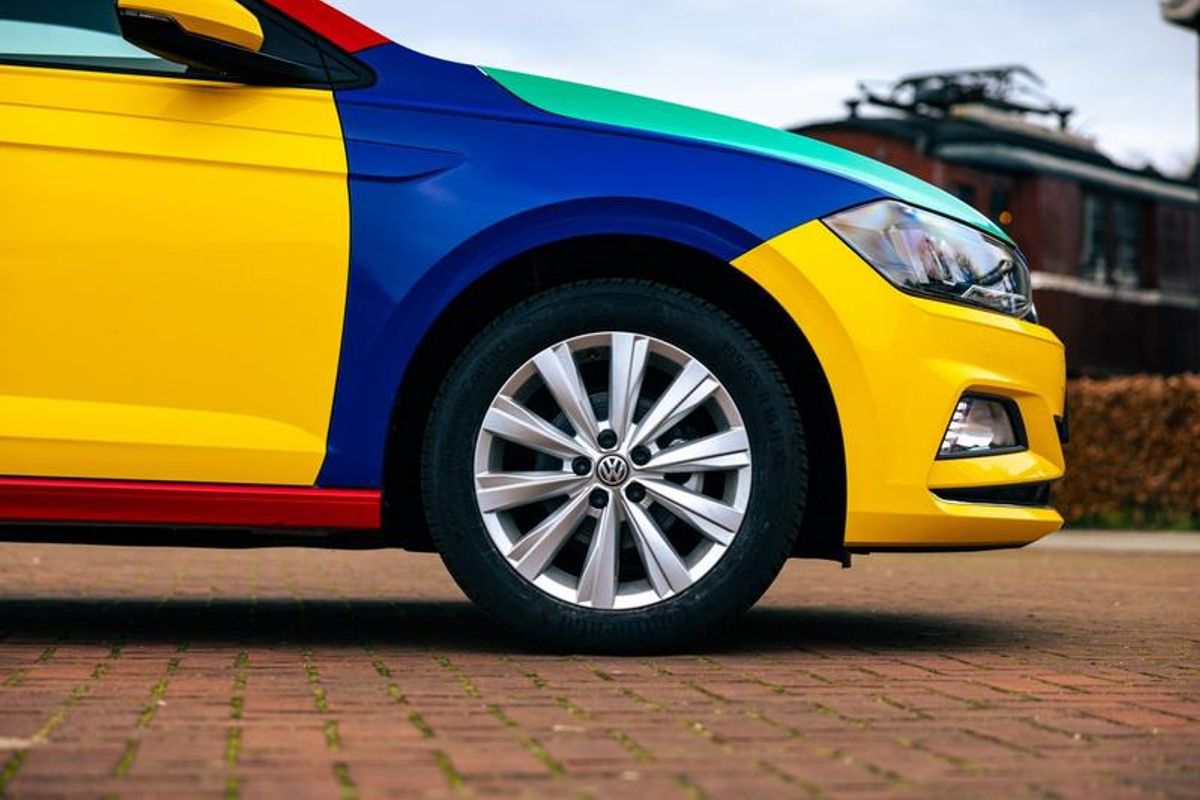
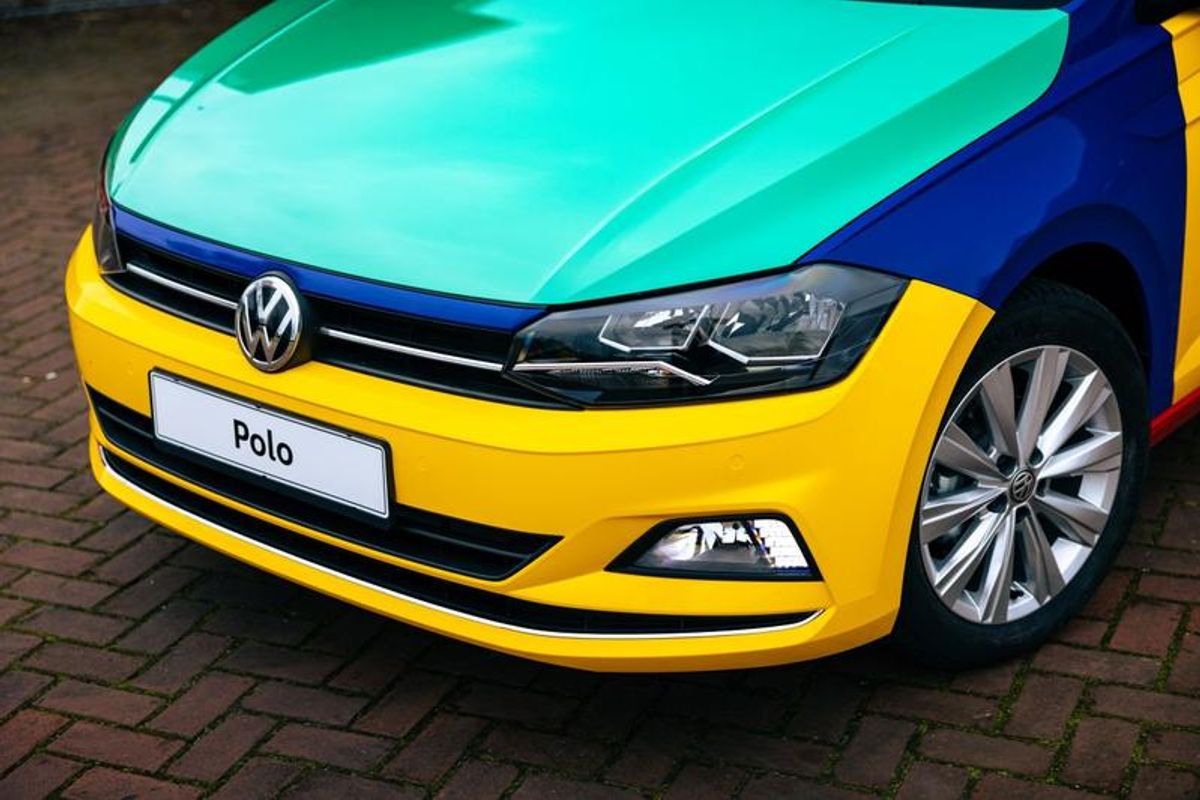
This new multicoloured Polo is named the Harlekin and uses a blend of four model colours: blue, red, yellow and mint green. Its primary panels are finished in these colours, delivering an amazingly bright Polo with a mix of bonnet, tailgate, door, bumper and wing mirrors.
Customers have no influence on the actual assortment of colours and panels, enhancing the uniqueness of each Harlekin. The original Harlequin featured individually coloured panels, where this new model is a wrap, making it a little less cool, but certainly an adequate throwback to the original.
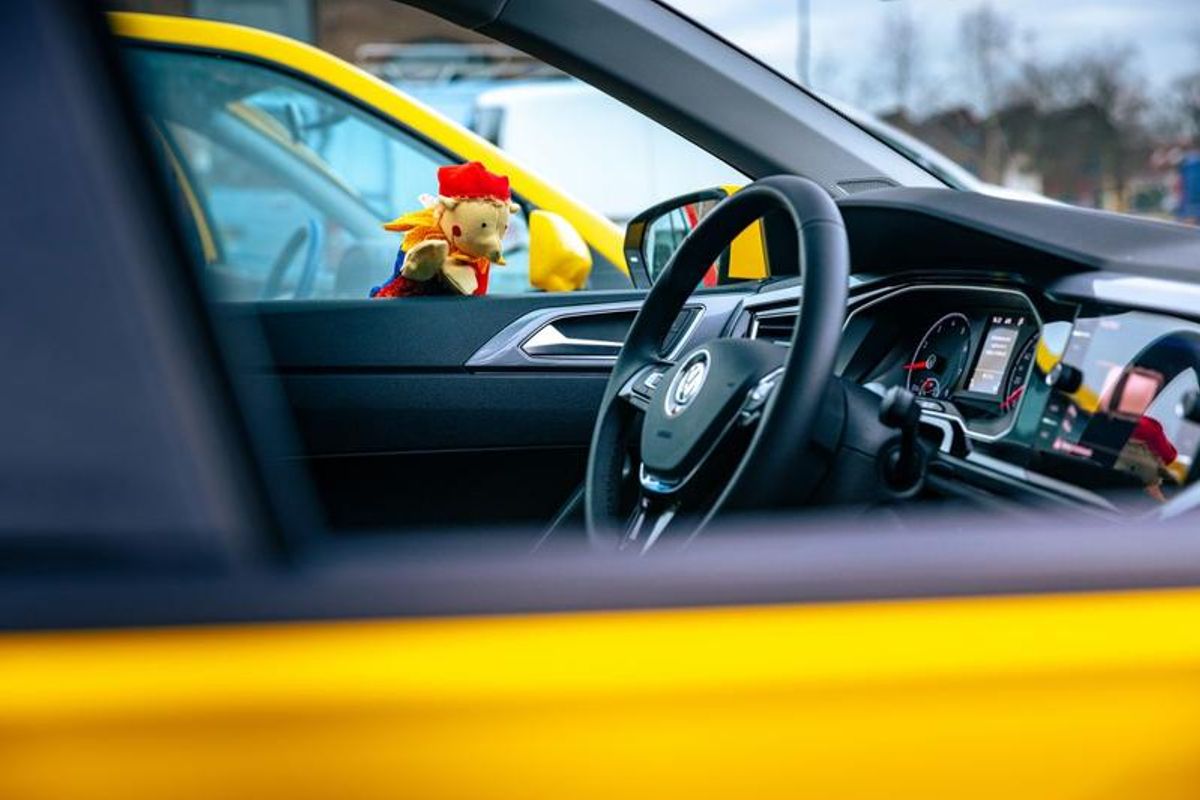
The new Polo Harlekin cabin is also finished in the four strong base colours, although the steering and gear knob are both covered with blue leather.
If you are the kind of person who regularly loses their Polo in a parking area, amid the sea of other Polos, a Harlekin might prevent you from aimlessly ambling around, looking for your car, after all, it is the best-selling passenger on the market.
While the Harlekin is a foreign market Polo only, there would be nothing stopping the local arm from producing its own version. We have reached out to VW SA and will update once we have an answer.
With its legendary off-road ability and unique (as well as highly customisable) looks, the Wrangler is one of Jeep's most popular offerings in South Africa. At first glance, the latest model appears to offer "more of the same", but the brand speaks of far-reaching improvements… We put the Unlimited 3.6 Sahara to the test.
We like: Feels unstoppable off-road, rugged looks
We don’t like: Footwell intrusion, fuel thirst, "wandering" steering
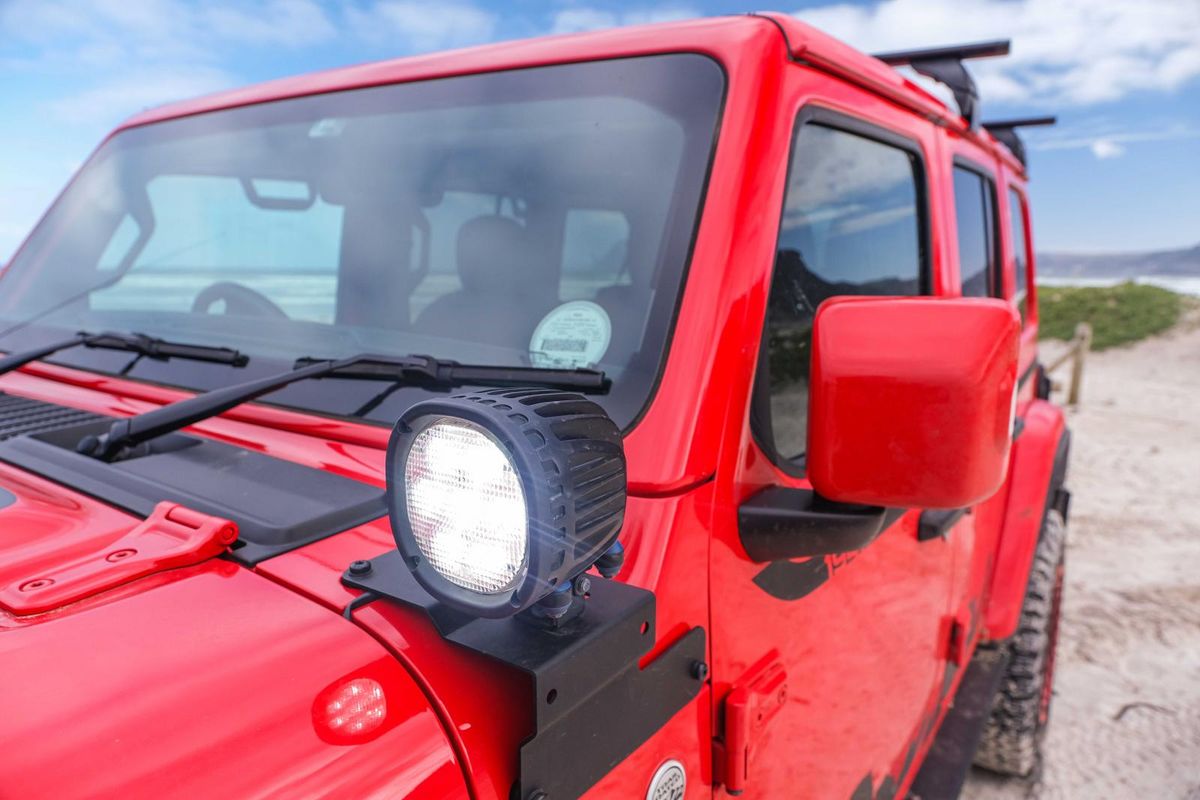
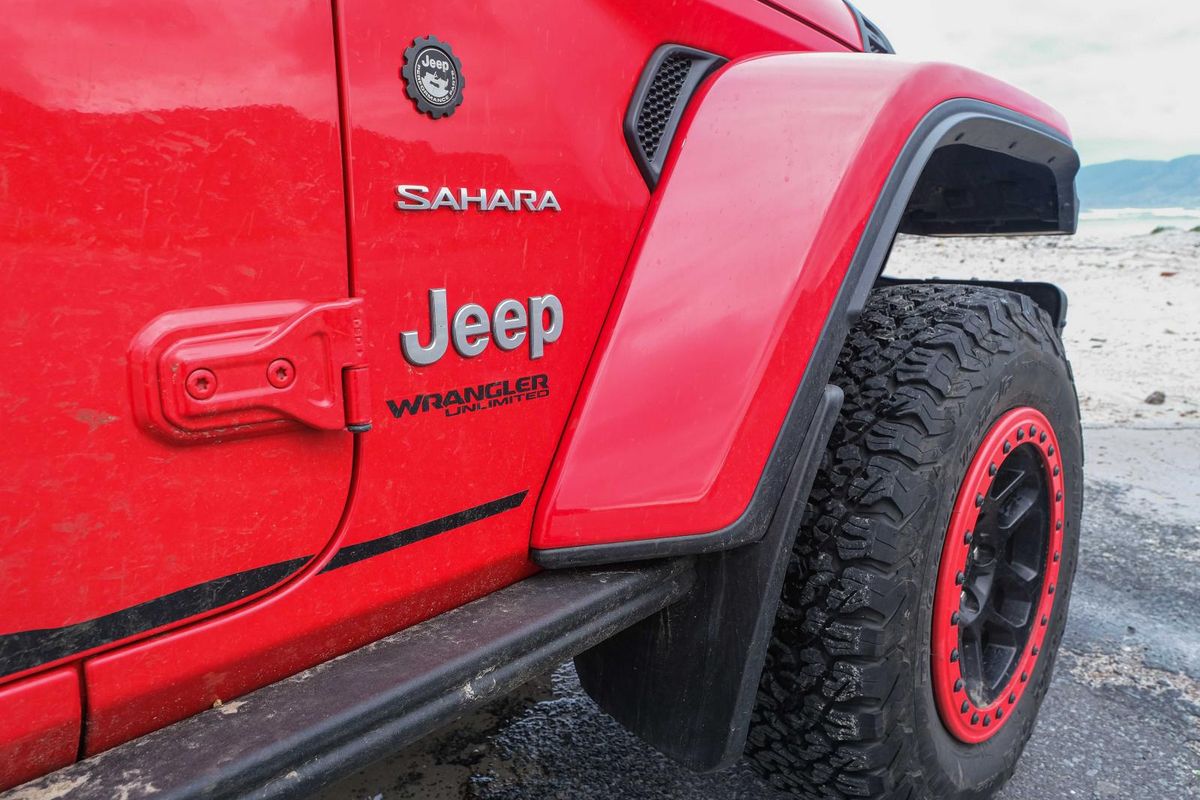
The Wrangler's unmistakable design can be further customised with no fewer than 180 Mopar accessories.
In a market where double-cab pick-ups and road-biased SUVs dominate, an "old-fashioned" off-road-specific vehicle such as the Jeep Wrangler could appear to be a non-starter, but the rugged American has carved itself a sizeable fan-base in South Africa nonetheless. A new model was launched internationally in 2018 (and became available in South Africa in mid-2019); it is offered in 2- and 4-door (Unlimited) guises.
Although being labelled as "all-new" by Jeep, the latest model is unmistakably a Wrangler. In fact, the emphasis during the redesign appears to have been on enhancing the aspects that endow the Wrangler with its niche appeal – macho styling, customisation options and, of course, excellent off-road ability. But does that narrow focus enhance the Wrangler's appeal, or result in a vehicle that is simply too compromised? Let's find out.
How it performs in terms of…
Performance and ride/handling
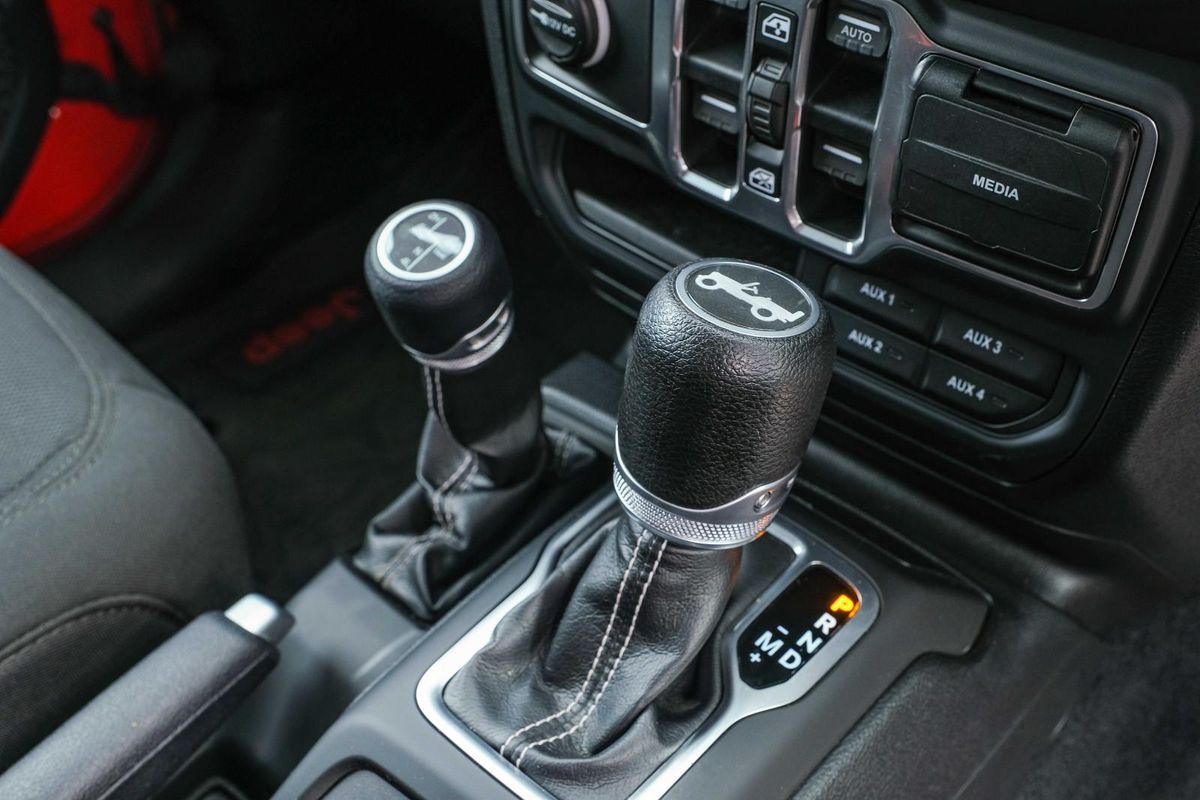
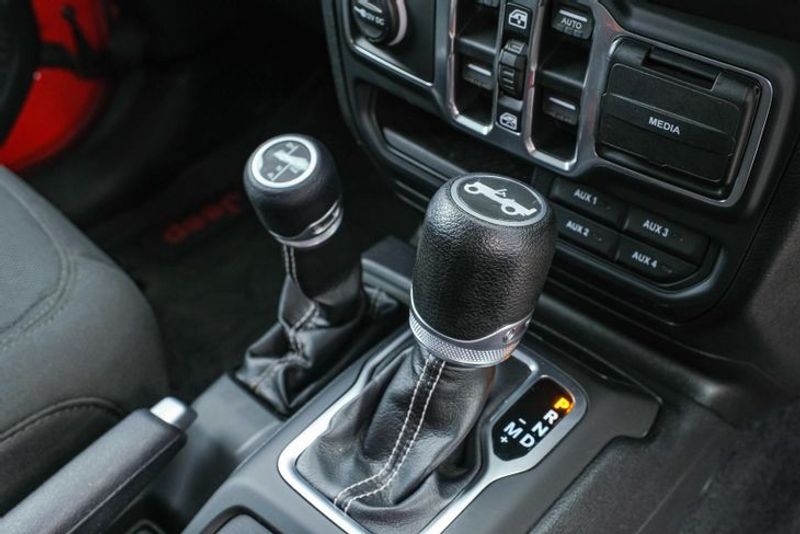
It's not often you see a 2nd lever for a transfer case anymore. The Wrangler can shift-on-the-fly between 2WD and 4WD High at up to 72kph.
While there's a lot of new tech (for a Wrangler) in this new iteration of Jeep's icon, the powertrain is familiar. Jeep's 3.6-litre Pentastar V6 has been given another round of upgrades (including stop/start) and now produces 209 kW at 6 400 rpm and 347 Nm of torque at a fairly high 4 100 rpm. Jeep does claim that a lot of work has gone into making more torque available at lower revs, and at really low speeds (such as when you are venturing off-road), the engine feels well-matched with the 8-speed automatic transmission – you'll only need low-range in extreme conditions.
But it's around town and in the "mid-range" where the V6 struggles to move the hefty Wrangler (which weighs well in excess of 2 tonnes) along with a sense urgency. That said, if you mash the throttle the nose will lift – speedboat-style – and the Jeep will bolt to 100 kph in less than 10 sec, but during general driving, there's plenty of "hunting" from the transmission. It's also thirsty… You can forget about the claimed 10.3 L/100 km claimed consumption figure and budget for something closer to an average of 13 L/100 km. In short, this Wrangler needs a torquey turbodiesel engine.
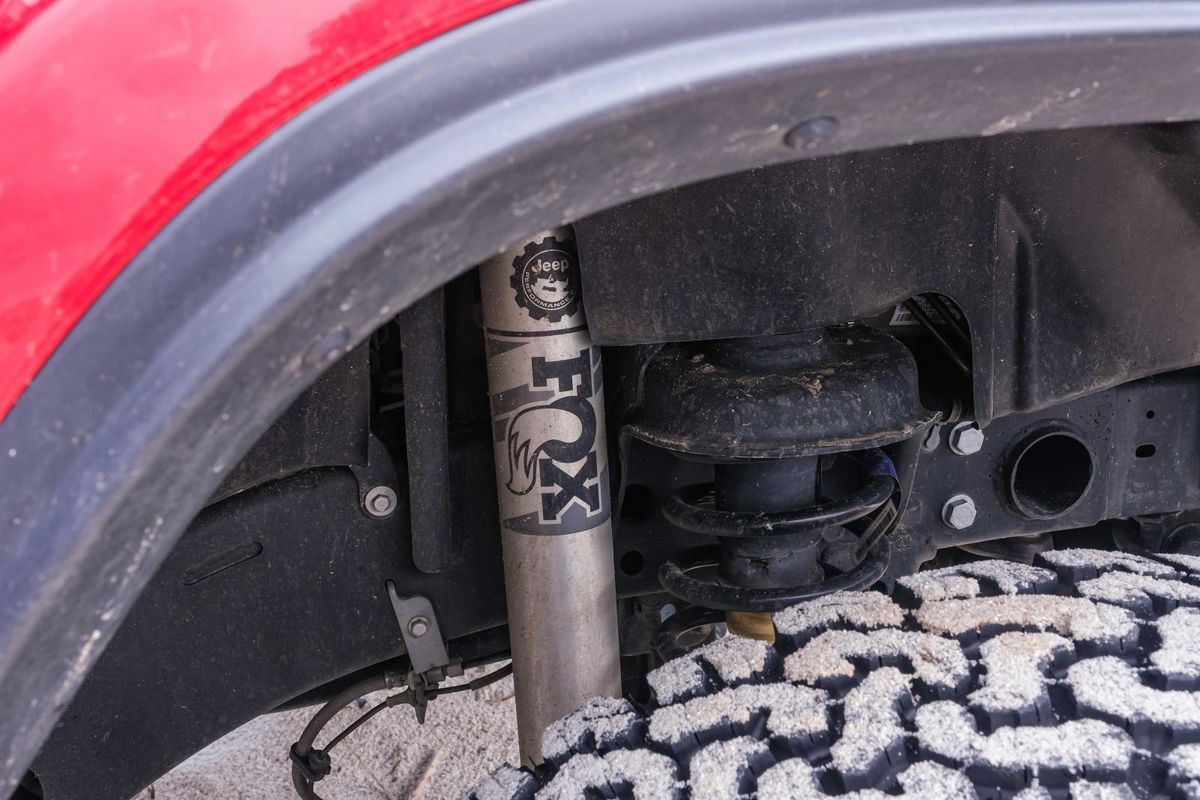
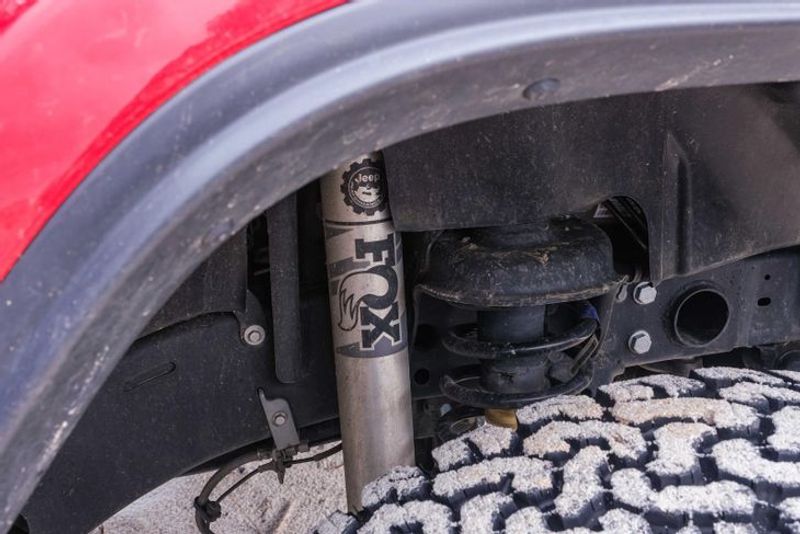
Test unit featured a further suspension raise as well as highly regarded Fox shocks.
In terms of its ride/handling balance, the Wrangler 3.6 Sahara Unlimited has a split personality. Let's get the negatives out of the way first. On the road, NVH (noise, vibration, harshness) refinement is poor, with plenty of wind and road noise entering the cabin. The steering is very vague too; in fact, the 'wheel feels almost disconnected from the front wheels around the straight-ahead position, and so the Wrangler tends to wander, needing constant steering input to keep the vehicle tracking true. Finally, and predictably (given its off-road biased underpinnings), there's a lot of body roll, which, combined with the sloppy steering (and compromised driving position) makes the Wrangler a chore to drive.
But, then again, a buyer who wants a Wrangler because they intend making regular off-road excursions with their vehicle may be willing to forgive the Jeep its poor on-road showing… because it's brilliant when the "going gets rough".
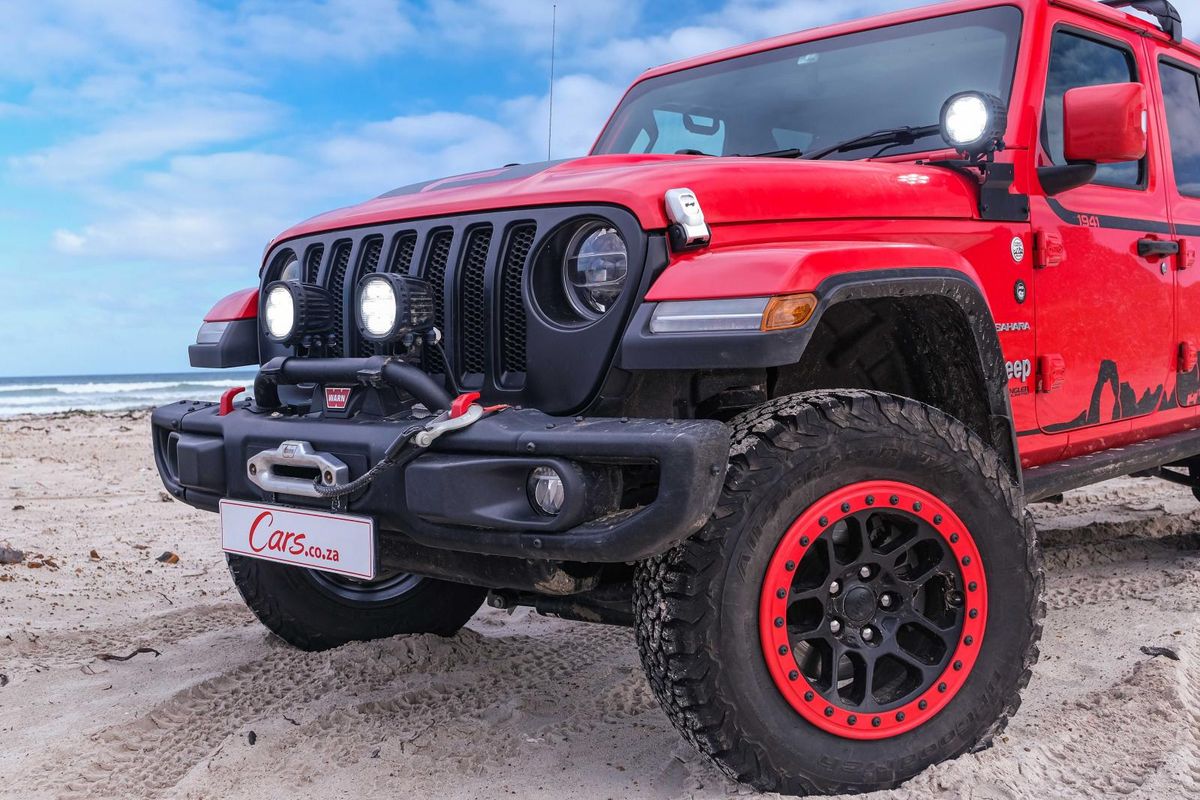
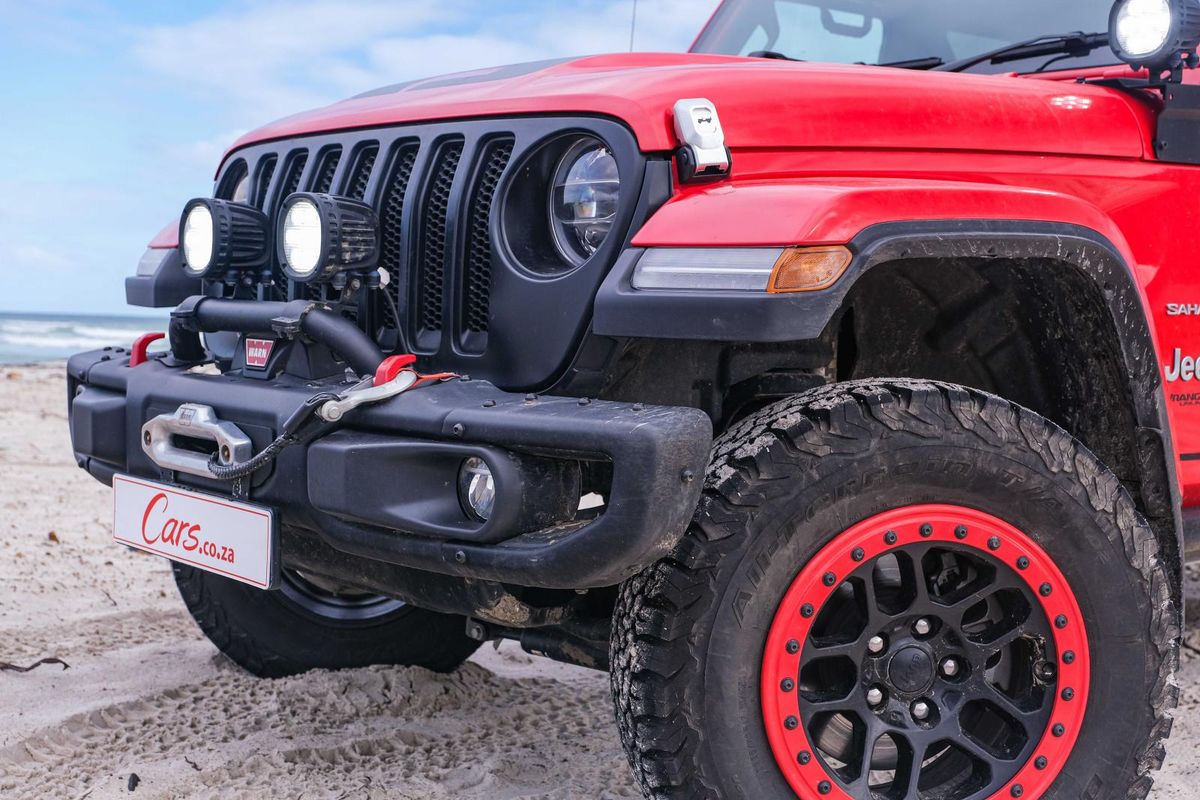
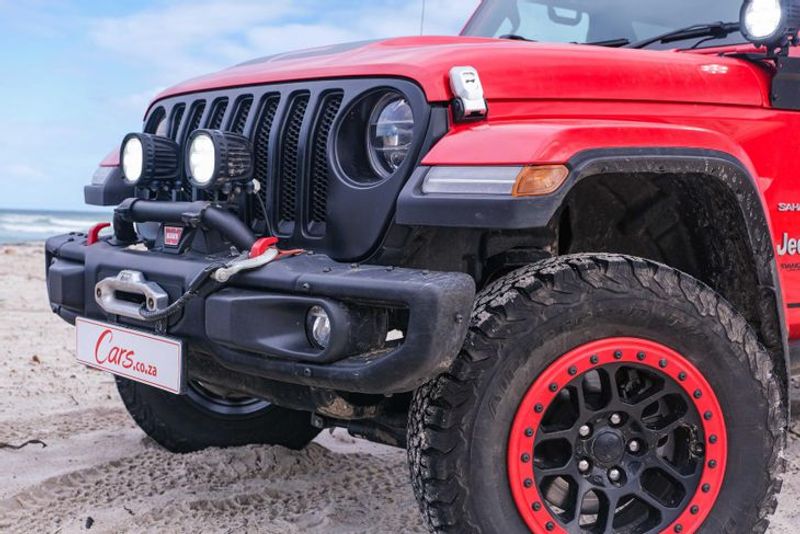
With its blunt front-end, high-riding suspension and chunky BF Goodrich tyres, this Wrangler Unlimited felt unstoppable off-road.
Featuring the Command-Trac four-wheel-drive system with a 2.72:1 low-range gear ratio, heavy-duty Dana front and rear axles and, in the case of this test unit, a further suspension lift, chunky 255/75 R17 BF Goodrich all-terrain tyres, Fox shocks and rock rails (among other items), the Wrangler Unlimited feels unstoppable off-road.
Exceptional ground clearance, combined with excellent approach/departure angles and the kind of axle articulation hardcore off-roaders dream about boost a driver's confidence in the Jeep's abilities. The only snag, really, is related to the drivetrain. It takes a while to get used to the Wrangler's throttle response (or lack thereof) and, on a few occasions we approached obstacles with either too much, or too little, oomph.
Exterior design & Packaging
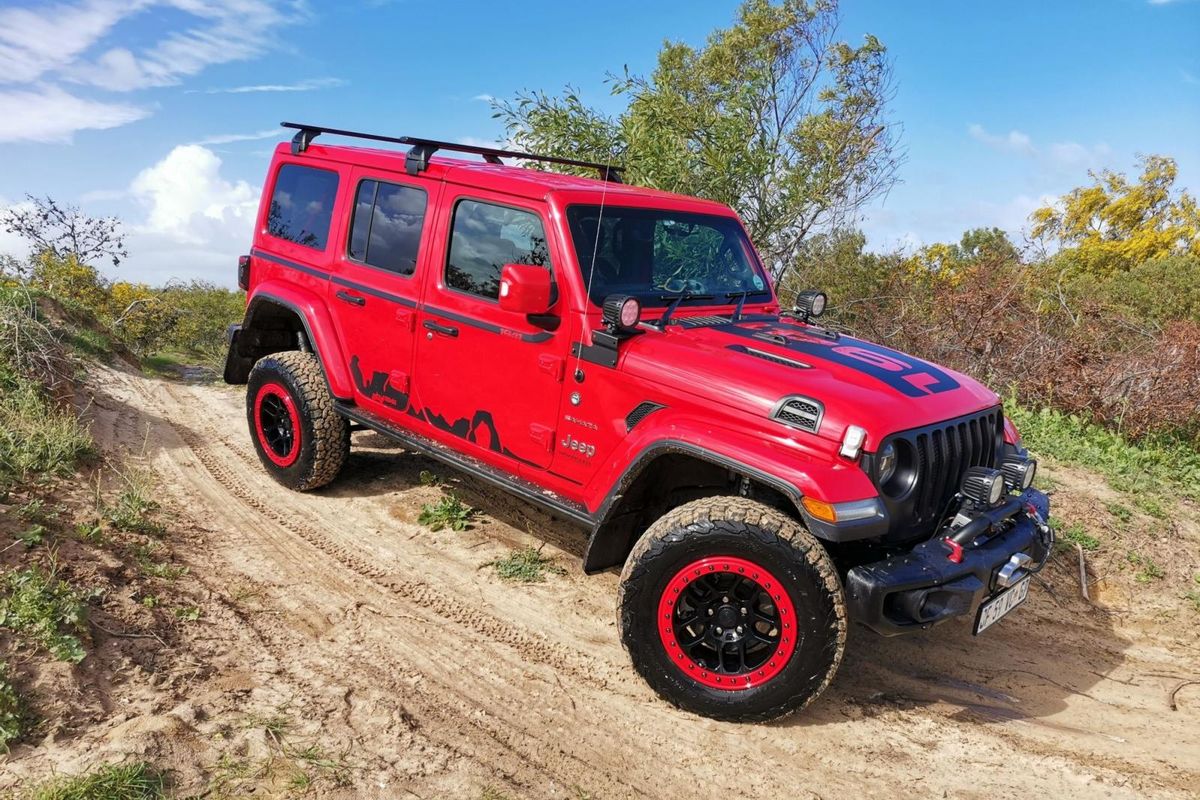
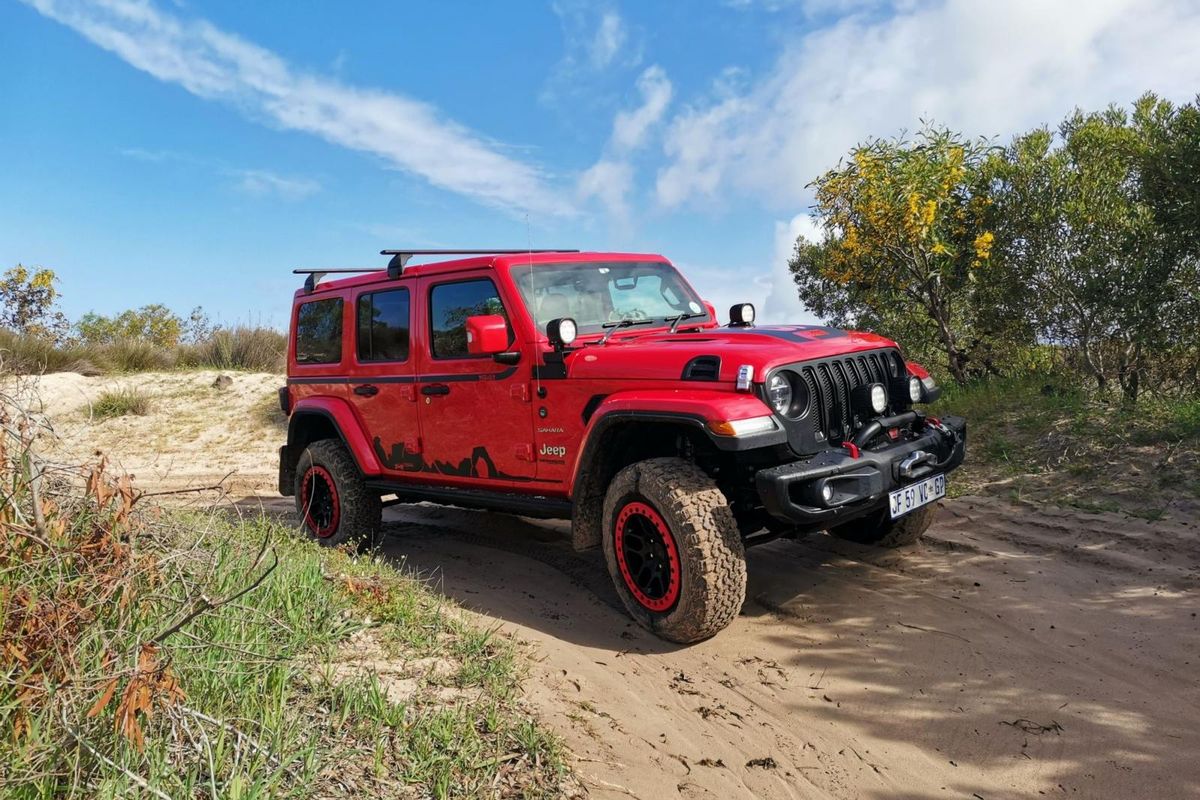
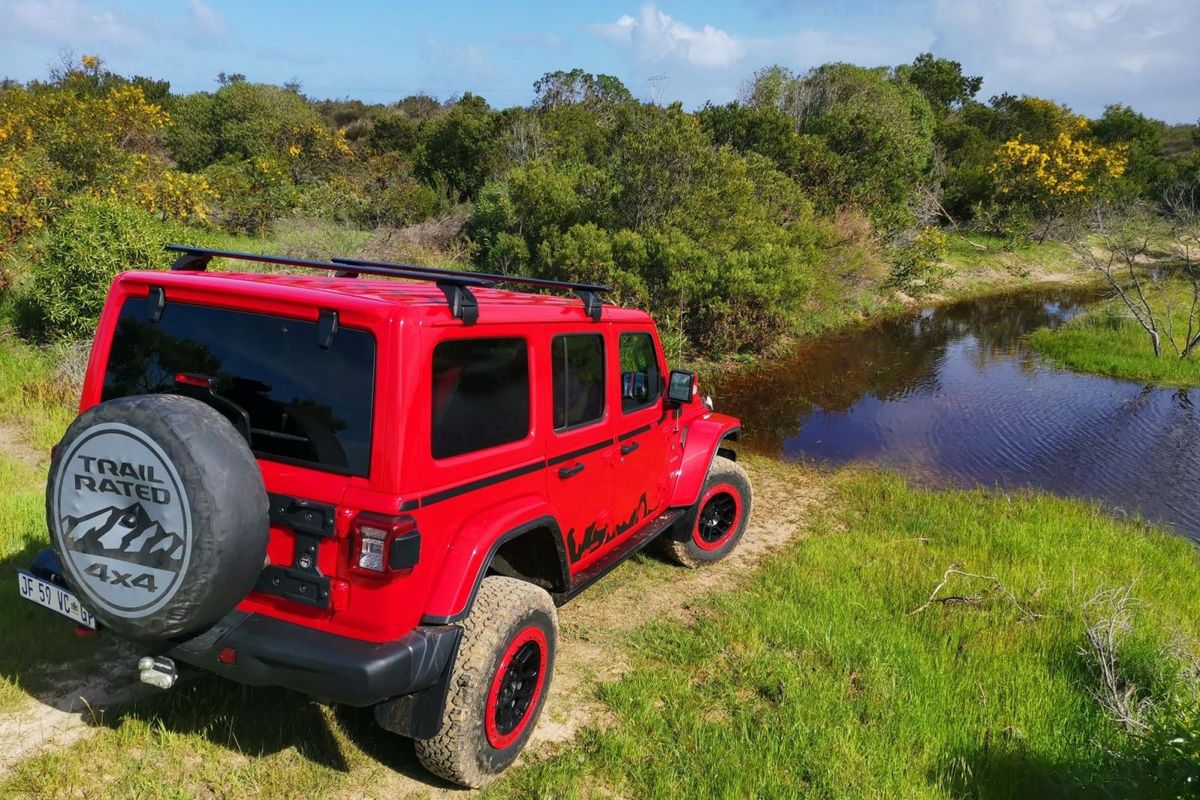
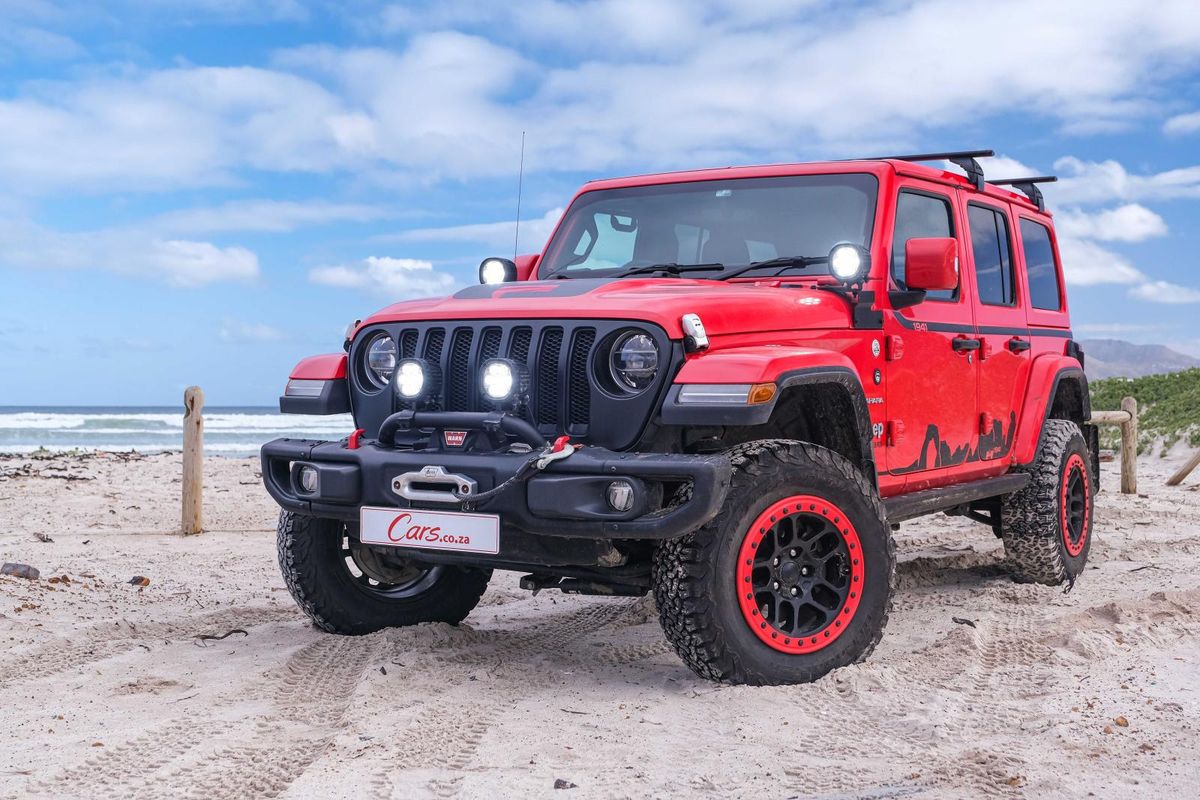
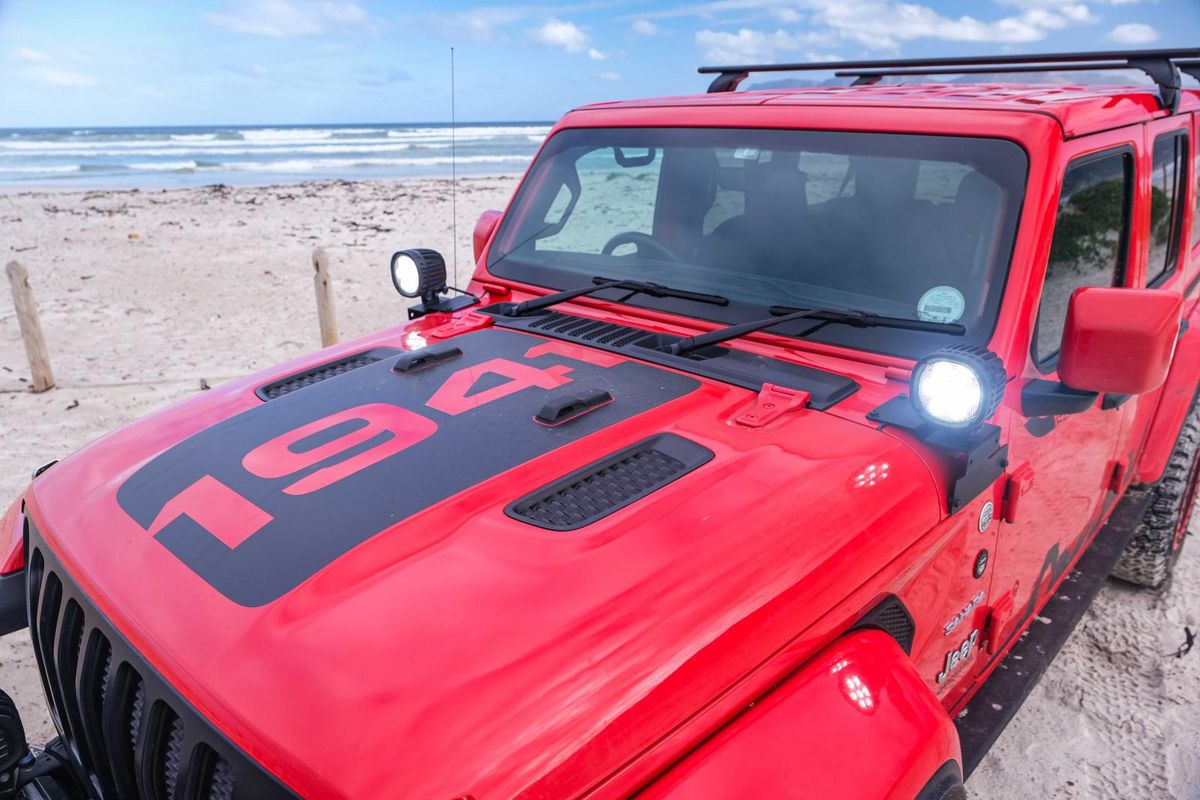
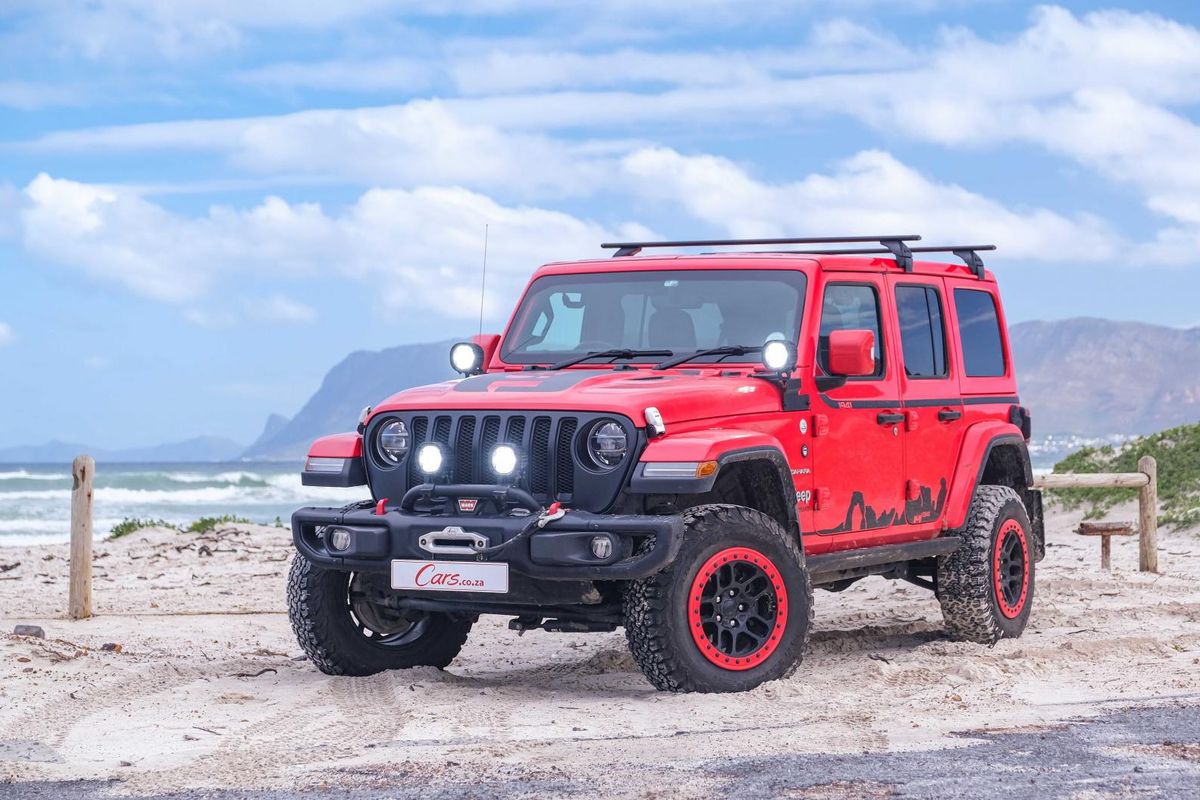
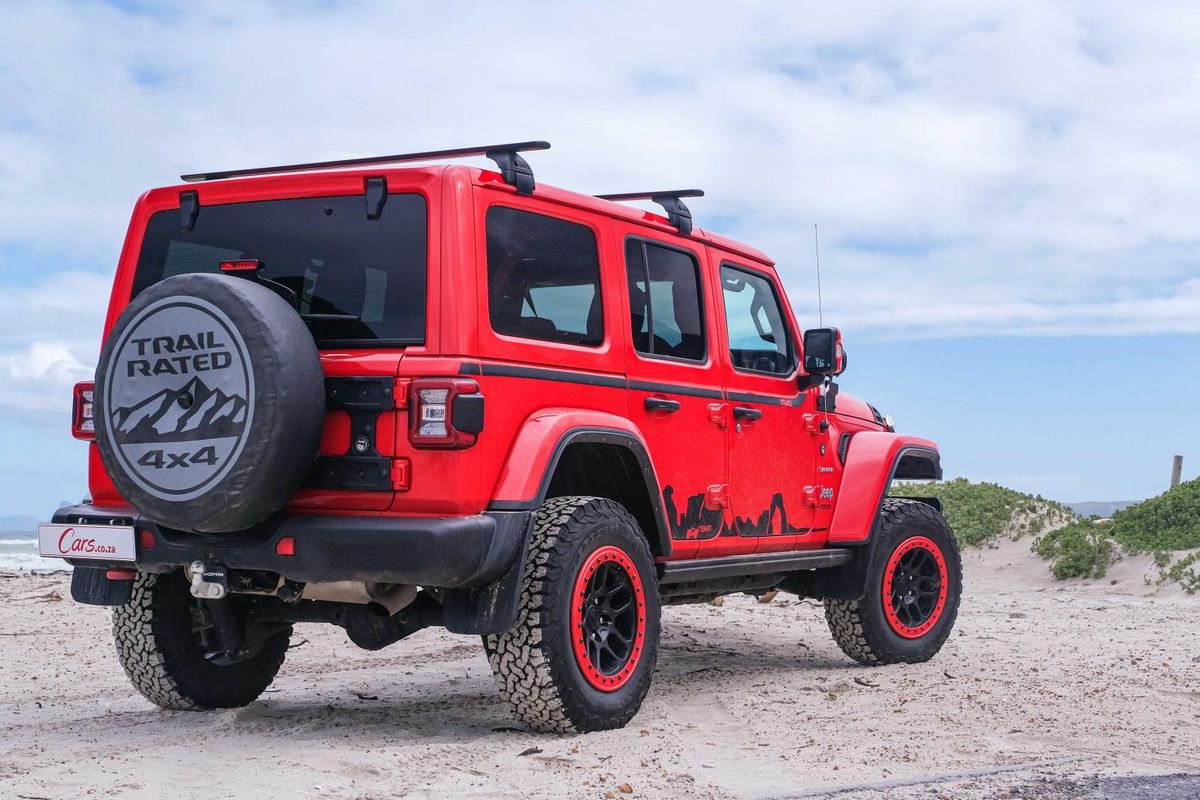
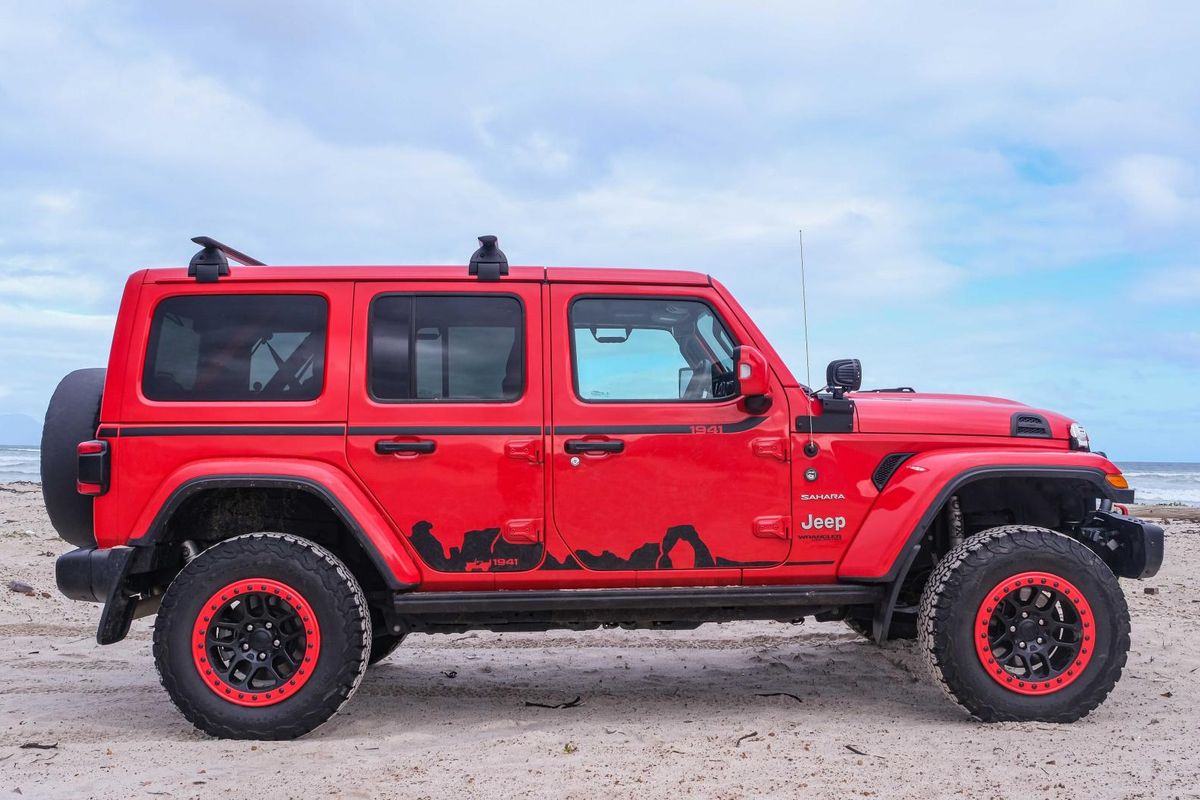
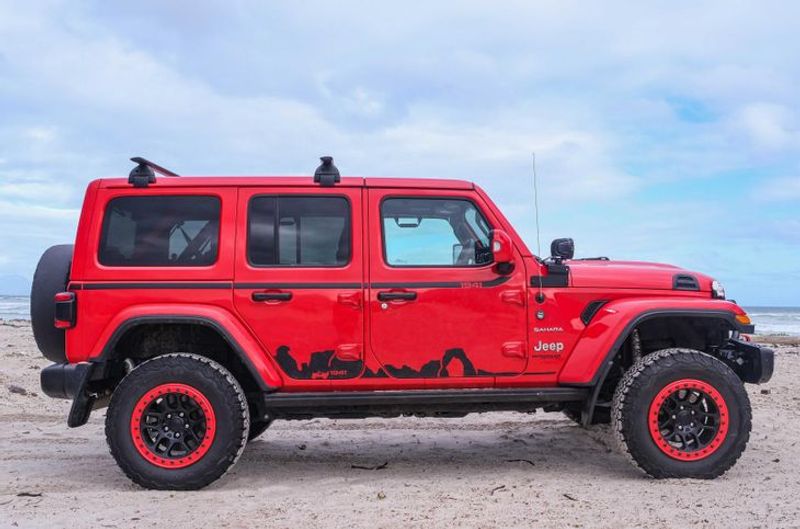
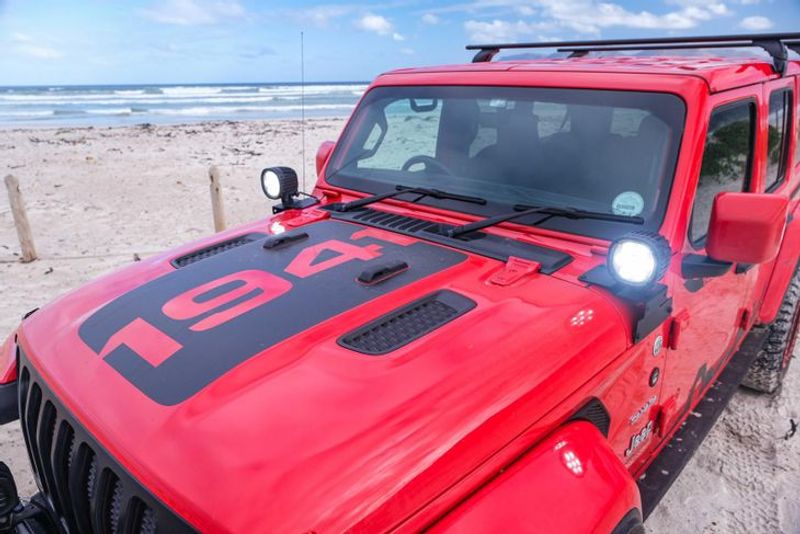
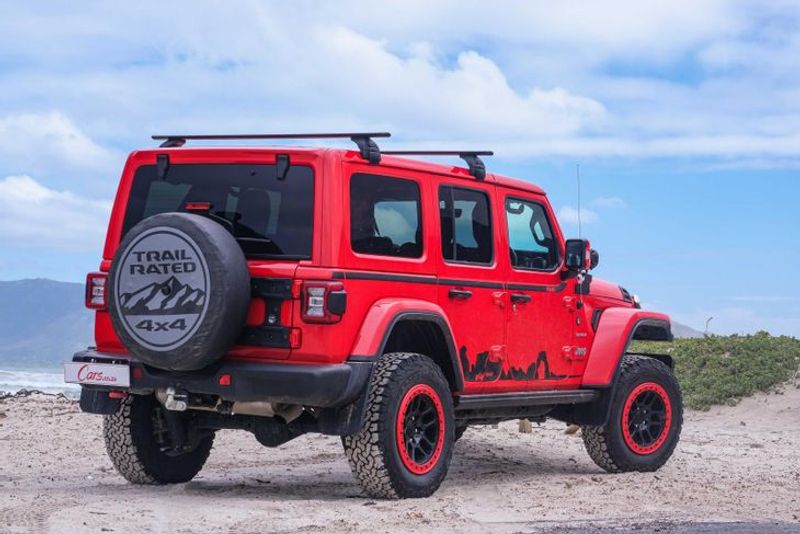
Rugged, macho looks accentuated by bright red paintwork and loads of optional extras.
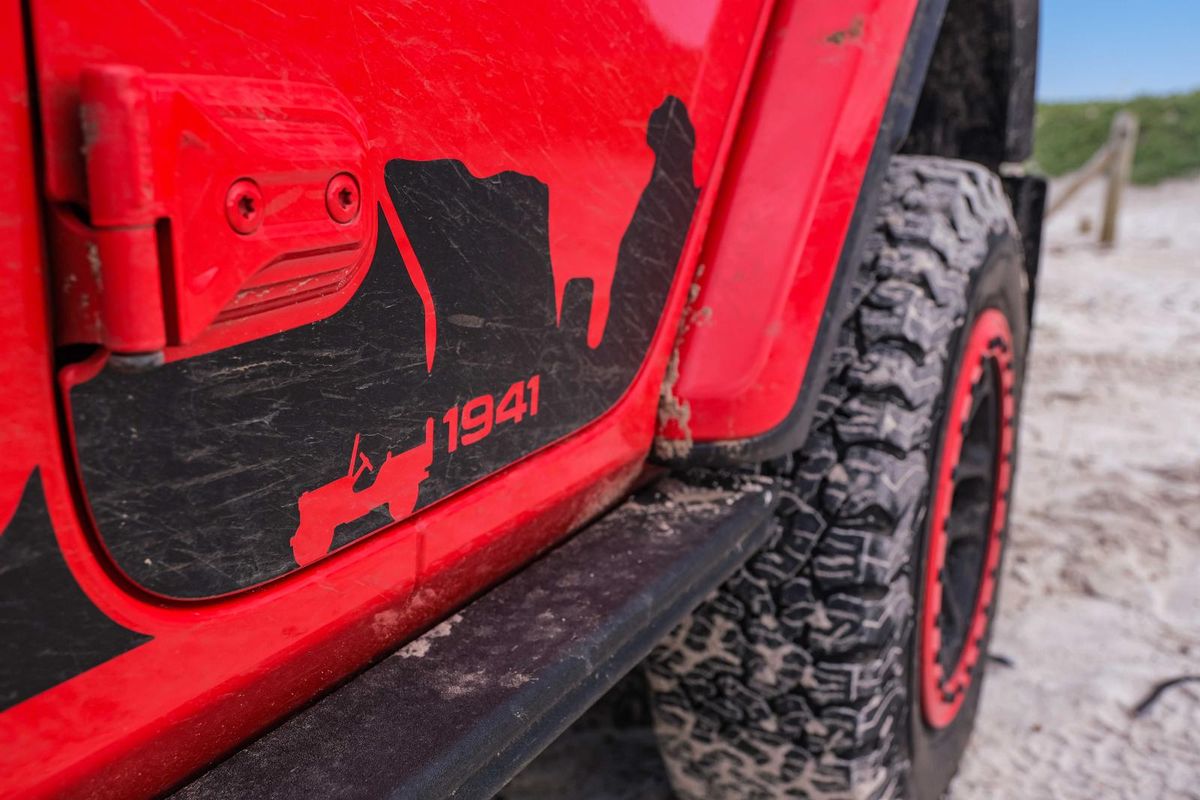
Introduced in South Africa mid-2019, it's taken a while for a new-generation Jeep Wrangler to reach our test team, but when it did, it certainly made an impression. Finished in Firecracker Red and kitted out with a raft of Mopar accessories, this Wrangler turns heads like an Italian exotic. That's been core to its appeal for a lot of people, of course, so it makes sense that Jeep has stuck to a design that is known to have considerable appeal.
Compared with the dramatic update to its arch-enemy (the Land Rover Defender), which can be regarded as a clean break with the past (and is not targeted at previous Defender owners in the least), the latest Wrangler has been designed by incorporating the desires of existing or previous Wrangler owners. It features throwback open-air features such as a fold-down front windscreen, lightweight aluminium doors that can be easily removed (Torx bit-tool size stamped on the door hinges), as well as a 3-piece removable modular hard-top, for example.
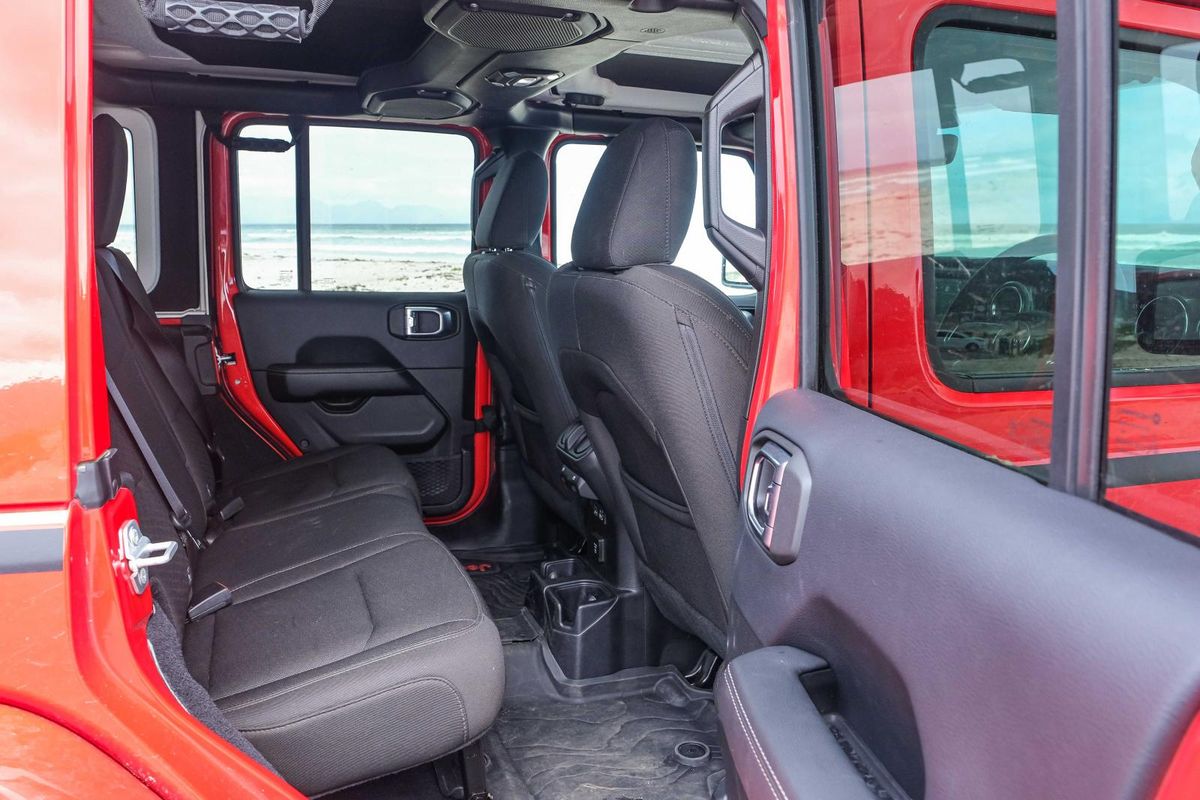
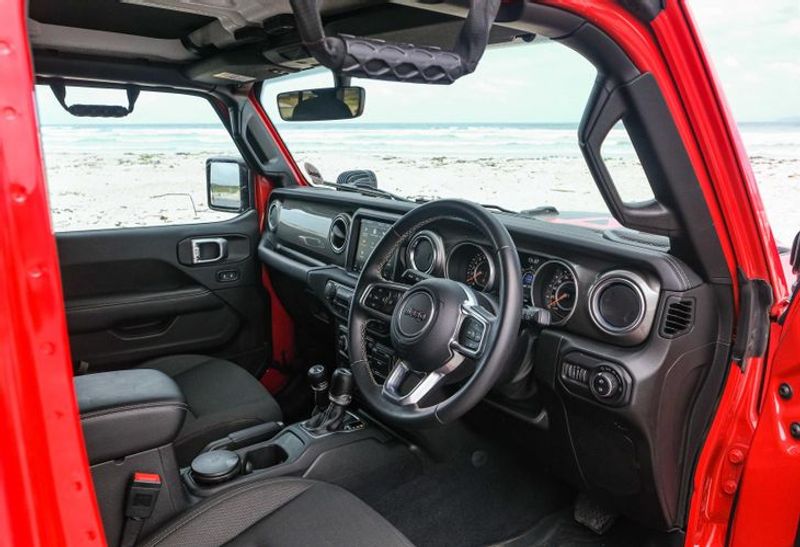
Interior features washable materials. Note hanging roof handles.
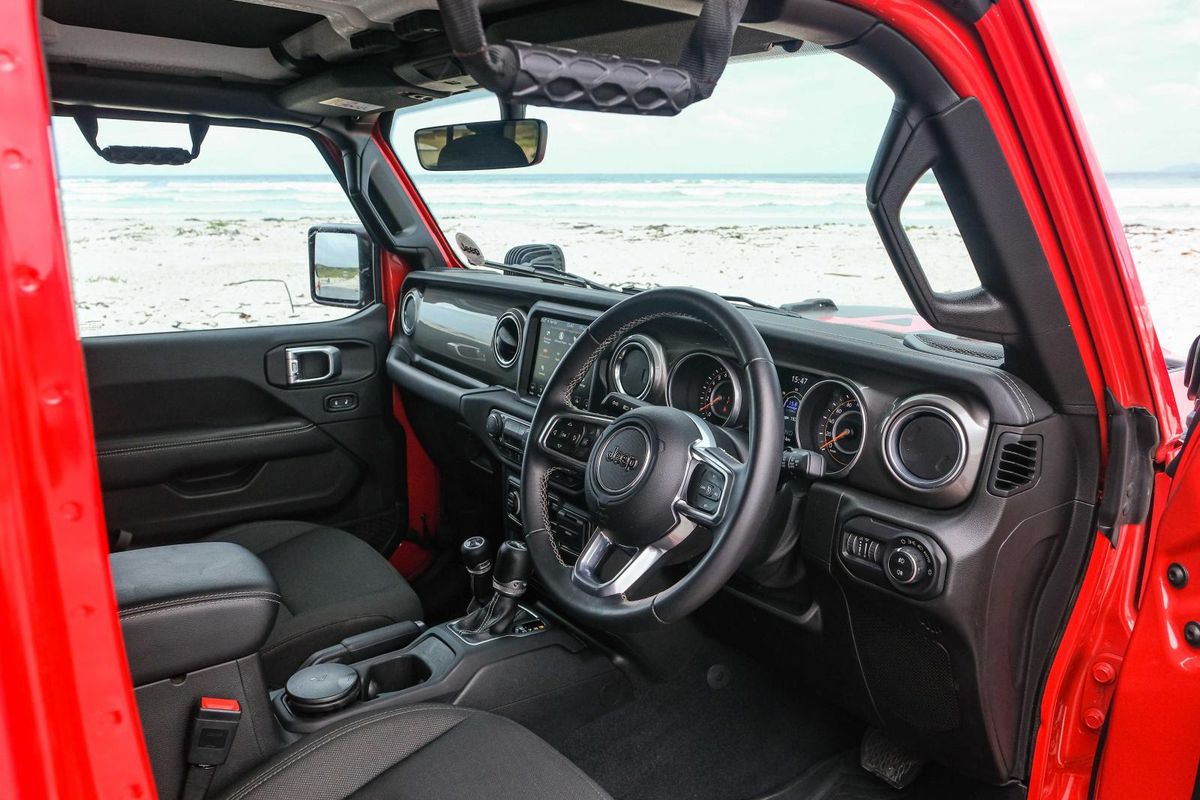
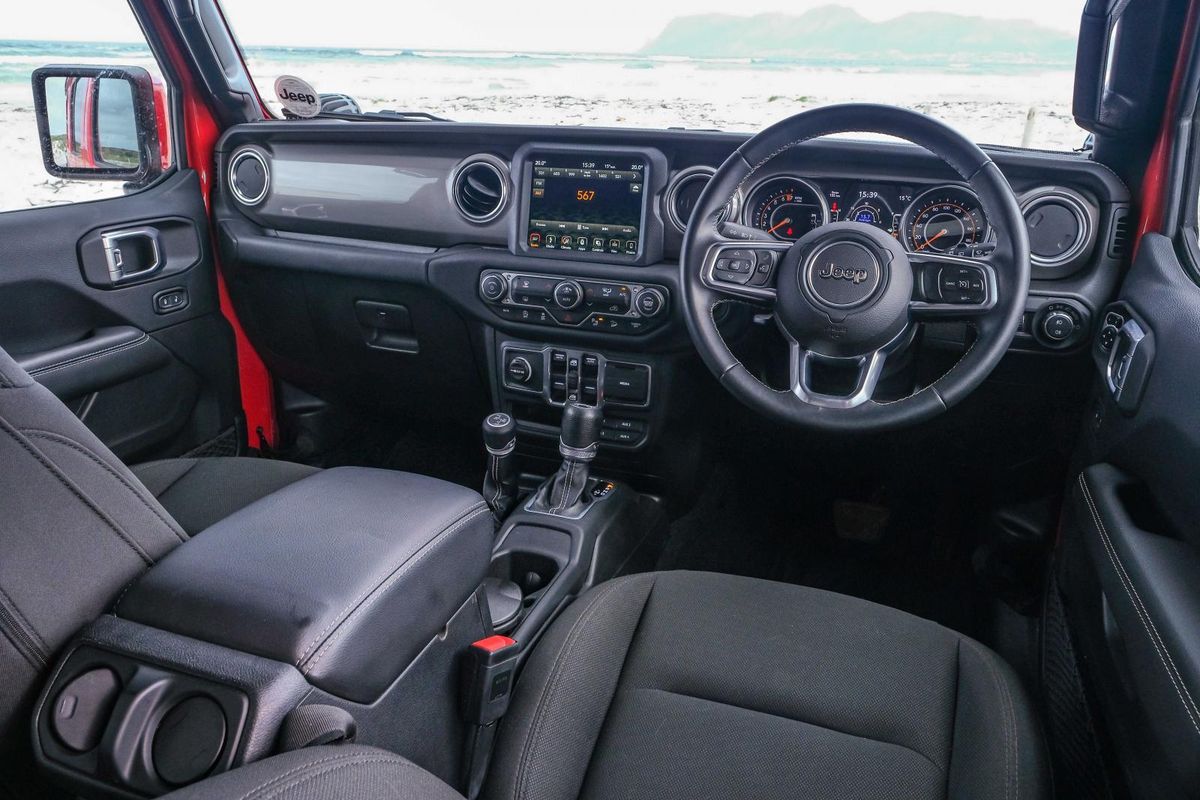
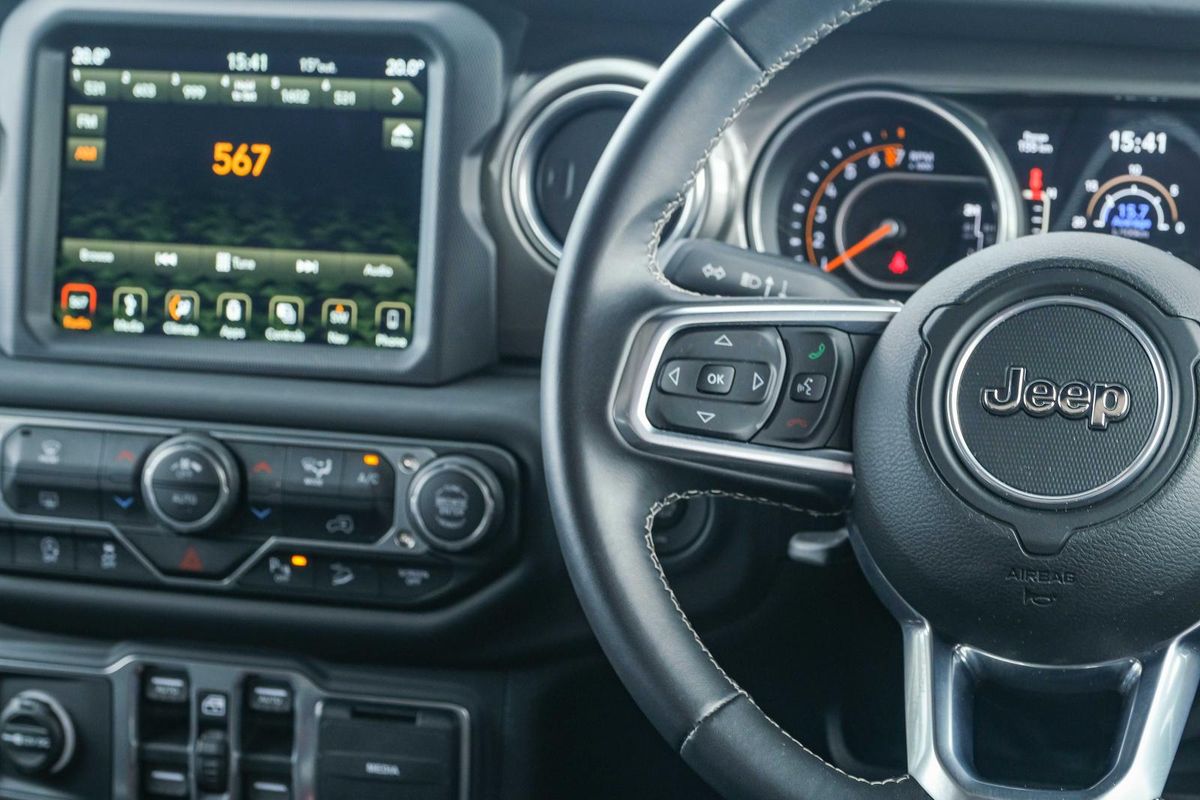
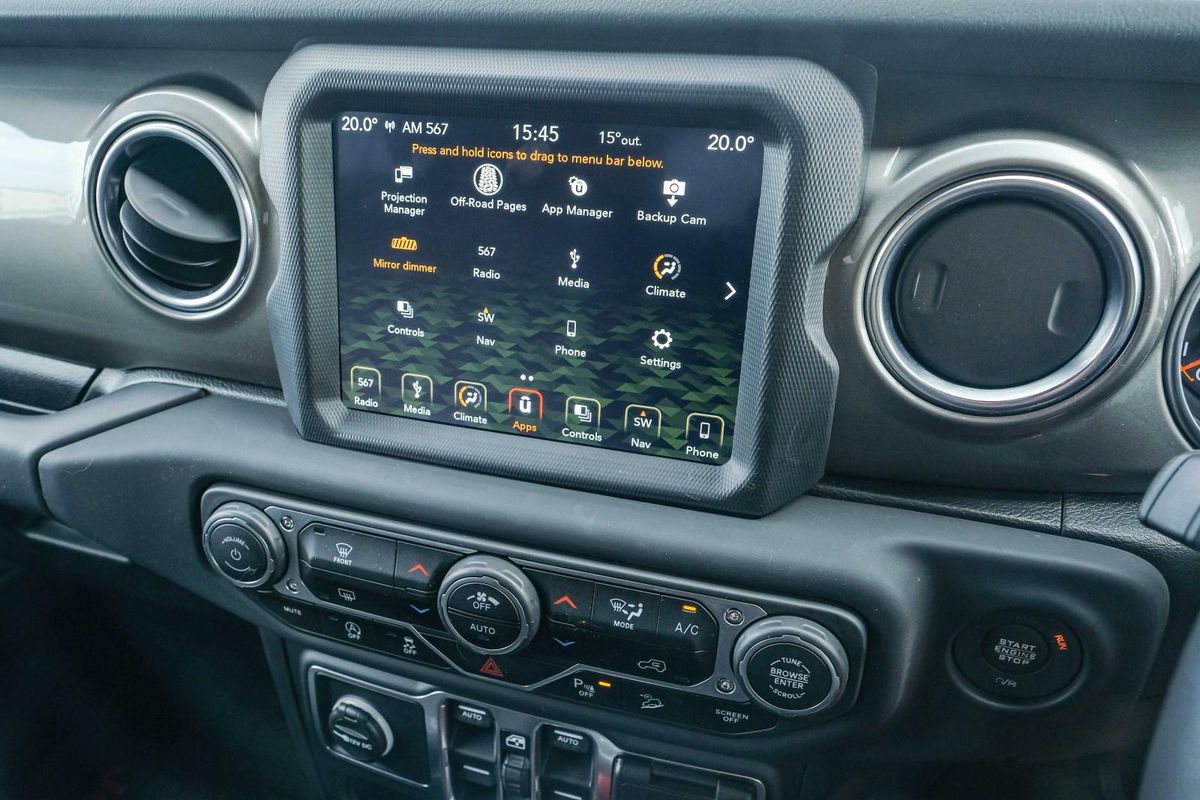
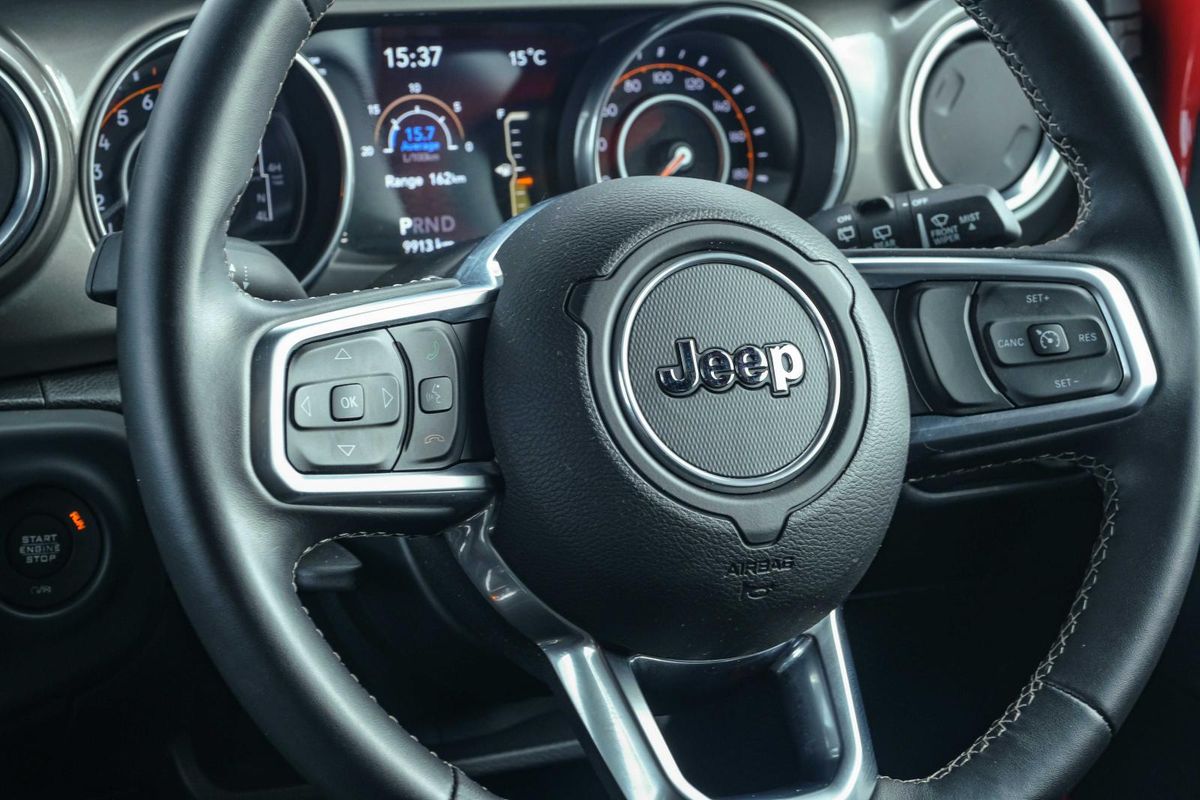
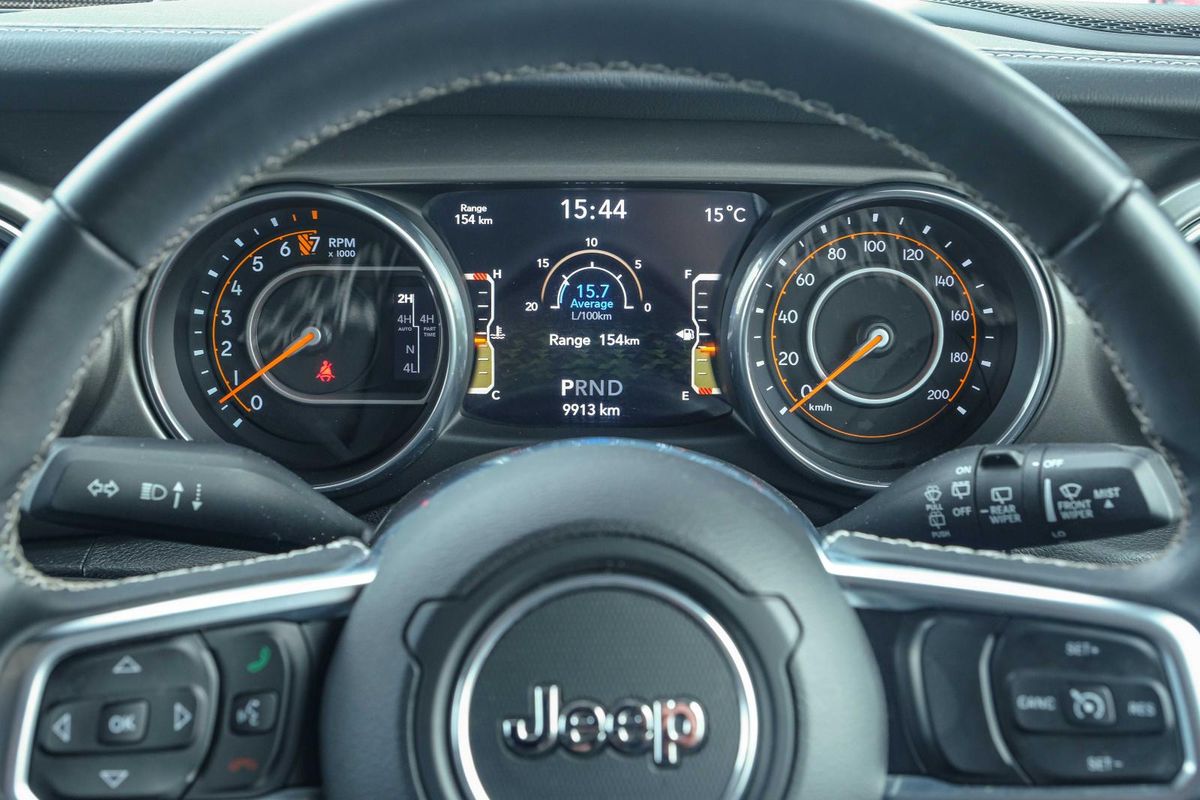
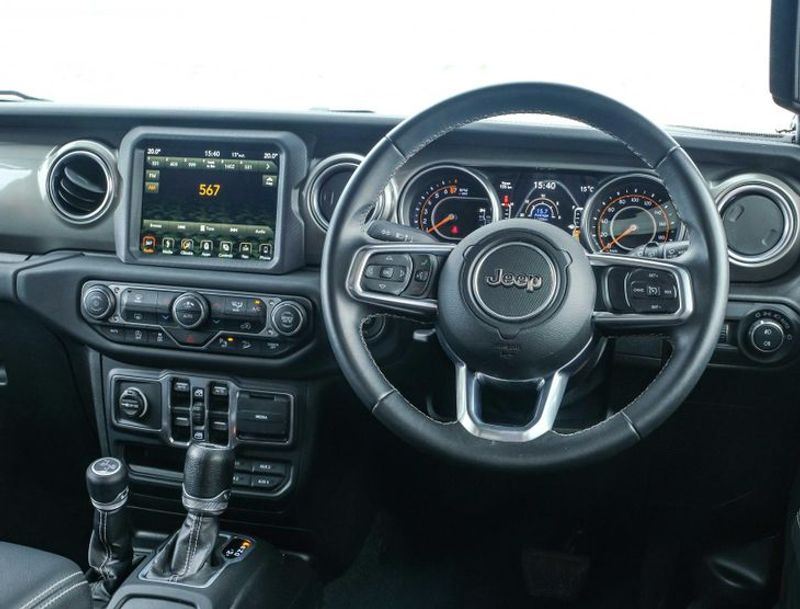
Inside, the generational change is far more obvious, with a modernised fascia featuring mixed analogue/digital instrumentation and a hangdown section dominated by the Uconnect touchscreen infotainment system. The materials used are of better quality than before, and Jeep claims that the interior is washable and even features drain plugs. That said, build quality is arguably only average, so expect some rattles and squeaks.
The driving position is another problem (it's a regular complaint with this marque). Due to noticeable footwell intrusion, there is nowhere to rest your left foot, except at a bent angle. The seats are good, though; you sit high with a commanding view over the bonnet (off-roaders will appreciate that), but the roof-mounted grab handles cause a minor irritation when they knock against the side windows, particularly when things get bumpy.
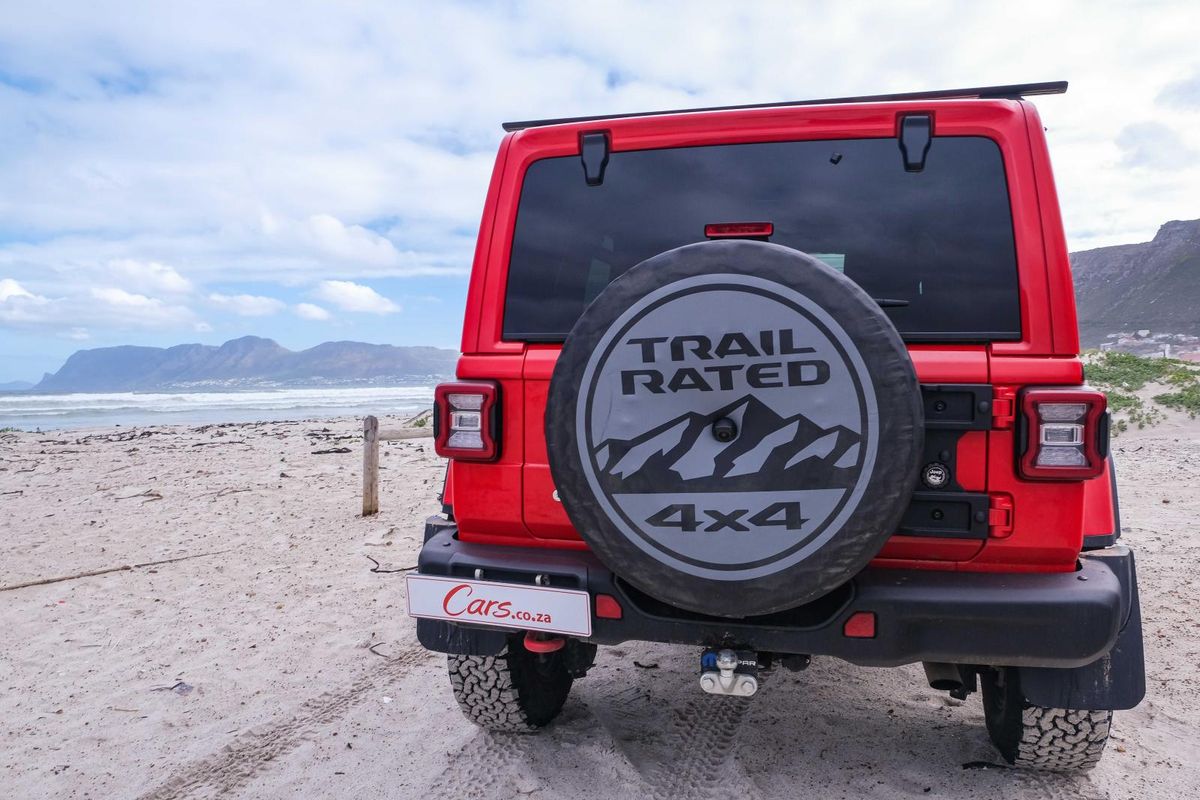
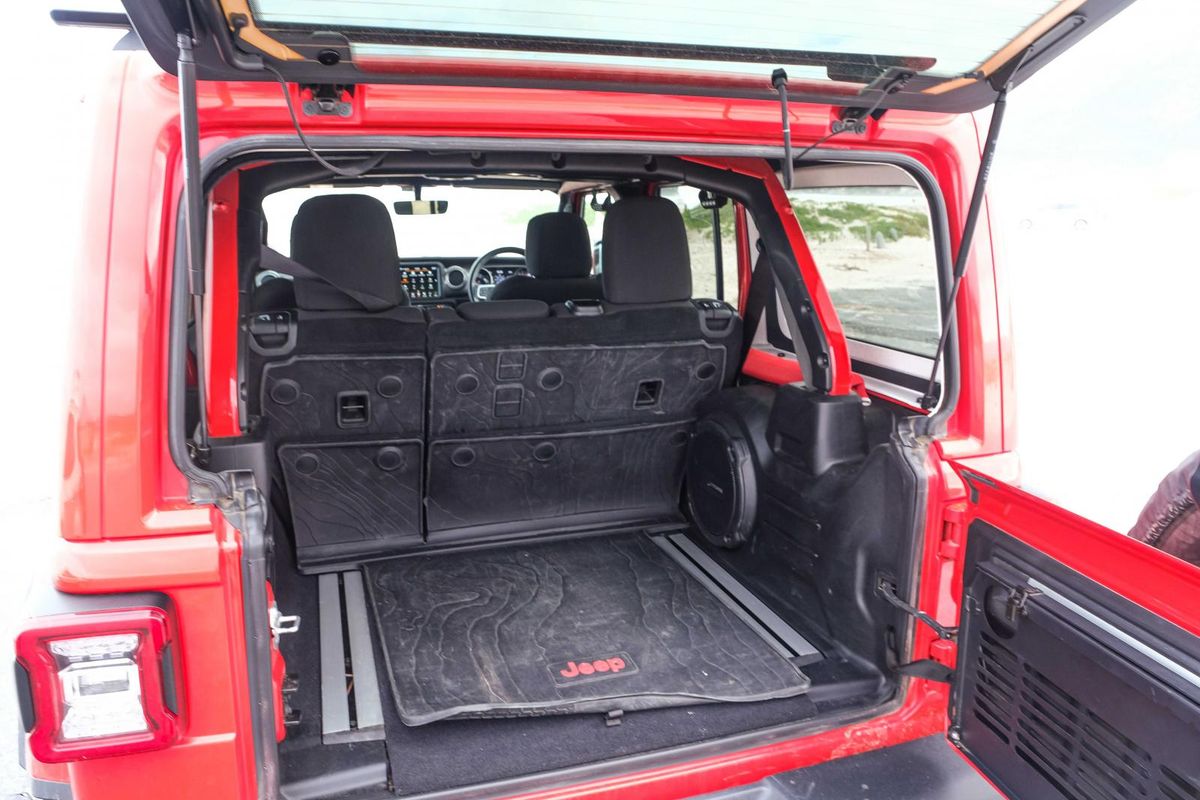
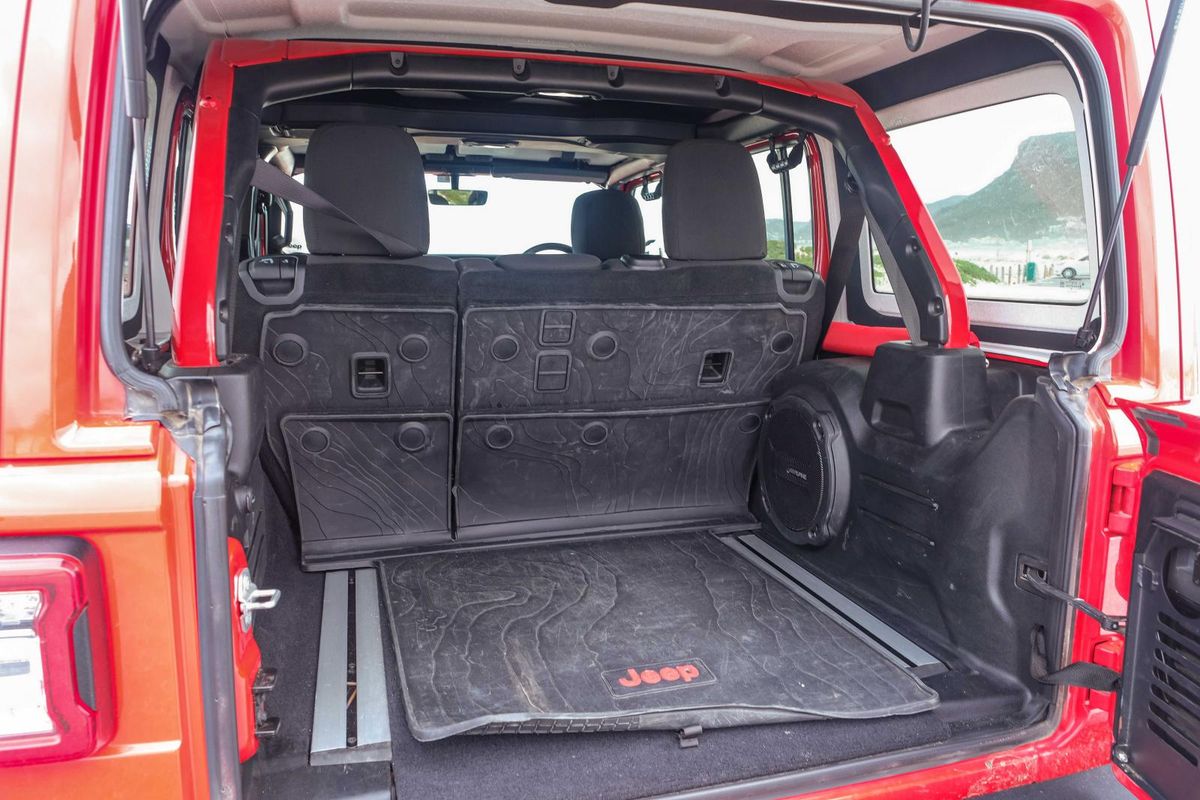
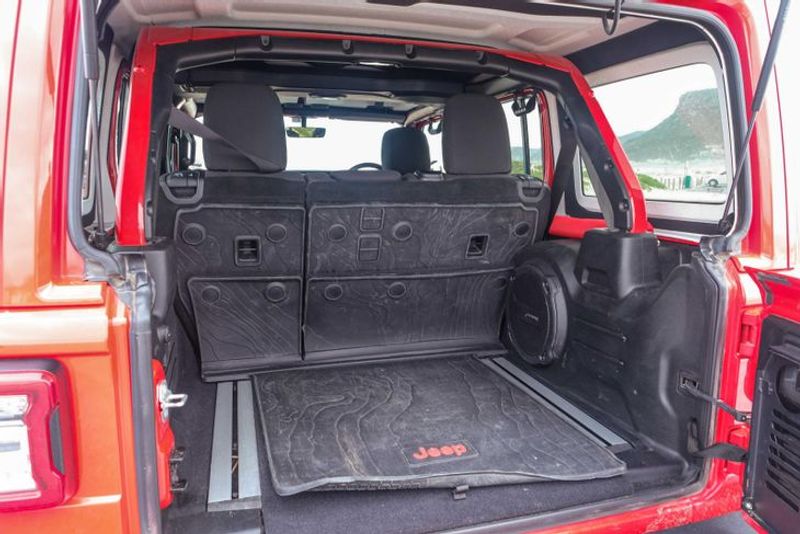
The relatively narrow (but deep) load bay is accessed via a split tailgate (glass opening upwards).
Given the Jeep's long wheelbase – it extends over 3 metres – we expected better rear passenger space (legroom, primarily) and the luggage compartment is also not overly generous (its claimed capacity is 548 litres), mostly due to the aperture being relatively narrow. Of course, the side-opening tailgate (split) is also, ultimately, not as convenient as a traditional upwards-opening unit.
Interior execution and features
Undoubtedly improved in terms of ergonomics and offering a high specification level, but the driving position is flawed.
With its flat-faced fascia, better detailing and comprehensive specification, the Wrangler Unlimited's cabin appears inviting at first glance, but as outlined earlier in this review, there are some apparent flaws, notably regarding build quality, cabin insulation and the compromised driving position. That said, it undoubtedly marks an improvement over that of the previous model and is bang-up-to-date in terms of modern infotainment features.
The 4th-generation Uconnect system has an attractive 8.4-inch touchscreen interface that features not only the expected smartphone connectivity (including Apple Carplay and Android Auto) and pinch-to-zoom capability, but specific vehicle status displays (when using the vehicle off-road). Two USB ports are fitted front and rear. Dual-zone climate control is standard, as are cruise control, parking sensors and a reverse-view camera.
Price and after-sales service
The Jeep Wrangler Unlimited Sahara's base price is R893 293 (before options, January 2021). Included in the price is a 3-year/100 000 km warranty and 3-year/100 000 km maintenance plan. Service intervals are set at 12 months/15 000 km.
Wrangler remains a unique, niche offering that will appeal to either hardcore off-roaders or those who like the look. But a sensible choice? No…
The Jeep Wrangler Unlimited will appeal to 2 distinct camps – serious off-road enthusiasts, and those buyers who just like the look of the thing. Both of those groups of buyers will probably be happy to live with the Wrangler's compromised on-road demeanour because it excels in the aspects that, for them, are of top priority. This is not a vehicle for the undecided buyer – you either want it or you don't. If you don't fall into either of the camps (outlined above) a traditional leisure double-cab, or perhaps a rugged Toyota Land Cruiser 76, would be a better-balanced alternative.
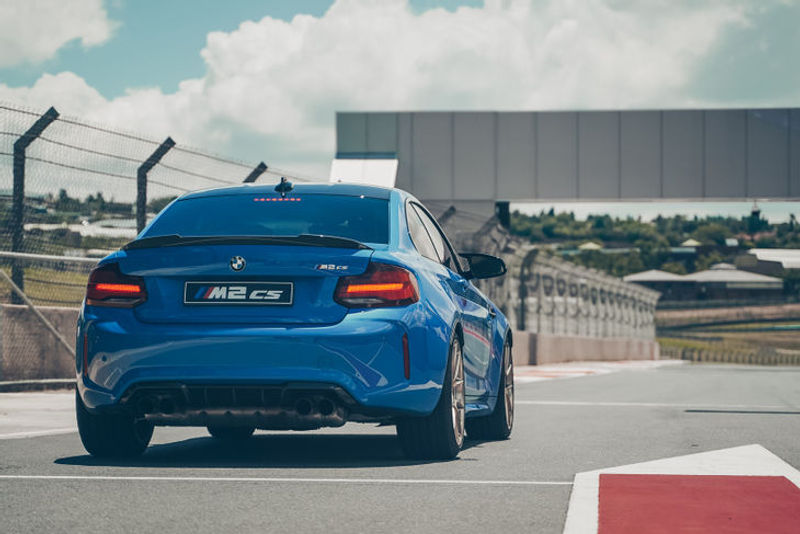
BMW M2 CS Auction: How much did those 20 cars sell for?
BMW recently auctioned its limited run of M2 CS (Clubsport) sports coupes in South Africa. Will this sort of sales method cause a surge in pricing and inspire other manufacturers to auction off their distinctive nameplates in a similar manner? Brent vd Schyff uncovers the details from behind the closed doors of the M2 CS auction.
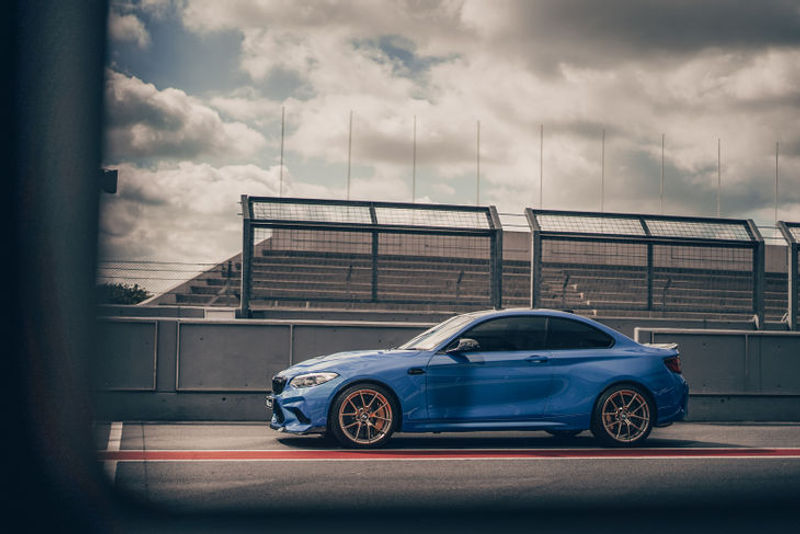
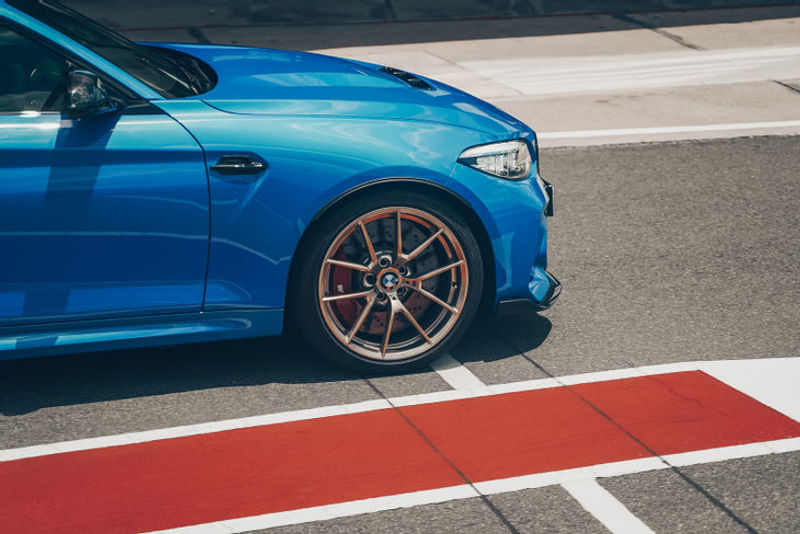
These are odd times that we find ourselves in and, on the backend of a rather dreary history of inflated vehicle values in the South African car market, BMW recently made a bold statement by auctioning off the limited allocation of insanely desirable track-focused BMW M2 CS.
I, however, curb my enthusiasm, erring on the side of caution that this isn’t the best situation for the consumer. The auction effectively eliminates countless prospective buyers and reserves the cars for a select few with bigger wallets, who may care little about depreciation. Worse, it enables buyers who’re only interested in making buy-to-flip deals. If this is the future blueprint of how to sell rare models, I’m afraid that the biggest losers will be the brand loyalists, especially those shopping on a tight budget. They're going to be totally out-priced – and that doesn’t sit well with me.
Just 20 of these M2 CS models are available, with 10 more on their way. That will be SA's entire allocation.
Before you launch a "cancel campaign" against me, it’s disclaimer time. First of all, I wholly appreciate the laws of supply and demand – that old “if you’ve got it, flaunt it” business. I have a bachelor’s degree mounted on my mom’s wall (she’s so proud of me) that supports it. Now, with that out of the way, let’s get down to the task of, firstly, applauding BMW SA for such a bold, first-of-its-kind, move. Secondly, I fully understand that most of us would love to make a quick buck. Heck, a quick buck of the most subliminal kind with this auction, in that all 20 were sold THAT evening. Ka-ching!
About the pricing. Brace yourselves and be careful not to spill your coffee but, to add perspective to this conversation, the original M2 cost R841 000, the M2 Competition starts at R1 121 000 and the M2 CS was listed at R1.6 million – all in DCT guise. On the night of the auction, the reserve was set at R1.6 million, and a reliable source told me bids went up to R1.9 million, with the highest being R2.135 million! Ouch. To add insult to injury, there are still another 10 M2 CS units in containers on the sea waiting to land and their values are increasing as you read this.
Before we jump on BMW's case, to be fair – everything above the list price of R1.6 million was donated to charity, the buyers knew that, but those watching with a keen business eye may well be thinking that there's certainly profit to be made in this type of event in the future.
At R2.135 million, the M2 CS costs very nearly as much as an M5 Competition.
Here’s my issue with all of this: Price manipulation is intrinsic to market behaviour; the motoring community is a great exponent of creating those moments of exclusivity; playing cat and mouse with the human ego. It is, however, a double-edged sword. Get it right and you’re making bank, enhancing your brand and upping street cred. Get it wrong and you’ll dilute your brand and even worse, strain customer relations. Time will tell.
You see, the side-effects must be taken into account. Sold to the highest bidder often comes with a hint of lunacy. Any moment now, we’re going to have someone post a recently acquired "1 out of 30" M2 CS on the used hand market for 25% more than what they bought it for. That’s 25% over and above the already inflated price. At face value that isn’t the problem. The problem comes in when someone pays that value ("willing buyer and willing seller"). The knock-on effect is that the next M2 CS owner will then follow the same lead and so the crazy cycle continues.
Auctioning off limited-run models could be the future for other brands looking to cash in as BMW did with the M2 CS.
However, common sense must prevail… just like it did way back when some Volkswagen Golf GTI Clubsport S owners advertised their cars at over the R1-million mark. How can we forget that? Something further to point out is the knock-on effect on the classic-car market and the emergence, I would imagine, of ill-informed sellers who now see the M2 CS fetching, shall I say, "silly money". The next thing we know, we’ve got everyone advertising their banged-up E30-generation 318i now pulling their ads and remarketing at 25% more (monkey see, monkey do). I digress.
There is a part of me that thinks this is a case of mildly irresponsible profiteering setting off a chain reaction of overvaluing market behaviour, but there's another part that compels me to commend BMW on an innovative sales strategy that could have just set off a trend for others to follow as I cannot believe it will be too long before other manufactures catch on to this sales tactic when it comes to retailing exclusive badges.
Either way, I take exception with what this sales method does for the market, but here’s hoping that common sense will indeed prevail. Time will tell, but for now, I’ll keep refreshing the “for sale” section in the hope that I will be proved wrong.
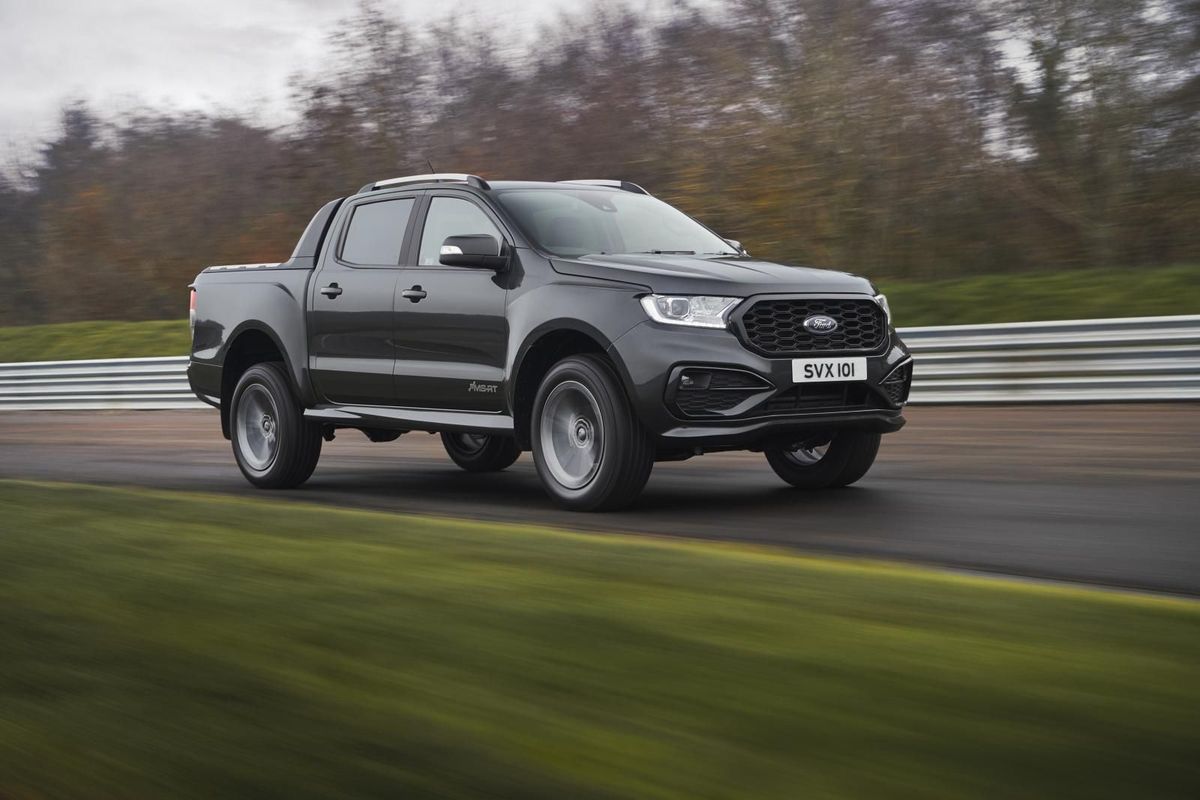
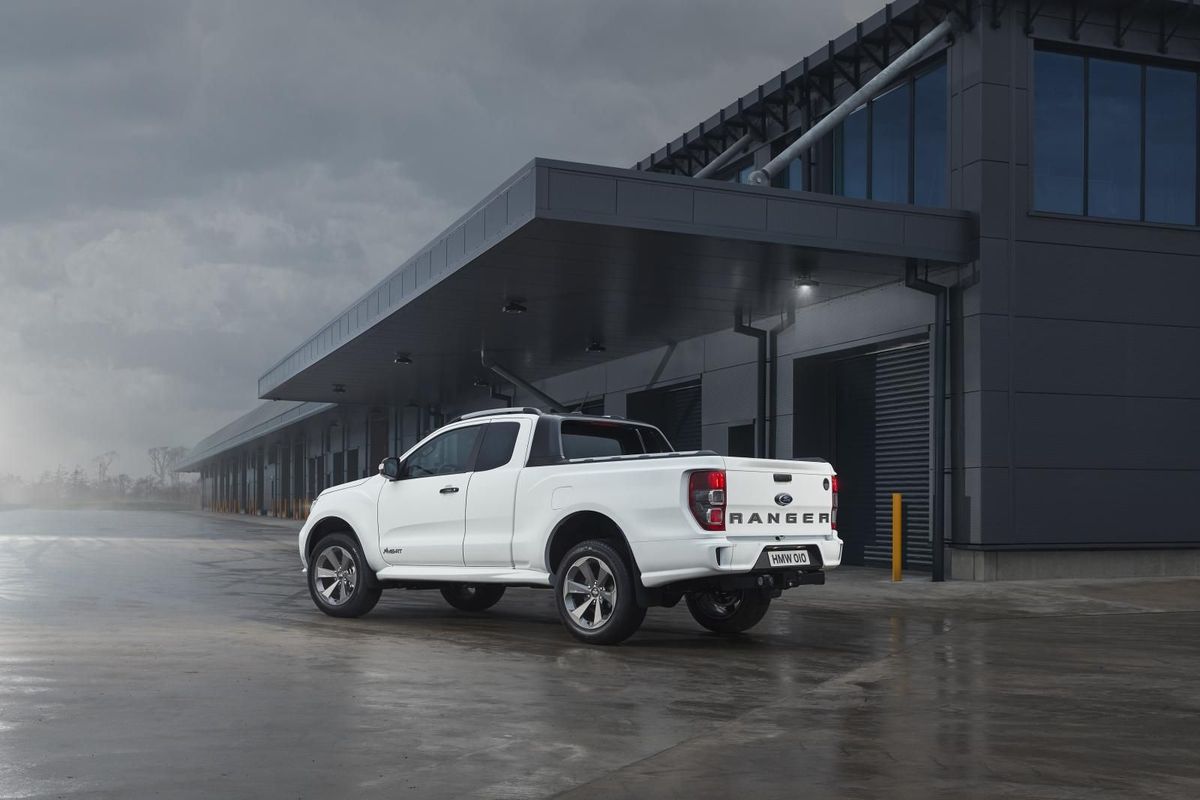
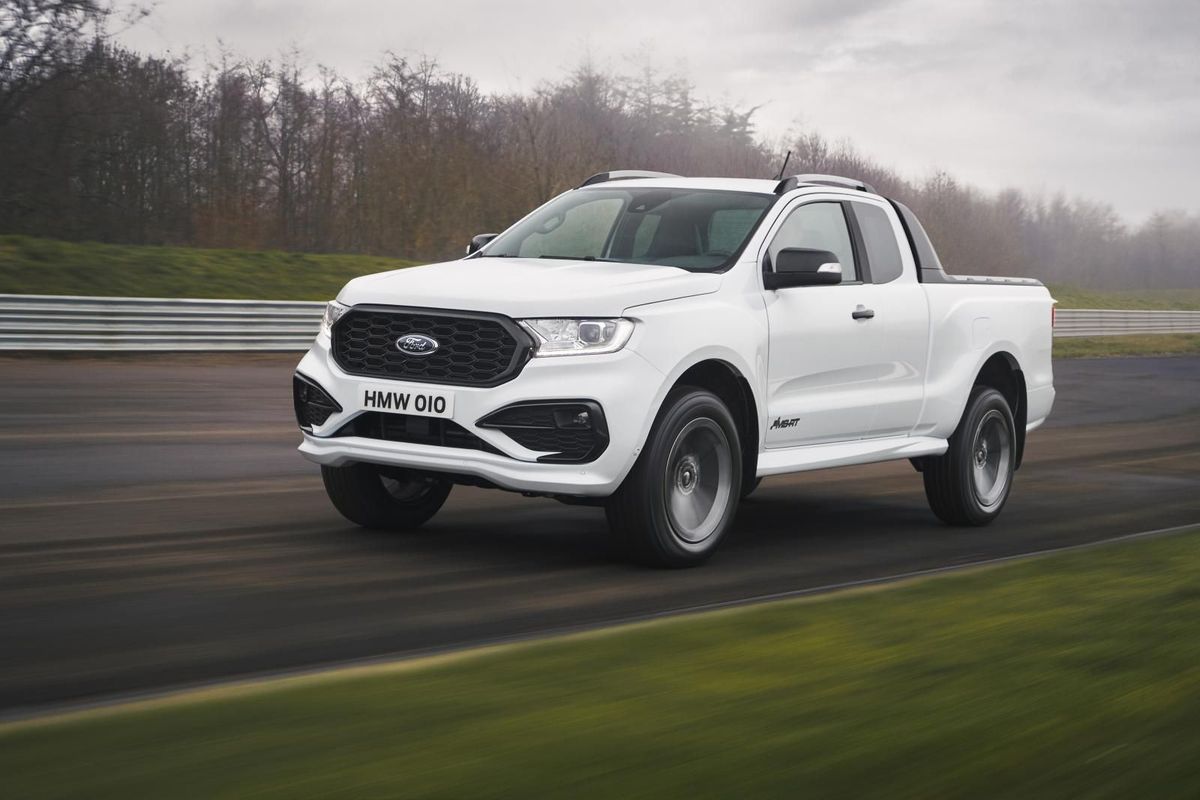
The modified bakkie scene continues to grow from strength to strength. Ford Europe announces an exclusive Ranger developed in partnership with MS-RT.
The bakkie tuning market is big business, but the fear of a compromised warranty is still enough of a deterrent for many. What if an OEM could work with an aftermarket company and develop a factory-backed offering? That's just what Ford Europe has done with vehicle design specialists MS-RT. MS-RT has a track record of creating some wild Ford Commercial vehicles, like Transit vans, but the new Ranger project looks to be its coolest.
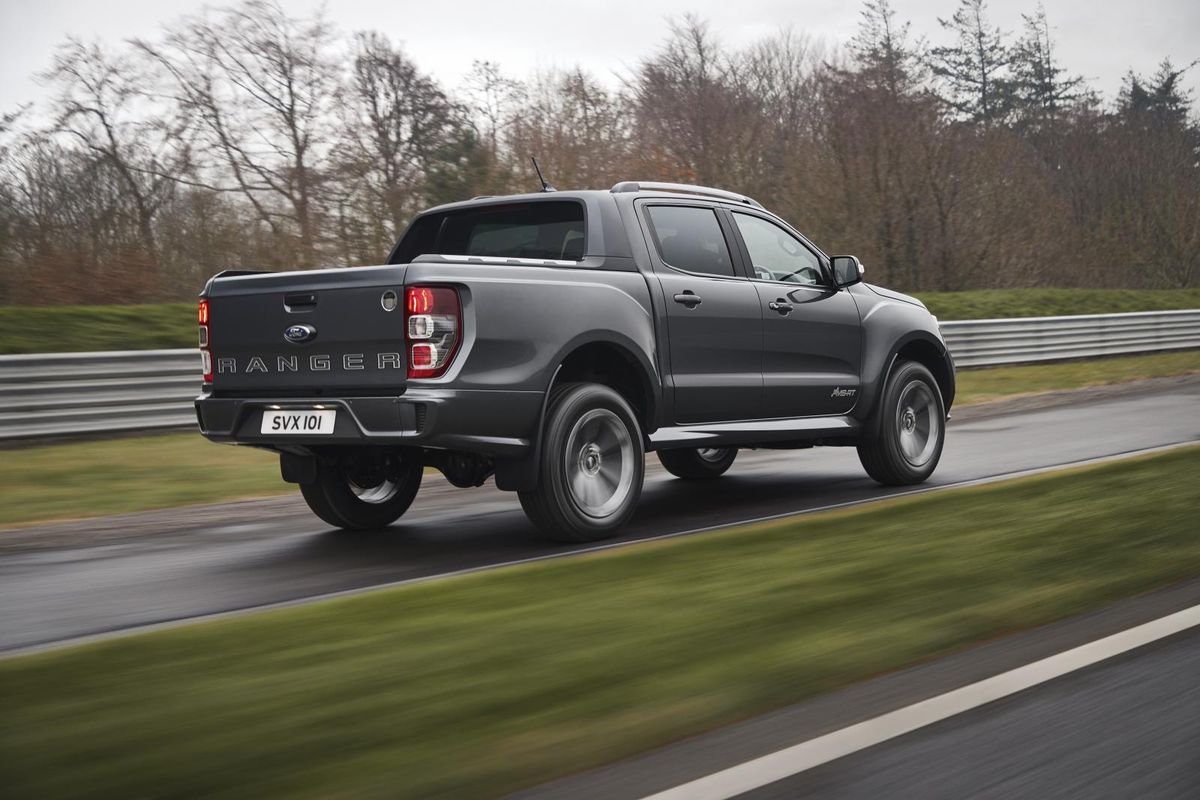
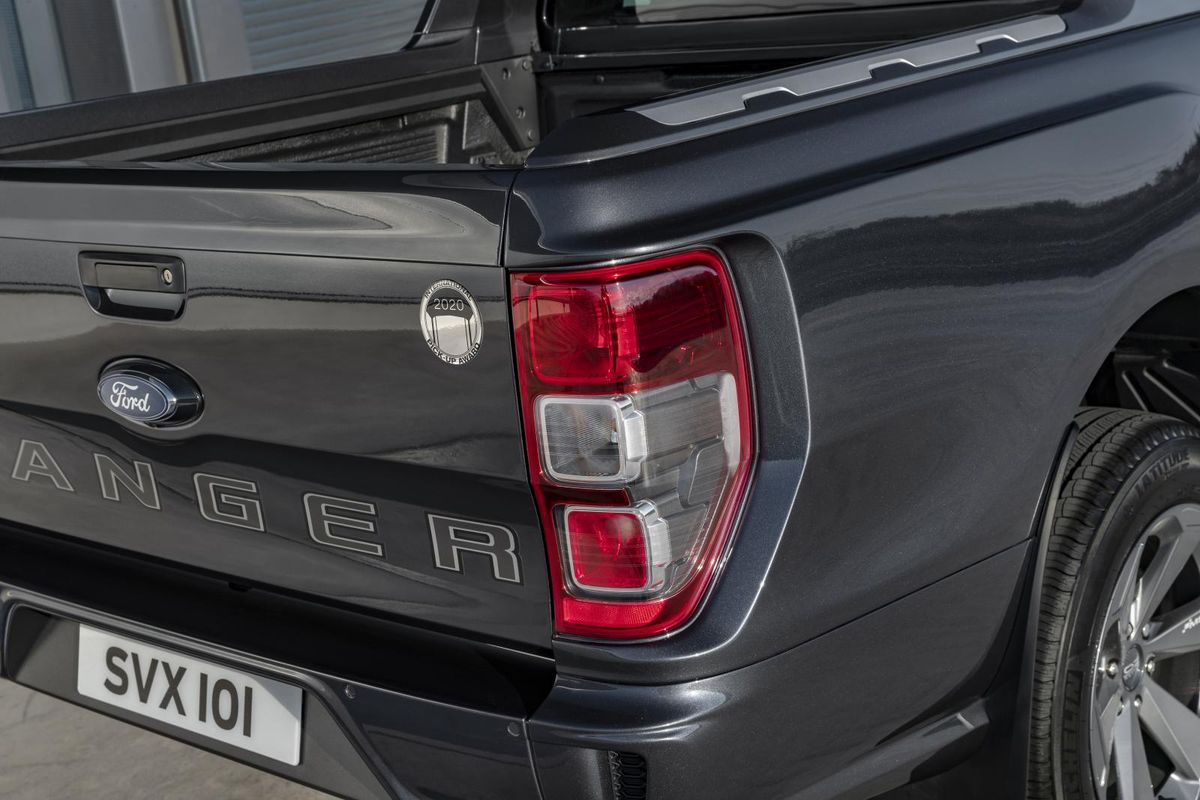
Using a Ford Ranger Wildtrak as its base, the Ranger MS-RT features a hand-built front fascia featuring a honeycomb carbon fiber-effect grille and integrated fog lights. There are extended wheel arches and sculpted side skirts too, adding to the visual appeal. The vehicle rides on 20-inch OZ Racing alloy wheels and is available in one of three colours; Frozen White, Sea Grey or Agate Black.
Inside, the Ranger MS-RT cabin boasts premium leather trim with contrasting orange stitching. There are MS-RT branded floor mats and scuff plates too. If you don't want a double-cab version, the MS-RT treatment is available for the Supercab model too. All the Ford Ranger Wildtrak's convenience features are retained, such as the SYNC3 infotainment system, heated seats, and rearview camera.
Under the bonnet, the 2.0litre bi-turbo diesel motor is retained in factory tune. It develops 157 kW and 500 Nm, and there's a 10-speed automatic gearbox.
The Ford Ranger MS-RT is earmarked for selected European markets, meaning it's unlikely to make its way to South Africa. Locally, if you're wanting to inject some goodness into your Ranger, your options are limited. We reported back in 2018 Roush was offering some performance gains, with some further updates available in 2020.
Meet the finalists in the Budget Car category of the 2020/21 #CarsAwards powered by WesBank!
Now in its 6th year, the #CarsAwards was conceived to be South Africa's definitive automotive awards programme and is backed, for the 5th year running, by the country's leading supplier of vehicle finance, WesBank.
In this revised category we are looking for a car that represents exceptional value for money, whether you’re buying up, or down. The winner in this category must also represent a significant step up from the Entry-Level Category in terms of finishes, design and features. The price cap on this category is R250 000.
This category is guided by both eligibility factors and Pillars of Success.
Eligibility factors for this category include a list price between R200 000 and R250 000 (as of October 1, 2020) and pricing must include the cost of all necessary optional features to meet the eligibility criteria.
Eligible vehicles must be equipped with ABS, dual front airbags and a service plan.
Pillars of success for this category include fuel economy, value for money, practicality and brand strength.
Visit www.carsawards.co.za for more information. In no particular order, the finalists are as follows:
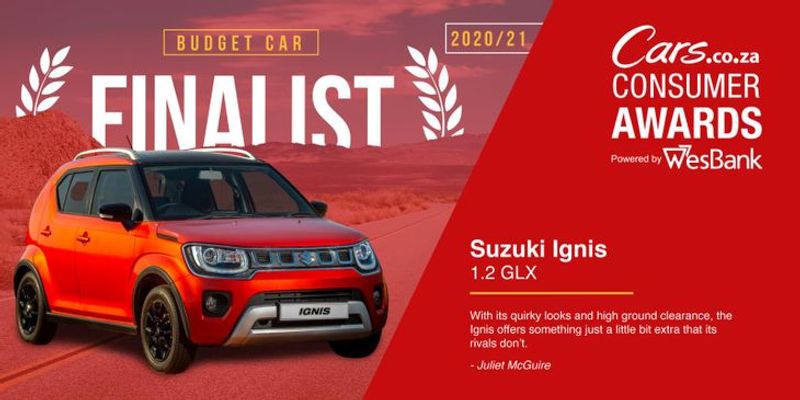
Suzuki Ignis 1.2 GLX
Suzuki’s Ignis brings crossover appeal to the budget-car market. With a raised ride height of 180 mm, the Ignis is well-suited to local conditions and, in particular, traversing poorly-maintained road surfaces. Combining charming styling, practicality and frugality, the recently updated Ignis has much to offer and could be on its way to reclaiming the budget car title it won in 2017.
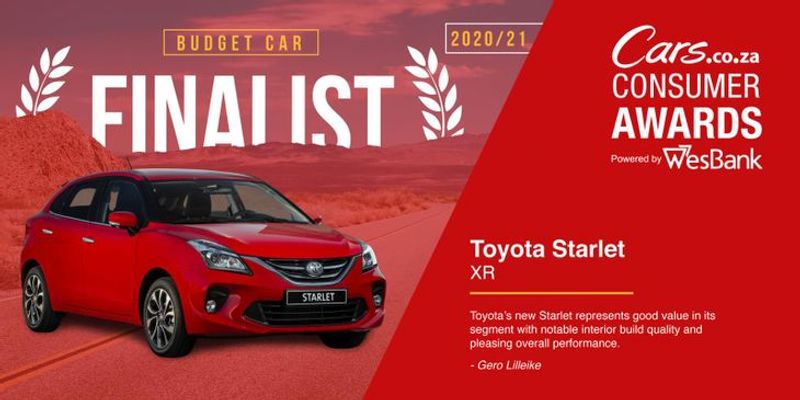
The return of the Starlet nameplate has raised a few eyebrows; as a product of a collaboration between Toyota and Suzuki, the newcomer is a rebadged version of the latter firm’s Baleno compact hatchback. Nonetheless, the Starlet is a smartly-packaged model. Not only does it represent a significant improvement over the now-discontinued Etios, but it’s also even an alternative to its Yaris sibling.
The Toyota Starlet (see above) is essentially a rebadged Suzuki Baleno and a product of a collaboration between the two Japanese brands. Nonetheless, the perennially underrated Baleno compact hatchback deserves a closer look because of its solid build quality, spaciousness, refinement and sheer value-for-money proposition.
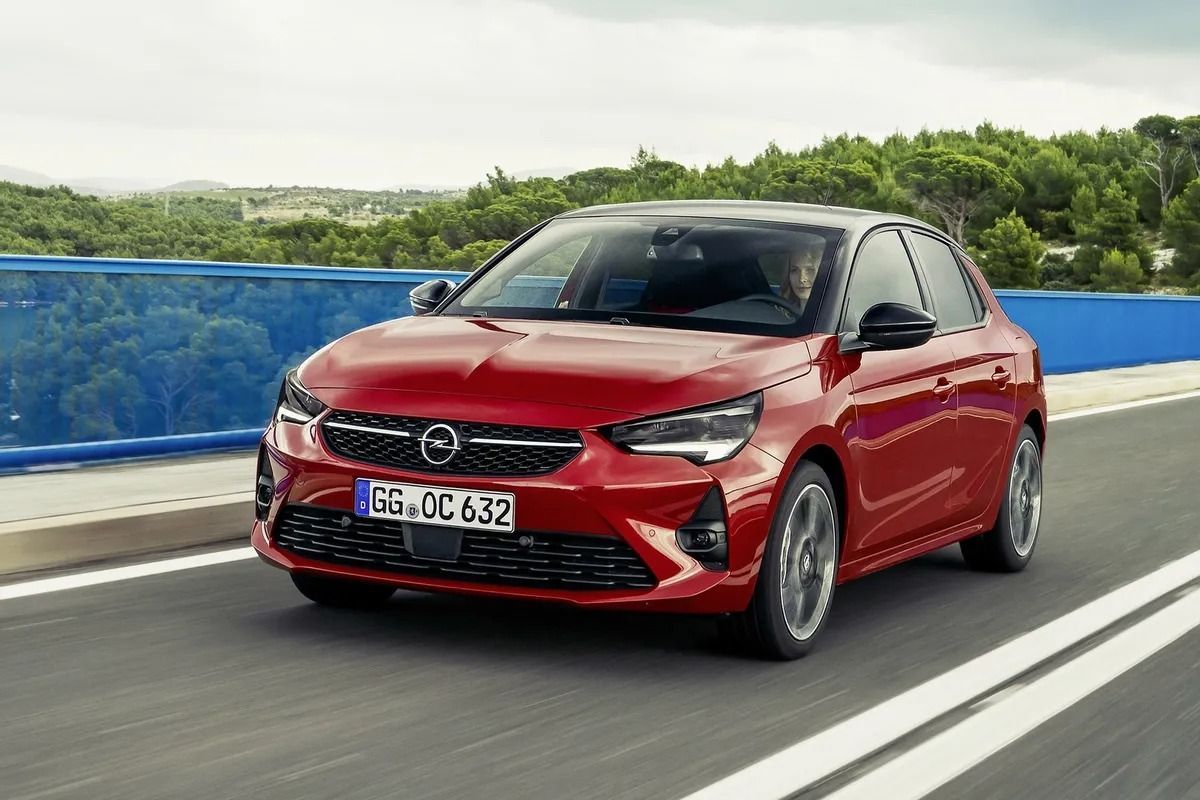
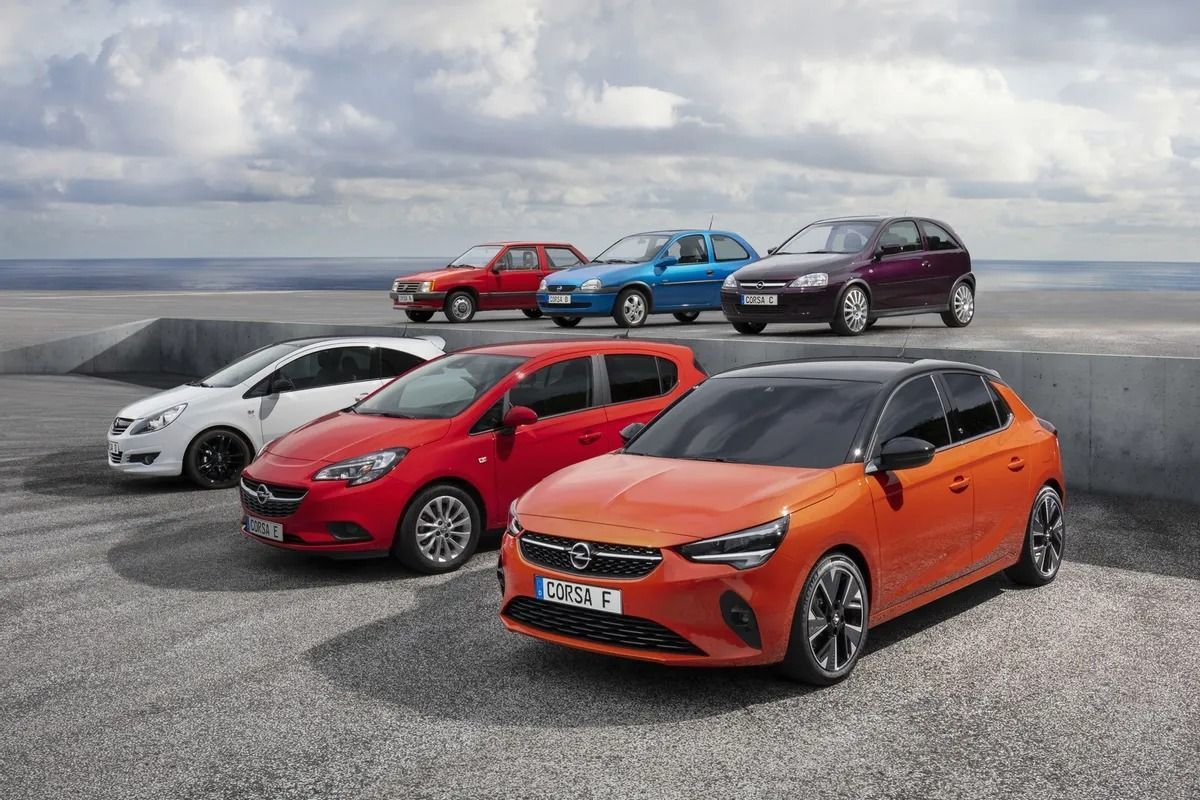
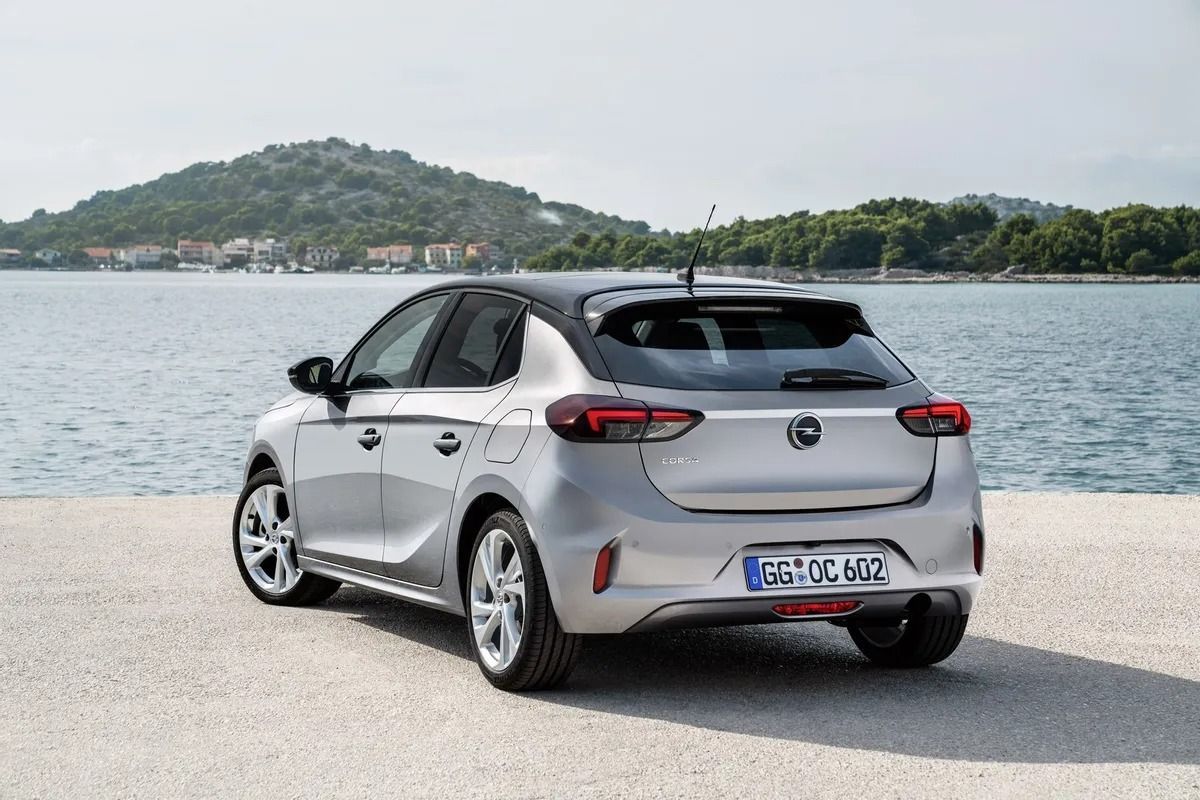
Pricing and specifications for the new-generation Opel Corsa have been announced. Here's how much you can expect to pay for the newcomer.
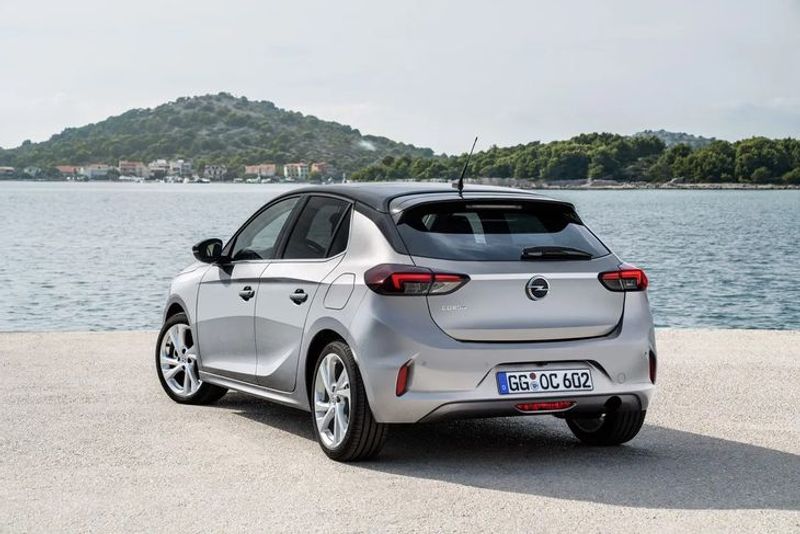
The new Opel Corsa has been sitting in South African dealerships since the 4th quarter of 2020, but the vehicle is due for a formal launch in the first quarter of 2021. The Opel Corsa shares a platform with the Peugeot 208, as Opel is now part of PSA Groupe (Peugeot, Citroen, DS, Opel, Vauxhall). The Opel Corsa will be entering a hotly-contested compact hatchback segment, where the Volkswagen Polo reigns supreme.
Other noteworthy rivals range from the Ford Fiesta, Mazda2, Kia Rio, Nissan Micra, Hyundai i20, Renault Clio to some family conflicts with the Citroen C3 and Peugeot 208.
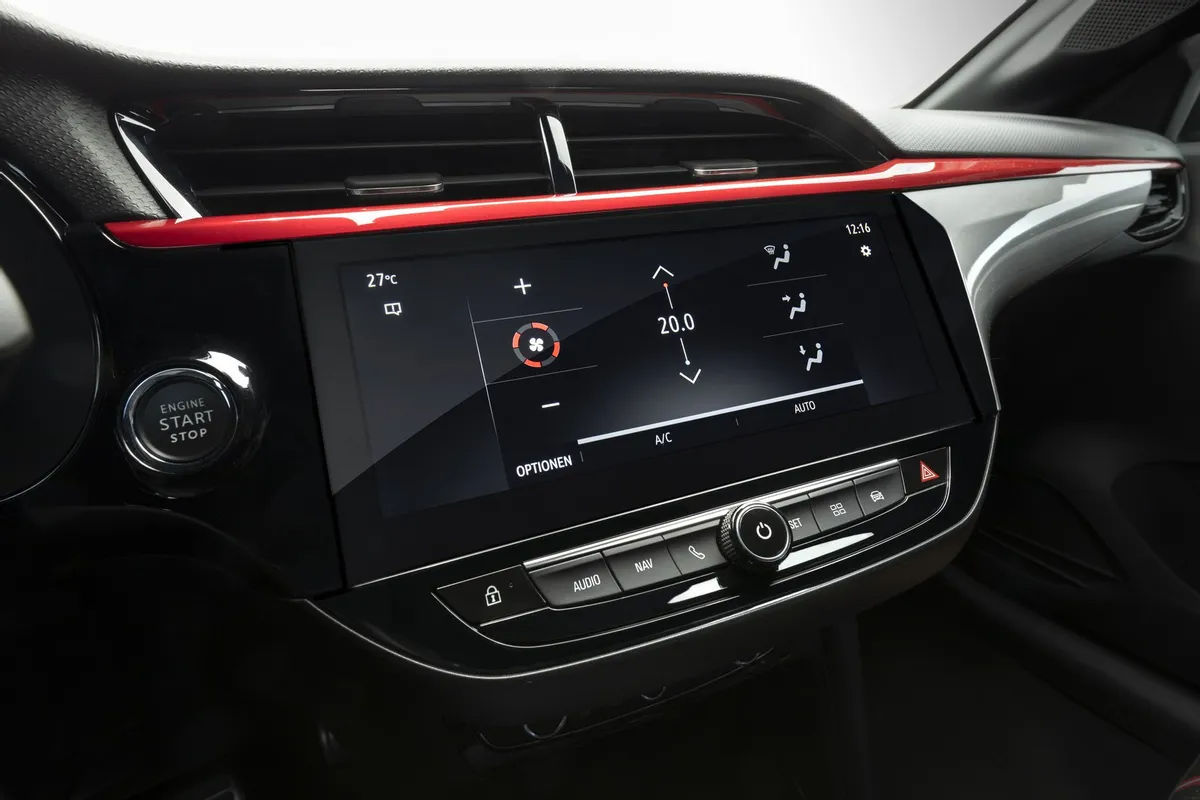
There is just one engine and gearbox combination available across the range. The engine is a 1.2-litre naturally-aspirated 3-cylinder and in this application, it produces 55 kW and 118 Nm. The vehicle is front-wheel driven and the gearbox on offer is a 5-speed manual. In terms of fuel economy, Opel is claiming 4.2 L/100 km and the new Corsa has a 40 litre fuel tank. For those who care about sprint performance, Opel says its new Corsa will dash to 100 kph in 13.2 seconds and has a top speed of 174 kph. Interestingly, there was talk of a 1.2-litre turbocharged motor mated to an automatic gearbox, but it appears it's not available yet.
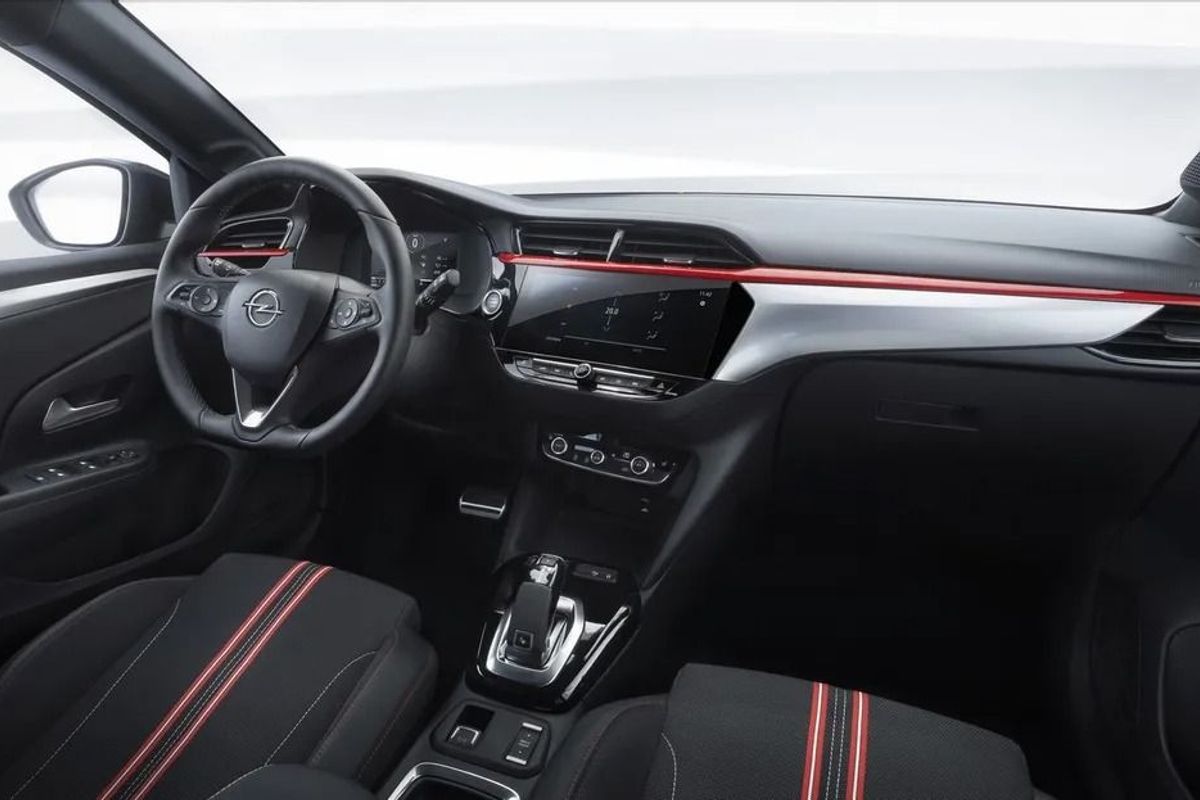
There are two levels of trim; Edition and Elegance. Edition rides on 15-inch wheels, while Elegance boasts attractive 16-inch alloys. Edition level of trim features daytime running lights, air conditioning, rear park distance control, USB port, Bluetooth, auto lights, power steering, cruise control, and cloth upholstery. Elegance adds Partial Cloth + Artificial Leather trim, LED headlights, LED daytime running lights, front fog lights, panoramic roof, auto wipers, and a rear parking camera. In terms of connectivity, Android Auto/Apple CarPlay has been fitted. In terms of boot space, 309 litres is on offer, but if you fold down the rear seats, 1081 litres is available.
There's no skimping on safety features here. Both Opel Corsa derivatives come with 6 airbags and traction control.
We'll have more details on specification and features closer to the vehicle's official launch.
Opel Corsa Price in South Africa (January 2021)
The new Opel Corsa is sold with a 3-year/ 120 000 km warranty and a 3-year/60 000 km service plan.
Shareholders from Fiat Chrysler Automobiles and PSA Groupe have voted to merge and the result is the birth of Stellantis!
Update: The merger between PSA Groupe and Fiat Chrysler has been finalised, and Stellantis is the 4th biggest carmaker in the world. Toyota, Volkswagen Group and Renault-Nissan-Mitsubishi Alliance are the 3 brands ahead of it. Stellantis will start trading on the global stock exchanges from as early as the 18th of January 2021. PSA top man Carlos Tavares will be in charge for the first 5 years.
When it was announced back in December 2019, the merger between European giants Groupe PSA and Fiat Chrysler Automobiles was set to become one of the biggest in history.
The word Stellantis has Latin roots, 'stello' referring to 'to brighten with stars' and this name will be used at group level and as a corporate brand. The 50:50 merger is set to be completed within the next 2 weeks and when complete, the new entity will be the 4th largest OEM by volume (8.7 million units) and the 3rd largest by revenue (€170 billion) with an expected operating profit of over €11 billion (6.6% profit margin).
The brands involved are considerable: Abarth, Alfa Romeo, Chrysler, Citroen, Dodge, DS Automobiles, Fiat, Jeep, Lancia, Maserati, Opel, Peugeot, Ram, and Vauxhall.
PSA CEO, Carlos Tavares is expected to become the CEO of Stellantis while FCA CEO, Mike Manley will be responsible for Stellantis' operations in the U.S.
Cross-channel cooperation could deliver some amazing benefits.
The lightweight electric sportscar project has received a significant boost, from Renault.
To many purist driving enthusiasts, the lack of a compelling lightweight battery-powered sportscar, has a been a disappointing feature of the current transition to greater electrification.
Even Tesla has been unable to build a terrifically low mass sportscars. But now the company that enabled Tesla to produce its first product, is partnering with Renault.
The French car giant has announced that it is entering a memorandum of cooperation with Lotus. For the British brand, this might be its last opportunity for survival, after decades of financial misfortunate and ownership changes.
How does the agreement between Renault and Lotus shape? It will use the renowned platform and advanced vehicle dynamics engineering of Lotus, to enhance the Renault Alpine lightweight sportscar range.
Alpine has been an immense brand builder for Renault, illustrating that the French company’s Renaultsport division is capable of a lot more than front-wheel drive hot hatchbacks. Renault has a strong portfolio of electric vehicles, with relatively potent battery chemistries.
In theory, Renault would shoulder the burden of battery and electric motor development, manufacturing and supply. Lotus will in all likelihood design the sportscar platforms, integrate the powertrains and balance the dynamics with its legendary suspension and steering expertise.
Lotus has teased some outrageous electric vehicle concepts and also promised the immensely powerful Evija will come to market this year. Ambition has never been an issue for Lotus, although the company has an unpredictable history of delivering on all product promises over the last few years.
With Renault resources, Lotus might become more predictable in delivering on its exact development schedule.
Lotus also has an excellent record of working with other brands as an engineering consultancy on specific products, having helped Toyota and Aston Martin with suspension calibration on its sportscars.