Hyundai Palisade premium SUV coming to SA

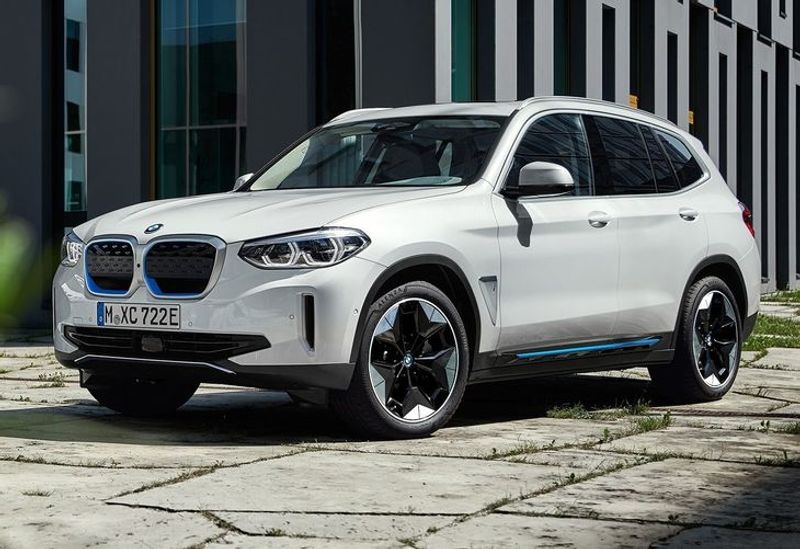
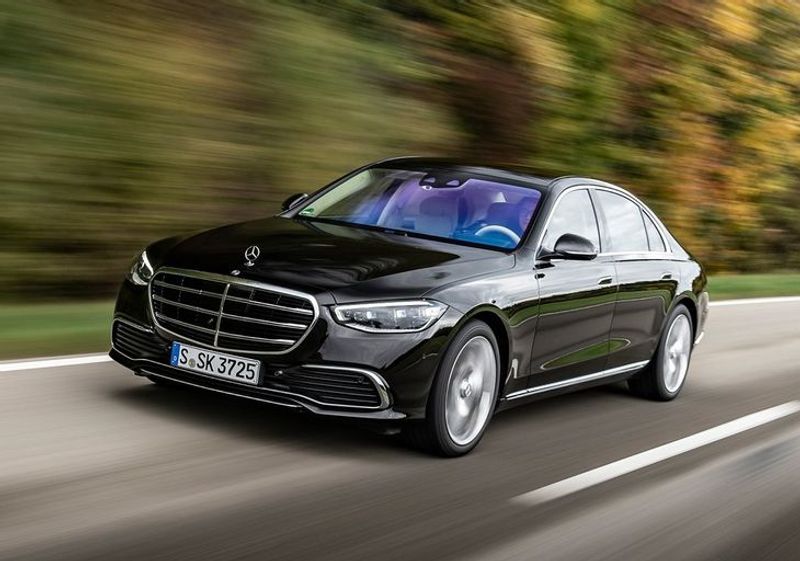
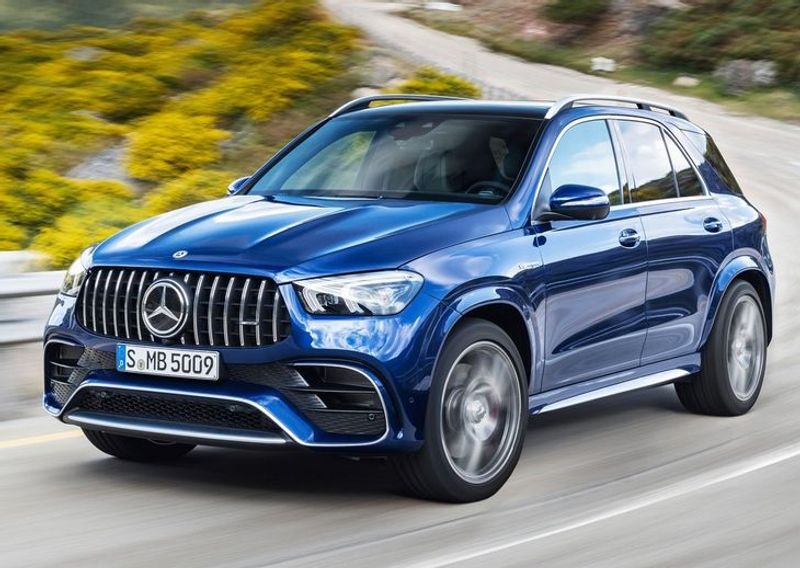
In a somewhat unexpected development, Hyundai Automotive SA is planning to launch the brand’s flagship SUV in South Africa next year. The 7/8-seater Palisade, which was previously only made in LHD guise, will slot in above the redesigned Santa Fe and effectively compete with the Audi Q7, BMW X5, Mercedes GLE and other premium SUVs.

It’s reported that the right-hand-drive version of the Palisade was developed primarily for Australia and although Hyundai's South African subsidiary says the luxury SUV (which is built at the Ulsan plant in South Korea) will only be sold in small numbers, it’s confirmed to arrive in Mzansi in 2021.


The Palisade is an eye-catching "big-rig" luxury SUV that's clearly designed to appeal to the North American market.

Whereas Hyundai focused its SUV new-model introductions at the more affordable end of the market in the past year (such as the Venue and all-new Creta compact family cars), the Korean firm has big plans for its medium to large SUVs in 2021. Apart from the futuristically styled Tucson family car and the N3-platform Santa Fe, the Palisade will see Hyundai Automotive SA enter a segment that it hasn’t contested before.  

The Palisade is the cousin to the 2020 World Car of the Year winning Kia Telluride and although it looks like a rival to the Toyota Land Cruiser Prado and yes, does offer an HTRAC Advanced AWD system replete with Multi-Terrain Control (albeit exclusively on turbodiesel derivatives), it’s not a body-on-chassis off-roader designed for hardcore bundu-bashing, but a spacious, comfort-oriented and liberally specified large unibody family car – although its bold, squared-off styling, replete with a large grille and LED lighting elements, will certainly attract a lot of showroom traffic.  


The Palisade looks like a purpose-built off-roader, but its more of a full-sized luxury family car.

In Australia, the Palisade is offered with a choice of a 217 kW/355 Nm 3.8-litre V6 GDi petrol engine with front-wheel drive, or a 147 kW/440Nm 2.2-litre 4-cylinder CRDi turbodiesel engine with all-wheel drive, both in combination with an 8-speed automatic transmission.

At this stage, it’s not confirmed which versions of the new model Hyundai will offer in South Africa, although if we use the current line-up of the Santa Fe range as a yardstick, it is likely diesel- will be favoured over petrol derivatives in the local market.

Wired for many devices

In terms of practicality, the default seating configuration for the newcomer is 8 (2 in front, 3 in the middle and 3 at the back), although the highest spec versions feature a 7 seater layout, with the 2nd row comprising of a pair of individual chairs that are both heated and ventilated. As standard, there are 2 roof-mounted vents for the 2nd and 3rd occupants and up to 16 cup- or bottle holders positioned around the cabin.


This cutaway image shows the spacious Palisade in its standard 8-seater configuration.

Hyundai claims 1 120/1 077/798 mm of legroom for front-, 2nd- and 3rd-row occupants; the back row splits 60:40, can recline by 10 degrees and, apart from a boarding step and 220 mm of foot clearance to aid entry/egress, walk-in switches are availed to control the middle row’s slide function.

The Palisade’s luggage capacity with all 3 rows in place is snug (311 litres), but expands to 704 litres when the 3rd row is stowed. The 2nd-row seatbacks can be folded flat by pressing electric release buttons in the load bay and, in top-spec versions, the tailgate is electrically operated.


There is no shortage of leather trim, wood-look inserts and satin chrome finishes in the Palisade's cabin.

Up front, a wireless charging pad is available, but there are plenty of other avenues to charge electronic devices… The Palisade’s cabin includes no fewer than 7 USB ports and, should you require even greater charging capability, Hyundai avails a quartet of 12V electric from the front to the rear.

Luxuriously appointed

To ensure that the Palisade’s cockpit looks and feels suitably upmarket, Hyundai has applied swathes of plush leather, wood-look inserts (also on the door lining) and satin chrome trim. The sweeping dashboard features a 7-inch TFT colour supervision cluster in the instrument binnacle, which is flanked by a fascia-mounted 10.25-inch infotainment touchscreen (with Apple CarPlay and Android Auto compatibility), while the elevated bridge-style centre console comes equipped with a climate control panel, a shift-by-wire transmission selector and a drive mode rotary controller.


The 2nd-row occupants are availed their own climate control console, plus seat heating and ventilation on top-spec versions.

In the Australian market, even the standard Palisdae derivatives feature a 10-way power-adjustable driver’s seat (including lumbar support), 3-zone climate control and a 12-speaker Infinity premium audio system, as well as keyless entry with push-button start and an electric parking brake.

The top-spec versions additionally feature Nappa leather, a suede headliner, a wireless charging pad, 12-way power-adjustable driver’s seat (with memory) and an 8-way power-adjustable passenger seat. The front seats offer both heating and ventilation, with the comfort of a heated steering wheel. Second-row seats also offer heating, with added ventilation on 7-seater derivatives.


A dual-panel sunroof with tilt function (for the front pane) is offered on top-of-the-range Palisade derivatives.

Other luxury accoutrements on flagship derivatives include 20-inch alloy wheels, a dual-panel sunroof (with tilt function for the front pane, combined with a rear sunblind), a head-up display, an electrically-powered hands-free tailgate, as well as blind-spot view- and surround-view monitors.

Extra family-friendly features

To enhance the Palisade's merits as a full-sized luxury family vehicle, Hyundai has fitted a quartet of features that help adults manage young occupants either while the vehicle's in transit or shortly after it has arrived at a destination…

A Driver Talk feature uses a high-definition microphone and the audio system to allow the driver to speak to 2nd- and 3rd-row occupants (through the speakers mounted in the C-pillars) without raising their voice.


A pair of contoured chairs are fitted in the 2nd row of the 7-seater Palisade. 

Quiet Mode, in turn, mutes the speakers in the rear and sets the front speakers’ volume low to allow rear occupants a quieter environment to talk to one another – or to get some sleep on long-haul journeys.

Rear Occupant Alert utilises an ultrasonic sensor in the headlining to detect movement in the cabin to prevent the unintentional leaving-behind or locking-in of children or pets in Palisade.

And lastly, top-spec versions feature Safe Exit Assist (SEA). To reduce the likelihood of occupants exiting Palisade when the surroundings make it unsafe to do so, SEA works in conjunction with the radar sensors on either side of the rear bumper to detect vehicles approaching from the rear. 
If a door is opened while an approaching vehicle is detected, the SEA system will issue an audible alert and display a message in the instrument cluster to warn the exiting occupant(s) to “watch for traffic”.


The rearmost seats offer better-than-usual accommodation for aft occupants, including a recline function.

A plethora of safety features

In addition to 6 airbags, including side-curtain airbag protection for all 3 rows, as well as the usual array of braking- and stability system-related safety features, the Palisade comes equipped with, inter alia, High Beam Assist, Smart Cruise Control (adaptive) with Stop & Go, Forward Collision-Avoidance Assist, Driver Attention Warning (with Leading Vehicle Departure Alert), Blind-Spot Collision Avoidance-Assist, Lane Keeping- and Lane Following Assist, as well as Rear Cross-Traffic Collision-Avoidance Assist.

Top-spec versions additionally incorporate a blind-spot review monitor and a surround-view monitor.


The Palisade comes equipped with a raft of active safety technologies that befit a benchmark premium SUV offering.

Eight-seat derivatives feature 5 top-tether child-seat anchors (4 tether points in 7-seat versions), as well as a pair of ISOfix mounting points in the 2nd row, with an additional mounting point in the 3rd row.

And to conclude, the HTRAC all-wheel-drive system (on diesel derivatives) features an electronic, variable-torque-split clutch with active torque control between the axles. Hyundai says AWD versions have approach, departure and break-over angles of 18.5-, 21.2- and 16.3 degrees.


The luggage capacity is marginal with all 7 or 8 seats in place, but there's enough space for a pair of golf bags.

As in other Hyundai top-end models, the Palisade’s Drive Mode system allows users to select a powertrain configuration that best suits their driving style (Comfort, Eco, Sport and Smart). In AWD derivatives, a Multi-Terrain Mode system offers Snow, Sand and Mud traction control calibrations.

And lastly, the Palisade has a 2 200 kg braked-trailer tow rating, aided by the Trailer Stability Assist system and Trailer connecting guidelines on the rear-camera image assist the driver with trailer hitching.

We will bring you specific details of the Palisade's local line-up, specifications and pricing as soon as they become available.

Related content:

Better engines for Discovery

Toyota Land Cruiser Prado (2020) Specs & Price

Audi Q7 (2020) Launch Review

BMW X5 xDrive30d vs Mercedes-Benz GLE 400d (2019) Comparative Review [w/Video]

Mercedes-Benz GLE 400d Coupe (2020) Specs & Price

Lexus Updates SUV Range in SA

Lamborghini SC20 Is a 1-Off Hypercar

Italian hypercar maker Lamborghini has created a once-off insane model, built for a specific customer. Check this wild creation out!

Open-top track cars are very fashionable these days, both Aston Martin and McLaren have models about to start production. Lamborghini, being the crazy and out-there brand it is, has created the SC20, a one-off project that was engineered by its motorsport division. A wealthy customer approached Lamborghini to create the bespoke model and was involved in the project right from the first drawings. 

"Two years after the SC18 Alston, the SC20 was a new, intriguing challenge. The chief sources of inspiration were the Diablo VT Roadster, Aventador J, Veneno Roadster and Concept S, and the result is a dramatic combination of creativity and racing attitude," commented Mitja Borkert, Head of Design Lamborghini Centro Stile.

The attention to detail is staggering. The entire carbon fiber body was polished and slicked down by hand by the Lamborghini aerodynamic engineers to deliver optimal airflow for both performance and the cockpit's occupants. This ensures comfortable open-air driving even at high speeds. There's also a large carbon fiber wing that can be set in three different positions: Low, Medium and High Load.  

Powering the sensational Lamborghini SC20 is the 6.5-litre naturally-aspirated V12 motor which produces 566 kW and 720 Nm. Power goes to all 4 wheels via a 7-speed ISR transmission. Performance figures were not given, but we reckon its good for a sub-4 second run to 100 kph. The vehicle rides on 20-inch wheels at the front, while 21-inch wheels are at the rear. Both are wrapped in special Pirelli PZero Corsa tyres.

Further Reading

Lamborghini Reveals Huracan STO

Lambo Reveals Track-Only Essenza SCV12

Lamborghini Urus Hits 10k Milestone

Lamborghini discharges Sian hybrid roadster

New Hyundai Turbo Engine Coming

Hyundai is reportedly developing a new turbocharged engine that will power future N models. 

Hyundai’s N division has grown in leaps and bounds since the brands first N model, the i30 N, was revealed back in 2017. The good news is that there’s lots more to look forward to from Hyundai’s N performance division in the future. 

Locally, South Africans can look forward to the arrival of the updated i30 N DCT in 2021 but globally, exciting developments such as the i20 N, Tucson N, Kona N and Elantra N are on the horizon too. 

In a report by Korean Car Blog, it’s been reported that Hyundai is developing a new 2.3-litre turbocharged engine derived from the brand’s experience in the World Rally Championship (WRC) and it’s expected to redline at an impressive 7 000 rpm. Power outputs have yet to be revealed but if we had to hazard a guess, outputs of over 250 kW and at least 450 Nm on tap. 

This new engine will provide Hyundai’s N division with greater competitiveness to take on long-established performance brands such as Mercedes-AMG, BMW M and Audi RS. 

We will keep you updated as soon as more details regarding this new powerplant become available. 

Buy a Hyundai i30 N on Cars.co.za

Related Content

New Cars For SA in 2021

Hyundai Palisade premium SUV coming to SA

Hyundai Creta (2020) Launch Review

Hyundai's 447 kW EV platform

Hyundai Bayon becomes the i20 crossover

Lambo man back at Hyundai


Hennessey reveals 1 355-kW Venom F5 hypercar

America is winning the arms race (again)… Texas-based tuning company Hennessey has unveiled its first bespoke hypercar, which is powered by a twin-turbo 6.6-litre V8 that produces 1 355 kW and 1 617 Nm. Suffice to say the Venom F5’s extreme performance figures, including a 500-kph top speed, simply beggar belief.

Developed to smash the world’s top-speed record for road cars (courtesy of a claimed Vmax of in excess of 500 kph), the carbon-fibre-bodied Venom (its monocoque weighs just 86 kg) is based on a new in-house-designed platform and doesn’t rely on hybridisation or active area for its astounding speed – instead, it utilises a stonking engine, a dry weight of 1 360 kg and a very slippery shape.

Named after the highest rating on the Fujita hurricane-strength scale, the Venom F5 is simply rear-wheel-driven. Its 6.6-litre V8 (named Fury, replete with a cast-iron block, aluminium heads, forged con rods and pistons, plus billet-steel crank- and camshafts) is mounted on a tubular aluminium subframe and mated with a 7-speed single-clutch automated transmission and a limited-slip differential.

Boost comes courtesy of 2 ball-bearing turbochargers with 3D-printed printed titanium compressor housings and 76-mm billet aluminium compressor wheels that can deliver up to 1.58 bar of boost. Peak power (1 355 kW) is developed at 8 000 rpm, while Hennessey says maximum torque is 1 717 Nm, of which at least 1 356 Nm is available from 2 000 rpm to 8 000rpm.

Surprisingly, the 90-degree cross-plane-crank V8 engine, which weighs just 280 kg, wasn’t custom-made – it’s based on a GM motor. The firm’s chief executive John Hennessey says the pushrod engine’s was favoured due to its more compact dimensions and lower centre of gravity, as well as his company’s expertise in tuning it. Hennessey Performance Engineering, which will celebrate its 30th anniversary next year, already offers a twin-turbo 895-kW upgrade for the C8 Corvette in the US.

But just how fast is the Venom F5 claimed to be? Well, in its bid to become the fastest road-legal car in the world, the newcomer is said to accelerate from standstill to 100 kph in 2.6 sec, from zero to 200 kph in 4.7 sec and from 0 to 300 kph in 8.4 sec. Stopping power is provided by a carbon-ceramic braking system with 390 mm discs all round, clamped by bespoke 6-piston calipers at the front.

Aesthetically speaking, the Venom T5 is the most elegant hypercar since Gordon Murray’s recent T.50; its slippery exterior design, which incorporates the obligatory butterfly doors is purposely unfussy, with an elaborate front splitter, triangular side air intakes, louvred rear screen/engine cover and a matt black diffuser below the quartet of integrated exhaust outlets. There’s no pop-up wing!

Furthermore, the American firm has shod the hypercar with forged aluminium alloys to lower its unsprung mass – 19 inch at the front and 20-inch at the rear – wrapped in Pilot Cup Sport 2 tyres.

Despite its enormous performance, the F5 Venom has been designed to stay drivable at lesser speeds and to cope with roads and tracks as well as it does v-max runs. The double-wishbone suspension uses passive Penske dampers, but these can be adjusted for bump and rebound, and the car also offers 5 selectable driving modes, including Drag for acceleration and F5 for top-speed runs.

The hypercar’s cabin, meanwhile, was inspired by the cockpit of a fighter jet. It features swathes of carbon fibre (including the centre console and steering column) combined with leather trim on the dashboard, door linings and the body-hugging embroidered bucket seats. A touchscreen infotainment system is fitted, along with a U-shaped steering wheel and a 7-inch digital instrument panel.  

Production will be limited to 24 cars and Hennessey says it has taken deposits for half of those units.

So, what’s next for the Venom F5? Hennessey will complete top-speed testing in the first half of 2021 at the NASA shuttle landing facility in Florida. More top-speed runs will follow a development programme at Hennessey’s own testing facility and the Circuit of The Americas – with legendary racing driver and vehicle dynamics expert John Heinricy (who is the chief engineer on the project) conducting the bulk of hands-on testing.

Related content:

Mercedes-AMG Project One on track

10 Cool Things: Gordon Murray's T.50 hypercar

Aston Martin Valkyrie hits the road

Horacio Pagani unveils Imola, BC Roadster [Video]

Bugatti begins Divo deliveries

All-new Porsche Cayenne GTS Coupe Review – Best in class?

Porsche has been building the Cayenne for 15 years now and it's clear to see the Stuttgart-based outfit has become particularly adept at building fast, desirable SUVs. Ciro De Siena gets behind the wheel of the new Cayenne Coupe GTS.

The performance SUV segment has grown rapidly over the years. The huge space on offer and tremendous performance is exactly what motorists desire. 

For our video journalist Ciro De Siena however, this is exactly the sort of car that doesn't appeal to him at all. In his opinion, SUVs should be large, comfortable, and not particularly shouty. But it is hard to deny that the breadth of the Cayenne GTS Coupe's ability is, well, breathtaking. It seems to have all the right ingredients for the perfect sports-SUV recipe.

In this video we take the newcomer out to some of the best roads the Western Cape has to offer, to try and figure out if this car really is the best in class. 

Cars.co.za's Youtube channel is powered by Budget Insurance. For an instant quote, click here.

Further Reading

Porsche Cayenne (2018) Launch Review – Cars.co.za

Porsche Cayenne GTS (2020) Specs & Price

Fastest SUVs in the World for 2020/21

BMW X5 M50i (2020) Review

Mercedes-AMG GLE 63 S Coupe (2020) Specs & Price 

New law will allow owners to service their new car anywhere

The Competition Commission has ruled motorists will be able to service their vehicles at a service centre of their choice, ending the monopoly of OEM dealerships controlling the servicing industries. 

According to a report in TimesLive, written by #CarsAwards judge and consumer champion Wendy Knowler, the new regulations come into effect from the 1st of July 2021. 

What does this mean? Up until the 1st of July 2021, owners of new vehicles had to service their vehicles at dealerships. An attempt to get the vehicle serviced at an independent outlet would result in the vehicle's warranty being voided. An organisation called Right2Repair has taken on the motoring industry and the organisation represents around 2 500 independent workshops, parts manufacturers, and aftermarket distributors. The goal was to ensure fair competition in the supply chain and give the consumer freedom of choice, as well as levelling the playing field between manufacturers, parts suppliers and workshops, including the manufacturer-approved workshops.

As it stands, owners of new cars have no alternative when it comes to vehicle servicing and Knowler says South Africa is the only car market where customers are 'locked into using a manufacturer's service centres via embedded motor and service plans.'  The Competition Commission's ruling means customers can take their brand new vehicle to any service centre for its first service, without fear of a compromised warranty. There's also the impact of service plans and motor plans being removed out of a car's list price. These plans will continue to be sold, but as optional extras. Customers will be able to decide if they want to service the vehicle at the dealership they purchased the vehicle from, or go to an independent service centre. 

Right2Repair Competition Commission ruling

The full ruling can be found here, but here's a quick summary.

  • OEMs must recognise and not obstruct a consumer’s choice to seek service, maintenance, and mechanical repair work for their motor vehicles at a service provider of their choice, regardless of whether that service provider is an approved dealer or independent operator;
  • Maintenance plans and service plans will be separated at the point of sale from the purchase price of the vehicle, allowing consumers to exercise choice regarding whether to purchase the maintenance plan or service plan. This is intended to make and will make servicing a more affordable option for South Africans, while allowing for more players to provide car maintenance products for consumers whose motor vehicles are in-warranty;
  • OEMs must adopt measures to promote and/or support the entry of new motor-body repairers, with a preference for firms owned by historically disadvantaged operators;
  • Consumers can fit original or non-original spare parts, at a service provider of their choice, whether that be an approved dealer, approved motor-body repairer, or an independent one, during the in-warranty period, without voiding their warranty. The quality of these will be carefully dealt with in line with consumer protection laws as well as existing warranties;
  • OEMs must make available to independent service providers the OEM-technical information relating to its cars, including security-related information that permits access to cars' security systems, including coding and programming, software, and safety systems. Such access must be subject to OEMs' intellectual property and data privacy rights and the independent operators meeting their accreditation requirements; and
  • OEMs and/or approved dealers are required to provide training to access to training to employees of independent repairers who request training, at a reasonable cost that may not exceed that imposed on employees of approved dealers.


The OEMs are not happy with the ruling, citing concerns over the quality of workmanship and whether genuine parts would be used.  

Further Reading

2020 AA-Kinsey Report: Which Are The Cheapest Cars to Service and Repair?

Best Used Cars in SA for Under R100k

Factors That Affect the Value of Your Car

Top 10 Most Highly Recommended Cars in South Africa (by their owners)

Volkswagen keeping Lamborghini – for now

VW has decided to retain its Italian brands.

The German automotive conglomerate has been under pressure to rationalise its business structure and with Lamborghini swapping CEOs, there was a feeling of instability.

Having acquired the Italian supercar brand in the late 1990s, in a deal that placed it under the direct responsibility of Audi, the expense of Lamborghini’s expanding vehicle portfolio has become telling.

Although there was some convergence between Audi and Lamborghini in terms of engine sharing and platforms, that has diluted over the last few years.

Audi no longer broadly uses the Lamborghini V10 engine architecture, as it once did in many of its S- and RS performance models. With the R8 production having trickled to very low volumes, the synergy between Lamborghini and Audi vehicle platforms has also reduced to nearly nothing at all.

Despite the original business case for owning Lamborghini no longer having the same appeal it had a decade ago, VW is not relinquishing its control of the brand.

At a recent supervisory board meeting, VW confirmed that it will retain Lamborghini and Bentley. The British luxury vehicle brand will come under the direct control of Audi, with VW hoping that its Ingolstadt division can turnaround Bentley’s fortunes, soon.

With a massive electrification investment to pay off, VW is looking to dramatically decrease fixed costs.

The aim is for a 5% reduction by 2023, whilst material costs must reduce by 7%. Those numbers could mean a lot more Audi switchgear and bits in Bentleys, as VW attempts to reduce the drag on its supply chain spend, by the company’s low-volume business units.

Related content

Lamborghini discharges Sian hybrid roadster

Fastest SUVs in the World for 2020/21

Lamborghini Reveals Huracan STO

Audi Q3 Sportback (2020) Review

Audi has expanded its Q3 premium family car range by introducing a couple of Sportback derivatives to the local market. The Q3 Sportback promises fresher and more interesting looks for a slightly higher financial outlay than its Q3 sibling, but does it differentiate itself enough to justify its existence? We spent a few days with the newcomer.

We like: Stylish and interesting looks, upmarket and modern interior, refined drive

We don’t like: Reduced rear cabin and luggage space, uninvolving powertrain, pricey.

Fast Facts: 

  • Price: R737 000 before options (December 2020)
  • Model tested: Q3 Sportback 40 TFSI quattro S Line
  • Engine: 2.0-litre turbocharged 4-cylinder
  • Power/Torque: 140 kW/320 Nm 
  • Transmission: 7-speed automatic
  • Fuel consumption: 8.3 L/100 km (claimed) 
  • Top speed: 220 kph
  • ?Performance: 0-100 kph in 7.8 sec

What is it?

With the SUV segment well and truly in its pomp, the motor industry's attention has turned to making the (now mainstream) high-riding offerings more interesting. BMW was quickest out the blocks with its X6, essentially an SUV in a sleeker body with a sloping rear roof. While the design purists cringed, the car was an instant sales success – based mostly on its looks, we'd purport. Mercedes-Benz countered with the GLE Coupe, while Audi eventually launched its Q8. Those are the big-league models though, but naturally, every Teutonic manufacturer just had to create a model for this niche's niche. We now have the BMW X4 and Mercedes-Benz GLC coupe, with an Audi Q5 Sportback due in SA in 2021.

The Q3 Sportback is essentially a sleeker and more interesting-looking Audi Q3. We're big fans of the standard Q3 as it is… With futuristic looks as well as enough creature comforts and practicality to satisfy most premium-market consumers, it should come as no surprise we'd prefer it over its Q5 brother. It was a deserving recipient of a #CarsAwards – powered by WesBank win in the Crossover category, seeing off solid opposition from the Volvo XC40 and Jaguar E-Pace. As far as other alternatives go, you could consider the Range Rover Evoque and BMW X2.

The premise behind the Q3 Sportback is simple. It still retains all the lovely traits of the Q3, while sacrificing some outright luggage space and rear headroom in favour of a stylish exterior execution. From some angles, it resembles the delectable Q8 – which is one of the most striking vehicles on the road at the moment. Audi is offering the Q3 Sportback with a choice of 2 petrol engines: a 1.4-litre turbocharged petrol driving the front wheels, and a 2.0-litre turbocharged petrol engine with quattro all-wheel drive. This test unit is the flagship 40 TFSI quattro S Line.


One of the best angles of the Audi Q3 Sportback, because it shows off the sloping rear roofline.

How it performs in terms of…

Exterior design & Packaging

At first glance (and particularly when viewed from head-on), the Audi Q3 Sportback looks quite generic, but in profile and from a rear 3-quarter aspect the newcomer appears notably more interesting. The newcomer really looks the part (one tester remarked it resembles a shrunken Q8), despite its plain white finish. Granted, our test car came with the optional black styling package over and above the standard S line body kit, plus eye-catching 19-inch alloy rims. If finished in one of the more exciting hues on Audi's palette (such as Turbo Blue) it would be a showstopper.


The latest generation of Audi cabins are exceptional, both in terms of quality and to look at.

Inside, the cabin gains the new MMI infotainment setup from the latest generation of Audi's offerings, as well as a sleek new all-digital instrument cluster. While the interface with its quirky graphics may not be to everyone's taste, there's no denying it's unique and modern.

In terms of packaging, the Q3 Sportback's physical shape is notably different to that of the standard Q3. The sportier variant is 16 mm longer, 29 mm flatter, and 6 mm thinner by comparison, but they share a 2 680-mm wheelbase. What does this mean for practicality, though?

Aud claims its Q3 has a luggage capacity of 550 to 1 525 litres, while the Sportback variant offers 410 to 1 280 litres. The figures don't lie and it's immediately evident the load bay is smaller on the new car. It's a pity, as the standard Q3's practicality (aided by a sliding rear bench) is one of its best features. That sloping roof may look good, but rear passengers will find headroom a bit tight if they're taller than, say, 1.8 metres.


Rear legroom is adequate for average-sized adults. Headroom is an issue.

Performance and ride/handling

The Q3 Sportback 40 TFSI quattro S line is powered by a 2.0-litre 4-cylinder turbopetrol motor. It produces peak outputs of 140 kW and 320 Nm, which is directed to all wheels via a 7-speed automatic transmission. A smaller 1.4-litre turbopetrol option is available, which is obviously less punchy and doesn't offer all-wheel drive. However, unless quattro is a must-have, you're not going to feel short-changed with the 35TFSI S line. Why? Well, the VW Group's MQB platform underpins the Q3 Sportback as well as a variety of Volkswagens (such as the Polo, Golf and Tiguan), as well as numerous Audis, including performance derivatives. With this in mind, we were expecting an engaging and spirited driving experience… 

However, the Q3 Sportback feels bland to pilot. Granted, the newcomer gets down the road in an unflustered manner; exterior noises are all but dialled out and the mechanical refinement is suitably premium, but we were hoping that the Audi would offer a level of dynamism befitting its sporty appearance. It features steering wheel-mounted shift paddles and a punchy engine, yet we didn't feel engaged with the test unit. This is the fastest Q3 Sportback derivative, but it doesn't feel fast. Audi claims a sub-8-second 0-to-100 kph time, but the benchmark sprint is a bit of a non-event.

Furthermore, the transmission's not perfectly calibrated with the motor. Shift responses are not as prompt as we hoped; the 'box is seemingly mapped to remain in the highest gear as often as possible, which is not always a good thing. At times, when we needed a burst of acceleration while driving in 7th, the gearbox would stumble to engage 4th to deliver some in-gear shove. As a result, executing reactive overtaking maneuvres is less than effortless in the Q3 Sportback, but at least you can take matters into your own hands and shift gears using the steering-wheel paddles.


These 19-inch alloy wheels look great, but despite the relative profile of the tyre, the ride quality remains on the firmer side.

Given the larger wheels and the vehicle's stance on the road, the Q3 Sportback's ride quality is on the firmer side of pliant. It's not too harsh, but you will feel ruts and bumps in the road through the suspension. However, we appreciated the test unit's steering feel. It is light, yes, but when you're piloting a substantial vehicle in a confined environment, a quick, easy-to-wield 'wheel is a boon. The 40 TFSI quattro S line feels eminently nimble, but you can't pitch it into slow corners in the hope it'll handle like an S3 quattro, because you'll invariably encounter substantial body roll.

As for the quattro setup, it's more applicable for the frosty European winter than mostly-sunny-and-mild South Africa, but we're also convinced that many customers who decide to go this route will find comfort in the additional stability that an all-wheel drivetrain offers on gravel or wet roads.

Interior execution and features

For the always-connected generation (undoubtedly the Q3 Sportback's target market), the Audi comes equipped with USB-A and USB-C ports, as well as Android Auto and Apple CarPlay connectivity. Streaming Spotify through the optional Bang & Olufsen audio system is what it's all about! 

Audi's interiors are still some of the best in the business, in terms of visual appeal, tactile quality and, of course, ergonomic efficiency. The cabin features a plethora of premium finishes and soft-touch materials and you get the sense that it's all immaculately put together. At this price point, Audi has all the bells and whistles covered, but you can dive into the options to further enhance what's on offer… 

Consider the Audi phone box, which introduces wireless charging, as well as the Matrix LED headlights, which offer smart anti-dazzle tech. The new MMI infotainment system offers a slick user experience; the only downside is that it's a magnet for tacky fingerprints. Keep a cloth handy! 


Wireless charging and two types of USB ports.

Price and after-sales service

The Audi Q3 Sportback 40 TFSI quattro S Line costs R737 000, which includes a 5-year/100 000 km maintenance plan. Our test unit was positively festooned with options, which increased the asking price to an eye-watering R929 790. The reason behind this R192 790 difference is that this demonstration unit was specified with the Technology package (R35k), Comfort package (R22k) and Sports package (R30k). Other noteworthy options that helped bump the price up was the panoramic sunroof (R20k), electric towbar (R11k) and the Bang & Olufsen audio system (R9k). 

Browse for a new or used Audi Q3 on Cars.co.za

Verdict


It's unique looks give it a slight advantage over its mainstream sibling, but can you do without some practicality?

The Q3 Sportback is an impressive offering, but so is the perfectly-good standard Q3. Does the newcomer's attractive styling justify a higher asking price than its SUV sibling? As a champion of motoring consumers, we don't think so, but, on the other hand, in an era where cars have become so generic-looking and predictably packaged, some buyers crave variety. A model that stands out (and in a good way) deserves to be recognised. 

Should you buy one? If getting behind the 'wheel of a 'premium family car is a priority for you and you don't have grown children to cart around or require a big load bay to fill to the brim with all manner of detritus, this newcomer may very well be of interest. It may be a niche product, but we suspect Audi will capitalise on slow-selling segments where products such the TT sportscar and the A5 Coupe are arguably on borrowed time.

We can imagine that a long-time TT owner, who knows the once-popular sportscar won't be replaced, could switch to a Q3 Sportback. It may not handle like a TT, of course, but it'll match the little sportscar's style while offering a bit more space as well as all the latest gadgets and gizmos. If you want something with a bit more go (and can afford it), then look to the Audi RS Q3 Sportback, which will arrive in Mzansi during 2021.

Related content:

Audi Q3 35 TFSI Review

Audi Q3 Sportback (2020) Launch Review

Audi Q3 Sportback (2020) Specs & Price

Audi SQ5 Sportback Shown

Audi S3 Sportback (2021) International Launch Review

New Cars For SA in 2021

Big Fuel Increases Forecast for January 2021

The Automobile Association (AA) has predicted substantial increases in the price of petrol and diesel for January 2021.

Based on the unaudited mid-month fuel price data released by the Central Energy Fund, the AA reckons South African motorists are in for some heavy increases as we go into January 2021.

"It's been a good month for the Rand so far, with the local currency picking up around 15 cents against the US dollar, but the basic fuel price has shot up since the start of December, raising the spectre of quite substantial fuel price rises if there isn't a pullback before month-end," the AA says. "Diesel and illuminating paraffin are the worst hit, with the current data showing an increase of 52 cents a litre for these fuel types. But petrol hasn't escaped unscathed, with increases of up to 34 cents a litre on the cards," says the AA.

Ouch! These increases come despite significant global refining overcapacity and a slight increase in the world-wide oil supply alongside falling demand. We're hoping this trend doesn't continue during the month of December and will post more info as soon as we have it.

Related content

SA Petrol Price 2020 – Where Does Our Money Go?

5 Ways to Beat the Fuel Price Hike

Most Fuel Efficient Budget Cars in SA

Most Fuel-Efficient Double-Cab Bakkies in SA

5 Fuel-Saving Car Features & How They Work

Most Fuel Efficient Budget Cars in SA

Most Fuel Efficient Diesel Cars in SA

Most Fuel Efficient Petrol Cars in SA

Mercedes-AMG One Driven by Lewis Hamilton

The long-awaited Mercedes-AMG One is due in 2021 and a marketing campaign shows F1 champion, Lewis Hamilton, having a go in a prototype of the new One hypercar. 

The campaign, which is called ‘After Work with Lewis Hamilton’ shows a One prototype dressed in an interesting camouflage and is driven onto track by the 7-time F1 champion, Lewis Hamilton. 

Hamilton has been involved in the development of the One hypercar and his experience in Formula 1 is contributing towards the final development of the One. 

"I can still hardly believe that there will soon be a hypercar with a Formula 1 engine. We won the world championship with this engine in 2015, and I was involved in its development for a long time. I was able to drive the Project ONE during the filmwork for the new campaign, and I'm very proud of the extraordinary effort Mercedes-AMG has invested in this project. This car is absolutely unique,"

As a refresher, the AMG One is fitted a 1.6-litre V6 hybrid petrol engine with electrically supported turbocharging derived from the Mercedes-AMG Petronas Formula 1 racing car as well as 4 electric motors that generate a combined power output of 740 kW. The AMG One is capable of revving at up to 11 000 rpm and boasts a top speed of over 350 kph. 

Apart from bringing the AMG One to life, a new technology label will be launched too and it will be called E Performance which represents the electrification of Mercedes-AMG.  

"Developing the Project ONE was a very great challenge which we addressed as a team, and now we are firing the next stage for roadgoing approval: This car will strengthen our position as a high-performance luxury brand. Moreover, the Project ONE will emphasise the proximity between Formula 1 and Mercedes?AMG more than ever: we have the same motorsport genes, and believe in a direct technology transfer. The special disguise of the Project ONE also gives an initial outlook on our electrically powered future, which begins in 2021. The colour red will play a central role for our new technology label E PERFORMANCE," says Philipp Schiemer, Chairman of Mercedes-AMG GmbH.

Buy a Mercedes-Benz on Cars.co.za

Related Content 

Spy Shots: 2021 Mercedes-AMG One

Mercedes-AMG GT Black Series Claims Ring Record

Merc planning new AMG 63s