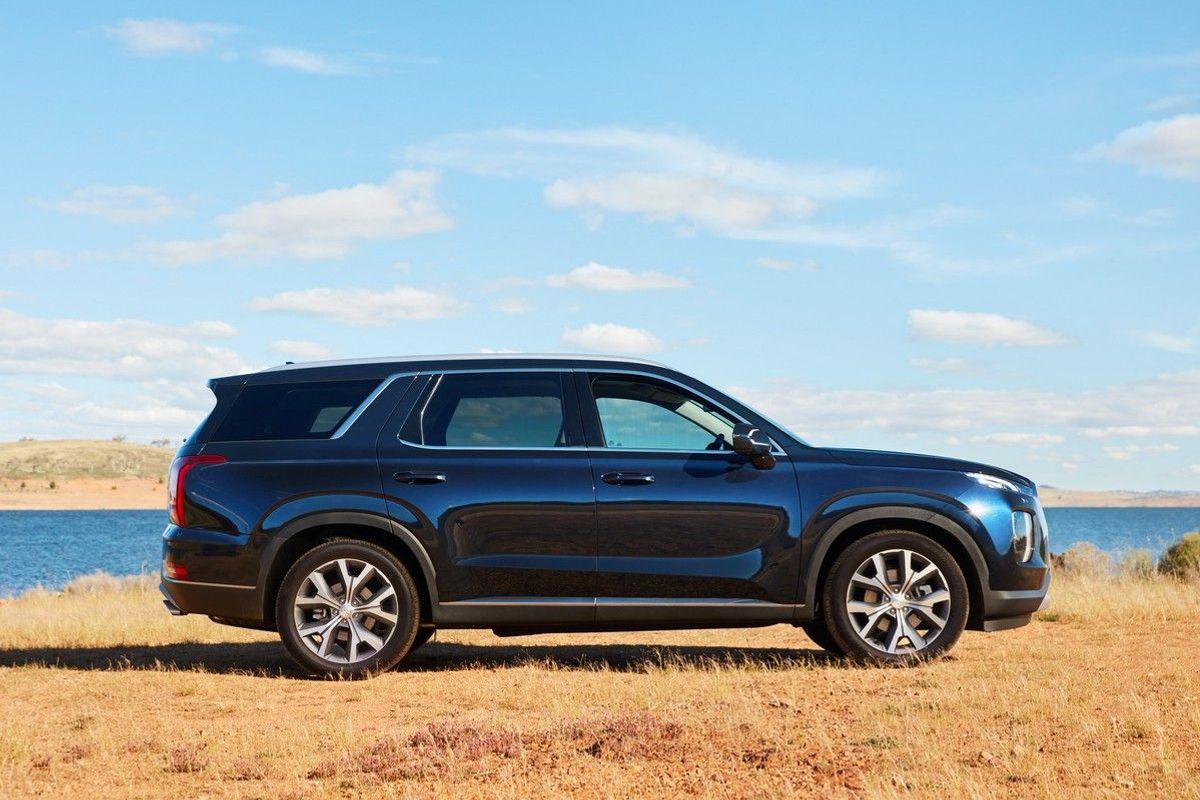
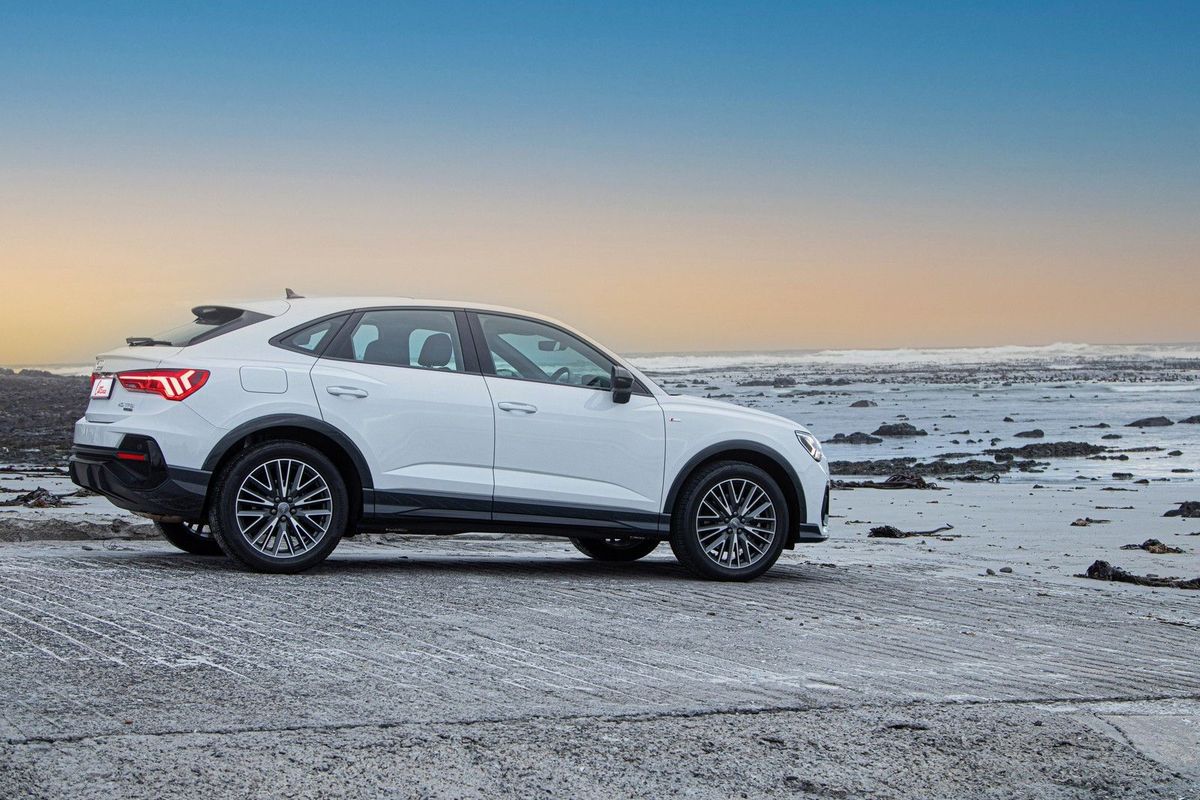
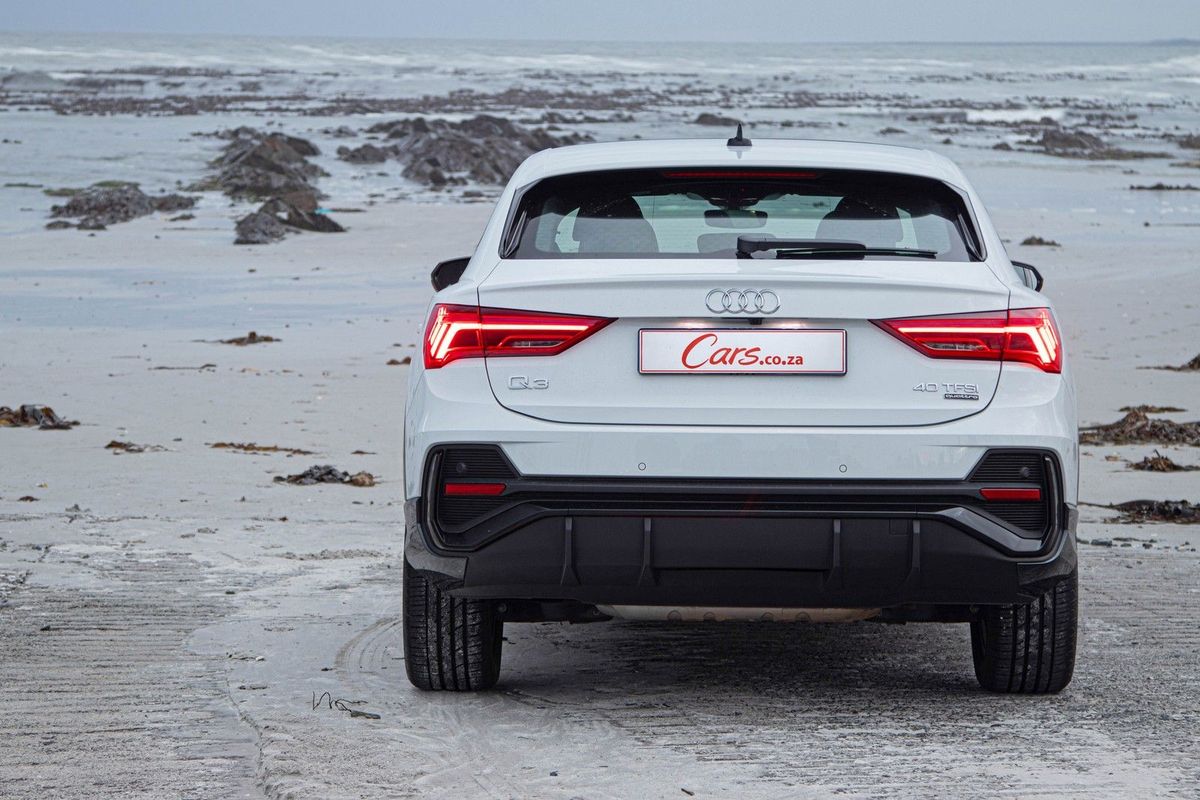
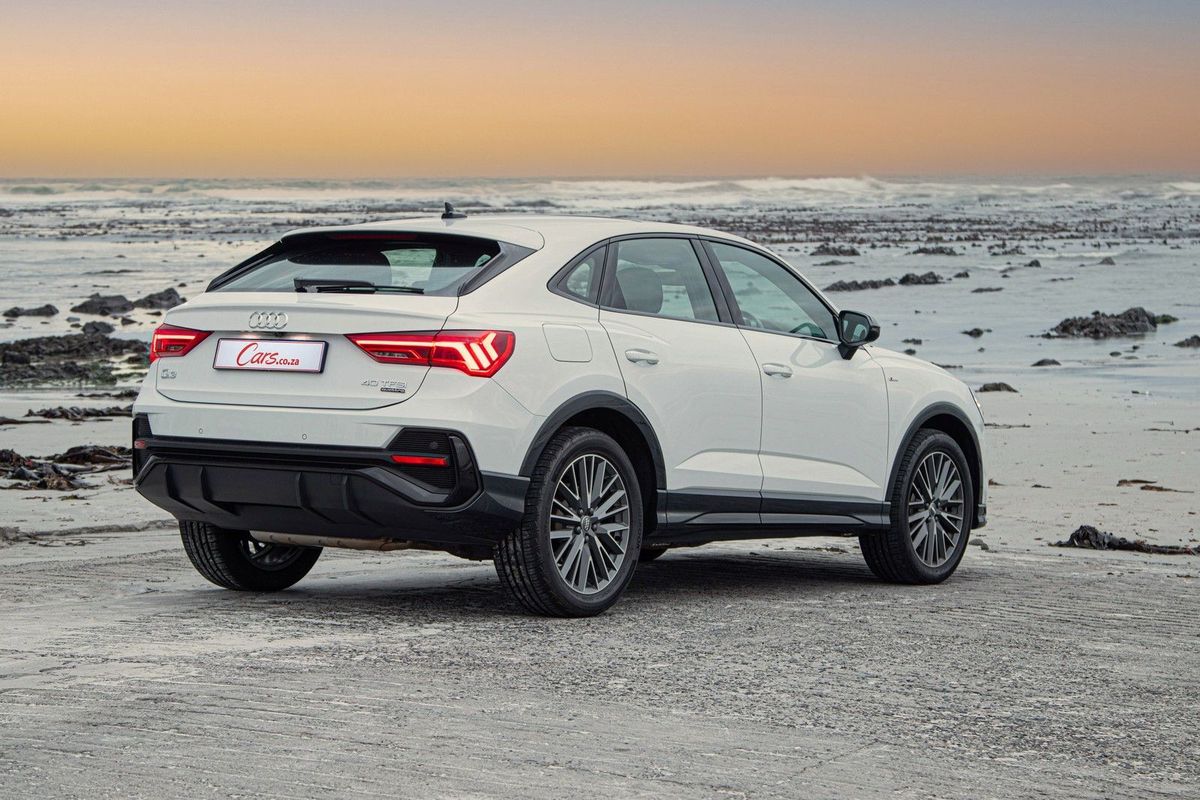
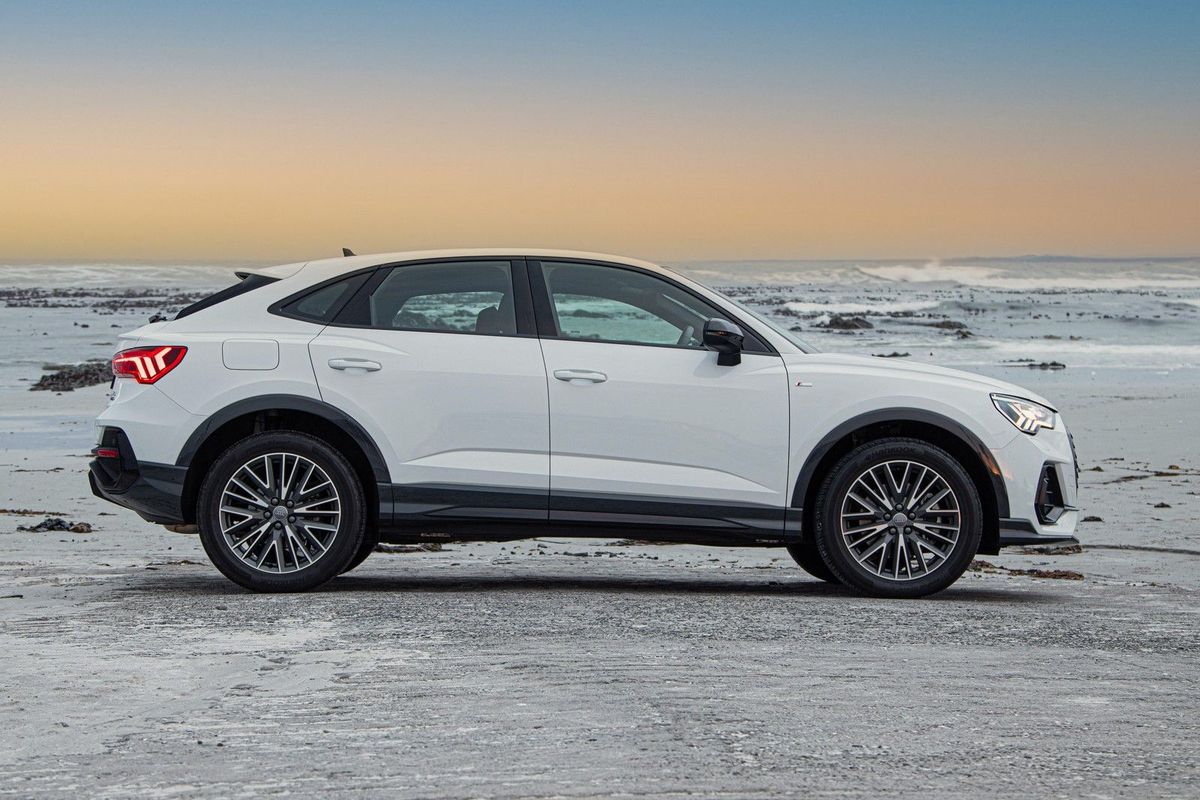
Renault’s new hybrid Arkana will go on sale in Europe in 2021.
This is Renault’s coupe-crossover called the Arkana which is slated to go on sale in Europe in the first half 2021. Don’t expect to see it in South Africa as its niche styling and selection of hybrid powertrains make it an unsuitable business case for the local market.
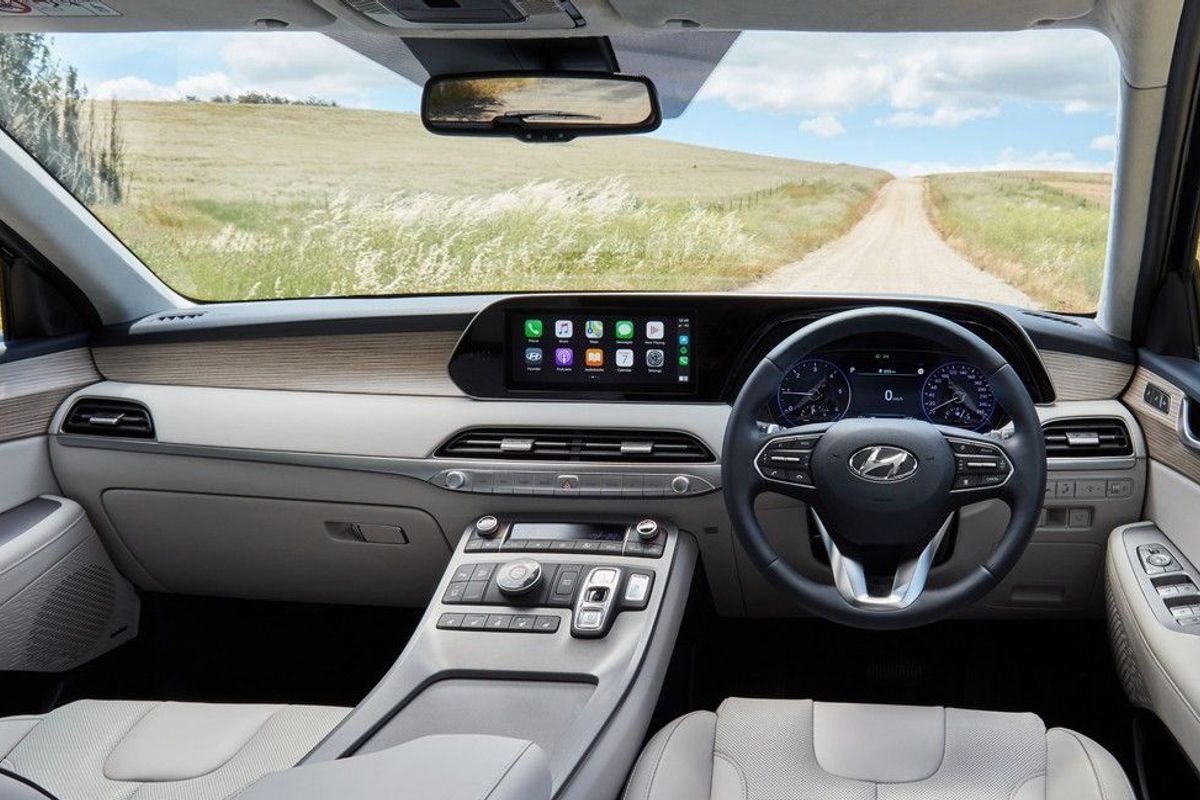
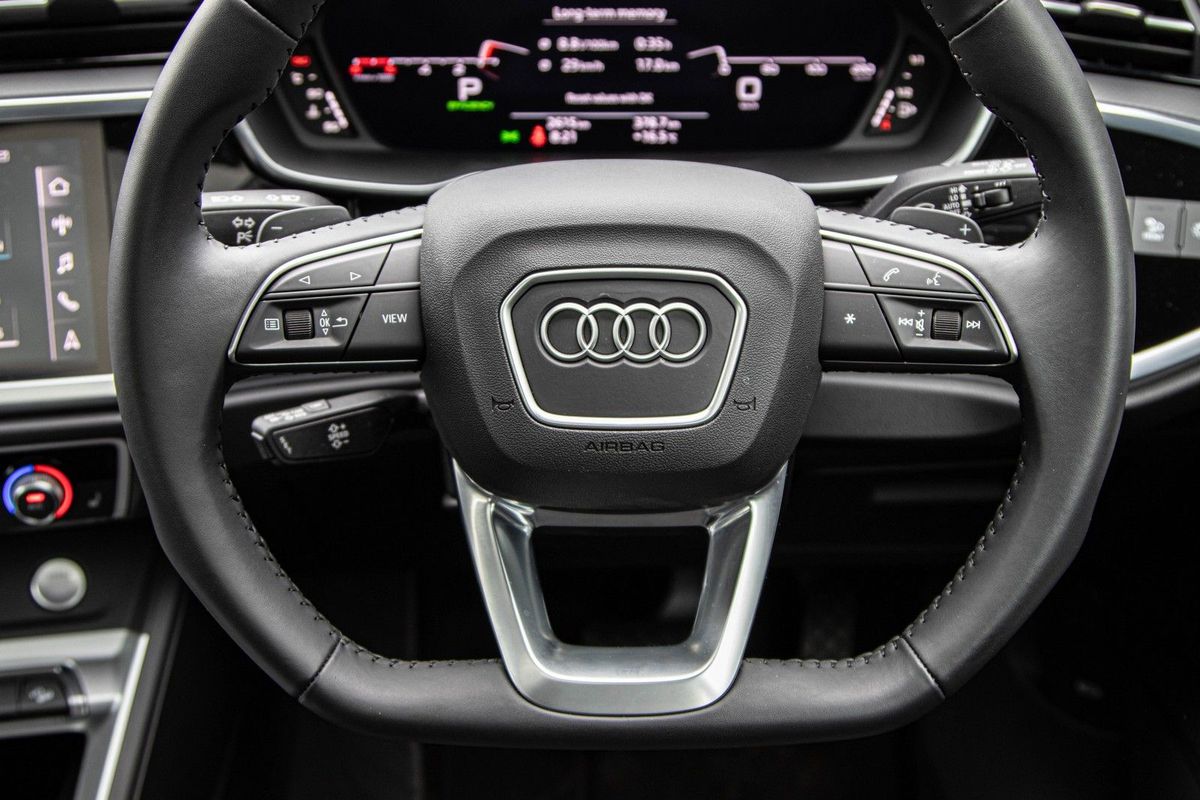
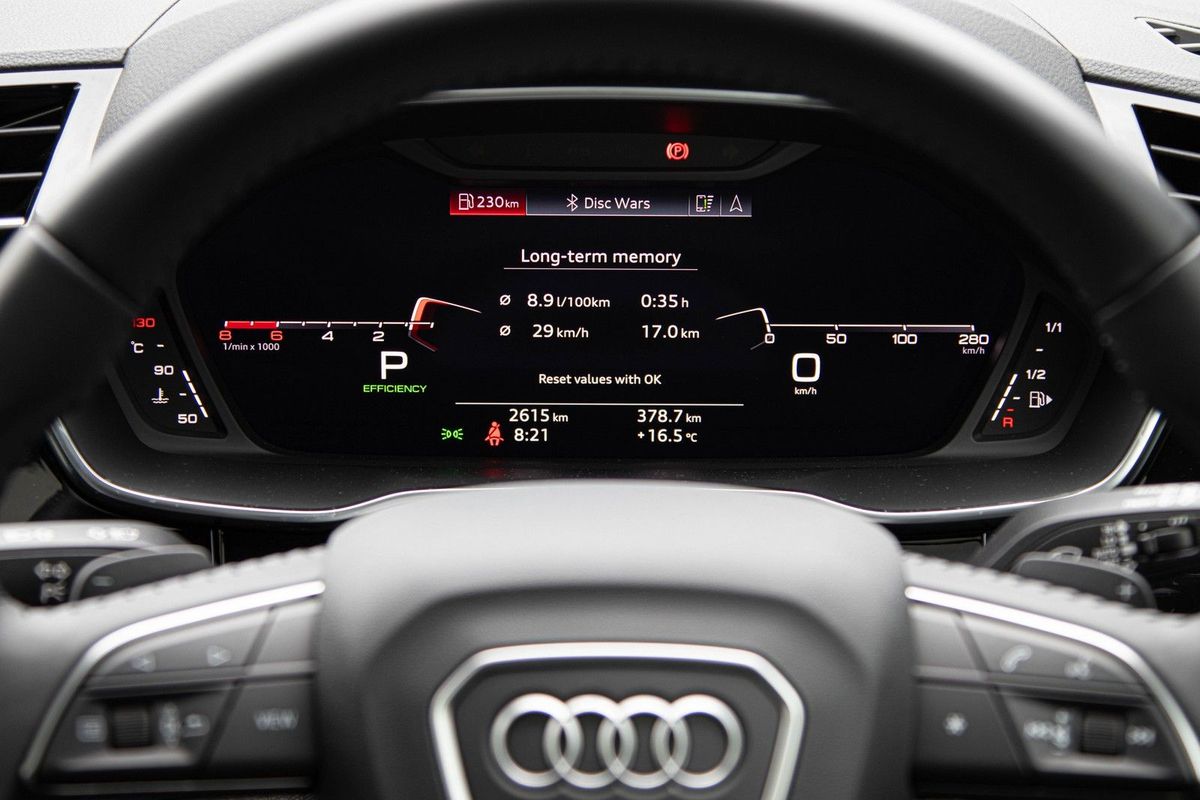
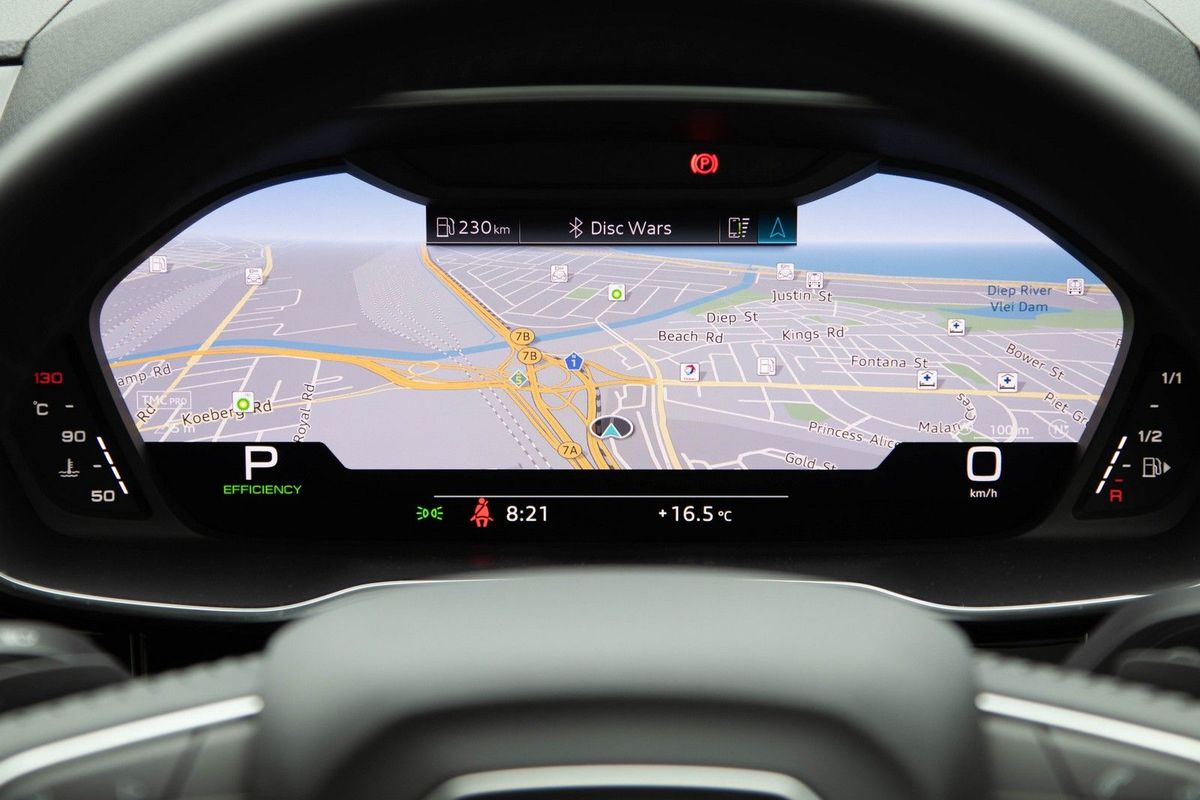
Nonetheless, it appears to be quite a striking package from the French carmaker. Apart from its attractive coupe-like sloping roofline, the Arkana features a modern cabin with a large central infotainment touchscreen and digital instrument cluster setting a distinctly upmarket tone. Renault will also offer the Arkana with an RS Line package that’s said to be sportier and more dynamic.
The Arkana will be offered with a choice of hybridised powertrains including a 104 kW and 119 kW 1.3-litre turbocharged engine with 12V mild-hybrid system as well as a 104 kW E-Tech Hybrid.
Drag Race: BMW X6 M Competition vs 2020 Jaguar F-Type R AWD
We pit BMW's potent X6 M Competition against Jaguar's latest F-Type R AWD. Place your bets!
This certainly is a rather unusual match-up, but regardless, it's a big one. Between these two cars, there's 9.4-litres of displacement sitting on the tarmac. There's also 883kW, which translates to a very large amount of horsepower. In this quarter-mile head-to-head, we pit the latest BMW X6M against the very latest Jaguar F-Type R. Both cars have full-blown V8s, both cars have all-wheel drive, and both cars are pretty heavy, but the X6 M is an absolute hippo, weighing in at over 2.2 tonnes. Which one will win? There's only one way to find out! Watch the video…
Ford has launched a sportier Endeavour (Everest) adventure SUV in India. Is this something you want to see in South Africa?
Ford has launched a sportier version of its rugged Everest SUV, which is called Endeavour, in India.
Distinguishing this Sport from other Everests is a new blacked-out grille with a honeycomb pattern which is a variation of what we have seen on Ford’s new Ranger Thunder double-cab bakkie which was recently introduced in South Africa. The grille is complemented with LED headlights with a smoked finish and the skid plate is also finished in black.
The Everest Sport somewhat mimicks the Ranger Thunder and also rides on black alloy wheels. The side steps and roof rails are in black too and Sport decals let onlookers know that this is a special Everest.
The Endeavour Sport in India is powered by a 2.0-litre EcoBlue diesel that offers 128 kW and 420 Nm of torque and is paired with a 10-speed automatic transmission.
Although the Endeavour Sport is an Indian market project, it does perhaps signal the possibility of other Ford markets receiving a similar Everest update in Q4 or early 2021. As always, we will keep you updated.
A powerful Range Rover Velar Plug-In Hybrid (PHEV) is expected to reach South Africa in 2021!
Range Rover’s mid-size luxury SUV, the Velar, has benefitted from its first significant update, since launching in late 2017.
Although the Velar has not seen any styling changes, Land Rover’s engineers have added improvements to the vehicle’s infotainment capability and powertrain options.
Updated infotainment system for Velar
Inside the 2021 model year Velar, you’ll still encounter the dual-screen infotainment configuration, but the software powering it has been re-coded.
Customers are demanding swifter infotainment responses from their luxury vehicles, with a low tolerance for any lag. As such, Land Rover sourced a superior code for Velar’s infotainment functions, reducing any possibility of the system stalling when having to perform a request.
Not only is Velar’s infotainment software slicker, but the user experience is further enhanced by better menu grouping and navigation. Land Rover claims that 90% of all Velar infotainment functions can be accessed by only two taps on the touchscreen. The Velar now also uses its surround sound speaker system to fulfil a noise-cancelling function.
Keeping your devices charged in a new Velar becomes a touch more convenient with a wireless Smartphone charging pad, whilst allergen-blocking air filtration should keep the worst pollen issues from triggering an undignified sneeze.
Assisting the Velar’s parking and off-road navigation, in technical terrain, is a 3D surround-view camera system.
Plug-in Hybrid Velar for SA
Boasting solid outputs and low fuel consumption, the Velar PHEV has much to offer.
In terms of powertrain, Land Rover has added its P400e moniker to the Velar range. That means a 2.0-litre turbopetrol engine in combination with an electric motor, with plug-in recharging capability.
Total system output for the P400e is an impressive 298kW and 640Nm, which translates to a zero to 100kph sprint time of only 5.2 seconds!
As one would expect for a modern plug-in hybrid, the Velar P400e has potentially outstanding fuel economy, being capable of 1.8 L/100km when driven with exceptional restraint. It also has an electric-only driving range of 53km, which should yield impressive fuel saving in slow inner-city traffic driving conditions.
Land Rover South Africa has confirmed that its Velar P400e will go on sale locally during the first half of 2020. Pricing will be communicated closer to launch.
Ford is developing a new bakkie that will slot in below the Ranger. It's expected to carry the Maverick name and we should see a production version in 2021. Is this what it will look like?
Image render: Duwyne Aspeling – Cars.co.za
Spy shot credit: S. Baldauf/SB-Medien. We have paid for these photos and at the photographer's request, have watermarked them.
Earlier this year, spy shots confirmed that Ford was developing a small bakkie that will serve as the brand’s entry-level utility offering which will slot in below the larger Ranger.
Update: A new batch of spy images have emerged of Ford's forthcoming Maverick bakkie. The prototype is heavily camouflaged and it appears Ford is going to great lengths to disguise the development of the Maverick and it's likely that the Maverick will ride lower than the Ranger while offering similar cabin space (this is confirmed in spy photographs with the Maverick shown next to the current Ranger, not shown here). The camoflage does a good job hiding most of the details but the boxy, squared-off front-end can be seen.
No, this is not a panel van, but rather a well-disguised Ford Maverick prototype.
Known internally as 758, it’s believed this new small unibody bakkie will be produced on the current Focus C2 platform, the same which underpins the recently-revealed Bronco Sport SUV. A full reveal is expected in 2021 and there are strong suggestions that this new bakkie will share styling cues with the Bronco Sport, which should give it a bold and suitably rugged appearance. Our latest rendering shows what the forthcoming Maverick bakkie could look like with its front-end taking inspiration from the Bronco.
Reports suggest that the Maverick will be manufactured alongside the Bronco Sport in Sonoro, Mexico at Ford's Hermosillo Assembly Plantwith an annual production target of 100 000 units.
In terms of engines, a 4-cylinder 2.0-litre and 1.5-litre petrol engine are on the cards paired with an 8-speed automatic transmission as well as a manual shifter. It was previously reported that the Maverick will feature a 4-door configuration and share parts with the Ford Transit and the 2.0-litre version could offer 121 kW while the 3-cylinder, 1.5-litre turbopetrol could offer 134 kW if it's introduced. Note that Ford has not released any official technical information for this new bakkie.
Online forums are abuzz, with information trickling in from various sources. The Maverick is expected to feature a rear sliding window, much like the Ford F-150 and the Ranger.
As for the name of this new Ford bakkie, it was initially believed that it might be called the ‘Courier’ or that Ford might revive its Ranchero nameplate. However, recent reports have instead pointed out that the small bakkie will, in fact, carry the Maverick name after images of the tailgate bearing this name has been doing the rounds online. Nonetheless, the Courier name will be familiar to South Africans as it was the predecessor to the Ranger double cab and sold here up until 1999.
For now, the 758 is destined for the South American market first before infiltrating the North American market. There is currently no indication that this new bakkie will be offered in South Africa but considering that it will be produced on the Bronco's platform, it will likely only be produced in left-hand-drive.
Lately, Ford South Africa has positioned itself as an exporter, choosing to cut its model lineup to focus on locally produced vehicles such as Ranger and Everest. Unless this 'small Ranger' makes economic sense or Ford sees a case for local production it's unlikely to be made available to SA.
This is our rendering showing what the Ford Maverick could like with influence from the Bronco Sport.
Price
In order for it to make sense, both for Ford SA and the buying public it would obviously need to cost less than the double-cab Ranger. As of July 2020, the cheapest double cab Ranger is priced at R449 400. The upcoming Renault Duster Oroch (confirmed for SA) appears to be the only other player in this space, but with Ford's bakkie brand cache in SA, it could probably afford to come in a little more expensive than the Renault. Reports are suggesting that pricing for the Maverick in the U.S. will start from about $19 000 which equates to roughly R340 000 at current exchange rates. However, 2022 is a long way away and the Rand is very volatile so pricing is likely to be higher when the Maverick finally reaches showrooms.
As always, we will keep you up-to-date as this story develops futher.
Although the exterior designs of BMW’s long-awaited new M3 (G80) and M4 (G82) – which are expected to arrive in local showrooms during the first half of 2021 – offer few surprises (thanks to a spate of teaser images and a recent pre-launch leak), the specifications of the various derivatives are different to what many expected…
Here's the most obvious difference: If the previous-generation M3 and M4 looked very similar from the front, it was because the headlamp-, grille and bumper designs of the cars on which they were based – the F30-generation 3 Series sedan and F32-generation 4 Series coupe – were very derivative. However, with the recent launch of the 4 Series, with its controversial large, upright kidney grille that set it apart from the frontal appearance of the G20-generation 3 Series, it raised the hope that the new M3 and M4 might be quite distinct from one another.
The new generation M3 and M4 look resplendent in Isle of Man Green and Sao Paulo Yellow respectively.
However, BMW has opted to install (an M-specific version of) the 4 Series’ grille on both models, along with sculpted bumpers and wheel arches, M fender gills, side sill extensions (with attachments to the cars’ aprons), carbon-fibre roofs, tail spoilers and, of course, a quartet of M tailpipes.
The pair are shod with forged M light-alloy wheels (18- and 19-inch fore and aft, 1 inch bigger for Competition versions with M xDrive and optional high-performance tyres), plus the exhaust system is model-specific with electrically operated flaps to facilitate that stirring straight-six howl.
Although M xDrive will debut on the Competition versions of the pair, all-wheel-drive versions will only be available later.
Another surprise is that although the pair’s 3.0-litre twin-turbo inline-6 engines will be offered in 2 states of tune, 353 kW and 375 kW (both produced at 6 250 rpm) in the standard and Competition versions, they will not have the same maximum torque output (as is the case with the X3 M and X3 M Competition derivatives, for example). Instead, the standard version produces 550 Nm from 2 650 to 6 130 rpm, while the Competition develops 100 Nm more (650 Nm, albeit over a narrower band of 2 750 to 5 500 rpm).
The standard M3 and M4 is claimed to accelerate from 0 to 100 kph in 4.2 sec and the Competition versions are said to shave that time to 3.9 sec!
The installation of the 4 Series' upright grille on the M3 is rather controversial – it's the only 3 Series derivative to sport it.
Traditionalists will rejoice that, as widely expected, the standard M3 and M4 will be offered with a 6-speed manual ‘box (with Gear Shift Assistant technology), whereas the Competition versions are equipped with an 8?speed M Steptronic transmission with Drivelogic and 3 shift programs.
What wasn’t expected, however, is that BMW has launched all versions in rear-wheel-drive configuration; the M3/ M4 Competition with M xDrive, which combines a rear-biased M xDrive with the Active M Differential and 3 selectable drive modes: 4WD, 4WD Sport and 2WD (the latter for pure rear?wheel drive and deactivated stability control, also knows as "Drift Mode") will arrive later in 2021.
Drivers will also have the option of choosing between 10 M Traction Control settings (depending on how brave they feel).
Both models feature an extremely stiff body structure and chassis mounting thanks to model-specific bracing elements for the engine compartment, a front axle subframe with an aluminium shear panel, underfloor bracing elements and a rear-axle subframe with a rigid connection to the body.
Compared with the previous generation M3 and M4 models, the Adaptive M suspension (with electronically controlled shock absorbers) is now fitted as standard, as is the M Servotronic variable-ratio steering setup. BMW’s M division has further made modifications to the cars’ front- and rear-axle assemblies and implemented an integrated braking system with 2 settings for pedal feel and response.
The M3 and M4 feature M-specific displays in the instrument binnacle, infotainment system menus and, if specified, HUD.
Beefed-up M Compound brakes provide stopping power (they can optionally be upgraded), while the cars’ dynamic stability control setups include an M Dynamic mode as before, but with the option of a 10-stage-adjustable M Traction Control function.
Inside, the pair features newly developed M sport seats and fine-grain Merino leather trim with extended features, as well as a thick-rimmed steering wheel (with a pair of red M buttons, through which 2 pre-set driving setups can be activated) and M-specific displays and controls.
The M4 Competition, with an 8-speed M Steptronic transmission, will be the top-of-the-range model in South Africa.
The centre console, meanwhile, features a red start-, as well as a Setup and M Mode buttons. "Setup" provides direct access to the engine, chassis, steering and braking system settings – and, depending on the specific derivative, also M xDrive, Gear Shift Assistant and traction control. "M Mode", in turn, enables the pilot to alter the intervention thresholds of the driver assistance systems and the displays in the instrument cluster.
Meanwhile, the M3 and M4 features BMW Live Cockpit Professional with fully digital display grouping, BMW Maps navigation system and BMW Intelligent Personal Assistant, as well as park distance control, front-collision warning, lane departure warning as well as speed-limit info.
Track enthusiasts will be able to order their M3 or M4 with an weight-saving M Race Track Package.
And, these newcomers wouldn’t be BMWs if they did not come with long options lists, would they? Boxes that can be ticked (at extra cost) include M Carbon bucket seats, M Carbon ceramic brakes, Driving Assistant Professional with Steering and Lane Control Assistant, Active Navigation, Emergency Lane Assistant, Parking Assistant with Reversing Assistant, BMW Drive Recorder and BMW Head-Up Display with M-specific displays.
The Head-Up Display incorporates Road and Sport settings, but with the – also optional – M Drive Professional package (including M Drift Analyser, M Laptimer and M Traction Control) it additionally features a Track mode.
Drivers can toggle the M3 and M4's dynamic- and driver assistance settings at the push of a button on the centre console.
And finally, the optional M Race Track Package for the M3 and M4 is said to reduce vehicle weight by around 25 kg thanks to features including M Carbon ceramic brakes, special M light-alloy wheels and M Carbon bucket seats.
South African line-up for M3 & M4
BMW South Africa has announced that it will launch the Competition versions (that is to say with the higher output 375 kW/650 Nm motor) of the new M3 and M4 towards the middle of 2021. The cost of getting the faster versions (initially in RWD guise) is that buyers won't be able to choose between manual and automatic transmissions, because Competition derivatives are only available with the 8-speed M Steptronic auto 'box.
Isuzu South Africa has made it known that the localised version of the Isuzu D-Max bakkie will only be available in 2022.
As one of SA’s three most popular bakkies (Toyota Hilux and Ford Ranger being the other two), the news of an all-new D-Max has provided much excitement for its loyal customers and fans. A new version doesn’t come around very often, with the current generation tracing its introduction back as far as 2011. The new model as already seen sales in major bakkie markets such as Thailand and Australia, but the South African version won’t be available until 2022.
Earlier reports suggested that the D-Max would be available in 2021 but Covid-19 has delayed the local manufacturing facilities upgrades and pushed back the testing of the local unit by more than a few months. Isuzu prides itself on building bakkies for the local market and as such does not import its D-Max but builds it locally in Port Elizabeth after extensively localising the product to endure harsh South African conditions. According to Isuzu SA, “some of the key projects being undertaken include testing on the load box which in the current bakkie has significantly thicker steel in strategic areas such as the load box inner panels, load box front panel, and tailgate.
The new D-Max is already on sale in overseas markets.
Other areas receiving attention from local engineers include, dust sealing, suspension tuning and development of local dampers, development of all-terrain tyres, rear differential lock and axles, wiring harnesses, and accessories such as canopies, roll bars and nudge bars.”
As you can see from the images above, local testing has begun so hopefully with a year’s ‘notes’ under the engineers and testing crew's belts, the D-Max fans will still be loyal to the brand.
2022 will see an all-new Ranger built on the same platform as the VW Amarok which will be built in Ford’s local plant in Pretoria.
The new-generation Isuzu D-Max has already garnered positive reviews in markets where it is on sale, where one of Cars.co.za’s international correspondents Matt Campbell was able to give it a thorough test and wrote this review.
Renault is renowned for offering pocket-friendly hatchback and compact crossover models, but the Koleos is neither a hatchback, nor compact. Given its lofty price tag (on the wrong side of R500 000) and the multitude of acclaimed competitiors in its segment, the French family car needs to demonstrate something special to stand out.
We like: Highly-specced, surprisingly capable off-road, generous cabin space.
We don't like: Pricey, limited to just one powertrain
Fast Facts
Price: R529 900 (September 2020)
Engine: 2.5-litre 4-cylinder naturally-aspirated petrol
Some Renault dealers regularly offer specials:Have look here.
What is it?
The Renault Koleos is one of the more stylish and distinctive offerings in the family-car segment.
Yes, we reviewed this generation of the Koleos in April 2019, but for 2020, Renault SA has given its flagship SUV some mild updates. What's new, you may ask? There are minor visual changes at the front and rear, a new alloy wheel design, plus some convenience upgrades in the forms of an electronic handbrake and a powered tailgate. Inside, there are some updated trims. Mechanically, the Koleos' powertrain is unchanged.
The range comprises 3 derivatives (in 2 trim levels) and the subject of this review is the flagship derivative: the 2.5 Dynamique 4WD. The Cars.co.za comparison tool highlights at least 6 rivals at this price level and we've filtered the results to include all-wheel-drive rivals with automatic transmissions; the Koleos' major competitors are the latest iteration of the Toyota RAV4 (2.0 AWD GX-R) and the Subaru Forester 2.0i-S ES.
How it fares in terms of…
Performance and efficiency
With just one engine and transmission combination, we can't help but wonder how the Koleos would fare with a turbodiesel powerplant.
The Koleos is powered by a 2.5-litre naturally-aspirated 4-cylinder petrol engine, which it shares with its Renault/Nissan/Mitsubishi alliance cousin, the X-Trail. In the French contender, the motor produces 126 kW and 233 Nm and it's exclusively mated with a continuously variable automatic transmission. While it's not marketed as a performance vehicle, the Koleos is claimed to accelerate from 0 to 100 kph in 9.8 sec (for what that's worth). In terms of economy, we saw an indicated consumption figure of 9.9 L/100 km, which is some way off the firm's claim of 8.3 L/100 km.
Performance is, at best, average. Although the aforementioned RAV4 and Forester also feature old-school naturally-aspirated powertrains, several of the Koleos' rivals are propelled by smaller-capacity turbocharged engines that feel punchier to drive. Is it a deal-breaker, though? Not at all, but with the CVT, you have to adapt your driving style to exact smooth progress – there are no gearshifts and the engine can become quite vocal under hard acceleration. Despite the louder-than-expected engine note and lack of responsiveness, the Koleos doesn't feel underpowered in and around the urban environment. In-gear acceleration is its weak point, so overtaking manoeuvres between 80 and 120 kph require forethought.
Driving experience
The update gives the Koleos a revised front end as well as redesigned alloy wheels.
In terms of ride quality and handling, the Koleos has a pleasant and comfortable big-car feel. We were initially irritated by a constant rattle in the luggage bay (we suspected a poorly-fitted panel), but once the warning triangle had been stored correctly, the cabin was free of annoying noises.
Given the Renault's large footprint, we were expecting a relatively heavy steering feel, but the tiller was effortless to twirl. The suspension was quite forgiving too: the restyled 18-inch alloys are wrapped in 225/60 R rubber and the generously sidewalled tyres contribute to the pliant ride quality.
These high-profile 18-inch tyres soaked up most of the bumps on the poor quality roads we subjected it to
South Africa is (shall we say) blessed with an extraordinary variety of road surfaces and during the Renault's tenure in our test fleet, we drove the test unit on some of the worst grades of gravel road – as well as some light sand – to get an idea of its true capabilities "off the beaten track".
If you think the Renault Koleos is a bit of a poser SUV and lacks any off-road credentials, your assumption is very wrong. The numbers alone are good, with 210 mm of ground clearance with approach and departure angles of 19 and 26 degrees respectively. Gone are the days when you needed to use an additional lever to activate a vehicle's 4×4 modes; these days, it's a matter of flicking a switch. The Koleos has 3 modes; 2WD for normal tarmac situations, Auto will activate 4WD in slippery conditions and 4WD Lock will send 50% power to each axle at speeds of up to 40 kph.
Gone are the days where you need a second lever for the 4×4 modes. This switch is all you need.
Much like its smaller Duster sibling, the Koleos is surprisingly capable when traversing roads of poorer quality or that offer low levels of grip. It does lack a low-range transfer case, so be mindful of biting off not wading into really tricky situations. We found the Renault to be admirably stable when traversing gravel at speed, with the automatic 4WD system cleverly directing power to the axle with the best traction to keep the car well-planted.
Features and Practicality
The Koleos interior with its digital interface
Top-spec offerings from Renault are usually generously equipped and this flagship Koleos is indeed fully-loaded: the only option available is metallic paint. The vertically-orientated infotainment system does take some getting used to, but to its credit, it supports Apple Carplay and Android Auto. Having said that, the Android Auto interface doesn't quite work with the vertical screen – the layout looks odd. The instrument cluster's layout, however, is fresh and modern, with a central speedometer/rev counter. You can toggle between themes too and change the colours of the display.
The vertical infotainment screen takes some time to get used to
Standard features include leather trim, a 6-way electrically adjustable driver's seat, multifunction steering wheel, auto wipers, front/rear park sensors with reversing camera, as well as climate control. Safety wise, Renault has fitted its Koleos with 6 airbags, ABS with EBD, brake assist, electronic stability control with traction control and blind-spot warning.
Rear passengers are well catered for. Not only are aft occupants availed commendable levels of leg- and head-room, but with a brace of USB chargers, there's no worry of smartphones or tablets running out of battery power (provided you've remembered to bring along the cables!).
In terms of luggage space, the Koleos doesn't offer the largest bay in the segment, but there should be enough space (464 litres) for most families. If you need even more space, the rear seats fold down to avail 1 800 litres, which is perfect for a full-size mountain bike and a set of golf clubs.
Rear passengers are well looked after with plenty of space, plus charging facilities for devices.
Pricing and after-sales support
This top-spec 2.5 Dynamique 4WD retails for R514 900, which includes a 5-year/150 000 km mechanical warranty, a 5-year/90 000 km service plan and a 6-year anti-corrosion warranty. Service intervals are at 1 year/15 000 km.
Verdict
Some conservative (or risk-averse) buyers may be concerned by Renault's reputation for iffy reliability or below-average after-sales support (not without merit), but don't be fooled by the Koleos' "sophisticated" French exterior styling; it's based on the well-proven Nissan X-Trail. Besides, taste is subjective… consumers are looking for a number of factors, such as safety, practicality and economy when it comes to family SUV shopping.
In most of those respects, the Koleos is more than adequate and, don't forget, it's comprehensively equipped. As we've said in previous reviews, if you are looking for a spacious, well-specced all-rounder, this Renault is worth a closer look. If you're put off by its steep asking price, however, visit our used car section where demo Koleos units with under 2 000 km on their odometers are listed for more than R50 000 off the list price…
The collaboration between Volkswagen and Ford will result in the next-gen Amarok and Ranger sharing a platform, but if rumours are to be believed, Volkswagen will be building an Amarok R.
An article by AutoBild.de suggests the sporty Amarok R will be assembled based on the Ford Ranger Raptor. The source article goes on to say its offroad capabilities will be enhanced and things like its wading depth, approach and departure angle improved upon the standard model.
It should look quite radical, in the same way the current-generation Raptor is visually more aggressive than the standard Ranger. AutoBild says it will receive the usual R styling, like a big grille and widened sills. As far as engines go, it's suggested Volkswagen will go for a 4-cylinder turbodiesel motor with about 220 kW on tap.
The Ford and Volkswagen arrangement is a fascinating example of how two rivals can work together. Formally confirmed at the 2019 Detroit Auto Show, the relationship and agreements between Volkswagen AG and Ford Motor Company are in line with the brands' shared goals to satisfy customer demand and "boost competitiveness in an era of rapid change." It's a fascinating alliance in that it does not entail cross-ownership and will be managed by a joint committee led by the respective brands' bosses (Volkswagen recently appointed a new brand CEO). This is not a merger, nor is it an acquisition.
Really small sedans are a shrinking market, but the Koreans believe they remain worthwhile.
Hyundai has revealed a new sedan version of its compact car platform. The new Grand i10 sedan is for those Korean compact car fans who prefer having the lockable security of a boot.
Measured bumper-to-to bumper it is 140 mm longer than an i10 hatchback, with a total vehicle length of 3.81 m.
The Grand i10 sedan is targeted primarily at emerging markets and looks slightly different from a European or Korean specification i10 hatchback. It features boomerang-shaped LEDs, in the corner of its grille, a feature which is broadly similar to the latest lighting design on Hyundai’s new Tucson.
Around the rear, its styling is even more adventurous, with the boomerang-shaped theme creating dramatical outlines for its taillamps.
The Grand i10 sedan’s rear design might be a touch too daring for conservative compact car buyers, but there is no denying its advantage over Hyundai’s i10 hatchback, in terms of utility. Where the five-door i10 has 260-litres of luggage space, this updated sedan version can accommodate 402-litres
Inside it is familiar compact car Hyundai fare. Customers will have a choice of either black of bronze dashboard trim, which gives an opportunity to enliven the cabin architecture a bit.
Powering the updated Grand i10 sedan are two 1.2-litre engine options, paired to either a five-speed manual or four-speed automatic transmission. What the Grand i10 sedan lacks in gears, is hardly compensated for in power, with the 1.2-litre petrol engine only good for 61 kW.
There is also a turbodiesel 1.2-litre CRDi engine, producing 56 kW and 190 Nm, which should offer a superior blend of mid-range performance and economy.