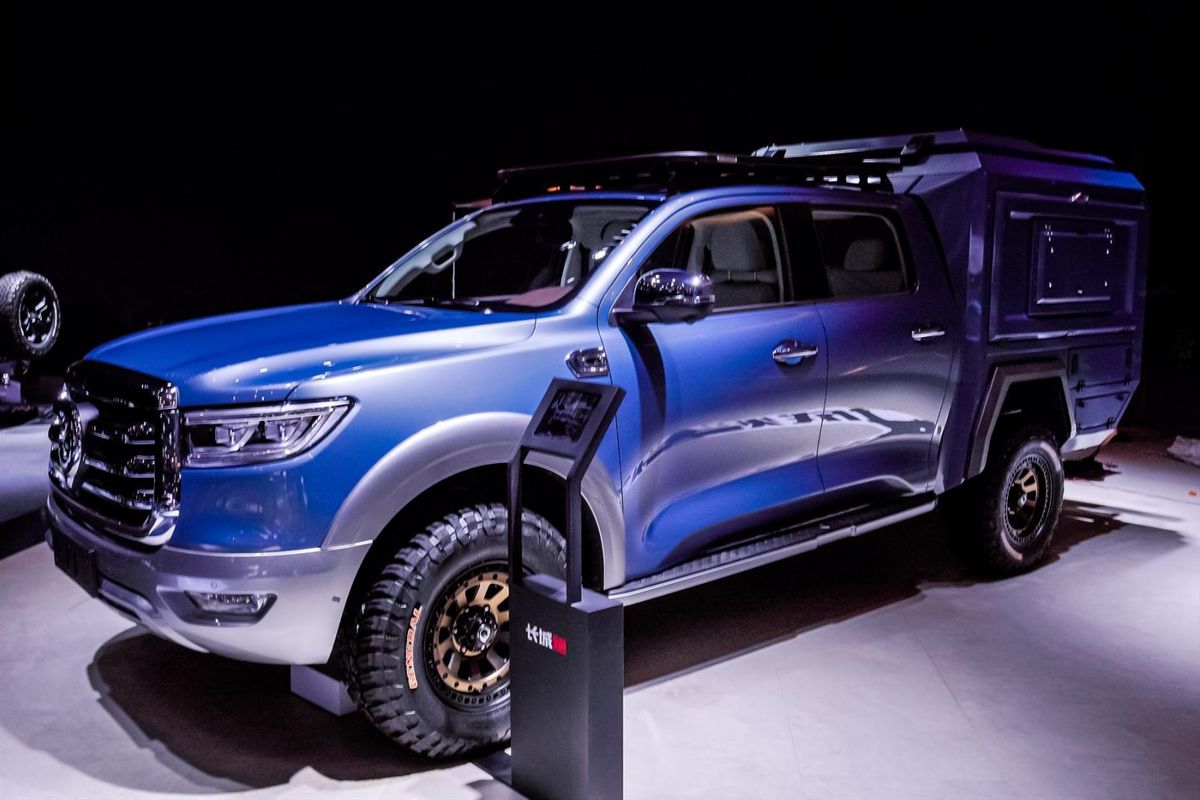
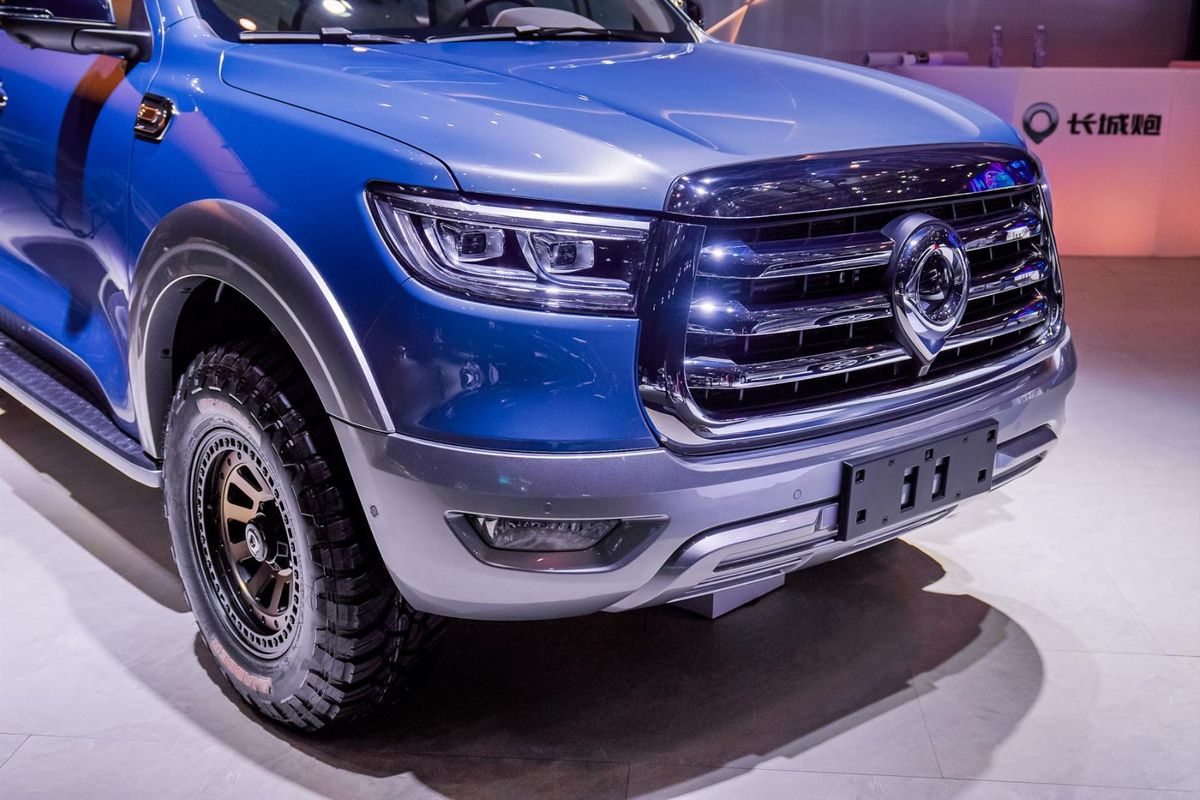
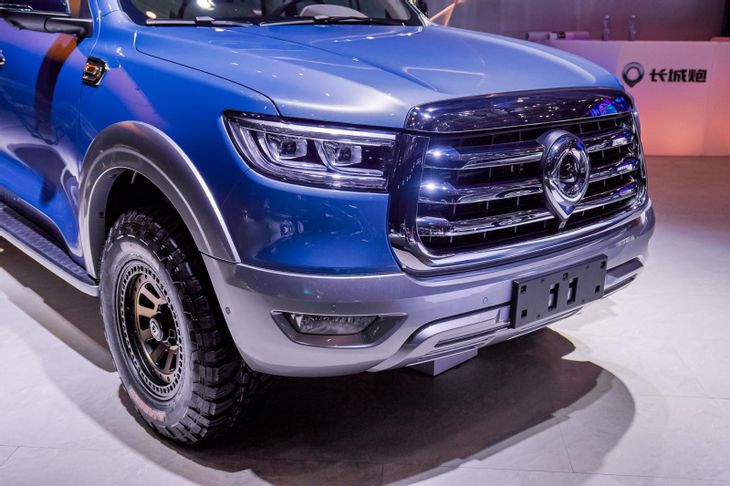
Chinese bakkie brand GWM's SA division is chomping at the bit to get its latest product to our shores and has teased some details ahead of the launch.
The GWM P-Series bakkie will be landing in South Africa before the end of the year. Like many car launches, COVID-19 was the main factor in the delay. In the Chinese domestic market, the P-Series has taken off, with over 5 000 units sold in its first month. In September 2020, the Toyota Hilux tallied up 4 252 units sold, while its rival from Ford mustered 2 188 units. To say that our market is bakkie-crazed is an understatement and to make matters interesting, the next 18 months will see some dramatic movement.
Toyota's updated Hilux has just hit showrooms at the time of writing, while the Ford Ranger received a major update in 2019 with the special edition Thunder appearing in 2020. The Mazda BT-50 (now on an Isuzu D-Max platform) is earmarked for a middle of 2021 introduction, while the D-Max's debut has been pushed out to 2022 as the Isuzu's factory's upgrade was delayed. Waiting in the wings is an updated Nissan Navara as well as the introduction of the Peugeot Landtrek and Renault Alaskan.
Interestingly, in terms of the name, the international name is the POER (pronounced 'power'). In Chinese symbology, Pao translates to cannon, which gives you some idea of how GWM is marketing its new offering. For our market, GWM is not going to call it the Poer, but rather just 'P-Series' with the brand suggesting P stands for Power, Peak, and Perfect. South Africans have a warped sense of humour and we'd guess that Poer might be taken the wrong way…
While pricing and derivative breakdown have yet to be announced, the Chinese bakkie maker did share some interesting nuggets of info. In terms of engines, there will be an all-new 2.0-litre turbodiesel engine that features 'Variable Vortex Intake Manifold for more torque and power.' In terms of transmission, the top-spec models will feature an 8-speed ZF gearbox. For the 4×4 enthusiasts, there will be ESP intelligent 2-speed TOD (torque on demand) 4-wheel drive systems and diff locks as standard. The load bay features a hidden stepladder in the tailgate, which will make loading easier.
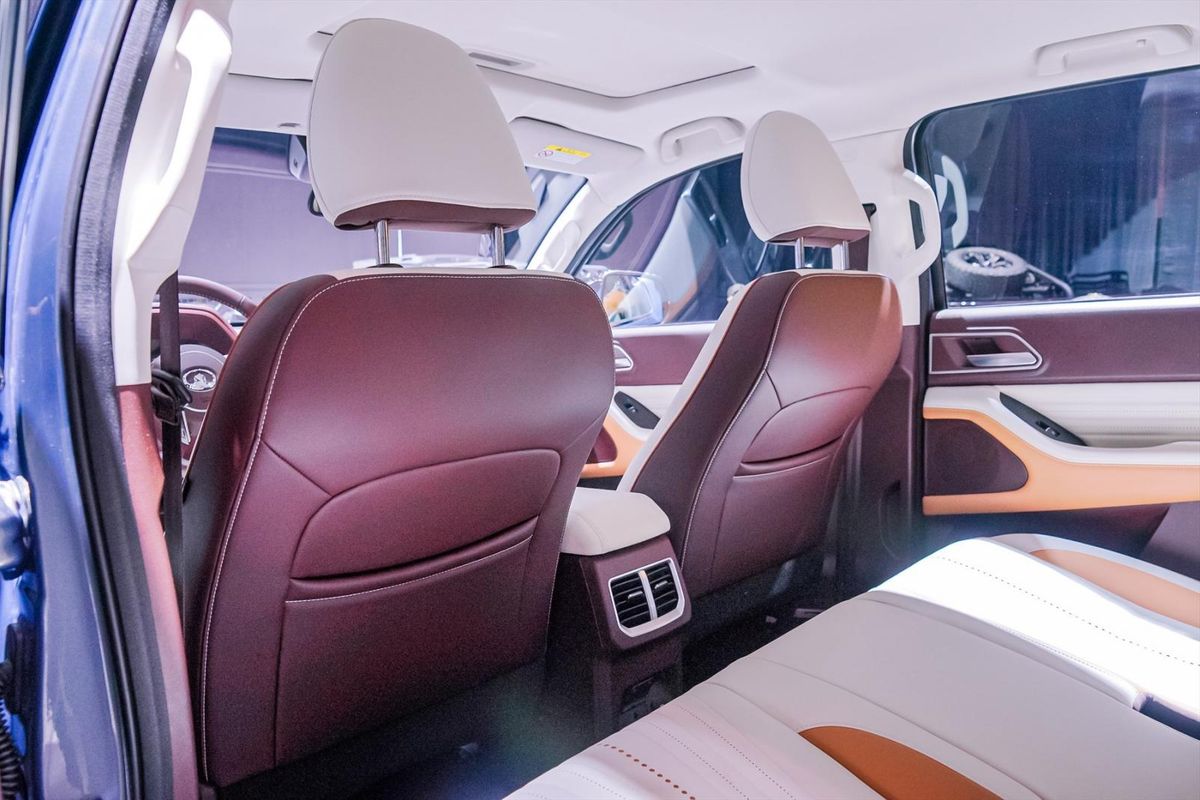
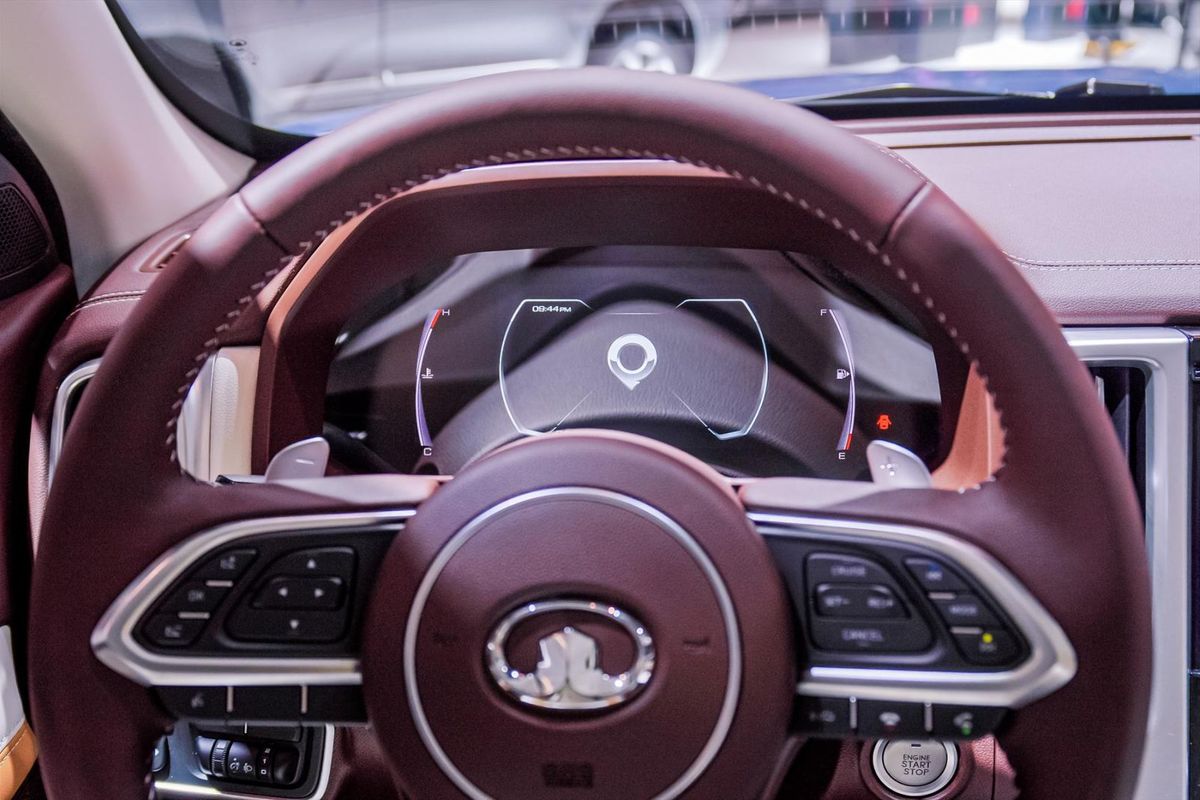
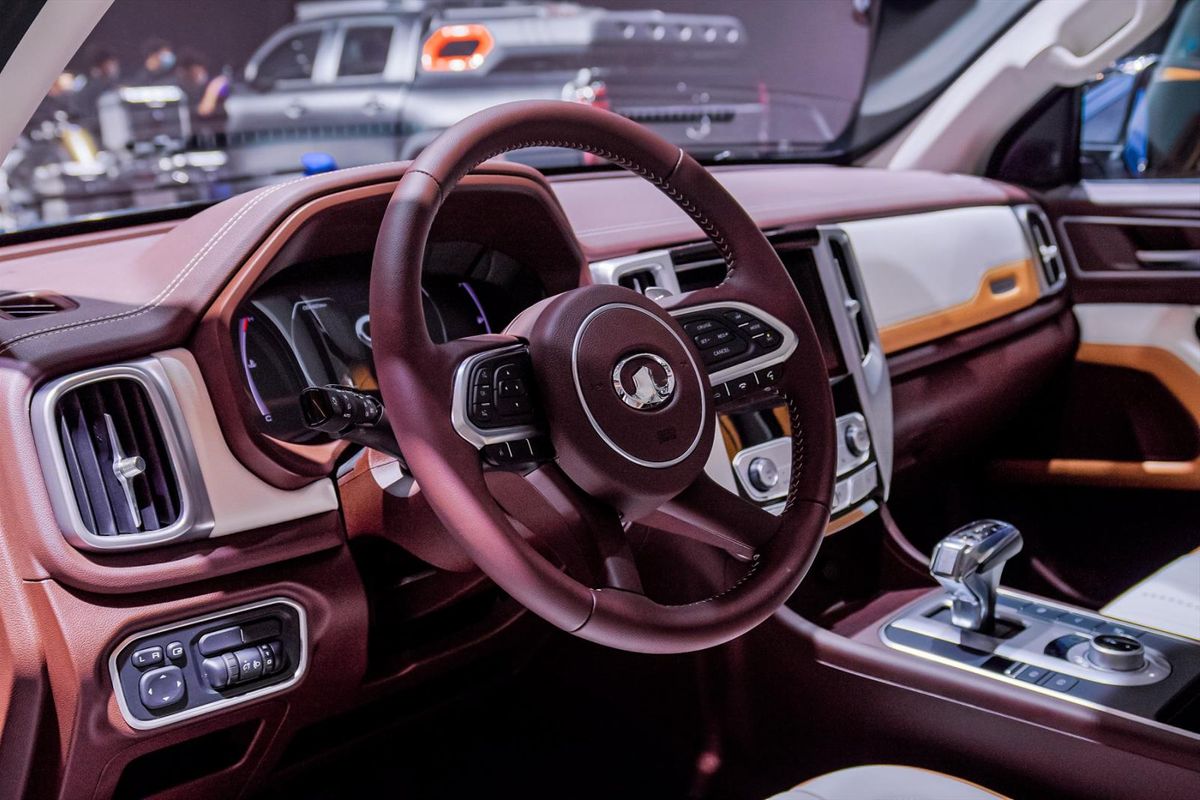
GWM also shared some key features of its new P-Series and at first glance, it looks like the brand is going for high levels of luxury and safety. There'll be a full leather interior, adaptive cruise control, lane-keeping assistance, traffic sign recognition, blind-spot monitoring, front/rear park distance control with a rear camera as well as up to 7 airbags.
GWM South Africa says the P-Series lineup for our market as well as the SADC region will comprise 16 derivatives. At the bottom of the range will be a single-cab base model 4×2 turbodiesel with a manual gearbox, while the top-spec model will be a double-cab 4×4 turbo diesel automatic. There will be both manual and automatic gearboxes, as well as 4×2 and 4×4 options.
When will it launch? GWM has confirmed the SA launch event is planned for around the end of November 2020, and the vehicles should be reaching showroom floors shortly afterwards. Given South Africa's monster appetite for bakkies and brand preference, it's going to take some aggressive pricing for it to steal some sales from the established offerings. GWM has not mentioned costs yet but has hinted it will be keenly priced.
Expect to see this bakkie on the roads by the end of December 2020
Grand Gazoo on the cards as Toyota throws GR at almost everything.
In the market for go-faster off-road SUVs, Toyota is conspicuous by its absence.
Although the Japanese brand dominates in most SUV product categories, it does not market high-performance variants of its SUVs. This is peculiar because Toyota has always displayed superior marketing awareness and must be aware of the attractive profit margins being achieved by German brands and JLR, with their high-performance SUVs.
The ladder-frame platforms used by most of Toyota’s SUVs might explain its reluctance. More powerful engines in any of the Land Cruiser stations wagons would require even larger brakes and much better active suspension, to prevent bodyroll during high-speed cornering.
That aside, the market for an off-road bias high-performance version, is definitely there. As Toyota shows greater willingness to develop more GR derivatives of its core models, the question of a more potent Land Cruiser luxury station wagon becomes real.
With the Land Cruiser 300 delayed until 2021, it has given Toyota’s engineers time to investigate and propose new developments for the king of ‘Cruisers. One of these will most likely include a GR derivative.
The current Land Cruiser has been around since 2007, presenting many real challenges regarding its adaptability to the latest powertrain and platform technologies. With Toyota’s all-new 300 series ‘Cruiser, there is a much greater possibility of integrating trick adaptable suspension and superior drivetrain bits.
Rumours of a more potent next-generation Land Cruiser have sourced from Down Under. Australia is an enormous Land Cruiser 200 market and there has been a surge in demand, as Covid-19 has forced Australians to remain home and explore domestic attractions, instead of travelling overseas.
Toyota has recognised that an adequate number of Land Cruiser 200 owners desire a more striking appearance, better off-road ability and a lot more power. Those are all three elements that are very much in the formulation of Toyota’s GR-specification product philosophy.
With the Land Cruiser 300 providing a better platform to anchor more powerful engines and responsive suspension components, the vision of a high-performance factory Land Cruiser would be entirely possible.
It is also a clever product strategy. Mercedes-Benz and JLR don’t prioritize off-road ability when marketing high-performance versions of their SUVs, and that is the gap Toyota has clearly identified in the luxury off-road vehicle market.
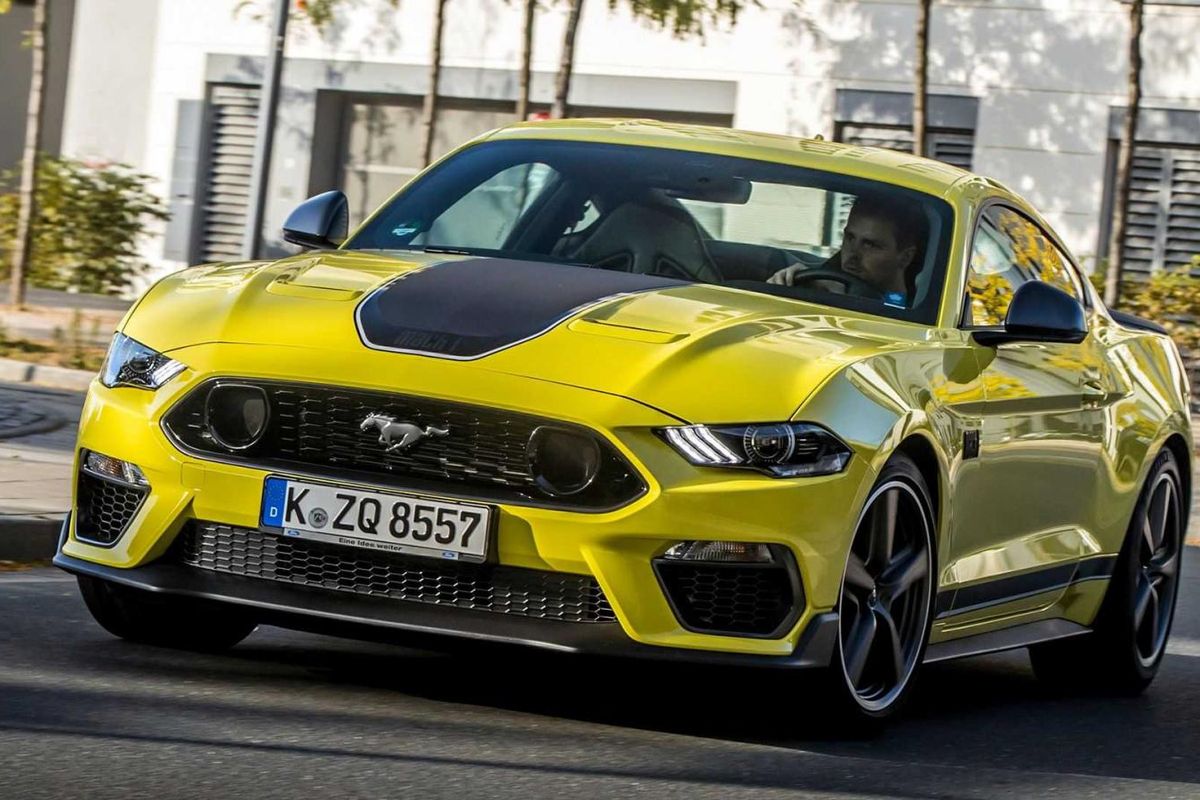
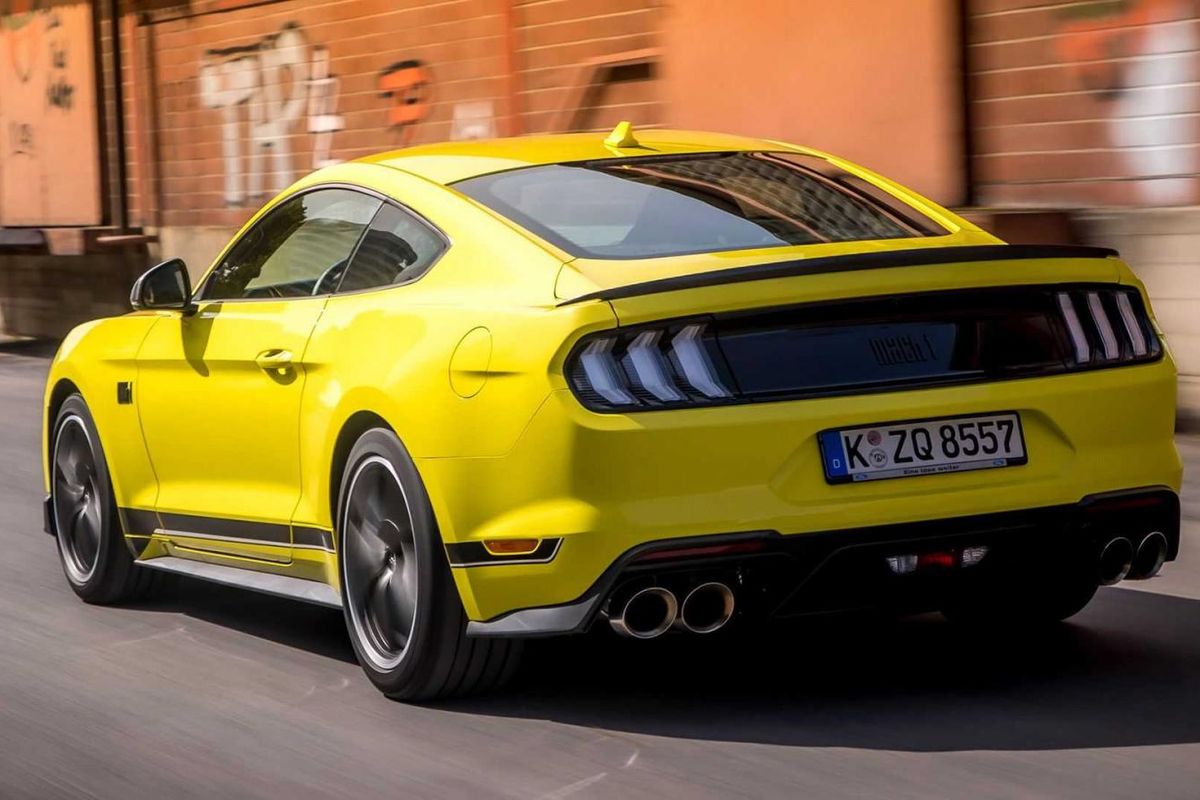
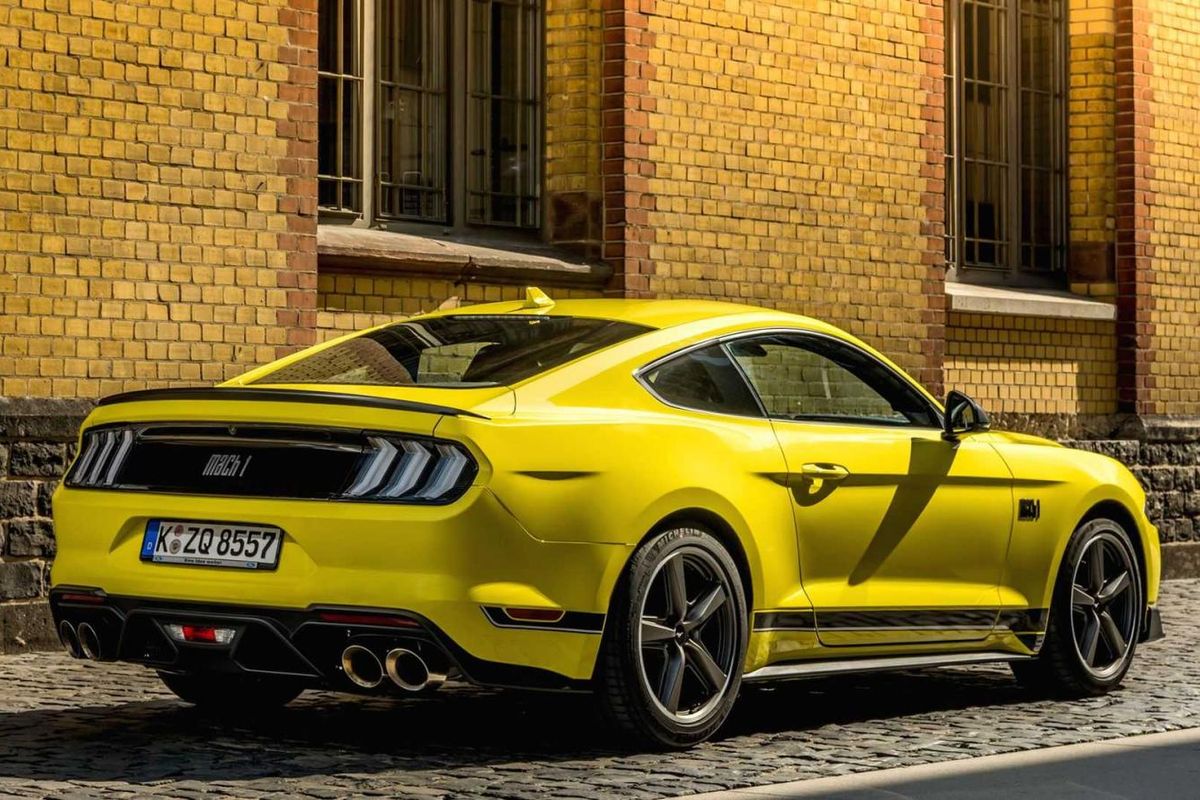
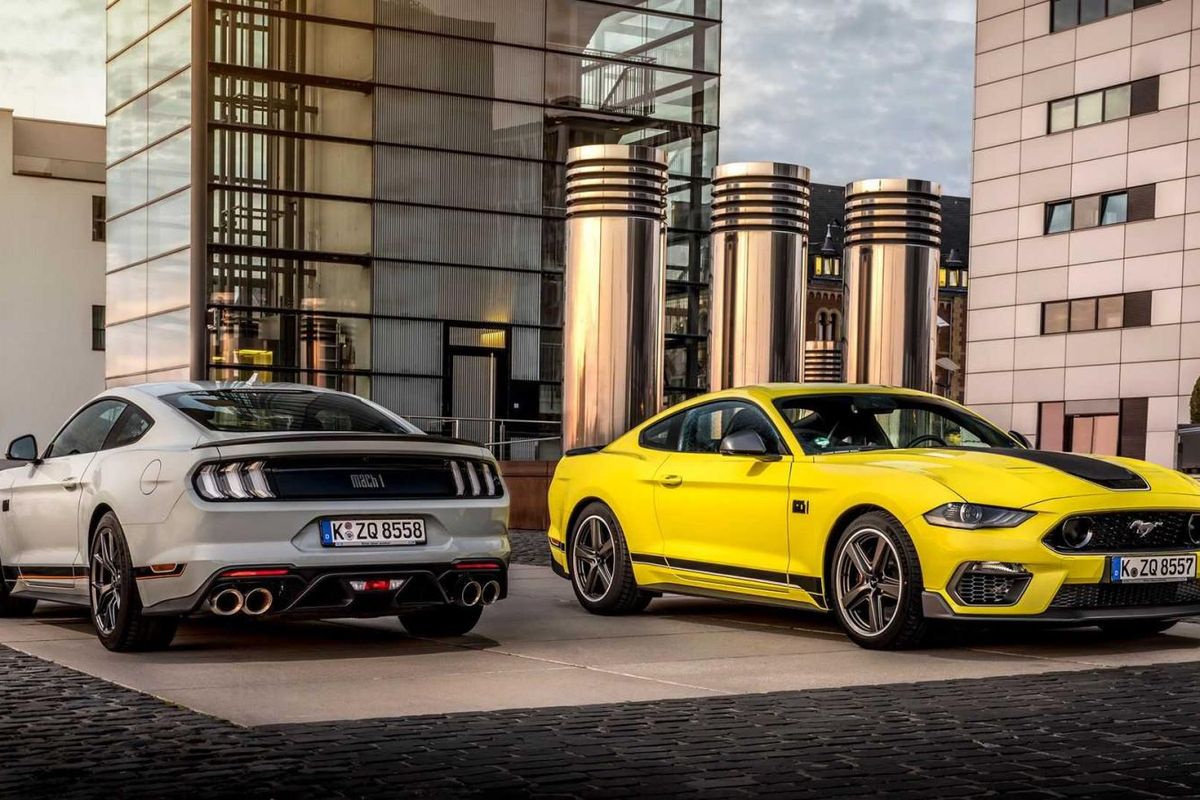
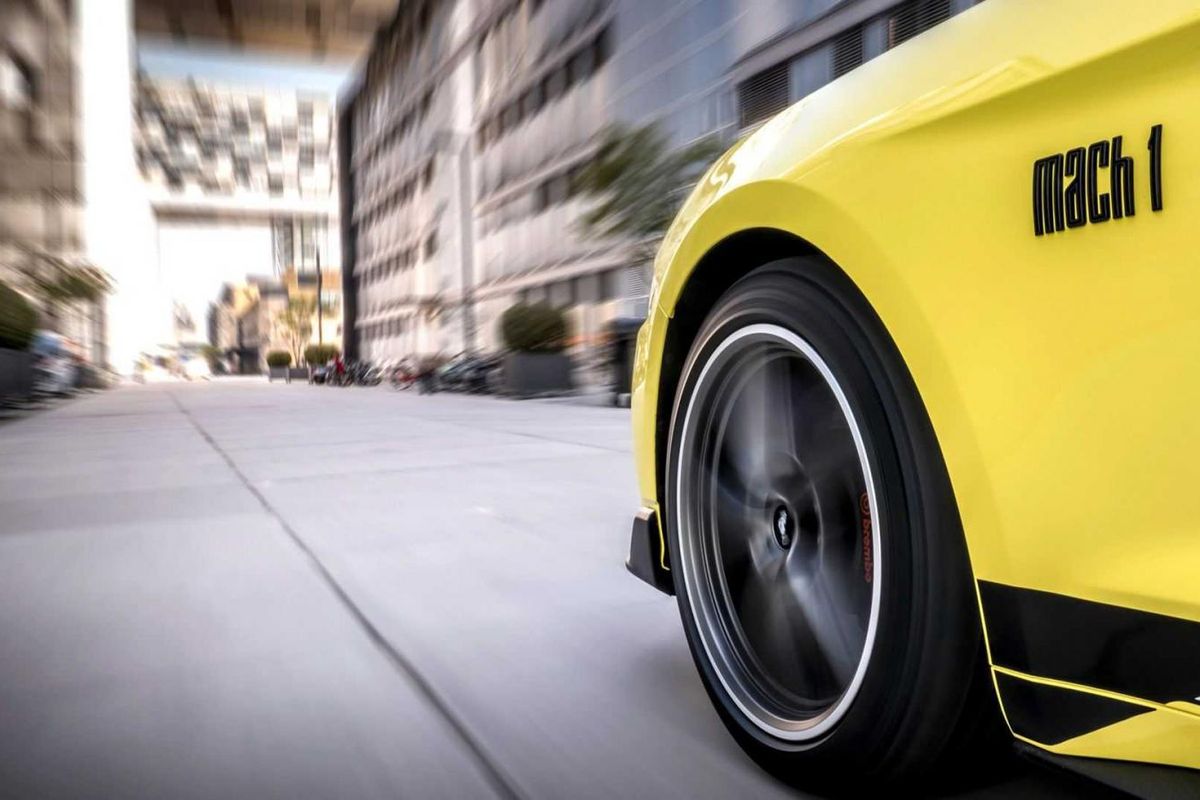
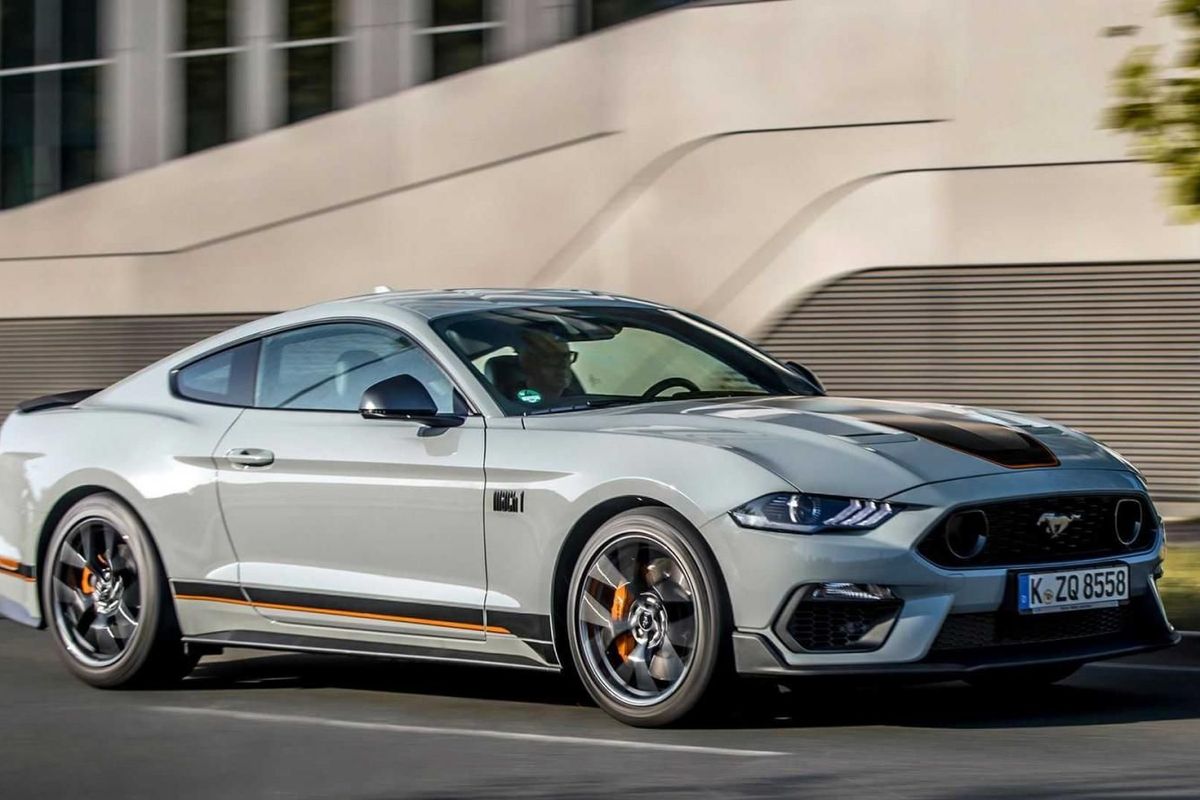
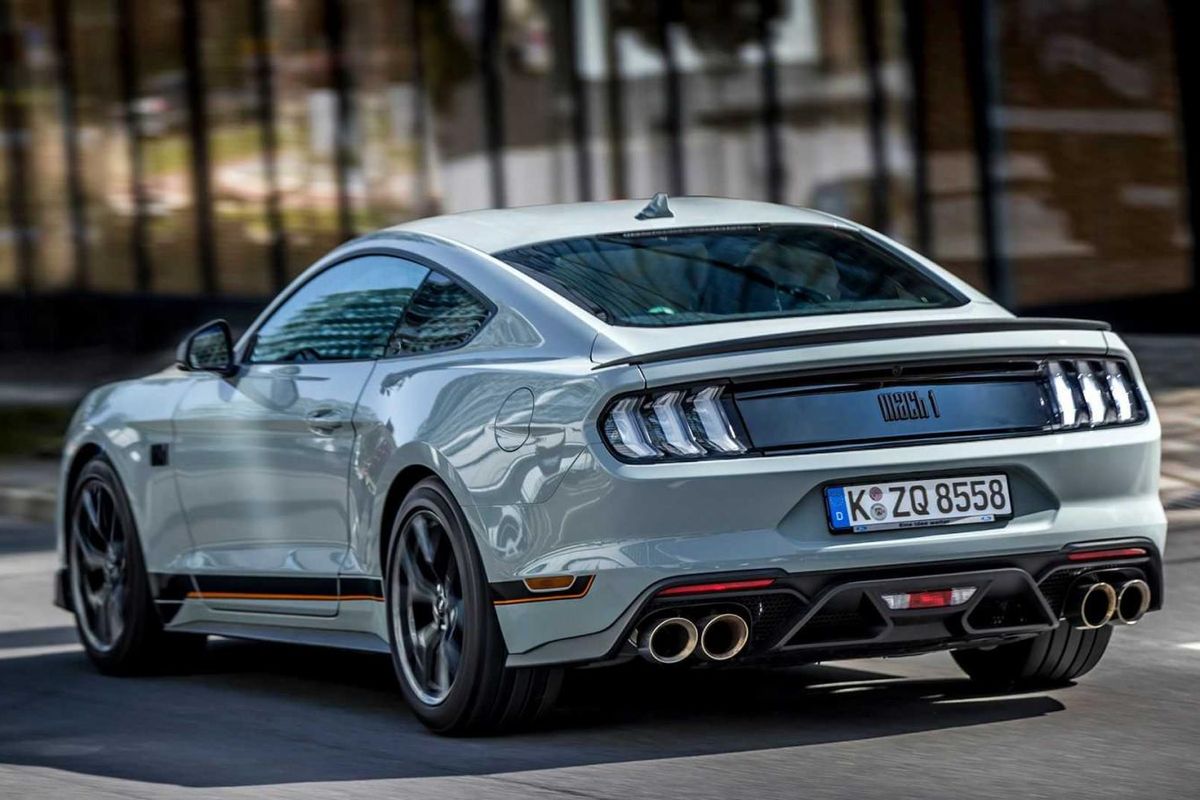
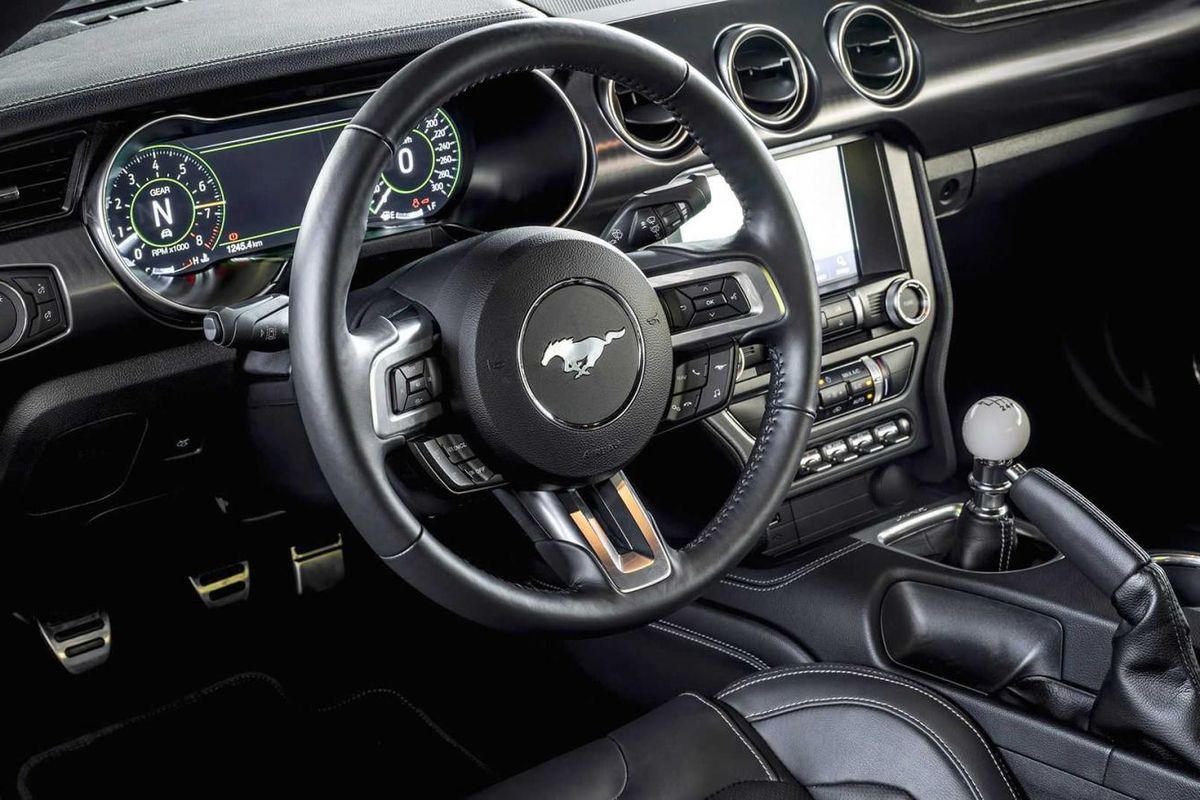
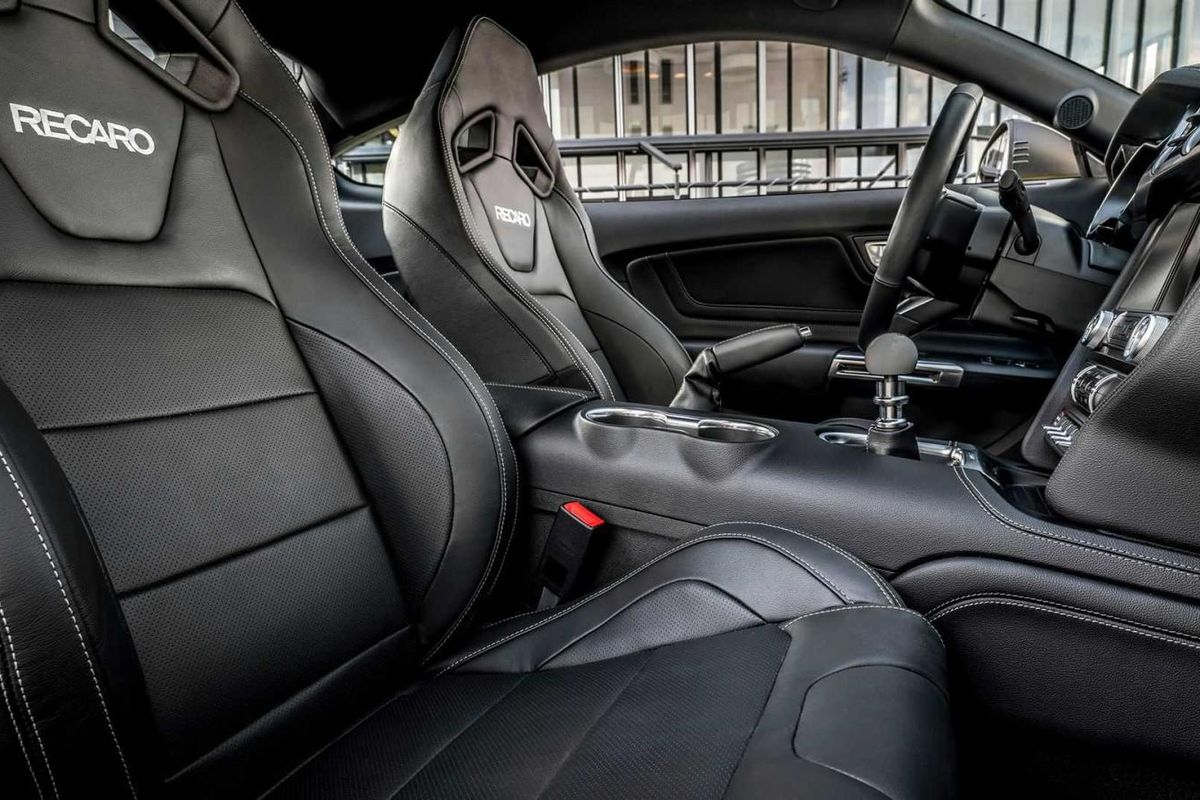
Ford has revealed the Mustang Mach 1 for Europe, but it’s lost some power…
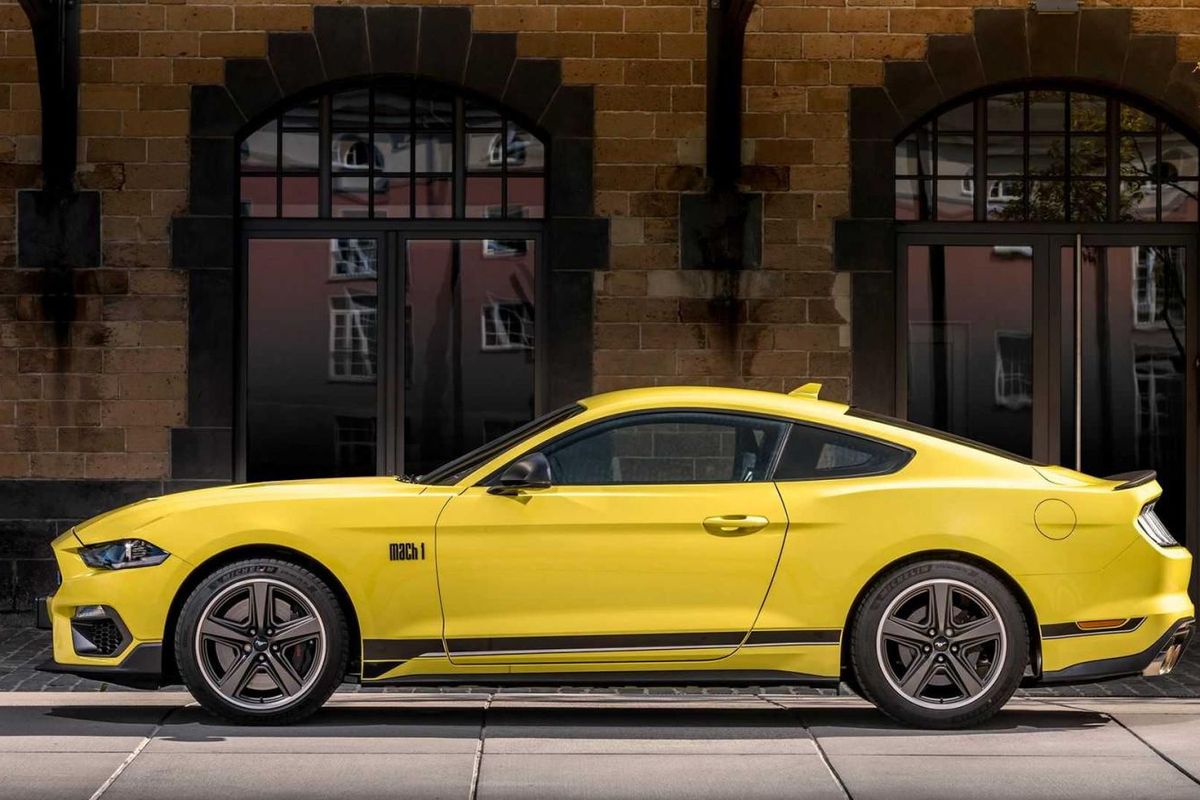
Earlier this year, Ford revealed the Mustang Mach 1, a revival of the 1969 nameplate, that offers buyers more performance from its 5.0-litre V8. A recent report confirmed that the Mustang Mach 1 would be produced as a global model which opens up the possibility that South Africa could be on the receiving end of the decision.
In America, the Mustang Mach 1 develops 358 kW and 569 Nm and is equipped with a 6-speed manual or 10-speed automatic transmission driving the rear wheels. However, Ford has now revealed the Euro-spec Mustang Mach 1 but its outputs have been cut by 20 kW and 40 Nm (to meet European emissions regulations), totaling 338 kW and 529 Nm, which is just 6 kW more than the standard Mustang 5.0 GT fastback on sale in South Africa. The European market suffered a similar blow when the Mustang Bullit came to market.
Nonetheless, if the Mustang Mach 1 is indeed destined for South Africa, we should receive the full-fat Mach 1. This makes sense considering that the standard Mustang 5.0 GT Fastback offers 331 kW and 529 Nm, which would make the detuned Mach 1 rather pointless.
We will keep you updated as soon as we receive more news on the Mustang Mach 1’s local introduction in South Africa.
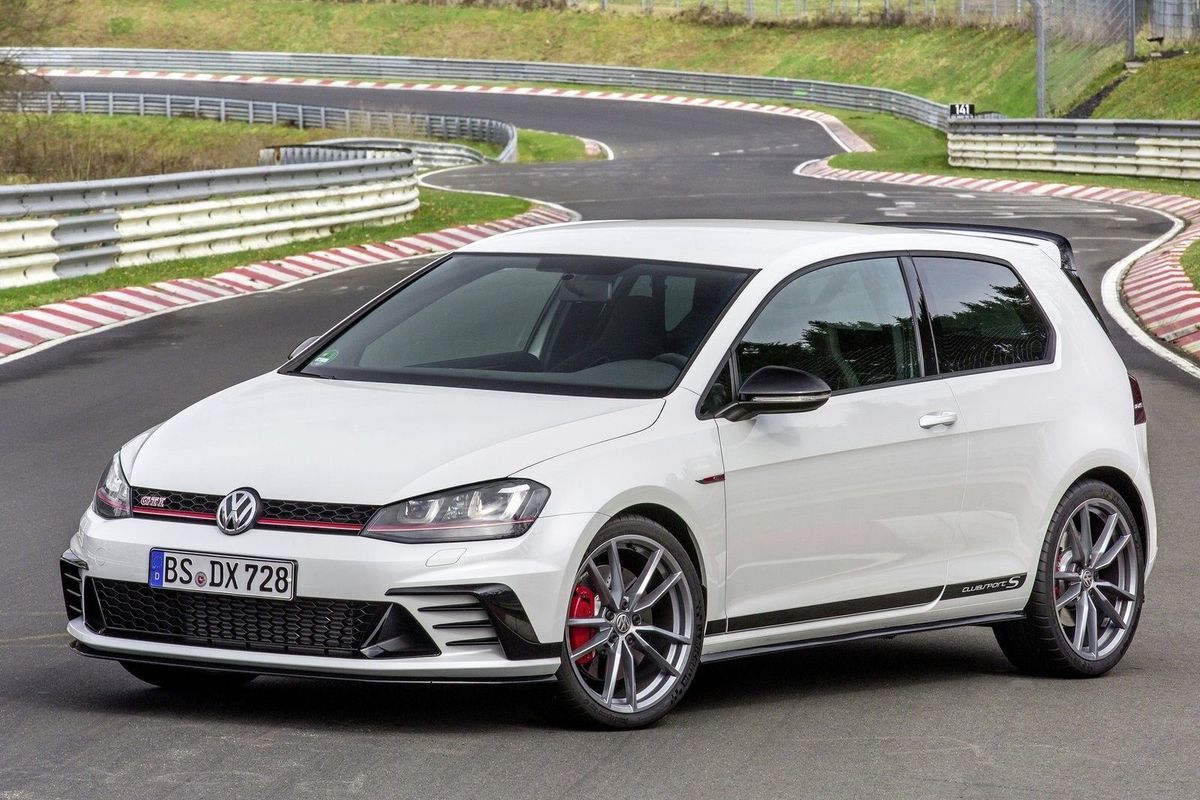
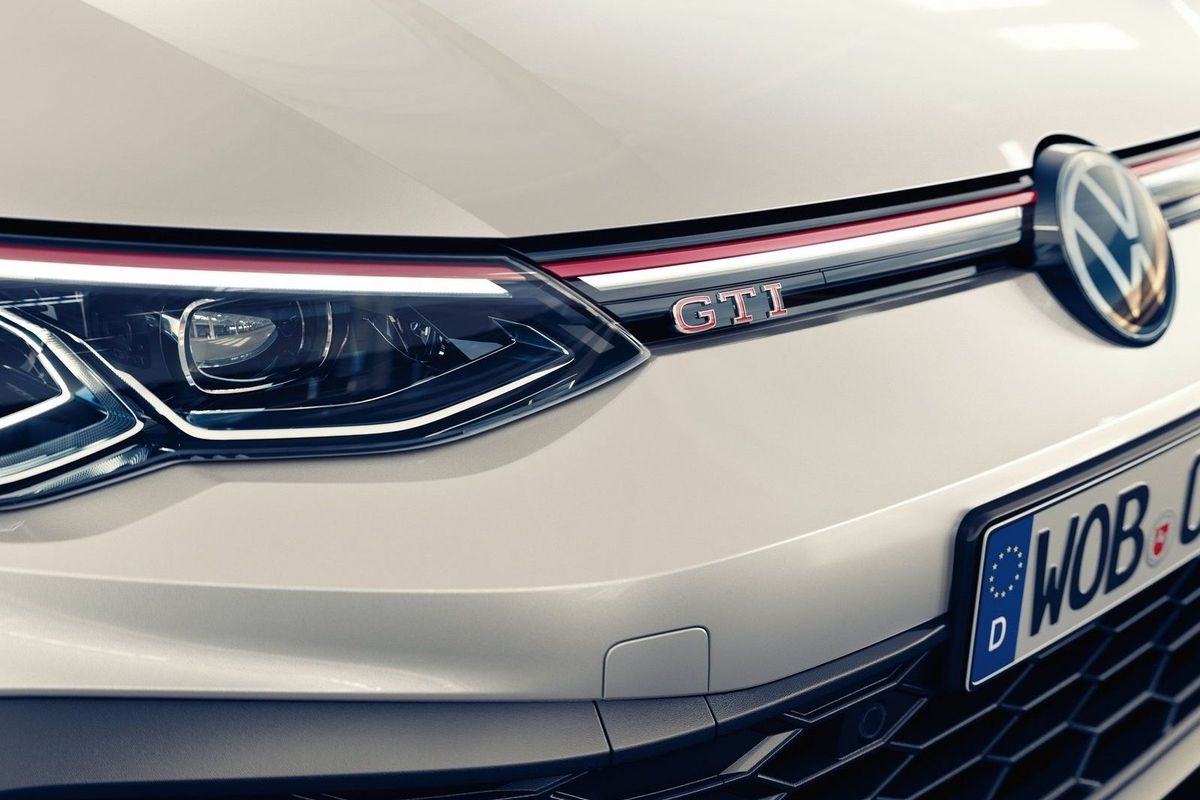
This week's reveal of the all-new Volkswagen Golf 8 GTI Clubsport had petrolhead tongues wagging. Will there be an eventual successor to the iconic Clubsport S, which rewrote the history books back in 2016? Bad news, we're afraid…
Chatting to UK publication Autocar, the Volkswagen head of driving dynamics Karsten Schebsdat 'admitted that a follow-up to the 2-seater model is not planned now.' This is annoying news as we were keen to see another driver-focused Golf see the light of day. Still, it's not as annoying as the news that the all-new Clubsport won't be coming to SA.
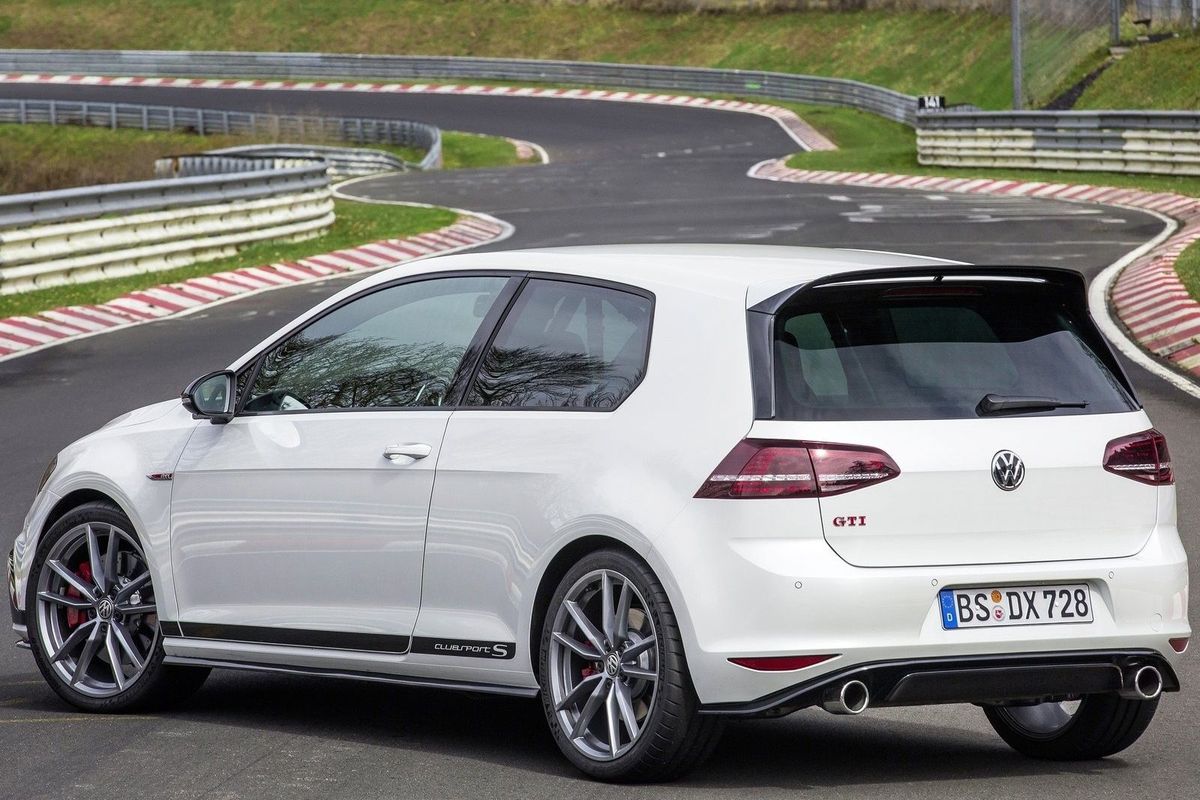
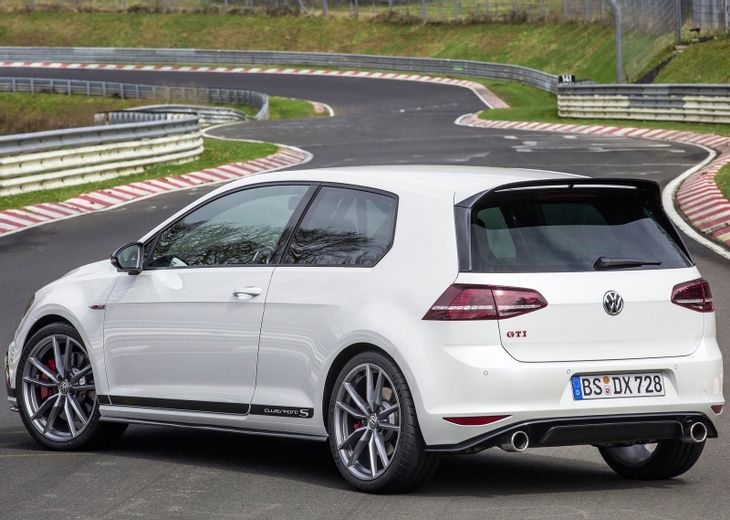
When it was launched, the Volkswagen Golf GTI Clubsport S upset the hot-hatch applecart. Powered by an uprated 2.0-litre turbocharged engine that develops 228 kW and 380 Nm of torque, the Clubsport S was front-wheel driven and featured a 6-speed manual transmission. A number of weight-saving measures have been employed to lighten the vehicle and you will notice that the Clubsport S had no rear seats, it’s a 3-door, with a strut brace in its place to improve structural rigidity. The Clubsport S rides on 19-inch alloy wheels. There were just 400 units made and of these, 47 made it to South Africa.
The claim to fame was its Nurburgring lap time of 7min 47.19sec. The record only lasted a year before the Honda Civic Type R beat it and the Japanese performance hatch was in turn beaten by the Renault Megane RS Trophy-R in 2019. The fast Frenchman managed a 7 min 40.1, which is the current record.
This 'Kwid' could start the budget EV revolution. And it's about time!
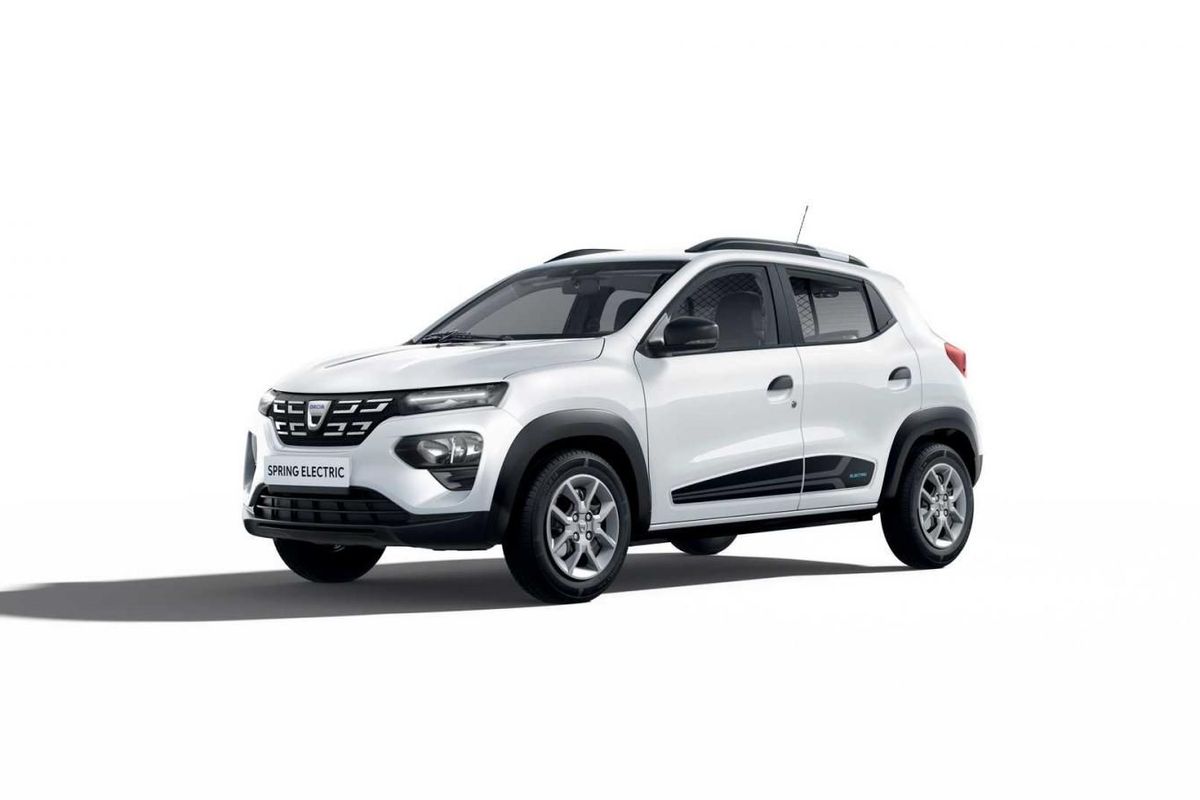
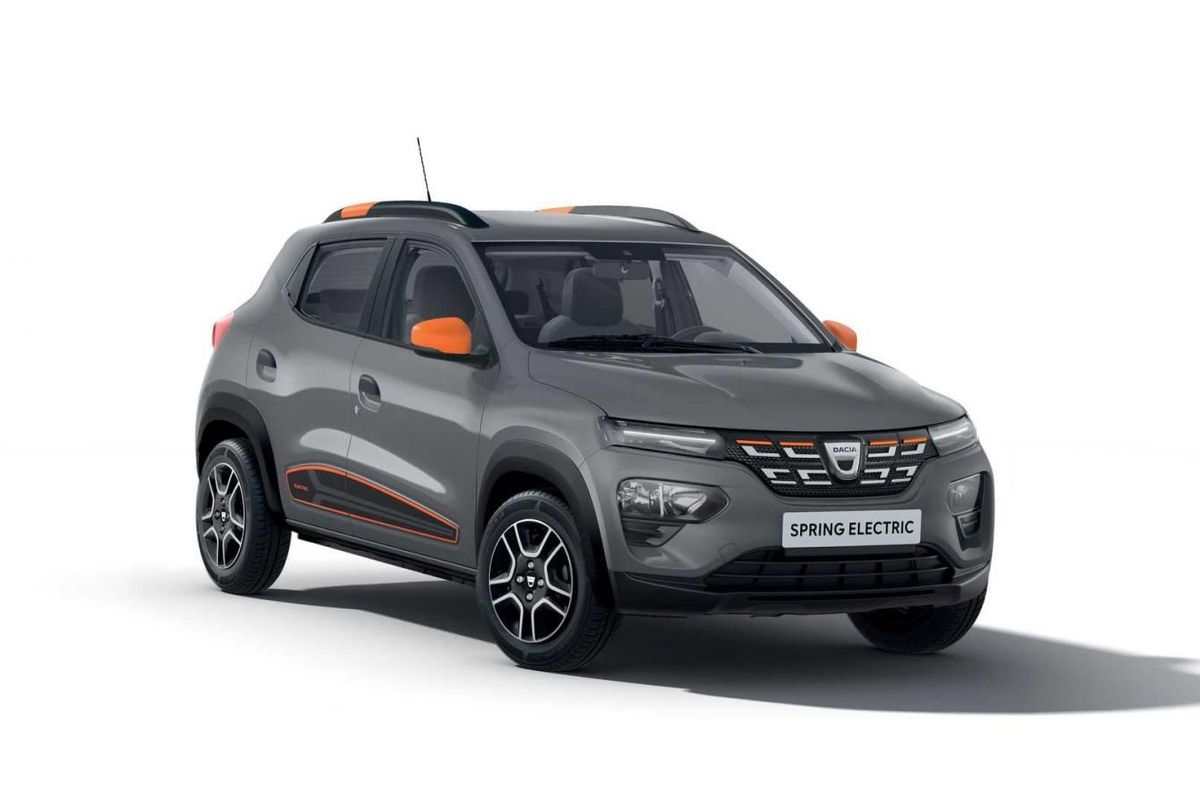
Renault has revealed a new compact crossover, with battery power.
The French company believes that electrification is crucial to its future and unlike other European rivals, who are prioritizing large and expensive battery vehicles, Renault is going for entry-level value.
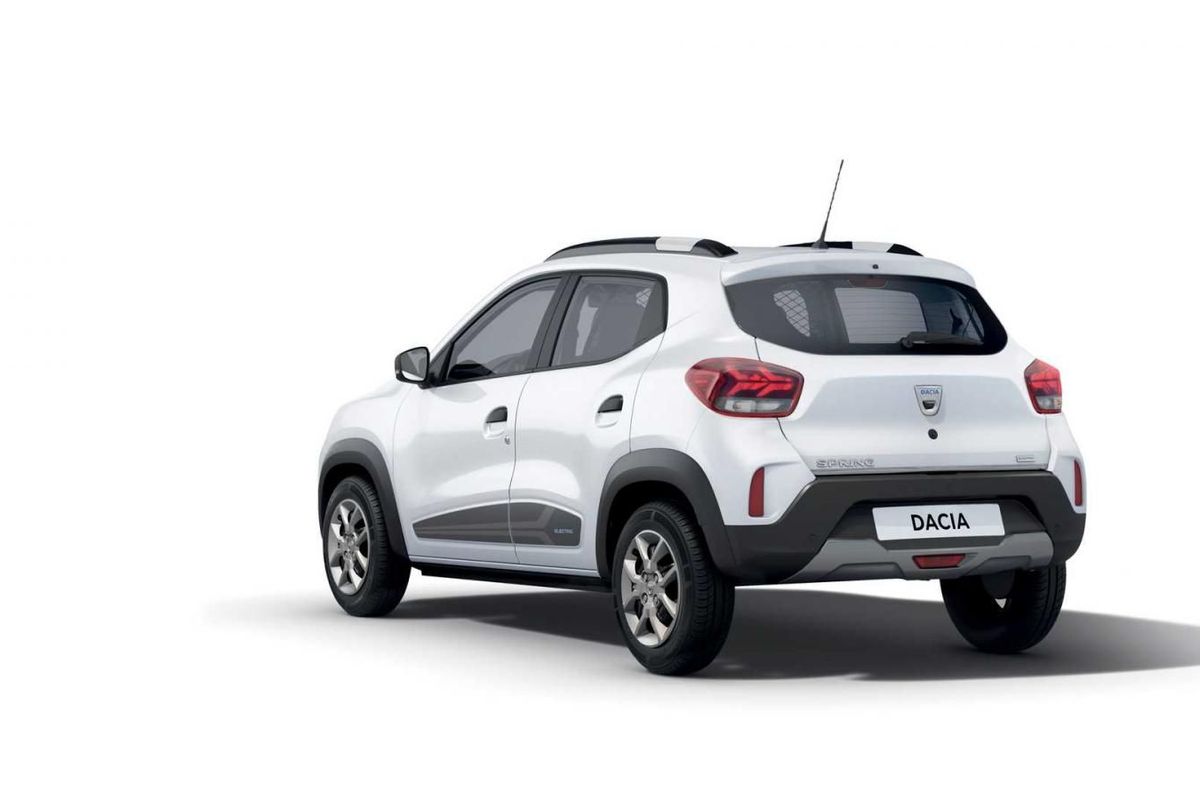
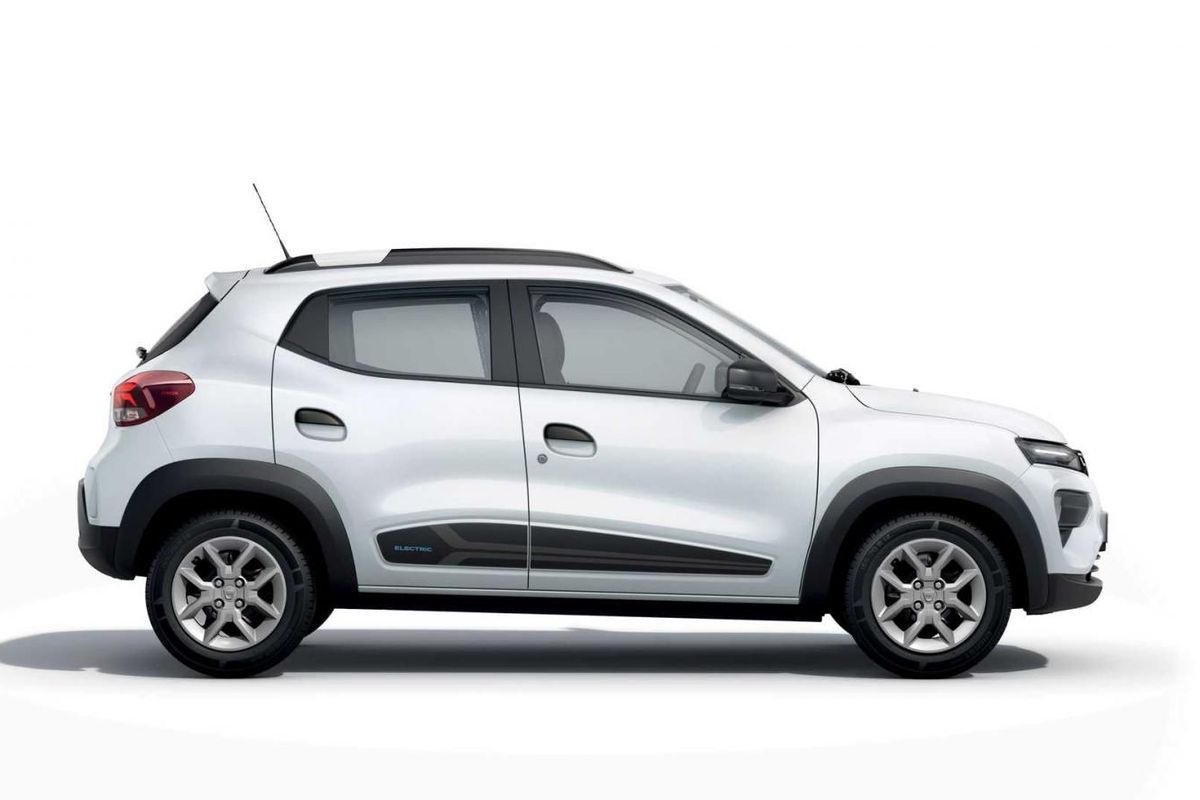
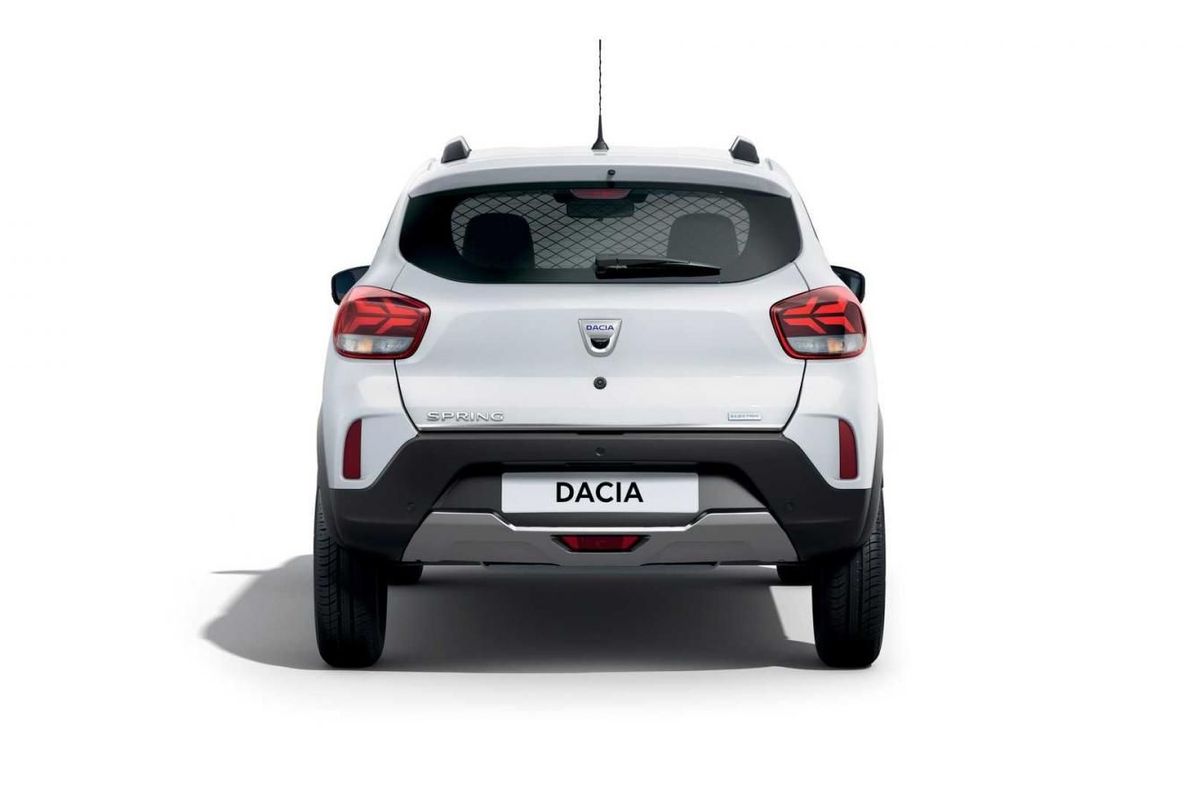
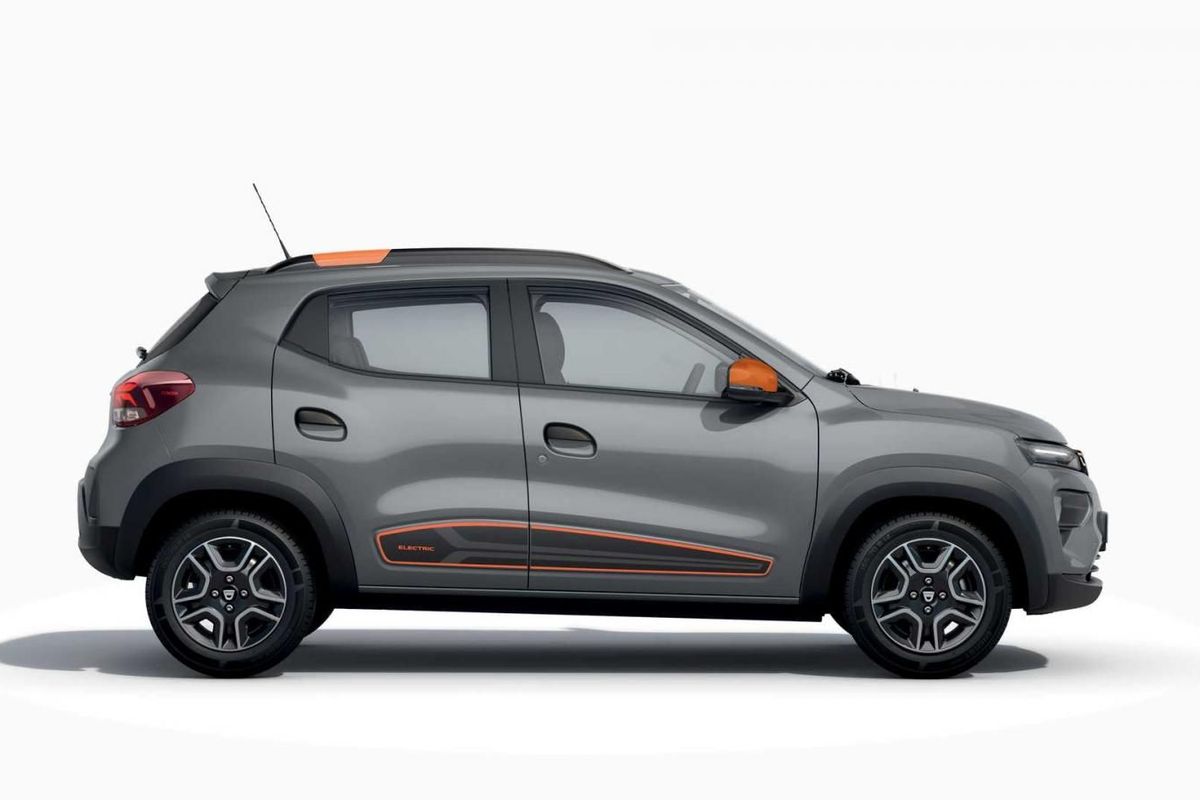
The Spring Electric, which has debuted with Dacia badging, is essentially a battery-powered Kwid. In terms of design, it has a non-functional front grille and there are no exhaust tips at the back.
Power sources from a 26.8 kWh battery pack, which is small, and produces only 33 kW and 125 Nm. The peak power output is quite a lot less than a petrol-engined Kwid (50 kW), but the Spring Electric has 35 Nm more torque.
Renault has not released any acceleration statistics for its new electric crossover, only commenting that it has a 125 kph top speed, which to anyone who has driven the petrol-powered Kwid will know, feels less than stable.
For electric vehicle buyers, range is paramount and the Spring Electric is claimed to deliver 225 km on a single charge, in mixed driving conditions.
An interesting feature is calibration software that limits peak electric motor power to 23 kW when an Eco-mode button is activated. This is claimed to increase the overall driving range by 10%.
Due to its small battery pack, the Spring Electric should be less of a chore to recharge. By Renault’s calculations, a 220V home socket will fully recharge the compact crossover in 14 hours. This can be trimmed to 5 hours when using a 7.4 kW Wallbox fast-charging unit.
If you have access to a 30 kW public charging terminal, the Spring Classic’s battery energy can be completely replenished in under an hour.
One of the benefits with any electric car, is the promise of superior space utilization, due to the lack of an engine and fuel tank. With the Spring Electric, those gains are marginal, due to the fact that it does not ride on a dedicated electric vehicle platform architecture.
Compared to a conventional Kwid, it only has 21-litres more boot capacity, at 300-litres of total luggage volume, with the rear seats in place.
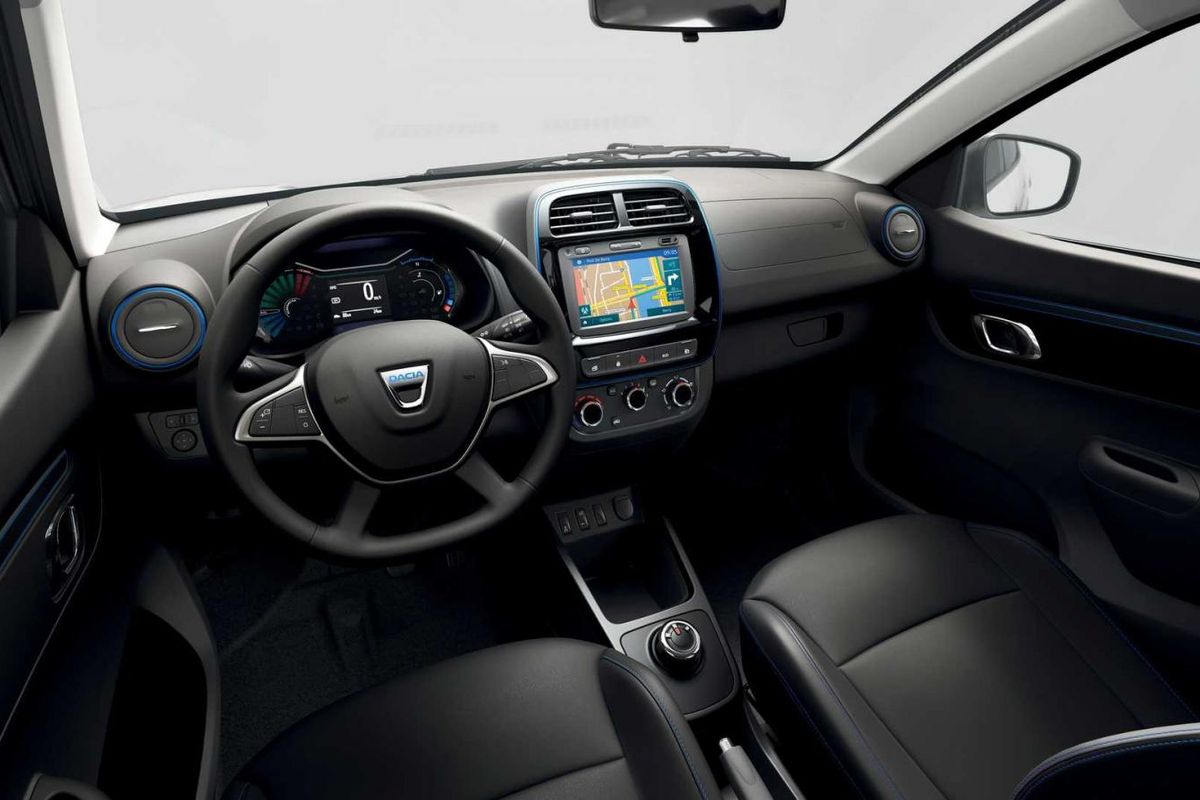
Renault’s product strategy with the Spring Electric is to produce Europe’s cheapest mass volume electric car. The launch price isn’t confirmed, yet, but the French have already simplified their Spring Electric, to reduce cost, making automatic air-conditioning and an infotainment system optional extras.
In race 3 of our hot hatch hyper shootout series of drag races, Korea takes on Japan to see who makes the faster hatch over a quarter-mile.
In this battle of car brands which begin with 'H', only one hot hatchback can be victorious, unless it's a draw, which is very unlikely. Interestingly, too, both these cars are manuals. We headed out to the Saldanha airfield outside Cape Town, a working airfield where you occasionally have to scatter off the runway because a plane needs to land. It's very exciting. In a fetching shade of blue, the Hyundai i30 N is the brand's first N car to reach South Africa and our race-ace Ashley Oldfield thinks very highly of this front-wheel-drive fiery five-door. In an angry shade of grey, the Honda Type R is arguably the king of hot-hatchery; it is devastatingly quick around a track. But how would it fare on the quarter-mile…
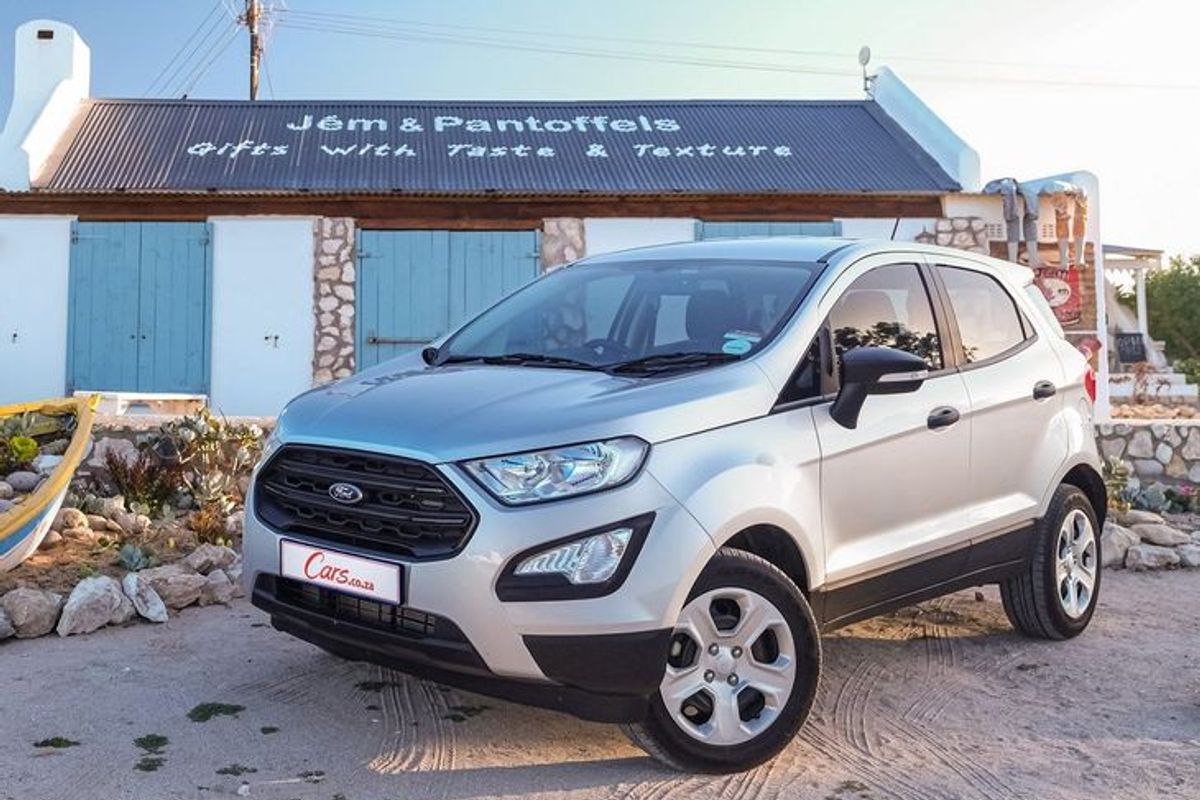
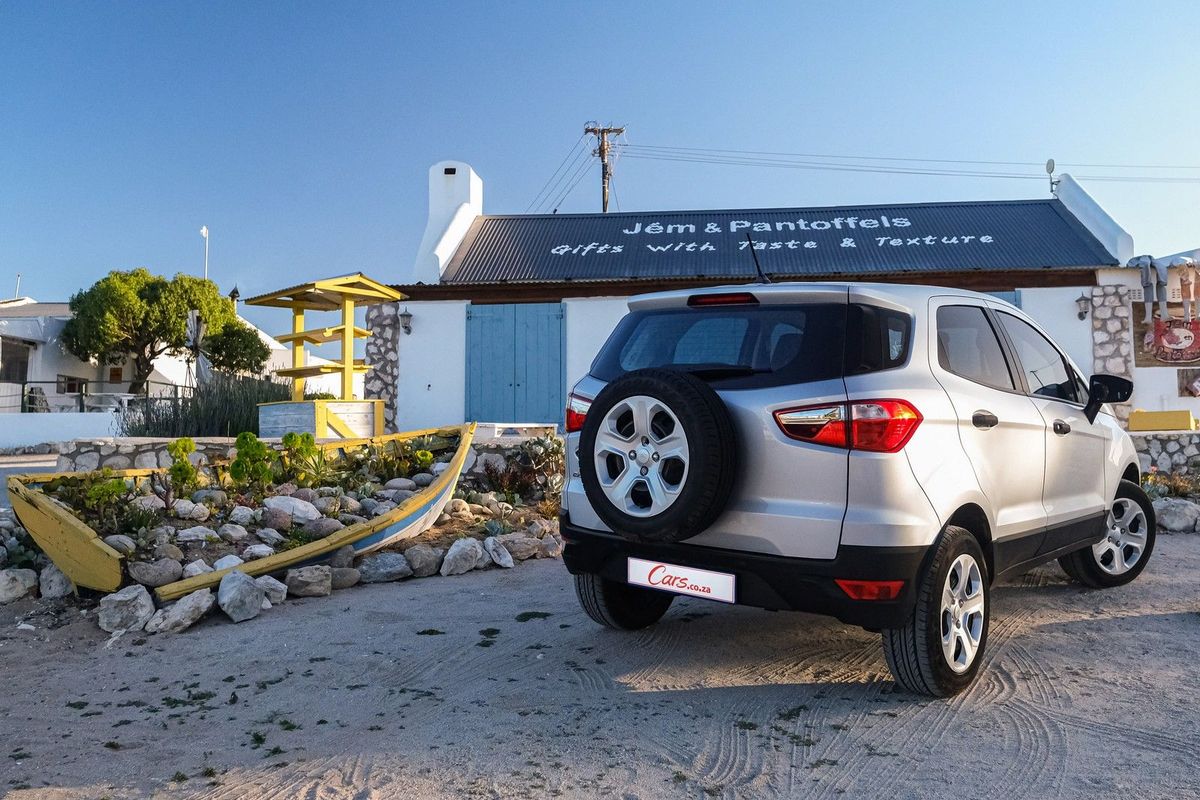
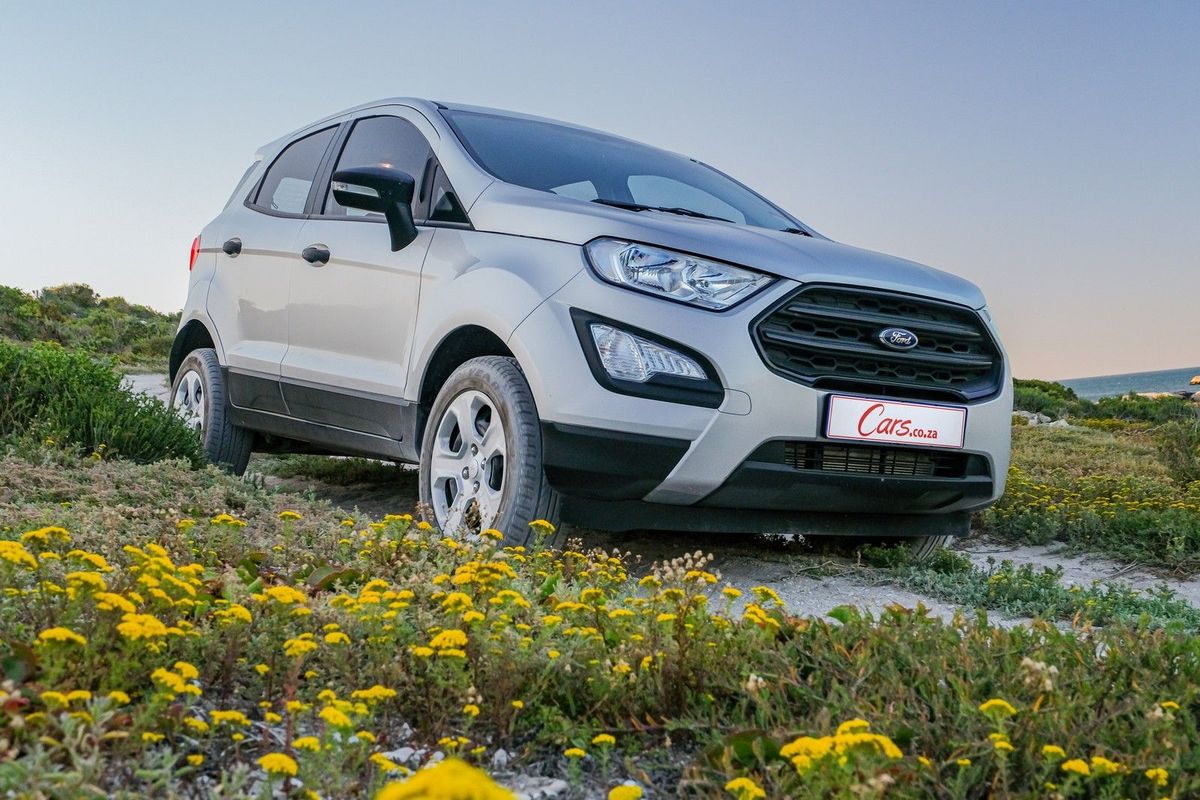
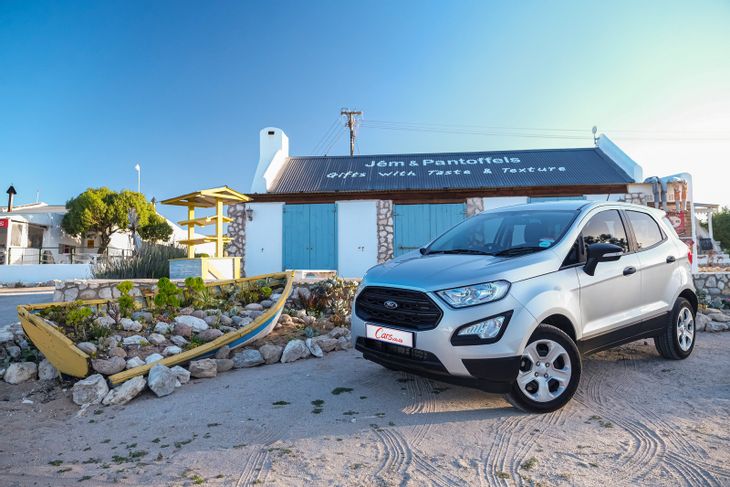
Earlier this year, Ford bolstered its EcoSport range with a more affordable entry-level (and convenient) Ambiente automatic derivative. Gero Lilleike loaded up the 1.5 Ambiente automatic and headed for the quaint West Coast town of Paternoster to determine if the newcomer is worthy of your consideration.
We like: Good looks, no-fuss interior, ride/handling balance, convenience of an automatic at this price
We don’t like: Sluggish overtaking ability, limited rear passenger and load space.
Fast Facts
Price: R316 300
Model Tested: Ford EcoSport 1.5 Ambiente automatic
The EcoSport is a charming small SUV and the addition of an entry-level automatic derivative broadens its appeal.
The Ford EcoSport competes against a horde of formidable rivals in the compact family-car segment, including the Volkswagen T-Cross, Mazda CX-3, Hyundai Venue, Renault Captur and Haval H2 (to name just a few models). The Indian-made EcoSport has been a huge sales success for Ford South Africa; the 1st-generation model arrived here in 2013 and was replaced by this iteration in 2018.
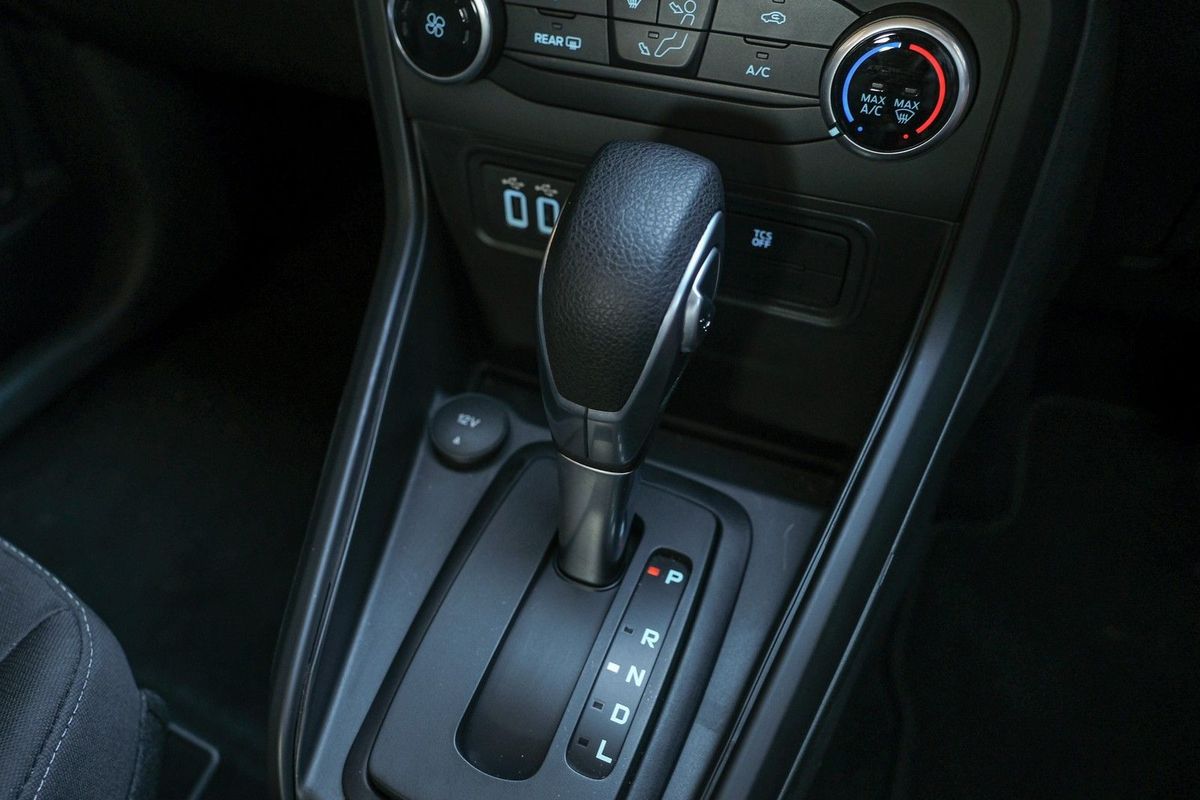
So, why has this derivative been added to the line-up? Buyers are increasingly opting for the convenience of an automatic transmission and, in an effort to target budget-conscious buyers (who most probably have to contend with congested traffic on their daily commutes), Ford now offers a 6-speed automatic EcoSport in its entry-level Ambiente trim, making it one of the most affordable compact family cars currently available on the local market. It’s a smart move from Ford and one that’s bound to resonate with cash-strapped buyers looking for optimal value from their new-car purchases.
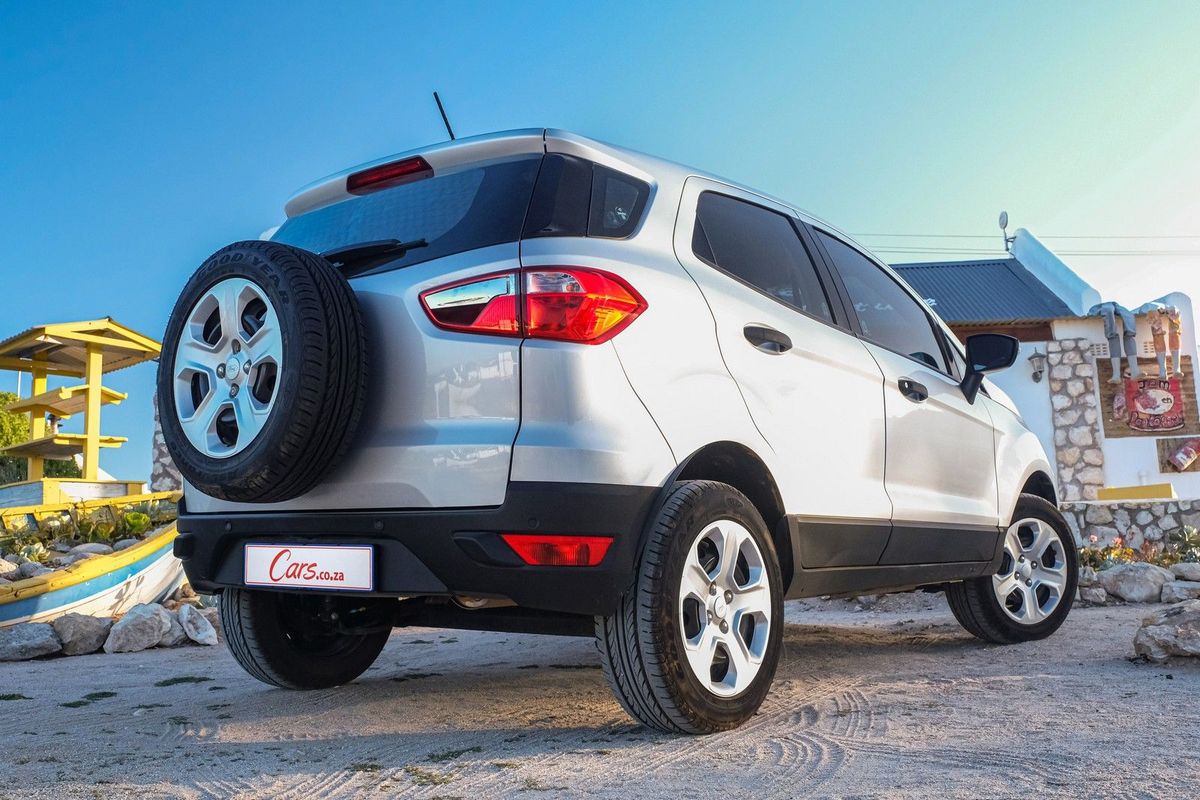
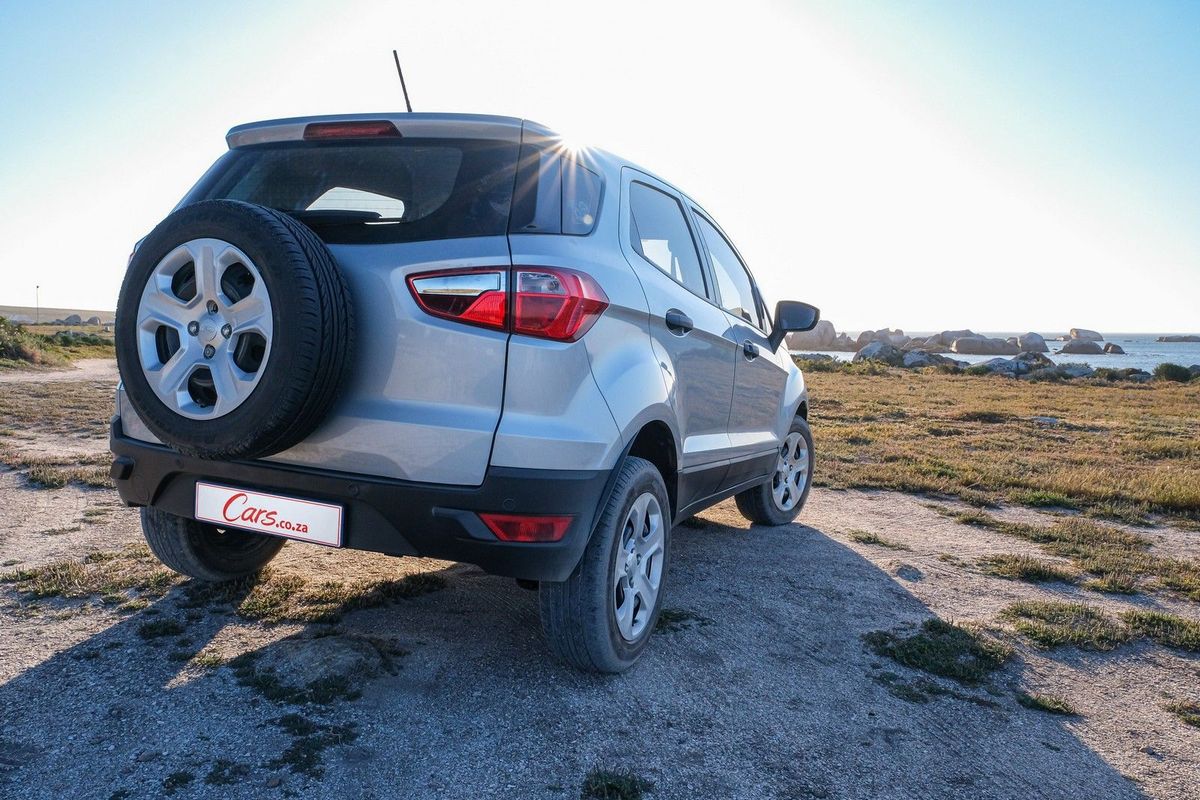
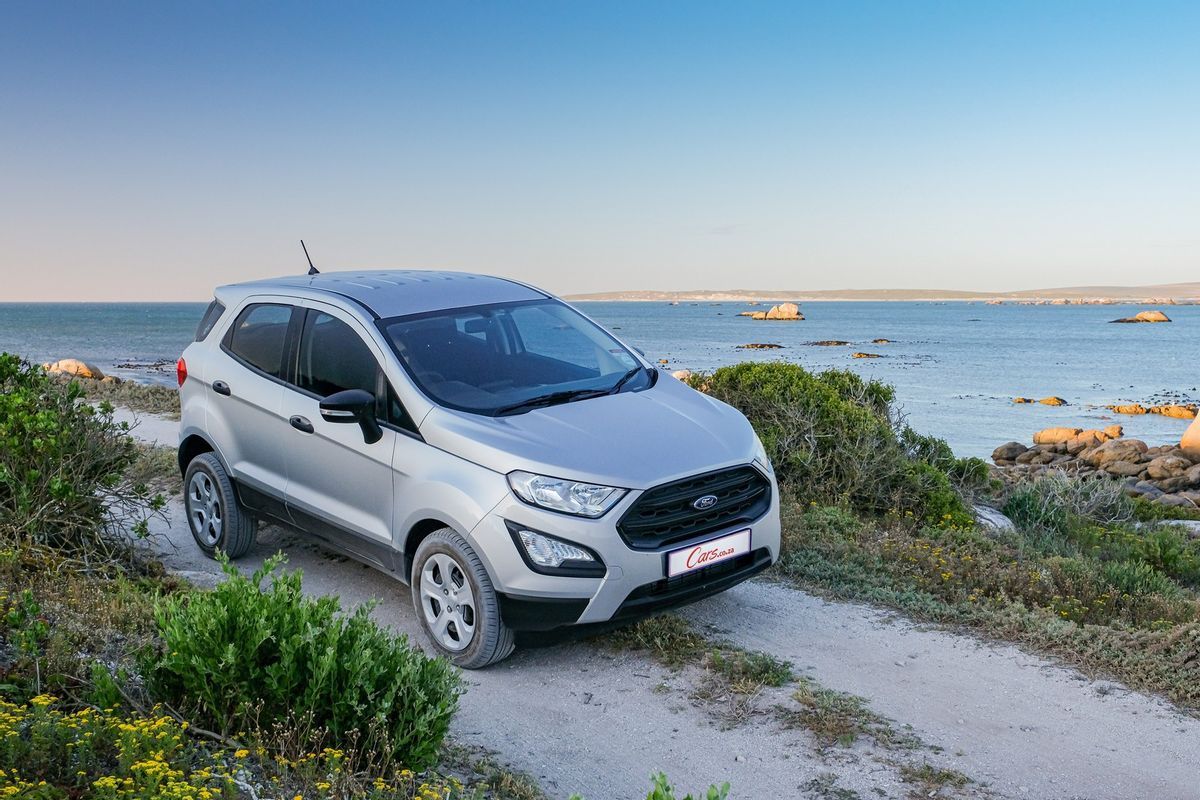
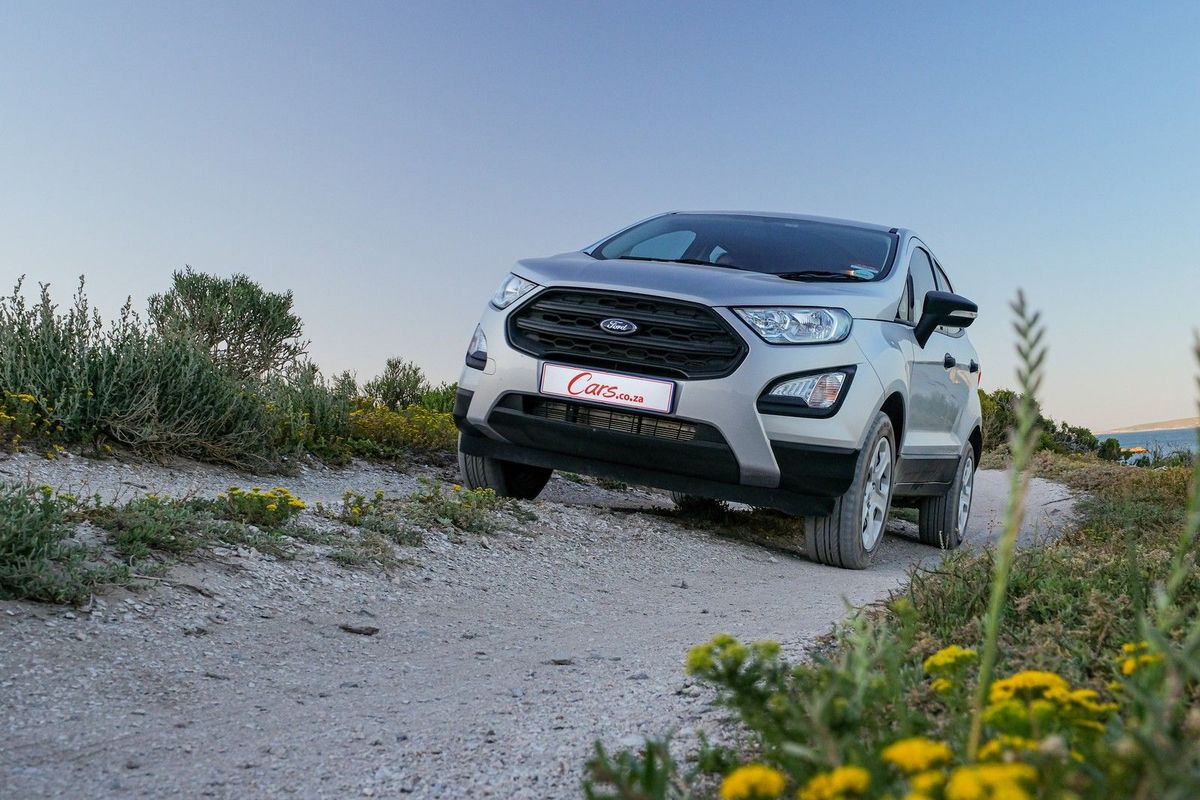
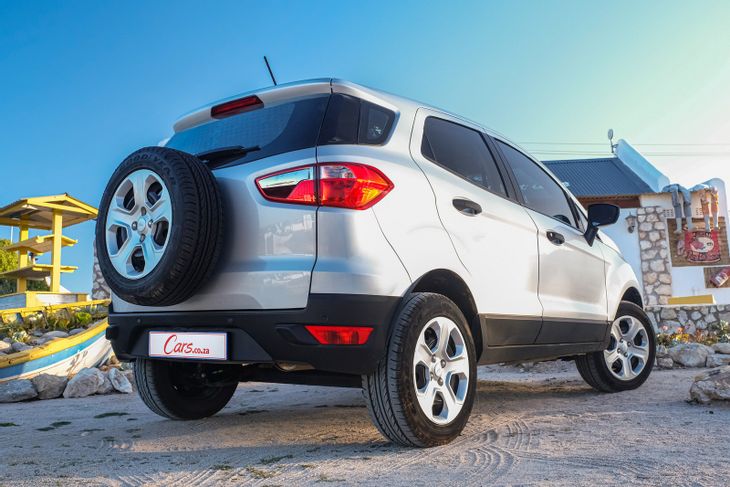
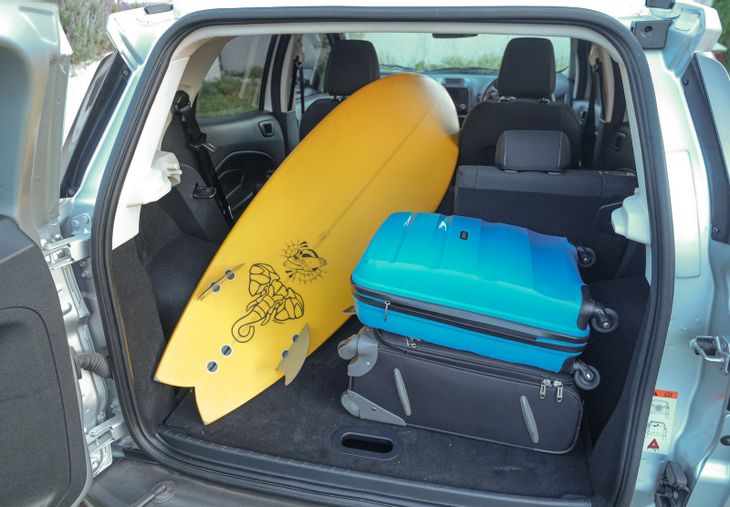
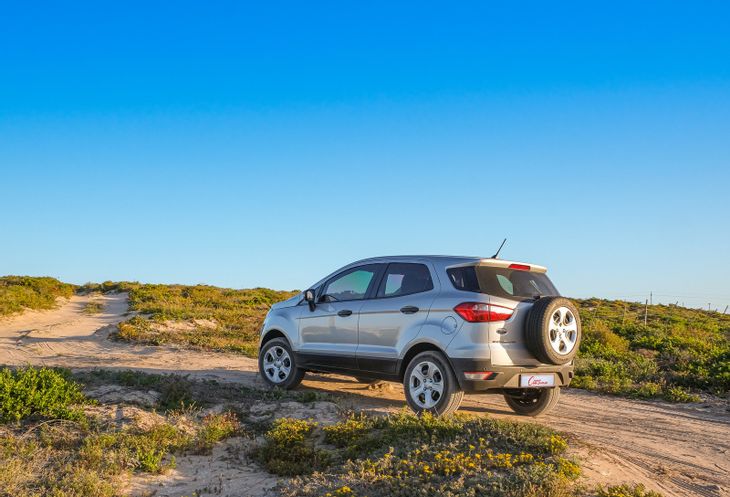
Our test unit looked particularly striking in its Moondust Silver metallic finish and a contrasting black grille. In Ambiente guise, 16-inch steel wheels with wheel covers are standard, but with a ground clearance of 206 mm and loaded with a surfboard, the EcoSport had to fulfil the role of a go-anywhere surf-mobile in search of sand and waves on the West Coast. Let’s see how it performed…
How it performs in terms of…
Performance and Economy
Withoutturbocharging, this EcoSport lacks low-end punch, but still manages to return acceptable fuel consumption figures.
Our destination for this test was Paternoster, a small – but hugely popular – West Coast town some 150 km north of Cape Town. Seeing as the Ambiente automatic is equipped with a 1.5-litre petrol engine that develops middling outputs of 91 kW and 150 Nm of torque, I wasn’t expecting fireworks from this naturally-aspirated EcoSport – I didn't expect it to be as responsive or punchy as its 1.0-litre turbopetrol siblings. However, even though the engine has been criticised for being sluggish and the transmission could be smoother-shifting, there’s a trick to extracting the best from this powertrain.
This EcoSport doesn’t like to be driven hard; if you pin the accelerator pedal to the floor, the engine just strains while the transmission hangs onto each gear for dear life, all without achieving significant forward momentum. Instead, to get the most out of this engine-transmission combination, a driver needs to apply steady, measured throttle inputs (feeding the power consistently) to keep the engine in its sweet spot. This approach yields far better results and when driven in this manner, the Ecosport’s performance improves appreciably – it can actually feel quite nippy to drive on city roads. However, because the 1.5 Ambiente automatic isn't turbocharged (there's no meaty low-rev punch on tap), overtaking other vehicles at highway speeds requires more careful planning/forethought.
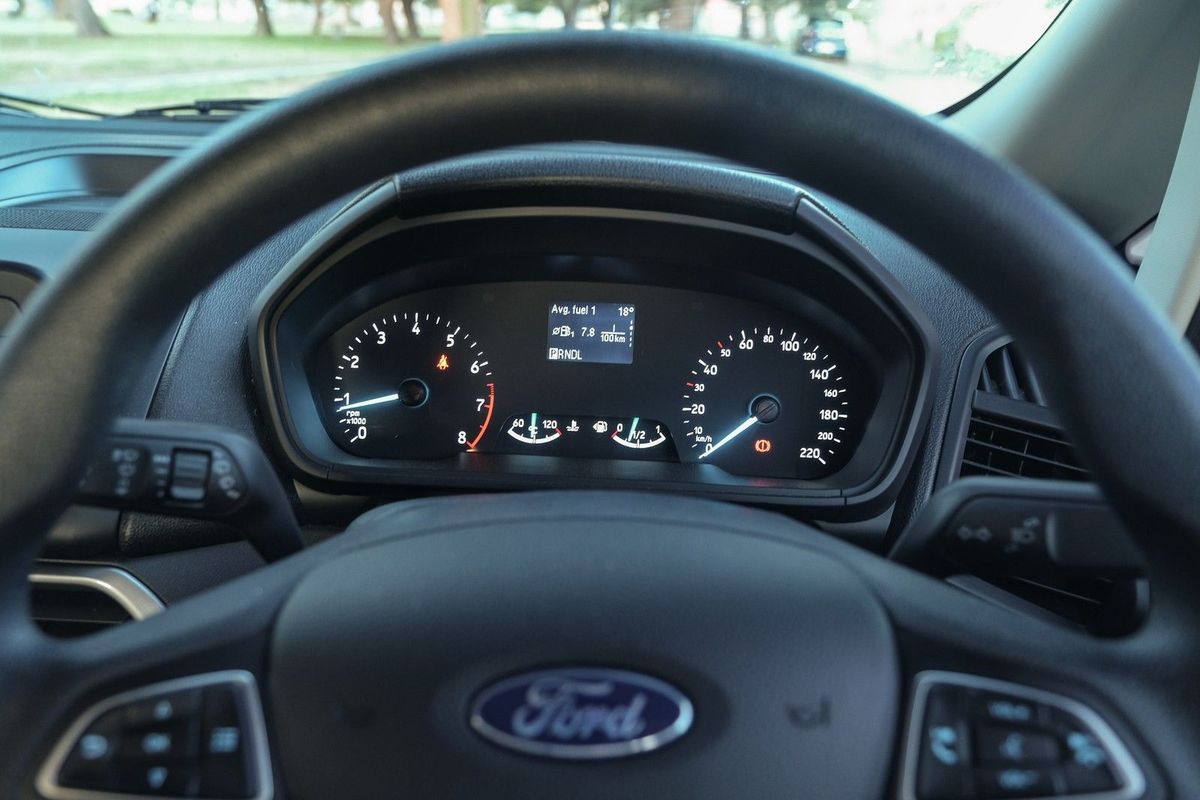
It’s also worth remembering that the Ford's performance will suffer at altitude, especially when it's loaded with a full complement of passengers and luggage. On the upside – and this will be quite a plus for the derivative's target market – the EcoSport returned an admirable fuel consumption figure during this test. Ford claims 6.9 L/100 km, but we managed 7.8 L/100 km without trying too hard.
Another major highlight of this EcoSport's package is its surprisingly refined ride and handling balance. The 1.5 Ambiente automatic simultaneously feels reassuringly-planted at highway speeds and rides pleasingly comfortably on tar. It’s also worth noting that the Ford's steering is refreshingly sharp and responsive (for a budget offering), which contributes to the overall driving experience.
"Off-road" performance
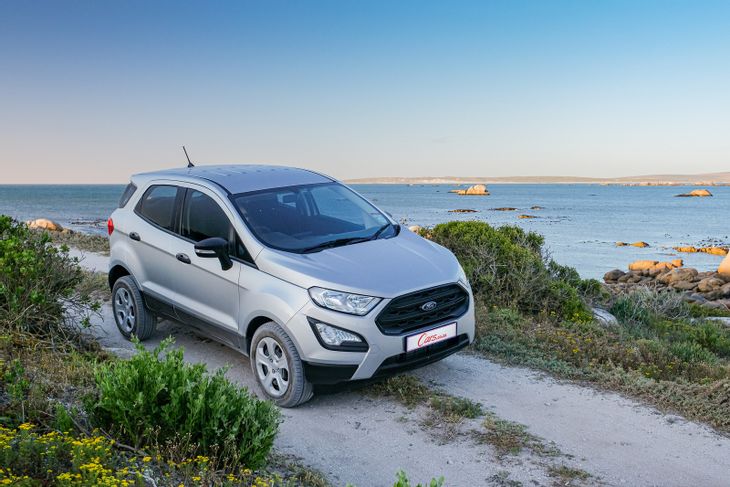
The EcoSport feels right at home on gravel and it has the ground clearance to navigate dirt roads with ease.
We were really keen to explore Paternoster and while the forecast for surfing was disappointing, we decided to venture out nonetheless. A friendly local told me about a potential surf spot up the coast, but it was only accessible via a sand road. Such a route probably required an all-wheel-drive or 4×4 vehicle to traverse safely, yet I couldn’t resist trying out the Ford's (albeit limited) off-road abilities.
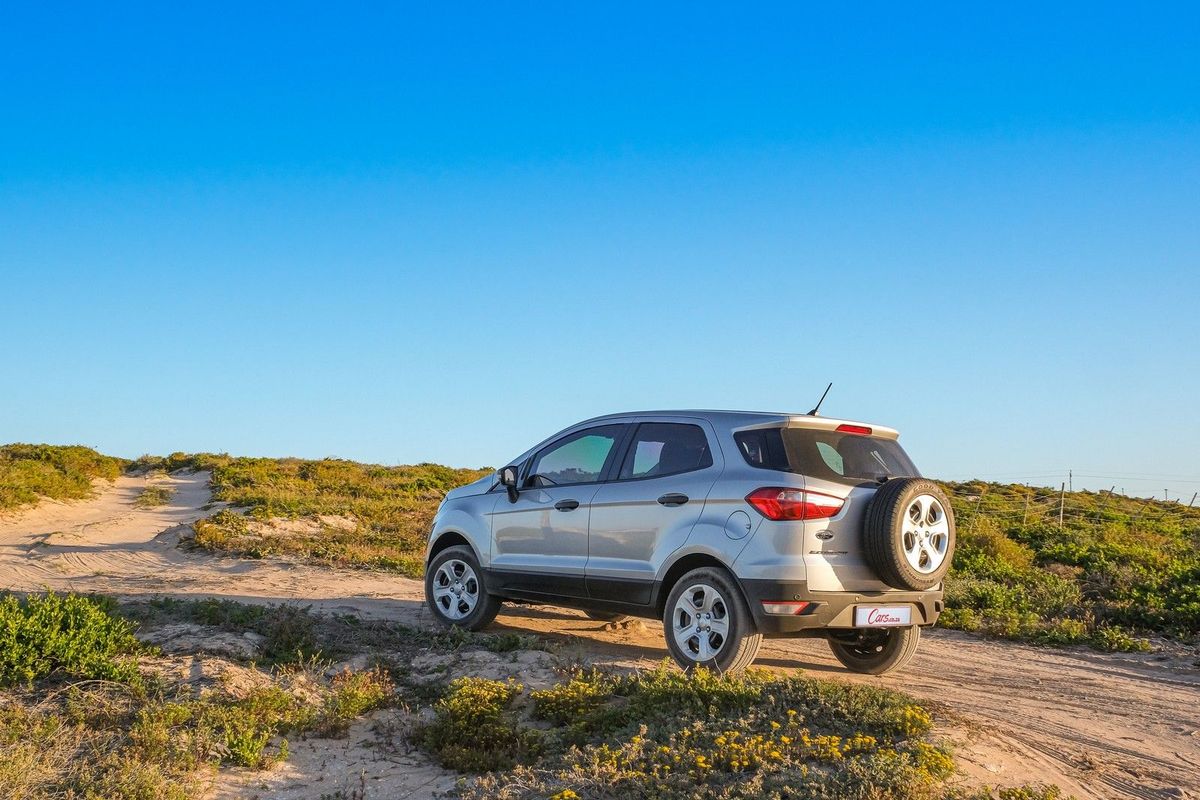
With its raised ride height, the EcoSport felt right at home on gravel roads… and even proved capable on the sandier sections. Using the vehicle’s momentum, thicker sand sections can be successfully negotiated and despite my wife’s fears that we'd get stuck, the Ford made it to its destination without a struggle!
The front-wheel-drive EcoSport is at a disadvantage on challenging terrain, but by shifting the transmission lever into "L", the 'box stays in first gear, which ensures that the engine remains "on the boil", at least sufficiently so to get through softer sections of sand (this feature is also useful on steep inclines).
During our stay in Paternoster, we saw countless EcoSports exploring the town and the surrounding dirt roads and, within this rustic location, the Ford's appeal became immediately apparent. This compact family car/small SUV really can go places, or to be more precise, using Ford’s marketing tagline, it really can "Go Further" than you might think…
Interior execution and features
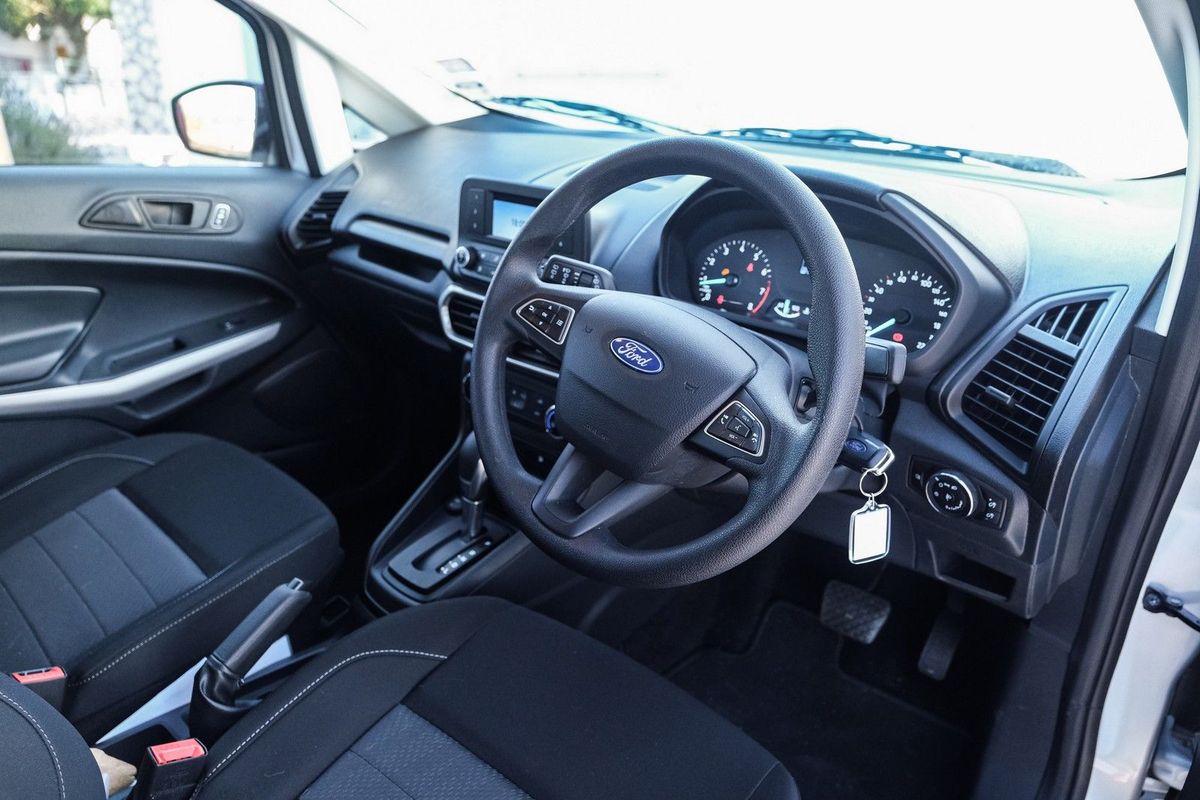
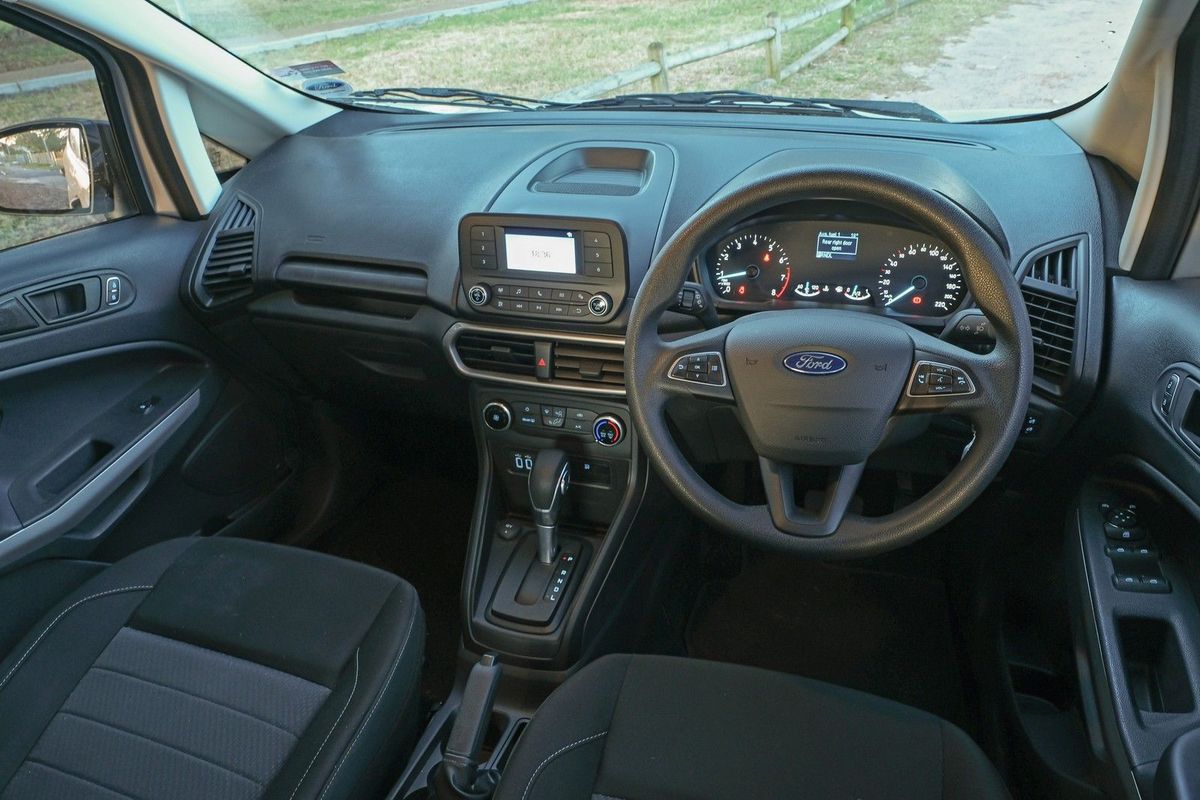
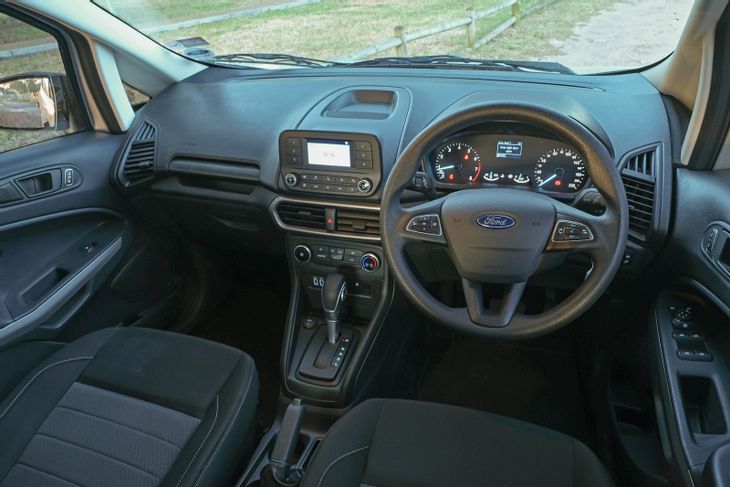
Hard-wearing plastics dominate inside this EcoSport, but it's likely to withstand the rigours of family life.
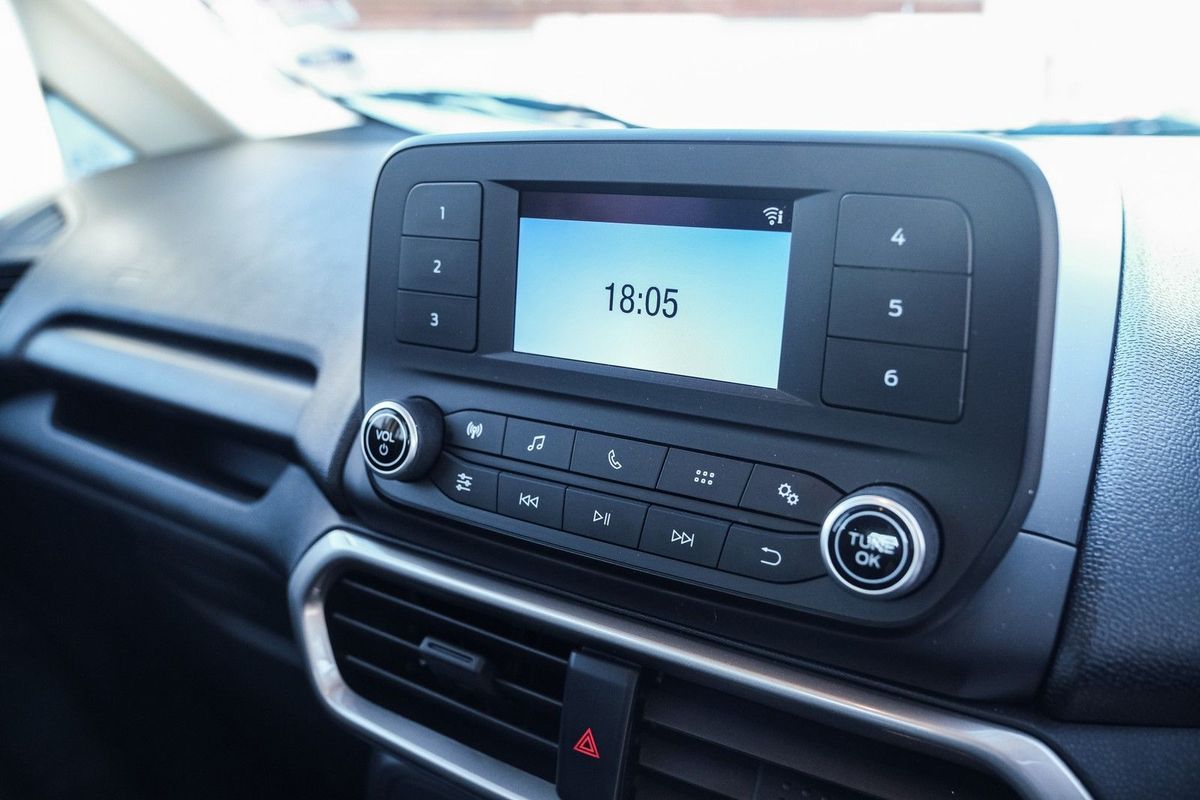
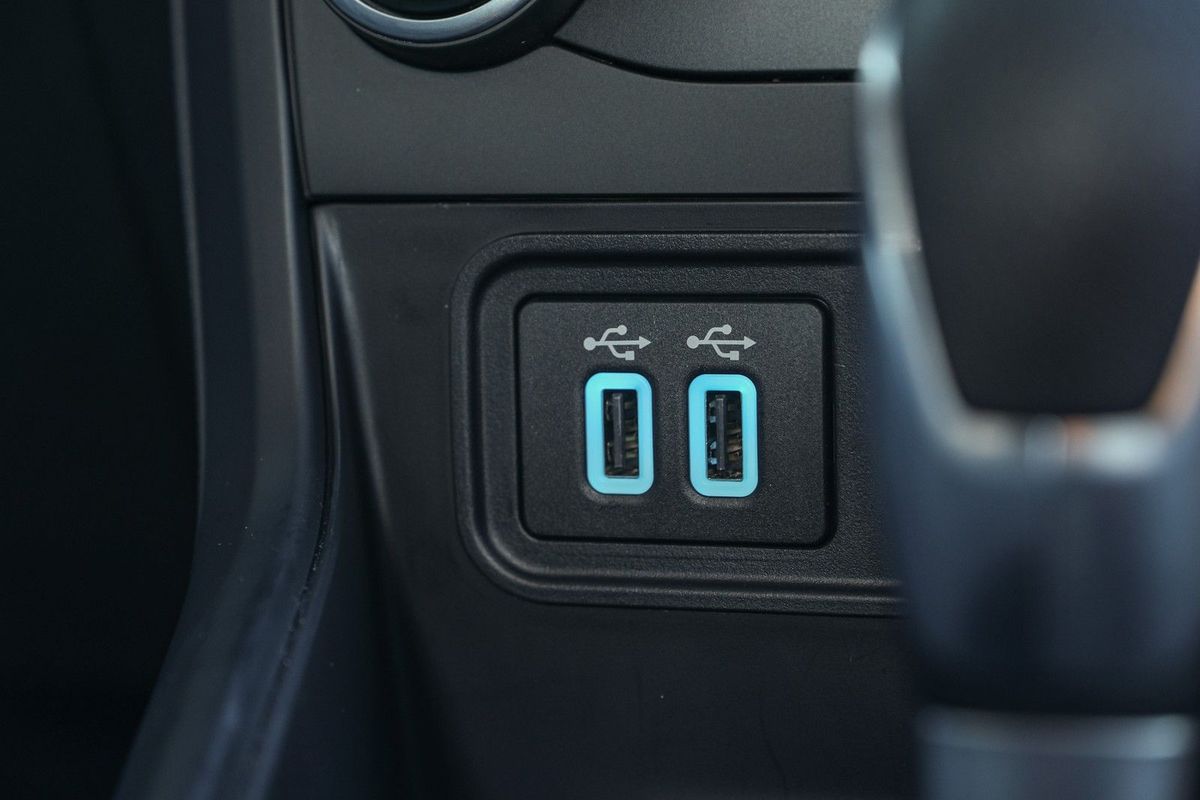
Even though this is the entry-level EcoSport derivative, the 1.5 Ambiente is not a bare-bones offering. Sure, you have to forego the larger infotainment touchscreen offered on higher-spec derivatives, but the 4.2-inch SYNC system has the basics covered with Bluetooth telephony with voice control, radio and MP3 playback. There are also 2 conveniently placed USB ports for connecting devices.
Despite the prevalence of hard plastic surfaces and finishes, the perceived interior build quality is fair; we believe the EcoSport's cabin is likely to withstand constant hard use by a small family.
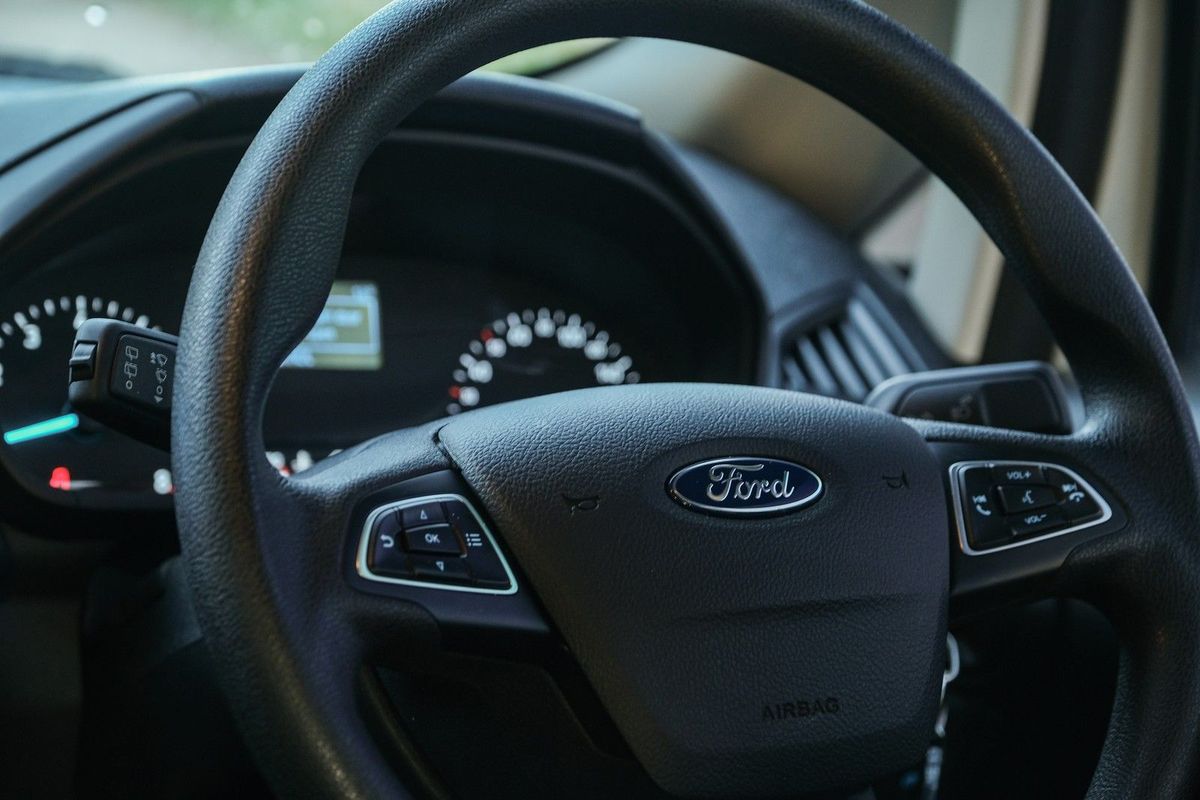
The steering column is adjustable for rake and reach, plus you can toggle the driver info display by using the multifunction steering wheel, but sadly, cruise control is not offered in Ambiente trim.
As for safety features, half a dozen airbags are fitted, as well as ABS with EBD, brake assist and electronic stability control. For added convenience, rear park-distance control is availed.
Practicality
In terms of luggage and utility space, the EcoSport is not the most spacious offering in this segment.
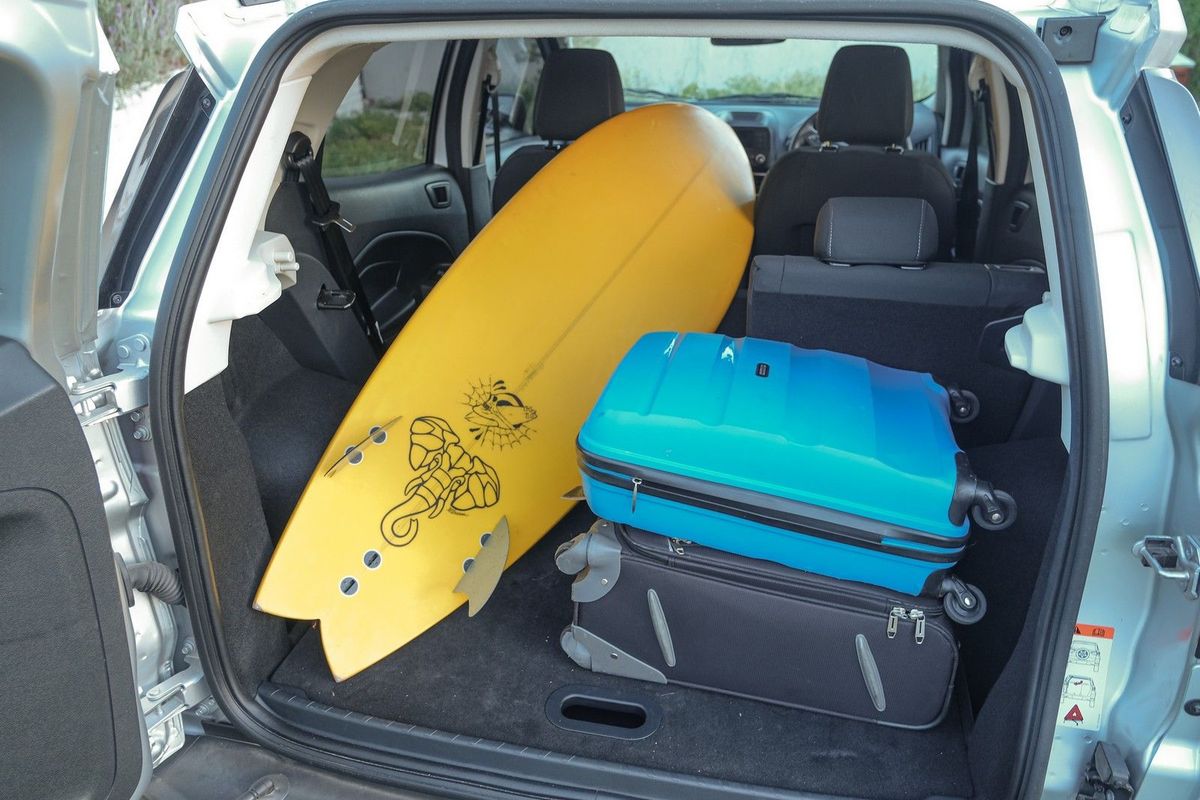
The EcoSport is indeed very compact, which bodes well for manoeuvring in and around the city, but it also means that the cabin is snug. For starters, the load bay has a claimed capacity of 333 litres, which is marginally below average for this segment; the load space is tall, but not quite as generous in terms of depth. Because the spare wheel has been positioned on the tailgate, there is at least additional (and discreet) storage space underneath the boot board. It should also be noted that the tailgate opens horizontally (not vertically), which might hinder rear access in confined spaces.
Meanwhile, the rear seatback splits in a 60:40 configuration and when you fold the sections down, you have access to 705 litres of utility space, which allows you fit in bulkier items, such as surfboards! However, longer items (again, such as surfboards) are likely to encroach into the front cabin (see above).
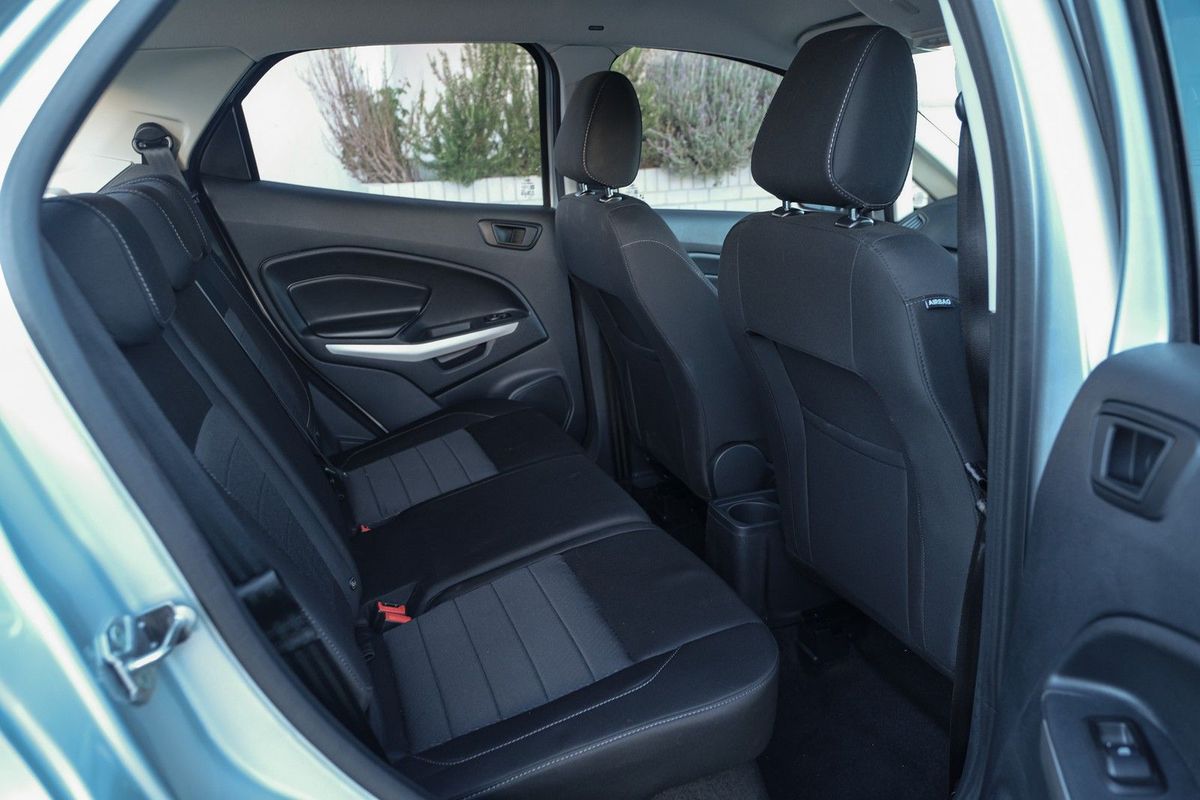
As for rear-passenger comfort, tall adults will find legroom cramped, but persons who are less than 6-foot (1.83 metres) in height will find the rear bench acceptably comfortable, at least for shorter trips.
Besides, the EcoSport's space utilisation is moot: the model is best suited to young couples and small families. While there’s no central bin to store items out of sight (the glovebox will have to do), there is a central console below the handbrake lever that offers 3 cup/bottle holders, as well as space for other oddments. The door mouldings also offers additional storage space.
Price and warranty
The Ford EcoSport 1.5 Ambiente automatic is priced from R316 500 and is sold with a 4-year/120 000 km warranty and a 4-year/60 000 km service plan.
At this price, there's merit in considering the EcoSport 1.5 Ambiente automatic, if you can live with its shortcomings.
We enjoyed our time with the Ecosport 1.5 Ambiente automatic – its go-anywhere attitude (within reason of course) was refreshing. However, the keenly-priced Ford's sluggish (let's be kind and say, workmanlike) powertrain is probably the weakest link in the overall package. We suspect that many buyers, especially those at altitude (Gauteng) will find this engine’s performance too compromised, which may force them to dig deeper into their pockets (if they can) for the 1.0T Trend automatic (priced from R354 800) or look to rivalling brands for a solution… but at additional cost, of course.
Nonetheless, for those buyers that are not too concerned with outright performance and are willing to accept this EcoSport’s spatial shortcomings, the 1.5 Ambiente automatic represents a fairly solid purchasing (let alone fuel-efficient) proposition. Yes, the automatic transmission could be smoother-shifting, but the sheer convenience of having a self-shifting box is pretty alluring at this price point in the market. The next cheapest automatic compact family car/small SUV option is the Haval H2 priced from R324 900, which is a bit larger than the EcoSport.
Performance aside, buyers will also have to decide whether the EcoSport meets their needs in terms of practicality. There are more spacious options on the market and, as we mentioned earlier in this review, the EcoSport is probably best suited to young families; those buyers who require a more spacious cabin will have to look elsewhere – and be willing to pay more.
All things considered, we think that buyers looking for an affordable automatic compact family car should put this EcoSport on their shortlist and book a test drive. You have nothing to lose!
Mitsubishi has revealed its updated Eclipse Cross. Here's what's changed for the 2022 model year.
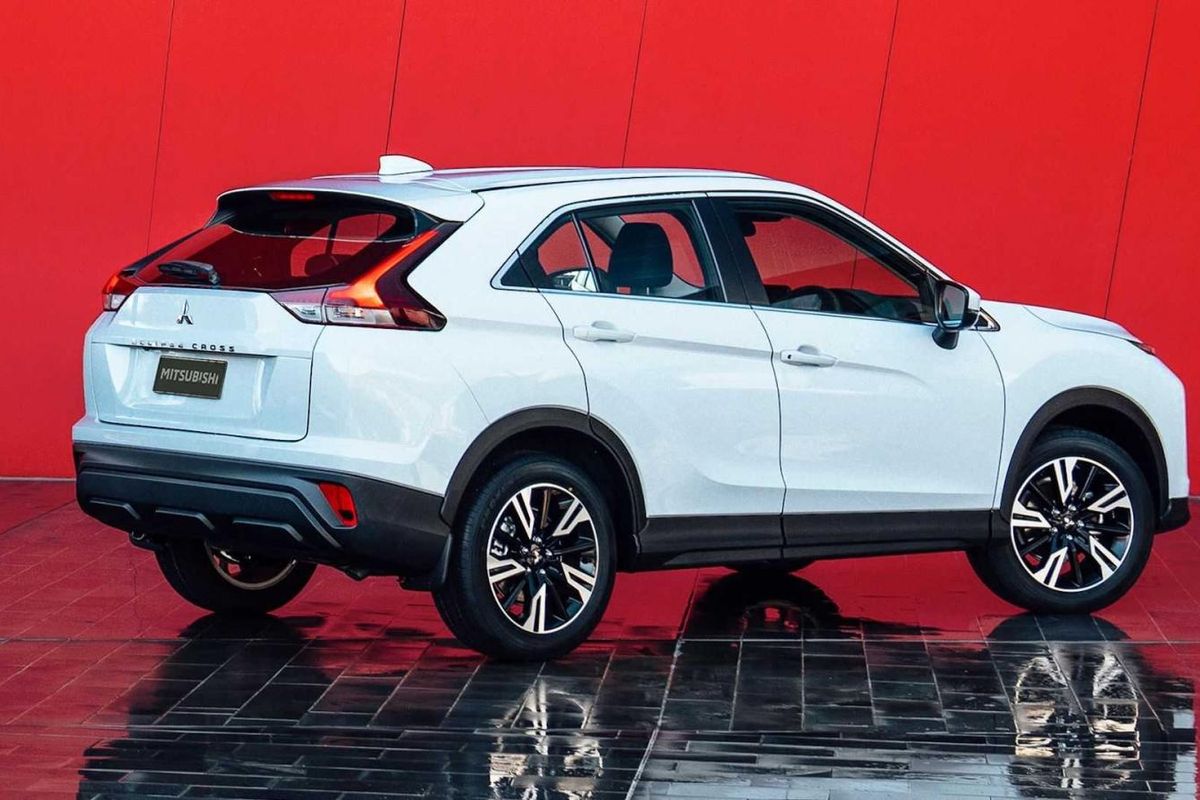
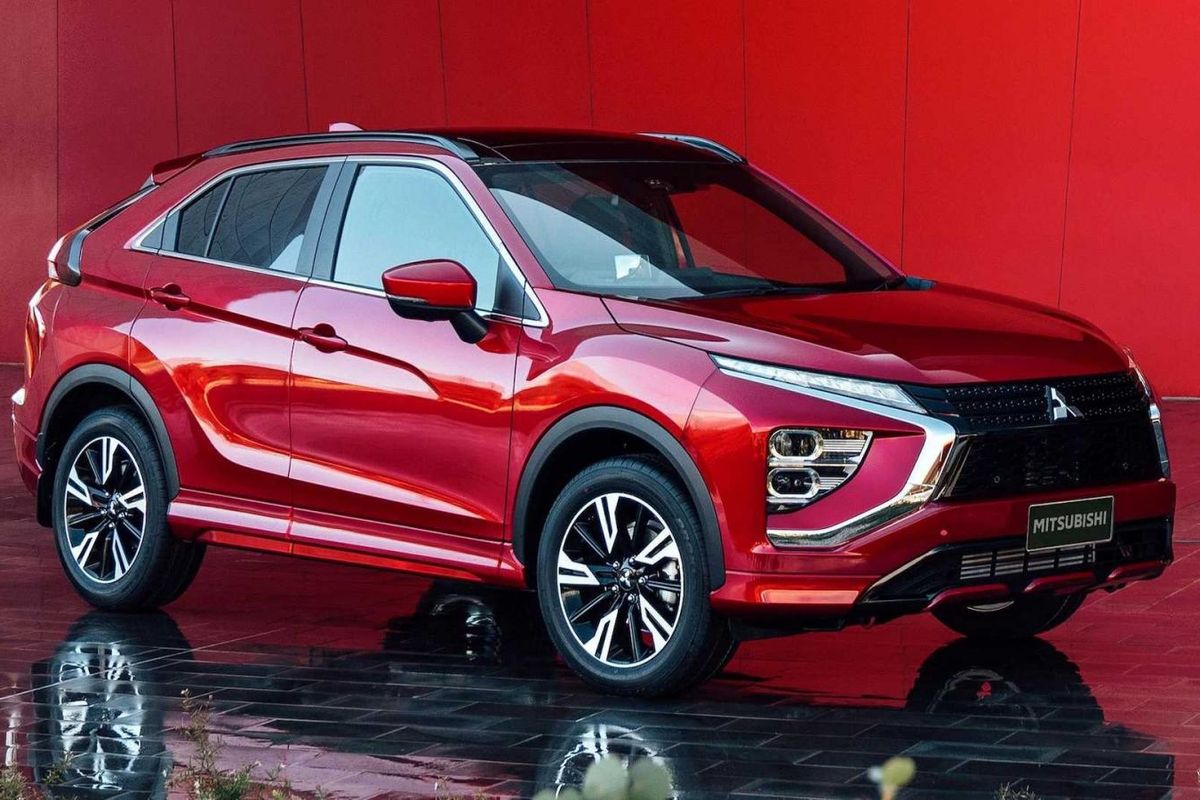
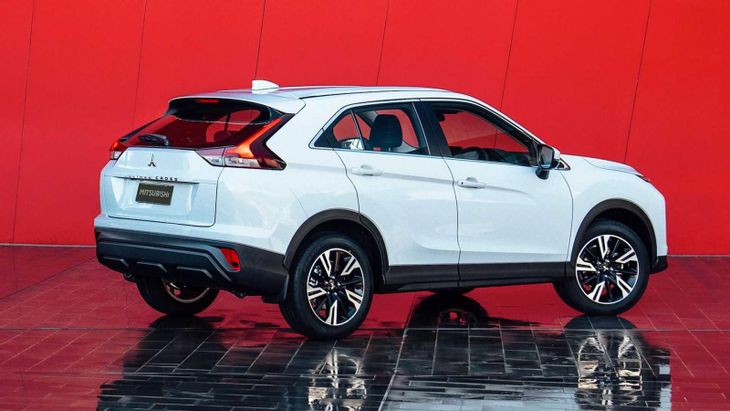
After a quick teaser, Mitsubishi has taken the covers off of its Eclipse Cross. As you can see in the photos, the newer model has gained a few design updates. We get why the design has been altered – it was deemed a bit too polarising by many and this latest iteration has toned down some of the flamboyancy.
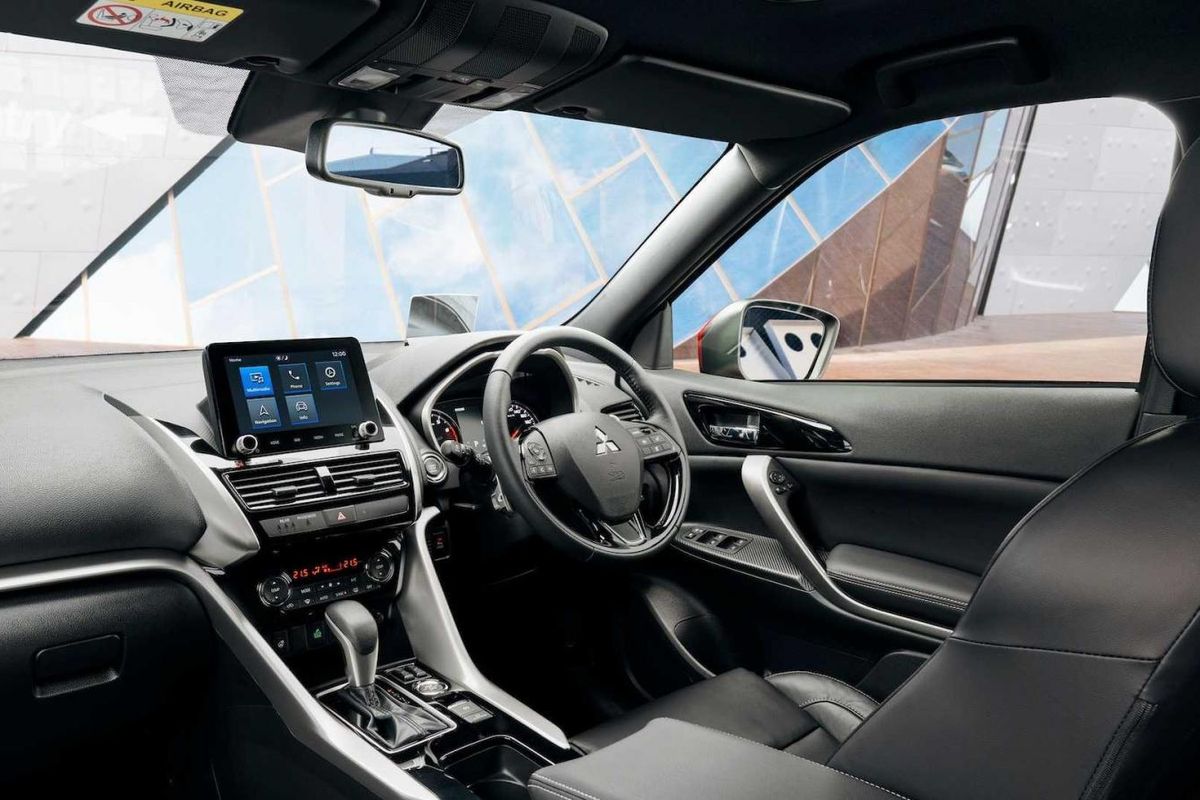
Most importantly, the updated Mitsubishi Eclipse Cross has gained the brand's Dynamic Shield design on the front, while the rear has been enhanced substantially. It's not just about design either as the new-look rear gains improved rearward visibility. There are new headlights and taillights too. Inside, there are new black and silver trim, as well as a tweak to the cabin layout with the 8-inch screen sitting closer to the driver and passenger. The touchpad controls have been replaced by physical volume and tuning knobs.
In terms of engines, the 1.5-litre turbocharged motor with 110 kW and 250 Nm has been carried over. Mitsubishi has said it will be introducing a plug-in version, but very little info is available on this powertrain.
While the 1.5-liter MIVEC direct-injection turbocharged four-cylinder engine gets carried over in the facelifted Eclipse Cross, Mitsubishi said that it will be introducing a plug-in hybrid variant in select markets. Details of the electrified model are scarce at the moment. "From the day we started to rethink the new Eclipse Cross, we wanted to address an attitude of boosted road performance and eco-friendliness, all with a stand-out style that will take this SUV to the next level," said Minoru Uehara, chief product specialist of Mitsubishi Motors Corporation.
As things stand, motorists are set to benefit from petrol and diesel price reductions.
Based on the unaudited mid-month fuel price data released by the Central Energy Fund, the Automobile Association of South Africa reckons the price of petrol is set to come down by between 14 and 17 cents a litre, while diesel should come down by 20 cents a litre. The only bad news is the price of illuminating paraffin could go by 5 cents a litre.
"So far in October we have seen both the Rand/US dollar exchange rate and international oil prices working in South Africa's favour. After a large spike in the daily exchange rate in the second half of September, the Rand has returned to its previous leisurely strengthening trajectory, improving from around R16.70 to the dollar at the start of October to its current level of about R16.55," the AA says.
Let's keep our fingers crossed both the exchange rate and the price of crude oil remain stable for the rest of October 2020.
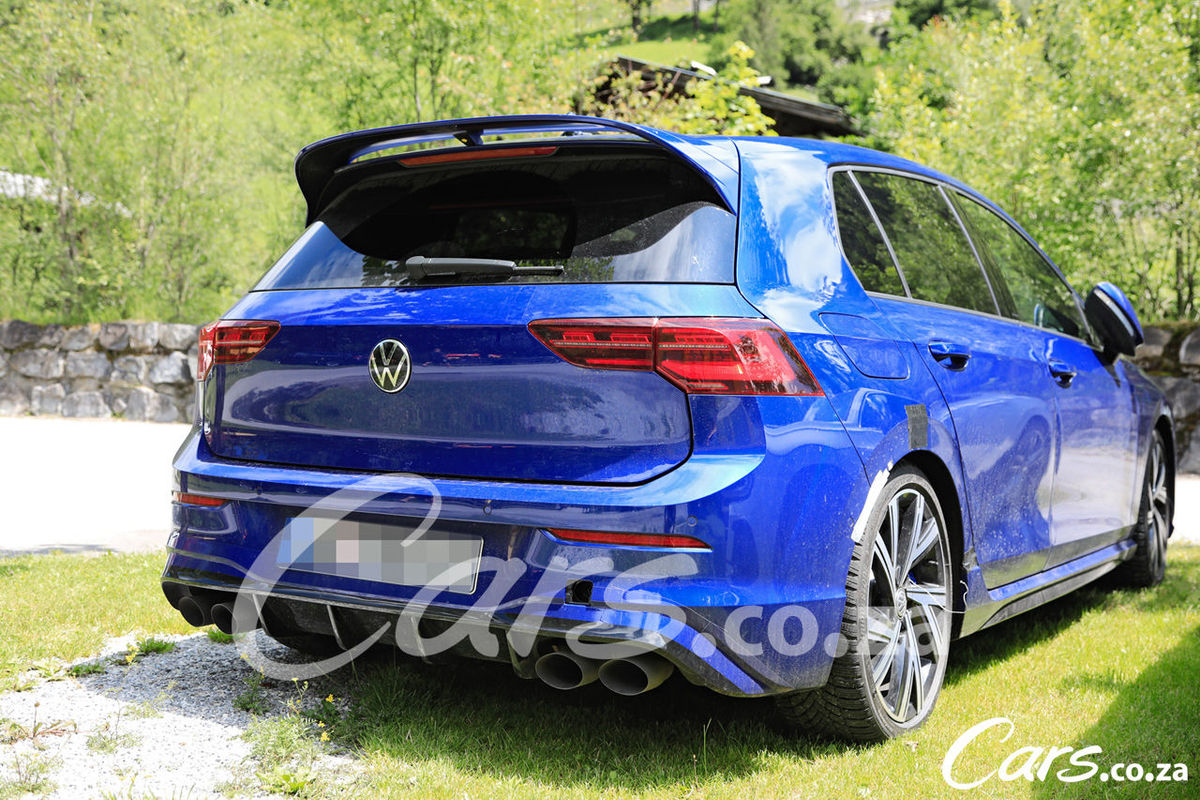
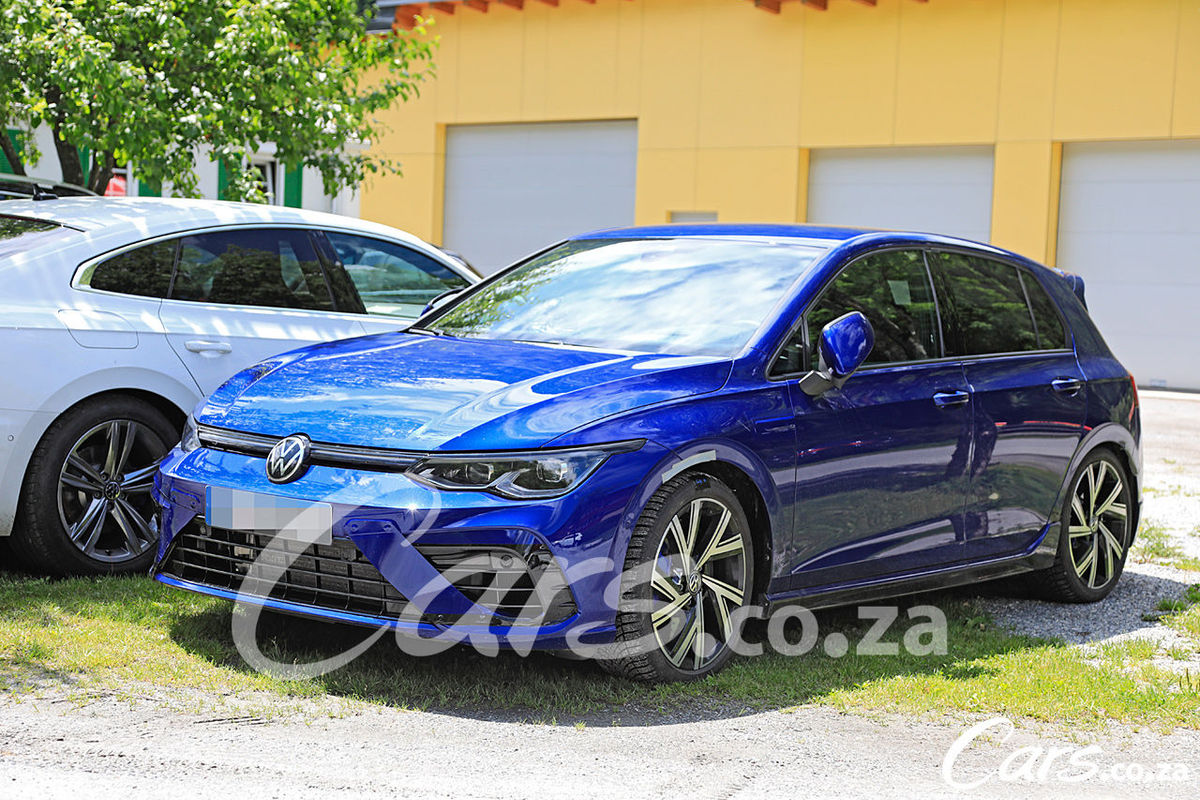
A prototype of Volkswagen's upcoming Golf 8 R hot hatchback has been spied performance testing at the legendary Nurburgring.
Picture credit: S. Baldauf/SB-Medien. We have paid for these photos and at the photographer's request, have watermarked them.
Update: Footage of the Volkswagen Golf 8 R has turned up online and thanks to this video, we can hear the new car's engine and exhaust. There are some trademark pops, however, it's not as vocal as hoped. Perhaps it doesn't have the Akrapovic exhaust (something VW offered as an option), but we live in hope that the finished product delivers that killer vrrpha we love.
Update 2: Photos of this relatively undisguised blue Volkswagen Golf 8 R surfaced and it shows how close to a reveal we are.
Update 3: Volkswagen has confirmed the all-new Golf 8 R will be revealed on the 4th of November 2020.
Many of you are eagerly waiting for the full reveal of the new Golf 8 R and truth be told, so are we. In the meantime, Volkswagen is hard at work testing and preparing its potent hot hatch for production.
The prototype is largely undisguised and the blue brake callipers and obligatory dual quad exhausts allude to the intent of Wolfsburg’s hot hatch.
The Golf R will combine the potency of a revised 245 kW, 2.0-litre turbopetrol engine and all-wheel-drive capability that should see the Golf R rocket from zero to 100 kph in about 4.5 seconds using a dual-clutch transmission.
Interior comforts should include a specially-designed sports seats, flat-bottomed steering wheel and the latest connectivity features housed in Volkswagen’s latest Innovision Cockpit as seen in the GTI which comprises a 10.25-inch Digital Cockpit instrument cluster and the 10-inch touchscreen infotainment system.
While the Volkswagen Golf 8 GTI is due to arrive in South Africa in early 2021 with the Golf R following after. A full reveal is expected later this year. As always, we will keep you up to date as soon as more information becomes available.