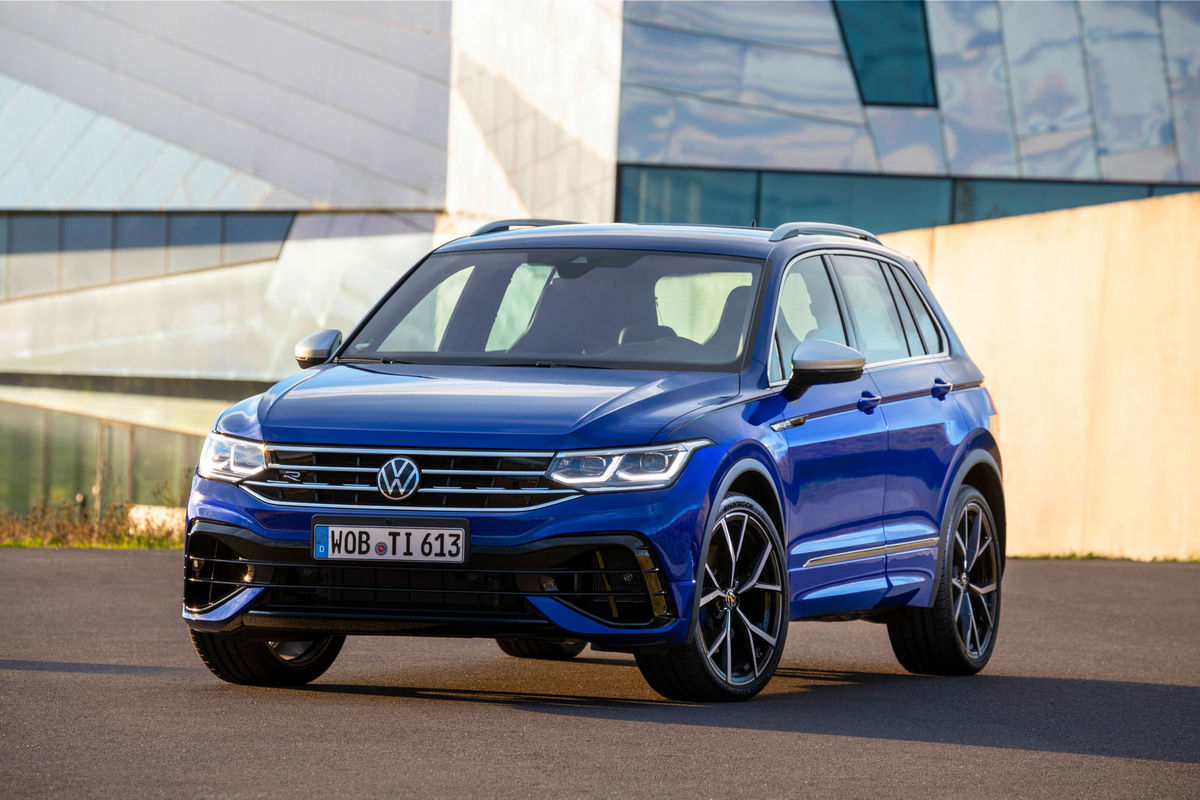
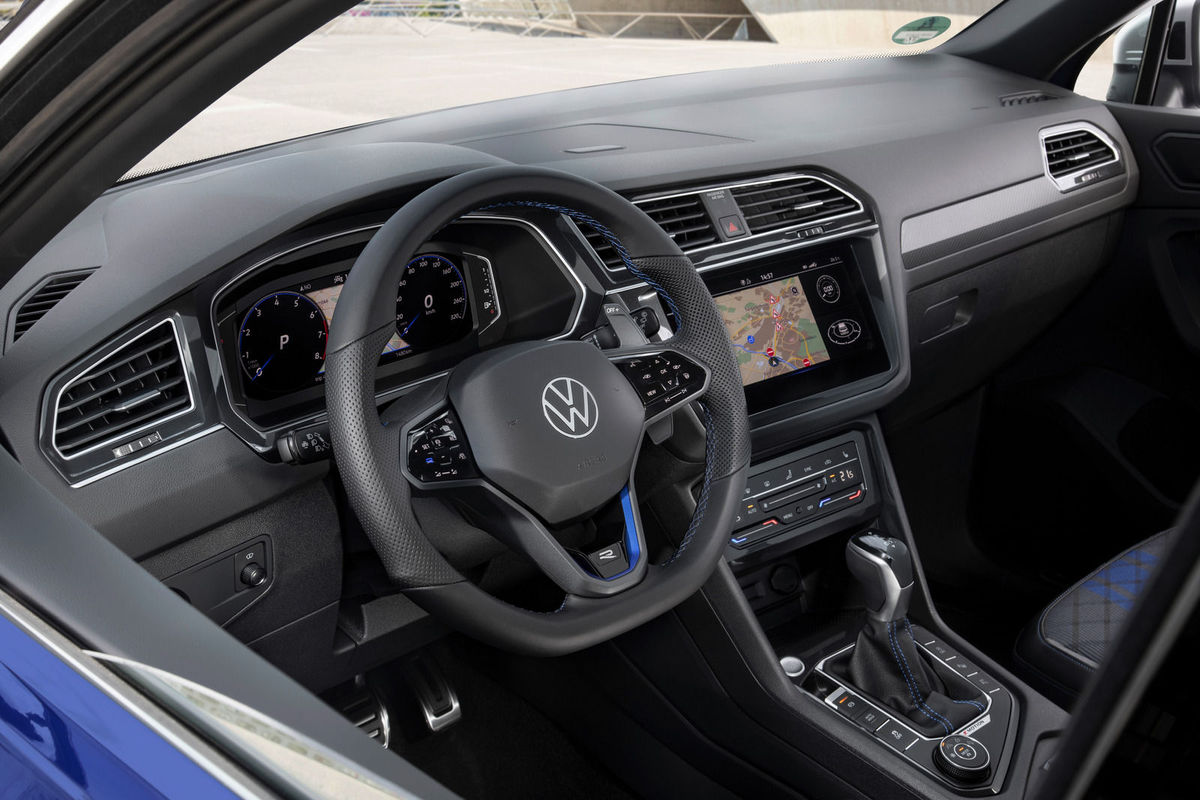
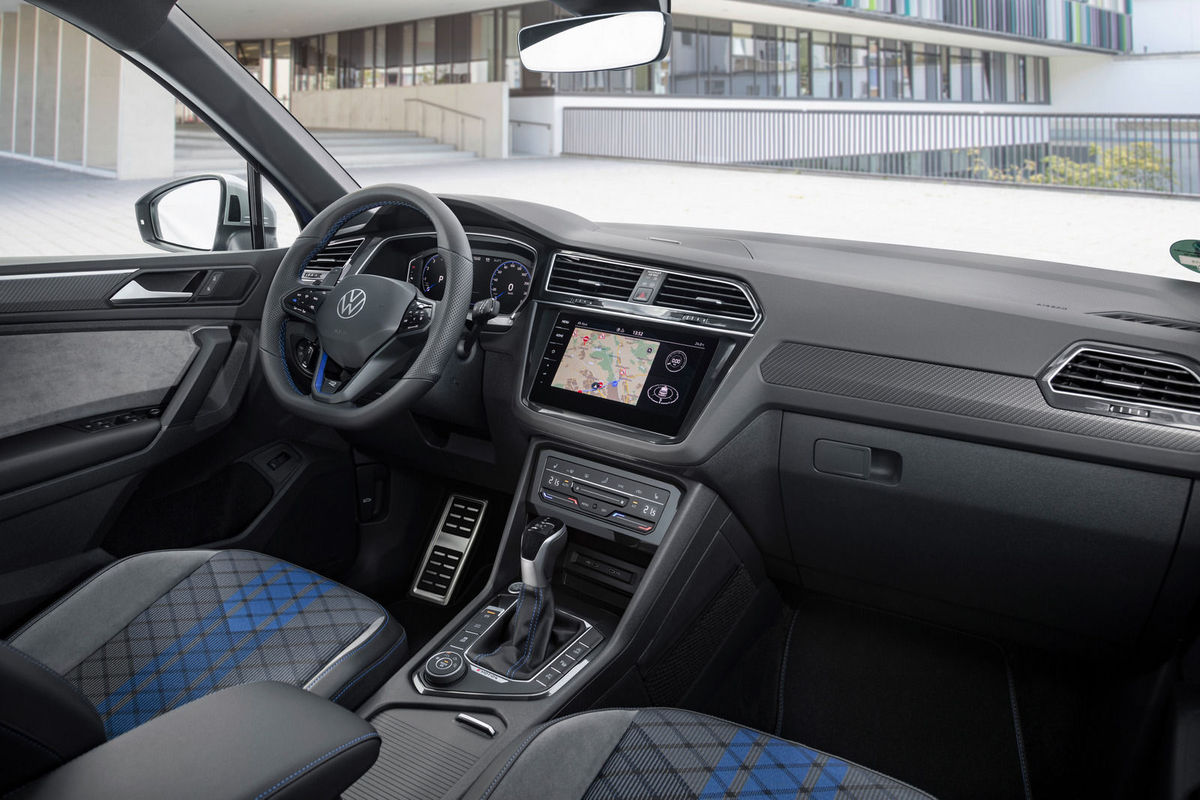
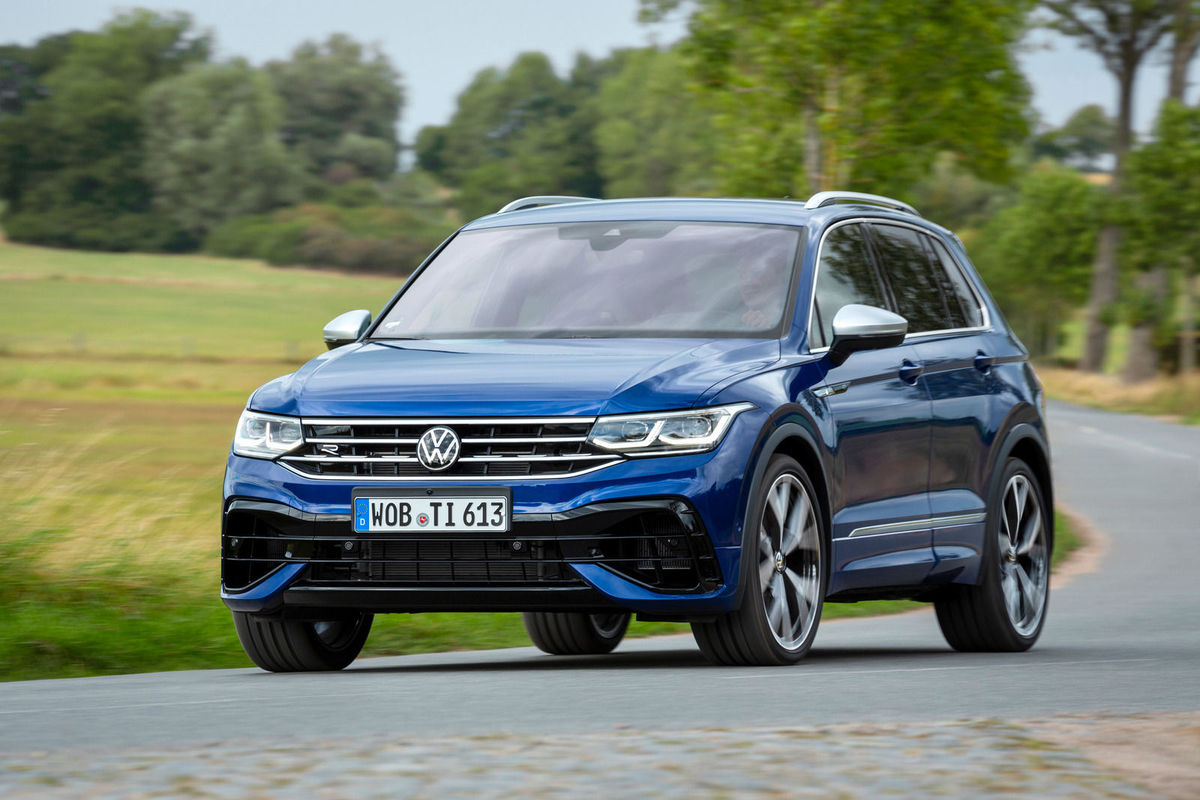
Audi is offering just 30 Limited Edition units of its R8 V10 quattro as a final send-off for its baby R8.
Audi is streamlining its R8 offering by culling the base model R8 V10 quattro while the R8 V10 Performance will forge ahead.
To call this car a baby does it a huge disservice as it still packs notable performance from its naturally-aspirated 5.2-litre V10 engine which produces 419 kW and 550 Nm of torque and is equipped with a 7-speed dual-clutch transmission that lays power down via Audi’s quattro all-wheel-drive system.
That all translates into a zero to 100 kph sprint time in roughly 3.4 seconds before going on to a top speed of 324 kph. The R8 Spyder is slightly slower to 100 kph in 3.5 seconds with a top speed of 322 kph.
The R8 V10 Limited Edition sets itself apart with milled 20-inch silver wheels, alu-optic silver mirror housings and lower trim finishes in carbon fibre. Colour choices are limited to Mugello Blue, Avus Silver or Sonoma Green for the R8 Coupe while the R8 Spyder will only be offered in Mugello Blue.
This Limited Edition R8 V10 quattro gains features from the R8 Performance.
This Limited Edition R8 V10 quattro adopts features from its R8 Performance sibling which includes a front carbon fibre sway bar which shaves off 2 kg in weight as well and Audi magnetic ride with variable damper adjustment and variable steering adjustment based on vehicle speed and drive setting. A sport exhaust is also fitted which brings the sound of the V10 engine to life and can also be adjusted by the driver.
Interior features include 3-spoke, flat-bottomed steering wheel with mounted buttons for Start/Stop, Audi drive select, performance mode selector and the sport exhaust button. Audi’s virtual cockpit is also fitted with MMI Navigation Plus which is surrounded by high-gloss carbon fibre surrounds as well as carbon sigma high-gloss inlays. Coupe version also feature a diamond-stitched Alcantara headliner.
These final 30 Limited Edition R8 V10 quattro units appear to be earmarked for the U.S. market so don’t expect to see them in South Africa.
Behind the Scenes – How we made the BMW Anywhere spinning advert
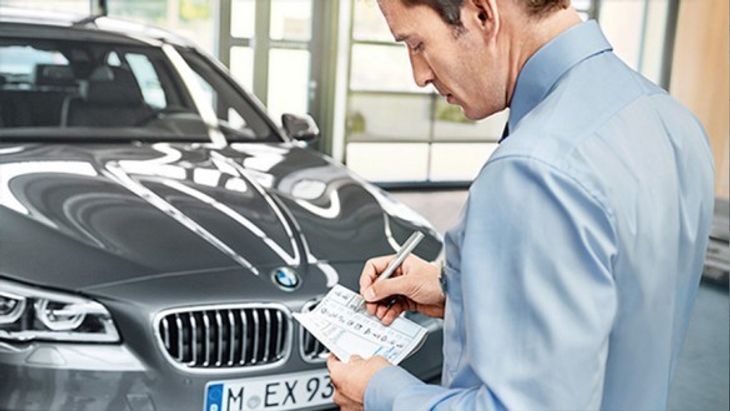
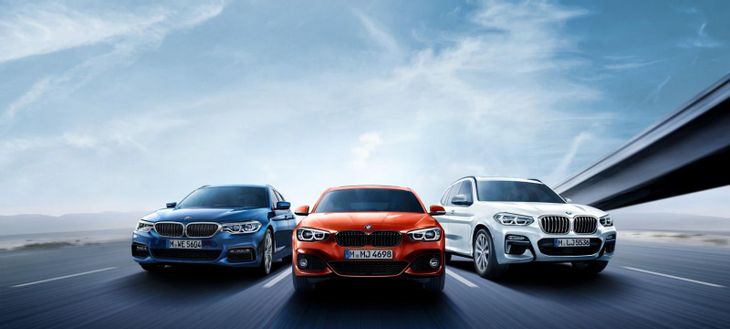
Just before lockdown, BMW approached us and asked if we could come up with a way to demonstrate that you can now buy a BMW online, from anywhere, while doing anything.
You can now buy a BMW, online, from anywhere, while doing anything, and the car will be delivered to your door. Simply head to: buy.bmw.co.za
It was a huge logistical challenge securing the unfinished bridge in the centre of Cape Town for the shoot, but everything came together and there was nothing left for Ciro to do but sit in a spinning BMW and look thoroughly unbothered. Sean February was our chosen wheelman and he immediately proved that he was an incredibly skilled driver. The space he had to work in was very, very tight. For a shoot like this, you really want to capture the action from as many angles as possible.
This resulted in one of the largest crews we’ve ever worked with. The director, Justin Pinto, worked closely with the crew to get all the shots he envisioned for the edit. Stunt coordinator and producer Ernest Page made sure our DOP was safe while we got all these crazy shots. Ernest also made sure we had a lot of tyres on standby. Our producer Juan Crous made sure everyone was safe on the day. A huge thank you to everyone involved in the production, this was a very memorable shoot and we're very proud to have the video on our channel.
Final Product: BMW Anywhere Video
Toyota Reveals Corolla GR-Sport
Technically unchanged, but with more style.
Toyota is expanding its GR-series derivatives, with a new version of the popular Corolla.
Although the GR upgrades are only limited to exterior and interior styling, instead of engine or suspension features, this Corolla Sport broadens the appeal of Toyota’s traditional mid-sized sedan.
The Corolla is available in eight different exterior paint finishes, and with the GR-Sport, each of those can be had with a black roof or darkened wing-mirror end caps. The grille and side skirts also gain some black contrast colour detailing.
Around the rear, the boot lid gains a very subtle edge spoiler, which qualifies as a design justification instead of something which could meaningfully influence the car’s aerodynamic properties.
Rolling the Corolla GR-Sport along, are 18-inch alloy wheels, featuring a ten-spoke structural design. Toyota has not confirmed whether these wheels are shod with a more dynamic tyre option, either in its compound formulation or size.
Beyond the exterior design details, Toyota has updated the Corolla GR Sport’s interior too. Drivers grab hold of a steering wheel rim which is trimmed in perforated leather, whilst the front seats have been reshaped to provide lateral support. They are also upholstered in a blend of black fabric and white leatherette, bonded with red stitching.
Technically the Corolla GR Sport does not feature any changes to its suspension configuration, ride height or engine performance. The brand’s proven 90 kW 1.8-litre hybrid engine powers it along.
The global rollout for the Corolla GR Sport is expected to commence from November, starting with Europe, with other markets starting to receive the option early in 2021.
As a reminder of how Toyota tiers its performance models, GR Sport models are usually just sporty aesthetic upgrades (although the Hilux GR Sport received suspension improvements). GR models receive both performance and visual updates and GRMN models are the no holds barred performance versions.
Porsche South Africa has published local pricing details for the new Cayenne GTS and Cayenne GTS Coupe on its official website. The sportily-packaged pair effectively slot in between the ranges’ S and Turbo derivatives.
Last month, the Zuffenhausen-based released official details of the newcomers: whereas the ranges' S derivatives are powered by a 2.9-litre bi-turbo V6 motor, the GTS twins utilise the 4.0-litre bi-turbo V8 of the Panamera GTS, which produces peak outputs of 338 kW and 620 Nm of torque (14 kW and 20 Nm more than its predecessor's 3.6-litre bi-turbo V6) and powers all 4 wheels through an 8-speed Tiptronic S automatic transmission. When specified with the optional Sport Chrono package, the 2 newcomers are claimed to accelerate from 0 to 100 kph in 4.5 sec, reach a top speed of 270 kph and are said to return average fuel consumption figures of between 11.2 and 11.4 L/100 km.
Apart from its 20-mm lower ride height, the GTS twins are fitted with 21-inch RS Spyder Design alloys and beefed-up brakes.
Compared with their lesser siblings, the GTS twins have markedly sportier kerb presences. Apart from being adorned with black GTS decals on their front doors and tailgates, the pair's ride heights have been lowered by 20 mm and they come standard with the Porsche Sport Design package, which incorporates gloss black bumper accents, mirror housings, window trim and exhaust ends. What's more, the LED headlamps (equipped with the Porsche Dynamic Light System) and LED tail-light bars are dark-tinted.
Over and above being shod with eye-catching satin-gloss black 21-inch RS Spyder Design alloys, the pair comes equipped with upgraded grey cast-iron brakes (390 x 38 mm discs at the front, 358 x 28 mm at the rear) in combination with red brake callipers. If buyers require additional (or at least more fade-resistant) stopping power on a GTS, Porsche can upgrade the brakes to a Surface Coated Brake (PSCB, with tungsten carbide coating) or the Porsche Ceramic Composite Brake (PCCB) setup at extra cost.
The Cayenne Coupe GTS can be specified with a pair of centrally-mounted large-bore oval tailpipes.
Similarly, while the brand's Active Suspension Management (PASM) and Torque Vectoring Plus (PTV Plus) are fitted as standard, the newcomers can be upgraded with a multitude of options, including a 10 mm-lower 3-chamber air suspension, rear-axle steering and the Porsche Dynamic Chassis Control (PDCC) active roll stabilisation system.
Porsche claims the newcomers' "specially configured sports exhaust systems deliver highly emotive aural experience(s)." Yes, you read that correctly: systems – plural. You see, the Cayenne- and Cayenne Coupe GTS derivatives come standard with the familiar quartet of exhaust ends, but in a new development, the German sportscar brand has introduced another optional setup: a pair of centrally-mounted, large-bore oval tailpipes, which it has dubbed the high frequency-tuned sports exhaust system. However, there's a catch: it is offered exclusively on the Cayenne Coupe GTS (and in future, on the Cayenne Coupe Turbo) – in combination with the optional Lightweight Sports Package.
The GTS signage on the Cayenne GTS' tailgate is in black and matches the horizontal divider between the tail-lamp clusters.
As expected, the interiors of the Cayenne- and Cayenne Coupe GTS derivatives are awash with sporty finishes and go-faster detailing. Note the liberal applications of Alcantara on the steering wheel, grab handles, door panels, centre console/armrest and roof lining. The cabins are further accented with dark-brushed aluminium inserts.
The 8-way electrically adjustable sports front seats (trimmed in a combination of leather and Alcantara, with GTS logos embroidered on the headrests) are exclusively reserved for the pair of newcomers to the Cayenne family, while the derivatives' (also GTS-marked) door-sill finishers are made of dark-brushed aluminium with a black anodised finish.
The interior is a melange of Alcantara with optional contrast stitching. Note the red detail on the central tachometer.
There are numerous personalisation options, including the GTS interior package, as shown here, where Carmine Red stitching features on the dashboard, door panels, seats, grab handles, armrest/centre console and the floor mats, all of which complements the dials of the rev counter and stopwatch, as well as the racy rouge seat belts, of course.
Our spy photographers have spotted the new 2021 Mercedes-Benz G-Class G4x4 Squared – the most hardcore iteration of the Gelandewagen.
Picture credit: S. Baldauf/SB-Medien. We have paid for these photos and at the photographer's request, have watermarked them.
The Mercedes-Benz G-Class is one very capable offroader, but what if you wanted even more? Mercedes-Benz introduced the G500 4×4 Squared as a short-wheelbase SUV complete with monster tyres and huge ground clearance back in 2015. Now it appears there's a replacement on the cards.
This is not the first time we're seeing this model, but these latest photos show the vehicle in more detail. As we've said before, the Mercedes-Benz G hardly needed improvements to its offroad capability with the 3 differential setup, but the G4X4Squared introduced portal axles as well as 450 mm of ground clearance. As you can see, this one is high off the ground too.
This one has also been properly accessorised, with a roof rack, ladder, spare wheel as well as 2 powerful integrated spotlights. Given how Land Rover is offering a complete array of accessories for its new Defender, we think Mercedes-Benz is determined to keep pace in this department.
In terms of engines, we think AMG will be called to supply one of its 4.0-litre biturbo V8 units, which will power all 4 wheels through a 9-speed automatic transmission.
One BMW guy replaces another – as Audi moves into control.
VW’s software coding issues have triggered significant changes in the German automotive group’s structure.
Earlier this week, it was announced that VW’s software boss, Christiaan Senger, was leaving the company. Senger had been responsible for digital vehicle integration, a division which has been plagued with issues since last year.
Amidst a move to create a new portfolio of digital product and services within its vehicles, and established the world’s largest range of battery-powered cars, VW cannot afford more costly software glitches.
Replacing Senger at VW is Dirk Hilgenberg. Like Senger, Hilgenberg has spent most of his career at BMW, before being headhunted by VW. Not a trained engineer, but a physicist, Hilgeberg is a vastly experienced technology systems manager.
He has worked at Rolls-Royce aviation’s engine division and spent many years perfecting production systems and information technology integration, for BMW’s American production assets.
VW will expect Hilgenberg to contain the software coding issue which appears to have considerably escalated over the last year, but his position will no longer be as strong.
As part of VW’s new staffing, the company has also made a profound announcement concerning Audi. The Ingolstadt brand will henceforth be responsible for leading digital vehicle integration technology, across the VW Group.
Audi CEO, Markus Duesmann, is now the controlling VW Group board member for car software and will direct Hilgenberg. This effectively means that Audi is now being recognised as the technology R&D leaders for the VW Group, something which many had suspected, for some time.
Duesmann has promised that 5 000 new IT professionals, coders and engineers will start to work in his division over the next year.
Mercedes-AMG GT 63 S Review – Is this really a supercar?
It's taken Mercedes-Benz South Africa a long time to get the 4-door AMG GT to local shores, but it finally has. What a way to do it too, with the brutish and most powerful derivative: the GT 63 S!
When we produced this video review, this was the second most powerful production AMG ever (it lies 3rd now that the AMG GT Black Series was launched this week), after the SL65 AMG Black Series, a car with a monster twin-turbocharged V12. As is the way of things these days, this new AMG develops all its power from a twin-turbo V8, the same engine you'll find in the 2-door GT and even cars like the Aston Martin Vantage.
But Mercedes-AMG is a brand that's famous for making sledgehammer saloons, and so they created this, a bit of a Frankenstein 4-door, with the chassis from an E-Class, a whole load of chassis strengthening and the name of a sportscar lopped on the rear.
Sure, there's plenty here to differentiate it from the E63 AMG, but after spending some time with the monster Benz, our video journalist Ciro De Siena was still unsure whether this newcomer is indeed a supercar or, as the name suggests, a grand tourer…
Mercedes-Benz GLE 300d 4Matic AMG Line (2020) Review
Always a favourite among those looking for a luxurious, large premium SUV, the Mercedes-Benz GLE is moving with the times by offering more of everything, except underneath the bonnet, where the 300d is now powered by the marque's 2.0-litre 4-cylinder turbodiesel engine. Is it up to the task?
We like: Willing engine, spacious cabin, build quality, cabin ambience
We don’t like: Ride comfort, occasionally lacks punch
Fast Facts:
Price: R1 417 080 before options (July 2020)
Engine: 2.0-litre 4-cylinder turbodiesel
Power/Torque: 180 kW/500 Nm
Transmission: 9-speed Tiptronic
Fuel consumption: 6.4 L/100 km (claimed)
Boot capacity: 630-2 055 litres
Performance: 0-100 kph in 7.2 sec.
What is it?
The new GLE has grown in size (again), and the new body makes the 20-inch alloy wheels look small!
Gone are the days when large luxury sedans were the preferred mode of transport for the well-to-do; these days, it simply must be a Premium SUV. The 1st-generation M-Class arguably started the trend in 1997 and has remained a forerunner in the segment. Now named the GLE, and in its 4th generation, the 'Benz Premium SUV faces a staggering number of rivals and its desirable badge alone may not be enough to ensure first-choice status.
The subject of this review is (what is likely to be) the top-seller in the current line-up, the GLE 300d 4Matic, replete with the desirable AMG Line styling package. Inside and out, this GLE looks like a segment champion, but with a "small" turbodiesel engine under its bonnet, does the derivativate offer enough go to match the show?
How it performs in terms of…
Performance, fuel economy and ride/handling
The "small" 2.0L 4-cylinder turbodiesel is a willing and refined engine, and in most instances, provides enough gusto.
It will take Mercedes-Benz traditionalists some time to get their head around the fact that this big SUV, with the 300d lettering on the tailgate, is motivated by a "little" 2.0-litre, 4-cylinder turbodiesel. Having said that, it's an engine that has impressed in other applications and, comparatively speaking, its peak power (180 kW) and torque (500 Nm) outputs compare reasonably well with those of its competitors. Still… with a weight of well over 2 tonnes to lug around, it will have to work smartly with that smooth 9-speed automatic transmission to impress potential buyers.
The good news is that during general driving, particularly around town, you'll hardly ever feel the need for more power. The GLE 300d responds swiftly to throttle inputs and the well-calibrated transmission makes the most of the peak-torque band (from 1 600 to 2 400 rpm) to facilitate swift, smooth progress.
It's only when travelling at higher speeds and when the vehicle's fully loaded when you'll wish for a bit more grunt. By comparison, the Benz's archrival – the BMW X5 xDrive30d – has an extra 120 Nm to play with… and, as a consequence, is a fair deal fleeter of foot when you're in a hurry.
The engine is, however, very refined and also relatively frugal (if there is an eco-conscious driver behind the wheel). Mercedes-Benz claims a combined fuel-consumption figure of 6.4 L/100 km but, as is to be expected, that's highly optimistic. You'll do well to average around 8 L/100km, which is very acceptable given the size/nature of this machine.
Our test unit featured Airmatic air suspension but still struggled to maintain a composed ride on poor surfaces.
We've already mentioned the refinement of the engine, and it's a trait reinforced by the cabin insulation. In most conditions, the ambience is calm, with occupants enjoying a serene cabin that brings back that "vault-like" feeling of Mercedes-Benzes of old. Unfortunately, there is a fly in the refinement ointment, and it's the ride quality. Our GLE test unit was equipped with the optional Airmatic air suspension system, but even so, it struggled to maintain ride composure over poorer surfaces – it never felt entirely "settled". Thankfully, matters improve at higher speeds and though there is plenty of lean in the corners, the GLE feels more composed and, again, more refined at higher velocities.
Exterior design & Packaging
With its AMG Line exterior package, the new GLE looks sporty as well as imposing – as is preferred by most customers.
The latest GLE looks notably more "macho" than its predecessor. Wider (by a whopping 231 mm) and with an 80-mm longer wheelbase, but 24 mm lower than before, the GLE gains a more muscular look that is further enhanced by the AMG Line package, as specified for this vehicle. Even though our test unit sported 20-inch alloy wheels shod with relatively plump tyres, the overall consensus was that the look (but not the ride) would be further improved by opting for even larger wheels.
The increased dimensions have resulted in a notably more spacious cabin, particularly for rear passengers, who now can enjoy arguably class-leading knee-room (the rear seats slide/recline as well). The luggage compartment capacity is quoted at 630 litres, which is slightly less than what is offered by the X5, but the GLE hits back with greater utility space with the seats folded down (2 055 litres vs 1 870 litres). It is worth noting that 3rd-row seating is available at an extra R16 000, which is very reasonable in our view. Less reasonable is the fact that you have to pay extra for the luggage-compartment cover (R3 800)!
Interior execution and features
Undoubtedly one of the highlights of the new GLE is its striking facia design and advanced MBUX infotainment system.
One of the GLE's major strengths is the impression it makes once you slide in behind the attractive leather-wrapped steering wheel. Fire it up and the wide digital screen lights up with impressively crisp graphics and a plethora of information. The GLE features the advanced MBUX system – one of the most advanced in-car infotainment systems around – as standard. Also fitted is an ambient light package, which allows you to set the mood lighting to your preference. Fit and finish is excellent too and, overall, this is a cabin that excels not only in wow-factor but also leaves a lasting impression of quality. Also immediately apparent is the extra shoulder space provided by the extra cabin width.
Notable optional items fitted to our test unit included the smart Nappa leather upholstery (pricey at just over R30 500), a panoramic sliding sunroof (R23k+), a Burmester surround sound system (R13k+), which are all fair enough (just about), but having to fork out extra for heated seats, keyless access and a wireless charging pad is a bit cheeky.
Grippy, supportive seats of our test unit featured black Nappa leather (a more than R30k option).
Pricing and warranty
The GLE 300d AMG Line is priced at R1 417 080 (July 2020) before extra-cost options… of which there are many. Our test unit carried an extra R180 000-worth of optional extras, in fact. We might be nitpicking, but at this price level, we really think keyless go, heated front seats, metallic paint and the wireless charging pad should be standard.
The price includes a 2-year/unlimited km warranty and 5-year/100 000 km maintenance plan.
A major improvement in rear passenger legroom, courtesy of the stretched wheelbase.
This is a tough segment populated by excellent vehicles. The latest GLE ranks right up there with the best of them (the X5 is our current Cars.co.za Consumer Awards – Powered by WesBank Premium SUV category champion) and the Bimmer will have its work cut out to defend the title from this excellent all-rounder.
The GLE's major strengths are its design, cabin space and on-board technology. When ensconced in the properly up-to-date and luxuriously finished cabin (admittedly with many option-boxes ticked), owners will be pleased with their purchase. But there are a few niggles. The fact that the GLE 300d 4Matic's small engine can, at times, be caught napping was to be expected, but the jiggly, unsettled ride quality was a surprise… and a disappointment.
Back in 2018, Nissan revealed its new 7-seat Navara-based SUV called the Terra. Will it come to South Africa? We hope so… But Nissan is also looking at launching at least 2 new crossover/SUVs on the local market.
As part of Nissan's transformation strategy, called Nissan Next, the brand revealed its new Ariya electric crossover this week which marks a new journey for the Japanese brand. As part of this new transformation strategy, Nissan will be focusing its energy on growing its presence in the realm of crossovers and SUVs.
In a virtual roundtable conference this week, Nissan South Africa's marketing director, Kabelo Rabotho, confirmed that the brand is looking at introducing 2 new compact crossover/SUV products as well as potentially introducing the Navara-based Terra SUV on local soil. As for the former 2 new products, we would guess that Nissan will finally be introducing the long-awaited Kicks crossover which was due to arrive locally last year as well as the recently-teased Magnite compact family SUV, but Nissan South Africa wouldn't divulge further or confirm these products.
As for Nissan’s Terra SUV, it's appears to be under serious consideration for South Africa in the not-too-distant future and it would be a welcome addition to the brands local SUV lineup where the 7-seater would compete with other adventure SUVs such as the popular Toyota Fortuner, Ford Everest, Mitsubishi Pajero Sport and the Isuzu MU-X. We feel that some new, competitive competition in this segment would be most welcome.
The Nissan Terra's interior is similar to the Navara bakkie upon which it is based
The Terra formed part of the 2018 Nissan M.O.V.E to 2022 midterm strategy to increase frame and LCV sales by more than 40% by 2022 with the ultimate goal to become a global leader in bakkies and frame-based SUVs. The new Nissan Terra was the first step for Nissan to achieve this goal. The Terra’s exterior and interior styling shares its design with the Navara double-cab bakkie.
If the Nissan Terra was to be offered in South Africa, it would likely be fitted with the Navara's tried-and-tested 2.3-litre twin-turbodiesel engine offering 140 kW and 450 Nm of torque. The Terra will also likely feature a 7-speed automatic transmission. In other markets, the Terra can be had in both petrol or diesel guise with a capacity of 2.5-litres.
The Terra could shake up the adventure SUV segment if it comes to South Africa…
Maserati has taken the covers off of the Ghibli Hybrid, the Italian brand's first electrified vehicle.
The Maserati Ghibli is a stylish and compact sports sedan and while it's been some time since we last sampled a product from the Italian Trident brand, Maserati is about to start a huge product offensive. There's a new supercar in the works which will grab the most attention, but we're particularly interested in what has just been revealed. This is the Maserati Ghibli Hybrid, which is Maserati's first foray into electrification.
Maserati says its goal is to enhance performance while saving fuel and it will be 'faster than diesel, greener than gasoline.' It will be assembled in Italy at the Torino Production Hub, with the first units scheduled to reach showrooms in October 2020.
Being Maserati's first electrified vehicle, we're interested in that powertrain. Assembled on a tweaked version of the Ghibli V6, the Ghibli Hybrid version features a 2.0-litre 4-cylinder turbocharged petrol engine mated to a 48-volt hybrid system. Total outputs are rated at 246 kW and 450 Nm. Maserati claims the new Ghibli Hybrid is good for 0-100 kph in 5.7 seconds and it will run to a top speed of 255 kph. What's more, the car is said to even sound like a sporty Maserati without resorting to amplifiers as the exhaust has been tuned to deliver that distinctive sound. Power goes to the rear wheels via an 8-speed automatic gearbox.
The 48-volt hybrid system features 4 components: the Belt Starter Generator (BSG), battery, eBooster and DC/DC converter. The BSG captures energy during braking and deceleration, which then charges the battery located in the boot. This then powers the eBooster works with the turbo to 'sustain the engine's power at low rpm." In its sportiest of drive modes, the eBooster gives the car an extra boost.
In terms of emissions, Maserati is claiming a fuel saving of 20% in comparison to the V6 petrol model. As far as economy claims go, 8.5-9.6 L/100 km on the WLTP cycle is what Maserati says.
You can tell the Maserati Ghibli Hybrid apart as it will have blue detailing such on the Brembo brakes and the air ducts. The Maserati logo located on the rear pillar gains a thunderbolt.
Inside, the Ghibli Hybrid gains the MY21 update which includes the new-gen Maserati Intelligent Assistant infotainment system, which is built on Android Automotive architecture and in terms of safety, the vehicle features Level 2 Advanced Driver Assistance Systems such as Highway Assist, Active Blind Spot Assist, and Lane Keeping Assist.