Spied: Hyundai Double-Cab Bakkie in Profile

Even though this spy image does not show a completed, road-ready example of Hyundai's upcoming, US-built double cab, the side profile of the body reveals cues carried over from the Santa Cruz concept as well as the Korean manufacturer's new "parametric dynamics" in the bakkie's sheet metal…

Picture credits: Motor1.com, with additional photographs by S. Baldauf/SB-Medien. Render by Duwyne Aspeling, Cars.co.za.

It's commonly known that Hyundai plans to commence production of its new double-cab at its Alabama plant in the USA, which also produces the Santa Fe, Sonata, and Elantra, next year. Most reports suggest that the Korean manufacturer is committed to bringing the Santa Cruz name to market and the newcomer will be a unibody vehicle and sold exclusively in the North American market.
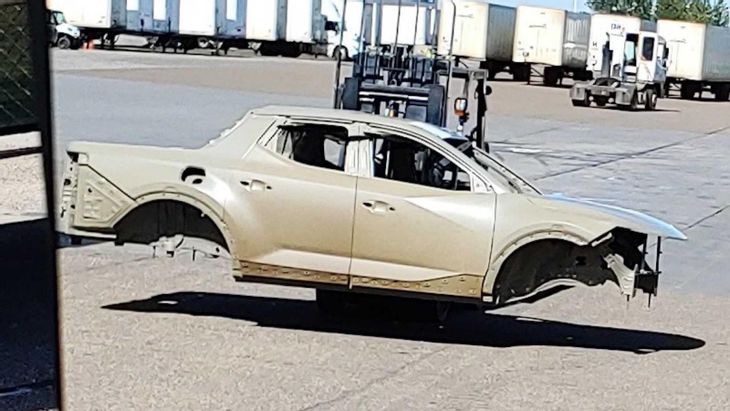

The triangular cutout at the end of the load bay suggests a controversial kicked-up rear-bumper treatment…

However, it has been reported (by Which Car) that Hyundai is simultaneously developing a 1-tonne bakkie based on a ladder-frame chassis (in partnership with its sister-brand, Kia) for Australia and other markets, which will likely include South Africa – which is, as we know, a major market for bakkies. Hyundai South Africa has never hidden the fact that it would be very keen to introduce a leisure double-cab in South Africa – if one was available to us and at all possible; if little else, this new "Santa Cruz" will probably set the tone for the look of upcoming Hyundai chassis-cab bakkies…  

The photo, which was shared anonymously with Motor1.com, confirms a couple of cues that we had already incorporated in our rendering of the new bakkie. The newcomer will have a short load bed and rearward-sloping C-pillars. However, the upward-sloping rear window sills, which create a kind of Hofmeister kink (with apologies to BMW) has been unexpectedly carried over from the 2015 concept car. What's more, the distinctive contours near the top of the front door and pinched beltline (just above where the side skirts/running boards would be located on the finished product) suggest that there are also elements of "parametric dynamics" (radiating lines that converge at a central point) of the "Sensuous Sportiness" design language incorporated in most new Hyundai models.  
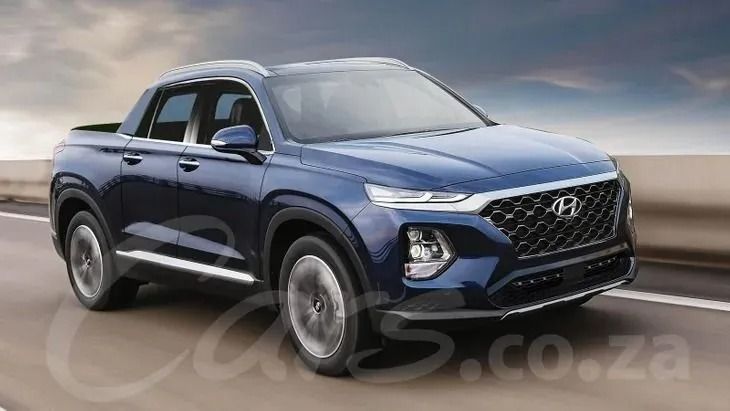

We expect the bold grille and slimline headlamp treatment to feature on the final version of the "Santa Cruz".

We have also seen spy photographs of a prototype testing in the snow (see below) and while most of the body is hidden from sight, there are some noteworthy learnings to be gleaned from the spy images. Perhaps the most obvious feature is indeed the large, bold cascading grille which will likely be flanked by slim LED headlights. It's also clear that the fog light bezels will sit directly below the headlight casings. Another intriguing design feature is the sloping load bay design, which bears some resemblance to our render above. 

The 2015 Hyundai Santa Cruz Concept was given the green light for production as long ago as 2017. While the production version of the bakkie won't be a rival to the wildly popular full-size Ford F-150, it will effectively be a stylish medium-sized bakkie to rival the likes of the ever-popular Toyota Hilux and Ford Ranger; like the top-spec versions of those well-known leisure bakkies, it will be a 5-seater family car, but won't have workhorse ability. Car And Driver believes the finished product will share its underpinnings with the Santa Fe 7-seater SUV in our market: "Hyundai's plan for the Santa Cruz is as an affordable… choice for drivers who haul bulky, but not necessarily heavy items – think mountain bikes, kayaks, and camping gear rather than gravel, boats, and cinder blocks."
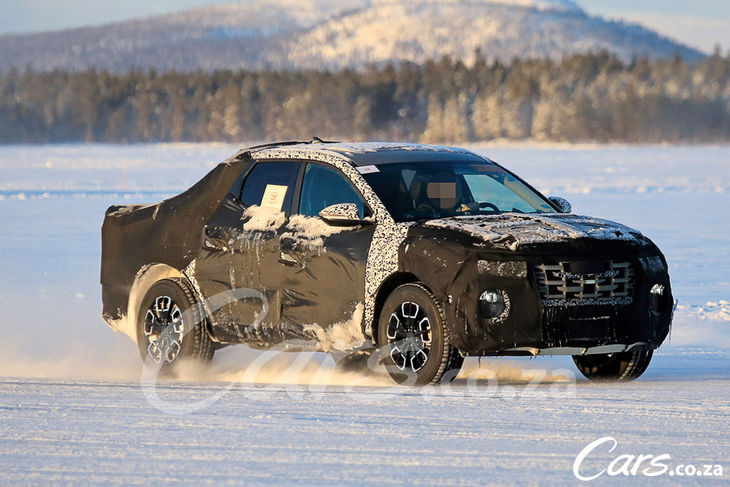

Spy images reveal some of the key design cues that are likely to feature on the production Hyundai bakkie. 

Rumours about the engine line-up

Previously, we reported that Hyundai's luxury car brand, Genesis, revealed its GV80 premium SUV, which is powered by a 3.0-litre, 6-cylinder turbodiesel engine with 205 kW and 588 Nm of torque. A report from Australia's CarSales suggested that the Hyundai bakkie could very well feature this engine.   

In an interview at the launch of the GV80, Head of R&D at Hyundai, Albert Bierman, said "This engine… we can have so many applications. We make also commercial vehicles and so on, so this engine will be out there for quite some time." 
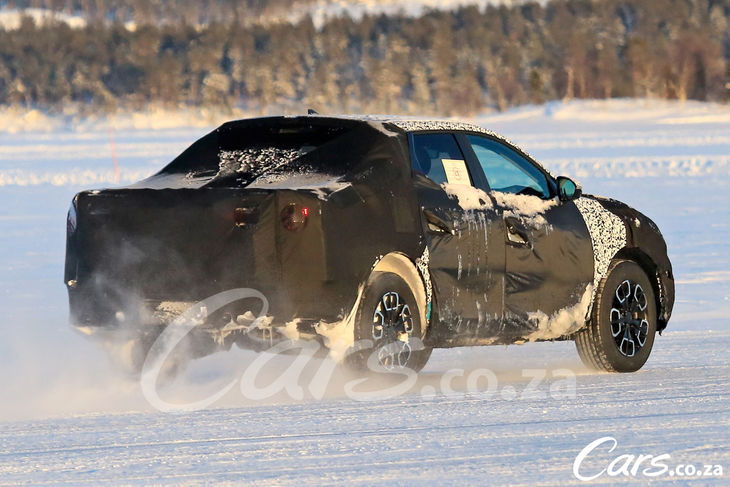

Now that we've seen the spy image, the high-tailgate design of the upcoming bakkie looks more apparent.

However, Car And Driver suggests that the "Santa Cruz" is more likely to feature the new Santa Fe's engines, which includes a 137 kW/241 Nm naturally-aspirated 2.4-litre petrol engine and a turbocharged, 175 kW/352 Nm 2.0-litre turbocharged petrol engine, both fitted in conjunction with an 8-speed automatic transmission. Perhaps even the current 142 kW/440 Nm 2.0-litre turbodiesel engine that does service in the SA-spec Santa Fe would be a suitable match in the production Hyundai bakkie. It's also been speculated that the Hyundai bakkie will be offered in 4WD guise only. 

More than this, there are rumours that Hyundai’s N Division could very well develop a high-performance bakkie that would rival the Ford Ranger Raptor. There is speculation that this N bakkie could feature the same potent, turbocharged 2.0-litre engine that powers the i30N and could offer as much as 225 kW! 
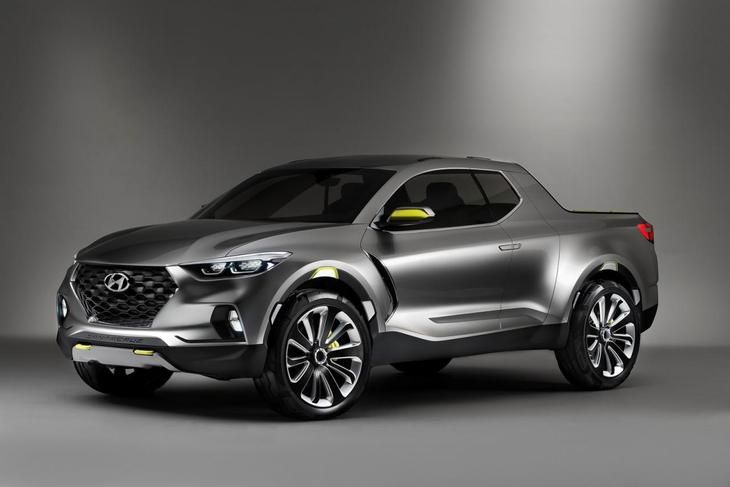

It's not often that a concept vehicle (let alone a 5-year-old one) looks this production-ready. No crew-cab doors in the final version, though.

What else?

Meanwhile, apart from suggesting that Hyundai would offer 2-wheel and 4-wheel drive variants of the upcoming 1-tonne double-cab (as opposed to the one produced in the US), Hyundai Australia CEO, John Kett commented: “What’s clear to us is that if we’re going to bring a ute out, it had better be a ute. We’ve got past the first hurdle of what it needs to look like, but it needs to be functional as well. That’s the important part. We’re going down that pathway and we’re working towards it. We just have to make sure that when it arrives, it’s a bloody ute.”

“We’re looking at a range. When you cut up the ute market, you split it up between 4×4 and 4×2, who owns 4×2 and what powertrain goes with that and then 4×4 crew cab versus cab/chassis and so on… we want to be smart about it and that’s what we’re going through at the moment,” he added.

Buy a new or used Hyundai on Cars.co.za 
Related content:

Hyundai N Bakkie Coming to Rival Ranger Raptor? 

Hyundai Kia Working on Double-Cab Bakkie for 2022

SentiMETAL launches Legends of Group N Print series

Recalling the glory days of South African motorsport, these colourful prints will feature some of the country's most-loved retro racers.

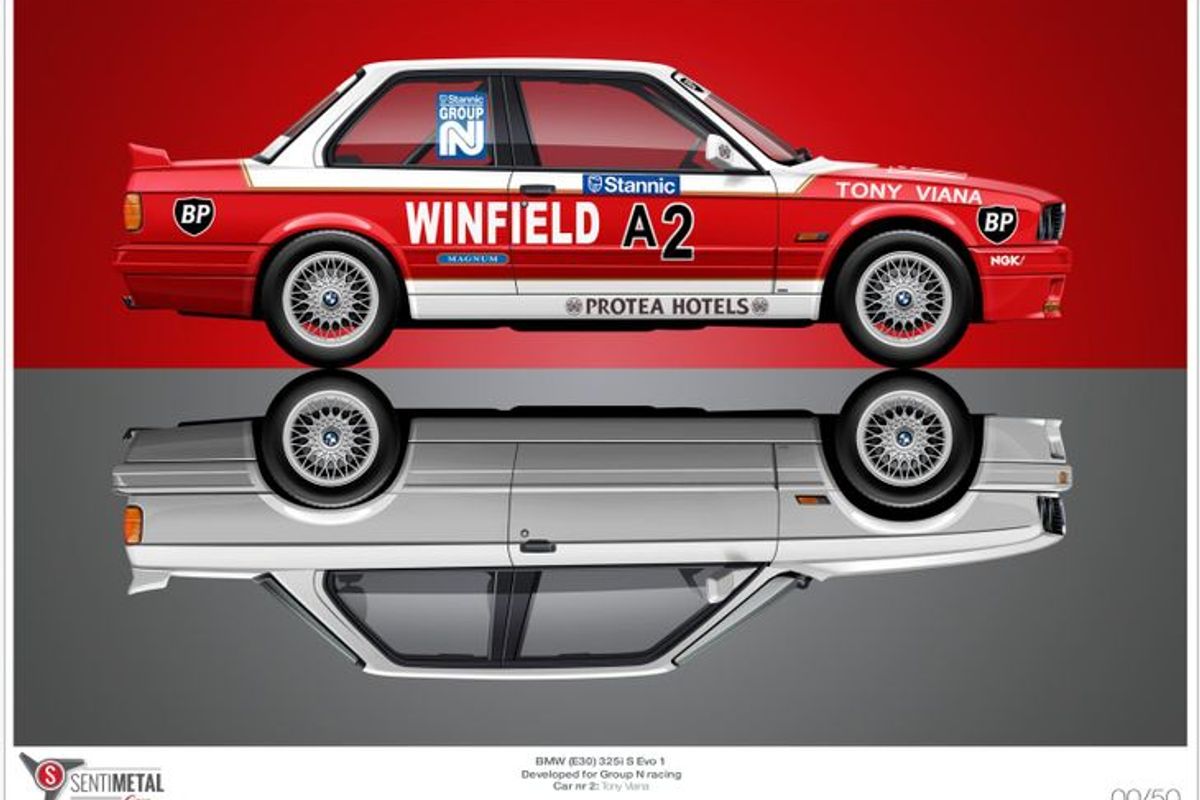
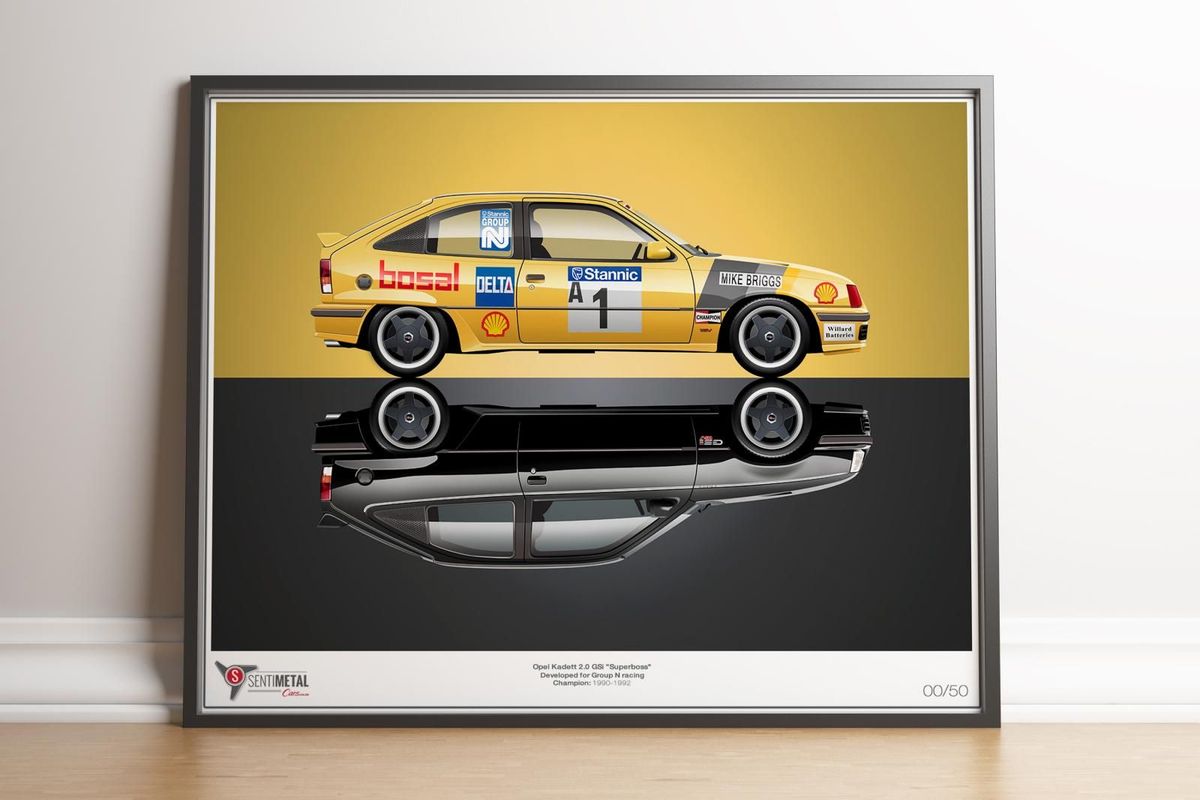
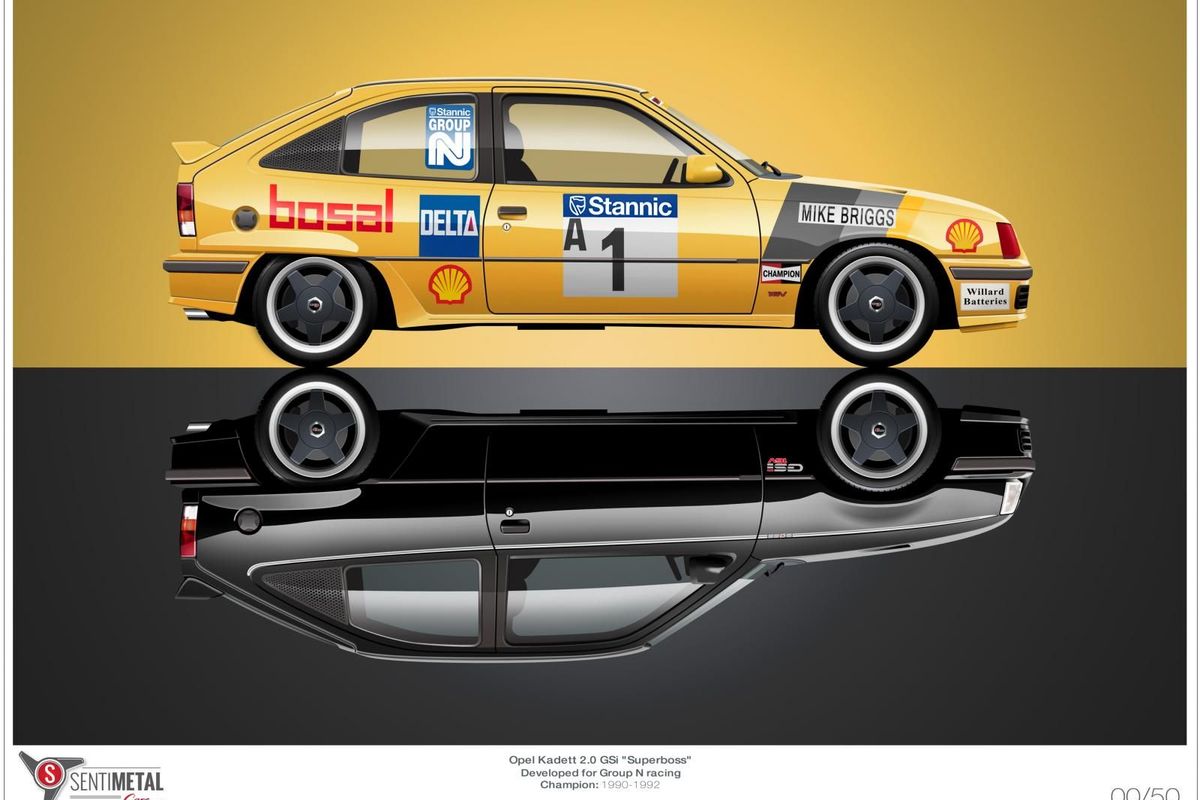
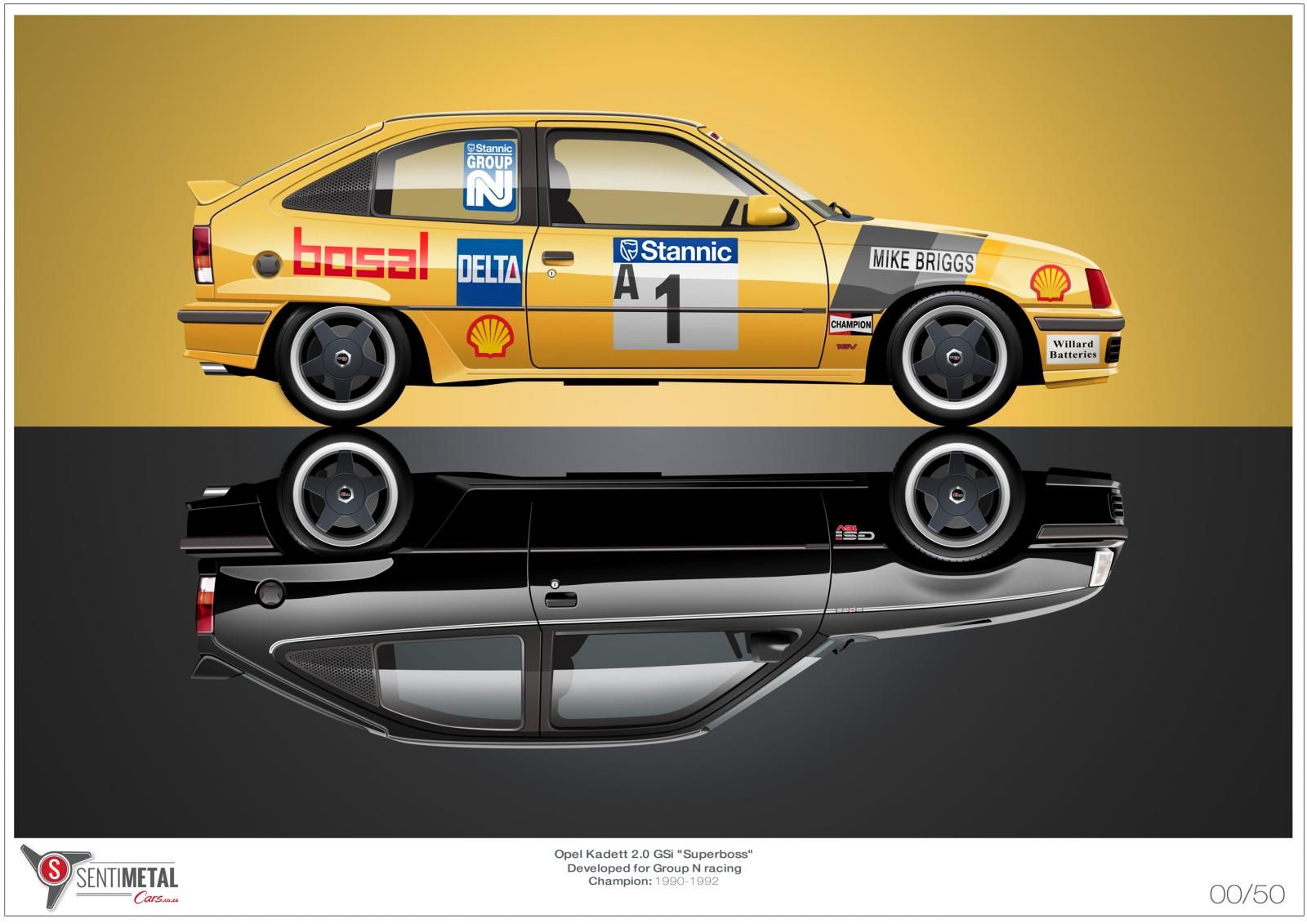
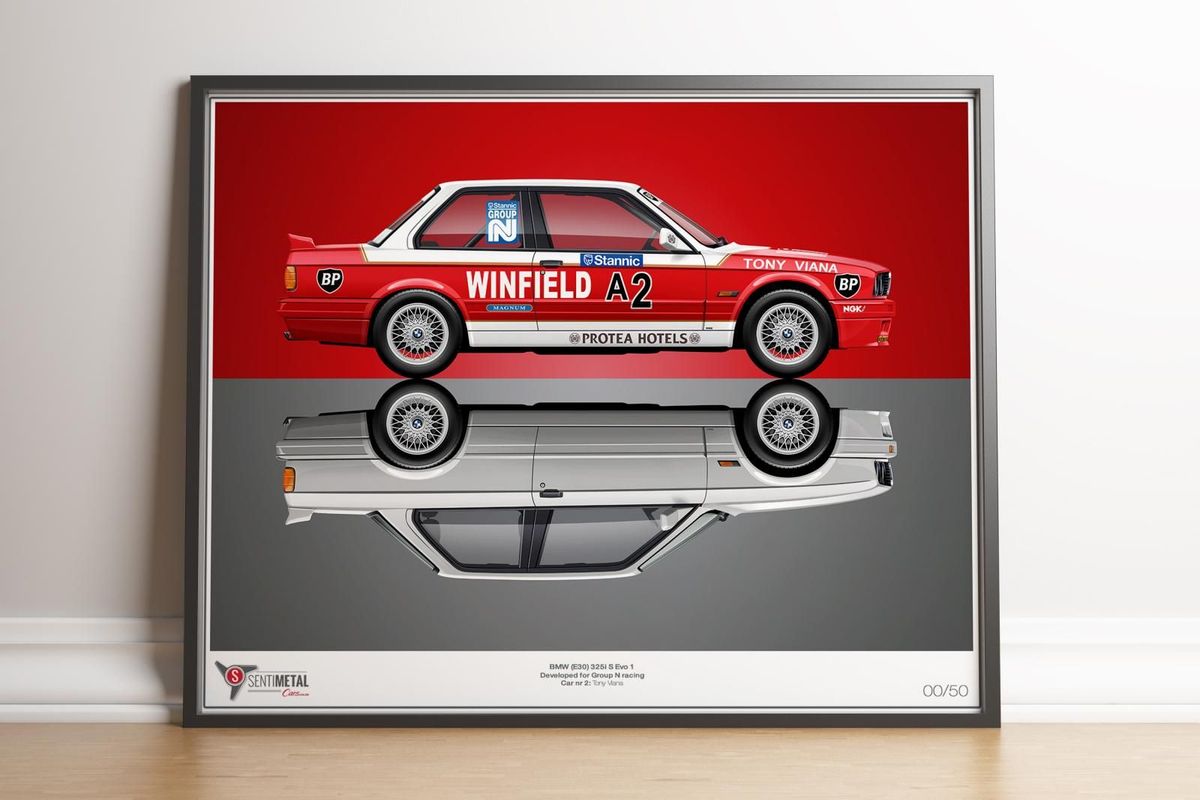
If you watched local racing in the late '80s and early '90s then the fierce duels fought between the Opel and BMW teams in the Group N championship will forever be etched into your memory. Back then, category A was dominated by the Opel Kadett Superboss and BMW E30 325iS (in Evo 1, and later in Evo 2 guise). In the hands of the likes of Mike Briggs and Tony Viana, paint was swapped on many a corner around the country.

Now SentiMETAL is bringing those icons back to life with a series of stunning prints, the first two of which feature the Briggs A1 Opel Kadett Superboss and the Viana A2 Winfield-liveried BMW. "The response has been overwhelmingly positive," says Hannes Oosthuizen, SentiMETAL project head.


The limited-edition prints feature the a "mirror effect" with the road car accompanying the racing version.

The prints feature artwork by Wayne Batty, created exclusively and painstakingly for SentiMETAL, and is offered in A2 format, printed on high-quality 250g paper with a satin finish. Each print is digitally numbered out of 50 to ensure exclusivity. 

To find out more about the prints or to order, head over here

You may also be interested in

SentiMETAL launches digital magazine for petrolheads

Alfa Romeo Giulia GTA Price Announced

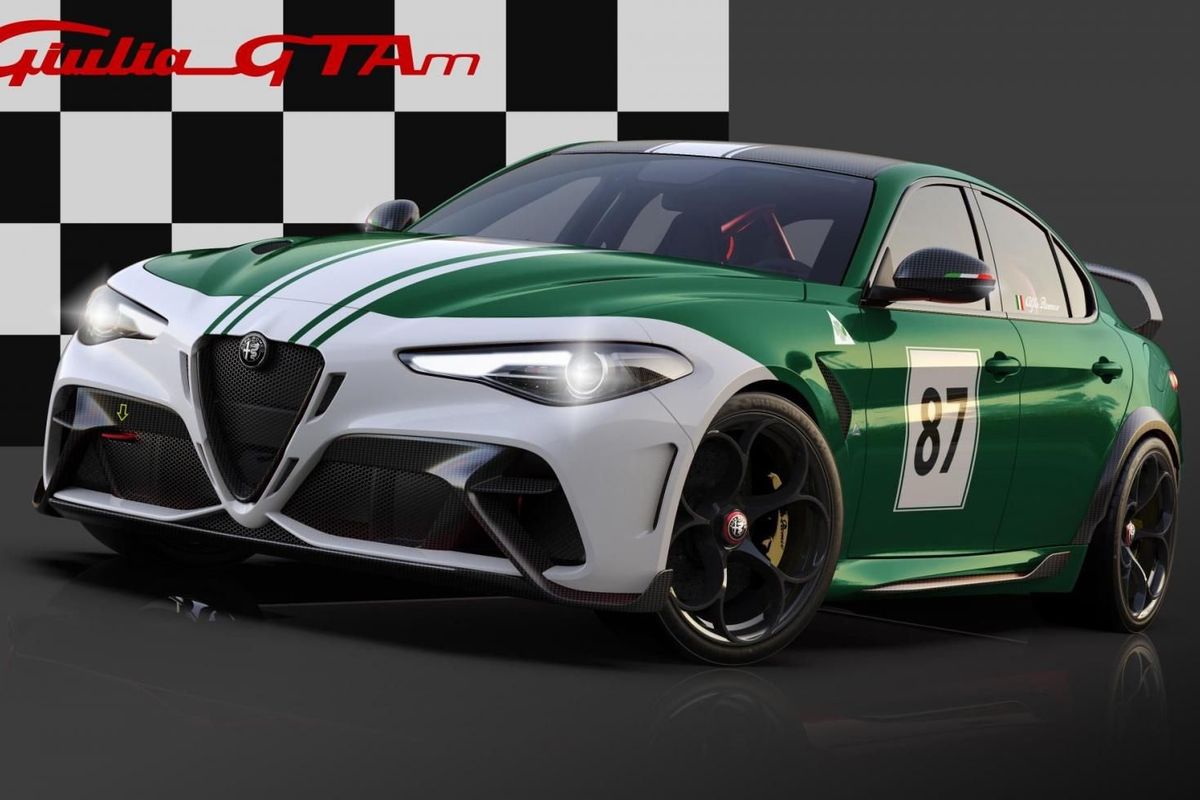
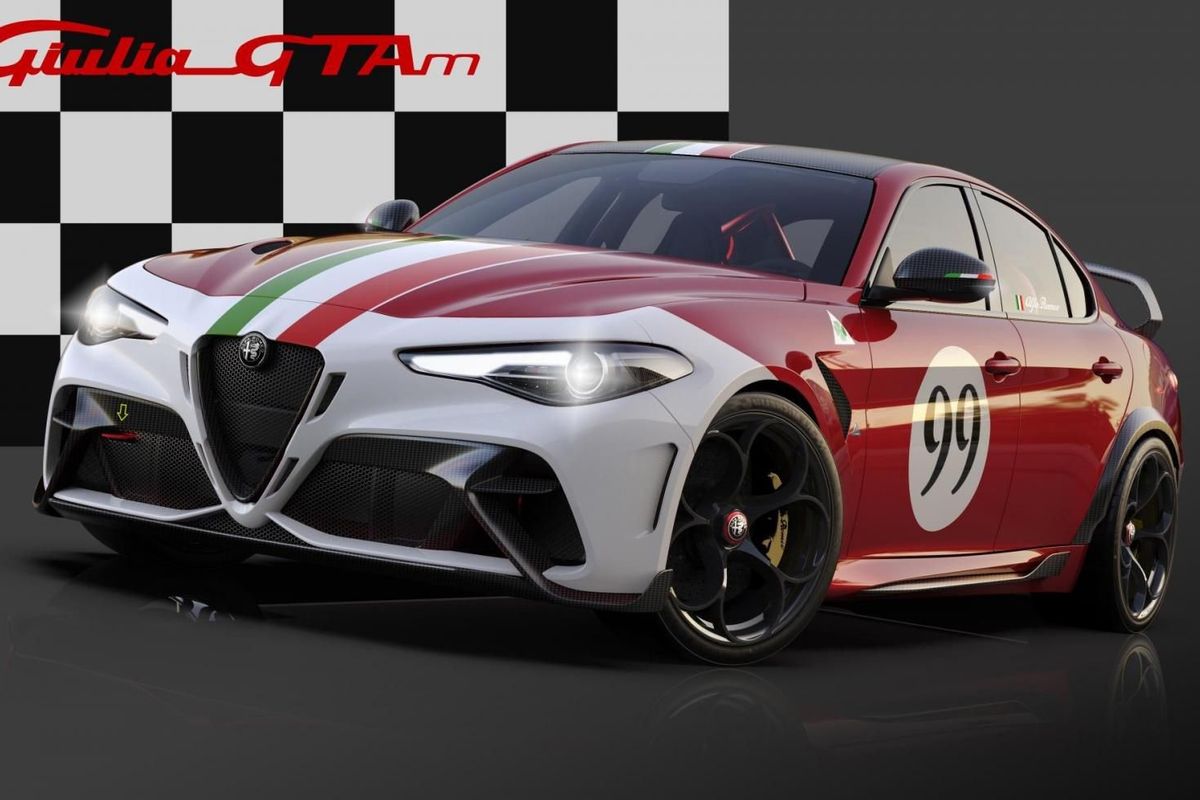
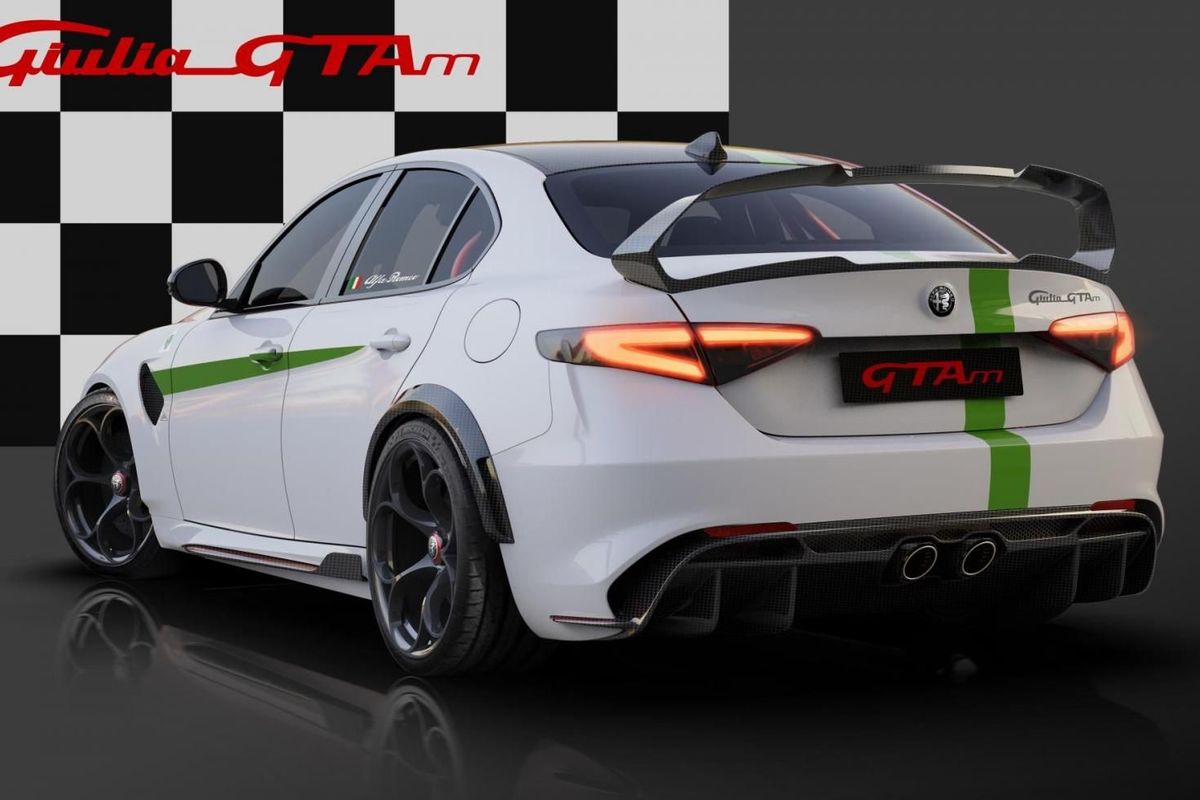
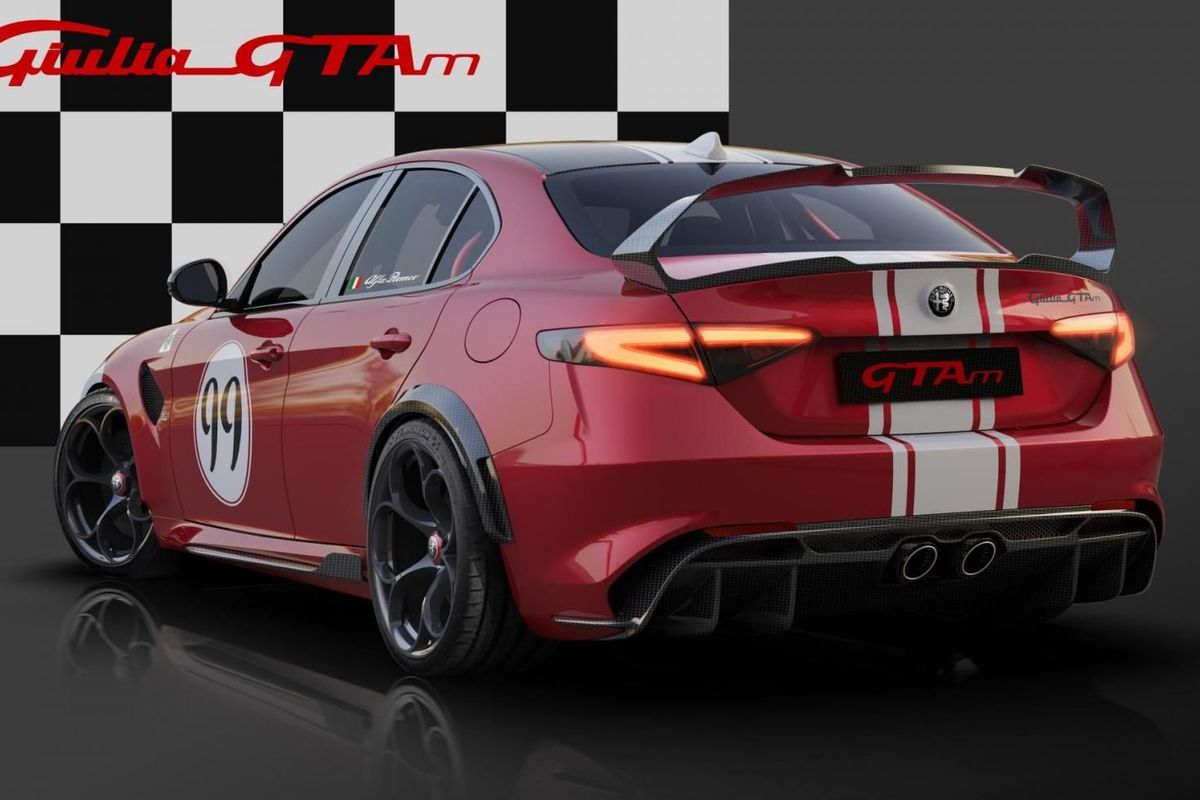
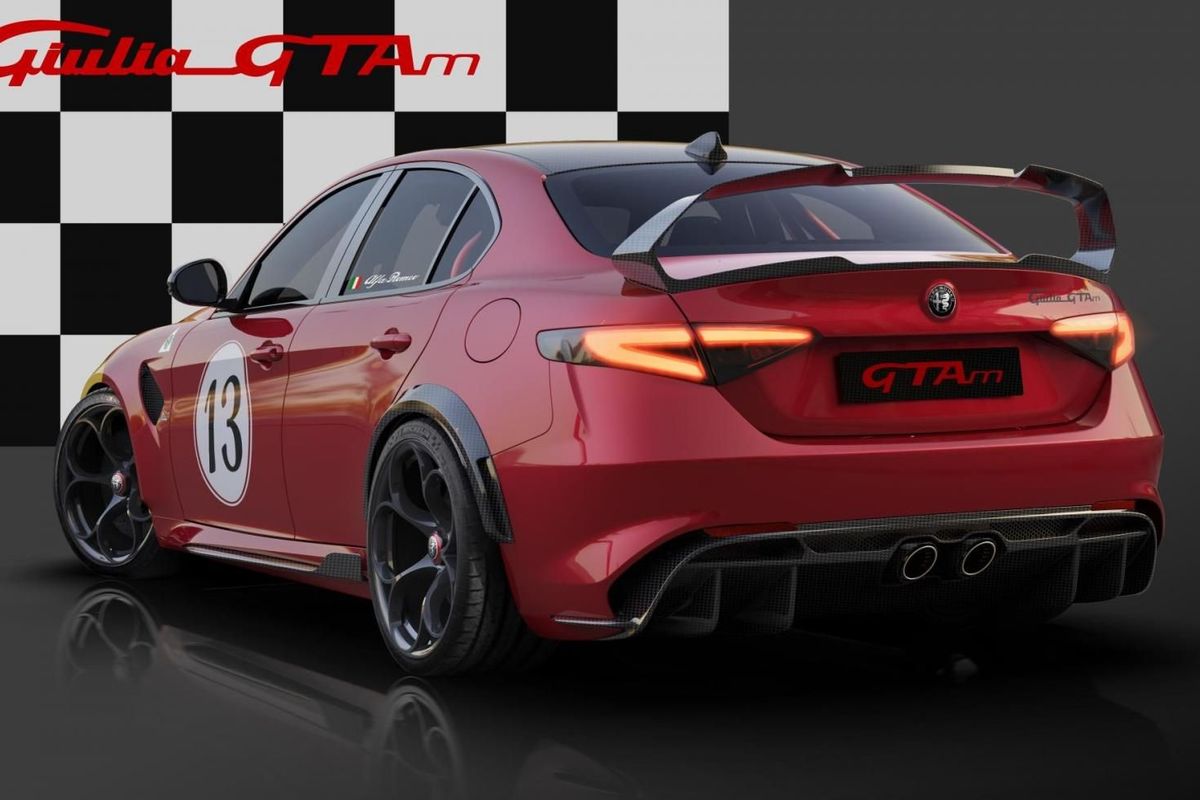
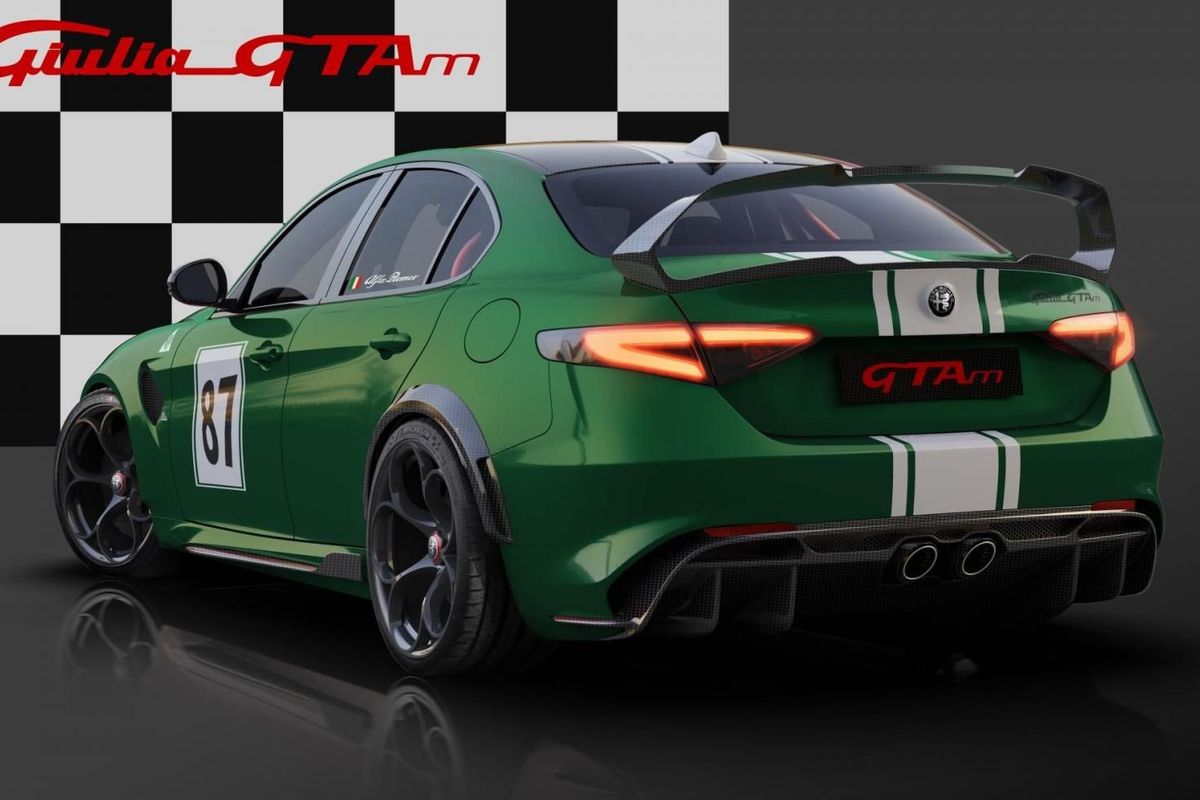
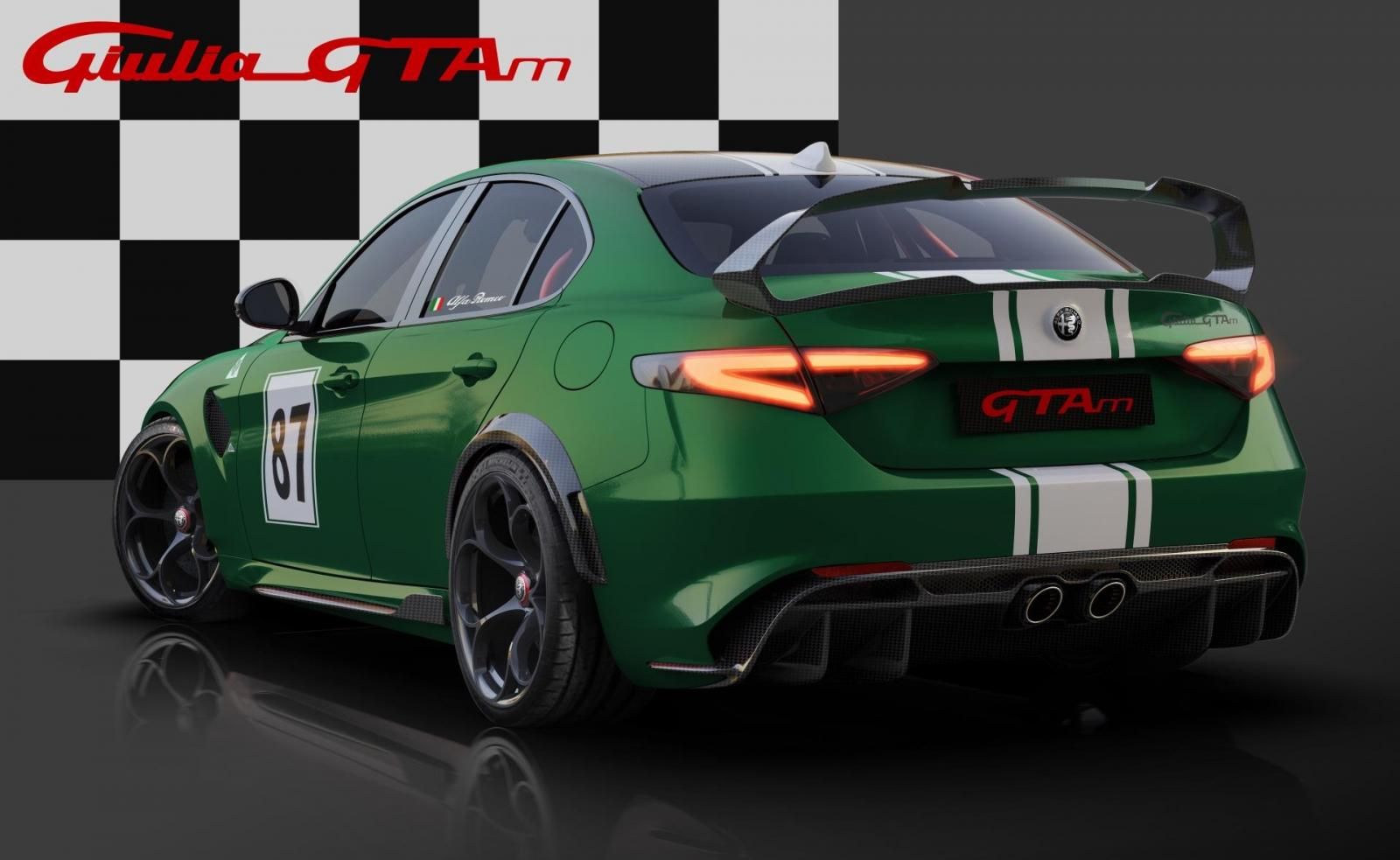
Fans of Alfa Romeo can now order the new Giulia GTA and GTAm as pricing has been announced, along with these cool historical liveries.

To celebrate 110 years of Alfa Romeo, the Italian brand revealed the ultimate Giulia sedan and revived the iconic GTA name in early March 2020. There'll be just 500 units sold, making it quite collectable. 

The 2.9-litre biturbo V6 sourced from Ferrari has been given some tweaks, with power now rated at 403 kW, from 375 kW and 600 Nm. There's a new Akrapovic titanium exhaust system, identified by the large central exhausts. Performance figures are decent, with a 0-100 kph of 3.6 seconds – faster than the standard car's 0-100 kph in a claimed 3.9 seconds. The Giulia GTA is around 100 kg lighter than the standard Giulia QV it is based on.

Alfa Romeo has launched the GTA configurator and customers can now order their cars. Alfa Romeo has launched a number of Centro Stile liveries from the classic GTA racers and customers can opt for one. There'll be just 3 colours on offer, GTA Red, Trophy White and Montreal Green, just like the Italian flag and customers can spec colours for brake calipers, roll bar, seat belts and stitching.

Customers are in for a treat as the purchase process looks incredibly personalised. They'll get a Bell helmet in special GTA livery, a tailor-made Goodwool car cover and a driving course at the Alfa Romeo Driving Academy. If you opt for the GTAm, you'll also get a full Alpinestars race suit, gloves and shoes. And if you want to christen your car with a cross-European road trip, you can opt to collect the vehicle from the Autodelta workshop in Balocco, Italy.

Alfa Romeo Giulia GTA Price in South Africa

At this stage, the Alfa Romeo Giulia GTA is not confirmed for the South African market, but Alfa Romeo UK has supplied pricing for the Giulia GTA and Giulia GTAm at  €176,500 and €181,500 OTR respectively. At the current exchange rate in the first week of May 2020, that puts the vehicles at R3 607 144.91 and R3 709 330.32. In comparison, the standard Alfa Romeo Giulia QV retails for R1 430 244.

Further Reading

Alfa Romeo Unveils Hardcore Giulia GTA

Alfa Romeo Tonale Concept Revealed

Alfa Romeo Tonale Production Model Leaks Early

Our Alfa Romeo GTV6 3.0 – The Restoration

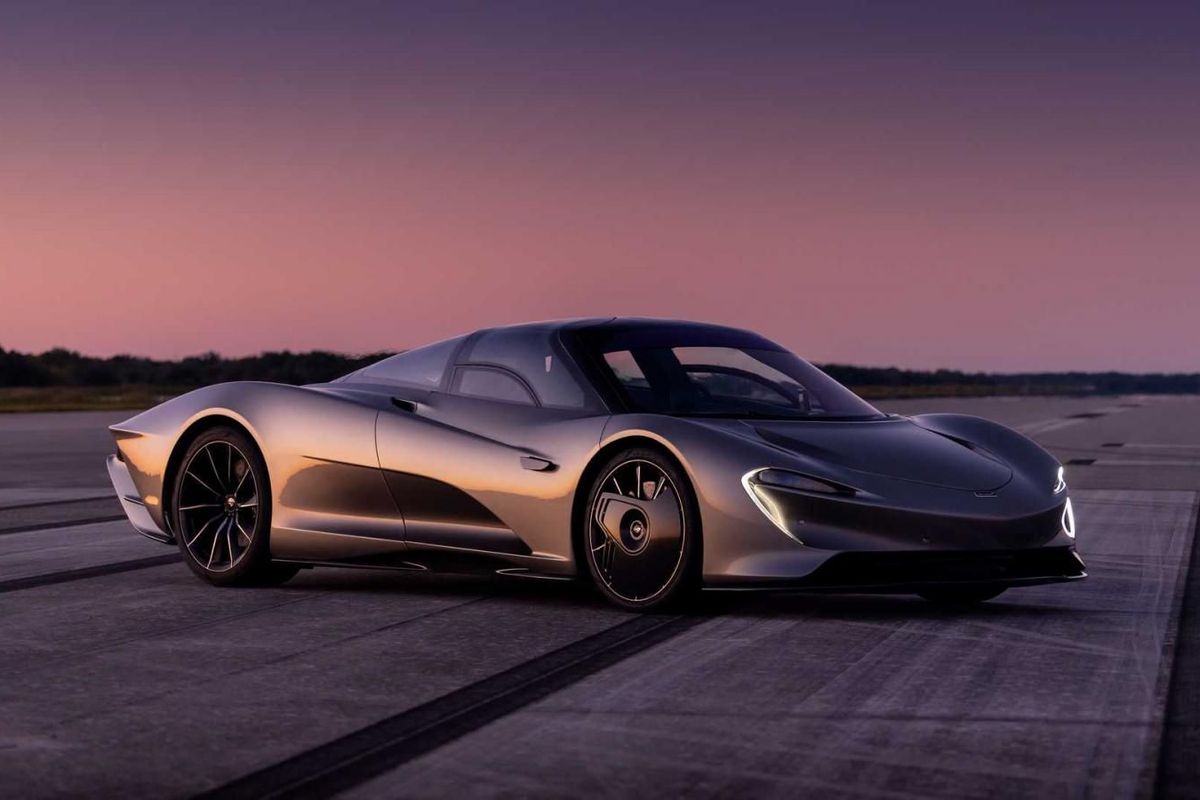
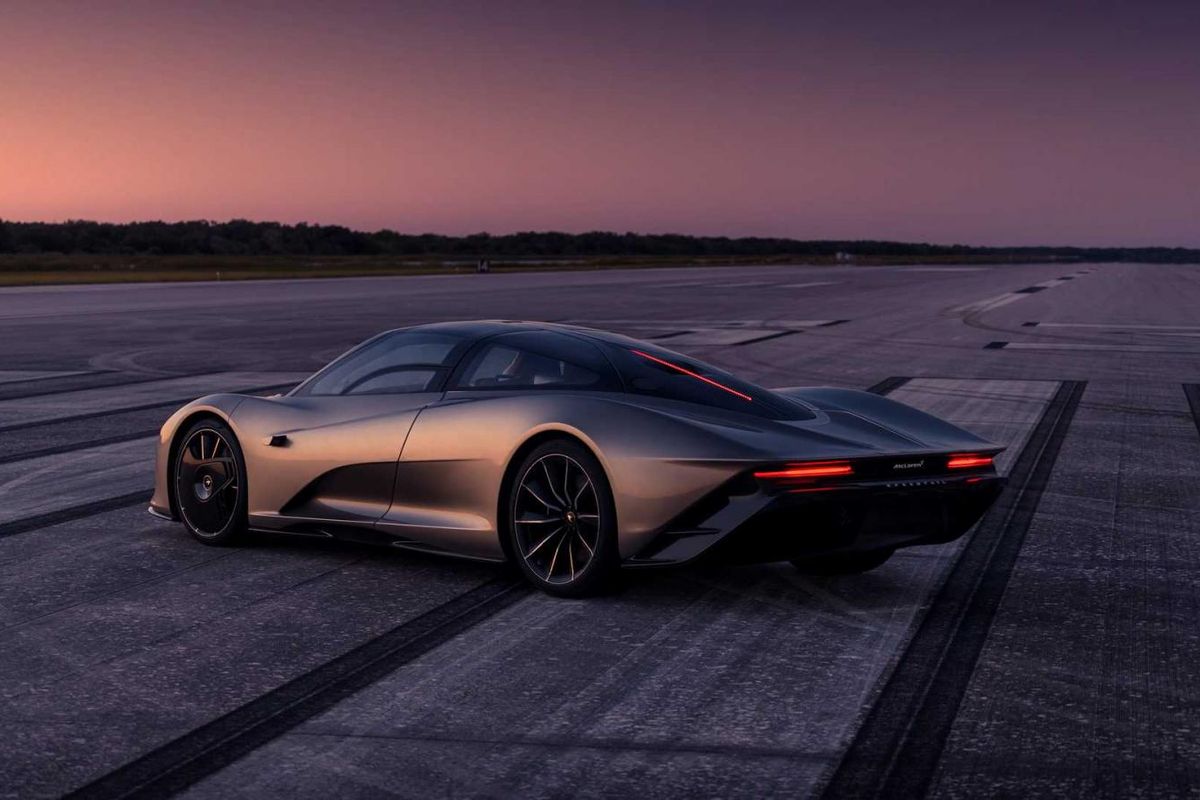
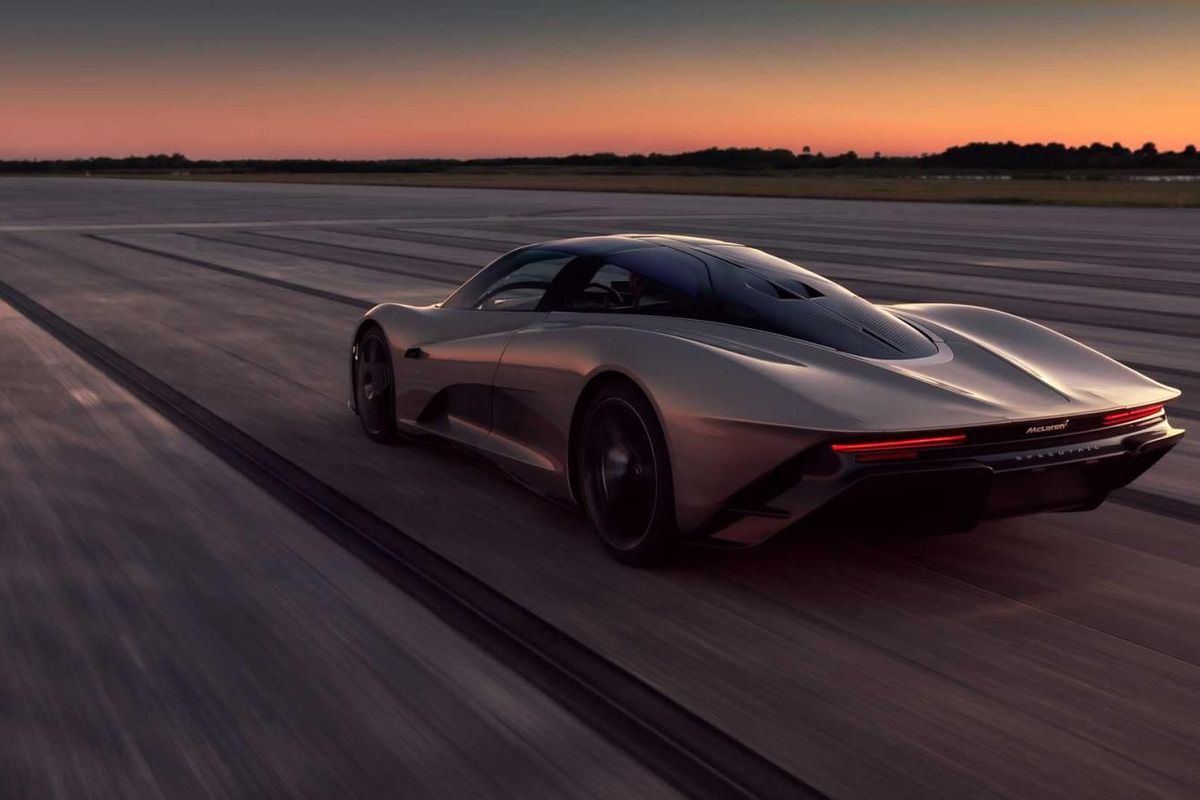
McLaren Speedtail Secrets Revealed [w/video]

The McLaren Speedtail is a fine example of modern hybrid engineering. 

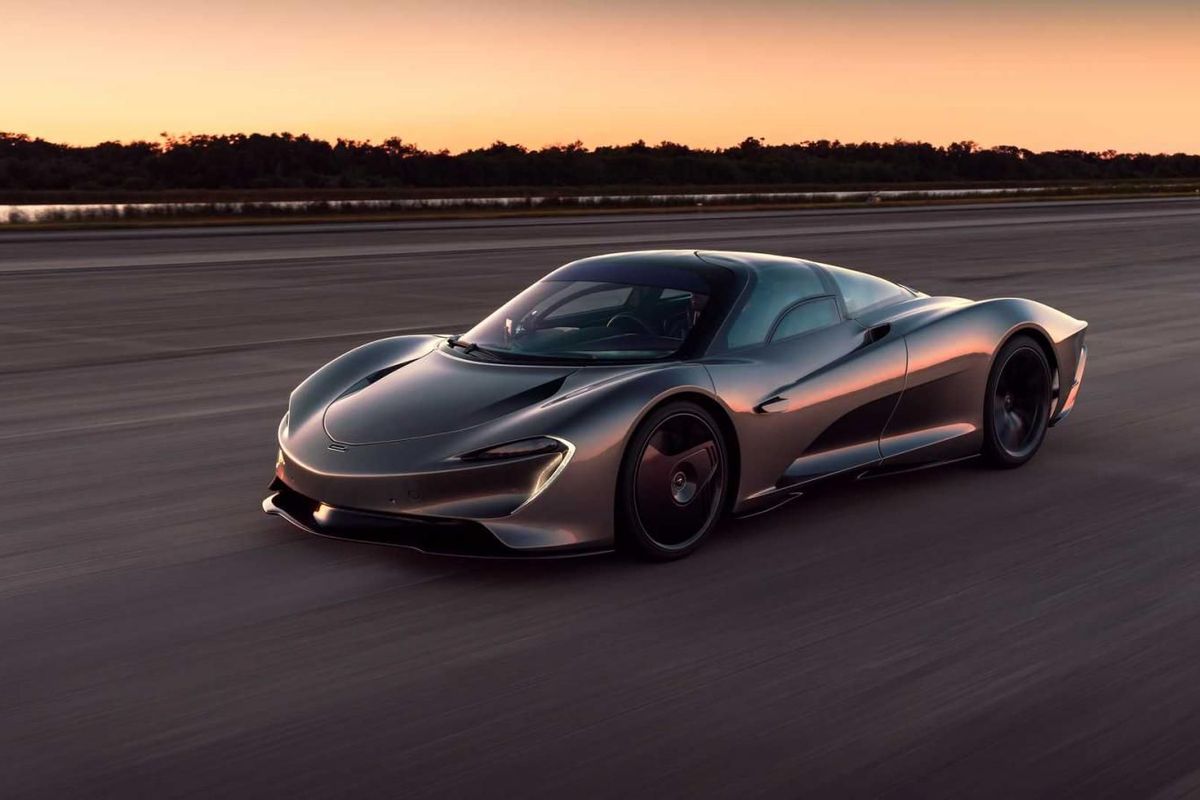
Back in 2018, McLaren revealed its fastest model ever, the Speedtail. Despite its odd styling, this 3-seater hyper-GT car is magnificently fast and earlier this year McLaren proved its capability by taking the Speedtail to a top speed of 403 kph, numerous times, at the Kennedy Space Center in Florida, USA. As a reminder, the McLaren Speedtail can accelerate from zero to 300 kph in 13 seconds!

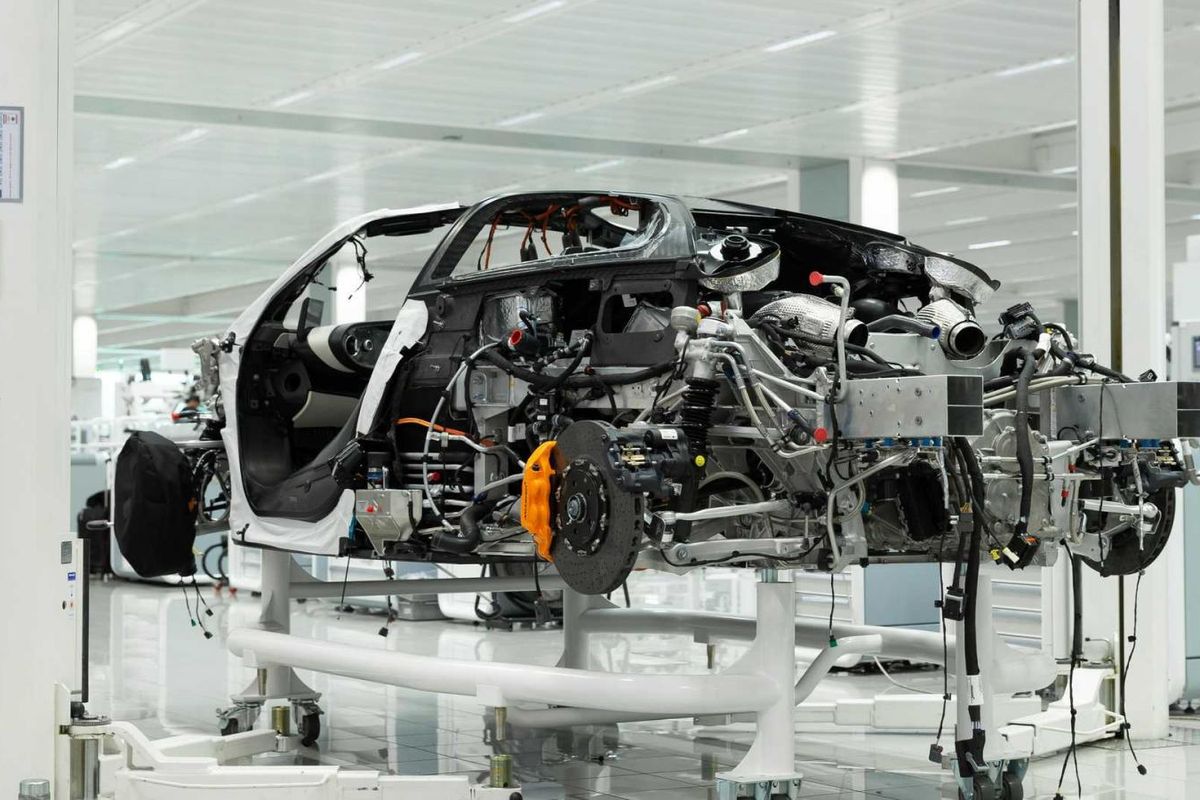
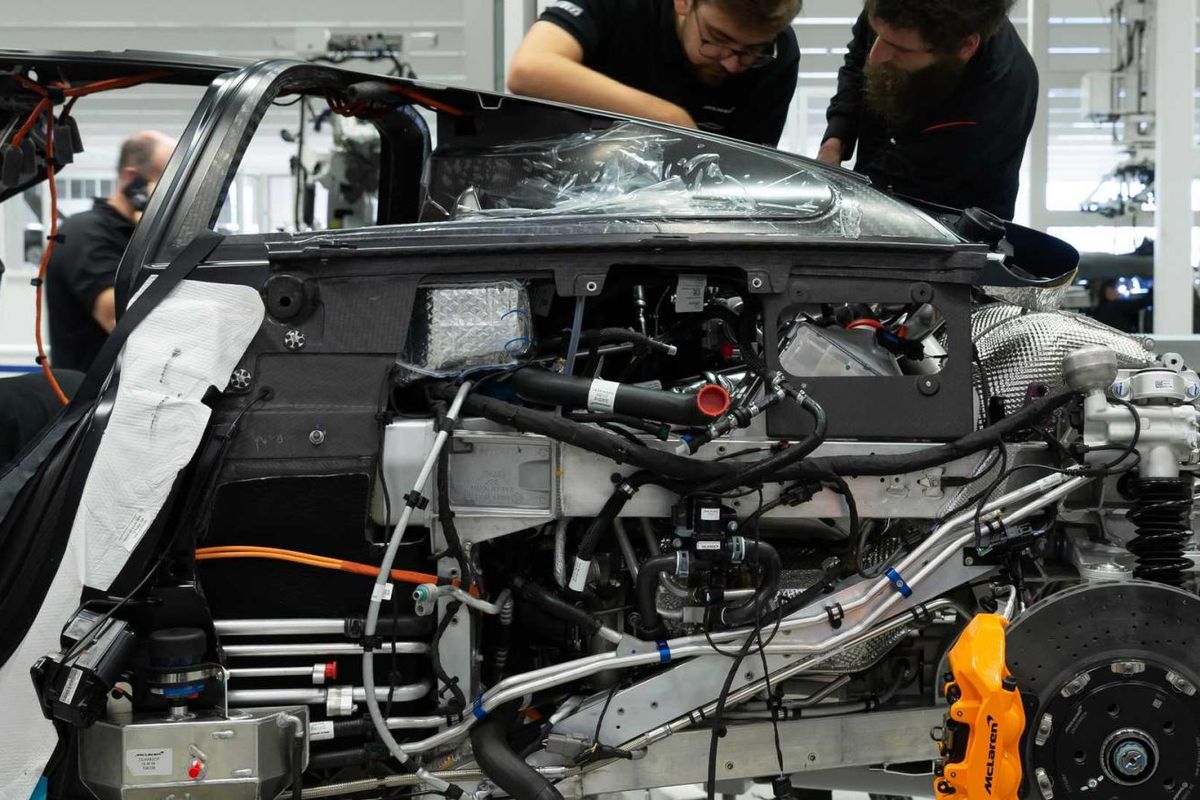
McLaren has now provided some insight into how the Speedtail is able to achieve such impressive performance. Its sleek aerodynamic design and a low kerb weight of just 1 430 kg help to achieve this but its hybrid powertrain is undoubtedly the star of the show. 

Combining a twin-turbocharged 4.0-litre V8 petrol engine with an electric drive unit that together produces notable outputs of 787 kW and 1 150 Nm of torque. The V8 engine is a technological evolution from the McLaren P1 hybrid hypercar and features a new lightweight air intake system, enhanced cylinder head cooling and revised piston design that contributes 557 kW and 800 Nm of torque. 

The electric motor produces another 230 kW with technology derived from Formula E which represents the highest specific battery power output of any production road car. An innovative, high-voltage storage system which comprises a compact, high-power 1.647 kWh cylindrical cell that delivers a power density 4 times that of the unit in the McLaren P1 at 5.2kW/kg with an output of 270 kW. 

McLaren says that the design and integration of the battery system contribute to the performance by providing intelligent energy deployment. The battery cells are thermally controlled with a dielectrical cooling system which is immersed in an electrically insulative oil which transfers heat away from the cells which allow the battery cells to run harder over a longer period of time. It’s also the first system of its kind found in a production road car. 

Watch the video below to learn more about the McLaren Speedtail

Related Content

Novitec Takes McLaren Senna To Another Level

McLaren unleashes leaner, faster 765LT  

Buy a McLaren on Cars.co.za
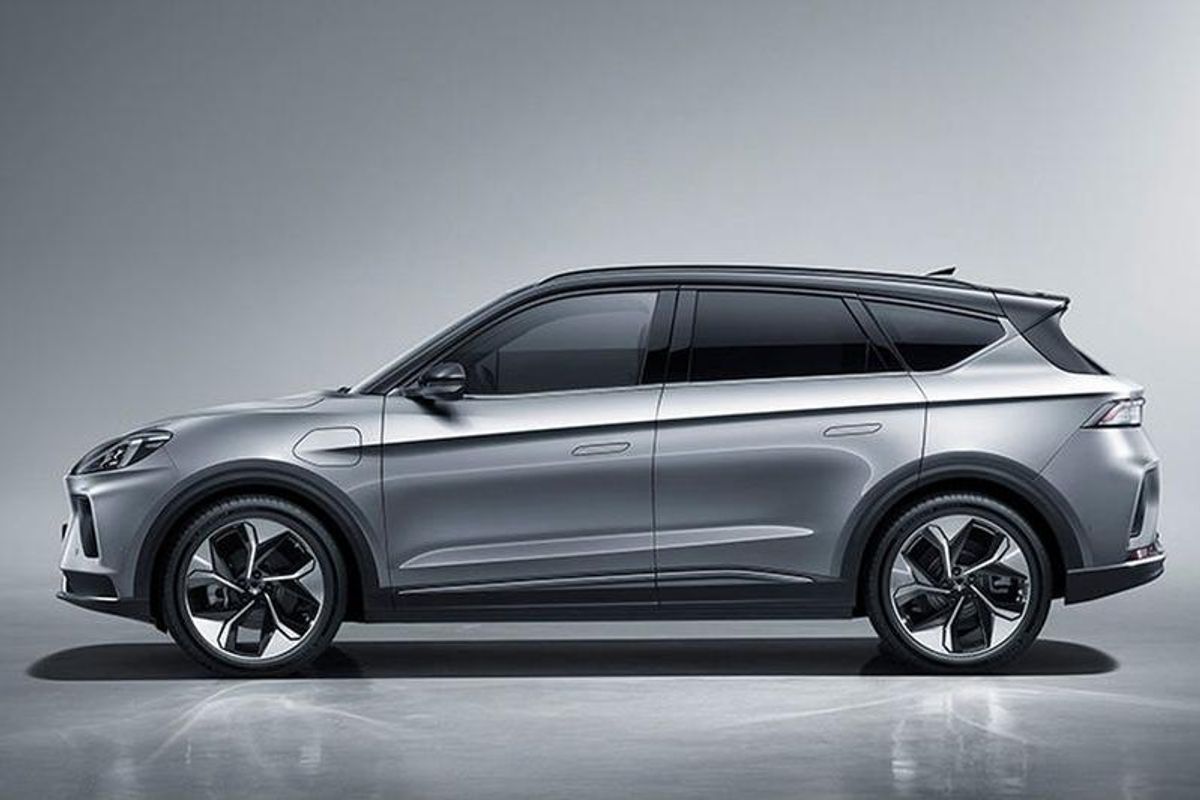
Alpha-T EV Promises 650km Range

Mild power but big range for impressive Chinese Alpha-T.

As China’s economy attempts to recover from its Covid-19 interruption, one of the world’s largest electric car brands is readying an impressive new SUV.

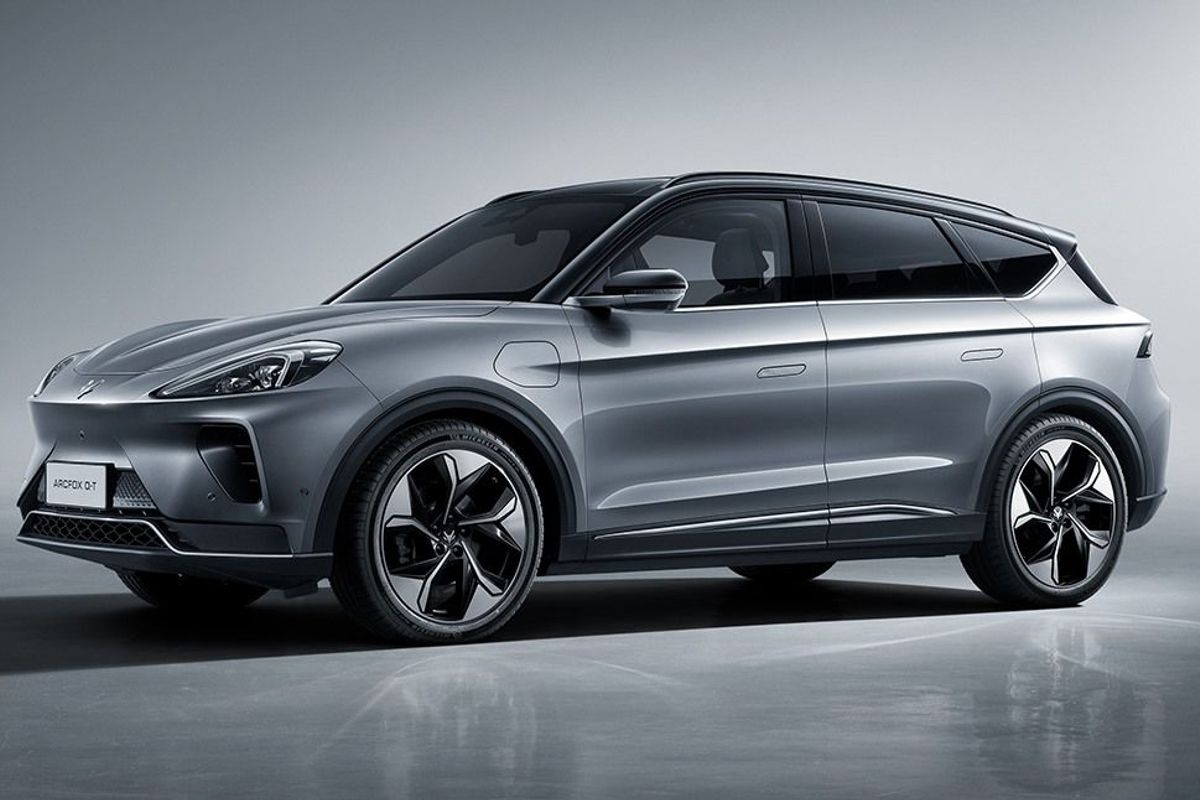
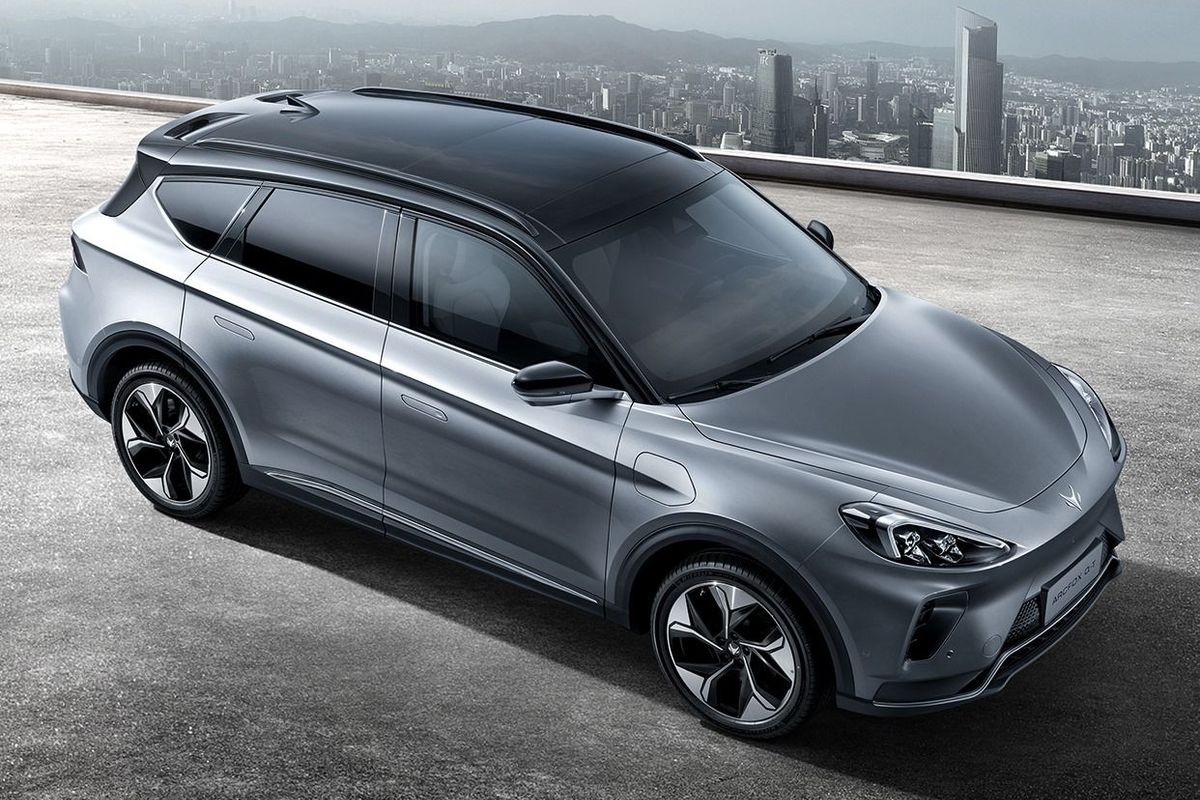
BAIC’s new Alpha-T is due to be launched by September this year and is being marketed under the ArcFox sub-brand.

Although the brand and model name might be unfamiliar to most, the ArcFox Alpha-T has an impressive list of core technology suppliers.

Canadian automotive specialist, Magna, has produced most of the trick electronics and drive systems for the Alpha-T battery-powered SUV.

ArcFox is making some very bold claims for its Alpha-T, such as a 650 km (NEDC rating, WLTP puts it more at 500 km) driving range. Exterior design is a blend (and possible imitation) of many European design trends, but the technology driving ArcFox’s Alpha-T owes very little to the traditional automotive supply chain.

The Alpha-T’s 93.6 kWh battery pack is amongst the largest you’ll find in any electric vehicle. It is sourced from South Korean chemicals and energy giant, SK. That huge battery pack powers two electric motors, one at each axle, giving the Alpha-T a fair power rating.

Combined electric motor power output is rated at 162 kW, with ArcFox having obviously limited the Alpha-T’s ultimate potency, to conserve battery power and improve driving range. With all-wheel drive, it should have mild gravel travel capability.

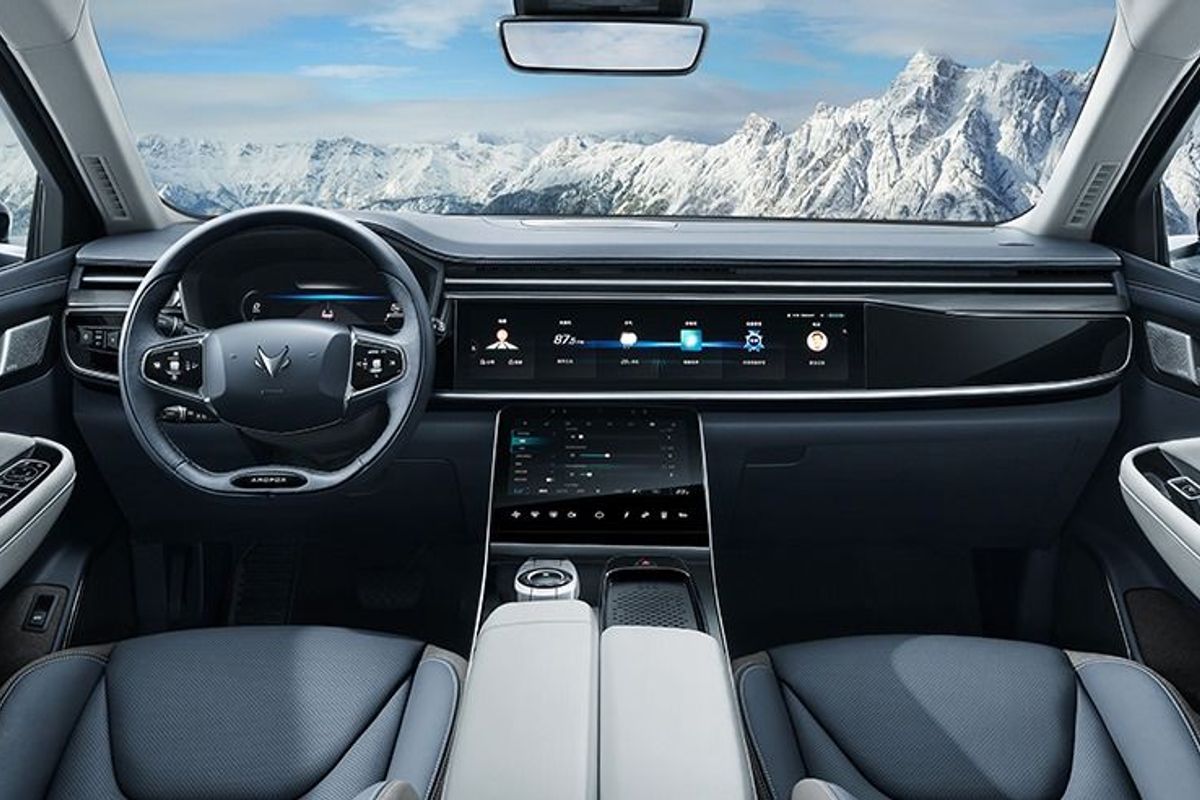
Measuring 4.78 m bumper-to-bumper, 1.94 m across and standing 1.68 m tall the Alpha-T is slightly longer and wider than a BMW X3, for reference. The cabin design features a collection of large digital screens, for both the driver’s instrument binnacle and general infotainment.

Exact technical details aren’t available, but the Alpha-T is certified to conduct level 2 autonomous driving functions and includes an electronics architecture which is powered by 5G technology, allowing for select level 3 functions, too.

Pricing

The launch price for ArcFox’s Alpha-T is an estimated R680 000.

Related content

Chinese XC40 Revealed

Renault takes lead in budget-EV race

EV Apocalypse is Closer Than You Think

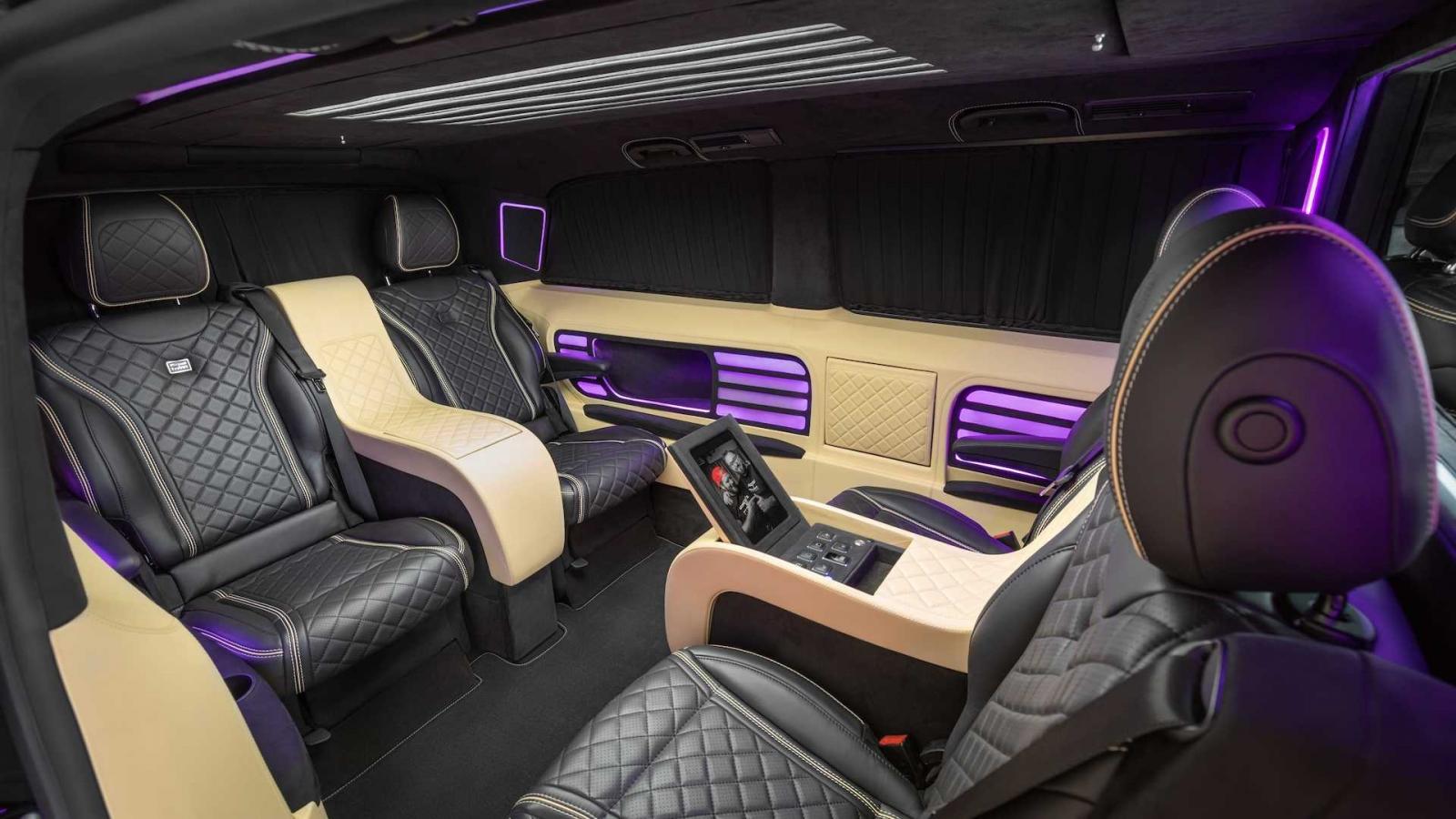
V-Class by Schawe Car Design Interior is Next Level

The cabin of the Mercedes-Benz V-Class could hardly be described as mundane, but Schawe Car Design has given the interior a high-end luxury makeover.

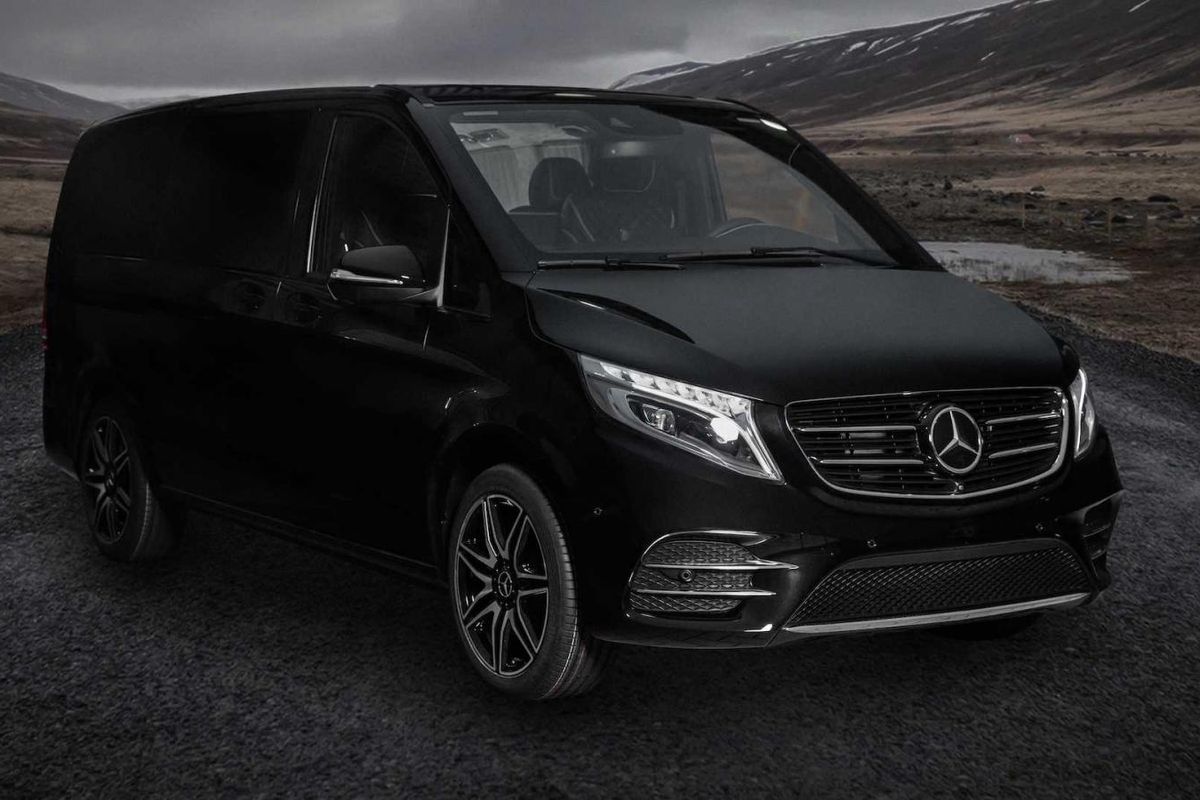
The Mercedes-Benz V-Class is highly regarded as one of the more luxurious people movers, with many hotels and airport shuttles opting for this vehicle. The cabin is focused primarily on comfort for passengers, but for those who think this vehicle doesn't offer enough, there are many design houses who are happy to upgrade the interior. 

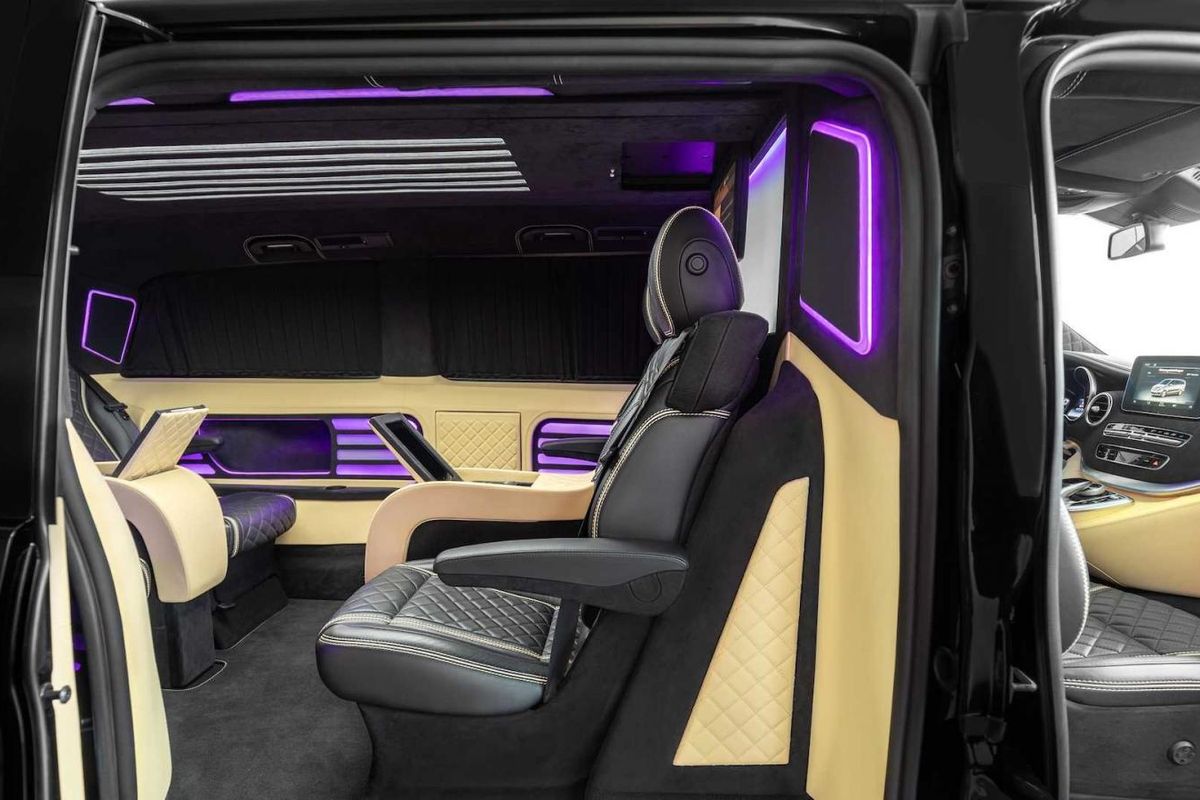
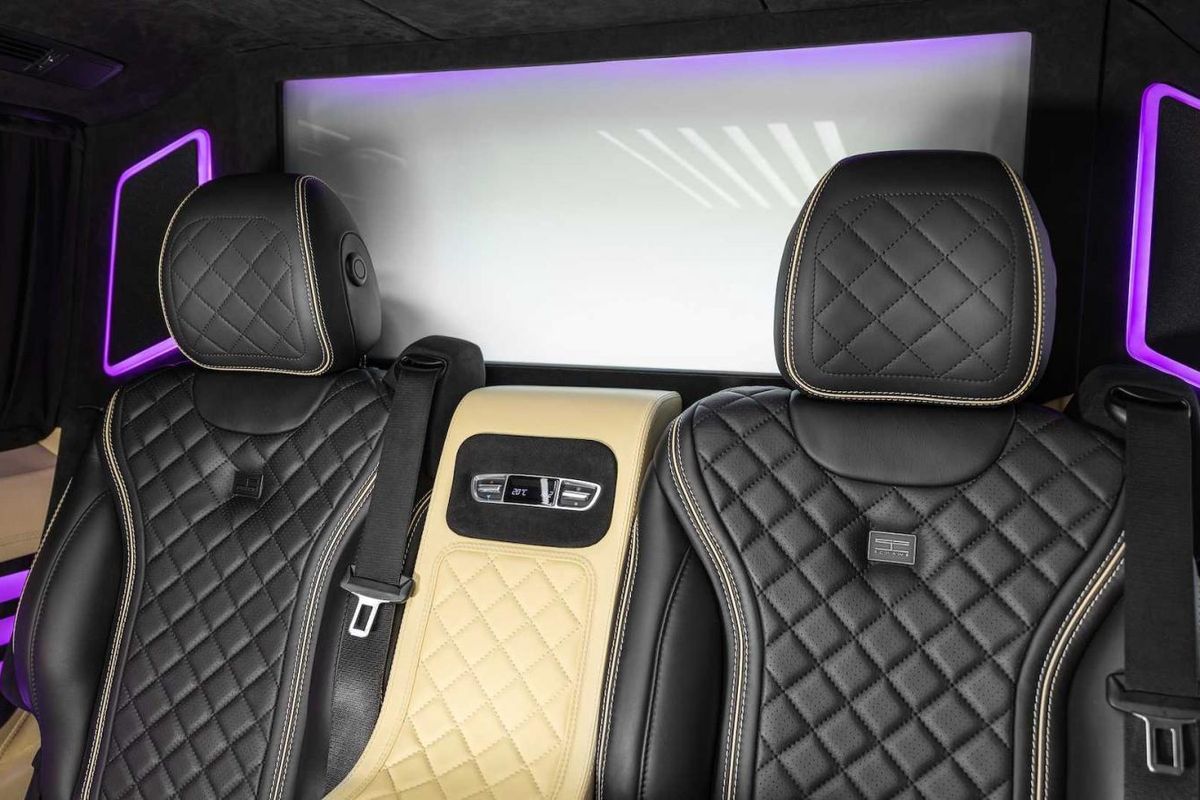
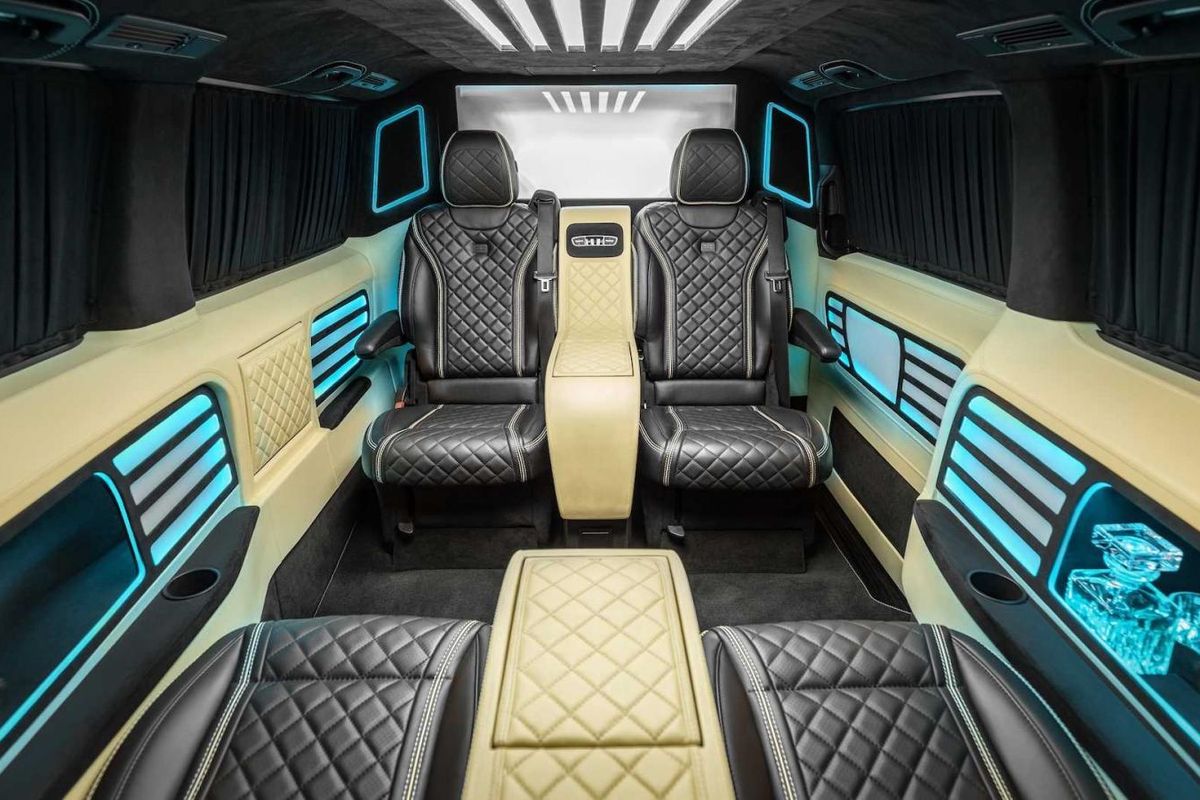
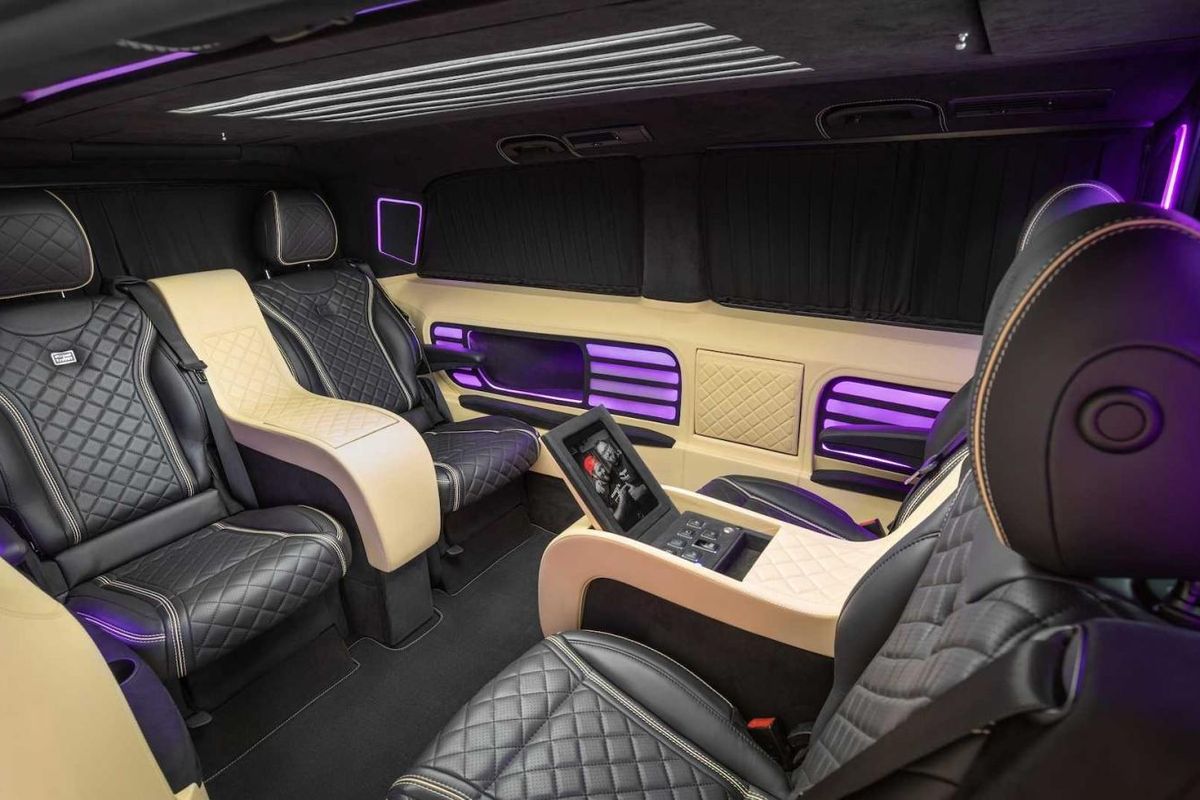
The latest is Schawe Car Design, who has given the Mercedes-Benz V-Class a proper luxury makeover. The standard trim and panels have been replaced by high-end Nappa, black Mercedes-Benz leather as well as Bentley leather. There are also heated seats for everyone and all the plastic trim has been replaced by premium materials. A privacy screen as been fitted to separate the driver from the passengers, making it ideal for those seeking private meetings. Also, how cool is the lighting, which can change colour depending on mood?

There are also some classy touches such as electronically-controlled tables and 2 crystal carafes complete with a mini liquor cabinet. Who said road trips had to be boring? Outside, there's precious little to distinguish the standard Mercedes-Benz V-Class from this Schawe Car Design model other than some 19-inch 7-double-spoke rims.


The rear cabin of the Schawe-upgraded V-Class is one magical place to be. How epic are these seats?

Further Reading

Meet The Ultimate Mercedes-Benz V-Class

Mercedes-Benz Marco Polo Updated for 2020

All-New Mercedes-Benz V250 Gets Brabus Treatment

Mercedes-Benz V-Class (2015) First Drive

Mercedes EQV is a Benz Battery Bus

The Cars.co.za Show: Episode 3

Welcome to the third (ever!) episode of our weekly 45-minute show. In this episode, Ciro experiences one of the fastest cars on earth, the Mclaren 720S. Ashley and Ciro drag race the BMW M2 against the Audi RS3, we interview local Youtube sensation Liberebil, we meet the owner of Cape Town’s one and only Super Beetle and lastly, the Toyota Yaris GRMN takes on its rivals in a head to head track race.

Follow the show on your favourite social media:

#CarscozaShow

www.twitter.com/CarsSouthAfrica
www.instagram.com/CarsSouthAfrica
www.facebook.com/CarsSA

More about the Cars.co.za Show

We have been working towards this project for many years now – a proudly South African long format, multi-segment car show. A show which celebrates South Africa and our rich car history. We toyed with broadcasting on terrestrial television or launching on a streaming network, but with us so close to the finish line we got blindsided by the global Covid-19 crisis, which required a global lockdown. 

Our talks, production and country halted. But this extraordinary moment in time also creates opportunity. With South Africa ordered to stay home, online content consumption is on the rise and content creation dwindling. As a company which takes great pride in being nimble, we simply couldn’t resist the urge to fill this content void and give South Africa, and the world, something beautiful to watch. 

And so in a moment of inspiration, we decided to adapt our long-format car show concept, using some techniques that may have been unthinkable before lockdown, and get it ready in record time to release it for free to the world. With this show, we aim to entertain, inform, inspire and hopefully make our audience smile. 

We have also committed to donating all revenue generated off our Cars.co.za YouTube channel for the rest of 2020 to charitable causes in support of the fight against Covid-19. For this show, all of our content was either filmed pre-lockdown or safely under lockdown conditions by our presenter himself – Ciro De Siena; it turns out a lounge and dining room can be an excellent TV studio. 

New episodes will debut every Thursday at 8 pm and all episodes will remain on the channel indefinitely. From everyone at Cars.co.za, stay safe, stay home, look after yourselves, and each other.

Nissan Readying the ‘400Z’

The long-awaited successor to Nissan’s 370Z – ostensibly called the 400Z and powered by a twin-turbo 3.0-litre V6 – could be revealed within the next 12 months, a report claims.

If you look up the specs of the venerable 370Z sportscar on Cars.co.za’s New Car Specs & Test Drives section and click on the General tab, you’ll see “Date Range introduced (in) SA: June 2009”. A run of almost 11 years on the South African new-car price list is quite extraordinary, even if low-volume sportscars tend to have longer product lifecycles than stronger-selling passenger vehicle models.

Even though the Nissan received detail updates through the years, most notably at the end of 2017, it feels older than it is because "a sporty, yet ultimately comfort-oriented coupe with a large-capacity, non-aspirated motor that drives its rear wheels" is a decidedly old-school and (no offence intended) North American sportscar recipe. Now that Toyota has a Supra back on the roads (albeit with help from BMW), Nissan has to raise its game and re-imagine its Z car.      

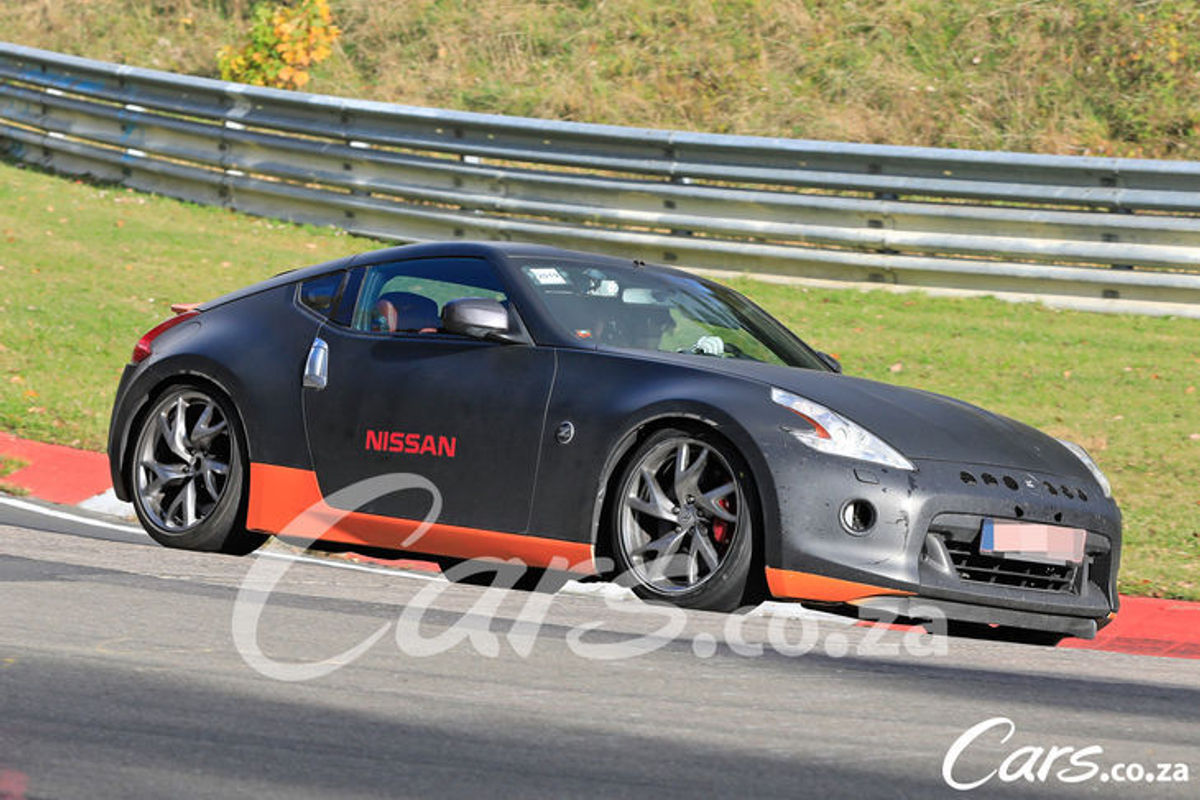
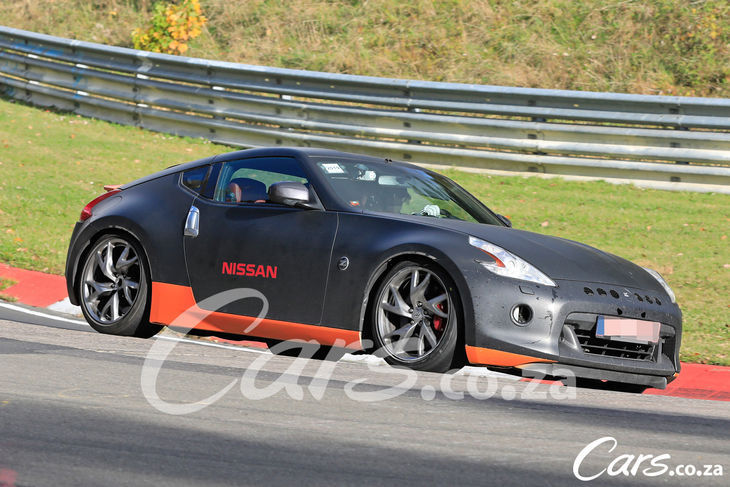
Last month we reported that a next-generation Z car had been photographed undergoing testing (in a modified 370Z body) and that Nissan had applied to trademark a new-style corporate logo as well as a retro 'Z' logo that looks remarkably similar to that of the original 240Z from 1971.


A post shared by Leyang Bai (@leyangbai) on

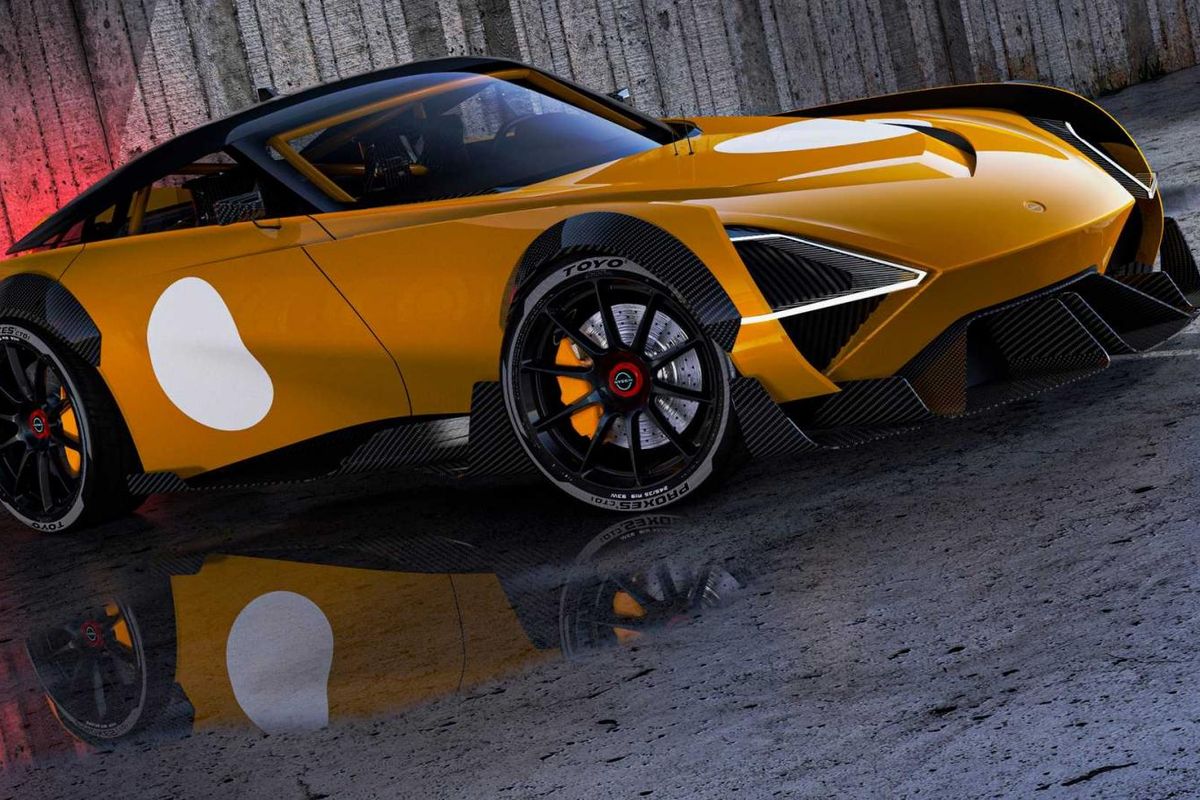
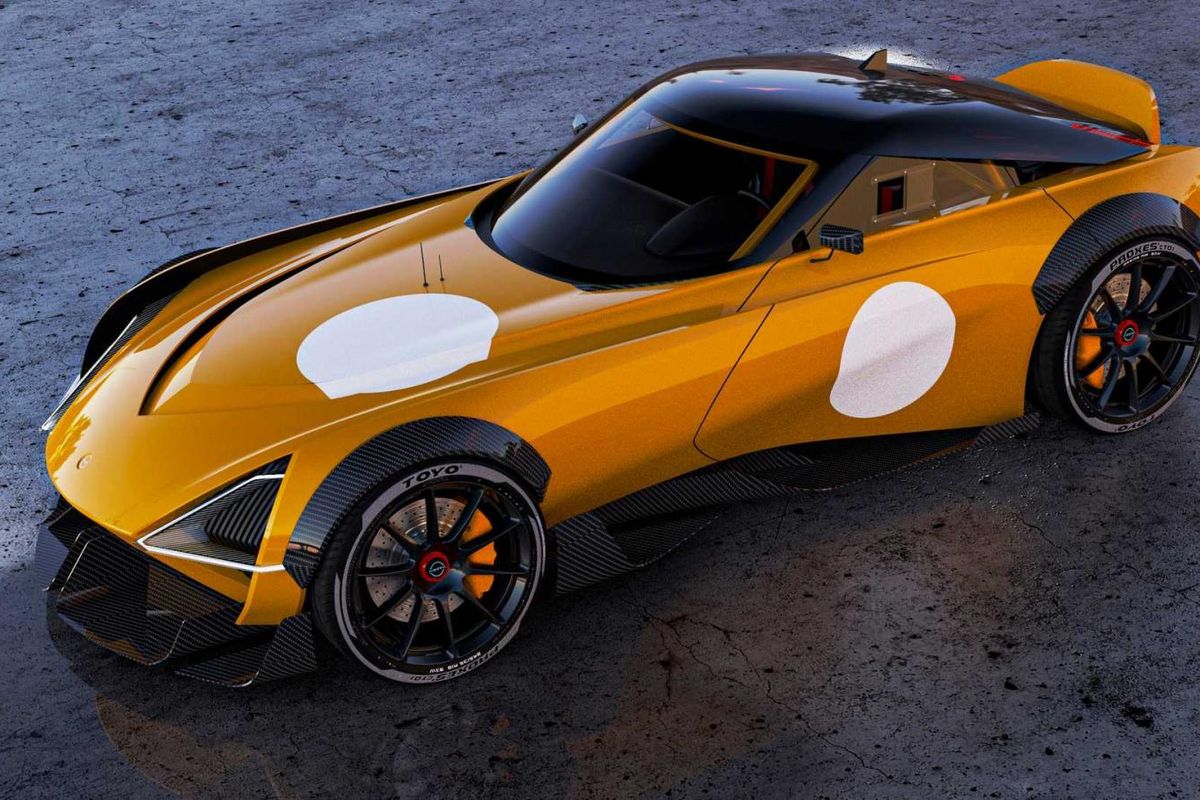
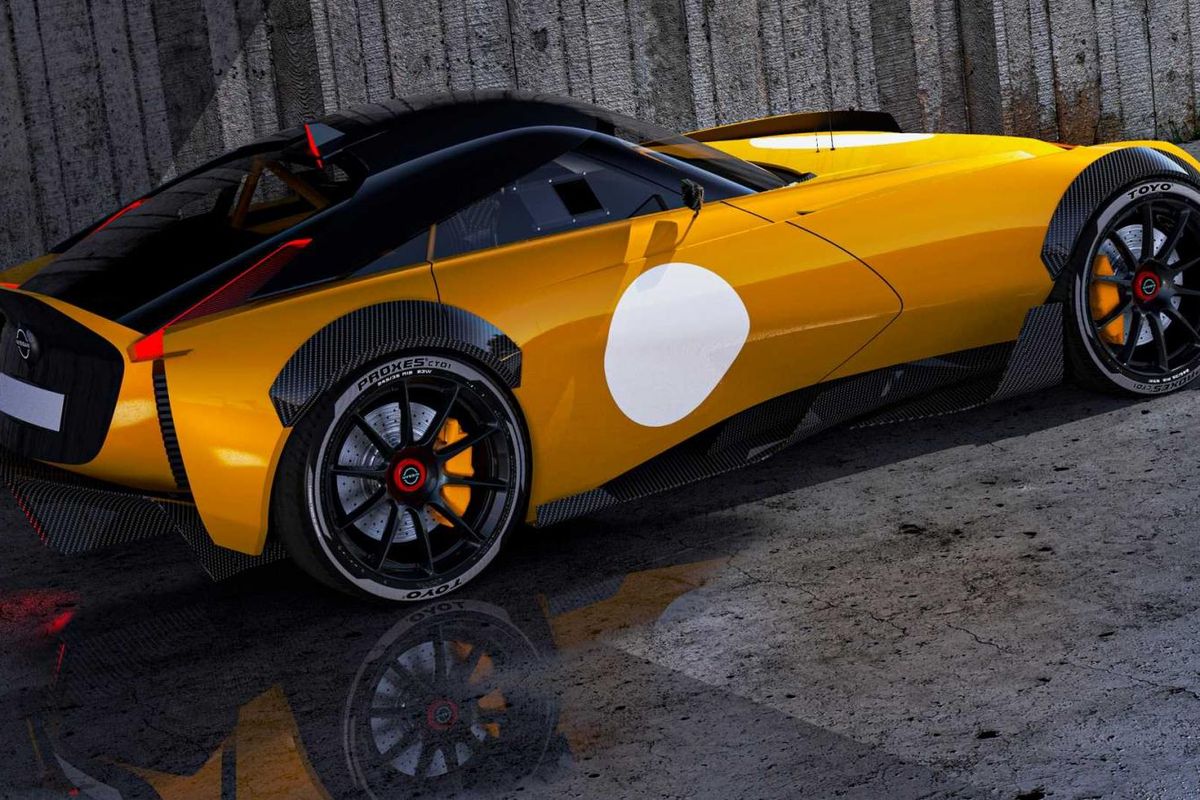
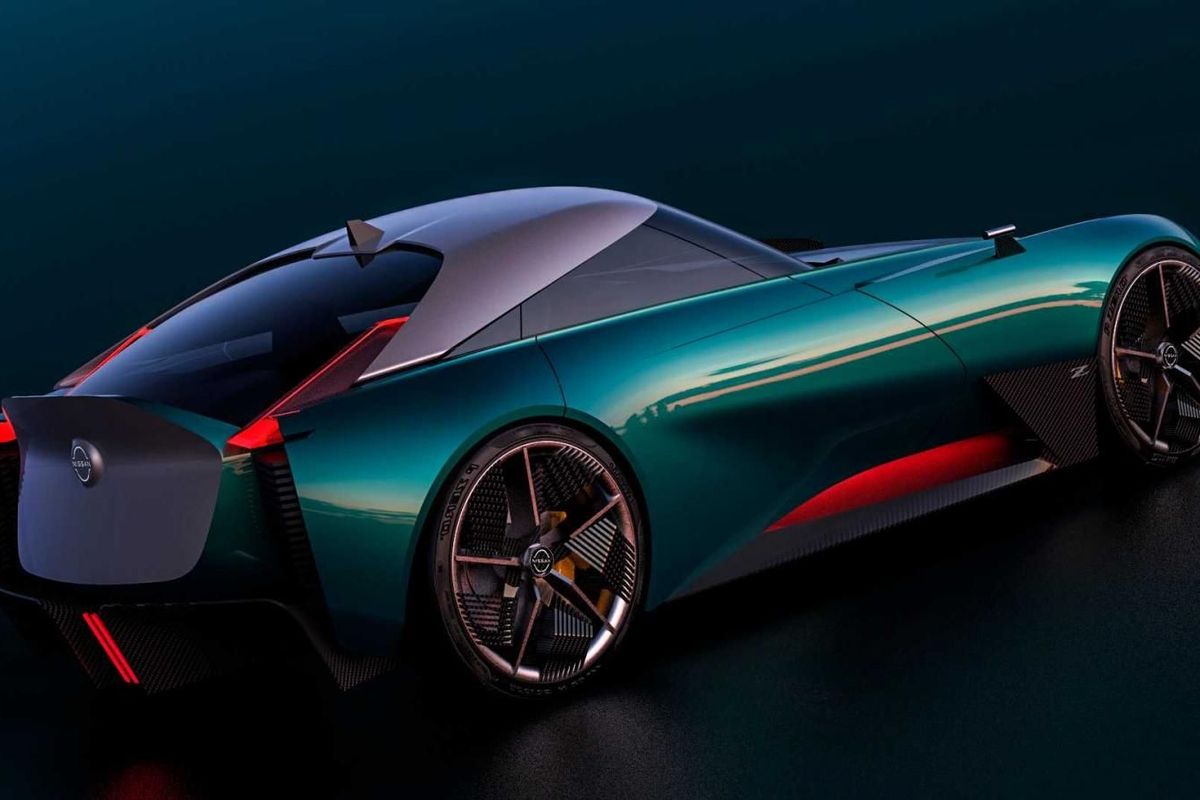
Now Autocar reports that Nissan next-generation sportscar will be called the 400Z and its nomenclature won’t reflect the car’s engine capacity (in litres, as it has in the past), because it will utilise a 3.0-litre twin-turbo V6, which produces 298 kW/475 Nm in sister brand Infiniti's Q60 coupe, which is, of course, the sibling of the Q50 business-class sedan, which was offered in South Africa until relatively recently. The British site believes the next-generation Z will look like this, but there have also been quite a few reports that suggest because Nissan appears keen on reviving the historical Z logo, the "400Z" will have stronger retro cues that date back to the brand's iconic '70s sports cars, such as the design created by Canadian enthusiast Leyang Bai (shown above). 

In its Q60 installation, the engine is mated with a 7-speed automatic transmission and an all-wheel drivetrain (in LHD markets), but the British site expects the "400Z" to be "rear-wheel drive (and) its performance should be better than (the flagship Q60’s) given it will be significantly lighter than the 1 825 kg Infiniti.”

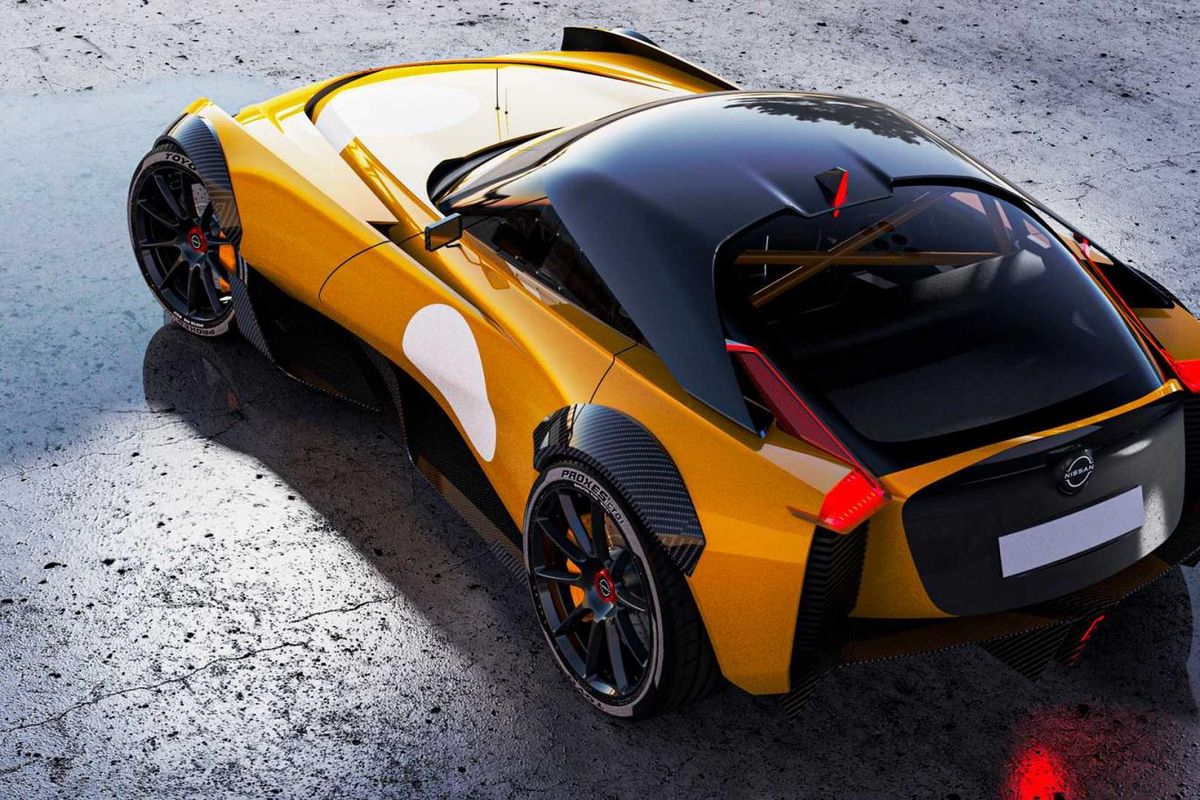
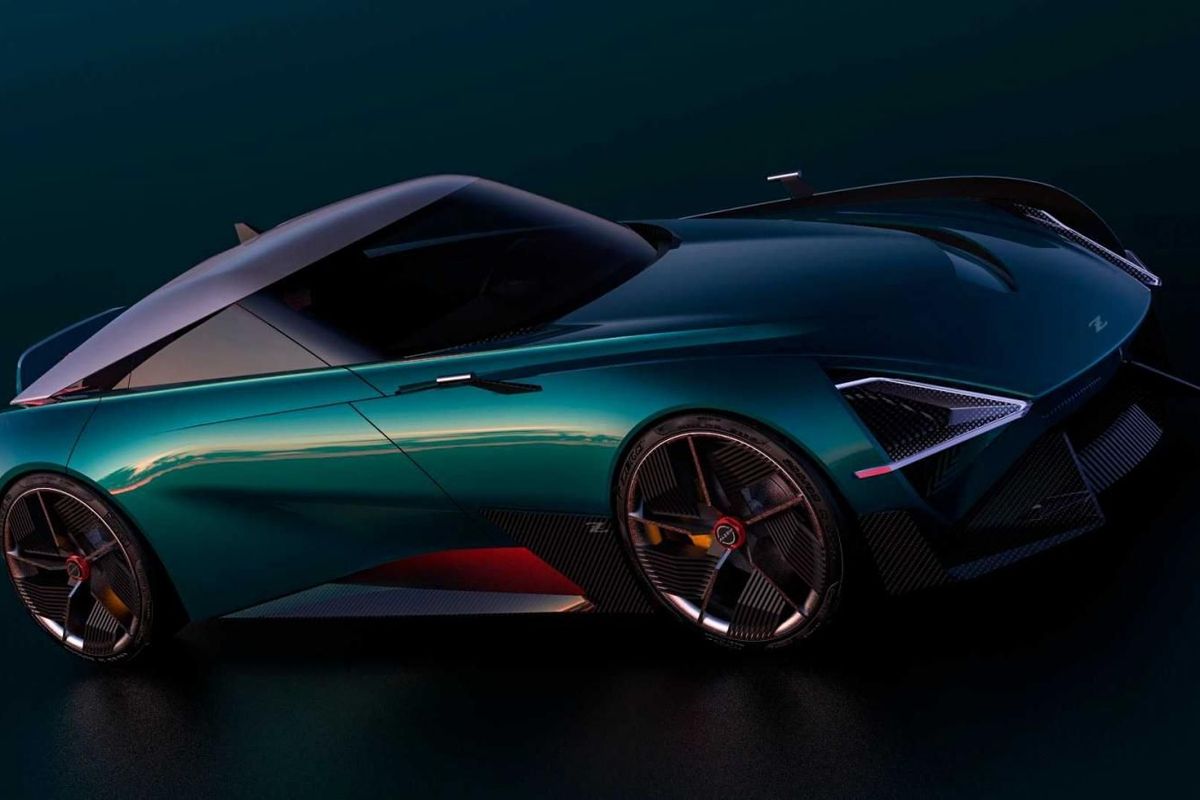
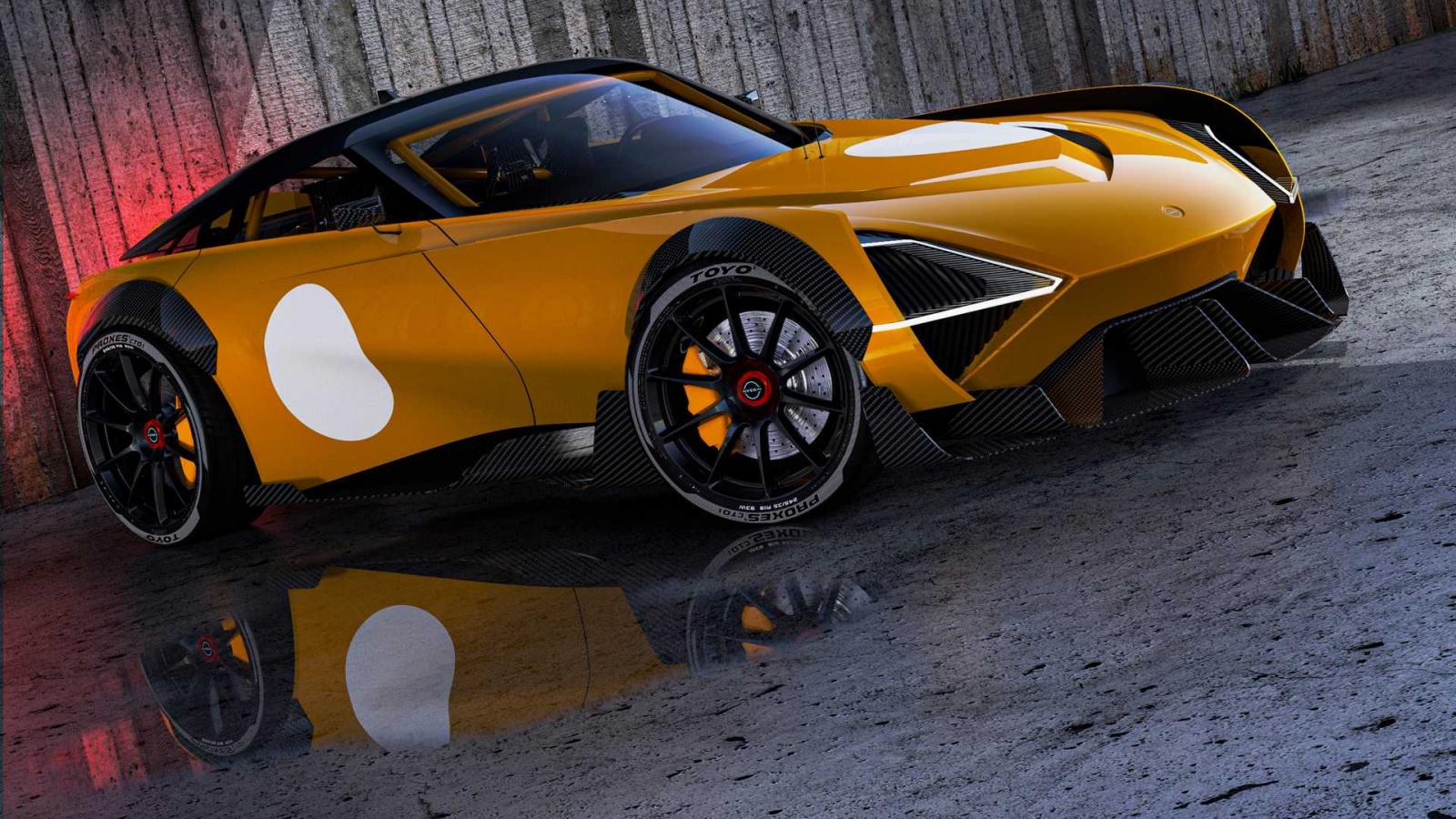
Other enthusiasts, such as Maxim Shershnev, are bringing the 400Z of their imaginations to life. Seen in this latest batch of renderings, Shershnev has developed the 400Z for the road and track, both featuring retro styling and a smattering of carbon fibre for good measure. The track version takes on a far more aggressive appearance. While this is only a render, we suspect that Nissan may not be so radical in its design approach to the production 400Z, but time will tell…


Maxim Shershnev's vision for the Nissan 400Z. 

Infiniti-derived engine, but same platform?

Will the newcomer utilise its cousin’s platform too? It’s a distinct possibility because Nissan is unlikely to develop a bespoke platform for the upcoming model (the Z car’s projected volumes could never justify the development costs, just ask BMW/Toyota). Then again, consider that the test car our spy photographer shot (below) clearly sported modified 370Z bodywork and the Japanese firm famously displayed a manual-box 370Z equipped with the Infiniti’s all-aluminium forced-induction engine at the SEMA show in 2018.

Whereas the continuation of the current platform would probably rule out the implementation of the latest advanced driver assistance technology in the “400Z”, it keeps hopes alive that unlike the new Supra, the next Z car might be available with a 6-speed manual box.


Picture credit: S. Baldauf/SB-Medien. We have paid for these photos and at the photographer's request, have watermarked them.

Autocar further expects the newcomer’s interior to receive a few tasteful upgrades, such as a digital instrument cluster and a contemporary infotainment system featuring a host of connected services.

Meanwhile, the turbocharged motor and option of all-wheel-drive (afforded by the Q60 platform, should Nissan choose to utilise it), raises the possibility of Nismo producing an even hotter version, with track-optimised suspension tuning, race car-inspired styling and a peak power output of 370 kW-plus (with or without AWD). Such a derivative would effectively be a bridging product between the Z sportscar and the GT-R model.

Late last year, design boss Alfonso Albaisa was quoted as saying it was “easy to imagine” a successor to the 370Z: “The Z democratised sportscars in the ’60s. The current car has been (going) a long time and so you can imagine the designers working on a successor, even if I’m not going to confirm it.”

However, given that our spy photographer noticed that the 370Z mule was tailing a Supra when he photographed it, we would not be surprised if the Toyota-slaying "400Z" (or whatever it may be called) is closer to production than we might think.

Further reading:

Nissan 350Z (2004) Driving Impression

Nissan 370Z (2017) Quick Review

Nissan 370Z Nismo Updated Again

Most Devilish Nissans Ever Made + The One We're All Afraid to Drive

Hyundai Loses Design Boss

Hyundai’s design boss is leaving the company.

Belgian car design superstar, Luc Donckerwolke, has announced that he is leaving the Korean automotive giant, for ‘personal reasons.’

Donckerwolke has a formidable reputation in vehicle design. Some of the most notable supercars in memory were created from his imagination, including the Lamborghini Diablo VT, Gallardo and Murcielago.

Present at Hyundai’s design studio since 2015, Donckerwolke was promoted to head of design in late 2018. His influence has been clear.

Donckerwolke has seen Hyundai’s design appeal notably increase over the last few years. Some of the products which Donckerwolke exercised a direct influence upon are the Kona and Palisade.

With his vast experience at Lamborghini, it is unsurprising that Donckerwolke wished to increase Hyundai’s profile in the premium end of the market. The result of this is clear with the resurgence of Hyundai’s Genesis sub-brand, with the new G80, G90 and GV80.

Donckerwolke’s resignation will come as a blow to Hyundai, where his impact has inarguably been positive, but the Korean company is regarded as a desirable employer for talented designers and engineers – especially German ones such as Peter Schreyer and Albert Biermann to name a few.

Although Hyundai has not announced a succession candidate for Donckerwolke’s position, there are sure to many applicants.

Related content

Is N the new M?

New Audi Boss is a BMW Engine Expert

Kia Seltos 1.6 EX+ Auto (2019) Review

Kia’s new Seltos compact family car came to market earlier this year and while we found the range-topping GT Line derivative a bit pricey, we were keen to find out if the mid-spec, naturally-aspirated 1.6 EX+ represented a more attractive buying proposition. Gero Lilleike put it to the test to find some answers. 

We like: Performance balance, space and practicality, value proposition

We don’t like: High fuel consumption, some interior finishes could be better  

Fast Facts 

  • Price: R394 995 (April 2020) 
  • Engine: Naturally-aspirated 1.6-litre petrol
  • Power/Torque: 90 kW / 151 Nm 
  • Transmission: 6-speed automatic 
  • Fuel economy: 7.2 L/100 km 
  • Load space: 433 litres

Serious About Buying? 

Check out full specification details and finance estimates here.

Some Kia dealers regularly offer specials: Look at New Car Specials here!

What is it? 


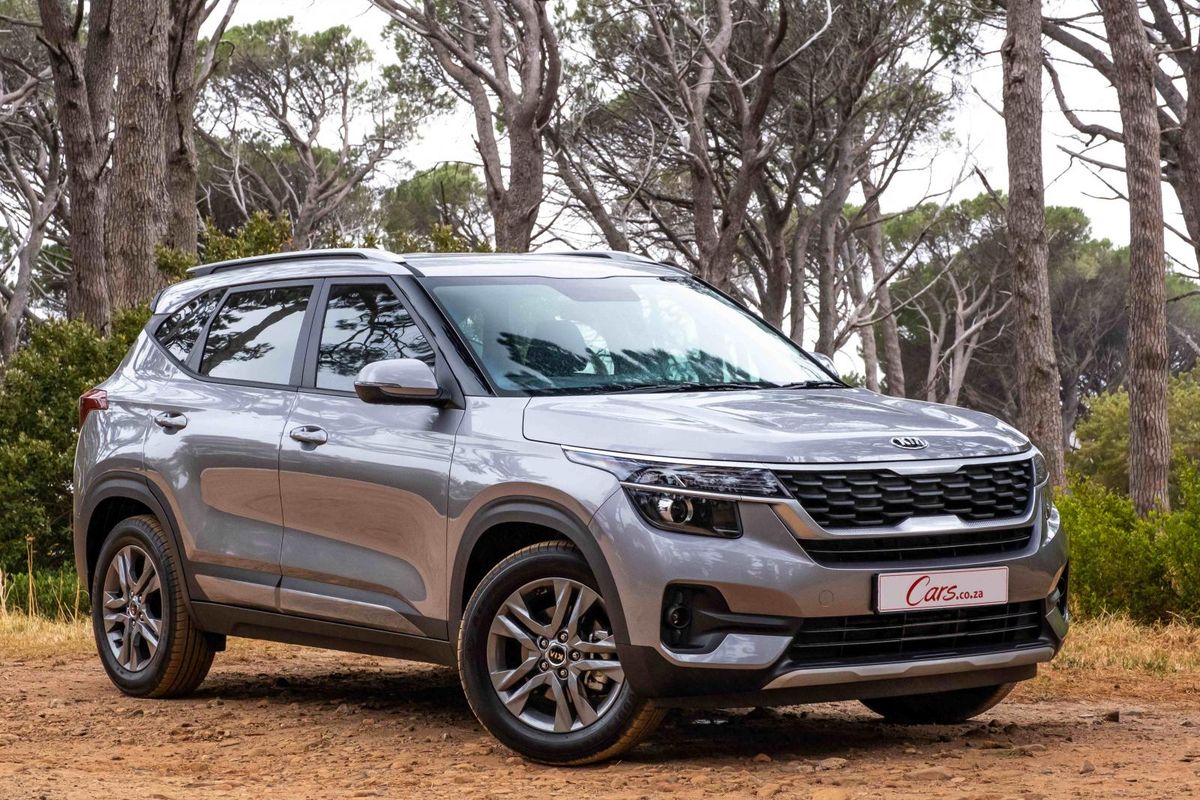
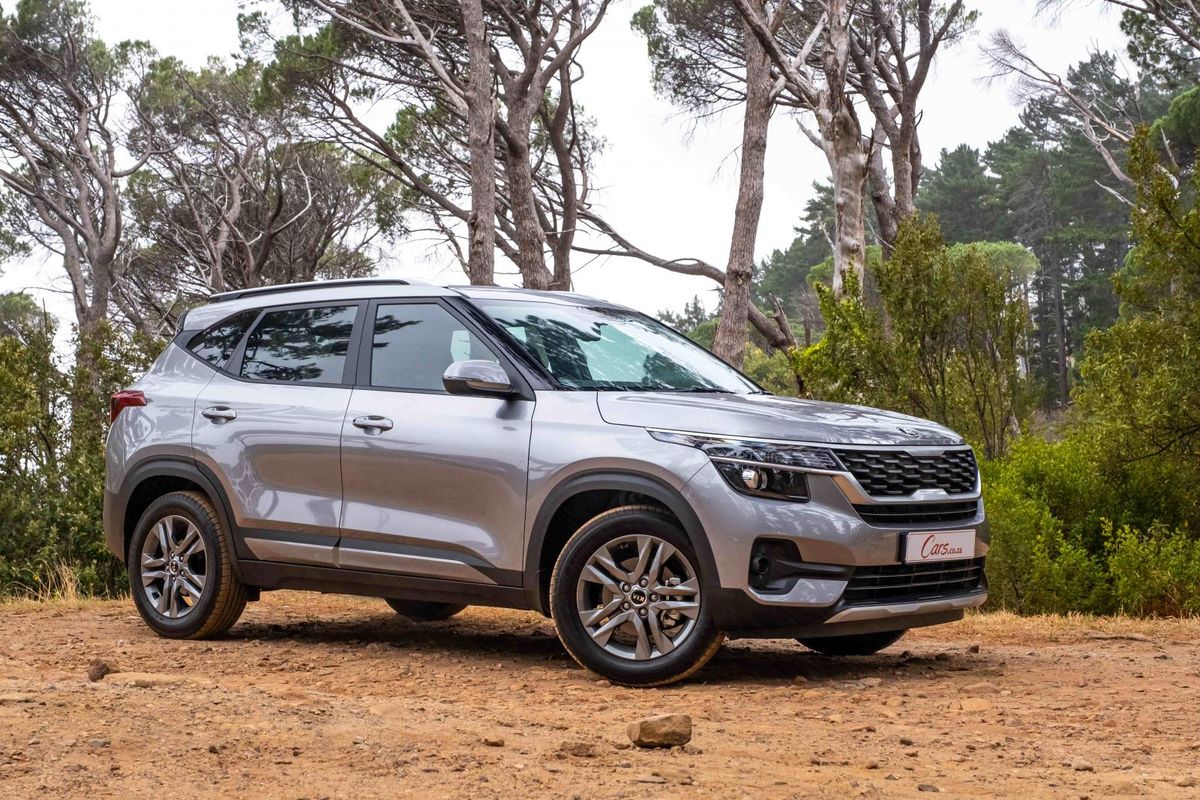
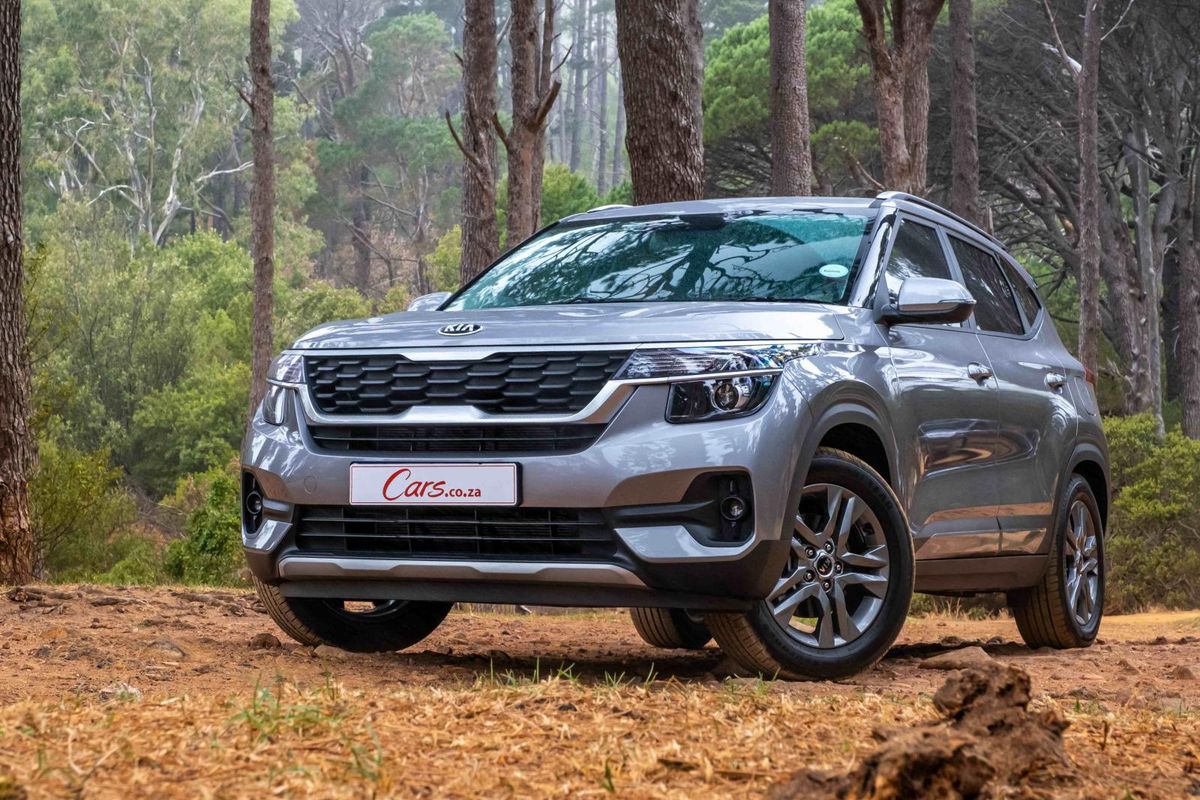
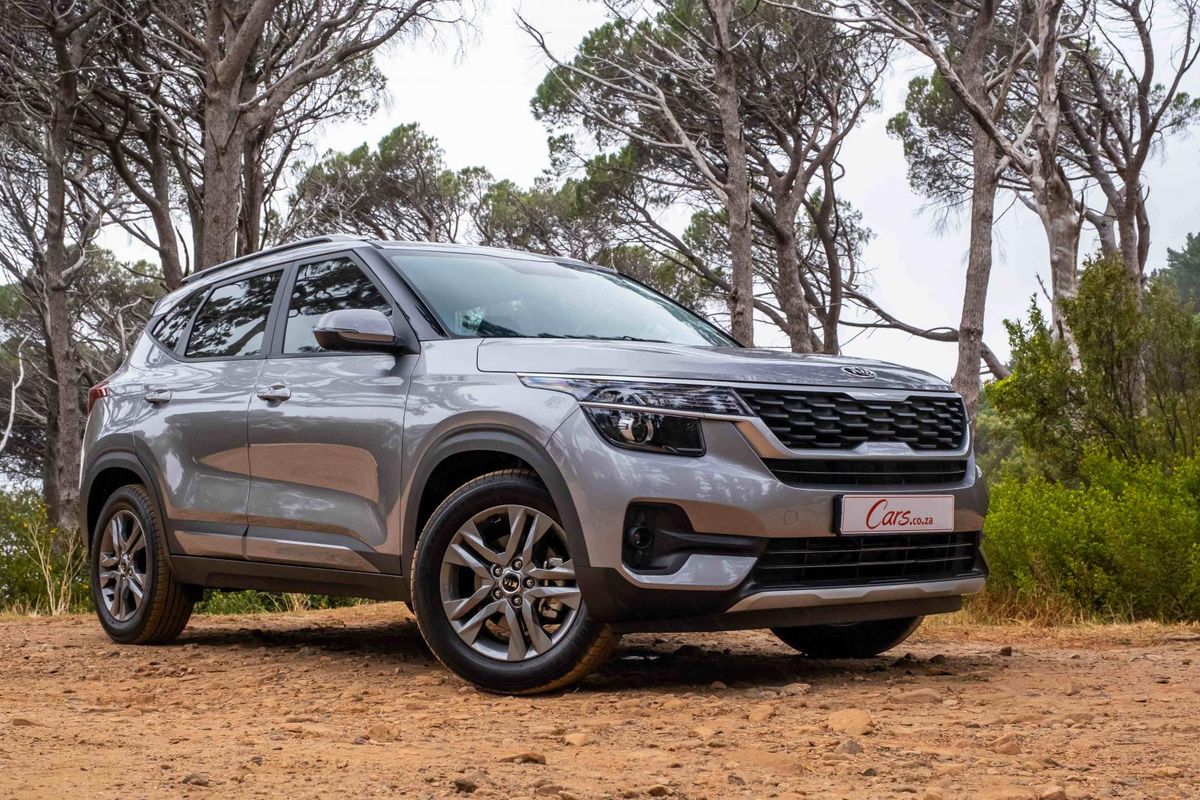
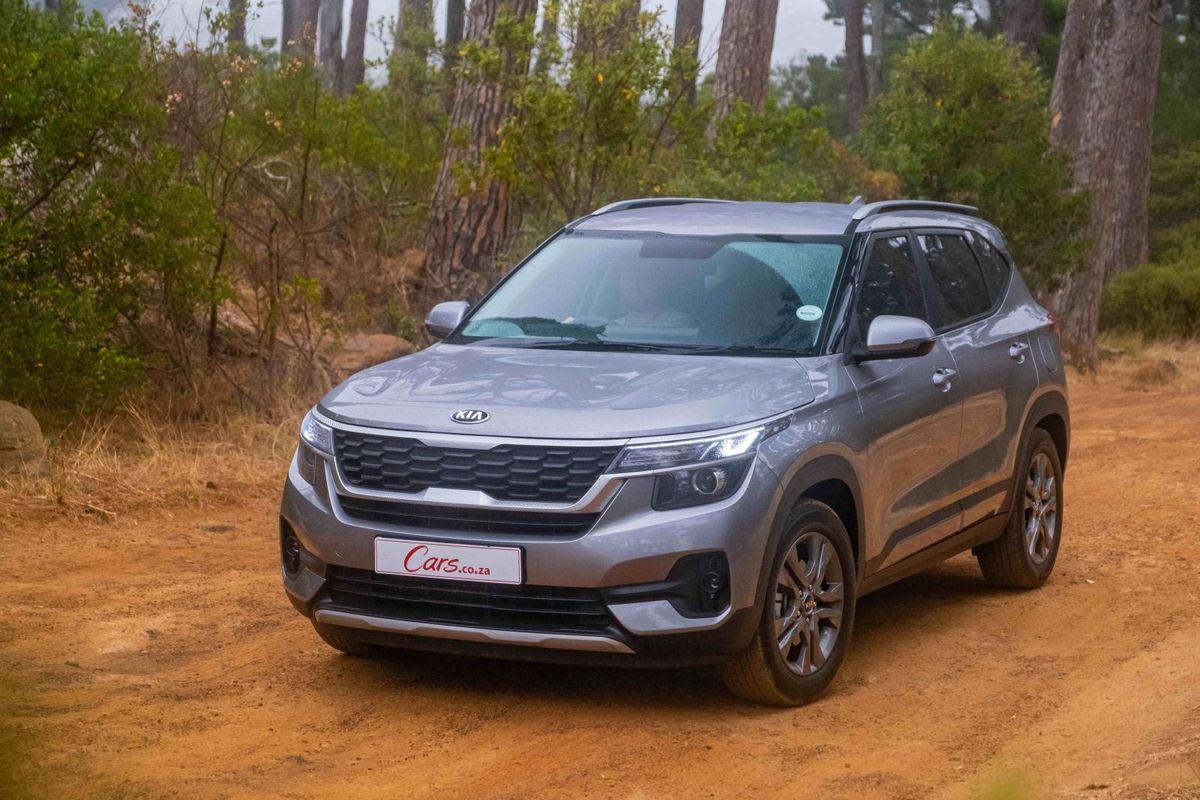
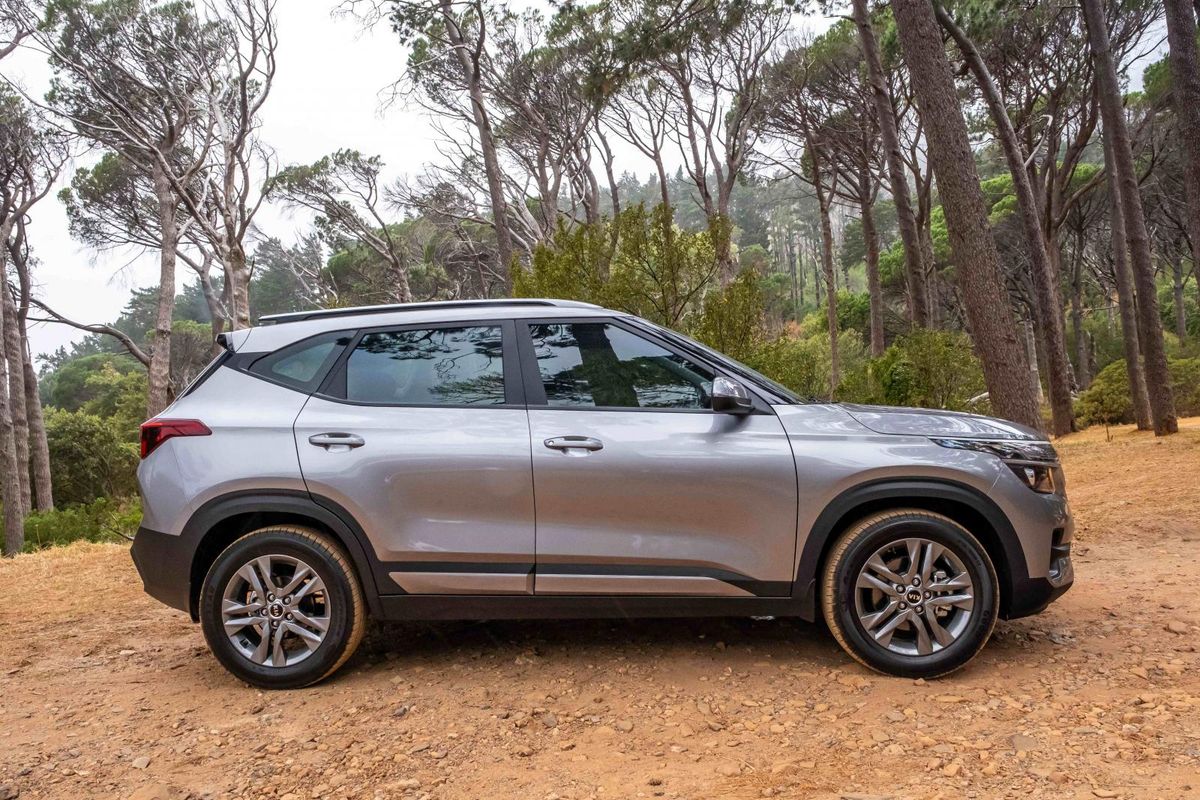
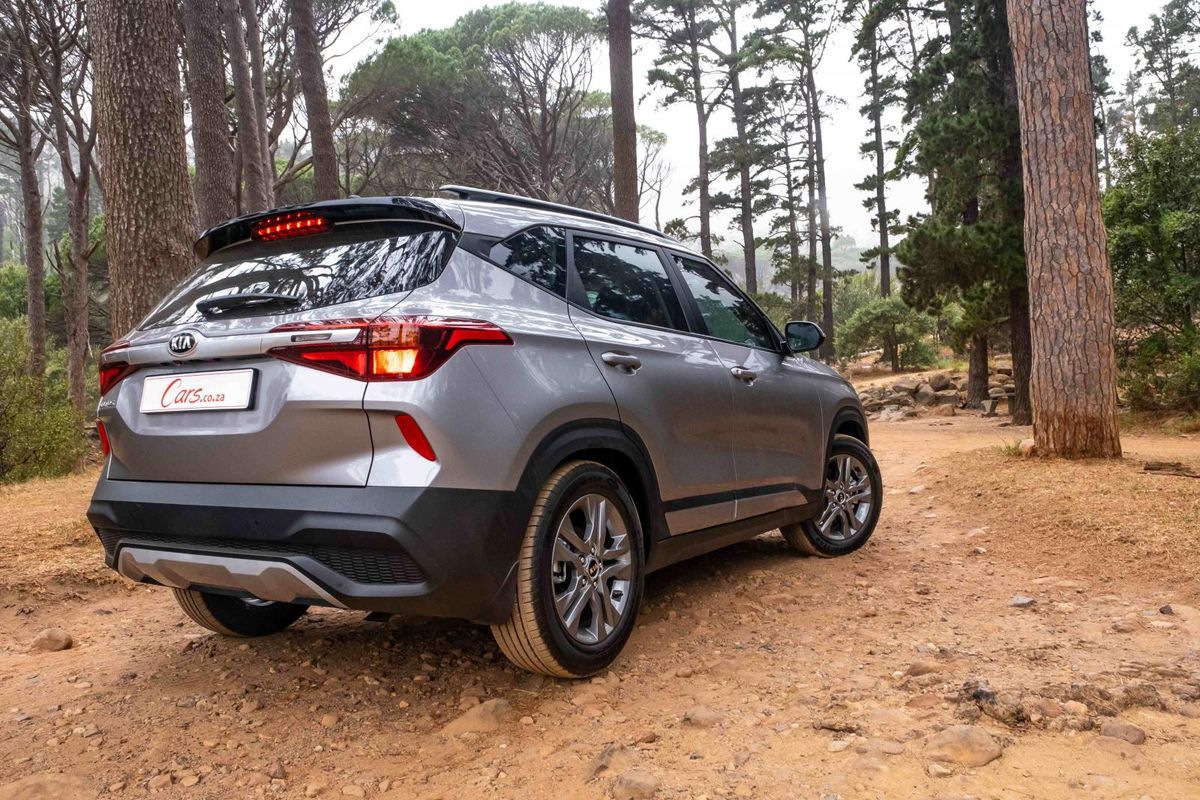
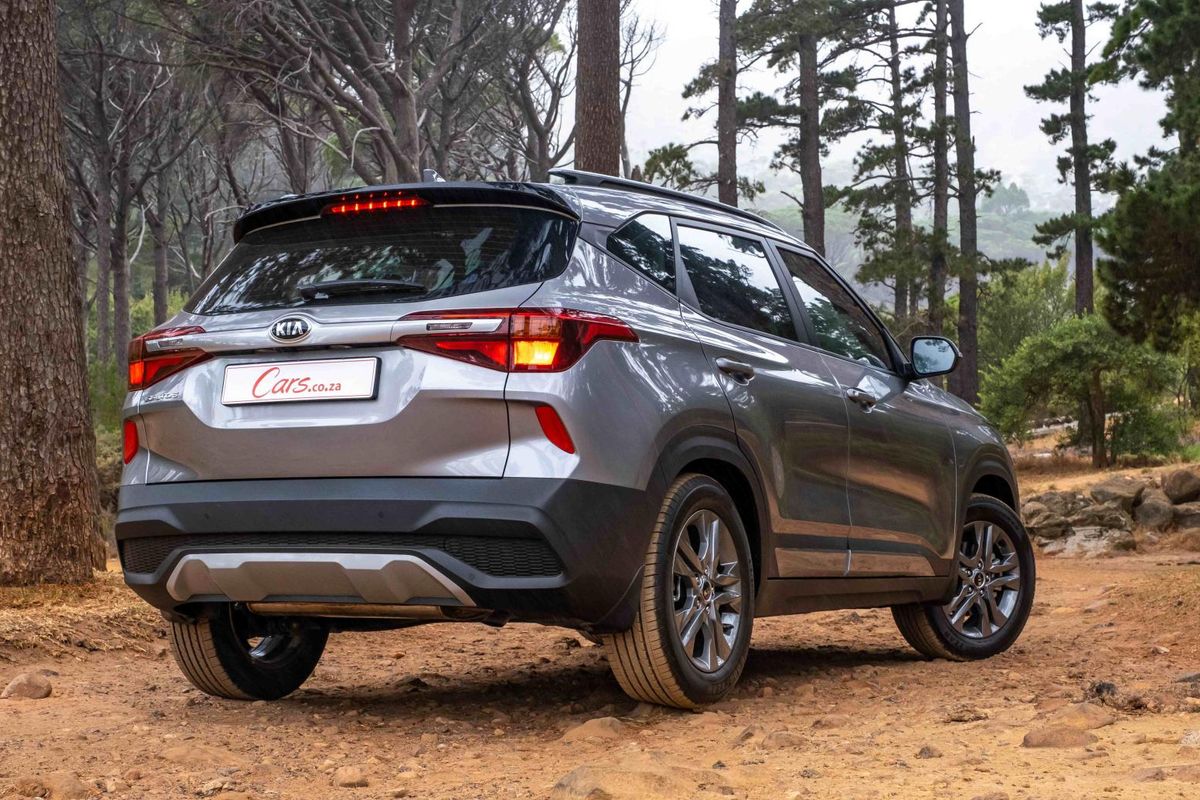
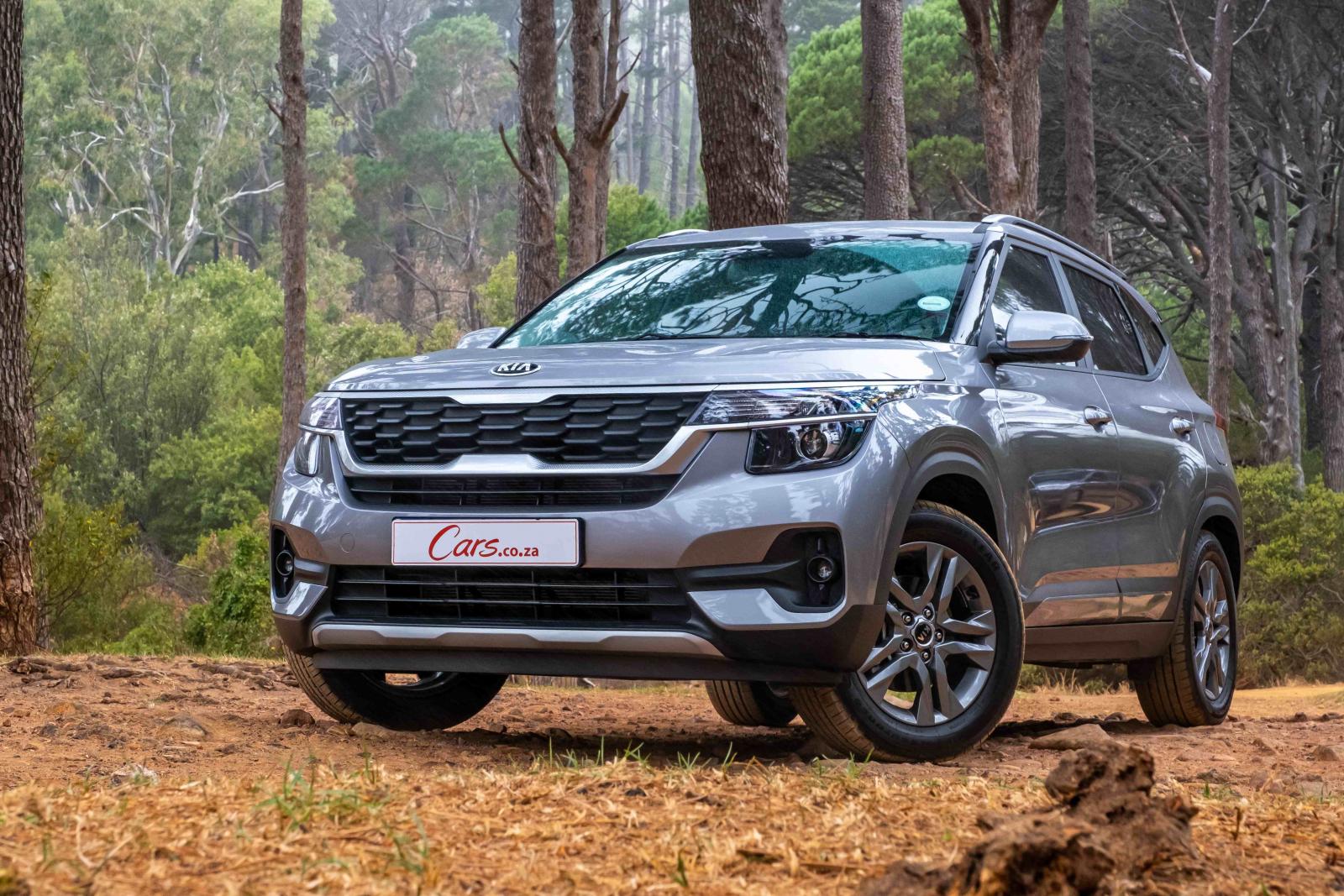
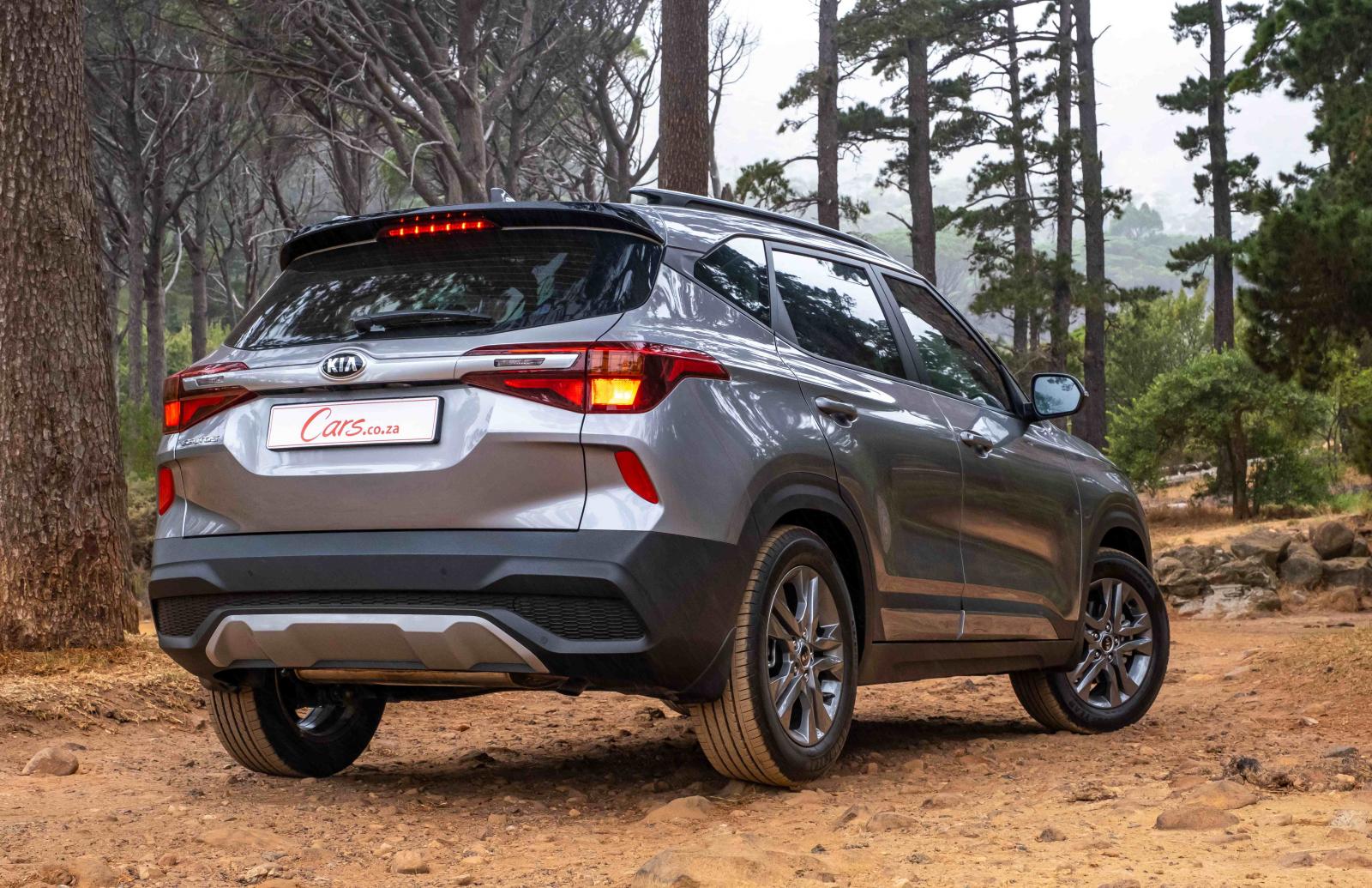
The Seltos features divisive styling, but the looks have a tendency to grow on you the more you live with them. 

In an effort to capitalise on the growing popularity of crossovers and SUVs, Kia has introduced the new Seltos into South Africa's bustling compact family-car segment, in which it does battle with a host of rivals such as the Volkswagen T-Cross, Hyundai Creta, Renault Duster and the Suzuki Vitara, to name just a few…

To date, the Seltos has been relatively well-received in the South African new-vehicle market and while its bold exterior styling may divide opinion (especially in range-topping 1.4T-GDI GT Line guise), the attractively packaged newcomer is likely to grow in popularity. We have already reviewed the turbocharged GT Line and while we found the flagship derivative a somewhat niche offering (considering its lofty price point in its segment), we suspect this 1.6 EX+ is a far better value proposition for buyers looking for a more soberly-specced car. Let’s see if that is indeed the case…

How it performs in terms of…

Performance and economy


This naturally-aspirated Seltos is capable enough for the daily grind, but it's not as punchy as its turbocharged sibling. 

The EX-grade Seltos forgoes the 1.4-litre turbocharged mill of the top-spec GT Line; instead, it employs a naturally aspirated 1.6-litre petrol engine that produces 90 kW and 151 Nm of torque. 

That peak torque figure doesn't sound particularly awe-inspiring and we duly expected the performance of the 1.6 to feel less punchy due to its lack of a turbocharger, but in spite of this, we came away impressed with this Seltos' balanced performance. Acceleration might not be as urgent as in the 1.4T-GDI GT Line, but it offers a smooth, linear power delivery and, in conjunction with its 6-speed automatic transmission, the 1.6 EX+ not only offers adequate performance, but its transmission is smooth-shifting and well-calibrated to the characteristics of this engine.

What's more, whereas the aforementioned GT Line’s dual-clutch transmission felt notchy under harder acceleration, we found this torque converter automatic shifted in a more refined fashion. 

We must concede, however, that this test was conducted at sea level; the overtaking performance of the 1.6 EX+ may feel a trifle more lethargic at the Reef (due to a dropoff in performance caused by the thinner air at high altitude) and this will be especially apparent when travelling with a full complement of passengers – and their luggage – on board.

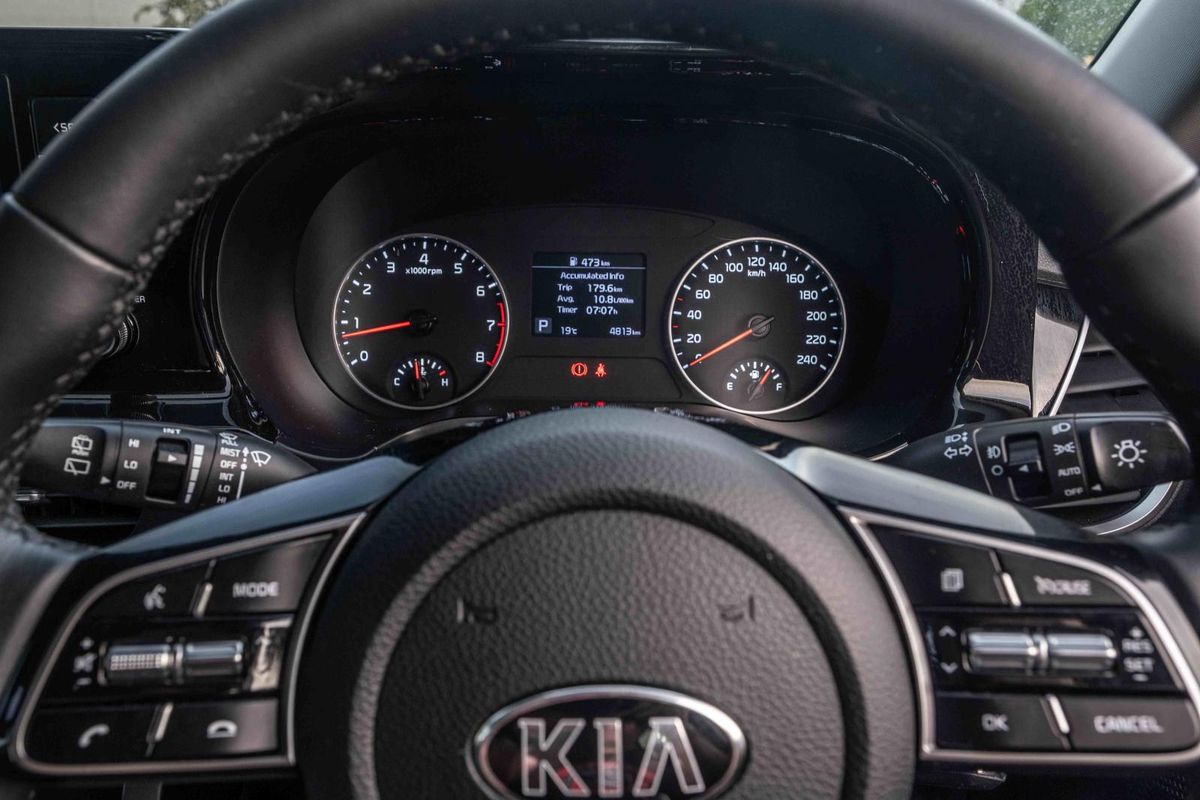
Nonetheless, we found the little Kia's overall performance adequate in both city and highway driving situations. In terms of fuel consumption, however, the naturally-aspirated Seltos returned surprisingly high figures of around 10.9 L/100 km; Kia claims an average figure 7.2 L/100 km. 

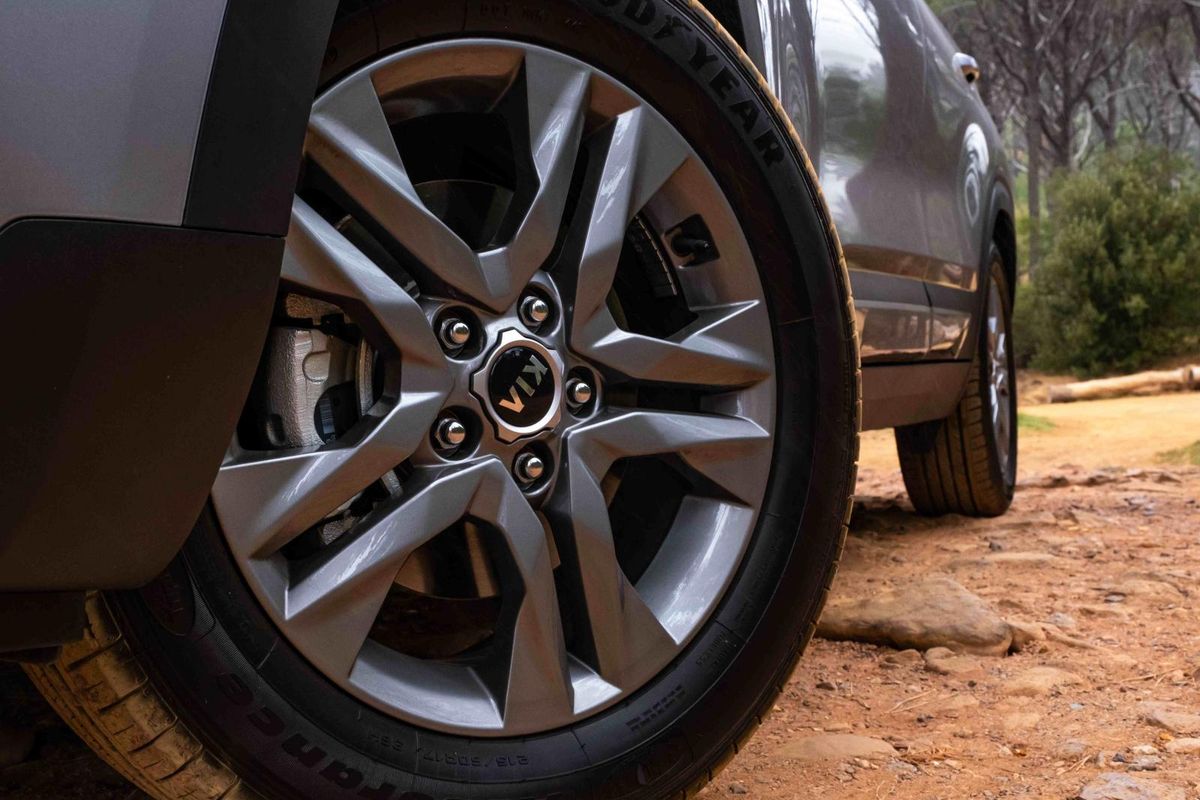
As we discovered in our previous test, the Seltos strikes a fine balance between handling prowess and ride quality. Even though this EX+ derivative rides on larger 17-inch alloy wheels shod with low profile tyres, the suspension setup is forgiving and subdues bigger road imperfections with ease. The steering has more heft to it than one may expect and delivers positive responses to inputs. 

Interior execution and features


The Seltos EX+ represents the sweet spot in the range with a good dose of standard features at a competitive price. 

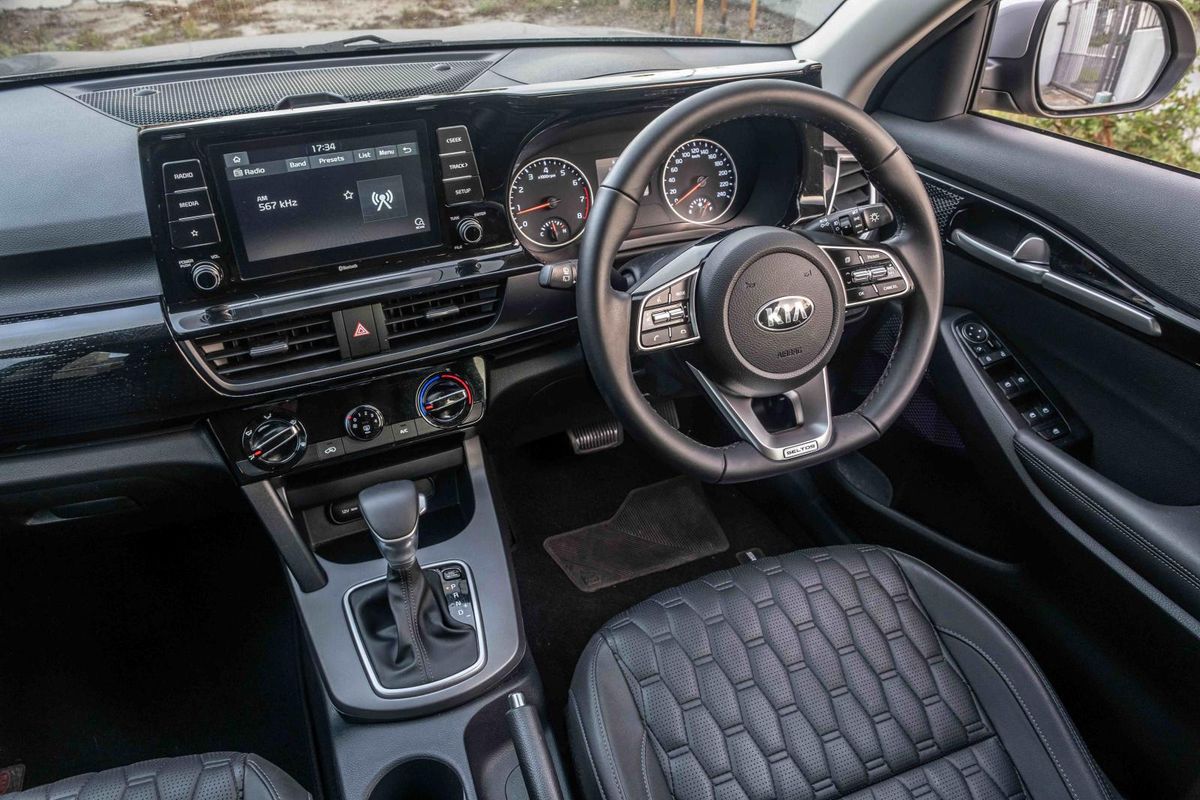
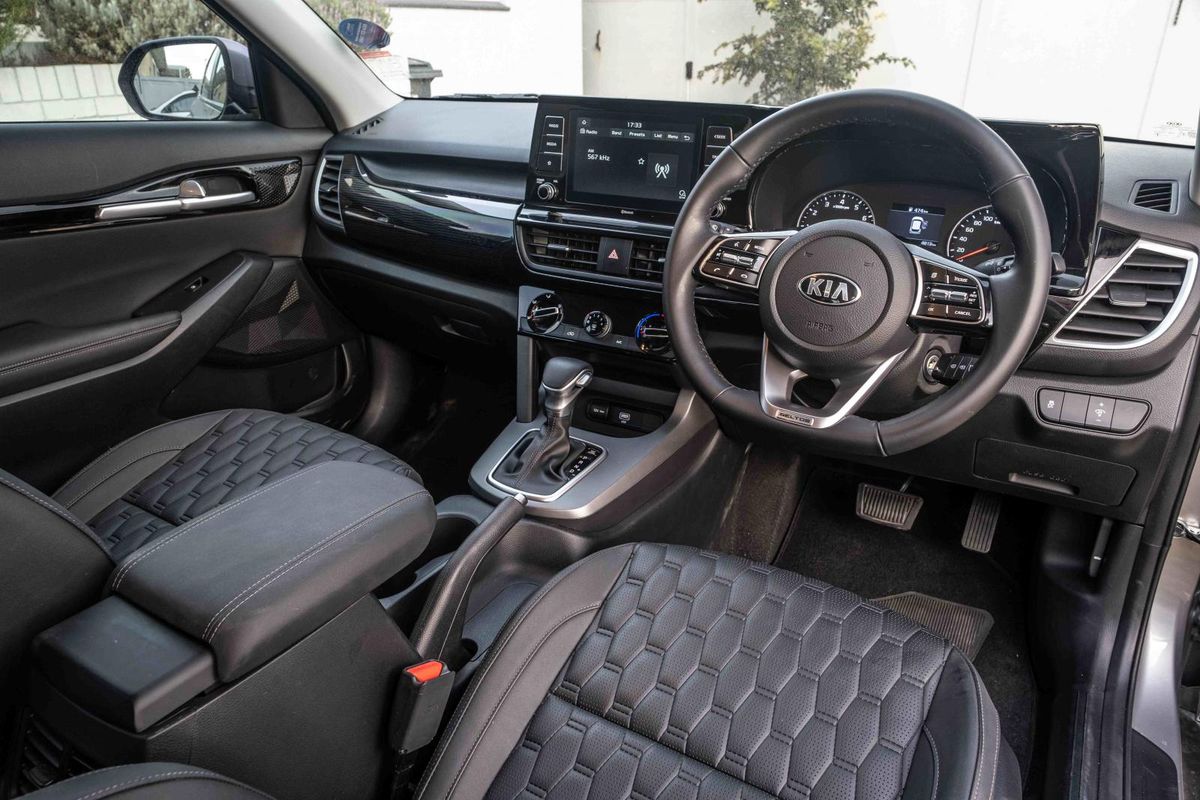
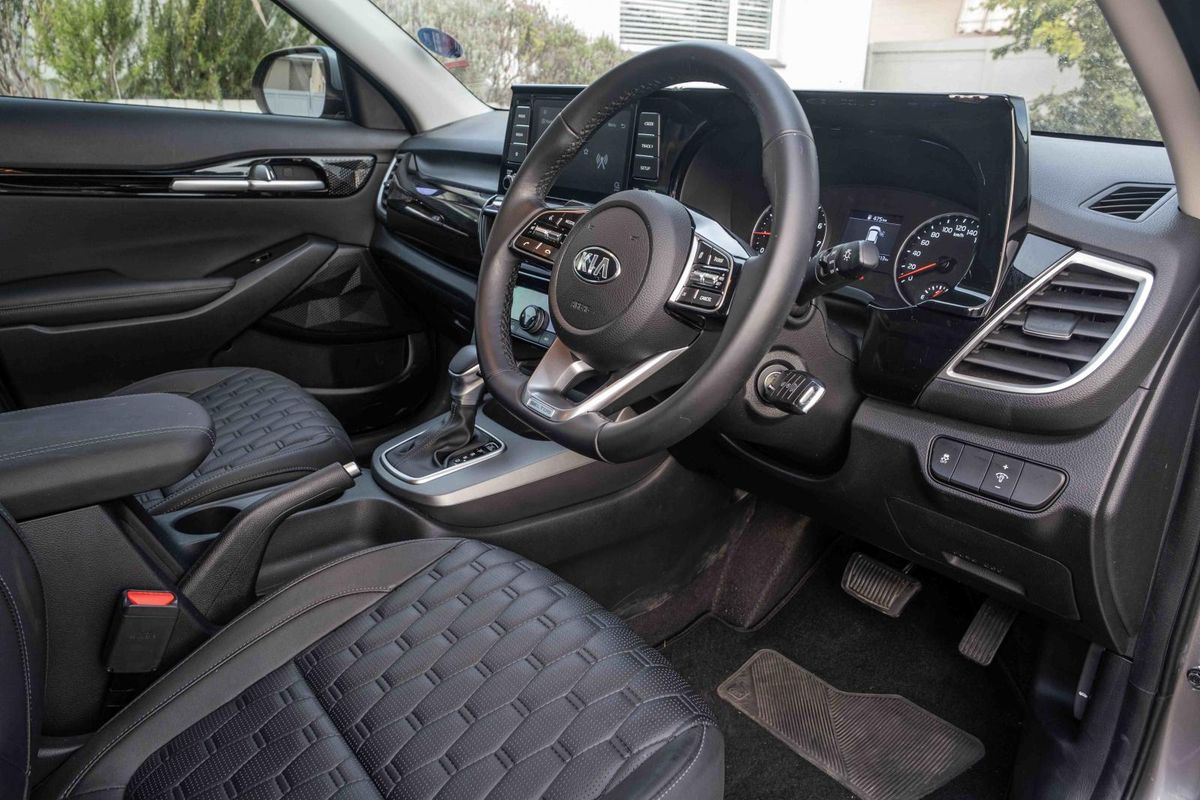
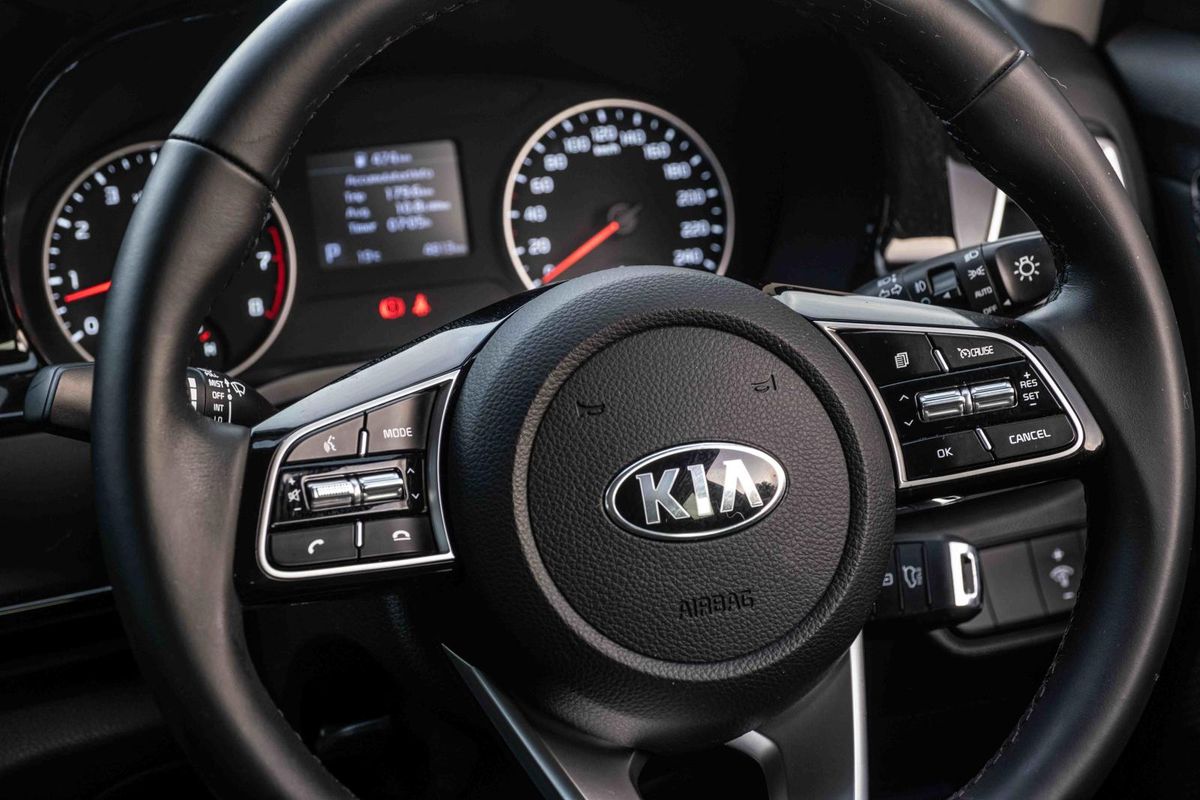
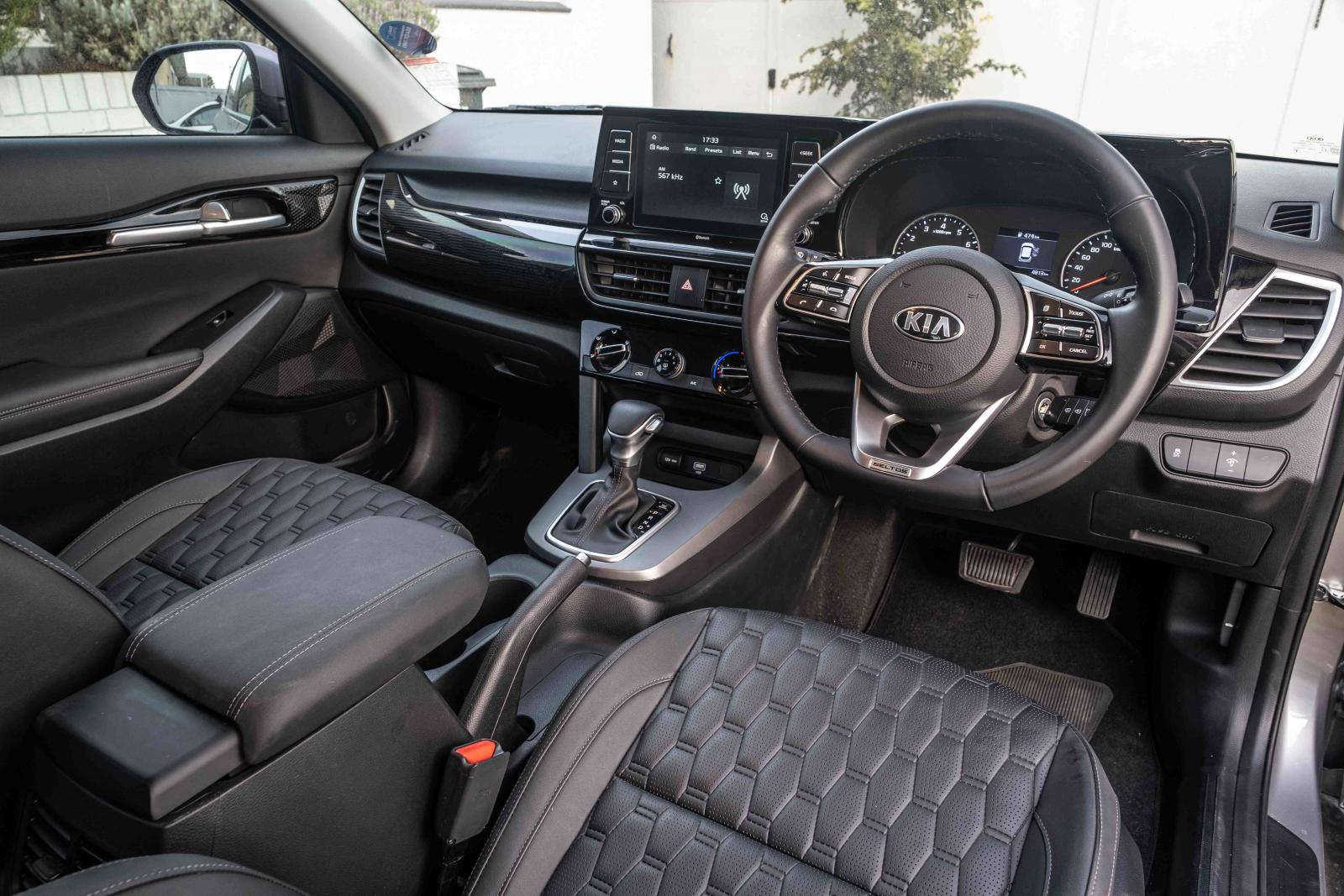
Prospective buyers will be pleased to know that the Seltos' perceived interior quality is generally good, but we do have a few gripes… Firstly, we don’t particularly like the piano black finish that features on the instrument binnacle (which sits bolt upright and looks rather odd in itself) as well as the lower console, because it attracts dust and fingerprints; we anticipate one would have to keep a microfibre cloth in the car to wipe the panels down regularly. It’s also worth noting that the material quality of the heating, cooling and ventilation dials could be better, they look and feel marginal.

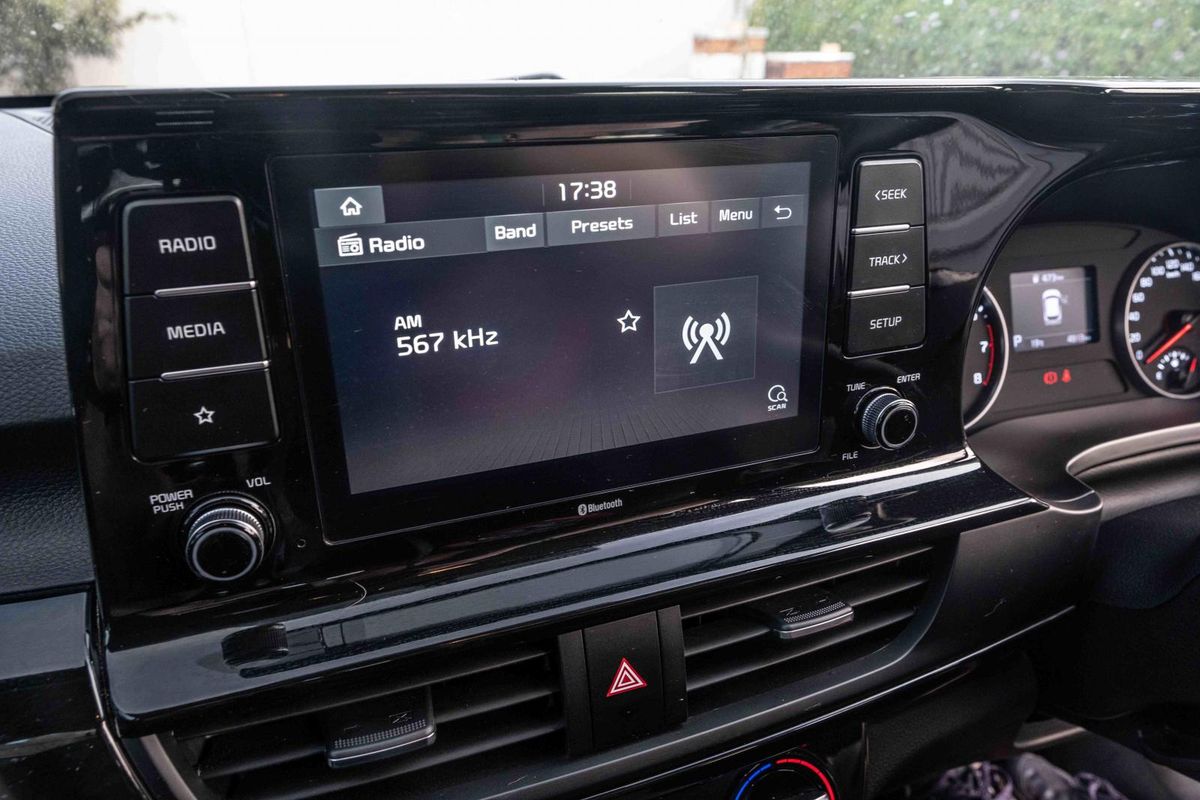
Nonetheless, an 8-inch touchscreen infotainment system, which supports Apple CarPlay and Android Auto, is fitted along with Bluetooth audio streaming and telephony, as well as voice control. The system is easy-to-use and its menus are simple to navigate. There’s also a USB port ahead of the transmission lever, as well as a 12V socket, should you need it. 

Some other key standard features on this 1.6 EX+ derivative include leather upholstery (the seats are extremely comfortable), a multi-function steering wheel, cruise control, electrically adjustable and automatic folding side mirrors, electric windows, rear park distance control and a reverse-view camera. The image quality of the camera could be better, but it’s still effective.

In terms of safety, the Seltos comes equipped with 6 airbags, ABS with EBD, brake assist and electronic stability control. ISOfix child-seat mounting points are also included. 

Practicality 


The Seltos scores highly in terms of practicality. Its cabin is spacious!

The Seltos is slightly larger than the majority of compact family cars and it reflects in the practicality of the Kia's interior. Just before the national Covid-19 lockdown came into effect, we put the Seltos through its paces by packing it to the brim with a wide variety of items including gardening supplies and wood of different sizes and shapes. 

The capacity of the load bay is claimed to be 433 litres, which is useful, and with the 60:40 split rear seatback folded down, there’s a sizable area available for loading bulky and longer items. We were truly amazed by how much stuff we could cram into the Seltos… 

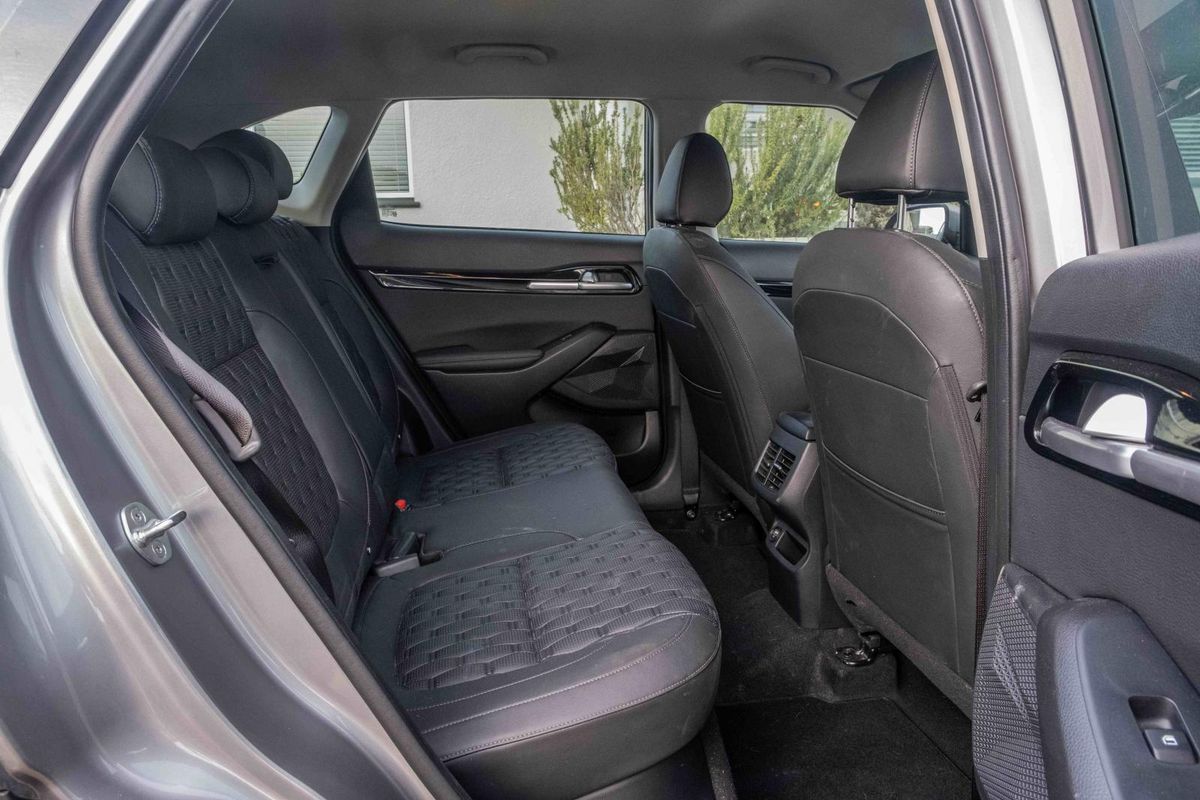
Passenger space and comfort is also impressive; the cabin may have dark upholstery but it feels spacious. Rear passengers have sufficient leg, head and shoulder room and the seat cushions provide high levels of comfort. There’s also a central rear armrest equipped with 2 cupholders (which is always welcome on longer journeys) and devices can be charged/connected using the rear USB port. 

The driver and front passenger are availed a pair of cupholders and this 1.6 EX+ derivative is notably equipped with a central armrest, which can double up as a sizable storage bin. Additional storage space is located ahead of the transmission lever, in the glove box and in the door mouldings. 

Price and warranty 

The Kia Seltos 1.6 EX+ is priced from R394 995 and is sold with a 5-year/unlimited km warranty and a 5-year/90 000 km service plan. 

Buy a new/used Kia Seltos on Cars.co.za 
Verdict


The Seltos EX+ is definitely worth a closer look if you are in the market for a stylish, capable and spacious compact family SUV. 
The Seltos has much to offer and, like so many contemporary Kia products, it's instantly likeable and has oodles of showroom appeal. Its styling may not be to everyone's taste, but it certainly stands out from the crowd. Beneath the stylish sheet metal is a practical and spacious interior, plus the Kia's road manners are impressive, considering what it's up against. The naturally-aspirated 1.6-litre offers adequate performance, but it didn’t quite strike the kind of performance/economy balance that we were hoping for, because its real-world fuel consumption was higher than expected. 

With a keen price of just below R400k, the Seltos 1.6 EX+ makes a strong case for itself against naturally-aspirated rivals such as the Hyundai Creta 1.6 Executive and Suzuki Vitara 1.6 GLX, for example. However, there are turbocharged offerings in this price range too, such as the popular Volkswagen T-Cross and turbocharged Suzuki Vitara, which might entice buyers too… 

Nonetheless, the Seltos 1.6 EX+ is, in our opinion, the sweet spot in the range as it appears to tick most of the essential boxes in the compact family car segment. We have every reason to believe that, buoyed by its 5-year warranty and service plan, it will satisfy the needs of many buyers in this segment. The Seltos 1.6 EX+ is definitely worth having on your shortlist!

Related content:

Kia Seltos 1.4T-GDI GT Line (2020) Review

Volkswagen T-Cross (2020) Specs & Price

Suzuki Vitara 1.4T GLX (2019) Review