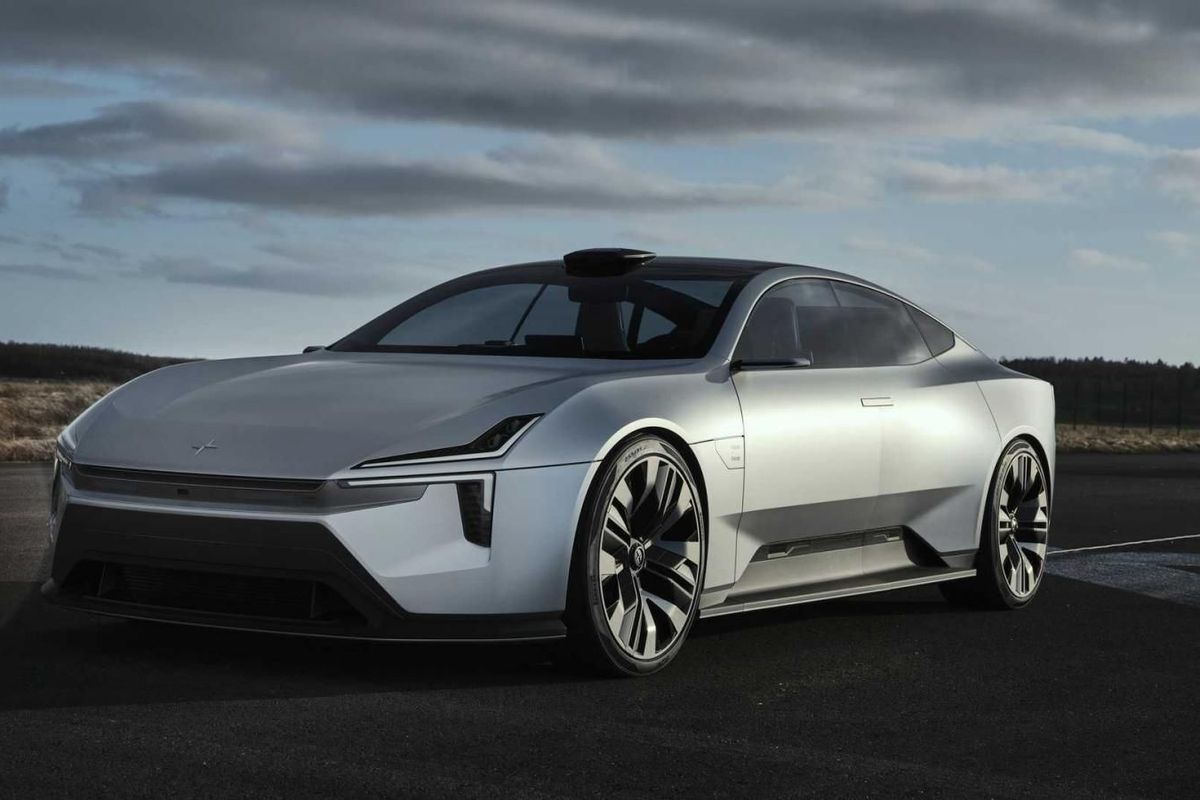
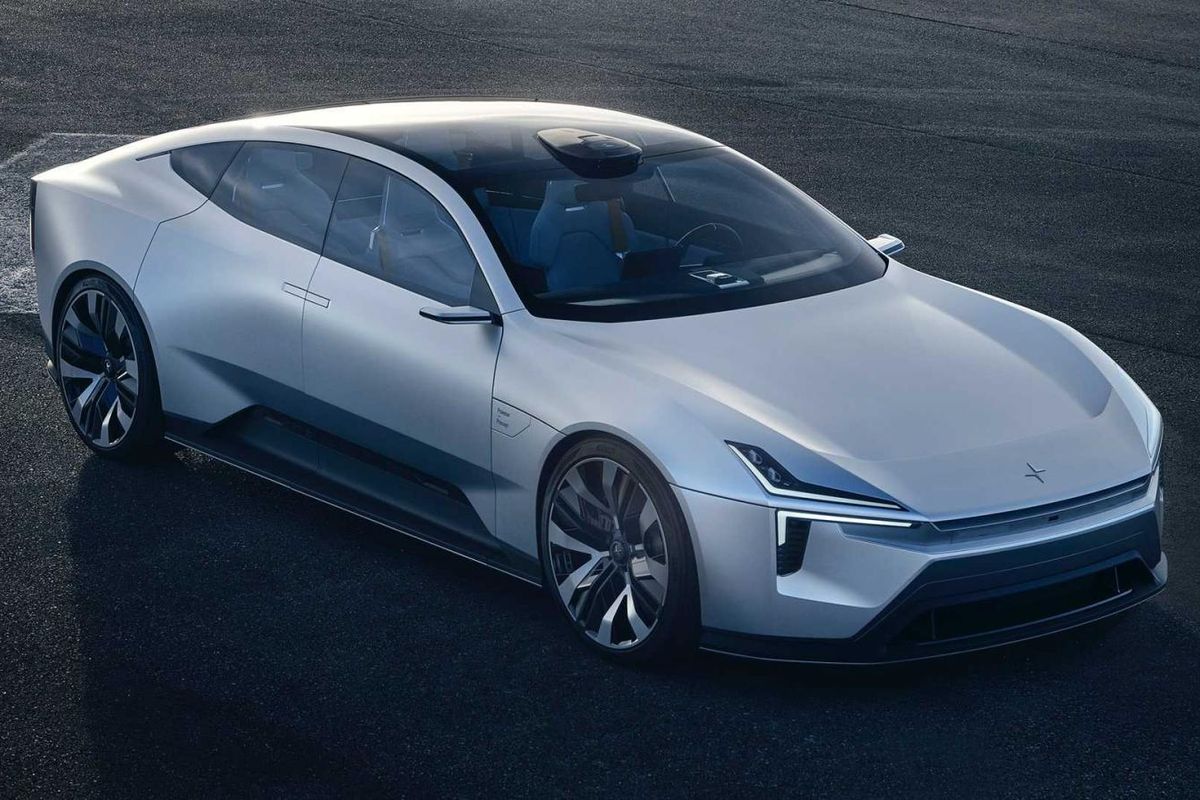
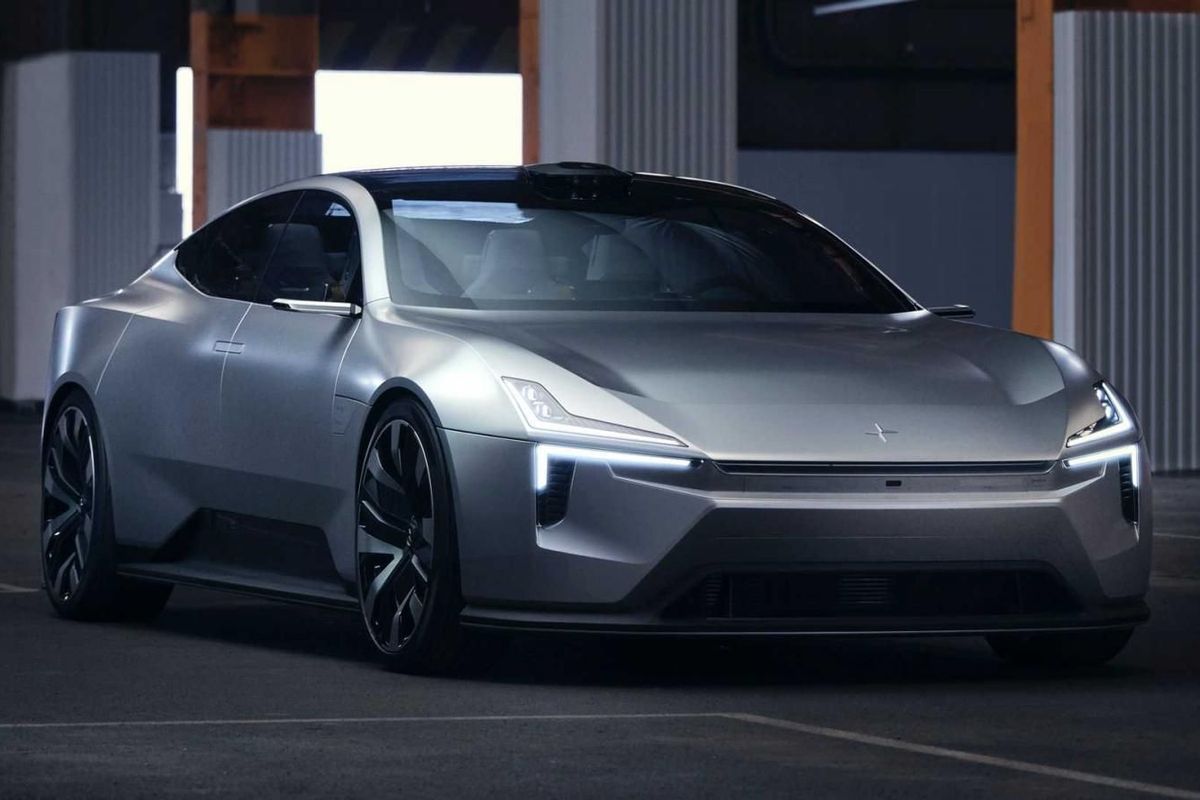
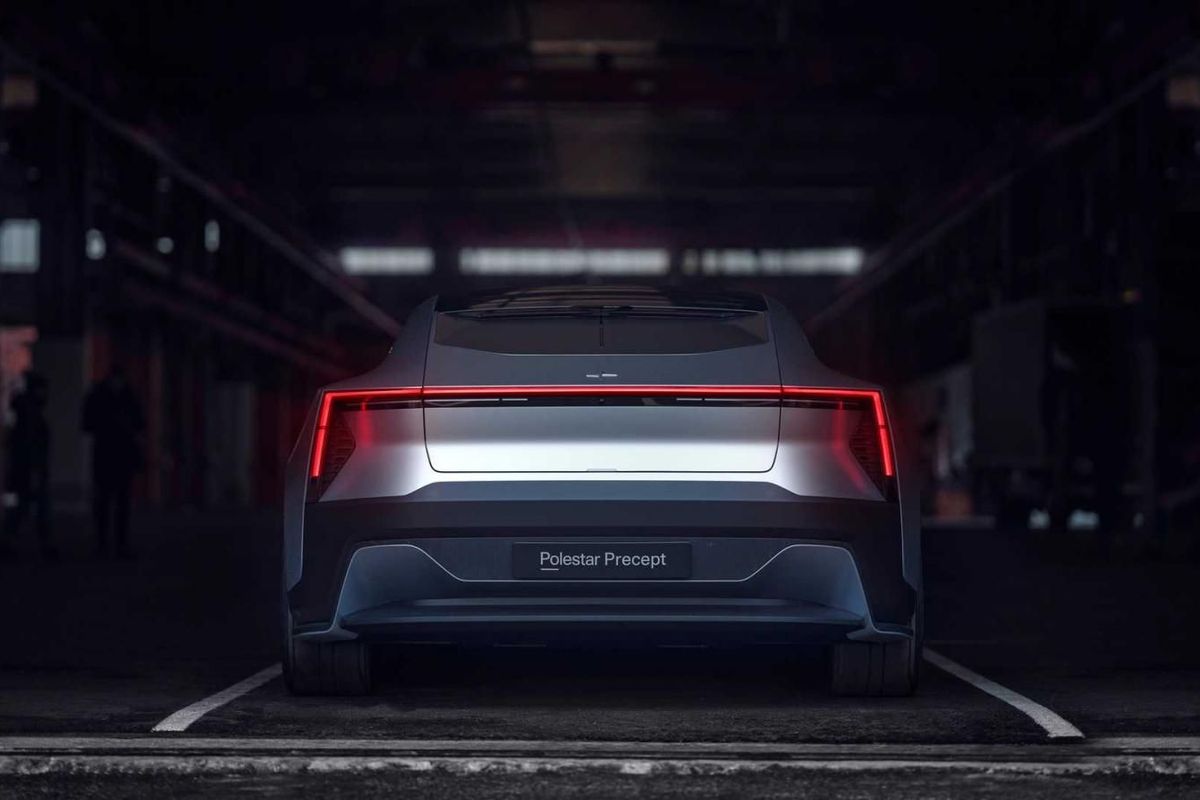
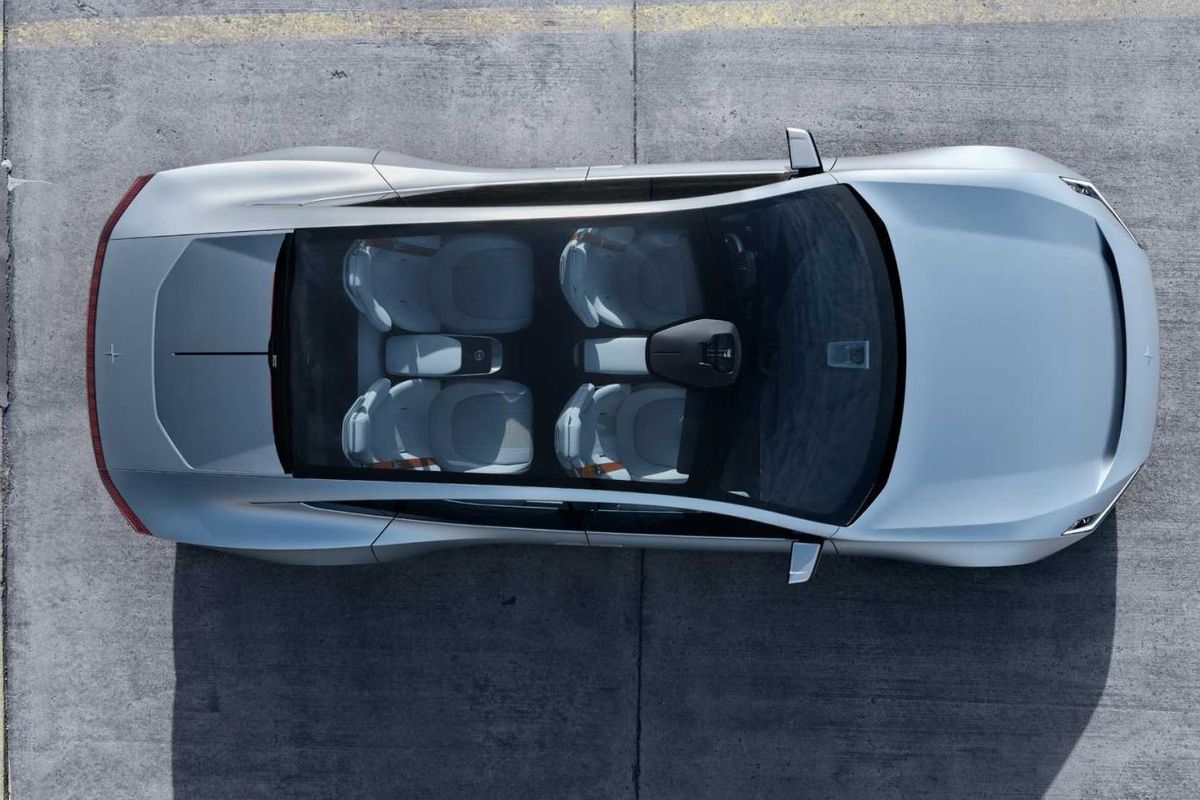
Polestar, Volvo’s performance sub-brand, is working on a new SUV that will draw inspiration from the 2020 Precept Concept.
*Pictured is the Polestar Precept Concept.
Remember the Polestar 1? Yes, that sexy hybrid coupe that packed a powerful hybrid punch by combining a supercharged 2.0-litre turbopetrol engine with 2 electric motors driving the rear axle and developing a tantalising 447 kW and 1 000 Nm of torque. What a beauty!
Then came Polestar 2, a striking all-electric fastback powered by 2 electric motors and a 78 kWh battery that develops a total system output of 300 kW and 660 Nm of torque and an estimated range of 443 km.
Now, as you can well guess, Polestar 3 is in the works and it will look to tap into the worldwide SUV trend which has proven to be lucrative for many car manufacturers. The Polestar 3 will take inspiration from the Precept Concept which was meant to be revealed at the 2020 Geneva Motor Show which was cancelled due to COVID-19.
Nonetheless, the Precept Concept gives us an idea of what to expect from the Polestar 3 and highlights a new design direction for the brand.
Unlike the Precept Concept, the Polestar 3 will feature a slick, aerodynamic SUV shape. Key design elements such as the newly-designed split LED headlight design, rear light bar and the SmartZone front fascia, which houses radar sensors and a high-definition camera, are likely to feature on the Polestar 3.
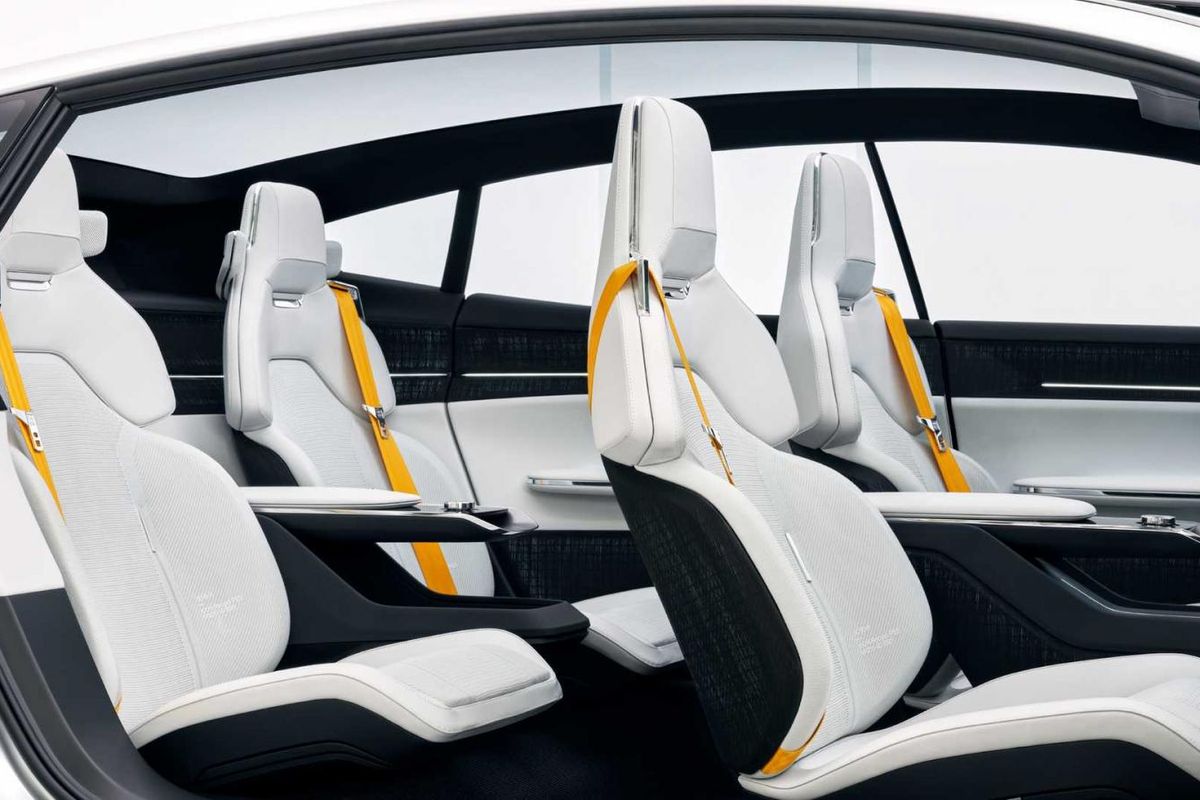
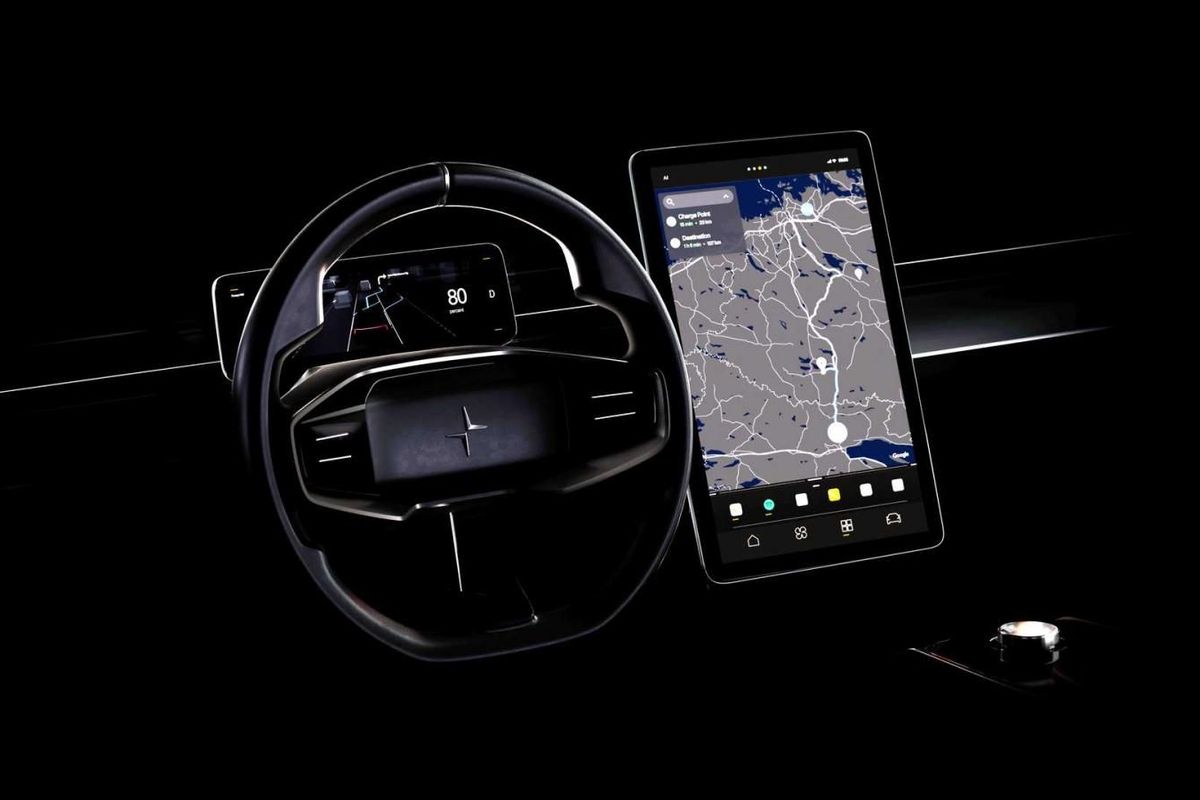
As for the interior, the Precept Concept features a large 15.5-inch portrait-style infotainment screen, powered by Google, which is likely to also make its way into the production Polestar SUV. It’s worth noting that Polestar has gone to great lengths to use sustainable and recycled materials inside the Precept Concept and the same ethos is expected to be carried over to the brand’s first SUV.
Powertrain details for the Polestar 3 remain unknown at this point but we do know that it will be all-electric. The production version of the Polestar 3 SUV can be expected in 2021 and we will keep you updated as soon as more details become available.
Take a closer look at the Polestar Precept Concept in the video below.
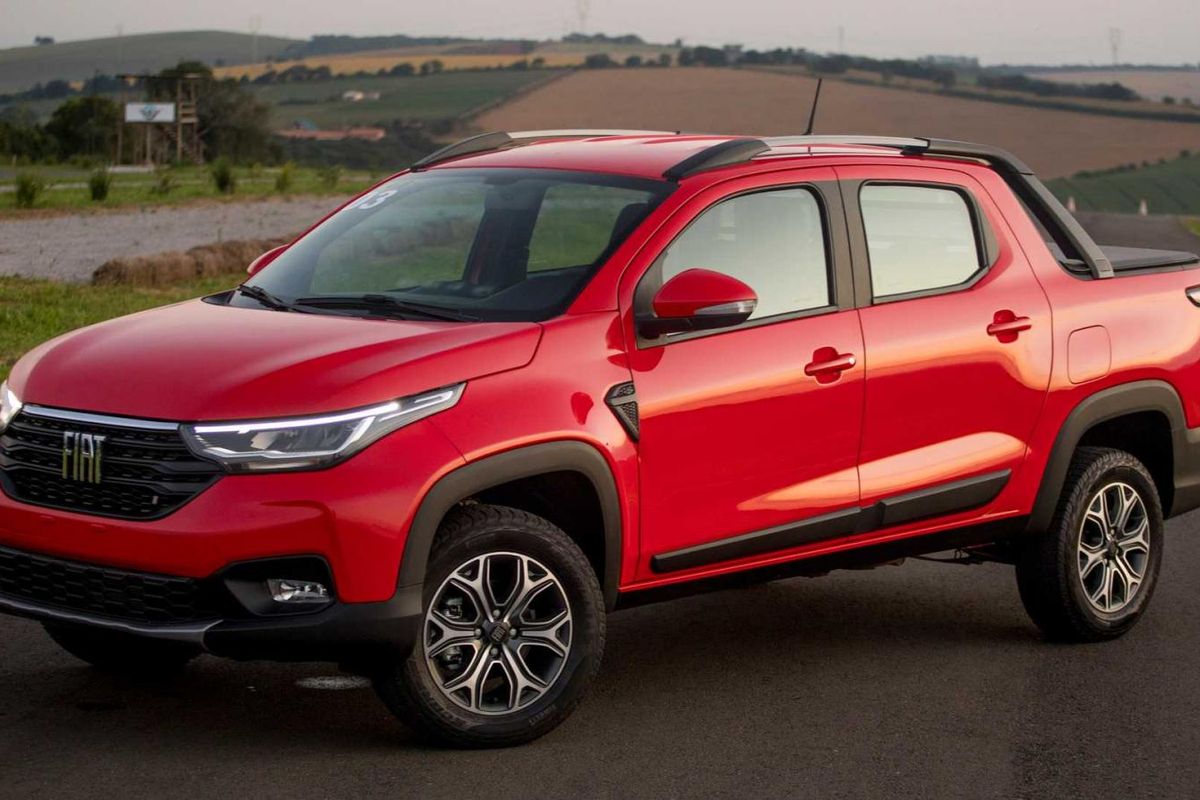
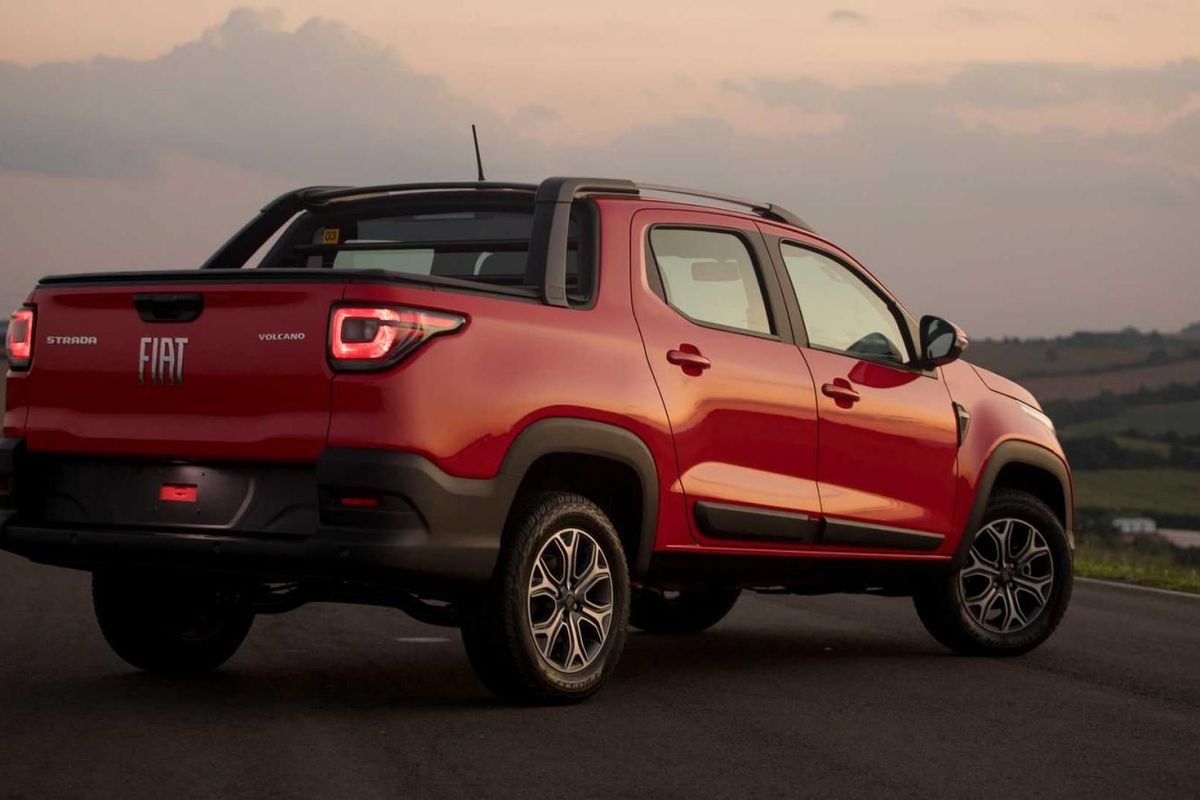
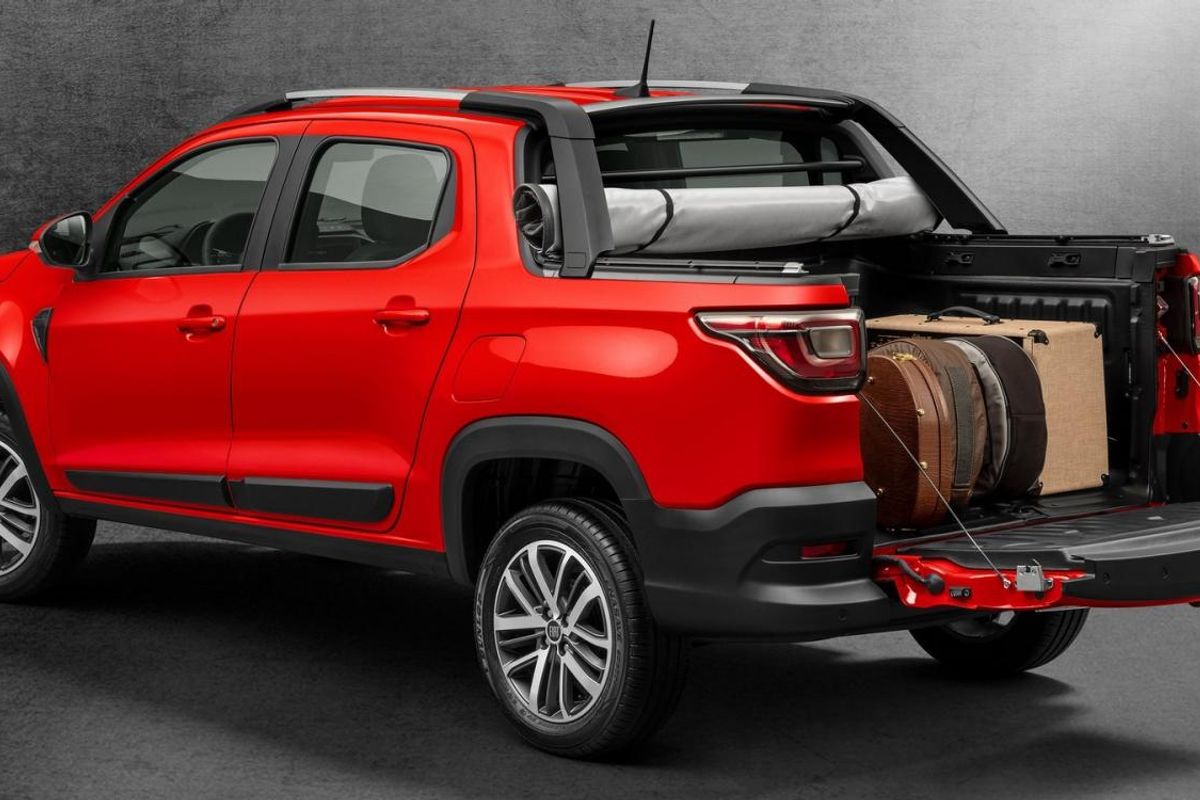
Since 2001, Fiat has been producing its compact bakkie in limited markets and for fans of the brand, this new Strada will be an exciting prospect.
Although the brand’s strange Mitsubishi joint-venture, with the Fullback/Triton, is a bakkie most South Africans of recent memory will associate with a loadbox Fiat, the new Strada has real legacy.
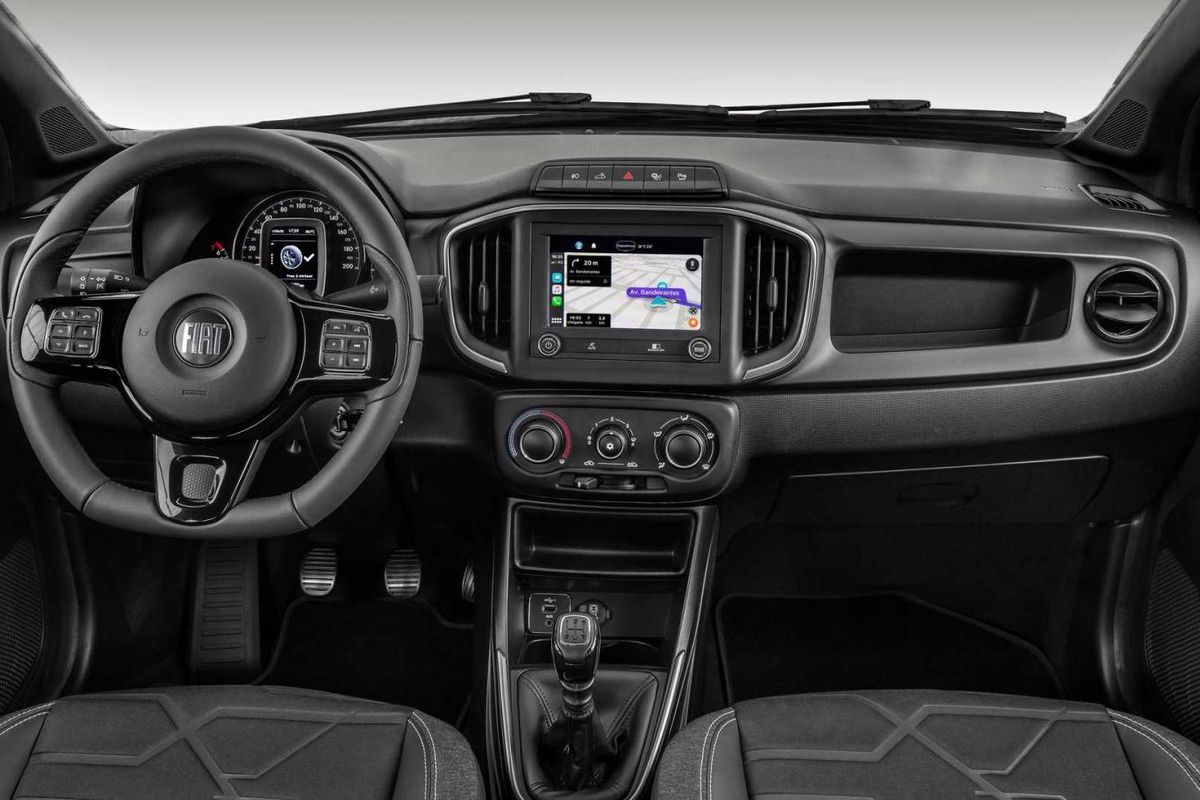
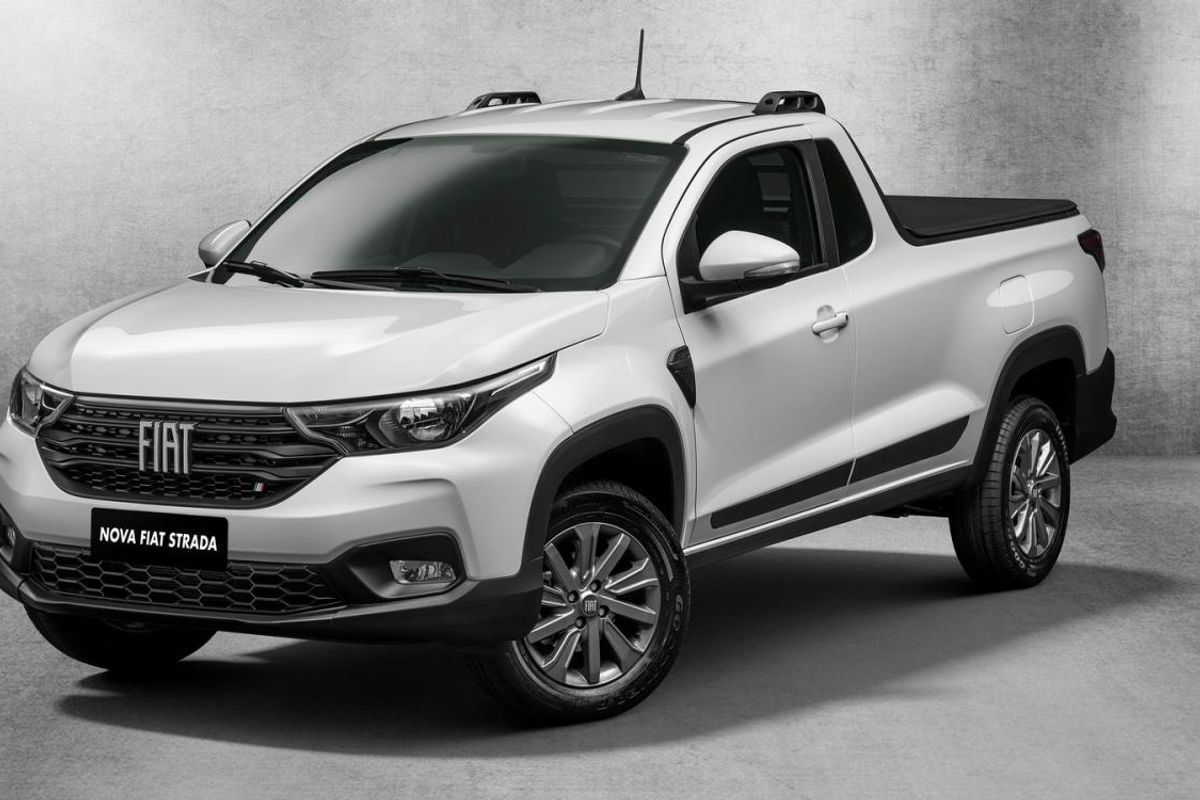
In typical Italian style, it features a better exterior design than any rival (which is primarily Nissan’s NP200) and the cabin architecture is entirely car-like. A seven-inch infotainment screen lives atop the centre stack and there’s a Smartphone sized cubbyhole ahead of the shifter.
Strada features a huge Fiat emblem in the centre of its grille, LED headlights and lots of protective plastic cladding around the wheelarches and rocker panels. It also rolls six-spoke alloy wheels.
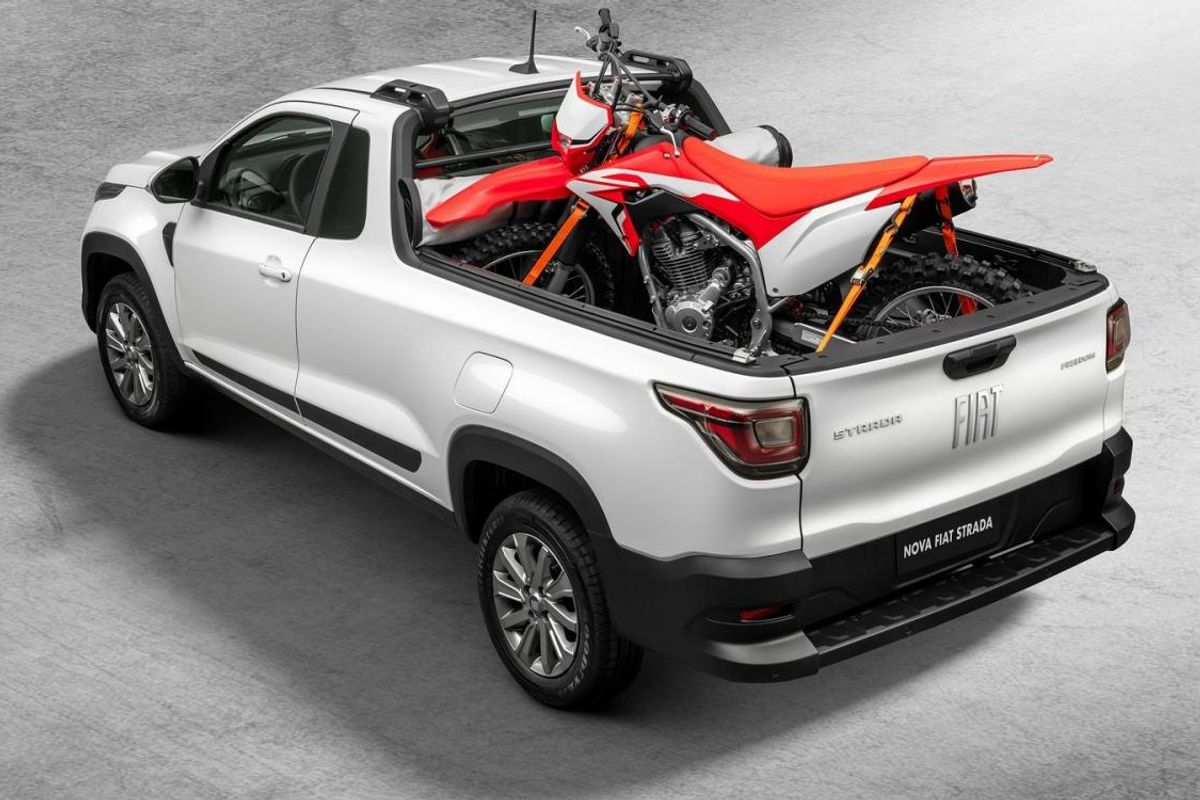
Around the rear, there is a step-bumper, tonneau cover and a cosmetic roll hoop, which merges into the roof rails.
The Strada is built upon Fiat’s Argo compact vehicle platform and powered by two petrol engine choices. There’s a 1.4-litre naturally-aspirated engine, good for 65 kW and 123 Nm, whilst a more potent 1.3-litre turbo boosts 81 kW and 139 Nm of torque. Both these engines drive the Strada’s front wheels via a five-speed manual gearbox.
Gauged in terms of size, the new Strada is 4.48 m long, which makes it a touch shorter overall, compared to Nissan’s NP200, which is 4.49 m when measured bumper-to-bumper. Loadability rates at 650 kg for the double-cab and 720 kg for Fiat’s single-cab Strada.
Although there is no talk of a 4×4 version, the Strada has an adequate 208 mm of ground clearance for gravel road use. Despite being excellently suited to South African requirements, the new Strada is only being targeted at left-hand drive markets.
We know that a new, rear-wheel-drive M2 Coupe – powered by a longitudinally-mounted 313-kW 3.0-litre straight-6 – is in the works. However, in light of the controversial styling of the Concept 4 and the challenging looks of the 2 Series Gran Coupe, many BMW fans fear the next M2 might look like a bit of monstrosity. That may not necessarily be the case, however…
Last month, we reported that the 2nd-generation BMW 2 Series Coupé (codenamed the G42) was scheduled to go on sale next year – but it might now be later than that, depending on the duration of the COVID-19 pandemic. However, unlike the current 1 Series hatchback and 2 Series Gran Coupe, which have transverse engine layouts and are based on BMW’s Front Architecture platform (FAAR also underpins the X1, X2 and all current Mini models), the newcomer will adopt an evolution of the brand’s Cluster Architecture (CLAR) platform and be closely based on the Z4 Roadster and its cousin, the Toyota GR Supra. So, whereas previous Coupe, Cabriolet and Gran Coupe versions of the BMW 4 Series, 6 Series and 8 Series were built on the same platform and had very similar styling cues (despite their distinctive body configurations), the 2 Series Gran Coupe and its Coupe siblings will be more like half-siblings…
Of course, the confusing genealogy of the 2 Series variants won't bother purists, because the G42 will be rear-wheel-driven and configured to be powered by the legendary 3.0-litre straight-6 motor. Autocar has reported that the next M2 Coupe (codenamed G87) will be propelled by a detuned version of the twin-turbo S58 powerplant in the X3 M/X4 M (also in the upcoming M3 and M4) and produce peak outputs of at least "313 kW and 550 Nm of torque".
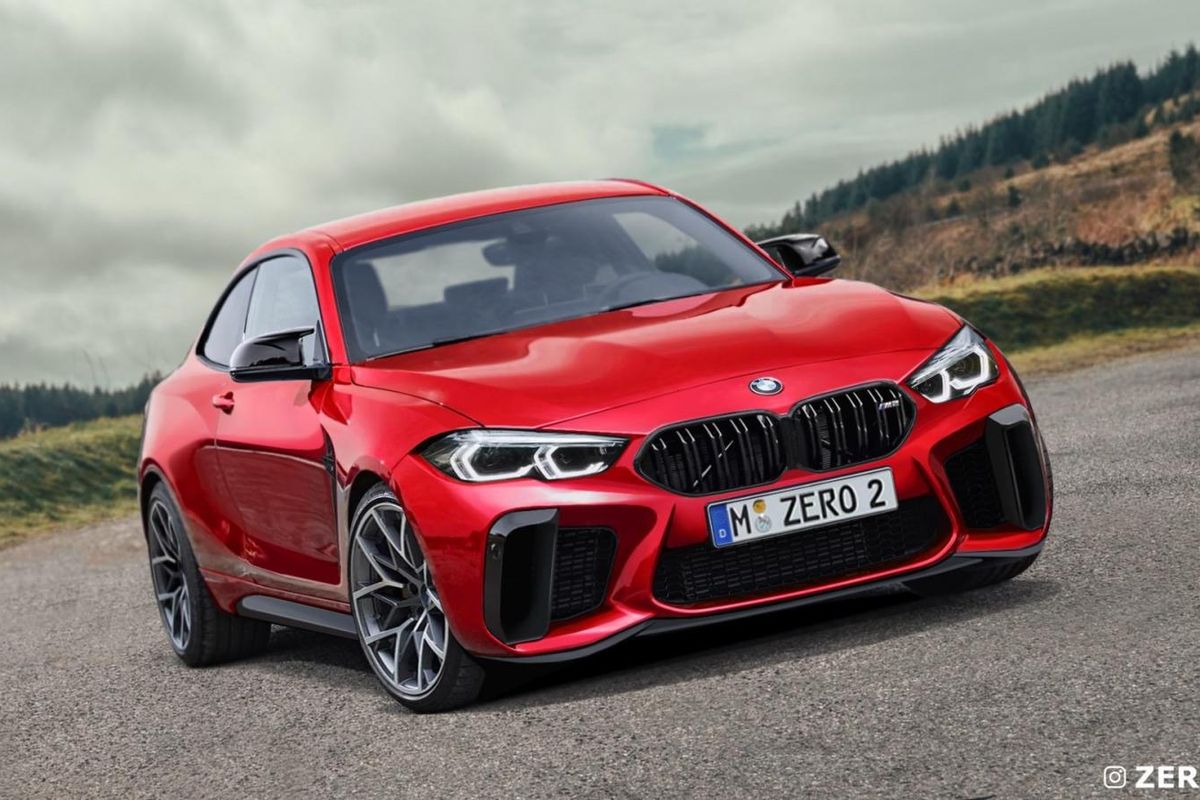
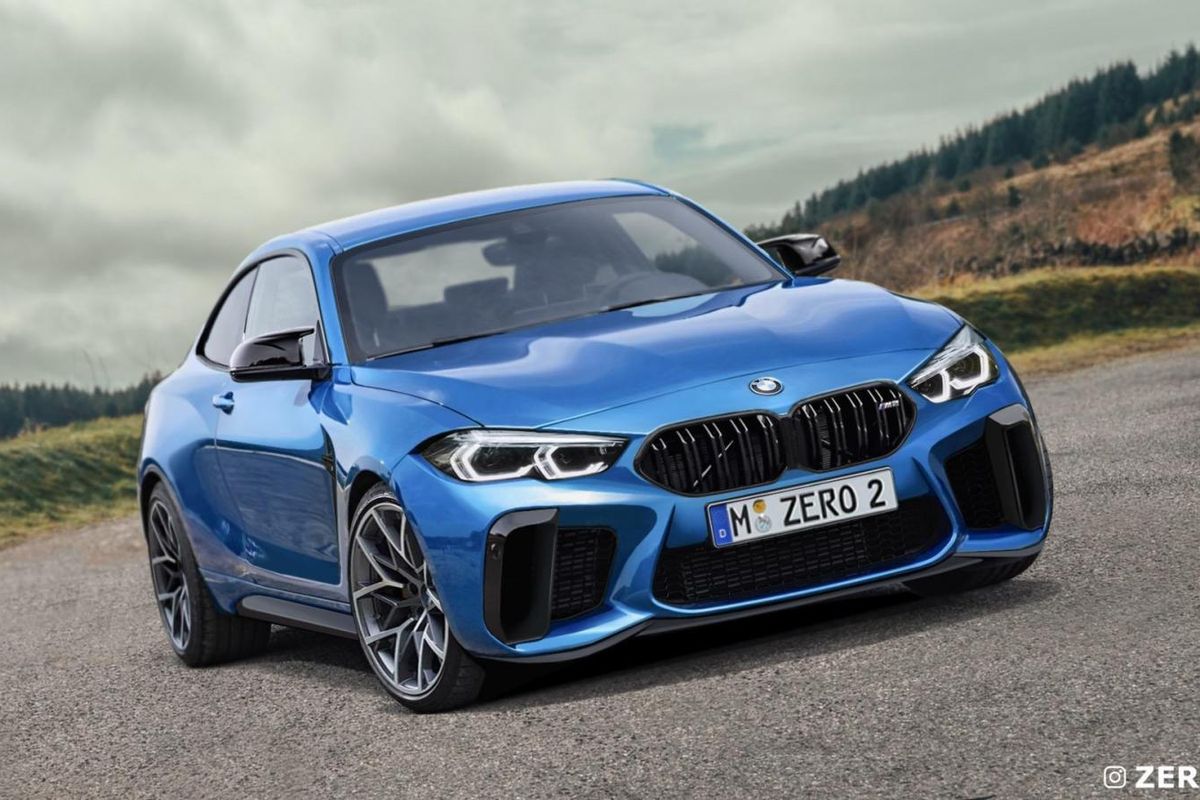
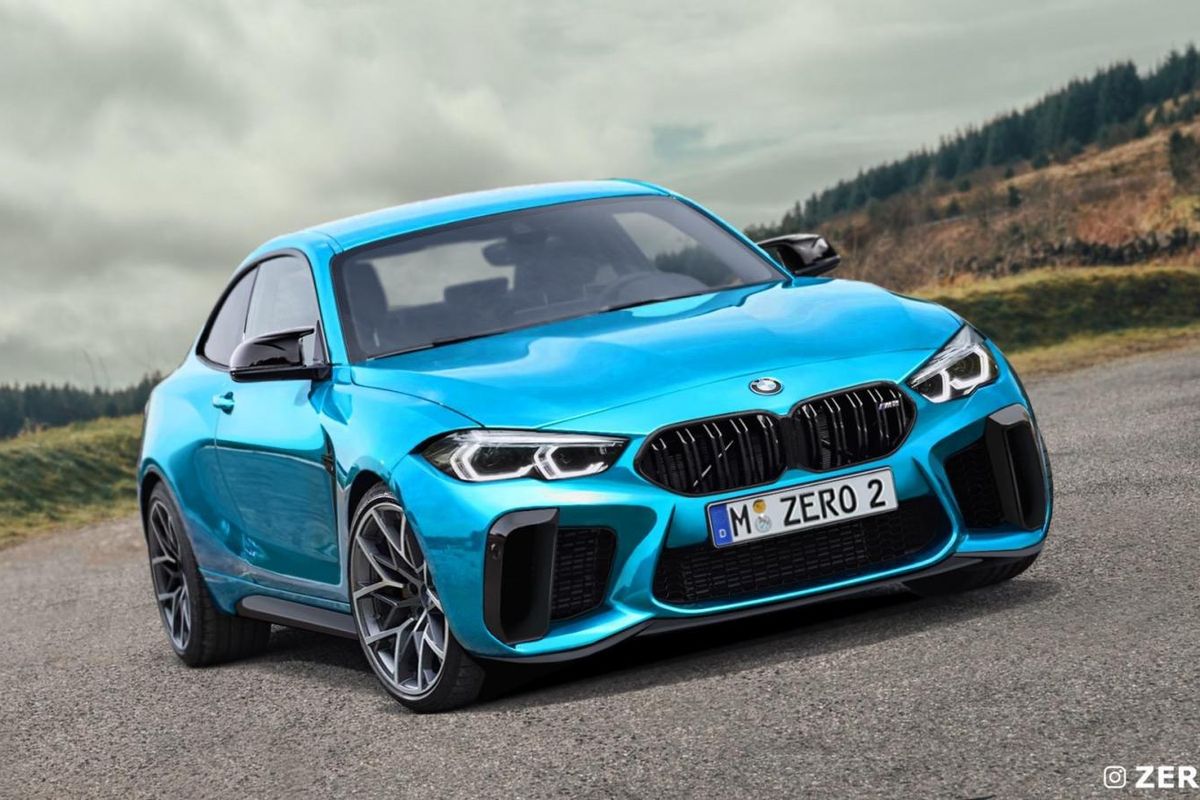
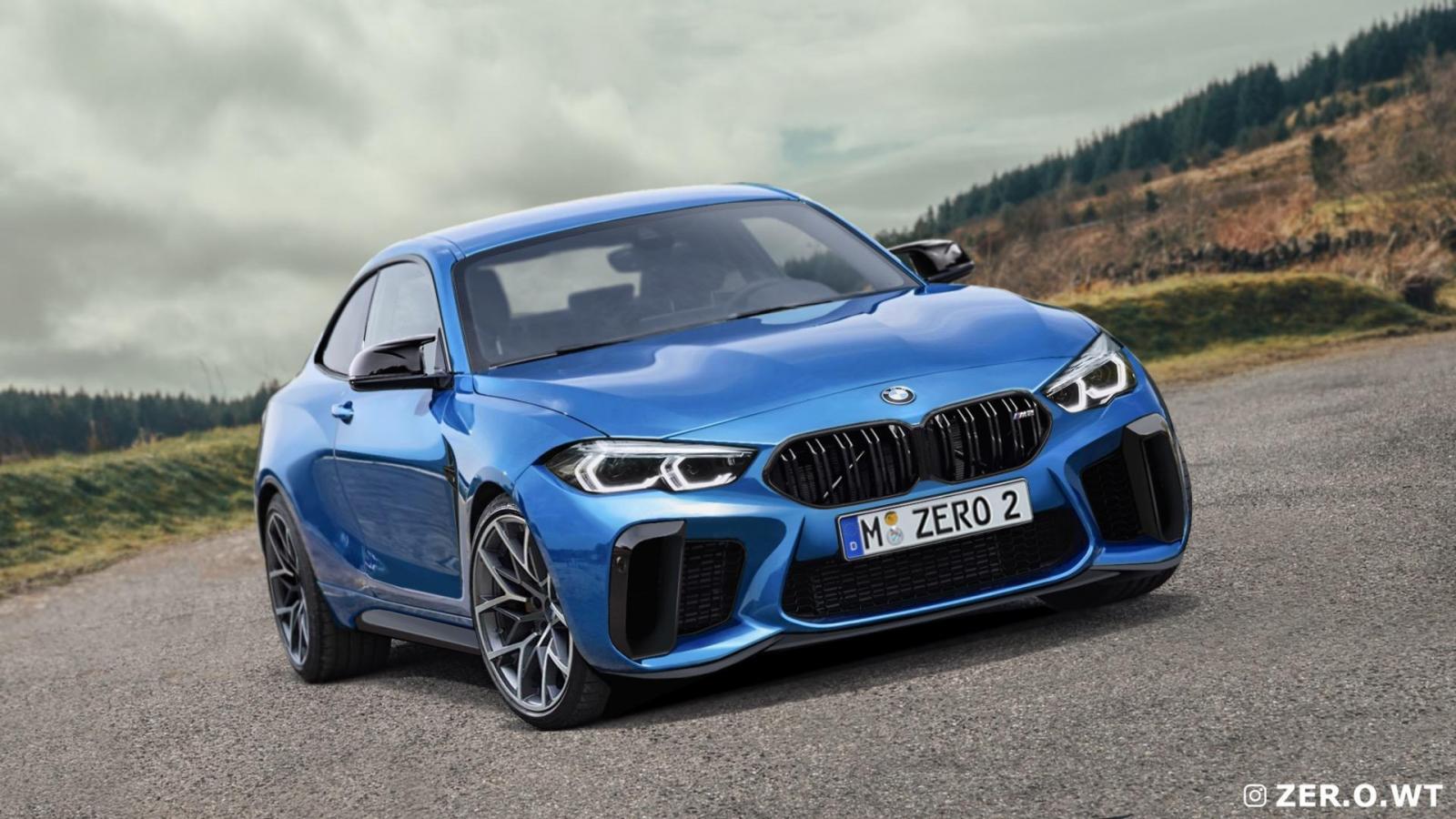
This finish closely resembles the Estoril Blue M colour; @zer.o.wt was happy to explore a diverse palette with their M2 rendering.
But what will the 2 Series Coupe, especially the M2 version look like? Judging from the dramatic design cues of the Concept 4 and Concept i4 (backed up with the clues we've got from spy pictures of the former), we know that the upcoming 4 Series is most likely to sport some version of the concept cars' gargantuan upright double-kidney grilles. Given that BMW has made it quite public that it wants to further differentiate between its rational and emotional models from an aesthetic point of view (like the 3 Series and the next 4 Series, for example) it could mean that the 2 Series Coupe may get that controversial large-nostrilled treatment too…
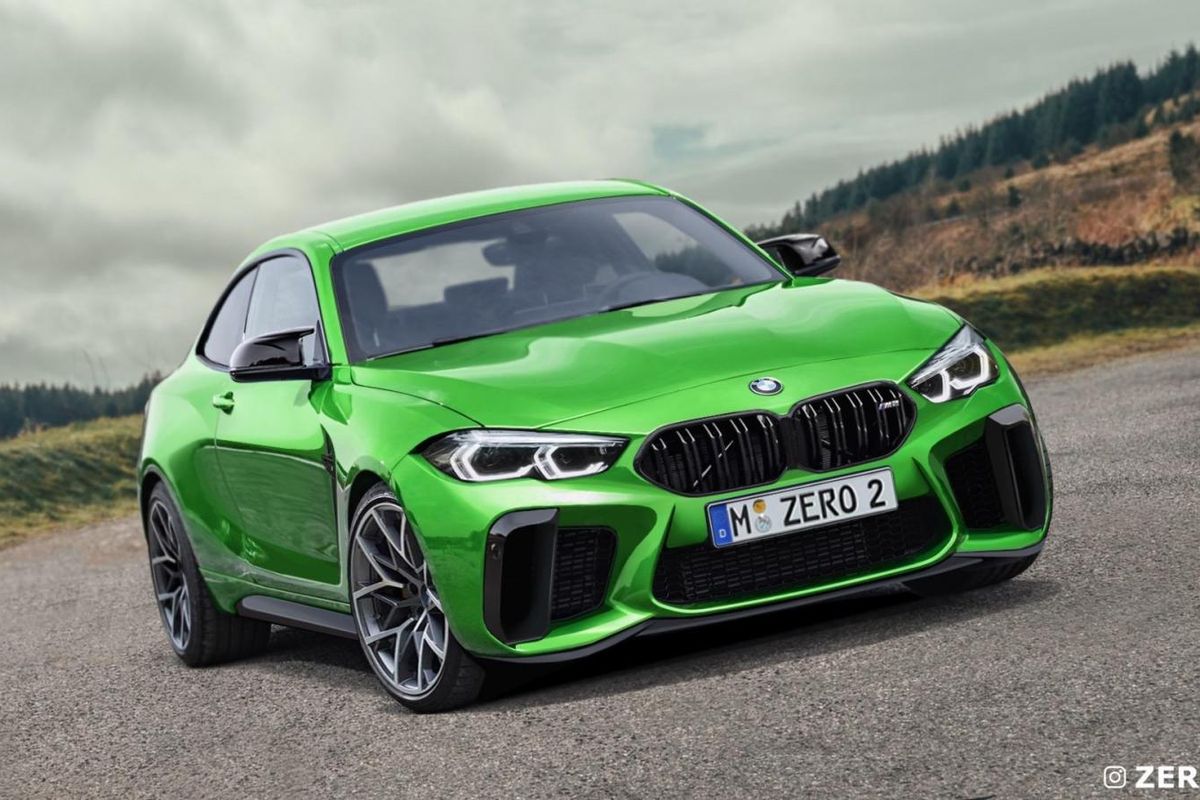
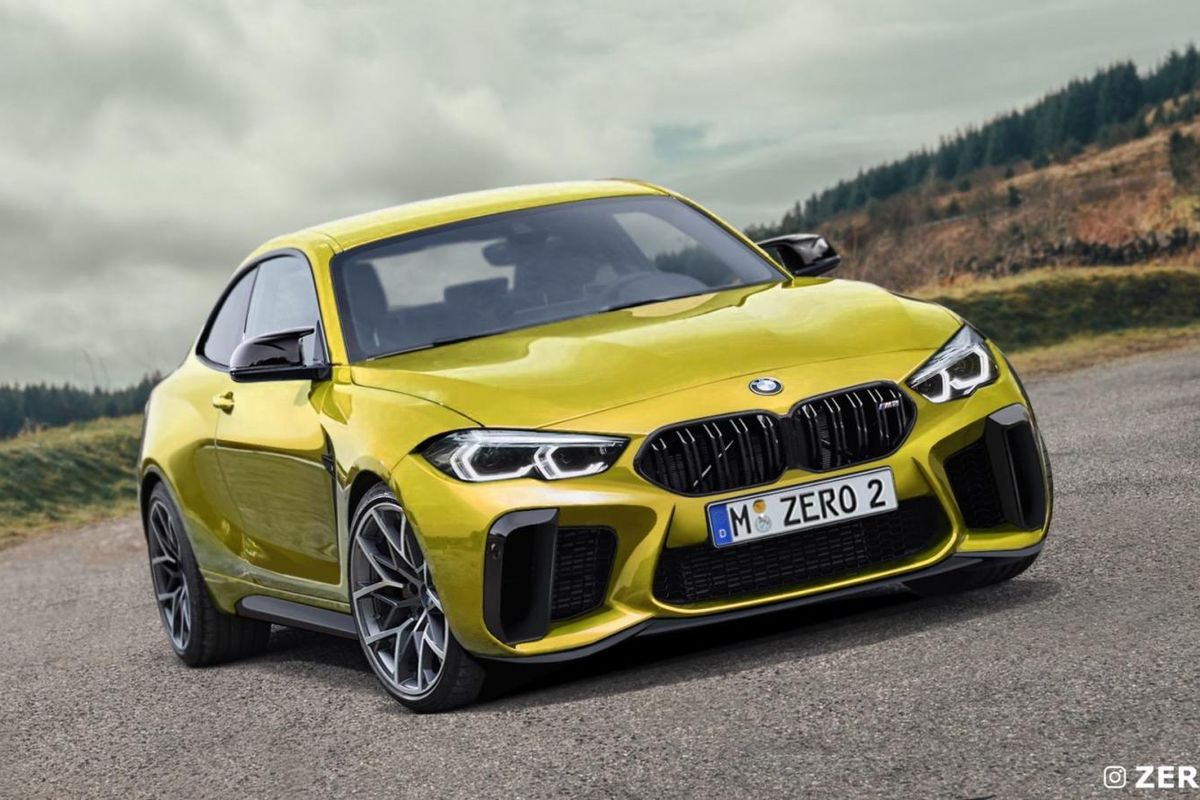
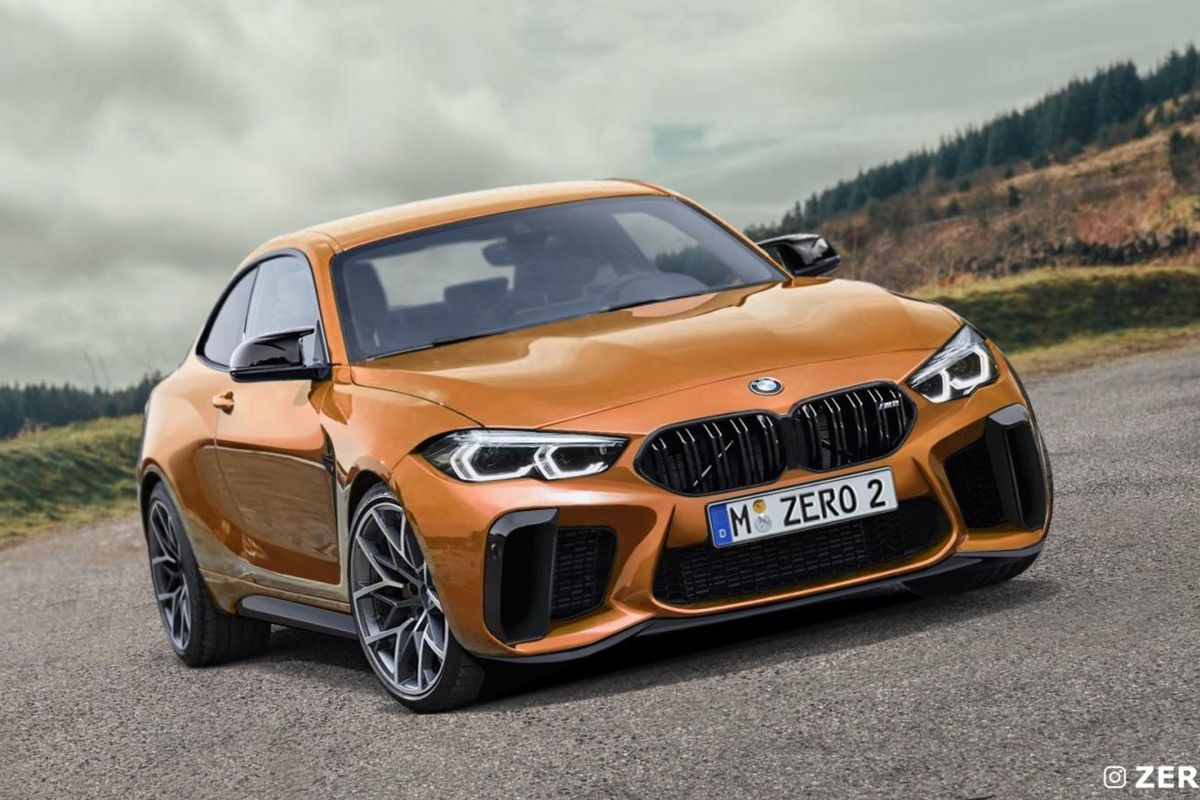
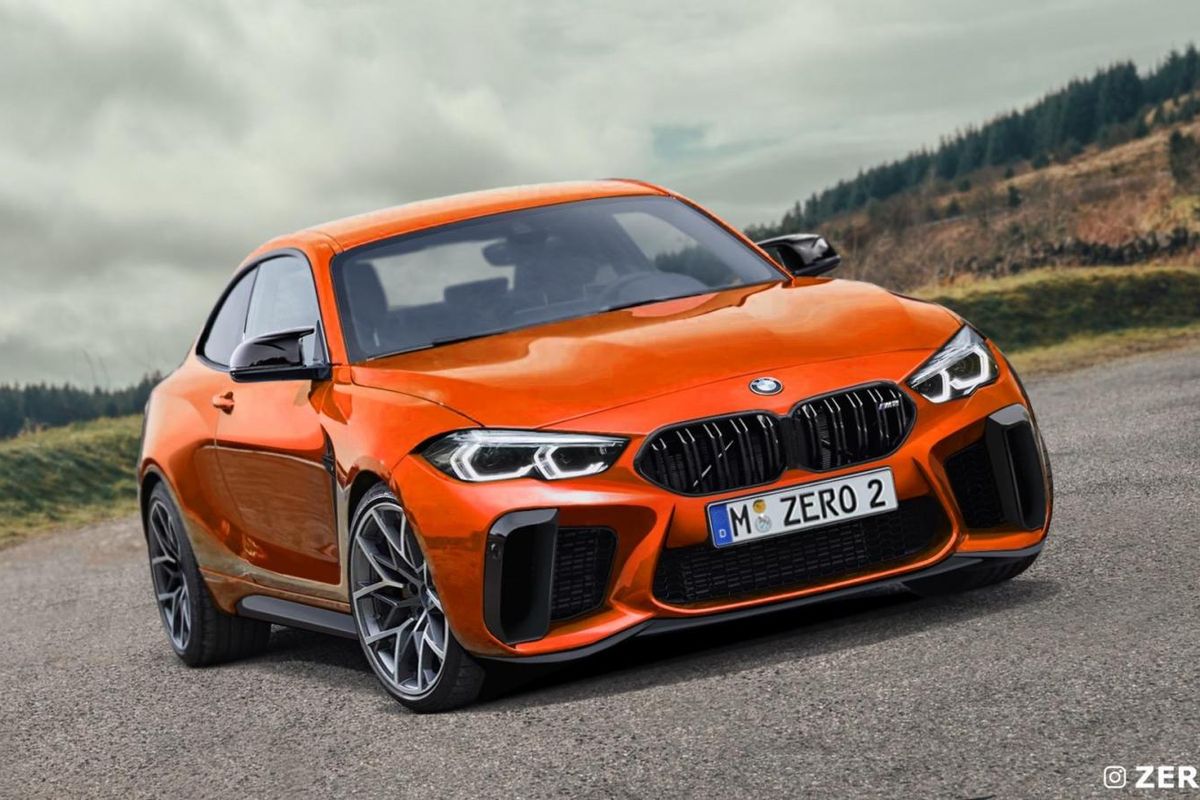
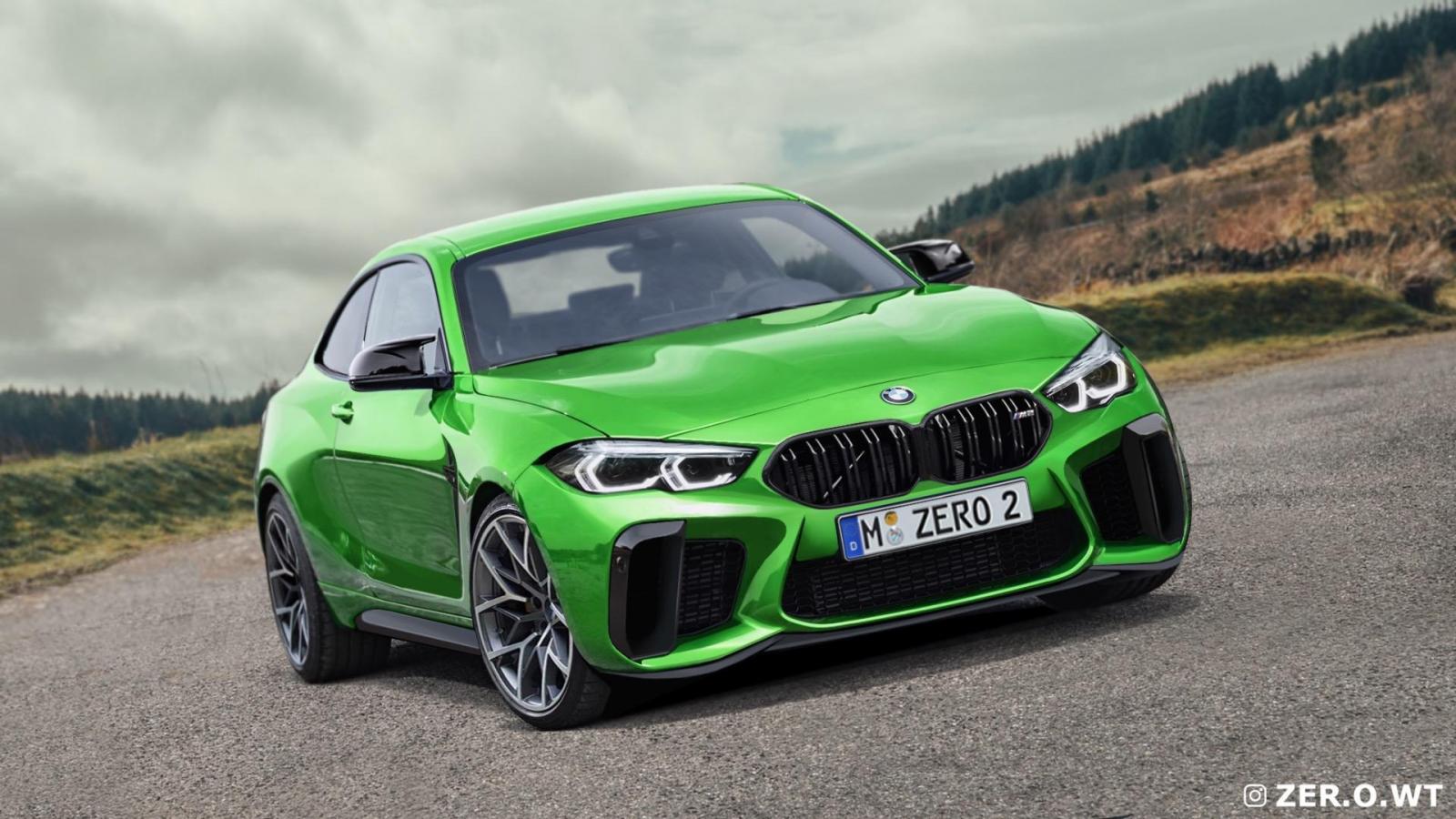
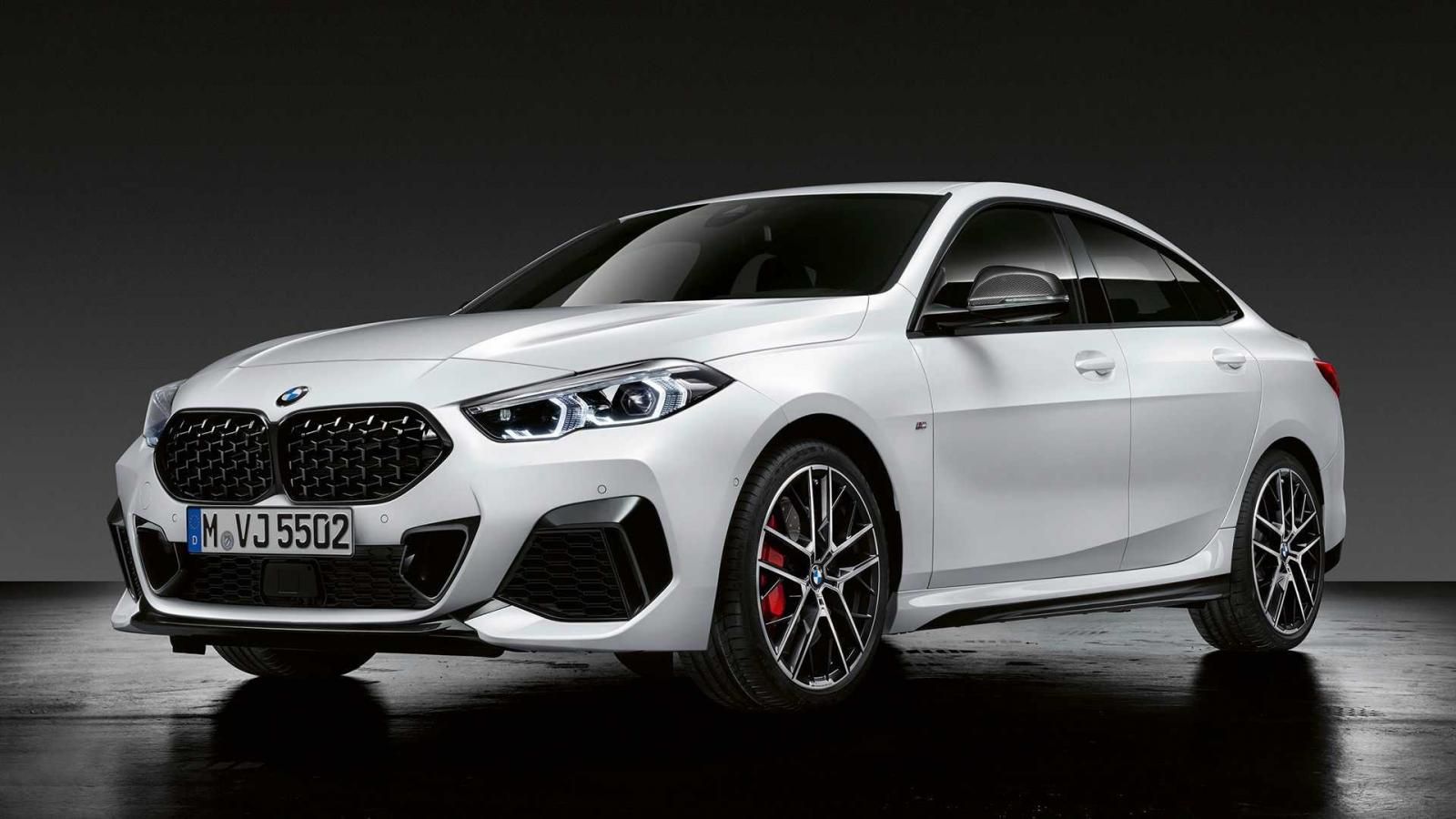
However, these speculative renderings, which were shared with BMW BLOG by one of its readers, @zer.o.wt, show that the upcoming M2 might look even better than its predecessor! While BMW's attempt to distil the 8 Series Gran Coupe's sleek, sweeping looks in the 2 Series Gran Coupe (GC) was less than successful because designers were boxed in (literally) by the dumpy 2-box hatchback packaging of the 1 Series on which the newcomer is based, the G42's adapted CLAR platform's longitudinal-engine layout necessitates a longer bonnet and a more cab-rearward profile. Of course, the Munich-based brand will still be obliged (at least, so we believe) to tie in the new M2 with the rest of the members of the 2 Series family, so the 2 Series GC's broad kidney grille with 3-dimensional black mesh and distinctive lighting elements are bound to be carried over. The elaborate spoiler and flared fenders? Well, they're mandatory!
Signal Green is one of the extra-cost Individual M colours in BMW's current line-up… Picture credit: @zer.o.wt
Meanwhile, the next M2 Coupe is expected to comfortably rev to a redline of 7200 rpm and dispatch the 0-100 kph sprint “in the low 4-second bracket”, the British publication said. What's more, the flagship 2 Series Coupe will be offered with either a purist-pleasing 6-speed manual gearbox (in combination with an Active M Differential) or an 8-speed automatic transmission (to replace the current car's dual-clutch 'box). It will also feature “extra stiffening measures, such as suspension-strut tower-mounted beams front and rear, dynamic engine mounts and a wider track, the last of which has also necessitated new bodywork."
The rumoured M2 Gran Coupe, by contrast, will be a 2.0-litre 4-cylinder all-wheel-drive rival to the Mercedes-AMG CLA 45.
The adoption of the CLAR platform further provides the 2 Series Coupe with the basis for a 48V electrical architecture, which supports throttle-off engine idling, regenerative braking and, most importantly, the option of an electric boosting function. BMW is said to be developing the system to be integrated with the S58 motor, but don’t expect it to appear on the M2 Coupe upon its initial release, only later on in the model's lifecycle, the publication added.
The M2 Coupe and its standard siblings will be produced (we think there might also be an M240i with 285 kW and 550 Nm) alongside the 3rd-generation Z4 at BMW’s factory in Leipzig, Germany.
BMW won't rest on its laurels with its 224 kW 2.0-litre 4-cylinder motor; it hopes to crank the engine's output to near 300 kW!
M2 Gran Coupe?
Autocar also suggested the M2 Coupe would eventually be joined by a 4-door namesake. BMW will indeed not be limiting the 2.0-litre 4-cylinder engine in the 2 Series Gran Coupe to 225 kW/450 Nm. The firm plans to introduce an M2 Gran Coupé to rival the Mercedes-AMG CLA 45 and next-generation Audi RS3 Saloon. The flagship 2 Series Gran Coupe will produce around 300 kW from a highly tuned version of the M235i GC’s motor, in combination with xDrive.
That unit will also be transferred into the 1 Series hatchback; as for what the derivative that will sit above the current M135i xDrive will be called, that's anyone's guess. It's still unlikely that BMW will use the hallowed "M1" moniker for its smallest 4-wheel-drive M car, even if it does have the ability to show the upcoming Audi RS3, next-generation Ford Focus RS and Volkswagen Golf R, plus the Mercedes-AMG A45 a clean pair of… exhaust tips.
Which car brands did what in terms of new-vehicle sales in 2019… not in terms of total numbers, but market-share growth or loss? We dug a bit deeper to see how the manufacturers and importers on the South African market performed in 2019. This is what we found…
*figures calculated off NAAMSA sales data
By calculating the market share of each car brand in 2019 and comparing the firms' figures with those from 2018, we can get some sort of an idea as to how each manufacturer (or importer) is faring in the South African market. For our calculations, we only considered passenger vehicles (no bakkies) because not every manufacturer sells a bakkie and they are considered commercial vehicles by law. We will prepare a separate article for the "bakkie brands" later.
But first, a few clarifications before we get started. In 2018, BMW reported its numbers as an aggregate (it included Mini sales in its total). In 2019, it separated the two brands, which made it easier to calculate BMW’s market share for the year. We had to take an average of the Mini sales from 2019 and apply them to 2018’s figures to get a better understanding of BMW’s actual figures.
Mercedes-Benz includes Smart in its sales, but the numbers for the Swiss brand are negligible and would not make a difference to the overall number.
So, without further ado…
The big winners
Haval/GWM
2018 market share: 0.18%
2019 market share: 2.1%
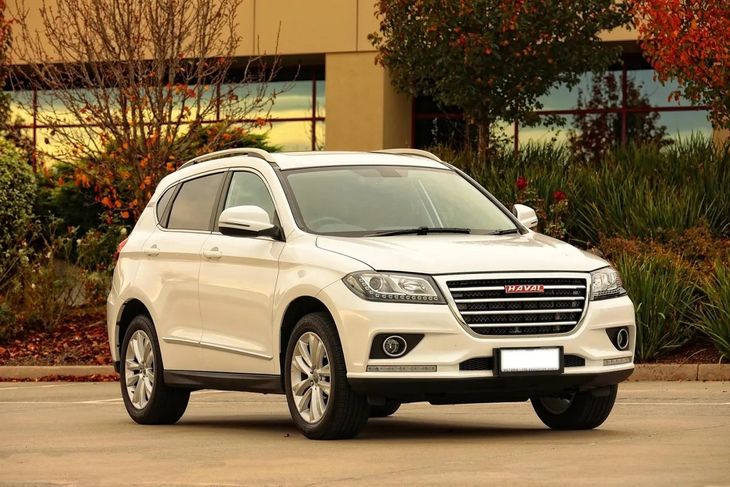
Ever since the Chinese SUV brand officially took over GWM's local operations (previously it was imported through a local business), it has begun to make real inroads in the South African market. It has begun to challenge the esteemed and long-standing brands with its H2 and H6 and, with the introduction of the H9, made its first appearance in the final round of the Cars.co.za Consumer Awards – powered by WesBank (in the Adventure SUVs category).
Suzuki
2018 market share: 3.2%
2019 market share: 4.2%
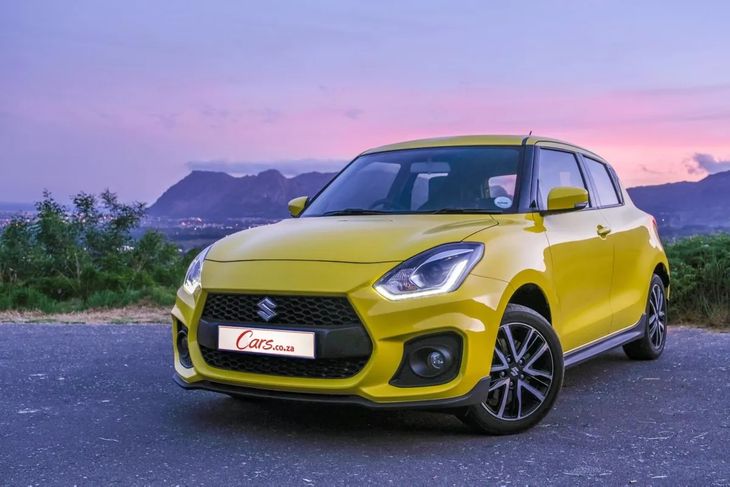
The rise of Suzuki in the South African market shows no sign of slowing down; the brand continues to grow year-upon-year. In 2019, it introduced a facelifted Vitara while the Jimny was launched at the very end of 2018. Most of its sales come from the Swift (a #CarsAwards budget-car category winner), while the Ertiga and Ignis continue to do well locally.
Renault
2018 market share: 6.9%
2019 market share: 7.6%
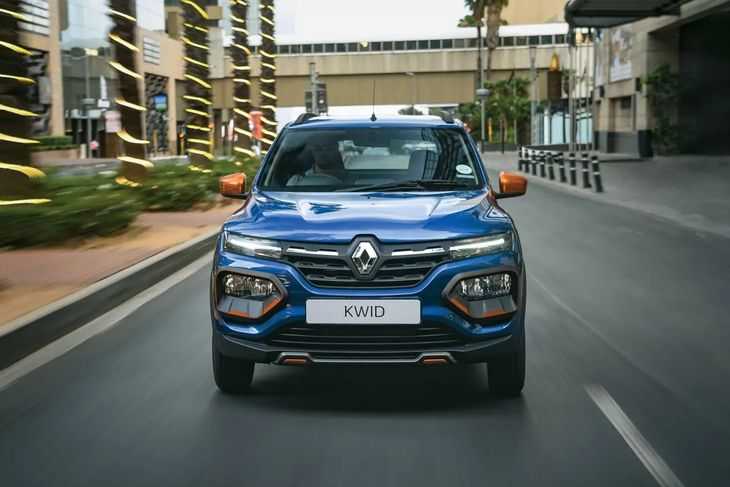
The French brand has shifted its marketing focus from its upmarket models and prioritised the budget end of the market, where it offers a bit more brand cache and image value than, say, Datsun. The Kwid has turned big numbers for Renault locally, but the ageing Clio is still able to hold its own along with the Sandero. Sales of the new Duster appear to yield good volumes for the brand too.
Mahindra
2018 market share: 0.6%
2019 market share: 1%
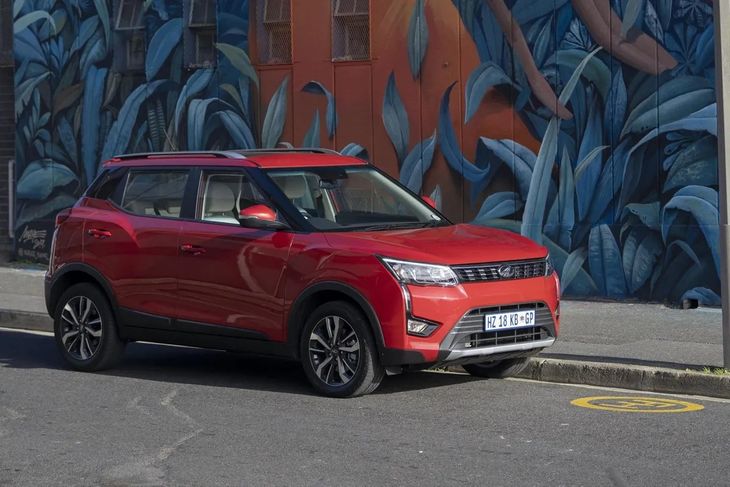
Mahindra calls South Africa its second home, but the Indian manufacturer's sales have been predominantly in the LCV segment with the Scorpio Pik-up and the Bolero. In 2019, it introduced a compact family car in the form of the XUV300, which is selling fairly well. The budget-oriented KUV100 turns the most units on a monthly basis, which is helping Mahindra to gain a bigger foothold in the passenger-car market.
Volkswagen
2018 market share: 20.3%
2019 market share: 21%
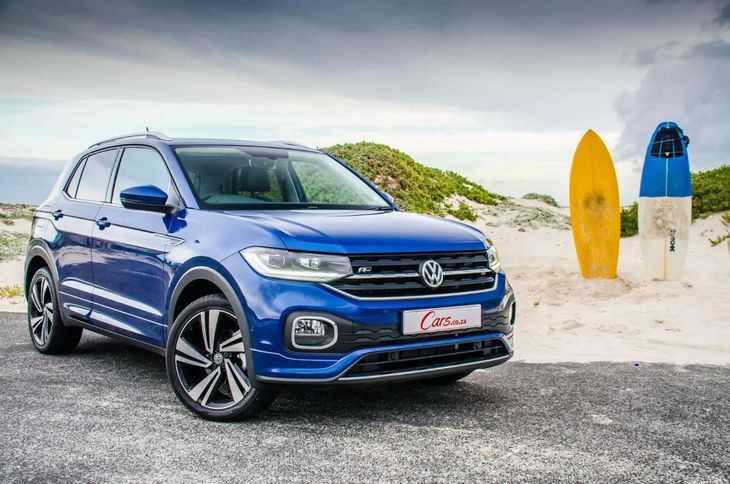
It’s a small percentage gain for the reigning #CarsAwards Brand of the Year, but further underlines the fact that the Wolfsburg-based firm is South Africa's favourite passenger-car brand. It increased its gap over Toyota at the top. The introduction of the T-Cross in 2019 certainly helped the brand gain access to the compact family-car segment, where previously it had zero presence.
The little winners
Audi
2018 market share: 2.45%
2019 market share: 2.5%
Mitsubishi
2018 market share: 0.3%
2019 market share: 0.4%
Fiat/Chrysler
2018 market share: 0.4%
2019 market share: 0.6%
Peugeot/Citroen
2018 market share: 0.3%
2019 market share: 0.4%
Porsche
2018 market share: 0.35%
2019 market share: 0.4%
Subaru
2018 market share: 0.28%
2019 market share: 0.29%
Lexus
2018 market share: 0.22%
2019 market share: 0.25%
The big losers
Toyota
2018 market share: 18.9%
2019 market share: 17.7%
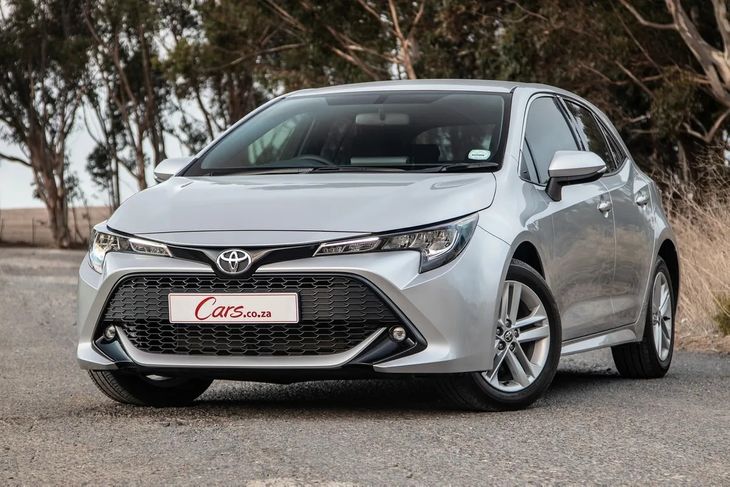
Don’t feel too sorry for Toyota, the Hilux is still SA’s best-selling vehicle by some margin. It’s hard to pick a fault in Toyota’s passenger-car numbers. Apart from the Corolla Hatchback, most models do particularly well with Fortuner, Corolla and RAV4 registering close or more than 1 000 units a month. The recently-arrived updated C-HR might help Toyota's numbers in the compact SUV segment and remember, the new Corolla and Corolla Quest have just hit showrooms!
BMW
2018 market share: 4.4%
2019 market share: 3.6%
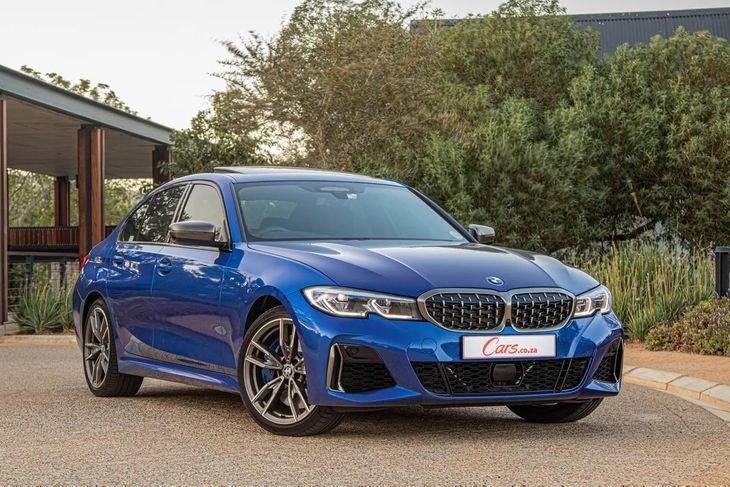
Without the locally-built 3 Series to flood the market, BMW hasn’t been able to cover the shortfall with the X3. The result is a slight decline in sales. BMW had a lot of expensive products come to the market in 2019 in the form of the 8 Series and the Z4, which sell in small numbers but provide healthy profit margins. The new 1 Series was launched at the tail end of 2019 and an expanded 3 Series line-up (including a 318i) should bolster BMW’s numbers for 2020.
Nissan
2018 market share: 4.1%
2019 market share: 3.6%
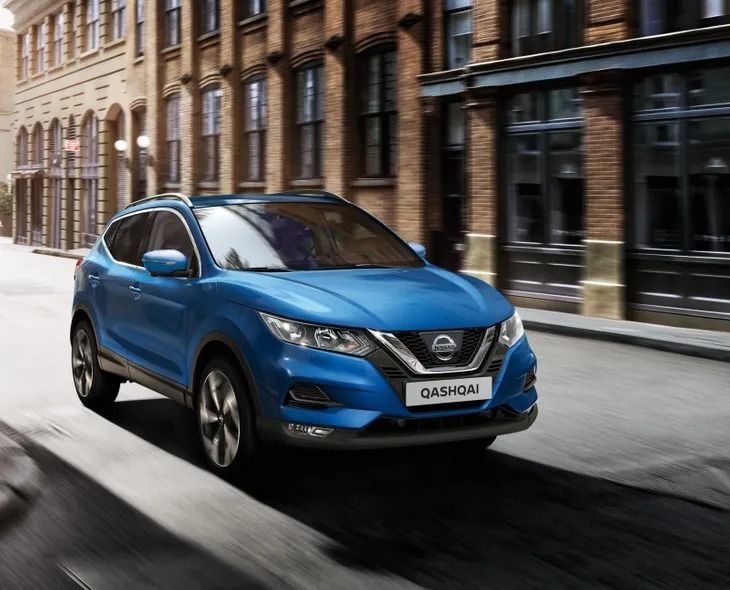
Nissan South Africa has been circumspect with introducing new products and with its ageing SUV line-up (Qashqai and X-Trail were facelifted in 2017), the Japanese firm has lost its foothold in the family-car segment. The new Micra is outsold by the same-platform Clio and the Almera does not offer much other than lots of legroom in the ‘Uber’ segment. Hopefully, new Nissan models will come to the market in 2020… or it may become an LCV business only.
Honda
2018 market share: 2%
2019 market share: 1.55%
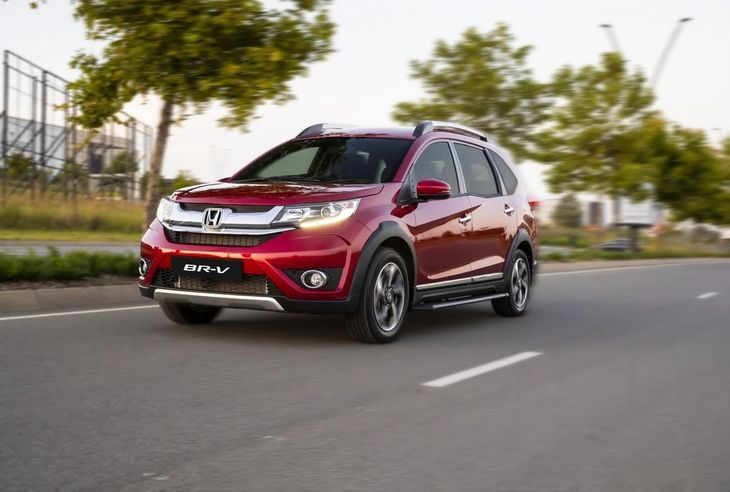
Honda hasn’t brought anything new to the market in a while and has stood by its local product portfolio, which is, unfortunately, looking a bit long in the tooth. It doesn’t look like things are going to get any better for the brand as the recently released Jazz is unlikely to come to SA. The BR-V has been lightly facelifted but the line-up lacks the sparkle and excitement that something like the all-electric Honda-e could bring to the local market.
The little losers
Hyundai
2018 market share: 8.8%
2019 market share: 8.5%
Ford
2018 market share: 7.3%
2019 market share: 7.1%
Mercedes-Benz
2018 market share: 4.4%
2019 market share: 4.1%
Kia
2018 market share: 4.35%
2019 market share: 4%
Mazda
2018 market share: 3.85%
2019 market share: 3.45%
Datsun
2018 market share: 1.99%
2019 market share: 1.97%
Jaguar Land Rover
2018 market share: 1.4%
2019 market share: 1.15%
Opel
2018 market share: 0.85%
2019 market share: 0.7%
Volvo
2018 market share: 0.7%
2019 market share: 0.65%
The passenger-car rankings
1. Volkswagen – 21%
2. Toyota – 17.7%
3. Hyundai – 8.5%
4. Renault – 7.6%
5. Ford – 7.1%
6. Suzuki – 4.2%
7. Mercedes-Benz – 4.1%
8. Kia – 4%
9. Nissan – 3.6%
10. BMW – 3.6%
11. Mazda – 3.5%
12. Audi – 2.5%
13. GWM/Haval – 2.1%
14. Datsun – 1.97%
15. Honda – 1.55%
16. Jaguar Land Rover – 1.15%
17. Mahindra – 1%
18. Opel – 0.7%
19. Volvo – 0.65%
20. Fiat/Chrysler – 0.6%
21. Porsche – 0.4%
22. Mitsubishi – 0.4%
23. Peugeot/Citroen – 0.4%
24. Subaru – 0.29%
25. Lexus – 0.25%
Top 10 Cheapest Cars in South Africa with 150kW or More
If you are looking for the most bang for your buck then consider these 10 cheapest cars with 150 kW or more!
If you are a car buyer looking for a new car with decent performance then 150 kW is a reasonably attainable target. Enough to keep your inner enthusiast happy when the moment takes you but not so much that the price escalates to a scary place. For the lowest possible price, then this list will point you in the right direction. Note that pricing is accurate as of February 2020 and the cars are listed from the cheapest to the most expensive.
Top 10 Cheapest Cars in South Africa with 150 kW or more
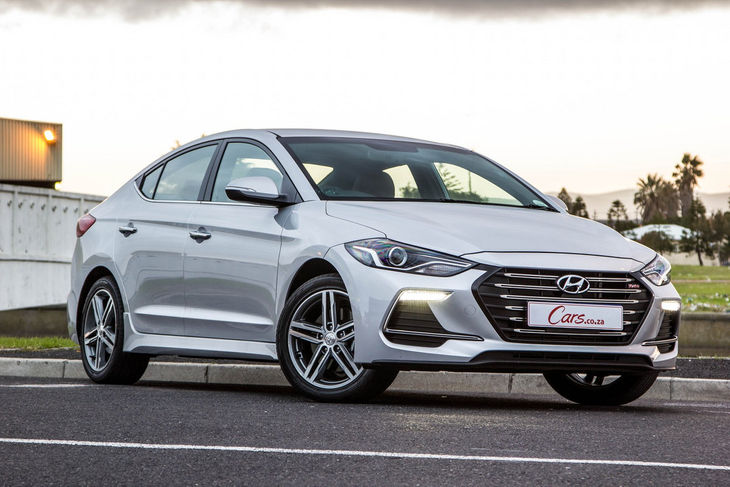
1. Hyundai Elantra 1.6 Turbo Elite Sport – R436 900
Launched in 2017, the Hyundai Elantra 1.6 Turbo Elite Sport sedan is currently the cheapest new car you can buy with exactly 150 kW and 265 Nm on offer from its 1.6-litre turbopetrol engine and comes mated with a 6-speed dual-clutch transmission. Hyundai claims a zero to 100 kph sprint time of 7.7 seconds with a top speed of 210 kph. The Elantra Sport offers good general performance but we found the ride to be quite firm which may deter some buyers. The infotainment screen could be better too.
It's priced at R436 900 and is backed by 5-year/150 000 km vehicle warranty, a 7-year/200 000 km drivetrain warranty and a 5-year/90 000 km service plan.
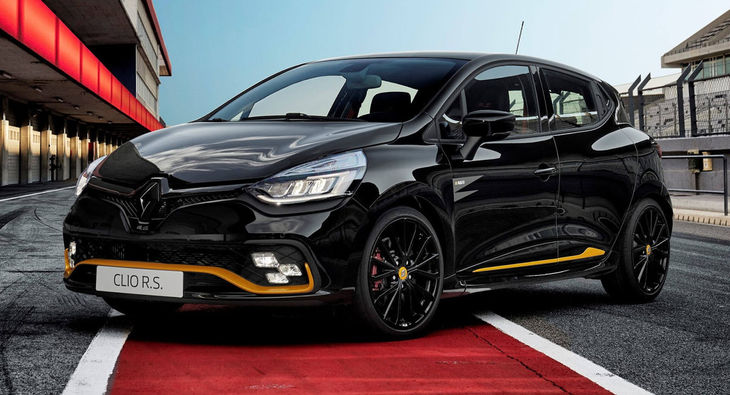
Renault's Clio RS 18 F1 came to market in 2018 and is based on the Clio RS 220 Trophy EDC and named after the 2018 RenaultSport F1 team. It employs a gutsy1.6-litre turbocharged petrol engine with 162 kW and 280 Nm of torque which powers the front wheels via a 6-speed dual-clutch transmission. With a sorted chassis, this Clio RS will dispatch the sprint to 100 kph in about 6.6 seconds before reaching a top speed of 235 kph. A number of performance-inspired features are fitted, including a lowered and stiffened suspension and a rorty Akrapovic exhaust system.
The Clio RS 18 F1 is priced at R459 900 and is sold with a 5-year/150 000 km warranty and a 3-year/30 000 km service plan.
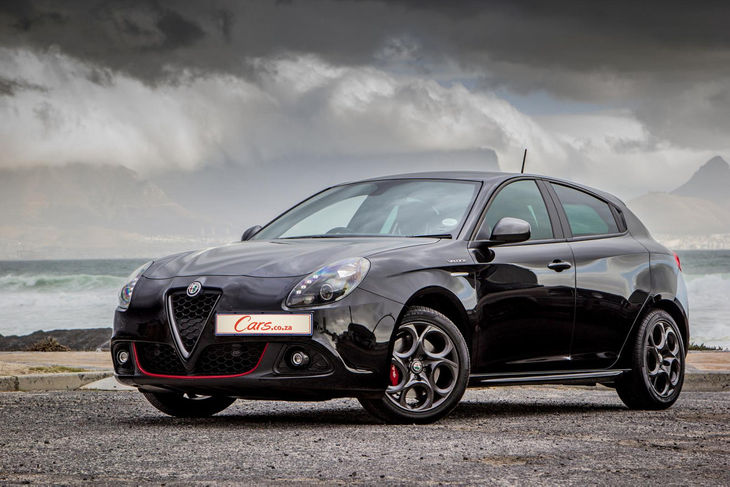
The ageing Volkswagen GTI rival from Alfa Romeo is still on sale and comes powered by a 4C-derived 1.75-litre turbopetrol engine with 177 kW and 340 Nm of torque. Power is directed to the front wheels via a 6-speed dual-clutch transmission with a claimed zero to 100 kph sprint time of 6.0 seconds and a top speed of 244 kph. The engine and gearbox combination delivers riveting performance but the chassis and interior features are outdated and not up to scratch with its more modern rivals.
The Alfa Romeo Giulietta 1750TBi Veloce is priced at R521 900 and is sold with a 3-year/100 000 km warranty and a 3-year/100 000 km service plan.
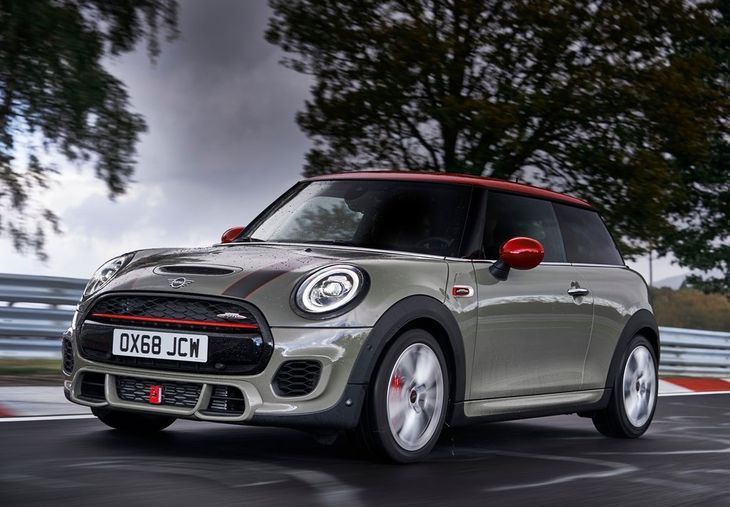
The Mini John Cooper Works 3-door hatchback is a potent performer and draws its power from a 2.0-litre turbocharged petrol engine with 170 kW and 320 Nm of torque which can be exploited using an 8-speed automatic transmission that drives the front wheels. With its go-kart-like handling ability, the Mini JCW hatch will gun from zero to 100 kph in 6.1 seconds and top out at 246 kph. While Mini's styling makes it a niche offering, this JCW hatch remains a strong performer, albeit pricey if you consider that there are still a few options worth adding to the package.
The Mini JCW hatch 3-door auto is priced from R551 265 and is sold with a 2-year/unlimited km warranty and a 5-year/100 000 km maintenance plan.
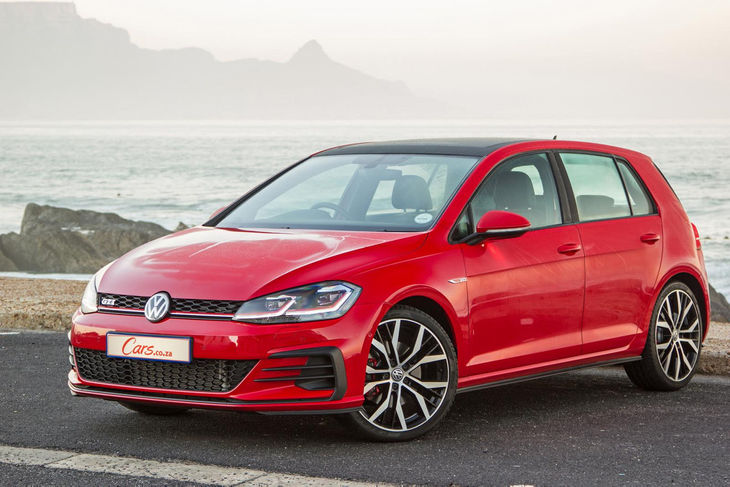
The current Volkswagen Golf GTI is on its last legs as the arrival of the new Golf 8 GTI draws ever closer (due in Q4 of 2020). The GTI, however, remains hugely popular in South Africa and its no surprise as it has won awards on numerous occasions at the #CarsAwards powered by WesBank and is the reigning Premium Hatch category champion for the 2019/20 iteration of the awards programme.
In its current form, the Golf GTI is powered by a turbocharged 2.0-litre petrol engine with 169 kW and 350 Nm of torque available using a 6-speed DSG to drive the front wheels. Zero to 100 kph is done and dusted in 6.4 seconds with a claimed top speed of 248 kph. The Golf GTI 7.5 is agile and nimble on its rubber while delivering a refined, yet powerful driving experience which has played a pivotal role in its success.
It's priced at R568 600 and is sold with a 3-year/120 000 km warranty and a 5-year/90 000 km service plan.
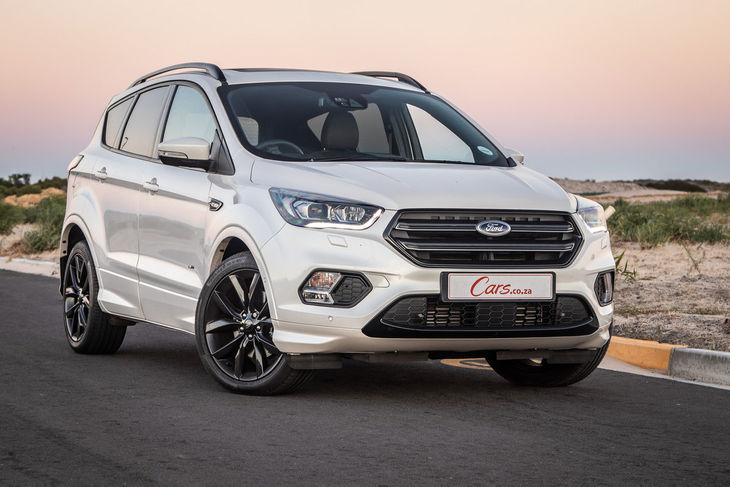
Amid its efforts to rebuild the reputation of the Kuga nameplate in South Africa, Ford launched a thoroughly updated version of its family car late in 2018. With power and torque figures of 177 kW and 340 Nm, developed by its 2.0-litre turbopetrol engine (a turbodiesel ST Line is also available), this Kuga is a family car with some punch. A 6-speed automatic transmission is matched with all-wheel-drive capability and Ford claims a zero to 100 kph time of 7.8 seconds with a top speed of 212 kph. The petrol engine is not as fuel-efficient as its diesel-powered equivalent though (Ford claims 8.6 L/100km).
This sporty Kuga is priced from R585 400 and is sold with a 4-year/120 000 km warranty and a 6-year/90 000 km service plan.
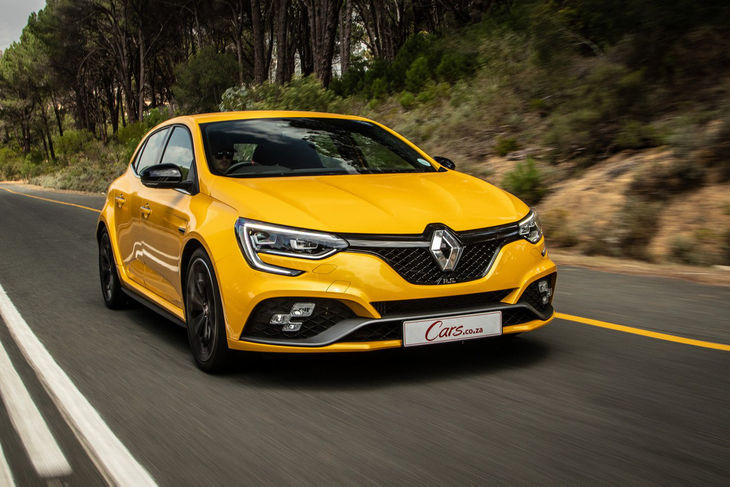
The Renault Megane RS 280 Cup and Lux duo are the most powerful offerings on this list. A 1.8-litre turbopetrol engine develops no less than 205 kW and 390 Nm of torque. The more road-bias Lux derivative is equipped with a 6-speed dual-clutch automatic transmission while the more hardcore sportier Cup version comes with a 6-speed manual transmission. Both are capable of sprinting from zero to 100 kph in 5.8 seconds but the Cup has the edge with a top speed of 255 kph versus 250 kph claimed for the Megane RS 280 Lux. As far as value in the hot-hatch segment is concerned, the Megane RS makes a compelling case for itself.
Both the Megane RS 280 Lux and Cup are priced at R589 900 which includes a 5-year/150 000 km warranty and a 5-year/90 000 km service plan.
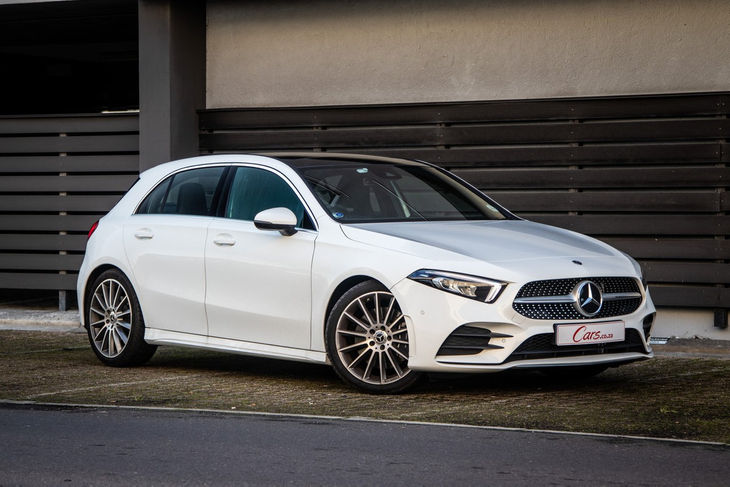
While we wait in anticipation for the Merc-AMG A35 and A45 hot hatches to reach local shores, this A250 AMG Line is currently the sportiest A-Class on offer. Its 2.0-litre turbopetrol engine offers 165 kW and 350 Nm of torque and those numbers are laid down via the front wheels using a 7-speed dual-clutch automatic transmission. In a straight line, the A250 AMG Line can sprint from zero to 100 kph in 6.2 seconds and reach a top speed of 250 kph. The A250 strikes a good balance between performance and affordability, especially if you consider that the AMG A45 will be priced close to R1-million when it arrives while the AMG A35 will be priced from around R755k, before options.
The Mercedes-Benz A250 AMG Line is priced from R598 024 before options and is sold with a 2-year/unlimited km warranty and a 5-year/100 000 km maintenance plan.
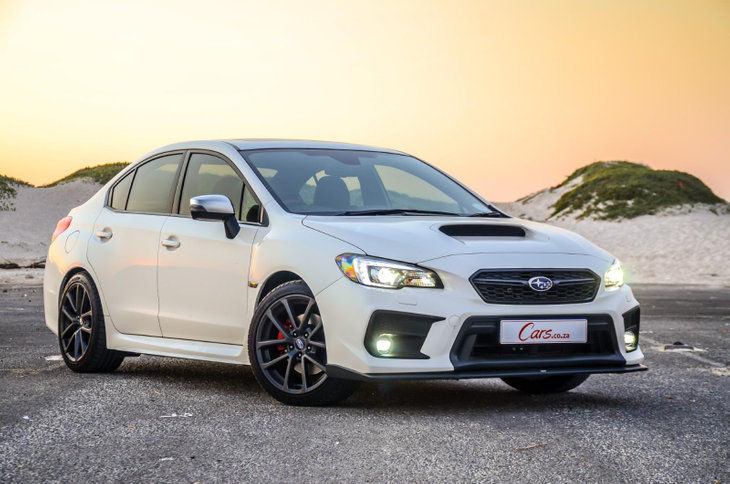
A facelifted Subaru WRX came to market in 2018 and with it, enhanced front-end styling and improved standard specification. Power comes from the familiar turbocharged 2.0-litre petrol engine which develops 197 kW and 350 Nm of torque and comes mated with a 6-speed manual transmission in Premium guise. Zero to 100 kph is dispatched in 6 seconds flat and the WRX will power on to a top speed of 240 kph. The WRX is a bit long in the tooth now, but it still holds attractive old-school appeal.
The WRX Premium is priced at R599 000 and is sold with a 5-year/150 000 km warranty and a 3-year/75 000 km warranty.
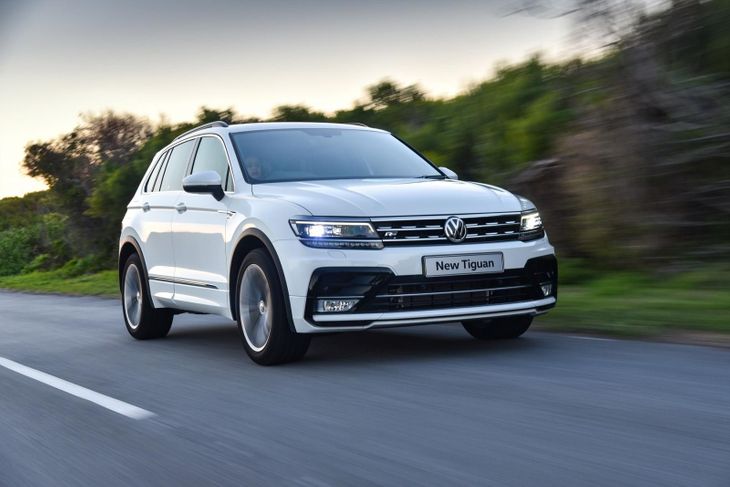
The last car on this list is yet another family car in the form of the popular Volkswagen Tiguan 2.0 TSI 4Motion Highline. A 2.0-litre turbopetrol engine is found under the bonnet with 162 kW and 350 Nm of torque. 4Motion all-wheel drive and 7-speed DSG transmission combine to ensure solid performance. Zero to 100 kph will take 6.5 seconds and top speed is pegged at 220 kph. The Tiguan is a sensible choice in the family car segment but it can become pricey once you start ticking off a few of the desirable optional features Volkswagen has on offer.
This Tiguan 2.0 TSI 4Motion Highline is priced from R601 400 and is sold with a 3-year/120 000 km warranty and a 5-year/90 000 km service plan.
By confirming that its Romanian subsidiary Dacia will launch what is claimed to be “Europe’s most affordable EV” next year, Renault seems ideally positioned to be the first car brand to launch an affordable (if not quite budget-oriented) EV worldwide… and it’s not inconceivable that South Africa might form part of the French firm's product rollout plan.
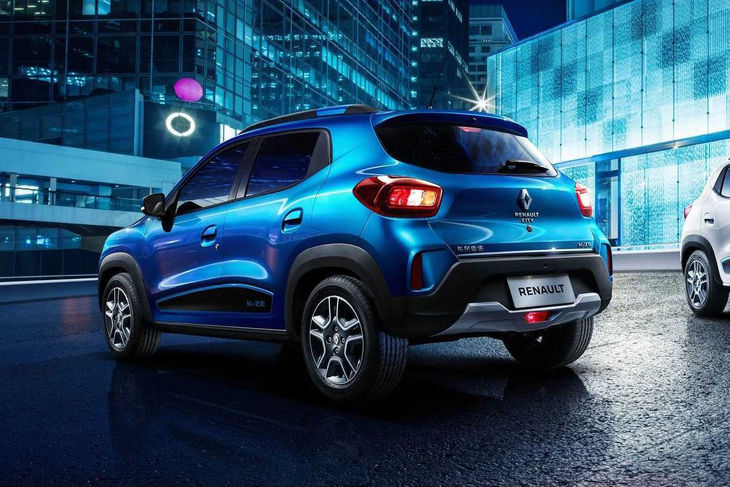
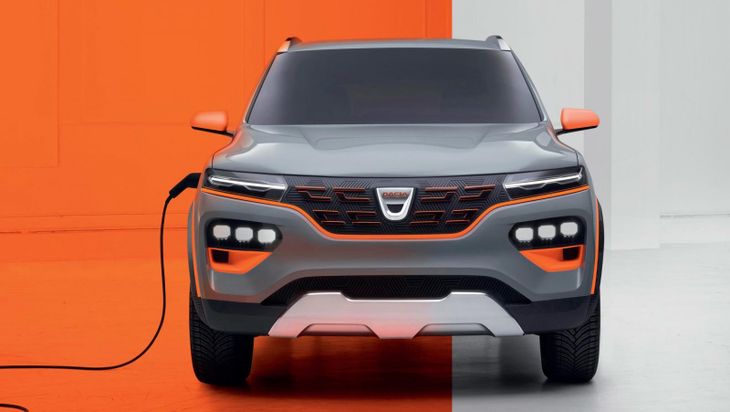
Last month, we reported that Dacia had showcased its Spring Electric Concept, which previews the brand's first all-electric model. Based on the same CMF-A platform as the Kwid budget car offered in South Africa (and looking very similar to its Indian-made French cousin, it must be said), the Spring Electric Concept is essentially a rebadged version of the Renault K-ZE, which is pictured below; it's already available in the Chinese market.
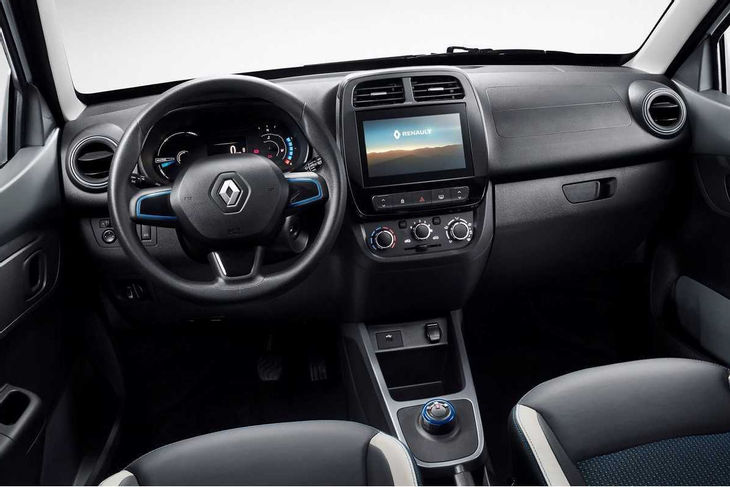
Apart from the absence of a tailpipe, the K-ZE looks like an ordinary crossover-flavoured top-of-the-range Kwid derivative.
Apart from confirming the 2021 European production date, Mihai Bordeanu, Dacia’s global marketing boss, recently told Auto Express that the Dacia EV will satisfy customers, but also be economically viable: “Our aim is to be the best value-for-money brand and we’ll do (that) with every model we launch.”
Given that Renault has offered its Zoe and Twizzy pure-electric cars (as well as a couple of electric-powered commercial vehicles) for some time, it’s not surprising that the French marque would next look to Europe, as well as developing markets – such as India and South Africa – to introduce the K-ZE (or whatever the product will be called outside of China).
The K-ZE's interior will be instantly familiar to Kwid owners; note the blue-accented drive-select knob on the centre console.
Renault recently exhibited the Kwid’s all-electric sibling at the Auto Expo 2020 in India and, according to reports, the K-ZE could be introduced in that market (where the Kwid derivatives in South Africa are sourced from, remember) as soon as 2022. Could South Africa be a target market for the budget EV as well? After all, Dacia's Sandero and Duster are already offered in South Africa (as Renault models), but even if the European version of the EV is not suitable for Mzansi, the Indian-spec Renault might be…
Powered a 32 kW/125 Nm electric motor mated with a 26.8-kWh battery, the K-ZE is said to have a top speed of 105 kph and an optimal claimed range of 270 km (NEDC, which is still in use in China) or 200 km (WLTP, as per the new European standard) from a full charge. There is also a fast-charge option that can charge the batteries up to 80% capacity in 30 minutes; when charged from a conventional outlet, the Renault's power pack can take up 4 hours to charge completely.
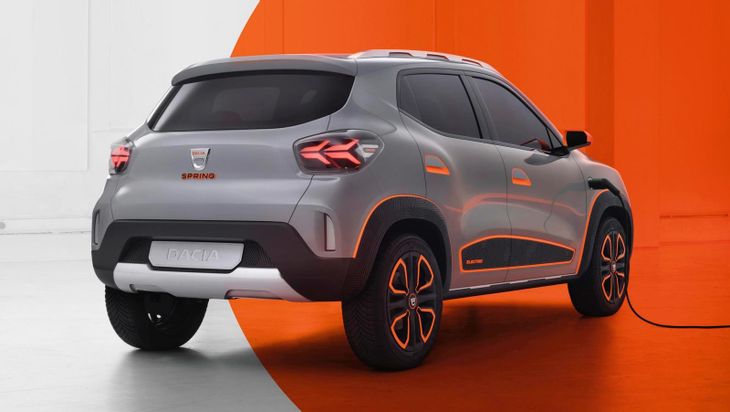
The production version of the Dacia Spring Electric Concept won't look this futuristic, but it should look smarter than the K-ZE.
Although the production version of the Dacia EV won’t be nearly as funky or stylised as the Spring Electric Concept, AutoExpress expects that the model will at least feature a different grille, as well as head- and tail-lamp designs to the K-ZE. What is clear, however, is that it will be produced in right-hand-drive guise for the first time (so that the newcomer can be offered in the United Kingdom).
“The priority needs to be around the essentials… and proven technology. Dacia looks to Groupe Renault's proven technology and we have many things to choose, but Dacia is a tech follower and takes what is proven and works perfectly,” Bordeanu said.
Given the recent unveiling of the all-electric New Fiat 500, the wider rollout of the Mini Electric (including to South Africa, we understand) and the existence of products such as the Honda e and Skoda Citigo-e iV, it seems that automotive manufacturers are now determined to expand their EV product lines to include volume market segments and not just in developed markets, either.
It remains to be seen if the K-ZE's powertrain will be offered in Europe unchanged, but a safety spec upgrade would be required.
All that remains to be seen is whether the K-ZE’s 26.8-kW battery will be deemed sufficient for the European market (at least range-wise); Dacia may well upgrade the K-ZE's powertrain before bringing the roadgoing Spring Electric Concept to market. Also consider that although the Chinese model has electric windows, aircon and an 8-inch touchscreen as standard (among other features), it doesn’t feature ESP and side airbags, which are fitted to the overwhelming majority of European passenger vehicles.
It's worth noting, however, that when the K-ZE (or whatever Renault decides to call its budget EV on the subcontinent) arrives in India, it won’t be that market’s first small EV. That honour already belongs to the Mahindra eKUV100, an electrified version of the revised budget car model that was launched in South Africa back in 2018… Could the diminutive Mahindra be in the frame for a local release too and some point in the future? Time will tell.
Some of the BMW M Division's finest (former) engineers now work for Hyundai. Does that mean your preferred alternative to the M3 will soon bear an N on its nose and boot lid?
People design and engineer great cars. Not brands. Car enthusiasts often forget this because they blindly follow a specific brand, instead of recognising the specific team of designers and engineers that created the cars they so revere.
For a very long time, if you wanted a performance car that was as adept at transporting your family as it was at going blindingly fast, you bought a model from a premium German marque. More specifically, you bought a BMW M car.
BMW has been building family-friendly performance cars since the original e28 M5 debuted in 1984. It has an almost unrivalled list of celebrated driver’s cars in its oeuvre, all with usable rear seats and reasonable boot capacities.
For decades, an M car in your driveway was symbolic of appreciating the finer elements of driving and mechanical engineering excellence. But what happens when the people responsible for those great M cars leave the company?
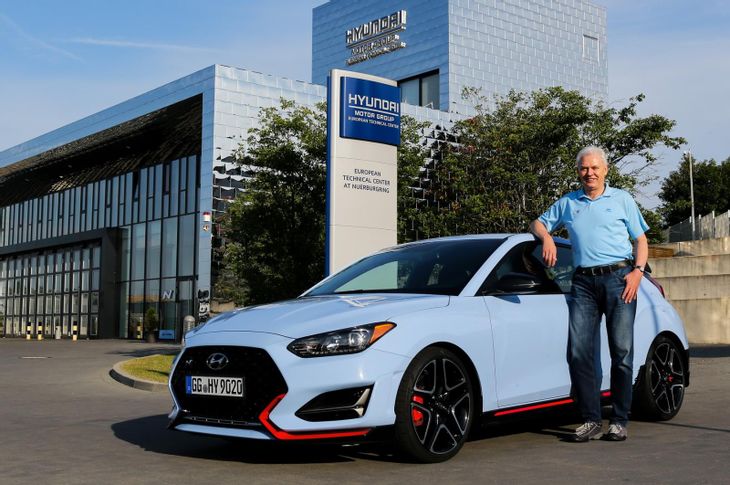
This man knows the Nurburgring very well, but he's obviously not Korean. Albert Biermann has been the magician behind Hyundai N.
That is exactly what happened in 2015 when Hyundai managed to convince Albert Biermann, who was otherwise happily holding a top position at BMW's M Division, to depart Munich and take up residence in South Korea. You’d struggle to recruit a better person to build performance cars than Biermann… When he left BMW, he was vice president of engineering for the Bavarian marque's M Division.
Since Biermann’s recruitment at Hyundai, other notable BMW engineers have followed. In late 2017, Fayez Abdul Rahman also joined Hyundai, after 2 decades as a vehicle architecture engineer on some of BMW’s most important platforms, such as the 7 Series first-class saloon. He was also instrumental in calculating how BMW M could develop its performance derivatives from the company’s general vehicle platforms.
Thomas Schemera is another renowned BMW engineer who joined Hyundai a few months after Rahman. His first job at BMW was as a project engineer on the legendary E30 3 Series and before joining Hyundai, Schemera was head of BMW M in the brand’s most important market: North America.
Between Biermann, Rahman and Schemera, Hyundai has managed to recruit the people who engineered normal BMW platforms into M cars, plus they have a deep understanding of the customers who buy those products.
Hyundai has money. BMW? Not so much
Having achieved all he felt he could at BMW M, Biermann was partly enticed to join Hyundai because of he'd earn a more lucrative salary, but perhaps, more pointedly, because it presented him with a tantalising challenge…
At the time he arrived in Seoul (during April 2015), nobody doubted Hyundai’s ability to build quality cars. But could the Korean firm engineer and deliver driver’s cars good enough to rival the best of BMW? Could its team find that missing 5% of steering feedback, suspension precision and throttle response they needed? BMW’s M cars conquered customers because, when driven to the limits of their performance potential, they offer that bit more… the crucial 5%.
What Biermann has achieved in less than 5 years is remarkable. He credits brilliant engineers under his management, but the German’s shepherding of Hyundai’s technical teams has been critical to the success of the N sub-brand.
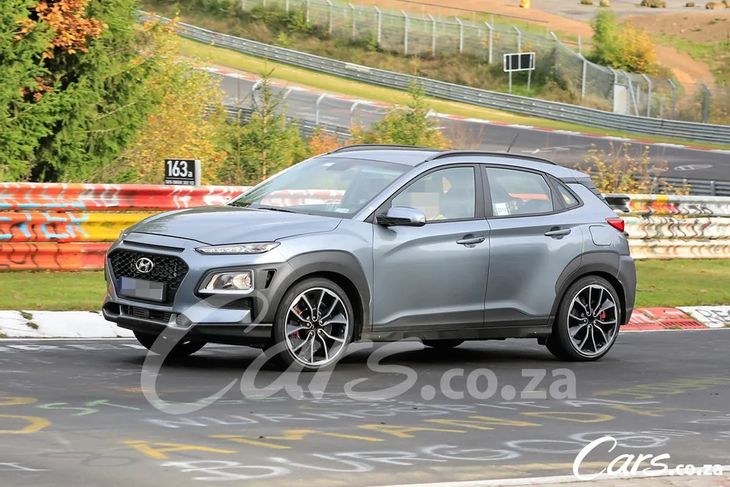
The Kona N has already had a few Nurburgring shakedowns, it's due for production sometime in 2021.
Hyundai’s i30 N is a great debut hot hatch and, when equipped with an 8-speed dual-clutch transmission, due later this year, it will be even better. Biermann knew that executing a hot hatch would give Hyundai a great deal of credibility.
Volkswagen’s Golf GTi is the benchmark family performance car in many global markets and with his N development team emboldened with the confidence of having built a convincing premium hot hatch, Biermann and Hyundai are targeting a diverse number of other products. The next Hyundai N products in the pipeline are a Kona, followed by an Elantra N in 2021 (if the rumour mill is to be believed there could even be a Hyundai N bakkie in the works). Like BMW M, there is an awareness among Hyundai’s product planners that its crossovers and SUVs will also have to be accommodated in the N-development product plans.
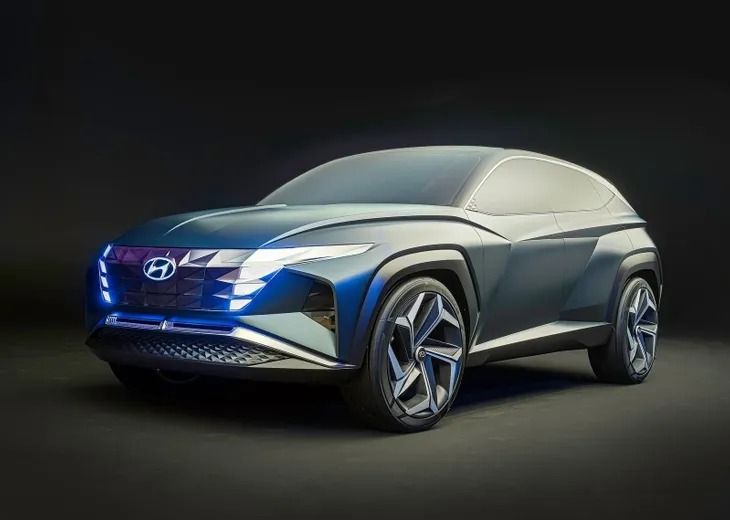
The new Tucson (due later this year), should become the first Hyundai gravel-travel vehicle to feature an N derivative (aside from the locally-produced Tucson Sport, which is merely a software and cosmetic upgrade). Crossovers and SUVs now account for a significant volume of BMW M's sales and Hyundai will undoubtedly follow the trends by producing N-upgrades to, or N derivatives of, most of its raised ride-height models.
The rear-wheel-drive issue
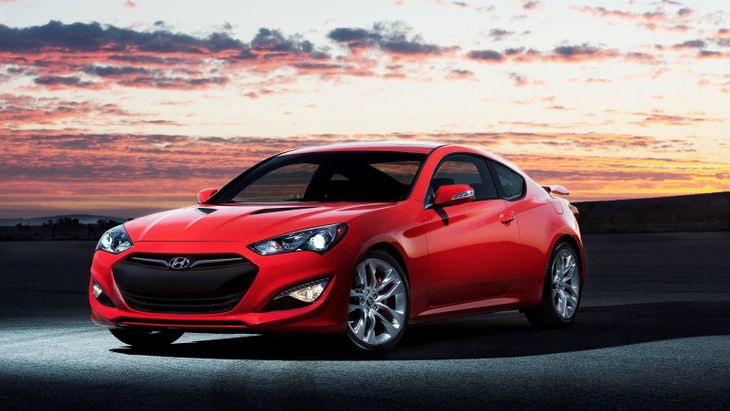
Genesis coupe was rear-wheel drive, had V6 power, a manual gearbox and showed what Hyundai was capable of.
Having shown what it can accomplish with a core family performance car – a hot hatch – Hyundai’s ambitions could include some very lofty projects. Before the company had its own N division, Hyundai built a widely lauded sportscar, primarily for the American market. From 2008 to 2016, the Genesis coupe won over many sportscar fans, with its 3.8-litre V6 engine, 6-speed manual gearbox and sorted rear-wheel-drive platform.
If Hyundai is targeting an eventual return to rear-wheel-drive performance cars, it would be the ultimate counter to BMW’s most symbolic M-products. Since the E36 range of the 3 Series peaked in the late Nineties, the M3 range has always claimed the 4-door high-performance family car segment as its own (with the exception of the E46-generation M offering, which was either a coupe or cabriolet); of course, Mercedes-AMG and Audi's Quattro division have done their best to usurp the Bimmer, but without success. The M3 offers unequalled rear-wheel-drive handling dynamics and excellent driver feedback through all the primary controls: steering, throttle response and braking feel.
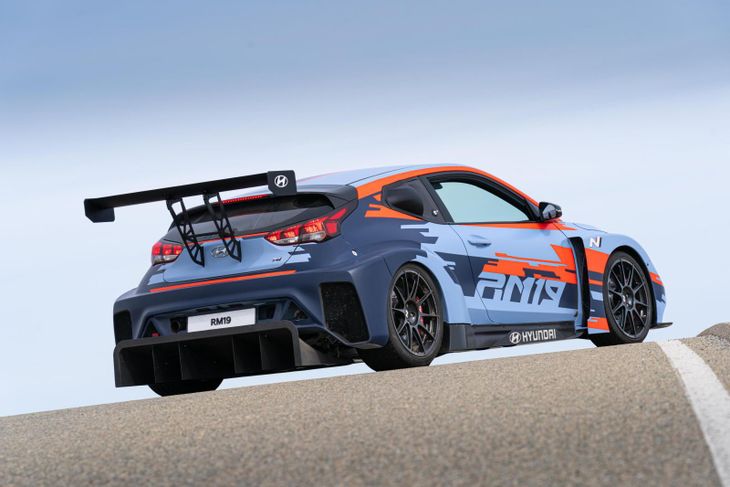
However, Hyundai appears to be trending towards a rear-wheel-drive performance car solution – and soon. Its RM19 stands for "Racing-Midship" 19, so Hyundai isn’t even trying to be coy about its intentions with the car. Its 2.0-litre engine produces a healthy 290 kW and Biermann’s technical people are figuring out how to implement what they are learning about mid-engined weight-distribution in a production-car platform.
RM19 is a radical mid-engined R&D project. It hints at a future production car from Hyundai N.
If the Germans aren’t taking the possibility of a rear-wheel Hyundai sportscar seriously, they really should. Hyundai has not been shy at showing its hand… The company’s RM19 concept car has a sequential transmission, a mid-engined configuration and is, of course, rear-wheel-driven. And there’s no possibility that Hyundai simply built the RM19 as an irrelevant publicity exercise to generate some social media banter; it's not that kind of car manufacturer.
Imagine a 2nd-generation Genesis coupe sportscar, with its engine positioned in the middle and nearly 300 kW driving the rear wheels? That wouldn’t just be a problem for BMW, it would be an alarming rival to Porsche’s Cayman.
N could really become a rival to M
As Hyundai N division gains confidence, expect it to venture into the large SUV realm, just like M has.
Hyundai’s confidence in its N-division is much bolder than anything Toyota, Honda, Nissan, Mitsubishi or Subaru attempted at the peak of the Japanese automotive industry (around the millennium). Individually, all those Japanese companies built brilliant sportscars, but they did not have a cohesive strategy to challenge BMW's M division.
In a typically Korean manner, Hyundai is being clear and focused about its motivation and goals with the N division. Subaru and Mitsubishi are unlikely to ever build dedicated 4- or 5-door performance cars ever again. Nissan is in deep financial trouble, so don’t expect anything from them to rival BMW M products.
Toyota has the resources, but the Aichi-based firm is unlikely to do much other than dabble in occasional GRMN limited-edition cars and Honda’s performance-car offering won’t extend beyond the Civic Type-R and a limited-market Honda NSX supercar (in spite of the fact that the world would absolutely love to see a new S2000).
No, Hyundai is the only Asian car company that is actively strategising and allocating capital to build a line of performance cars. And that is an extraordinary state of affairs: one that would have been unimaginable a decade ago.
It also proves that great engineers deliver the most memorable cars – certainly not marketing teams and the fluid notion of "brand equity". Hyundai cleverly went out and bought some of the best people they could from BMW, and the dividend yield on that purchase is a burgeoning N division. Watch this space.
Bored at home? Have a decent Internet connection? Ever wanted to visit Audi's Ingolstadt factory? Now you can, albeit virtually!
With the world almost locked down and house-bound, there's been a clamouring for entertainment. Audi has announced that its customers and fans of the brand can explore its Ingolstadt plant as part of an online guided tour. As the facilities are currently closed to the public and they're a few thousand kilometres away, this is the closest you can get to the real thing.
AudiStream is the brand's program for virtual tours and tour guides narrate the processes from a studio. You can learn how the cars are made, from the first steps to the final assembly and you get to see the A3 and A4 being built. The best part? The experience is free and available in English and German.
RGMotorsport Announces Performance Upgrade for Raptor
South African tuners RGMotorsport has released a performance upgrade for the Ford Ranger Raptor. Some details:
The press release from the tuners starts off amusingly, "Fact: a Ranger Wildtrak will show a Ranger Raptor a clean pair of heels – both use the new twin-turbo 2.0-litre but the Raptor weighs almost 150 kilos more and therefore has a lower power to weight ratio."
Fair enough and let's be honest, one of the biggest criticisms levelled at Ford's off-road trail basher is its choice of powertrain. The 2.0-litre twin-turbocharged motor is good but doesn't satisfy the bloodlust of the petrolheads (it's diesel to start with). RGMotorsport thinks it has the answer to the Raptor's straight-line deficiency. With the RGMotorsport Stage One upgrade, the Raptor's outputs climb from 157 kW to 180 kW, while torque goes from 500 Nm to 590 Nm.
How does it get these figures?
With both hardware, like a hand-made intercooler, 76 mm RGM-Techniflow exhaust, downpipe, performance air filter, and software in the form of a Unichip X chip. That should do the job of giving the Ranger Raptor the go to match the show.
Pricing
RGMotorsport will sell you a Stage 1 Raptor upgrade for R33 000 and it comes with a 6-month/20 000km warranty. We're still lusting after a petrol-powered Ranger Raptor however…
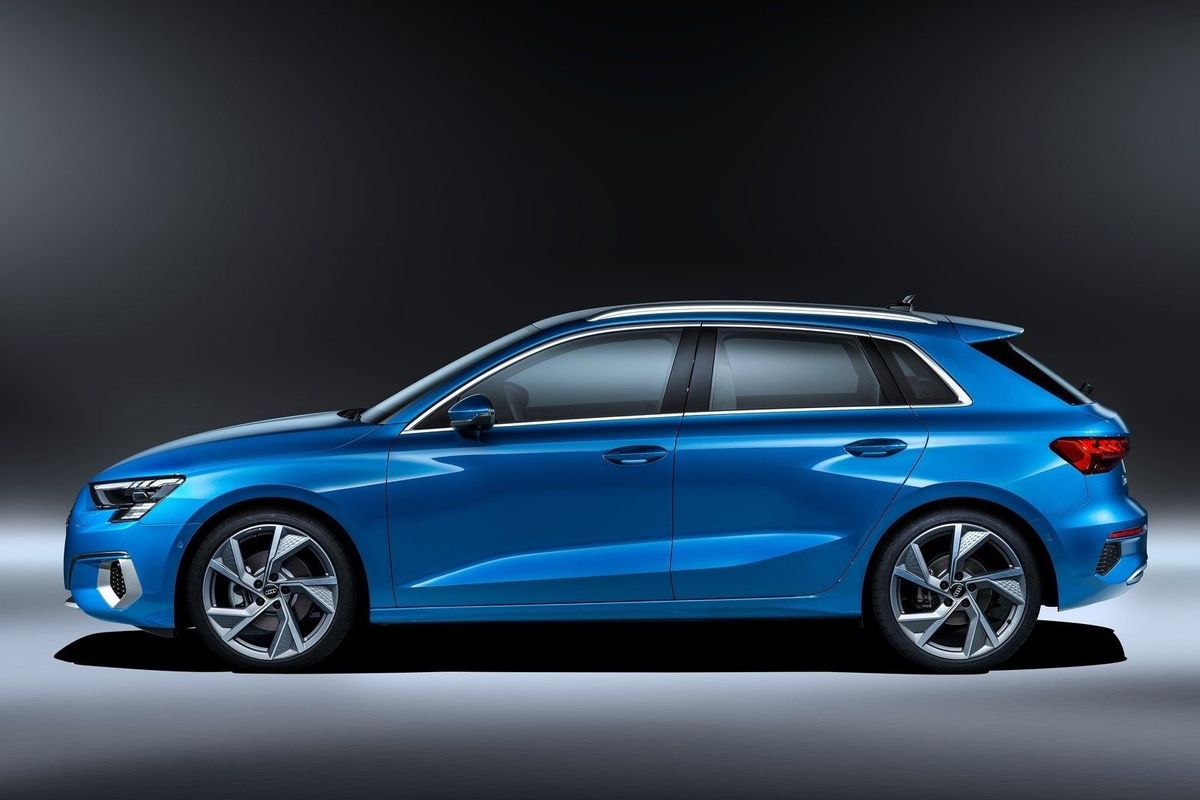
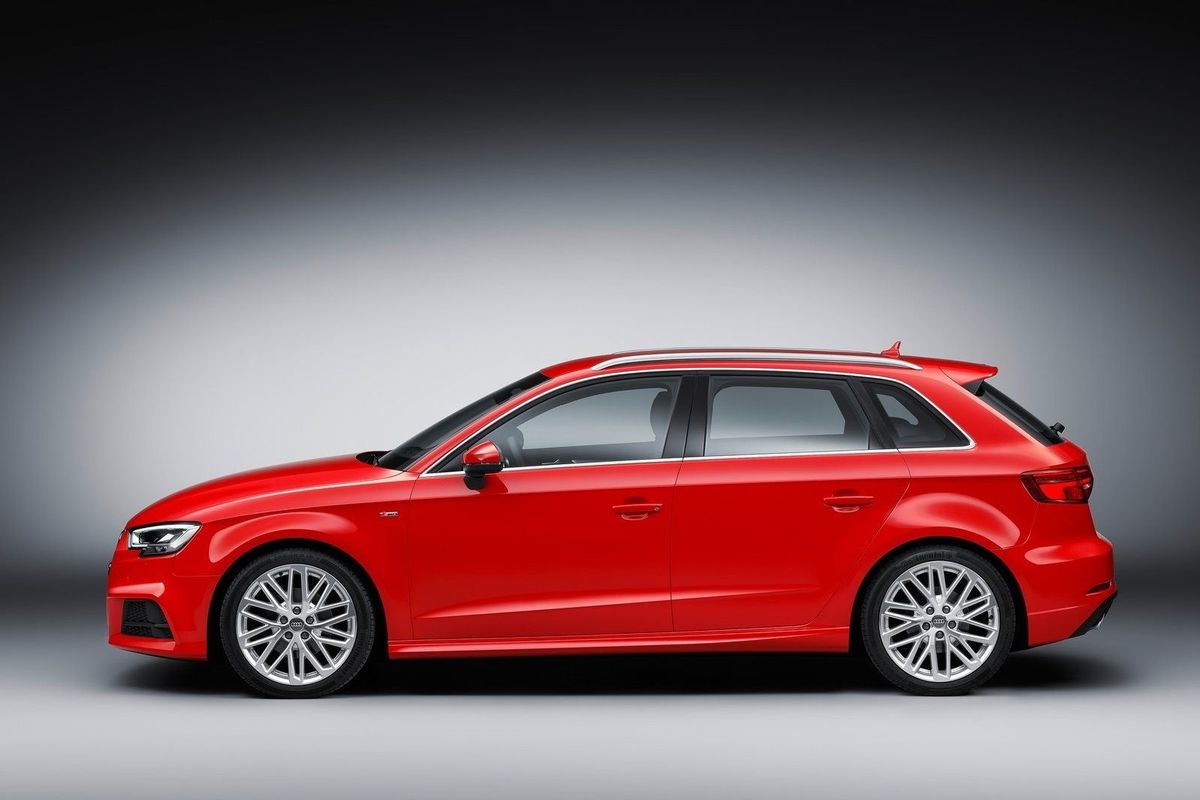
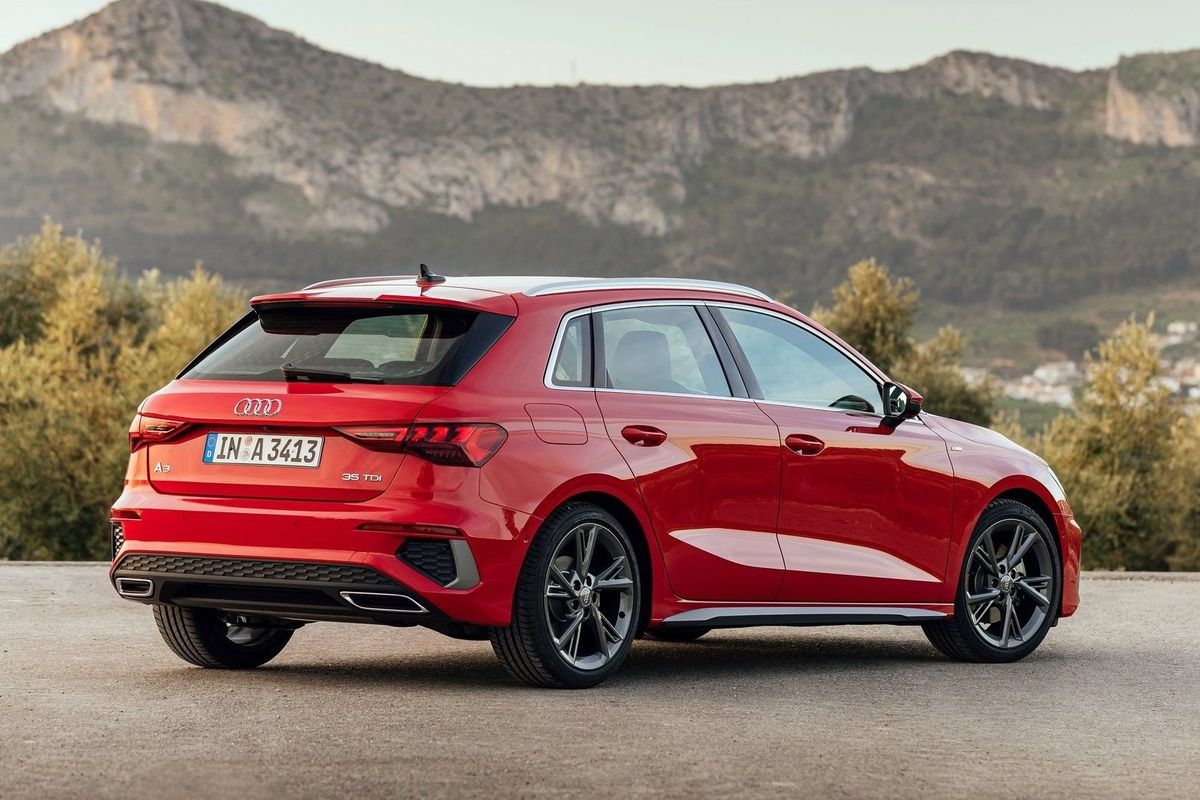
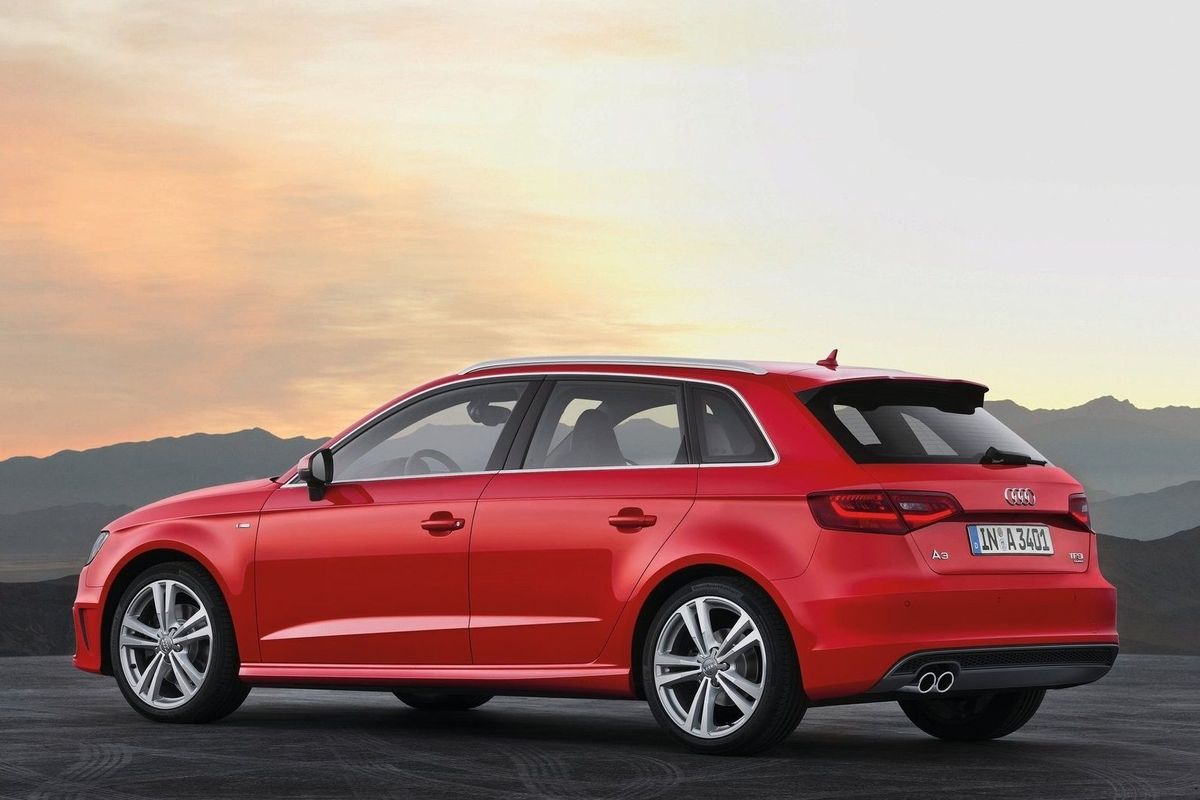
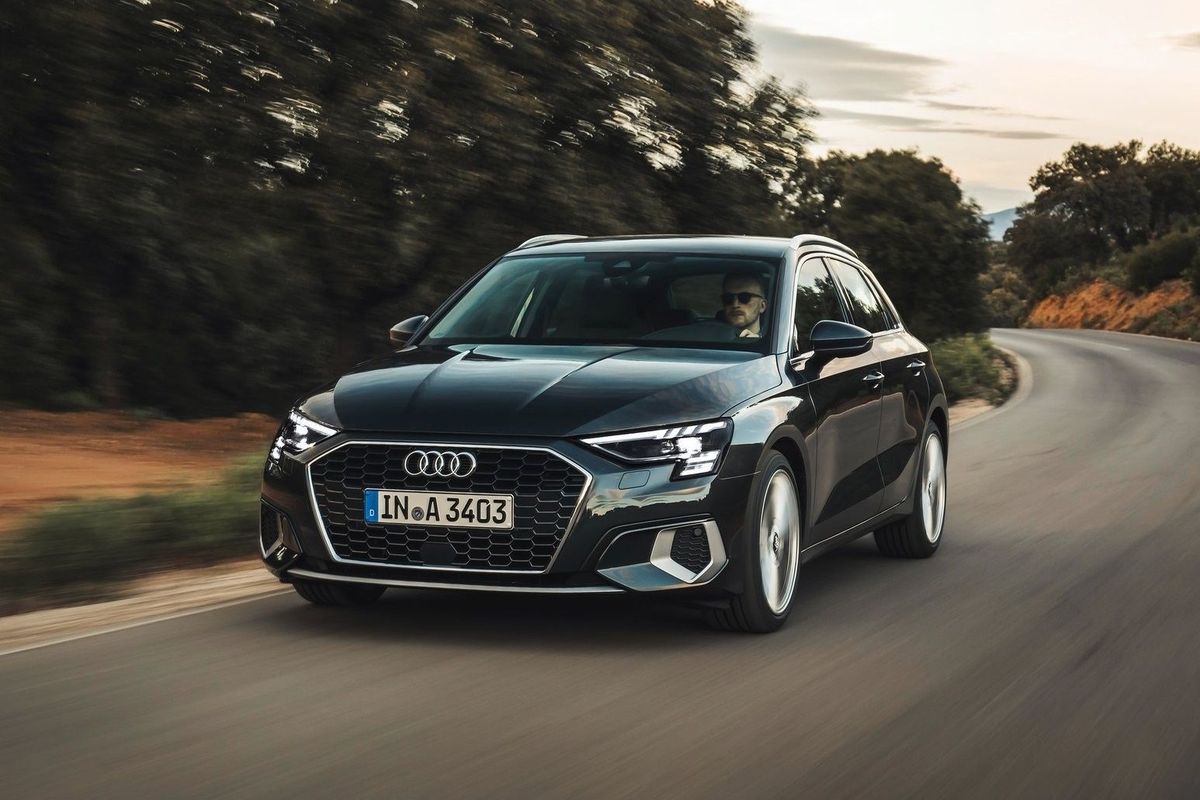
The all-new Audi A3 Sportback was revealed last month and we compared it to the outgoing model to highlight the differences.
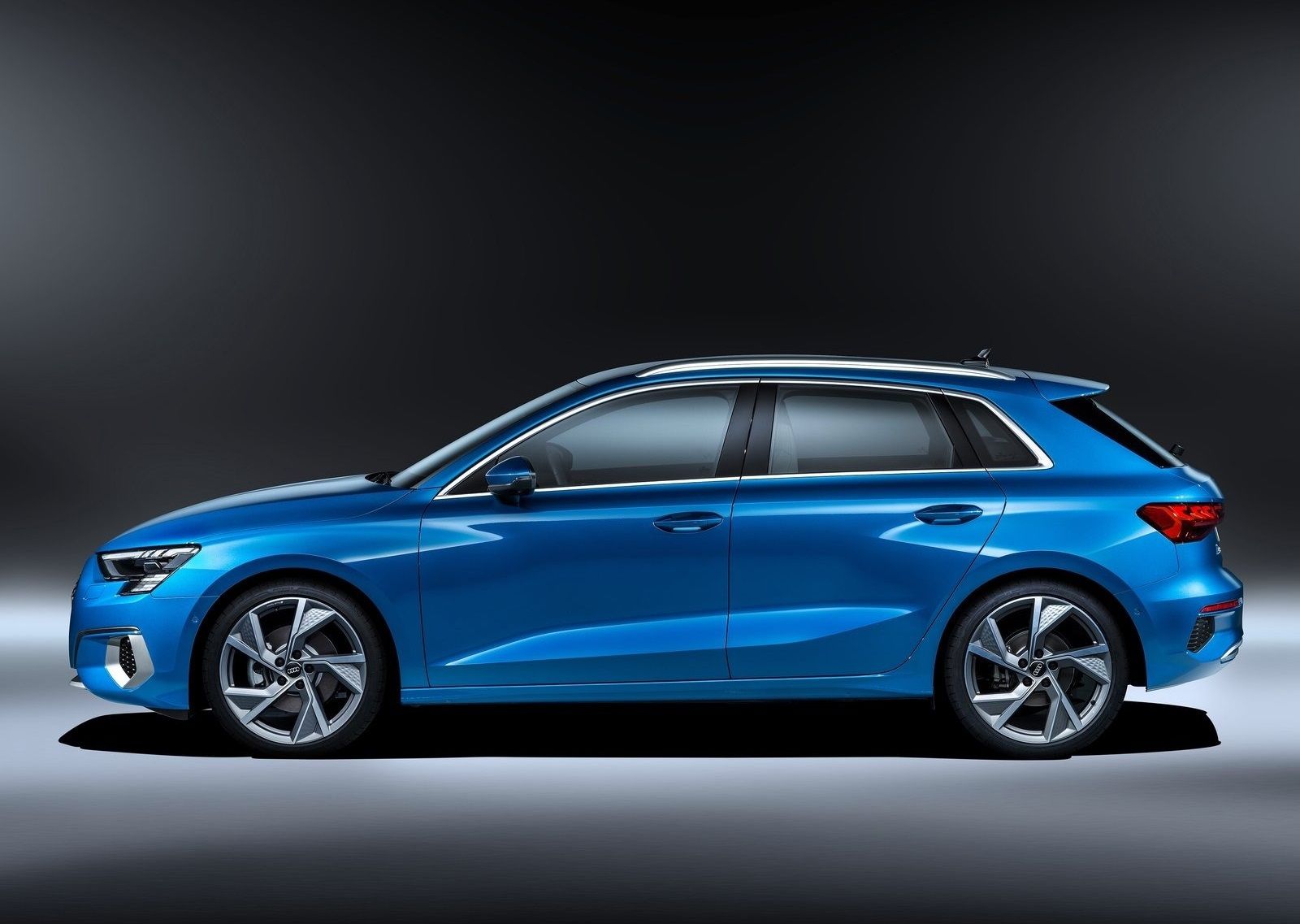
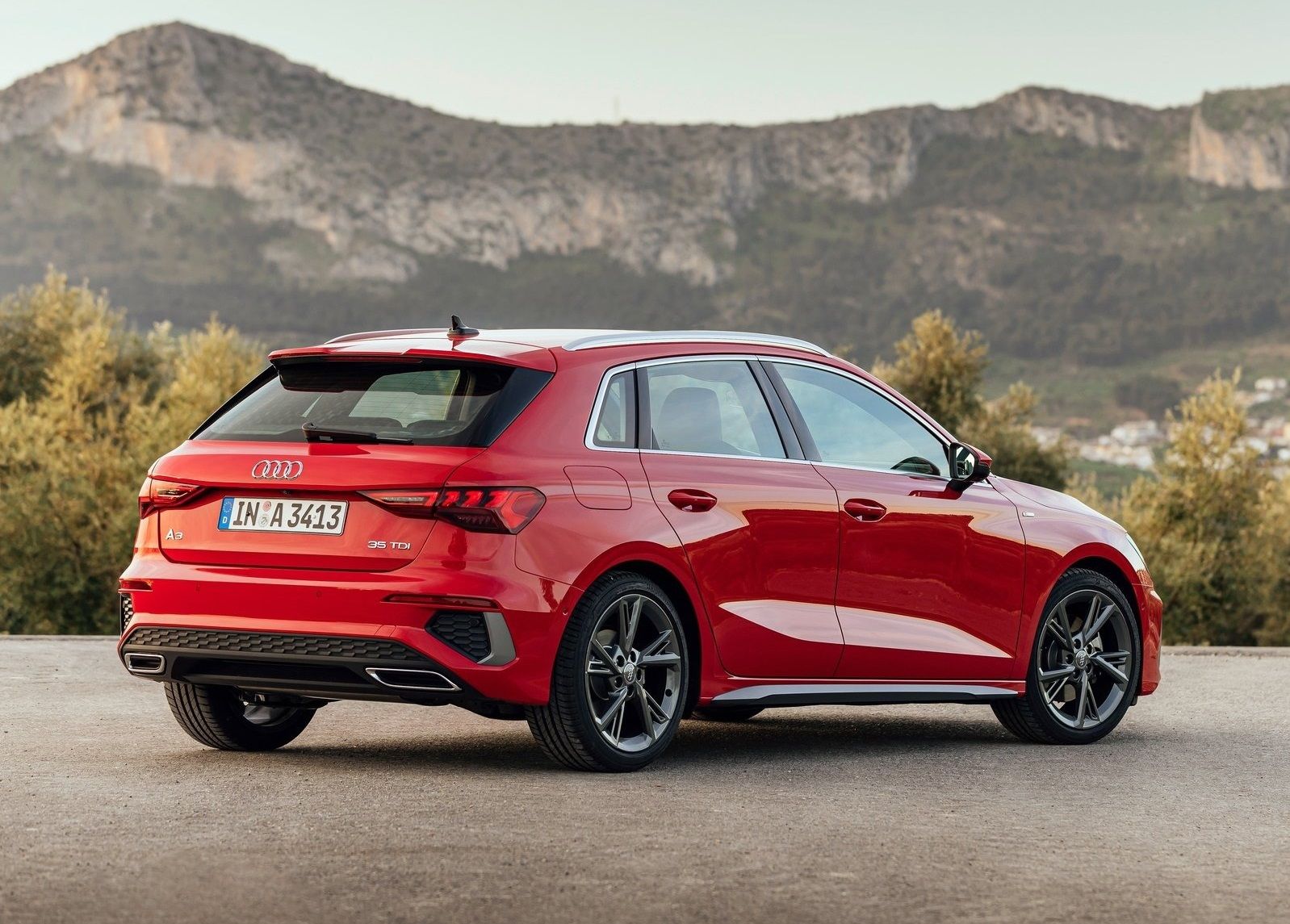
The all-new 4th generation Audi A3 Sportback is expected to arrive in South Africa in the second quarter of 2021, alongside its performance sibling, the Audi S3. When this new Audi A3 Sportback was revealed online (thanks to the COVID-19 forcing the cancellation of the 2020 Geneva Motor Show), users commented how it's nothing more than a facelift. Well, here are just some of the key differences.
Most-notable changes to the A3 Sportback:
Design
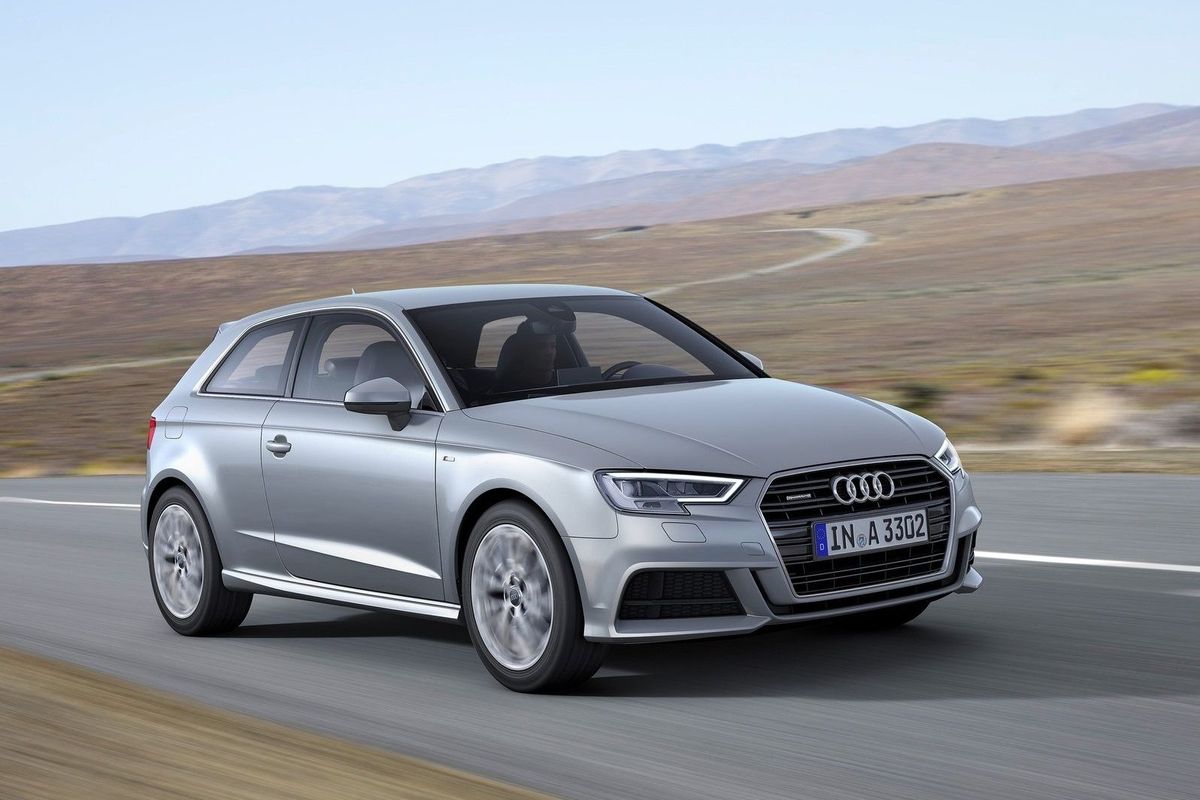
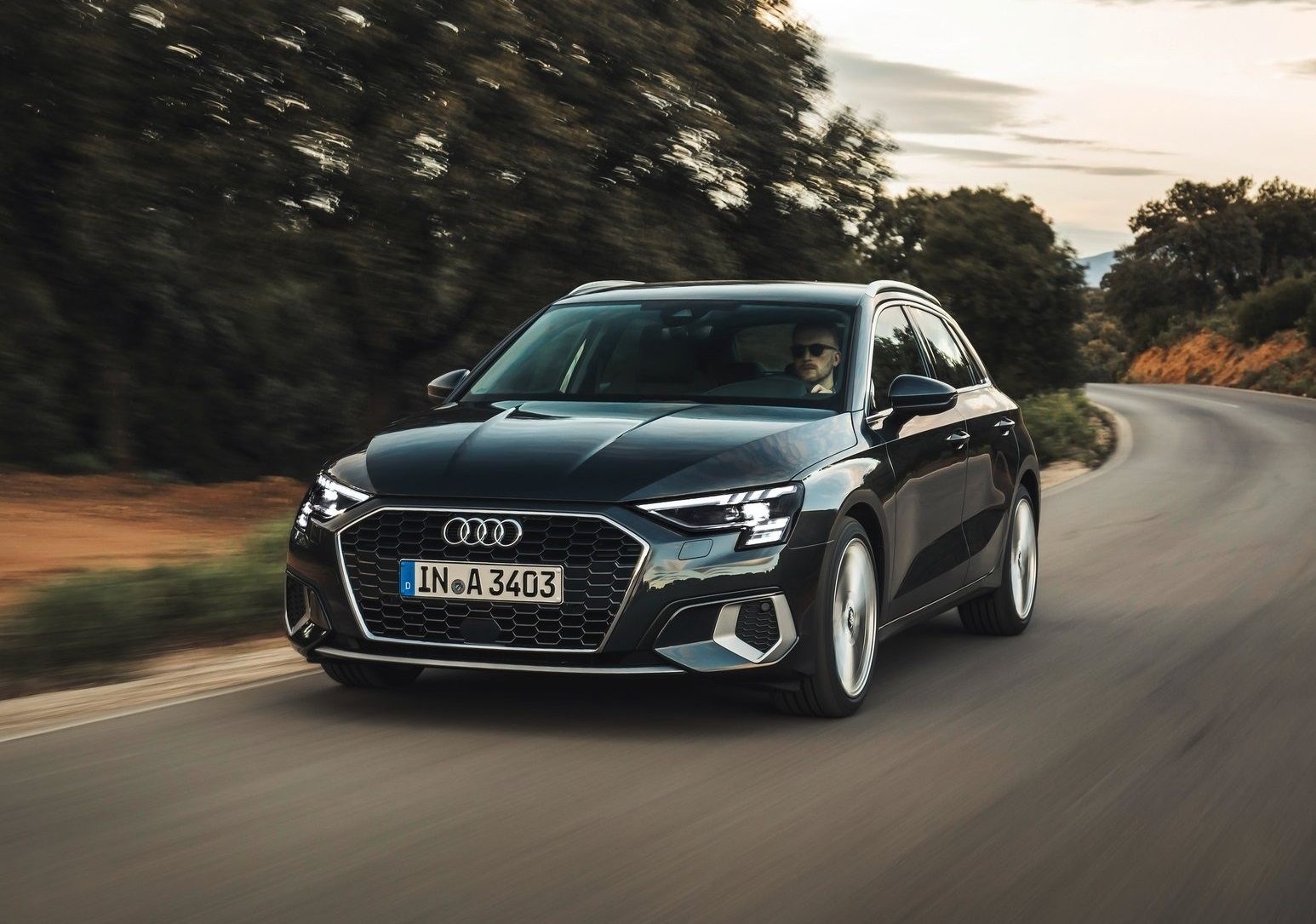
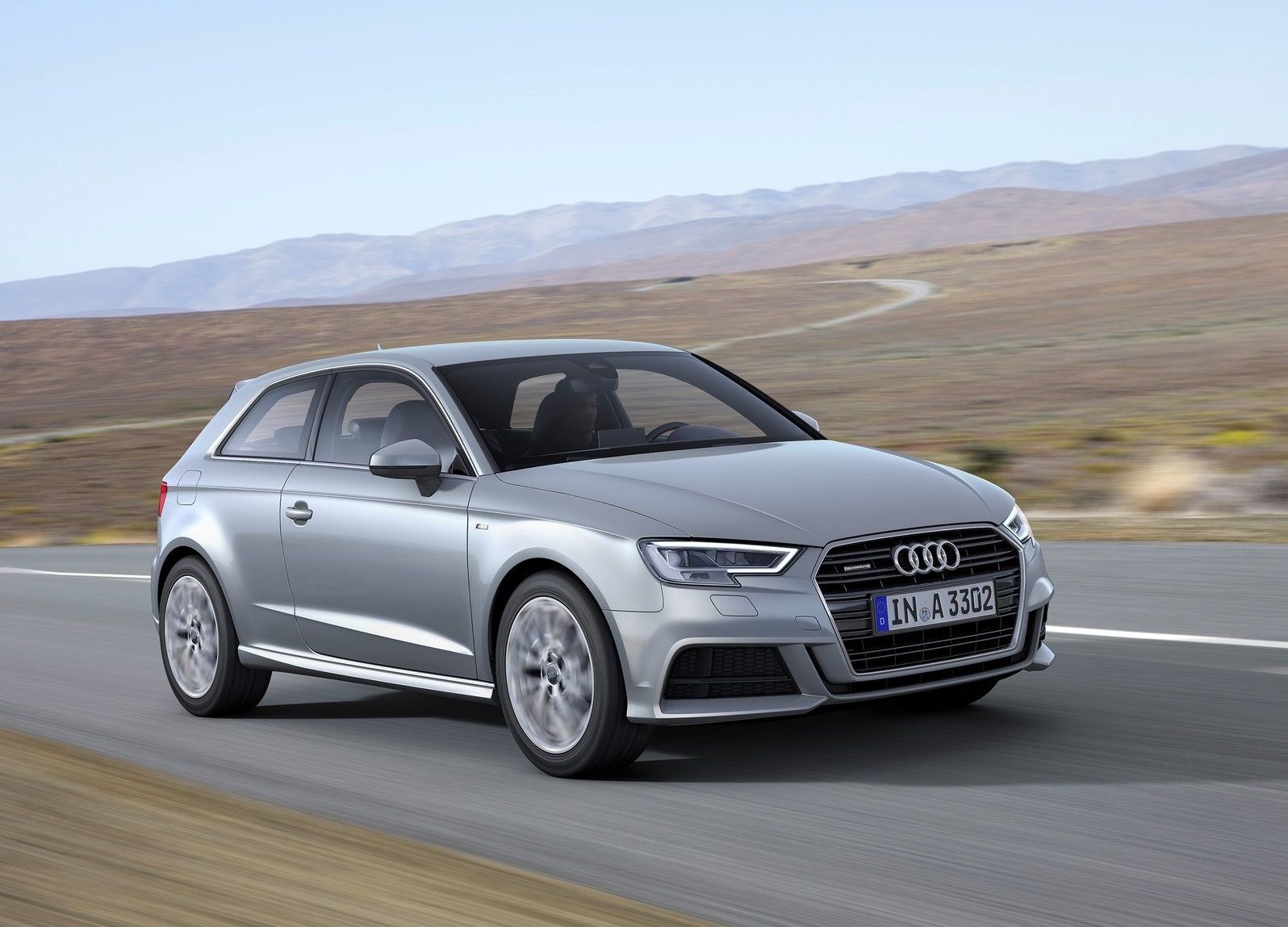
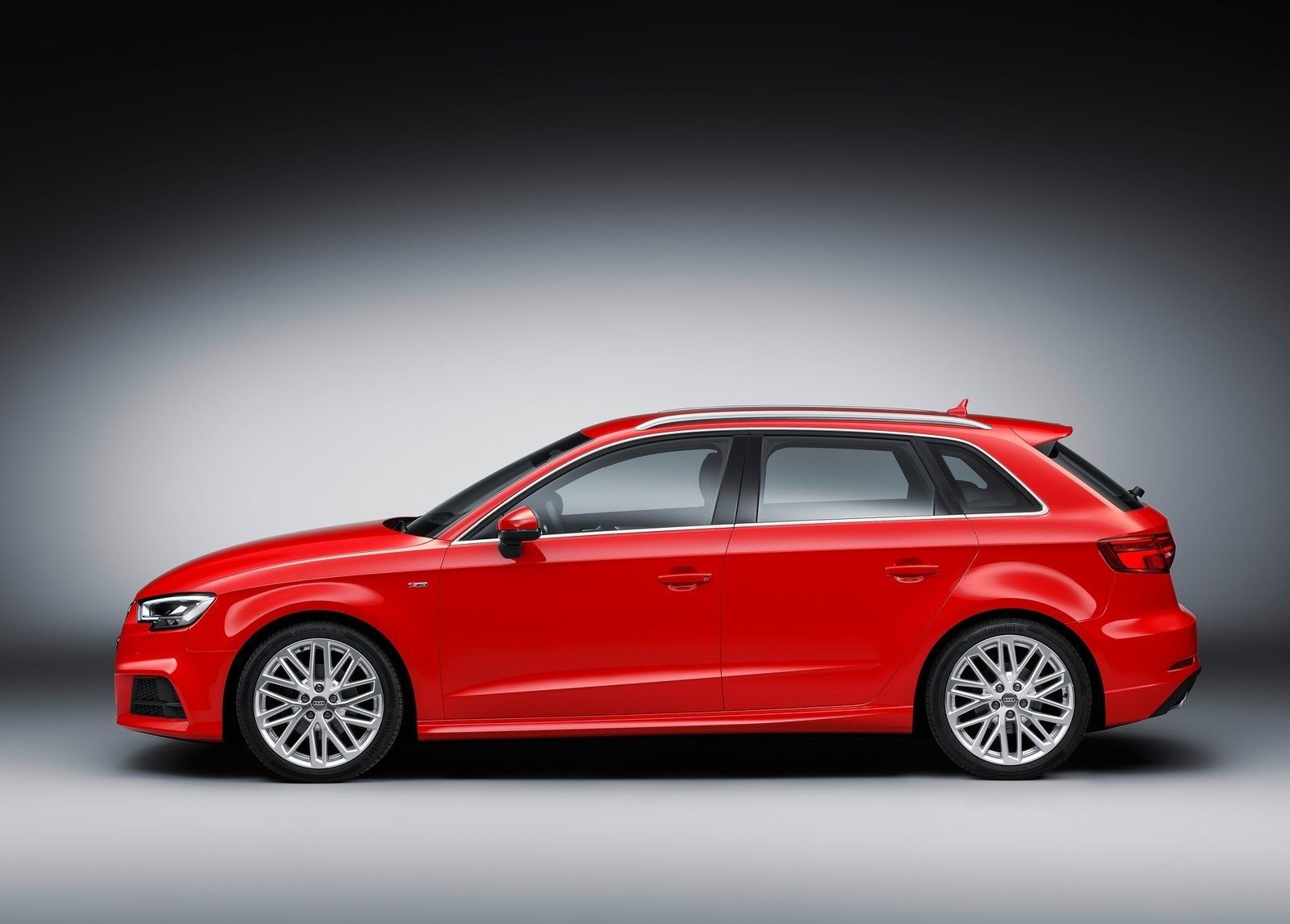
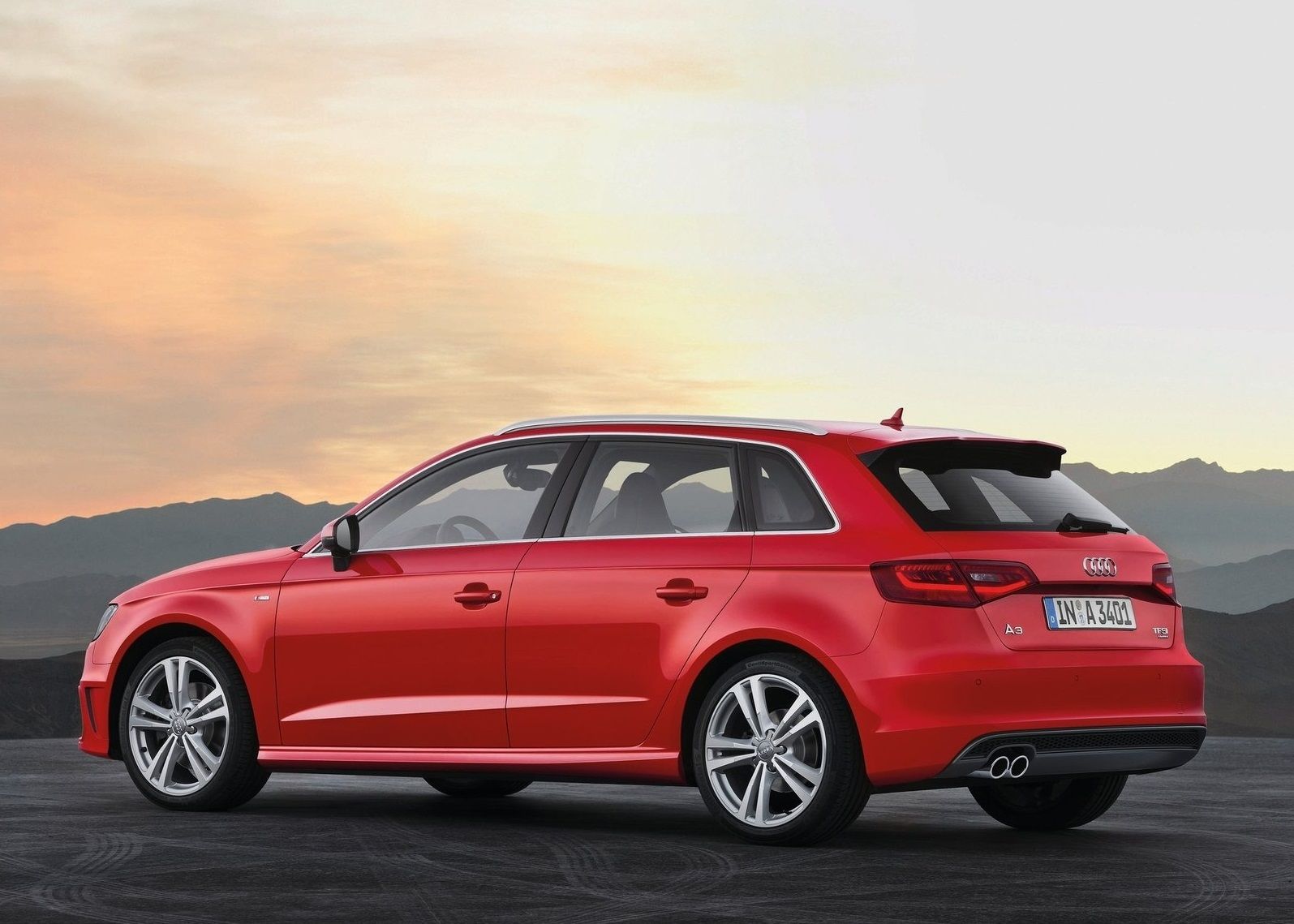
The outgoing Audi A3 Sportback was not an ugly car at all, but what the designers have done with the 4th-generation model is impressive. It's unmistakably an Audi A3 Sportback proportionally and in terms of shape, and it adopts all the latest Audi design cues. There are many more kinks and creases in the body and the headlights look like they're straight from the big Audi Q8. The foglight cluster is more prominent as is the now-standard honeycomb grill – the previous A3 had a straight grille. You may also notice this new version has 2 more doors than the picture below. That's because this model will only be sold as a 5-door Sportback.
Dimensions
In terms of size, the Audi A3 hasn't changed dramatically. The new 4th-generation model is fractionally bigger than the outgoing model and is longer by 30 mm, due to the shape of the new bumper designs at either end. Including the mirrors, Audi's newcomer is 18 mm wider and the track width on both axles have been increased by 11 mm. The boot space hasn't changed with 380 litres available, which with the rear seats folded expands to 1 200 litres, with the rear seats folded. Like before, the Audi A3 Sportback is built on the MQB platform which also underpins things like the Audi Q3, Volkswagen Golf and Volkswagen Tiguan.
Engines
Powering the new A3 Sportback are a range of turbocharged engines. The launch model is equipped with a 1.5 TFSI petrol powertrain, good for 110 kW and Audi is claiming consumption of 5.1L/100 km for the A3 Sportback 1.5 TFSI. Diesel fans will be pleased to hear there'll be a 2.0 TDI, available in two output guises: 85- or 110 kW. The less potent diesel engine is claimed to run average consumption of 3.6 L/100 km, whilst the 110 kW version consumes 3.9L/100 km. There'll be a manual gearbox and a dual-clutch transmission available for the new Audi A3 Sportback, but it's unlikely the former will be offered in our market. Globally, there will be hybridised motors and e-tron (electric only) derivatives too.
At the time of writing, Audi South Africa offered the old A3 Sportback in 1.0, 1.4 and 2.0 turbocharged petrol engines. They had outputs of 85 kW, 110 kW and 140 kW respectively.
Cabin and Tech
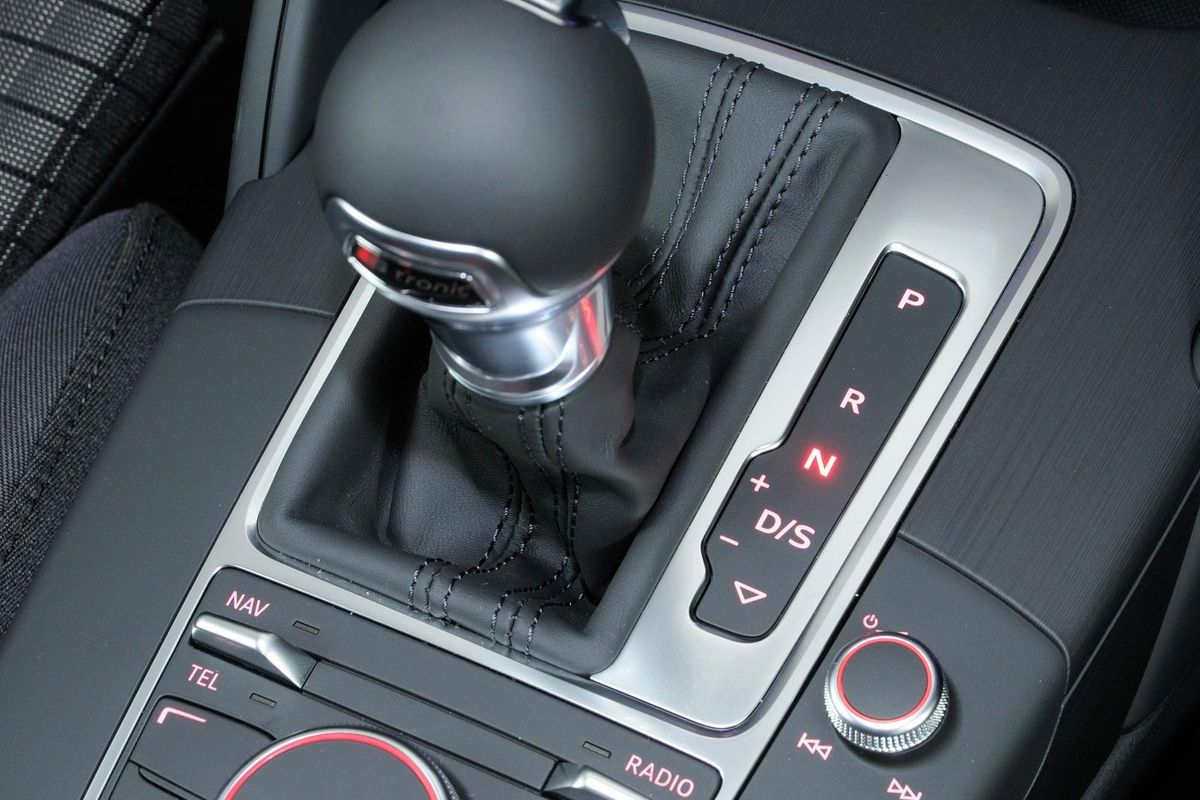
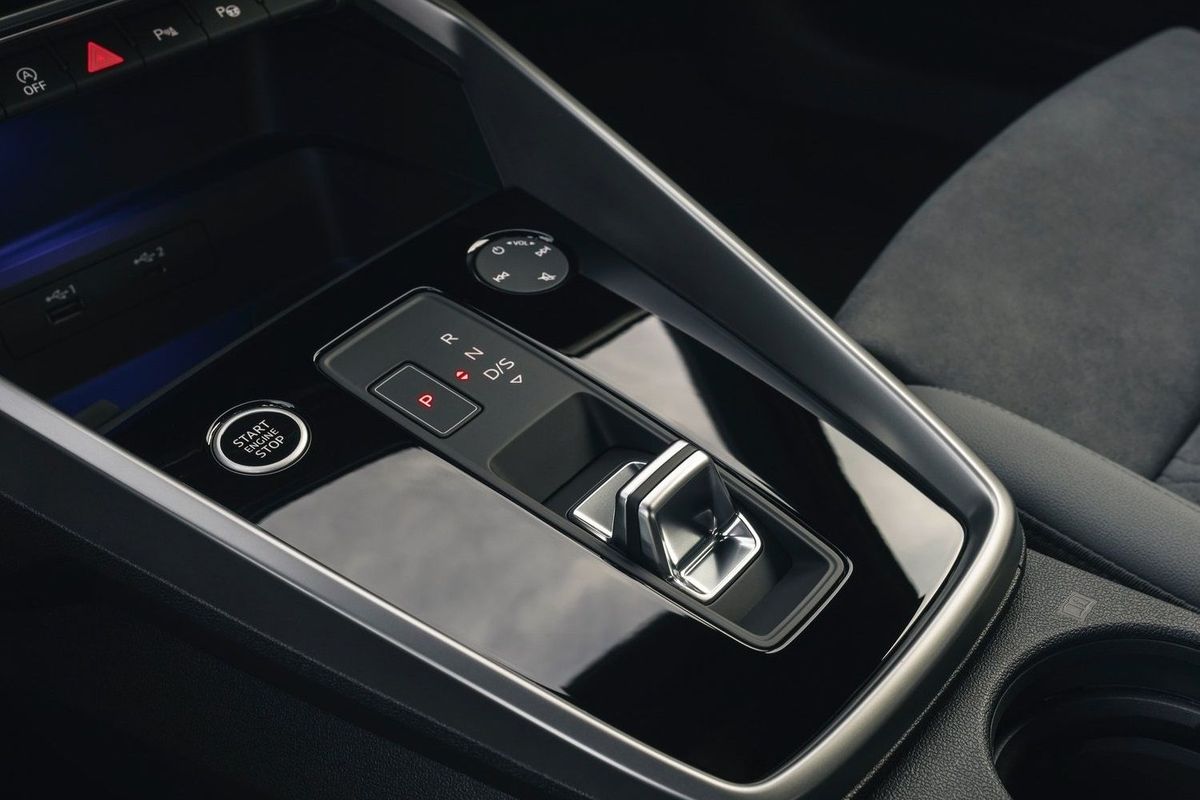
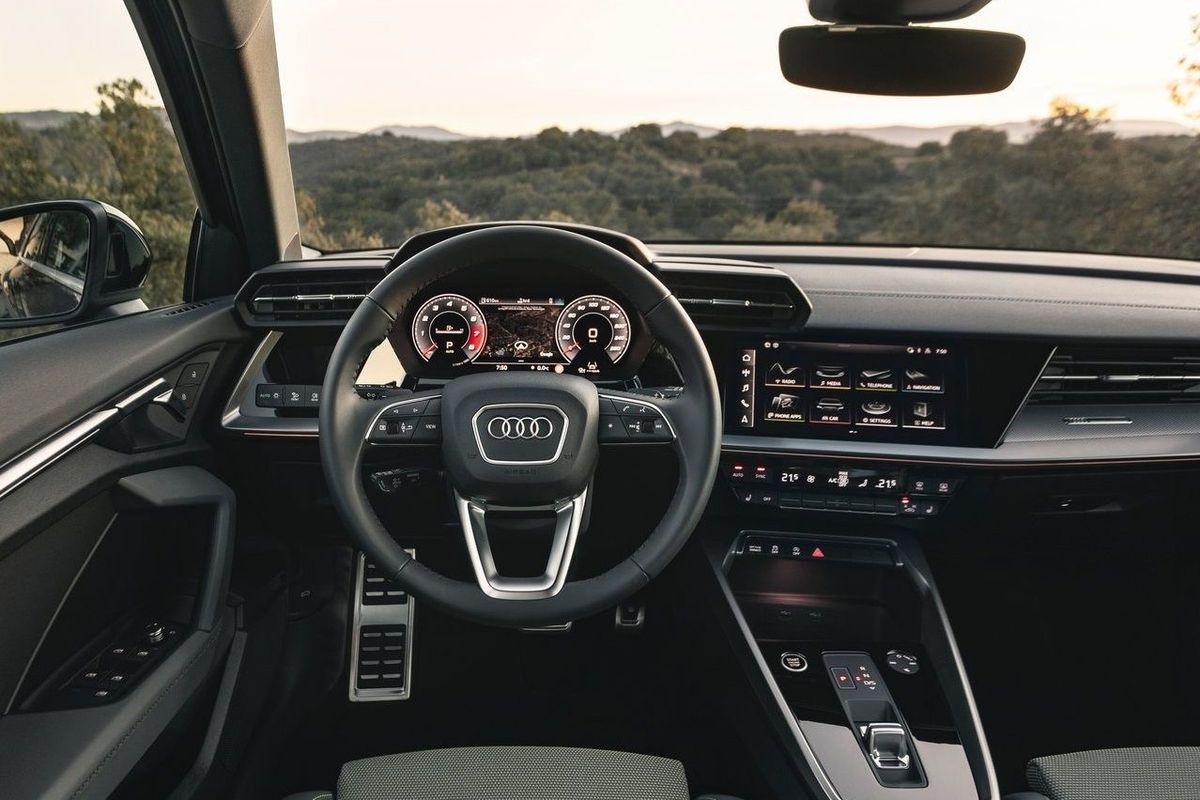
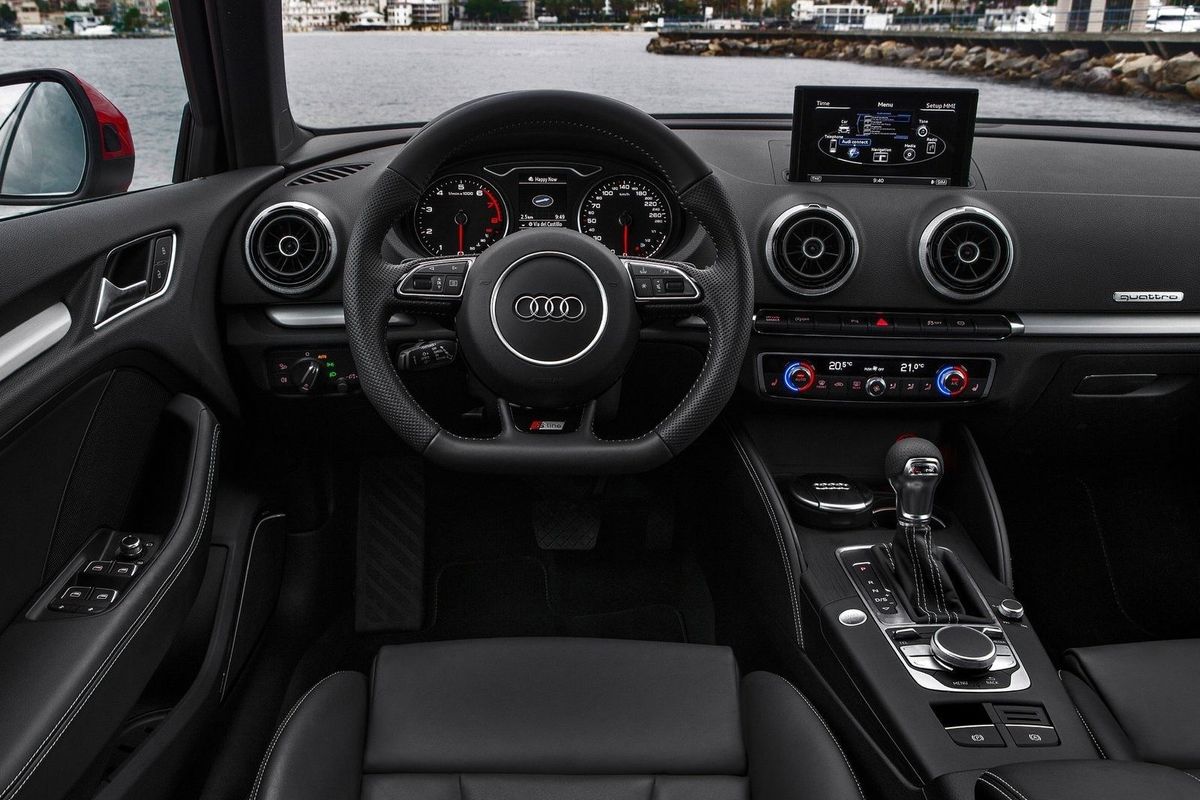
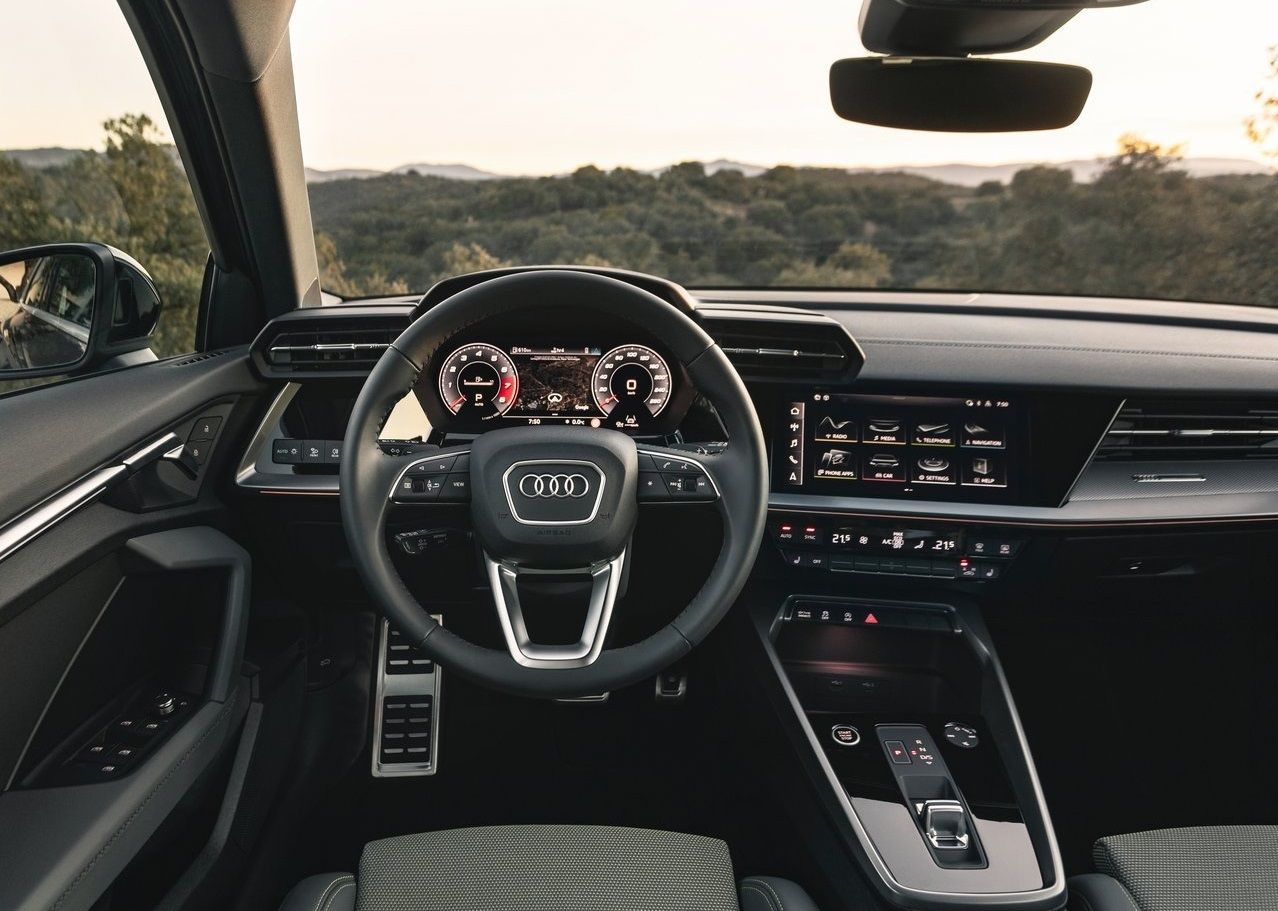
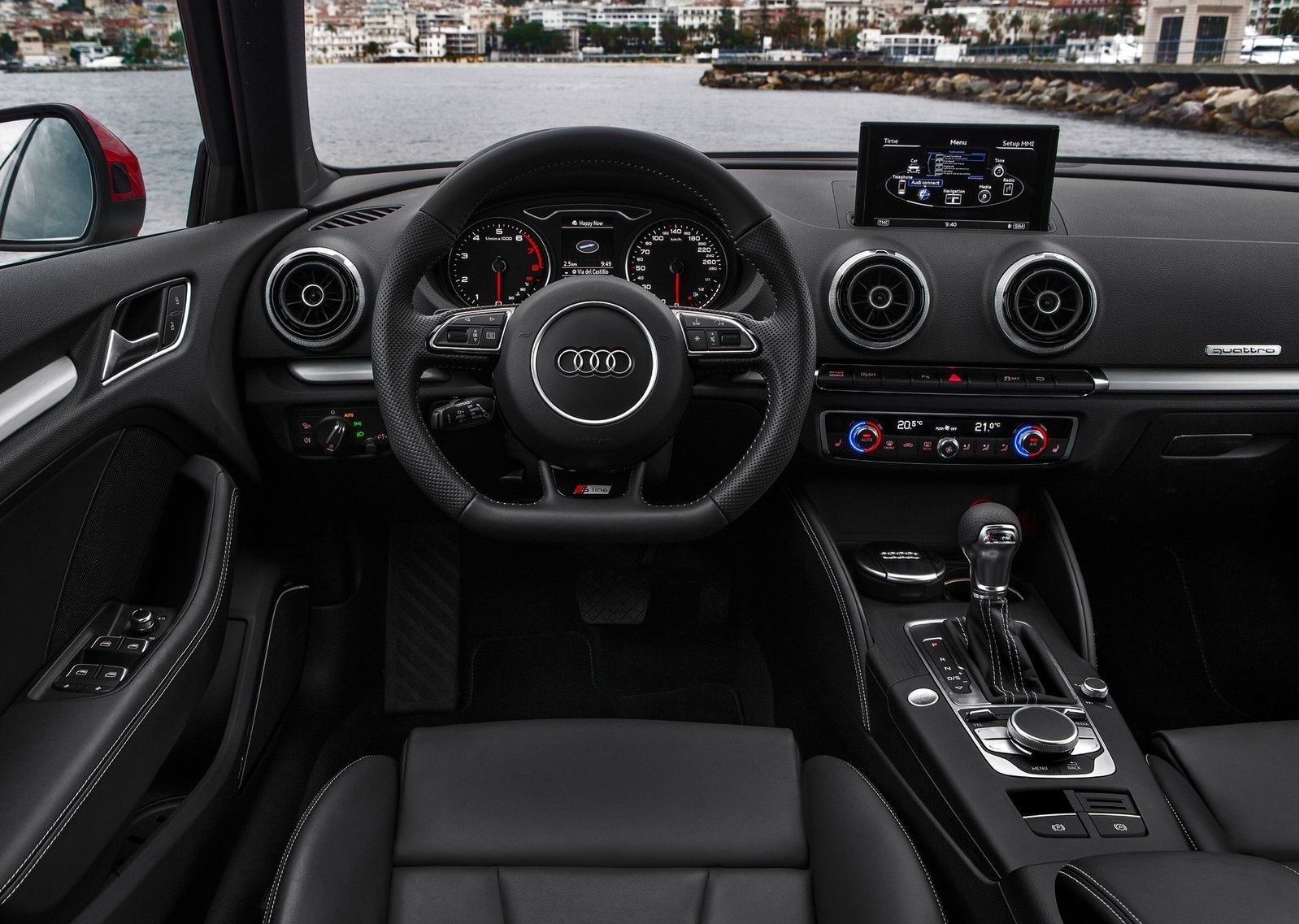
It's the interior which benefits from the most changes. At first glance, you can see the layout has changed, with the retractable infotainment screen being ditched in favour of an integrated unit. This new infotainment system benefits from a new interface and user experience. Previously, you were able to write on the rotary dial aft of the gear selector and now you'll be able to do so on the main screen. The climate control vents have been repositioned and the Audi Virtual Cockpit digital dashboard has been updated to the same level as other modern Audi offerings. Keen-eyed spotters will also notice the lack of a transmission lever in the new model. The A3 is the 4th model in the VAG to lose the conventional gear shifter after the Porsche 911, Volkswagen Golf 8 and SEAT Leon.
Final Thoughts
As mentioned, the all-new Audi A3 Sportback is expected to reach South Africa in the 2nd quarter of 2020. At the time of writing, only the 5-door Sportback body style has been revealed. There's still the S3 performance derivative to come, as well as the expected sedan. There won't be a convertible this time though as Audi confirmed this model would be canned in August 2019. We're also expecting some fireworks from the next-generation Audi RS3, which we've seen in a sedan body style undergoing testing. In terms of pricing, the current Audi A3 starts at R454 410, so we're estimating it to start under the R500 000 mark.