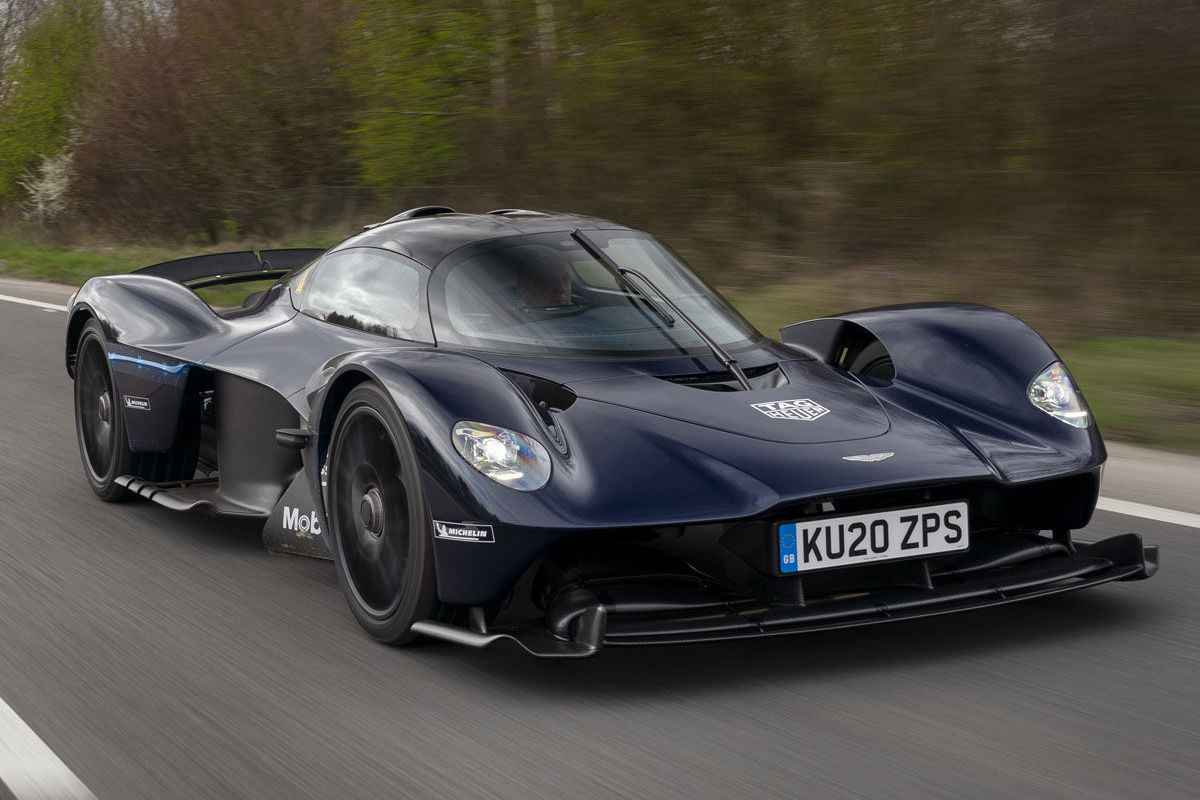
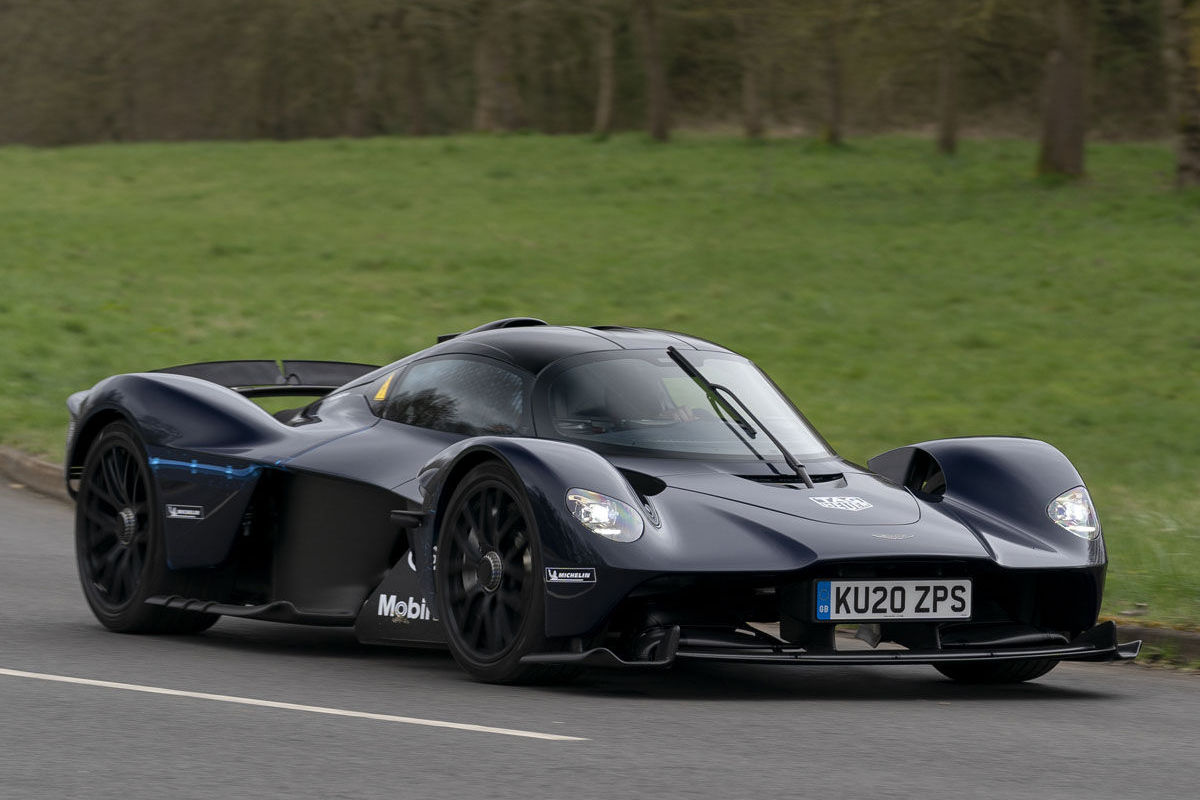
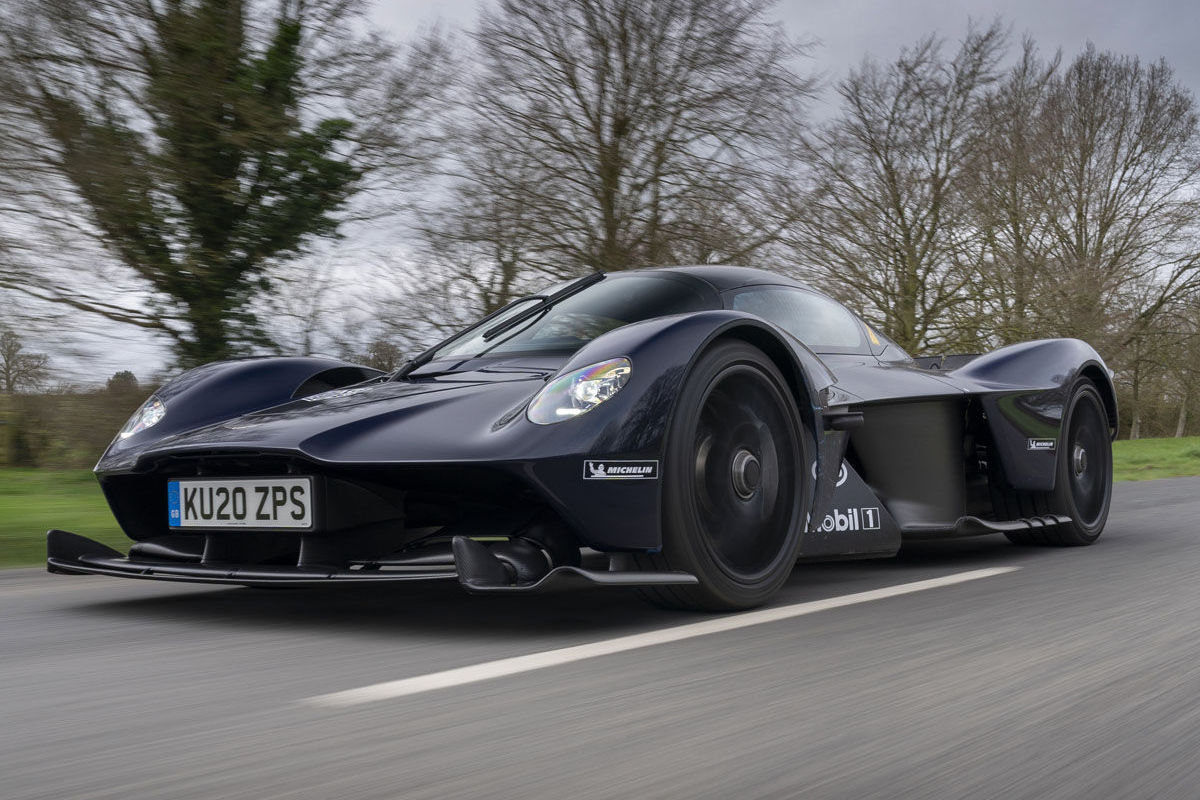
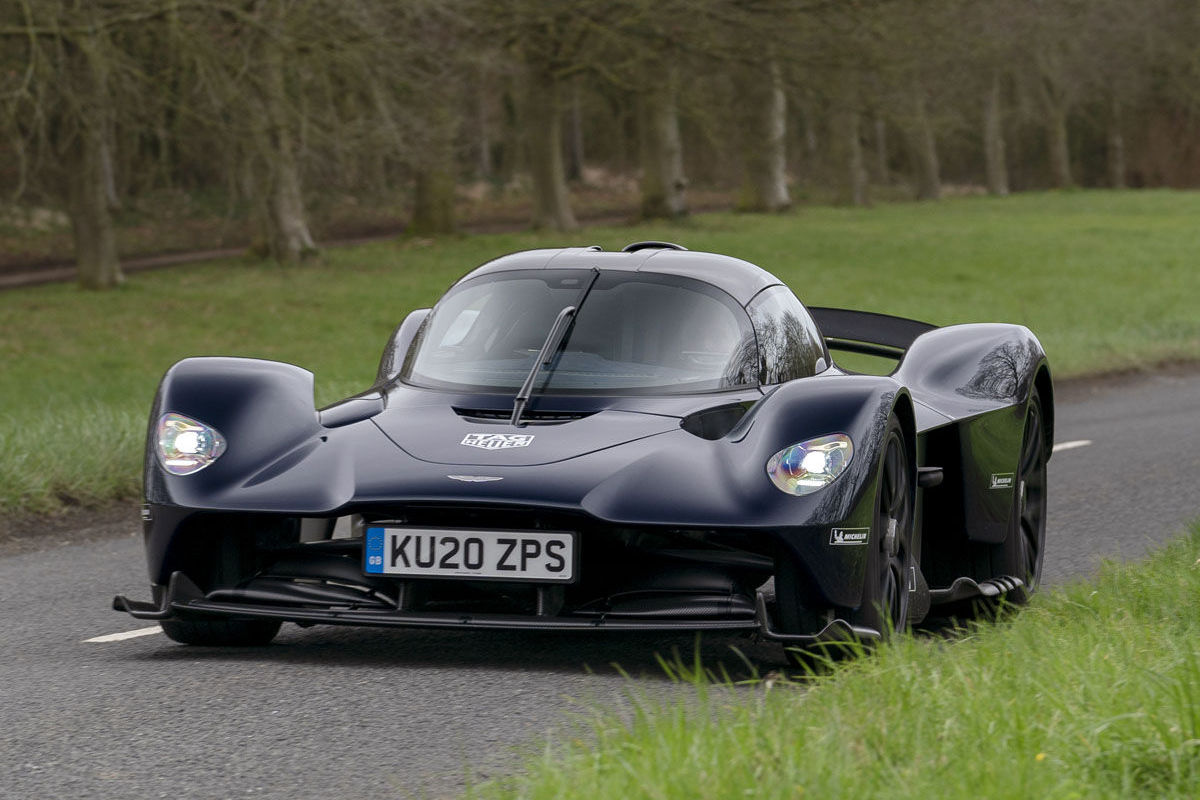
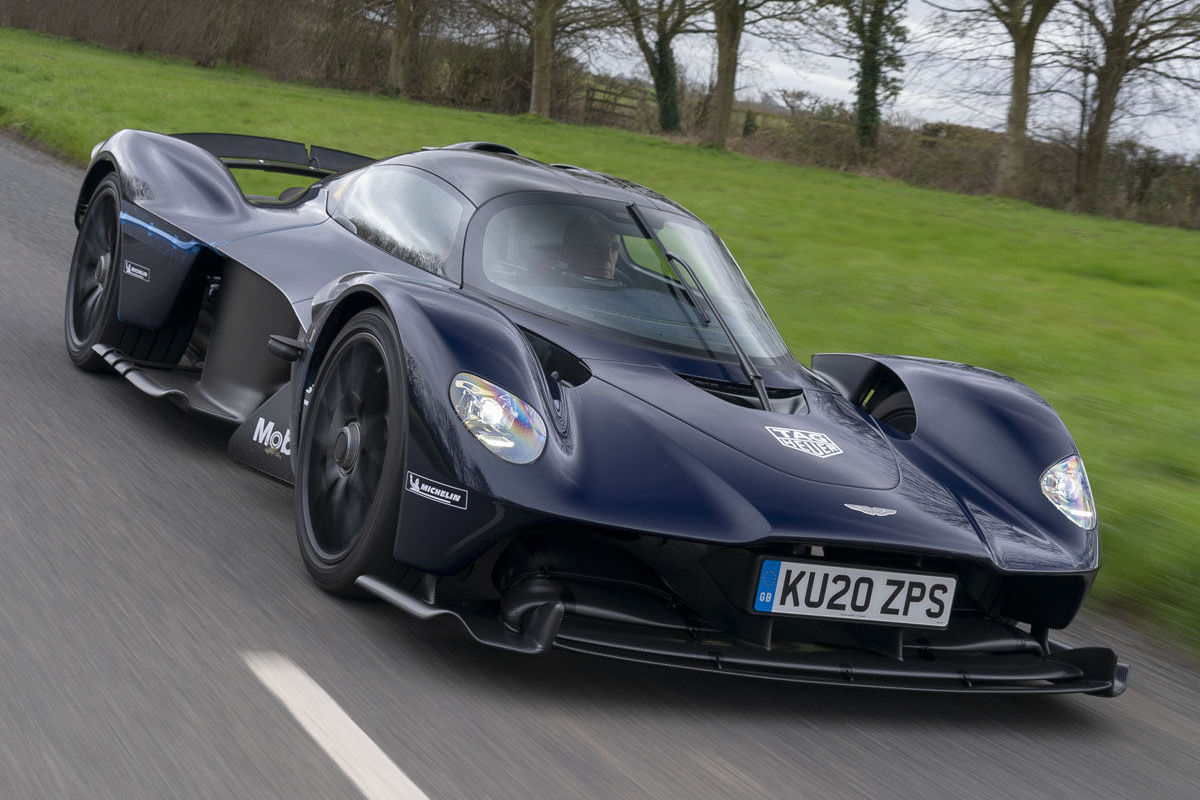
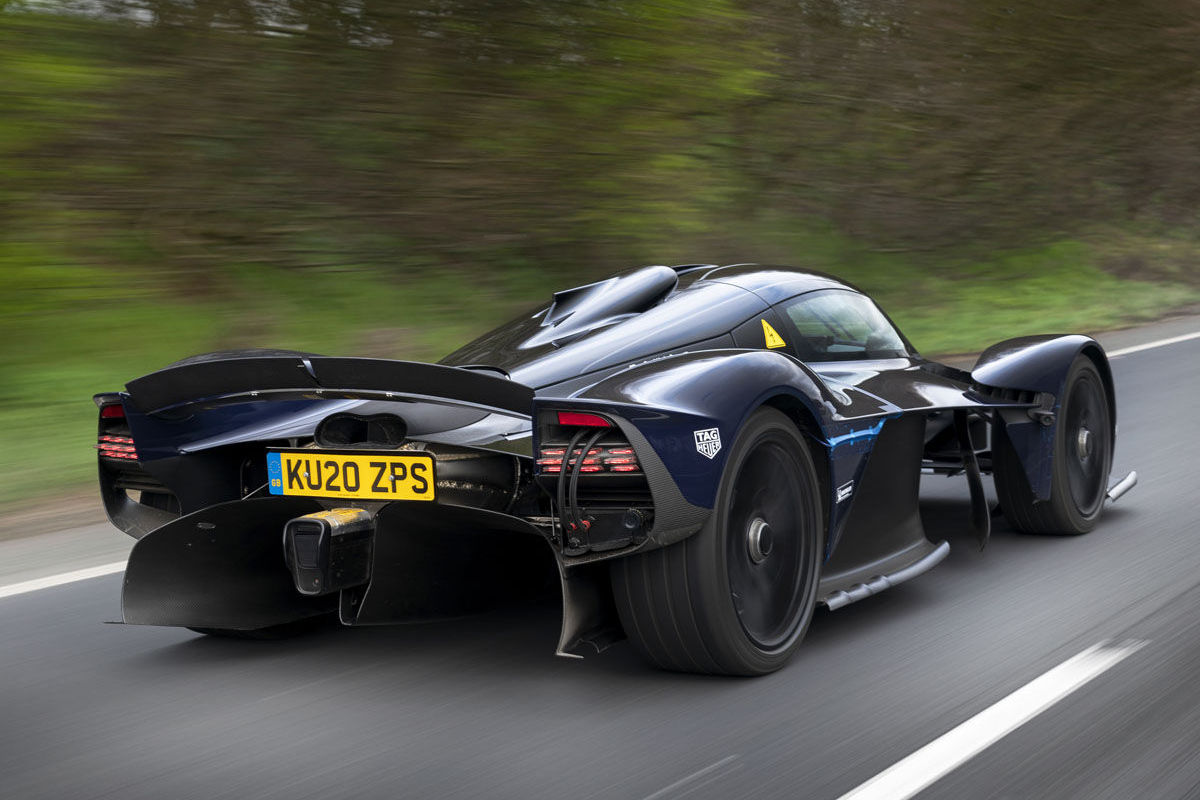
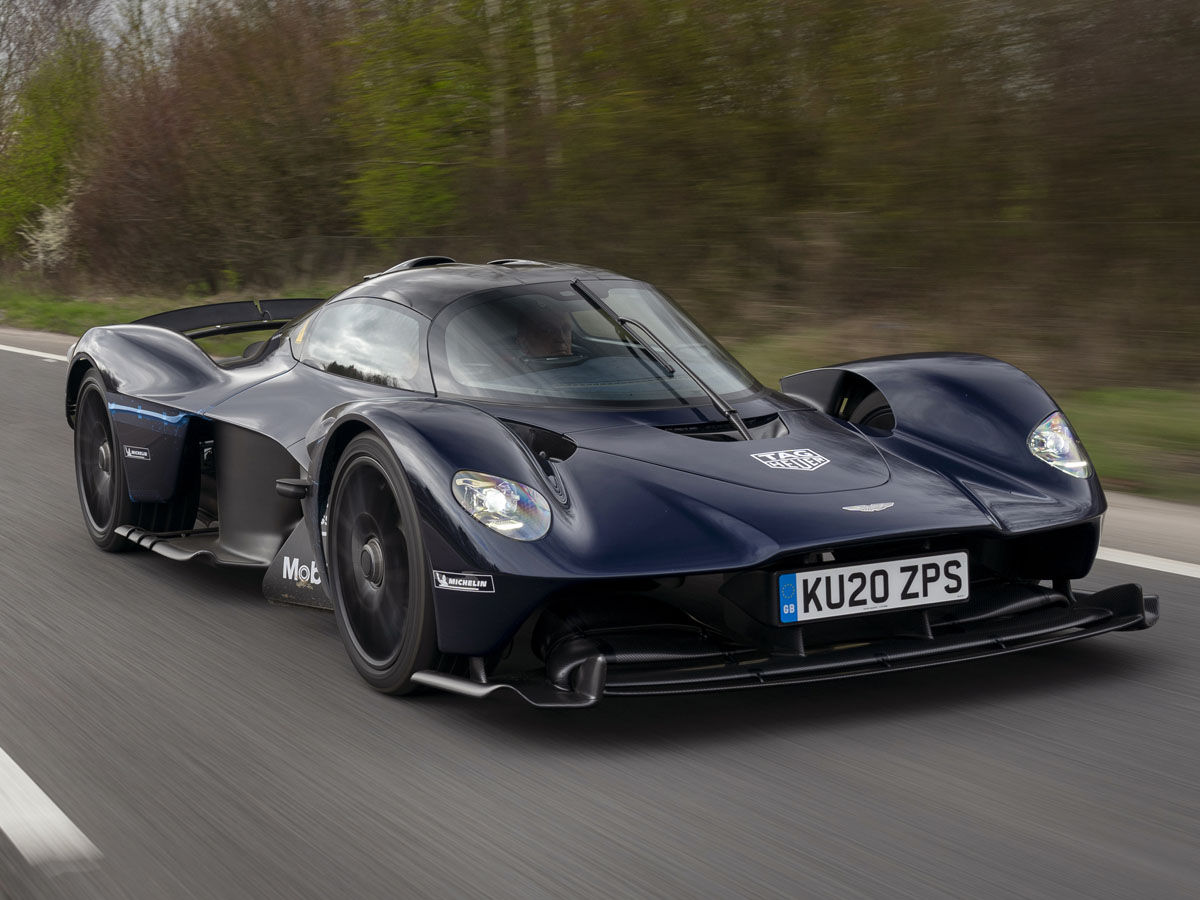
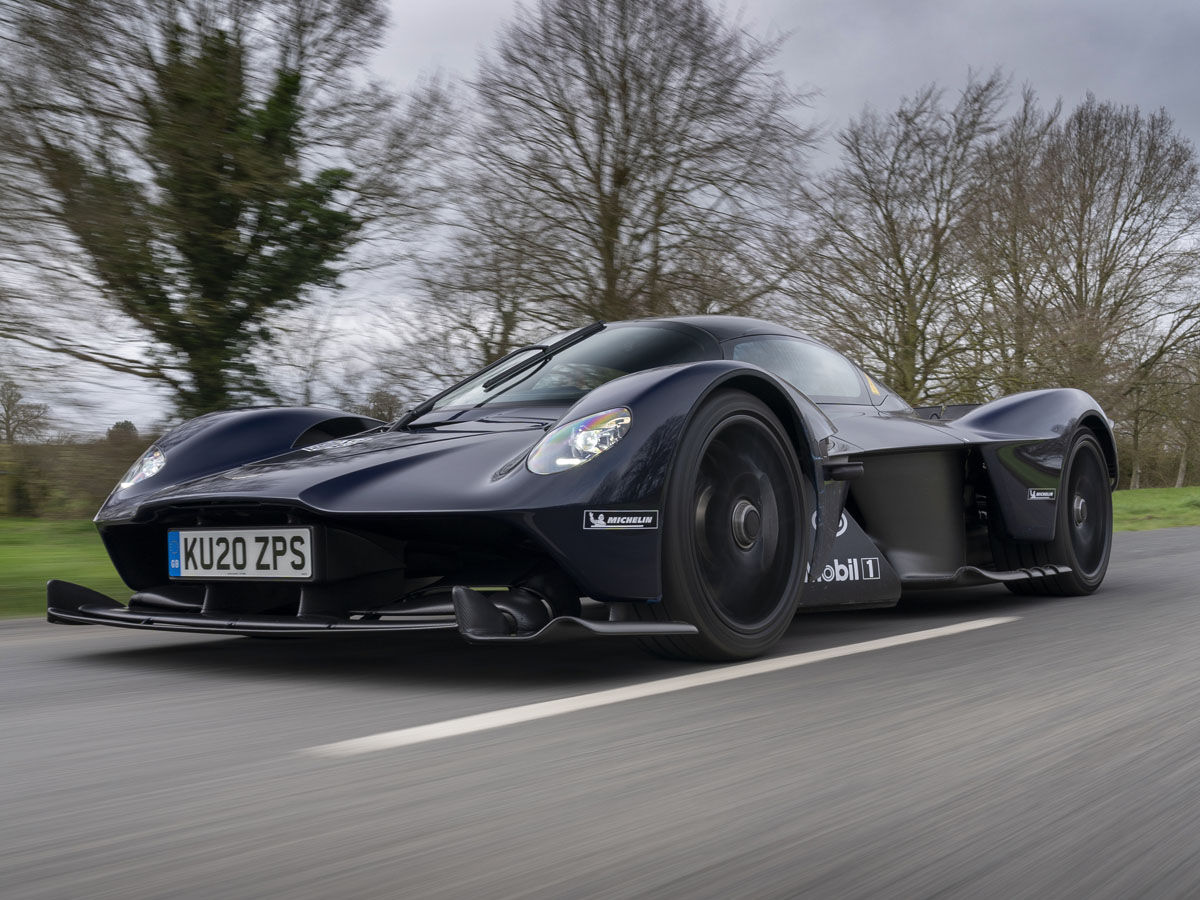
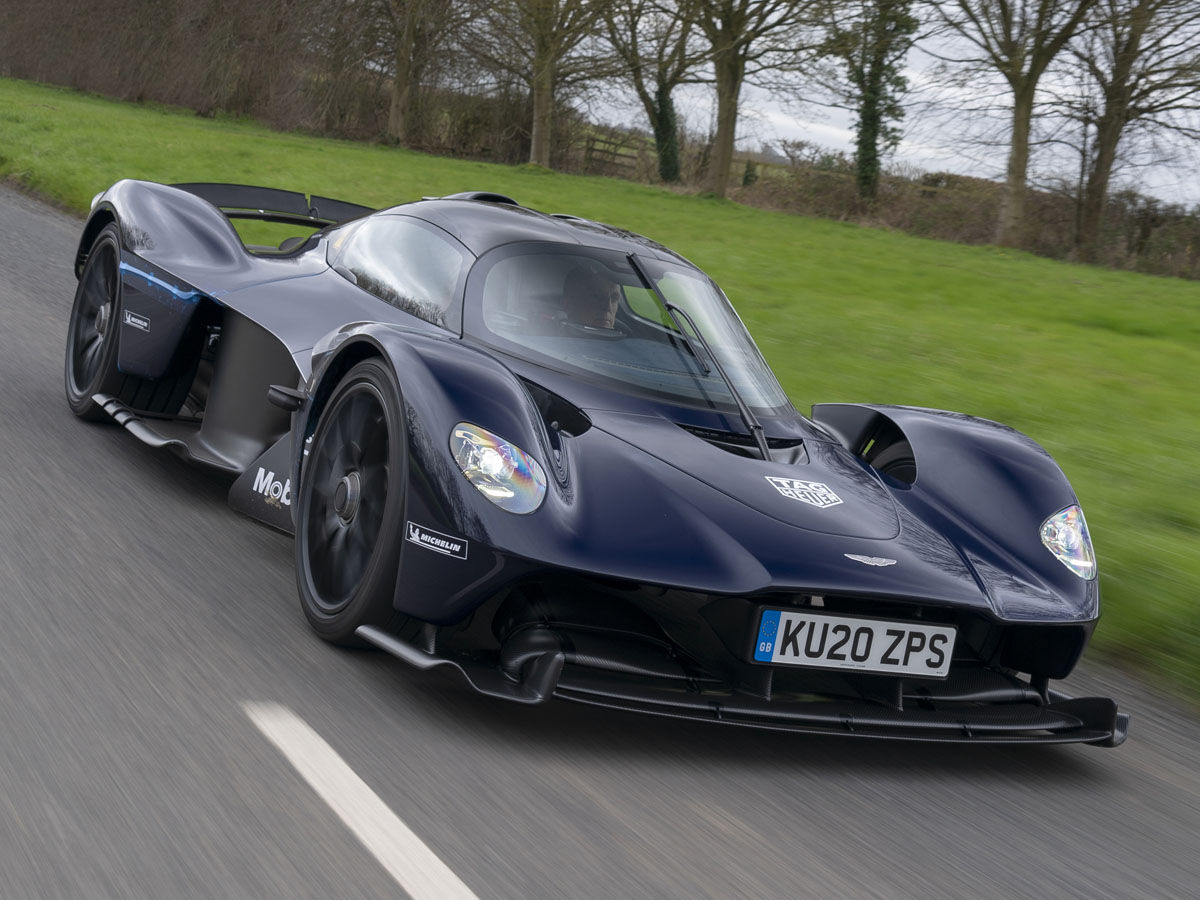
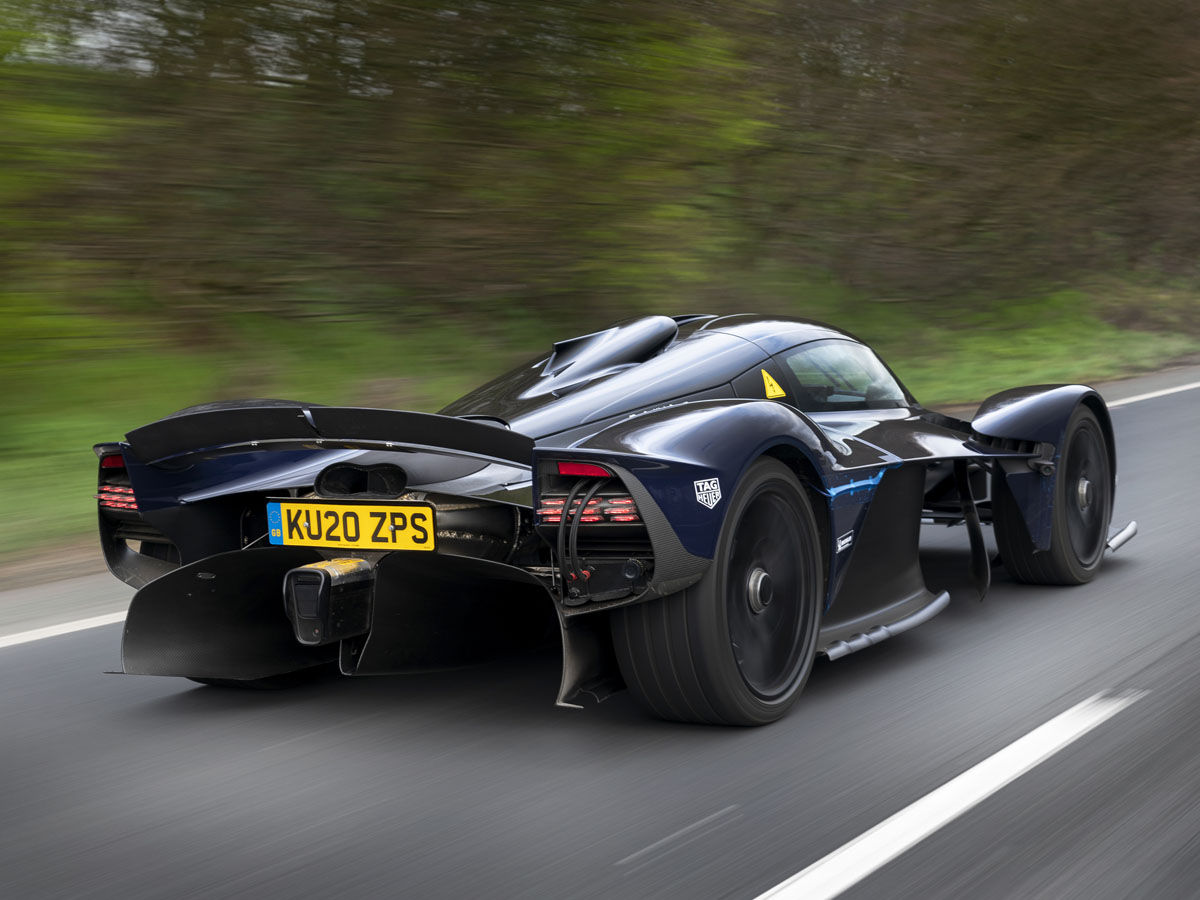
Aston Martin has begun road-testing its answer to the McLaren Senna: the 865 kW/900 Nm Valkyrie, powered by a 6.5-litre V12 petrol-electric hybrid that revs to 11 100 rpm.
The Valkyrie (codenamed AM-RB 001) was first unveiled in July 2016, and the Gaydon-based firm confirmed the hypercar's peak outputs about 12 months ago. The newcomer is now expected to be launched in the latter half of 2020 and only 150 road-going examples will be built, all of which have already been sold for a price of approximately R50-million apiece. The road-legal versions will be followed by a run of 25 track-optimised AMR Pro cars.
Aston Martin’s chief test driver Chris Goodwin has recently driven the Valkyrie on the roads surrounding the Silverstone F1 circuit and, in coming weeks, a team of engineers from the firm, as well as Red Bull Advanced Technologies will conduct a full programme of on-road tests with the car. Aston Martin boss Andy Palmer has described the Valkyrie as “a no-excuses halo car – the most luxurious car in its class, but also the quickest and the fastest. This car will be able to lap Silverstone as quick – or quicker – than an F1 or LMP1 car.”
As in the LaFerrari, there is a naturally aspirated V12 engine at the heart of the Valkyrie. Developed in conjunction with Cosworth and Red Bull Racing F1 team, the 6.5-litre produces 746 kW at 10 500 rpm and 740 Nm at 7 000 rpm.
The engine tips the scales at a mere 206 kg, by virtue of the lightweight alloy used to mill its internal parts (the conrods are made from titanium, for example). Reports say that after the motor has clocked up 100 000 km, Cosworth needs to check its block for cracks, in addition to replacing the pistons and valves.
The V12 unit is a structural component of the car’s chassis, which supports the rear wheels and suspension. The 119 kW/280 Nm electric motor, developed in tandem with Integral Powertrain Ltd and Rimac, sits between the engine and a bespoke single-clutch automated gearbox, with an F1-inspired energy recovery system harvesting kinetic energy under braking to recharge the battery pack.
Given its combined outputs of 865 kW and 900 Nm and a lightweight body constructed mainly from carbon fibre, the Valkyrie is said to have a 1:1 power-to-weight ratio. The hypercar’s lightweight braking system was provided by Alcon and Surface Transforms, while Bosch supplies the traction control system, electronic stability programme and engine control unit.
The car’s entire exterior design was defined by the quest for aerodynamic efficiency; a pair of massive Venturi tunnels run either side of the cockpit and skirt around the engine. Along with two vents in the Valkyrie’s front splitter, Aston Martin says the tunnels provide “considerable gains” in downforce. In fact, the Valkyrie is said to generate up to 1.8 tonnes of downforce at top speed.
Inside, the seats are mounted directly to the carbon-fibre tub, with Aston expecting drivers to adopt a “reclined ‘feet up’ driving position. A 4-point harness will be fitted as standard, but a 6-point system will be optional. An F1-style screen is built into the steering wheel (there is no instrument cluster), while 2 screens linked with cameras on either side of the car act as side mirrors.
Meanwhile, the hypercar will run on magnesium alloy wheels featuring race-spec centre lock nuts (to reduce unsprung mass), shod with Michelin Pilot Sport Cup 2 tyres (20-inch at the front, 21-inch at the rear).
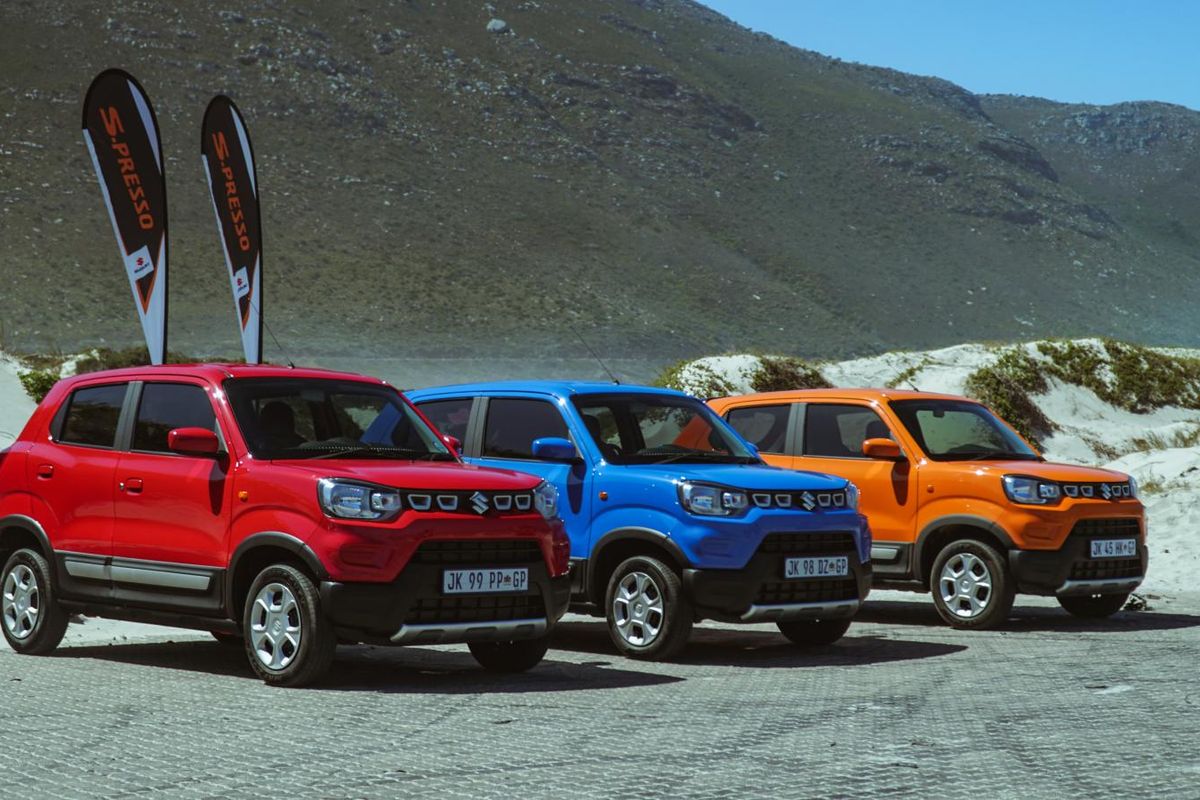
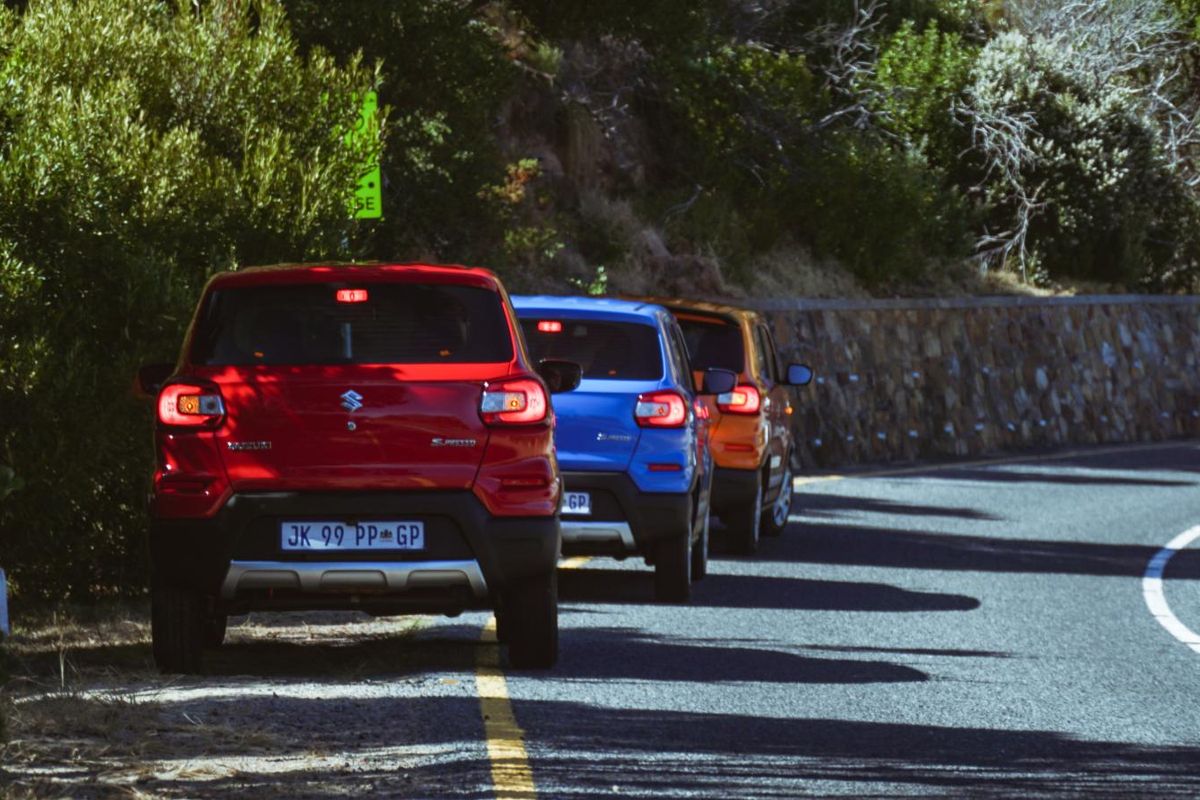
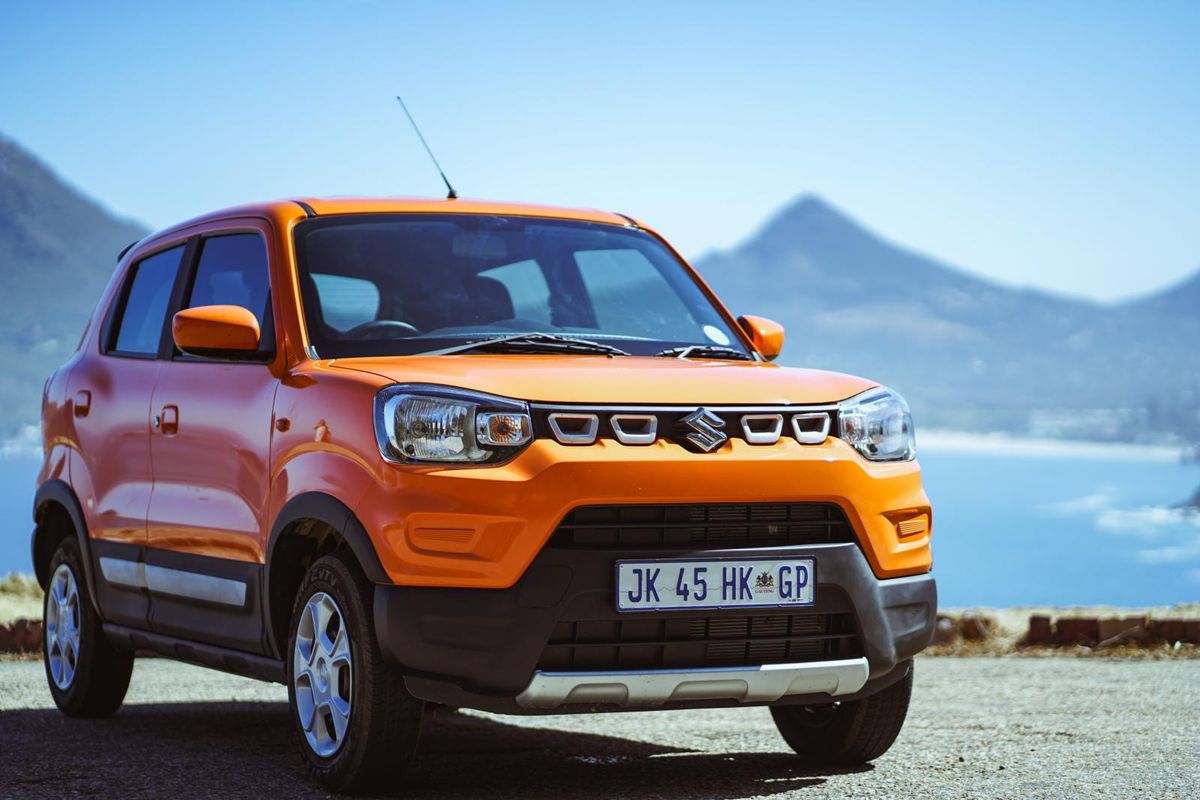
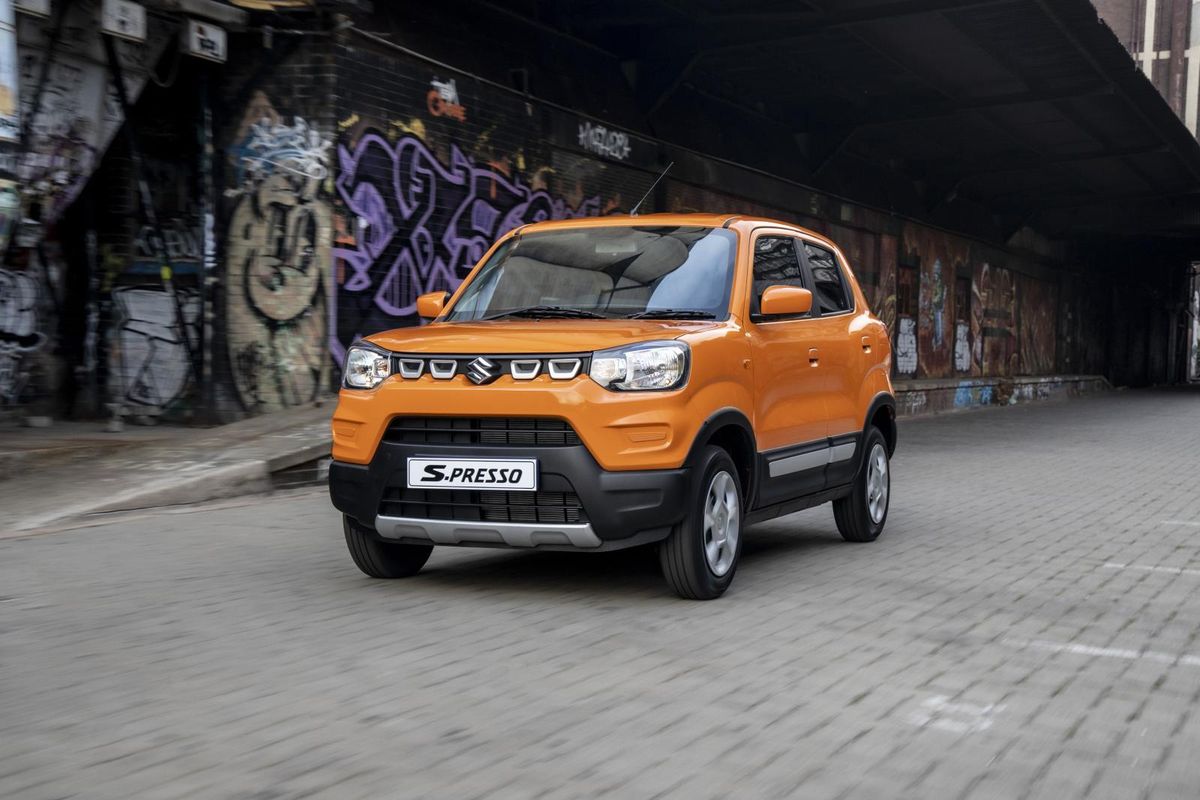
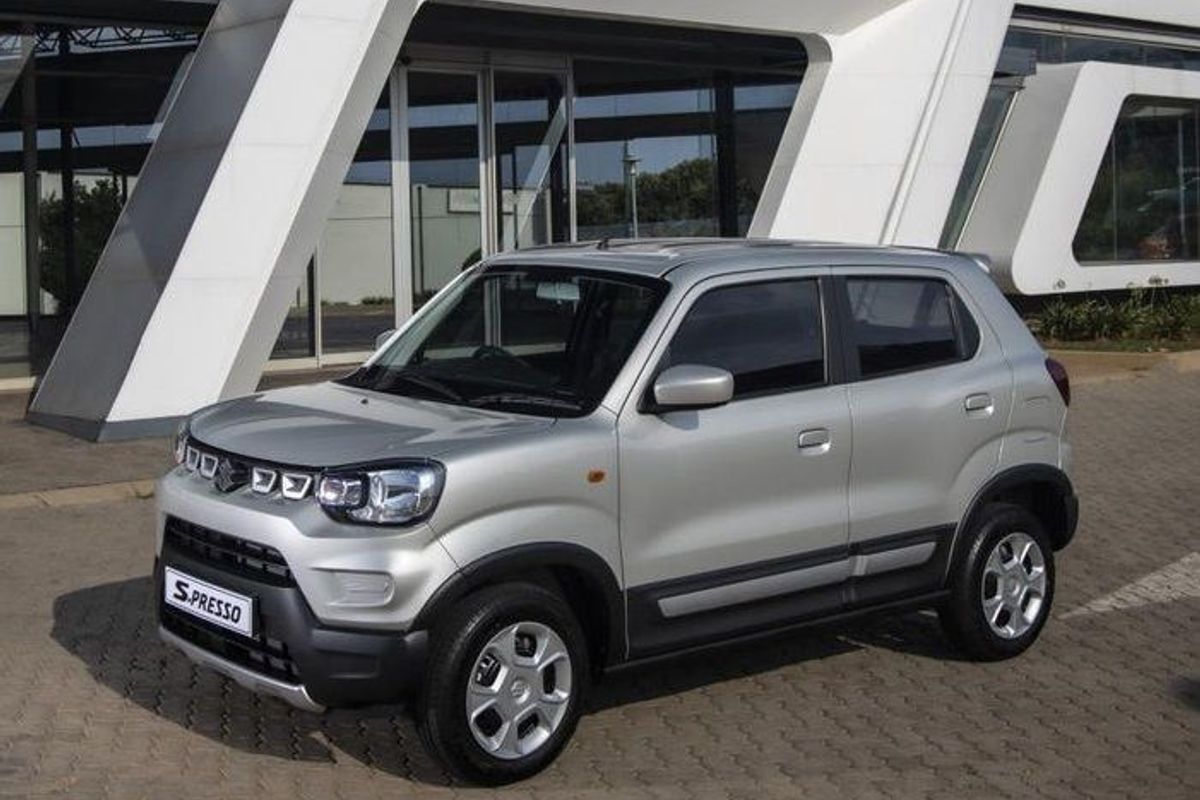
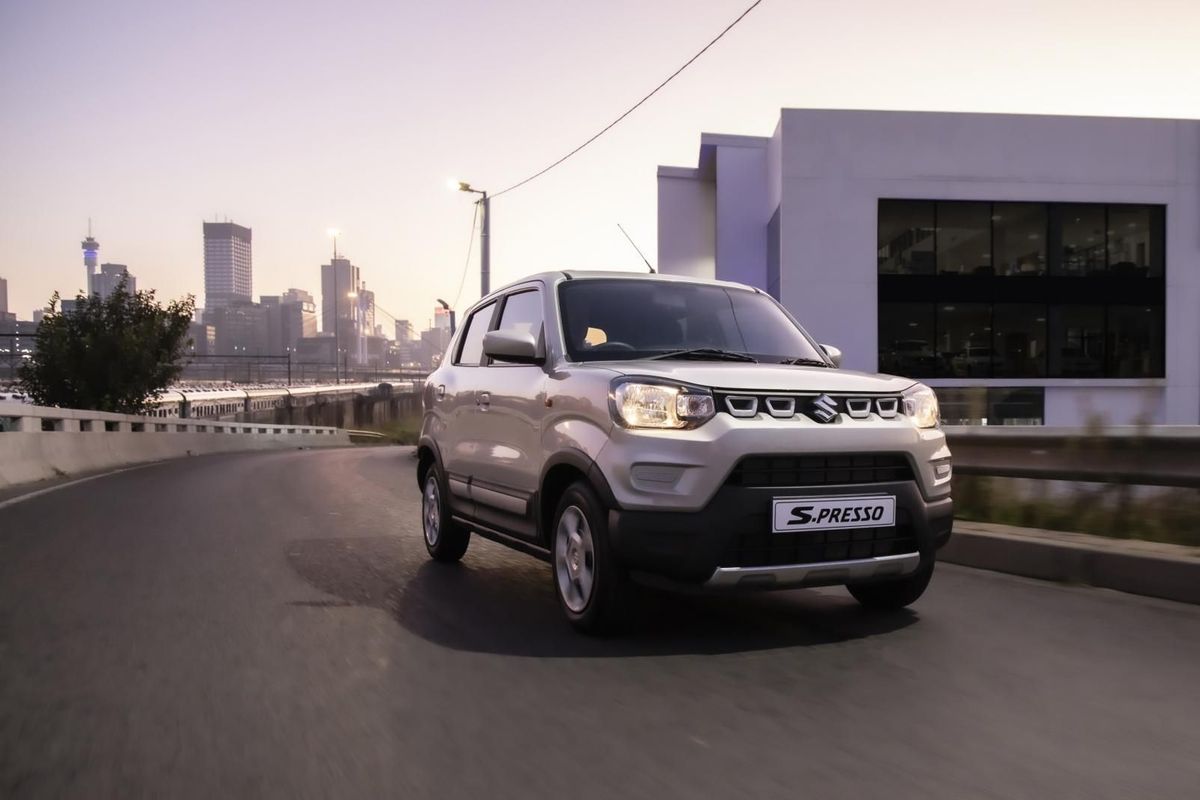
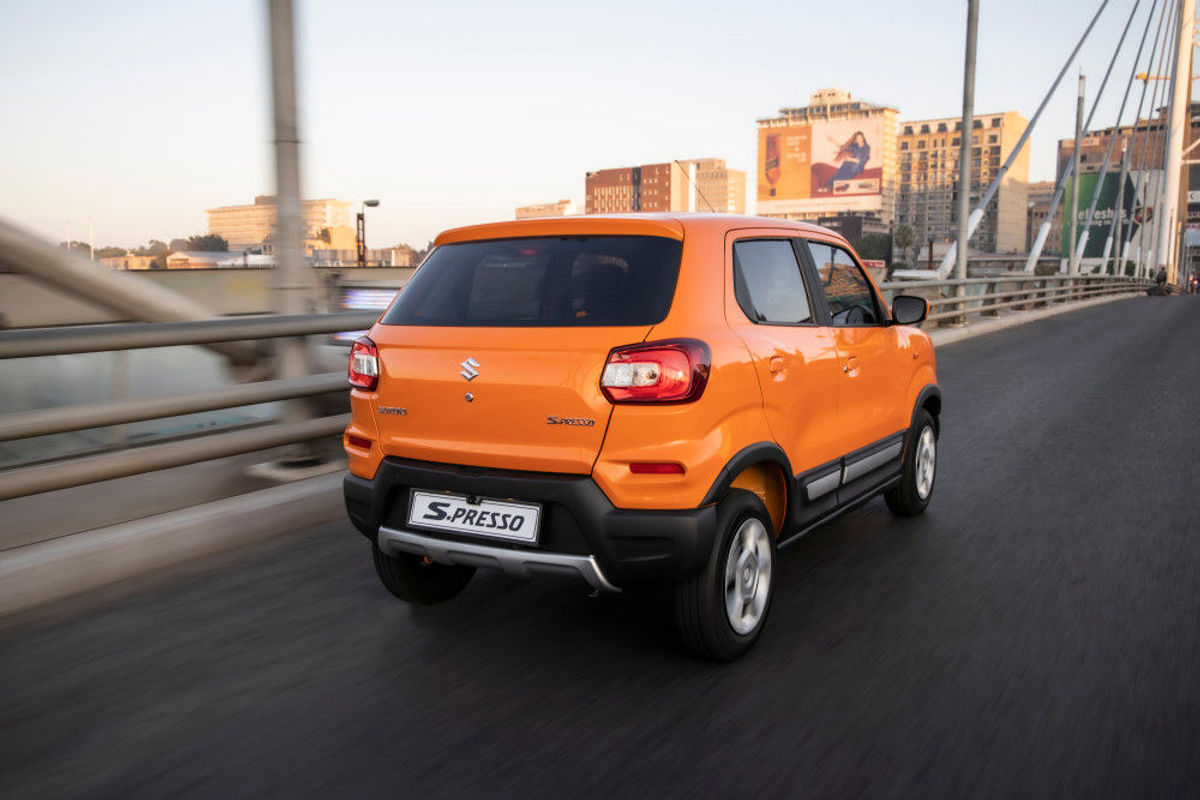
Suzuki has a new budget car on the block and it’s called the S-Presso!
If there’s a brand that does budget cars very well, it’s Suzuki! The brand has scooped many awards in the #CarsAwards powered by WesBank as well as winning the coveted Brand of the Year not once, but twice!
Now, Suzuki welcomes its Renault Kwid fighter to market. Say hello to the new S-Presso!
Slotting in just below the Celerio, this quirky hatchback is powered by a 3-cylinder, 1.0-litre petrol engine with 50 kW and 90 Nm of torque and comes mated with a 5-speed manual transmission and an automated manual transmission. In true Suzuki fashion, the S-Presso claims a fuel consumption figure of 4.9 L/100km and if we take our past experiences with Suzuki products into consideration, we are quite sure we can get fairly close to that figure without trying too hard…
Also, with a ground clearance of 180 mm, the new S-Presso has a dash of SUV appeal and can do some light gravel travel too if you need it too.
Specification Details
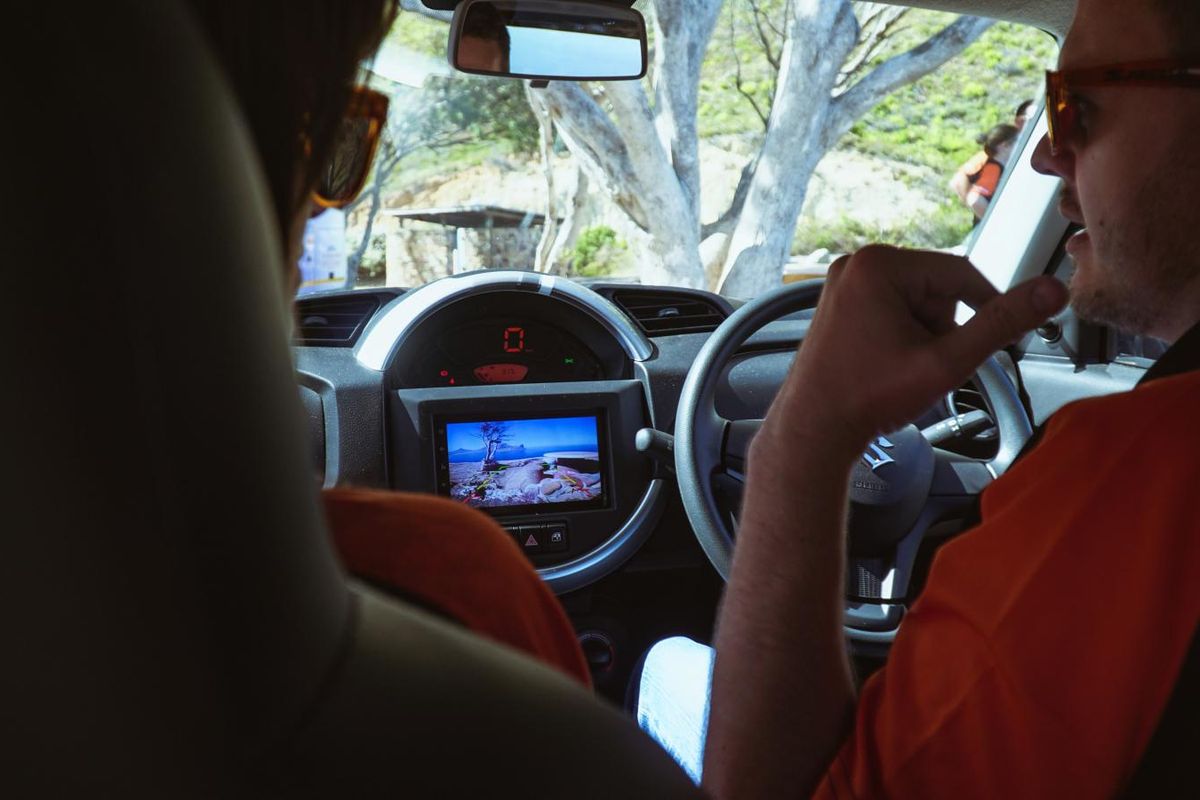
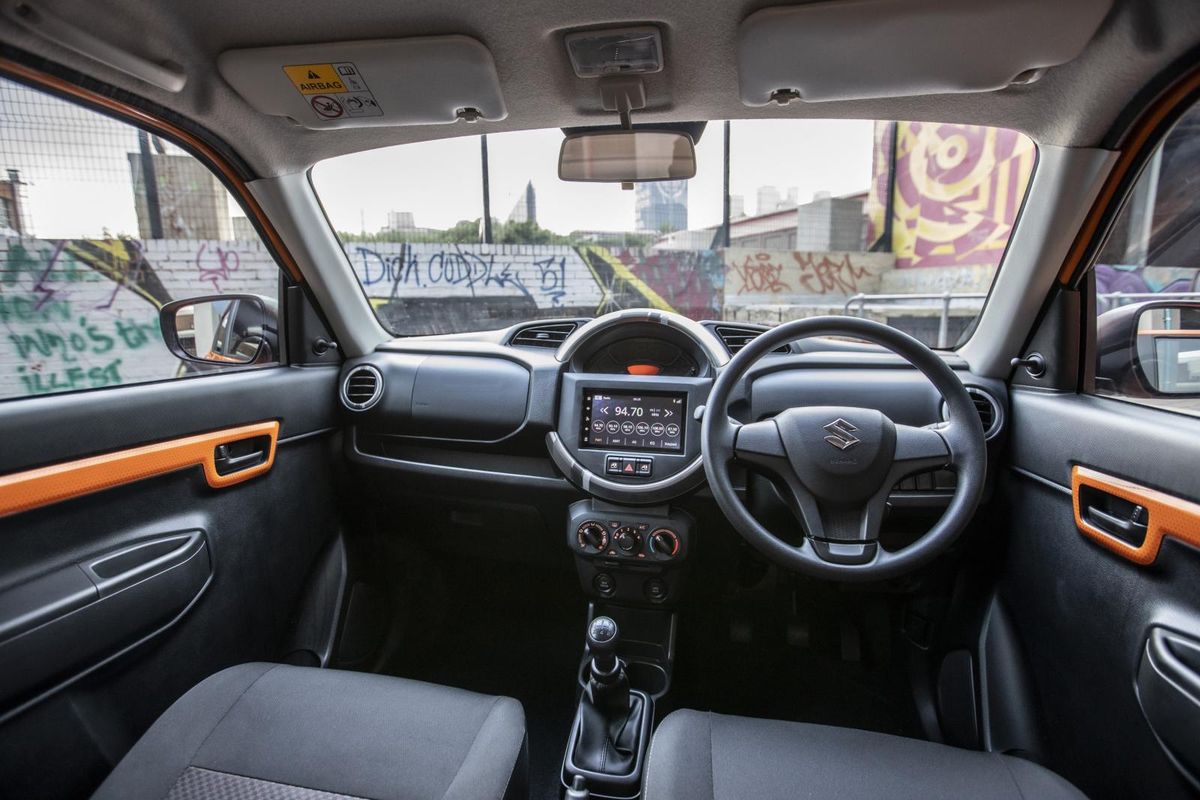
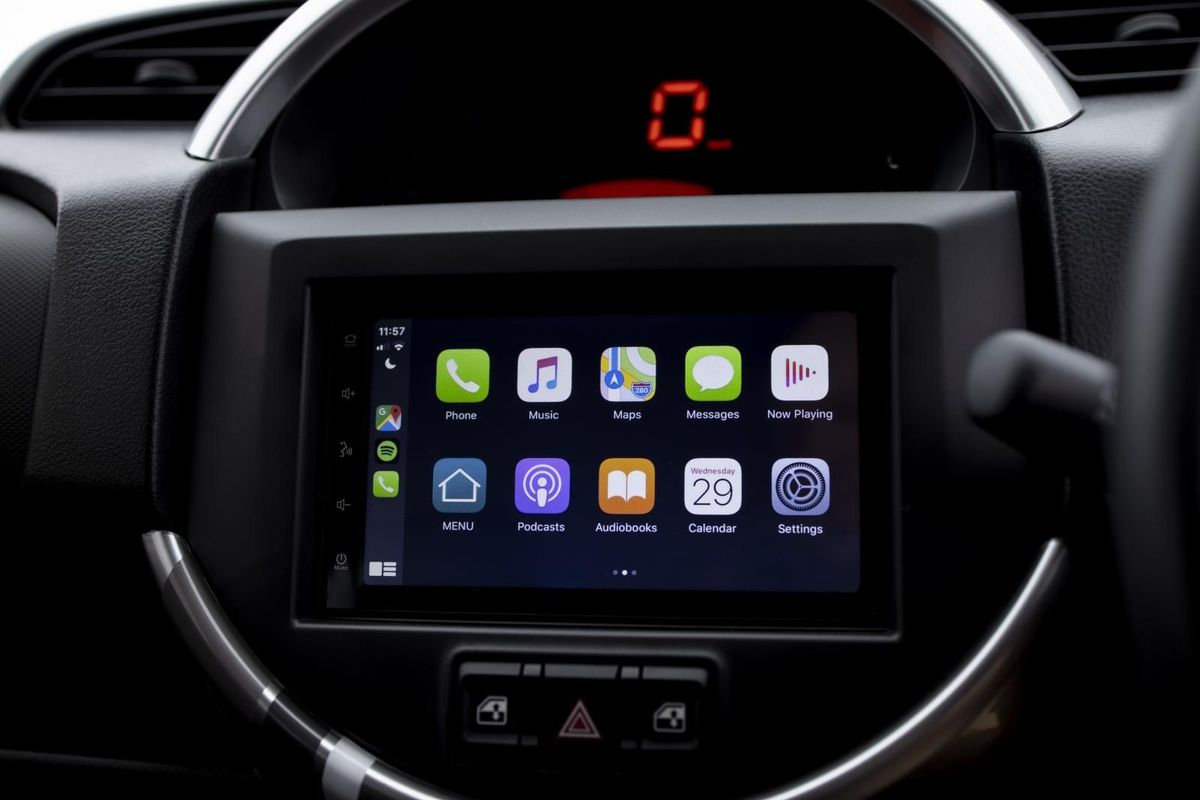
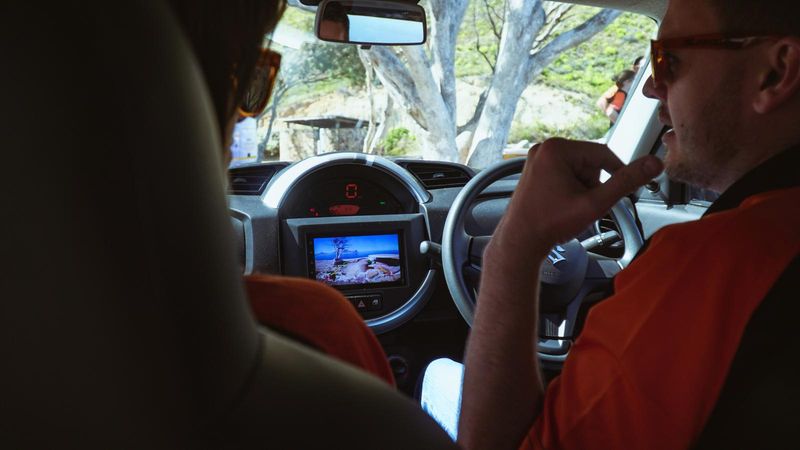
A 7-inch infotainment system with Android Auto and Apple CarPlay is offered while a rear-reverse camera is a nice-to-have feature in this segment.
There are 3 derivatives on offer for the S-Presso including GL, GL+ and a range-topping S-Edition.
The S-Presso GL (manual only) is equipped with front electric windows, remote central locking, rear parking sensors, 14-inch steel wheels and manual airconditioning.
The mid-spec GL+ derivative (manual and AMT) gains a 7-inch touchscreen infotainment system with Apple CarPlay and Android Auto capability, integrated reverse camera, Bluetooth and a USB and auxiliary port.
Moving on to the range-topping S-Presso S-Edition, this derivative gains styling elements such as wheel arch cladding, side body cladding, silver upper grille garnish, front skid plate and silver trim finishes seen on the centre console and doors.
Safety specification includes 2 airbags and ABS with EBD.
We will hopefully have the new S-Presso on test soon, stay tuned!
Suzuki S-Presso – Price in South Africa
S-Presso 1.0 GL MT – R134 900
S-Presso 1.0 GL+ MT – R139 900
S-Presso 1.0 S-Edition MT – R147 900
S-Presso 1.0 GL+ AMT – R152 900
S-Presso 1.0 S-Edition AMT – R160 900
The new Suzuki S-Presso is sold with a 5-year/200 000 km warranty, 2-year/30 000 km service plan and 1-year insurance.
Kia has given select Sportage derivatives an infotainment upgrade for the South African market, see details below…
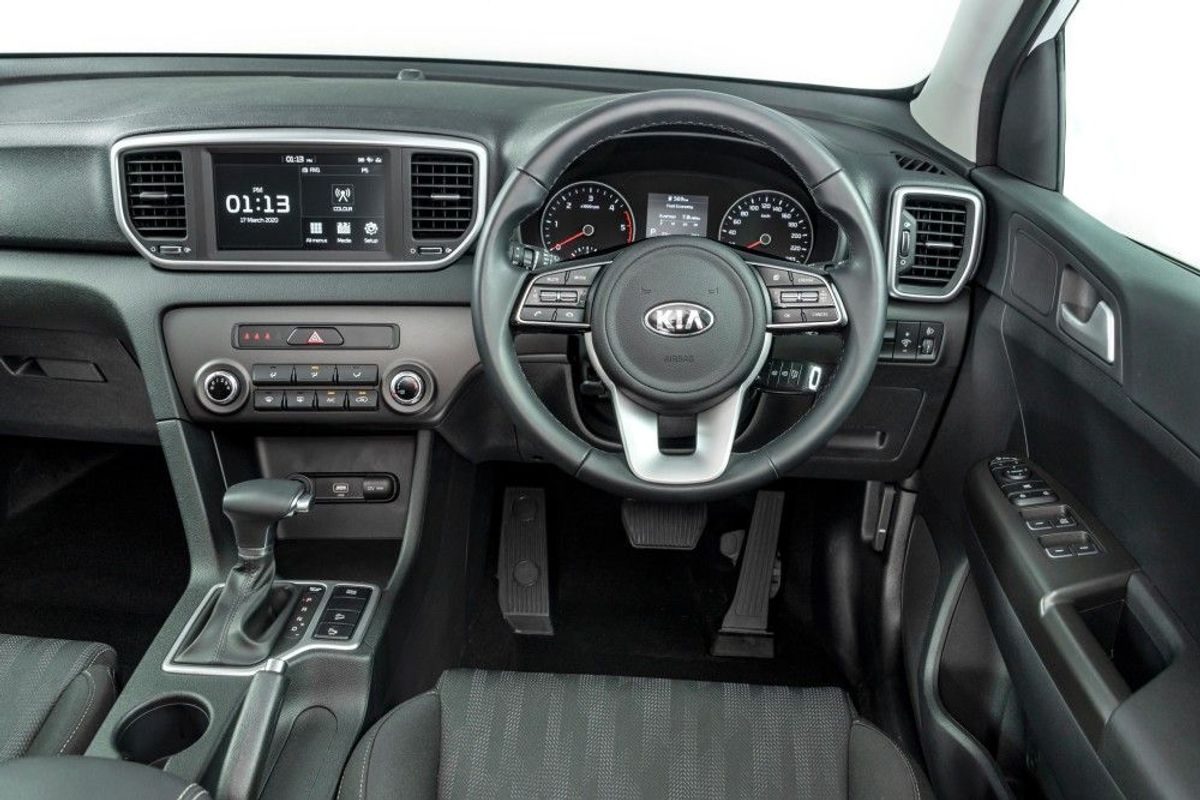
SUV buyers eyeing out the Sportage Ignite and Ignite Plus derivatives will be happy to know that an 8-inch colour infotainment system and rear parking sensors are now fitted as standard. The infotainment system also offers Android Auto and Apple CarPlay functionality. More than this, if you already own these derivatives, Kia will retrofit the new infotainment system into your current Sportage at a cost of R6 325 and this can be done at any Kia dealership in South Africa.
Kia is also offering what it calls a ‘payment holiday’ for its Sportage where customers can 'skip' monthly payments for up to 6 months if they wish or structure their car financing to suit their financial situation.
While this may sound enticing, we urge consumers to make sound financial decisions based on what you are able to afford. Be mindful that by delaying payments you are likely to pay more later and you need to factor this implication into your purchasing decision. Make sure that you read and understand all the terms and conditions before you sign any documents. If you are unsure, ask the sales representative to clarify any information before you proceed with the purchase.
Kia Sportage – Price in SA
Kia Sportage 1.6 GDi Ignite 6-speed Auto – R406 995
Kia Sportage 2.0 Ignite PLUS 6-speed Manual – R416 995
Kia Sportage 2.0 Ignite PLUS 6-speed Auto – R430 995
Kia Sportage 2.0 CRDi Ignite PLUS 8-speed Auto – R481 995
Kia Sportage 2.0 EX 6-speed Auto – R485 995
Kia Sportage 2.0 EX PLUS 6-speed Auto – R526 995
Kia Sportage 2.0 CRDi EX 8-speed Auto – R536 995
Kia Sportage 2.0 CRDi EX AWD 8-speed Auto – R564 995
Kia Sportage 2.0 CRDi EX PLUS 8-speed Auto – R577 995
All Sportage models are sold with a 5-year/unlimited km warranty, a standard 5-year/90 000 km service plan and 5-years of roadside assistance.
Drag Race: Jeep Grand Cherokee Trackhawk vs BMW X4 M Competition
The BMW X4 M Competition is back to defend its drag racing title following a win over the Stelvio Q. This time however, it's taking on the most powerful SUV, in the world – the Jeep Grand Cherokee Trackhawk.
The Jeep Trackhawk is just a monster. It doesn't make any sense, really. It weighs over 2.4 tonnes and you'd think that maybe they'd try to make it lighter in a bid to make it faster, but that would be very un-American and very boring.
And so one of the most powerful engines ever made was dropped into this SUV and the result is the fastest SUV in the world. Well, so it claims.
And yet, as we discovered, this recipe is not all-powerful. Lighter cars with much less power still stand a chance against the mighty Jeep.
In this race Ashley Oldfield runs the cars twice, swapping cars for each race. And we can't tell you any more than that, can we? Enjoy.
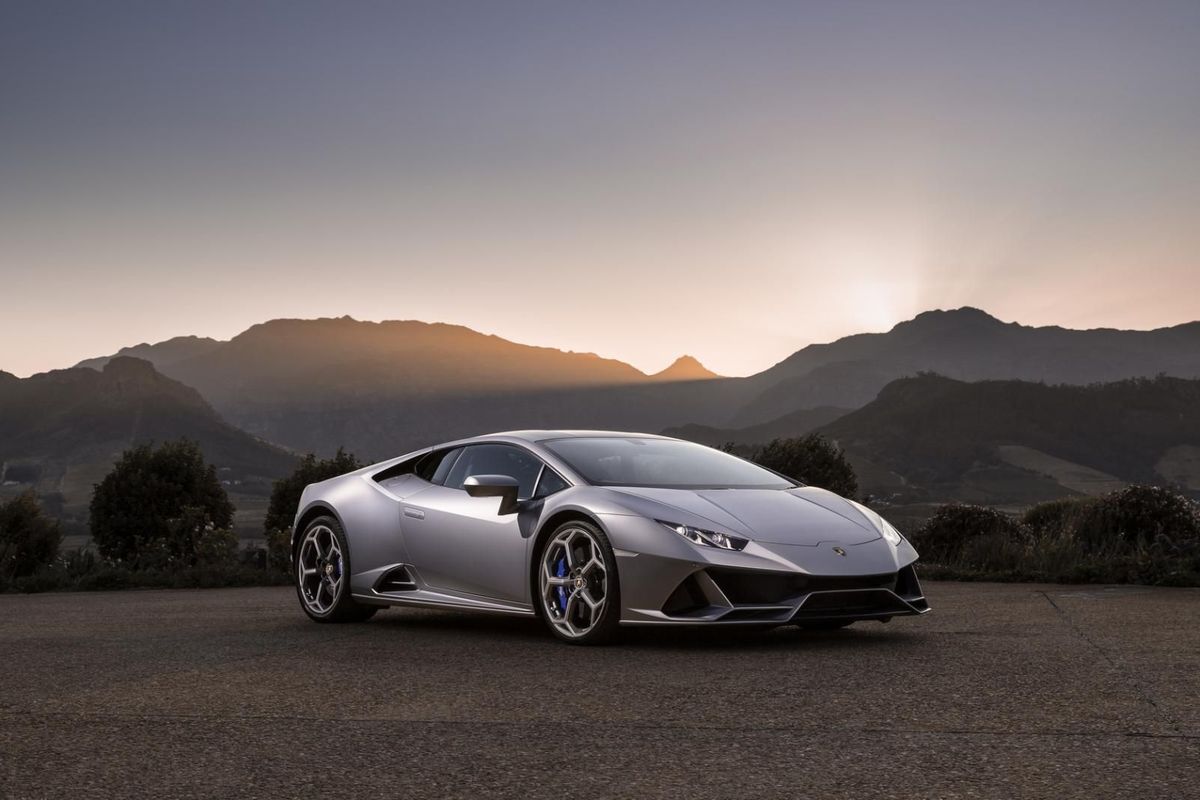
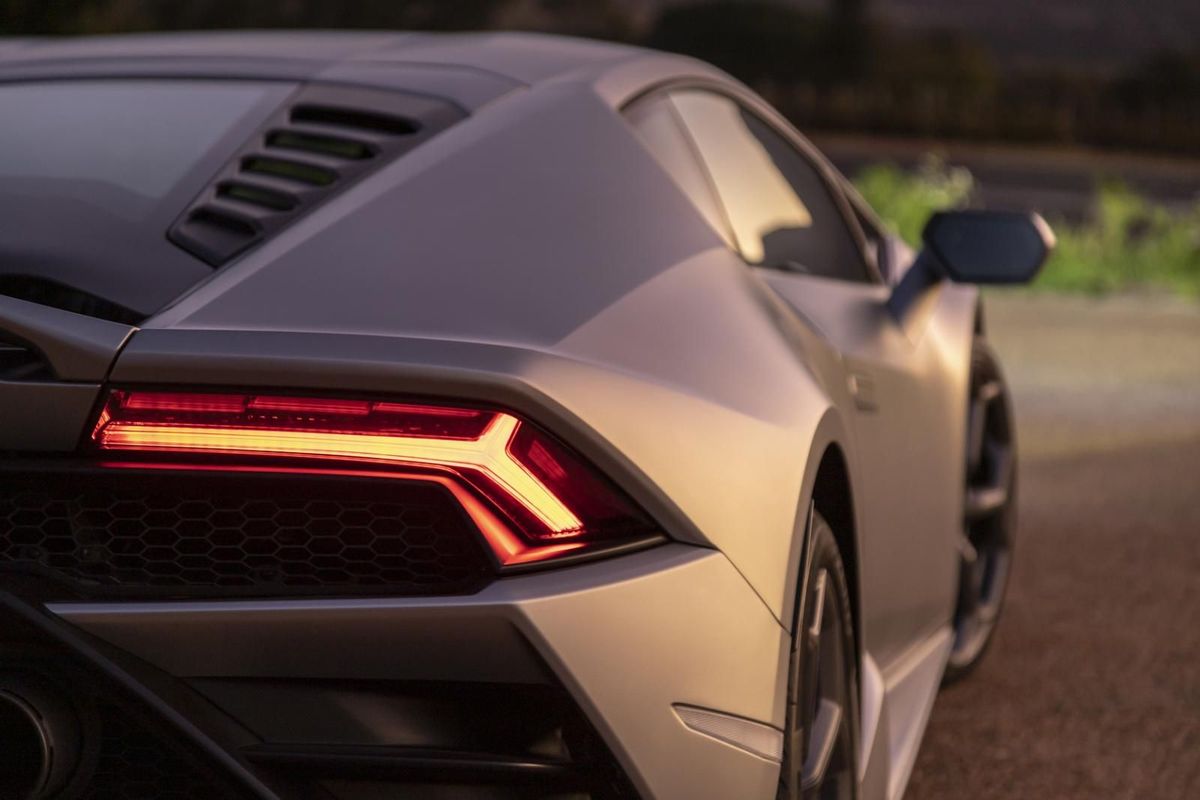
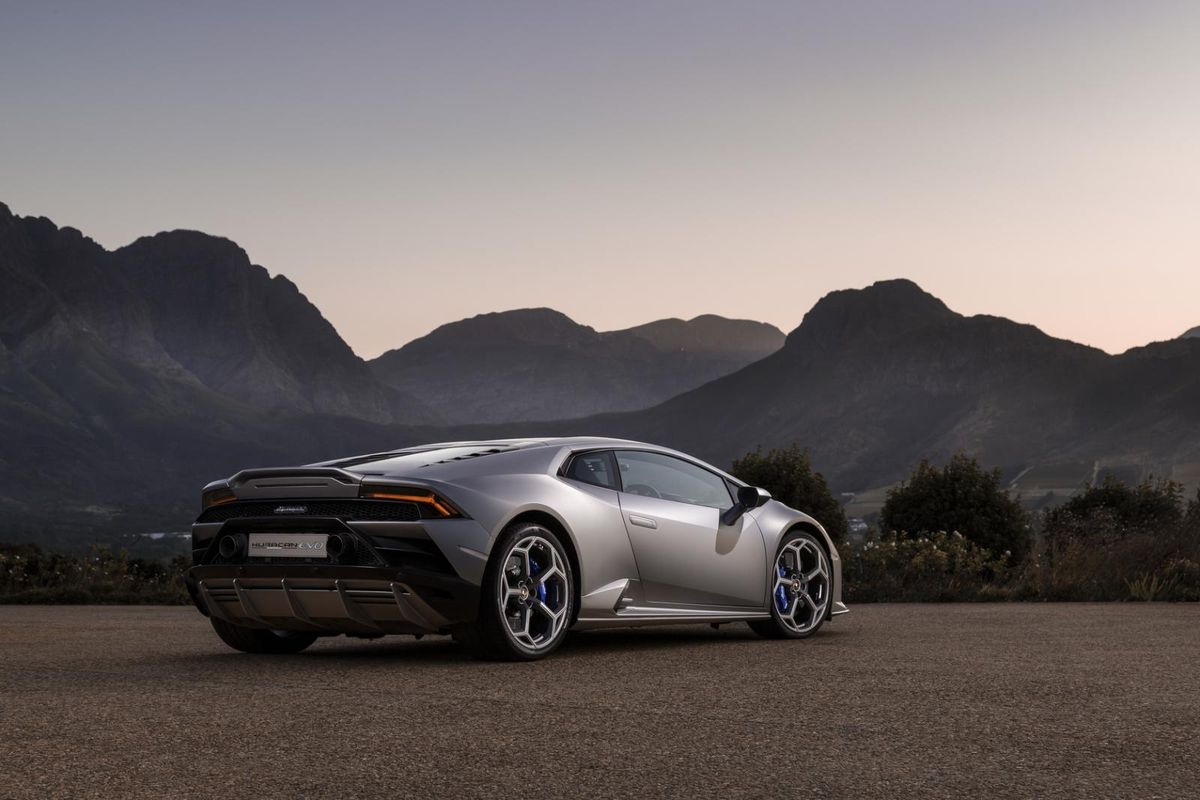
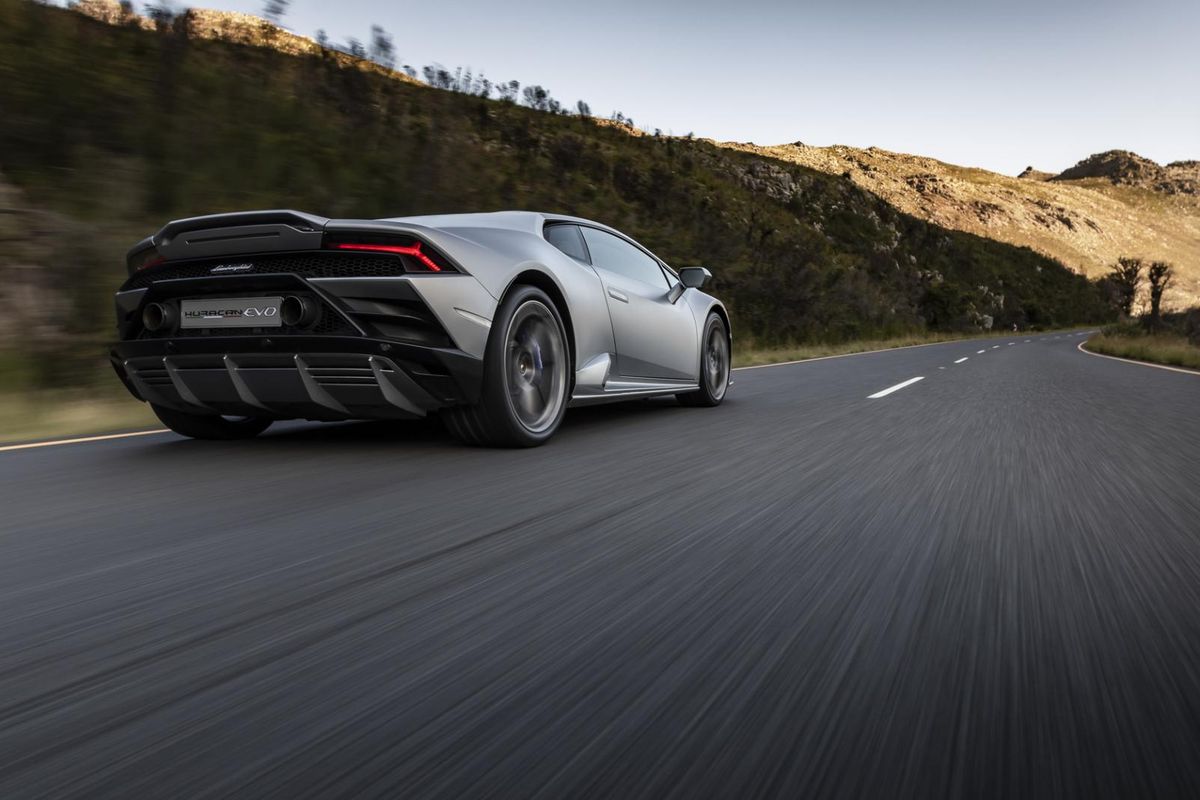
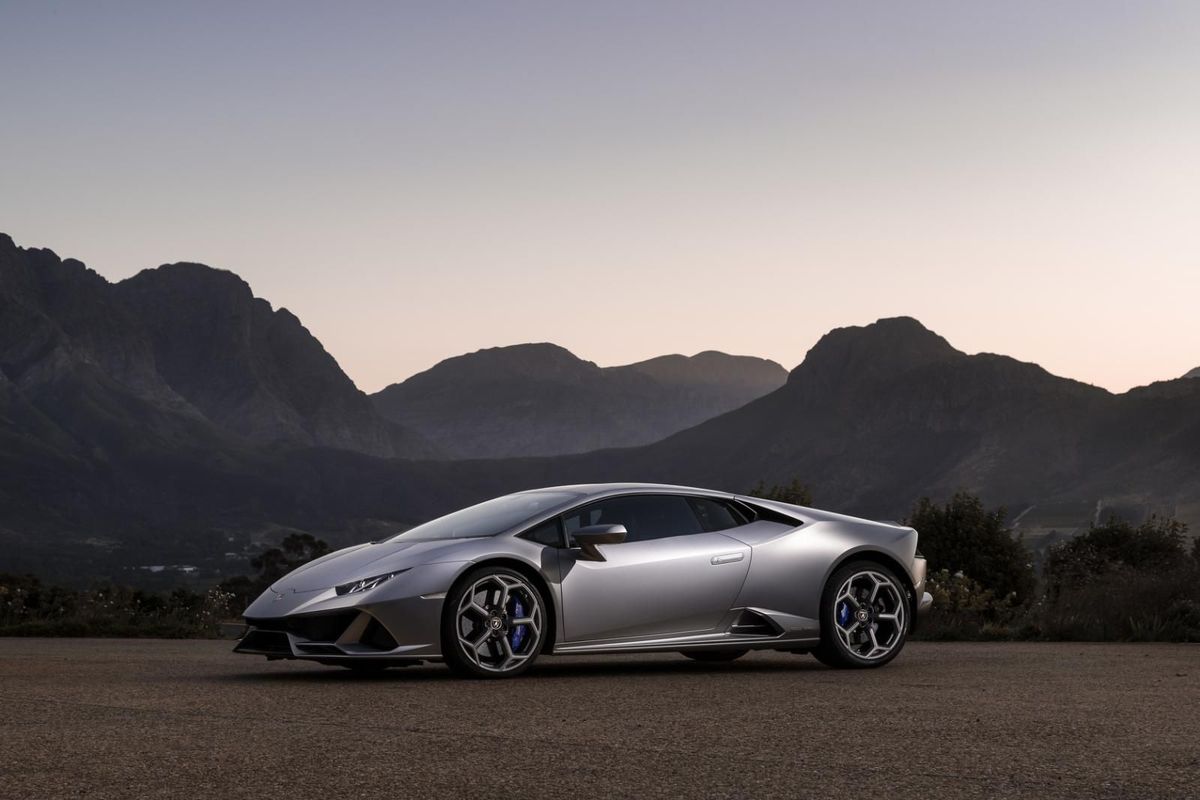
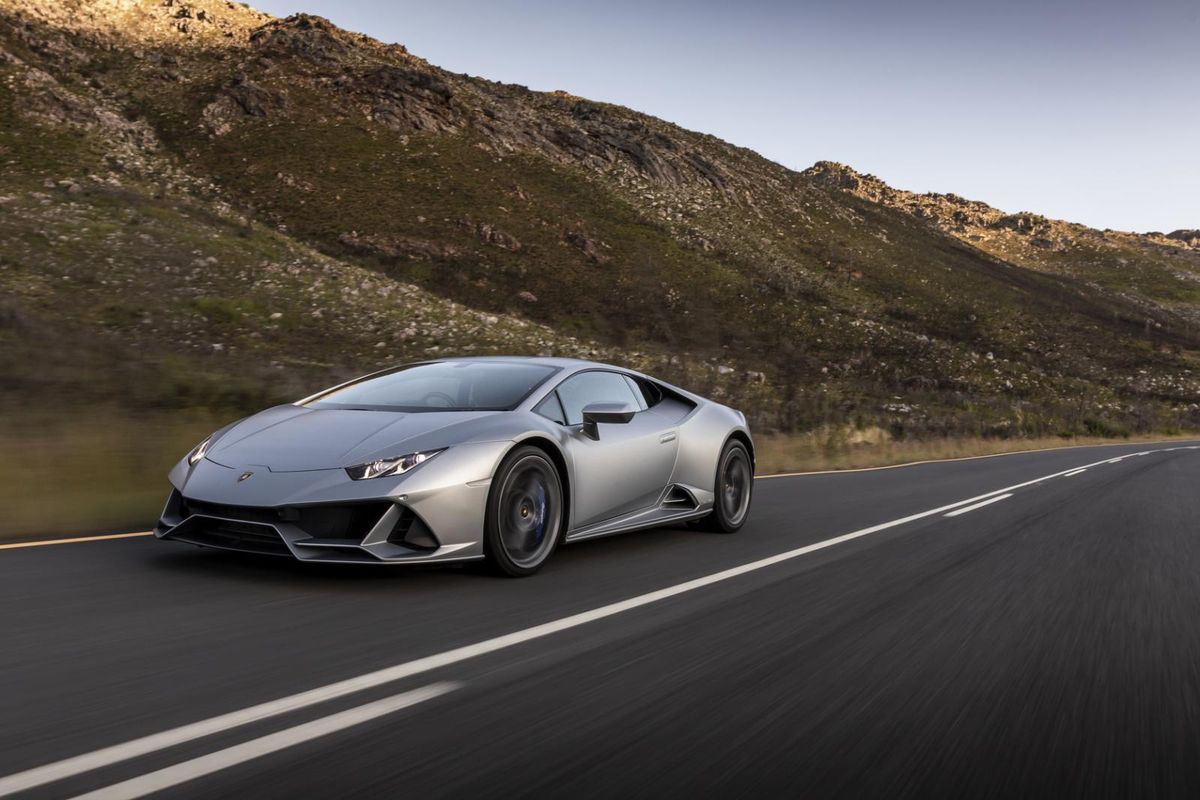
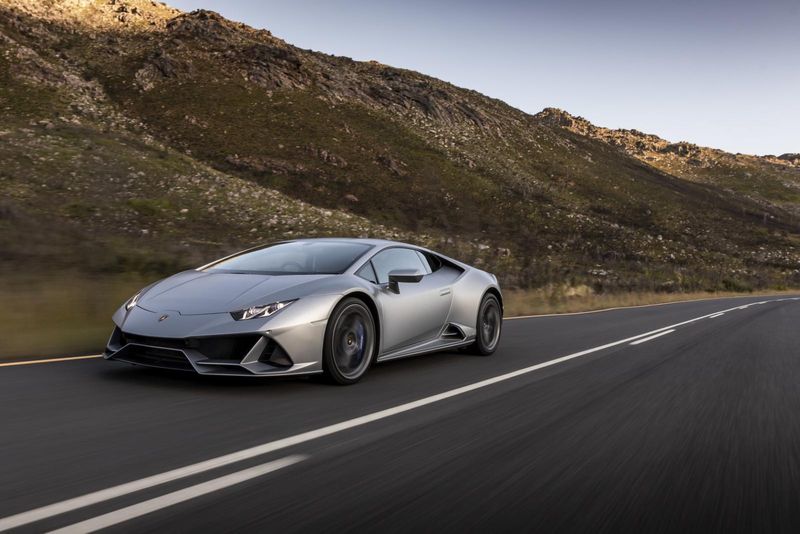
Lamborghini says its new Evo represents far more than just an average mid-life facelift of its Huracan supercar, which debuted as long ago as 2014. To find out whether there's any truth to the St'Agata-based firm's statement, we took the 5.2-litre V10-engined machine for a spin on some of the Western Cape's finest roads.
It happens to even the best sportsmen and -women in the world – if it's not simply the relentless onslaught of time that leads to a drop in ranking, it's the arrival of young, new talent. In the case of Lamborghini's Huracan, a 6-year old veteran of the supercar world, it's arguably a combination of both. While still hugely charismatic and, in the guise of the wild Performante derivative, massively engaging (and mildly terrifying), the supercar game has been moved on by the likes of the Ferrari F8 Tributo, upcoming Porsche 911 Turbo and the sizzling McLaren 720S, at least as far as performance and drivetrain "management" is concerned… And, from a user-experience perspective, the Huracan's cabin had fallen behind the times by virtue of its lack of modern conveniences, such as touchscreen systems and smartphone integration. Enter the Huracan Evo – it's here to redress the balance.
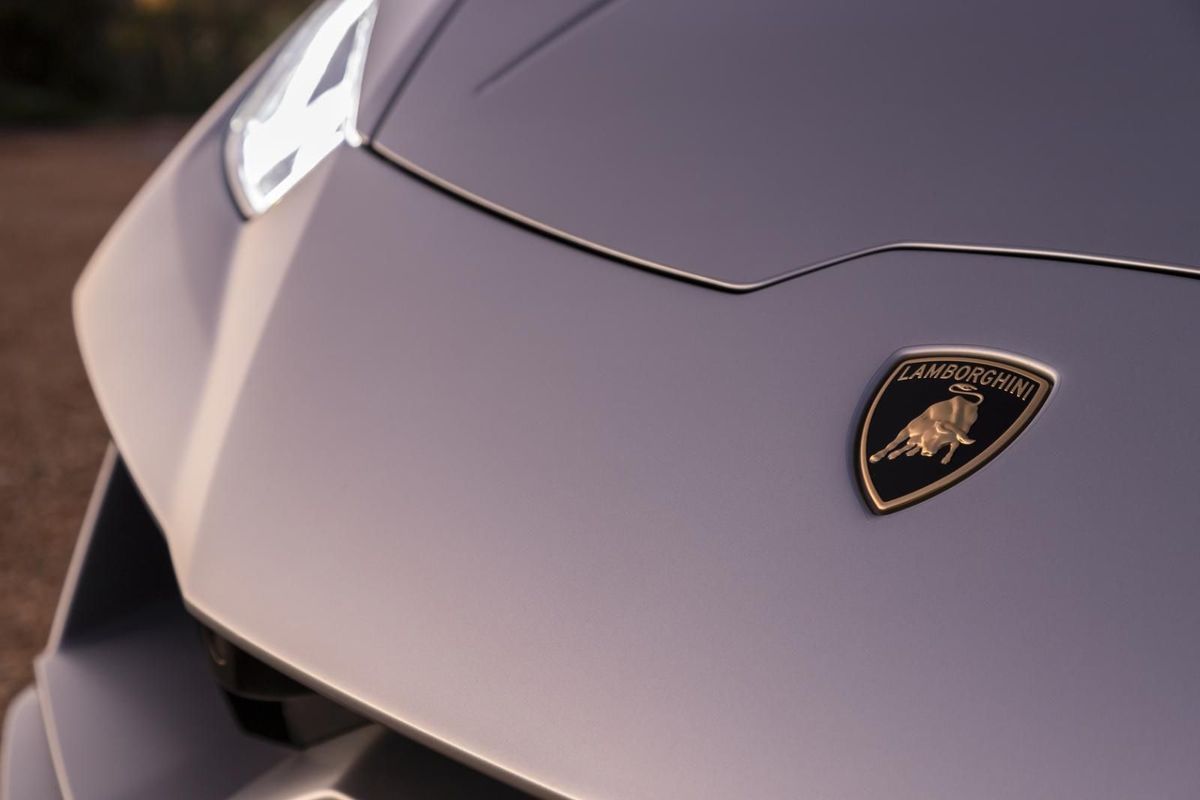
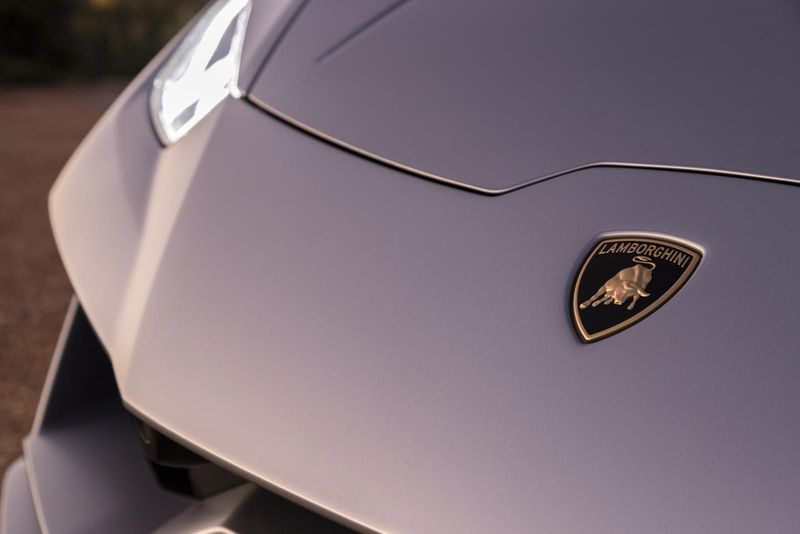
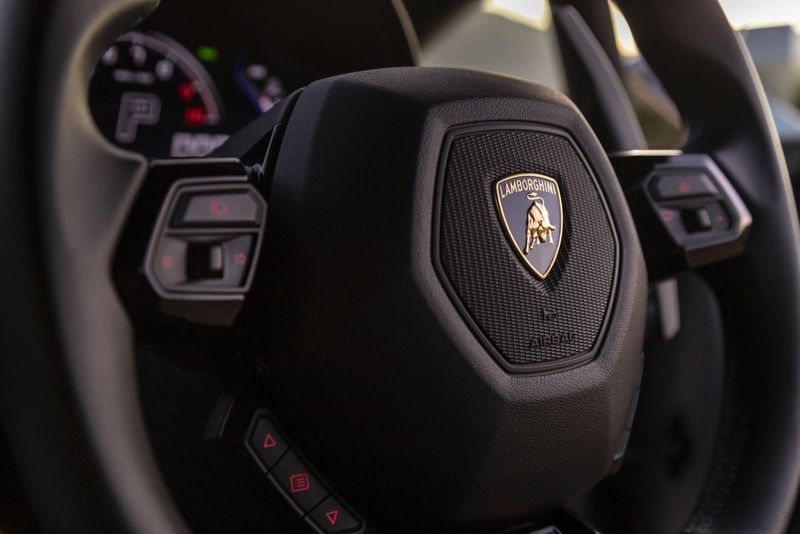
Badge of honour – the revised Huracán is now a more playful, responsive machine with updated interior features.
Fast Facts
Price: R5 500 000 (March 2020, no options)
Engine: 5.2-litre V10
Gearbox: 7-speed dual-clutch
Fuel economy: n/a
Power/Torque: 470 kW/600 Nm
Performance: 0-100 kph in 2.9 sec (claimed)
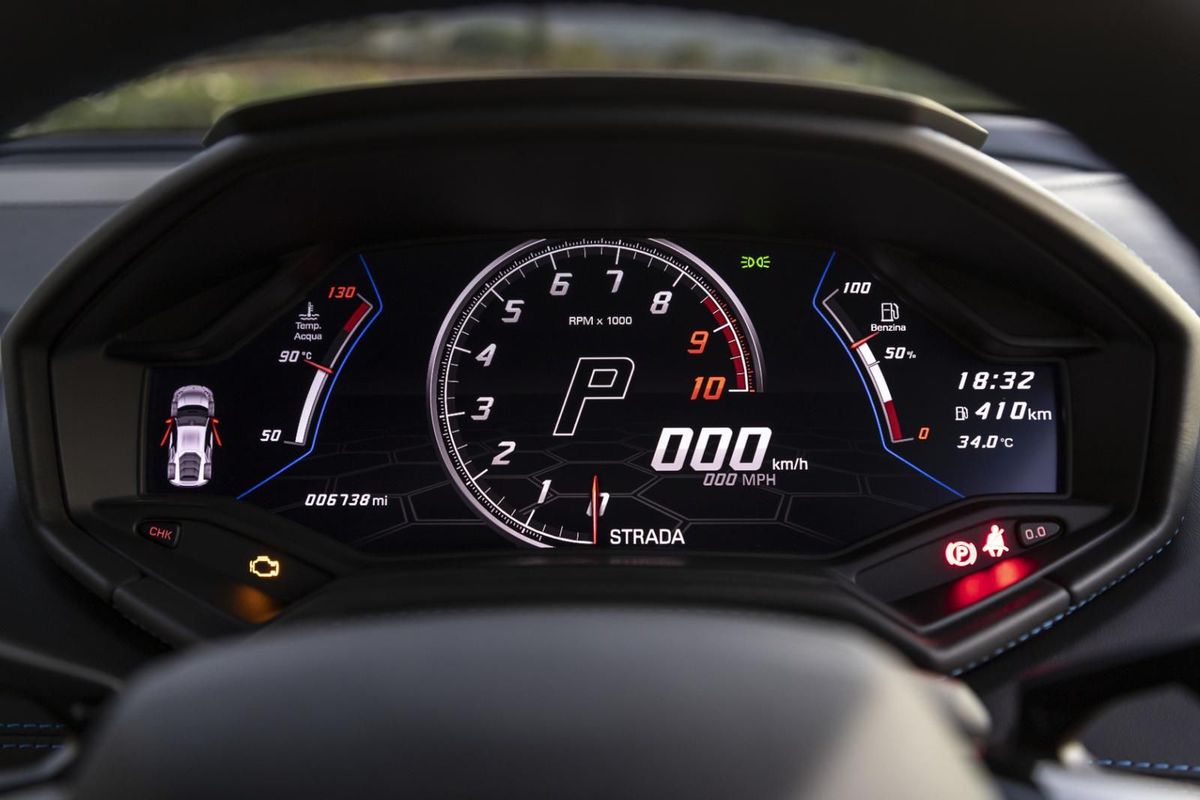
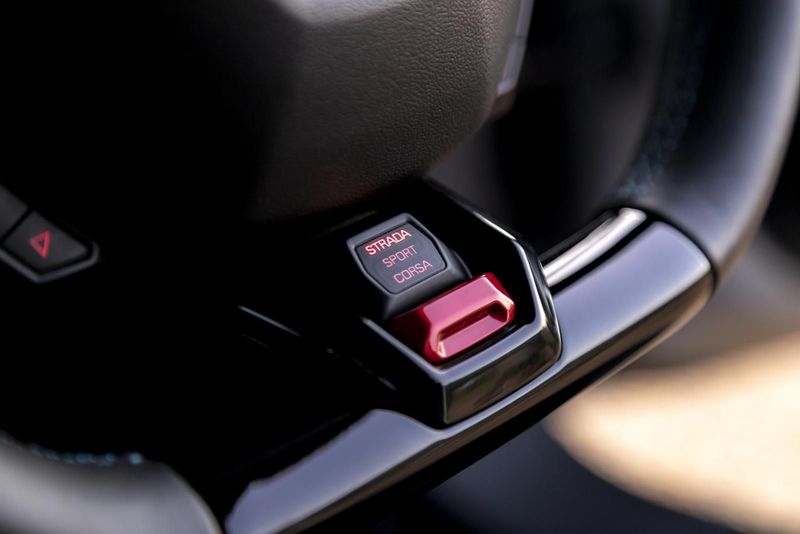
Admittedly, it's been a while since I've driven something as raw and visceral as the Huracan Evo, but the explosive "trigger" moment, which one reaches by pushing the throttle past the point of resistance, all the way down to the carpet, results in such astonishing violence I'm left breathless… shell-shocked… even. "But this is just Strada mode," are the first words that I can muster after backing off and reining in the matte-grey Italian stallion. My passenger just giggles.
The source of violence
An optional feature fitted to our test unit was a clear engine cover; it allows you (and onlookers) to admire that naturally aspirated V10.
The Huracan retains its naturally aspirated 5.2-litre V10, but in the Evo, it's now to the same specification as the motor in the Performante, which means it gets titanium intake-valves and a lighter, "refined" exhaust system, resulting in a peak power output of 470 kW at a dizzying (and cacophonous) 8 000 rpm. The performance figures are very impressive and, after pressing all the way down on the throttle pedal (just once), there's no reason why I should doubt them.
The 0-100 kph sprint takes 2.9 seconds, but more impressively, 200 kph shows up in just 9 seconds, as the Evo screams its way to a 325-kph top speed. Under full acceleration, and in the appropriate mode (Sport or Strada), the 7-speed dual-clutch transmission takes on a far more aggressive nature; up-shifts punch you in the back, the acceleration flattens your lungs and the sound pierces your eardrums. This car isn't shy about its Lamborghini heritage. It's wild.
The new "brain"
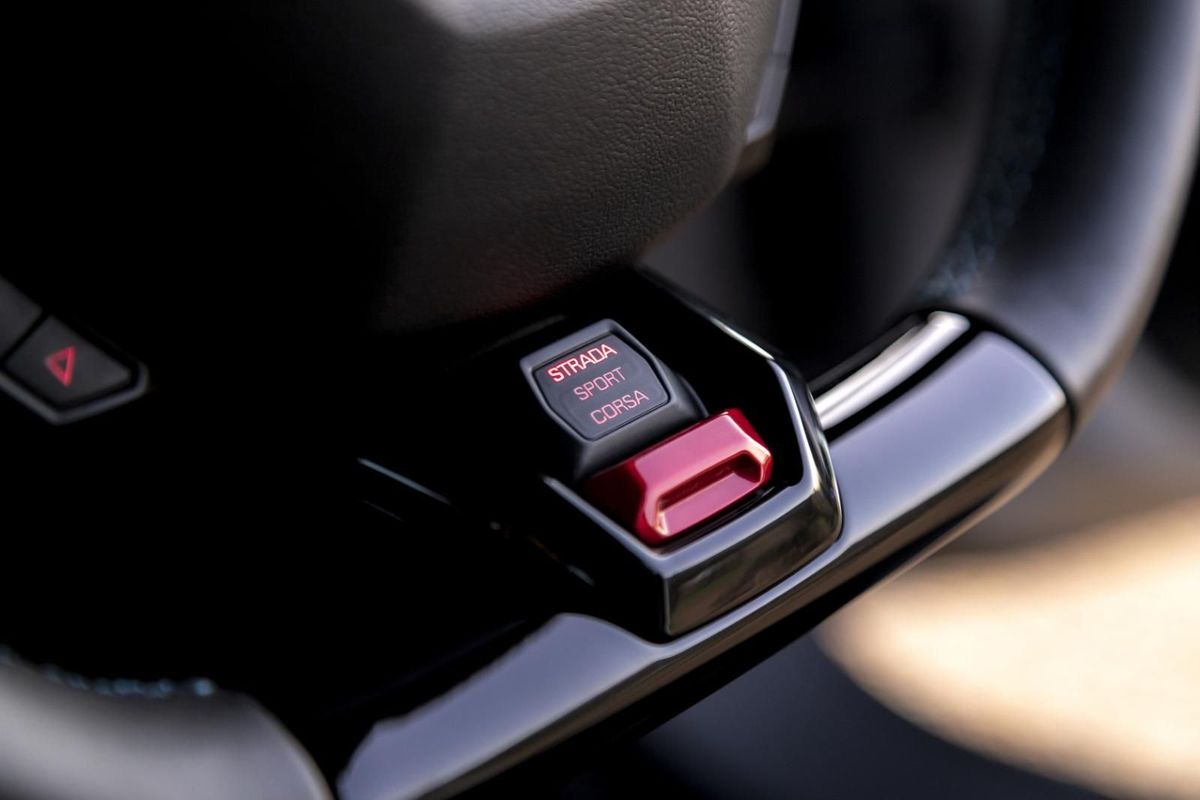
There are three driving modes to choose from, with Corsa aimed at track use. Sport strikes a very well-balanced middle ground.
The biggest change with this new Huracan Evo is its dynamics control system, which is said to make it easier to drive fast. At this point many purists will be squirming in their chairs – a Lamborghini should be wild, shouldn't it? Let's see…
The Lamborghini Dinamica Veicolo Integrata (LDVI) is essentially a CPU that controls every aspect of the car's dynamic behaviour; it's set up to "anticipate" the moves and needs of the driver. Queue more squirming… In addition to LDVI, the Evo features rear-wheel steering and a torque vectoring system (working on all four wheels) – borrowed from the Aventador S and SVJ. The steering system is said to improve agility at low speeds and stability at high speeds.
The new LDVI "brain" controls an awful lot of what goes on underneath, but the result, we're happy to say, is a more playful car.
The LDVI really controls everything – in conjunction with the torque vectoring system, it calculates not only the split of propulsion between the front and rear axles, but the allotment from wheel to wheel on the same axle! Also falling in the LDVI's ambit are the magnetorheological suspension with active damping, the variable-ratio electric power steering and the various sensors required to measure the current driving situation and to essentially calculate the driver's next move. It all sounds terribly complicated, and to be honest, it also sounds terribly "digital" for a brand that has traditionally been very analogue, but here's the thing… it works!
Whereas the all-wheel-drive Huracan was previously quite one-dimensional in its dynamic behaviour, the Huracan Evo is more playful, more responsive and, as a result, more fun to drive. And yes, it does bring the supercar's rear-end into play more often and vigorously than before, particularly in Sport mode, which is always welcome on a car such as this.
Improved aero
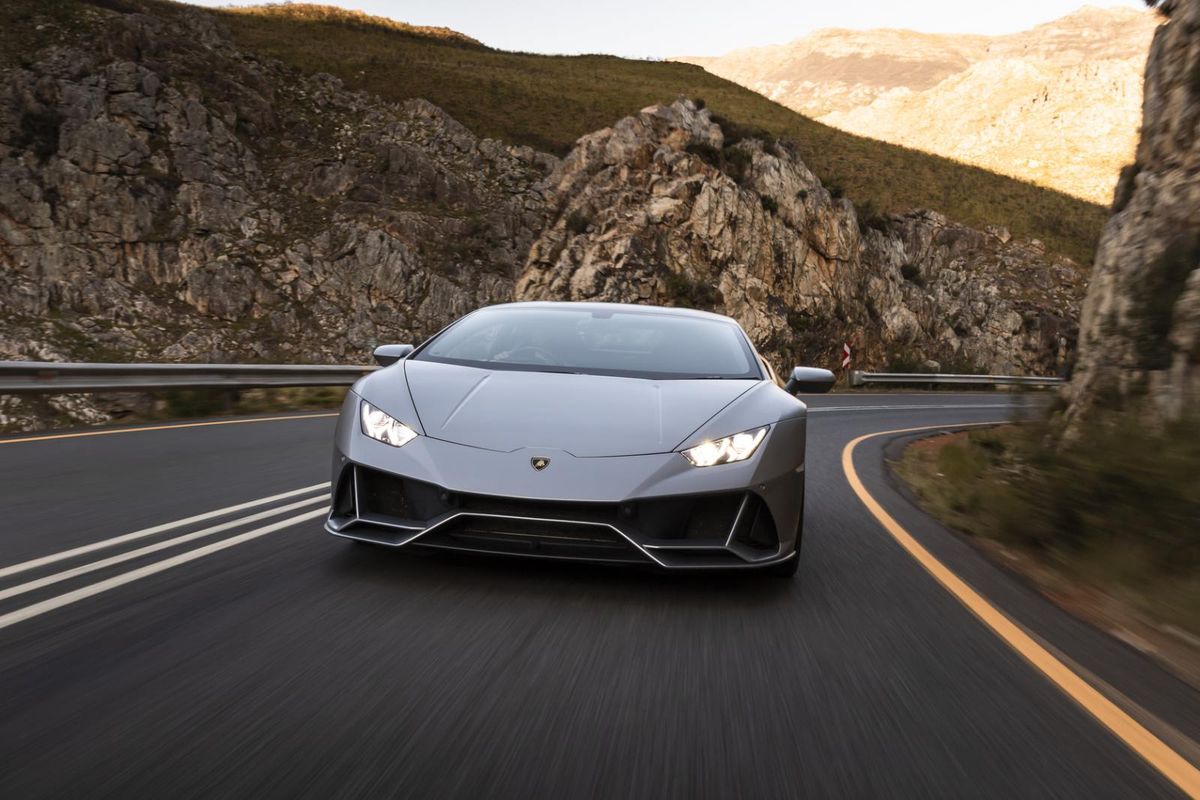
Front-end bite and precision is significantly improved courtesy of revised aerodynamics and a torque-vectoring system.
To the untrained eye, the new Huracan Evo doesn't look all that different from its predecessor, but when you park the two next to one another, the differences are very apparent. The changes are not merely for show, either…
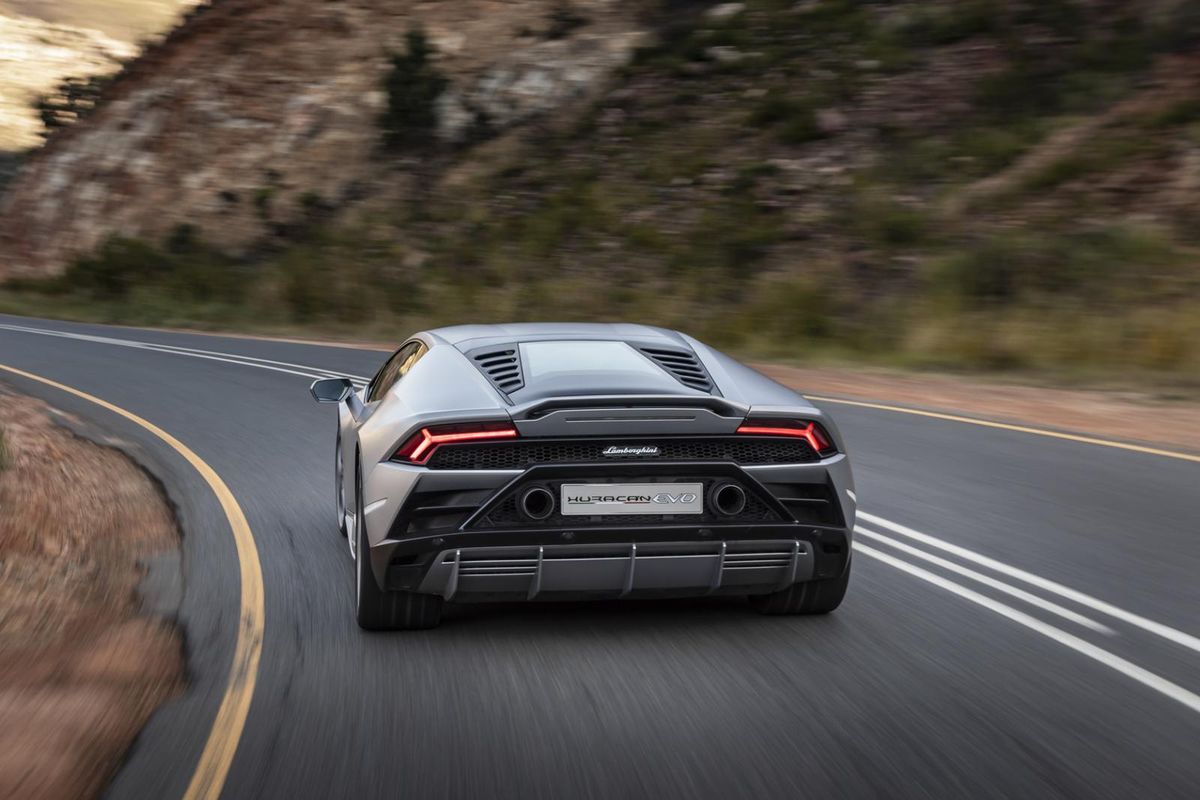
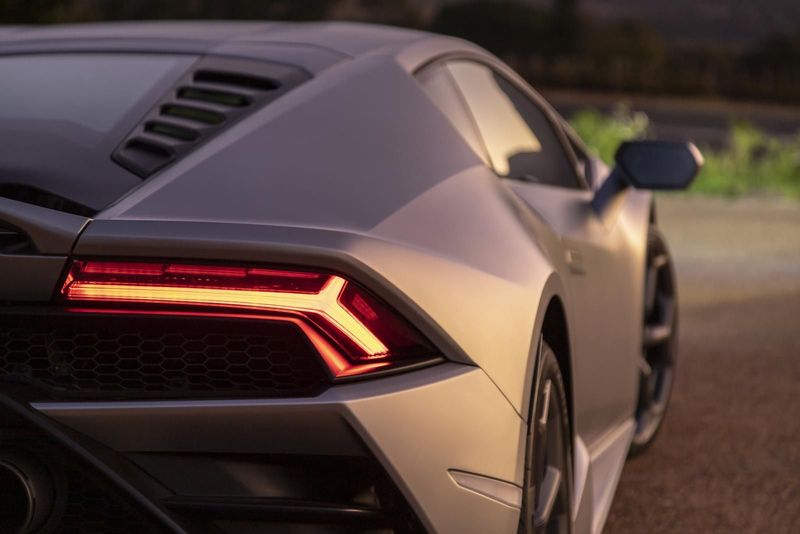
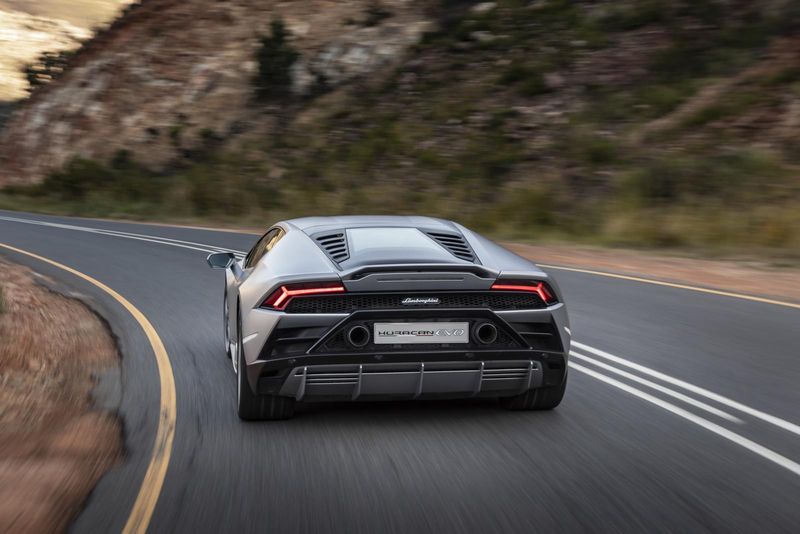
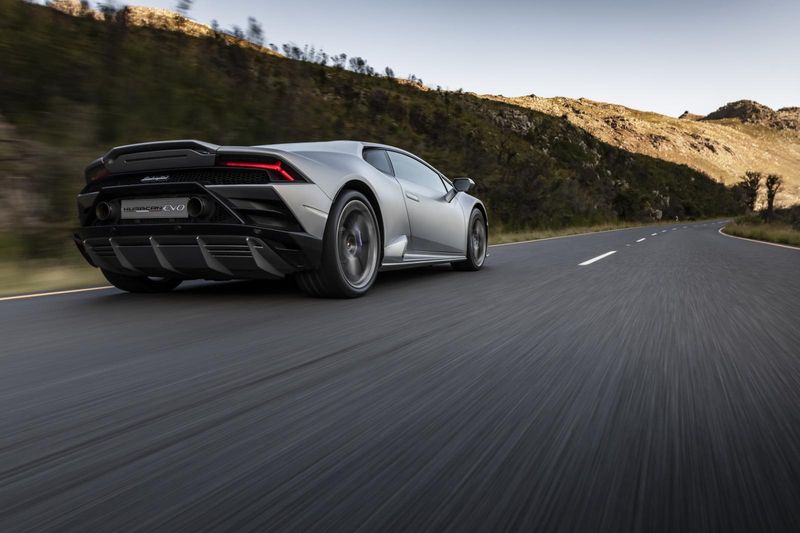
The new front bumper results in improved aerodynamic efficiency via a new front splitter with an integrated wing. New side air intakes, larger front air dams in the typical Lamborghini Y-shape, and a rear-end treatment that closely resembles the marque's Huracan racing car (albeit with a surprisingly subtle, integrated spoiler) round off the improvements. Some Lamborghini fans would have liked the new Evo to be a bit more of a show-off, but there are plenty of ways to achieve that through a very comprehensive personalisation catalogue.
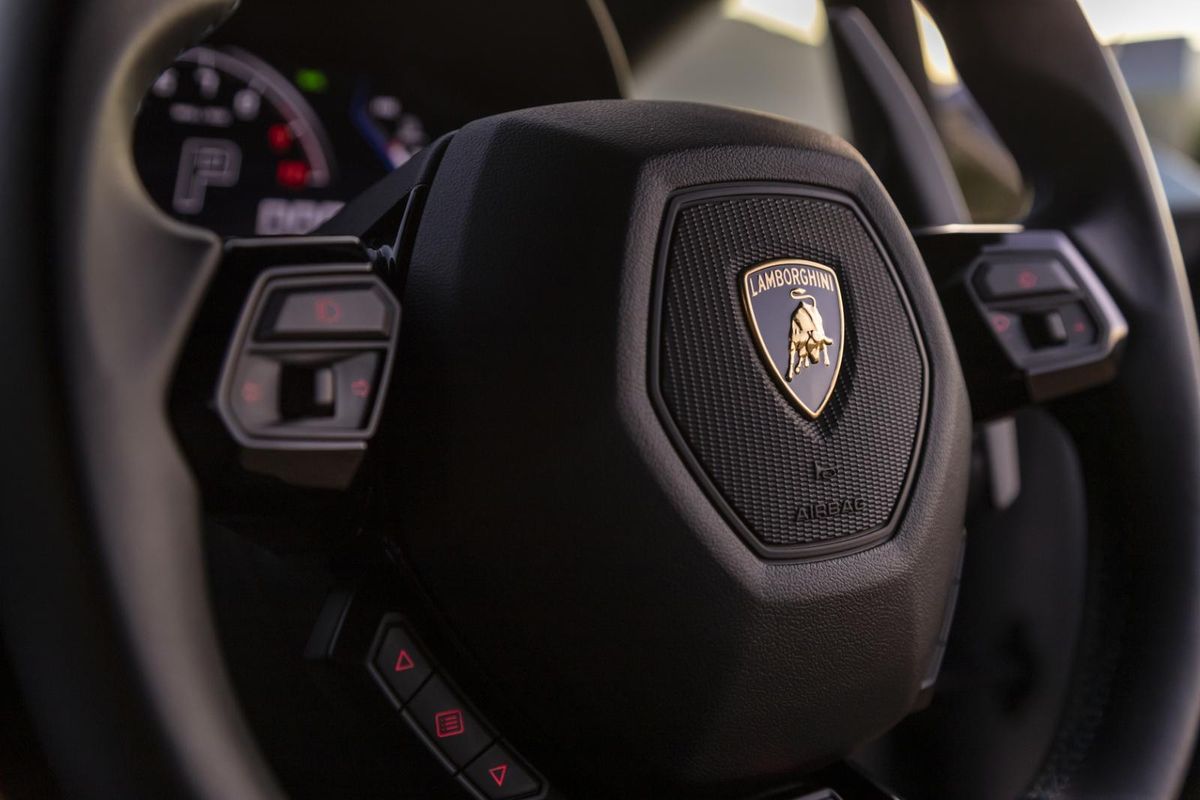
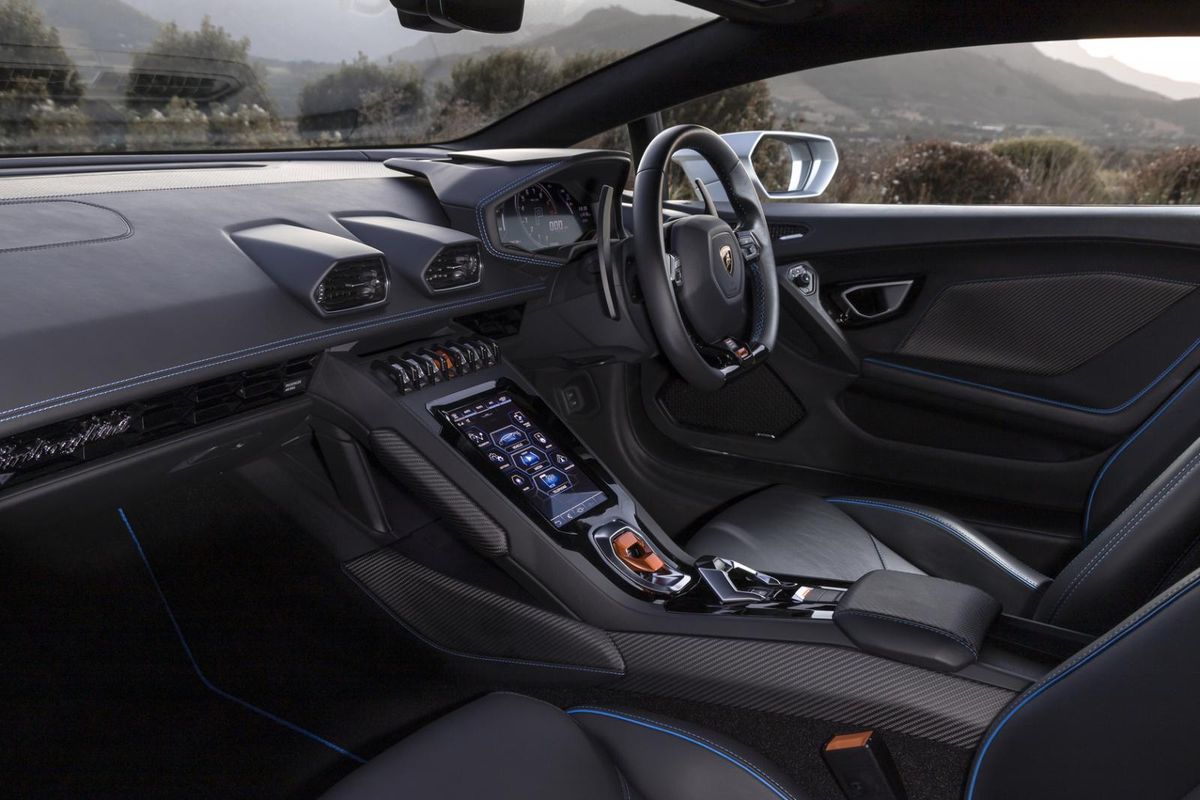
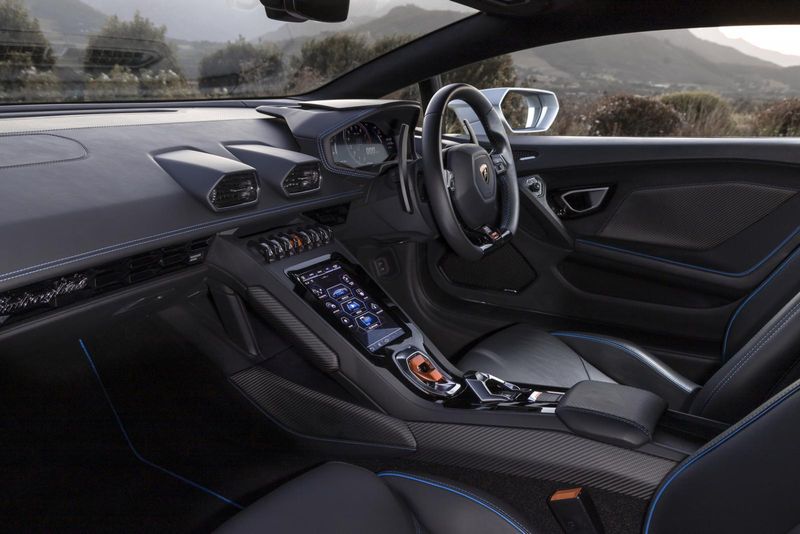
You're going to have to get used to the indicator switch on the steering wheel… but it's a minor criticism of a significantly improved cabin.
The subtle exterior aerodynamic changes and more efficient air management underneath the car have resulted in heightened levels of downforce – Lamborghini says the Evo is 5 times more aerodynamically efficient than its predecessor. It's difficult to say whether the improved aero or the LDVI contribute most to the excellent front-end bite (even in Strada), but either way (or more likely as a combination), it works. The steering feels direct, nicely weighted and offers plenty of feedback. Flick to Sport mode and the Huracan Evo becomes even more playful, particularly with its rear-end being far more willing to step out of line (but remaining easy to control). Corsa is really meant for chasing lap times.
Improved cabin
Note new control interface on the centre console. The test car featured Lambo's new "Carbon Skin" material.
When you're not busy conquering mountain passes or attempting to better your PB lap time, you'll appreciate the changes made to the Evo's cabin, too. The centre of attention is the new control touchscreen interface on the centre console, which was developed in-house by Lamborghini. Once you're familiar with the system, you can easily access climate control settings, smartphone integration functions (Apple CarPlay etc.) and, if so specified, there's even a telemetry function that includes a pair of onboard cameras so that you can record your on-track antics. A quirk that requires some familiarisation is the lack of an indicator stalk (replaced by a button on the steering wheel).
As is usually the case with premium vehicles such as this, the options list is quite extensive and there are some very appealing items that you'll have to pay extra for. At a base price of R5.5 million, however, you're likely to be able to afford a few of them… Our test car featured a number of extras that you really can't do without – Bluetooth preparation, a reverse-view camera with parking sensors, a front suspension lift system and the smartphone interface.
Verdict
Note the positioning of exhaust outlets and reworked rear diffuser in this image.
As far as mid-life facelifts go, they don't usually come more "transformative" than this one… Whereas the "Huracan experience" was previously dominated by the supercar's wild aesthetics and the drama of its charismatic powerplant, the Evo is now a more complete package; its dynamic ability has been elevated to a level that makes the Italian machine not only more fun to drive in isolation, but more competitive within the context of its market rivals. Lamborghini needs to be applauded for its new LDVI system in particular – it could easily have made the car feel too safe and predictable at the limit… but what it's done is make the car feel more like a wild Lamborghini. And that, folks, is a big win.
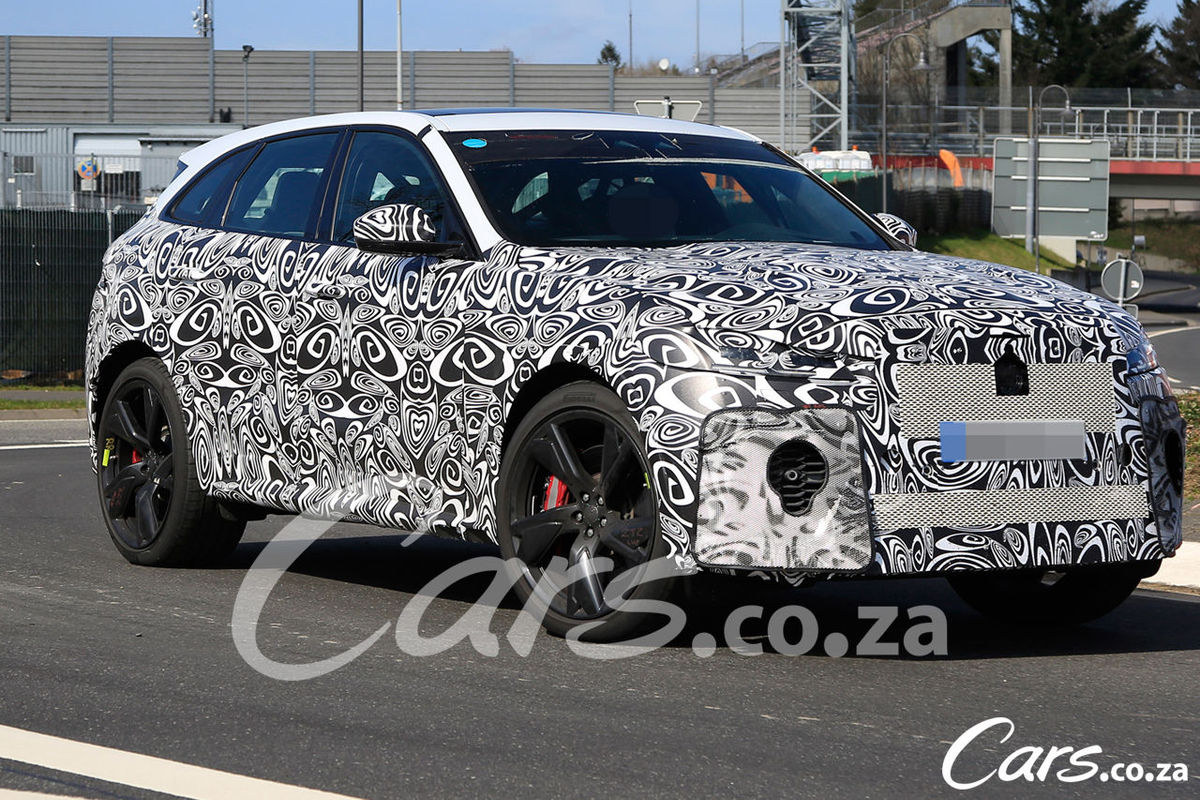
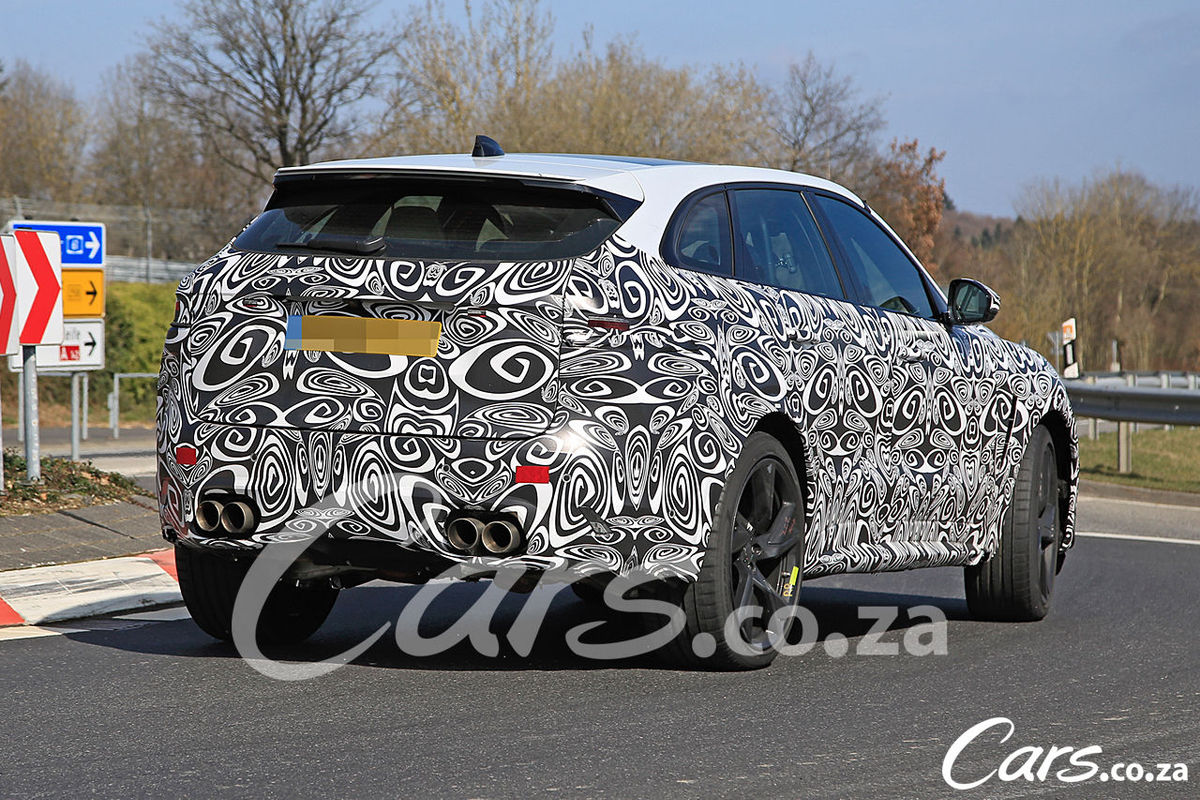
Jaguar is readying a facelifted version of its F-Pace SUV and along with it, an updated SVR. Here's what we know.
Picture credit: S. Baldauf/SB-Medien. We have paid for these photos and at the photographer's request, have watermarked them.
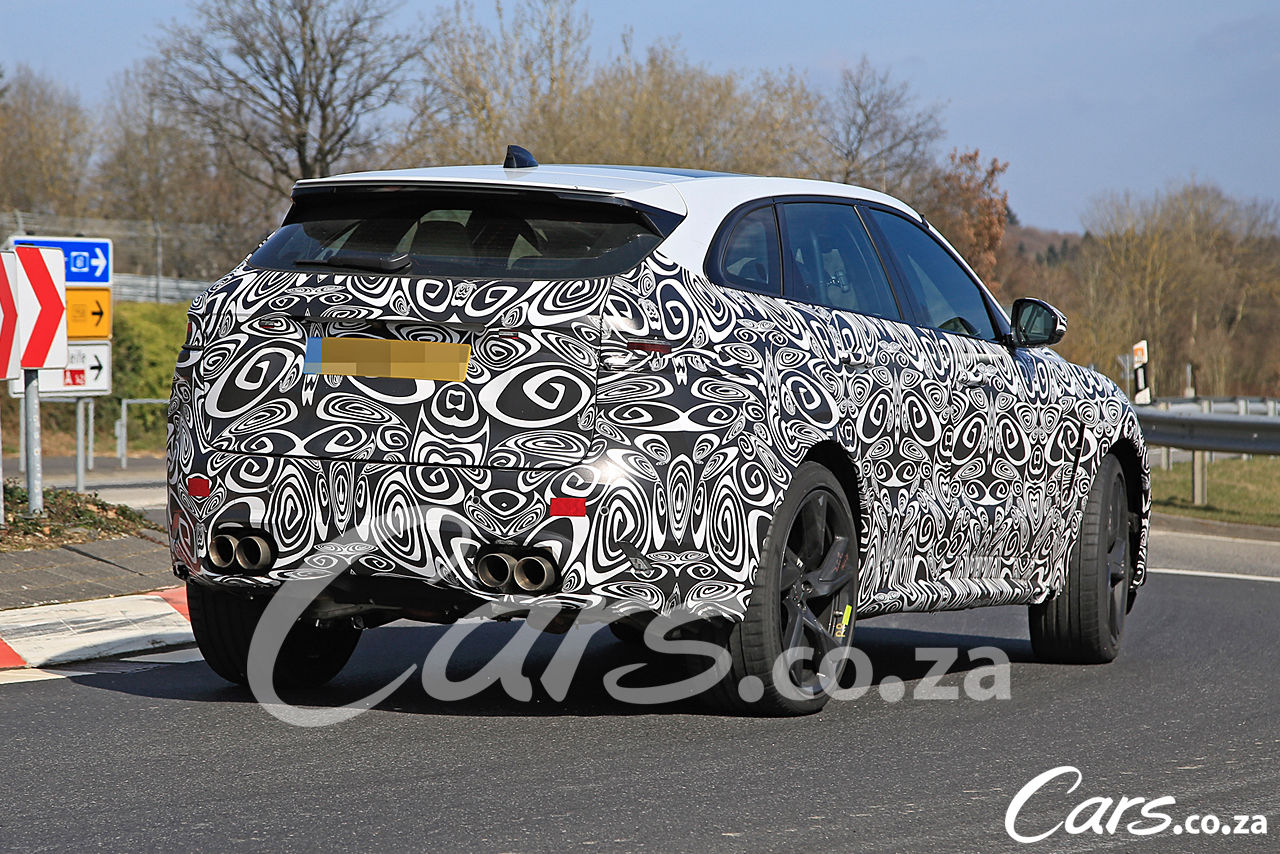
Spotted on the roads of Germany, this Jaguar F-Pace has all the trademarks of being the flagship SVR model. Firstly, look at the size of those monstrous wheels, complete with big brake callipers. Secondly, in the second frame, note the quad exhaust system, loudly singing the 5.0-litre supercharged V8 song.
The updated Jaguar F-Pace SVR will feature new-look bumpers at the front and rear, with the cabin receiving the most changes. It's said there will a huge focus on quality and technology, and given the quality inside the electric I-Pace, it's expected we'll see a trickle down. Things like the dual-screen central stack as well as the updated digital dashboard should make an appearance.
There are also expected to be some mild changes to the chassis and suspension, but interestingly, there's whispers of a new range of mild-hybrid engines for the F-Pace range. The SVR should continue to use the monstrous 5.0-litre supercharged V8 motor and outputs should be around the 405 kW and 680 Nm mark. We'll keep you updated and we expect the new Jaguar F-Pace to be fully revealed before the end of 2020.
There's no mistaking those big wheels or quad exhausts.
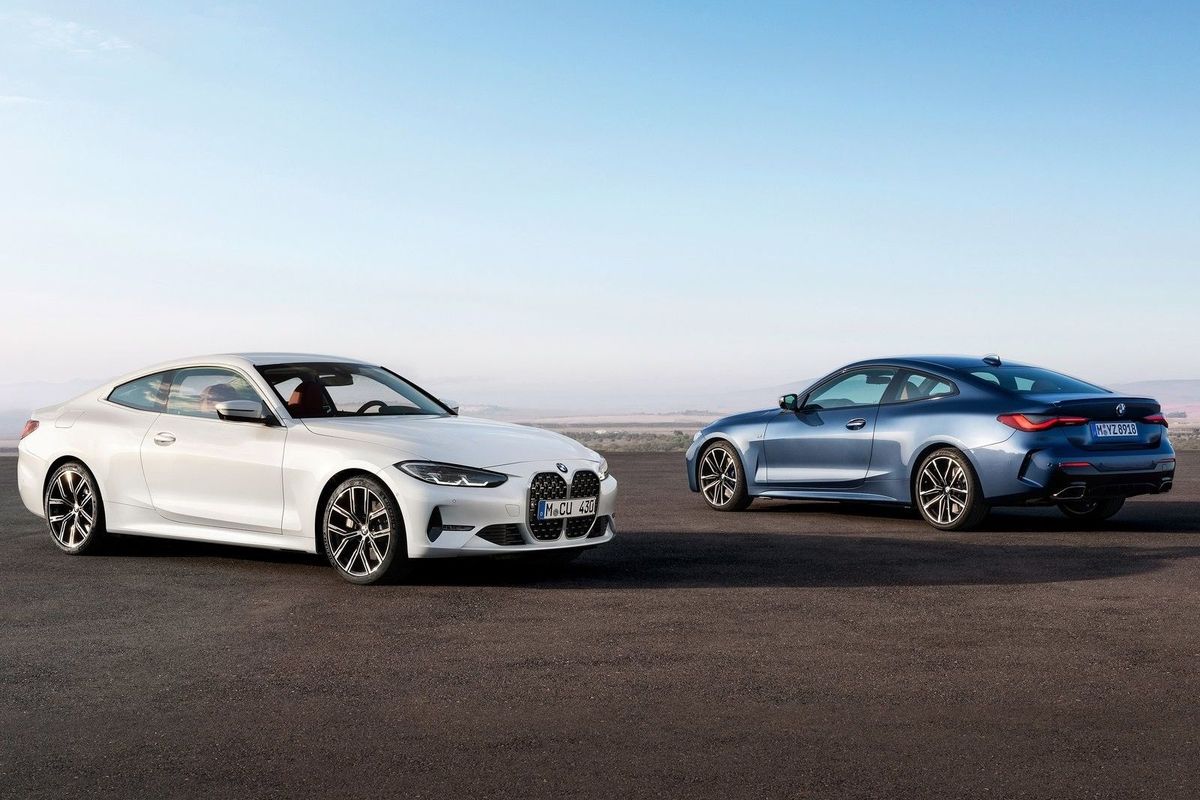
The next-generation BMW 4 Series coupe has been spotted out and about again. About that elephant in the room…
Picture credit: S. Baldauf/SB-Medien. We have paid for these photos and at the photographer's request, have watermarked them.
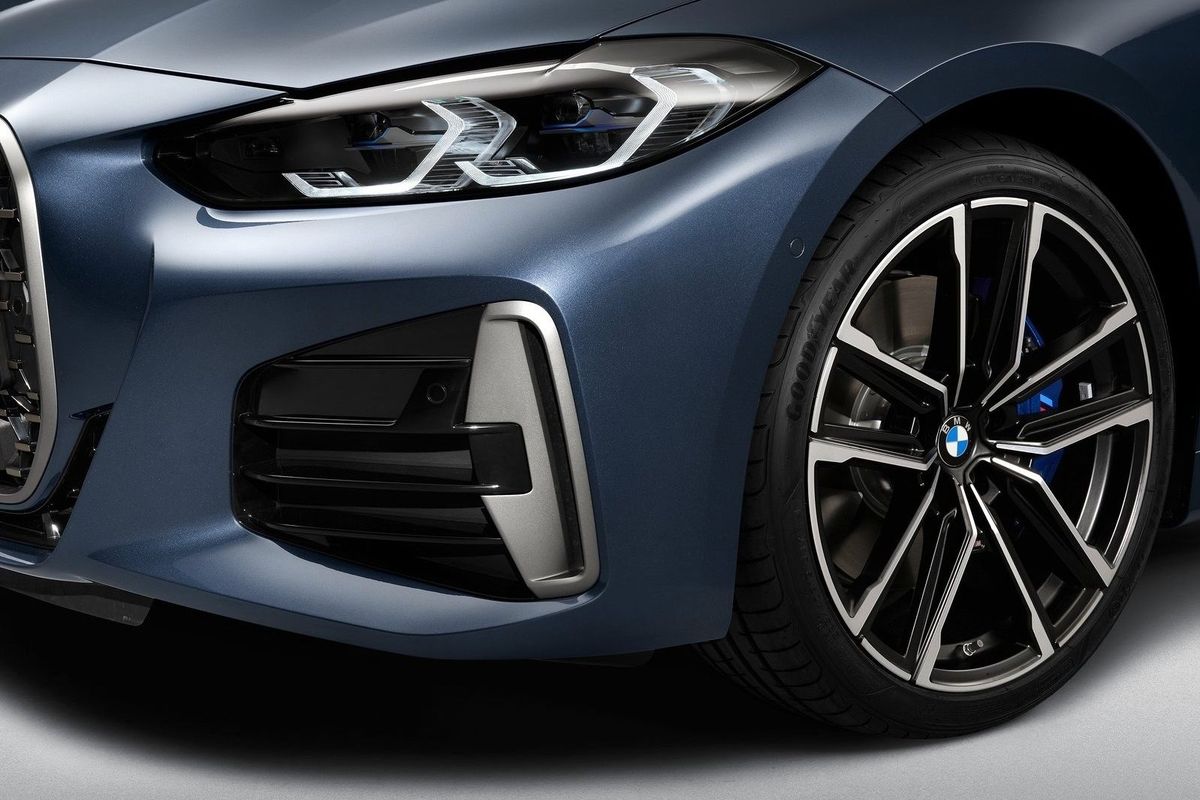
Yes, that elephant is indeed the grille and these latest spy shots highlight it. It's a step closer to production and there's now a numberplate which helps lessen the grille's effect. When compared to the concept car's grille, this looks far more reasonable and dare we say it, it's acceptable. There's no denying many petrolheads will still find it polarising. BMW should follow a similar strategy as before and have coupe, convertible and Gran Coupe body styles of this car.
Inside will feature much the same cabin as the current BMW 3 Series, with its slick infotainment system and digital dashboard. Expect similar engines too, with turbo petrol 4- and 6-cylinder motors as well as diesel engines. The big one we're all waiting for is the BMW M4 which will be using the 375 kW inline-6 from the X4 M. That'll be revealed fully before the end of the year and should go on sale in 2021. The standard BMW 4 Series should make landfall in South Africa before the end of 2020.
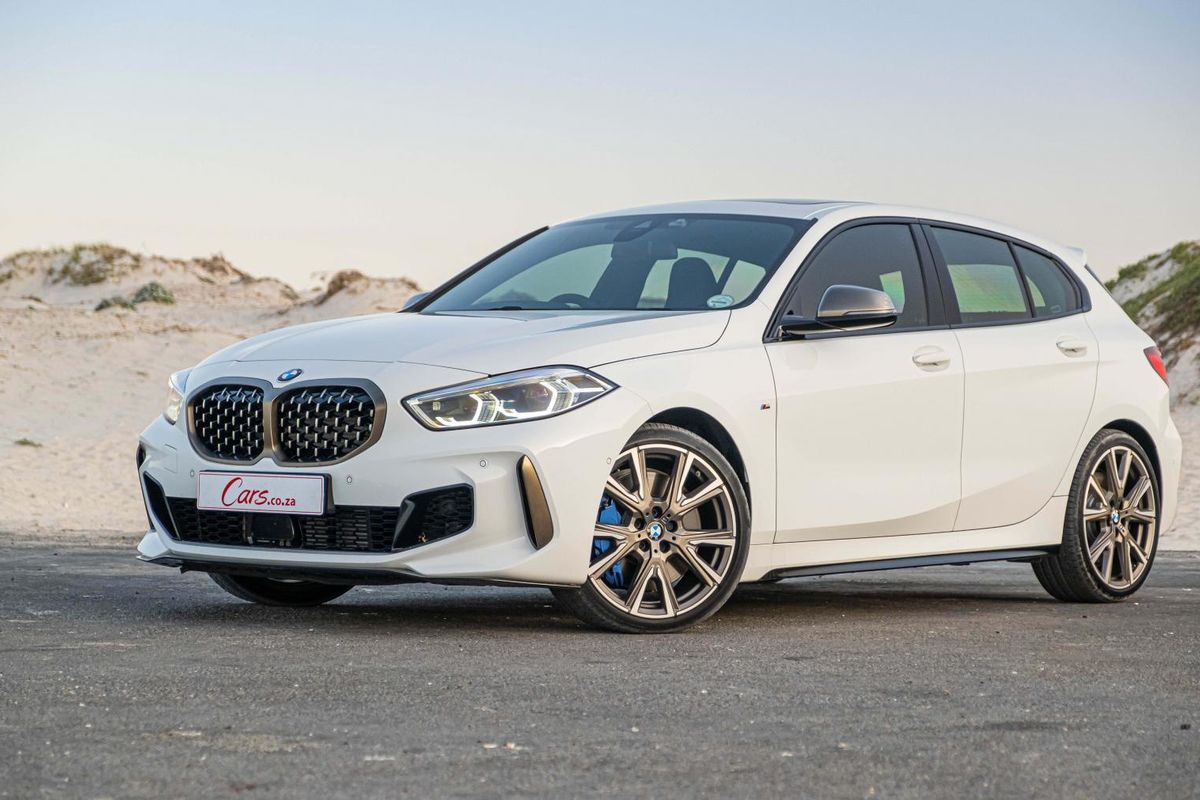
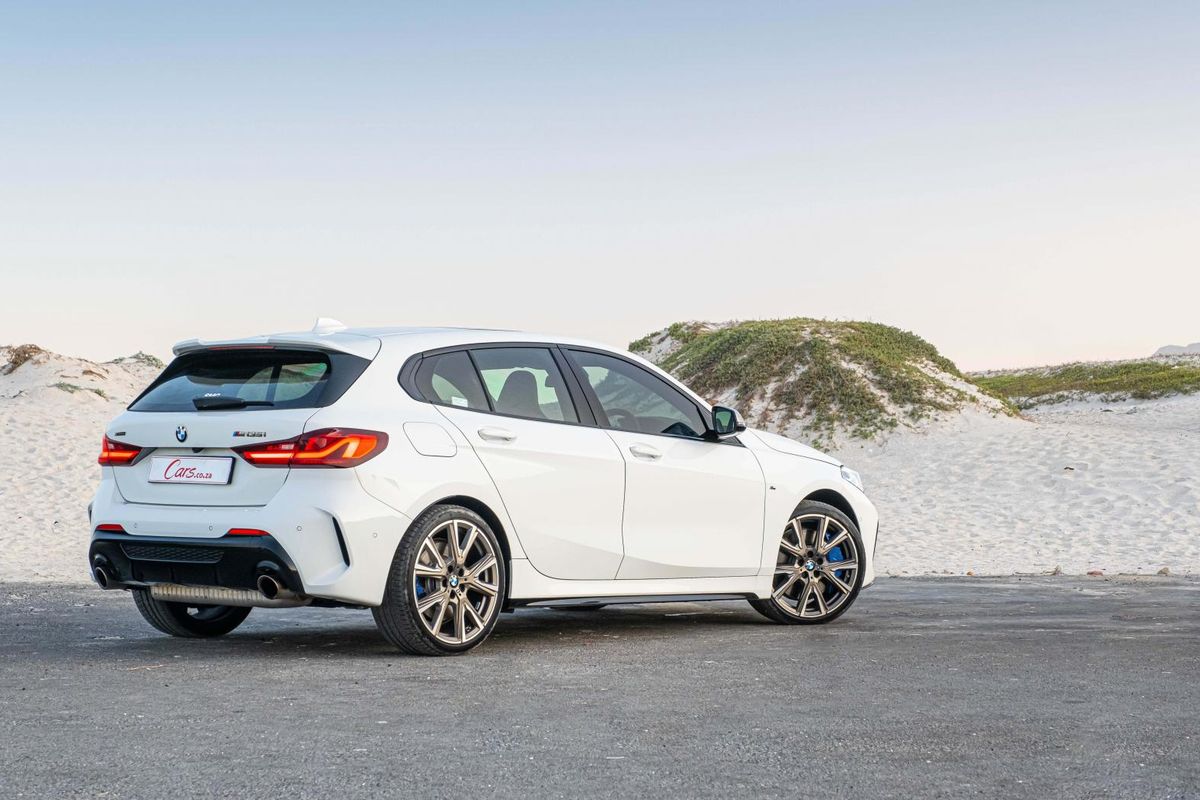
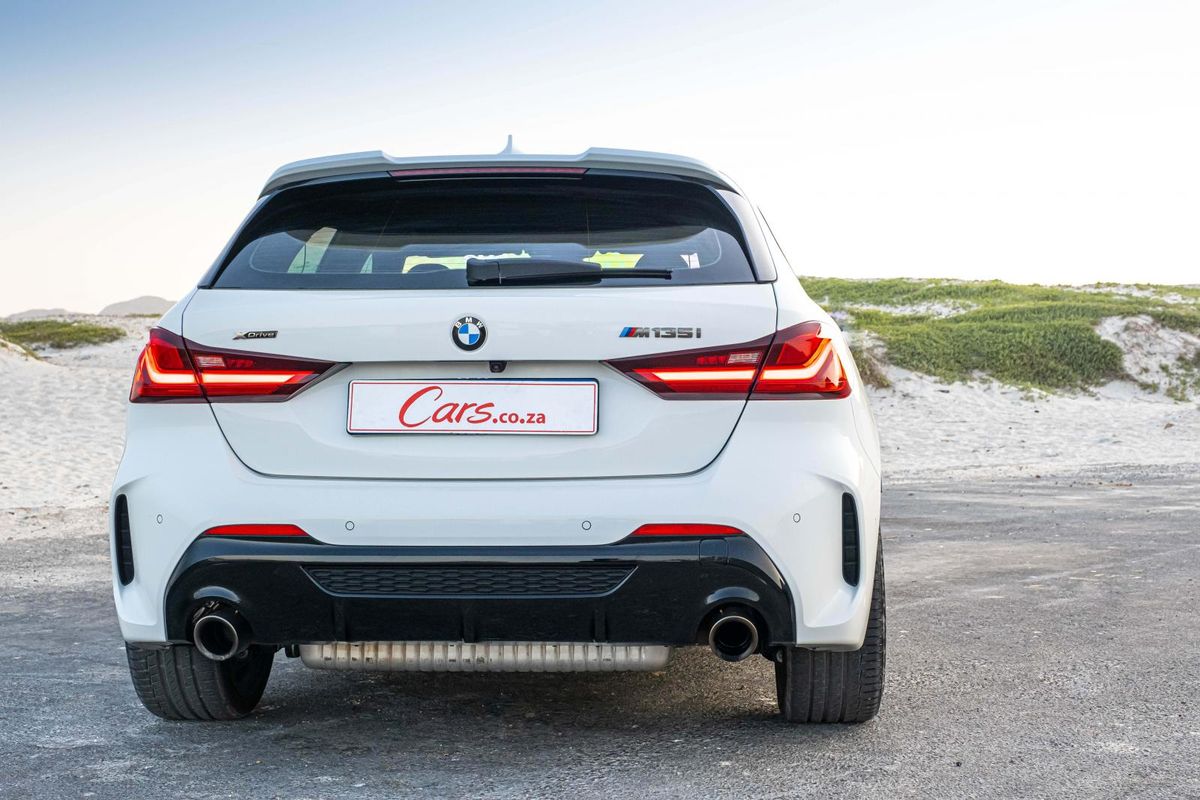
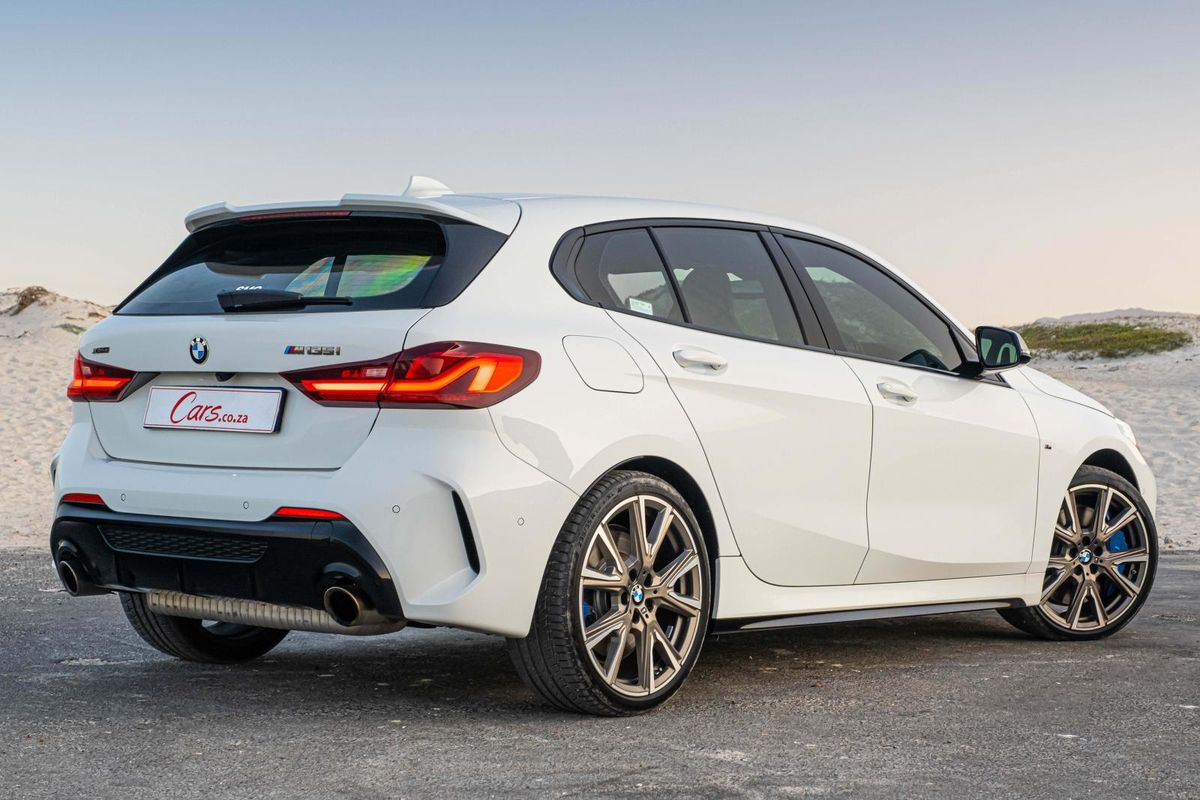
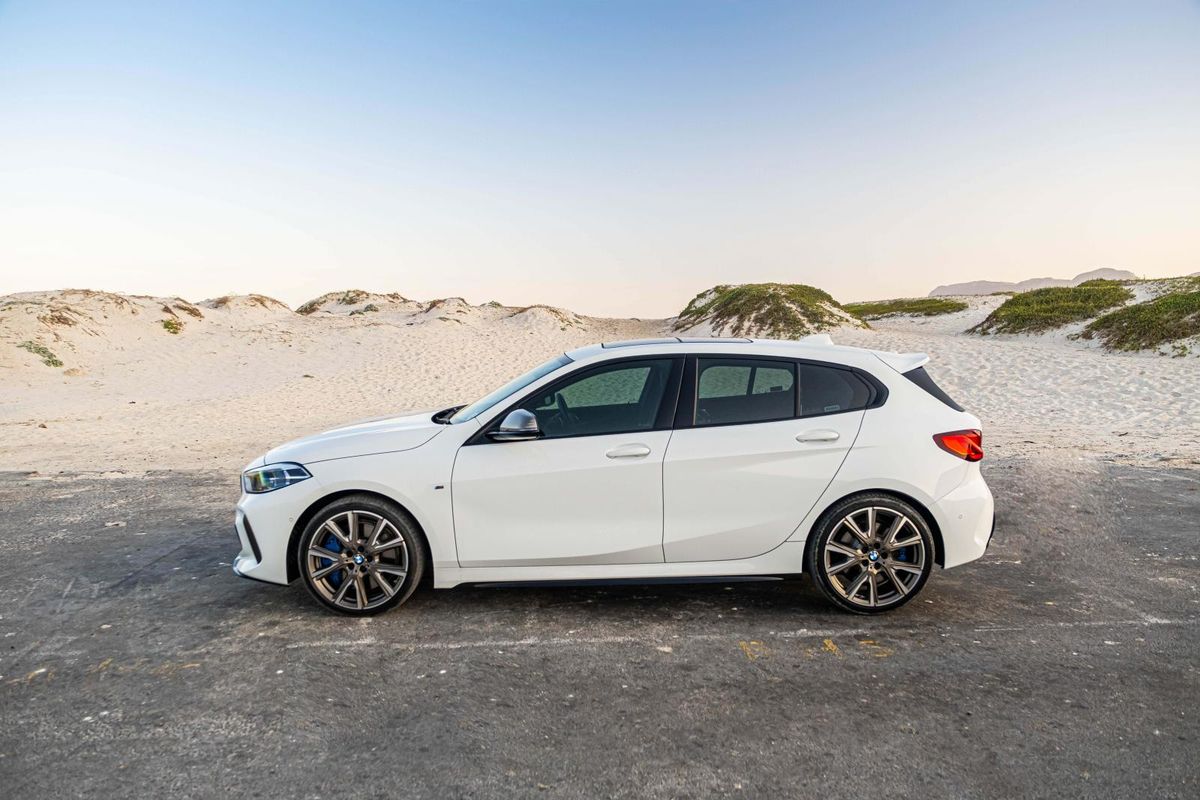
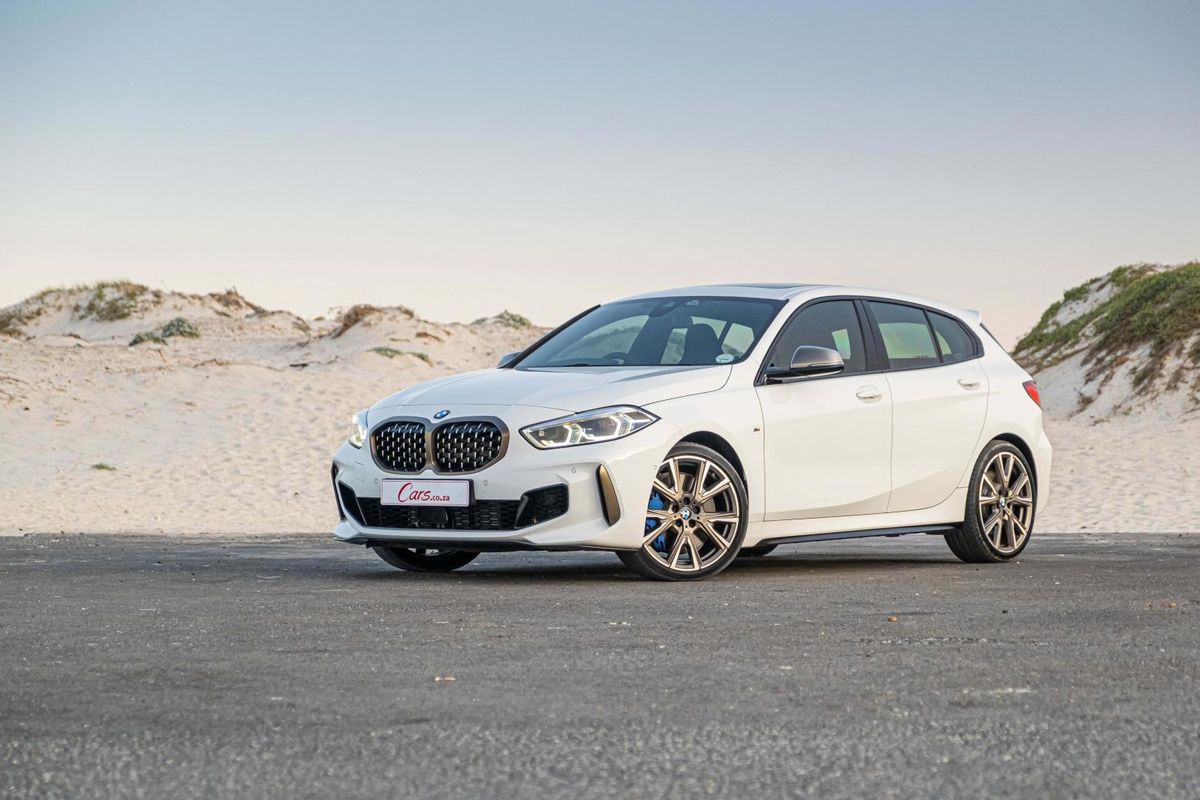
The new 1 Series flagship marks a number of departures for BMW's performance hatchback: power is no longer sent exclusively to its rear wheels and its inline-6 motor has been replaced with a transversely-mounted 4-pot. Its brand promises the ultimate driving experience – can the M135i xDrive make good on that promise? We give it a thorough assessment.
We like: Straight-line performance, excellent cabin for a 1 Series (good build quality and low NVH levels).
We don't like: Choppy ride. Boring to drive. Can’t justify its price tag.
BMW's performance 1 Series is now all-wheel-drive as opposed to rear-wheel-drive.
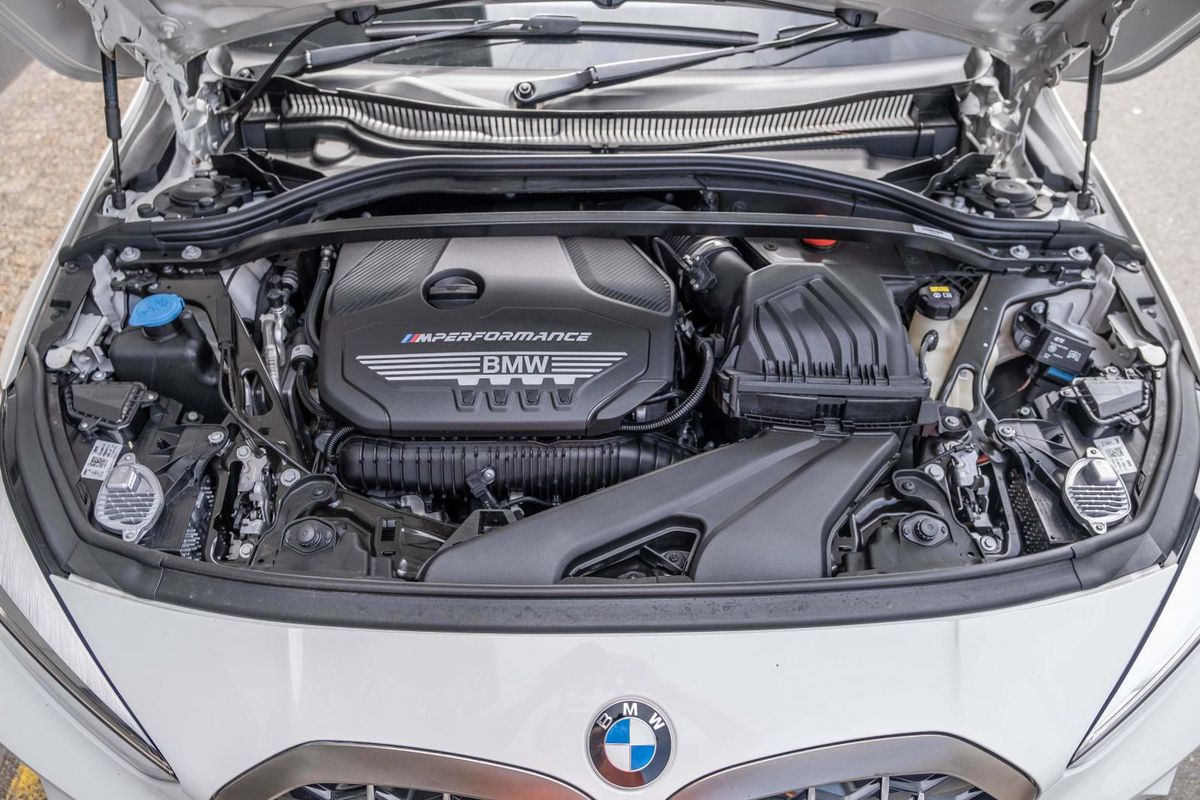
The all-new 1 Series was launched in mid-2019 and arrived in South Africa towards the end of the year. The F40-generation premium hatchback remains the entry point to the brand and the top-of-the-range M135i xDrive is purported to offer performance kicks to match those of the Mercedes-AMG A35. This generation of the 1 Series differs from the last; like the X1, X2 and Mini Cooper, it's built on a front-wheel-drive platform (so is the 2 Series Gran Coupe). BMW has also replaced the previous-generation M140i's 3.0-litre turbopetrol with a lighter, more efficient 2.0-litre turbopetrol. Furthermore, the firm has fitted the M135i with xDrive (its all-wheel-drive system) and some go-faster exterior addenda. Previously, the BMW M135i/M140i stood out from the rest of the hot hatch rabble with its 6-cylinder engine and rear-wheel-drive configuration. Now that things have changed, is it a case of "if you can’t beat them, join them?"
How it fares in terms of…
Performance
In the world of performance cars, manufacturers rarely replace models with less-powerful variants. Well, BMW has done just that here: the 2.0-litre turbopetrol 4-cylinder in this M135i produces 225 kW and 450 Nm, compared with the preceding M140i's 250 kW and 500 Nm. In truth, 225 kW is enough for a hot hatch! The new model doesn’t lack for straight-line performance; it hits its marks with a 0-to-100 kph time of 4.8 seconds and a top speed of 250 kph.
The other prerequisites are there too: the 8-speed auto 'box rips through shifts rapidly, even if there’s a deliberate fake kick in the back every time you flick a paddle in manual mode. The shifts are also accompanied by a fake-sounding braahp. The mid-range torque delivery is responsive and in-gear shove excellent. The torque-pull tapers off towards the top of the rev range, but the engine sound isn’t appealing at higher revs – there's no real need to play in that zone.
Ride and handling
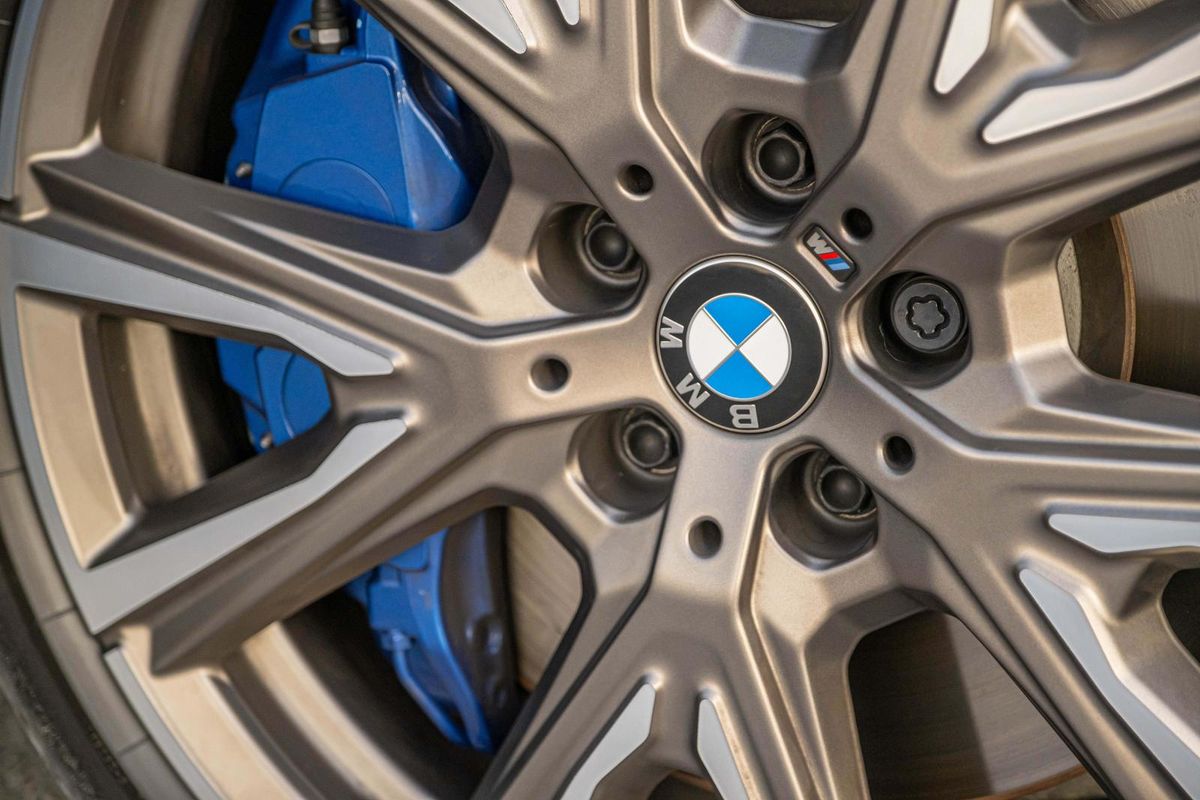
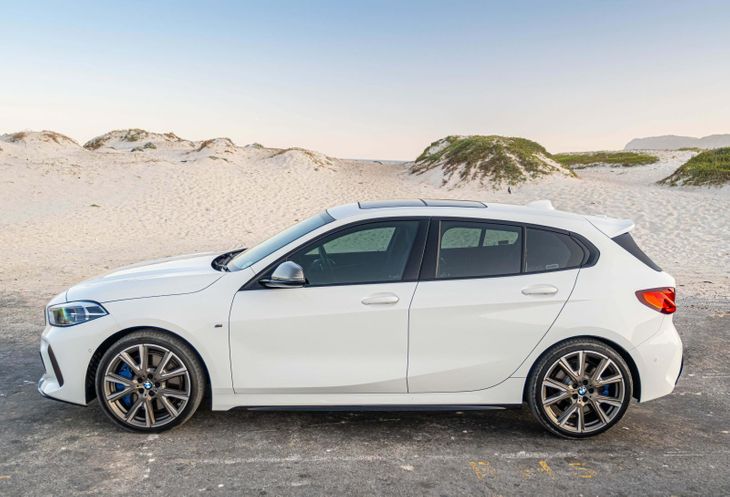
19-inch wheels mean you can't have adaptive suspension.
In terms of the M135i's suspension, buyers have to choose between specifying smaller wheels (18-inch) with optional adaptive suspension or 19-inch wheels with M-Sport springs that lower the car's ride height by 10 mm. Our test unit came shod with the latter: 19s in conjunction with the M-Sport suspension, which regrettably firms up the ride to such an extent that the BMW feels choppy and harsh to drive on a bumpy tar road.
The M135i is front-wheel-driven for the most part – xDrive does allow for up to 50% of the power to be sent to the rear wheels when required. Compared with the previous model, there’s less lean in the corners and the steering feel is better, as is the speed of the rack. It’s an easier car to manipulate in the corners and it changes direction quicker and flatter than the previous M, which had a tendency to want to pendulate when switching from one direction to another.
The test unit did exhibit a tendency to understeer, however, which is unusual for a BMW. It was most noticeable when coming off the power and turning in the front-end. In fact, there’s noticeable front-end push; not the usual pin-point accuracy you get from other BMWs. Add in some throttle and the differential will task the rear wheels to take some of the load, which allows the M135i to pick up a later apex, with tremendous grip available when exiting the corner.
The BMW is nimble enough – it's not an ill-handling car by any means… it’s just not particularly exciting to drive. All the ingredients are there, but the dish it serves up is decidedly bland.
Interior plushness
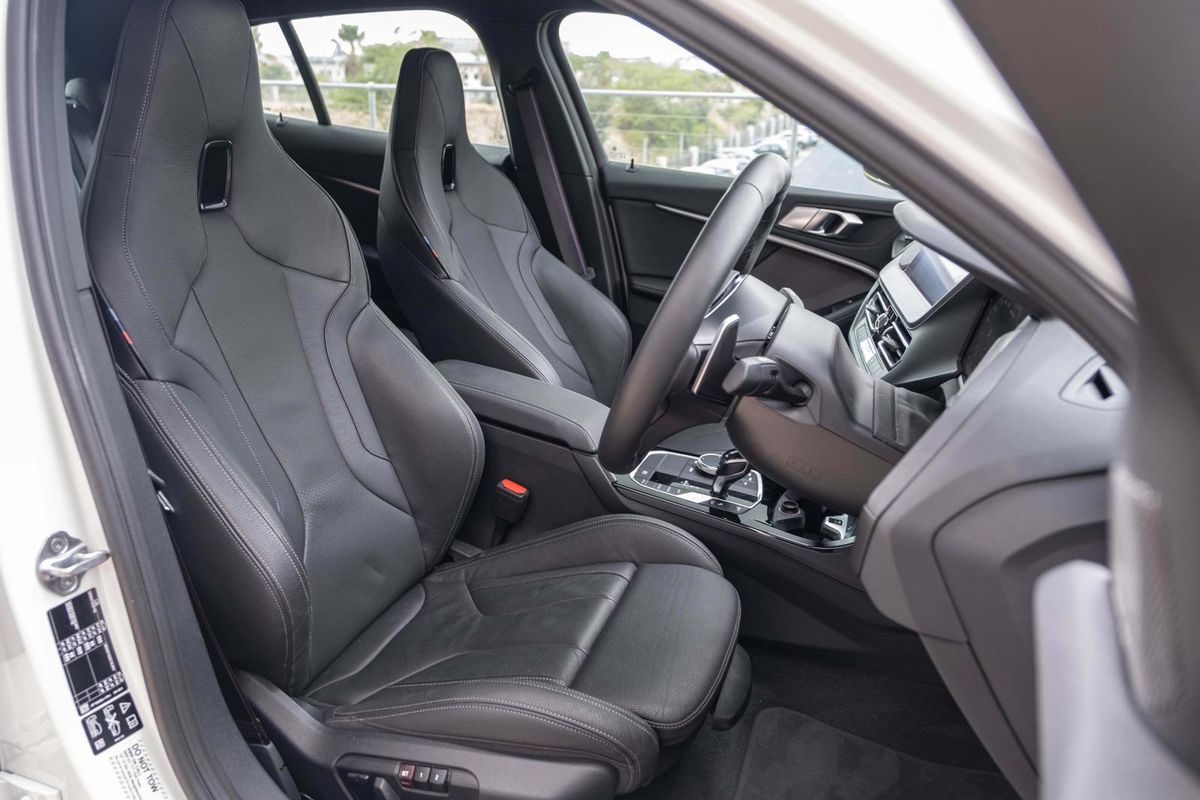
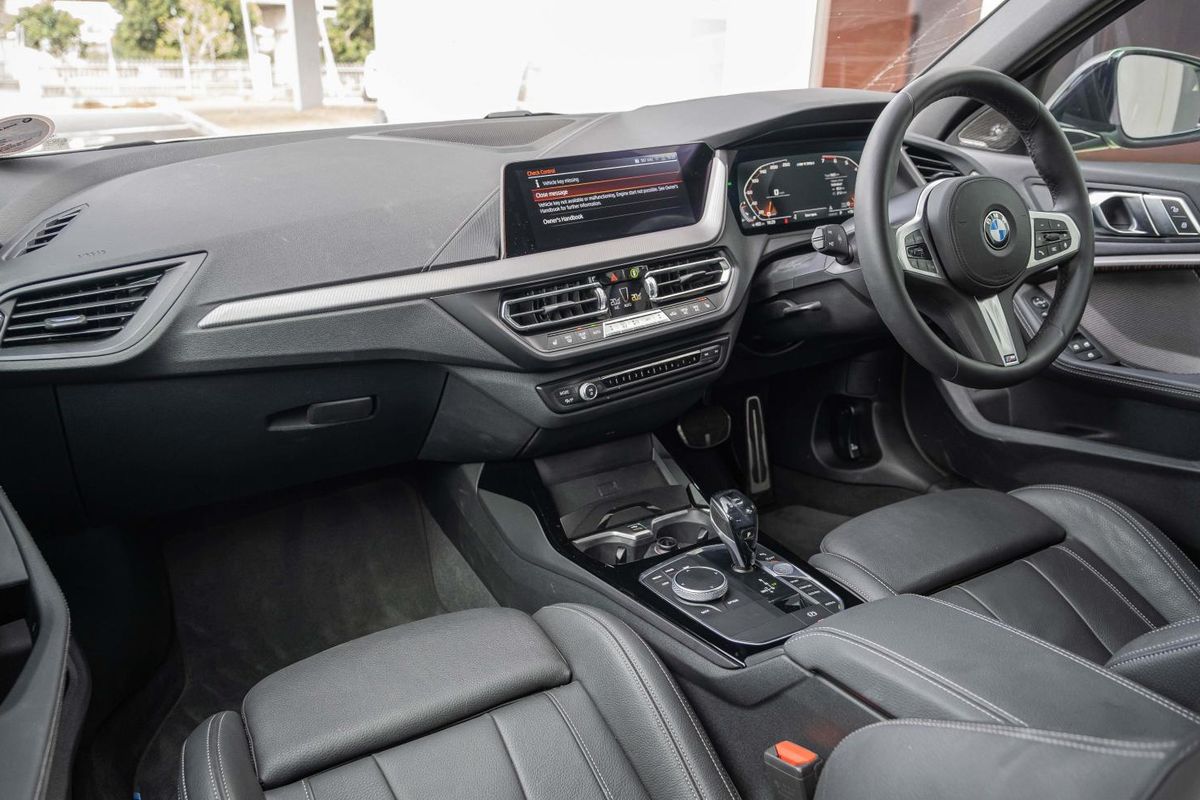
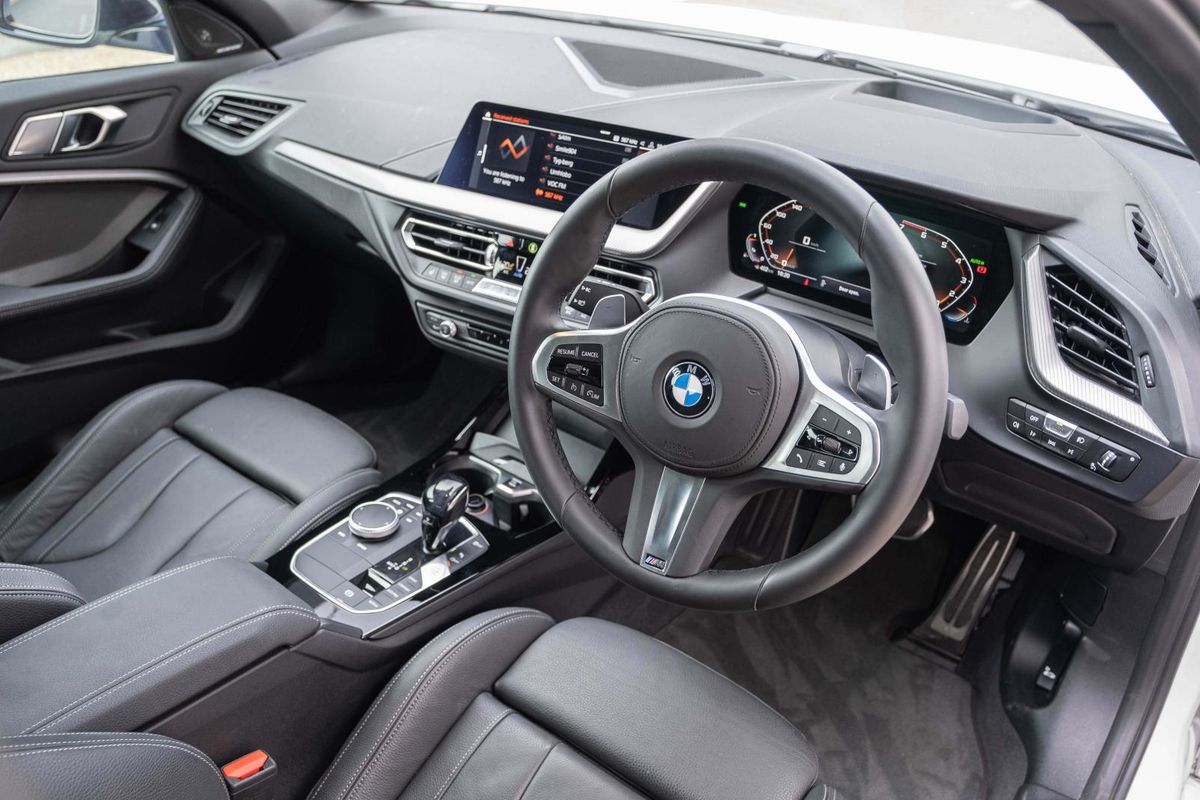
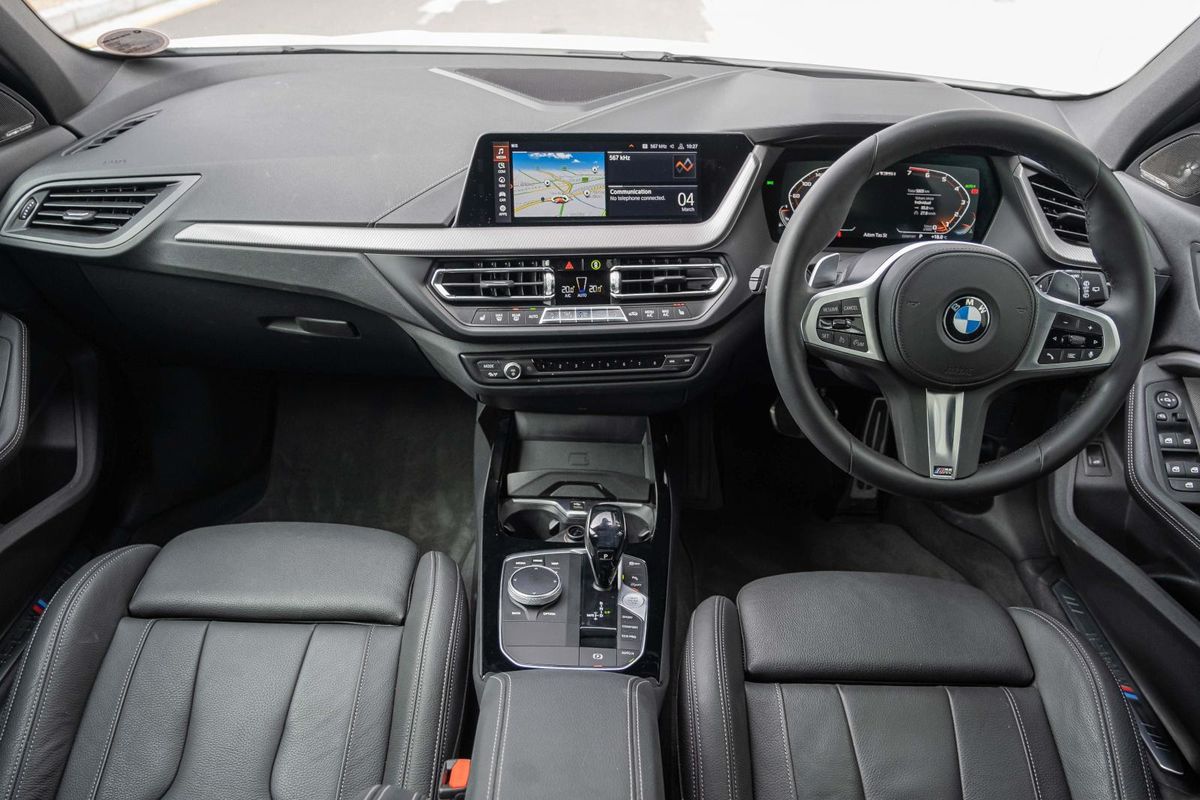
Who wouldn't want an upmarket 3 Series interior in their 1 Series?
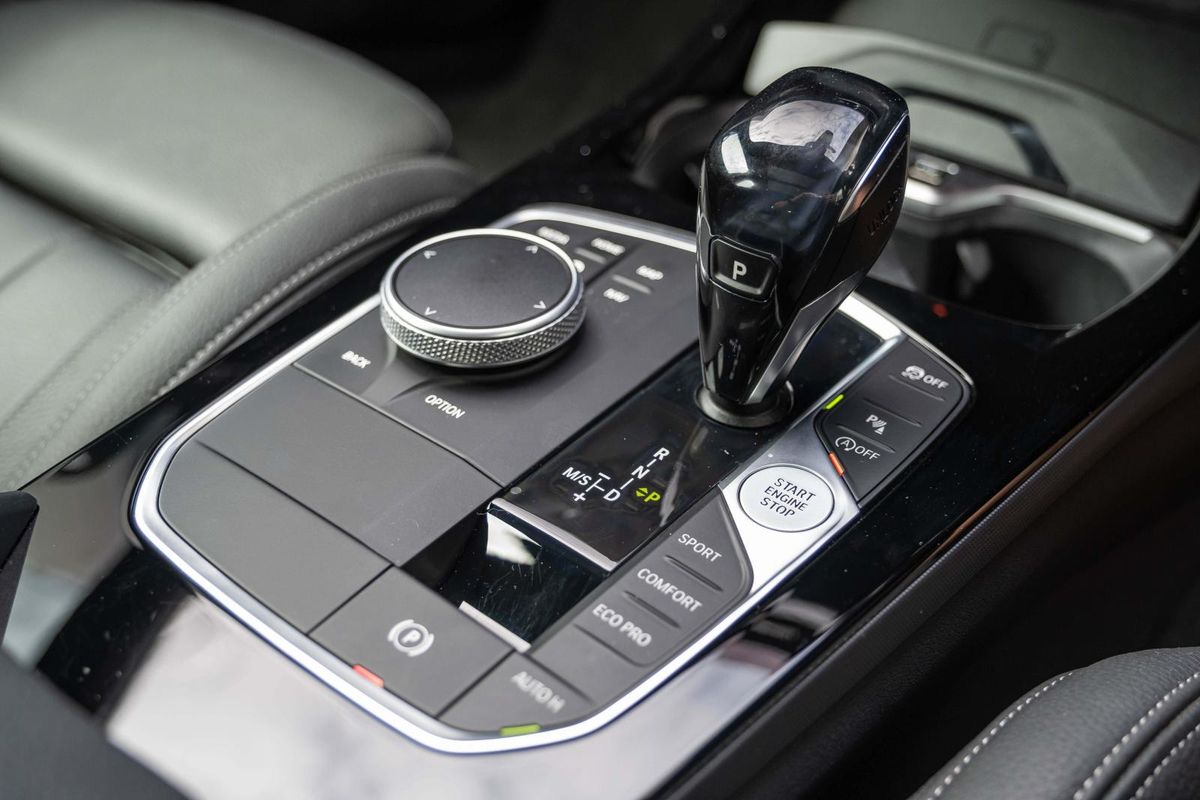
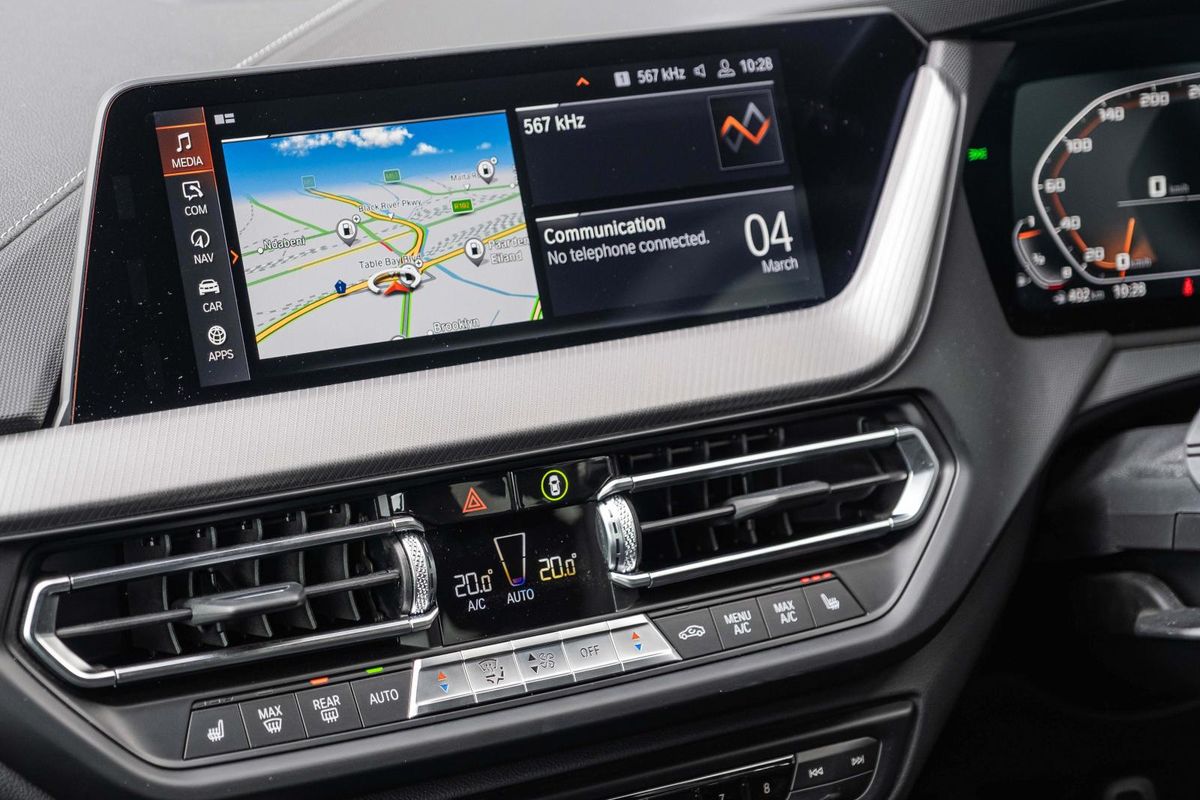
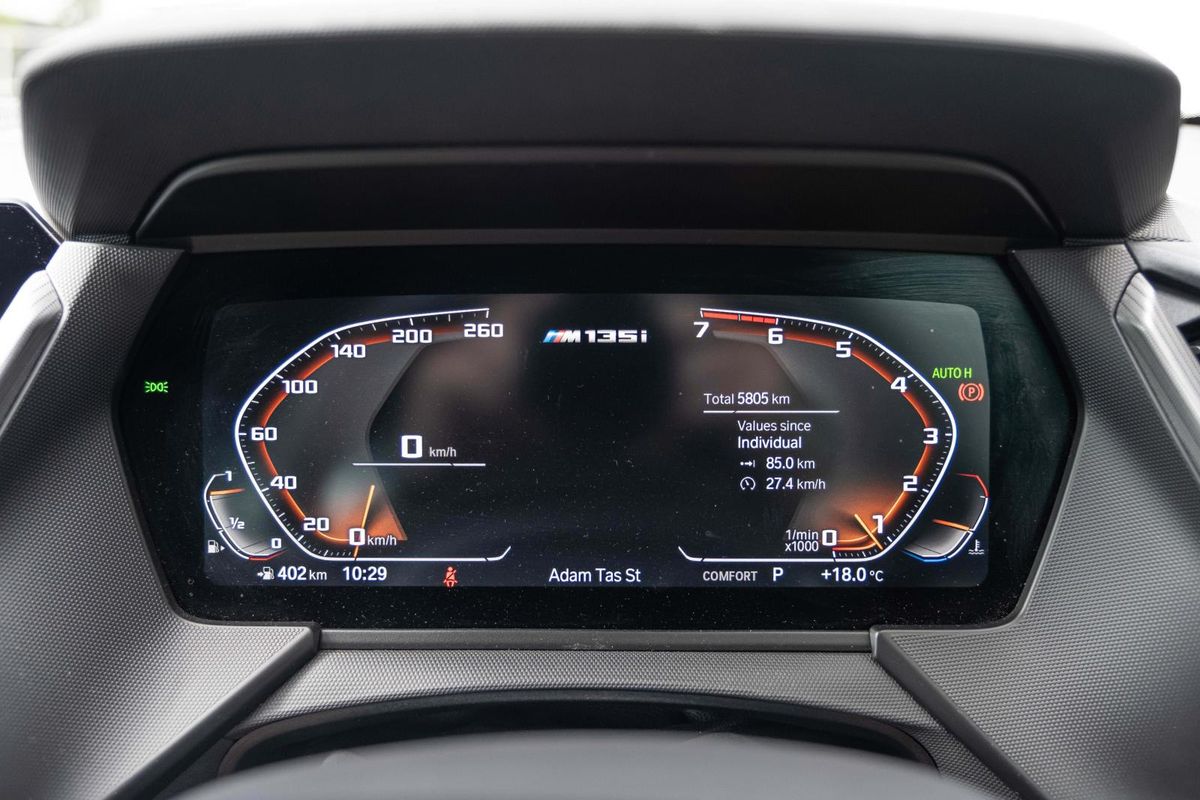
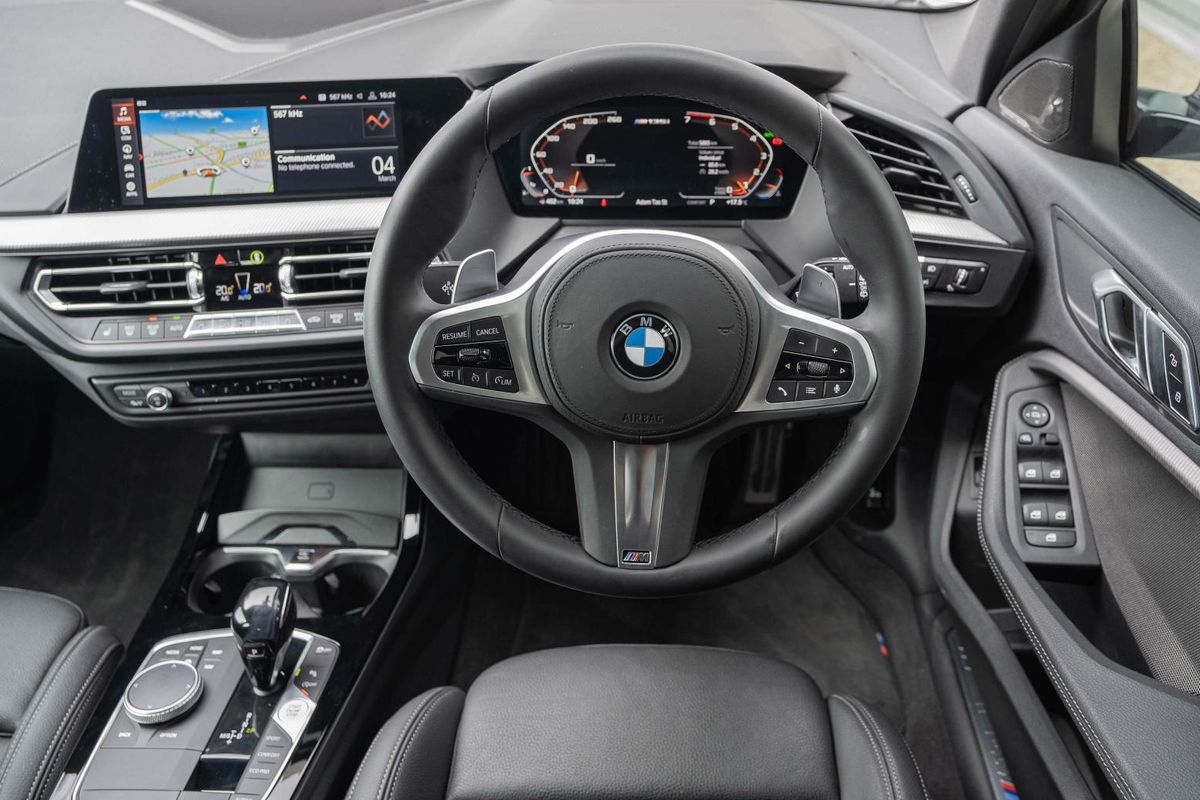
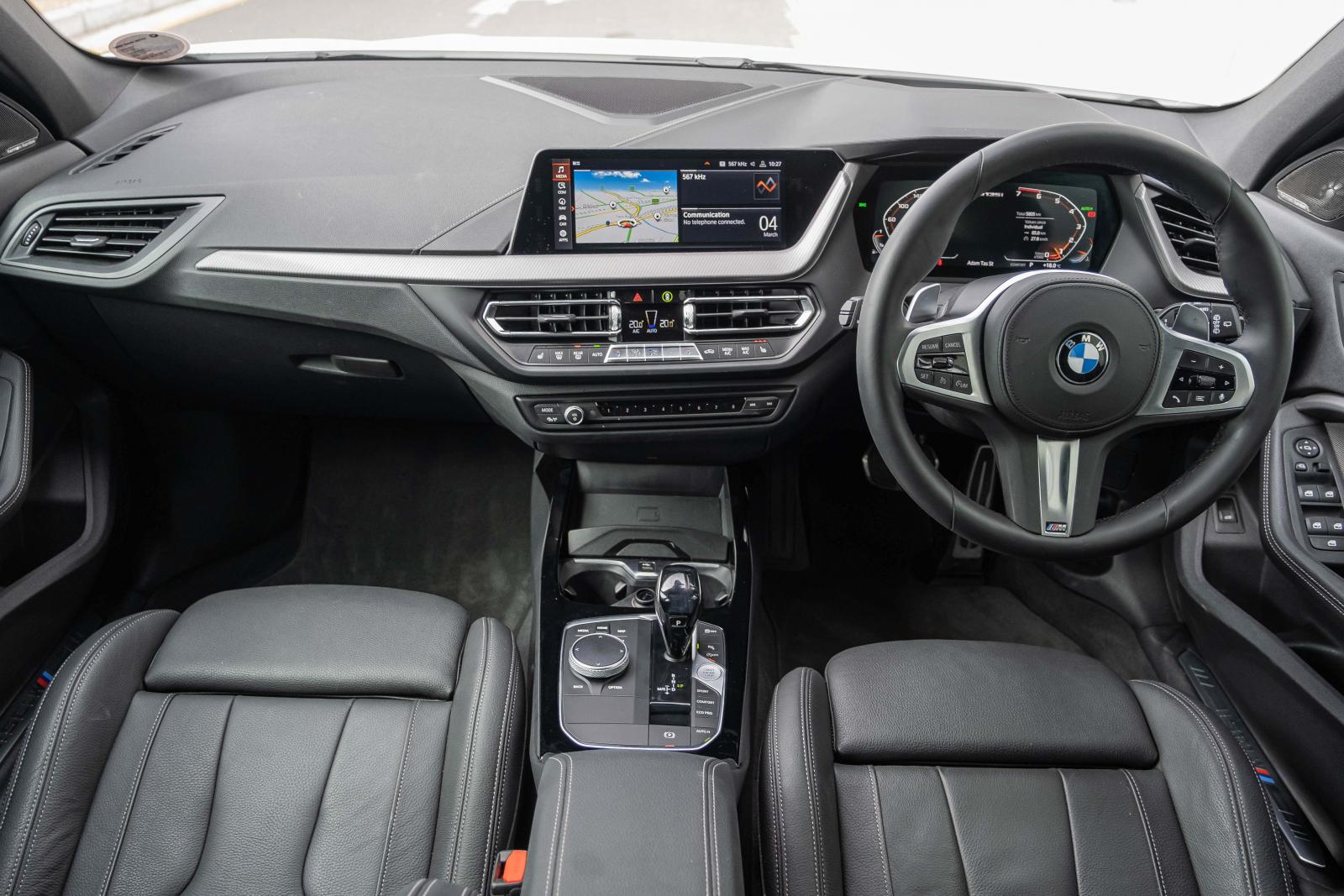
If one considers that this is a 1 Series – and the entry point to the Bavarian brand – it’s certainly equipped with a lot of kit. It almost seems as if the newcomer's interior architecture was copied directly from the 3 Series and plonked in its smaller sibling. If that’s not a win for the "budget BMW", then nothing is. The materials are of premium quality and the new screens look as hi-res as those of brand-new smartphones. There is more good news: those smartphone users who have berated BMW for the lack of Android Auto will be pleased to know it will be coming to the 1 Series (and other newish models) midway through 2020. Apple Carplay is also said to be free when the update rolls out "over the air".
The M135i gets sports seats as standard, whereas our M-Sport model was equipped with the (R8 100) optional M-Sport seats. They’re a bit bigger and cut into the rear legroom a little, but provide ample support and appreciable comfort for the Bimmer's front passengers. Where the A-Class' interior feels glitzy and eye-catching on the surface, the 1 Series is somewhat understated, but has more substance to it in terms of material quality and finishes.
Street cred
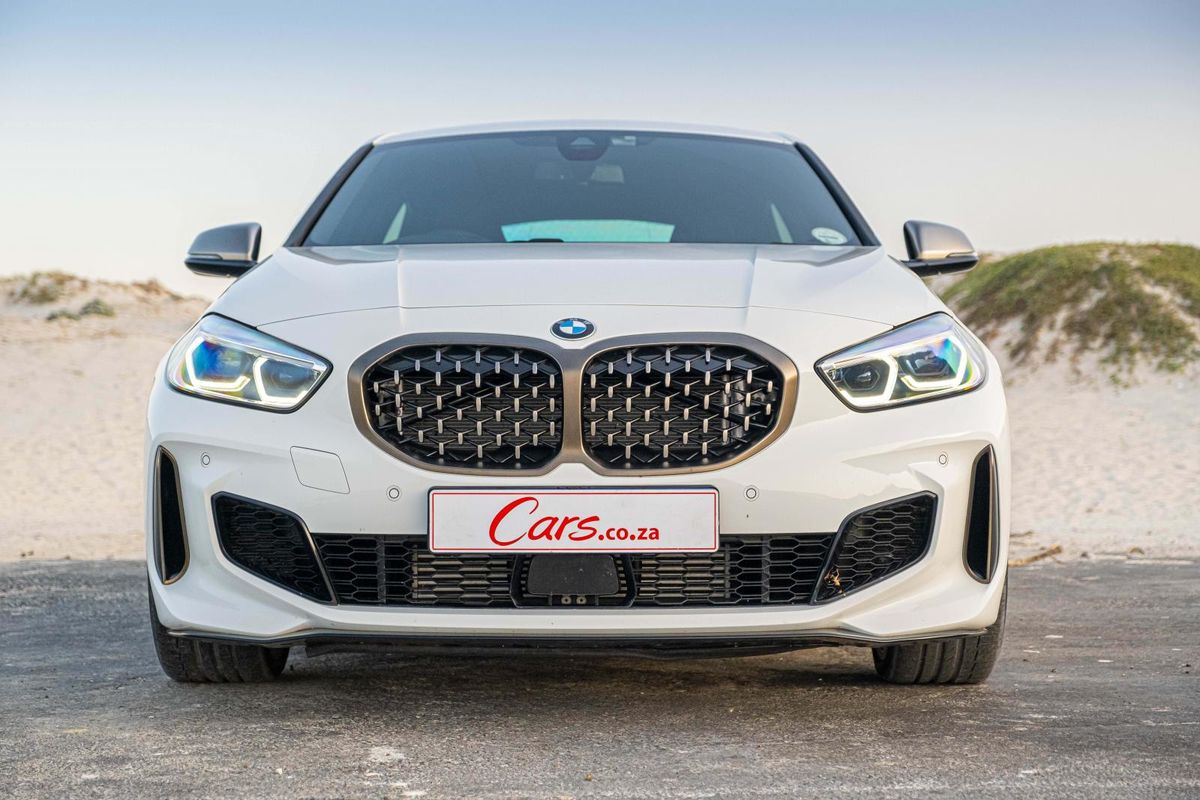
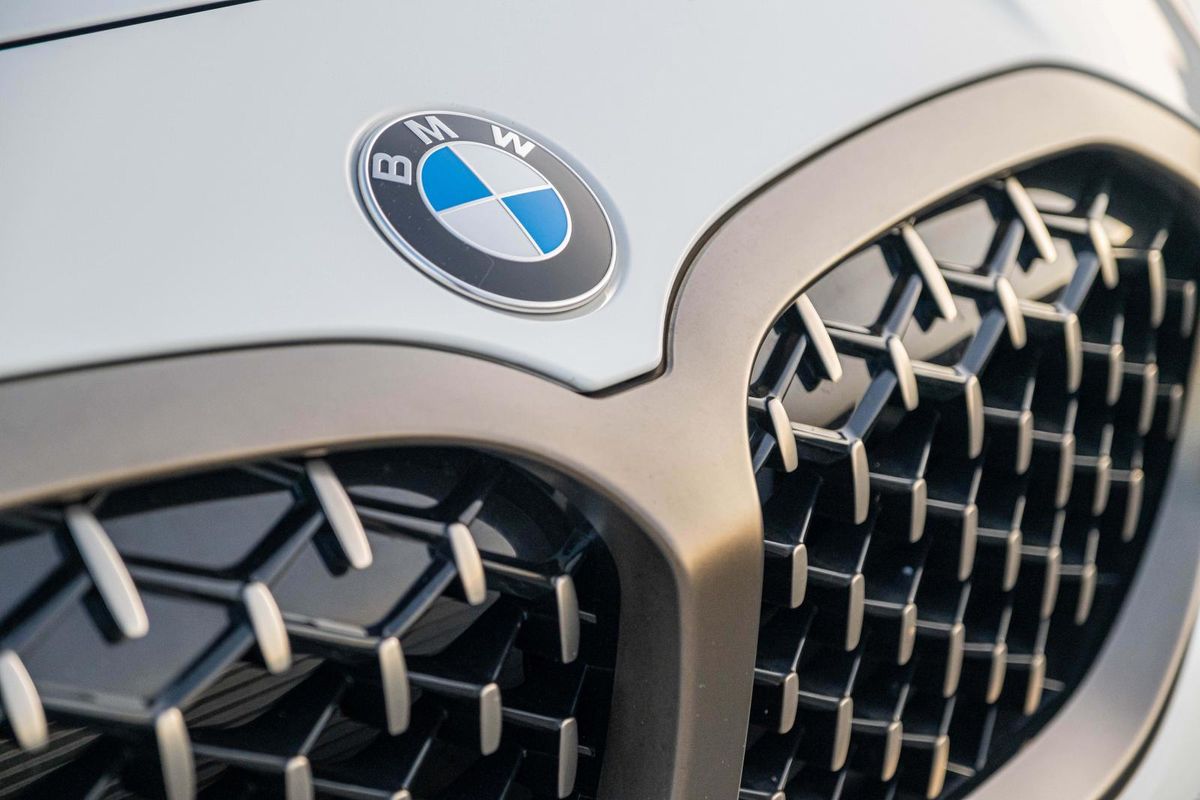
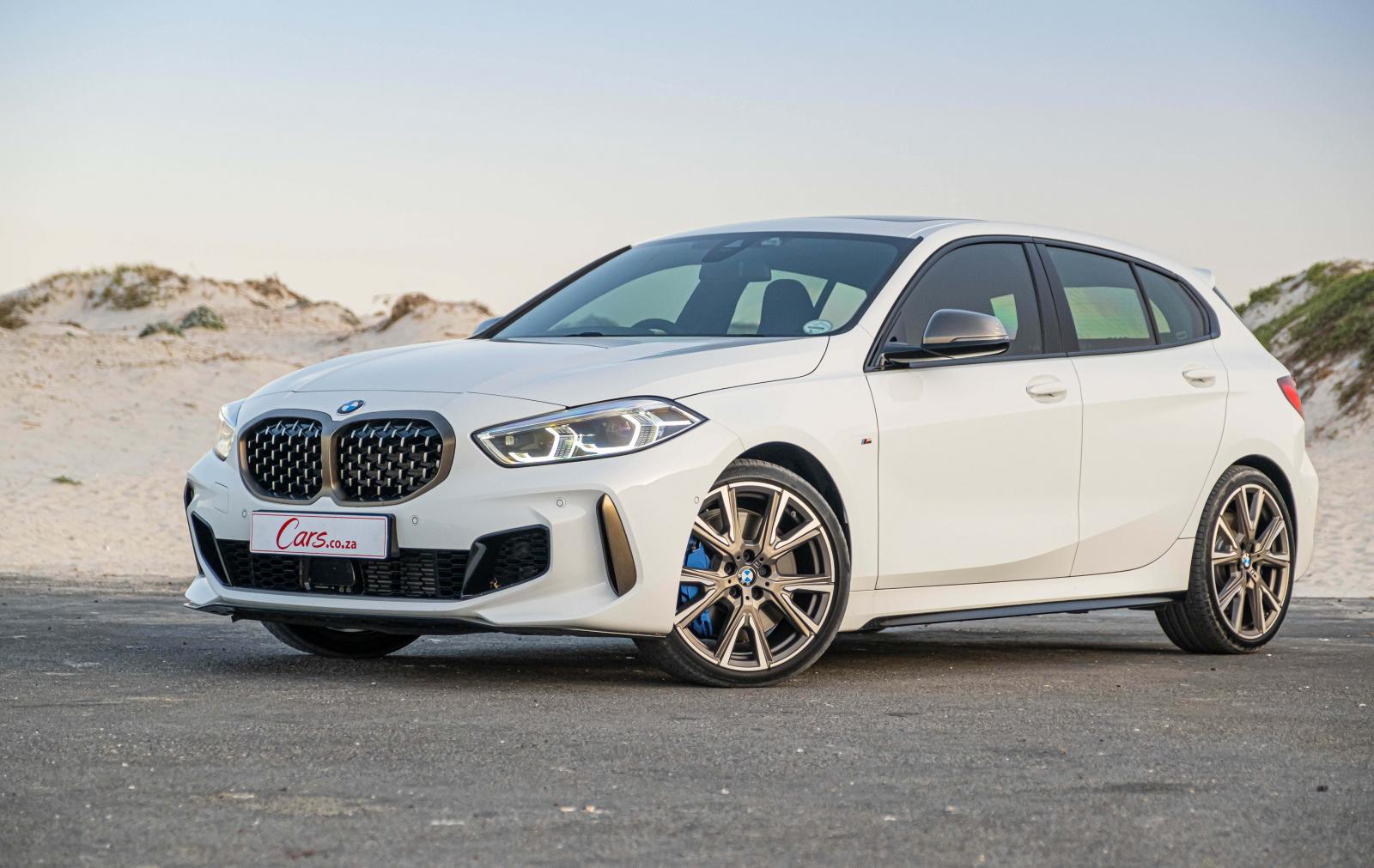
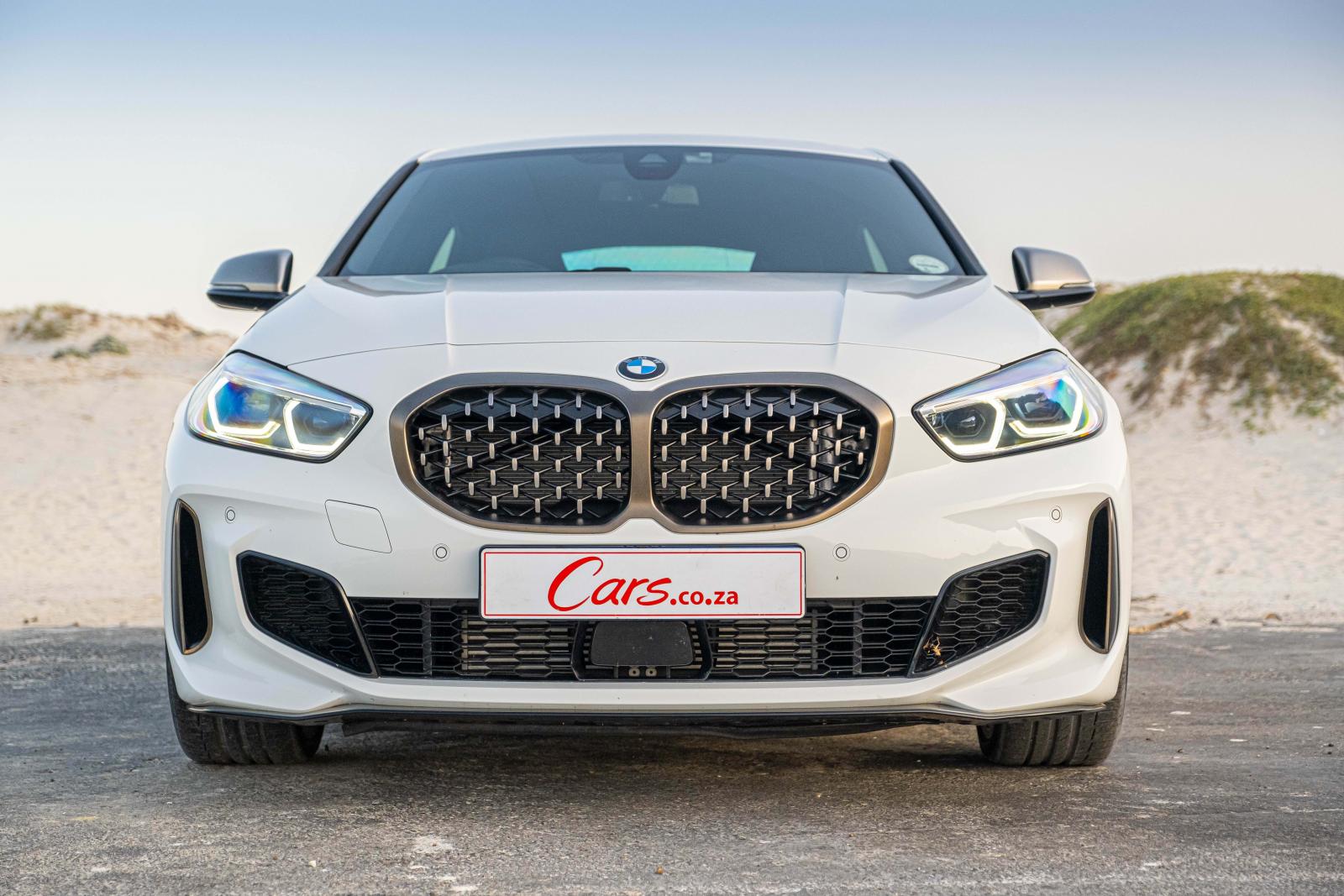
That grille is a certain conversation-starter.
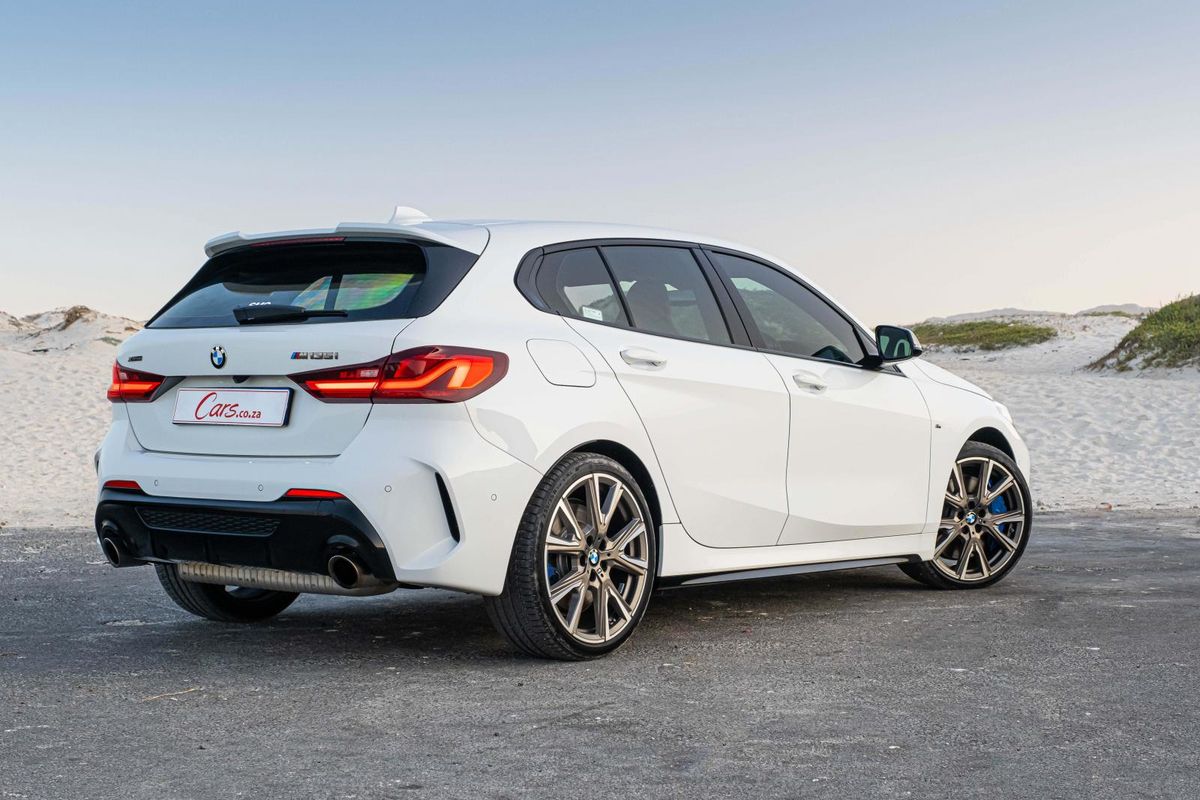
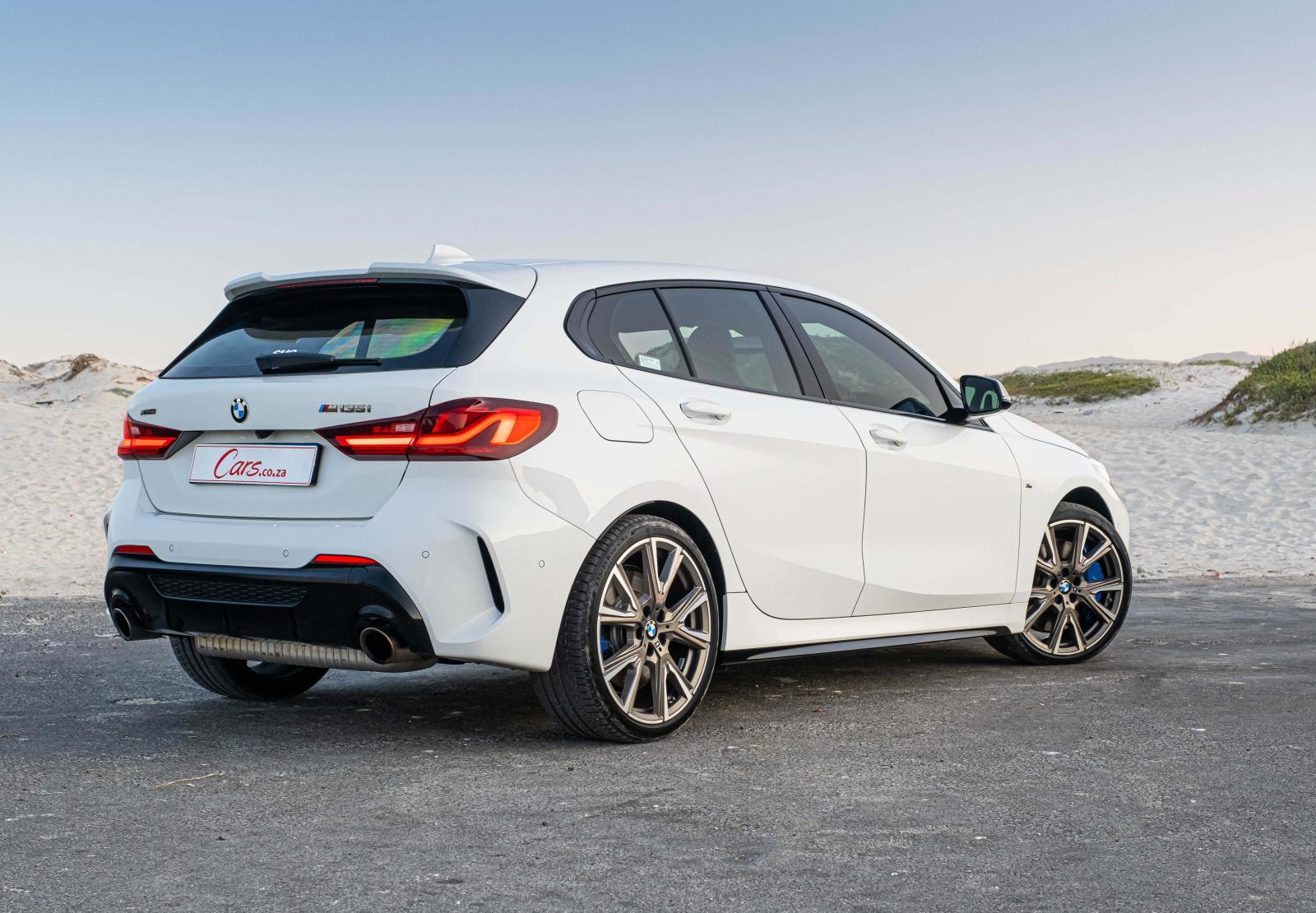
It seemed that wherever we drove and parked the M135i, its front-end treatment became a major talking point among onlookers. Most spectators felt that the elaborate grille gave the premium hatchback added road- or kerb presence, but as a single element of the design, it's not particularly attractive. Those most offended by it appear to be long-time BMW fans and fellow motoring journalists – make of that what you will. Overall, the 1 Series’ best angle is its side profile with the M-Sport kit that gives it definition and sporty pretensions. The Bimmer's rear often got mistaken for that of an MPV and some even mentioned the 2 Series Active Tourer when likening the M135i to other BMW products.
As for its competitors, the A35 is a clear winner in the looks department, it’s certainly less polarising; we eagerly wait to see what the next-generation Audi S3 will look like.
Price and sales support
The BMW 135i xDrive price starts at R711 452 (March 2020) and comes with a 2-year/unlimited km warranty and a 5-year/100 000 km maintenance plan.
Verdict
Despite sporty intentions, the 135i falls flat on the excitement scale.
Rear-wheel-drive dynamics and a straight-6 motor used to be the unique selling points of BMW’s top-of-the-range 1 Series hatchback. By producing a fundamentally more practical 1 Series on an existing FWD platform, BMW has lost that uniqueness. The M135i is fast enough, has a great gearbox and there’s abundant traction under power. Even the steering has good feel and feedback to it. But, it doesn’t feel like a fast BMW that becomes livelier the more you ask of it.
To put it another way, the BMW underdelivers in terms of its driving experience… even though it handles like a lot of other all-wheel-drive hot hatches. It’s just not exciting to pilot on your favourite set of twisties; it gets through them fast enough, but there’s no big smile at the end. To put it in a way that millennials would, "the drive is a bit meh!"
And then there’s the price: R700k before options. We don’t think the M135i offers anything that you couldn’t get from a Volkswagen Golf R (heck, even a GTI) and that’s before you start bringing in driver’s hatches like the Renault Megane RS or Honda Civic Type R. The other bad news is that this is as good as it’s likely to get: BMW will not be making a 1M and its smallest M car offering will remain the M2 Coupe.
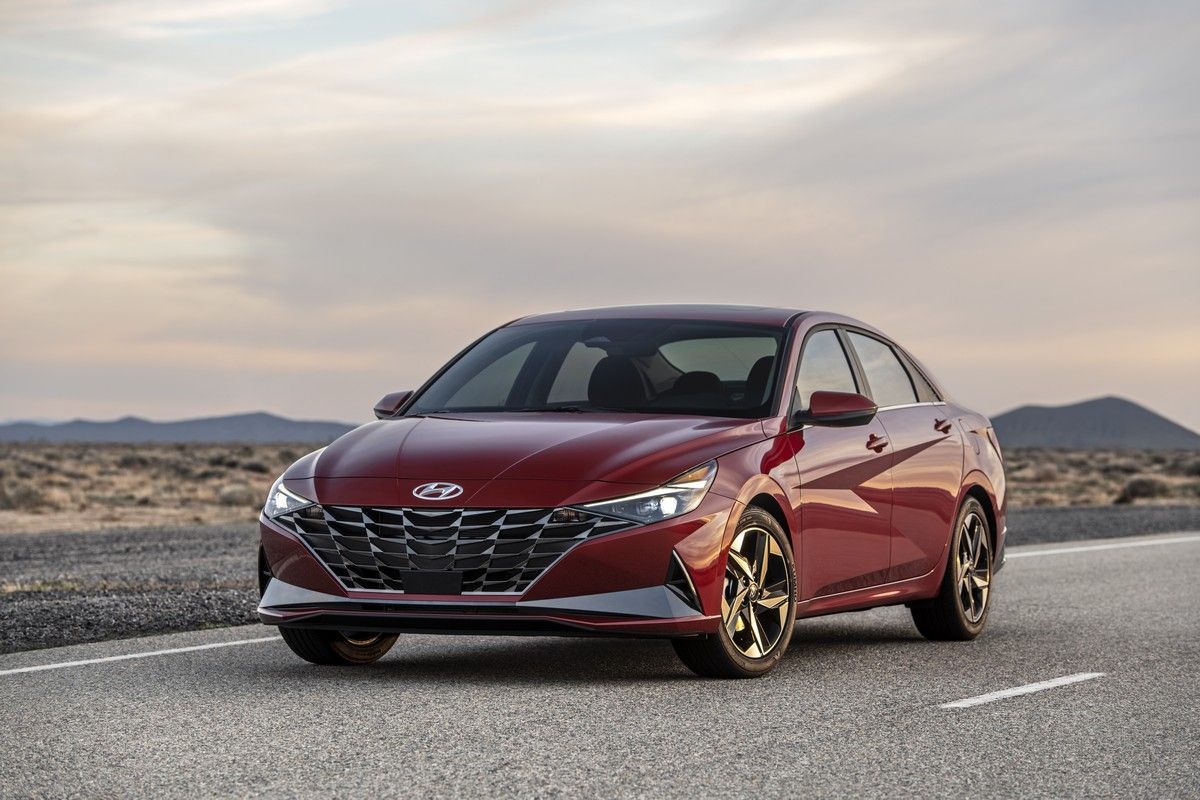
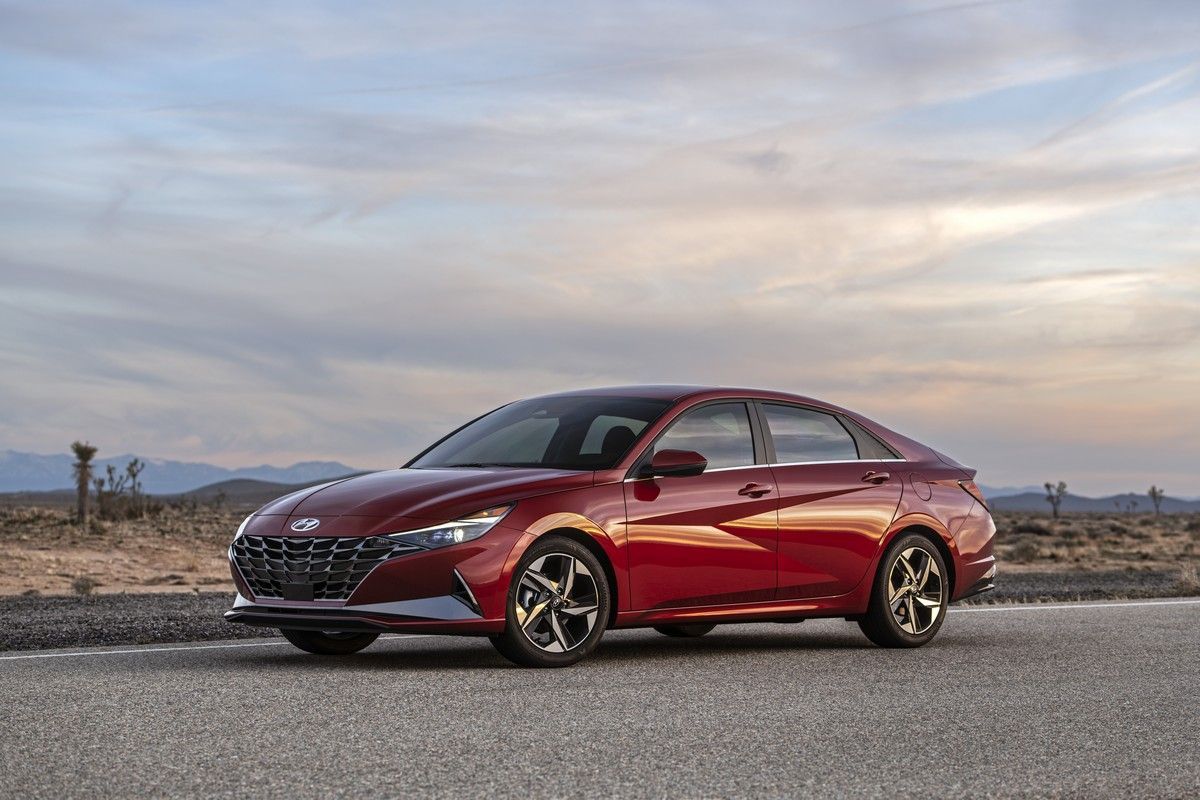
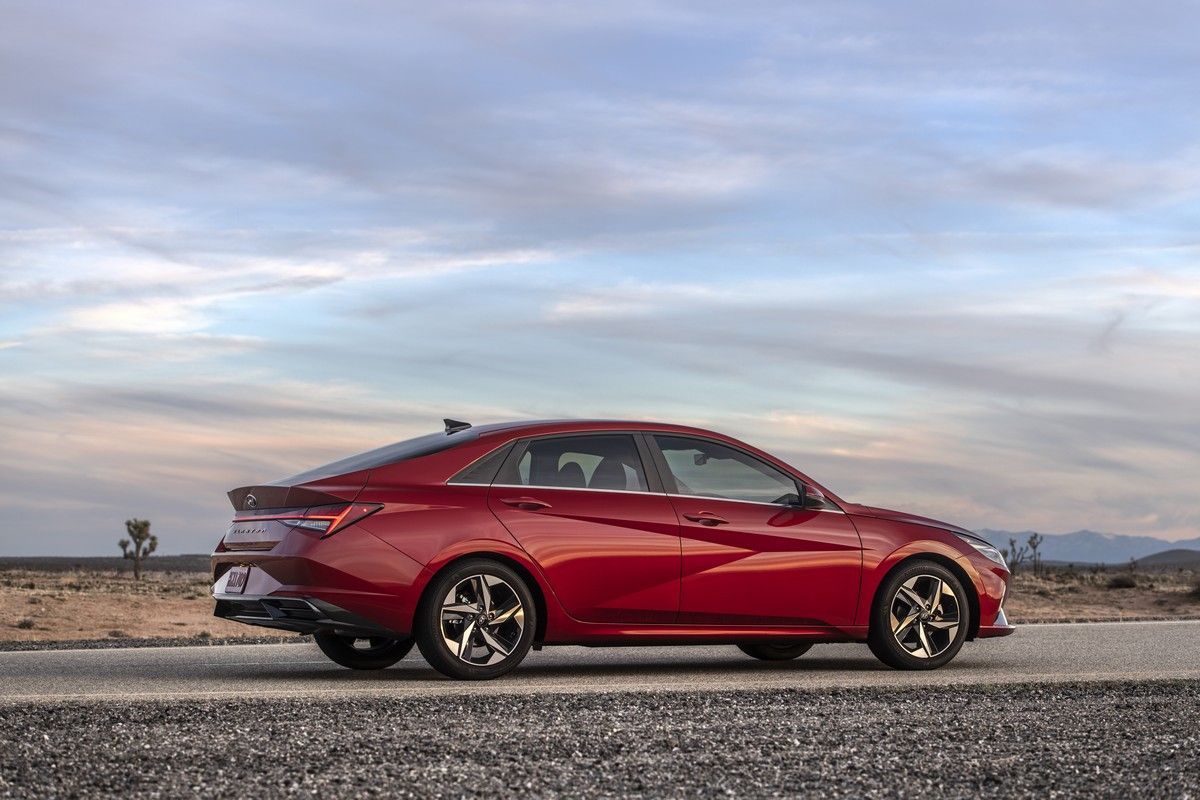
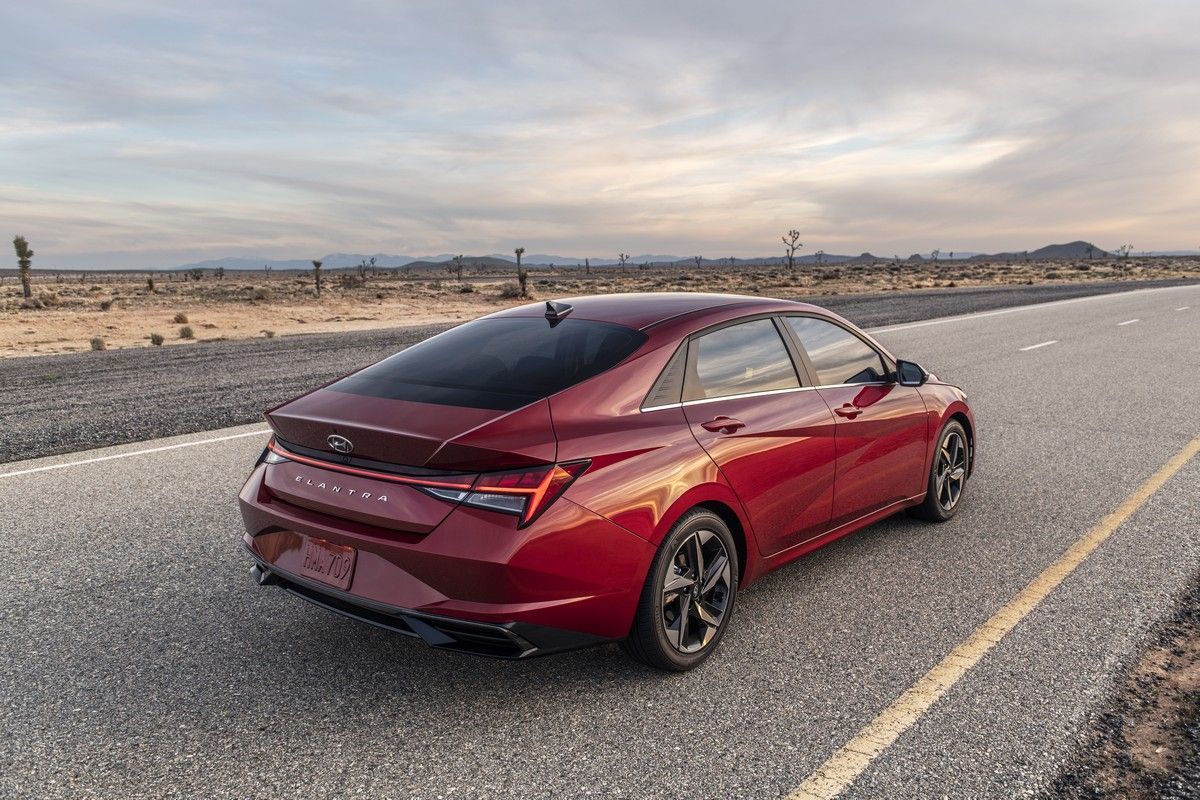
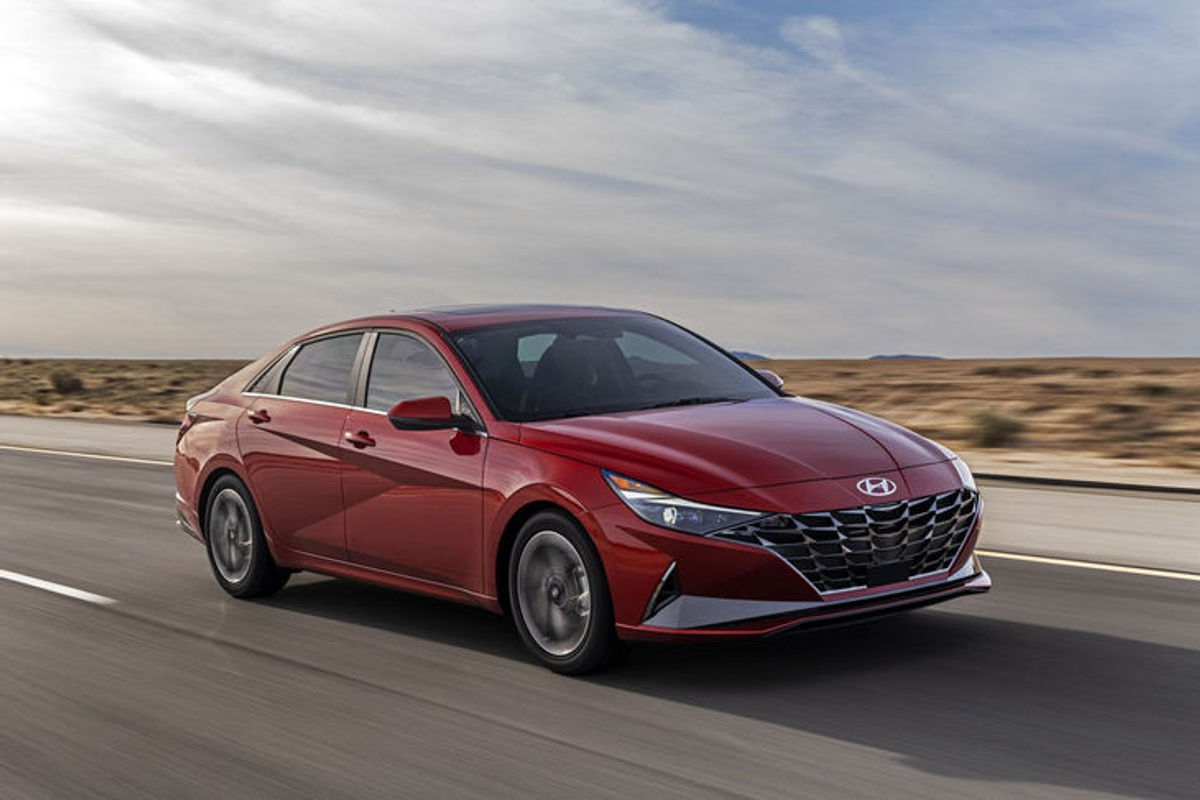
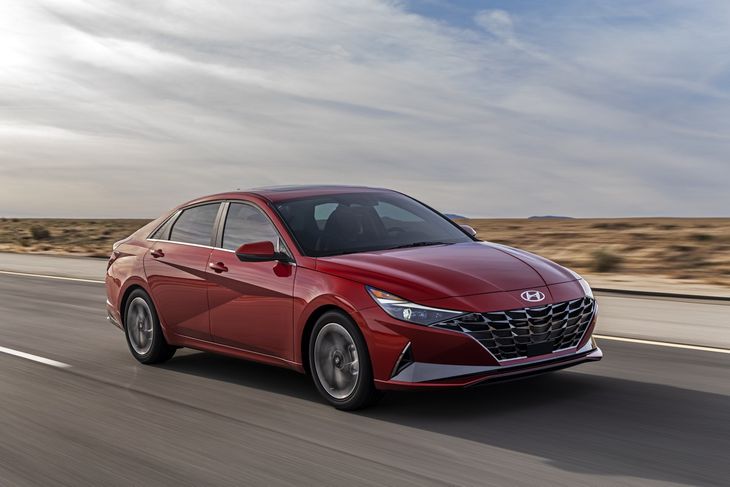
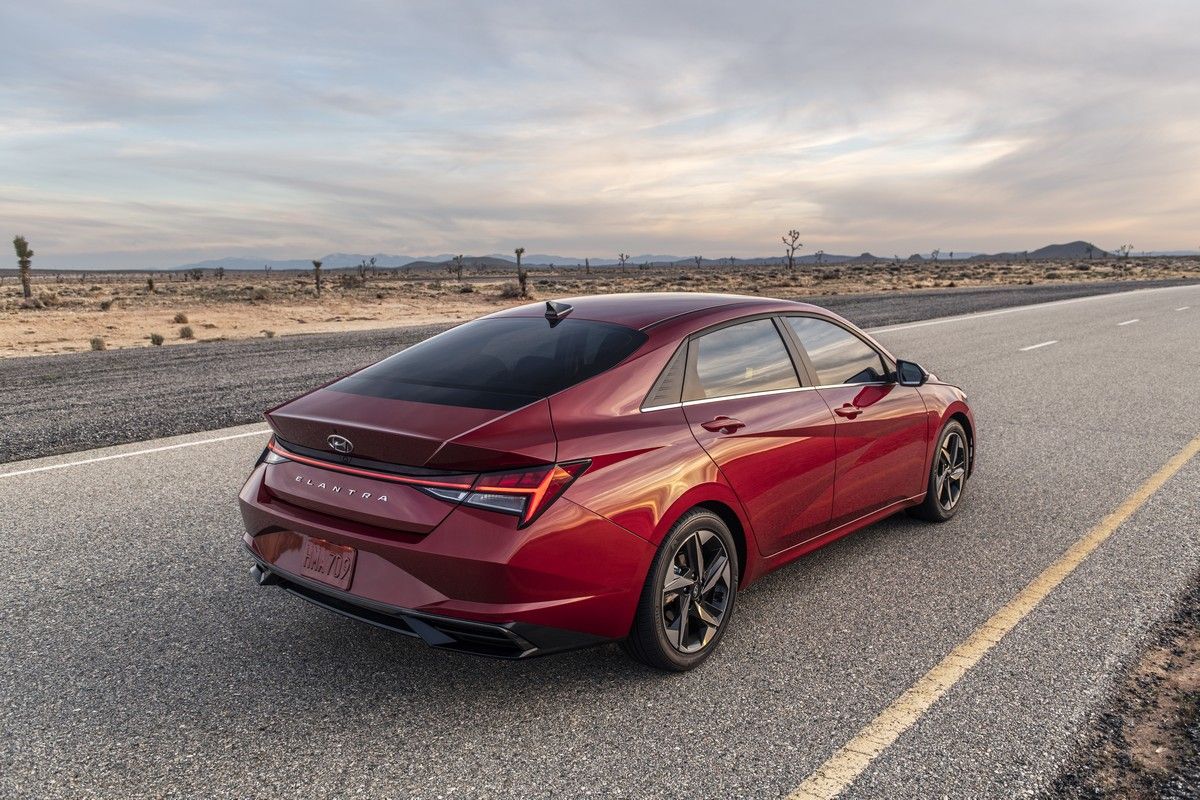
The 7th-generation Hyundai Elantra is undoubtedly the most distinctive, athletic-looking compact sedan that the Korean manufacturer has ever produced… In addition, the edgy newcomer, which was unveiled via a YouTube broadcast from West Hollywood, targets younger buyers with its plethora of highly-connected interior features.
Based on the brand’s 3rd-generation compact (K3) platform, the new Elantra sports a head-turning “4-door-coupe look” – it's only the 2nd Hyundai model to showcase the brand’s new Sensuous Sportiness design language (after the Sonata). The new model is not only longer, lower, and wider than its predecessor, but has higher structural rigidity (for improved refinement) and a lower kerb weight, which improves fuel economy. Other benefits of the new platform are a lower, more engaging, driving position, a reduced centre of gravity – which improves handling stability – and lastly, improved frontal-crash safety because of a multi-load path structure design.
The K3 platform (on which the new Elantra is based), has facilitated a lower centre of gravity and sportier driving position.
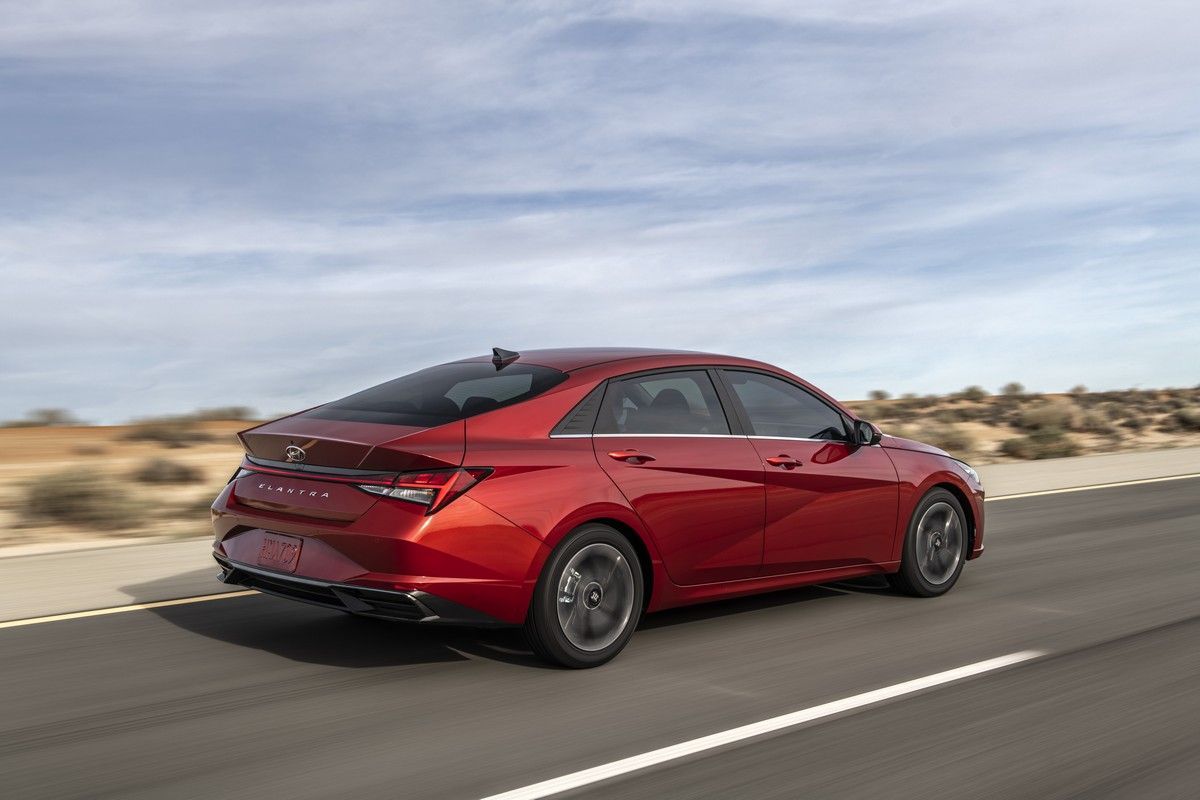
The “parametric dynamics” to which Hyundai Motor Group chief design officer Luc Donckerwolke refers (when he describes the new Elantra’s exterior execution) can be seen in the way that the newcomer’s expansive, cascading grille, headlamp clusters and indicator elements seem to merge into a single design element, and the contours at the outer edges of the bumpers, as well as the swage lines on the car’s flanks, that “meet at one point”.
As for the interior, the Elantra’s cabin dimensions do not suffer for the sedan’s sleeker roofline; front head- and shoulder room have increased slightly (rear headroom is unchanged) and the longer wheelbase enables the Hyundai to offer “best-in-class” rear legroom. Even the Elantra’s boot capacity is 8% bigger than that of its Corolla rival, the manufacturer claims.
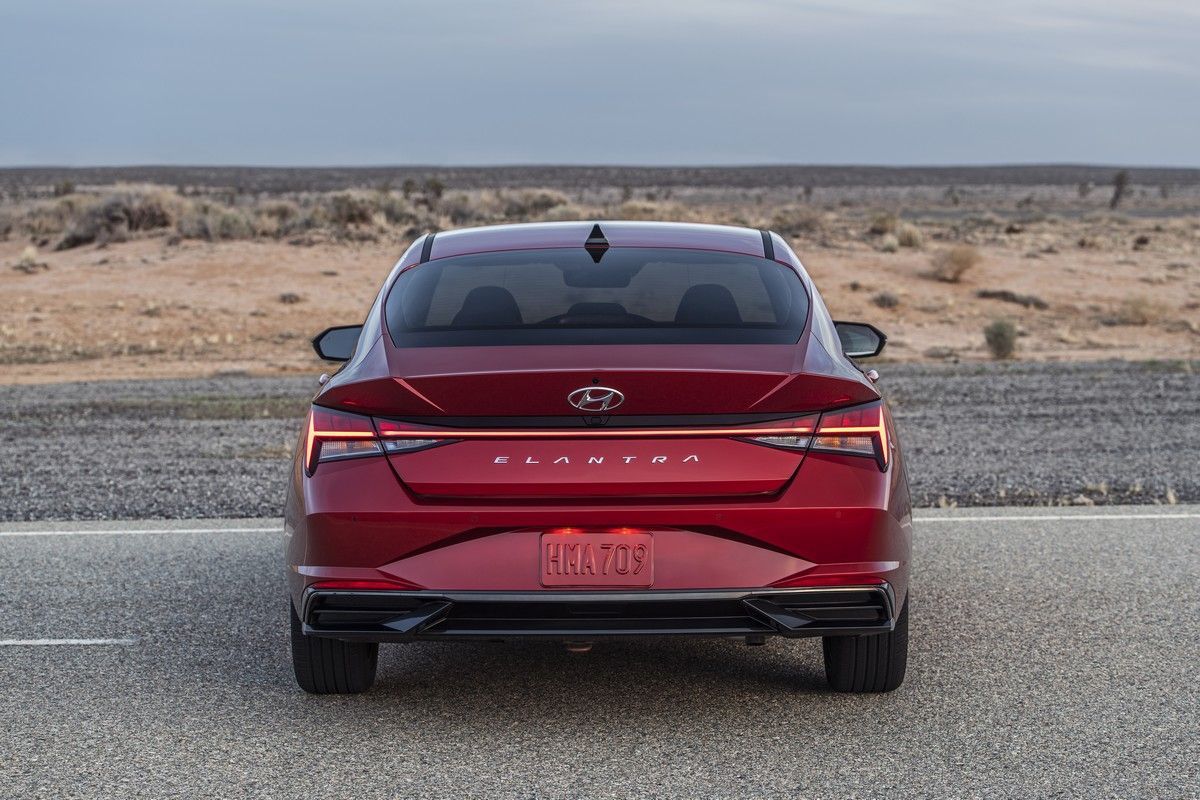
Note how the Elantra's boot line extends comfortably beyond the edges of the sedan's ornate tail-light clusters.
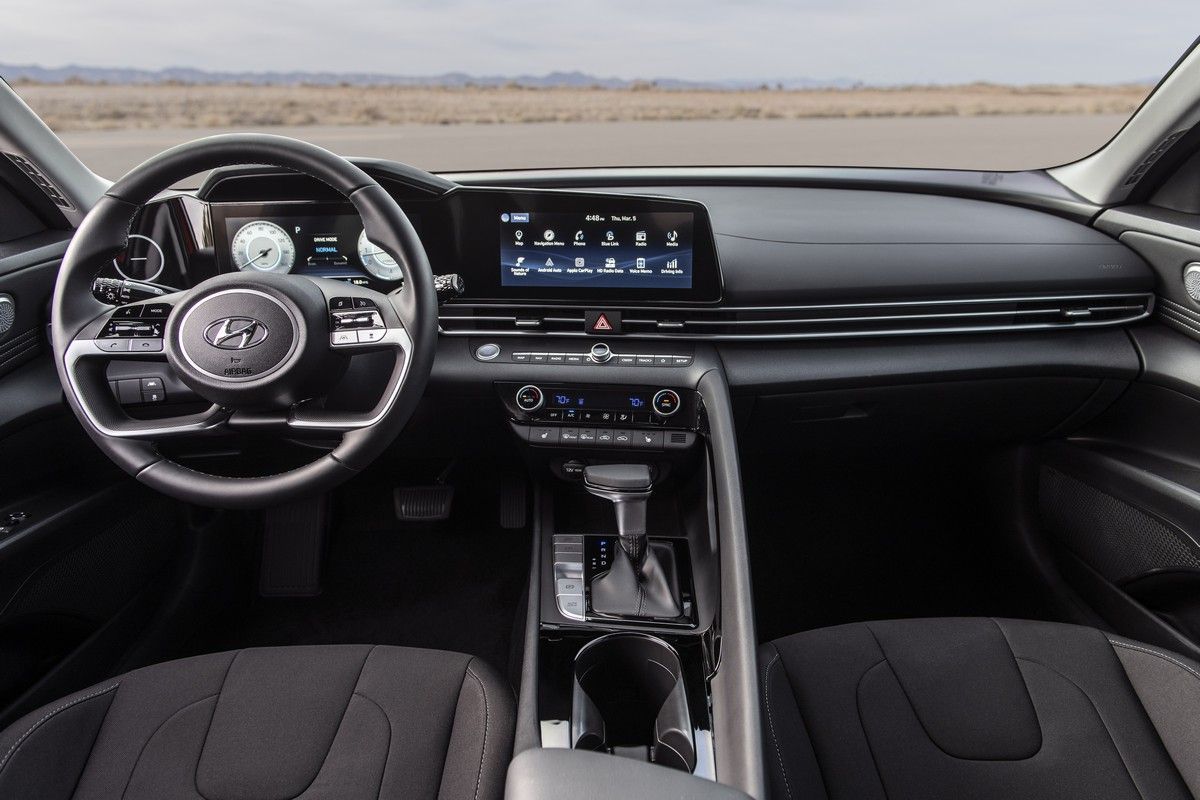
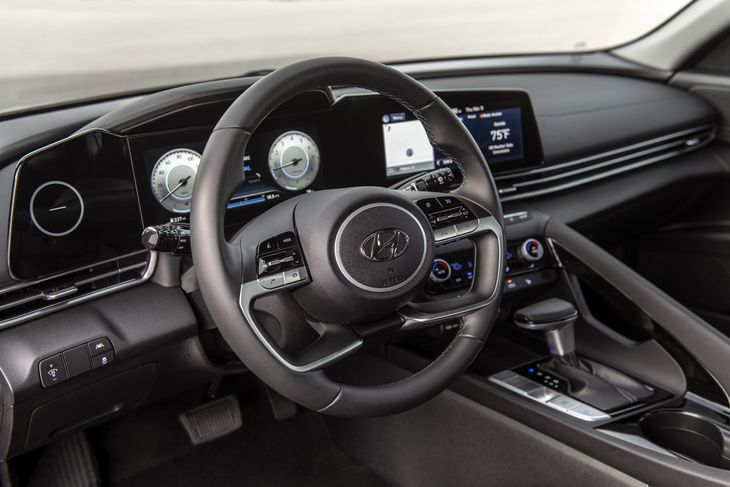
The newcomer's fascia design is sweeping – with slim vents hidden in the from-side-to-side chrome-finished louvres – and particularly driver-focused; the latter aspect is emphasised by the touchscreen being angled towards the driver and the division of the cockpit through a handle strut that stretches from the centre of the hang-down section (around the area of the HVAC controls) to the centre console.
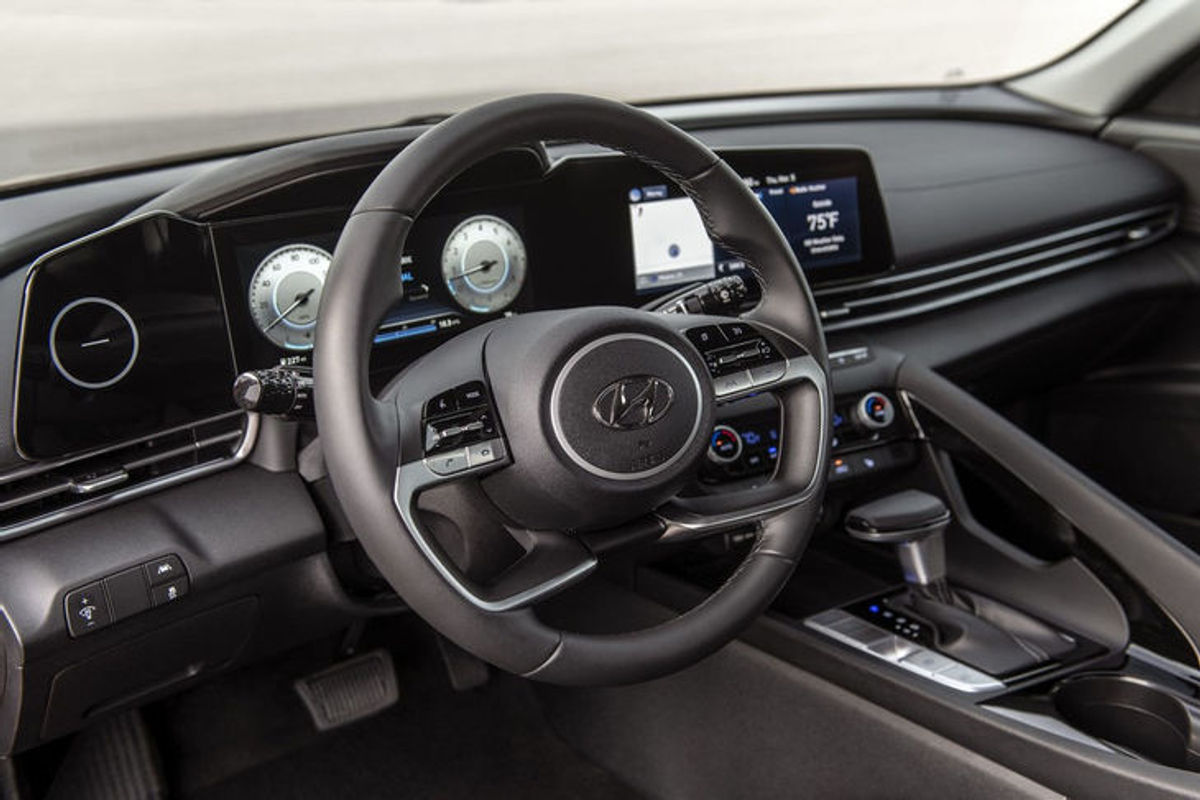
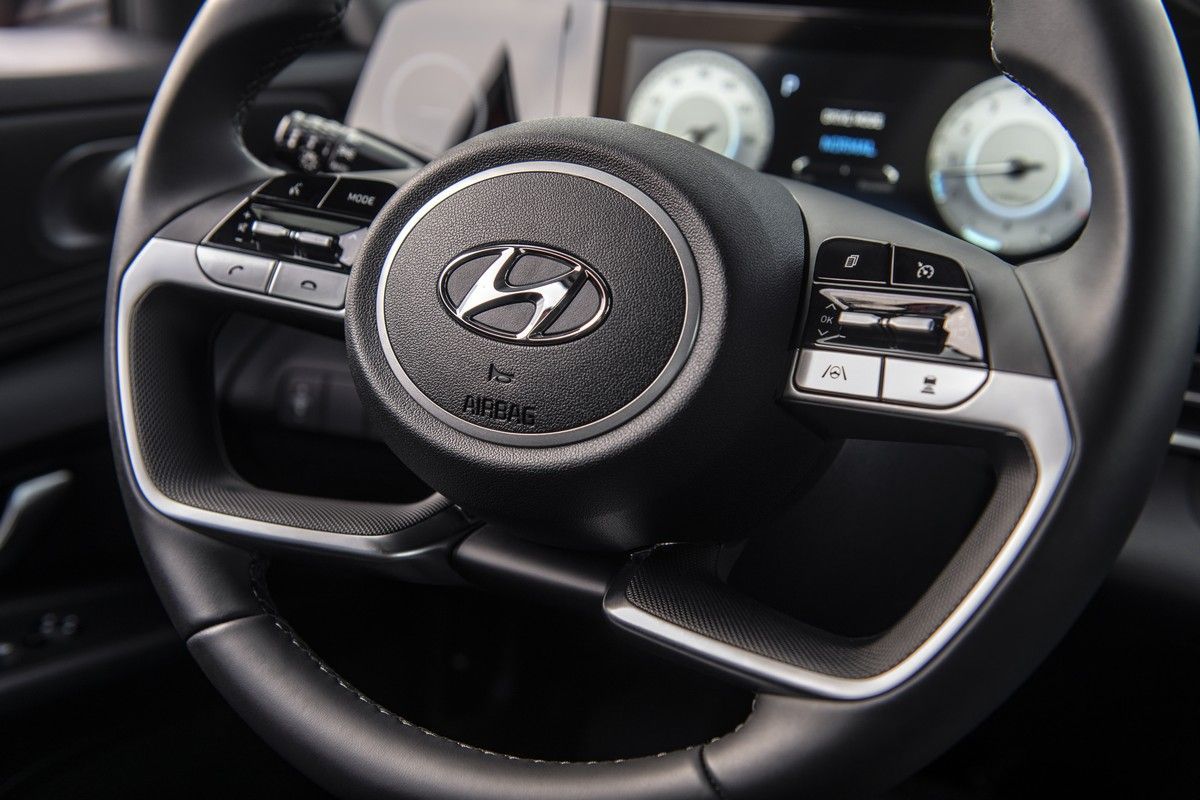
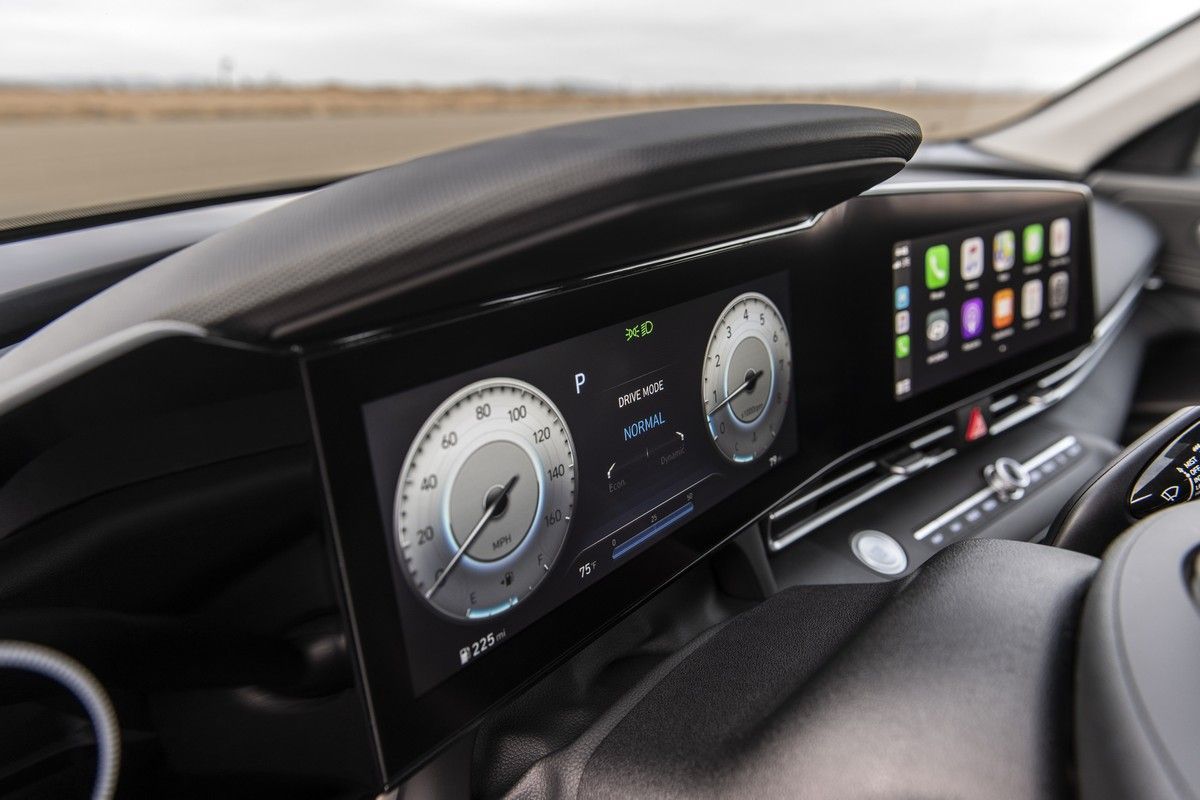
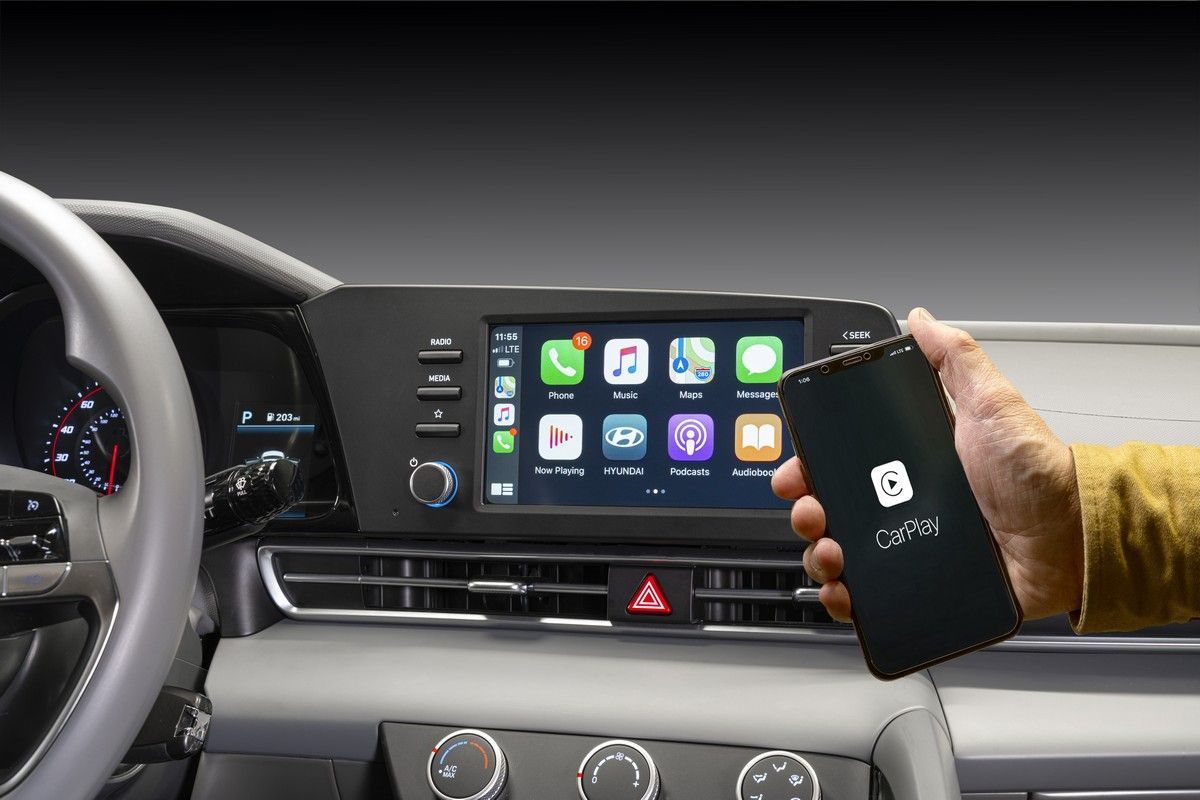
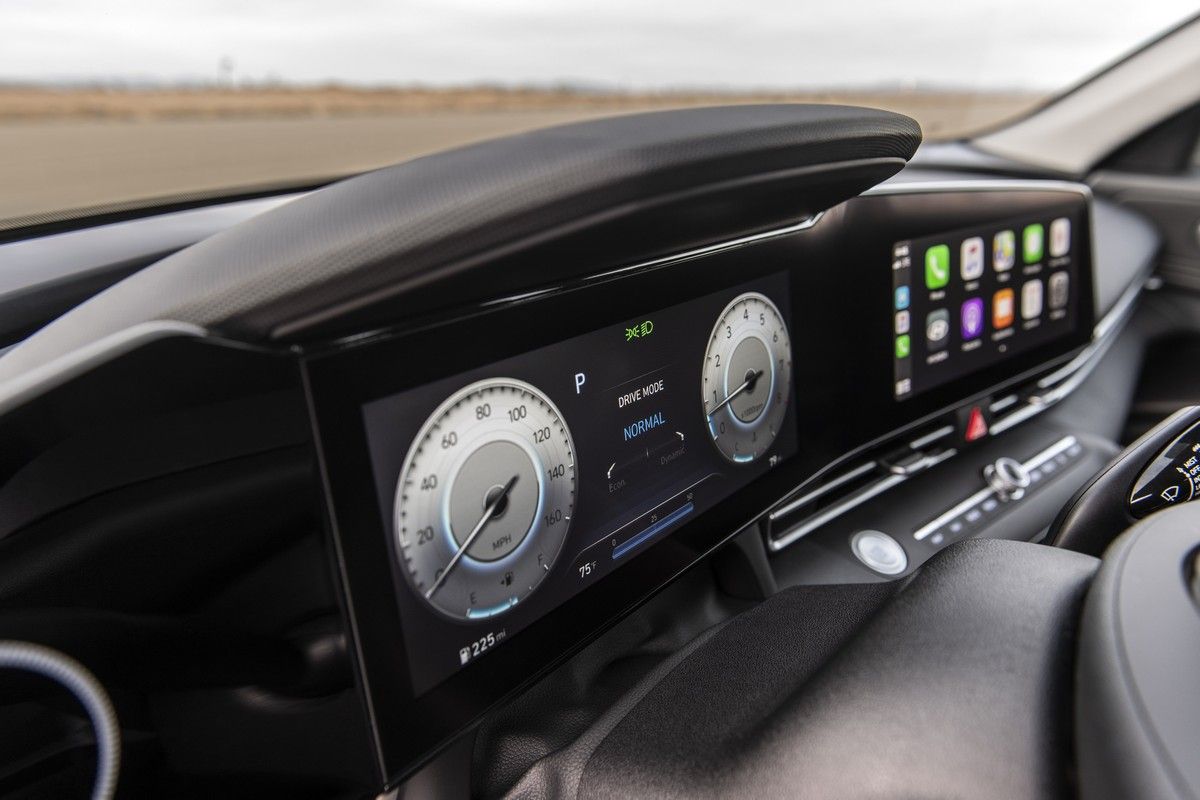
As standard, the Elantra will feature a conventional instrument cluster (with analogue dials), an 8-inch touchscreen infotainment that is Apple CarPlay and Android Auto compatible, a multifunction 4-spoke steering wheel, Bluetooth streaming and -telephony and a reverse-view camera with guiding lines. However, Hyundai took the opportunity to showcase the 8th-generation Elantra in its fanciest spec in Hollywood (as one does) – the car shown here features a pair of adjacent 10.25-inch screens: one that serves as a digital instrument cluster and the other, an extended infotainment screen.
The look of the top-spec Elantra's combined instrument cluster/infotainment screen looks reminiscent of Mercedes' MBUX system.
Furthermore, an 8-speaker Bose audio system, voice recognition (through which a driver can control various of the car's onboard functions) and a digital key, which allows drivers with Android phones to access their vehicles without a key fob, are also optionally available.
The newcomer rides on a McPherson strut front- and multi-link rear suspension setup. In the States, it will be powered by either a 2.0-litre 4-cylinder engine (109 kW/179 Nm) mated with a variable automatic transmission or a petrol-electric power unit (a 1.6-litre four-cylinder petrol engine combined with a 32-kW electric motor and 1.32-kWh lithium-ion battery, which produces combined peak outputs of 103kW and 264 Nm.
The Elantra's cockpit is decidedly driver-focused; note how the lower fascia and infotainment screen is angled inward.
In North America, forward collision-avoidance assist (with pedestrian detection), lane-keeping-, following and high-beam assist, plus driver-attention warning all come as standard (over and above ABS with EBD and front-, side- and curtain airbags). High-end features such as blind-spot collision avoidance assist (with rear cross-traffic alert), adaptive cruise control, driving assist, safe-exit warning and reverse-parking collision avoidance systems are available too.
The question is: Will Hyundai South Africa, which has removed the outgoing Elantra from its website, introduce the marque's 8th-generation sedan in South Africa? After all, the conventional 4-door family car seems under constant threat of its compact family cars, including the brand's own Creta, Kona and Venue models. Suffice to say that it was not in the importer's plans for 2020 (when we last checked). However, given the undoubted potential of the new model to spawn sportier derivatives, such as N-line and full N versions (Hyundai has 1.6- and 2.0-litre turbopetrol engines, mated with either a 7- or 8-speed dual-clutch automatic transmission, in its arsenal), well, hope springs eternal.
Toyota South Africa has updated the Corolla Hatch for 2020, adding a few modern features and updating some of the safety spec.
In a bid to try and up the sales of the Corolla Hatch (sales have not met expectations) Toyota South Africa has installed a few updates for the Auris replacement.
For starters, the whole range now benefits from wireless charging. The speed of the wireless charger is not mentioned but we suspect it to be the same as the 1.5mA USB charger. There is no mention of Apple Carplay or Android Auto being added, but we have it on good authority that the rollout to Corolla Hatch will happen during 2020.
The top-of-the-range Xr model receives the Toyota Safety Sense system, which is being rolled out across most premium Toyota models. It comprises a pre-crash system, blind-spot monitor, lane trace assist and all-speed cruise control. The Xr model also gets automatic high-beam assist.
The colour variety has been extended with Bi-tone colour options added to the colour palette in the form of Pearl White, Satin Silver, Emotional Red and Caribbean Blue – all paired with a black roof, while Pearl White and Caribbean blue have been deleted in mono-tone configuration.
The engine remains the same (1.2 turbopetrol with 82 kW and 185 Nm) as does the 6-speed manual and CVT gearbox choices.
As for after-sales support, the Corolla Hatch is sold with a 6-services/90 000 km service plan (service intervals at 12-months or 15 000 km) and a 3-year/100 000 km warranty. It also comes with Toyota Connect telematics service and in-car Wi-Fi connectivity with a complimentary once-off 15Gb.