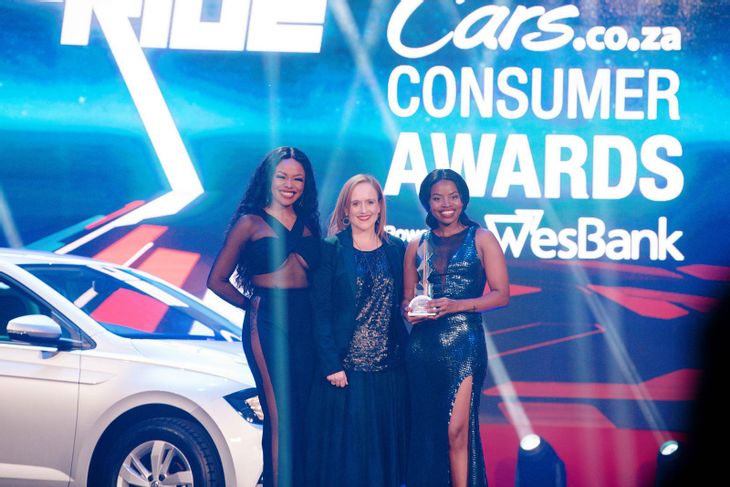
Volkswagen cemented its position as the most successful manufacturer in the history of the #CarsAwards when it collected no fewer than 6 out of 13 category wins, as well as the coveted Brand of the Year title, in the 2019/20 iteration of the leading automotive awards programme.
SPONSORED ARTICLE
The glittering presentation ceremony of the 5th annual Cars.co.za Consumer Awards – powered by WesBank was held at Kyalami recently. Widely regarded as South Africa’s most definitive automotive awards programme, which is exclusively supported by the country’s largest vehicle-finance provider, #CarsAwards has become a highlight in the automotive calendar since its inaugural event in 2016.
As the only brand to have won at least one #CarsAwards trophy every year since the programme began in 2015/16, Volkswagen dominated the 2019/20 event to increase its total tally of category wins to no fewer than 16. However, Volkswagen topped it off by taking home the evening's biggest accolade: the Brand of the Year title (determined solely by market and customer data) for the first time.
The Polo 1.0TSI Comfortline Auto was one of three Volkwagen derivatives to defend its category win from 2018/19.
“We are honoured with the vote of confidence and support from our customers. At Volkswagen, we pride ourselves with outstanding products and excellent customer service and winning 'Brand of the Year' is recognition of the great work being done by Volkswagen employees as well as the dealer network,” said Mike Glendinning, Volkswagen Group South Africa's sales and marketing director.
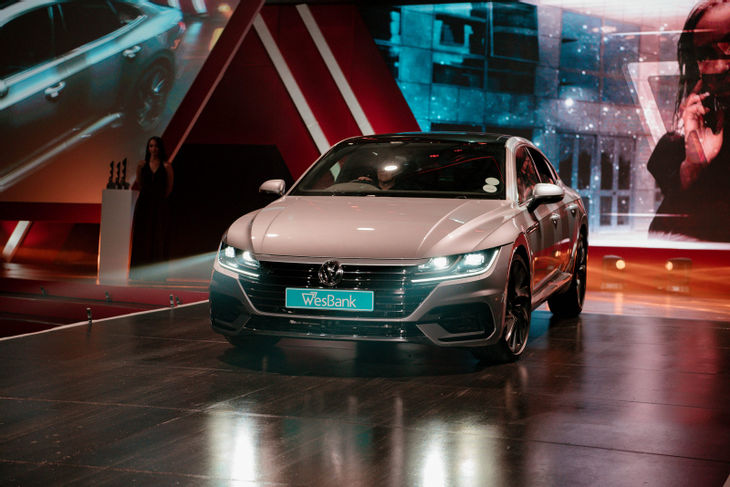
The Arteon 2.0TSI 4Motion R-Line defeated the BMW 3 Series and Mercedes-Benz C-Class to win the Business Class category.
“We are so proud of the Volkswagen wins at this year’s awards. For the locally-manufactured Polo and Polo GTI to defend and win their categories respectively, is great recognition for the Uitenhage plant. I am also very proud of the T-Cross, which continues to be a key player in the A0 SUV segment. Our premium brands, the Arteon and much-loved Golf GTI, also performed excellently. With the bakkie market being intensely competitive in South Africa, it is a terrific feat that the Amarok defended its title in this category for the third time,” concluded Glendinning.
Volkswagen's domination of the 2019/20 #CarsAwards follows a record-breaking 2019, in which the brand achieved a 20.4% passenger market share (the highest in 23 years) and the manufacturing plant in Uitenhage achieved an all-time record for production in a single year.
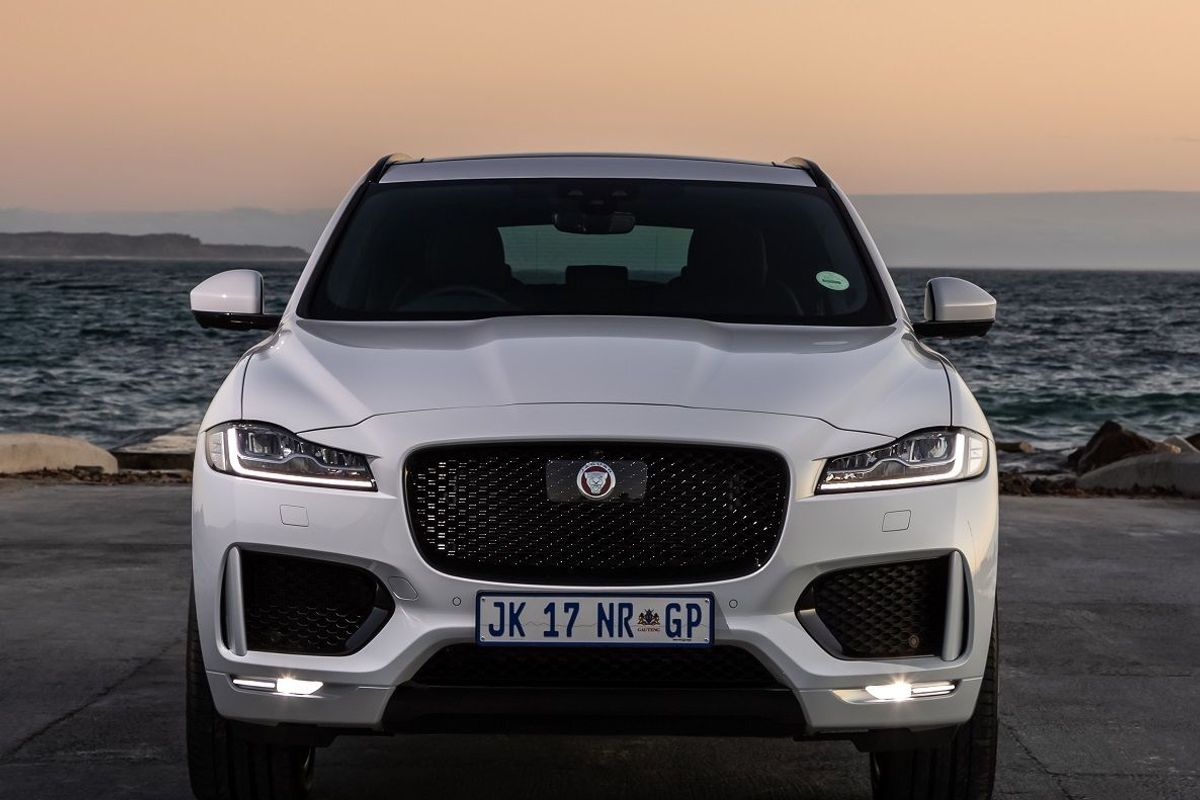
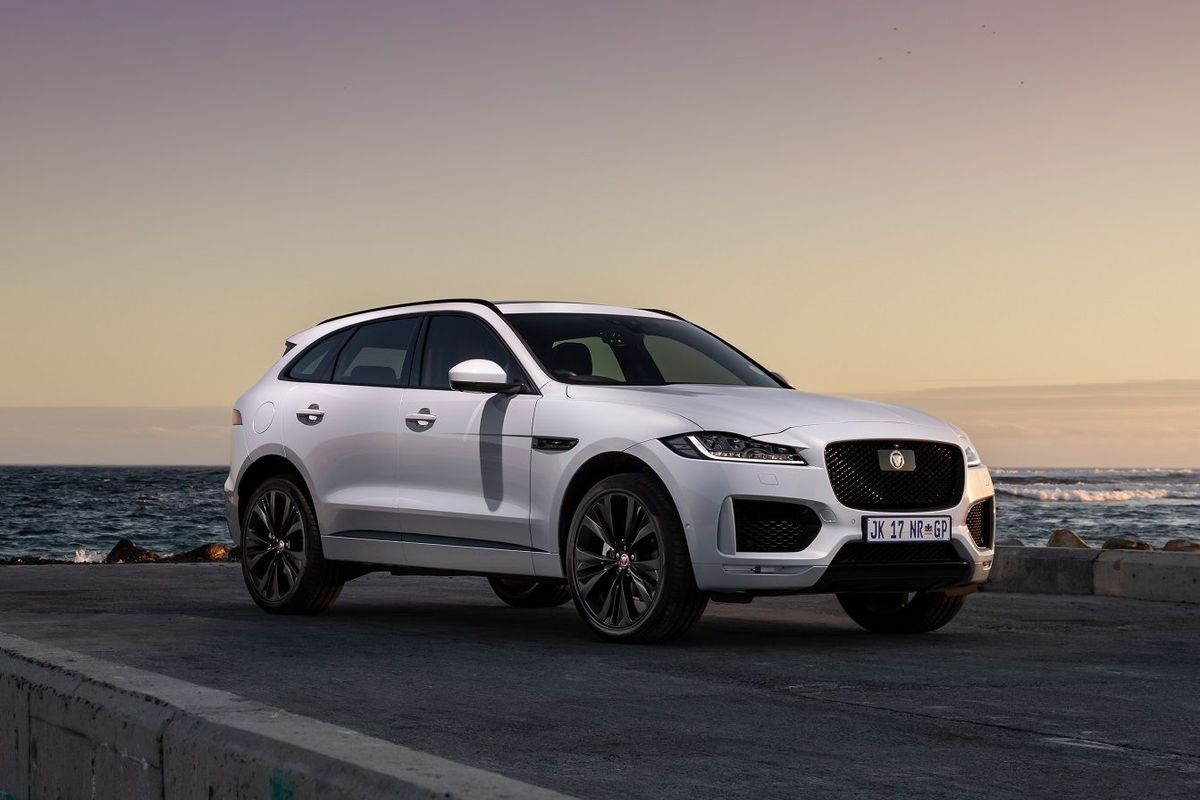
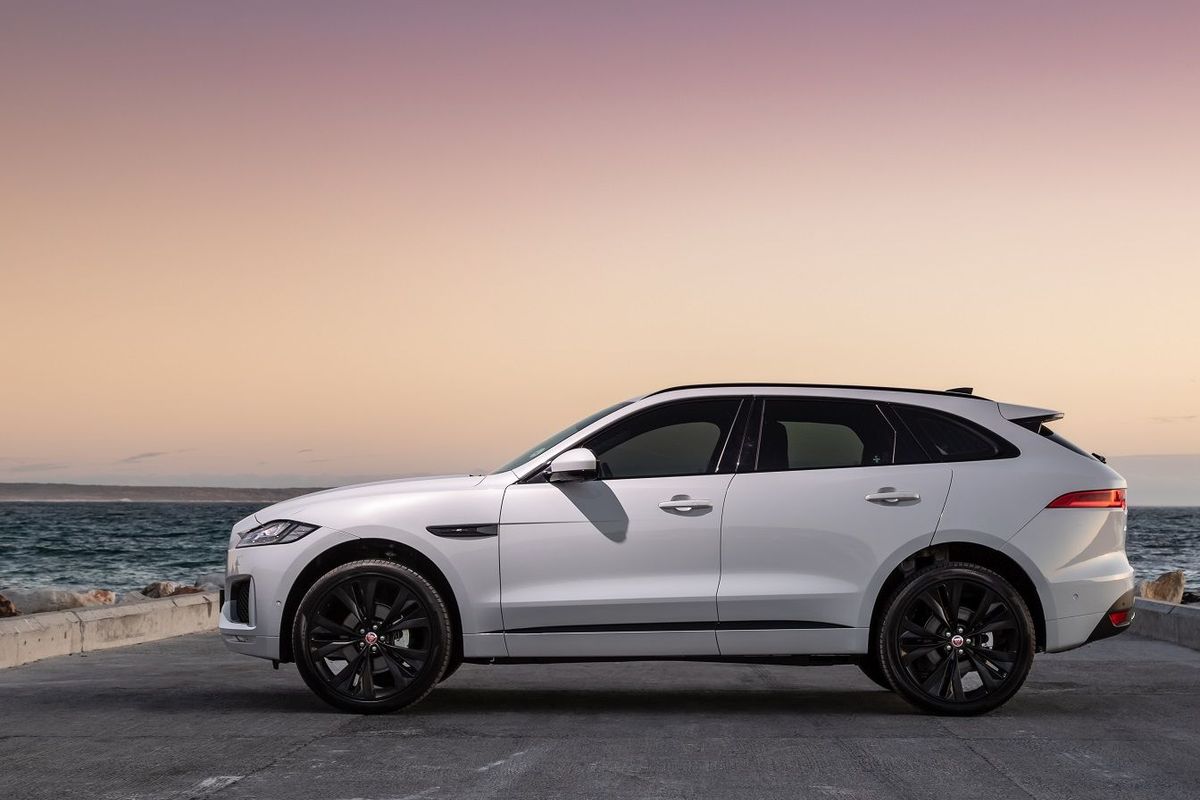
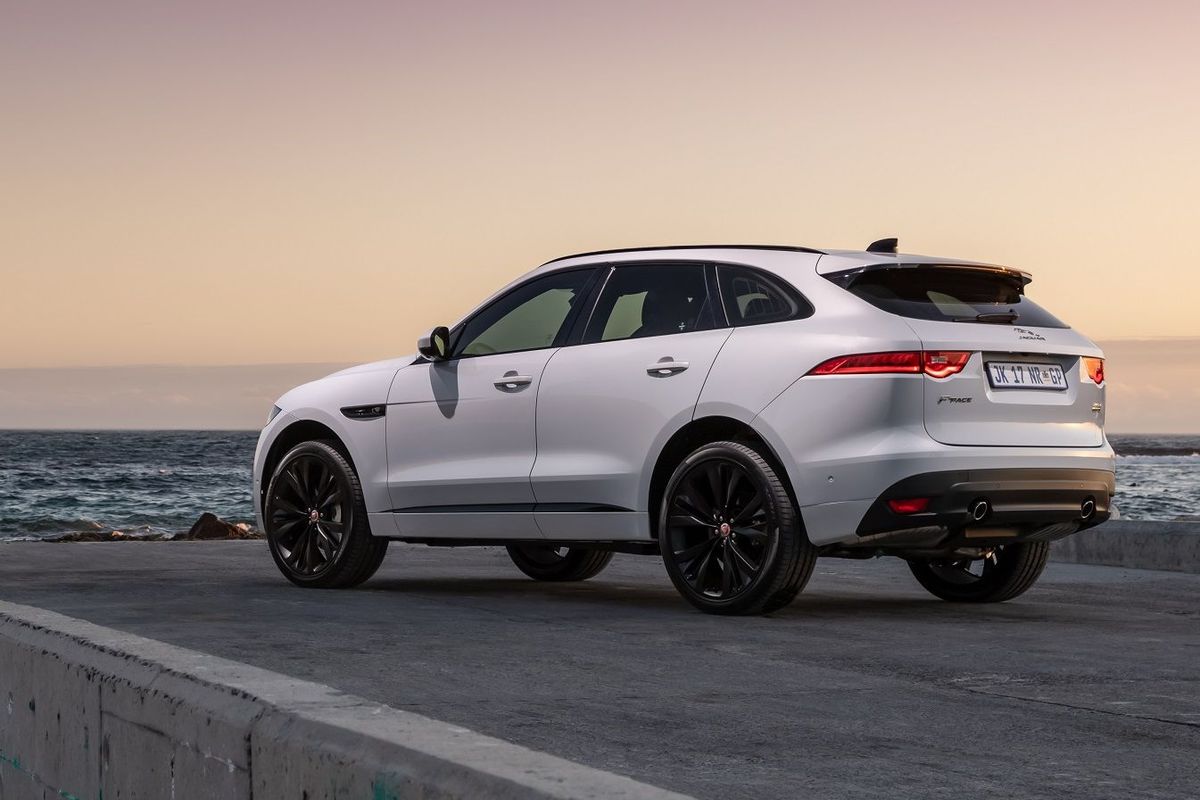
Jaguar South Africa has introduced a special edition of its F-Pace SUV. Here are specification and pricing details for the Jaguar F-Pace Chequered Flag edition.
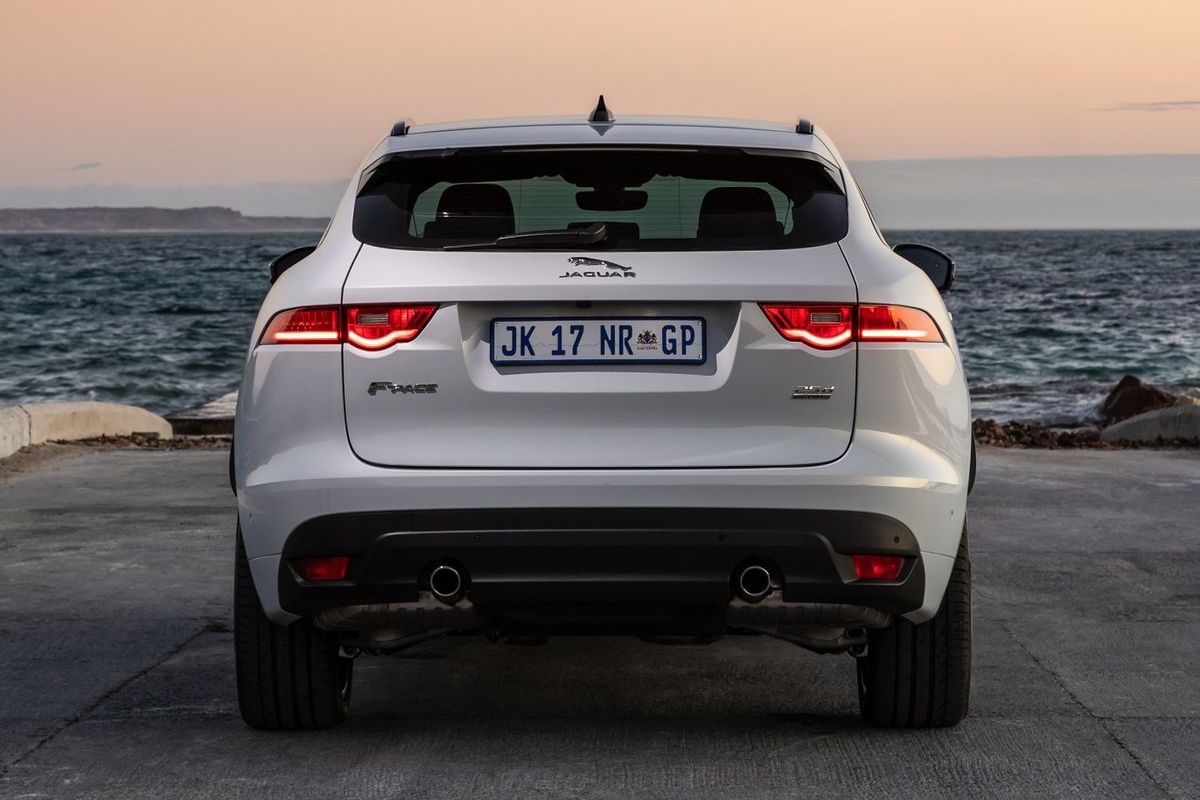
You can spot the new Jaguar F-Pace Chequered Flag model with its sporty bumper, gloss black detailing on the grille, vents and door cladding as well as its 19-inch 5-split alloy wheels, which are also finished in gloss black.
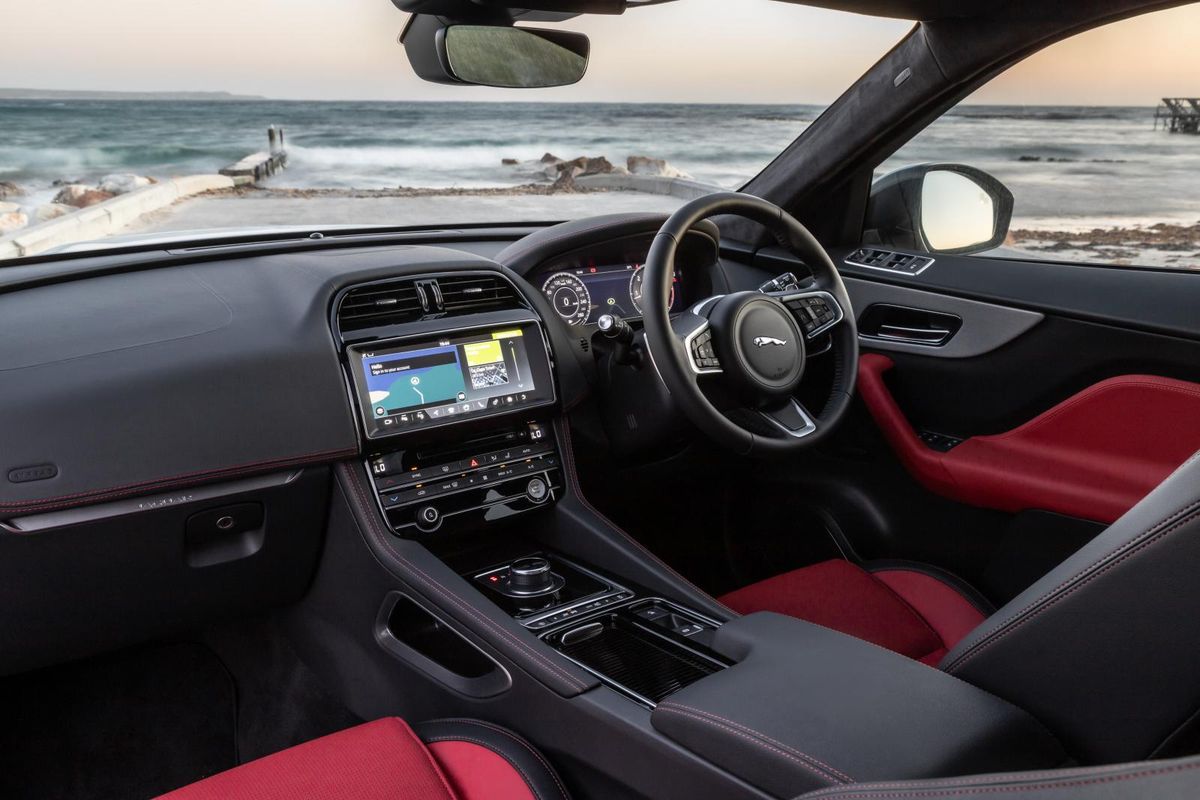
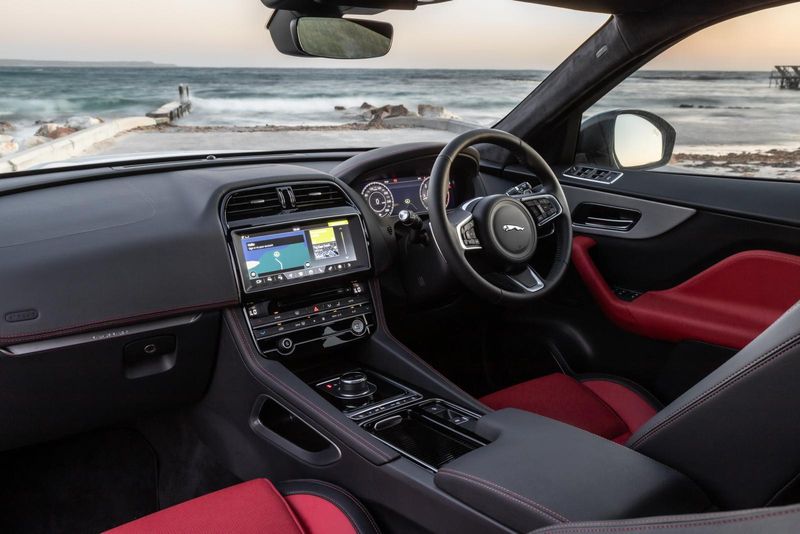
The cabin features plenty of luxury materials and the vehicle comes with plenty of standard features such as 10-way electric front seats with driver memory, Apple CarPlay, Touch Pro Navigation Pack, Meridian Sound System, reconfigurable 12.3-inch Interactive Driver Display and the Touch Pro infotainment system. There is also unique Chequered Flag treadplates.
There are 3 2.0-litre engines to choose from, with 2 diesels and 1 petrol. The oil-burners boast outputs of 132 kW and 177 kW, while a turbocharged petrol model packs 184 kW. The latter gives the F-Pace a claimed sprint time of 7 seconds dead to 100 kph. All Jaguar F-Pace Chequered Flag editions come with automatic transmissions and all-wheel drive.
The cabin of the Jaguar F-Pace Chequered Flag.
Jaguar F-Pace Chequered Flag Price in South Africa (February 2020)
Jaguar vehicles come standard with a 5 Year Care Plan giving peace of mind with a 100 000km warranty and servicing within in 5 year period, whichever comes first. The below prices include VAT but exclude CO2 tax.
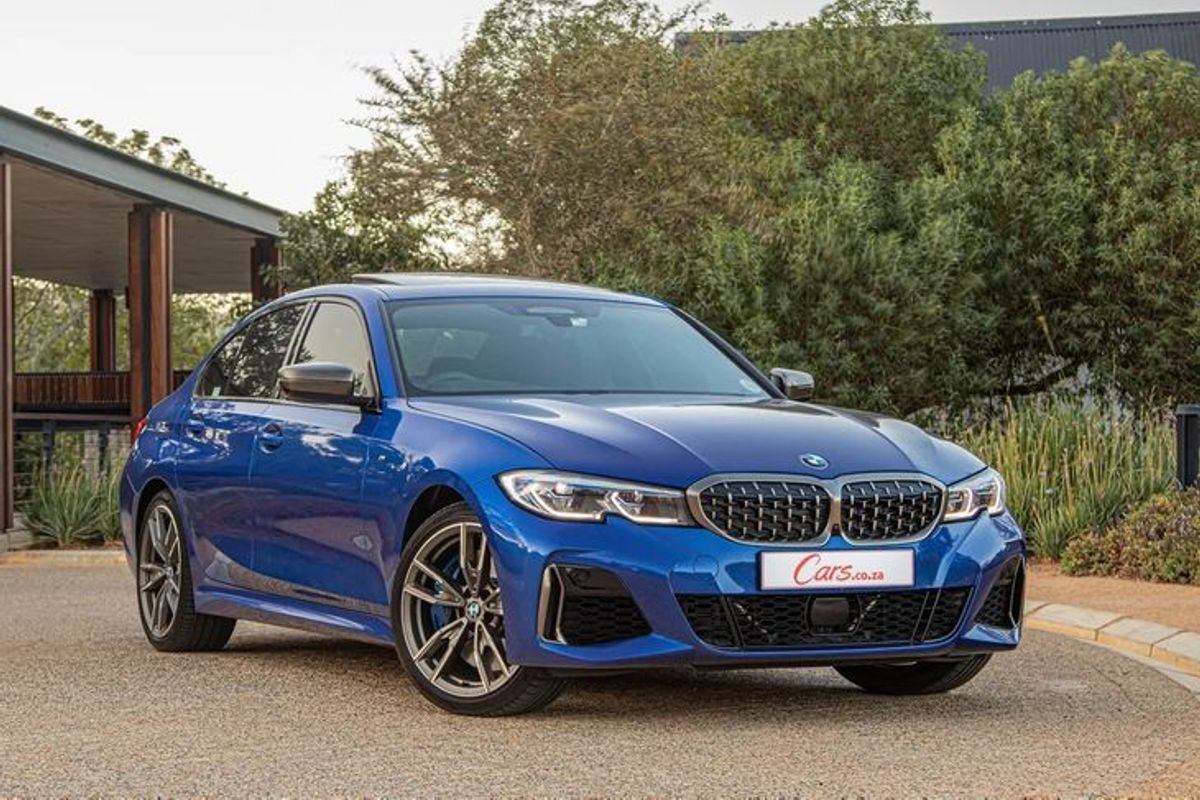
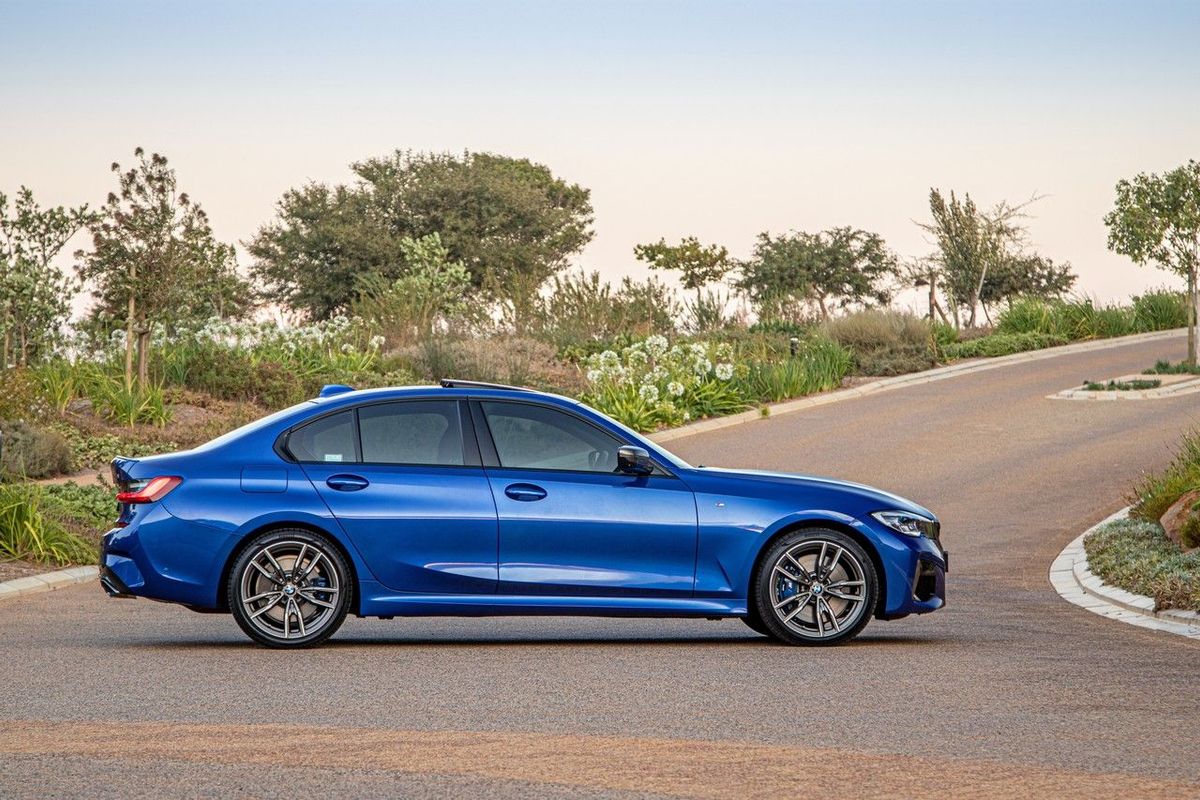
As the flagship of the G20-generation BMW 3 Series range (until the M3 arrives next year), the M340i xDrive delivers compelling performance, but without the extroverted looks and compromised ride quality of a fully-fledged M car. However, with a price tag of R1 million, is the "M3 Lite" still a performance bargain?
We like: Return of the old-school 6-cylinder thrill. Planted and composed drive.
We don't like: Base price is steep. The xDrive blunts driving fun (a little).
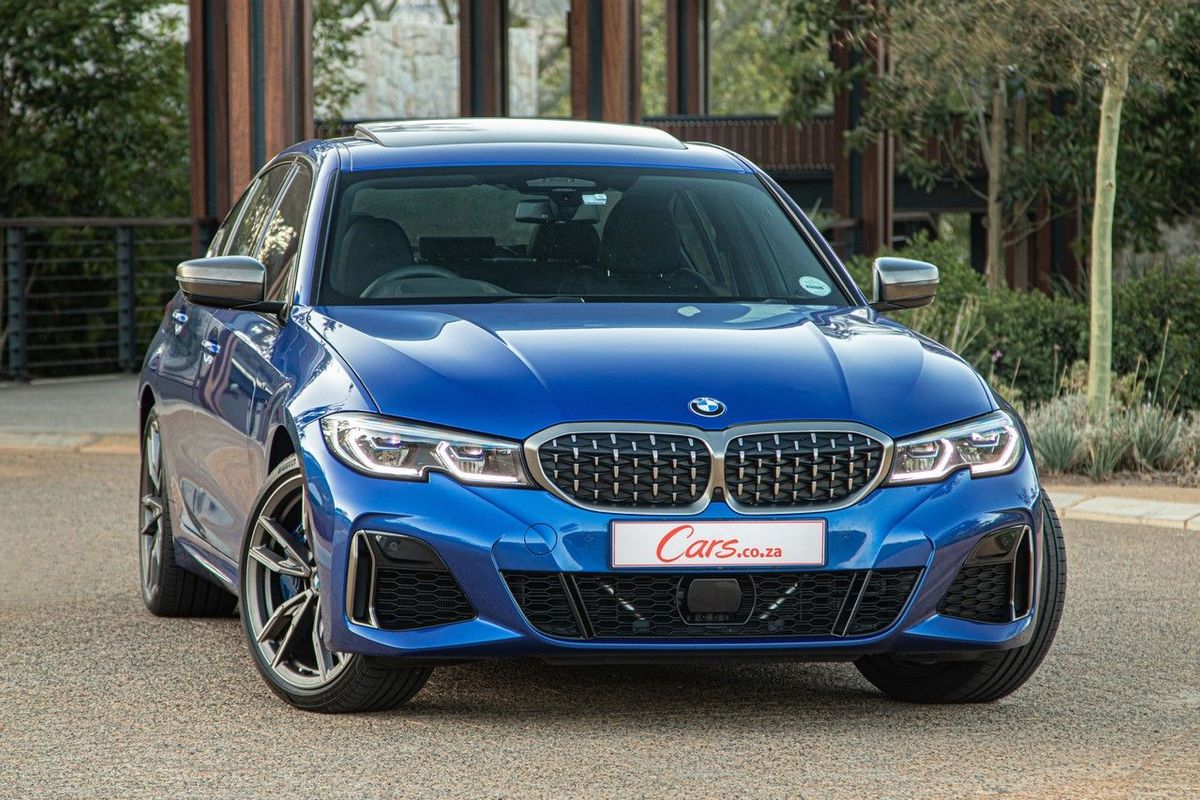
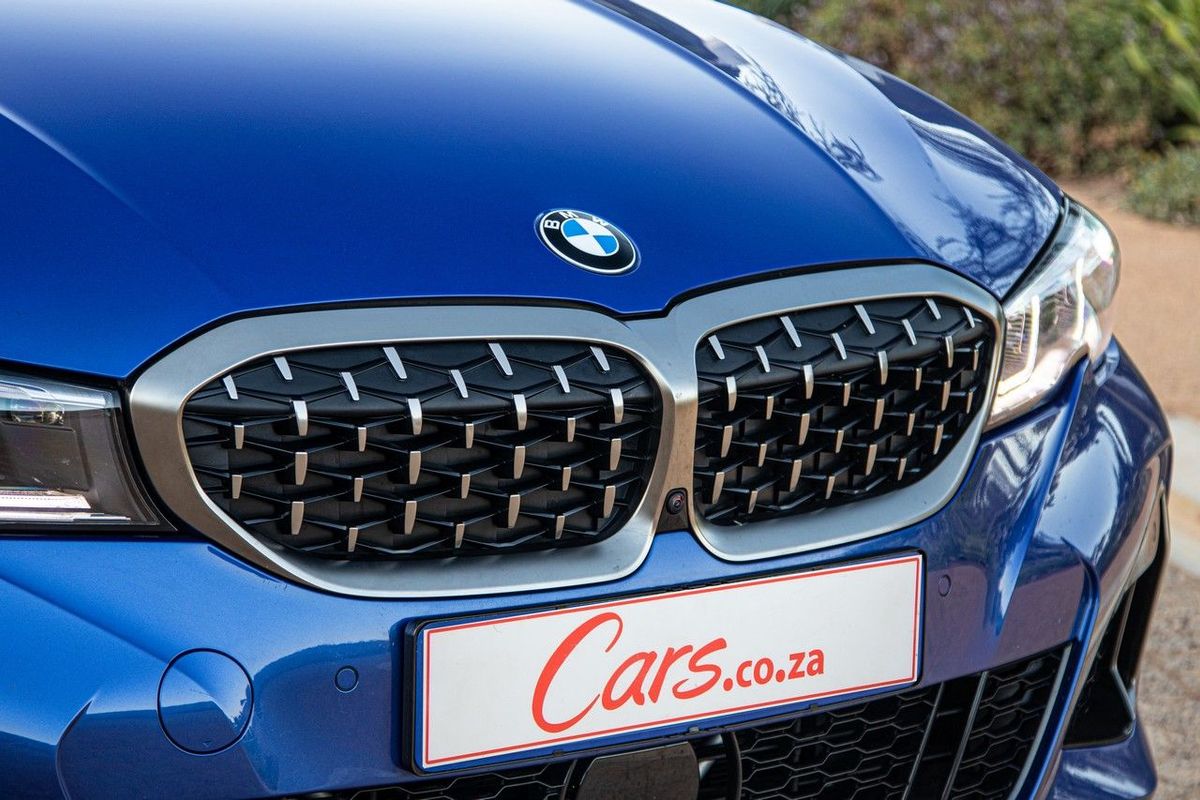
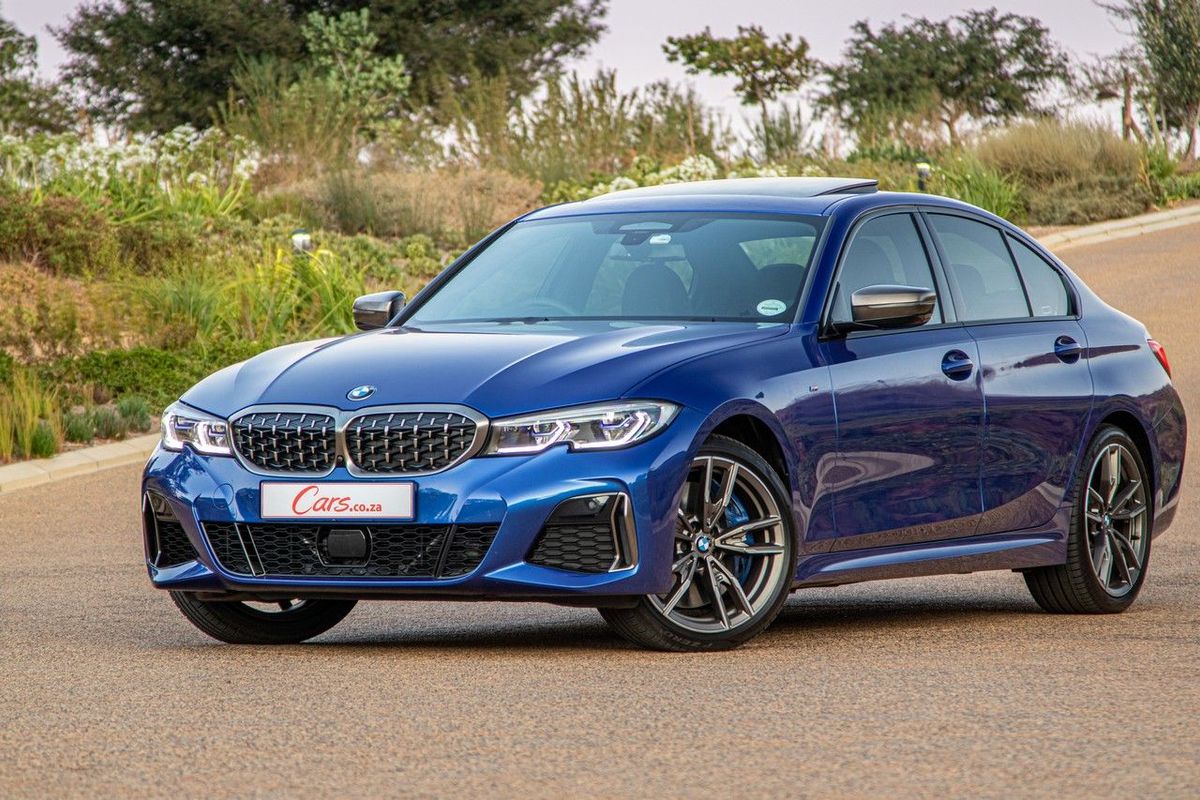
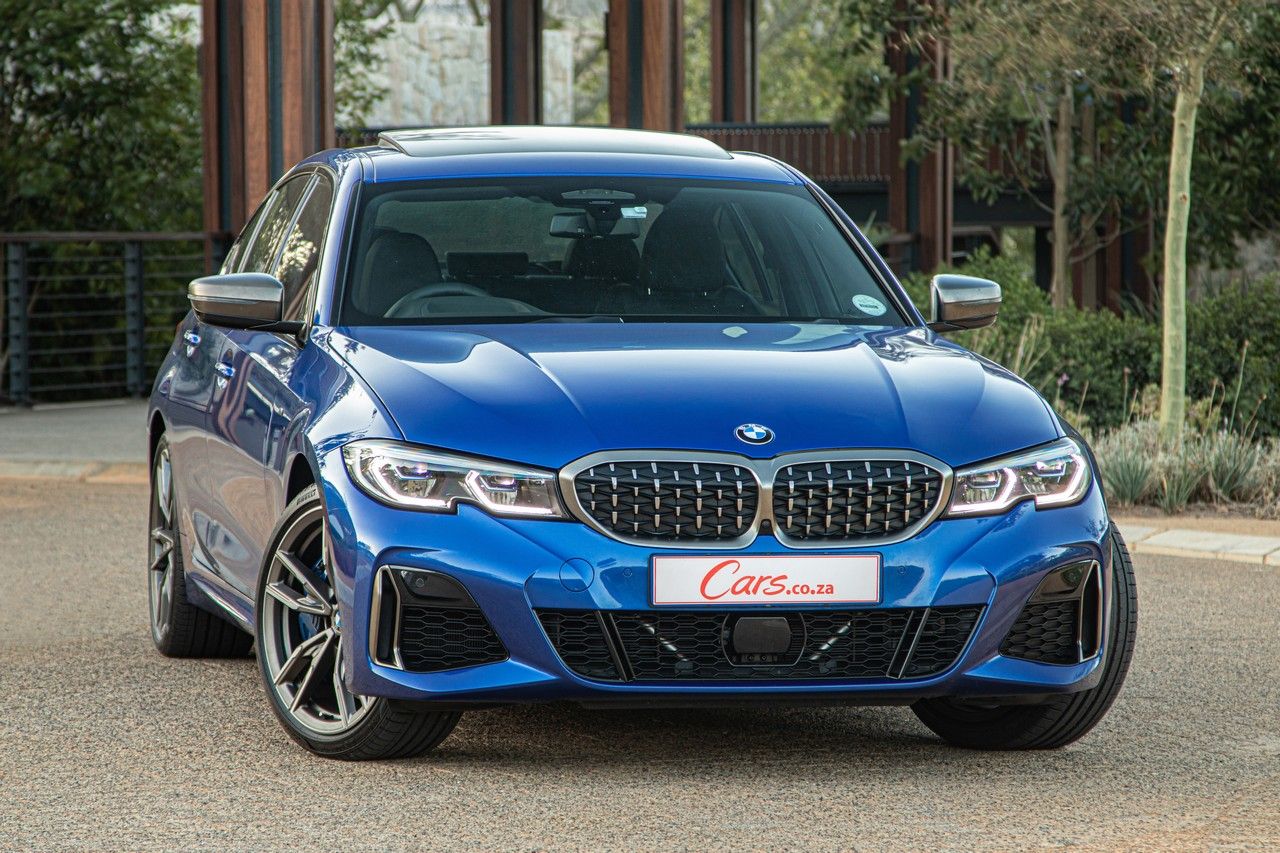
The M340i's elaborate front bumper, replete with enlarged inlets and swathes of black mesh, is one of the few cues to its performance potential.
For those not looking for ultimate thrills in terms of performance and handling in the business-class sedan segment, there are a few enticing derivatives that sit a tier just below full-factory RS-, M- and Mercedes-AMG models. They still deliver adrenaline-spiking performance, but are packaged in a purposely-understated manner. Audi has been offering the S4 for several generations of the A4; Benz has the C43 and BMW the M340i. For a long time, the Audi was the only all-wheel-drive sedan in the line-up, but the M340i now comes standard with xDrive and the same goes for the C43 (4Matic).
What you get with an M340i is a high-end 3 Series derivative of which the oily bits and underpinnings have been fettled by the Bavarian marque's famed M division – it's powered by an updated version of the BMW Z4 40i/Toyota GR Supra engine. It sounds like an ideal recipe for a pukka driver’s car with that sleeper style that’s preferred by more introverted/less-flashy buyers.
How it fares in terms of…
Performance
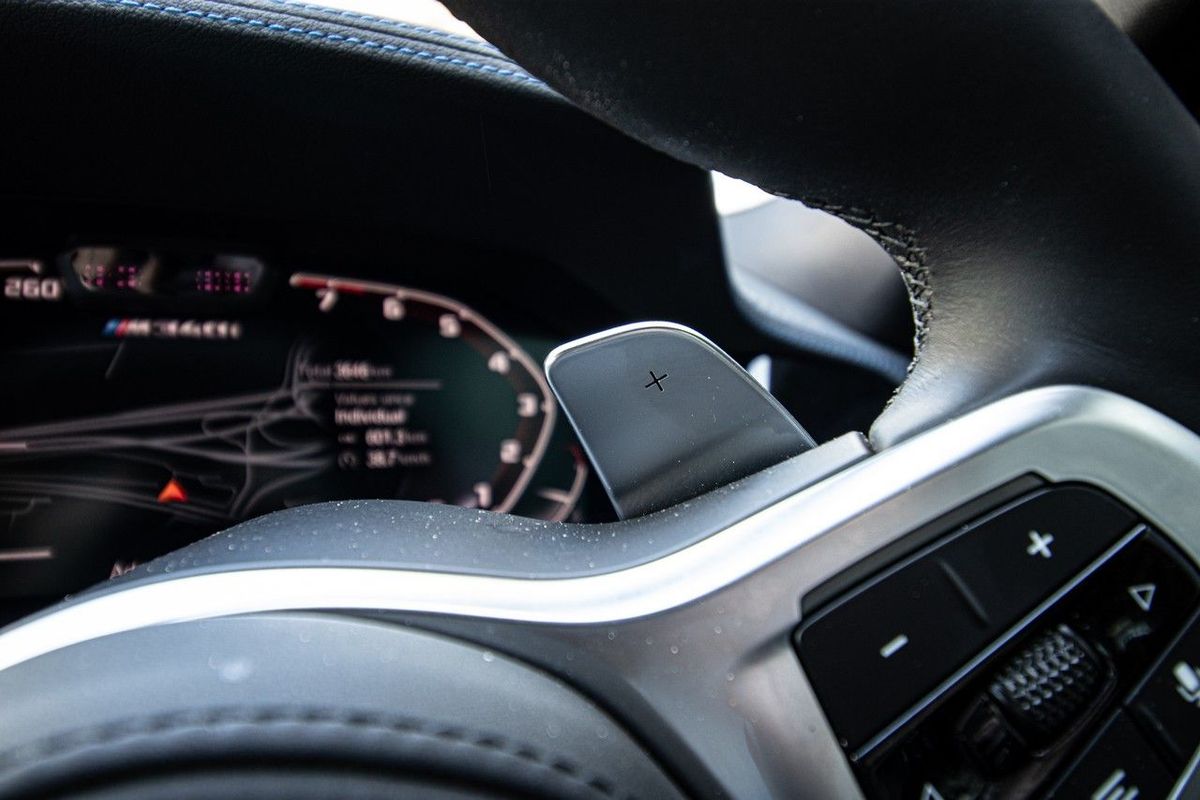
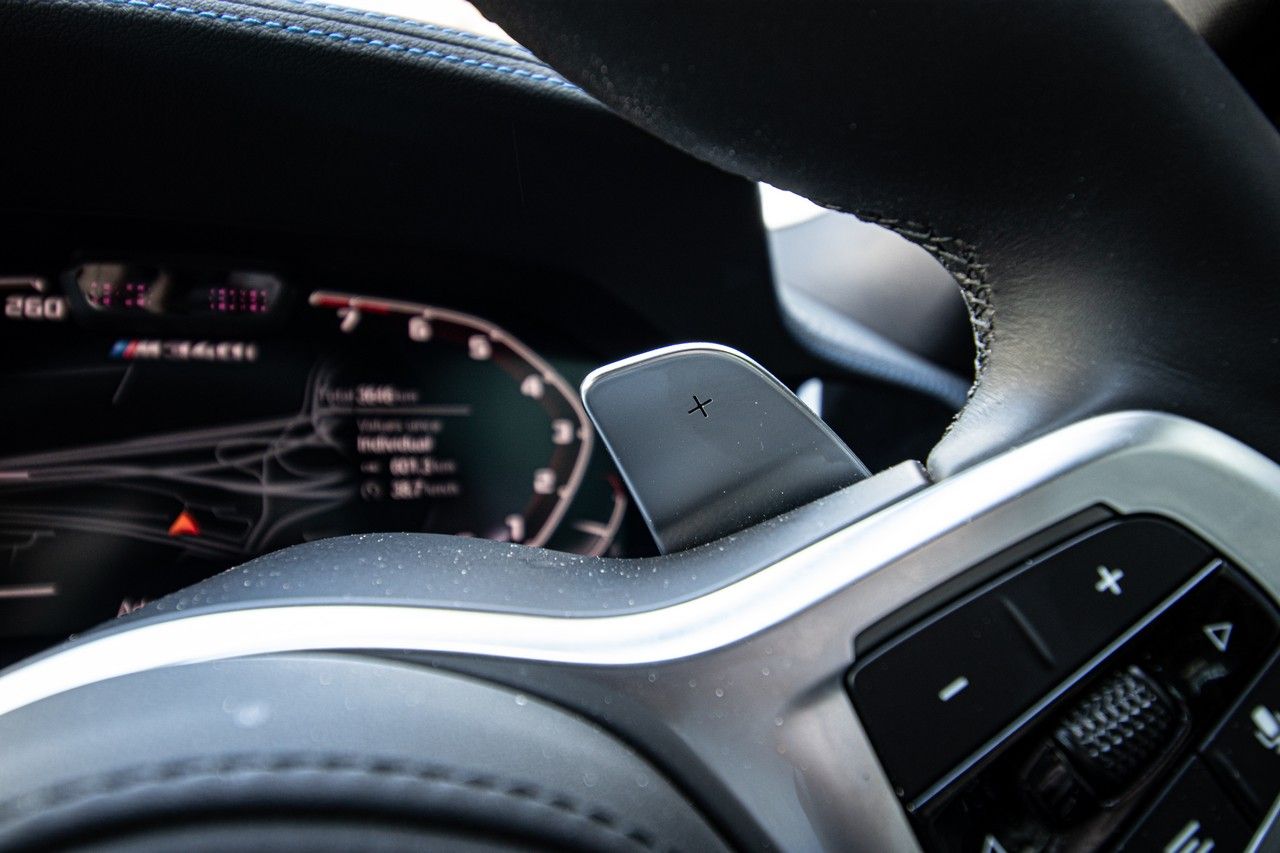
The M340i is powered by a beefed-up 3.0-litre 6-cylinder turbopetrol engine, which produces 285 kW and 500 Nm of torque, mated with an 8-speed sport automatic transmission. BMW claims a 0-100 kph time of 4.4 seconds and, just to put that into perspective, the previous-generation M3 achieved that sprint benchmark in 4.1 seconds (if you happened to buy a manual version, 4.3 seconds). The straight-6 revs freely for a turbocharged motor, very close to 7 000 rpm, in fact, which provides a very linear feel to the M340i's acceleration; it’s not harsh or punchy, the rev-gauge readout climbs continuously until that red line before the 8-speed auto whips another gear into action.
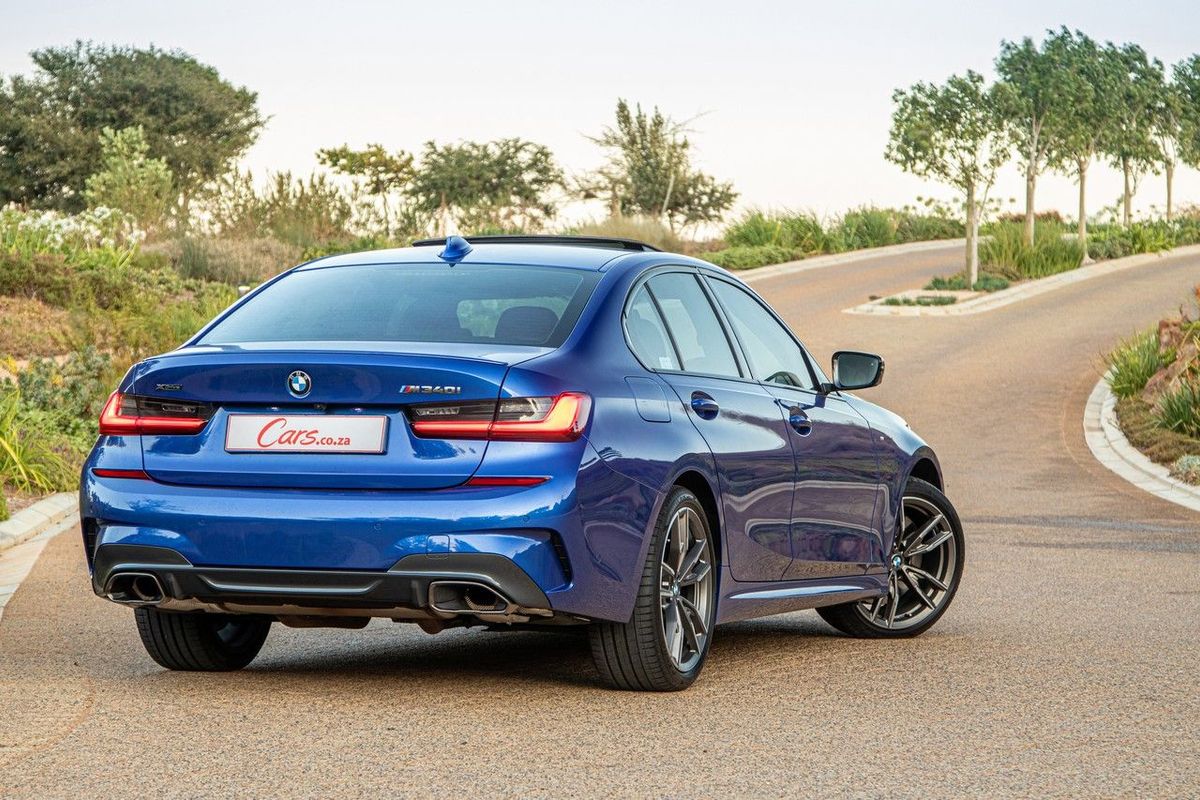
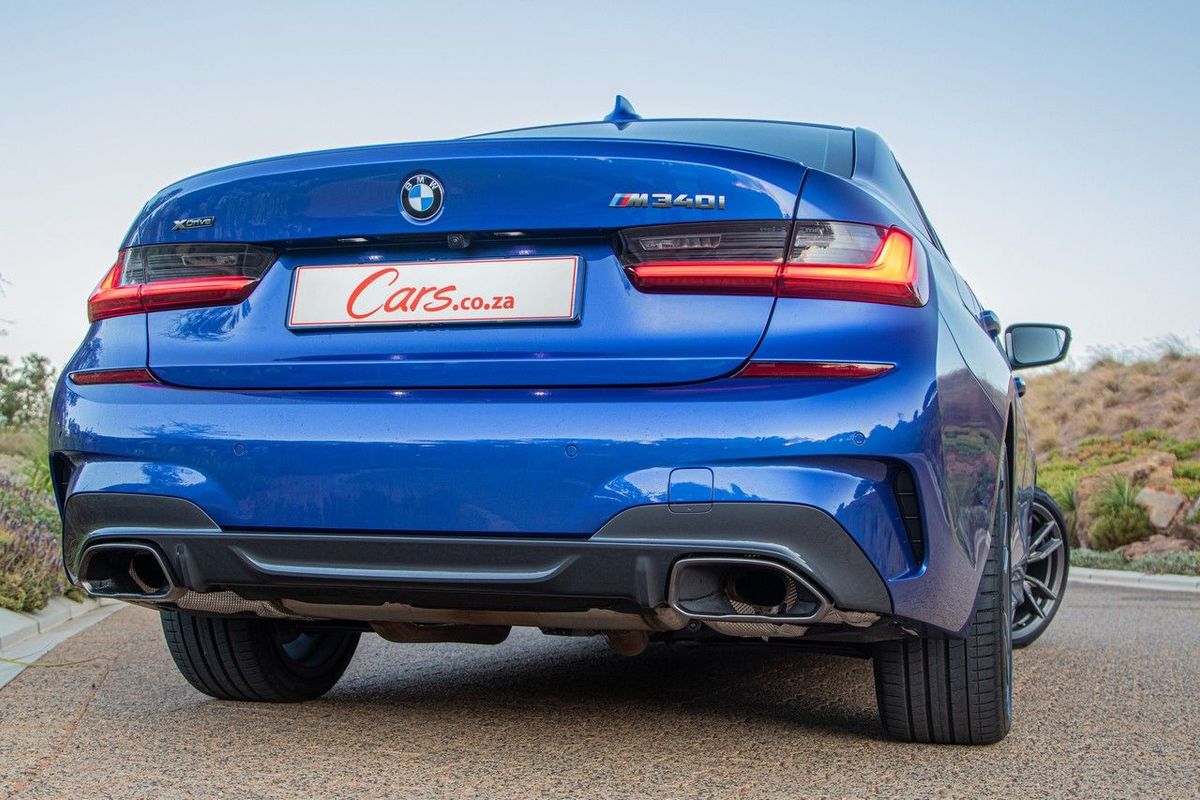
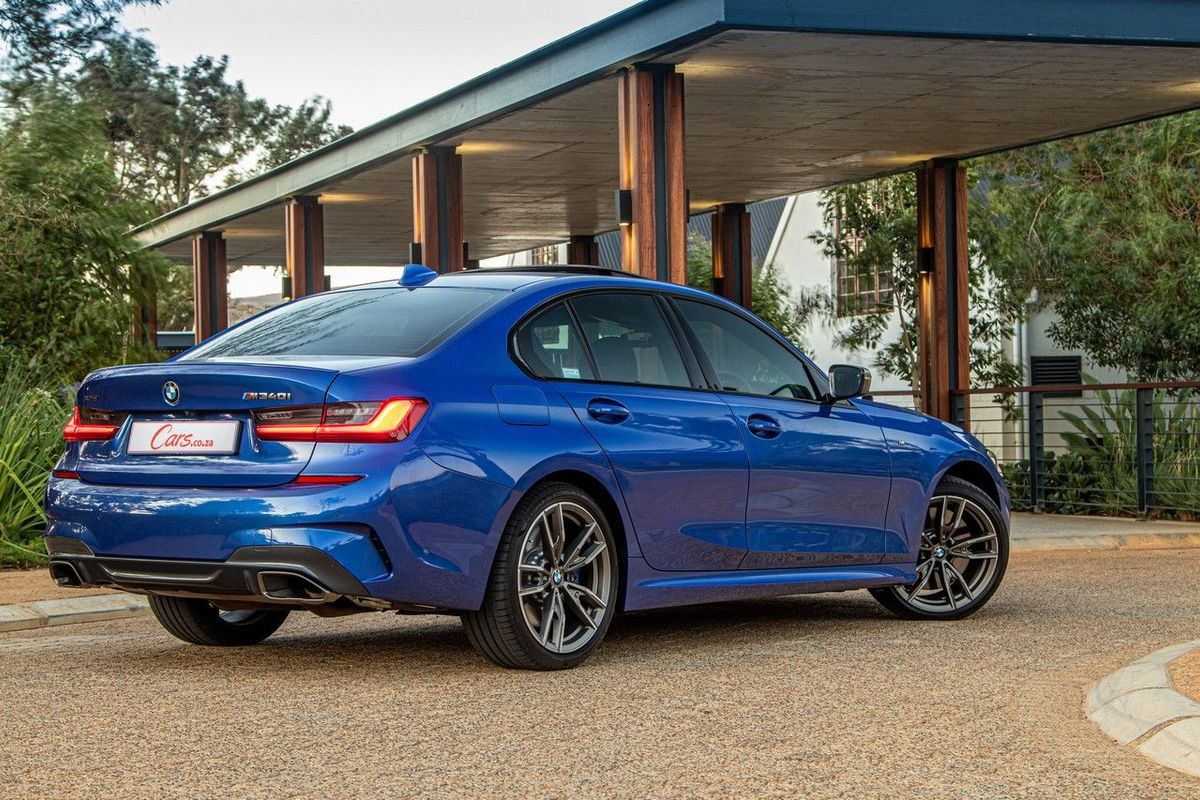
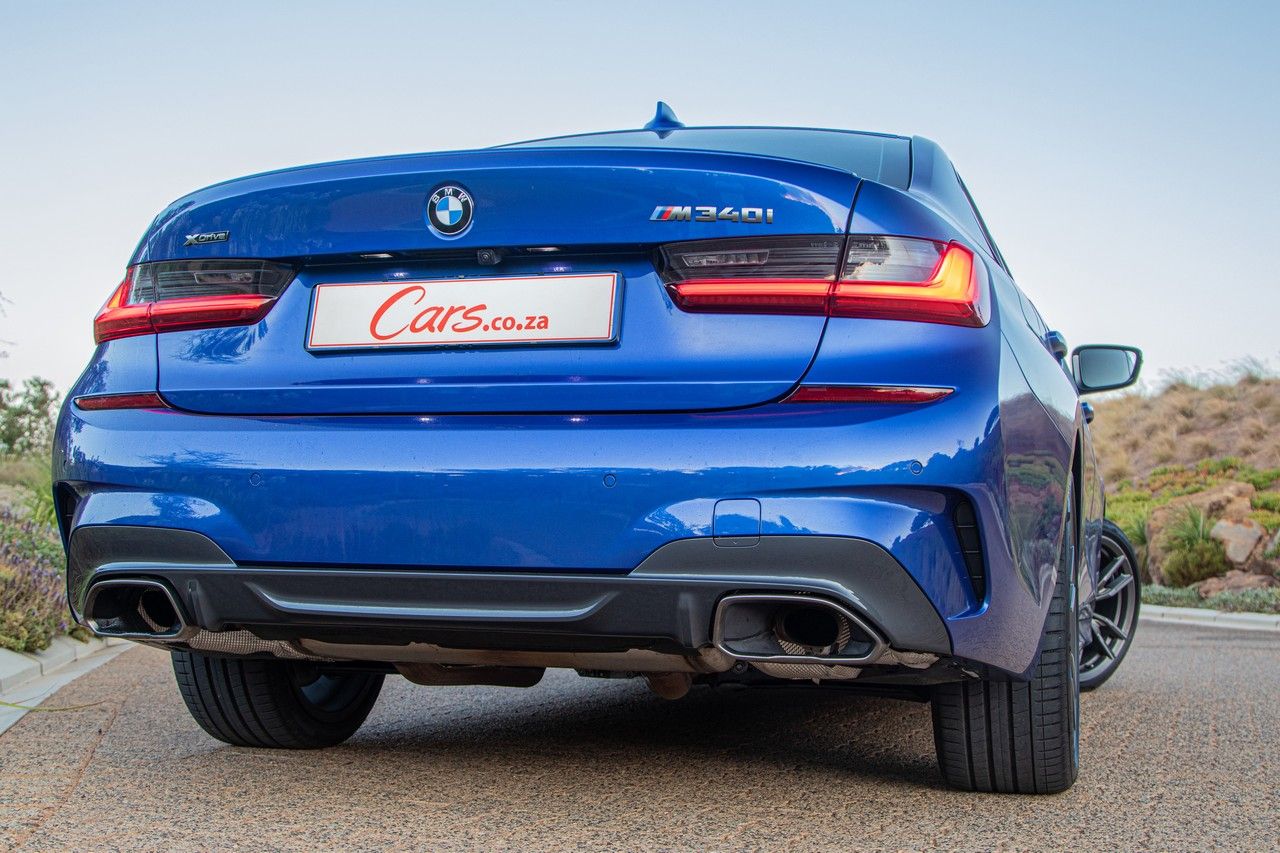
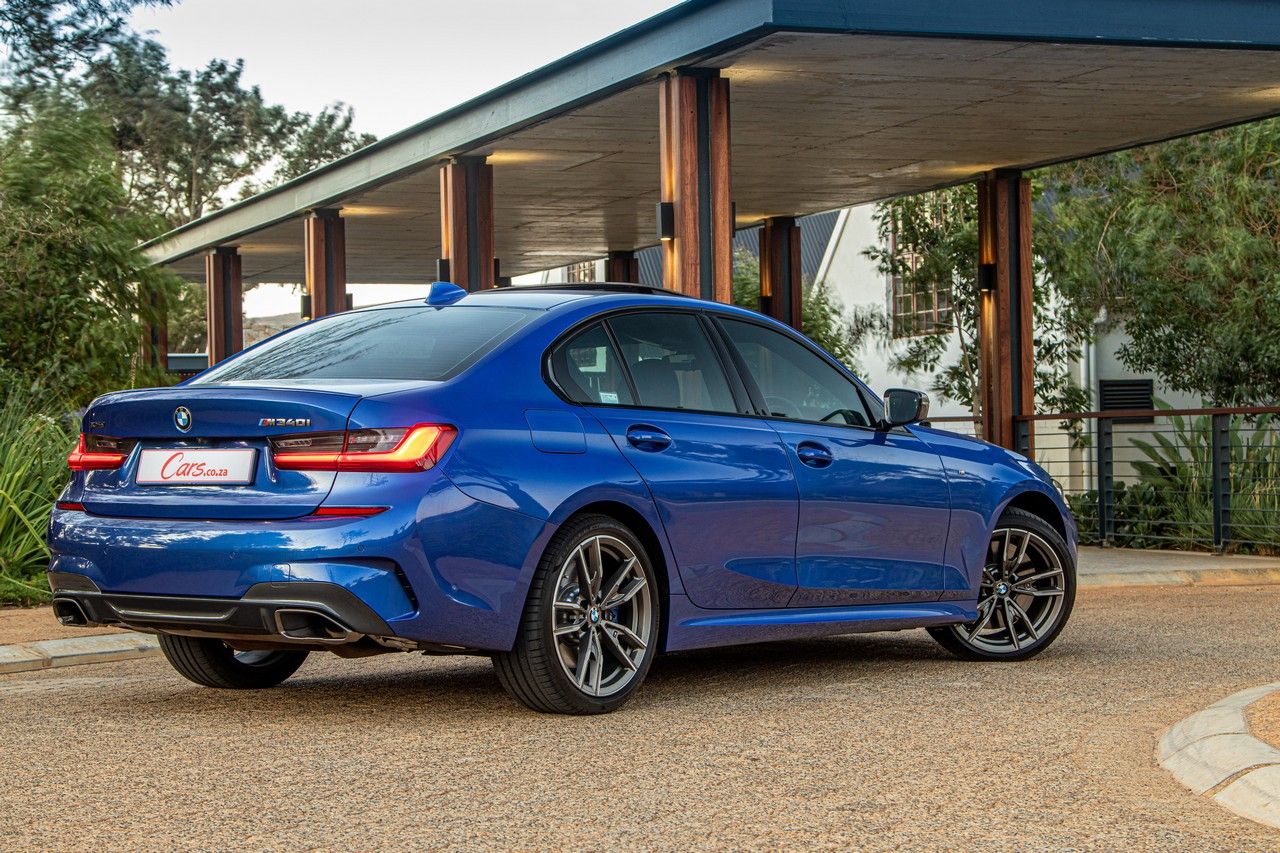
The Bimmer's dark grey trapezoidal exhaust tips look purposeful, but alas, they are ornamental (M performance-spec or not).
Ten years ago, the E90-generation 330i derivative sported a high-revving naturally aspirated 3.0-litre straight-6 engine. It was a pleasure to rev, with long gears that really let you explore the flexibility of the motor's performance. This M340i feels like that all over again; it’s like BMW has looked to its storied (some would say glorious) past, remembered who it is and then rebooted its greatest hits. It’s brilliant, and even the soundtrack, although slightly tamed by the turbo, sounds like a howling BMW straight-6 of yesteryear. An M Sport exhaust is fitted as standard and, at this price, it should be.
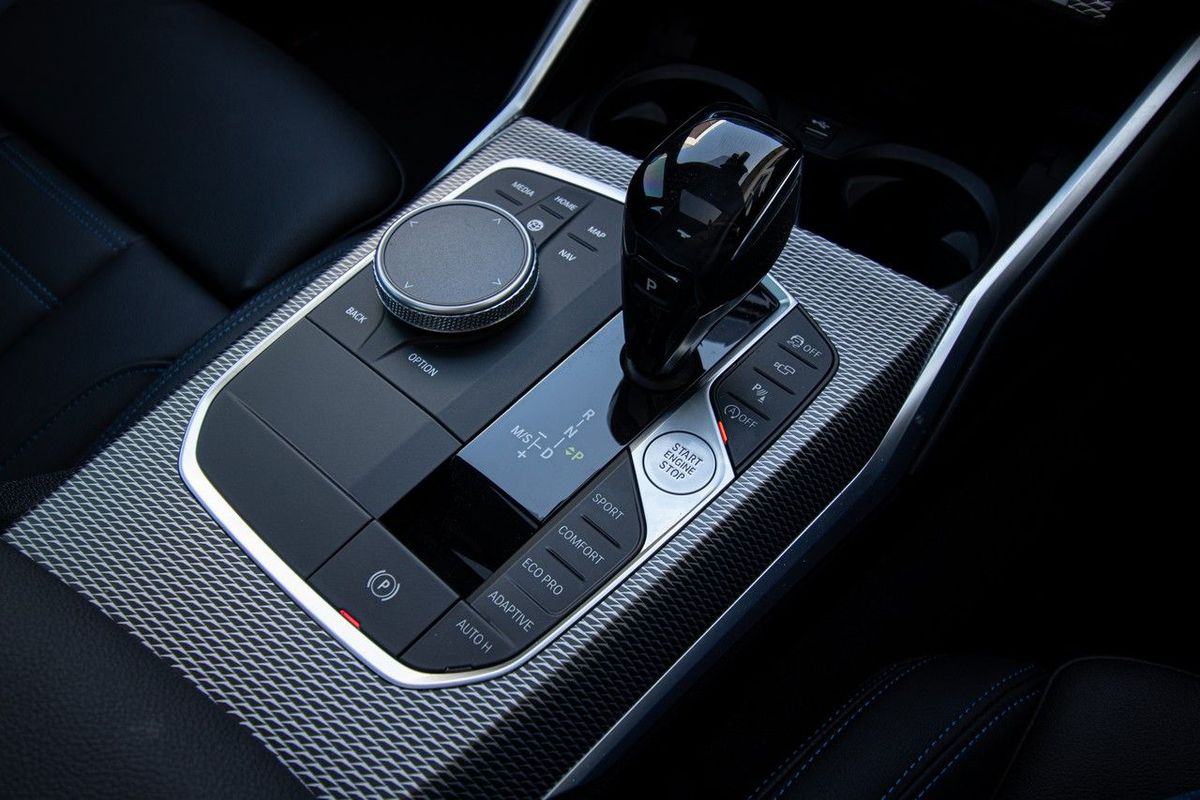
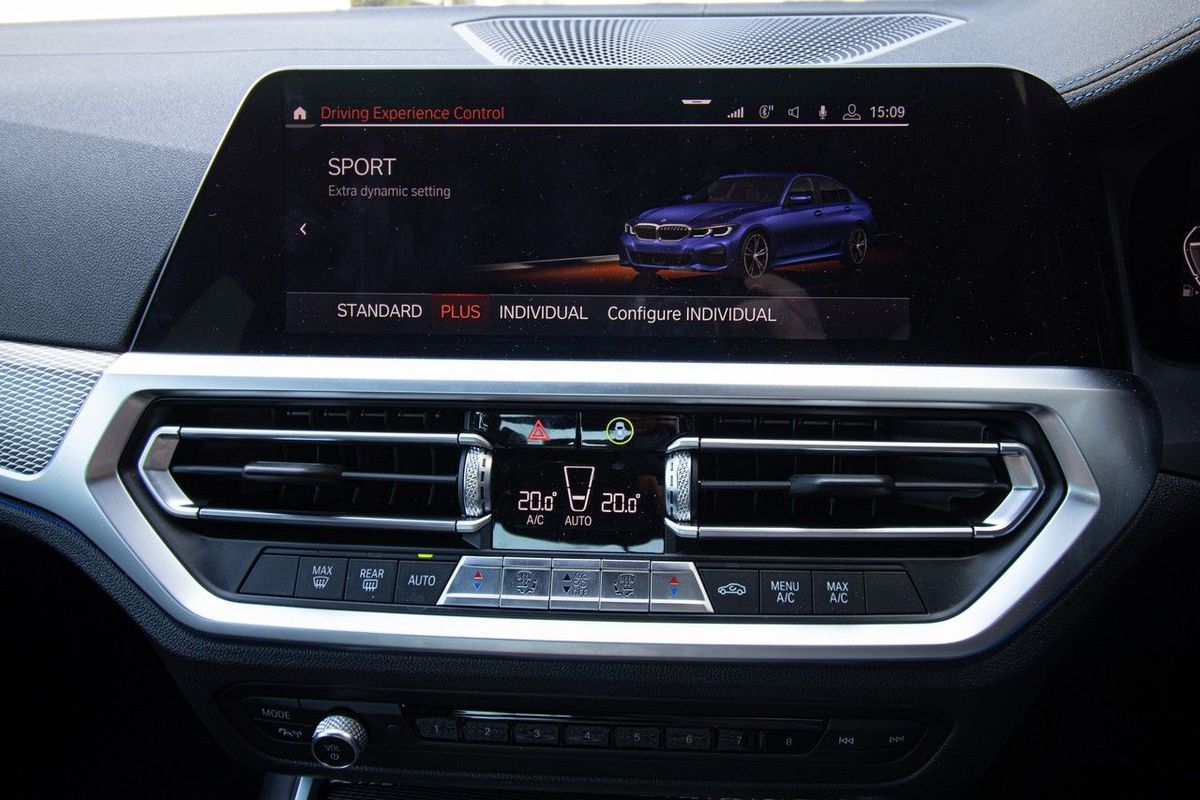
There’s very little lag from the turbo and by scrolling through the driving modes (Comfort, Sport and Sport Plus) you can dial in the rate at which you want to snipe through traffic. We found that the Bimmer reacted quickly to throttle inputs even when in Comfort mode, but still favours economy over biff-bam-wallop performance by shifting through the gears quickly at low rpm.
Ride/handling balance
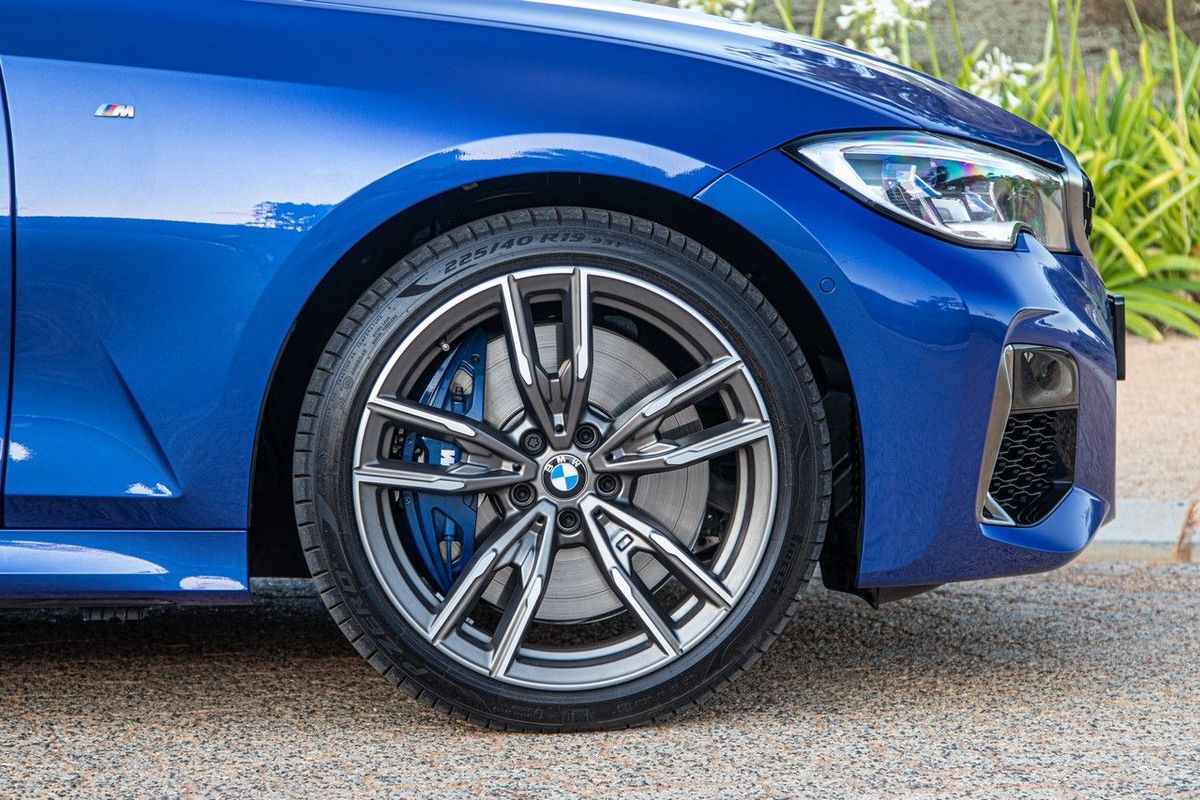
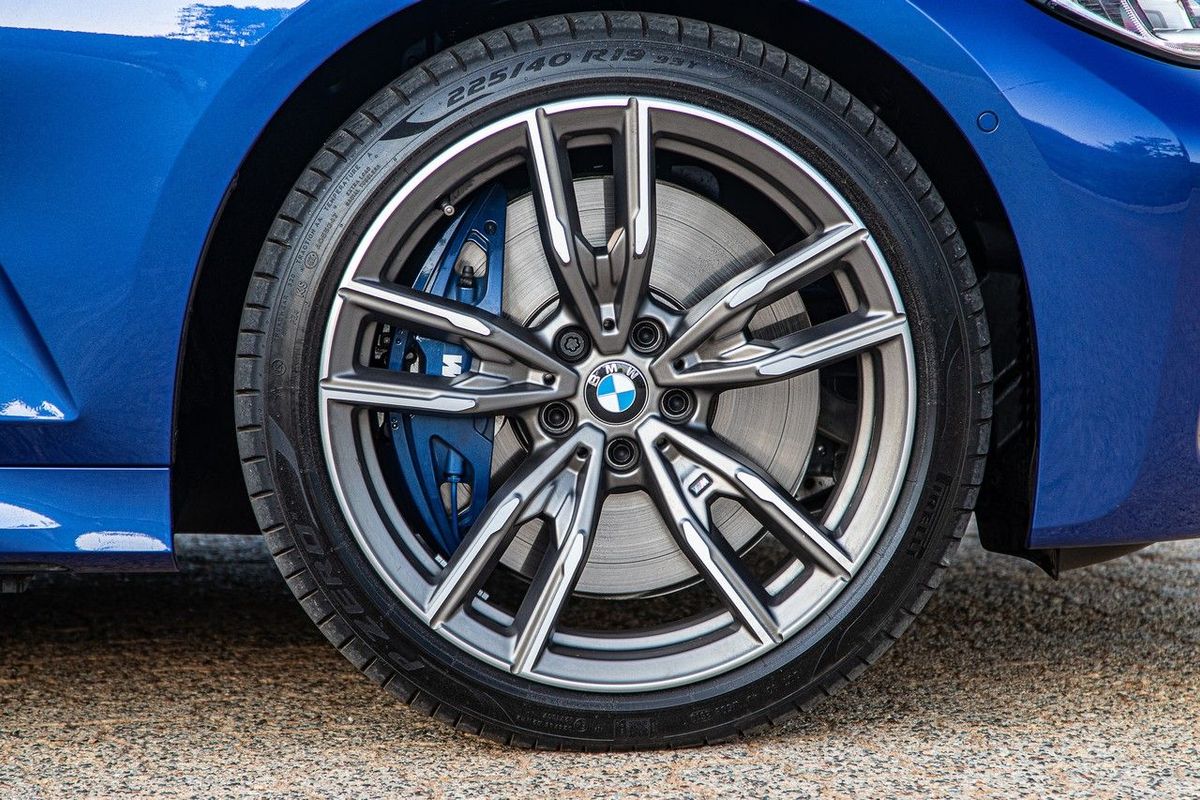
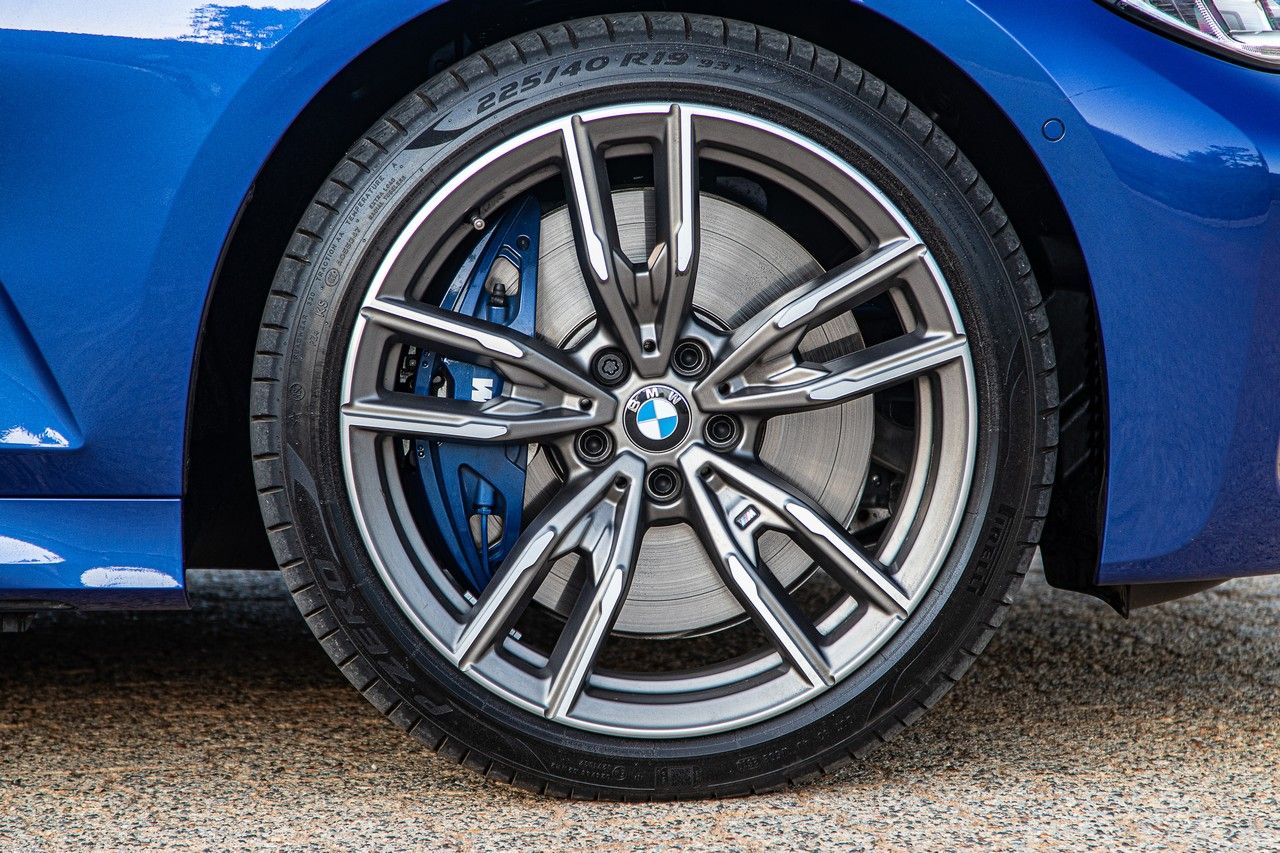
The M340i's 19-inch Pirelli P Zero rubber facilitates tenacious grip, the blue-callipered M Sport braking system is standard.
Courtesy of the aforementioned M division, the M340i is equipped with M Sport suspension, M Sport differential, variable sport steering and M Sport brakes. The xDrive system that controls the all-wheel-drive distribution is rear-biased, particularly when you flip to Sport and Sport Plus modes. It works in tandem with stability control to make sure that things never get out of hand.
As a consequence, the M340i never feels on-edge (as if it's threatening to snap into lurid oversteer) in extremis. To put it another way, the sedan never feels "loose" or like its struggling for traction; there is surfeit grip and, no matter at which point of the corner you give it a bootful of throttle, it seems to comply without resistance. If anything, it makes the car feel less like a BMW and more like an Audi…
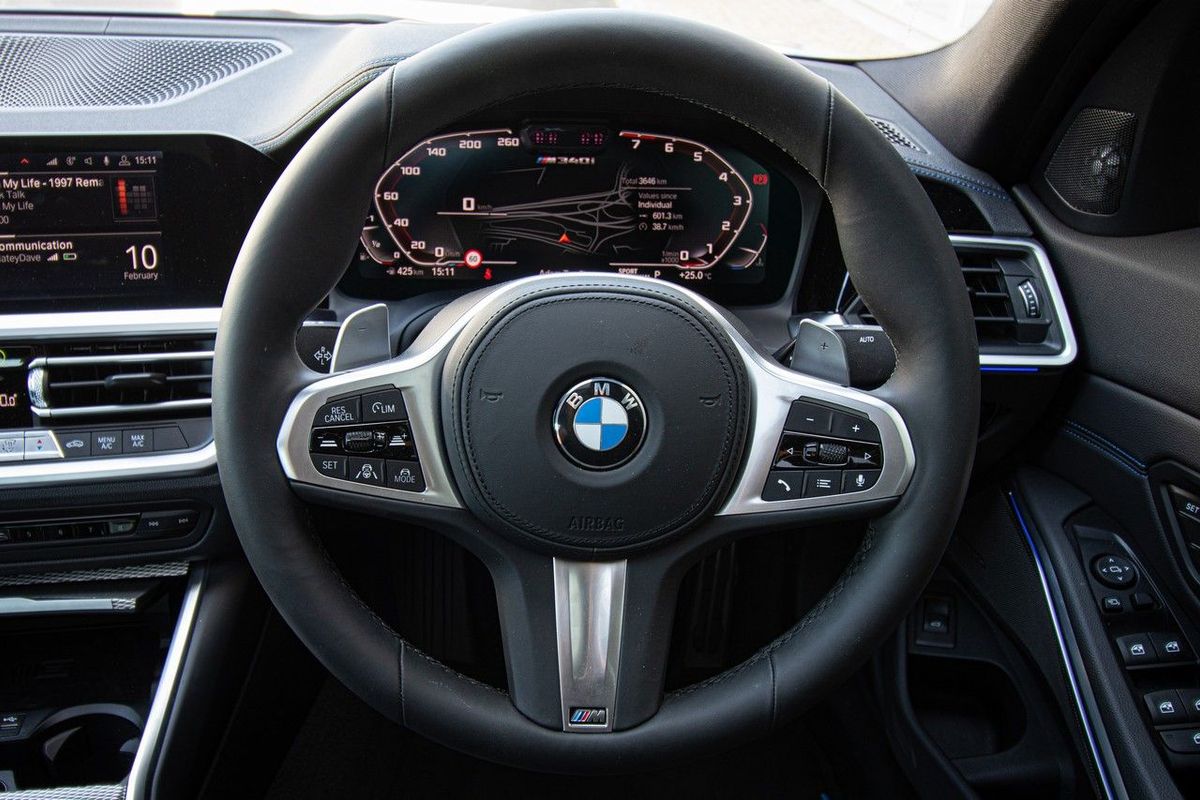
The M Sport differential goes a little way towards masking that stereotypical all-wheel-drive push by distributing power appropriately to whichever wheel will help the BMW to turn-in better. The rim of the M Sport tiller can feel a little too chunky for some drivers' tastes, but the steering setup offers reassuring heft and it’s both accurate and sufficiently responsive.
The 8-speed automatic doesn't shift as dramatically as a dual-clutch transmission, but it's much easier to live with in congested traffic.
For a performance BMW derivative, the M340i is very neutral in the way it handles, there are no demons lurking under the so-called throttle pedal or inside the sedan's chassis, for that matter.
The 10-mm drop of the M Sport suspension setup makes the sedan look more purposeful and facilitates a little less body movement in the corners. Combined with the adaptive M suspension (R9 900 option), the M340is ride quality remains pliant over all-but-severe abrasions. Having experienced a (G20) 3 Series with adaptive damping, it’s a must-have to smoothen out the M Sport's choppy ride.
Interior appointment
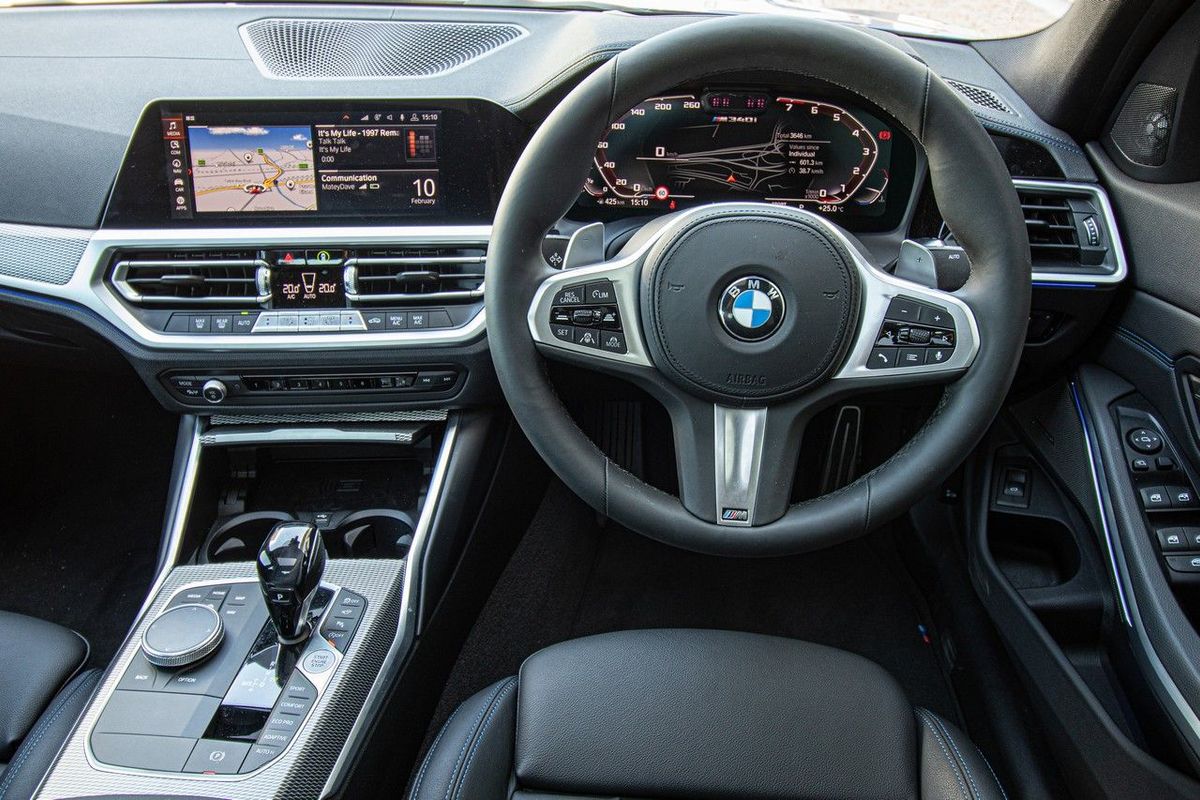
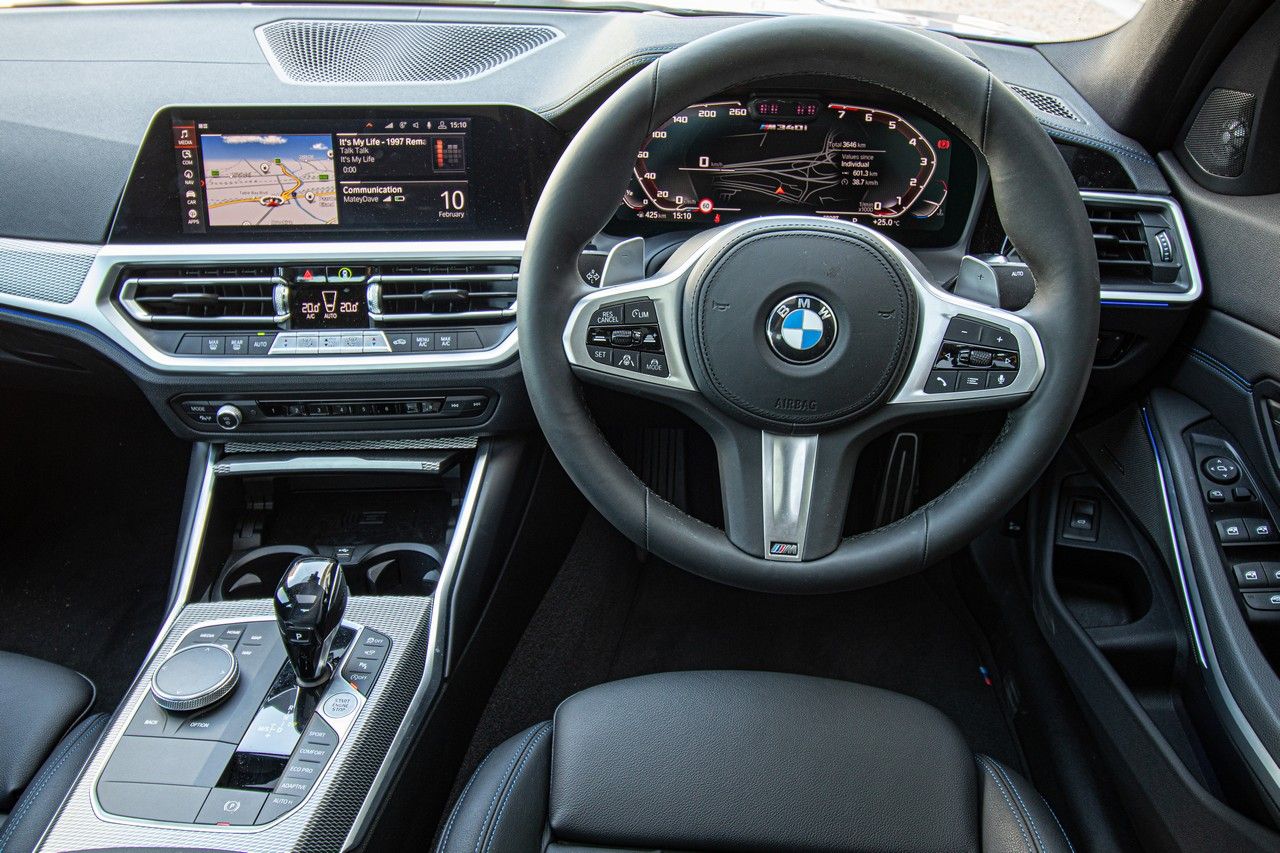
The fascia design might not be as stylish as that of a Mercedes-AMG C43, but the ergonomics are sound and driving position good.
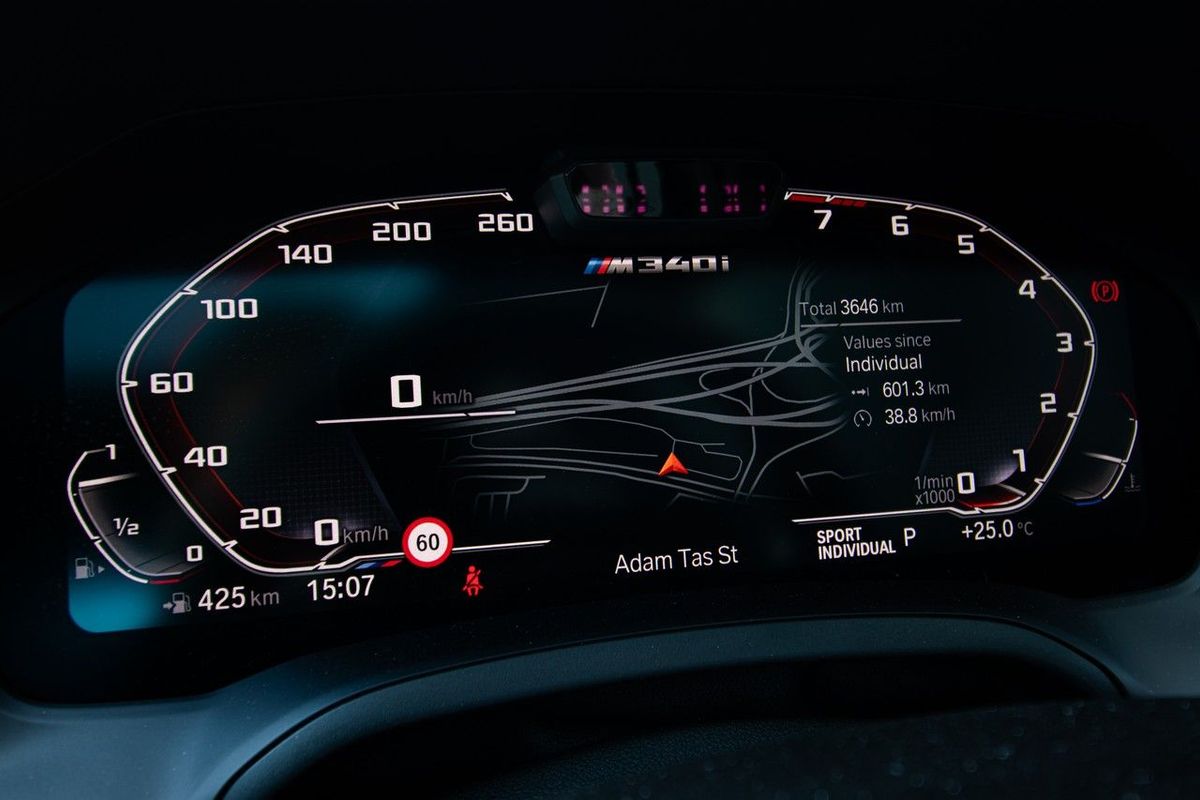
BMW cops a lot of bad press for its interiors; some say they're staid and samey. However, there are myriad options and colour combinations to spruce up the look; you can experiment with the online configurator to find a combination that suits your taste to a tee. Ours had optional M striped seatbelts (R4 400) and ambient lighting pack, which adds the cool puddle-lamp M stripes. Back inside, the attractions are dominated by the 2 huge screens, the infotainment screen in the fascia and the digital instrument cluster. Actually, if you count the head-up display on this model, there are 3 screens.
While the M340i's interior neither has the cool minimalism and inherent solidity of the Audi A4 or the standout style and flashy finishes of the Mercedes-Benz C-Class (again, taste is subjective), the cabin is ergonomically sound, well put together and feels suitably expensive. You’d probably be right if you said the materials in the 3 Series look and feel more expensive than they do in a C-Class.
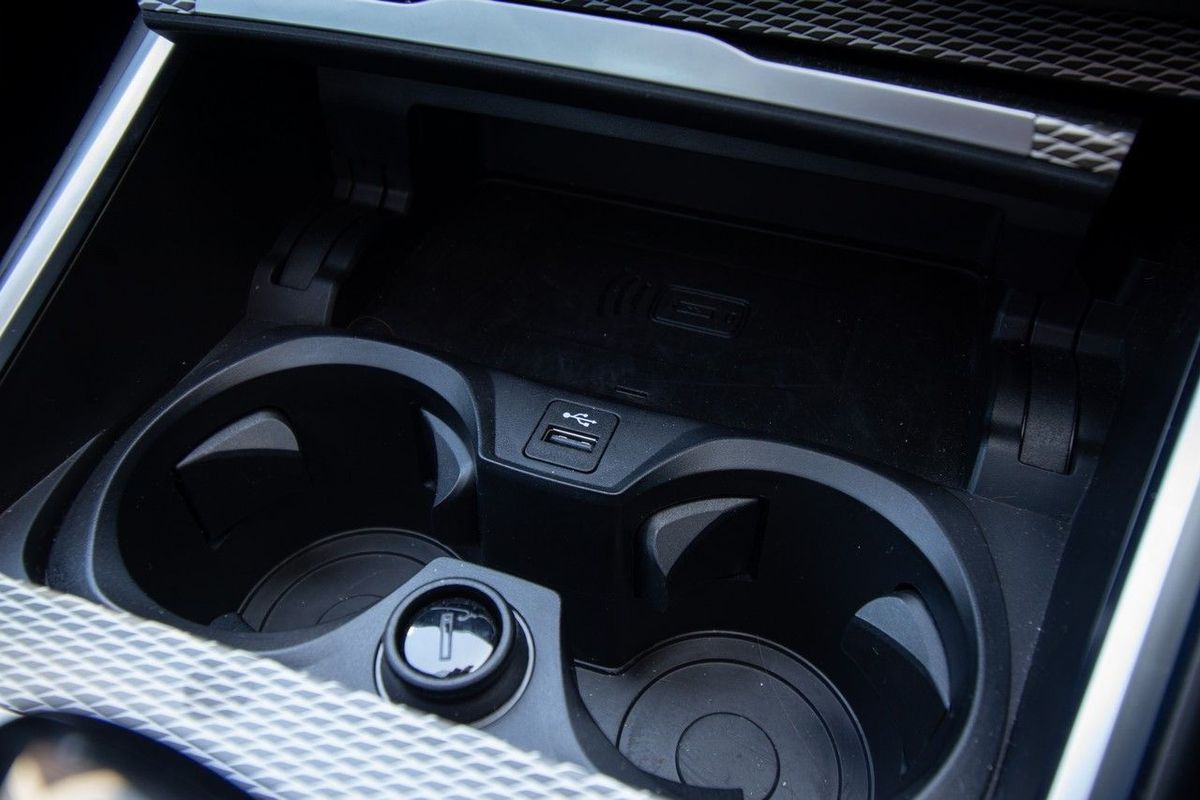
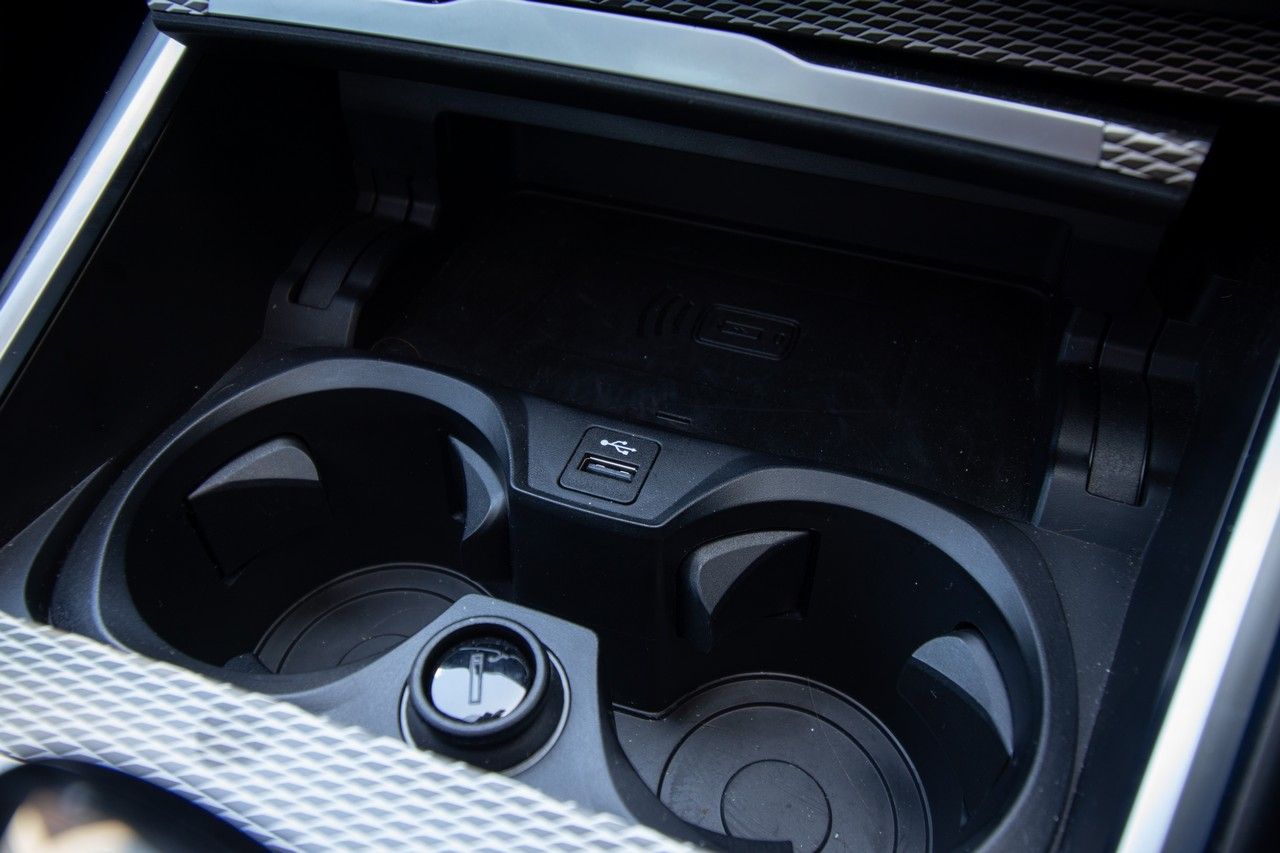
Generously sized cupholders and a wireless charging pad are sops to practicality; this is a business-class express, after all.
The technology is impressive, but the lack of Android Auto compatibility and the subscription-model for Apple Carplay are drawbacks. After all, those are features that come free on many cheaper cars. Beyond that, you can spec real-time traffic alert, connected apps and there’s even a Drive Recorder, which is like having a built-in dash-cam. A wireless charging pad is also available, as are USB ports.
Understatedness
Reviews of premium/luxury cars usually recount how onlookers' heads swivel in admiration when they see the test unit or note the plethora of positive comments made by passers-by, but the M340i is trying its level best to fly under the radar, albeit extremely quickly. Its M brethren can lap up all the envious looks, while it gets on with the business of being just about all the car you’ll ever need…
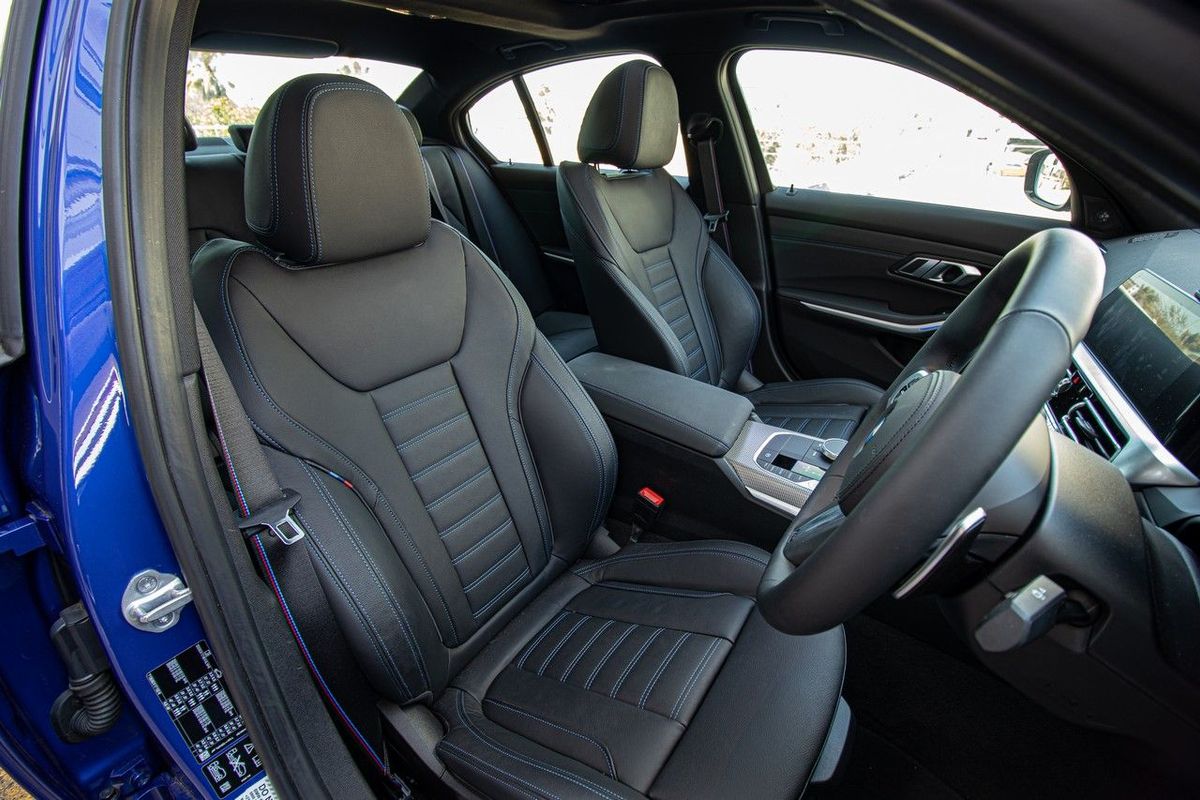
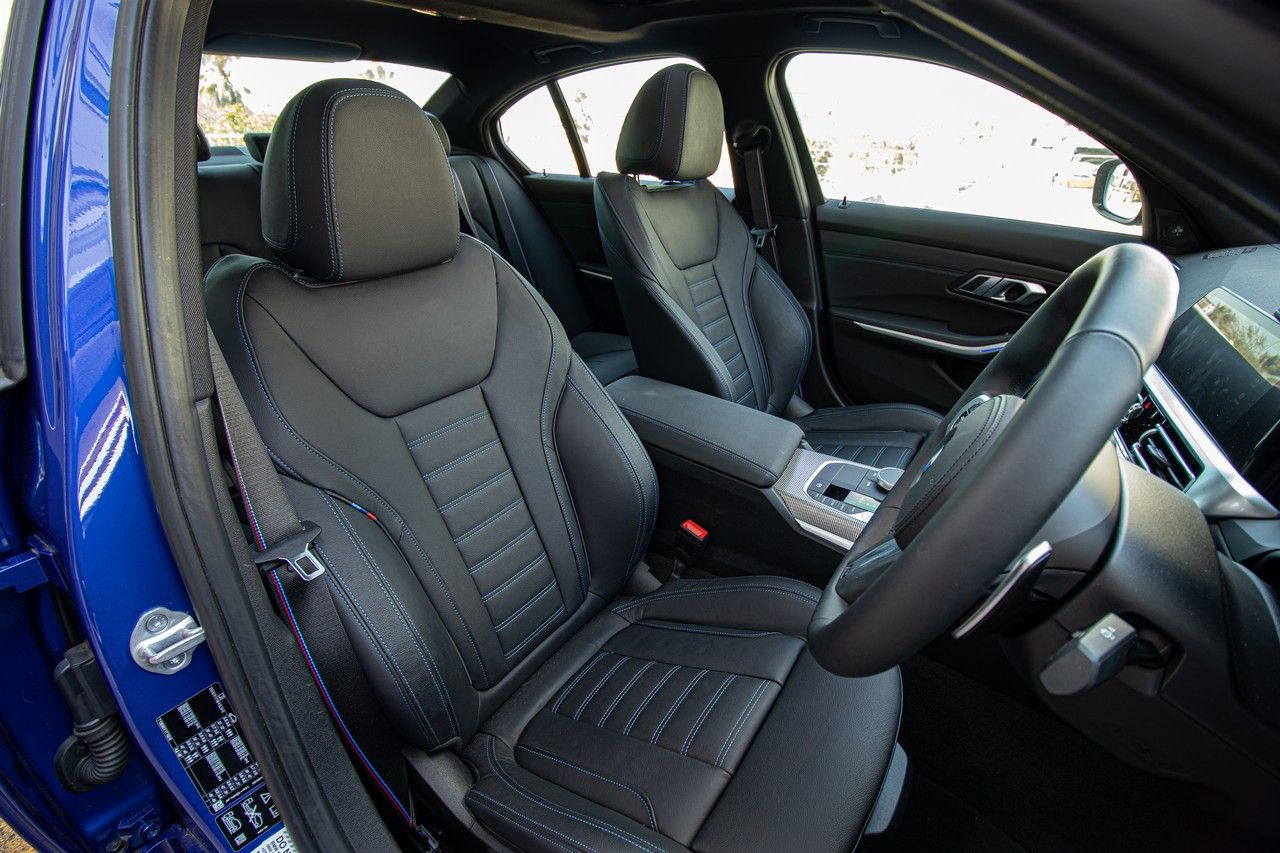
Contoured front seats with blue contrast stitching are matched by (optional) M-striped safety belts. Very tasteful.
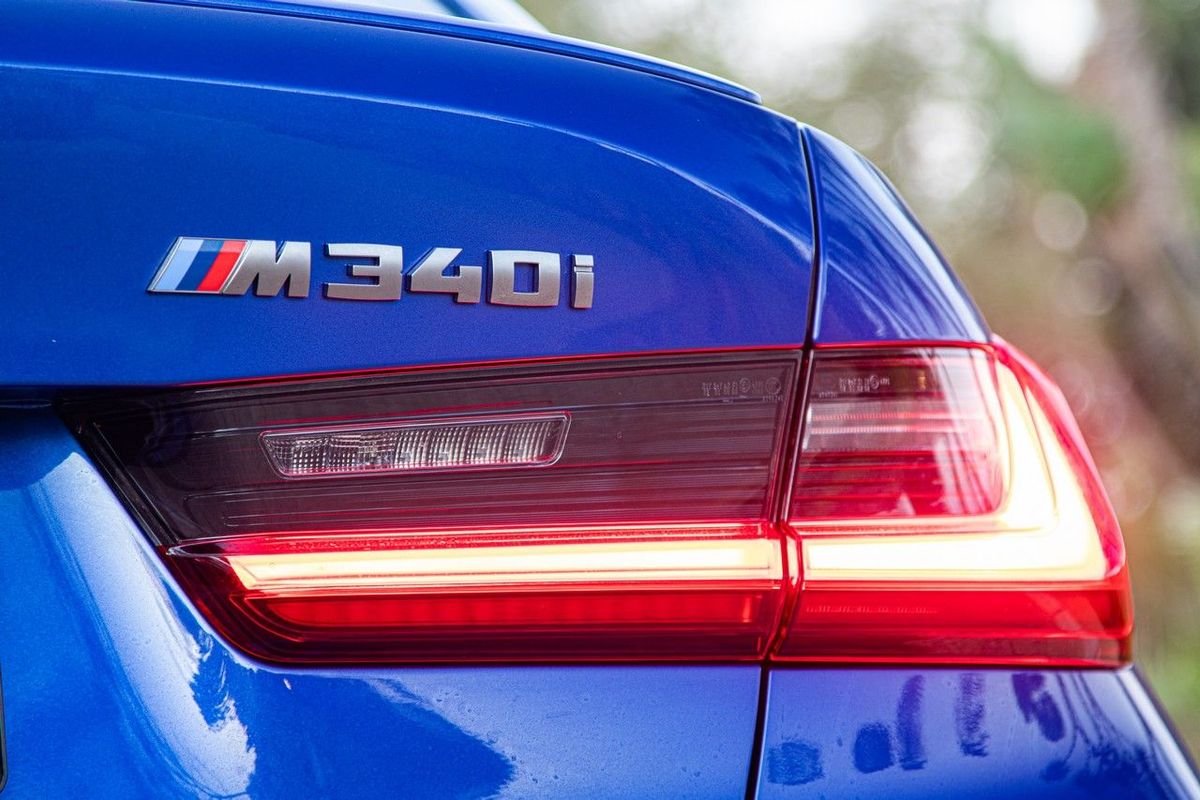
BMW's newcomer just about manages to avoid any (ostensibly unwanted) attention. Aside from the M Sport kit, 19-inch alloy wheels and the subtle badging, there’s not much to tell the M340i apart from other M-Sport-grade 3 Series derivatives. It remains a great sleeper (to use petrolhead parlance) with showstopping abilities lurking under its relatively unassuming/demure sheet metal.
Price and after-sales support
The BMW M340i xDrive retails for R 1 002 211, which includes a 2-year/unlimited km warranty and a 5-year/100 000 km maintenance plan.
Verdict
The addition of straight-6 power and xDrive all-wheel-drive has transformed the 3 Series. The M340i has many talents.
There's no doubt about it: the BMW 340i xDrive is the most complete 3 Series derivative in the current range. The 6-cylinder turbo feels like it instantly livens up the driving experience and endows the new G20 with a distinct character. The engine is the highlight in a very accomplished car; thanks to its high-revving nature and long gearing, it feels very much like a blast from the (classic BMW) past.
On the downside, performance-car aficionados will find the M340i's ultimate abilities tame for a BMW, but that's mostly as a result of the xDrive all-wheel-drive system. When driven enthusiastically, the M340i corners determinedly; its sorted chassis and accurate steering make it palpably easy to place. With all the grip you can safely boot it out of any corner in full confidence that it will stay planted.
Its R1-million base price is hard to swallow (let alone stomach), but the Mercedes-AMG C43 costs about the same. The outlier at the moment is the Audi S4, which is certainly older than the Bimmer (in fact, a facelifted model will arrive in South Africa eventually), but is some R140 000 cheaper than the competition. Can the BMW justifiably command that much of a premium over the 4 rings? Hmm.
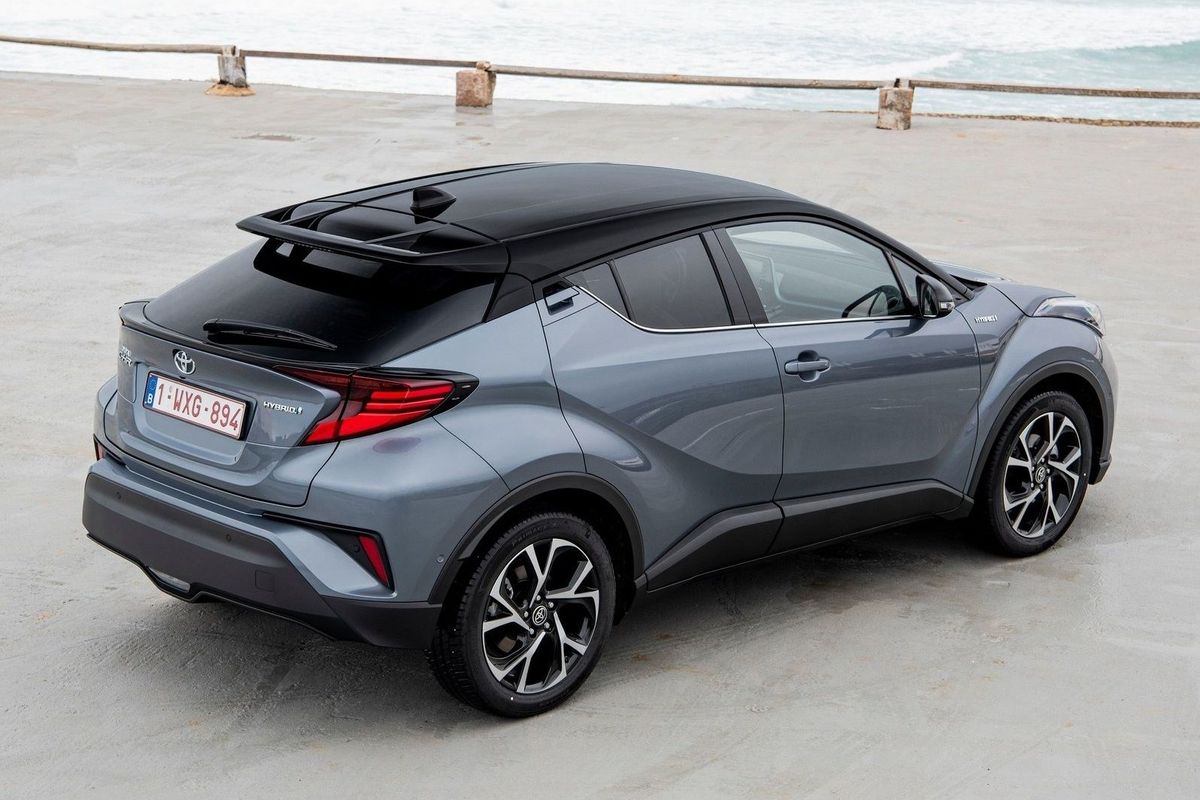
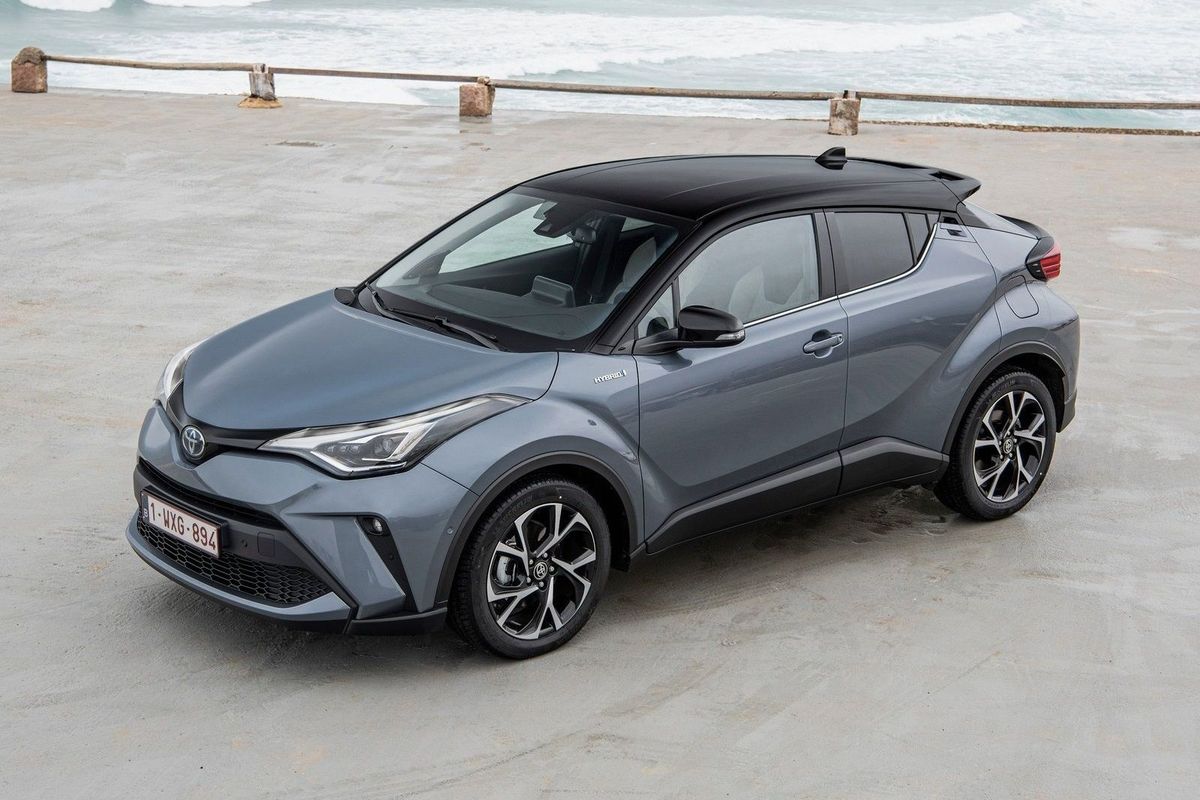
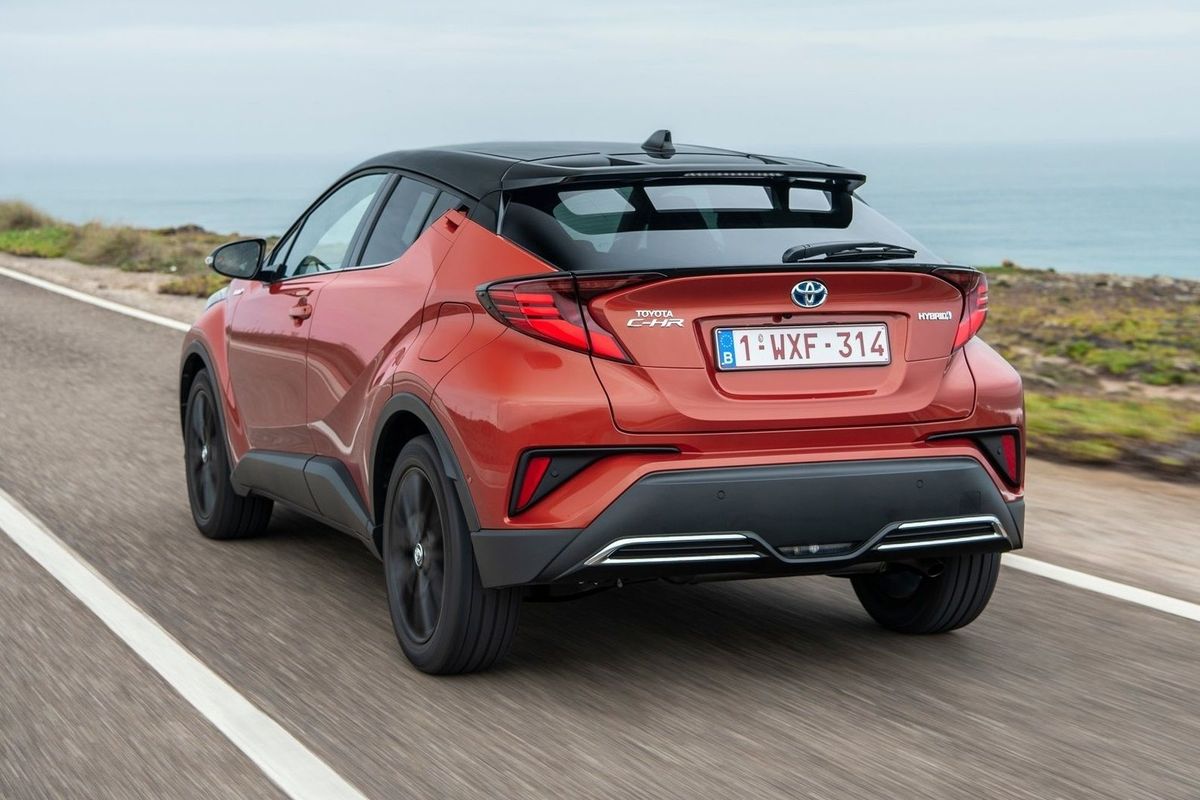
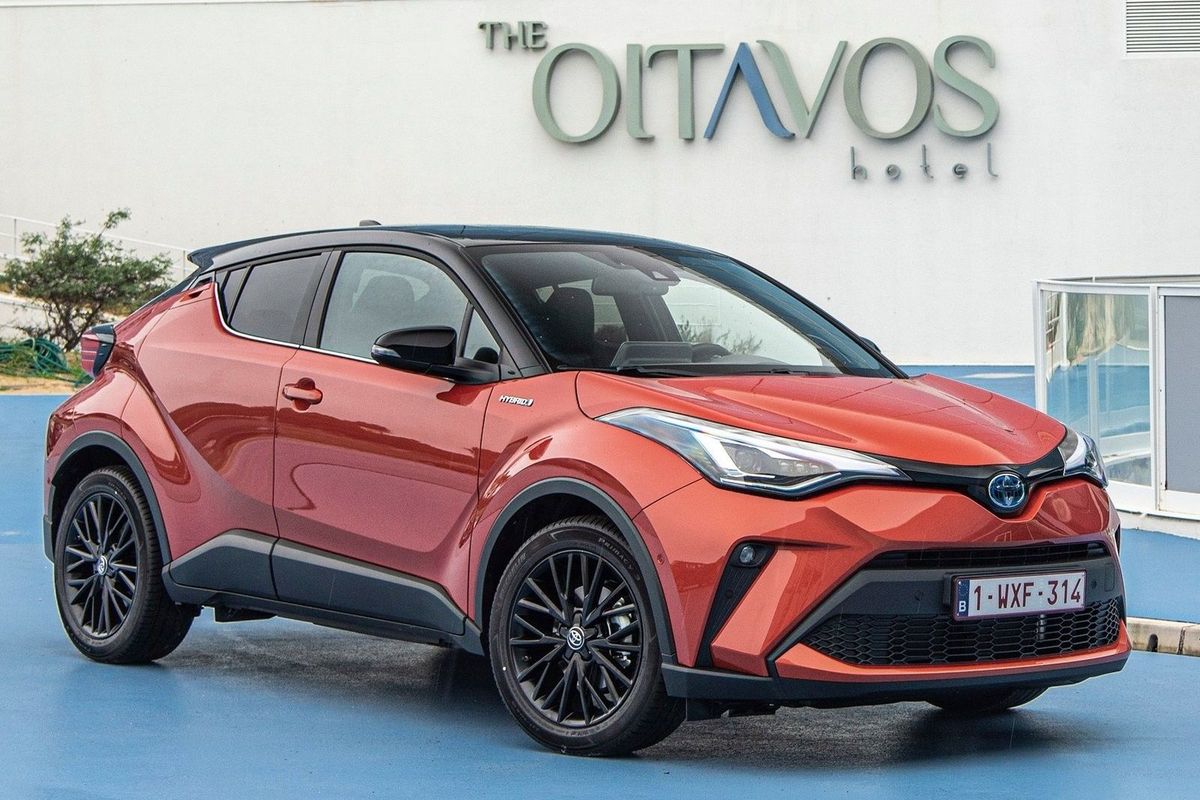
The updated Toyota C-HR arrives in South Africa this week. Take a look at what's changed and how much the latest C-HR costs…
The compact and stylish Toyota C-HR was launched to the SA market back in 2017. It was the first model to be launched locally featuring the brand's new TNG platform, offering excellent ride and quality traits, as well as being exceptionally modular. It underpins everything from the latest Euro-spec Yaris, to the Corolla Hatch and right up to the RAV4 SUV.
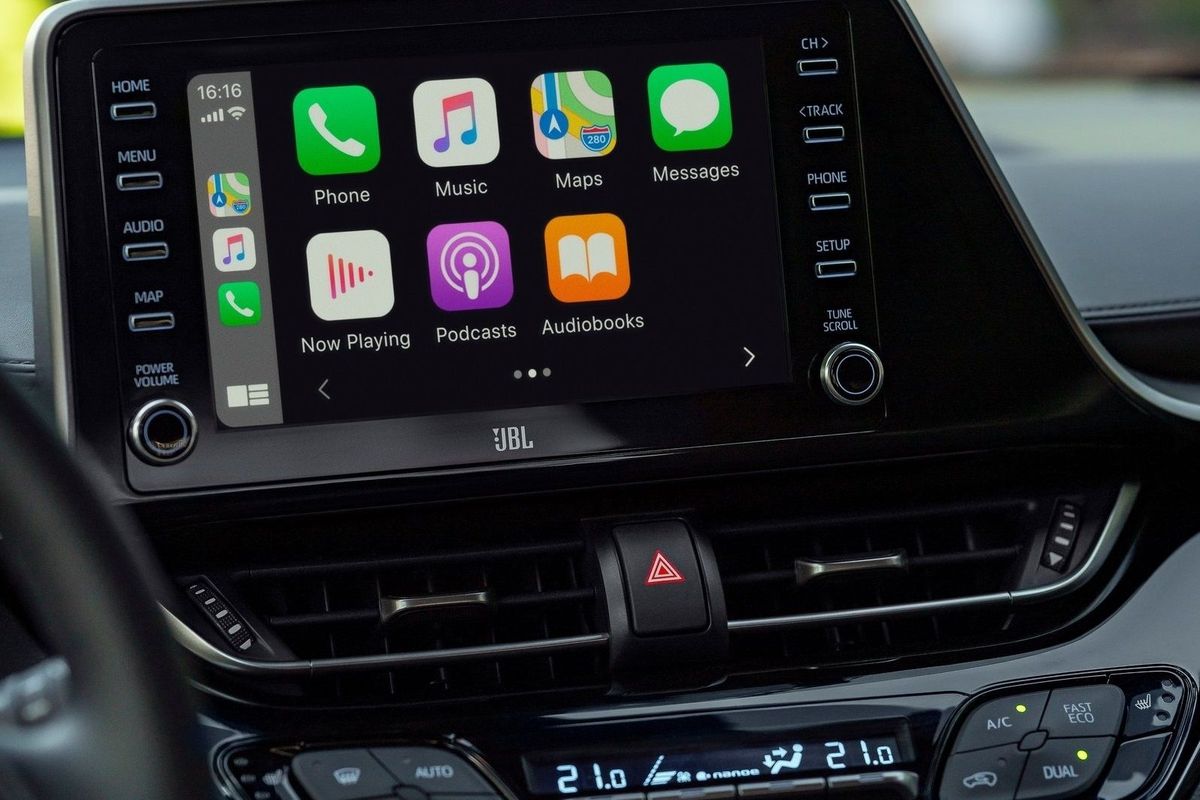
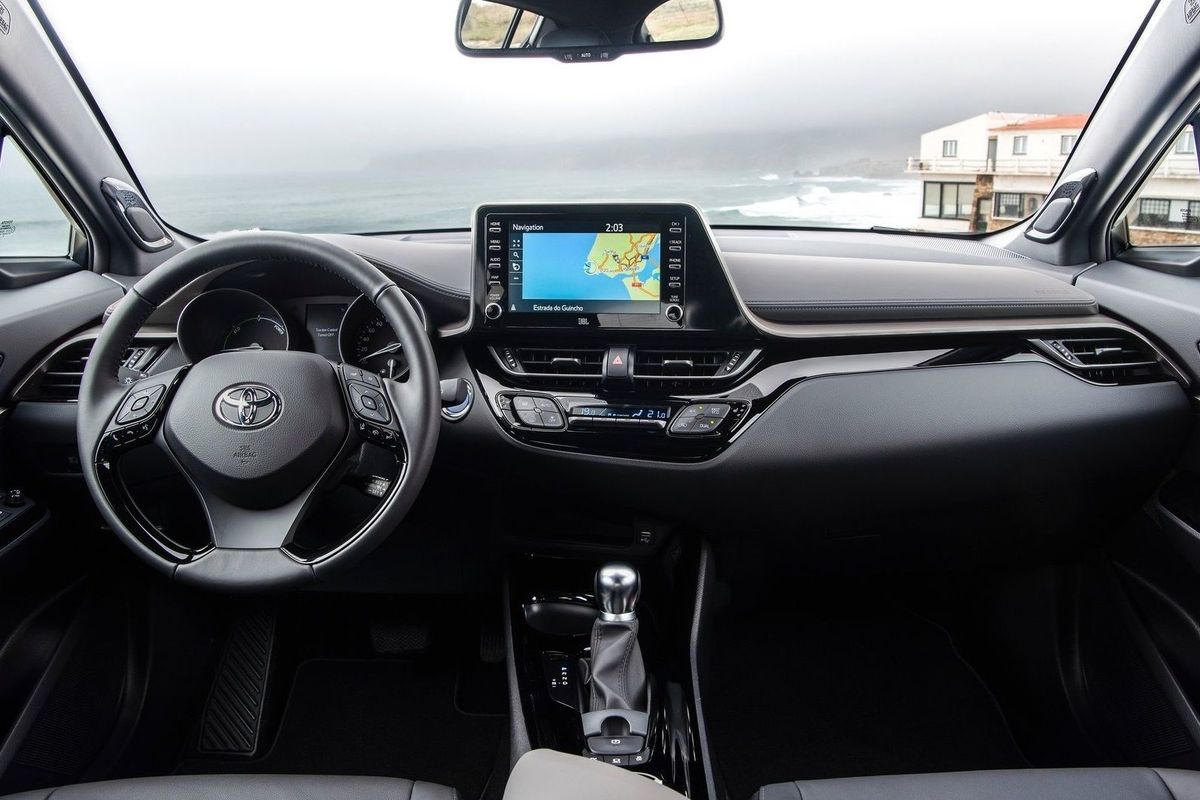
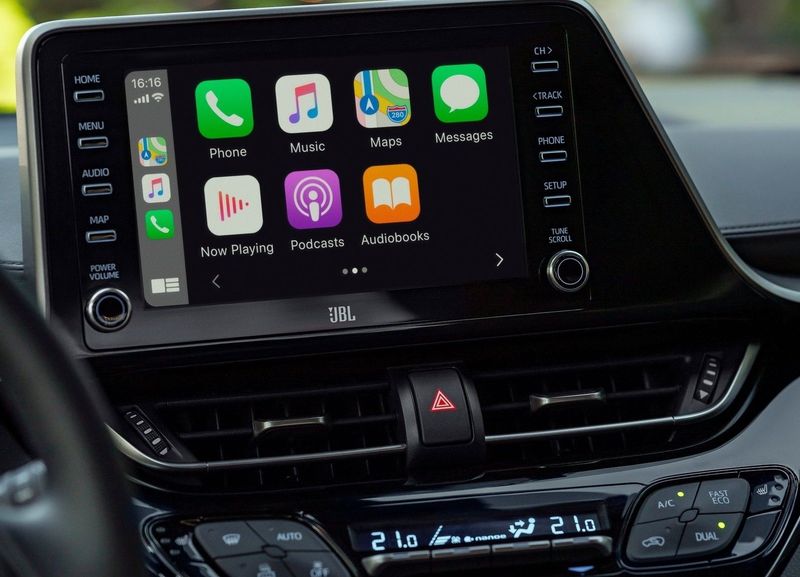
Now there's a slight facelift and we can share pricing for the newcomer. Visually, it gains a slight change at the front end, but the real updates can be found in the cabin. The most welcome change is the introduction of Apple CarPlay- and Android Auto compatibility which allows you to operate your favourite smartphone apps through the car’s touchscreen and bypass Toyota's own infotainment and navigation software. This is standard across the range.
There's also the addition of Toyota's advanced safety system on the top-spec model. This includes niceties like adaptive cruise control, auto emergency brake, rear cross traffic alert to name but a few. Levels of safety have been increased across the range, with the addition of more airbags. The first iteration just had 2 airbags and now this has been bolstered to 6.
Toyota South Africa has confirmed that – at least for the moment – the C-HR will continue to be offered with a 1.2-litre 4-cylinder turbopetrol engine with 85 kW and 185 Nm, with the choice of a 6-speed manual gearbox or a CVT. A hybrid powertrain is still a potential, but not immediately available.
Apple Carplay and Android Auto makes its way into the Toyota C-HR. Note, this is an EU-spec car.
Toyota C-HR Price in South Africa (February 2020)
The Toyota C-HR is sold with a 6 services /90 000 km service plan, with service intervals set at 15 000 km. A 3 year/100 000 km warranty is also provided.
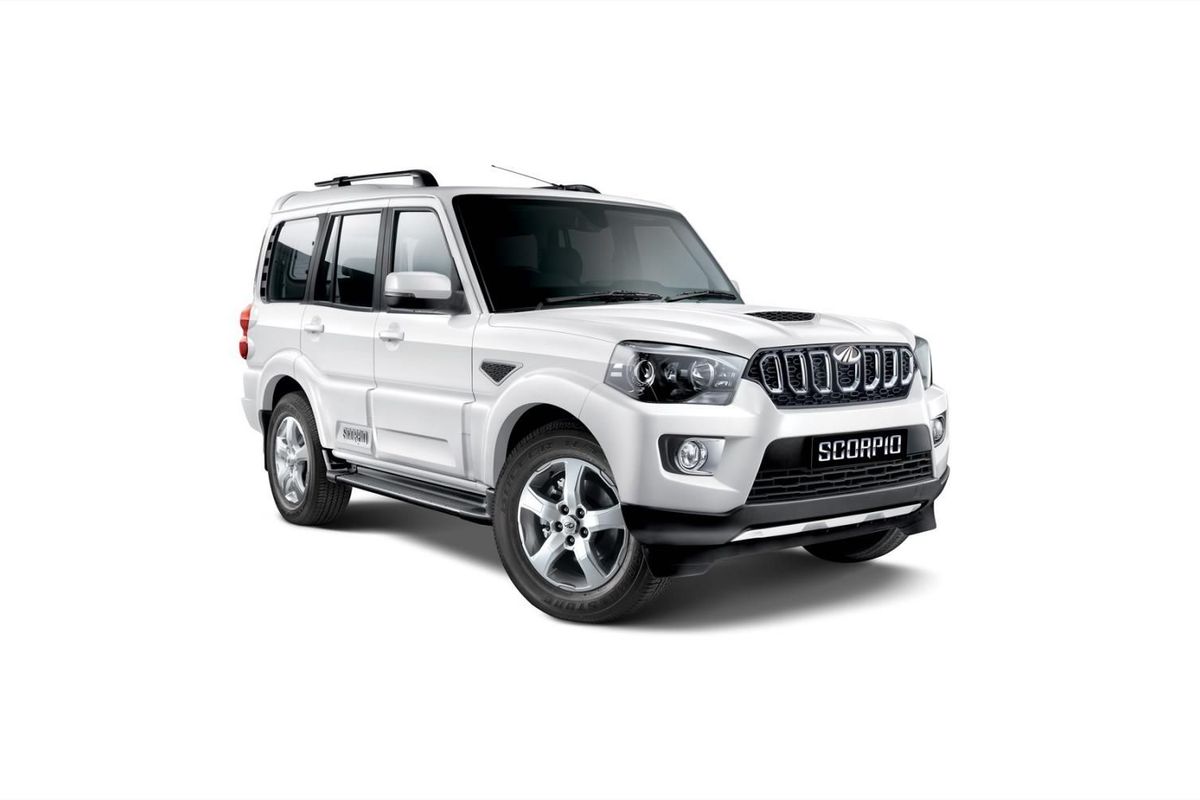
The Mahindra Scorpio has been given a mild update in the form of a more potent diesel engine mated to a 6-speed manual gearbox. Here are some specification details as well as pricing.
The Scorpio S11 gains the 2.2-litre turbocharged diesel mHawk engine which delivers 103 kW and 320 Nm. Previously, it could only muster 88 kW.
It's just as robust offroad as before, with a rugged ladder frame chassis, shift-on-the-fly tech and available in both 4×2 and 4×4. There's 195 mm worth of suspension travels and 180 mm of ground clearance for those wanting to venture off tar.
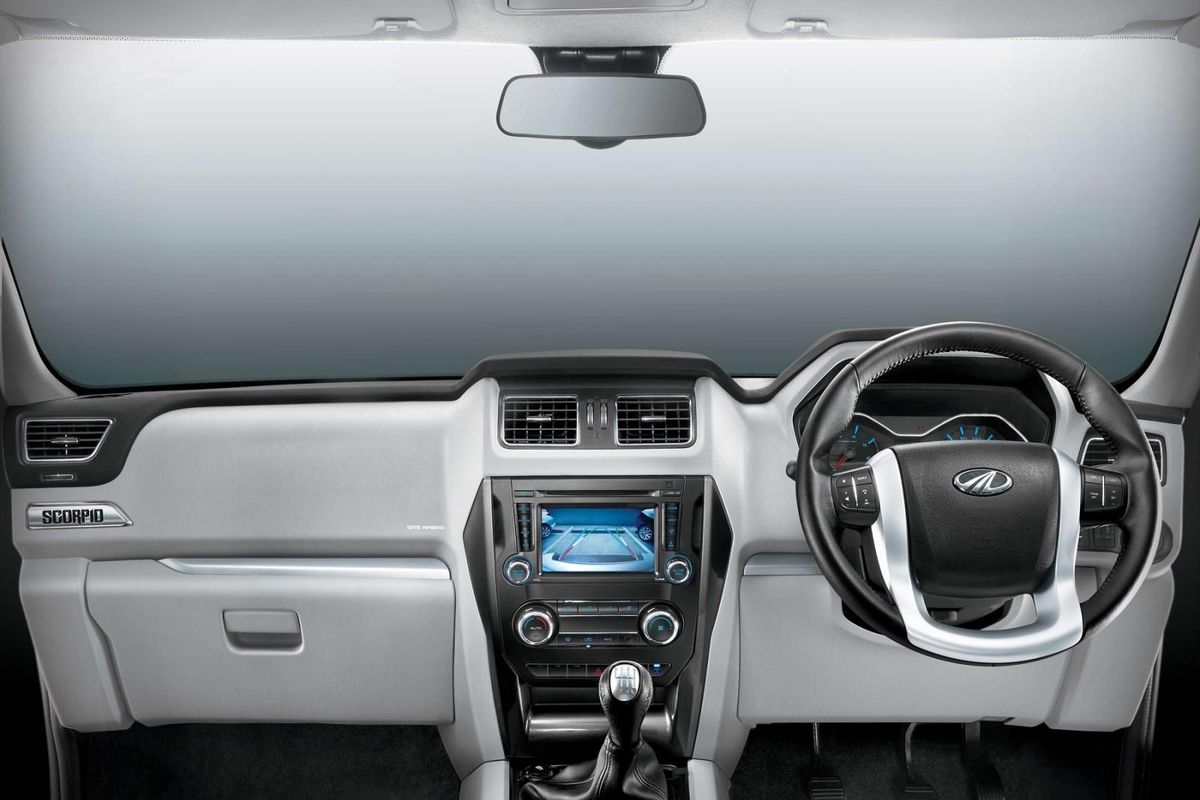
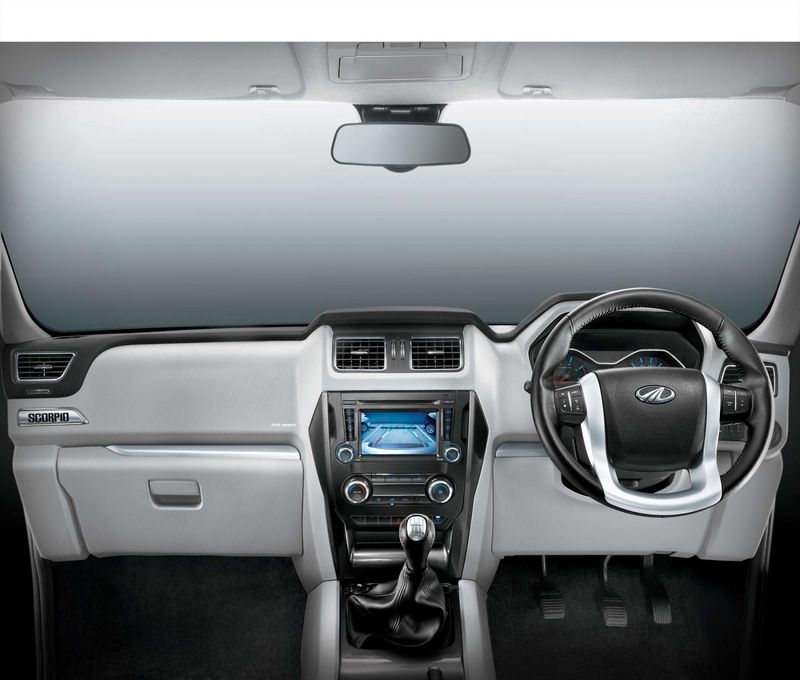
The vehicle comes with 17-inch alloy wheels, a bonnet scoop, clear reflector headlamps and LED rear lights, while the cabin sees the addition of Mahindra's latest 7-inch touchscreen with satnav. There's also Bluetooth phone connectivity, reverse camera and parking sensors. Finally, there's a leather steering wheel with controls for infotainment, voice command and cruise control.
The cabin of the Mahindra Scorpio S11
Mahindra Scorpio S11 Price in South Africa (February 2020)
The vehicle is sold with a 4-year / 120 000 km mechanical warranty and a full 5-year / 90 000 km service plan.
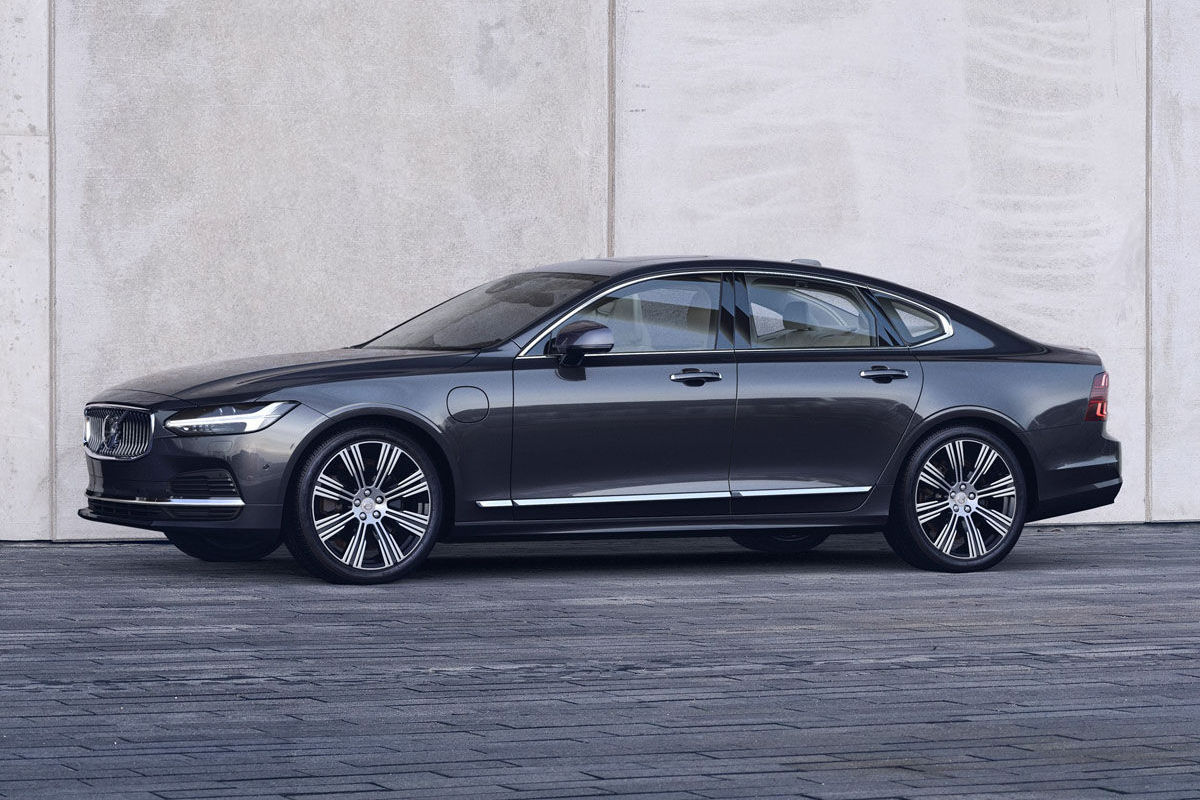
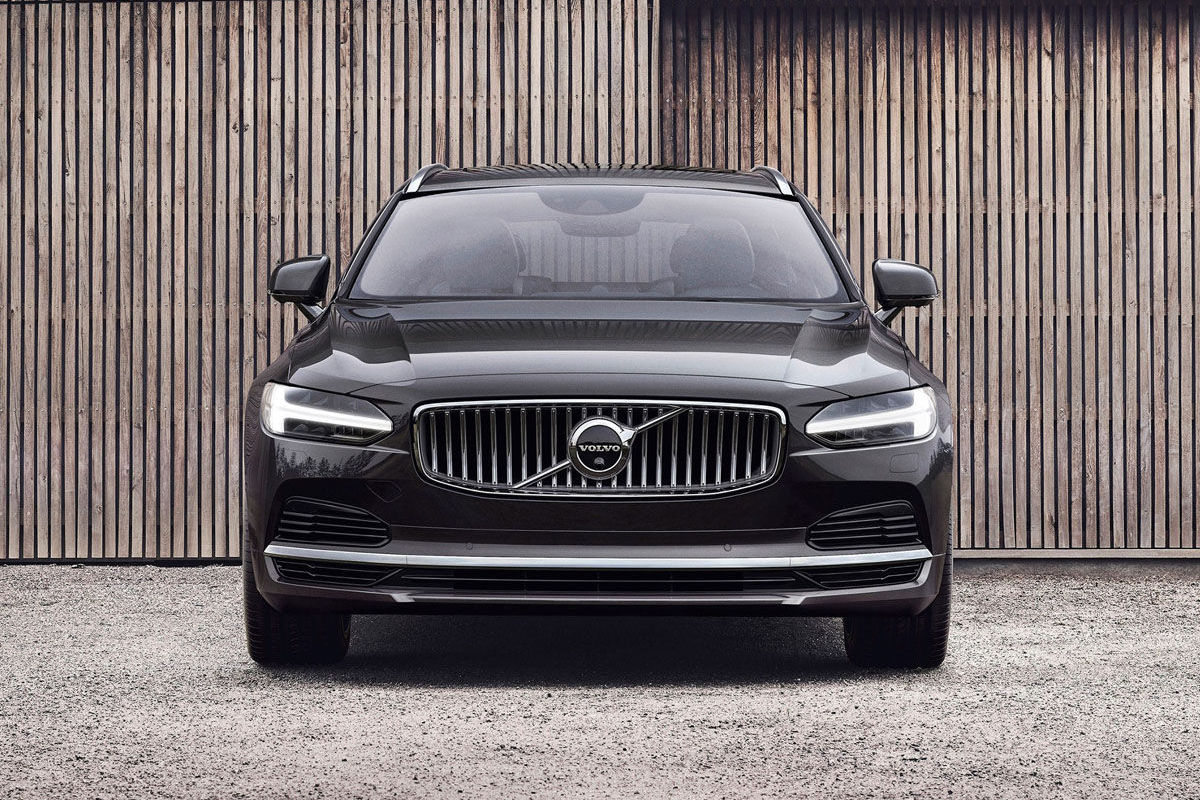
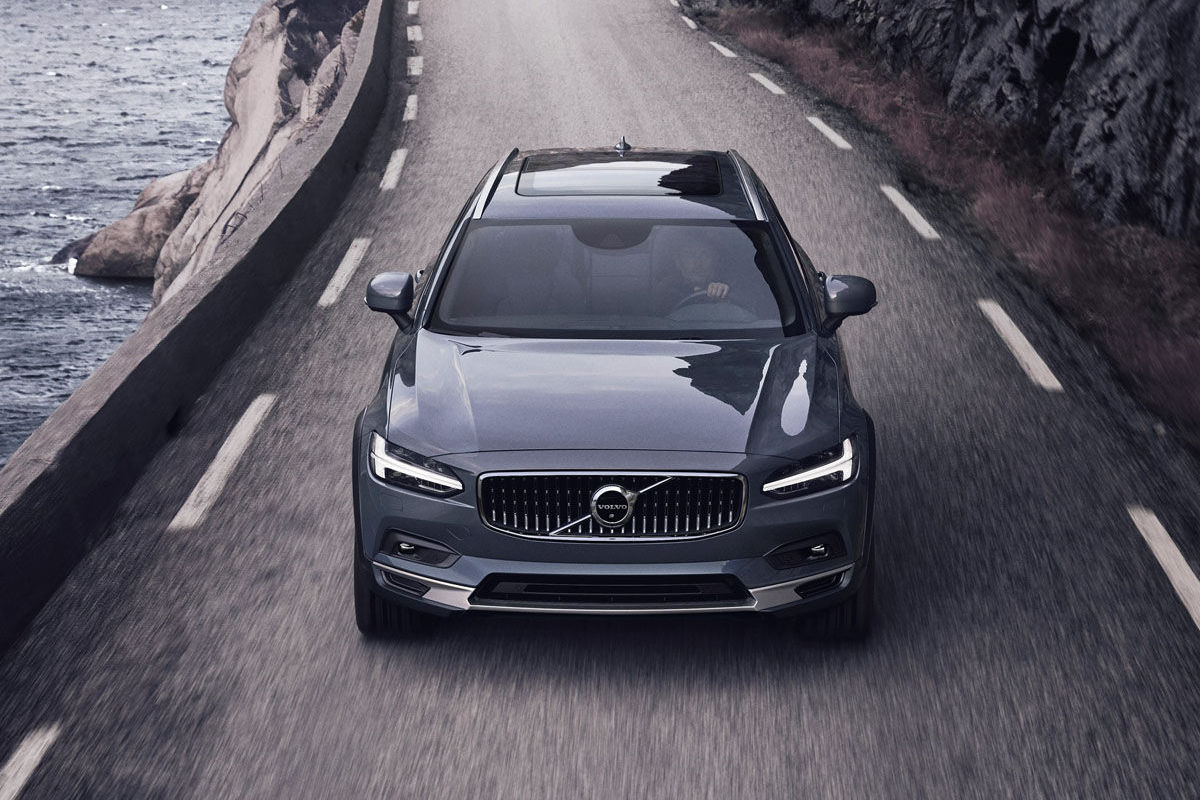
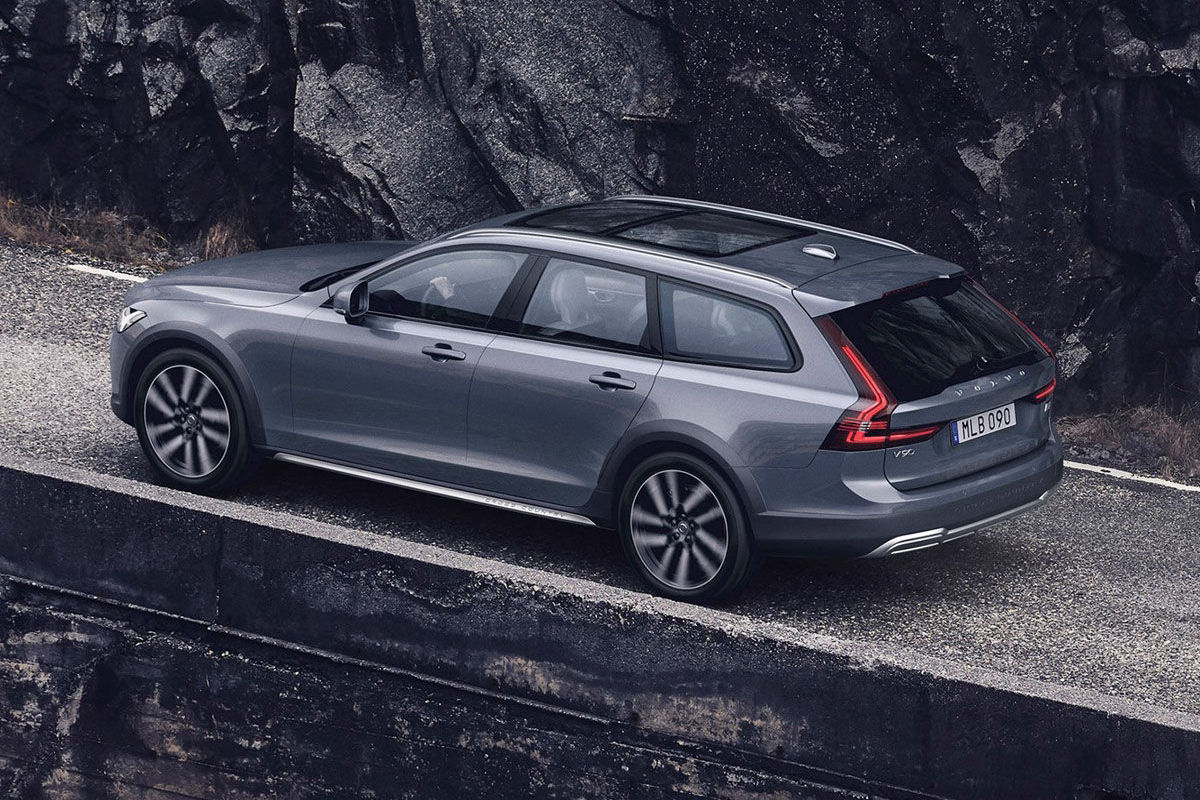
As the South African market awaits the belated arrival of the S60 business-class sedan, Volvo has released details of its (very mildly) updated bigger brothers: the S90 executive sedan and its V90/V90 Cross Country station-wagon variants.
Whereas the S90 was launched in South Africa just over 3 years ago – in 2017, followed by the Cross Country (CC) version of the V90 estate a few months later – it remains an underappreciated offering in the executive sedan/estate segment of the market. At the time, the S90 was launched in conjunction with attractive Volvo Versatility Finance incentives (such as guaranteed future value deals, which are still in place) and we’ve reviewed several derivatives of the Swedish brand’s S90 and V90 CC ranges.
To underline how highly we rate the Swedish offerings, the S90 D5 R-Design was twice a finalist in its category of the Cars.co.za Consumer Awards – powered by WesBank. Now, as part of a running update (rather than a full facelift), Volvo has upgraded a number of features in the S90/V90 CC. Those familiar with Volvo Car SA’s local range will know that the standard V90 is not offered here.
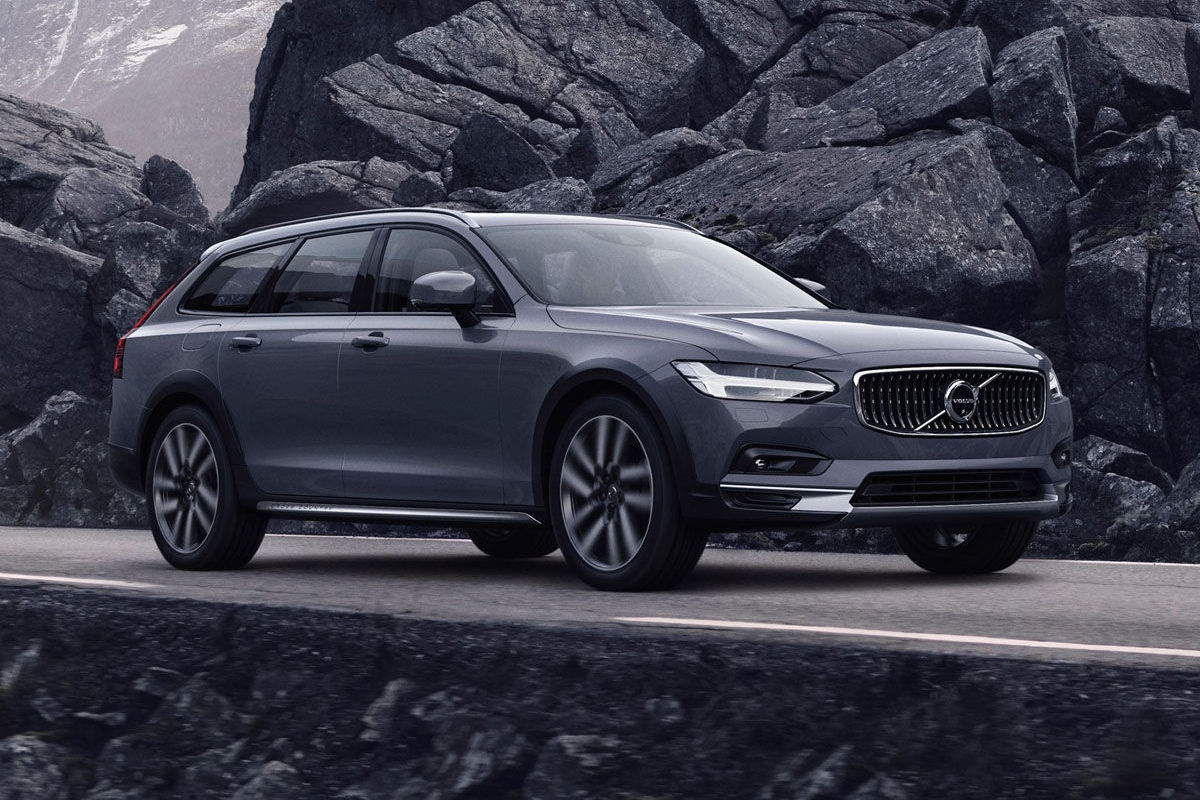
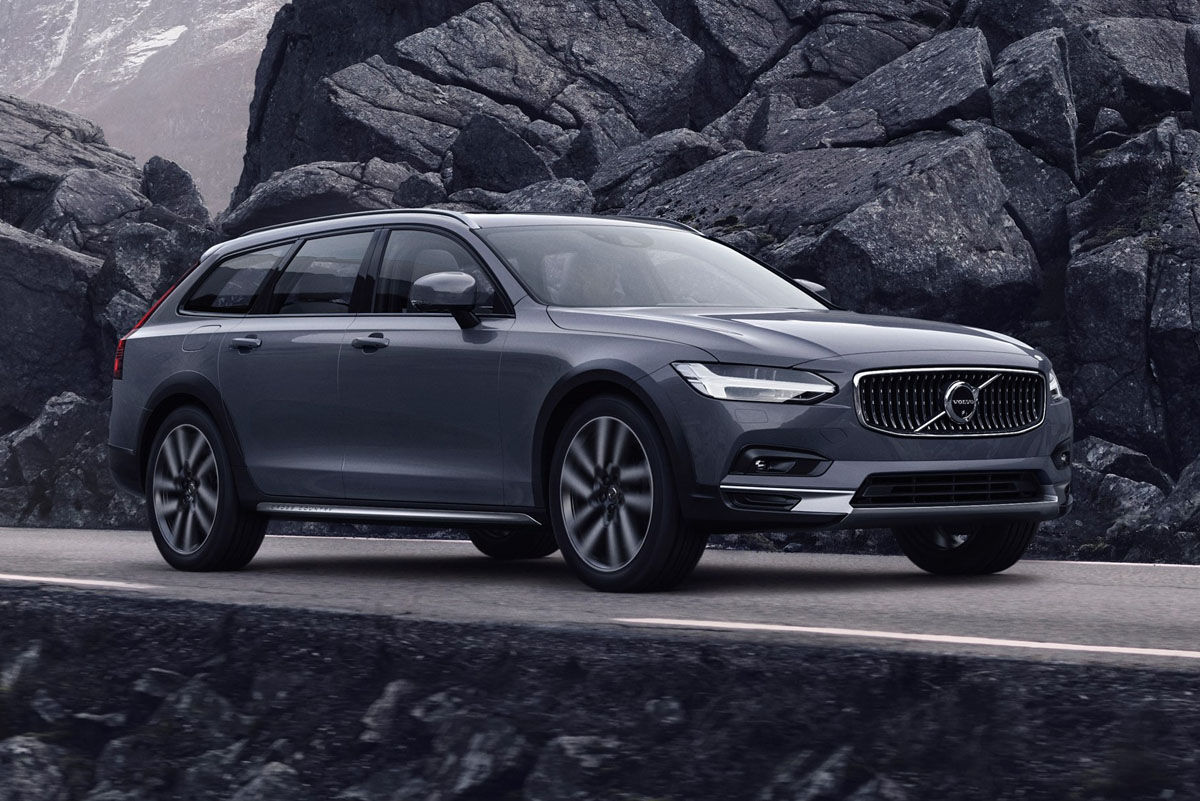
The redesigned bumper and new fog lights can be clearly seen on this example of the updated V90 Cross Country.
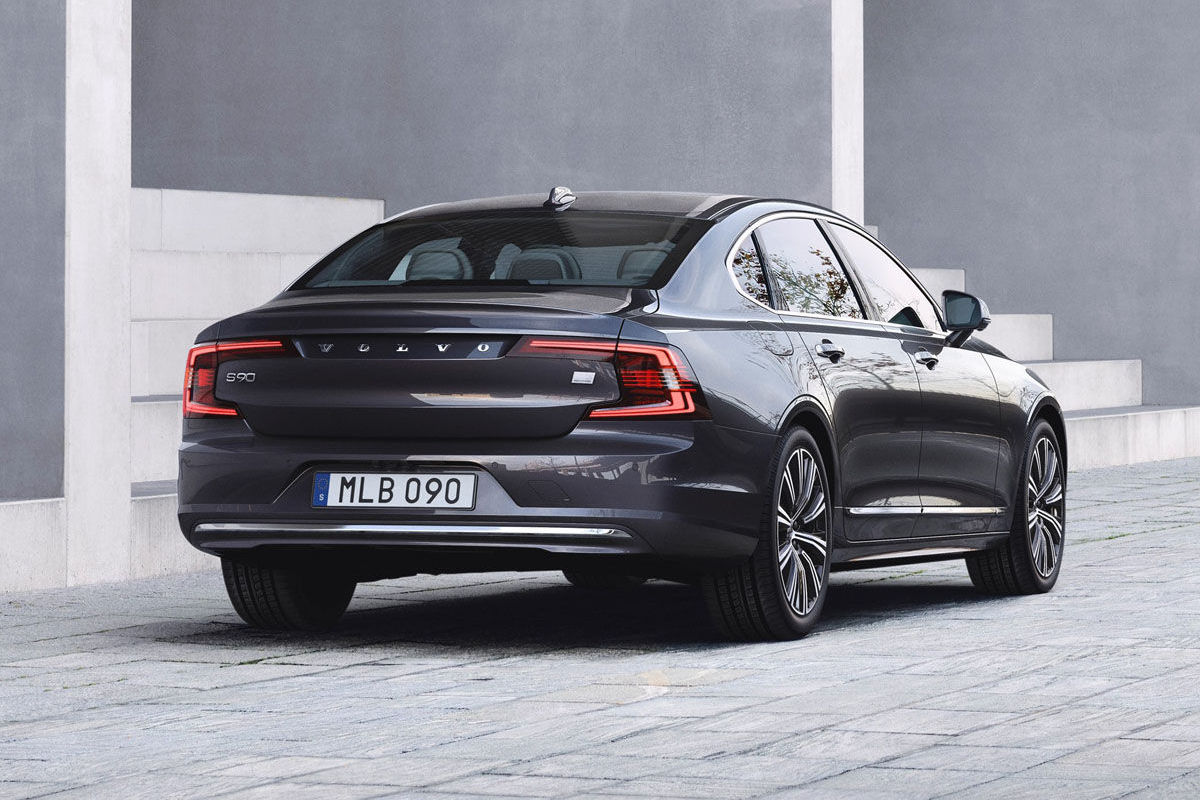
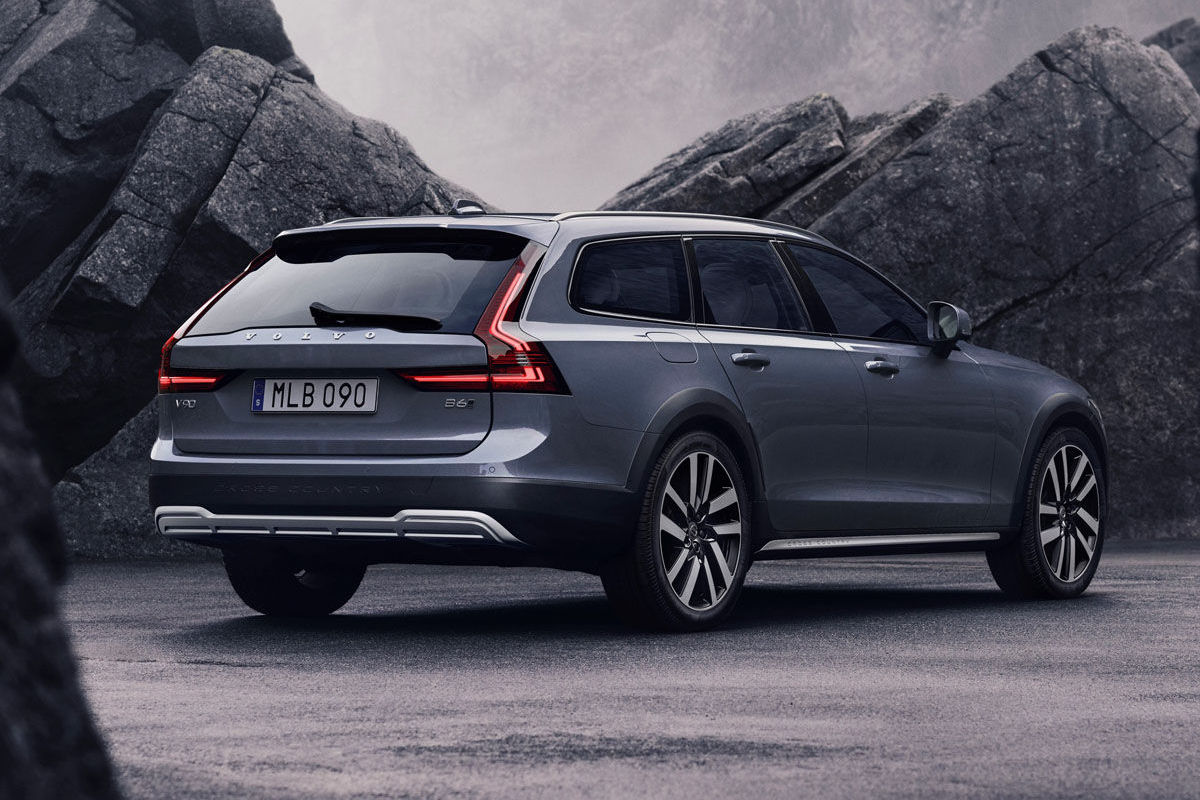
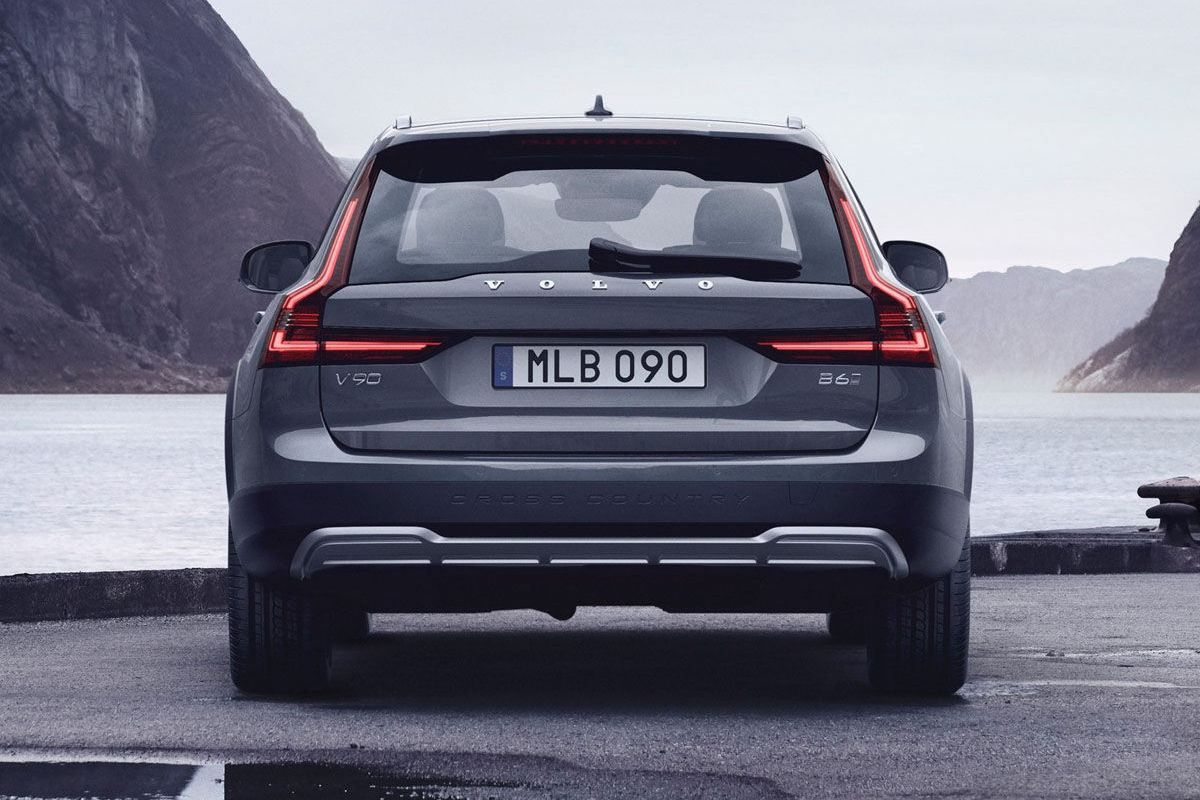
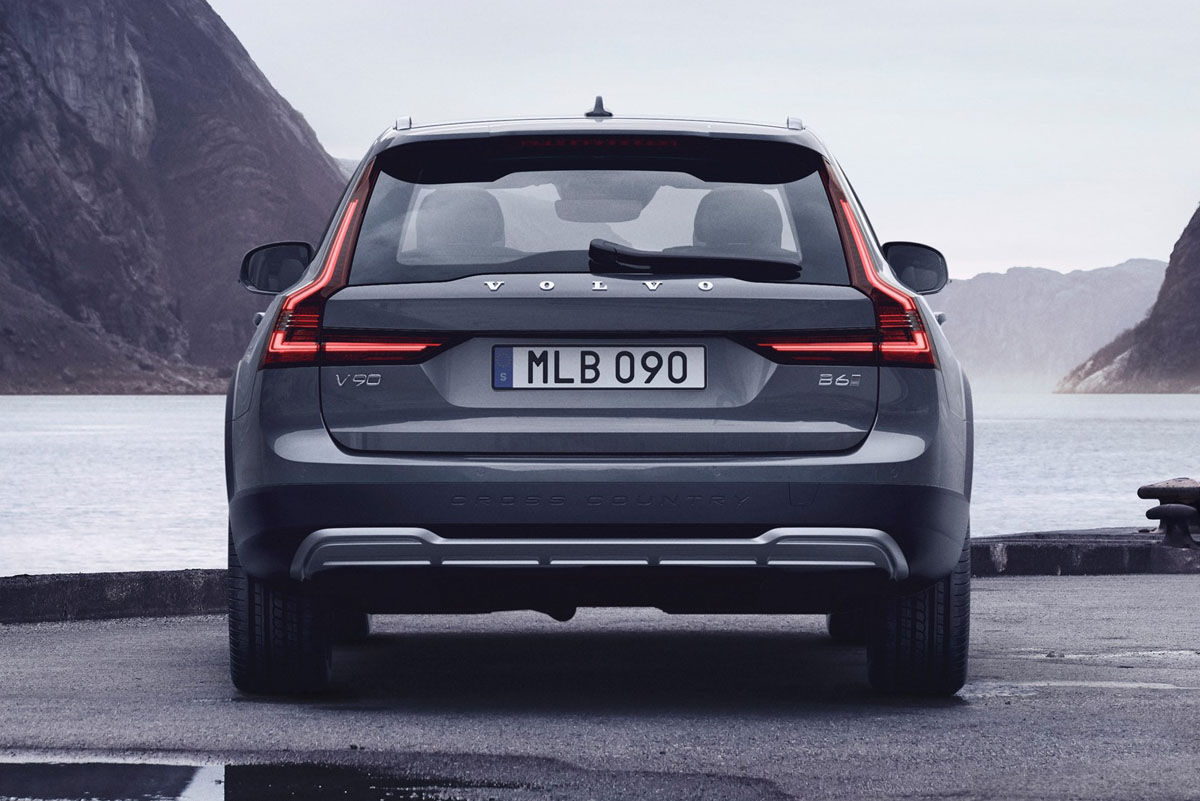
In terms of aesthetic tweaks, the fronts of the cars now sport redesigned bumpers with new fog lights, while the V90 and V90 CC additionally feature a revised full-LED tail-light cluster, as well as sequential turn indicators. Fresh ranges of exterior colours and wheel designs have also been availed.
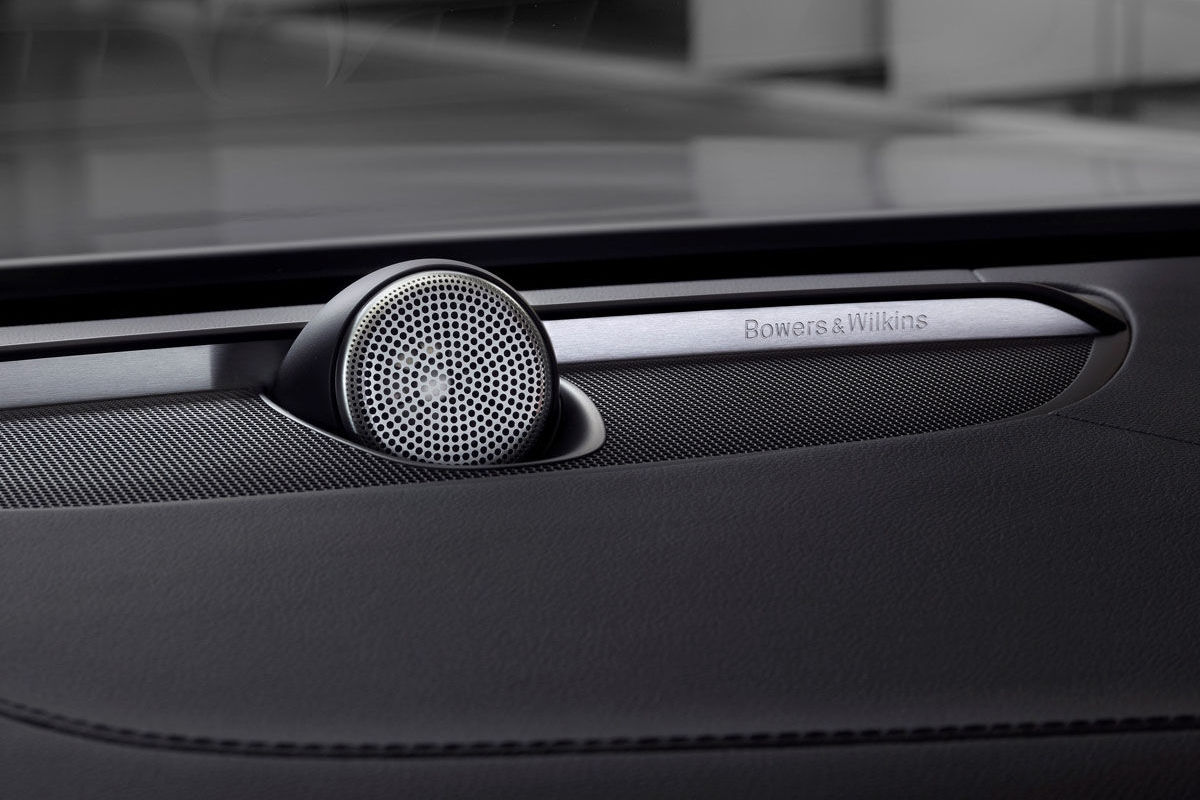
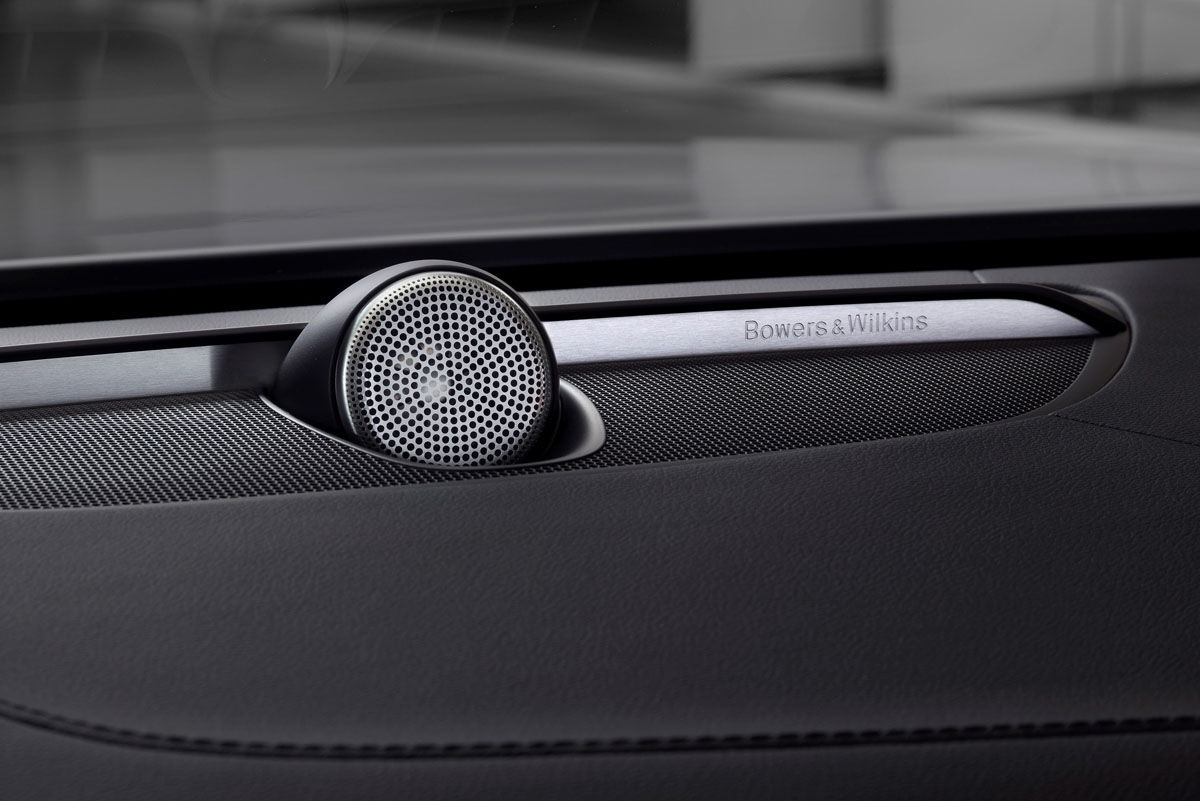
Inside, the Bowers & Wilkins audio system, which is regarded as one of the most impressive in-car sound audio setups, has been “comprehensively upgraded” with an improved amplifier, automatic vehicle-noise cancellation and a setting “that mimics the sound of your favourite jazz club”.
The distinctive lighting signature of the revised L-shaped LED tail-light-clusters.
Another new interior feature is the Advanced Air Cleaner (with a PM 2.5 particle sensor). It was initially developed for the Chinese market and allows drivers to monitor interior air quality via the infotainment screen. Volvo says the system “can clean the cabin air of almost all tiny particles within a few minutes.”
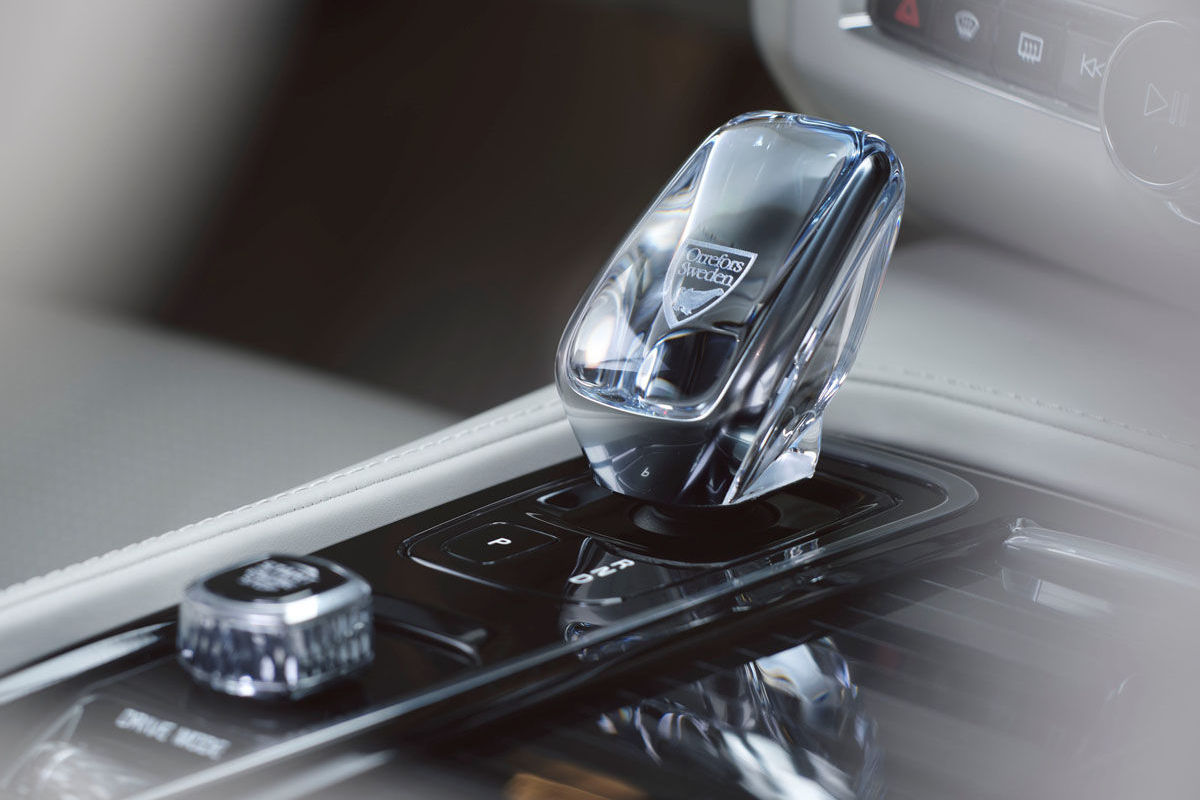
In terms of materials, exclusive tailored wool-blend seats (introduced on the XC90 facelift) are now available in the S90/V90, while a leather-free interior is optional for the top trim-grades. A wireless charging pad has been fitted and two USB-C charging points have replaced the 12V outlets in the back.
The Bowers & Wilkins audio system has an updated amplifier as well as vehicle-noise cancelling technology.
Meanwhile, Volvo will offer 48V mild-hybrid versions of the 2.0-litre turbopetrol and 2.0-litre -diesel motors. Such derivatives will be named with a “B” instead of a “T” or “D”, as in B4, B6 and B6, but, at the time of writing, it was not clear whether such derivatives will be offered in the South African market.
We’ll update you on the expected date of the local introduction of the updated S90/V90 CC ranges, as well as specifications and prices, as soon as more information becomes available.
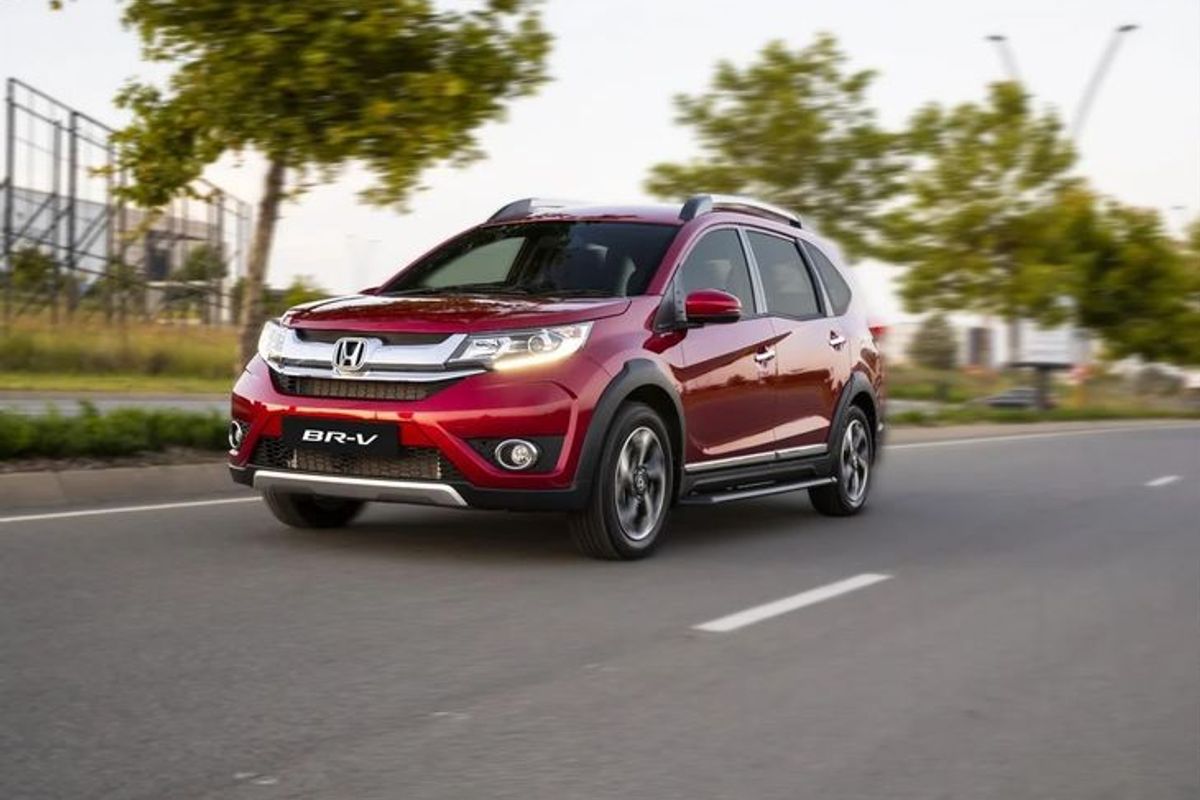
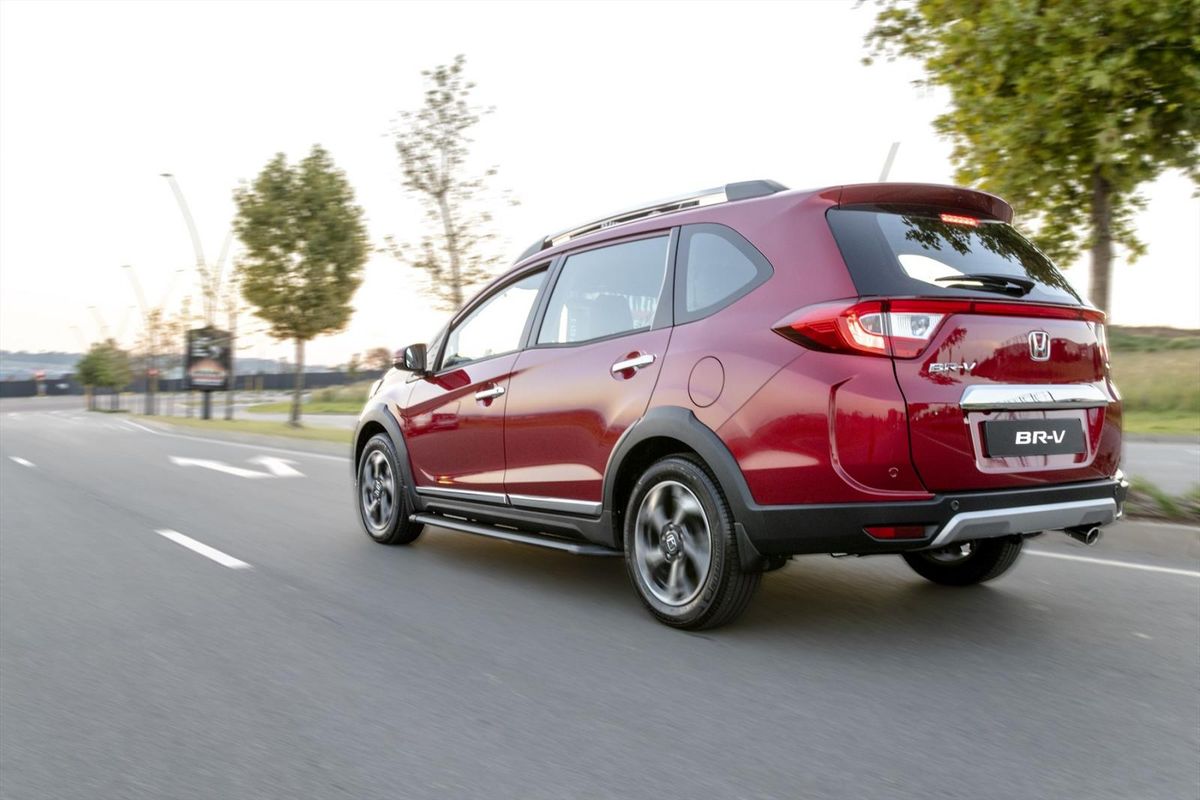
Honda has given its 7-seater BR-V compact SUV an update. See the specification and pricing below.
What’s changed?
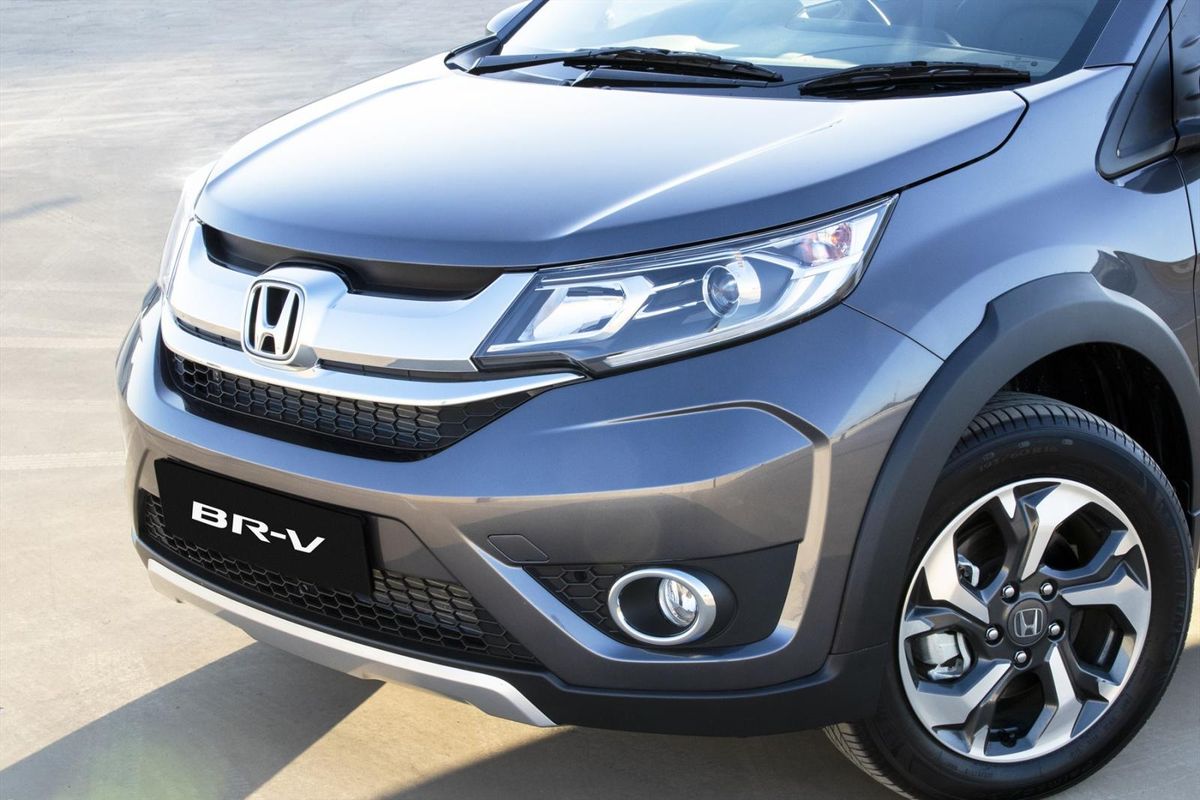
The main cosmetic change for the BR-V is that new LED Daytime Running Lights (DRLs) are now seen in the lower section of the headlight units.
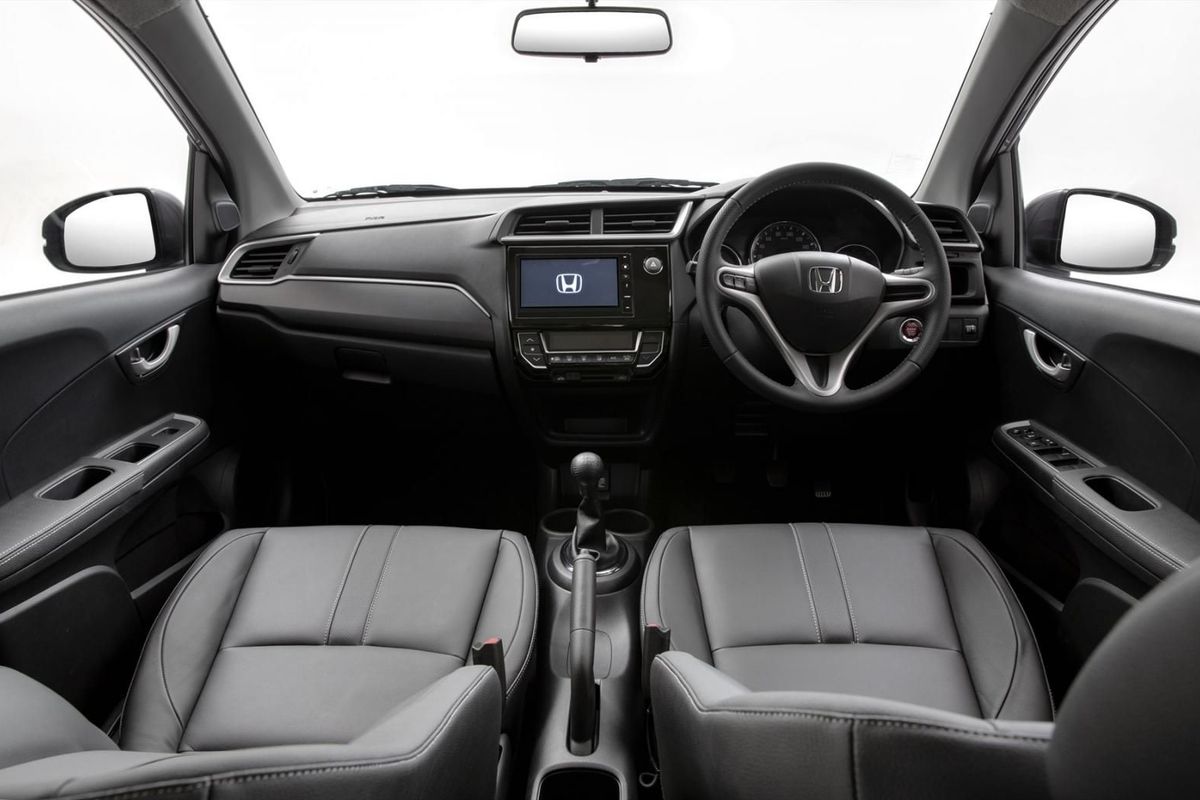
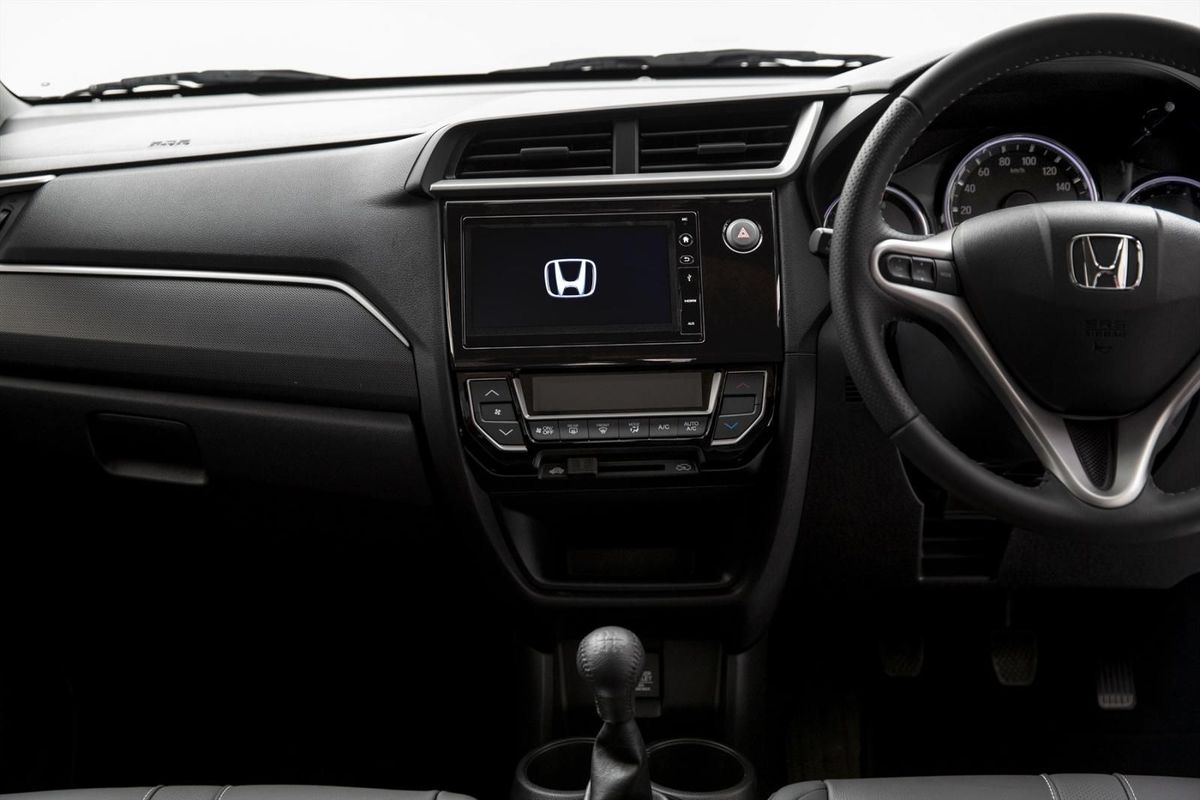
Changes to the BR-V’s feature specification is more significant and the mid-spec Comfort and top-spec Elegance derivatives now come equipped with rear park distance control. The BR-V Elegance is now also fitted with a 7-inch Display Audio touchscreen with an integrated reverse parking camera.
Honda has also improved Noise, Vibration and Harshness (NVH) levels by adding more sound insulation material.
The BR-V, however, still features the same 1.5-litre petrol engine with 88 kW and 145 Nm of torque and is offered with either a 6-speed manual or Continuously Variable Transmission (CVT).
Honda BR-V – Price in South Africa
BR-V 1.5 Trend Manual – R258 800
BR-V 1.5 Comfort Manual – R291 500
BR-V 1.5 Comfort CVT – R310 300
BR-V 1.5 Elegance Manual – R314 400
BR-V 1.5 Elegance CVT – R333 000
The Honda BR-V is sold with a 5-year/200 000 km warranty, 4-year/60 000 km service plan (BR-V Comfort/Elegance only, optional on Trend) and 3-year AA Roadside Assistance.
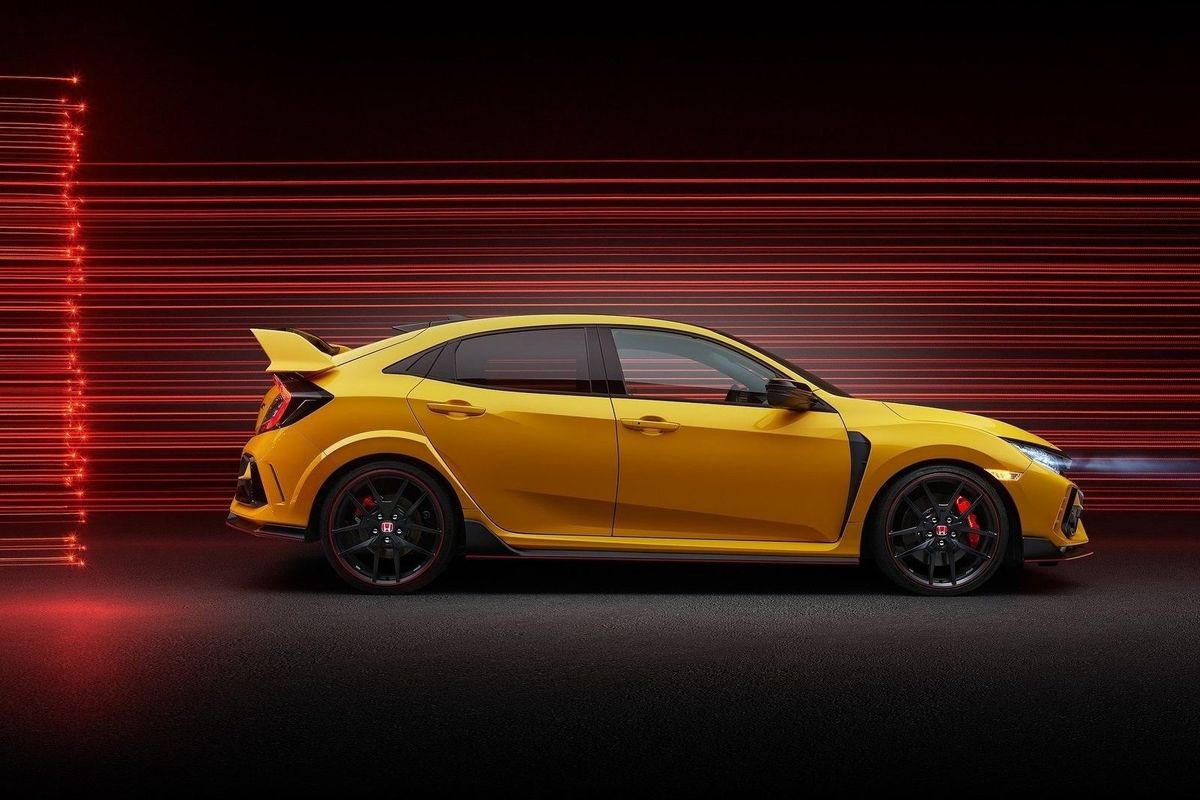
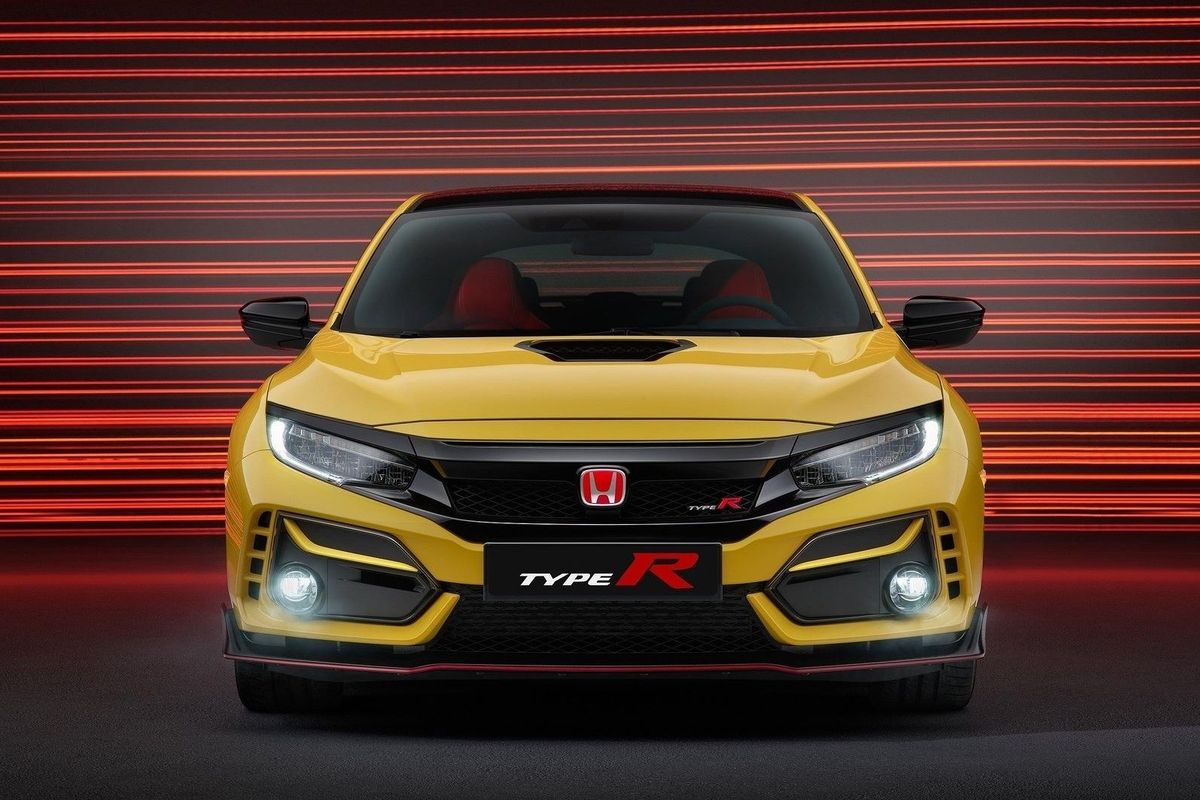
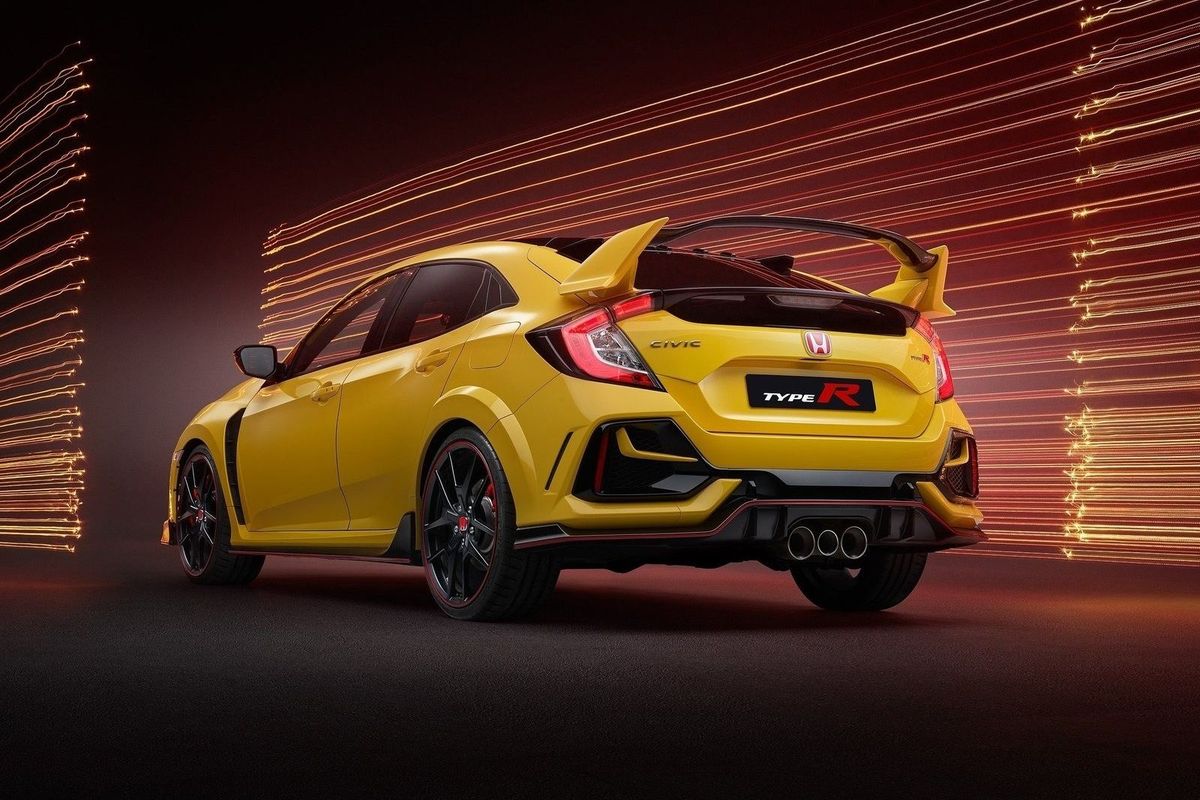
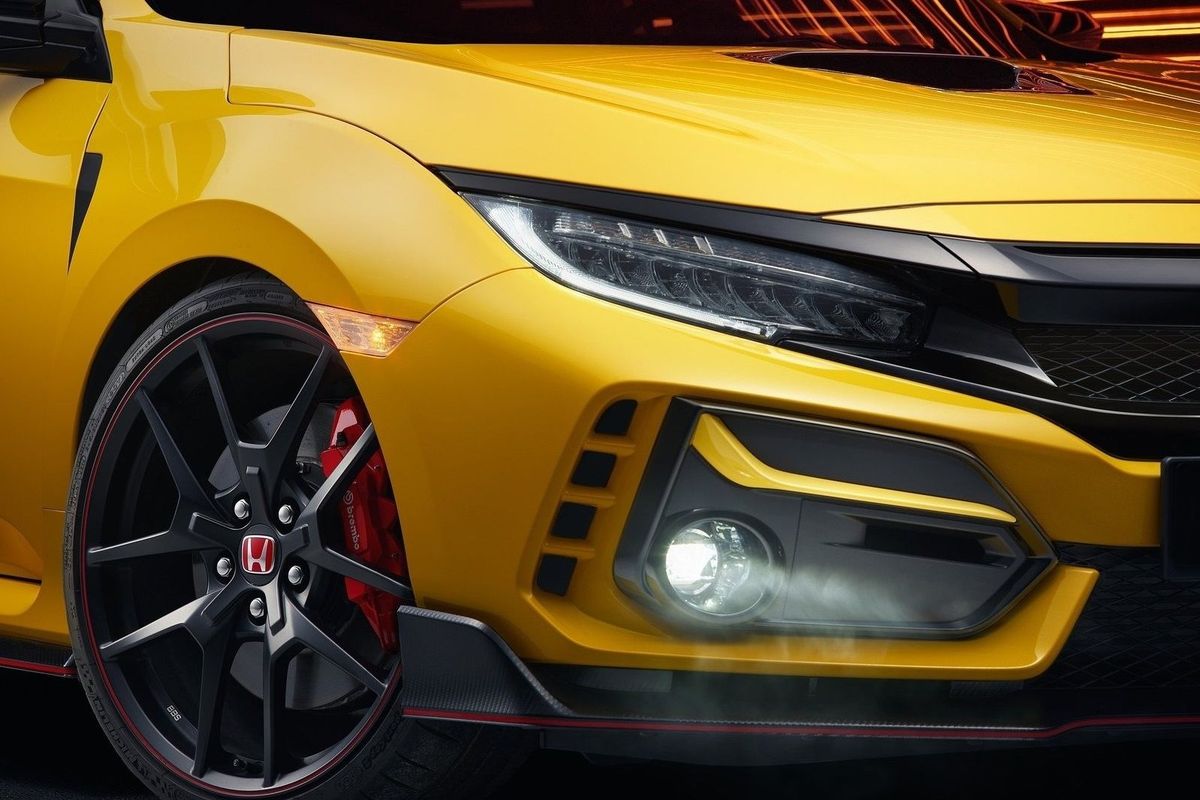
The Honda Civic Type R Limited Edition has been revealed and there's going to be just 100 units for Europe.
The Civic Type R is one incredible machine. Not only does it look outrageous, but its also exceptionally quick on racetracks. For a period of time, it held the Nurburgring lap record for a front-wheel-drive hatchback.
Now there's a limited edition model, which Honda claims has been designed and engineered to be the most dynamic front-wheel drive hatchback. Essentially, Honda has focused on putting the Civic Type R on a diet, stripping out the interior and the extensive use of lightweight components.
The new Honda Civic Type R Limited Edition features lightweight 20-inch forged BBS alloy wheels wrapped in Michelin Cup 2 rubber. There are tweaks to the dampers which are said to "optimise this new wheel and tyre combination and recalibration of the steering offers maximum control and feedback." There's also a new colour called Sunlight Yellow which you can see here.
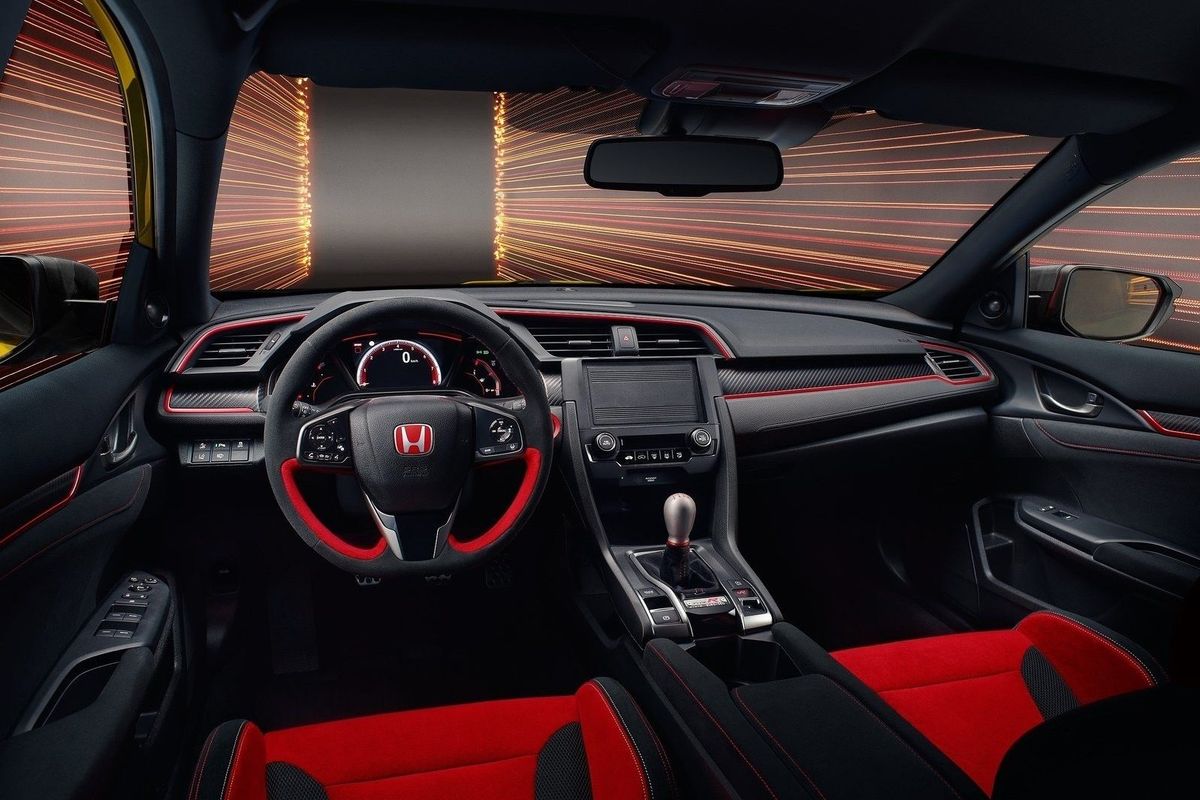
Inside, the infotainment system and climate control has been removed to save weight. Additional weight savings come from the removal of sound-deadening materials in the vehicle and while it may not sound like much, Honda claims 47 kg has been saved. The engine has been carried over from the standard model and its a 2.0-litre turbocharged 4-cylinder with 228 kW and 400 Nm, giving it a claimed sprint time to 100 kph of 5.7 seconds.
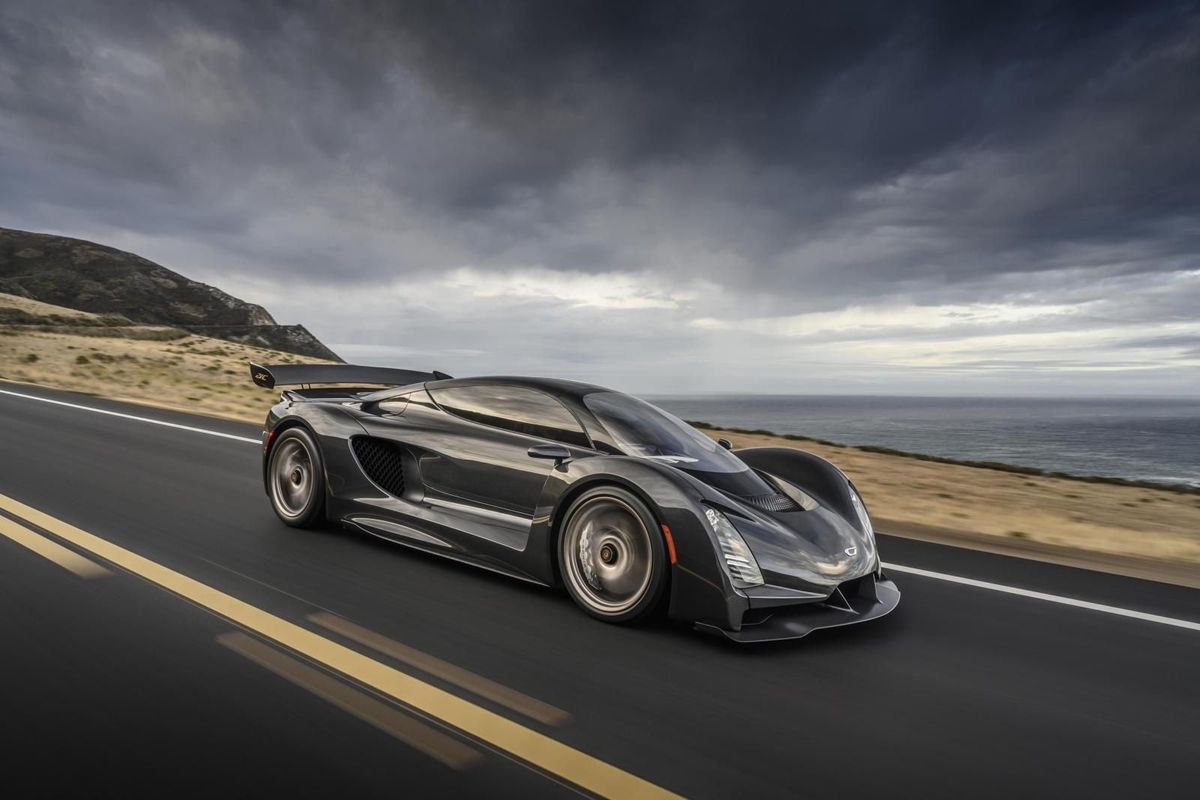
932 kW Czinger Hypercar Coming to Geneva (w/Video)
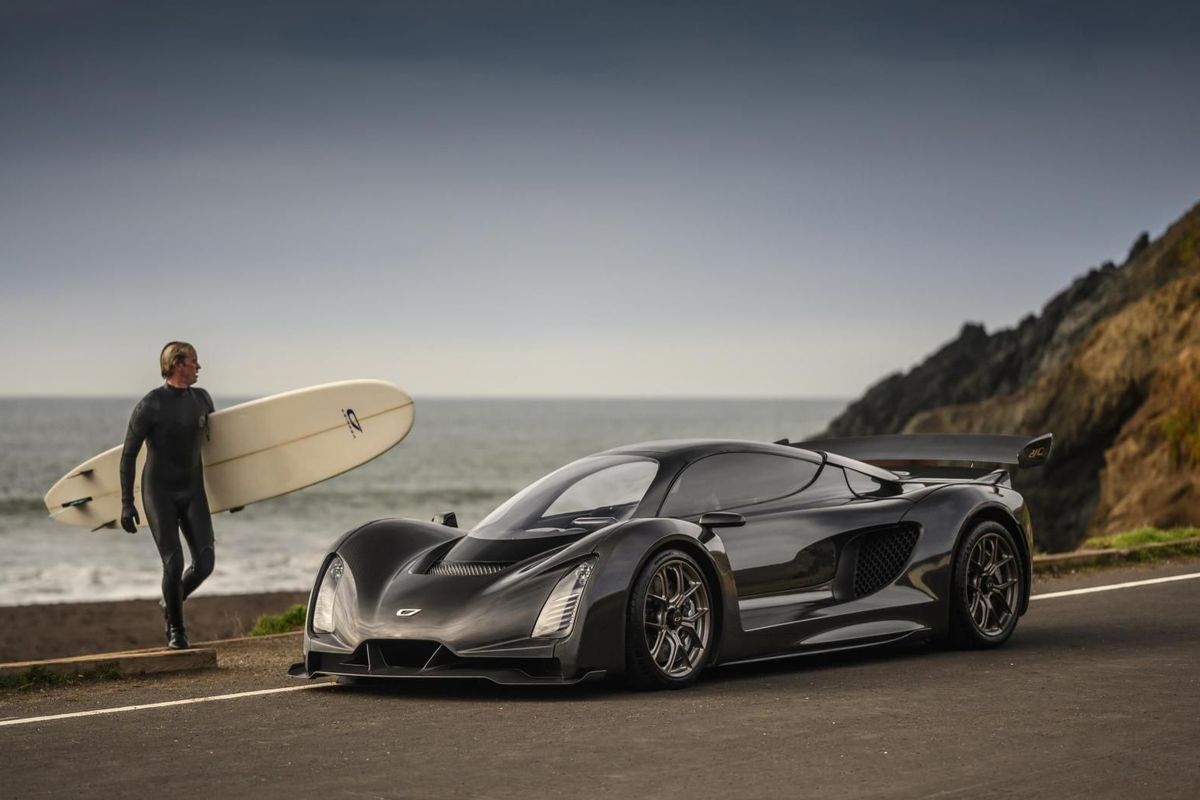
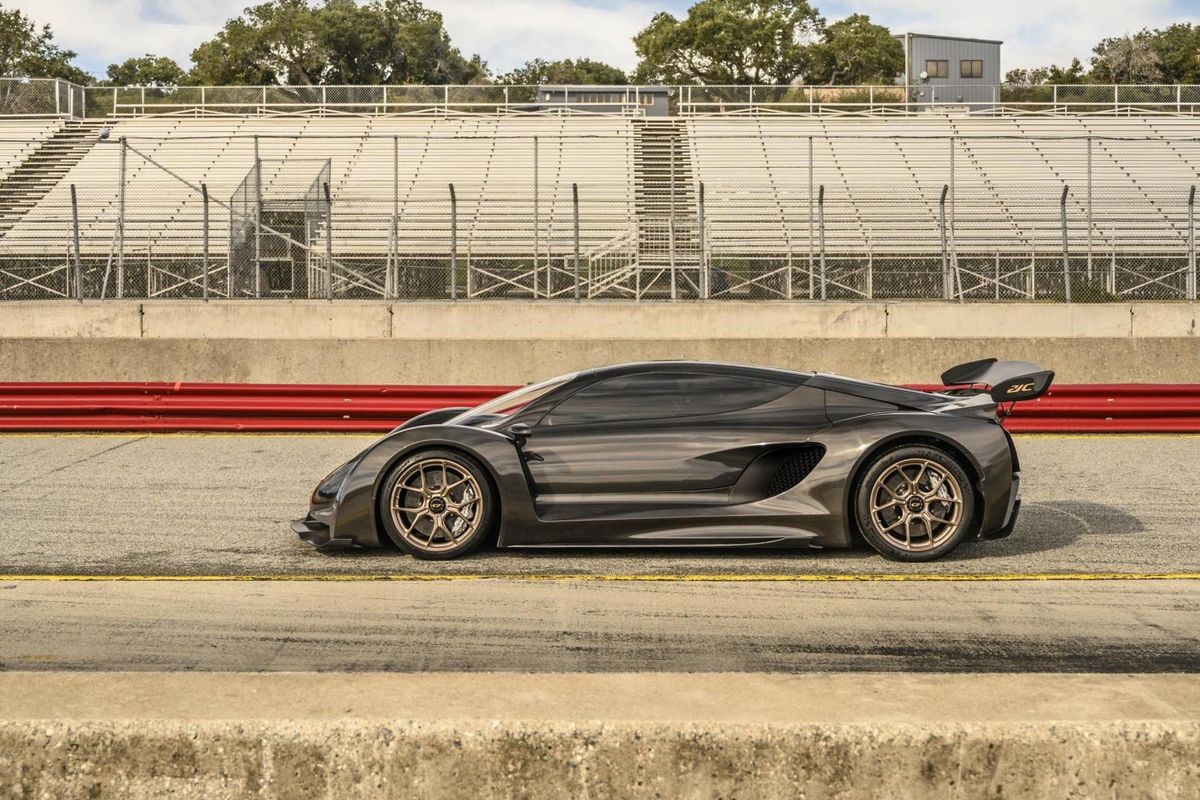
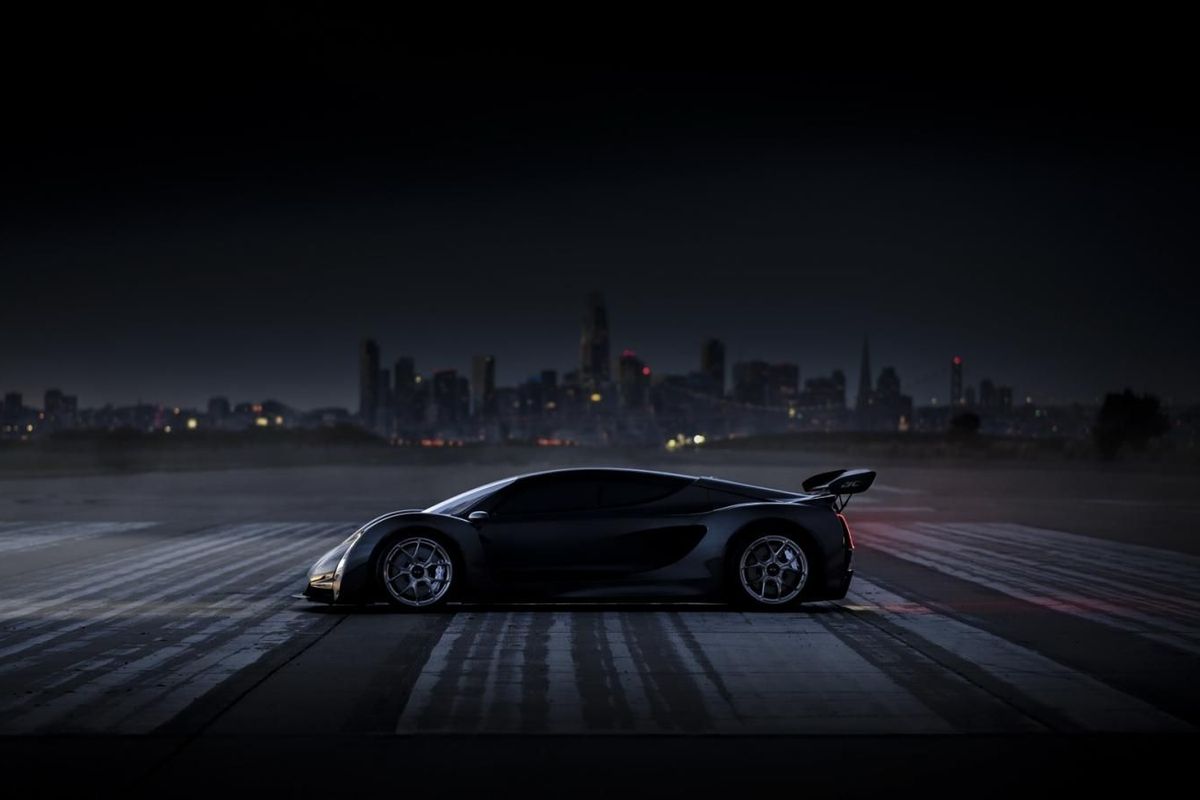
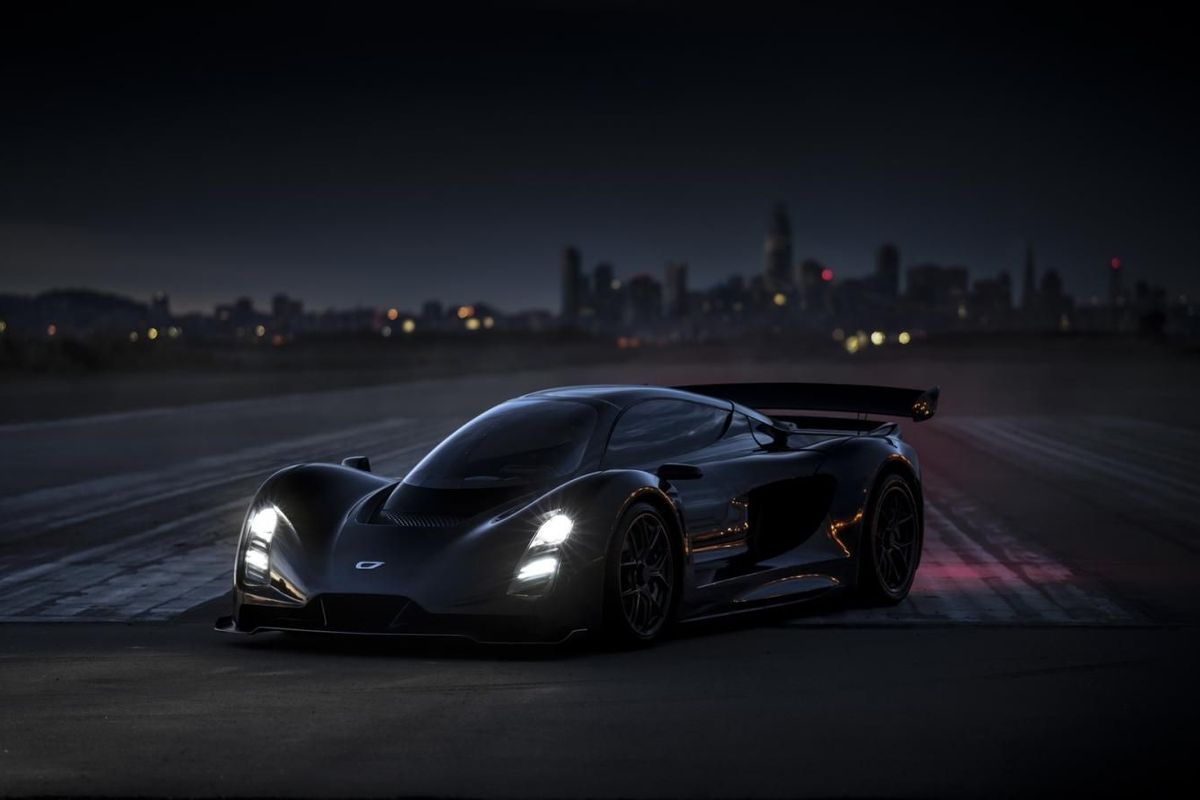
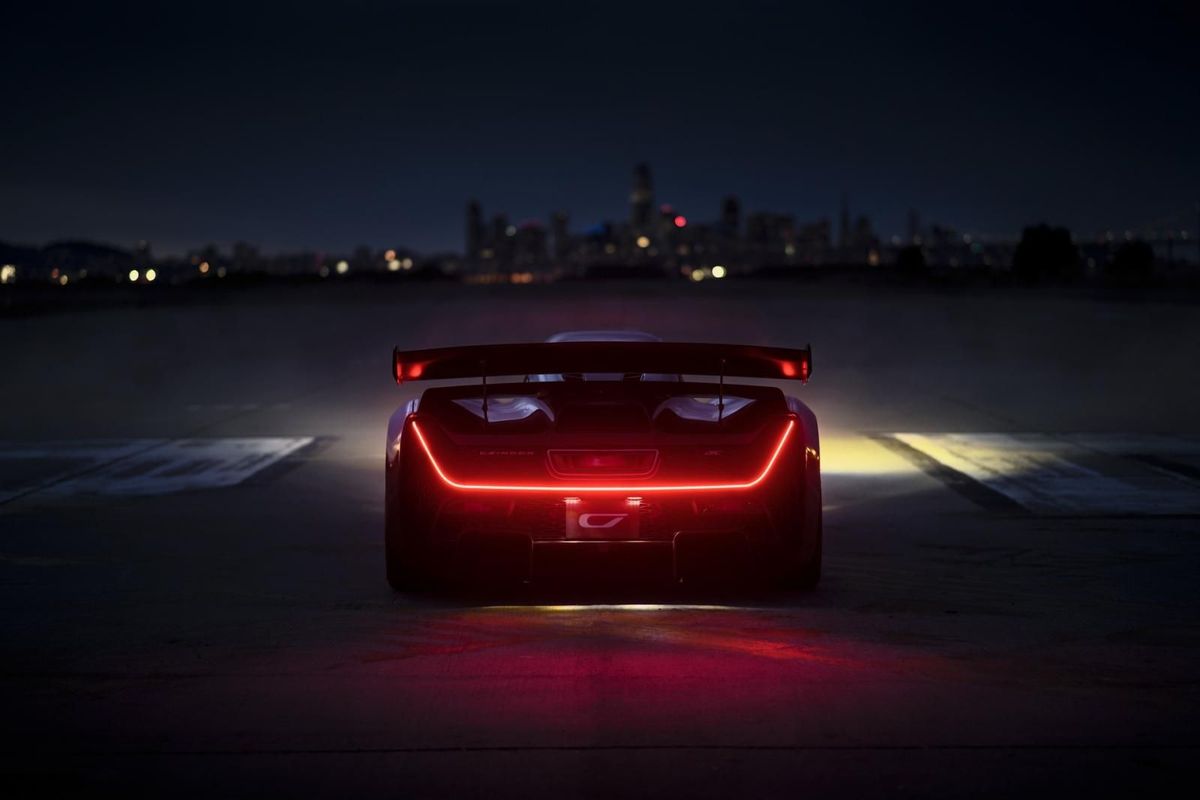
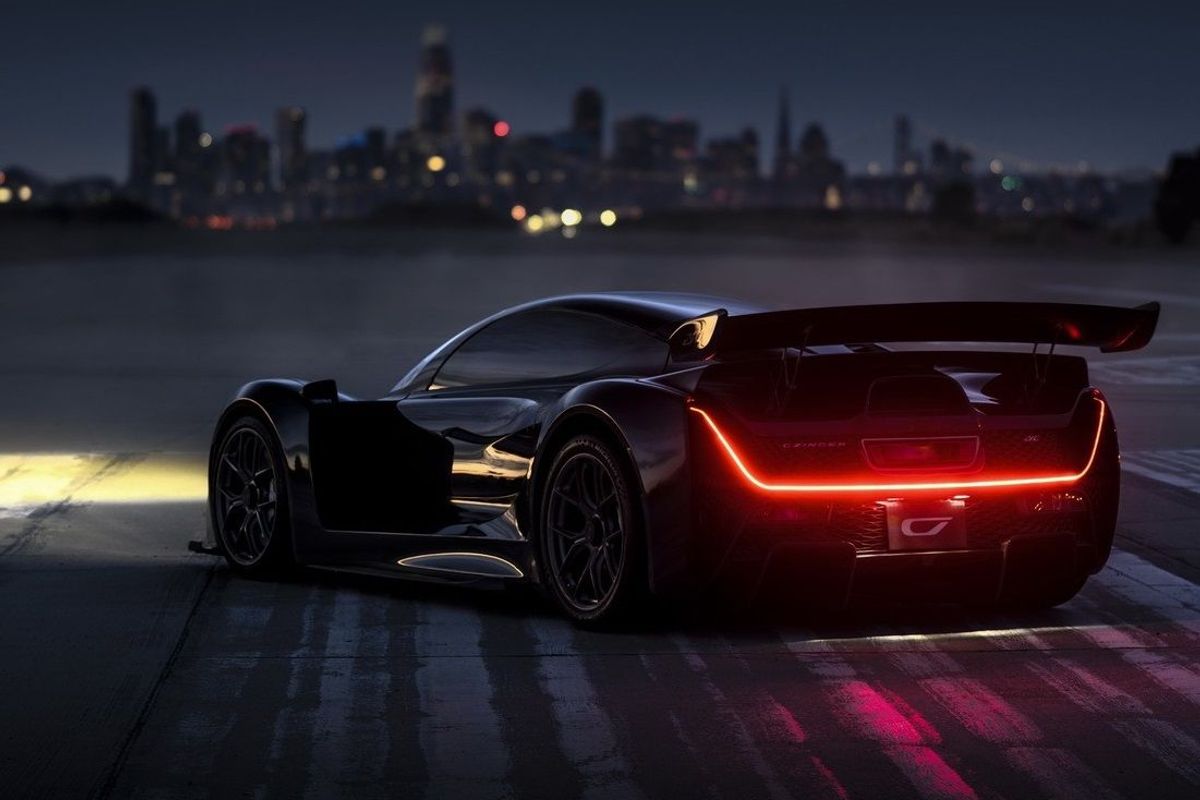
There's a new supercar brand out. Check out Czinger's hybrid weapon, capable of 0-100 kph in just 1.9 seconds and packing a mighty 932 kW!
Czinger, a Los Angeles-based startup, recently teased its 21C hypercar ahead of its formal reveal at the upcoming Geneva Motor Show and now the company has revealed some specification details.
The 21C was developed by a small team of designers, engineers and scientists which used a "revolutionary, patented, production system. This proprietary production system enables design, engineering, optimisation and innovation in vehicle creation beyond what has previously been possible" says the company,
Czinger has divulged that the 21C will pack 1 250 hp or 932 kW and will be capable of a zero to 100 kph sprint in just 1.9 seconds. Zero to 400 kph and back to zero will take only 29 seconds according to the Czinger. The 21C hits the redline at 11 000 rpm… The 21C is an all-wheel drive hypercar, equipped with a hybrid powertrain featuring a mid-mounted 2.88-litre, flat-crank, twin-turbo V8 engine and two high output electric motors at each front wheel with torque vectoring. A lightweight 7-speed automated manual transmission is used to lay those mighty numbers down on the tar. The 21C has a dry weight below 1 200 kg with a true power-to-weight ratio of 1:1.
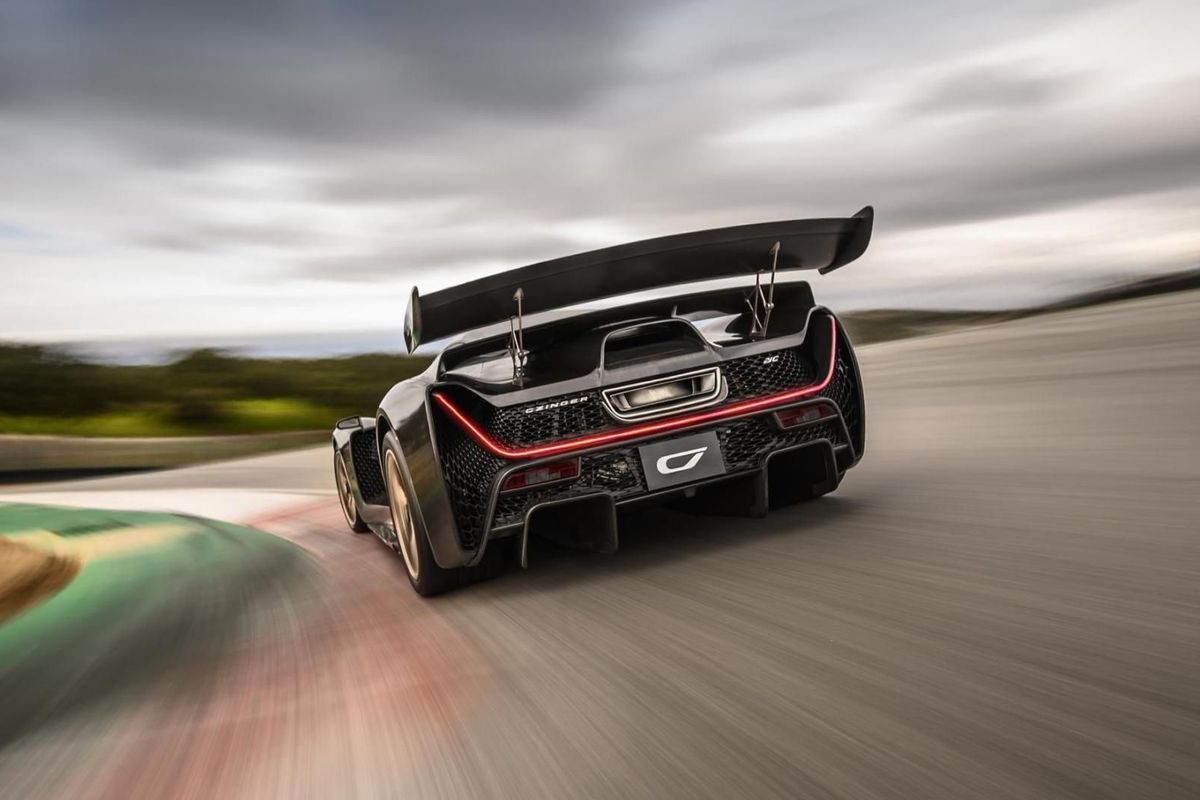
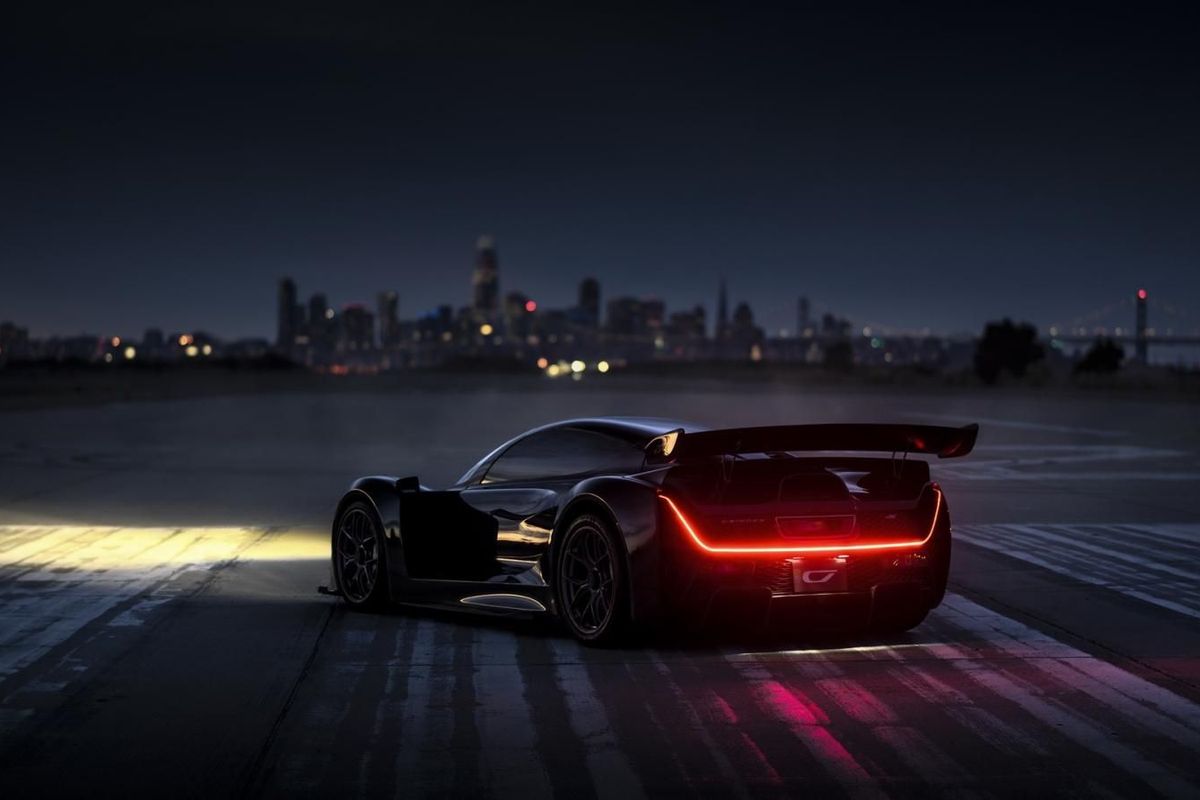
Given how much power and performance is being claimed, aerodynamics are going to play a huge role and there's a massive wing on the rear. Czinger says that 790 kg of downforce is generated at 250 kph. We really like the rear light strip too. Czinger says its 21C features tandem seating for two, like a McLaren F1.
Stat tuned for more details, watch the video below!
Volkswagen has revealed a new variant of its Amarok double-cab, packing 200 kW.
Set for its global debut in the Australian market by May, this new bakkie is VW’s Amarok 580S. In terms of position, it sits between the Highline Black and Ultimate V6 Amaroks.
The naming convention for VW’s latest special edition bakkie is quite easy to understand, with ‘580’ referring to the engine’s peak torque output.
Powering these Amarok 580S special edition bakkies are the 2020 version of VW’s 3-litre V6 turbodiesel, tuned for a potency of 190 kW and 580 Nm. For short bursts of peak throttle loading, the engine will overboost to a power number of 200 kW.
Distinguishing the 580S from other V6 Amarok bakkies, is its carbon-steel paint code and roll bar mounted LEDs. Standard features include Bi-Xenon headlights, 20-inch alloy wheels and inside you’ll be accommodated on art-velour upholstered seats, which are also heated for the front passengers.
With Mercedes-Benz having confirmed it will retreat from the premium double-cab market, VW is sensing the opportunity to reinforce its status as the only true German luxury bakkie brand. This Amarok 580S special edition is a symbolic representation of that.
Although the Amarok 580S will only be produced in a limited run of 200 units, for the Australian market, South African fans will take note of the colour code and those roll bar mounted LEDs. Both features could possibly find their way into a more global portfolio of VW Amarok options, in future.