It’s been a slow start to the year as new car sales numbers for January 2020 reflect weakening decline. See the sales summary below for the details…
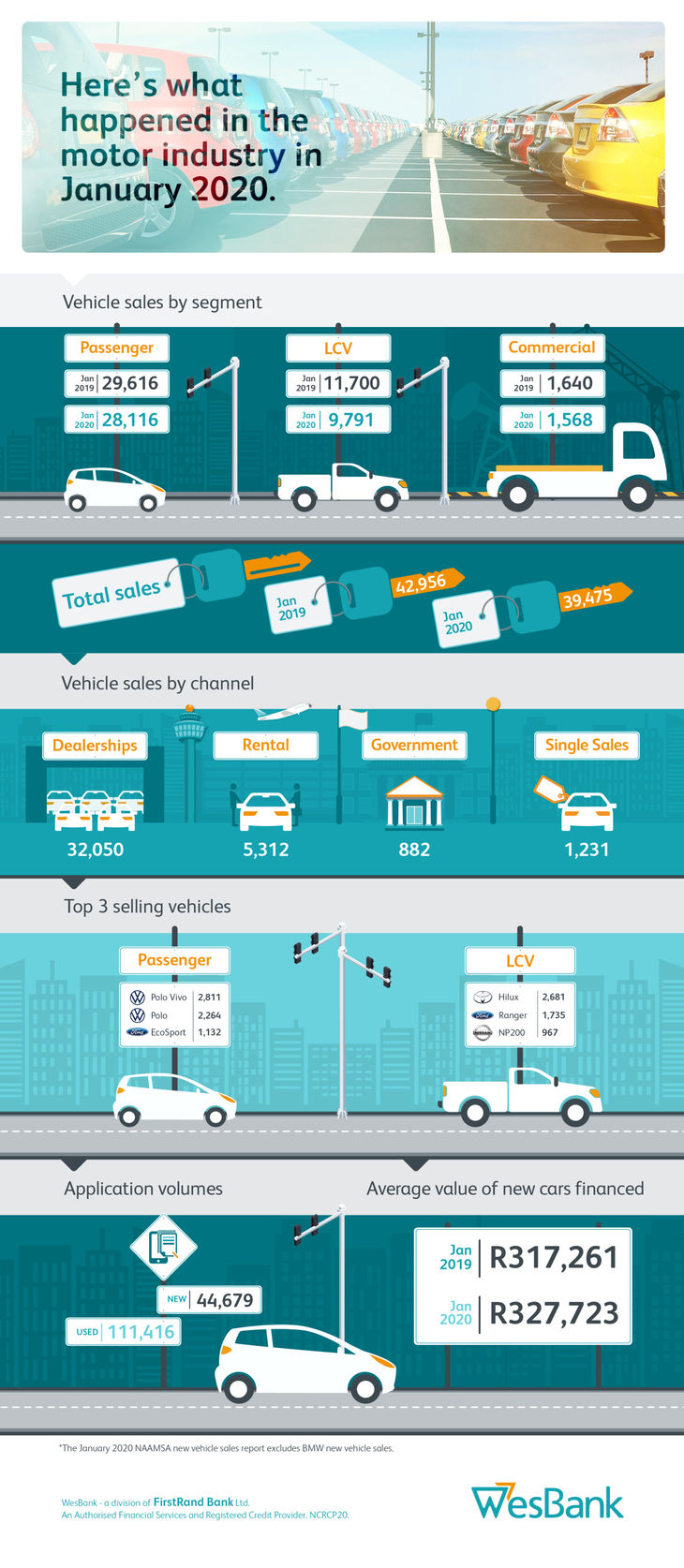
The spiralling downward sales trend that plagued 2019 has continued into 2020. The sales figures, released by The National Association of Automobile Manufacturers of South Africa (NAAMSA), don’t, however, include figures for BMW as the firm has adopted a new sales reporting model. Despite that though, the sales figures across the board for January 2020 paint a rather bleak picture for the industry.
“While consumers usually delay purchase decisions in December into the new year, boosting January sales as a result, January 2020 numbers are lower than December 2019, indicating a particularly slow start to sales in the new decade,” says Lebogang Gaoaketse, Head of Marketing and Communication.
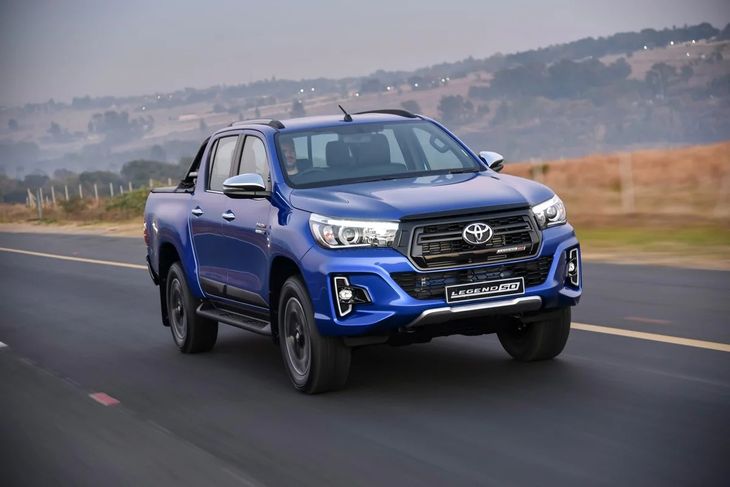
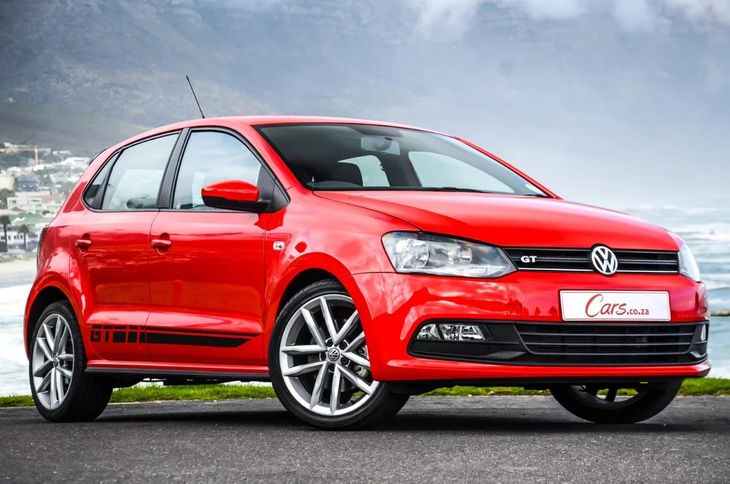
All the doom and gloom aside, it's nice to see a car other than the mighty Toyota Hilux on top of the sales charts for a change. The Hilux has topped the sales charts for a long time and now it's finally been usurped by the ever-popular Volkswagen Polo Vivo!
New Car Sales – January 2020
Aggregate new vehicle sales of 39 475 units down by 8.1% (-3 481 units) compared to January 2019.
New passenger car sales of 28 116 units down by 5.1% (-1 500 units) compared to January 2020
Light Commercial Vehicle (LCV) sales of 9 791 down by 16.3% (-1 909 units) compared to January 2020.
Export sales of 11 373 down by 37.7% (-6 877 units) compared to January 2019.
Numerous factors are contributing to the weak demand for new vehicles and the most pertinent include depressed business and consumer confidence, weak economic growth, record-high unemployment and unstable energy supply as a result of the Eskom saga.
The sales slump is set to continue until such time that the economy is set on a higher growth path. With Eskom recently announcing that load shedding will be implemented over the next 18 months as its maintenance plan is rolled out, the prospect for recovery is unlikely over the short to medium term.
While exports reflected poor results in January 2020, export momentum is expected to pick up drastically throughout the year and exports should reach 390 000 units for the year.
Renault Megane Facelift: What to Expect
Renault will be introducing a facelifted Megane premium hatchback to market this year. Here’s what you can expect!
The Megane has been a popular model for Renault with over 7-million units finding homes worldwide across 4 generations since 1995.
The Boulogne-Billancourt-based firm, however, intends to keep the momentum going with the introduction of the facelifted Megane which should reach South Africa in the first half of 2020.
What’s changed?
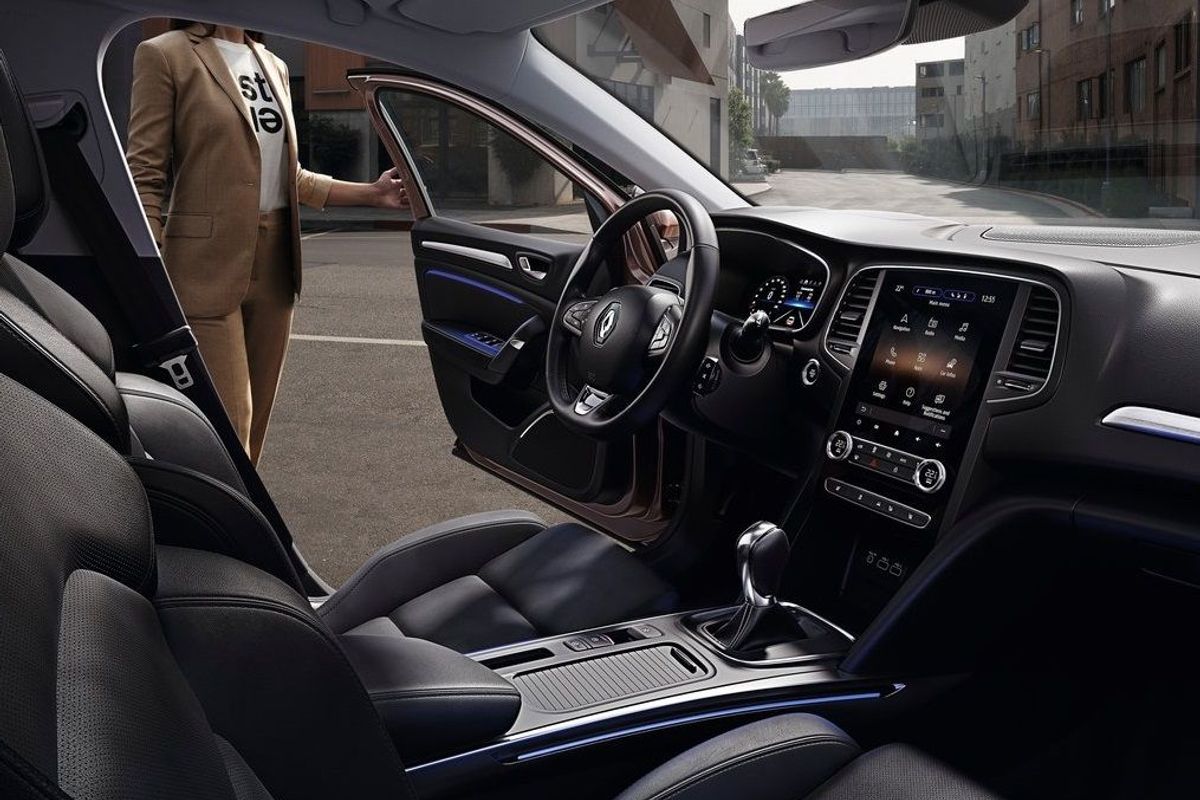
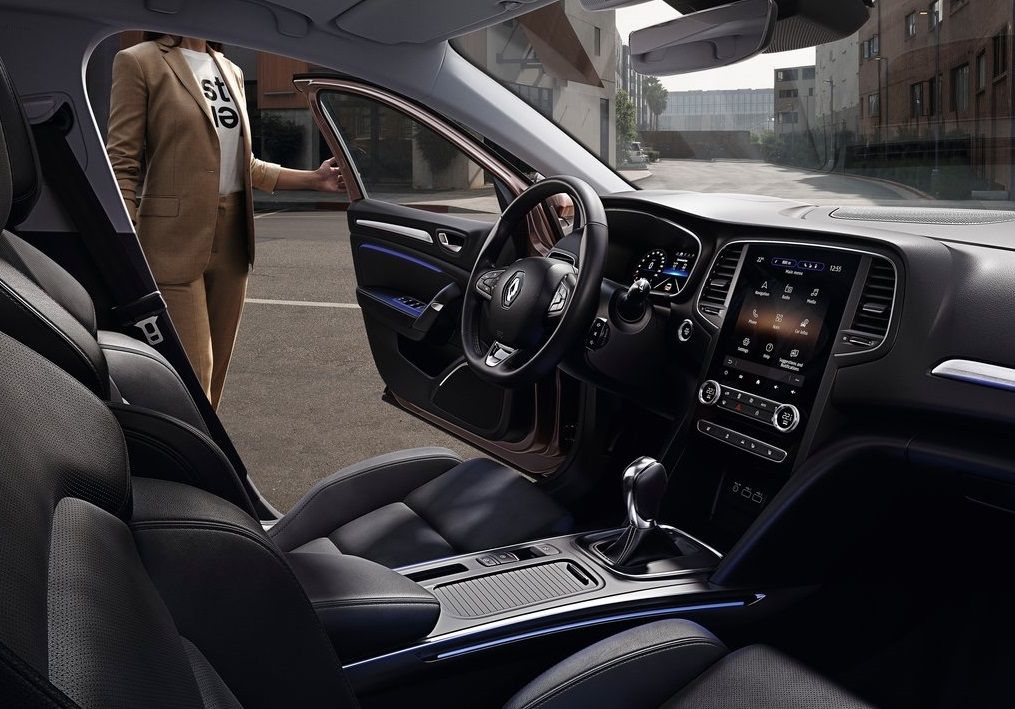
The Megane's interior moves further upmarket with new infotainment equipment.
Renault has revised the interior of the Megane which now features a new 9.3-inch infotainment screen as well as a 10.2-inch instrument cluster. Renault says that new driving aids such as the Motorway and Traffic Assistant (Level 2 Autonomy) will be offered in the latest Megane. The Megane will also fitted with new Pure Vision LED headlights.
In terms of powertrains, the Megane will be offered with an E-TECH plug-in rechargeable hybrid engine. The 119 kW 1.6-litre petrol engine combines with 2 electric motors and a 9.8 kWh battery allowing for up to 50 km range on electric power alone. This powertrain won’t be offered in South Africa.
Instead, the current 84 kW/156 Nm 1.6-litre petrol and 97 kW/205 Nm 1.2-litre turbopetrol engines are likely to be carried over along with a 6-speed manual and 7-speed dual-clutch automatic transmission choice.
While Renault previously offered the Megane in GT Line guise, a new sporty R.S. Line will take its place.
As for the Megane R.S. itself, it will be powered by the familiar turbocharged 1.8-litre engine but power has been bumped up 220 kW (+15 kW) while torque increases to 420 Nm (+30 Nm) with an EDC gearbox, or 400 Nm in manual guise (+10 Nm).
The hardcore Megane R.S. Trophy also features the same 220 kW/420 Nm 1.8-litre turbocharged engine but rides on an exclusive Cup chassis which is suitable for track driving and comes equipped with a mechanical Torsen limited-slip differential to enhance traction and cornering ability. The shock absorbers have been stiffened by 25% while the suspension springs are now 30% stiffer than before.
We will keep you updated as soon as more information regarding local arrival and pricing becomes available.
VW has given followers of the brand’s hot hatches an idea of what the next-generation Golf R could be.
The German automotive giant has revealed its latest battery-powered concept vehicle, amidst a concentrated strategy to reel in the electric drive advantage that Tesla has established.
VW’s CEO has publicly announced that Tesla is now the company’s target and main rival.
At an ice racing event in Austria this weekend, the surprise presence was that of a familiar Golf performance car silhouette, which made no noise.
The new concept car is VW’s eR1 e-Performance Golf and it features a hugely powerful electric power- and drivetrain.
With VW’s Golf 8 due later this year, some find it strange that VW’s built its future Golf-performance concept vehicle with current a GTI TCR Golf 7.5 bodywork. For VW, though, appearance is very much a secondary consideration to the eR1 e-Performance.
Look beyond the huge fenders and other aerodynamic paraphernalia and what powers this Golf is deeply impressive.
Volkswagen has shown that it certainly has the expertise to build an immensely potent electric vehicle. It debuted the ID.R hillclimb car in 2018 and now that technology demonstrator’s batteries and electric motors are in the eR1 e-Performance Golf.
Although VW won’t confirm exact outputs for this all-wheel-drive, batter-powered, Golf concept, the ID.R serves a reliable reference point. This VW battery has been rated as good enough for 507 kW, which means even if there has been a slight detune for the eR1 e-Performance application, this is still a hugely powerful Golf.
Symbolically, the eR1 e-Performance is the firmest evidence that VW’s future Golf R models could feature a significant battery presence. Some analysts believe that for Golf 8, the R will remain solely internal-combustion, with VW electing to build a twin-ID.R performance hatchback, marketed in parallel.
What happens within the Golf 9 and its R-derivative, is where things could get interesting in terms of pure electrification.
In its standard guise, the Supra’s BMW-sourced straight-6 turbocharged 3.0-litre engine develops 250 kW and 500 Nm of torque and is capable of running from zero to 100 kph in 4.3 seconds, Even so, it’s evident that the Supra’s full potential has yet to be unlocked.
Nonetheless, a hot Supra GRMN is what enthusiasts are clamouring for and if rumours ring true, we may see it in 2020 packing in the region of 294 kW according to Japan’s Best Car Web.
It’s also suggested that the Supra GRMN will be lighter thanks to the adoption of carbon fibre componentry. The chassis will likely be stiffened to harness the additional power and the Supra GRMN will most certainly be more aggressively styled.
It’s known that Toyota will look to introduce new variants of the Supra on a regular basis and most recently, it’s been confirmed that a turbocharged 2.0-litre Supra is on the way with at least 190 kW and 400 Nm. This baby Supra will also be up to 100 kg lighter than the Supra GR and will feature 50:50 weight distribution which should make for a very entertaining driving experience.
Rumours or not, we can’t think of any worthy reason for Toyota not to develop a fully-fledged Supra GRMN, it's simply a matter of time. Bring it on, Toyota!
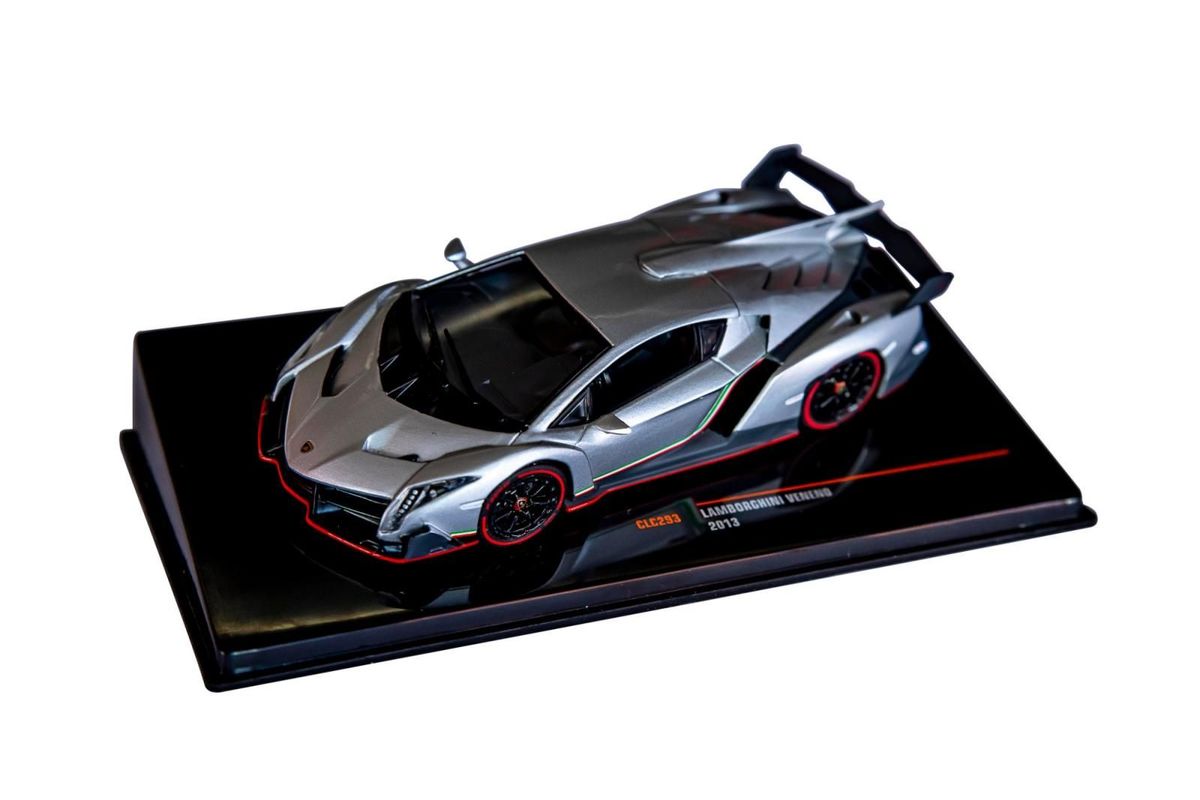
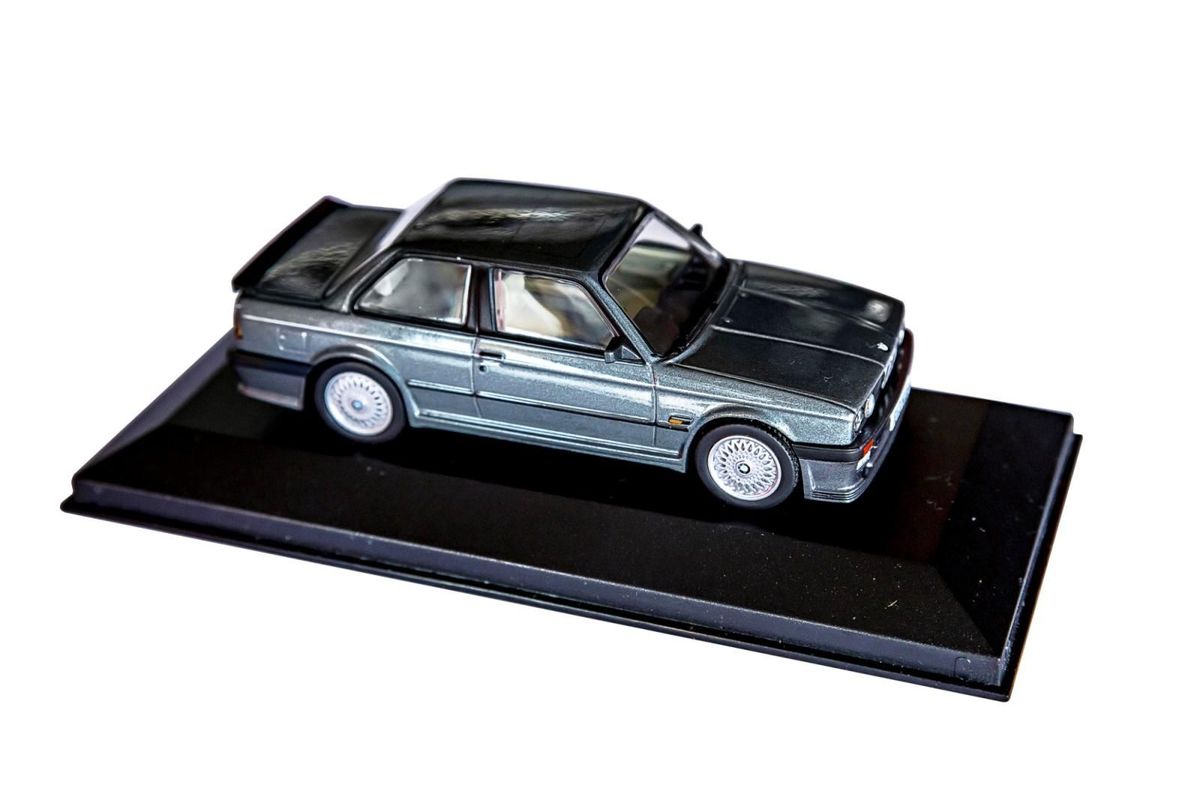
SentiMETAL, Cars.co.za's car culture sub-brand continues to expand with the addition of a line-up of carefully selected scale model cars, a regularly updated blog, as well as a self-collect option for customers in Cape Town.
"South Africans are passionate about cars," says Hannes Oosthuizen, Cars.co.za's Consumer Experience Manager and SentiMETAL Project Head. "The rapid growth in the number of attendees to our 'Gatherings', as well as the number of people visiting the young brand's on-line shop are clear indications of a vibrant local car culture," he says.
In recent times Sentimetal.Shop has expanded significantly, offering a range of scale model cars, literature and apparel in addition to the Heritage Limited-Edition Print series. "We are very selective in which models and other items we offer on SentiMETAL, so we encourage fans to come back regularly as it will continue to expand as we find suitable products."
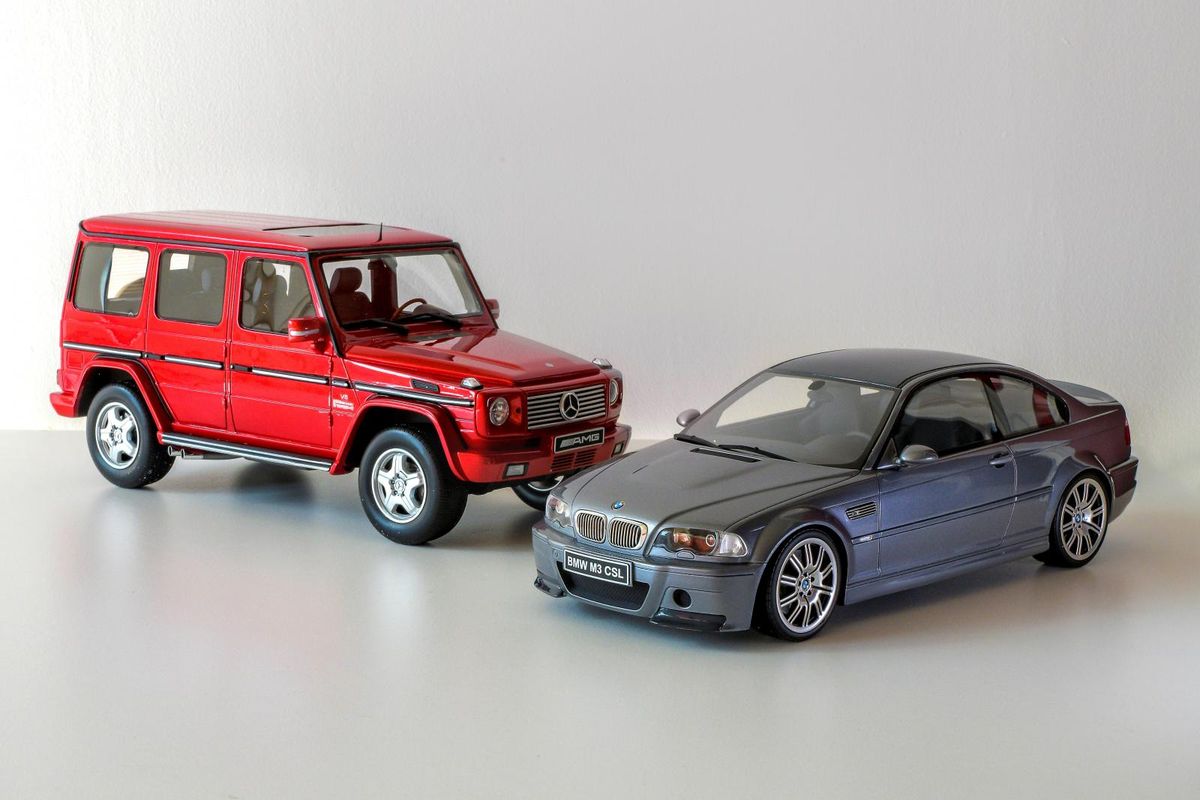
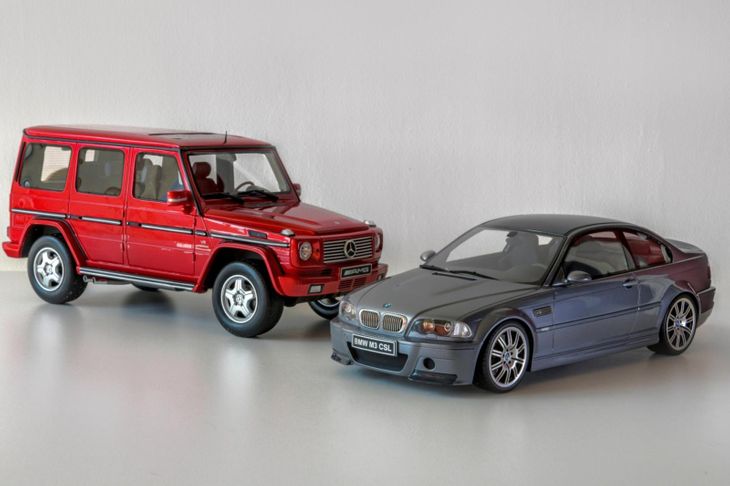
From the masters at Otto Mobile come these BMW M3 CSL and Mercedes-Benz G55 AMG 1:18 scale models.
One example is the addition of a stunningly detailed 1:18 scale OttoMobile model of a car loved by many South Africans, the BMW (E46) M3 CSL. "Land Rover items are also very popular," says Oosthuizen, "as are Mercedes-Benz-themed products."
"We are also continuously looking at ways to bring costs down for our customers, and we've made a number of changes on that front already, but the most recent and significant one is the addition of a self-collect shipping option for Cape Town customers." When this option is selected, there is no additional packaging or courier costs, as the customers will receive Cars.co.za's Cape Town office address details by e-mail, and can simply pick up their items when it suits them. "When visiting our office they're also welcome to view the other products on offer," says Oosthuizen.
A big driver of audience growth for SentiMETAL has been its blog, also hosted on the on-line shop. "We publish retro test drives, our video series, classic car news and updates on our events on this blog," says Oosthuizen, "and it's proven to be very popular." Fans can also subscribe to the SentiMETAL newsletter (go to Sentimetal.shop and scroll to the bottom) to receive their weekly dose of classic car news, video releases and event notifications.
Our video guy Ciro De Siena wanted to film the new C63S. The problem was, he was in Joburg with the car, and our crew were in Cape Town. Without the car.
And so he came up with a novel solution which has never been attempted on the internet, ever, in the history of YouTube… he filmed the car himself.
In this paradigm-shifting production, Ciro confirms for himself that he really likes the C63S, and will probably continue to like it for the foreseeable future.
This is the first video in our new Vlog series. Although if you don't like it we'll just pretend it didn't happen and do something else.
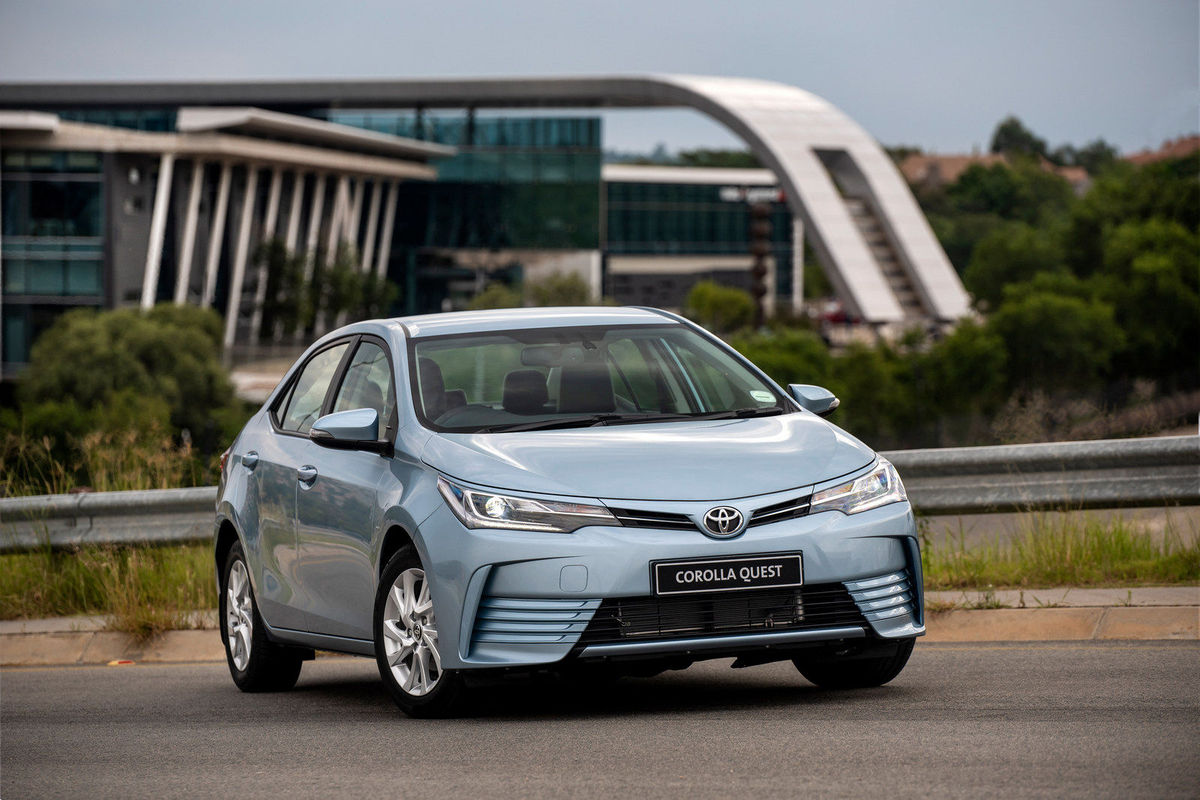
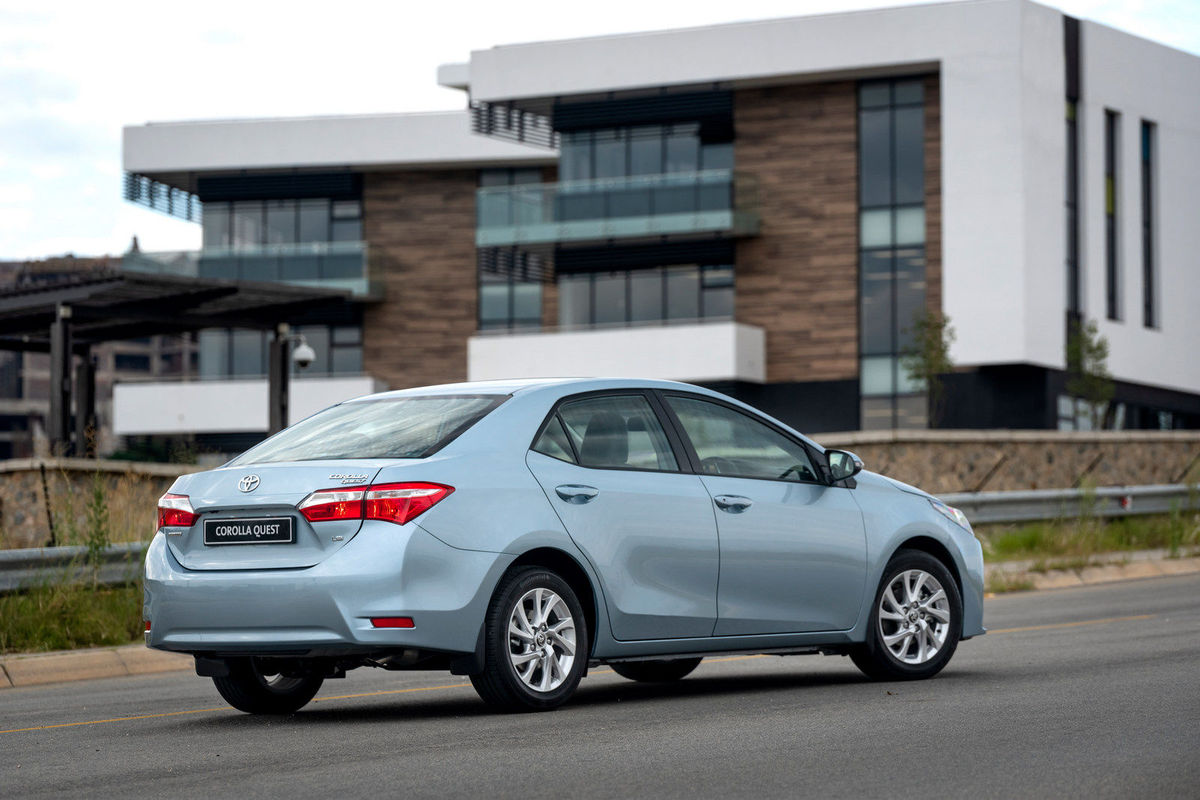
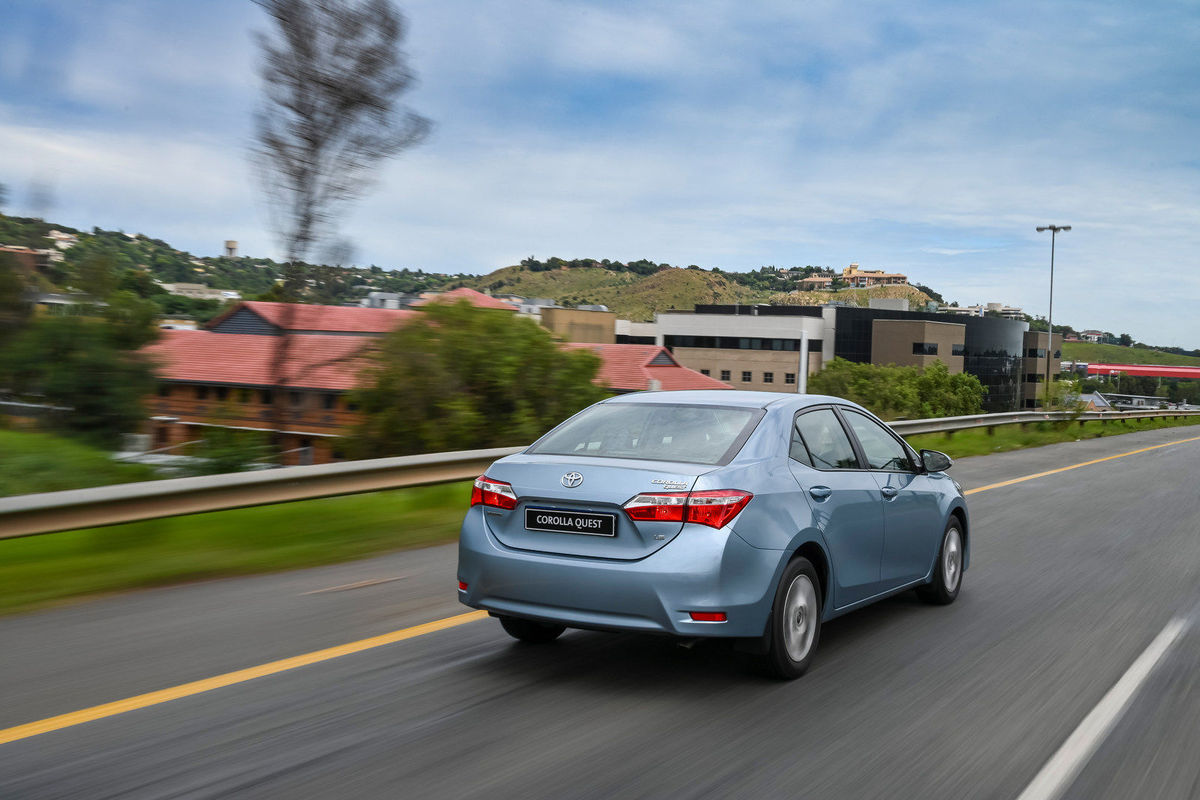
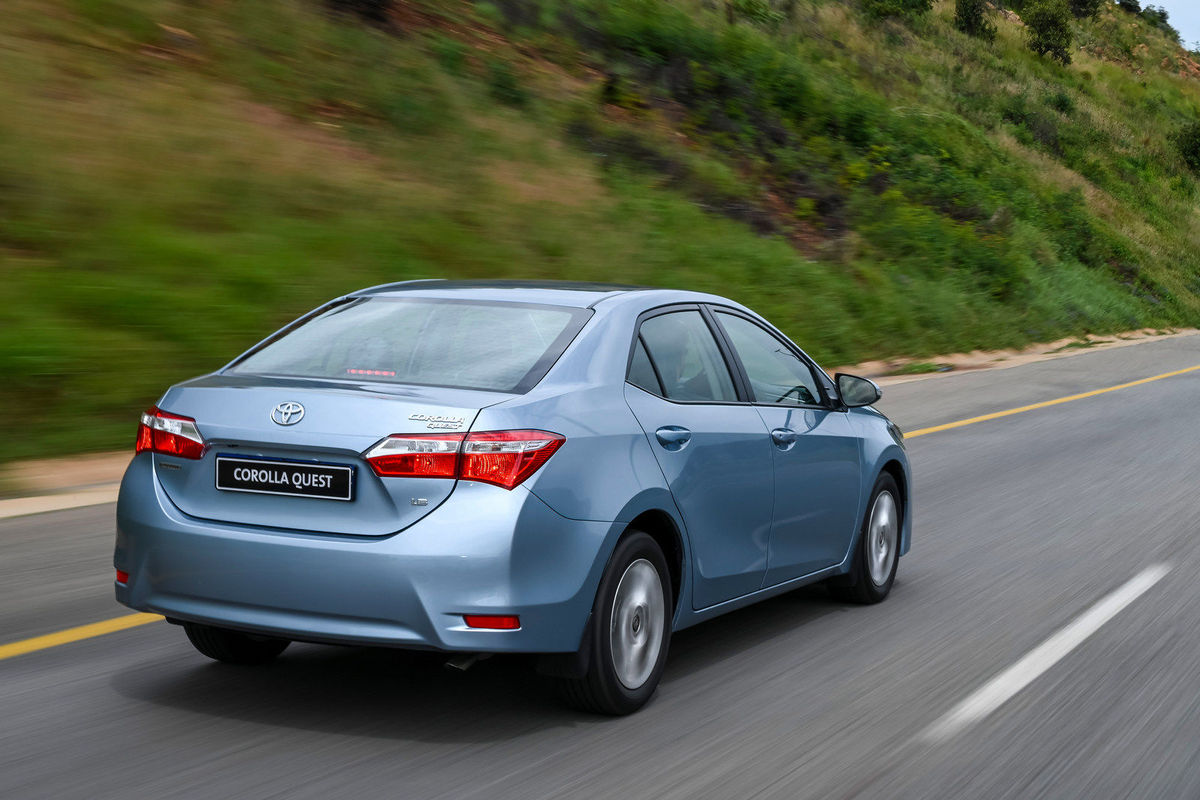
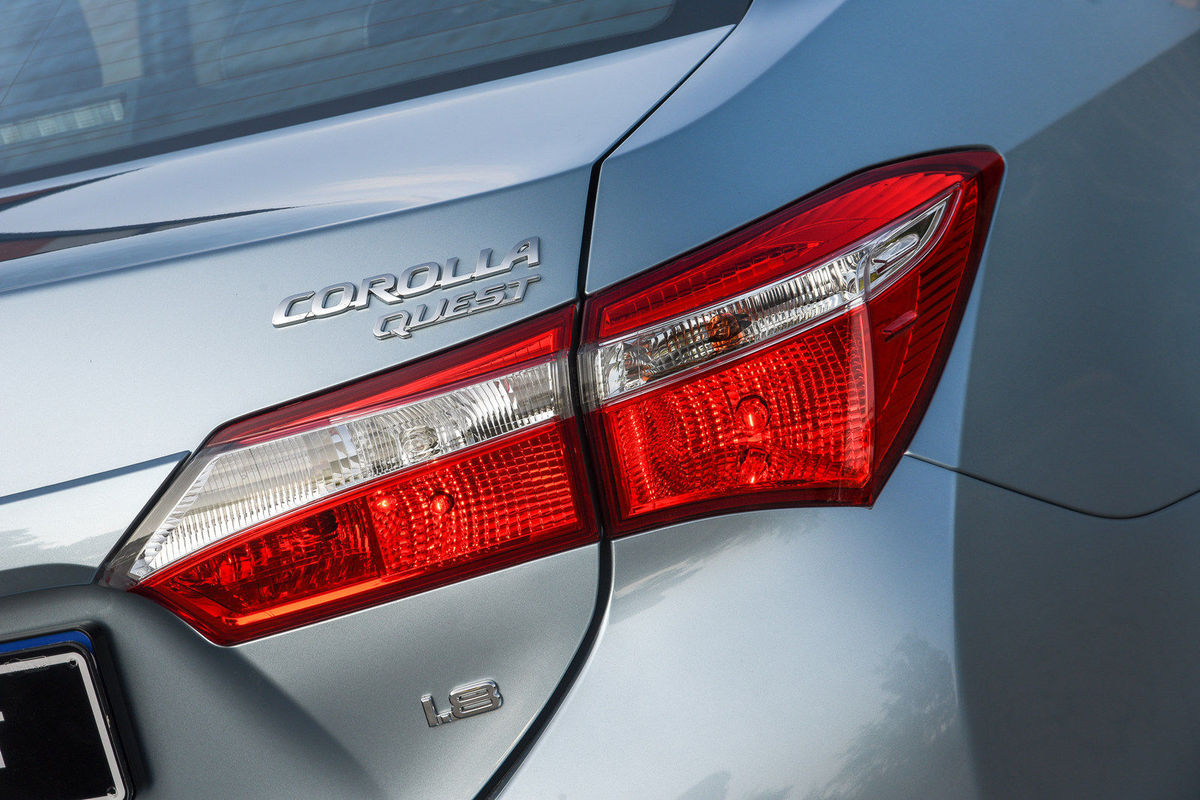
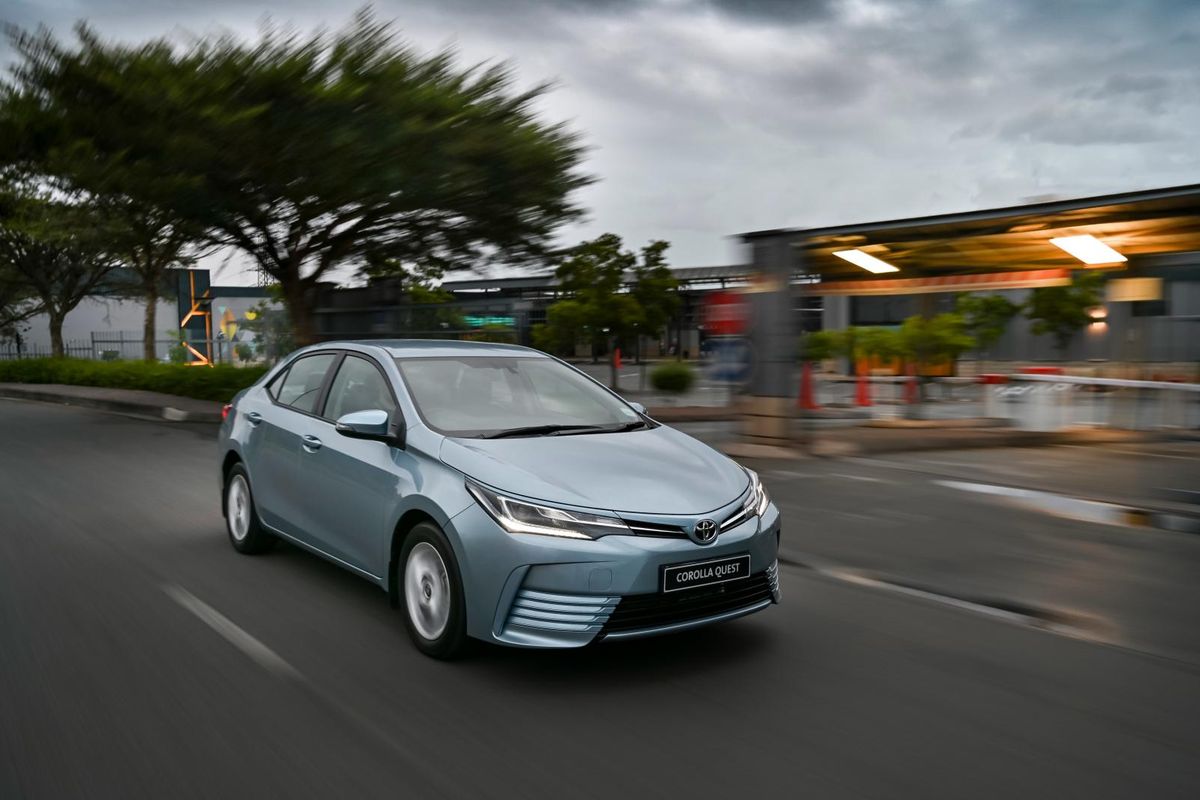
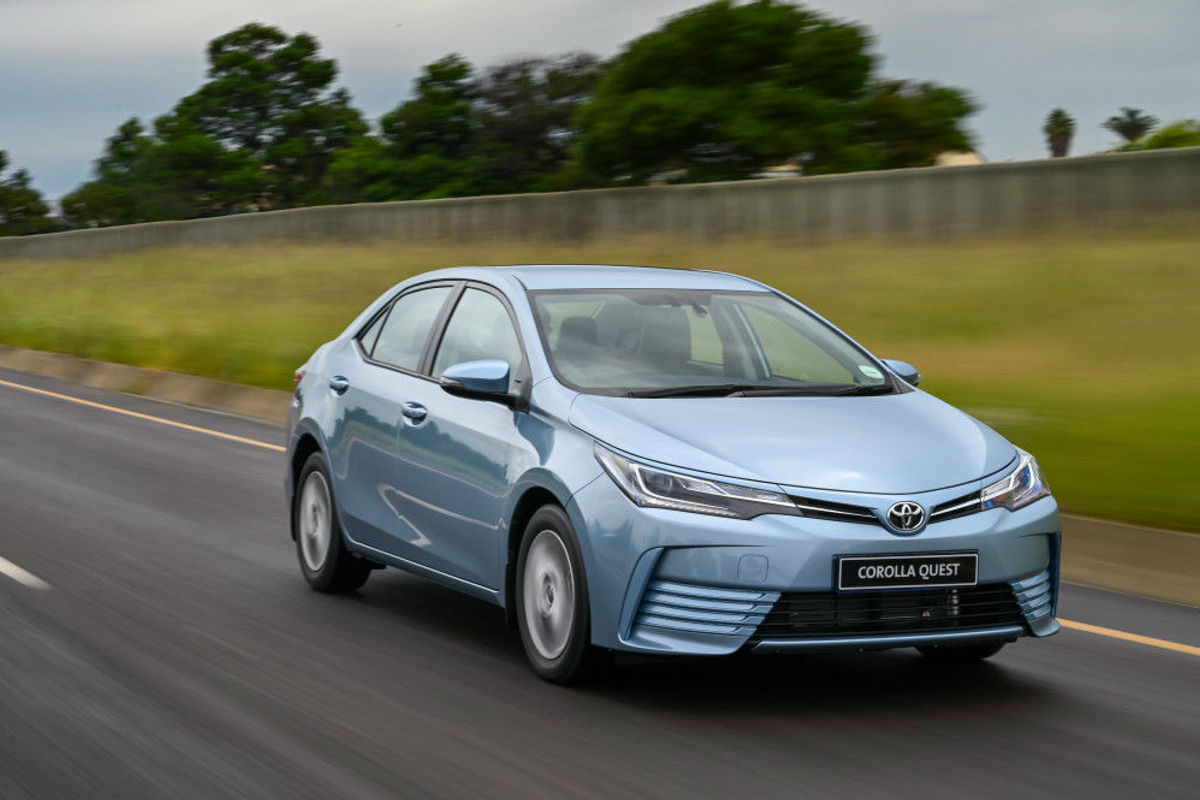
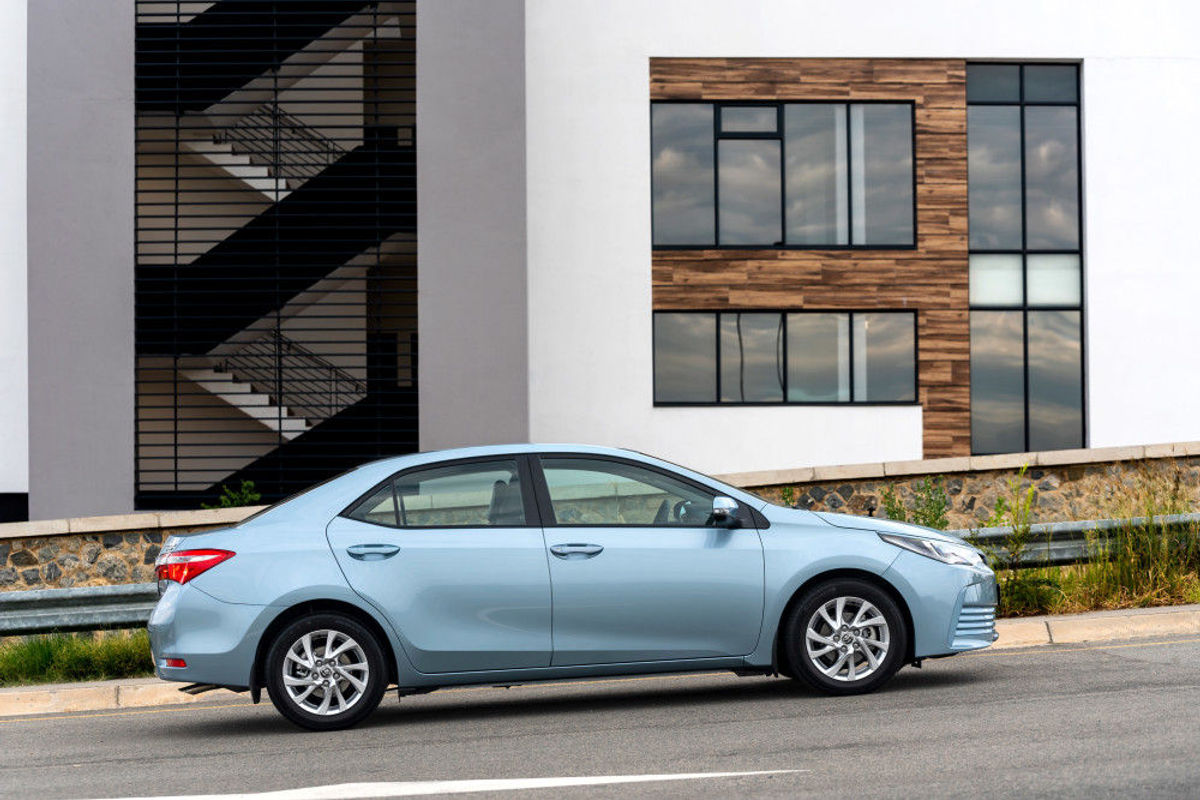
Toyota extended the life of the previous-generation Corolla by offering the Corolla Quest as a budget-oriented compact sedan range in South Africa. As a result, the Prospecton-based firm now dominates the C-segment of the new-vehicle market. We spent an afternoon with the new version, which is based on the 11th-generation model, to find out how much it has improved.
What is it?
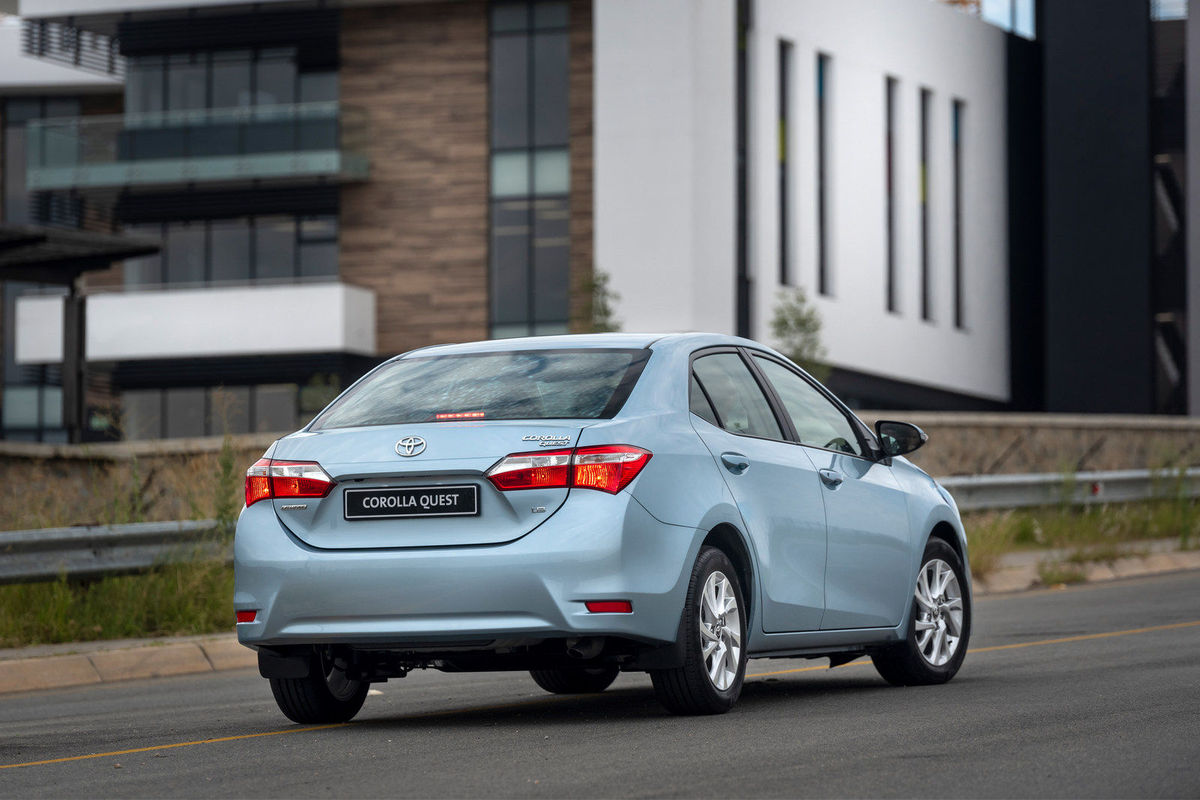
The Corolla Quest is a slick effort from Toyota SA. When the production cycle of the current-generation Corolla ends, the sedan lives on in the shape of the new Corolla Quest. Instead of discontinuing its production line (as most manufacturers would), Toyota effectively extends the superseded Corolla's life by bolting on a Quest badge, incorporating some parts shared with the IMV vehicles (Hilux and Fortuner, which are also built in Durban), finding local suppliers for parts and reducing production cost, to the benefit of customers. Okay, that’s a very basic summary, but Toyota isn’t the only firm that does this: Volkswagen does the same when it turns the Polo into the Polo Vivo every 7 years or so.
What’s different?
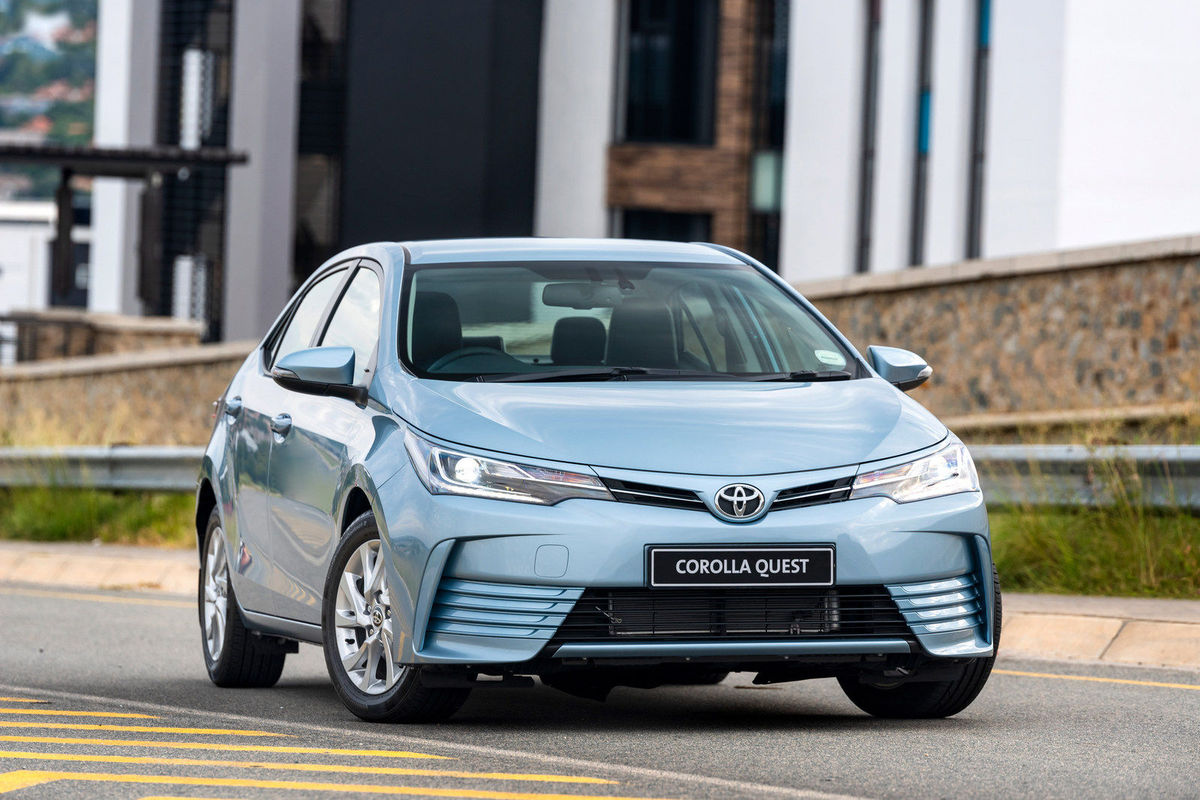
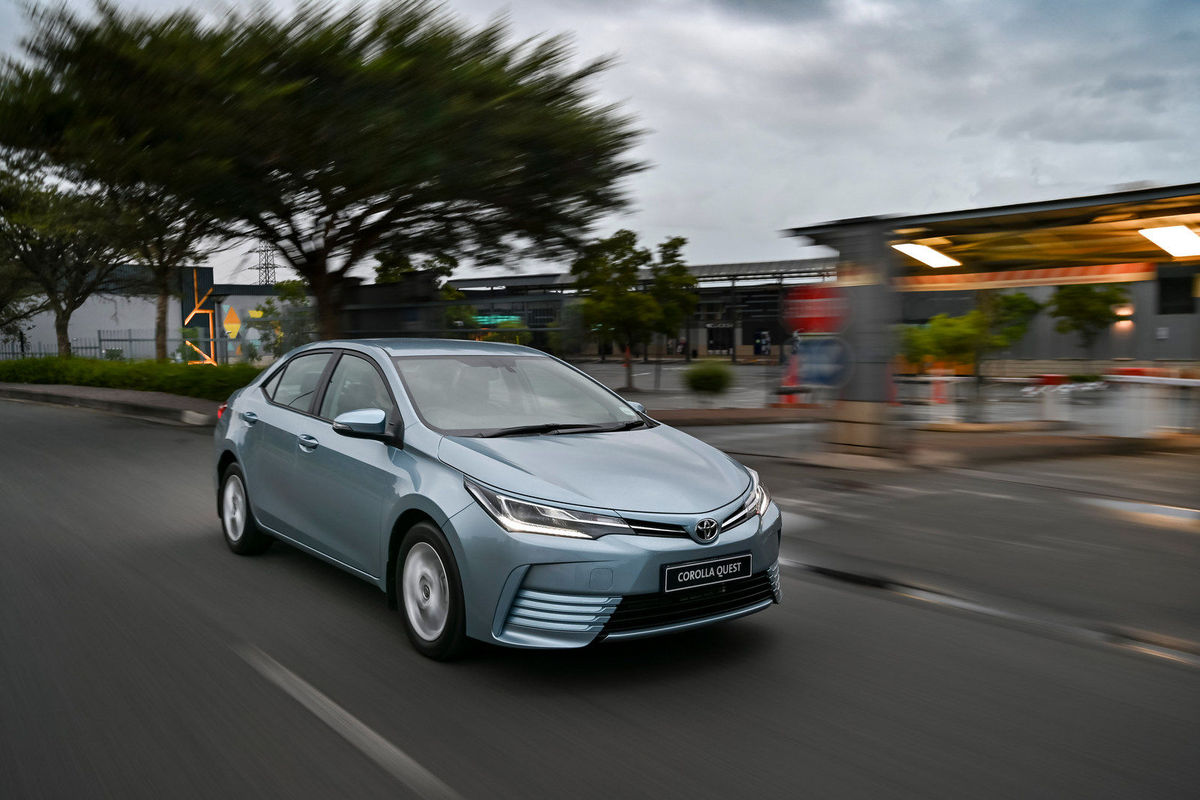
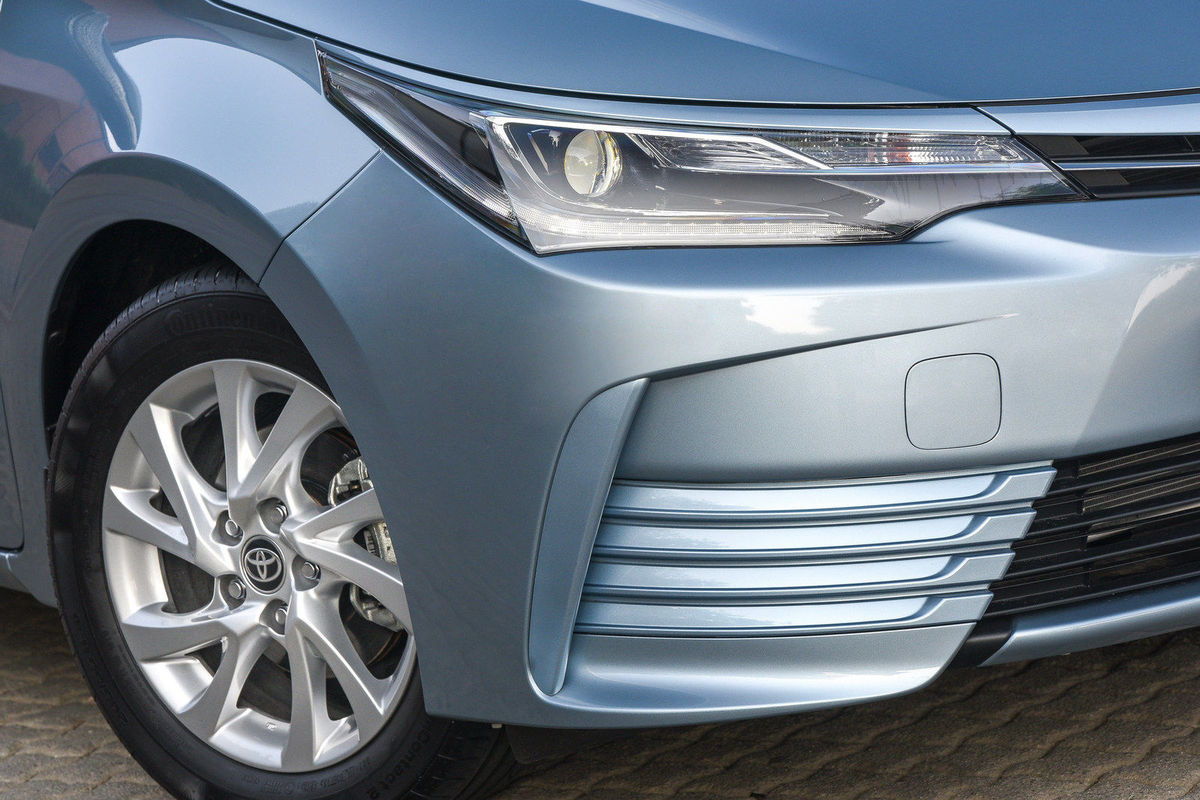
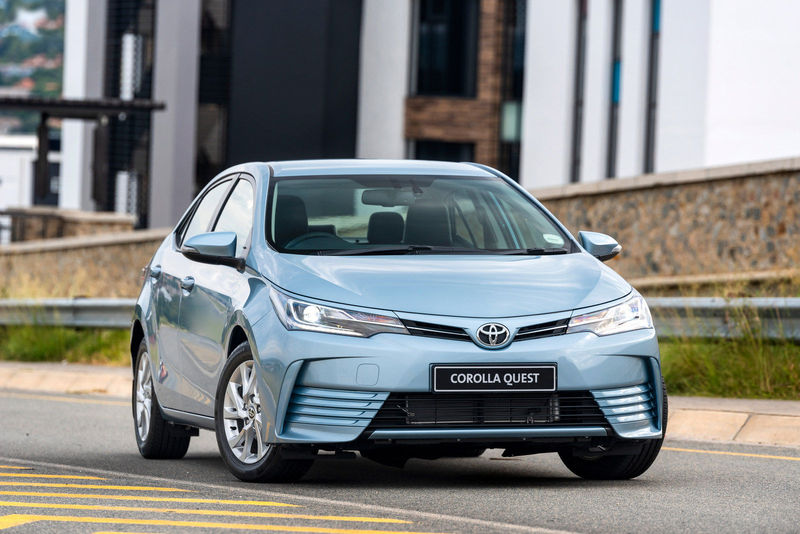
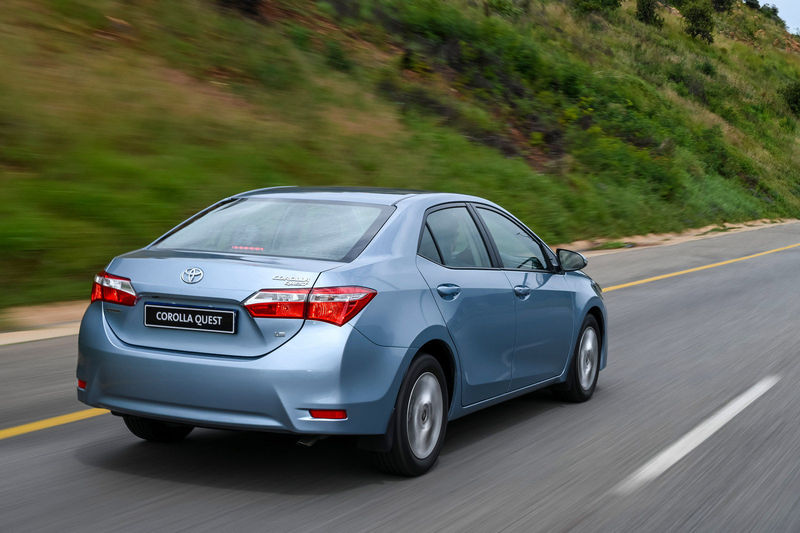
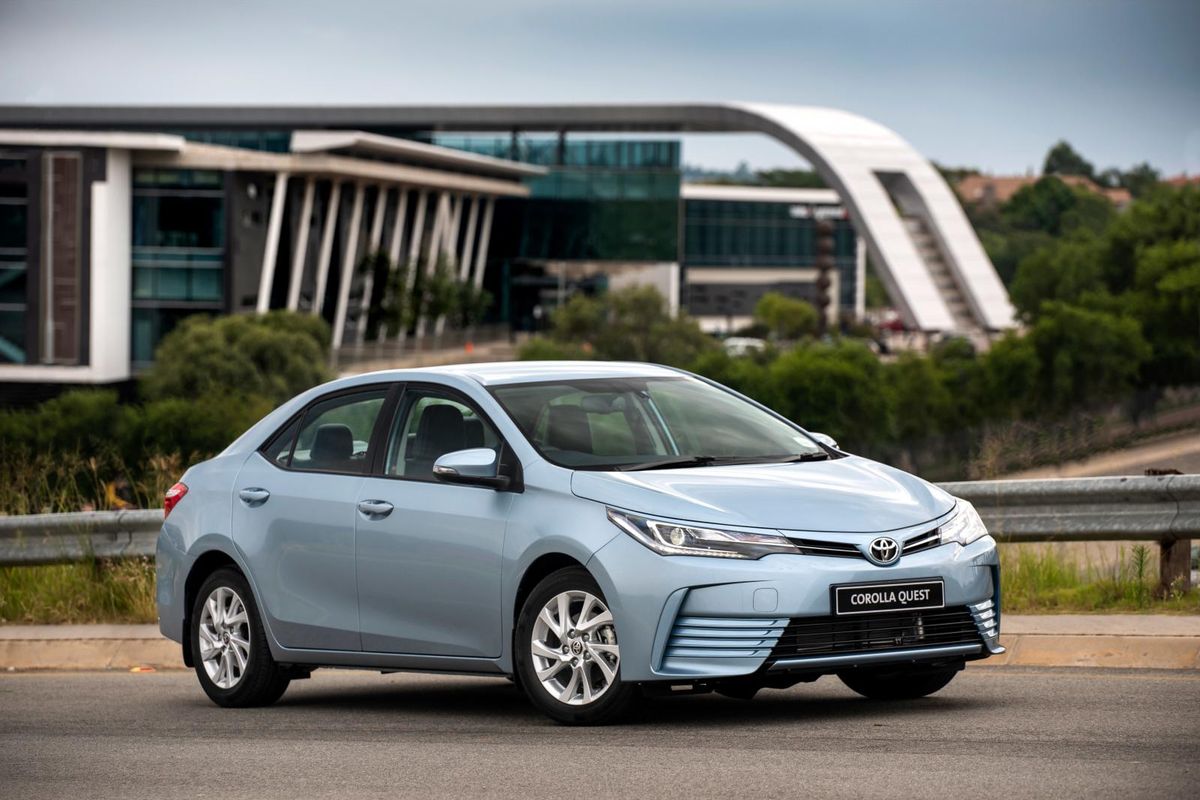
The bottom slats in the bumper is the easiest way to spot on the new Corolla Quest.
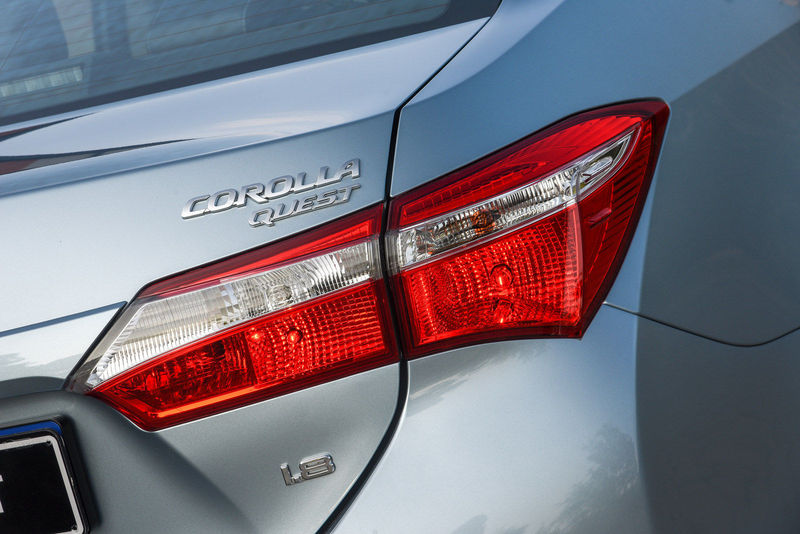
The chassis of the Corolla Quest is updated to that of the venerable 11th-generation Corolla, which means it’s of a much more modern design compared with its predecessor's. The 1.6-litre naturally aspirated petrol engine has been replaced with a more powerful (yet more fuel-efficient) 1.8-litre petrol. Customers can choose between a 6-speed manual 'box and an automatic transmission (the previous 4-speed auto has finally been replaced with a CVT).
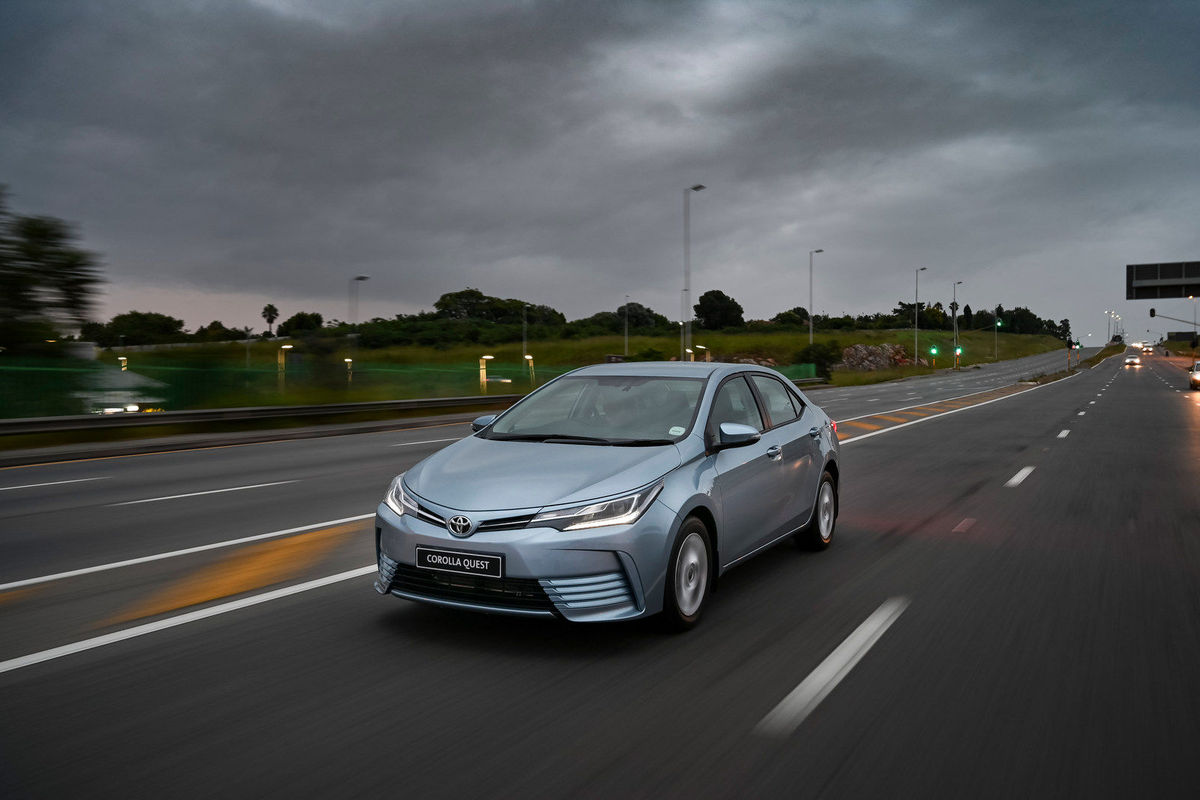
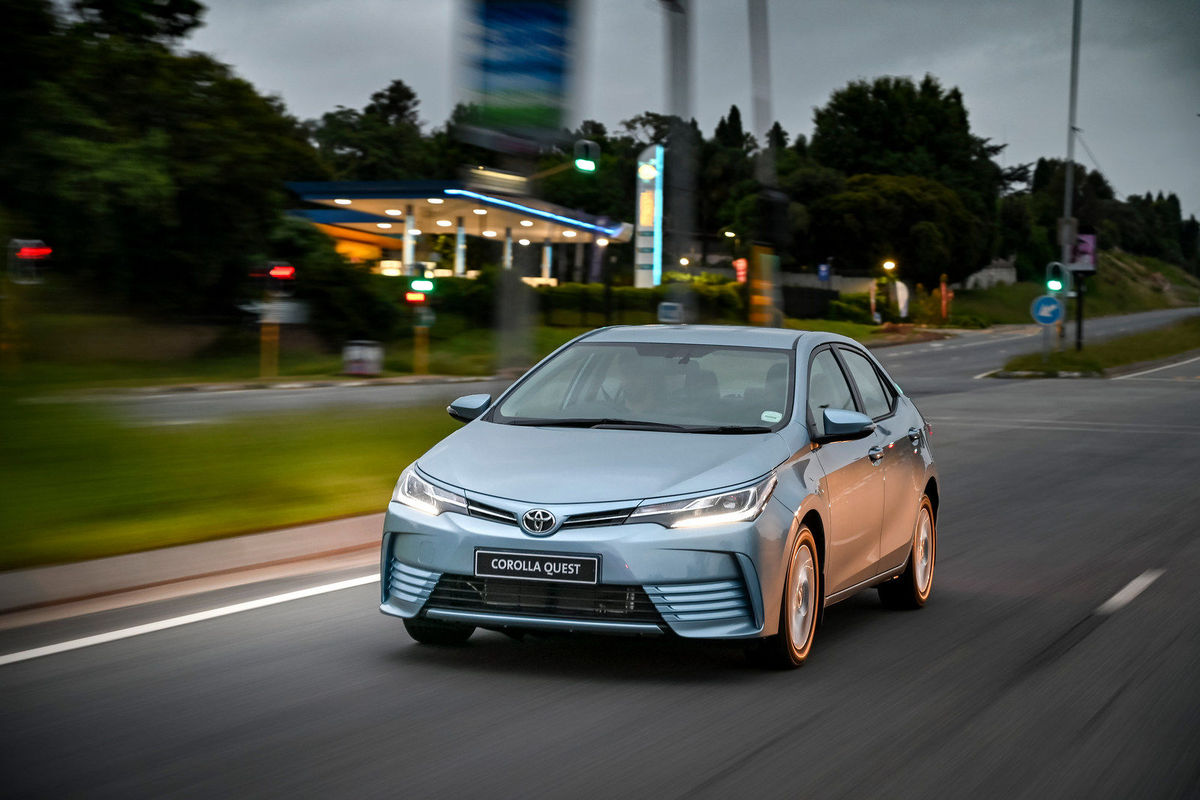
The new Corolla Quest is most easily recognisable by its front grille, which is something of a local design that’s been made to give it an updated look. The treatment of the upper segment of the grille also denotes the trim level of your car (Standard and Prestige versions get a matte-black section, while the top-spec Exclusive model gets colour coded treatment). For the details on the Corolla Quest trim grades, take a look at our Specs & Price article.
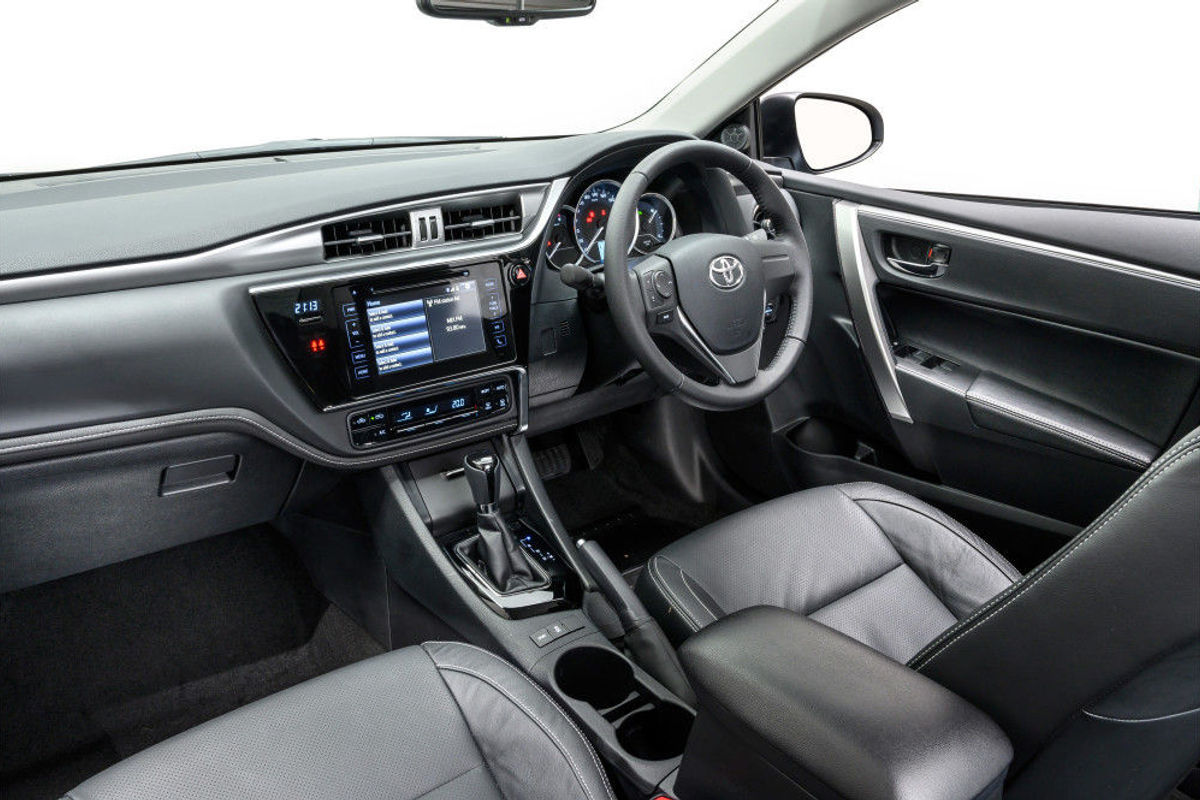
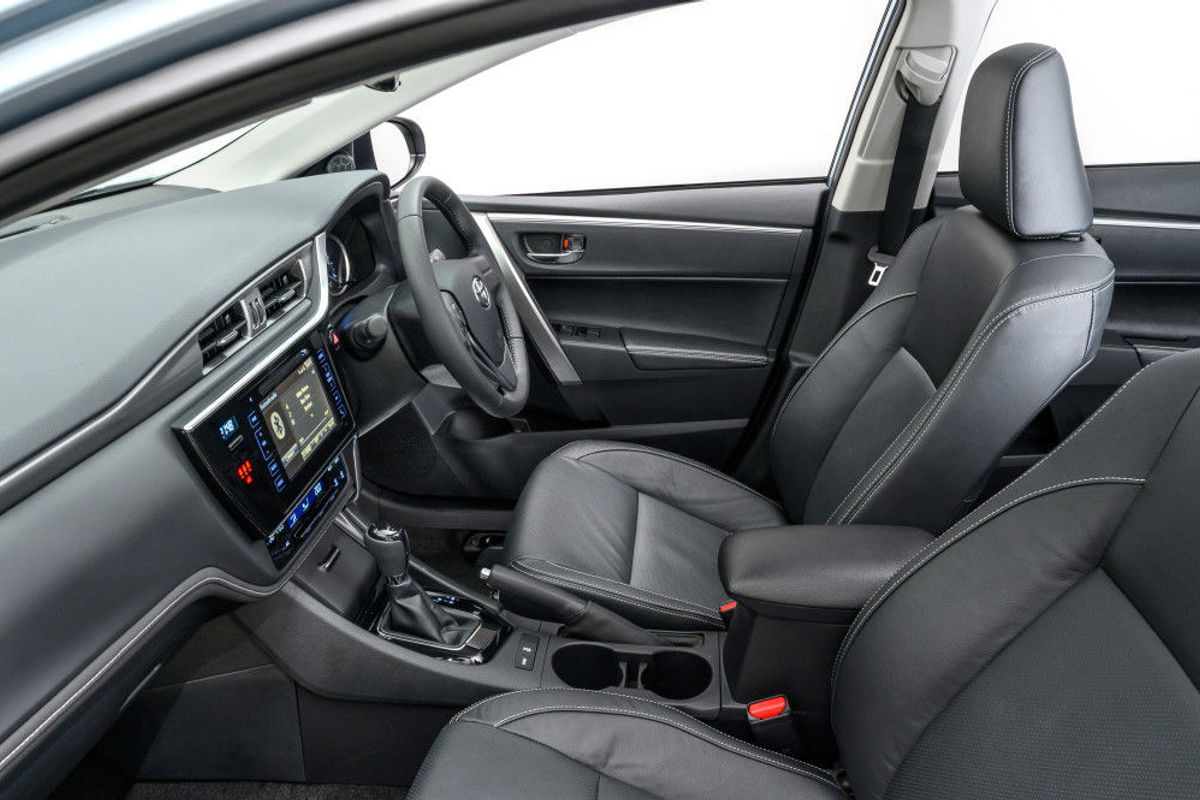
As for the newcomer's interior, more parts are now shared with the Hilux and Fortuner and the seat materials have been sourced locally, which has helped to bring down the unit prices of the various derivatives.
Is it better than before?
Now with a 1.8-litre engine, which replaces the 1.6-litre petrol unit.
Yes, very much so. The on-road refinement (especially in terms of sound suppression) is excellent, for example, and the ride and suspension setup delivers a comfortable driving experience. The 1.8-litre naturally aspirated engine bucks the downsizing trend, but its implementation was a no-brainer considering it’s more powerful (13 kW more) at 103 kW and 173 Nm of torque and more efficient (7.0 L/100 km for the manual and 6.3 L/100 km for the CVT).
We drove manual- and automatic derivatives over the course of the 200-km launch evaluation route. The manual version has a light action to its shift, but there’s a bit of an annoying rise in the revs when you depress the clutch on the way up the 'box, which can make changes less than slick to execute. The CVT proves a boon in congested traffic and when being driven in a calm/measured manner, but once you plant the accelerator pedal, it drones on and feels less eager to execute overtaking manoeuvres than its manual-shift equivalent. For this sort of vehicle though, I would recommend the CVT as the fuel savings are worth the (largely perceived) dropoff in performance.
What’s it like inside?
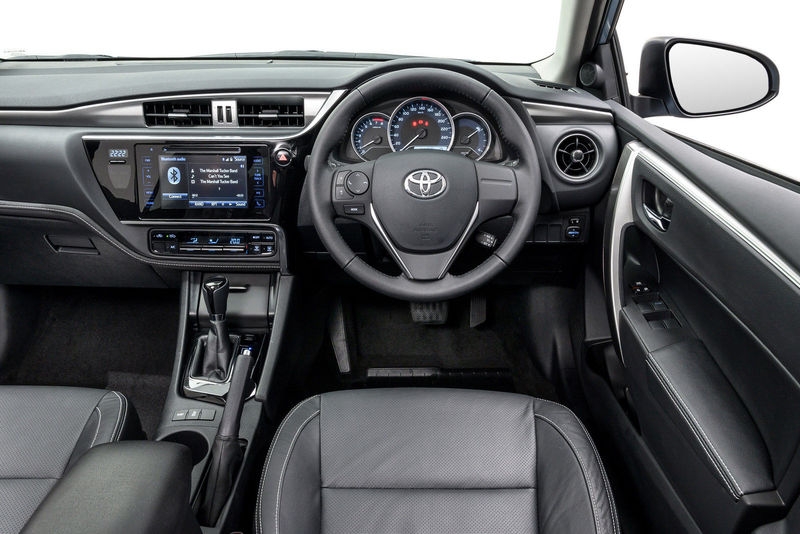
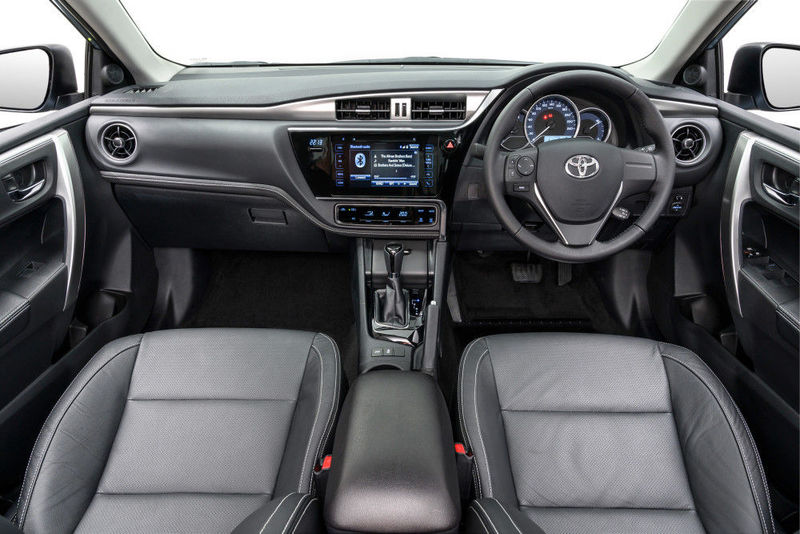
The Exclusive trim level represents a major step up from the previous Quest.
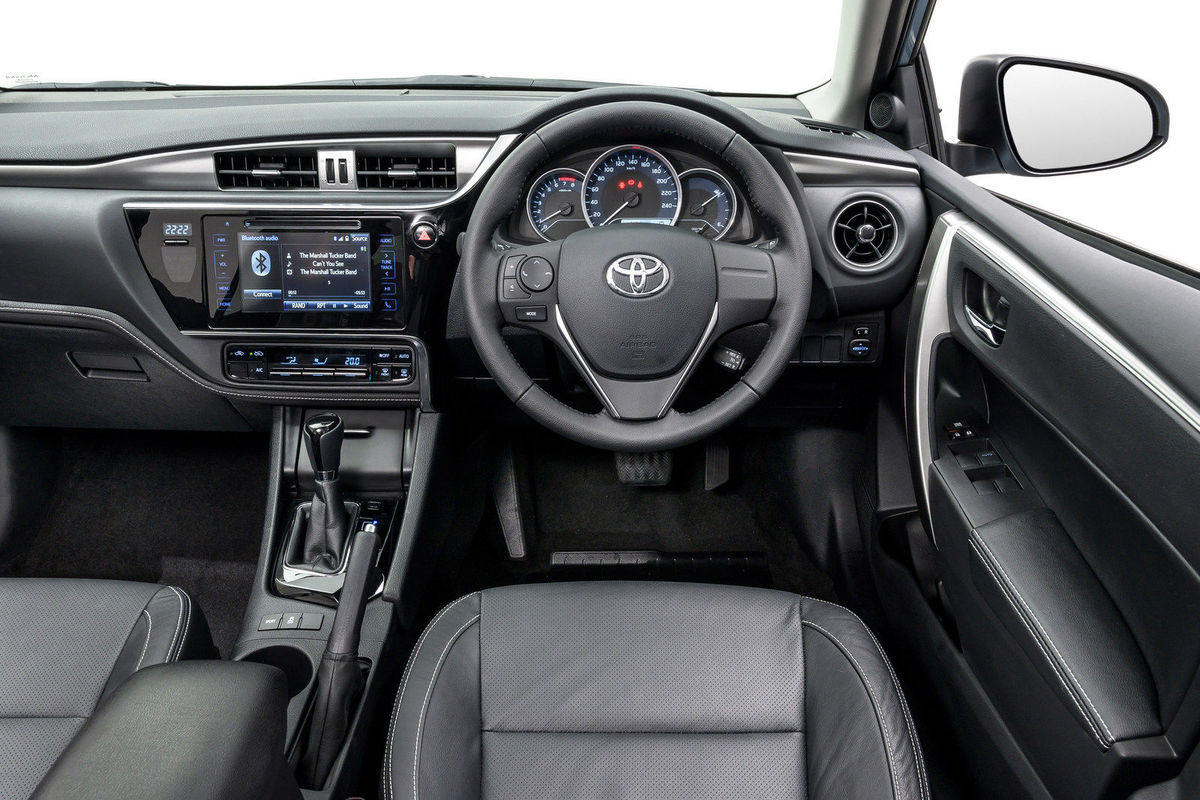
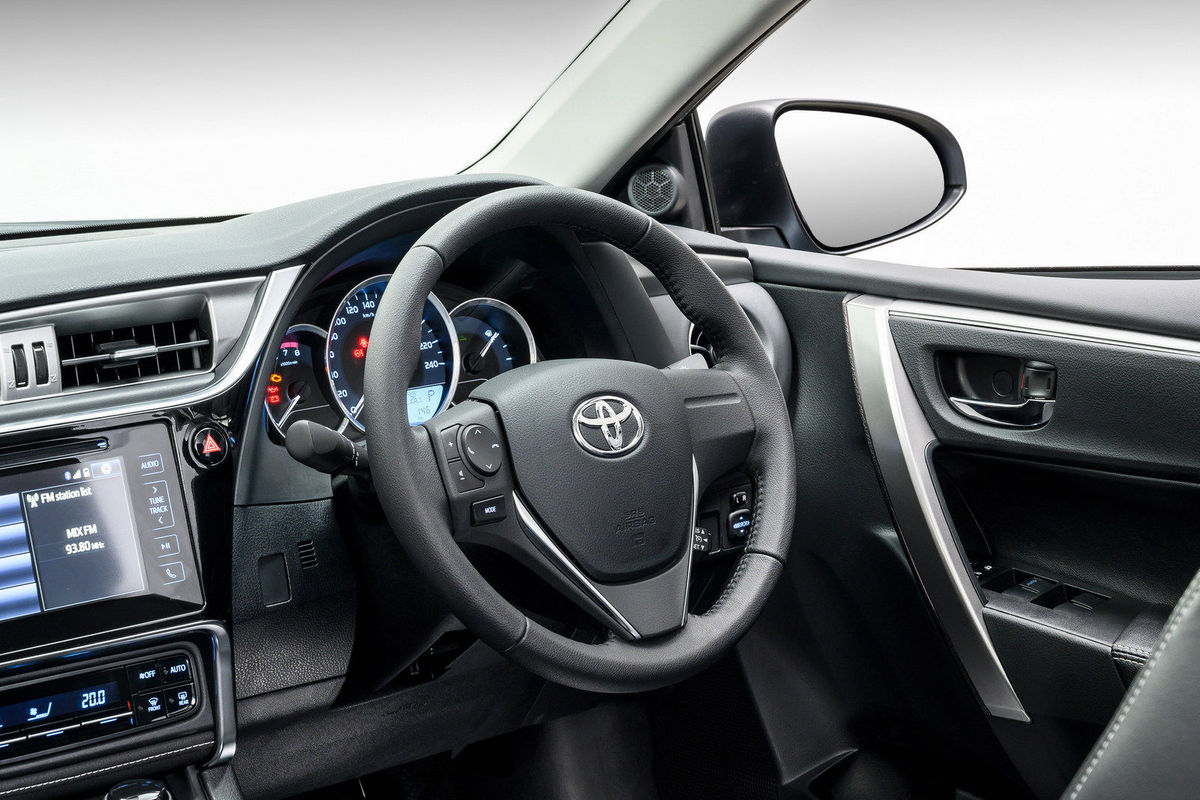
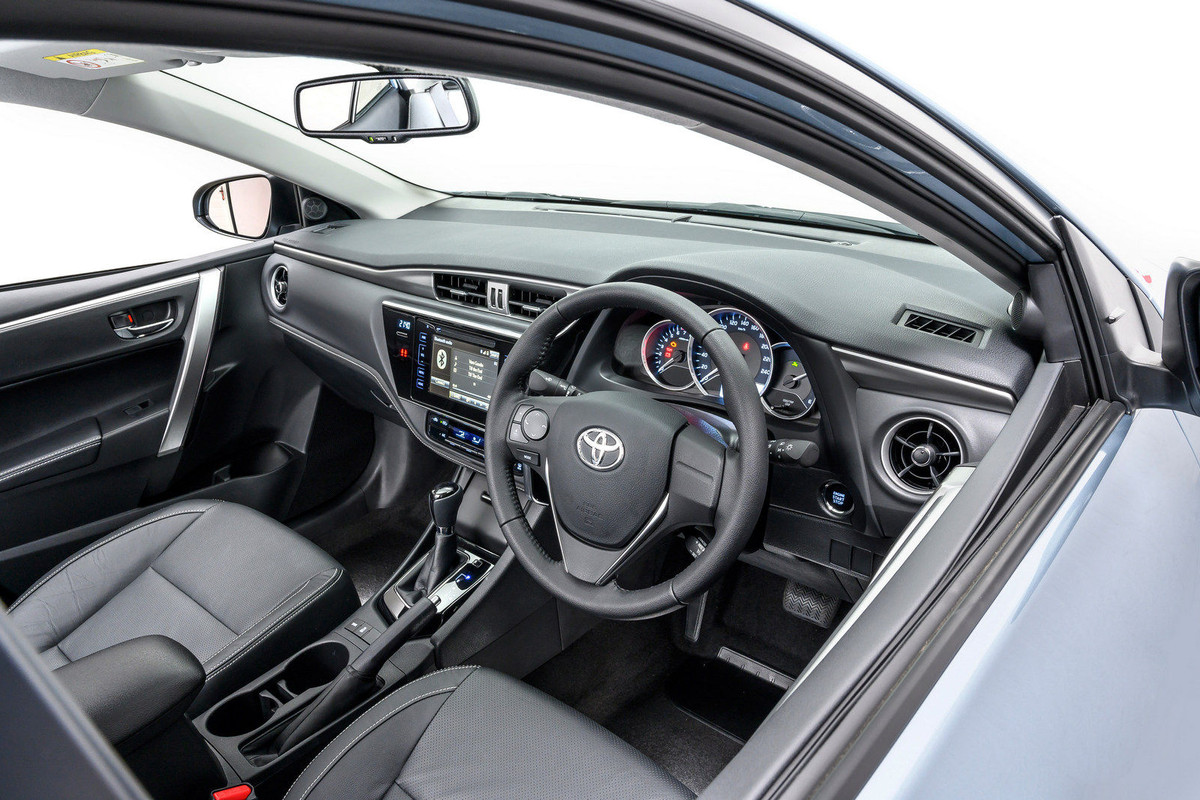
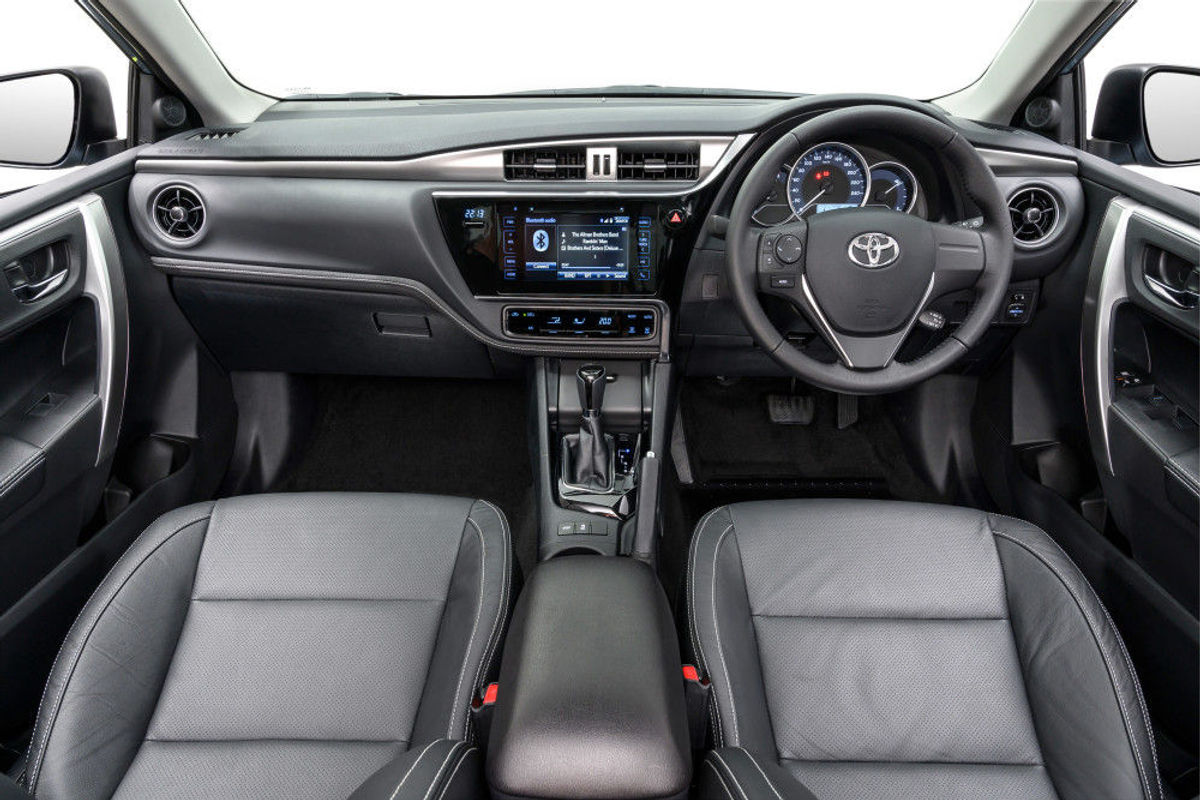
We only got to sample the top-spec Exclusive derivative, which is jam-packed with all the spec that the Corolla Quest range has to offer. The overall quality of the cabin is a huge improvement on that of the outgoing model with plenty of soft-touch materials and some quite nice silver-coloured plastic inlays here and there. There are admittedly a few easy-to-spot cases of cost-saving, particularly the plastics on the steering wheel, which feel hard and scratchy.
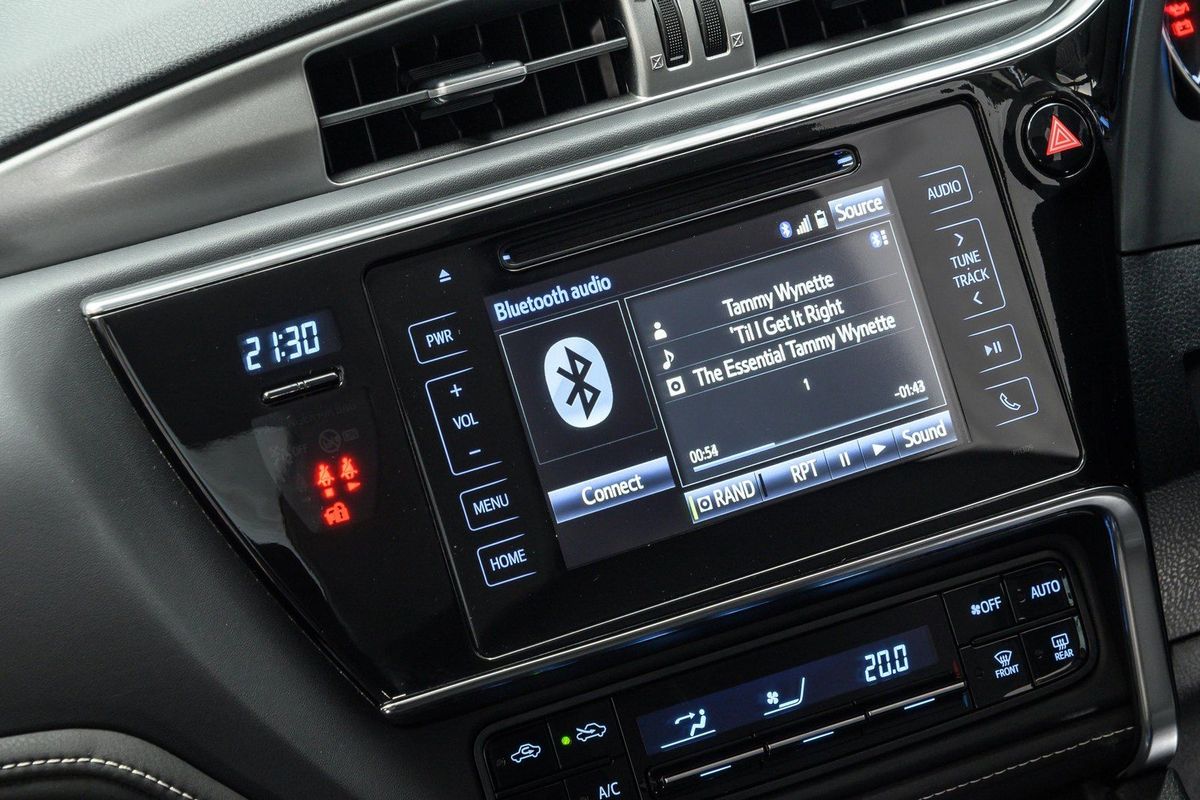
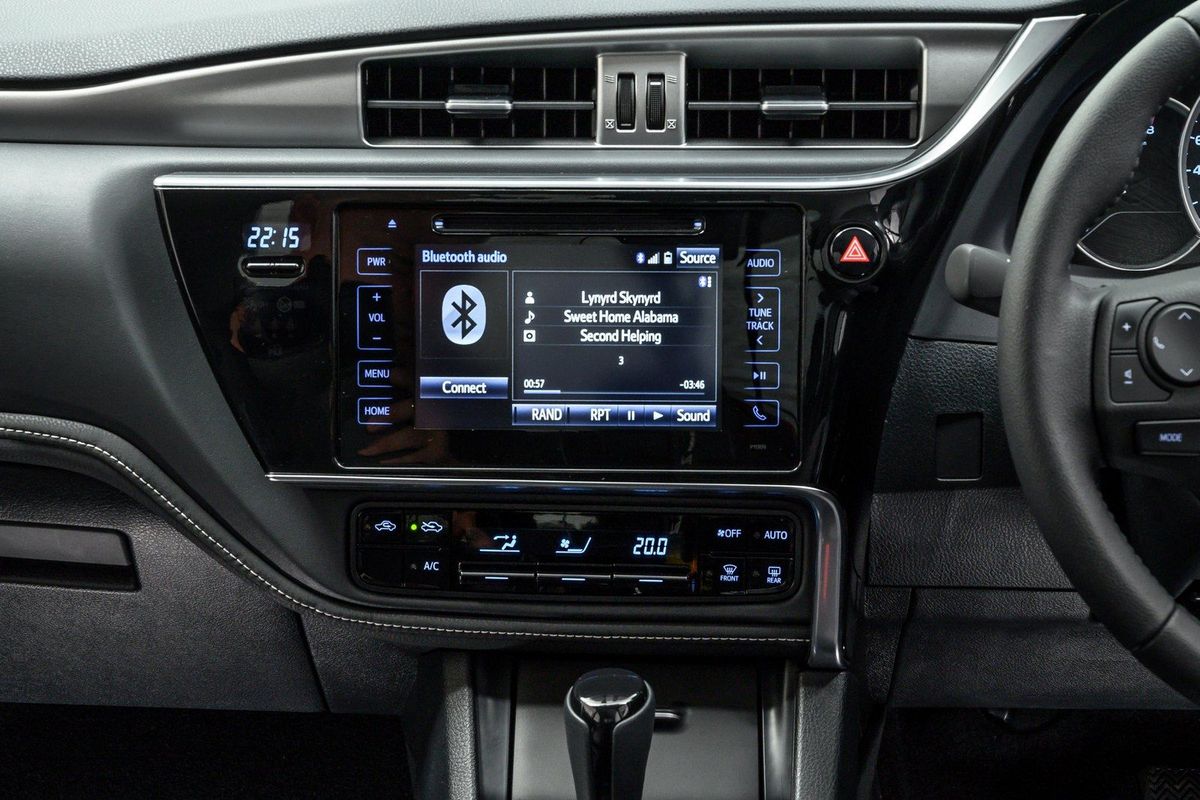
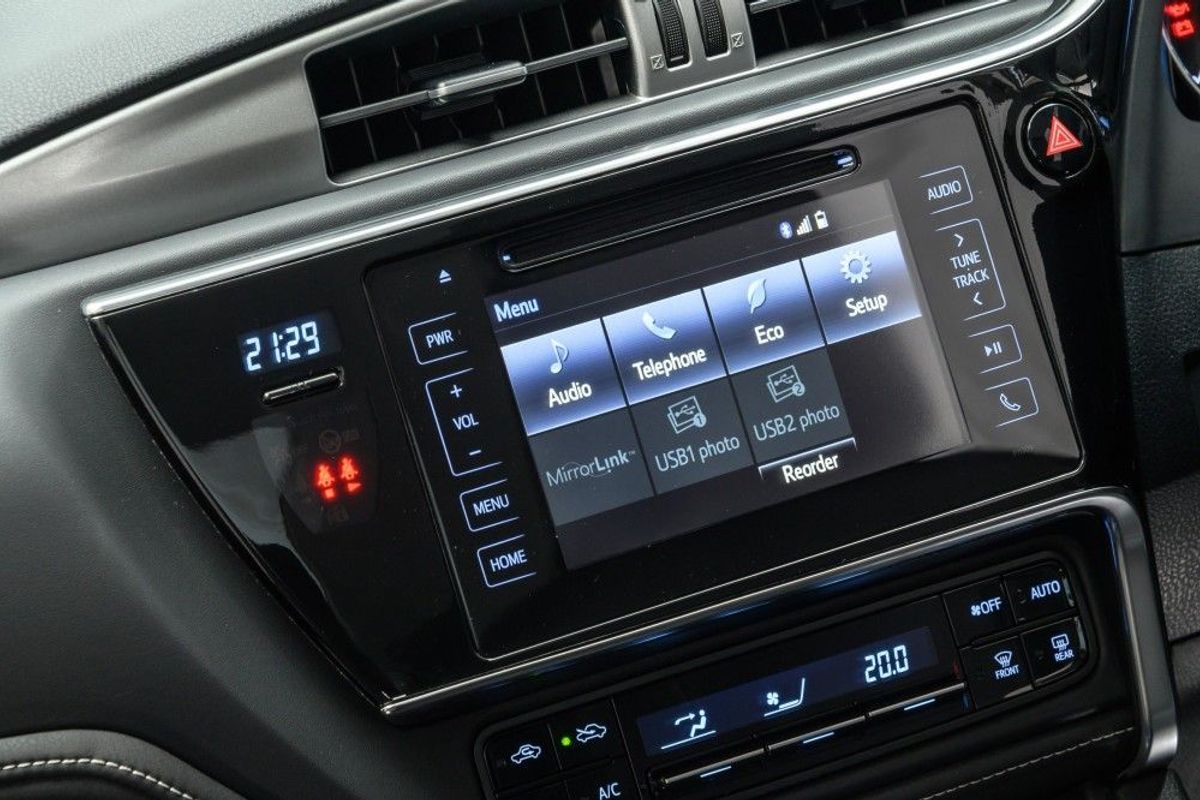
The infotainment system is pulled from the Hilux/Fortuner, but disappointingly, it's the one that doesn’t have a manual volume knob – you have to stab the touchscreen or the utilise the steering wheel-mounted control to quickly turn the sound down (or up). Also, no Apple Carplay or Android Auto compatibility is available on the Corolla Quest. There is, however, a USB port up front for charging devices, as well as integral Bluetooth connectivity.
The space inside is ample; both front and rear passengers are afforded plenty of legroom, headroom and shoulder space. The boot is big too (a carry-over from the normal Corolla) and a full-size spare wheel is standard.
Is it safer?
Vehicle stability control is standard across the range.
As a car that's expected to transport a multitude of passengers (yes, Corolla Quests are indeed popular with Uber drivers), the safety upgrades incorporated in the new model are commendable. For a start, the biggest reducer of accidents, Vehicle Stability Control (VSC) is standard across the range. Driver-, front passenger- and a driver knee bags are standard, as are ABS with EBD, ISOfix child-seat anchor points and hill-start assist.
The Prestige derivative also features a reverse-view camera and rain-sensing lights and wipers (although the wipers screeched when trying to rid the 'screen of a Highveld thunderstorm's deluge… and not only in one of the launch cars).
Is it priced well?
Compared with the outgoing Corolla Quest, the base version is around R14k more expensive than before. You are getting a lot more car for your money, however, with a lot more standard specification and a notable safety upgrade. At the top of the range, what was basically a R370k Corolla flagship is now a R307 400 Corolla Quest that doesn’t actually feel like it has undergone a huge drop in quality…
Summary
The new Corolla Quest pushes the vehicle much further upmarket, but without a hefty price increase.
Toyota is wise to continue the local production of the Corolla Quest. It would be dead simple to take a Corolla, toss out all the expensive bits and safety equipment and then drop the price, but Toyota's avoided that. The safety spec across the range is good (VSC stands out as real life-saver) and the interior appears well-built with upmarket materials. Yes, there’s the odd bit of plastic that’s scratchy, but at this price point, it’s not unreasonable, nor worthy of harsh criticism.
The new Corolla Quest is reasonably satisfying to drive with adequate oomph thanks to the more powerful engine, plus the introduction of the CVT is certainly an upgrade from the previous 4-speed auto. The range's asking prices are still competitive and while many buyers with families are making a beeline for compact family cars, there’s still a lot of value to be found in a more spacious sedan such as this Corolla Quest, especially at a comparable price point.
Pricing and warranty
All Corolla Quests are sold with a 3-services/45 000 km service plan. A 3-year/100 000 km warranty is included.
The all-new Toyota Corolla Quest has landed in South Africa. Herewith the full specifications and pricing for the latest iteration of the popular budget-oriented sedan range.
It's a qualified success story – in combination with its Corolla sibling, the Corolla Quest has enabled Toyota to corner 71% of the compact family car market in South Africa. And, for 2020, Toyota SA (TSAMM) has revealed a new iteration of its budget-oriented sedan, which is based on the outgoing (11th-generation) Corolla 4-door. The good news is that it will still be assembled in South Africa, at TSAM's facility in Durban and it will hit showroom floors from March 2020.
By virtue of being based on a newer (albeit legacy) product, the new Corolla Quest brings with it modernised styling, improved specification levels and enhanced safety features compared with its predecessor. It's not simply a de-specced rehash of the outgoing Corolla, though. The newcomer went through a detailed development programme, which aimed to maintain the Quality, Reliability and Durability (QDR) level, while cost-saving measures were implemented. For example, the Corolla Quest makes use of the IMV (locally-built Hilux and Fortuner) colour palette, headliner material and seat fabric, while its floor silencers, seat cross-braces and bracketry, have been sourced from local suppliers.
From launch, there are 3 grades of trim: standard, Prestige and Exclusive and all 6 derivatives are powered by a 1.8-litre naturally-aspirated petrol engine. Compared with the previous model's 1.6-litre motor, the 103 kW 1.8-litre unit not only produces more torque (173 N.m) but 1 200 rpm earlier in the rev range (4 000 r/min), for improved drivability.
Customers can choose between a 6-speed manual or a continuously-variable (automatic) transmission. Toyota SA claims an average fuel consumption figure of 7.0 L/100 km for the manual and 6.3 L/100 km for the CVT.
A total of 3 trim levels are offered for the Corolla Quest.
Toyota Corolla Quest trim levels:
Standard
Features matte-black grille/bumpers, daytime running lights (DRLs), rear fog lamps and 15-inch steel wheels. The cabin is trimmed in black and blue combination fabric. The rear seatback is fixed.
Multifunction steering wheel
Electric windows
Remote central locking
Manual aircon
Radio/CD with 4 speakers, USB+Aux+Bluetooth
Headlamp levelling (manual)
Follow-me-home lighting function
Toyota Corolla Quest Prestige
Features colour-coded exterior details, DRLs, rear fog lamps and 16-inch alloy wheels. The cabin is trimmed in a combination of fabric and leather – in blue/black or grey with red accents. The rear seatback is fixed.
Leather-trimmed steering wheel
6-speaker audio system
Touchscreen infotainment system/DVD player
Reverse-view camera
Cruise control
Toyota Corolla Quest Exclusive
Features chrome detailing, colour-coded front bumper treatment, LED headlamps and DRLs, rear fog lamps and 16-inch alloys. The cabin is trimmed in black leather with silver contrast stitching. The rear seat splits 60/40.
Keyless entry and push-button start
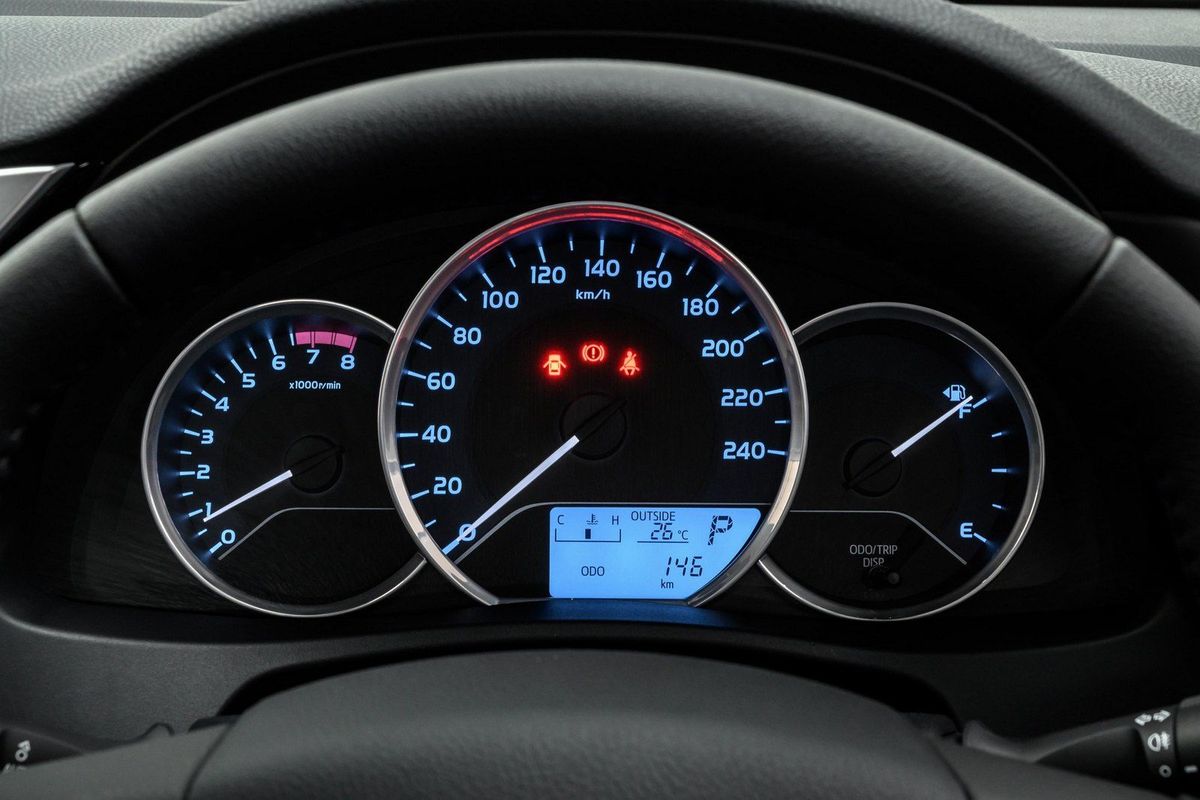
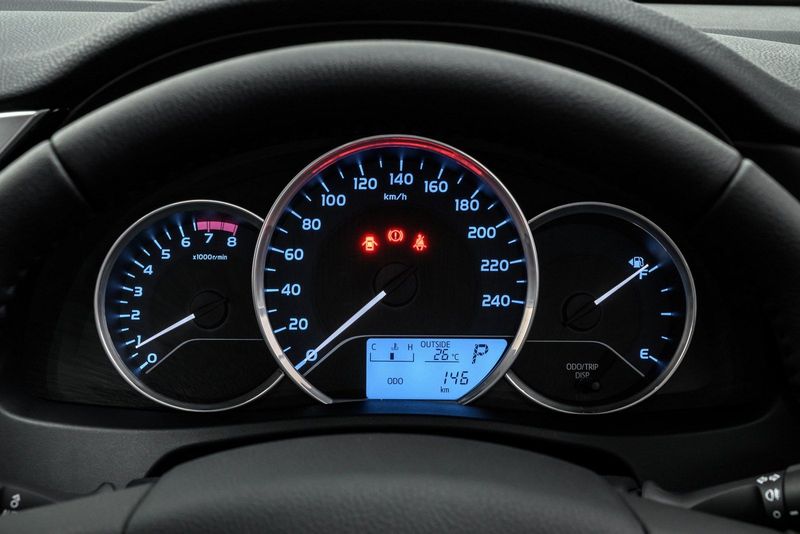
Speedometer with TFT colour display
Automatic aircon (climate control)
Speedometer with TFT colour display
Auto-dipping (self-dimming) rear-view mirror
Auto wipers & headlamp levelling
Upgraded safety specification
All Quest derivatives now come equipped with driver-, front passenger- and driver-knee airbags – while the Prestige and Exclusive versions feature additional side airbags.
Vehicle Stability Control (VSC) with Hill Assist Control (HAC), ABS with EBD, ISOfix child-seat anchors and a rear seatbelt buzzer/lamp are standard throughout the range.
Toyota Corolla Quest price in SA (January 2020)
The new Toyota Corolla Quest is sold with a 3-services/45 000 km service plan with intervals pegged at 12 months/15 000 km. A 3-year/100 000 km warranty is included.
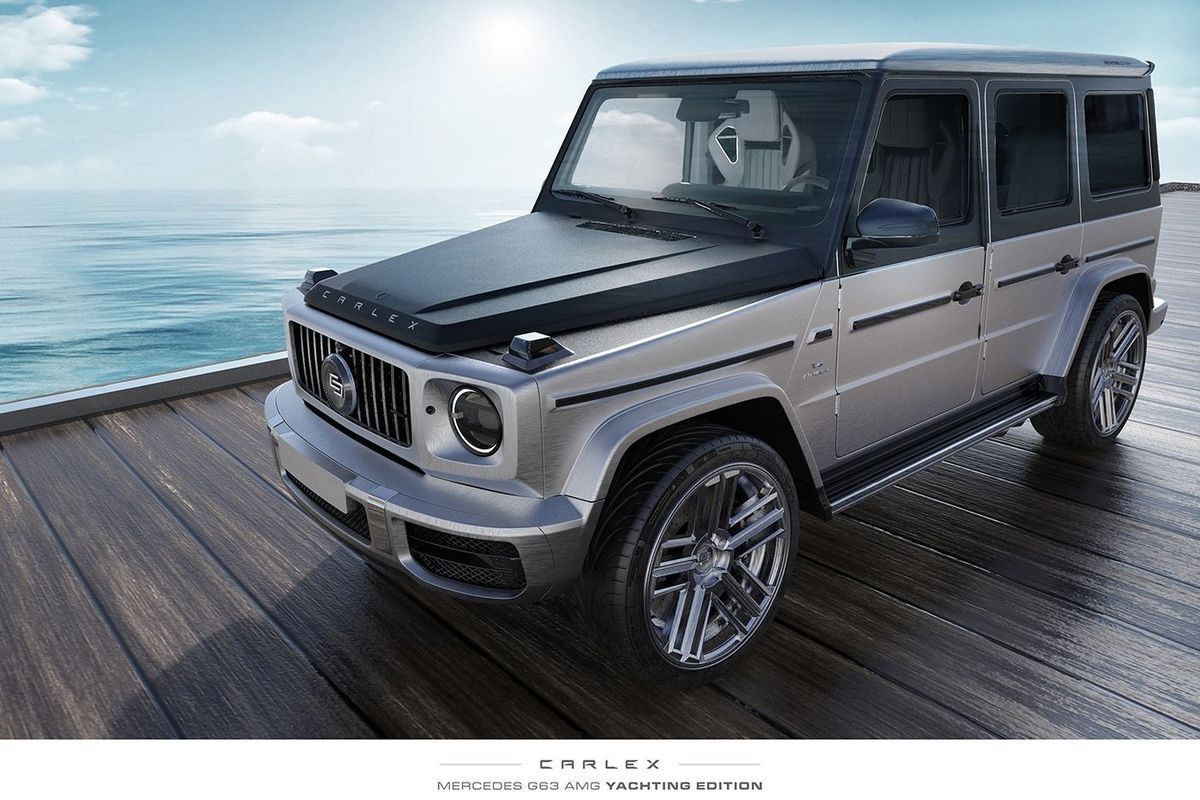
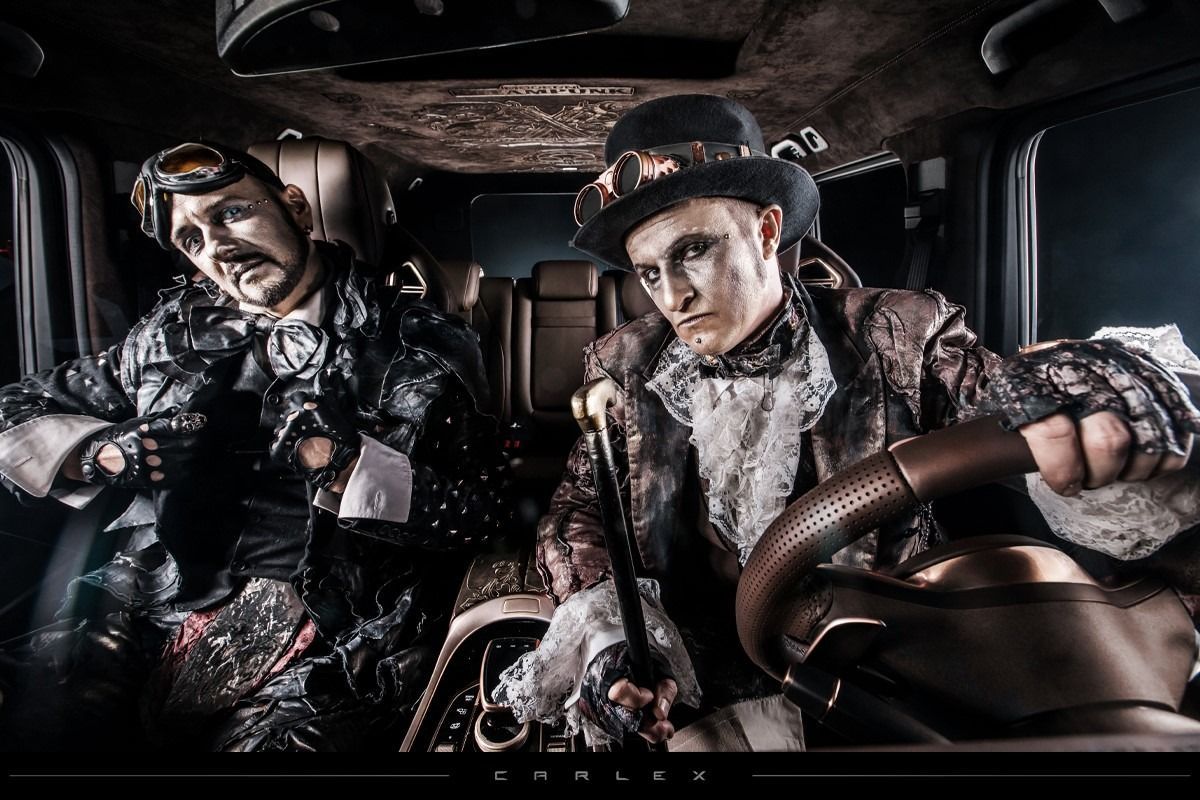
Awesome Mercedes-AMG G63 Steampunk Limited Edition by Carlex Design
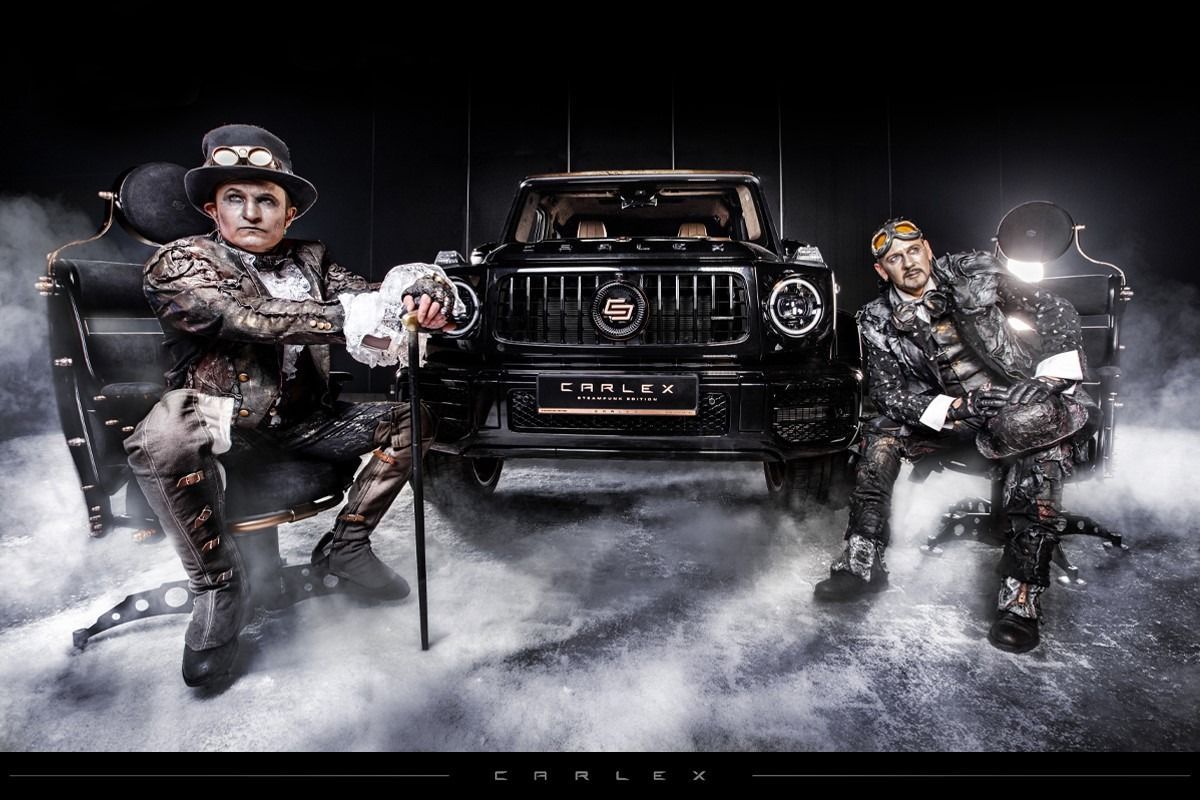
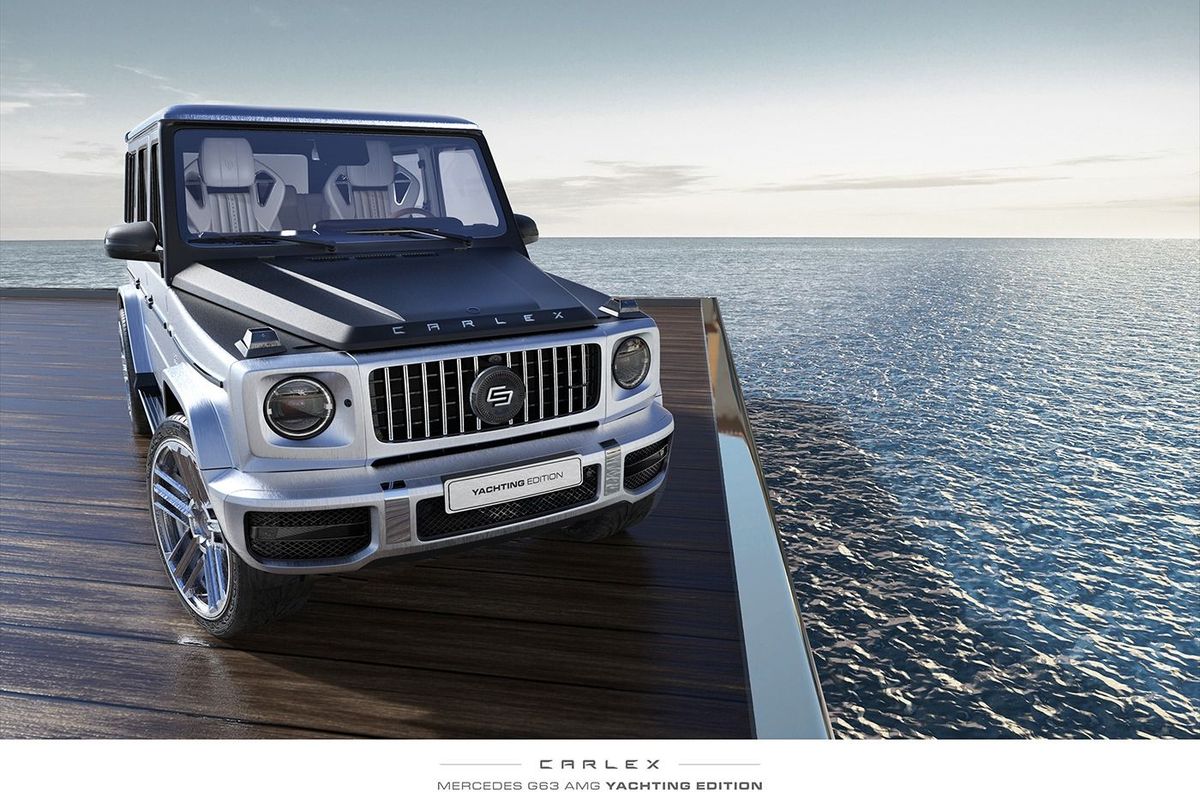
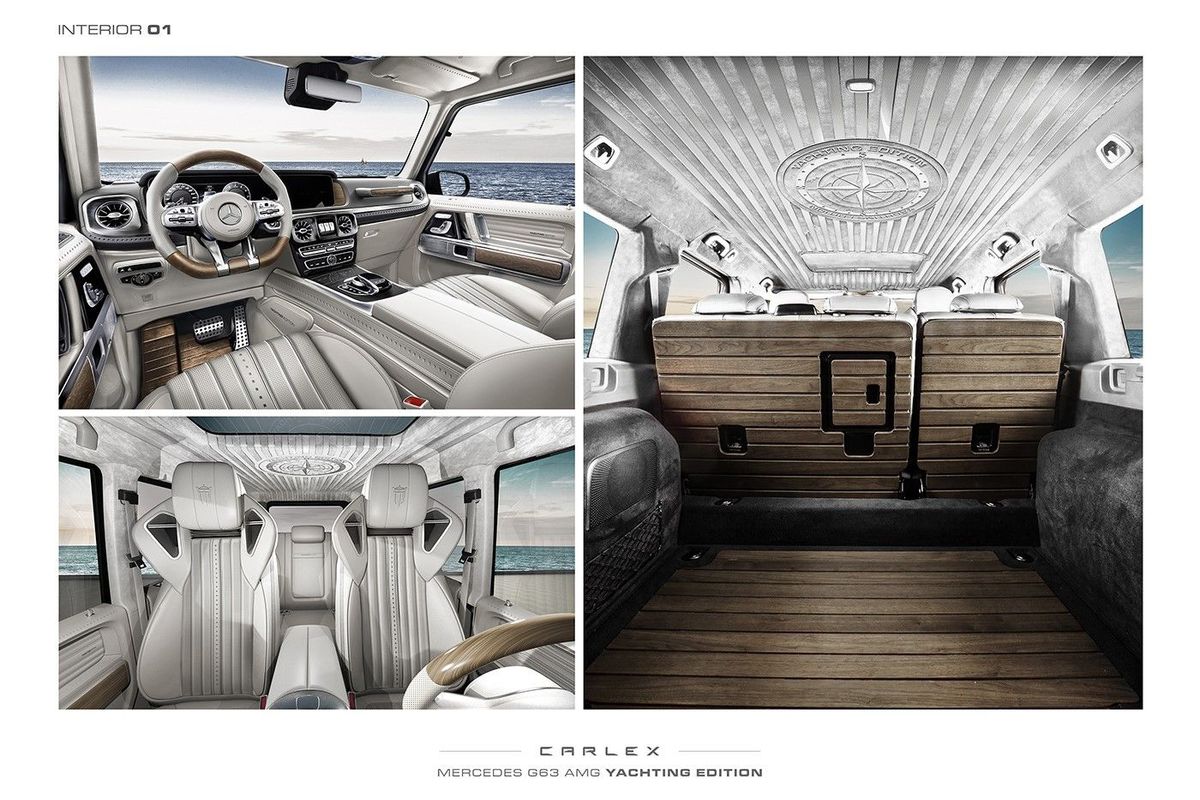
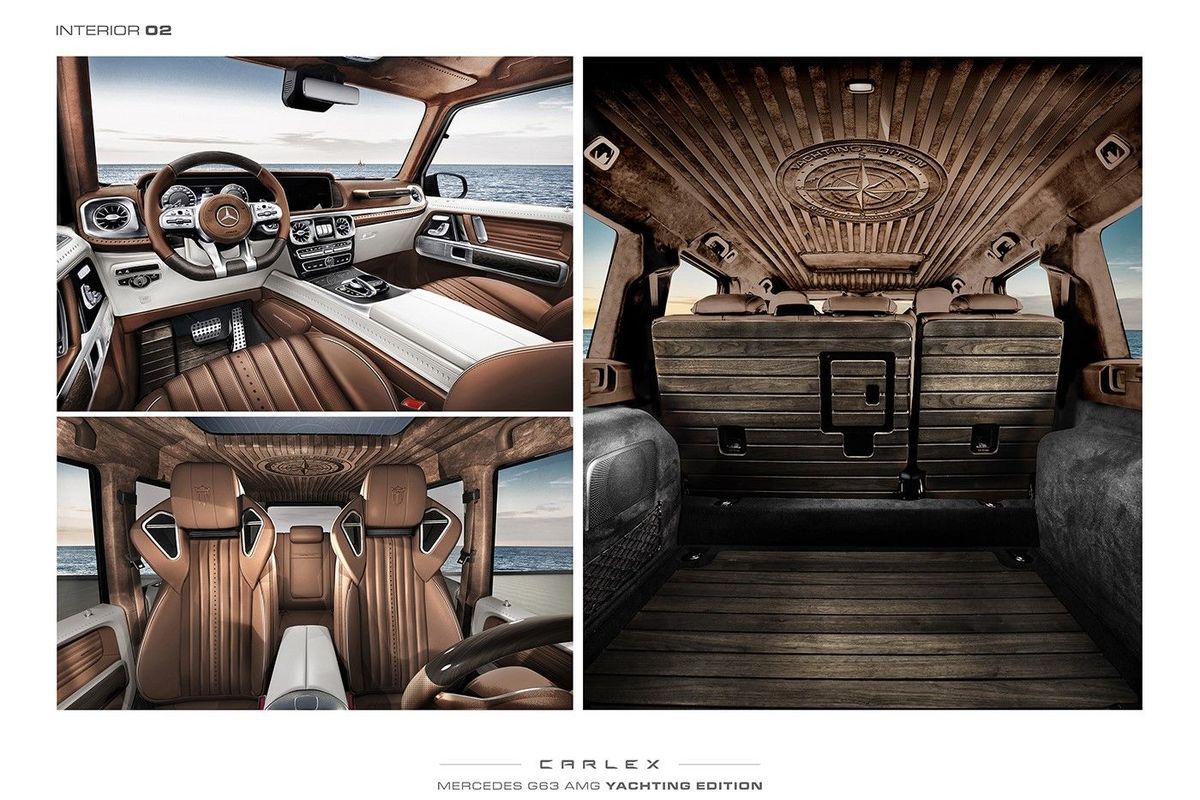
As if the Mercedes-AMG G63 wasn’t awesome enough, Carlex Design drew inspiration from steampunk to create an amazing work of art dubbed the G63 Steampunk Limited Edition.
For those of you who are confused as to what steampunk is, it can be defined as a “retrofuturistic subgenre of science fiction or science fantasy that incorporates technology and aesthetic designs inspired by 19th-century industrial steam-powered machinery” according to Wikipedia.
With that in mind, cast your gaze upon the Mercedes-AMG G63 Steampunk Limited Edition by Carlex Design. The workmanship is phenomenal in our opinion and according to Carlex, no less than 5 000 hours went into creating this unique vehicle.
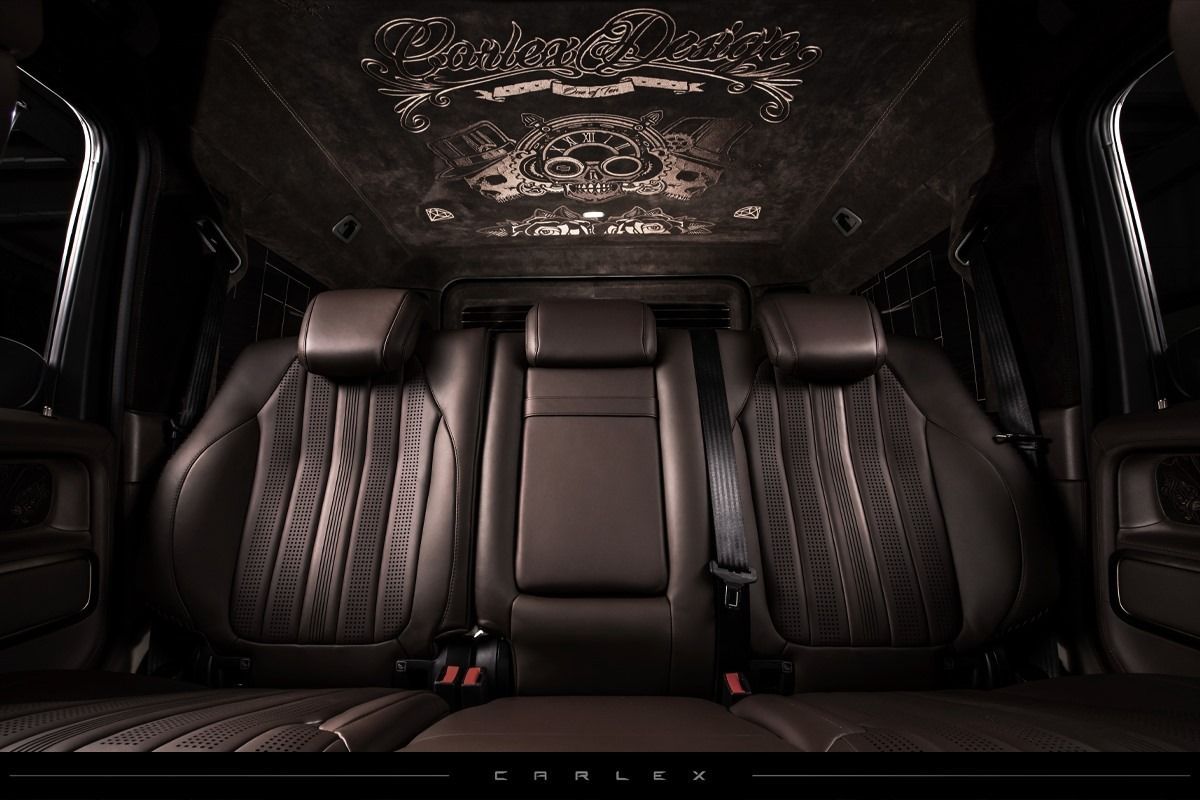
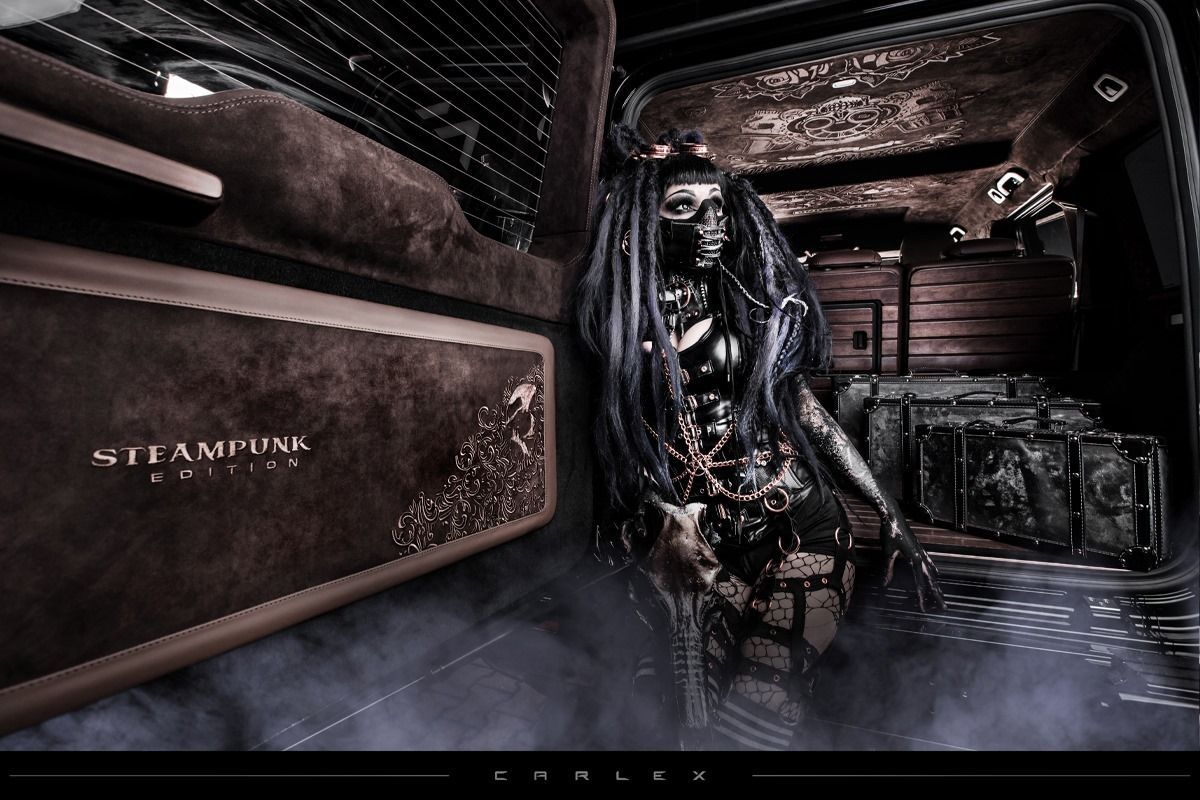
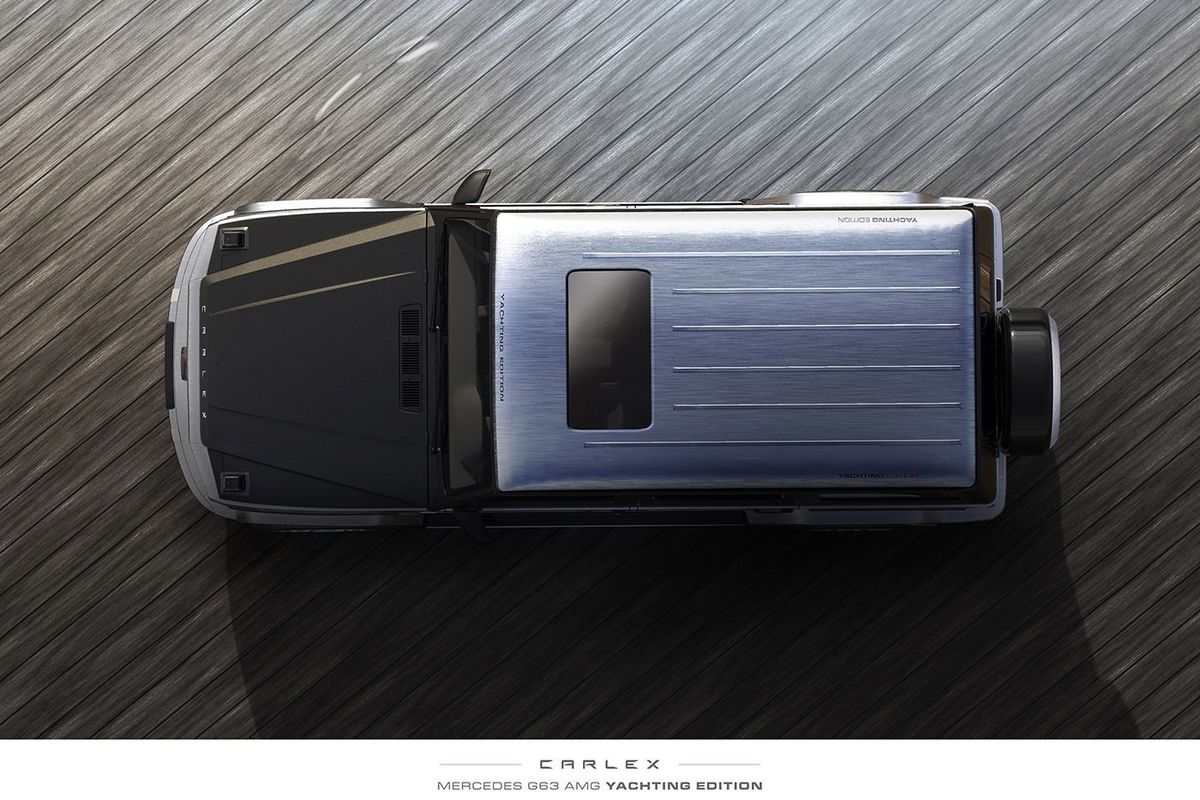
Bronze detailing has been extensively used as seen on the wheels, exhaust tips, side trim, spare wheel cover and most notably the roof, which features detailed artwork depicting skulls, roses and diamonds.
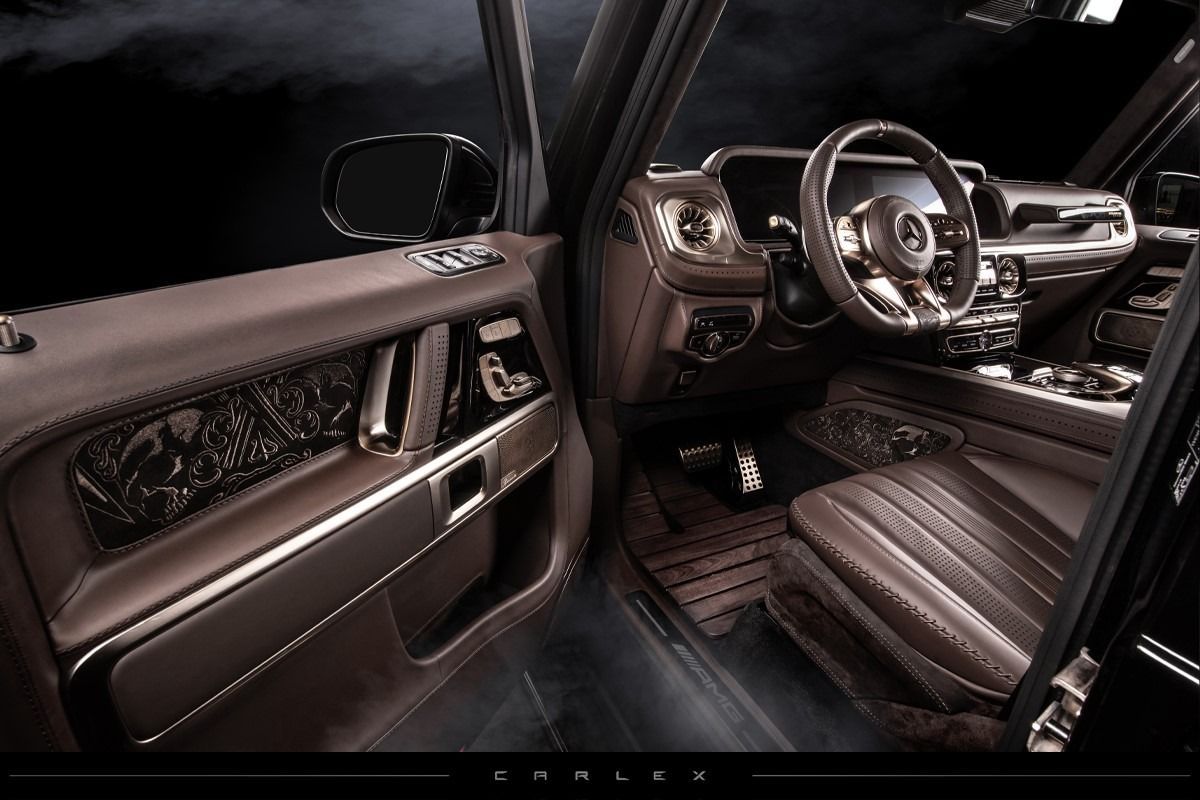
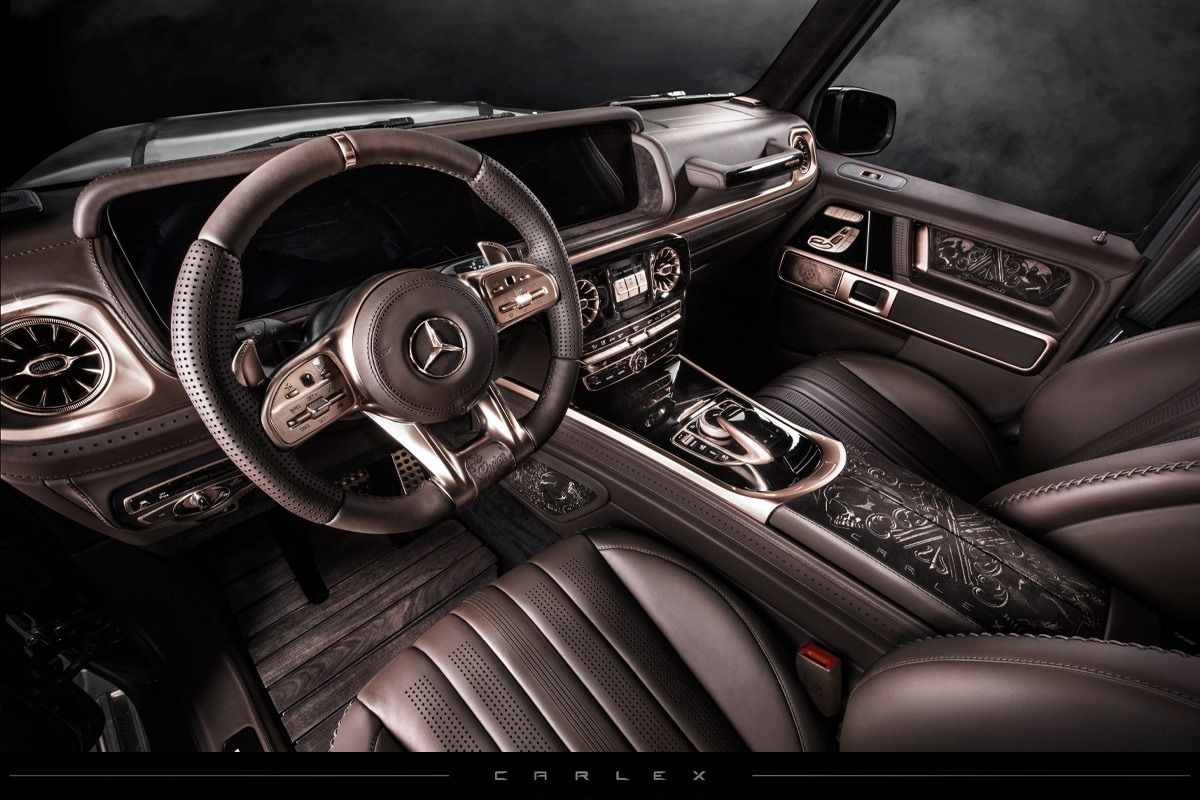
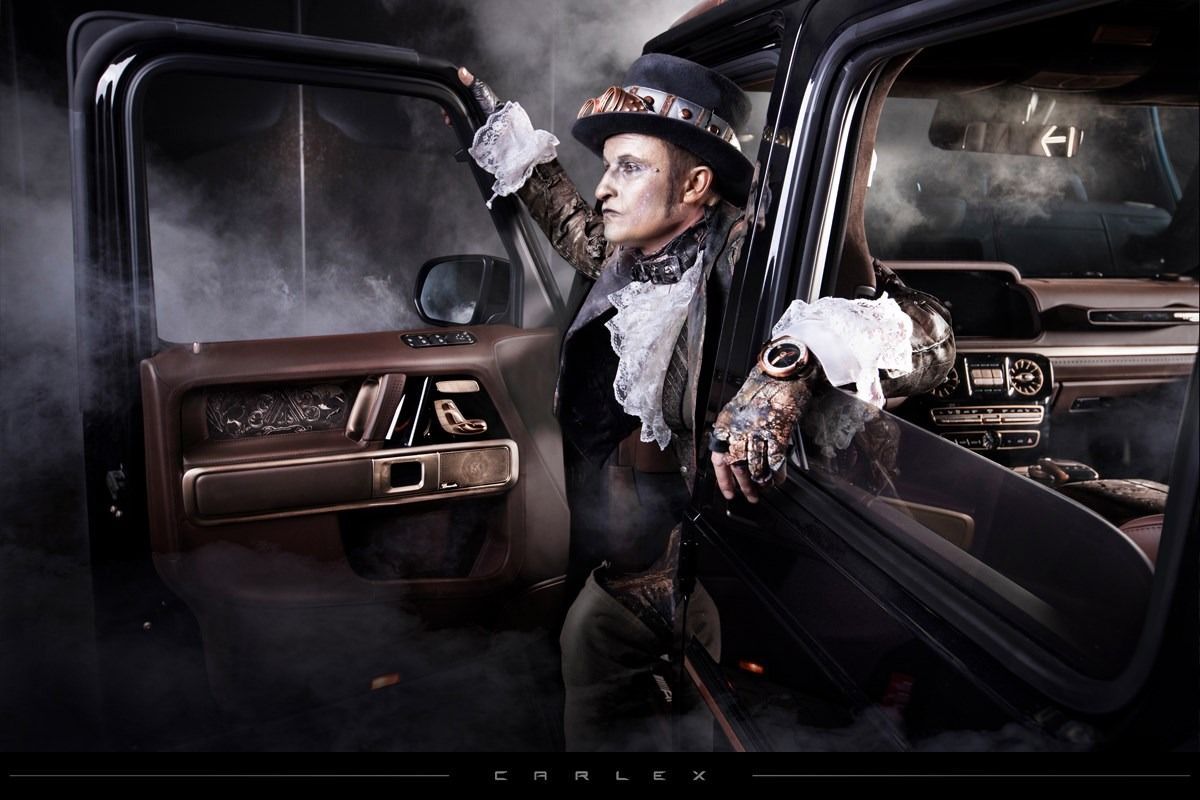
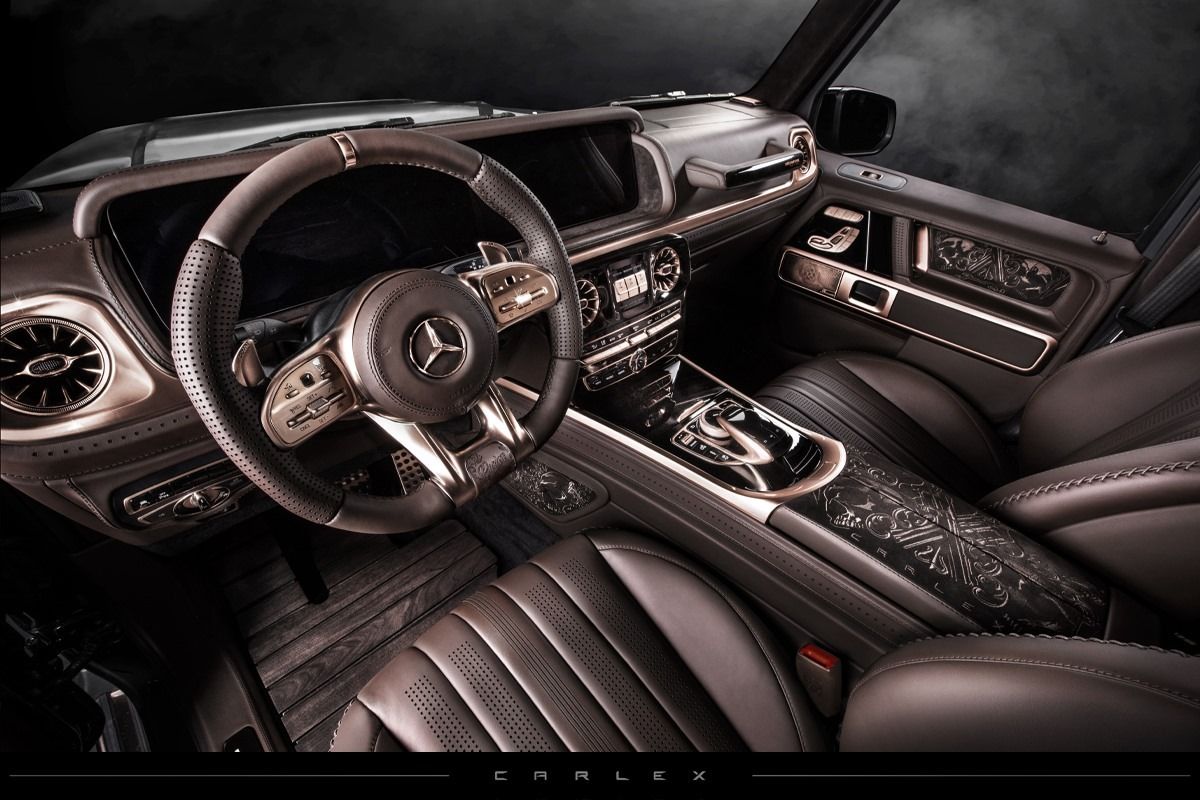
Bronze accents and brown leather finishes coupled with detailed artwork makes for an impressive interior.
Step inside and the detailing cranks up a notch. Extensive brown leather is used and the bronze theme continues as seen on the steering wheel, air vents, door handles, centre console and switches. The headliner is finished in Alcantara with incredible steampunk artwork blazoned on the roof. Further artwork is found throughout the cabin and the front seats have been specially designed for this vehicle.
The G63 is powered by a turbocharged 4.0-litre V8 engine that develops 430 kW and 850 Nm of torque and makes use of a 9-speed automatic transmission.
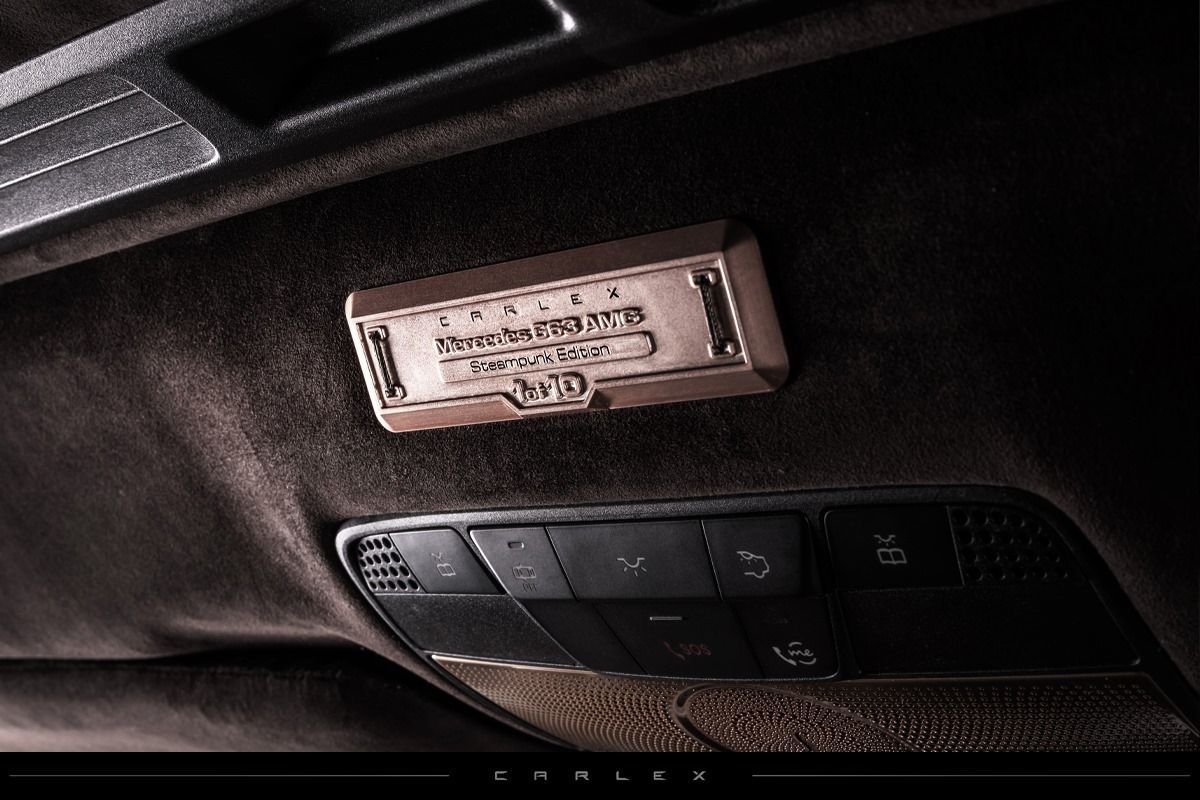
If the numbered plaque on the interior is anything to go by, Carlex Design will only make 10 examples of the G63 Steampunk Limited Edition.
What do you think of this build, is it something that you can see yourself driving?
Suzuki is reportedly killing production of its Alto budget car in favour of the S-Presso which is due in South Africa soon.
The Alto budget car came to market in South Africa in 2009 and was later discontinued in early 2015 to make way for the Celerio, which has proven popular locally.
Suzuki’s latest budget offering, the S-Presso budget crossover, recently went on sale in its home market, India, and has consequently made the Alto somewhat redundant and Maruti Suzuki is, therefore, looking to scrap the Alto altogether.
The S-Presso will face off against the popular Renault Kwid and will come to market with a 3-cylinder, 1.0-litre petrol engine with 50 kW and 90 Nm of torque.
The Suzuki S-Presso is due to arrive in South Africa in March 2019 and it will slot in below the Celerio in Suzuki's lineup which means it might be priced at around or below R140k. We will confirm pricing and specification closer to launch.