Gifts for Petrolheads: Super Deals at the SentiMETAL store
Still pondering what to get that car-loving someone in your life this festive season? We think we might have an idea, or 70! Head over to the SentiMETAL store to see what's on offer.
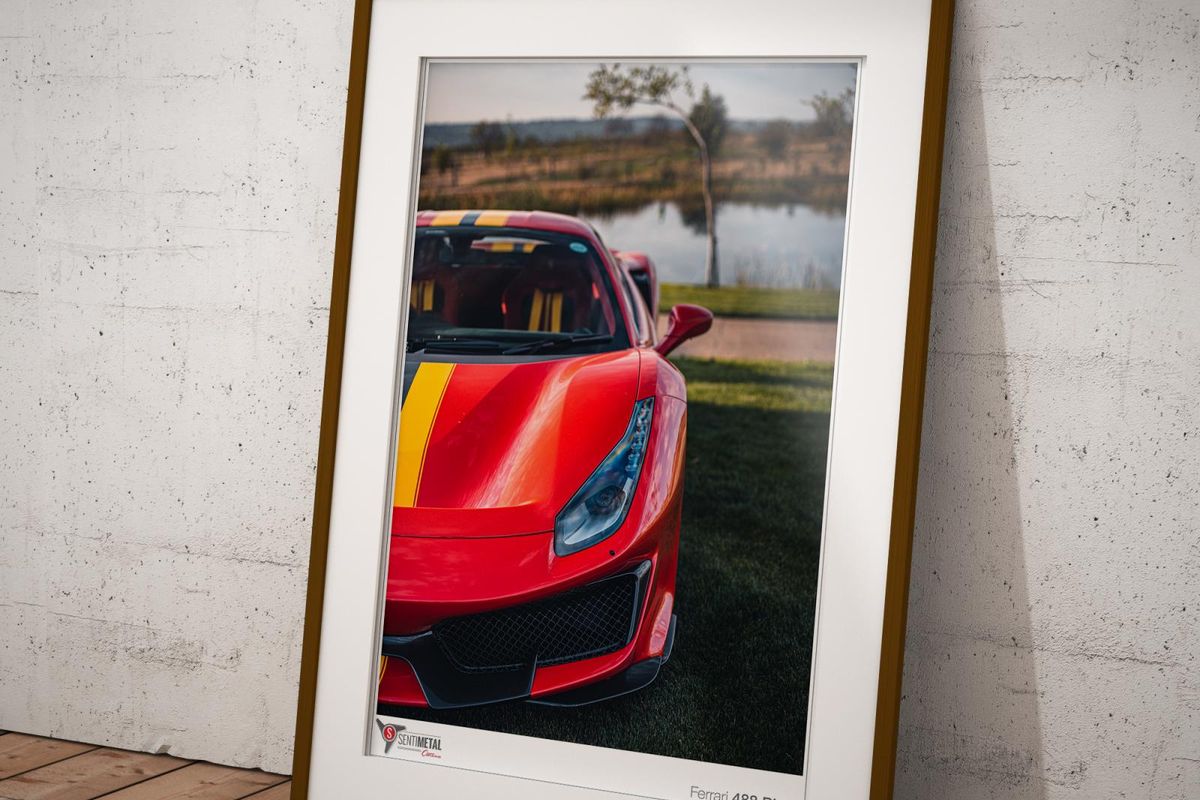
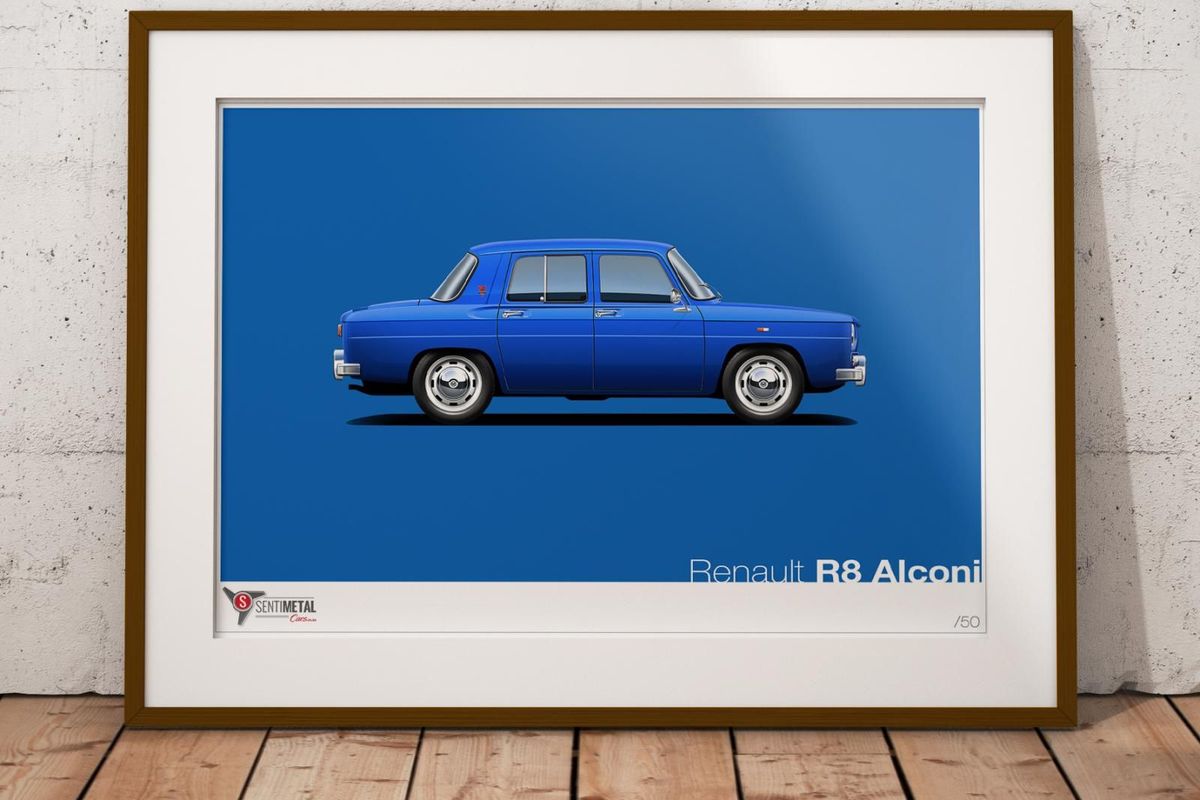
From a growing range of model cars, to a line-up of cool T-Shirts, driving gloves and limited-edition prints featuring some of South Africa's most celebrated cars, the SentiMETAL store has something for everyone.
"We're always adding new items," says Hannes Oosthuizen, SentiMETAL project leader. Shoppers are encoured to come back often as the range is expanding fast. "We want to be a one-stop shop for all your petrolheaded needs," Oosthuizen says. "This week alone we've added several model cars that will be very fondly remembered, including the Ford Escort XR3 and Land Rover Series IIA SWB."
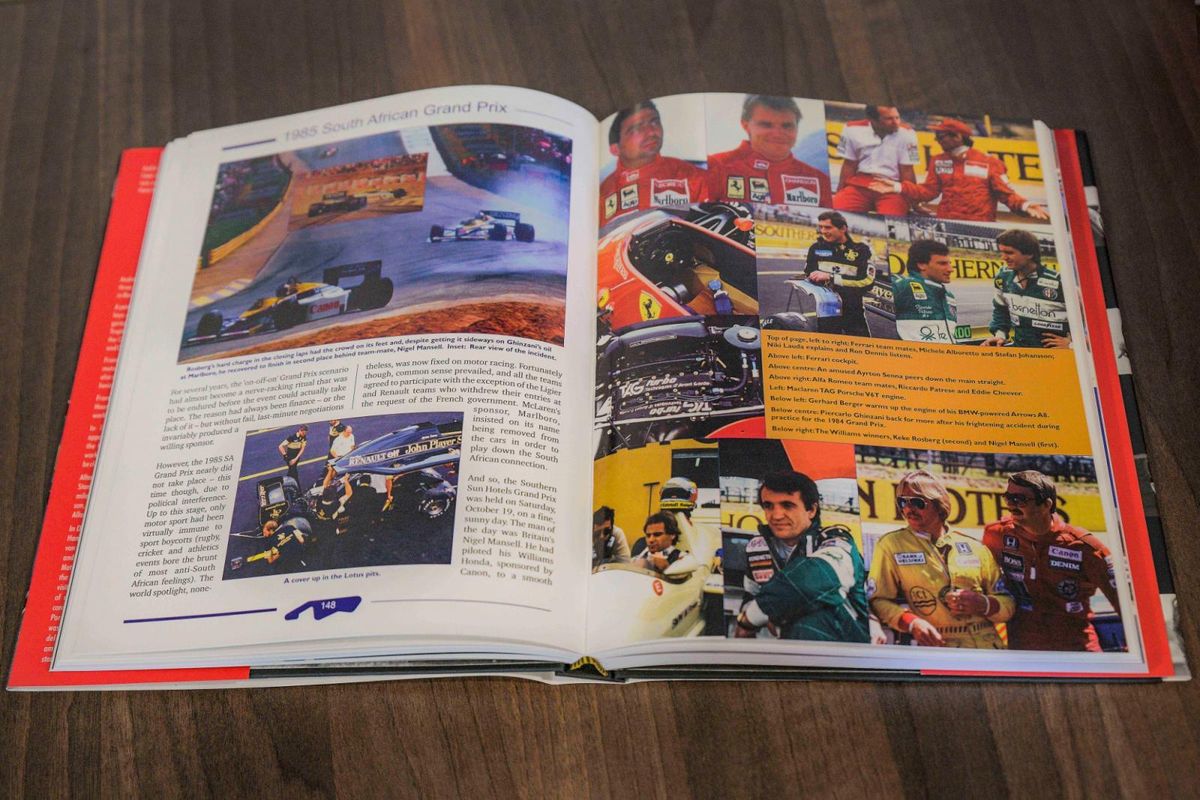
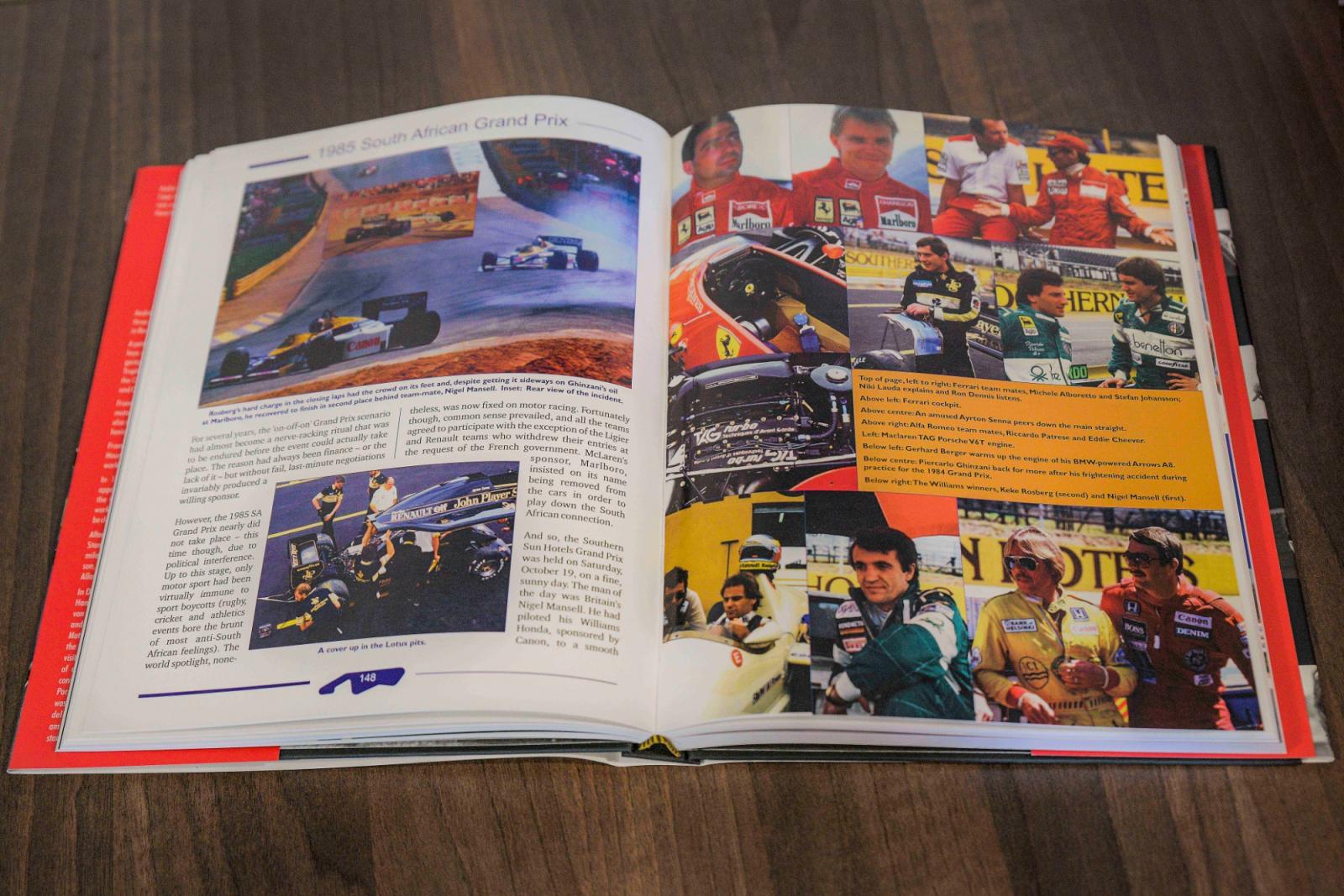
Andre Loubser's meticulously-researched book on the old Kyalami holds 411 pages of treasures, and took 26 years to complete.
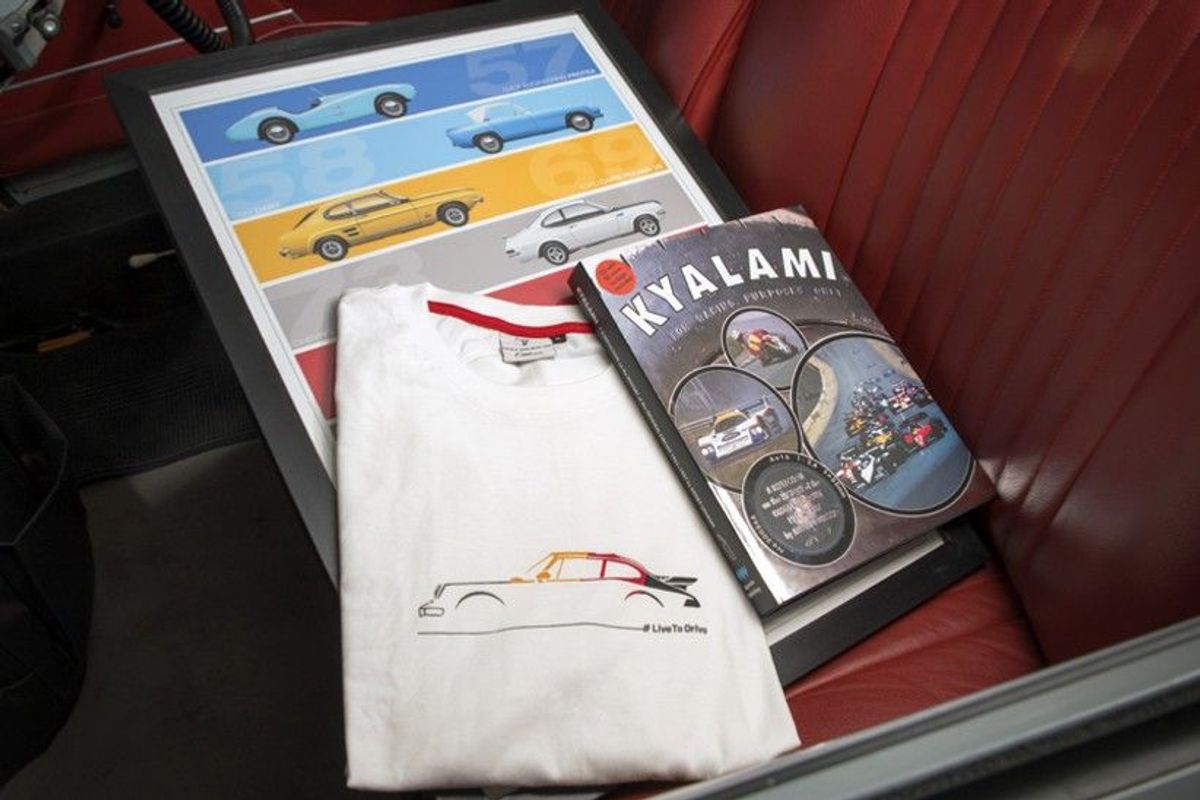
One of the most popular recent additions to the SentiMETAL store is Andre Loubser's Kyalami The Book, an incredibly in-depth look at the old Kyalami which took Andre 26 years to complete. Covering everything from Formula One to the 9 Hours, and even the birth of motorsport in South Africa, this is a must-have for any South African petrolhead. Included is a DVD with 80 minutes of rare footage.
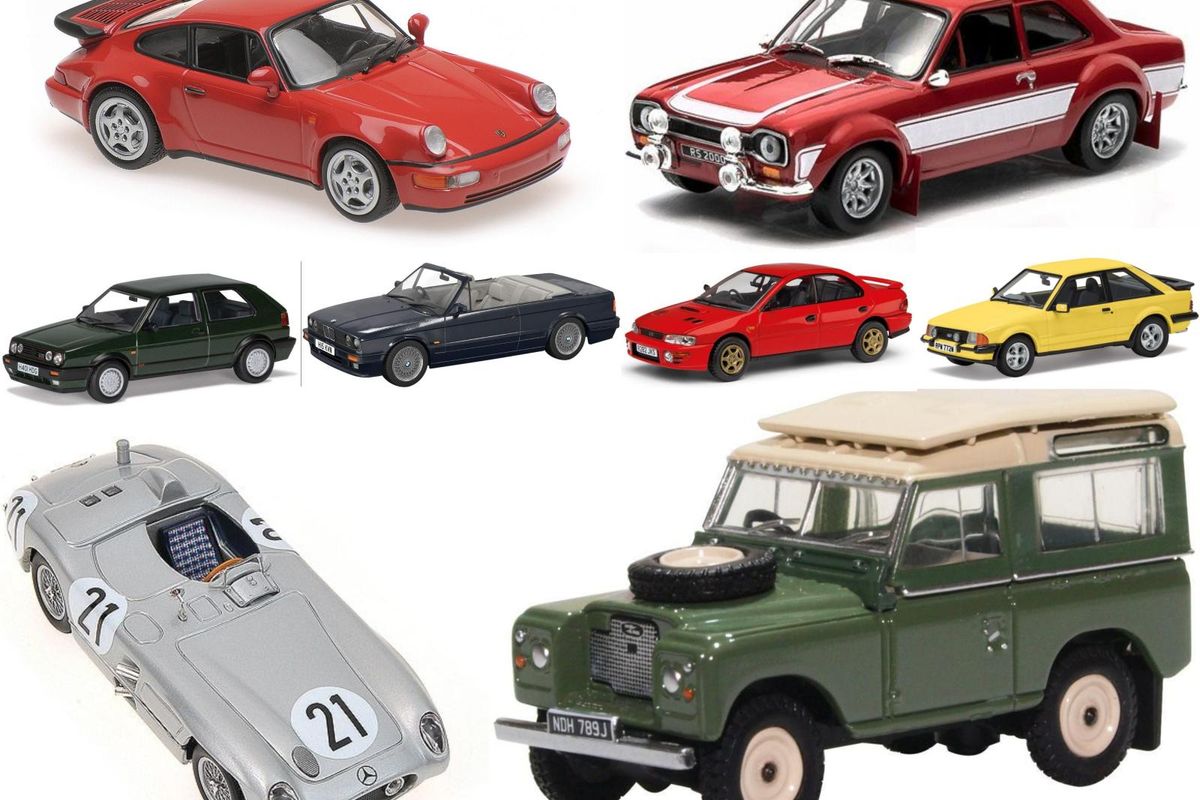
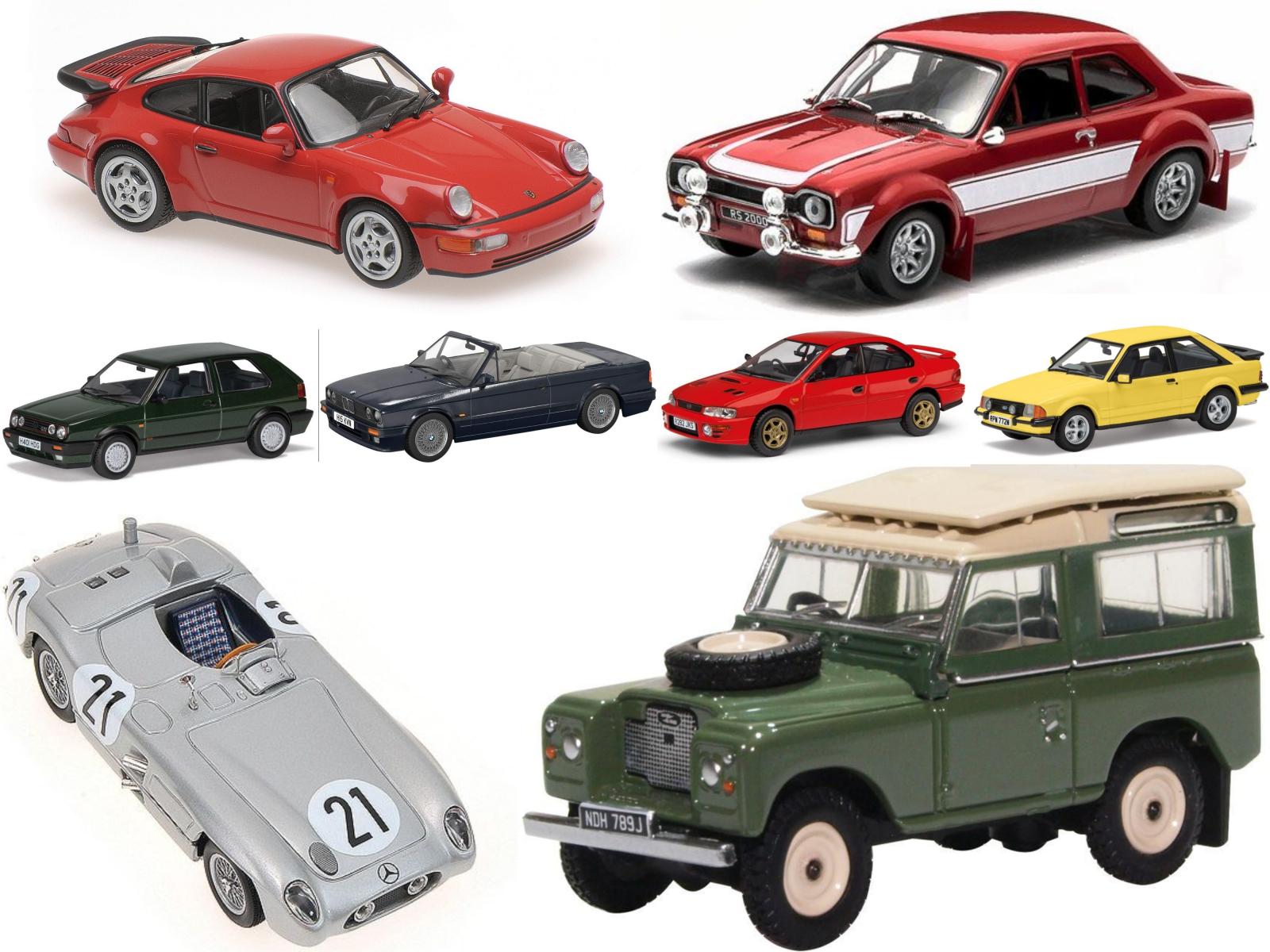
A selection of 1:43 scale models added to the SentiMETAL store this week.
"We are very selective in which cars we add to the line-up, and try to include cars that we know are still revered in South Africa. We also acknowledge that a large number of collectors these days are focusing on the cars of the 80s and 90s," Oosthuizen says, adding that it is a good idea to come back often as the range will continue to expand. Also remember that all the pricing on our site INCLUDES delivery in South Africa.
Cars added in 1:43 scale this week are; Volkswagen Golf GTI Mk2 16v, BMW 318i (E30) Design Convertible, Ford Escort MK3 XR3, Porsche 911 (964) Turbo, Porsche 550 Spyder "Little Bastard" and the Land Rover Series IIA SWB Station Wagon, and more.
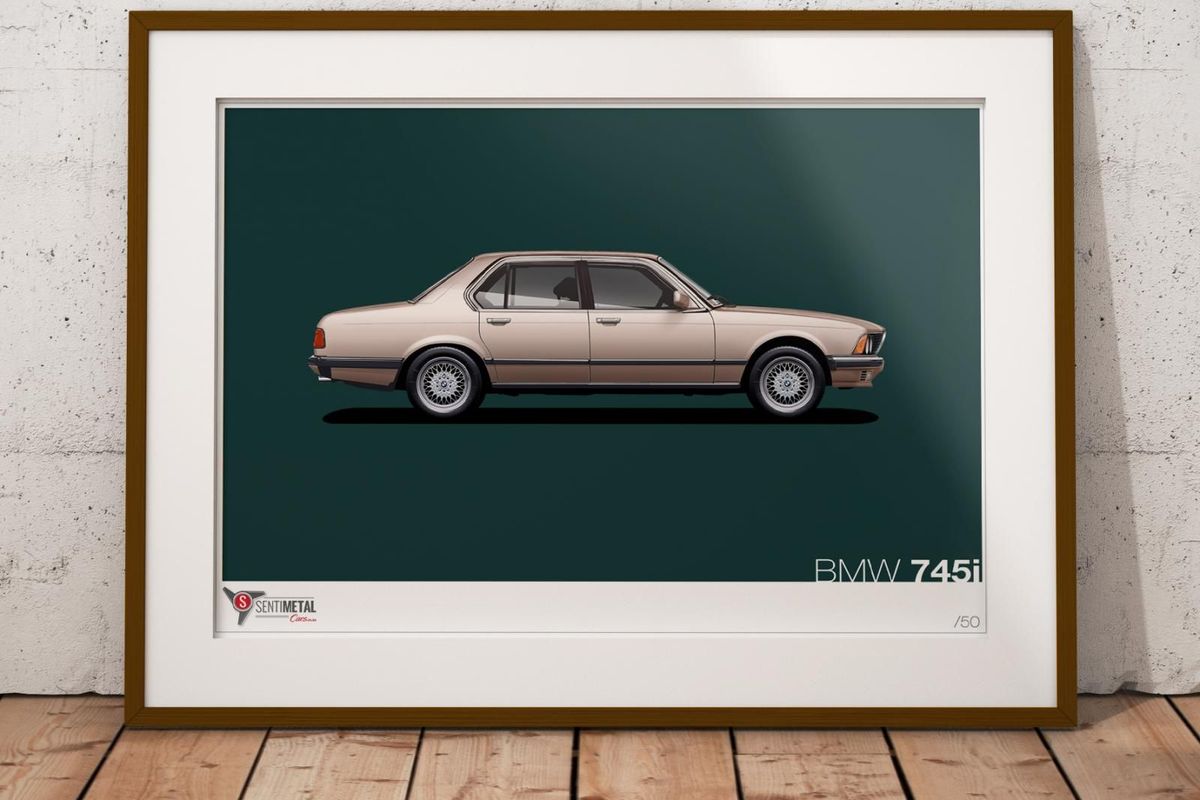
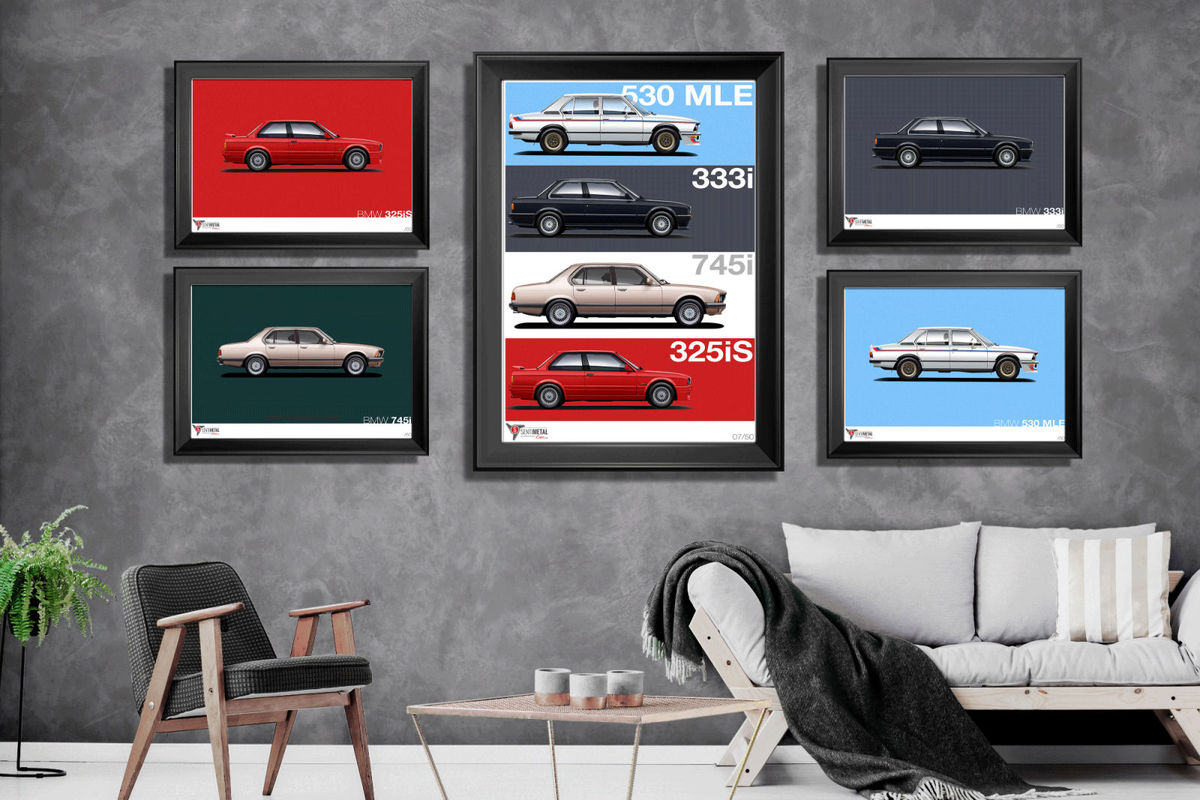
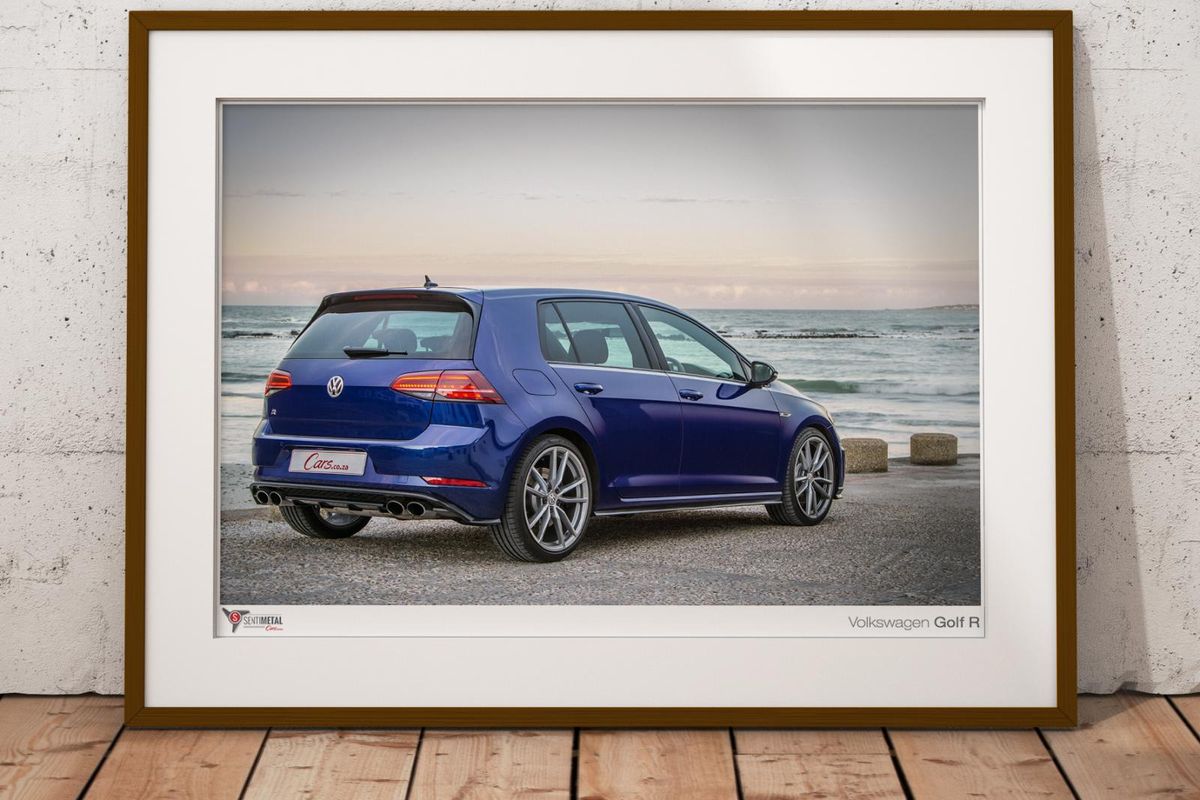
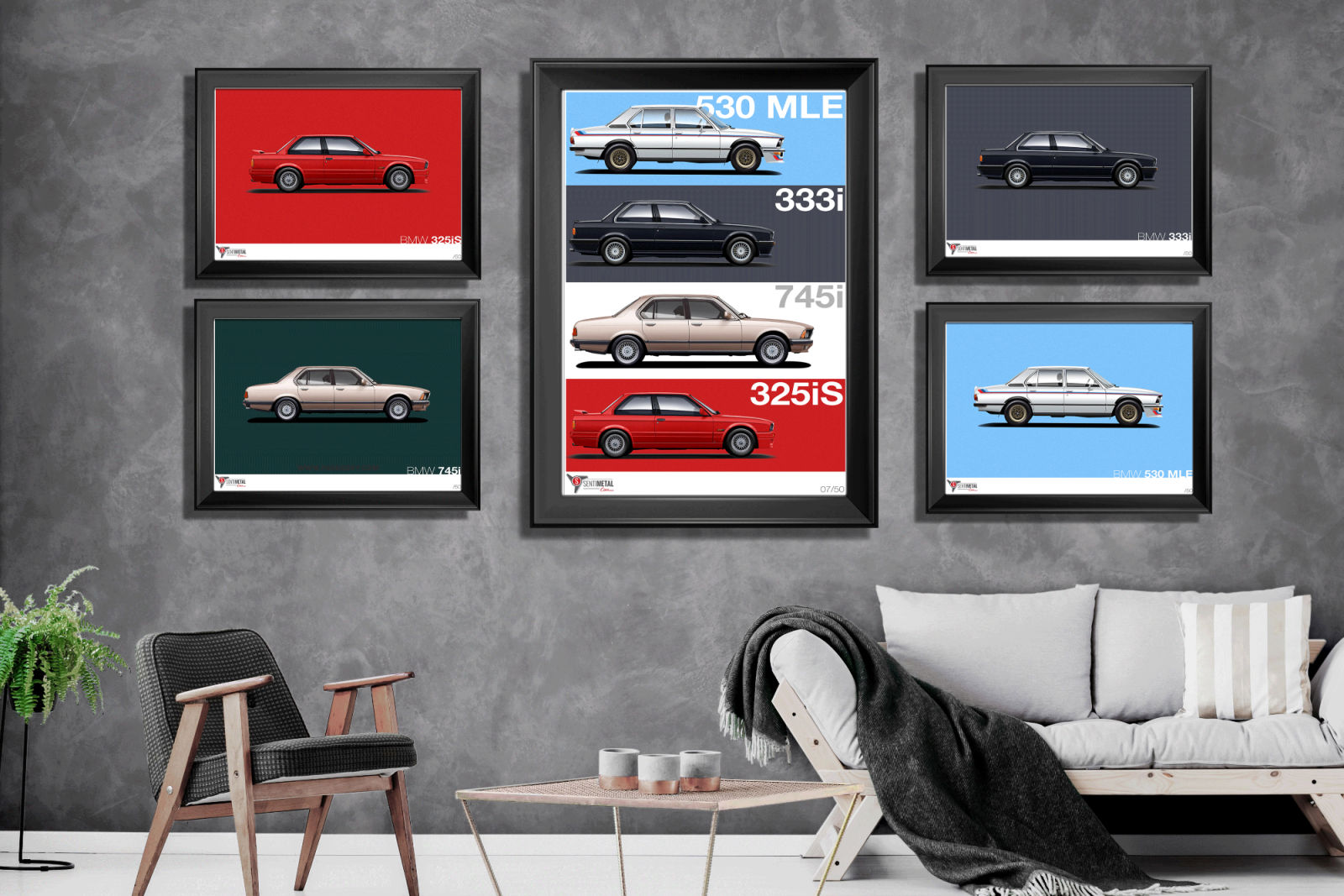
There are many prints to choose from, but if you fancy a BMW-themed wall… that is also possible due to our wide range of variants.
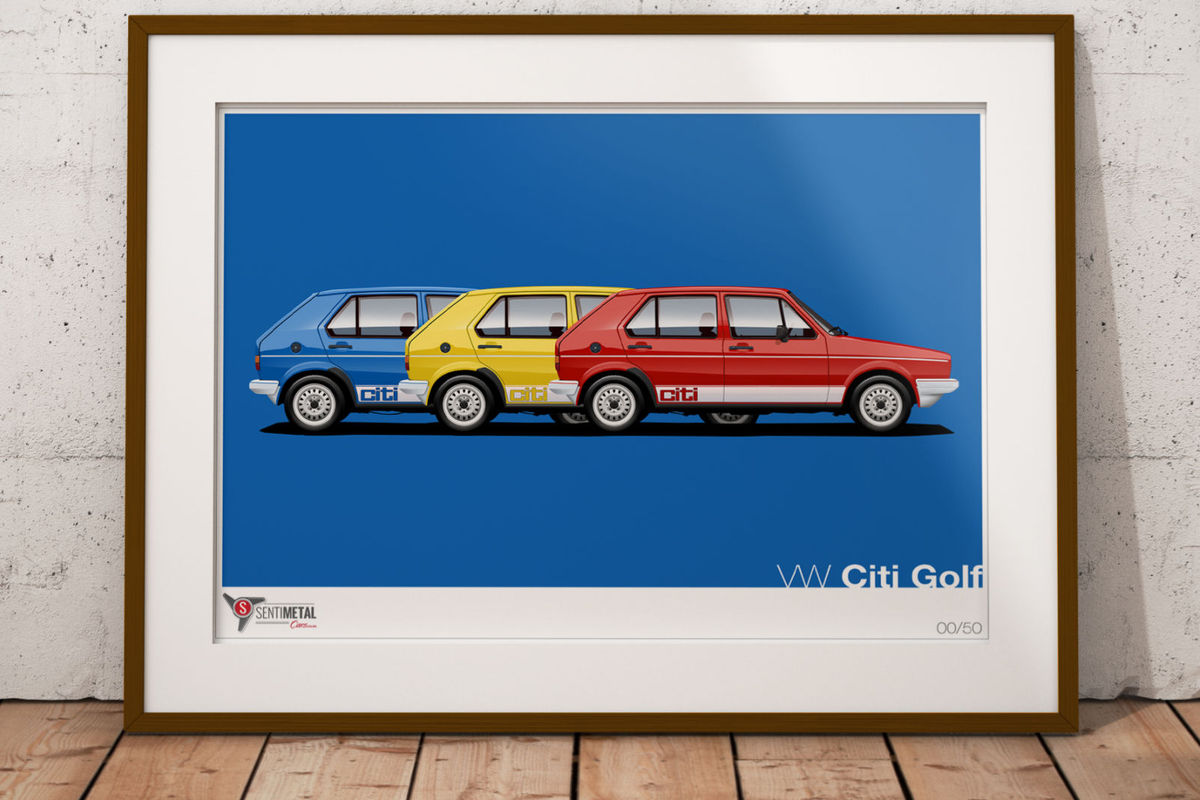
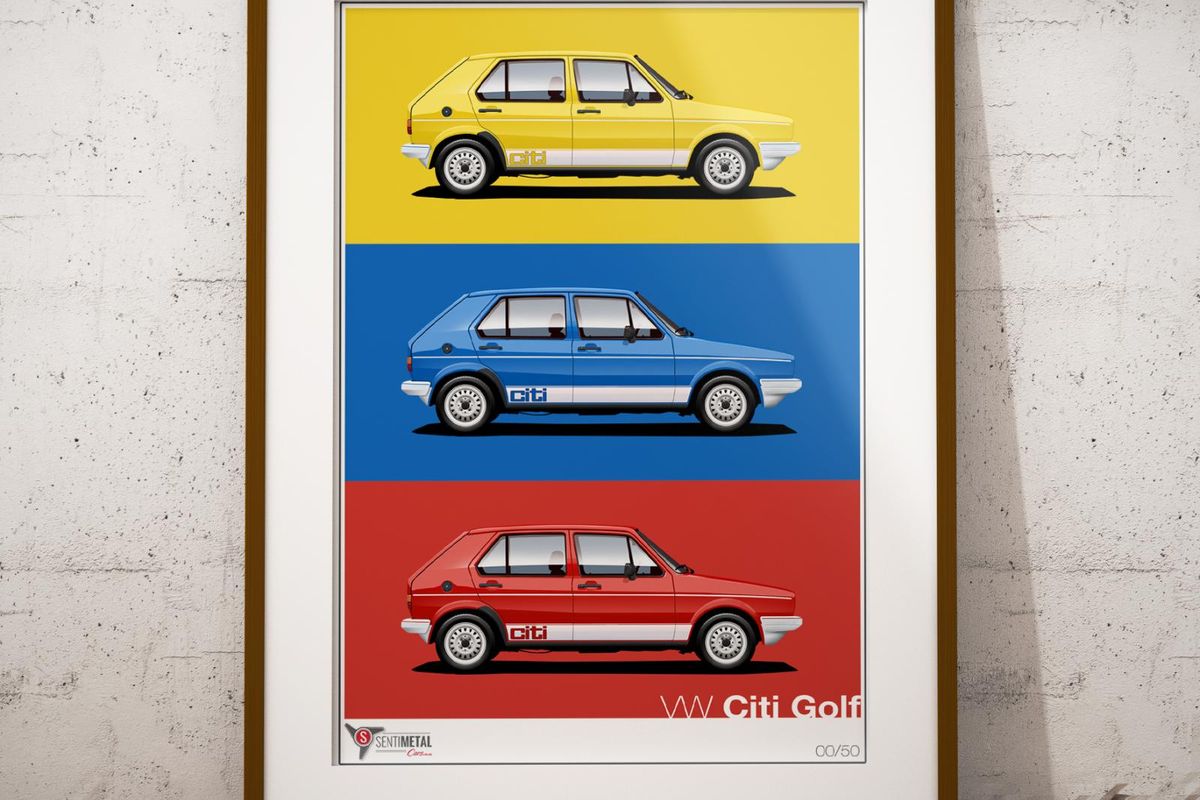
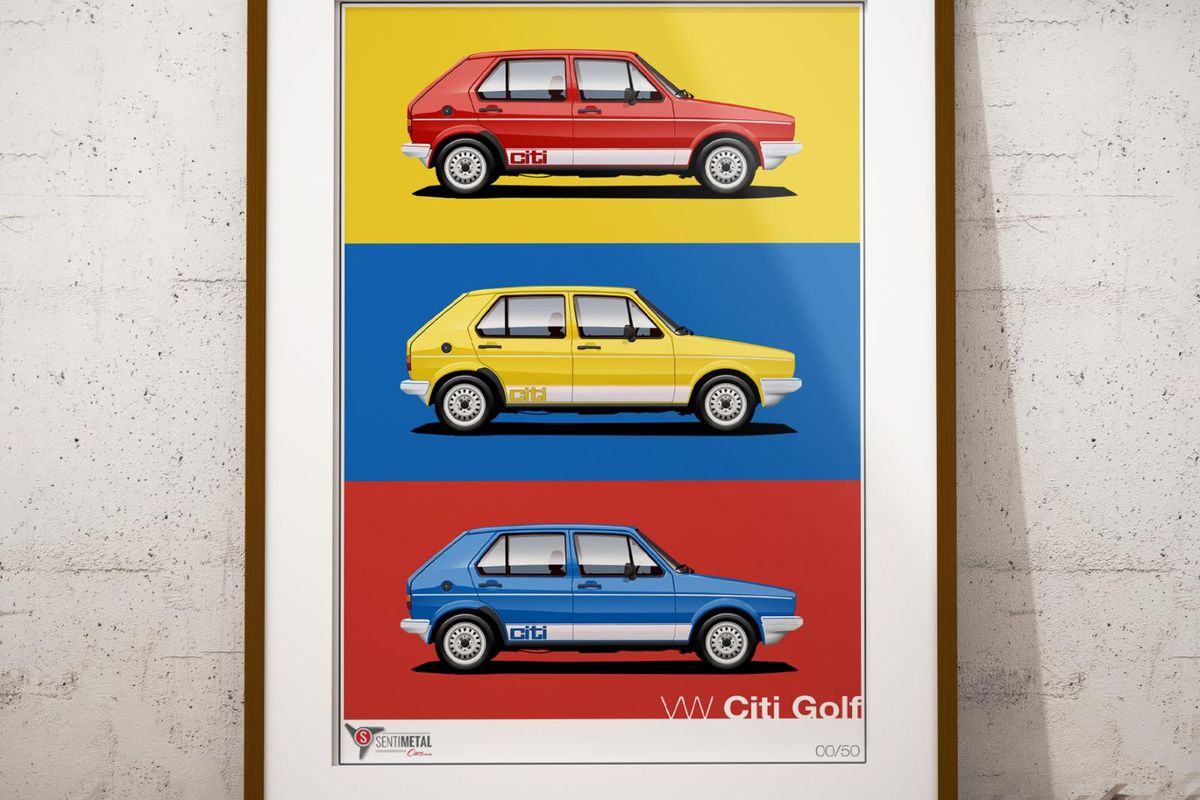
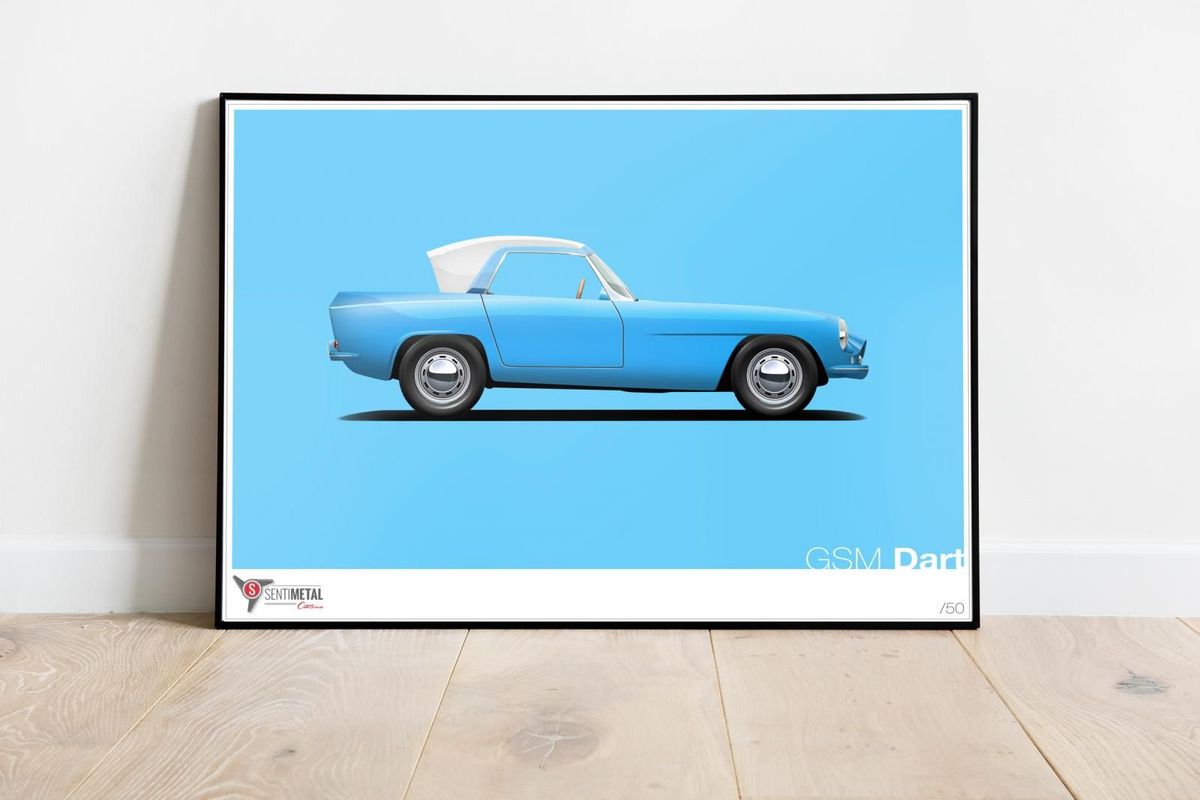
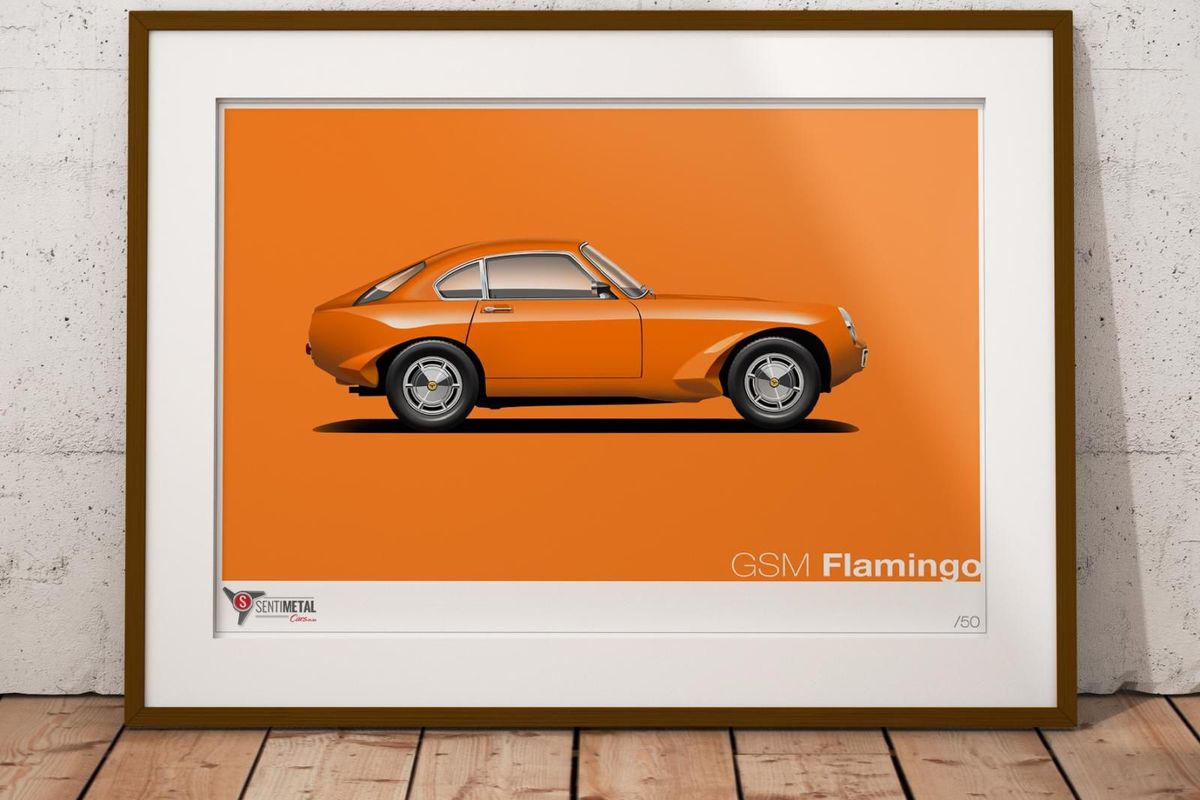
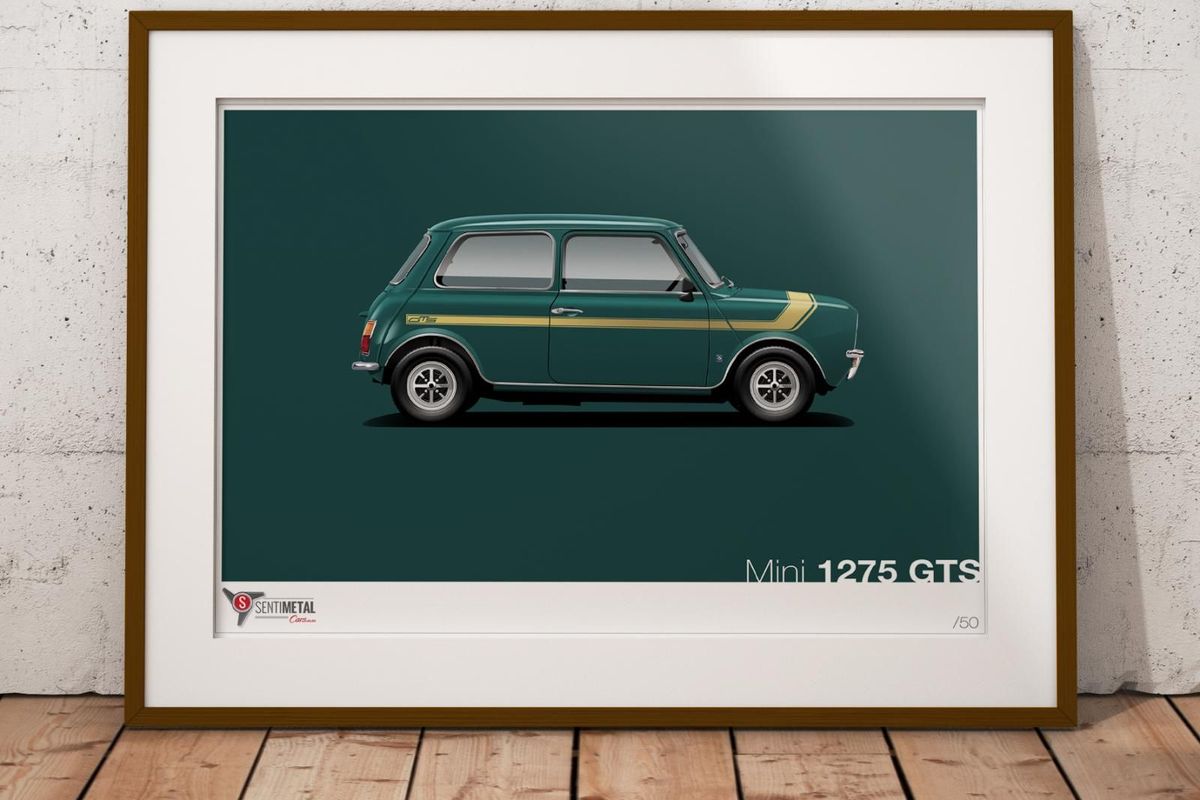
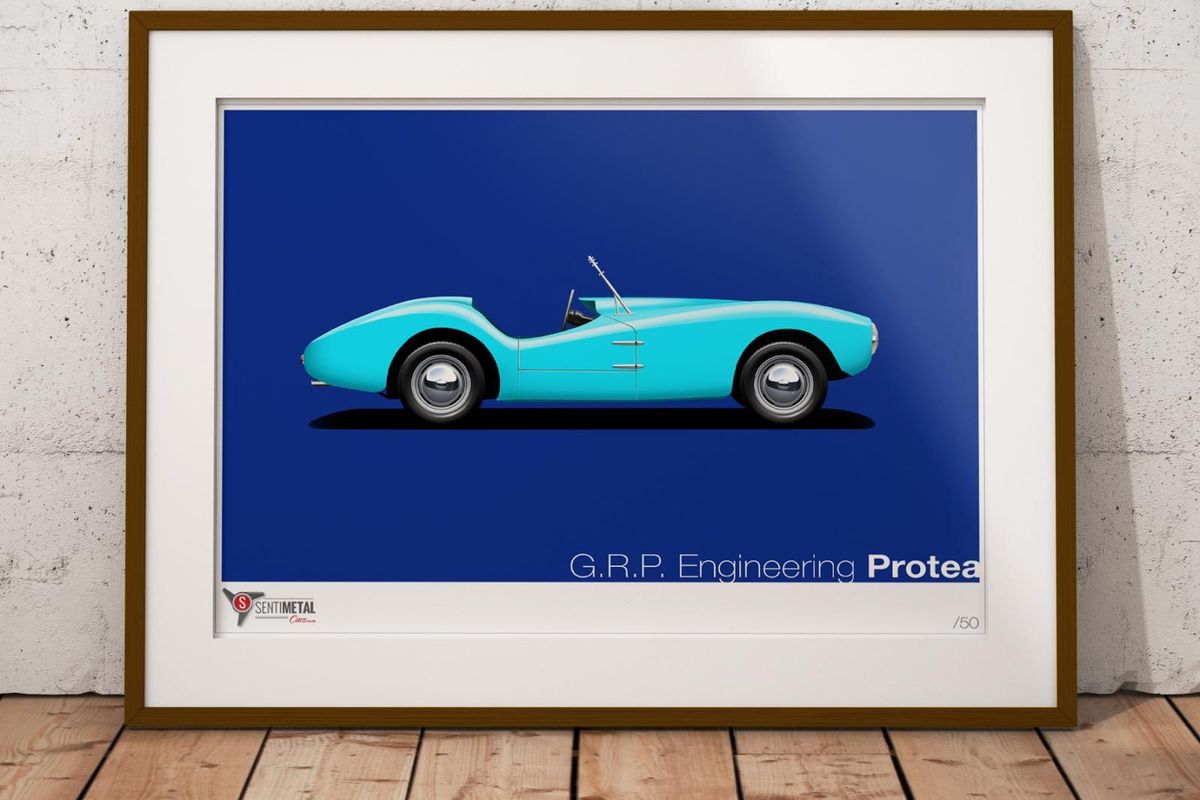
Similarly, our Heritage series of prints, focusing on cars unique to South Africa, continues to expand. Where else in the world will you find a print of the Caracal, or the Protea? Our single-car prints are all limited to 50 copies each, hand-numbered, and available in A2 and A3 sizes.
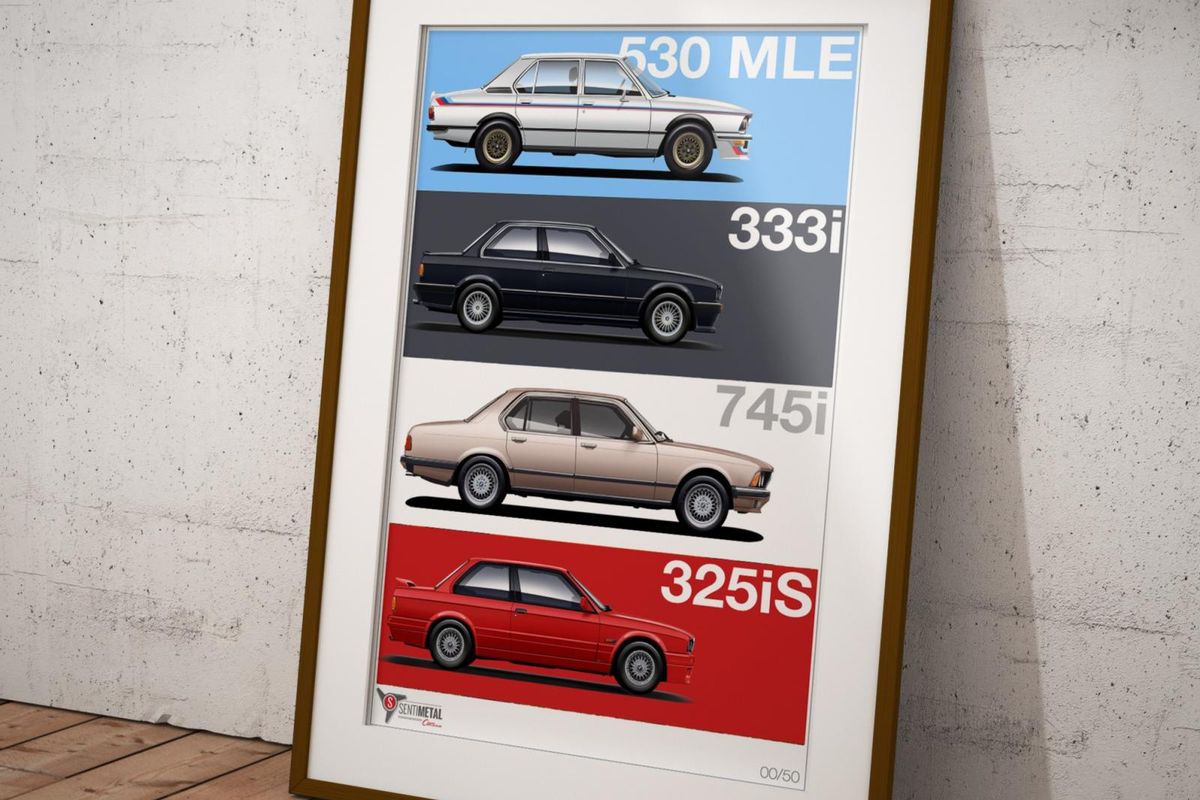
Very popular is our print that features 4 uniquely South African BMWs (530 MLE, 333i, 745i, 325iS) and a recent addition, the Opel Super Hatches print (Black Superboss and white Kadett 200tS). These prints are also limited to 50 copies each, and only available in A2 sizes. We print on high-quality 250 gsm paper with a satin finish.
Our two top sellers are the SA Specials print described earlier in the article, and the BMW M3 Collection print, the latter being our biggest (A1 size). The M3 Collection print is simply a must for any BMW fanatic and it features more than 40 variants of the iconic M3, each with basic spec detail.
To read more about the artist creating our prints, go here.
To view our collection of prints for sale, head over here.
And what else?
Riparo driving gloves are a new addition to the SentiMETAL store.
Selected by DrivrZone as one of the ten best driving gloves on the market in 2019, we're thrilled to add these stylish items to the SentiMETAL store. Our first choice are the brand's full-finger gloves in black/cognac. These Riparo genuine leather half-mesh driving gloves have the quality and the features you would expect, including soft supple leather and leather covered snap closure on the wrist strap.
These gloves also feature new technology integrated into the leather of the gloves which mimics the conductive properties of the human skin; this makes the gloves touchscreen compatible. The leather fully retains its natural characteristics, affording the wearer maximum comfort and dexterity just like any other glove.
You can find the gloves, and our range of T-Shirts, here.
For these items and many more, as well as the latest classic car news and blog posts, go to www.sentimetal.shop. Subscribe to the SentiMETAL newsletter to get updates on events, classic car articles and new items.
Toyota Corolla (2020) International Launch Review
The Toyota Corolla has been an integral part of many global markets for several decades, but never before has the Japanese compact sedan been this striking, smart and, dare we say it… aesthetically appealing. Will that be enough to ensure that the venerable Corolla 4-door, which is due to be launched in South Africa in the 2nd quarter of 2020, remains relevant in a vehicle market obsessed with crossovers and SUVs? Our Australian correspondent Matt Campbell has driven the newcomer and herewith his findings…
In South Africa, the Corolla sedan has been a huge part of the Japanese brand’s success story. This model has been built locally since the mid-'70s (in excess of a million units have been produced in Mzansi) and, although the Hilux and its Fortuner sibling deserve much of the credit for Toyota's current strong position in the new vehicle market, the Corolla once established its maker as a powerhouse in the passenger-car segment. This car is a South African institution.
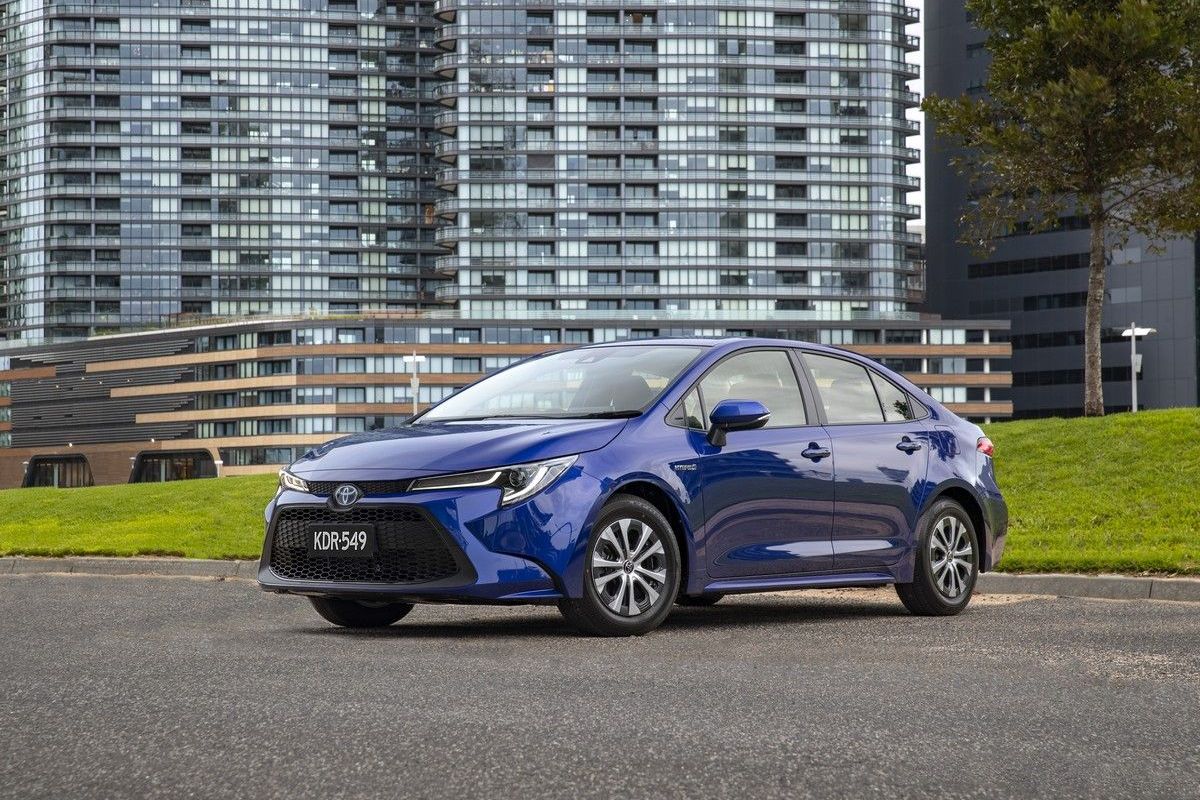
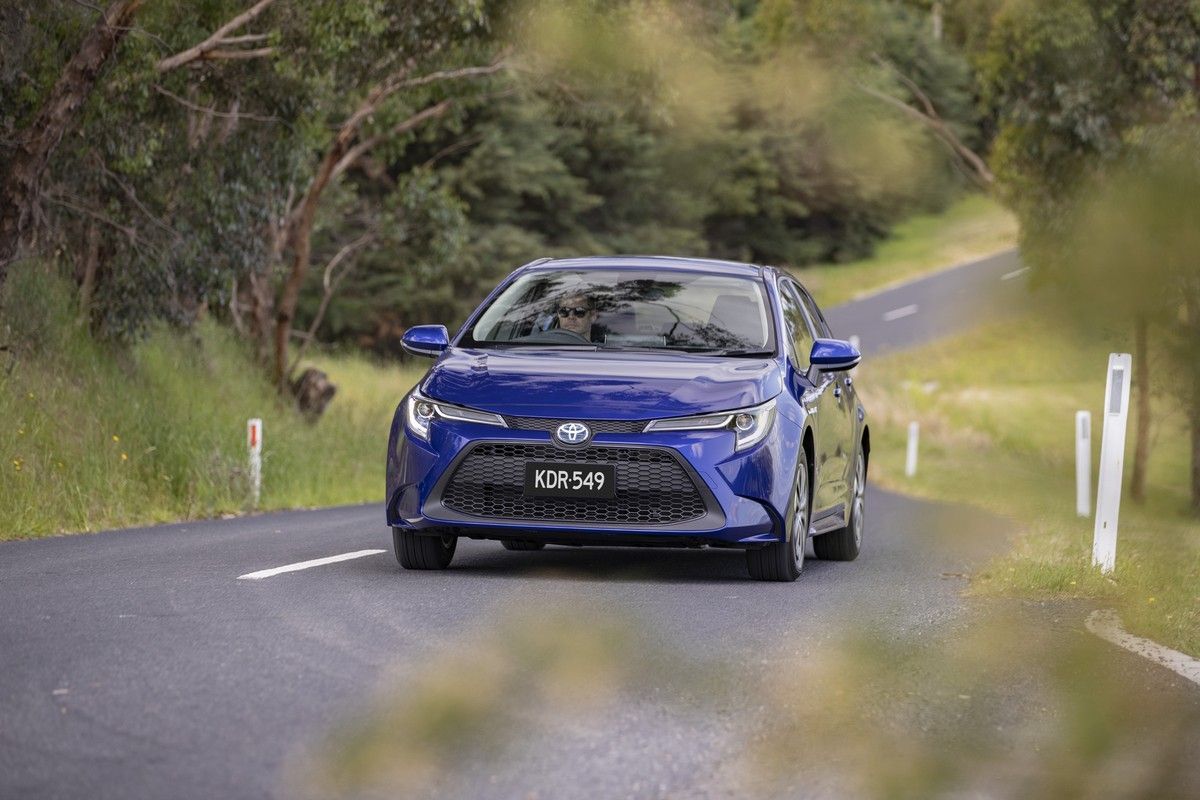
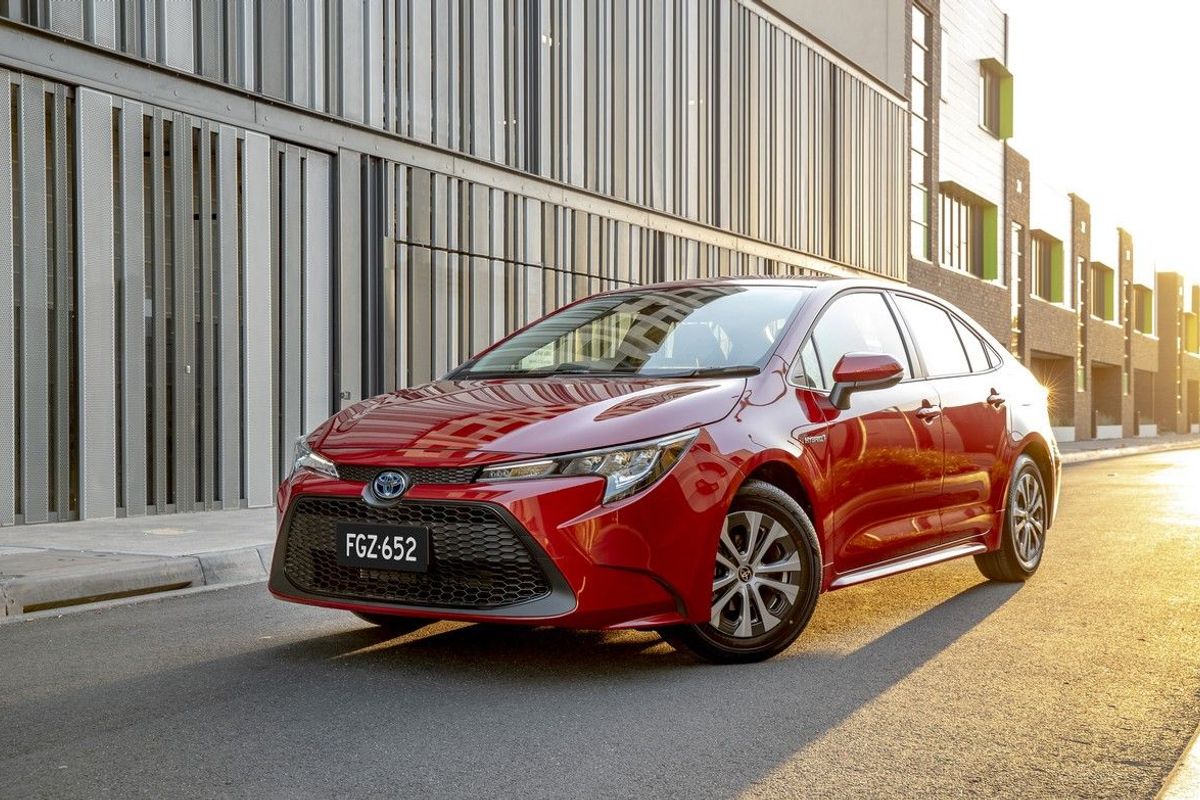
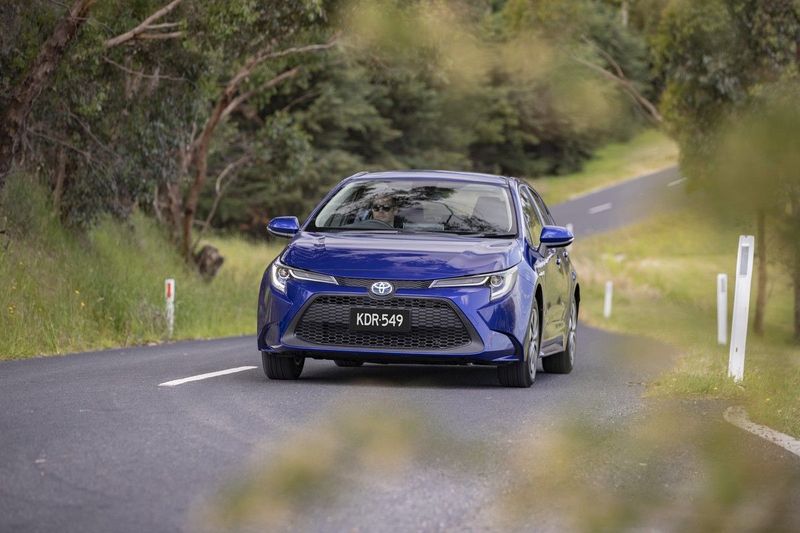
The Corolla's front-end design is characterised by shapely all-LED lamp clusters with integral daytime running lights.
Upon its launch, this new-generation model will also be built in the company’s Prospecton plant in Durban. But first, early in 2020, you can expect the current Corolla sedan – which was launched in 2014 – to be unveiled as the new Corolla Quest (with a drastically reduced lineup, of course), while this new-gen model will be pitched above it as a modern upmarket and modern – and therefore, more expensive – offering. It may well appeal to some private buyers, but as is the case in many markets around the world, the all-new 12th-generation Corolla sedan will also appeal to fleet buyers (in its simpler configurations).
What's cookin', good lookin'?
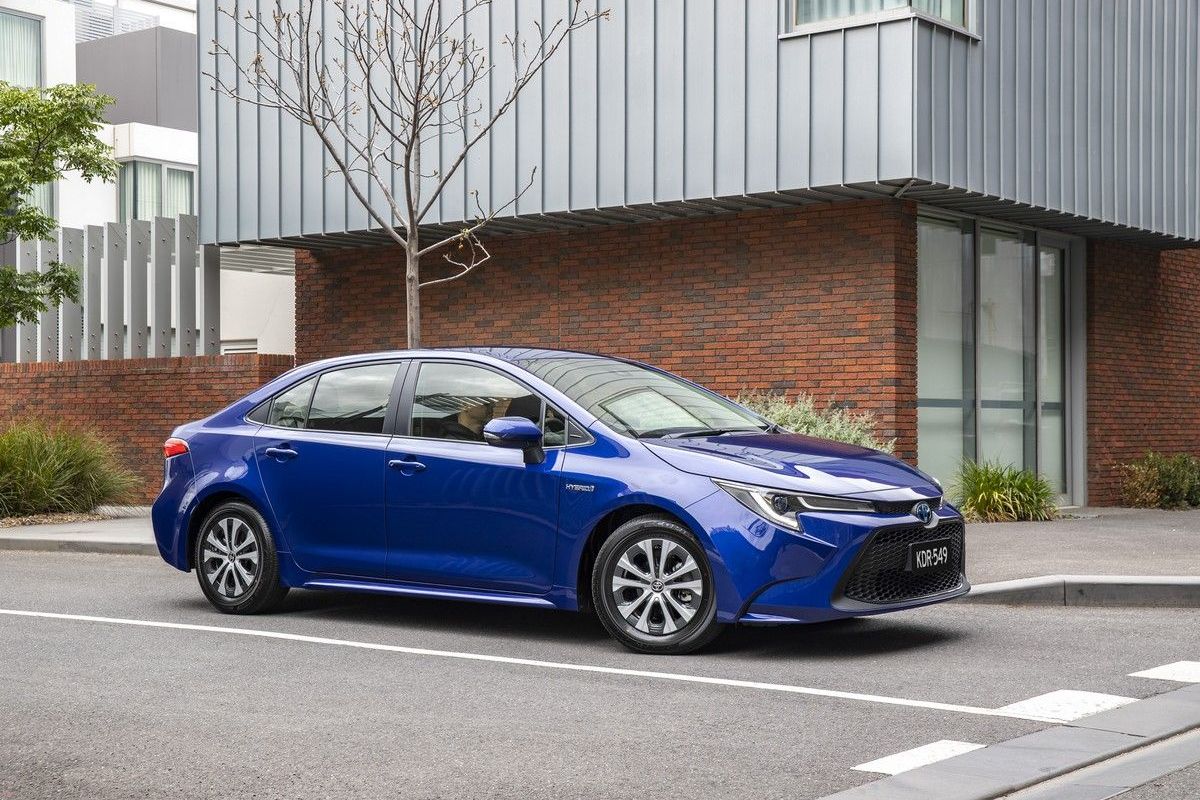
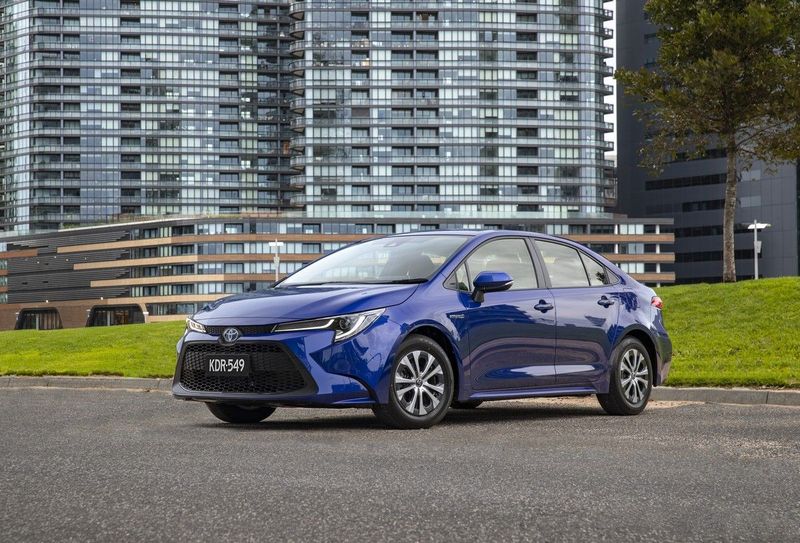
More aggressively styled (and conventionally attractive… even curvaceous) and appreciably more characterful than the model that precedes it, the new-generation Corolla sedan carries on the design theme of the Corolla Hatch that debuted in 2019. Yet, the newcomer's still instantly identifiable as a Corolla and that will please the brand-loyal-but-tradition-bound folks in the sedan's heartland. It’s built upon Toyota’s New Generation Architecture (TNGA), the same platform that underpins the likes of the C-HR compact family car, Prius hybrid and RAV4 family car and that means it has a lower centre of gravity and looks comparatively sleeker and streamlined as a result.
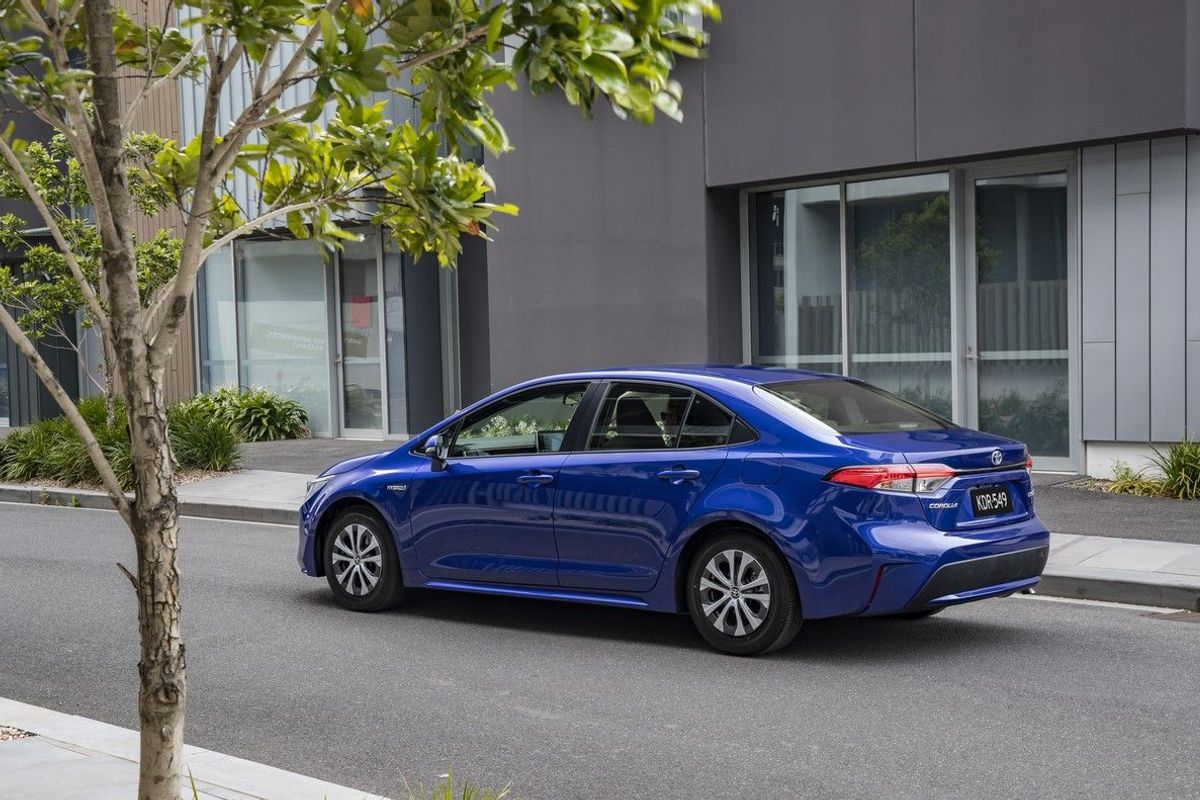
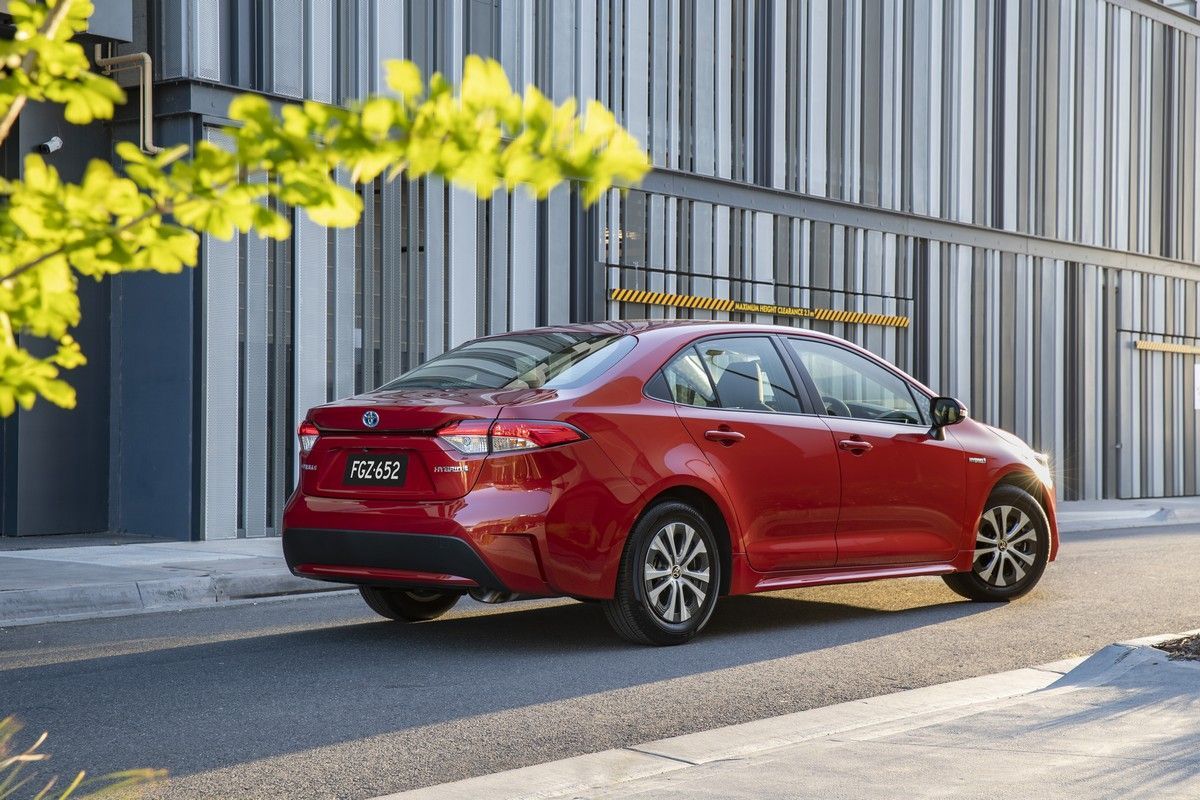
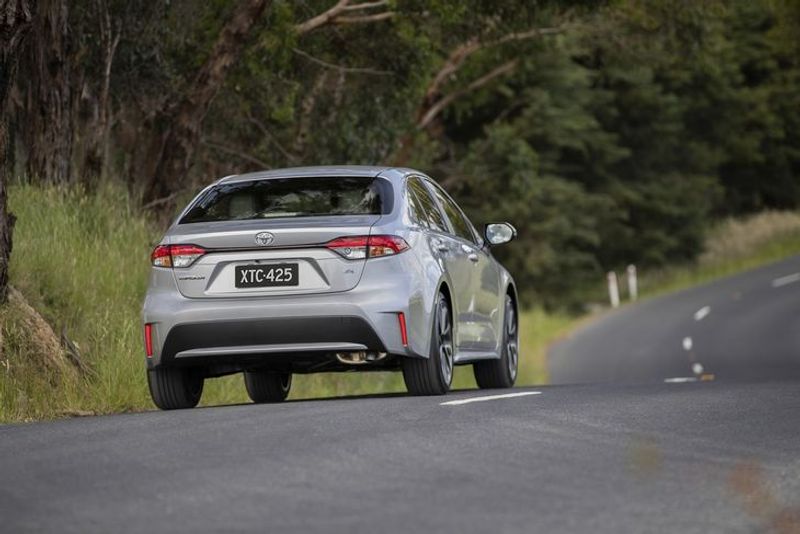
The new Corolla has a longer rear overhang than its predecessor, but slimline tail-light clusters make its rear-end appear… well, pert.
The dimensions of the new-generation Corolla sedan are incrementally larger than those of the previous model; it measures 4 630 mm in length (10mm longer) and 1780 mm in width (5 mm broader), but sits 25 mm lower to the ground (height: 1 435 mm). Toyota makes a bit of a big deal about the fact that the front overhang is shorter and the rear overhang longer – the design change, according to Toyota Australia, “delivers an entirely new dynamic appearance”.
You can make your own mind up about that claim, but the versions sold in Australia all come with nicely designed LED headlights with integrated LED daytime running lights, and there are LED tail-lights, too.
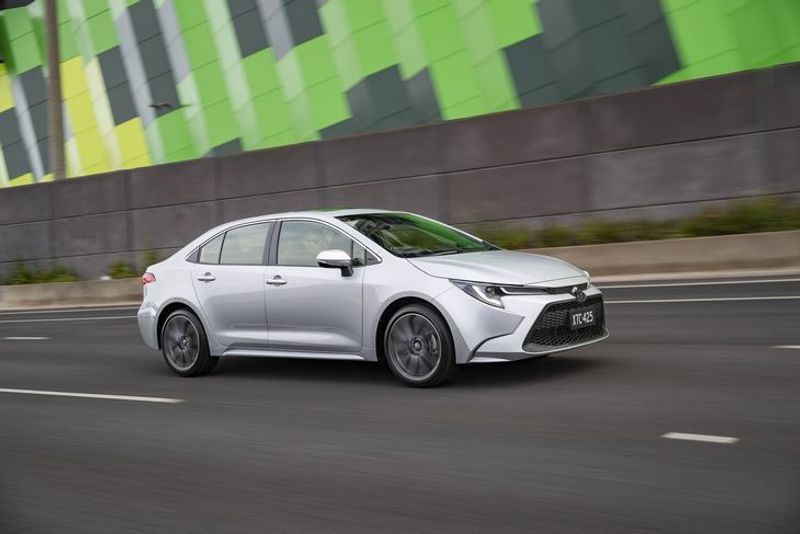
The newcomer looks relatively low-slung; proportion-wise, it's a more balanced/elegant car than the current Corolla sedan.
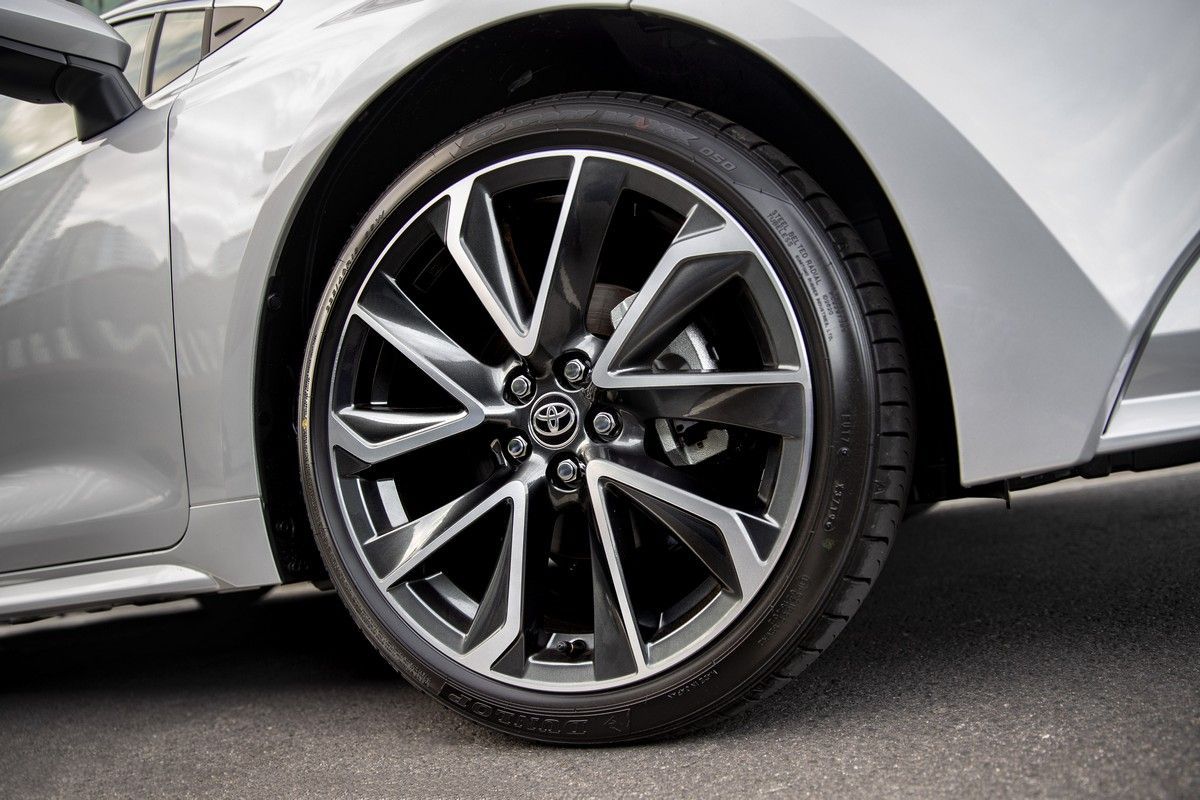
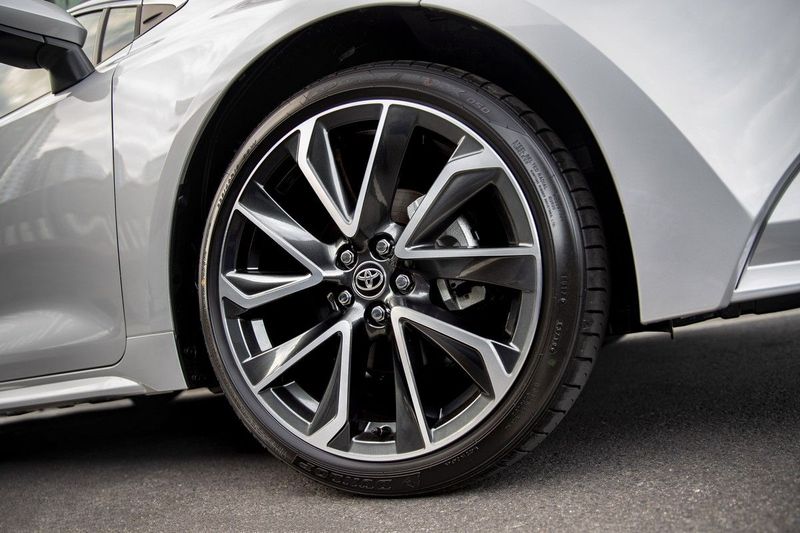
Aussie-market versions roll on wheels ranging from 15-inches to 18-inches in size; as is the case with virtually every contemporary passenger vehicle design, the larger wheels make the sedan look more purposefully-stanced, the smaller ones less so. But, at the very least, the models sold in Australia all have alloy wheels rather than steel wheels with covers, all of which compliment the design nicely.
Fresh, technology-laden interior
You’re unlikely to feel intimidated when it comes to the interior design of the new Corolla sedan – it is more stylish than before, sure, but it’s not at the level of, say, the new-generation Mazda3 when it comes to stylishness.
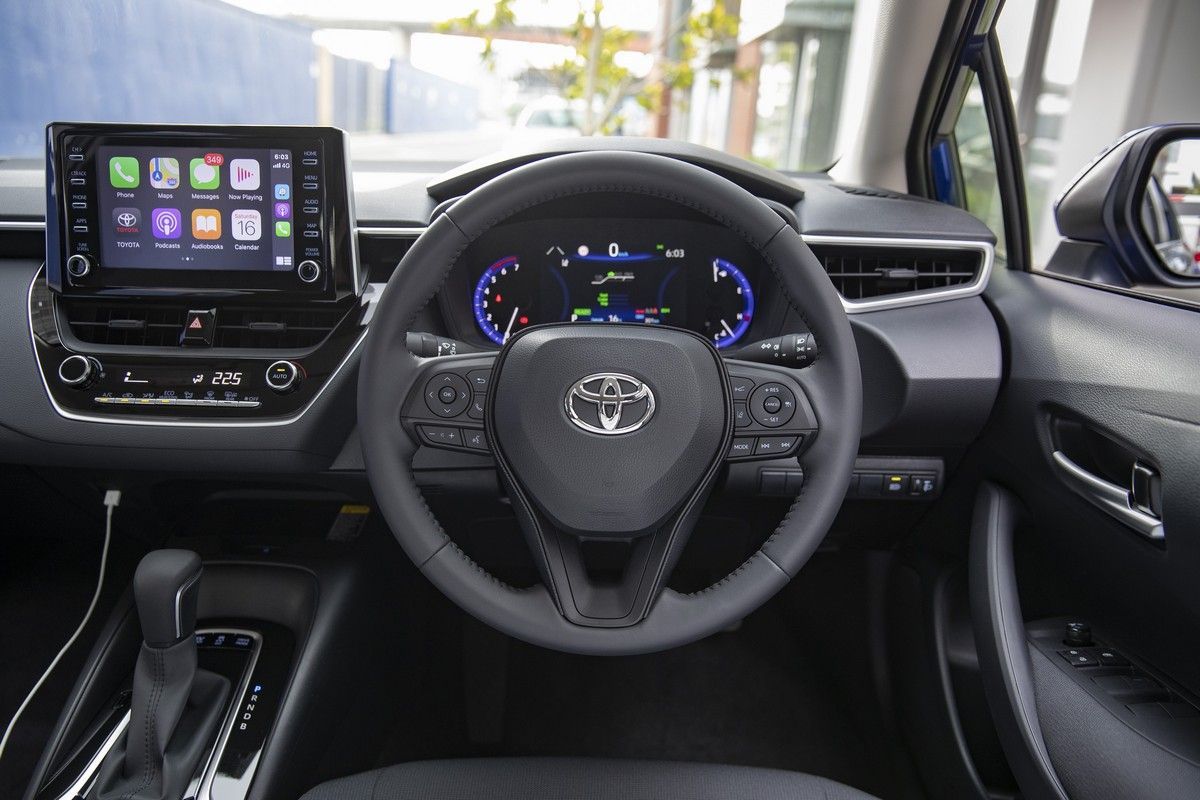
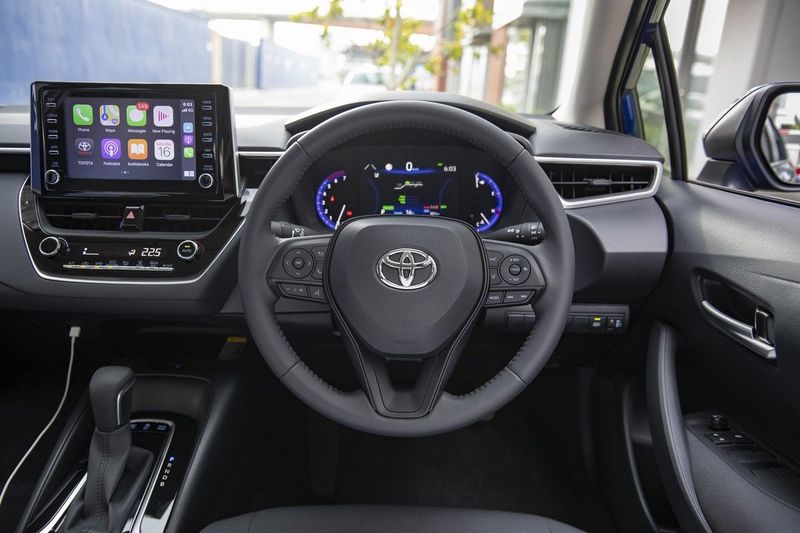
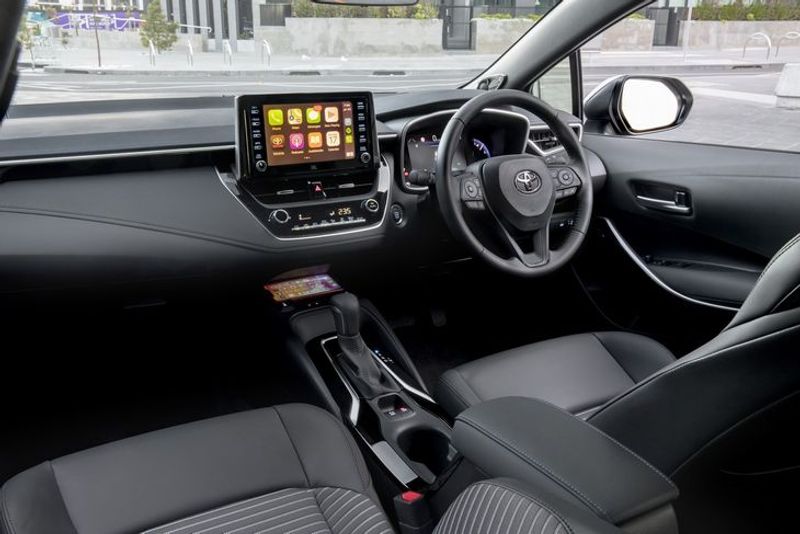
Will we see an all-digital dash on SA-spec models? Note how the enlarged touchscreen has enabled the fitment of a simpler fascia.
It does have the typically Toyota approach to cabin practicality, though. There are cup holders between the front seats, good storage options including a covered centre console, and big door pockets with bottle holders.
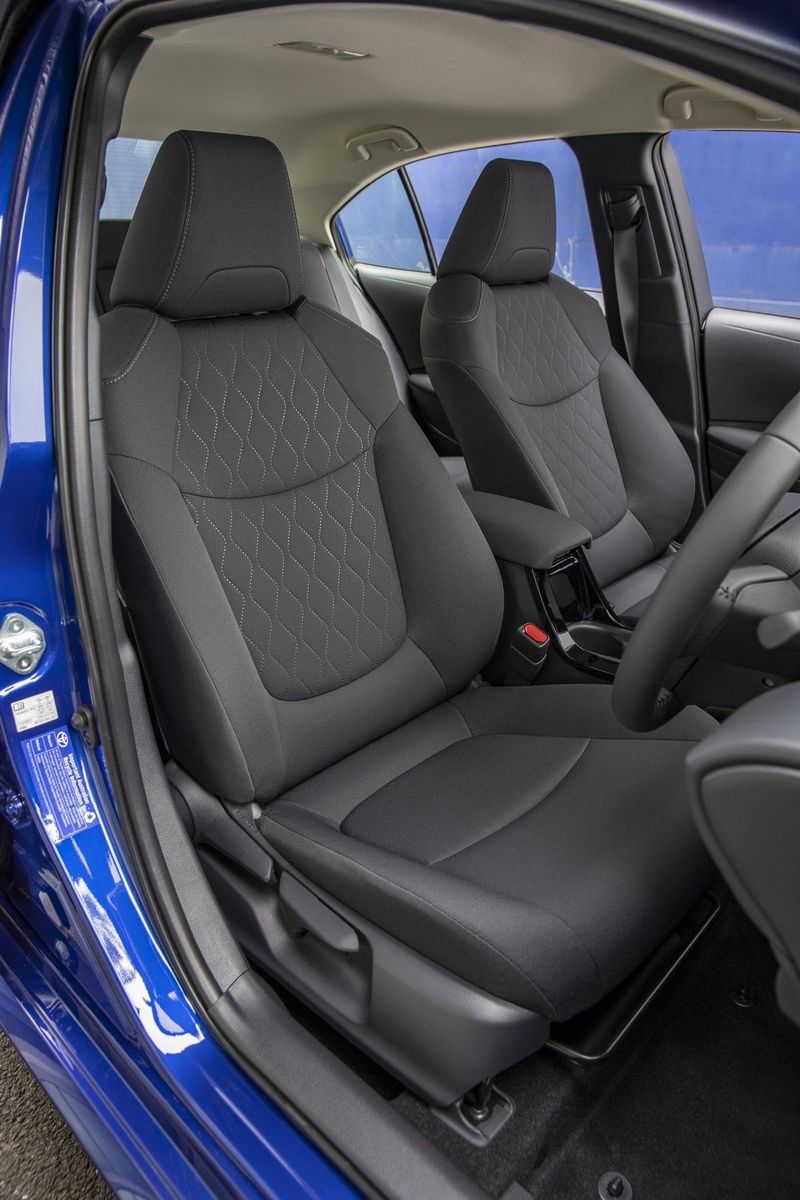
The design is neat – in all models sold in Australia, there’s a nicely-sized (8-inch) touchscreen infotainment system, which certainly has more flair than the last model's digital interface, while the instrument cluster features a 4.2-inch digital instrument screen (with kph reading). The materials are nicer than before, too – the plastics are of better quality, the knobs, buttons and levers all feel more substantial than in the previous model, plus the front seats are more comfortable.
At 1.82 metres in height, I find that most small sedans fit my frame fine, but I wouldn’t call many of them genuinely spacious. That’s not the case with this car: when you sit behind the driver's seat (when it is set up to accommodate your preferred driving position), there’s enough room in the back seat to make you think twice about whether you really need to shop for a bigger sedan (or family car), after all.
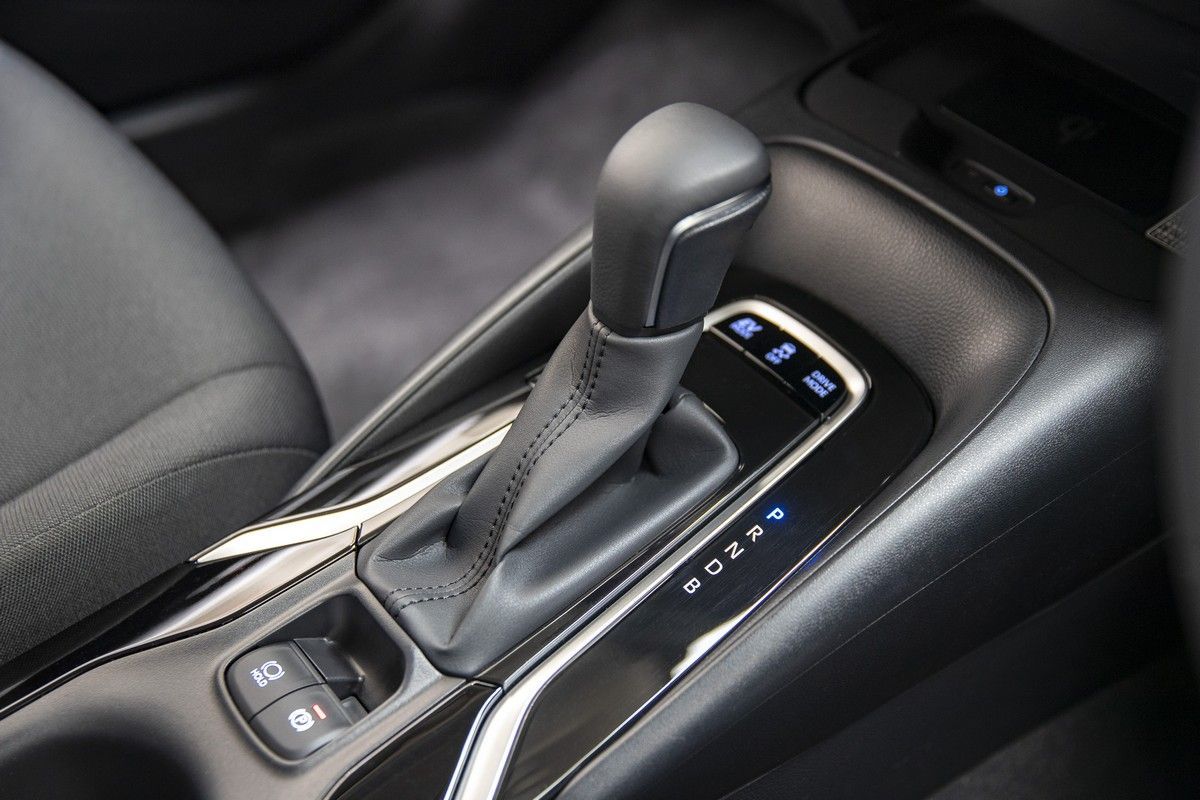
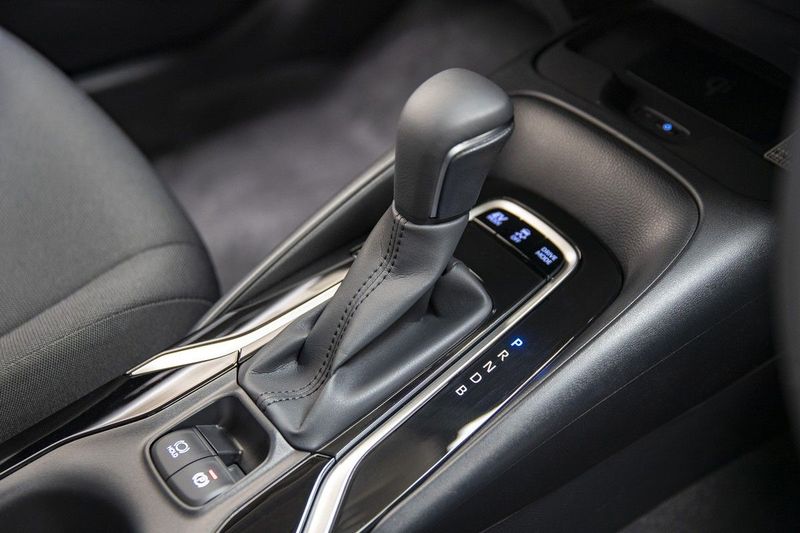
As in the Corolla Hatch and RAV4, the 10-step continuously variable automatic transmission features a mechanical first gear.
When I was seated aft, I had several inches of space to spare in front of my knees, plenty of headroom and foot-room, and there’s even enough space to slot three adults across the bench. If you have children, there are outboard ISOfix child-seat anchor points and three top-tether points, too. There are regrettably no rear seat air-vents, but there are map pockets, door pockets with bottle holders, and a flip-down armrest with cup holders.
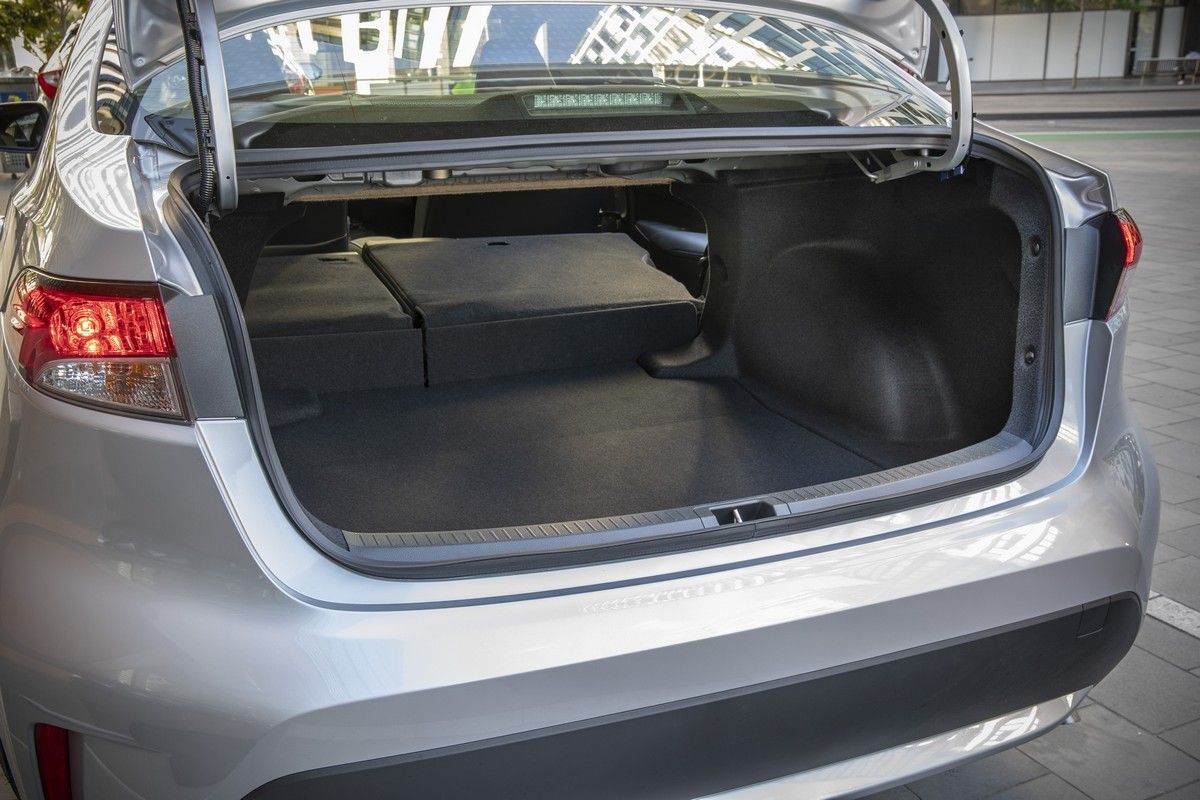
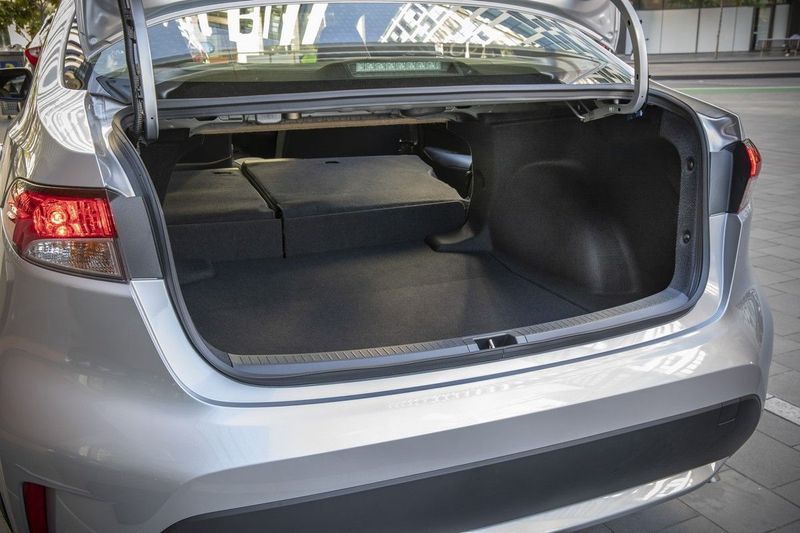
But let’s talk about the boot – because if you buy a compact sedan, you should get a capacious luggage area. And in the Corolla sedan, the capacity is claimed at 470 litres – more than double the size of the Corolla hatch (217 litres with spare wheel fitted). The Australian-spec sedan comes with a space-saver spare wheel, but in South Africa, a full-sized spare is traditionally fitted and I don't believe Toyota SA will change that for the new model.
The new Corolla's boot capacity is good. Note that South African-market cars are likely to feature full-sized spare wheels, not space-savers.
The seat backrests can be folded down in a 60:40 split, but there are no remote release levers in the boot – you have to release the sections from the top of the rear seatback.
Satnav, audio and infotainment
To reiterate, the Corolla sedan in Australia comes with a nice, clear 8-inch tablet-style media screen on top of the fascia, and this time there’s smartphone mirroring technology – so, users of Apple CarPlay and Android Auto are catered for. This tech just means you don’t have to touch your phone when you’re on the move – and that’s a nice feature, both in terms of convenience and safety.
There’s a bit of an issue, though: the USB port is almost hidden (it's located to the left, under the fascia). Some other manufacturers offer illuminated surrounds for their USB ports, but not this car. Once you’re plugged in you’ll probably end up leaving your cable in all the time, but it’s worth noting you might want to invest in an extra cable! Aussie models get a second USB port in the centre console bin, and some variants sold here also get a wireless charging pad.
A wireless charging pad is certainly a nice-to-have feature, perhaps it will be offered on our top-spec Corolla sedan derivative.
Toyota’s media system menus are decent, but not quite as intuitive as some other media units out there. Thankfully there are volume and tuning knobs, and an array of hard buttons to assist with the touchscreen controls. The climate control settings aren’t run through the screen, which is great… The fascia design is clear and simple enough and making a quick adjustment to the fan setting or temperature doesn't require a rummage through the touchscreen menu.
In Aussie models, there’s a 6-speaker sound system in the lower grades, while the top-spec variant has a stronger 9-speaker JBL stereo. That model also gets a head-up display and a larger (7-inch) digital driver info screen.
The on-road experience
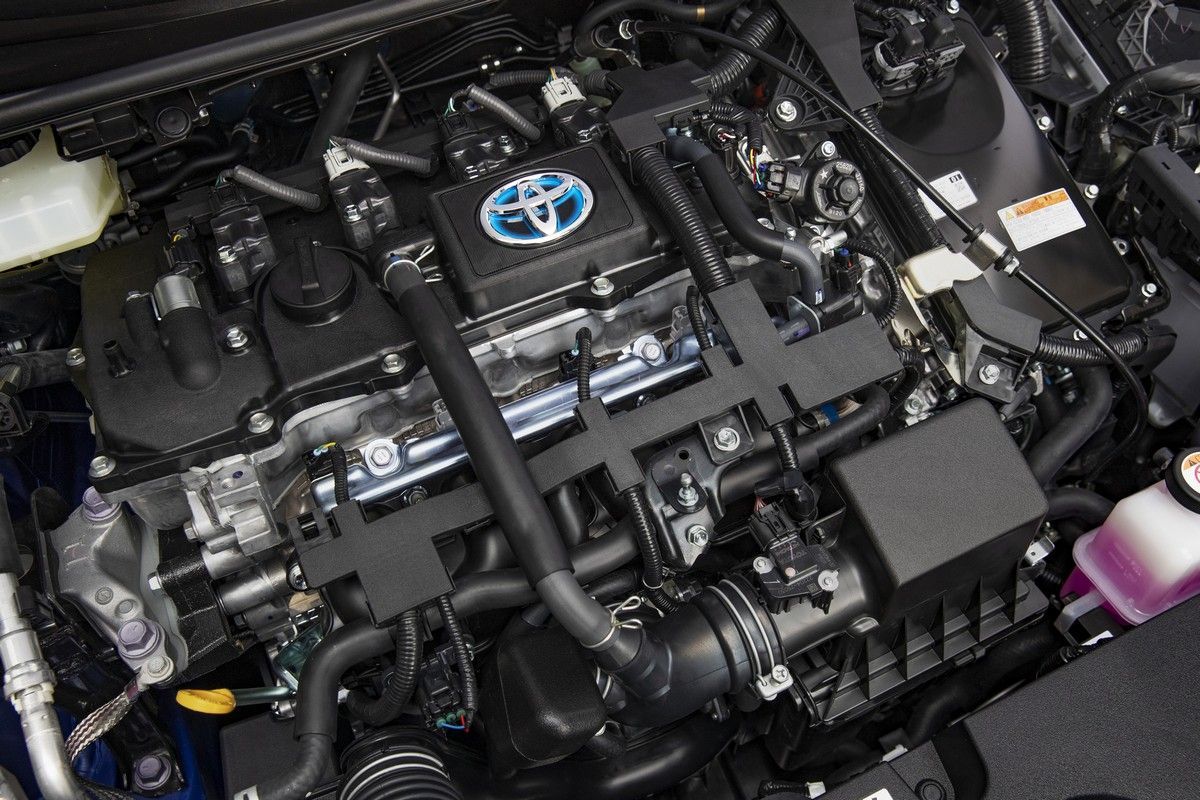
The powertrains offered in Australia may not represent what will be offered in South Africa. There are two options here: the now-familiar 2.0-litre 4-cylinder petrol engine used in the Corolla Hatch with peak outputs of 125 kW and 200 Nm (the 5-door version in South Africa has a 1.2-litre turbopetrol, but the RAV4 has a 127 kW/203 Nm 2.0-litre motor), as well as a 1.8-litre 4-cylinder petrol-electric hybrid model with a peak power output of 90 kW.
The Corolla rides reasonably comfortably (depending on tyre size/type) and its handling ability is surprisingly deft.
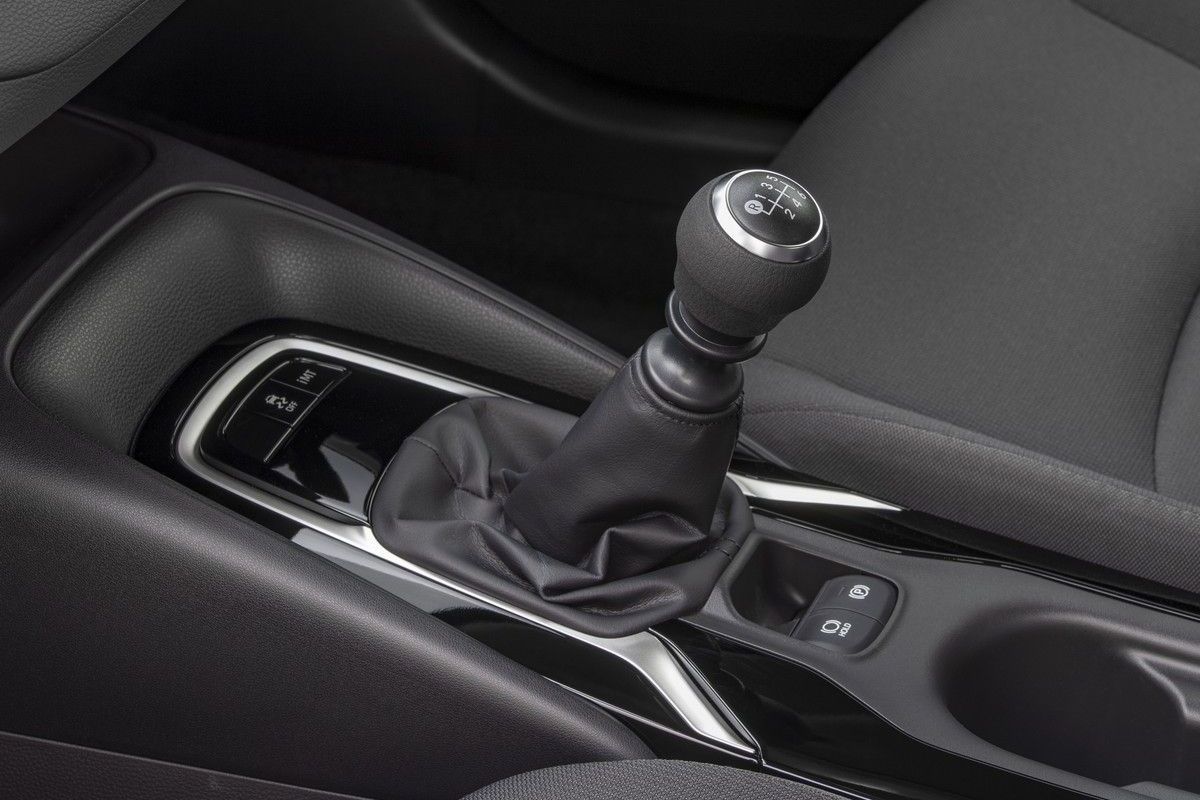
The hybrid is offered only with a continuously variable transmission (CVT), and that type of transmission is also fitted to the non-hybrid version – but it’s a clever 10-speed CVT with a launch gear, which is a mechanical first gear to help you get away from a standstill more smoothly (South Africans have already experienced that 'box in the RAV4 and Corolla Hatch). There’s a 6-speed manual in the entry-level version.
Of course, this is likely to mean little to South African customers, as it is more likely that the brand’s ZA arm will offer a small turbodiesel and a selection of smaller petrol options. Hopefully one of those engines is the charming little 1.2-litre 4-cylinder turbopetrol motor from the CH-R and Corolla Hatch, which has 85 kW, 185 Nm and is a little sweetie – in manual or CVT auto guise.
I drove a 2.0-litre CVT derivative and it’s a perfectly suitable powertrain for a car like the Corolla sedan. It revs freely and accelerates smoothly (yes, from a standstill and through the rev-range), and it’s nicely refined, too. It remains unclear if the new-generation model will continue on with the current version’s 1.3-litre petrol (73 kW/128 Nm), 1.4-litre diesel (66 kW/205 Nm), 1.6-litre petrol (90 kW/154 Nm) and 1.8-litre petrol (103 kWw/173 Nm) engine options. But, engines aside, the driving experience in the 12th-generation sedan is certainly more appealing and involving than that of the outgoing Corolla.
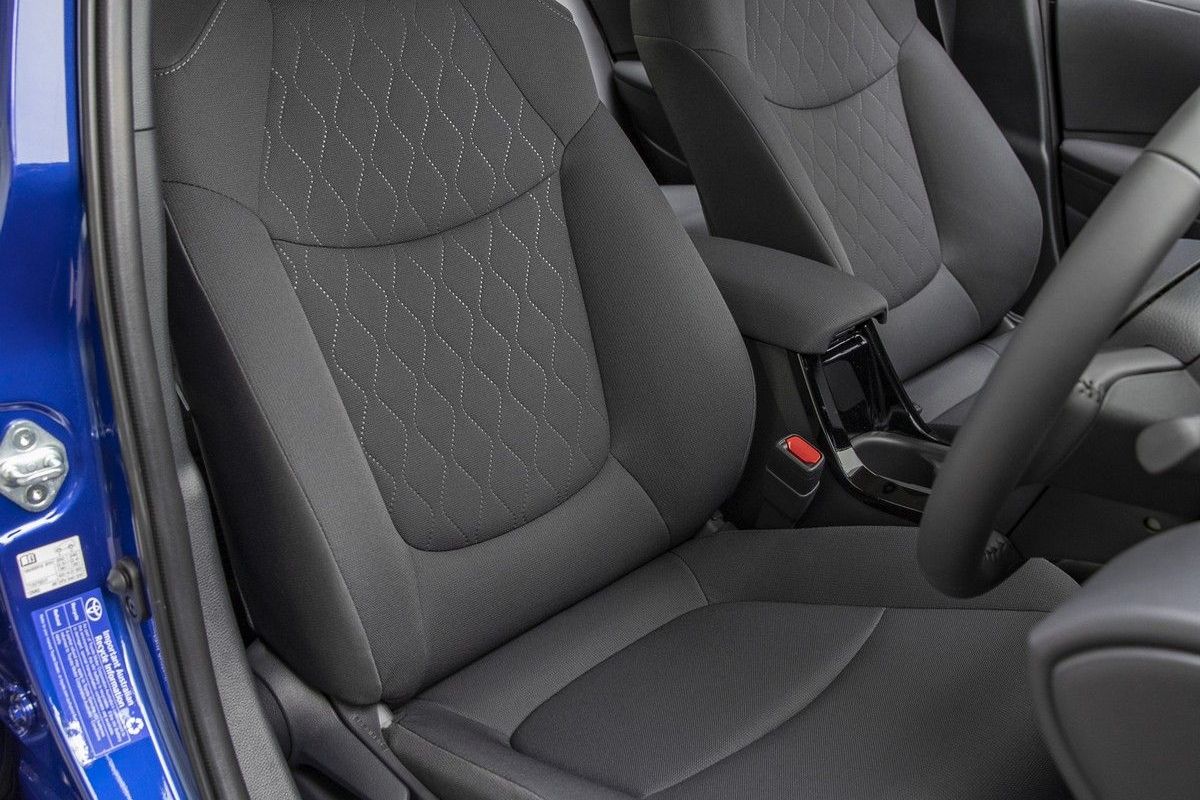
Our correspondent appreciated the increased comfort offered by the new-generation Corolla's front seats.
It steers accurately and with a nice natural feel to the tiller: it's light at lower speeds, enjoyable in corners away from the city, and predictable on the open road, too. As with the Corolla Hatch and C-HR, the Corolla sedan has a multi-link rear suspension, but it doesn’t feel quite as sophisticated at its siblings when it comes to ride comfort – though it could hardly be considered unsophisticated. Sharp-edged bumps can be felt through the body, but the smaller lumps and bumps in the road are dealt with very well.
Safety and reliability
It is still to be determined as to what levels of safety technology and equipment Corolla sedan models sold in South Africa will come with, but in Australia, all variants are loaded with good gear, including a pre-collision safety system with pedestrian and cyclist detection and autonomous emergency braking, as well as active cruise control, lane-keeping and lane departure warning technology, and road-sign recognition technology.
Indeed, those tech inclusions are some of Corolla’s big selling points in many markets. It is expected, though, that South African-delivered Corolla models will have 7 airbags (dual front, front side, driver’s knee, curtain), a reverse-view camera, the aforementioned ISOfix child-seat anchors, ABS with EBD and brake assist, as well as vehicle stability control (VSC).
The 18-inch wheels certainly are eye-catching, but in South Africa, the largest alloys available have been 16-inch items.
A large part of the reason people have flocked to Corolla over the years is its reputation for trouble-free motoring and strong resale value. The new-generation Corolla should follow suit, and is likely to feature a service plan with intervals every 12 months or 15 000 km (whichever occurs first) but continue to run on the current service plan of six scheduled maintenance visits/90 000 km.
A 3-year/100 000 km warranty plan should be offered on the new model, but, as is the case with most Toyota products, customers who wish to extend their cover should be able to for as long as 6 to 8 years/unlimited km.
Summary
The new-generation Toyota Corolla sedan remains a practically-packaged, well-made and sufficiently-refined sedan. However, it is appreciably more technology-oriented than its predecessor and (believe it or not, when you see it in the metal…) quite attractively styled. While there is no doubt it will once again appeal to fleet customers, private buyers could also be rewarded if they’re willing to think outside that "I must buy a popular high-riding, tailgated vehicle" box.
In fact, the new 2020 Corolla sedan is a more convincing and complete offering than the previous model by some margin, and while this 12th-generation small sedan may not prove to be the panacea to the crossover/SUV craze, it certainly offers plenty for family-car customers to consider. Suffice to say that if the sedan-shaped vehicle is to die out one day, the Corolla 4-door will surely be one of the very last models to be consigned to the big scrapheap in the sky.
The facelifted Mazda2 has arrived in South Africa! See specification and pricing below…
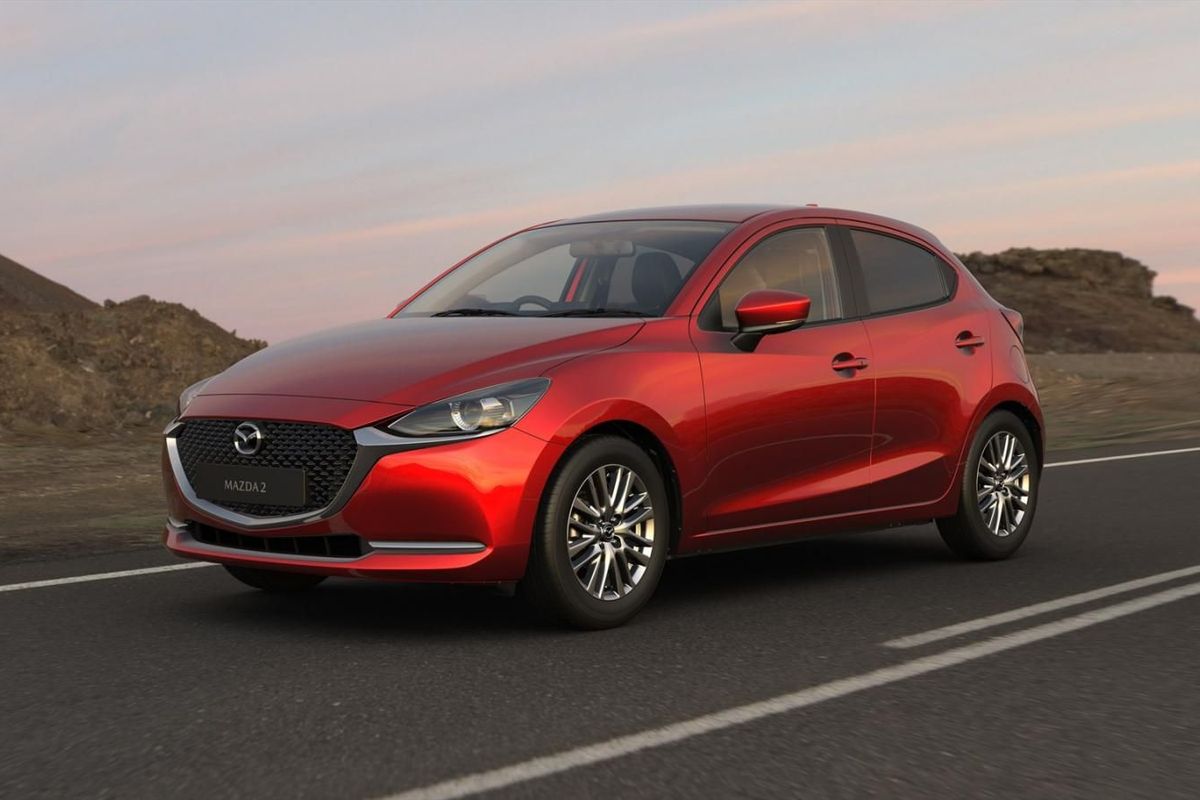
The stylish Mazda2 compact hatchback has been updated and now features fresh styling and enhanced specification.
What’s changed?
A total of 6 Mazda2 derivatives are available and the trim levels include the entry-level Active, mid-sped Dynamic and Individual and range-topping Hazumi trim. Bluetooth capability is now standard across the range. For Dynamic derivatives and up, features such as an automatic dimming rearview mirror, Apple CarPlay / Android Auto and Dynamic Stability Control (DSC) is also included as standard.
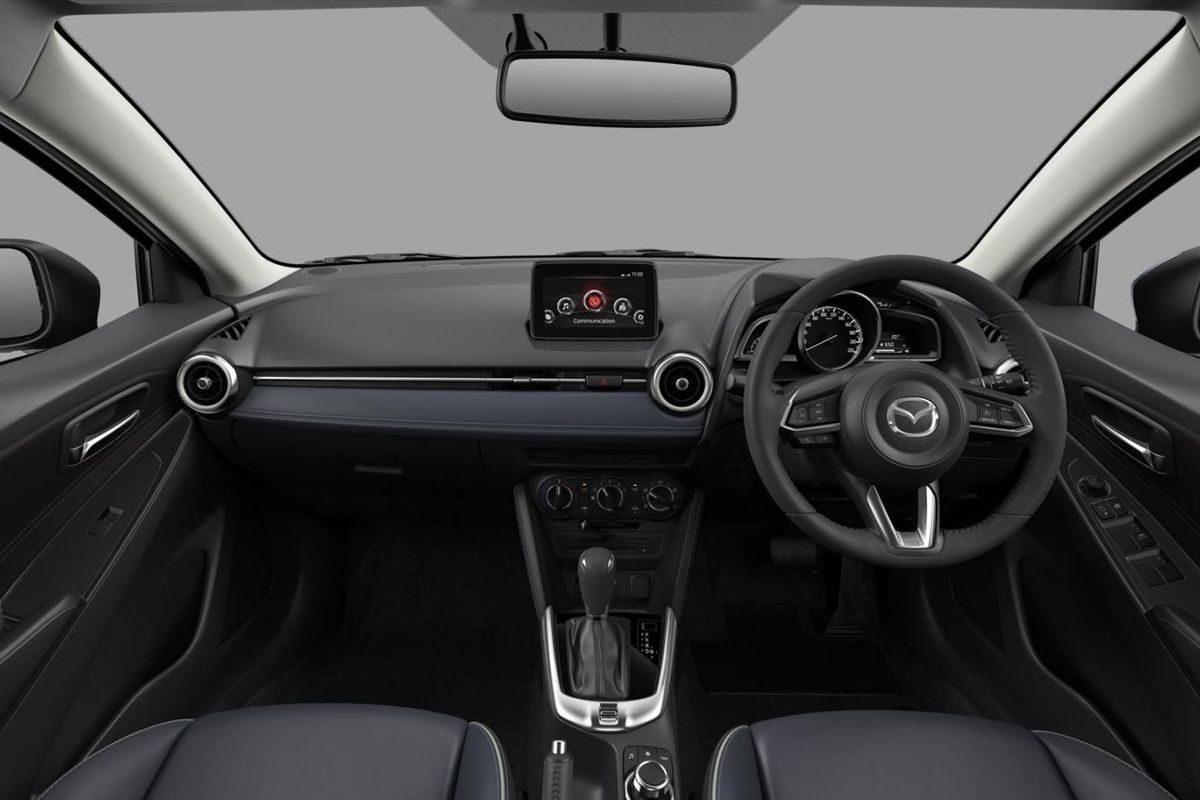
The interior also benefits from a new front seat design to improve comfort levels. As for exterior styling, changes include a front and rear chrome bumper strip and shark fin antenna seen on the Mazda2 Individual and Hazumi derivatives. The Mazda2 Dynamic rides on new 15-inch silver metallic alloy wheels while the Individual derivative is furnished with 16-inch, high-gloss painted alloy wheels. LED headlights are also standard across the range.
Safety specification for the Mazda2 Dynamic derivative now includes side and curtain airbags (6 airbags in total) while the Individual trim adds automatic folding mirrors, a reverse camera and rear parking sensors. The Hazumi derivative adds Rear Cross Traffic Alert to its standard specification.
Mazda2 – Price in South Africa
Mazda2 1.5L Active Hatch Manual – R254 300
Mazda2 1.5L Dynamic Hatch Manual – R278 100
Mazda2 1.5L Dynamic Hatch Auto – R294 100
Mazda2 1.5L Individual Hatch Manual – R302 400
Mazda2 1.5L Individual Hatch Auto – R318 400
Mazda2 1.5L Hazumi Hatch Auto – R342 200
The Mazda2 is sold with a 3-year/unlimited km warranty and 3-year/unlimited km service plan.
A large capacity turbocharged V8 engine is in development
Lexus has quietly confirmed the existence of a new engine which could ensure more V8-powered products from the brand, in future. As downsizing pressure has forced many automotive companies to adopt turbocharging, the V8 engine configuration has come under scrutiny.
Despite V8s being a small volume of overall automotive sales, they trade mostly in the more profitable market segments. This has incentivised brands to keep them within product portfolios. For Lexus, its largest vehicles are all powered by V8 (RC, LS and LX) and there is a vested interest for the Japanese car company to keep this engine configuration in production. That challenge has now seemingly been solved by forced induction.
In many markets Lexus has become a unique product offering with its naturally-aspirated V8s, at a time when most rivals have all downsized and reverted to turbocharging for their V8 engines. To retain its V8-powered product appeal Lexus has now confirmed that the company’s engineers are developing a twin-turbocharged V8 petrol engine, due to be revealed in 2020.
Although engine capacity is unconfirmed, it is logical that Lexus would make this new engine 4-litres, which is what all its German rivals have done. This would allow it to benefit from a global supply network and scalable components, which have been established to support the development and production of 4-litre V8 engines.
With twin-turbochargers this new engine, due for eventual production beyond 2020, should make slightly more power than the current LC500’s 5-litre V8, which cranks 351 kW.
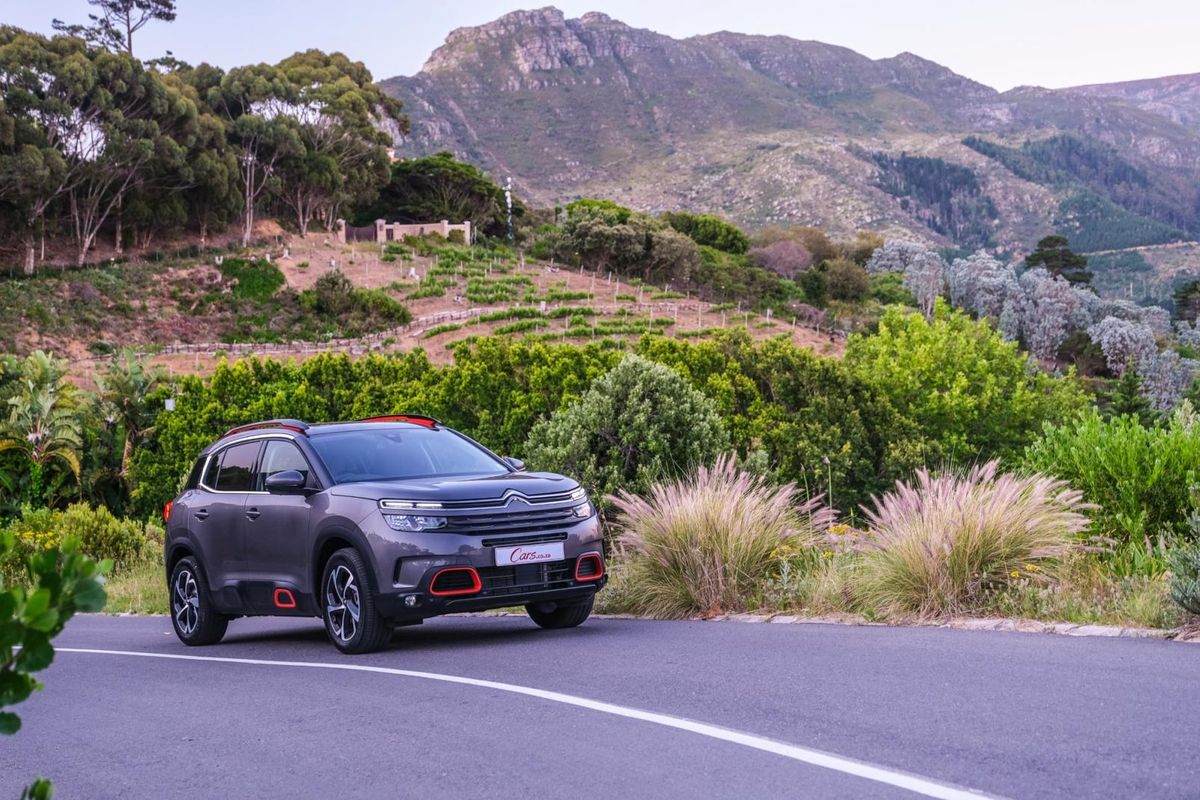
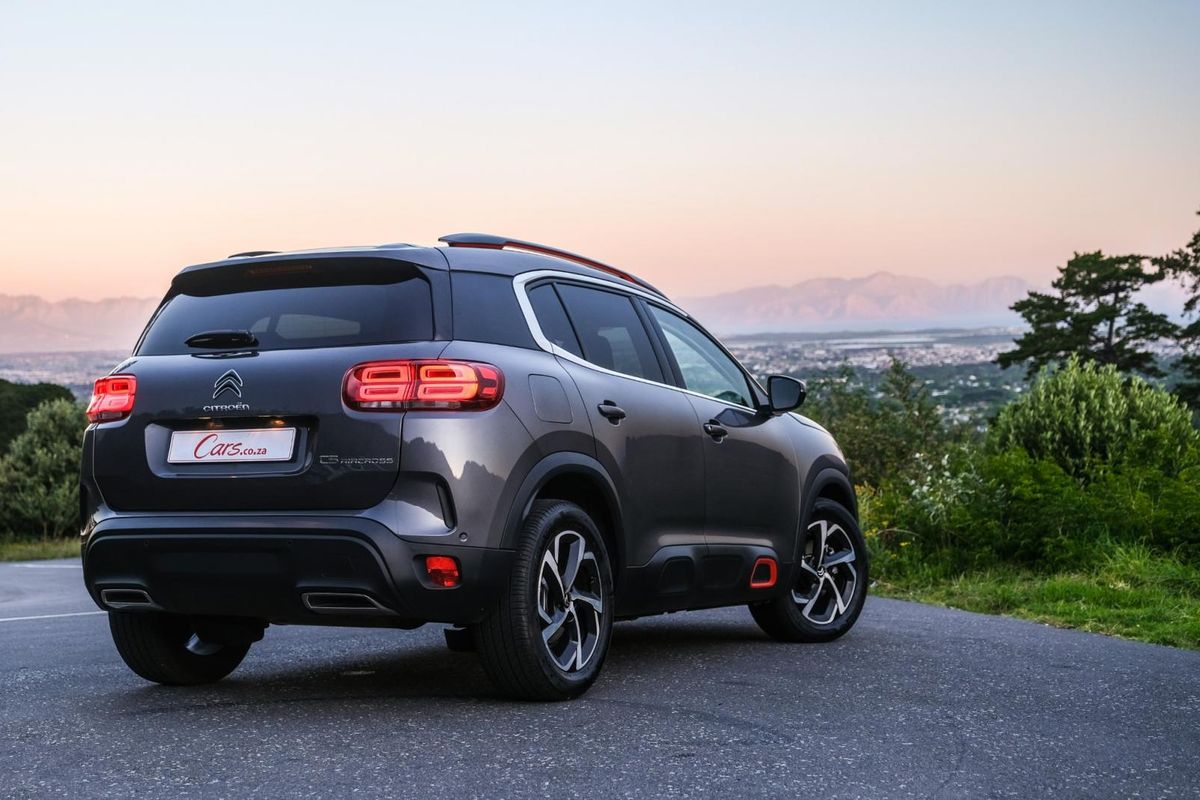
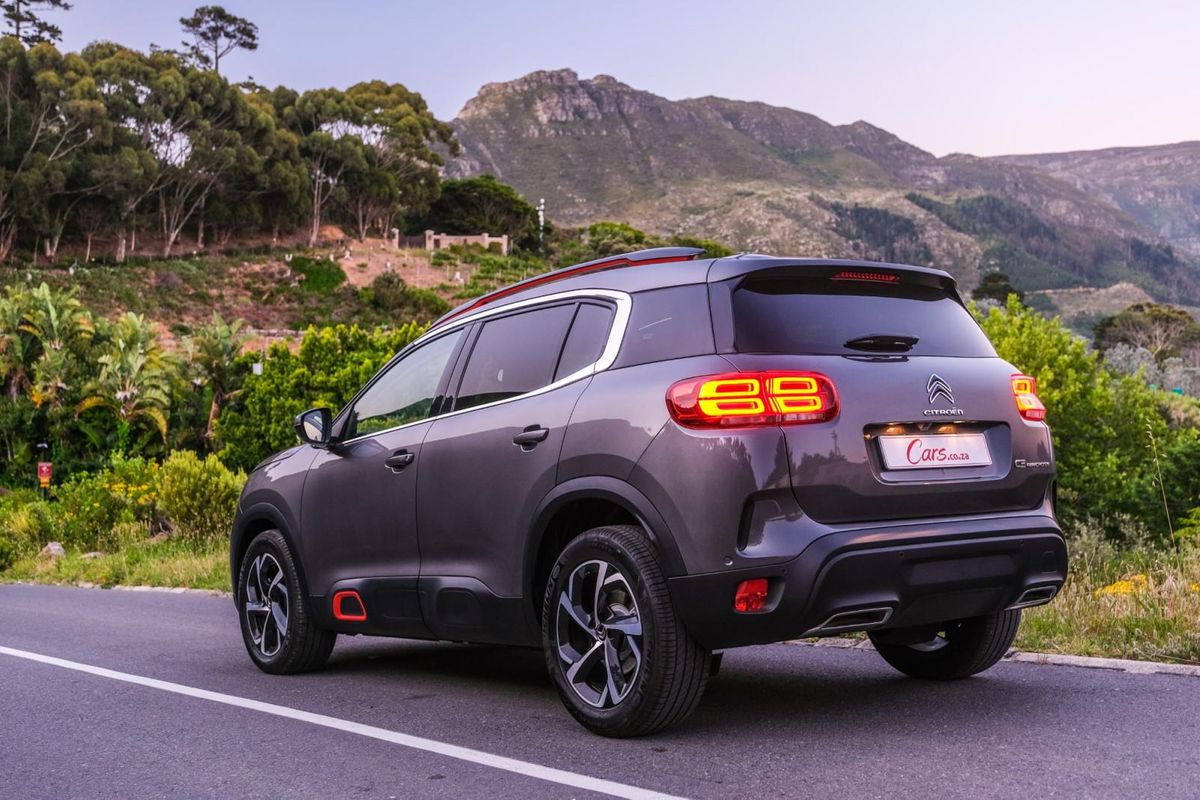
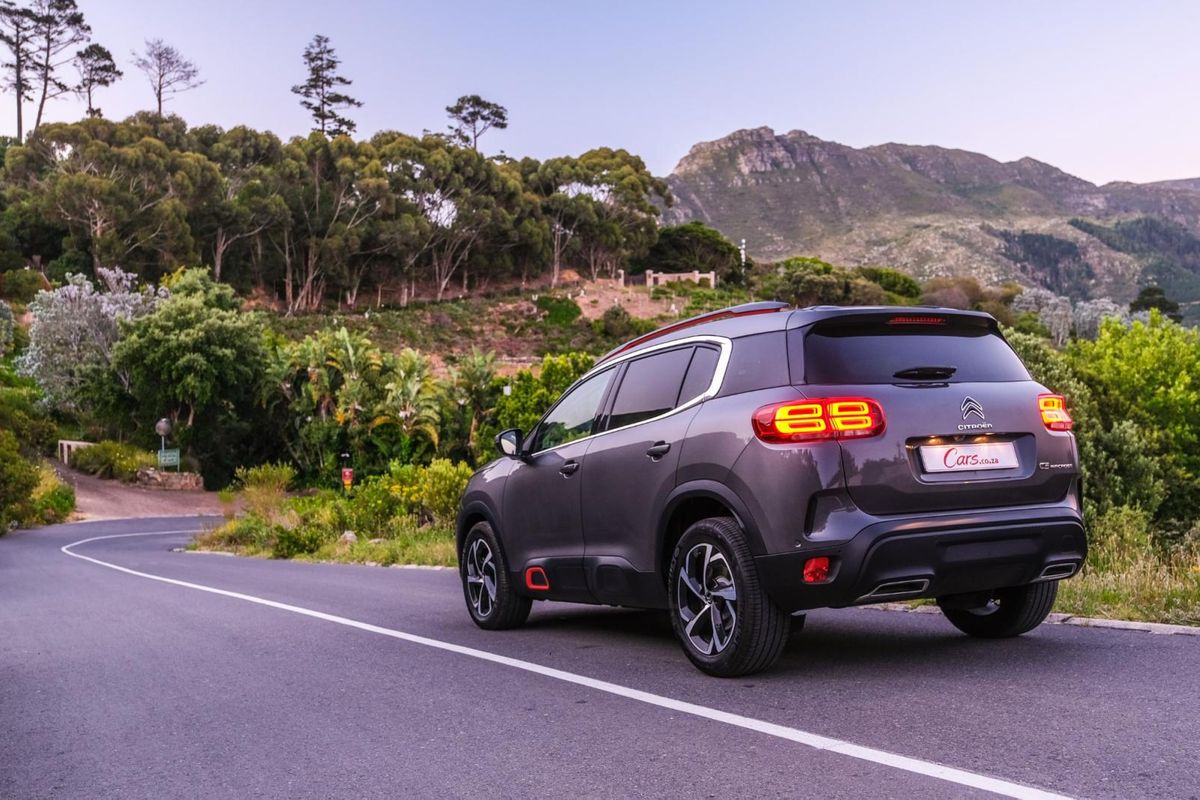
Citroen returned to South Africa in 2019… Could its most expensive model – the C5 Aircross – also be its best offering? It joins a very competitive family-car segment, in which buyers are looking for a mix of design appeal, practicality, value and a good balance between performance and economy. How well does the Citroen deliver on these expectations? Let’s find out!
We Like: Unique styling, performance, lots of standard features, practicality
We Don’t Like: Negative perceived brand perception, fuel consumption could be better
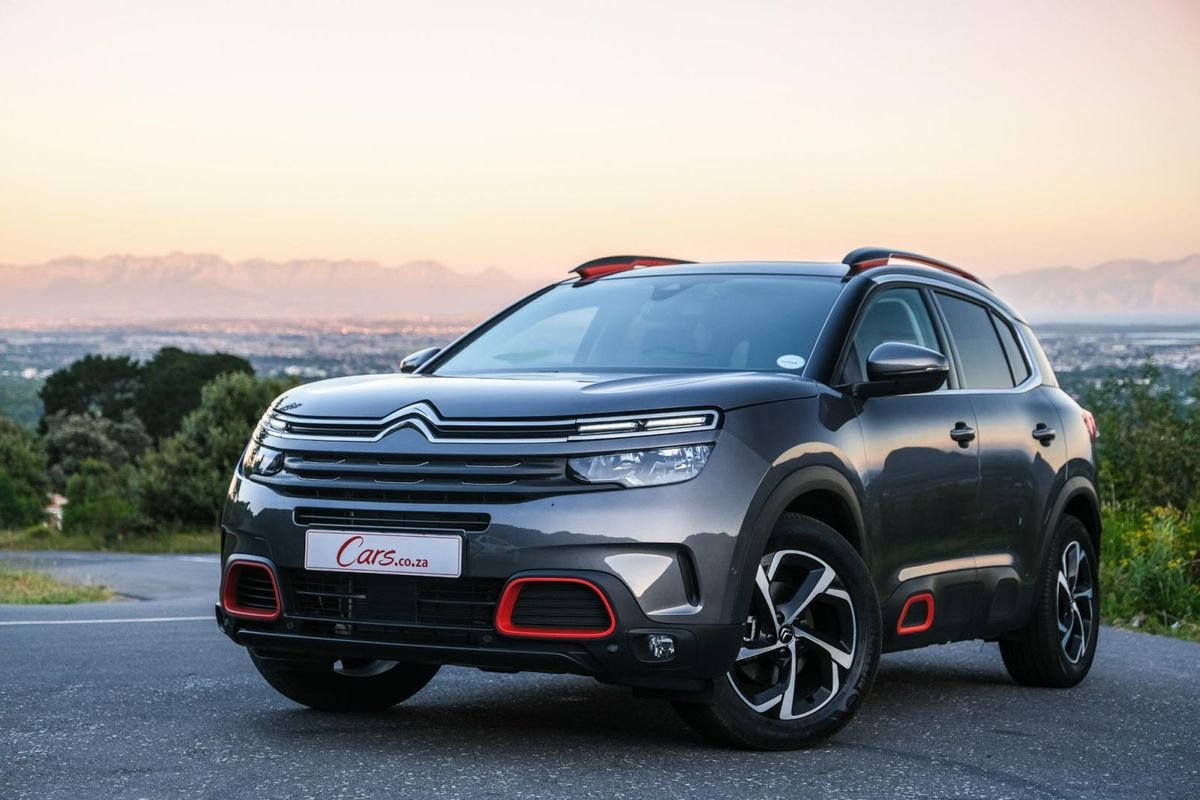
The Citroen C5 Aircross brings much-needed vibrancy to the family car segment – we like it!
After a 3-year absence, Citroen is looking to re-establish itself in the local market by focusing its efforts on 3 core products: the C3 compact hatchback, C3 Aircross crossover and this model: the C5 Aircross family SUV.
The market's obsession with all-things-SUV shows no signs of wavering, so the C5 Aircross is a very important offering in Citroen’s local lineup. Compared with most of its rivals, which includes products such as the Hyundai Tucson, Kia Sportage, Mazda CX-5, Toyota RAV4, Volkswagen Tiguan and so forth, the Citroen offers eye-catching styling and a measure of oddball appeal. Many curious onlookers gawked at the C5 Aircross during its tenure in our test fleet…
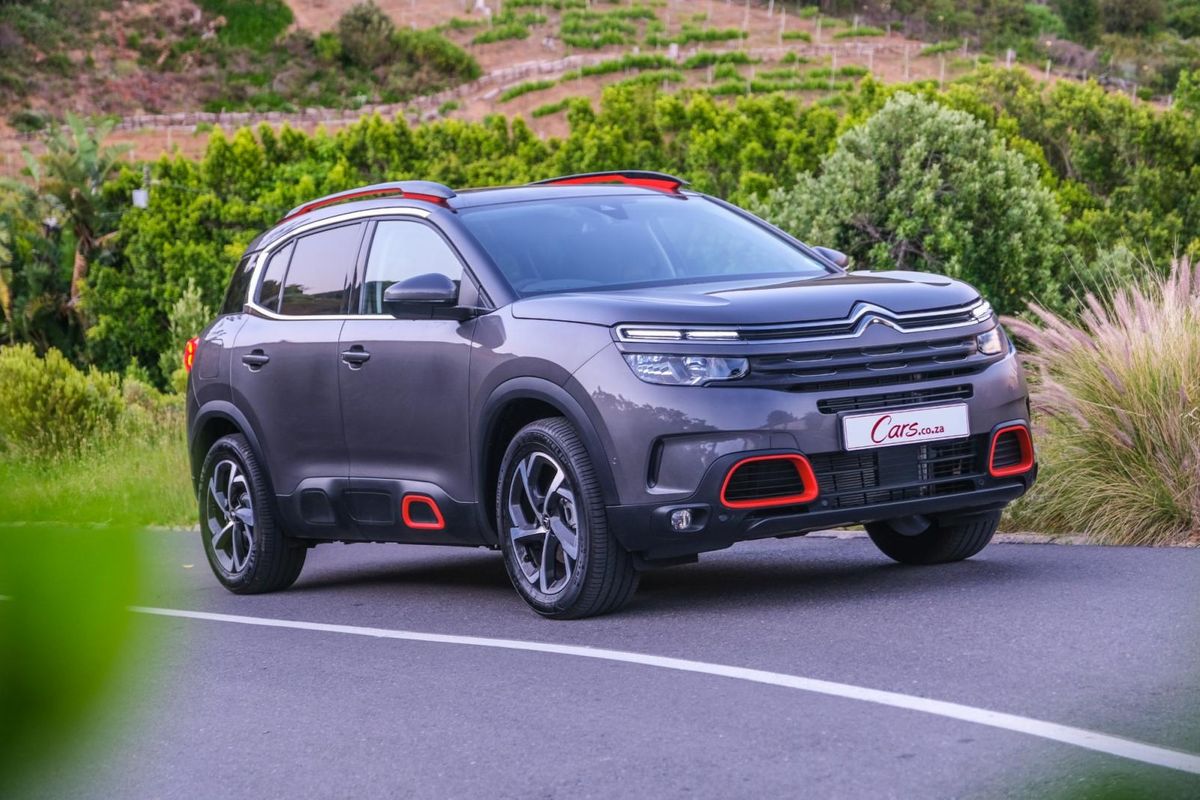
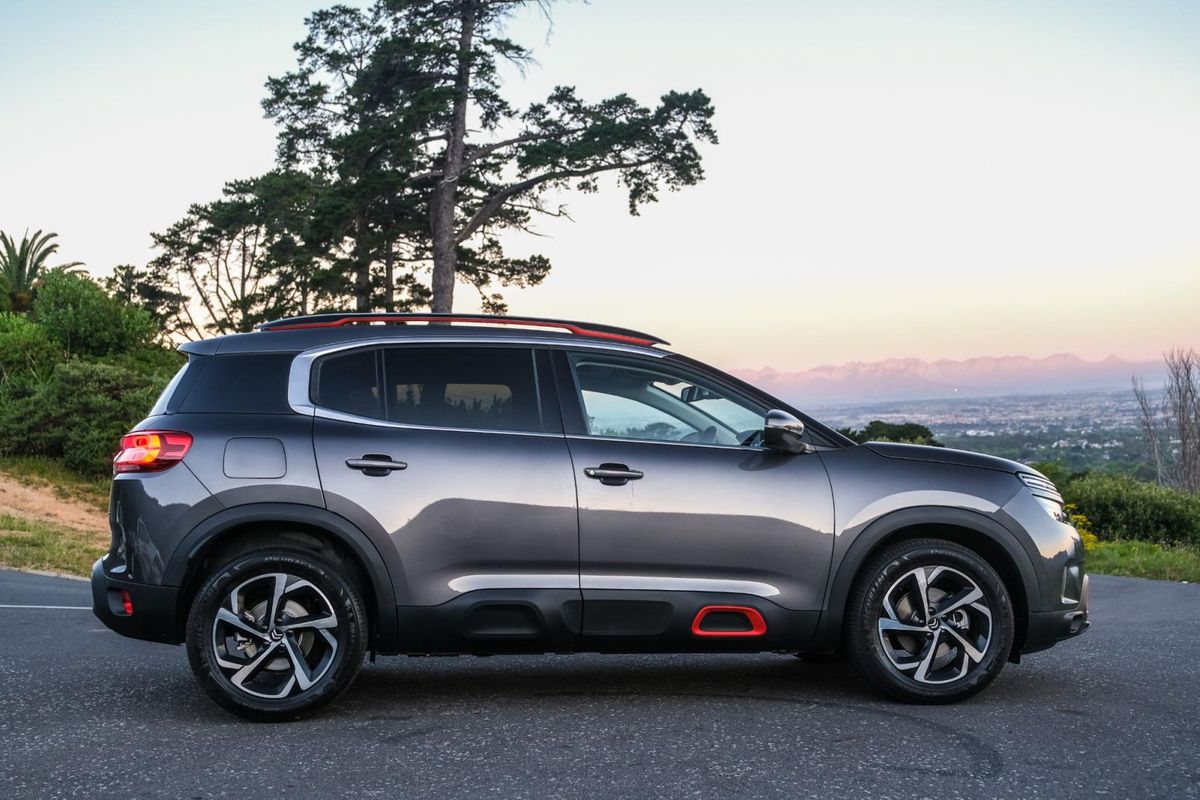
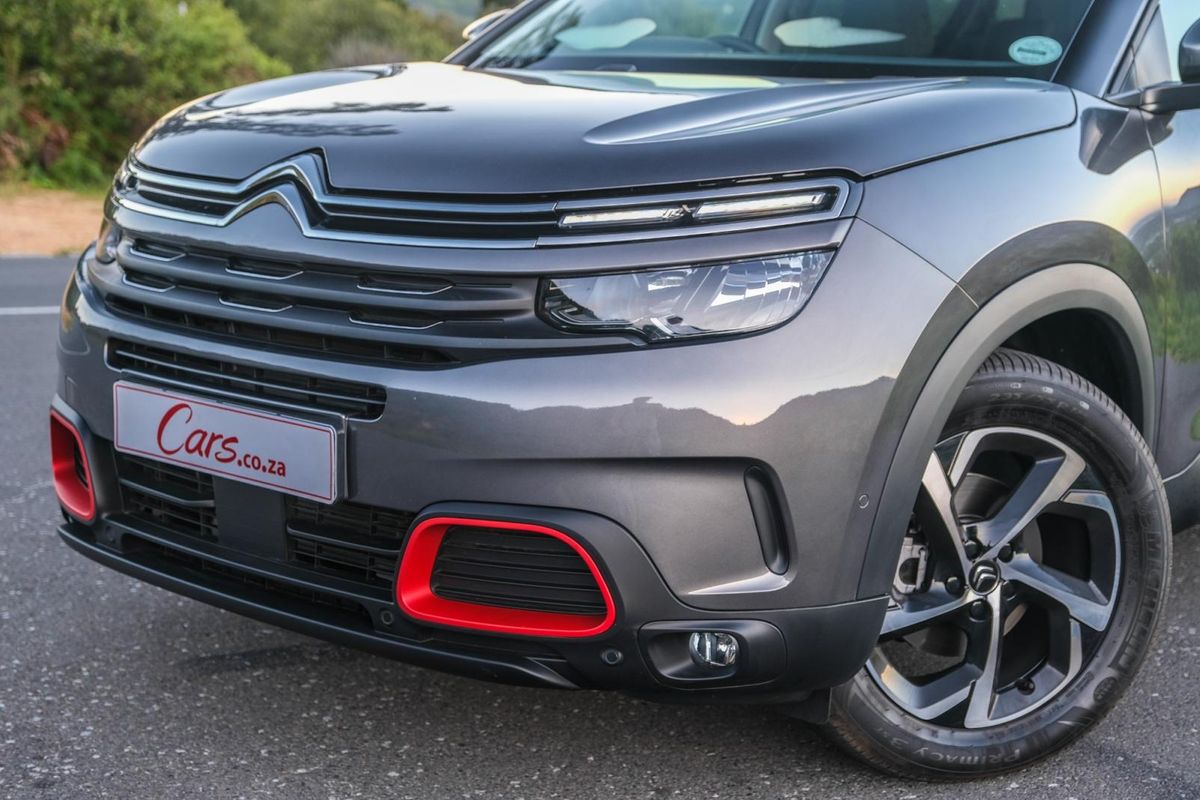
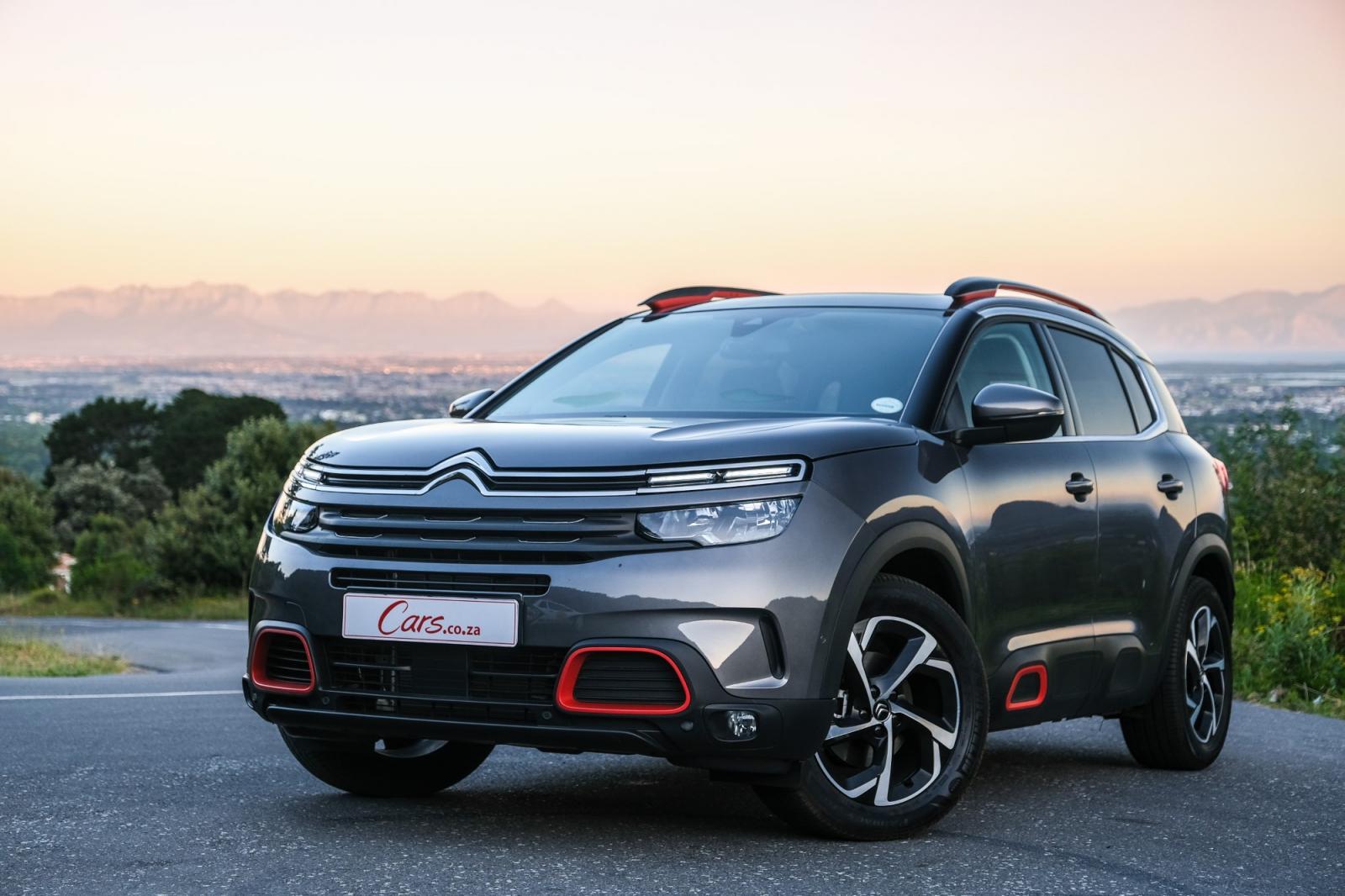
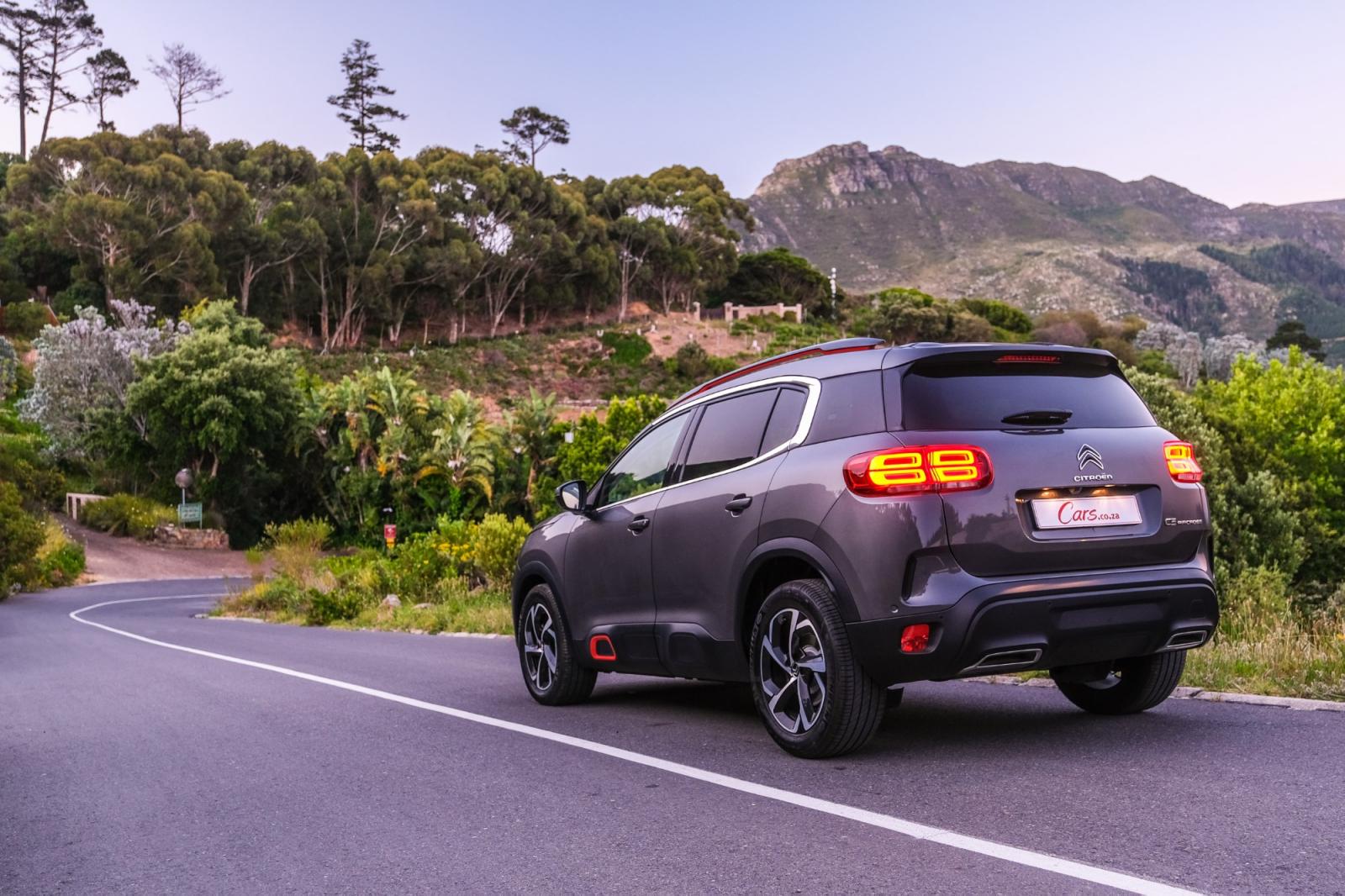
The C5 Aircross not only looks futuristic – its styling marks a refreshing change in a segment "plagued" by cookie-cutter-syndrome, that is to say, family cars like these tend to be conservatively-packaged and even a bit bland. The Citroen, by contrast, bucks the trend. We love how different this car looks (inside and out) and, like its cousin, the Peugeot 3008 (a finalist in the Family Car category #CarsAwards powered by WesBank), the newcomer is daring.
So, the C5 Aircross gets our thumbs up in terms of styling, but how good is it as an overall product and, more importantly, should it be on your family-car shopping list? Let’s take a closer look…
How it performs in terms of…
Interior quality and features
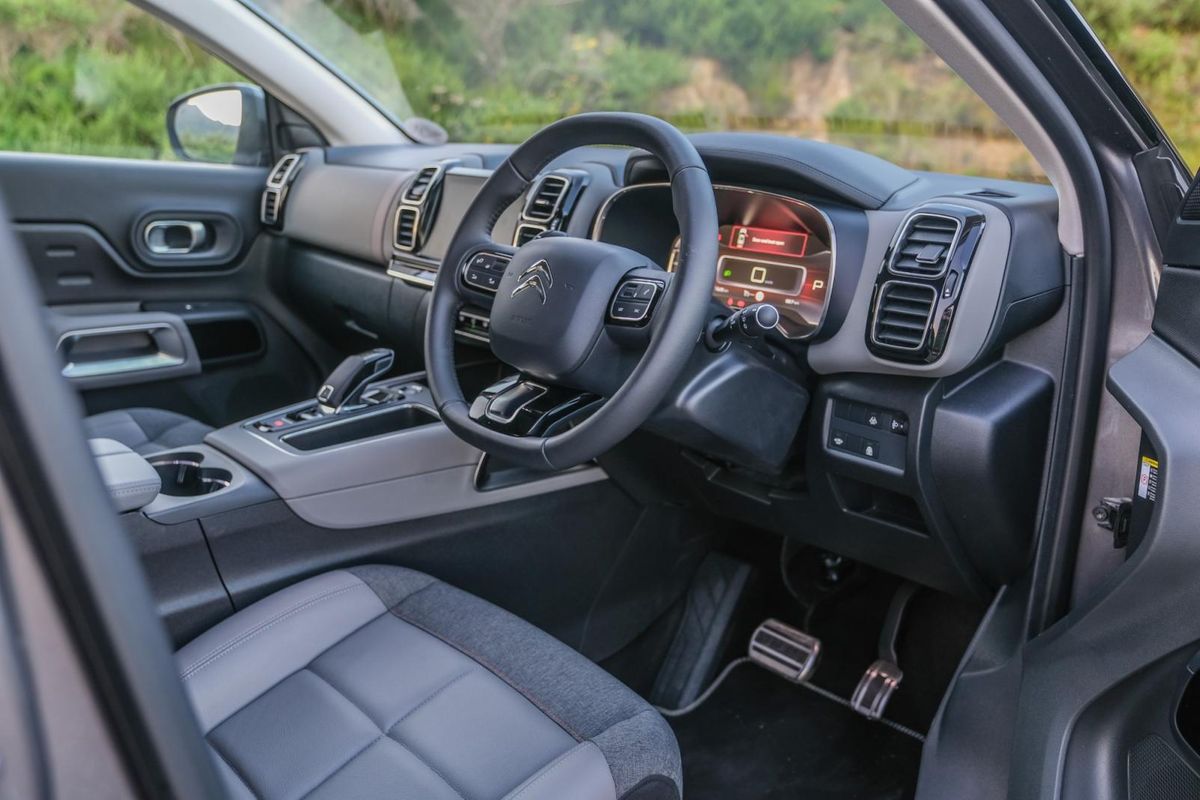
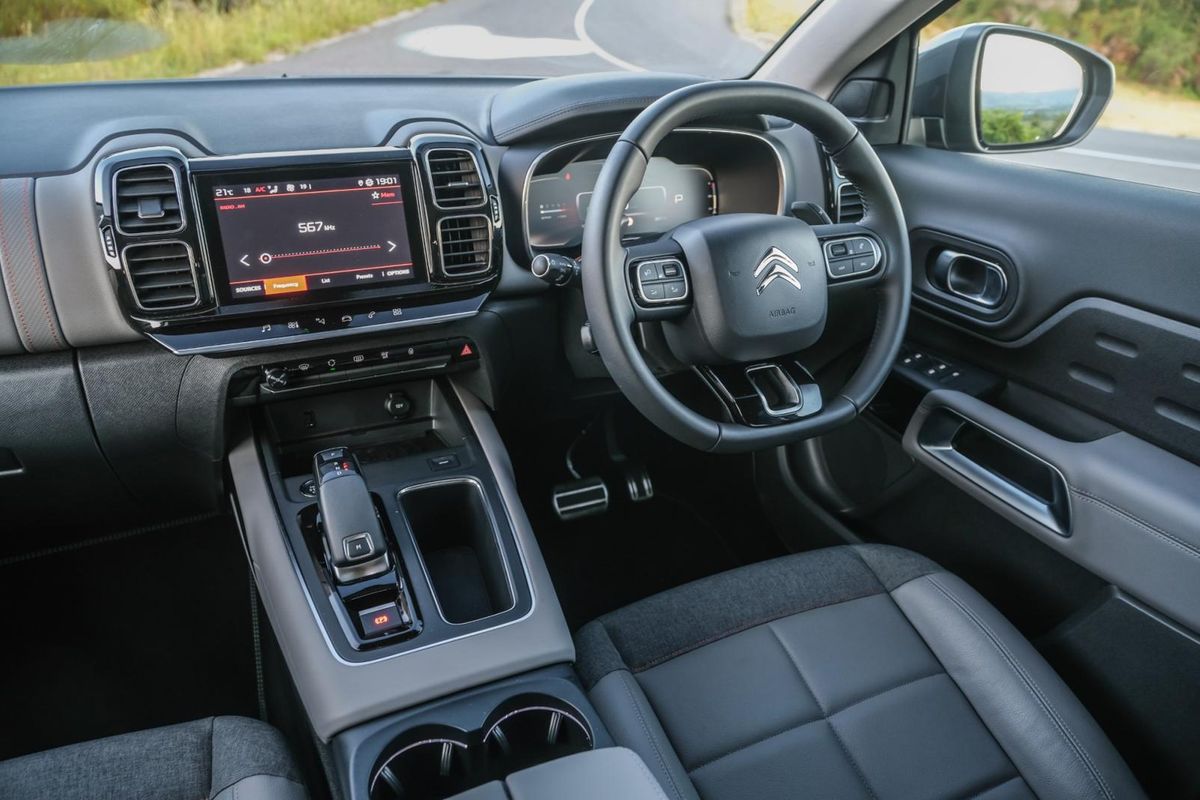
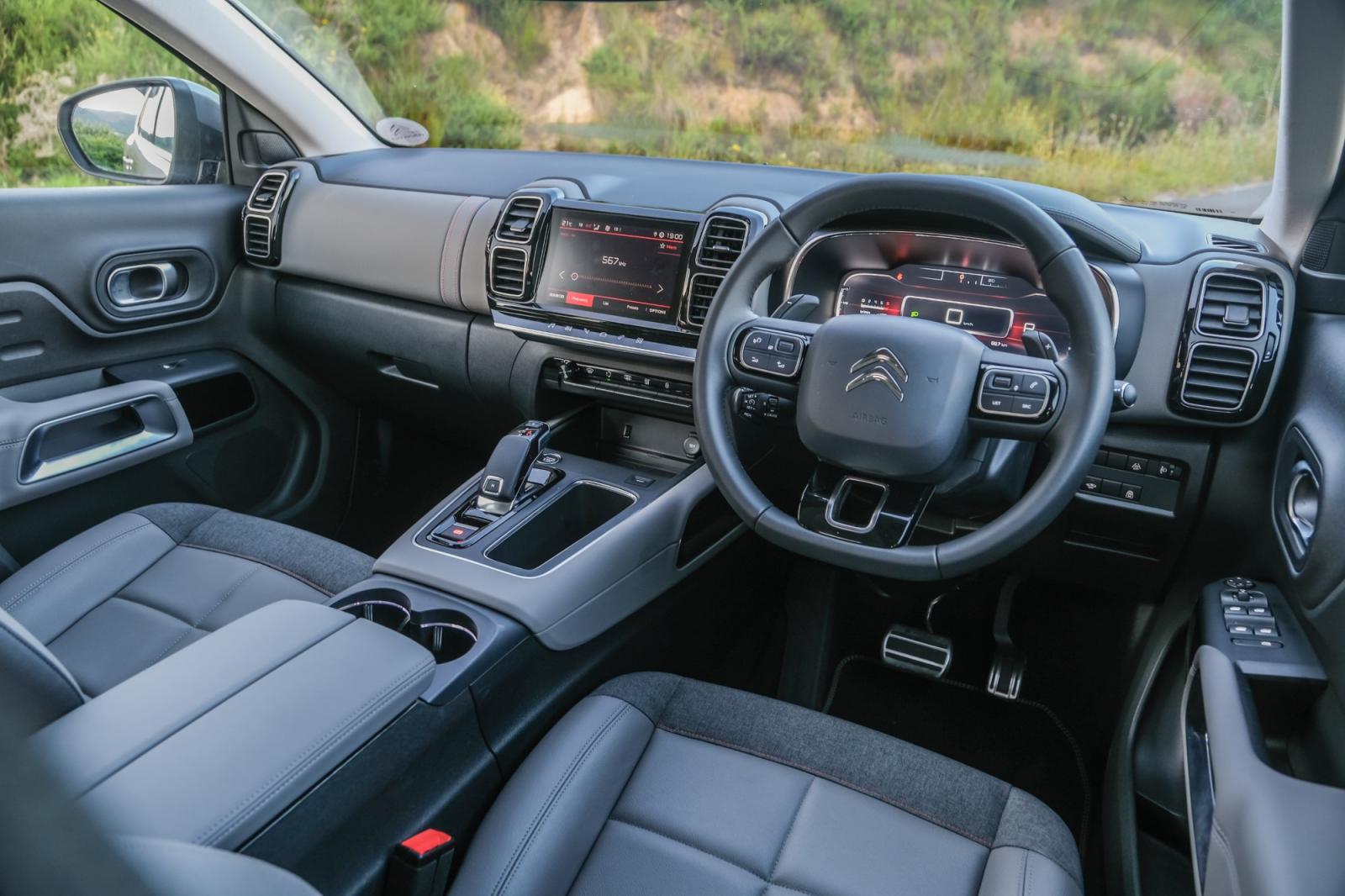
The interior is modern and upmarket and comes well equipped with standard nice-to-have features that its rivals can't match.
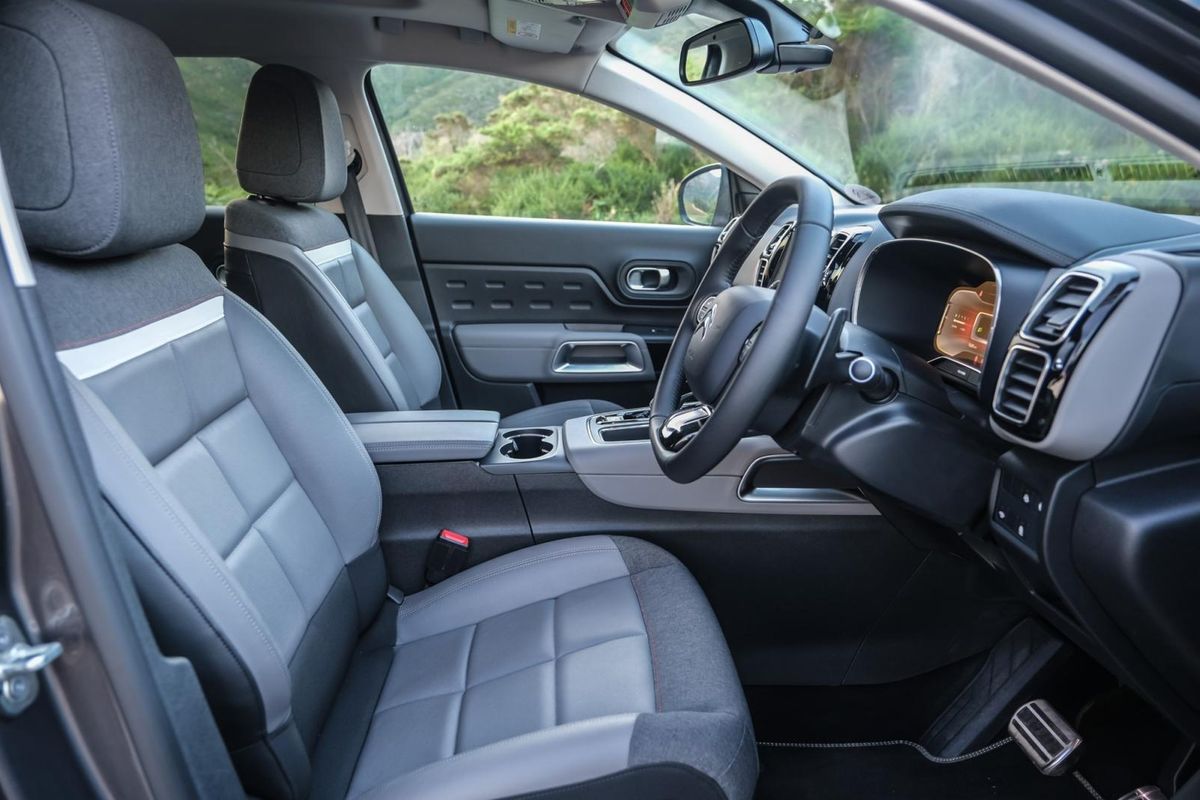
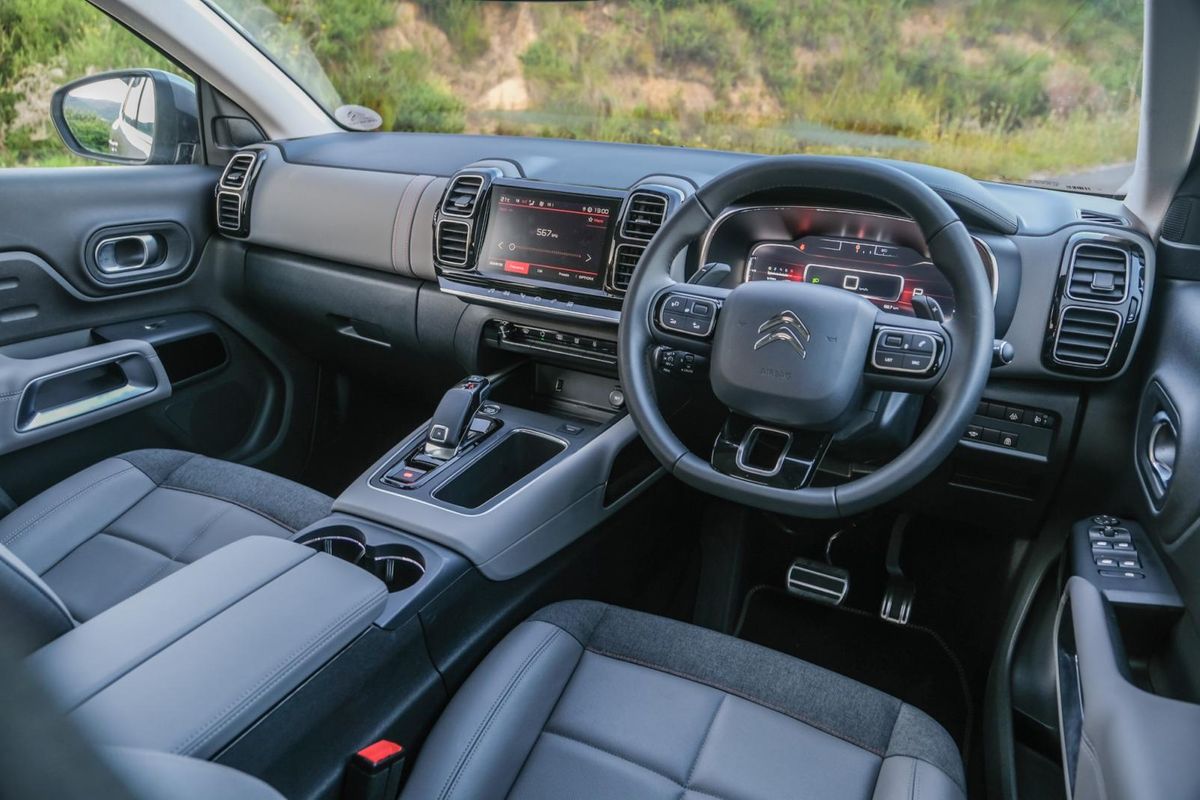
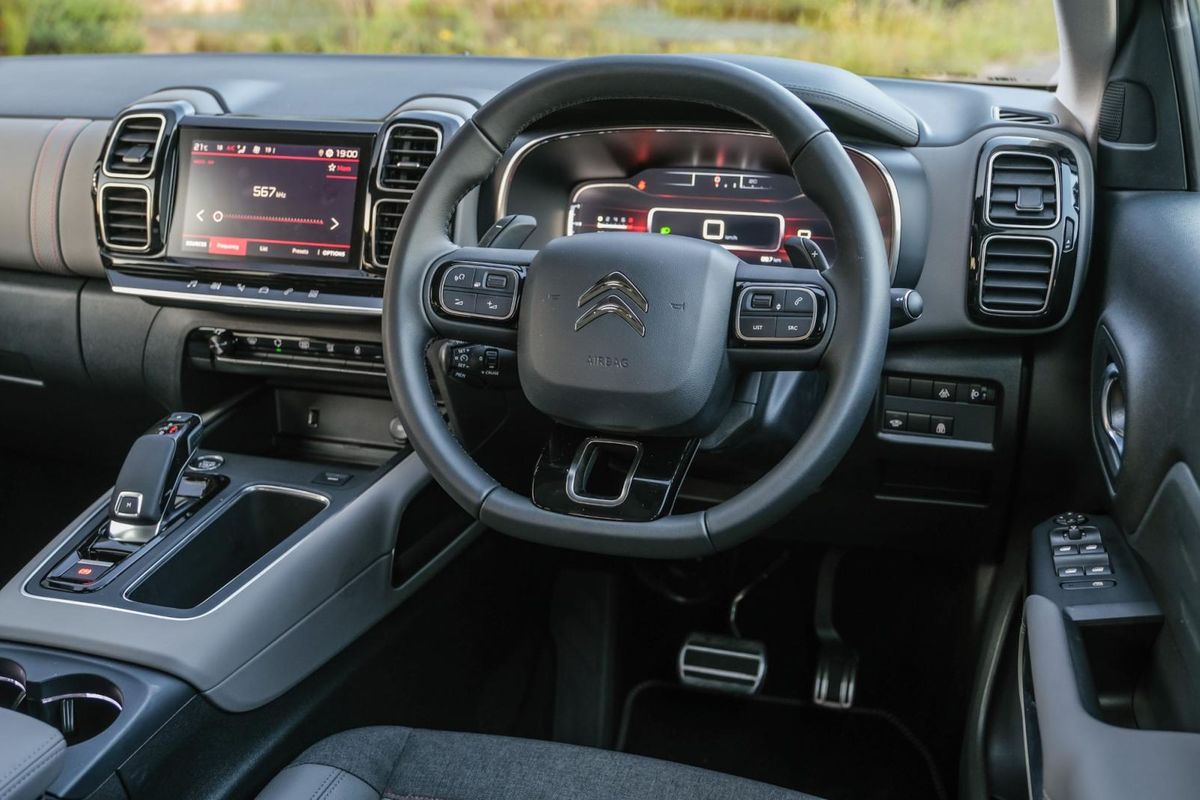
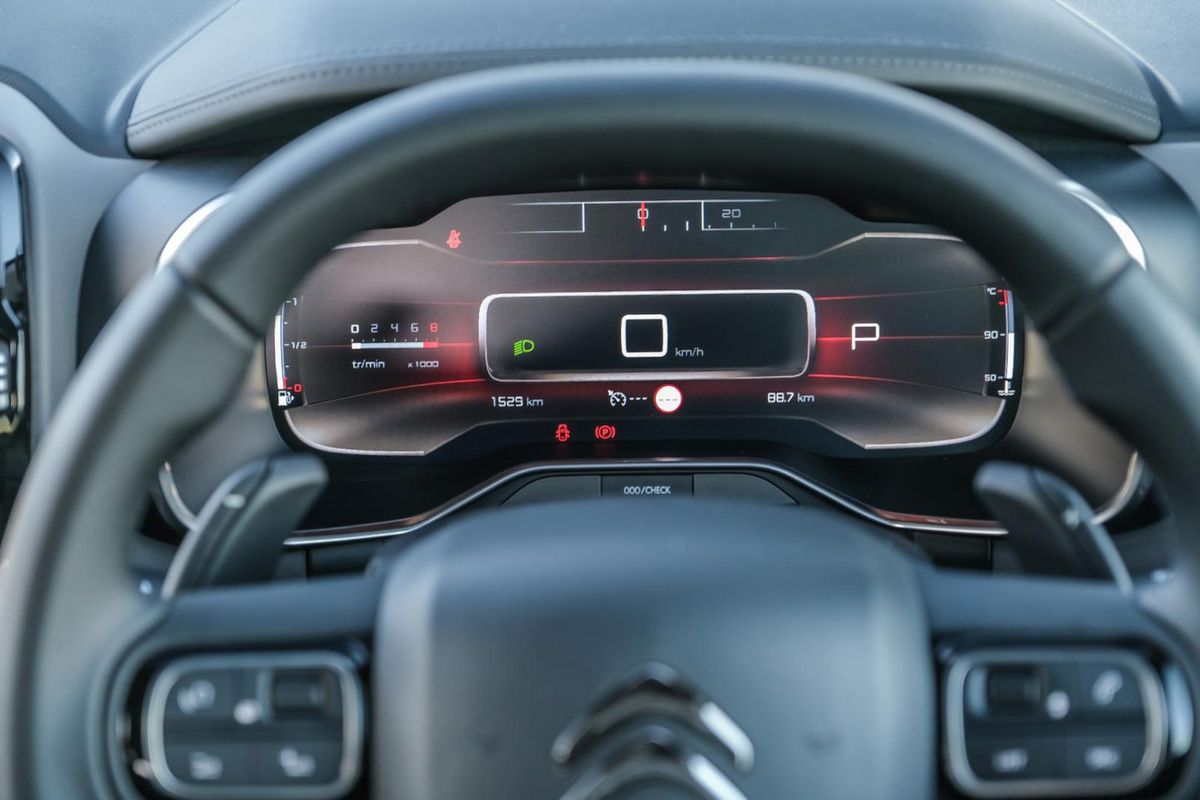
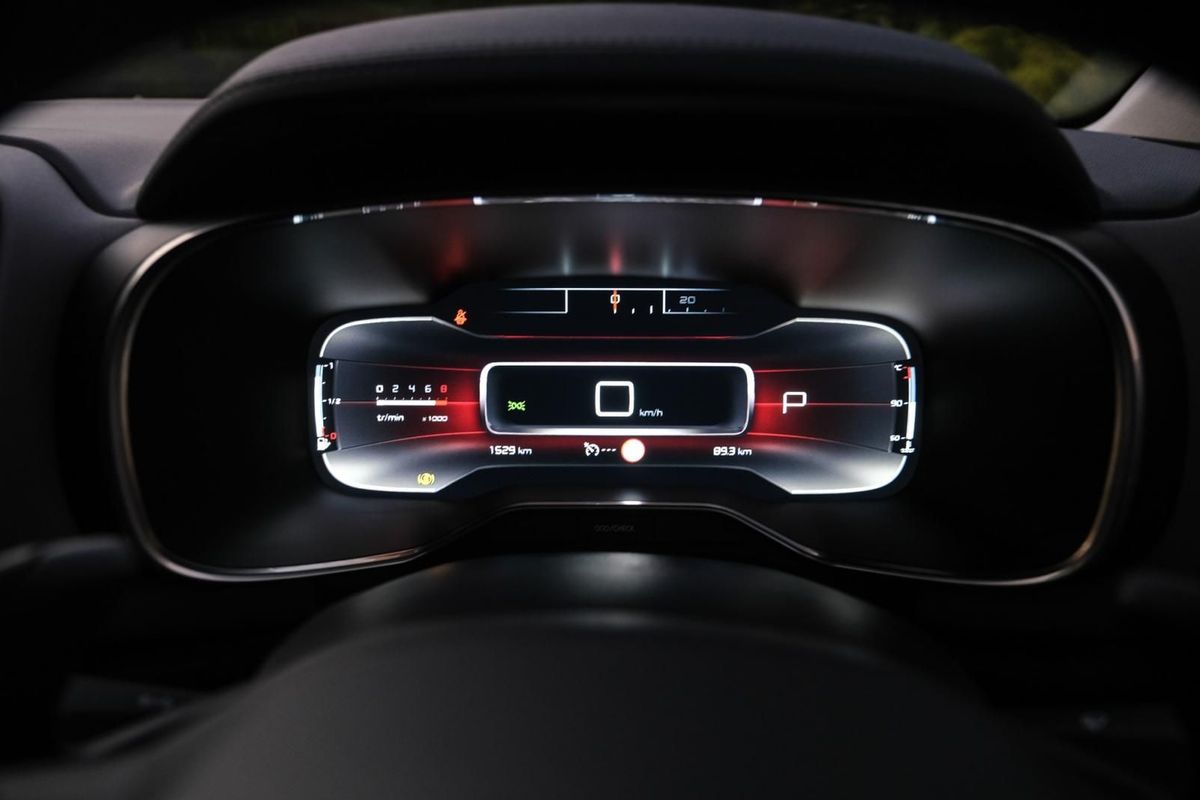
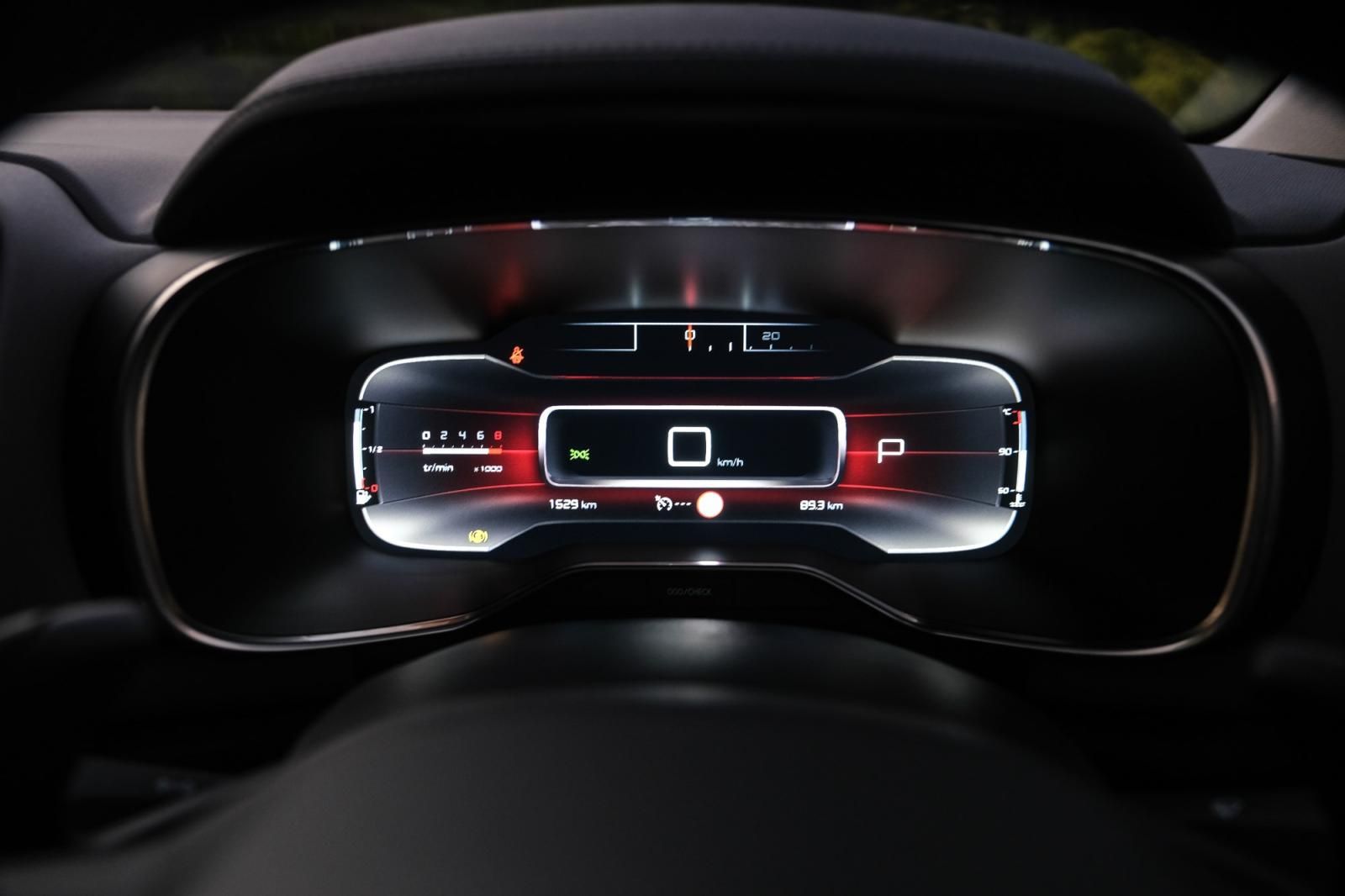
Much like its exterior design, the cabin of the C5 Aircross is a breath of fresh air. Perceived interior quality is very good and we like the look of the partial leather and cloth upholstery. It looks stylish and upmarket! It’s also worth noting that the seats themselves are comfortable and exude a sense of quality. The driver’s seat is electrically adjustable and when you cast your eyes forward and you’re met with a slick customisable 12.3-inch digital instrument cluster.
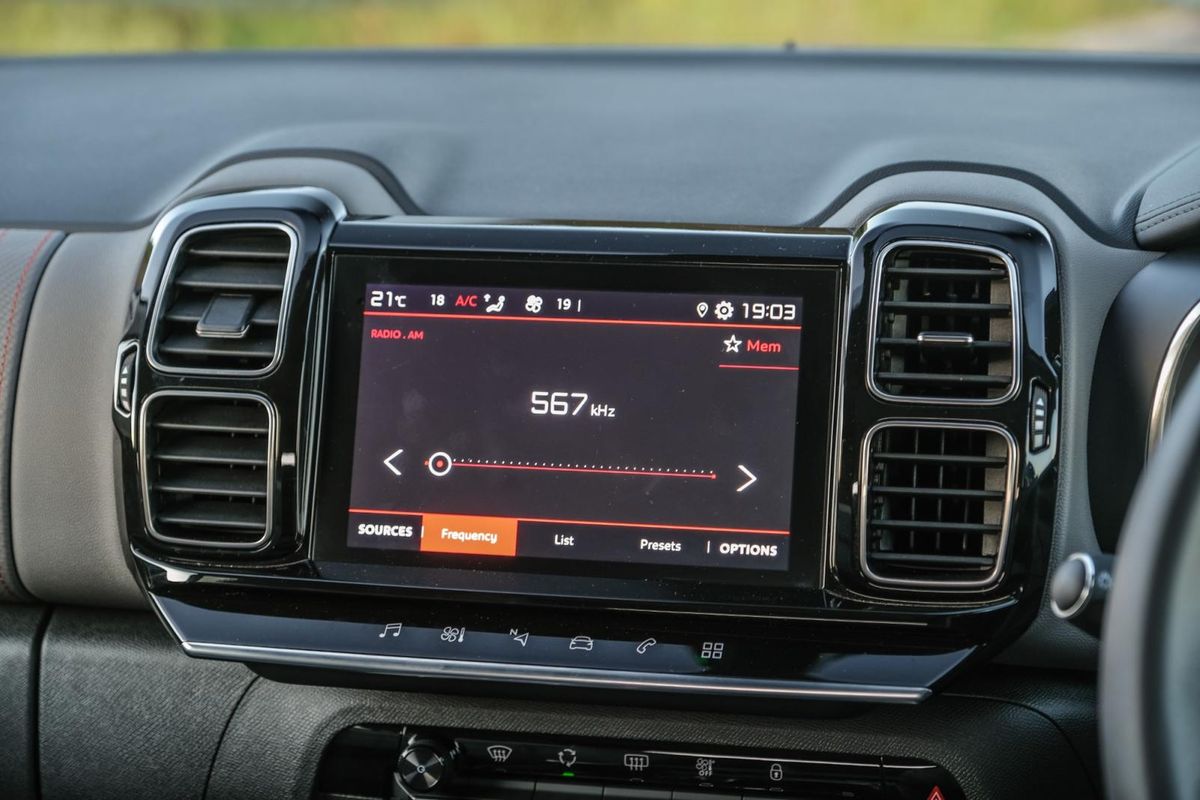
You can tailor the layout of the cluster's display by using the toggles on the leather-trimmed, multifunction steering wheel. The futuristic-looking instrument cluster is complemented by an 8-inch touchscreen infotainment system that offers Android Auto and Apple CarPlay compatibility. In terms of its interface, however, it's not the most intuitive system on the market (the layout and menus do require some familiarisation) and integrated satellite navigation isn’t included.
We like the configurable digital instrument cluster as it lifts the interior ambience appreciably.
Moreover, in top-spec 1.6T Shine guise, the C5 Aircross is impressively-equipped with standard features… some of the key nice-to-haves include a panoramic sunroof, electric windows and side mirrors, cruise control, automatic air conditioning (climate control), front and rear USB ports and a wireless smartphone charging pad.
Safety specification is also impressive and includes ABS with EBD and brake assist, electronic stability control with traction control, as well as 6 airbags. Park distance control (front and rear), a 180-degree reverse-view camera, lane departure warning and blind-spot monitoring systems are included too.
In terms of interior execution and features, the C5 Aircross is tough to beat at its price point. In fact, our reviewers believe the Citroen sports one of the best-looking interiors in this segment.
Practicality
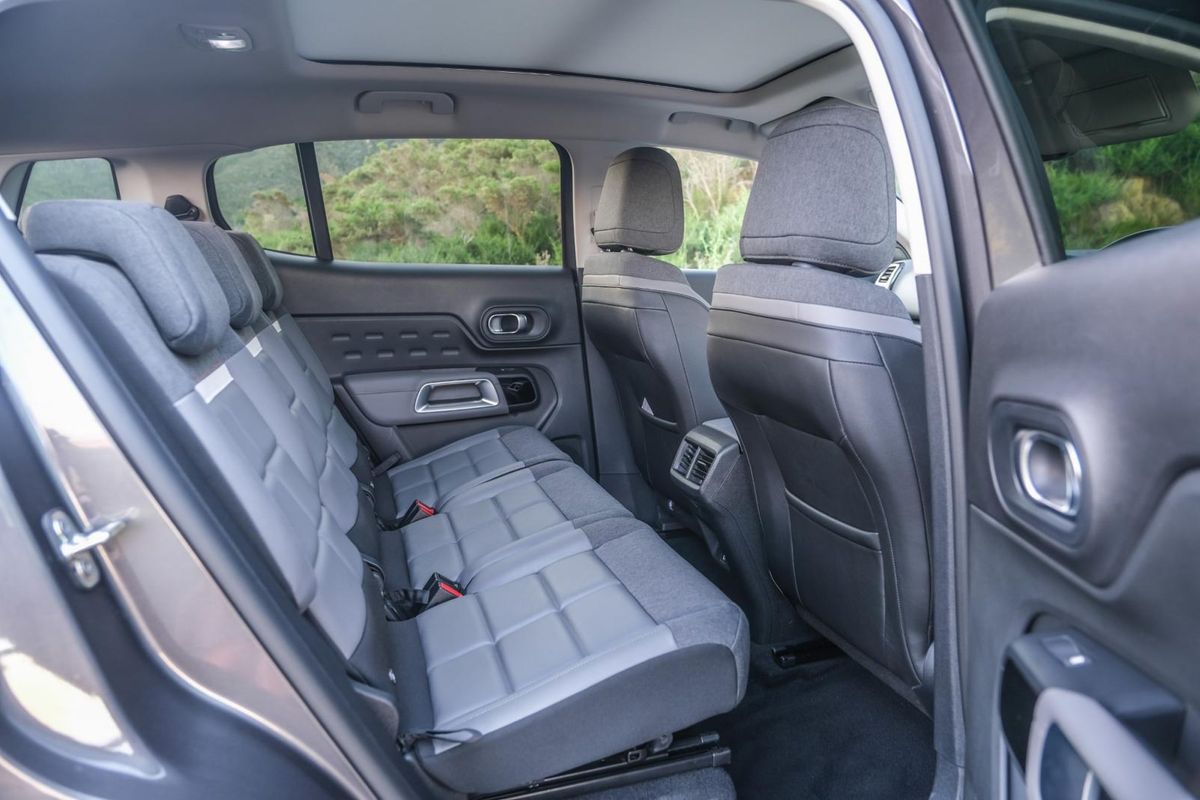
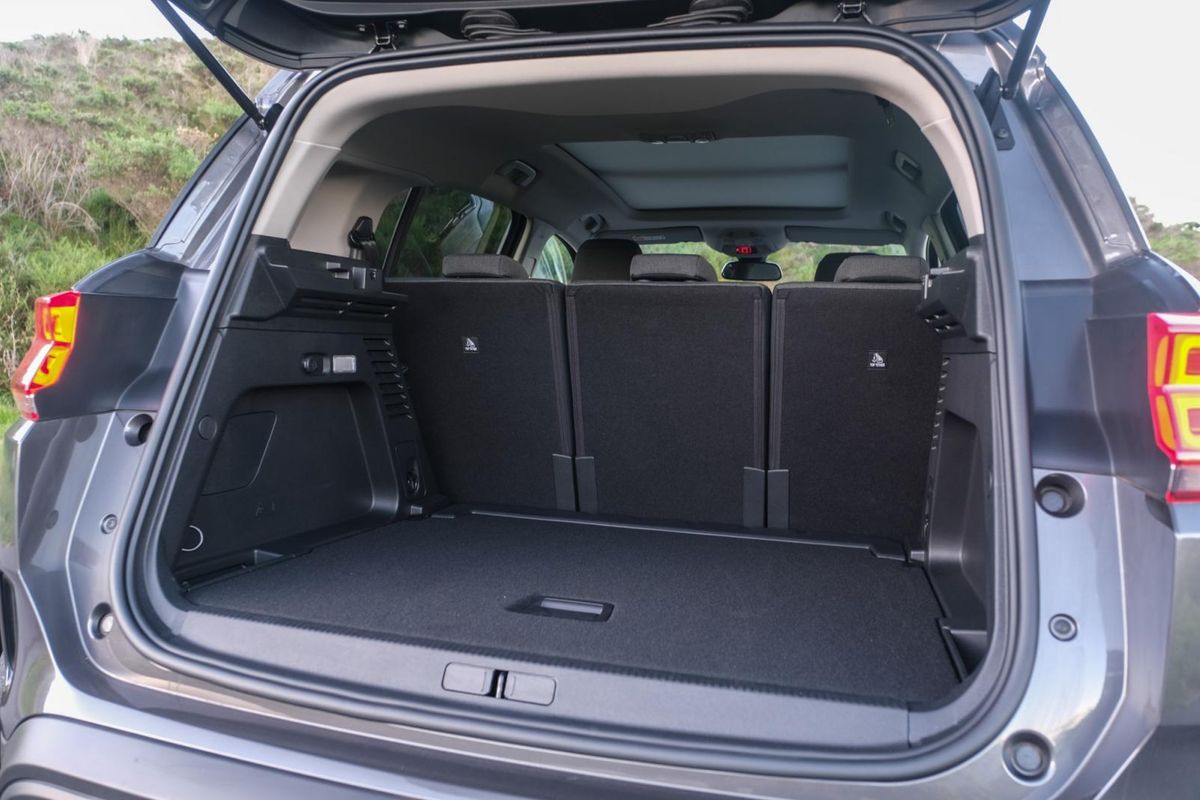
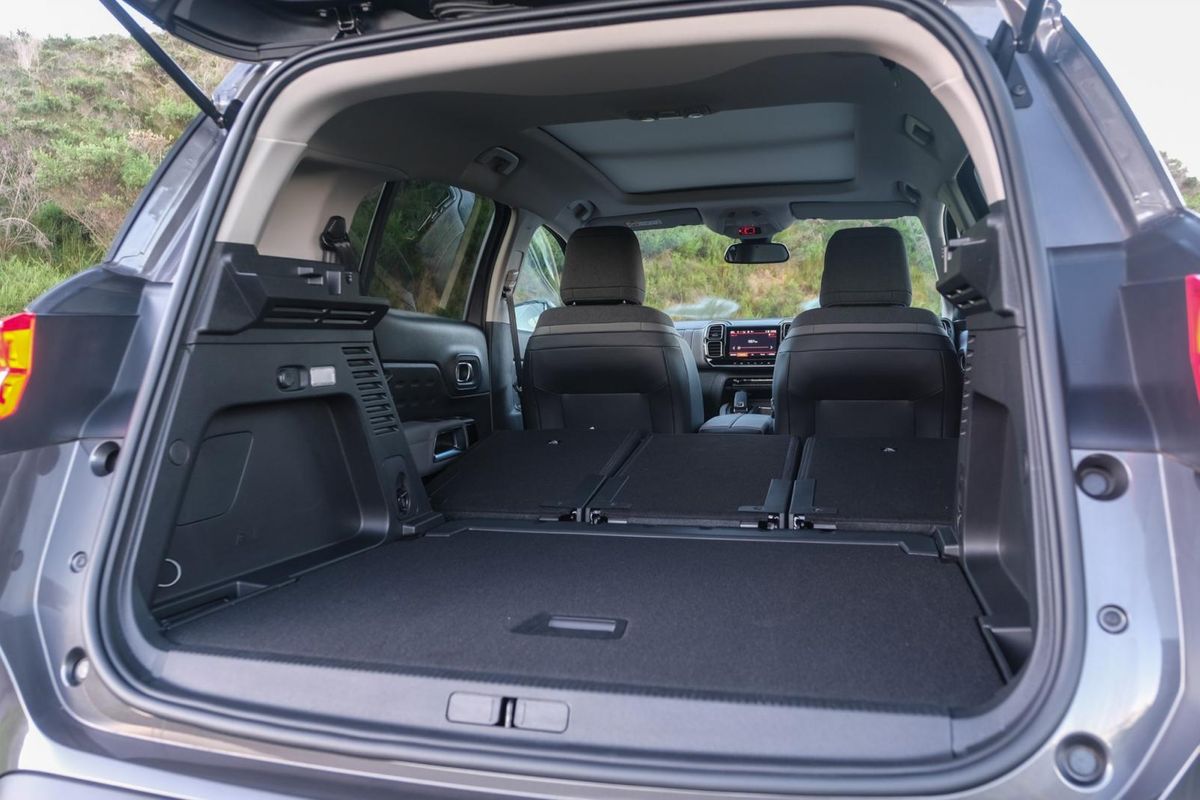
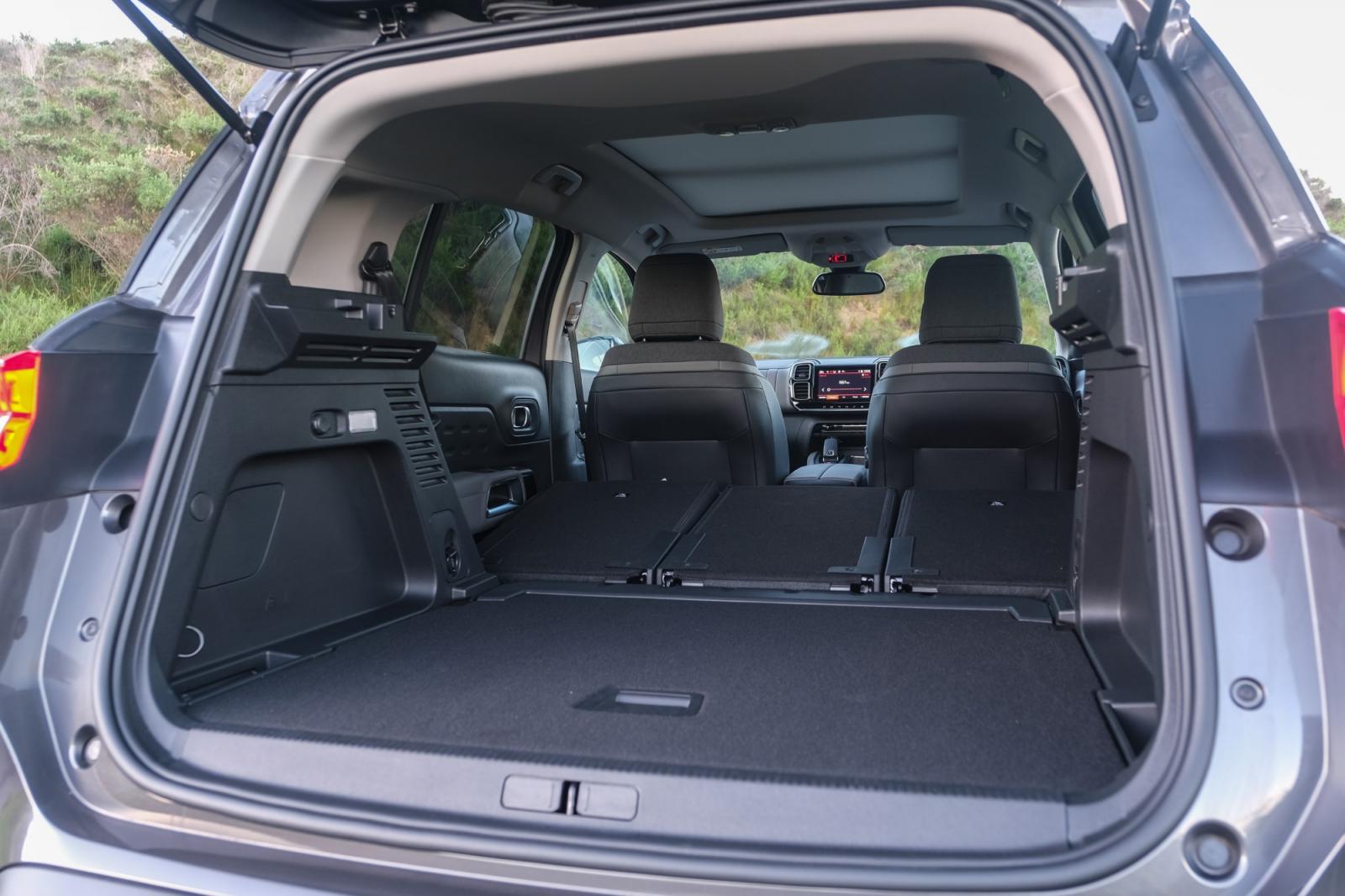
With a sliding rear bench and a capacious load bay, practicality is yet another strength of the C5 Aircross.
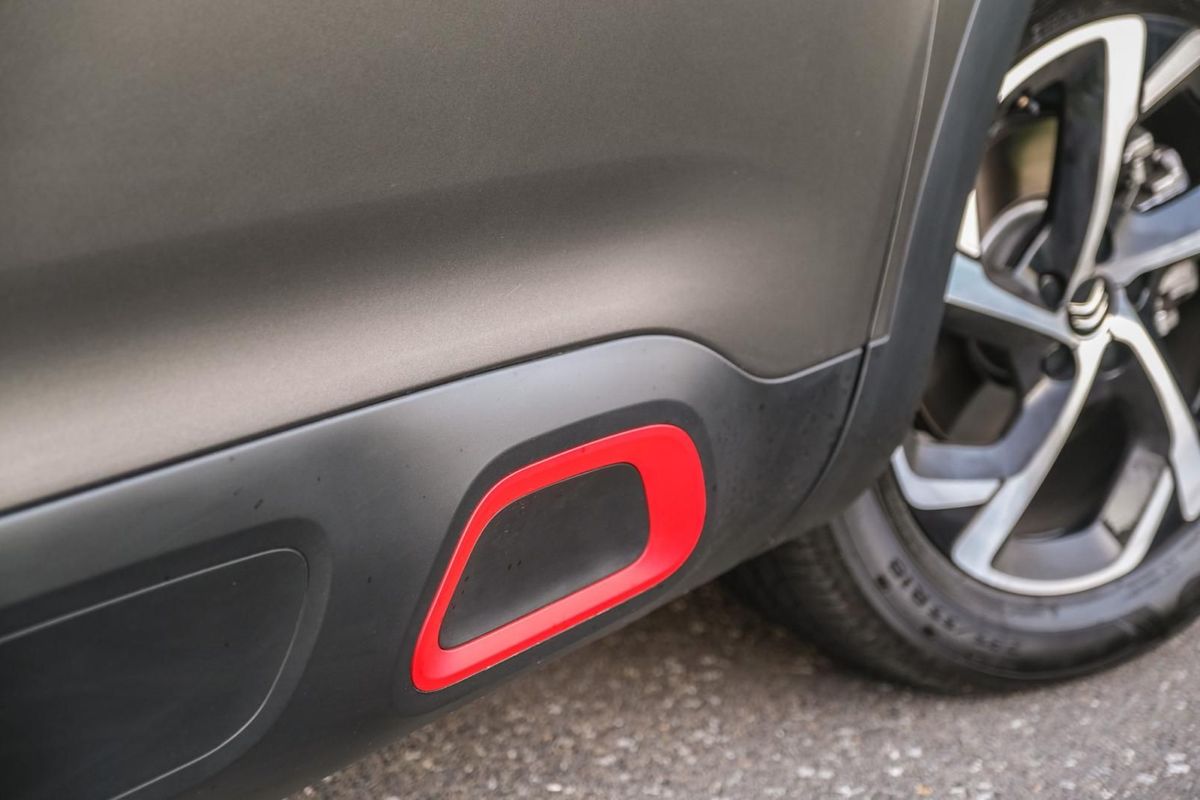
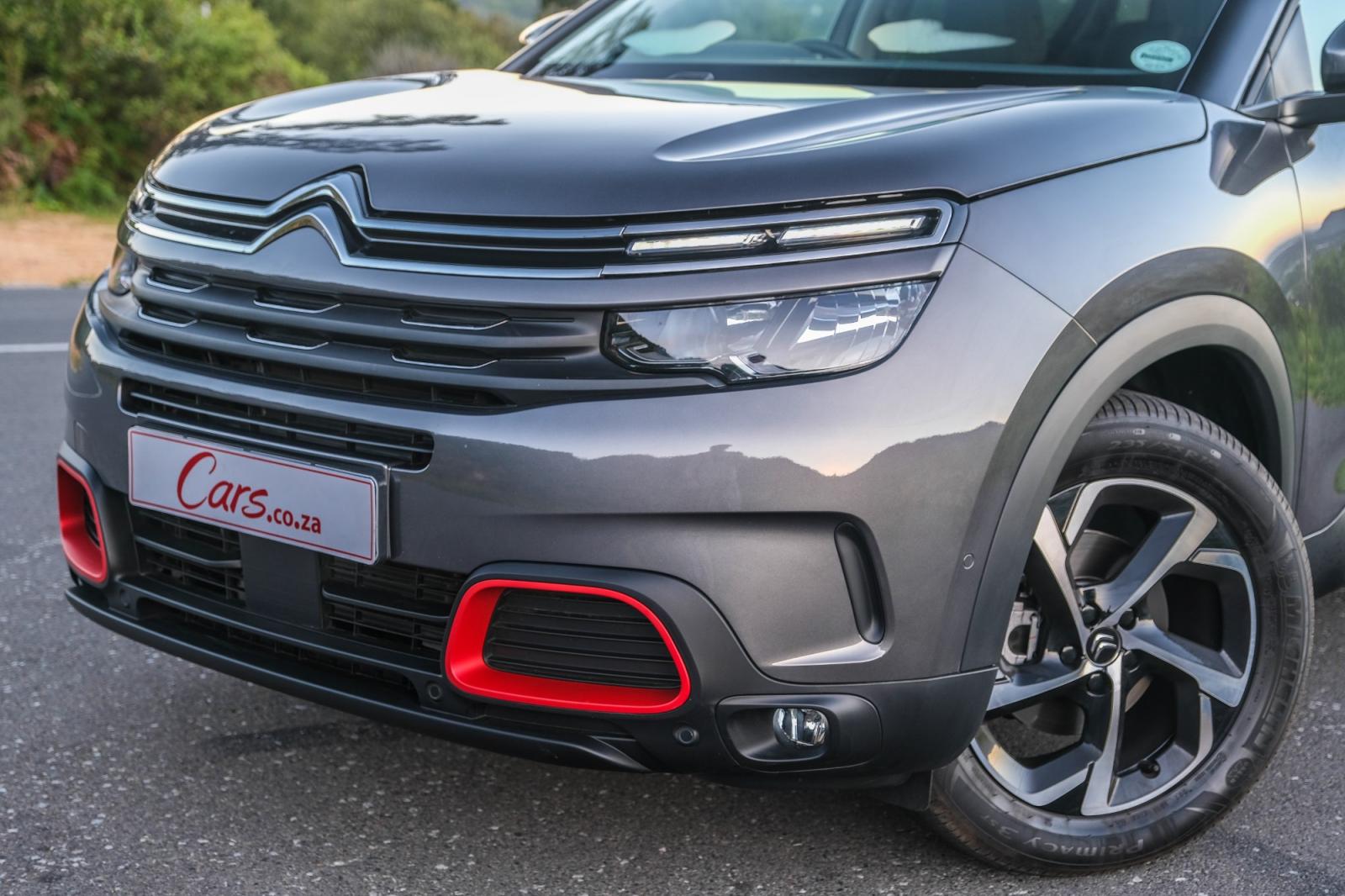
Another area in which the Citroen C5 Aircross excels is practicality. Firstly, the plastic cladding with integral air pockets (the so-called Airbumps, first seen on the now discontinued C4 Cactus) helps to protect the bodywork from wayward trolleys, flailing doors from adjacent vehicles and myriad other minor impacts your car might sustain in your local shopping mall's parking lot. We think this feature looks pretty cool too…
Rear passengers will be pleased with the generous legroom on offer. The aft bench comprises 3 reclinable seats and can slide forward by as much as 150 mm to increase the standard 520-litre load bay to offer 720 litres. With all 3 seats folded, the flat load floor can accommodate bulkier items (up to a claimed at 1 630 litres). The C5 Aircross is more spacious than many of its rivals and on par with the Tiguan, which is also claimed to have a 520-litre load bay capacity.
It’s also worth noting that rear passengers have access to a USB port, while front passengers have access to 2 cupholders and a large central storage bin for oddments. In terms of practicality, the C5 Aircross is difficult to fault!
Performance and economy
The C5 Aircross delivers punchy performance in a refined manner. It's a wonderful car to drive every day!
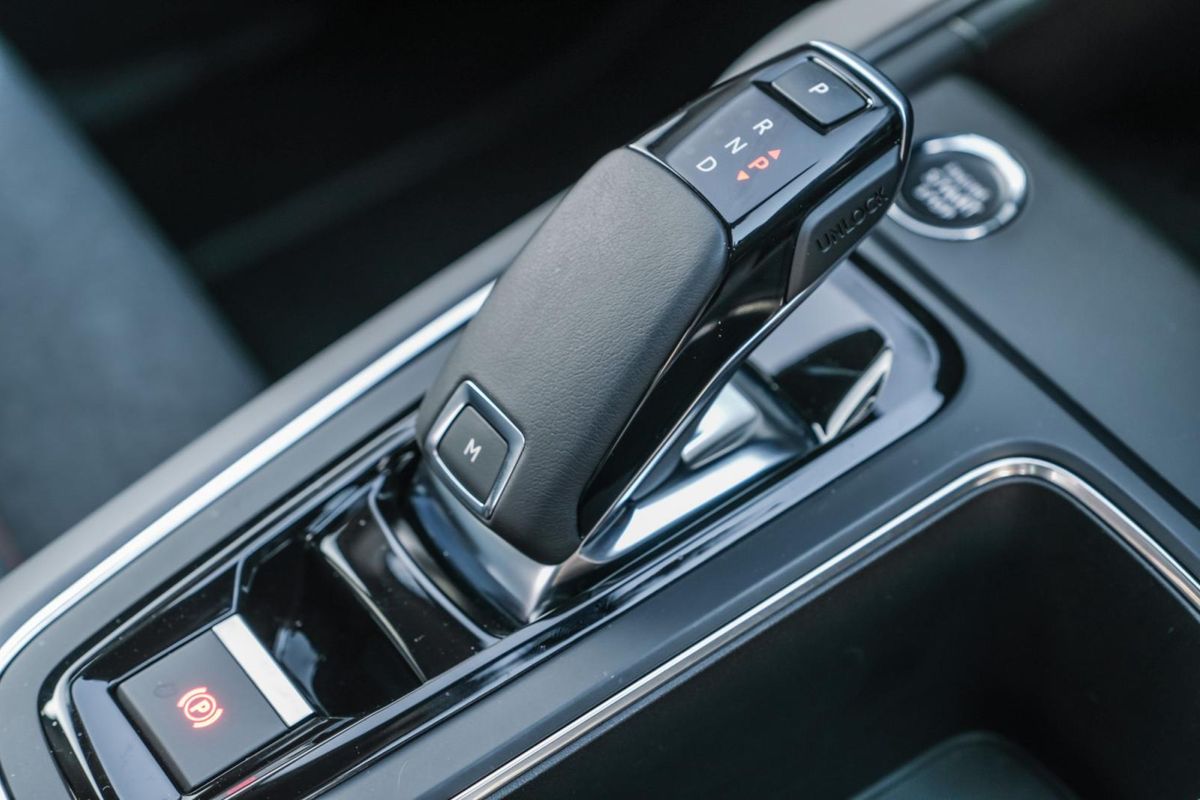
The C5 Aircross is powered by a 1.6-litre turbocharged engine that also features in mid-range Peugeot 3008 derivatives. With outputs of 121 kW and 240 Nm, the motor is perky and performs commendably in combination with the 6-speed automatic transmission. The transmission shifts smoothly (generally unobtrusively) and the shift paddles behind the steering wheel allow the driver to actuate 'changes manually (to get the most from the engine) when they need to. There’s also a Sport button, which causes the Citroen's 'box to delay upshifts, but we found the performance difference between Normal and Sport to be negligible – the C5 Aircross isn’t a really a performance-orientated SUV, anyway.
Nonetheless, the powertrain is quite responsive and should you want to up the tempo/get to your destination in a hurry, the C5 Aircross will be happy to oblige. It delivers its performance in a refined and sophisticated manner, more so than many of its rivals. It gets up to highway speed with little effort and we found it to be quite nippy in traffic too. Needless to say, it’s a great car to drive on a daily basis and in terms of performance, it’s more than adequate.
In terms of fuel consumption, the C5 Aircross is claimed to consume 7.9 L/100 km, but you are more likely to see returns of just over 9.0 L/100 km depending on your driving style.
Ride and handling
Ride comfort is a major highlight of the C5 Aircross.
Apart from offering head-turning styling and a pleasing level of on-road performance, the C5 Aircross is also remarkably comfortable to drive. In fact, it’s one of the things we liked most about this car. The ride is pliant/forgiving and for the most part, the C5 is completely unflustered, even when you drive over poorer road surfaces. The steering feel, however, is rather light (it could perhaps be a bit firmer), but direct. As a result, the Citroen is easy to manoeuvre in the city.
Furthermore, minimal body roll is evident under brisk cornering – for a practically-packaged family car, the C5 Aircross feels confident and surefooted on its rubber. The cabin is pleasingly quiet/well-insulated from wind, road and mechanical noise. We'd go so far as to say one could be forgiven for thinking that you were driving a more expensive vehicle! The C5 Aircross has a premium ride quality – it’s definitely right up there with the best in this segment.
Pricing and warranty
The Citroen C5 Aircross 1.6T Shine is priced at R509 900 and is sold with a 5-year/100 000km warranty and a 5-year/100 000km service plan.
As a way of comparison, the rivalling Volkswagen Tiguan 1.4TSI Comfortline R-Line, priced from R508 600, offers less power at 110 kW but has 250 Nm (10 Nm more than C5 Aircross). The C5 Aircross is packed with standard features, many of which are optional in the Tiguan and some of these include the panoramic sunroof, rear camera and keyless access. The warranty period is also longer on the Citroen.
Verdict
The C5 Aircross is easy to recommend but poor perceived public brand perception stands in the way of its success.
Who said family cars have to be boring? Our entire test team liked the C5 Aircross 1.6T Shine and that says a lot about this new, still-unproven product. There really is much to like about this top-spec Citroen C5 Aircross – not only is it very competitively priced against its rivals, but its level of standard specification bolsters the product's value proposition considerably. It’s a comfortable, solid performer that offers the necessary level of practicality to make it a good family car. This is an appealing alternative to the mainstream, somewhat anodyne products on offer in this segment. If you're a buyer looking for something different that's also classy/upmarket, the C5 Aircross may suit you to a tee.
However, brand perception counts for a lot when final buying decisions are made and we feel that the prodigal son (Citroen) needs to prove itself in terms of after-sales care and support in order to truly win the hearts and minds of buyers, who are typically wary and unsure of left-field brands. Nonetheless, the C5 Aircross is easy to recommend on its merits and we think it’s a product worthy of consideration if you are in the market for a stylish and well-appointed family car.
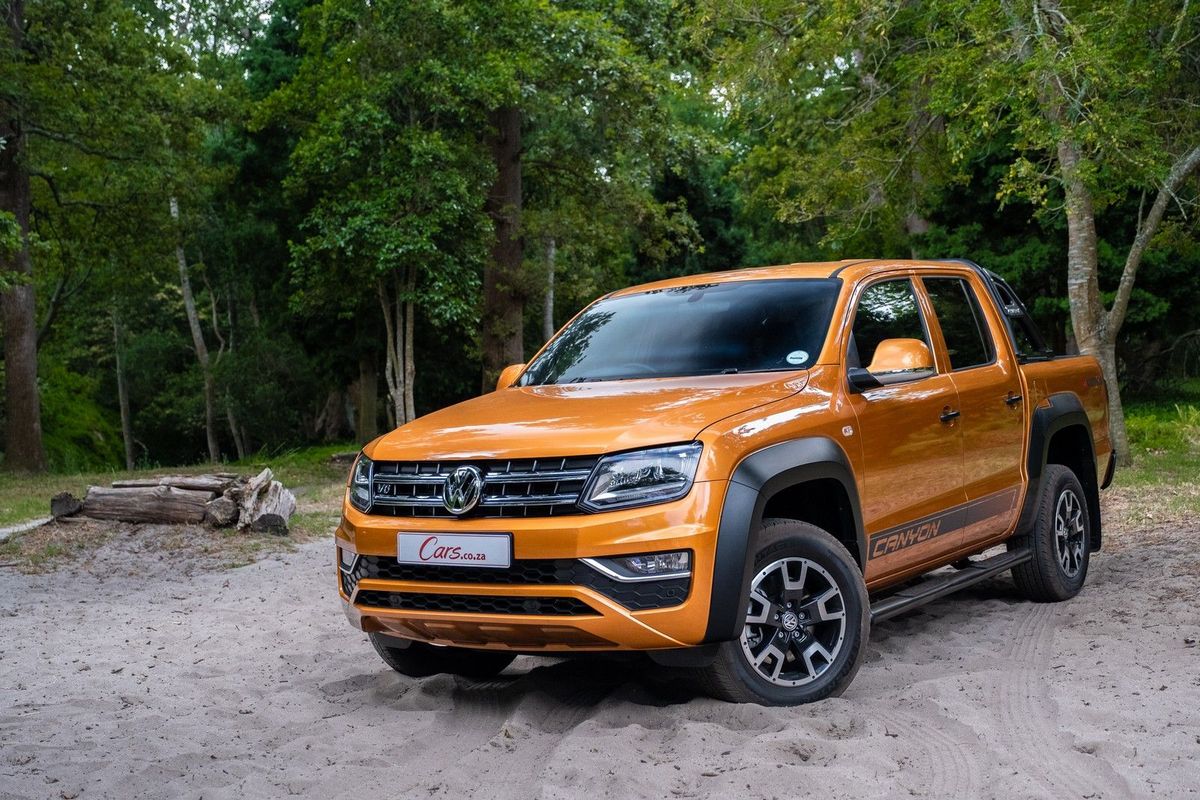
The Volkswagen Amarok Canyon is now on sale in South Africa. Here are the key differences between the Amarok Canyon and the standard Amarok.
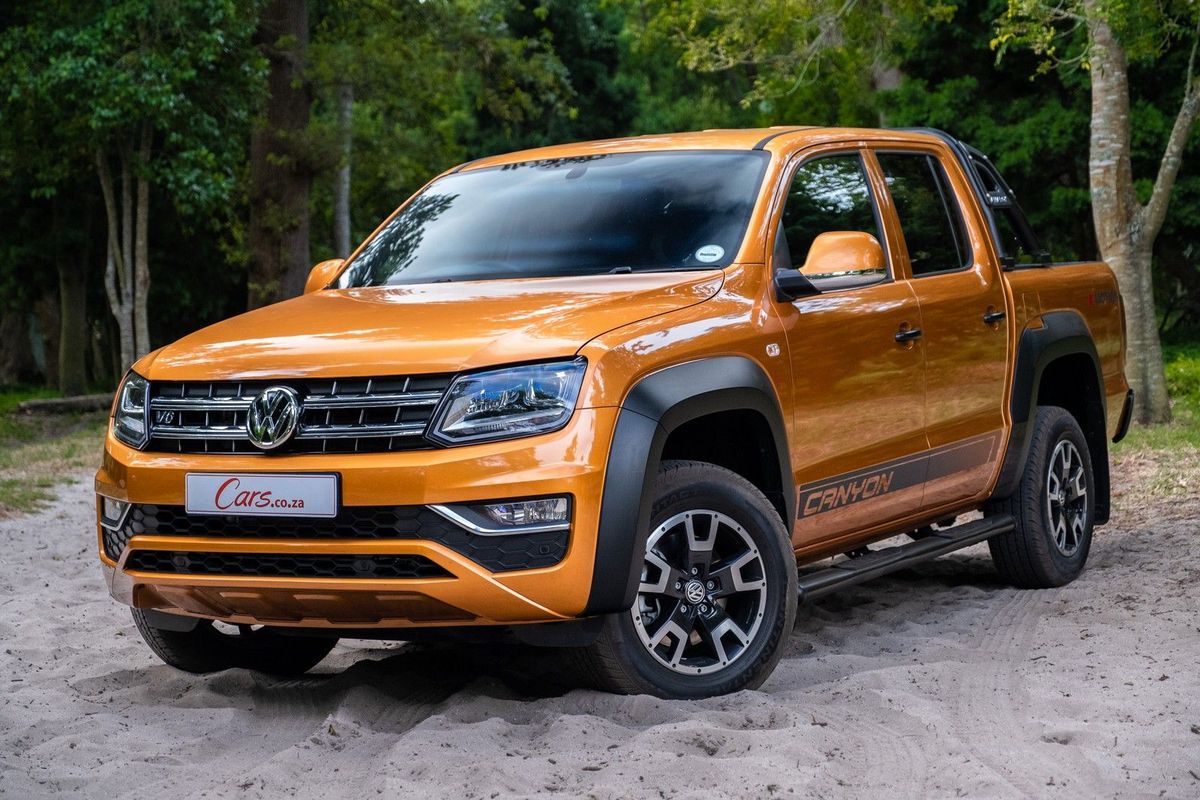
The special edition Volkswagen Amarok Canyon has gone on sale. Powered by the same 3.0-litre turbodiesel V6 motor packing 165 kW and 550 Nm, it's capable of brisk performance with Volkswagen claiming 8.0 seconds to 100 kph. It also features overboost functionality, with 180 kW and 580 Nm on tap for just 10 seconds. Here are the key differences between the standard Amarok V6 and the Amarok Canyon V6.
The Colour
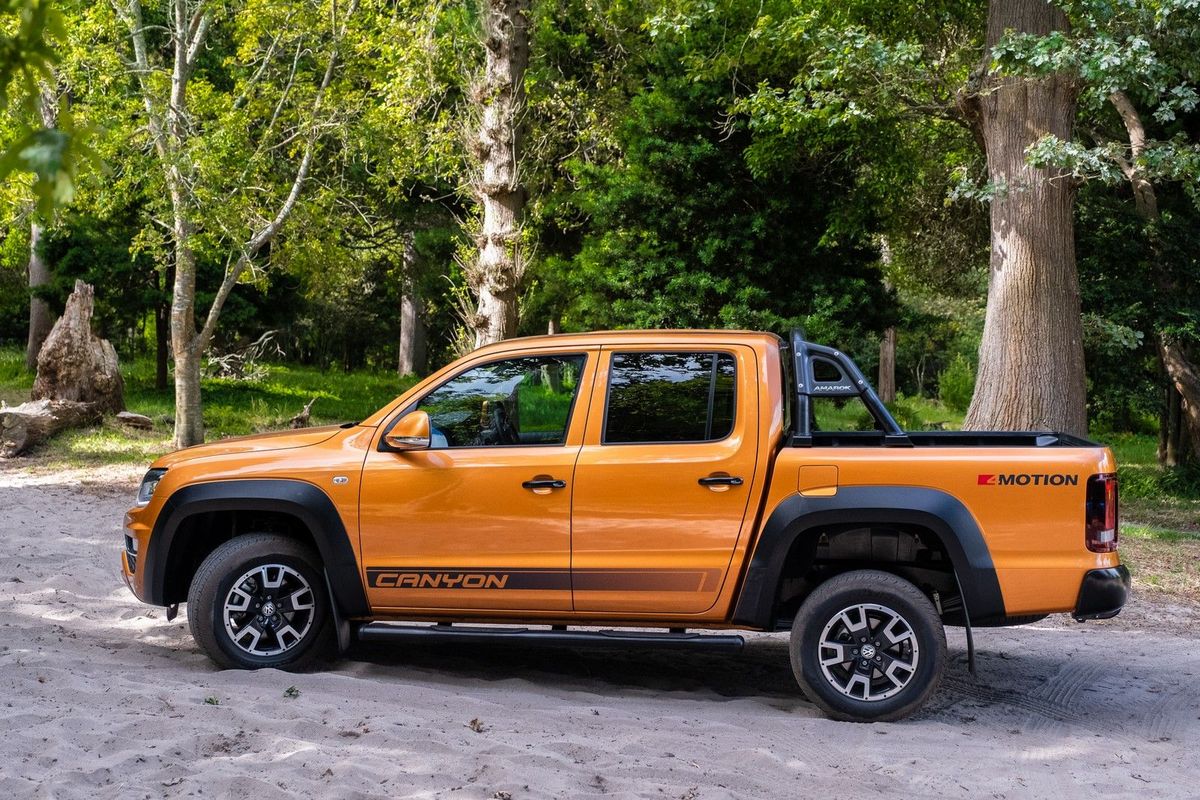
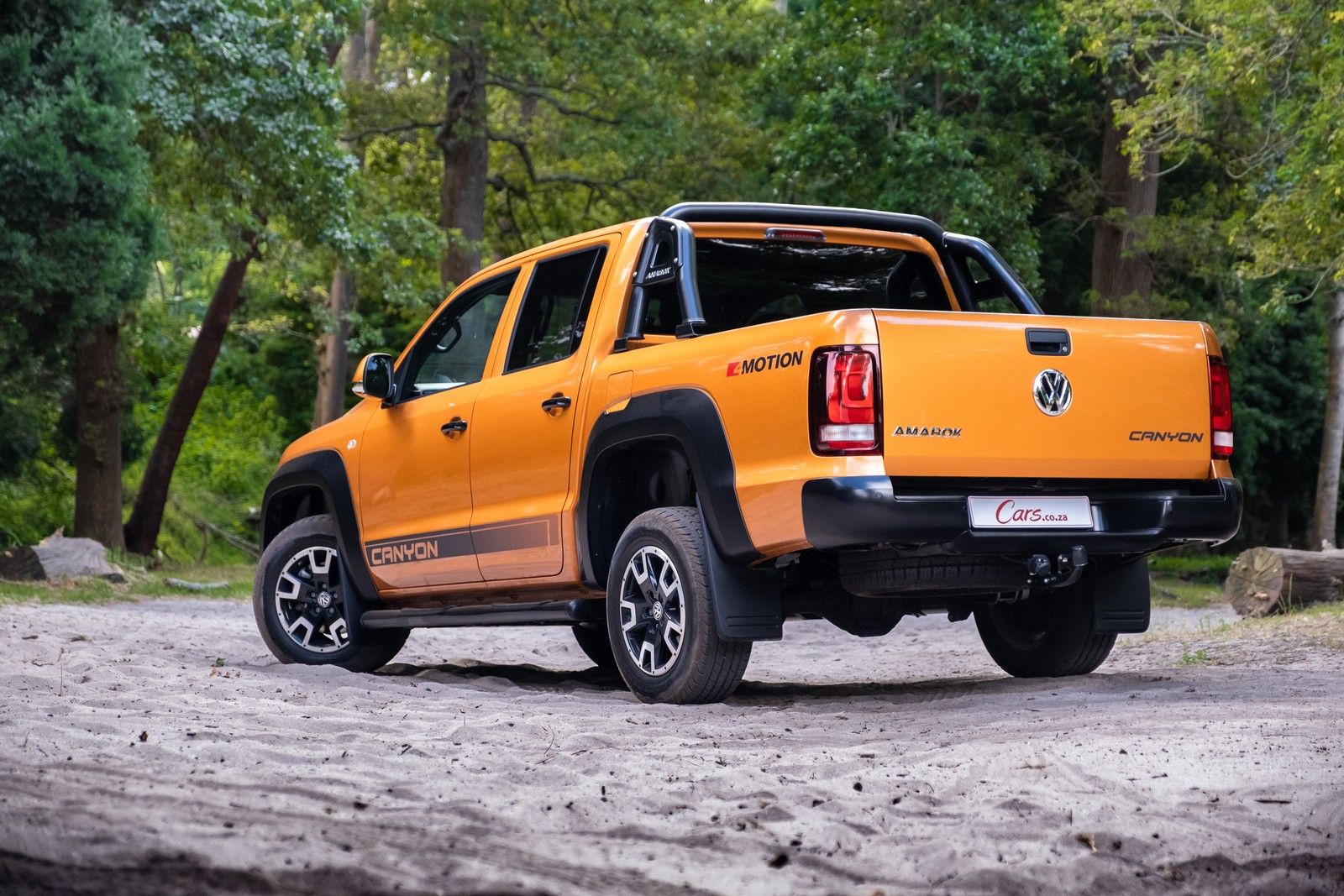
The most obvious difference is the Honey Orange metallic exterior paint, which is exclusive to the Amarok Canyon.
The Design Details
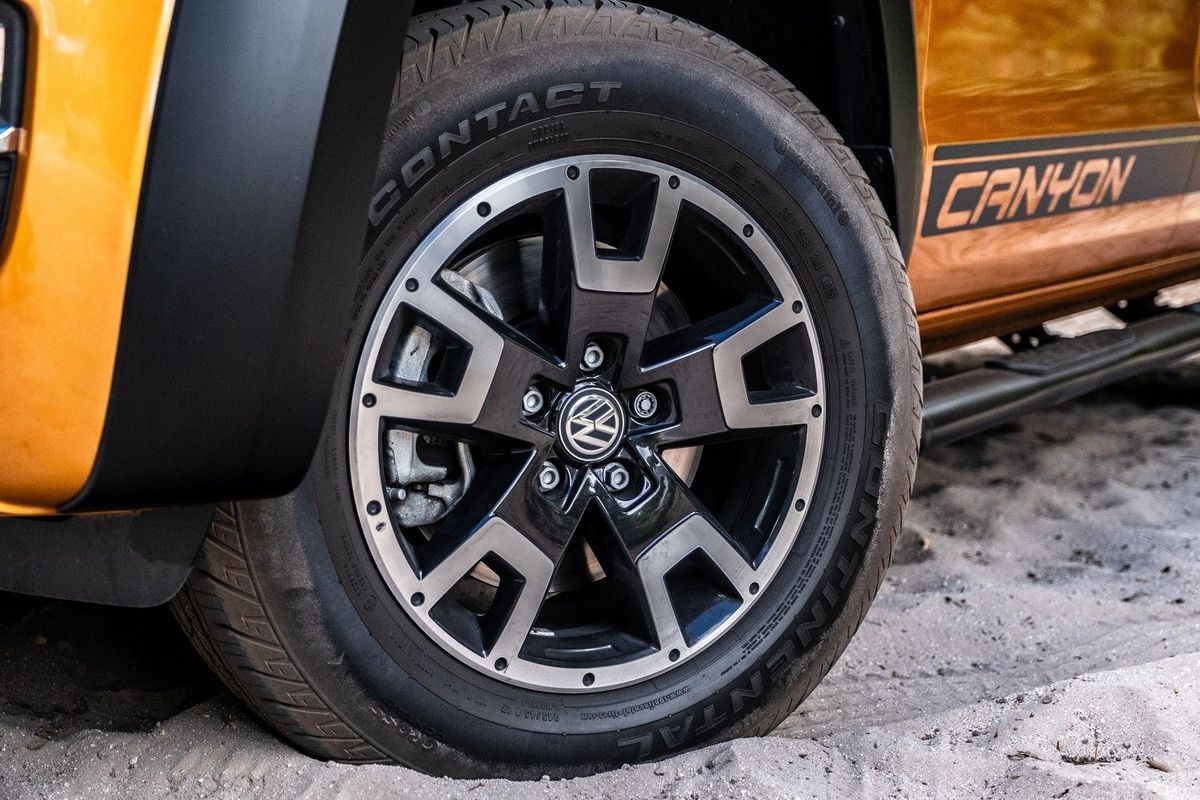
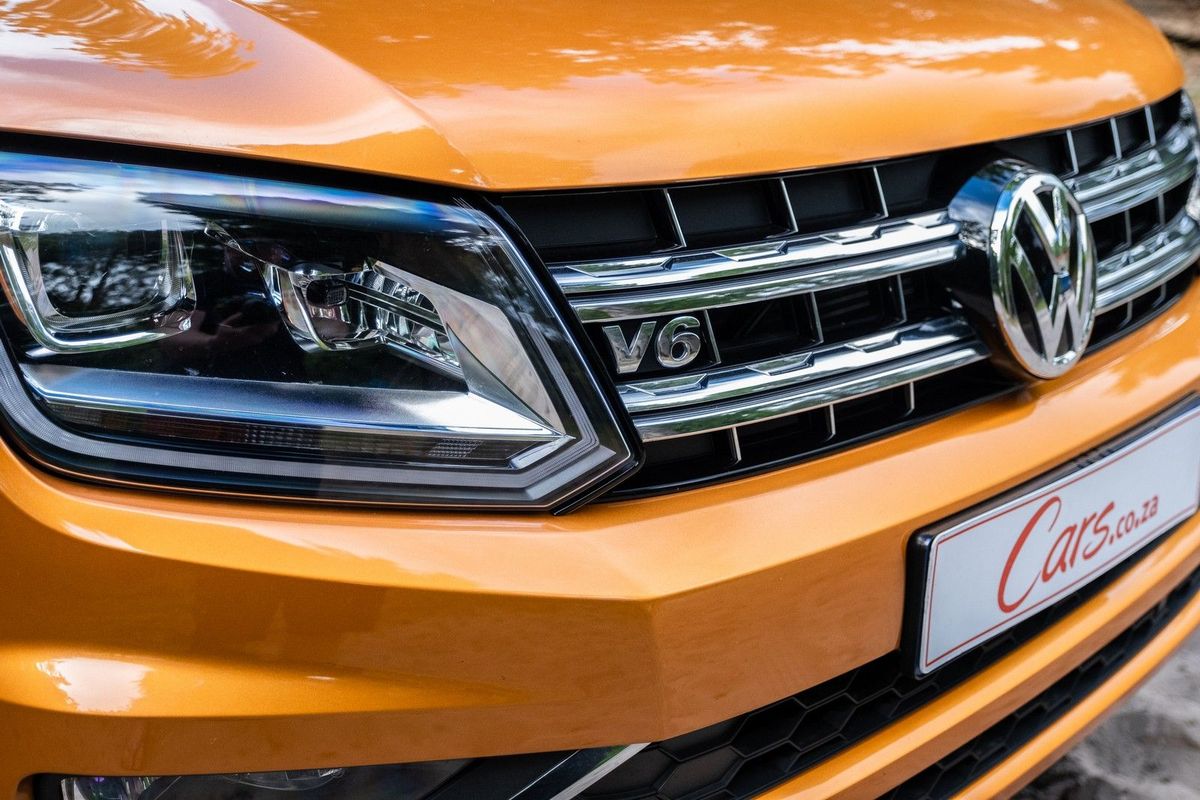
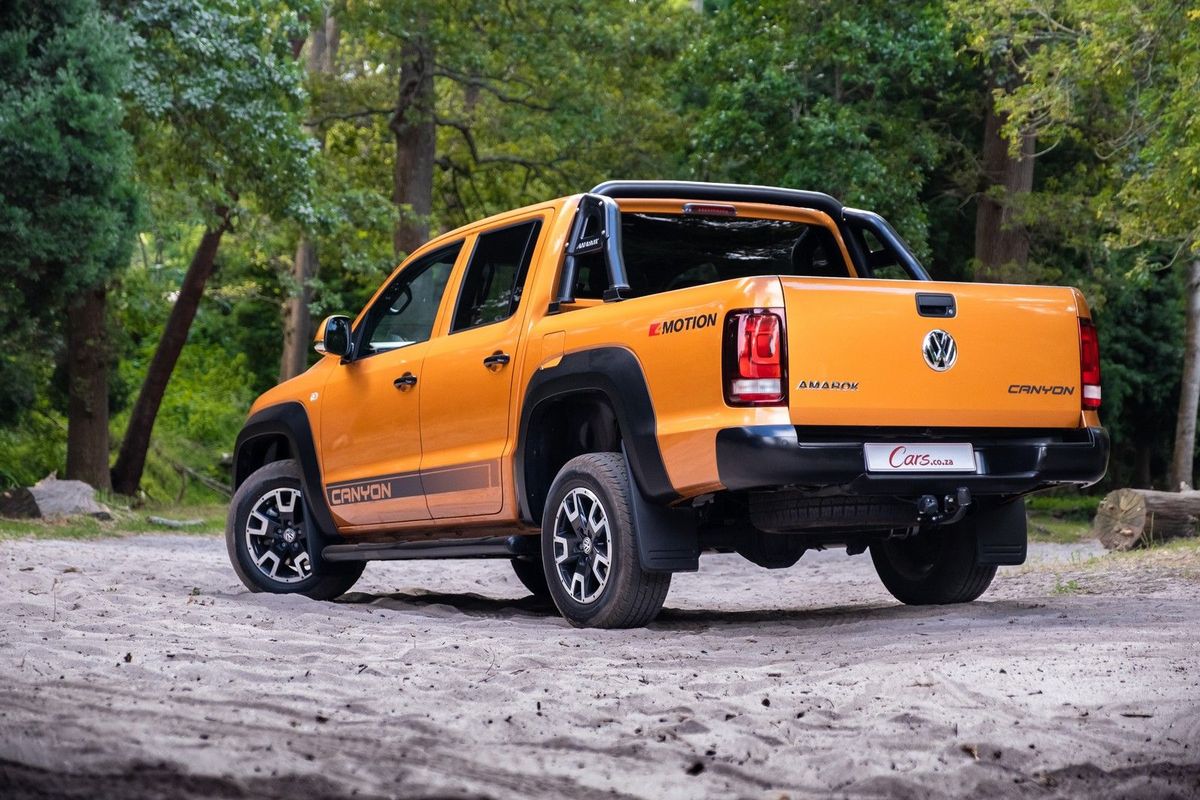
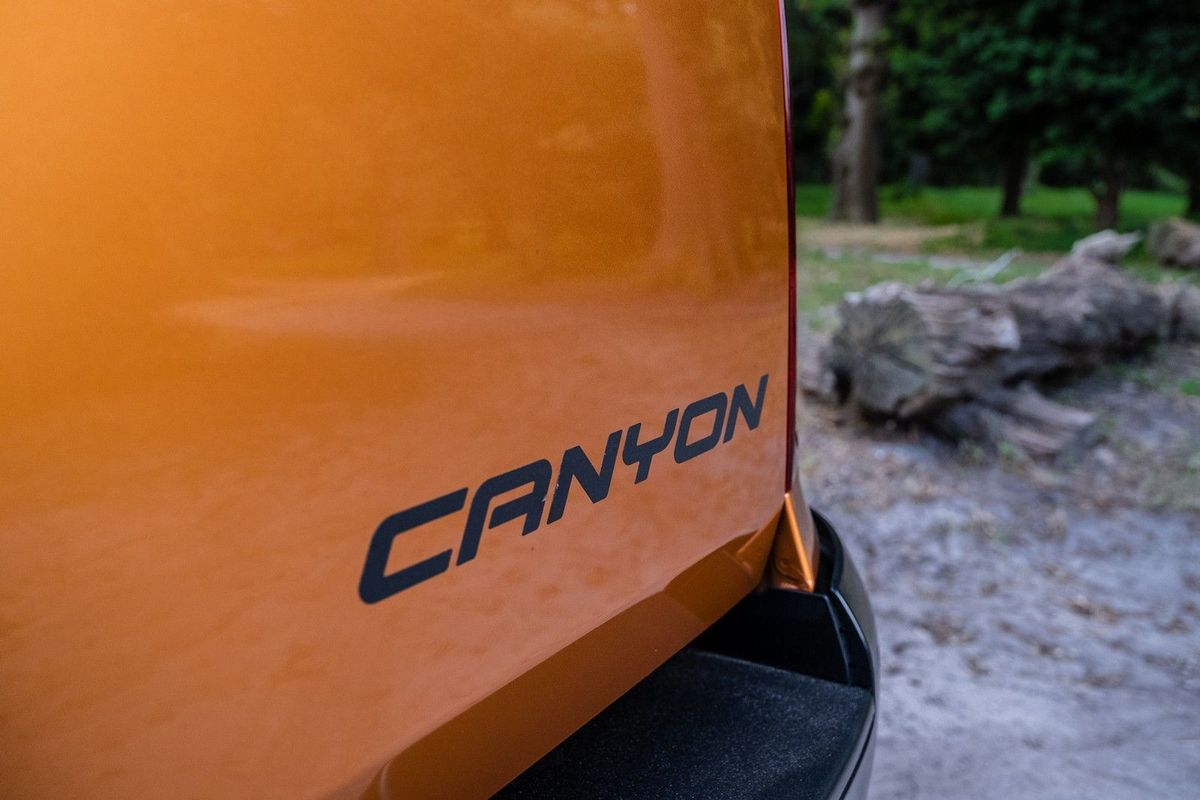
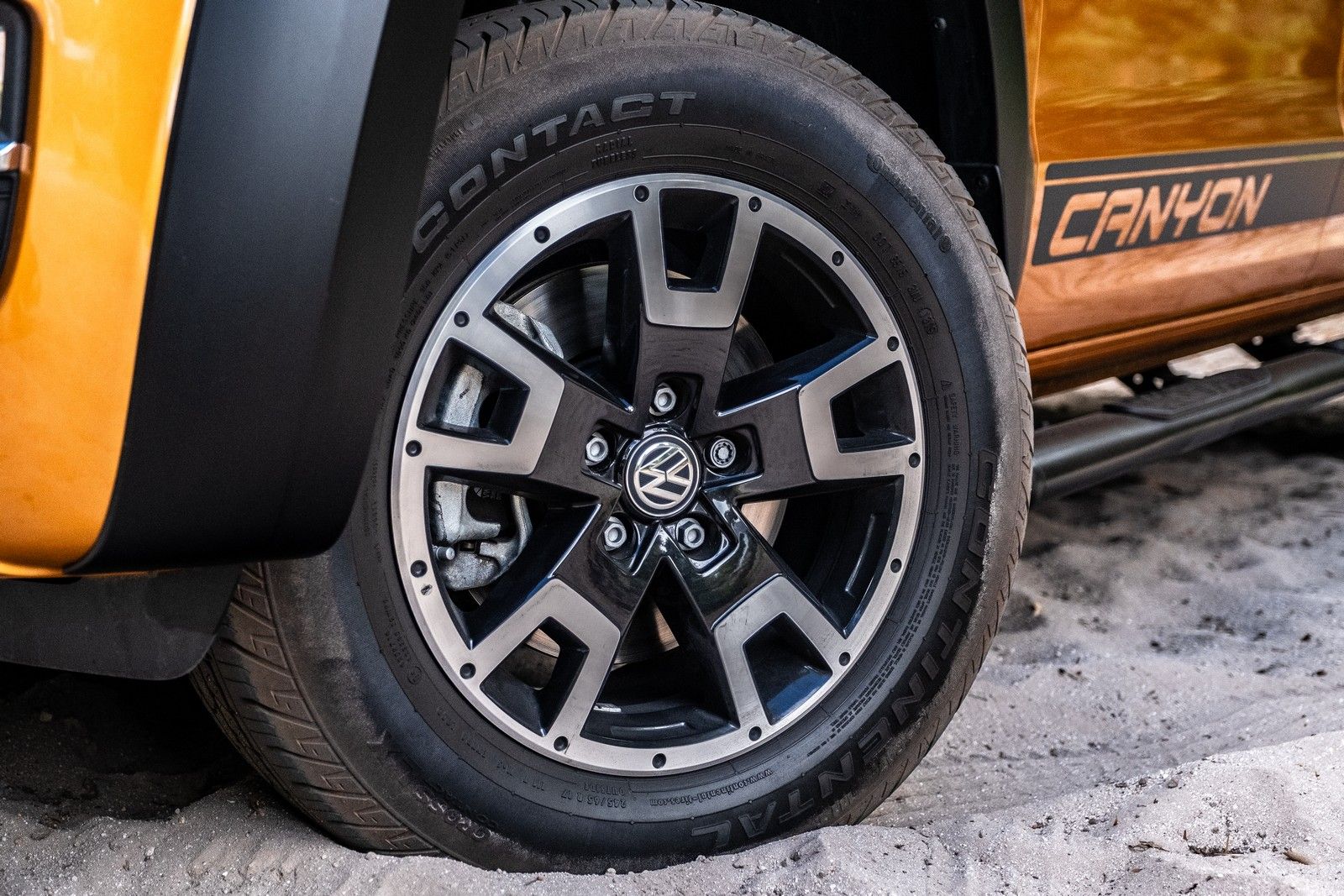
The Volkswagen Amarok Canyon boasts matte black door handles, a black radiator grille, chrome-plated body-coloured exterior mirrs, black wheel arches, Canyon decals and unique 17-inch Aragua alloy wheels.
The Cabin Trim
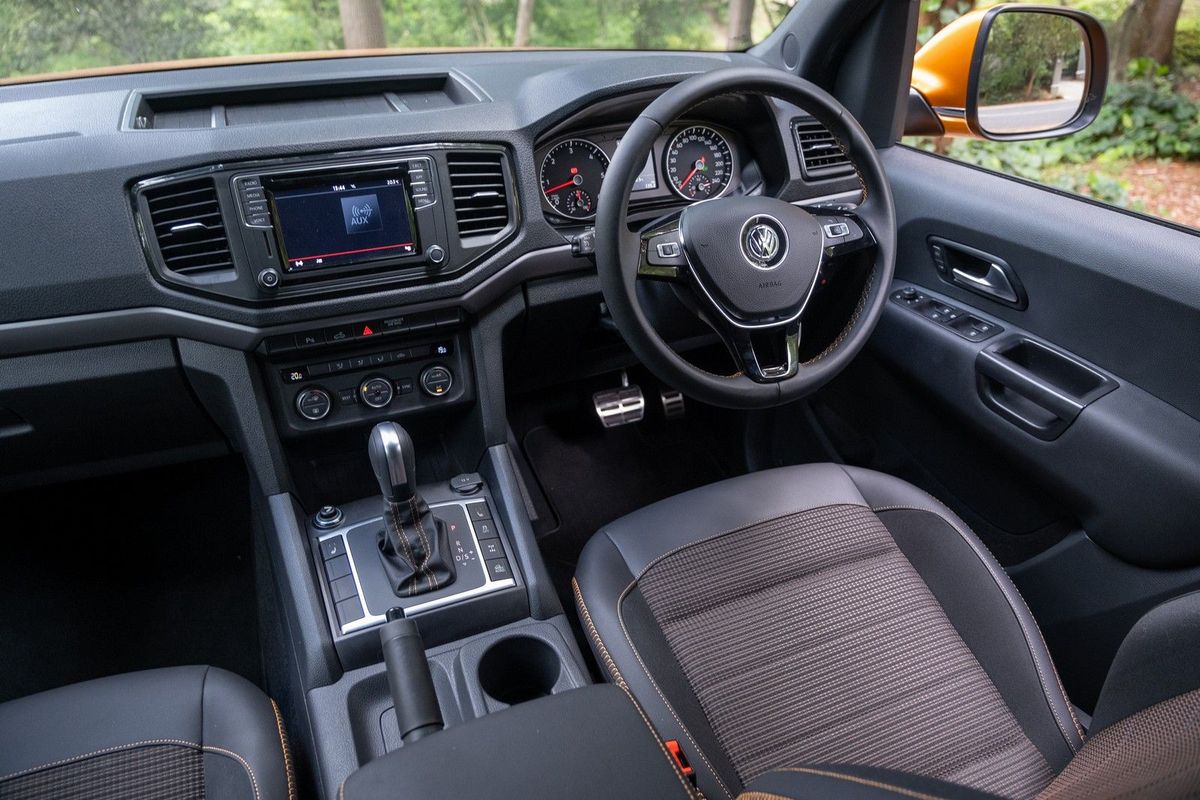
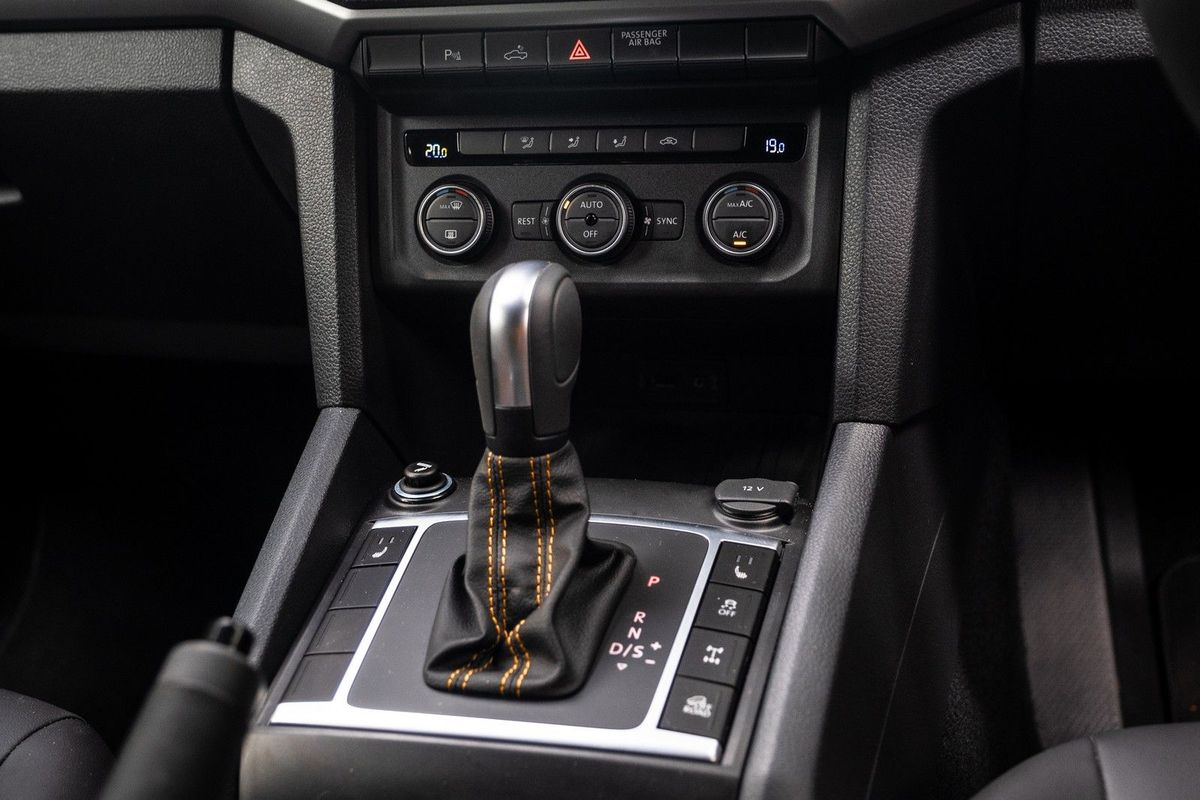
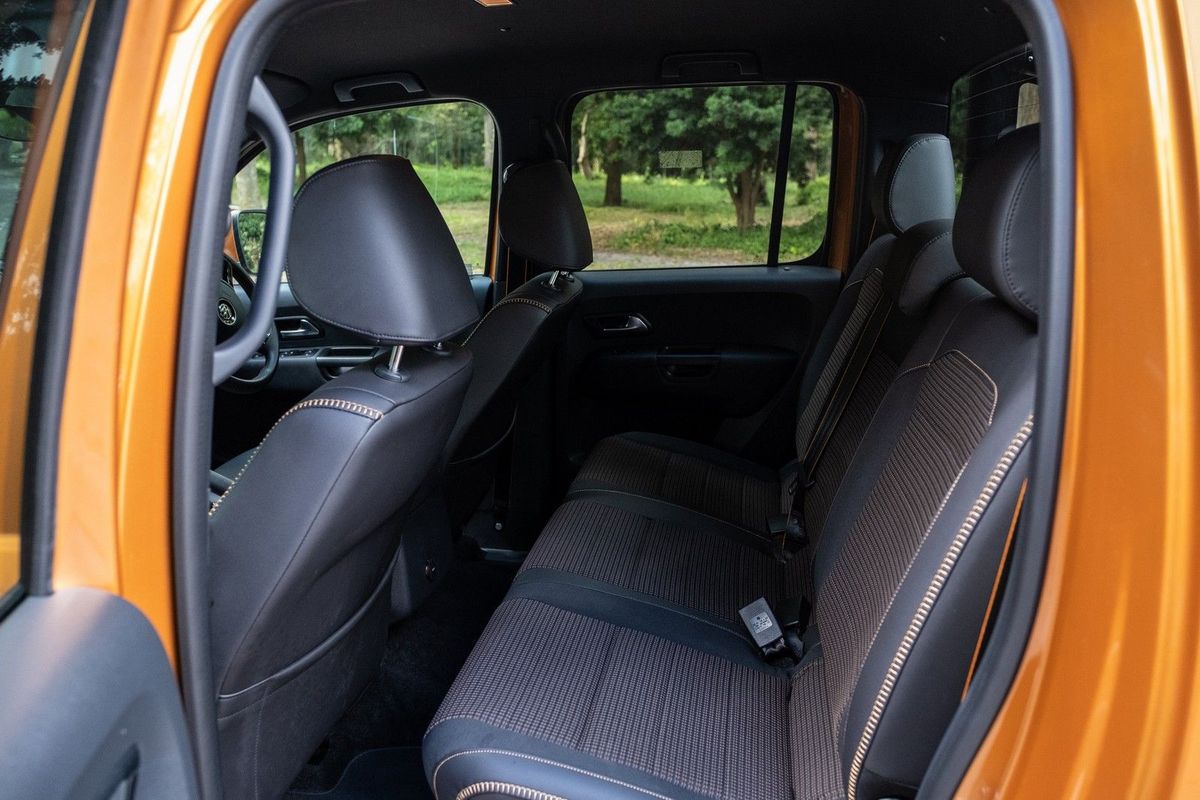
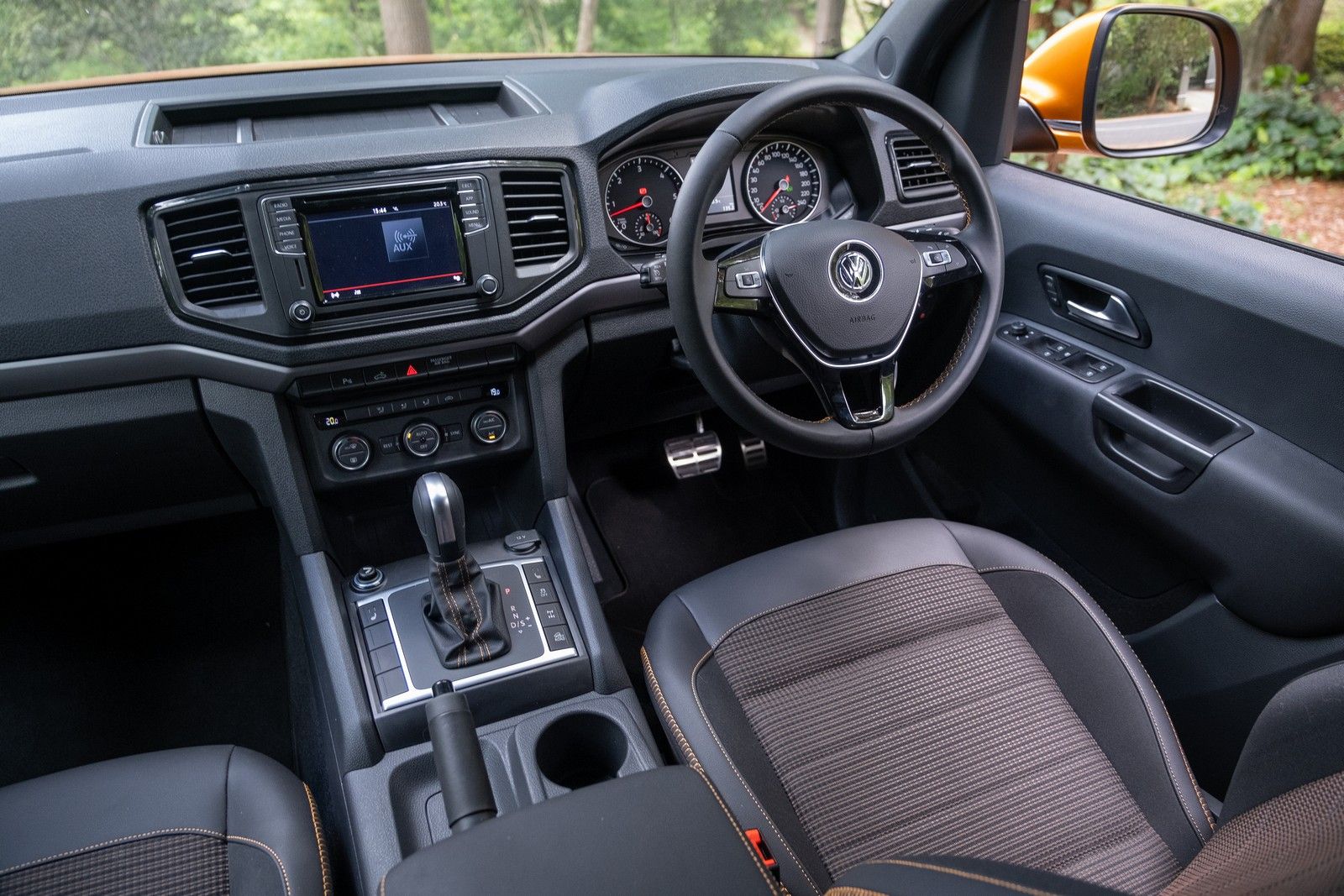
Inside, the Volkswagen Amarok Canyon receives partial leather seats with Honey Orange coloured stitching, seatbelts with orange seams, a steering wheel wrapped in black with orange detailing and a black roof lining. There are also embroidered floor mats.
Standard specification is largely carried over from the standard Amarok V6 and includes things like Bi-Xenon headlights with LED daytime running lights, parking distance control (front and rear) with rear view camera, featuring rear and front parking sensors and a reverse camera, Radio Composition Media and App-Connect with voice control. Satellite navigation, an uprated audio system, heated seats are available as optional extras.
Summary
We're big fans of the Volkswagen Amarok with its potent V6 engine. Not only does it deliver stellar performance, but the way it drives is impressive for a body-on-frame double-cab bakkie. Interior fittings are of a good quality and standard specification at this price point is good. We also had the chance to drive the Amarok Canyon in some soft sand for these photos and the 4Motion all-wheel-drive system barely broke a sweat. The Volkswagen Amarok V6 is a finalist in the #CarsAwards – powered by WesBank.
Volkswagen Amarok Canyon Price in South Africa (December 2019)
Amarok Canyon 3.0 TDI V6 165kW 4Motion Auto R799 000
The Amarok Canyon comes standard with a 3 year/ 100 000km manufacturer warranty, 5 year/ 90 000km Genuine Automotion Service Plan and a 6-year anti-corrosion warranty. The service interval is 15 000km.
Fiat Chrysler Automobiles (FCA) and Peugeot S.A (PSA) are merging to create the 4th largest OEM in volume terms. More detail below…
FCA and PSA have signed a Combination Agreement that will result in the automotive giants merging in an effort to be at the forefront of a “new era of sustainable mobility”. When complete, the new entity will be the 4th largest OEM by volume (8.7 million units) and the 3rd largest by revenue (€170 billion) with an expected operating profit of over €11 billion (6.6% profit margin). More so, estimated synergies are expected to be cash-flow positive in the first year.
By combining financial strength and skills, the new entity will be able to provide innovative and sustainable mobility solutions while leveraging the efficiencies derived from larger volumes. The vehicle portfolio will be broad including mainstream passenger cars, luxury and premium vehicles, SUVs, Light Commercial Vehicles (LCVs) and trucks. More than two-thirds of the run-rate volume will be focused on 2 platforms with approximately 3 million units expected to be produced per year on each of the small and compact/medium-size platforms.
Carlos Tavares, Chairman of the Managing Board of Groupe PSA, said: “Our merger is a huge opportunity to take a stronger position in the auto industry as we seek to master the transition to a world of clean, safe and sustainable mobility and to provide our customers with world-class products, technology and services. I have every confidence that with their immense talent and their collaborative mindset, our teams will succeed in delivering maximized performance with vigor and enthusiasm.”
Mike Manley, Chief Executive Officer of FCA, added: “This is a union of two companies with incredible brands and a skilled and dedicated workforce. Both have faced the toughest of times and have emerged as agile, smart, formidable competitors. Our people share a common trait – they see challenges as opportunities to be embraced and the path to making us better at what we do."
The merger is expected to be completed in 12-15 months, provided that several conditions are met. We will keep you updated as this story develops further.
5 reasons to buy through Audi Pre-owned
Thinking about buying a Pre-owned Audi? There are compelling reasons why you should buy into the Audi Pre-owned Promise – all its vehicles undergo stringent quality checks before they reach the dealership floor and come with at least 1 year/25 000 km maintenance plan (or the balance of their existing plans), as well as the value-added services of Audi Assist.
SPONSORED ARTICLE
You can search for available models and body types across all Audi Pre-owned dealerships in South Africa by using the Audi Pre-owned locator. From the Audi A1 premium city car all the way through to the Audi Q7 SUV, you can sort the results according to price/year/mileage, engine (including fuel type, gearbox and drivetrain), body colour and location. Alternatively, you can use the Locate a Dealer function to find an Audi dealership near you that has Audi Pre-owned models available for purchase at their premises.
All used Audi’s undergo an 80-point check before they can be offered for sale by Audi Pre-owned.
Here are 5 reasons to buy through Audi Pre-owned:
1. The Audi Pre-owned Promise
Audi Pre-owned dealers pay careful attention to detail to ensure Audi Pre-owned vehicles meet the exact standards of Vorsprung. That’s the Audi Pre-owned Promise.
2. Audi Quality Check
No matter when, where and how the models were sourced by the dealership, all Audi Pre-owned vehicles must undergo comprehensive mechanical and quality checks before they’ll be allowed to be parked and offered for sale on the showroom floor. Where required, reconditioning work will be carried out on vehicles’ interior and exterior areas prior to purchase.
3. Audi Integrity Check
Audi undertakes rigorous integrity checks on all Audi Pre-owned vehicles to provide its customers with peace of mind. All Audi Pre-owned vehicles are thoroughly checked to ensure they are not listed as having been stolen, or are the subject of fraud or any outstanding finance. Legally, if a stolen vehicle is resold and then impounded by the police, its buyer is still liable to pay all the instalments on the vehicle they bought. The Audi Integrity Check ensures that this experience doesn’t occur for an Audi Pre-owned customer.
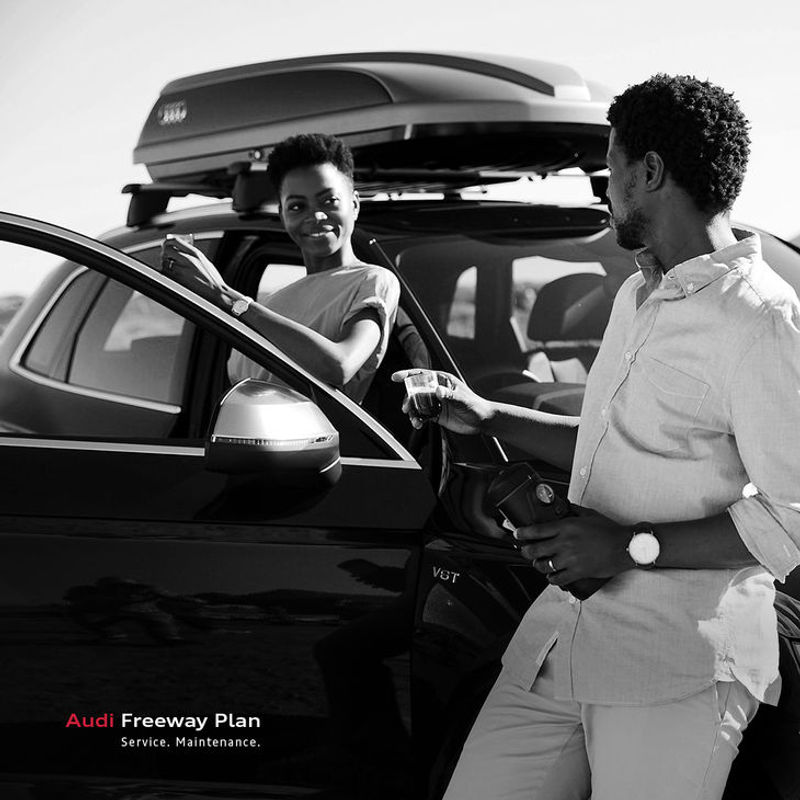
Want to keep your Pre-owned Audi for a long time? Audi Freeway Plan can now be extended up to 10 years or 300 000 km.
4. Audi Freeway Plan
Audi Freeway Plan is a comprehensive service and maintenance plan that covers services, wear and tear items and certain repairs to the vehicle. To maintain Audi’s high standards of quality, the Audi Freeway Plan gives a prospective owner the peace of mind that their vehicle will be serviced and maintained timeously and at no extra effort or cost to them.
Each Pre-owned vehicle is sold with an Audi Freeway Plan valid for at least 1 year/25 000 km or, in the case of the majority of models, the balance of their existing (5-year/100 000 km) Freeway Plans. To effect servicing, maintenance and repair work (under certain conditions), simply make an appointment with any franchised Audi dealership in South Africa. Optional extensions to the Audi Freeway Plan are also available.
5. Audi Assist
Through Audi Assist, Audi South Africa and its dealer network pledge to provide owners with peace of mind motoring by providing the infrastructure to support a countrywide emergency service 24 hours-a-day, every day. Its number is 0860 434 838 and operates in South Africa, Swaziland, Lesotho, Namibia and Botswana.
The objective of the programme, which is offered in conjunction with the Audi Freeway Plan, is to ensure that fully equipped and trained Audi technicians are on call to provide owners with on-the-spot roadside assistance if they encounter difficulties with their vehicles (the primary focus is to get owners mobile in their own vehicles). Where a roadside repair cannot be effected and a vehicle needs to be towed to the nearest Audi dealer, you and the occupants of the vehicle will be transported to a place of safety in the dealer’s roadside assistance vehicle.
Roadside assistance (for mechanical and electrical breakdowns, flat tyres, flat batteries, fuel shortage, keys locked inside the vehicle), tow-ins and vehicle recovery are offered to Audi owners free of charge for the duration of the Audi Assist service.
Power boost for Suzuki's turbocharged 1.4 BoosterJet motor
Suzuki is in the final stages of developing a new version of its popular 1.4-litre BoosterJet engine. Familiar to South African Swift Sport and Vitara owners, this 1.4-litre turbocharged petrol engine is the most sophisticated powertrain on offer from the Japanese brand.
At the 2020 Geneva Auto Show, scheduled for the second week of March, Suzuki has confirmed that it will reveal a production version of its new 1.4-litre BoosterJet mild hybrid. Like many other car companies, Suzuki is under pressure to reduce fleet CO2 levels for all the vehicles it sells. One of the ways of achieving these increasingly challenging targets is to add mild-hybridisation to existing internal combustion engines.
For the 1.4-litre BoosterJet application, Suzuki will add a 48V electrical architecture, which allows for superior hybridization, energy harvesting and distribution. Suzuki already has a 12V hybrid system on some of its petrol engines in vehicles such as Baleno, Ciaz, Ertiga, XL6, and the S-Cross.
Although final power specifications will only be confirmed next year, the engineering team has committed to a goal of reducing emissions by 20% on both the 1.4-litre turbocharged petrol engine. Fuel consumption is expected to improve by 15% and there should be added accelerative potency too, thanks to an integrated starter generator motor, which can release stored energy into the drivetrain.
Suzuki has alluded to a total system torque peak of 235 Nm, at 2000rpm, which is better than the current 1.4-litre BoosterJet engine’s 230 Nm, at 2500rpm. Thanks to compact packaging and the use of advanced materials, the 48V mild-hybrid system should add no more than 15kg to any of the Suzuki vehicles it is applied to.
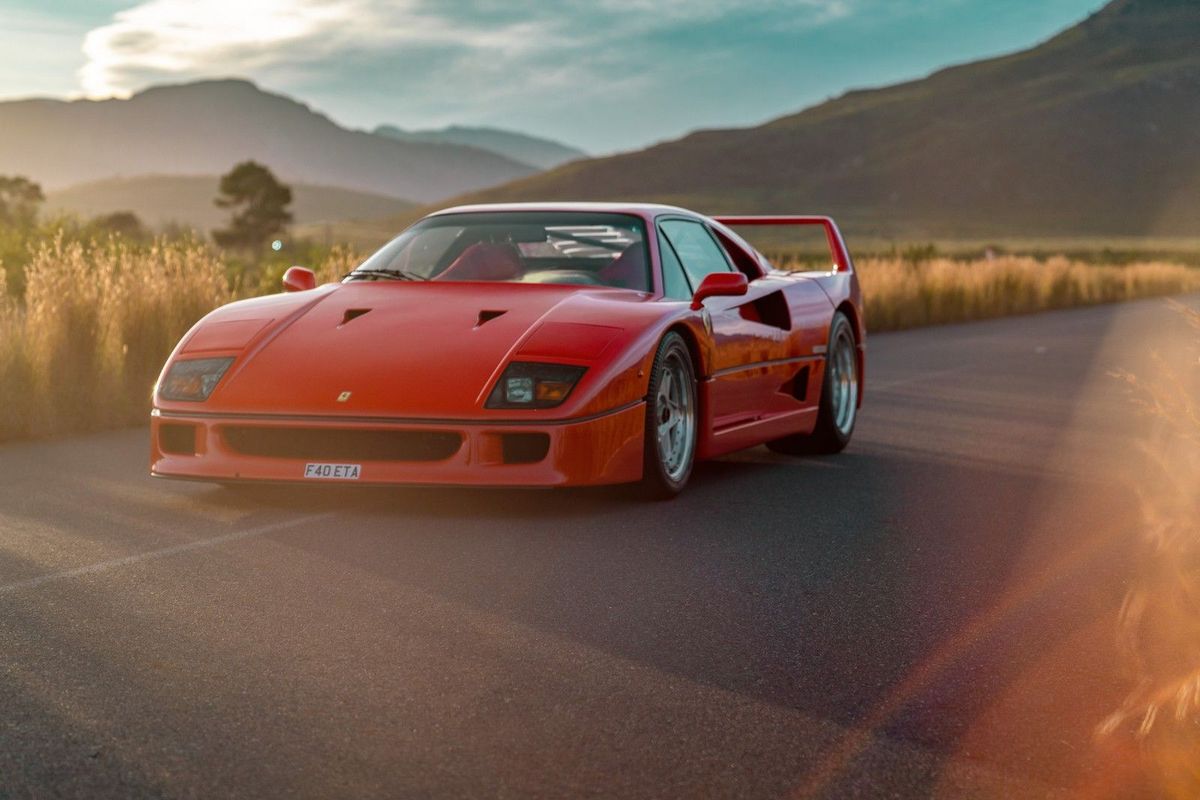
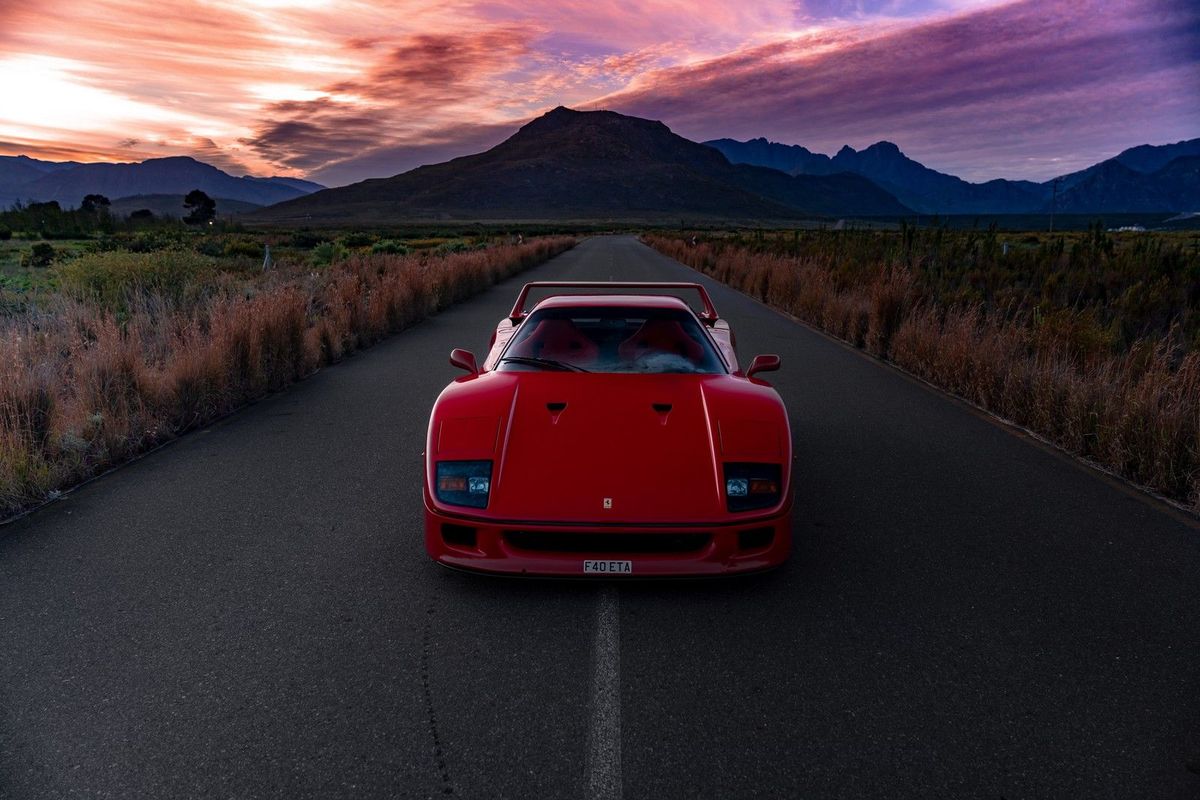
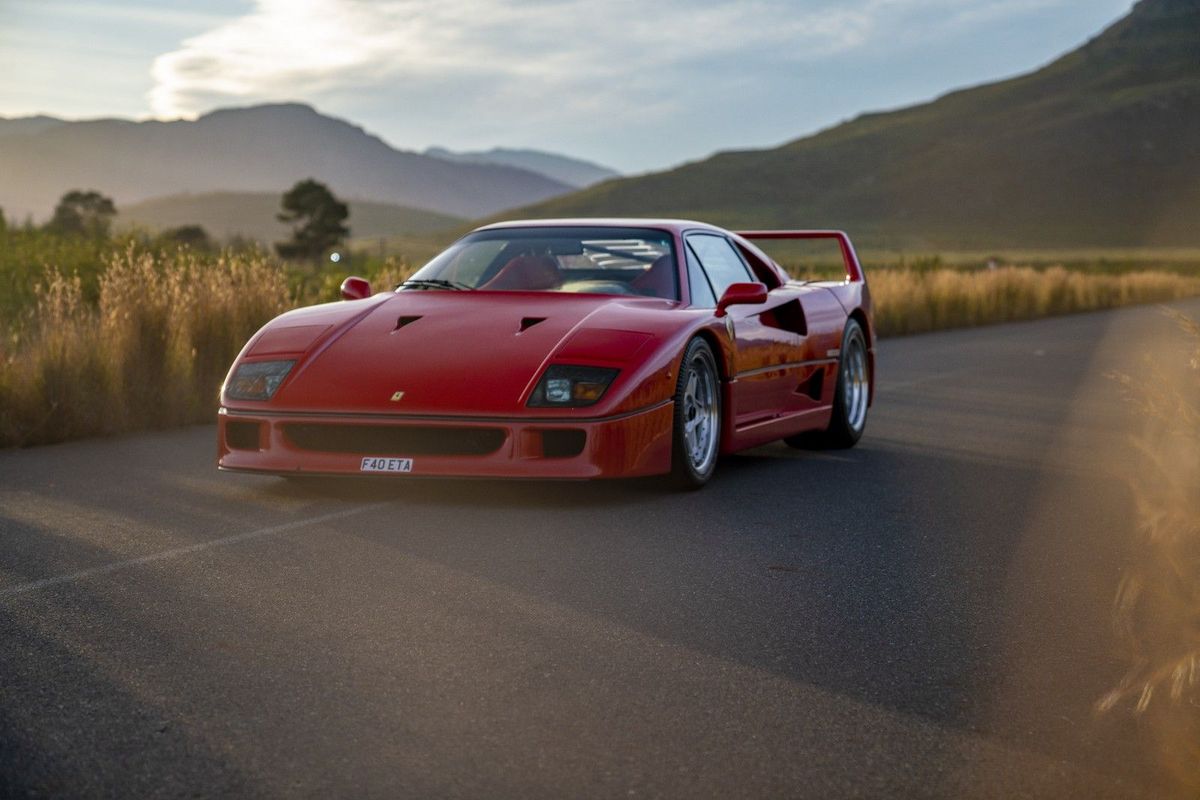
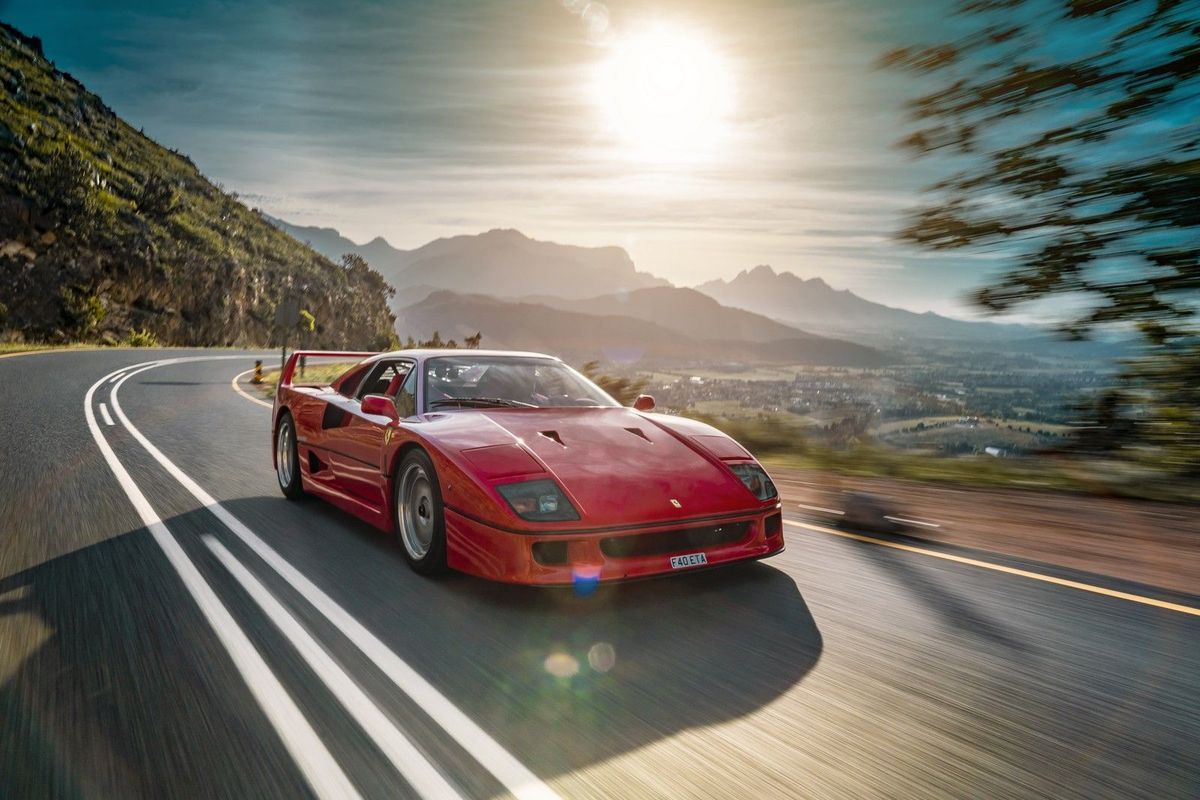
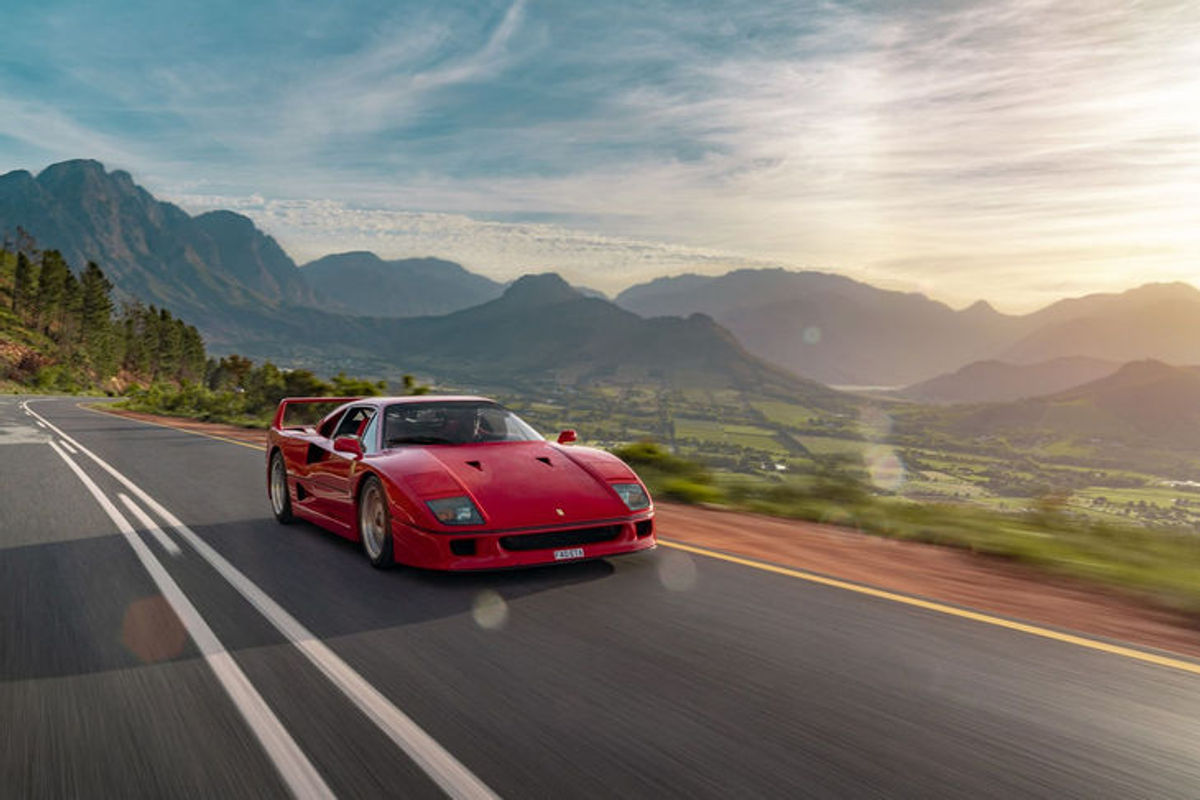
The visceral Ferrari F40 – built to mark the 40th anniversary of the Maranello-based supercar company – is undoubtedly the most revered supercar from the '80s. In 2018, Ferrari enthusiast Dawie Theron realised his dream of owning this special machine – one with an enviable racing pedigree, no less. This is the story of the Pretorian and his celebrated Prancing Horse.
The F40 is not only a car that defined the end of an era at Ferrari; it's undoubtedly one of the all-time great supercars. For petrolheads, supercars enter our collective consciousness because they're invariably the automotive machines that feature on the posters we affix to our bedroom walls during our formative years. The F40 is a fine example of such a car, but it has iconic status for a number of reasons. Ferrari aficionados know it's the last car produced under the guidance of Il Commendatore Enzo Ferrari (who died in 1988) and it was designed by none other than Leonardo Fioravanti, who also penned the Dino 206 GT, Daytona (365 GTB/4) and later, the 288 GTO.
For many of us, the F40 was (and still is) the most outlandish, raw and undiluted "racer built for the road". It's clinically sculpted exterior lines and stripped-out interior made it such a brutally purposeful machine in its heyday. Built to dominate whichever racing series it would be allowed to enter, the Ferrari demands your immediate attention.
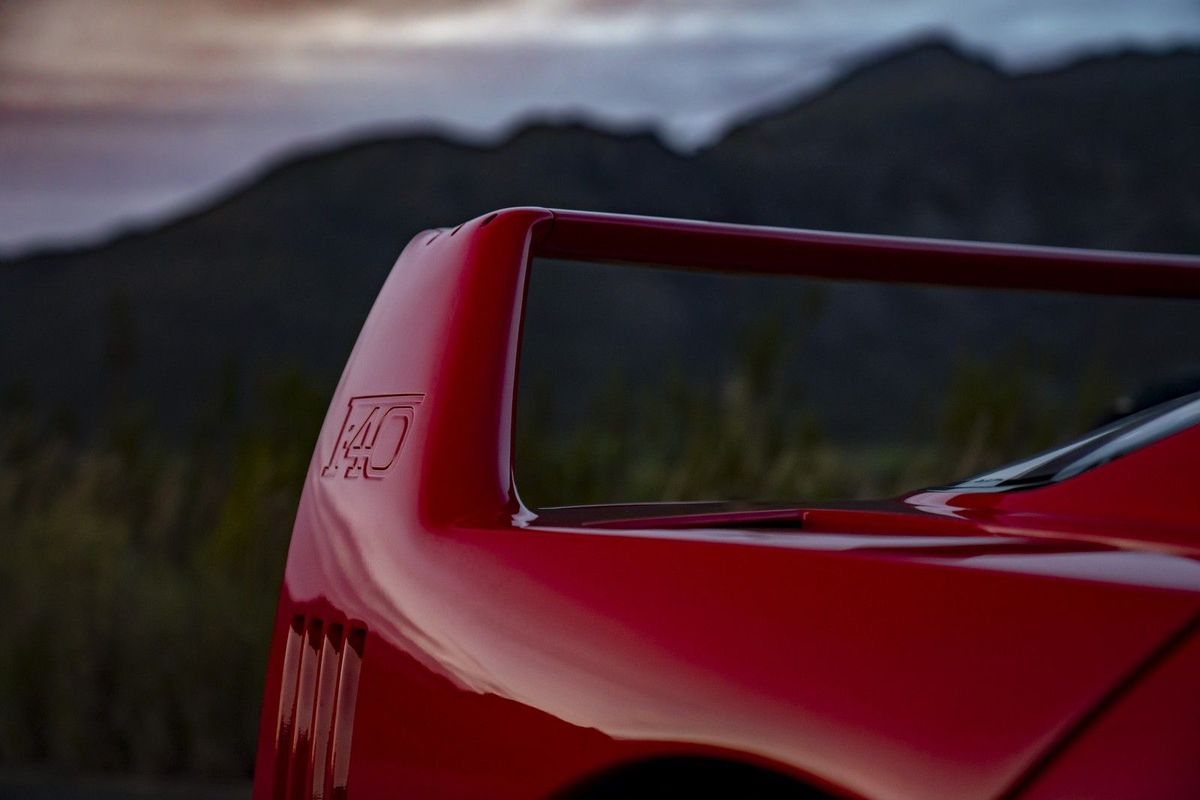
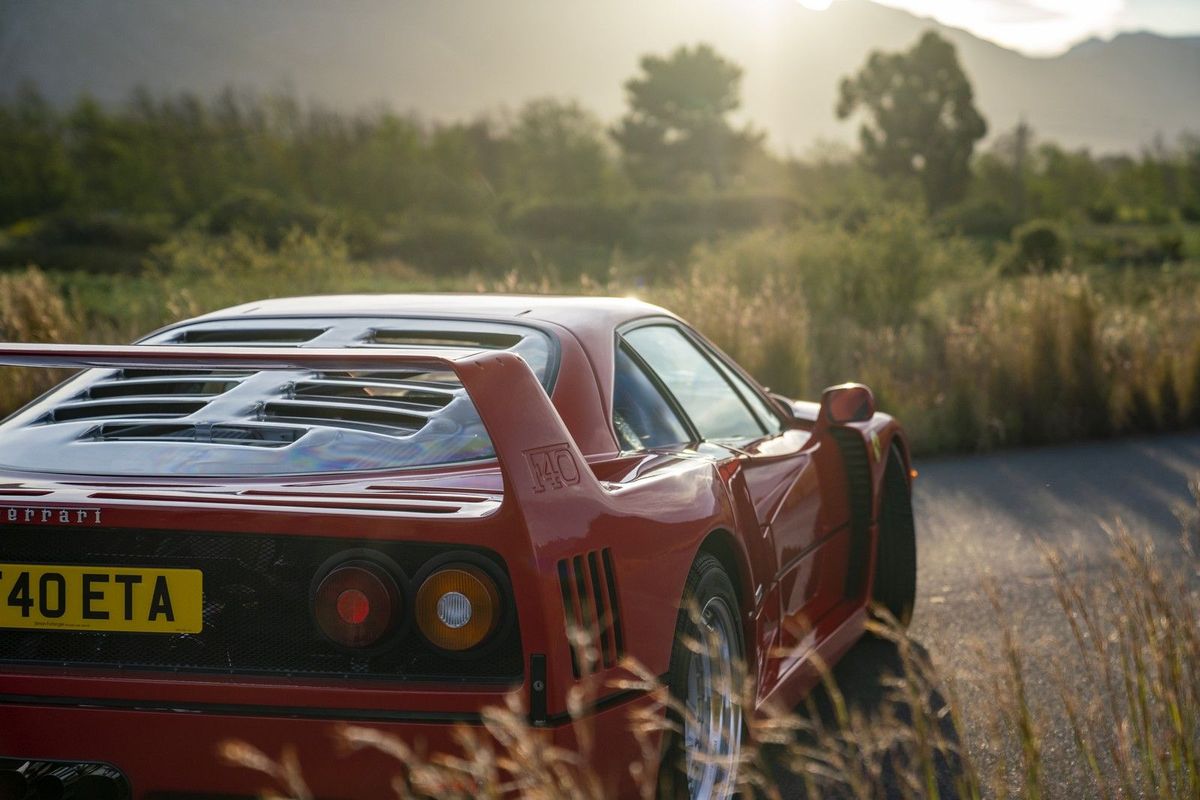
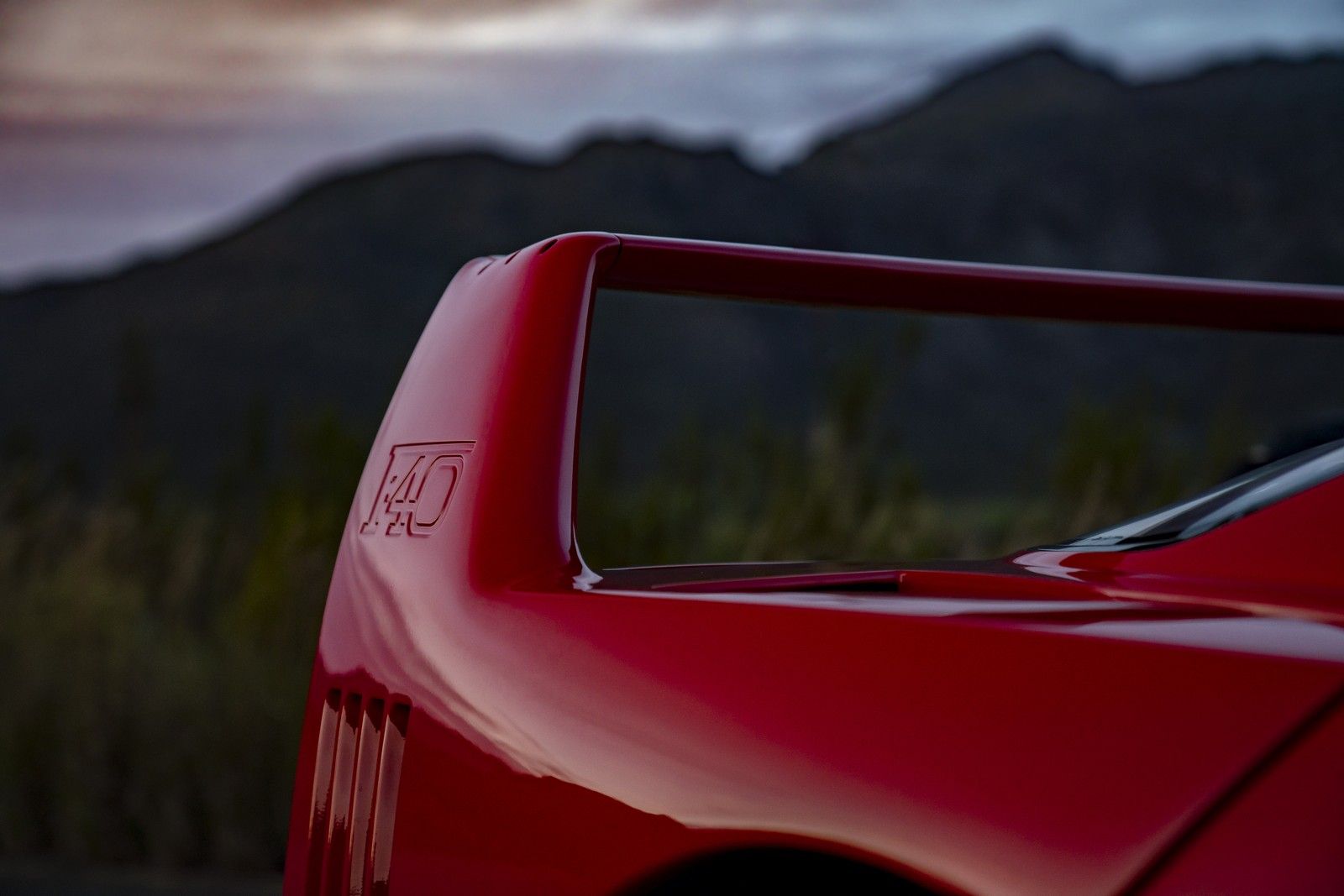
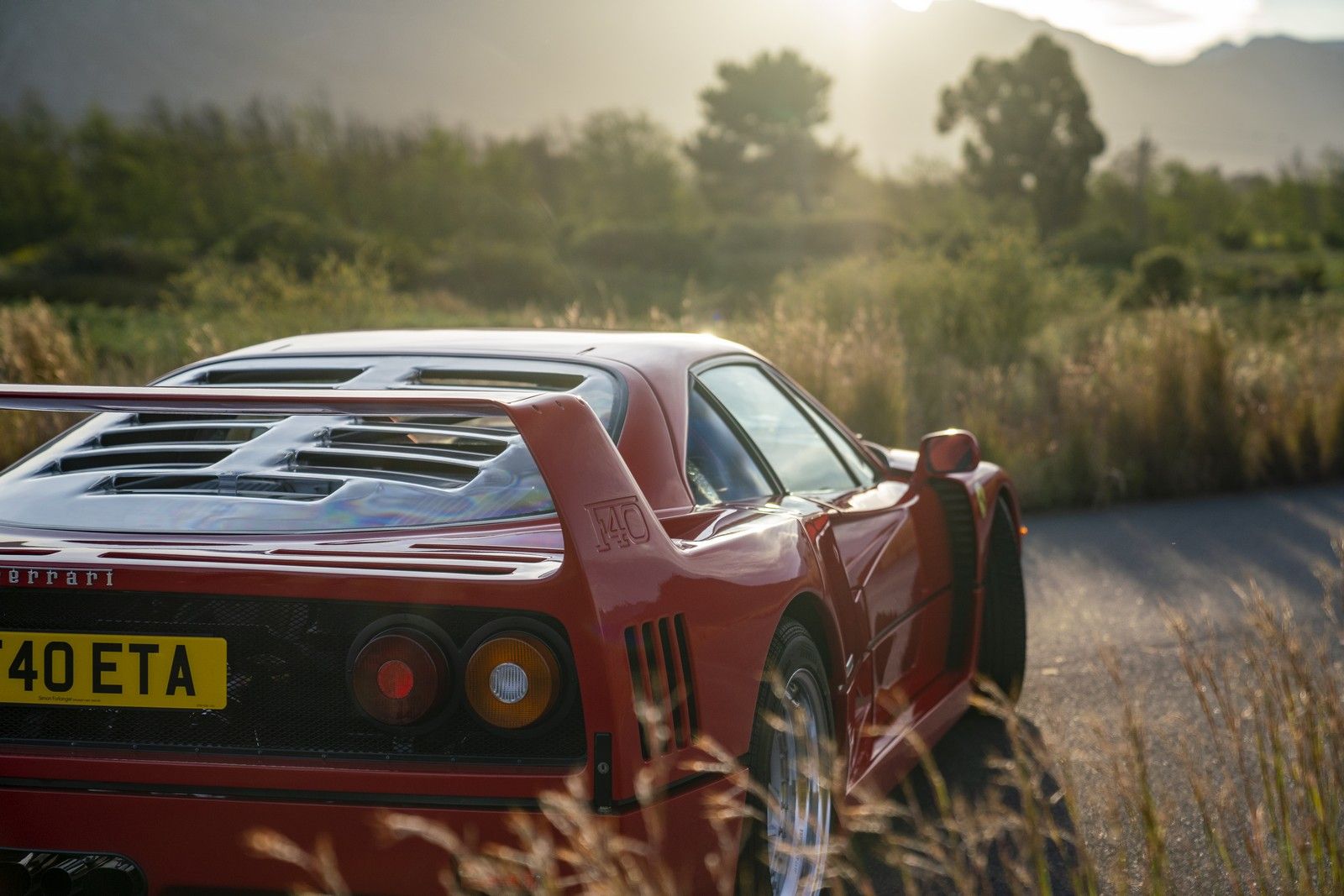
The F40's name is engraved in the upright of its legendary spoiler.
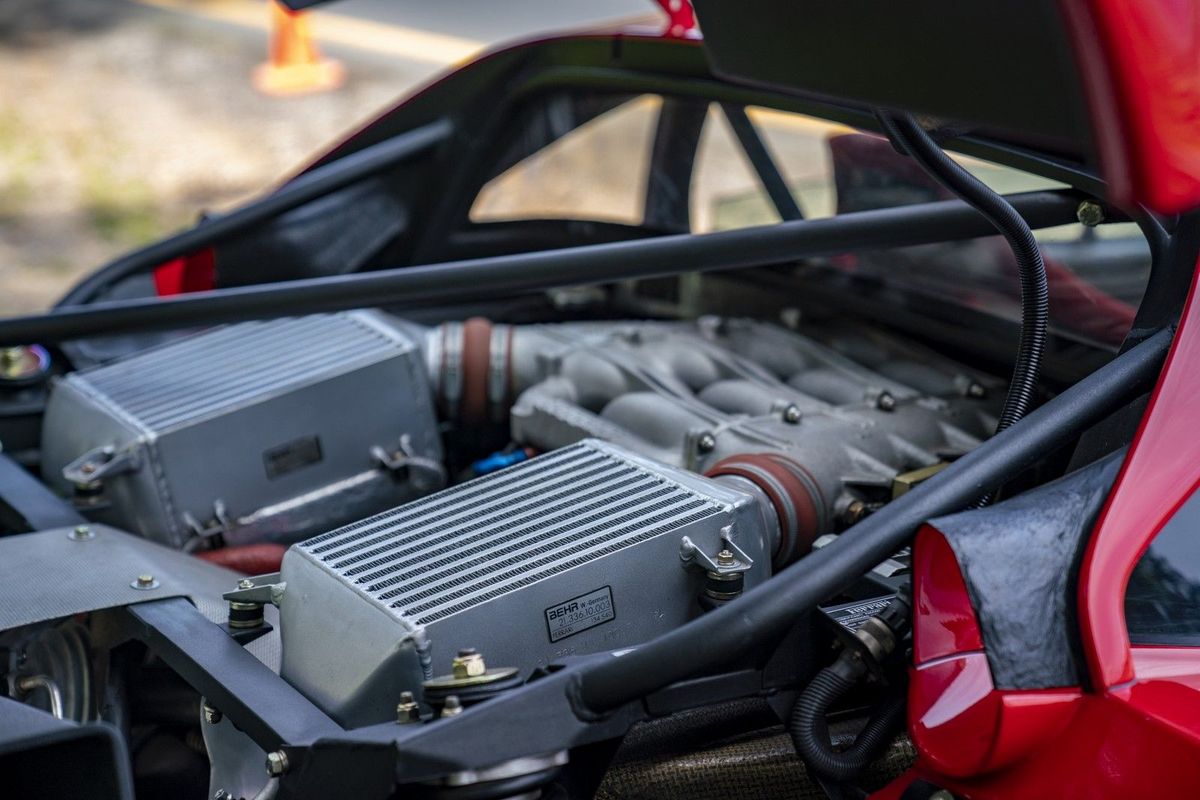
If none of this makes you appreciate the car heralded as "Enzo’s swansong", the F40's drivetrain and performance surely will. The Ferrari's 2.9-litre V8 twin-turbocharged engine produces 352 kW and 577 Nm – remarkable and impressive numbers for 1987. With a kerb weight of only 1 100 kg, the F40 was claimed to have a 0-100 kph acceleration time of 4.1 seconds and an impressive top speed of 324 kph.
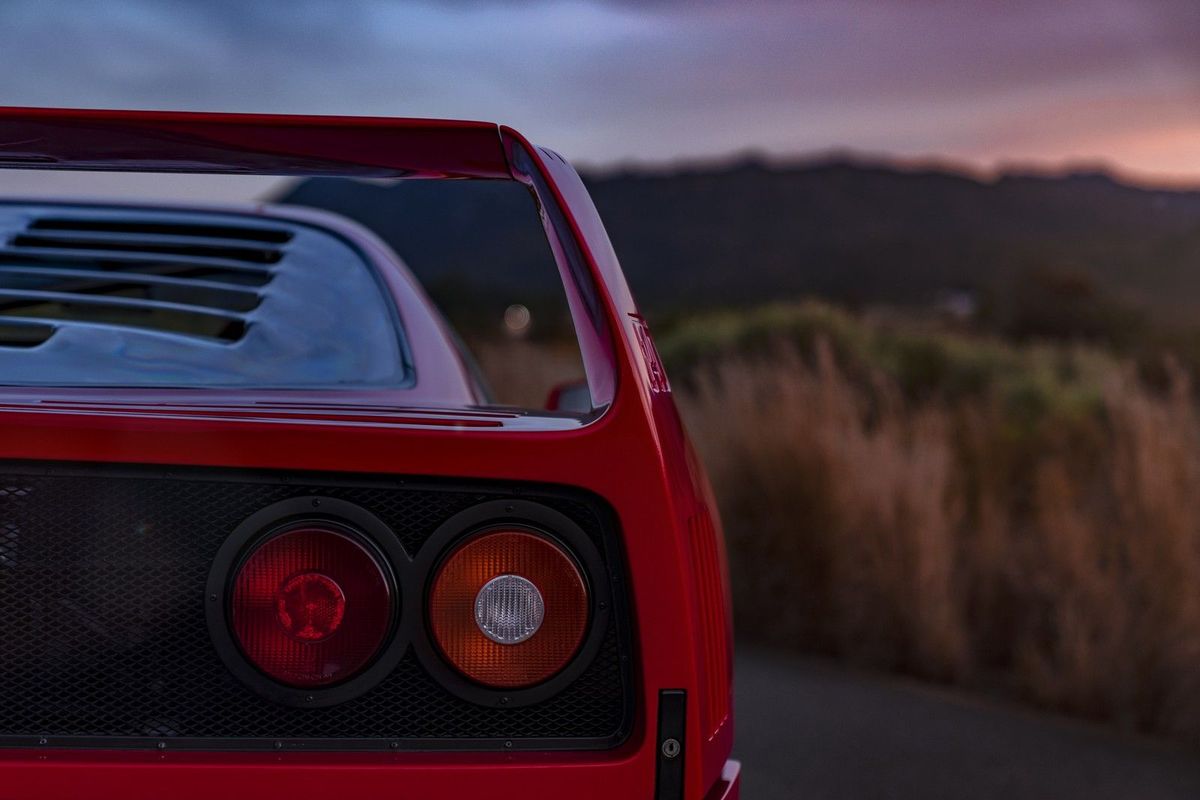
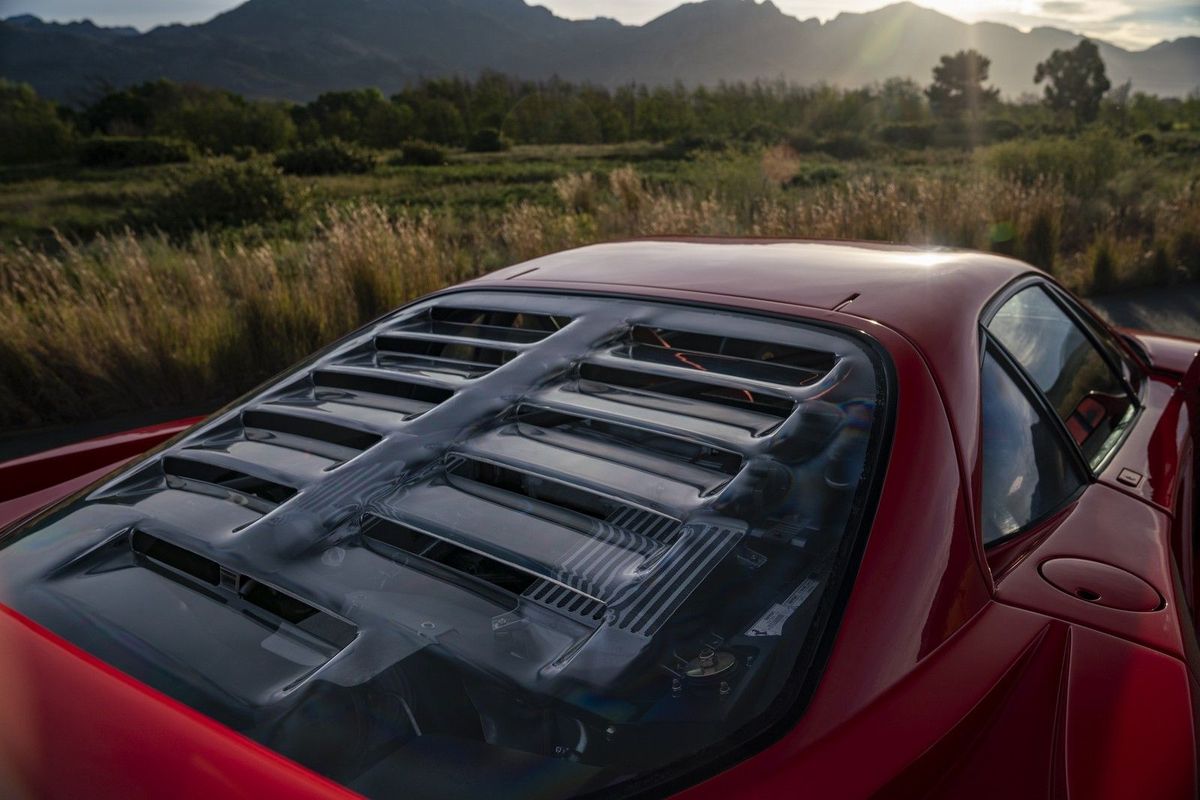
Ferrari clearly wanted to produce a memorable car to commemorate its 40th anniversary. Notable, and now iconic, design elements include NACA side air intakes and the 4 vertical ducts just below the uprights of the imposing rear wing on both sides of the car. Climb inside and the bonded composite tub is immediately obvious… and so too is the green glue that keeps part of it together. The bonded tub not only makes the car extremely light, but very strong.
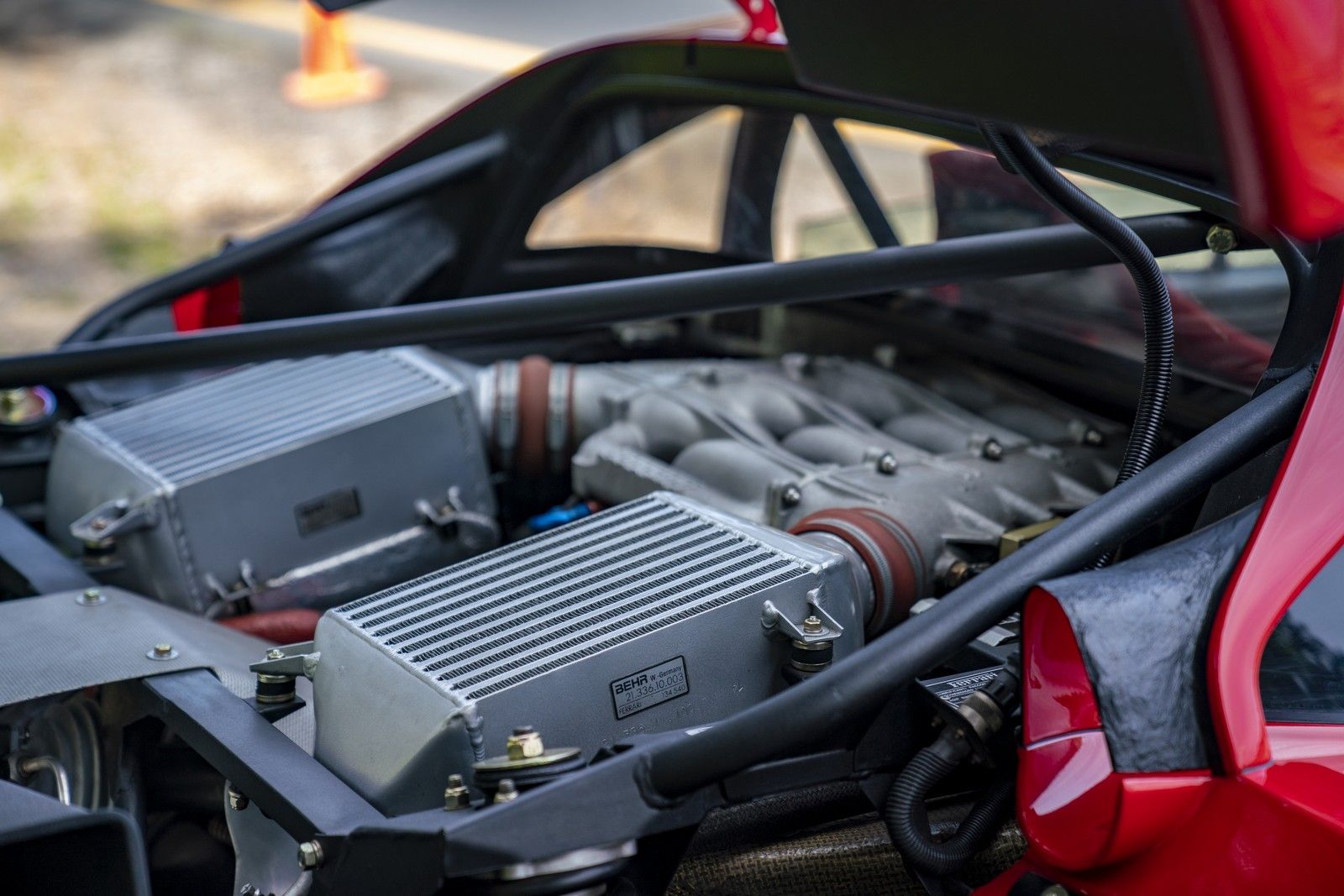
The mid-mounted 2.9-litre V8 under the engine lid of the F40 is endowed with a pair of turbochargers.
An F40 unlike any other
This specific UK-based F40 has a fascinating history. Its owner, Dawie Theron, has been a Ferrari addict since he was in school and was often called “Dawie Ferrari” by his classmates. After decades of hard work, and plenty of encouragement from his wife, he finally bought this – his dream car – in 2018. He wanted to experience the car on home turf here in South Africa and imported it temporarily. Before it returned to the UK, he availed it for this shoot.
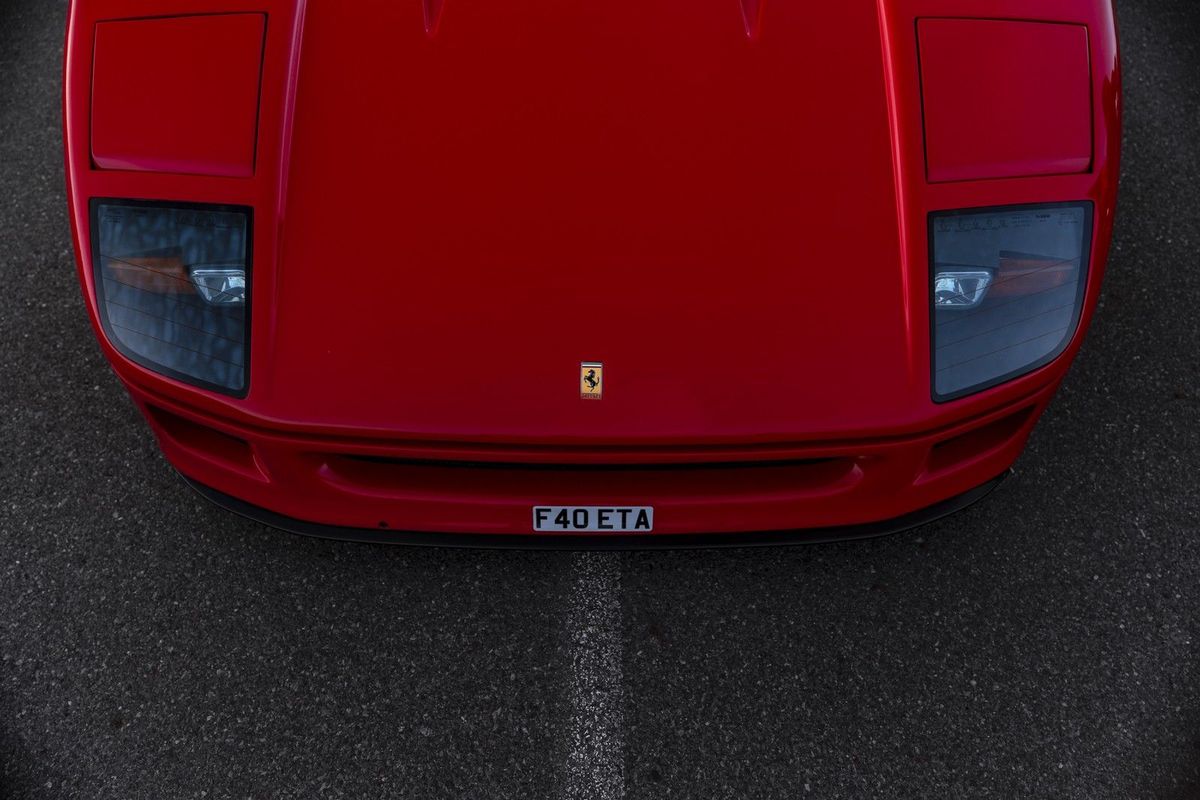
F40 ETA (as the car is called thanks to its number plate) was successfully raced, an honour that sets it apart from most F40s. Additionally, being one of the earlier cars, it also features the purer specification of “non-cat, non-adjust”. This means the exhaust manifold has no catalytic converter and the suspension is not adjustable as the later cars are. Today this specification F40 is one of the most collectable “modern” Enzo-era cars.
As Furlonger Specialist Cars explains, this particular F40 (car #83916) has a very rich history. A total of 1 337 units of the F40 were produced (some sources claim 1 315 and others 1 311), however, this car is 1 of only 30 F40 Competizione race cars converted by F40 specialists worldwide. It has British and international racing history and is also the most successful racing F40 in the UK.
Of ducts and vents… Every design element of the F40 serves a purpose in the high-performance machine…
It was delivered new to the racing driver, Vito Coco in Catania, on 22 January 1990 and subsequently retained in the Italian's personal museum (having done minimal mileage) before being imported into the UK by Maranello Concessionaires in January 1998. At this time, the multiple championship-winning race driver and internationally acclaimed proprietor of Italia Autosport, John Pogson, acquired car #83916 on behalf of a client. In 1999, 2000 and 2001 this F40 became the most successful racing F40 in the UK by winning the Maranello Championship, the Intermarque Championship and the Ferrari Porsche Challenge.
A championship-winning car…
The driver of the F40 was John Pogson himself, with support from the Italia Autosport racing team. Unlike the other 29 F40 Competizione cars, all of which have been modified beyond the point where they can be taken back to original factory specification, a substantial number of car #83916's parts, including its front bonnet, rear lid, wheels, suspension components, seats and steering wheel, were removed and dry stored whilst the car was in Competizione form.
Additionally, helicopter tape was used to protect all exposed carbon-kevlar surfaces. Car #83916 had a 57% “race entered to victory” ratio, having won 28 times from 49 races in its 3 seasons of racing. It won 8 pole positions and notched up no fewer than 32 fastest laps. It finished close to 90% of its races. In 2011, Italia Autosport, under the guidance and scrutiny of Pogson, re-commissioned the car back to original factory specification using the original, dry-stored parts. The engine and gearbox were fully rebuilt and it has covered very few kilometres since then. The car was subsequently entered in the Ferrari Owners Club's 2011 National Concourse at Heythrop, in which it won its class.
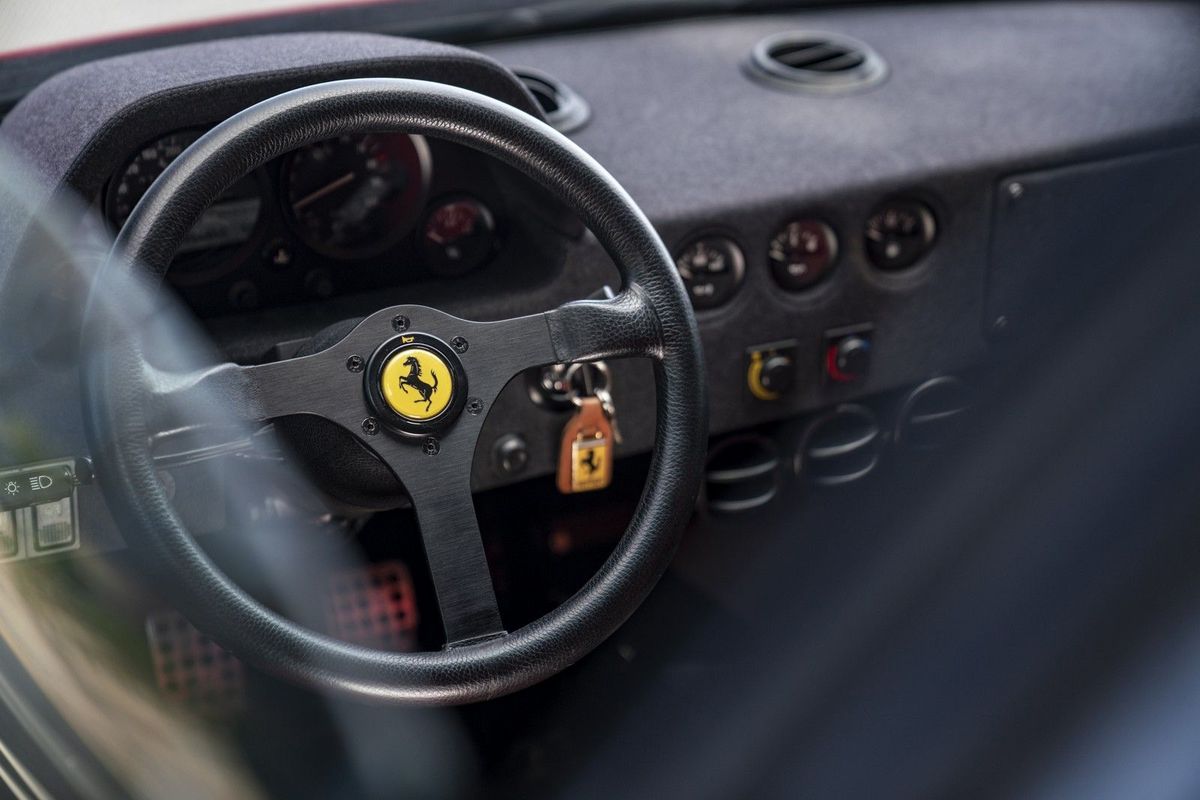
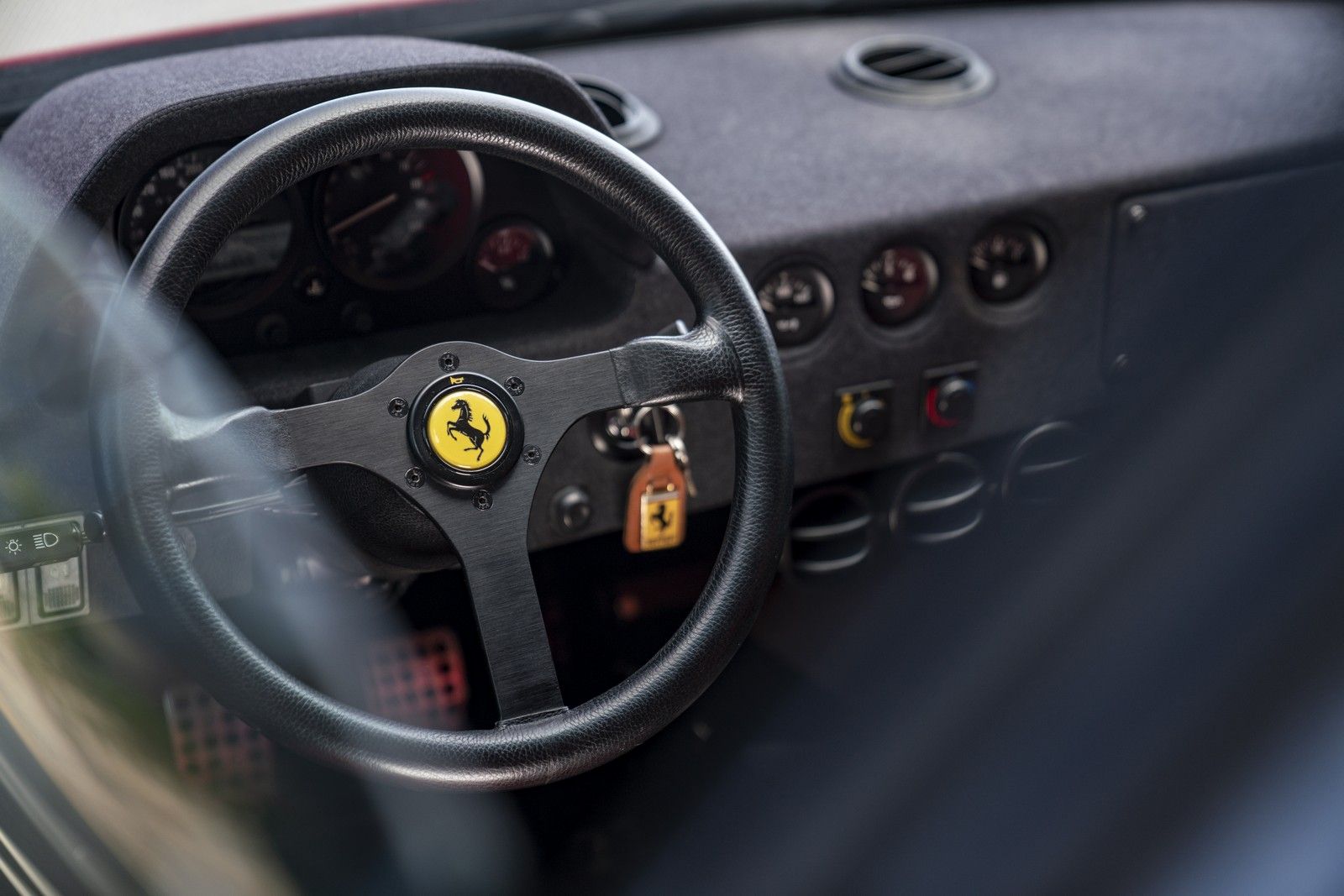
There is not a single angle on this car that doesn’t grab your attention. And when we lift the large engine lid and rest it on its support arm, we're treated to the full, inviting view of those wide rear tyres and the exposed drivetrain.The red bucket seats, cloth-trimmed dashboard and stripped out cabin illustrate the car’s pure intent as an unadulterated driver’s car – just the way Enzo intended. After all, Il Commendatore’s first love was always racing cars. The total lack of creature comforts didn’t deter Dawie from fully enjoying the driving experience the day he took delivery of the F40 in England. He and a friend packed their small weekend bags in car #83916 and headed straight for Italy!
There is little in the way of creature comforts in the F40… It has a steering wheel, gearknob, pedals and little else.
Specifications
Car: Ferrari F40 (1989) Engine: 2.9-litre twin-turbocharged V8 Power: 352 kW at 7 000 rpm Torque: 577 Nm @ 4 000 rpm Gearbox: 5-speed manuala Weight: 1 100 kg Top speed: 324 kph 0-100 kph: 4.1 sec