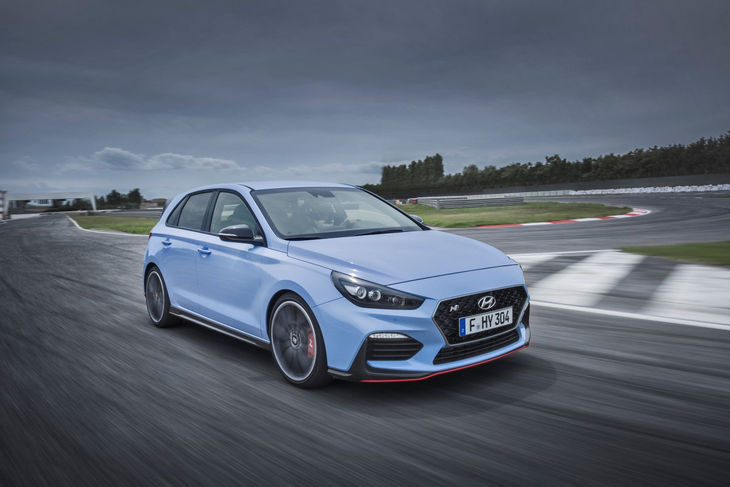
The year will kick off with the arrival of the highly-anticipated Hyundai i30N, a model that’s had enthusiasts salivating for some time. Apart from delivering notable handling ability, the i30N will bring notable performance to South African roads thanks to its potent turbocharged 2.0-litre petrol engine that will deliver outputs of 202 kW and 353 Nm of torque with a zero to 100 sprint time of 6.1 seconds using a 6-speed manual transmission. The Hyundai i30N will be offered in limited numbers and pricing will be revealed in January 2020.
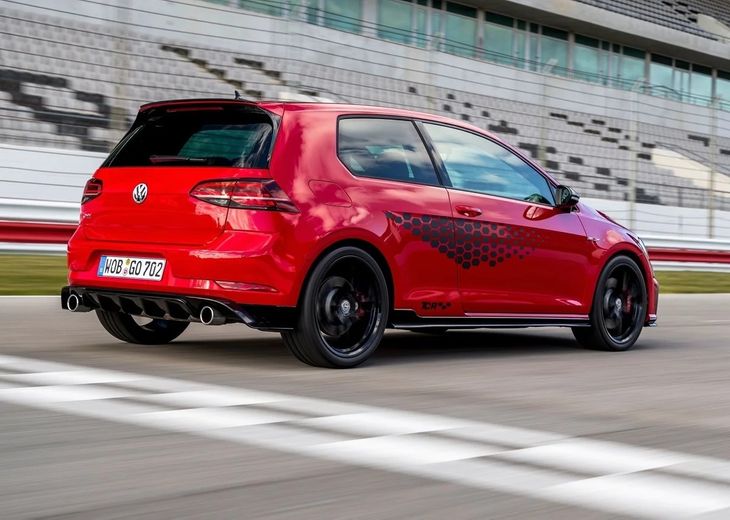
The Golf GTI TCR is Volkswagen’s last hoorah before the new Golf 8 GTI arrives at the end of 2020. The Golf GTI TCR packs a 213 kW and 380 Nm punch from its turbocharged 2.0-litre petrol engine. Unlike the i30N above, the GTI TCR is mated with a 7-speed dual-clutch transmission and zero to 100 kph is claimed at 5.6 seconds. Pricing is expected to be below R700k, but exact details will be confirmed closer to launch. Only 300 units of the Golf GTI TCR will be offered in SA.
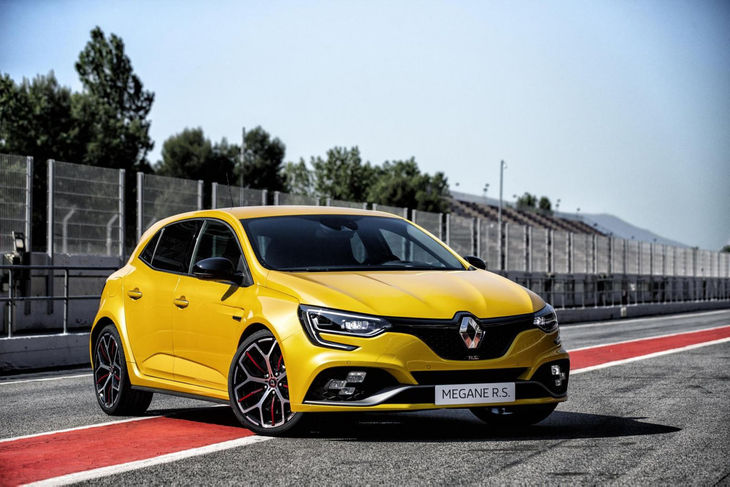
Renault’s hardcore Megane RS Trophy is on the way and it will bring more power and torque than both the Hyundai i30N and VW Golf GTI TCR mentioned above. The Megane RS Trophy offers 223 kW and 400 Nm (420 NM with EDC) of torque from its turbocharged 1.8-litre turbopetrol engine mated with an EDC dual-clutch transmission or 6-speed manual transmission. Zero to 100 kph is fast too, with Renault claiming 5.7 seconds in the obligatory dash. Pricing will be revealed closer to launch.
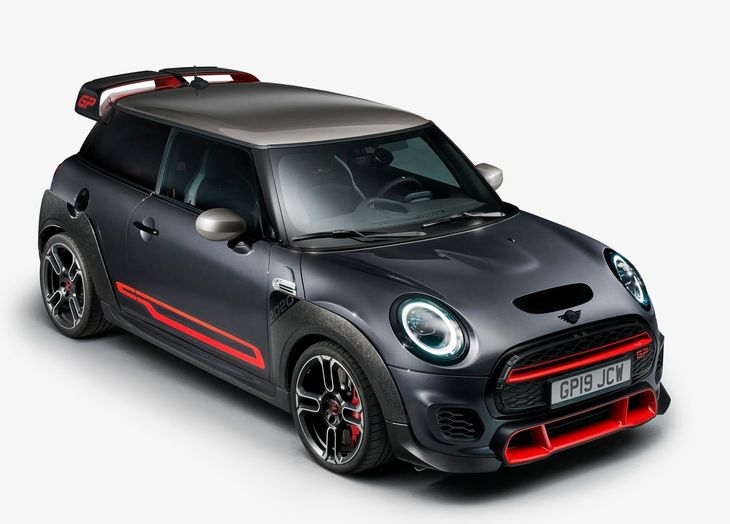
The Mini JCW, however, is set to trump all the hot hatches mentioned on this list so far. It’s the fastest and most powerful Mini ever made and will bring aggressive aero-styling to the road while also offering not-to-be scoffed-at outputs of 225 kW and 450 Nm from its twin-turbo 2.0-litre petrol engine. The JCW GP is the fastest car on this list with a claimed sprint time of 5.2 seconds! This is definately a hot hatch to look out for in 2020!
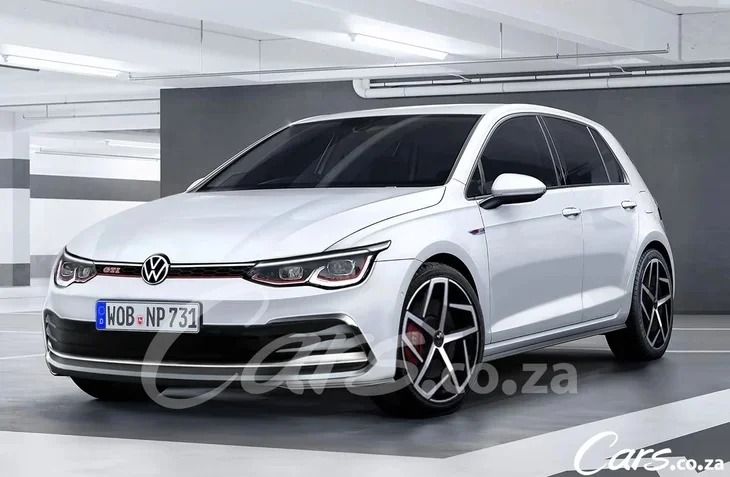
There is one mystery hot hatch that has yet-to-be-revealed and that’s the Golf 8 GTI. It’s expected to launched in South Africa in Q4 of 2020. Details remain slim at this stage but a full reveal is expected in the first half of 2020. A 2.0-litre turbopetrol engine is likely to power the new Golf GTI and outputs of around 190kW is expected. See spy shots of the VW Golf GTI here.
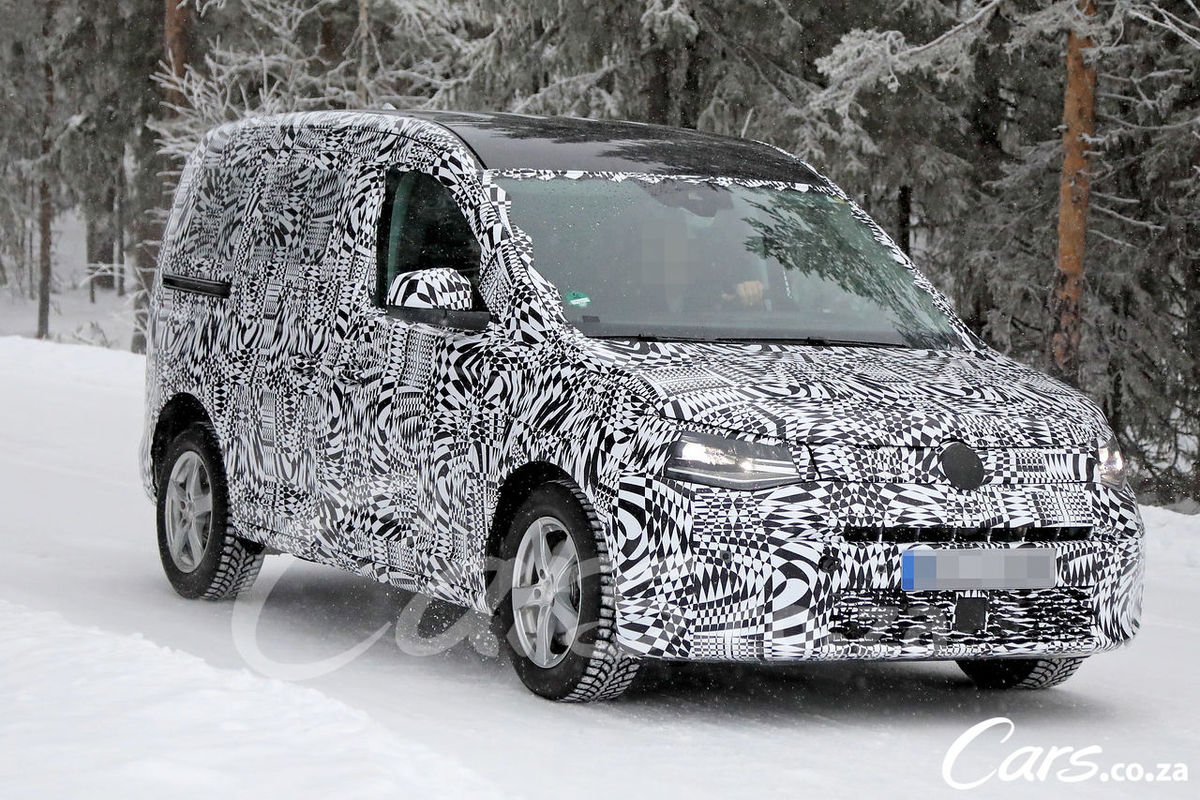
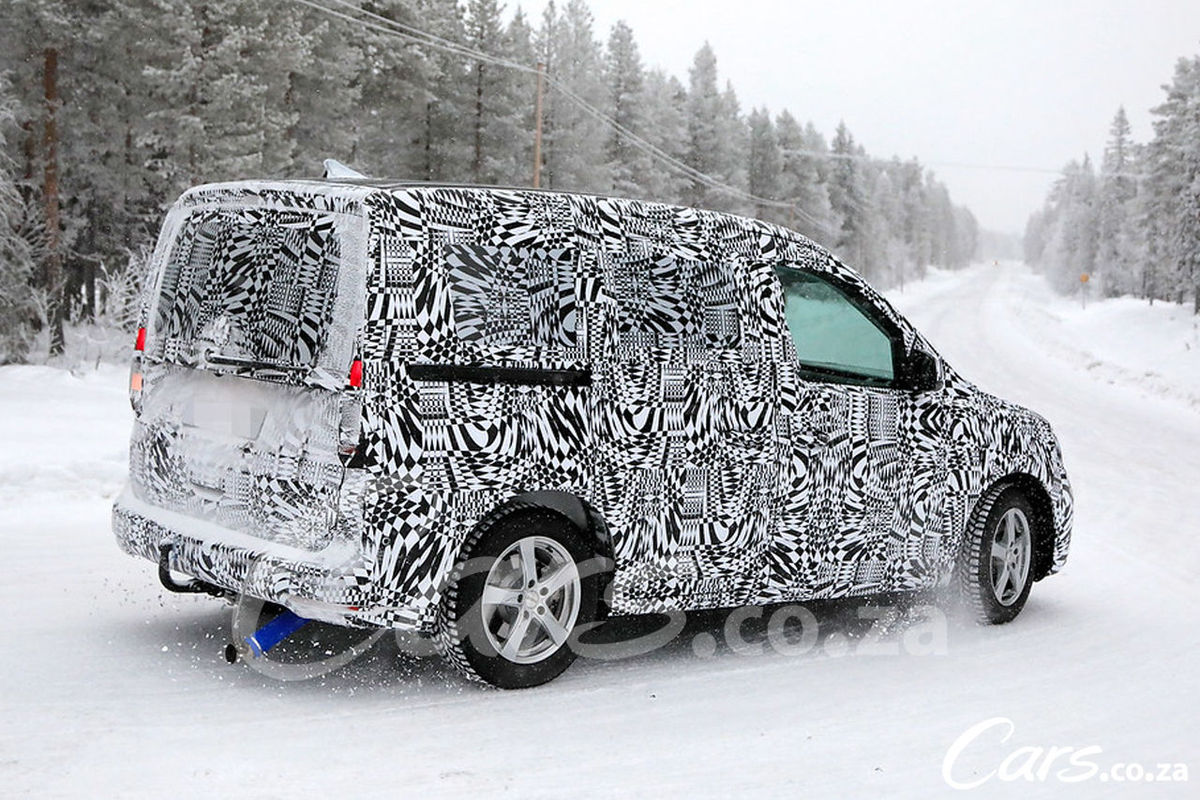
This is a first look at the next generation of Volkswagen Caddy, which has been spotted dashing through the snow.
Picture credit: S. Baldauf/SB-Medien
Expected to have a European market launch next year with a 2021 badge, the Volkswagen Caddy will boast many changes and updates. Although it doesn't look like it, there's some work done on the exterior design and it will feature a new-look front end. We're also seeing some similar design elements to other Volkswagen prototypes that have been doing the rounds.
This particular Volkswagen Caddy was spotted driving around the Arctic Circle, an area well known for winter testing. If a vehicle can survive in these harsh winter temperatures, it's pretty much good for the rest of the world. The 2021 Volkswagen Caddy will be offered in commercial and passenger vehicle applications and we expect it to be powered by a choice of either petrol or diesel engines, but given the Volkswagen Group's aggressive push into the electrification space, we can't rule out a plug-in option.
The petrol and diesel prices for December 2019 are scheduled for change. Here's what you need to know for the coming weeks.
The international prices of fuels have caused quite an anomaly. According to the Automobile Association of SA (AA), we're looking at a diesel decrease of 23 cents per litre, while petrol will increase by 11 cents per litre.
"The Rand / US dollar exchange rate has remained fairly flat throughout November, contributing around a six-cent drop per litre. However, the prices of refined petrol and diesel, which usually track each-other's movements, but with a fair gap between their prices, have showed an altogether different picture recently," says the AA.
However, due to the Regulatory Accounting System (RAS) Industry margin which is adjusted on the 1st Wednesday of every December, the amounts could vary, with some estimates putting the petrol price increase to be around 19 cents a litre, and a decrease to diesel of 18 cents a litre, but we'll clarify as soon as we have more info. On some good news though, is the fact that the Rand has been fairly stable over an extended period of time.
Ford Ranger Takes International Pick-Up Award Victory
Your 2020 International Pick-up Award winner is the Ford Ranger!
After 3 days of solid testing in Sweden, the eventual winner in this bakkie competition was announced as the Ford Ranger. It went up against the Mitsubishi L200 (Trition), updated Nissan Navara, Renault Alaskan and Toyota Hilux.
It was not a clear-cut victory as the difference between first and second place was just 6 points, with the Triton right behind the Ranger. “Indeed it was, with just six points separating the top two contenders in the final tally. The Ford Ranger scored 78 points to the 72 gained by the Mitsubishi L200, with the Toyota Hilux coming in third,” said Jarlath Sweeney, Chairman, International Van of the Year Jury. “Jury members adjudged the Ranger to be the best all-rounder and noted that it’s a best seller too, as the previous version together with this revised model dominate the European marketplace with almost 30% share of the IPUA 1-tonne segment. So the public recognize its merits also! Marks were allocated on each vehicle based on powertrain efficiencies, load volume and capability, driver and passenger comfort and safety aspects, as well as low total cost of operation from a business point of view,” added Jarlath.
Why did the Ford Ranger win? Well, it features upgraded engines like the 2.0 Biturbo, which are more efficient and there's considerable advancement when it comes to safety and tech. The Ranger also won this competition back in 2013. Locally, the Ford Ranger is a finalist in our #CarsAwards – Powered by WesBank.
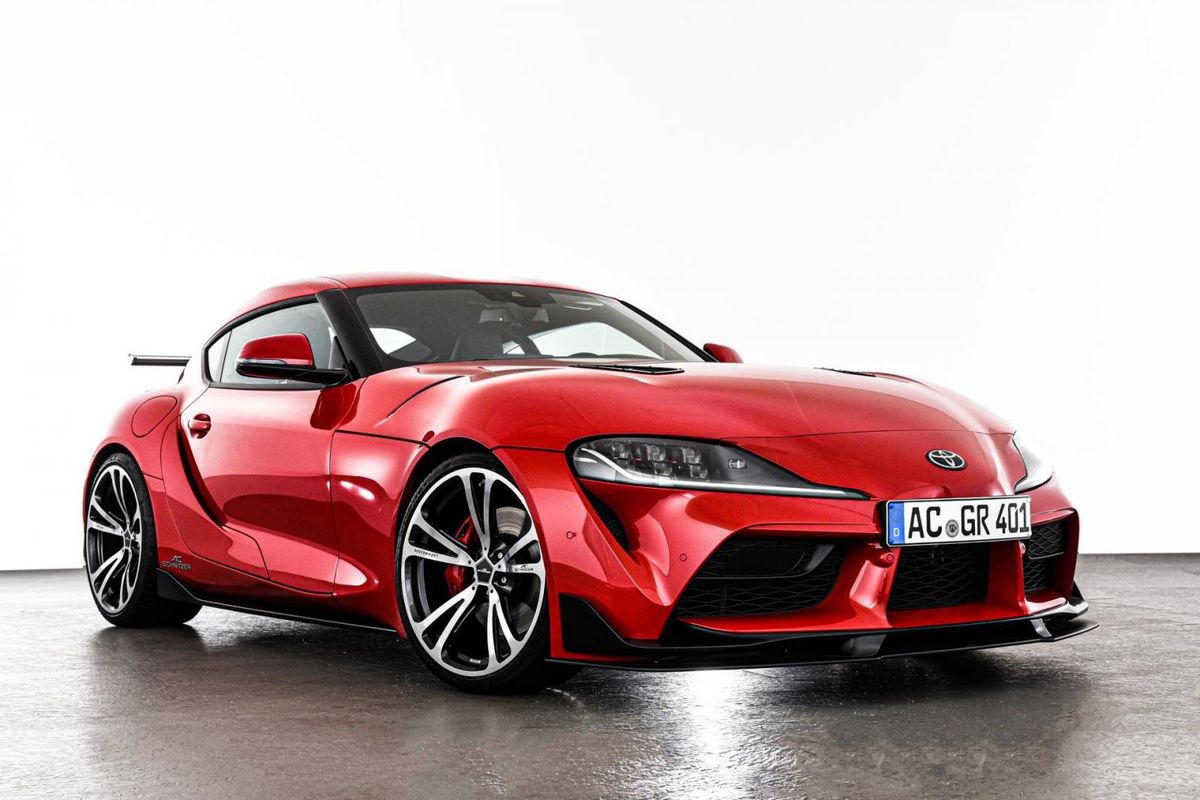
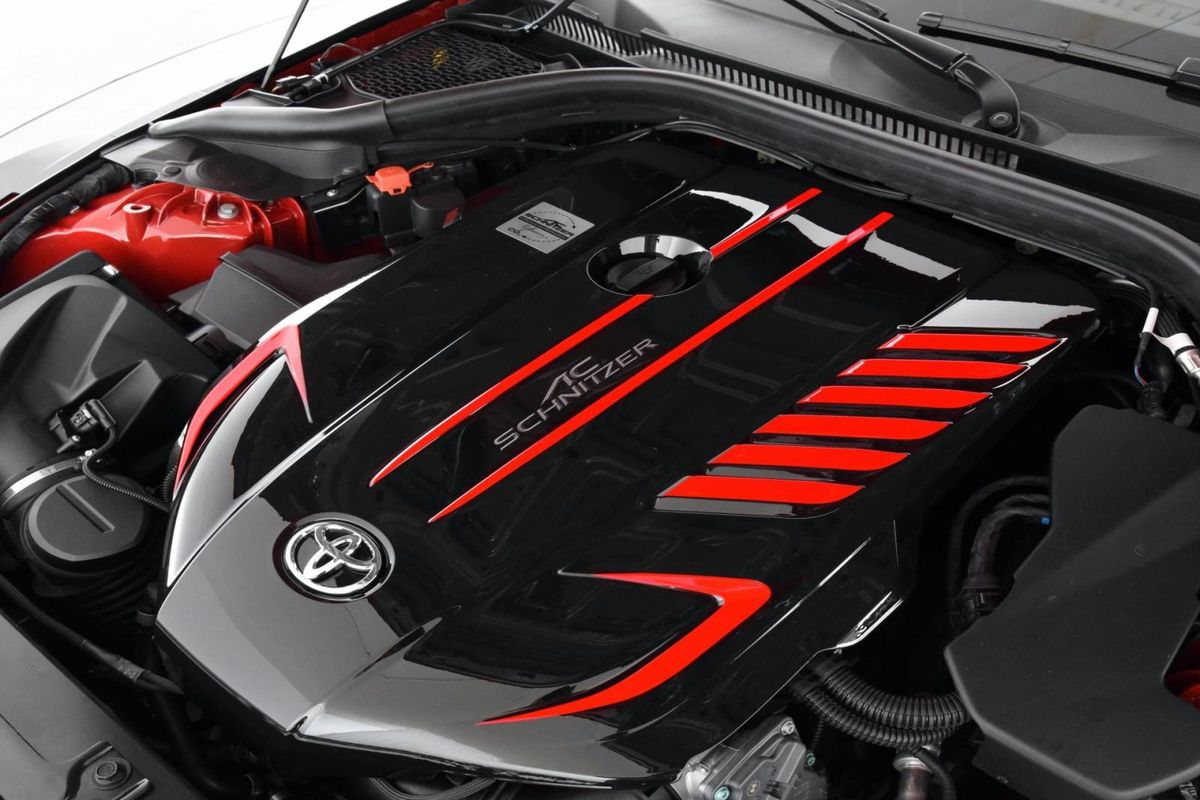
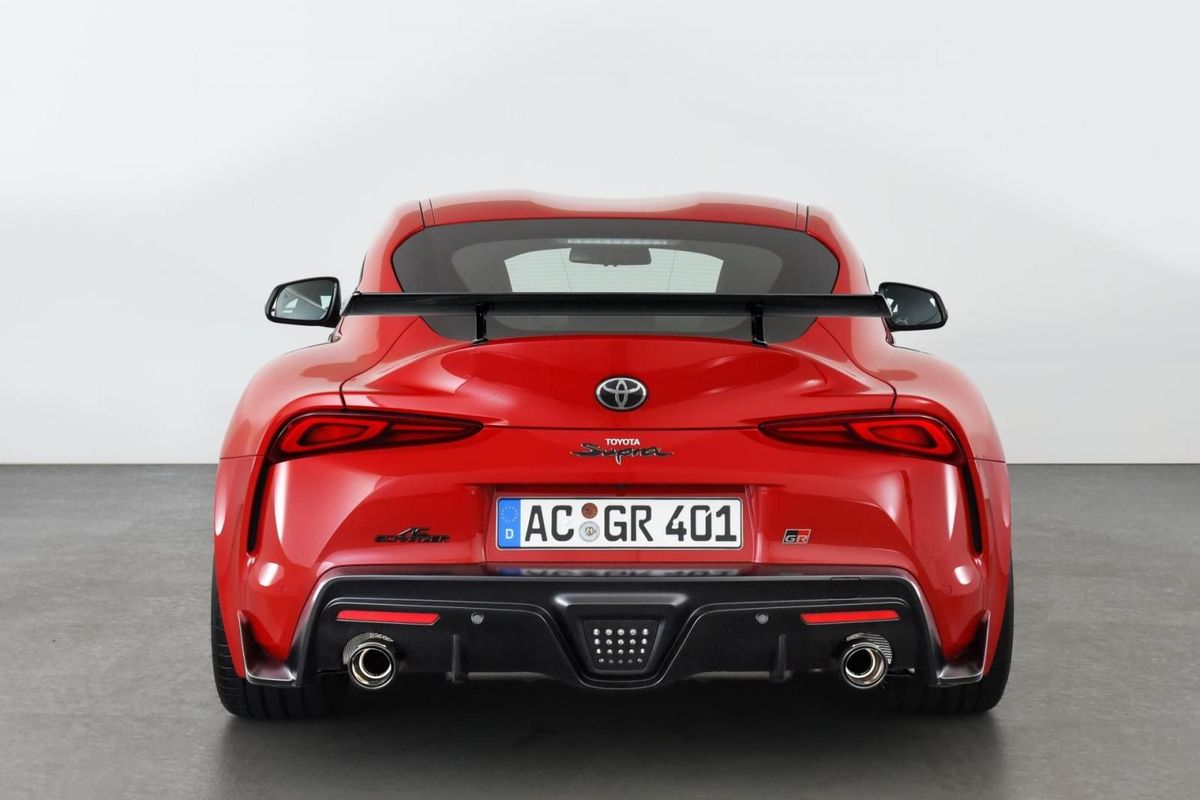
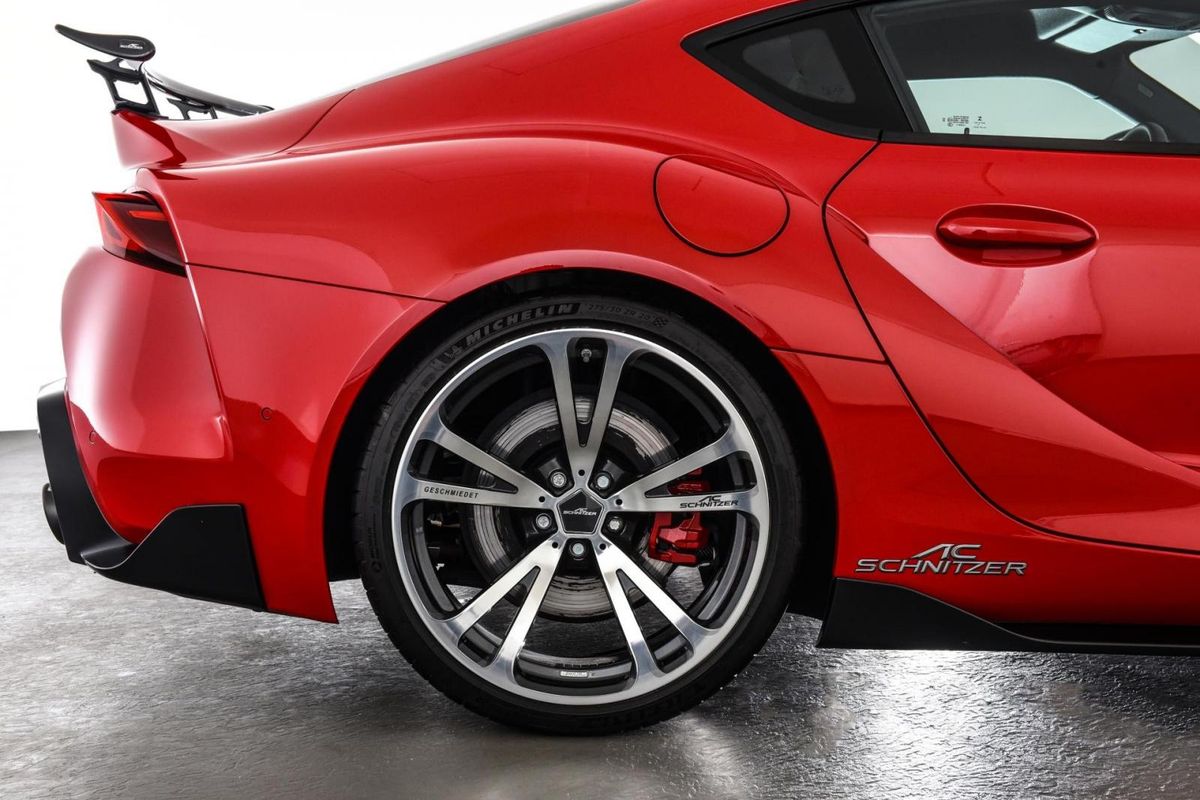
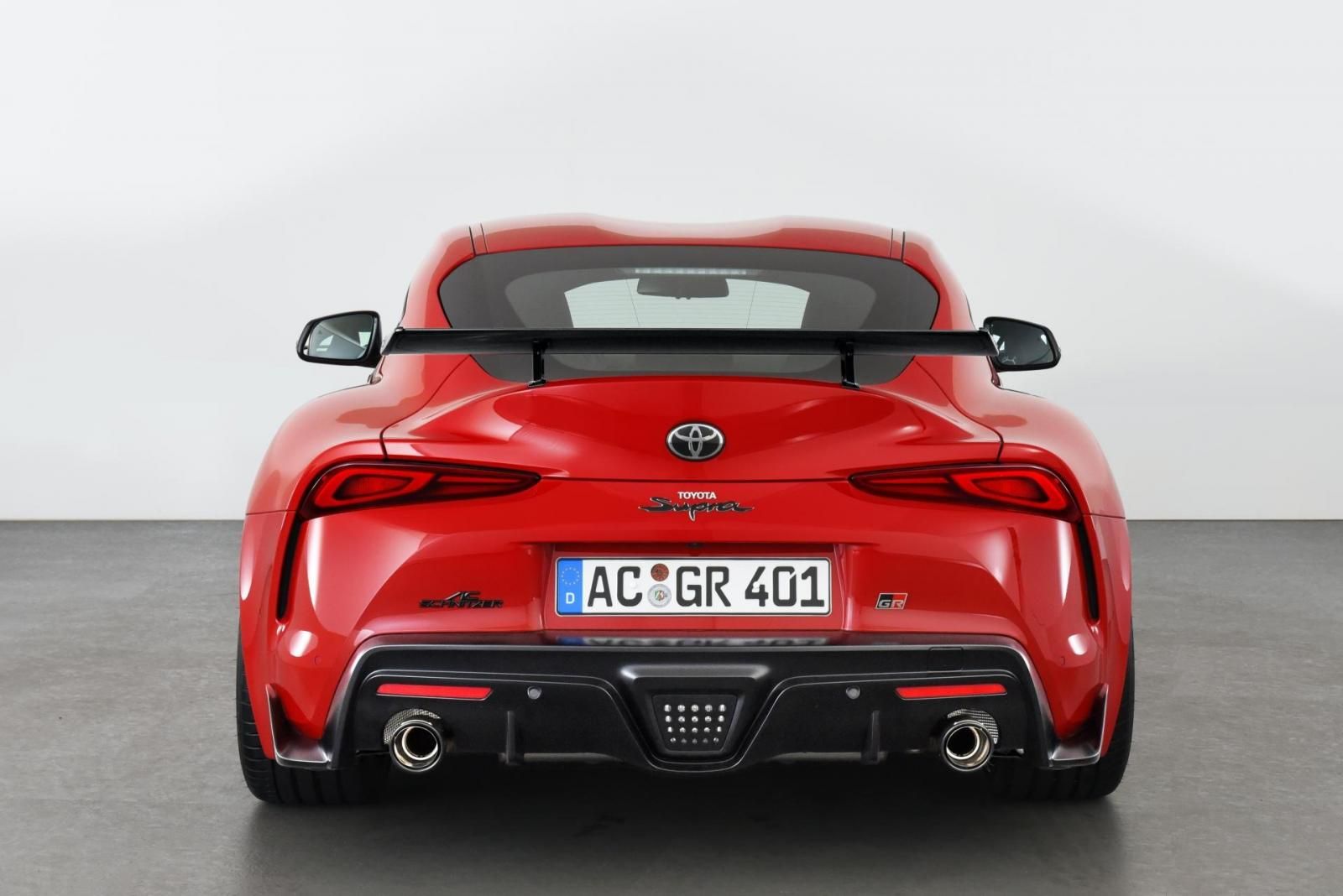
AC Schnitzer is a tuning house renowned for its work on BMW's products, but now it has turned its attention to the BMW-powered Toyota Supra. What?!
We've seen many BMW products fettled and enhanced by AC Schnitzer over the years, but in some bizarre news, AC Schnitzer has worked some magic on the Toyota Supra. Granted, the Supra has a BMW-sourced engine in it and AC Schnitzer will know exactly what to do with it, but it's still a bizarre event.
The modifications are extensive, with the engine, handling and visuals all been given the AC Schnitzer touch. First up, the engine where the 3.0-litre straight-6 turbocharged has been tuned from 250 kW/500 Nm to 294 kW and 600 Nm. There's no mention how AC Schnitzer has accomplished this, but we'd guess there's a reflash of the ECU's software as well as some work done to the plumbing. There's a sportier rear silencer, which looks good and will likely sound good too.
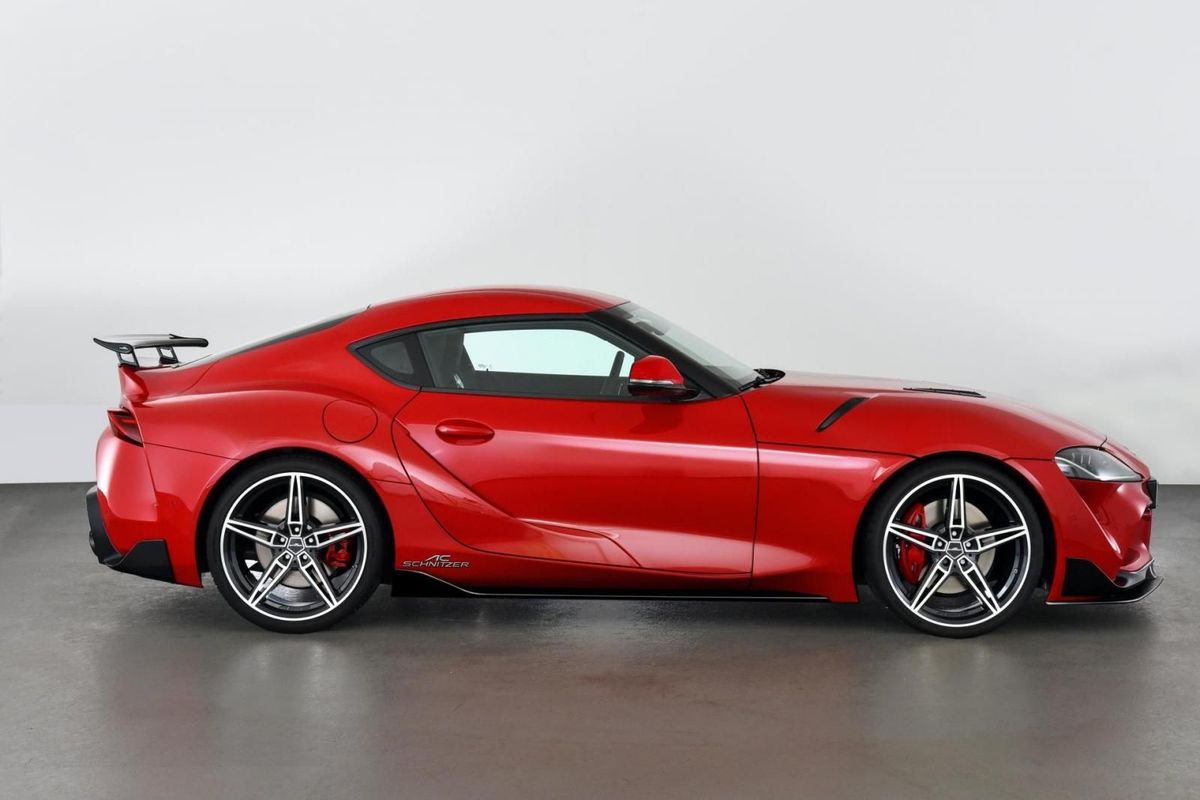
The chassis and suspension have also been tweaked with the addition of an RS coil-over setup which allows for height/rebound/compression adjustments so the customers can tweak to their heart's content. The new suspension setup means the AC Schnitzer Toyota Supra sits 2.5cm lower than standard, which in turn helps with the centre of gravity and cornering ability.
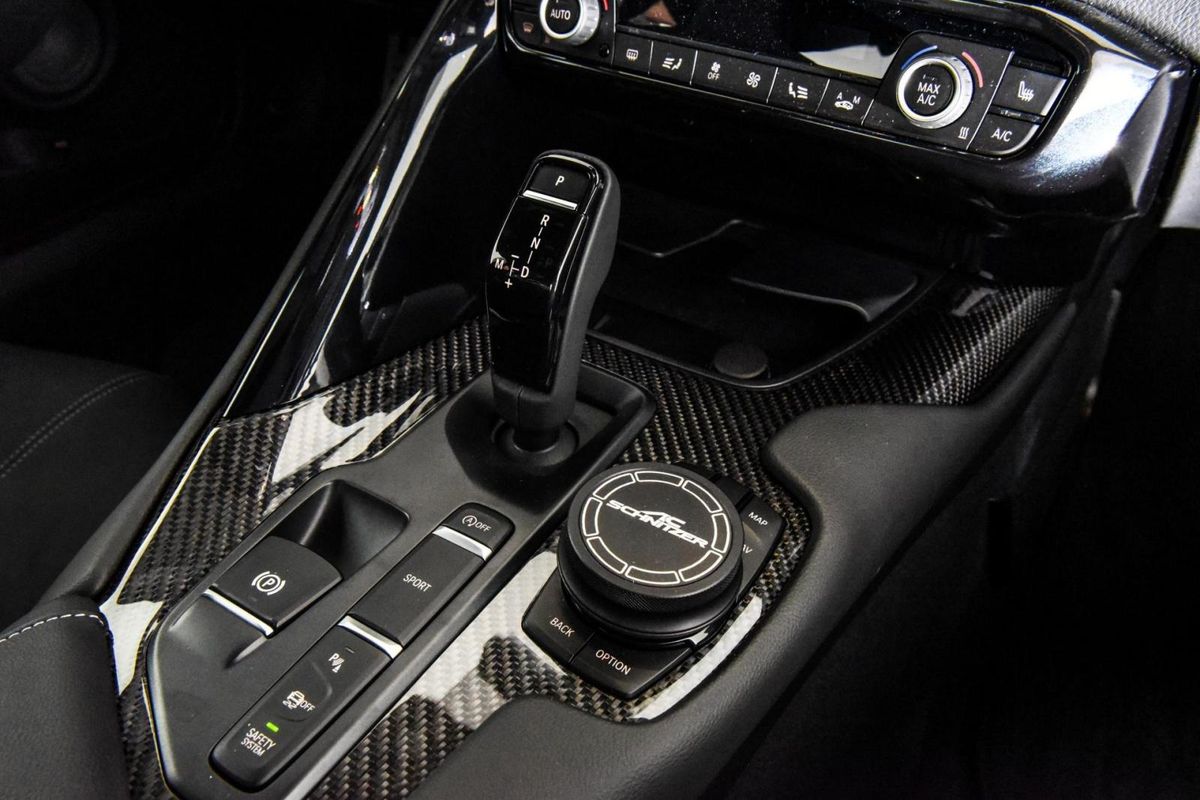
The bodykit gains a matte black front splitter, rear wing with aluminium mounts, carbon bonnet vents, while the cabin gains aluminium shift paddles, iDrive cover, pedals and key holder. The visual upgrade is rounded off with 20-inch AC1 Light Alloy Rims in BiColor or Anthracite or 20-inch AC3 Lightweight Forged Wheels in Silver/Anthracite or Anthracite/Silver.
The Toyota Supra, tuned by BMW specialists AC Schnitzer
Best Performance Cars in SA – #CarsAwards Finalists
Meet the finalists in the Performance Car category of the 2019/20 Cars.co.za Consumer Awards – powered by WesBank!
Now in its 5th year, the #CarsAwards was conceived to be South Africa's definitive automotive awards programme and is backed, for the 4th year running, by the country's leading supplier of vehicle finance, WesBank.
The Performance Car category is guided by both eligibility factors and Pillars of Success.
Eligibility for this category includes a list price that falls between R800 000 and R1 250 000 at the time of semi-finalist voting (1 September 2019) to ensure that this doesn’t become a category dominated by extravagant and unattainable exotics.
Pillars of Success in this category include drivetrain engagement, handling, sensory appeal and standard features.
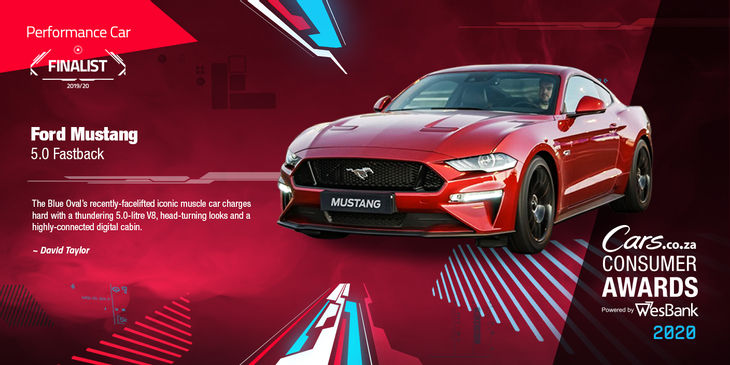
The Ford Mustang is the original muscle car, as well as the world’s best-selling sportscar. It’s no stranger to the #CarsAwards (it was a semi-finalist in the 2017/18 programme) and for 2019, the Mustang has been thoroughly updated both inside and out. There’s a bit more power, an all-new 10-speed transmission and restyled exterior. Can it trump its European and Japanese rivals?
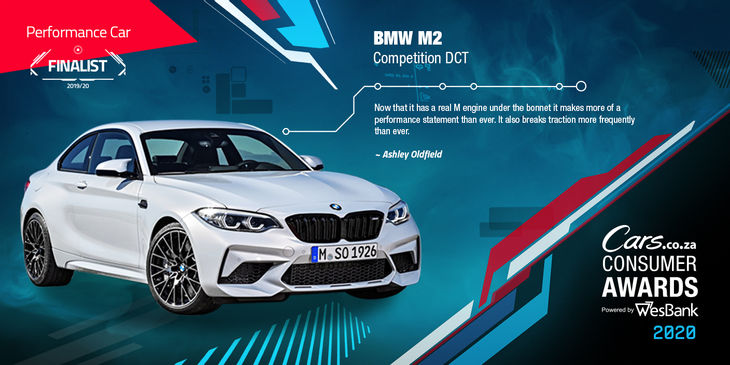
Arguably the best BMW M product of the modern era, it would be a crime to not have it here. It’s back again, but this time we’ve opted for the DCT-equipped version. Can it see off its rivals?
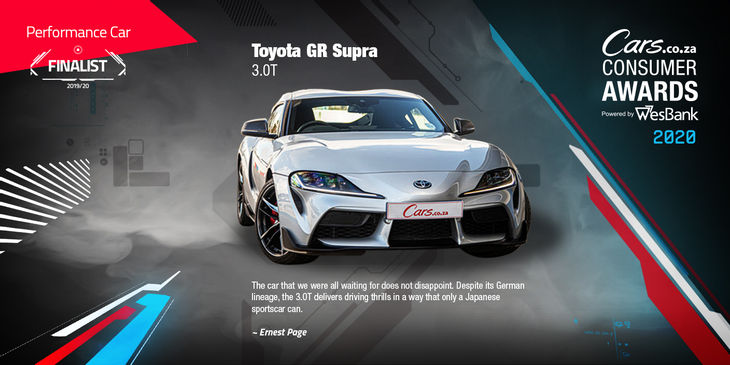
The return of the Supra has stirred up controversy. The latest iteration of Toyota’s iconic sportscar was co-developed with BMW, which upset a few traditionalists. But, having sampled the newcomer both on track and on public roads, we think it is all the better for it. Granted, the GR (Gazoo Racing) Supra 3.0T is powered by a BMW straight-6 engine and underpinned by the Munich-based brand’s rear-wheel-drive platform, but we adore its accessible performance; it’s a sportscar we could quite happily live with. And those looks… there’s nothing quite like a Supra!
A battery-powered Volkswagen ID.3 bakkie would be a massive hit… and it might not be that difficult to produce. Lance Branquinho investigates why this is more than just a pipedream.
A feature of the electric-vehicle-disruption trend has been the (seemingly inordinate) number of battery-powered bakkie concepts that have seen the light. For decades, Germany and Japan have spearheaded the proliferation of automotive technologies, yet the electric vehicle revolution has its roots in a different part of the world altogether: California.
On the face of it, an electric pick-up is a flight of fancy; surely vehicles designed to traverse vast tracts of untamed land shouldn't need to remain "in close proximity to power outlets"? Well, don't forget that large bakkies account for the bulk of sales in the all-important North American market. As a result, we’ve seen a great deal more EV concepts with load boxes, than would have been the case, if Germany or Japan had taken initiative with battery-powered vehicles.
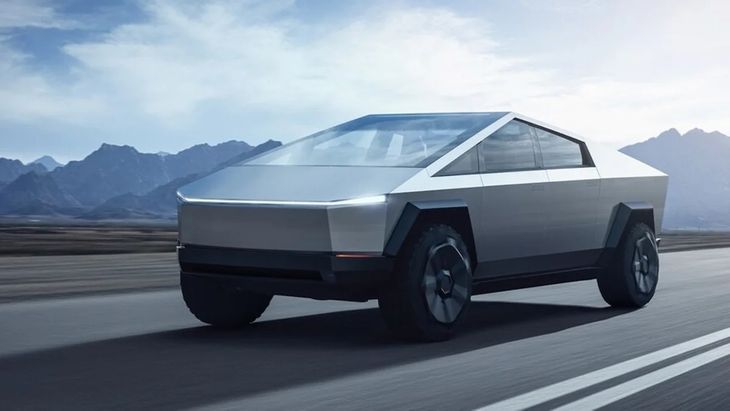
Tesla's latest Cybertruck has disrupted the idea of what a modern electric bakkie could be.
With Tesla, the industry disruptor in chief, revealing its controversial Cybertruck, it is no surprise that other American electric-vehicle start-ups have recognised that battery bakkies could be a big deal in the future, consider firms such as Rivian and Bollinger. These are EV companies that are only planning to build electric bakkies and that itself should signal something to legacy automotive brands…
Of all the influential mass-volume car companies, Volkswagen (VW) has by far the most aggressive electric vehicle strategy. The German automotive giant is planning on introducing no fewer than 70 new EVs in the next decade.
VW’s electric vehicle strategy is wildly ambitious, and it could possibly create a vehicle that many bakkie fans have been desiring for years: a compact bakkie powered by batteries.
The idea of an ID single-cab
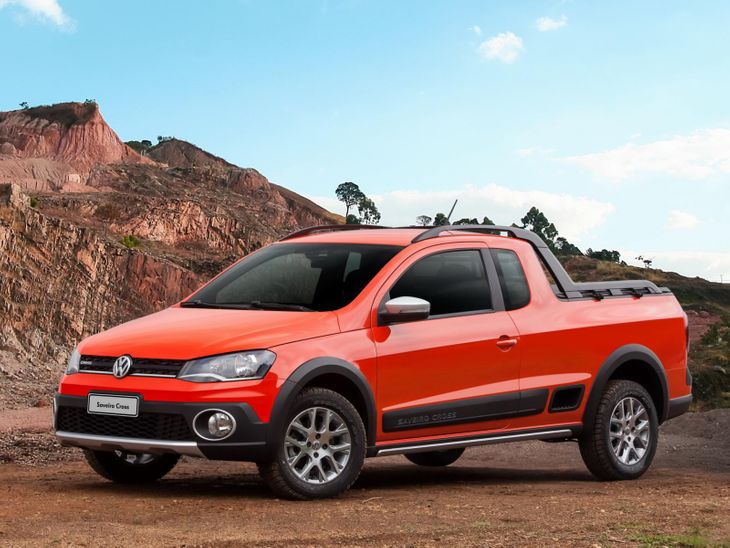
Every VW fan outside of Brazil jealously pines for South America’s unique Saveiro bakkie. The Saveiro is built on a previous-generation Vivo platform and configured as a great lifestyle vehicle for those who occasionally need a load box, but don’t want the city driving inconvenience of a full-sized bakkie.
VW has never offered the Saveiro in some of its strongest traditional bakkie markets, such as Australia and South Africa. Although it would theoretically be popular, the Saveiro is only left-hand drive and its production is supported by the huge volumes possible in the Latin American market. A right-hand-drive version has never been viable, the cost of developing one could not be justified by the projected sales volumes in those enthusiastic, but ultimately small, markets.
Despite being perfectly suited to the SA market, VW SA could never make a business case for the Saveiro.
But VW’s determined electric vehicle plans could yield a more global compact bakkie. One built on a very sophisticated platform, with far superior performance to that of the current Saveiro.
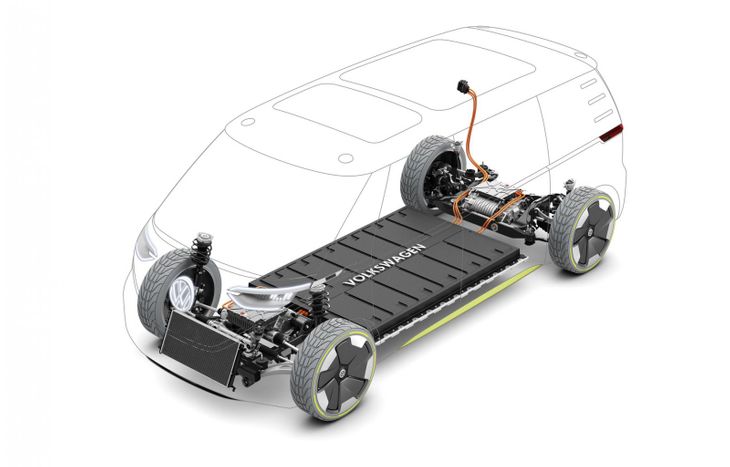
The anchor of VW’s electric vehicle expansion is a scalable battery-car architecture. It is called the MEB platform and, according to some industry analysts, this is one of the most expensive R&D projects in automotive history (it's reported to have cost the Wolfsburg firm R97 billion to develop). For that calibre of investment, VW has developed a very adaptable and technically accomplished electric structure, enabling the production of a diverse range of future products.
The ID.3 paves the way
But what has that got to do with a battery bakkie? Everything. Really. The first production vehicle to be marketed on the MEB platform will be VW’s Golf-sized ID.3, which is due to go on sale next year.
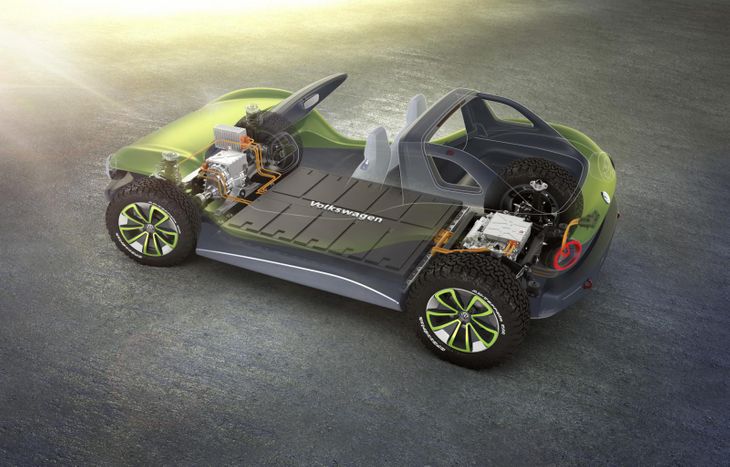
What is of greater interest to our idea of a compact battery bakkie, is that VW has showcased a pair of concept vehicles based on the MEB structure… Those two VW ID-series concepts are the ID Crozz and ID Buggy.
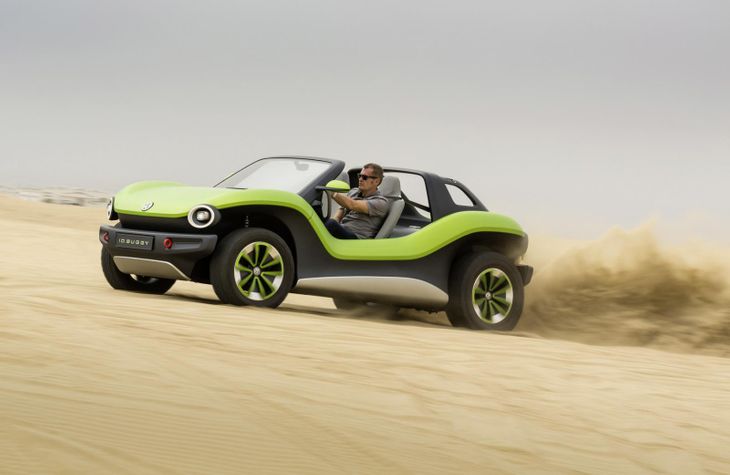
ID Buggy shows that VW is capable of building a robust bakkie-type vehicle on its MEB platform.
VW debuted its ID Cross in April 2017 at the Shanghai Show. This concept is set to develop into a production vehicle by 2022 and it ably demonstrates that the MEB structure can run in a gravel-travel configuration.
The ID Buggy does not have a confirmed future production destiny, but it illustrates what is possible in terms of off-road ability with the MEB platform. It features 240 mm of ground clearance and a generous range of wheel articulation. Therefore, VW’s ID Buggy demonstrates how adaptable the MEB structure is in an application beyond the conventional electric city car.
What is exciting about both these VW electric vehicle concepts, are their wheelbase measurements. A bakkie needs greater axle spacing than a conventional passenger car of the same overall length. This is to accommodate the load box and weight distribution point over its rear axle.
The MEB structure has been validation engineered for both van and off-road applications. A bakkie should be easy to do?.
Using the Saveiro as a target size, VW’s MEB platform gravel-travel concepts have exactly the required measurements to lay the foundation for a great compact bakkie. The ID Crozz has a 2 700-mm wheelbase and ID Buggy’s wheels are 2 650 mm apart, which compare perfectly with the current Saveiro, which has a wheelbase of 2 700 mm. This proves that in terms of fundamental size, the MEB platform would make an excellent compact bakkie structure.
Fewer excuses than with Saveiro
VW had a lot of excuses for not globalising its Saveiro, but a compact battery bakkie will be much easier to internationalise.
The MEB platform is engineered for modularity. It will be less expensive to produce in right- and left-hand drive configurations, even at staggered volumes. The traditional production friction that prevents simple configuration changes with traditional vehicles is not a factor in electric vehicle production.
VW has admitted the efficiencies of building vehicles on its MEB structure would make it viable to build low-volume niche products. In its own engineering literature, VW says:” The MEB will enable competitive vehicles to be placed on the market in spite of small quantities.” That means the business case for a compact battery-powered bakkie does not have to be as broad as the demand VW wanted from South Africa and Australia to produce a right-hand drive Saveiro.
With the ID Crozz and Buggy concepts, VW has shown that its MEB platform is geared for robust use. Loadability should not be an issue either, as a range of vans has been slated among the new EV models due between now and 2030.
An added advantage of an electric bakkie would be a basic storage area upfront in the so-called 'frunk'.
Another advantage that VW could leverage off its MEB platform, for a compact battery bakkie, is the drivetrain. Ardent bakkie enthusiasts know that front-wheel drive is the least desirable configuration for a bakkie, even one which might only carry half a tonne. VW’s MEB vehicles are rear-wheel driven, which means the architecture could deliver a compact battery bakkie, with torque turning the "correct" or "appropriate" wheels.
The ID.3 is already rear-wheel drive and powered by a 150 kW/310 Nm motor. Those numbers would make VW’s production electric vehicle drivetrain more than powerful enough for a compact bakkie application.
It is also far easier to make an electric vehicle architecture all-wheel driven than is the case with a conventional prop- and half-shaft drivetrain mated with a petrol or diesel engine. This could open the opportunity for a battery-powered bakkie with compact dimensions and all-wheel drive.
Carrying stuff without security worries
What about utility? The ID.3 production specification states a load capacity of 541 kg for VW’s electric hatchback, which would be enough for most lifestyle bakkie users. Besides, there is no reason why VW could not convert the MEB platform to carry a touch more weight, with larger diameter springs and higher volume dampers. Rudimentary suspension upgrades could easily boost a bakkie version of the ID.3 to 750 kg of load capacity.
The skateboard architecture of a battery vehicle will also allow the Wolfsburg-based firm to create an extended load box without the need to lengthen the bodywork. Without an engine up front, the potential VW compact battery bakkie could have a comparatively short nose, which would move the cab forward and simultaneously increase load box capacity.
Even cleverer, is that there won’t have to be much space behind the seats (for storing tools and other items). Things such as laptops, tools and gear bags can safely be locked away in the "frunk" up front. Although a theoretical VW compact battery bakkie might be small, it will have utility stowage that runs bumper-to-bumper, unlike a conventional bakkie, which only has stowage space from the tailgate to behind the seats.
America has taken the lead with global electric vehicle technology and design. This implies that bakkies will be an important part of the battery-vehicle revolution. But none of the American electric vehicle companies is interested in doing a truly usable compact bakkie, something which would have massive appeal in a market such as South Africa.
So, in conclusion, VW has promised us all that its MEB platform will allow for a huge diversity of products. If you look at the structure and measurements of the MEB platform, there is no reason why an ID.3-type battery bakkie should not be able to be brought to fruition. It would be the all-electric "Saveiro 2.0" that South African consumers deserve.
SentiMETAL Project One: Why we restored an Opel Superboss
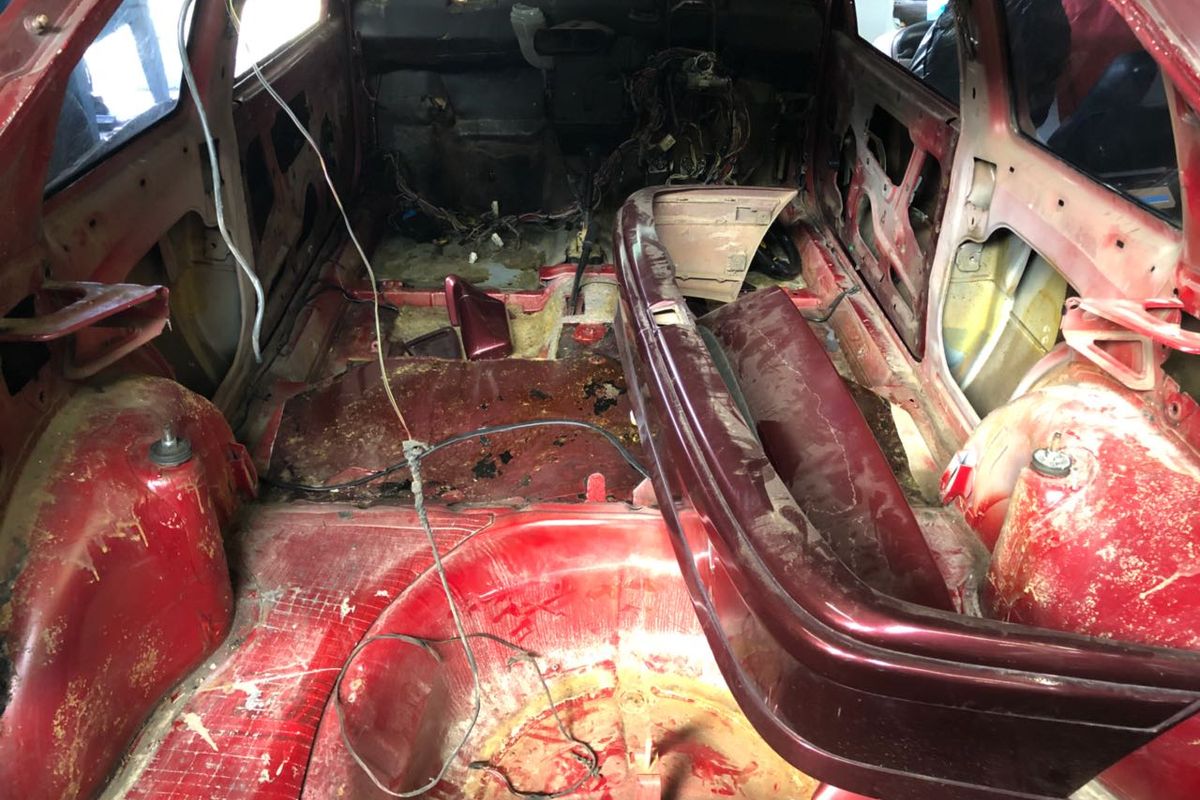
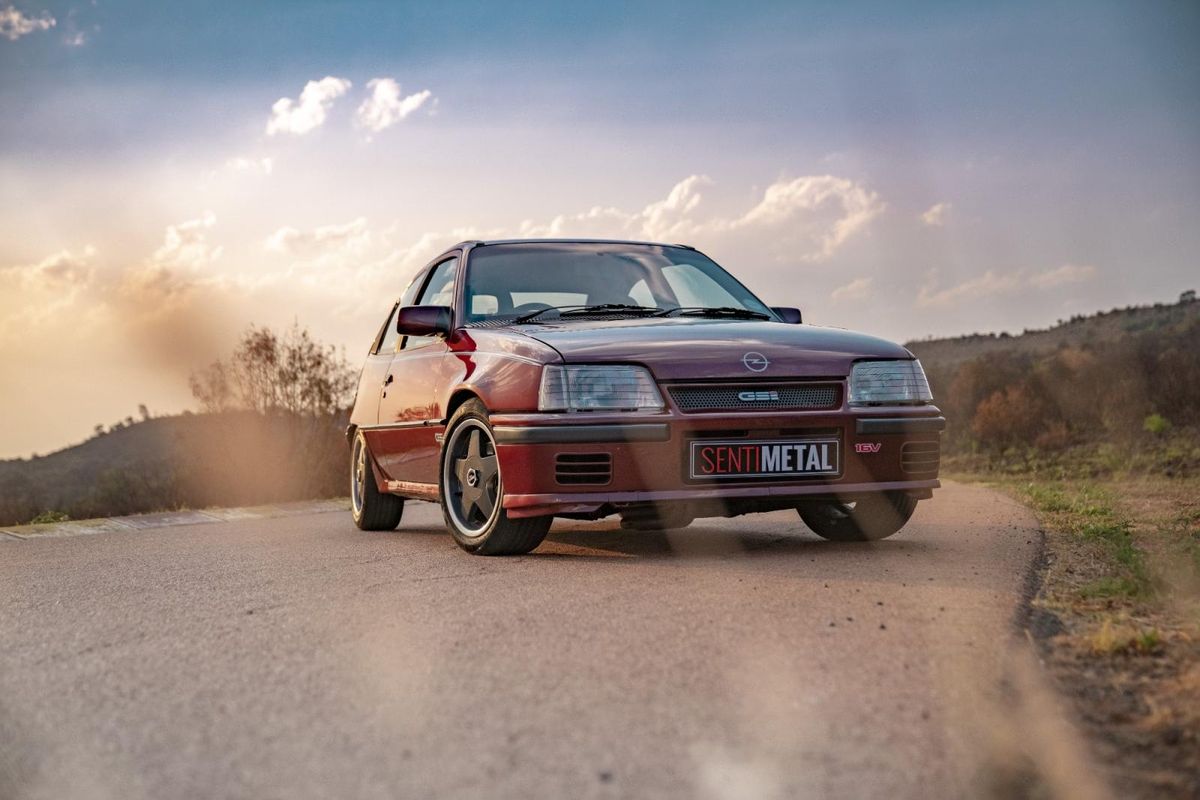
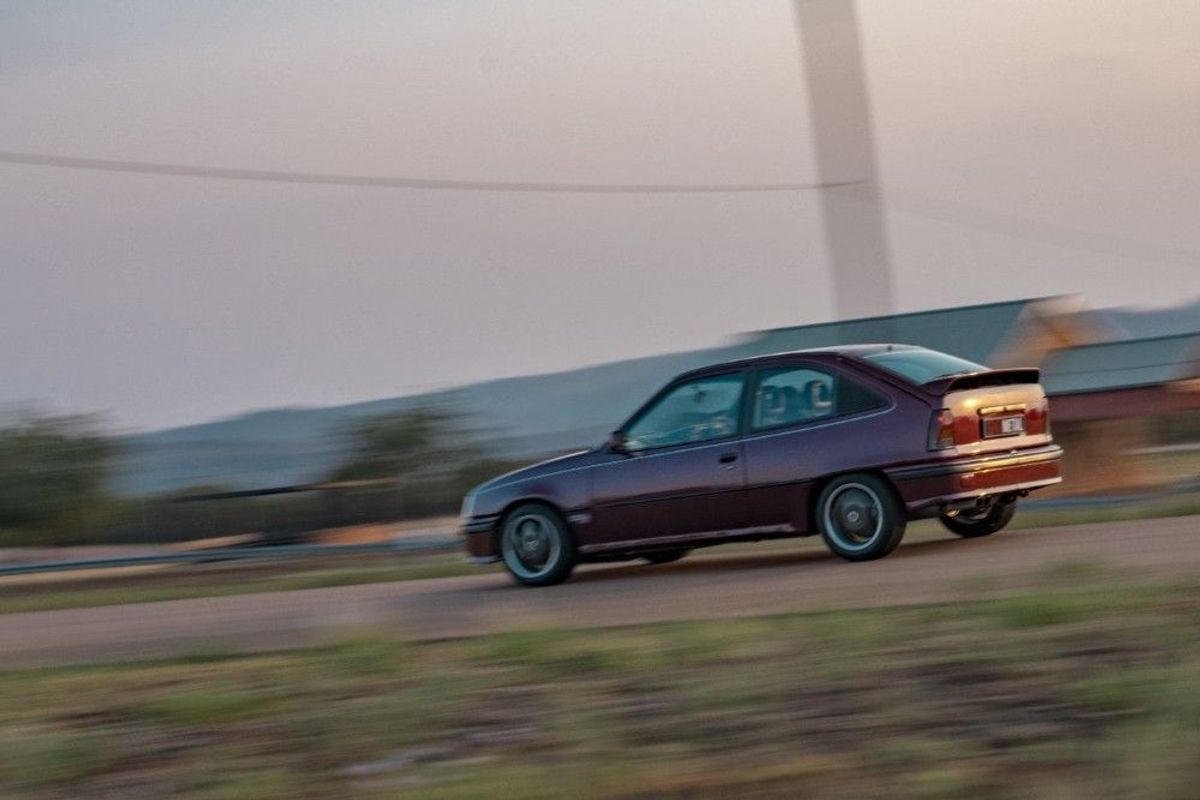
Following what was probably the most public restoration that any Opel Kadett Superboss had ever been subjected to, our "project 1" is now a regular runner, and highly addictive joy to drive. But why did we acquire and restore one in the first place?
When the Cars.co.za journey started about 10 years ago, it began as an online classifieds, designed to put dealer stock in front of as many likely car buyers as possible. This it did very successfully, but roughly 5 years ago, the decision was made to add content, to assist consumers in making more informed purchasing decisions. This too, has worked very effectively, and with projects like our automated New Car Buyer's Guide and Cars.co.za Consumer Awards – Powered by WesBank, we are able to engage with car buyers at every stage of the decision-making process. It's all very "cerebral".
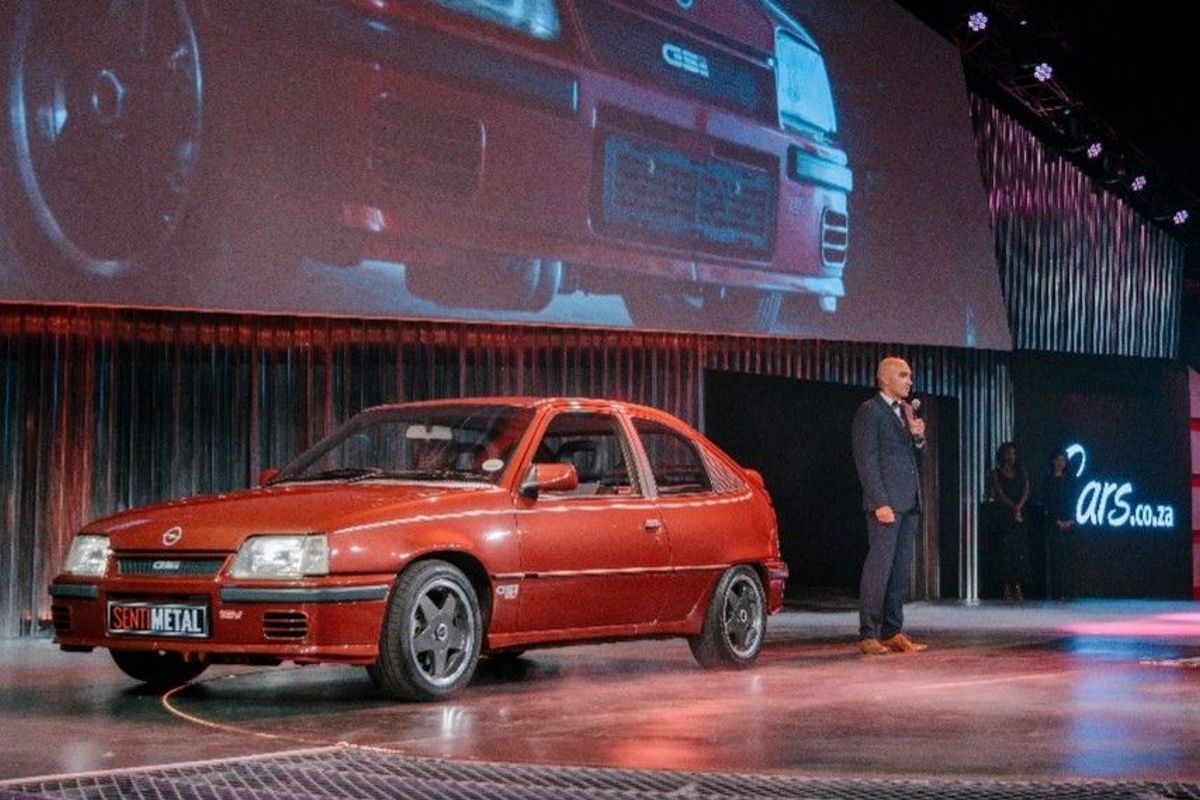
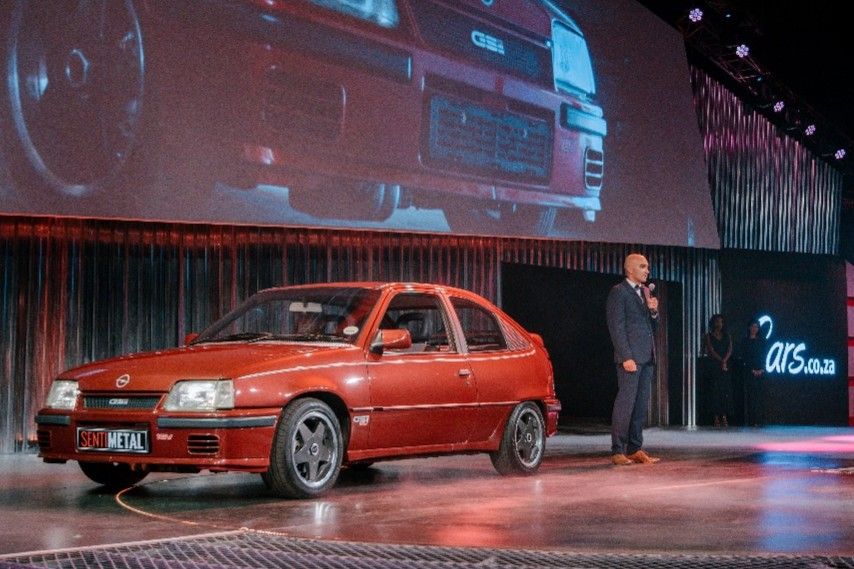
The Superboss's first live reveal to the public was at the Cars.co.za Consumer Awards – Powered by WesBank, earlier this year.
But for many at Cars.co.za, cars are a passion. And through our engagement with our audience, the perception that a great many South Africans are car enthusiasts has only been reinforced. And so SentiMETAL was born in 2017, to celebrate that love that exists for a machine that continues to change the world, more than 100 years after the first of them turned a wheel. The SentiMETAL video series allowed us to engage with passionate car owners, and the deeper we became embedded in the classic car community, the more we wanted to be a permanent part of it. But there are also responsibilities…
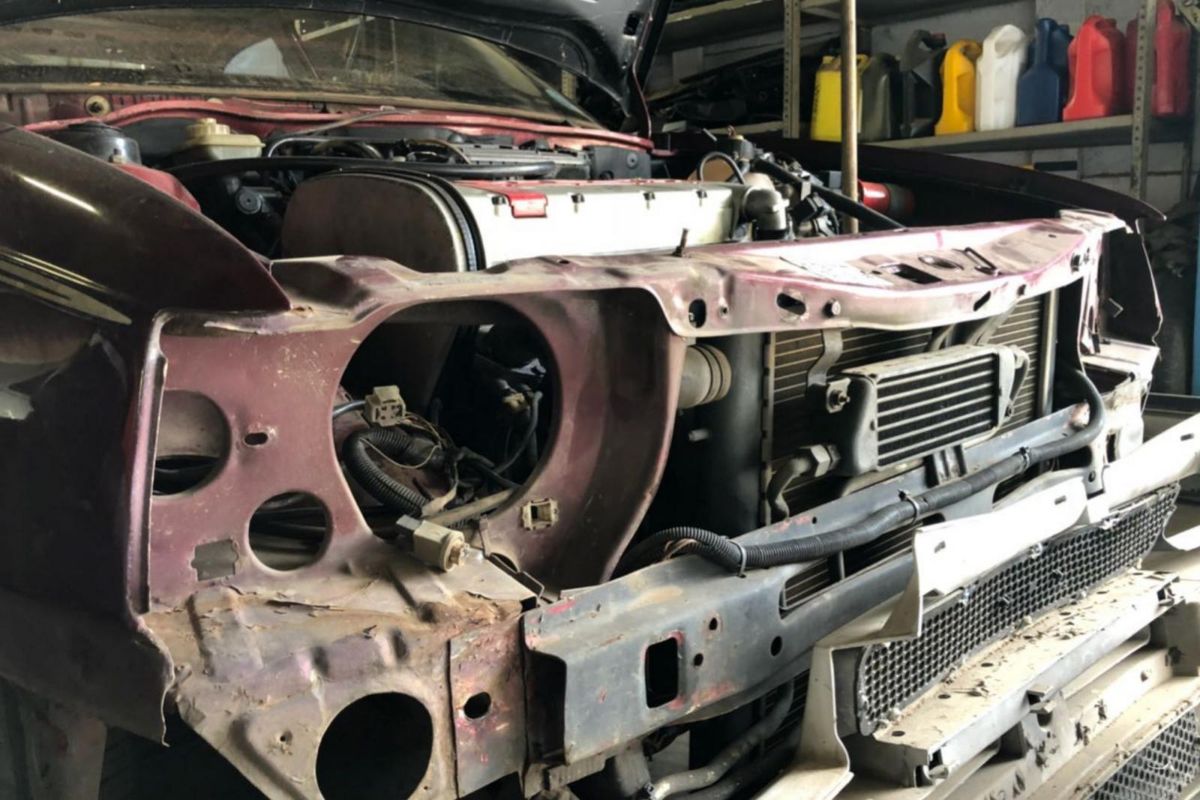
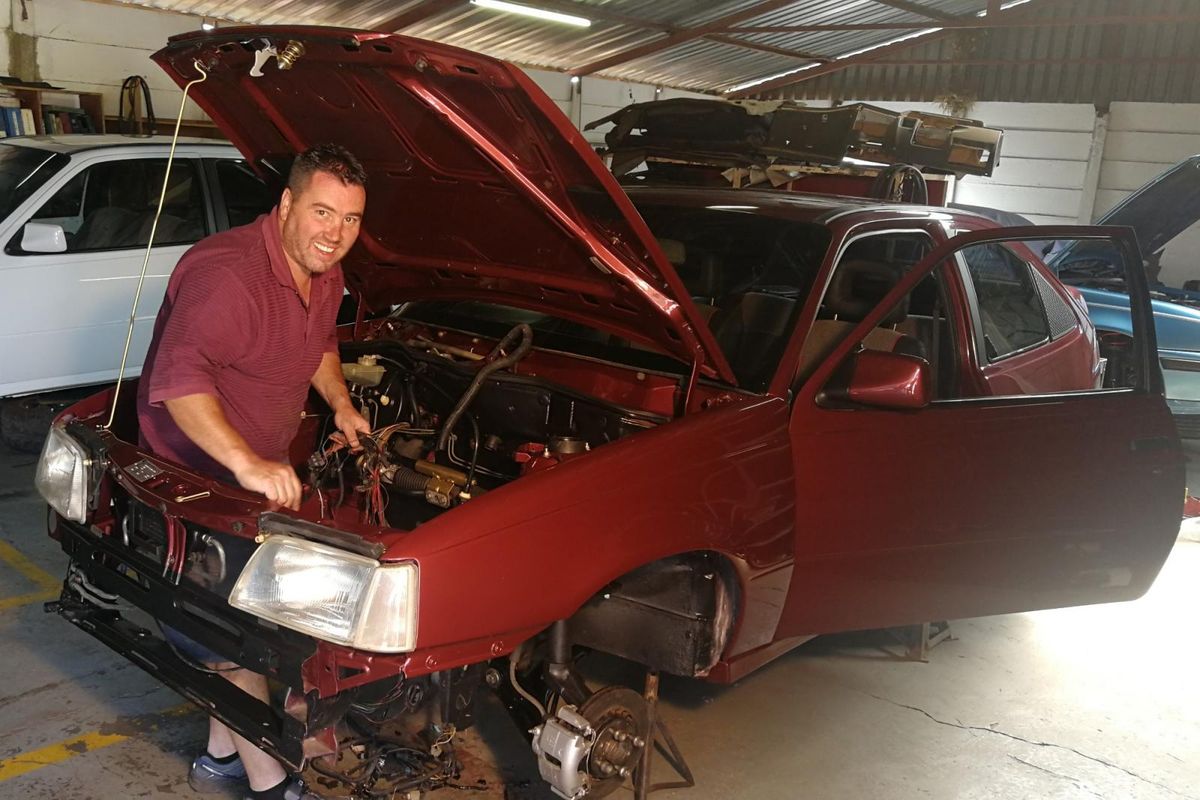
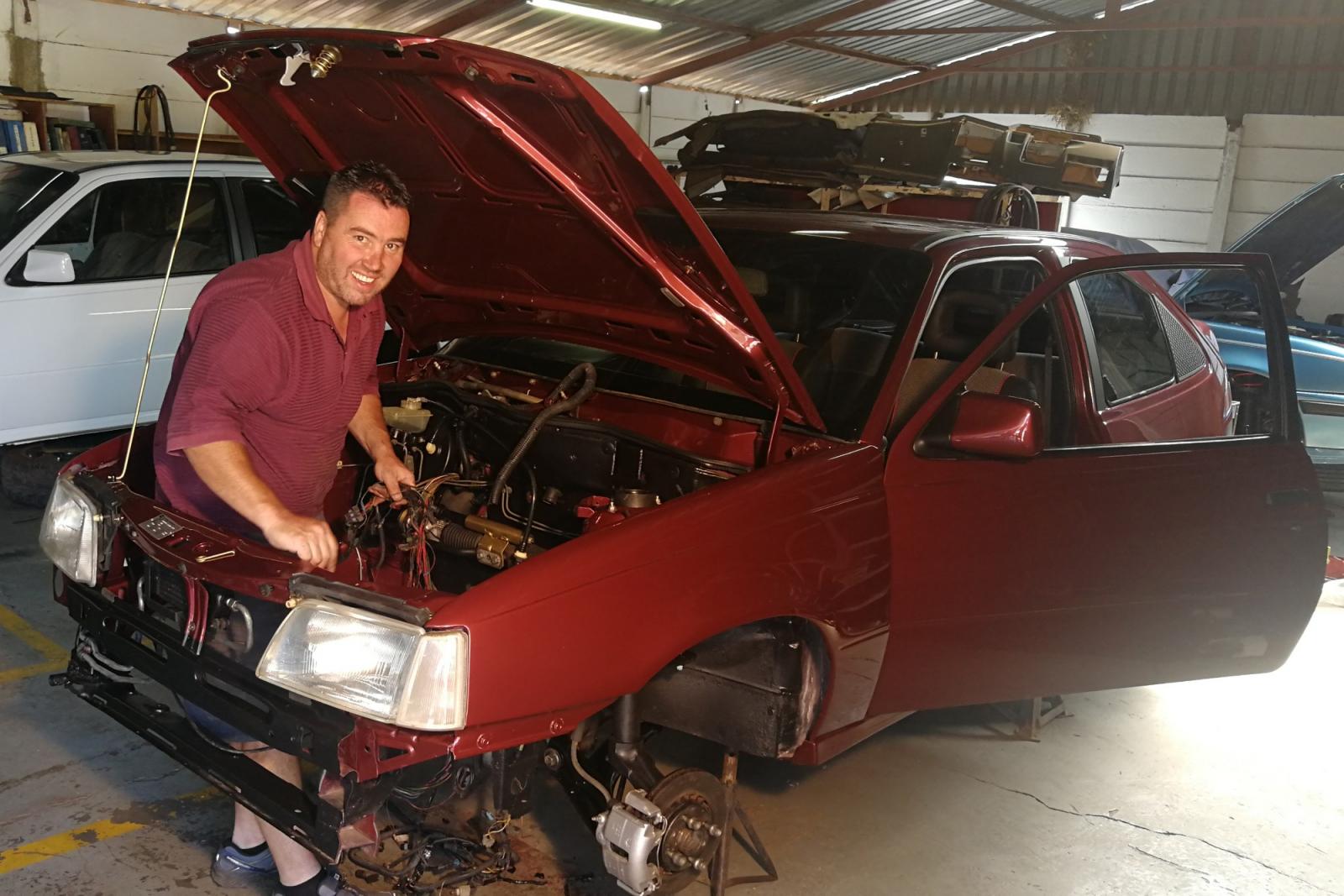
The man (Werner Meyer) in the engine bay of our Superboss. The wiring on the car had to be redone completely.
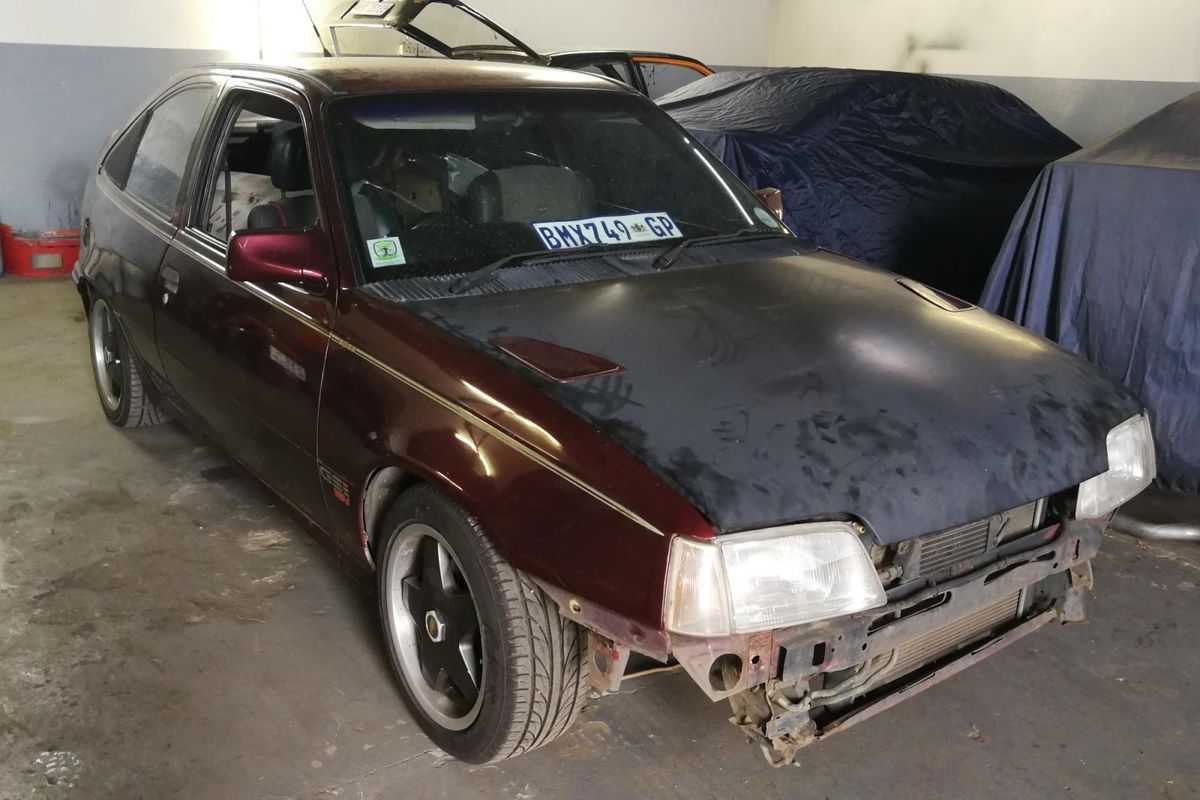
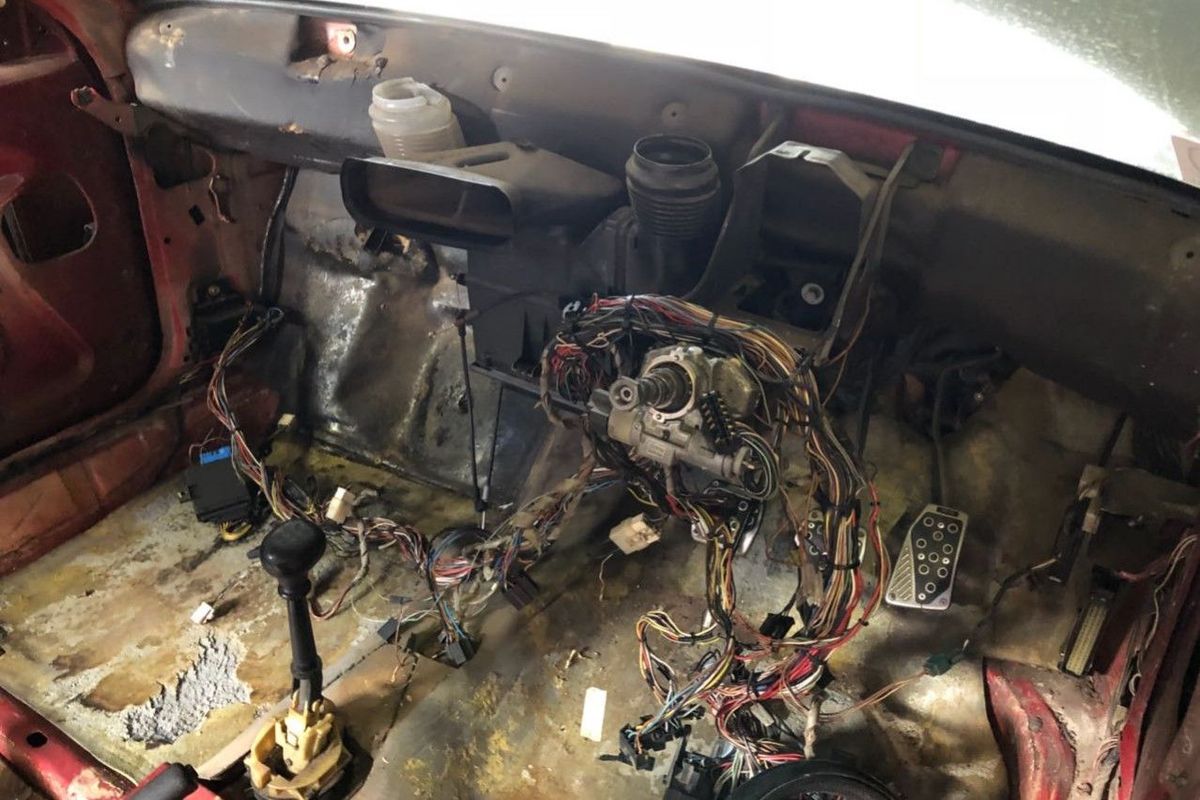
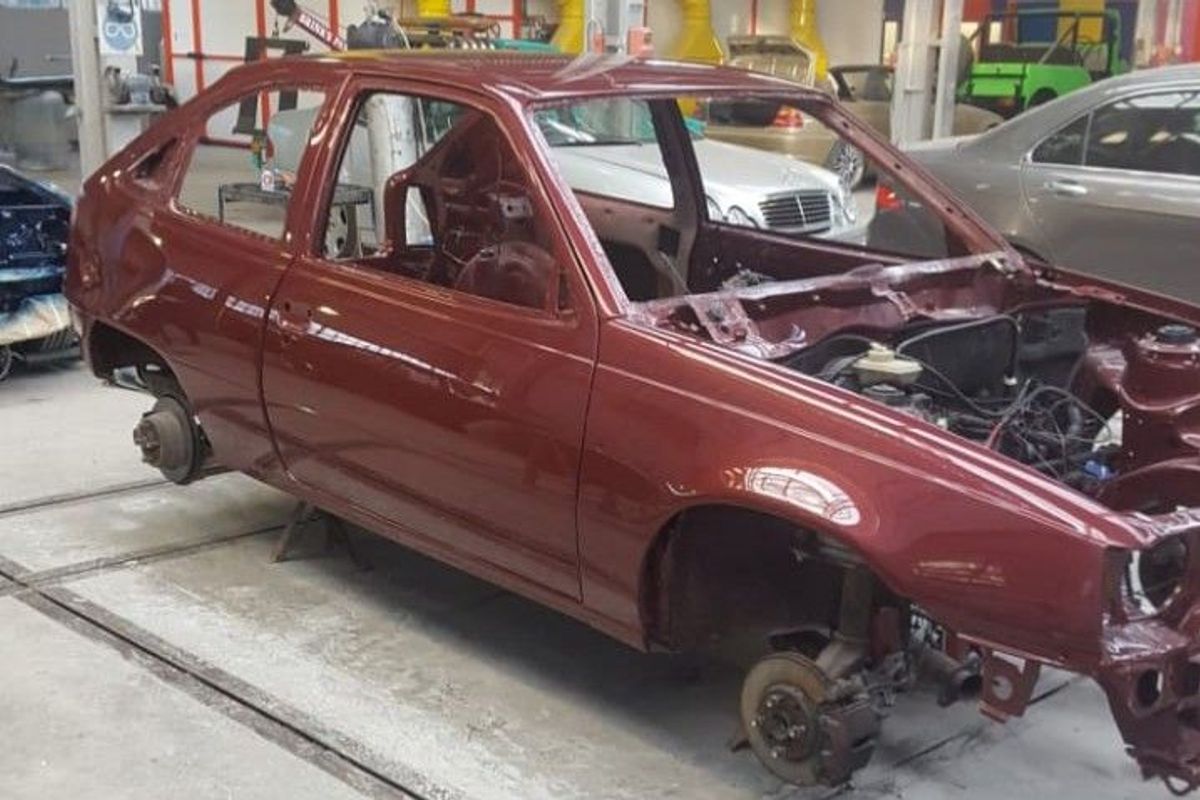
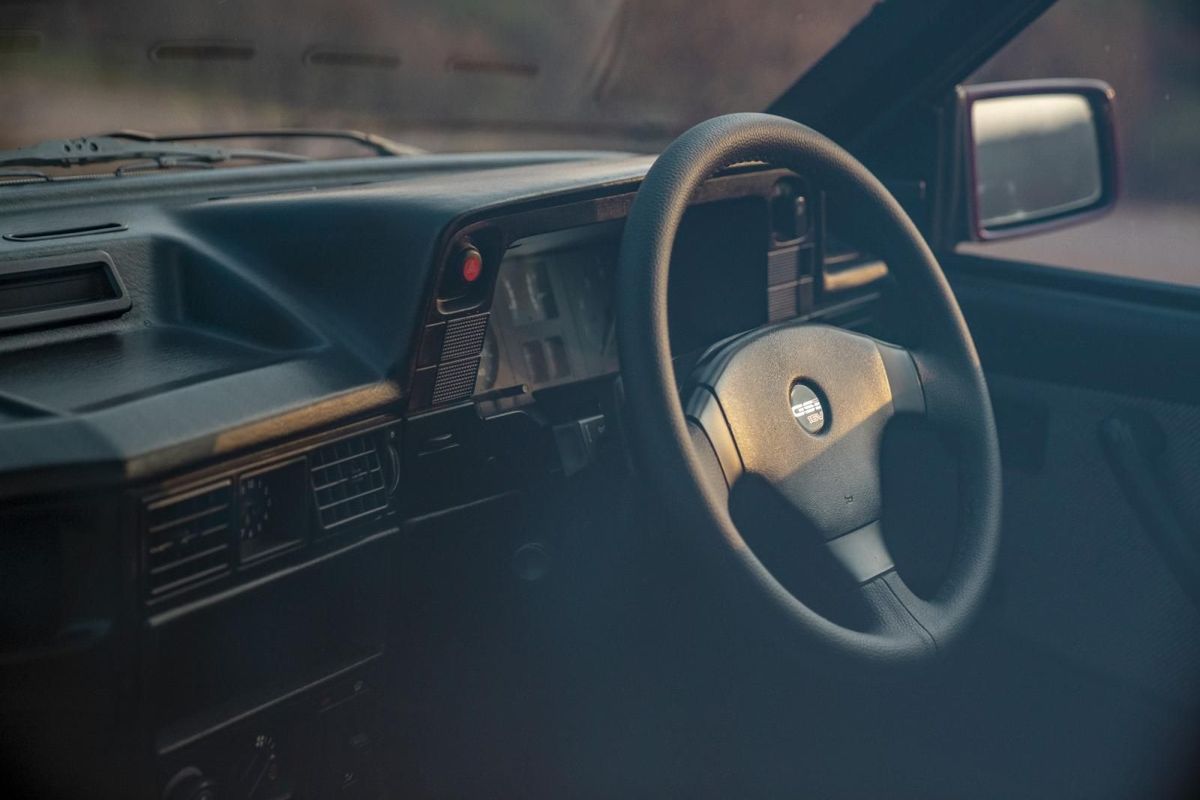
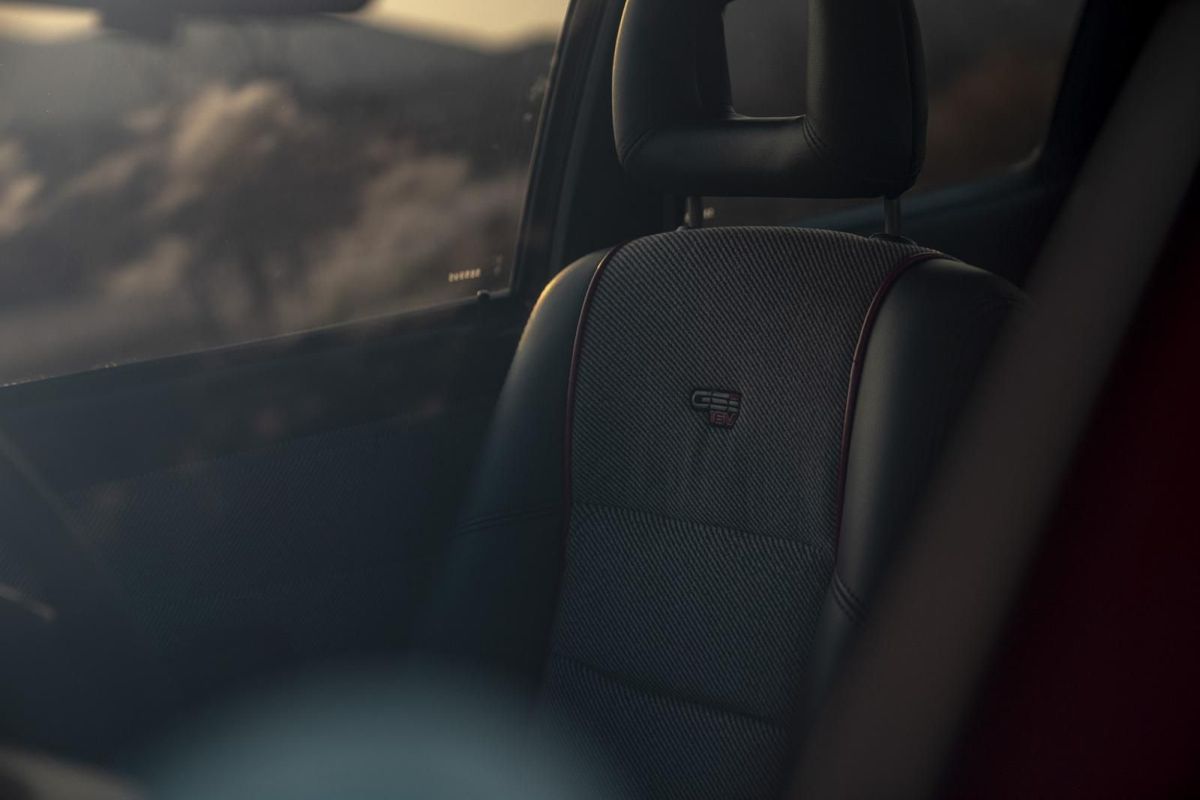
South Africa has a very rich, very diverse automotive heritage, but so many of our cars are leaving the country or left to rot, uncelebrated. Many of the legends that built these cars are no longer with us, too, and their stories also need to be told. So, for us, SentiMETAL may be a passion project, but it's also one we take very seriously. Our collection started with the car in the video above, a 1992 Opel Kadett 2.0 GSi Superboss. We are possibly the 7th owners of this car, and when we discovered it, it was in a sad state. Restorer Werner Meyer was convinced, however, that it was of the right pedigree, but had just been terribly neglected through the years. What followed was a complete nuts-and-bolts restoration, but retaining as many of the original parts of the car as possible.
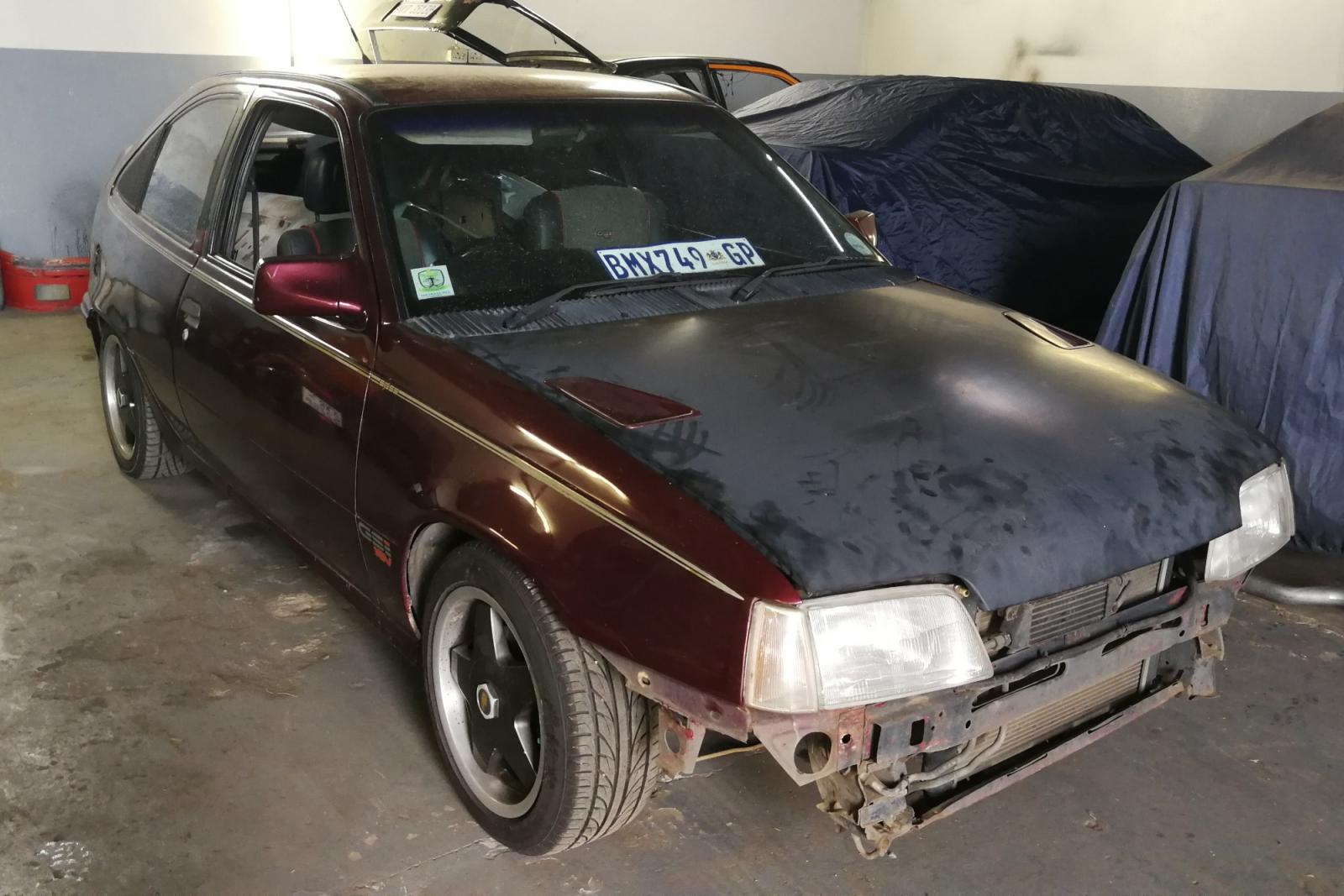
When we first saw our Superboss it looked like this (ignore the new bonnet).
The story of this Superboss is one of a "rescue". In many ways, it's like a top pedigree, thoroughbred horse that was found neglected and which has been slowly brought back to its proper condition. Seeing something evolve from a basketcase in a barn, to it standing next to R30 million Mercedes-Benz's at Concours South Africa was emotional for all of us. Enjoy the film!
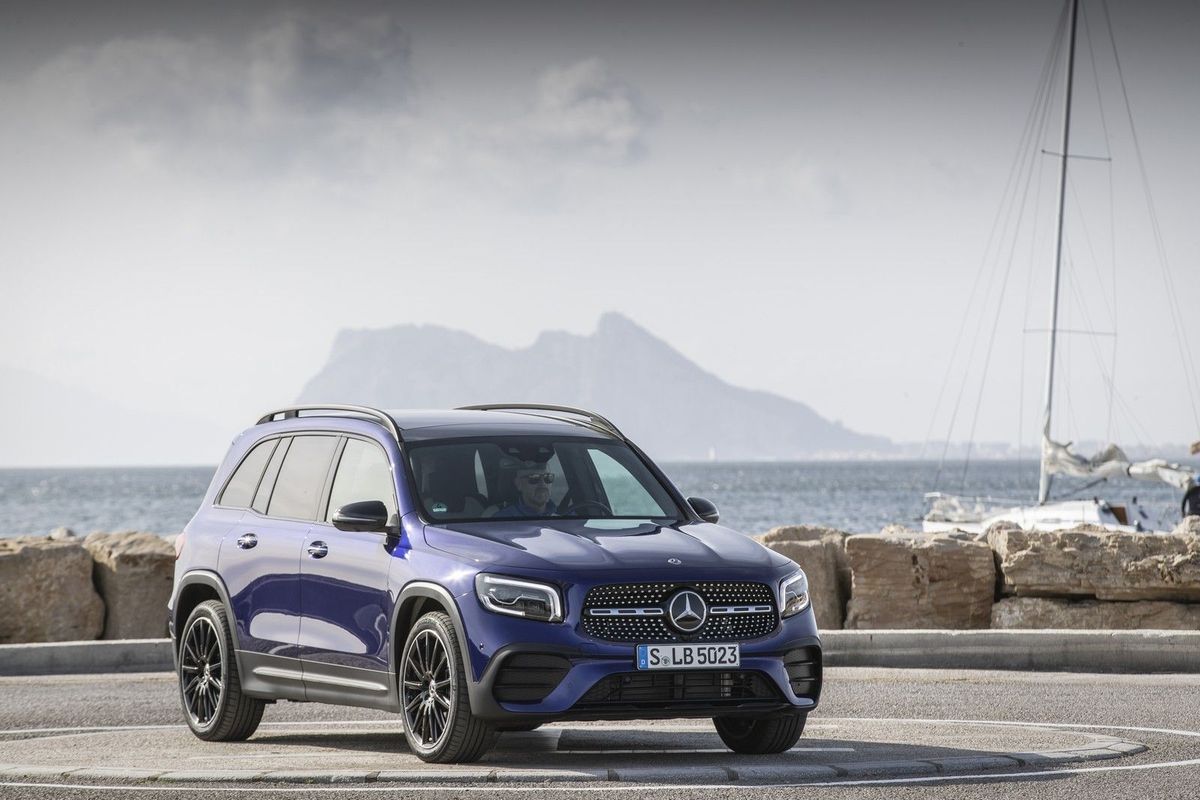
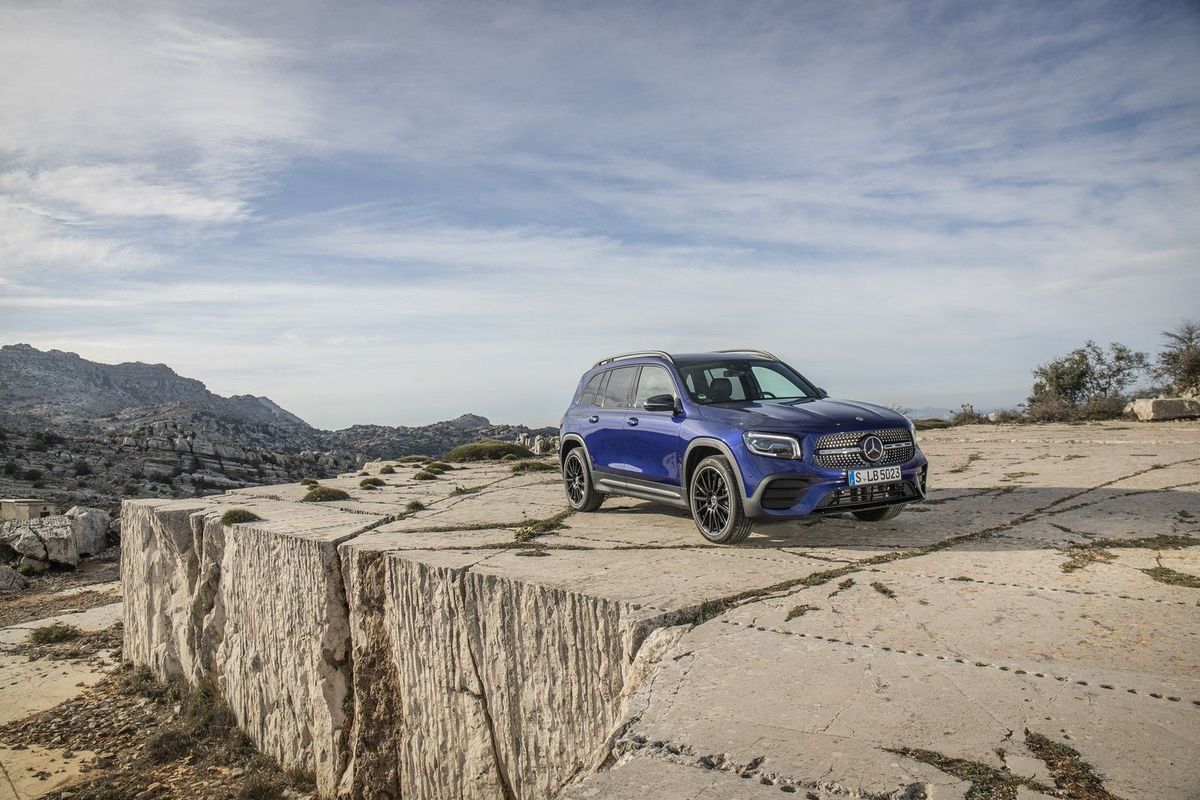
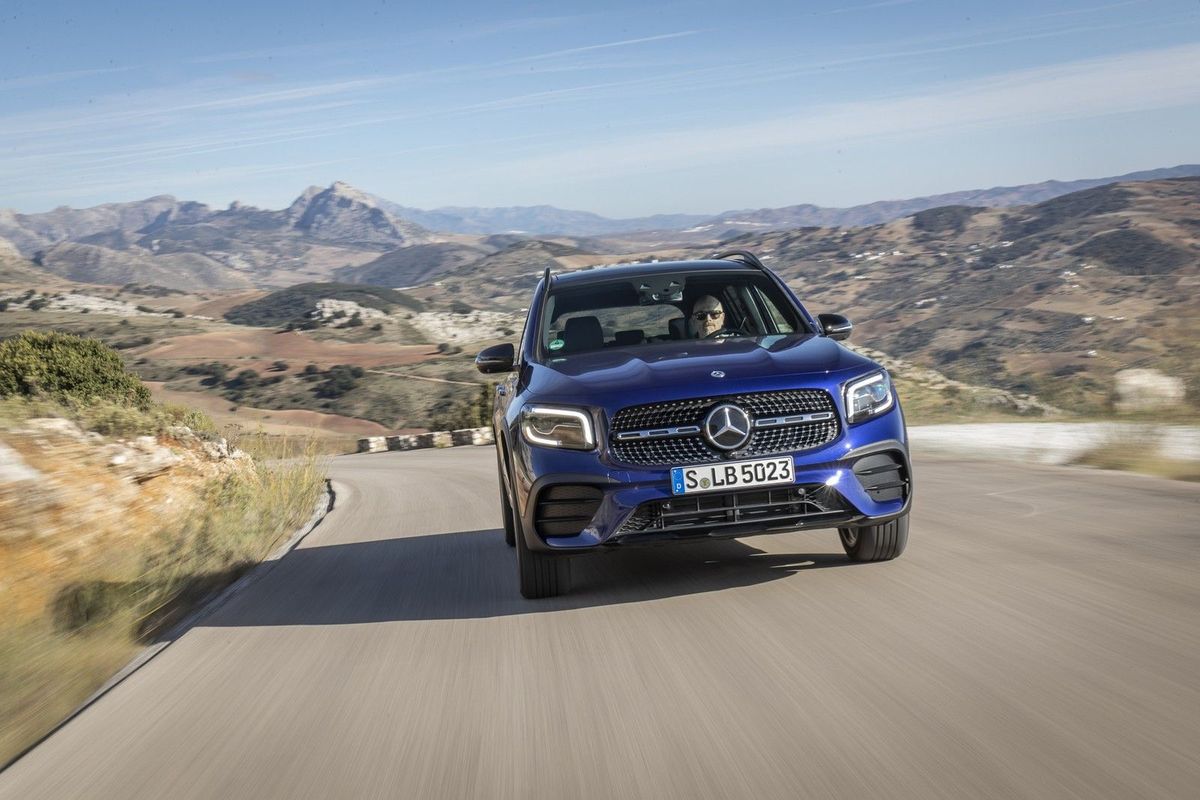
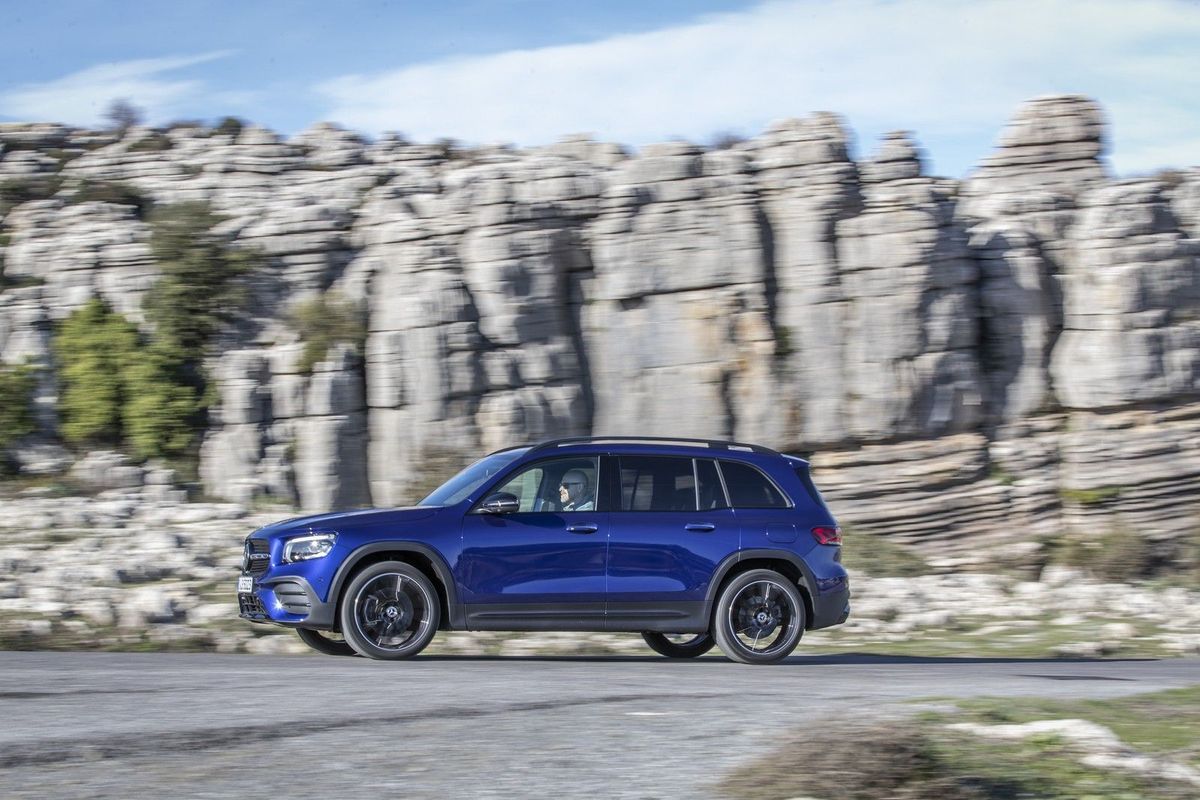
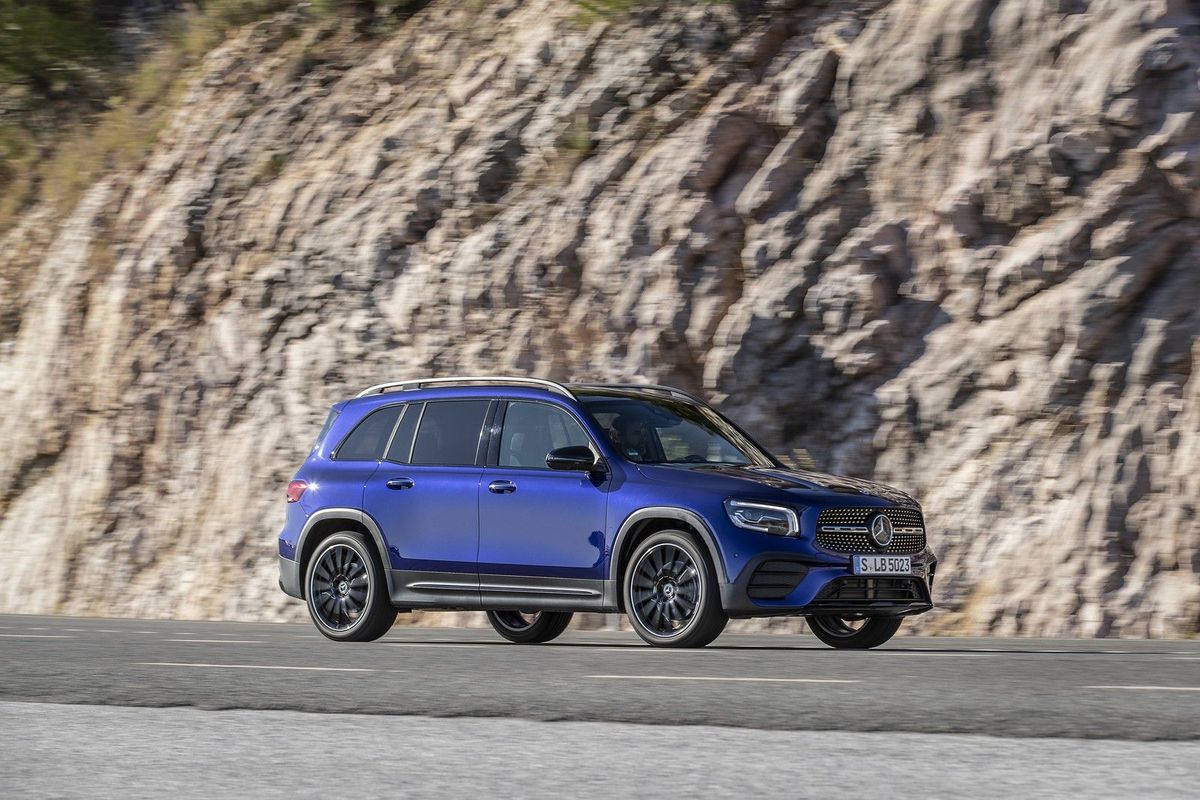
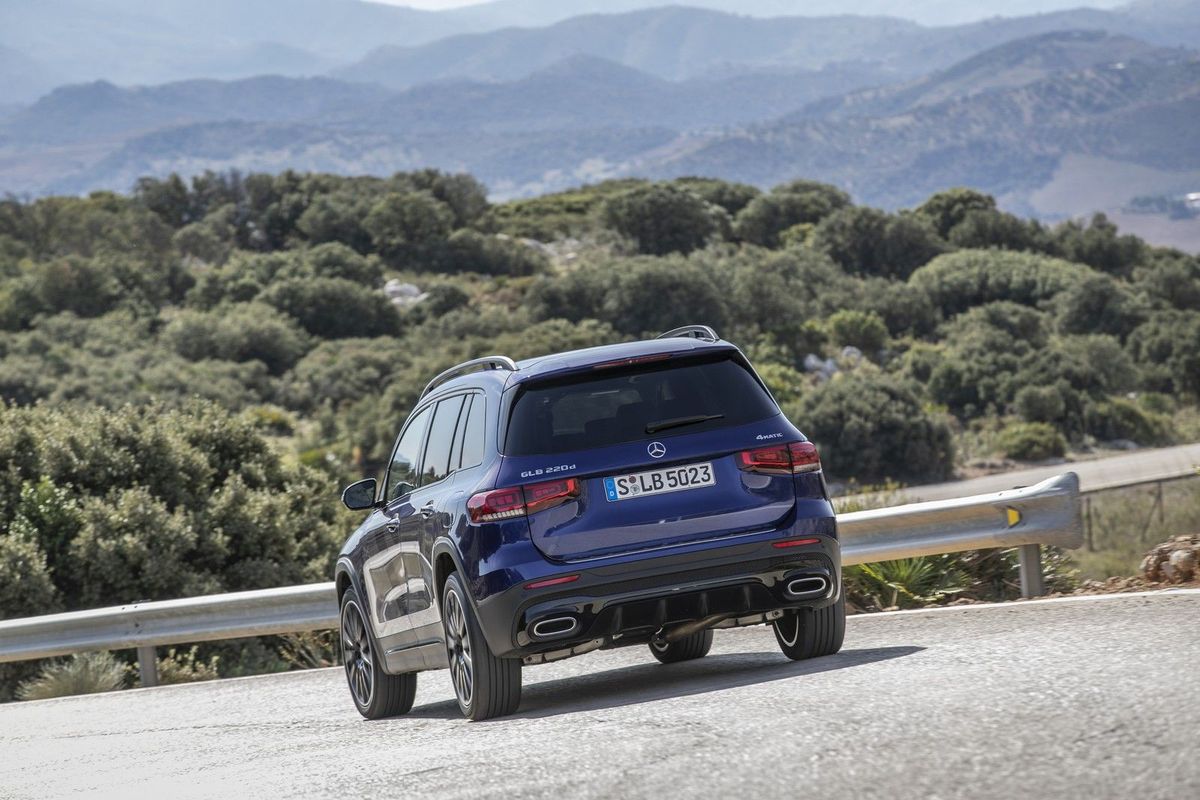
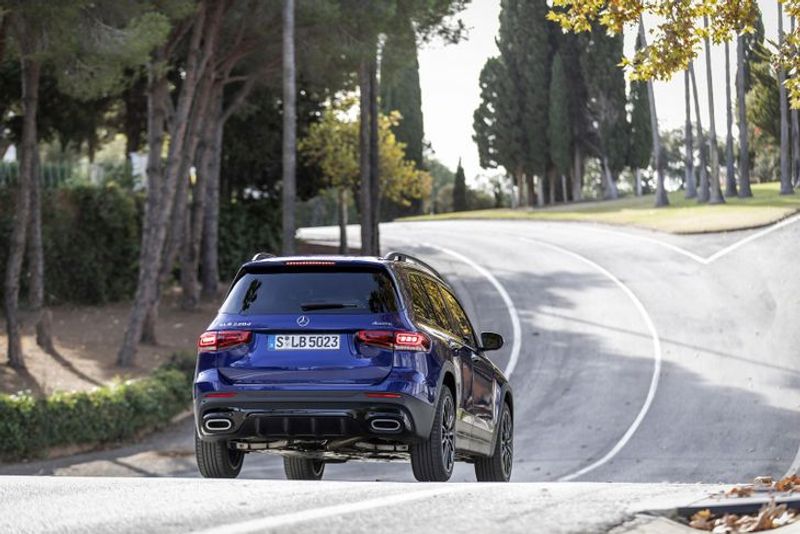
Mercedes-Benz GLB (2020) International Launch Review
The family-car market is increasingly crowded – even at its premium end – but that hasn’t stopped Mercedes-Benz from adding yet another high-riding, off-road-flavoured model to its line-up (its 8th, to be precise). Our UK correspondent James Disdale recently got to grips with the new GLB, which will arrive in South Africa in the 2nd quarter of 2020, in Spain.
As the "B" part of its name suggests, the new GLB can be considered a rough-and-tumble version of the B-Class, which means there’s more than a touch of MPV to this SUV. But just how much?
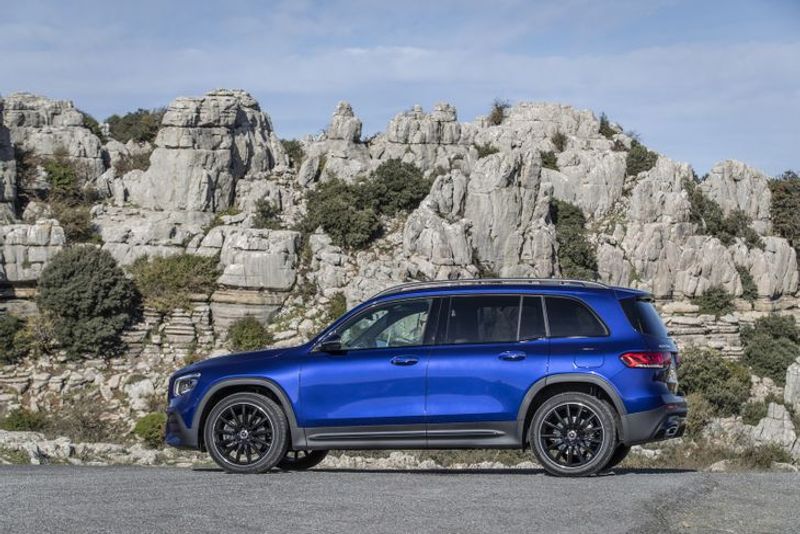
Well, like the recently refreshed Land Rover Discovery Sport, the GLB seats 7 occupants. And, unlike its GLC and GLE big brothers, but like the smaller GLA, this latest addition is available in both 2- and 4-wheel-drive guises.
While the upcoming GLA will cater to boutique crossover buyers, the unashamedly squared-off GLB has practical pretensions.
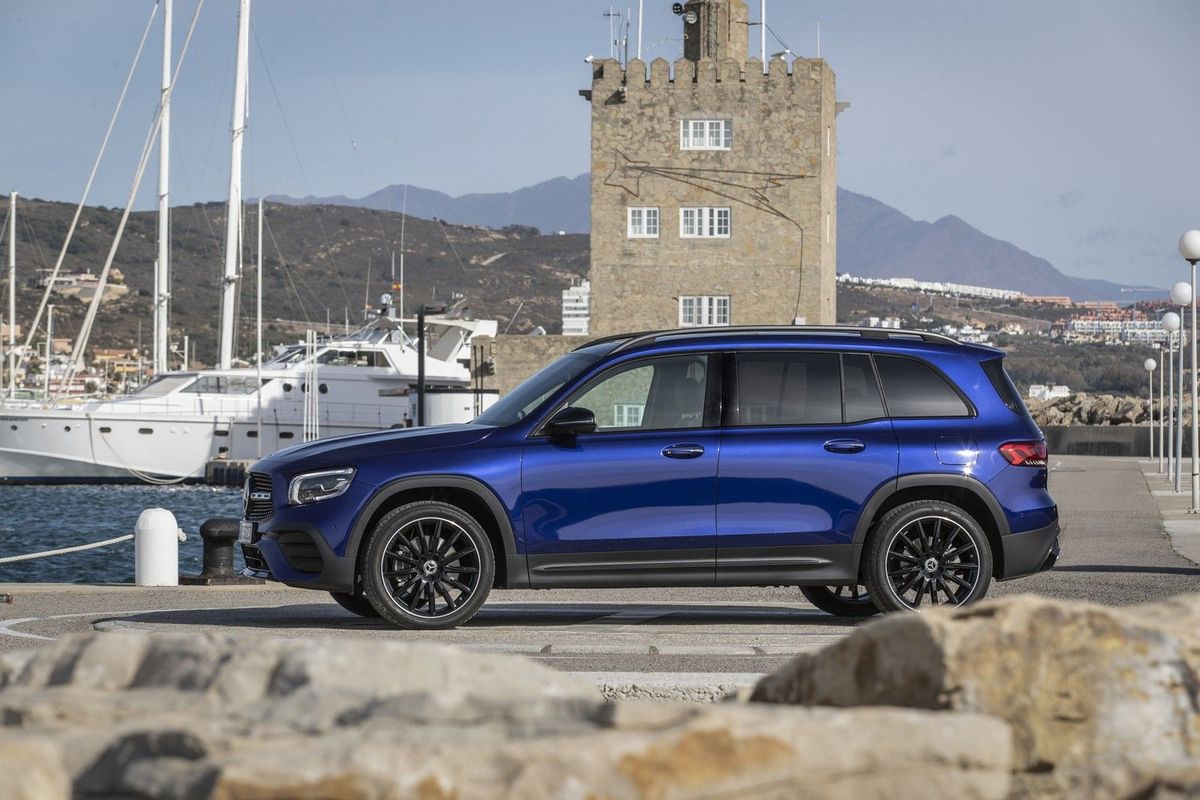
Okay, so what have we got here? Externally, the GLB looks a little like a shrunken GLS, which means it has an upright and boxy presence on the road. You’ll have to make your own mind up about the looks, but from some angles, it’s slightly ungainly, while from others there’s more than a hint of the Citroe?n C5 Aircross (which itself recently made its debut in South Africa upon Citroen's reintroduction to the local market).
Suitably smart inside
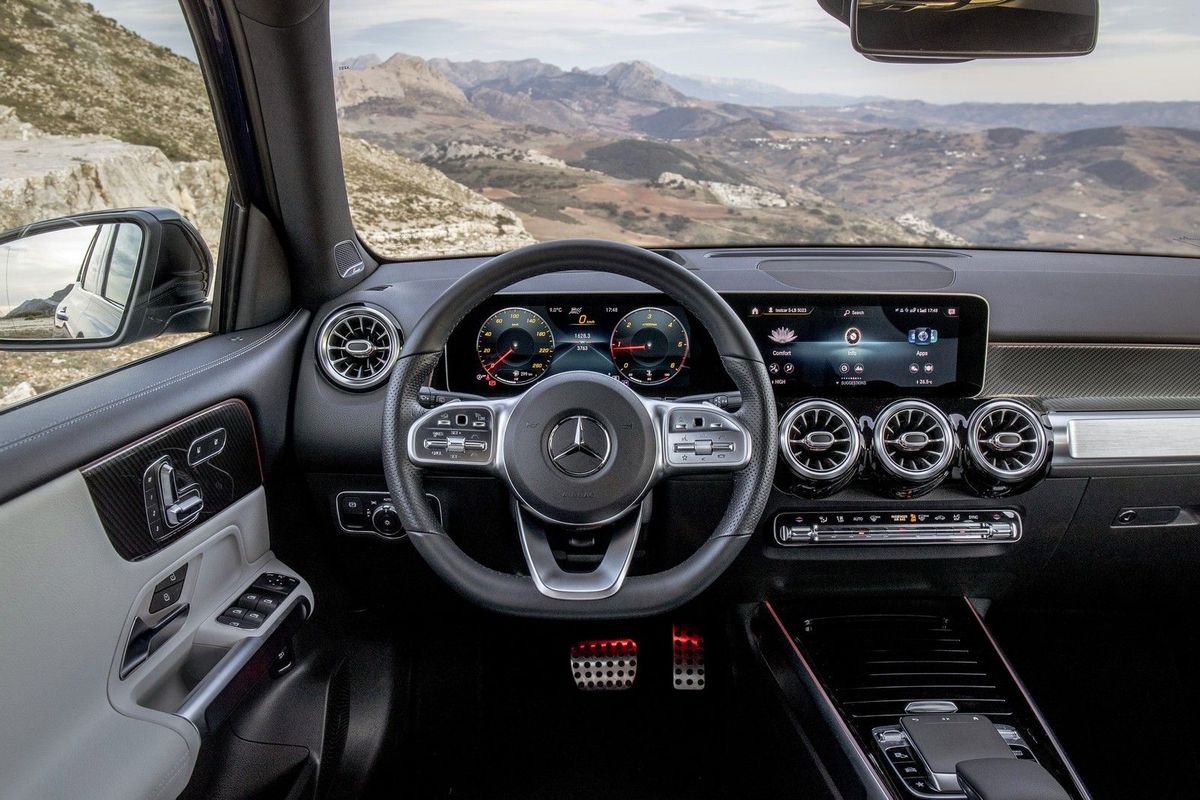
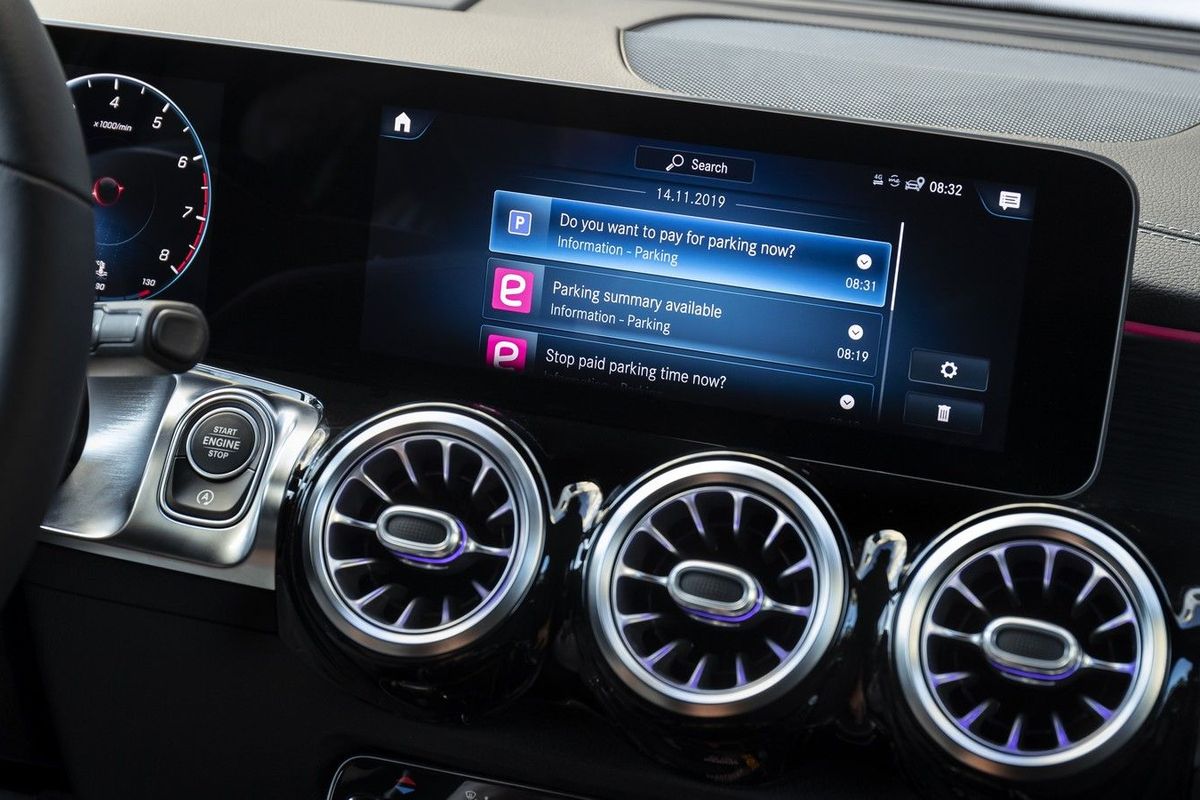
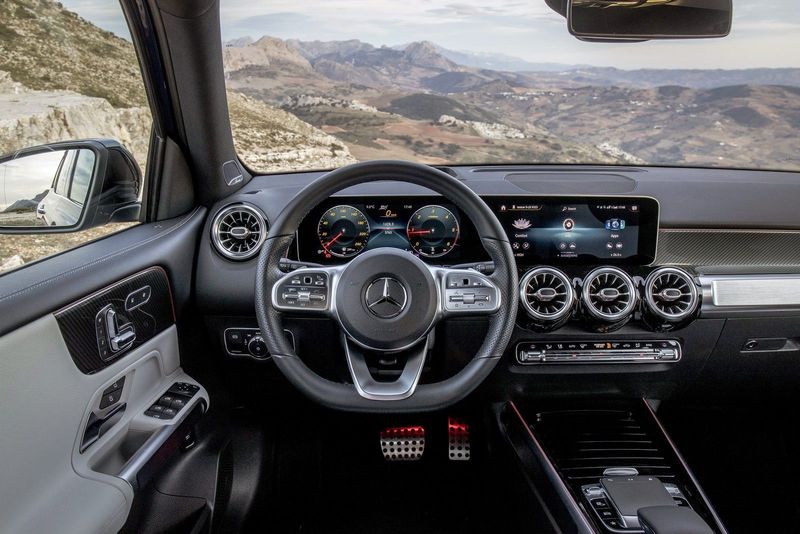
Matters improve markedly inside, where the GLB benefits from the slick wall-to-wall TFT infotainment and all-digital instrument cluster that made its debut in the A-Class last year. Some of the plastics used lower down in the cabin look and feel a little scratchy, but otherwise, it’s a high-quality affair that rivals anything on offer from BMW and Audi. In fact, with its neat trio of turbine air vents, a pair of metallic climate control toggles and 3-spoke multi-function steering wheel, you could be forgiven for thinking you're seated inside an A-Class – the raised driving position aside, of course.
The tasteful implementation of the MBUX user interface and strategic brightwork lifts the newcomer's cabin ambience appreciably.
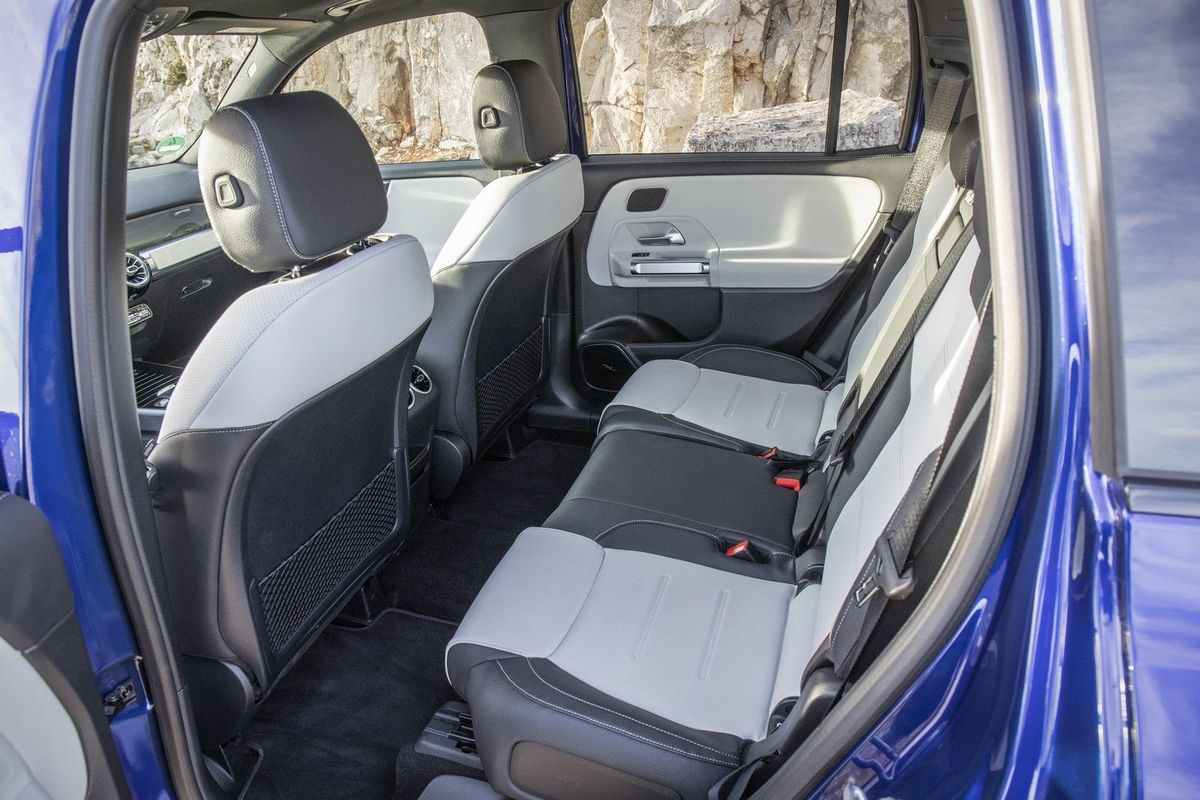
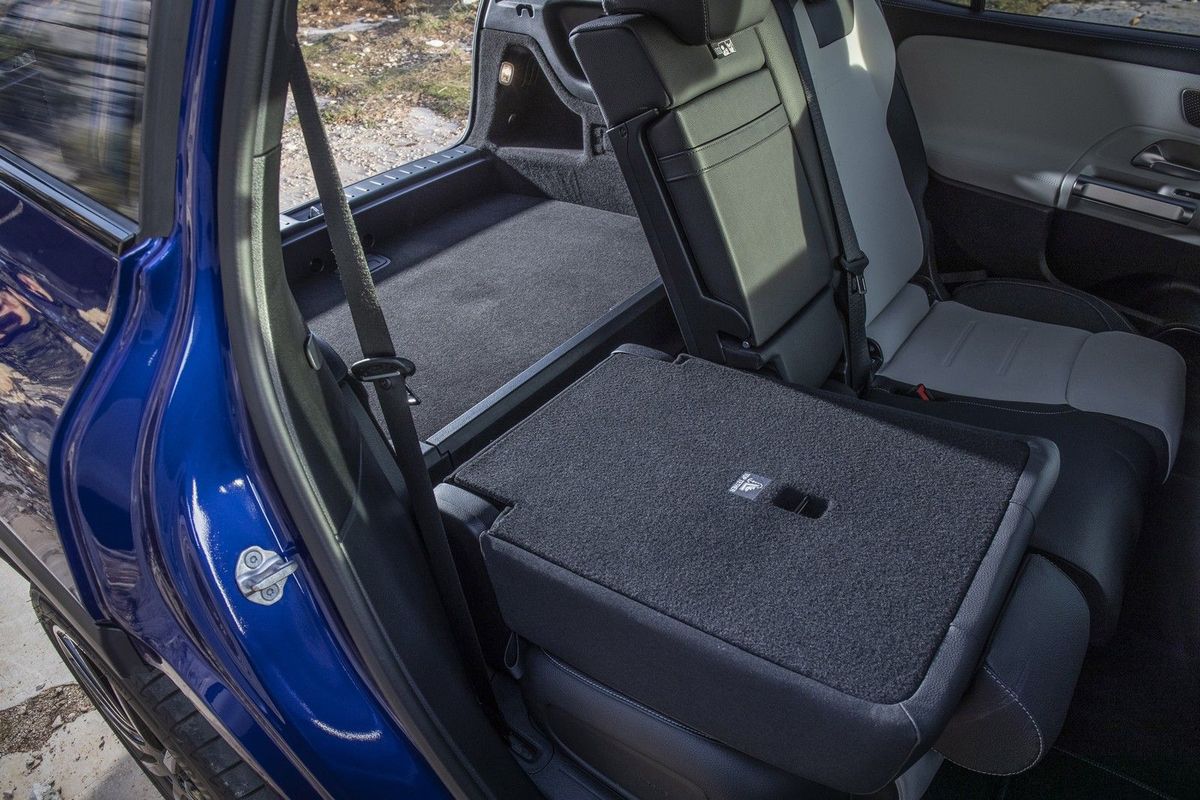
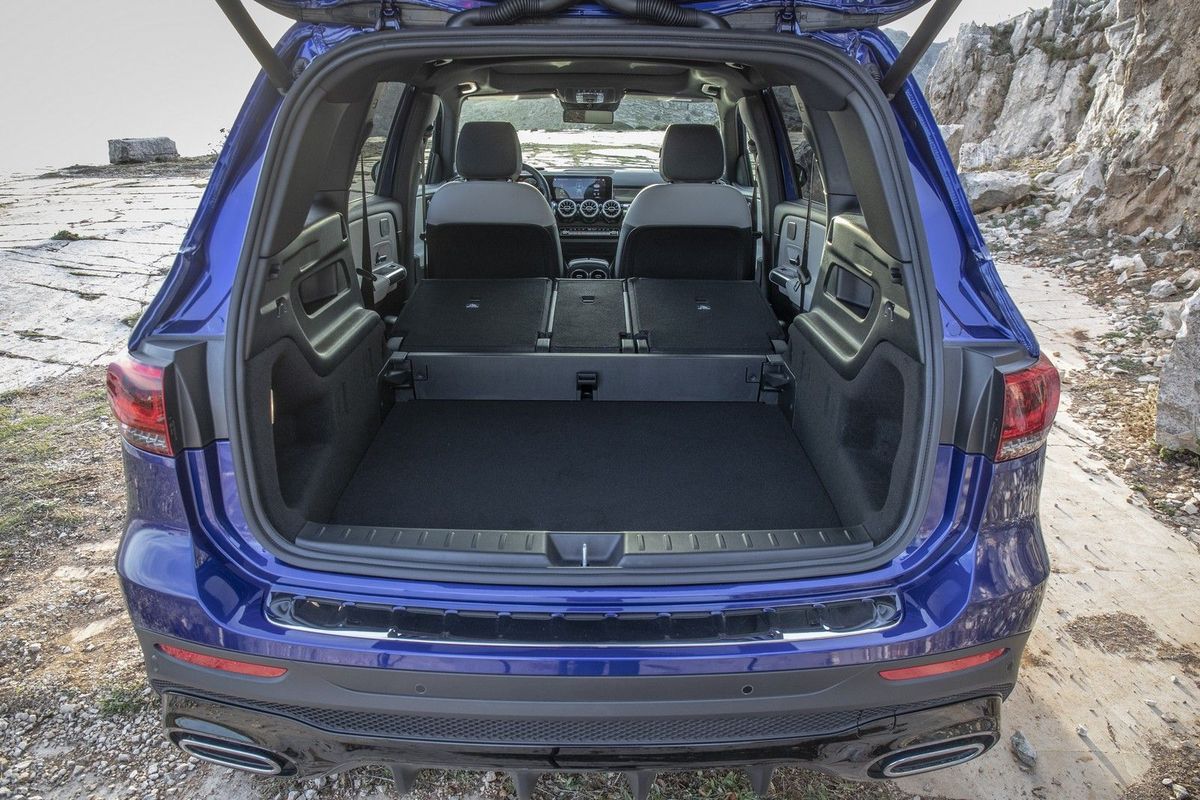
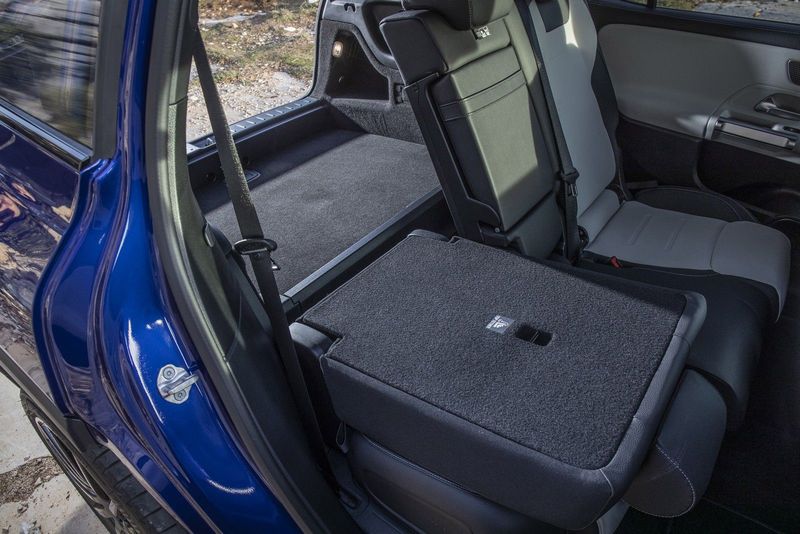
It’s fairly spacious, too, although the optional 3rd row of seats is designed for young children or occasional adult use only because, with the sliding 2nd row in its rearmost setting, there’s virtually no legroom behind it. Speaking of space, load bay capacity shrinks from a handy 570 litres with the 3rd row stowed (it folds into the floor in an easy movement) to virtually nothing with the chairs raised – a Land Rover Discovery Sport offers more space with seats up or down.
More of a Q5/X3 rival than a foil to the Q3/X1
The GLB is essentially based on the same MFA2 platform as the A-Class, although it’s been stretched by 100 mm (to accommodate those extra seats, for those who wish to upgrade from 5- to 7-seater configuration). It can sometimes be tricky to judge a vehicle's size from pictures… One'd think the SUV variant of the A- and B-Class would be directly comparable with the Audi Q3 and BMW X1, but if you get the tape measure out, you'll notice the GLB is closer to those cars' respective executive-class siblings: the Q5 and X3. The Benz is only about 30 mm and 70 mm shorter than those cars, nearly as wide and within a whisker in height of its Ingolstadt-based rival (and 22 mm shorter than the Bimmer).
The 2nd-row bench can slide fore/aft in a 140-mm range. In 5-seater configuration, loading practicality increases substantially.
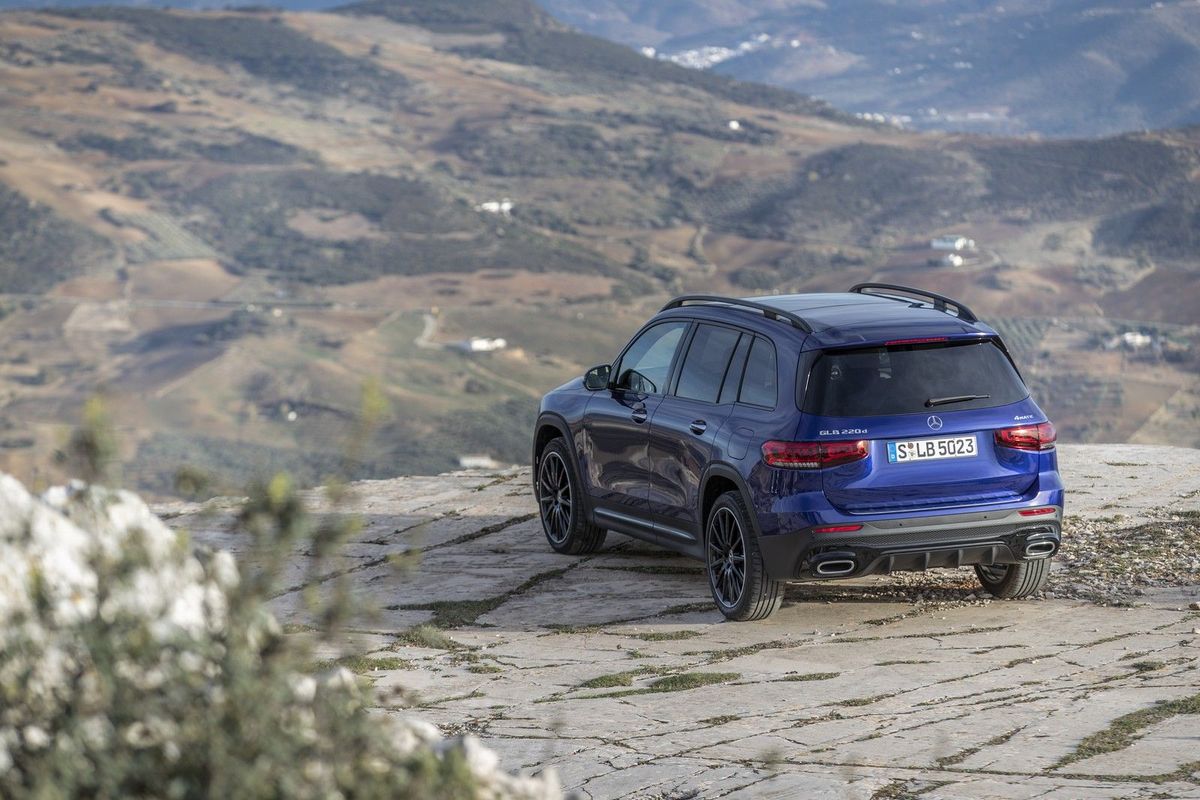
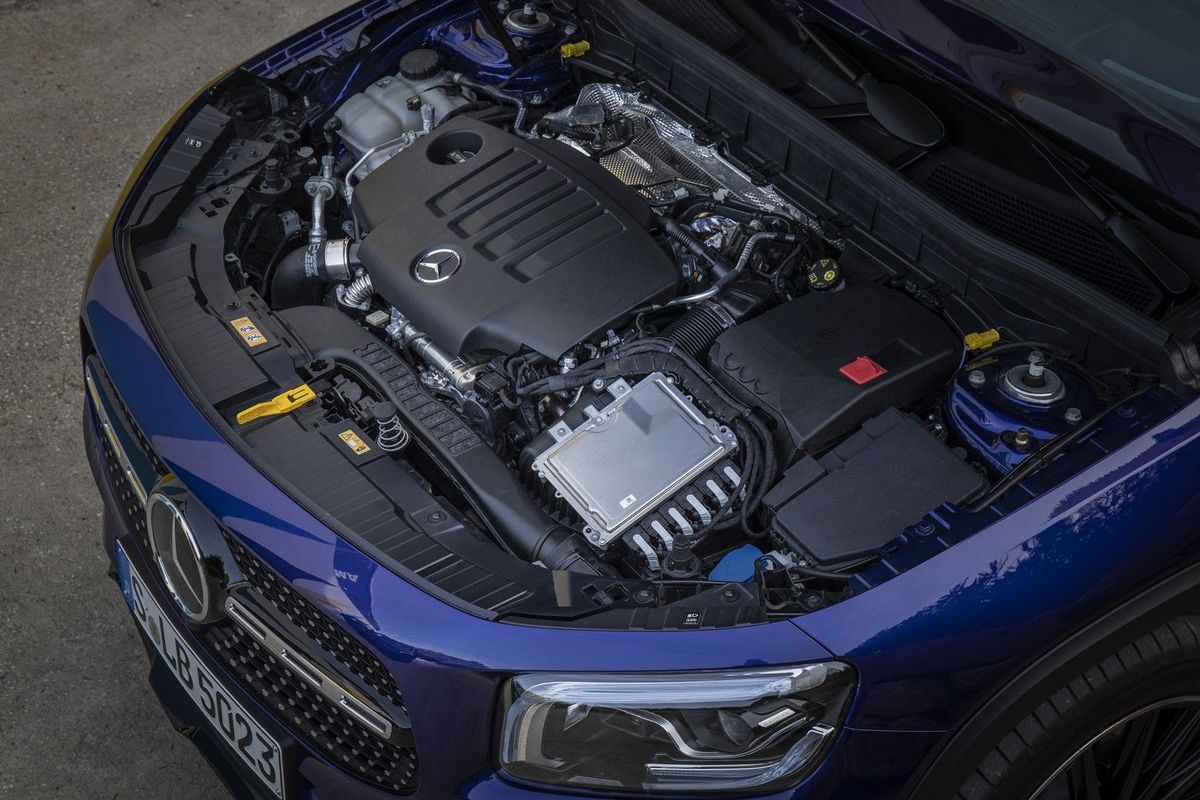
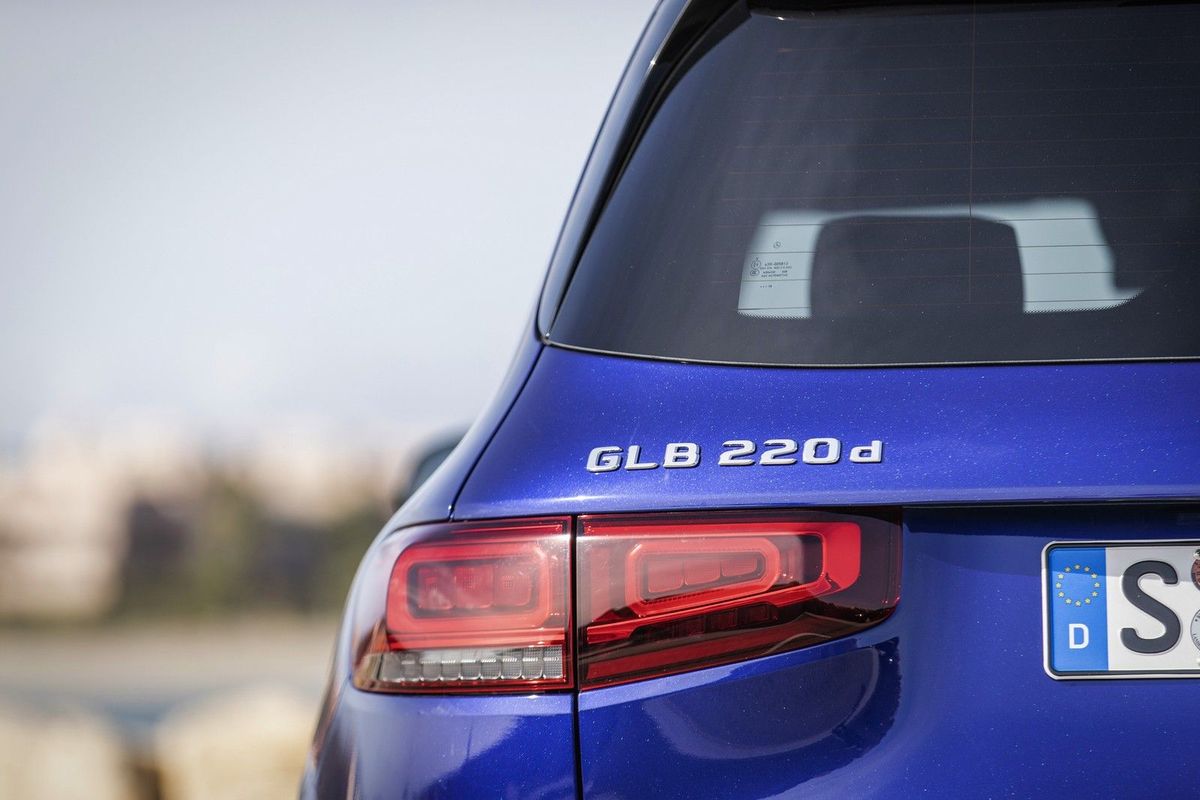
The familiar Mercedes-Benz architecture means a similar line-up of 4-cylinder turbopetrol and -diesel engines, up to and including the 225 kW/400 Nm AMG-fettled A35, which isn't coming to South Africa… not in the immediate future, anyway. The South African launch line-up will comprise the GLB 250 (165 kW/350 Nm) in front-wheel-drive guise and the GLB 220d 4Matic, both of which will feature the newly-developed 8-speed dual-clutch (automatic transmission).
During the launch, we sampled the GLB 200 (also FWD), powered by a 1.3-litre turbopetrol 4-pot developed jointly with Nissan/Renault. Given the motor’s small size and the GLB’s 1 555 kg kerb weight, its performance was fairly brisk. Peak torque (250 Nm) is available at just 1 620 rpm, plus the nicely insulated engine will happily rev to 6 000 rpm. Drivetrain responses are boosted by the dual-clutch transmission, which slots home its ratios quickly and smoothly.
As opposed to the A200 hatchback, the GLB 200 features a (notably pliant) multi-link rear suspension setup.
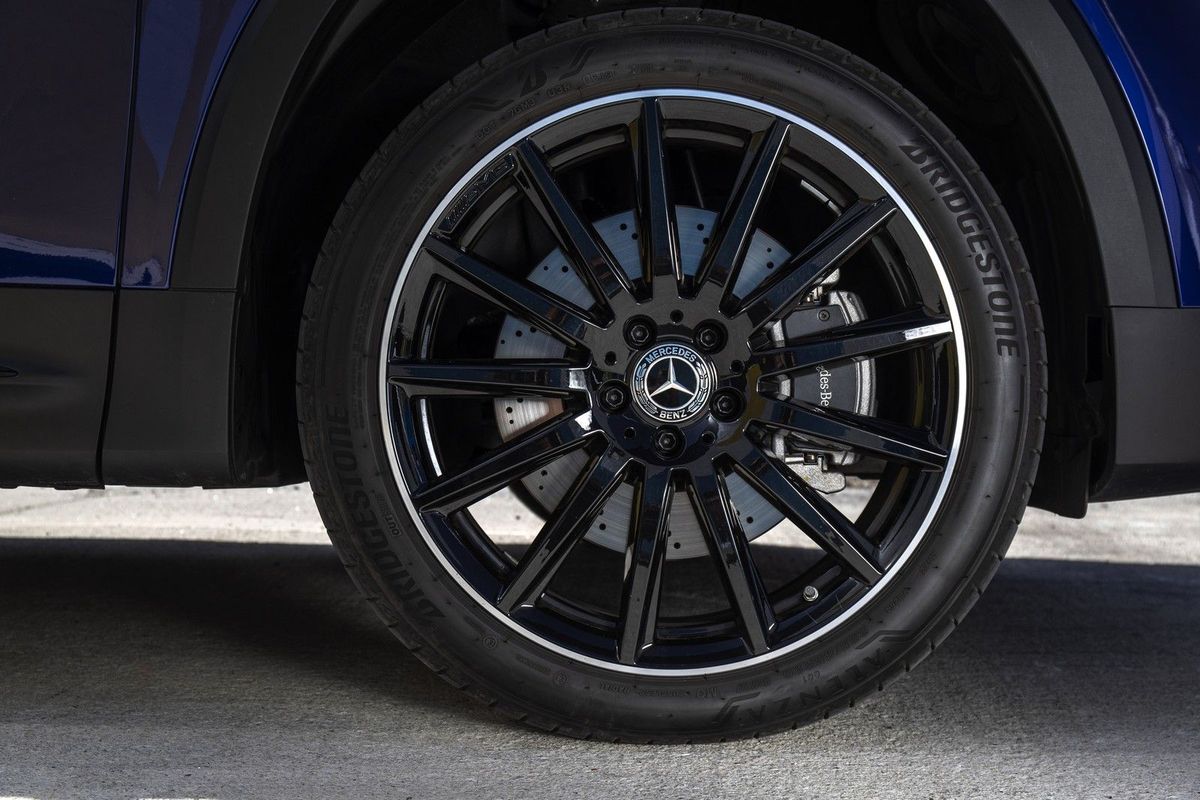
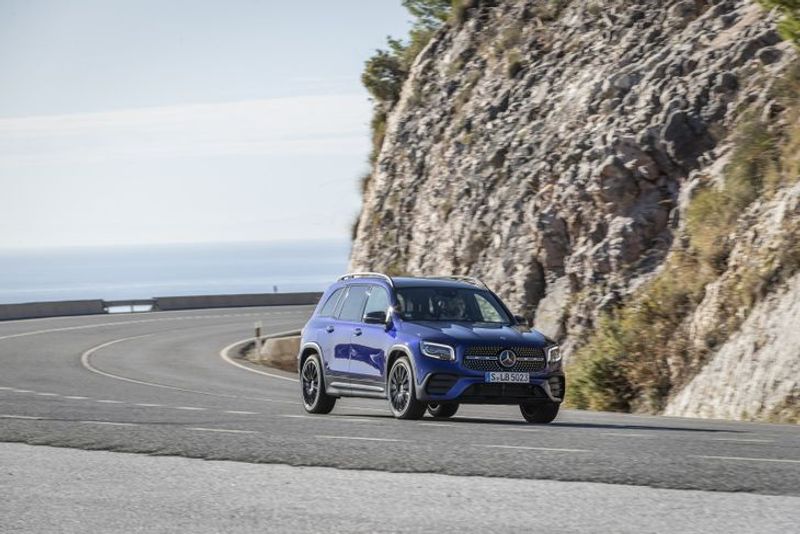
The car’s dynamism is best described as easy-going – the package is geared towards delivering everyday comfort, as opposed to crisp cornering ability. All GLB derivatives feature a McPherson-strut front- and a multi-link rear axle suspension setup (in contrast to the torsion-beam aft setup on cooking variety A-Class derivatives), while our test unit further benefited from optional adaptive dampers that, on our smoothly surfaced test route, served up welcome plushness over bumps. Benz's newcomer represents a quiet and comfortable way to get about. And while it’s not exactly a thrill-a-minute in the twisty bits, there’s enough composure and grip to allow you to maintain a decent pace.
The steering setup feels inert, but despite the tiller's lack of heft, it's precise enough to make the Benz's manoeuvrable in tight city confines. What's more, the GLB's body control is rather good, despite being prone to lean when pushing on. With some load going through the suspension, you can feel both axles sharing the cornering forces, which helps to minimise a natural tendency to understeer…
The ride quality of the GLB is impressive, especially when the Benz is equipped with adaptive dampers.
And for those who seek off-road ability, the GLB 220d derivative (140 kW/400 Nm) comes equipped with a 4Matic system that uses torque-vectoring technology (the transmission can be locked in a 50:50 split), hill descent control (which utilises the vehicle's dynamic stability sensors) and even an optional off-road lighting pack. With ground clearance of 200 mm, however, the Benz would be best suited to traversing dirt roads, sandy tracks and the odd grassy knoll.
Summary
If you consider the GLB a compact 7-seater, which is how Benz initially trumpeted its MPV-flavoured (but SUV-styled) crossover, then its first, best rival is the Land Rover Discovery Sport, which is a former #CarsAwards champion. It's a package that doesn't appear to need the beefier powerplants in the range to put its best foot forward, because it's likely to be used as a laid-back and versatile family runaround, besides, it works fine in its standard 5-seater configuration. Given its size and loading practicality (when it's not occupied by a full complement of passengers, mind you), the GLB is as big a threat to executive SUV models as the family-car offerings most people are likely to compare it with…
The Atos nameplate has made a welcome return to the South African market. Should you add it to your list if you're shopping in the (very price-sensitive) entry-level hatchback segment?
We Like: Build quality, exceptional specification, good driving traits, brand cachet, warranty and after-sales support.
We Don’t Like: Small load bay, no steering column/driver's seat adjustment and lack of rear wiper/demist function.
Some Hyundai dealers regularly offer specials: Have look here.
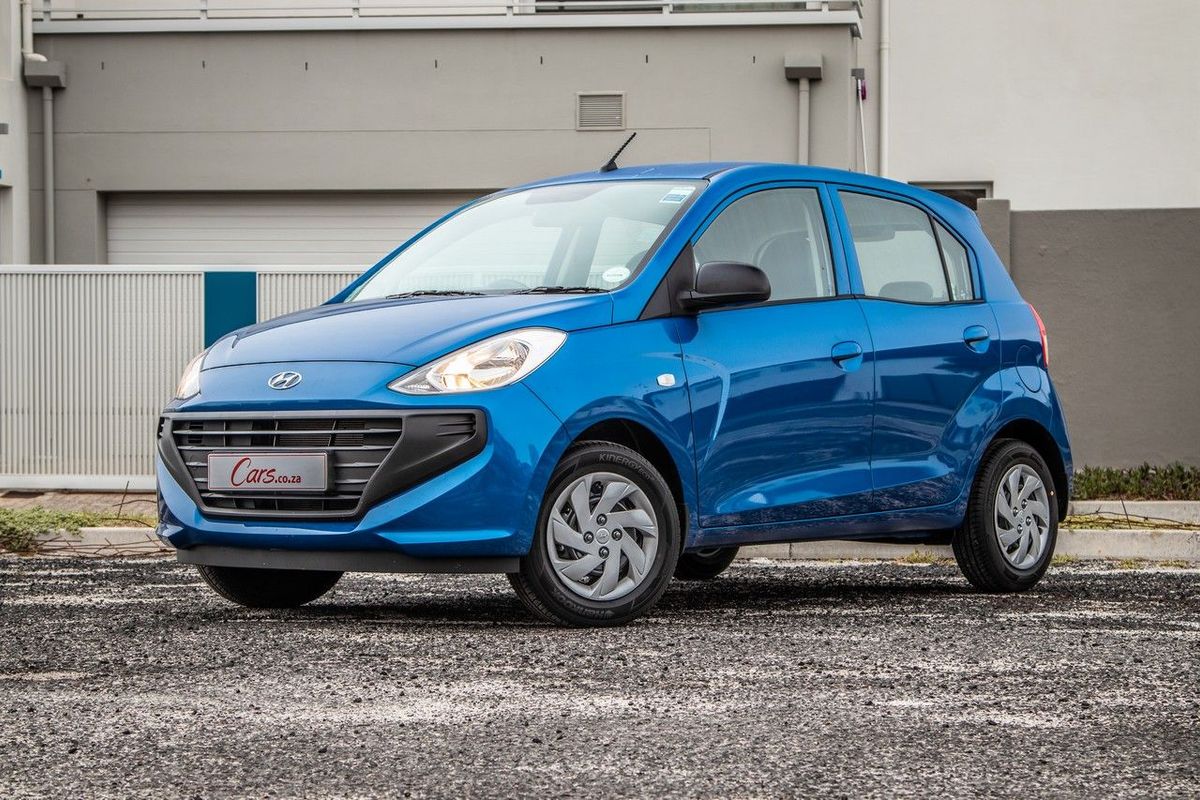
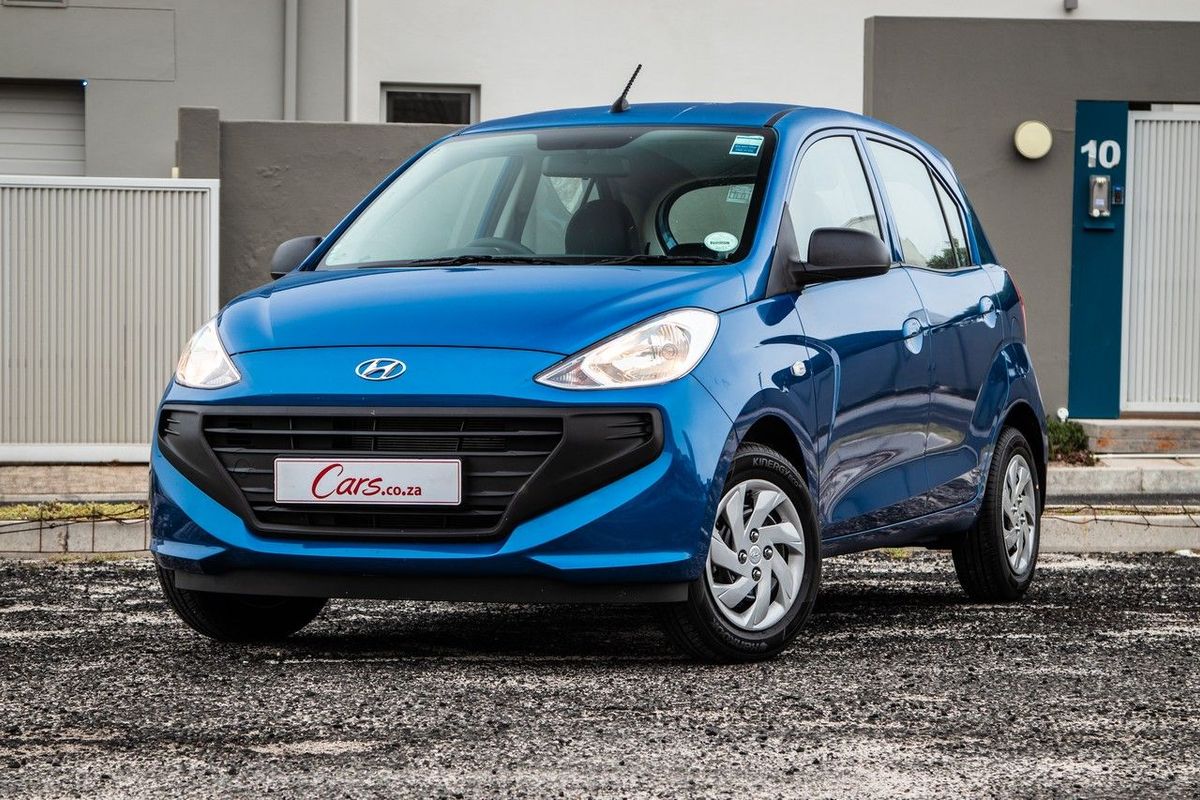
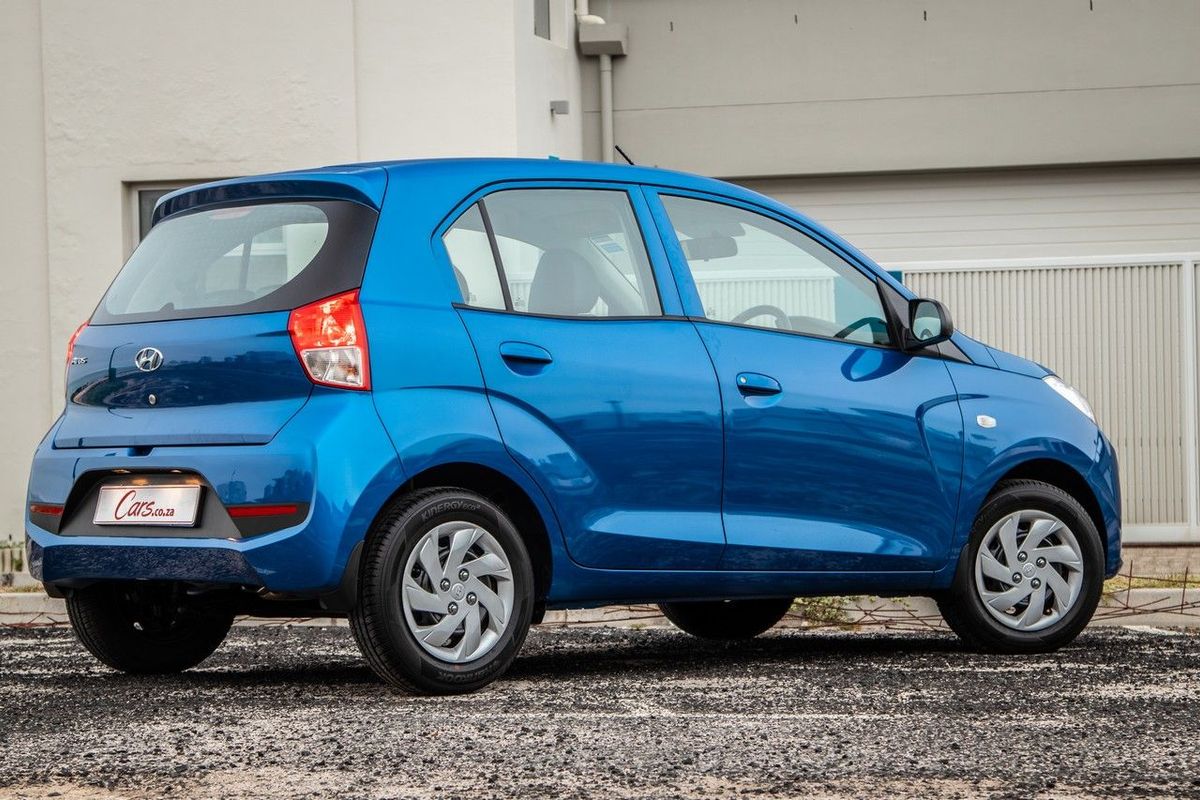
Built in India as the Santro, the Hyundai Atos has made a welcome return to the SA motoring landscape…
What is it?
The plucky Atos is back. Like its predecessor, this new model is assembled in India and, judging by details on Hyundai India's website, the SA version is similarly-specced to the model in its home market. From launch, there's just the one derivative: the 1.1 Motion. Hyundai SA already has a budget-car offering in the shape of the Grand i10, but the Atos sits below that and is targeted at first-time buyers, the rental market and consumers who are obligated to "buy down". This segment is hotly-contested by a number of brands vying to find the best balance of features, performance, safety tech and price. Some of them are even offering complementary insurance deals to sweeten their propositions.
On paper at least, the new Atos looks primed to take on the budget segment. A long spec-sheet is only half the battle won, so without further ado, let's get stuck into the 2019 Hyundai Atos to see if it's worthy of your consideration.
How does it perform in terms of…
Performance and efficiency
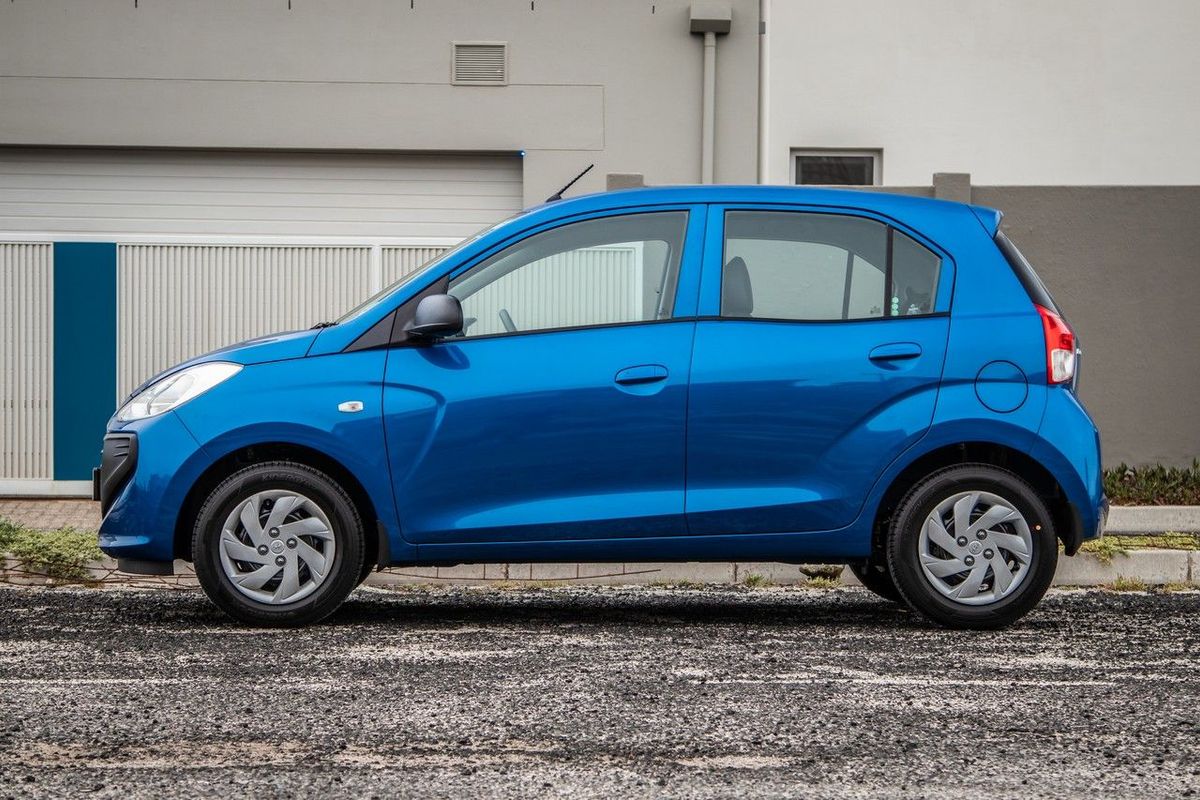
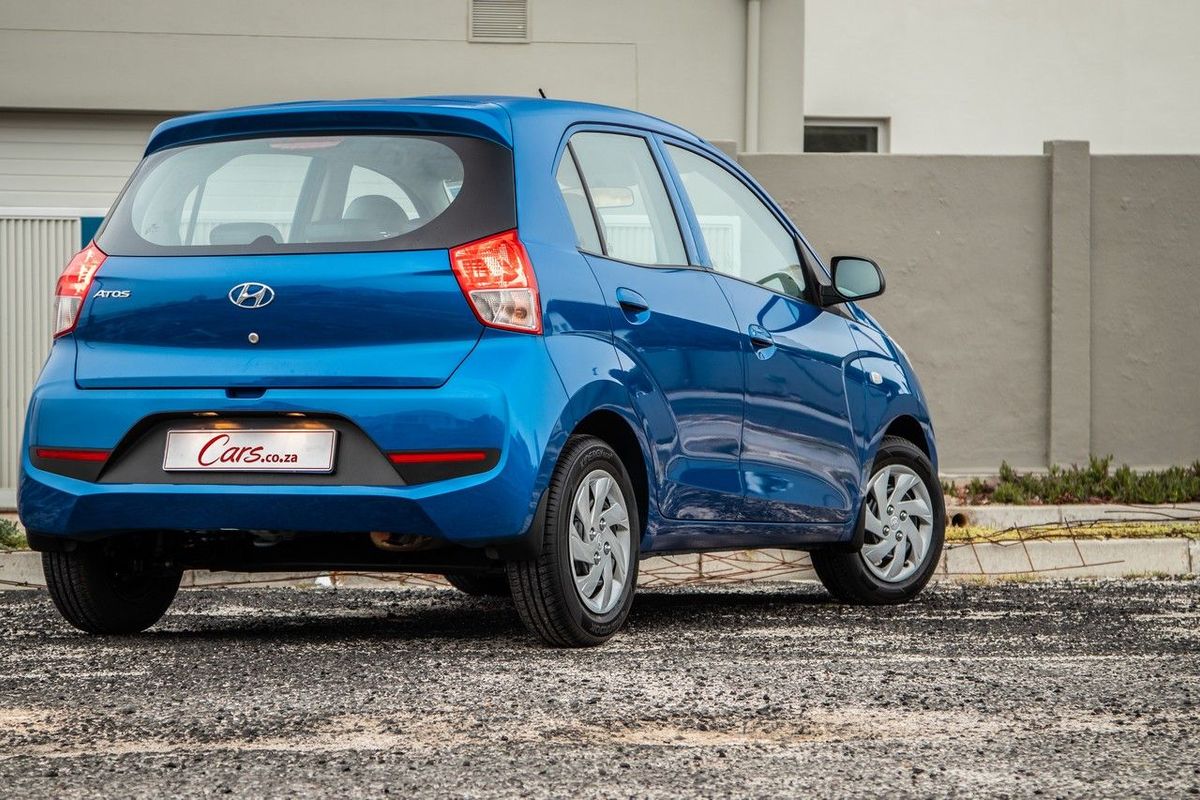
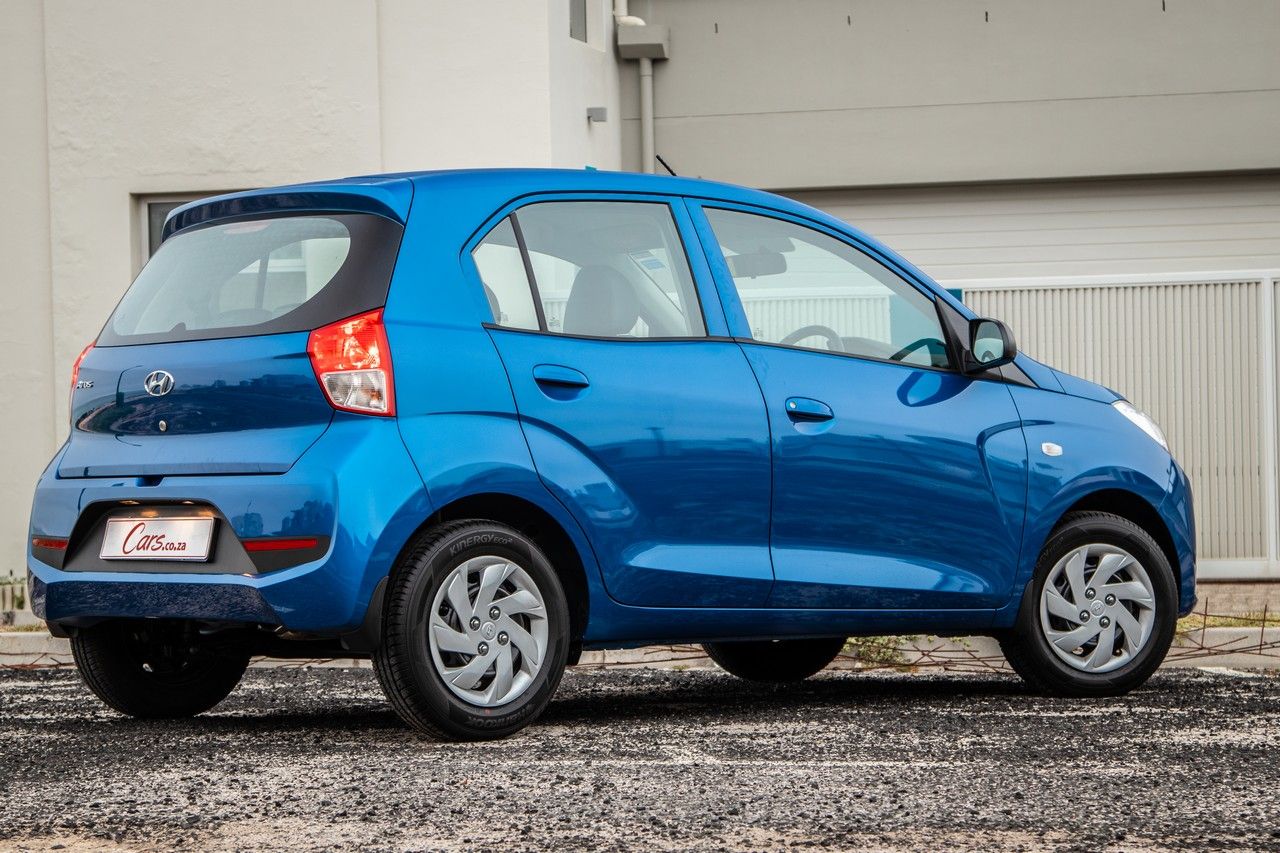
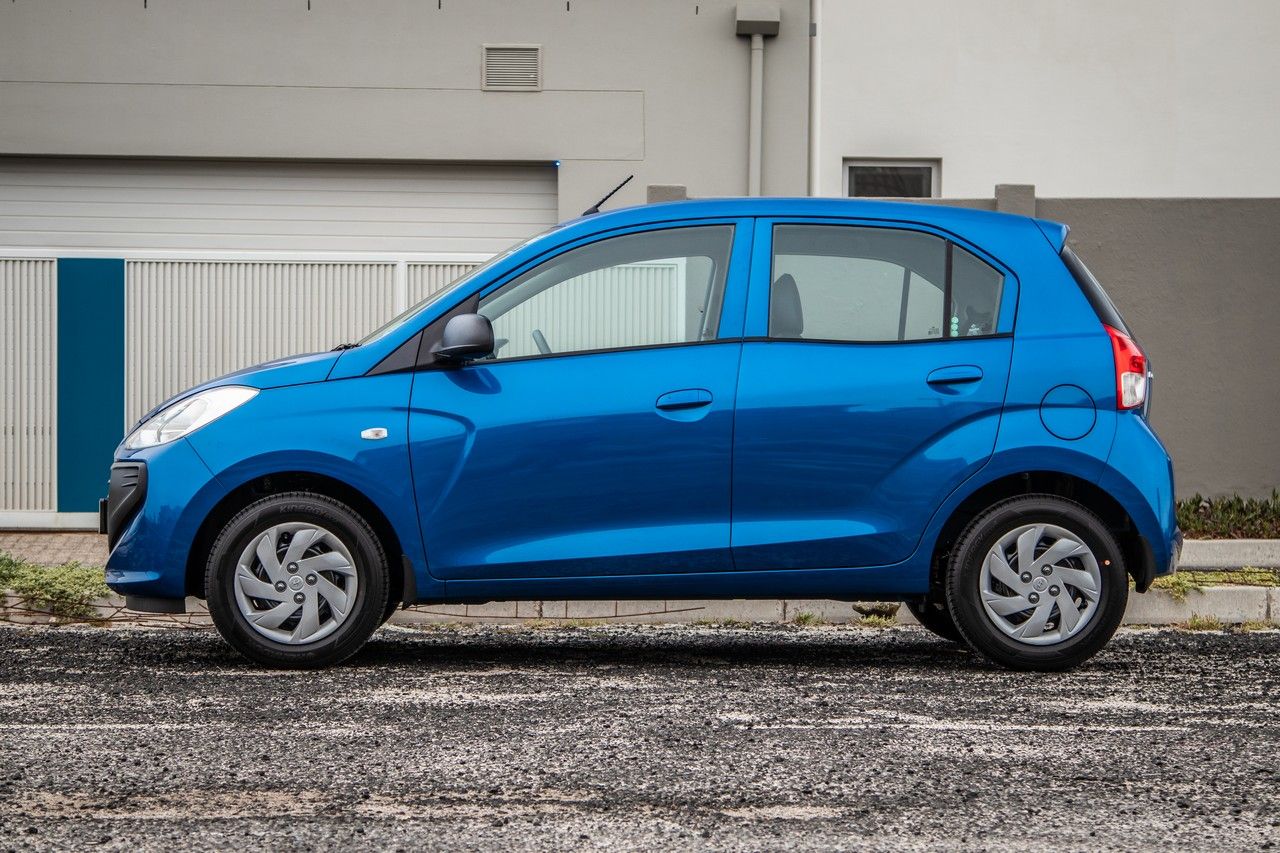
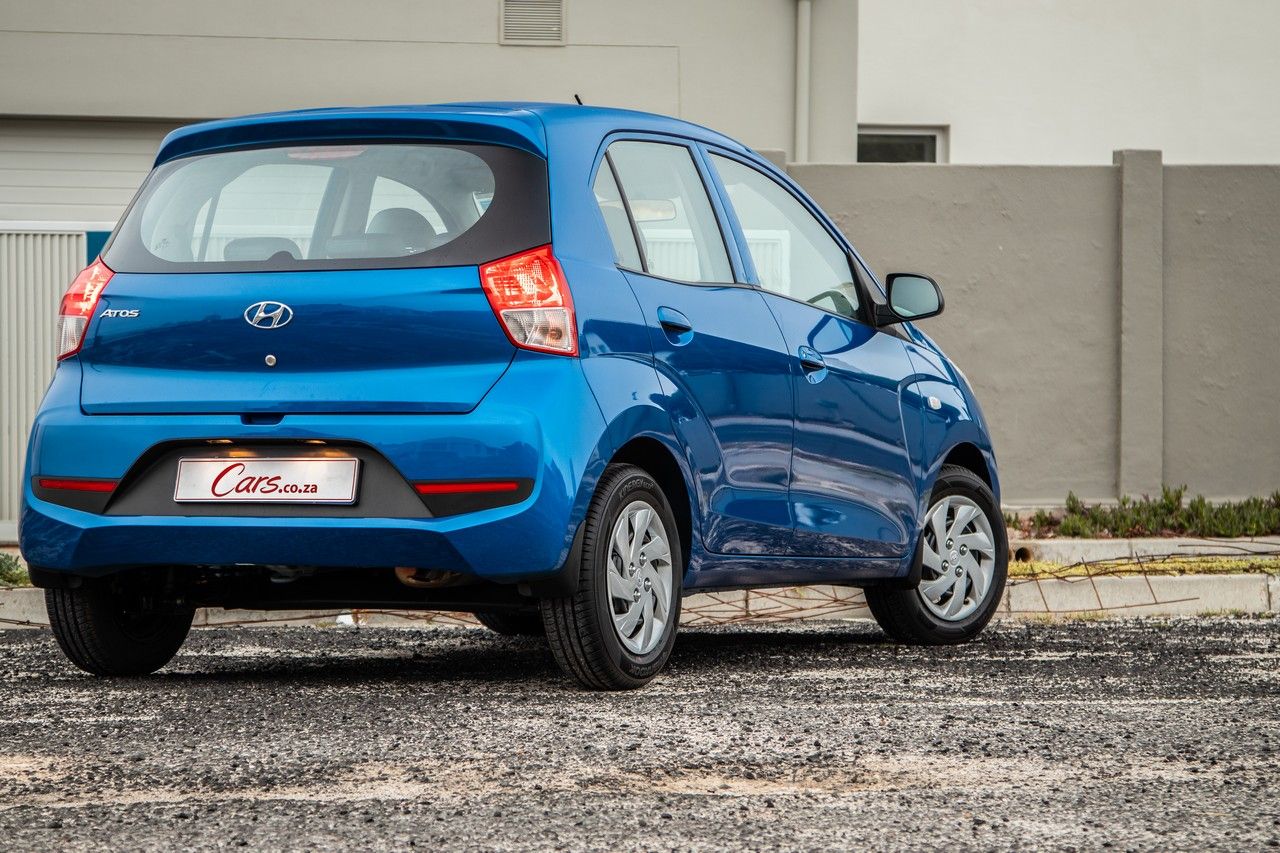
The Atos' design is inoffensive enough and features just enough "fluidic sculpture" cues to be instantly recognisable as a Hyundai.
The Atos' naturally-aspirated engine boasts an extra cylinder over the Datsun Go and Renault Kwid (4) and its displacement (1.1 litres) sits bang in between those of its Japanese and French rivals. Workmanlike outputs of 50 kW and 99 Nm of torque drive the front wheels via a 5-speed manual 'box. An advantage of the additional cylinder is that the motor runs smoother. In this segment, refinement measures such as precision engine-balancing and vibration damping are not particularly important, therefore although 3-cylinder-engined models emit rorty off-beat engine notes, their vibrations can become intrusive/bothersome at higher revs. This 4-cylinder unit feels and sounds quieter and more refined.
Hyundai claims an average fuel economy figure of 5.9 L/100 km, but we found ourselves hovering in the low 6s, which is still more than fair if you combine urban and open-road driving. The fuel tank has a capacity of 35 litres.
Ride and handling
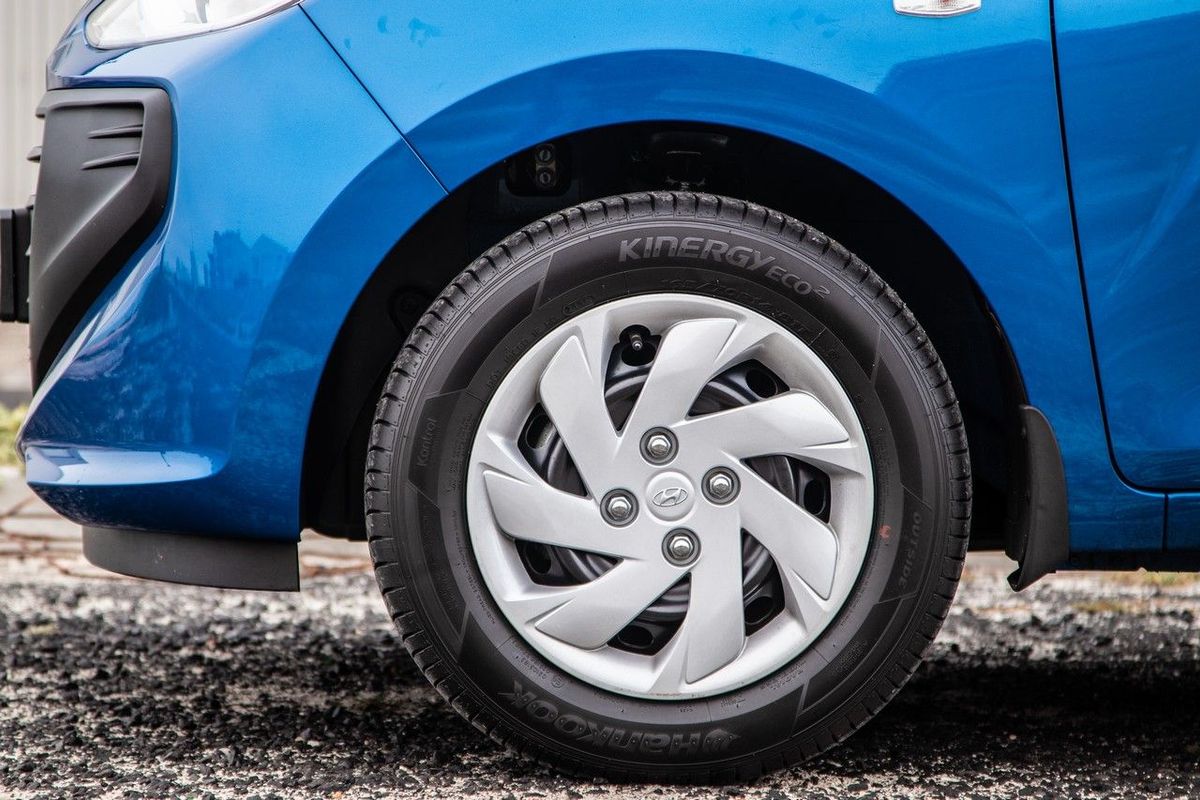
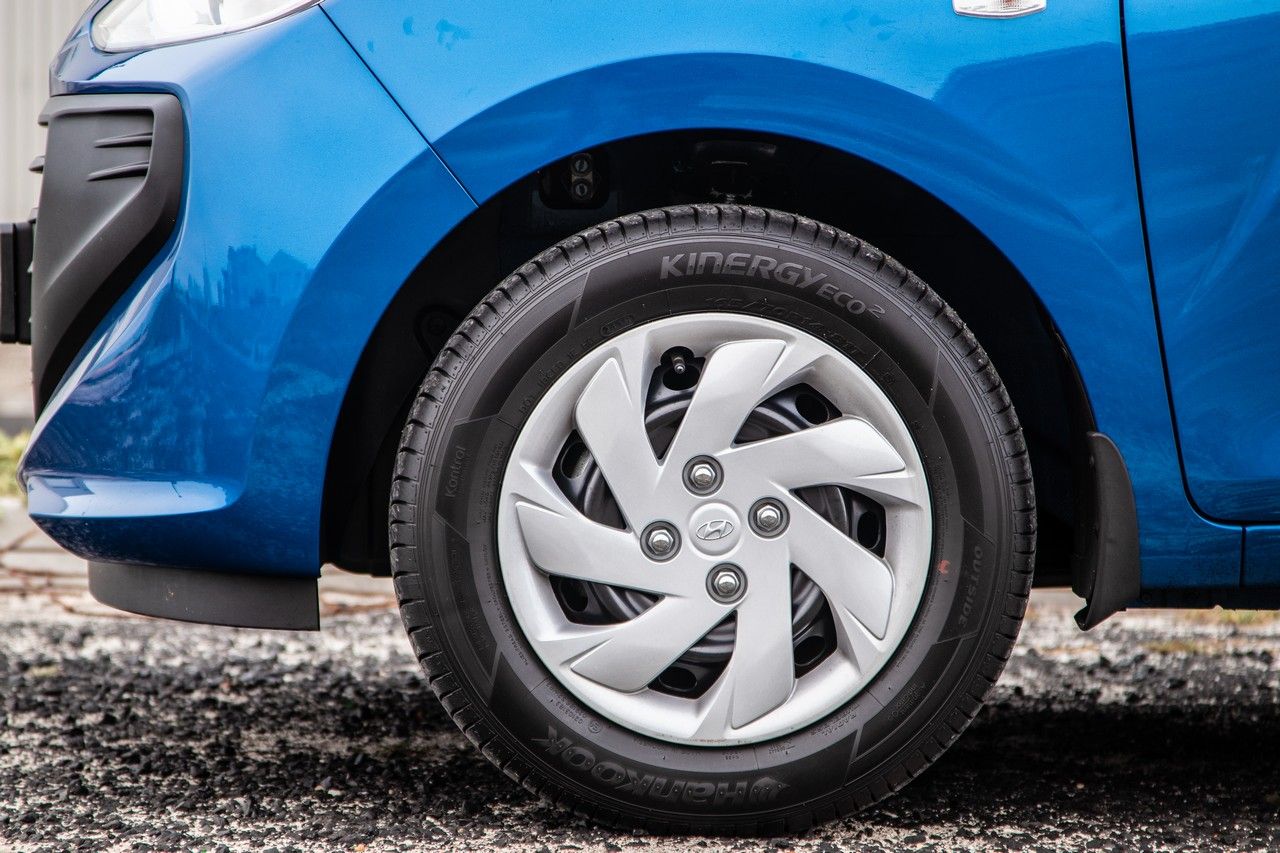
These 14-inch wheels (with covers) aren't fancy alloy items, but the higher-profile rubber facilitates a more absorbent the ride quality.
Around town, the Atos' motor is tractable enough to move the 870 kg Atos about with intent, but bear in mind that we tested the 1.1 Motion at sea level… in Gauteng, where non-turbo motors (such as this 1.1 litre unit) lose about 20% of their performance due to the thinner atmosphere, the Hyundai might struggle when loaded up with a couple of adult passengers and their cargo, especially on inclines or when overtaking acceleration is required. As mentioned before, the 4-cylinder mill accelerates smoothly, but the engine note increases dramatically as it approaches its rev limit. The 5-speed 'box gets a thumbs-up because it's slick, direct and easy to use, which is just as well because you'll be working it often to keep the engine on the boil. The short gearing makes the newcomer feel spritely, but a 6th ratio would have been handy to reduce mechanical noise/keep the revs down at the national speed limit; they sit quite high at 120 kph.
The short wheelbase and torsion beam rear suspension setup don't provide cossetting occupant comfort, but at this price point, the general ride quality is more than acceptable. The new Atos rides on 14-inch steel wheels wrapped in generously-sidewalled (Hankook) tyres. The steering is light and fairly direct, which is what you'll want in a compact city car. We noticed that the turning circle of the Atos was small, making it a cinch to manoeuvre in parking lots.
Interior quality and features
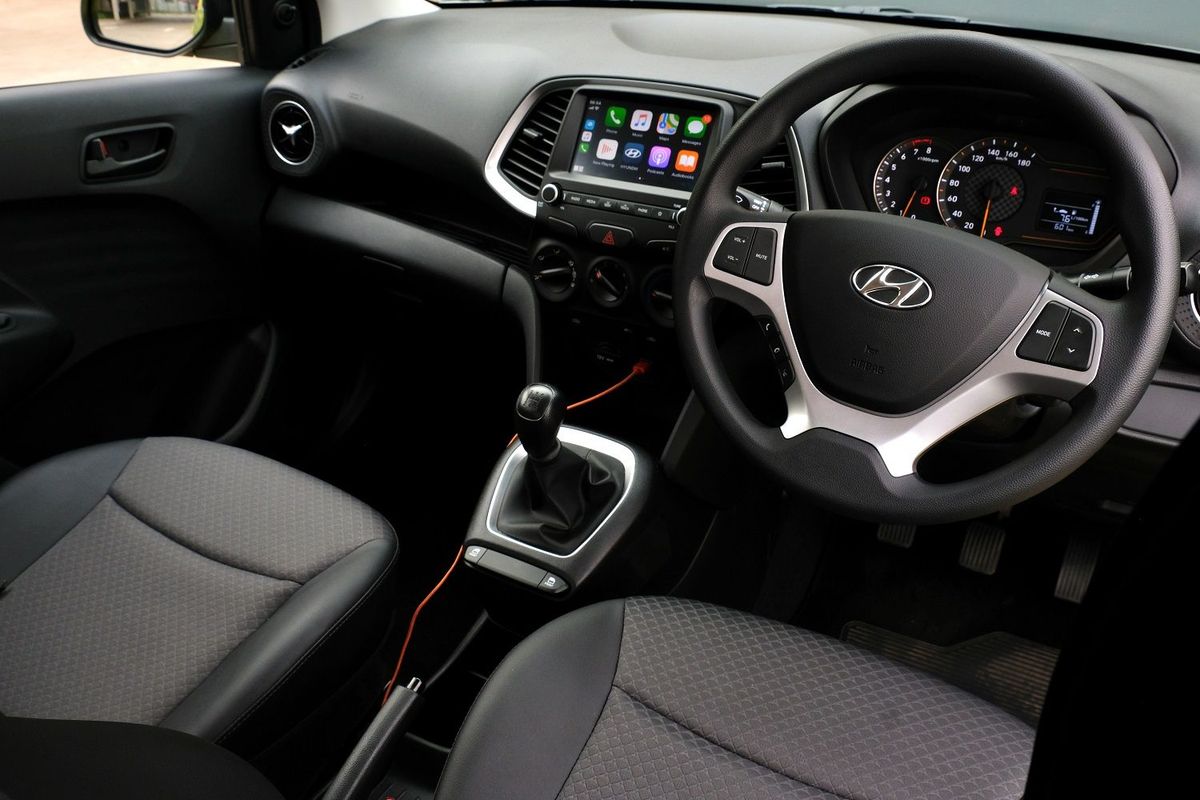
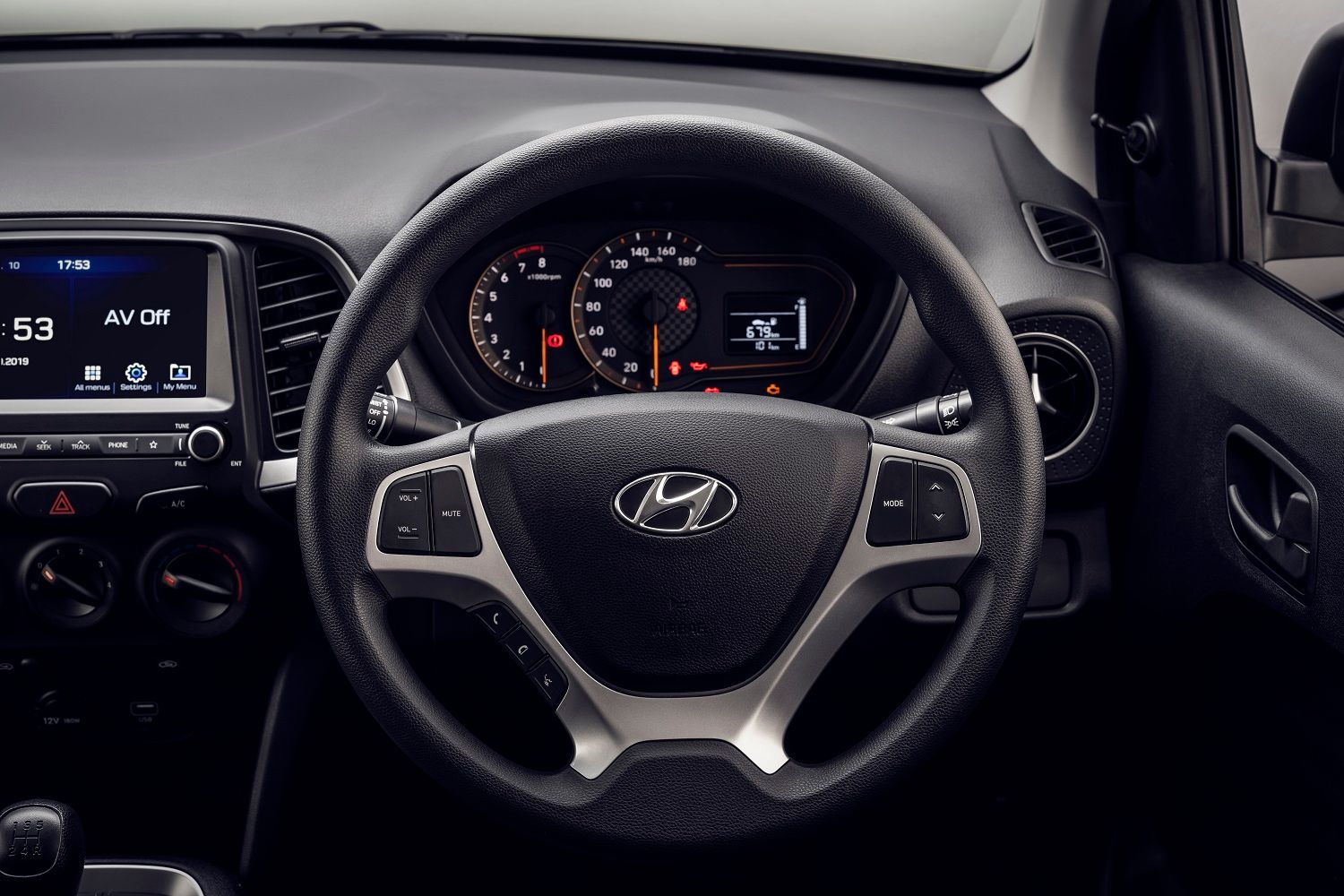
The cabin of the Hyundai Atos may be simple, but it doesn't feel cheap.
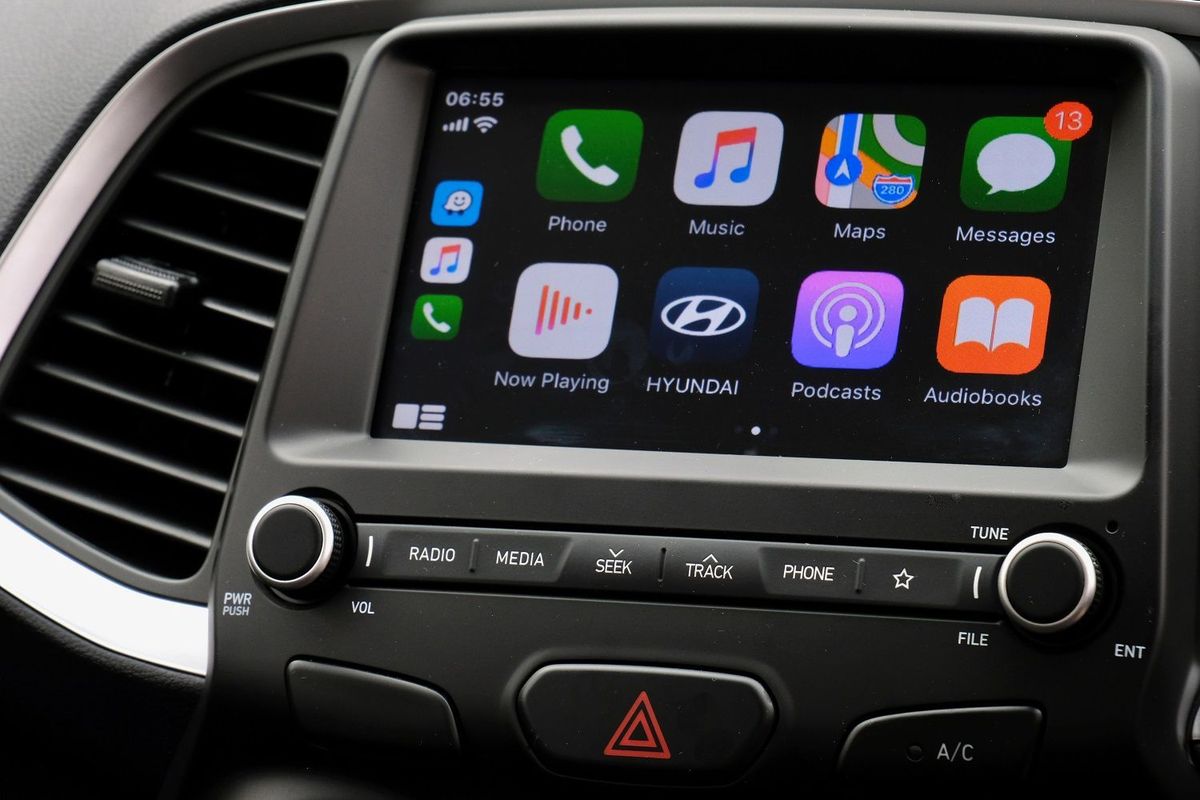
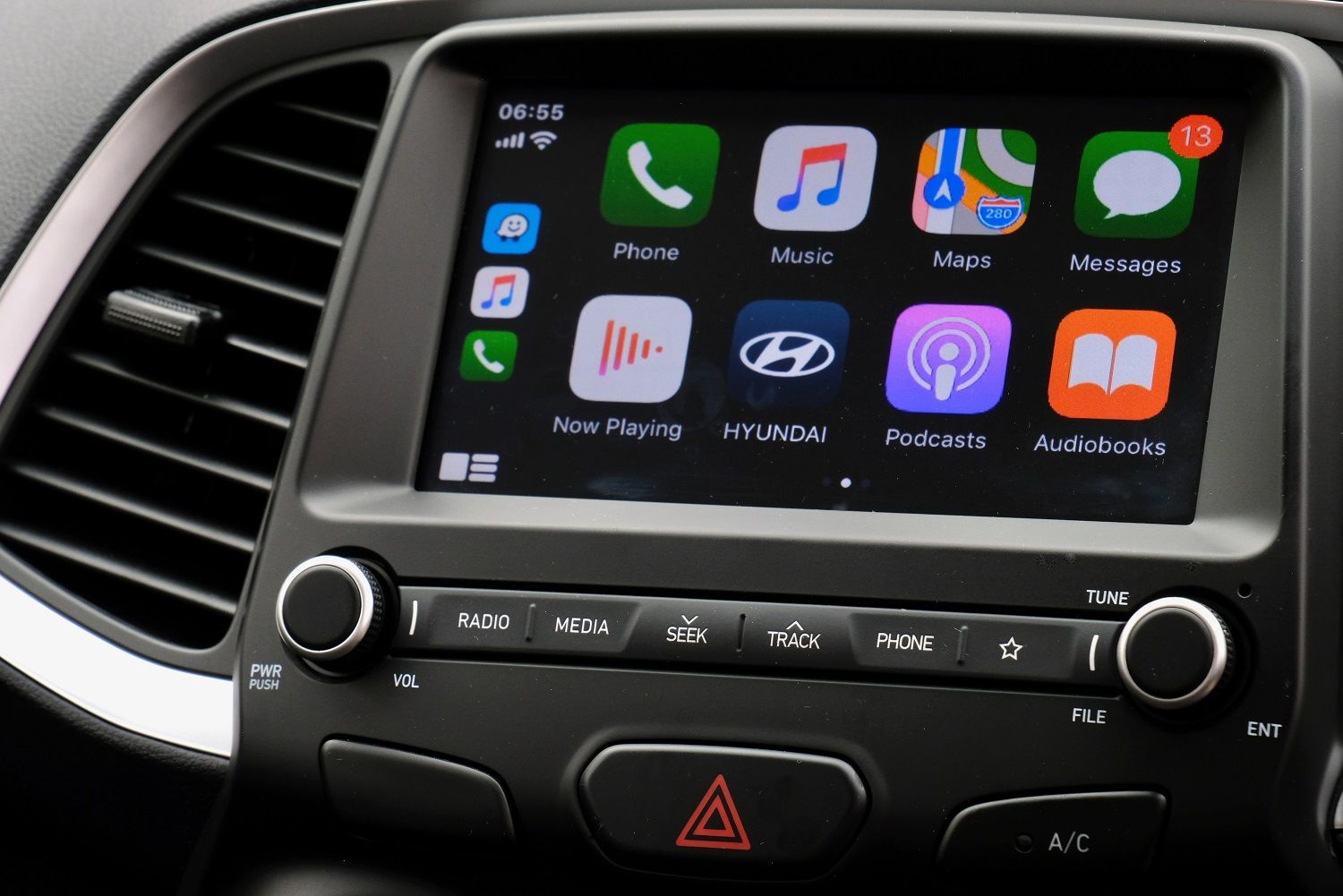
Hyundai knows a thing or 2 about making good-quality interiors and even in this budget-oriented Atos, the Grand i10's solid and durable-feeling cabin materials have been successfully carried over. Compared with its Japanese and French rivals, the Atos' plastic components and surfaces feel more upmarket and although it's an affordable car, it doesn't feel like a cheap car, which is a commendable trait. The 7-inch touchscreen infotainment unit from the Grand i10 is retained as well, which is great because it offers an intuitive, unfussy user experience. It comes with Android Auto/Apple Carplay and if you want even more connectivity, there's USB/Bluetooth, as well as a 12V charger.
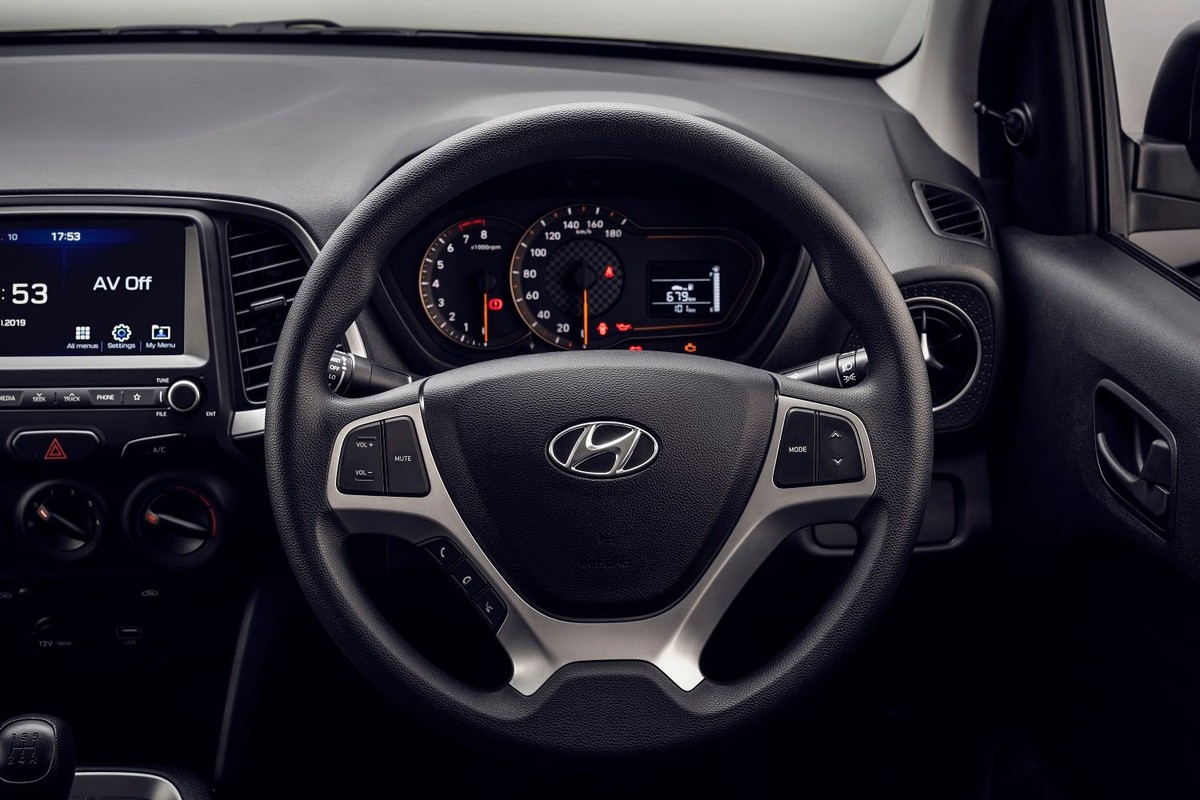
The Bluetooth hands-free functionality, which can read out WhatsApp messages out to you (to which you can, in turn, reply) is a boon to safety, Google Maps adds navigation functionality to the car and you access streaming services like Spotify directly. Another big advantage of the new Atos is the provision of steering-wheel controls, including audio volume and change-track/station toggles, as well as the ability to activate your smartphone and answer/decline calls.
Safety is a prickly subject as far as entry-level hatchbacks and budget cars are concerned. Stability control is rare at this end of the market, but we're glad to see anti-lock braking (ABS) is becoming commonplace. The Go and Kwid lacked ABS upon their initial release and were slammed by many commentators; that's been rectified, but the damage has been done. Worse still, Global NCAP tested those cars in India and found their structures unable to withstand severe impacts. This Atos, for its part, didn't fare too well in the Global NCAP test either and scored just 2 stars. It does, however, feature ABS with EBD and 2 airbags as standard – it'd qualify as a #CarsAwards budget car contender.
While we think the new-generation Atos boasts impressive levels of standard specification, such as the aforementioned Apple CarPlay/Android Auto-compatible infotainment system, front electric windows and (surprisingly potent) aircon, we did note that the Hyundai's missing a rear demister/rear wiper combination.
It's keen entry-level hatchback price point notwithstanding, the Atos joins the ranks of the budget-car segment by offering Android Auto / Apple Carplay.
Practicality
One of the few gripes about the Atos concerns its hardly-adjustable driving position. The steering column is in a fixed position (which feels a tad too low), and the driver's seat merely slides and reclines (in other words, it lacks height adjustment). This gives you a feeling of you're sitting on the car, as opposed to in it, and if you're a tall person like this author (and a number of the Cars.co.za testers), you're most likely to battle to find that perfect position.
However, this criticism is countered to an extent by the vehicle's overall height, which, at 1560 mm, is more than those of its rivals, and while it may not sound like much, it makes it easier to get in and out of the Indian-made hatchback. The load bay is notably one of the smallest in the segment, however, and is only really suitable for carrying small suitcases and a laptop bag or 2.
Price and warranty
The Hyundai Atos 1.1 Motion costs R159 900 and it comes with a 1-year service plan with intervals every 15 000 km. A 7-year/200 000 km warranty and roadside assistance for 7 years/150 000 km are included too.
In a country where affordability is a significant barrier to new-car ownership (not just in terms of asking prices, but also constrained household incomes), the humble Atos might be one of the most significant new-vehicle introductions of 2019, because it brings excellent value for money, strong brand reputation, reasonable refinement (oh, and an acceptable suite of safety features) to a sometimes maligned segment. Yes, its 2 rivals may boast a bit more power and less weight, but they lack the Hyundai's substance. You know you're getting into something near the bottom of the ladder, but hundreds of new-vehicle buyers do exactly that every month and now they another (and strong) option to consider.
Should you buy one? Well, if you find yourself craving an all-new car at this price point, this is arguably one of the nicer and more pleasant offerings in the contemporary market. With the backing of a strong brand such as Hyundai and its comprehensive 7-year mechanical warranty, the new Atos 1.1 Motion holds a clear edge over its rivals. Is there a better vehicle, available from brand new, that offers a stronger proposition at R160k? We seriously doubt that.