BMW 318i Returning to SA

BMW adds a cylinder to its entry-level 3 Series.

The 318i badge is set to return to BMW’s local product line-up during the second half of 2020, powered by a new engine.

BMW’s new 318i will also appeal to those who are not ardent believers in the downsizing engine trend. Unlike BMW’s previous three-cylinder 318i, the 2020 model is powered by a four-cylinder engine totalling 2-litre of capacity.

Outputs rate at 115 kW and 250 Nm, which are an increase of 15 kW ad 30 Nm over its three-cylinder predecessor. Economy is claimed at 5.3L/100 km

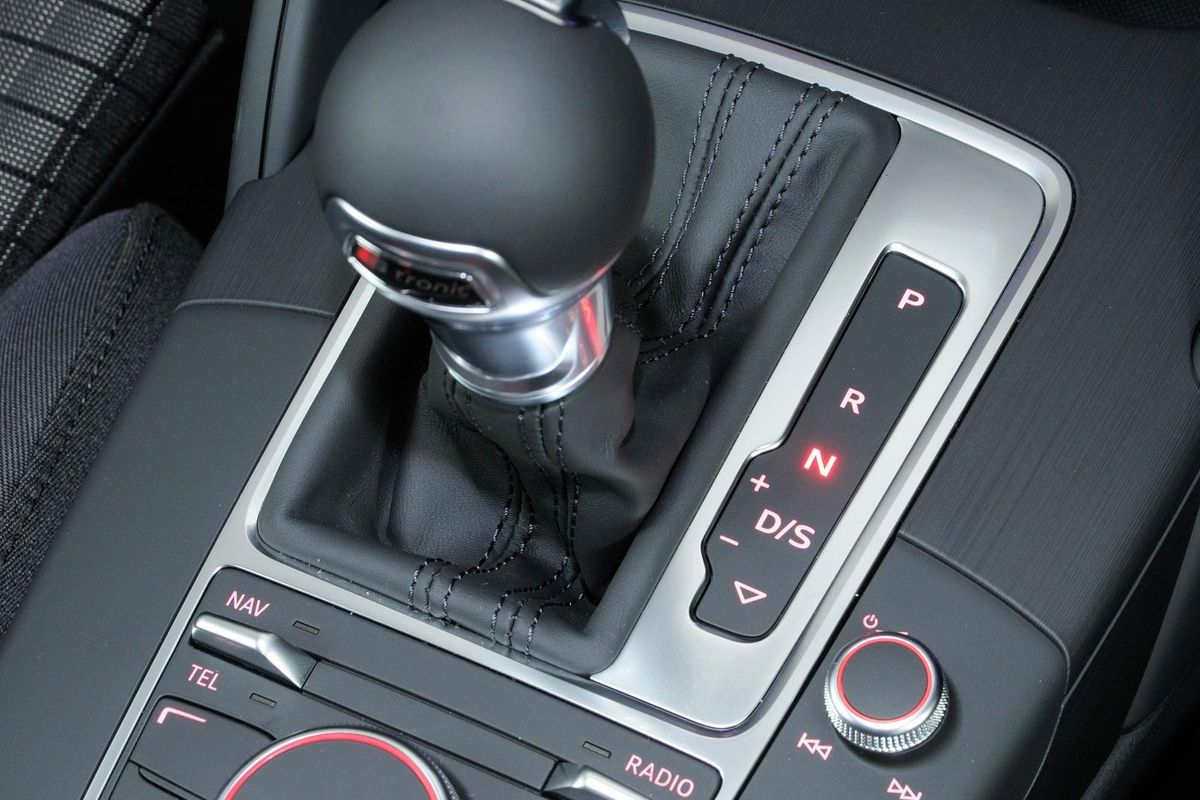
An eight-speed ZF automatic transmission channels torque to the rear wheels and on a high-friction surface, the 2020 model year 318i should be good for 0-100 kph in 8.4 seconds, before running a true top speed of 223 kph.

Although BMW has not announced pricing for its new 318i, it could possibly dip below the critical R600 000 threshold, when listing occurs later this year.

Beyond the news of a new South African market 318i, BMW is also making some significant changes to its 3 Series powertrains globally.

The German brand is doing what has become industry standard over the last year, announcing that mild-hybridization will soon feature within the 3 Series range.

BMW is set to build its new production surge of 320d, X3 xDrive20d and X4 xDrive20d with integrated starter-generators as standard. These mild-hybrid powertrain upgrades will add 8 kW to initial throttle response from a standing start, whilst also reducing fuel consumption in stop-start traffic conditions.

Related content

Euro NCAP's Safest Cars of 2019

New BMW 3 Series Tackles SA's Best Roads

2019 BMW 320d vs Mercedes-Benz C220d – Which one should you buy?

BMW X5 xDrive45e (2020) Price in South Africa

BMW has quietly loaded up pricing of its plug-in hybrid X5 luxury SUV. Here's how much it costs.

The takeup of plug-in hybrid vehicles in South Africa has been very slow as there's no incentive for customers to make the switch. Despite the challenges, many OEMs are offering these vehicles to the SA market. The principle behind a plug-in hybrid vehicle (PHEV) is simple. There's an internal combustion engine mated to an electric assist that can be charged from things like engine braking, coasting, and plugged into a wall socket. 

In this BMW X5's case, power comes from a 3.0-litre turbocharged 6-cylinder engine with 210 kW and 450 Nm, mated to an 83 kW and 150 Nm electric motor. Total system output is claimed at 290 kW and 600 Nm. Performance is very impressive, with a claim of 5.6 seconds to 100 kph. Fuel economy sounds far too good to be true at 2.5 L/100 km and it's exempt from emissions tax. It can drive on pure electric power too, with a range of between 67-87 km on the WLTP cycle at a maximum speed of 135 kph.

It's available in 2 lines of trim: xLine and M Sport. You can spot the newcomer with its 2 fuel filler caps. One on the front left for electricity and the conventional cap on the right rear for petrol. It also has 45 e badging on the rear.

BMW X5 xDrive45e Price in South Africa (January 2020)

BMW X5 xDrive45e xLine        R1 345 000

BMW X5 xDrive45e M Sport    R1 383 300

Further Reading

BMW X5 xDrive30d vs Mercedes-Benz GLE 400d (2019) Comparative Review [w/Video]

Competition Spec V8 for BMW X5 M and X6 M

BMW X5 (2018) Launch Review

BMW X5 xDrive30d xLine (2019) Review

Best Premium SUVs in SA – #CarsAwards Finalists

Toyota Prepares All-New Land Cruiser

The iconic Toyota Land Cruiser is due for replacement and some info has come to light.

According to Japanese car website BestCarWeb.jp, Toyota is readying its all-new next-generation Land Cruiser.

The big news is the Land Cruiser's big V8 is set to be replaced by a hybrid engine. The choice of powerplant will be a 3.5-litre V6 hybrid with outputs of 220 kW and 356 Nm, and the switch to hybrid falls in line with Toyota's strategy of offering a hybrid version of all its products.

Another big change suggests the all-new Land Cruiser will be underpinned by the new TNGA platform, which is to be found amongst the latest products from the Japanese carmaker. The Japanese publication went on to suggest the new Land Cruiser will retain its ladder-frame structure, but use of TNGA means a reduction in weight. The automatic gearbox is set to be replaced by a CVT and permanent 4-wheel drive.

BestCarWeb.jp concluded that we'll be seeing a reveal in August 2020, which we feel is quite soon considering we're yet to see any teaser or spy shots.

Further Reading


Infotainment Boost for Land Cruiser in SA

Testing the Land Cruiser Legend in Angola

Toyota Land Cruiser 200 (2018) Specs & Prices

Toyota Land Cruiser 200 4.5 GX (2016) Review

Volkswagen Golf 8 – 3 Things You Need to Know

The all-new Golf 8 was revealed last year and it’s expected to arrive in South Africa towards the end of 2020. Here are 3 things to know about the new model!

It's the year of the Volkswagen Golf 8 and as many people have pointed out, not terribly much has changed in terms of styling from the Golf 7. Also typically the styling has divided opinion but we think Volkswagen has nailed the brief and made sure the Golf remains a no-brainer for just about every motorist on the planet. 
Here are 3 key things you need to know right now about the new Golf 8.

Tech for the People


Most of the changes can be found inside the new Golf 8. Note the stylish dual-screen setup.

The aim with the Golf 8 is to bring the latest in tech to the people, and arguably the most significant changes have been made in the cabin. Now with fewer buttons than before, the Golf 8 cabin has a very slick appearance. A key feature is the Innovision dual-display setup which is similar to what we've seen in much more expensive Volkswagens such as the Touareg. 

Among many smart technologies, the Golf 8 will feature Automatische Distanzregelung, which is like radar-guided cruise control but for slow traffic situations. You will also be able to warm up your feet and your hands. 

Power Torque


Local engines options will be limited and no manual transmissions will be available in SA. DSG all the way!

The Golf 8 GTI is due to be revealed at the Geneva Motor Show in March 2019 while the Golf 8 R is expected to make an appearance at the Goodwood Festival of Speed in July 2019. The Golf GTI is rumoured to use an updated turbocharged 2.0-litre engine and may come in 2 variants with either 181 kW or 214 kW and will be offered with either a 6-speed manual or 7-speed DSG transmission. Outputs for the Golf R are expected at roughly 224 kW for the base model while a high-power version could have at least 294 kW. 

Right now though, the most powerful model available in Europe is the GTE plug-in hybrid which boasts 180 kW, which is certainly not boring. There will be a whole host of petrol and diesel engines, with some models featuring 48V mild-hybrid setups and will wear eTSI badges. The Golf GTD will offer about 147 kW from a 2.0-litre turbodiesel engine, if reports are to be believed…

The non-electrified motors offer outputs of 66 kW, 81 kW, 96 kW and 110 kW. The first outputs are from the 1.0-litre 3-cylinder, while the 110 kW motor is the 1.5-litre turbo 4-cylinder engine. Volkswagen SA will only offer a DSG and no manual transmission will be offered.

Unlike the German market where cars will hit showroom floors before the end of the year, South Africa will have to wait until the end of 2020.

GTI First


This is what the new Golf 8 GTI could look like. Render credit: Duwyne Aspeling. 

The GTI is the best-selling Golf locally and Volkswagen SA will, therefore, be introducing the GTI first, followed by a 1.4TSI model and eventually the coveted R variant.

Local specification and pricing details for the new Golf 8 have not yet been revealed but keep checking the Cars.co.za content portal and our social media for updates.

Buy a new or used Golf 8 on Cars.co.za

Related Content

Volkswagen Golf 8 (2020) International Launch Review

2020 Volkswagen Golf 8 Officially Revealed

Volkswagen Golf 8 (2020) SA Launch Details [w/Video]


Audi A7 Sportback 55 TFSI (2020) Review

Audi’s big rival to the Mercedes-Benz CLS and (now-discontinued) BMW 6 Series Gran Coupe has finally arrived in South Africa. In a segment where appealing design and build quality counts almost as much as sheer brand appeal, how well does the all-new A7 Sportback stack up against its rival(s)? We conducted an extended test of the 55 TFSI over the holiday season…

We like: Still the Audi that offers the edgiest design, supreme ride- and occupant comfort, modern tech.

We don't like: Petrol only, which makes this derivative quite thirsty.

Fast Facts

  • Price: R1 250 000 (R1 574 220 as tested December 2019) 
  • Engine: 3.0-litre turbopetrol V6
  • Power/Torque: 250 kW/500 Nm
  • Transmission: 7-speed automatic (S-tronic)
  • Fuel consumption: 7.1 L/100 km (claimed)
  • ??Load capacity: 535 litres

Own an Audi? Tell us about your experience here

SERIOUS ABOUT BUYING?

Where does it fit in?


The rear half is what gives the A7 Sportback such an iconic silhouette.

Executive-sedan-based 4-door "coupes" have been doing the rounds since the mid-2000s (the 1st-generation Mercedes-Benz CLS was launched in South Africa in 2005), so there’s nothing new about the concept of a sedan with a sloped roofline and fastback-style tailgate. You could even argue that it probably represents the best of all worlds when it comes to design and practicality.

The A7 Sportback is now in its 2nd generation and the latest model still targets the R1-million-plus buyer, who, in all likelihood is also considering the latest iteration of the Mercedes-Benz CLS (only available in CLS400d 4Matic guise). There isn’t a direct competitor from BMW as the 6 Series has made way for the larger 8 Series, which has moved further up the price ladder. The 8 Series Gran Coupe could still be recognised as a fringe rival though.

As it stands, the A7 Sportback represents the zenith of Audi's sedan range in Mzansi and, while South Africans tend to favour Premium SUVs at this end of the market, there’s something to be said for pitching up at the Met in something a little more stylish and distinctive than what everyone else has arrived in…

How it fares in terms of…

Kerb appeal


The rear light clusters offer up a LED light show when you lock/unlock the A7 Sportback.

Several detractors have accused Audi of rolling out a slew of cookie-cutter designs, but the A7 Sportback has not been afraid to challenge the status quo stylistically. The design of the 1st-generation model could even have been described as polarising by virtue of its brave (some say droopy) rear end. For this generation, the design is less love/hate, but the A7 Sportback is still easily the most distinguishable model in Audi’s sedan (if not entire) lineup. Seen here in Mythos Black with the black styling package (R10 450), which adds styling accents to the front bumper and grille as well as similarly-coloured gloss trim around the windows. The addenda really give the big Audi a distinctive presence that would make for the perfect "baddie car" in any action movie. The black is a nightmare to keep clean, however, especially in the Cape summer where the wind constantly blows sand and dust onto the freshly washed paintwork.

Lighting is one of Audi’s trademarks and the greeting sequence when you unlock the car certainly "gets the crowds going". The LED strip at the rear lights up like the swooping red front-bumper illumination of KITT from Knight Rider (if you didn't grow up in the Eighties you won't get the reference – if so, do yourself a favour and google it) with the tail lights joining in the display in a final flamboyant light show. It's certainly a party trick that never wears thin…

This is a car that demands attention from onlookers, so be prepared to answer myriad questions, make small talk with petrol attendants and have your Audi appear on social media as people scamper to photograph it with their phones.

Powertrain refinement

As is the case with the Mercedes-Benz CLS, only 1 engine is offered in the local A7 Sportback line-up: in this case, the 55 TFSI: a 3.0-litre turbopetrol V6 with peak outputs of 250 kW and 500 Nm. For a large car like the A7 Sportback, the powerplant delivers more than enough oomph considering it's not a sportscar, but more of a cosseting cruiser. The engine provides perfect background assistance to the refined driving experience. It’s quiet, provides ample power and torque and, in combination with the 7-speed automatic transmission, provides near-seamless propulsion. It seems Audi has gone out of its way to make the drivetrain unobtrusive – one barely ever feels (or hears) its presence. 


Quiet and soothing best describes the drivetrain of the A7.

The fuel consumption is so-so, however. The claimed figure is 7.1 L/100 km, but after travelling about 2 000 km in the 55 TFSI, we saw an indicated 10.8 L/100 km. Admittedly there was a lot of city driving; our best effort was 6.9 L/100 km on a "downhill run" in efficiency mode, which makes use of transmission decoupling so that the A7 Sportback can effectively coast without the drag of the 'box slowing it down. It’s certainly an effective way of reducing consumption.

Even with the increased fuel tank, which has a 73-litre capacity, the Audi is likely to require fill-ups after 600-km stints. A turbodiesel would make a lot more sense, because, despite its name, the A7 Sportback doesn’t really have sporty pretensions. It would also solve the consumption problem, but Audi SA does not plan to introduce a turbodiesel derivative in South Africa.

Luxurious driving experience

This test unit was specced with the optional air suspension (R34 600) and, as it’s the only A7 Sportback derivative we have tested, we can’t compare it with a unit that's not equipped with adaptive air suspension. The system does contribute to an exceptionally forgiving and comfortable ride quality, however. Cars of this size tend to ride very well over big bumps and flatten out imperfections at higher speeds, but then jolt significantly at slow speeds as the long chassis flexes more than short-wheelbase cars. The Audi doesn’t suffer from small-bump jolting as much as its peers and, considering its lengthy (2 926-mm) wheelbase, it feels smaller and more wieldy than other large sedans.


Rear passengers get dual-zone climate control and a further 2 USB ports.

The air suspension allows you to raise and lower the ride height, which is useful if you want to traverse a dirt road at low speed. The 25-mm raise isn’t huge, but gives you a little more confidence that the nose won't scrape on every bump.

As for the driving position, you sit quite low in the A7 Sportback, but its size doesn’t overwhelm you and it’s particularly easy to see out of the glasshouse and park the sedan thanks to the fitment of the 4-wheel steering option (R33 050). It’s a car that’s easy to get to terms with, simple and untaxing to drive and comfortable during long stints behind the 'wheel. 

Quality interior

The A7 Sportback was the first car to feature Audi’s new MMI touchscreen system and also the dual-screen setup you see here. The bottom screen deals with climate controls, seat heating and becomes a sketchpad so that you can write destinations into the nav. The top screen deals with all other functions such as audio, vehicle settings, and apps. Android Auto and Apple Carplay work seamlessly with the system and there’s a wireless charging pad in the centre console.


Android Auto hooked up to the main infotainment screen, climate controls dealt with on the bottom screen.

As for the quality of the cabin, the touchpoints are high-quality glass, brushed aluminium, suede and leather. The optional S sport seats (R28 350) are particularly comfortable and supportive. Beyond the touchpoints, there’s a fair amount of polished and gloss black plastic, particularly in front of the front passenger and while the plastic fits well, looks good and doesn’t rattle, it would be nice to see some upmarket materials like leather or soft-touch rubber in its place.

Compared with the aforementioned Benz CLS, the A7 Sportback feels more upmarket and classy and less of a shiny trinket. In typical Audi style, it exudes understated luxury.

Verdict


The A7 feels like Audi's most complete sedan.

The A7 Sportback is arguably the most resolved vehicle in Audi's current lineup, well, certainly as far as its sedans are concerned. The newcomer is the quintessential cruiser – it's sumptuously comfortable to drive – and has a drivetrain that delivers effortless performance without any fuss or effort. The latter is very much a background player to what is meant to be a quiet and soothing experience.

The petrol engine is a bit thirsty, but at this price point, a buyer is unlikely to see that as a deterrent unless they are particularly eco-conscious. 

The cabin is spacious, luxurious and bang-up-to-date with modern tech and connectivity. It’s a pleasant space to spend long hours and appears to be well finished and designed. There may be a bit too much plastic for some, but it’s classy and easily the leader in an admittedly tiny segment.

The A7 Sportback’s design will appeal most to buyers; the newcomer remains the most eye-catching and easily-distinguishable model in the brand’s lineup. If I had to choose between this and a CLS? The Audi –all the way.

Related content:

Audi RS 7 Sportback (2020) International Launch Review

Audi A7 Sportback (2018) International Launch Review

Mercedes-Benz CLS 400d 4Matic (2019) Review

BMW 8 Series Gran Coupe Price Announced


GV80 is Hyundai’s XC90

Hyundai continues its push into the luxury SUV segment with the Genesis GV80.

The Korean car industry is at record levels of confidence and the latest evidence of this is Hyundai’s Genesis GV80.

What Lexus is to Toyota, Genesis is to Hyundai. It is the brand’s luxury division and does a tidy trade in the United States and other select markets.

The newest Genesis vehicle is a large SUV which shows that Hyundai isn’t afraid of competing in the large luxury gravel travel market.

Named GV80, this is Hyundai’s idea of an XC90-type rival. It features a strong design with split-level head- and taillights. The grille has an imposing hexagon pattern finishing too.

The platform architecture for GV80 is rear-wheel drive, although there will be an all-wheel-drive option too, for those who require the additional traction.

In concept, this is a luxury touring SUV, not a dedicated adventure vehicle. So don’t expect the most advanced traction control or low-range gearing.

Powering the GV80 is an advanced turbodiesel engine. Displacing 3-litres in capacity, this diesel engine will be of interest to followers of the Hyundai brand. It boosts 205 kW and 588 Nm of torque, driving through an eight-speed automatic transmission.

The GV80’s cabin features an array of advanced comfort technologies. One of the more impressive innovations, concerns noise management, with tiny speakers capable of producing road noise mitigating sound waves.

Recognising that luxury SUVs travel great distances, driver fatigue management was a major design goal for the GV80 team. To ensure optimal comfort for whoever is at the controls, the driver’s seat has seven active air cells.

The steering wheel is a two-spoke design and most of the materials and trim appear to be top quality. Infotainment interfacing is via a 14.5-inch centre console touchscreen.

Although Hyundai does not market its premium Genesis vehicles in South Africa, there could be a possibility that the 3-litre turbodiesel engine may eventually come here. In another Hyundai product, such as the brand’s forthcoming double-cab bakkie.

Related content

BMW X5 xDrive30d vs Mercedes-Benz GLE 400d (2019) Comparative Review [w/Video]

New Hyundai Creta: What to Expect

Mahindra Pik-Up S11 Automatic (2020) Specs & Price

Mahindra has launched a new range-topping Pik Up S11 in South Africa and its now available in automatic guise!

Mahindra is on the rise and according to the National Association of Automobile Manufacturers of South Africa (NAAMSA), Mahindra grew by 28.7% last year, making it the fastest growing car brand in South Africa for 2019. 

New Automatic Transmission


The Mahindra Pik Up is now offered in automatic guise and South Africa is the first country to get this new automatic transmission. 

On the back of this success, Mahindra will look to introduce a wide range of updates across its range in 2020 and the first order of business for the year is the introduction of the S11 Automatic Pik Up in both 4×4 and 4×2 guise as well as offering the S11 Pik Up automatic in Karoo special edition guise in both 4×4 and 4×2 formats. 

"South Africa is the first country in the world to officially launch the all-new Pik Up Automatic, which is only fitting, since it was the testbed for this model. There has been an overwhelming demand for an automatic transmission in our bakkie range, and we believe we have the perfect answer with the S11 and S11 Karoo AT," says Rajesh Gupta, CEO of Mahindra South Africa.

The S11 Pik Up is equipped with a 6-speed automatic transmission and is paired with Mahindra’s tried and tested 2.2-litre turbodiesel engine with 103 kW and 320 Nm of torque and carries a claimed fuel consumption figure of 7.9 L/100km. 

The new automatic transmission is only available in the double cab Pik Up body style and is launched with S11 feature specification which builds on the specification offered on the S10 derivatives. 

In terms of offroad ability, the S11 Pik Up benefits from a 210 mm ground clearance and all double cab models are fitted with a mechanical differential lock. A heavy-duty Cushion suspension system allows for a carrying capacity of 995 kg in the 4×4 derivative and 1 095 kg in the 4×2 derivative. 

Standard Specification


A new 7-inch touchscreen with navigation is offered in the S11 Pik Up. 

Visually-speaking, the S11 Pik Up automatic gains a new grille and bumper design with updated headlights. Colour-coded side mirrors are also included with integrated indicators while a reverse camera is now offered for the first time in the Pik Up range. 

As for the interior, The S11 Pik Up comes standard with a new 7-inch touchscreen infotainment system with Bluetooth capability and integrated navigation. The new reverse camera view is also displayed on this screen. Automatic climate control is also standard as is a multifunction steering wheel with mounted controls for the infotainment system, telephony and cruise control. The windows are electrically operated and front and rear 12V sockets are also included. 

The S11 Karoo automatic special edition adds unique decals seen on the side panels as well a nudge bar and styling bars. A custom, lockable roller deck system is also fitted as standard on the load box (rubberised load bay is standard on other derivatives). Custom-designed and offroad-ready alloy wheels are also fitted as standard on the Karoo derivative with a blacked-out design and chrome detailing. 

As a side note, the S6 and S10 Karoo derivative now feature updated decals while the S10 Karoo also benefits from branding on the steel roll bar as well as a new tonneau cover and new alloy wheels. 

Mahindra Pik Up Double Cab – Price in South Africa 

Mahindra Pik Up S6 4×2 – R312 499

Mahindra Pik Up S6 4×2 Karoo – R322 499

Mahindra Pik Up S6 4×4 – R342 499

Mahindra Pik Up S6 4×4 Karoo – R352 499

Mahindra Pik Up S10 4×2 – R347 499

Mahindra Pik Up S10 4×2 Karoo – R352 499

Mahindra Pik Up S10 4×4 – R377 499

Mahindra Pik Up S10 4×4 Karoo – R382 499

Mahindra Pik Up S11 AT 4×2 – R384 999

Mahindra Pik Up S11 4×2 Karoo AT – R399 999

Mahindra Pik Up S11 AT 4×4 – R414 999

Mahindra Pik Up S11 4×4 Karoo AT – R429 999

The Pik Up is sold with a 4-year / 120 000 km technical warranty and a 5-year/100 000 km warranty. A Roadside Assistance plan is also standard. 

Buy a Mahindra Pik Up on Cars.co.za

Related Content 

Mahindra XUV300 (2019) Launch Review

6 Cheapest New Cars in South Africa (2019)

New Cars Coming to SA in 2020

Living with the Volkswagen T-Cross

After covering more than 2 300 km with the Volkswagen T-Cross during the end-of-year break, our extended test of the Wolfsburg-based brand's compact family car has come to an end. 

The best thing about conducting extended tests during the holiday period is that we are afforded opportunities to form a more in-depth understanding (and, sometimes, appreciation) of models that are new to the market. That’s not to say our usual 10-14 day test isn’t thorough – because all testers need to have a chance to drive test cars during the rest of the year, individual editors may not necessarily get enough seat time to notice all of a vehicle's quirks and talents. 

Since its arrival on local showroom floors towards the end of 2019, the T-Cross has lit up the sales charts for Volkswagen; it's notched up impressive numbers right from the get-go. It’s not as if the rest of the segment's offerings are sub-standard (we understand that Kia’s new Seltos is also flying out of dealerships), but there’s something alluring and reassuring about a product of the Volkswagen brand. 

We were availed a 1.0 TSI Highline DSG (with a number of options fitted) for the extended test. You can’t ignore the Energetic Orange exterior finish, nor the orange dashboard inserts and white seat accents, which add some vibrancy to the German crossover. The colour scheme forms part of the Styling Package, the first of the options. Keyless entry, a Beats sound system, Park Package and Infotainment Package were also fitted to "our" car; we nicknamed it Tangerine.

While we didn't have plans to travel very far, the Volkswagen T-Cross encouraged us to explore – we did road trips around the Western Cape and a highlight was heading to Ceres with the family for the annual summer picnic.

3 Things To Like about the T-Cross

Practicality


4 adults and all the picnic paraphernalia were squeezed into the T-Cross.

For a vehicle that's essentially based on the Polo compact hatchback, there's a surprising amount of interior space, both in terms of cargo-carrying capacity as well as rear legroom (space-utilisation is a strength of the MQB platform). The real party trick is the sliding rear bench, which can either increase legroom or increase luggage space. If you're a person who cycles a lot, we would recommend considering the removable trailer hitch option (R4 300).

We also appreciated the well-thought-out cabin layout. The T-Cross offers a plethora of storage compartments for keys, wallets and phones. The door pockets are generously sized (they can hold large bottles of water with ease) and, given the connectivity options, such as Android Auto and USB, the potential for a crow's nest of cables was high… However, the wireless charging pad is located in a convenient central storage area to store your phone out of sight.

Performance


If you try really hard to drive the T-Cross conservatively, you can get incredible consumption figures from the 1.0 TSI Highline DSG.

The 1.0-litre turbopetrol (85 kW/ 200 Nm) is the only engine in the range (for the moment), but we enjoyed its punchiness. The eager 3-cylinder motor, in combination with a dual-clutch 'box, delivered energetic in-gear performance; it's a surprisingly nippy runabout. You don't even have to engage the sportiest of settings to get the most out of the powertrain and we made extensive use of the shift paddles on sportier driving stints. Sadly this author broke his right arm in a mountain bike crash and was forced to drive the T-Cross in full auto mode for the last week of the test. Volkswagen claims a 0-100 kph sprint time of 10.2 seconds, which may not sound fast, but it feels more than adequate.

The driving position is great because you sit higher up (in more of a perched position) than you would in a Polo, but at no point does it feel like you're in a bigger, comparatively cumbersome, car. Fuel economy is where the vehicle excels, but, as ever, the claim of 5.3 L/100 km is a little optimistic. After travelling a total of 2 300 km and came away with an indicated figure of 6.6 L/100 km, which we think is quite fair.
Connectivity


Android Auto was used every day. With Google Maps, Spotify and WhatsApp functionality, there's no need to touch your phone will driving.

We applaud onboard technologies that contribute to a reduction in driver distractions. Even though it's a relatively expensive option (R22 850), the extended infotainment package is well worth looking into as it adds app connect, voice control, a navigation system, a digital instrument cluster, as well as 2 additional USB ports. 

Infotainment systems with Android Auto and Apple Carplay compatibility have revolutionised the way users access in-car media-playing-, navigation- and telephony functions… In the T-Cross, we simply plugged in our smartphones (via a USB cable) and let the software do the rest. Having your WhatsApp messages read out to you, receiving route guidance from Google Maps and connecting to streaming services such as Spotify greatly enhance the user experience, plus a driver never needs to take their eyes off the road. In fact, it became almost second nature for us to start the car and plug in our phones right away. We did notice if we skipped music tracks too quickly the system had a tendency to lag…


One of the 4 USB ports being used. Note the wireless charging pad and phone cradle below it.

Dislikes?

Kudos to Volkswagen for designing something as fresh and cleverly-packaged as the T-Cross. It would have been far easier for the marque to clad a Polo with plastic accoutrements, raise its ride height nominally and fit roof rails and sell that as a baby SUV, but we don't think it would have made as big an impact. Remember the Cross Polo? That being said, no car is perfect and we were irritated by the Android Auto's tendency to lag in its responses to track-skip inputs.
Furthermore, some may be a little disappointed with some of the marginal interior finishes, which, if not flimsy, aren't quite up to Volkswagen's usual high standards. For example, the plastic lever to fold down the rear seats came loose and while it easily clicked back into place, this is a high-use item that should have been strengthened for durability. The ride quality was a bit firm, which we'll attribute to the 215/45 R18 orange alloys, but you can spec smaller wheels.
Buyers Advice

To reiterate, the Volkswagen T-Cross is a stylish and well-executed compact family car/small crossover. At the time of writing, there was just the 1 powertrain available: the 1.0-litre 3-cylinder turbopetrol mated with an automatic transmission, but the Wolfsburg-based firm will be introducing further derivatives in 2020, including a 70 kW version with a manual gearbox, as well as a flagship 1.5-litre offering, which has peak outputs of 110 kW and 250 Nm.

So if you’re considering the Volkswagen T-Cross as your next car, there will be more options in the imminent future. If you venture to a dealership to check out the newcomer and find yourself uncertain if its compact dimensions will quite suit your needs, Volkswagen will be launching a new compact SUV, called the T-Roc, which will slot in between the T-Cross and the Tiguan, later this year.

Further reading:

New Volkswagen T-Cross vs Volkswagen Polo – Which one should you buy?

Volkswagen T-Cross 1.0TSI Highline R-Line (2019) Review

Euro NCAP's Safest Cars of 2019

Volkswagen SA to expand T-Cross range in 2020

Aston Martin DBS Superleggera (2020) Quick Review

What can you learn from spending one day with Aston Martin’s quintessential super GT offering? Gero Lilleike seems to believe much can be learnt from such an experience, so we set him the arduous task of reporting back from his one-day-stand with the DBS Superleggera…

To say that my year got off to a good start is an understatement, especially when you consider that my first evaluation drive for Cars.co.za was in this: Aston Martin’s flagship, the DBS Superleggera, or as I like to refer to it, the SuperleGero… 

I remember when my esteemed colleague, Ciro De Siena, was invited by Aston Martin to drive the DBS Superleggera in the picturesque town of Berchtesgaden in the German Alps back in 2018. I was so jealous!

Now, almost 2 years later, the DBS Superleggera is on sale in South Africa and with a (starting) price tag of R5 649 000, this is by far the most expensive car that I’ve ever piloted, and perhaps even the fastest. More than that though, this is also the first time that I would drive an Aston Martin! Talk about a baptism by fire.

The full experience


The Aston Martin DBS Superleggera features purposeful and muscular styling which hints at its performance ability.  

The huge gaping grille, bespoke 21-inch wheels and muscular rear haunches of the DBS Superleggera communicate serious performance intent and that first impression alone is enough to make your palms sweat before you even climb behind the Aston's 'wheel. Admittedly, I don’t think the Midnight Blue hue does the bodywork much justice as it diminishes the impact of the lines and bulges. Either way, this is an incredibly sexy car in the metal; a real head-turner…

Having ensconced myself in the leather-rich and driver-centric cockpit, I took a moment to familiarise myself with all the exotic switchgear. It took me a few seconds to realise that there’s no transmission lever and the push-start button and other drive functions such as drive, reverse, park and neutral all have their own buttons and are uniquely located across the centre of the fascia. For a while, I sat in silence and soaked it all in.  

The headliner is finished in lavish Alcantara and while the leatherwork exudes an air of premium quality, the interior is not as striking as the quilted leather finish that's available for the DBS Superleggera (watch the video below to see what I mean). Somehow the interior has an old-school feel to it and perhaps that has something to do with the number of buttons and control layout in the centre fascia. The digital instrument binnacle, however, looks modern yet simple and I particularly liked the meaty feel of the flat-bottomed steering wheel in my hands. As for the infotainment system, I never used it as all my attention was focused on driving and enjoying the DBS Superleggera. 


Where the magic happens…

Then the moment came. I pushed the start button and all hell broke loose as the DBS Superleggera’s soulful 5.2-litre twin-turbocharged V12 engine barked and cracked to life. At that moment, my heart skipped a beat. It sounds heavenly!

I engaged Sport mode using the button on the steering wheel and pointed the DBS Superleggera down an empty stretch of road and, when road conditions permitted, planted the accelerator pedal to the floor. With 534 kW and a humongous 900 Nm on tap from that V12 reactor, Aston Martin sought the expertise from ZF to produce an 8-speed transmission specifically for the DBS Superleggera to withstand all that torque, particularly in 1st and 2nd gears. 

At full tilt, the revs hit the limiter quickly, but once you actuate quick, snappy shifts using the long column-mounted shift paddles, the full might of the powerplant is unleashed. The engine positively wails when pushing on and from 2nd to 3rd, all the available torque comes on song. Acceleration is blisteringly quick from there on out and the DBS Superleggera just keeps piling on the pace at an astonishing rate. The steering is light and feathery to wield but feedback is direct and positive, as you would come to expect from a car of this calibre.   


The DBS Superleggera's rear-end likes to step out on occasion…

Sadly, we have to take Aston Martin's word that the DBS Superleggera will reach a top speed of 340 kph, but I can attest to the claimed 0-100 kph sprint time of 3.4 seconds as it really did feel frightfully fast, but that might have something to do with the fact I recently spent a few weeks driving the Suzuki Ciaz, which is a much more sedate and utilitarian offering. The coupe's rear can be quite twitchy; you'd need to have your wits about you if the back-end lets go, which happens quite easily…

Despite its hugely impressive engine output, the DBS Superleggera is a grand tourer after all (albeit a very powerful one) and while the ride has some firmness to it (the suspension can be firmed-up even more by toggling the suspension settings on the steering wheel), it’s supple enough for everyday driving and that’s important. 

It’s true prowess, however, lies in its tar-munching ability and one does get the distinct sense that this is a car that yearns to be driven (at spirited speeds) over longer distances. In fact, the longer the road, the better. We were limited to a 200-km evaluation, but I can only dream of taking the DBS Superleggera on a long-distance haul. Had I been extended THAT opportunity, well, I may very well have disappeared, never to be seen again…

Watch Ciro De Siena drive the Aston Martin DBS Superleggera in Germany in the video below!

Related Content 

Launch Gallery: Aston Martin DBS Superleggera

James Bond-inspired Aston Martin DBS Superleggera [w/video]

Aston Martin DBX Revealed with 404 kW

Infotainment Boost for Land Cruiser in SA

Toyota's Land Cruiser now a touch more sophisticated.

By far Africa’s most popular luxury SUV, the Land Cruiser 200 remains the only choice for true overland adventuring in luxury.

Despite its comparatively aged design, the relative simplicity and robustness of the Land Cruiser 200 makes it more reliable for self-supported ventures to truly remote locations.

Toyota is aware that even its unrivalled Land Cruiser 200 is not immune to technology and infotainment trends.

Ensuring that its enormously loyal Land Cruiser customers do not feel that their entertainment needs are not being met on those two-week Safaris into Mozambique, Botswana, Namibia or Angola, Toyota has announced an upgrade.

The Land Cruiser 200 VX-R now features an expanded infotainment offering. Audiophiles who are also Toyota luxury SUV customers will be heartened to know that the Land Cruiser 200 now has a 14-speaker JBL audio system.

Superior speaker placement and sound distribution will make your favourite long-distance driving podcast or playlist that much crisper as a listening experience.

Beyond the improved JBL audio, second-row Land Cruiser 200 VX-R customers are in for a treat. Toyota has improved the rear-seat entertainment configuration by adding two 11.6-inch screens.

These screens are fed via multimedia inputs, facilitating whatever media you wish to play for second-row passengers.

Aside from the audio and entertainment upgrades, everything else about the Land Cruiser 200 remains the same. That means a steel ladder frame chassis and virtually unbreakable suspension.

Power is provided by a 4.5-litre V8 turbodiesel, boosting 195 kW and 650 Nm. Toyota’s V8 diesel is proven with decades of harsh use in all African terrain and conditions. Its reliability is beyond reproach.

Pricing

2020 Land Cruiser 200 VX-R – R1 510 100

Related content

Testing the Land Cruiser Legend in Angola

Toyota Land Cruiser 200 4.5 GX (2016) Review

SA's Unsung Off-Road Sales Hero