The Peugeot 208 has won the 2020 European Car of the Year and it will be coming to South Africa before the end of 2020.
Peugeot's compact 208 is a rival to the Volkswagen Polo, Ford Fiesta, Renault Clio and Mazda2 to name but a few. It managed to see off strong competition in the form of the BMW 1 Series, Ford Puma, Porsche Taycan, Renault Clio, Tesla 3 and Toyota Corolla to clinch the win.
The European Car of the Year judges are 60 automotive experts from across Europe. Built on a new platform that's 30kg lighter, the new 208 is powered by a range of four engine options. Three output grades of Peugeot’s 1.2-litre three-cylinder petrol engine will be on offer (56-, 75- and 97 kW), with the most powerful turbocharged engine driving the front wheels through an eight-speed automatic transmission. The entry-level 56 kW engine is unboosted and shifts gear via a five-speed manual, whilst the mid-grade 75 kW option offers both six-speed manual or eight-speed automatic shifting. A sole alternative fuel engine will be available too, a 75 kW 1.5-litre turbodiesel. There's also an electric version called the e-208.
Peugeot South Africa confirmed the all-new Peugeot 208 will make landfall towards the end of 2020.
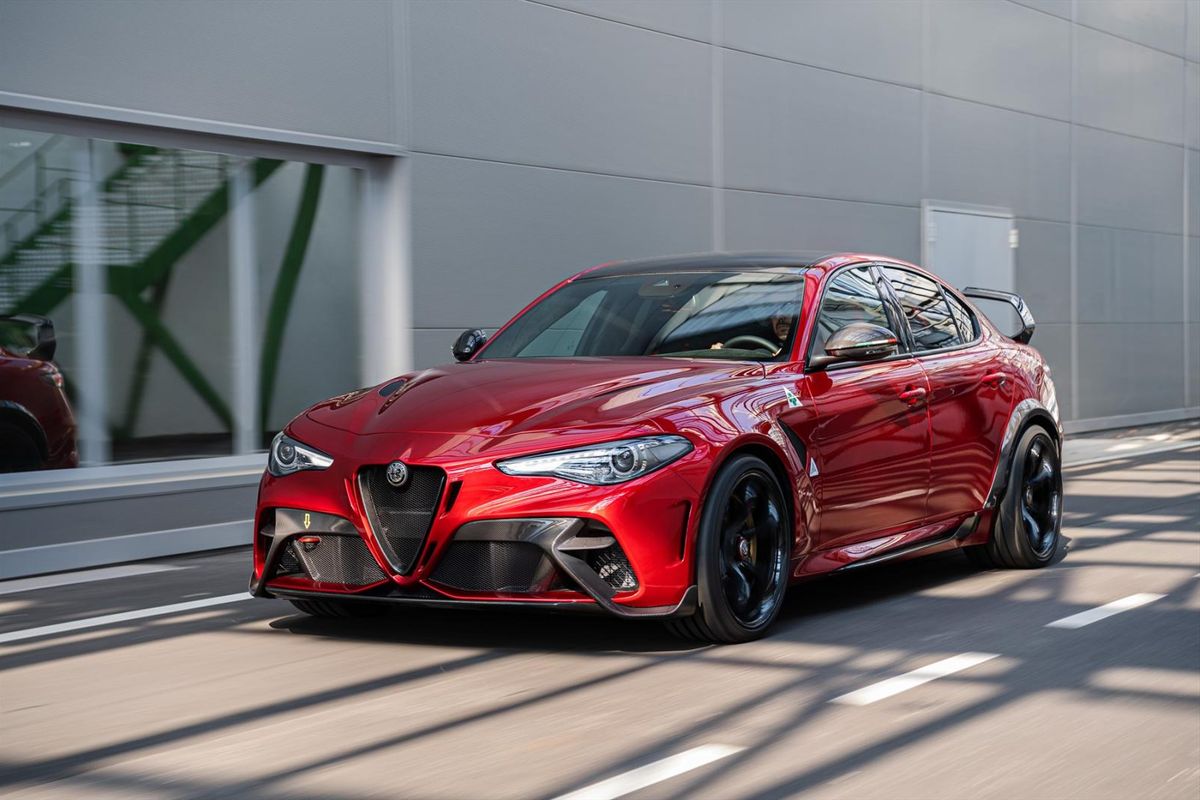
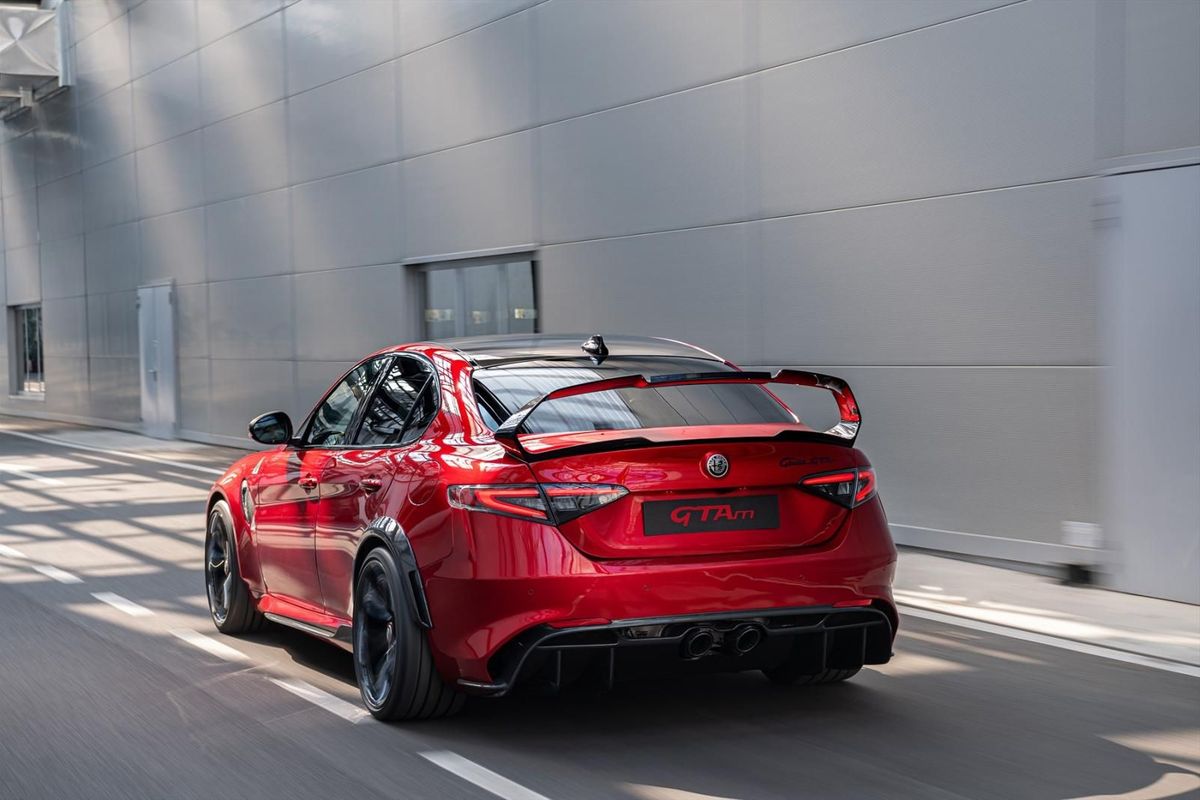
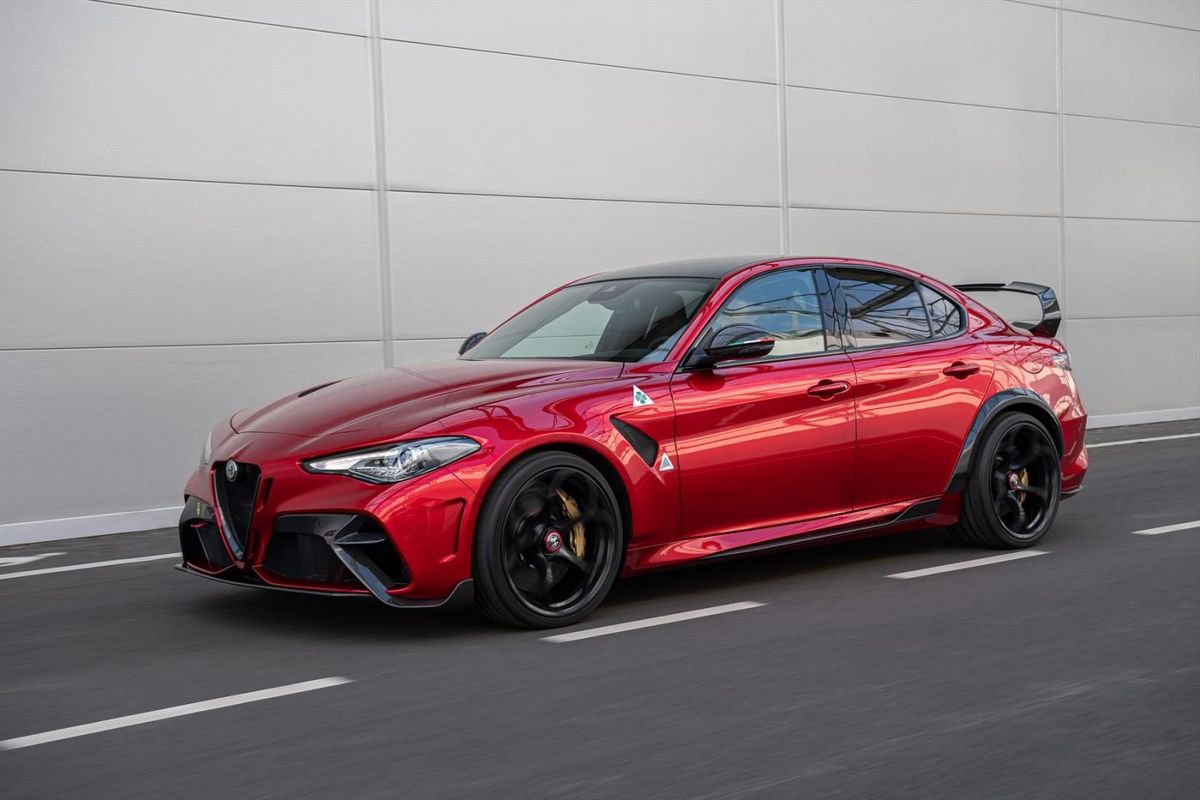
The Alfa Romeo Giulia Quadrifoglio didn't need a performance version and yet the Italians have gone on and reincarnated the iconic GTA nameplate.
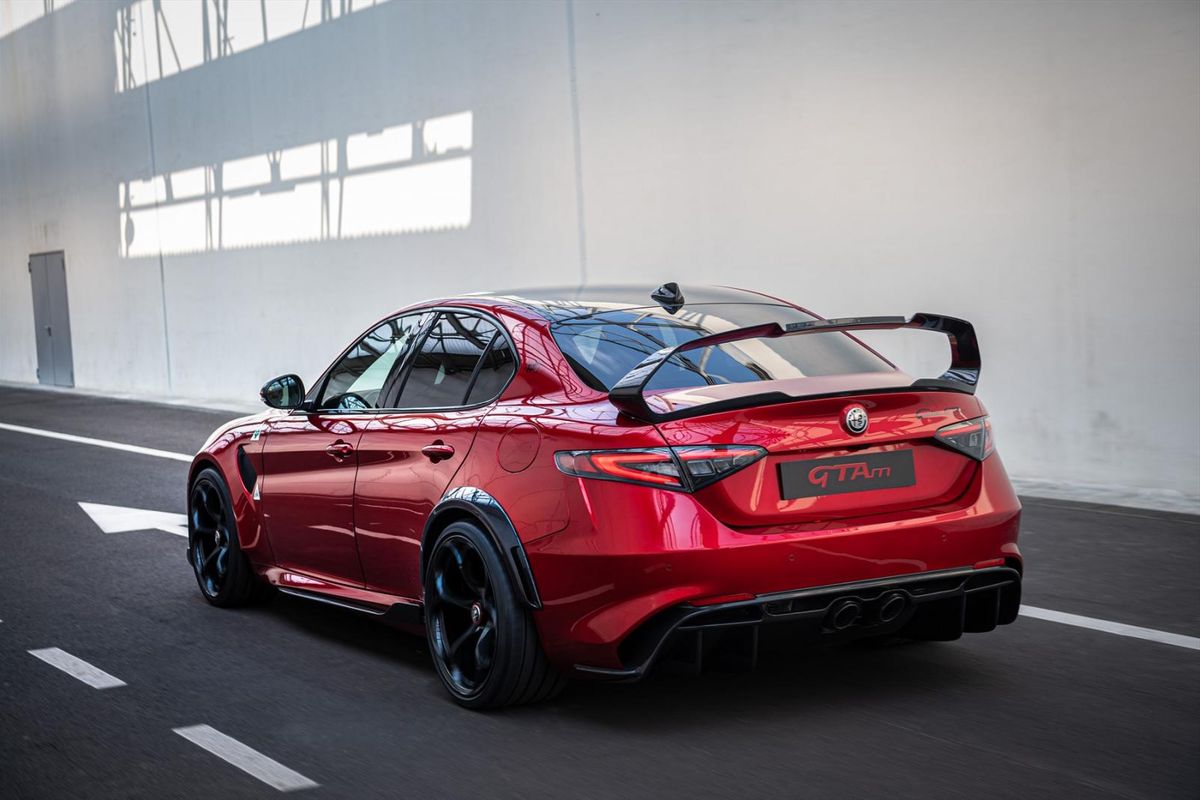
Limited to just 500 units, the Alfa Romeo Giulia GTA is a lighter and faster version of the already quick Giulia Quadrifoglio. Built to celebrate 110 years of Alfa Romeo, the new Giulia GTA boasts some upgrades to give it a hardcore track focus. Think of this as Alfa Romeo's answer to the BMW M4 GTS and Jaguar XE Project 8.
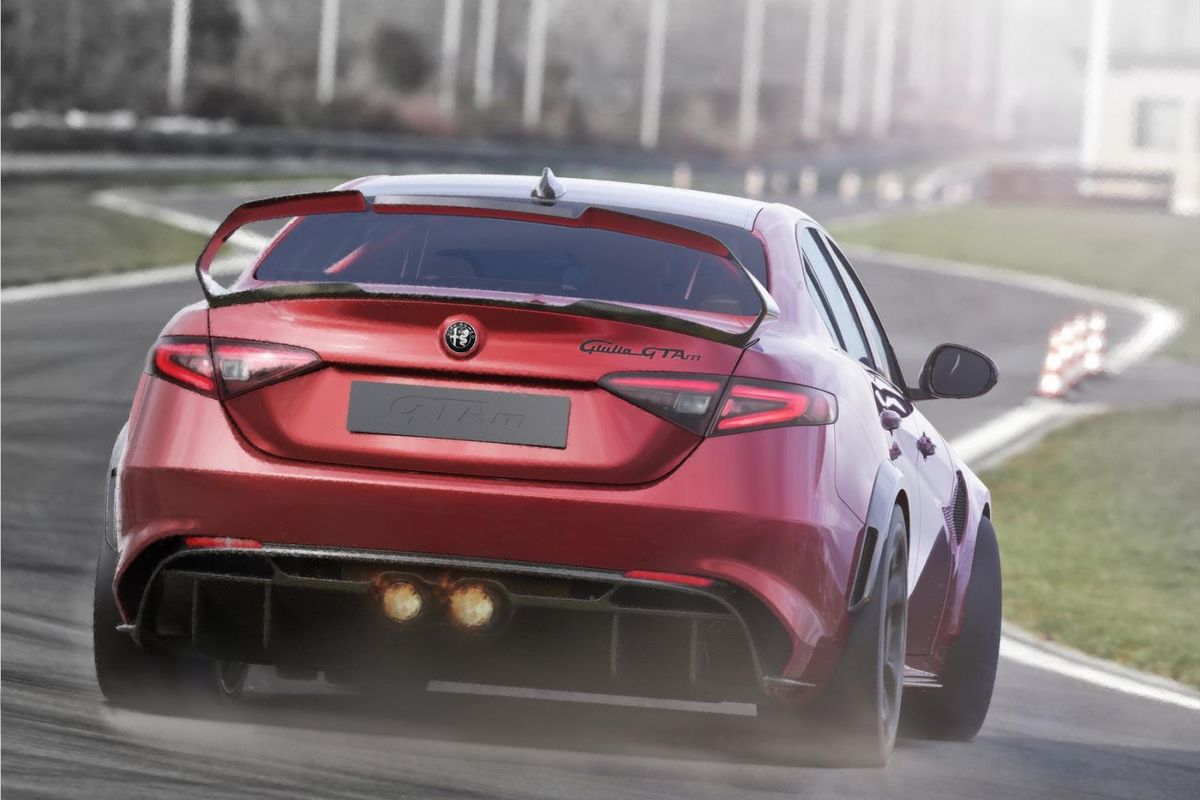
The 2.9-litre biturbo V6 sourced from Ferrari has been given some tweaks, with power now rated at 403 kW, from 375 kW and 600 Nm. There's a new Akrapovic titanium exhaust system, identified by the large central exhausts. Performance figures are decent, with a 0-100 kph of 3.6 seconds – a marked improvement over the standard car's 0-100 kph in a claimed 3.9 seconds.
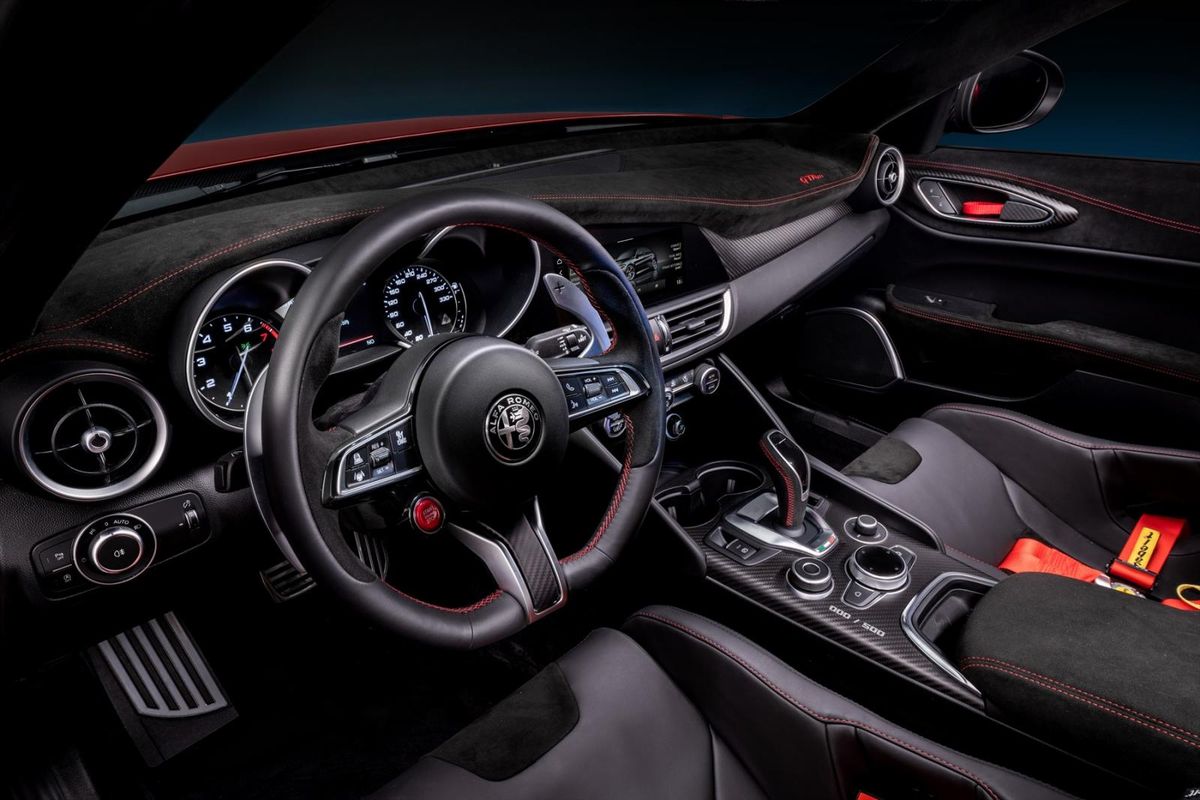
The entire car has gone on a diet, losing around 100 kg thanks to the extensive use of even more carbon fibre, bringing the total weight to just over 1 500kg. The car boasts carbon fibre in the bonnet, wings, boot, bumpers and bucket seats. For those wanting even more, there's the crazier version called the Alfa Romeo Giulia GTAm, which removes the rear bench seats and replaces them with a roll cage. There's a carbon rear wing as well as an extended front splitter for more aerodynamic effects and inside are full racing harnesses. It's essentially a stripped-out but street-legal racecar.
The Alfa Romeo Giulia's suspension has been uprated too, with engineers widening the track by 50 mm and there are new springs, shocks and bushes. The cabin gets a new-look steering wheel design made from, you guessed it, carbon fibre and there's plenty of Alcantara splashed across the interior.
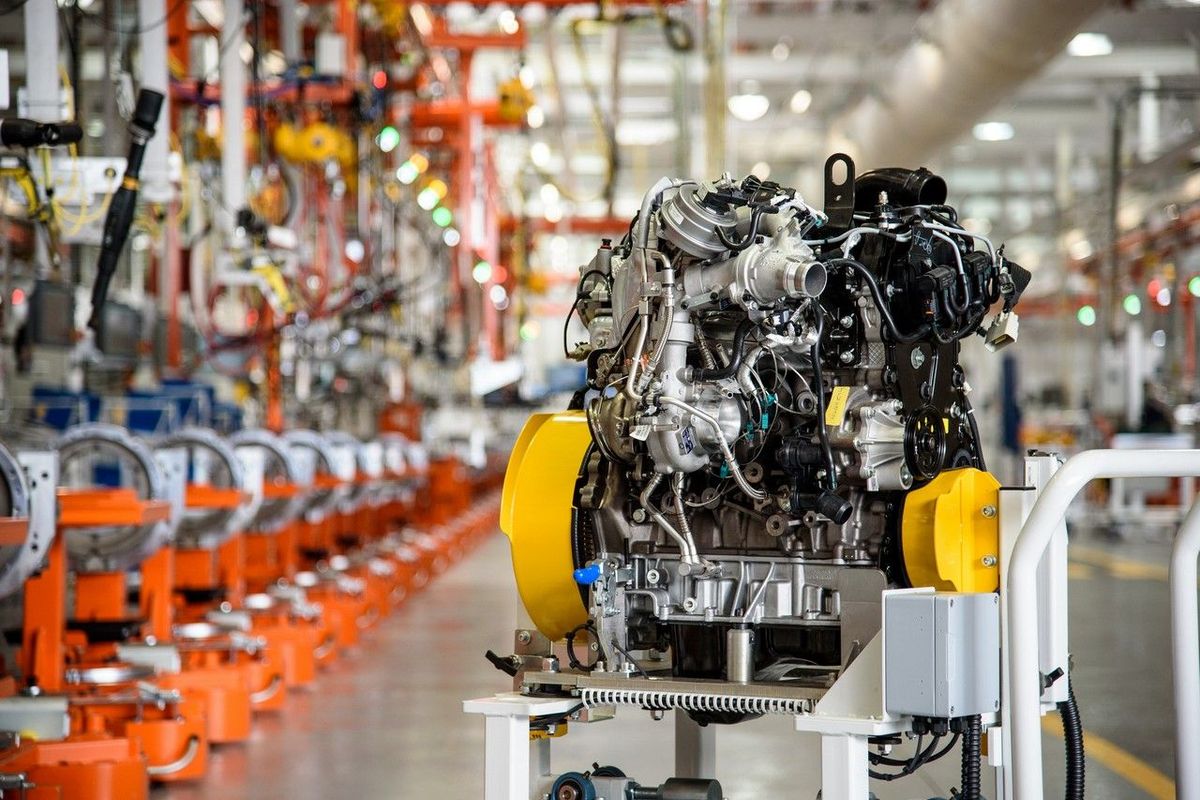
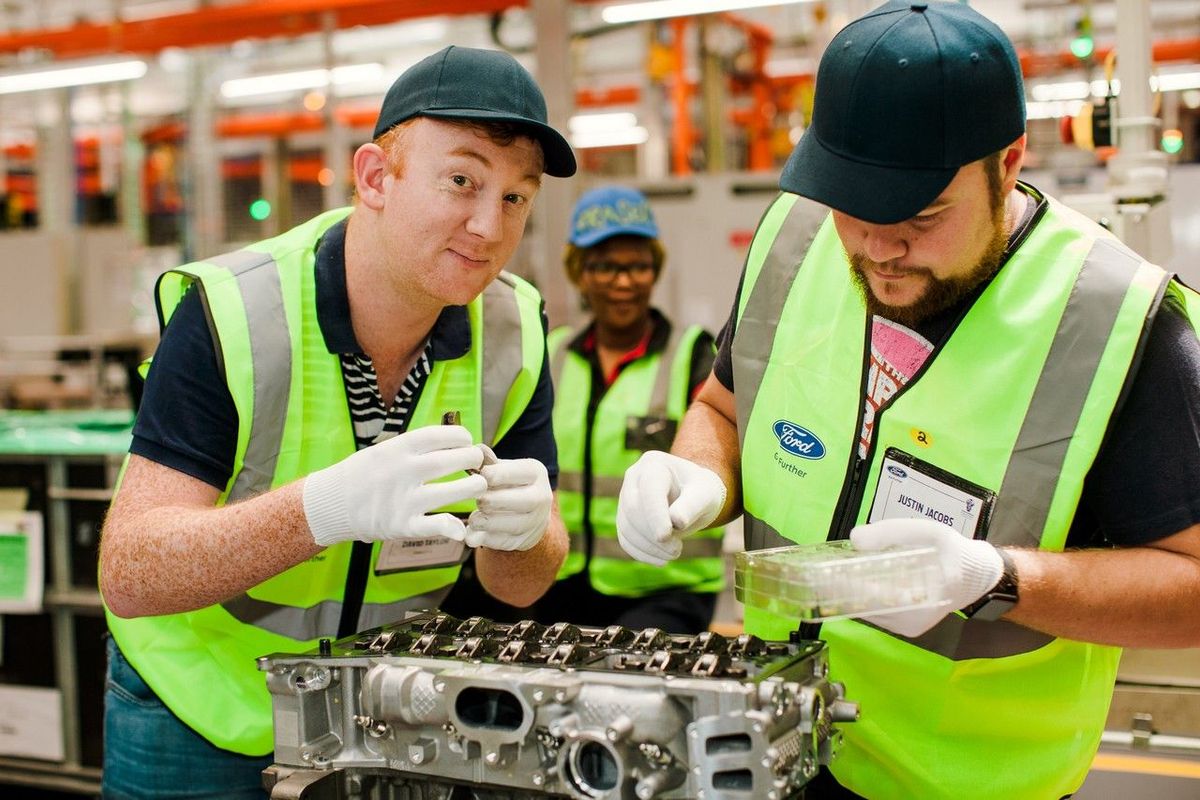
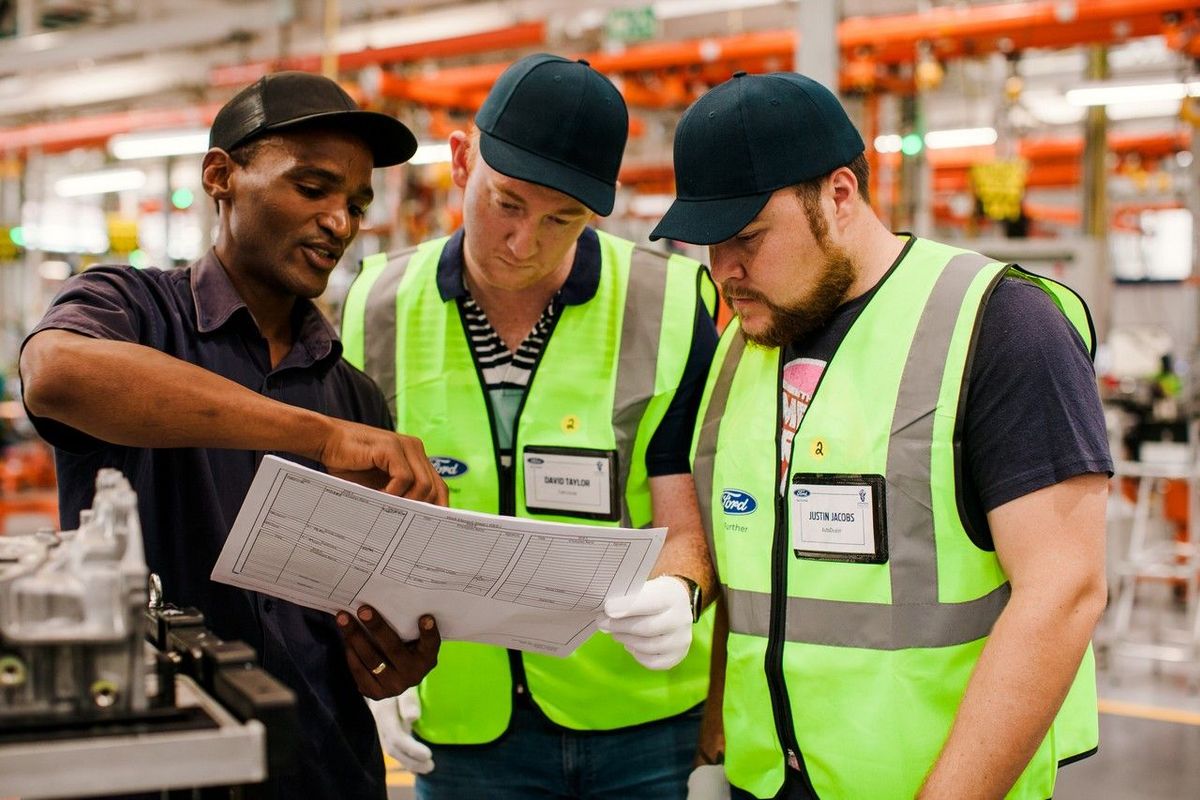
Ford South Africa offered Cars.co.za and other media representatives a once-in-a-lifetime opportunity to help its employees assemble 2.0-litre turbodiesel engines for the Ranger and Everest at the company's Struandale engine facility in Port Elizabeth. What could possibly go wrong?
A lot. An awful lot could go wrong, especially considering that, before we embarked on this outing, Ford Motor Company of Southern Africa (FMCSA) informed us that the engines we'd help assemble were – like all the other powerplants produced on Struandale's production line – destined for the Ford factory in Silverton, Pretoria and would duly find their way into the engine bays of South African-built Rangers and Everests (destined for both the local and export markets). There were no second chances; no dummy lines to practice on. Every mistake would cost FMCSA money, but fortunately, the factory had put in extra shifts to make provision for any hiccups. No pressure then…
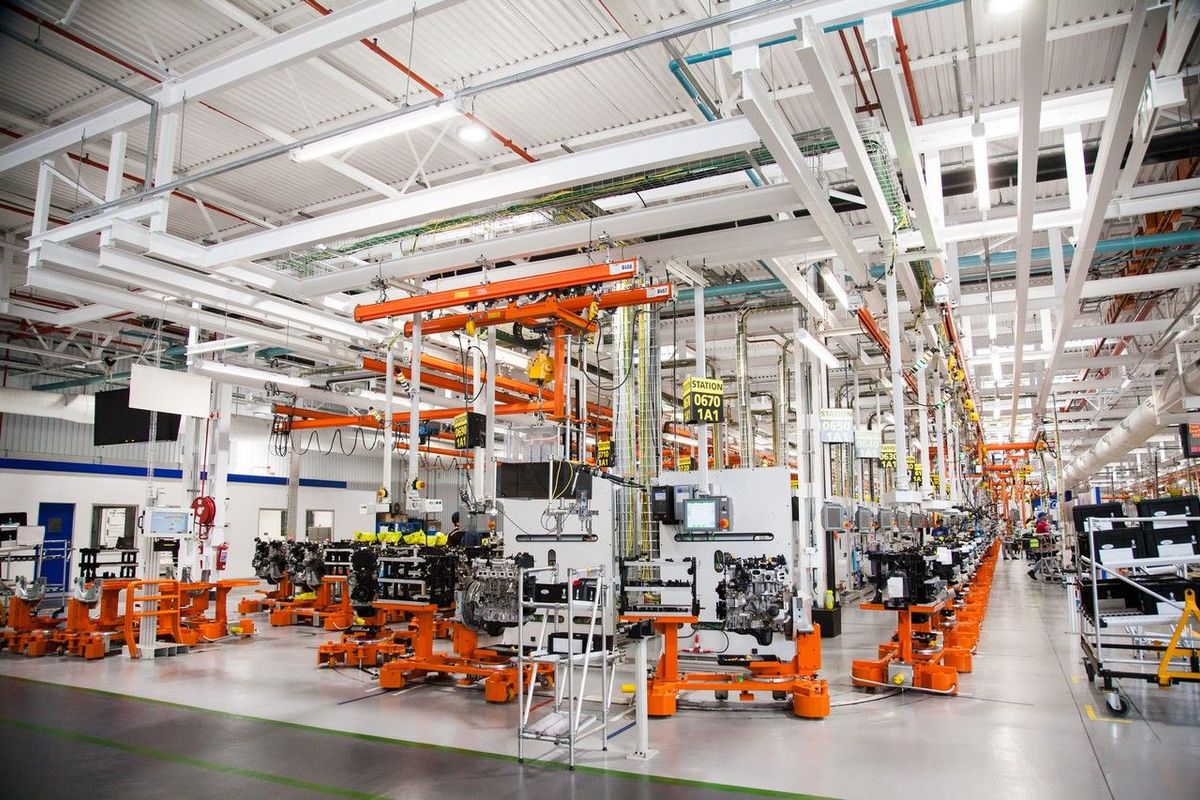
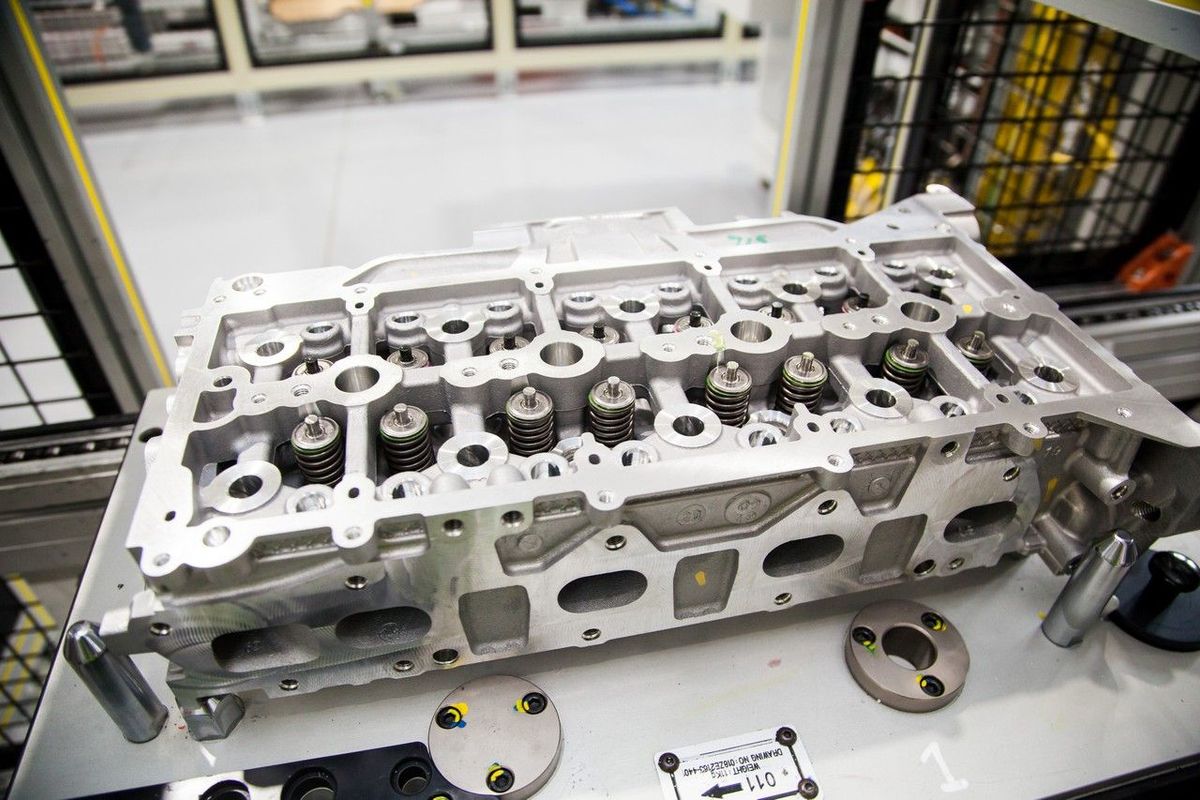
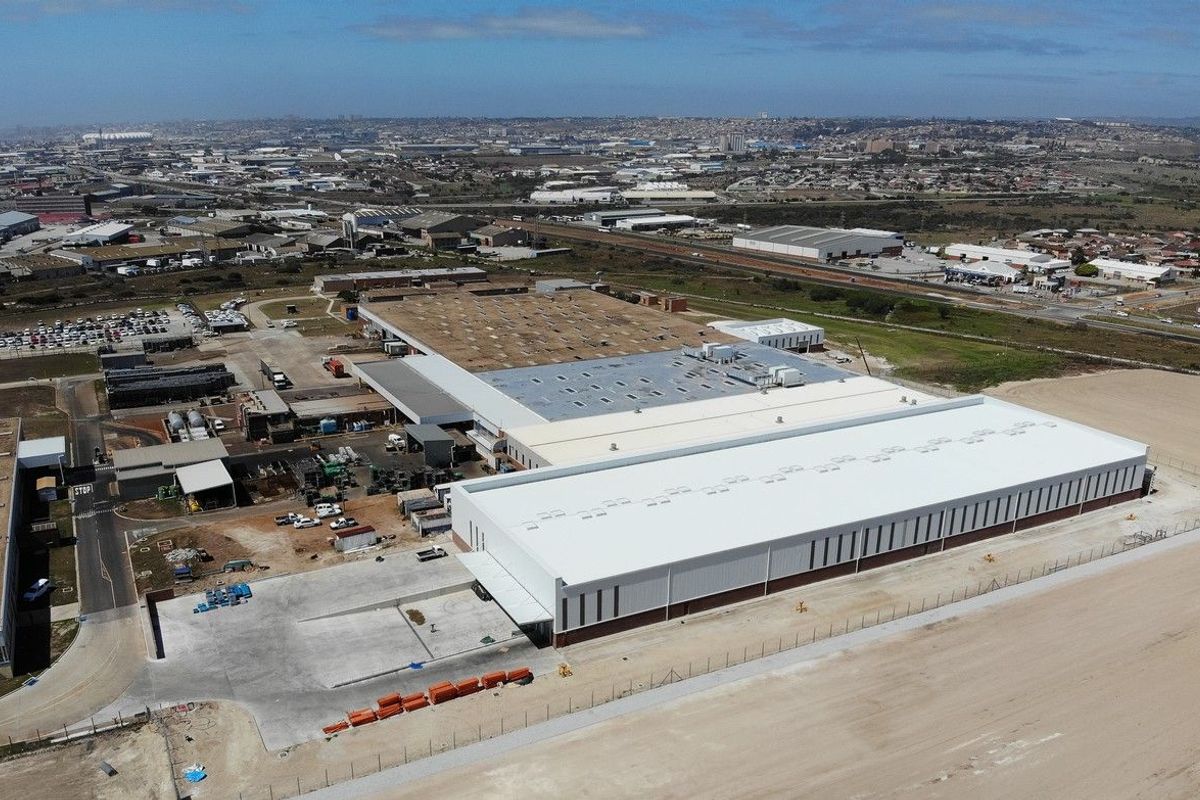
Ford's Struandale plant in Port Elizabeth was built back in 1964 and since its inception, it has produced no fewer than 10 different engines, including some well-known units like the Essex V6, Kent and RoCam motors. It celebrated the 3-million-engines-produced mark back in 2014 and now it assembles the 3.2-, 2.2- and new 2.0-litre turbodiesel engines. We'd be working on the latest high-tech motors to be assembled, the 2.0-litre single turbo and the 2.0 bi-turbo diesel powerplants. The Struandale plant has an installed capacity to make 120 000 of these new-generation 2.0-litre engines a year.
These new-generation motors are built in a 3 900 square-metre hall on a 312-metre assembly line. There are 110 work stations and 96 operators per shift. Ford currently runs 2 shifts per day, 5 days a week and the plant puts out one completed engine every 134 seconds. Every day, around 576 engines (loaded on 6 trucks) hit the road and head to Gauteng, where they are built into the locally-produced Rangers, Ranger Raptors and Everests, while a further 7 containers with 72 engines and various components head to the harbour to be shipped to the export market. There is extensive use of robotics too, both on the main assembly line and sub-assembly line.
What's deeply impressive is the focus on quality and the number of cameras, transponders and quality management systems. If a defective engine goes out, the Ford team will be able to trace exactly what time that engine was assembled. We'd help to build the 2.0-litre biturbo with 157 kW and 500 Nm, which does duty in the Ranger Raptor and Ranger Wildtrak, as well as the 2.0-litre single turbo (132 kW/420 Nm) found in XLT derivatives.
Time to build
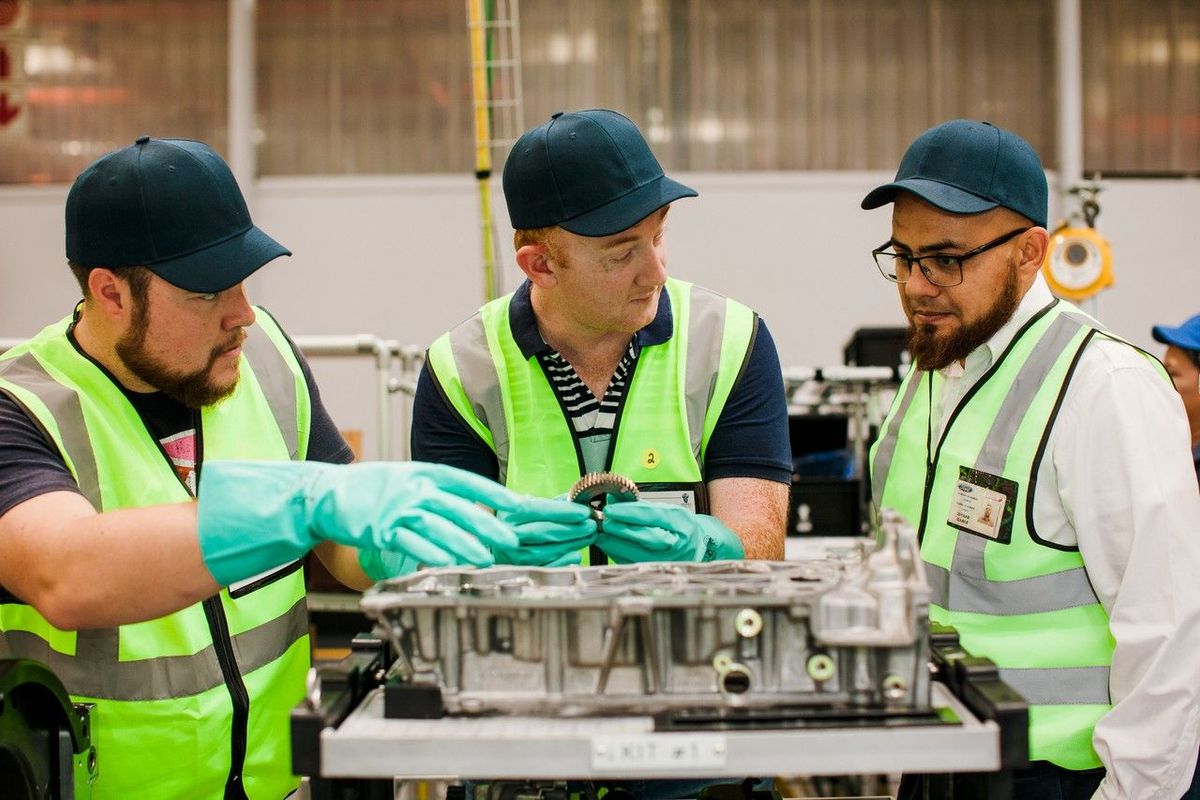
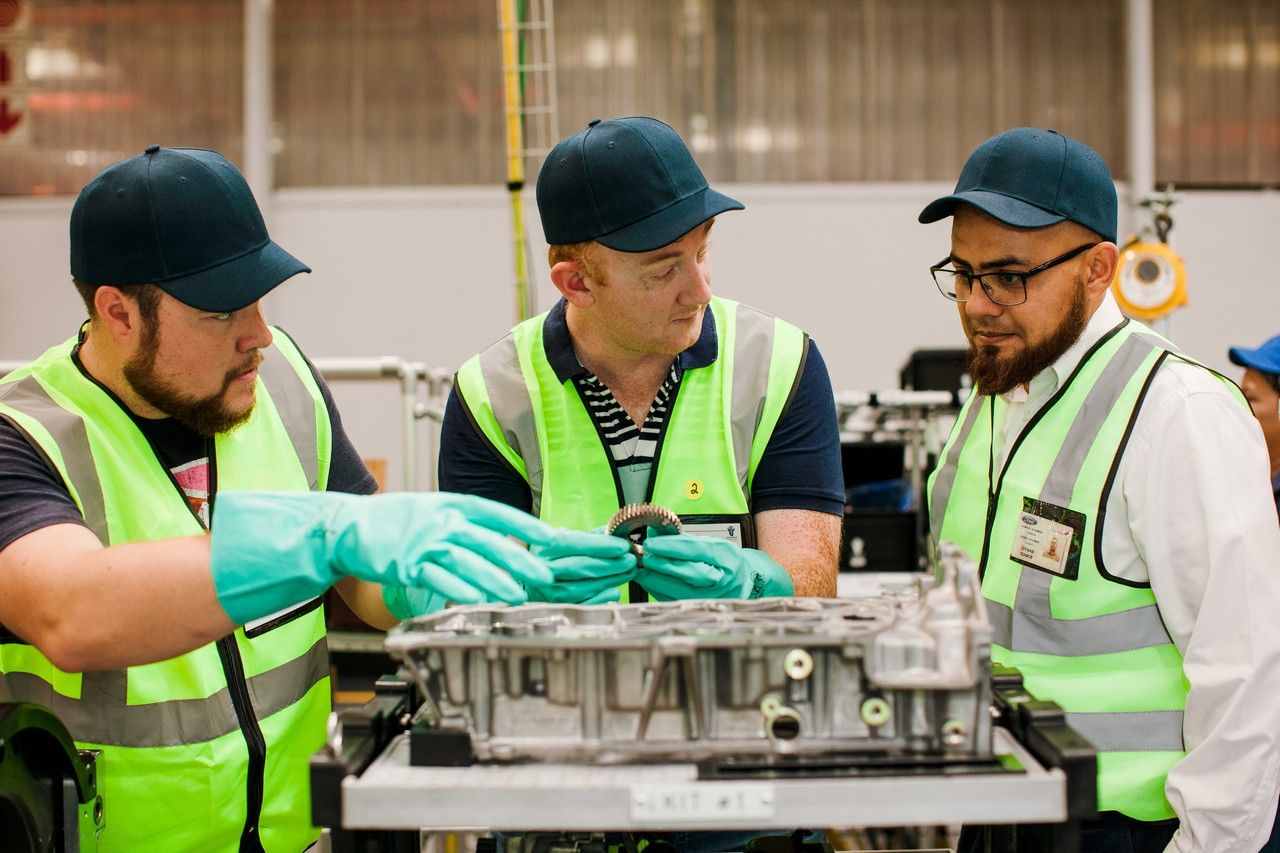
Auto Dealer and Cars.co.za under the careful watch and supervision of Ford SA's Ziyaad Isaacs
If you have not yet been fortunate enough to visit a car factory, you should try your utmost to join one of the many tours offered by South Africa's car factories; the finely-tuned processes and general cleanliness observed by those facilities are surely examples to us all. To use that cliche, the floors are so clean that you could (almost) eat off them. Safety is the top priority here; there are plenty of machines that could cause serious injury (or even death) if the utmost of care isn't taken. Having received a thorough health and safety briefing, it was time to kit up and we were issued with proper workboots and safety hats. If you're not prepared, the noise, and in some sections, the heat can be unsettling.
"Alright gents, this is exactly how things are assembled at this station. Do not deviate, do not try to improve, just follow the procedure."
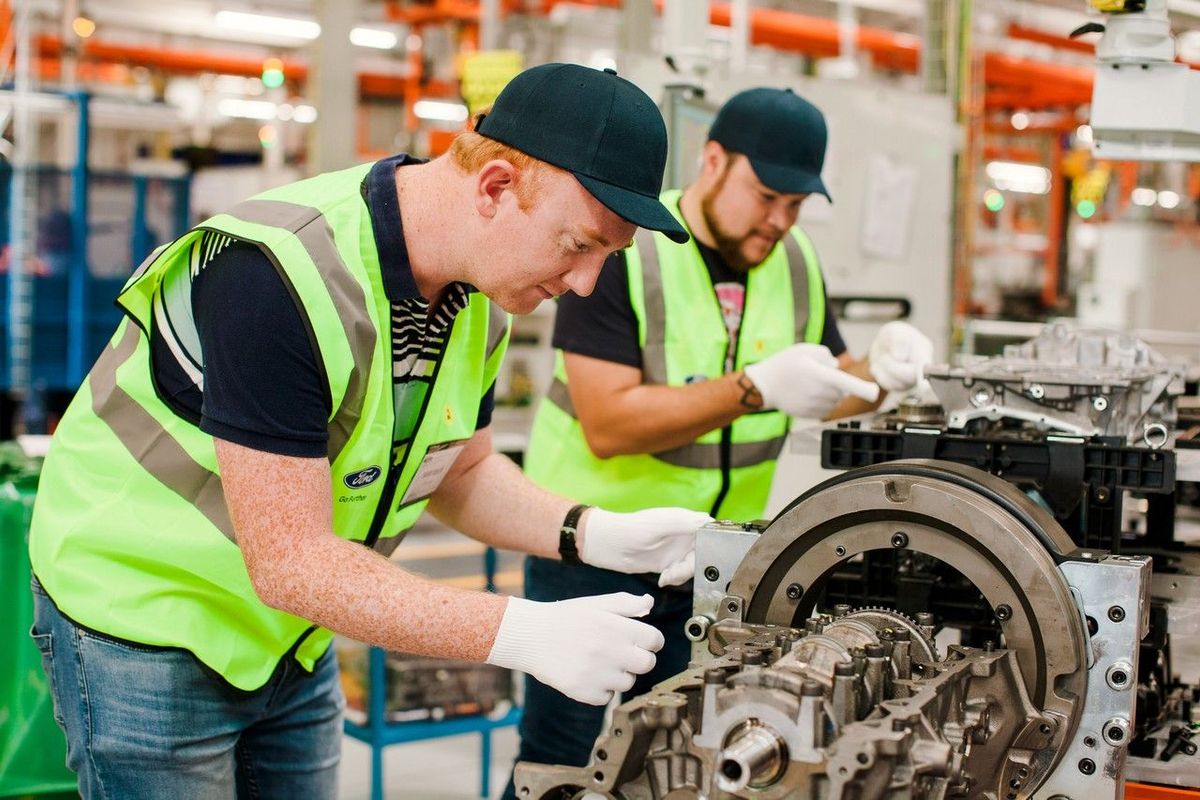
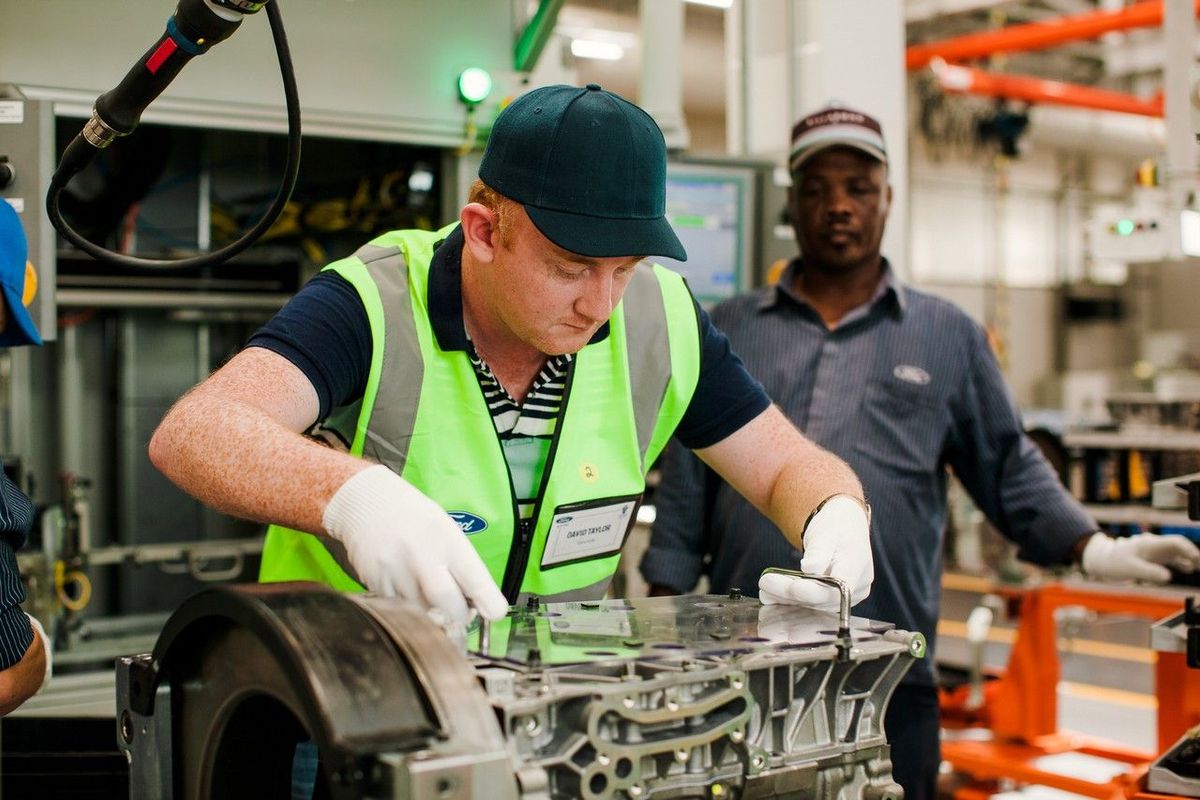
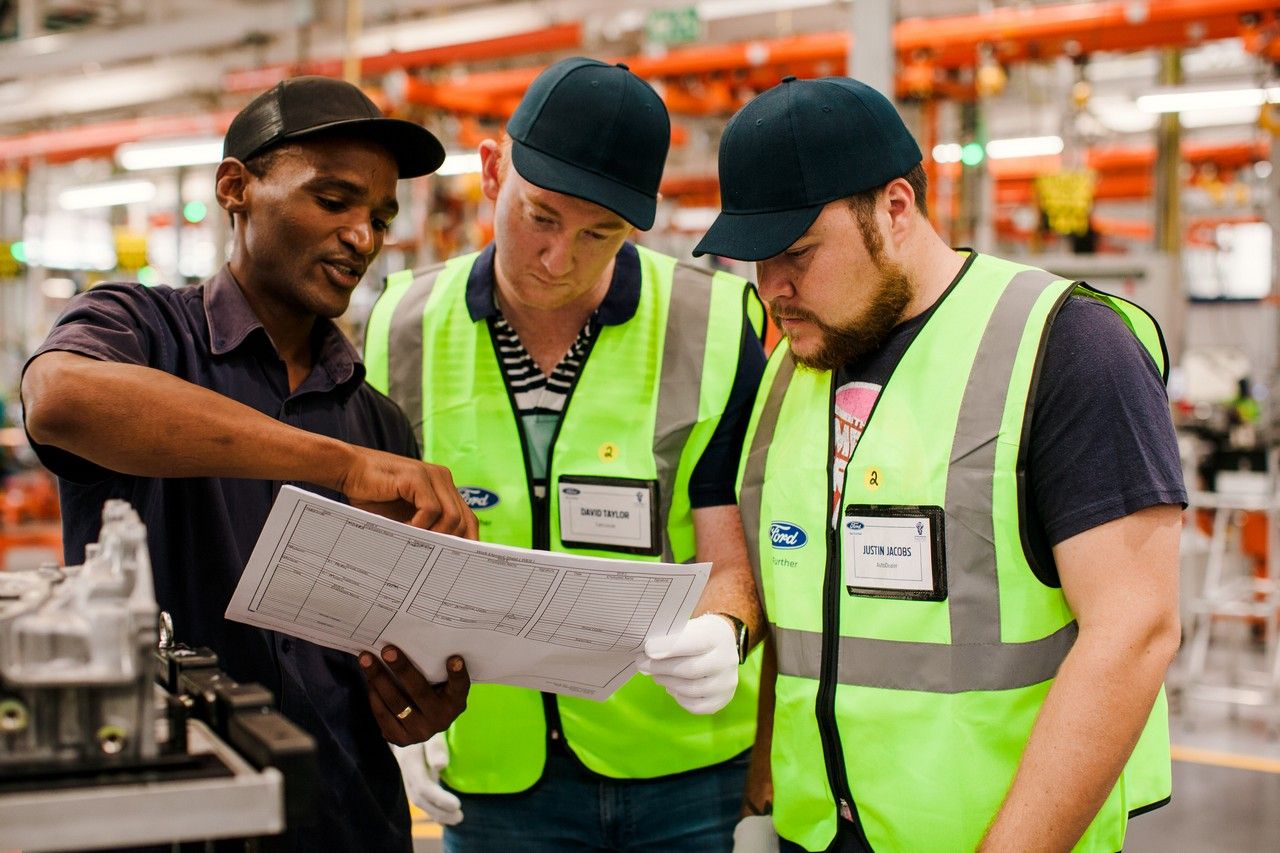
After a tour of the line, my partner and I were dispatched to a station to work on engines' bottom ends. We had a quick tutorial on what exactly happens at that station; then it was our turn. Remember the line is continually moving and while it was at a snail's pace, there's a real risk of falling behind and if you hesitate or make a mistake, you have to catch up. "Can't they stop the line?" you may ask. Well, they can, but any stoppage costs money. A minor incident later that day (it wasn't us) resulted in a line stoppage of over 20 minutes and the smiles and jovial vibe were replaced by irritation and concern from the Ford SA management, as well as mutterings of "well, that delay certainly cost us…"
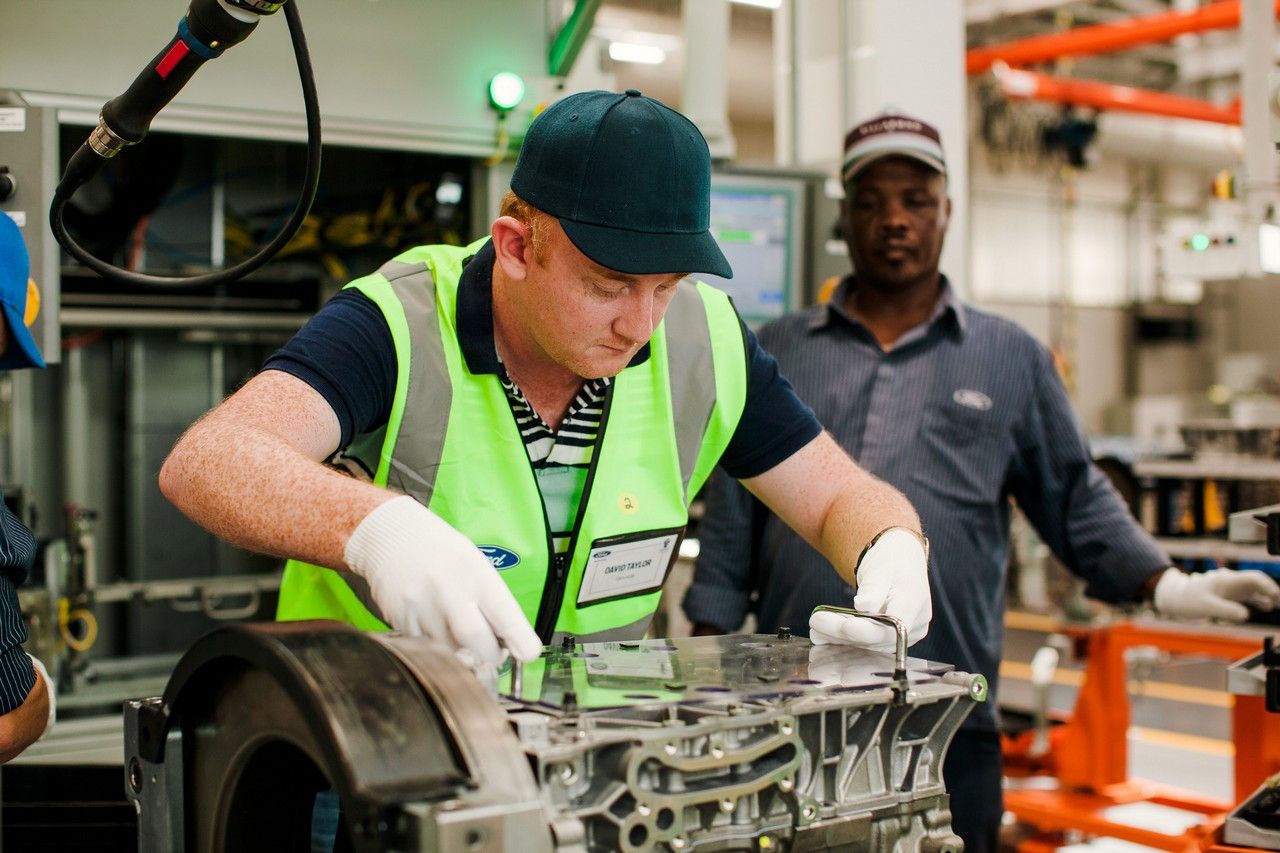
Yours truly trying to fit components onto the engine block which is moving along.
You must be thinking this tale is a little far-fetched. Did Ford SA really allow journalists to build their engines? Where's the control? Are those engines safe for customers? Yes, and yes, we were watched and supervised extensively. Those engines are probably on their way to the final assembly in Silverton, Pretoria. See, give the Ford team its due, they'd worked extra shifts prior to this day to build a surplus, just in case things went awry and production slowed. So even if the line lost plenty of units thanks to some careless writers, the plant was on course to reach its targets. Also, with that much supervision and microscopic attention to detail, surely nothing could go wrong? Yet, sadly it did, for me.
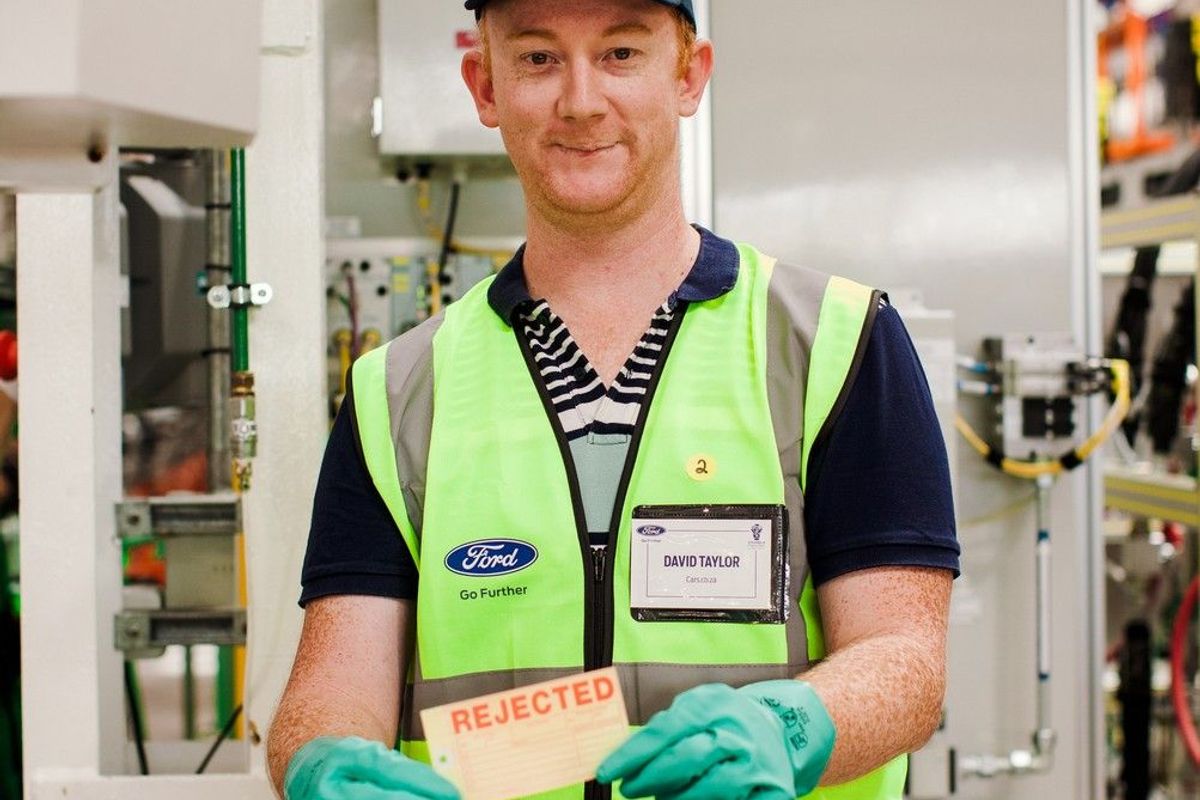
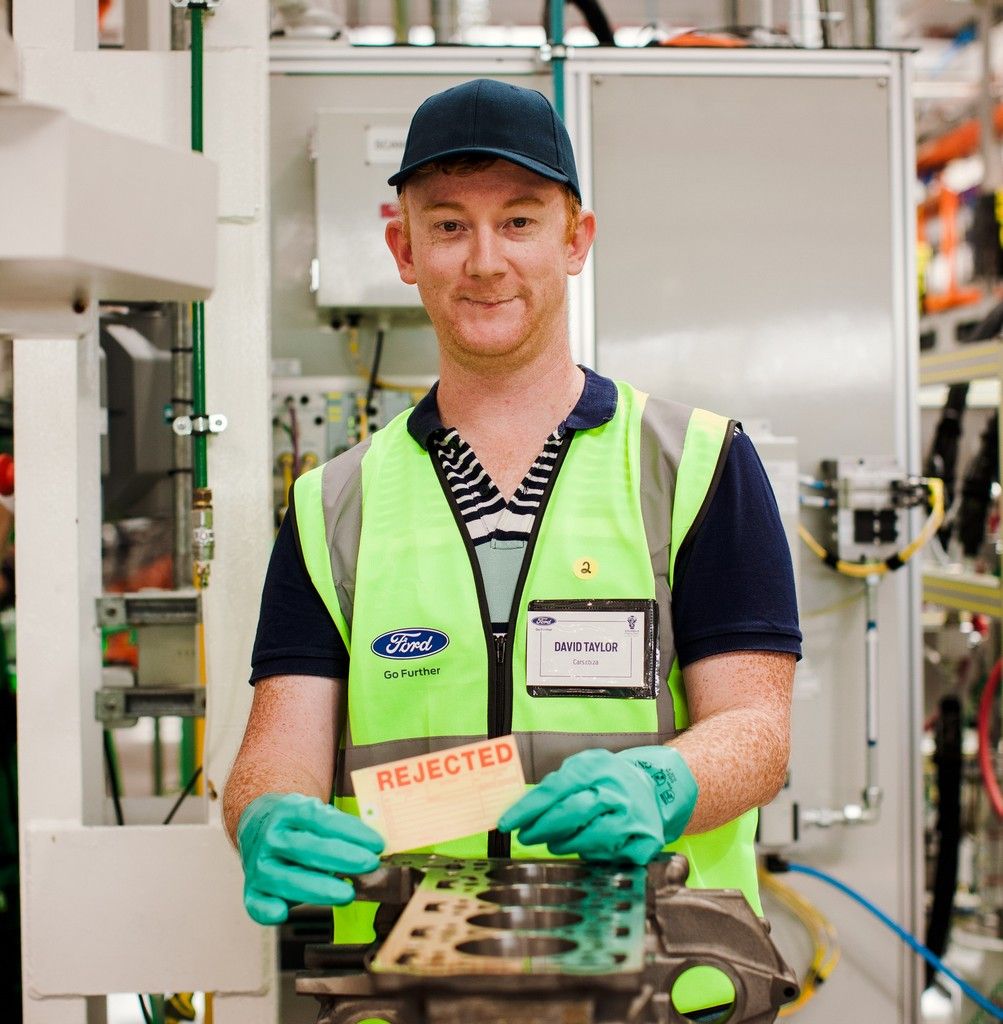
We were shifted around the plant and experienced all aspects of engine building. My partner and I were subsequently moved to a section that checks the bore of engines' cylinders. The task was straightforward; reposition the block, add this part, place sensor in position, run test, return sensor, reposition block and push the approval button. However, the sensor was incorrectly placed on its stand and when the next block came into play, the sensor was in the wrong position and the result was a failure. A few sirens went off and a manager was summoned to fix the errors. The block had failed its cylinder bore test and was tagged and bagged as a reject. Oops.
The shame! This block simply travelled down the line again, passed the tests the 2nd time around and is now on its way into a vehicle.
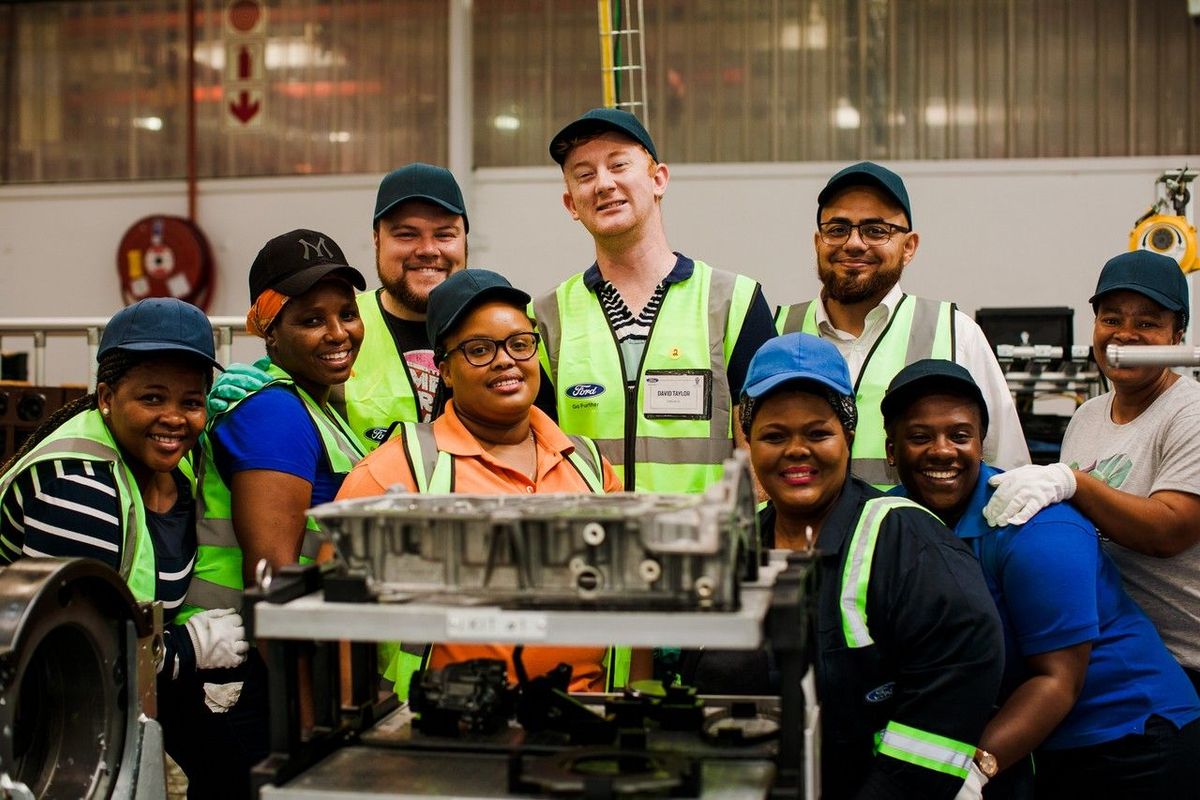
Being thrown onto the front line and working alongside the Ford Motor Company employees gave us incredible insights into production-line management, processes and quality control. It was an eye-opening experience to see not just how the engines are assembled and thoroughly tested, but also what goes into making a highly-efficient and controlled production line. We put our sweat and tears (fortunately no blood) into those engines and all but one passed the stringent quality control, so if you land up driving a Ranger or Everest with an engine made during the first shift on the 20th February 2020, it'll have some Cars.co.za soul in it. Would we do this again if you asked us? In a heartbeat.
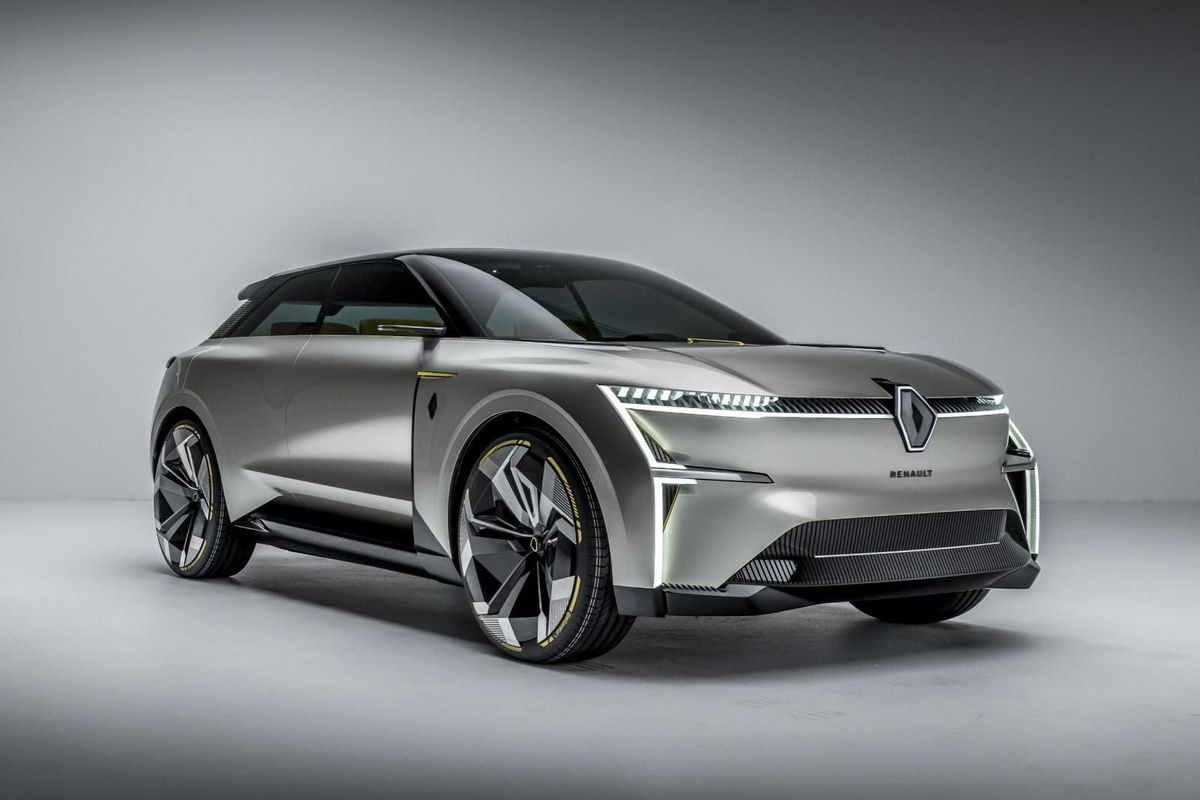
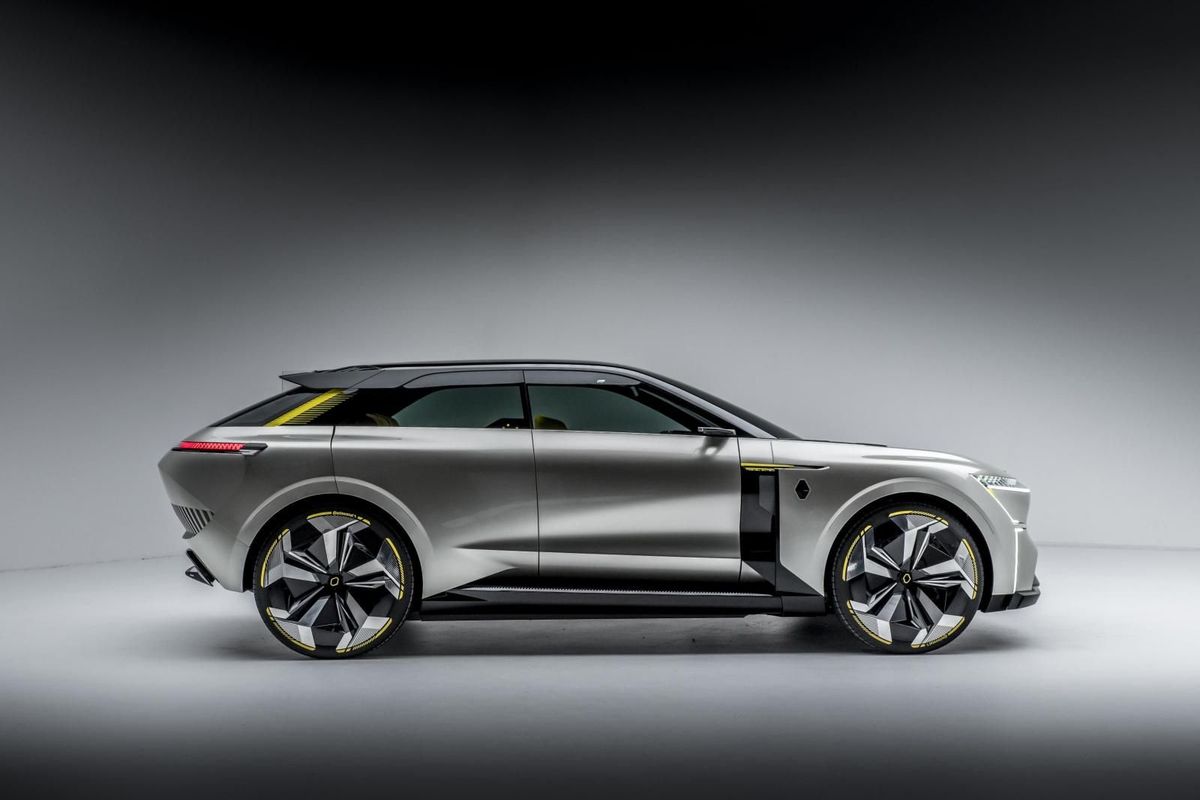
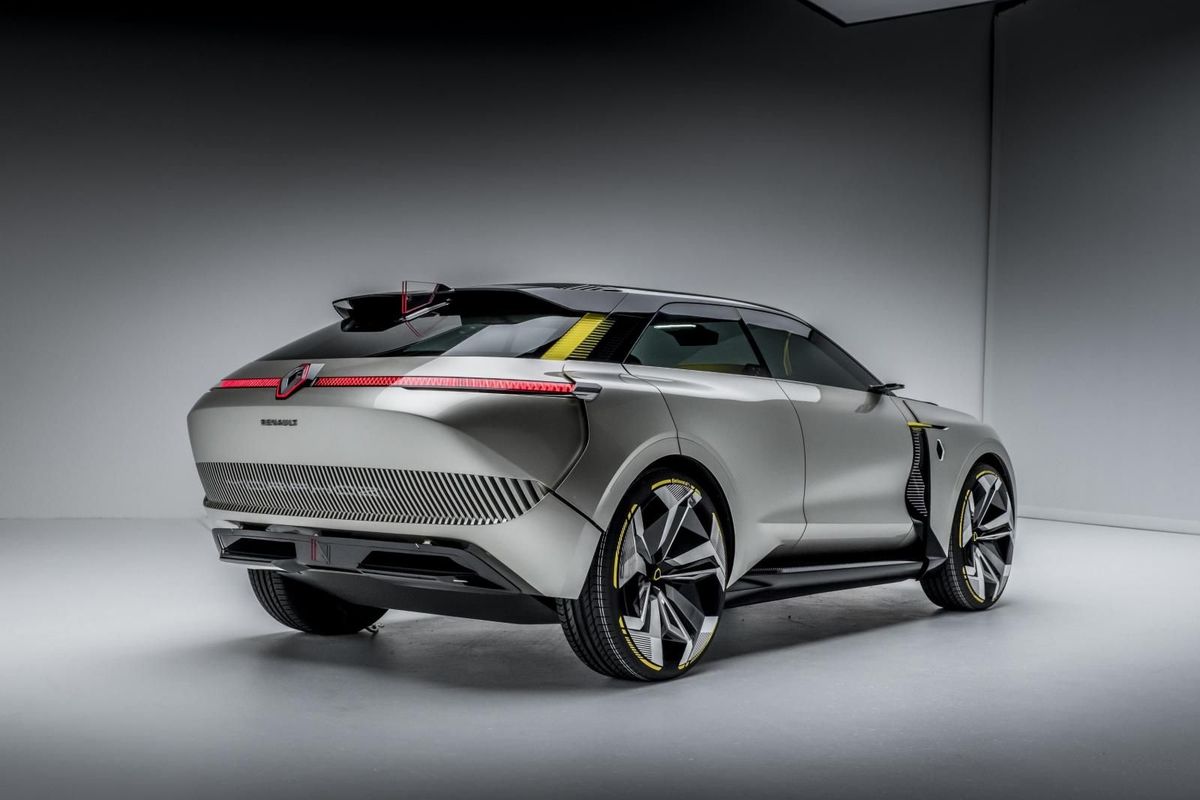
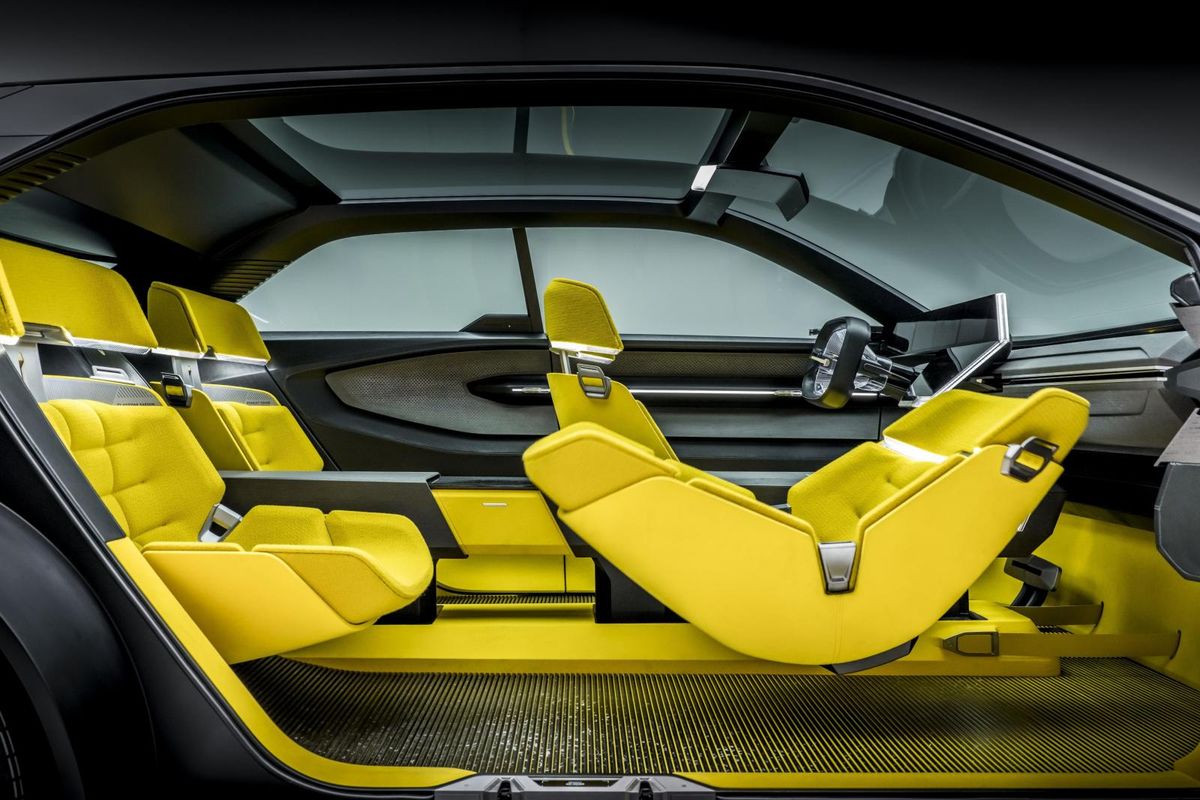
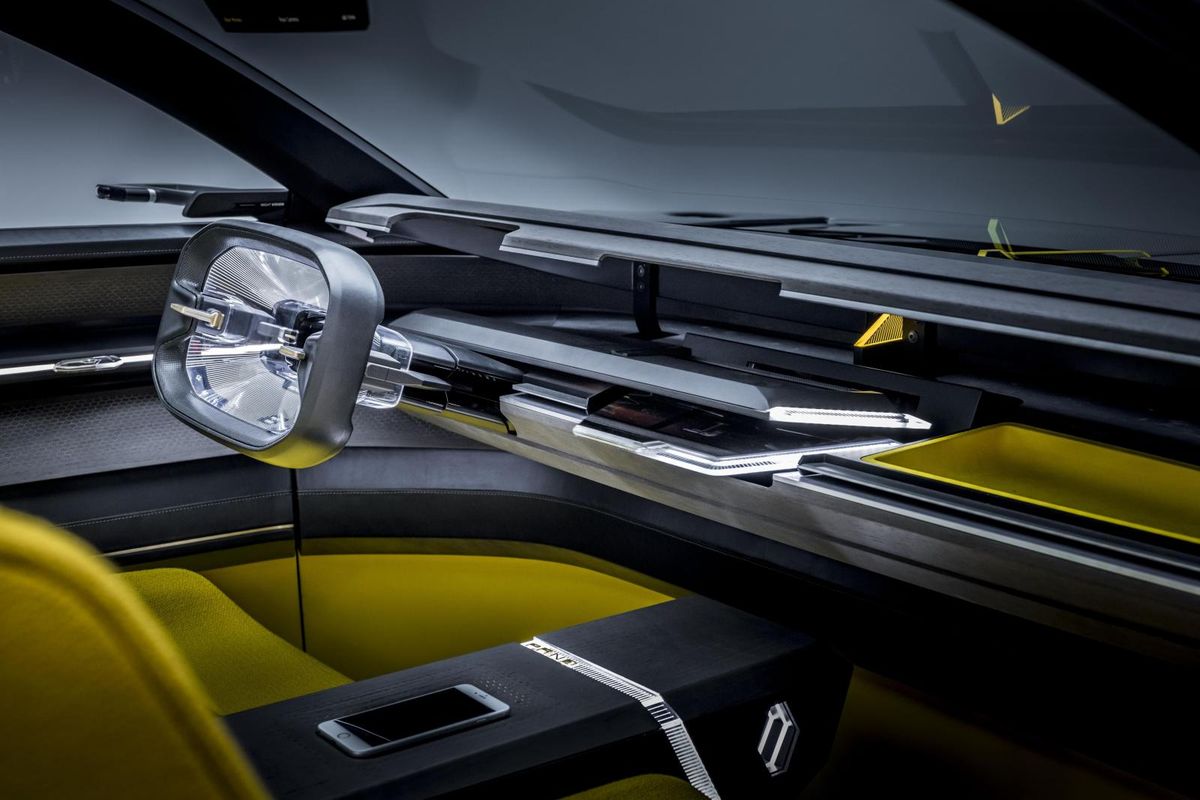
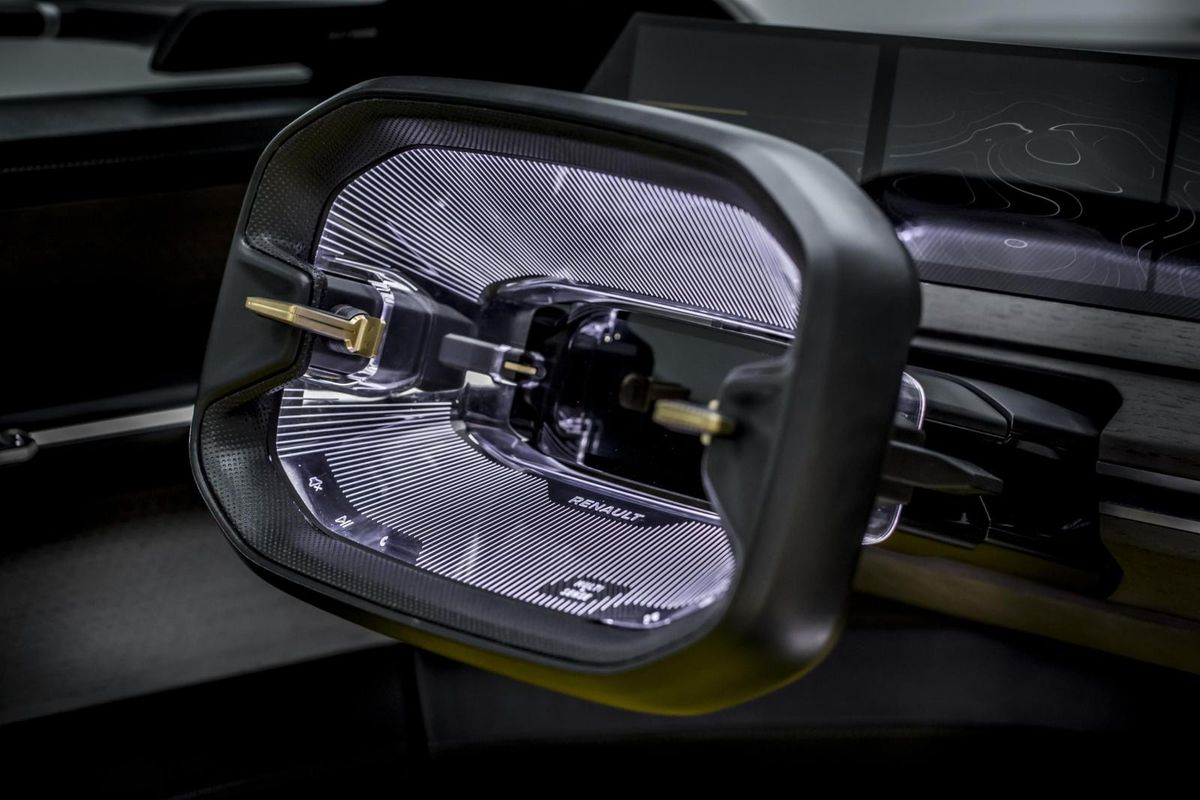
Renault has taken the covers off its Morphoz Concept – a new take on personal, shareable, electric mobility.
Built on the modular CMF-EV platform, the Renault Morphoz offers many options for power, the number of passengers as well as range. A 40kWh battery is fitted as standard, with a range of up to 400 km. A travel extender battery pack is also available, giving it a total range of around 700 km.
The vehicle also features Level 3 driving autonomy as well as artificial intelligence. The cabin is adaptive and can be configured to seat more or fewer passengers, plus the front passenger seat can be turned 180 degrees to face the rear passengers. There's no B-pillar, meaning access is fuss-free. The Renault Morphoz cabin is made from recycled materials, such as plastic in the doors and fabric for the seats.
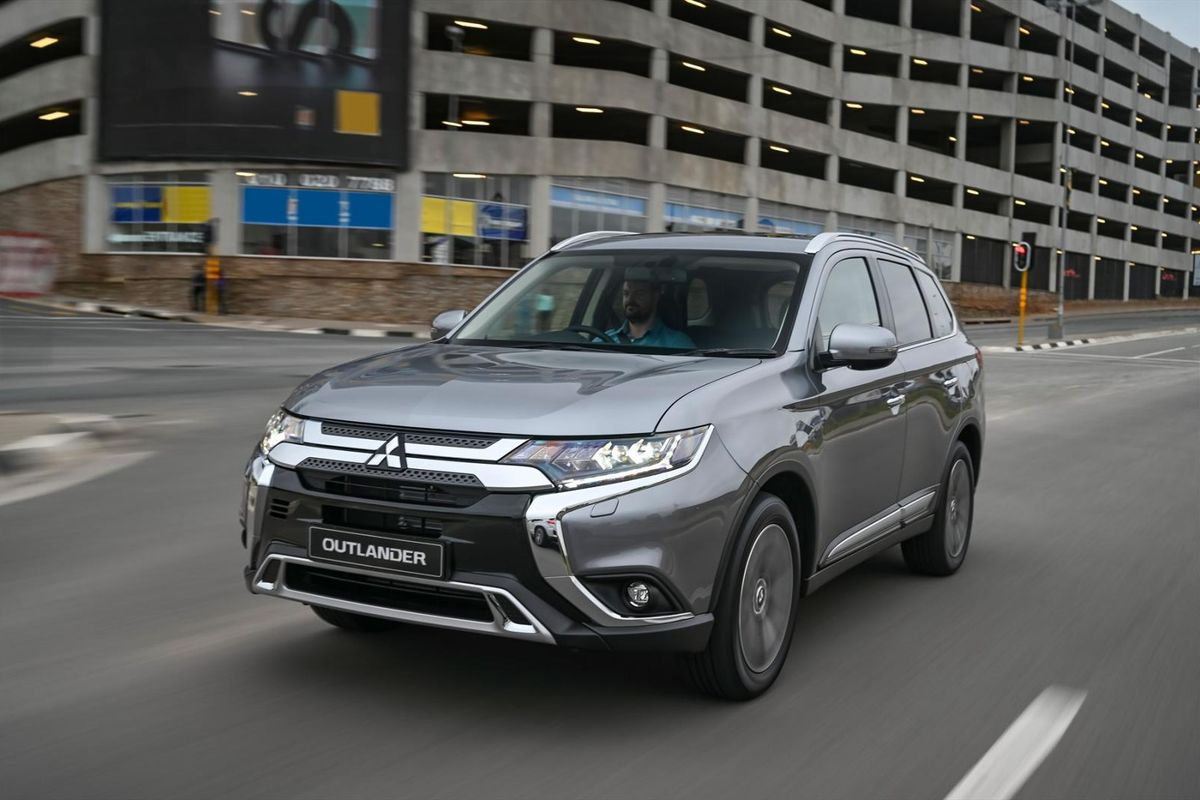
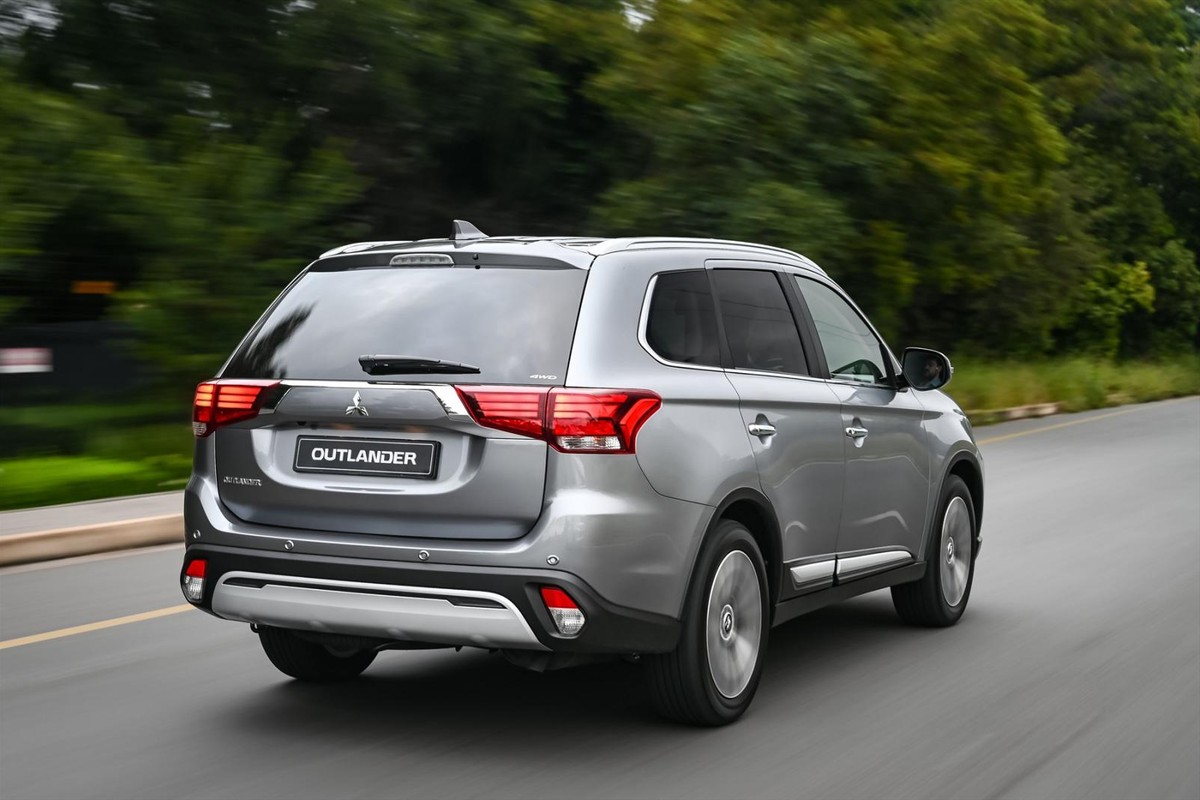
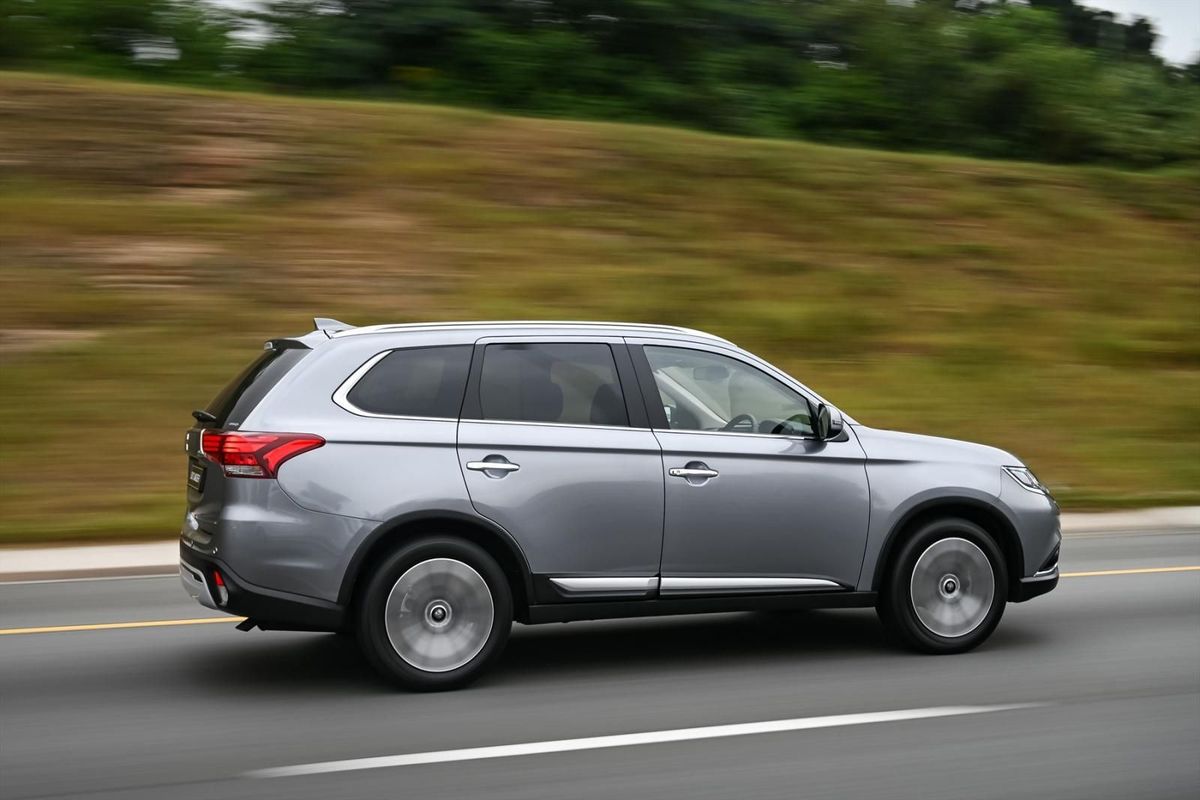
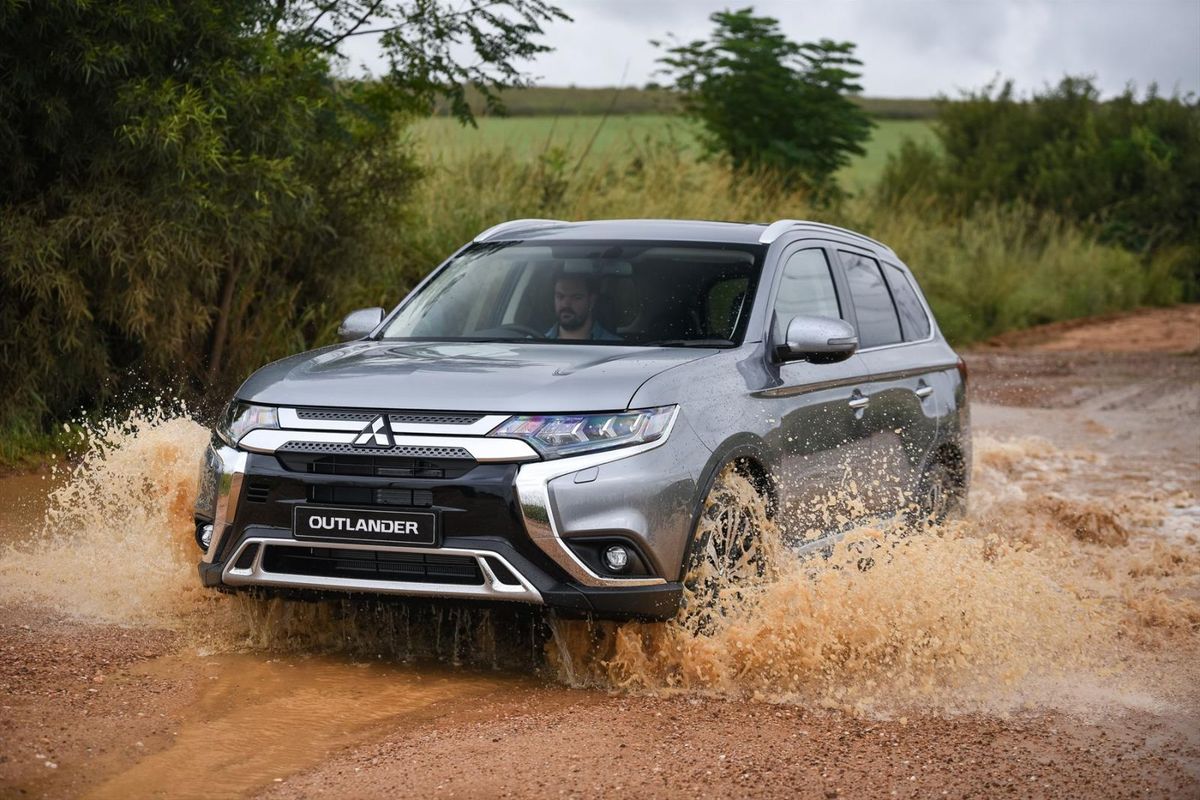
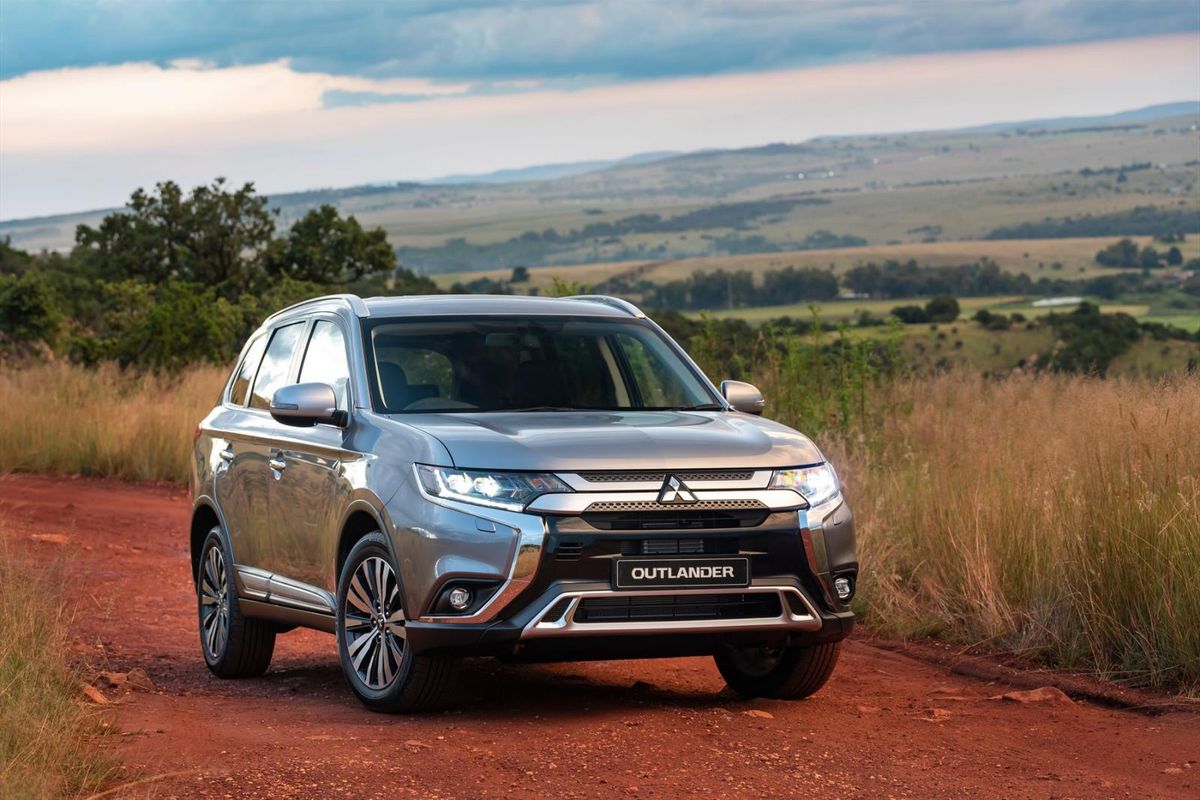
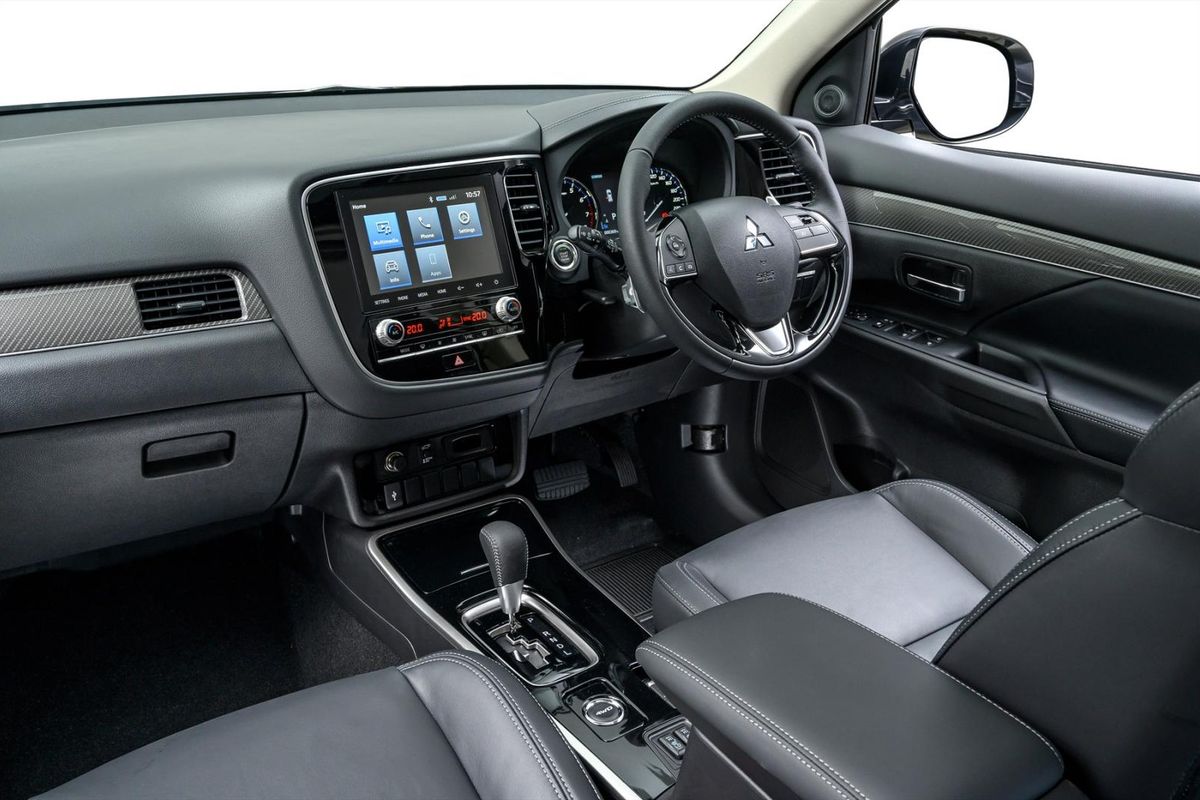
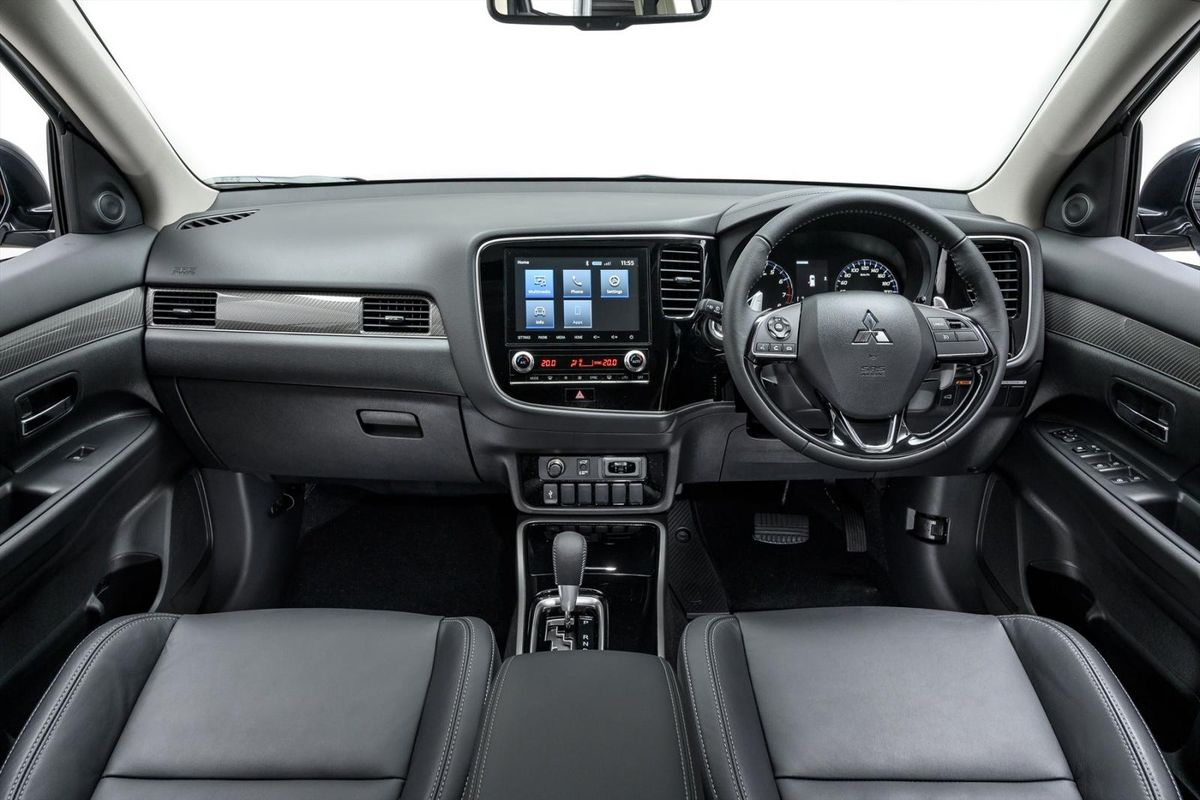
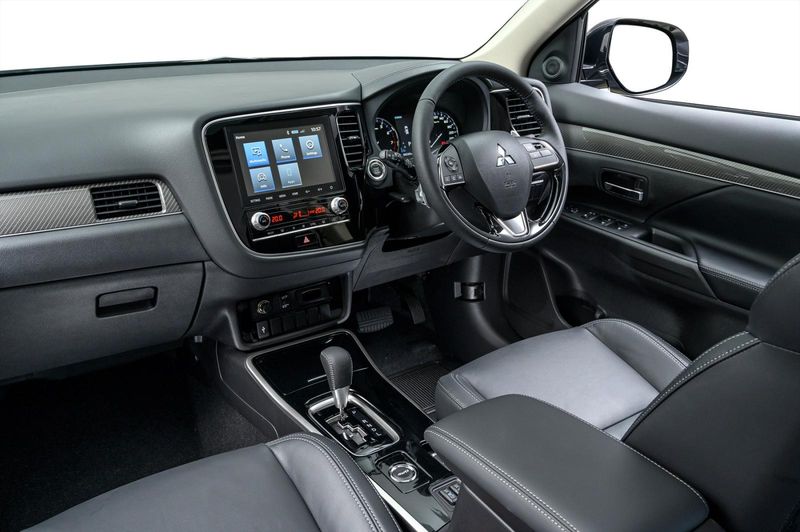
The Mitsubishi Outlander family SUV has been updated with a new face and upgrades interior. See what’s on offer below…
The 7-seater Outlander SUV has been on sale in South Africa since 2013 and now benefits from yet another update. This time the Outlander gains the brands ‘Dynamic Shield’ design which includes a new bumper and grille while also riding on new alloy wheels. The rear bumper has also been redesigned.
The interior benefits from added comfort and convenience features. The front seats are equipped with electronic lumbar support and heating function which will prove useful on those cold winter mornings. An electronic parking brake with an automatic hold function is now also part of the package as is climate control air conditioning with rear air vents.
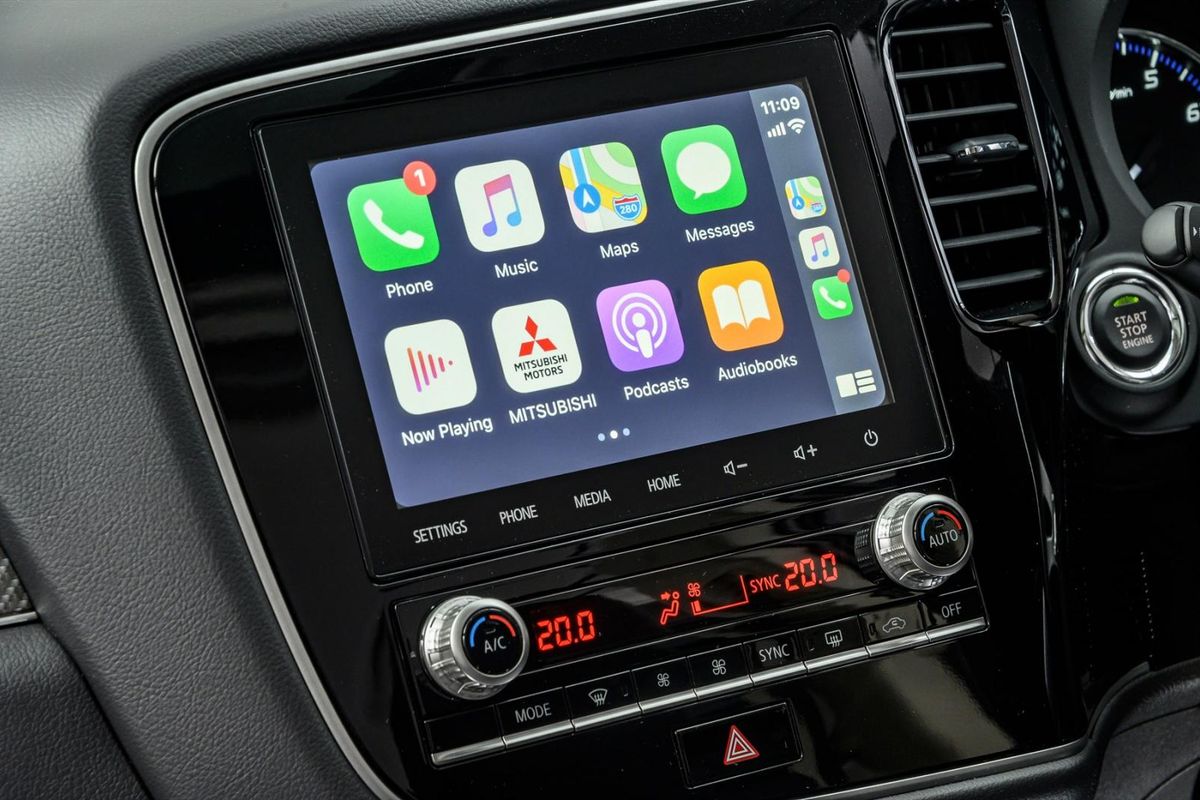
A new 8-inch infotainment system with Android Auto and Apple CarPlay is a welcome upgrade in the Outlander.
Importantly, the Outlander gains an 8-inch Smartphone-link Display Audio (SDA) touchscreen infotainment system which offers Android Auto and Apple CarPlay capability. The system also handles functions such as Bluetooth and hands-free voice control which can be activated using the multifunction steering wheel.
Other notable upgrades include updated leather seats, material upgrades on the dashboard and door panels, automatic up-down electric windows, rear USB ports, additional rear storage space and an electronic tailgate. Park distance control and a rear-view camera is also standard.
The second and third-row seat positions can be adjusted as required with 60:40 split function as well as slide and recline ability (second row) and 50:50 split function for the third row. Full cargo capacity is achieved when you fold all the seats down.
Engine Power
The Outlander is powered by Mitsubishi’s naturally-aspirated 2.4-litre petrol engine with 123 kW and 222 Nm of torque. A Continuously Variable Transmission (CVT) is standard and combines with Mitsubishi’s Super All-Wheel Control System to improve traction on all surfaces. Fuel consumption is claimed at 8.2 L/100km.
The driver can toggle between drive modes such as Normal, Eco, Snow or Gravel.
In terms of safety, the Outlander is equipped with 7 airbags, ABS with EBD, electronic stability control with traction control and hill start assist.
Mitsubishi Outlander – Price in South Africa
Outlander 2.4 GLS CVT 4WD – R499 995
The Outlander is sold with a 3-year/100 000km warranty, 5-year/90 000 km service plan and 5-year/unlimited km Roadside Assistance.
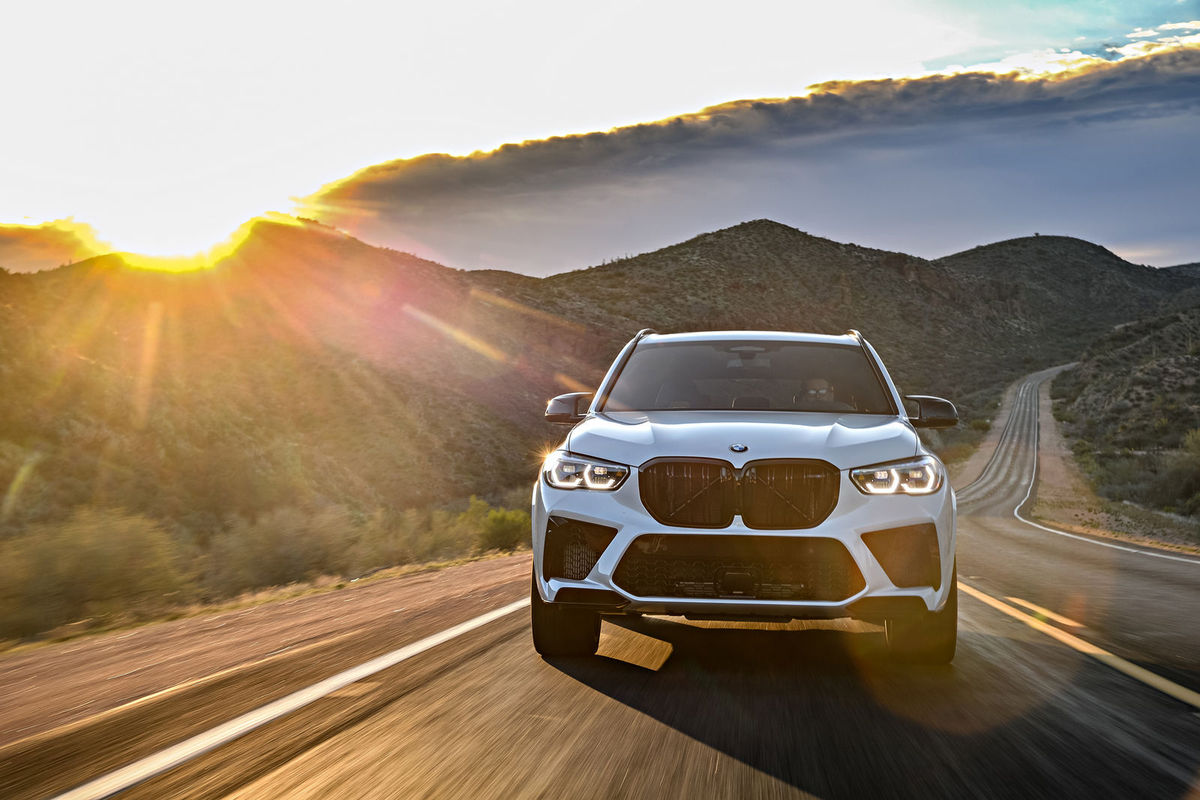
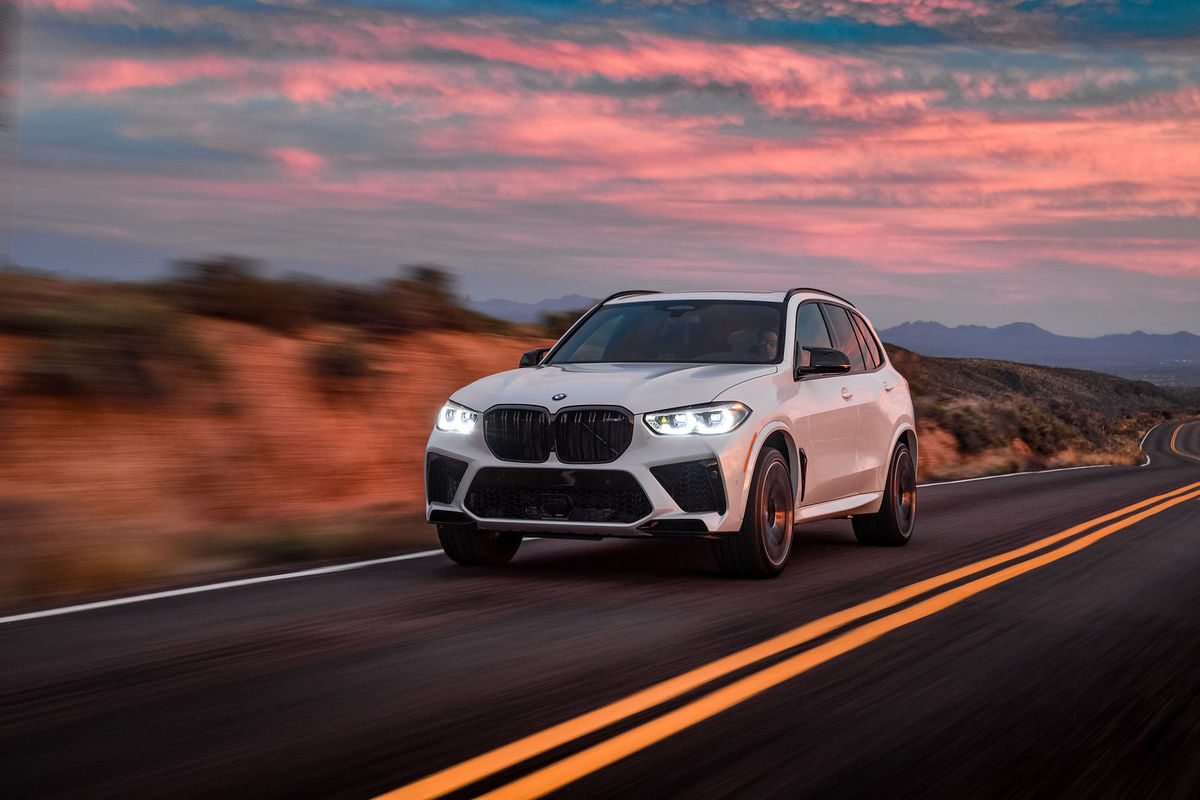
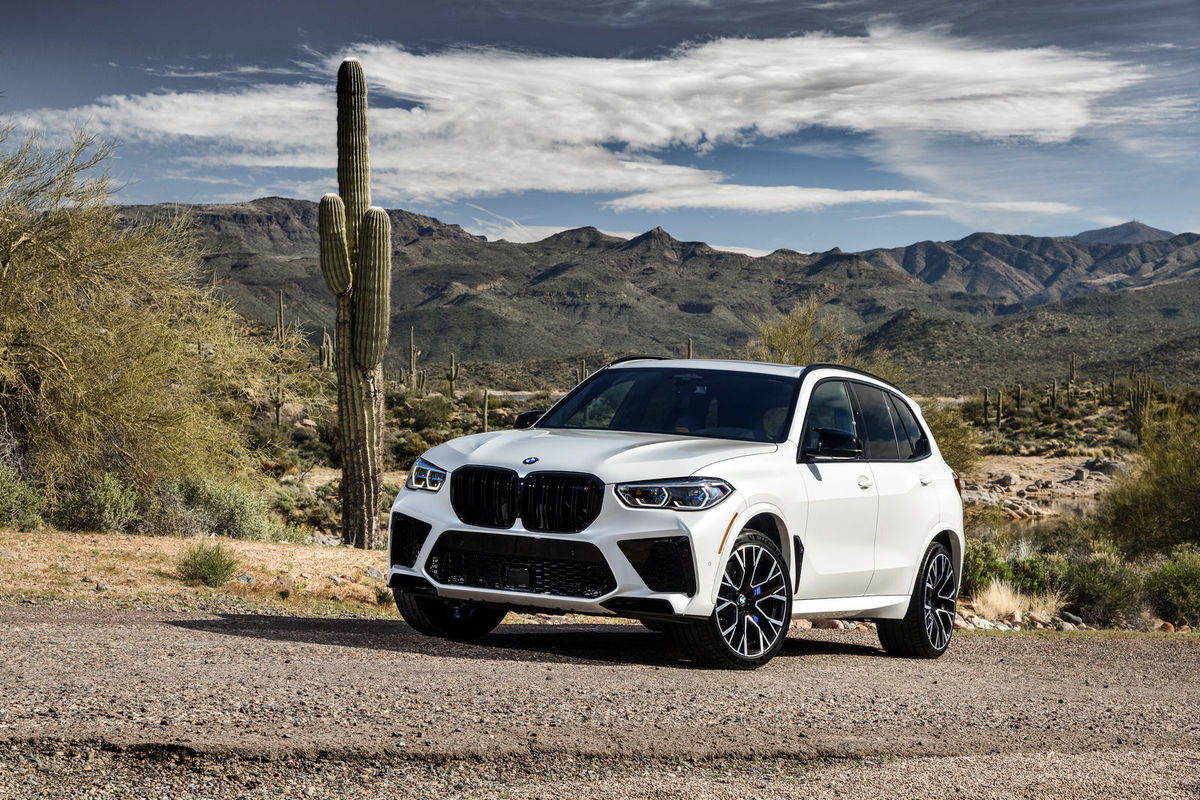
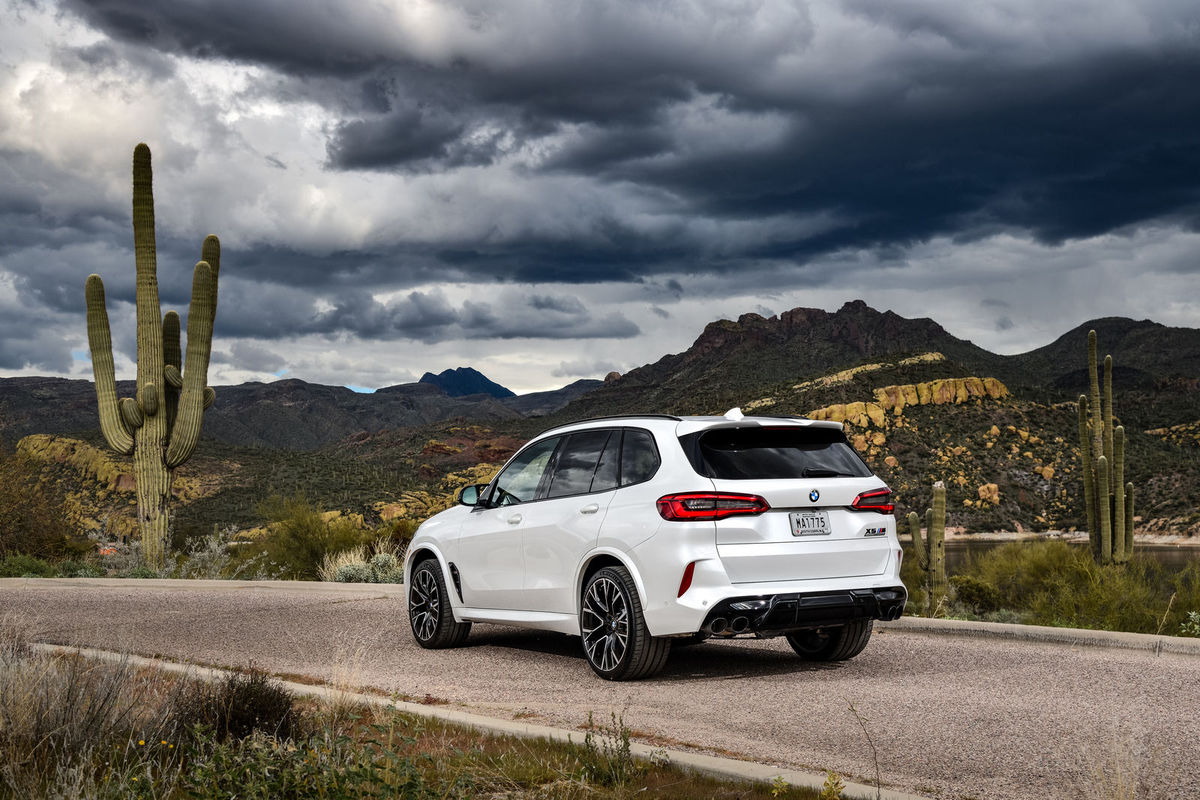
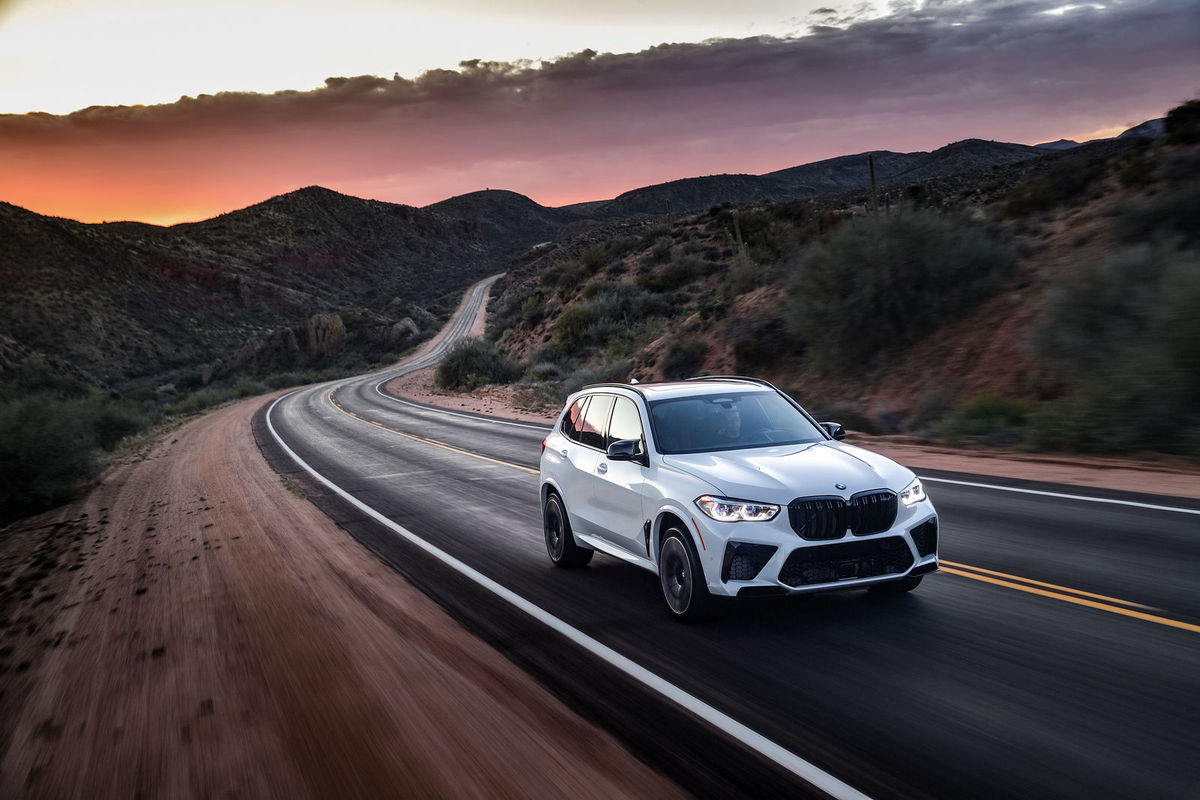
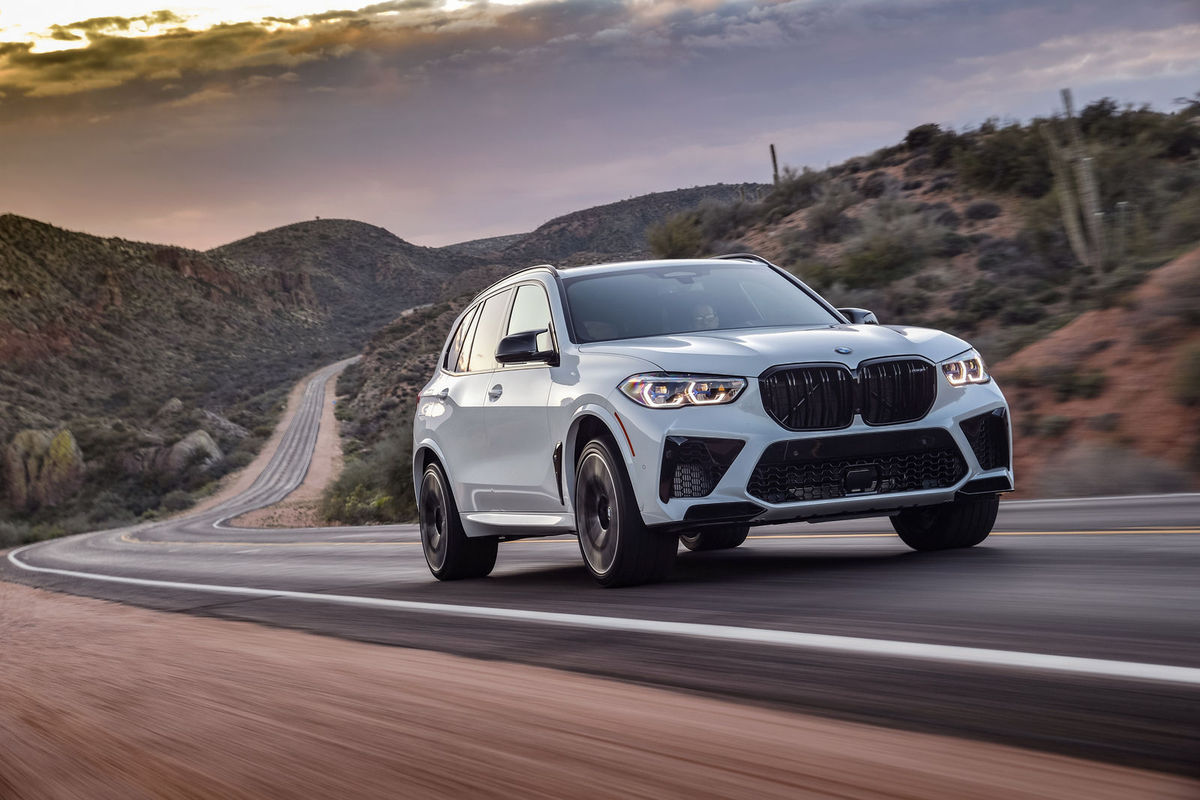
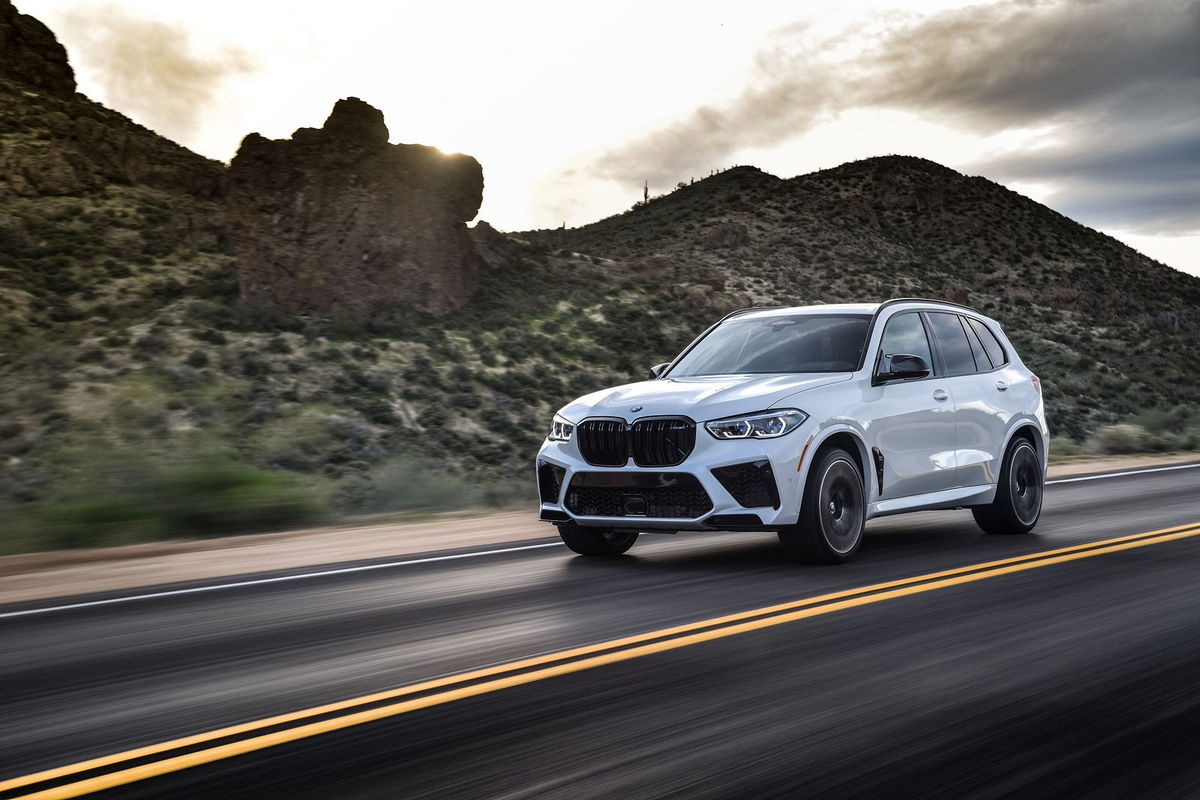
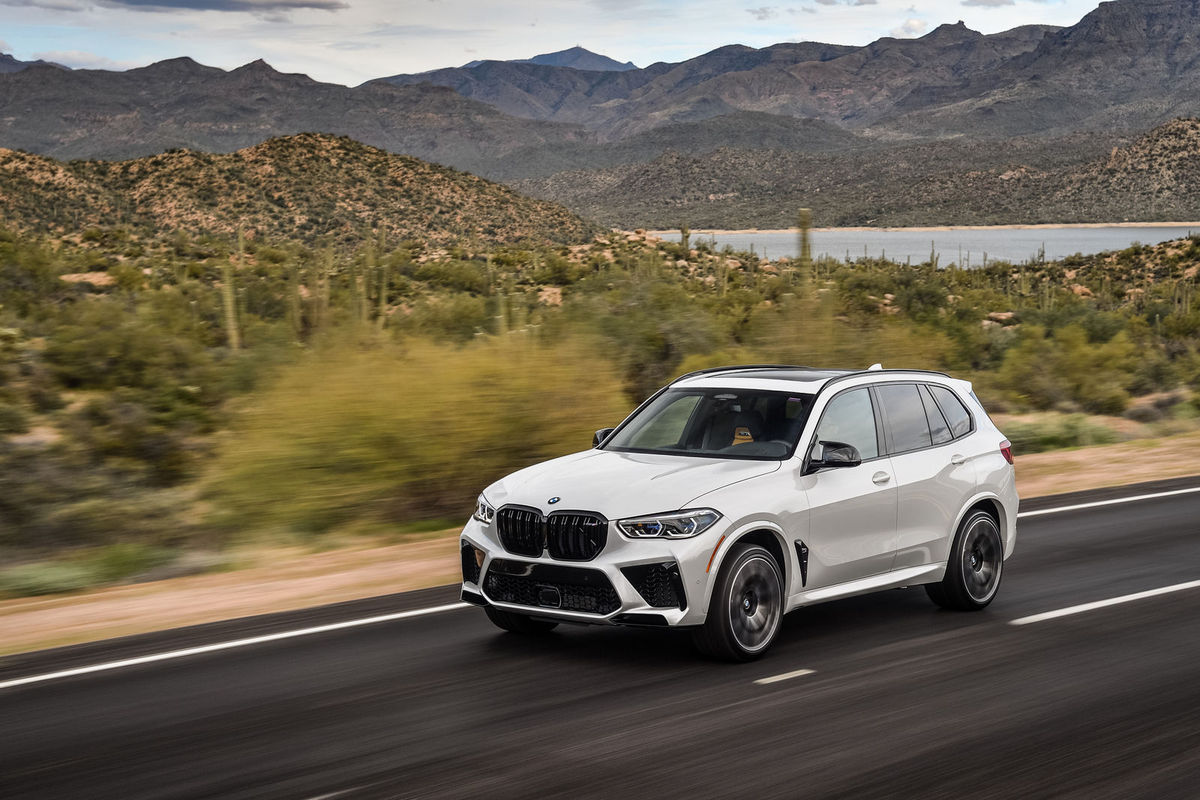
BMW X5 M Competition (2020) International Launch Review
The latest entrant to the performance-SUV war is this: the brutal, 460-kW BMW X5 M Competition. Matt Robinson travelled to Phoenix to drive the newcomer…
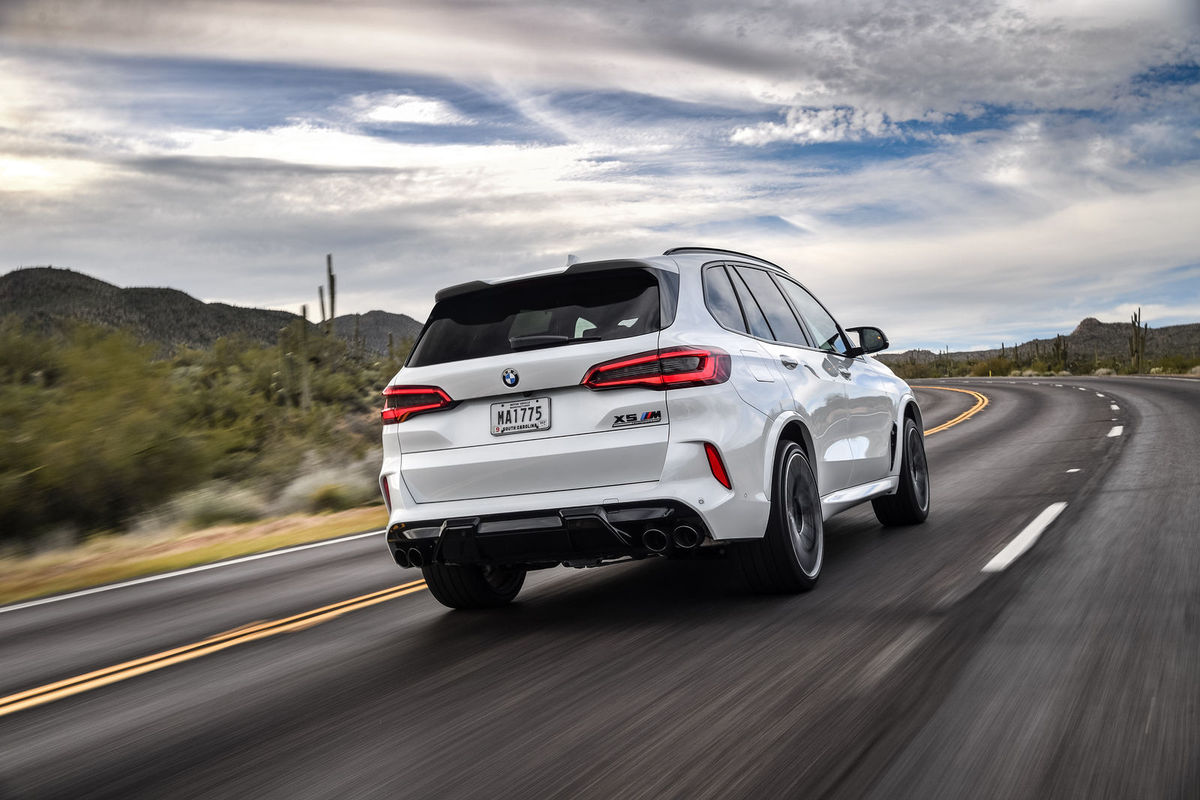
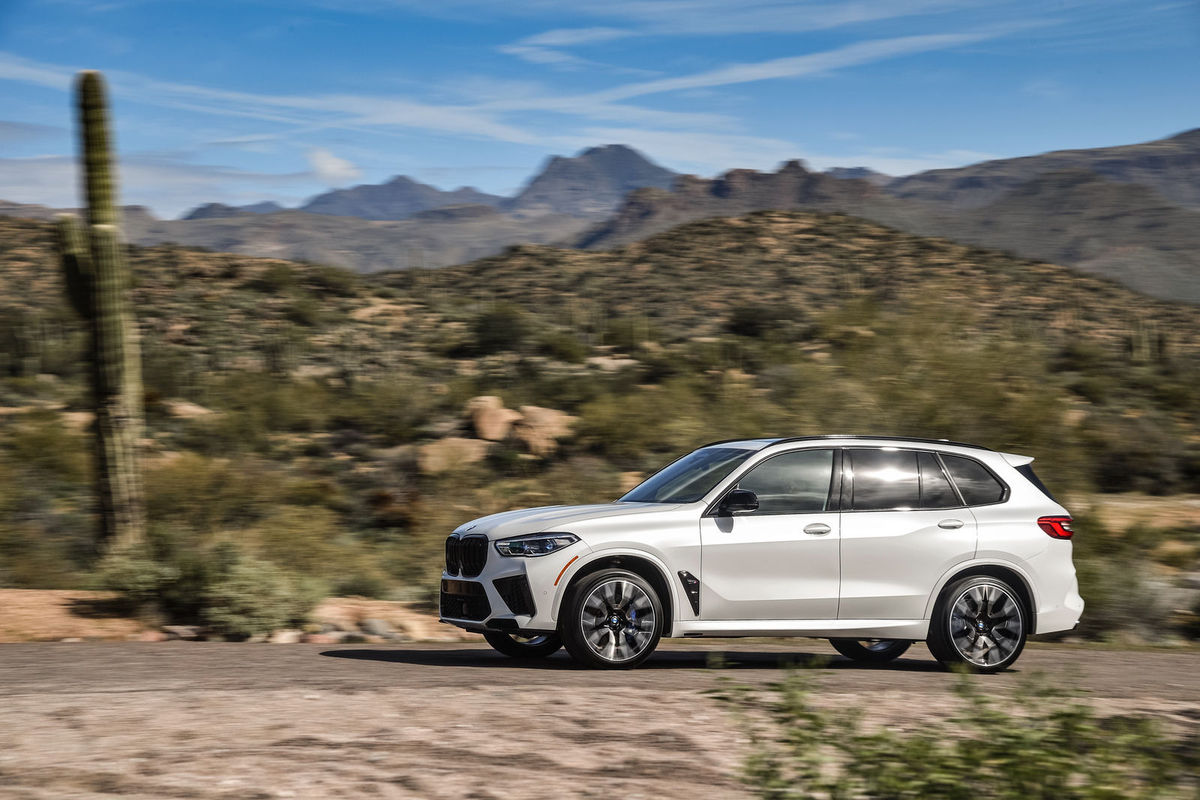
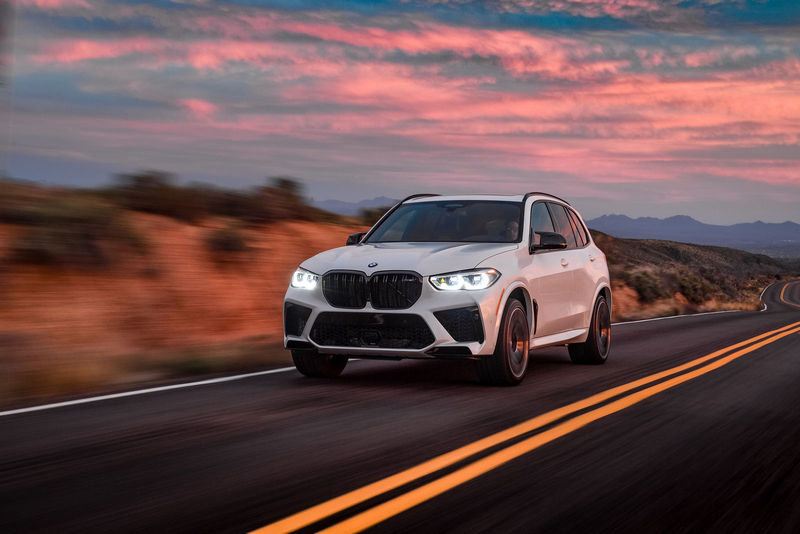
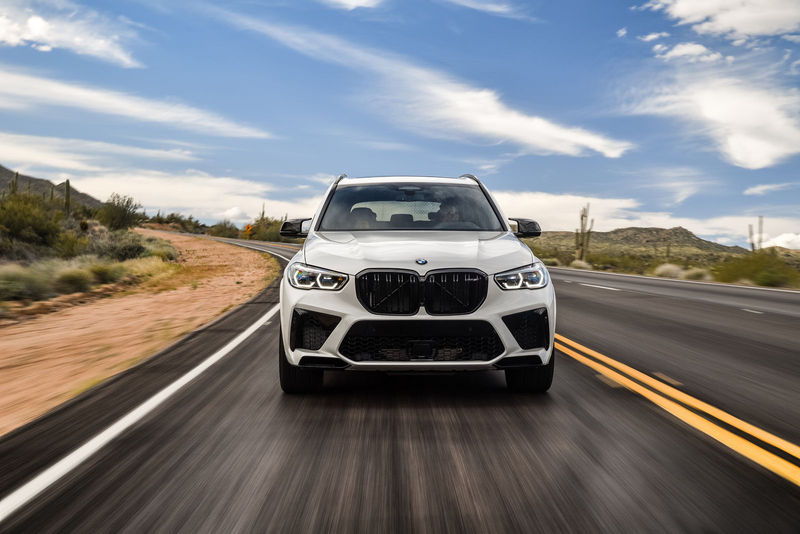
It’s another day and yet another powerhouse/juggernaut/bruiser cruiser has joined the fray; BMW's 3rd attempt at the rapid X5 M squares up to the likes of the Porsche Cayenne Turbo, the Audi RS Q8, the Range Rover Sport SVR and the incoming Mercedes-AMG GLE 63 S. It's propelled by the same 460 kW biturbo 4.4-litre V8 that powers the M5 Competition super sedan and M8 Competition sports grand tourer, which is why it too gains the exalted “Competition” honorific. Can a 2 385-kg family chariot ever really be a proper BMW M Competition machine, however? It's time to find out…
Straight to the point
Despite lugging 2.3 tonnes off the mark, this is still BMW's fastest-accelerating SUV.
Claimed to catapult from 0-100 kph in 3.8 seconds, 0-200 kph in a ridiculous 13.4 seconds and go on to a limited (yes, limited) top speed of 290 kph – if you tick the M Driver’s Package option – the X5 M Competition is a beast, a brute, a behemoth capable of bending space and time (sort of). BMW has a lengthy history of producing such machines, as does Mercedes-AMG. For the original E53 X5, the most potent derivative was the glorious, naturally aspirated, Alpina-gifted 4.8is of 2004, with its 265 kW 4.8-litre V8, but by the time the 2nd-gen X5 (E70) came into view in 2006, BMW M had abandoned its principles of ve vill not touch ze SUVs mit eine bargepole and was feverishly working on a hot X5.
So the original X5 M duly arrived late in 2009; it packed an almighty 4.4-litre V8 twin-turbo unit making 408 kW. Sound familiar? That’s because the engine in the 2020 X5 M Competition is the same unit, pretty much. It has found its way into all manner of cars in the intervening 11 years, such as the F10 M5, the F06/F12/F13 M6 and the F90 M5, but it was also utilised for a more powerful 423 kW derivative of the F85 X5 M of 2014, which was, of course, this Bimmer's predecessor. And if you think the X5 M is a slow-selling vanity project on the part of BMW, think again: the Munich outfit shifted 8 830 examples of the E70 X5 M worldwide, and a further 12 842 units of the F85 between 2014 and 2019.
Brutish SUVs with wild performance stats have proved extremely popular, and profitable.
Clearly, then, there’s a market for these wildly powerful SUVs… even if BMW seems to have taken the risky decision not to hybridise its entrant in any way, shape or form. When Porsche offers a full-blown plug-in hybrid variant of its Cayenne Turbo and when the incoming Merc-AMG GLEs are all EQ-Boost-ed with electrification and when the RS Q8 proudly wears the words ‘MHEV’ on its sleeve, BMW’s X5 M is steadfastly petrol-only. It's a mightily impressive petrol engine, that's for certain, but being a petrol-only might count against it in the increasingly eco-conscious years to come.
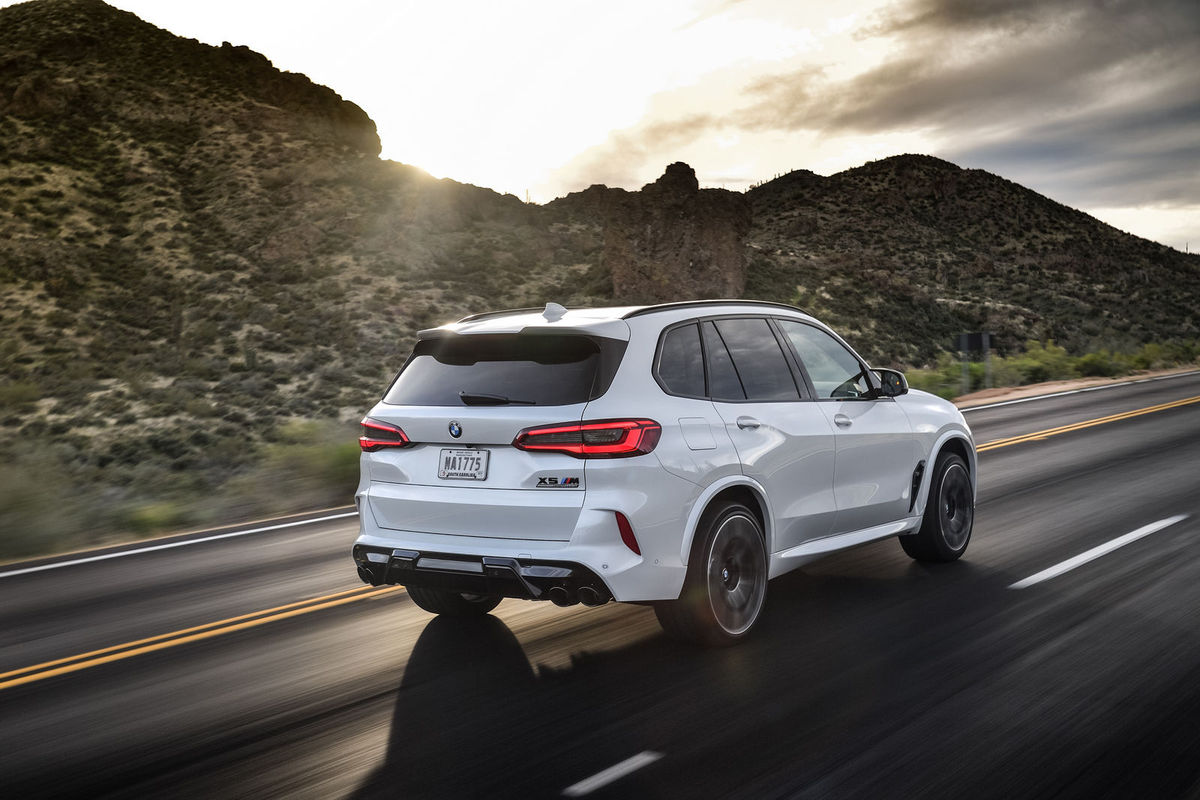
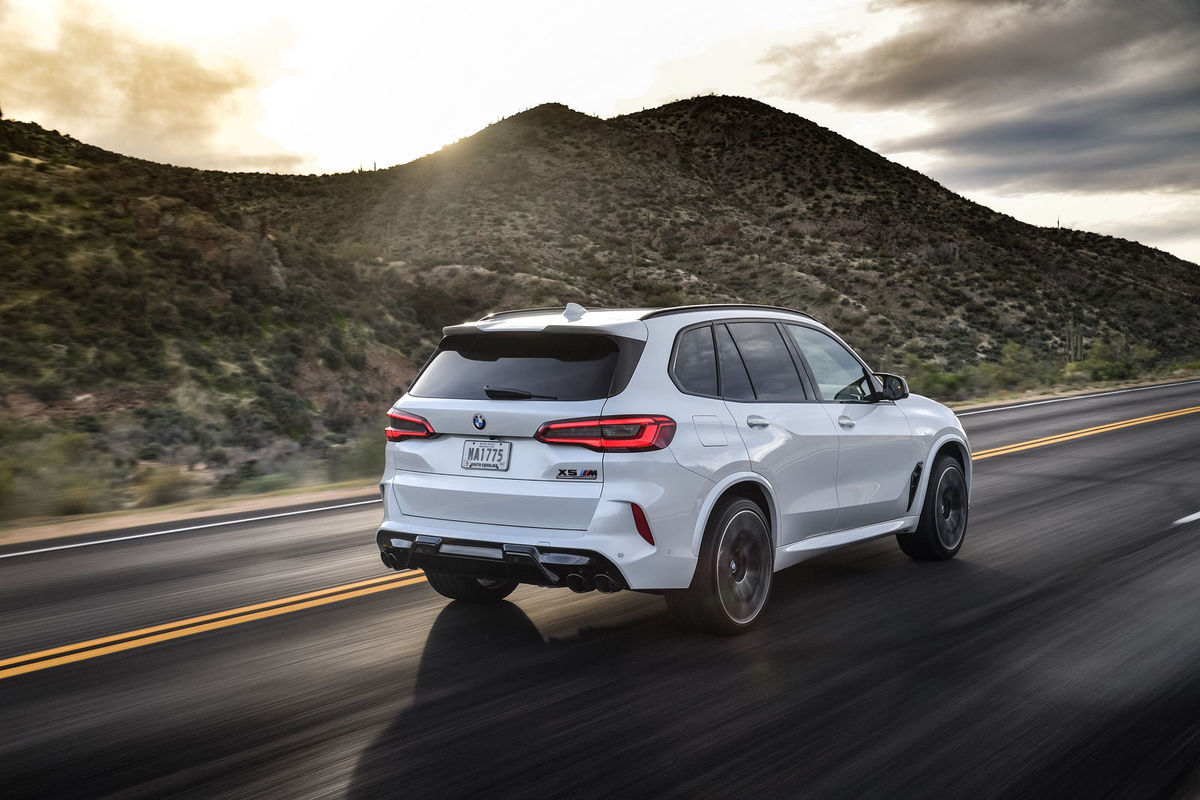
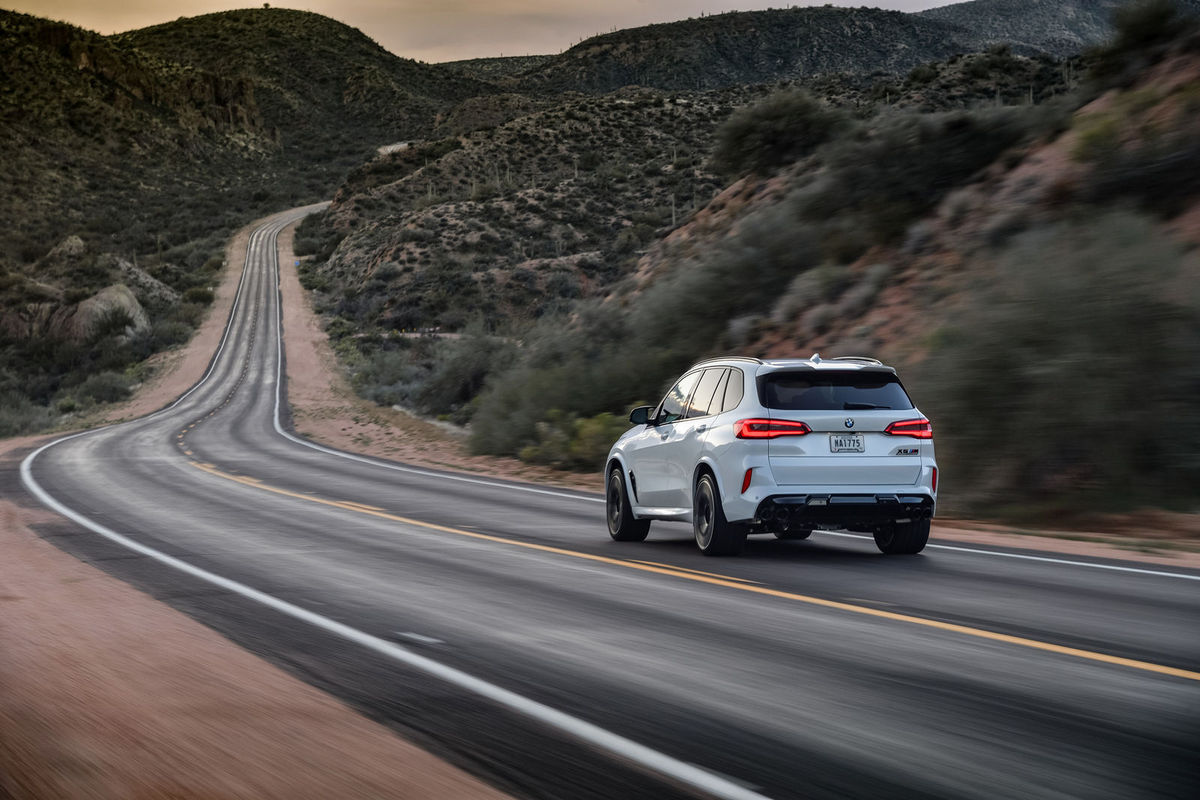
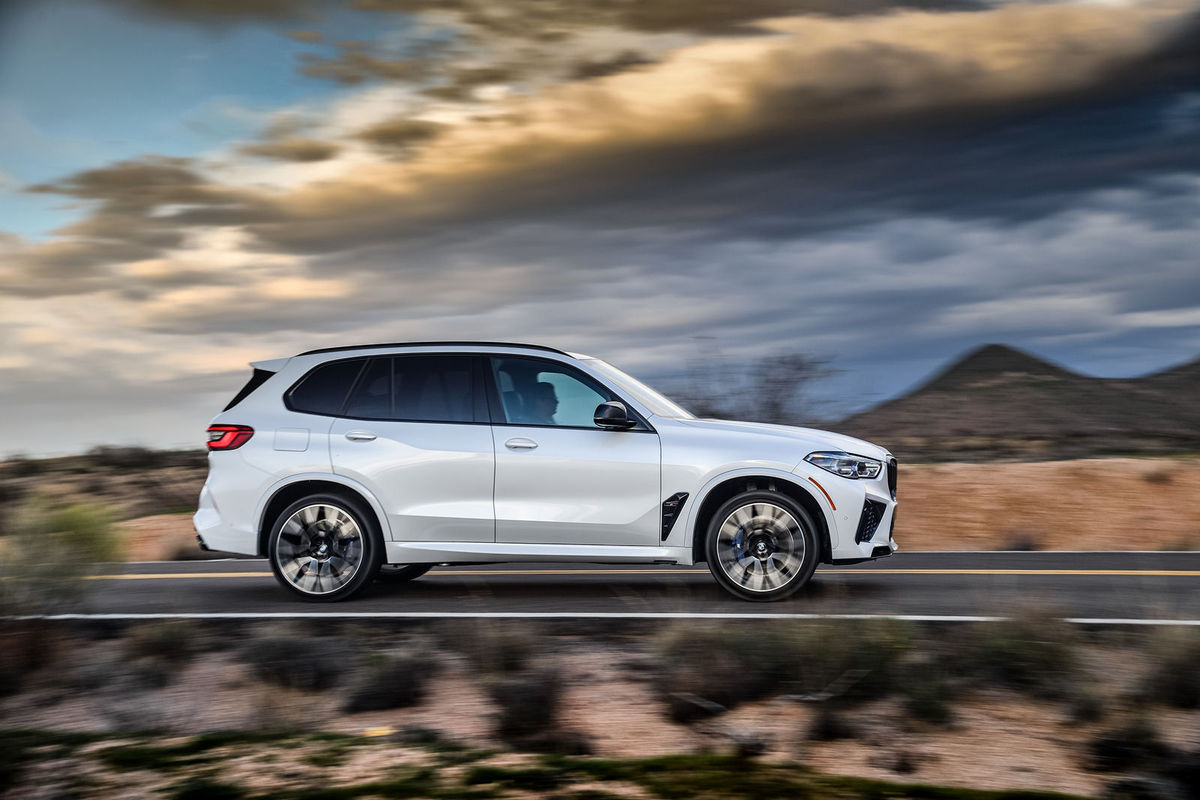
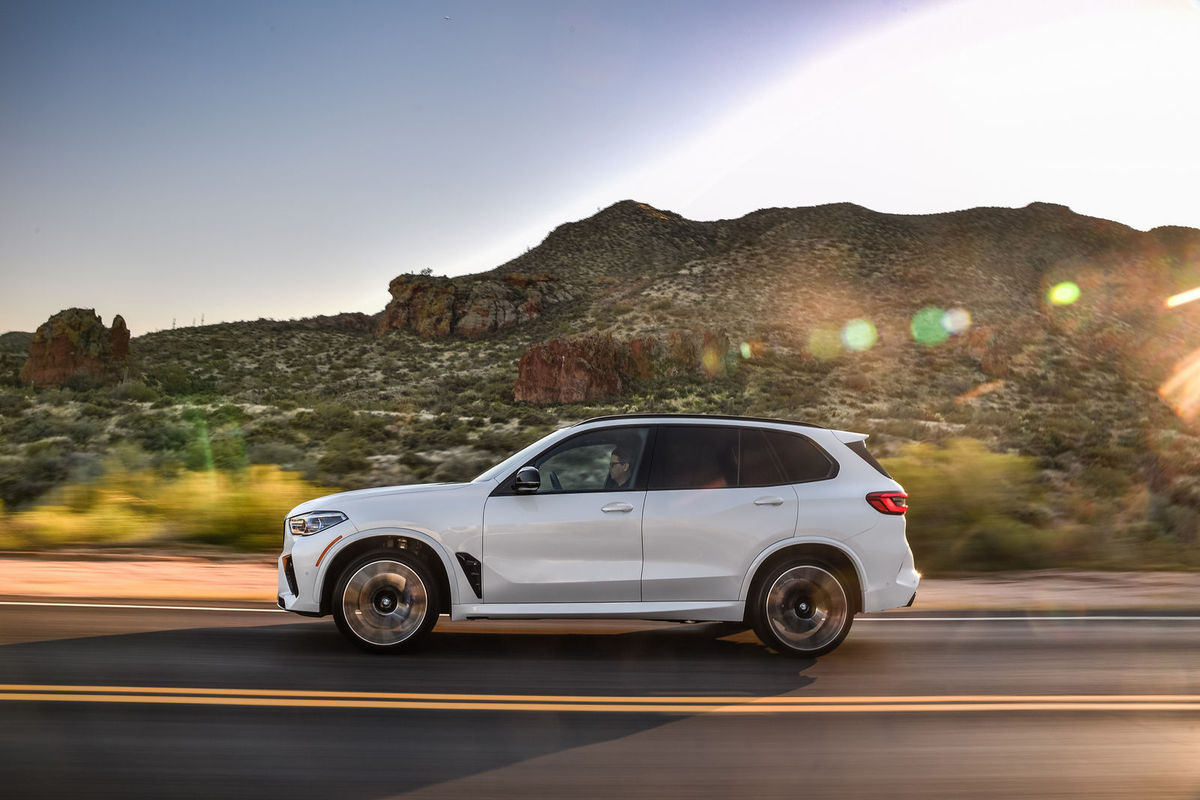
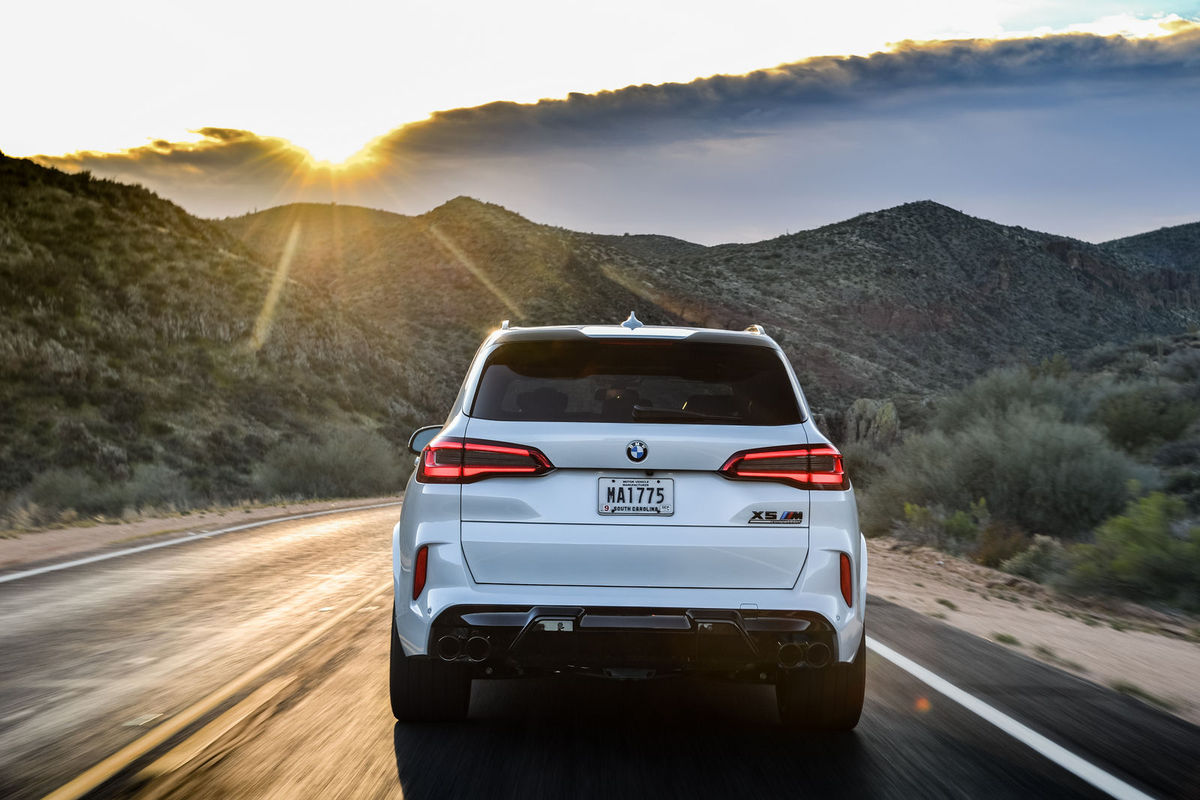
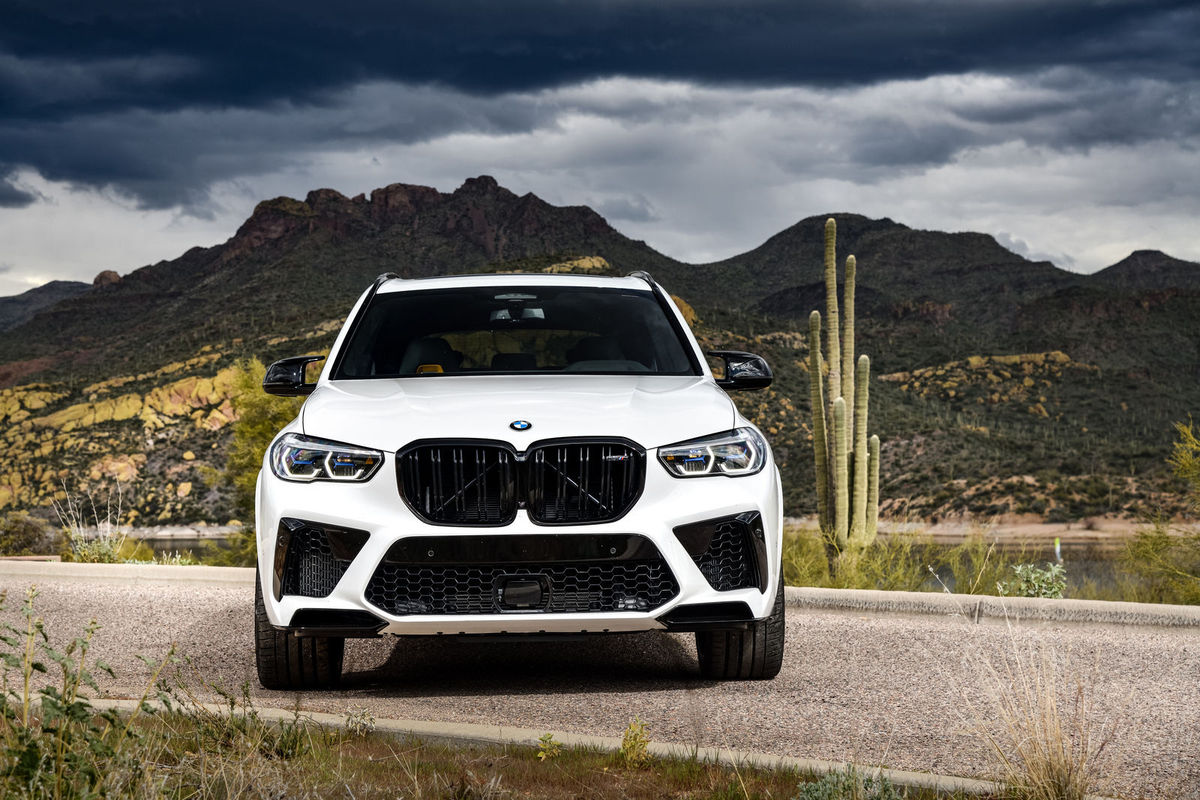
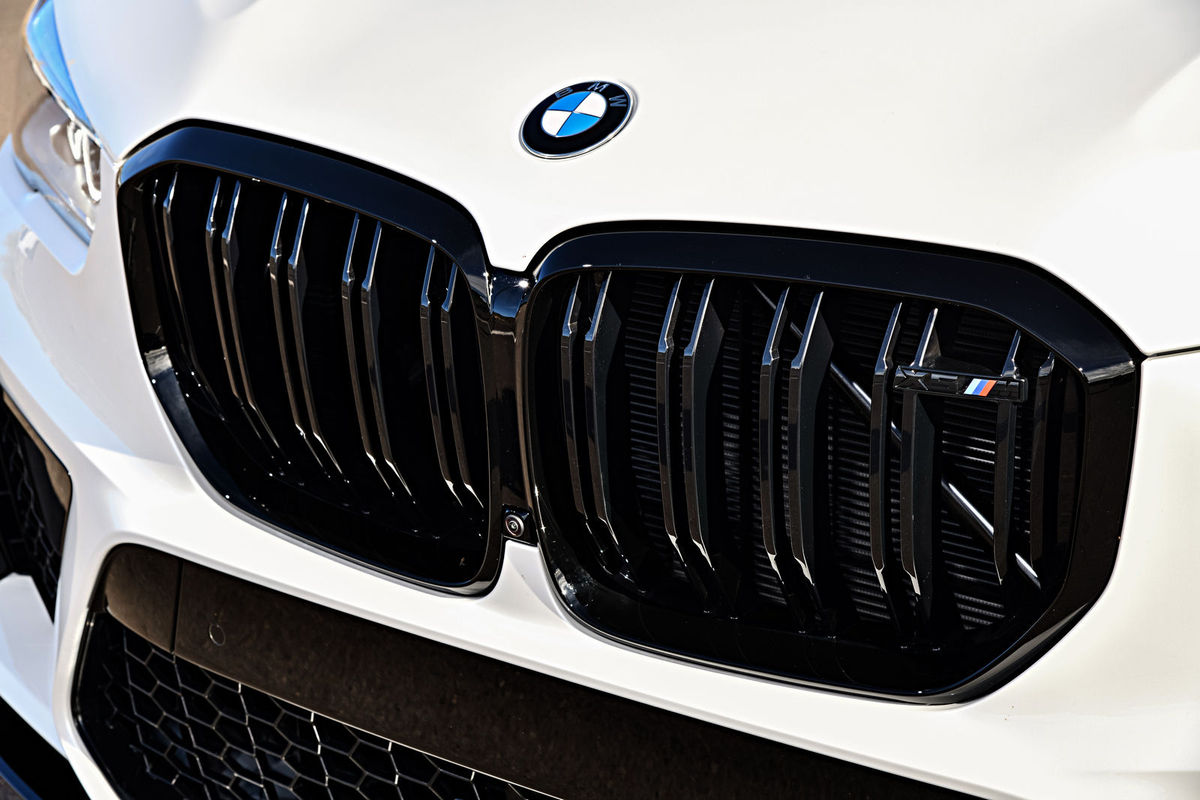
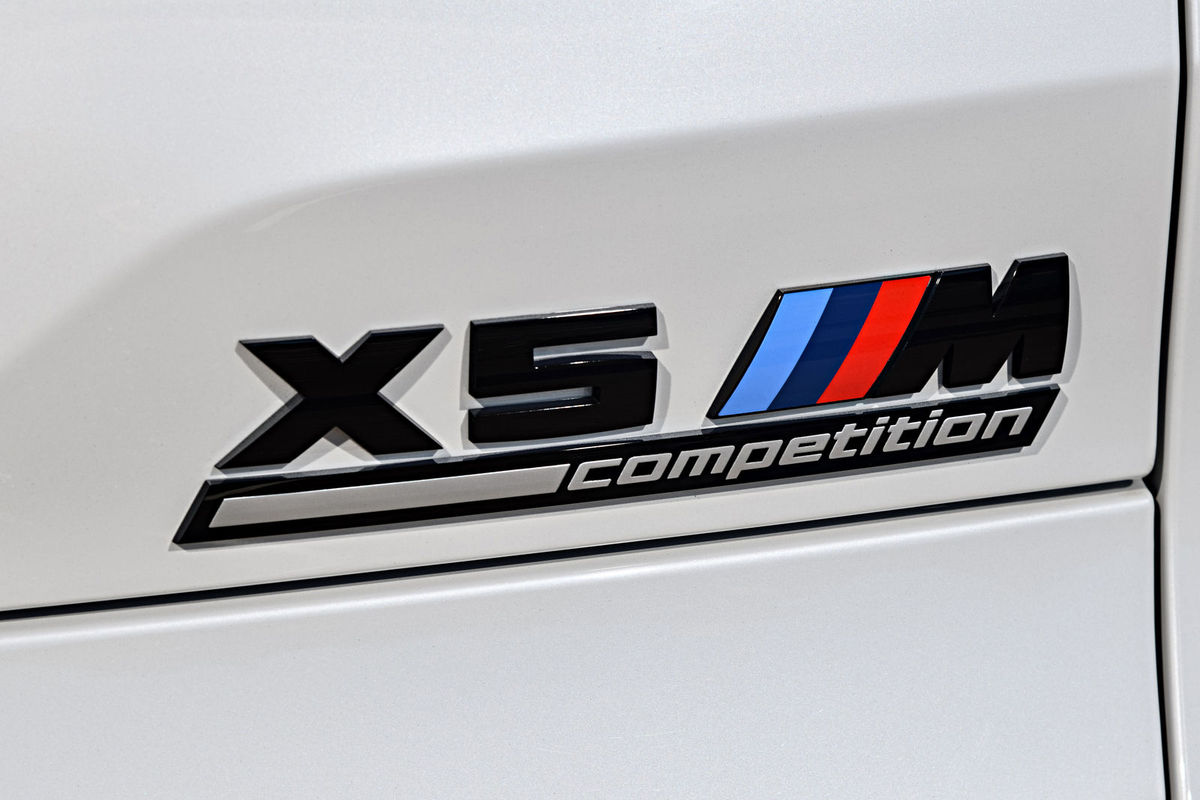
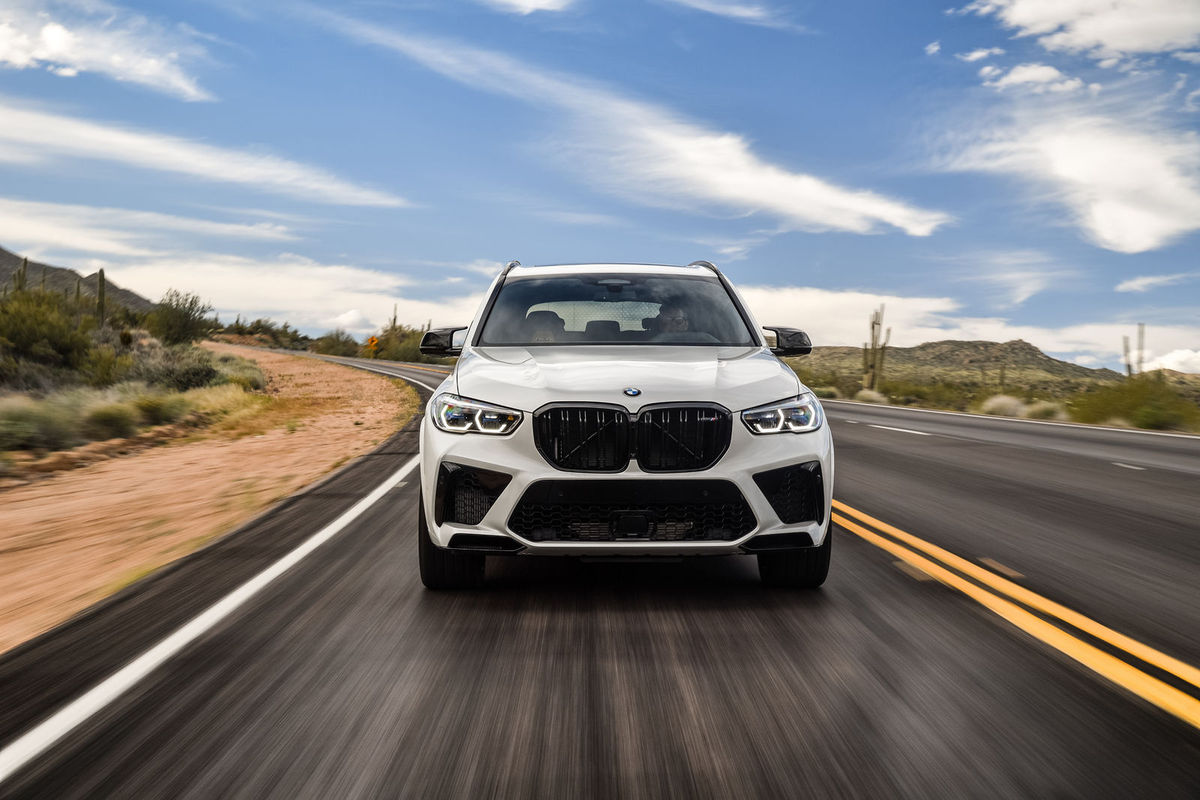
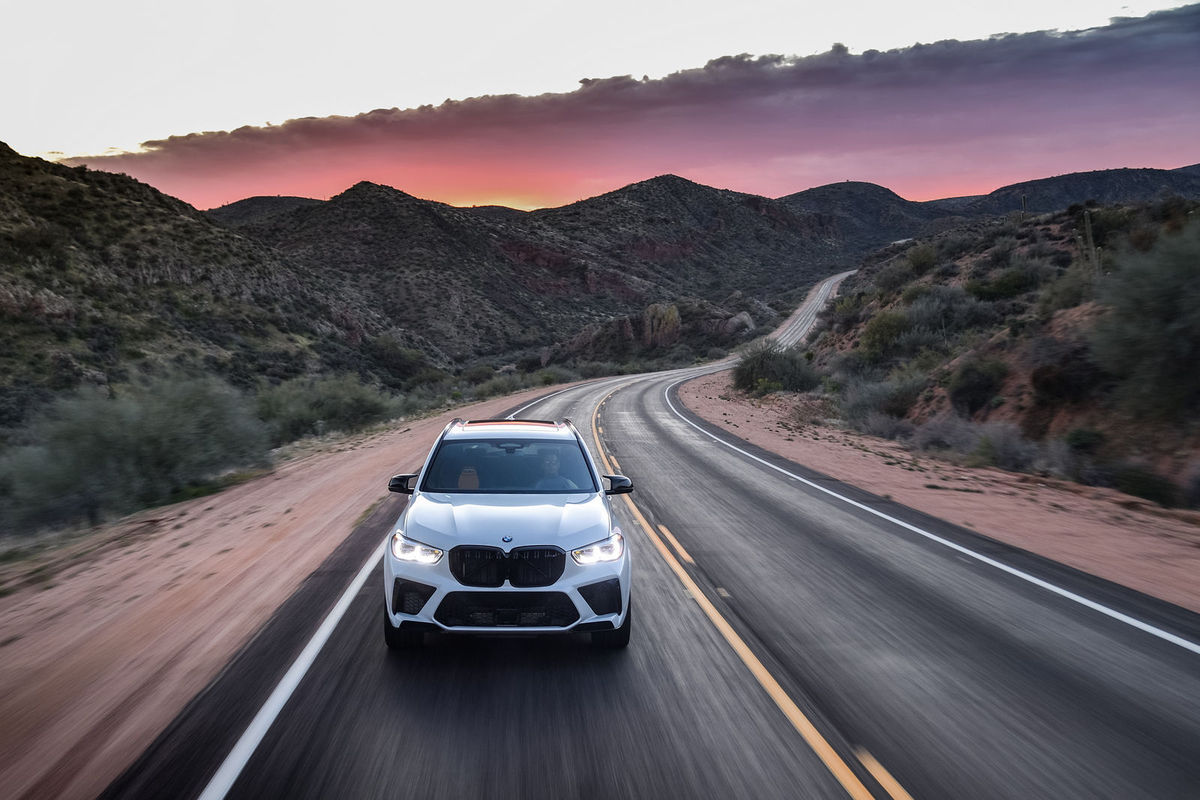
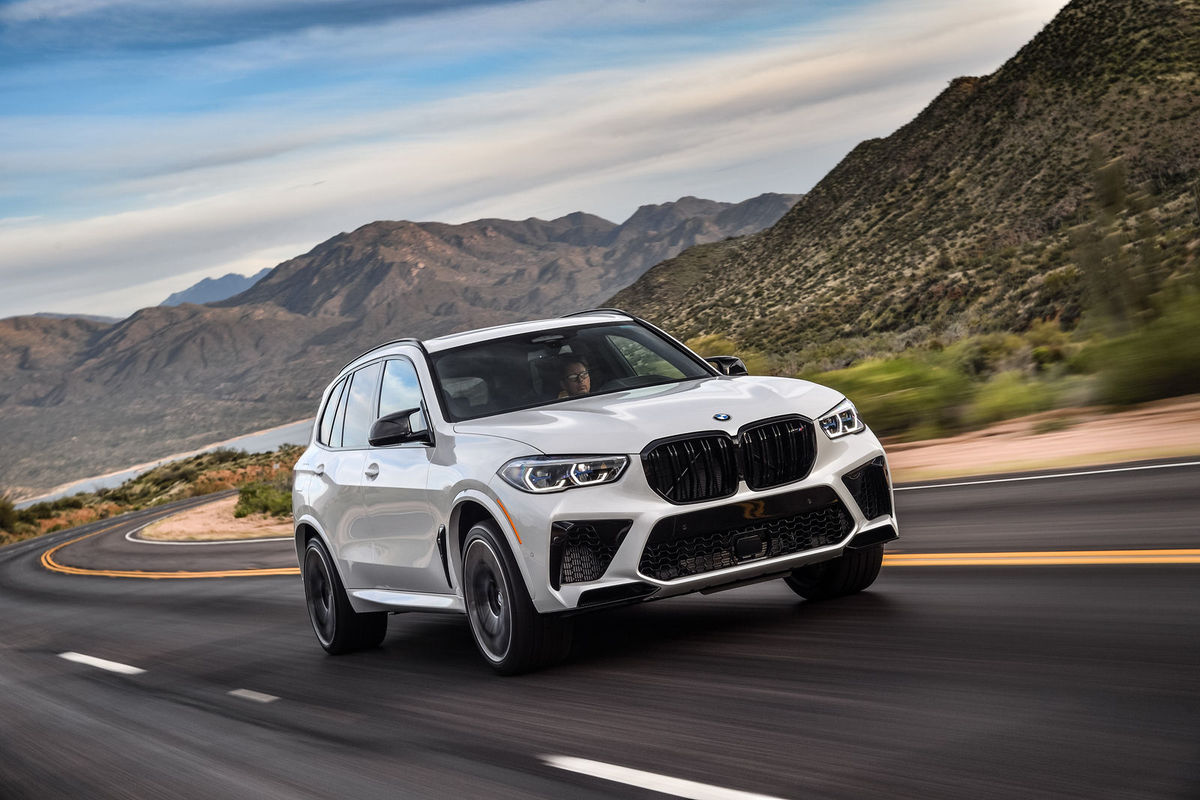
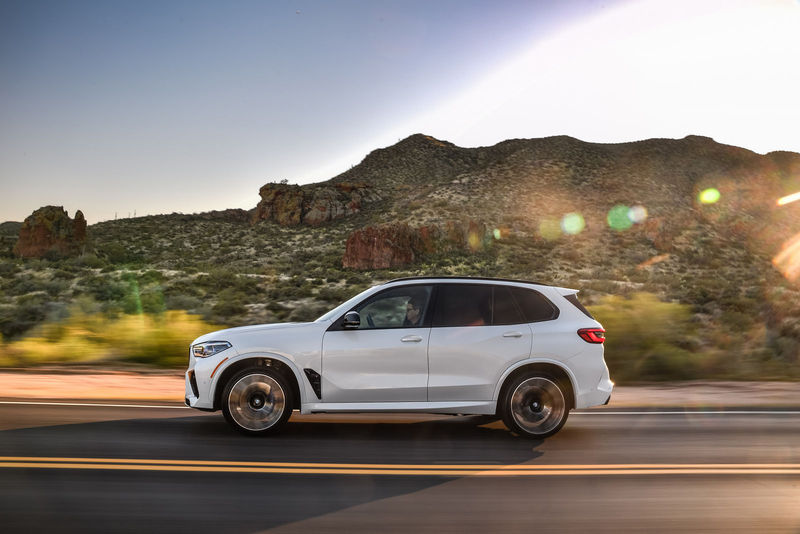
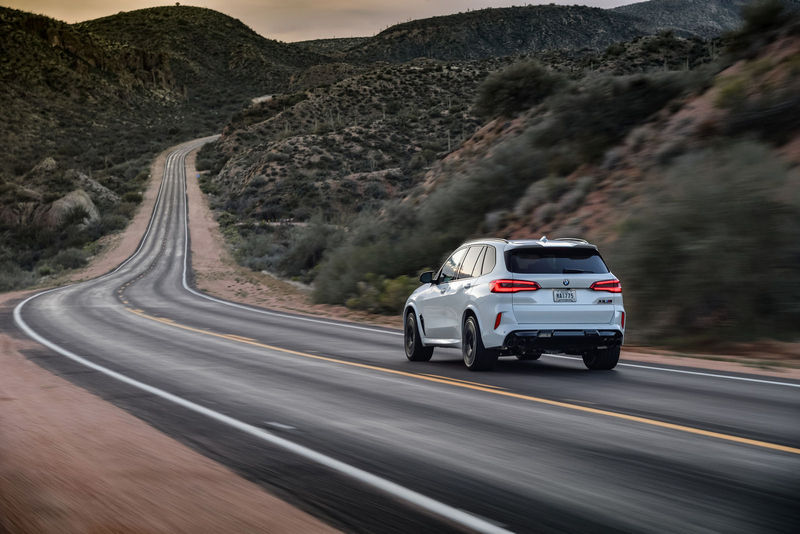
In other markets in the world, there will be the chance to buy softer-riding, less-aggressive-looking 441 kW "regular" versions of this X5 M and its sister X6 M (yep, there’s one of those too), but South Africa will exclusively get the 460 kW Competition versions of the muscular M cars. They feature lots of black detailing on the outside, such as for the double-vaned kidney grilles, all the visible model badging, the aerodynamic door mirrors, the roof rails, the window surrounds and, if you like, the massive 21-inch front, 22-inch rear alloy wheels. The X5 M also has a "3-dimensional" front air dam (it means in terms of its sculpting, somehow), quad exhausts, a rear diffuser and a roof-mounted tailgate spoiler.
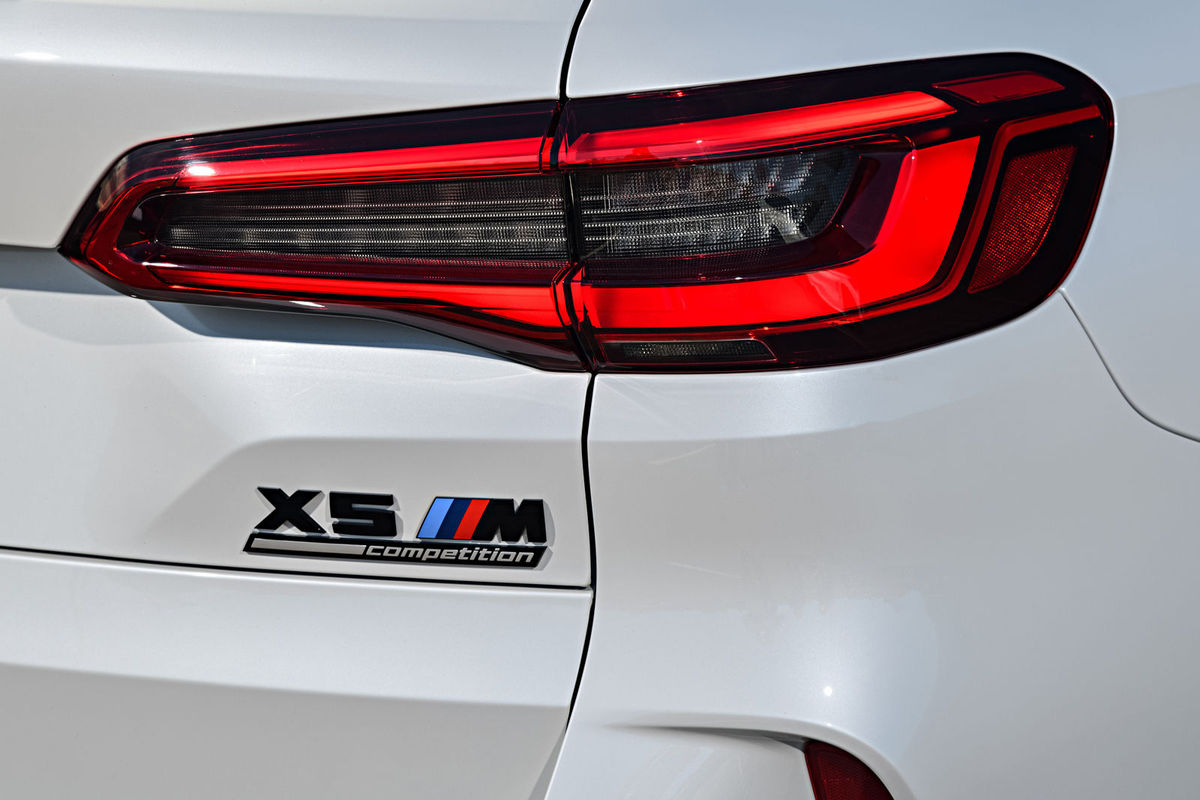
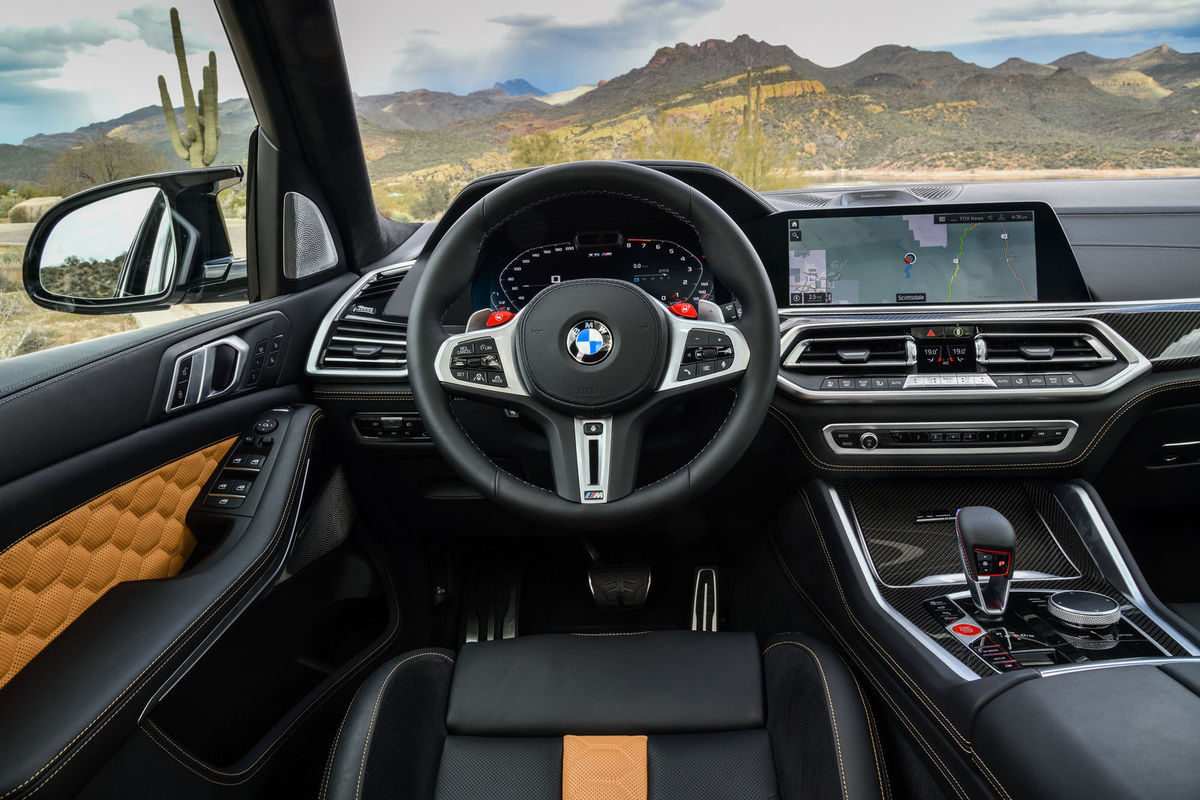
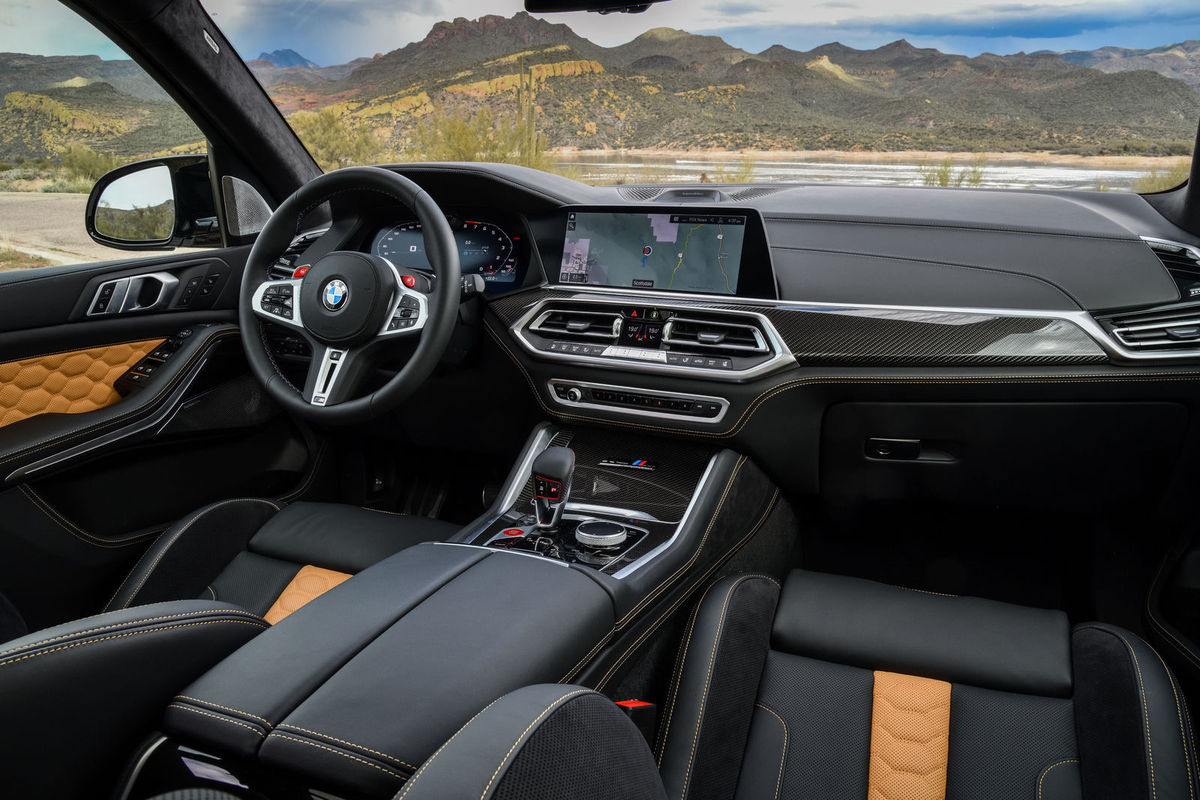
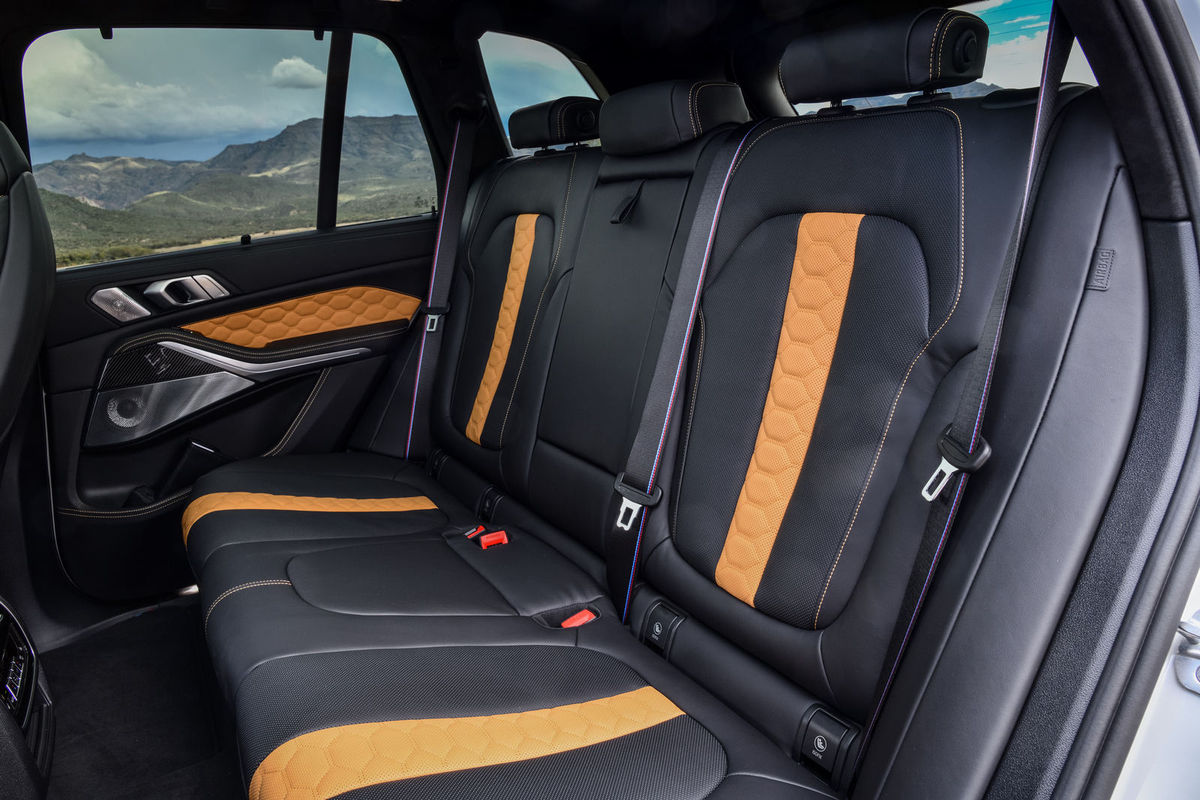
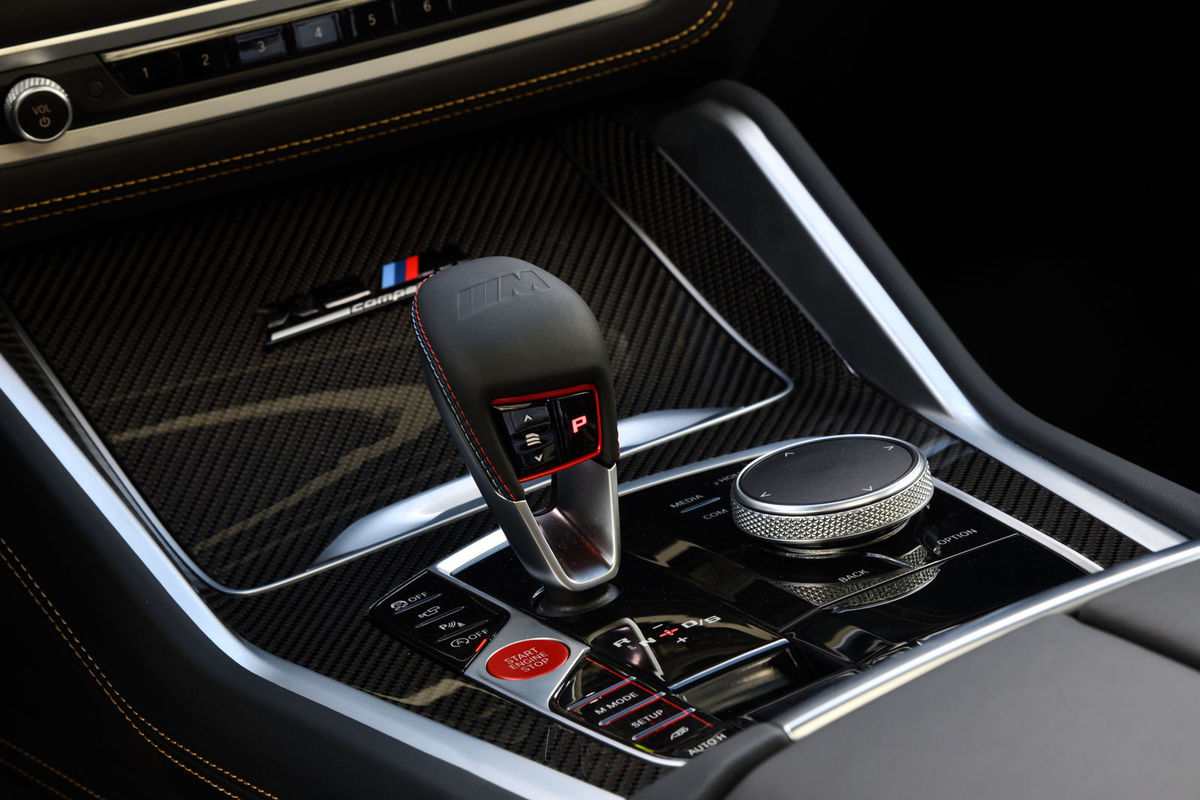
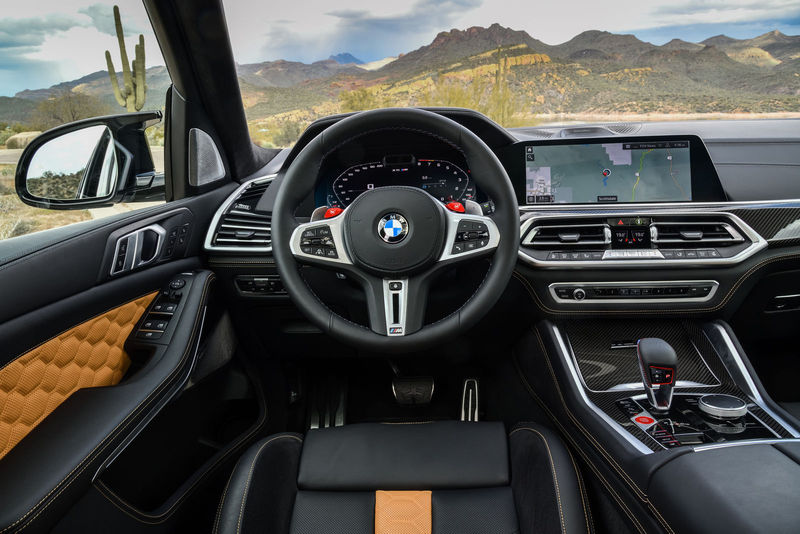
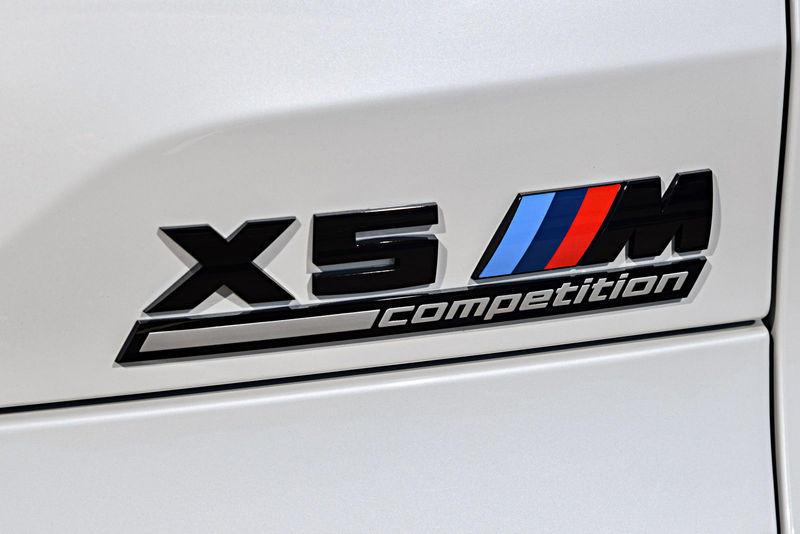
Inside are some tasty-looking and comfy-to-use M sport seats with integrated head restraints and a honeycomb-pattern for the stitching, an M steering wheel with a pair of red M1/M2 buttons and paddle shifts on it, the side-to-side M gear lever, bespoke displays for the Live Cockpit Professional digital cluster, an M Head-Up Display as standard and also lots of carbon-fibre trim, plus an "X5 M Competition" black badge on the lid for the cupholder area of the console.
Out on the road
The X5 M is not BMW M's most involving M car to drive.
Let's cut to the chase, shall we – the X5 M is largely brilliant to drive, except in 3 key regards… One of these is a slightly lacklustre M Servotronic steering: it’s not that the X5 M Competition has a bad set-up, but it’s not exactly communicative nor particularly pleasantly weighted. It’s okay, it is what it is. The 2nd issue is that the newcomer is not the most involving M car you’ll ever drive, although that’s not a surprise given its SUV leanings; and, as we shall come to see, it’s about as entertaining as anything else in this rarefied class, so it's not a major flaw.
However, by far the biggest bugbear is the criminally-firm ride quality. You don't need to travel very far in the X5 M Competition to know it will be a punishing daily driver. There’s an underlying shimmy of sport-focused suspension at all times, making for a notably poor low-speed ride, and while the damping starts to come into its own at higher speeds (as seems to be the way with all modern fast metal), it never approaches a level we’d call "tolerable".
And before you think we’ve gone soft in old age, know that all of the Porsche Cayenne Turbo/S E-Hybrid, the Audi RS Q8 and the Range Rover Sport SVR ride better than this, and there’s every likelihood the forthcoming Mercedes-AMG GLE 63s will as well, given the old model, with its adaptive air (Airmatic) suspension, was notably nicer to travel in than the previous X5 M.
The red buttons are programable so you can store your favourite drive modes for instant access.
The X5 M's brittle ride quality can be attributed to the fact that the newcomer sits on M adaptive suspension with electronically controlled dampers; there are no air springs here. The pay-off for this is something you used to always expect with a BMW, albeit it’s not a factor that always holds true in recent years, and it’s this: aside from the aforementioned Cayenne, when the roads get challenging, this is the best, big, fast SUV you can buy.
While it corners a little more steadfastly than we’d like, thanks to its permanent 4WD, it is nevertheless genuinely entertaining to get the X5 M stoked up on the right roads, because it can change direction quickly and tackle cresting turns with just as much decorum as it can thunder through well-sighted, open bends at frankly insane speeds. The body control is absolute, the grip levels on the 295/35 front, 315/30 rear Michelin Pilot Sport 5 tyres are immense, the traction advantages of the M xDrive and the Active M Differential cannot be ignored.
Suffice to say the X5 M Competition is devastatingly quick in the curves and even its brakes, 6-piston front callipers gripping 395 mm discs up front and 380 mm discs in single-piston floating callipers rear, do an admirable job of reliably and powerfully reining in 2.4 tonnes of hard-charging Bavarian beef time and time and time again.
Competition models are easily spotted by their black badging.
Also, the performance of this magnificent, magnificent drivetrain is unimpeachable. It is a belting engine, hooked up to a majestic transmission, driving through a 4-wheel-drive system that never gets flustered in the slightest as it attempts to corral 750 Nm coursing through its mechanicals. The performance results are as startling as you’d expect: any gear, all revs, tap on the throttle and the X5 M surges for the horizon with an eagerness that’s most delightful.
What's more, it sounds better than a regular M5 with the same engine, thanks to the sports exhaust playing some great notes, but for all its monumental pace and terrific road-holding, the X5’s kerb weight and its jarring ride quality always make you idly wonder. . . what if BMW just did the decent thing and made an M5 Touring instead? Hmm.
Verdict
For big, outlandish SUV fans, the X5 M will deliver all the thrills expected.
In terms of its dynamic talents on a challenging road, the outrageous BMW X5 M Competition is easily the finest rapid SUV the German company has produced – and it’s one of the most engaging machines of its type from any carmaker that is currently on sale. However, it’s incredibly expensive, it doesn’t ride with good grace and as good as it is for an SUV, it’s by no means the best M car you’ll ever experience. If you’ve been waiting patiently for the 3rd iteration of the X5 M and you’ve got a hardy constitution, then this Competition is undoubtedly going to wow you with its qualities. For everyone else, it will seem like a lot of very good hardware that might have been better off employed elsewhere.
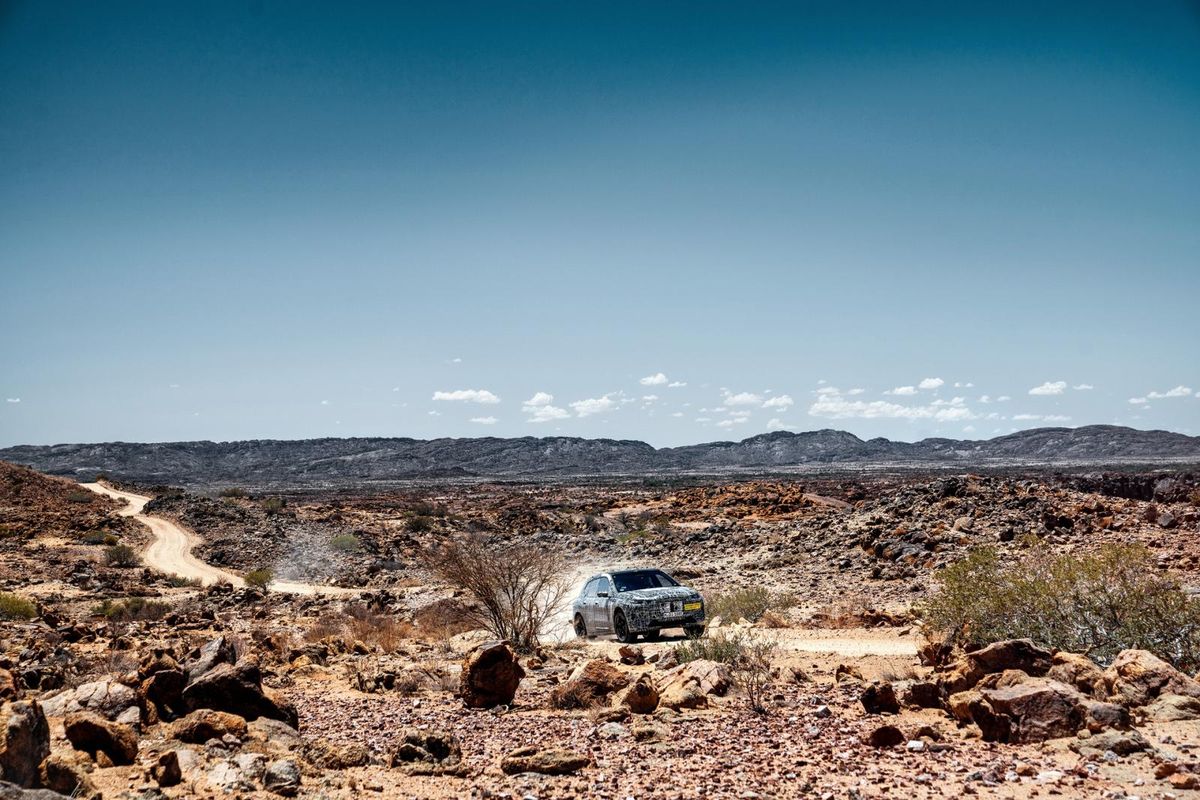
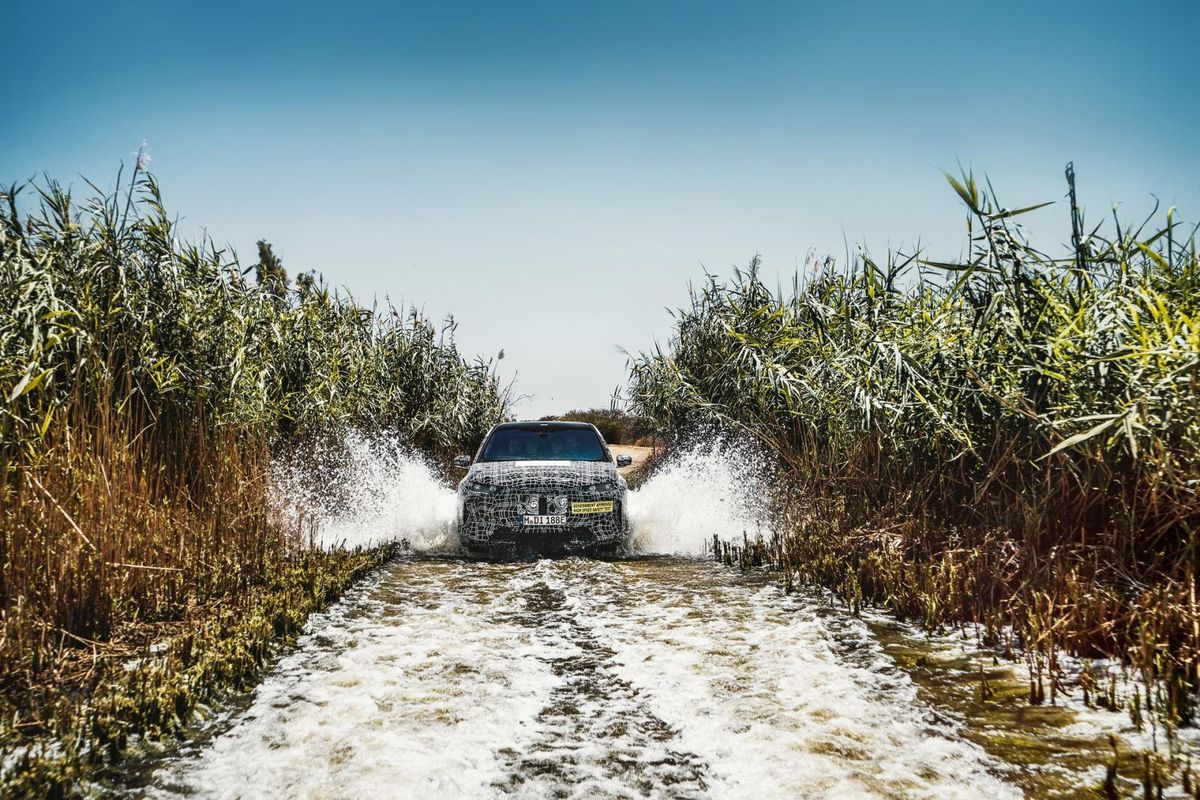
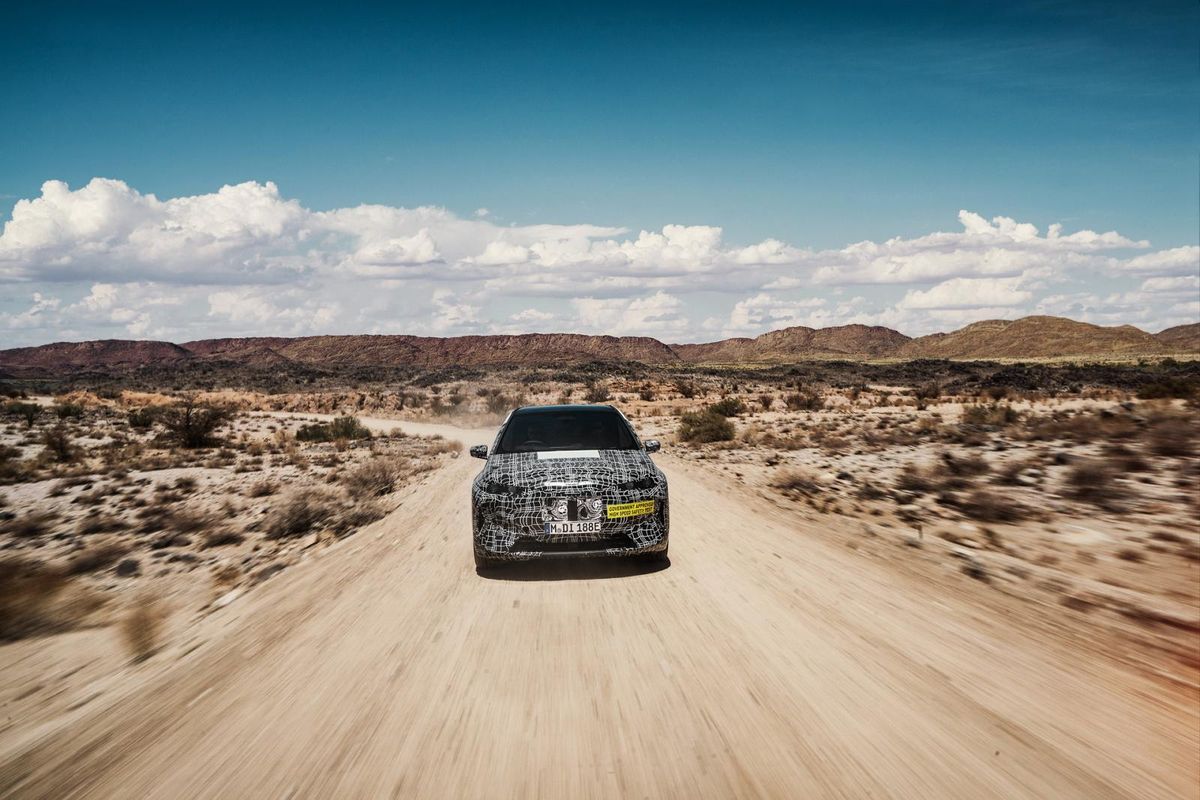
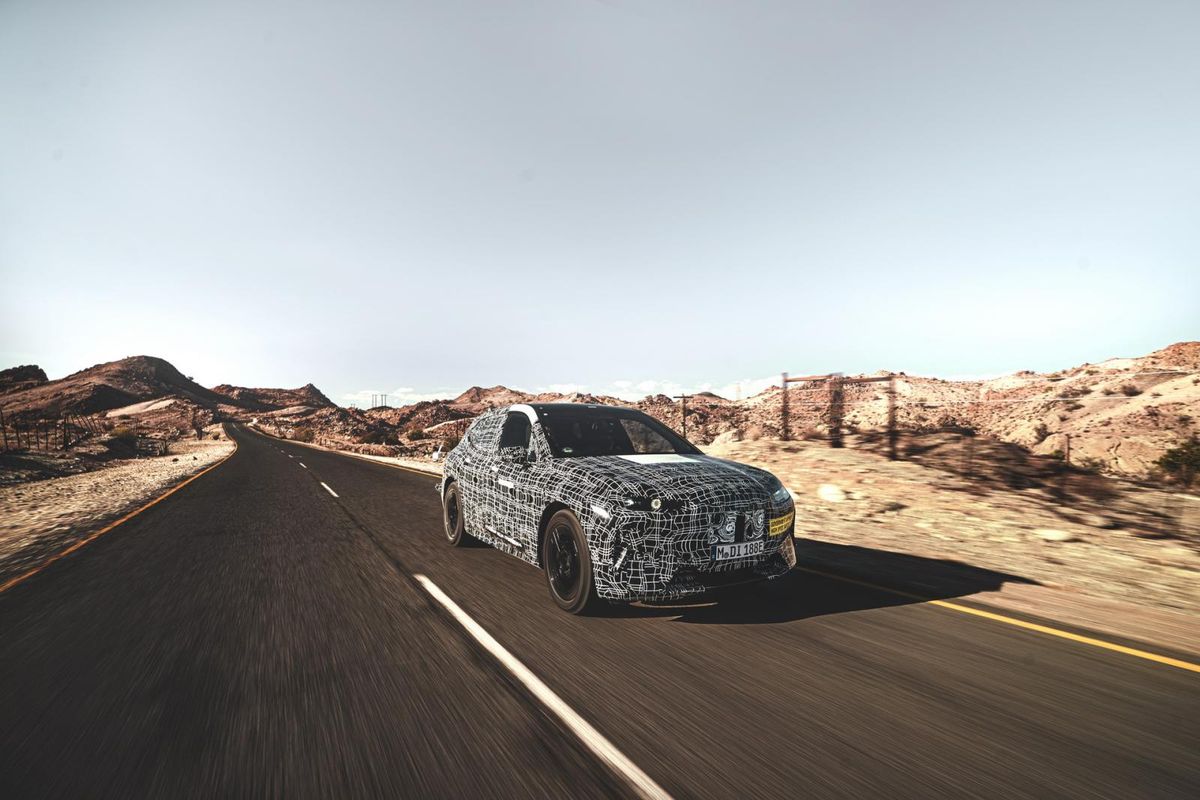
BMW’s forthcoming luxury electric SUV has been doing some hot-weather testing SA.
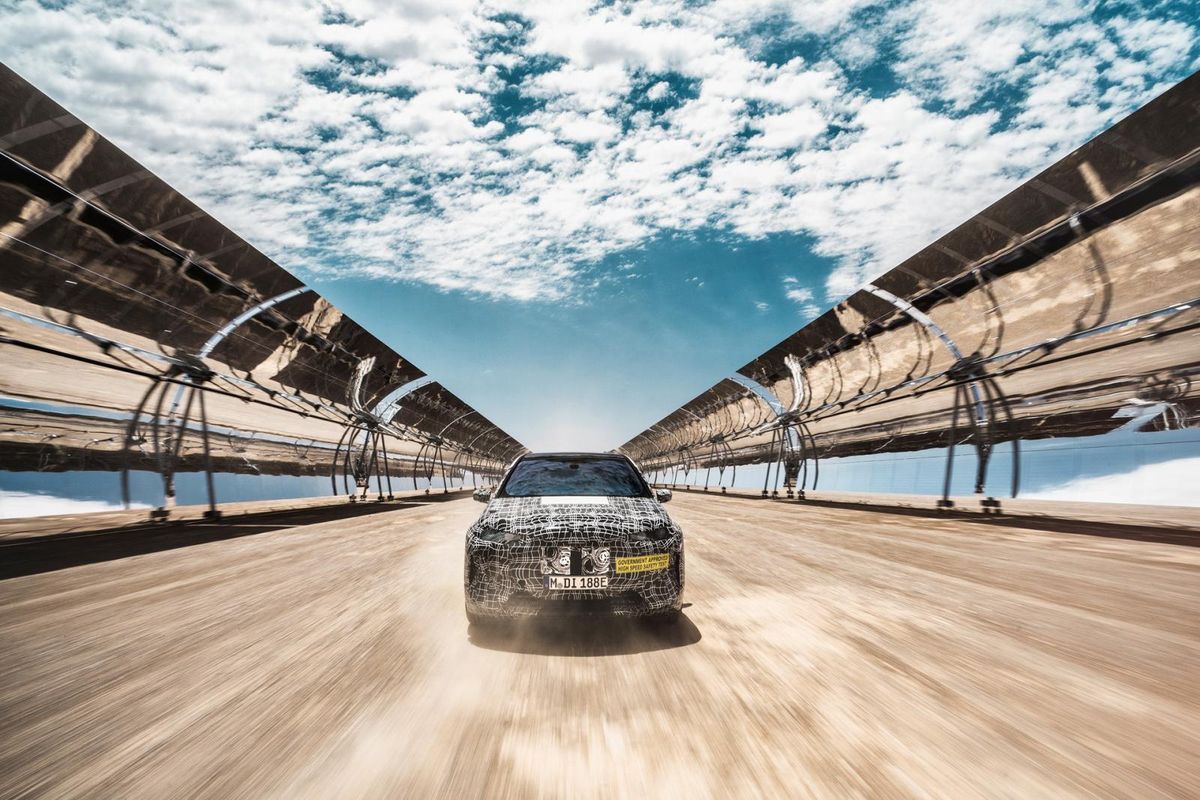
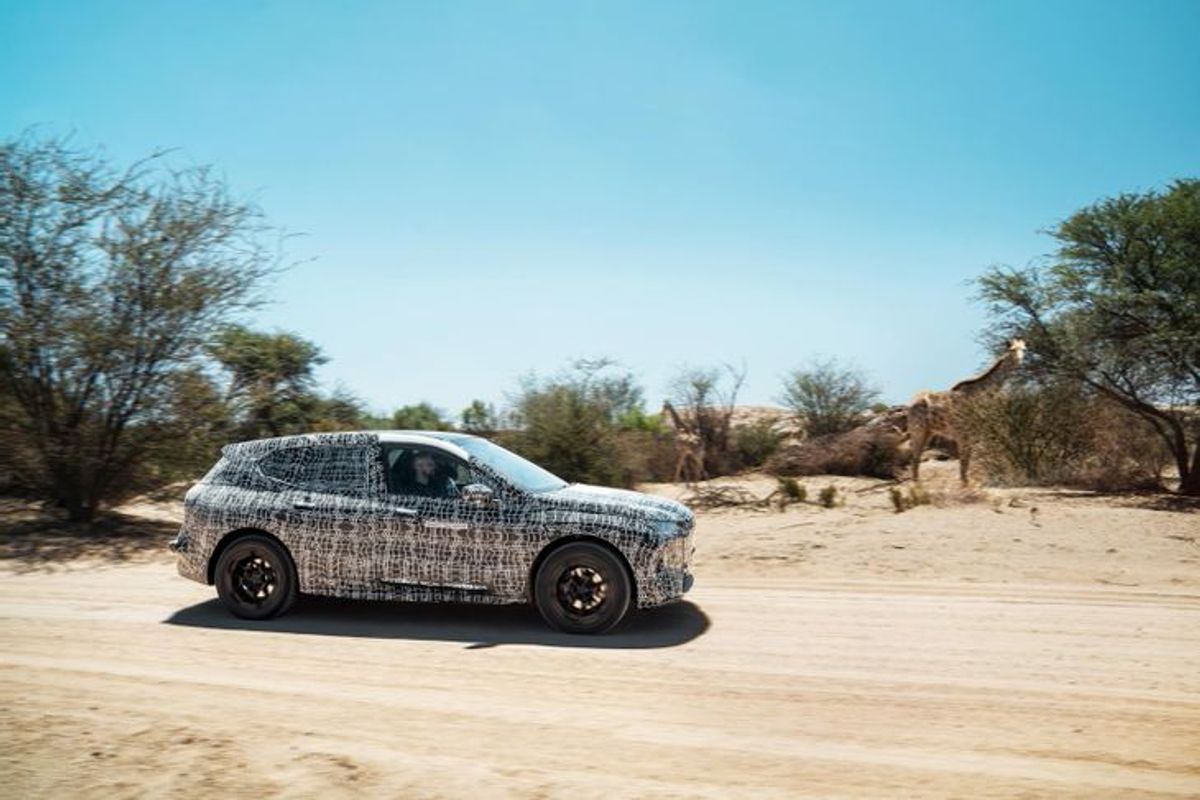
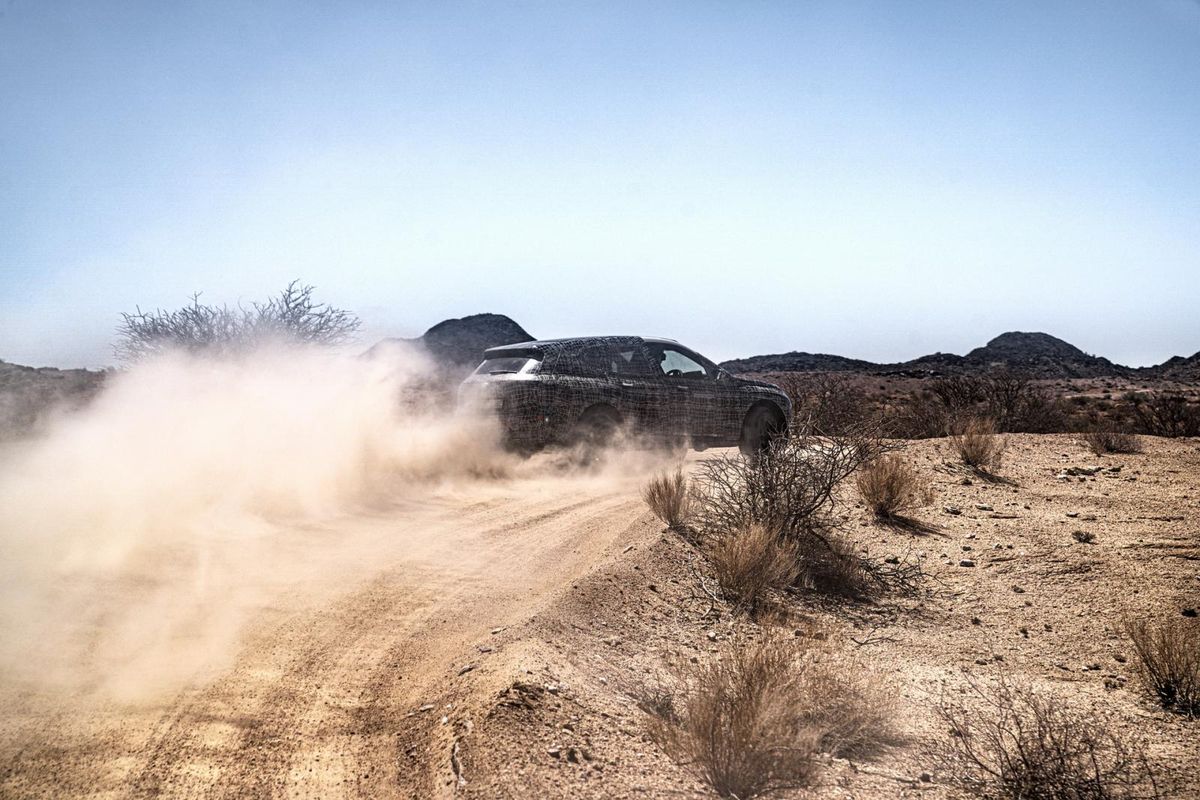
We often see spy photographs of prototypes testing in the snow and now, in the case of BMW’s forthcoming electric SUV, which will be called the iX5, a prototype has been photographed doing some hot weather testing in the Kalahari desert.
South Africa is an ideal location for car manufacturers to put prototypes through their paces in excessive heat and challenging terrain. Testing in various harsh environments is necessary to ensure that any technical or material faults can be rectified before the model goes into full-blown production. Heat testing is also useful to see how interior material, electric componentry, and suspension systems cope in extreme conditions. The Kalahari is a dusty place and it’s an ideal place to make sure that various seals (doors,boot lid, bonnet etc.) work effectively to keep dust from entering the cabin.
The BMW iX5 is due to go into production in 2021 at BMW’s Dingolfing plant in Germany and will be underpinned by BMW’s 5th generation eDrive technology. Technical details have yet to be revealed but up to 600 km range is expected and the iX5 will offer brisk acceleration with a projected zero to 100 kph of around 4 seconds on the cards.
The iX5 will also showcase the latest technology to come from BMW and you can expect advanced driver assistance systems to feature as well as sophisticated automated driving technology.
As always, we will keep you updated as more details become available.
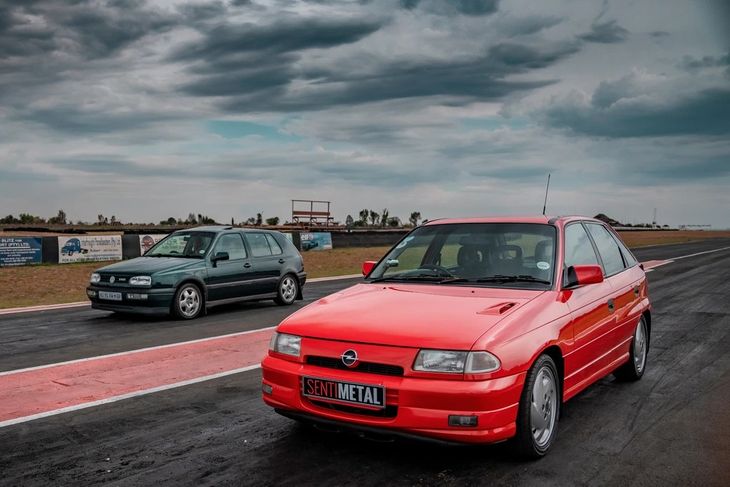
Retro Comparison: Volkswagen Golf VR6 vs Opel Kadett 200t S
We head to Midvaal Raceway to drive two hot hatch icons of the '90s. Coming from old foes Volkswagen and Opel, you'd expect these 2 machines to be quite similar, but they're not…?
Things were tough in the early '90s for hot hatch enthusiasts in South Africa. The iconic Opel Superboss had just passed on, and Volkswagen replaced its highly acclaimed Mk2 GTI with a real let-down, a Mk3 car that could only muster 85 kW from its 8-valve engine and take a leisurely stroll to 100 kph in… 11.4 seconds. This was simply not acceptable for a car wearing the GTI badge. Something had to be done.
Over in the Opel camp, things didn't look much better. Delta Motor Corporation (the then custodians of the brand), had just spent the best part of a decade rebuilding the marque on South Africa's racing circuits and built a loyal, hardcore following.
But in Europe the trend was towards more eco-friendly, efficient cars, loaded with big car luxuries and safety features. And so the new Kadett/Astra line-up lacked an obvious replacement for the iconic Supie… What to do…?
Volkswagen goes V6
Volkswagen arguably had the easier fix – you see, a high-torque V6 engine was part of the Golf III project plan from the start. It would be a new flagship, one that could even take the battle to the likes of the BMW 3 Series and other premium contenders.
The engine itself was quite something, with both cylinder banks using a common cylinder head, and a single overhead camshaft per bank actuating the 12 valves through bucket tappets. The engine features a long stroke (typical for VW engines) and to keep the engine compact, the cylinders are mounted high-up and very long con-rods are used.
The result? Well 128 kW and 235 Nm of torque doesn't sound like much these days, but the VR6 performed well, with a top speed of 225 kph and a 0-100 kph time of just under 8 seconds, as tested by CAR Magazine in 1993.
Opel counters with turbo
Delta Motor Corporation faced a stiffer challenge. Opel in Germany never envisioned a very high-performance variant of the new Astra/Kadett, so in typical South African fashion, a local plan was devised. Opel in Germany was, at the time, selling its sexy Calibra coupe fitted a turbocharged version of the famous red-top 2.0L 16-valve. "We'd like some of those," said the Delta Motor execs.
A challenge, however, was that in the Calibra, the engine was accompanied by an all-wheel-drive system, but in South Africa, the Kadett (and Astra) would be front-wheel drive only. This didn't deter the folks at Delta. Along with the engines, they acquired the Calibra's heavier-duty front wheel hubs, steering knuckles and wheelbearings. It also gained the Calibra's striking five-stud 16-inch alloy wheels, not for vanity's sake, but to cope with the extra power.
And power it had aplenty. Initial models packed no less than 160 kW and 280 Nm of torque, and unlike the Golf (which used a 5-speed gearbox), the Opel had a 6-speeder from Getrag and a modified version of that trick limited-slip differential by Andre Verwey, used in the Superboss. It was claimed to blast to 100 kph in 7 seconds and on to a top speed of 240 kph. So, it would easily see off the VR6.
Back-to-back driving
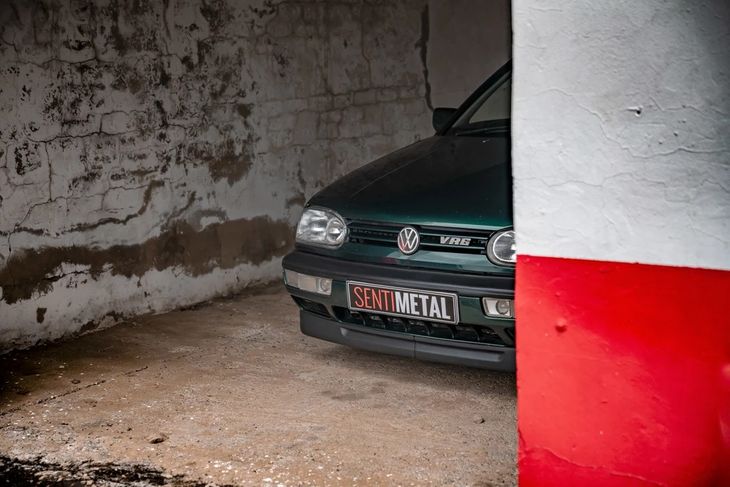
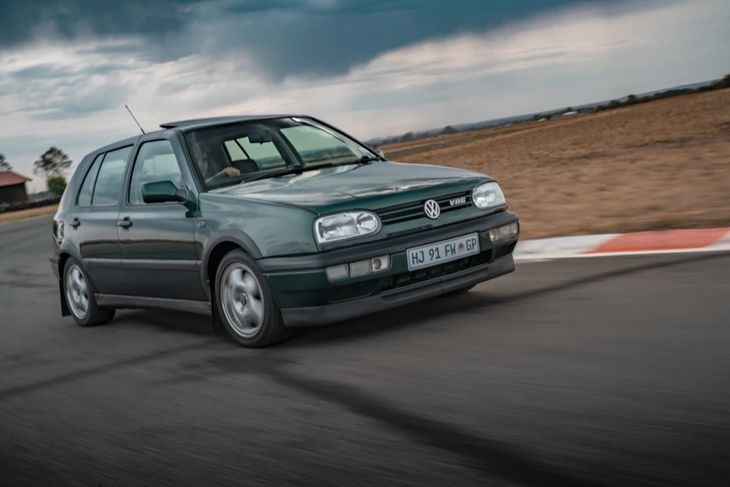
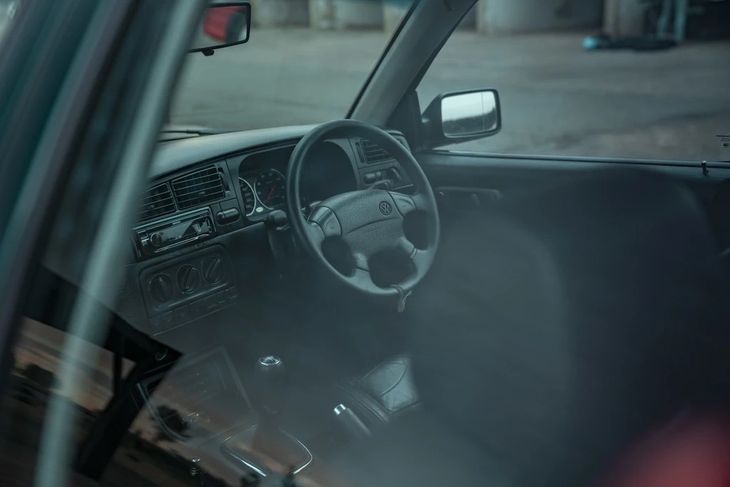
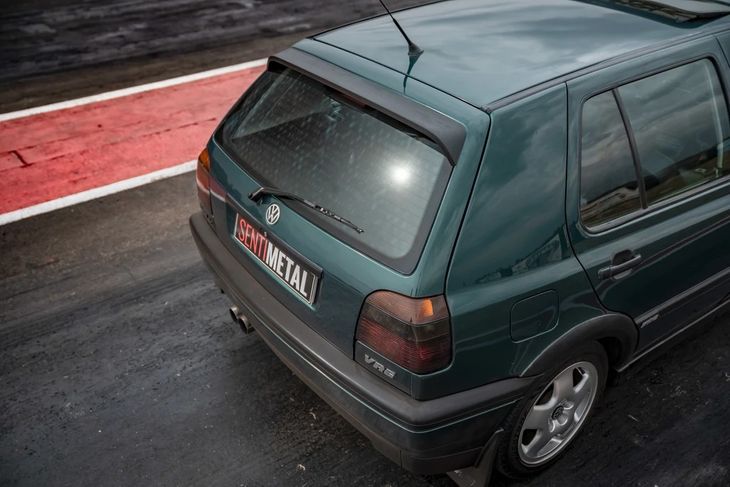
I hop into the metallic green Vura (as the VR6 is affectionately known in South Africa) first. In the early 90s, its facia plastics were a revelation in this category of car, but it's a pretty sombre place, with no satin silver finishes, or contrast stitching to brighten things up, as is the norm these days. Still, the leather-wrapped steering wheel is nice to grip and it's a car you get comfortable in quickly.
Fire up that iconic engine and there's a nice thrum immediately, followed by a rorty but crisp exhaust note when pulling away. The engine impresses with its flexibility because the torque is spread nicely and the gearing spot-on. This is a pretty easy car to drive fast because its very forgiving to an incorrect gear selection, for example.
The example I'm driving shows over 200 000 km on the odo but has obviously been well-looked after, so besides a slight synchromesh issue on third gear, makes a good impression on Midvaal, with crisp steering responses and well-damped suspension (on the smooth track). Compared with the fluffy Mk3 GTI, the VR6 gained recalibrated steering, stiffer damping and springs, and a reworked front axle configuration. That said, it's not rock-hard, and I can see it stand up comfortably to a period E36 325i as an "executive express" used on the daily drive. As the day progresses and I become more comfortable with the car, and the speeds rise, with the lovely, pure sound from the exhaust as a soundtrack, I begin to understand why this car is so coveted in South Africa. It's a charmer.
Into the blitz
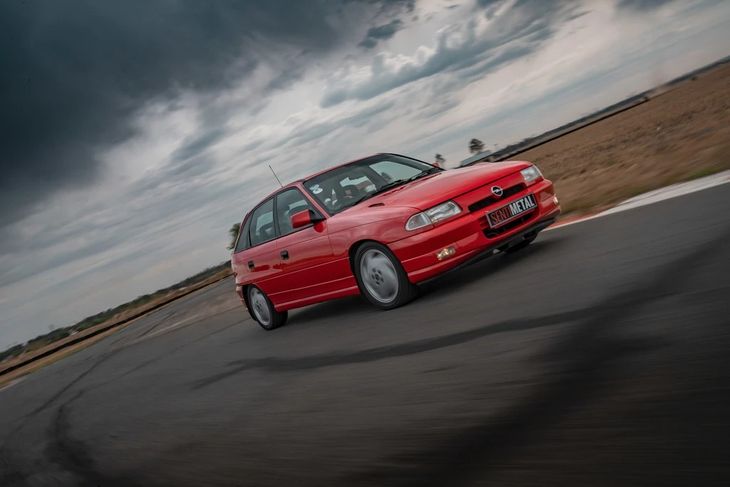
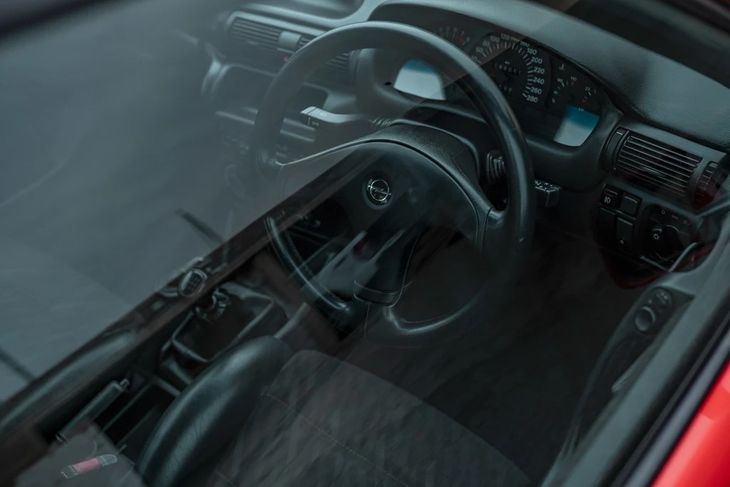
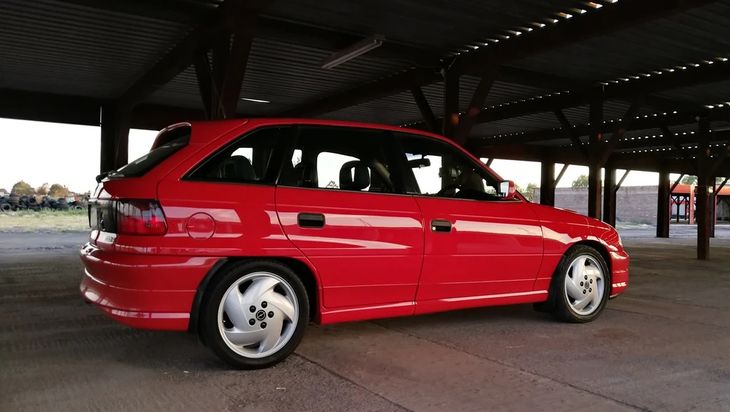
It took us about a year to find a neat-enough 200t S, but boy did we find a good one. This red 200t S looks factory fresh inside and out. The cabin of the Kadett still looks surprisingly modern in some respects, and definitely possesses more flair than the Golf, with soft curves and a particularly neat instrument cluster with the lettering 16v Turbo to remind you that this is something special.
As I head down the straight at Midvaal and push down on the throttle pedal for the first time, tentatively, I can immediately sense that the iconic red-top has lost none of its verve, but my word, when the boost arrives (and it comes on song surprisingly soon) it does so by squishing you into your seat. This car is very, very fast.
So few of these survive because so many were crashed by inexperienced or reckless drivers. I discover quickly that it's a car that demands respect and smoothness. A precise, respectful driver will get incredible pace out of this car, because grip and stability are actually both excellent. The steering is vastly superior to the Superboss's, for example, but you can't just boot it in the corner and not expect torque steer.
Unlike the Golf, in which it will be easy for most drivers to extract 90% of its performance very quickly, the Kadett demands some familiarization (and respect). the 6-speed 'box helps a lot, but you have to use it to make sure you're in the right power "zone". Get it right and it's a car that leaves a big grin on the face, with the only part of the theatrics that's missing being a memorable exhaust note.
Verdict
The kind owners of these two cars were very trusting in letting us drive their pride and joys on a racing circuit, and so drag racing (or timed laps) were never on the cards, but away from the slow-motion tracking work and stills, I had ample opportunity to stretch these cars' legs. The Golf is a fast GT, refined and handles safely and confidently while making a lovely noise. The Opel would destroy it around a racing circuit, however, but its driver would have to be a good one.
So, then… two very different cars with distinct personalities. Buy both, because both are worth having (and preserving).
* A special thank you to the owners of these 2 great cars who took the time to share their machines with us.
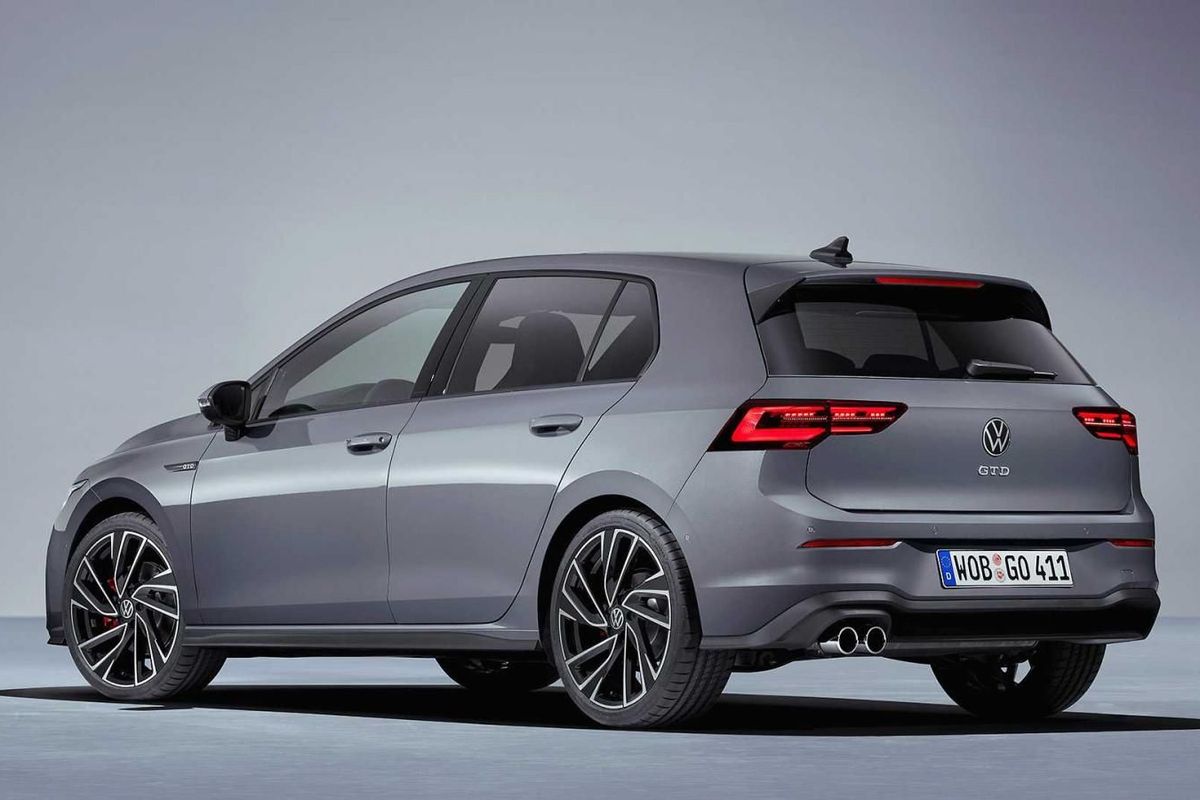
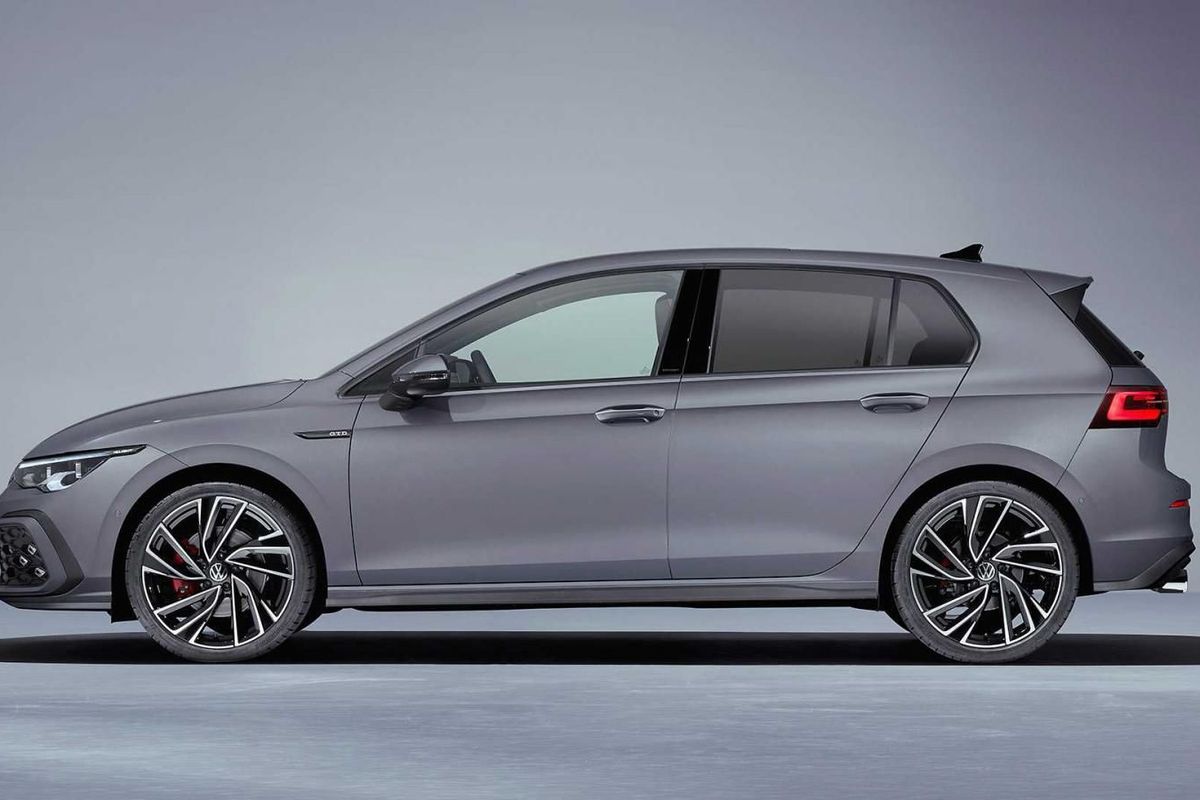
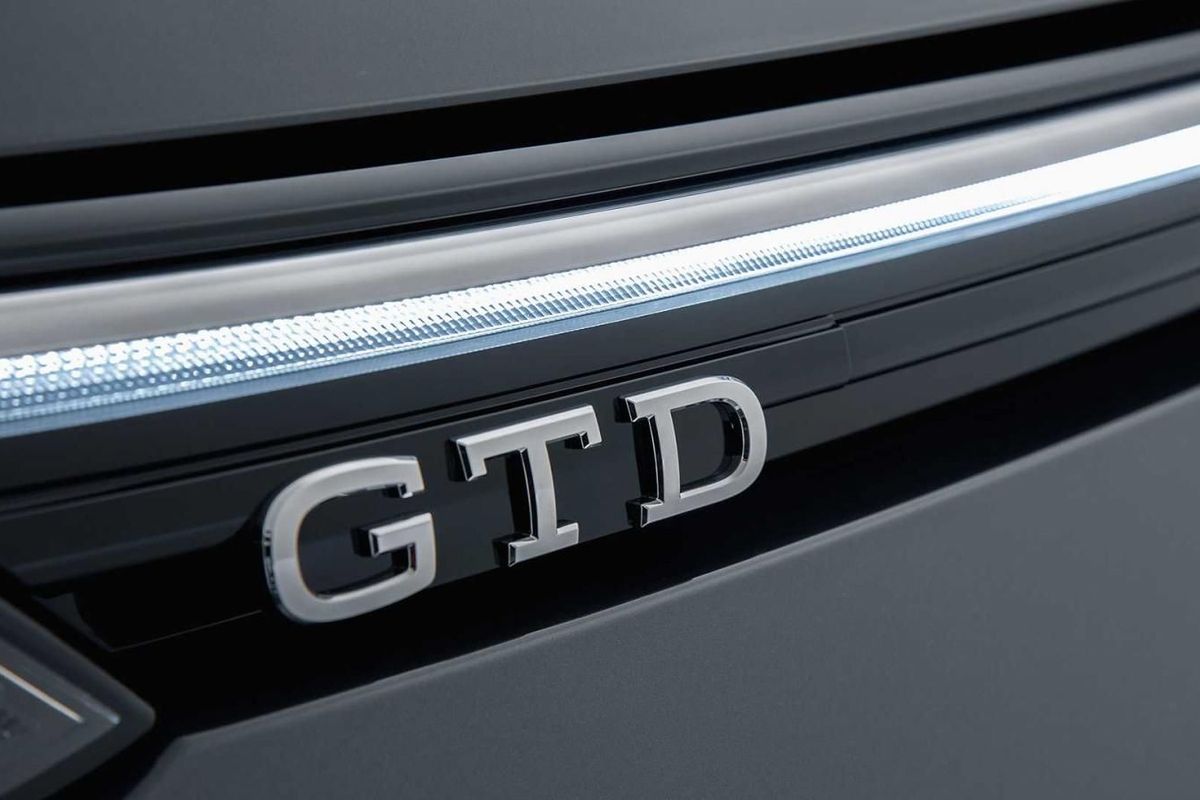
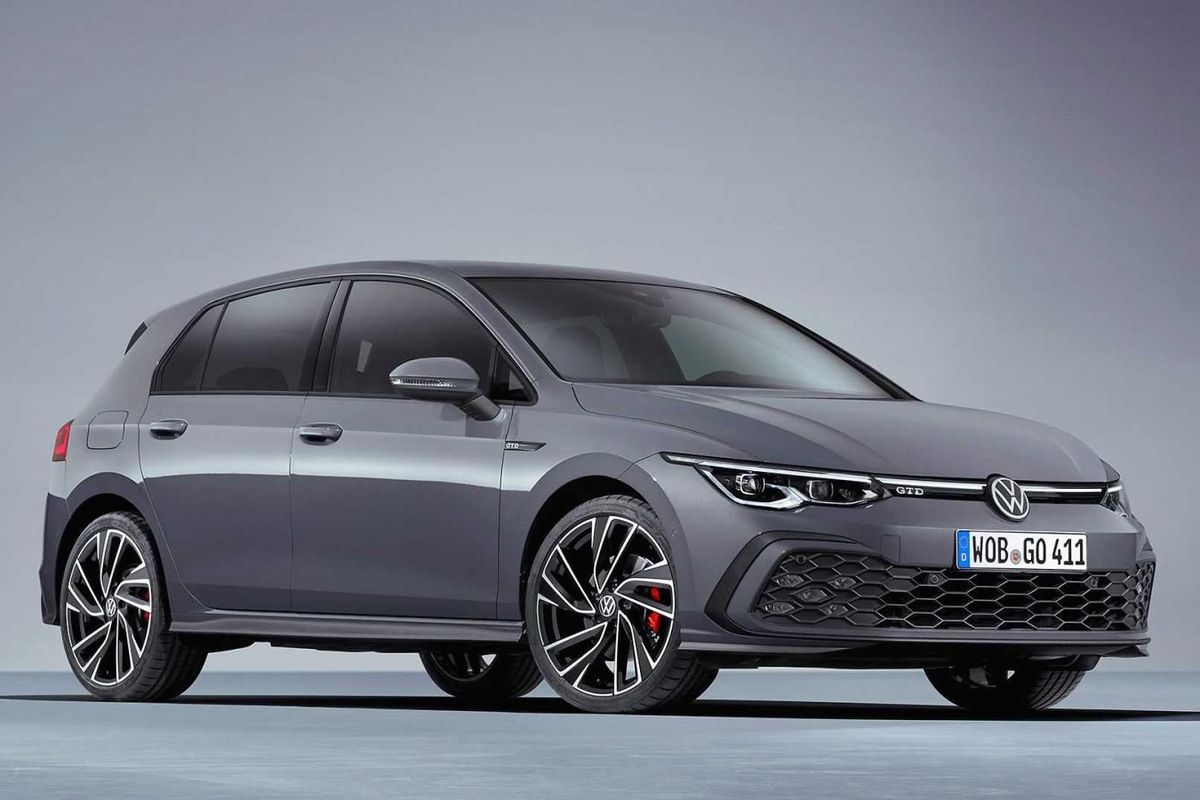
New Golf GTD Churns 400 Nm
The most powerful diesel Golf yet was shown in the shade of GTI big reveal.
The excitement surrounding VW’s new Golf 8 GTI has deflected attention from the news around its diesel sibling.
Although the company is planning to transition away from diesel and into a broad electric-vehicle product portfolio over the next decade, Golf 8 retains the GTD derivative.
For those VW followers who value the long-distance cruising ability, and overtaking capability, of the most potent diesel Golf, new GTD should have massive appeal.
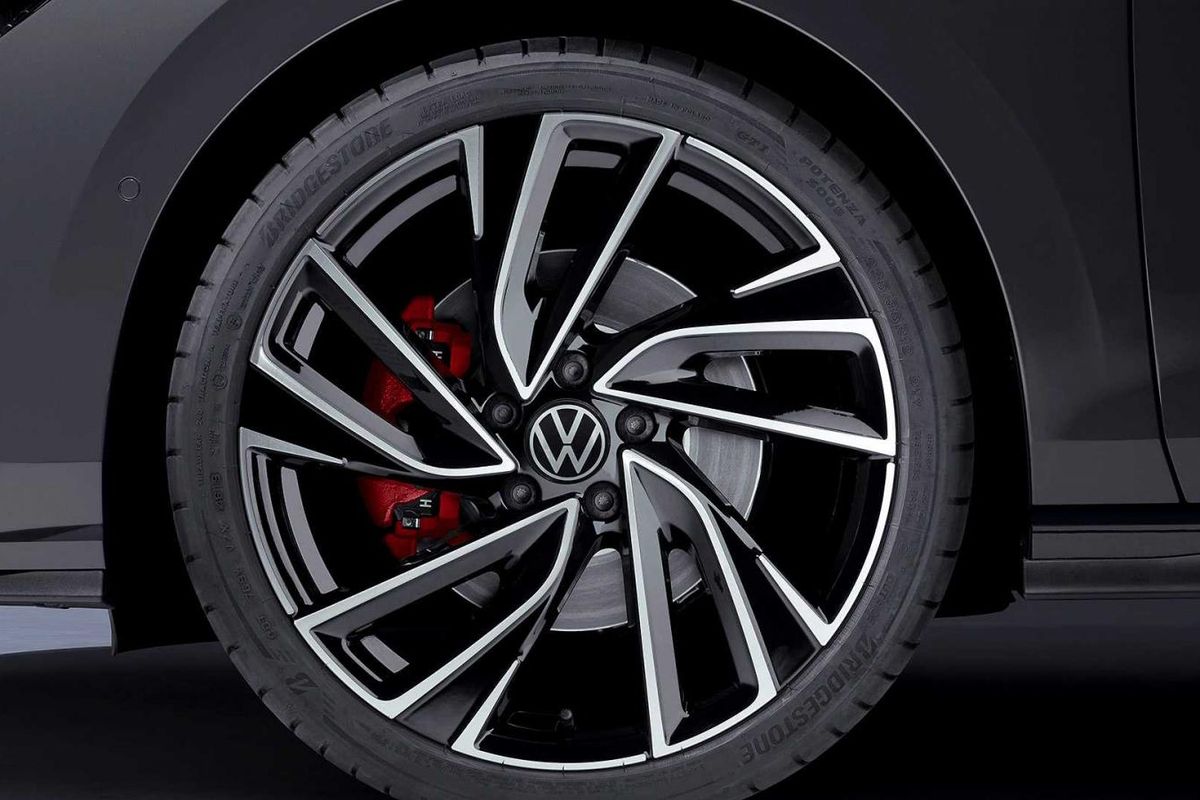
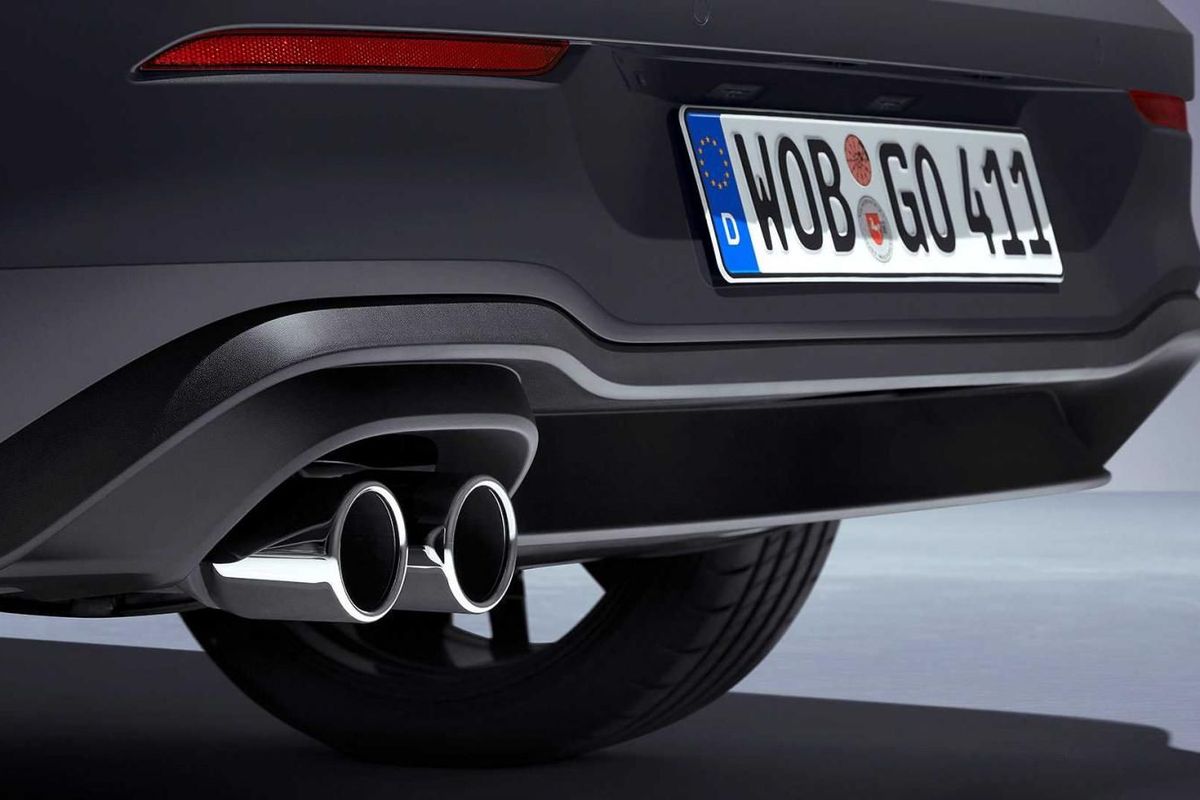
The only notable styling element which distinguishes GTD from other performance-orientated Golfs is its rear tailpipe grouping. Instead of having an exhaust end at each corner of the rear bumper, like GTI, the GTD’s dual-exhausts are arranged in a side-by-side configuration, in the left corner.
Much like its petrol-powered cousin, the GTD rides on a 15 mm lower version of the Golf 8 platform. This reduced ride height lowers the centre of gravity and should give the GTD superior stability, especially when cornering.
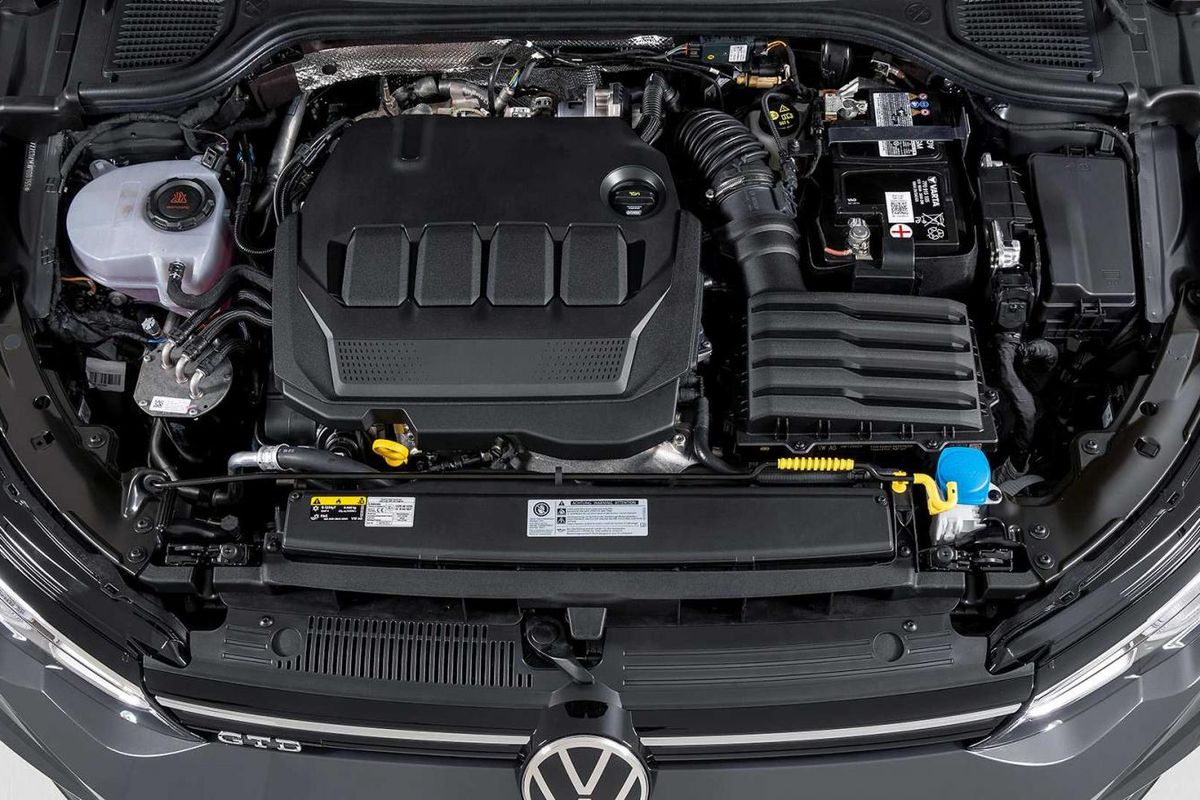
What defines the GTD, is the engine. VW’s engineers have done a lot of work making the EA288 diesel both the most powerful and least polluting diesel engine to sit above the front axle of any Golf.
It boosts 147 kW and 400 Nm, which should guarantee a surge of seamless performance when paired with the seven-speed dual-clutch transmission. The 400 Nm torque output is 50 Nm greater than the previous GTD, which was a car noted for its excellent highway speed overtaking acceleration.
Limiting the new GTD’s emissions are linked catalytic converters, which are claimed to greatly diminish the engine’s nitrogen oxide emissions. There is also AdBlue injection, to help make this the cleanest-running diesel performance car in VW’s line-up.
Here are the petrol price changes for the month of March 2020.
Due to the corona virus, international petrol prices suffered one of their steepest plunges. This means that there's some good news on the cards for SA motorists. According to the Automobile Association (AA), "The impact of the novel coronavirus outbreak on global economic activity cannot be over-stated, and petroleum prices have retreated in lockstep with the downturn across world markets," the AA says.
Despite the SA Rand suffering against the US Dollar, the AA is predicting a decline of between 9 and 19 cents a litre are on the cards for petrol, and 55 cents a litre for diesel.
Sadly, due to the budget speech and subsequent currency degradation, motorists should prepare for increases on the horizon. "It is difficult to predict where current events might lead us. The Rand has not found strength against the US dollar since Finance Minister Tito Mboweni's budget speech, and the consensus of economists is increasingly that South Africa is set to lose its last remaining investment grading before long," the AA said.