The 400hp Mazda-powered Ford Escort Mk2 – A real labour of love
Here's a story to bring a petrol-based tear to your eye. Cape Town-based Pierre has owned this car since he was just 15 years old, and he's been working on it pretty much every day since.
Friends and family have been roped in to help him turn it into the gem it is today. With a 2.0-litre Mazda EGI engine-swop and a questionably large turbocharger, this super lightweight Mk2 Escort is an absolute rocket.
Over the years it has burned through clutches and it's on its second turbo, but that's never affected the love affair between Pierre and his car. Even his mom loved it, as you'll find out in the video.
This is the 4th episode in our Launch Control series, be sure to check out the other videos here:
Electric Cars to Tour South Africa in October 2019
BMW, Jaguar and Nissan will be participating in an all-electric vehicle road trip across South Africa in order to showcase how far the tech has come and to show that there is actually charging infrastructre to facilitate such a journey.
In conjuction with the Department of Transport, Gauteng Provincial Government and more, car makers Jaguar, BMW and Nissan are going to attempt something rather daunting: travel across South Africa without consuming a single drop of petrol. The vehicles of choice are the latest iteration of BMW i3, Nissan Leaf and Jaguar I-Pace, which will be leaving Gauteng on the 3rd October and visit places like Gariep Dam, Graaff-Reinet, Port Elizabeth, Knysna, Worcester and the road trip will conclude in Cape Town.
It's not just showing off the technology in the vehicles as some charging stations will be opened on the way down. At each stop members of the public will also get a chance to meet the electric cars and take them for a test drive. Catch up with the convoy here:
– Test drive a BMWi3, Nissan LEAF or Jaguar I-PACE at Boardwalk Hotel, Port Elizabeth on 5 October at 4:30pm – 7pm.
– Learn about the latest innovations in electric mobility by taking a tour of the uYilo eMobility Programme at Nelson Mandela University on 7 October from 8:30am – 11.30am.
– Witness the power of electric vehicles as the road trippers take part in a sun rise Regeneration Challenge at Simola Hill on 8 October from 5:30 – 6:30 am.
– Celebrate the launch of another ACDC Dynamics charging station and enjoy test driving experiences at the Vineyard Hotel in Cape Town on 9 October from 11am – 4pm.
With full manufacturer backup from BMW, Jaguar and Nissan, the trip looks like quite an adventure. Tim Abbott, Chief Executive Officer, BMW Group South Africa & Sub-Saharan Africa, says that electric mobility is a main strategic focus of the BMW Group. “The company will now introduce the 25 electrified models previously announced for 2025, two years earlier in 2023. Half of those models will be fully electric.
“Nissan’s contribution to electrification started with the launch of the first ever electric vehicle (Nissan LEAF) in South Africa in 2013. In recent years we have been carrying out several initiatives together with government, key stakeholders and institutions to create strategic alliances to support the creation of a sustainable EV ecosystem in South Africa,” says Kabelo Rabotho, Director of Marketing at Nissan South Africa. “Nissan’s participation in the EVRT and Smarter Mobility Africa Summit is important in educating consumers on the benefits of electric vehicles and accelerating transformation to smarter mobility.”
Brian Hastie, Network Development Director at Jaguar Land Rover for South Africa and sub-Saharan Africa said: “South Africa is well positioned for mass electric vehicle adoption and this road trip will highlight the recent strides made by various stakeholders, including Jaguar South Africa, in infrastructure development and product availability. Jaguar South Africa introduced its all-electric I-PACE early this year and this platform is a great way to show a broader audience how Jaguar I-PACE customers are already successfully living with electric vehicles and existing infrastructure in urban environments and on long distance journeys. In 2017 Jaguar Land Rover CEO Prof Sir Ralf Speth announced that all new model lines would be electrified by 2020. In South Africa we are on track to deliver the promise with a portfolio of electrified products including fully electric, plug-in hybrid and mild hybrid vehicles."
We'll be catching the convoy entering Cape Town on the 10th October 2019.
The vehicles which revolutionized BMW’s M-Division are now in their third-generation.
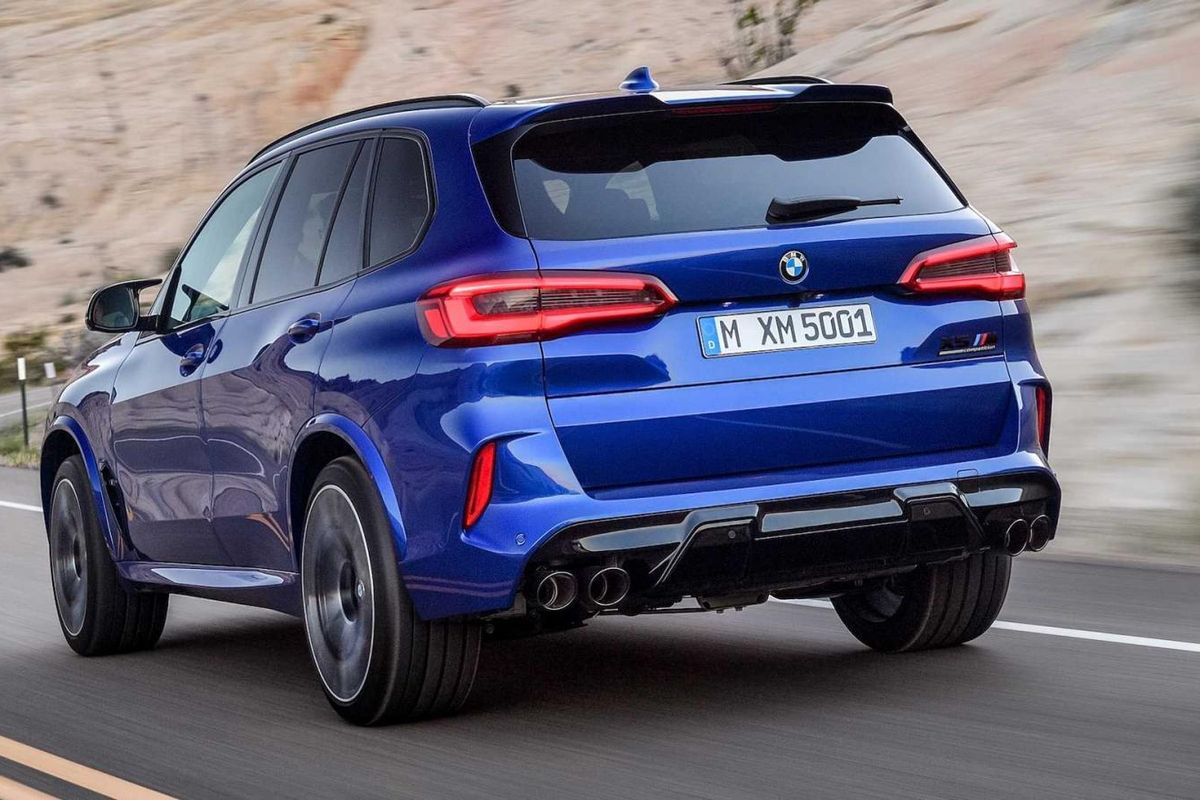
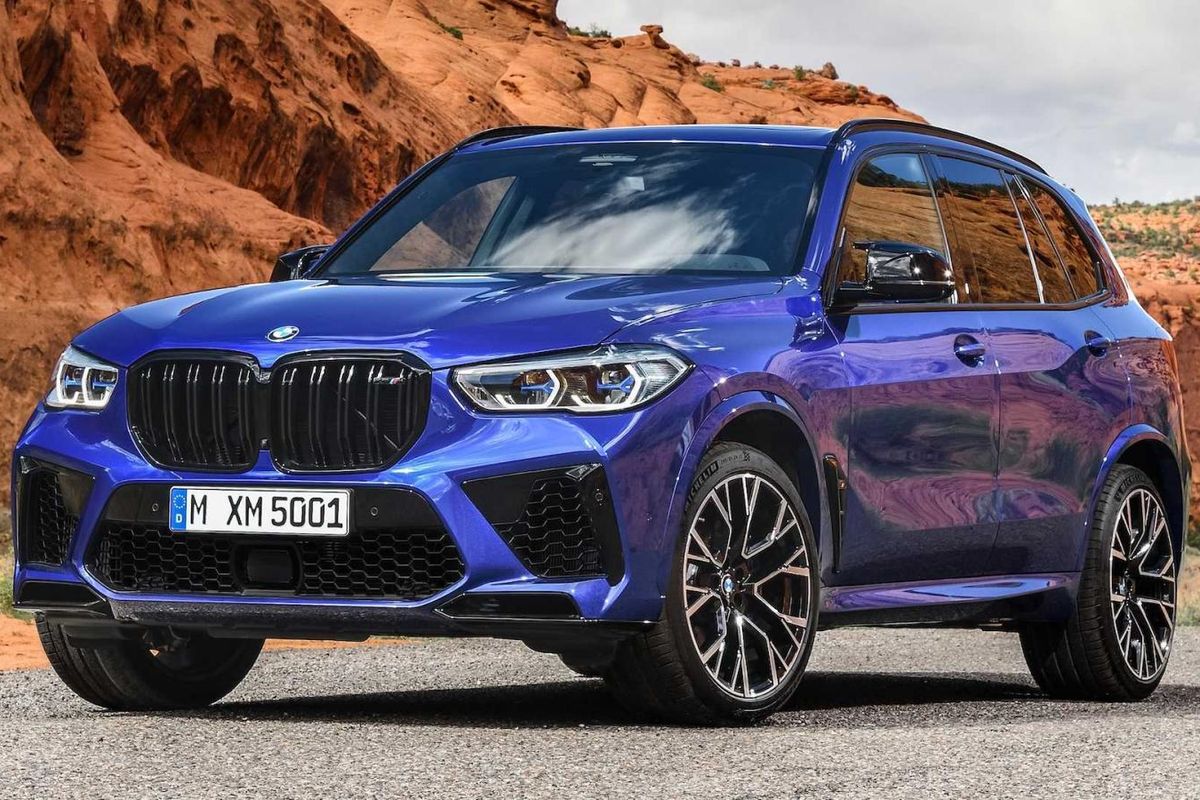
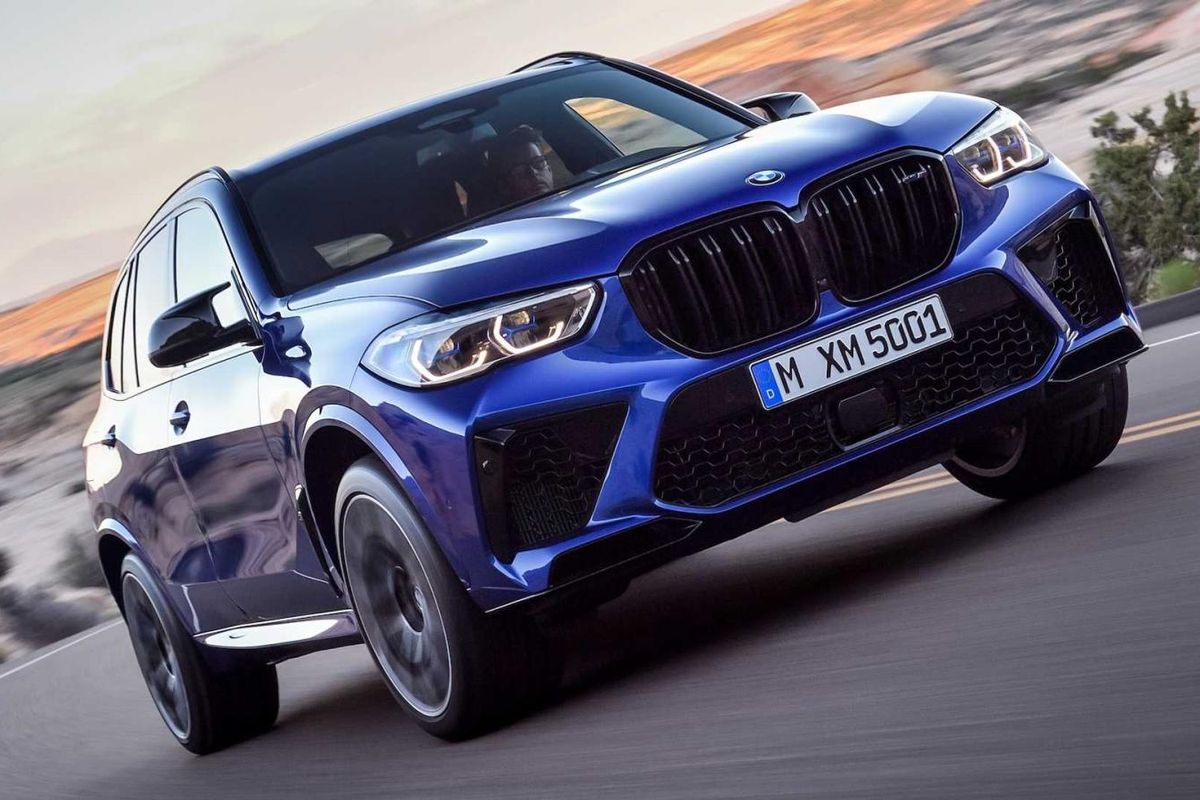
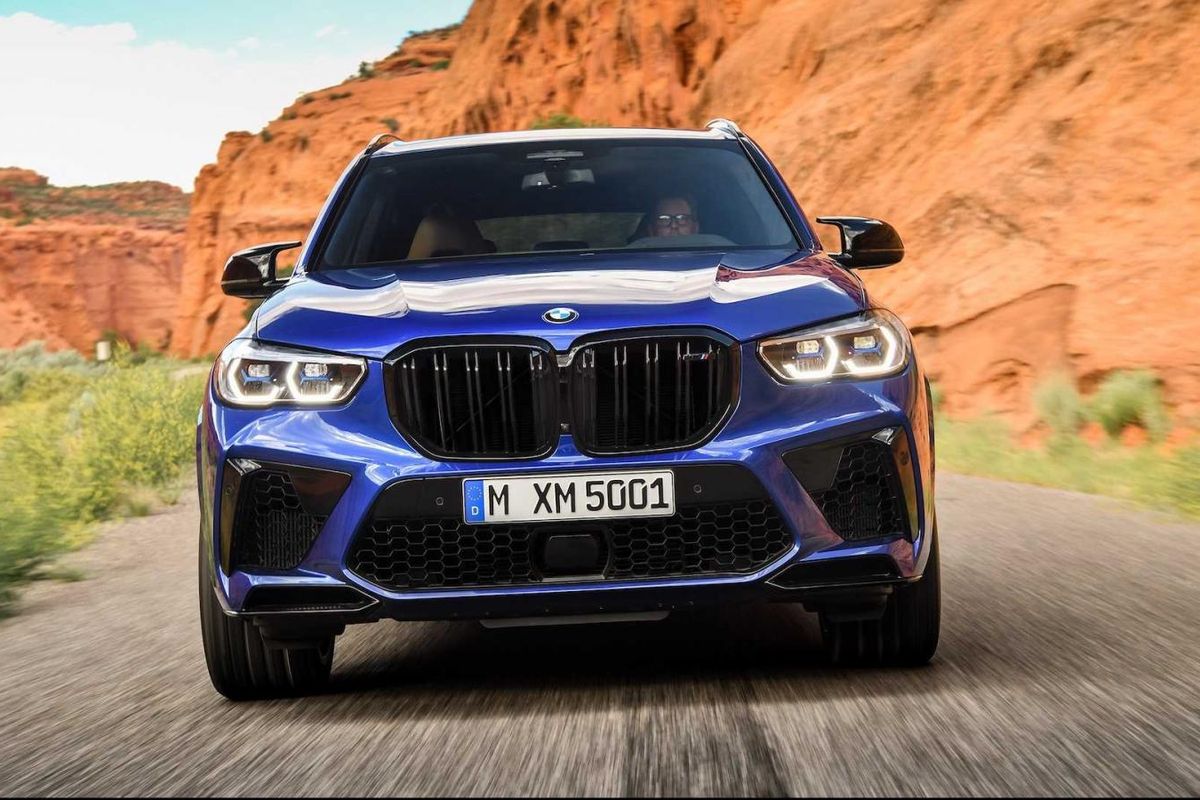
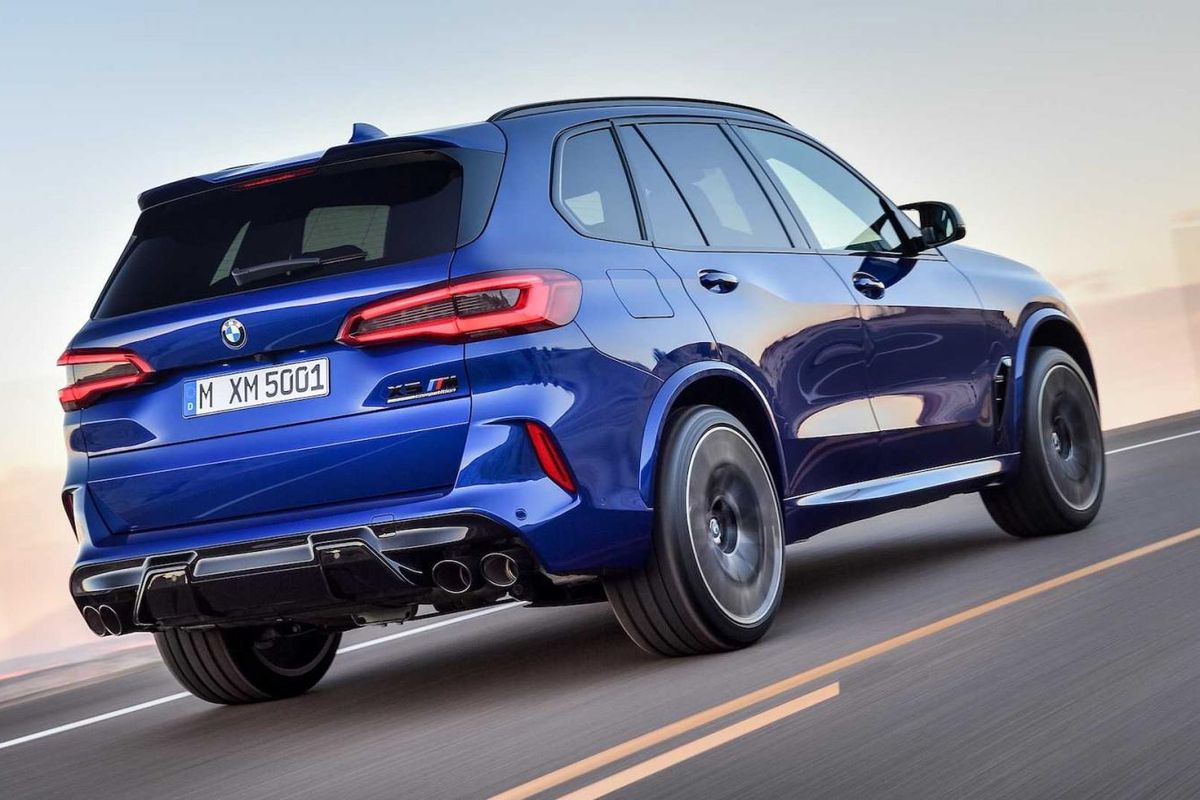
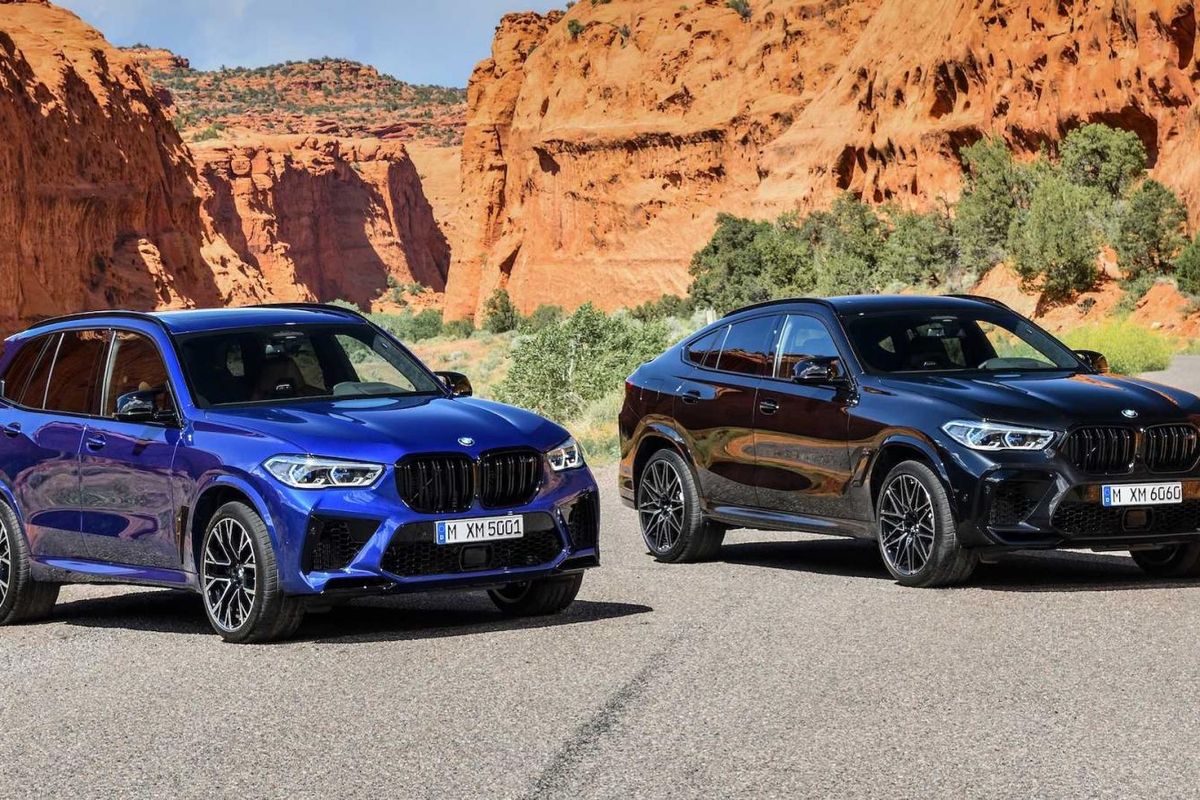
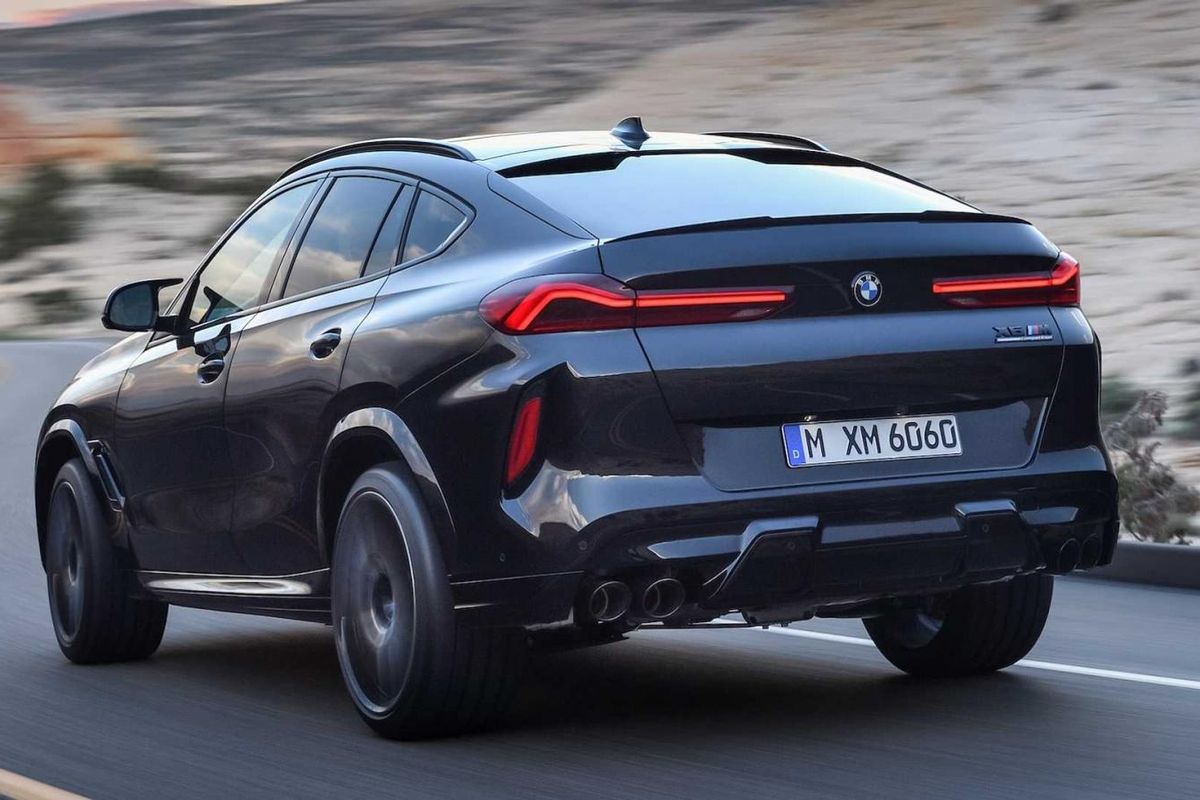
If you desire M5 performance with the ability to occasionally drive on gravel, BMW has released the specifications of its latest X5- and X6 M. When BMW launched its first M-Division SUVs a decade ago, they became the first high-performance BMWs to feature automatic transmissions, all-wheel drive and turbocharging.
The latest X5/6 M variants ride on the ride generation of BMW’s large SUV platform and offer performance that will be deeply troubling to M5 owners. Distinguishing the X5- and X6 M are M-specific styling elements around their enormous grille kidneys, aerodynamically shaped door mirrors and larger front bumper vents.
Hot V8 delivers Competition grade performance
The most significant changes apply to these M-Divisions SUVs and their mechanical bits. Powering both versions is BMW’s 4.4-litre twin-turbocharged V8 engine. With its turbocharger nestled inside the engine’s vee-architecture, and featuring a cross-bank manifold, air- and gasflow efficiency is very good.
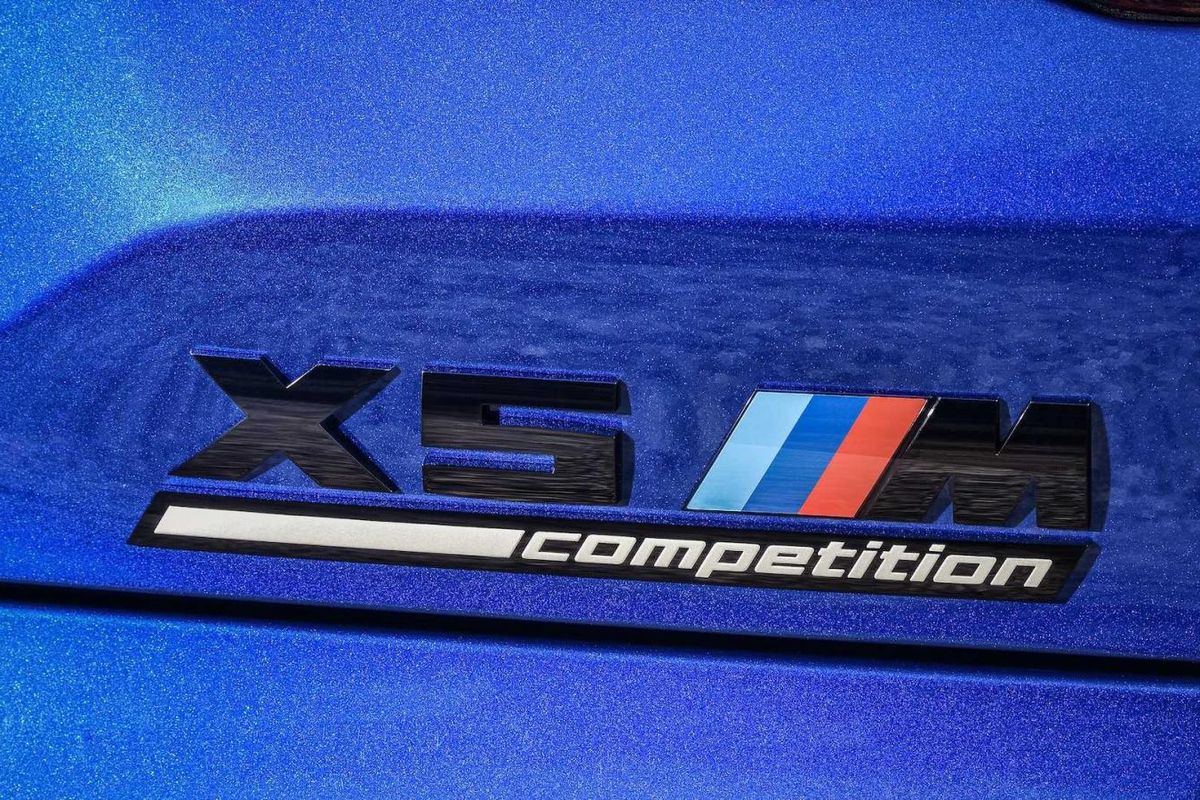
BMW will be offering the X5 and X6 M in two output options. The standard engine boosts 441 kW and for those who seek even more potency, there will be a Competition version, good for 460 kW. Both engines peak similar torque numbers, at 750 Nm, and these engines will spin to 7200rpm, despite their complicated turbocharging systems.
With an eight-speed automatic transmission and advanced all-wheel drive, traction is phenomenal and as such, these new M-Division SUVs are dramatically fast.
They might be heavy, with BMW registering a kerb weight of 2295 kg for both the X5 and X6 M, but the Competition edition variants will run 0-100kph in 3.8 seconds. If you settle for a ‘mere’ 441kW version, it will still be good for 0-100kph in 3.9 seconds.
As with any German vehicle these new BMWs are limited to a top speed of 250kph, although an optional driver’s package can increase that to 290kph. BMW says that its latest high-performance SUVs will sound great too, with dual branch exhausts, featuring active valving. If you consider that those exhaust are 100mm in diameter, there is no point in doubting the veracity fo BMW’s claim.
Big brakes and better suspension
To balance the tremendous speed potential of these new BMW high-performance SUVs, there are additional braces and structural reinforcement the front of the car. It also rides on M-Adaptive air suspension, with roll-stabilization, and most of the suspension subframes, linkages and bearings have been upgraded.
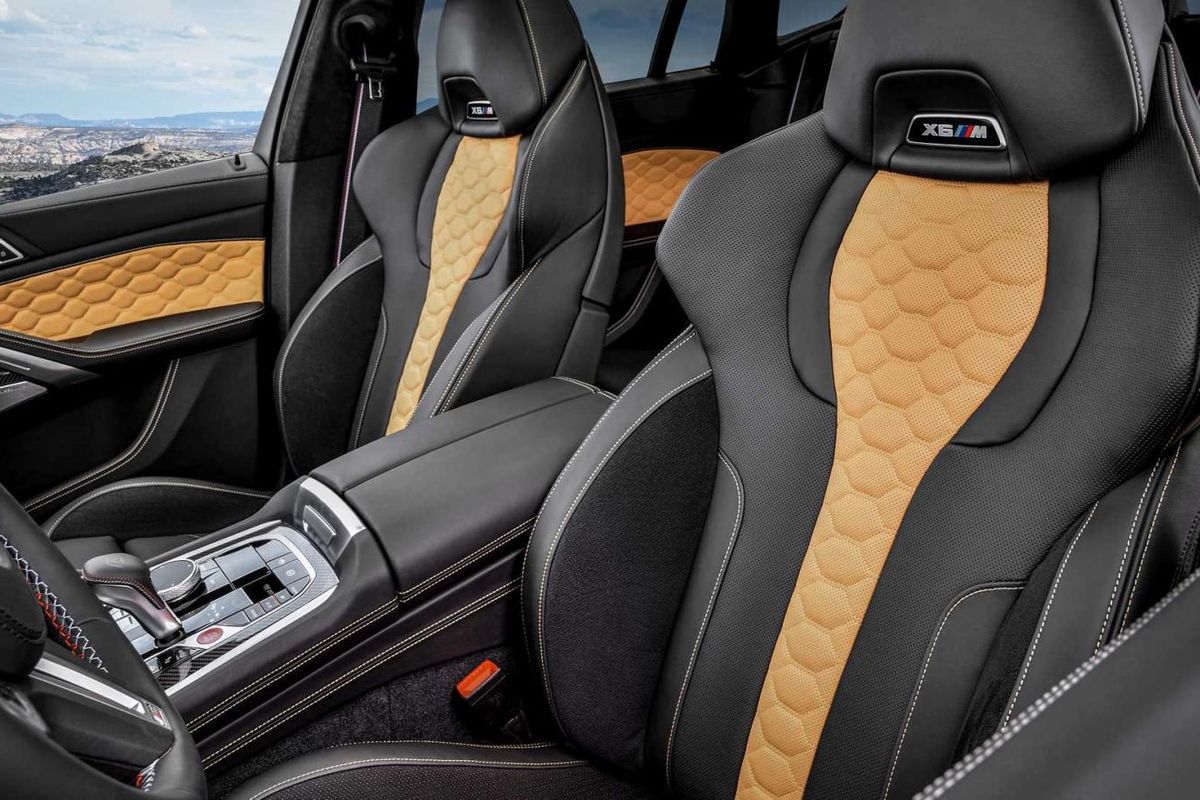
Managing traction is BMW’s xDrive system, which can vary the torque between front and rear axles depending on road surface, steering angle and throttle position. BMW has also added an active M-differential to the rear of these new SUVs, which can split torque, on demand, between the left and right rear wheels, giving a more rear-wheel-drive biased driving experience. Braking specifications are impressive too, with 395mm discs being actuated by six-piston callipers on the front axle and 380mm rotors rolling behind those rear wheels. Cabin details feature hexagonal pattern quilted leather seats, a standard head-up display and BMW’s latest infotainment system functionality.
South African availability is confirmed for May 2020.
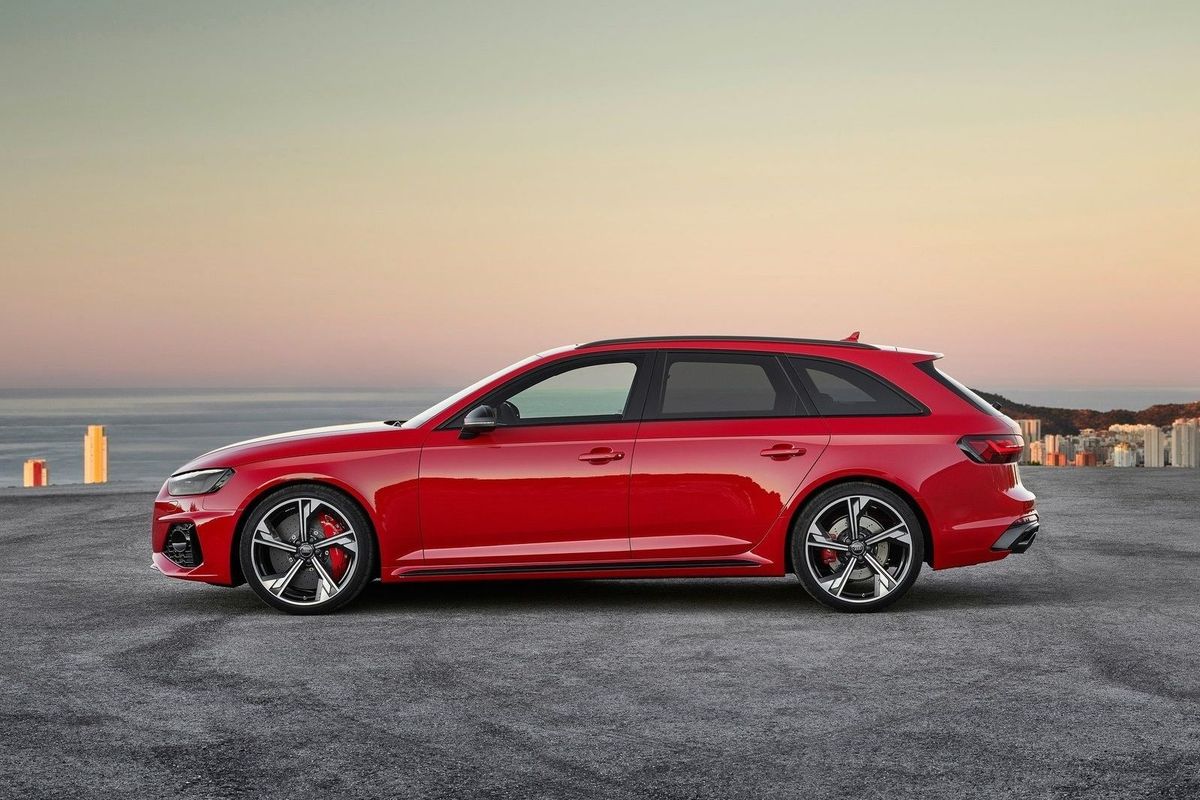
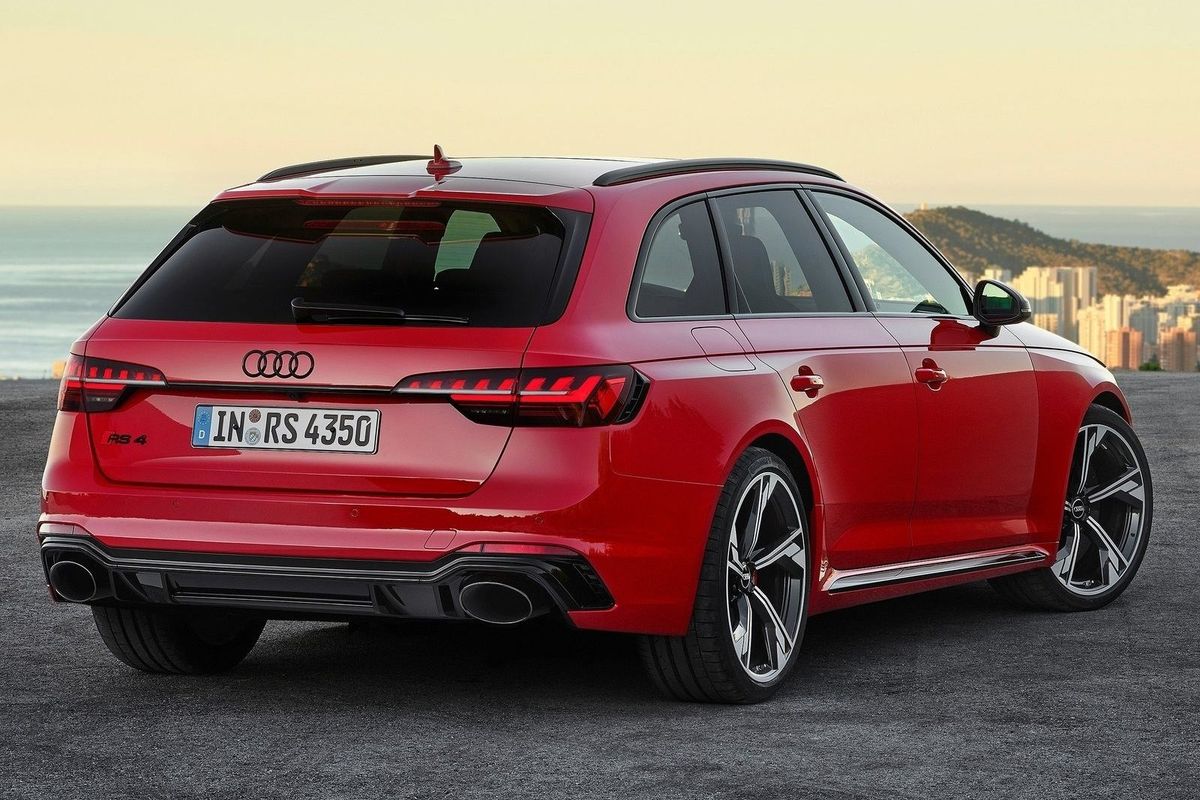
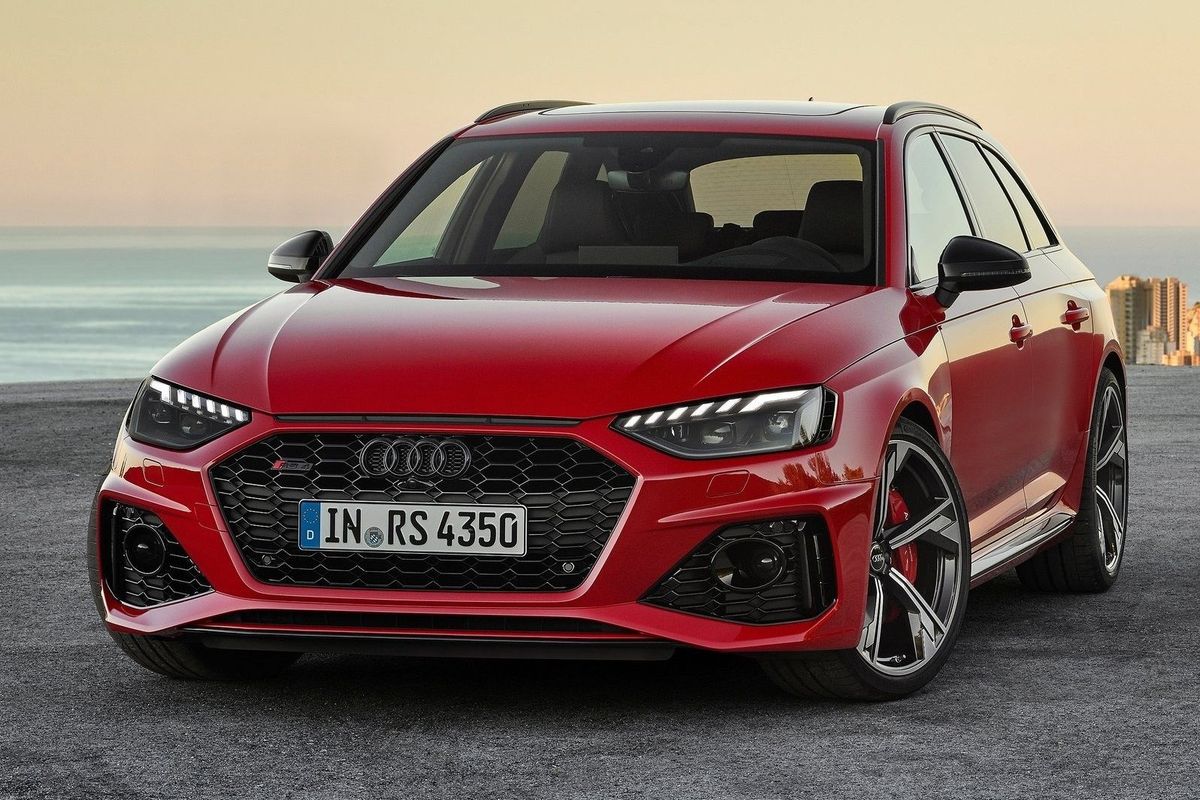
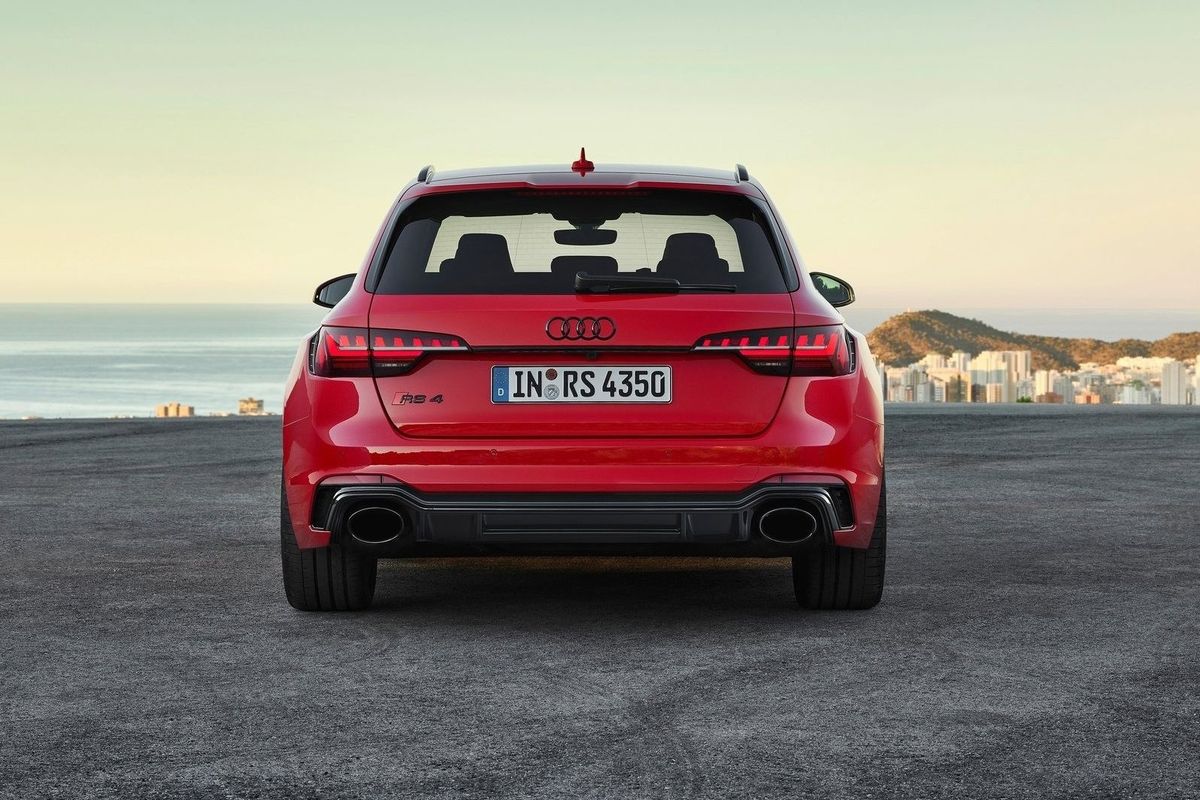
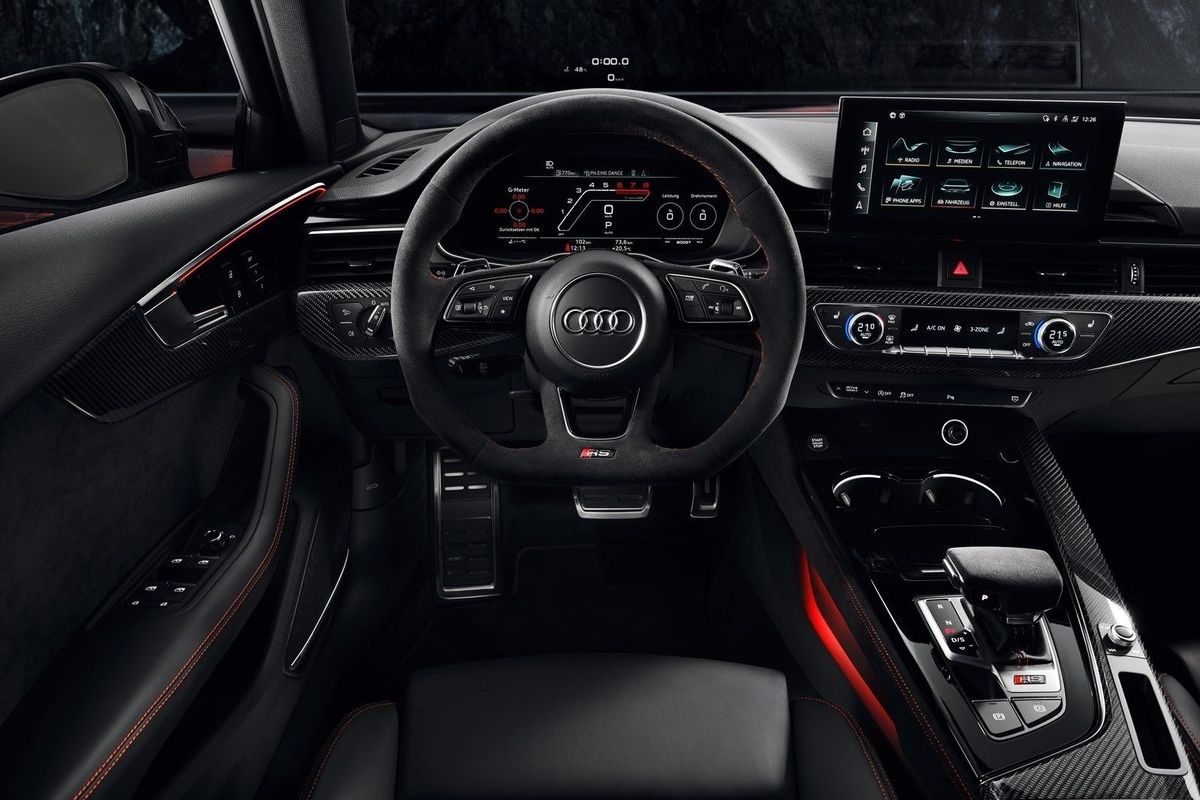
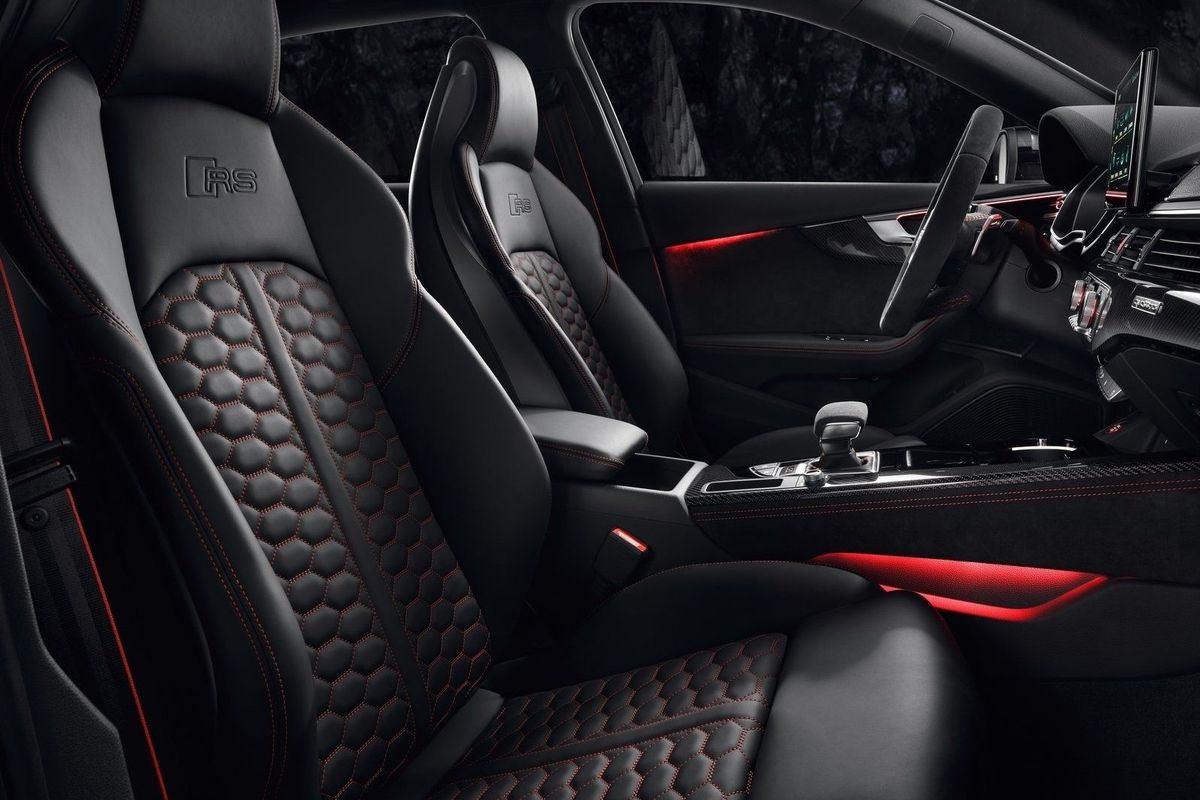
Audi Sport has released a facelifted version of its RS4 Avant. Some details…
With a revised look both inside and out, as well as some interior upgrades, the Audi RS4 Avant moves into a more mature space. The engine remains unchanged and the 2.9-litre twin-turbocharged V6 pumps out 331 kW and 600 Nm, giving it a claimed sprint time to 100 kph of 4.1 seconds.
In terms of changes, the entire front end of the Audi RS4 has been completely redesigned in an effort to differentiate it further from the standard A4 Avant. There are new headlights with the option of matrix LED headlamps. Lurking under the massive wheel arches are striking 19-inch forged aluminium 265/35 wheels. Customers can option 20-inch designs if they're wanting even more presence. There are also 2 new colours: Turbo Blue and Tango Red.
Inside, the 2020 Audi RS4 Avant gains the all-new infotainment system and a reworked steering wheel with an RS mode button and as you can see, the cabin has an overwhelmingly sporty look and feel to it.
The new Audi RS4 Avant will be at German dealerships by December 2019 and we expect the newcomer to make landfall in SA towards the end of 2020.
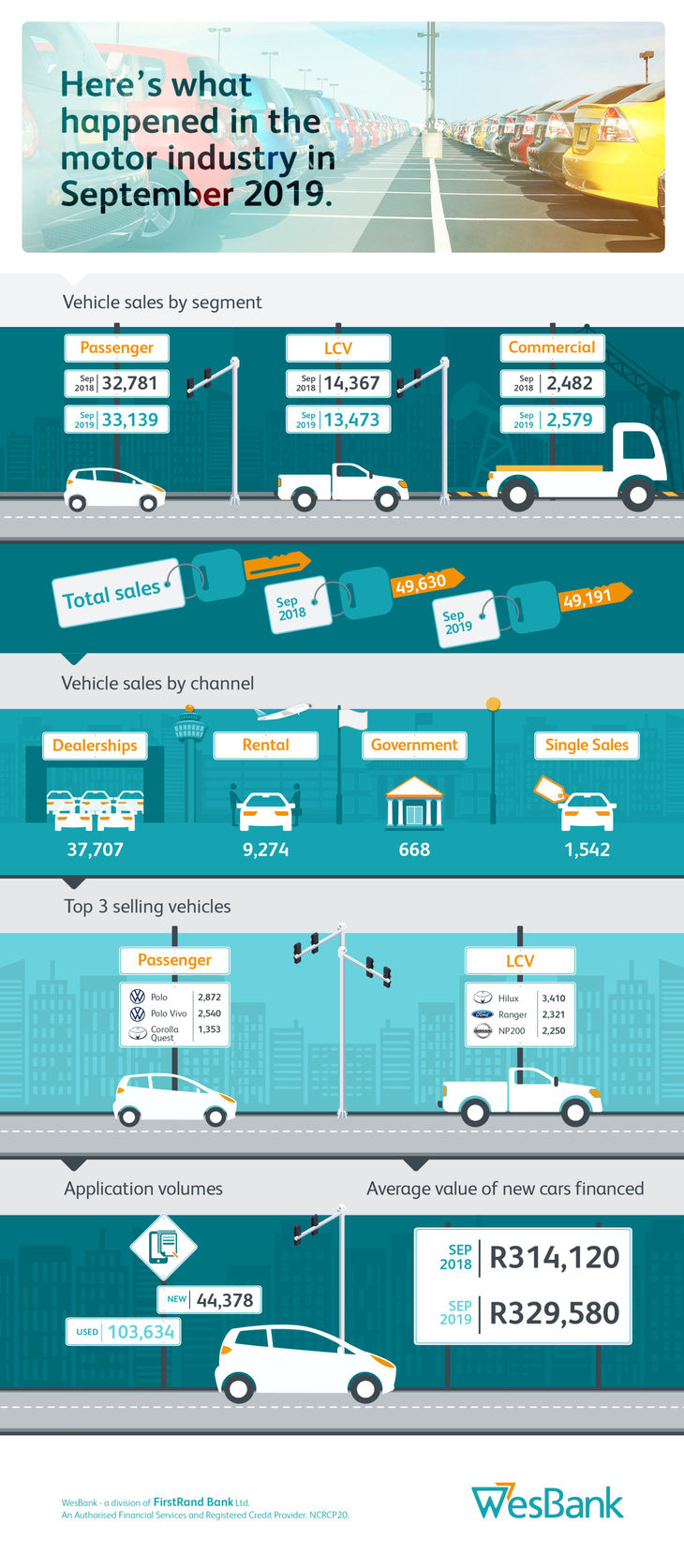
New car sales in South Africa continued to decline in September 2019 but the impact was buoyed by strong sales in the rental channel, according to the National Association of Automobile Manufacturers of South Africa (NAAMSA).
The downward sales trend continued during the month of September 2019 but aggregate new car sales results reflected some positivity with a modest decline of only 0.9%, largely due to strong sales to the rental industry during the period. Every 1 in 4 passenger cars sold during the month was for the rental channel, accounting for 27.3% of local volume. September 2019 was the largest volume month of the year so far and the second best-performing month year-on-year after the 0.7% increase recorded in April 2019.
“On the upside, there were 3,707 units more volume in the market during September than in August,” says Ghana Msibi, WesBank Executive Head of Motor.
“WesBank’s own inflation data largely mirrors that of the general economy, our average deal size slightly above the South African number,” says Msibi. “This infers that new and used car price inflation falls within the general affordability challenge for cash-strapped South African households.”
“Of greater concern is the need for South Africans to extend their car repayment contracts towards the maximum 72 months, while adding balloon payments to reduce the monthly instalment amount. Consumers should remain cautious of over-extending themselves and should rather buy at a more affordable price than use other finance mechanisms to fall within budget” warns Msibi.
New Car Sales Summary: September 2019
Aggregate new car sales of 49 191 units down 0.9% (- 439 units) compared with September 2018
New passenger car sales of 33 139 units up by 1.1% (+358 units) compared with September 2018
New LCV sales of 13 473 down by 6.2% (-894 units) compared with September 2018
Export sales down of 35 657 down by 3.0% (-1 097 units) compared with September 2018
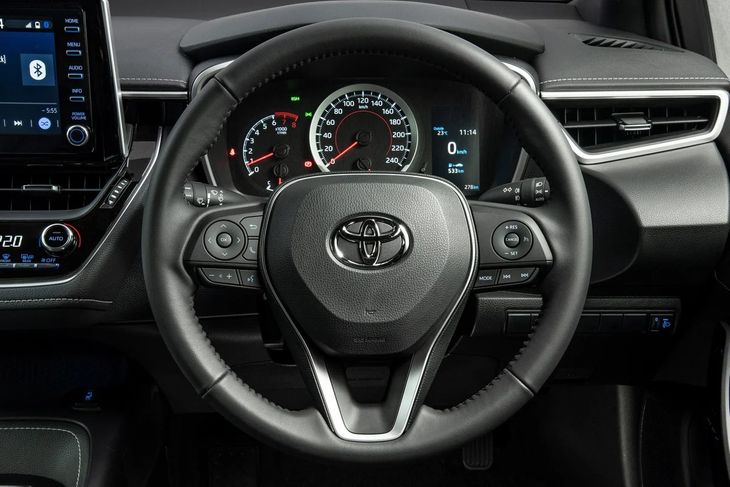
Top 5 Car Brands in South Africa
Toyota – 11 891 units
Volkswagen – 8 641 units
Nissan – 5 002 units
Ford – 4 664 units
Hyundai – 2 826 units
Top 10 Best-Selling Cars in South Africa
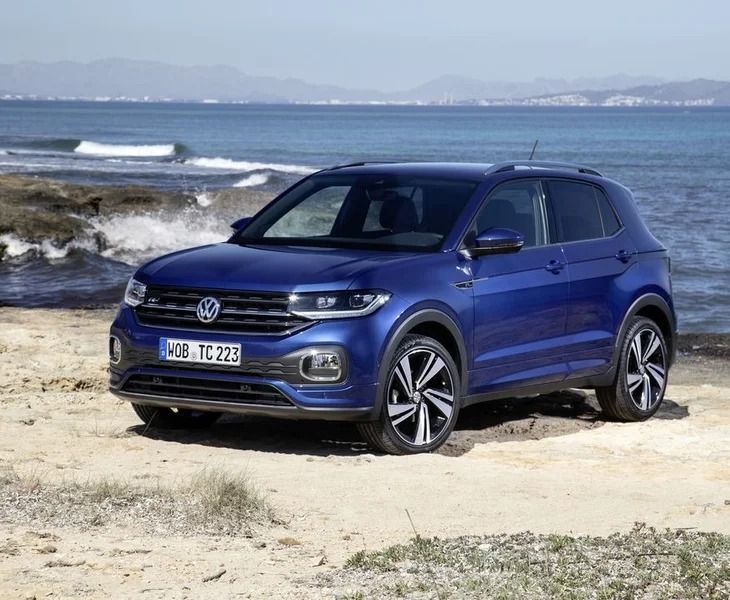
The new Volkswagen T-Cross sold 810 units in its first month on the market in South Africa!
Predictions earlier in the year pointed to improved economic conditions in the second half of 2019 but those predictions have so far failed to materialise. With one quarter left in the year, hopes are high that the industry will experience some positive results in the final 3 months of the year.
Ghana Msibi commented, “The bank’s forecast for the year always relied on a better-performing second half,” says Msibi. “The delay in any signs of improvement have thwarted industry to achieve these numbers. But on a practical business level, industry should be pleased by the September numbers and will be hoping that remains a trend as we enter the fourth quarter.”
In conclusion, “There are definitely more positive economic indicators that will hopefully stimulate improved consumer and business confidence,” says Msibi. “If the country can sustain these conditions, the motor industry should enjoy some relief to the end of the year, while South Africans might be able to reap some reward.”
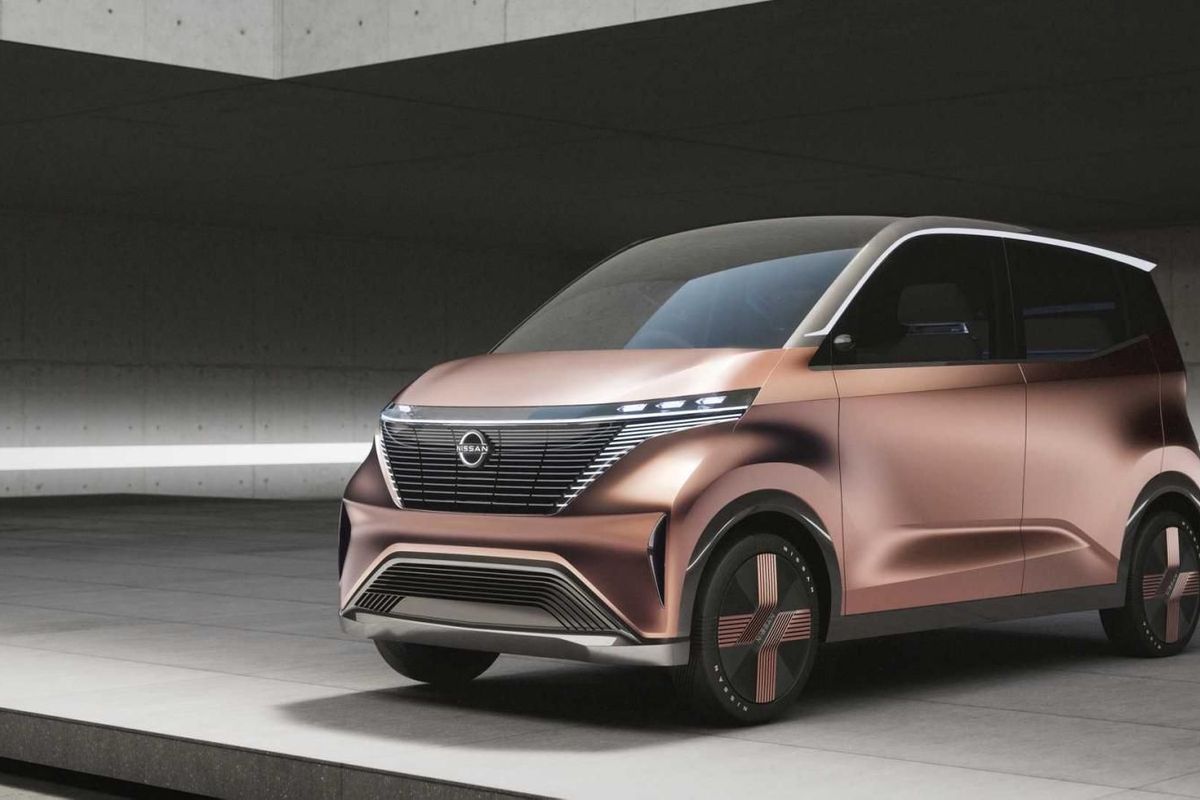
IMk is Nissan’s electric city car
Nissan has teased its future vision of inner city mobility.
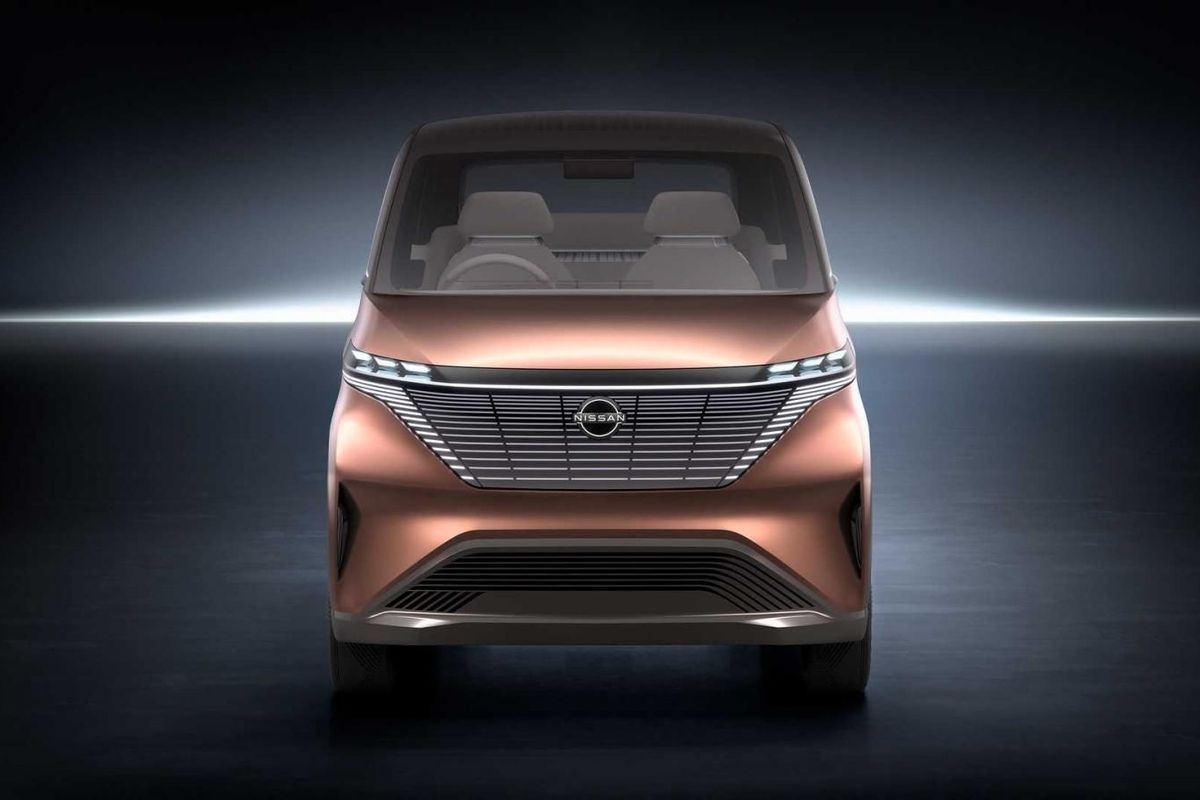
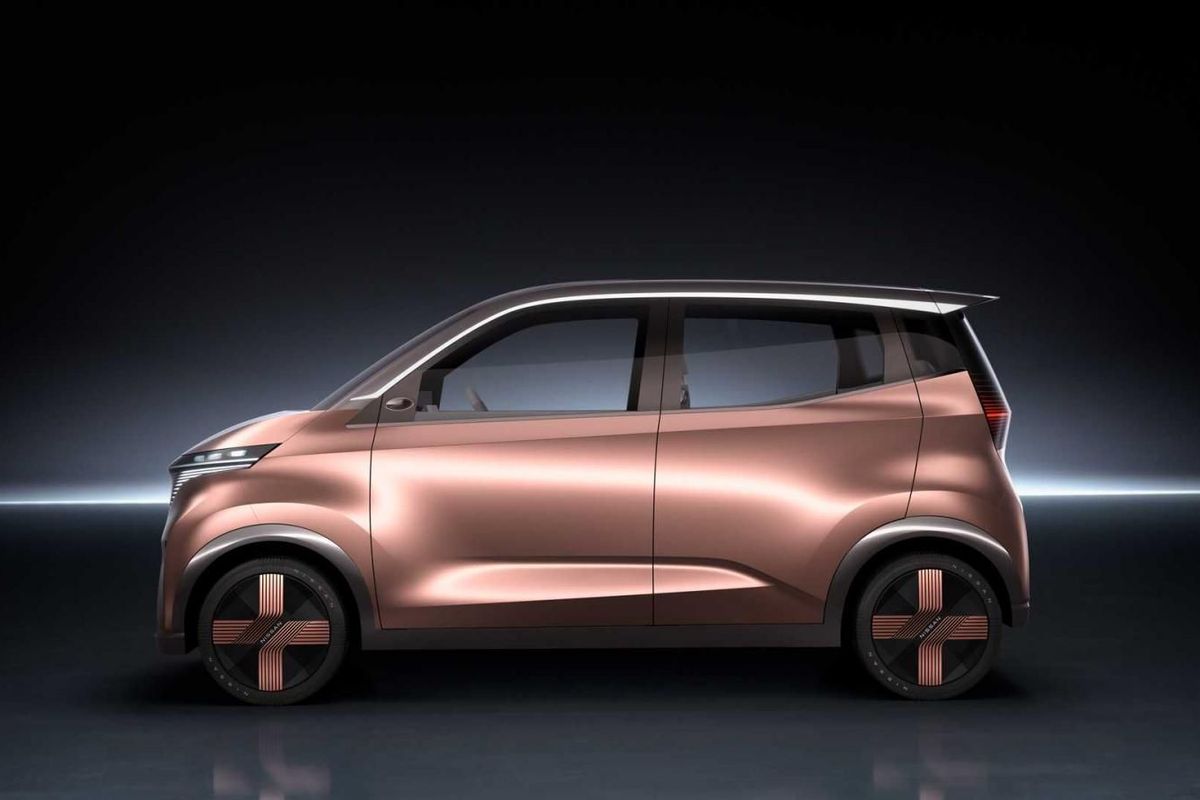
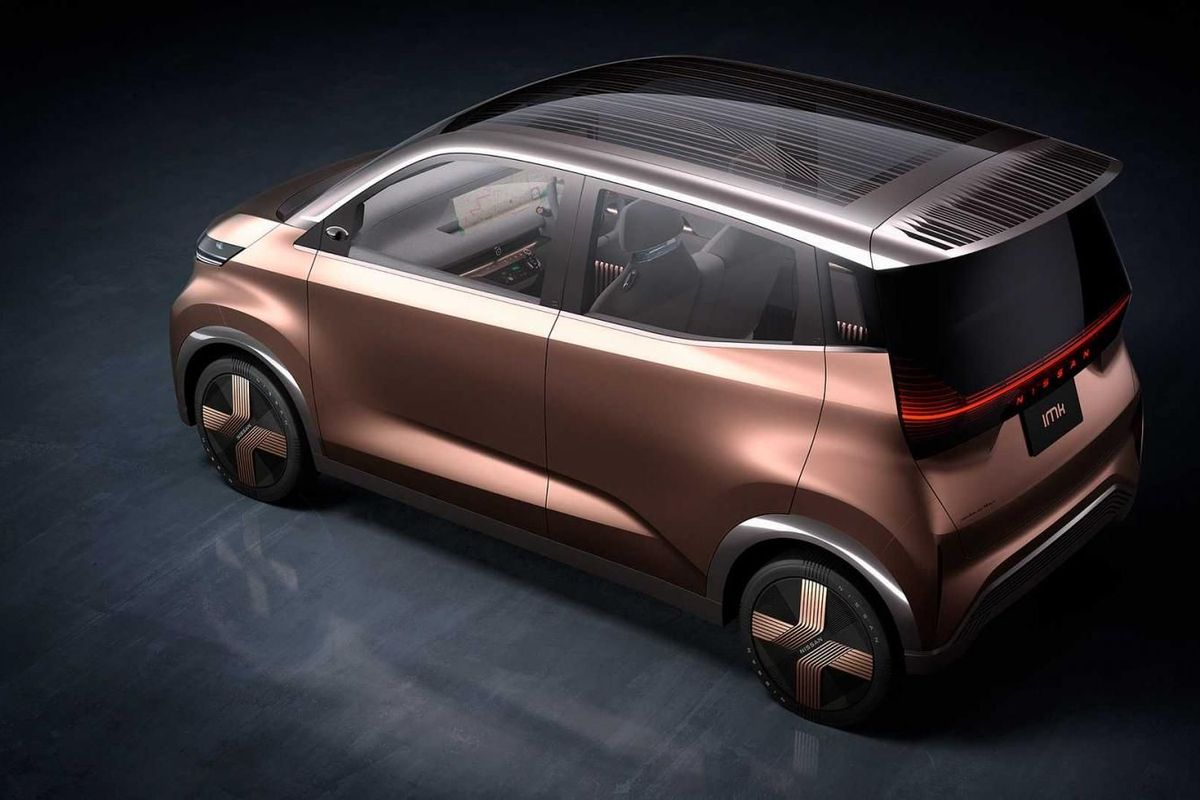
Due for its public reveal at the Tokyo auto show later this month, the Nissan IMk is a tiny city car featuring advanced styling, packaging and electric power.
Dimensionally the IMk is 3.43m long, 1.5m wide and stands 1.6m tall. That makes it shorter, narrower, but taller, than a Nissan Micra.
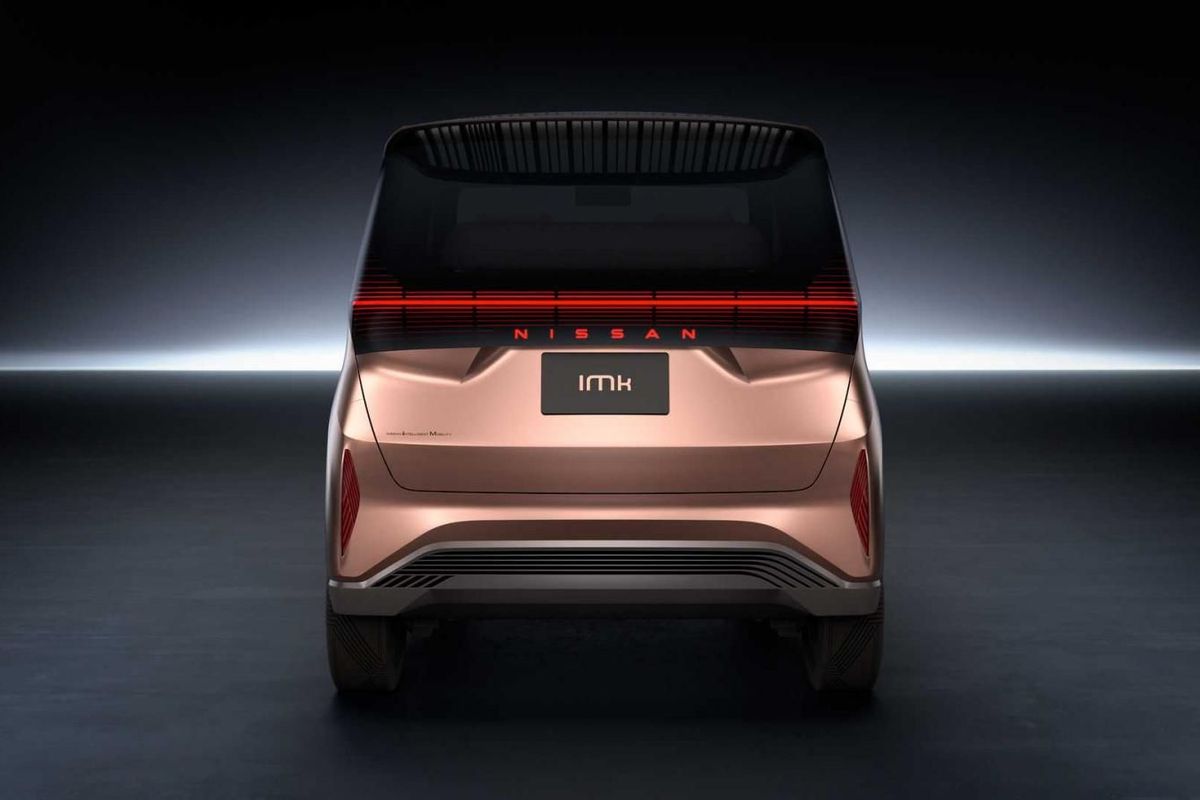
The most notable styling features of this new IMk concept car concern its elaborate use of LED light patterns. Unlike a conventional car, which features a functional grille, the IMk does not require any cooling airflow. Nissan realises that most people recognise a car’s face, and to give the IMk some identity, it has a ‘grille’ type front styling theme, constituted by LEDs.
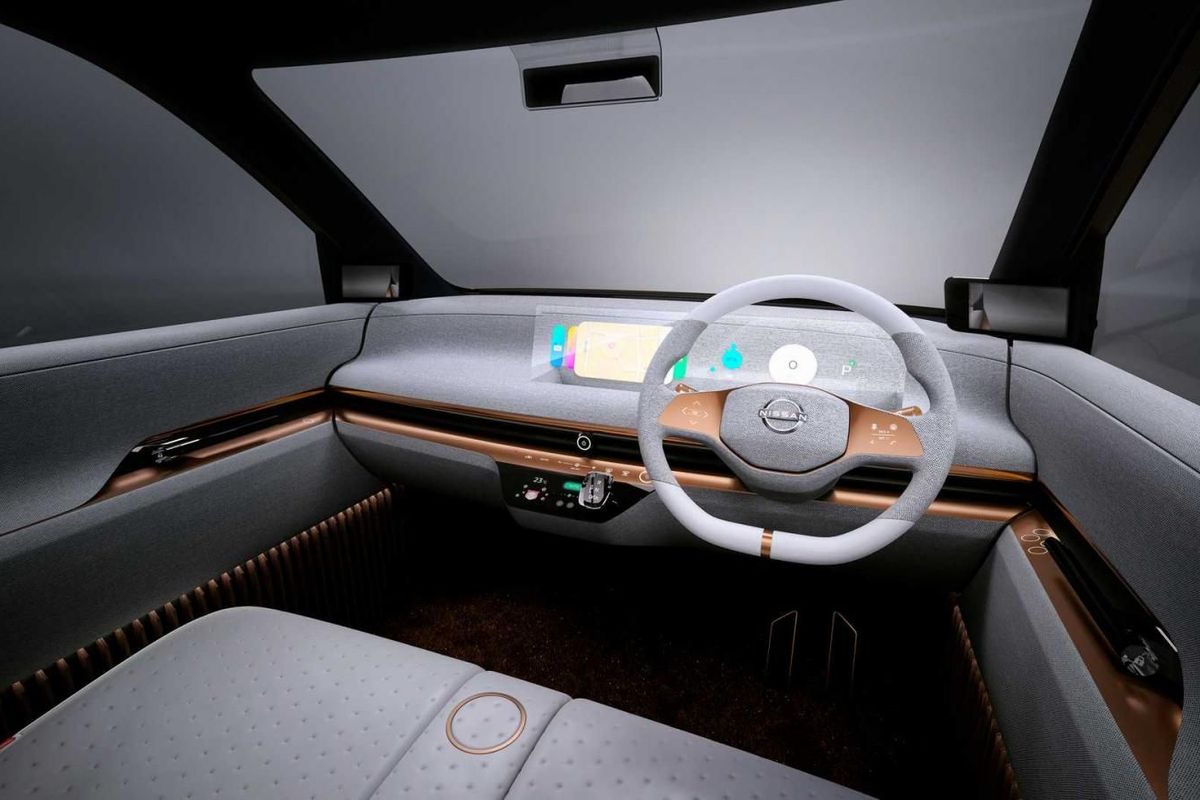
The LED theme is continued at the rear and the IMk’s A-pillars also feature LED light diodes. Another technologically advanced aspect of the IMk’s design, is its lack of door mirrors. Using cameras to provide the rear three-quarter field of view, Nissan has managed to make the IMk more aerodynamic, by deleting its door mirrors.
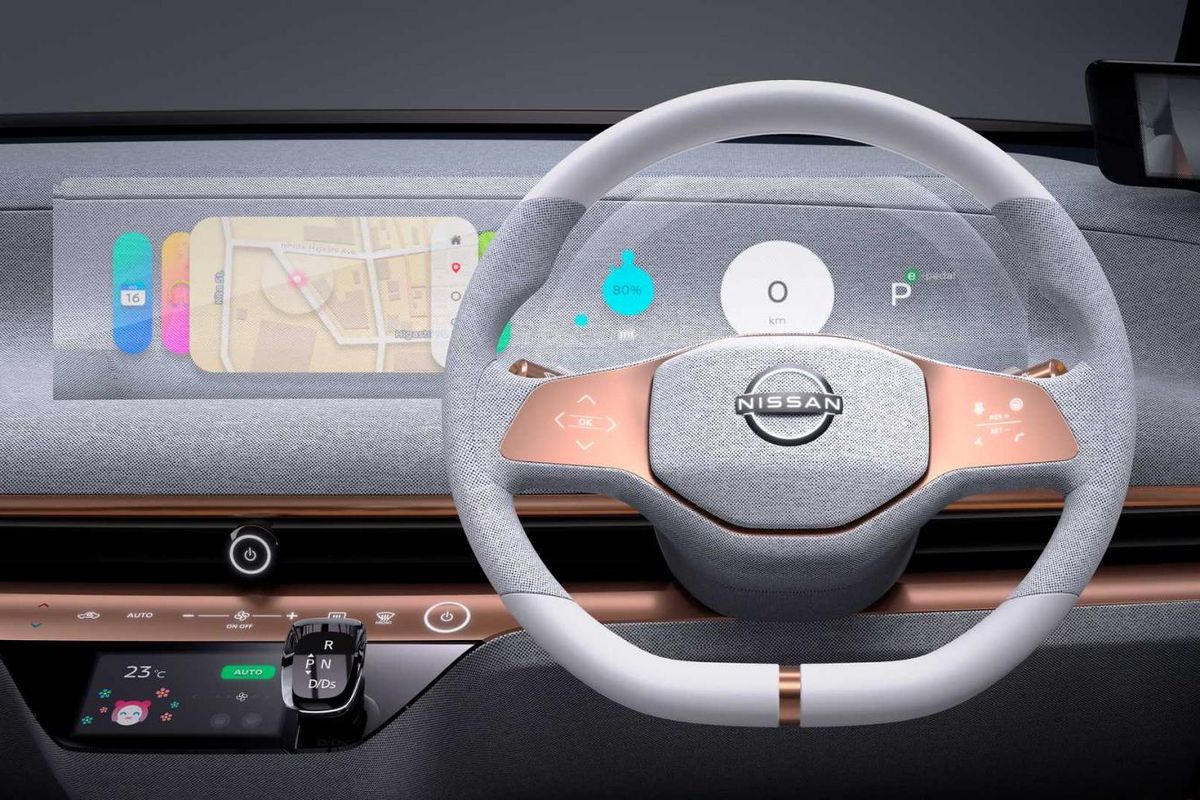
Interior architecture sees a bench seating arrangement, to offer maximum occupant space, and only three conventional controls: a start button, gear lever and steering wheel. All other functions, from infotainment to HVAC adjustments, are operated via touchscreen or voice. Replacing the conventional digital instrumentation binnacle is a floating holographic prism display, which relays most of the crucial vehicle and navigation functions.
Nissan has not divulged any technical details concerning the IMk’s battery-powered drivetrain, but claims that it will offer ample range and impressive acceleration for a car of its size.
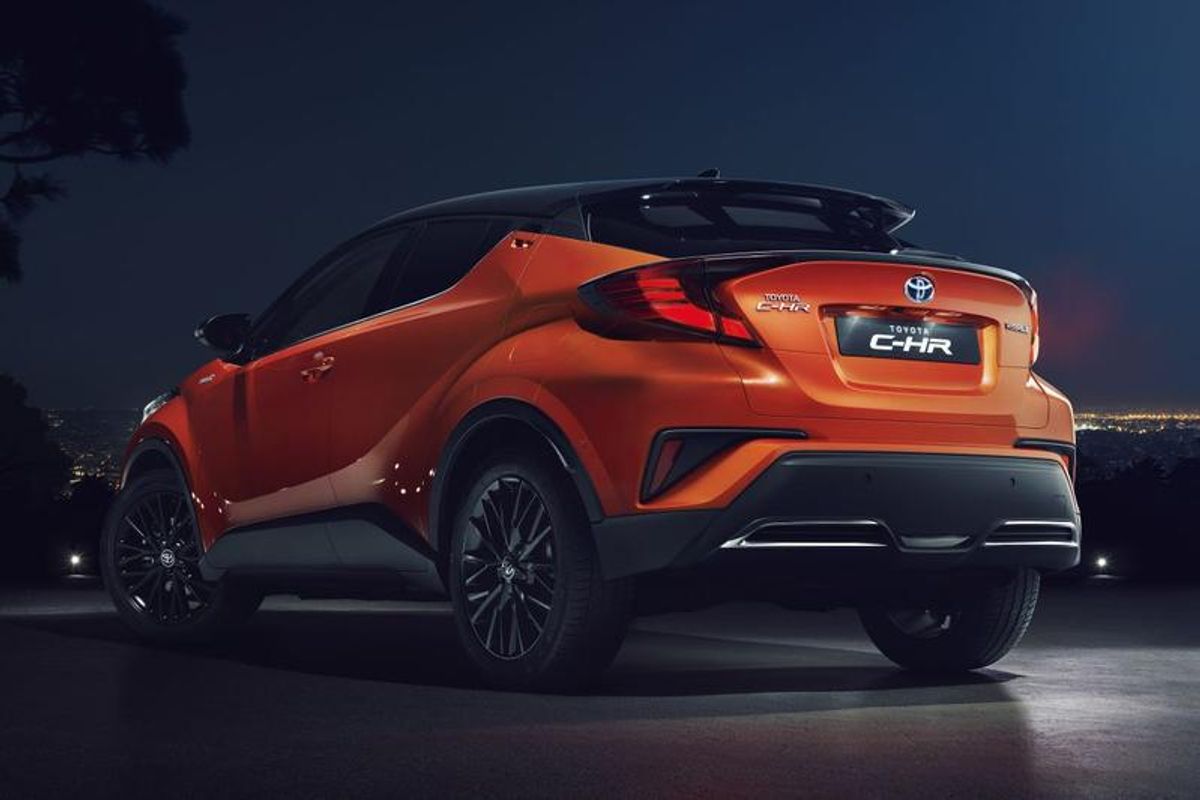
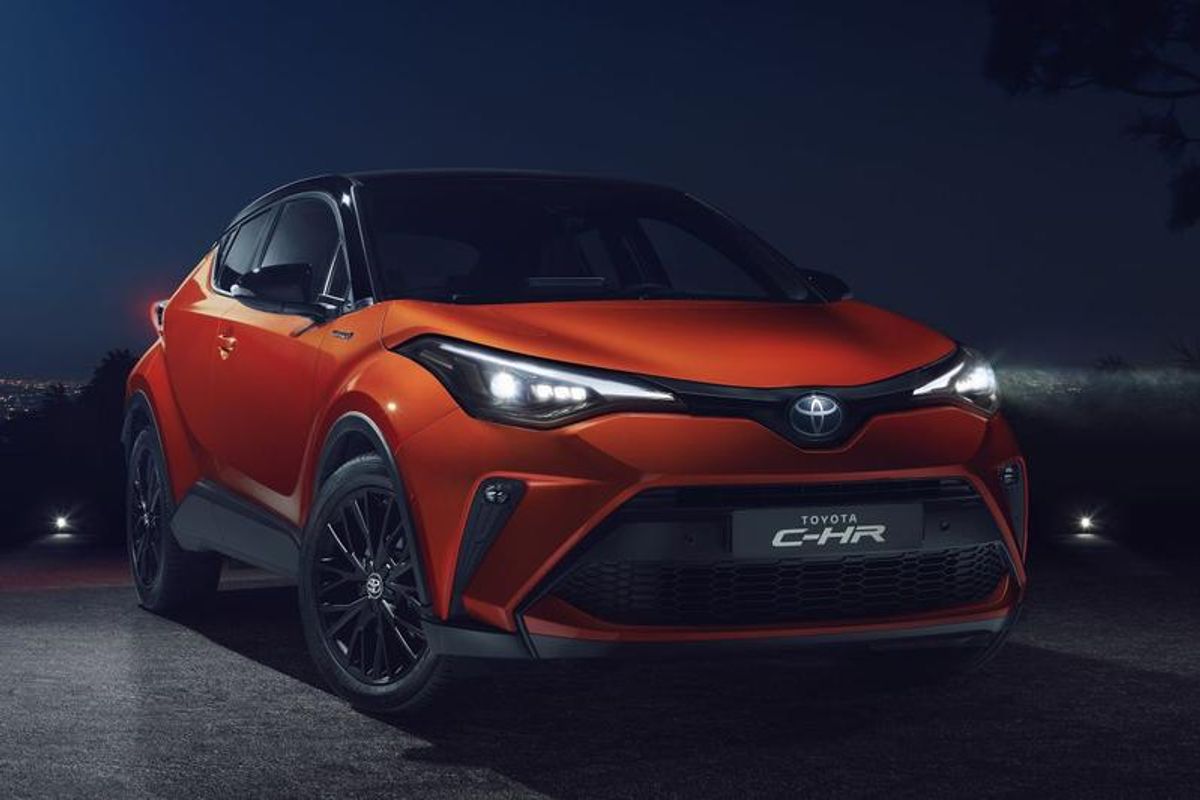
Toyota has revealed an updated version of its C-HR crossover. See details below…
Launched in 2016, the C-HR crossover blends a daring exterior with traditional Toyota values such as reliability. As such, it found favour with customers who wanted something a bit more exciting from the Japanese brand.
The first lifecycle facelift for C-HR has now been announced and sees the range gain some styling tweaks, improved infotainment and a new powertrain option.
What's changed?
Toyota’s designers have reshaped the C-HR’s LED headlights, with a reorientation of the individual light diode pattern. Below the new headlights, there's a remoulded front bumper.
Around the rear, C-HR gains a similar reoriented LED light pattern, with a black styling line connecting the taillights. The C-HR also rolls on a new blacked-out alloy wheel design, as an option on the high-trim variants.
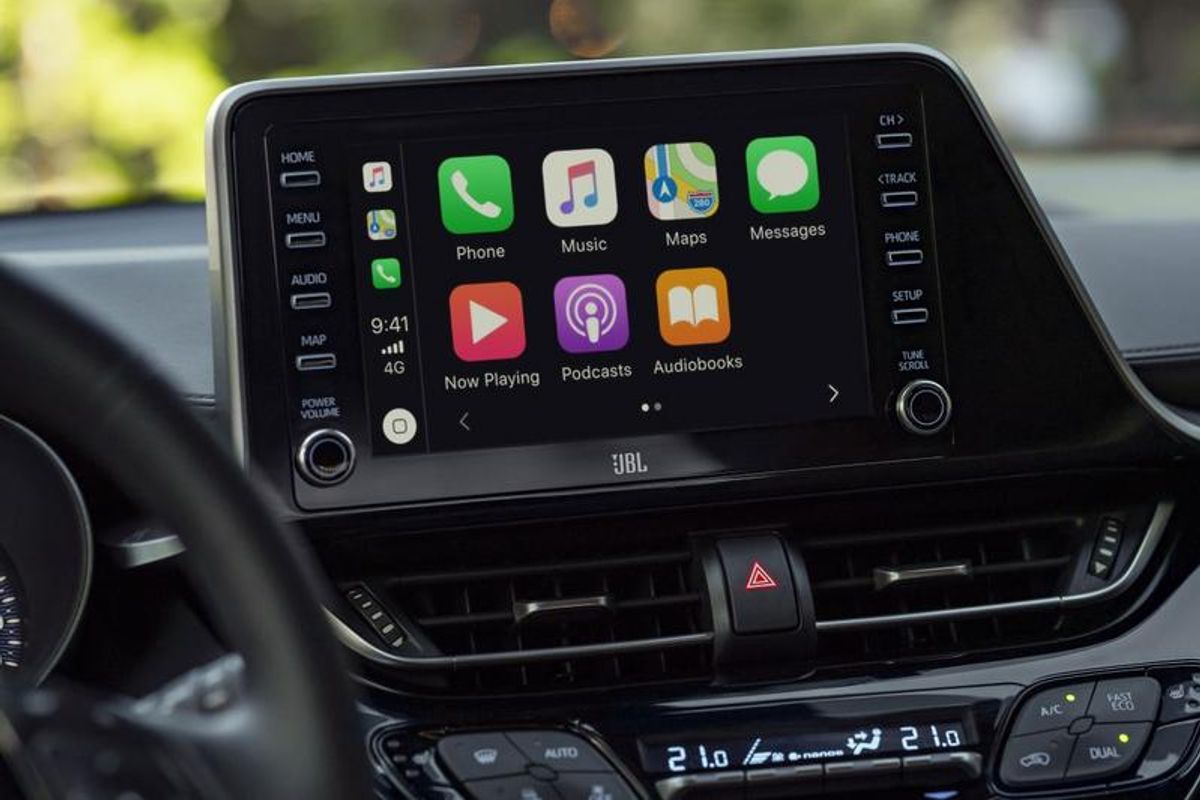
The most significant upgrade for new C-HR, is inside. Toyota has finally responded to customer requests for better Smartphone integration, with an improved 8-inch infotainment system which features Apple CarPlay and Android Auto, offering complete Smartphone function mirroring.
Mechanical changes applied to the new C-HR are limited to a reprogrammed electric power steering code, which sharpens responses on the front axle. Toyota’s acoustics engineers have also refined the C-HR’s sound insulation, to deliver a quieter cabin environment on the move.
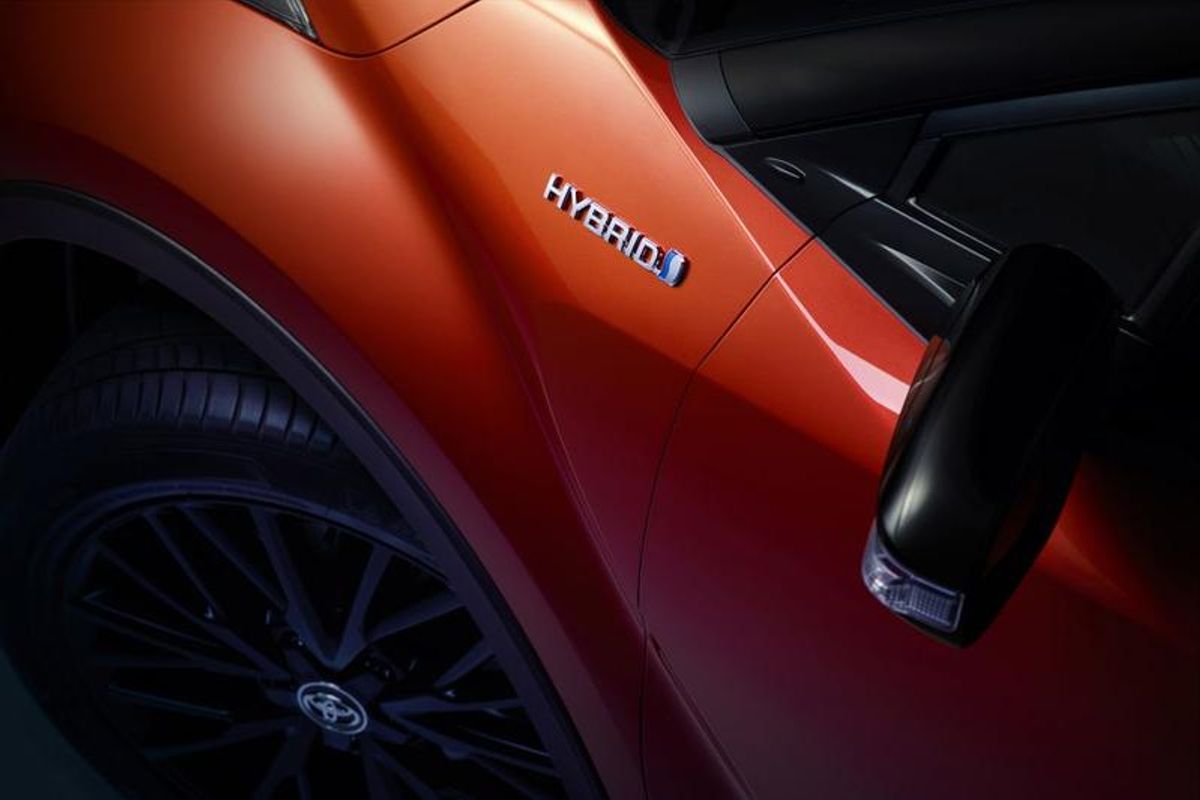
Toyota will include a hybrid powertrain option for C-HR, using a petrol-electric version of the company's 1.8-litre four-cylinder engine, which is good for 91kW and claimed to average 4.3l/100km.
Toyota South Africa will introduce the latest C-HR at the end of 2019 or early 2020. The hybrid C-HR has not been confirmed for the SA market.
Mercedes-Benz SA Product Offensive for October 2019
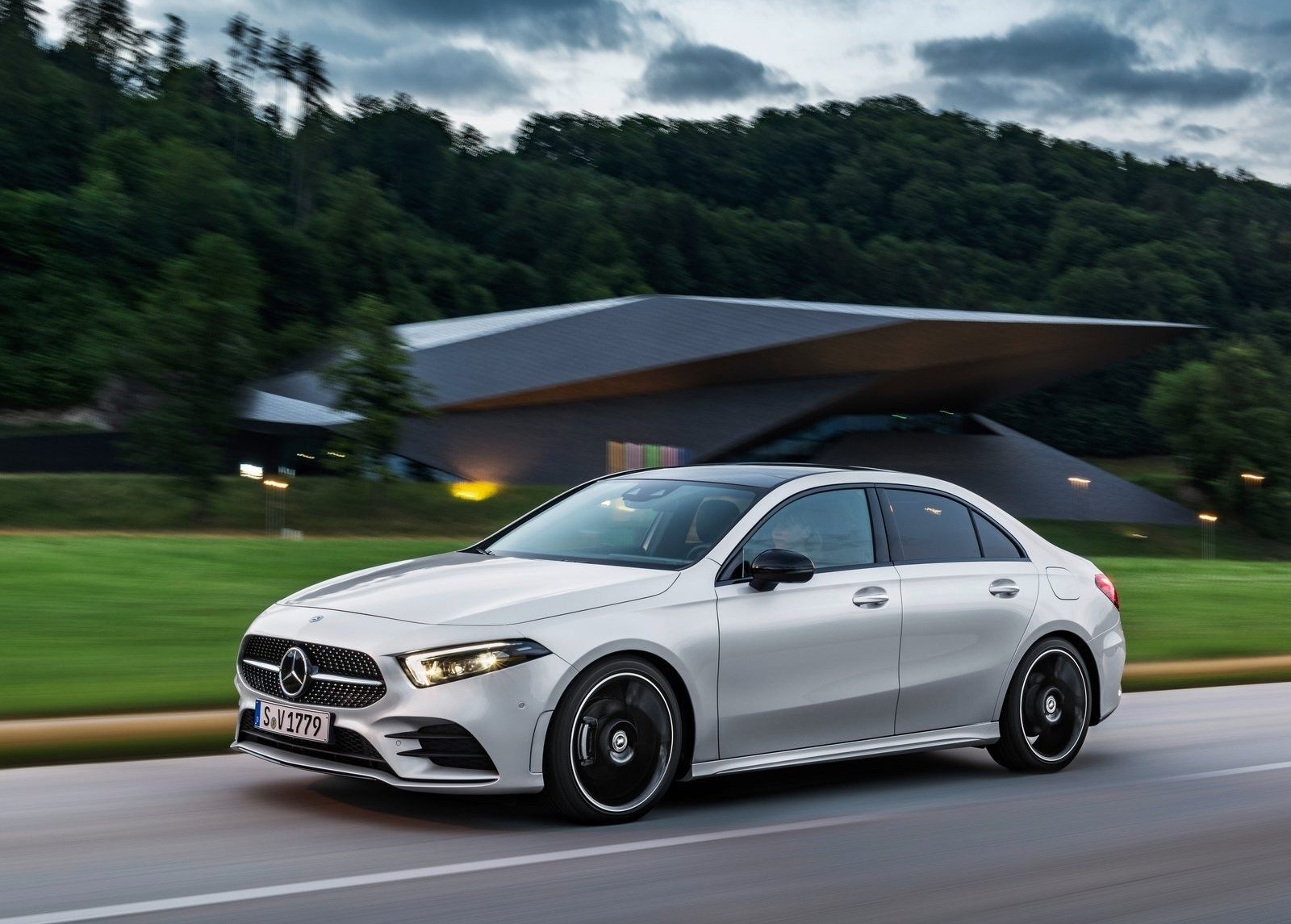
Mercedes-Benz South Africa will be launching its A-Class sedan, CLA sedan and facelifted GLC SUV this week. Here's pricing.
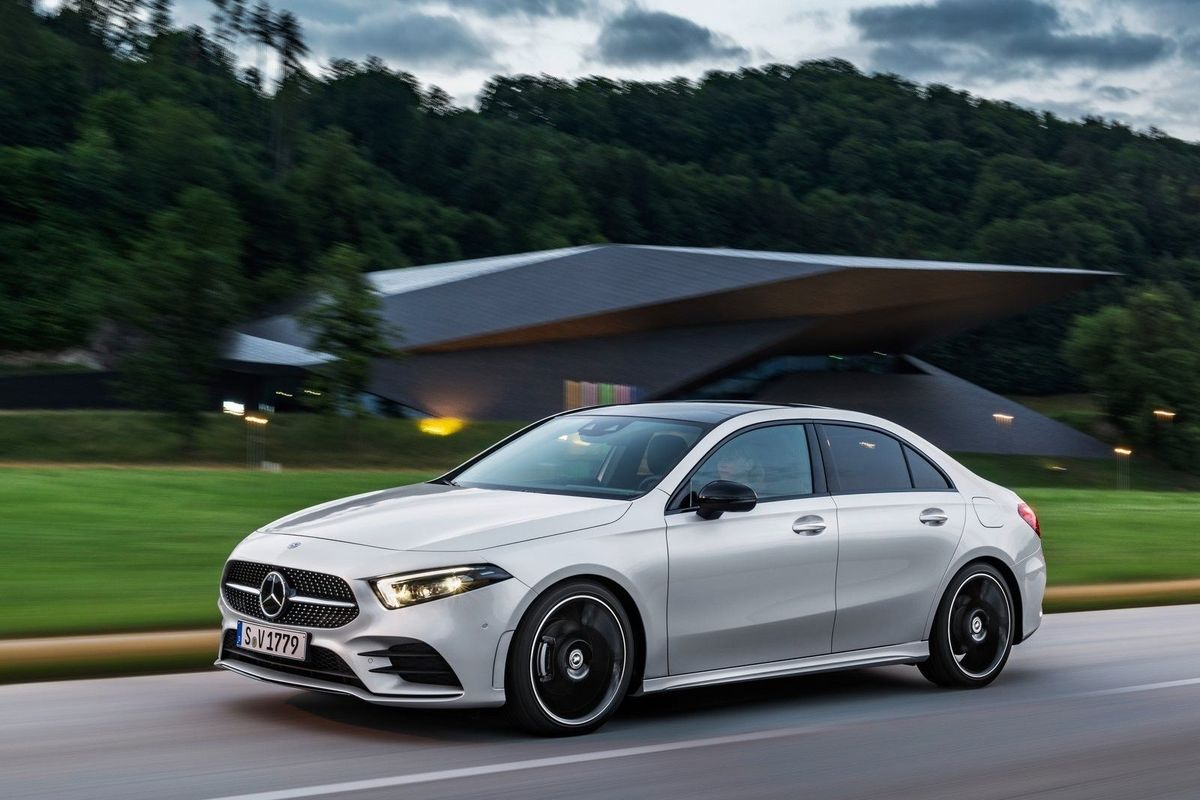
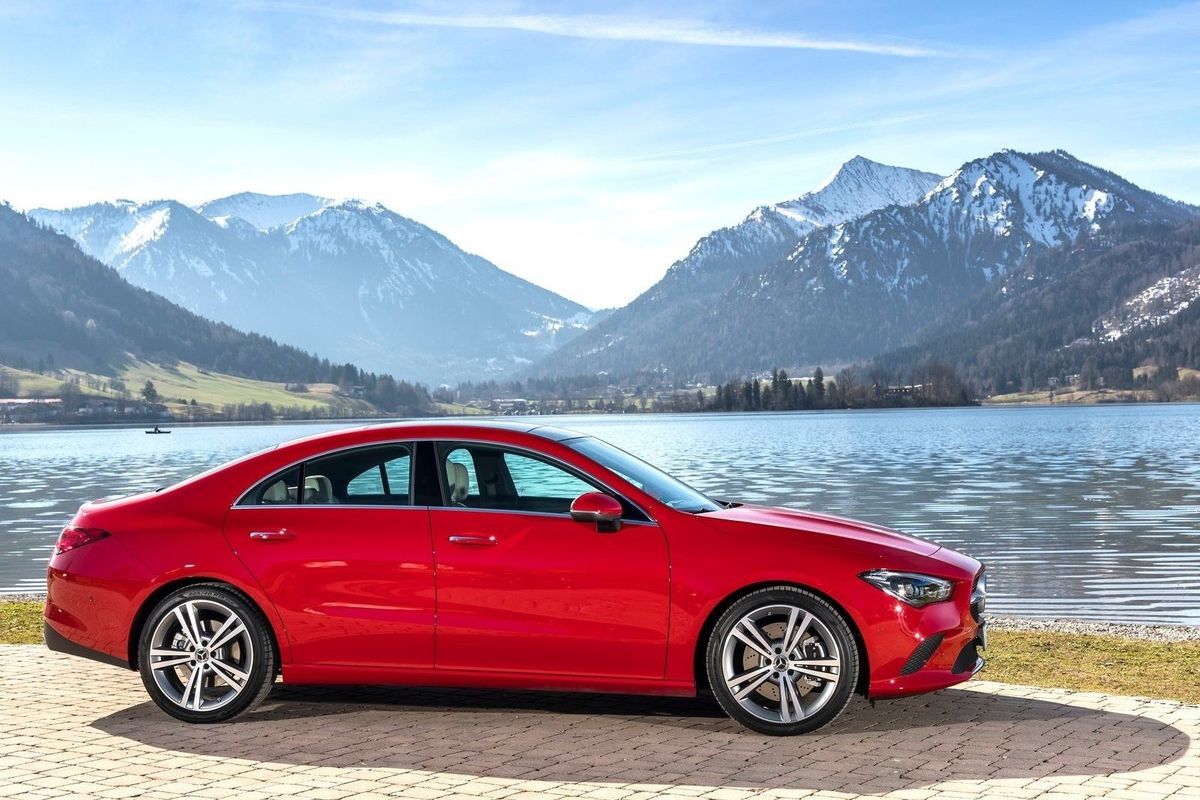
In the first week of October 2019, Mercedes-Benz SA will be launching 3 new products with the A-Class sedan, CLA and GLC officially being unveiled locally. Here are some details about the cars.
Mercedes-Benz A-Class
Kicking off the range is the Mercedes-Benz A200, featuring a 1.3-litre turbocharged motor with 120 kW and 250 Nm. Fuel consumption is claimed to sit between 5.2 L/100 km and 5.4 L/100 km.
The next model in the line-up is the Mercedes-Benz A250 Sport, which features a substantially more powerful engine. With 165 kW and 350 Nm from its 2.0-litre turbo motor, it's going to be quite a fast drive. Mercedes-Benz claims a sub-7 second sprint time to 100 kph. It's a tad thirstier than its A200 sibling and is claimed to consume between 6.1 L/100 km and 6.3 L/100 km.
Mercedes-Benz A-Class Sedan Price in South Africa
Mercedes-Benz A200 R533 780
Mercedes-Benz 250 Sport R606 950
Mercedes-AMG A35 R766 566
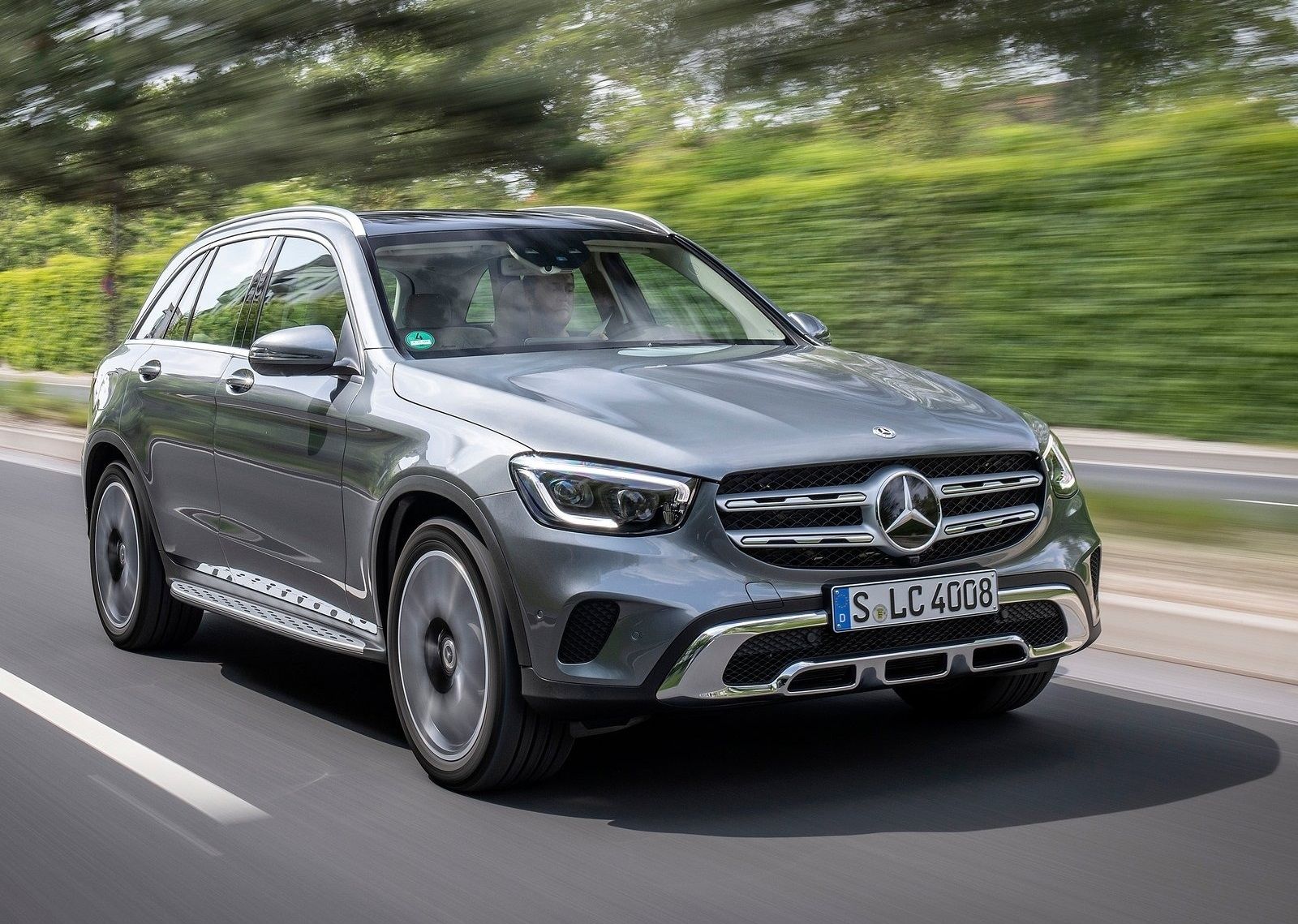
Mercedes-Benz GLC
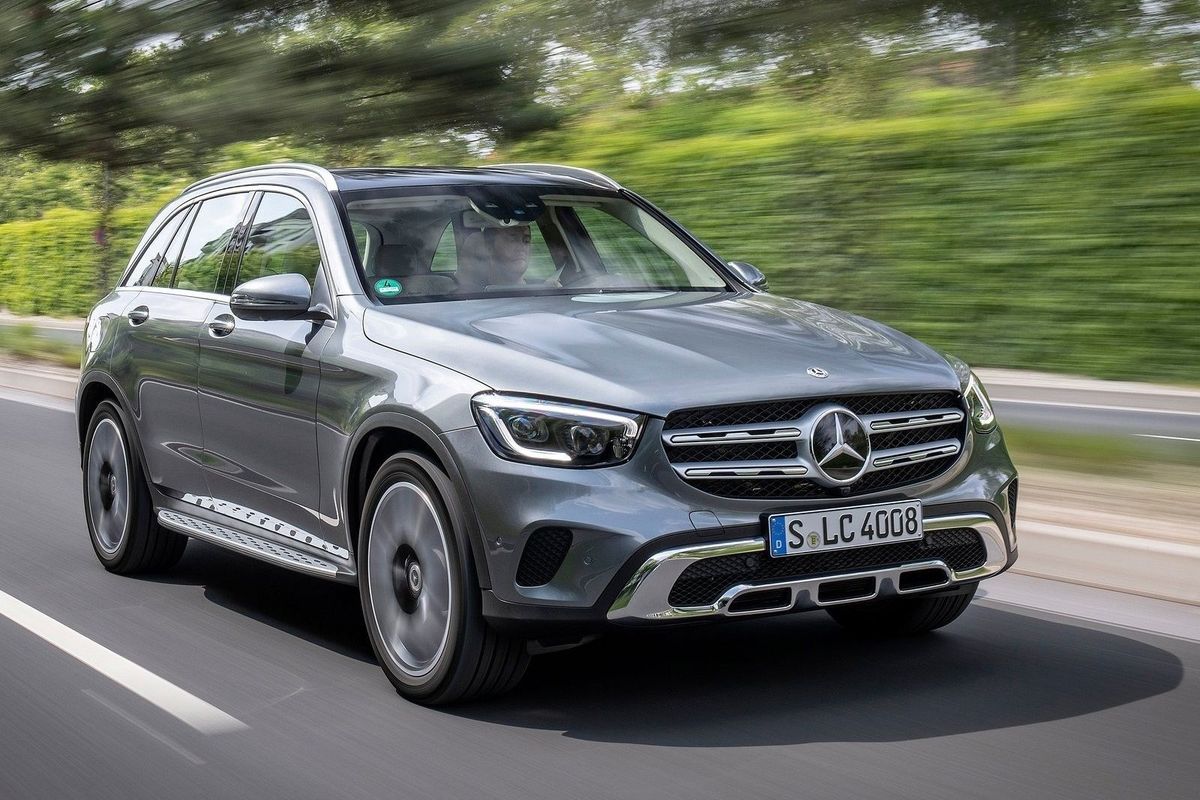
The Mercedes-Benz GLC is a C-Class based SUV and has proven quite popular amongst the fans of the 3-pointed star. With an array of petrol and diesel engines, as well as AMG and coupe versions, there really was a GLC for everyone. For 2019, the Mercedes-Benz GLC has received a facelift and we can share pricing and some engine details. While there's no mention of the AMG version, Mercedes-Benz SA has updated its website and we can confirm the updated lineup.
In terms of engine, the facelifted Mercedes-Benz GLC will be available with petrol and diesel options. Kicking off the range is the 220 d which is a 2.0-litre turbocharged diesel engine. It produces a reasonable 143 kW and 400 Nm. The 300 d promises 180 kW and 500 Nm from the same engine but tuned to deliver higher outputs. All derivatives feature 4Matic all-wheel drive as well as the 9G-Tronic automatic transmission. For those wanting petrol, there will be a 2.0 litre turbocharged 4-cylinder with 190 kW and 370 kW.
Mercedes-Benz GLC Price in South Africa
Mercedes-Benz GLC 220 d R788 630
Mercedes-Benz GLC 300 d R829 401
Mercedes-Benz GLC 300 R848 619
Mercedes-AMG GLC 43 R1 078 921
Mercedes-AMG GLC 63 S R1 668 420
Mercedes-Benz GLC 220 d Coupe R931 750
Mercedes-Benz GLC 300 d Coupe R968 248
Mercedes-Benz GLC 300 Coupe R990 486
Mercedes-AMG GLC 43 Coupe R1 265 968
Mercedes-AMG GLC 63 S Coupe R1 868 040
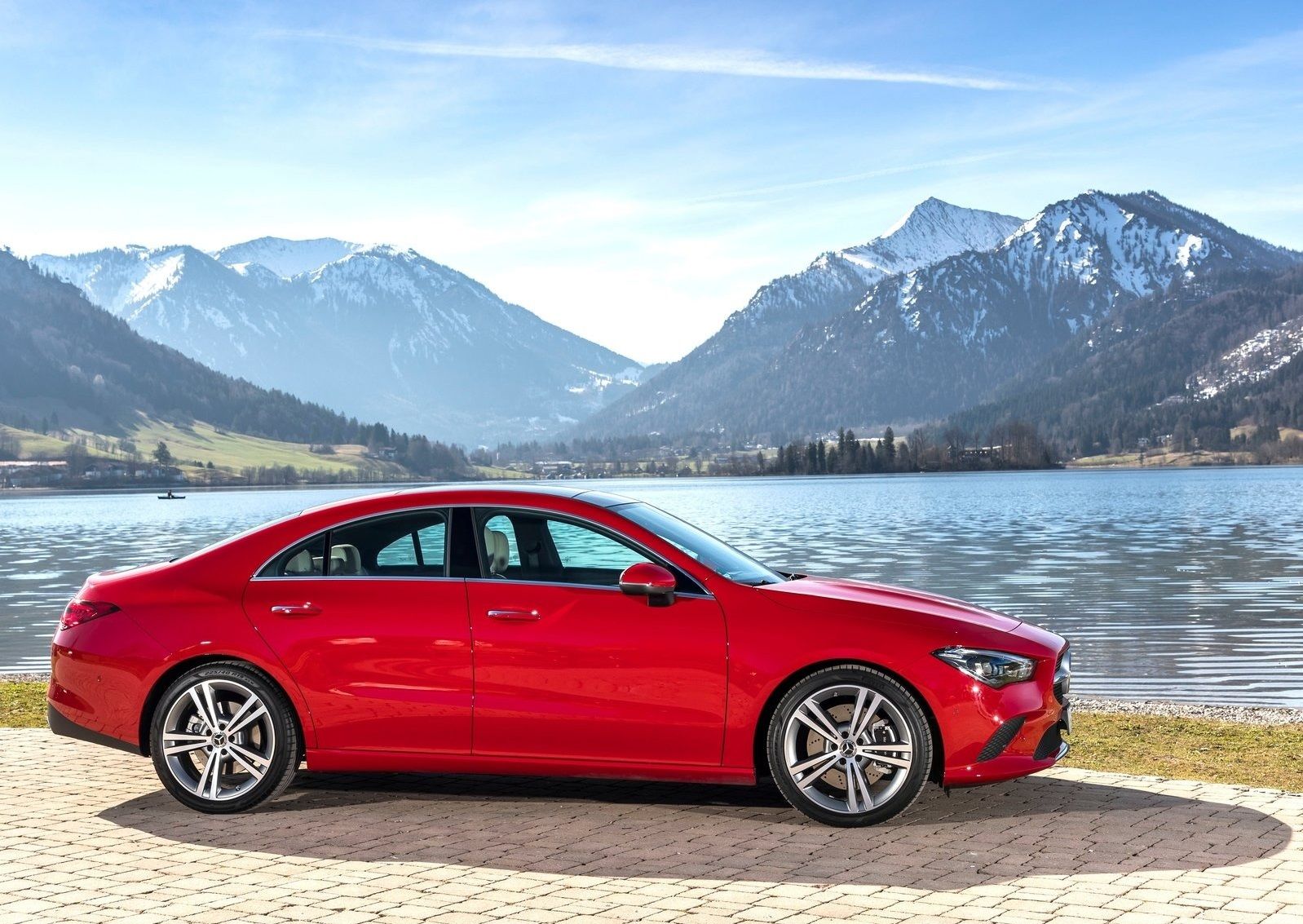
Mercedes-Benz CLA
This generation of CLA sports new underpinnings similar to those of the A-Class hatchback that was launched in South Africa during 2018. In terms of dimensions, that means the newcomer has grown in length and width, while its wheelbase is slightly longer too.
The engines on offer include the 120 kW/250 Nm 1.3-litre turbopetrol unit from the A-Class to power the entry-level derivative, which is the CLA 200. The 2.0-litre turbodiesel unit arrives in the form of the CLA 220d, with a 140 kW and 400 Nm engine. The CLA 200 makes do with its 7-speed dual-clutch while the diesel CLA 220d gets an 8-speed dual-clutch gearbox. The diesel will be the more fuel efficient of the two engines, with Merc claiming 4.3 – 4.4 L/100 km, while its petrol-powered sibling is said to consume 5.3 – 5.5 L/100 km.
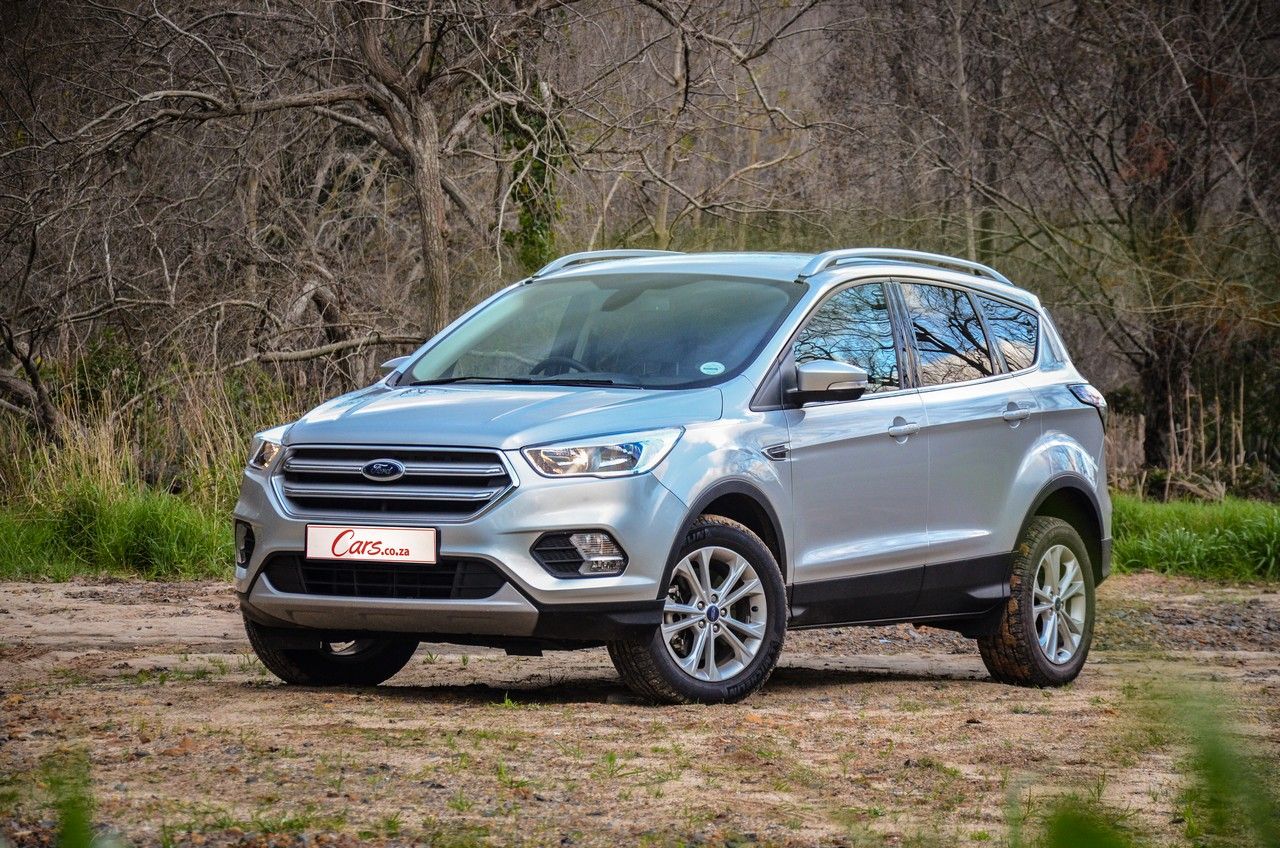
Despite a minor update to the range late in 2018, the Kuga is getting on in years and still has an awkward legacy, but there’s no denying the value proposition of this mid-range 1.5 TDCi Trend derivative… It's also quite fun to drive!
Despite a bad period in its history, the Kuga remains a well-equipped family SUV
Where does it fit in?
The 2nd iteration of Ford’s long-serving family car has a storied track record in our market dating back to its 2012 launch; from the notorious fires affecting certain (now-discontinued) derivatives to a facelift in 2016 and the recent addition of sporty-looking ST Line derivatives and the 1.5-litre turbodiesel reviewed here. The 1.5 TDCi Trend is a bit of an anomaly in the segment – a small-capacity turbodiesel with a manual 'box – but it's well-specced compared with its direct rivals, plus its keen pricing might even leave enough budget to specify the Driver Assistance Pack, which includes Active City Stop with low-speed collision mitigation, adaptive cruise control, active park assist, lane-keeping aid and blind-spot monitoring and auto high-beam (R16 060*). Those features are usually reserved for upper-end derivatives and could sweeten the deal on the 1.5 TDCi Trend.
How it fares in terms of…
Packaging
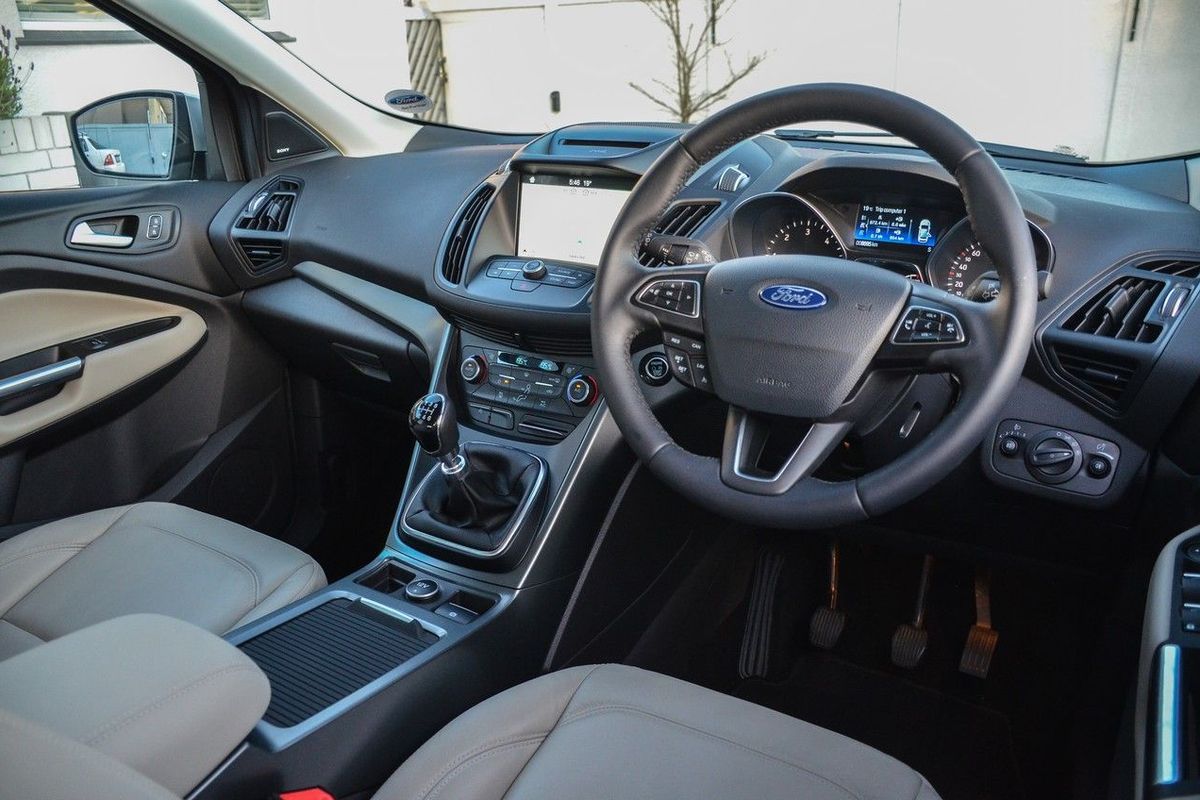
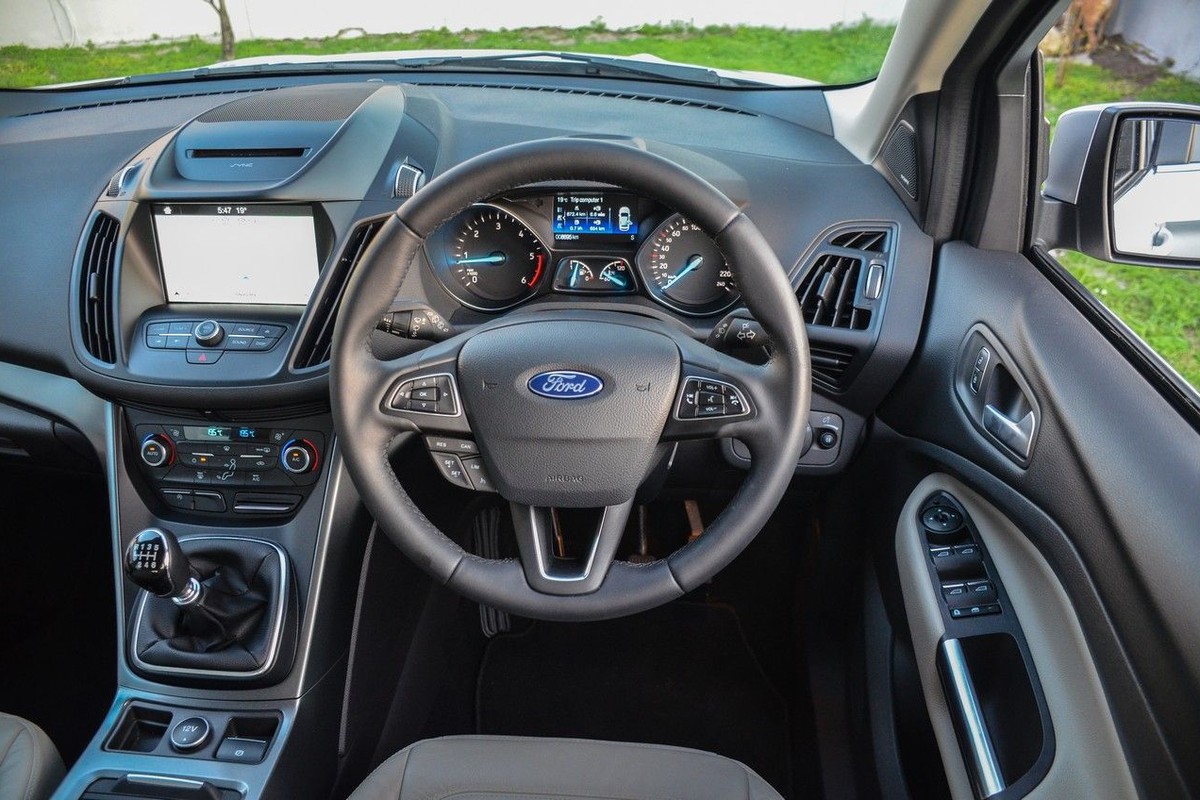
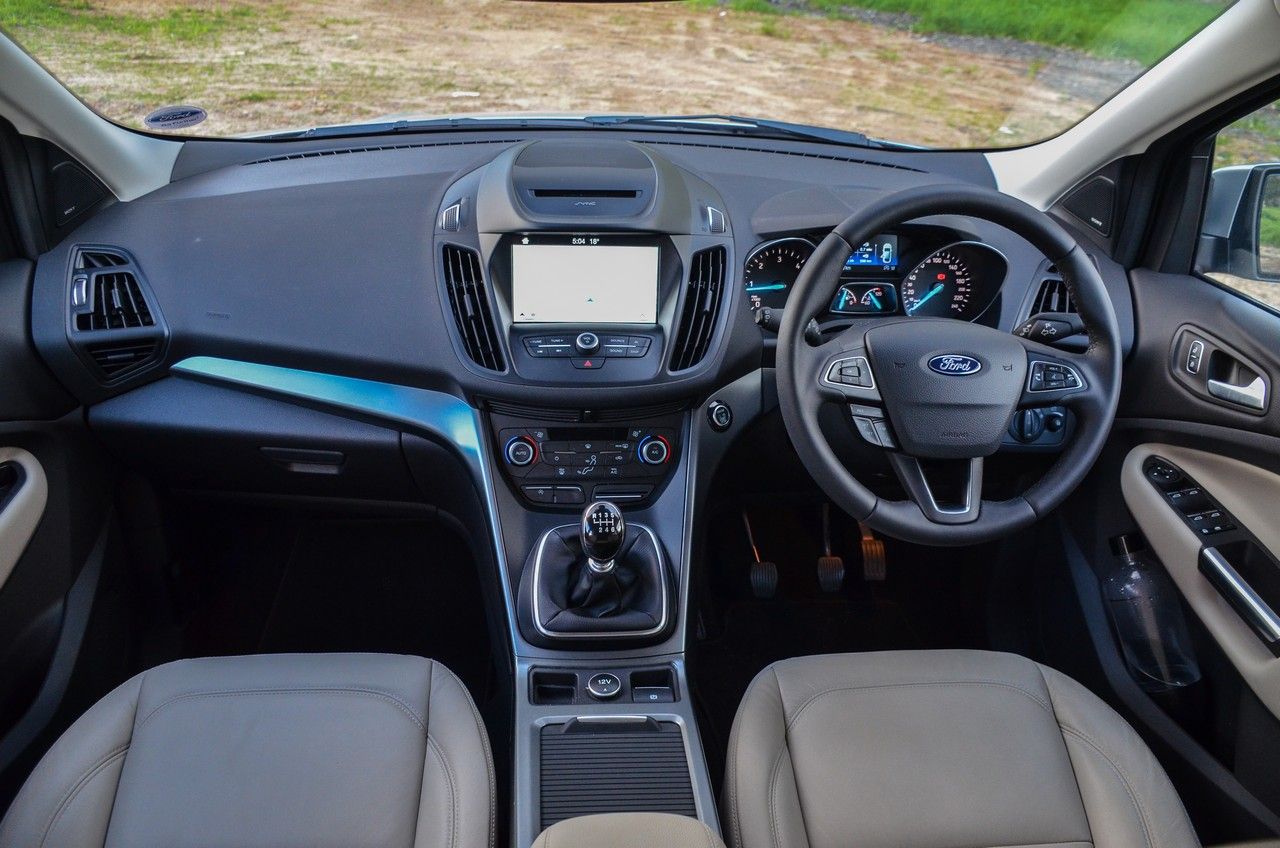
The Kuga's cabin is well appointed and you get plenty of features. A particular highlight is the SYNC system with Apple CarPlay and Android Auto.
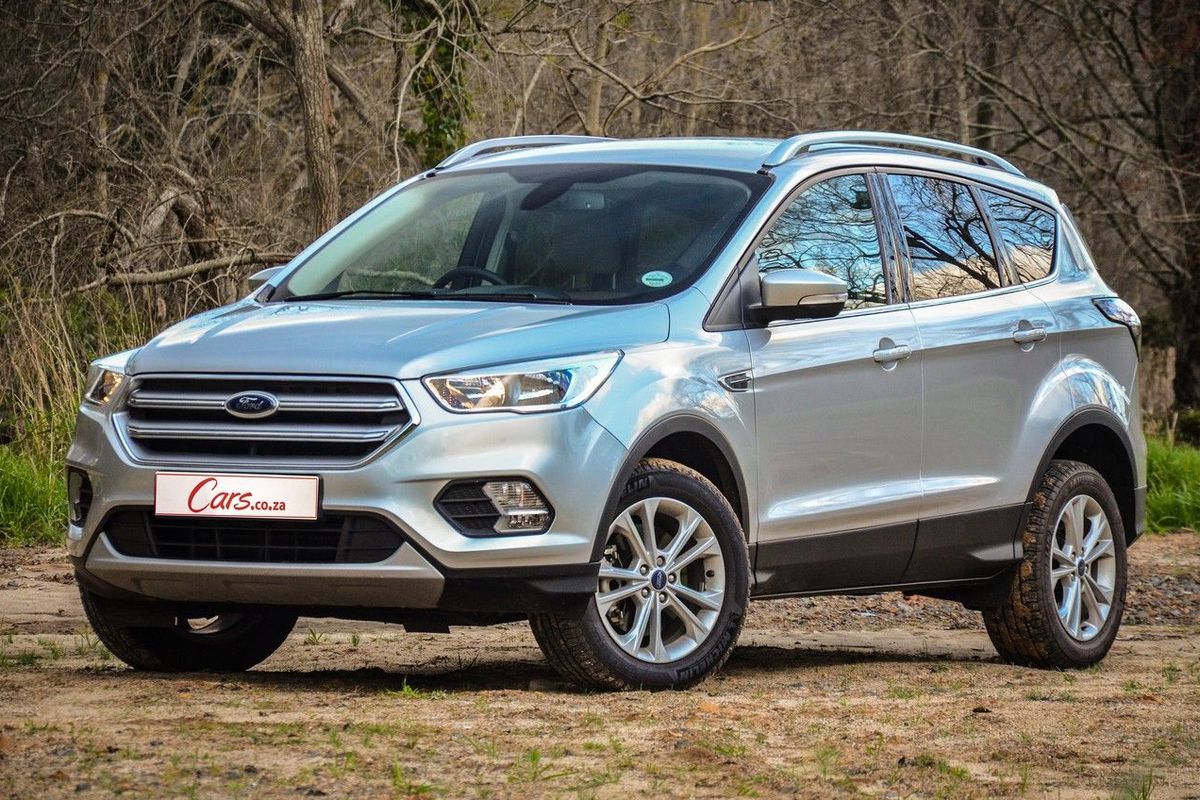
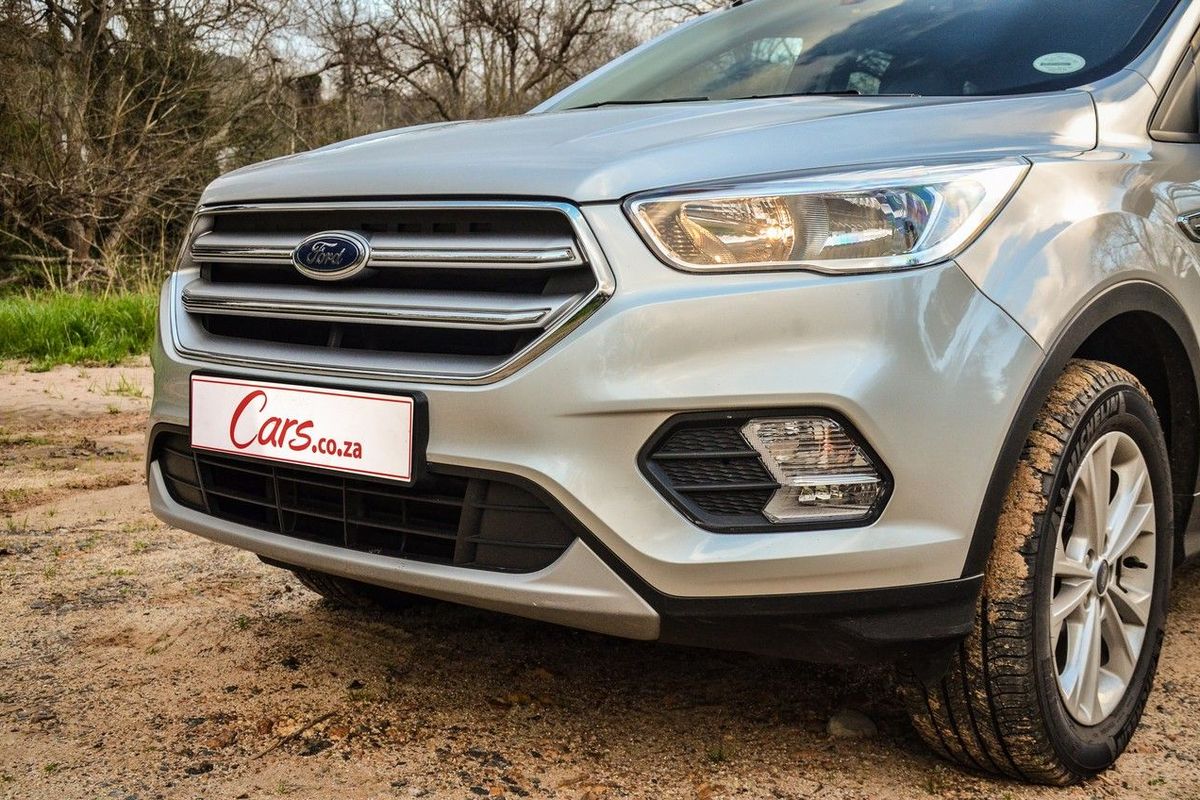
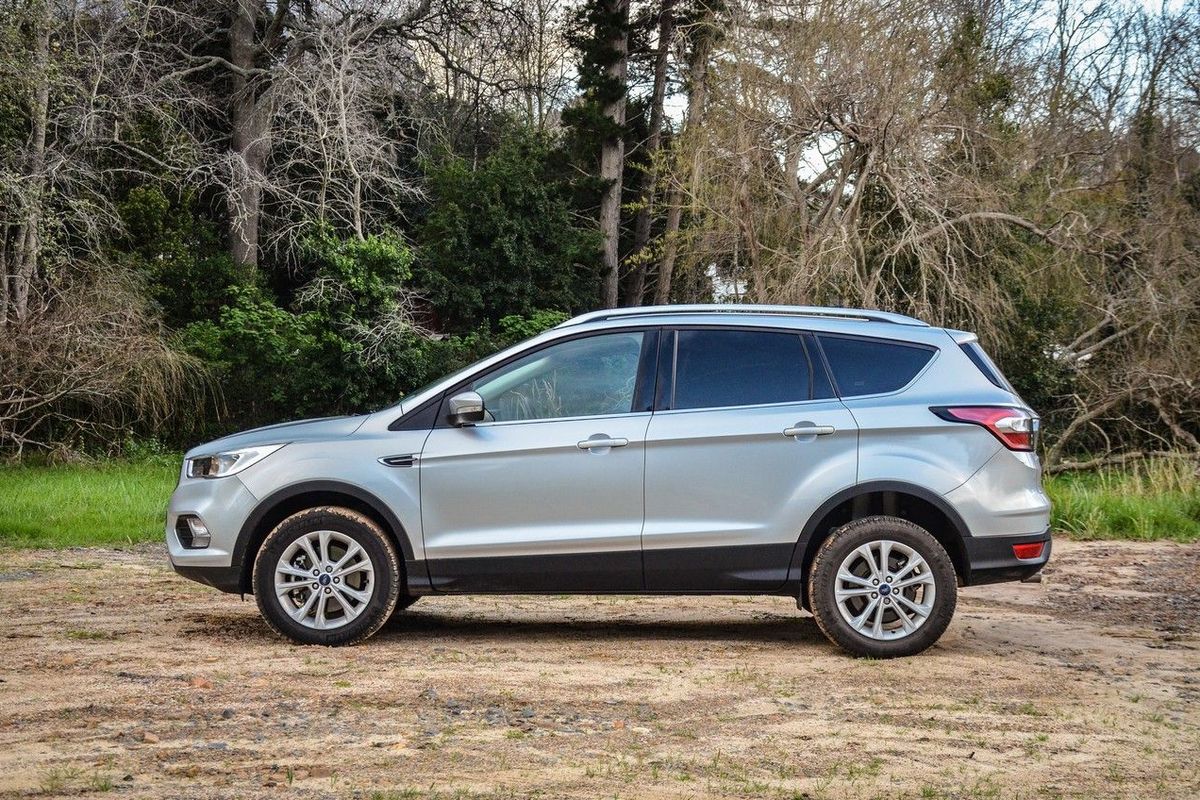
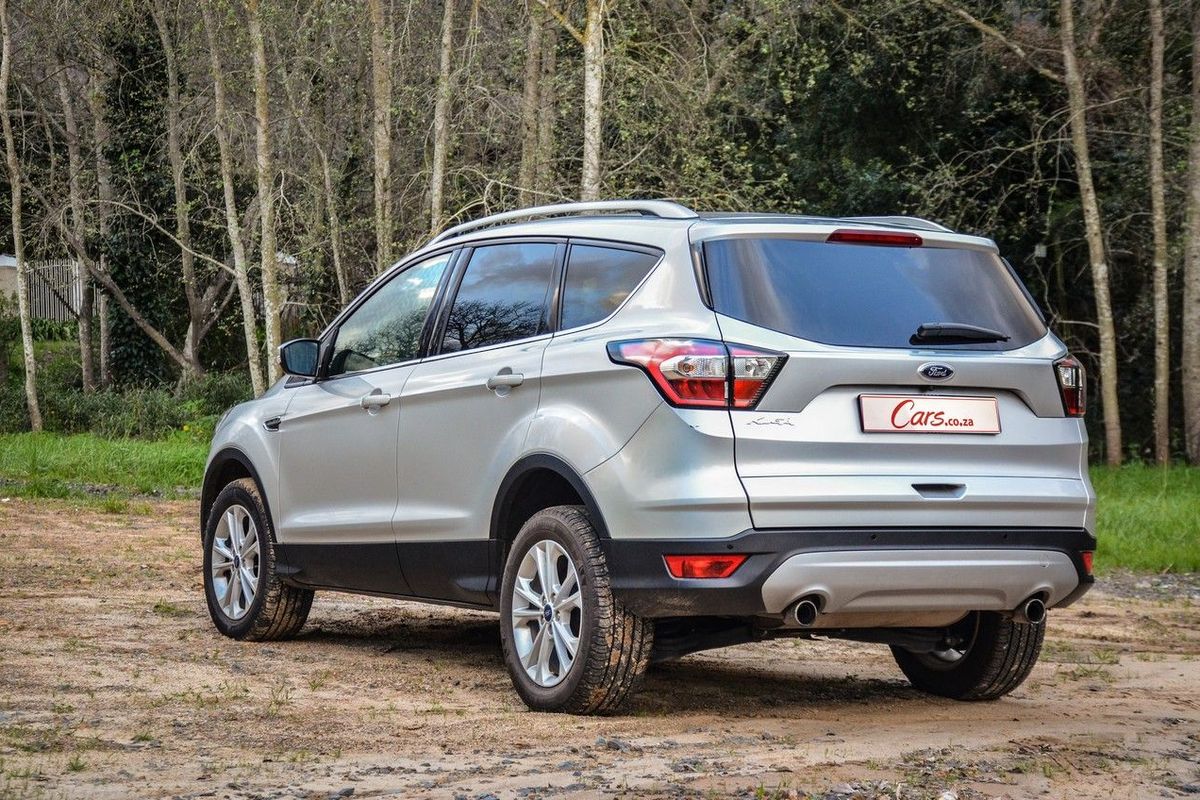
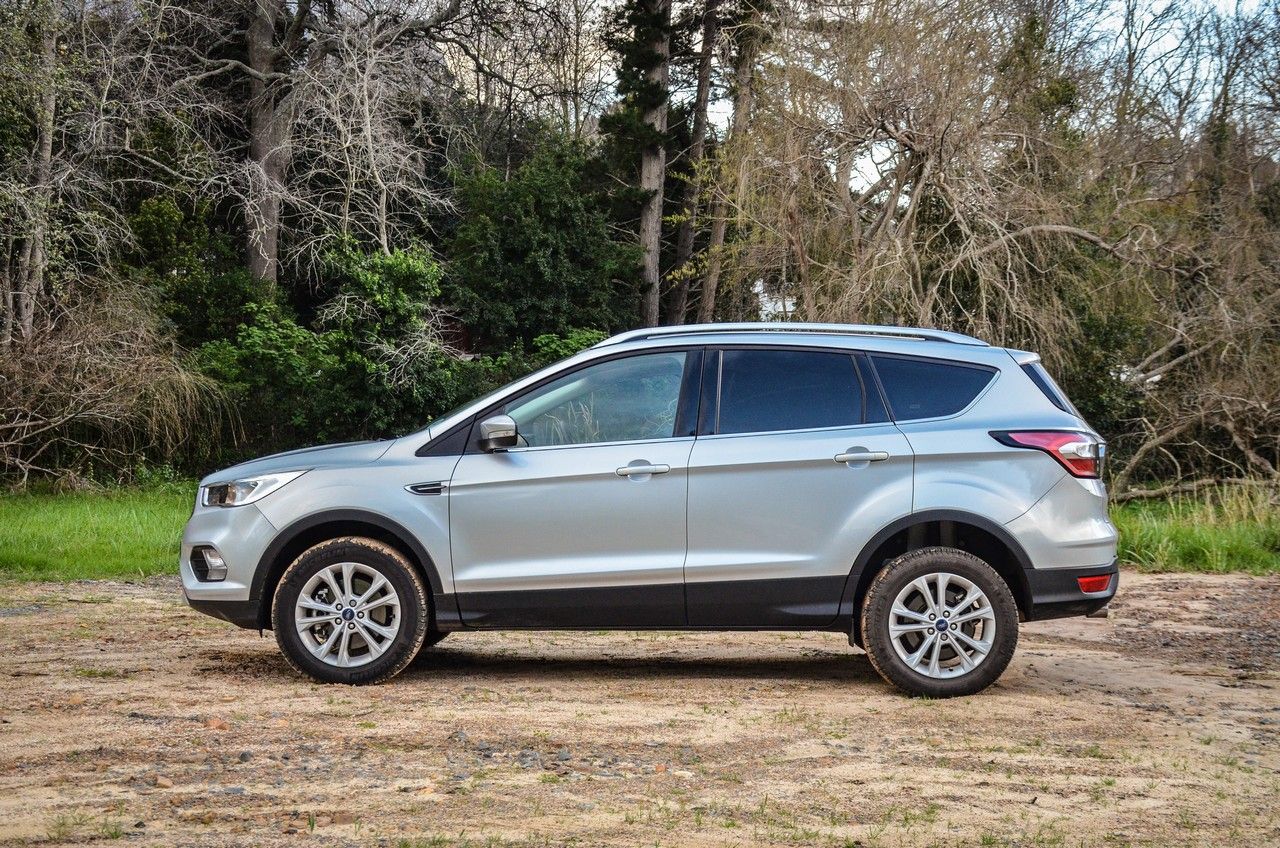
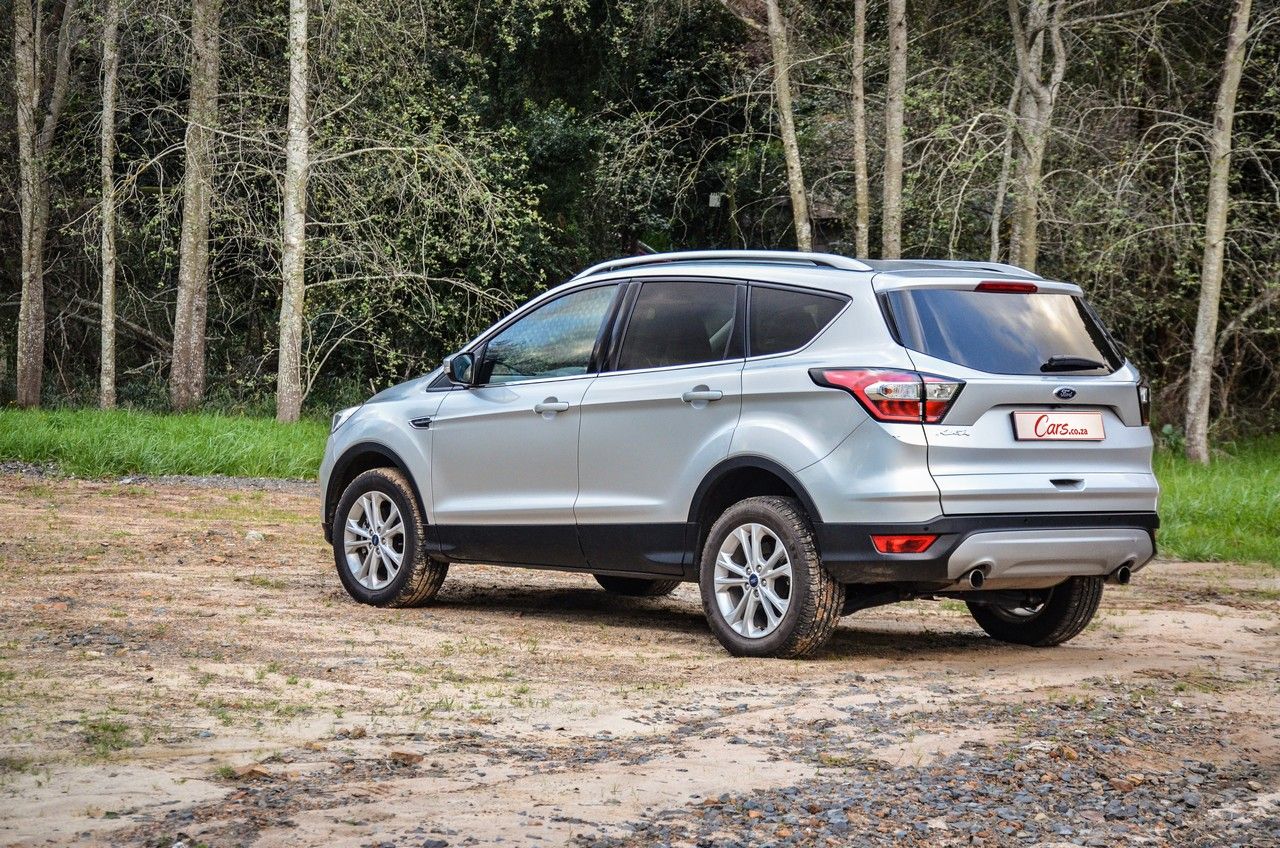
While the Kuga may have undergone a substantial facelift in 2016, the mechanical bones of the vehicle can be traced all the way back to 2012. That’s not to say it’s that dated in its appearance, it remains a sporty looking SUV, but by virtue of Ford plastering a revised face on a 7-year-old canvas, the 1.5 TDCi Trend lacks the visual coherence of newer rivals. In Trend specification, the brightwork to the grille, window surrounds and roof rails has been tastefully applied, with the whole shooting match rolling on a set of fetching 17-inch alloys (18-inch items are optional).
The cabin’s centerpiece is the Ford SYNC3 infotainment system. This 8-inch touchscreen unit includes a pair of USB ports, Bluetooth connectivity with voice control and smartphone integration, including Apple CarPlay and Android Auto compatibility. An optional upgrade to the system includes a proprietary sat-nav system, but seeing that mapping apps are all-too-willing to stream from your smartphone such a feature is just a nice-to-have.
Trend specification is generous and includes leather-trim, including for the multifunction steering wheel, dual-zone climate control, automatic headlamps and -wipers, electrically-operated windows and -adjustable mirrors, as well as 8-way manual adjustment for the driver’s seat.
User experience and build quality
Much like the exterior treatment, the cabin sees modern touches applied to an older architecture, with mixed results. A user-friendly interface, with a large-tiled menu on a generously-sized screen means the SYNC3 system is intuitive to operate on the move, but the slick-looking TFT instrument binnacle and infotainment screens sit at odds with a scattergun arrangement of small, closely-spaced switchgear for many of the ancillary controls.
Still, the cabin has a pleasing air of sportiness to it thanks to such elements as the sloping dashboard and cowled dials. Everything generally feels well screwed together but cheap-feeling plastics reside among the slush-molded sections. Thankfully, touchpoints such as the chunky steering wheel rim and leather-bound gearknob impart a certain sense of tactile quality and the driver’s seat is comfy, with just a hint of lateral bolstering.
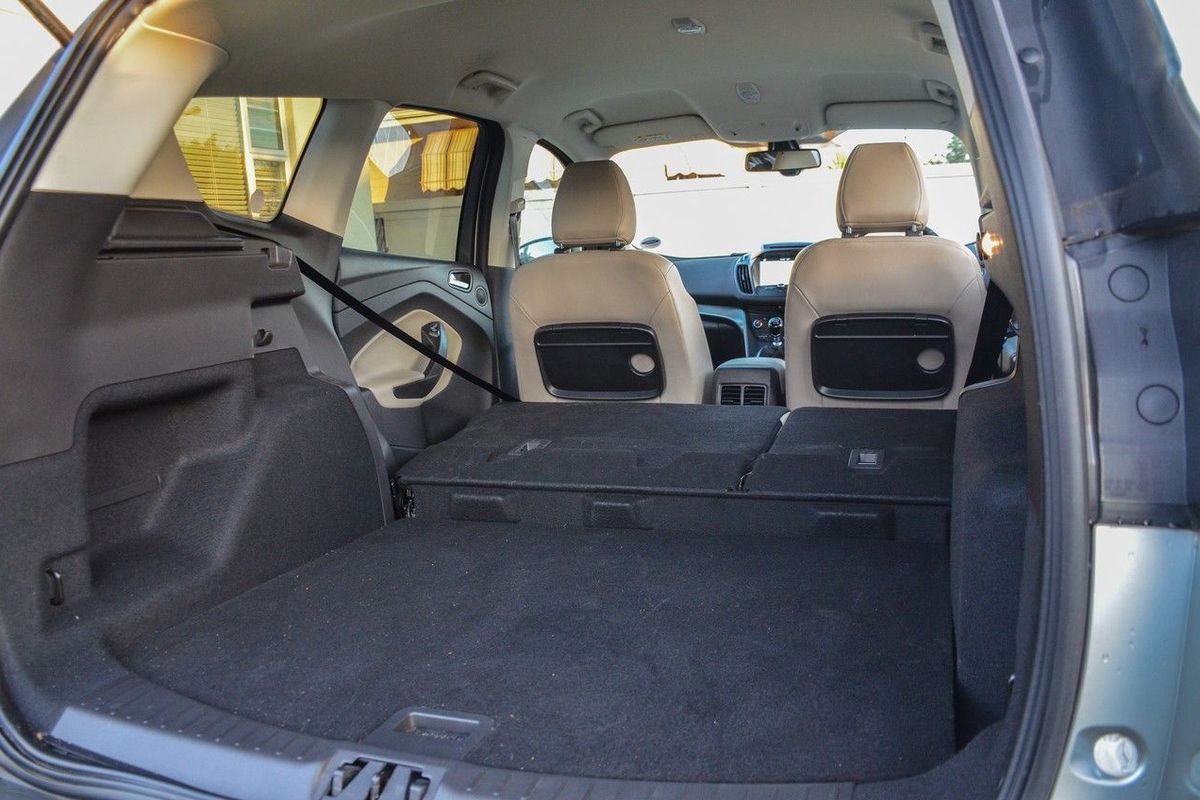
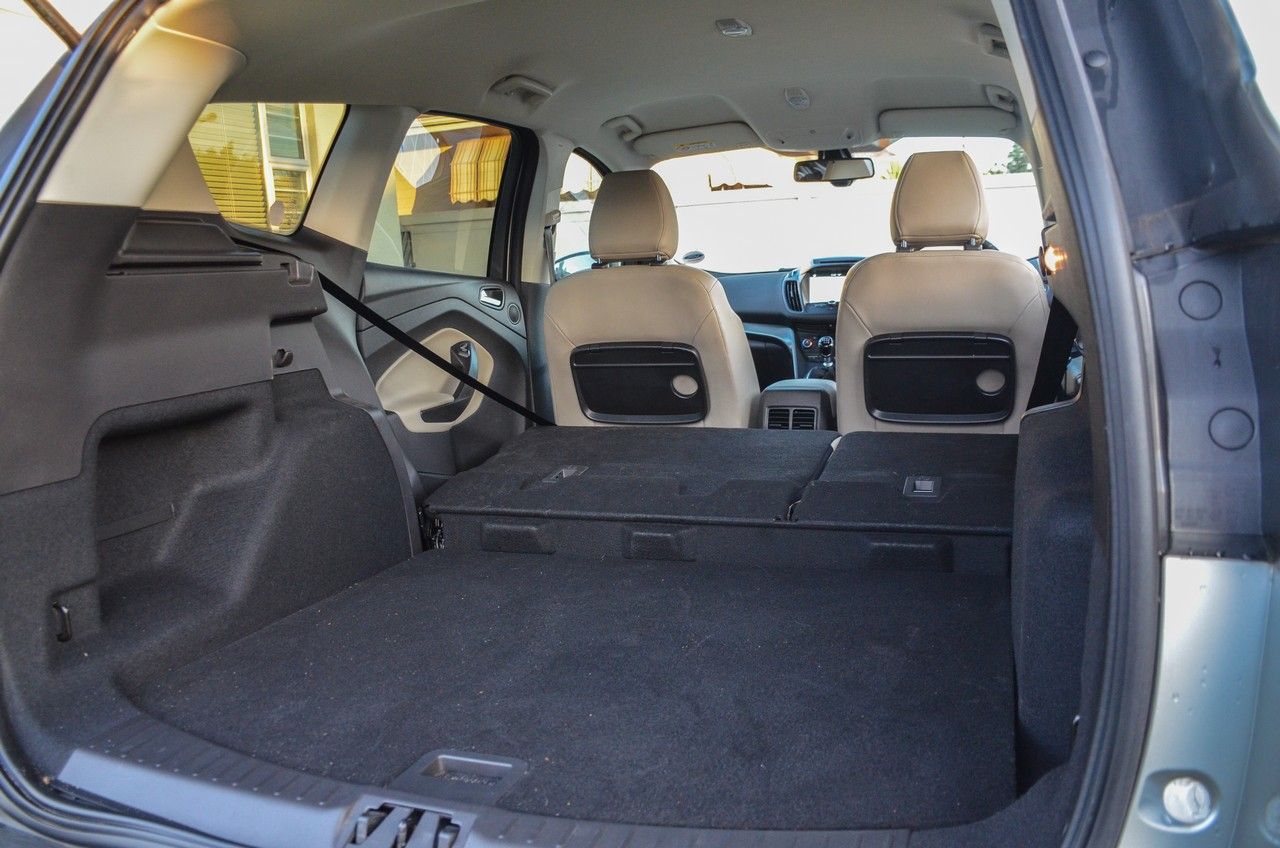
With the second row of seats folded down, the Kuga's load bay offers up plenty of space to carry larger items, such as a mountain bike.
Practicality
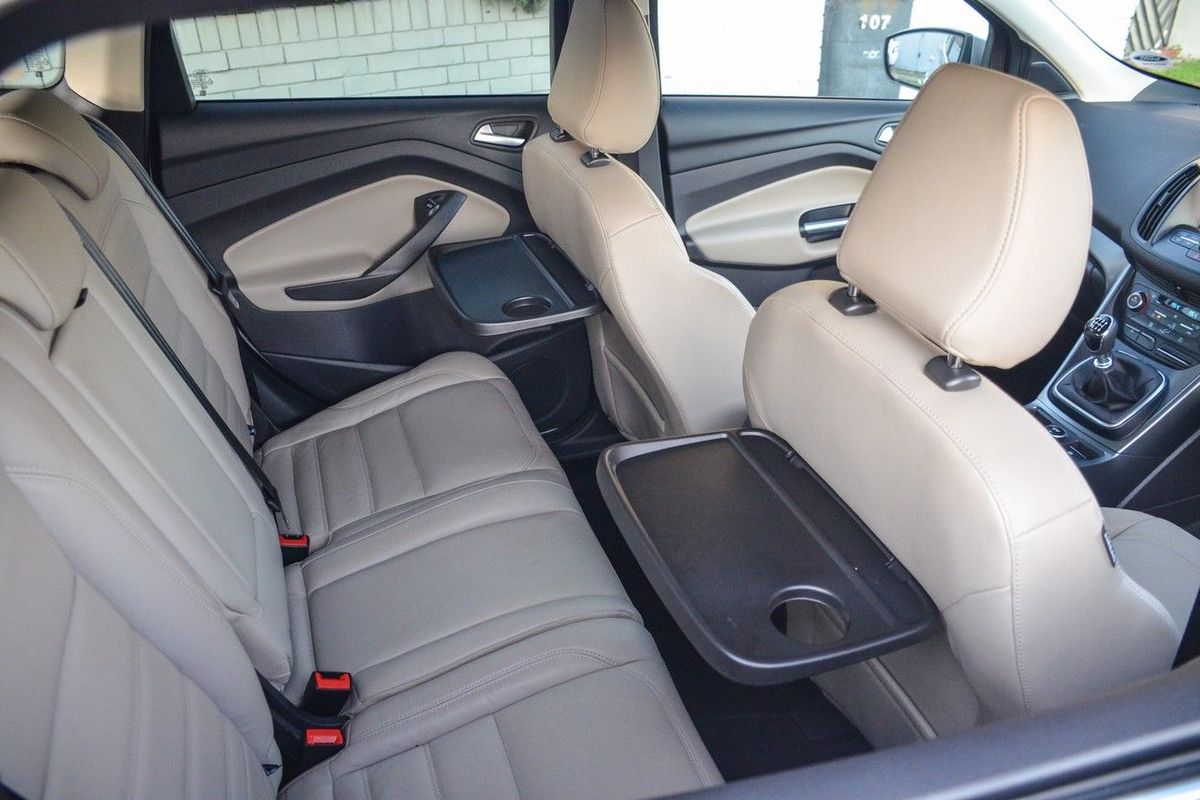
The Kuga’s 2.6-metre wheelbase was outstanding back when it was first launched, but now it's about par for the course. In terms of overall spaciousness, the Ford still offers competitive levels of rear legroom and a reasonably sized luggage bay (the Blue Oval claims a luggage capacity of 456 litres) and the load-bay lip sits at a reasonable height. If you fold the 60:40-split seatbacks flat, however, an impressively flat and large load area becomes available (1 603 litres), which compares well with its competitors.
Performance and efficiency
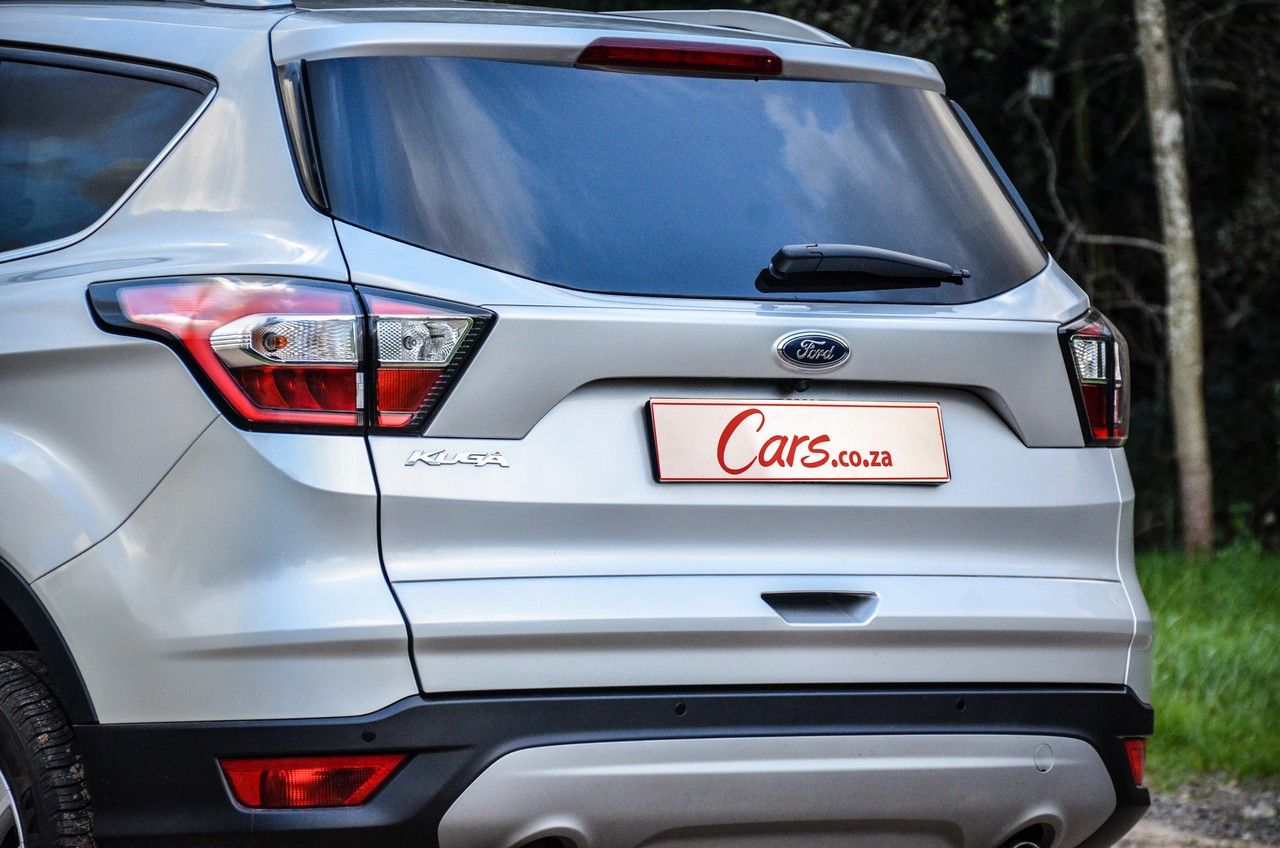
It's a testament to the Kuga's design that the Ford still looks reasonably contemporary 7 years since it was launched in South Africa.
With 88 kW and 270 Nm on tap, the 1.5-litre turbodiesel is a gutsy, if somewhat vocal, powerplant. With maximum torque chipping in at just 1 500 rpm there’s little in the way of lag, and the short-throw gearshift helps extract the best out of this solid little powertrain without having to wring its neck. This goes some way in contributing to Ford’s claimed 4.4 L/100 km fuel consumption figure, although real-world use will probably see that climb to a still-respectable mid-fives to low-sixes to the 100 km.
The decision to go with a manual gearbox at this point in the model line-up is a curious one, especially when you consider the price point the Kuga occupies and the niche status of turbodiesel models in that bracket (there aren't that many of them and they tend to sit near the top of their ranges). That said, Ford’s 6-speed auto ‘box has met with mixed enthusiasm in other models, so having a snappy manual shifter perhaps isn’t the worst idea. Being an FWD model, the 1.5 TDCi Trend doesn’t lend itself to off-roading, but with a ride height of 197 mm it will handle rutted dirt roads with ease.
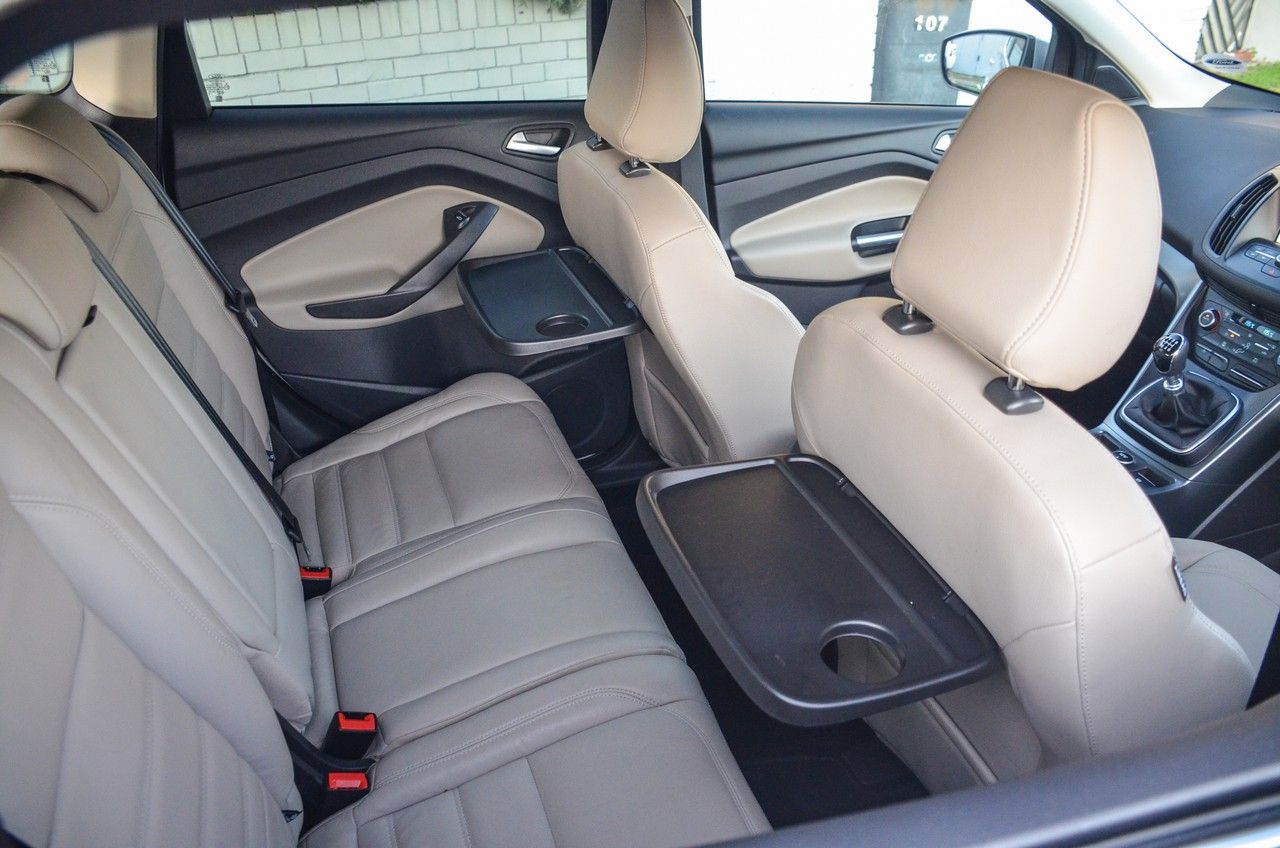
The cream/beige colour of the leather upholstery looks very smart, but is perhaps less than practical in a hard-working family car.
While the Kuga is no spring chicken, it is surprisingly spry for an SUV of its vintage. That pleasing Ford "chunkiness" – a sort of substantial but flexible sense of the car – is present in steering that carries more weight and more directional responsiveness than many rivals’ and a chassis that capably handles the body control-to-ride quality balance. So, while it is much older than most of its rivals, the Kuga remains one of the most dynamically engaging drives in its class. It's not deal-clincher in this part of the market, but involving dynamics is better than mind-numbing sterility.
Safety equipment
In addition to ABS with EBD and Brake Assist and a traction control system with trailer-sway mitigation, the Kuga has 7 airbags (front-, side-, curtain- and driver’s knee) and rear ISOfix points. Remote central locking linked to a Thatcham alarm takes care of security but for more advanced safety features (such as automated city braking, lane-keeping aid and blind-spot monitoring) you'll need to specify the Driver Assistance Pack.
The Ford Kuga, in 1.5 TDCi Trend spec, offers great packaging and an age-defying hands-on driving experience.
Value for money
With its generous specification, willing turbodiesel engine and manual gearbox, finding a like-for-like rival to this Kuga is rather tricky. The Mazda CX-5 2.2DE Active is a good place to start. The R33k premium over the Kuga is steep, but the Japanese product is polished, with a considerably more powerful engine (140 KW/450 Nm) and the benefit of an automatic transmission. Its 3-year/unlimited km service plan does lag behind the Kuga’s, and in terms of comfort features and trim it looks spartan by comparison. The Peugeot 3008 2.0 HDi Active weighs in at around R10k less than the Ford and is a stylish and fun-to-drive family car, again with a stronger (110 kW/370 Nm) engine linked to a 6-speed manual ‘box. Its standard spec isn’t far off the Kuga’s; its new 5-year/100 000 km warranty and service plan are impressive, plus it offers plenty of safety kit.
Price and after-sales support
The Ford Kuga 1.5 TDCi Trend retails for R459 400 (* as of September 2019), which includes a 4-year/120 000 km warranty and a 6-year/90 000 km service plan with intervals of 15 000 km between services.
Verdict
With a manual 'box and diesel engine, the Kuga is something of an oddball in the family car market, but it's quite fun to drive.
The 1.5 TDCi Trend is a middle of the range turbodiesel derivative with a seemingly out-of-place manual transmission, nestled among strong petrol (and some diesel) opposition, most of which has automatic ‘boxes. The transmission choice is especially confusing, as the efficiency benefits of diesel motoring really come to the fore over long distances, to which an automatic would be better suited. Is it a good vehicle? Barring some "laugh lines" and so-so interior trim, yes, it is; it’s well packaged, the engine pulls willingly and it's one of the most involving cars to drive in its segment.
There’s no denying the uncertainty regarding the Kuga’s local replacement (as much a question of if, as when – the all-new model was unveiled in Amsterdam more than 6 months ago) may be of concern to potential buyers, but the unease around the Kuga nameplate has now largely abated and the Ford is a reasonable value proposition, being well-specced and possessed of a respectable service plan. Perhaps those Toyota RAV4 buyers who want a diesel version (but can't have one, given the petrol-only line-up of the new range) may look at the 1.5 TDCi Trend more closely?
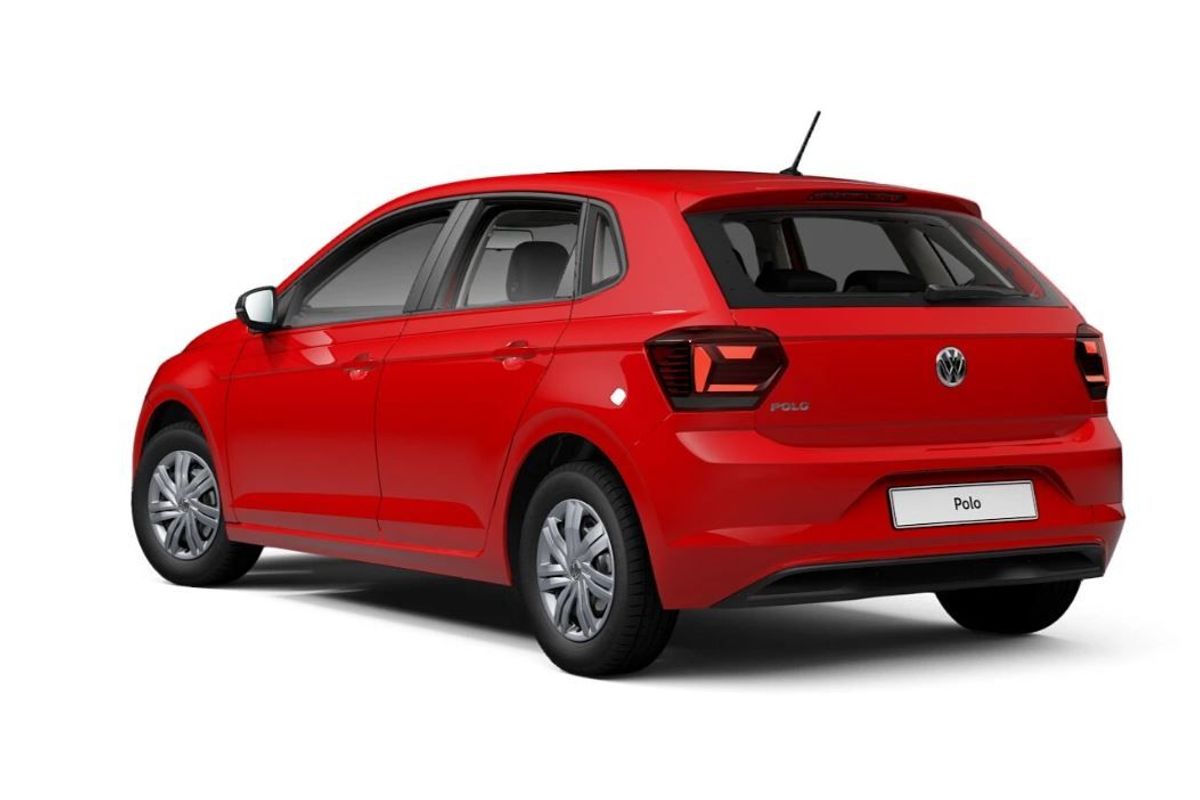
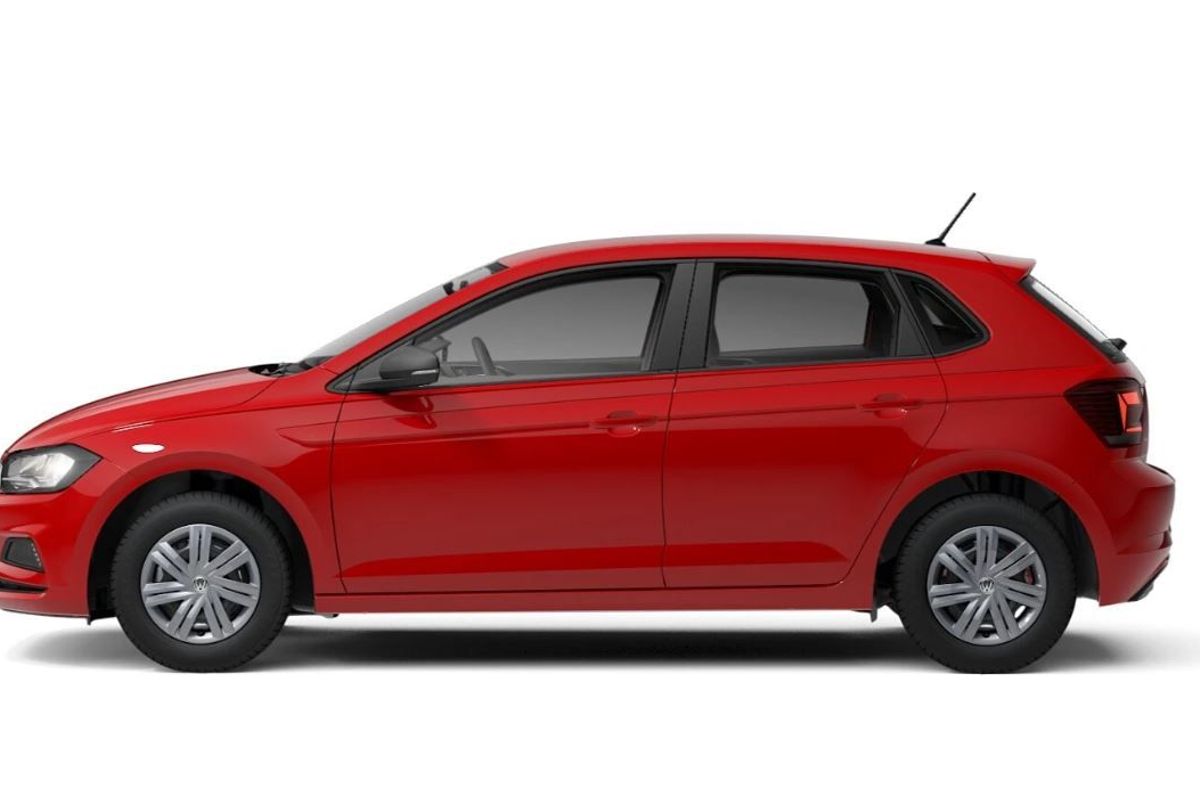
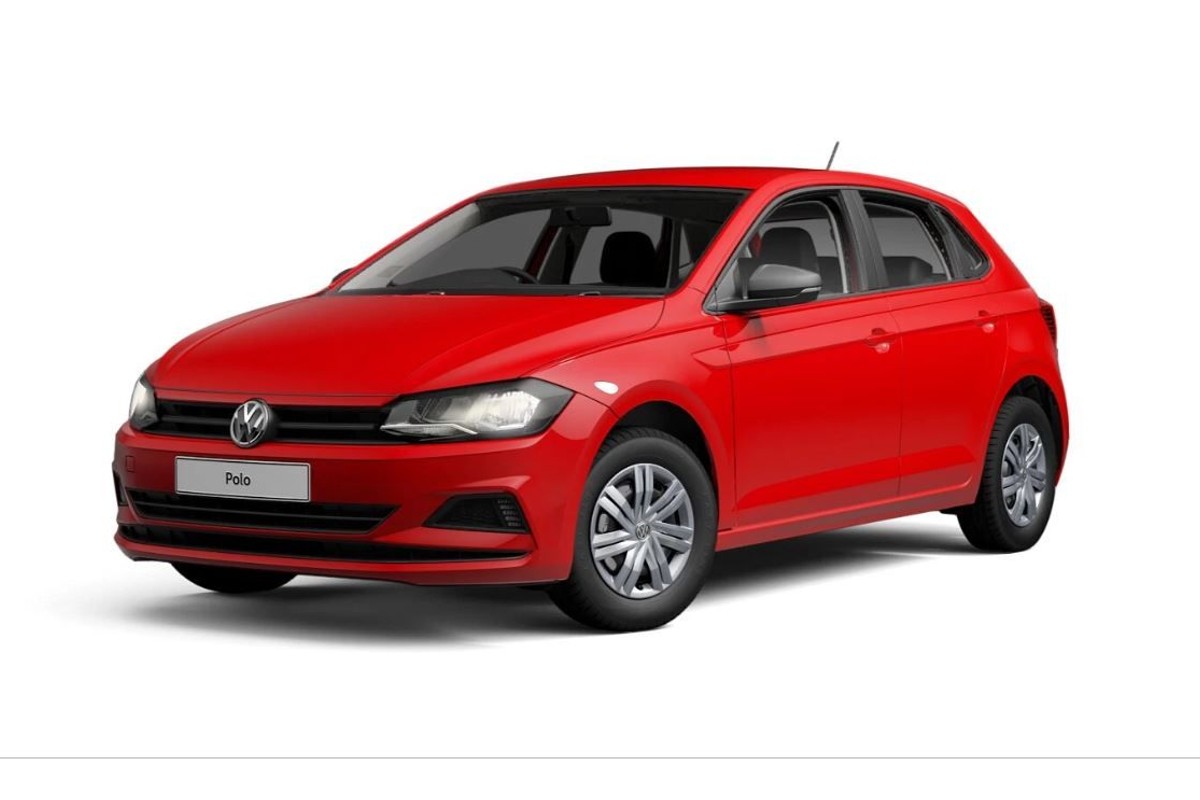
Volkswagen Polo 1.6 Conceptline (2016) Specs & Price
The popular Volkswagen Polo hatchback range has been bolstered by an new, naturally aspirated entry-level derivative. Meet the Volkswagen Polo Conceptline.
When we were updating our comprehensive vehicle specification database, we noticed a new entry under the Volkswagen Polo hatchback family. Dubbed Volkswagen Polo Conceptline, this entry-level offering bridges the gap between the Polo Vivo and the turbocharged Polo lineup.
Powered by a naturally-aspirated 1.6-litre 4-cylinder petrol engine pushing out 66 kW. A torque figure is not yet available. Power goes to the front wheels via a 5-speed manual gearbox.
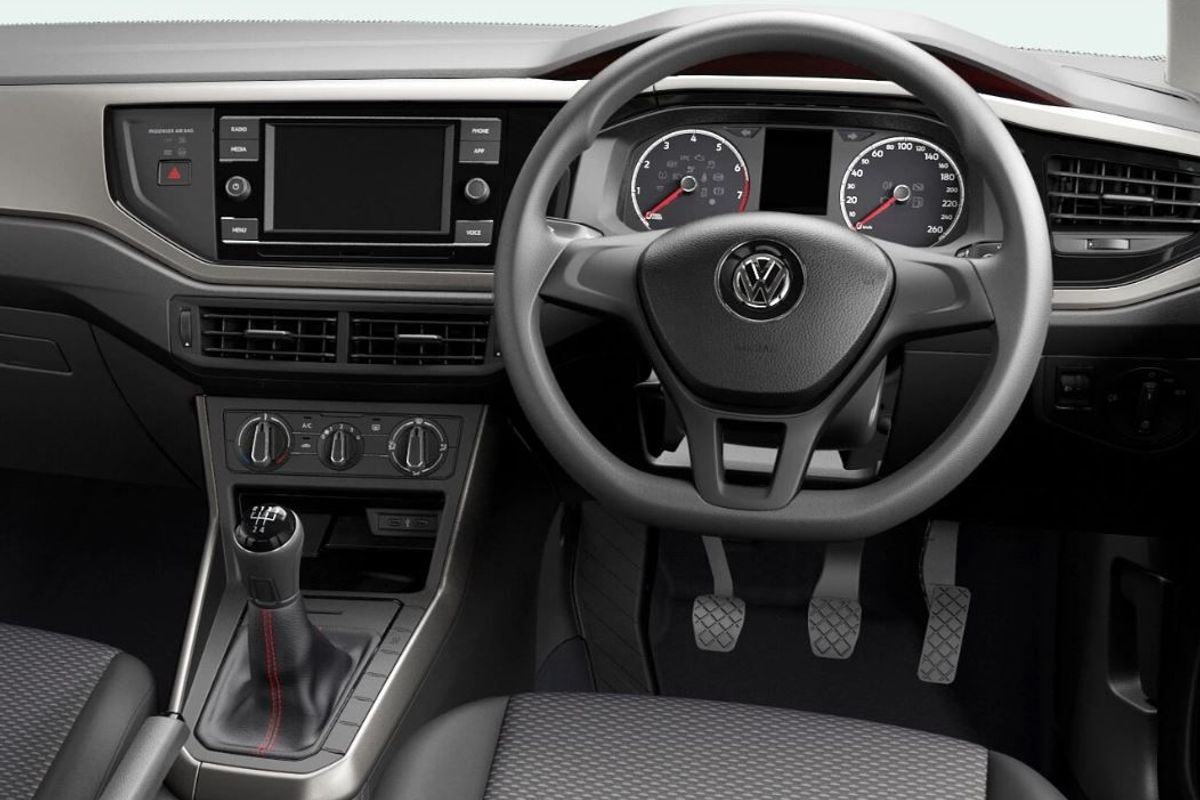
In terms of features, we can see it comes with 14-inch steel wheels, electronic stability control, front/rear curtain airbags, LED daytime running lights and front electric windows.
The official website of Volkswagen South Africa has the vehicle loaded up onto its configurator and you can option your car with a leather wrapped multi-function steering wheel (R3 750), smokers package (R250), light & sight package (R3 900) and front/rear park distance control (R3 200)