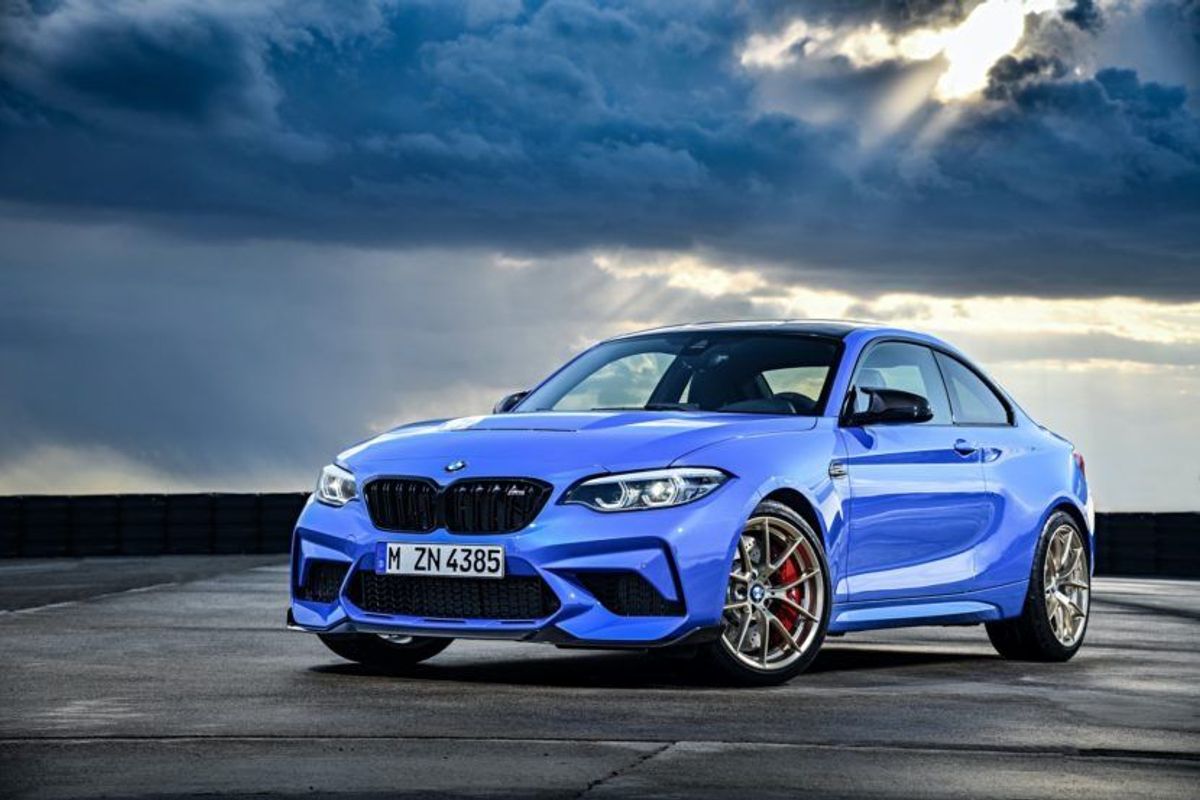
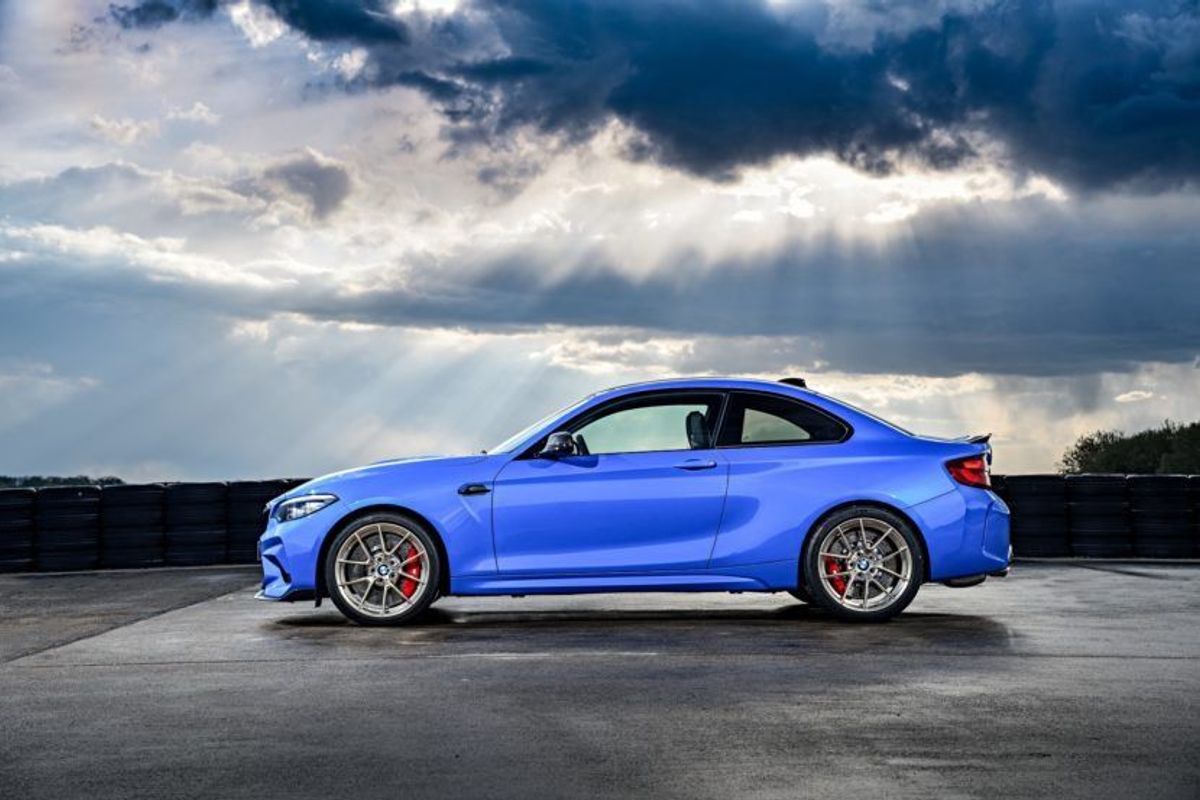
Details of the hardcore BMW M2 CS have surfaced online!
This is the M2 that will get you salivating and a few tasty details of the BMW M2 CS (ClubSport) have been served up.
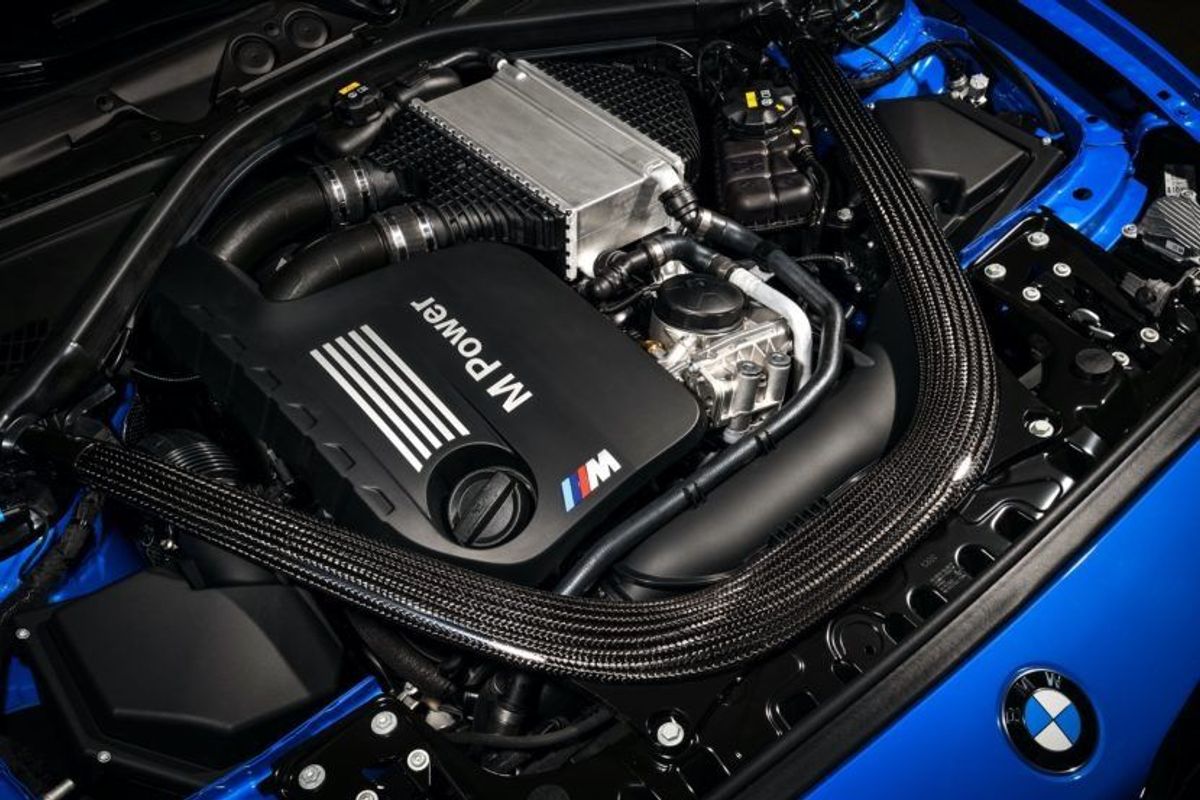
Let’s get to the meat of it then, shall we? Powering this high-performance machine is a twin-turbocharged 3.0-litre turbocharged engine that’s good for 336 kW (34 kW more than the M2 Competition). A 6-speed manual or 7-speed DCT will ensure brisk acceleration from zero to 100 kph in 4.2 and 4.0 seconds respectively.
The M2 CS rides on 19-inch Y-spoke wheels in a gloss black finish and shod in Michelin Sport Cup 2 rubber. Carbon fibre has been used extensively to reduce weight. The bonnet, front splitter and roof are made of carbon fibre. The roof also features a new sandwich design which lowers weight further while increasing structural rigidity and lowering the car’s centre of gravity.
Adaptive M Suspension and M Sport brakes are standard and new ball joints and elastomeric bearings have been fitted to the front and rear axles. Carbon-ceramic brakes are optional.
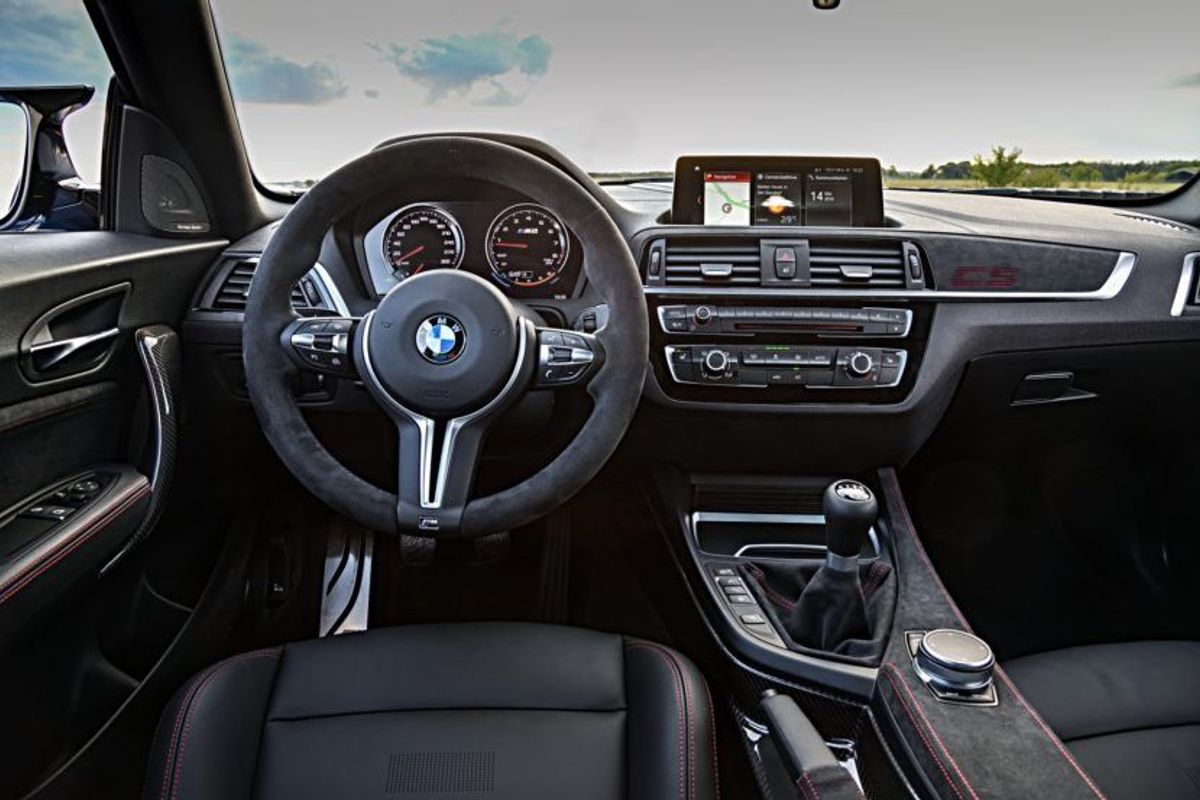
As for the interior, the use of carbon fibre continues as seen on the door pulls, door trim and centre console. Alcantara with contrast stitching is prevalent inside the M2 CS, including the thick steering wheel. M Competition sport seats are covered in black leather and Alcantara and feature a CS logo on the headrests that let people know you are driving the real deal.
Buyers will be able to choose between 4 exterior colours including Alpine White, Misano Blue Metallic, Black Sapphire Metallic and Hockenheim Silver Metallic.
BMW South Africa has confirmed that the M2 CS will arrive in South Africa in 2020.
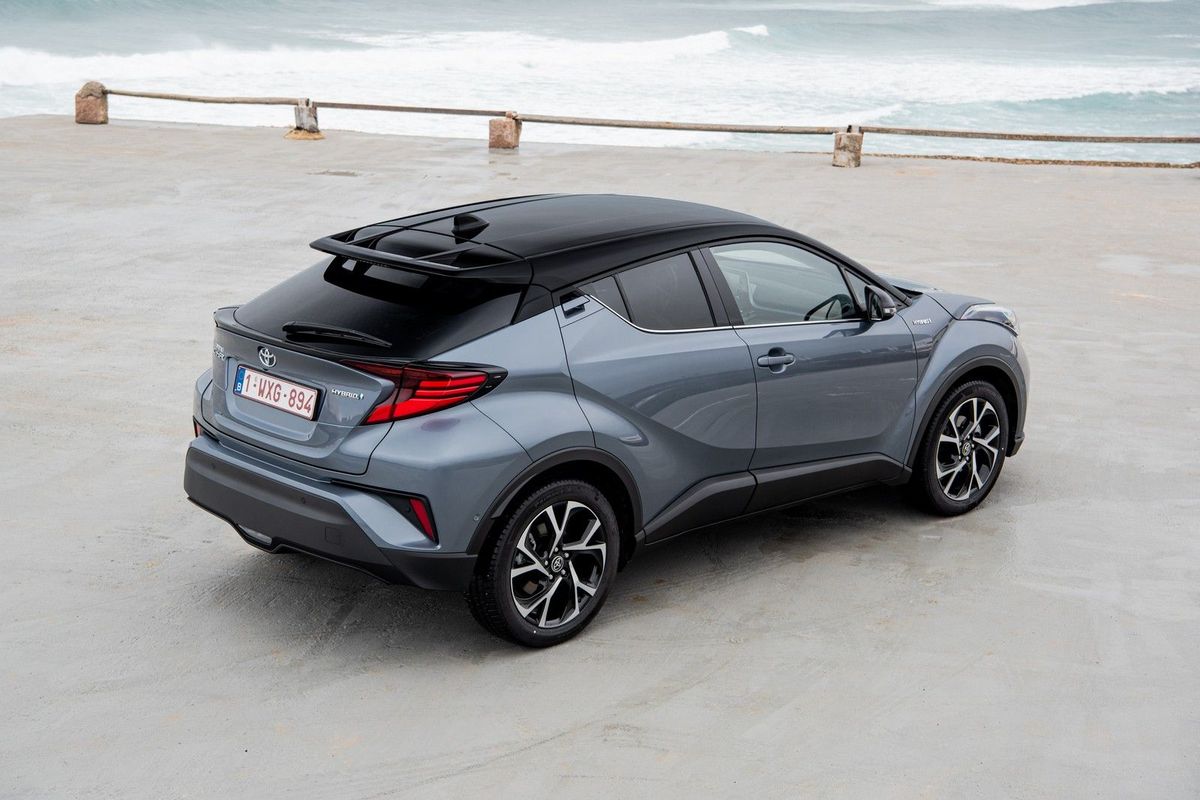
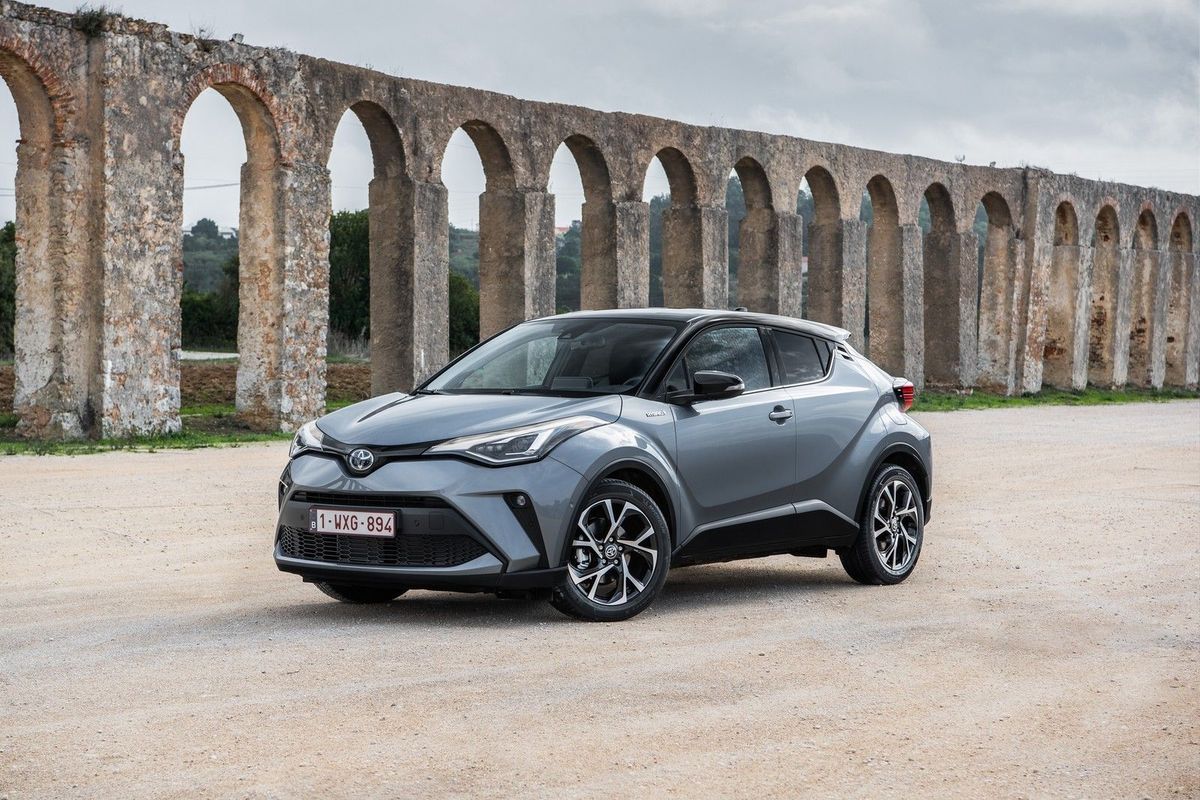
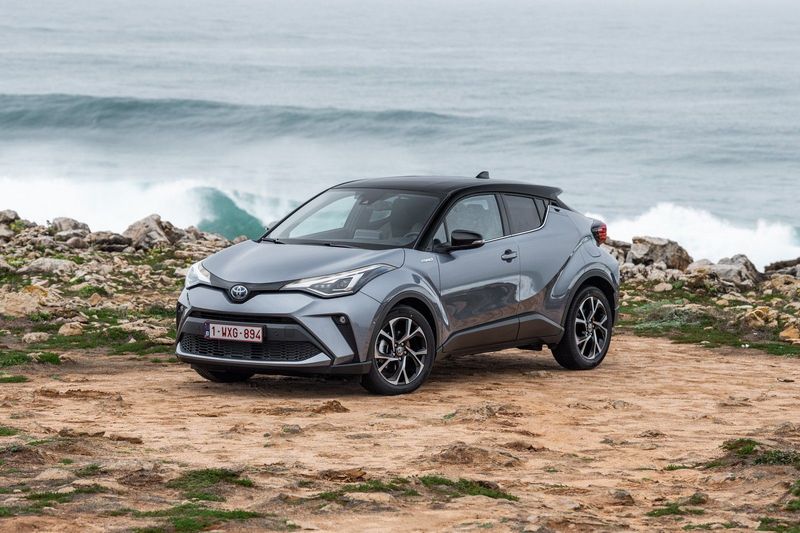
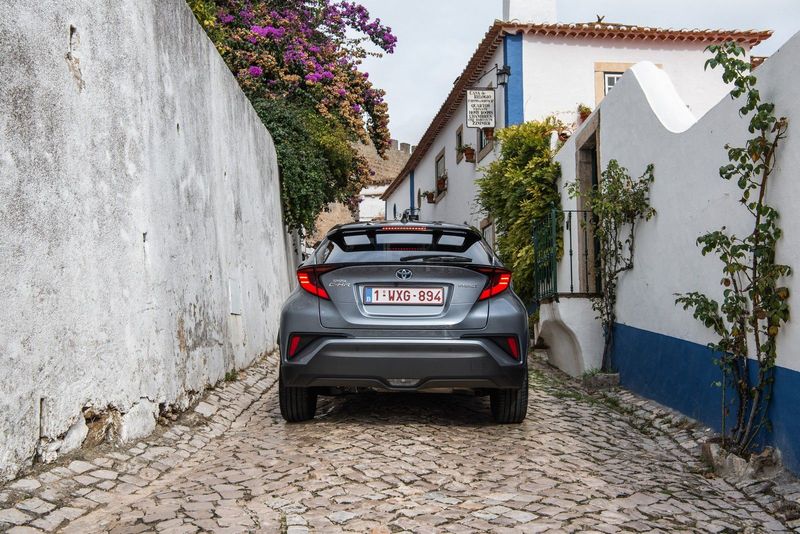
Toyota recently unveiled its refreshed C-HR, which is expected to arrive in South Africa early next year. Our UK correspondent has driven the updated compact family car in Cascais, Portugal and herewith his findings…
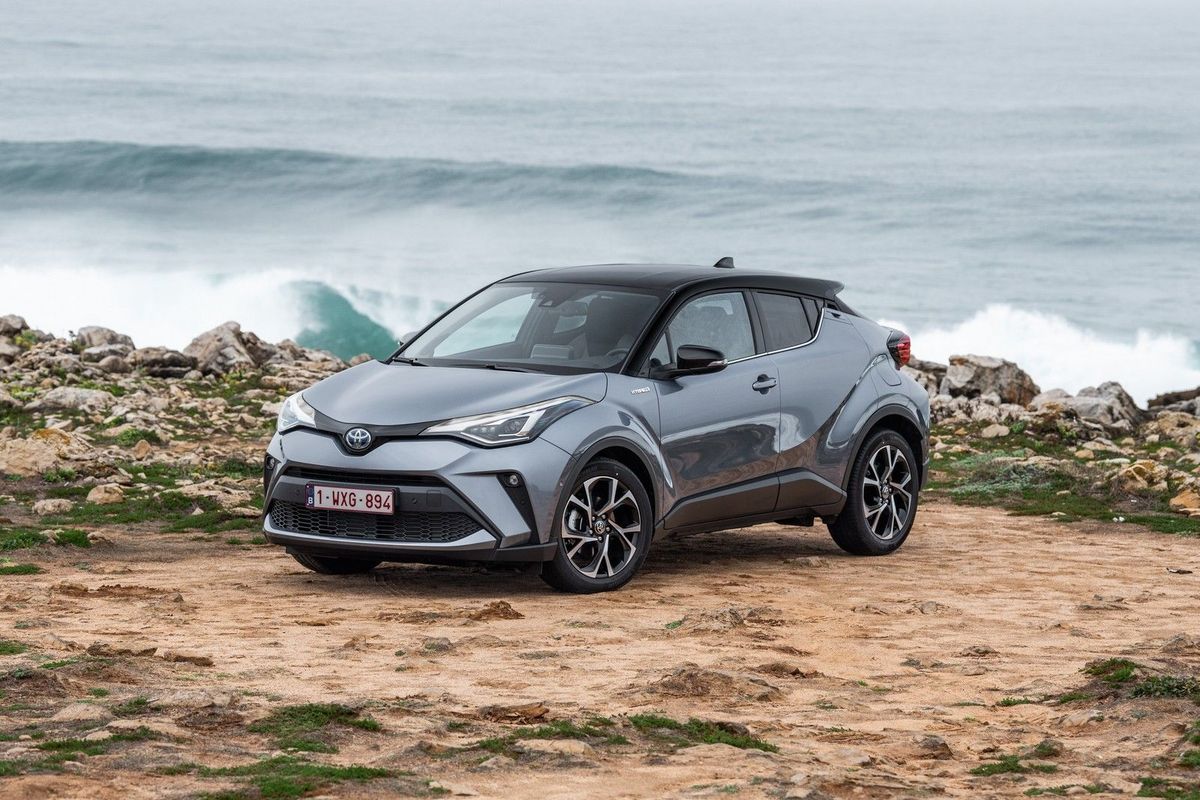
Where do the years go? Before you can say Brexit or #FakeNews, you realise that the Toyota C-HR is already 3 years old. It still looks like the near-production-ready concept car that surprised everyone with its chiselled bodywork and slinky interior upon its unveiling in Geneva in 2016.
In Europe (and the UK), the CH-R has proved a phenomenal success; Toyota has sold more than 400 000 units of its “boutique small crossover” since it entered the bustling market segment. Little wonder then, that as part of its mid-life update, Toyota hasn’t changed the styling all that much.
Exterior styling updates
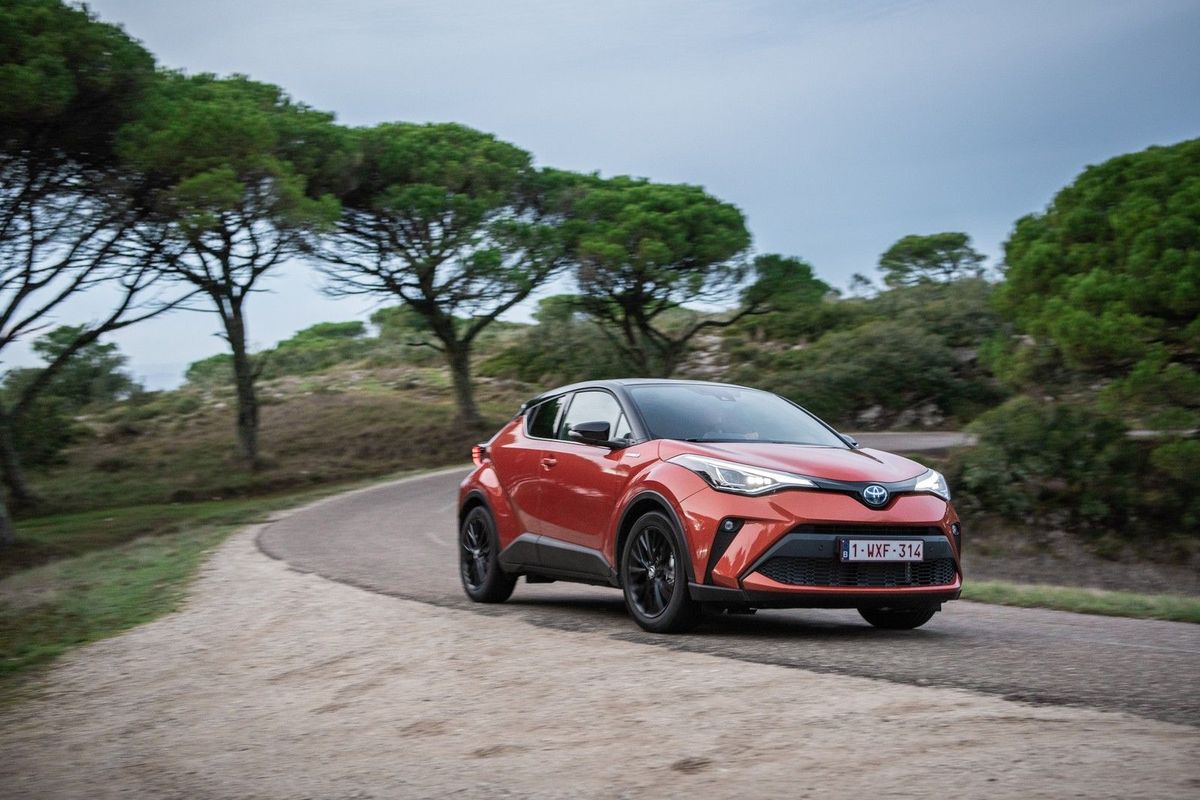
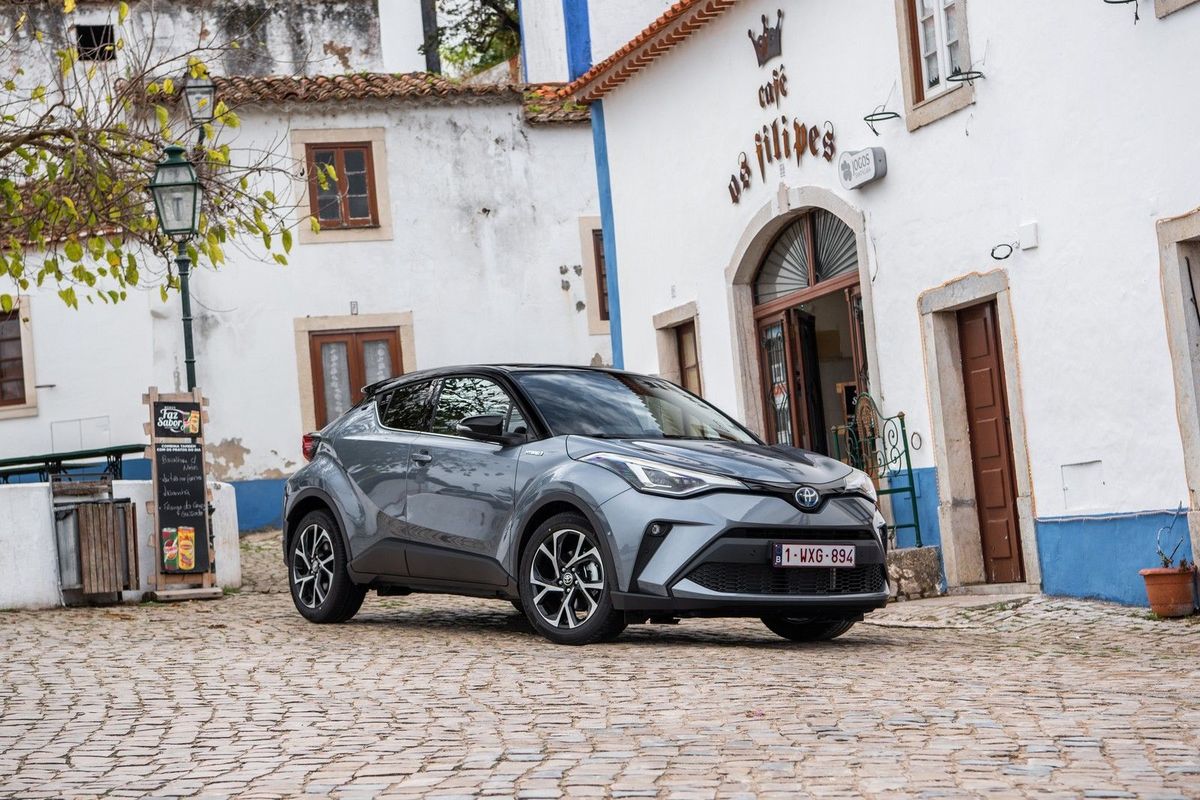
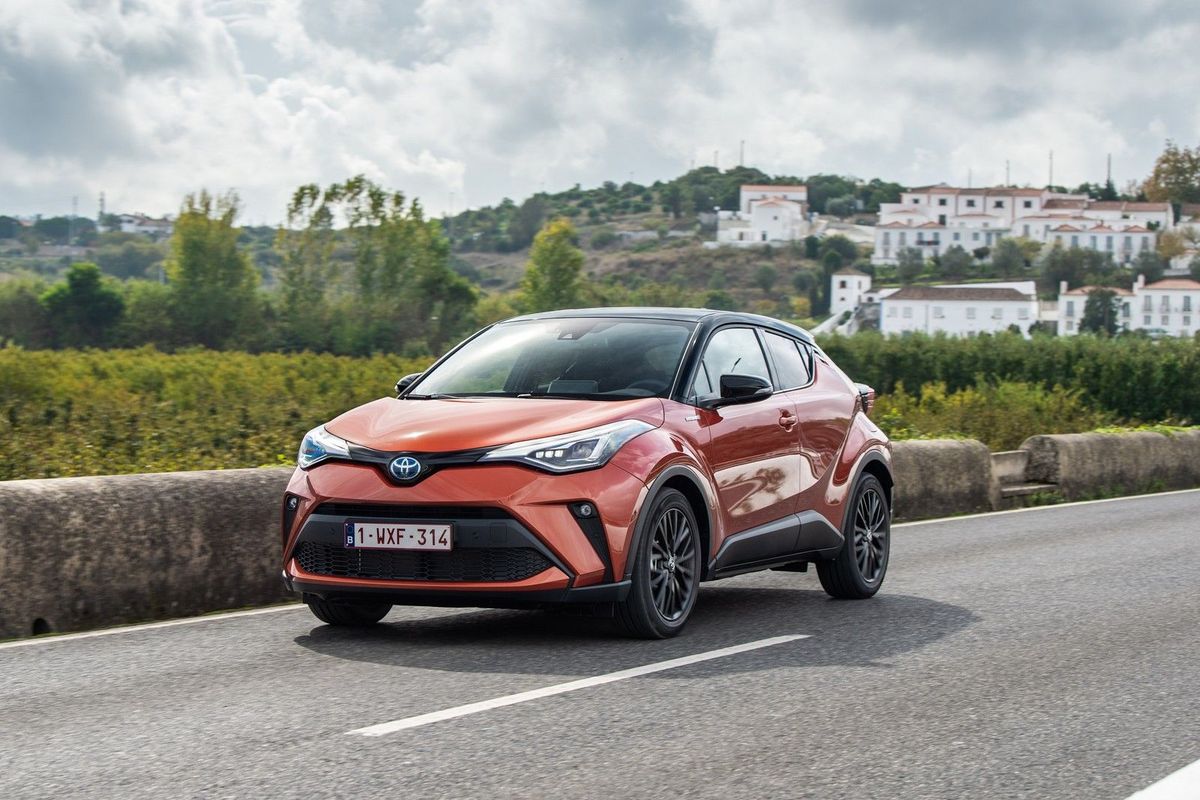
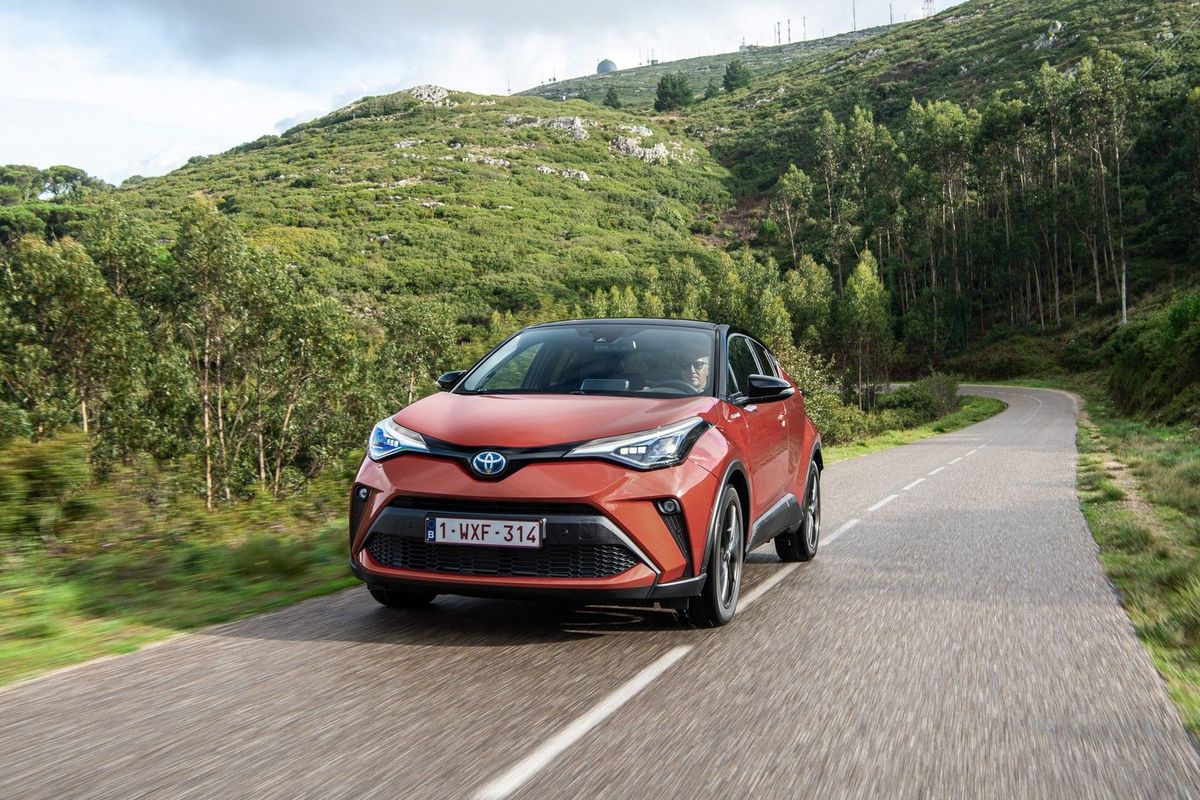
A less fussy front end has improved the appeal of the facelifted C-HR.
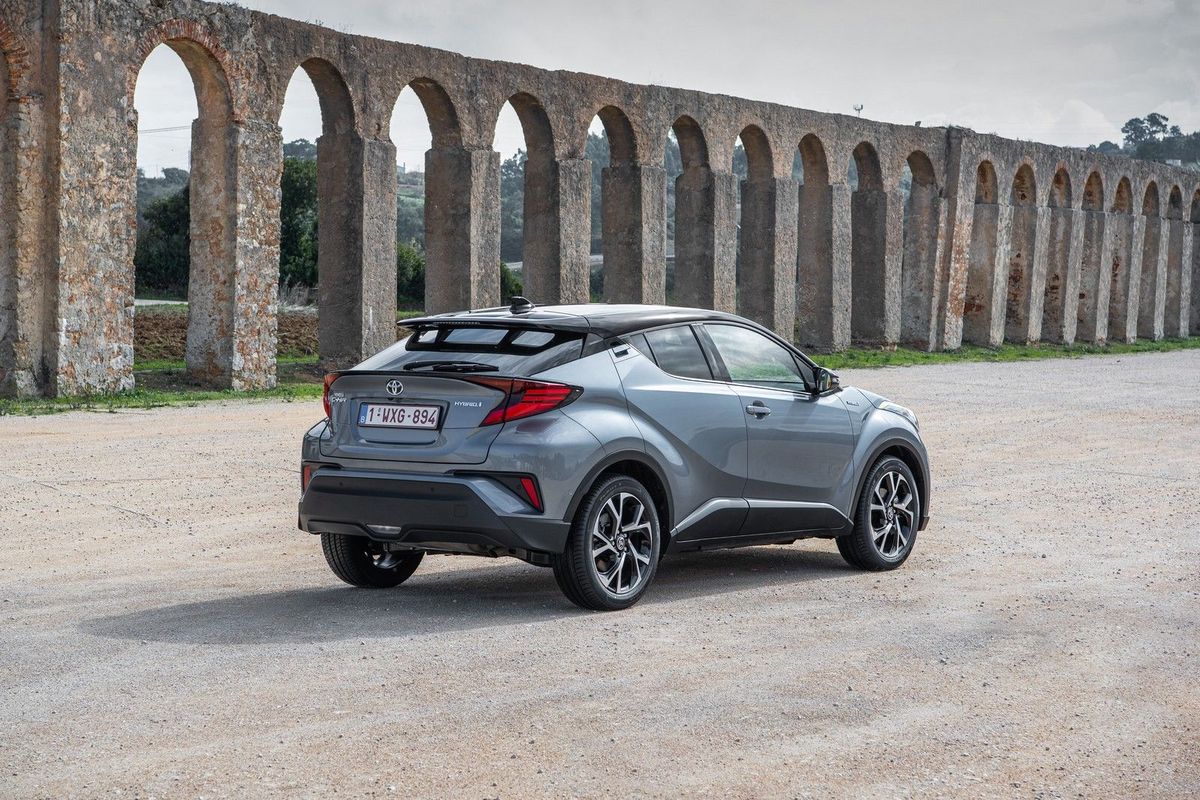
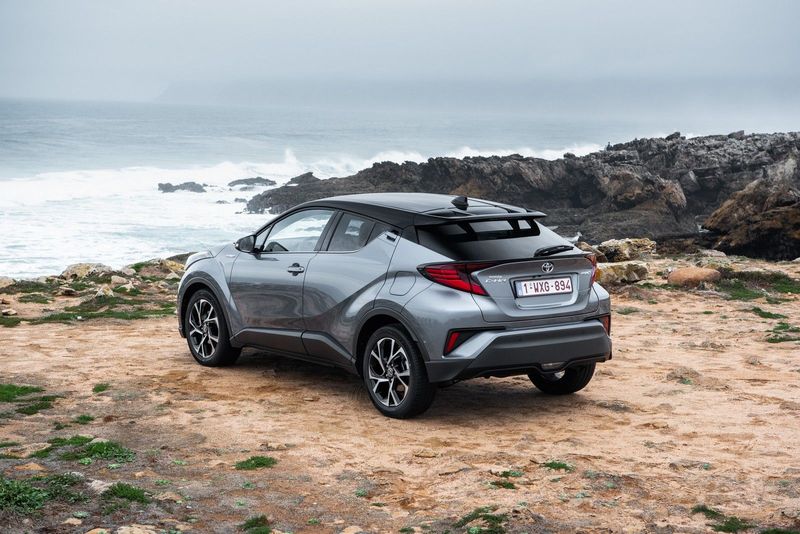
Exterior tweaks to the C-HR were largely based on customer feedback and the usual tick-list for a mid-life refresh has been followed. The creases and sharp lines of the outgoing model have been softened somewhat and the overall effect looks a lot less busy, but also smarter/upmarket and arguably more generally appealing. Having said that, it retains much of that original wackiness that surprised so many of us back in 2016.
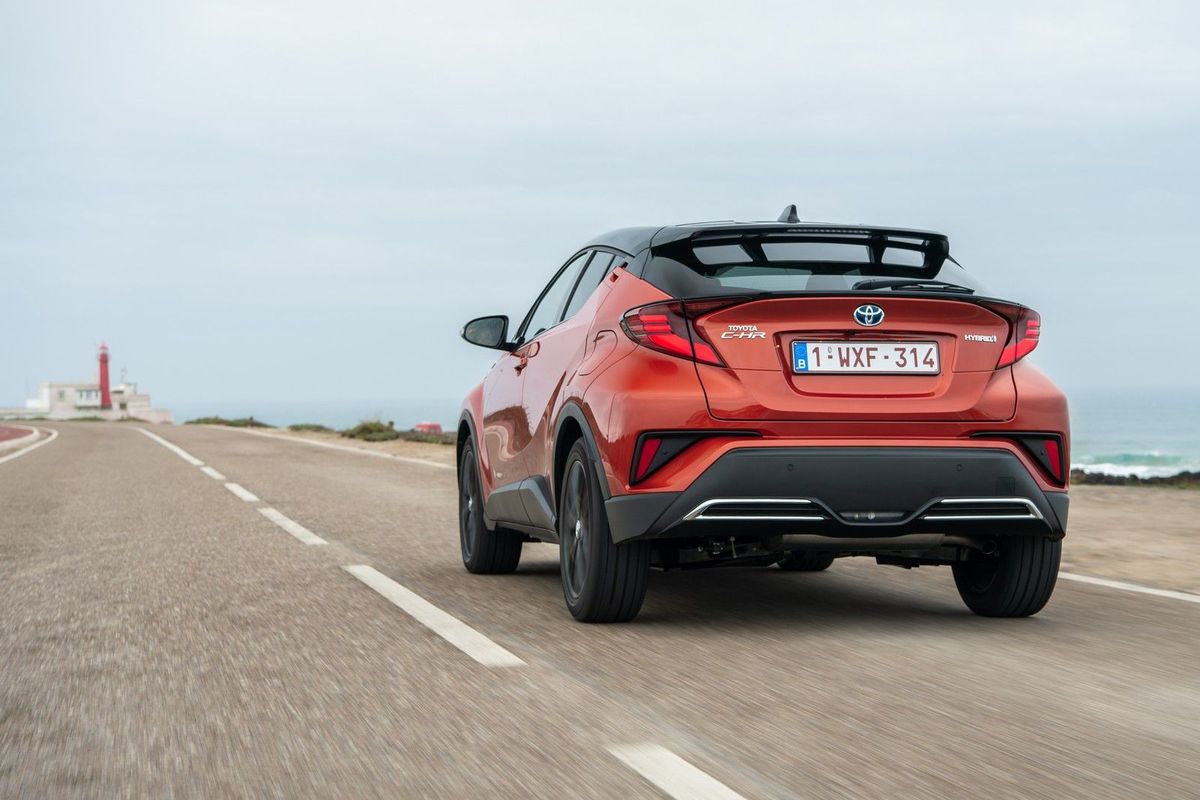
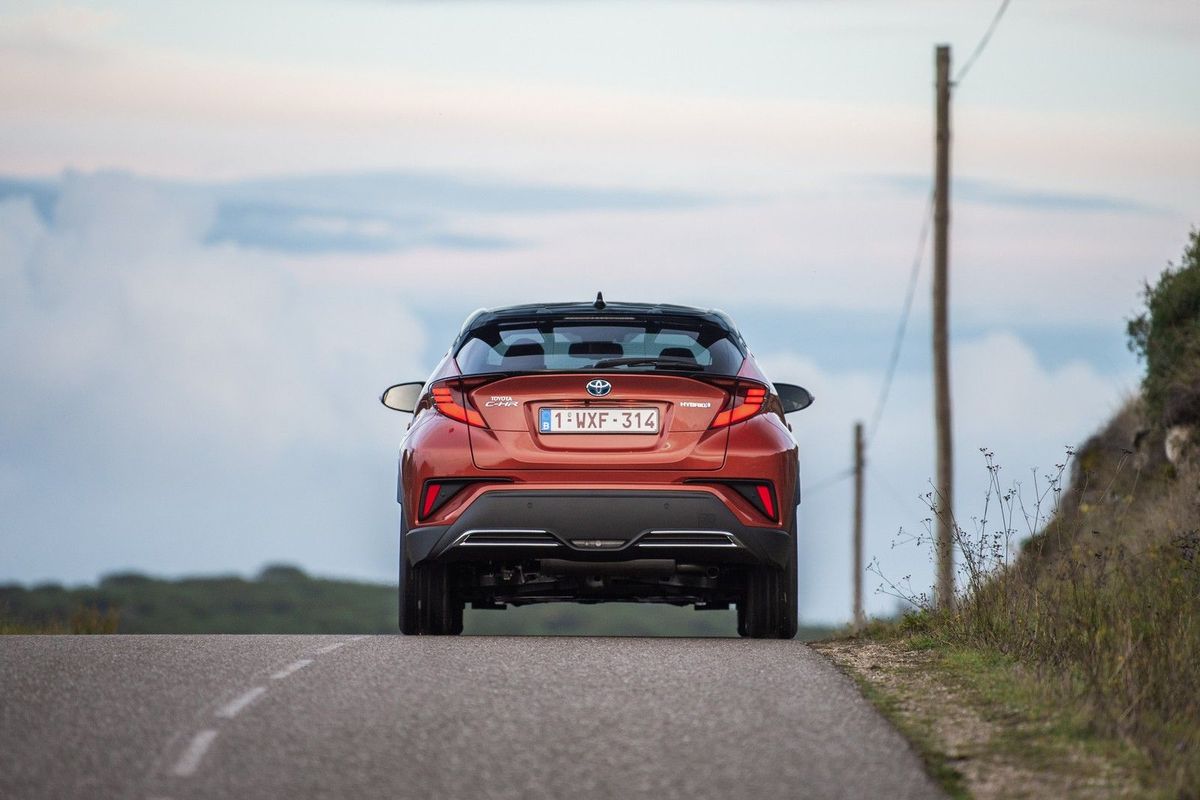
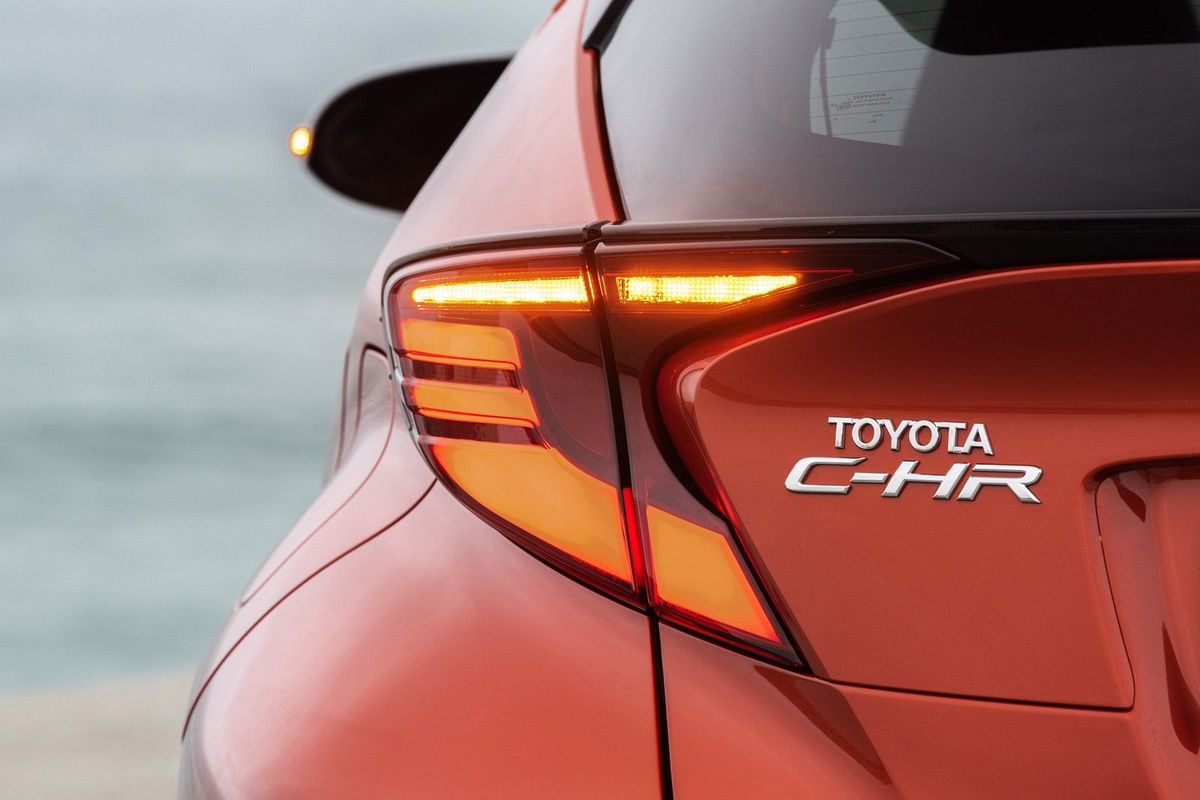
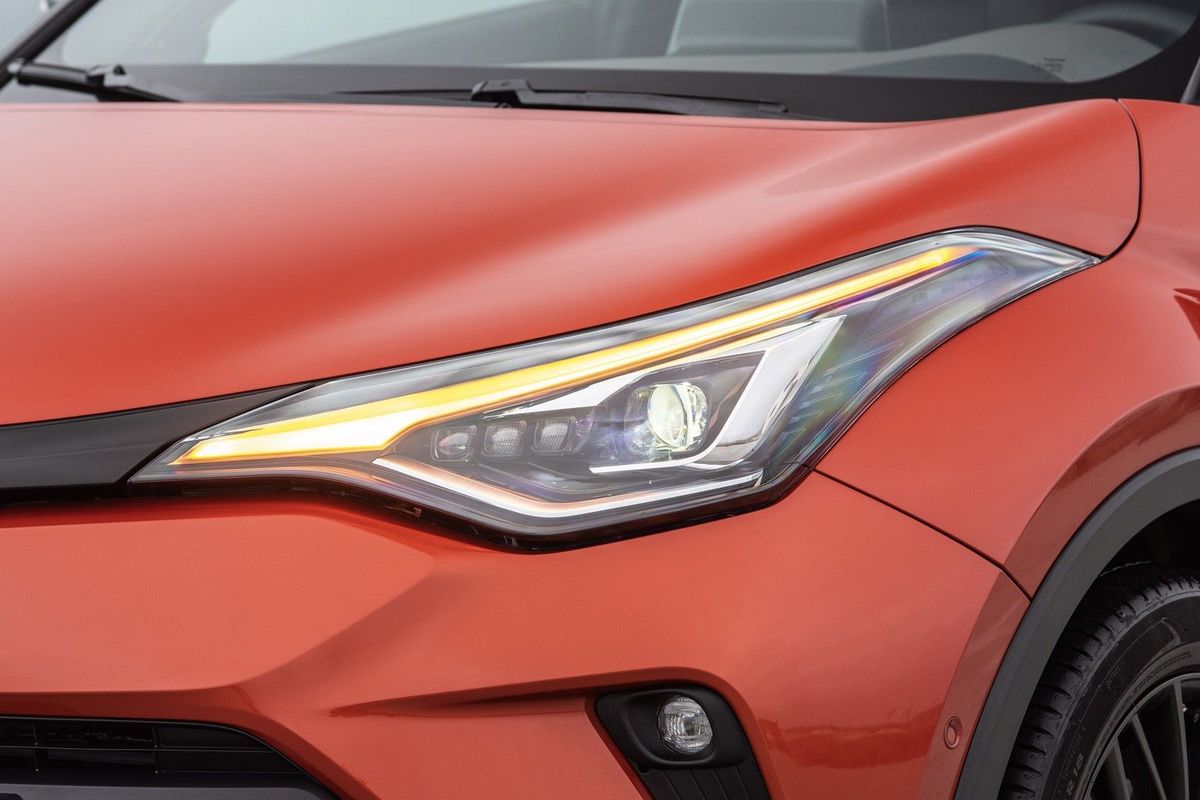
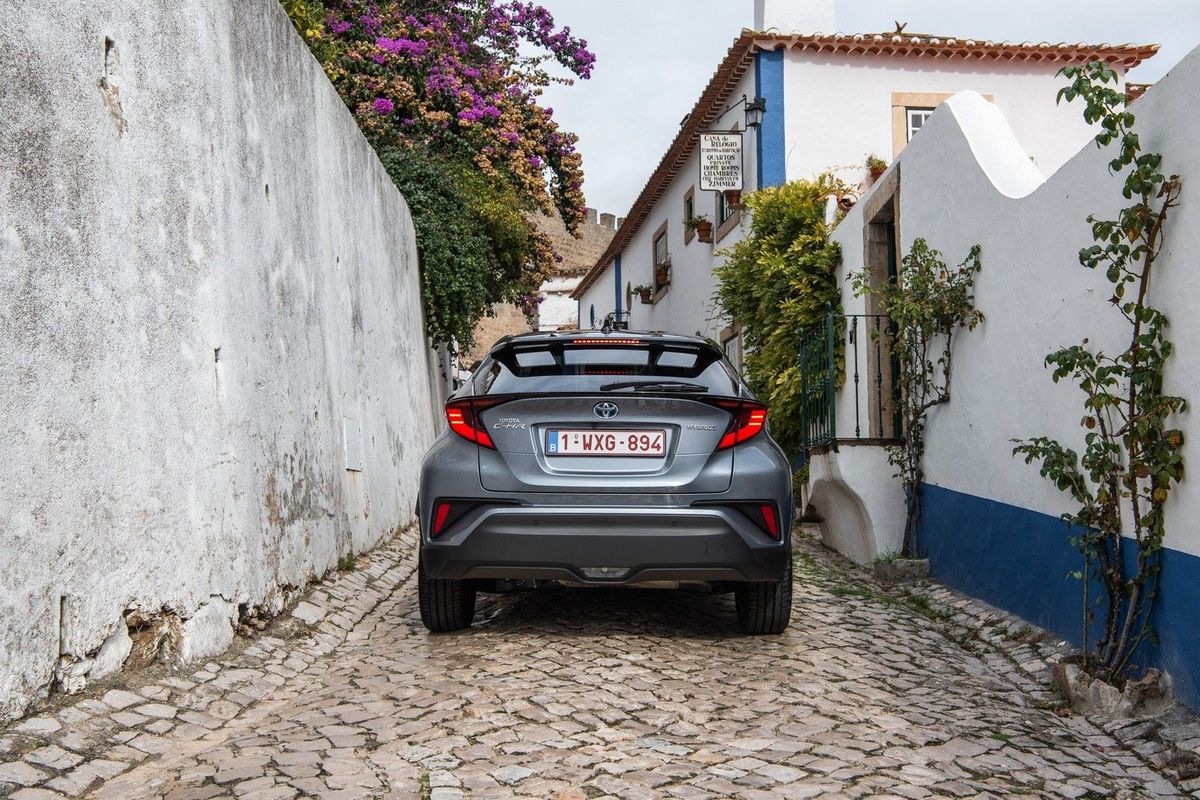
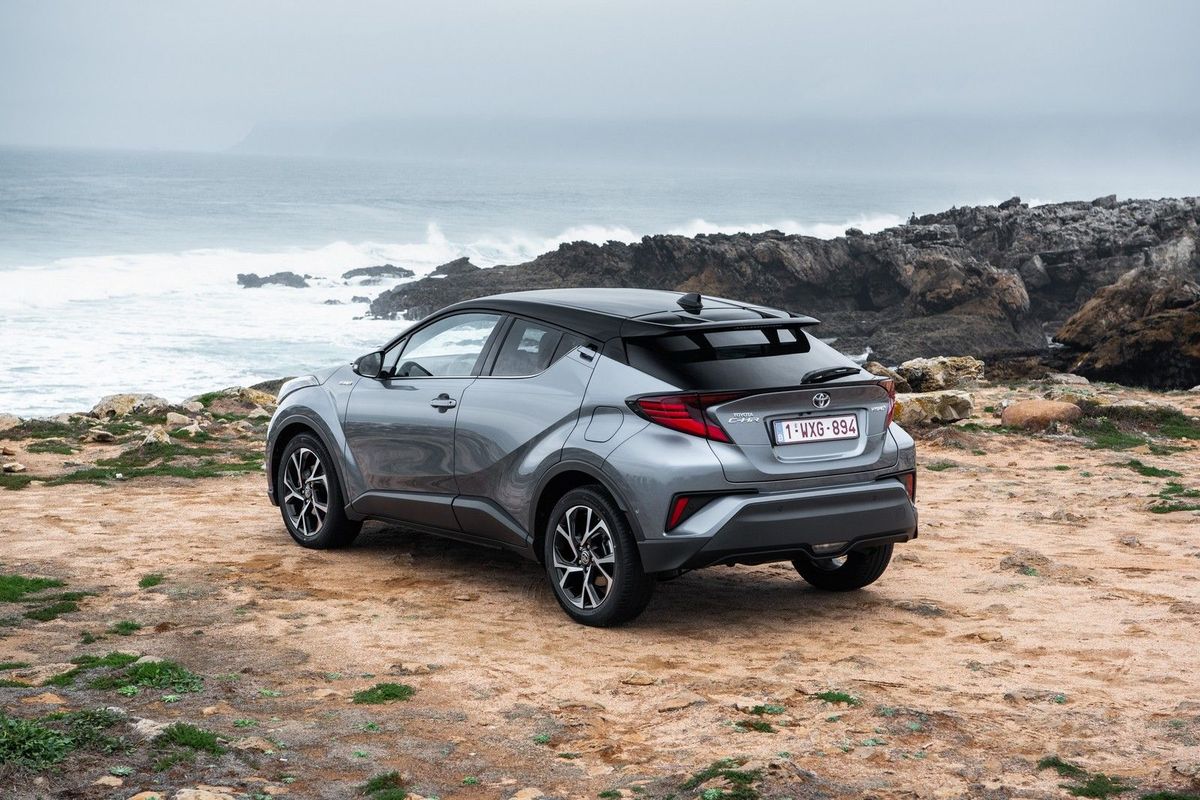
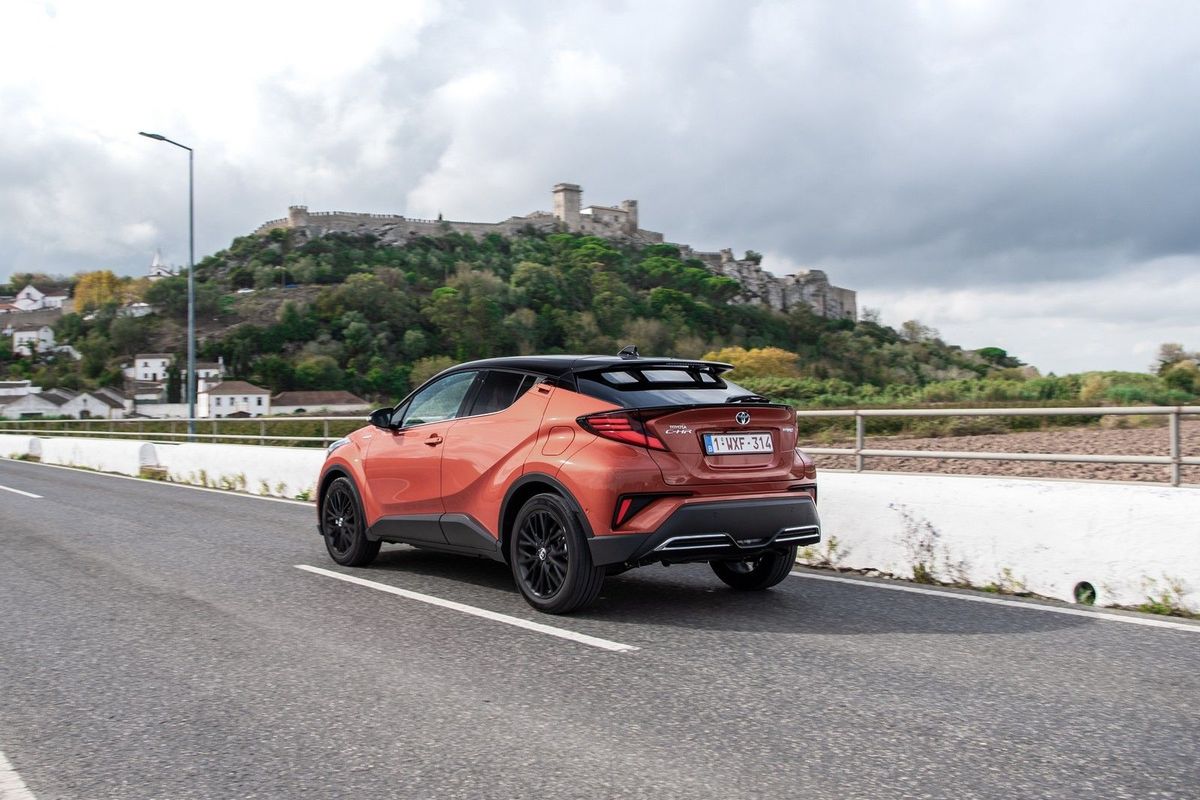
There are repositioned fog lamps, new standard-fit LED headlamp clusters, along with a larger grille/bumper that now sports a painted bottom lip, which makes it look a little lower to the ground. The LED tail lamps (with active scrolling), meanwhile, are connected by a smart gloss-black spoiler.
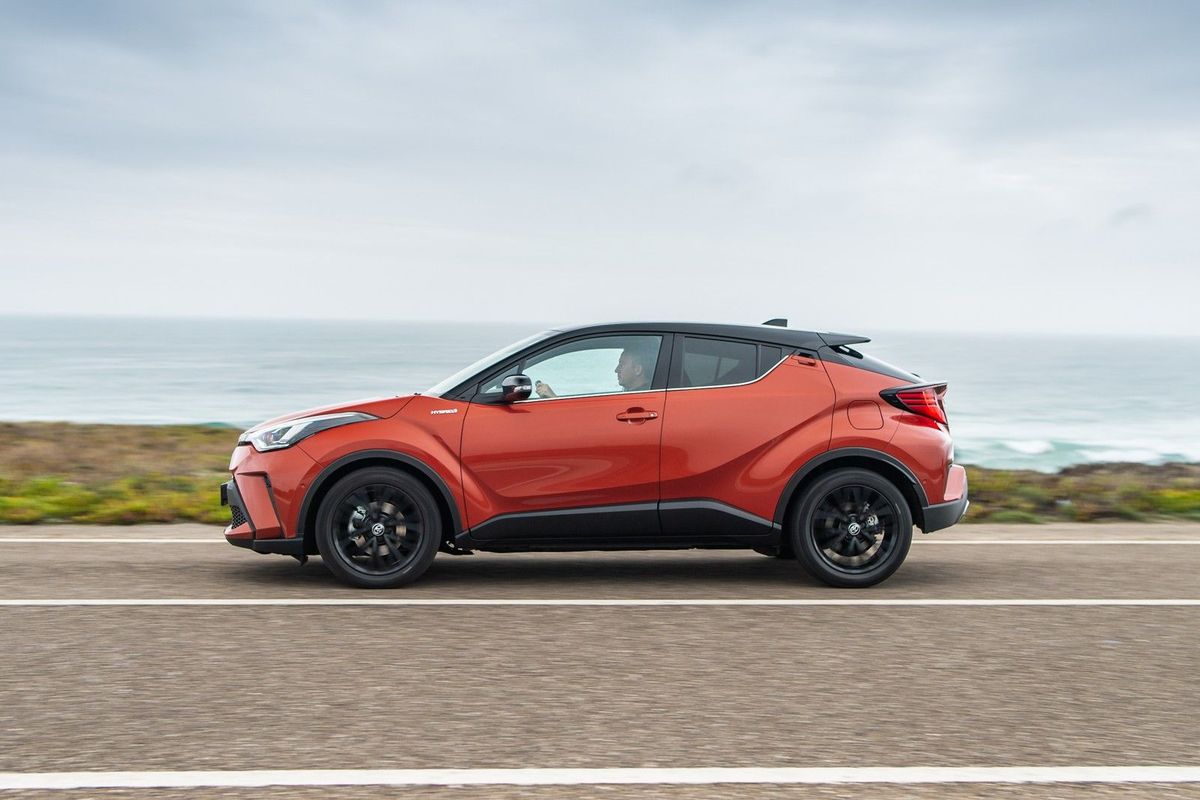
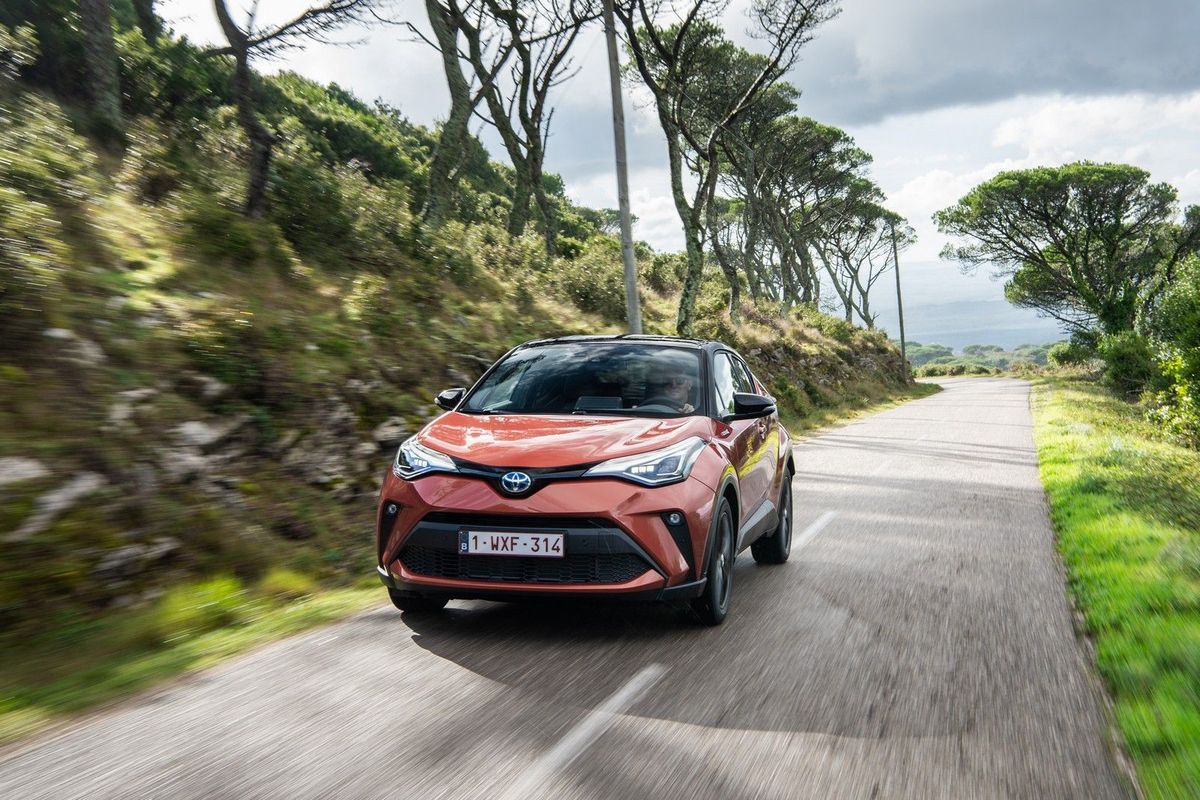
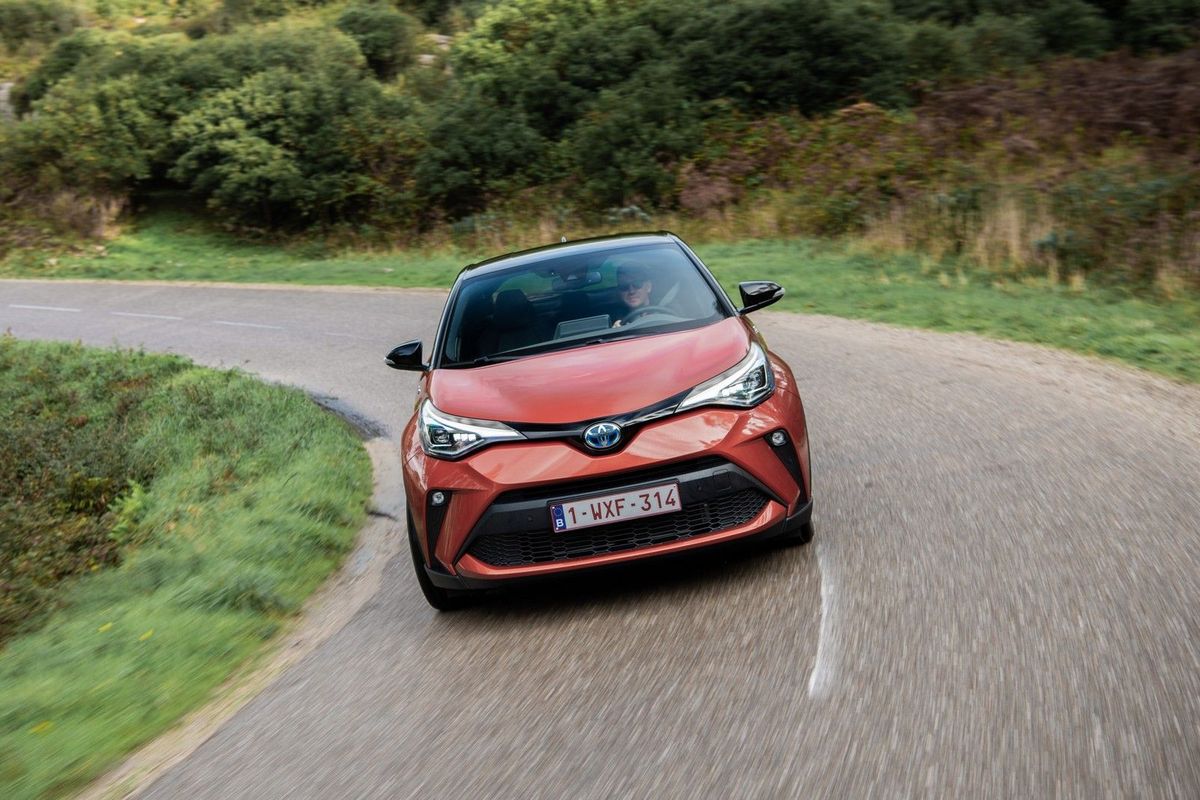
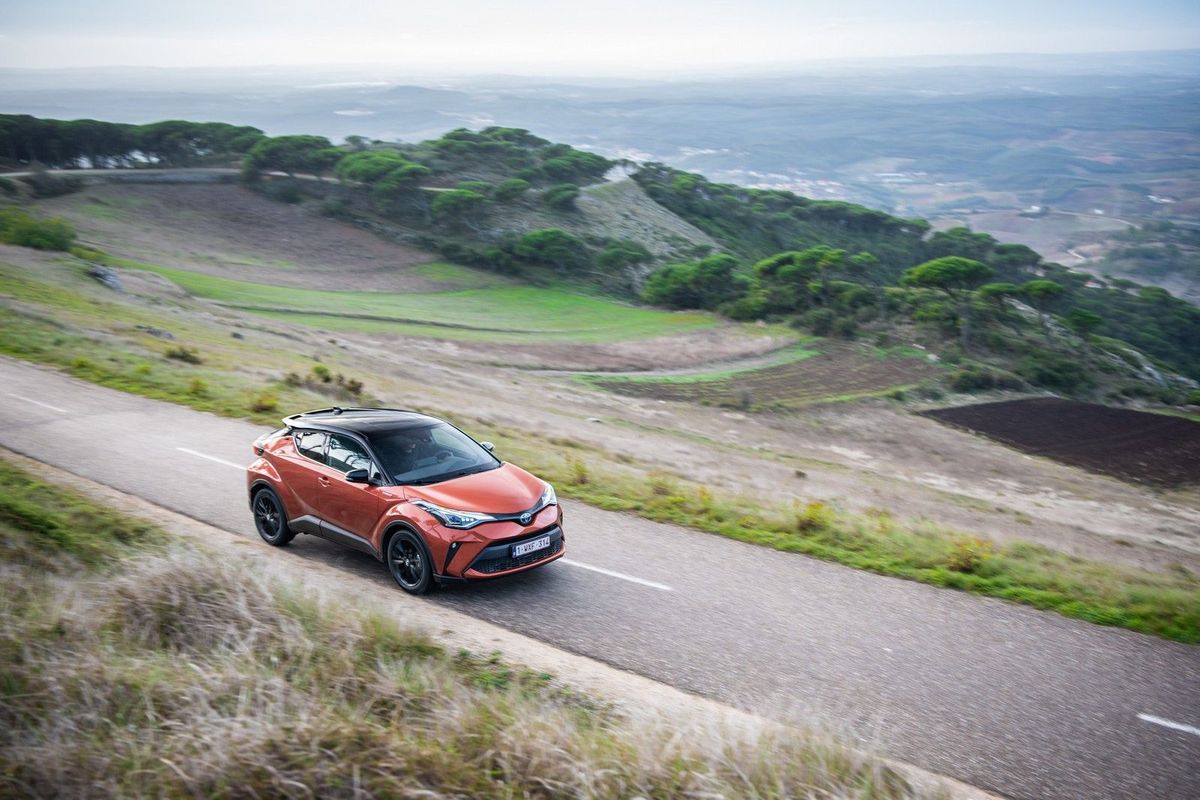
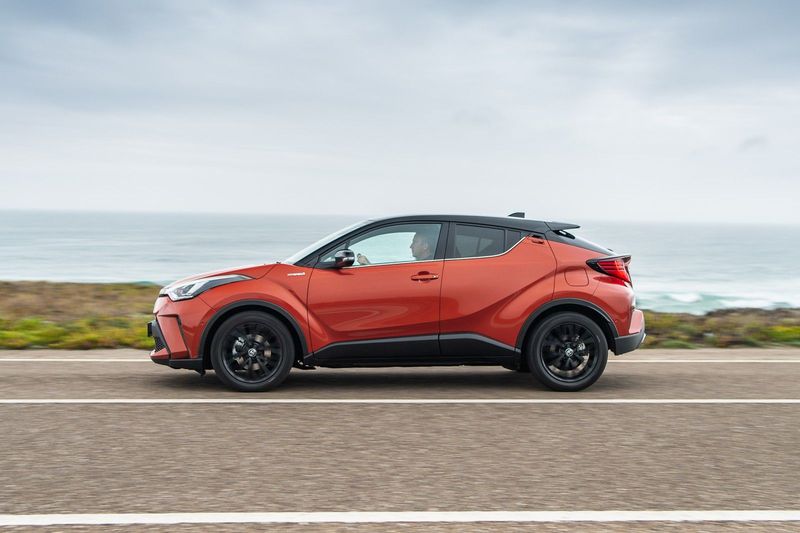
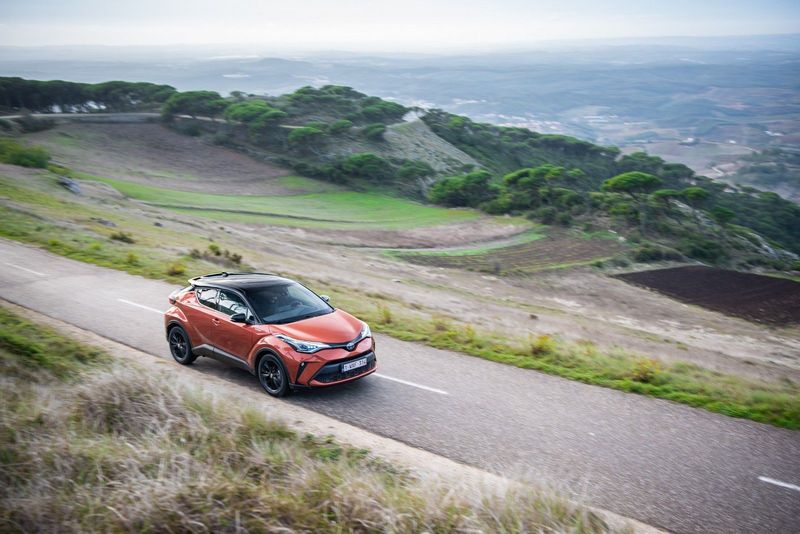
Subject to respective markets, there are new paint colours and a choice of 2 roof finishes (depending on the main colour of the car). The limited Orange Edition shown in the pictures is the new 2.0-litre Hybrid derivative, which is bound for the UK market in January.
Interior changes
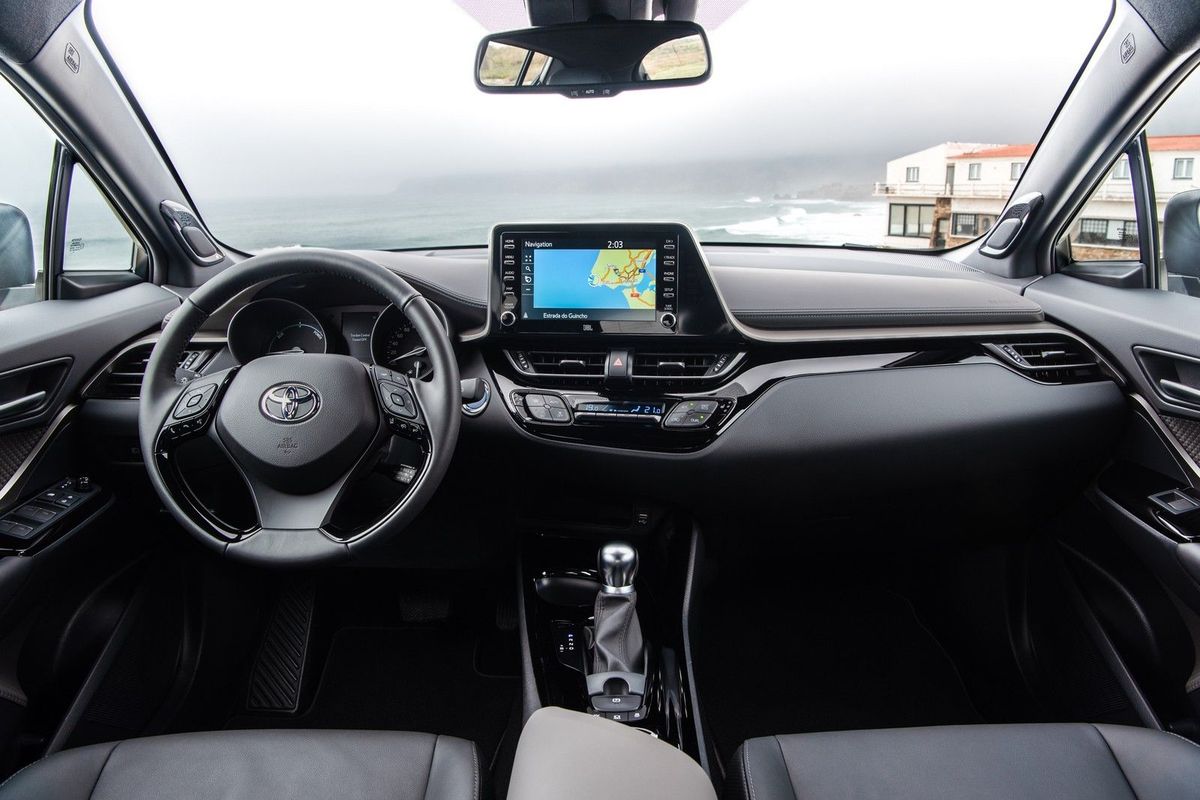
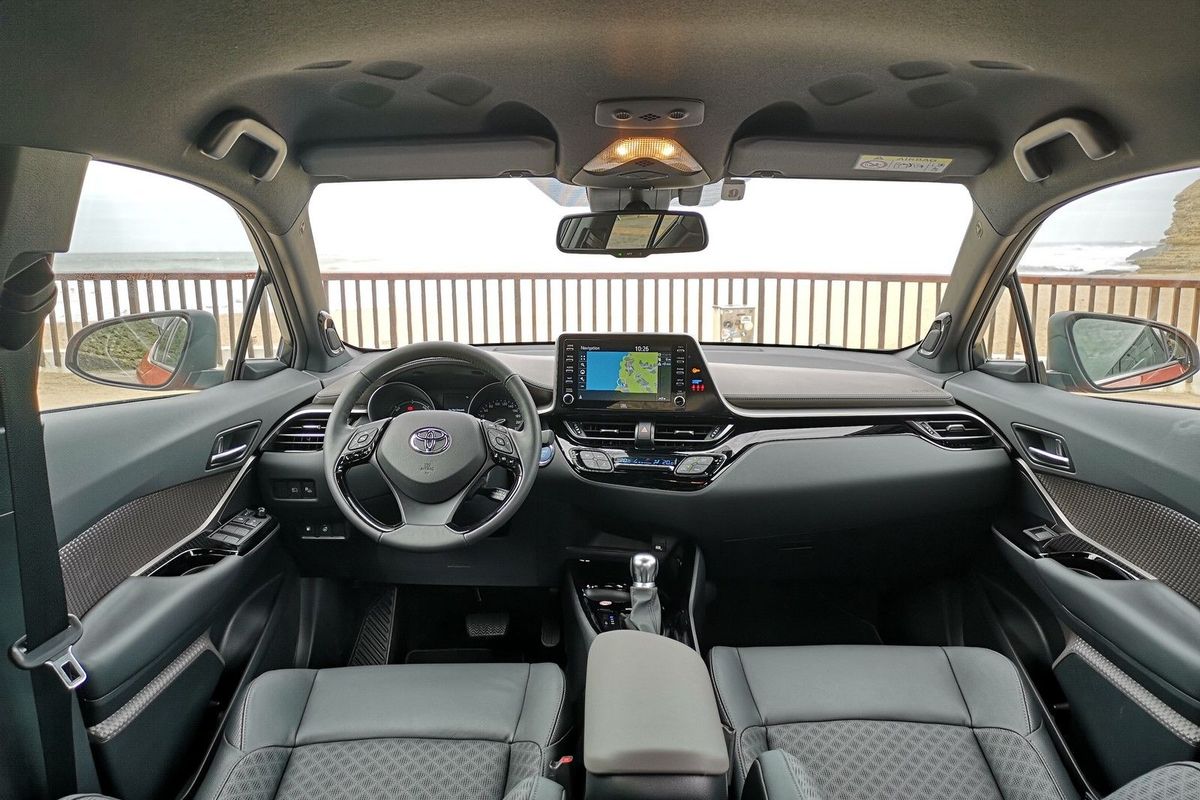
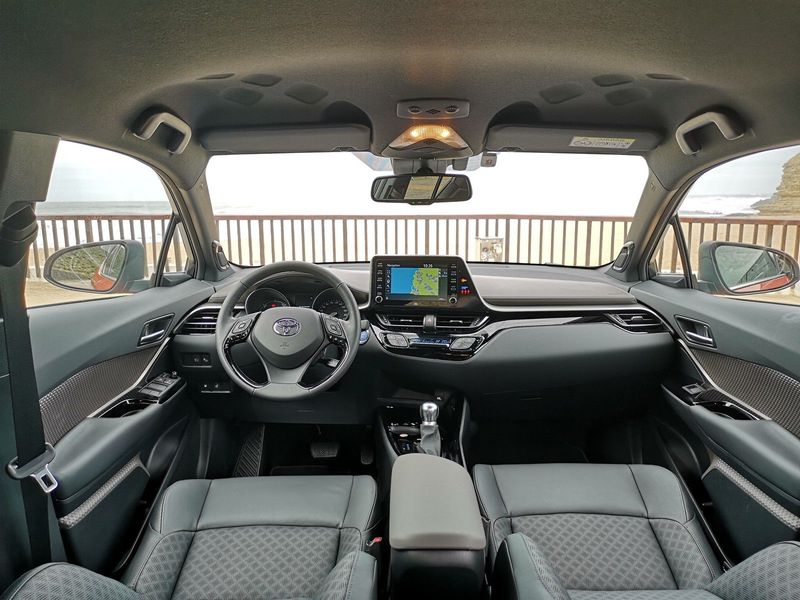
Finally, Android Auto and Apple Carplay are available on a Toyota.
Inside, new higher-grade materials adorn the top of the dash and the inside of the doors. It’s all mostly grey and black, but there are plenty of curves, textures and surfaces to keep things interesting.
The C-HR still doesn’t feel quite as plush inside as the Peugeot 3008, which still sets the design benchmark for compact SUVs. Fortunately, the front seats are far more comfortable as they now feature extra base- and side bolstering. There’s a reasonable amount of space in the back, but the doors aren’t huge, the windows are small and it all feels a bit claustrophobic back there. Upfront it’s all quite nice and cosy for a compact family car.
The most welcome change is the introduction of Apple CarPlay- and Android Auto compatibility, which will also come to South Africa. The upgrade allows you to operate your favourite smartphone apps through the car’s touchscreen and bypass Toyota’s own infotainment and navigation software, which remains lethargic and distracting to use, despite an upgrade that includes function buttons either side of the screen.
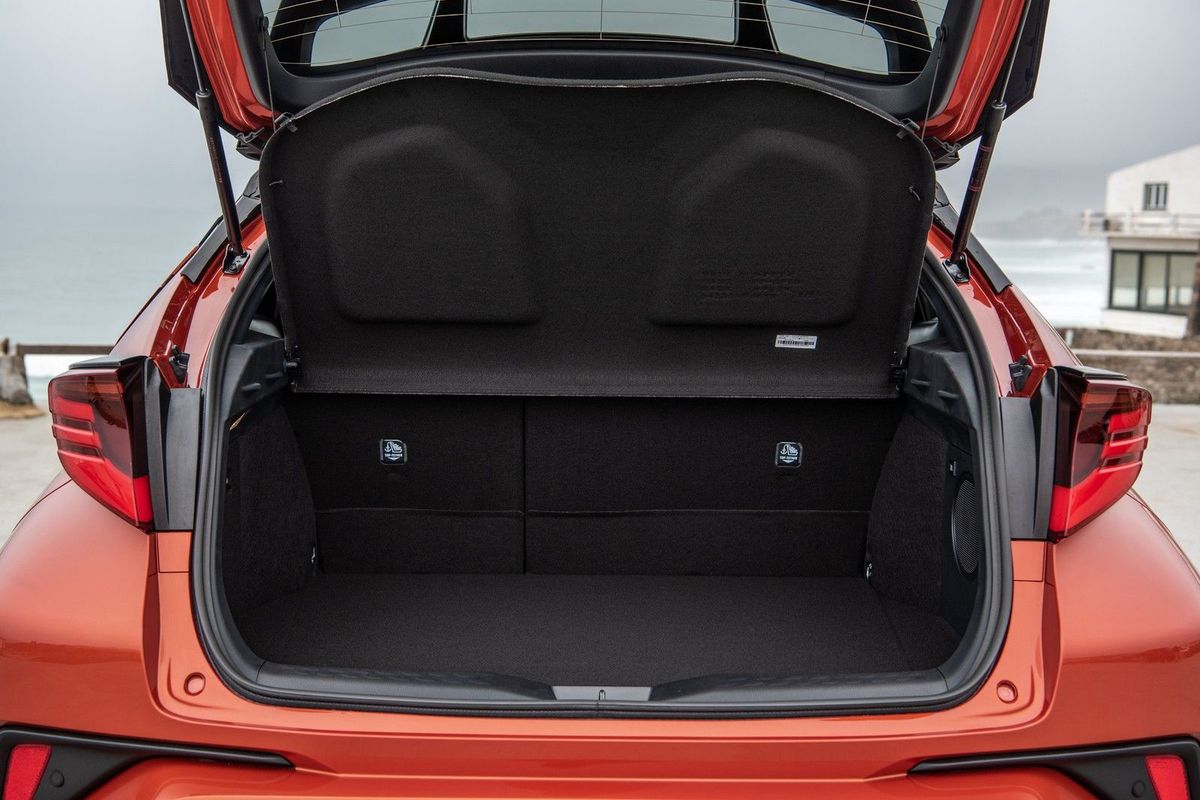
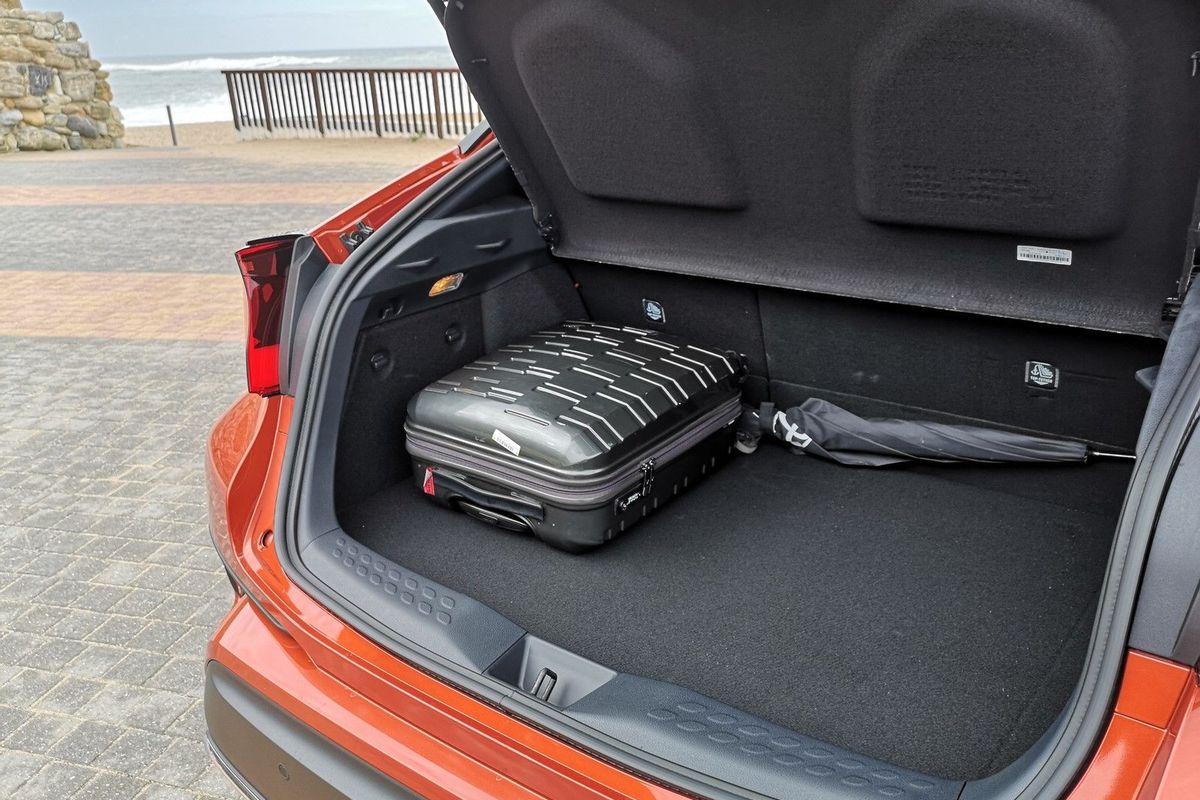
The load-bay capacity for the UK model is 377 litres because there is no spare wheel fitted (but rather a puncture repair kit), whereas SA-spec cars have an emergency spare fitted, reducing the luggage space to 297 litres.
Engines & drivetrains
A hybrid derivative is in the pipeline, but for now, SA will only get the 1.2-litre turbopetrol.
Toyota South Africa has confirmed that – at least for the moment – the C-HR will continue to be offered with a 1.2-litre 4-cylinder turbopetrol engine. The Prospecton-based firm said that while its executives were considering the introduction of a hybrid powertrain to the local market, no decision had yet been made in the matter. In that regard, I’d like to put my 2 cents’ worth on the table…
In the UK, we’ve previously had the 85 kW 1.2T engine. It was a peppy little thing that proved reasonably efficient and frugal (6.3 L/100 km). However, mostly due to lack of demand, it has now been dropped from the British market, reinforcing Toyota UK’s commitment to hybrid power.
Apart from the 1.2T, the UK has offered a 90 kW 1.8-litre hybrid powertrain paired with a CVT ‘box since 2016. With low emissions and a claimed consumption figure of around 3.0 L/100 km, you can understand its advantages. It continues in the UK line-up, but has had its eco performance enhanced by an upgrade to a lithium-ion high-voltage battery and by size, weight and efficiency improvements in all its principal hybrid components.
A CH-R with 132 kW does sound like it could be a lot of fun.
However, along with this mid-life refresh of the C-HR, comes the introduction of another full hybrid powertrain – an all-new 2.0-litre unit. It’s the 4th-generation hybrid powertrain from Toyota Japan, and the one I think Toyota SA should strongly consider for the Mzansi market.
The full hybrid powertrain (petrol engine and electric motor combined) produces peak outputs of 135 kW and 190 Nm, yet it’s more efficient than (and dynamically superior to) the 1.8-litre system. Although power is greater by a whopping 50 per cent, fuel consumption is only 10 per cent higher. Combined cycle fuel economy is a claimed 4.3 L/100 km (WLTP data), which is far better than similarly rated turbopetrol engines.
Ride & handling
The only engine available to test drive at its media launch event in Portugal last week was the new 2.0-litre hybrid unit. Compared with the willing 1.2-litre turbopetrol, the 2.0-litre unit (with the extra power it produces) makes full use of the car’s excellent chassis.
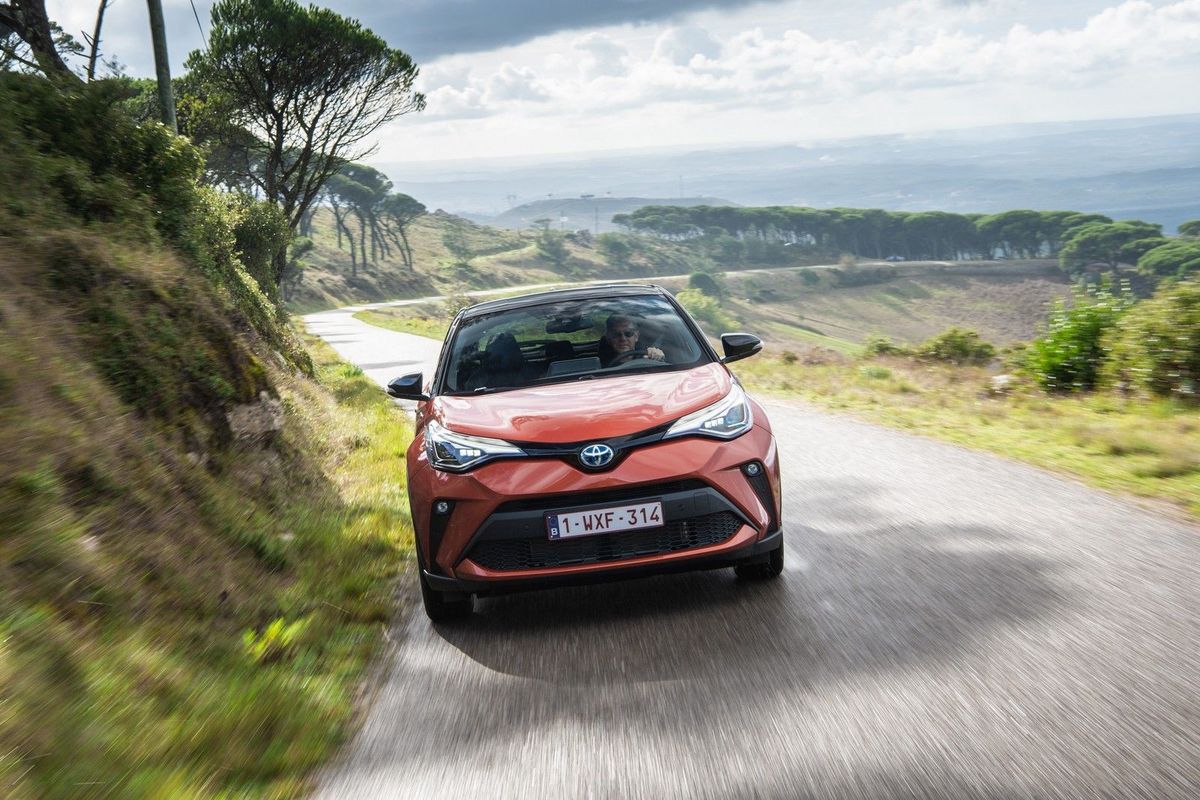
Underneath the new C-HR, the suspension settings have been tweaked, which brings improved ride and handling, along with a modified electronic power steering unit to improve steering feel. On the road, those technical enhancements do much to improve the car’s driver-centric dynamics.
Improved levels of comfort and handling are made courtesy of tweaked suspension.
Overall refinement is noticeably improved – the combination of a hybrid engine and CVT is one of the best yet in terms of responsiveness and quietness. Unlike many CVTs before it, the new transmission isn’t coarse, nor audibly intrusive (it’s only noticeable when you floor the accelerator). Most drivers won’t, of course, and this version builds speed with a pleasing pace that doesn’t leave you hanging or frequently checking your watch.
However, if you’re the type of driver who frequently drives with a heavier right foot, the C-HR is unlikely to be on your radar, anyway. Compared with the outgoing C-HR model, the new 2.0-litre power plant is a most welcome addition.
Once Toyota South Africa gets over a few technical issues with the new hybrid engines, we could see the 1.8-litre hybrid powertain feature in the C-HR, with the RAV4 likely to receive this 2.0-litre unit. Price sensitivity remains the biggest hurdle to the local introduction of the 2.0-litre hybrid petrol.
Pricing
This far in advance, there are no price indications for the 2020 Toyota C-HR model line-up in South Africa, but Toyota SA did say the trim grades would essentially remain the same and that pricing was hoped to be along similar lines as present.
Summary
A better car to drive so long as you don’t have a huge need for practicality.
There is little doubt that Toyota’s refreshed C-HR will remain an interesting alternative to all the usual suspects in the compact family car segment.
It looks good, has an interesting interior that’s well-made and now of higher quality, is nice to drive and the hybrid setup is more efficient and cheaper to run than that of the previous 1.2T. It’s not the go-to for practicality, but the addition of key connectivity equipment and a more powerful hybrid motor make it far more appealing.
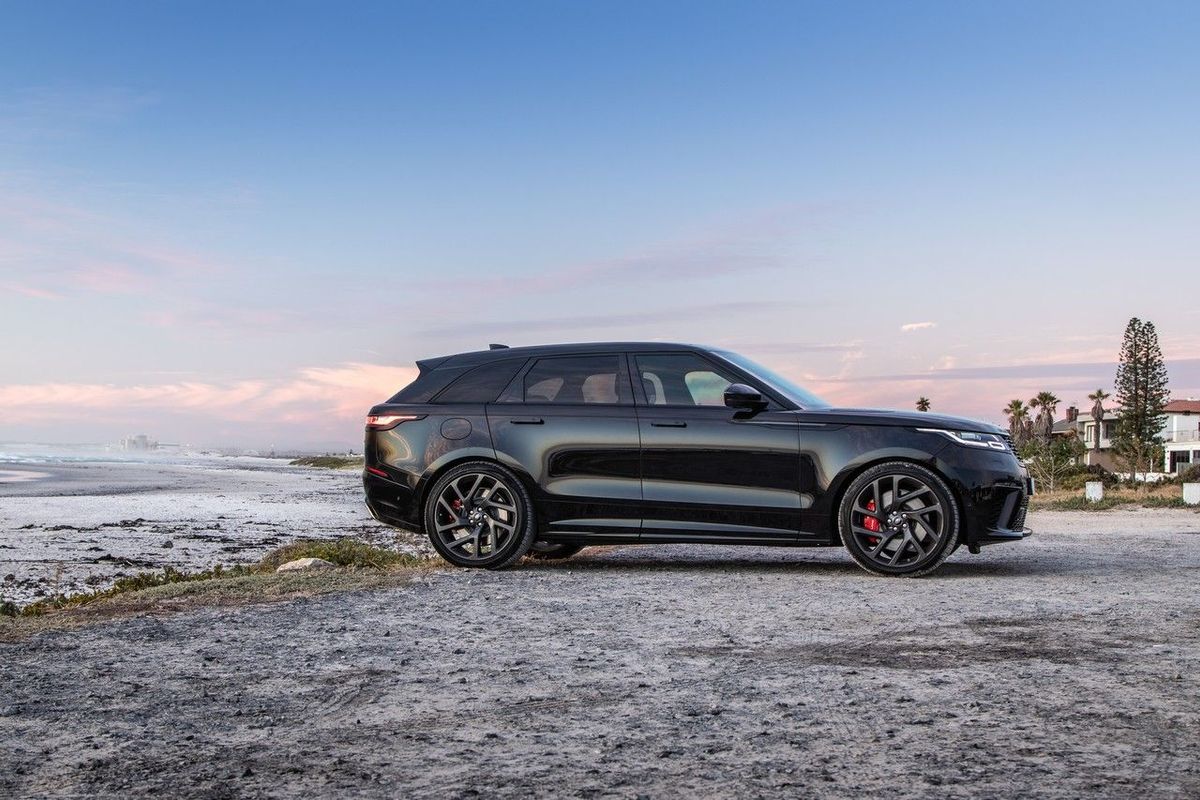
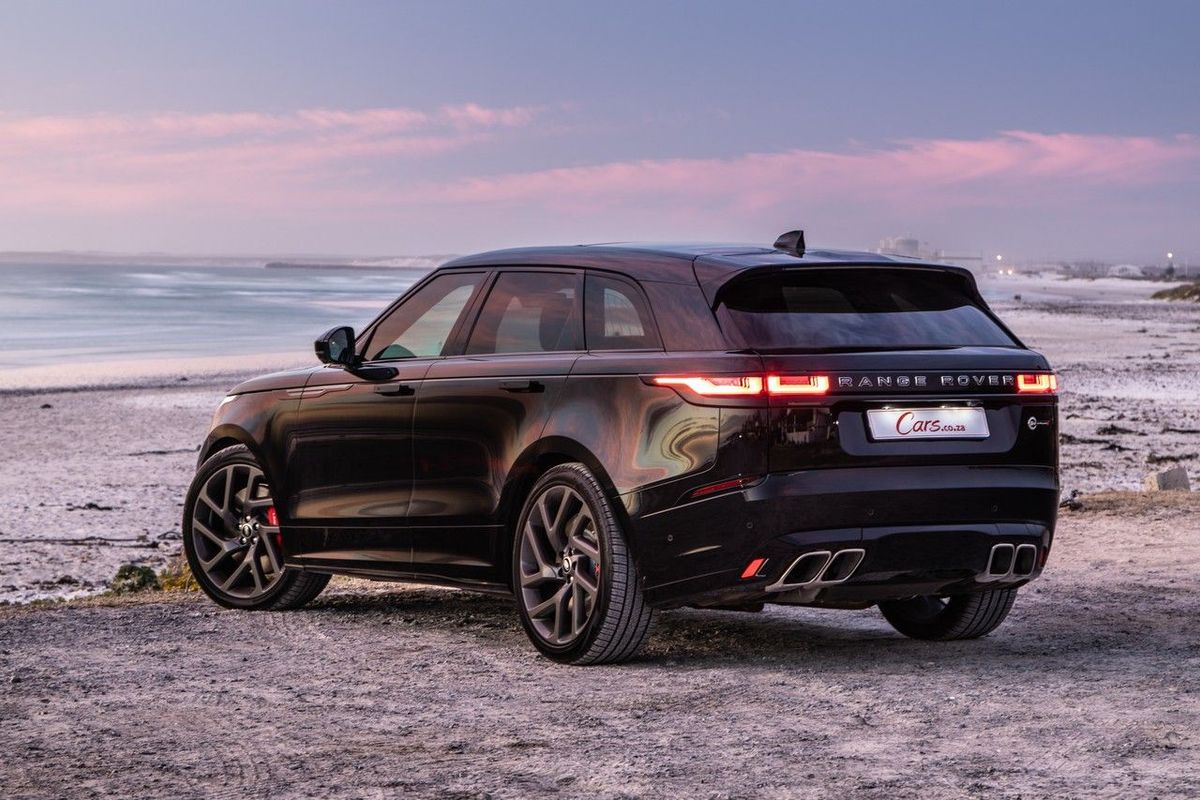
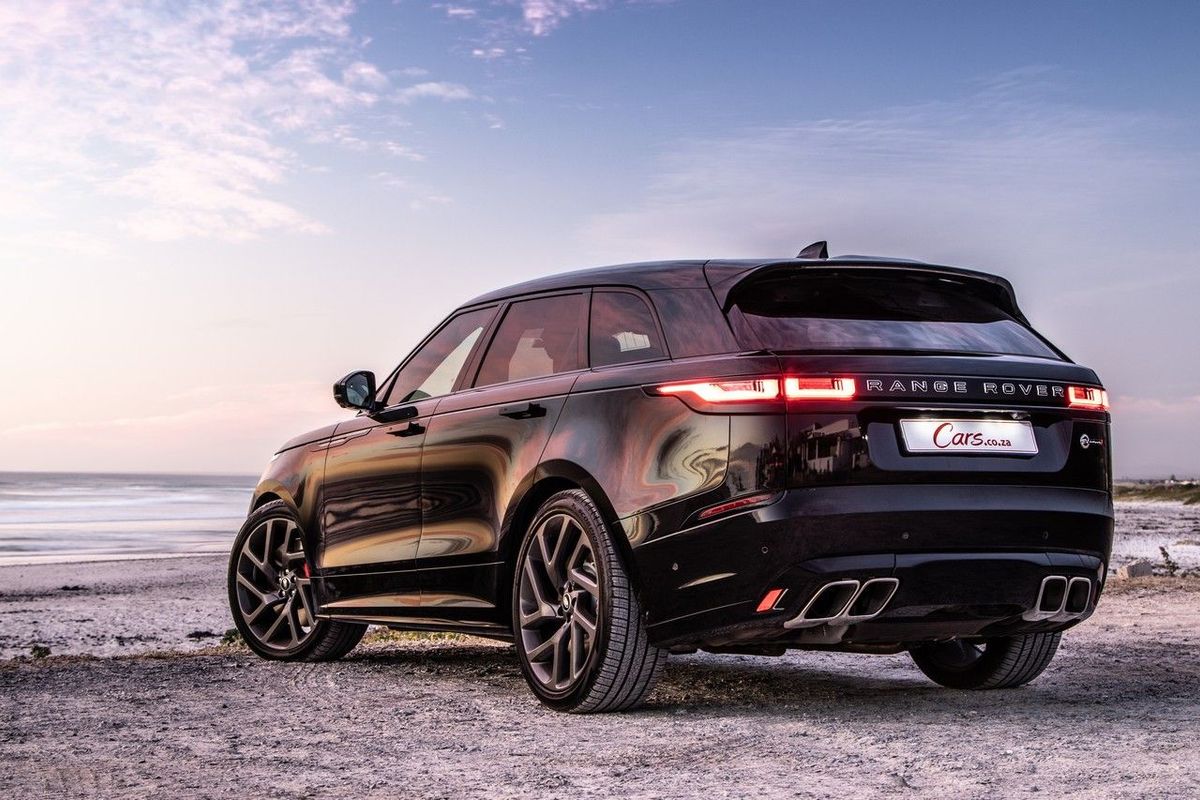
The Range Rover Velar has gained a mighty engine to match its sumptuous style. However, with a raft of powerful SUVs lined up to tempt affluent buyers to part with their dough, what makes this SVAutobiography any different?
We like: Sound, comfort levels inside and out, performance.
We don’t like: Needs to address its drinking problem.
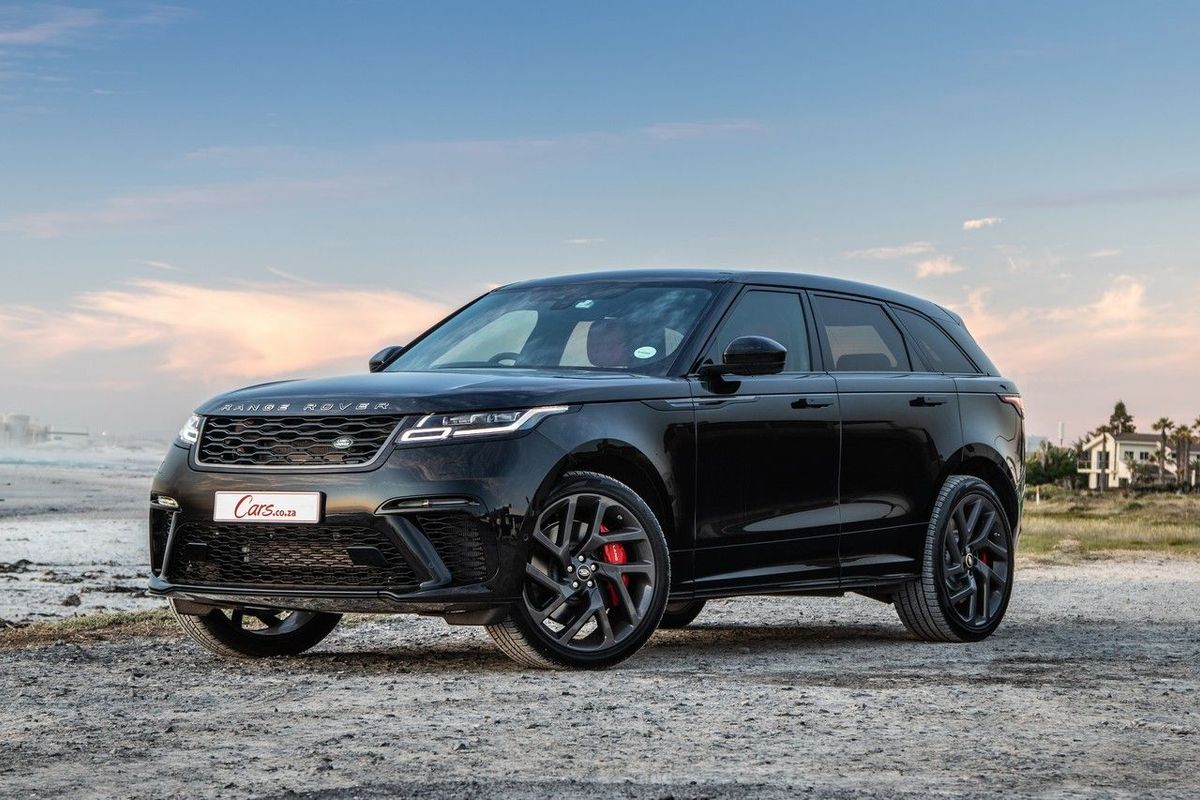
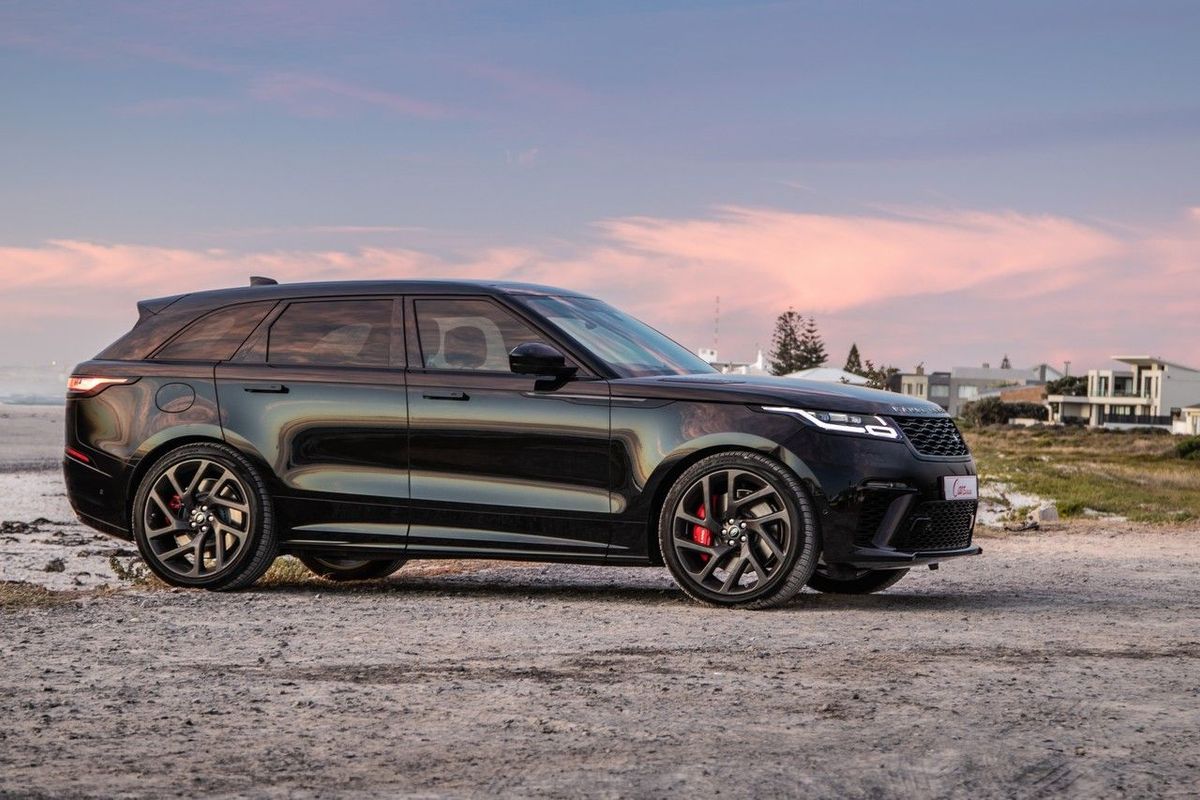
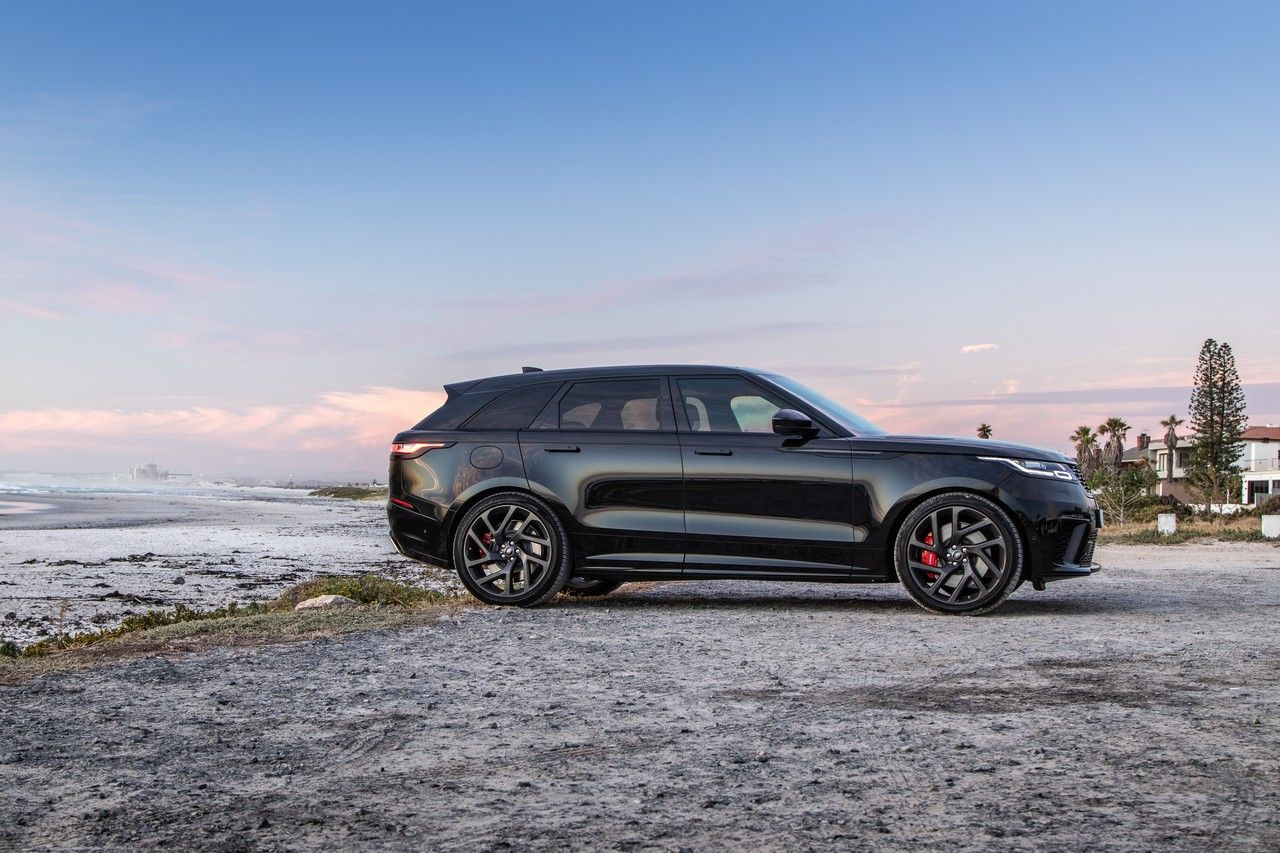
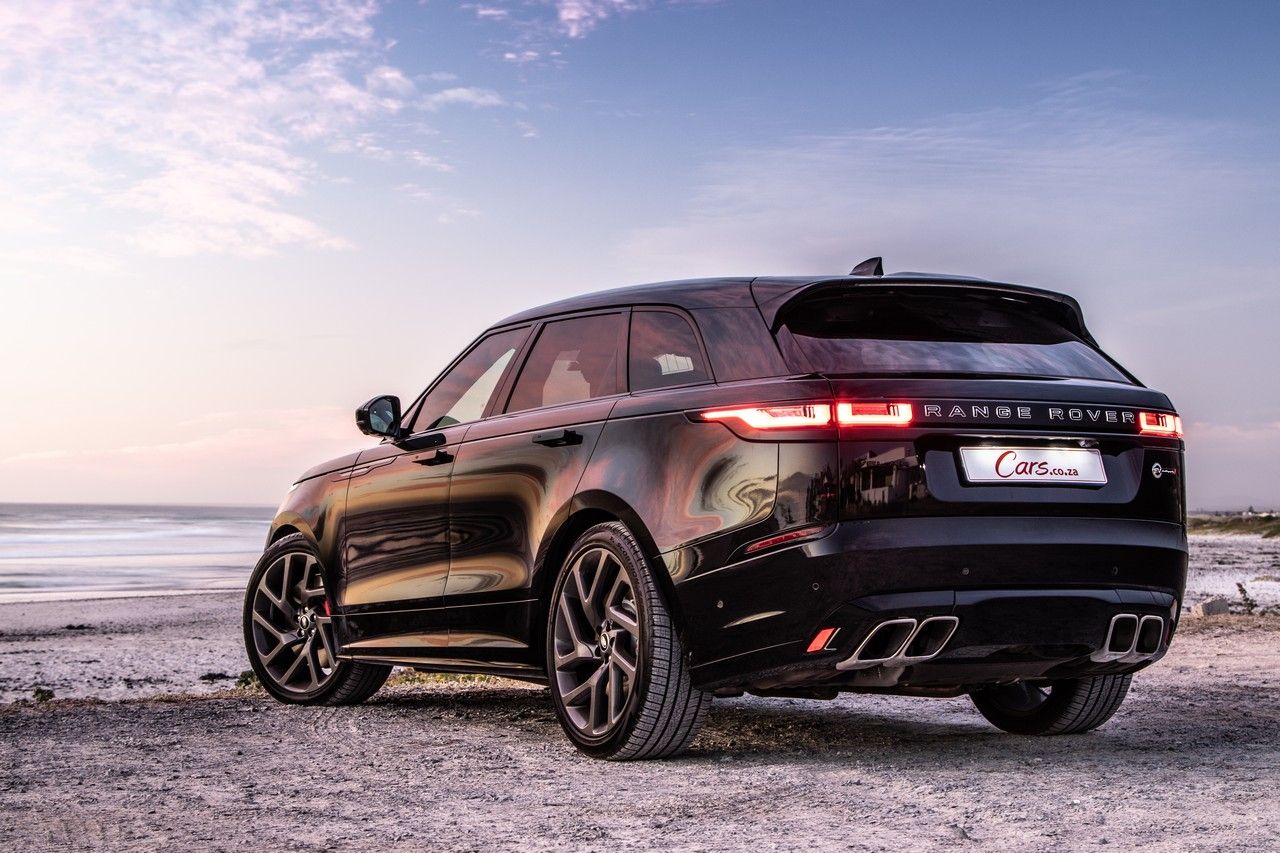
The Velar SVA has oodles of kerb presence, especially when shod with 22-inch diamond-edged rims.
As the Velar gets on in years (it’s only a year old) so the range will proliferate with additional derivatives coming to market. A quick look at the current Velar lineup shows 65 different variants of Velar on offer. So why another one? Well, simply put, this is the pinnacle of the range.
It features the brand’s legendary (it’s 10 years old) 5.0-litre supercharged V8 engine, style upgrades to the front and rear to make the newcomer look ultra-aggressive and an interior lavished with the most luxurious materials Range Rover has to offer.
There have been a few mechanical upgrades to deal with the extra power (and, of course, speed) and a notable price tag slapped on the bonnet. The Velar SVAutobiography (SVA) is only available for a year, so the exclusivity of it does go some way towards justifying the price hike.
How it fares in terms of…
Kerb appeal
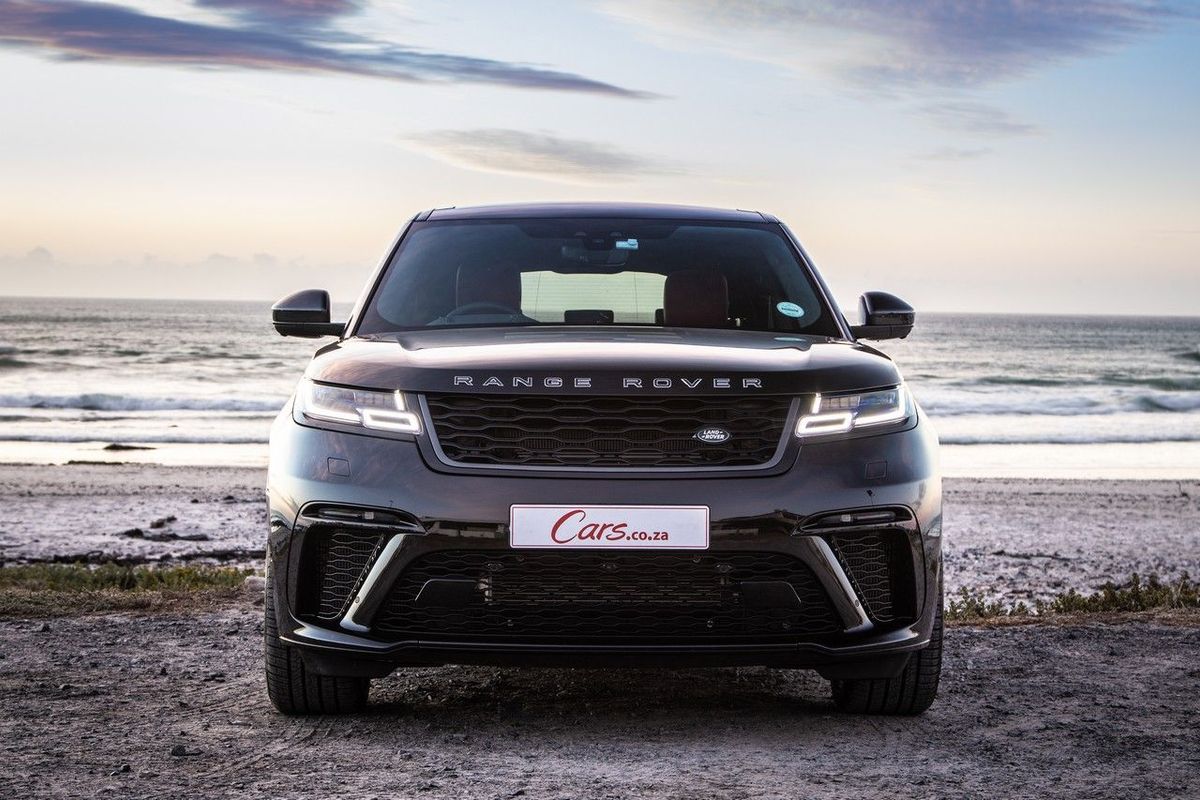
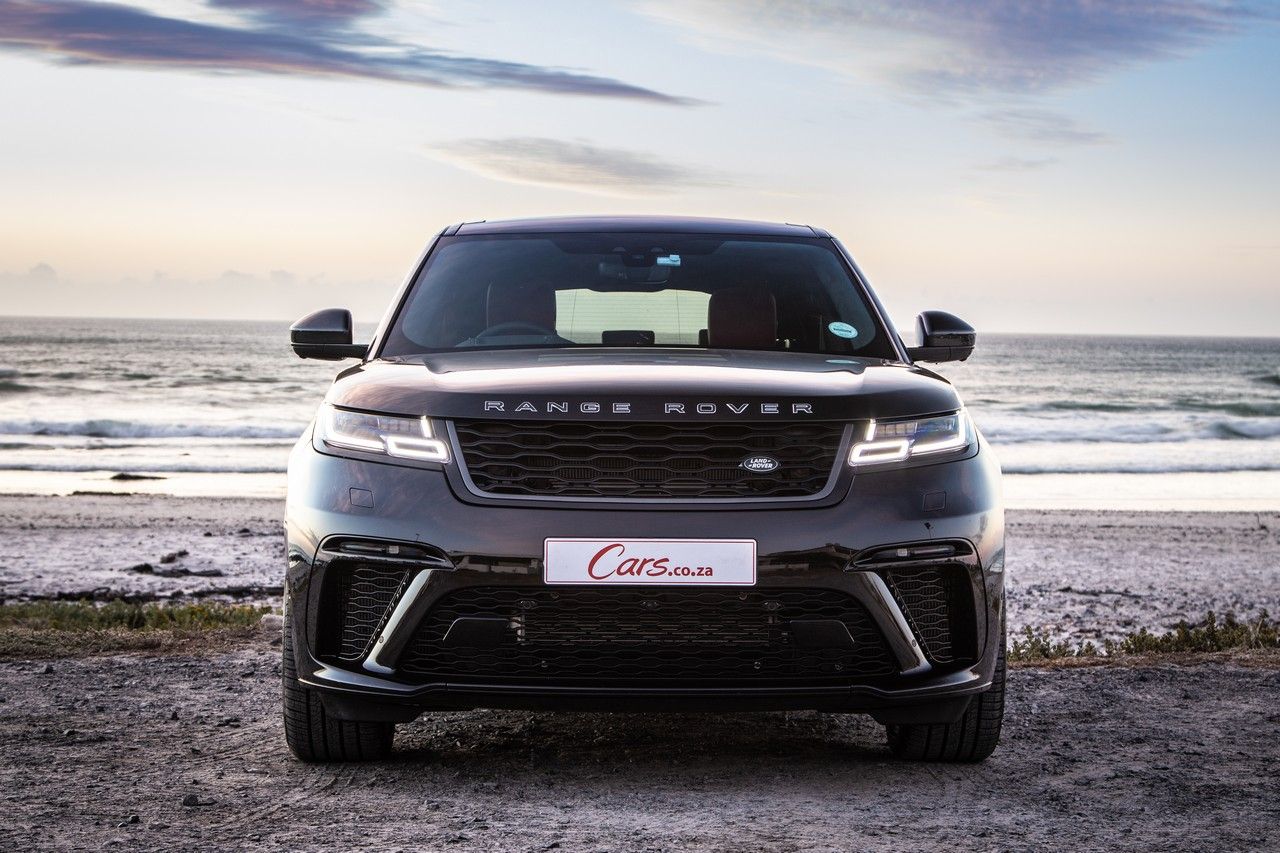
The SVA has a new bumper and wider intakes to feed the supercharged V8.
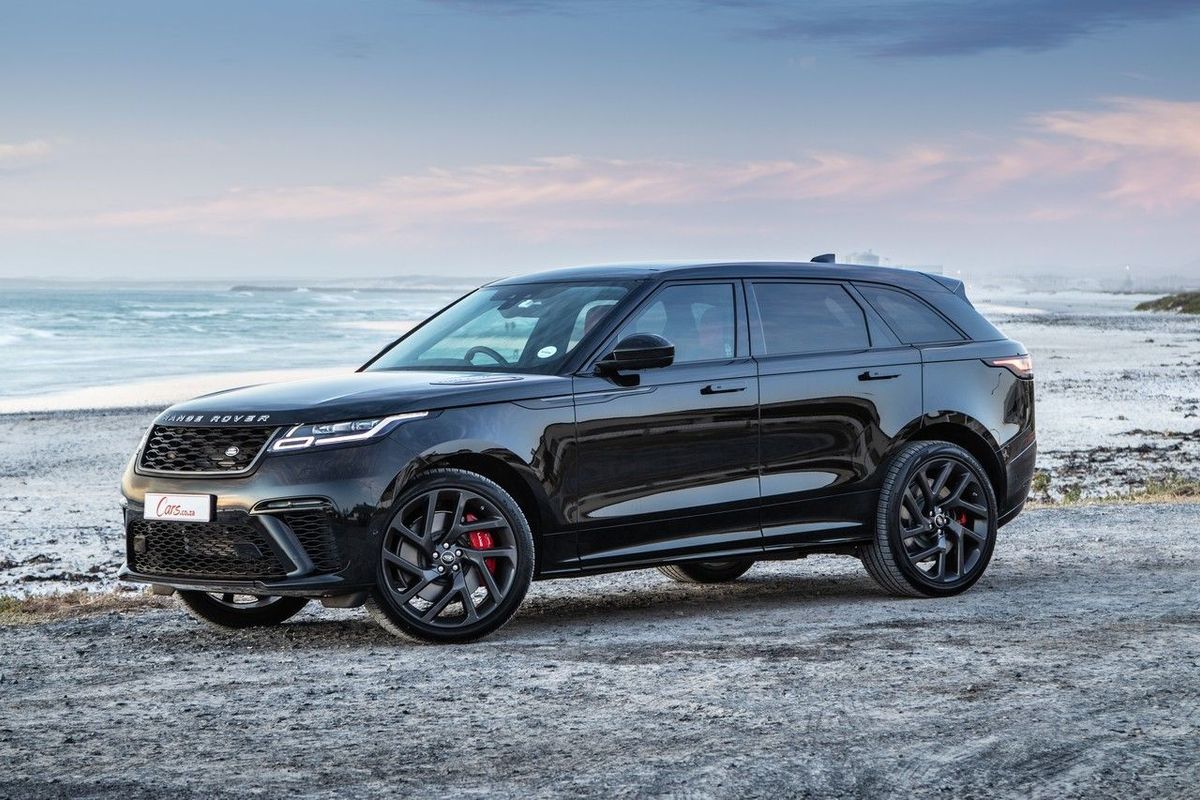
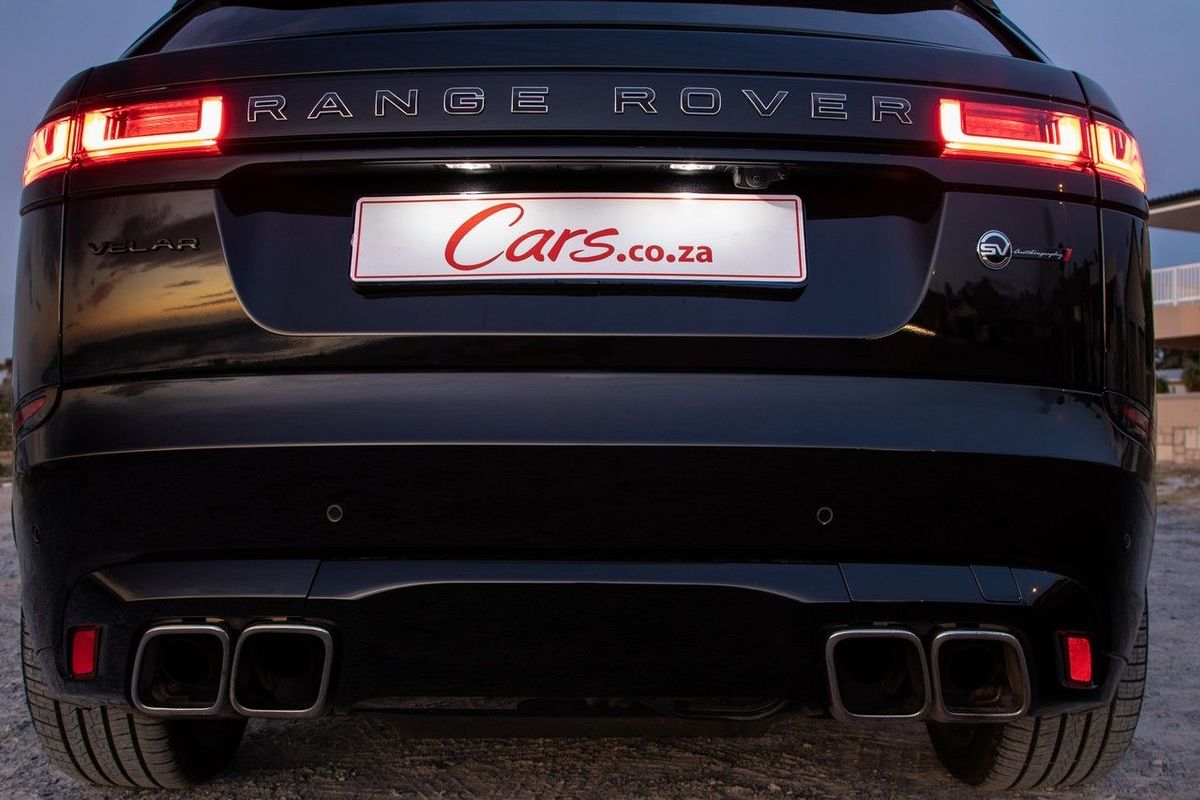
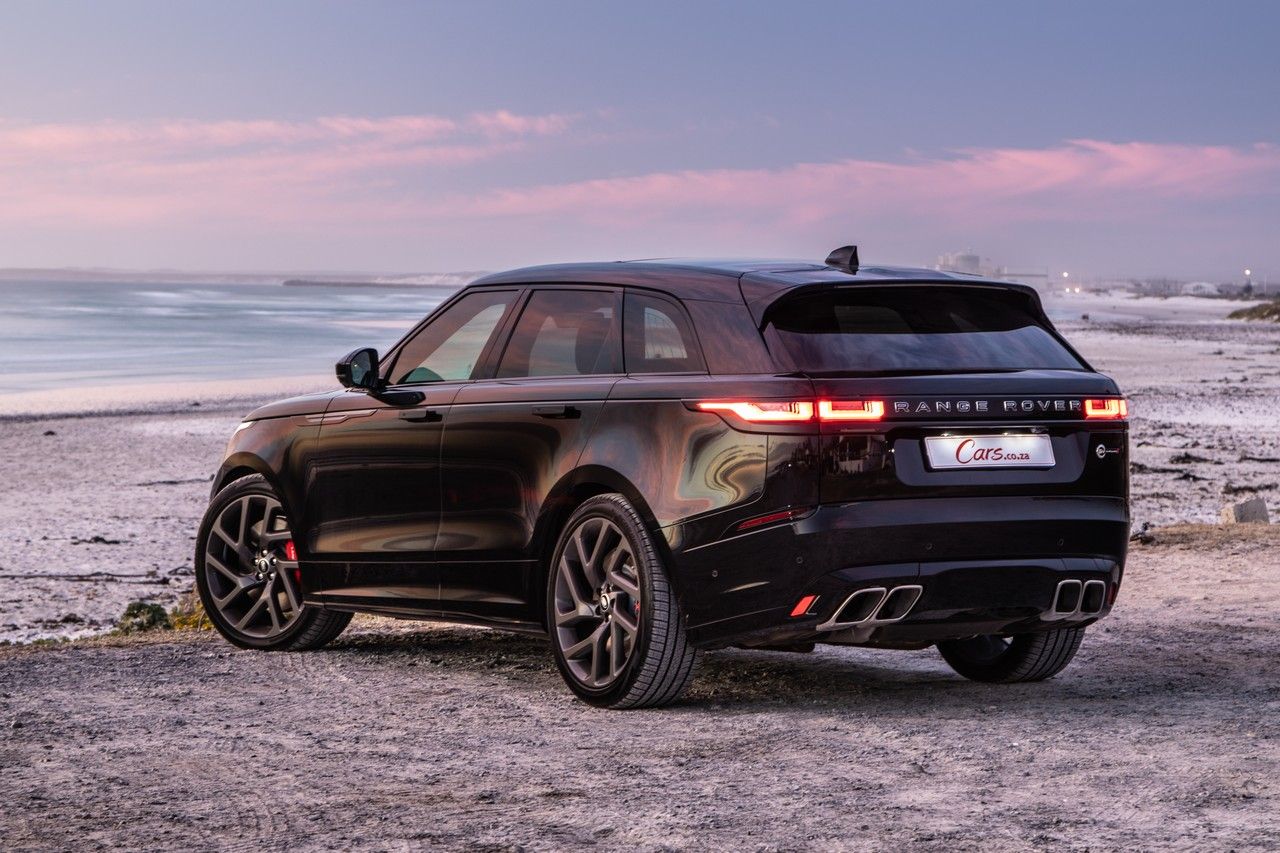
Even the bog-standard Velar oozes suave, classy appeal, but this SVAutobiography is something else!. The front-end gets a new bumper treatment and bigger air intakes to feed/cool the supercharged V8, whereas the rear is dominated by integrated quad tailpipes that emit a soundtrack akin to a Highveld thunderstorm. The test unit model was clad in Santorini Black with a Narvik Black roof giving it a black-on-black look that would not look out of place on the film set of a Hollywood crime caper. There are lighter, less "gangster" hues available, but this certainly makes a big statement.
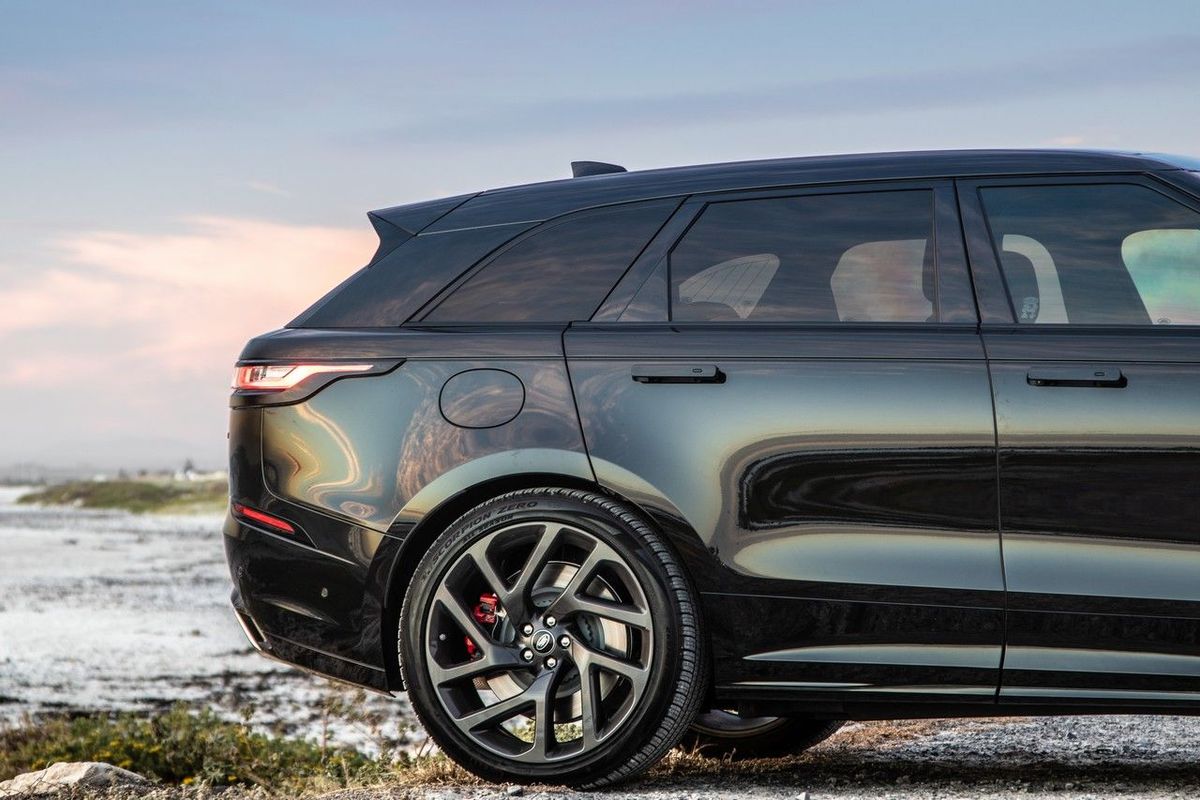
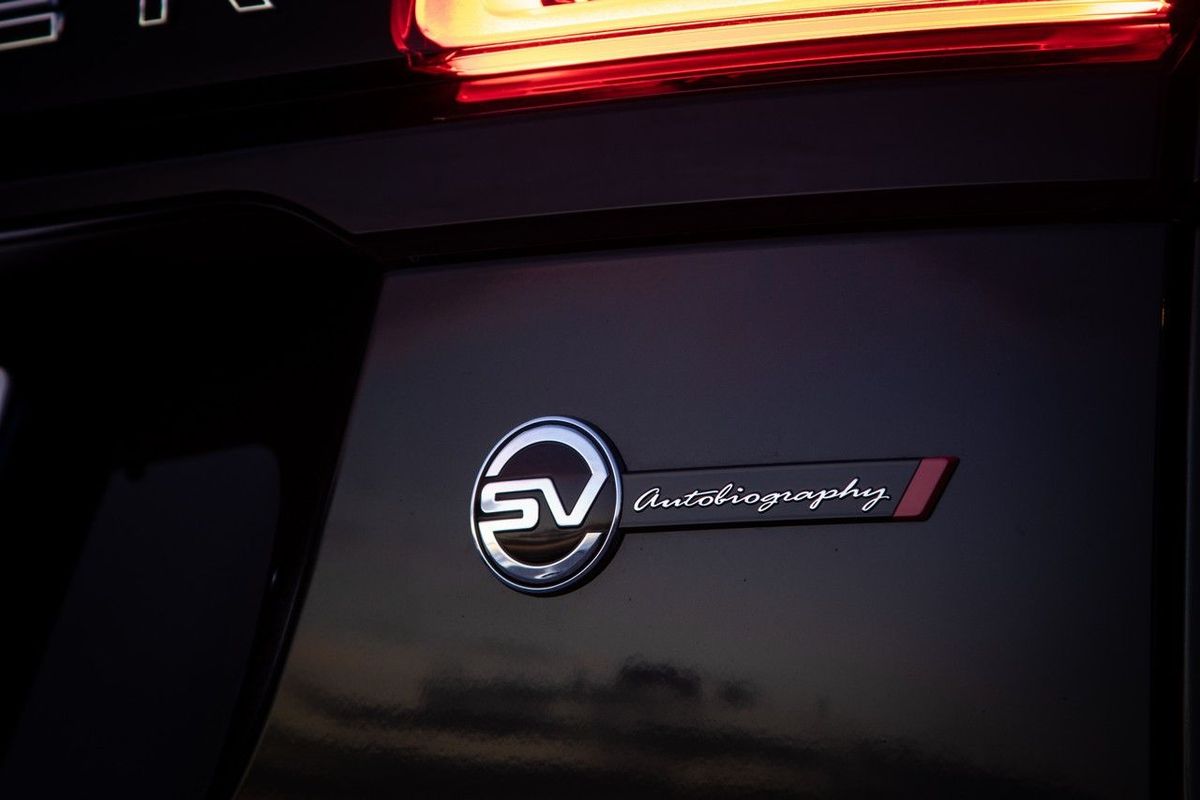
The badging on the Velar SVA has been blacked out, but moreover, it’s finished in a textured ripple, which Range Rover describes as knurled metal. It’s also running on optional 22-inch dark grey rims with diamond edging and a sparkle finish. Twenty-one-inch rims are standard and more suitable to those who like a little more give from the tyre sidewall, which would add a degree of pliancy to the SVA's ride quality.
This Velar SVA cannot be described as bland or boring, which are labels that its German rivals have been lumped with by some detractors.
Performance
There is plenty of noise to match it's brutish power thanks to quad exhaust pipes.
With 405 kW and 680 Nm at your beck and call, the Velar SVA doesn’t lack for performance. It’s powered by the same engine as the Jaguar F-Pace SVR and in the same state of tune too. The 0-to-100 kph benchmark is reached in a claimed 4.5 seconds and the top speed is about 274 kph.
It’s a brute… in no way is this a scalpel or any tool in a surgeon’s err, surgery, for that matter. It’s about as subtle as using dynamite to get rid of a pesky mole in your yard. Anybody who happens to be looking the other way when you drive by will hear you, even if they’re in a different province.
There is a button to activate the exhaust flaps and boost the volume of the mechanical cacophony, but in standard mode, it's already a 10 on the loud scale, so the button just cranks it up to 11.
To deal with the extra speed, the SVA has bigger brakes to stop its 2-tonne frame better. Red brake callipers add further dazzle to the wheel area although you can get gloss black variants for a more discreet look.
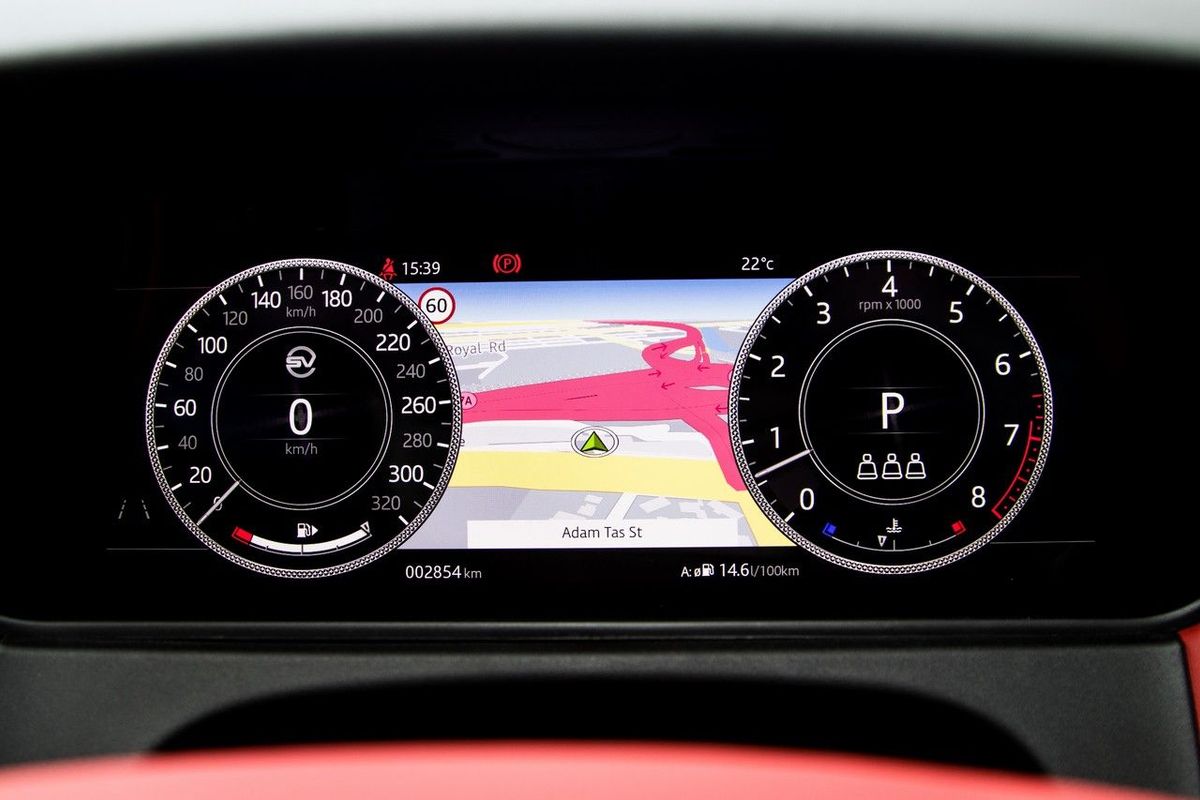
The biggest gripe with the performance is the hefty fuel consumption. The claimed figure is 11.8 L/100 km but we saw 14.2 L/100 km after our 2 weeks with the car and even at a steady 120 kph you rarely drop below 12. The result is an 82-litre fuel tank with a range of around 300 km…
Ride and handling
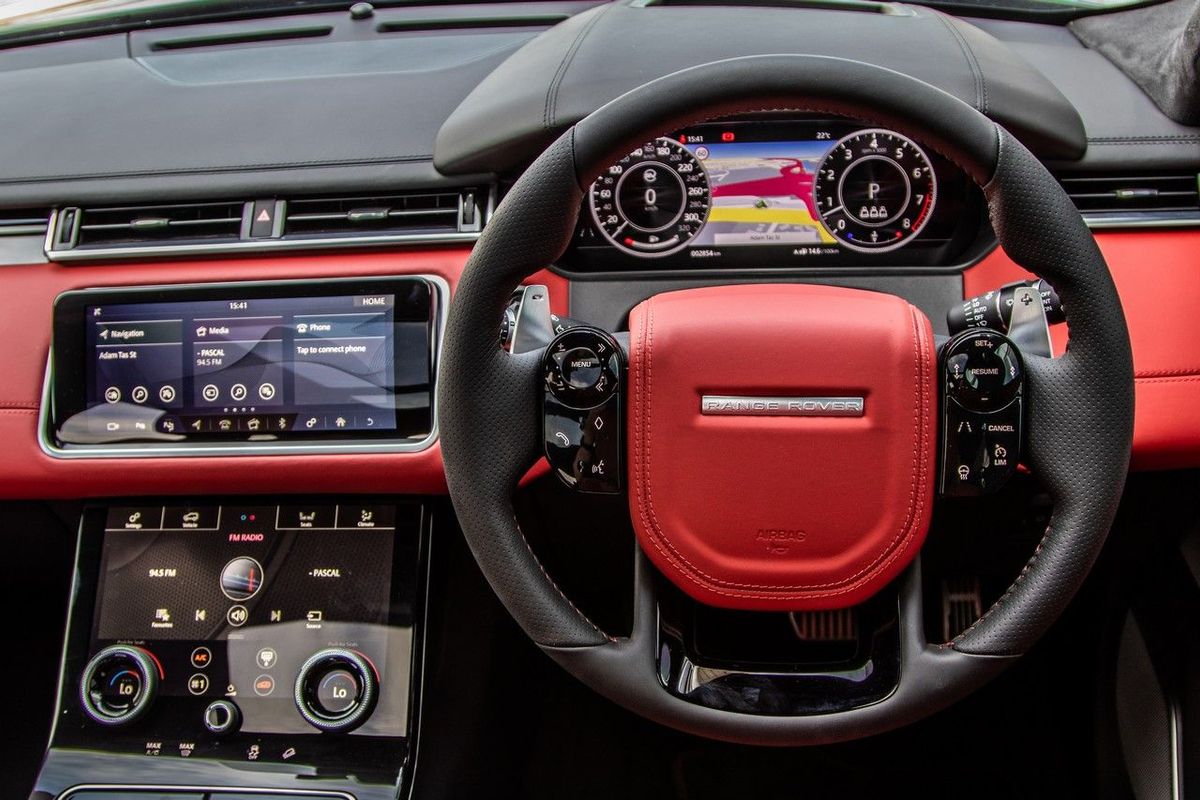
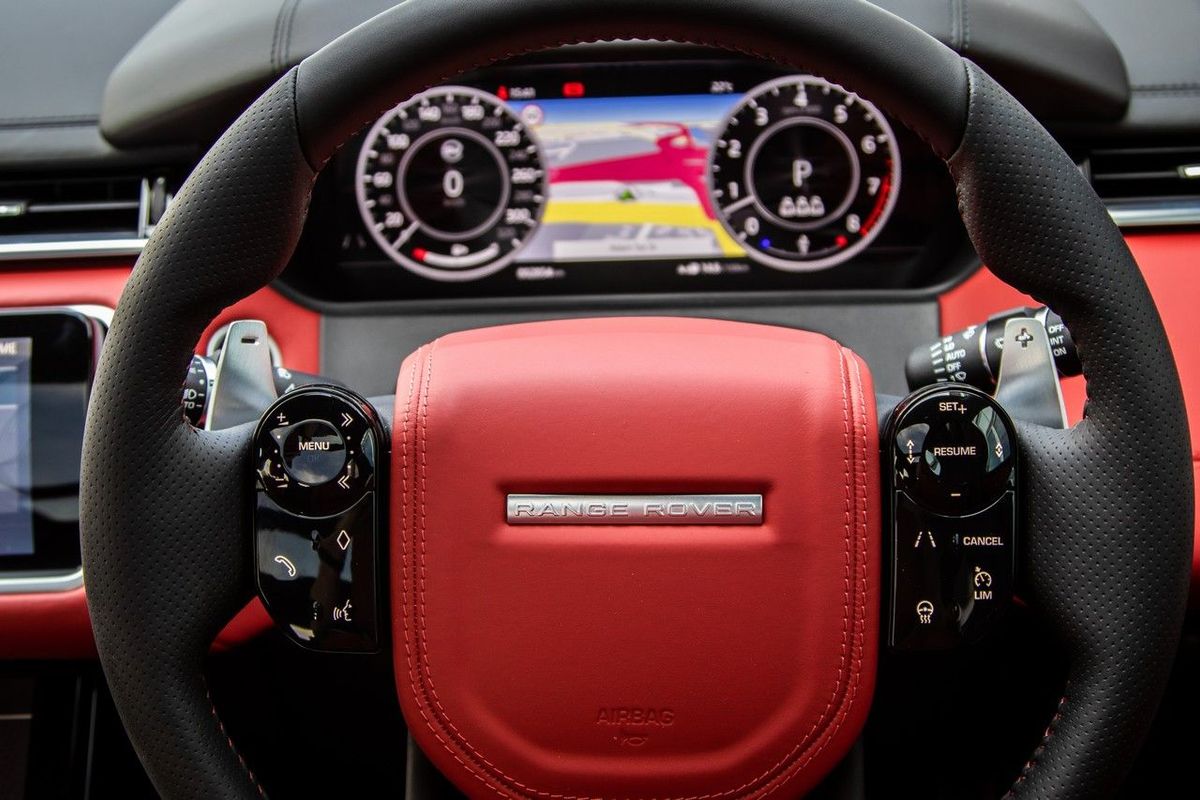
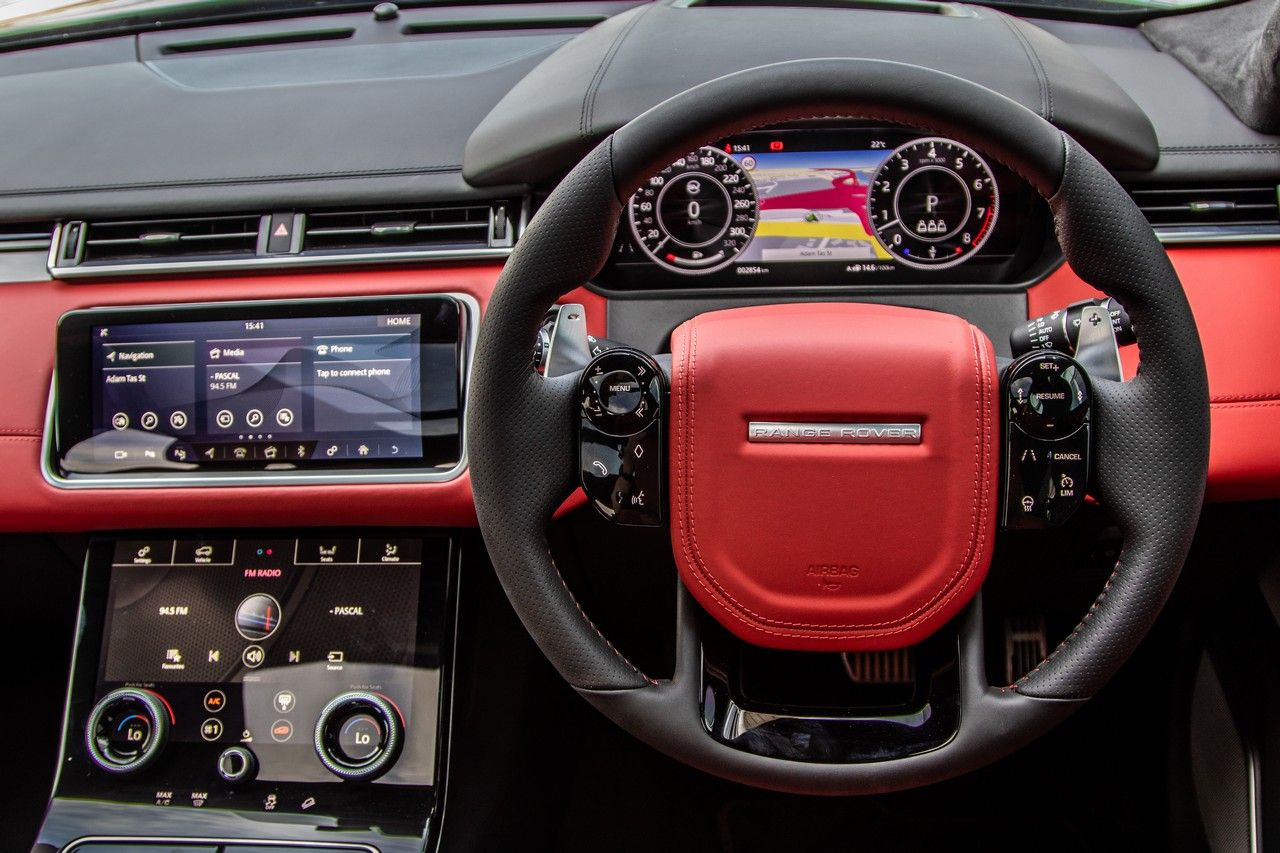
A unique steering wheel and plenty lavish leather make the SVA feel special inside.
This is where the SVA separates itself from the rest of the performance SUV gang. It’s not a wannabe track-bred SUV with stiff suspension and a benchmark Nurburgring lap time on its resume. It has some upgrades, yes, such as beefed-up anti-roll bars and a firmer air suspension, but that's nothing compared to the transformation JLR applied with the F-Pace SVR.
It has torque vectoring (to aid handling ability under hard cornering), but the Velar flagship doesn’t feel like a car with which you'd attack a mountain pass. It can do it reasonably well, but it doesn't feel like it was made for that. As a result, its body exhibits a bit more lateral movement in the twisties.
On the other side of the scale, the Velar SVA doesn’t compromise as much on ride quality and comfort as other performance SUVs do; it’s all about visual- and aural appeal and leaves all the high-speed cornering malarkey to the F-Pace SVR, that is to say, if you’re into that.
Luxurious interior appeal
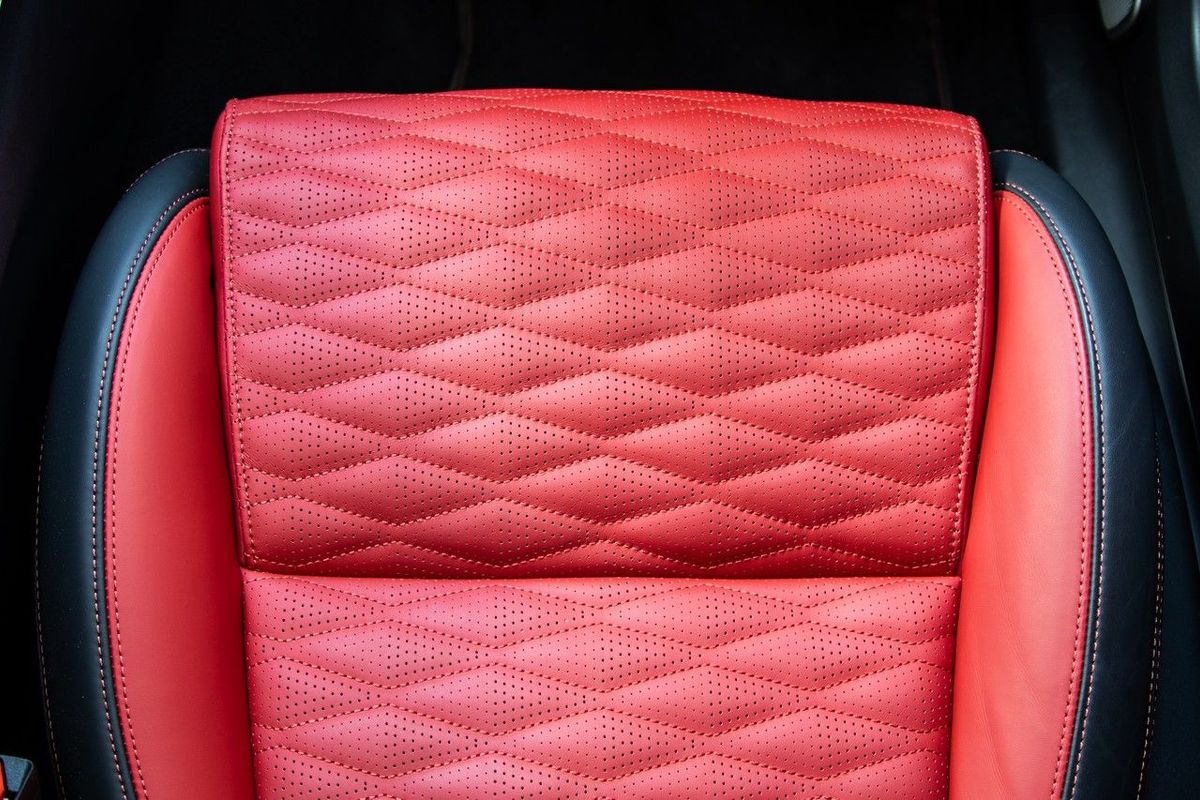
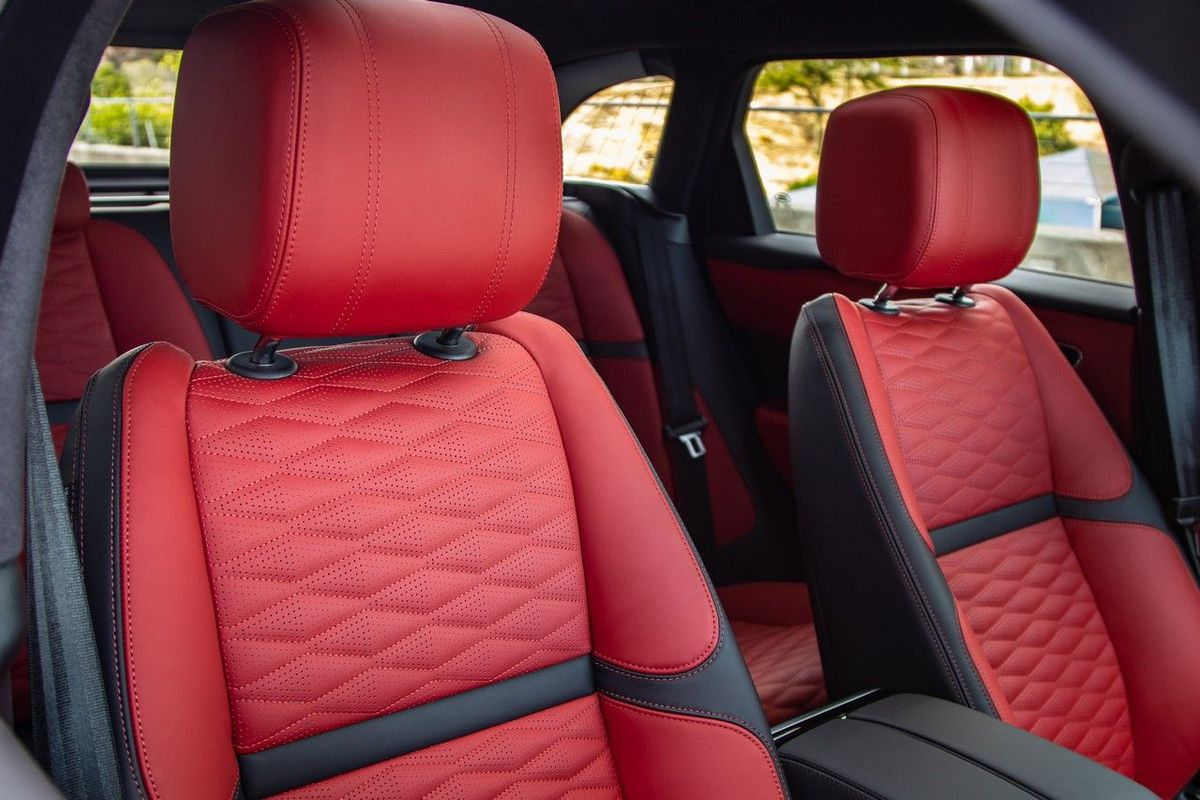
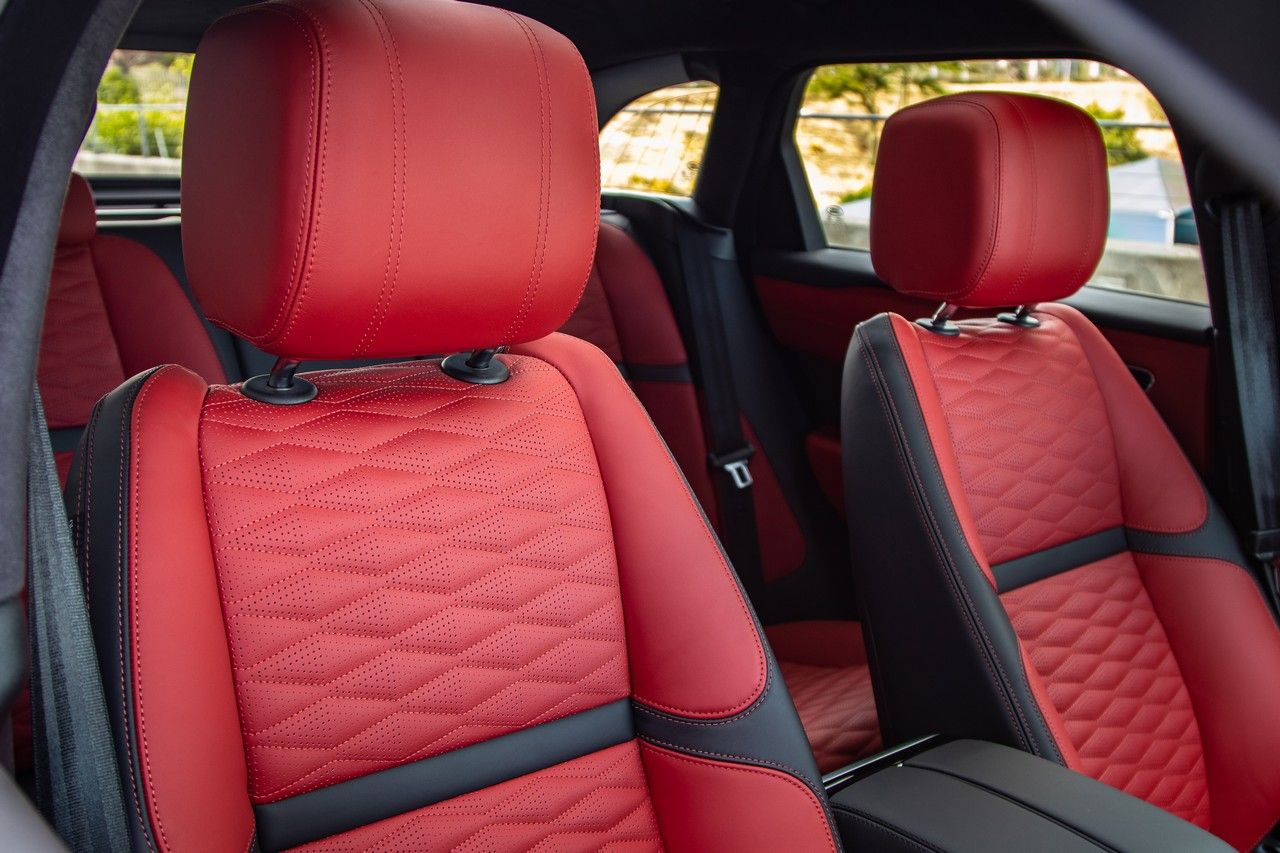
Quilted and perforated leather seats are standard in the SVA.
As an Autobiography labelled derivative, the SVA has to offer up something more lavish than the standard version of the Velar. As a result, it has a combination of ebony and pimento coloured quilted and perforated Windsor leather. For the rest of us, that’s black and red… and exquisite.
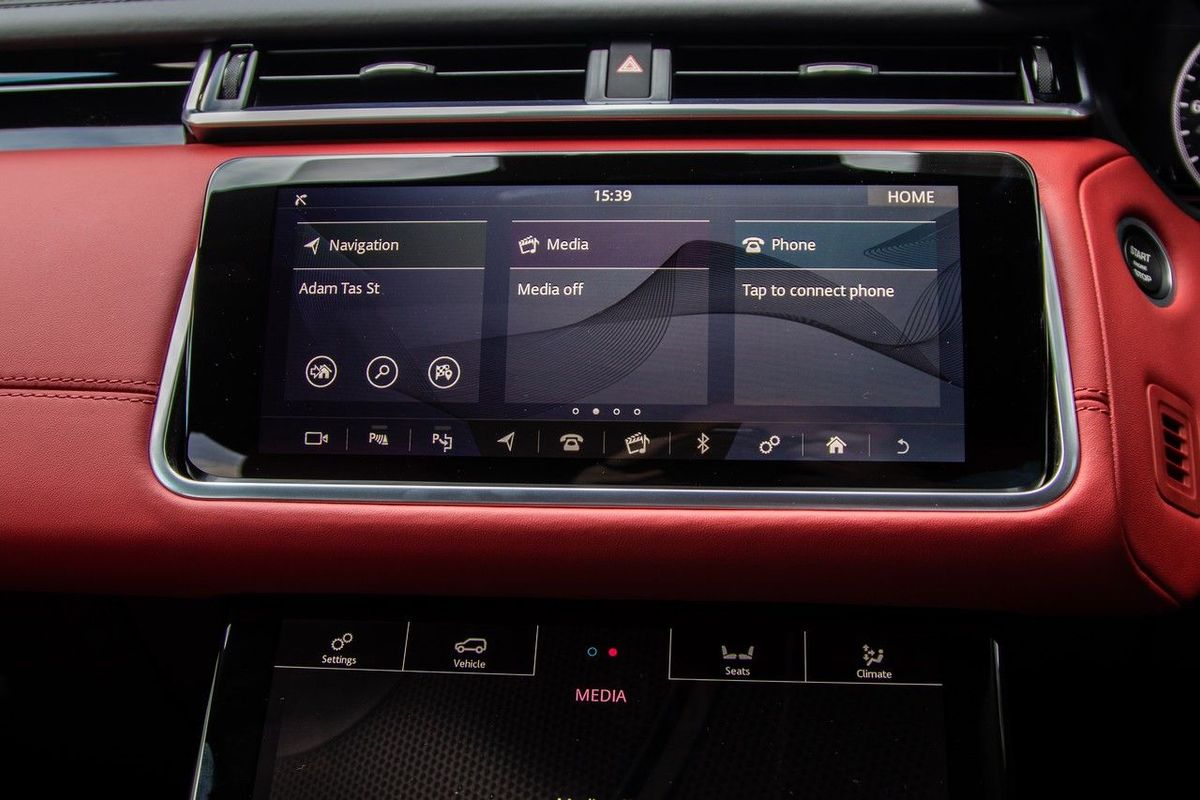
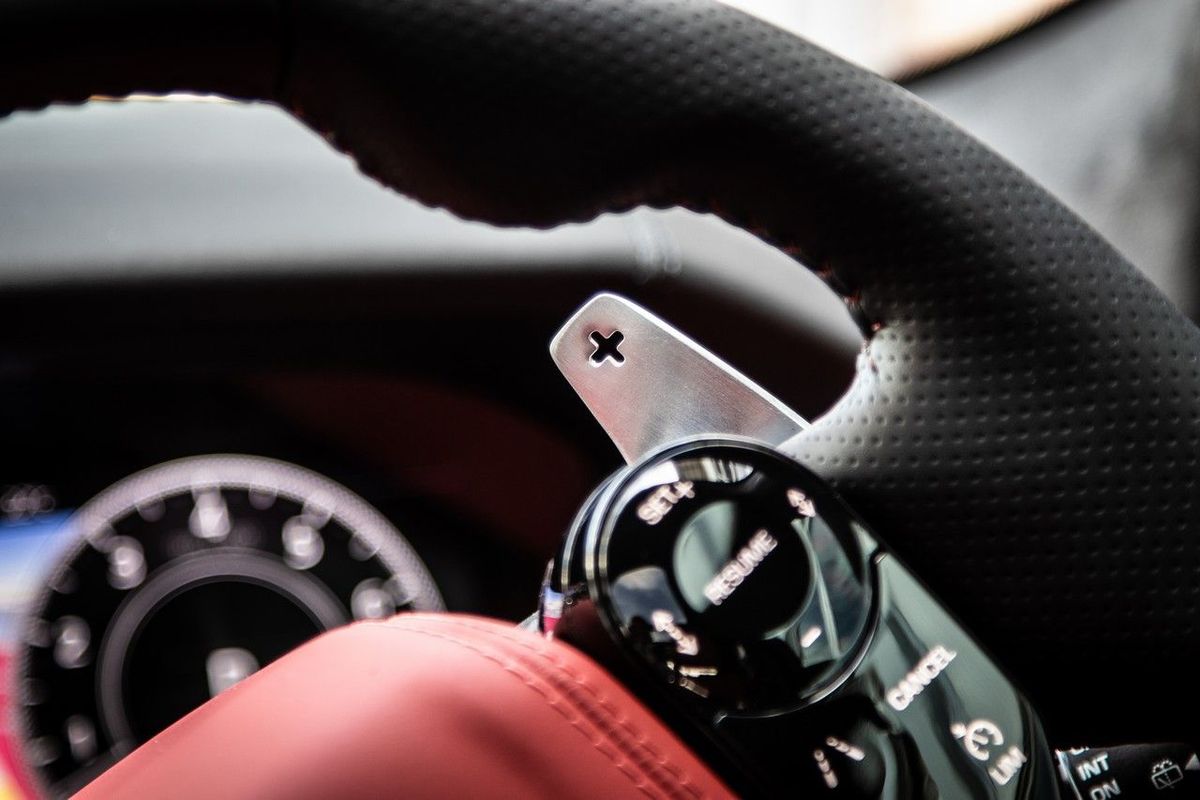
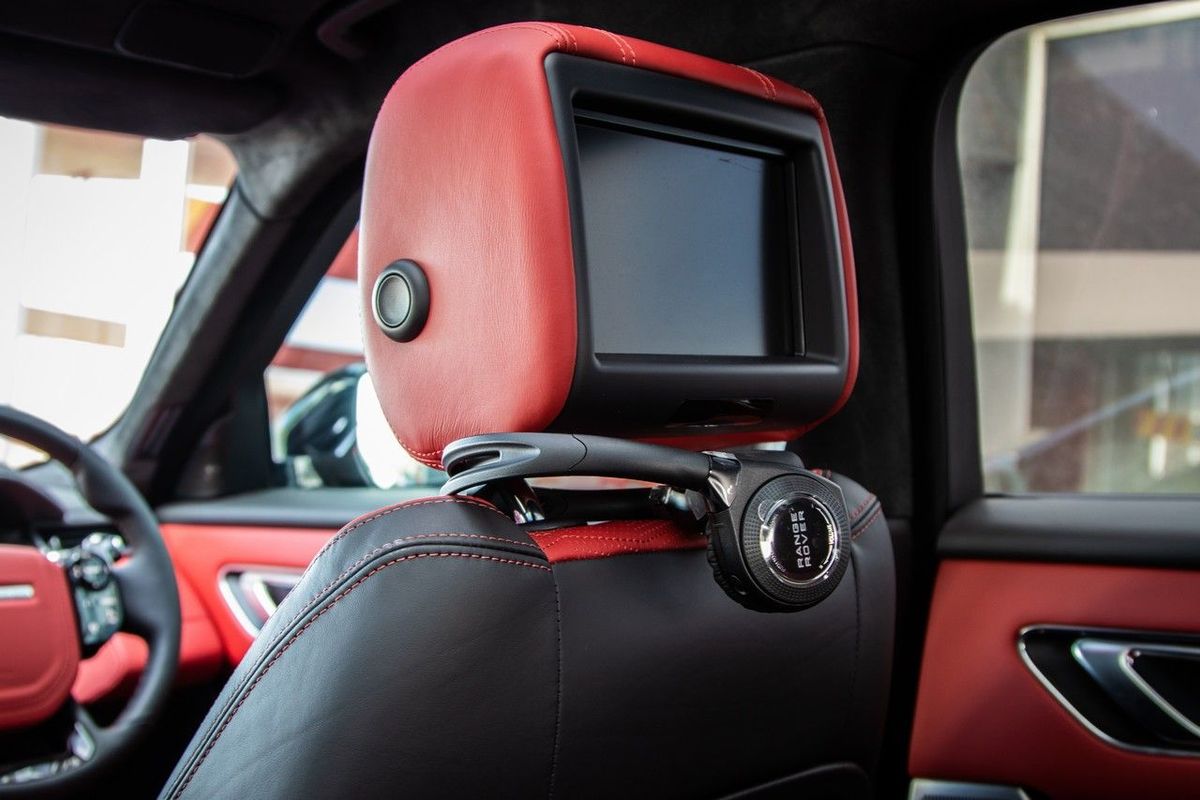
The seats are heated, cooled and have multiple massage functions. It’s a very special place to sit, replete with lots of little touches to remind you this is a special derivative. The rotary gear selector has more of that knurled finish and there’s a bespoke sports steering wheel. The high-end Meridian audio system, which incorporates rear entertainment screens and headphones, was specified on our test unit; testers loved the sound it produced.
None of the practicality of the standard Velar is sacrificed, so the load bay remains a sizeable 834 litres with the seats upright. When the rear bench is folded, 1 705 litres of utility space becomes available. A retractable towbar can also be fitted so that the look isn’t spoiled when you’re not towing.
Verdict
The Velar remains a comfortable and practical SUV while delivering performance thrills.
Performance SUVs seem to all be about lap times, tar-shredding accelerative ability and physics-defying handling, at least that is how the market seems at the moment. If you’re really into the way a car handles, then a sportscar (with a lower centre of gravity) will always be a more satisfying option. That’s why the Velar SVAutobiography makes more sense: it’s not a sportscar, but has wild straight-line performance and a thunderous soundtrack. It makes the most of its size by being brash and in your face, but then, when you drive it, it’s still comfortable, especially on long trips.
The interior matches the exterior’s appeal with bespoke touches and premium materials that give it a luxurious-but-sporty appeal. The SVA is very expensive, yes, but it delivers a combination of street cred, entertaining performance and exclusivity that few, if any, R1.8-million SUVs can deliver.
Isuzu devotes more resources and commits to local production, which will be a big boost for P.E. economy.
Isuzu is entrenching its local production capability with a substantial investment.
The Japanese company has confirmed that resources will be allocated to upgrade its Port Elizabeth facility with the aim of producing Isuzu’s next-generation D-Max in South Africa, for both domestic and export markets.
Isuzu has committed an initial investment of R1.2bn, securing 1000 local jobs at its Struandale assembly plant. Although Isuzu currently fields the fourth best-selling bakkie model in South Africa, the Japanese diesel specialist is confident that its new D-Max will secure an even greater market share.
To ensure that demand for the new D-Max does not possibly overwhelm supply, Isuzu is now spending the required money to modernize and reequip its local industrial engineering operations. Isuzu South Africa also services most of the regional SADC markets, in addition to Kenya, Mauritius, Senegal, Ghana and Ivory Coast.
In a country desperate for fixed investment, Isuzu’s latest announcement about its commitment to build new D-Max in the Eastern Cape is great news. What is perhaps even more heartening, is that beyond the R1.2bn investment Isuzu is making in its direct D-Max bakkie project, there is also the promise of releasing R2.8bn in supplier value.
All bakkie production in South Africa features strong localisation and 430 indigenous suppliers are estimated to gain in this new R2.8bn stream of business from the next-generation D-Max. Isuzu is planning for annual production volumes of 29 000 units of D-Max.
The latest 8th generation 911 came to market earlier this year but Porsche is working on the 911 Turbo which has appeared online in prototype form.
We drove the latest 911 earlier this year and came away suitably impressed with its overall performance. We are, however, looking forward to sampling forthcoming 911 derivatives such as the 911 Turbo and Turbo S, which are currently in development.
The images show 911 Turbo prototypes being driven in France by German racing driver and Porsche factory driver, Jörg Bergmeister.
Official details for the 911 Turbo have yet to be announced but reports point to no less than 447 kW being produced by a 3.8-litre flat-6 engine, which should make for an entertaining drive. An 8-speed dual-clutch transmission will lay the power down and performance ballpark figures are estimated at 2.5 seconds in the sprint from zero to 100 kph with a top speed in the region of 329 kph. All-wheel drive will be standard and rear-wheel steering and Porsche’s Active Suspension Management is also expected to make an appearance in the 911 Turbo.
The 911 Turbo is expected to be revealed sometime in the first half of 2020 and we will certainly keep you updated as soon as more information becomes available.
Meet the finalists in the Premium SUV category of the 2019/20 Cars.co.za Consumer Awards – powered by WesBank!
Now in its 5th year, the #CarsAwards was conceived to be South Africa's definitive automotive awards programme and is backed, for the 4th year running, by the country's leading supplier of vehicle finance, WesBank.
The Premium SUV category is guided by both eligibility factors and Pillars of Success.
Eligibility for this category includes a list price that falls between R1 000 000 and R1 500 000 at the time of semi-finalist voting (1 September 2019) to ensure a healthy measure of exclusivity and status.
Eligible vehicles must be a large SUV of the BMW X5/Mercedes GLE category, but crossover derivatives such as the BMW X6 and Mercedes GLE Coupe are also included. All-wheel drive must be standard.
Pillars of Success in this category include powertrain technology, luxury, brand strength, design and quality appeal, driving dynamics and space and practicality.
Visit www.carsawards.co.za for more information. The finalists are as follows:
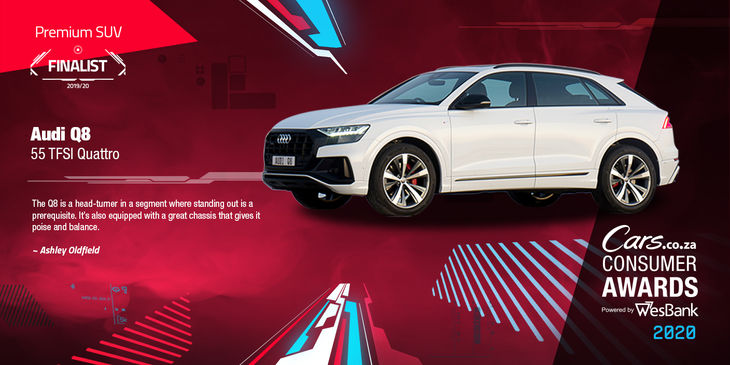
Audi Q8 55TFSI Quattro
Audi recently introduced its groundbreaking Q8 as the Ingolstadt-based brand’s flagship SUV in South Africa. Not only does it look the part, it introduces a new exterior design language, cabin architecture and infotainment system. It’s made its Q7 sibling look rather dated by comparison…
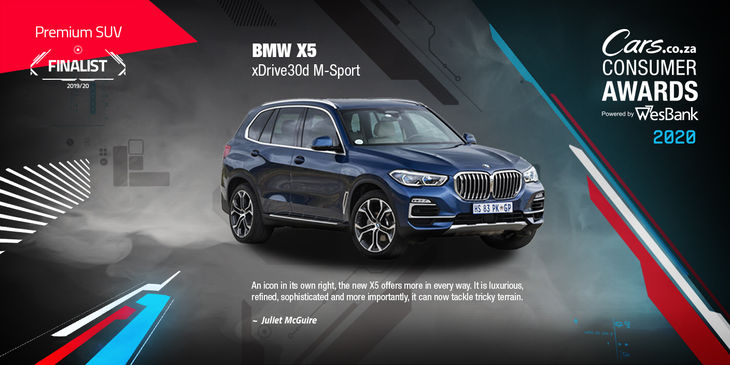
The BMW X5 epitomises everything this segment stands for. The all-new G05-generation X5 features significant improvements in almost every department. There are some stupendously strong diesel engines, an all-new infotainment system and much more.
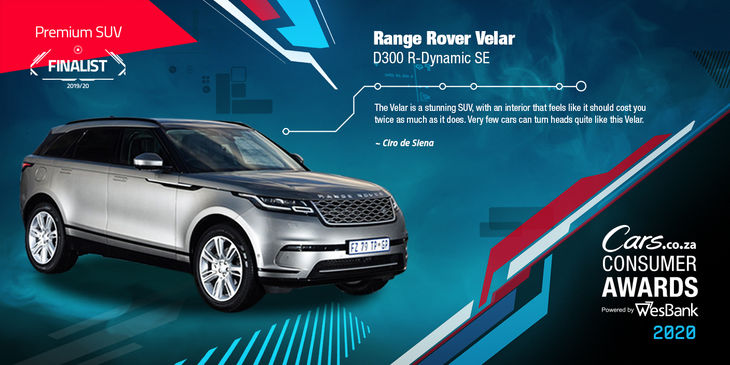
Range Rover revealed the all-new Velar in 2018 as a filler between the Evoque and Sport models. It has eye-catching looks, clever flush-fitting door handles and a potent turbodiesel engine. The interior has an all-new design and features two separate touchscreens in the centre console. If its prestige and excitement you’re looking for out of your premium SUV, the Velar is the perfect offering.
Suzuki Launches Special Edition Swift, Ignis in SA
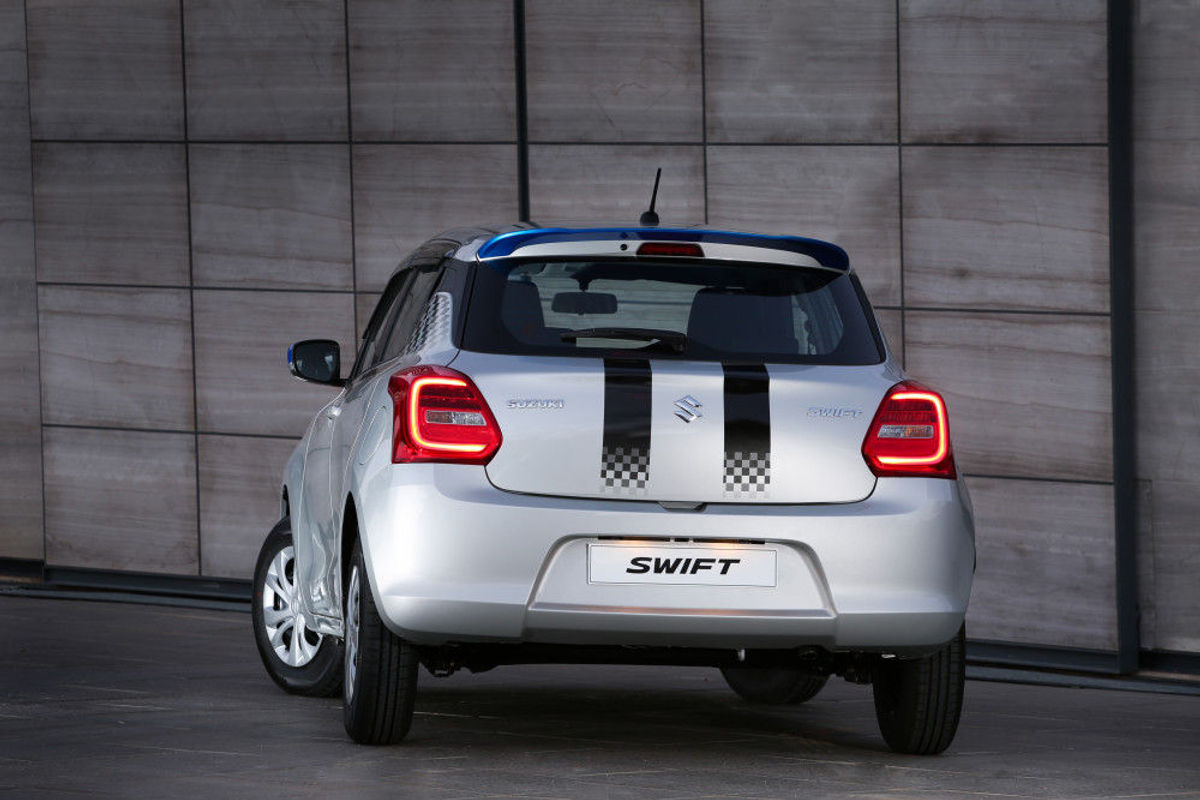
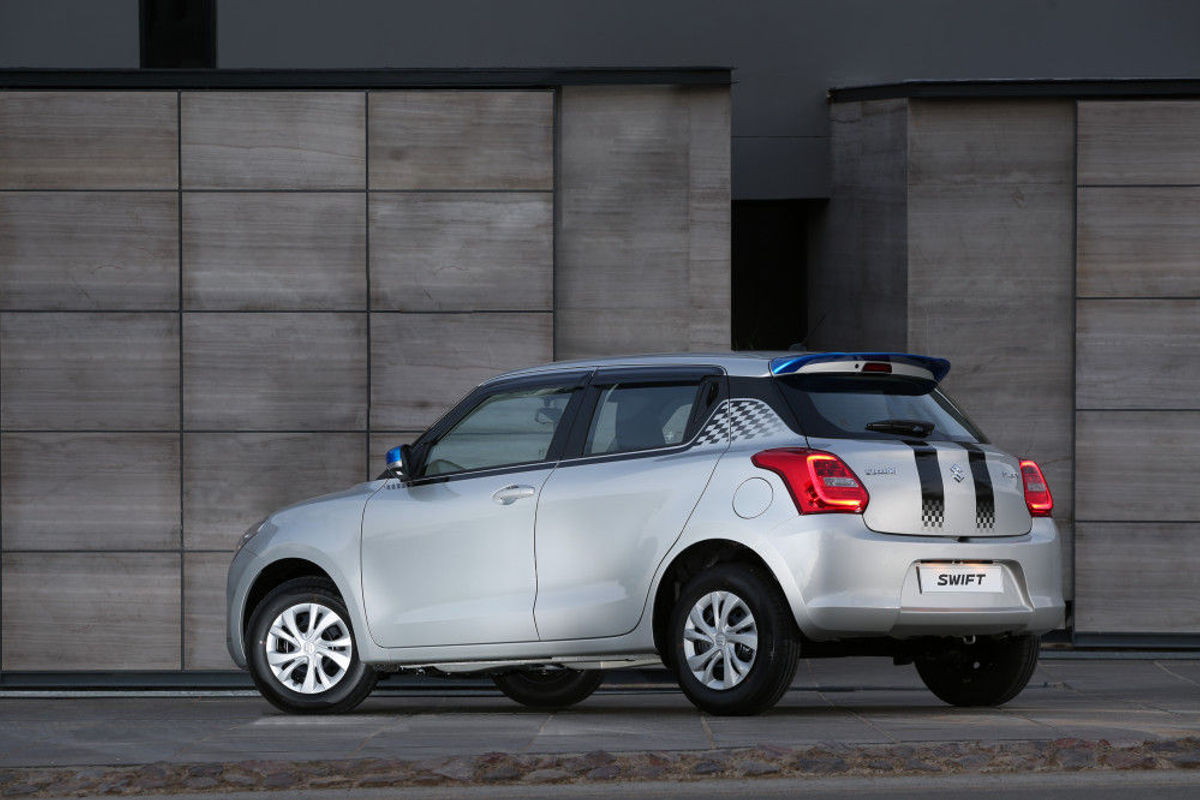
Suzuki has introduced a special edition version of its popular Swift and Ignis in South Africa. See details below…
Suzuki has experienced notable sales success in South Africa recently and set a new monthly sales record in October 2019 with 1 629 Suzuki’s finding new homes across the country. To celebrate, Suzuki is now offering a Swift 1.2 GL SE (Special Edition) as well as 2 Ignis special editions in both GL and GLX guise.
“The Swift Special Edition and two Ignis Special Edition variants offer customers the chance to express their unique style and individuality. As exclusive versions of our top-selling models, we are confident that it will find favour with fans of the brand and the specific models alike” says André Venter, divisional manager for sales and marketing at Suzuki Auto South Africa.
Design and features
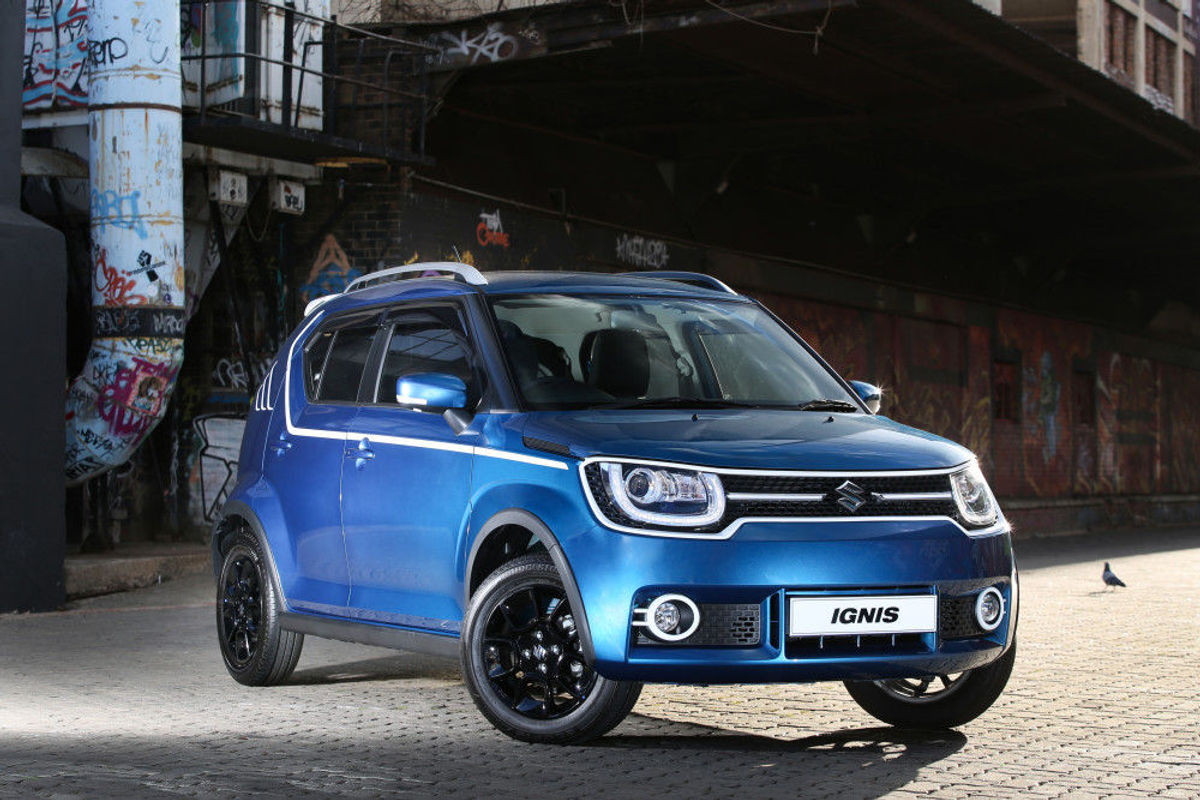
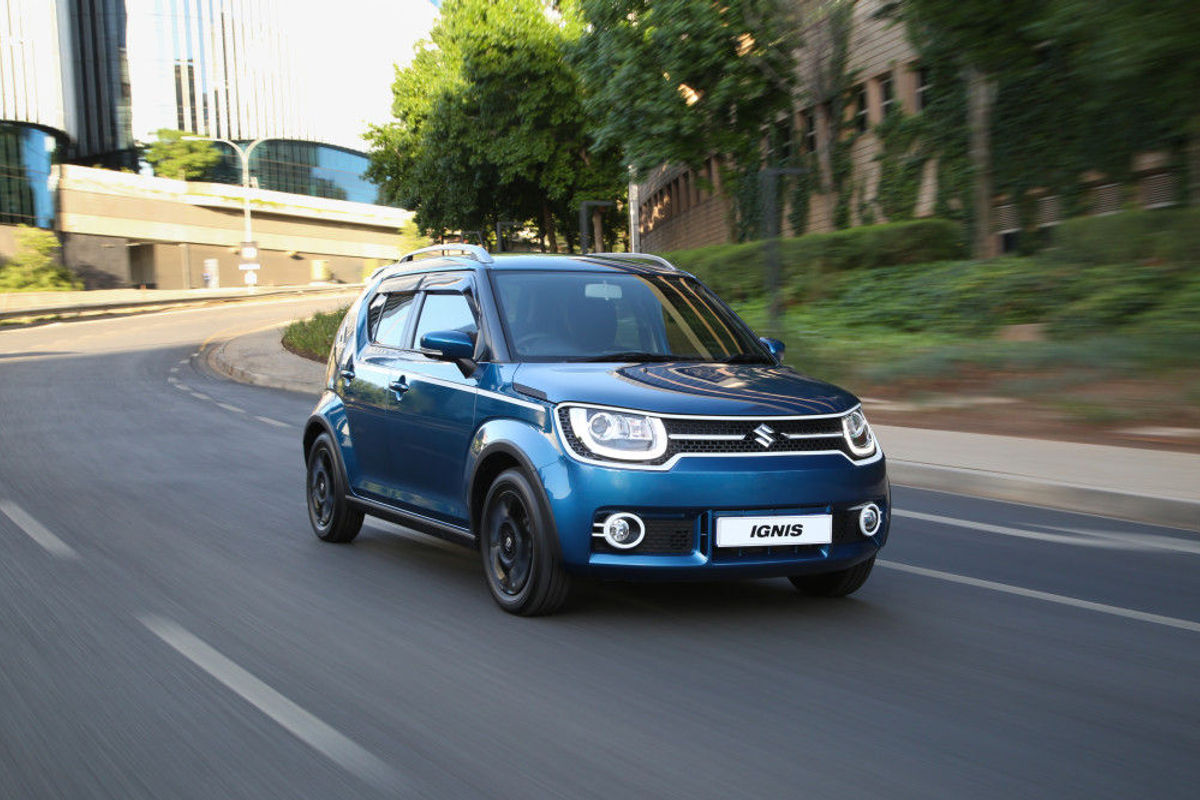
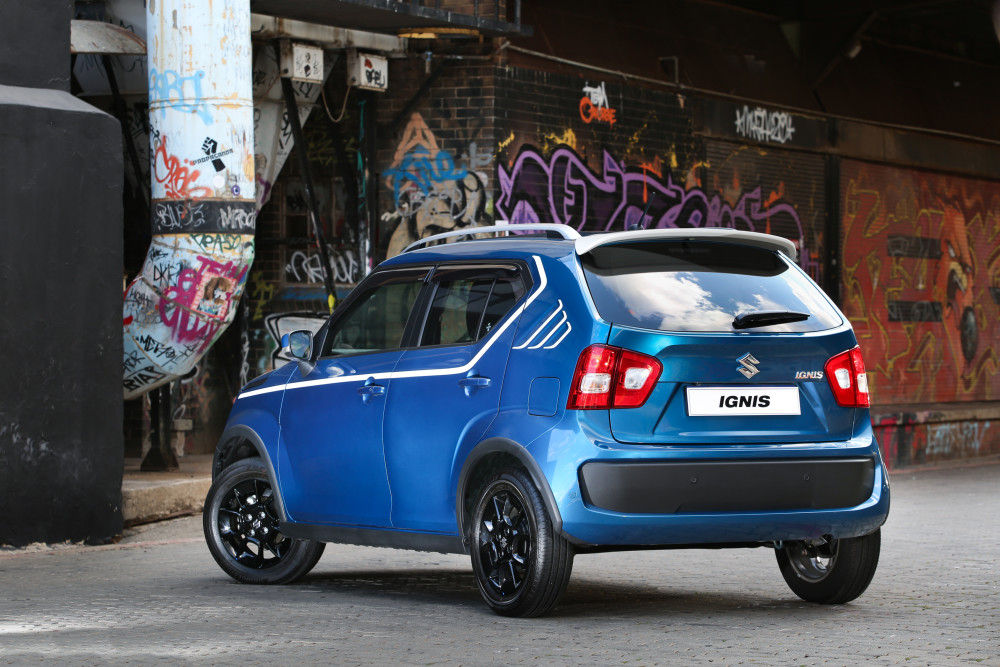
The Ignis is a popular model in SA and this special edition adds a bit more character to the package.
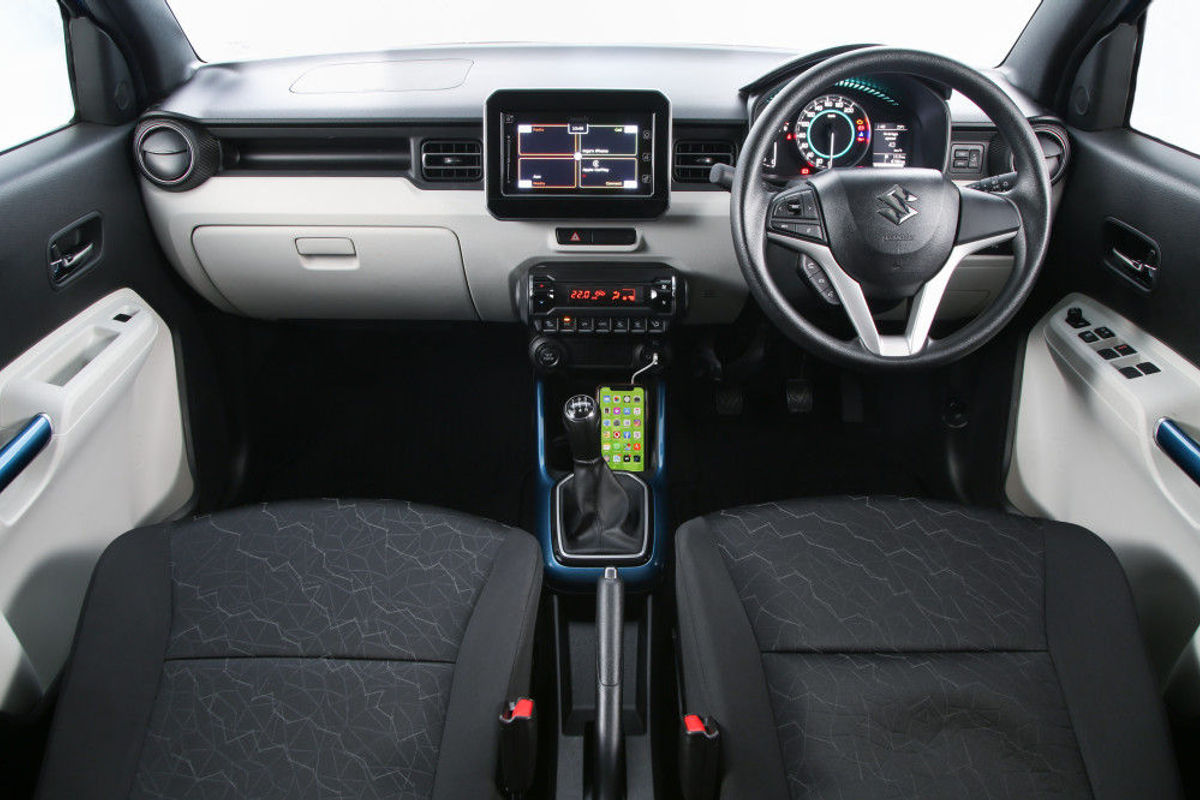
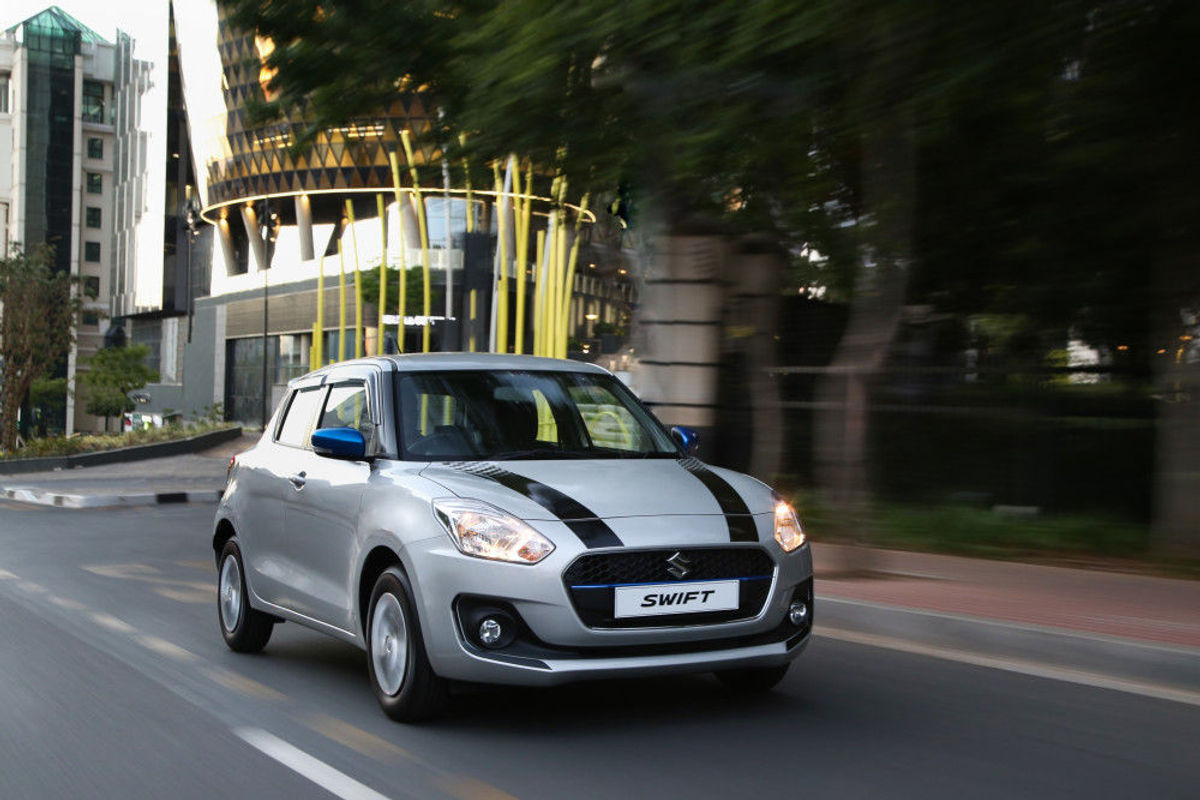
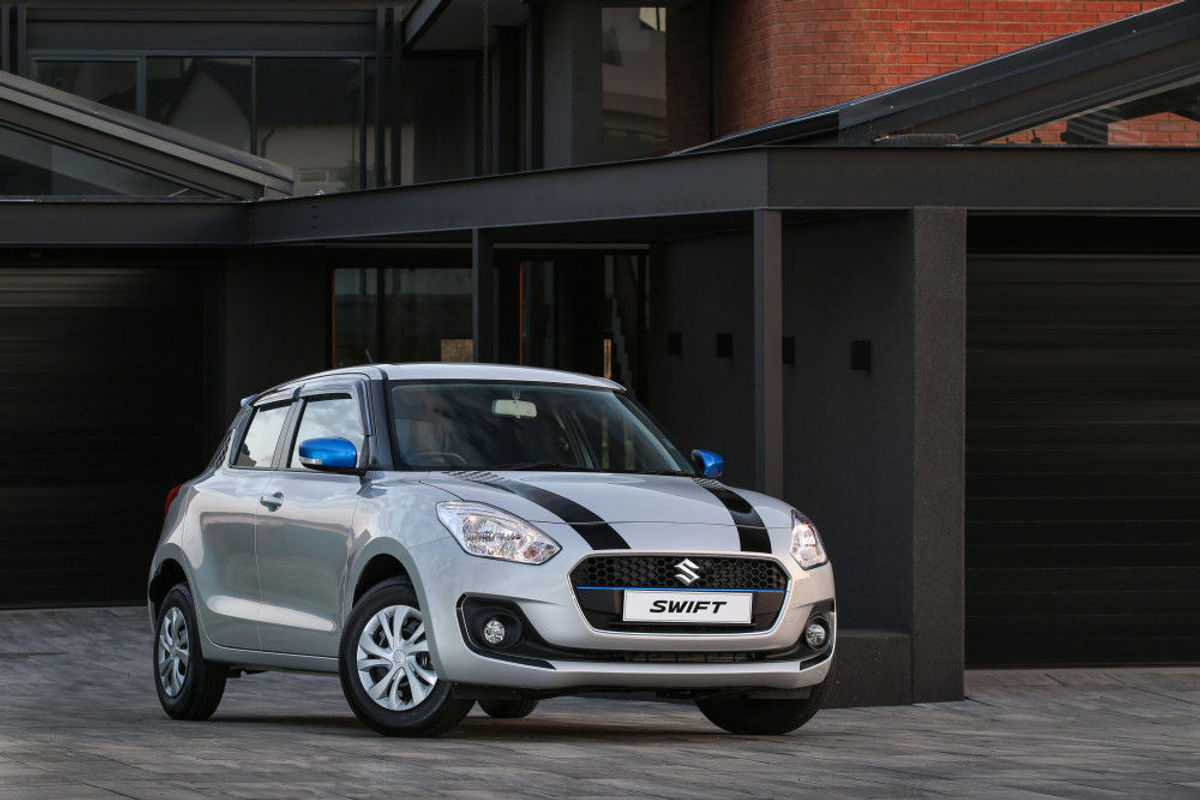
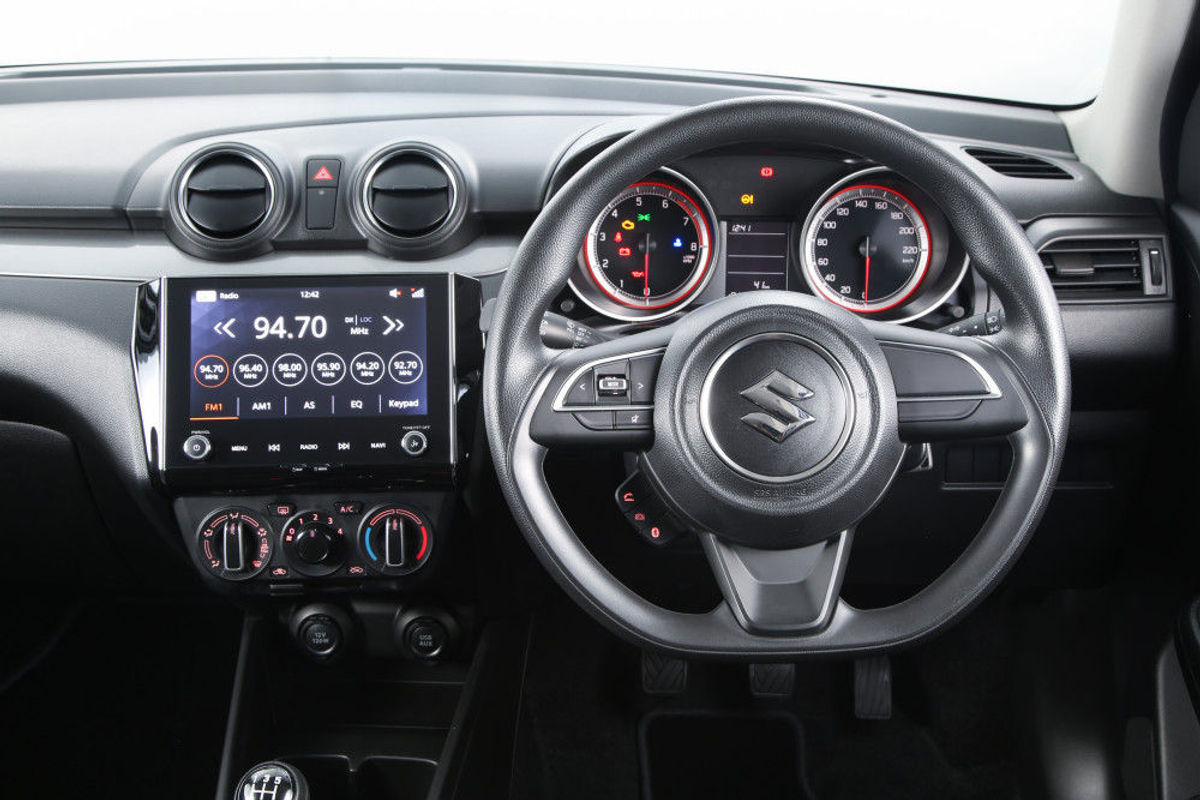
The Swift SE features unique decals, a rear roof spoiler in blue, door visors, door sill guards and a front grille with blue trim. The Swift SE also gains a touchscreen infotainment system with Apple CarPlay and Android Auto functionality. The Swift GL SE is offered in Arctic White and Silky Silver and only 50 units are available to customers.
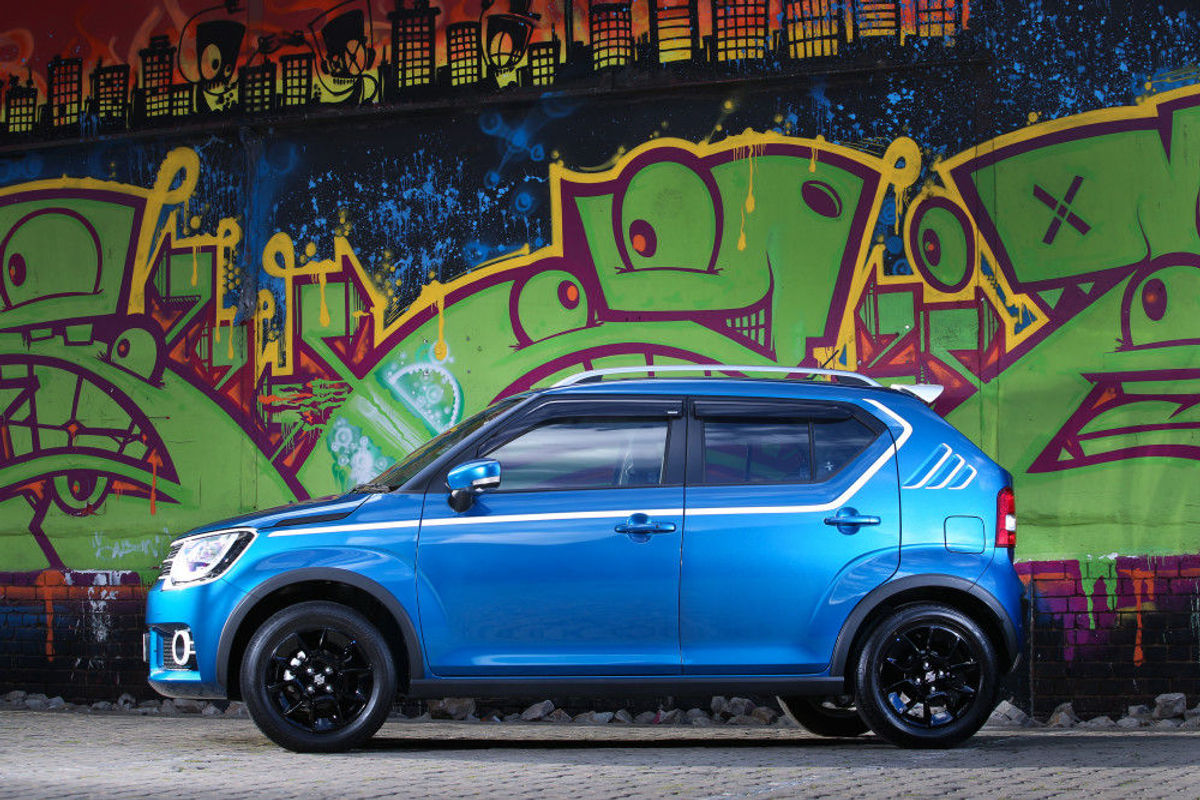
As for the Ignis, GL SE benefits from black door cladding, door visors, rigid mud flaps, red decals and red garnish on the grille. Arctic White and Silky Silver is also offered on this derivative but only 25 units are available.
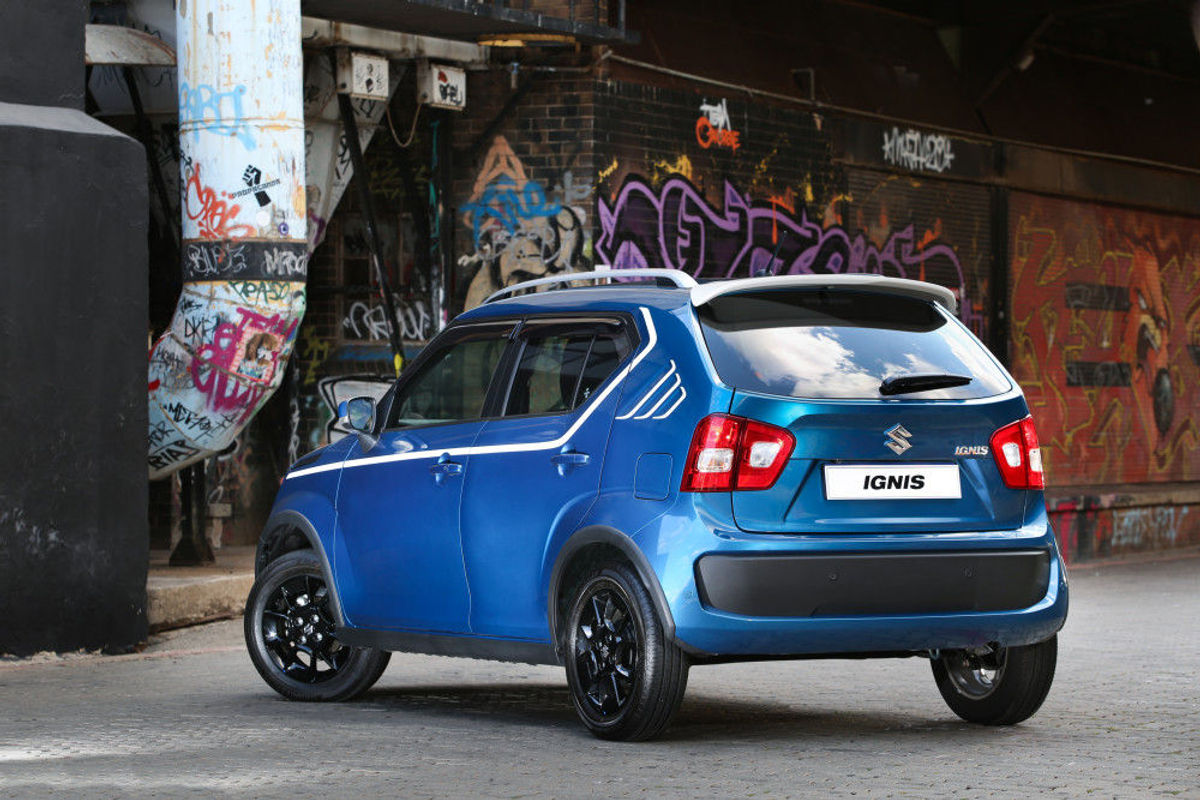
The higher-spec Ignis GLX SE is recognised by its white grille surround, centre bar garnish and new fog light bezels. White decals down the side of the vehicle, door visors and a rear roof spoiler further define this special edition Ignis. The Ignis GLX SE is offered in Tinsel Blue with white headlights and only 50 units are available.
Suzuki Swift and Ignis Special Edition – Price in South Africa
Suzuki Swift 1.2 GL Special Edition – R193 900
Suzuki Ignis 1.2 GL Special Edition – R186 400
Suzuki Ignis 1.2 GLX SPecial Edition – R212 400
The Suzuki Swift and Ignis Special Edition (SE) are sold with a promotional 5-year/200 000 km warranty and a 2-year/30 000 km service plan.
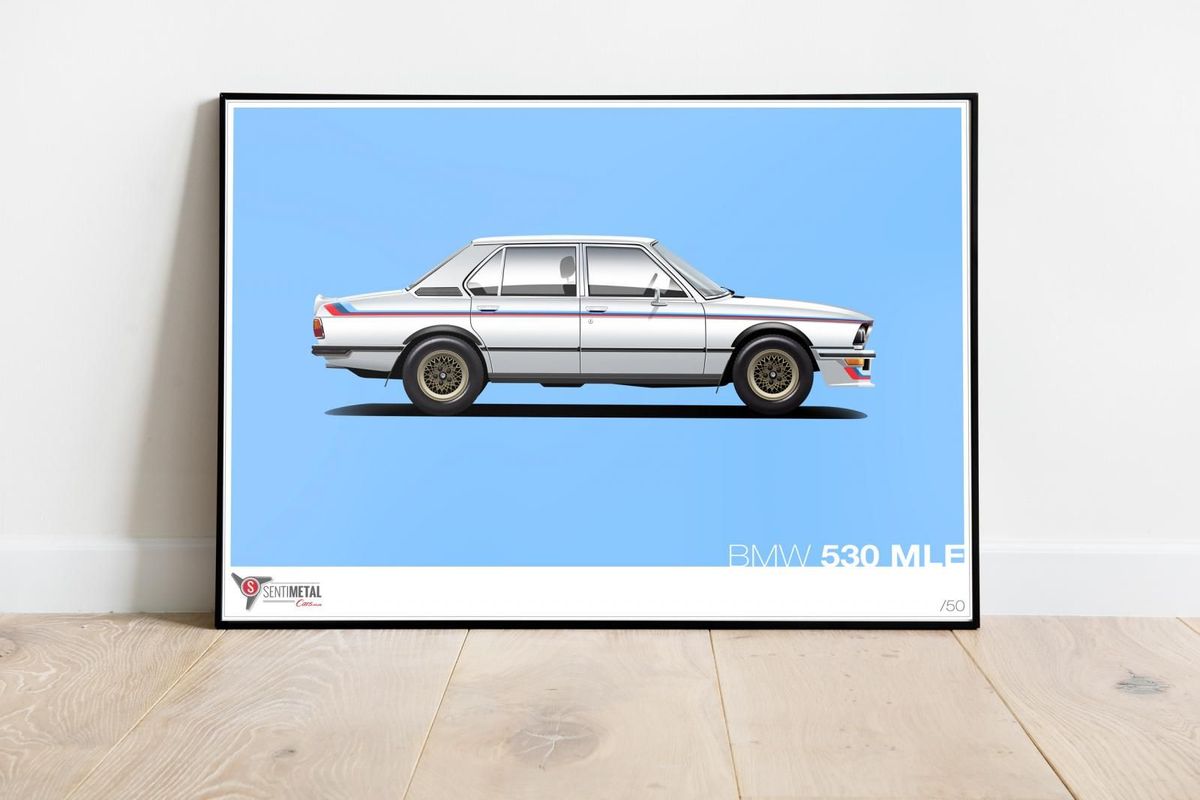
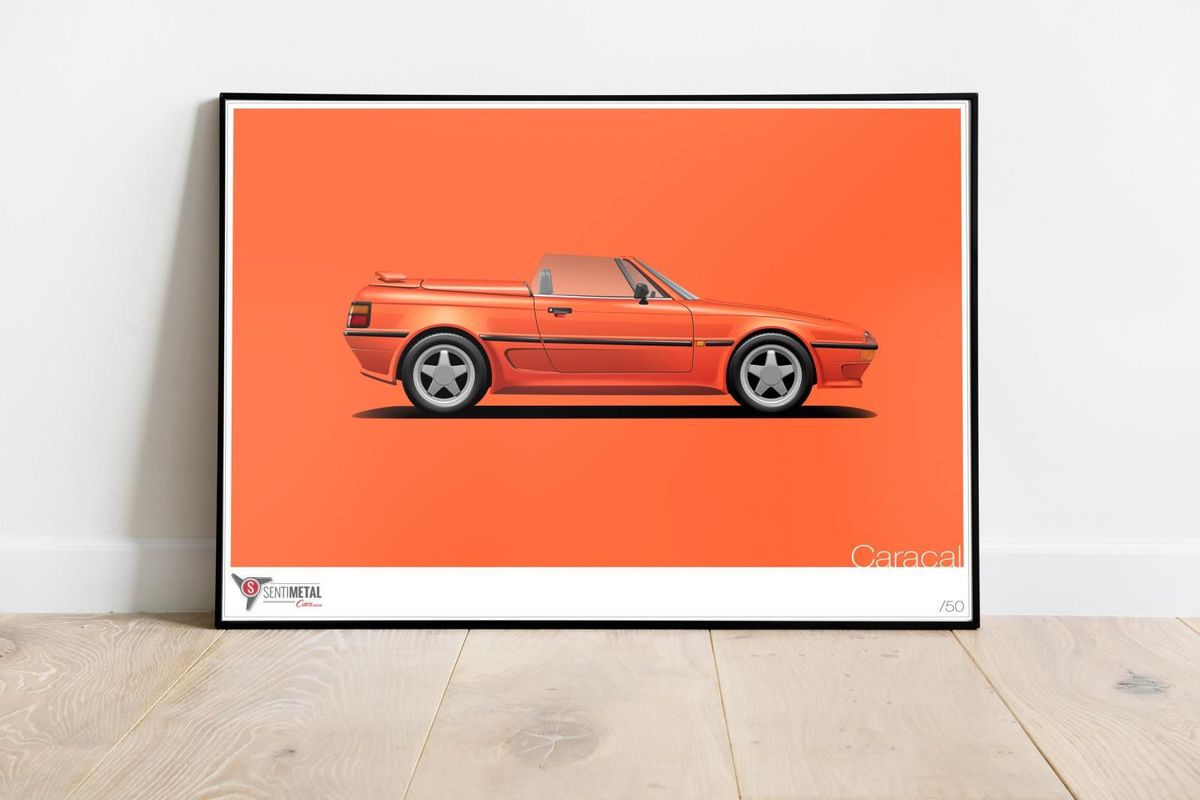
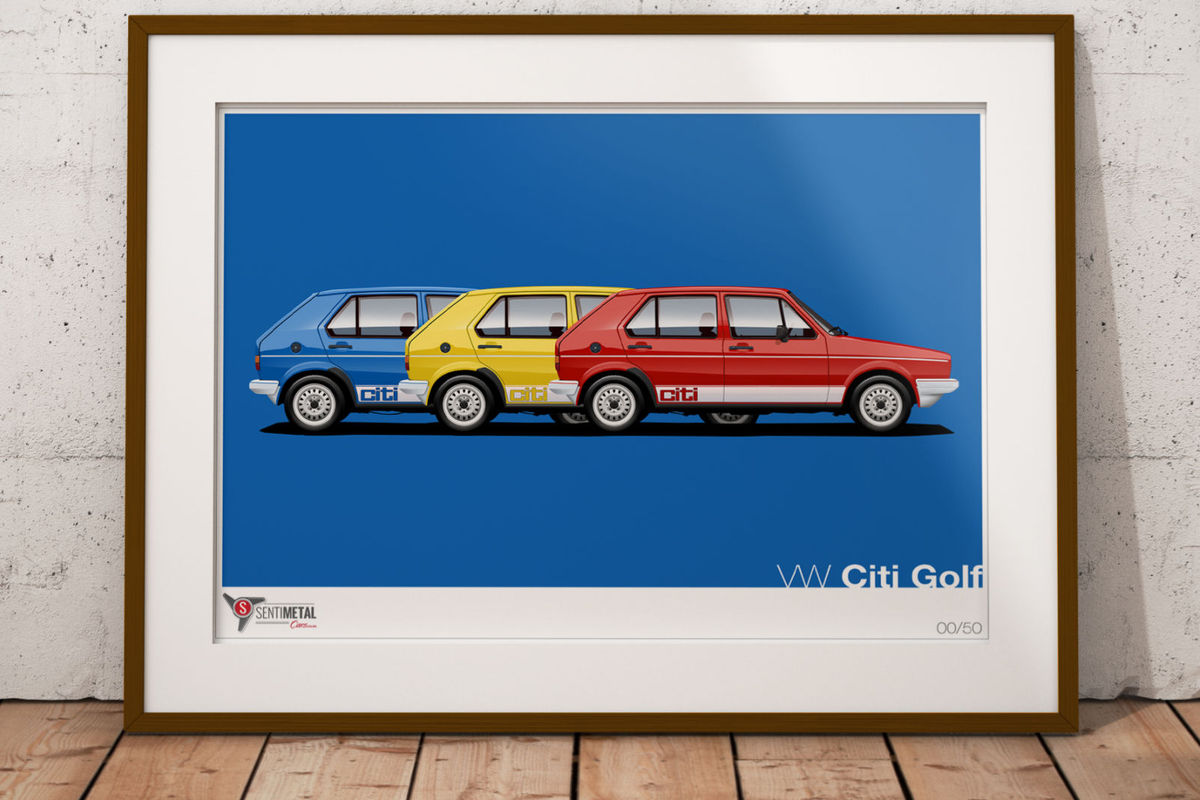
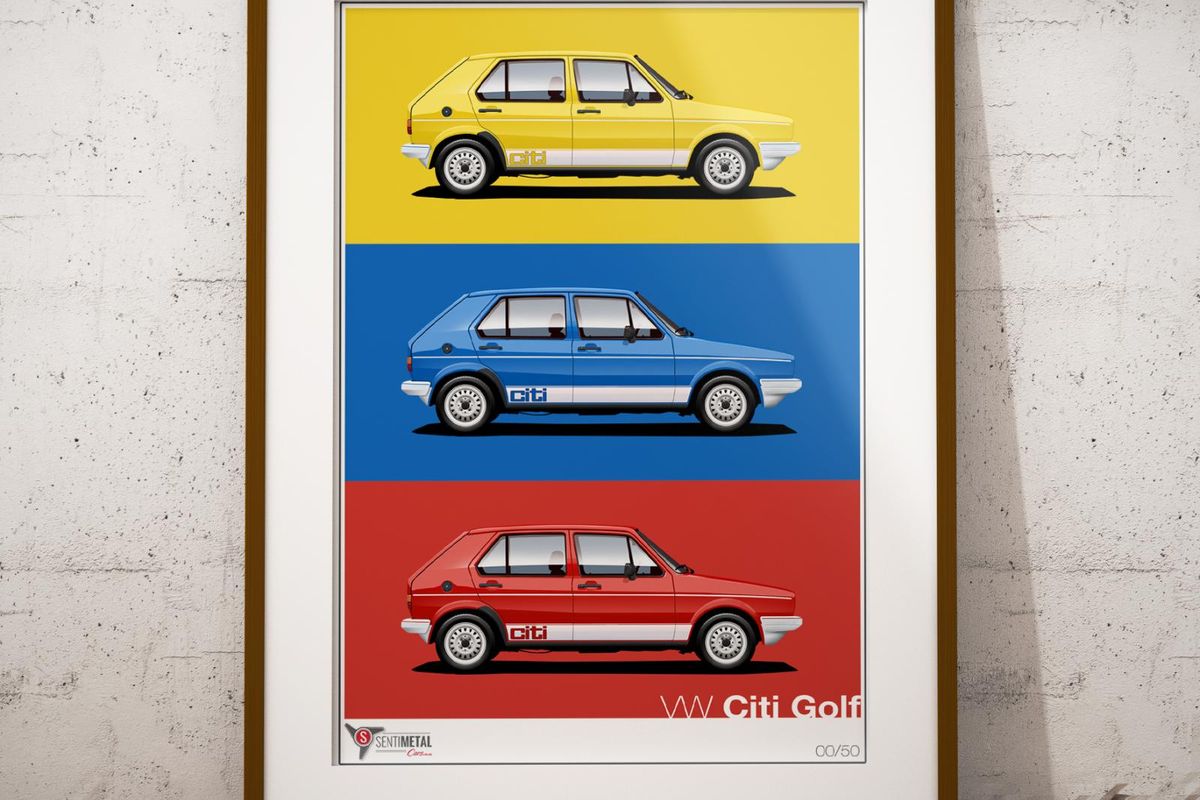
Save on SentiMETAL Heritage Series: Print Sale Extended
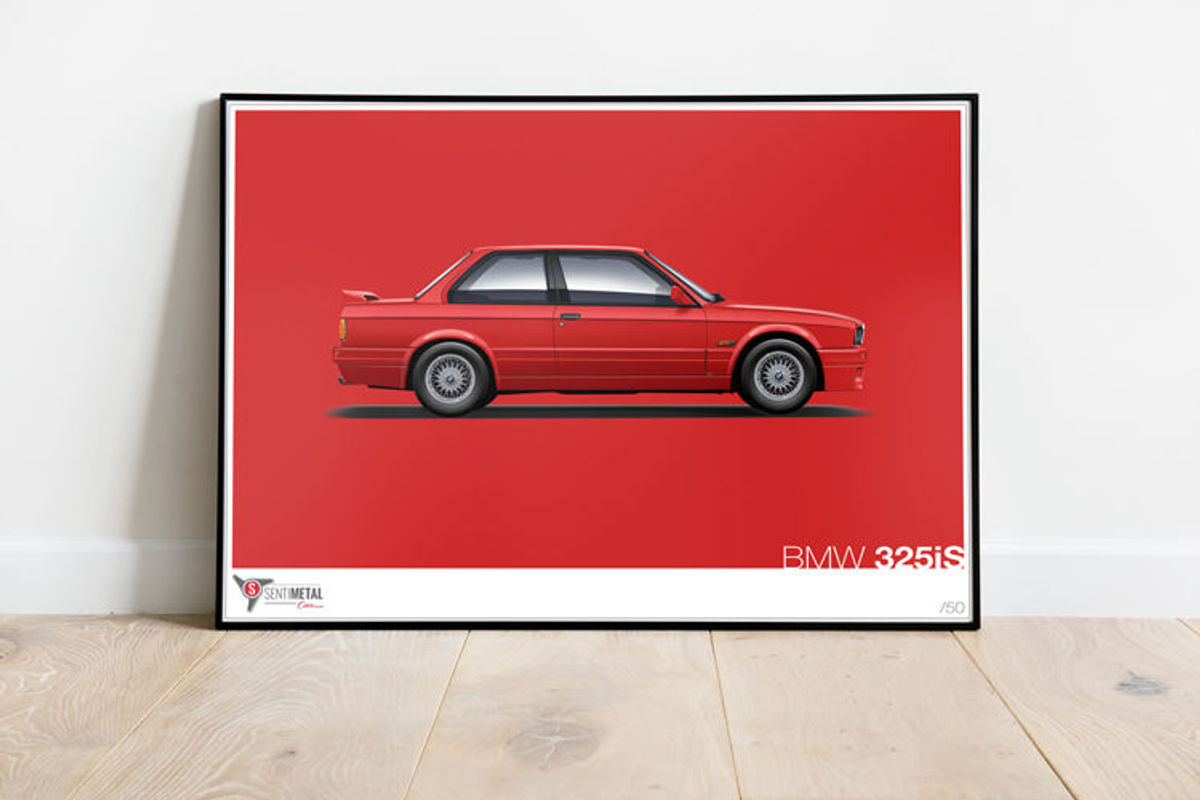
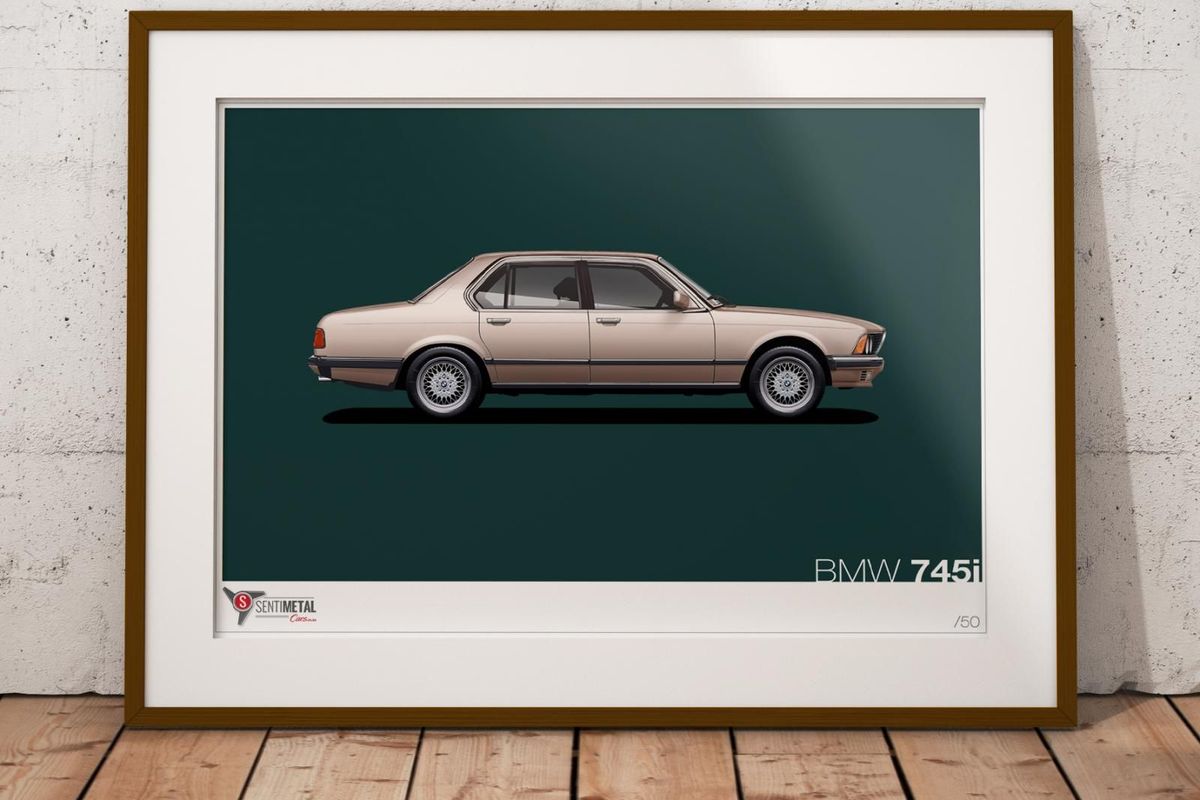
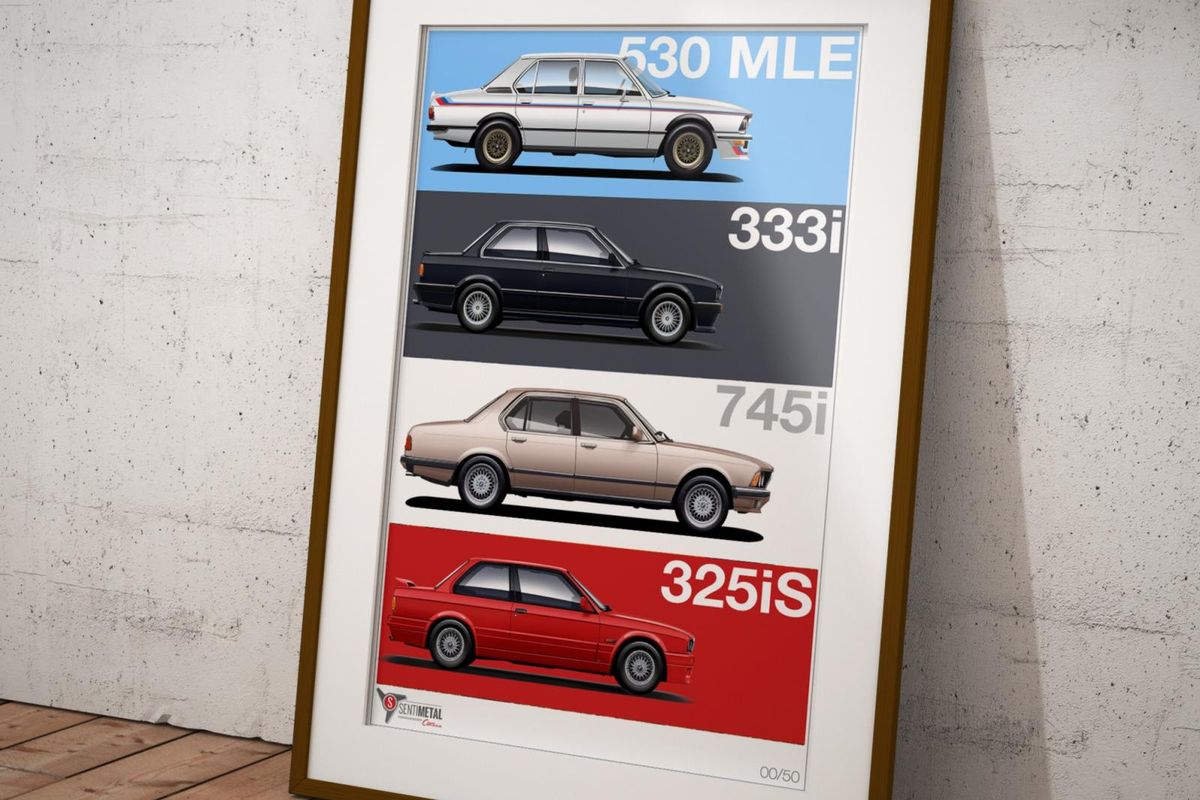
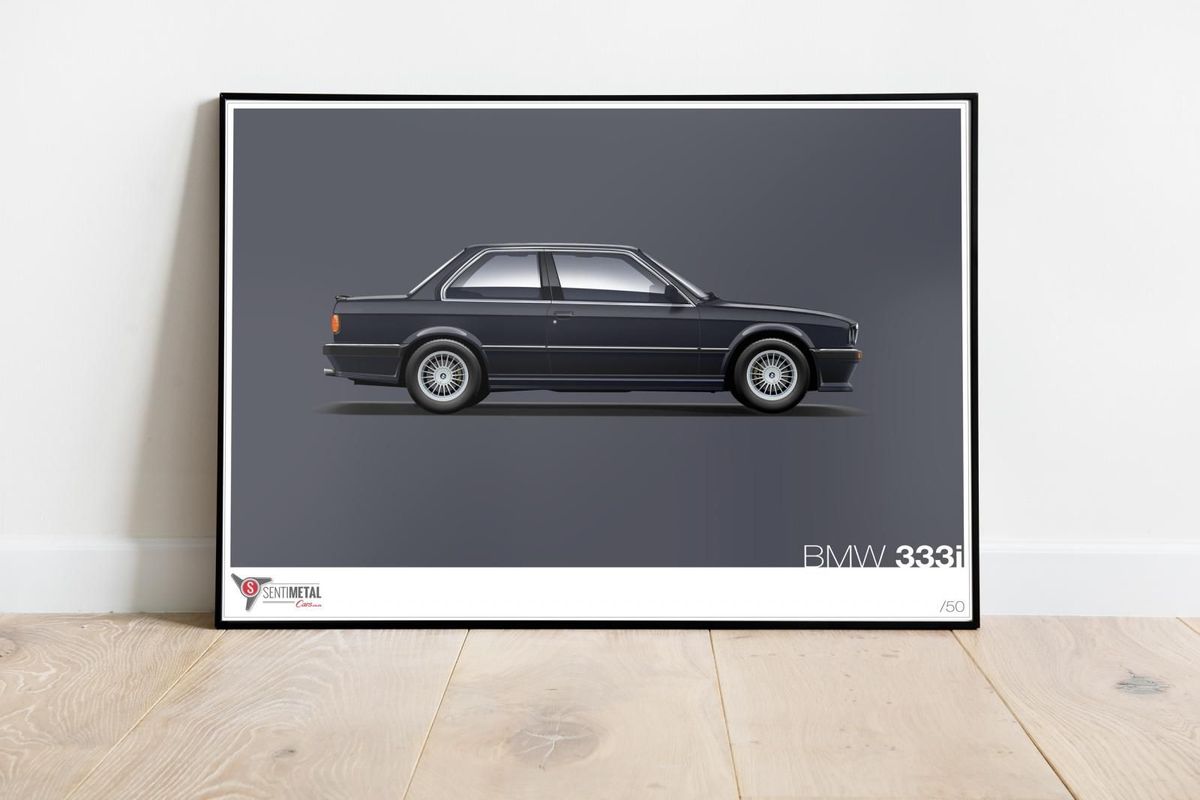
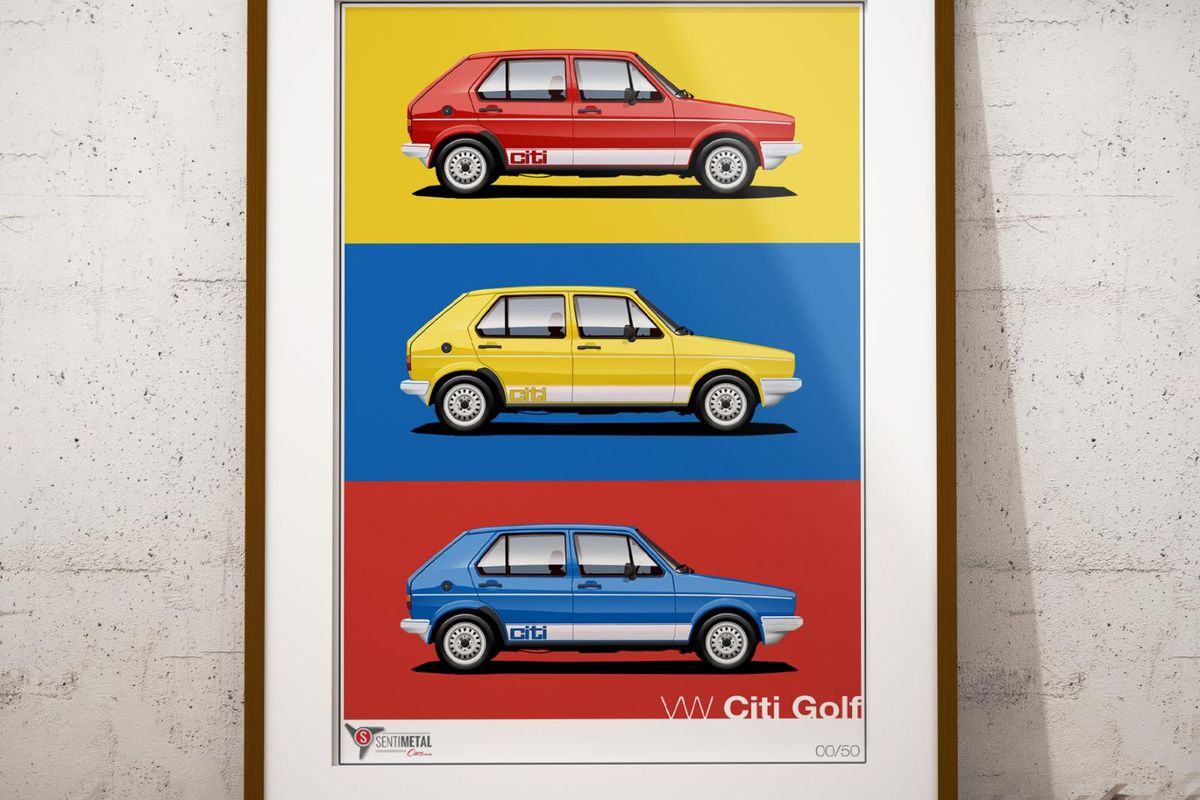
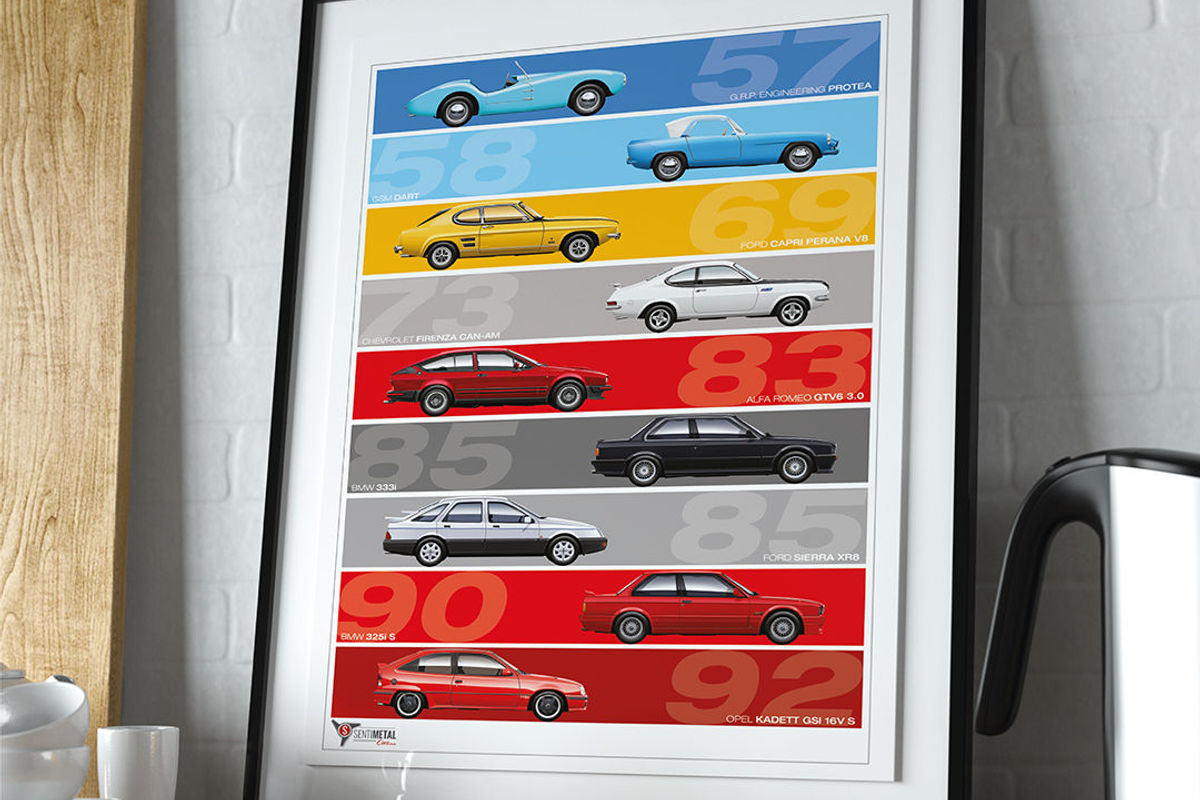
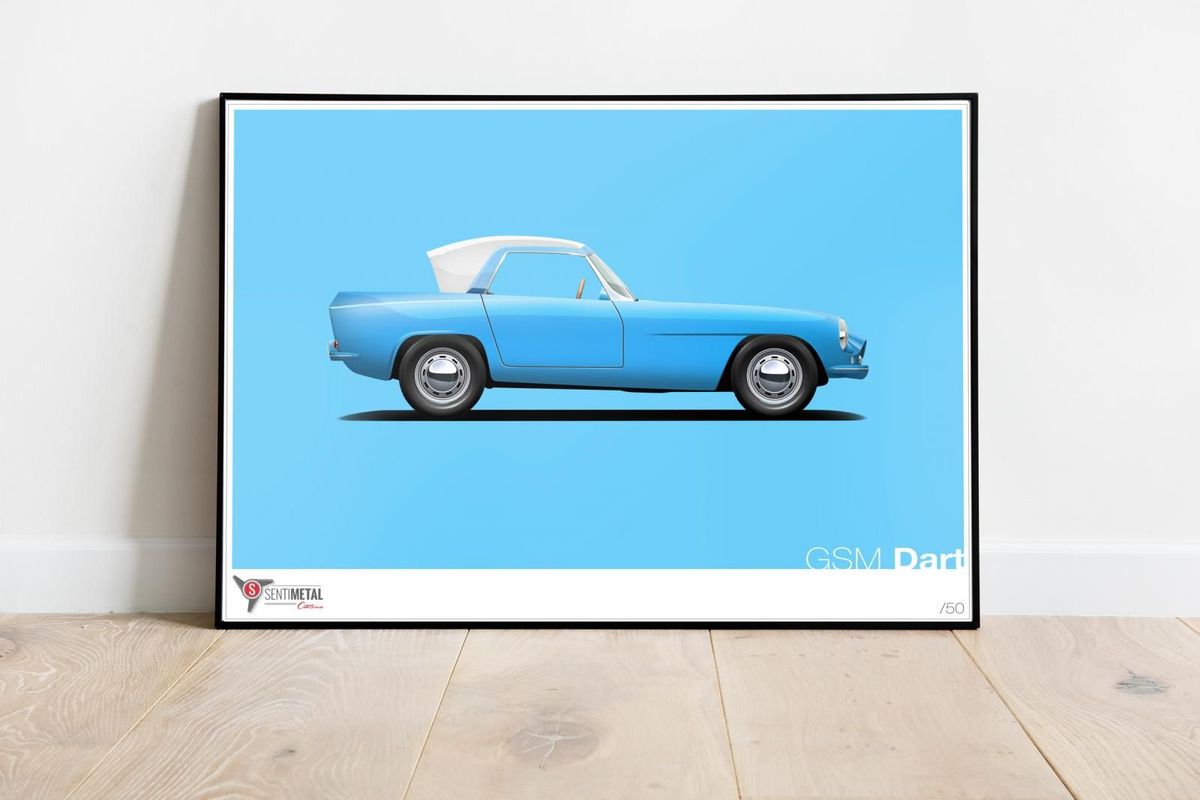
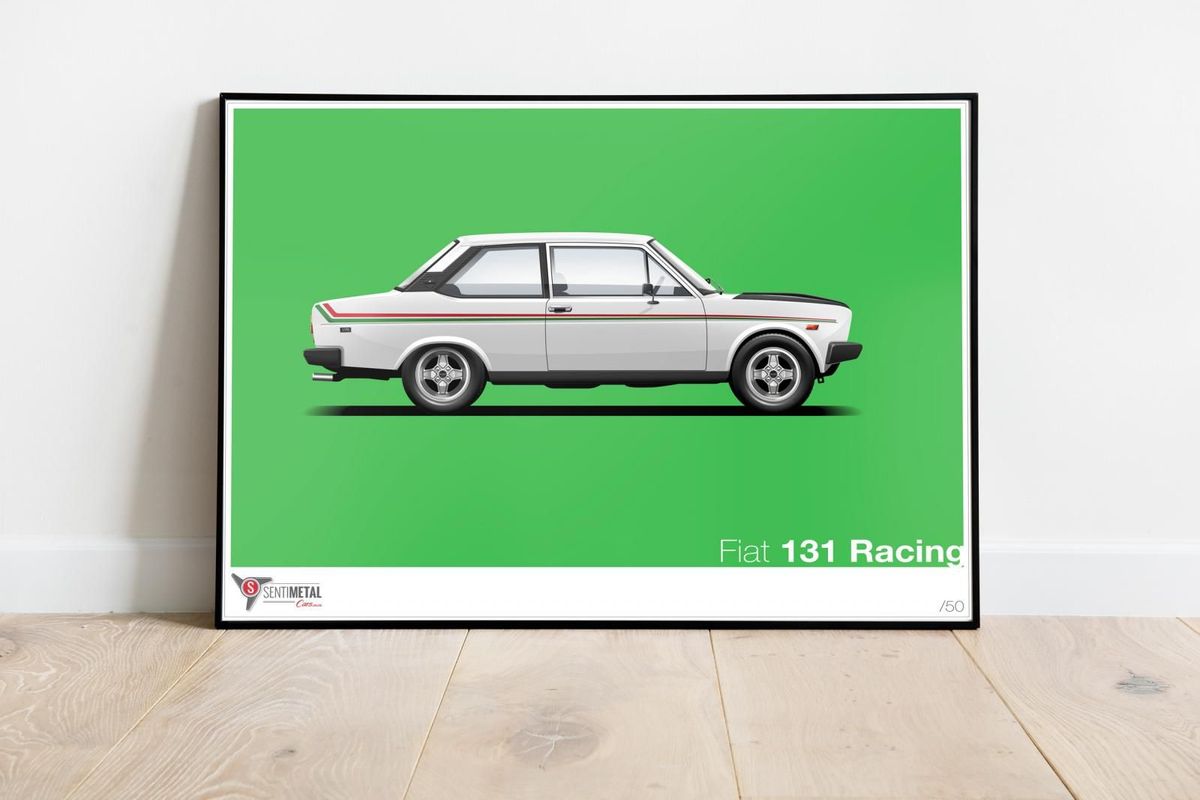
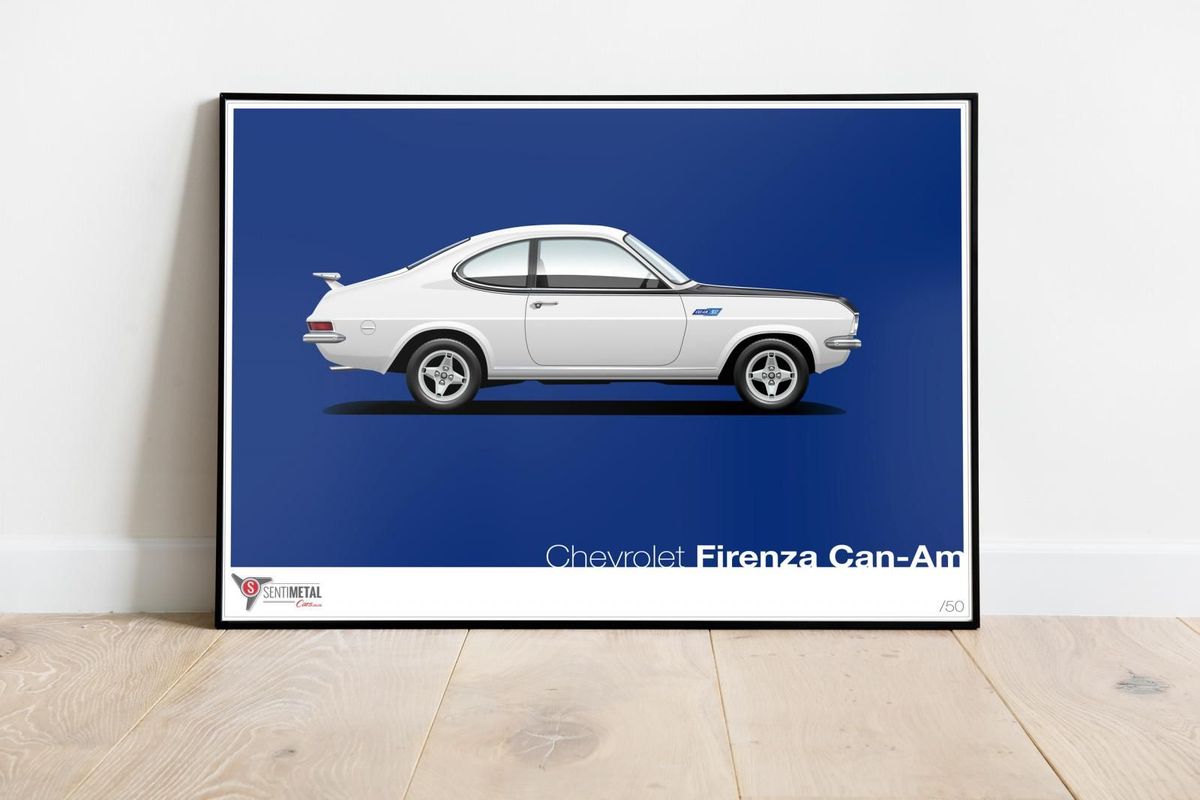
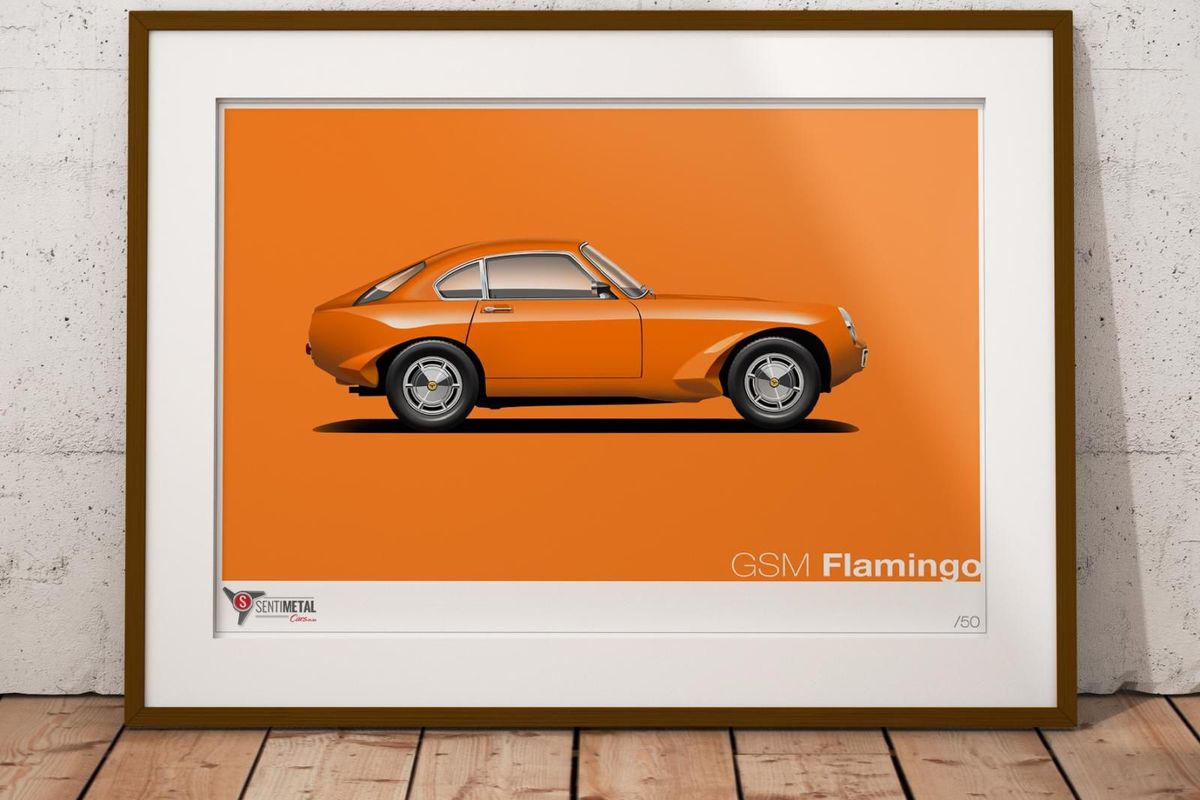
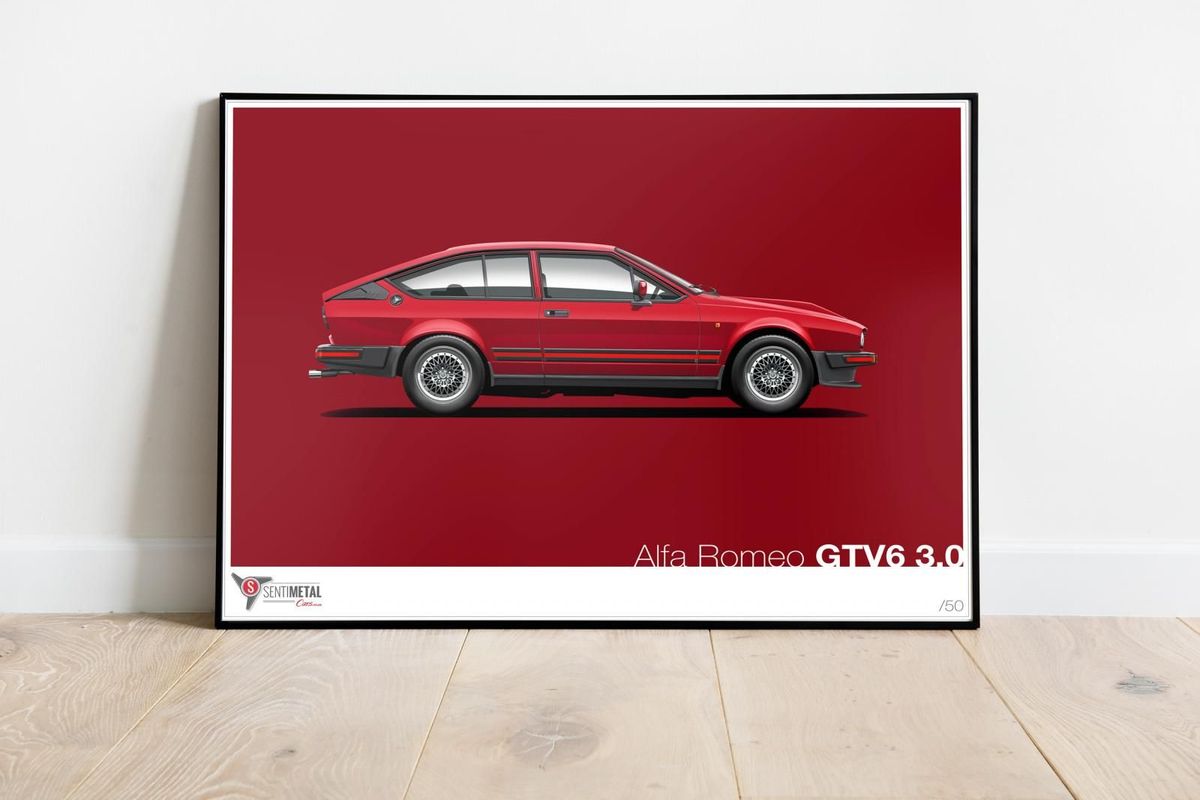
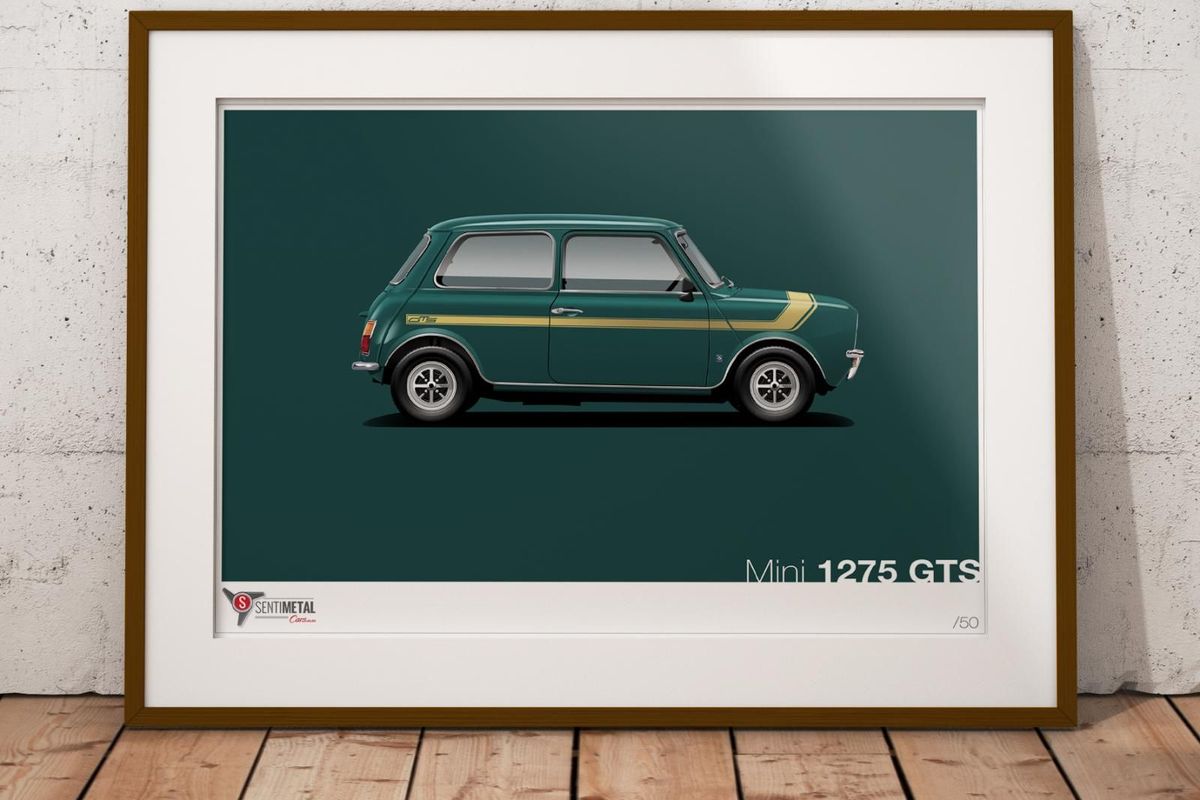
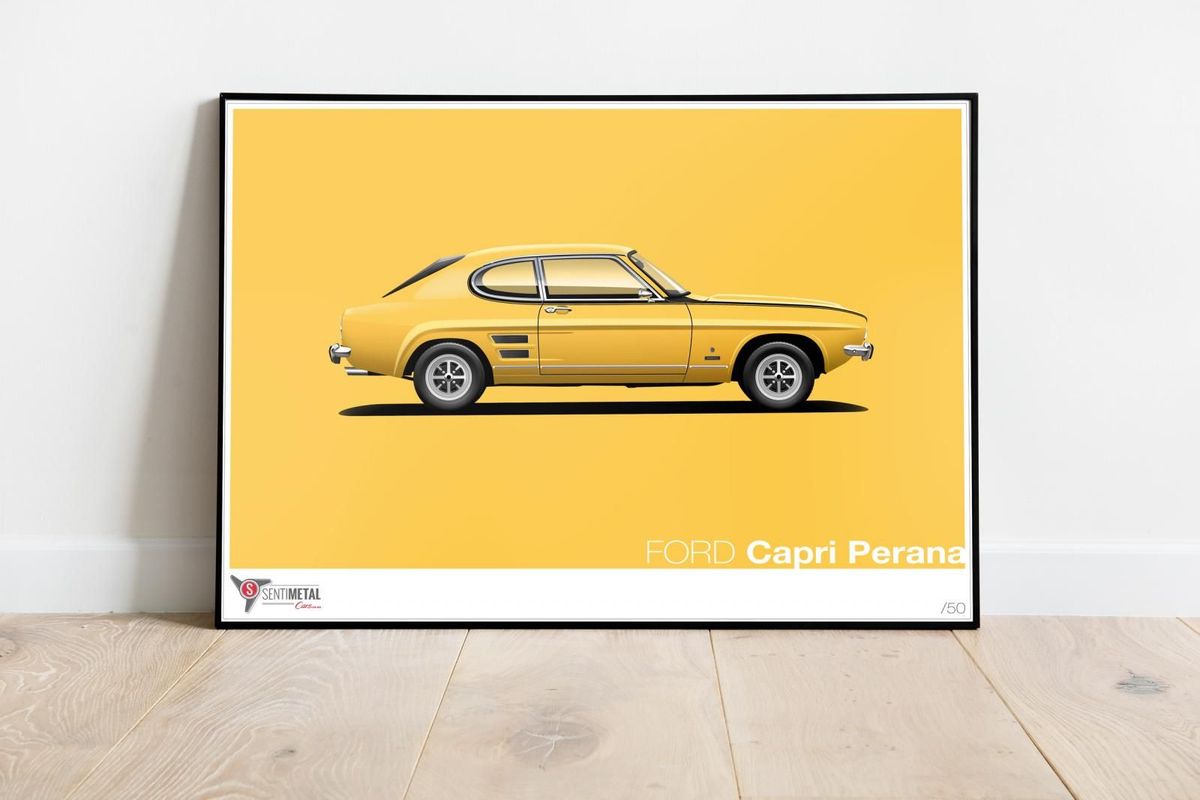
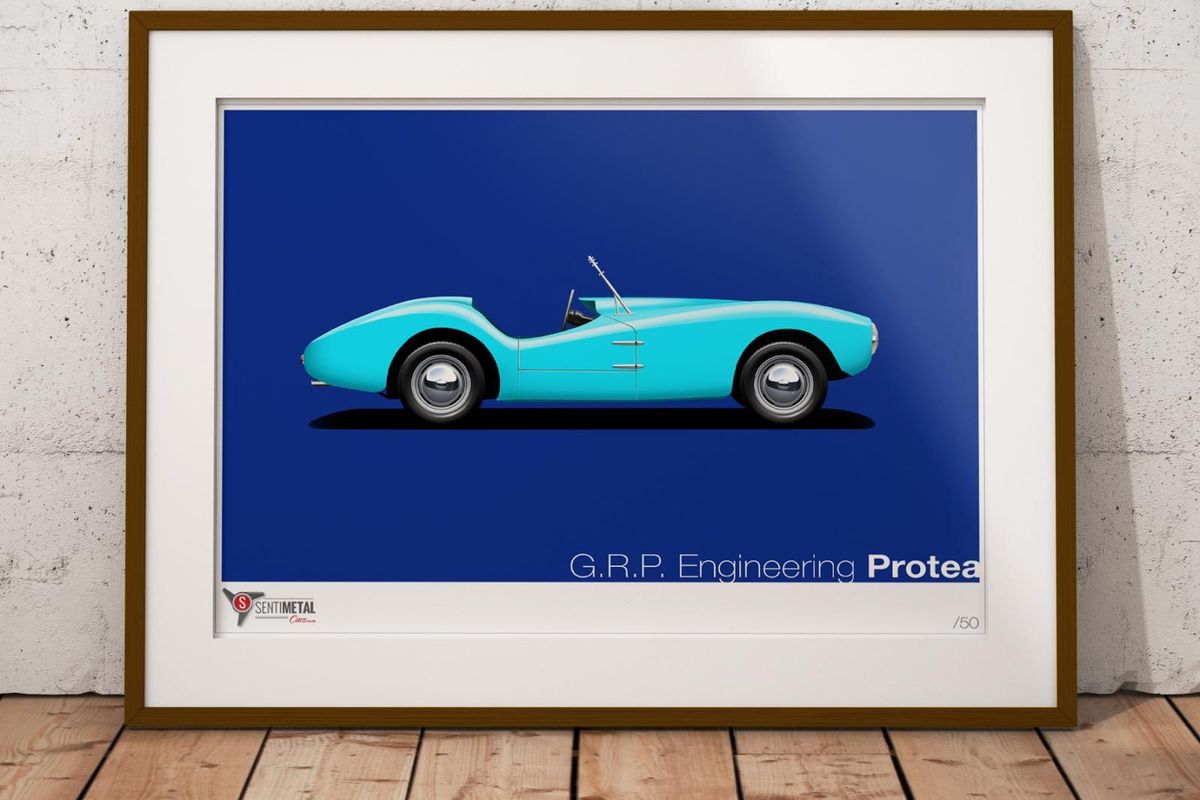
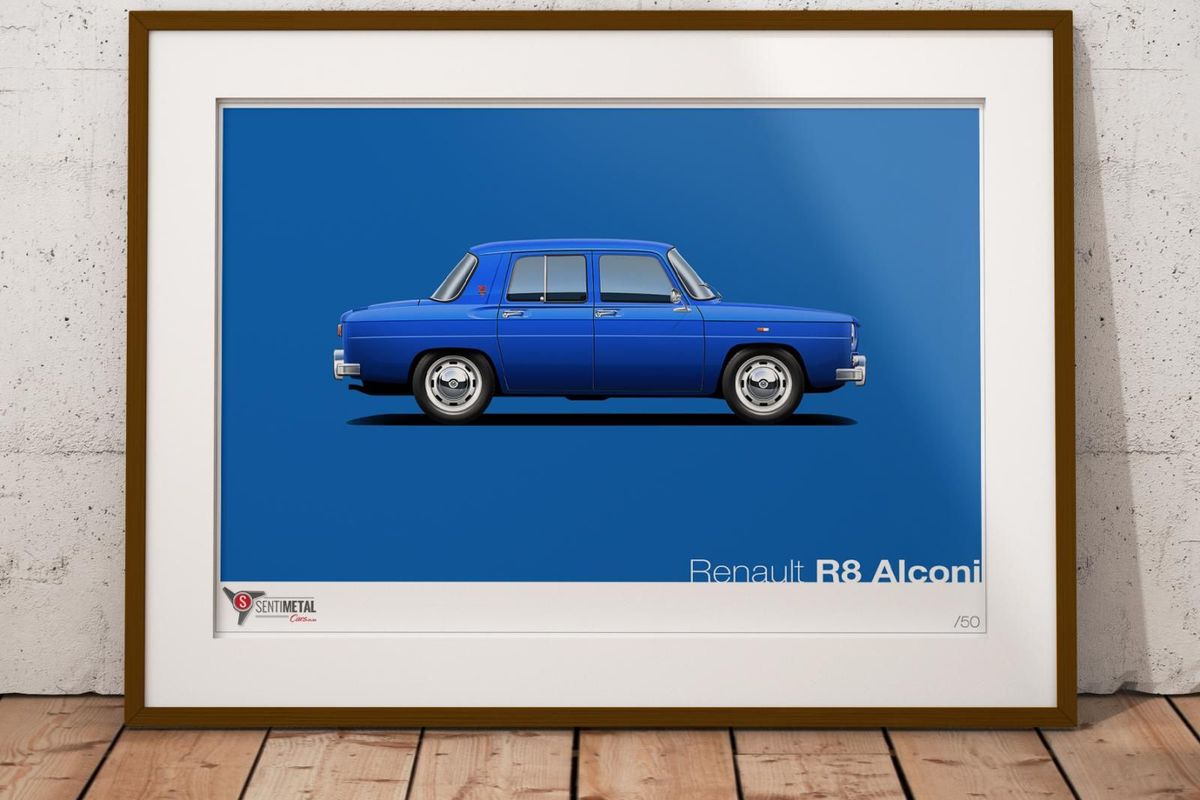
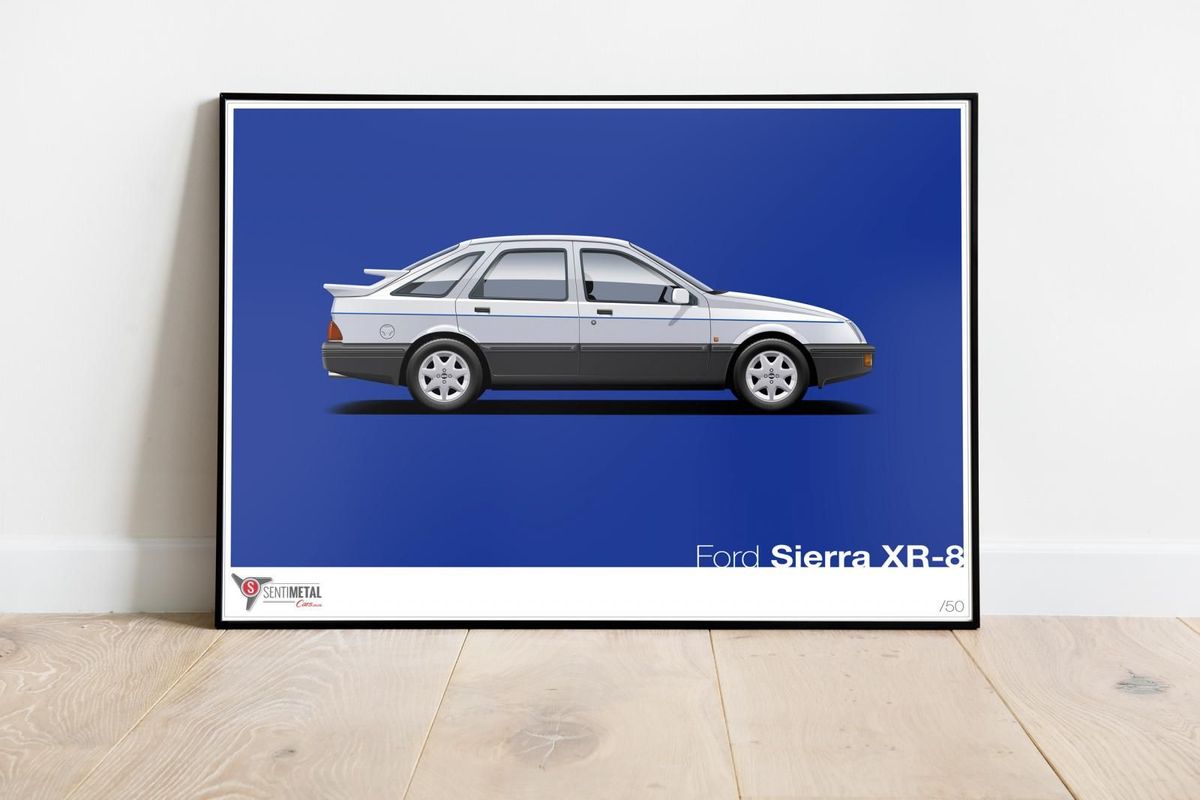
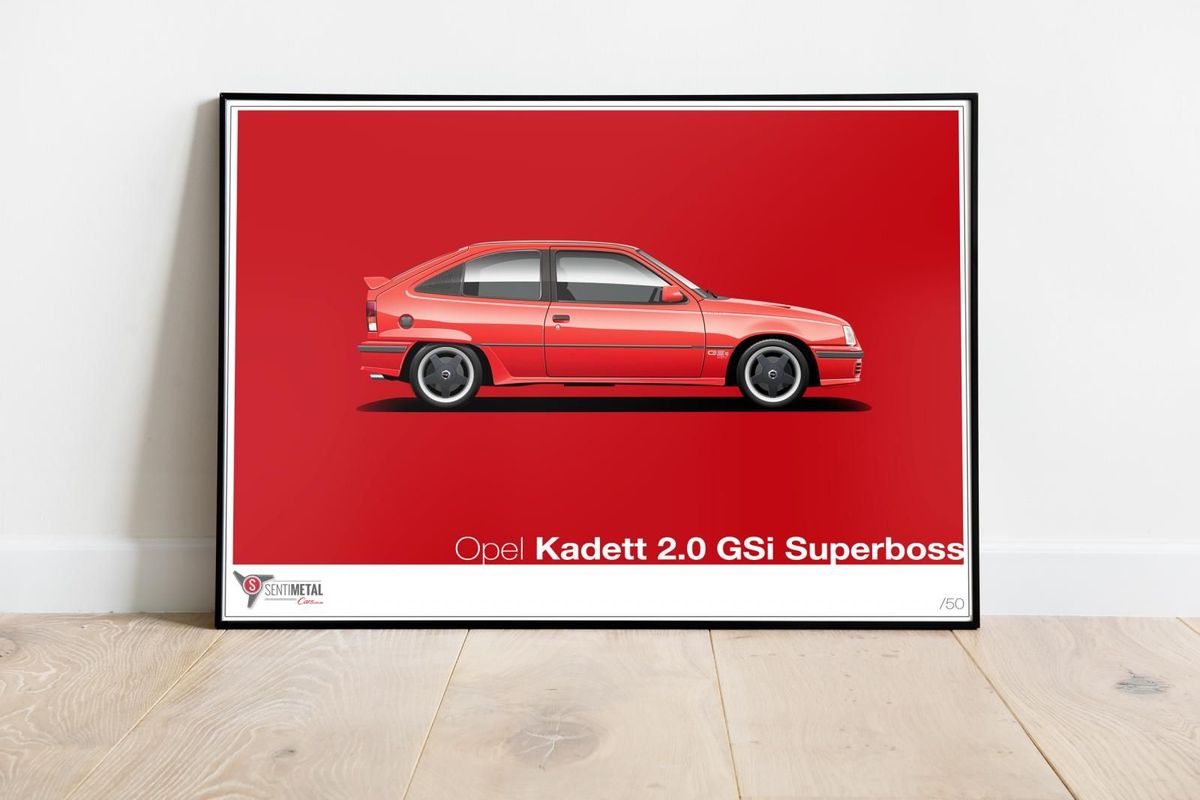
Cars.co.za's SentiMETAL brand has launched a very limited series of prints, each paying tribute to uniquely South African cars. There are currently around 20 iconic cars to choose from, and more are being added weekly.
The rise in interest in cars unique to South Africa is not only noticeable in the prices these cars demand these days, but was also very obvious at the recent Concours South Africa, for example, where a large selection of SA Specials vied for the overall trophy, including our very own Opel Kadett GSi Superboss.
"We have a very rich automotive heritage, and it's important that we not only protect it, but also celebrate it," says Cars.co.za Consumer Experience Manager, Hannes Oosthuizen."
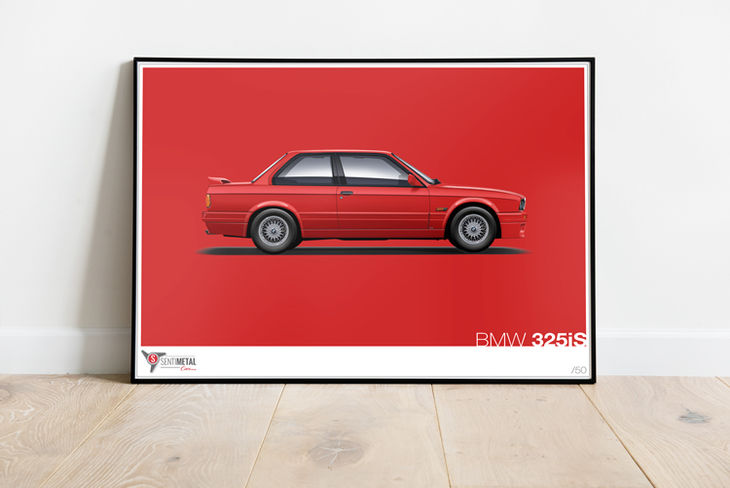
The first print to be released features the iconic BMW 325iS (E30) "Gusheshe".
The prints feature such icons as the BMW 325iS (popularly known as the "Gusheshe"), BMW 333i, 530 MLE, Opel Kadett Superboss, Alfa GTV6 3.0, Ford Sierra XR-8, Chevrolet Firenza Can-Am, Caracal, Fiat 131 Racing, Ford Capri Perana and many more. "We've gone for bright, strong colours and simple design, to put the focus on the machines," says Oosthuizen. "Artist Wayne Batty's drawings are simply phenomenal in their detail."
SentiMETAL will only be printing 50 of each of these prints (in both sizes), and each will be individually numbered. "Ultimately, we may end up producing around 30 of these Editions, because that's more or less the number of cars worthy of poster status," says Oosthuizen. "Imagine what an office or mancave would look like with all 30 of these colourful prints!"
To order your print, go here. Nationwide shipping is free. Order 3 or more prints and you get an automatic 20% discount.
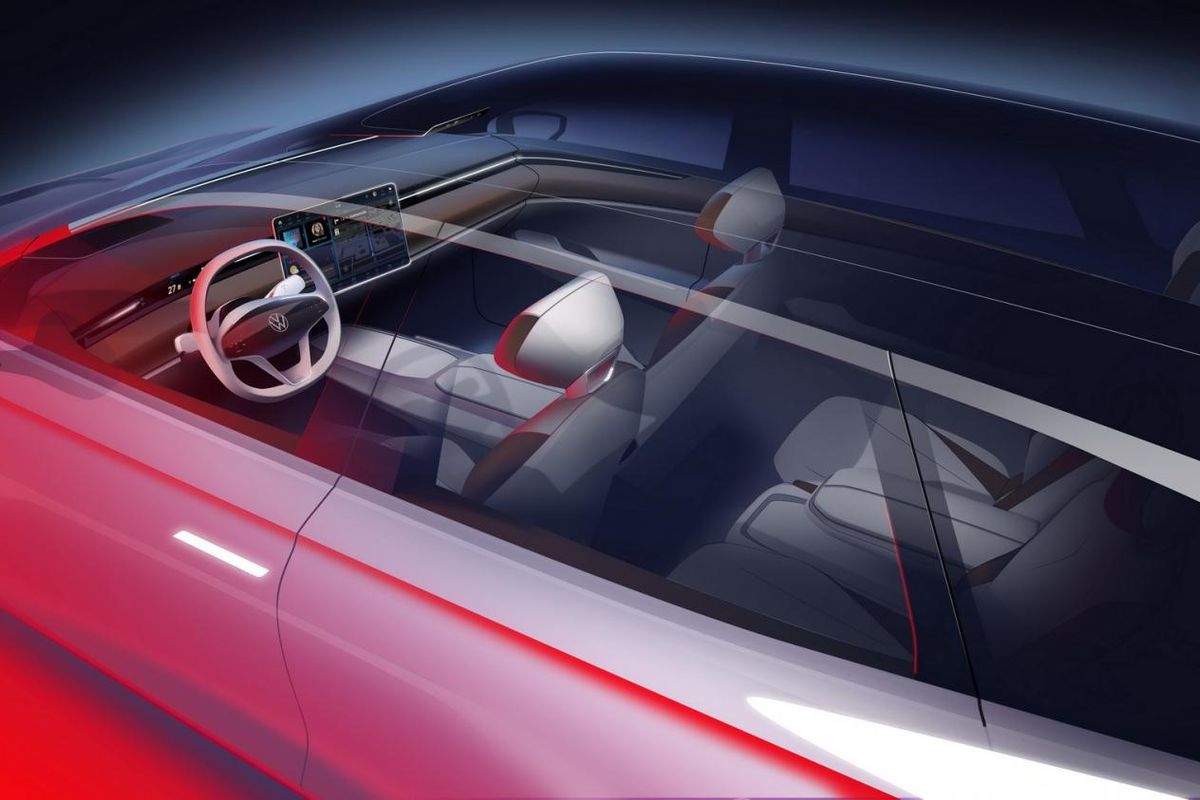
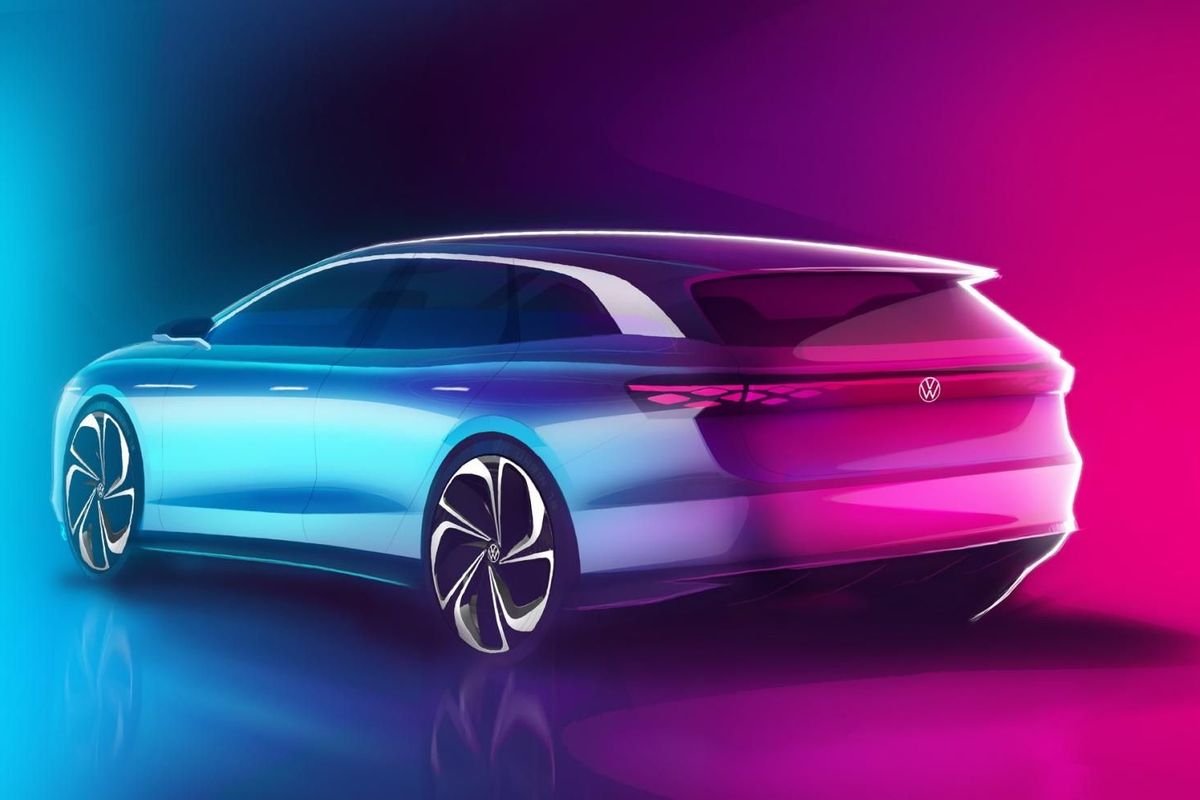
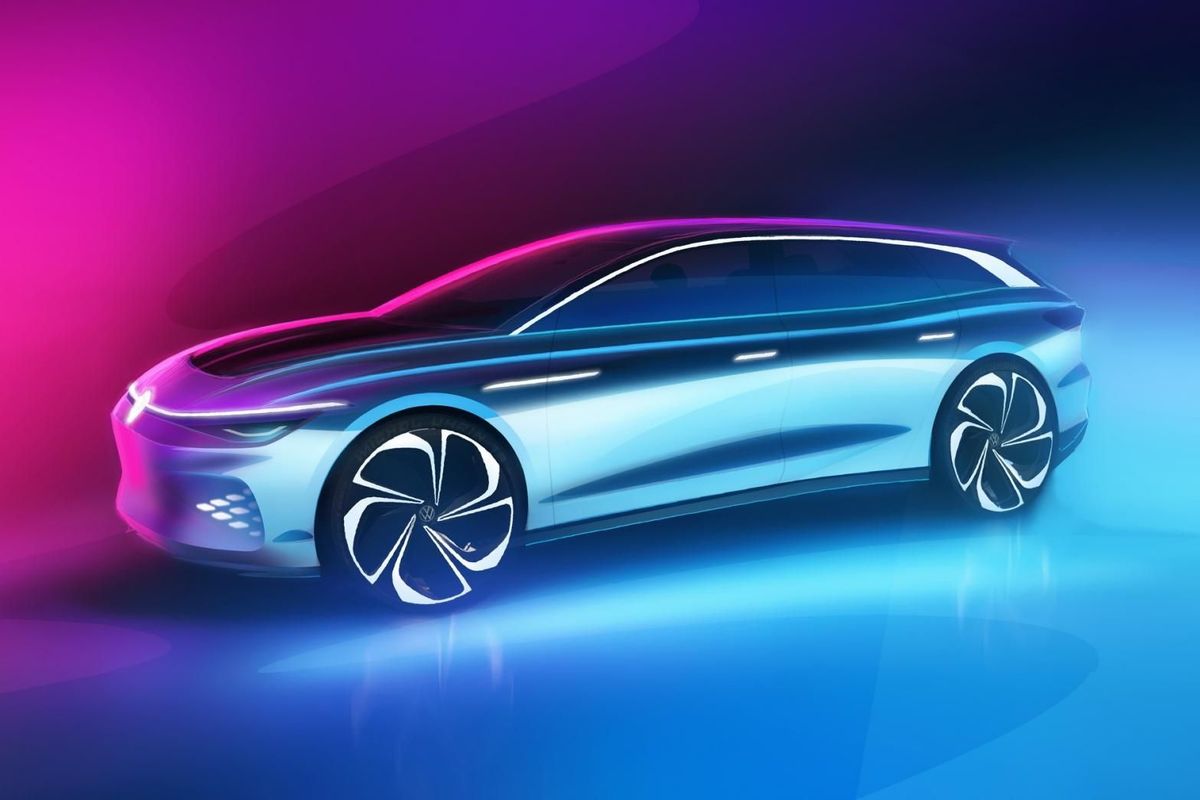
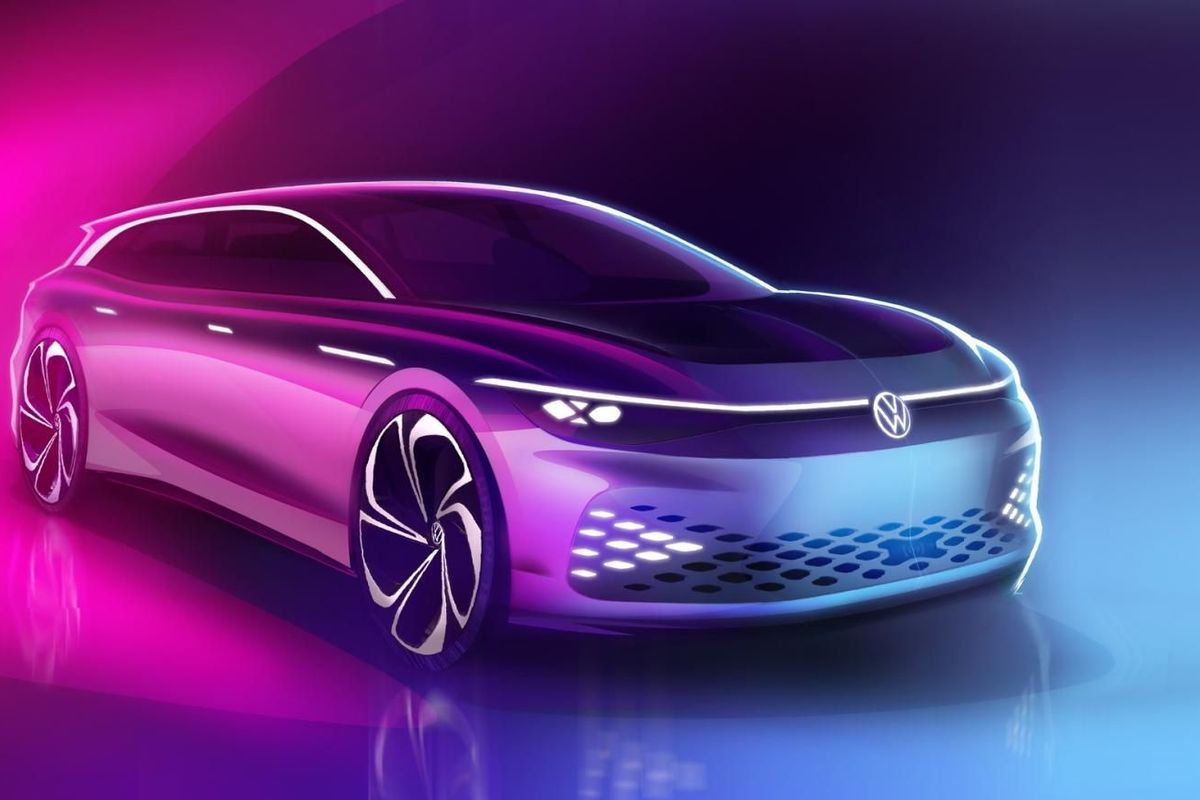
Volkswagen has teased a forthcoming electric car concept which will be showcased at the 2019 Los Angeles Auto Show.
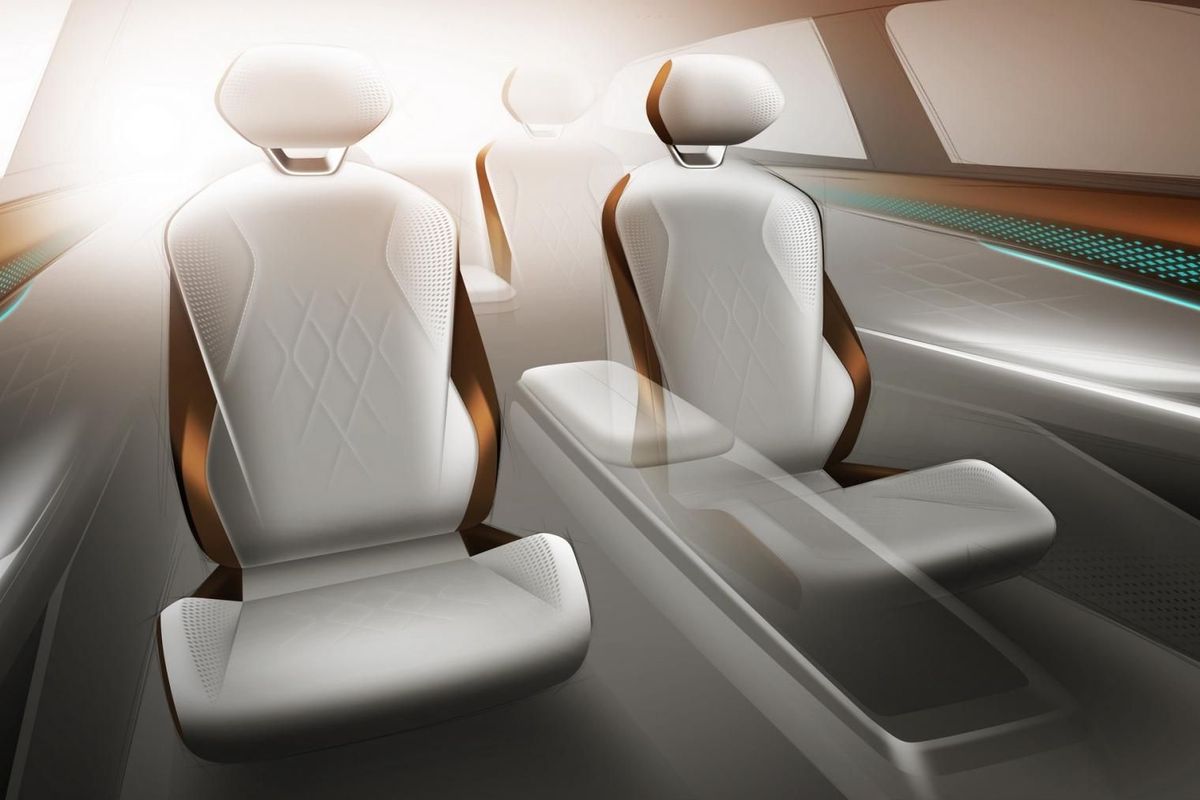
What you're looking at is the Volkswagen ID Space Vizzion and it's the 7th member of VW's ID electric family.
Volkswagen describes its ID Space Vizzion concept as a crossover of tomorrow which has the aerodynamic characteristics of a Gran Turismo combined with the spaciousness of an SUV.
Underpinned by the VW Group's MEB electric car platform, the Volkswagen ID Space Vizzion is said to offer a driving range of up to 482 km, thanks mostly to its aerodynamically clean shape.
“So far, with our ID. family, we have shown what is possible with electric vehicles in each known car category,” said Klaus Bischoff, Head of Volkswagen Design. “With the ID Space Vizzion we create a new, fully electric segment.” This is not going to be a once-off concept as Volkswagen claims this concept previews a production model which will hit global markets in late 2021.
Expect more details and official photographs of the Volkswagen ID Space Vizzion concept during the Los Angeles Auto Show, which takes place from the 19th November 2019.
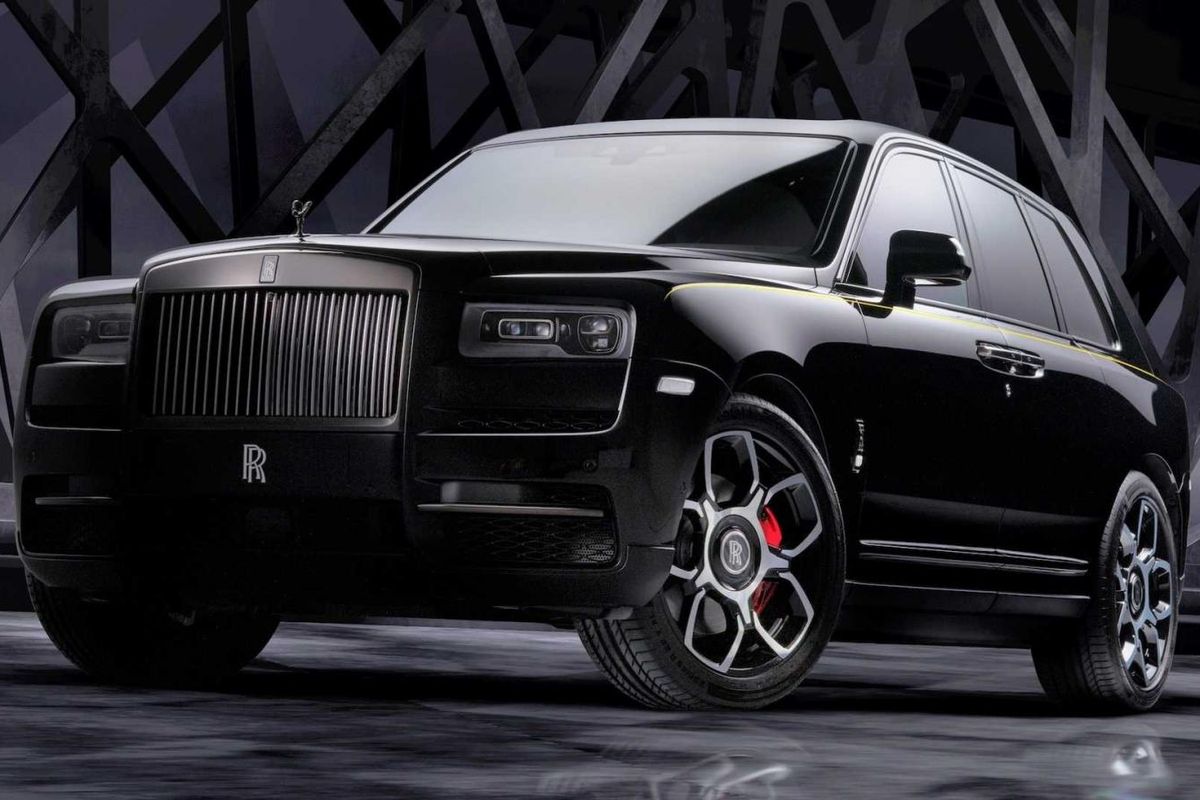
Rolls Royce has added a potent new edition of its gravel travel station wagon.
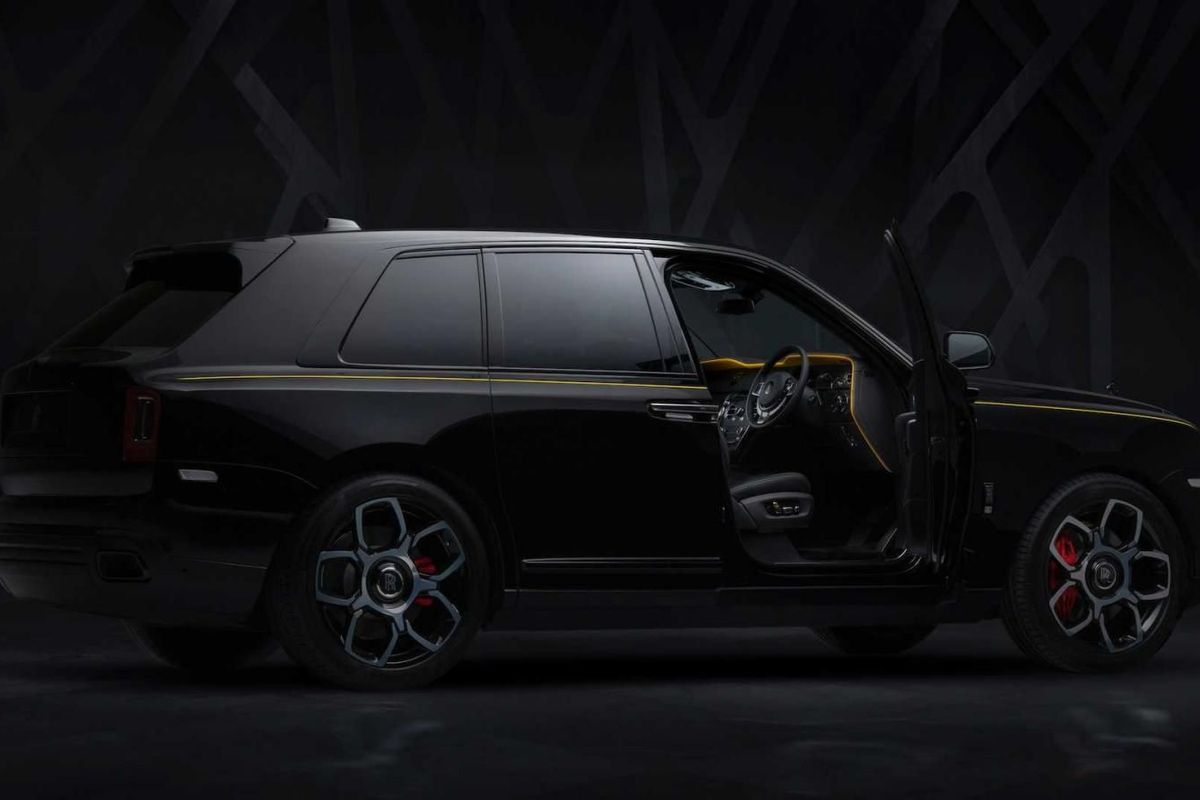
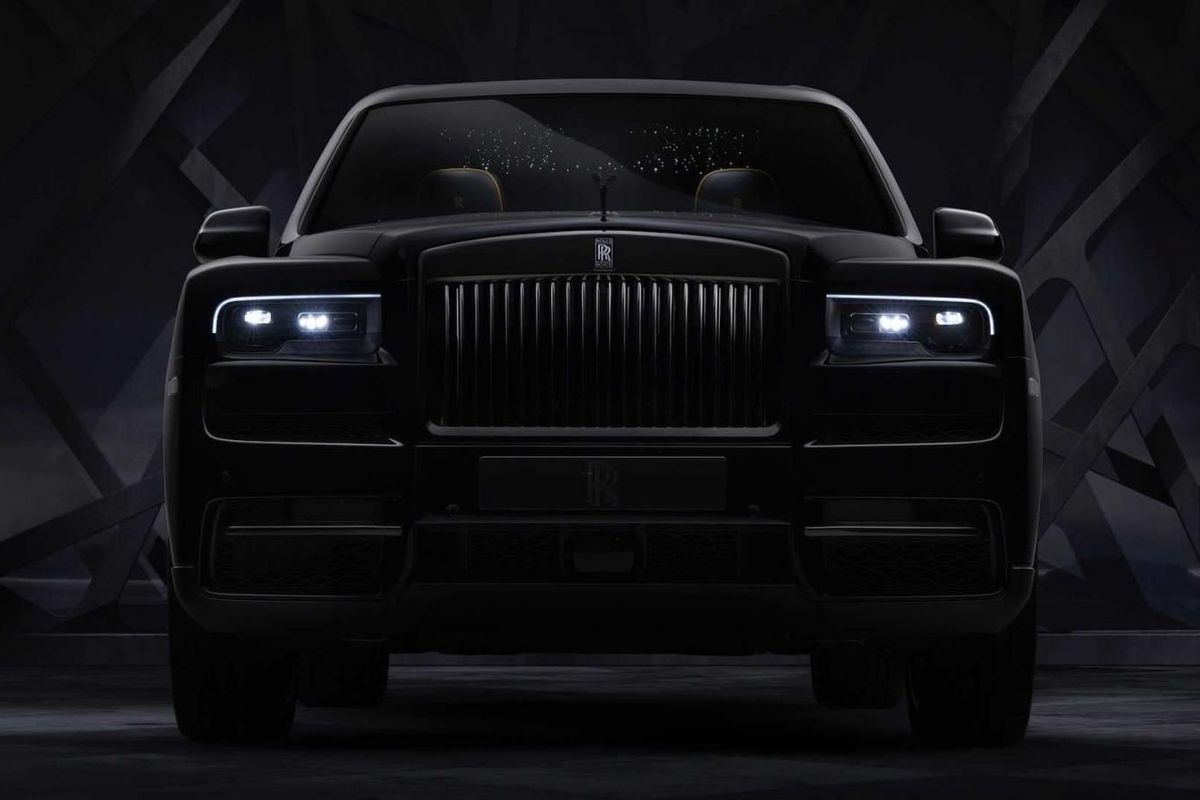
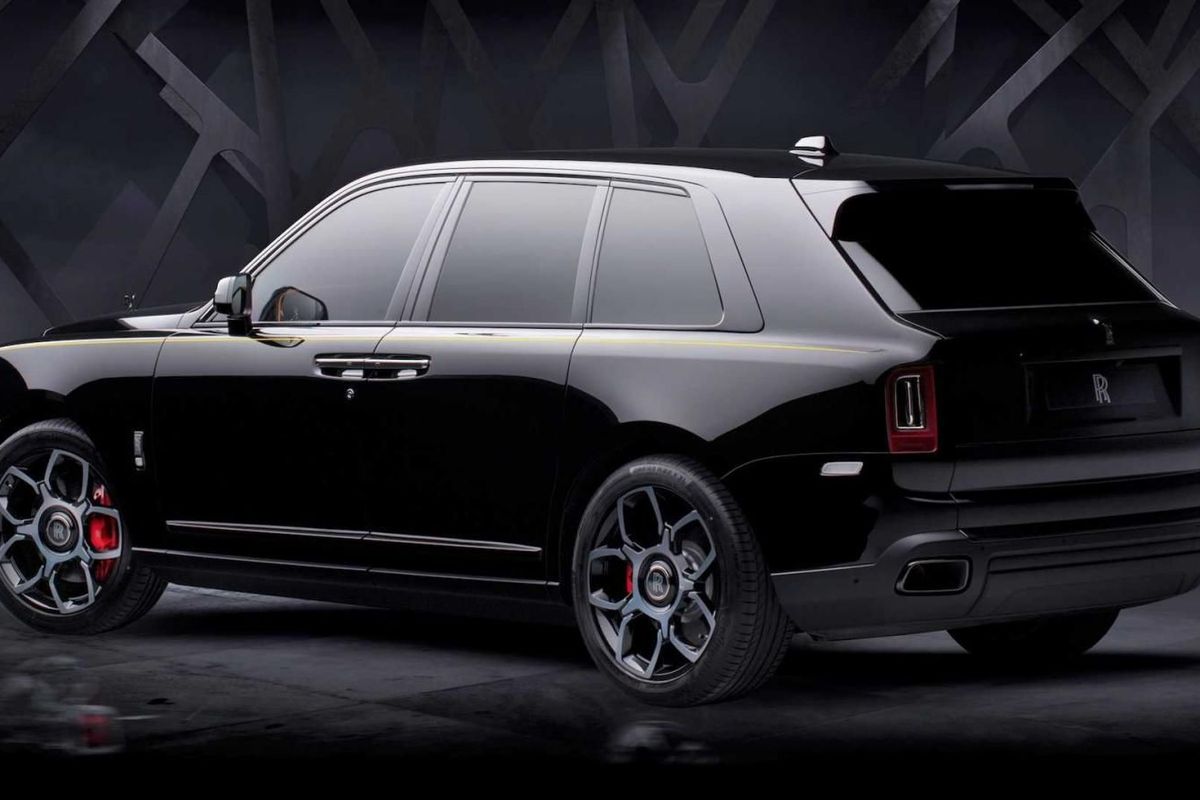
The British luxury brand’s Cullinan now has a new Black Badge variant and it is very much designed to appeal to those ‘new money’ Rolls Royce customers.
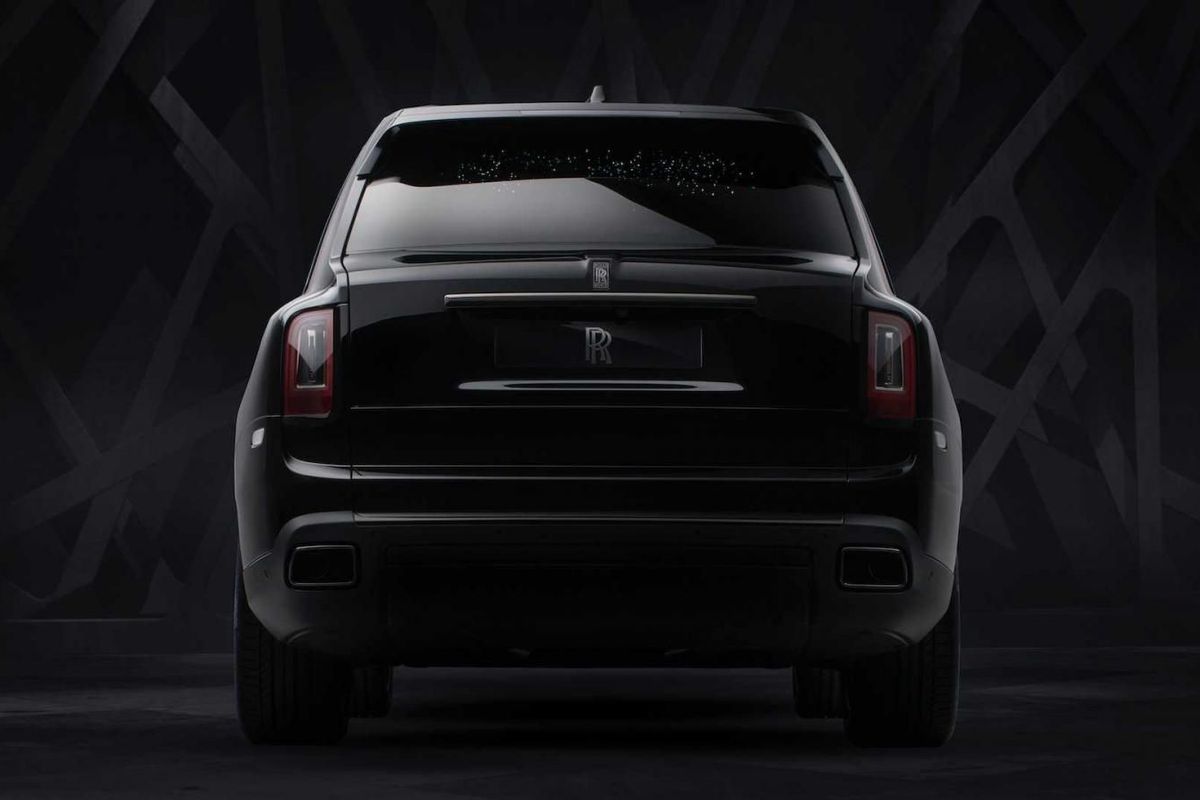
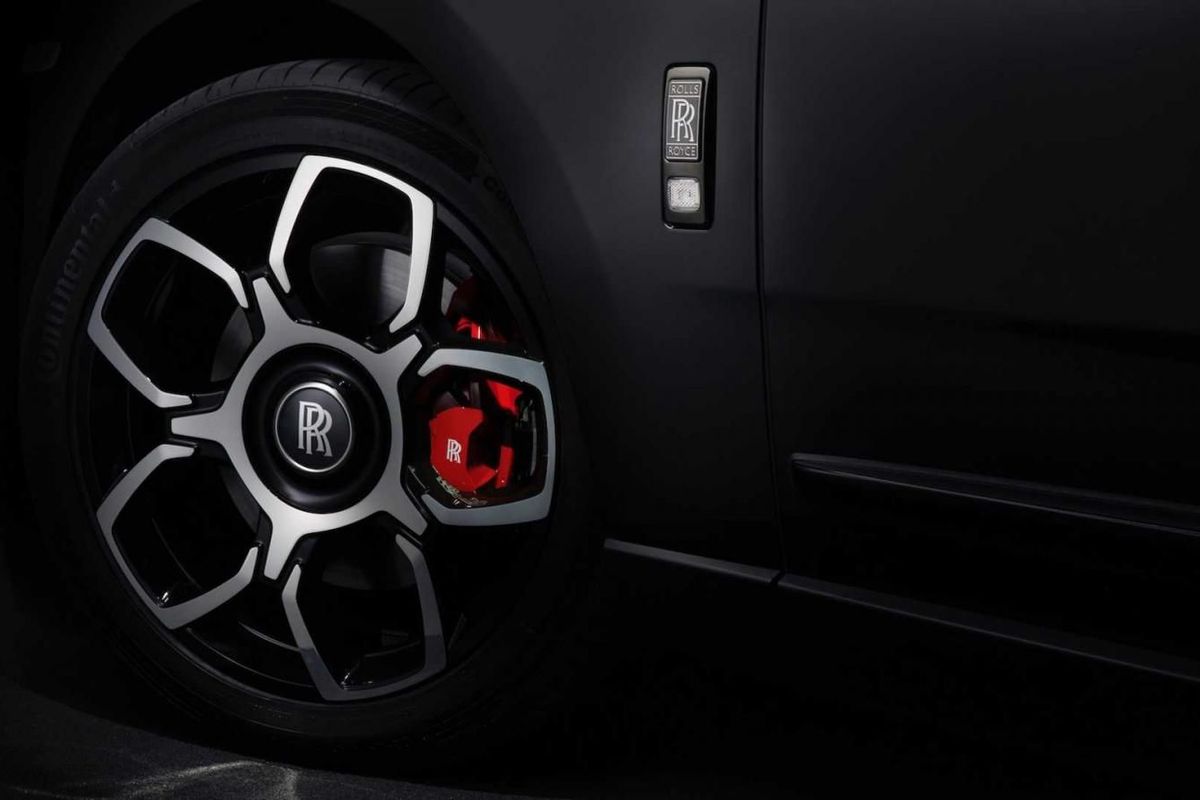
To move beyond its historic design values and established customer profile, Rolls Royce has allowed the company’s designers and craftspeople to embrace a more radical destiny. As an example of this, the Black Badge Cullinan rolls on unique 22-inch alloy wheels and features a darkened Spirit of Ecstasy mascot. Its famous chrome grille is also darkened and this Black Badge Cullinan becomes the first Rolls Royce to feature red brake callipers.
Although it does make sense to order a Black Badge Cullinan in, well, black – there are many other colour options available too. How many? No less than 44 000 different surface colours are in the catalogue. Rolls Royce technicians hand-polish and paint these colour coats ten times over, to achieve the require sheen and lustre.
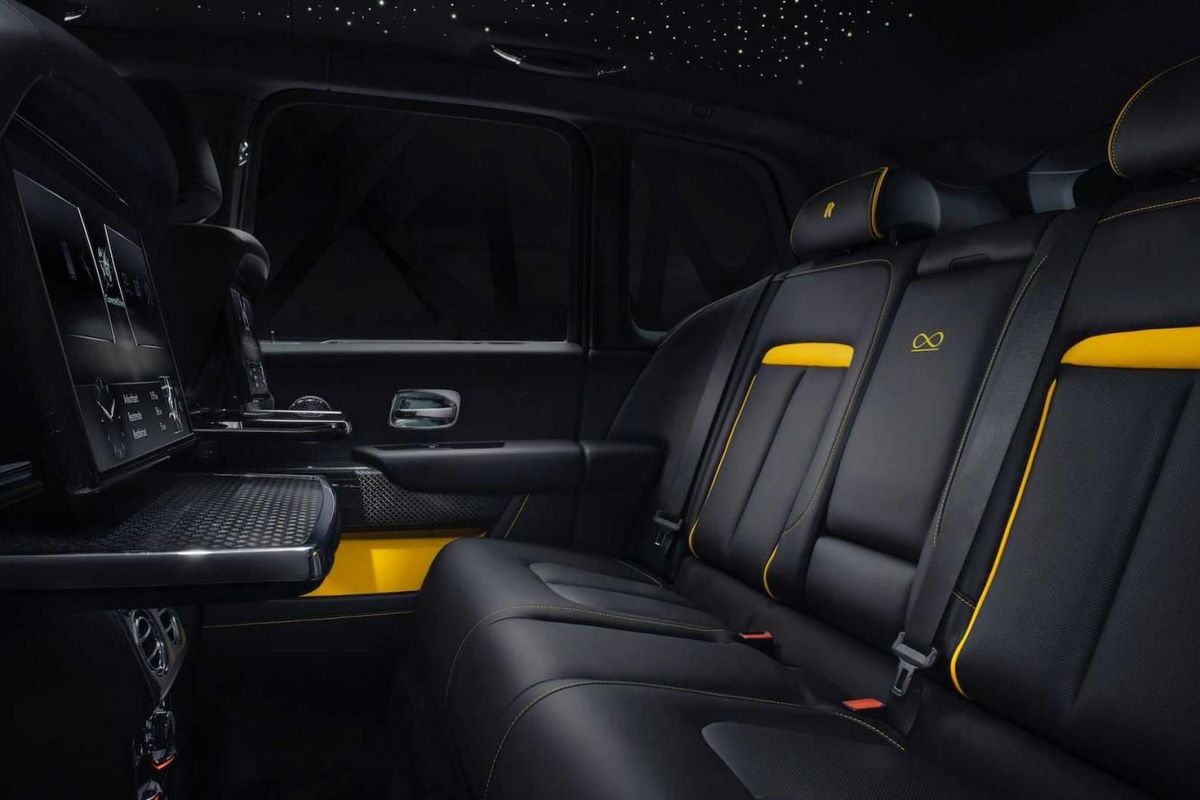
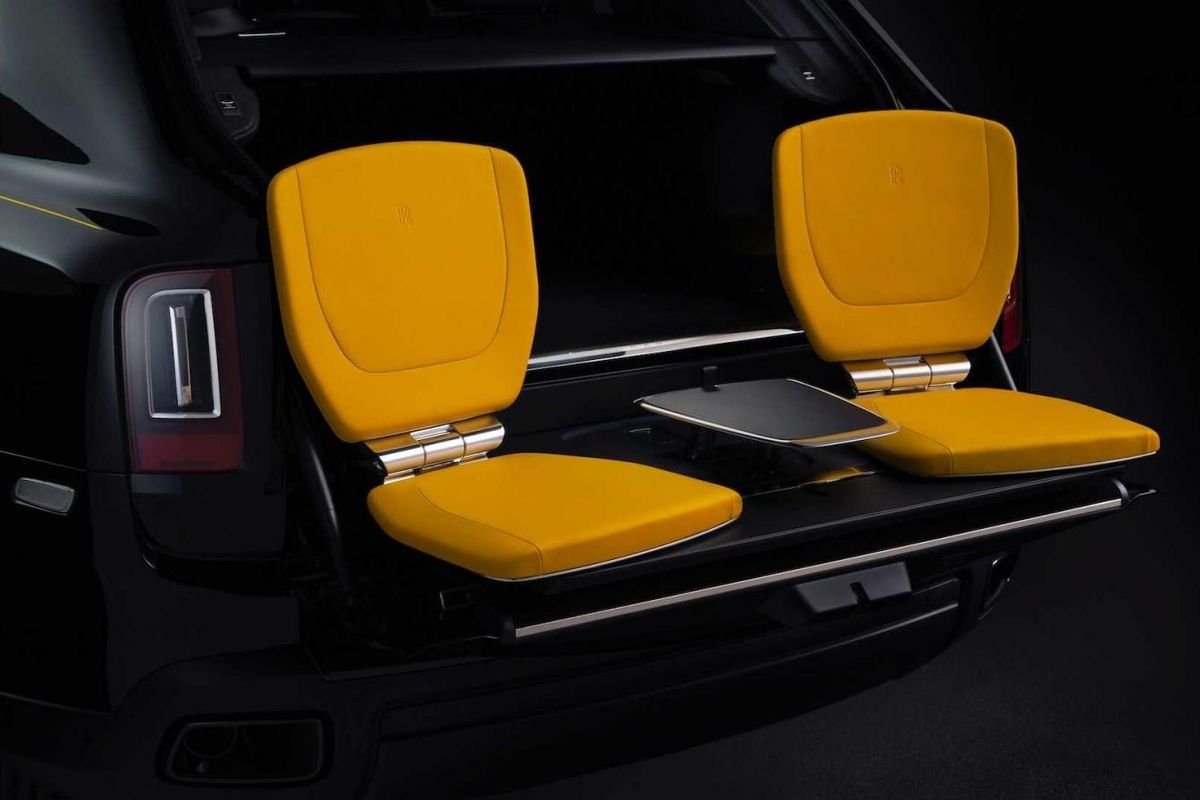
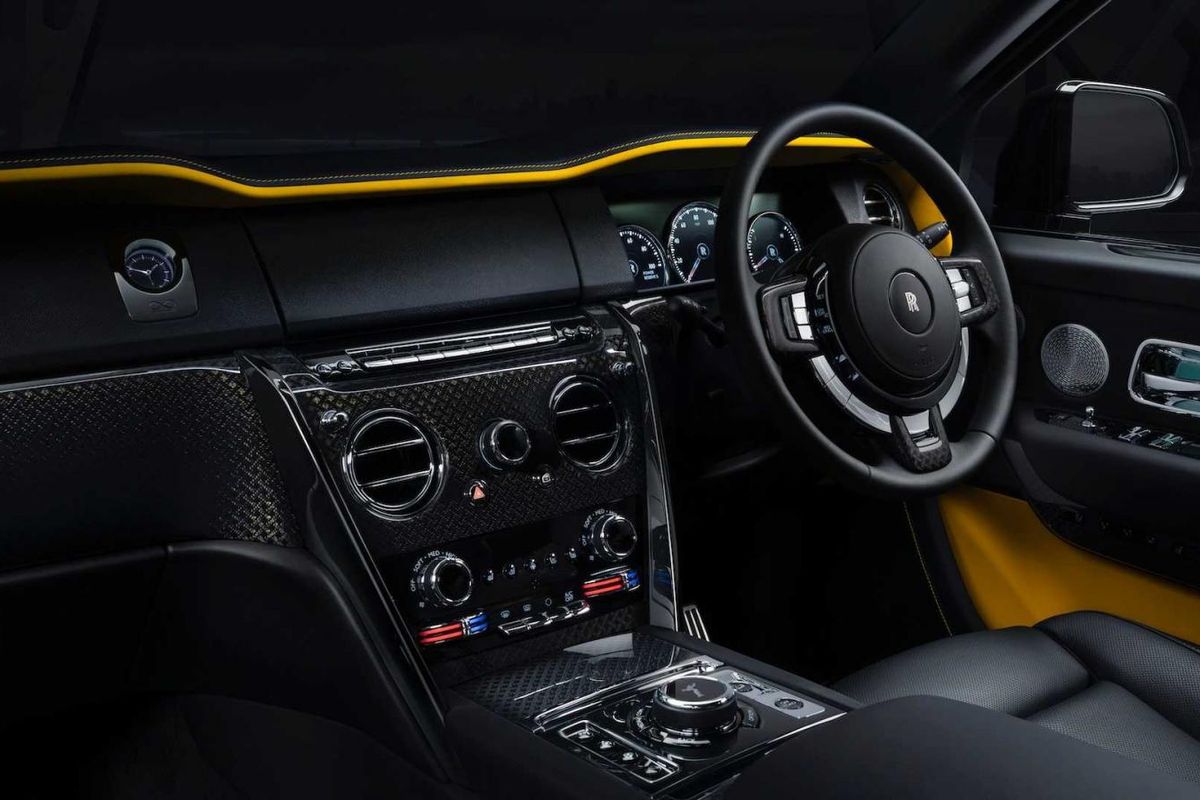
With the Black Badge Cullinan’s cabin Rolls Royce has embraced yellow as the detailing contrast colour. Forge yellow is the dominant trim colour and it is balanced by carbon veneer panelling that takes more than three weeks to fabricate.
Bold styling and design features aside, Rolls Royce is also adding some additional performance with its Black Badge Cullinan. The company’s powertrain technicians have managed to liberate an additional 21 kW and 50 Nm from its 6.75-litre twin-turbocharged V12 engine.
With peak outputs of 441 kW and 900 Nm, this Black Badge edition is slightly more potent than other Cullinans. To balance this additional performance potential, Rolls Royce has also recalibrated the ABS, to provide more progressive brake pedal feedback.