Nissan is set to expand the new Micra range with a model that includes both a more powerful engine and sound system.
The new Micra, which is based on the Renault Clio platform) has been on sale in SA for 18 months without making too much noise on the sales charts. Its sibling, the Clio continues to rake in the sales well into the twilight of its lifecycle (the new model will be here in 2020).
Currently, there is only one engine output available – a 66 kW/140 Nm 3-cylinder petrol version with a minute 899cc. As of mid-November, there will be a new engine to choose from as well. A Nissan-built 1.0 DIG-T (turbopetrol) with 84 kW and 180 Nm of torque. This engine is available in overseas markets where it propels the Micra to 100 kph in 9.9 seconds and uses 5.0L/100 km on the combined cycle test.
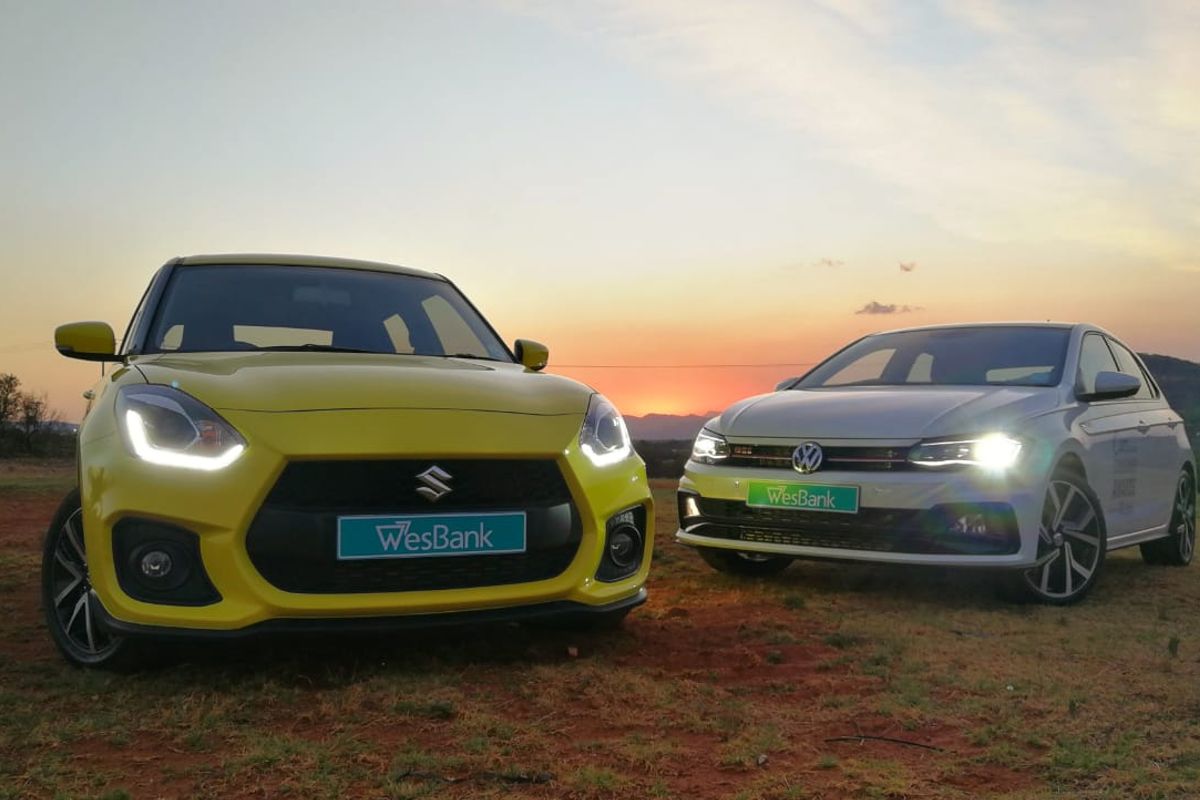
Nissan South Africa is not giving anything away just yet on the spec of the new-engined Micra apart from it will feature a Bose sound system. Its closest rival, therefore, is probably the VW Polo Beats, which also features a banging sound system.
We should hear more details at the vehicle's local launch on 13 November 2019.
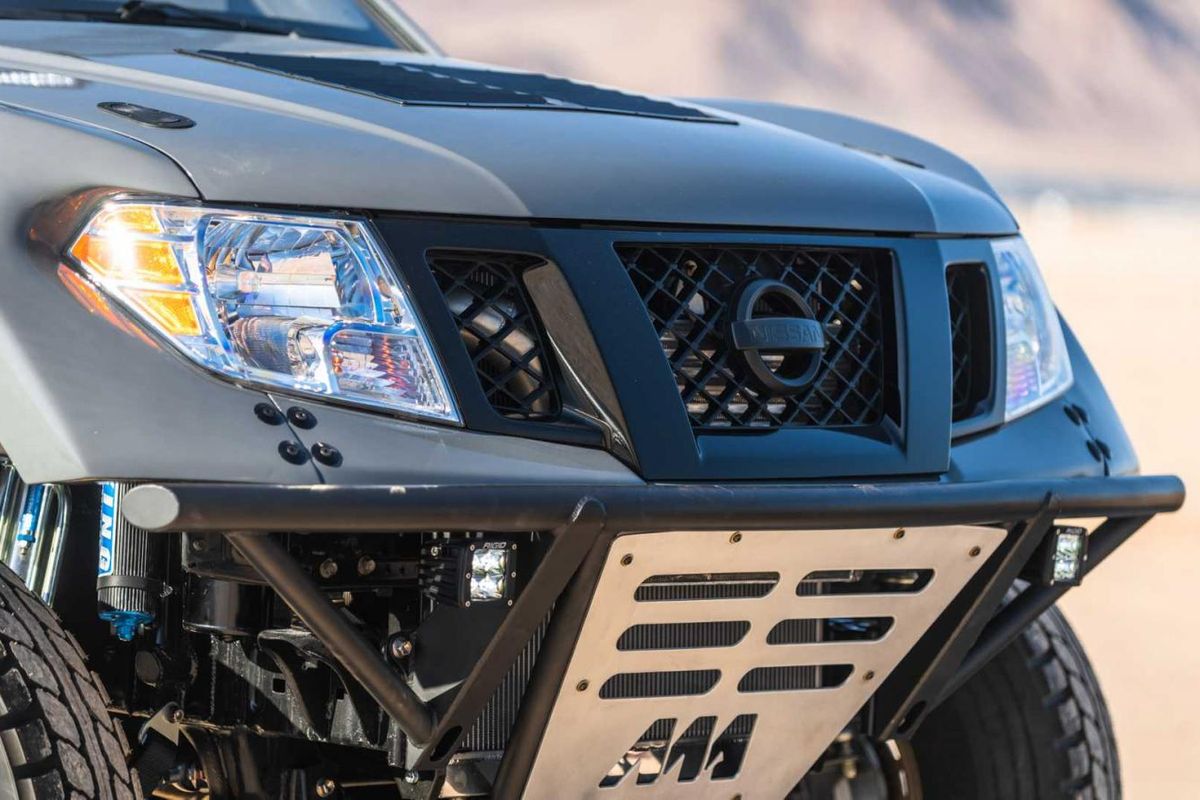
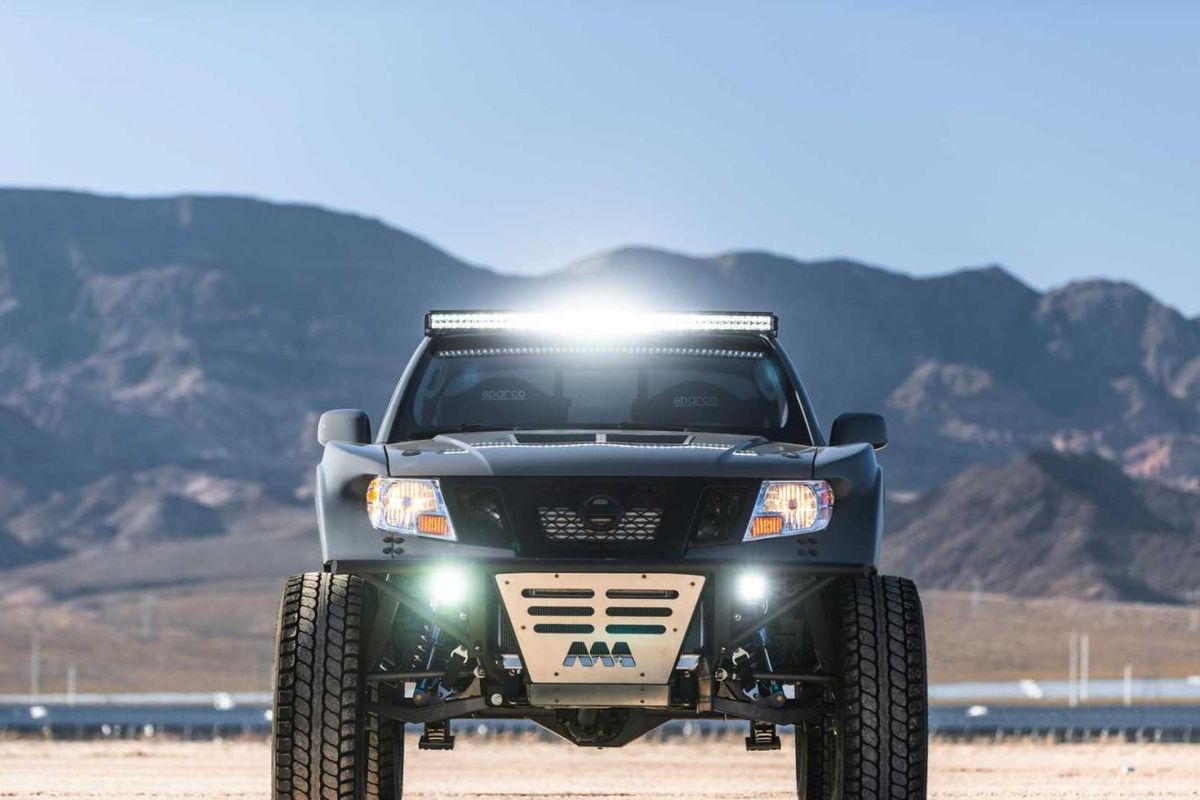
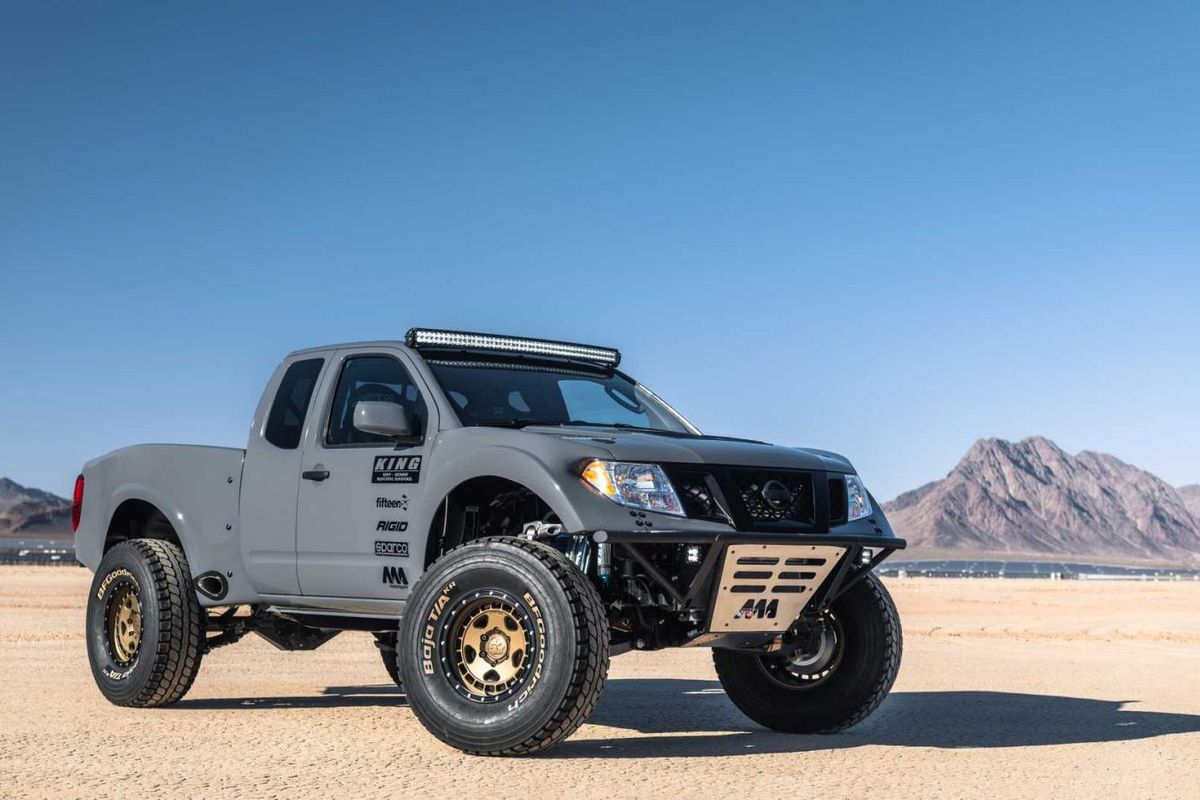
Nissan has revealed a concept bakkie that shames Ford's Raptor.
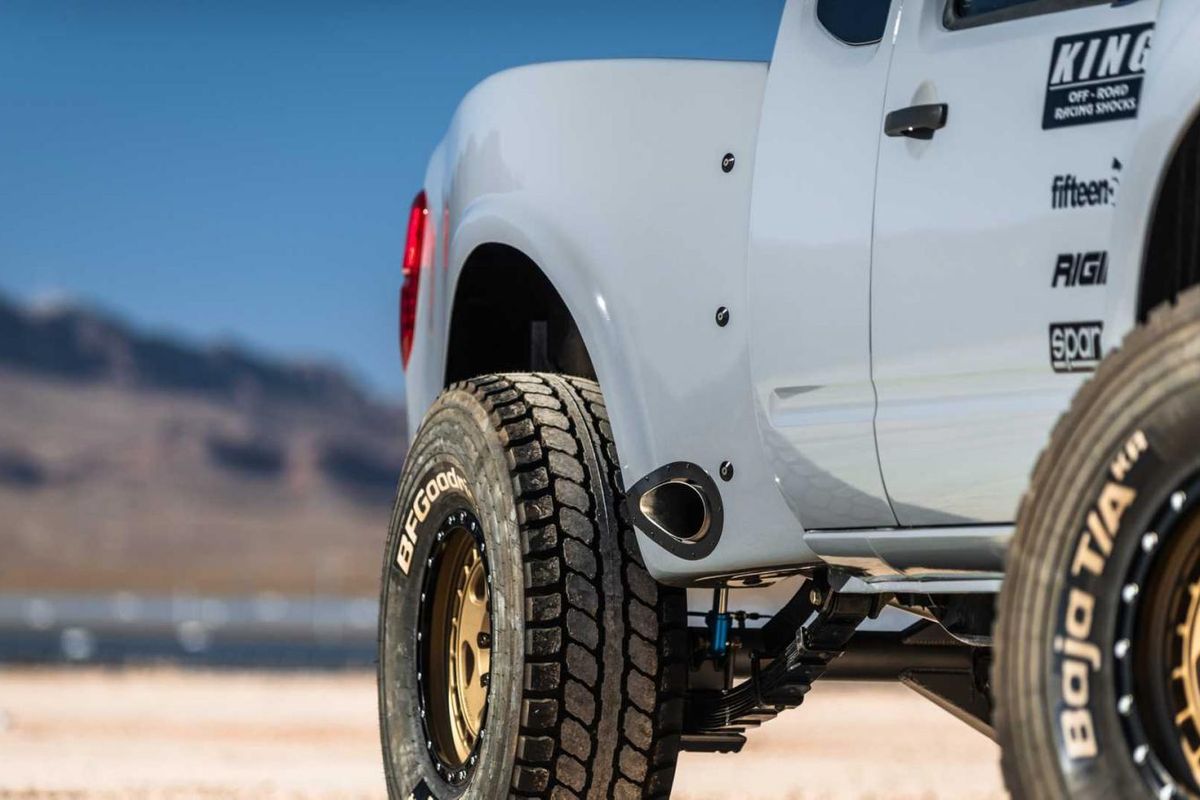
As part of the Japanese brand’s presence at this year’s SEMA show, Nissan commissioned a very special version of its current Frontier. It might be finished in battleship grey, but there is nothing at all subtle about this bakkie.
The Frontier is, of course, a previous-generation Navara, which remains part of Nissan’s American bakkie portfolio. Using this dated bakkie platform as its departure point Nissan, with the assistance of some American specialist fabricators, has created a very radical 'old' Navara.
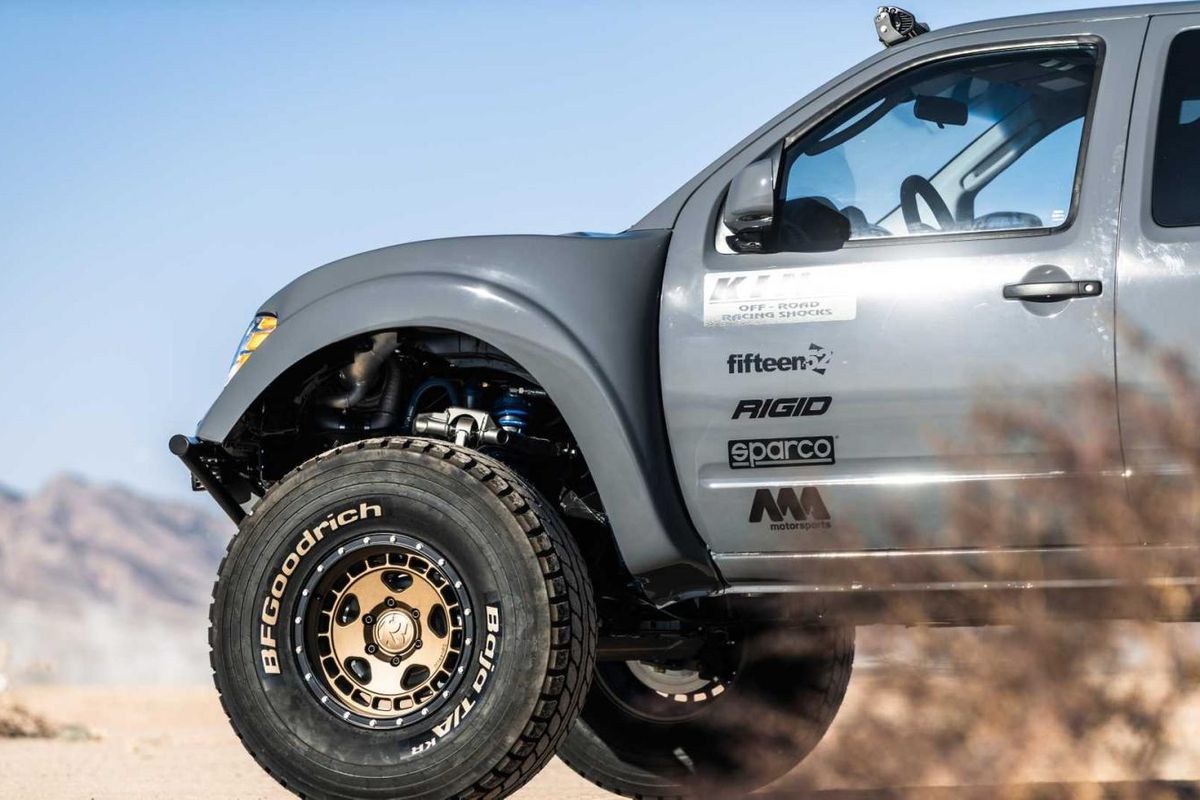
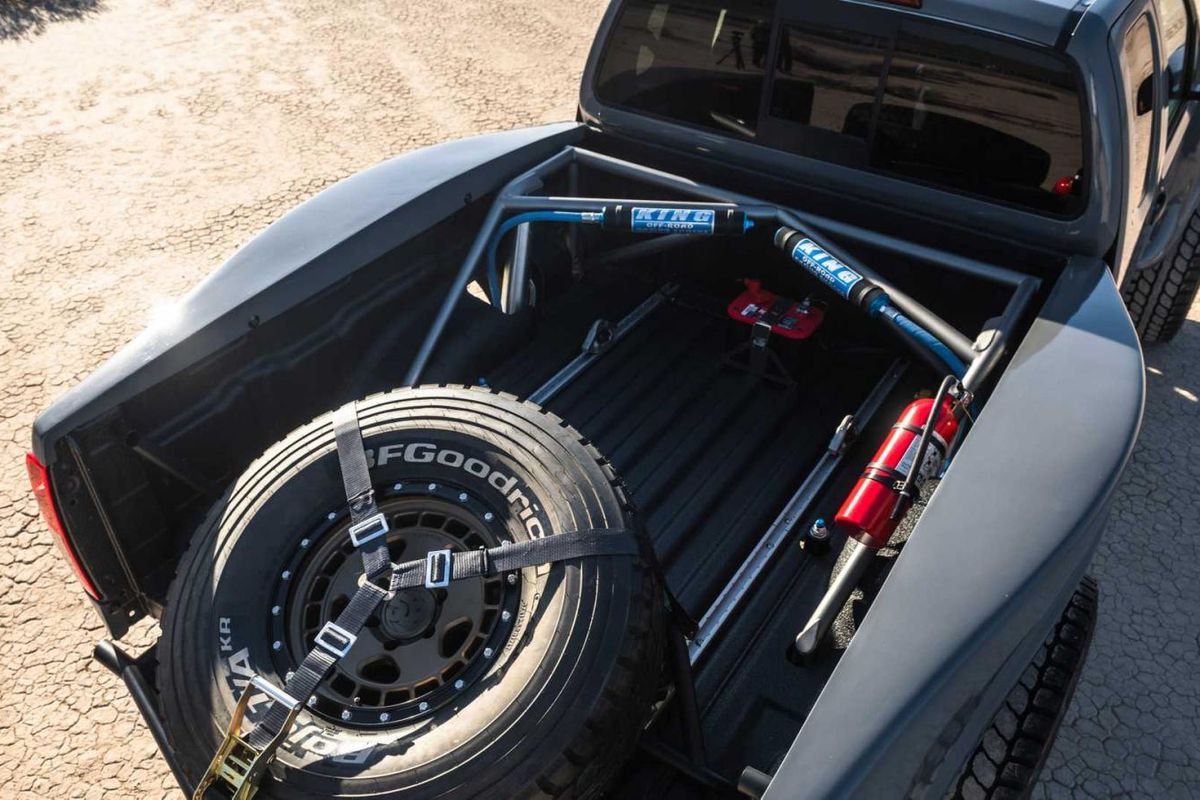
The only factory panels on this king cab Navara are its roof and doors. The bonnet, fenders and loadbin sides have all been reshaped to either provide superior cooling airflow or accommodate huge tyres. Nissan also deleted the tailgate, to create quick access to the spare wheel.
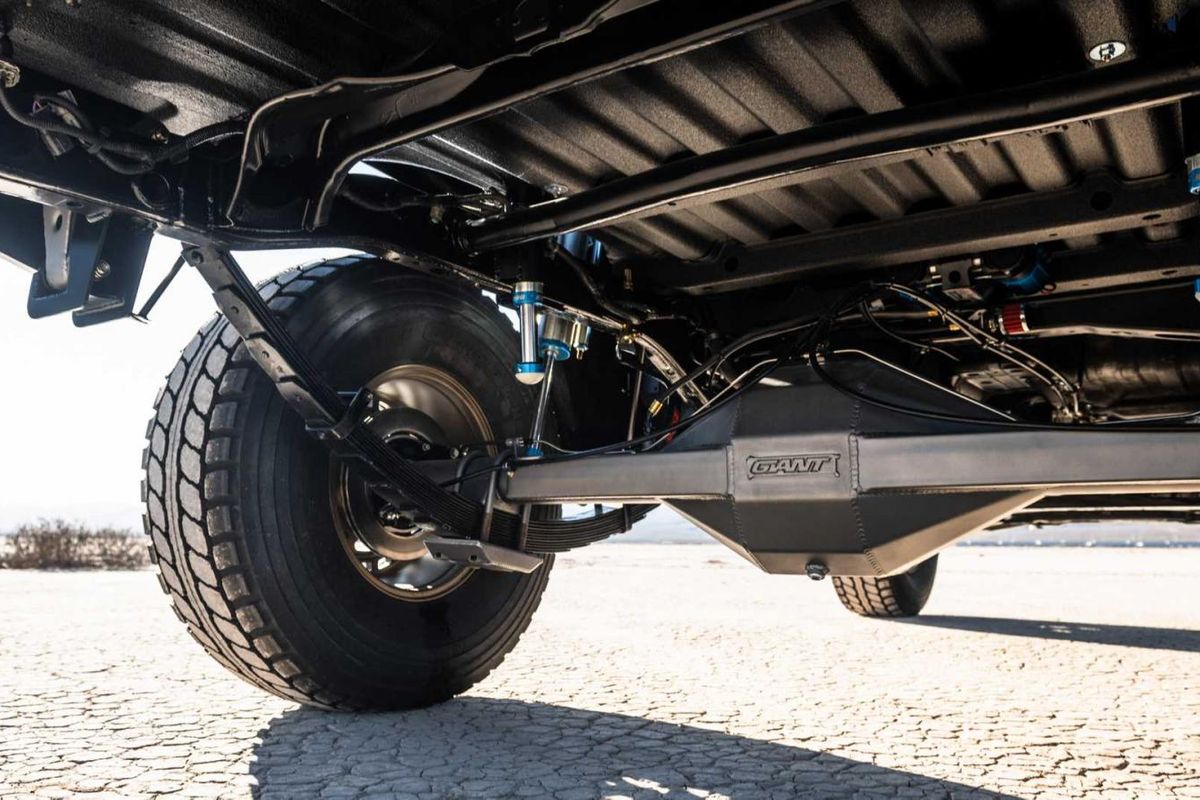
From this SEMA Navara’s stance, it is obviously built for serious off-road work. Triple bypass front shocks, with coilovers, help it to absorb the impact from landing jumps, whilst a long-travel rear suspension, with a custom axle casing and leaf-springs, make sure it can survive just about any terrain at speed.
Interestingly, this SEMA Navara is rear-wheel drive only, as is the case with many American racing trucks, specially built for desert driving. To aid traction, it rolls huge 37-inch BFGoodrich Baja T/A tires.
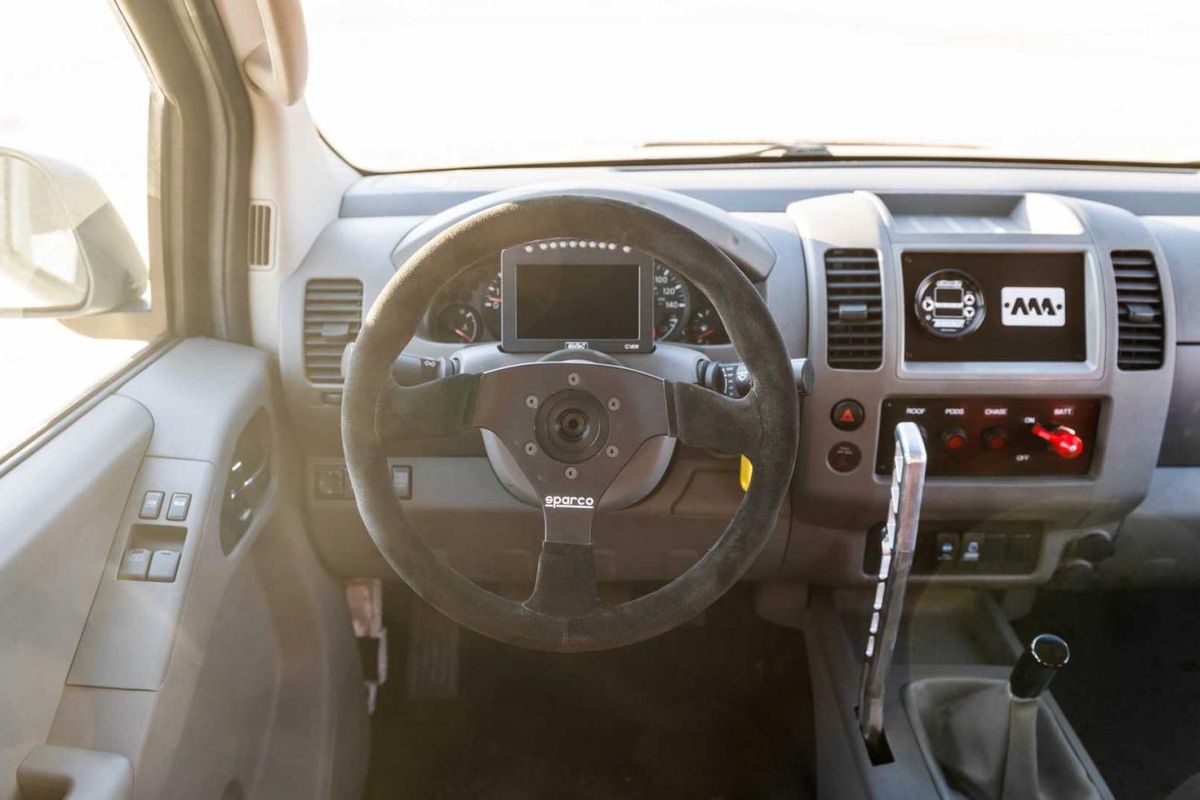
The cabin is a curious baled of mid-2000s Navara plastic mouldings and some contemporary aftermarket racing components: such as the steering wheel, shifter, digital data logger and a rally-style raised handbrake.
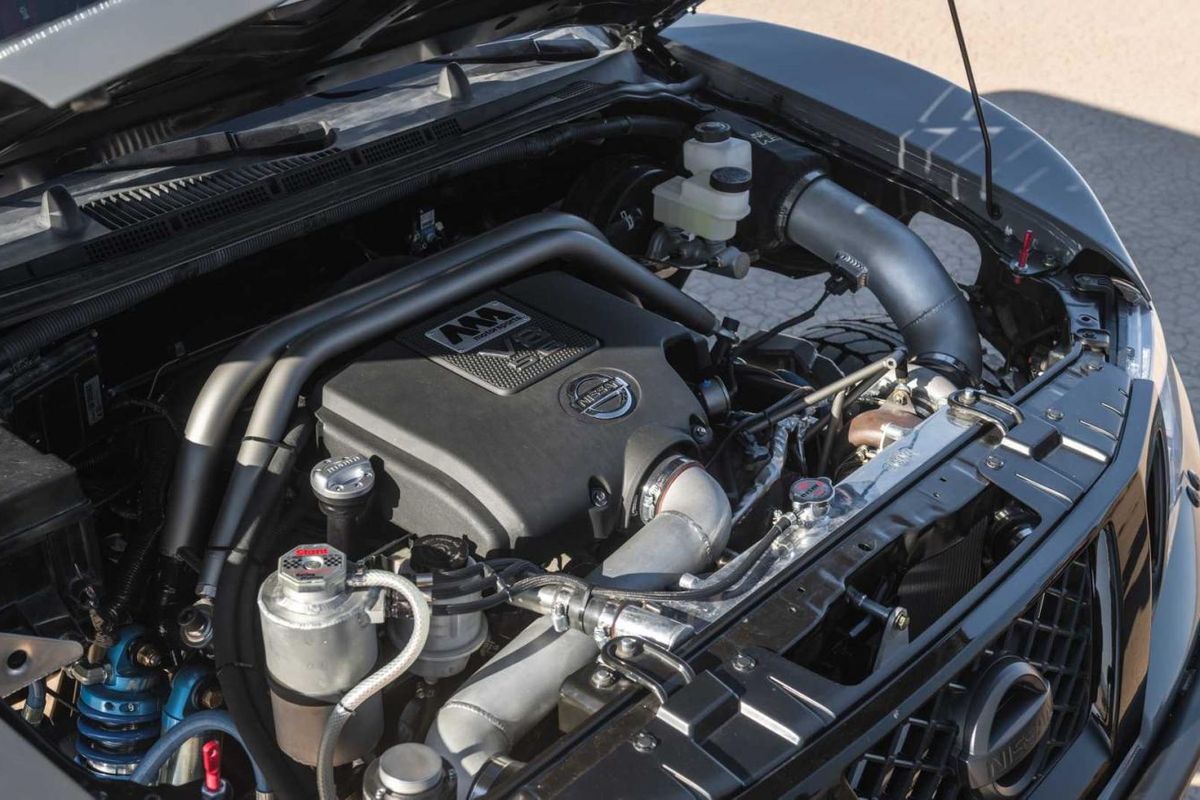
Powering the SEMA Navara is Nissan’s largest capacity V8 engine, which has also been turbocharged. The 5.6-litre V8, which is familiar to South African Nissan customers in the current Patrol station wagon, sees power surge to 447kW and 900Nm, thanks to its Garrett turbocharger and some forged internals.
All that power runs to a rear differential only, via a six-speed manual transmission. If you do get in a spot of bother, there is an air-locker function for the rear-differential, to ensure better traction in tricky terrain.
This 2019 SEMA Nissan show bakkie shows that the previous Navara, to many, remains a more endearing vehicle than the new one.
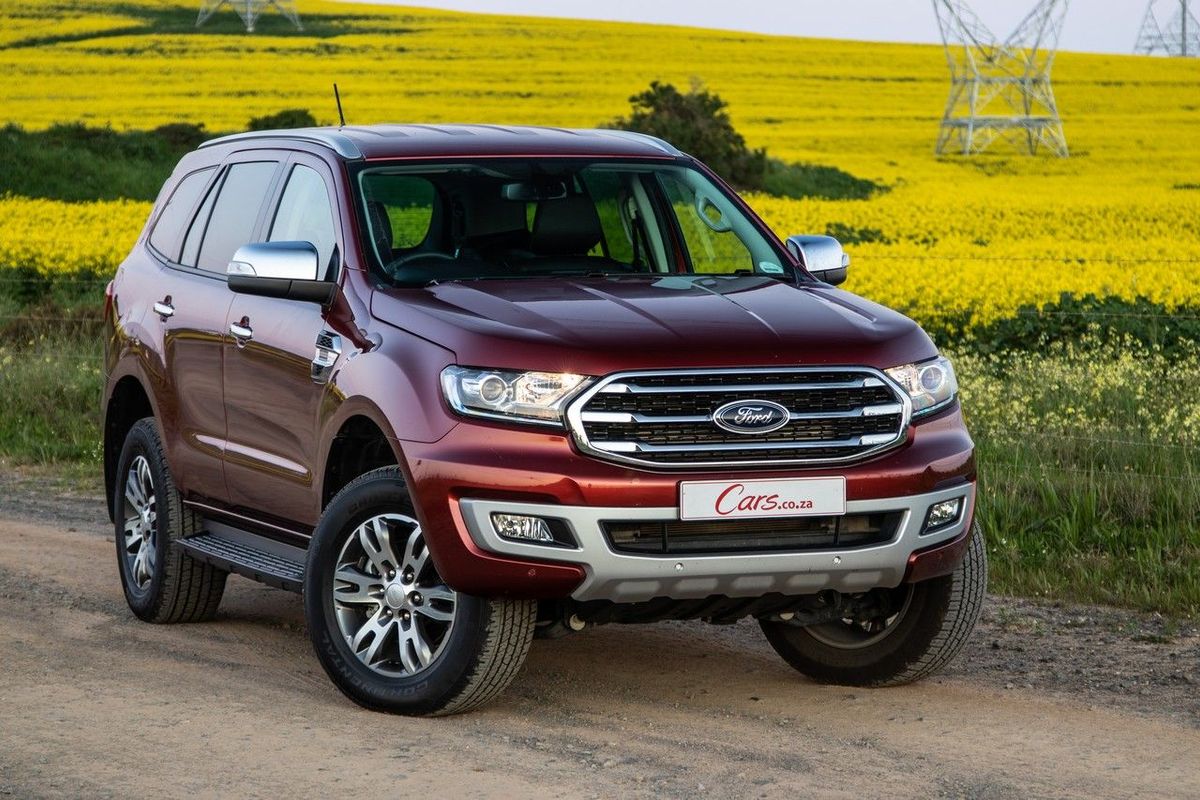
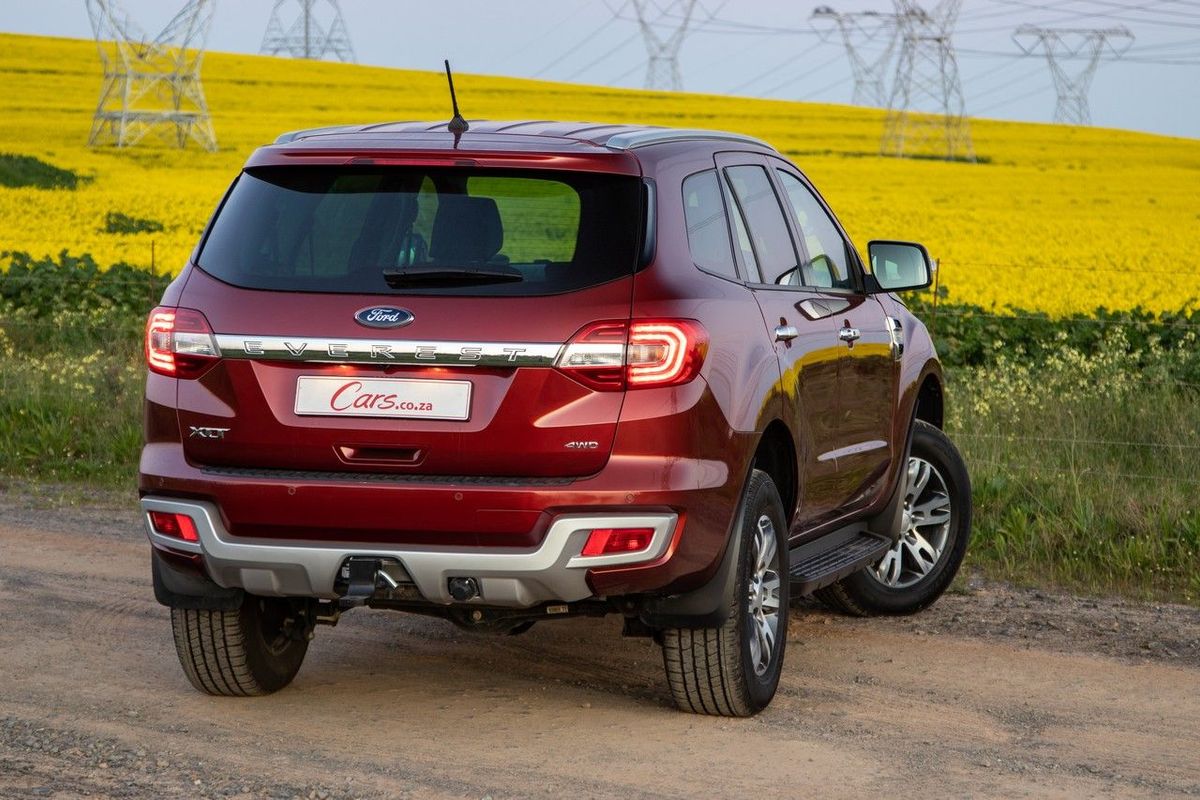
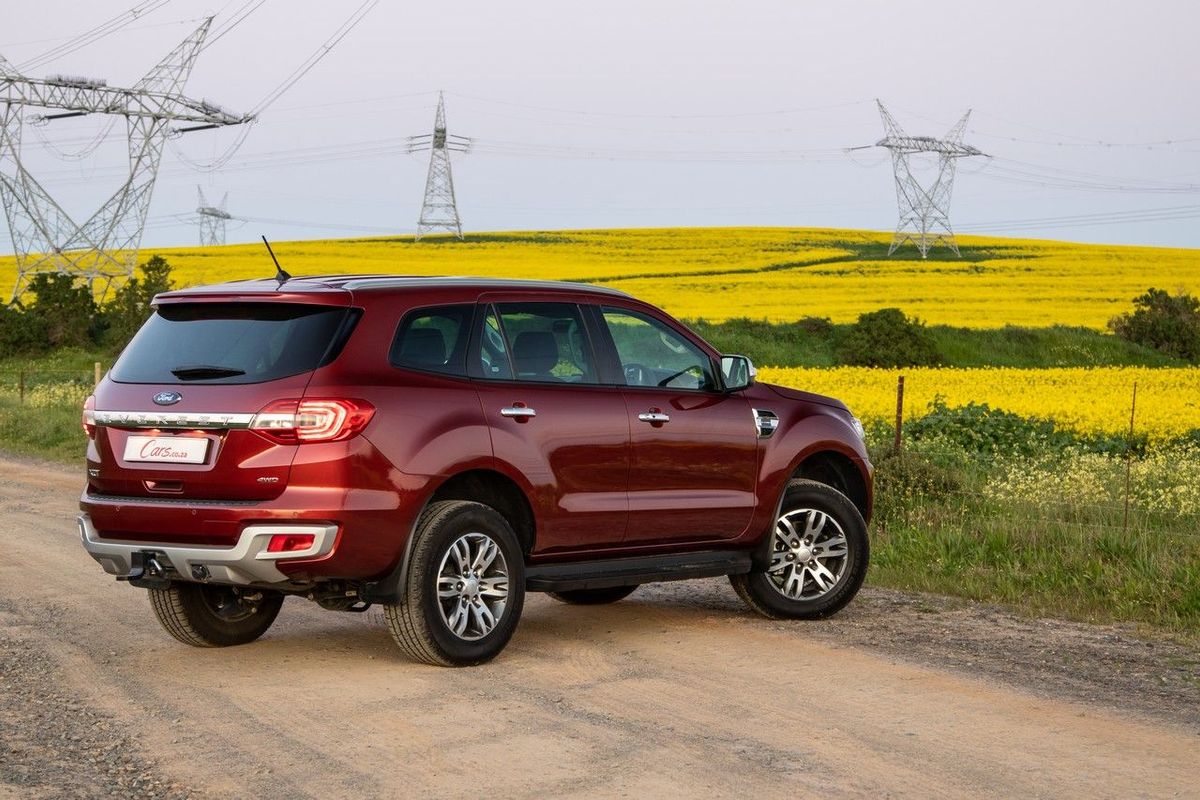
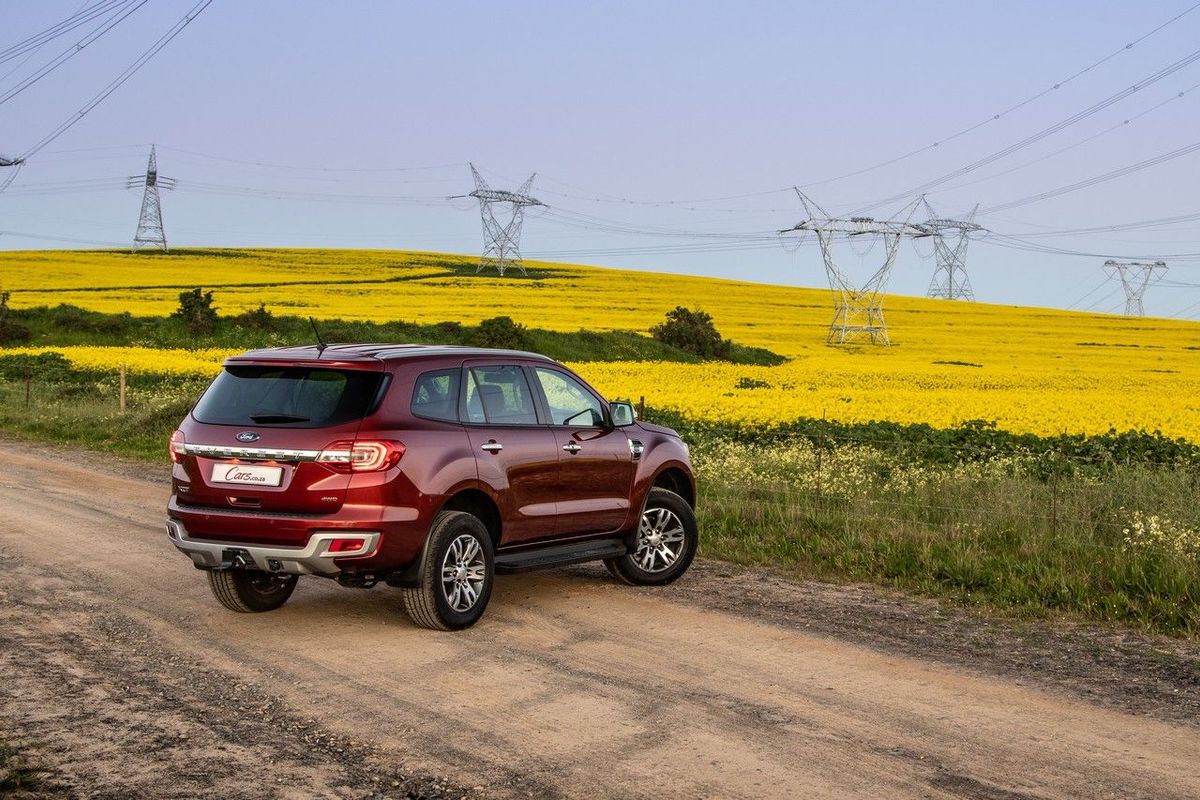
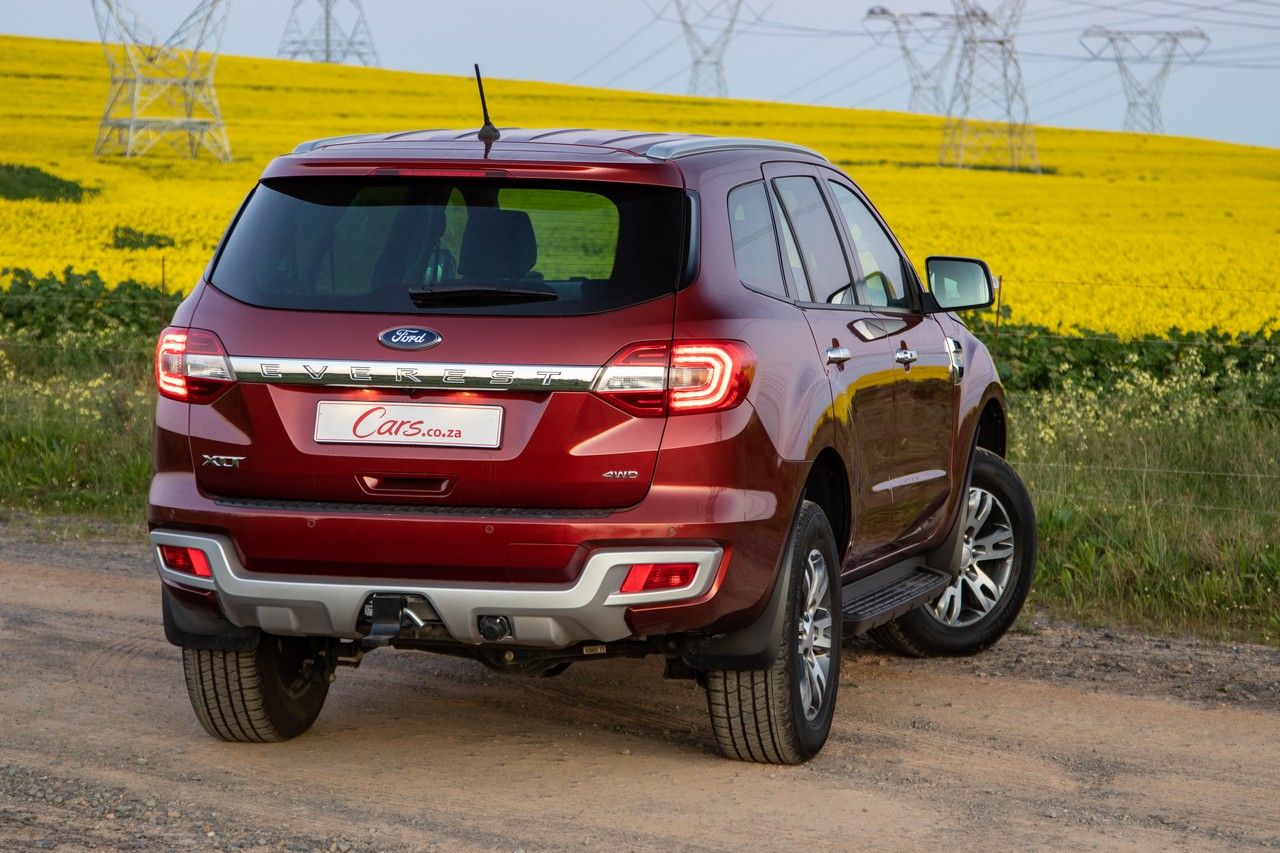
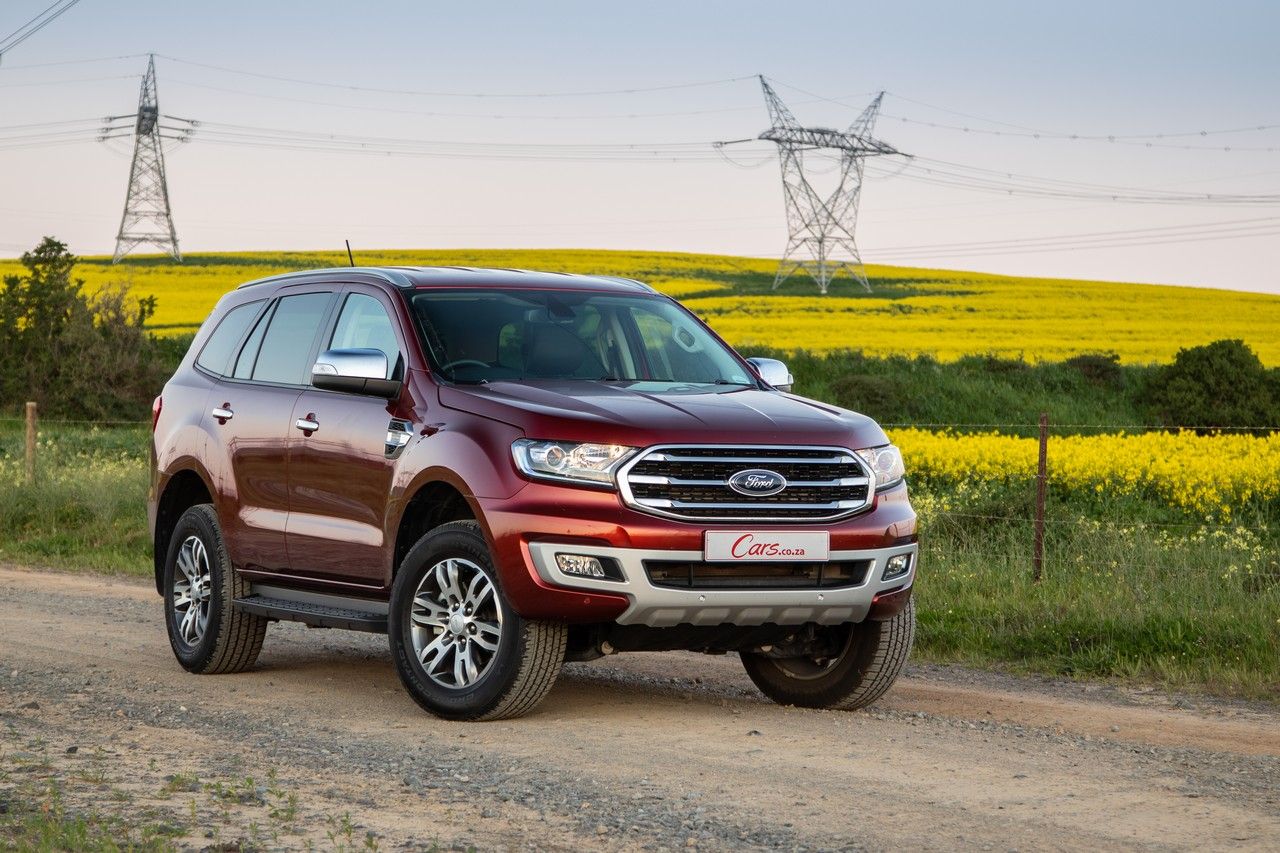
The battle for supremacy in the Adventure SUV segment is a 2-horse race. Of this bakkie-based SUV brigade, the Toyota Fortuner seems untouchable at the top of the sales charts, but recent updates to the Everest have made the Ford a much-improved product. We test the XLT derivative to see if it can close the gap to its Japanese rival.
We like: Spacious and practical, more refined drive, modern infotainment.
We don’t like: Ride still no match for non-ladder-frame SUVs.
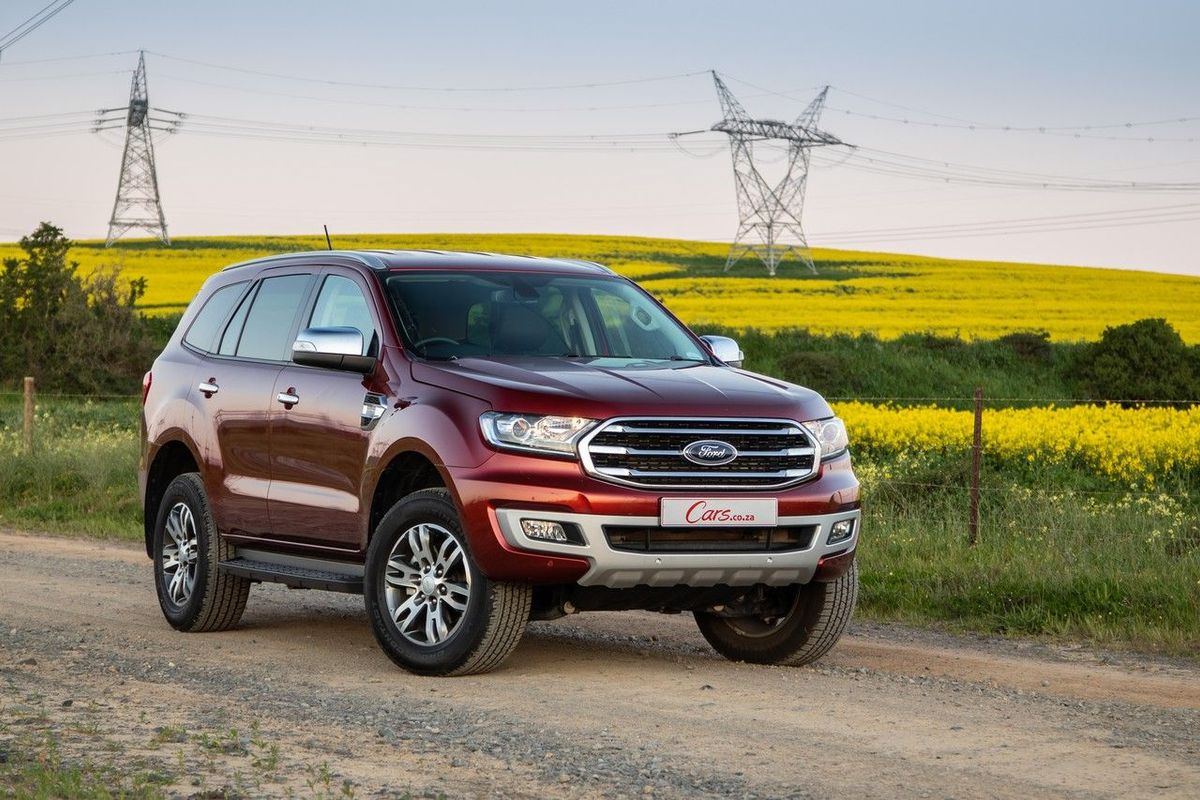
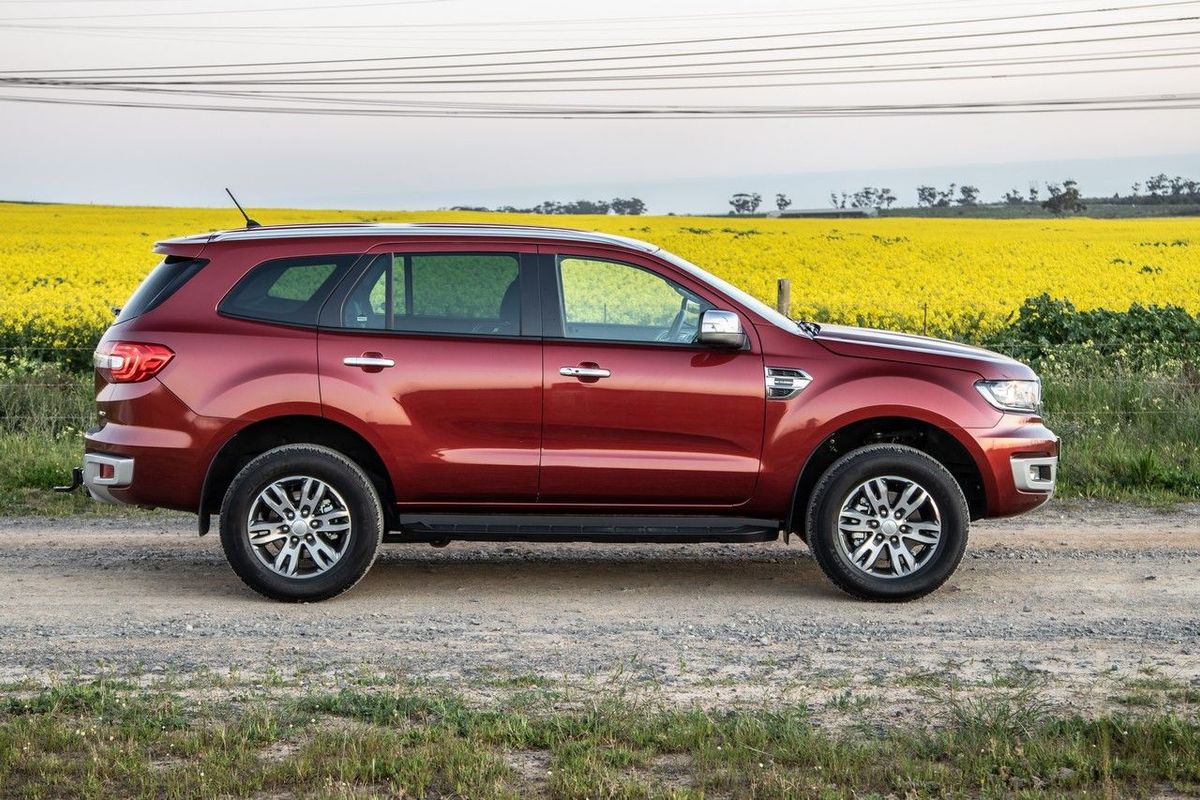
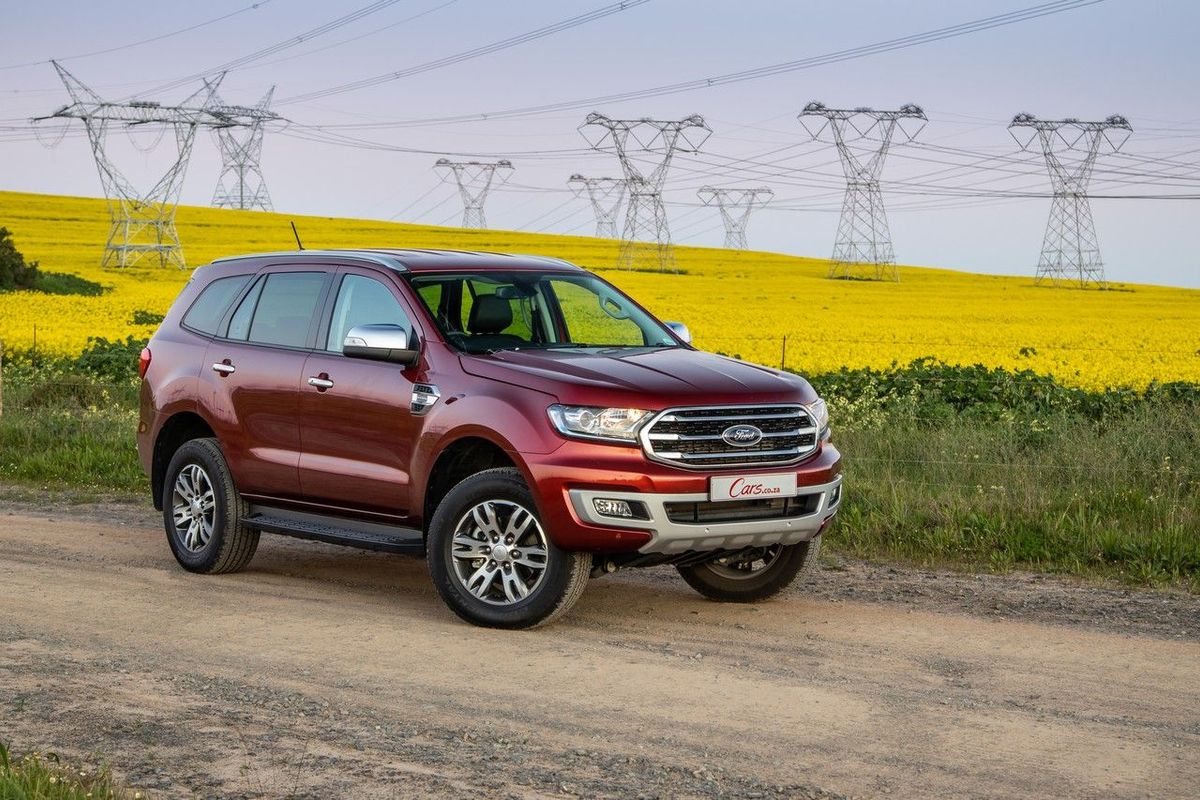
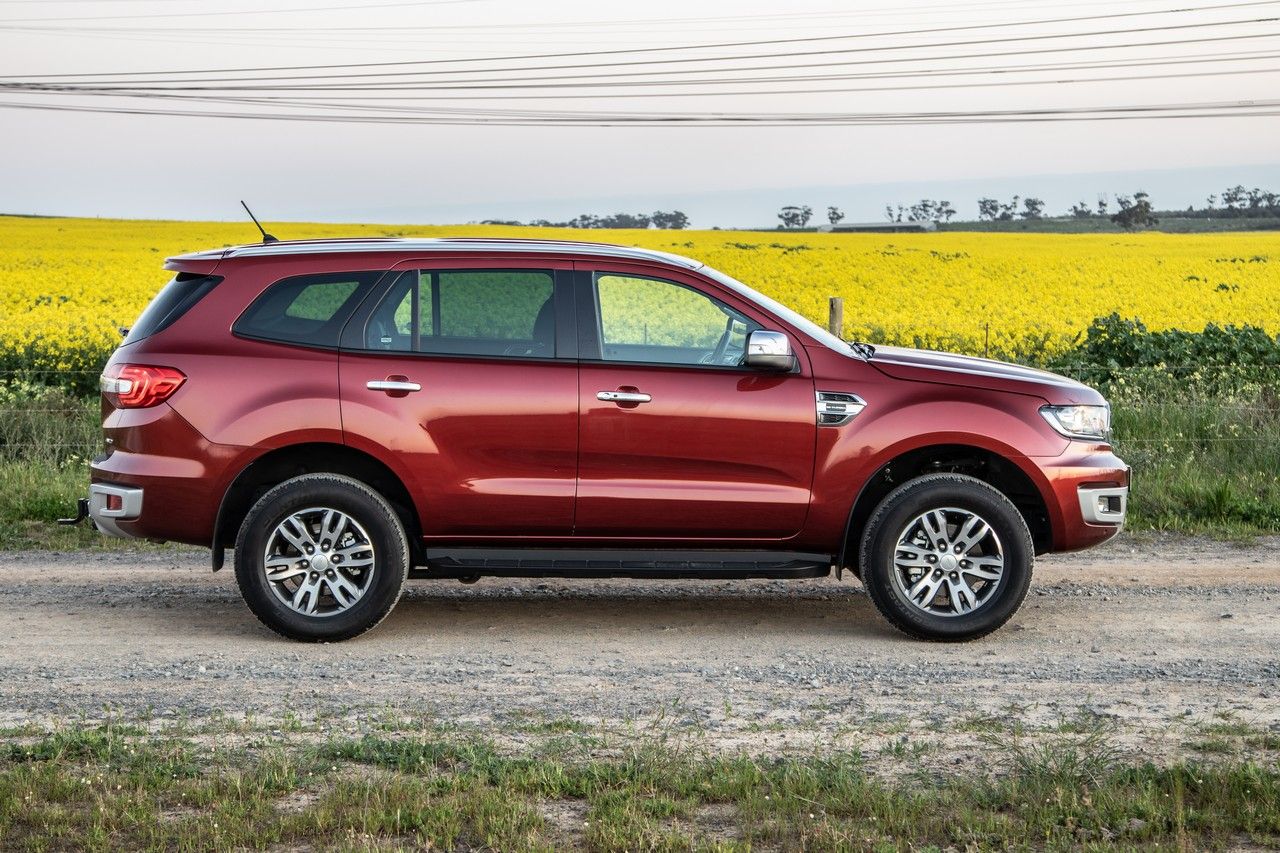
The 2.0 Bi-turbo 4×4 XLT derivative rides on 18-inch wheels; they facilitate comfortable off-roading.
What’s new?
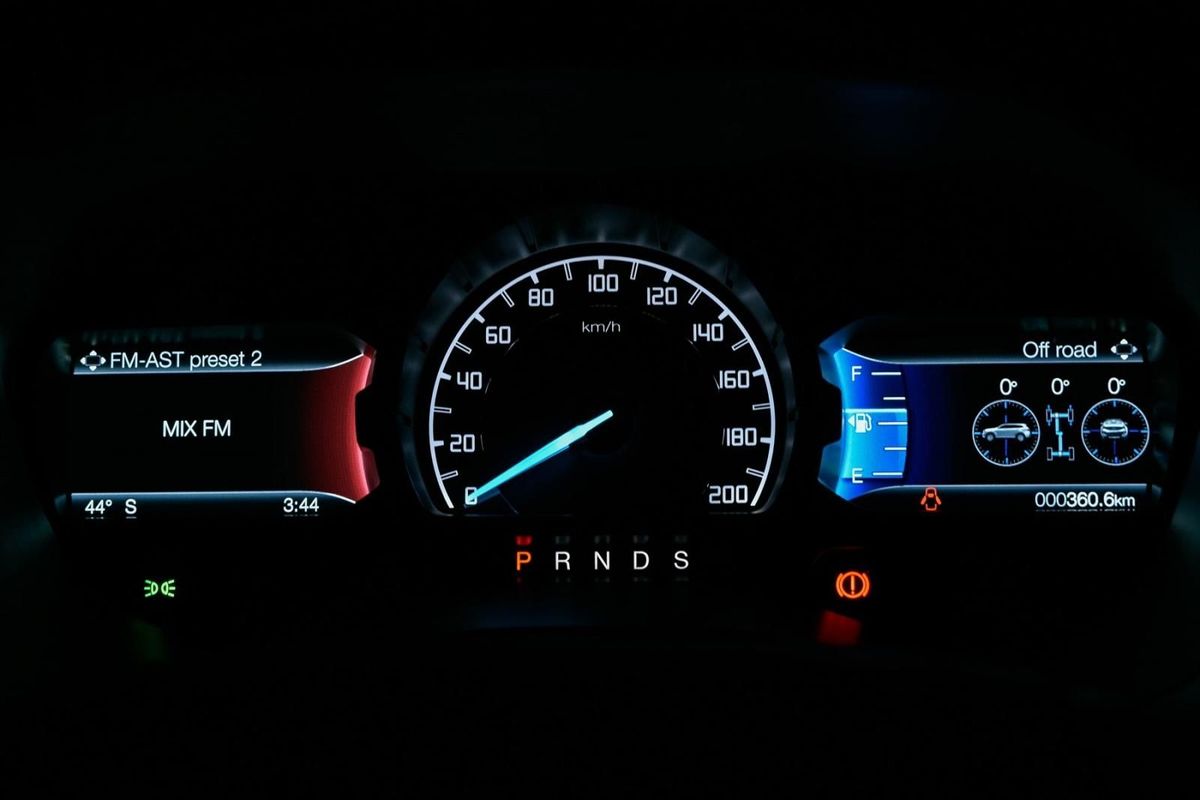
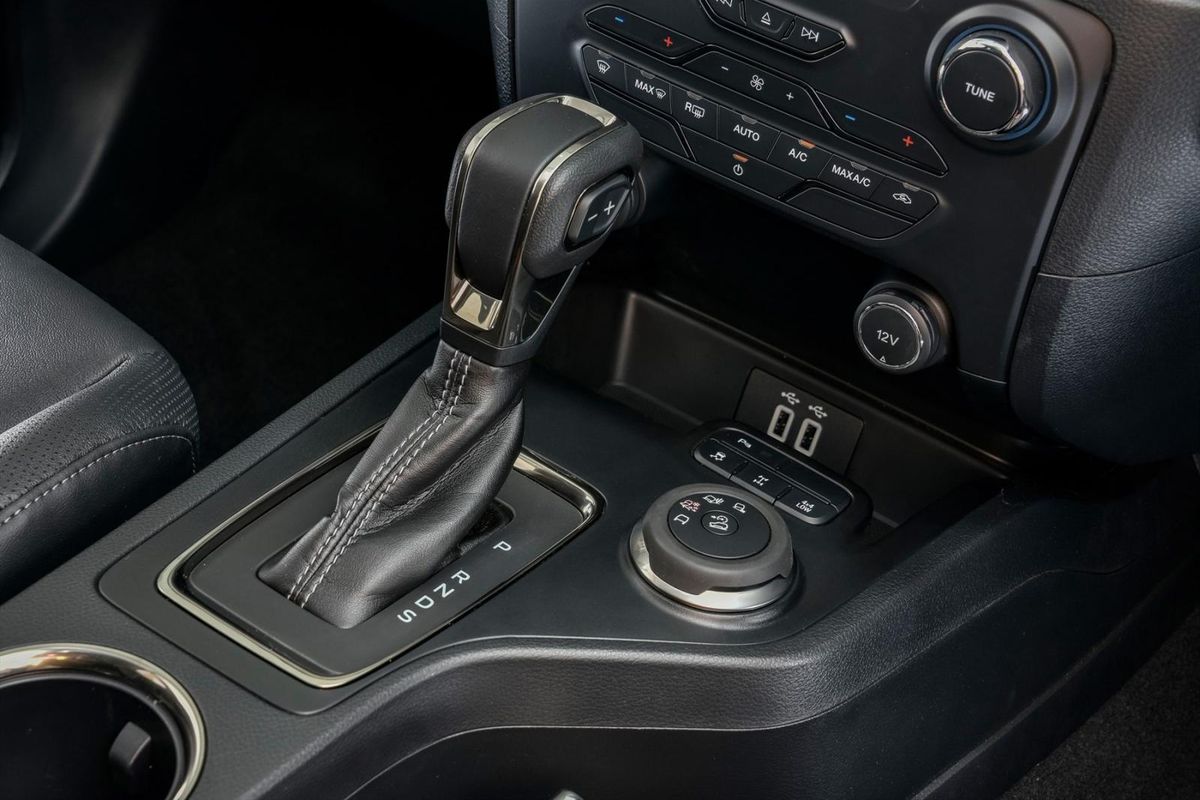
Ford likes to keep its product line-up fresh by applying regular improvements to its model ranges. After the Ranger’s facelift earlier this year, it was the turn of the Everest to get the new bi-turbo engine and 10-speed transmission. The changes don’t end there: Ford also tweaked the suspension to make the big SUV ride better and be quieter on-road. It has further dealt with security concerns by implementing a more secure alarm system.
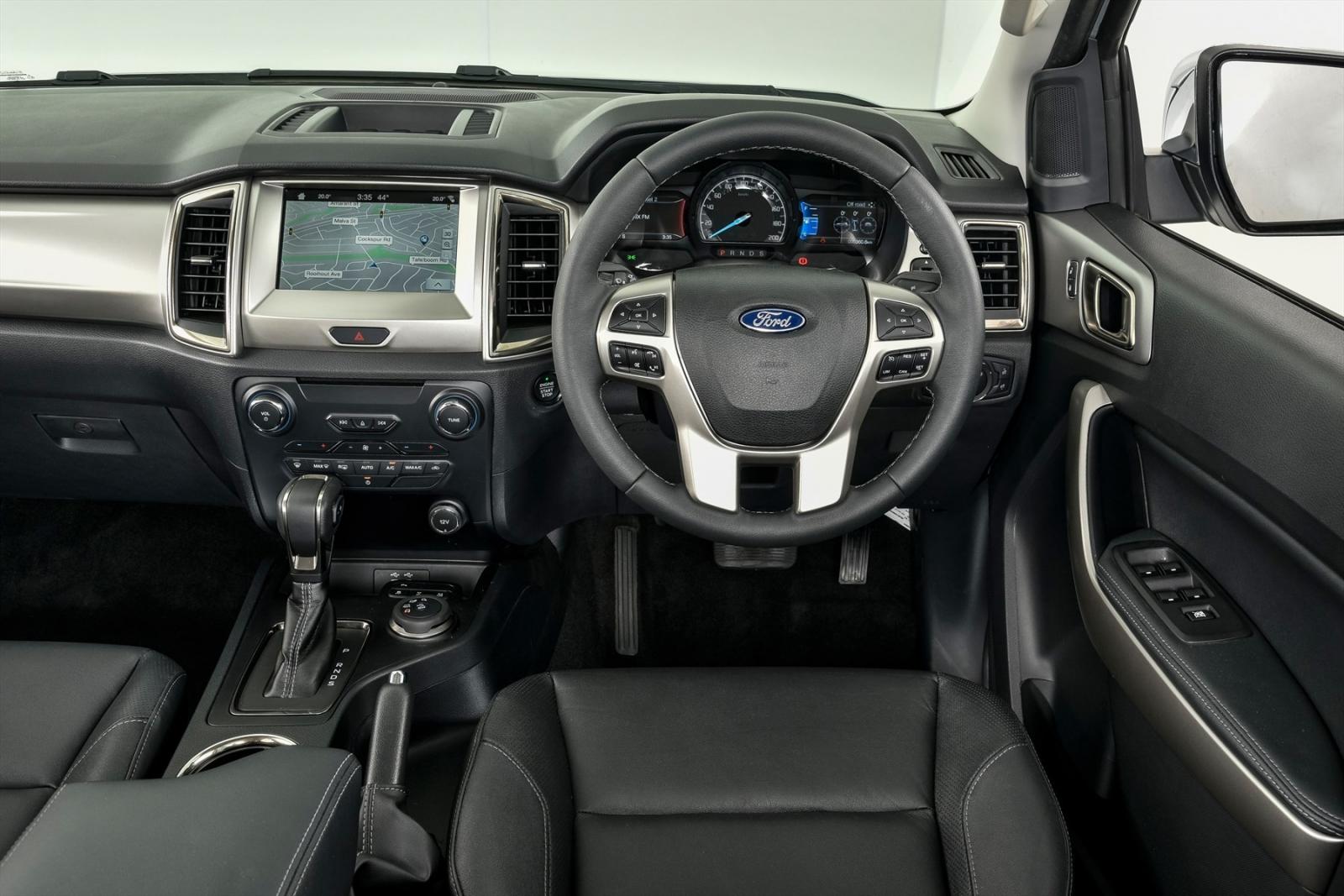
Inside, the 2nd-from-the-top Everest offering is equipped with more soft-touch materials and a high standard of safety equipment. Most of the active safety systems (adaptive cruise control, lane keep assist and blind-spot monitor) are exclusive to the top-spec Limited derivative. By contrast, this XLT version is specified to compete head-on with the wildly-popular Toyota Fortuner 2.8 GD-6 4×4 Auto.
How it fares in terms of…
Performance and Efficiency
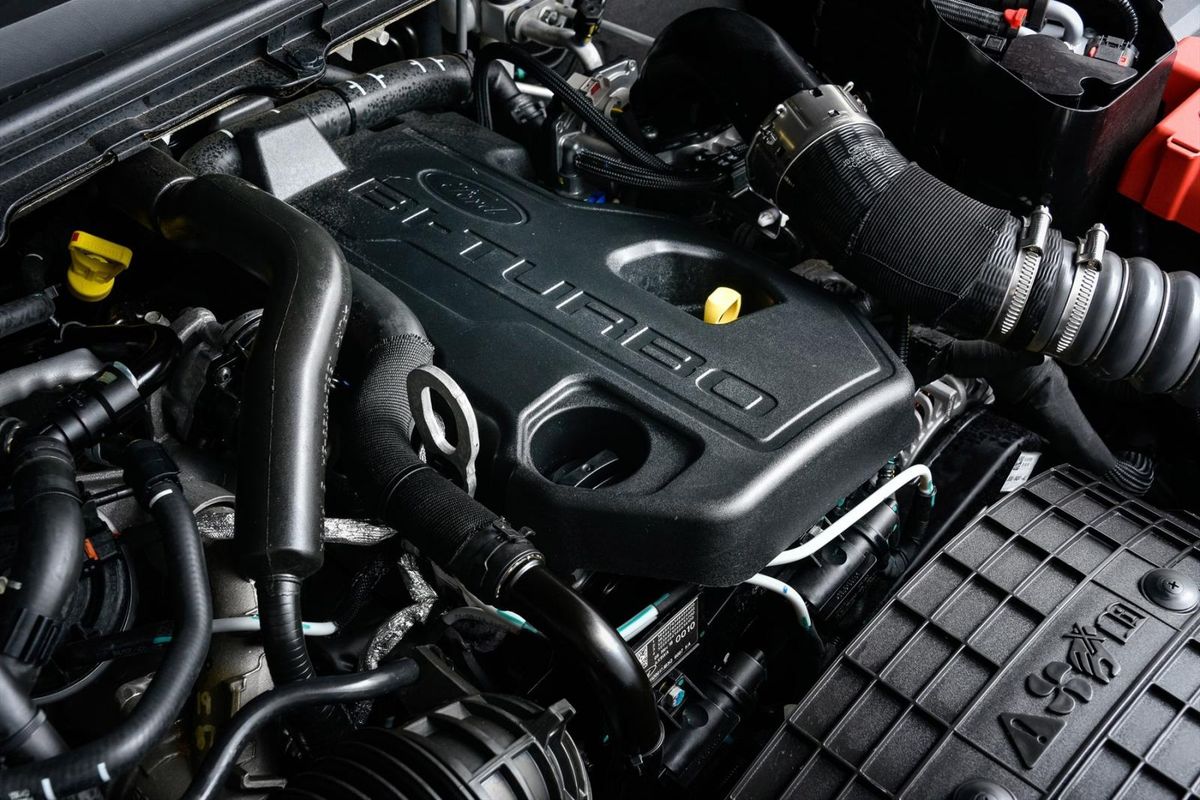
The new drivetrain combination feels far more refined than the old 3.2-litre 5-cylinder and its 6-speed automatic 'box.
When the Amarok arrived on the scene early in the decade, its small-capacity engine (a 2.0-litre bi-turbodiesel) set tongues wagging in the local bakkie fraternity. Despite being very car-like to drive and well-made, the Volkswagen didn't gain much popularity until a beefy V6 version arrived. Ford is hoping to have a better time of it with its new, more powerful 2.0-litre bi-turbodiesel. The trick with the new unit is the 10-speed transmission, which is capable of keeping the Everest at peak torque while shifting through short ratios. The ‘box shifts quickly and avoids those slumps or bog-downs that commonly accompany shifts in a big-rigs like this one. It’s also able to skip-shift (jump a few gears at a time) when necessary…
We strapped a 1-tonne trailer to the Everest (note the towbar is standard, but Ford charges you extra for the towbar ball – which is tantamount to selling you a soft-serve ice cream but levying a surcharge on the cone!) and we did a fair amount of hilly driving to test out the effectiveness of the drivetrain… It certainly feels more comfortable and accomplished than the old 3.2-litre engine and accelerates faster under higher loads too.
As you’d expect with a smaller capacity engine, fuel consumption has improved compared with the old 3.2 litre (with its 6-speed 'box). Even with its higher power output, the 2.0 litre is said to consume 7.6 L/100 km whereas its predecessor was claimed to use 8.2 L/100 km. In real-world conditions, we achieved an average of just over 9 L/100 km in town and, on a return trip from Cape Town to Knysna, we saw it drop to 8.1 L/100 km.
Ride and handling
Everest rides better thanks to softer spring rates (each derivative has bespoke settings) and repositioned anti-roll bar.
A few simple tweaks to the anti-roll bar (in particular, its location) has notably improved the Everest’s ride quality. The changes have allowed Ford to implement a softer spring setup for the Everest (each derivative has bespoke settings) while reducing the propensity of the bakkie-based SUV's body to roll when cornering. It’s less cumbersome on-road and negates some leaning/high-riding sway that is inherent to a ladder-frame chassis.
All of which moves the Everest further ahead in terms of being the most comfortable adventure SUV to drive on a long journey or manoeuvre in the city. The steering feels sharper than in the pre-facelift model, which was a bit floaty around the centre. It is still light enough when off-roading, but is more convincing in everyday use. The changes haven't diminished the great off-road ability (helped by switchable off-road modes and low-range).
Practicality
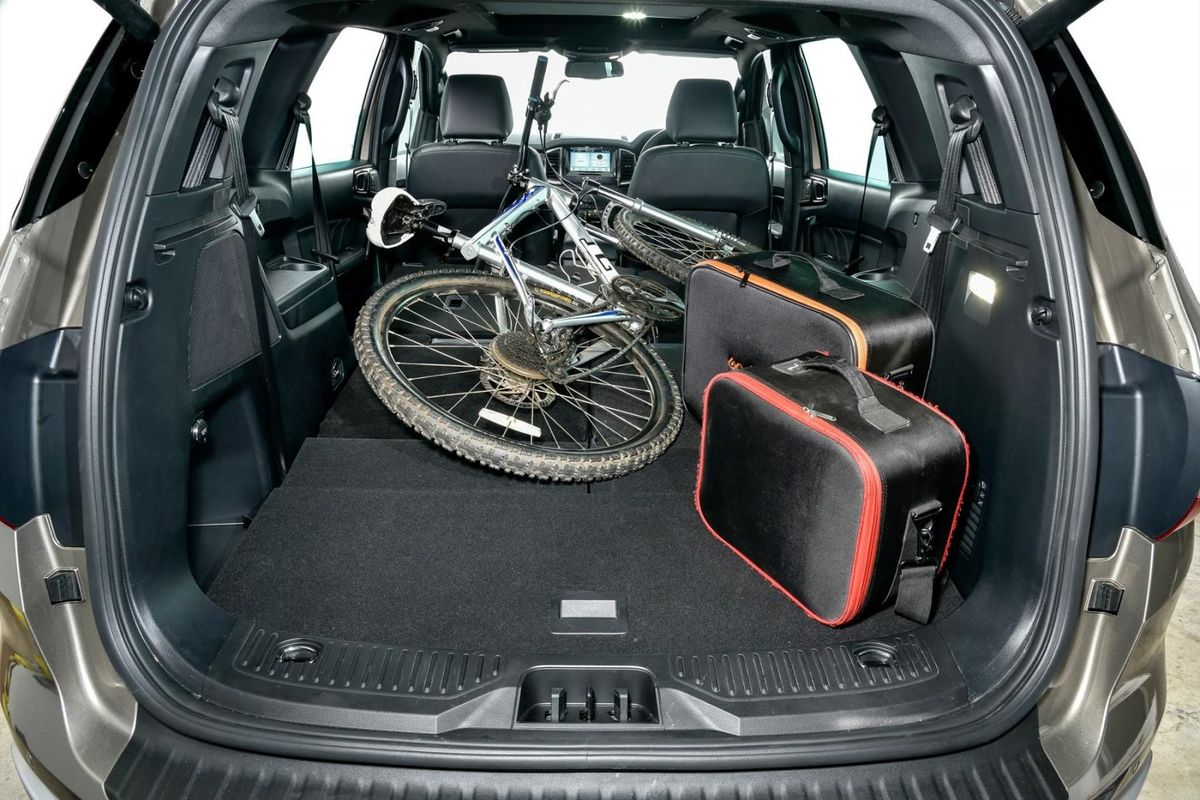
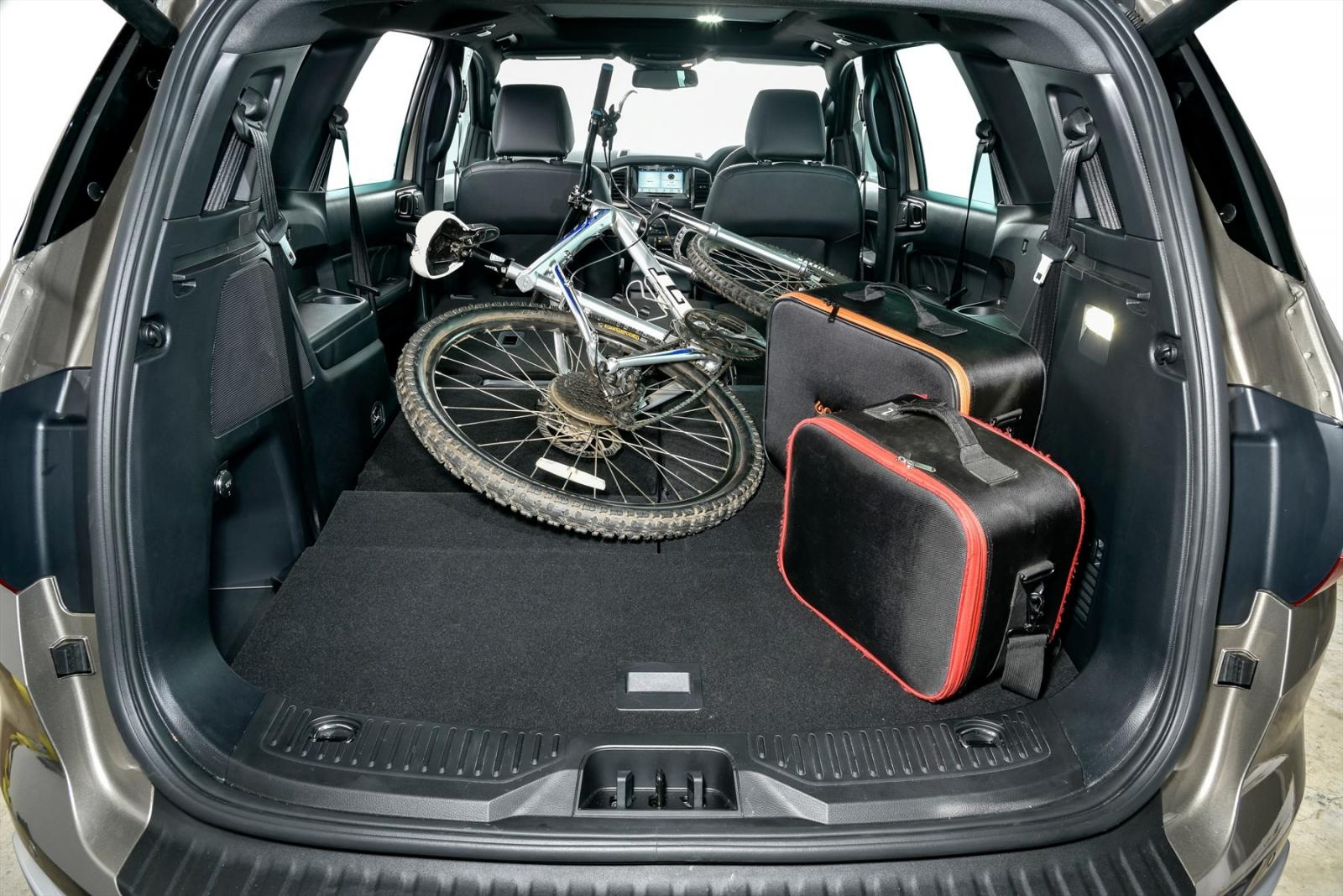
There is a huge loading space with all the seats flat, note that the pictured bicycle is very small.
In the bakkie-based SUV category, the Everest sits atop the pile in terms of exterior dimensions and, therefore, interior space. It’s longer, wider, taller and has a longer wheelbase than the Fortuner, for example. This all translates into more space for passengers and their detritus. The seats in either rear rows fold flat into the floor to create a huge utility loading space of 2 010 litres. The middle row, meanwhile, can slide fore and aft on rails and the seatbacks are able to recline (for further comfort). The XLT version makes do with manual levers to fold the seats, whereas the Limited has an electric-folding function for the 3rd row. The same goes for the tailgate, which is manually operated in the XLT and electric in the Limited.
Interior comfort
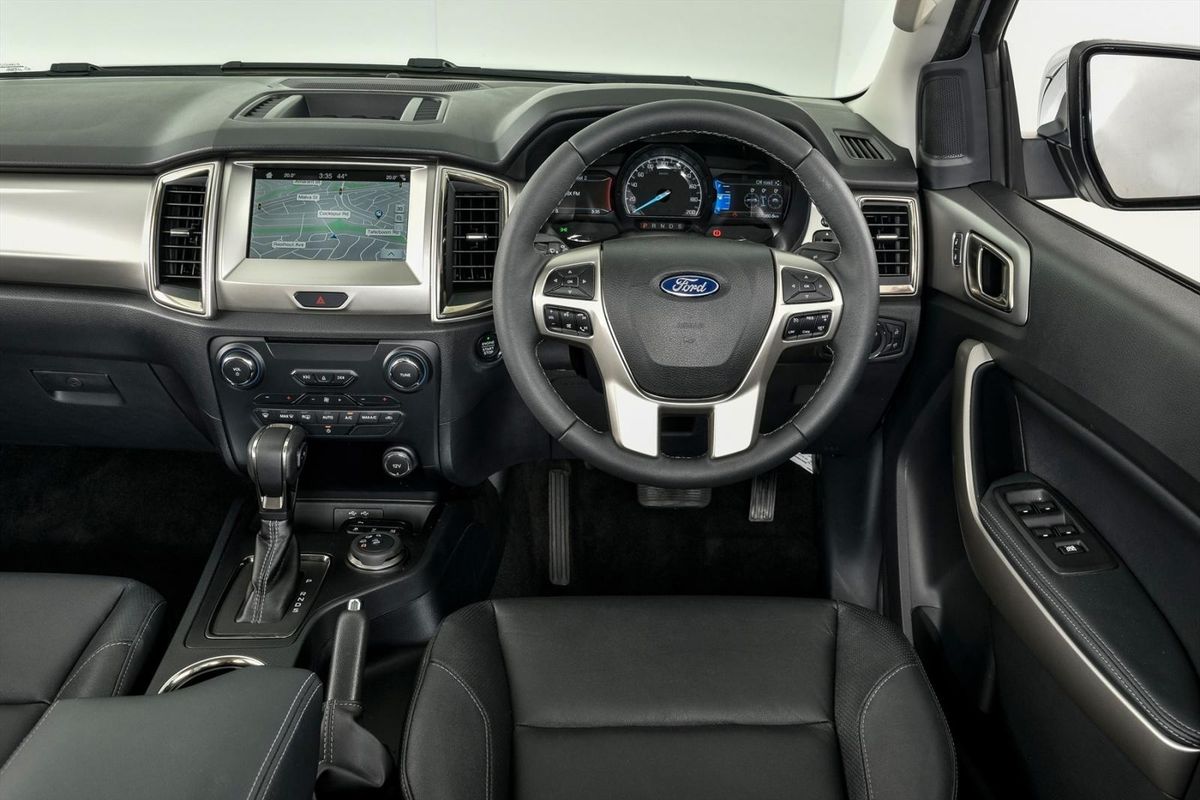
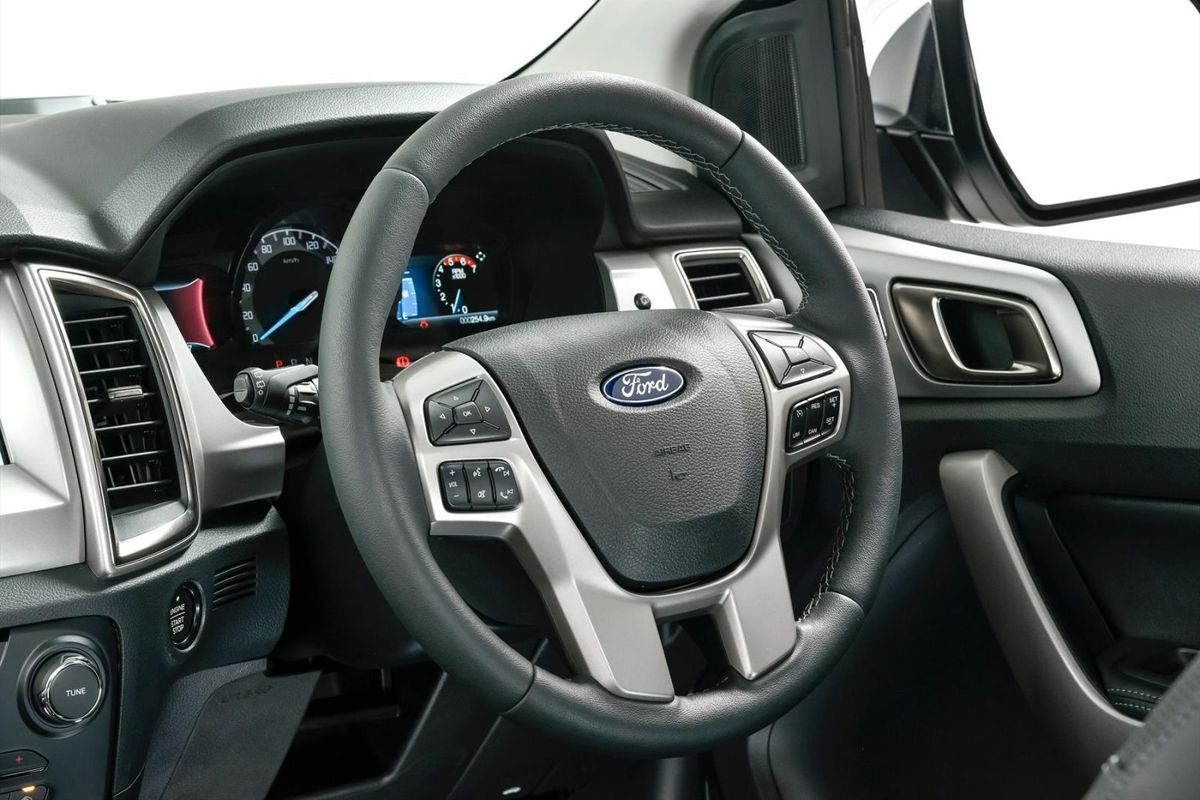
Standard leather upholstery gives the updated cabin of the 2.0 Bi-turbo 4×4 XLT a distinct "upmarket off-roader" ambience. For something that’s built to travel to hard-to-reach locations (and likely to undergo punishment en route to those destinations), the Everest is plush inside. You’re not going to get premium-SUV trim materials (such as in a VW Tiguan or Discovery Sport) in the Ford, but its interior quality is every bit as good we expected.
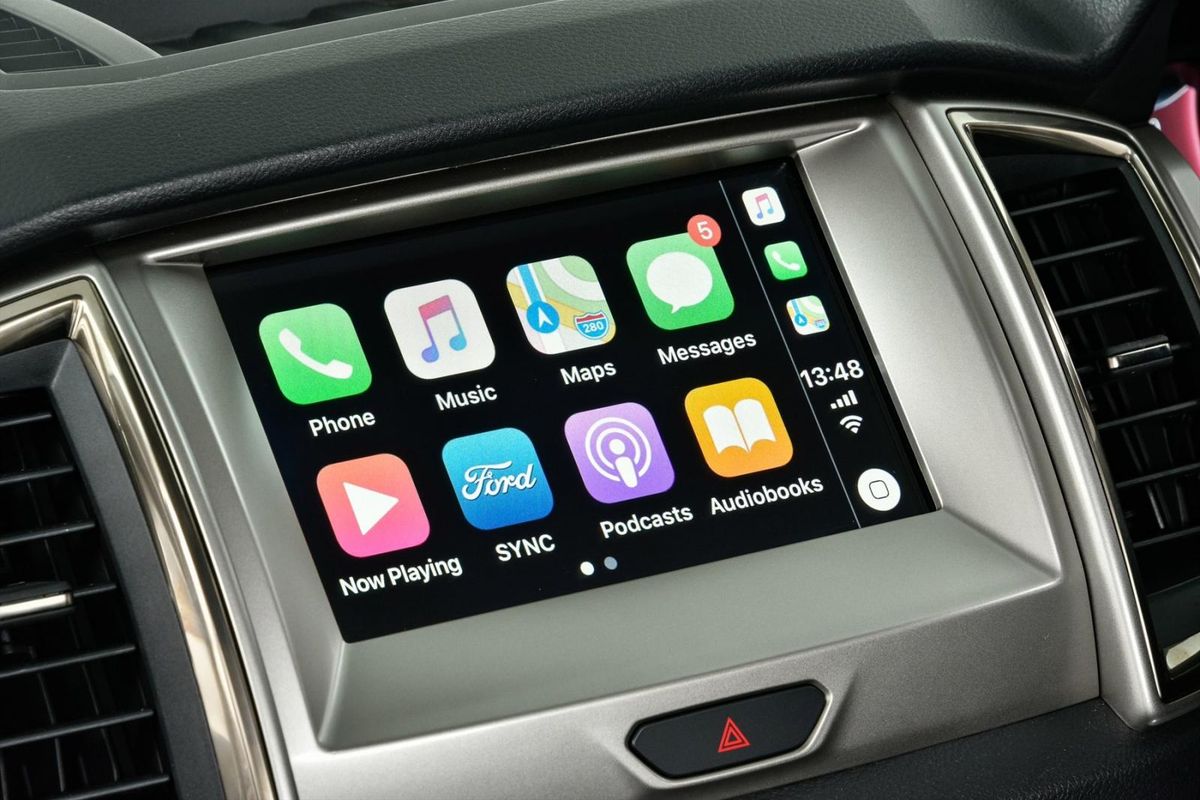
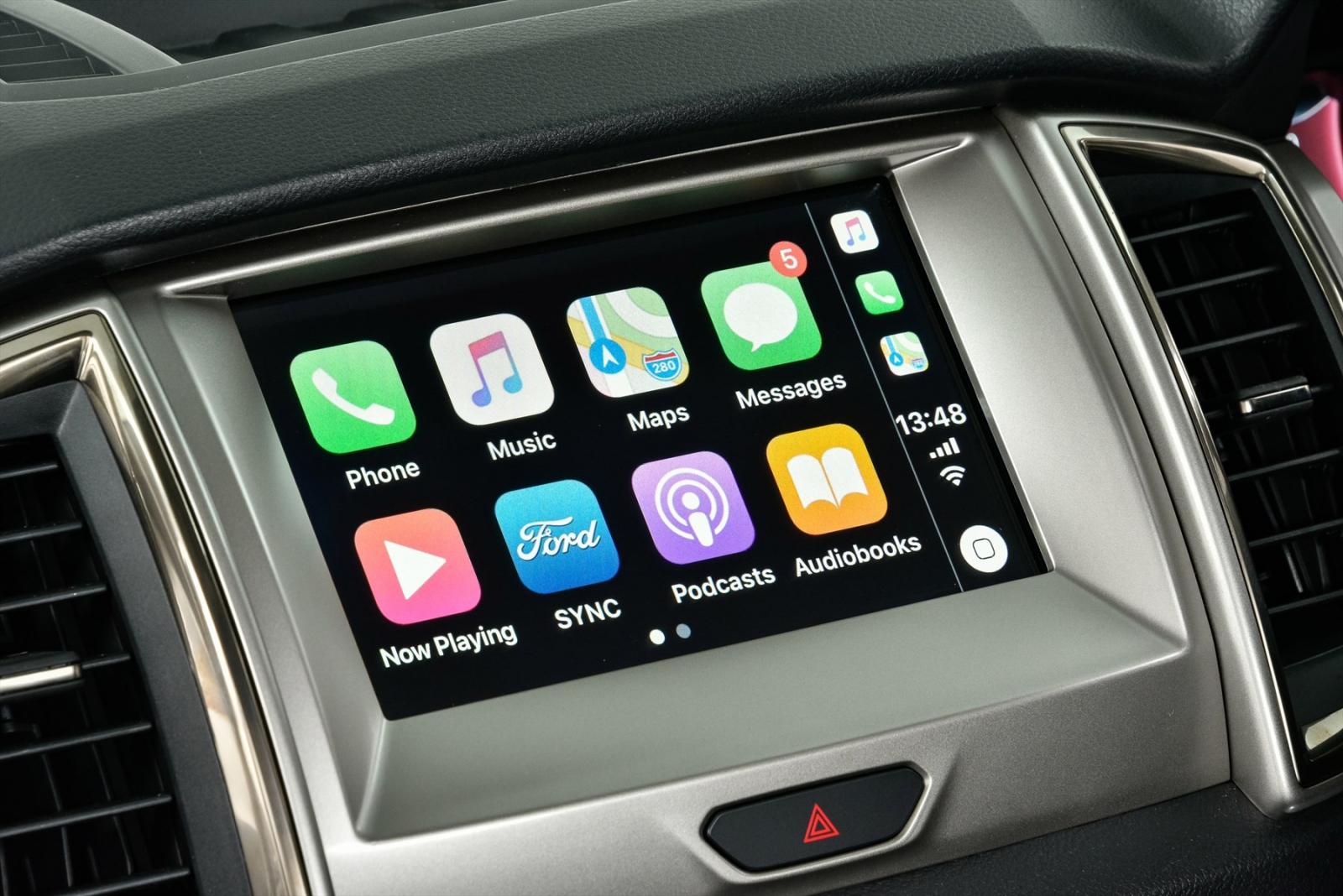
The infotainment system sets the standard for this segment: the SYNC3 menu is easy to use, Apple Carplay- and Android Auto compatible and includes off-road-track maps. The 2 USB ports up front are useful, but you don’t get a 230V plug in the XLT derivative (the Limited does get one).
Apple Carplay and Android Auto seamlessly connect through the 2 front USB ports.
In terms of passenger safety, the 2.0 Bi-turbo 4×4 XLT comes equipped with 7 airbags, stability control, hill-start assist and rollover mitigation. It doesn’t include the fancy active safety systems fitted to the flagship Limited version, but the XLT is still a match for the segment competitors…
A Thatcham Category 1 alarm upgrades the security system to the highest rating possible on the Thatcham scale of vehicle security systems.
Pricing & Warranty
The Everest 2.0 Bi-turbo 4×4 XLT is priced at R701 500 (November 2019). Ford improved the length of the service plans it offers on its models recently; the Everest comes with a 4-year/120 000 km warranty and a 6-year/90 000 km service plan.
Verdict
Only Ford SA's after-sales and reliability record is stopping the Everest from becoming the top seller it should be.
No, the Everest is not the top-selling adventure SUV in the market, but, as a product, it strides ahead of its rivals with improved ride quality and drivetrain capability… It is the most advanced vehicle in its class, as well as the most spacious and practical offering with more interior space than its competitors and a decidedly better infotainment system. There isn’t even a surplus in the price for the Everest against the competing Fortuner.
However, this segment is defined by the perception of reliability more than the availability of the latest gadgetry, which at least partly explains why the Toyota Fortuner continues to dominate this segment. Ford’s reliability record and after-sales struggles are well documented and the findings of our Cars.co.za Ownership Satisfaction Survey (even the most recent data) underlines the Blue Oval's predicament. Having said that, there are signs that Ford is gradually turning things around: customers are experiencing improved service from dealers and better reliability. That augers well, because the Everest is easily the best product in its segment; it deserves to close that big sales gap to the Toyota Fortuner, even if only partially.
The nation’s capital wants to attract more motoring capital with a special automotive zone.
Tshwane wants to become the old Detroit of Africa. As part of government’s urgent recognition that South Africa’s stalled economy requires a reboot, the new Tshwane Automotive Special Economic Zone (SEZ) has been launched.
President Cyril Ramaphosa, fresh from his victorious supporter visit to the Springboks in Japan, announced the new venture.
Although it is not located near a major port, Tshwane has become a powerful automotive assembly and supplier hub. BMW, Ford and Nissan all have substantial manufacturing facilities there and produce a great many more vehicles for exports, than they do for domestic delivery.
The government wishes to incubate this Tshwane automotive assembly momentum by creating a special zone. As such the Tshwane Automotive Special Economic Zone (SEZ) will see the first phase of its development in land adjacent to Ford’s Silverton facility, with the American company becoming a chief partner and beneficiary.
The initial project will see the development of an industrial supplier park, servicing the automotive industry, on 81 hectares of land. Projected employment growth with this first phase, is calculated to equal 6 700 new jobs.
Nine unnamed companies have committed to entering the Tshwane Automotive Special Economic Zone by January of 2021.
Broader development could see up to 70 000 possible new job opportunities, as the Tshwane Automotive Special Economic Zone is expanded to 161 hectares in future.
South African vehicle exports are surging. Last month South Africa built 41 277 vehicles for export. Some of the individual model numbers are enormous. Ford exported 8 133 Ranger bakkies in October and it will be the new development’s anchor tenant.
The more quality local suppliers Ford can find for its componentry, the less vehicle content it must import – maximising the profit opportunity on each Ranger exported. By having a space that is specially zoned by government for automotive industrial activity, Ford is expecting new suppliers to come online and existing contractors to possibly expand their capacity.
Geographic proximity is also key. The closer suppliers are to final assembly the less lag there is in the supply chain. It also lowers the overall risk of transport induced disruption.
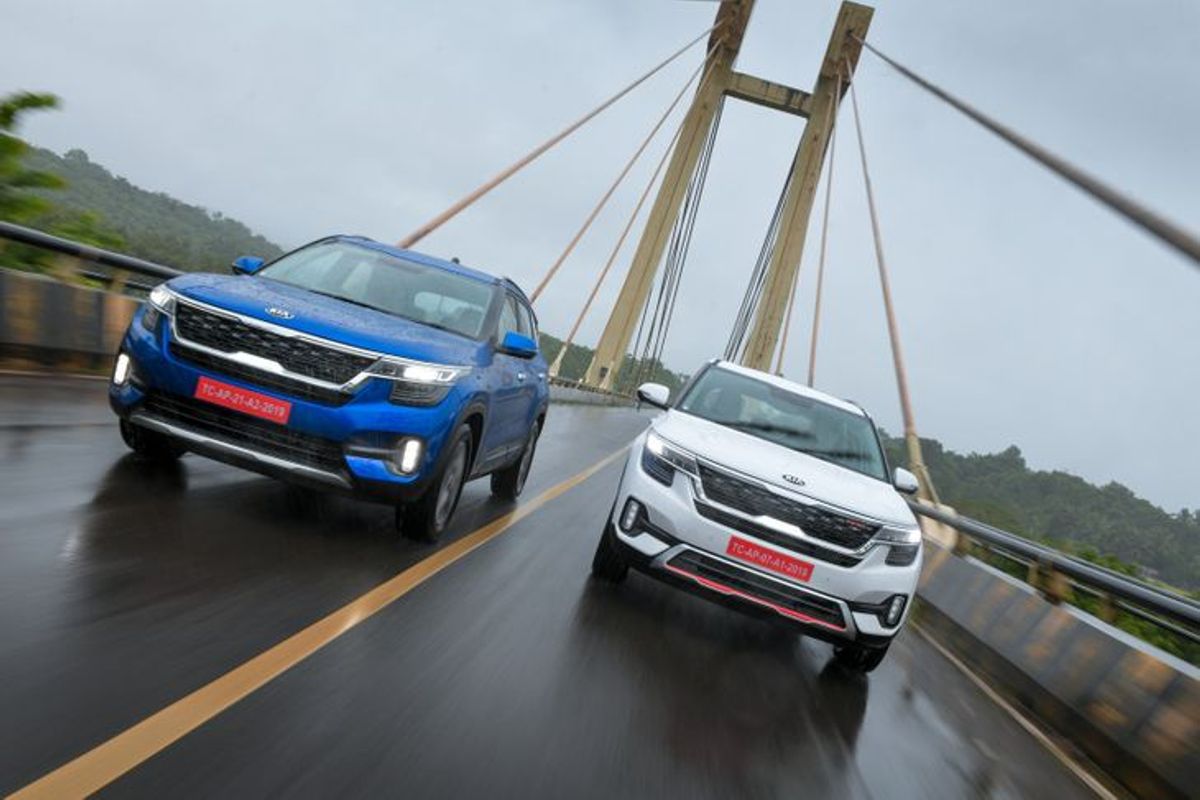
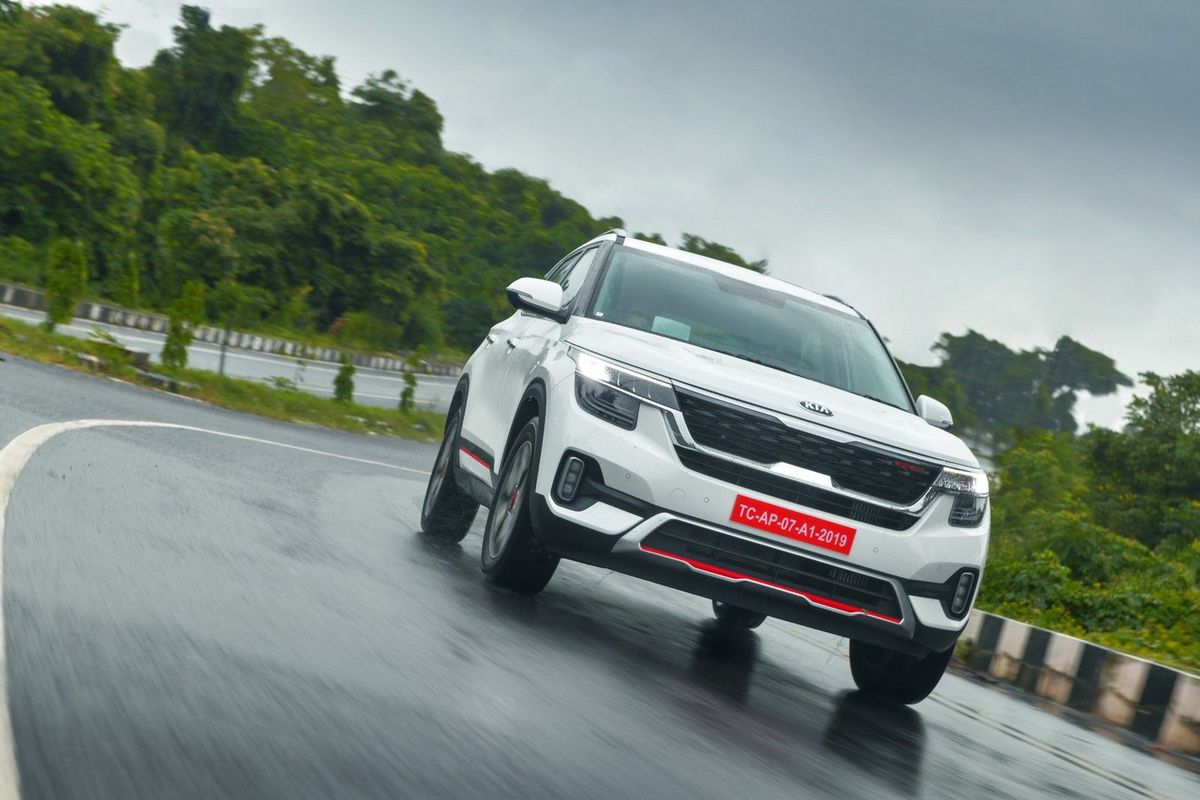
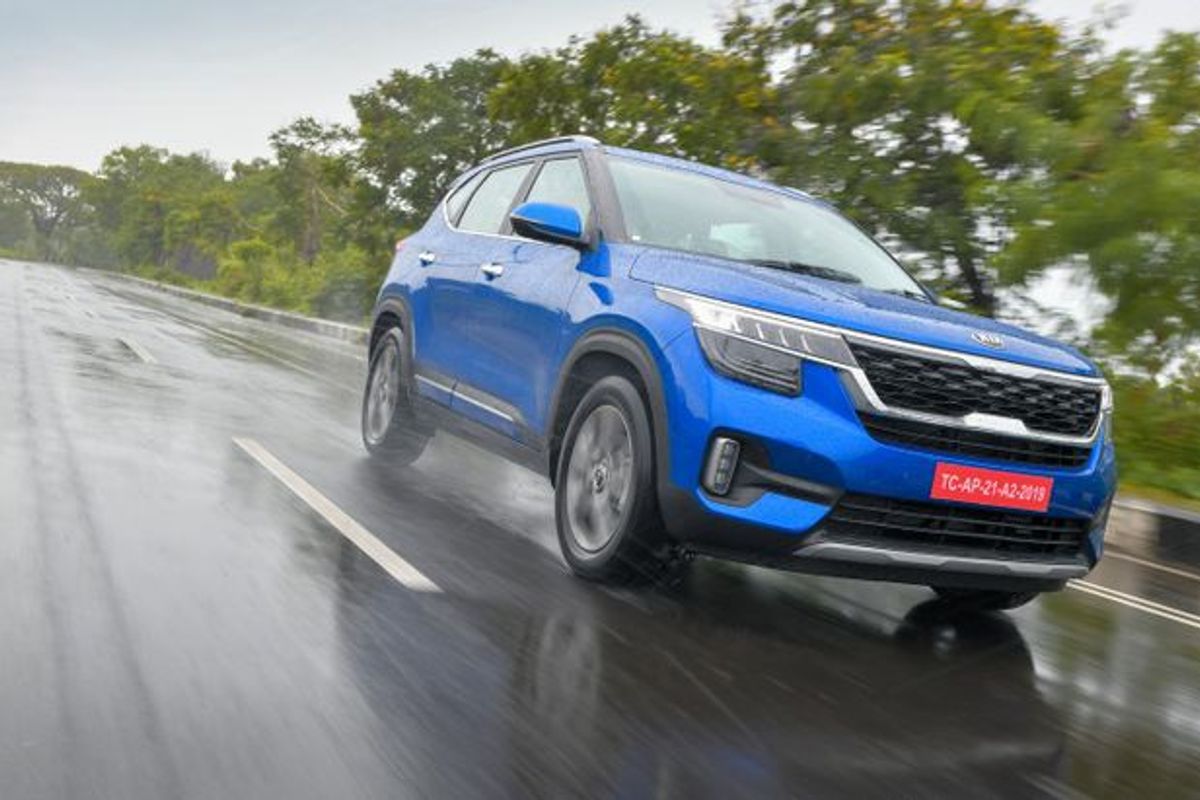
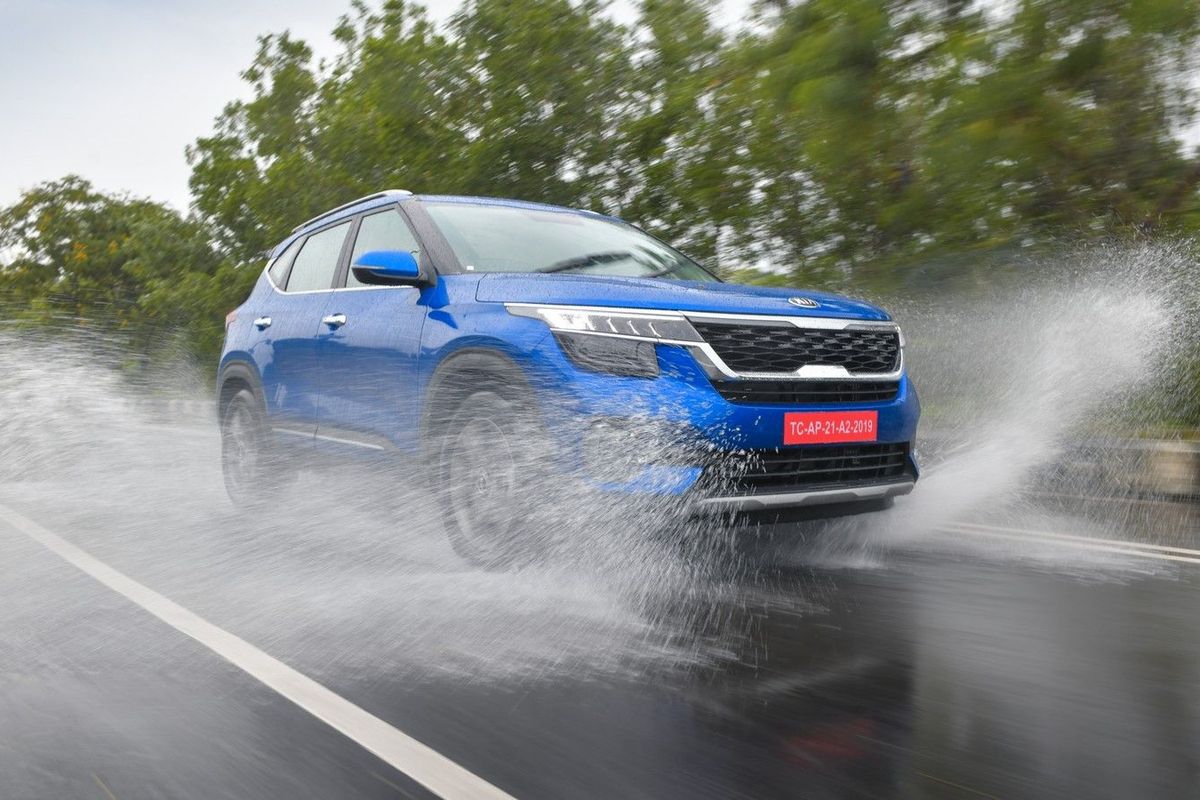
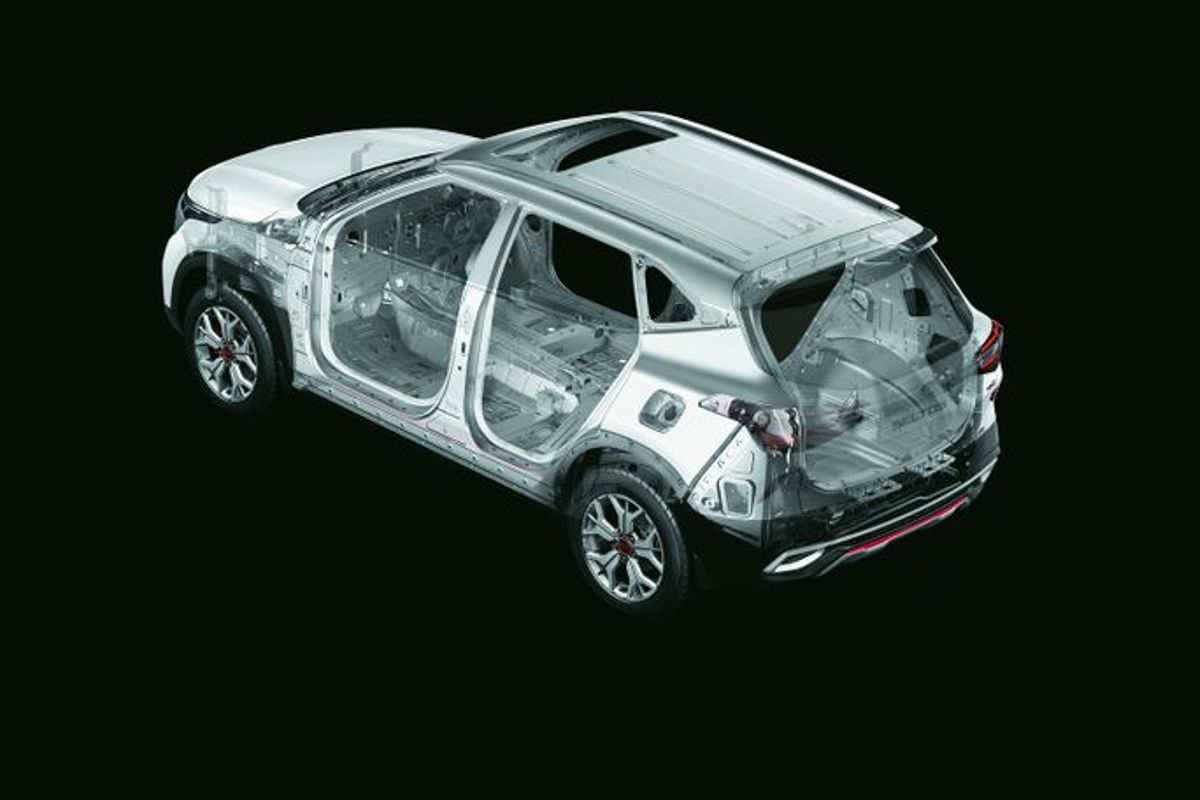
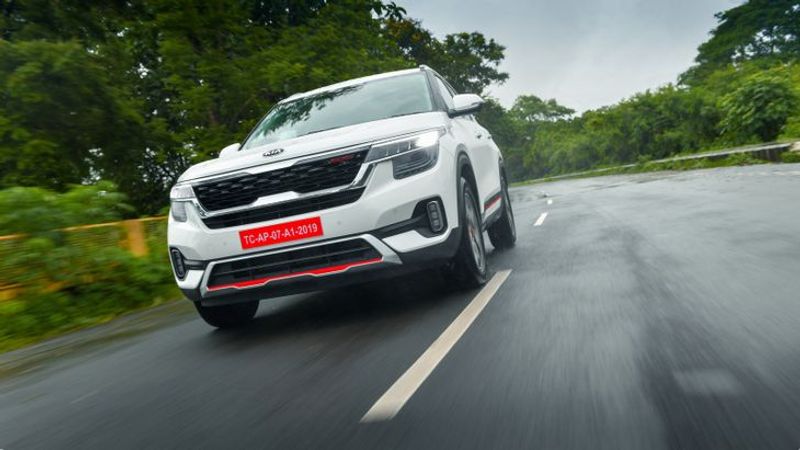
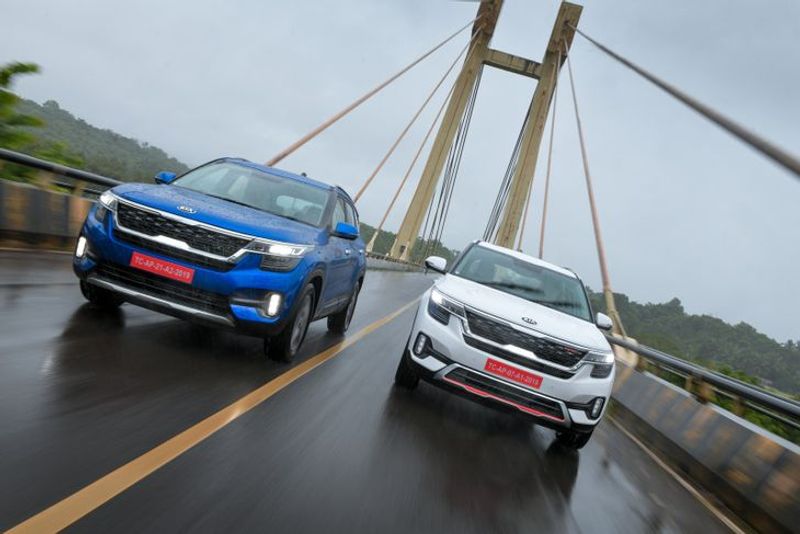
After the departure of the Soul, Kia Motors SA hasn’t offered a product in the bustling compact family car segment. But that's about to change with the arrival of the new Seltos. We travelled to Bangalore, India to watch it being built and get a quick feel for the newcomer, which will be released in Mzansi in the latter half of November 2019…
What is it?
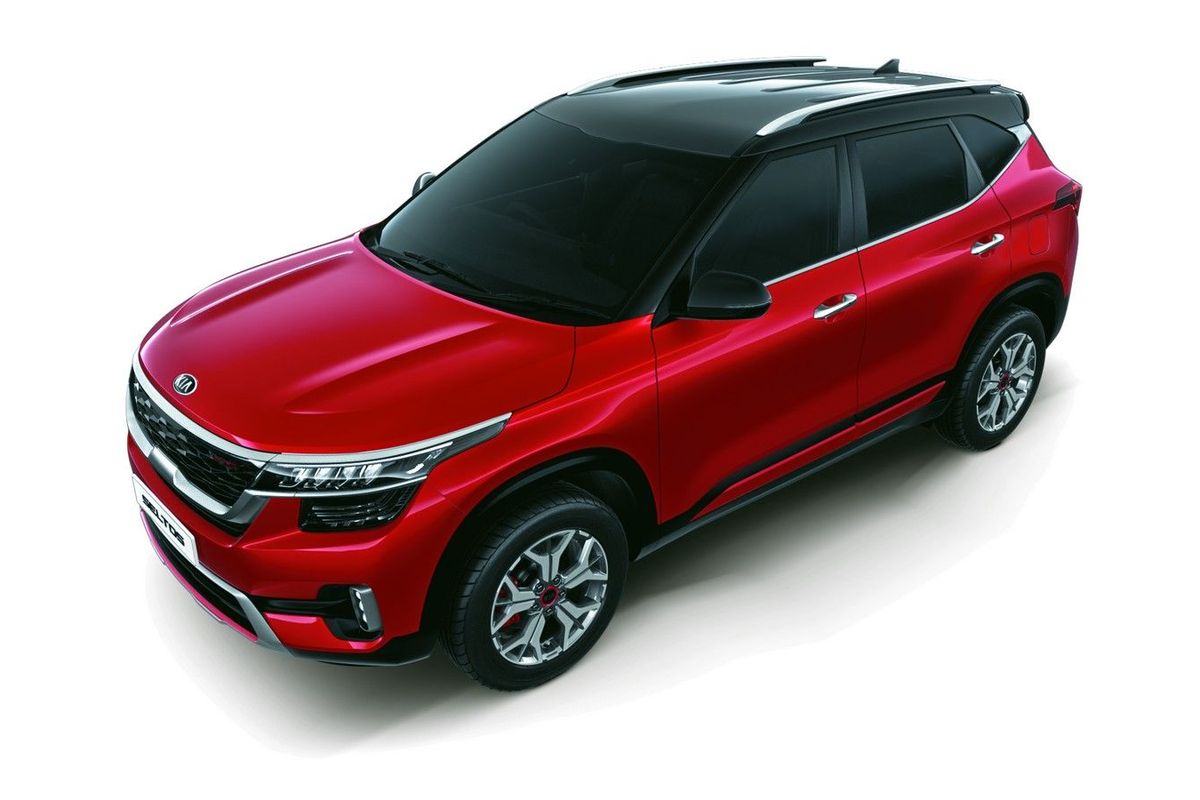
The images of the Kia Seltos make it very difficult to judge the size of the eagerly-anticipated Korean compact family car, but the easiest way to pin it down is to say it’s ever-so-slightly bigger than a Hyundai Creta. It uses a development of the current Creta’s platform, which will, in actual fact, form the base for the next generation of Hyundai's small(ish) crossover, which is also produced in India. A few other rivals to the Seltos that are worth noting are the Ford EcoSport, Opel Mokka X, Mazda CX-3 and Renault Duster, although this segment is so broad that you can probably include about 30 fringe vehicles as competitors – the popular Ford Ecosport, Suzuki Vitara and Volkswagen T-Cross are models that jump to mind first.
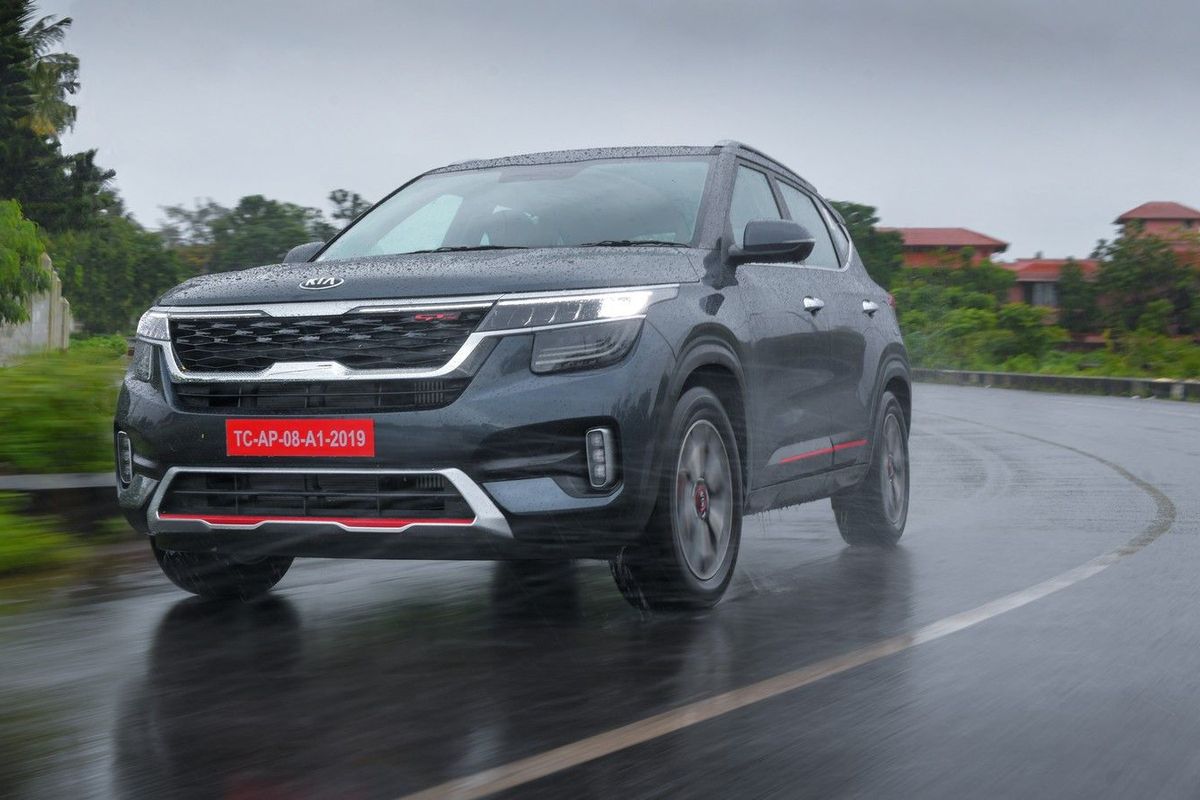
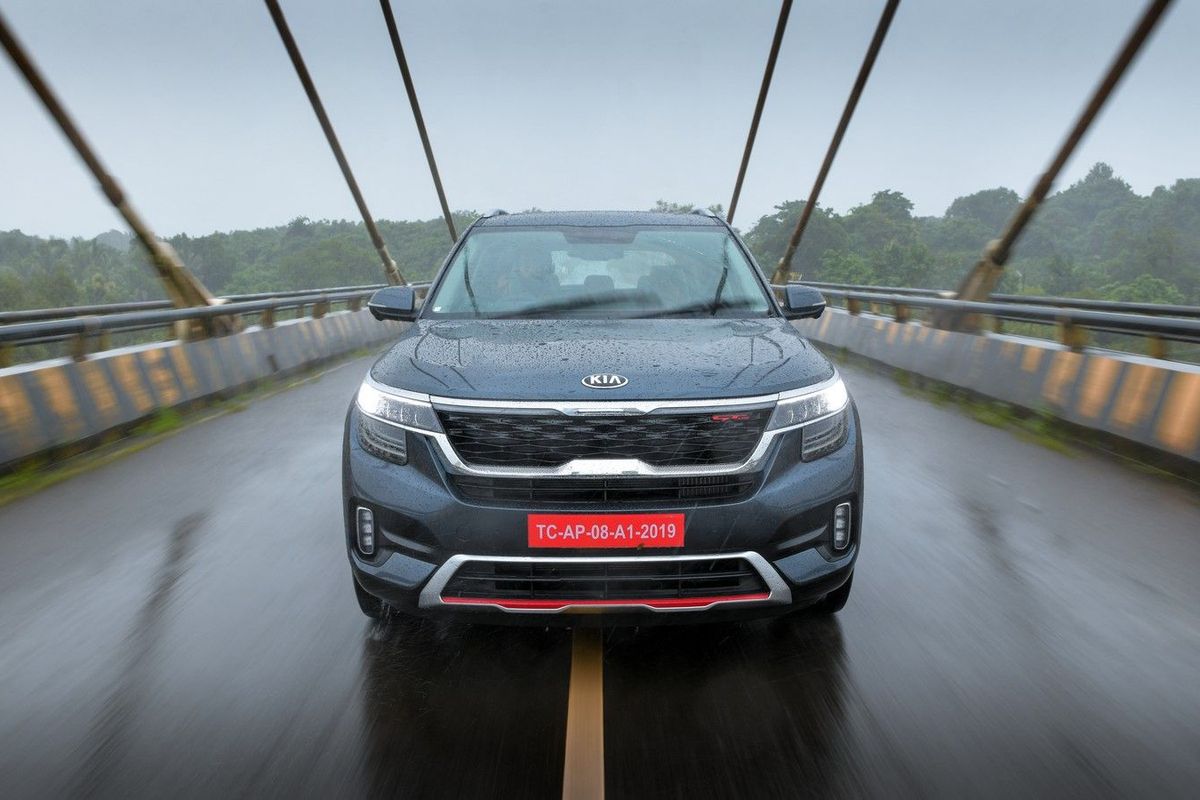
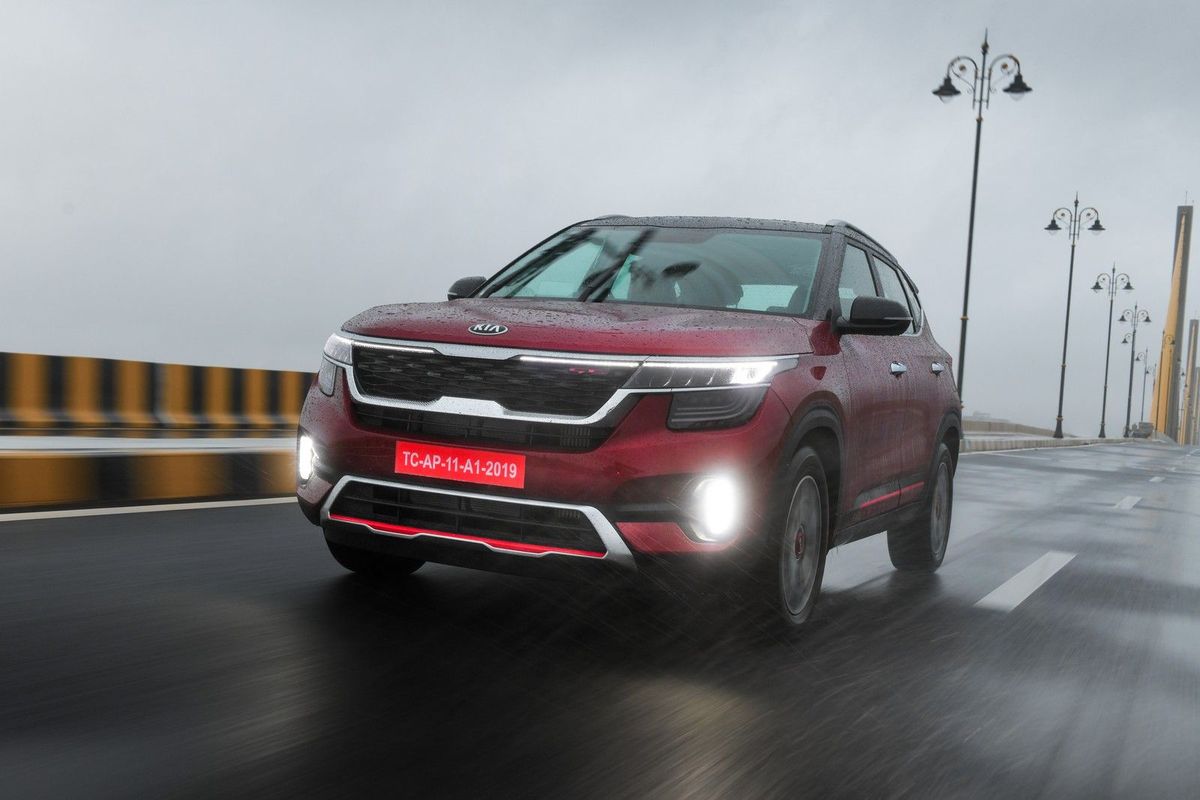
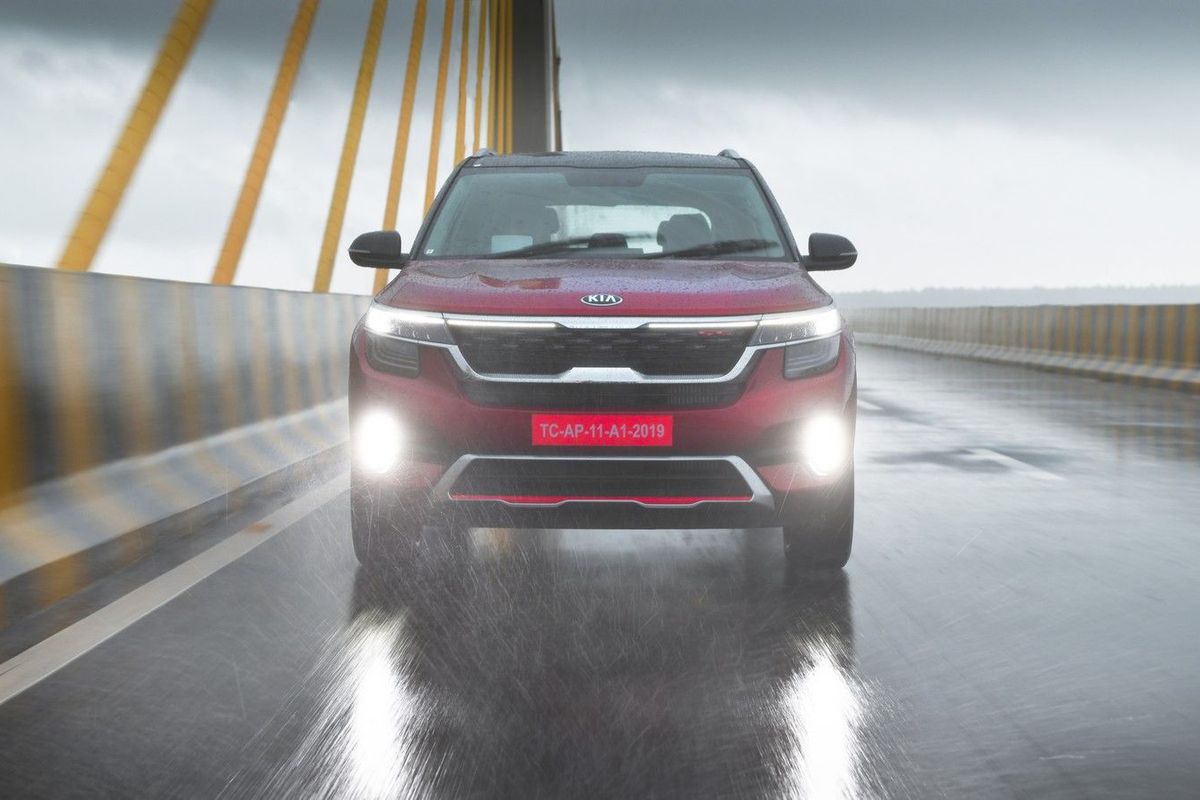
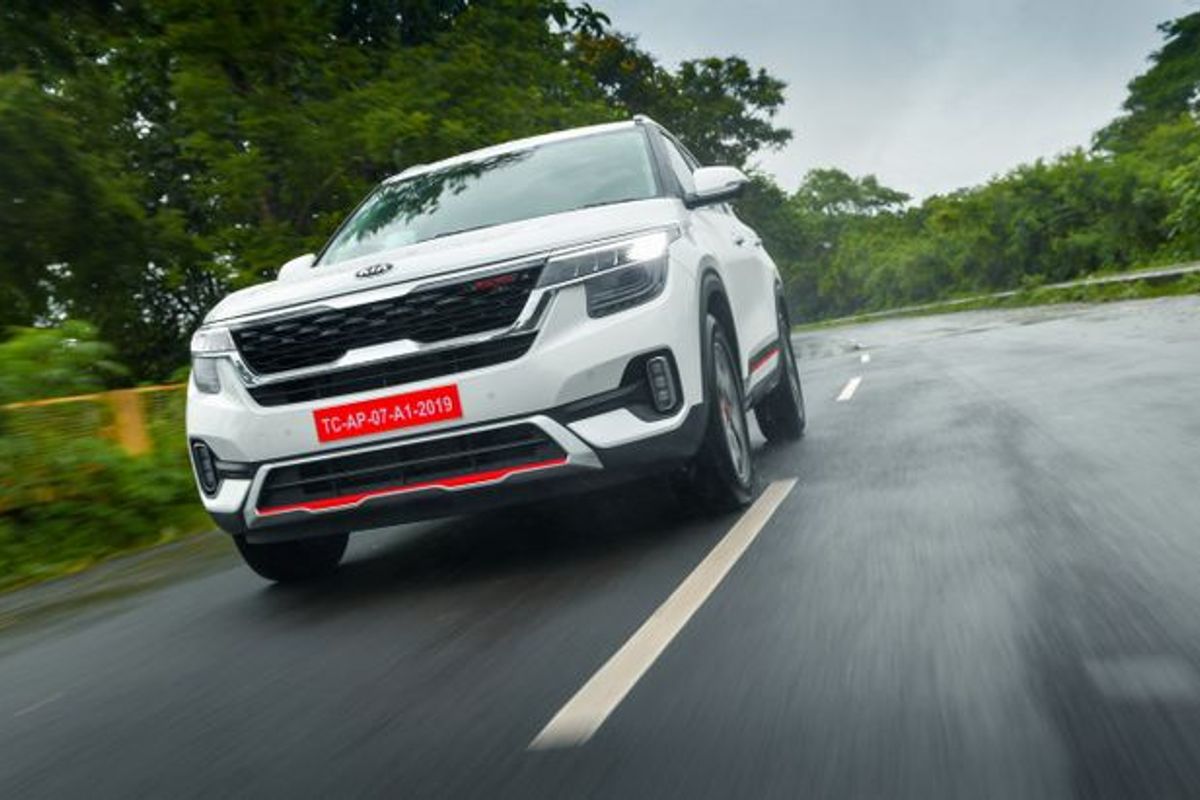
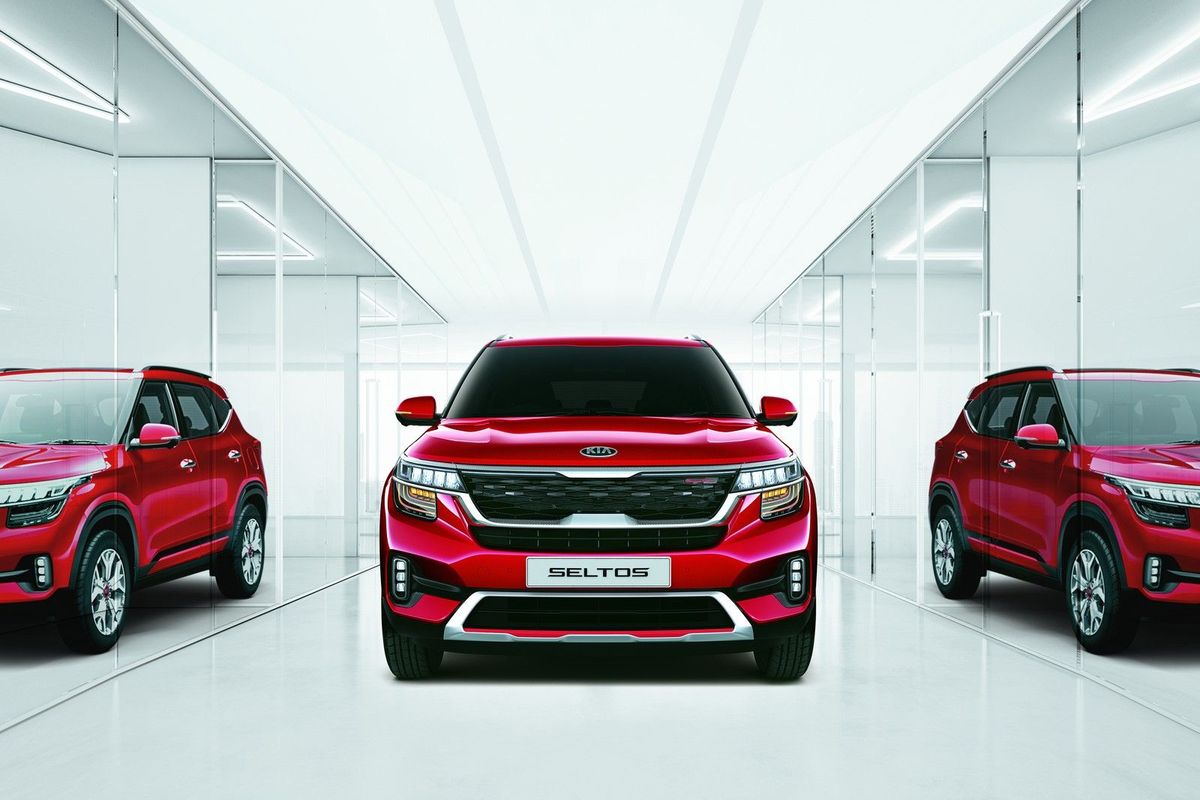
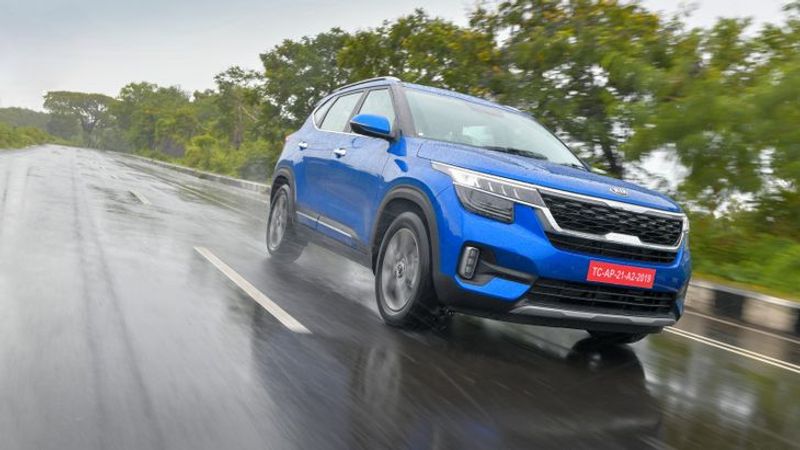
Just when we thought all compact family cars were going to get curvey and cute, Kia has given the Seltos a square-jawed front end.
The design is less polarising than the Soul, which it effectively replaces in our market (to say the least!) and, overall, the Seltos appears quite modern and distinctive, especially the front end with its strong horizontal planes, integrated tiger-nose grille and bold headlight treatment.
The South African model will be built in a brand-new factory in India and it’s notable that the Republic will actually be the 2nd market globally to launch the Seltos when it goes on sale in the latter half of November 2019.
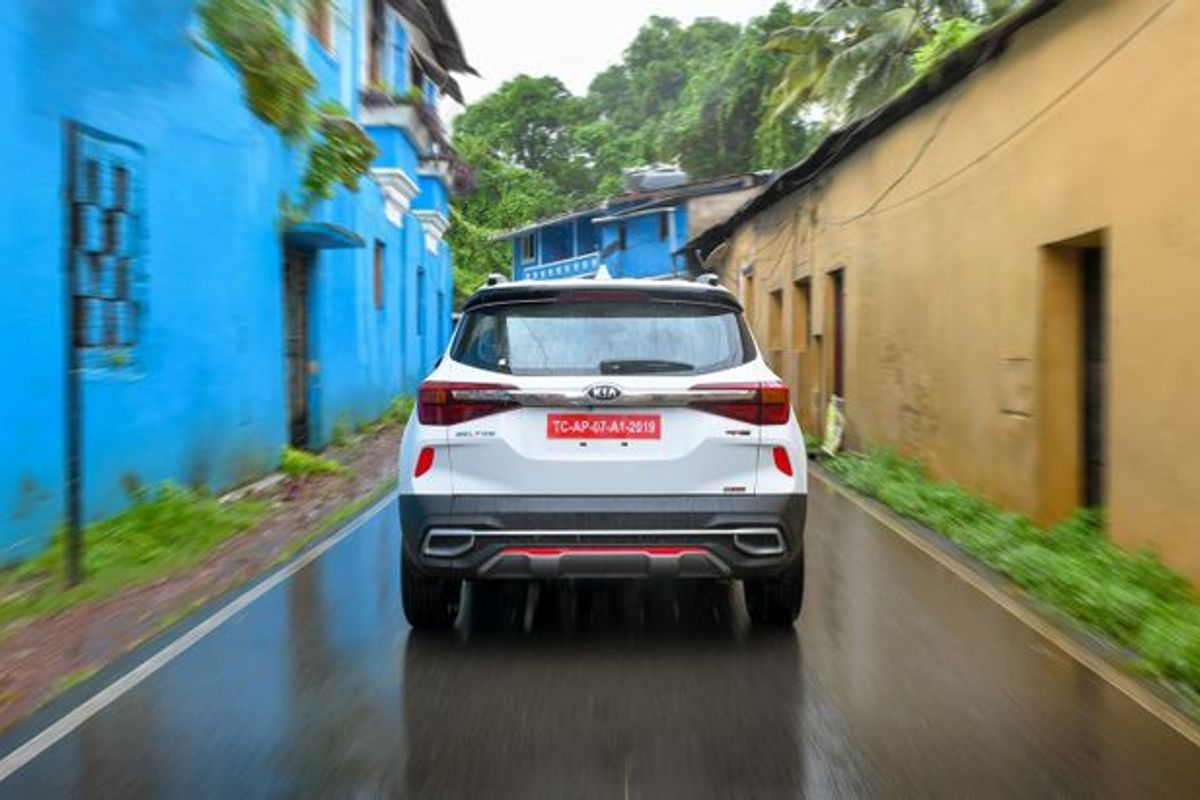
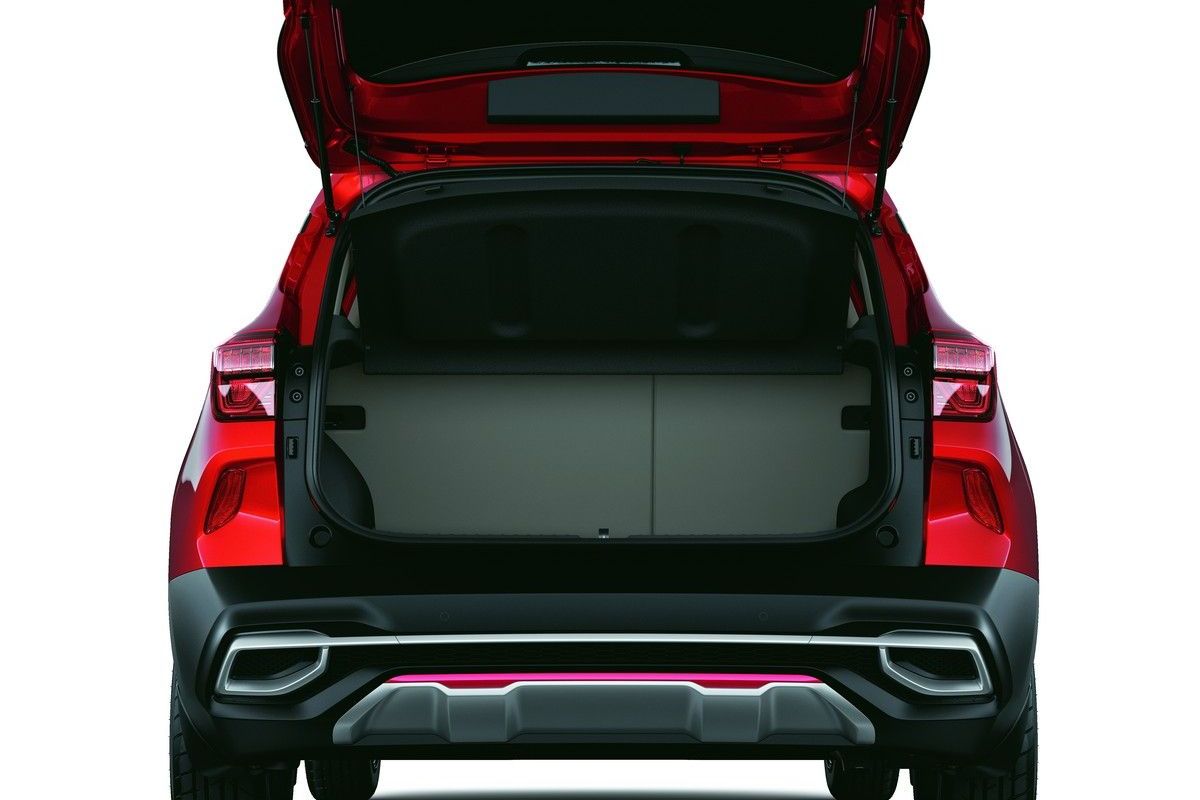
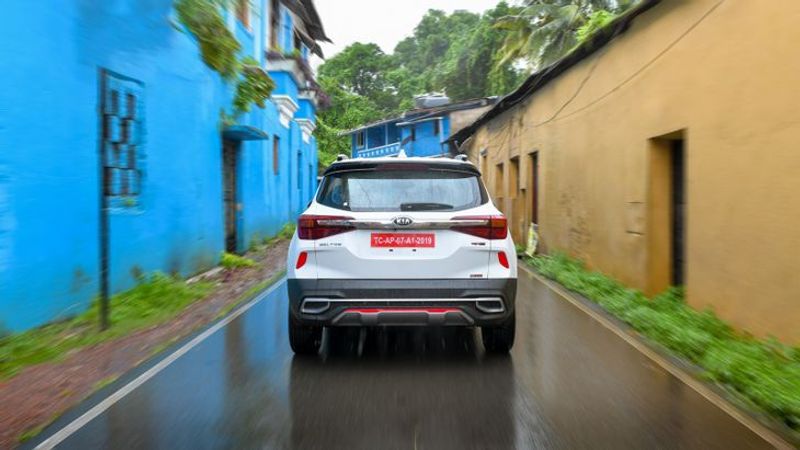
The rear end of the Seltos is delightfully simple, although the faux exhaust ends in the bumper are perhaps a little too stylised…
What’s under the bonnet?
Our market will receive a wide variety of engines (including petrol, turbopetrol and -diesel) and gearbox options. The entry point will be a 1.6-litre naturally aspirated unit with a 6-speed manual ‘box. It puts out 92 kW and 151 Nm of torque. Then there’s a 1.4-litre turbopetrol which makes 105 kW and 242 Nm. This engine is paired with a 6-speed manual or a 7-speed dual-clutch (automatic) ’box. The 1.5-litre turbodiesel, which develops 86 kW and 250 Nm of torque, will be a frugally-minded driver’s dream when it arrives in 2020. It will be available with a 6-speed manual or -automatic.
Following the recent introduction of a 1.4-litre turbopetrol in the Suzuki Vitara range, Kia will add another forced-induction 1.4 to our market.
Our short drive around the test facility in the 1.4-turbopetrol didn’t reveal glaring inadequacies. The engine offers linear acceleration and no discernable lag – but it's unlikely to knock your socks off when you floor it. For what it’s intended to do (shuffle a family and things around) it feels adequate. The 7-speed dual-clutch transmission feels improved from our previous experiences of this 'box… It’s more sedate with its shifts, not as clunky and doesn’t hunt around for the right gear very often. We'll need a bit more time (on local roads) to get a proper feel for the combination.
What’s it like inside?
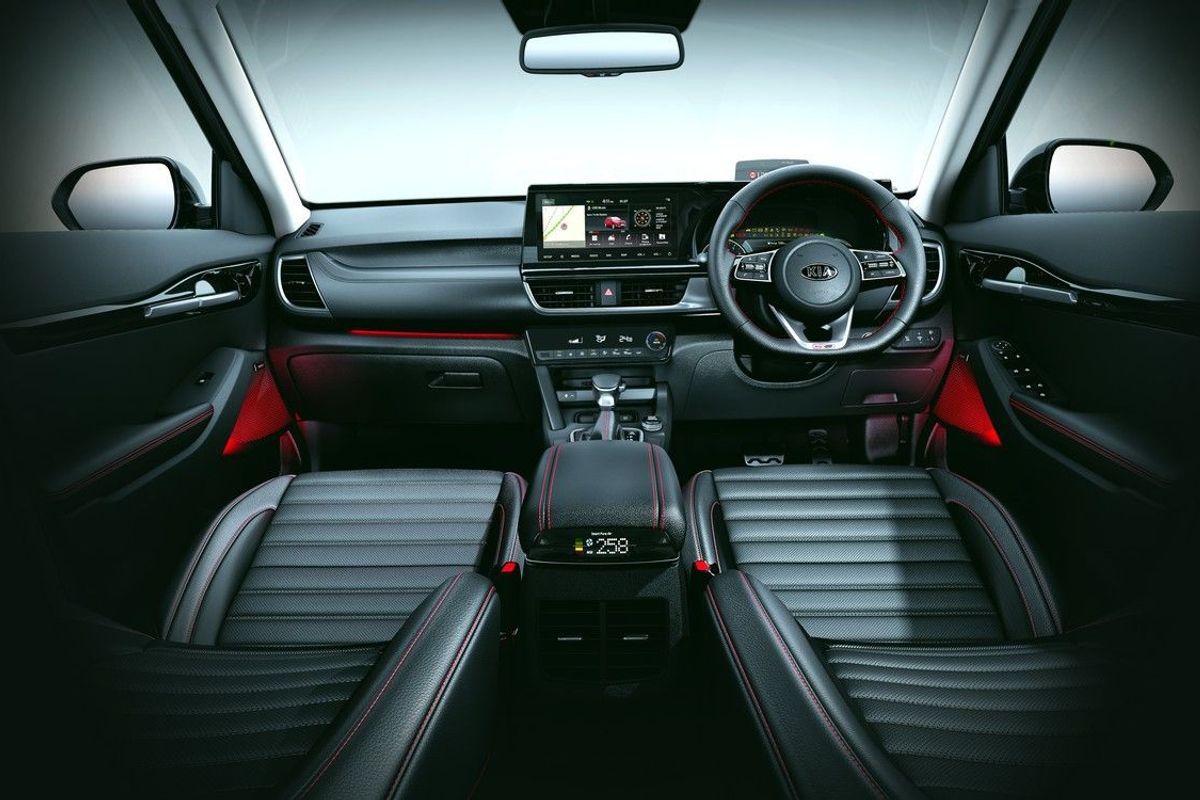
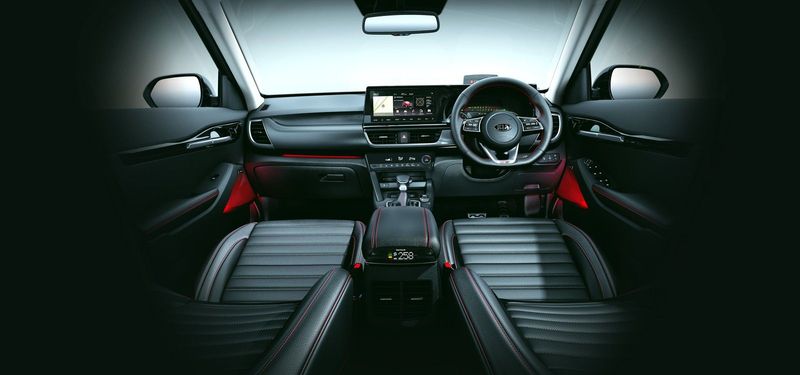
The Seltos certainly has one of the more technologically advanced interiors in its segment – one that feels perfectly in step with a contender at the upper end of the compact family car segment, such as the Toyota CH-R (or its Lexus UX cousin). The infotainment system, with its sizeable touchscreen, offers virtually all the applications and functions that you could reasonably expect to find in models available in this market segment (Apple Carplay and Android Auto are supported and there are USB ports availed to front- as well as rear occupants). The Soul's mood lighting makes a return here too, so you can turn the interior into a disco with colourful flashing lights that move to the beat of the music – if that's your bag.
The large touchscreen infotainment system dominated the Seltos' fascia; Kia clearly knows its tech-crazy target market well…
You can skip ahead to our Kia Seltos (2019) Specs & Price article if you wish, but here's a basic explanation of the range's line-up. There are 3 spec grades (EX, EX+ and GT-Line) and even the entry-level version gets automatic headlights, 16-inch wheels, electric mirrors, cloth upholstery, steering wheel-mounted controls, electric windows, cruise control, and an 8-inch touchscreen infotainment system linked to half a dozen speakers.
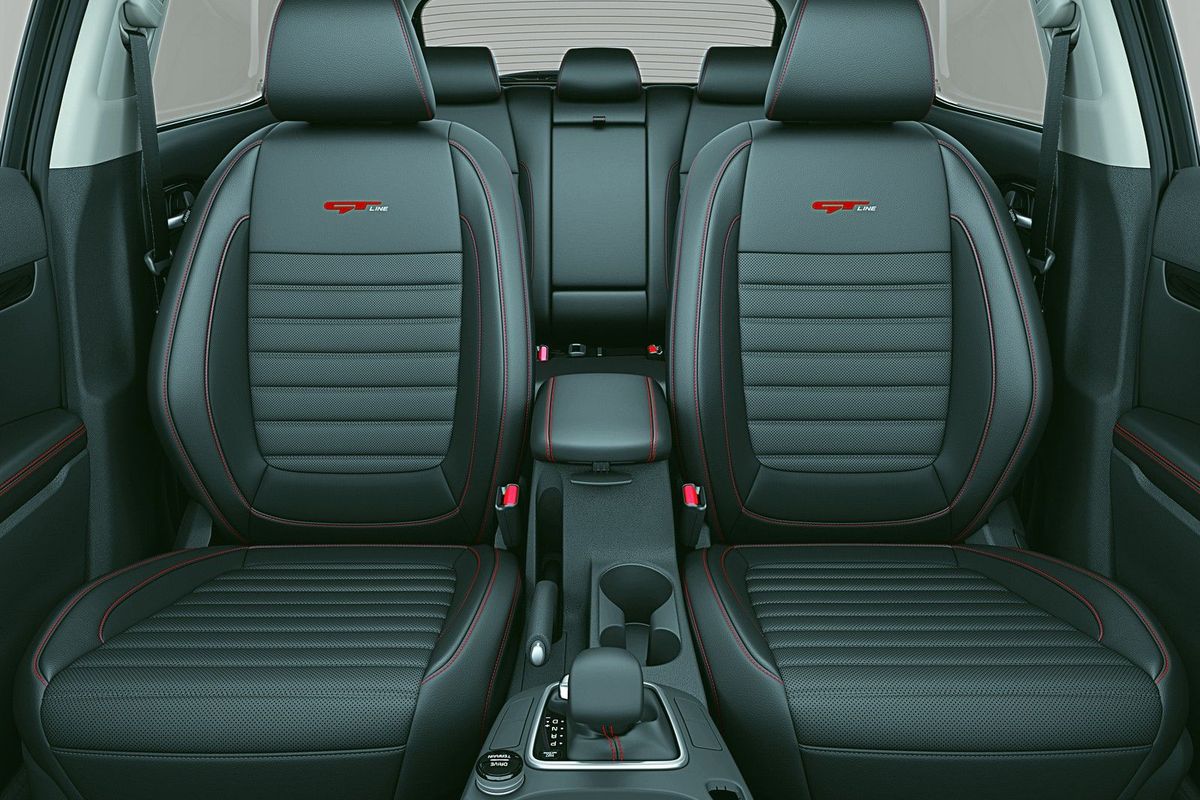
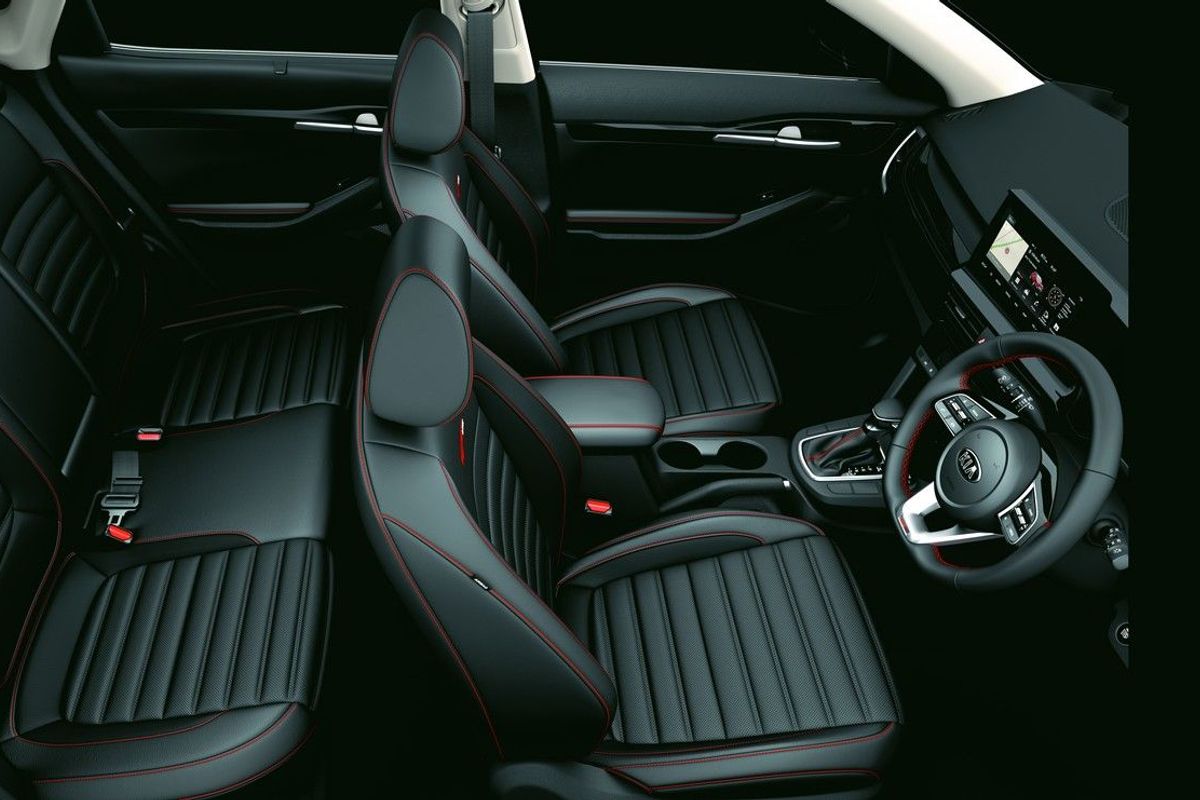
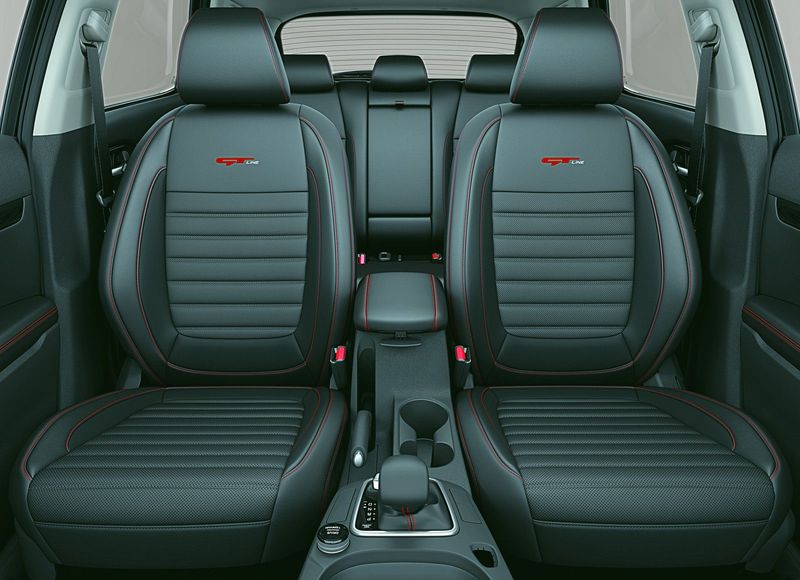
The top-of-range GT Line version is distinguishable from its more affordable siblings by satin chrome and red exterior detailing on the bumpers, gloss black and chrome-look detailing on the front grille, as well as 17-inch crystal-cut alloys complemented by red brake callipers. Inside, there are upgrades to the leather seats, a different steering wheel, stainless steel pedals, a drive mode selector and terrain mode (for very light off-roading).
Safety-wise, 6 airbags, ABS, EBD and rear PDC with a camera are standard; mid- and top-spec derivatives additionally feature stability control.
Rear seat occupants get a pretty good deal with separate vents and seats that recline to create extra luggage room or more comfortable seating. Aft legroom is excellent, in fact… According to the claimed figures, the Seltos offers more rear space for passengers than either a Creta or Duster.
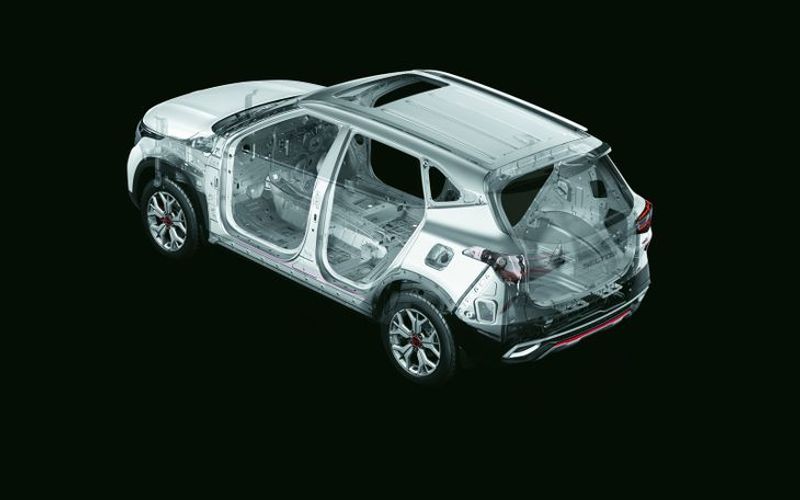
The Seltos' interior exudes solid build quality, which is a boon in a very demanding, yet exceedingly price-sensitive, segment.
The Seltos' luggage bay continues the theme of spaciousness. Up to 433 litres of packing space available before the seats are folded down.
As for the interior fit and finish, the Koreans continue to set the standard for build quality. Joints fit flush and trim panels feel sturdily positioned, all of which gives the Seltos that aura of robustness that discerning buyers are looking for. It’s not perfect however, the upper dashboard materials feel quite hard and a bit scratchy compared with some of the soft, leather-like surfaces on the inner-door areas. It all seems like a mix of quite nice-to-touch bits with cost-effective harder pieces in areas that are unlikely to be touched often. We found a similar trait in our latest test of the T-Cross…
The Seltos might be the Sportage's little brother, but it is a solidly-made newcomer and impressively refined, given its price point.
What’s it like to drive?
A short burst around the Indian factory test oval was never likely to show up many faults, so an extended local drive may be in order, but our initial impressions of driving the Seltos are quite positive. It’s aimed at a clientele more interested in comfort and stability than something that’s exciting to hustle around town… The Kia feels well-damped when it traverses road imperfections; few thumps from the outside filter into the cabin. We got it up to 150 kph on the test track and there’s a notable hush/quietness to the cabin, which bodes well for NVH, solid body construction and build quality.
Summary
In the congested compact family-car segment, it’s difficult to deliver a product that stands out head and shoulders above the rest. On the strength what we saw of the Seltos in India, Kia's newcomer has risen somewhere near the very top of its class. Local versions will not be quite as lavishly equipped as their Indian counterparts, but key product strengths – impressive occupant- and loading space, build quality and refinement – remain.
Is Kia set to take a big bite out of the top end of the compact family car market? As a package, the Seltos has a lot going for it.
Interior tech and gadgetry hit all the marks in this segment – the Seltos offers such niceties as charging ports front and back, as well as comprehensive phone connectivity and integration. It’s also nice to see that safety hasn’t been skimped on either…
A wide variety of engines and gearboxes will be available at launch. The 1.6-litre (non-turbo) derivative may not be convincing at altitude although naturally aspirated variants should still prove popular on the sales charts, as they tend to be cheaper than their turbopetrol and -diesel counterparts.
Overall, there is a resounding sense of quality about the Seltos. It’s a well-thought-out product aimed at family buyers for whom Sportage derivatives might be just out of reach, price-wise. That's undoubtedly the reason Kia Motors SA has sought to introduce it to our market as soon as possible.
Pricing & after-sales support
All Seltos derivatives come with a 5-year/unlimited km warranty (inclusive of roadside assistance), as well as a 5-year/90 000 km service plan.
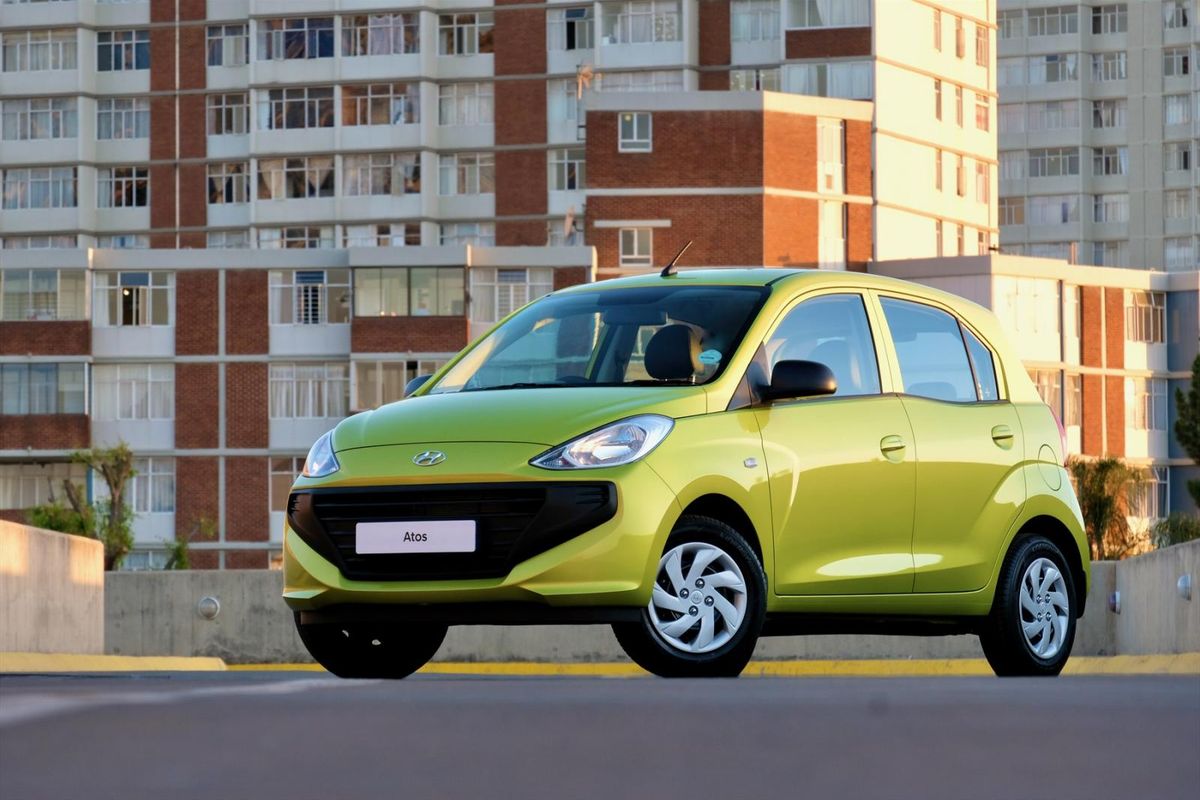
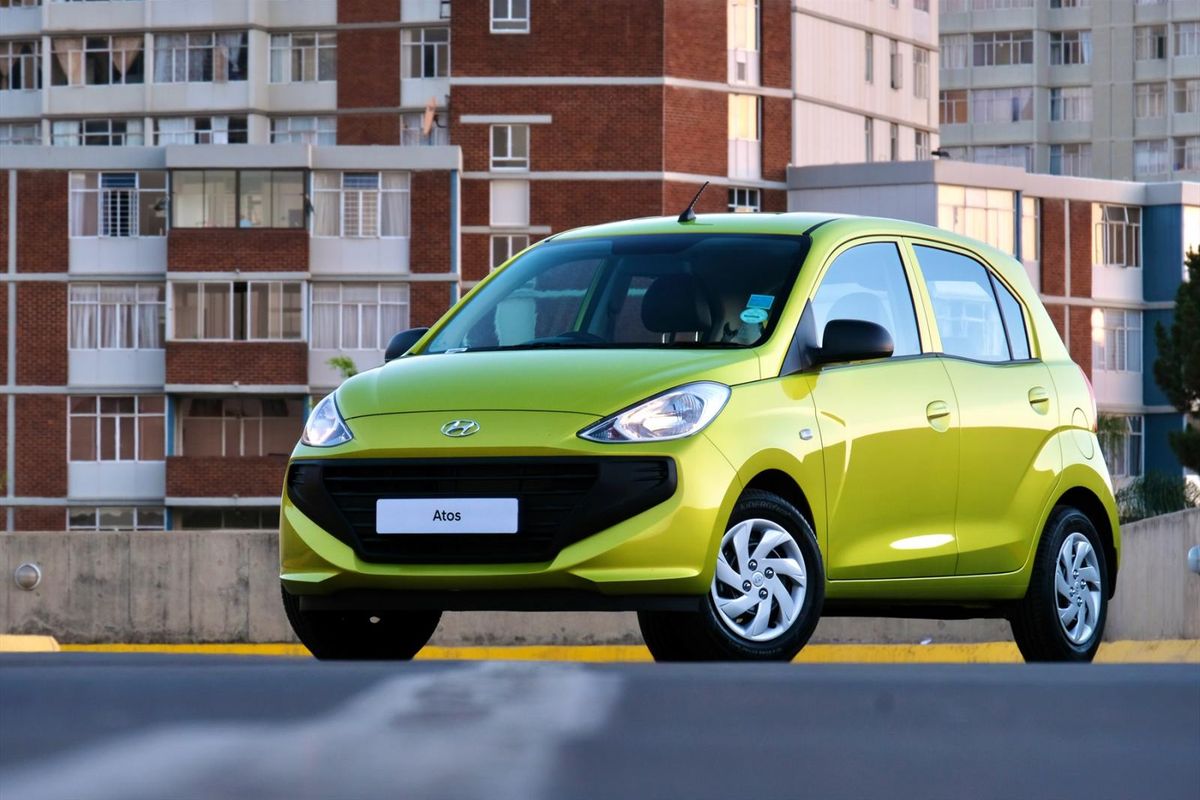
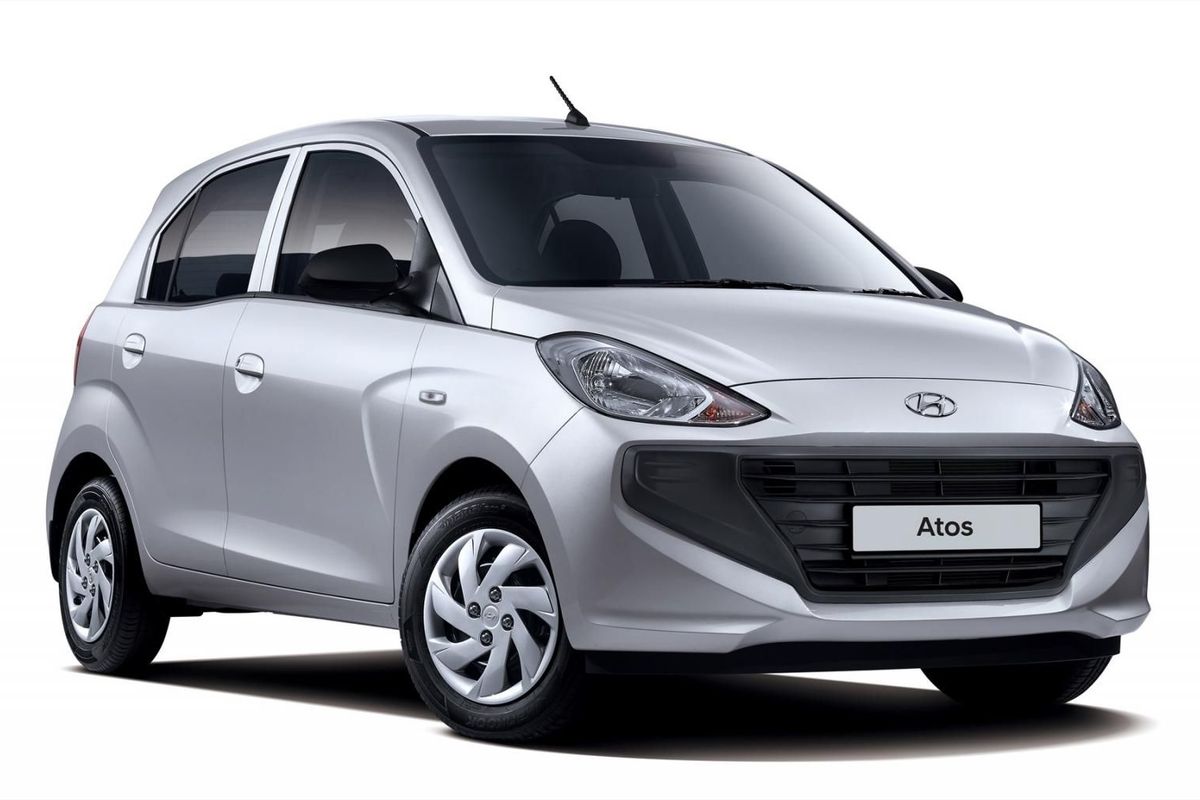
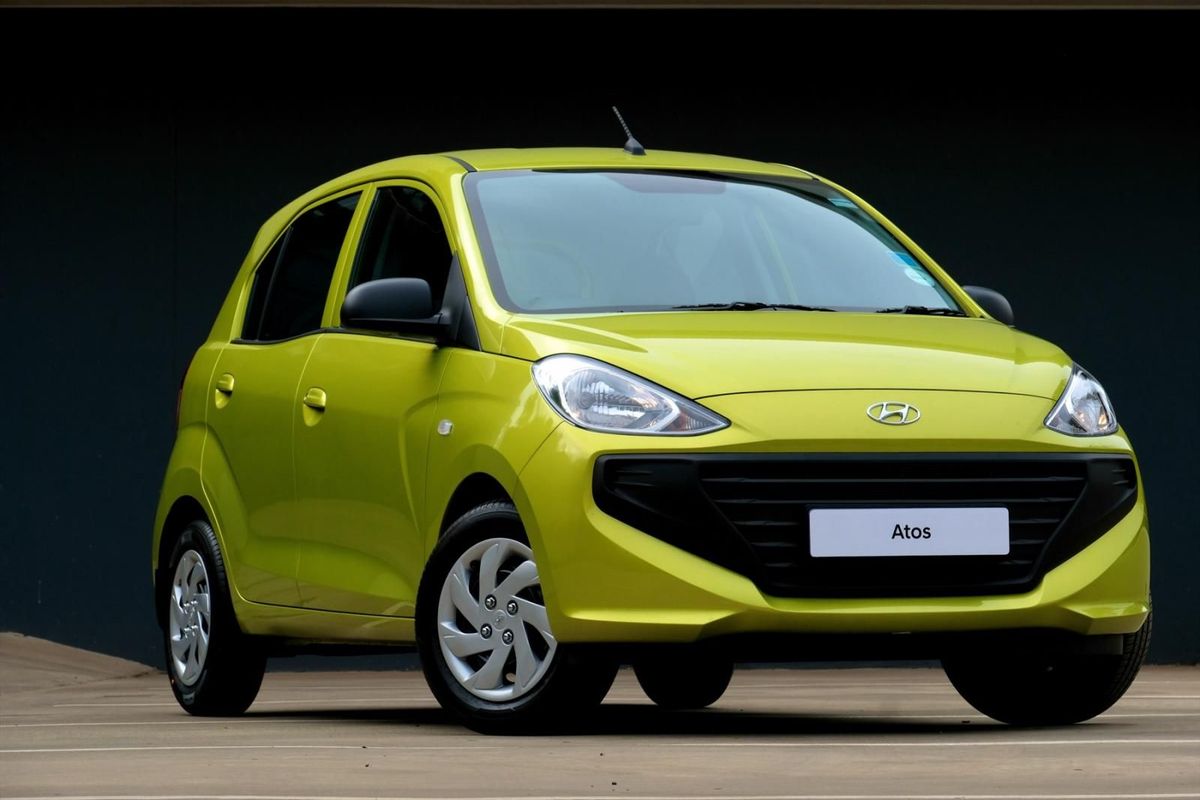
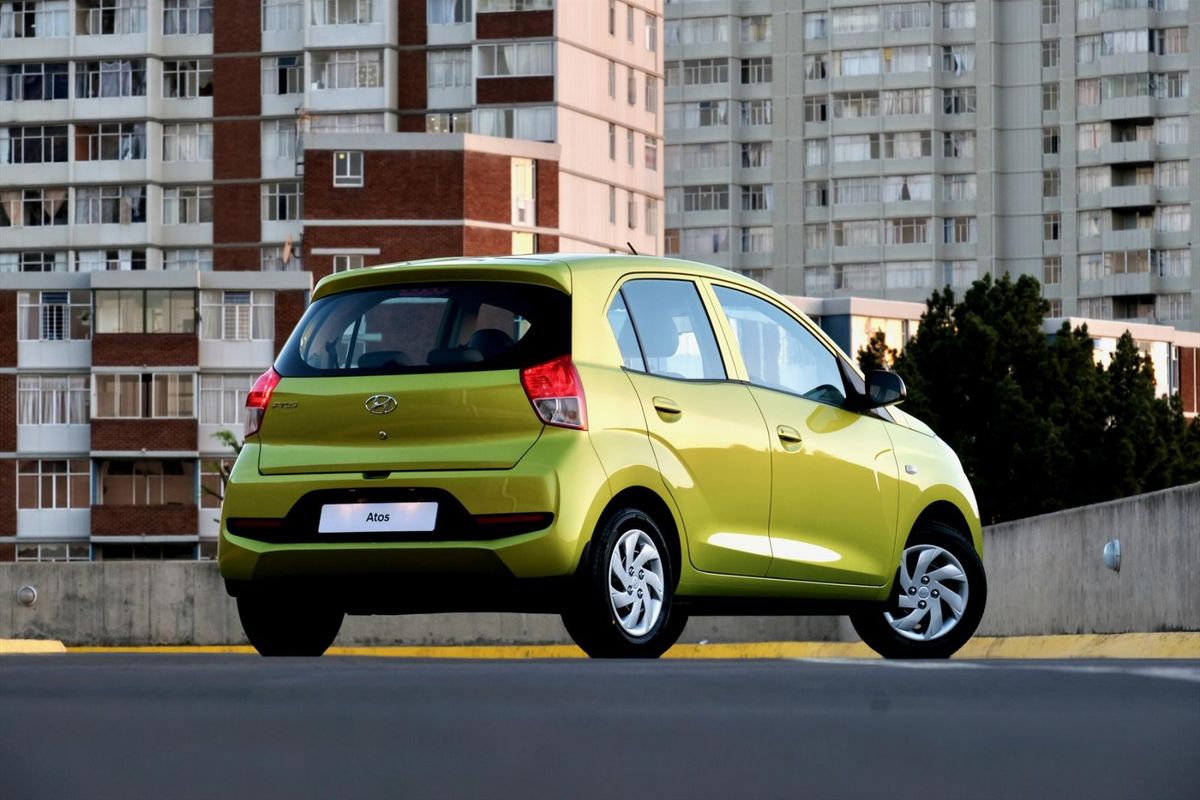
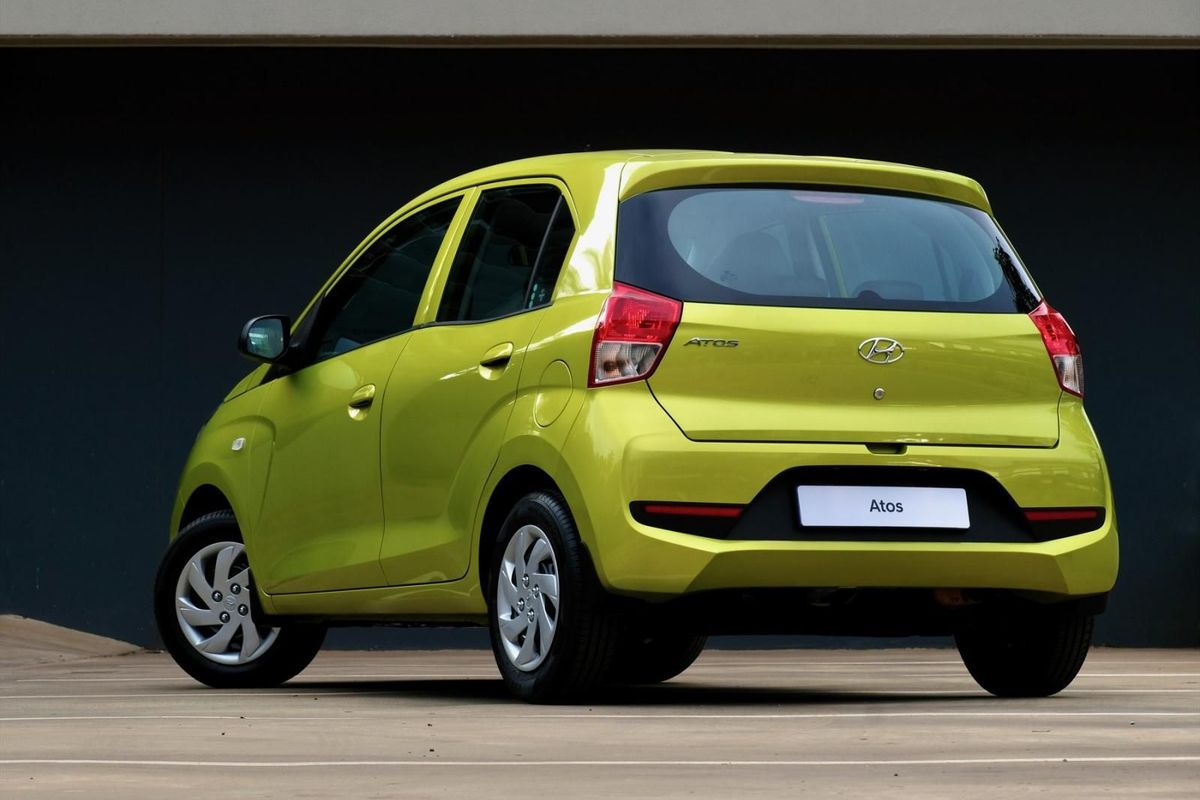
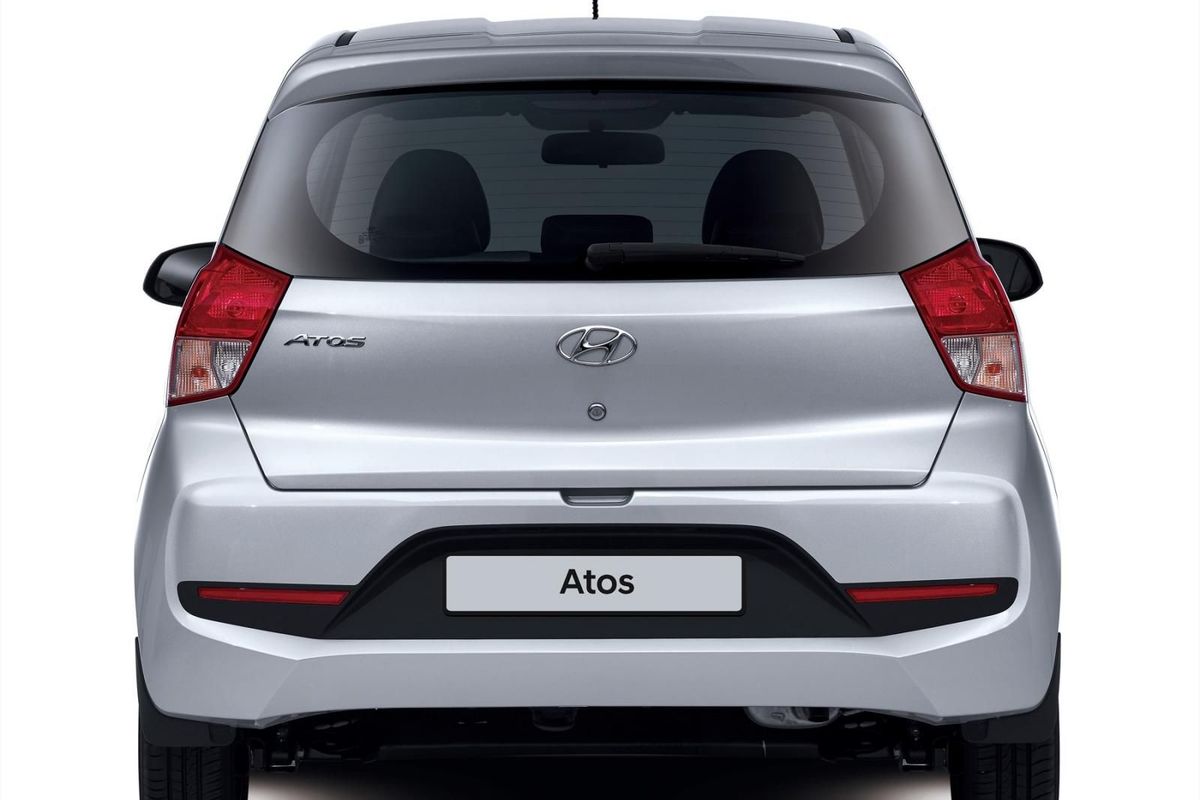
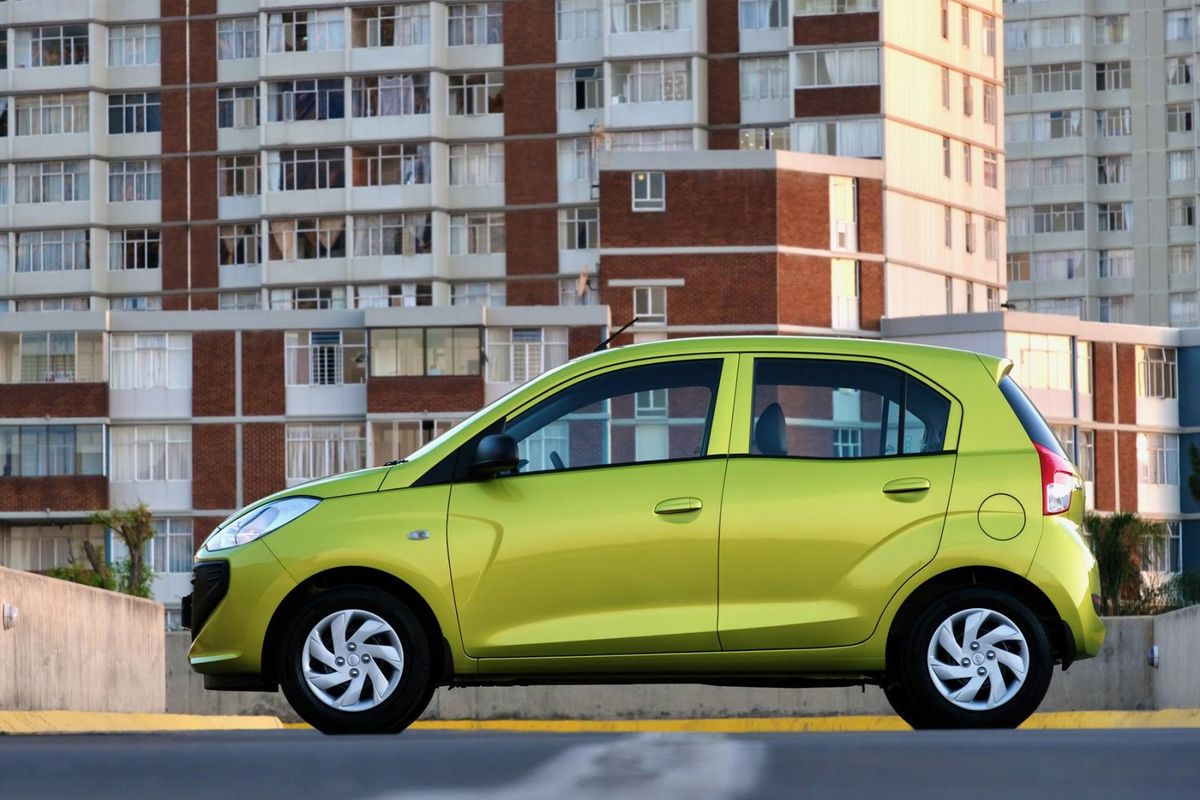
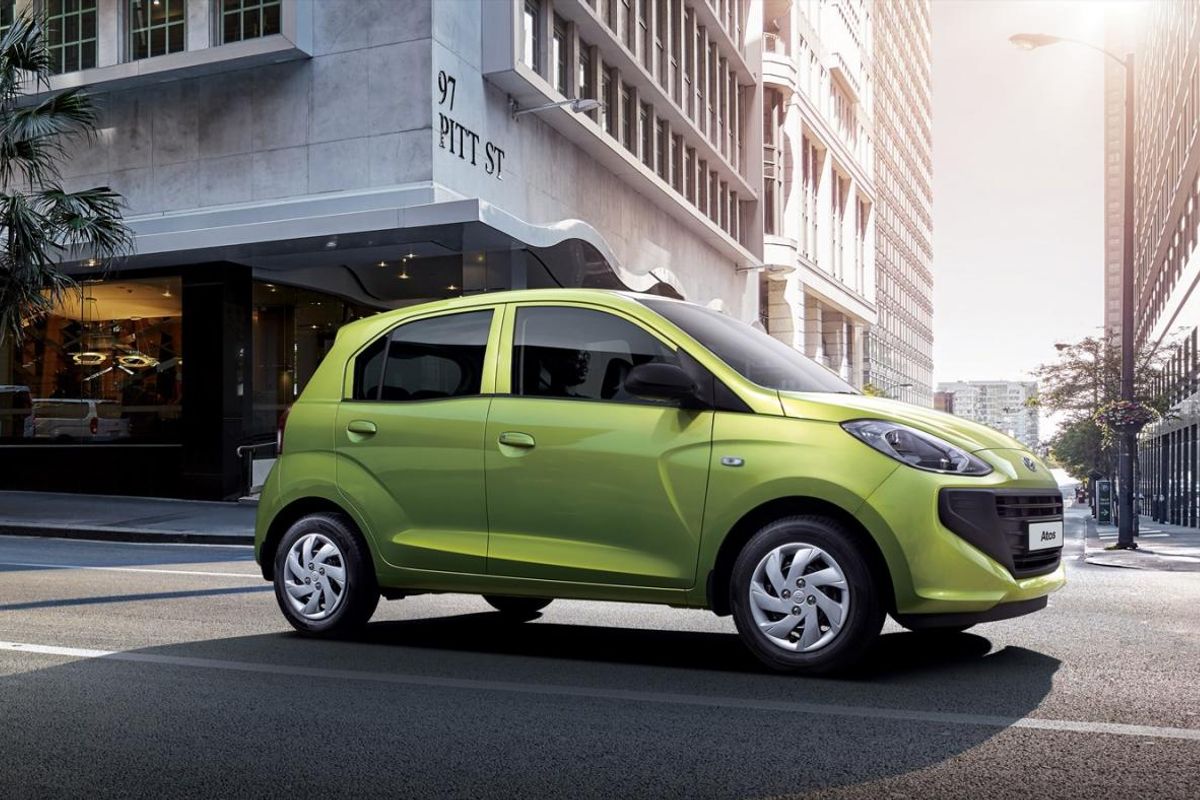
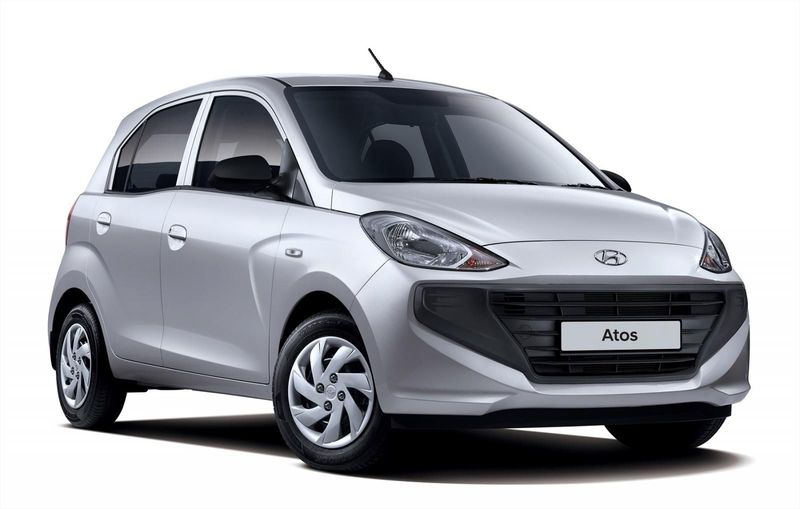
Hyundai South Africa has reintroduced the Atos as a budget car to rival the Datsun Go and Renault Kwid. How does it stack up against those volume-sellers and… is it any better? Lance Branquinho reports back from the local launch.
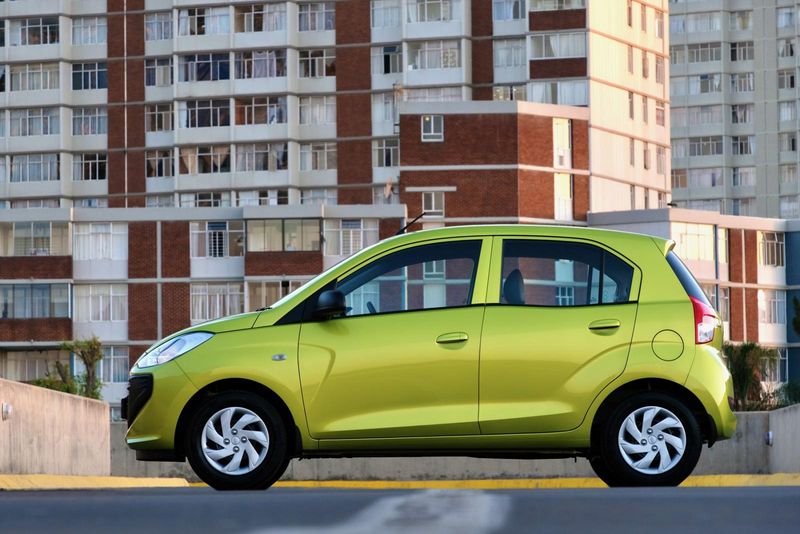
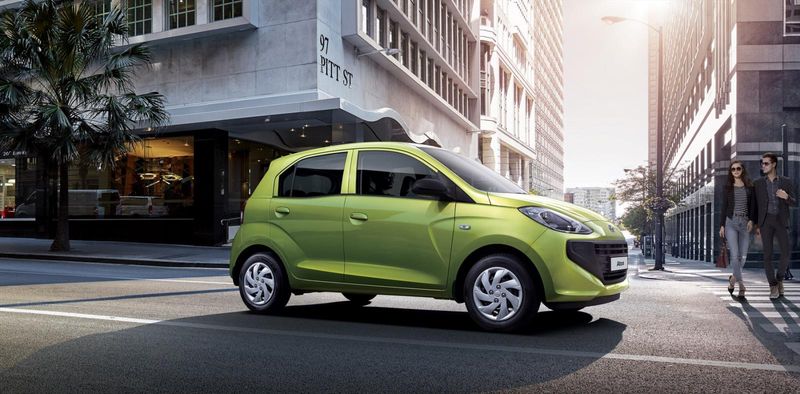
Hyundai has a significant presence in the compact hatchback market; brisk sales of the Grand i10 and i20 attest to that. With the new Atos, however, the Korean company has reinforced its entry-level hatchback offering in South Africa.
Price is critical in the budget-car segment: a few thousand Rands can often be the difference between a purchase or deferral and Hyundai’s strategy is to structure its local portfolio in such a way that customers can always afford to be in a Hyundai hatchback of some configuration, or specification.
Return of Atos sees it sit below the i10 as the entry point to Hyundai's product portfolio.
In South Africa’s stalled economy, many car customers have been forced to buy down. Therefore, Hyundai’s entry-level offering has changed from Grand i10 to Atos, which is sourced from India. By the end of next year, most of Hyundai’s local portfolio (80%) will be assembled in the world’s 2nd-most populous country and the firm says its Indian products have allowed for a very low warranty burn rate (the number of warranty claims against the amount of premium that has been set aside to meet those claims), which compares favourably with any Korean- or European-built Hyundai.
Modest – but honest – spec
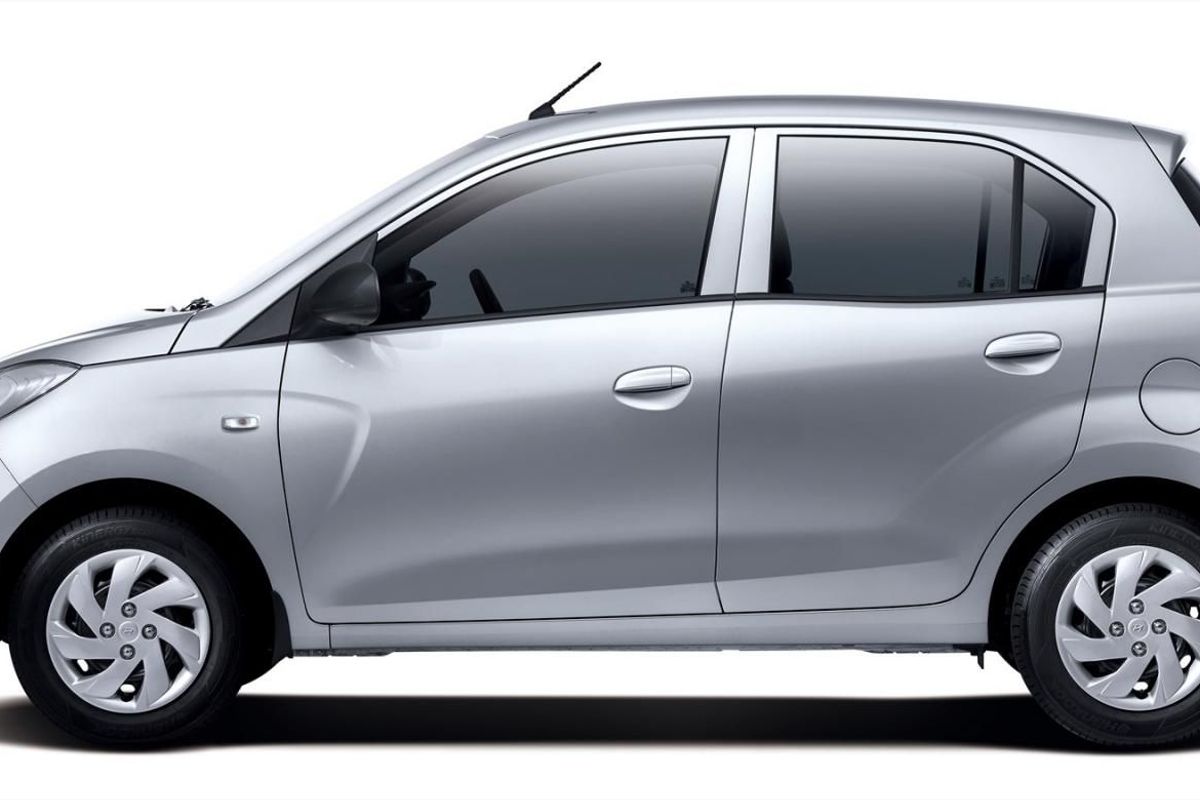
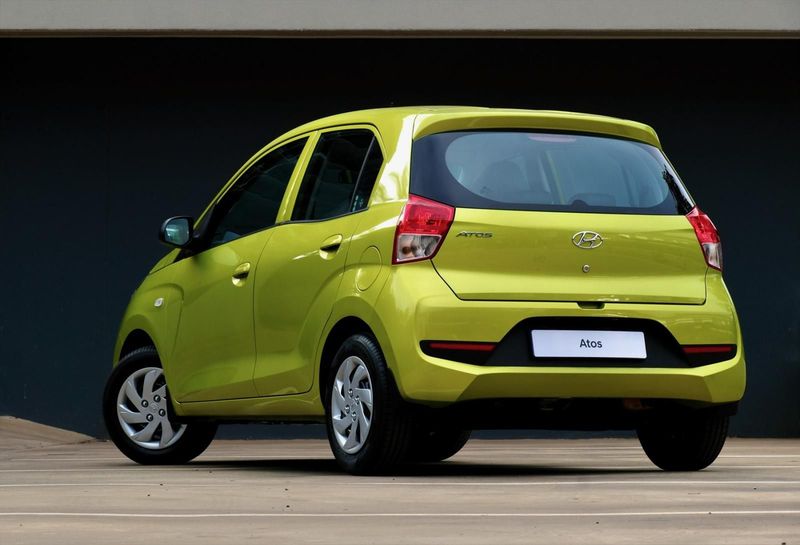
The Atos' peak outputs are meagre, but it only weighs 866 kg, which should make it quite spritely.
The previous Atos was very popular in South Africa; Hyundai sold no fewer than 45 000 units from 2005 to 2013. Hyundai established its local reputation with entry-level hatchbacks, although the company now markets a vast portfolio of vehicles, including several crossovers and SUVs.
The new Atos is built on a K1 platform, which will reportedly become the standard for many of Hyundai and Kia’s more affordable sub-4-metre-long vehicles. The engineering claim is that this new K1 structure is 63% more rigid than Hyundai’s previous compact car platform, which should equate to better crash safety, sharper steering responses and lower vibration-induced noise levels.
The newcomer's mechanical specification is modest but entirely relevant for its R159 900 price point. The 1.1 Motion (the only version so far) is powered by a long-stroke 1.1-litre 4-cylinder petrol engine, which produces peak outputs of 50 kW and 99 Nm. It runs a single overhead camshaft with a 3-valves-per-cylinder configuration, which should facilitate the best compromise between low service costs and efficient combustion.
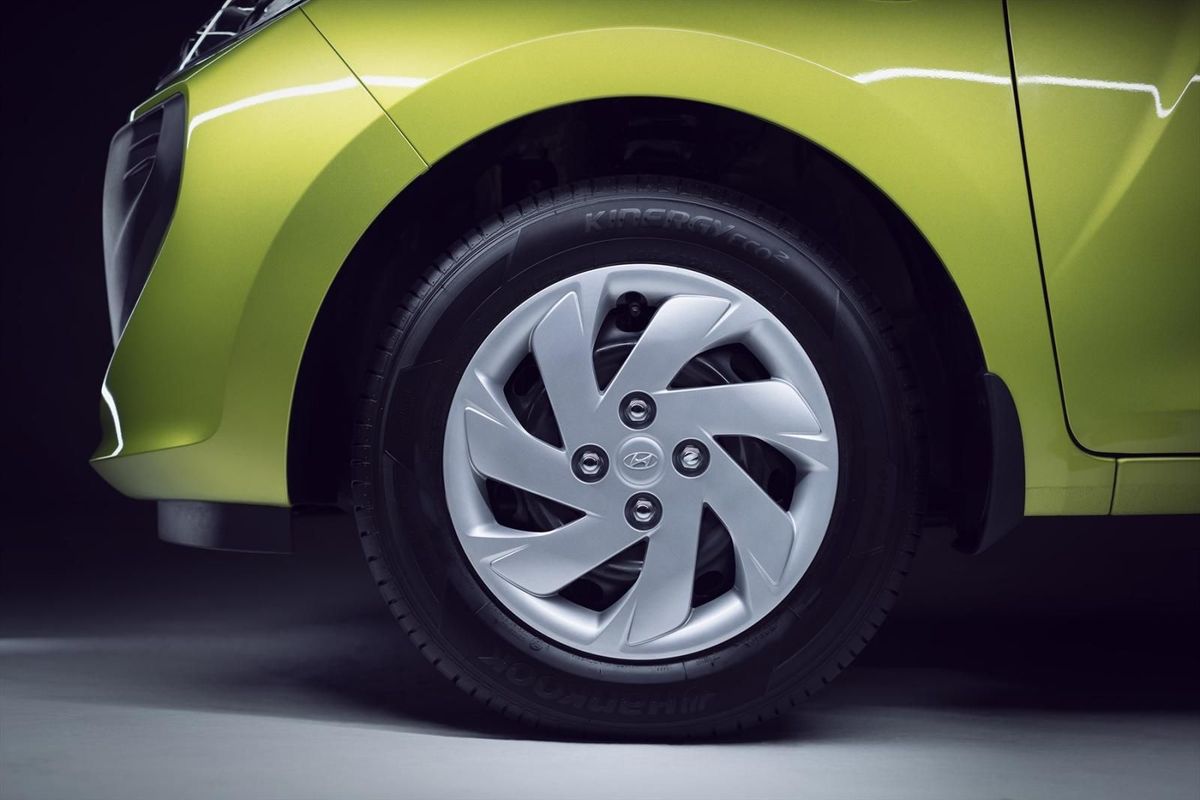
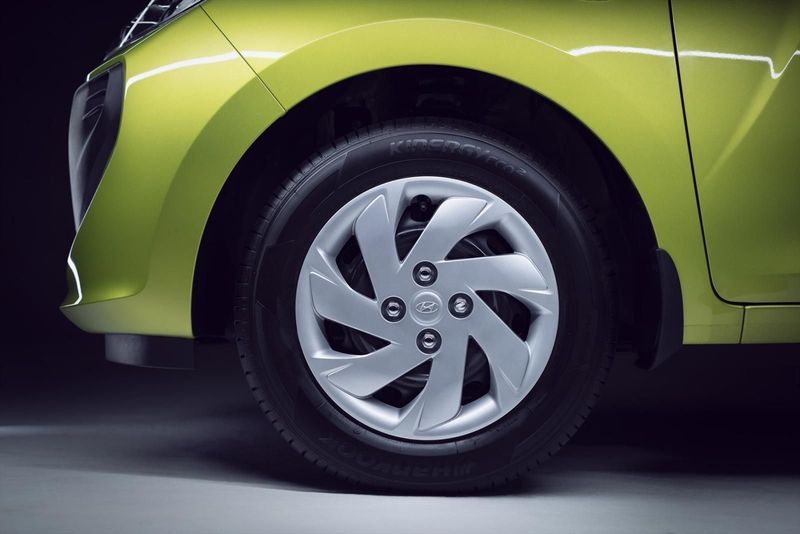
Steel wheels (with covers) are standard.
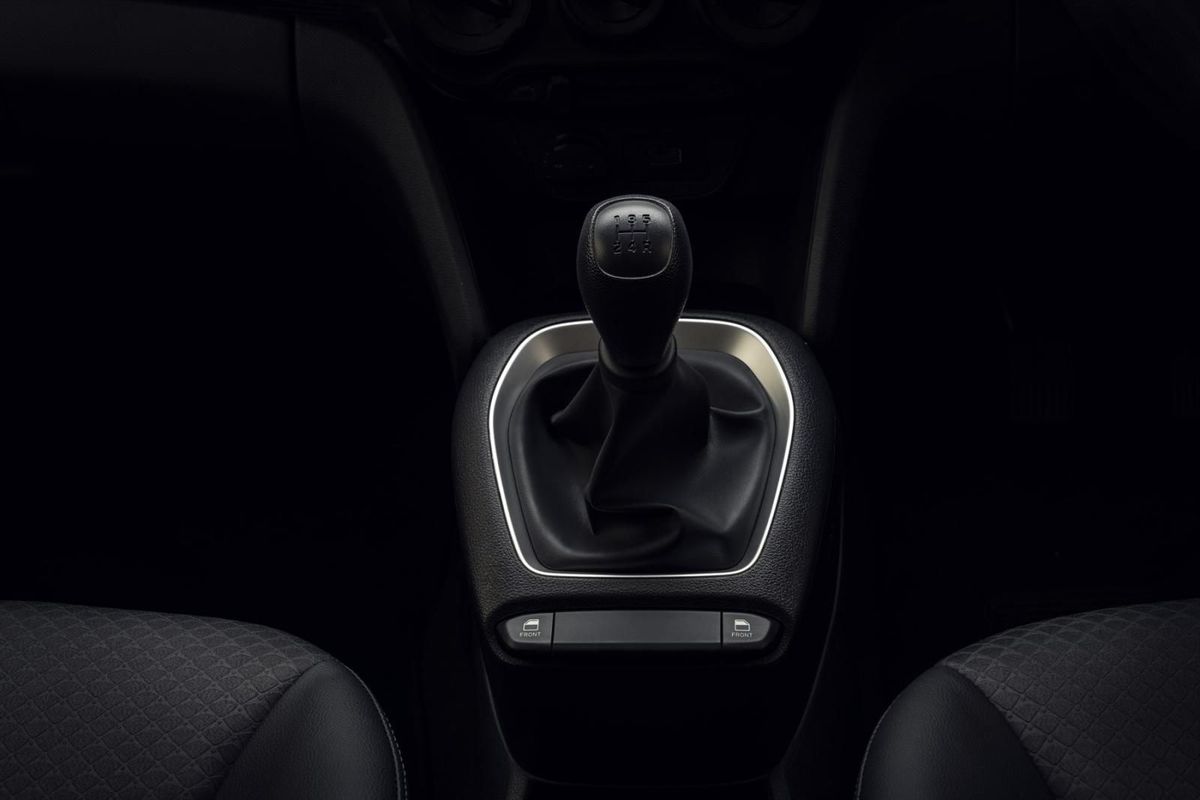
Gearing is via a 5-speed manual transmission and drive is directed to the front wheels. The Atos' suspension configuration places coil springs at all 4 corners, with the front linkages having a McPherson strut-type set-up, while the rear-axle is held in place by a torsion beam.
As you would expect for a budget vehicle of such low mass (it only weighs 866 kg), the Atos does not have disc brakes all-round. There are 180 mm drum brakes to slow down the rear wheels, while most of the brake-force is generated by 241-mm solid discs up front.
The entire deceleration system features a 4-channel ABS function, with additional sensors to enact emergency brake-force distribution. The Atos does not come with electronic stability control, but that isn’t standard on any of its rivals either.
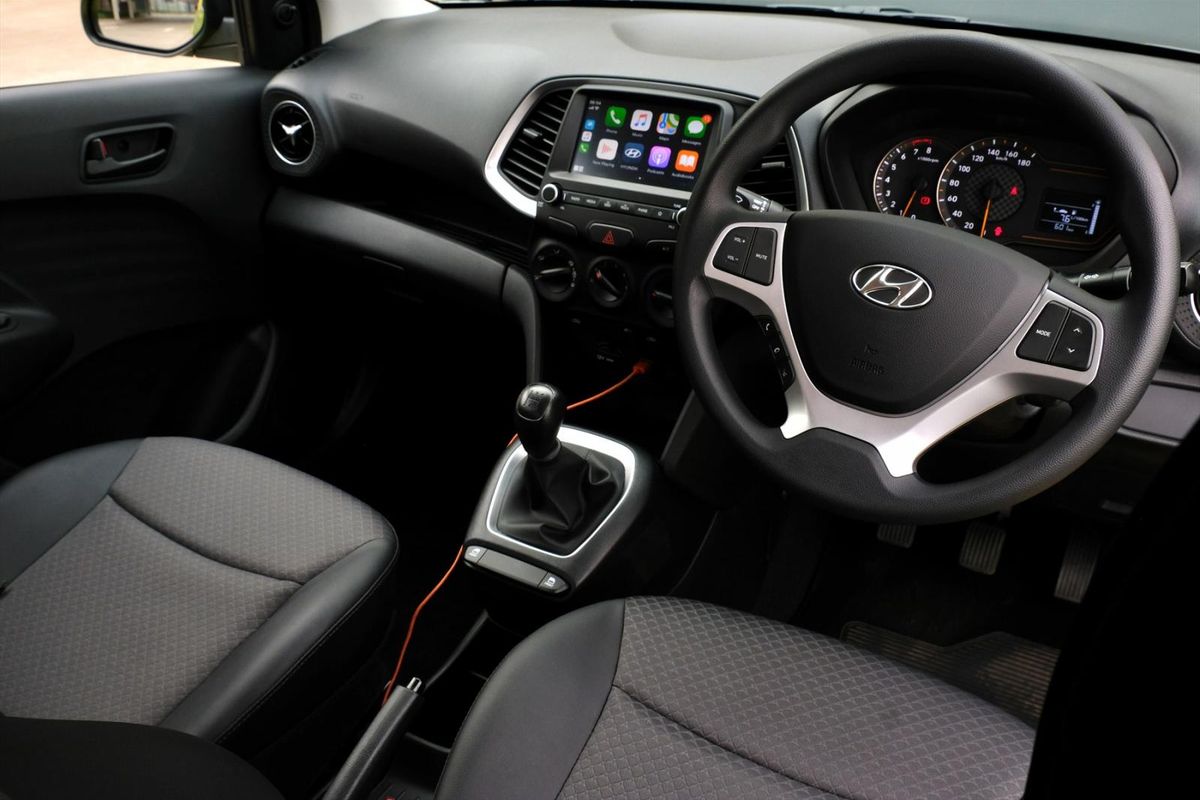
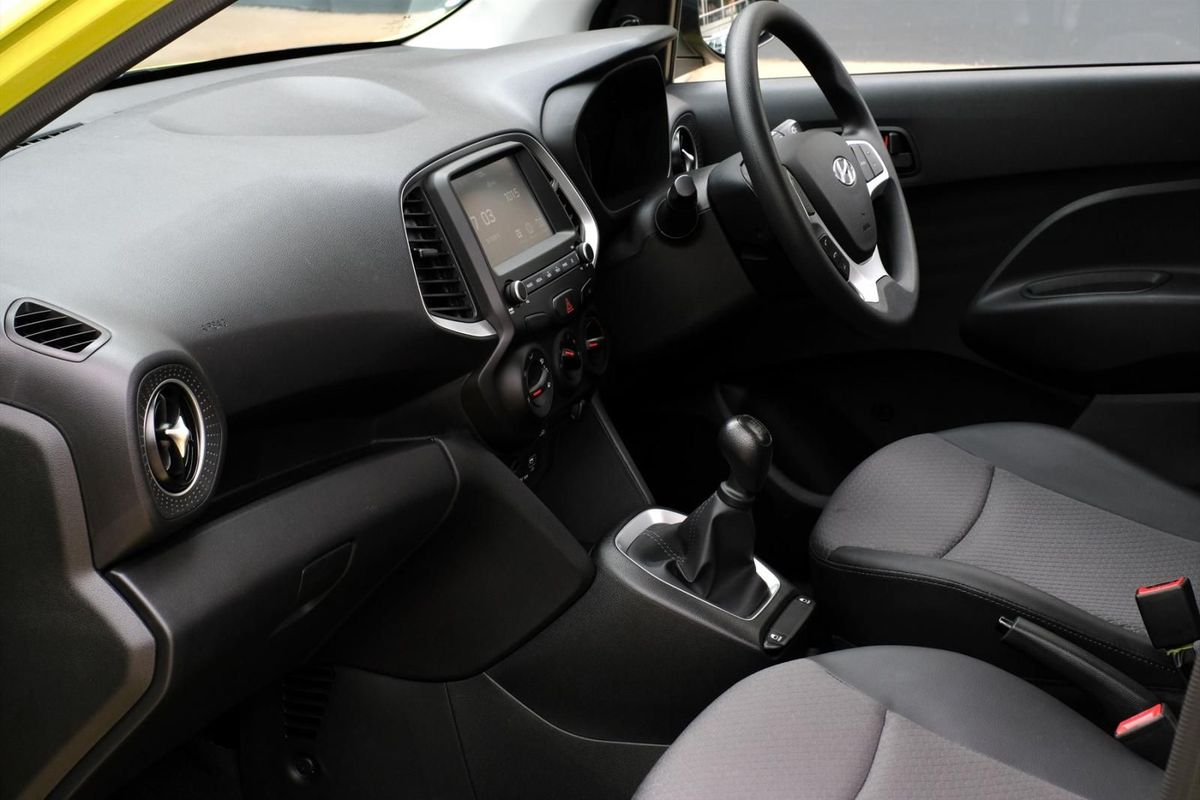
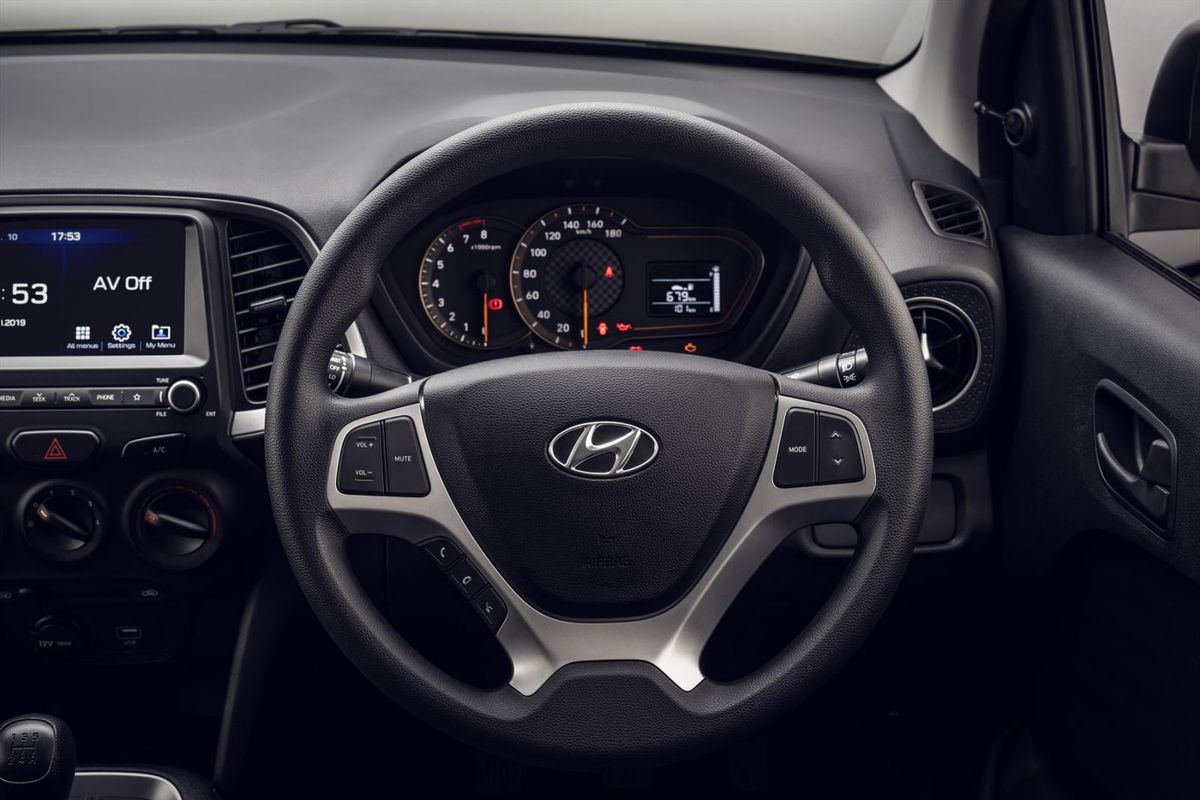
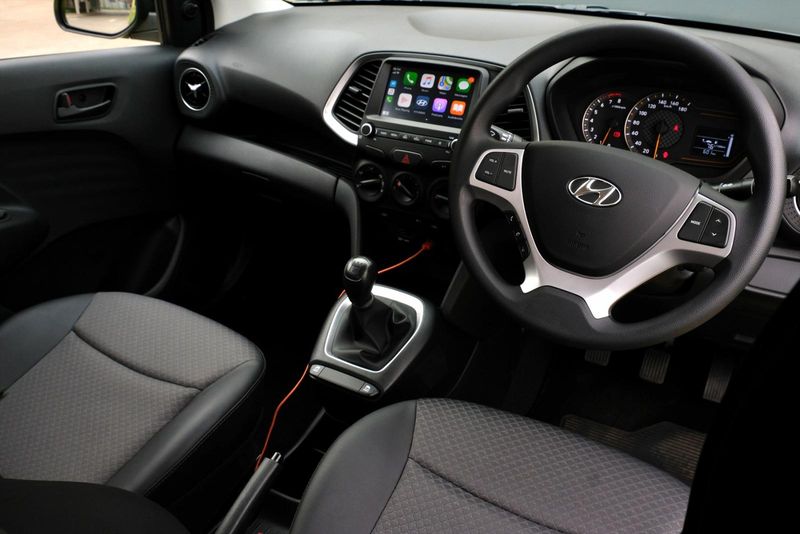
Interior is basic, but reasonably well-appointed for a budget-car offering.
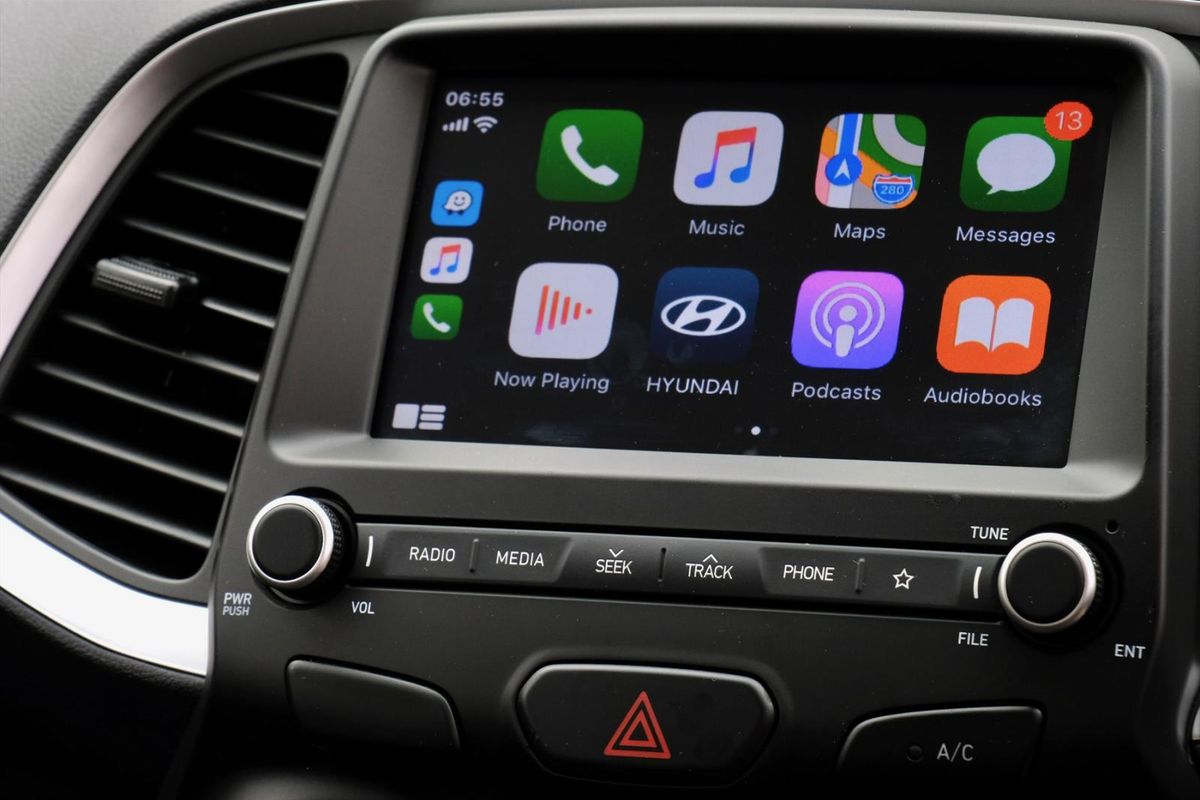
Beyond the mechanical bits, the Atos has an entirely decent cabin architecture. Broad-spectrum infotainment system functionality and smartphone synching/integration certainly sweeten the deal for any new-car buyer, even more so for those on a tight budget and truncated shopping list. As such, the Atos features a factory-fitted 7-inch touchscreen infotainment system that plays nice with Apple CarPlay and Android Auto.
The steering wheel also has satellite controls (audio- and Bluetooth handsfree toggles, which means you can answer an incoming call without having to take a hand off the wheel), but the column is neither height- nor reach-adjustable.
For Hyundai to keep the Atos within the desired price bandwidth, it had to prioritise certain content items over others. Sacrifices were made regarding convenience, which is why you have manually adjustable side mirrors, manual rear windows and seats that are not height-adjustable.
Adequate all-rounder
Meanwhile, many budget cars look like a fair deal when you evaluate their specification, but they tend to be annoyingly unrefined to drive.
The Atos is competing directly with Alliance twin-platform budget cars from Renault and Datsun: the Kwid and Go. Although the engine output numbers are similar between these 3 vehicles, their levels of driveability are very different.
Once you are accustomed to its fixed steering position, the Atos delivers an entirely adequate driving experience. For one, it has unquestionably better mechanical noise and vibration insulation than either the Kwid or Go…
After a decent drive in the Atos, it feels more complete than its rivals.
A small-capacity engine and 5-speed manual gearbox combination is always going to make for a busy drivetrain. At highway cruising speeds, the Atos does "buzz" a little, due to its engine running at higher rpm than is the norm (if you are accustomed to cars with 6-speed transmissions).
Ride quality is fair, but this is a short wheelbase car rolling on 14-inch rims shod with 165/70 tyres, which means that the Hyundai's ability to absorb harsh surface ridges and imperfections is limited. That said, the Atos has steel wheels; they tend to survive a pothole strikes better than alloys.
The claimed average fuel consumption is 5.7 L/100 km. Such figures are often overoptimistic, but on a test route that included 2 mountain passes and some very enthusiastic throttle use, we averaged 5.7 L/100 km as per the Atos onboard consumption computer. It's an impressive number and evidence, yet again, that relatively simple atmospheric engines are truer to their fuel consumption potential than any small-capacity turbo mill.
Rivals and ownership considerations
A long warranty and service plan makes the new Atos an attractive long term purchase.
The budget hatchback market is a substantial business in South Africa. The aforementioned Datsun Go and Renault Kwid often total a combined 1 500 units in monthly sales and Hyundai is understandably keen on conquering some of that business.
Hyundai’s new city car only has one real debit compared to its rivals and that is luggage space. The Atos is said to be able to accommodate 235 litres of luggage, while the Go and Kwid have more space in the back, at 265 and 300 litres respectively.
Summary
All told, the new Atos is a very convincing budget hatchback offering. The engine is unmistakably efficient, ergonomics are satisfactory and refinement is superior to those of its Japanese and French rivals. On a balance of features, Hyundai's newcomer is competitively specced too.
And then there is the ownership journey, which is often an unconsidered, but crucial, element for budget buyers. With an asking price of R159 900 (November 2019), the Atos comes with a 1-year service plan and a 7-year warranty – the latter should make it marvellously cheap to run long-term.
Meet the finalists in the Family Car category of the 2019/20 Cars.co.za Consumer Awards – powered by WesBank!
Now in its 5th year, the #CarsAwards was conceived to be South Africa's definitive automotive awards programme and is backed, for the 4th year running, by the country's leading supplier of vehicle finance, WesBank.
The Family Car category is guided by both eligibility factors and Pillars of Success.
Eligibility for this category includes a list price that falls between R400 000 and R500 000 (prices as of 1 September 2019) and including the cost of all necessary optional features.
Eligible vehicles must be equipped with ABS, Electronic Stability Control (ESP), a minimum of 6 airbags, split/fold rear seats, air conditioning and a service plan.
Pillars of Success in this category include engine flexibility, fuel economy, space and practicality, design and quality appeal, comfort, safety and in-car entertainment.
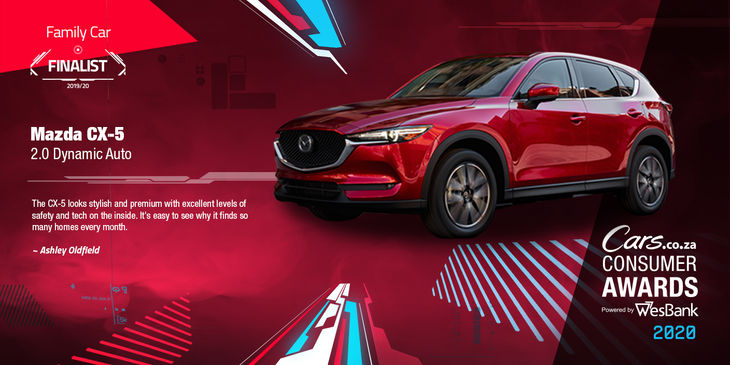
The CX-5 is a stalwart of the #CarsAwards family-car category, which previously won in 2017/18. This time the 2.0-litre Dynamic Auto derivative has been nominated to uphold Mazda’s honour. The stylish CX-5 continues to offer excellent build quality, practicality and a balance of comfort and safety features that is hard to beat at the price.
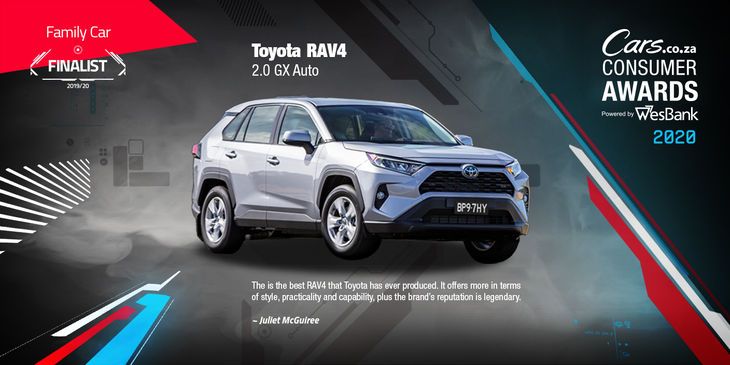
The all-new RAV4 is distinctly different from its forebears. It also uses Toyota’s TNGA platform, which underpins a variety of models (from hatchbacks to family SUVs). It’s been a top-seller for the brand and the new version builds on that legacy, with improved practicality, driving refinement, comfort levels and interior features.
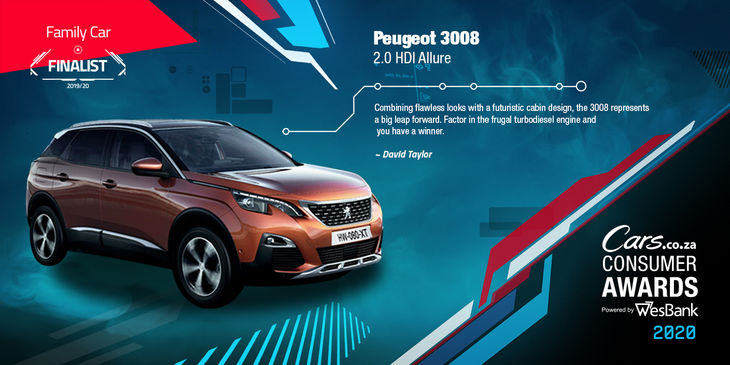
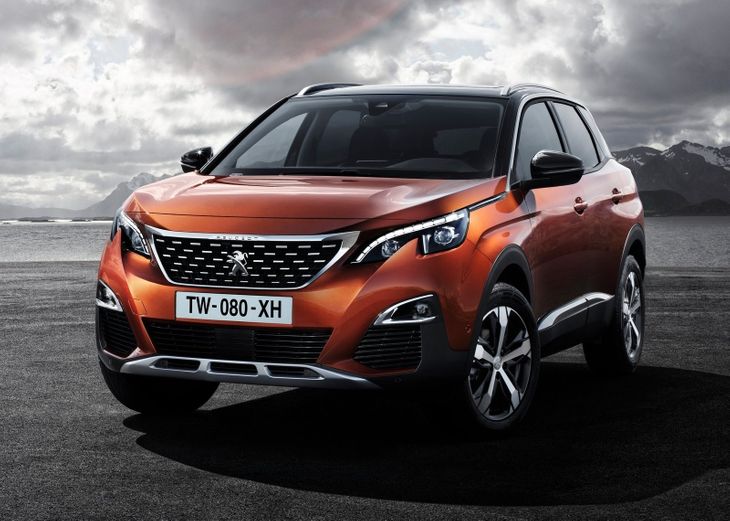
Peugeot’s 3008 brings a unique blend of style and functionality to the family car market. Not only does the French contender catch the eye with bold exterior styling, its cabin is impressively upmarket and futuristic. Considering the 3008’s extensive features list and willing powertrain, it’s difficult to overlook this contender.
The month of October 2019 yielded some positive results according to figures released by the National Association of Automobile Manufacturers of South Africa (NAAMSA). See the sales summary below…
It’s been a tough year for new car sales in South Africa with positive sales results being few and far between. October 2019, however, reflected some positive news as aggregate new car sales and passenger car sales increased marginally while export sales recorded significant gains in line with industry expectations. The Light Commercial Vehicle (LCV) market, however, recorded a decline during the month.
The Toyota Hilux came out on top as the best-selling vehicle in South Africa followed by the popular Volkswagen Polo Vivo and Polo respectively. Perhaps the greatest sales success story of all is that of the Volkswagen T-Cross which has racked up impressive sales since its recent launch in South Africa in September 2019 with cumulative sales already sitting at 1 942 units in just over 40 days on the market, which is mightily impressive!
New Car Sales Summary: October 2019
Aggregate new vehicle sales of 51 978 units up by 0.2% (+122 units) compared with October 2018.
New passenger car sales of 35 904 units up by 2.5% (+860 units) compared with October 2018.
LCV sales of 13 366 down by 5.9% (-833 units) compared with October 2018.
Export sales of 41 277 up by 21% (+7 152 units) compared with October 2018.
Earlier this year it was predicted that the new car market would improve during the second half of 2019. That, however, hasn’t yet happened. NAAMSA notes that a low-growth economic environment and a rise in South Africa’s fiscal risks will hamper sales prospects for the foreseeable future. In addition to this, pressure on household disposable income and low business confidence will also continue to have a negative impact. Deman for new passenger cars will, therefore, remain under pressure over the medium term.
Exports, however, are on track to achieve record numbers for 2019 with October 2019 figures representing the third-highest figure on record.
Peugeot, Fiat tie-up creates world’s 4th-largest car firm
And so, the rumours have turned out to be true: the world has a new car company. PSA and FCA have successfully negotiated a corporate merger and the result of the tie-up is the world’s 4th largest car company. In fact, the multinational is bigger than Hyundai Motor Company (and that includes Kia!).
Earlier this year, FCA (Fiat/Chrysler) was in advanced negotiations with Renault to form a merged automotive giant, but the latter’s Alliance partner, Nissan, effectively scuppered the deal. However, the Italo-American company remained on the lookout for a strategic partner.
FCA has a thriving bakkie business (Ram) and sales of high-margin muscle cars and SUVs (Chrysler, Dodge and Jeep) remain strong, but the company is struggling outside of North America. It has neither the volumes nor the market access to rival German, Japanese and Korean brands in the European small-vehicle market, where Fiat was once a major player.
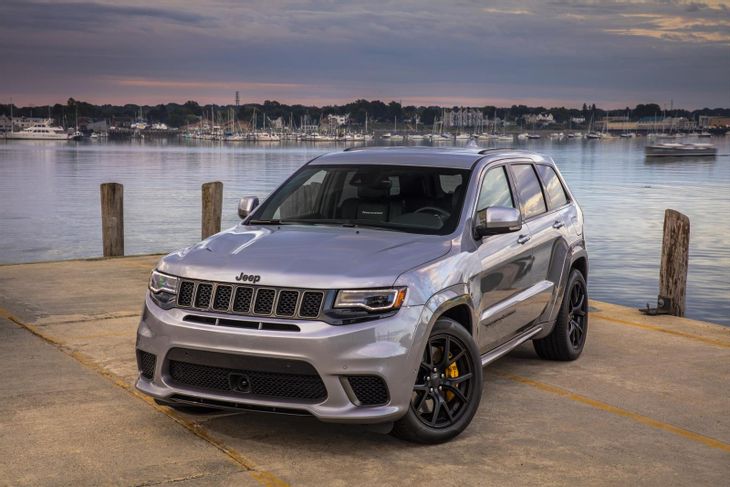
Products such as the Jeep Grand Cherokee Trackhawk are some of FCA's biggest money-spinners.
For its part, PSA (Peugeot, Citroen, DS and Opel) can avail enviable engineering and production resources (such as advanced drivetrains and battery technology) to FCA. The French group’s products are selling up a storm in Europe (almost 3.1 million units in 2018) with profits at a record high. It has virtually no presence in North America, however, but the deal will enable FCA to leverage its vast distribution network to benefit PSA.
In terms of brand diversity and numbers, the merger is significant. The combined company commands 8.7 million unit sales and profits total around R183 billion. Although the new company does not yet have an official name, PSA and FCA will each own a 50% stake in this joint entity (it will be based in the Netherlands). For those who wish to purchase equity in the merged company, public listings will be available in Paris and New York.
The line-up of brands which are now under the control of this new PSA/FCA board are as follows: Peugeot, Citroen, DS Automobiles, Opel, Vauxhall, Abarth, Alfa Romeo, Chrysler, Dodge, Fiat, Jeep, Lancia, Maserati, Mopar, Ram and SRT.
Promising cost saving to the tune of R42 billion in R&D and sourcing synergies, the PSA/FCA merger shows great promise. But there are notable challenges, too.
Who'll benefit the most from this?
Architects of this merger have championed its ability to solve issues for PSA and FCA on opposite sides of the Atlantic by leveraging scale and production synergies. However, it remains to be seen how the firms will scale platforms and technology sharing arrangements to allow PSA products to enter America as well as give FCA a rejuvenated presence in Europe at the same time…
All the brands which are part of this new PSA/FCA merger are peripheral participants in the South African market. Jeep and Opel might have legacy, but their sales volumes are a trickle. Much the same can be said for Peugeot, although the French firm did recently overhaul its local operations.
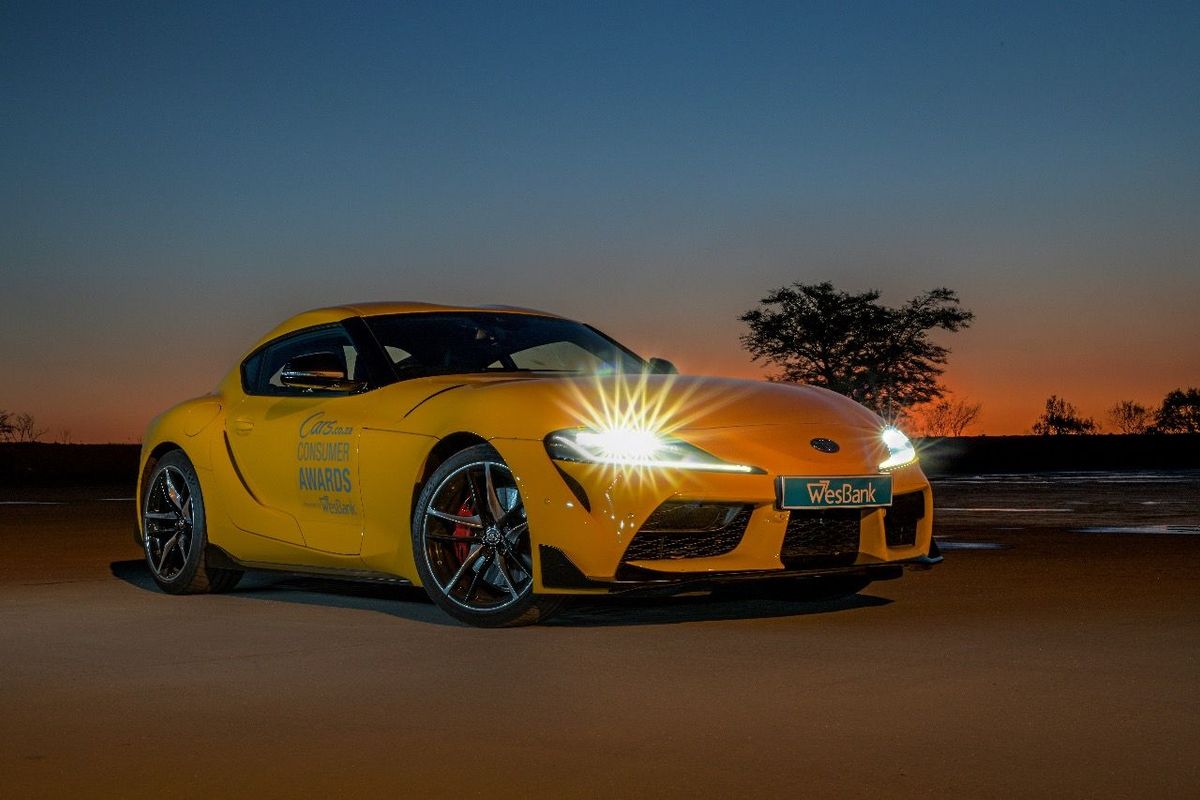
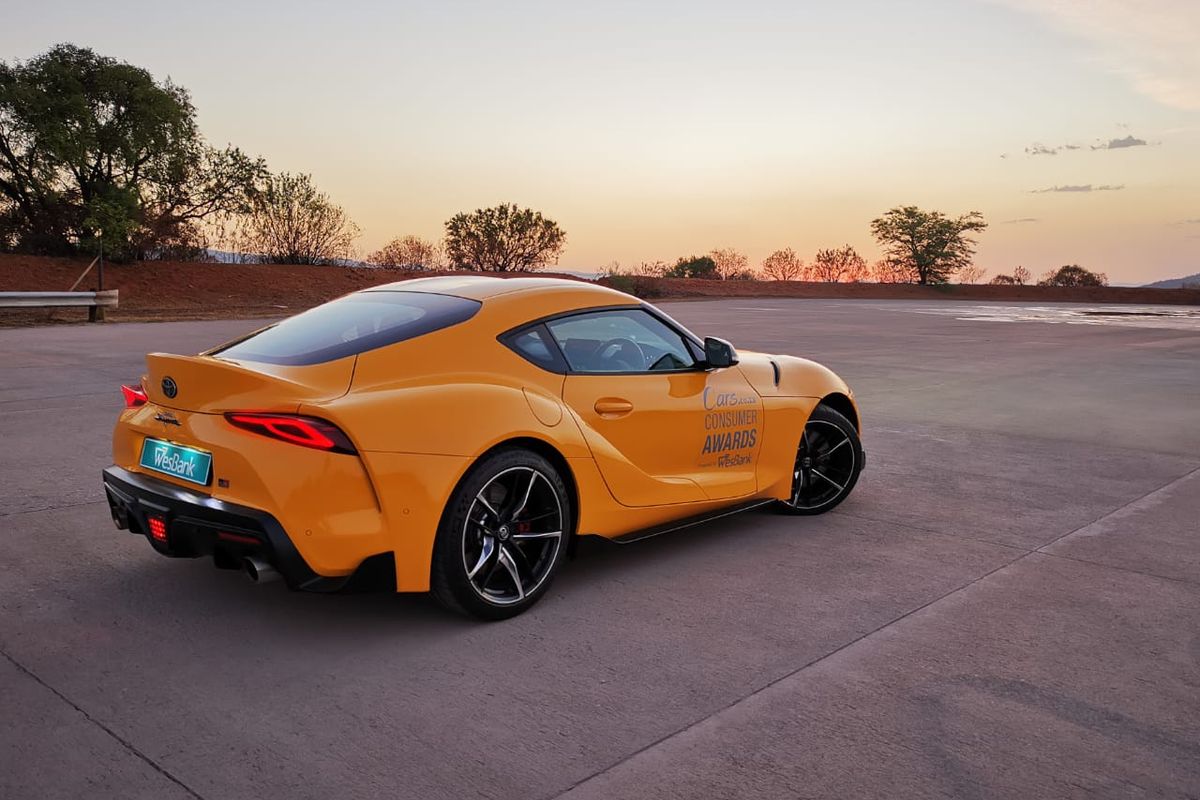
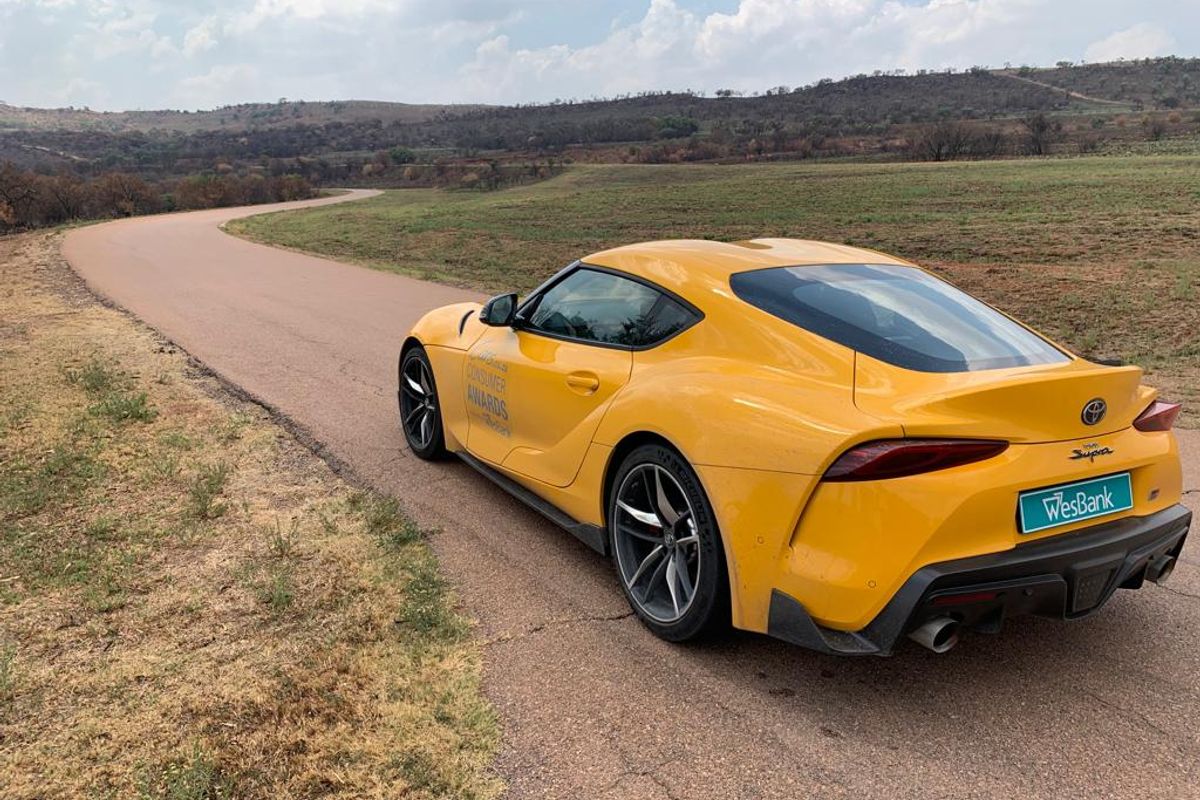
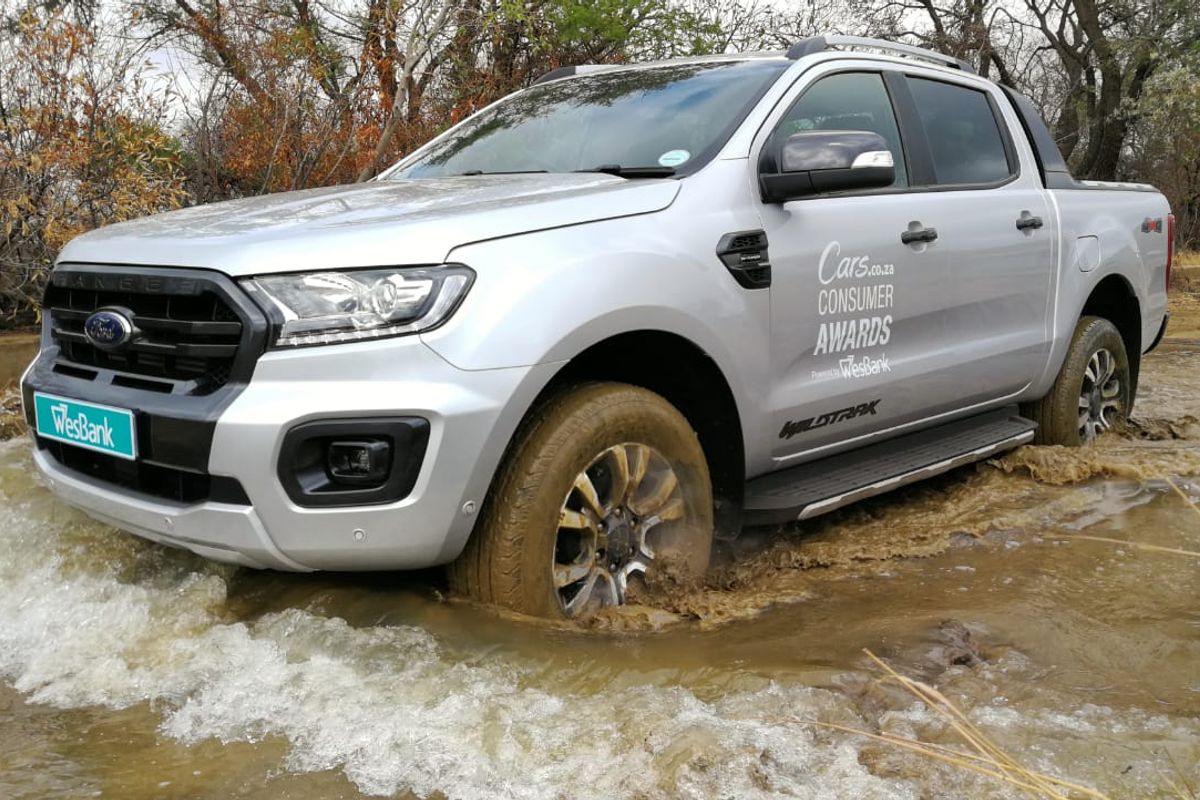
Cars.co.za Consumer Awards, powered by WesBank Completes Testing at Gerotek
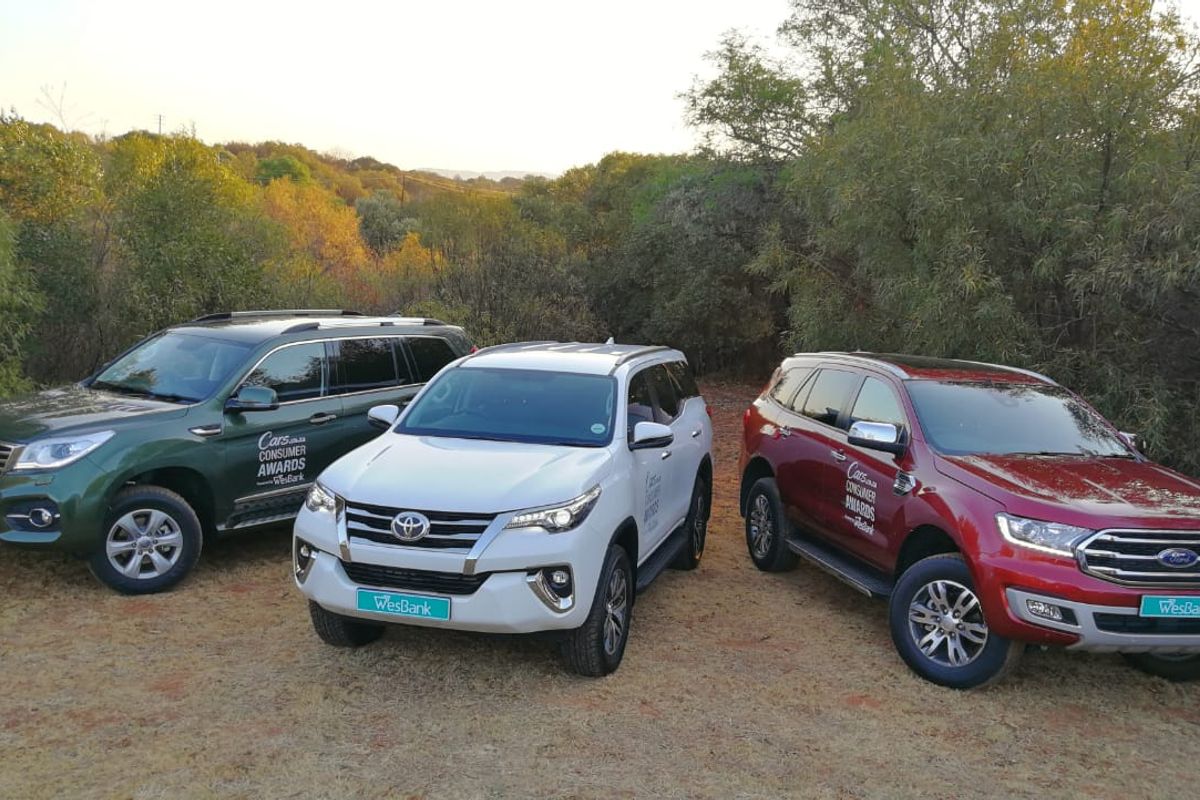
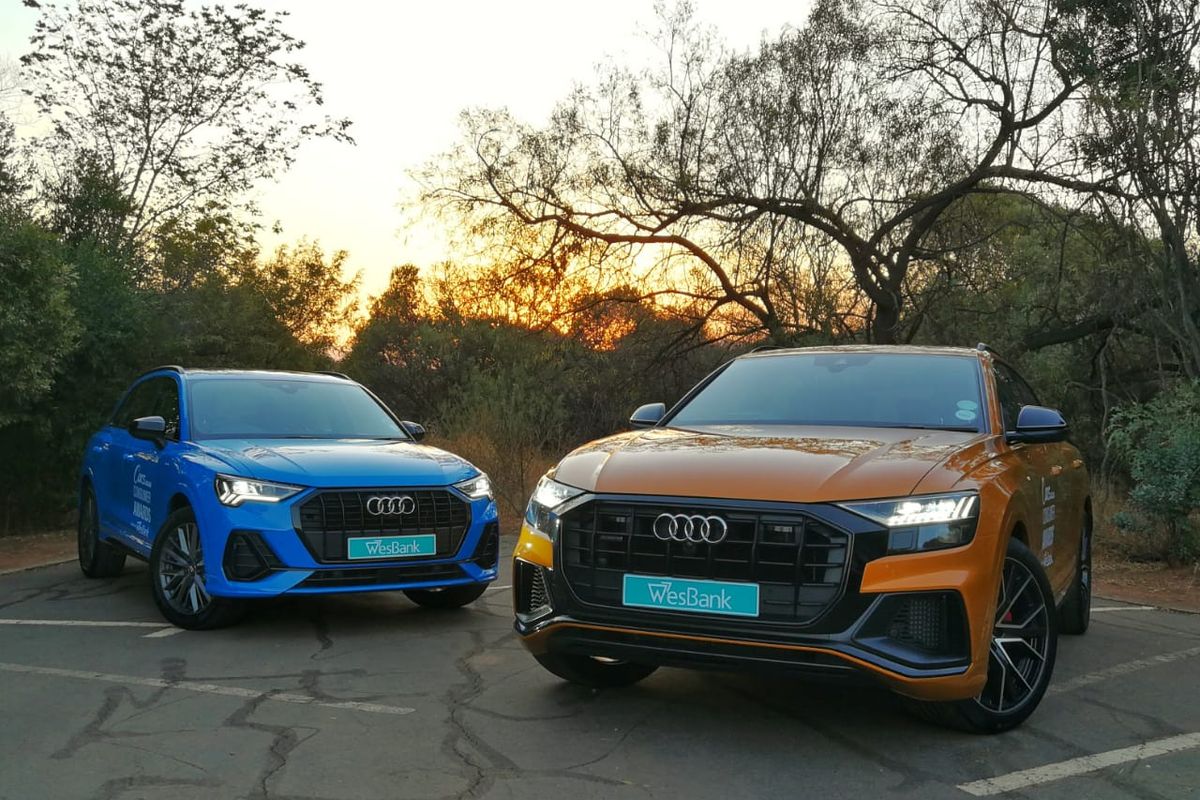
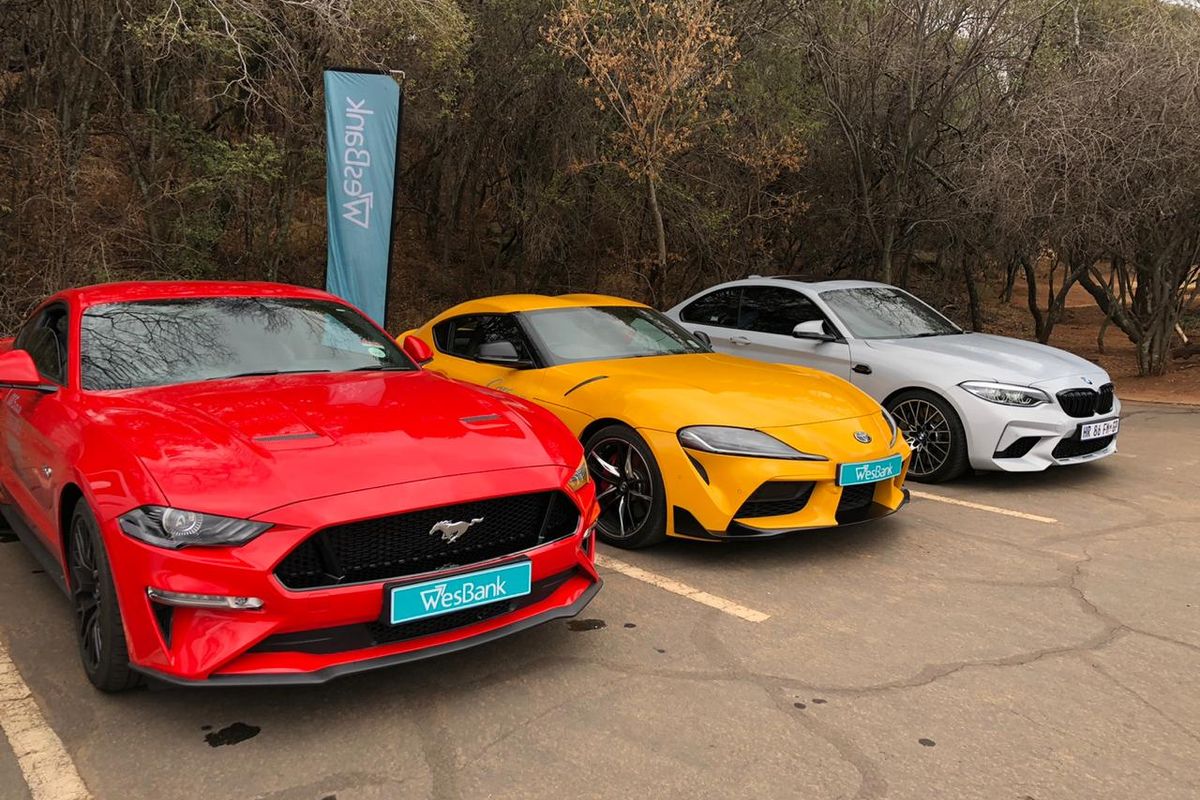
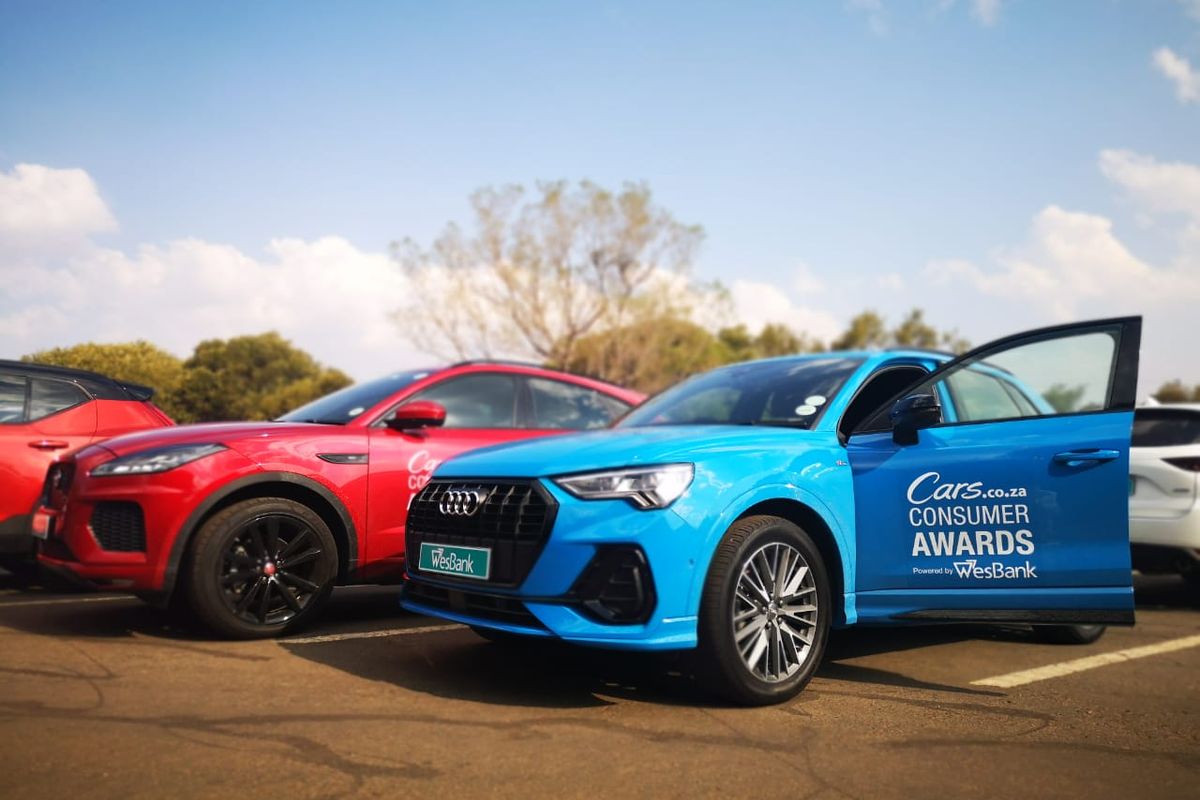
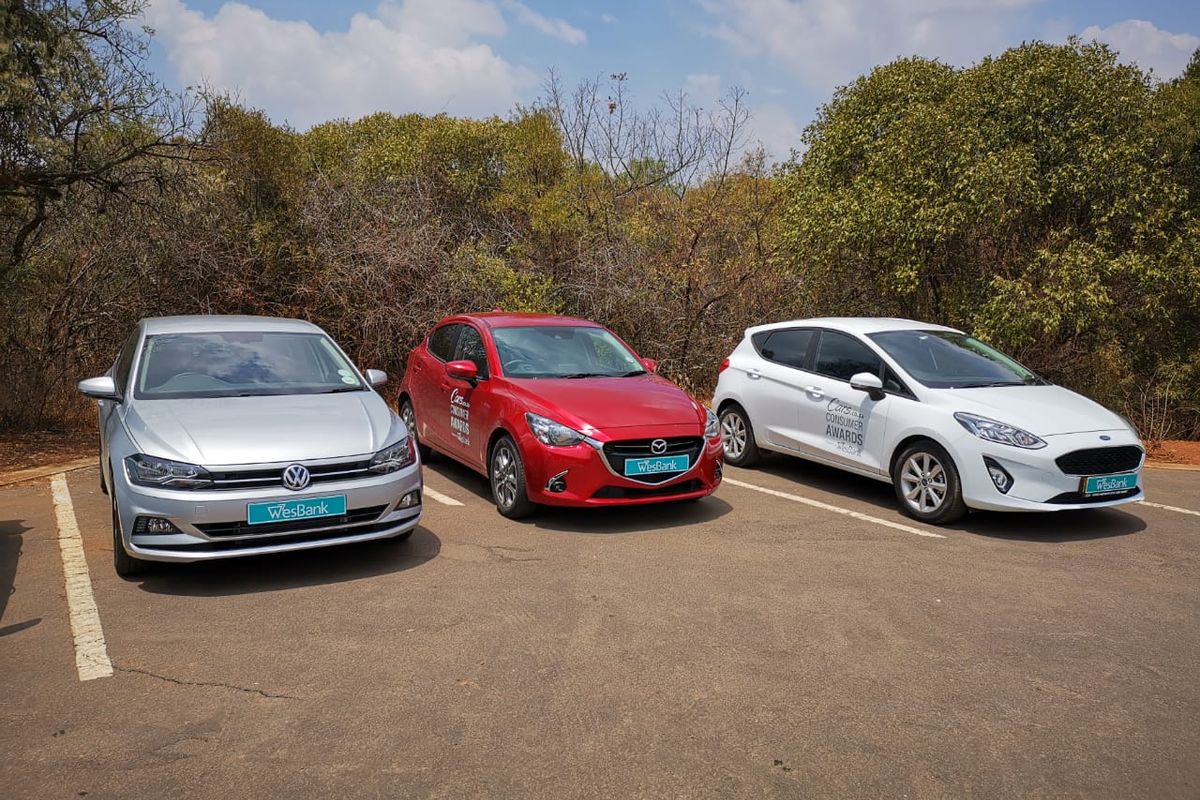
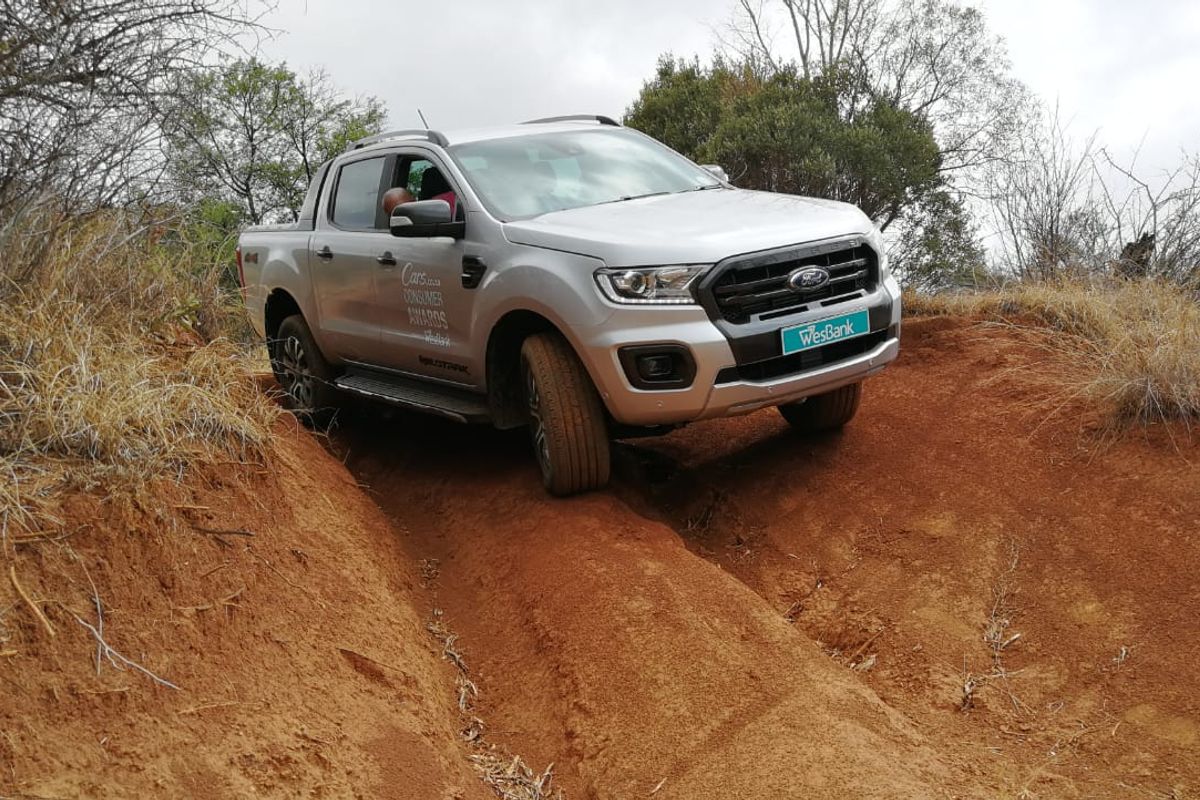
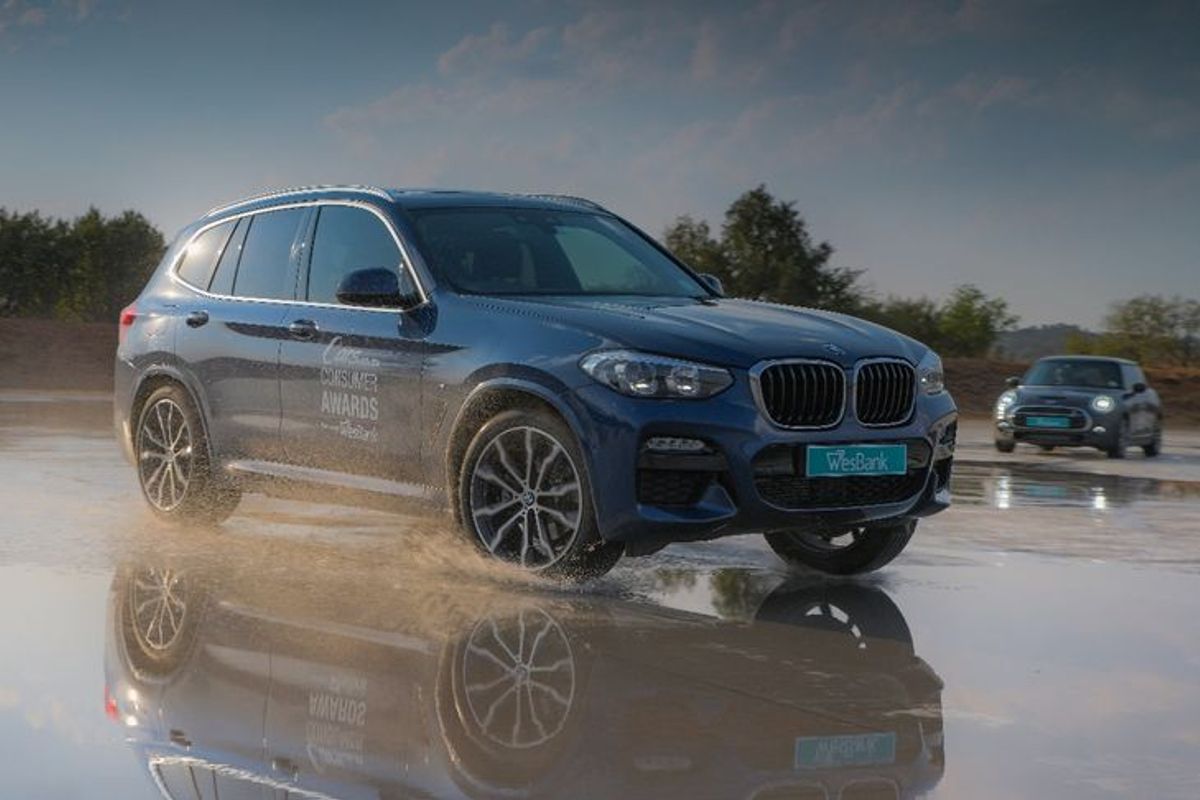
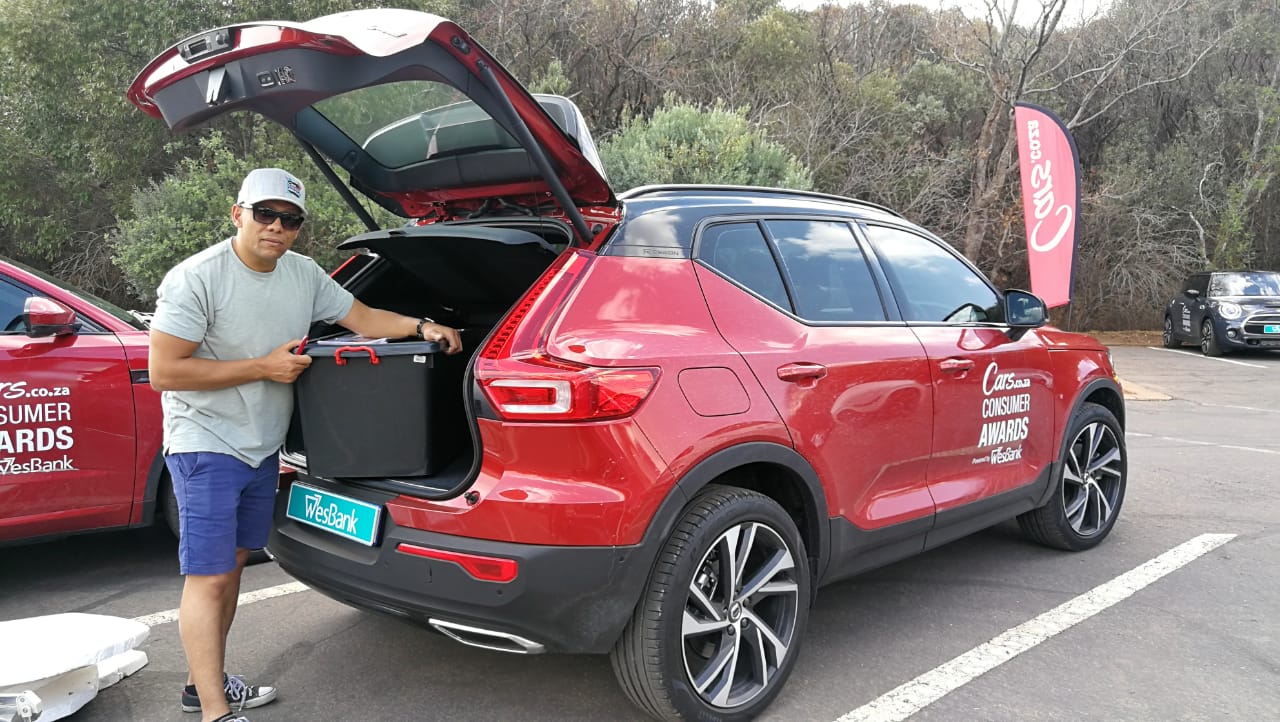
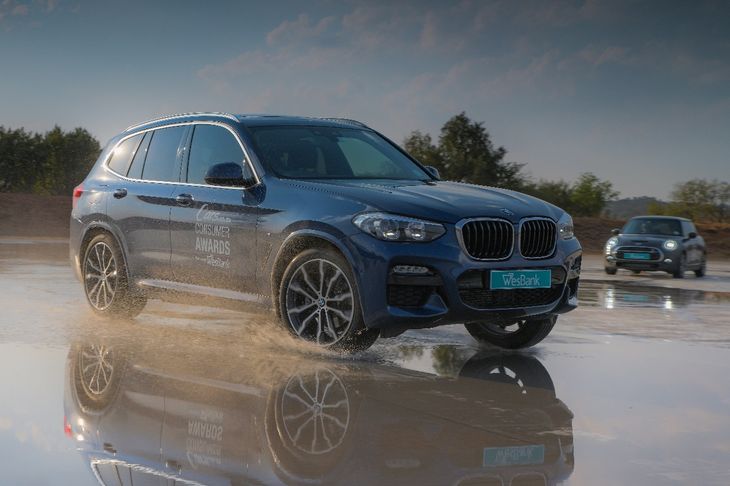
Gerotek was a hive of activity on Thursday, 30 October and Friday, 1 November as judges convened at this world-class testing facility to evaluate the finalists in the 2019/20 Cars.co.za Consumer Awards, powered by WesBank.
The judges, who included the full Cars.co.za editorial team and a host of celebrity judges, tested 39 vehicles across 13 different categories.
Their scores will now be tabulated by auditors PwC and combined in equal measure with the feedback of thousands of vehicle owners from the Cars.co.za Ownership Satisfaction Survey to decide each category winner. The customer feedback has been compiled in partnership with vehicle information specialists, Lightstone Auto.
The Cars.co.za Consumer Awards, powered by WesBank, made waves five years ago when they were launched as a comprehensive and statistically significant evaluation of the thousands of models available on the South African market.
Unlike other automotive competitions, the Cars.co.za Consumer Awards, powered by WesBank, considers all vehicles that are on sale on a given date (1 September 2019, in this case). From this pool, the judges pick semi-finalists and finalists using a very rigorous set of criteria, including the feedback from owners and market insight from Cars.co.za’s deep knowledge of the automotive market.
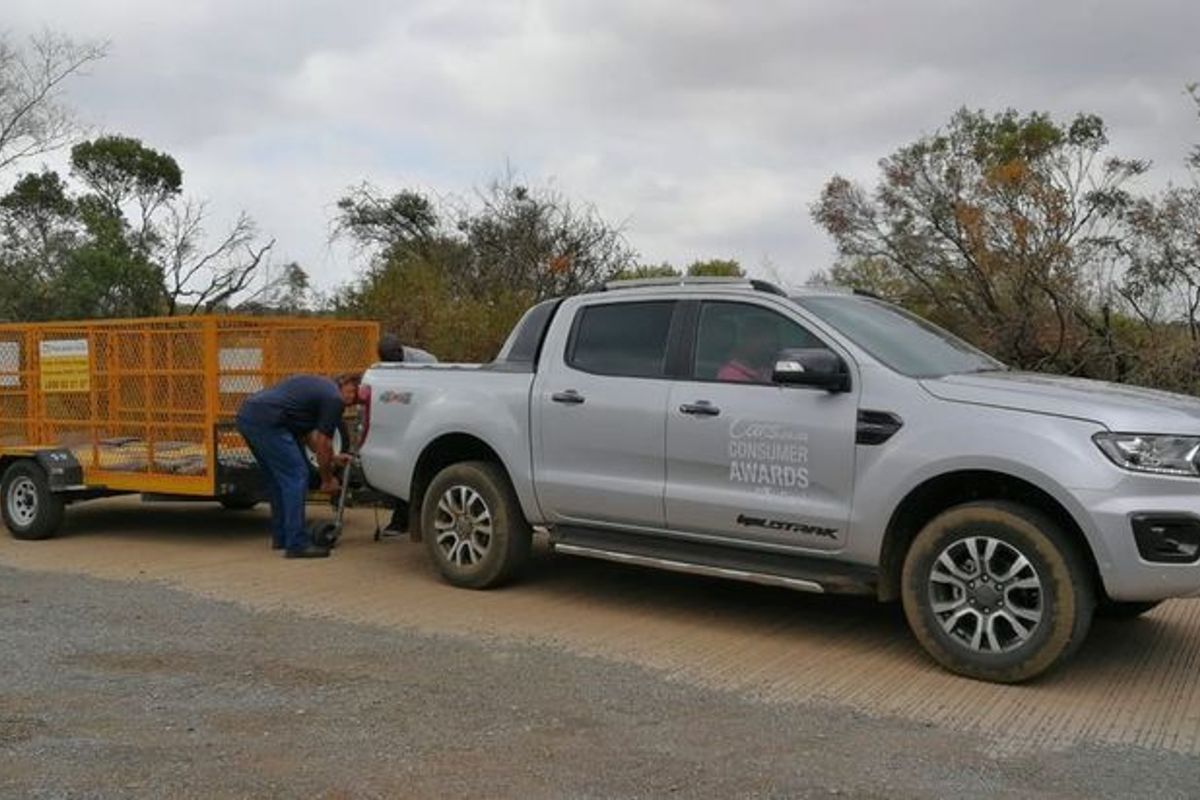
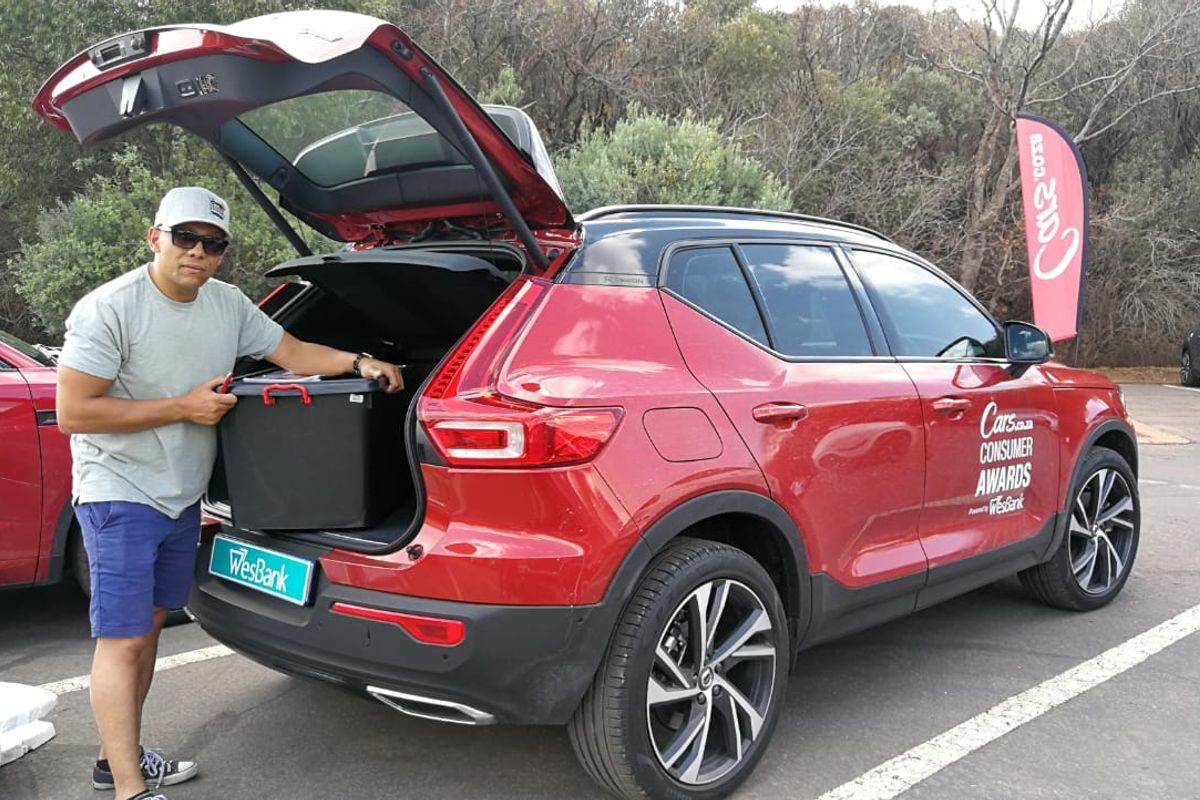
The #CarsAwards finalists undergo thorough testing at Gerotek. Judge, Ernest Page, testing practicality.
The finalists are then pitted against each other over two days at Gerotek, with specific judges assigned to each category. Their inputs are weighted, based on the category, and combined with the customer data from the Ownership Satisfaction Survey to truly find the best vehicle in each category.
This process means that poor service support or sub-par vehicle durability will show up in the Ownership Satisfaction Survey and act as a counterbalance to excellent on-track performance at Gerotek. Similarly, a vehicle may prove to offer exceptional service and durability, but not represent automotive excellence, causing it to fall short at the Gerotek testing. Both emotion and reason have to be present for a vehicle to win its category.
“In the past five years, we conducted over 1 800 test drives and considered hundreds of thousands of customer inputs. This, along with the insights from our partner, WesBank, has allowed us to perfect our judging process and build an unmatched database of vehicle data,” says Hannes Oosthuizen, Cars.co.za Consumer Experience Manager.
As part of its process of refinement, Cars.co.za has introduced a new Crossover segment, removed the Executive Sedan category due to its low sales and a lack of new models and redefined the Hot Hatch category to a Fun Hatch category.
The #CarsAwards gala event will take place in February 2019, where the winners across all 13 categories will be announced.
“Through our partnership with the Cars.co.za Consumer Awards, we have further broadened our understanding of the vehicle market and made it available to customers and manufacturers alike. This helps would-be buyers take the stress out of buying a vehicle, meaning they can make an informed choice, apply with our FastFinance app and drive away in their dream car in minutes,” says Lebogang Gaoaketse, Communications, Social & PR Manager at WesBank.
Aside from celebrating the fifth running of the Cars.co.za Consumer Awards – powered by WesBank, Cars.co.za also popped the champagne on its tenth anniversary and its status as South Africa’s largest vehicle portal.
Cars.co.za currently has over 75 000 vehicles listed on its site and it welcomes over 5 million monthly visitors. It also hosts South Africa’s top-ranked YouTube channel and, thanks to its vehicle restoration programme and editorial initiatives like SentiMETAL, has become a custodian of South Africa’s automotive heritage.
The 2019/20 #CarsAwards finalists in their respective categories are: