The parent company of JLR is adding some entry-level spark to its own cars.
Indian automotive giant Tata has done the inevitable and electrified one of its budget vehicle offerings.
The Tigor sedan is amongst Tata’s most popular vehicles and a new version was introduced late last year. Now Tata has revealed a battery powered Tigor, which might become one of the first truly affordable electric vehicles to be marketed.
Electrification does not change the Tigor’s appearance much, although it does sacrifice some luggage space. The battery-powered Tigor has a boot capacity only 330-litres, which is 90-litres less than the petrol-powered version.
For that sacrifice in luggage space, you gain a 16.2kWh battery pack, powering a 30 kW electric motor which drives the front wheels. Peak torque output is 105 Nm.
Tata claims a range of 142 km for the Tigor EV and recharging efficiency depends on what you are plugging it into. A conventional wall socket will take six hours to charge the Tigor to full capacity, whilst a DC 15 kW fast charging unit reduces that to an hour and a half.
Pricing? The Tigor EV is positioned at an estimated R200 000, with India acting as its launch market. Tata has a small offering of just 3 cars in South Africa so it would be a bit optimistic to expect it to immediately jump on an electric vehicle option for SA.
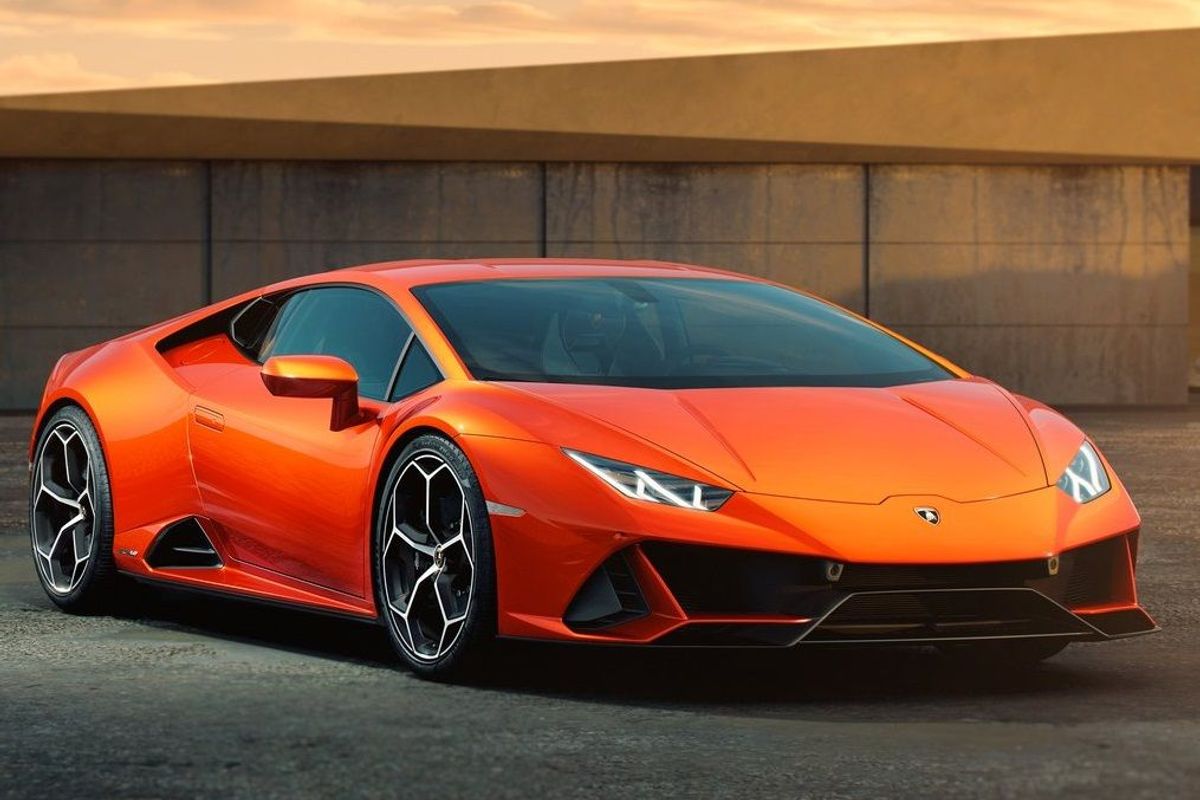
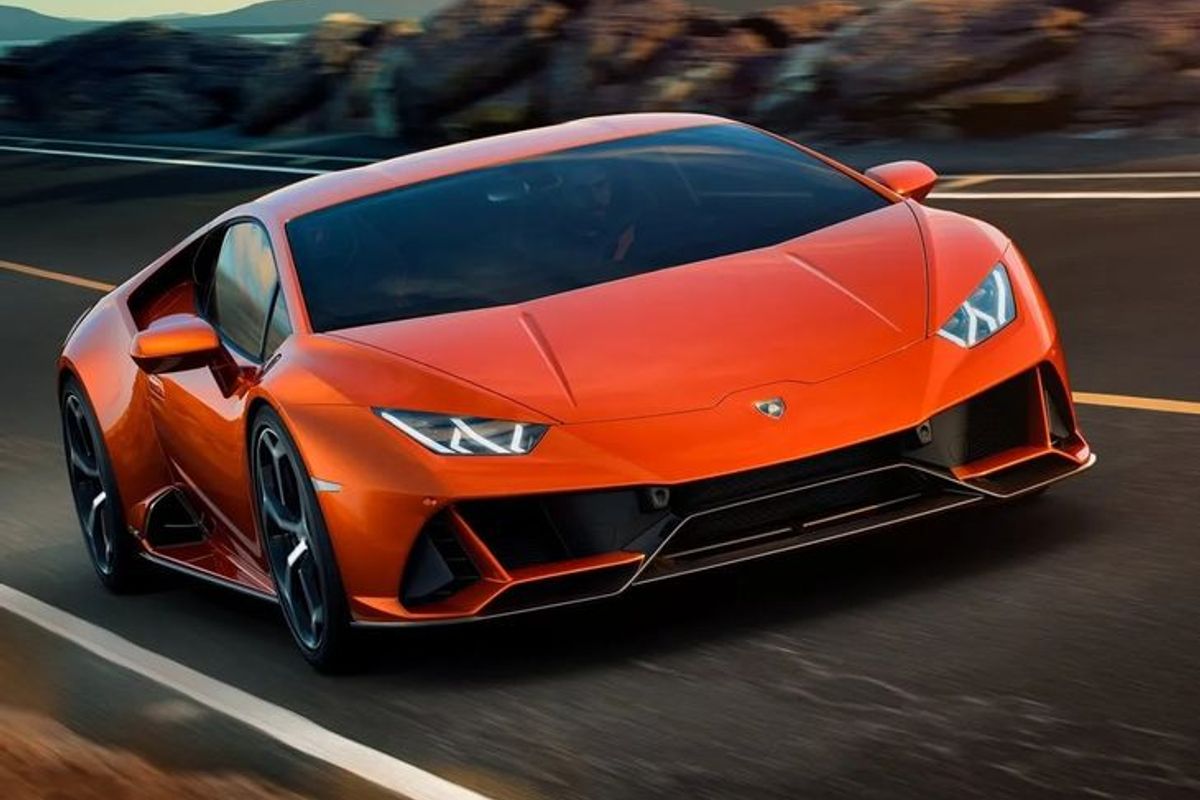
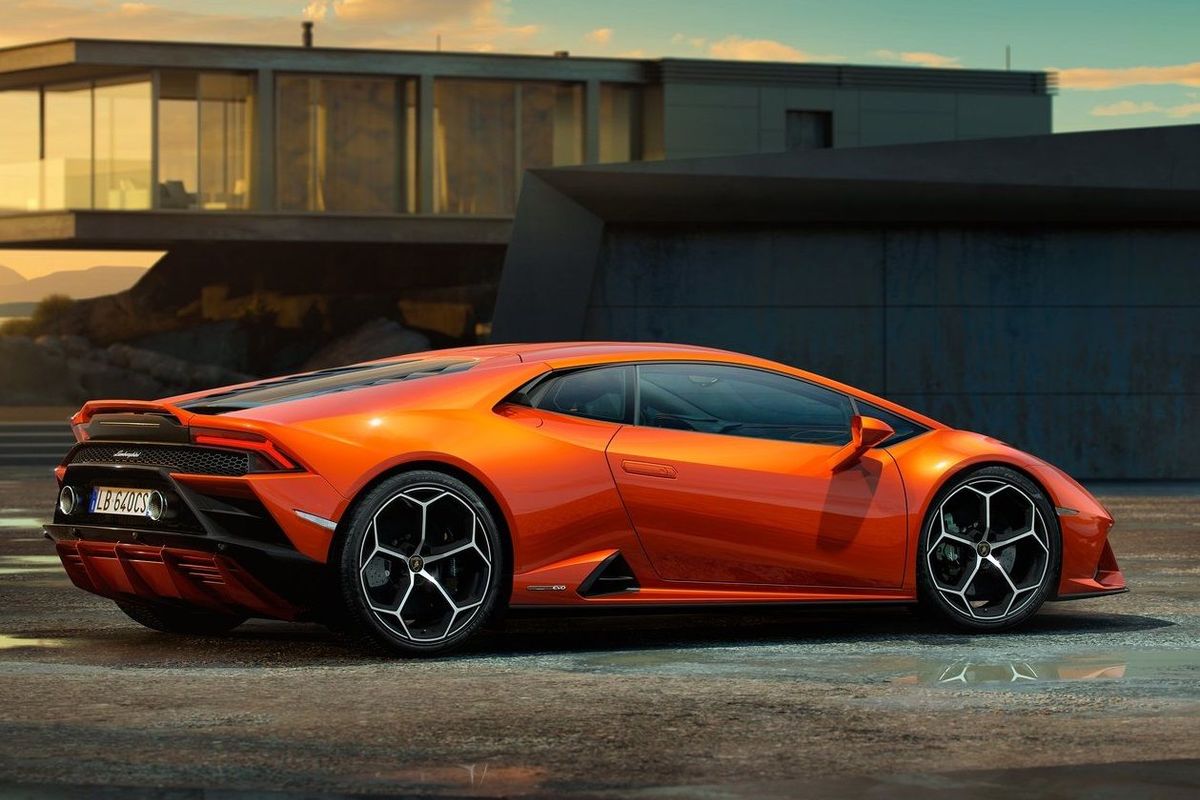
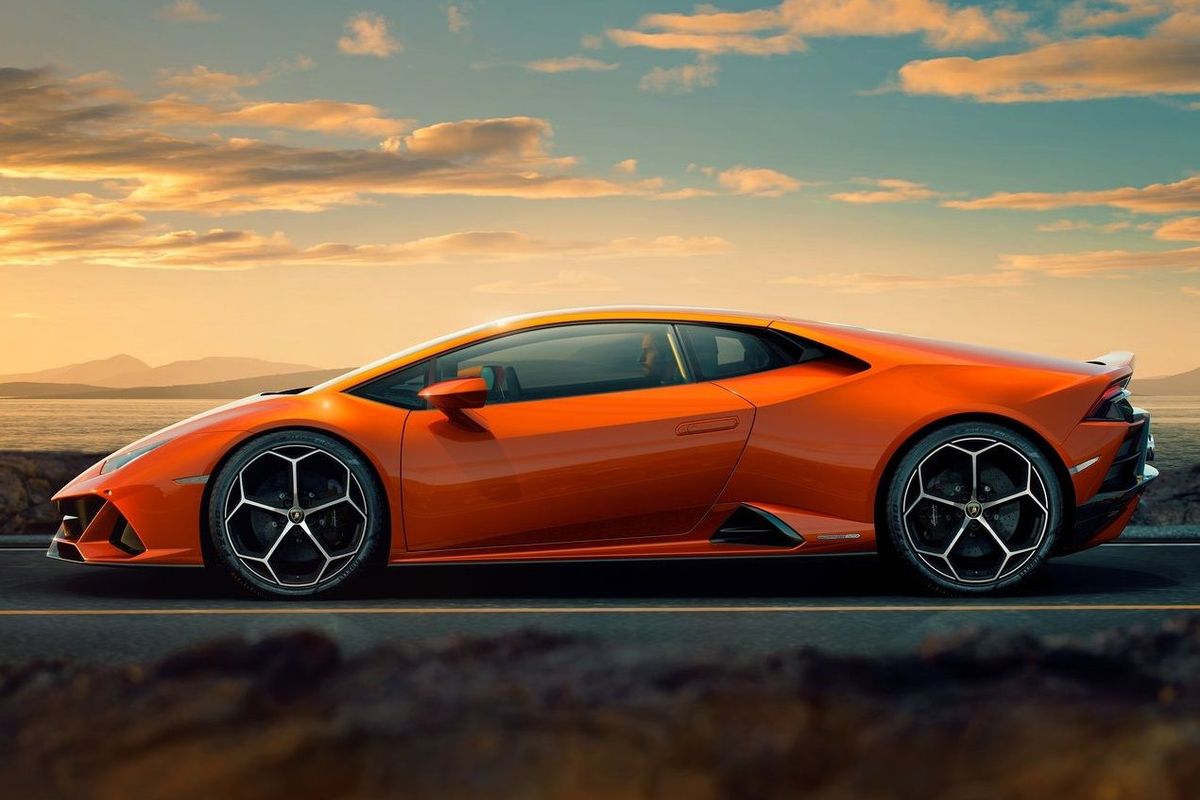
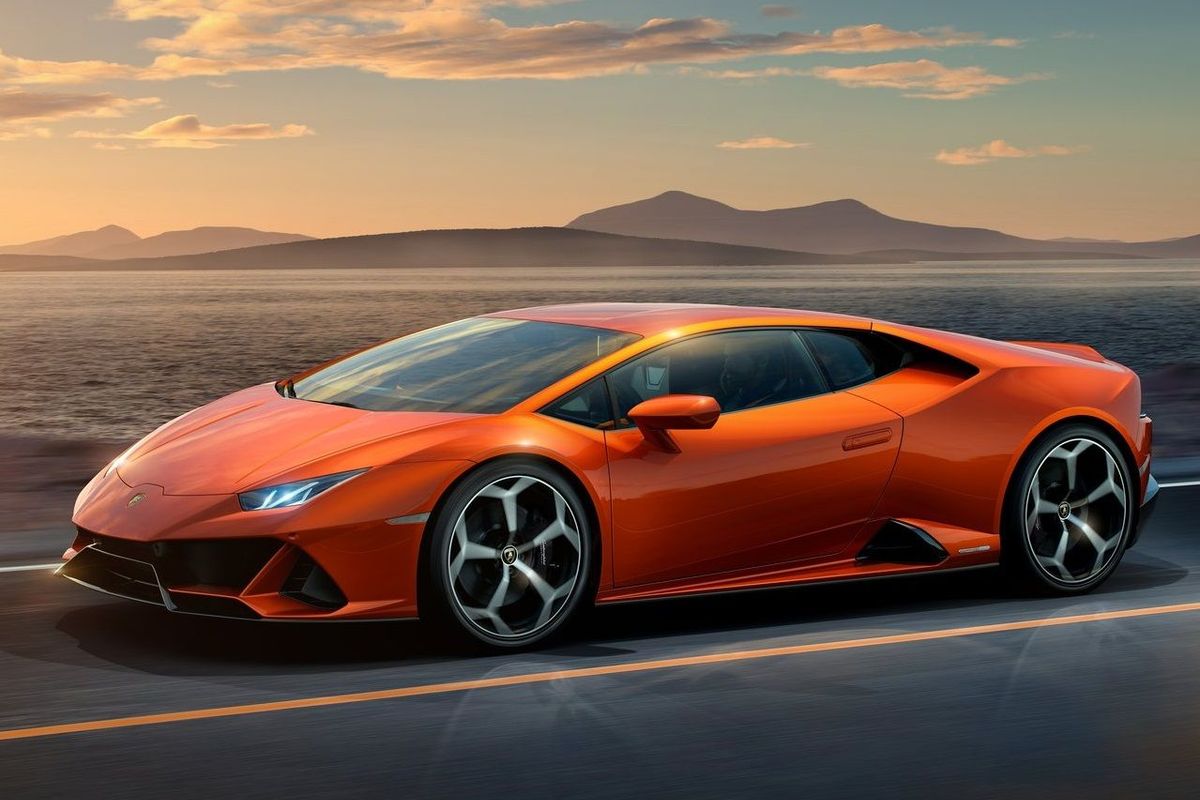
The Huracan Evo is the very latest and greatest iteration of the Huracan. It's on its way to SA and here's what it will cost.
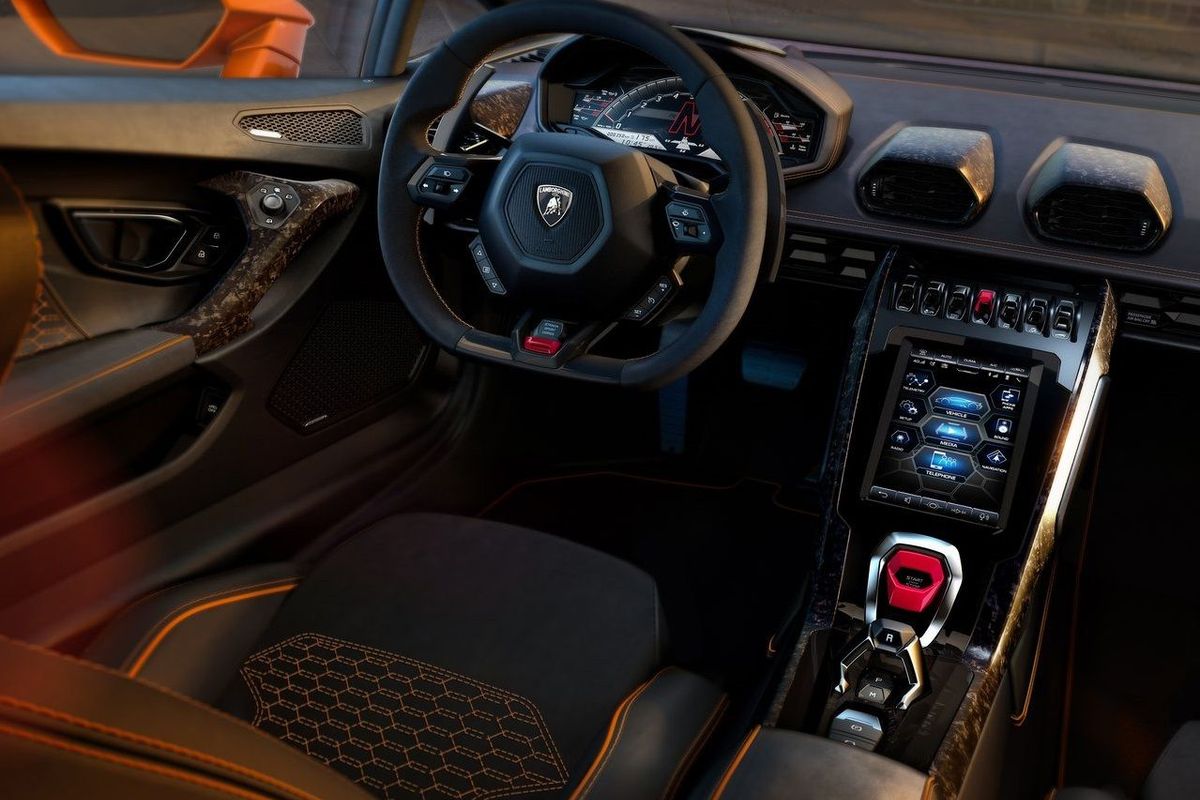
We spent a weekend in Bahrain at the beginning of this year getting to know the Huracan Evo intimately around the F1 circuit. It surprised us as to just how different it is to its forebears and the amount of tech thrown in to improve its handling and excitement levels.
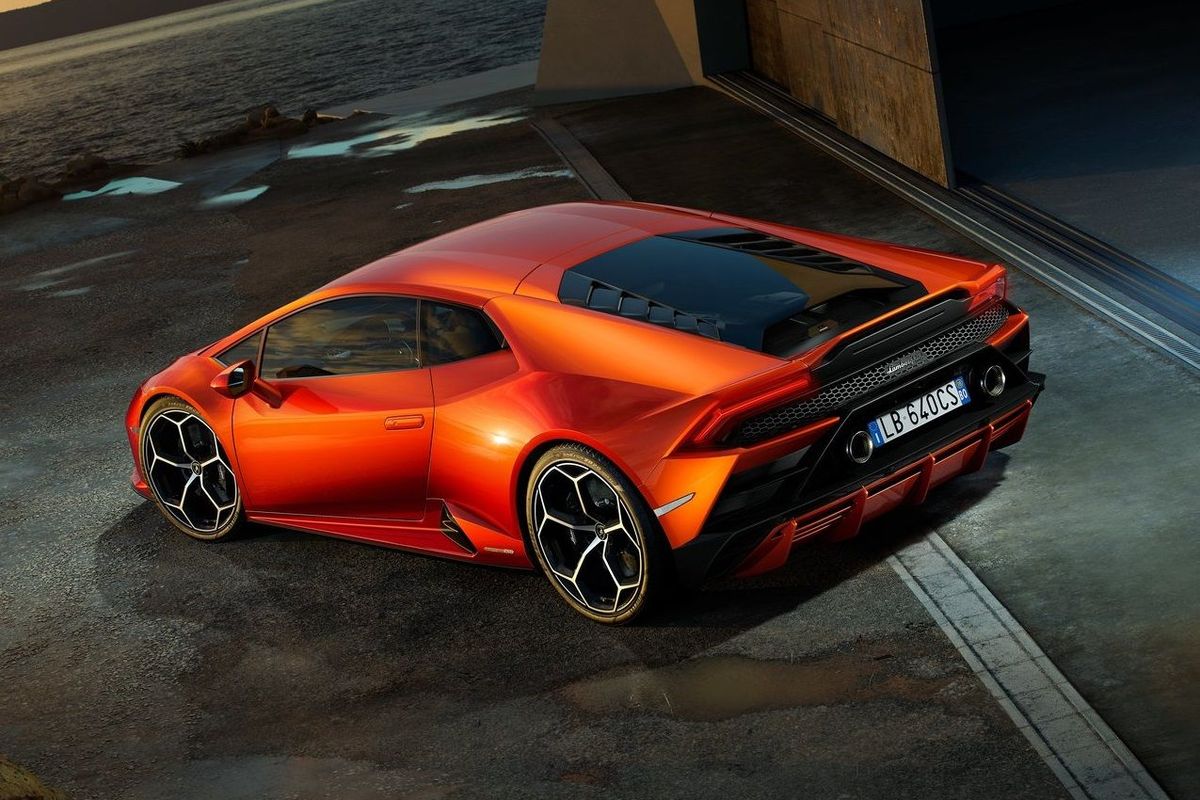
Physically the changes are subtle but all with the aim of increasing downforce and getting more air into the cooling ducts. Most notable is the twin exhaust outlets, which flank the number plate, making room for a huge diffuser underneath that sucks the Evo to the ground.
Performance wise the Evo is claimed to lap Lamborghini's test track a smidge faster than the much more track-focused Performante. That's a testament to just how much of an update this Evo is. Zero to 100 kph is done within 2.9 seconds and in 9.0 seconds it will be doing 200 kph. The 5.2-litre naturally aspirated V10 is good for 470 kW at 8 000 rpm and 600 Nm at 6 500 rpm.
The Huracan Evo is expected to be available in SA from the 4th quarter of 2019.
Fuel prices will drop in July mostly thanks to the drop in international oil prices.
Some good news for motorists is on the cards for July 2019 as the price of petrol and diesel is set to decrease. Petrol is likely to drop by 86 cents a litre and diesel by 68 cents per litre. The drop comes as a result of the crude oil price dropping substantially in June to around the $60 mark.
The AA has added that "renewed tensions in the Middle East and a downturn in USA oil inventories have put pressure on the commodity, which has ticked up over the past few days." This means that reductions may not be as big as expected at month end.
Our currency has also been on the downturn, mostly thanks to the Reserve Bank 'quantity easing' misinformation. "Although the currency re-strengthened against the dollar towards month-end, the exchange rate average for the month is negative by about 11 cents, meaning fuel users missed out on an even bigger drop.
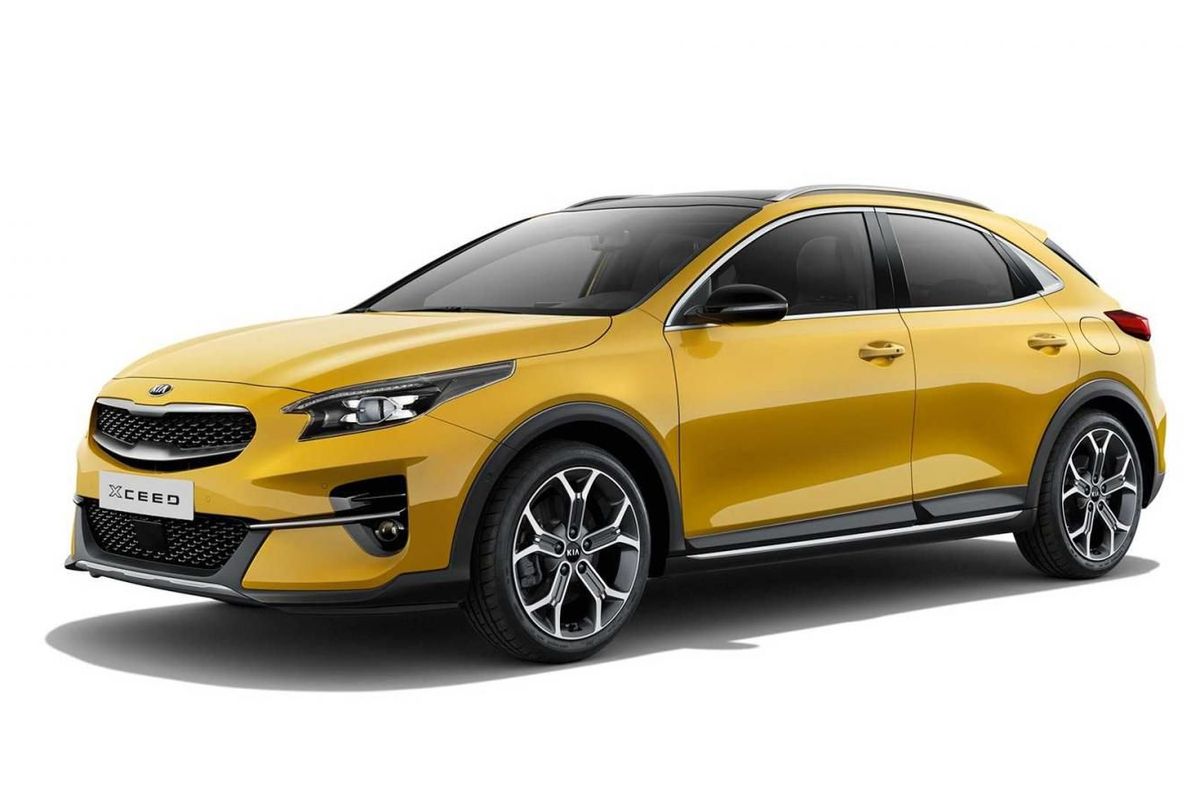
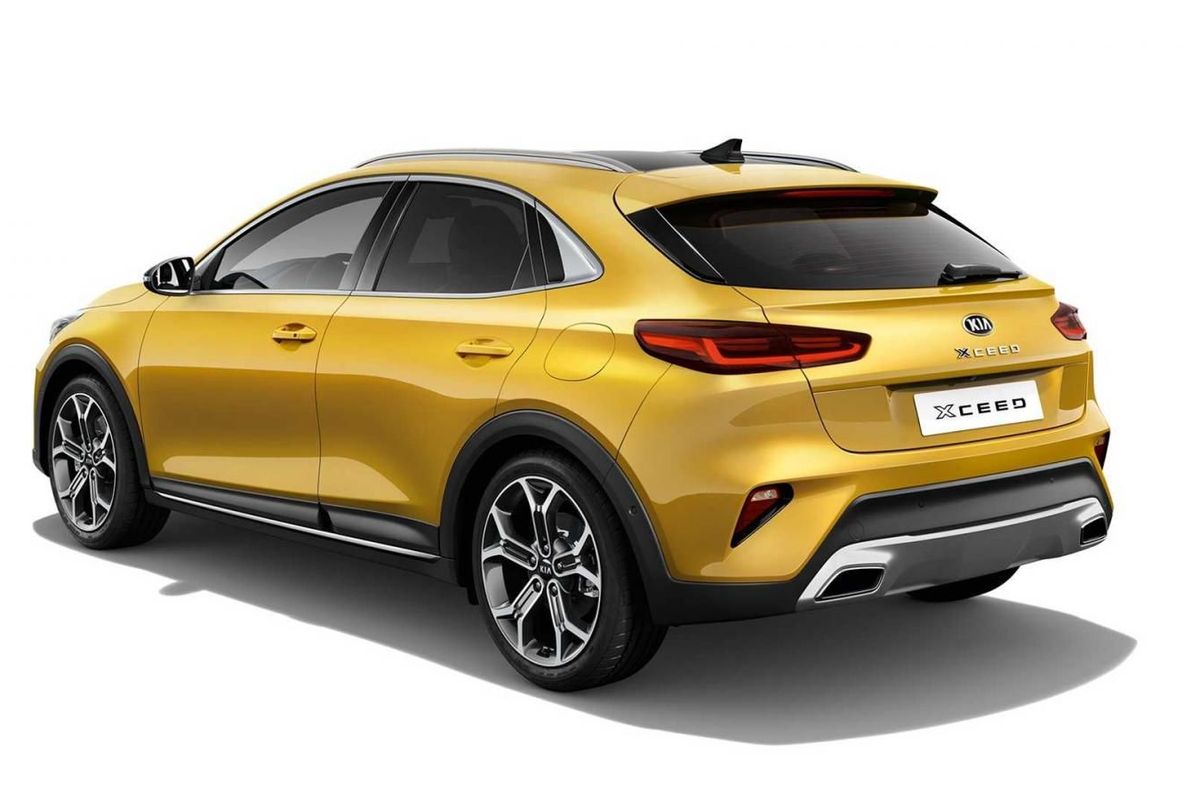
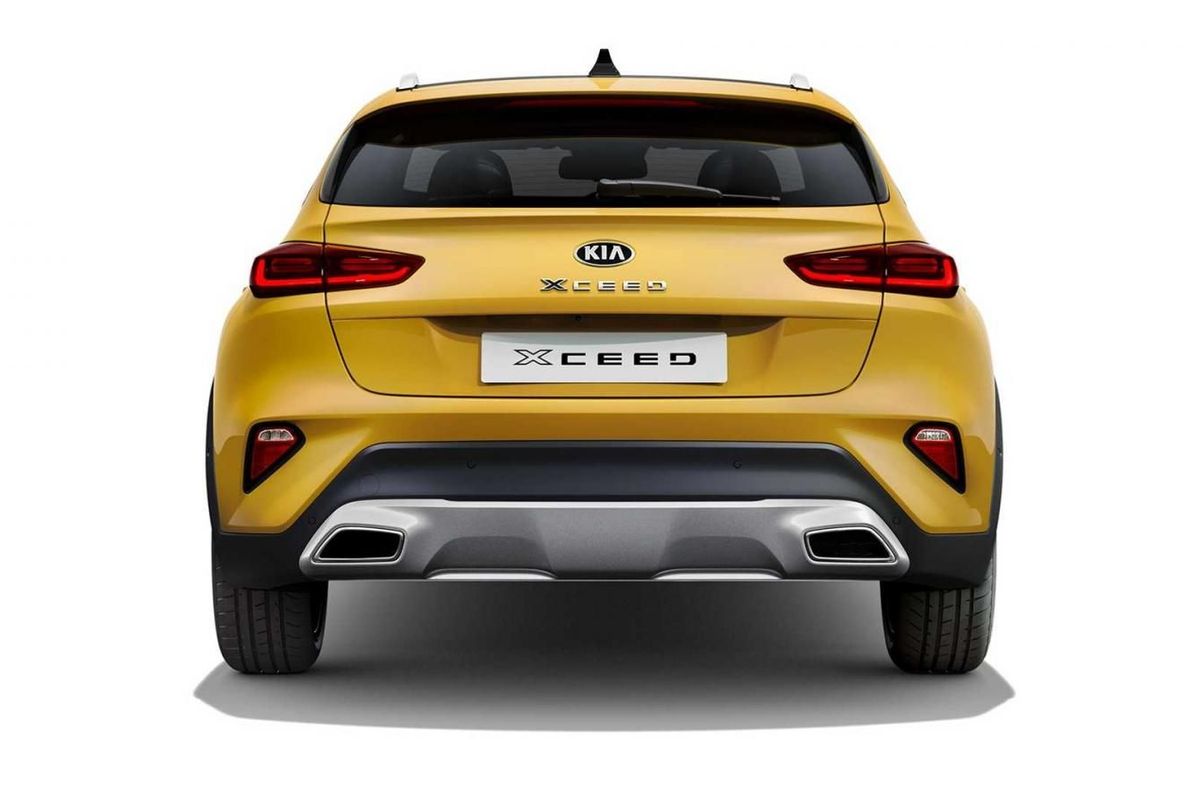
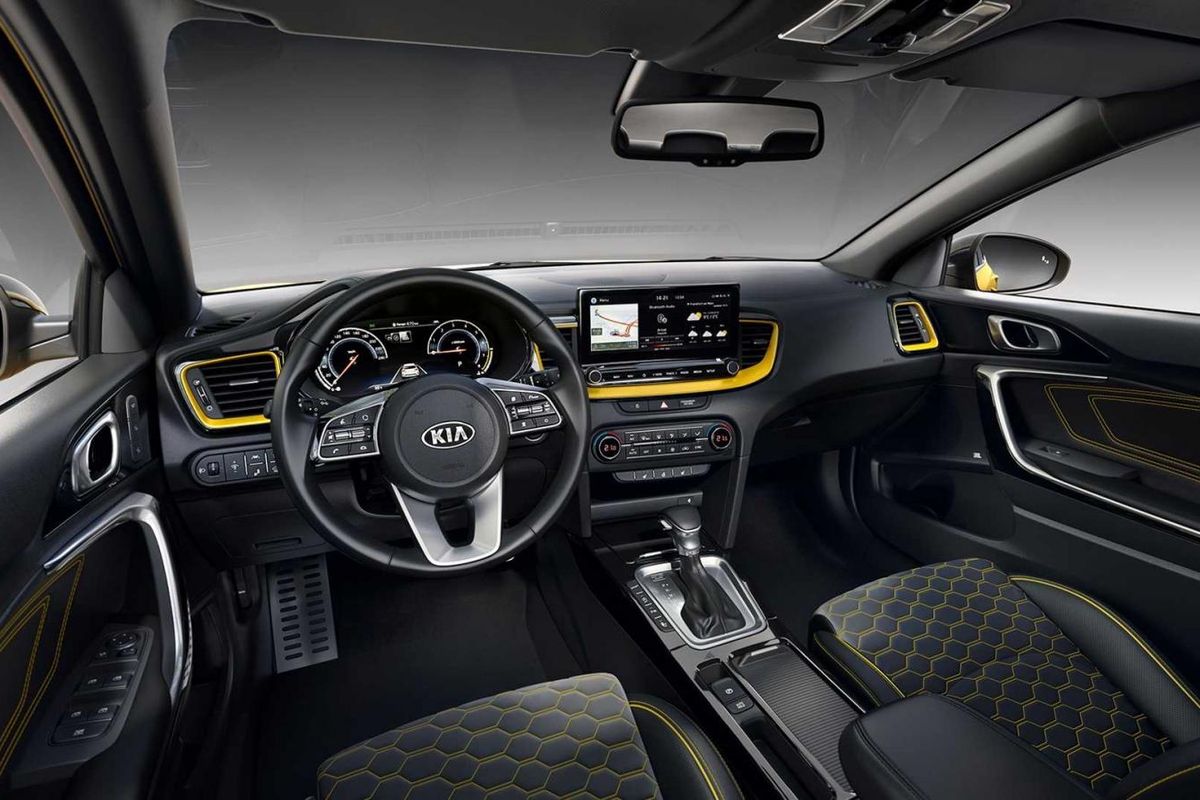
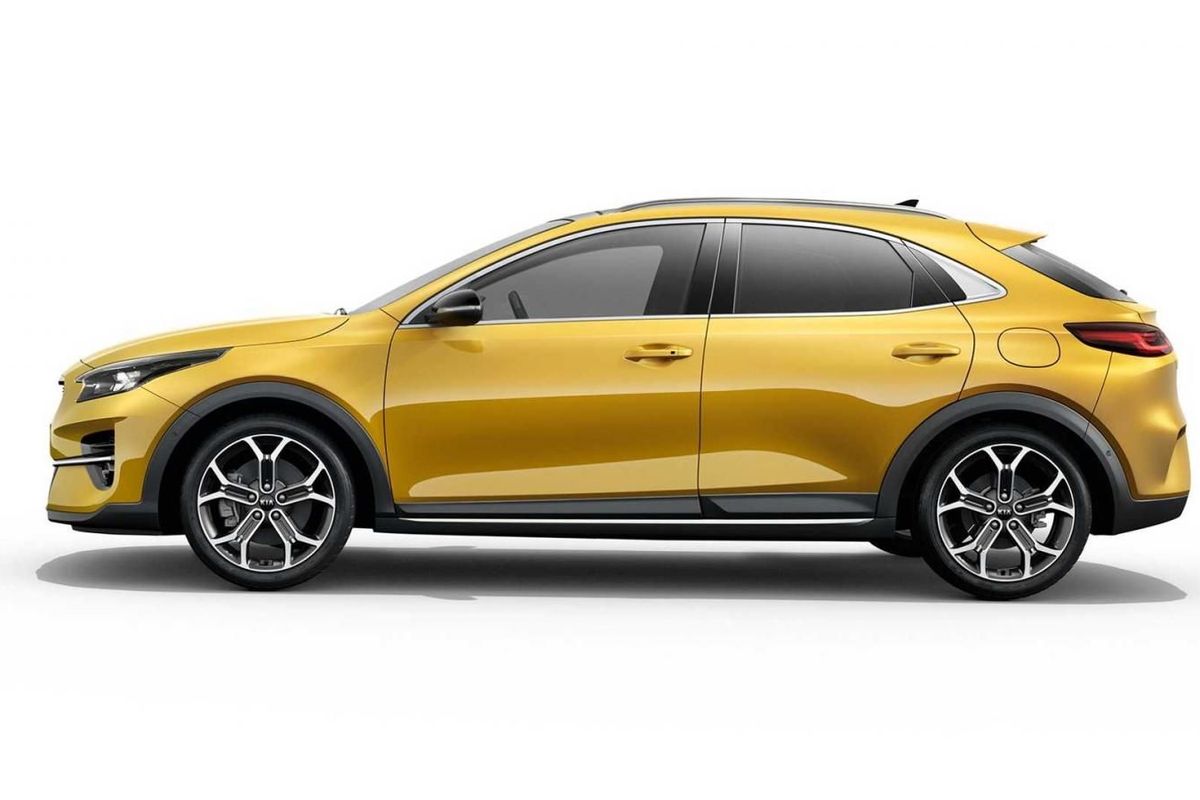
Ceed crosses over into coupe territory with new XCeed.
Kia’s has applied pseudo-coupe styling and some gravel travel packaging to its premium hatchback, the Ceed.
This new version of the C-segment hatch is unsurprisingly called the XCeed and is a touch larger than the standard car. Measured bumper-to-bumper, the XCeed is 85 mm longer, stands 43 mm taller (thanks to additional ground clearance) and is also 26 mm wider across.
Those larger dimensions mean it is a bit bigger inside too, with luggage capacity growing by 31-litres over the Ceed hatch, to total 426-litres in the XCeed.
Kia’s engineers have made the XCeed slightly more adaptable to rough road use, by reducing suspension compression rates by a median 5%. Ground clearance also increases by 42 mm over the normal Ceed, to register 184 mm, if you specify the 18-inch wheel. That should be sufficient for travelling on less than perfect roads and off-the-map gravel tracks.
Powering Kia’s gravel travel capable crossover coupe is a range of turbocharged engines. The smallest of these is a 1-litre triple-cylinder turbo, good for 88 kW and 172 Nm.
There is a boosted 1.4, delivering 103 kW and 242 Nm and a powerful 1.6-litre turbo too, boosting 150 kW and 265 Nm.
For those who desire the range of a diesel, there’s a 1.6-litre TDi in two outputs, either 85- or 100 kW. All engines can be had with a six-speed manual or seven-speed dual-clutch transmission, but for the entry-level 1-litre, which is only configurable with the manual.
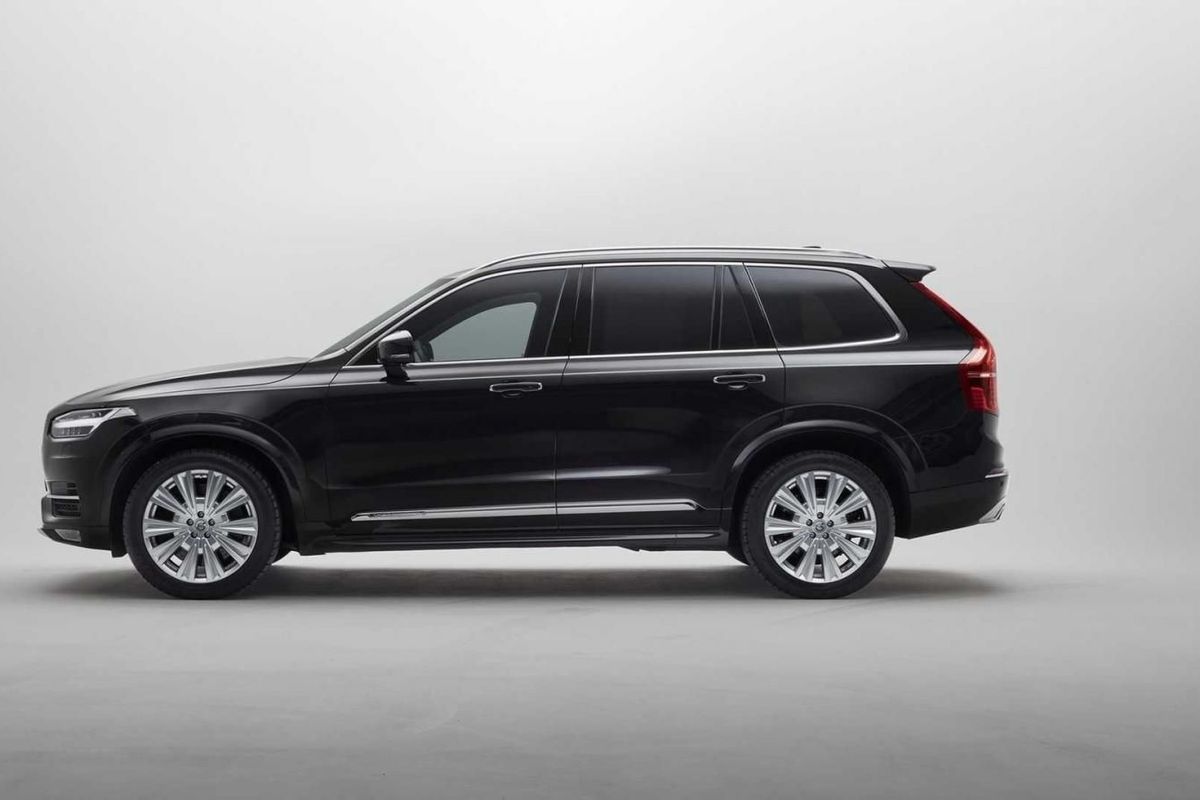
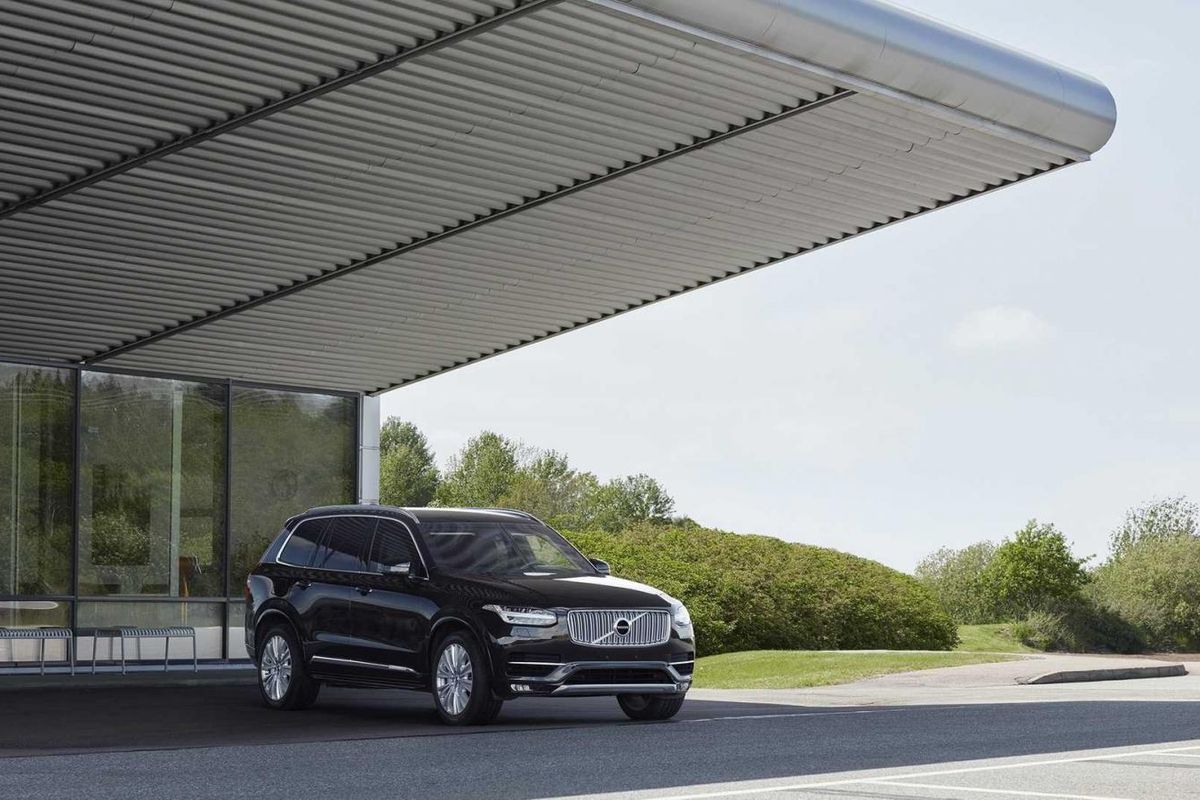
Need heavy protection against a ballistic or explosive attack? Volvo has developed a heavily armoured XC90 SUV that has full 360-degree ballistic resistance as well as explosive resistance.
Volvo says that there’s an increasing demand for armoured vehicles worldwide and due to this demand, it created this XC90 Armoured SUV which took over 2 years to create and carries a VPAM VR8 protection rating. This rating implies maximum 360-degree ballistic protection as well as explosive protection.
It may look like an ordinary XC90, which is a form of disguise in itself, but the XC90 Armoured is far from being ordinary. It’s based on the XC90 T6 AWD Inscription, manufactured at Torslanda plant in Sweden, where it then goes to TRASCO in Bremen, Germany for armour fitment.
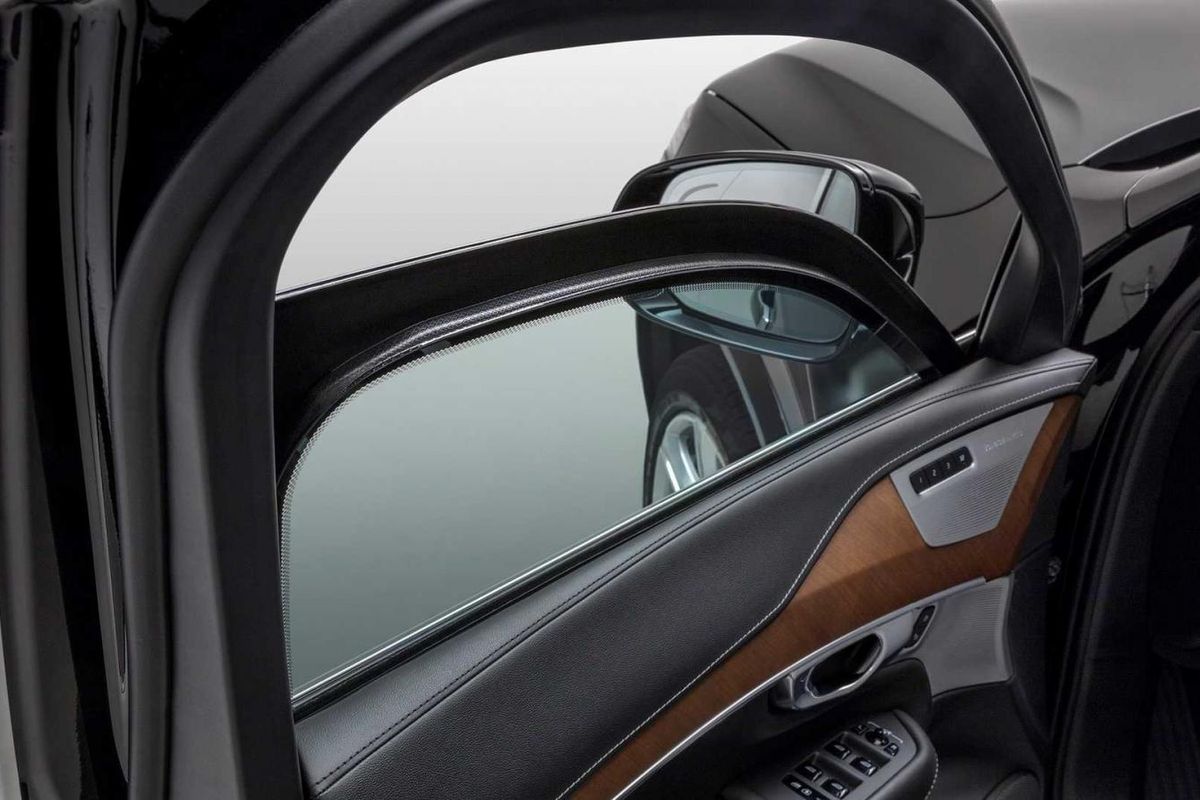
The vehicle employs high-tensile steel that’s 10 mm thick and the glass is up to 50 mm thick. The additional armour adds approximately 1 400 kg, contributing to a total weight of 4 490 kg. An uprated suspension and new braking system are also fitted to cope with the increased weight of the vehicle.
The XC90 Armoured is designed to transport high-profile individuals while providing maximum safety in a discreet manner. Volvo also offers a ‘light’ armoured vehicle based on the XC60 T6 AWD Inscription.
Both versions are intended for Europe and Latin American markets such as Brazil. Customer deliveries for the XC90 Armoured will commence at the end of 2019 while the armoured XC60 is expected to go on sale in 2020.
The resurgent Indian automotive brand Mahindra has carved itself a sizeable – and growing – niche in the local market. What's more, its rise is likely to gather further pace with the launch of the stylish, value-packed XUV300.
We like: Smart looks, good build quality, generous specification, fuel economy
We don't like: Some irritating quirks (white upholstery and overly talkative reverse-park assistant), gruff engine, smaller load bay than its rivals
Some Mahindra dealers regularly offer specials: Have look here.
Where does it fit in?
The XUV300 W8 is a highly-specced rival for the likes of the Opel Crossland X and Renault Captur.
Another day, another new small crossover… But in the case of the XUV300, the arrival of this new contender is arguably of greater significance than most, particularly for Mahindra itself. You see, for years the brand has been respected for producing tough and affordable products – buyers of the firm's products were apparently happy to stomach (at-times) bizarre designs because they were acquiring robust, reliable vehicles at good prices.
The XUV300, more than any other recent Mahindra, demonstrates that the brand wants to appeal on style and sophistication, as well as reliability. It competes with a wide range of contenders and while value for money remains a strong selling point, affordability is no longer the ace up its sleeve. Tested here in flagship turbodiesel form, this XUV300 has to contend with established players such as the Opel Crossland X and Renault Captur.
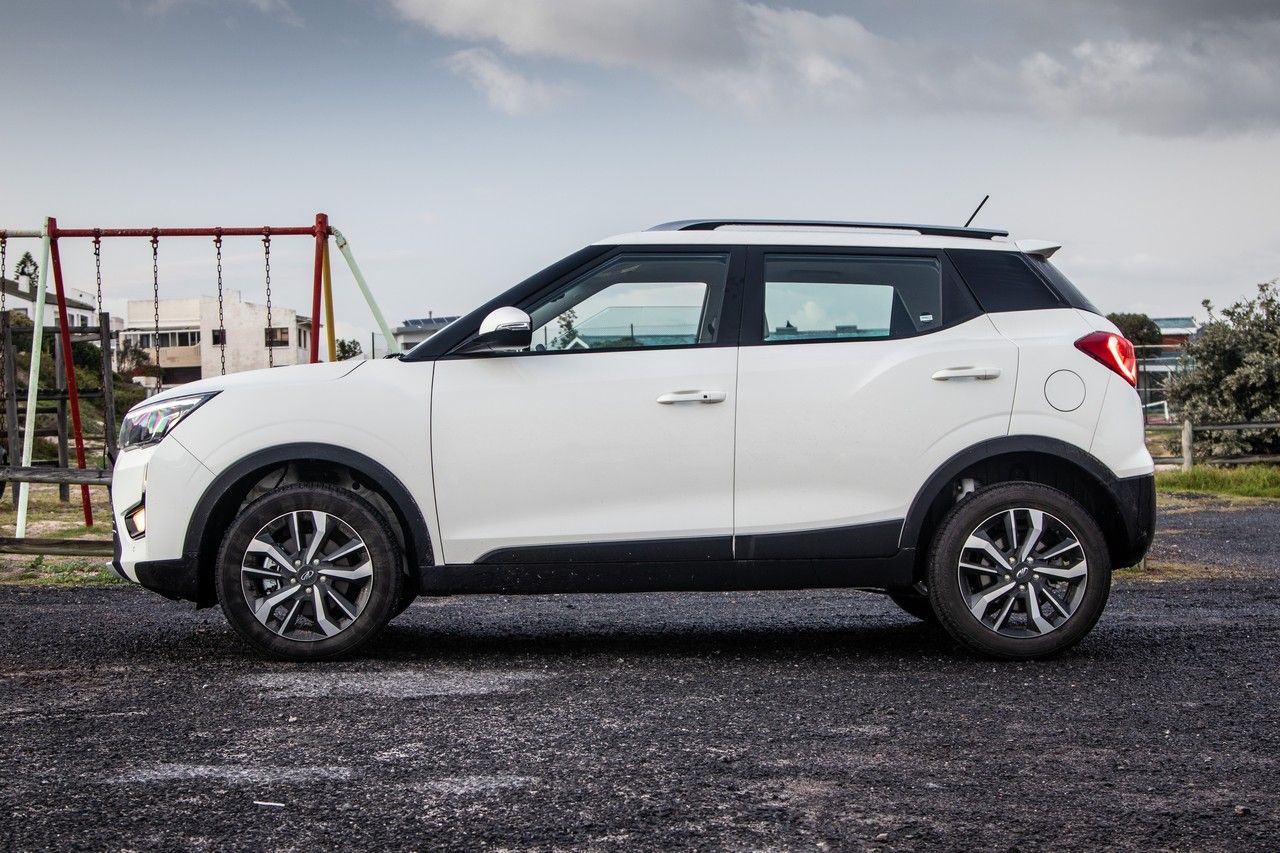
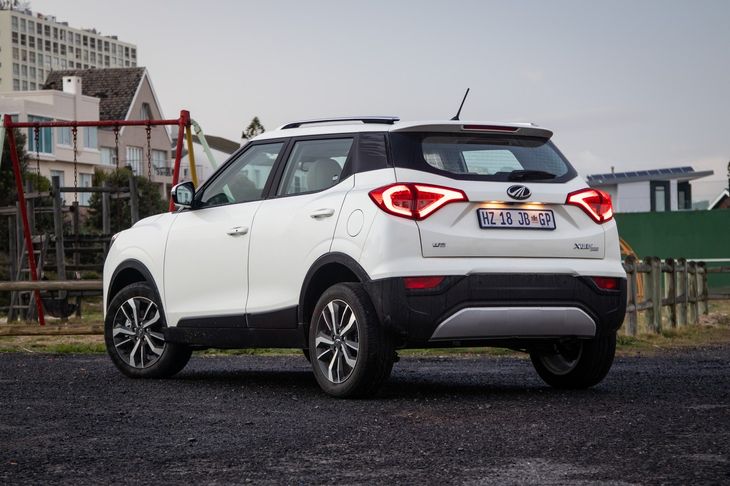
Compact and nicely detailed, the XUV300 is easily the most stylish Mahindra to date. It's based on the SsangYong Tivoli.
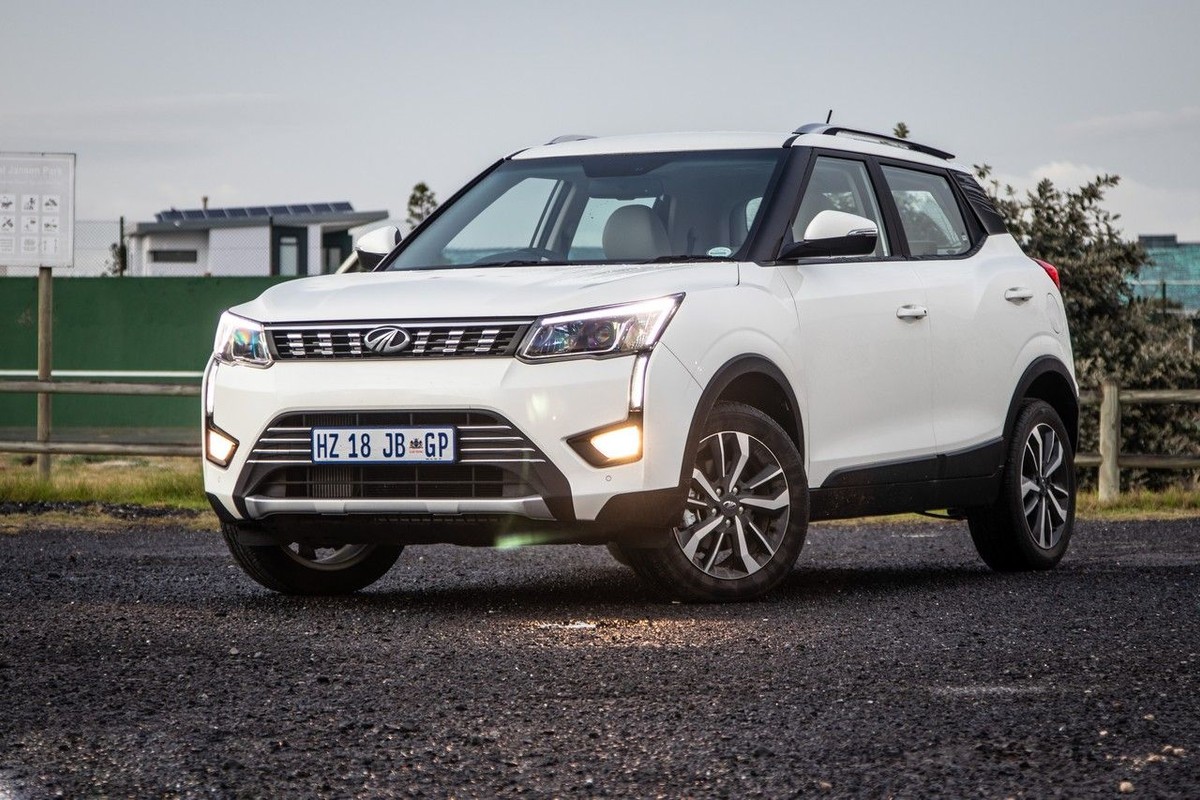
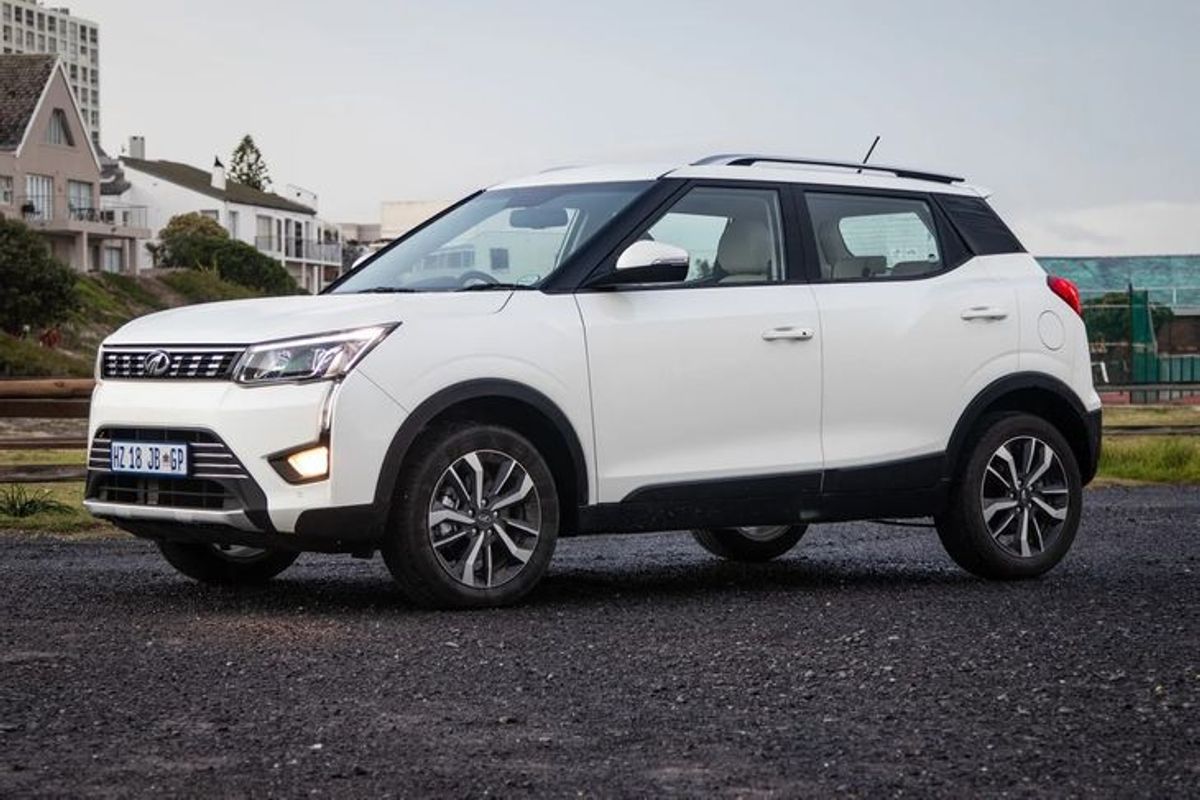
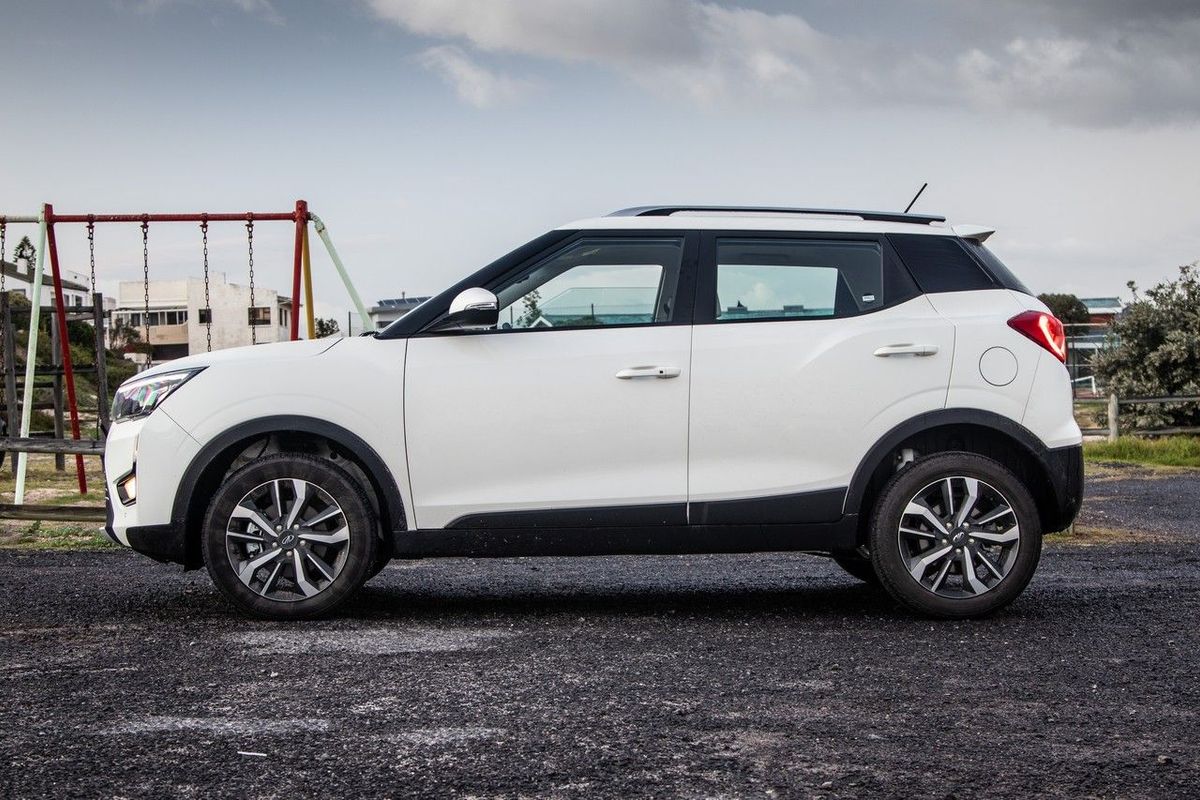
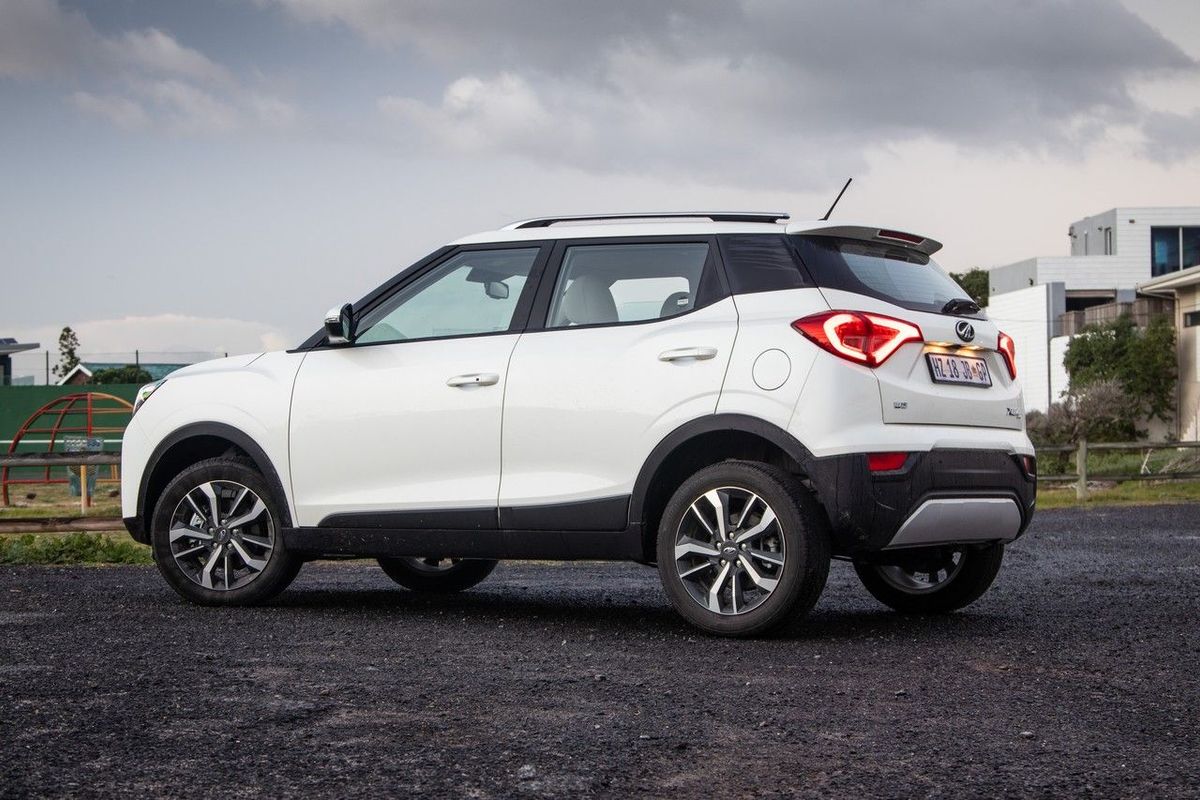
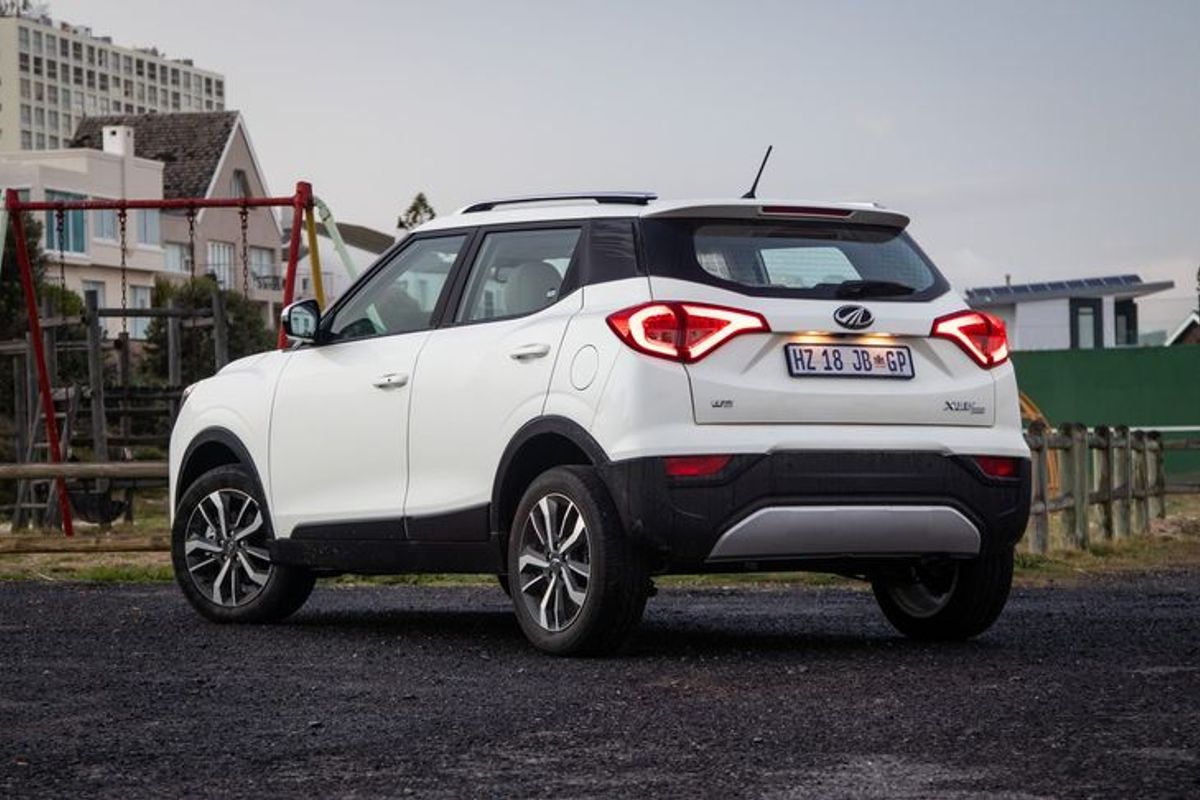
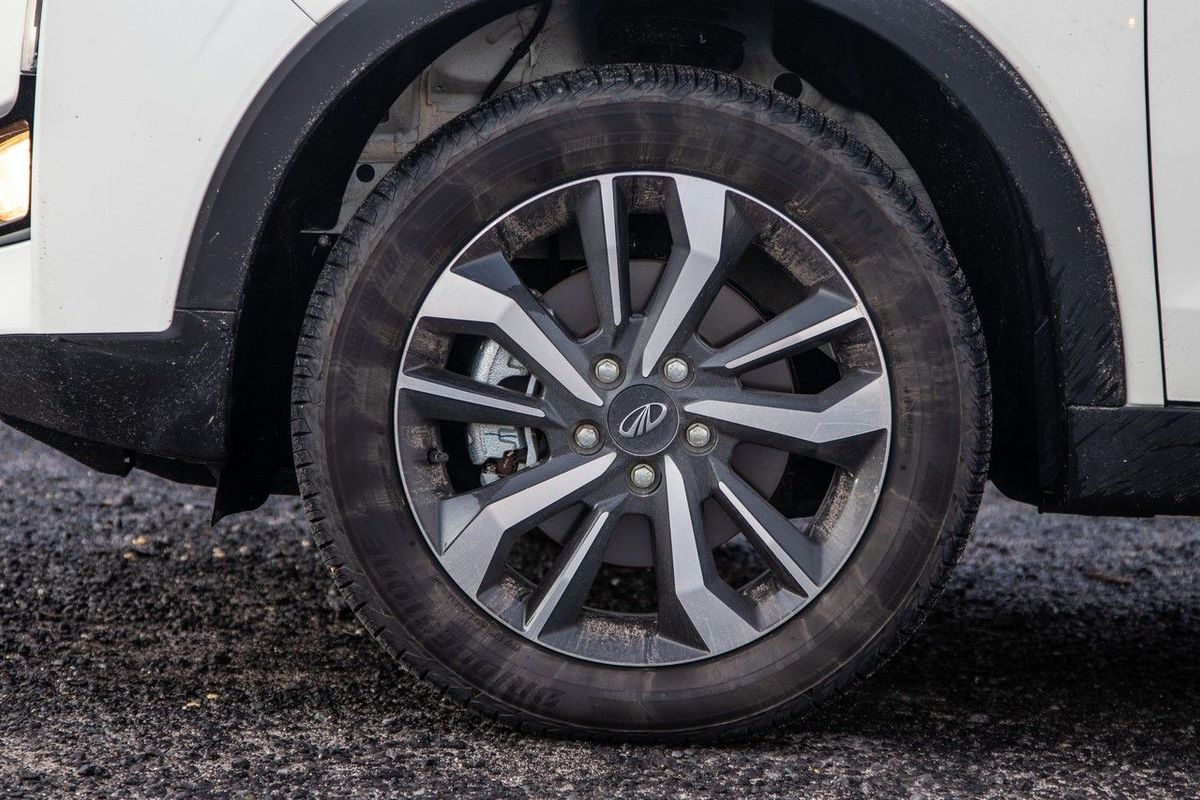
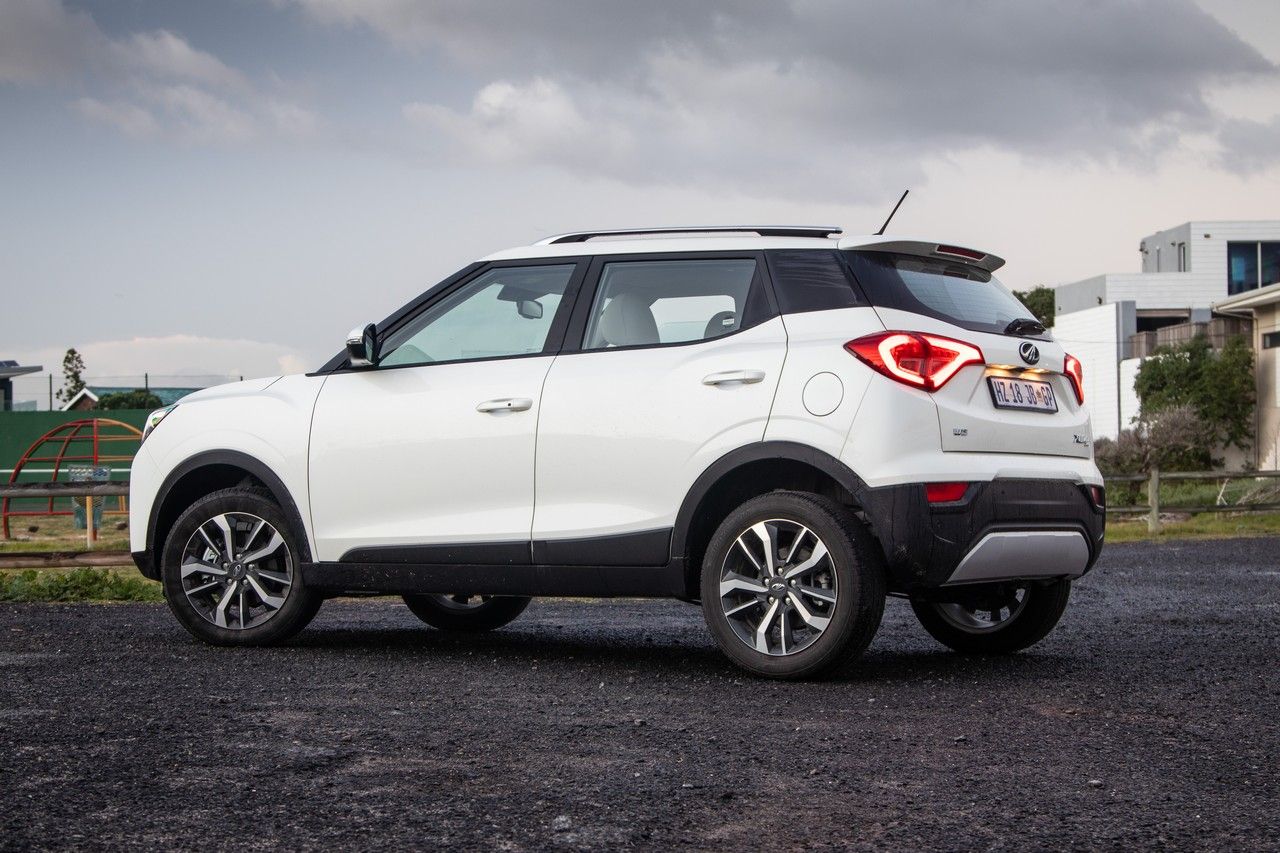
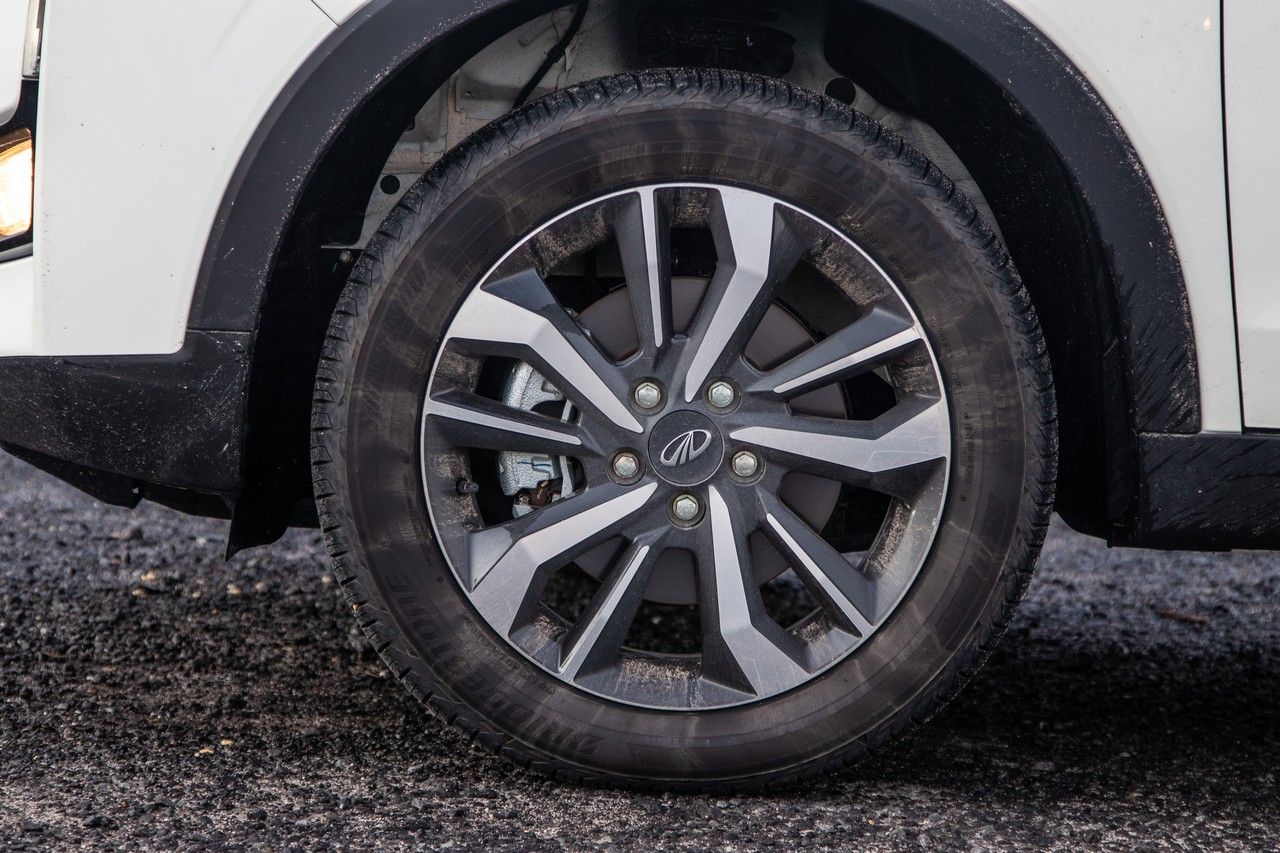
Based on the Mahindra group's X100 platform, the XUV300 is essentially a reskinned version of the SsangYong Tivoli (which has been well received in Europe). The Mahindra, however, is arguably better looking than its cousin – its overhangs are very short which, coupled with the raised ride height (180 mm), make it appear quite chunky. And the exterior detailing on this W8 version is particularly good: with LEDs front and rear, blacked-out pillars, stylish 17-inch wheels and silver front and rear skid plates. It received plenty of positive feedback during its tenure in our test fleet.
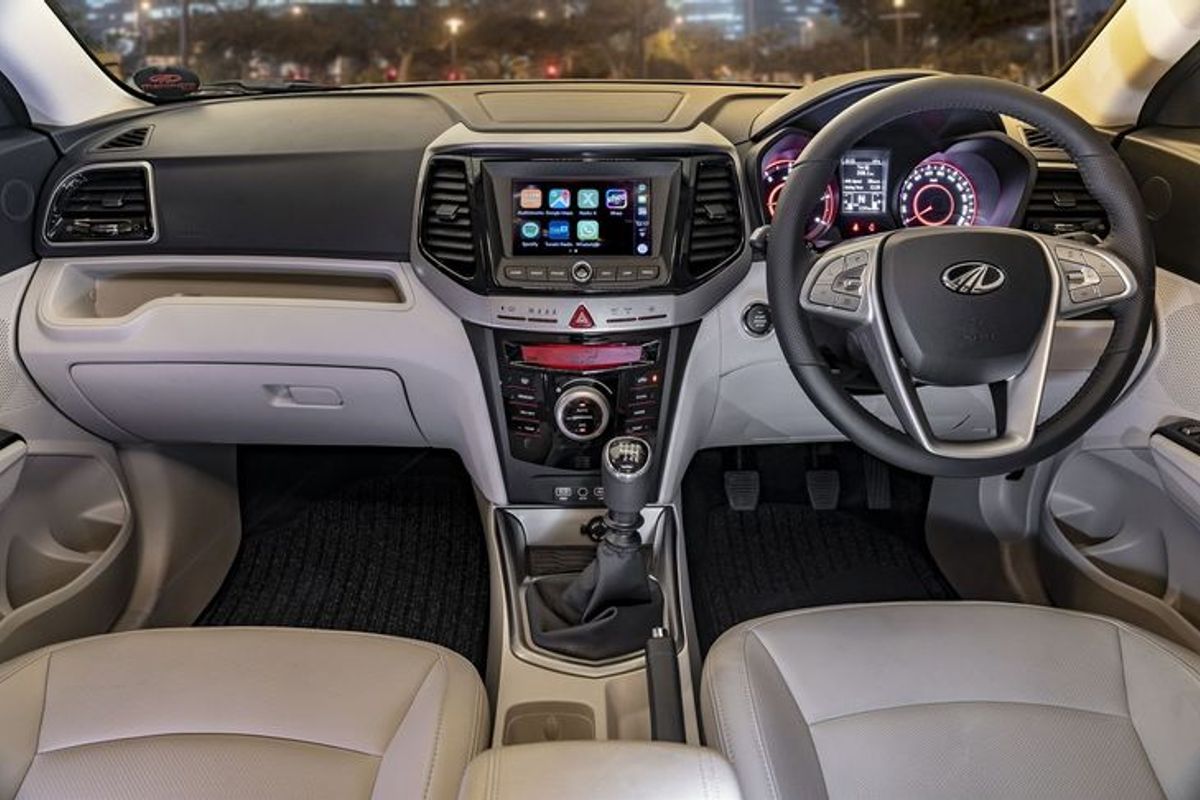
What's more, the cabin design is every bit as modern and stylish as the competitors' offerings. This unit's light leather upholstery contrasted smartly with the black trim on the fascia and elsewhere, but we're not convinced it's very practical for a supposed family car. But quality levels are excellent, with no rattles and squeaks from the plastics; the W8's solidity – and style – will pleasantly surprise those who are looking at the brand for the first time.
The XUV300 lags behind rivals in terms of luggage space and ultimate cargo-carrying versatility.
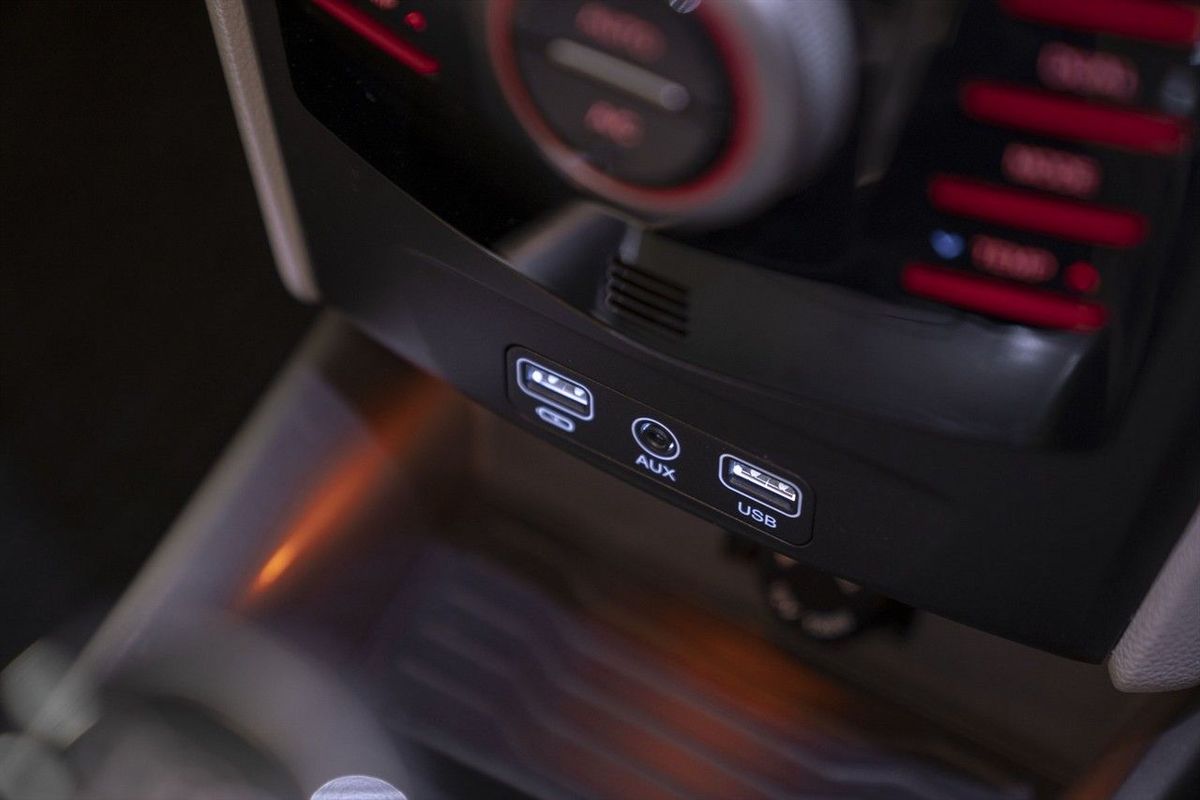
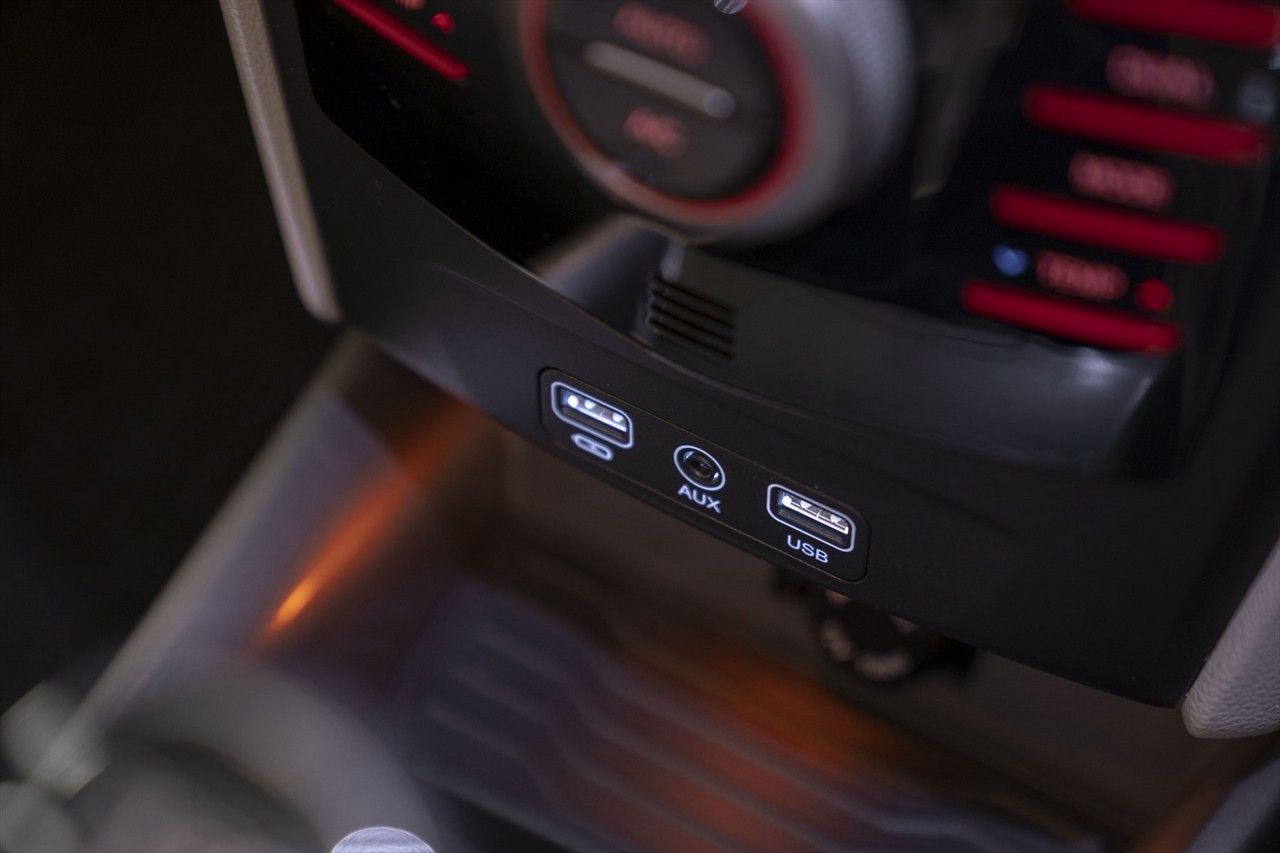
Given its stubby exterior appearance, the XUV300's interior is appreciably more spacious than we expected. In front, generous head- and shoulder-room is availed, and there are numerous storage spaces, including large door pockets and a handy tray for your smartphone, which is conveniently positioned close to the charge outlets (there are 2). Although the XUV300 is noticeably shorter than its 2 main rivals, it is wider, higher and its wheelbase length is similar. The result is that rear occupant space is actually very good, with especially the width being quite noticeable.
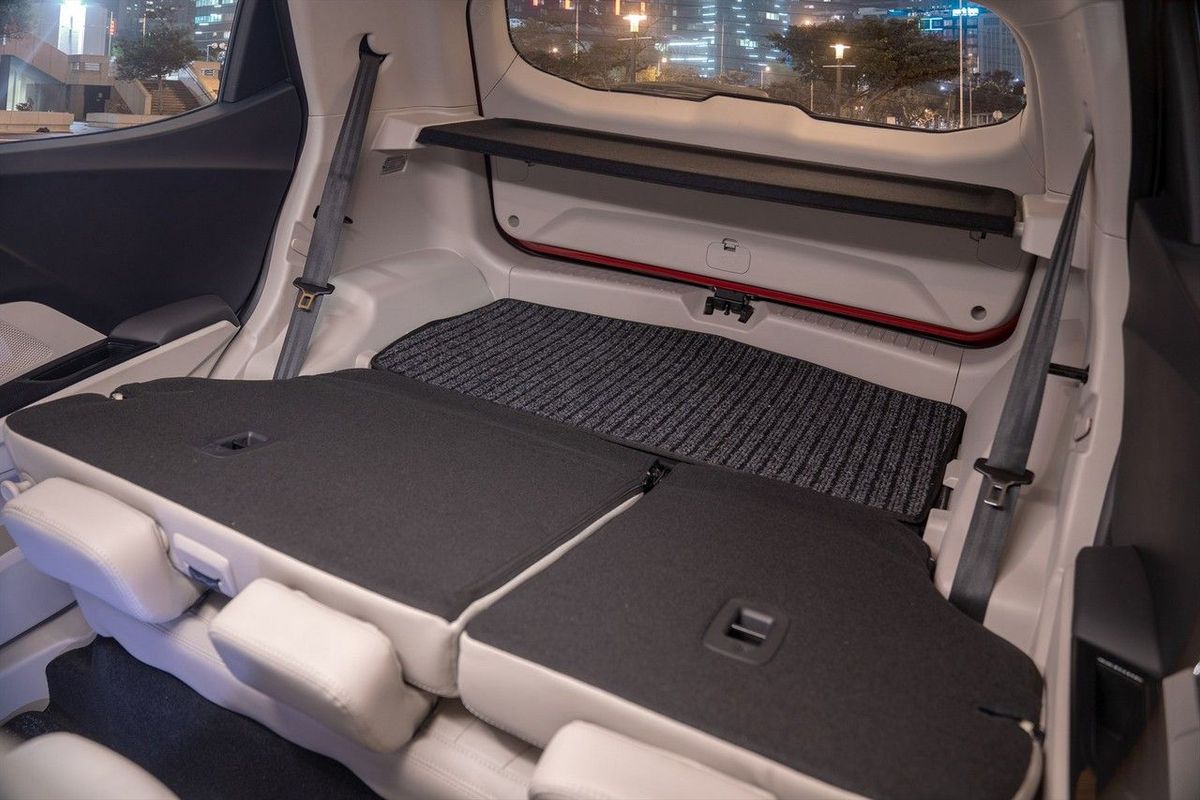
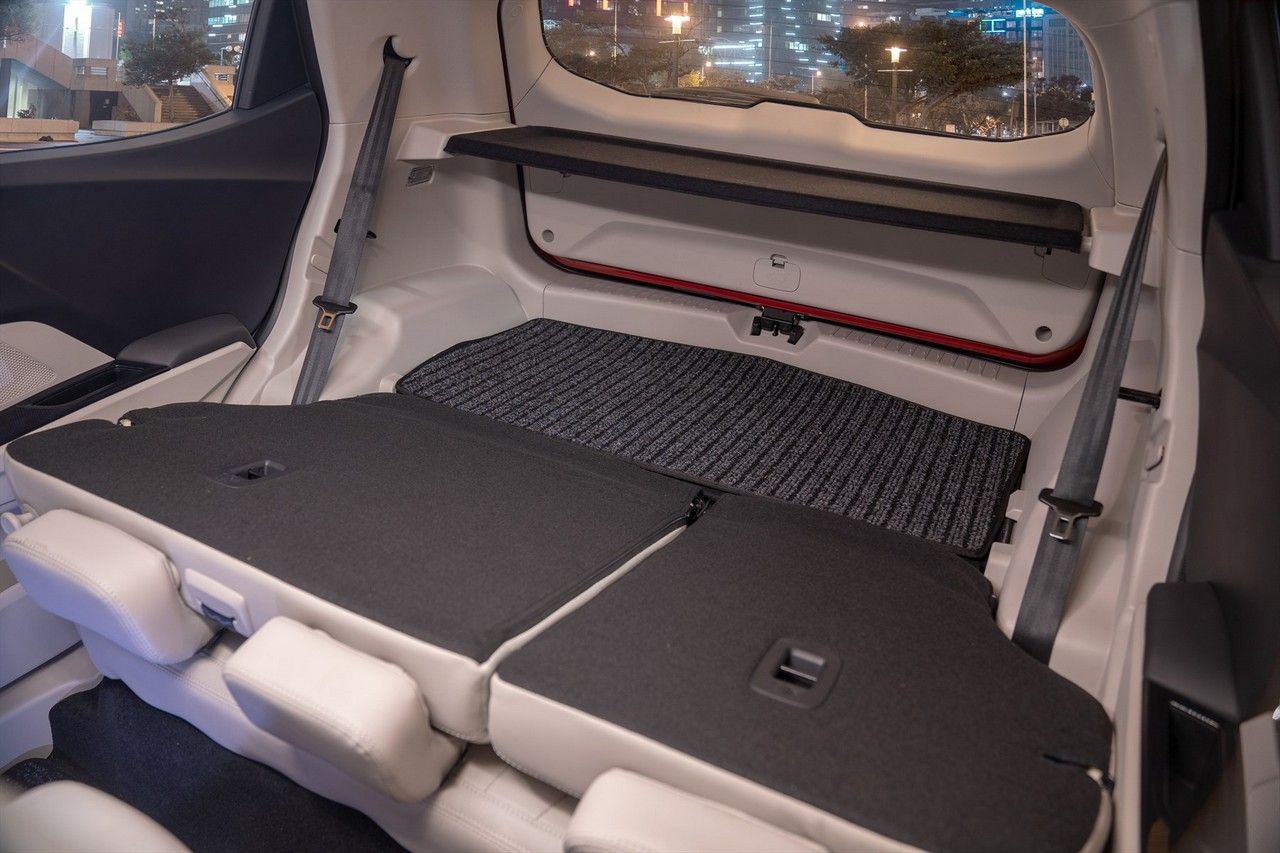
The only real packaging criticism we can level at the XUV300 pertain to its the load bay, which is relatively dinky. Mahindra claims a luggage capacity of 249 litres, which is significantly less than what is available in the Opel Crossland X and Renault Captur. It's also not as flexible – although the rear seatbacks can split/fold forward, you can't free up a completely flat floor, which means that loading bulkier items is a schlep.
Comfort & Features
A nicely sized tray is positioned close to the charging outlets, making it a convenient storage solution for smartphones.
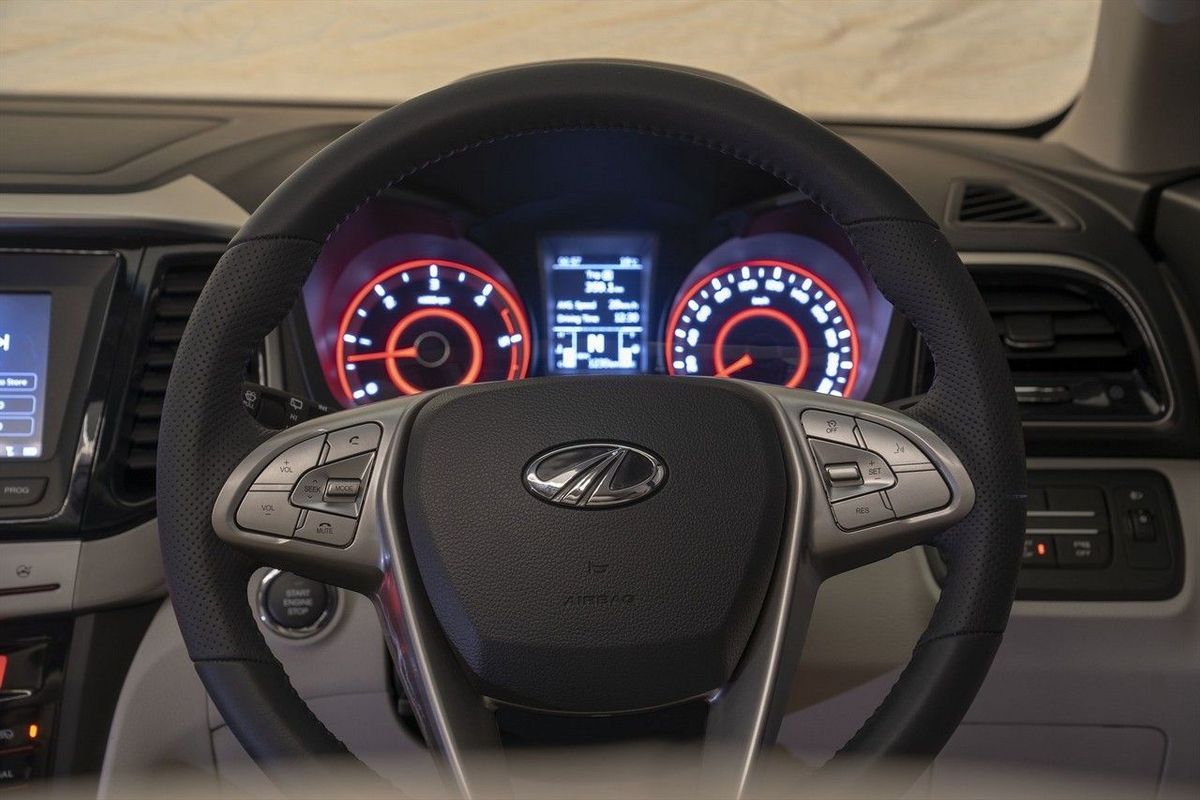
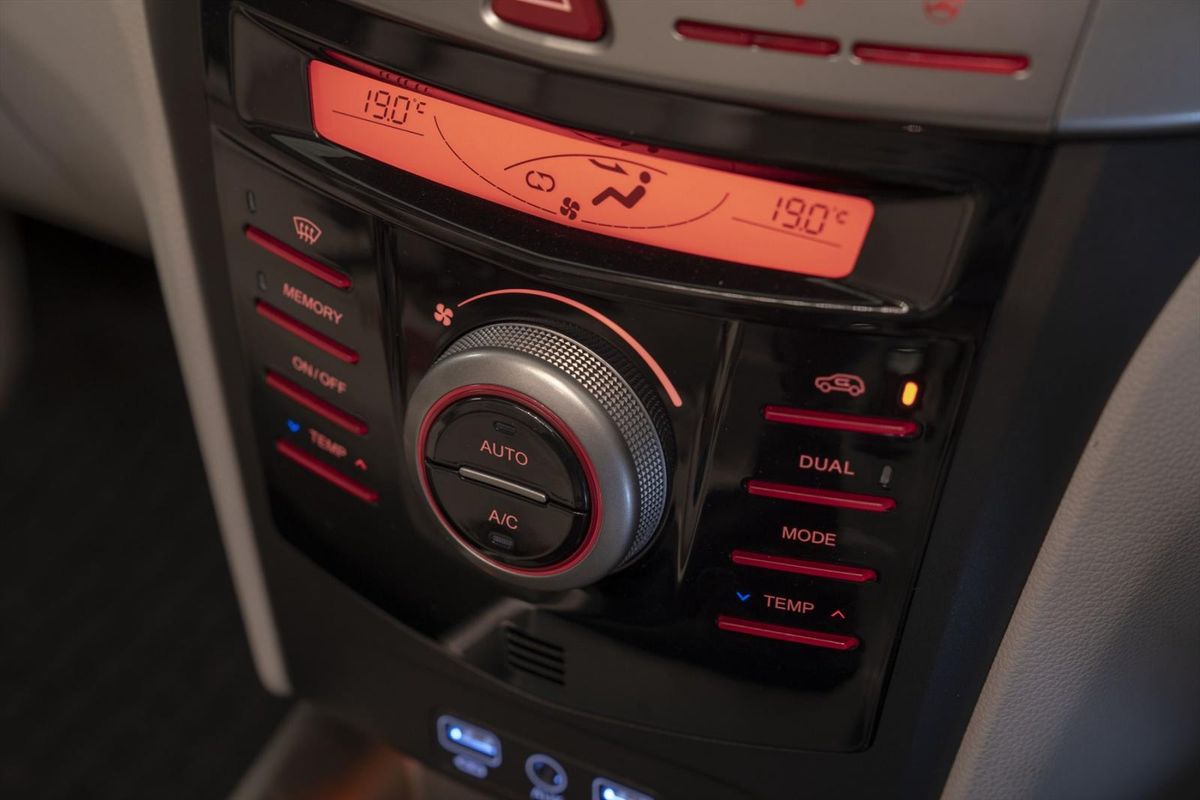
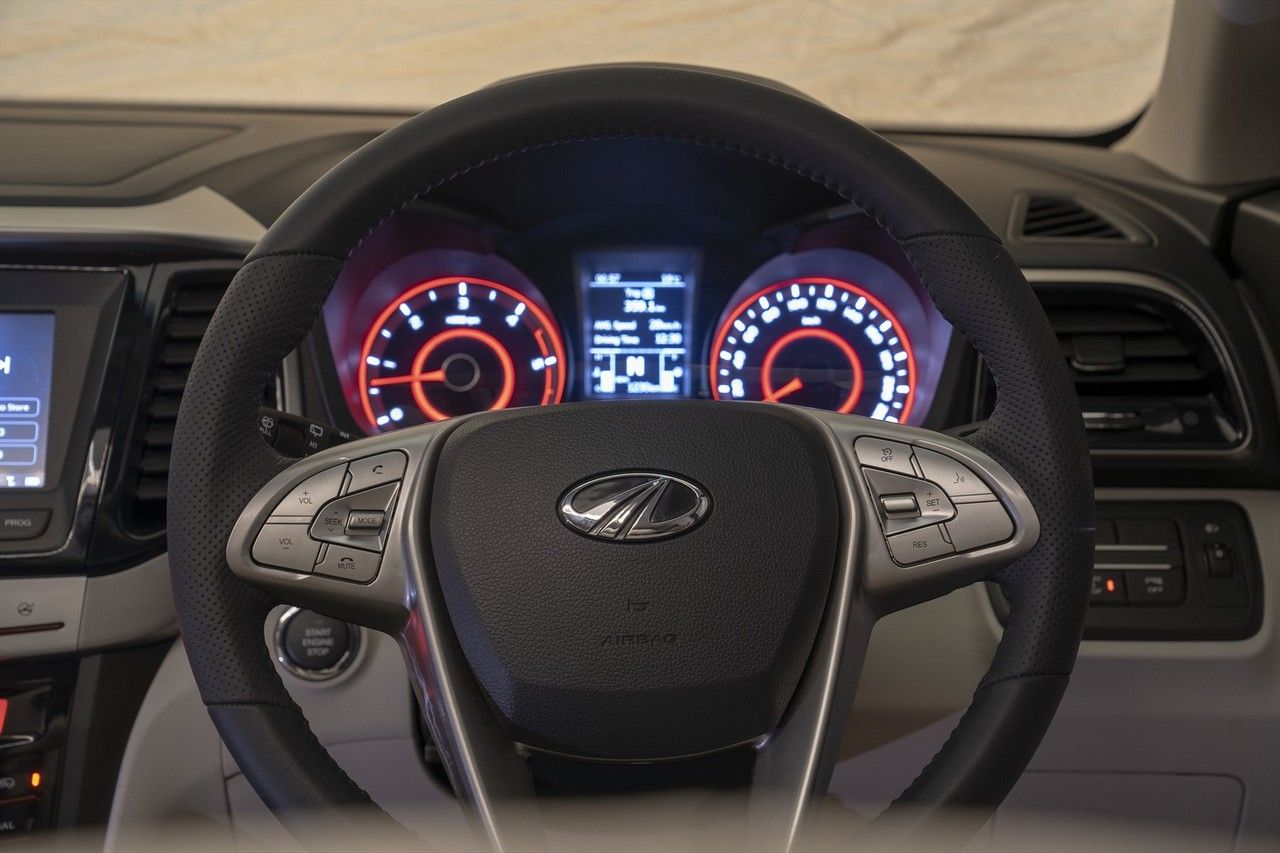
Mahindra sent us this W8 flagship to review, and it simply blows the similarly-priced competition out of the water in terms of standard specification. Besides the leather upholstery, the top-spec XUV300 offers a height-adjustable driver seat and a leather-wrapped multifunction steering wheel (with 3 adjustable steering "feel" modes), dual-zone climate control, cruise control, auto lights/wipers and even a glass tilt/slide sunroof.
The highlight for many will be the standard 17.8-cm (Mahindra's measurement) full-colour touchscreen infotainment system that comes replete with Apple CarPlay and Android Auto compatibility. On the W8 derivative, it also features built-in turn-by-turn navigation, and there's a reverse-view camera as well. Unfortunately, when engaging reverse, a "voice" attempts to assist you in your manoeuvres, and this becomes rather annoying after a while. You can cancel the voice on start-up, but it will be activated again the next time you fire up of the Mahindra and engage reverse…
The system also features Mahindra's Bluesense app that allows a driver to track their driving patterns by pairing their smartwatch to the vehicle.
On the safety side, the XUV300 boasts a very comprehensive package of features, such as a class-leading 7 airbags, ABS with cornering brake control, ESP with rollover mitigation, hill-hold assist and tyre pressure monitoring. There are ISOfix child seat anchorage points on the outer rear seats. Incidentally, the aforementioned SsangYong Tivoli, on which the XUV300 is based, scored 4 stars in 2016 EuroNCAP crash testing.
Performance & Efficiency
Every bit as modern-looking and feature-packed as its rivals, the XUV300 is a good image builder for the Indian brand.
This XUV300 is powered by a 1.5-litre turbodiesel motor that pumps out significantly more power and torque than its 2 main rivals (listed in this article). Maximum power (86 kW) arrives at 3 750 rpm, while the impressive 300 Nm of peak torque is available between 1 500 and 2 500 rpm. Power goes to the front wheels via a 6-speed manual transmission (both rivals have 5-speed 'boxes).
The engine is quite a gruff unit by modern standards, particularly upon start-up, but it smoothes out nicely at higher revs. Mahindra says it has been extensively tested at Gerotek in Gauteng. On the road, the powerplant duly delivers the goods, with a strong surge in power when needed and well-spaced gear ratios for cruising – 1st gear is very short, it needs to be noted.
Mahindra claims a combined cycle fuel consumption figure of 4.8 L/100km (with the electronic start/stop activated), which translated into a real-world figure of around 6.0 L/100km during our test period.
Ride & Handling
The flagship XUV300 sports stylish 17-inch wheels – ride quality is good.
From behind the wheel the XUV300 delivers a class-competitive performance – that's no mean feat, seeing as the competition in the compact family car/small crossover segment is so stiff. Ride comfort is probably its strongest feature. Despite the relatively low profile rubber and the brand's promise of a "dynamic" drive, the Mahindra instead delivers a pleasingly absorbent ride on our deteriorating road surfaces and also put in a good performance on gravel. NVH (noise, vibration, harshness) suppression is good too, with only the slightly excessively engine noise (to reiterate, when the motor's cold and spinning at low revs) and heavy thuds from the suspension being particularly noticeable to the vehicle's occupants.
An interesting feature is the 3-mode adaptive steering, which allows the driver to set his/her preferred steering "feel". When set to "Comfort", it is lighter, making parking in town a cinch. Switch to "Sport" and there's more weight/directness to it. It's probably a little gimmicky for a vehicle in this segment, but one can definitely feel the difference between the modes.
Price and warranty
The flagship XUV300 1.5TD W8, as tested here, sells for R324 999 (May 2019) without options. The price includes an excellent 5-year/150 000 km warranty and 5-year/90 000 km service plan, adding considerable peace of mind.
Verdict
The first of a new generation of Mahindras, the XUV300 is a capable and surprisingly stylish compact crossover.
So, in summary, then… the Mahindra XUV300 beats its main rivals in terms of engine outputs, standard features, plus the warranty and service plan included in the purchase price. It might lag some rivals (particularly the Opel) in terms of overall perceived quality and refinement, but it's not a massive gap. Where it does fall behind, however, is in the area of luggage space and rear-cabin flexibility. If you're considering the XUV300 as a family car, you may have to make sure first that the load bay is big enough for you – the Opel and Renault are both significantly larger in the back.
We have no doubt, however, that the XUV300 will become an integral product for the Indian brand in the local market and that's not only related to projected sales volumes. During its stint in our test fleet, the Mahindra drew positive comments from onlookers for its design and quality, which indicates that, as an image builder, the newcomer has an important role to play. In our opinion, the XUV300 has the goods to do just that. If this offering is anything to go by, the days of simply ignoring Mahindra because of its awkward design or rough-around-the-edges interiors are over.
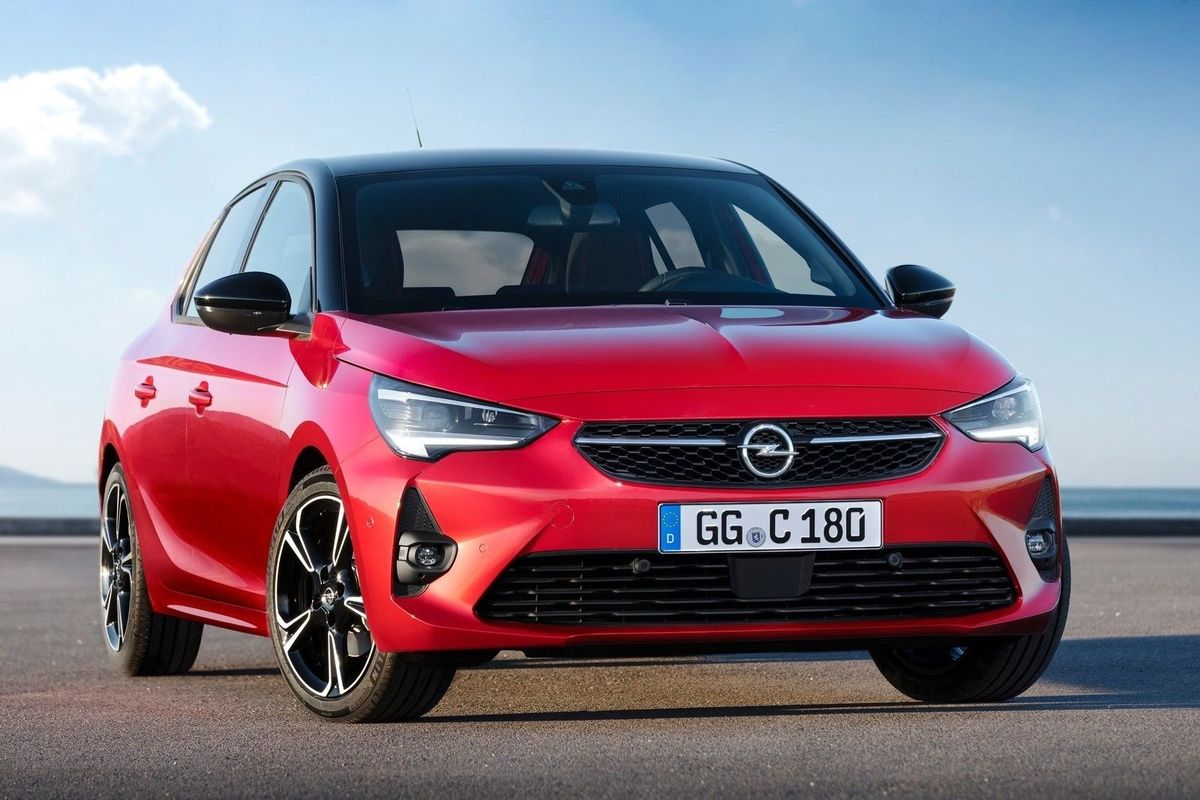
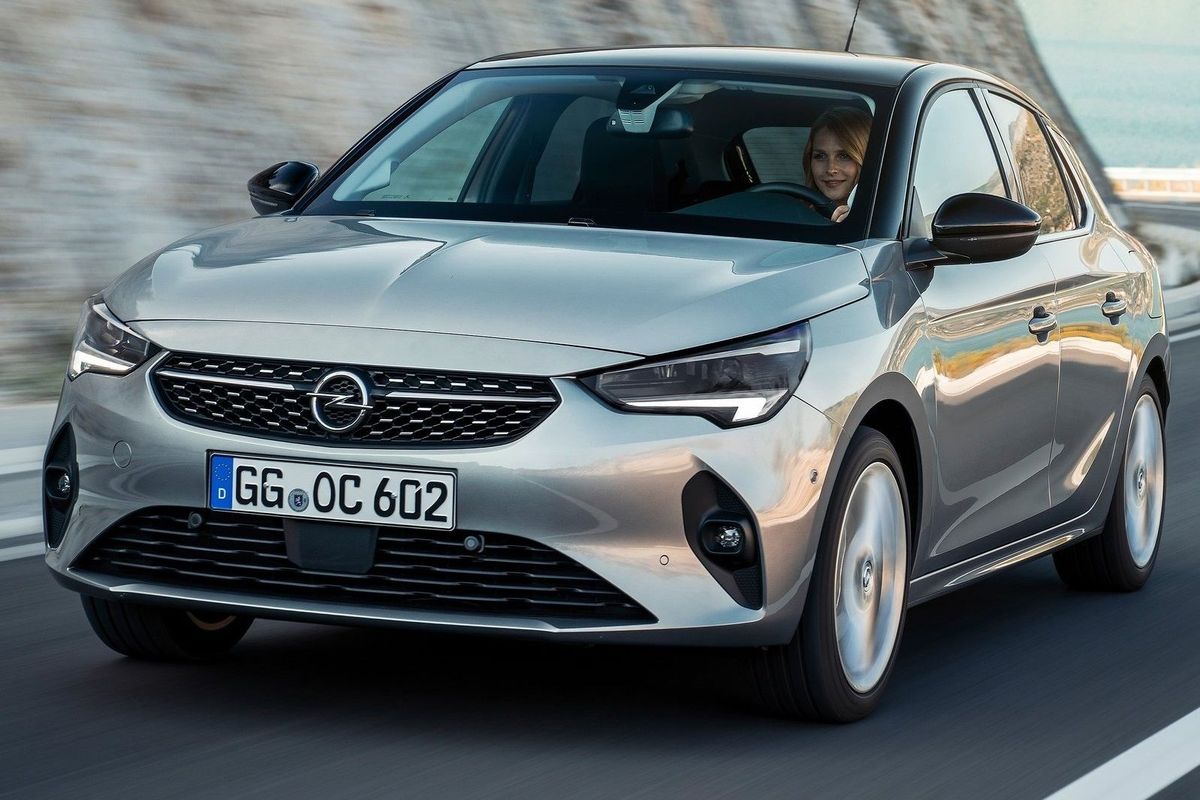
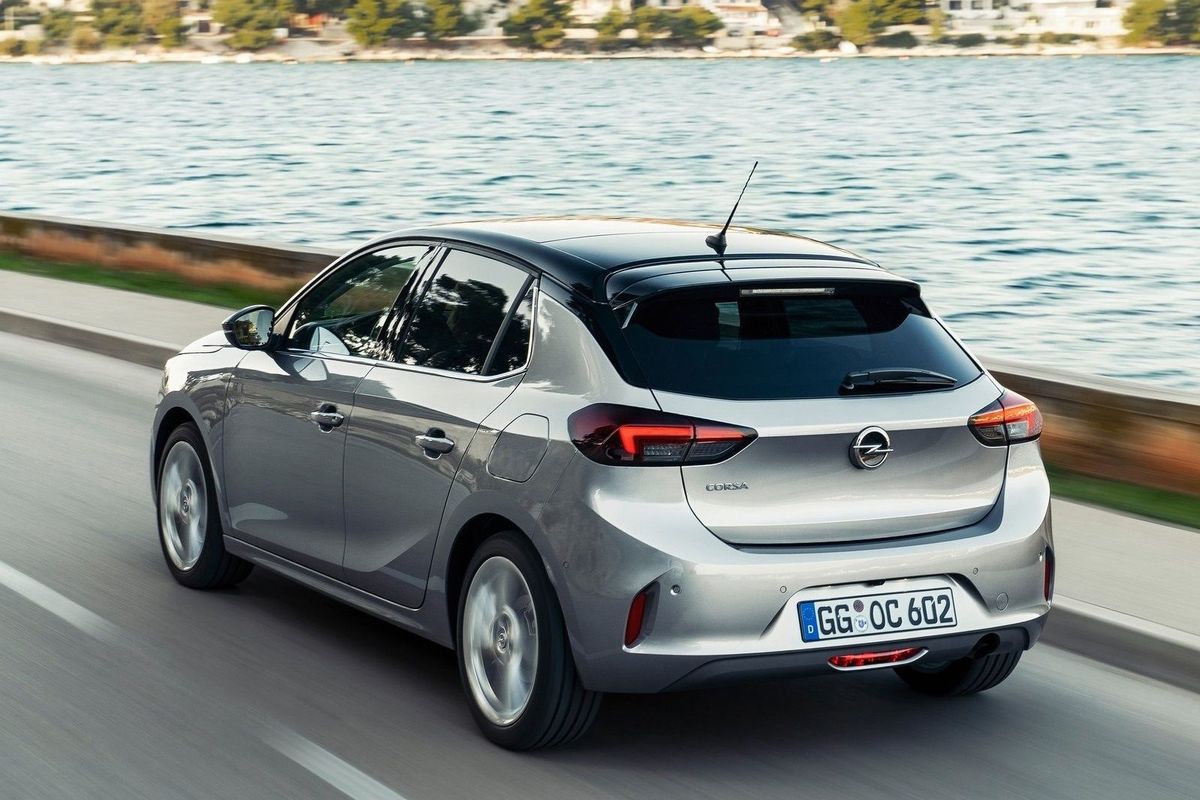
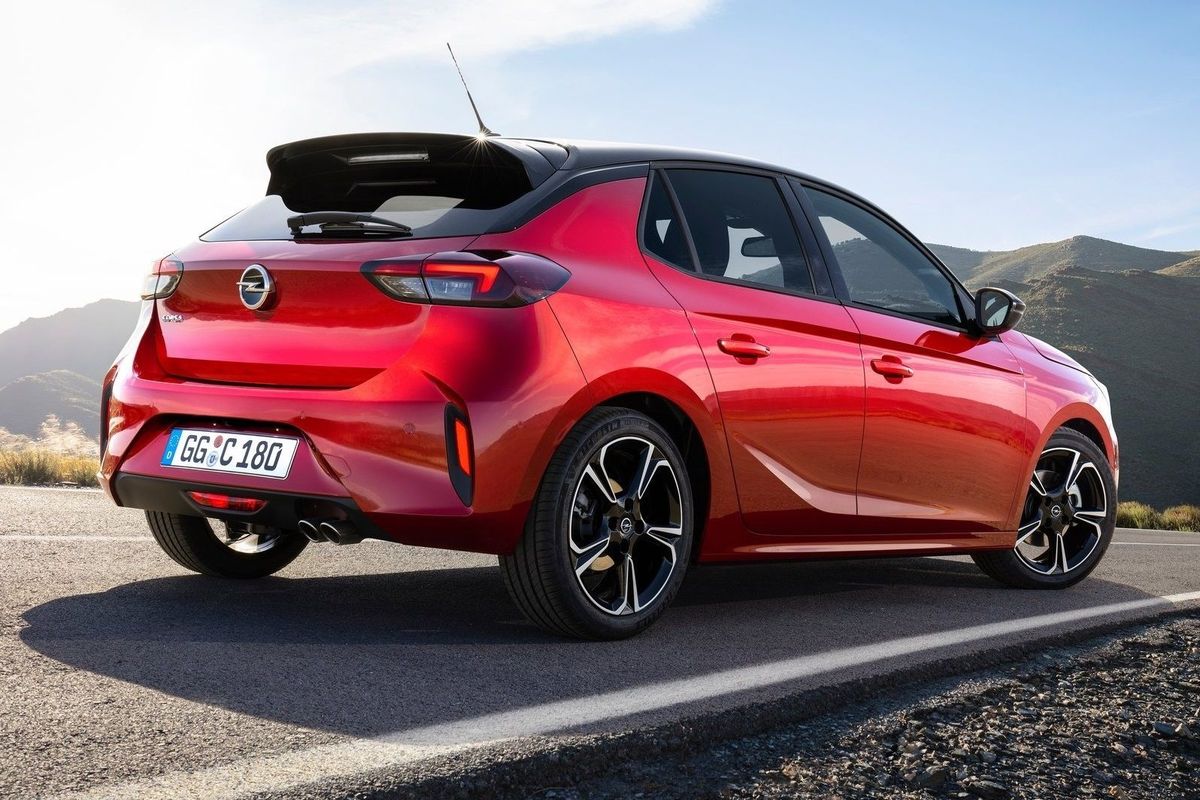
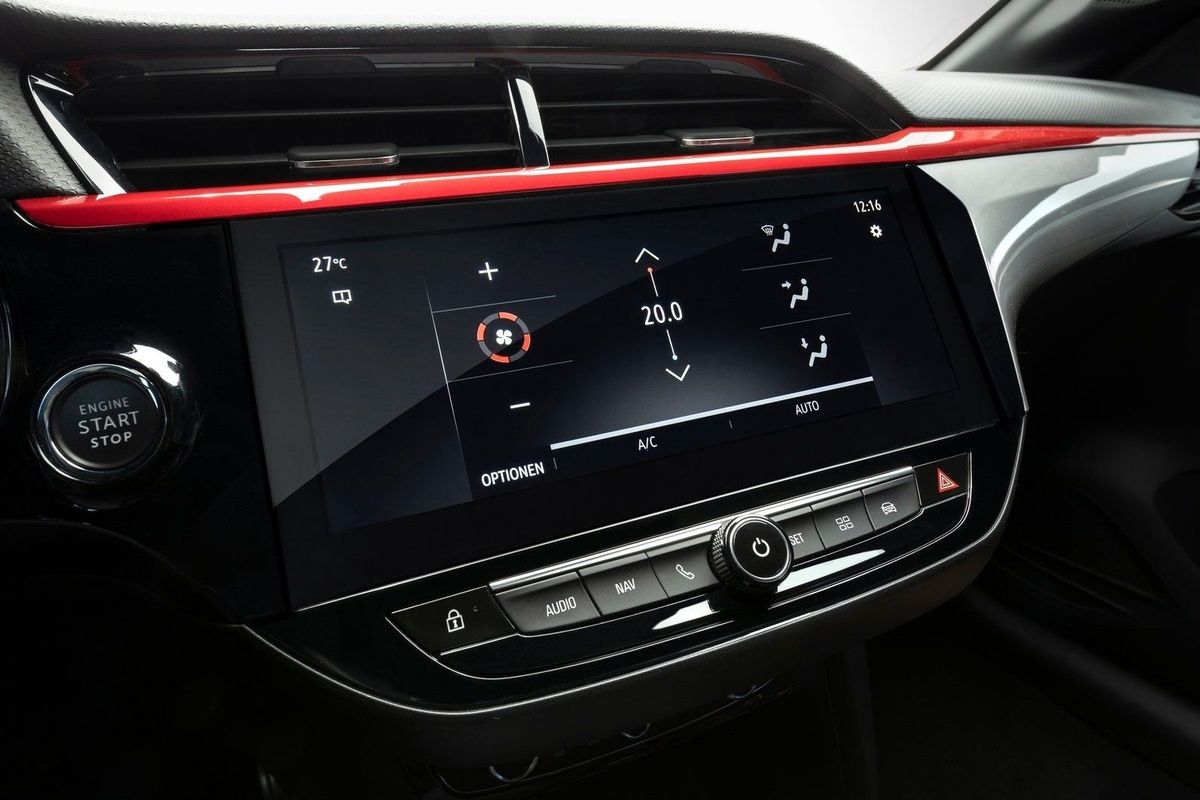
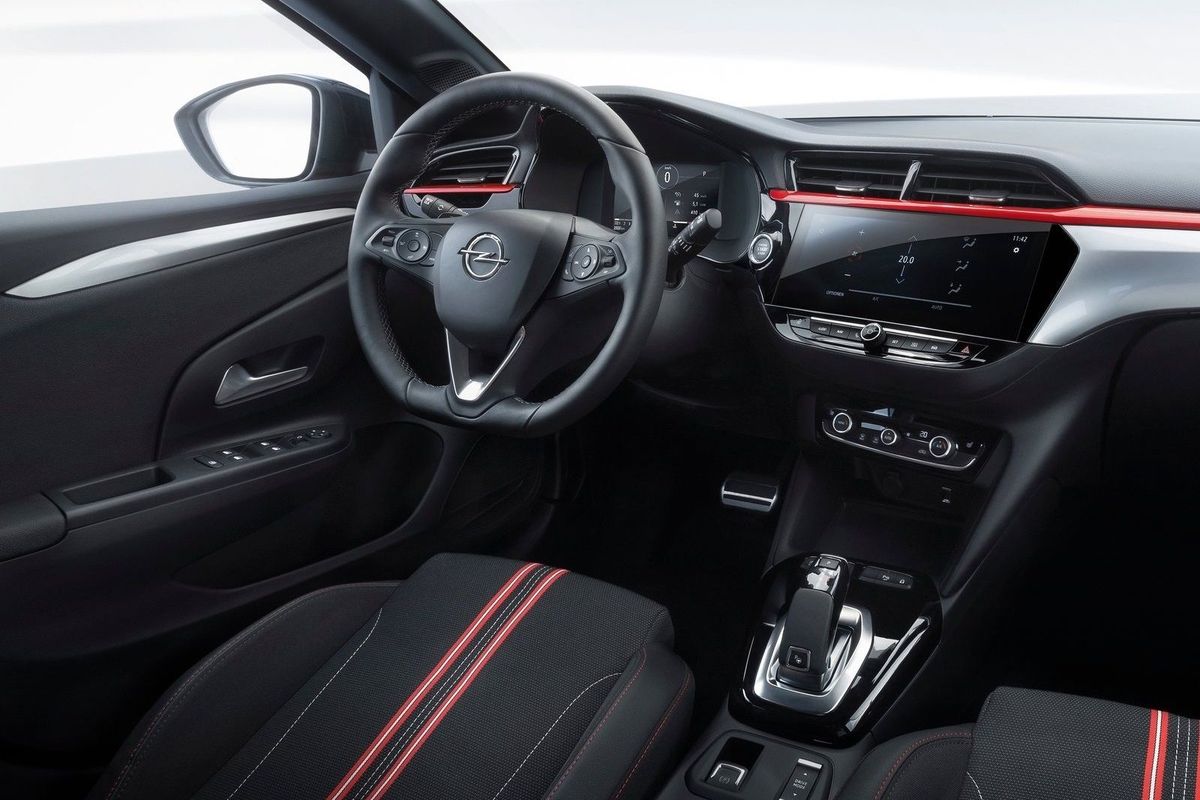
After the electrified Opel Corsa was leaked, we were impressed with what the 6th generation Corsa looked like. However, electrified cars aren't big in SA, so our interest turned to the conventionally-powered model which has now just been revealed. Here are some engine details and more information about the all-new Opel Corsa.
Since Opel was taken over by the PSA Group (Peugeot/Citroen), we've been expecting the new Opel Corsa to share more than a handful of components with the all-new Peugeot 208. With today's reveal, we can confirm that the newcomer is available with both petrol and diesel engines, and in Edition, Elegance and GS line trims.
"The reaction to the presentation of the all-electric Corsa-e – an electric car for everyone -is phenomenal", said Opel CEO Michael Lohscheller. "The Corsa with classic combustion engines will follow in its wheel tracks. Combustion engine or electric drive? At Opel, thanks to the multi-energy platform, both are possible in one model. The customer decides."
Let's get to those engines. With outputs ranging from 55 kW to 96 kW, there appears to be a good balance of performance and economy. The entry-level model is a naturally-aspirated 1.2-litre petrol engine with 55 kW (up 4 kW in comparison to the previous model) and is claimed to consume just 4.1 L/100 km. The next engine up is the excellent 1.2-litre turbocharged engine which is available in 2 power outputs (74 kW / 205 Nm and 96 kW / 230 Nm) and consumes 4.4 L/100 km. For those wanting a diesel option, there is the 1.5-litre turbocharged motor with 75 kW and 250 Nm. In terms of transmissions, there's a 5-speed manual gearbox, 6-speed manual gearbox and there's also the option of an all-new 8-speed automatic gearbox.
The new Opel Corsa makes clever use of lightweight materials to keep it under 1 000kg. This means that it'll be frugal as the engines don't need to work as hard and it should be quite nimble to drive. Opel Germany says the vehicle will be available to order from July 2019 and will go on sale from €17 850, with this top-spec GS Line pictured going for €19 880.
The local Unitrans Opel Distributor is working with Adam Opel Automobile GmbH on bringing the new Opel Corsa to South Africa with an expected late 2020 introduction.
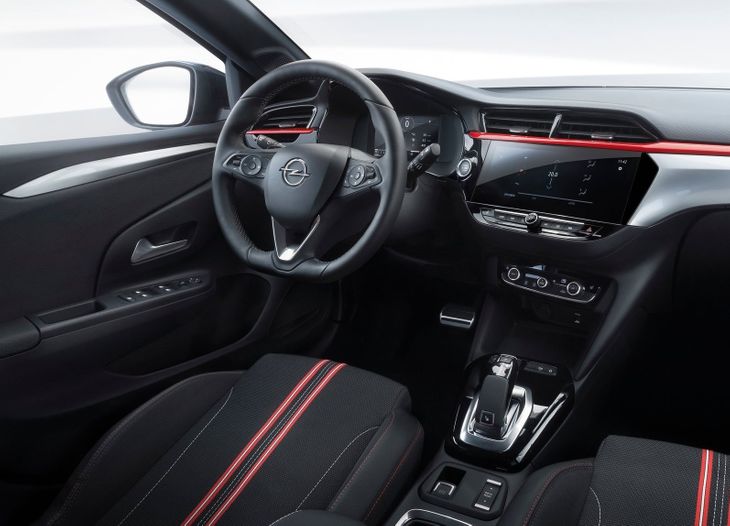
The new Opel Corsa cabin features a few bits from PSA Group, like the gear selector, but it's still quite a distinctive interior
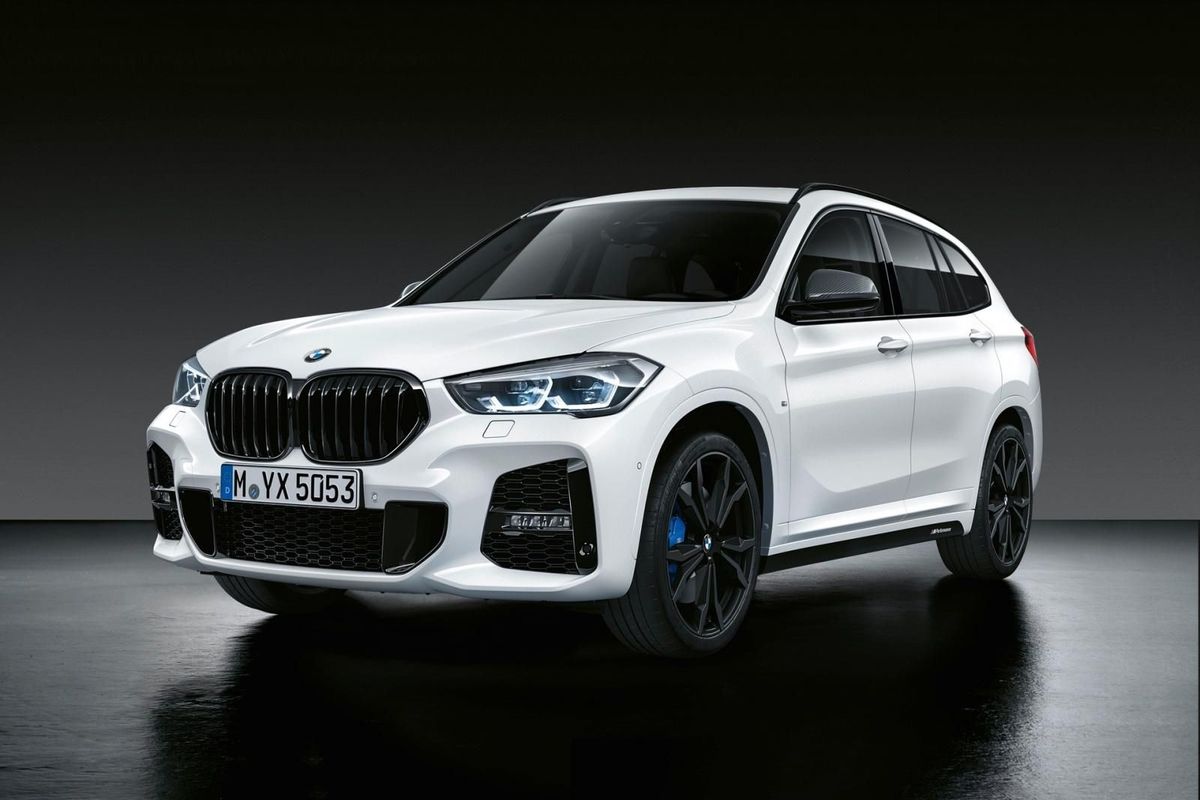
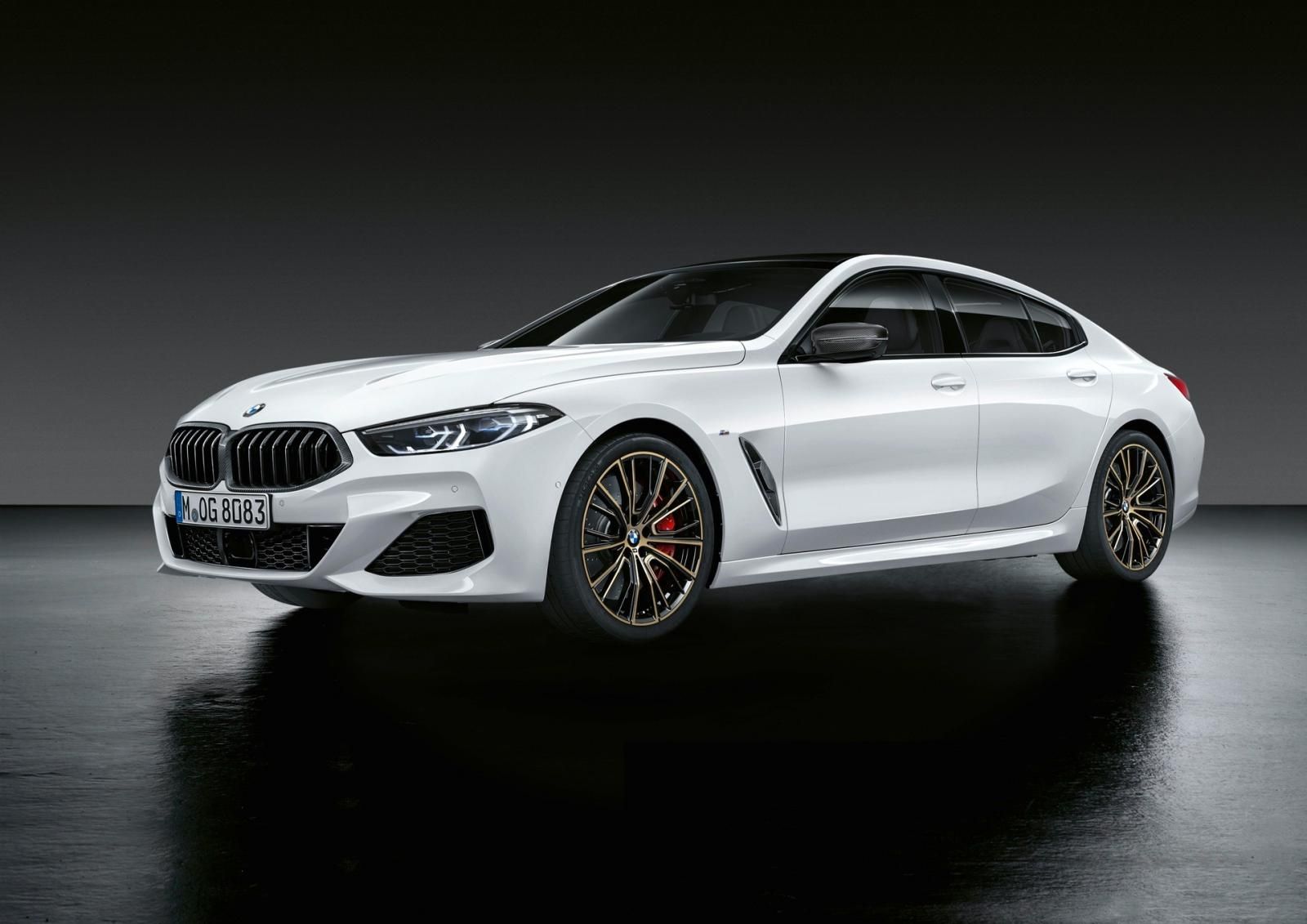
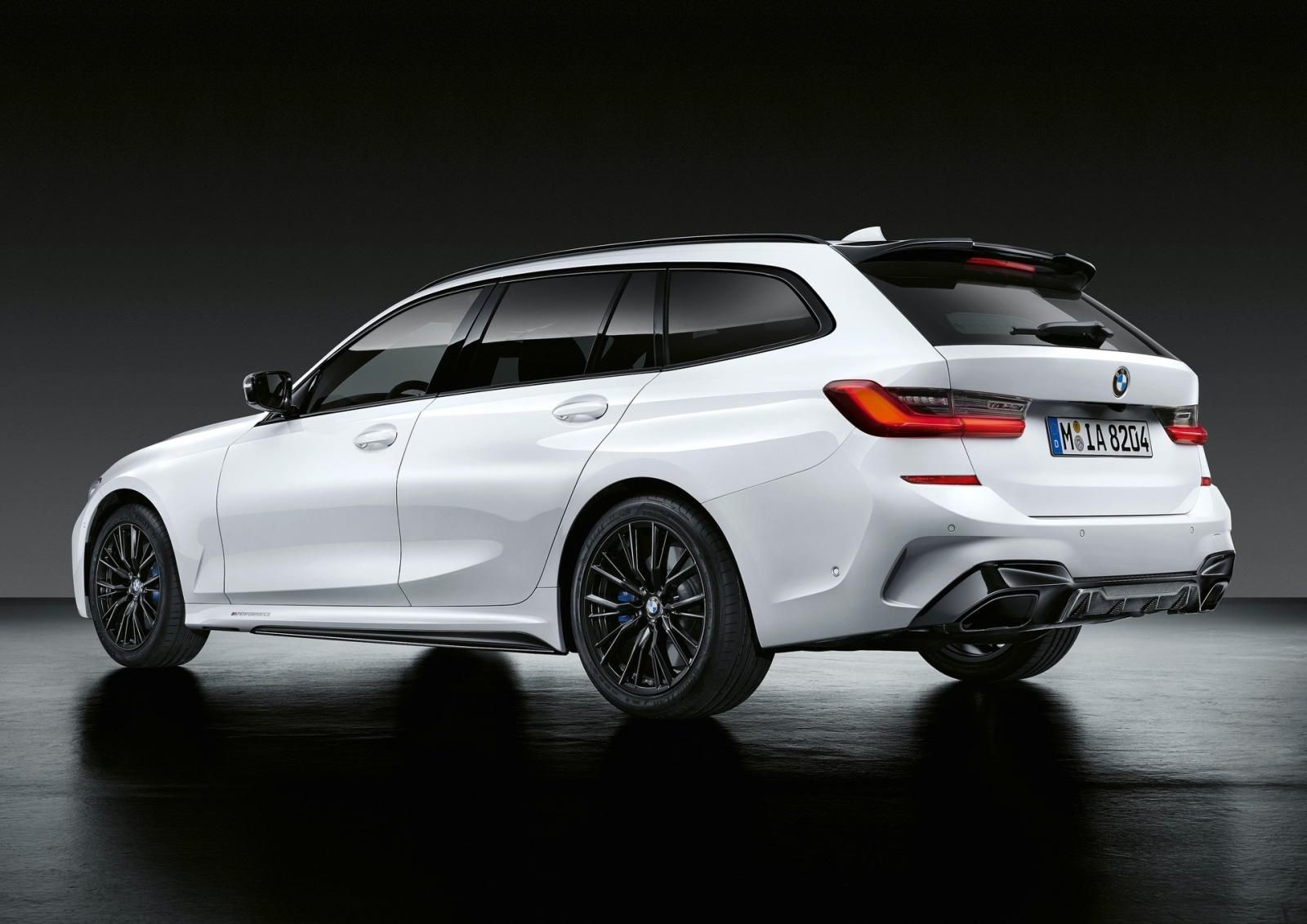
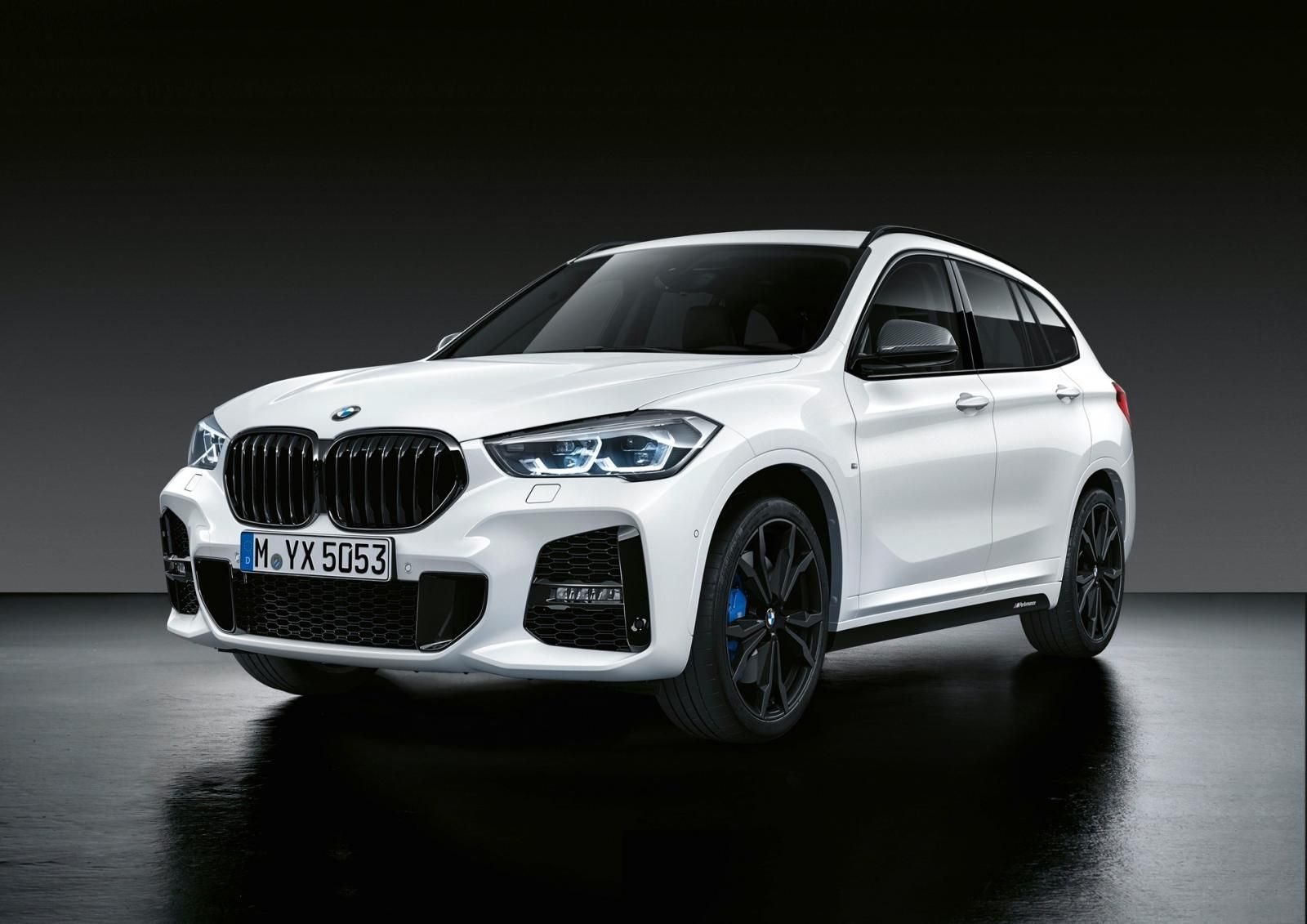
BMW M Performance Treatment Applied to 8 GC, 3 Touring and X1
The options and customisation of BMW's M Performance Parts have been rolled out to even more of the Munich-based manufacturer's products.
BMW's M Performance Parts catalogue has to be one of the most comprehensive of its kind and there's pretty much everything and anything to make your BMW different. Now its the turn of the BMW 8 Series Gran Coupe, BMW 3 Series Touring and BMW X1 LCI to receive some goodies.
BMW 8 Series Gran Coupe
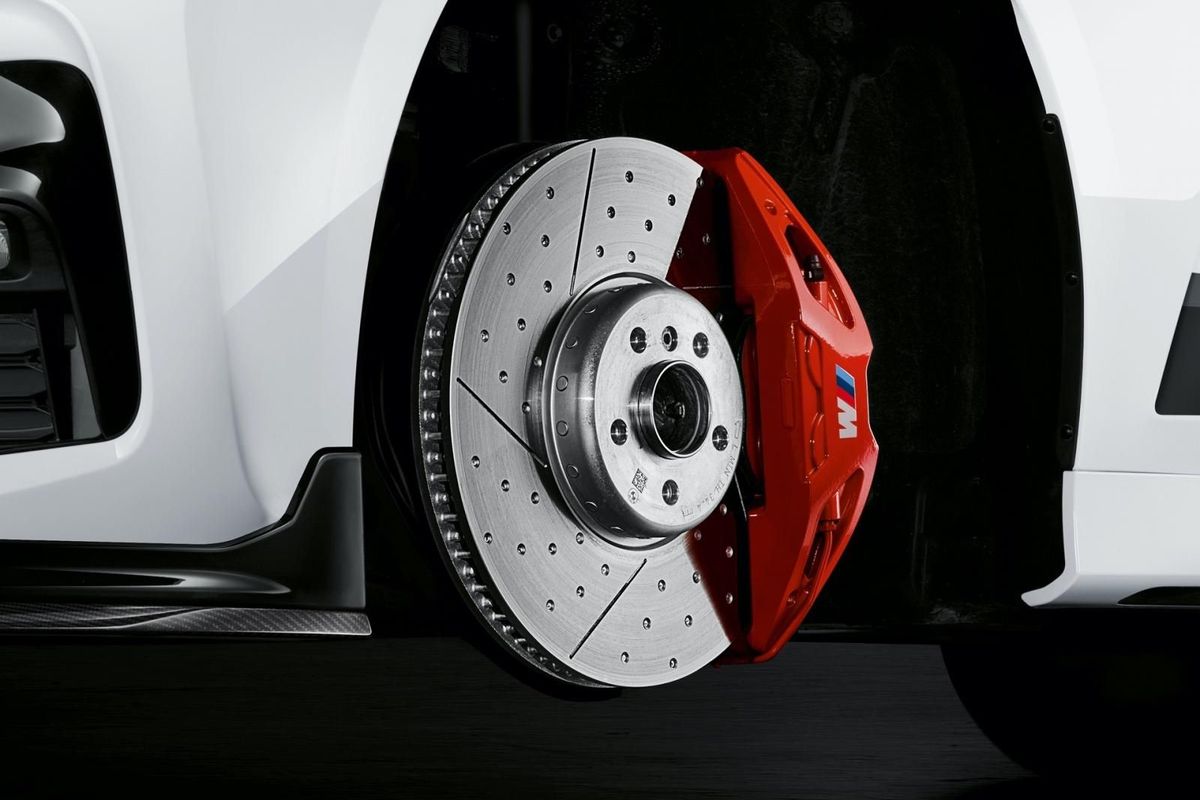
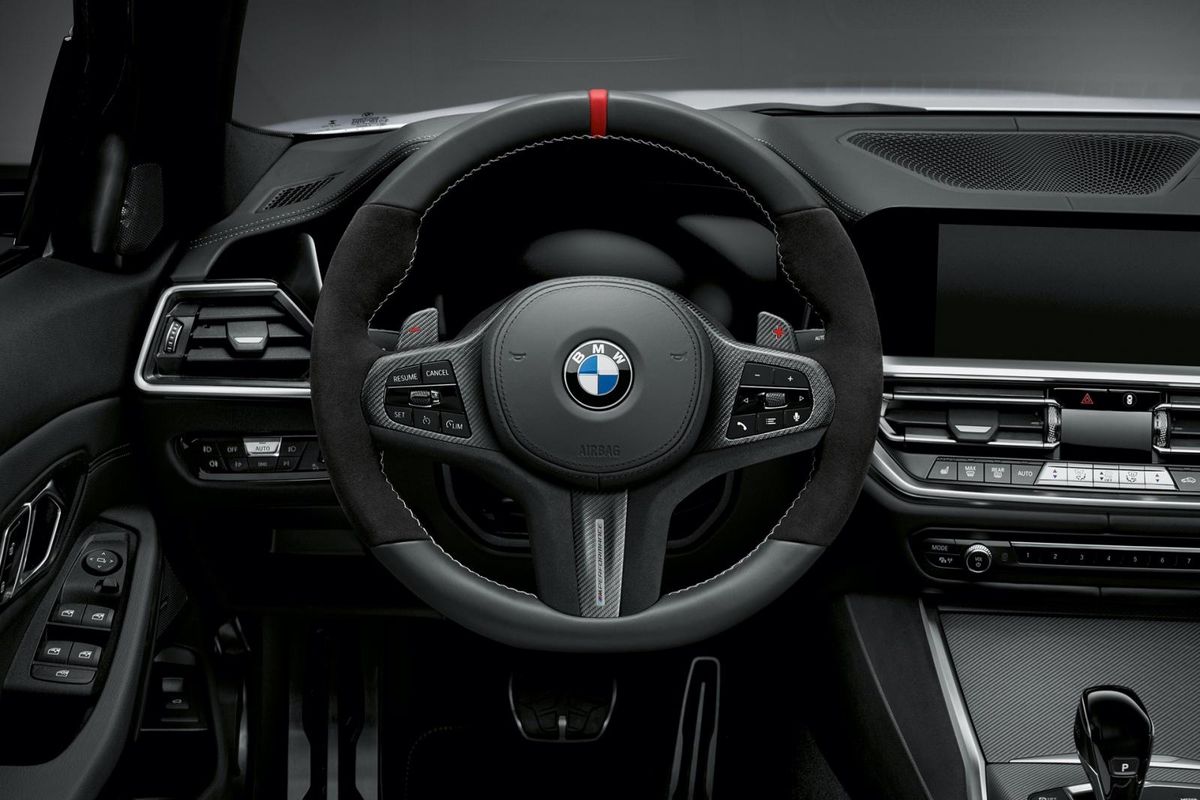
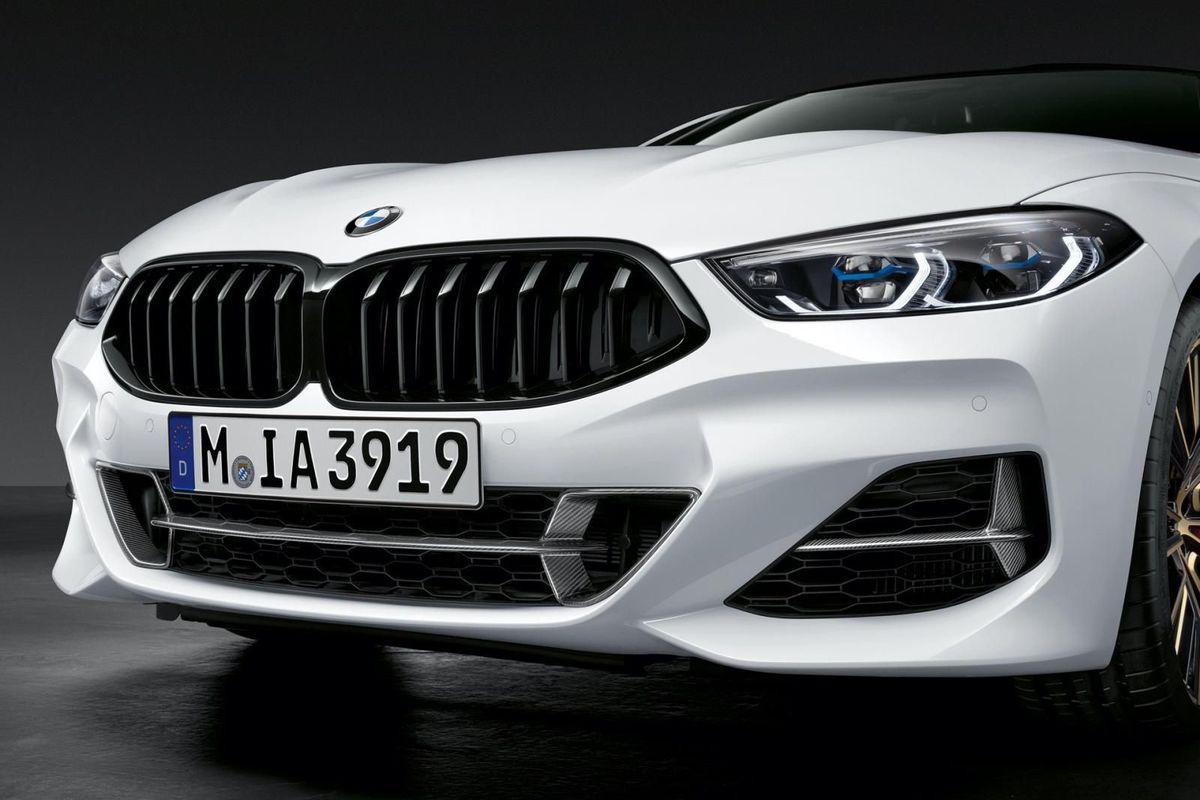
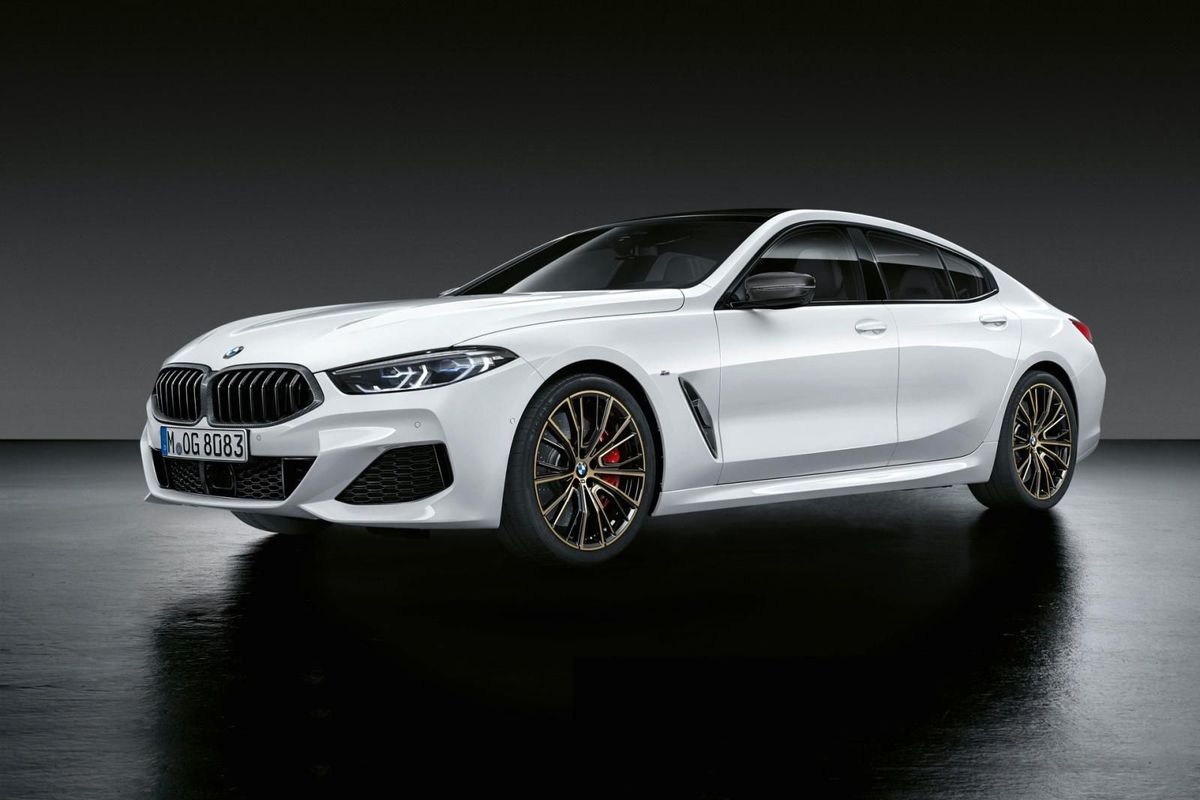
Did a car this striking even need some visual upgrades? Some would argue no, it's already very pretty. However, for those wanting more, you can get an M Performance carbon fibre front grille, side grille and mirror caps. There are also some gorgeous 20-inch M Performance forged wheels and a brake upgrade. Inside, the M Performance steering wheel features Alcantara grips and carbon fibre shift paddles.
BMW 3 Series Touring
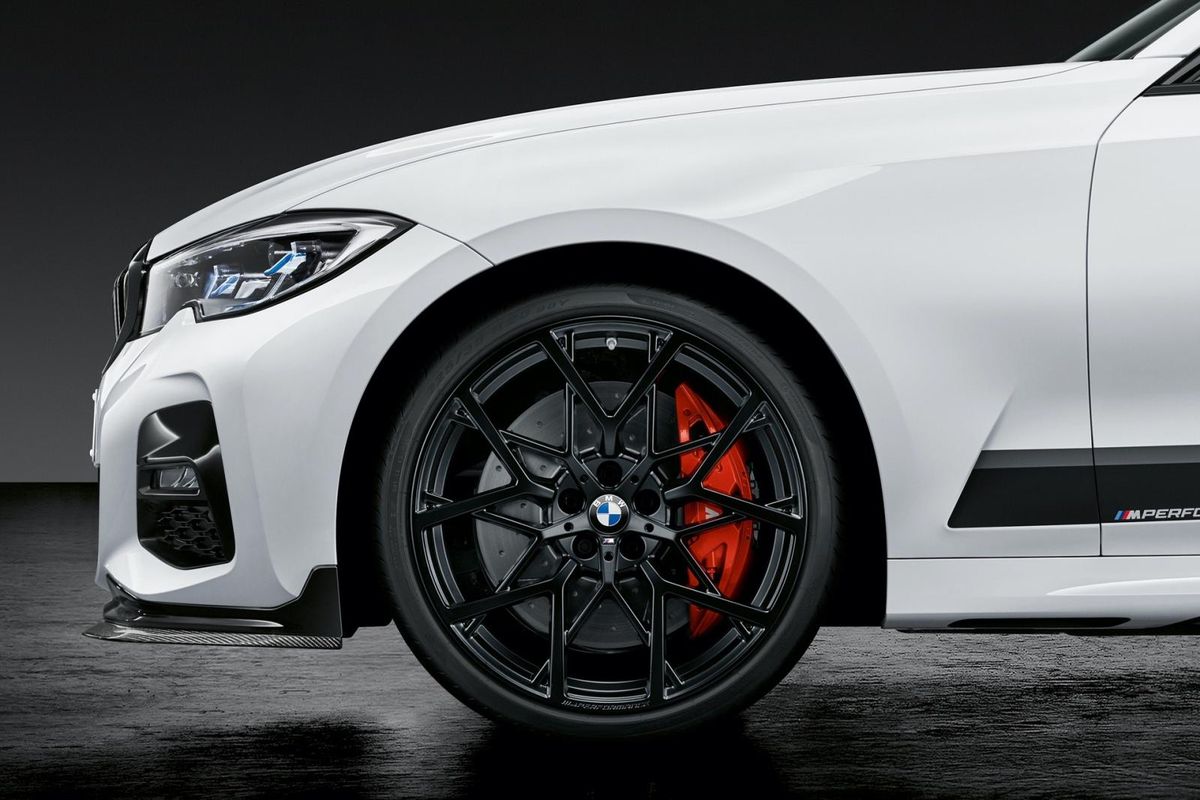
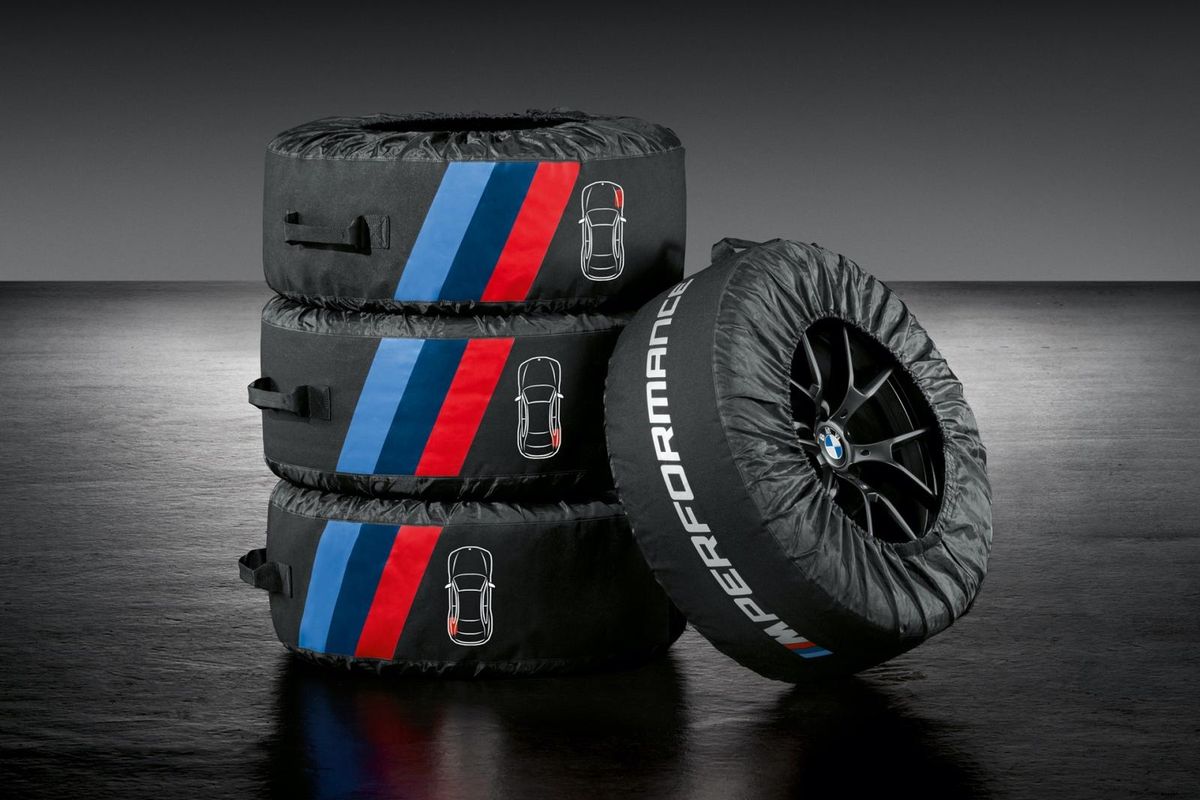
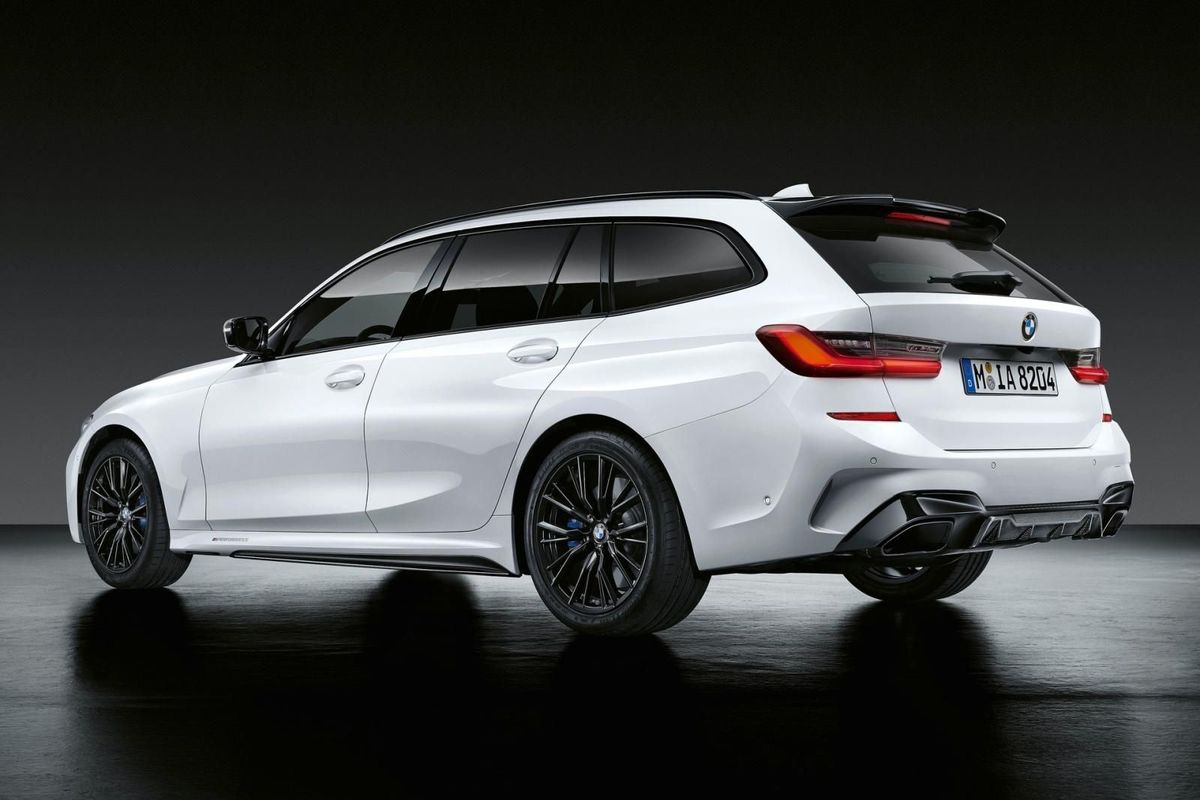
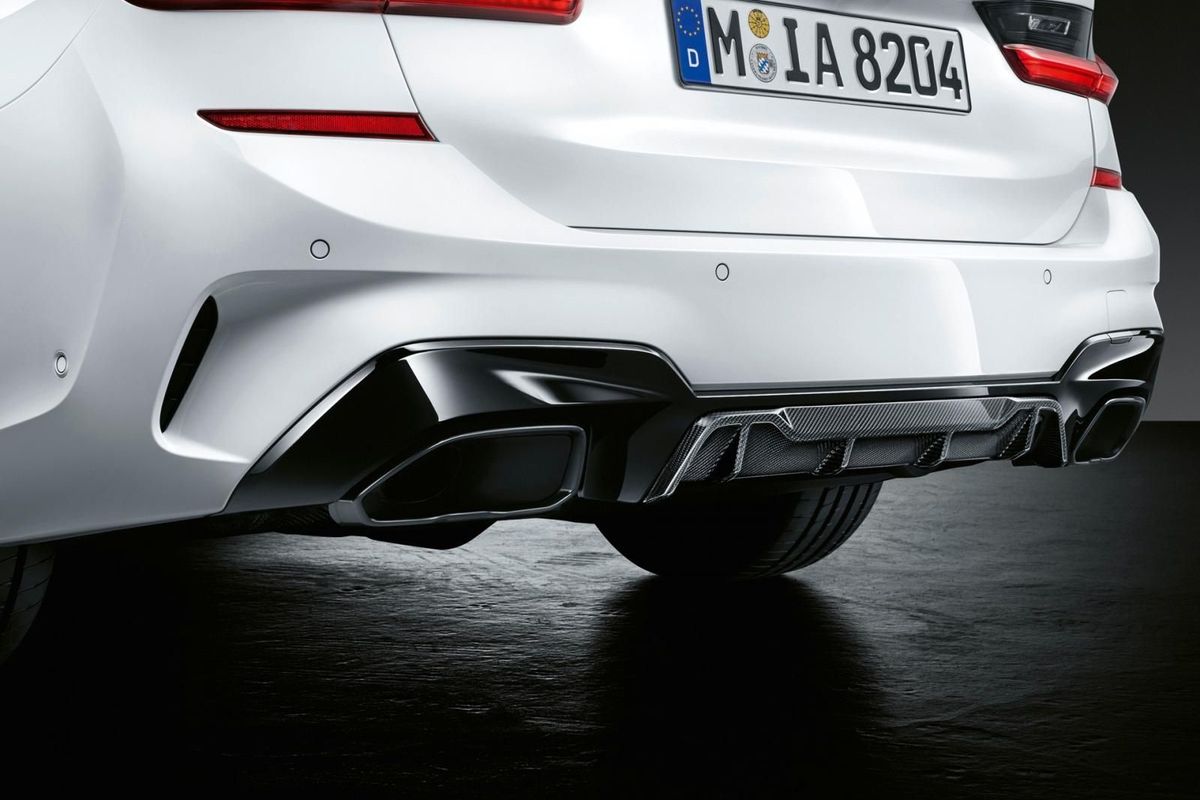
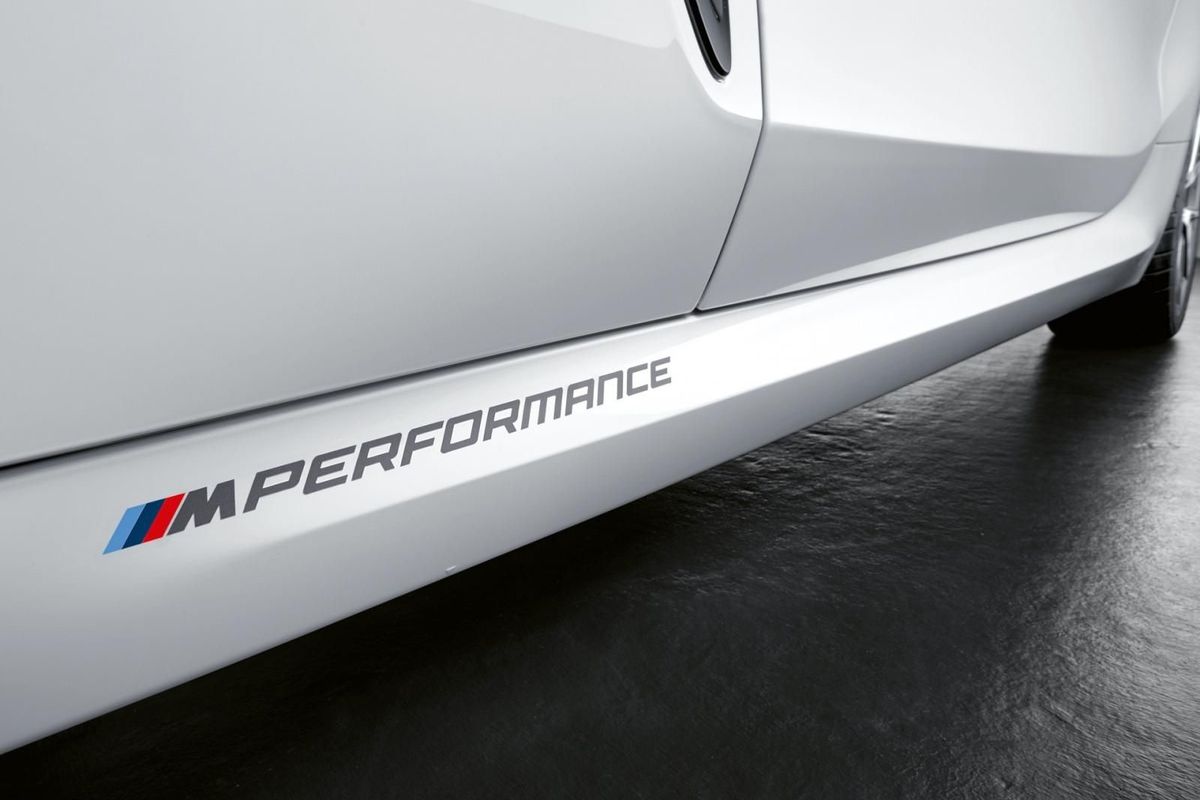
While the Touring/estate model of the new BMW 3 Series is not on sale in South Africa, you can still admire what M Performance has done to it. There are carbon fibre wings, a neat rear diffuser, and some gloss black detailing. A nice touch is the M Performance decals on the side sills and of course you can get uprated alloy wheels. For the 3 Series Touring, you can get these tasty 18-inch M Performance light alloy wheels, which also come with nice wheel bags. For the cabin, look no further than the M Performance Alcantara-equipped steering wheel.
BMW X1 LCI
The recently facelifted BMW X1 has also received some upgrades. Again, carbon fibre mirror caps and an M front grille in gloss black. There are also these striking 20-inch alloy wheels, but these are marketed as summer wheels and taking them offroad is probably not a good idea. The cabin of the BMW X1 also has the option of the M Performance steering wheel, M-branded floor mats as well as an M Performance key holder.
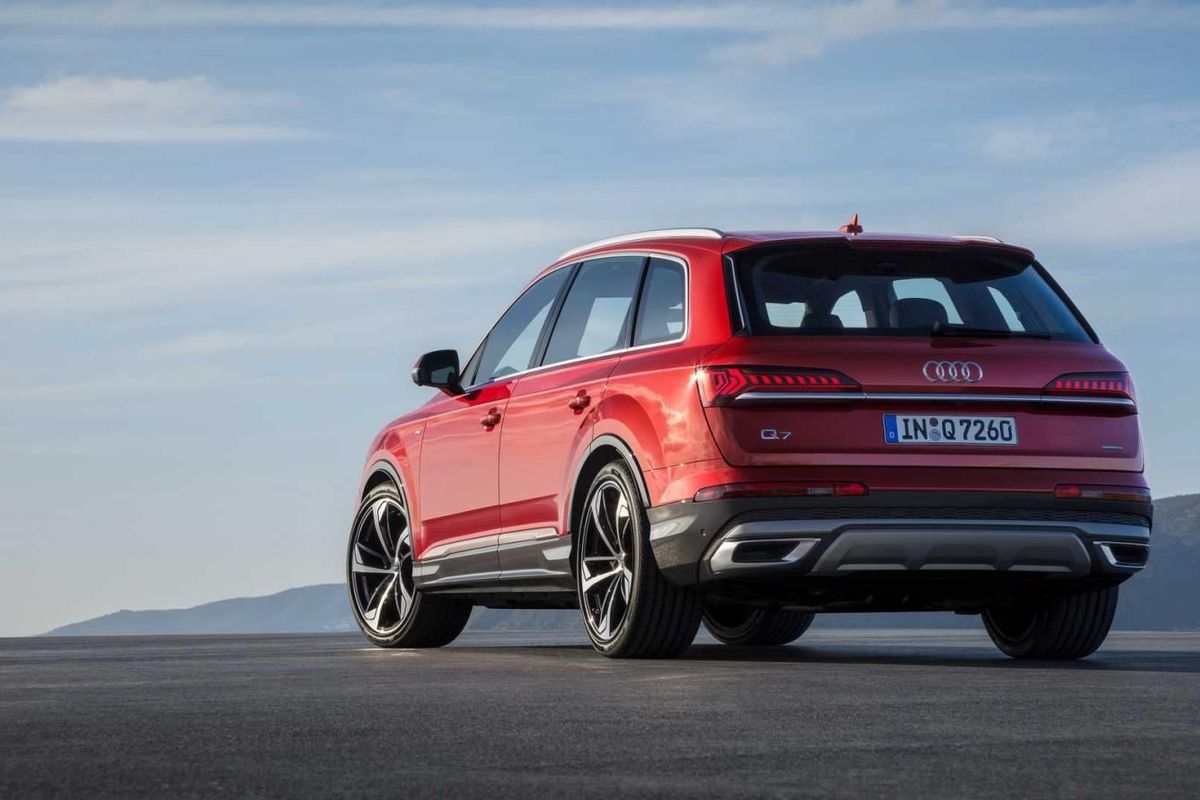
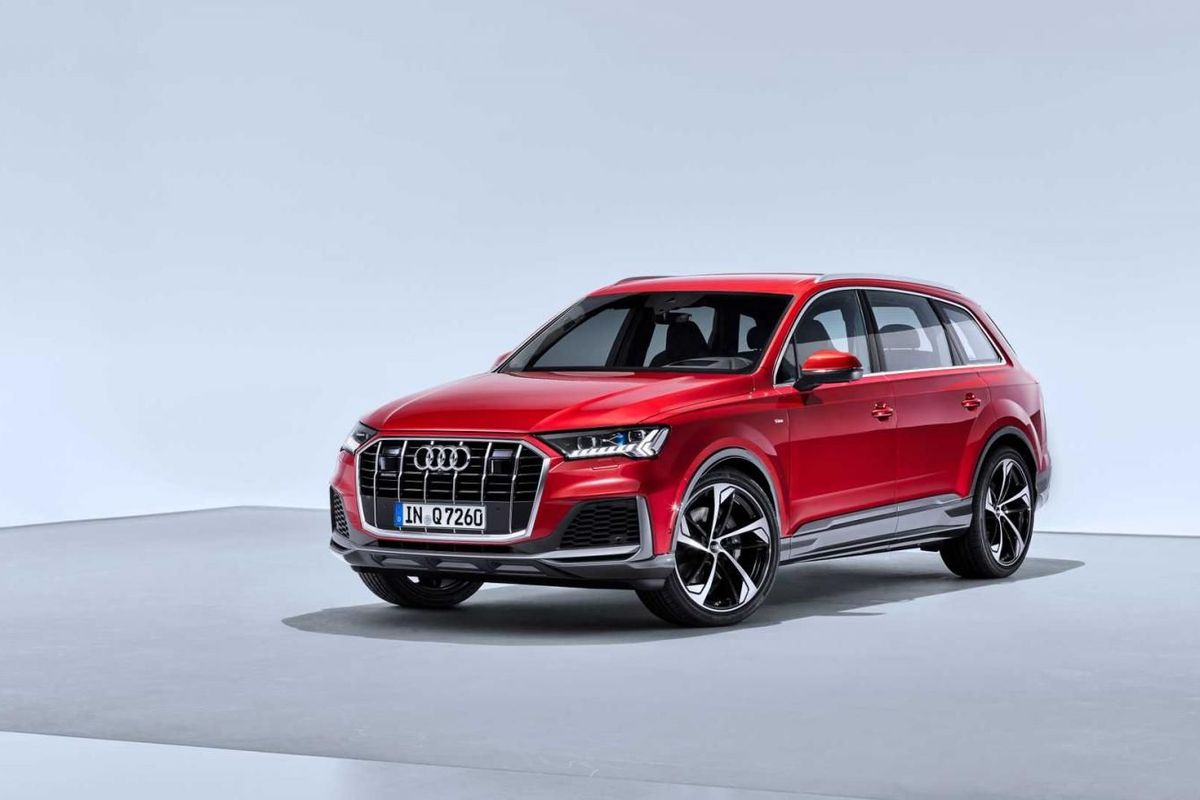
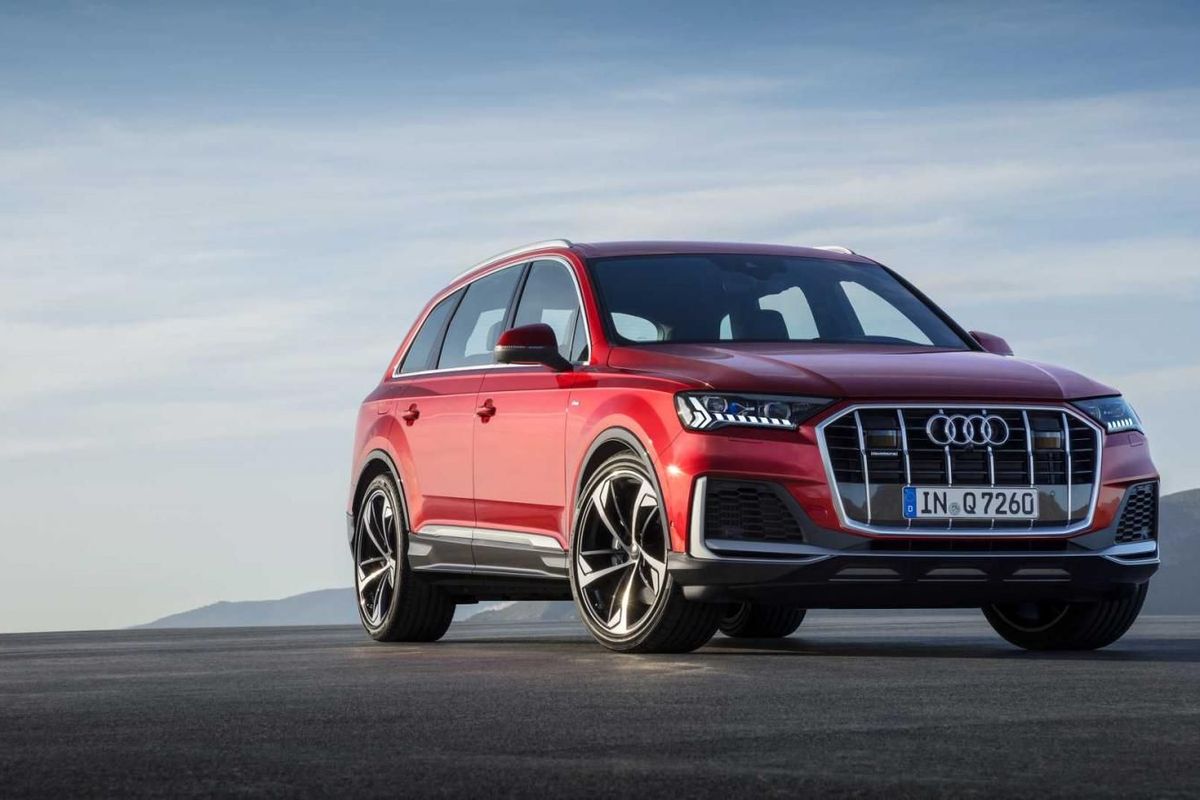
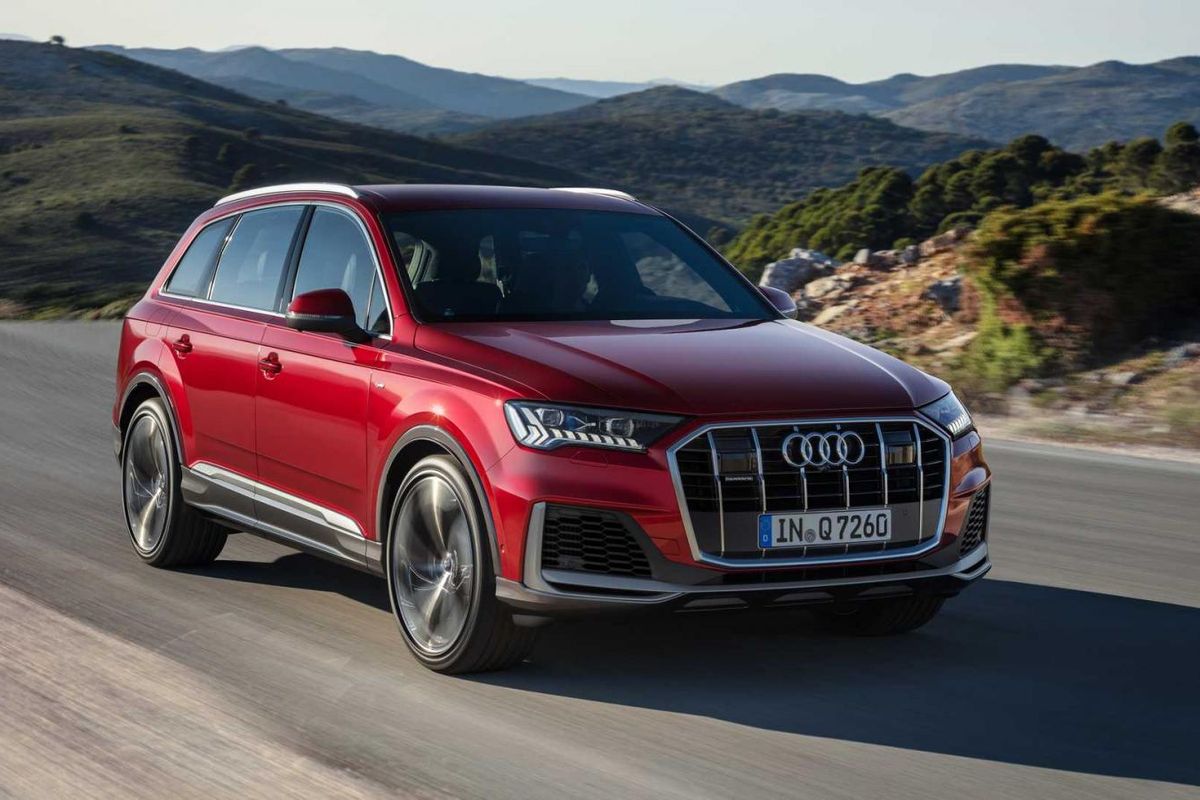
Q7 now looks more familiar to Audi’s other SUVs and crossovers now.
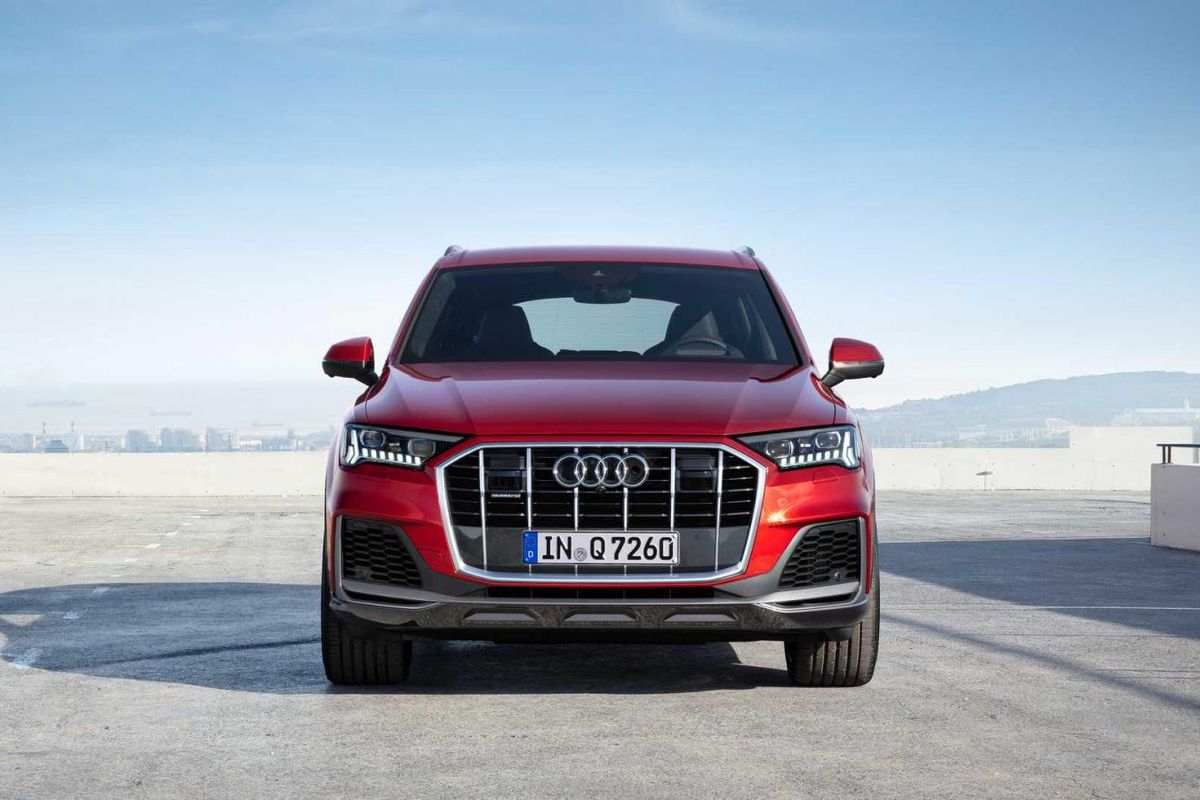
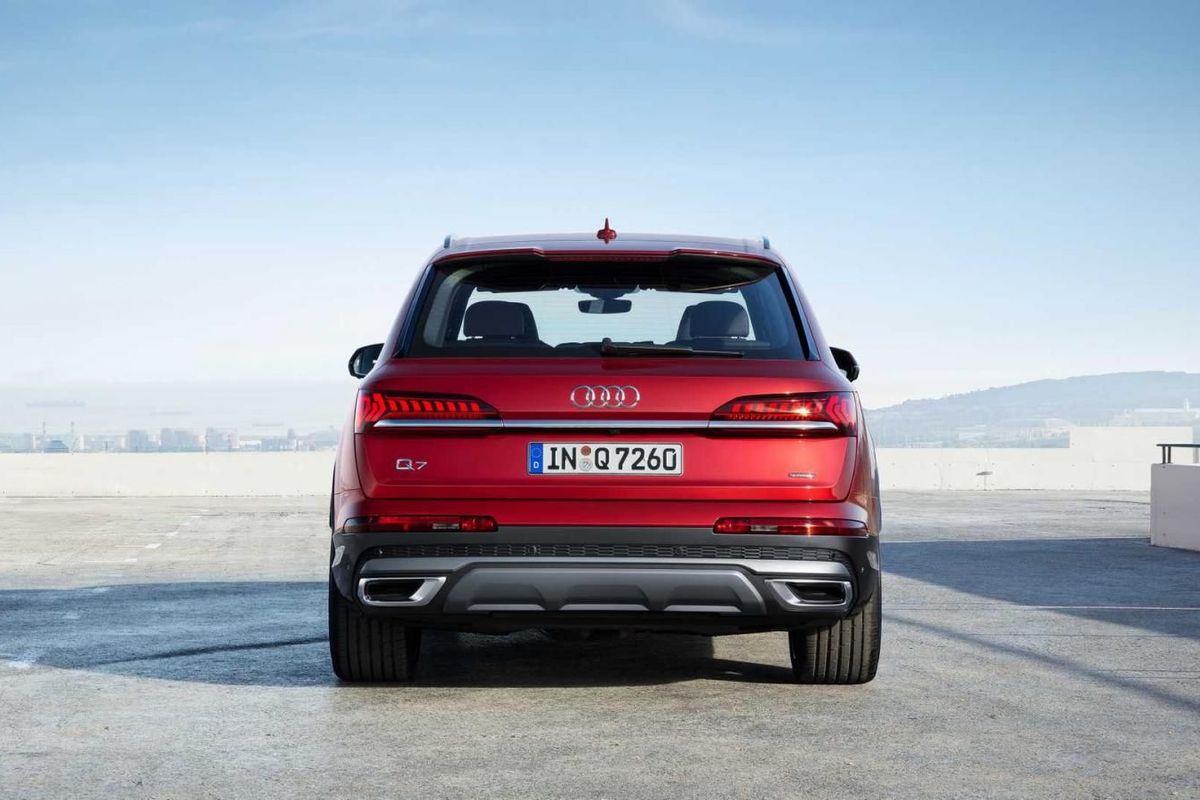
Audi has revealed an updated version of its second-generation Q7 large luxury SUV. The Q7 has grown by 11 mm and the upgrades include improved styling details, additional infotainment functionality and some impressive mechanical changes.
The most striking aspect of this new Q7 is its octagonal grille, first seen on the new Q3, and characterised by six defined vertical slats. Framing the new grille design are high definition matrix LEDs, embedded with Audi’s laser lights.
Around the back, there is a chromed styling strip which connects the slimmer LED taillights. This metal insert is supposed to lessen the appearance of tailgate bulkiness.
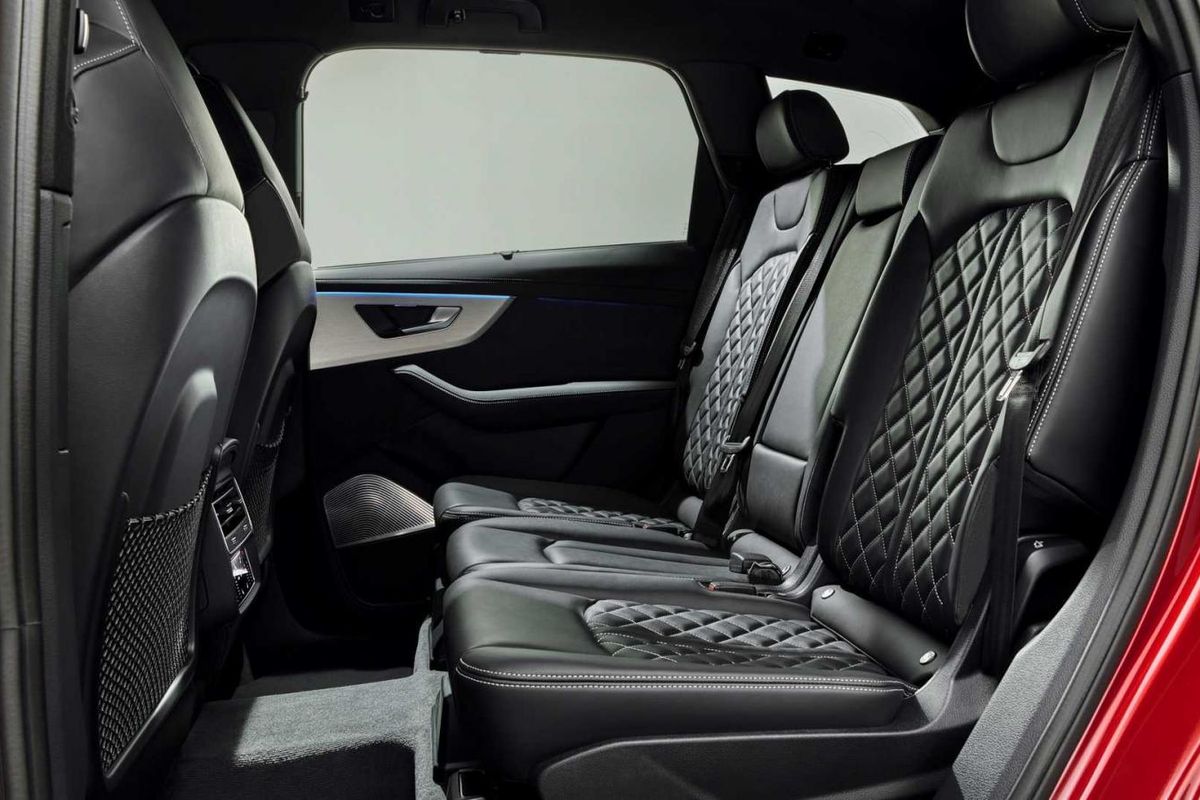
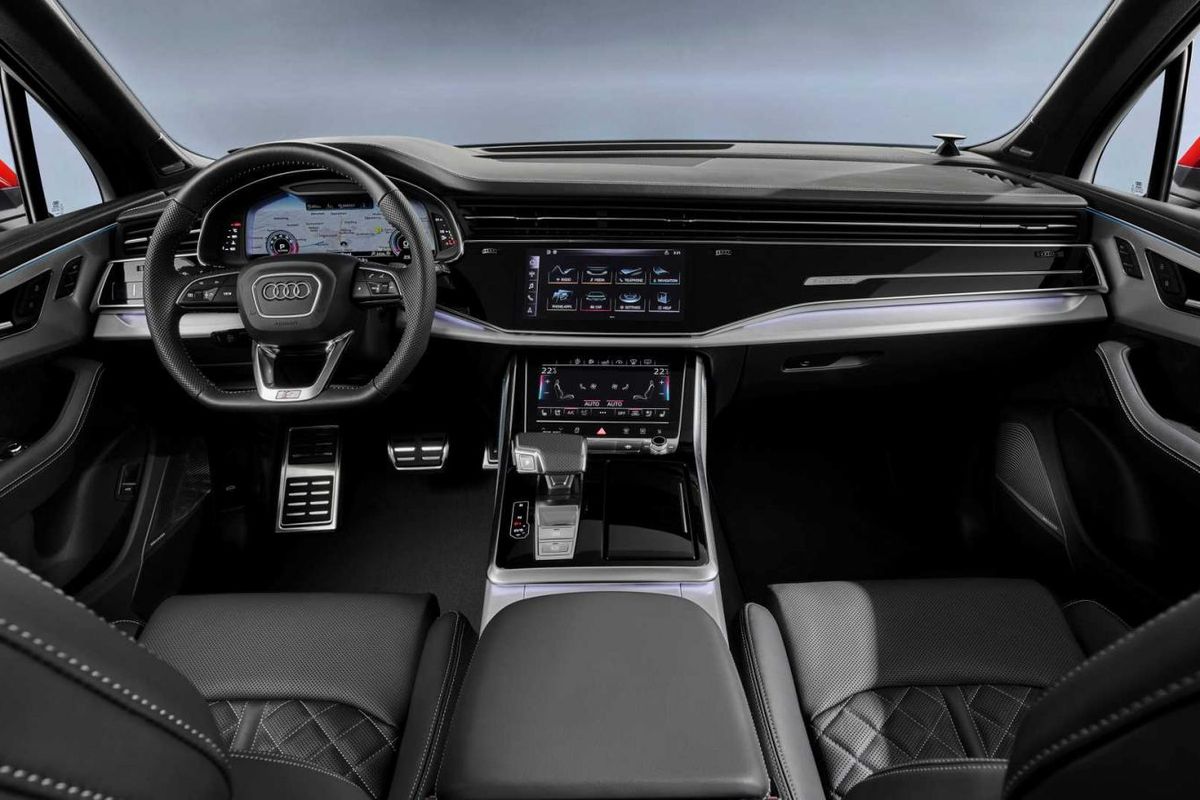
Inside the Q7 gains Audi’s latest stacked touchscreen configuration, while its doors feature self-closing functionality. An orchestral quality Bang & Olufsen sound system is available and there optional massaging seats, which also feature heating and cooling functions.
Audi is offering the option of five or seven-seat layouts for the new Q7, with luggage capacity varying between 856- and 2 050-litres for the five-seater version.
Powering the new Q7 will be a range of three engines, two turbodiesels and a turbopetrol. All three of these are 3-litres in capacity and feature a V6 cylinder arrangement. Audi has not confirmed outputs, but these engines will benefit from the company’s 48-volt mild hybridization technology and are sure to be similar to powertrains to those available in Q8.
What are the new mechanical features available on Q7? As it shares a platform with Bentley’s Bentayga, the MLB architecture has allowed Audi to introduce electromechanical roll stabilisation. Electric motors now influence Q7’s anti-roll bar to make it much more active than a conventional fixed mechanical set-up, and they can react in as little as 0.06 seconds during high-speed cornering, an emergency avoidance steering action or heavy braking.
Making the Q7 easier to park and less of a chore to drive in cramped or congested road conditions is an optional four-wheel steering system. Audi has calibrated this system to turn the rear wheels in a five-degree opposing orientation to the front axle steering input, thereby creating a virtually shorter wheelbase and tighter turning circle. At higher speeds, the rear wheels turn slightly in unison with the fronts, to improve agility and steering responsiveness.
Audi is scheduled to start introducing its upgraded Q7 to right-hand drive markets during the last quarter of this year.
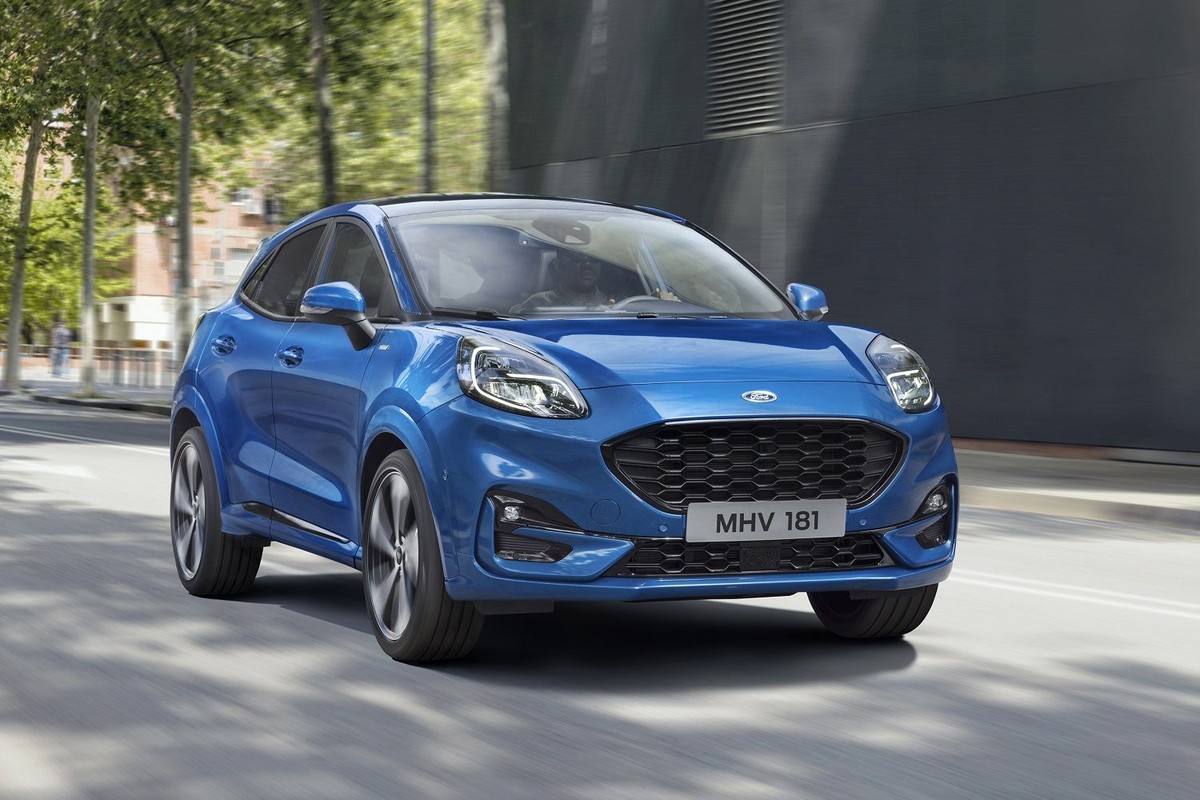
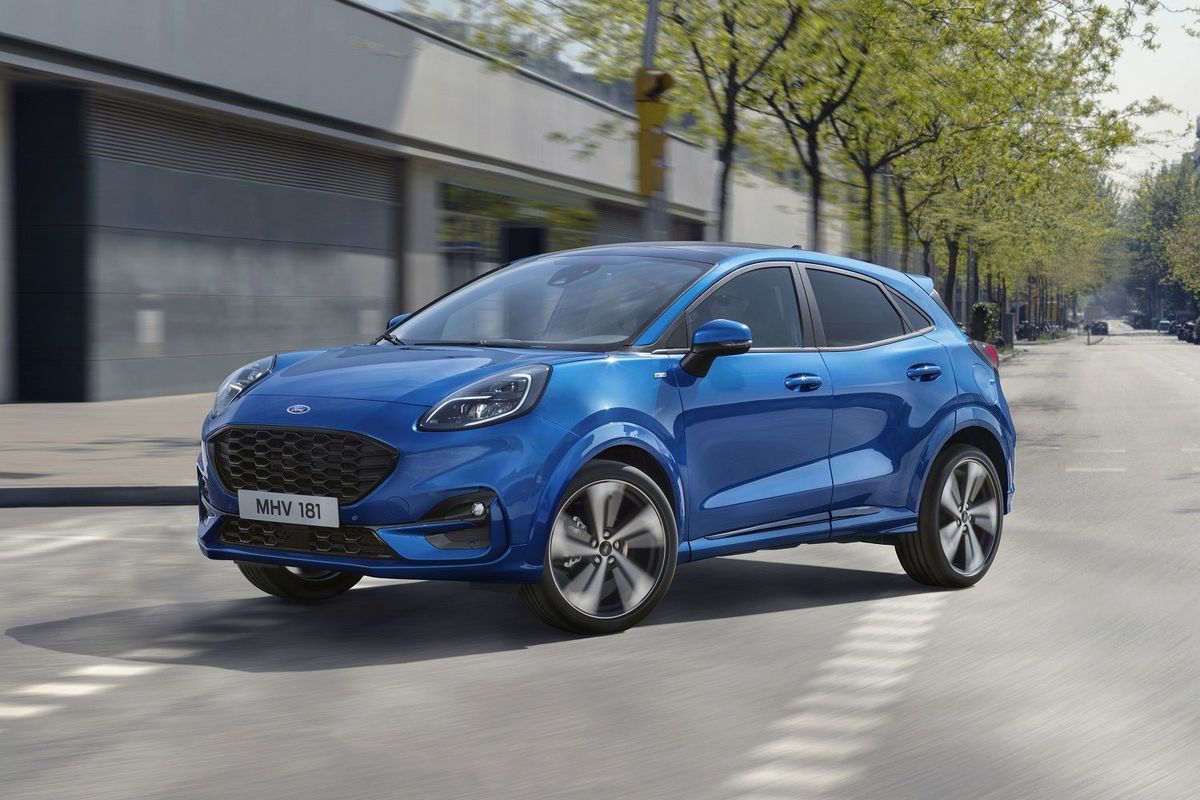
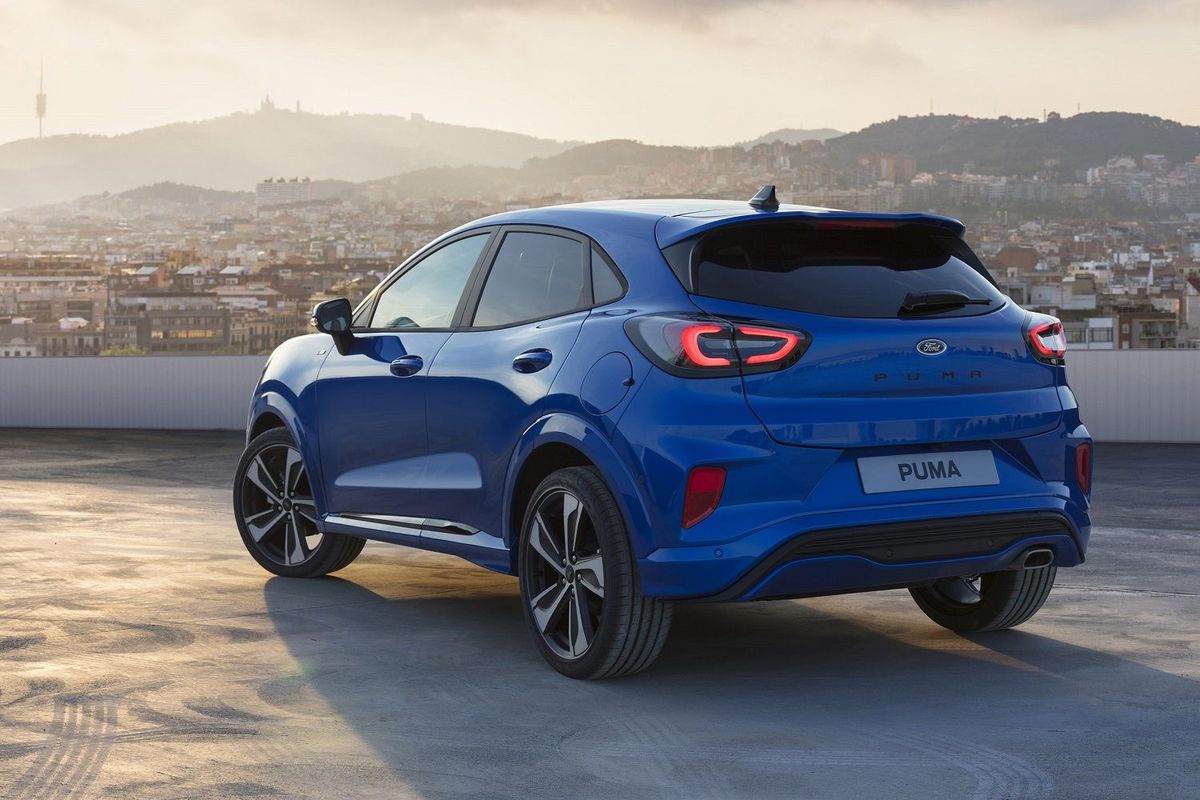
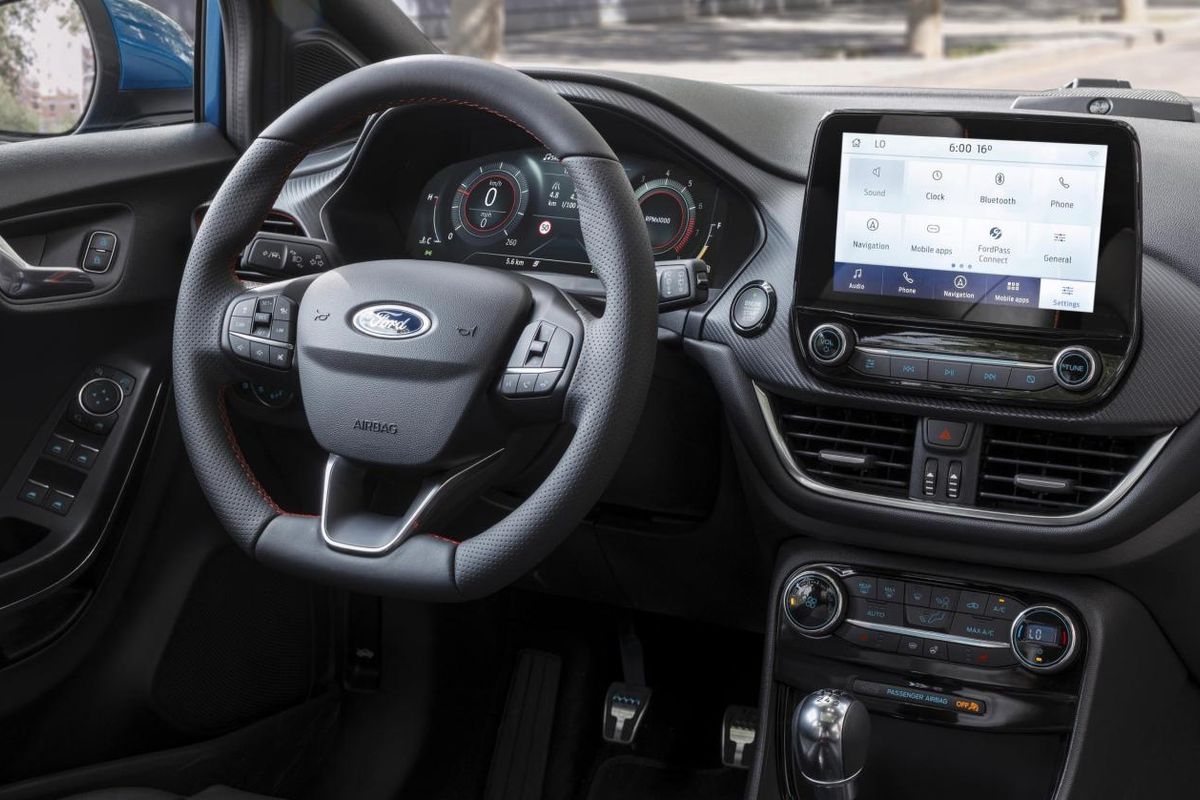
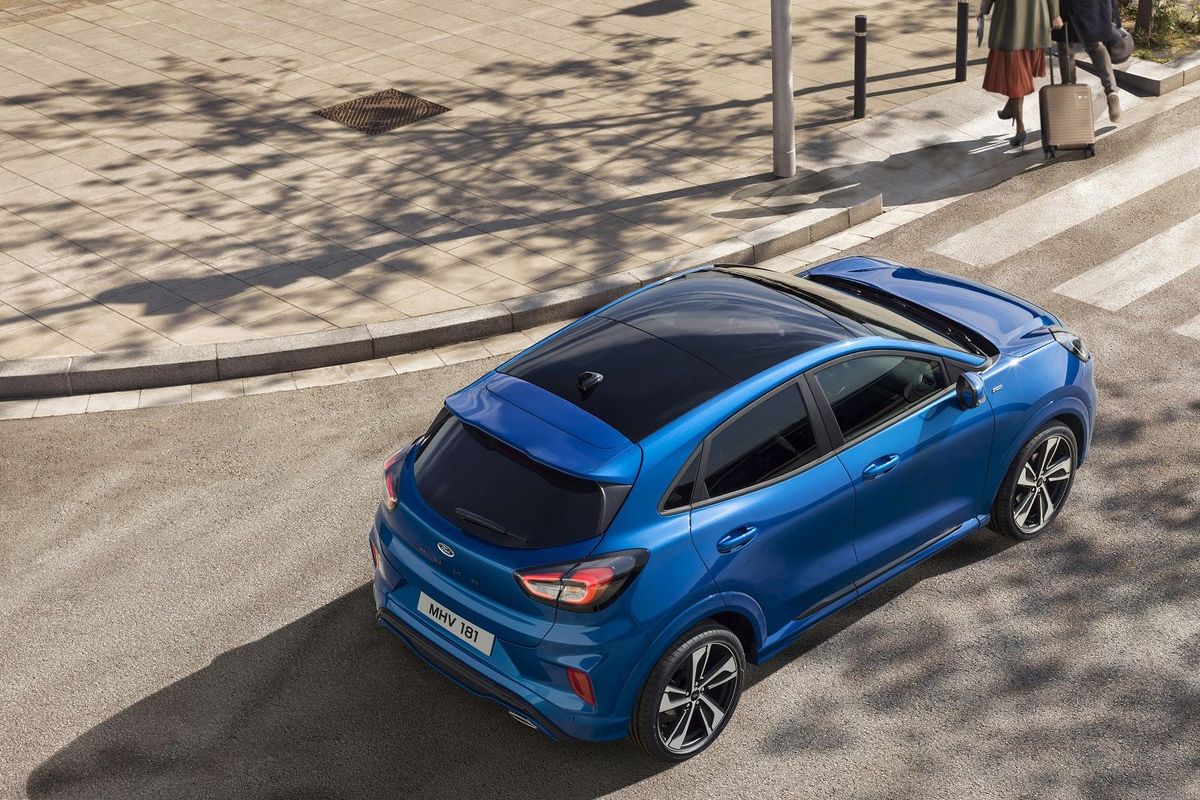
All-New Ford Puma Revealed
The Ford Puma name makes a return, this time reinvented as an SUV-inspired compact crossover.
This all-new Ford Puma is scheduled to go on sale towards the end of 2019 and will be assembled at Ford’s factory in Craiova, Romania. There’s a strong focus on striking design and practicality here, and the Puma is going to be marketed as a vehicle that has “solutions for everyday living”.
It’ll be powered by an updated version of the 1.0-litre 3-cylinder EcoBoost motor, this time assisted by hybrid 48-volt technology mated to a 6-speed manual gearbox. The standard alternator has been replaced by an 11.5 kW belt-driven integrated starter/generator to provide torque assistance and up to 50 Nm can be delivered.There are 2 versions of Puma initially, a 92 kW and a 114 kW, with a diesel and a dual-clutch 7-speed transmission being made available after the vehicle’s launch. In terms of efficiency, 5.4 L/100 km and 5.6 L/100 km are the claims.
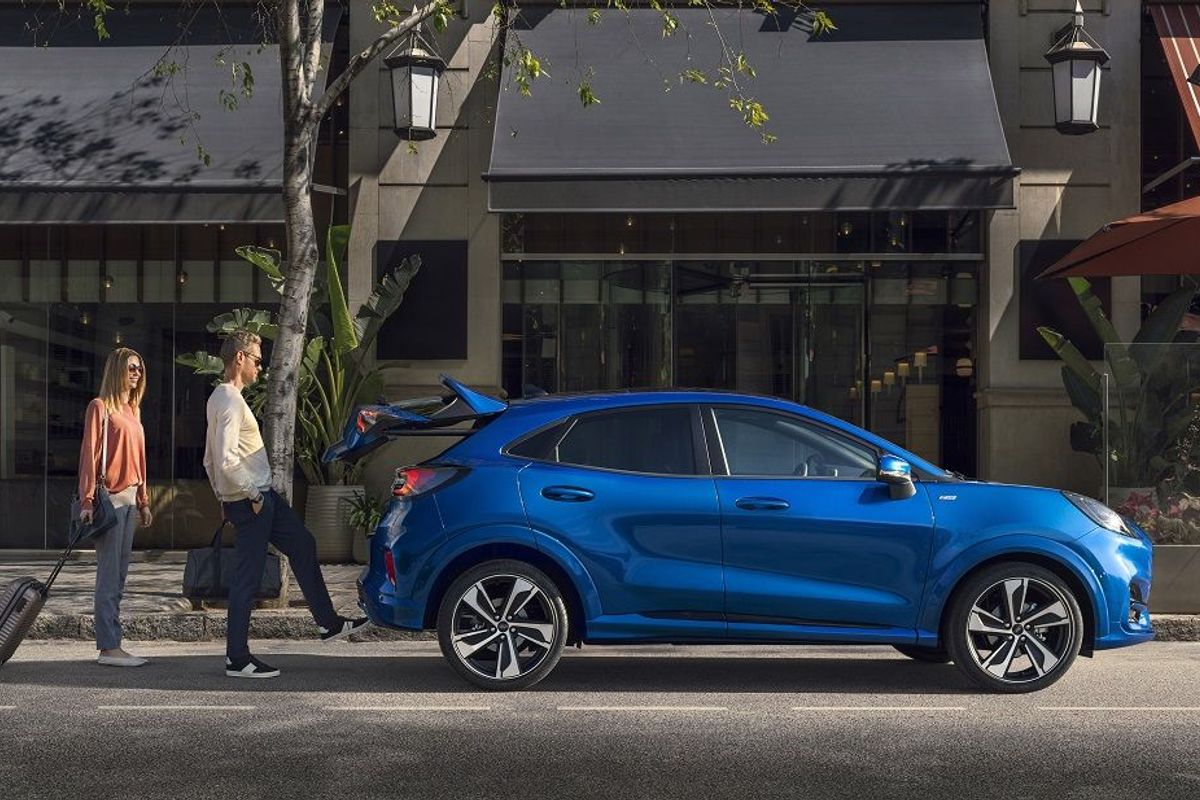
Ford has always been fairly generous with its tech and safety, and the new Ford Puma is no exception. There are 12 ultrasonic sensors, 3 radars and 2 cameras to help with driving and parking. There’s also adaptive cruise control, speed sign recognition and lane centering, as well as automatic parking. Inside, the Ford Sync setup features Apple Carplay and Android Auto, while a wireless charging pad is available.
Despite its small appearance, Ford is claiming best-in-class space, with 456 litres being the claim. A smart storage solution, dubbed Ford MegaBox, takes care of additional storage requirements. Sadly, this means there’s no spare wheel.