SA’s first private car renting platform adds professional fleet owner service
South Africa's first peer-to-peer vehicle renting platform, RentMyRide, has launched a new Professional Fleet Owner Service division to further satisfy what it says is a growing demand for private vehicle rentals in South Africa.
“In the last five years, we have seen more and more South Africans enter the sharing economy by listing their cars on www.rentmyride.co.za and making money from it when they are not using their cars themselves. Over time, we have seen some users build businesses on our platform by adding more than one car to start their own small rental fleet,” says Sebastian Brokmann, founding member and CEO of the company.
The new Professional Fleet Owner Service is aimed at vehicle dealers and fleet owners who want to list their dormant stock on RentMyRide – the system utilises the same platform that has thus far facilitated more than 15 000 vehicle rentals in South Africa since its birth in Cape Town in 2014. The new service has been developed for companies listing a number of vehicles, and benefits include lower per-vehicle commission, fleet management services such as the picking-up and dropping off of vehicles and 24/7 personalised help from one of the RentMyRide team members.
The company is already testing the new service with Pace Car Rental. “Platforms such as RentMyRide are the future of vehicle rental. The system is powerful and efficient, and we believe it will help us grow our business in volume and in reach,” says Grenville Salmon, Managing Director of Pace.
RentMyRide is currently available in the major South African cities and vehicle owners can register on the system and list their vehicles quickly and easily. RentMyRide can assist with professional photography and other administrative duties.
“Our challenge at the moment is to provide enough vehicles for interested customers. Many are tourists from abroad, who have become used to using services such as Turo in the US or SnappCar in Europe, and they are looking for something equally convenient and affordable in South Africa,” says Brokmann.
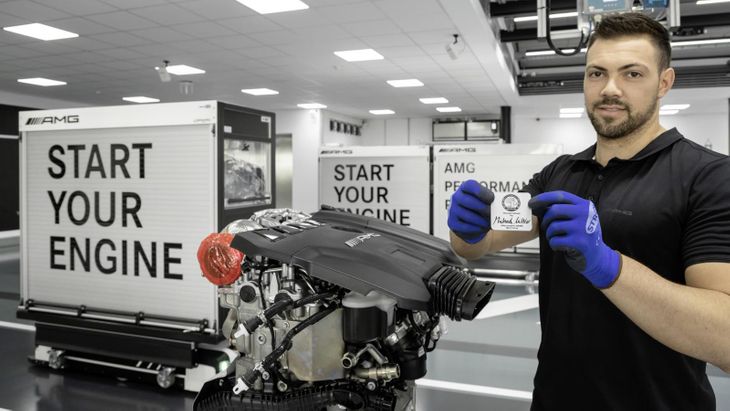
Mercedes-AMG has revealed another amazing turbocharged engine. Will BMW's M Division ever be able to produce a 4-cylinder motor that could rival Mercedes-AMG's 310-kW M139, which will debut in the upcoming A45 superhatch?
The rivalry between Mercedes-AMG and BMW sets the agenda for South African performance enthusiasts. Demand for cars from either brand are terrifically strong within the local market and whereas all AMG- and M-badged models were once sedans, the last few years have seen engineers from both brands experimenting with SUVs and… hot hatches.
We say experiment, but we actually mean: dominate. In a world where all-wheel-drive hot hatchbacks can now run turn-of-the-century supercars close in the 0-100 kph stakes, it has been Mercedes-AMG and BMW that have shattered expectations, time and again.
Of late there has been a divergence in approach between the German premium marques, however. BMW entered the hot hatch fray late and was unique for offering a 3.0-litre 6-cylinder engine and rear-wheel drive in the M135i and, more recently, M140i derivatives of the outgoing 1 Series hatchback. However, in 2013 AMG altered the entire hot hatch realm with its A45, offering previously unimaginable power and all-wheel drive.
In the competition between Mercedes-AMG and BMW’s hot hatches, the Affalterbach cars have surged in popularity due to their class-leading power claims. Can BMW counter, and does the Bavarian brand even want to be drawn into a horsepower race?
Double or nothing in a decade
To contextualise the absence of diminishing returns within the engineering capability of AMG’s hot hatches, just consider the progress of 2.0-litre turbocharged engines in the last decade.
Volkswagen's Golf GTi was generally considered the class standard for 2-litre hot hatches. In 2009, the Golf 6-generation of the GTi was launched in South Africa and, at the time, it produced a tidy 155 kW from 2.0 litres of swept capacity. It was a wonderfully adaptable engine too, capable of idling and crawling along in congested freeway traffic, but also powerfully responsive when roads opened and traffic dissipated.
Ten years on, Mercedes-AMG has released an evolved version of its 2.0-litre turbo engine. It is called the M139 and the Affalterbach-based firm tells us it is good for a reliable 310 kW. It will also pass emissions regulations, idle along in crushing peak-hour traffic and hold true to its warranty.
Merc-AMG's tiny 2.0-litre pumps out a mighty peak output of 310 kW.
Do the math and compound the timeline: Mercedes-AMG has built an engine of the same size as VW’s Golf GTi (from 10 years ago) that conforms to stricter emissions control but produces twice the power. If ever there was a compelling argument that the internal-combustion engineers are still making huge development strides after more than a century, this AMG M139 engine is it.
Futurists might be hailing the age of battery-powered cars, but Mercedes-AMG engineers have proven that they can extract an incredible amount of latent performance, which still resides generally undiscovered, within the internal combustion engine.
AMG steals the show – again
Mercedes-Benz’s hugely successful performance car engineering division has essentially streamlined its business into three powertrains: 4.0-litre V8s, 3.0-litre sixes (V- or in-line configuration) and the new 2.0-litre 4-cylinder. All these engines are turbocharged and their abilities to produce outrageous power, excellent throttle response and relatively low levels of frictional and thermal losses, are deeply impressive.
Mercedes-AMG engineers act as consultants on Mercedes-Benz’s F1 engines and some of those fantasy features are now a technical given in the brand’s road car engines. The M139 has nanoglide cylinder coatings. Its block is chill-cast aluminium. AMG’s technicians pour molten aluminium into a water-cooled mould to create it (it's not machined) – a technique engineers would never even have attempted for a road car 10 years ago.
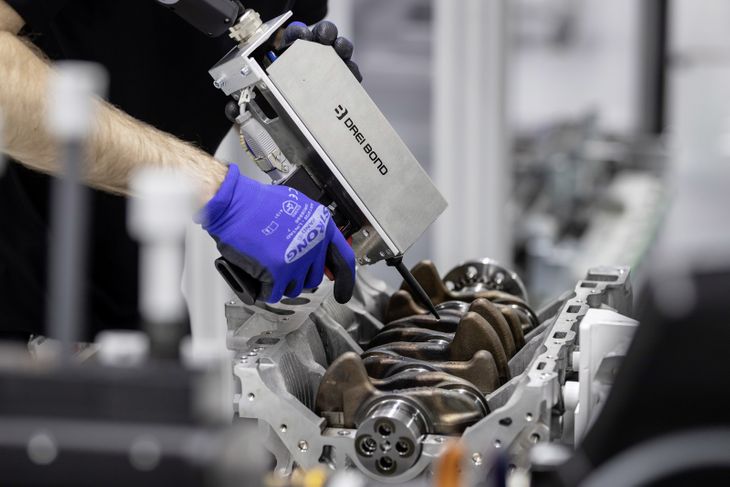
The new Mercedes-AMG powerplant sets a new record for production 2.0-litre engines.
Mitsubishi and Subaru might have established the 2.0-litre turbocharged compact performance car genre in the 1990s and held ascendancy for a considerable period, but Mercedes-AMG’s M139 turbocharging technology is nearly otherworldly by comparison. Its turbocharger runs on roller bearings, which allow the highest possible impeller speeds (169 000 rpm), and is cooled by air, oil and water.
The engineers have confidently designed and delivered a production engine with no rival. And we mean that in absolute terms, not only in its 2.0-litre capacity class. The specific output of 155 kW per litre is superior to any non-hybrid Ferrari, McLaren or Porsche engine. Obviously, those 3 brands won’t be too bothered, as they don’t produce a car in the hatchback segment, but for BMW, it does present a troubling prospect.
How can BMW counter?
Mercedes-AMG’s M139 engine announcement has come at a most awkward time for BMW. Its new 1 Series, which is set to rival the 310-kW A45, which is due to be released later this year, will test the faith of BMW’s followers.
The 3rd-generation 1 Series is a massive divergence from BMW’s traditional brand values of rear-wheel drive and longitudinally mounted powertrains. This new BMW hatchback platform is engineered as a dedicated front-wheel-drive architecture. The M135i hot hatch version might have been confirmed as an xDrive derivative, but its engine is mounted sideways – unlike any hot hatch BMW has built before.
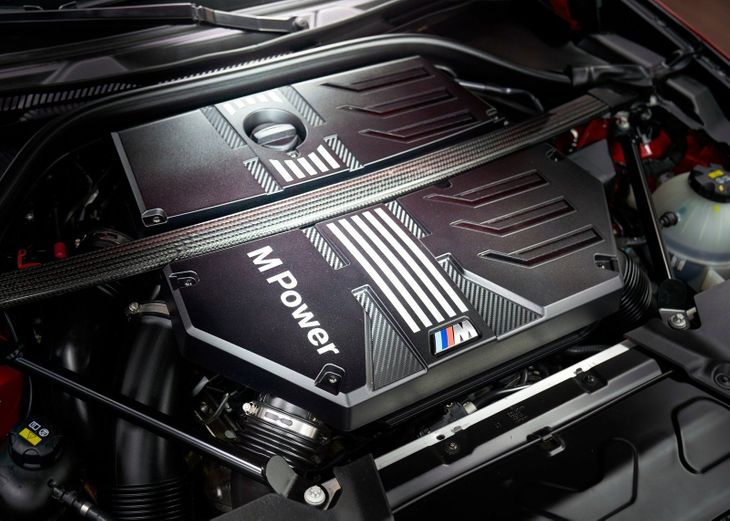
BMW's new X3 M motor boots 375 kW to all 4 wheels.
BMW’s 2.0-litre engine in the F40 series M135i produces peak outputs of 225 kW and 450 Nm. Those are compelling numbers, more powerful per-litre than the brand’s own M5/M8 engines, but the M135i xDrive will still be a 3rd less potent than Mercedes-AMG’s new A45.
What are BMW’s options to find a workable solution to equal the M139 engine’s output? In the past, the brand’s M Division has managed to simply drop-in a 6-cylinder solution whenever a compact M-car was required. The celebrated 1M Coupe was created in this way, so too its successor, M2. But with the F40 architecture being front-wheel drive biased, simply borrowing a detuned M3/4 engine (as BMW did in the case with the current-generation M2 Competition) is no longer possible.
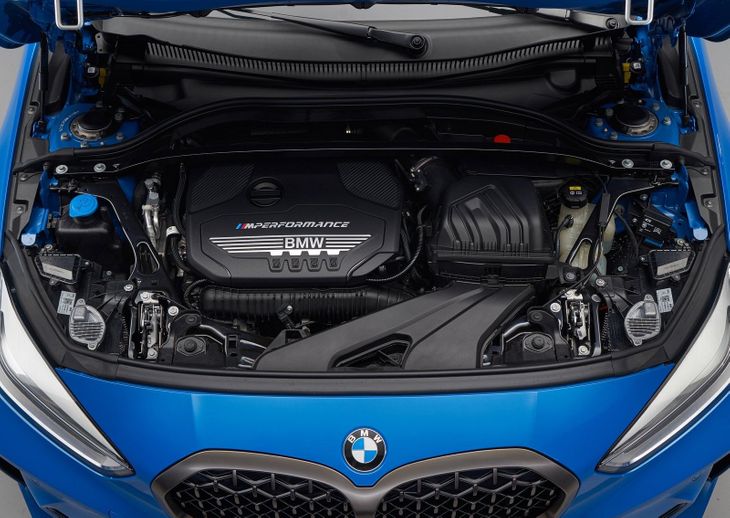
Scrutinise the engine bay images of BMW’s new M135i xDrive and the issue becomes apparent: this is now a transverse architecture and none of the contemporary BMW 6-cylinder engines is compatible with that layout. BMW’s only option is to use the largest engine that its F40-series platform has been designed for, a 2.0-litre, and make it more powerful. A lot more powerful.
It's clear that the new 1 Series engine bay only works with a transverse engine layout.
The question is: how close could BMW get to AMG’s M139? And is this a priority for the ‘Werke?
In the past, BMW has appeared unbothered at the notion of besting AMG’s 2.0-litre cars in a comparable conflict of peak engine outputs. Even when the 1 Series could still accept an in-line 6-cylinder engine, the most powerful 140i ever marketed was a 250 kW car, when its rival A45 was good for 280 kW – despite having a litre less engine capacity and 2 fewer cylinders.
BMW’s influential 3.0-litre in-line 6 has shown tremendous adaptability to turbocharging. The latest version (375 kW) powers the new BMW X3 M and shifts that output to all 4 wheels. Problem is, it needs to be longitudinally mounted and the new 1 Series is a transverse-engine platform.
Will VW enter the fray?
Before its role in America’s diesel emissions scandal curtailed the brand’s performance-car ambitions and redirected R&D resources to electric vehicle development, Volkswagen was readying a rival to the Mercedes-AMG A45.
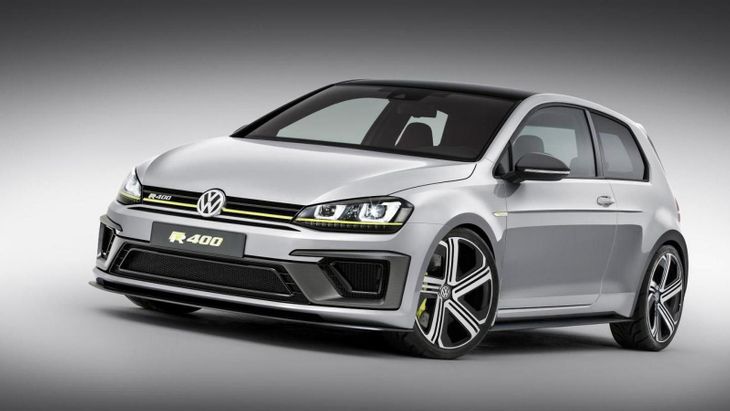
The Golf R400 concept was projected to produce 298 kW (its name referencing 400 horsepower), but after being revealed in 2015, it was never put into production. With the pending introduction of Golf8, there are rumours that a high-output Golf R could finally make good on VW’s ambition to have its own near-300 kW hot hatch. It would put Golf R in direct competition with Mercedes-AMG’s A45 and leave BMW out of the running.
VW had thoughts about entering the hyper hatch market with the R400.
With AMG in an inarguable position of 2.0-litre hot hatch supremacy, has BMW been lured into shadowing a market segment it has limited interest in, but has now been baited into pursuing by the A45? Is there real urgency at BMW to produce a 300 kW hot hatchback with only 4-cylinders?
The Munich-based company’s engineers have always prided themselves at being master engine builders and they can draw on the marque's rich tradition of high-performance 4-cylinders.
Of all the German brands, BMW incubated the compact 4-cylinder turbocharged performance car (with its original 2002 Ti turbo), back in 1973. The first (E30-generation) M3 was also powered by a legendary 4-cylinder engine. BMW will need to channel the inspiration of its 2002 Ti and E30 M3 heritage to respectfully close the gap between its 1 Series hot hatch derivatives and those of bitter rivals, AMG.
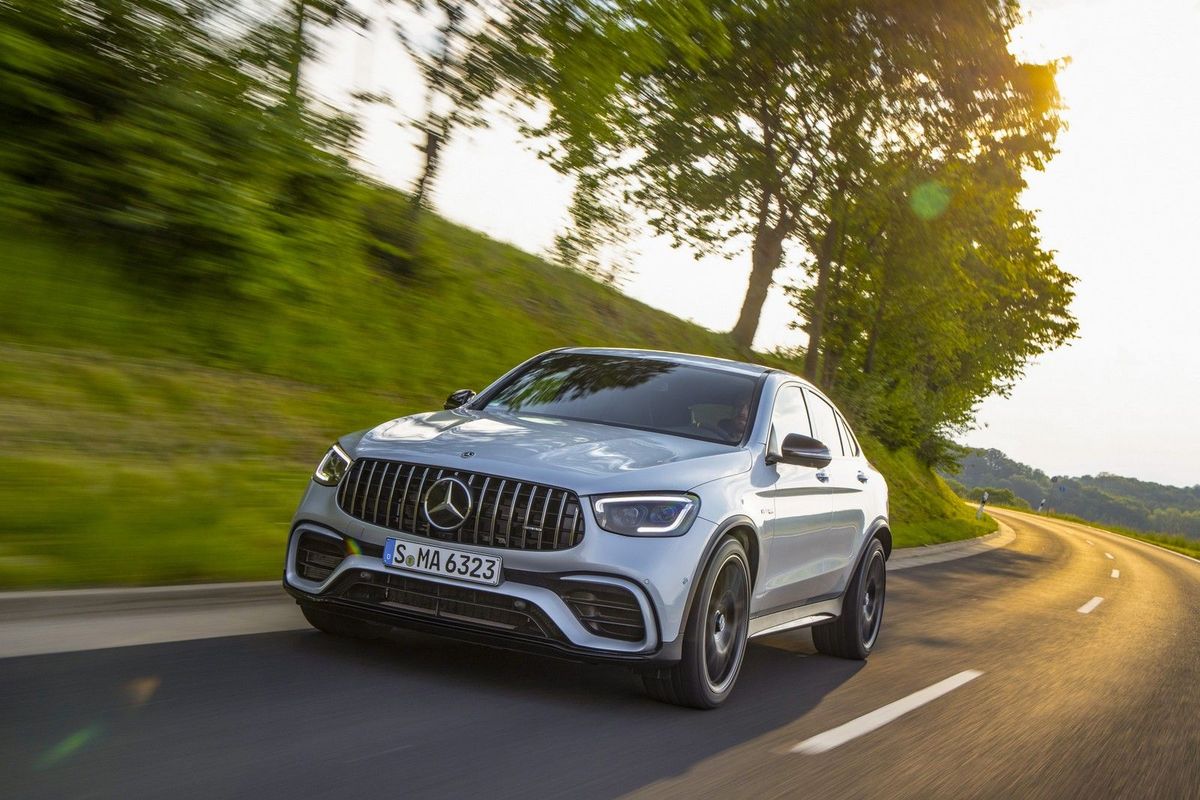
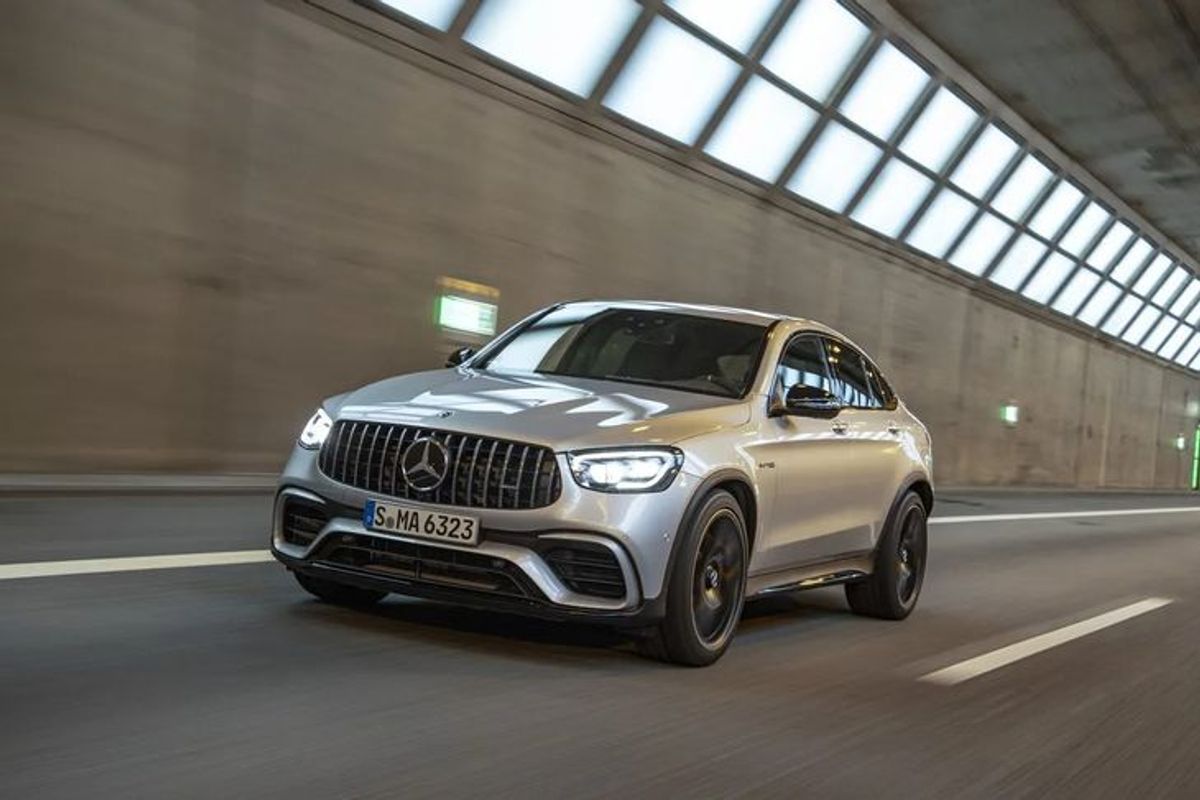
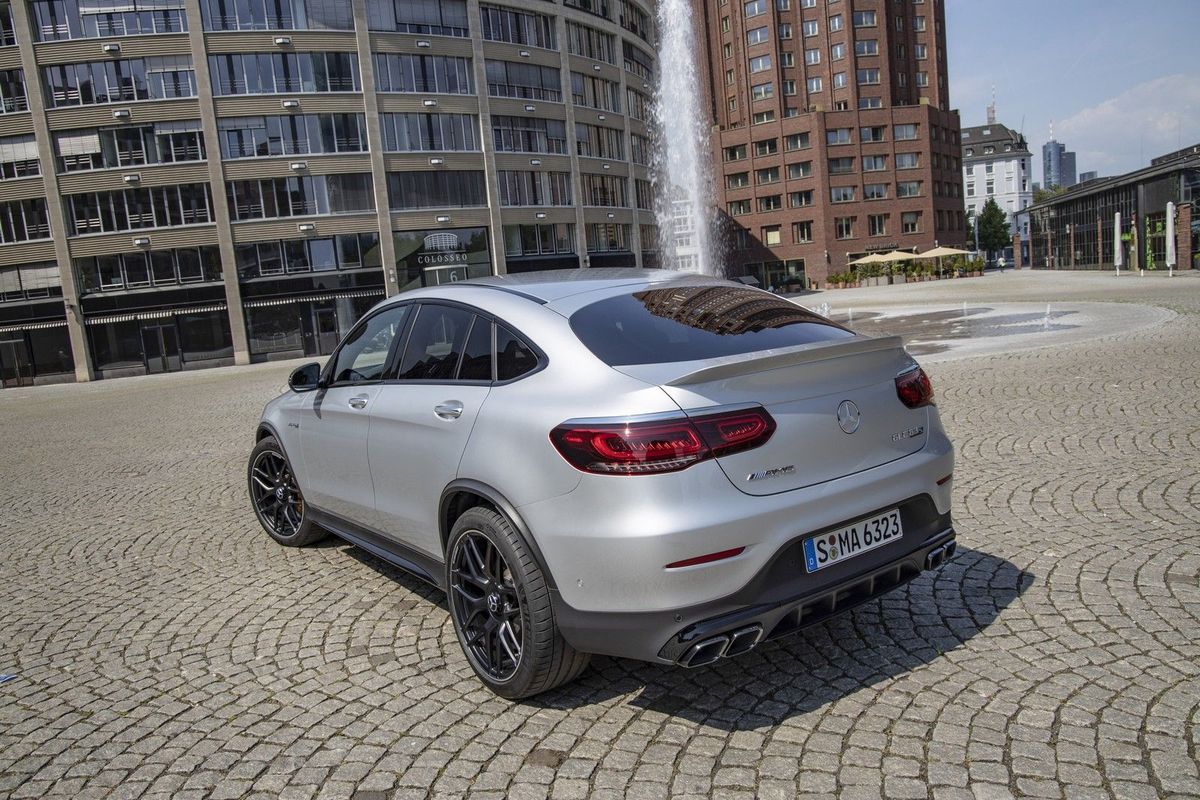
Mercedes-AMG GLC 63 S Coupe (2019) International Launch Review
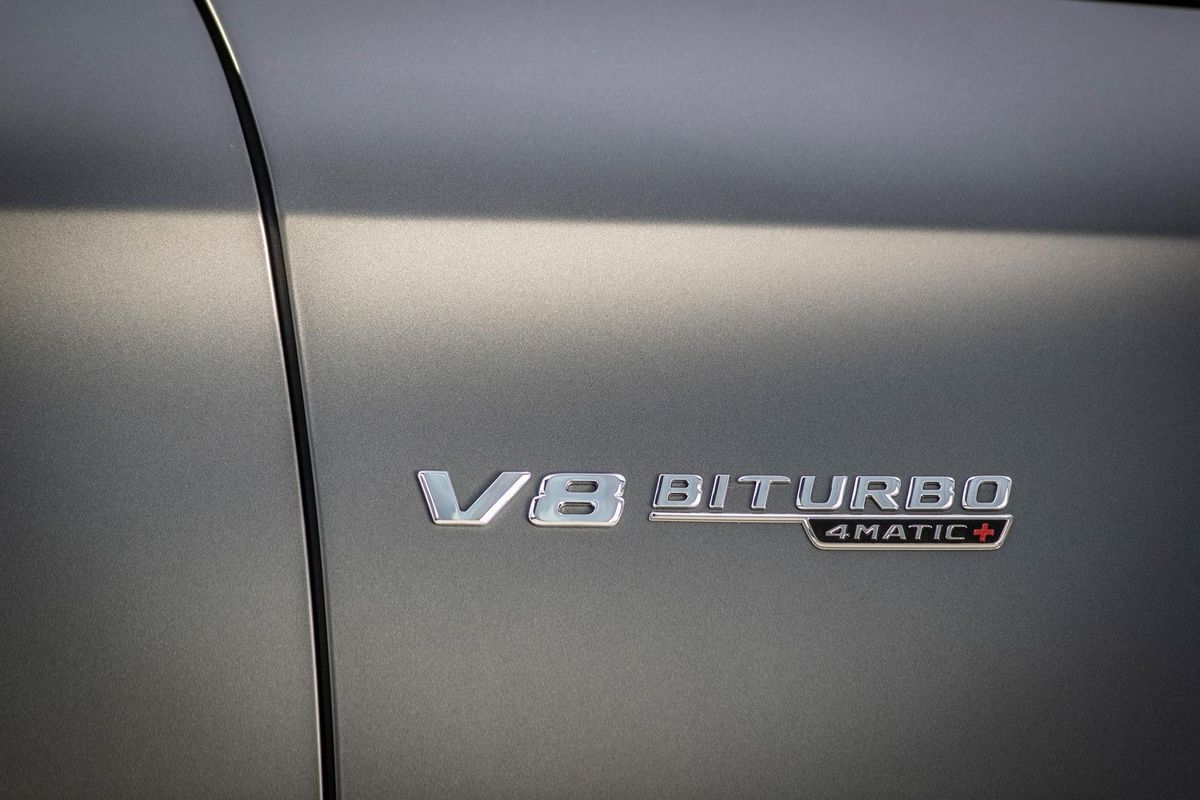
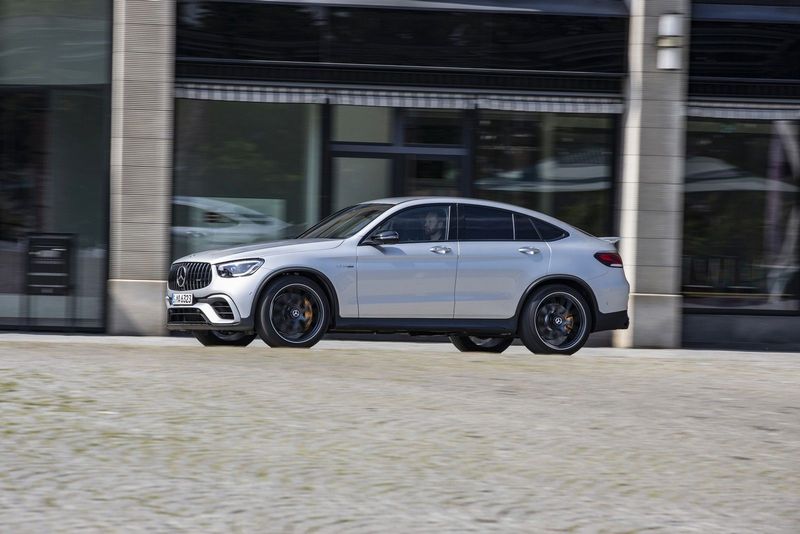
Mercedes-Benz has updated its GLC Coupe to keep it fighting fit in the face of fresh competition from BMW (and other marques in its segment). We’ve been to Frankfurt to find out whether the 380-kW 4.0-litre V8-engined 63 S version of Benz's hunchbacked executive SUV coupe still feels as good to drive as an AMG should…
How can an SUV be a coupe, anyway?
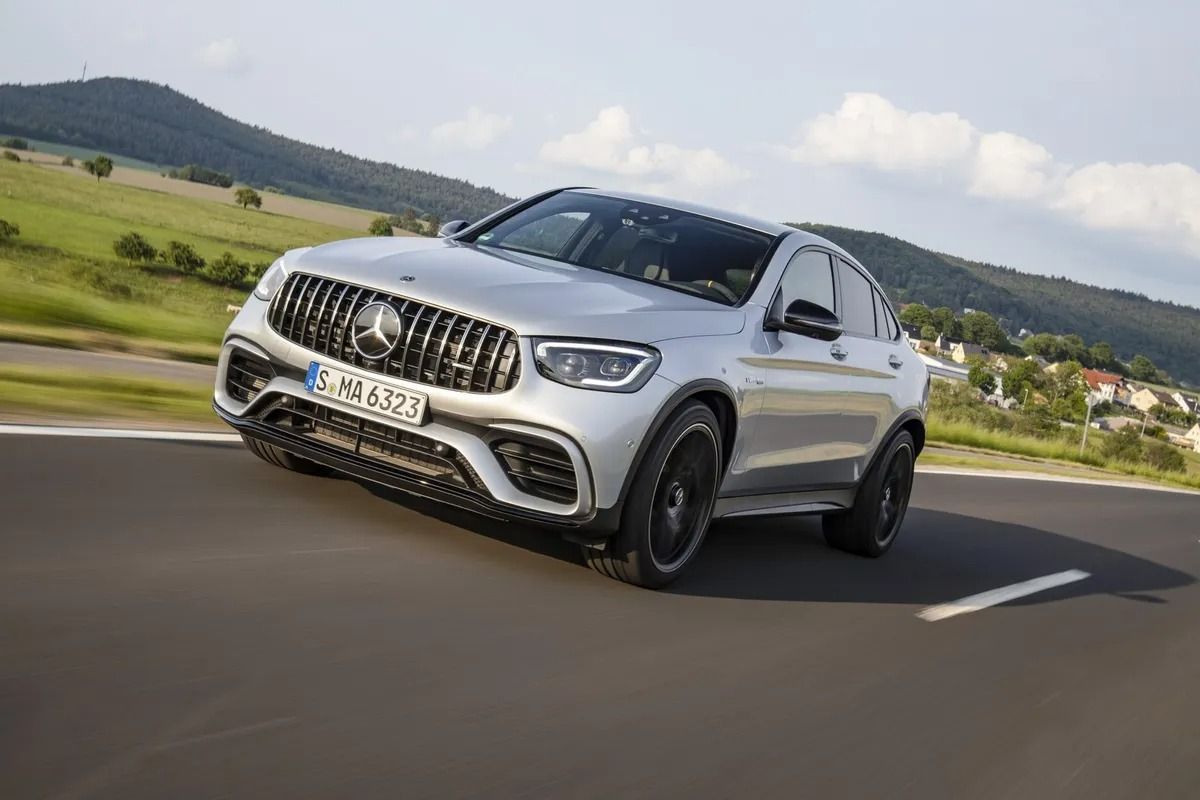
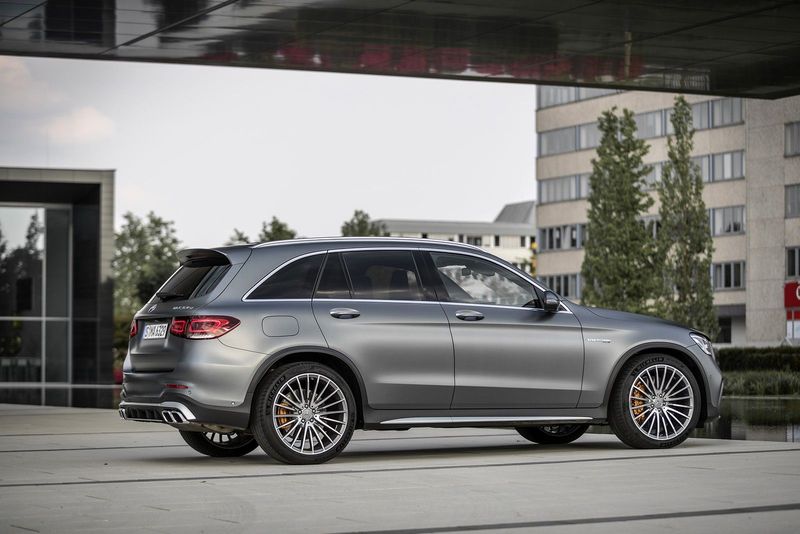
The GLC coupe looks lower and less like an SUV than the pre-facelift version.
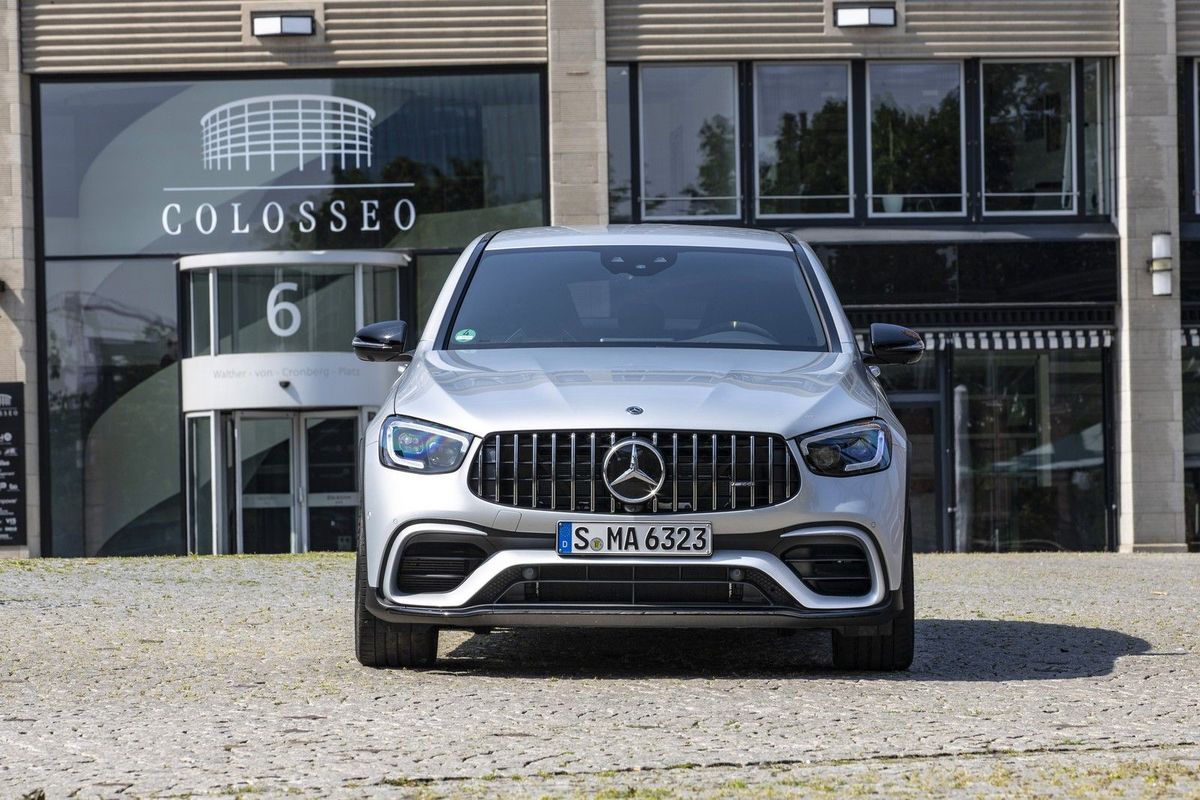
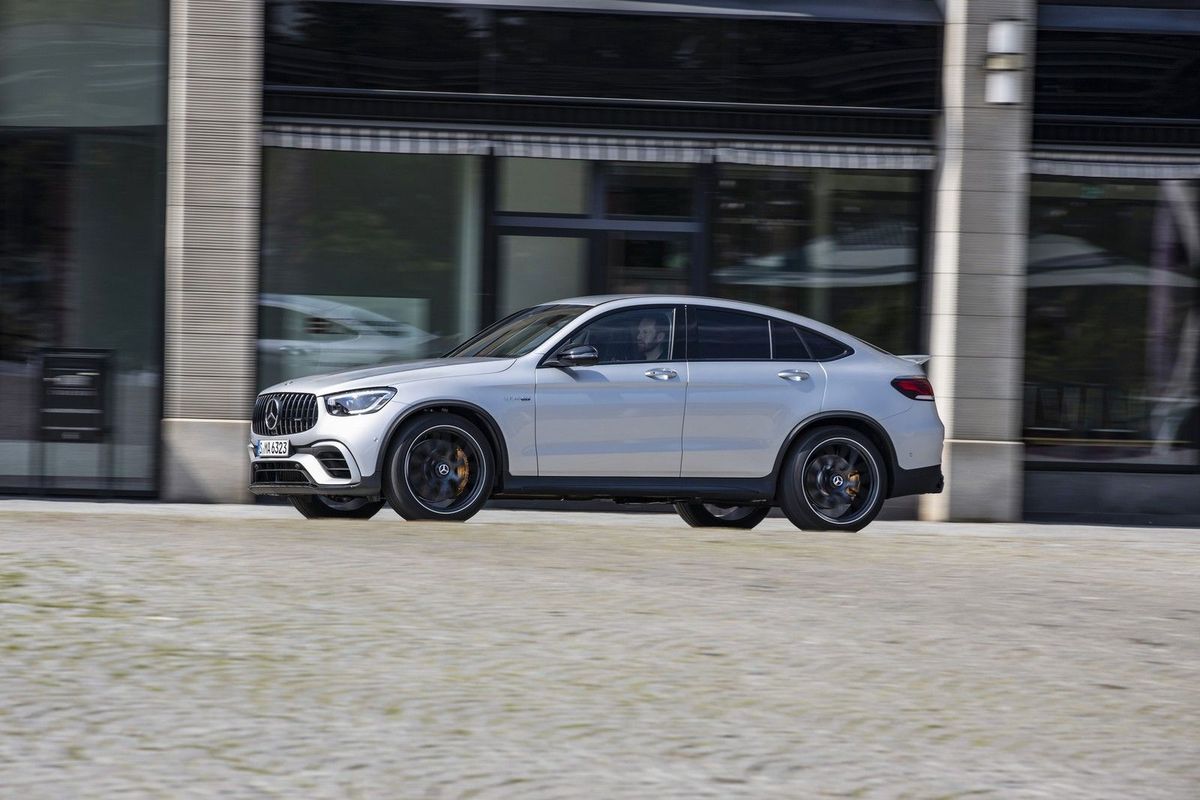
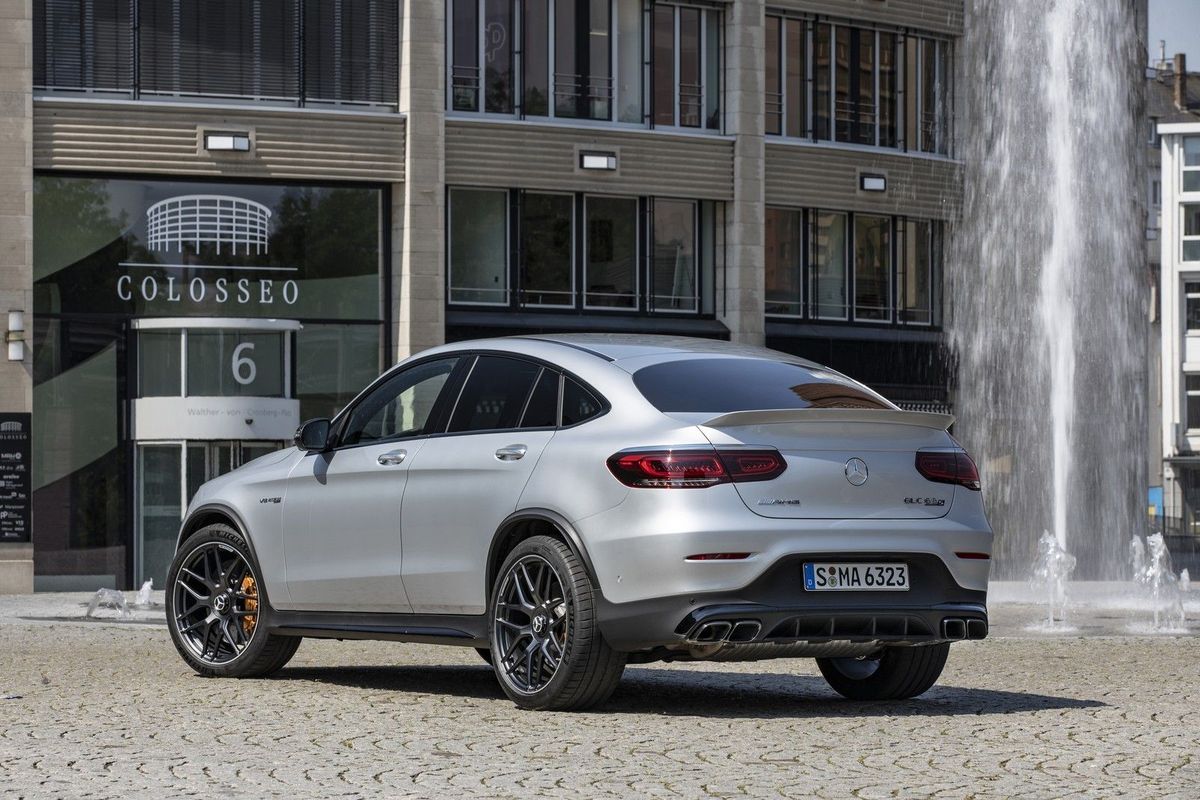
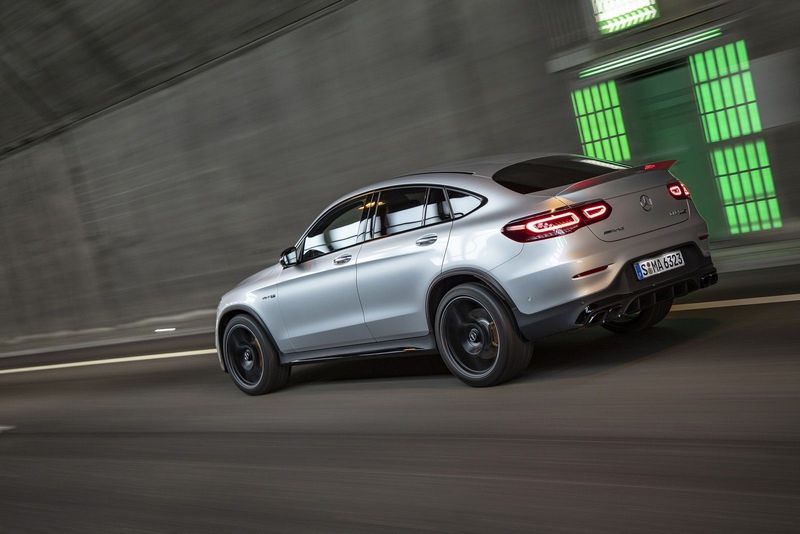
Well, that’s a good question, and there’s no getting away from the fact that (a) this updated Mercedes-AMG looks rather awkward as a "Coupe" (quotation marks are the author’s own) and that (b) the Three-pointed Star has really, really ripped off the BMW X4 in the styling department… it has a similar-looking abbreviated glasshouse and, like its Bavarian rival, looks slightly too chunky below the beltline.
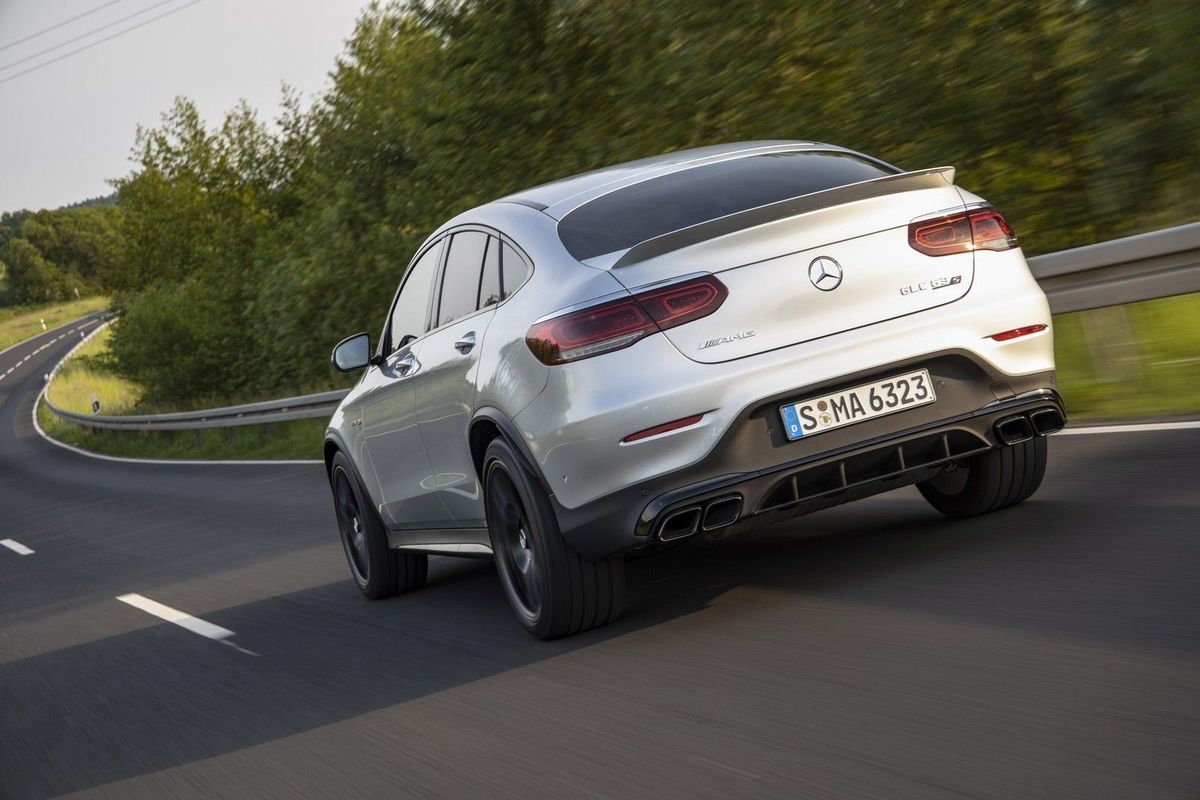
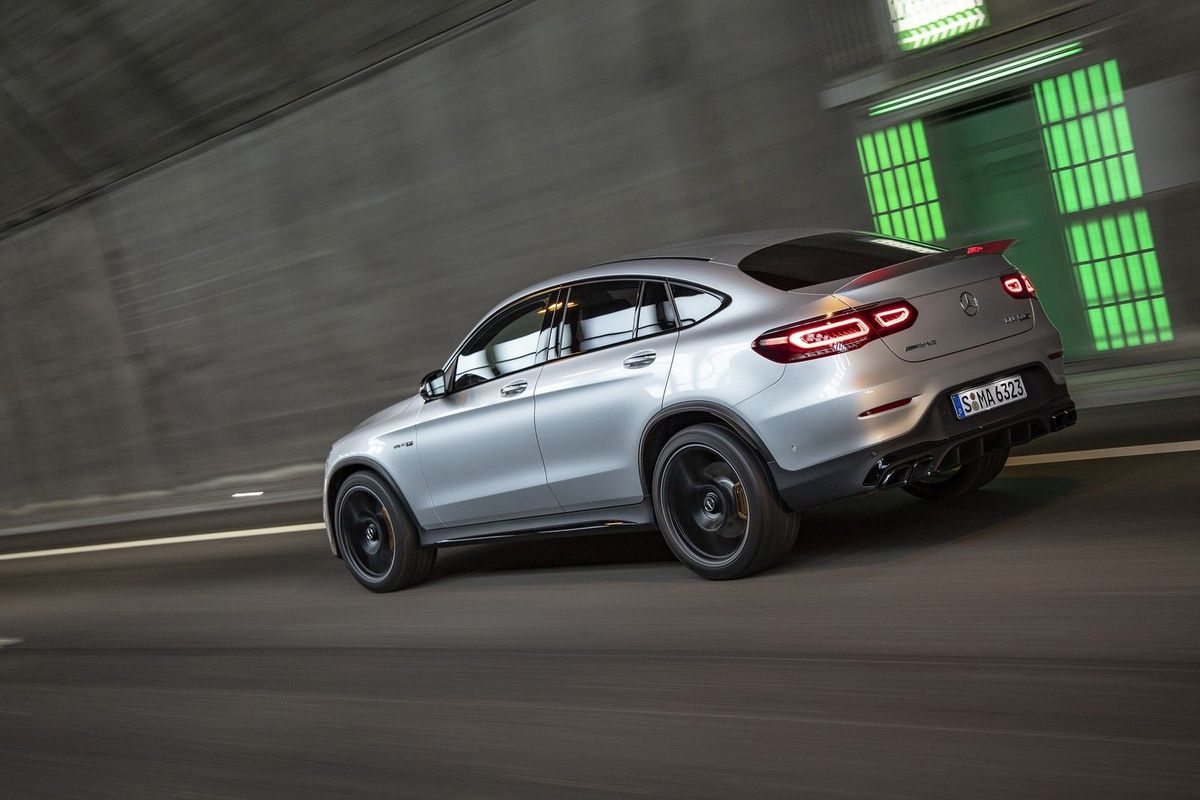
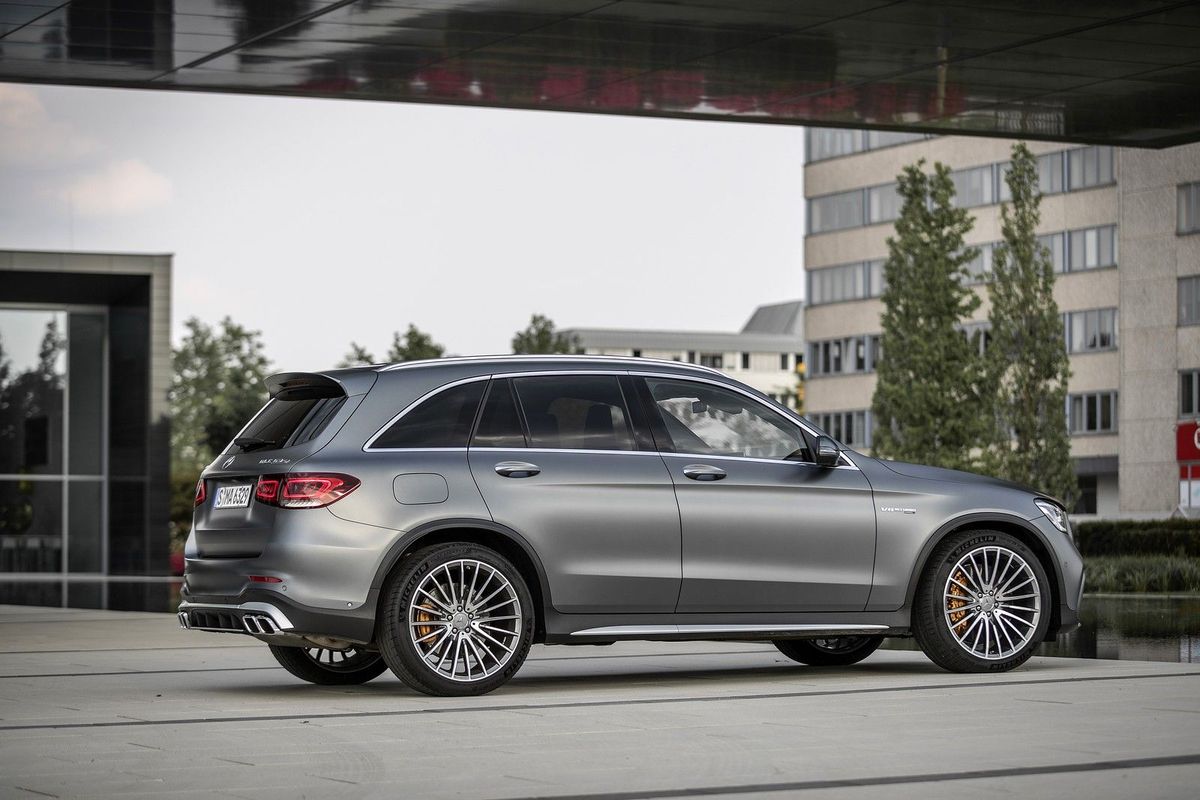
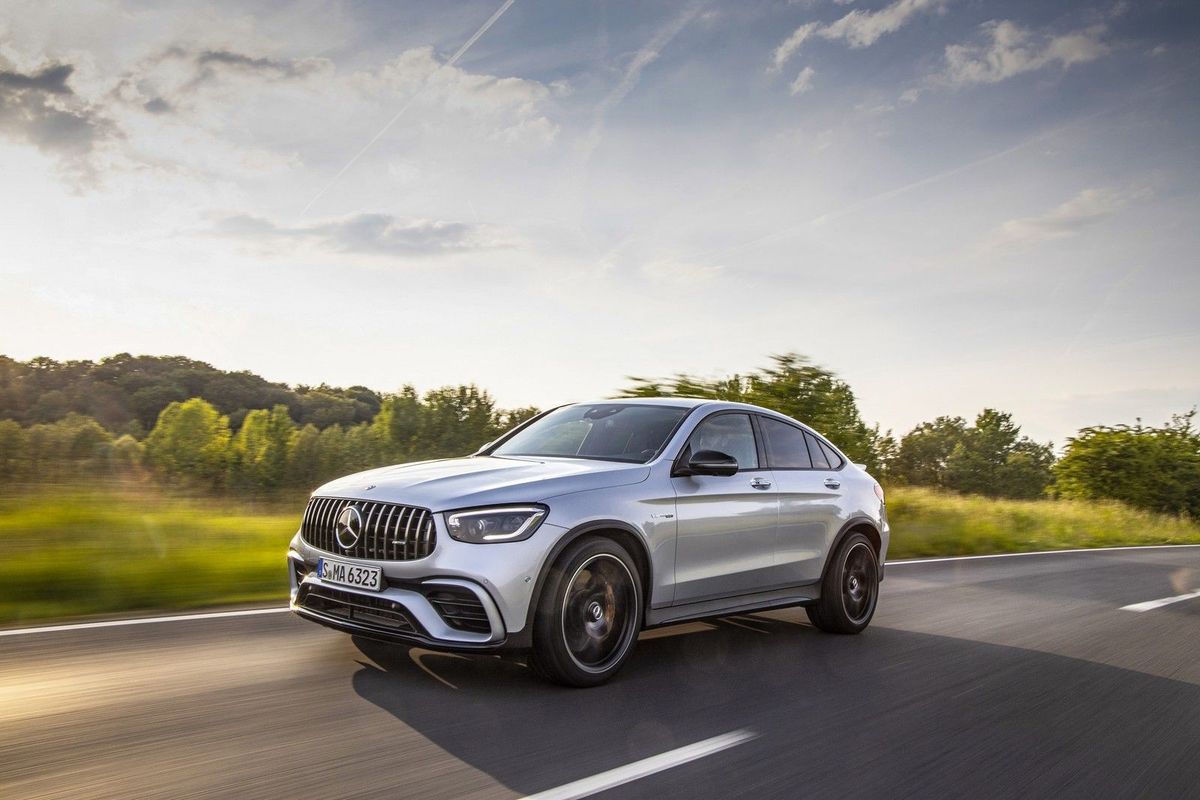
Still, in AMG guise, the GLC Coupe looks a lot better. Quite apart from the bulging body kit, which bristles with more intricate bits of carbon-fibre than an F1 pitlane, there are the visual updates for this mid-life facelift of the executive SUV coupe range. That means you get new headlights and tail-lights (LEDs all-round this time, using a slimmer, slightly neater design); a new grille that is now wider at the bottom than the top, and, in AMG guise, uses a series of chunky vertical slats, meant to remind you of the classic SL racers that took on the Carrera Panamericana race in the Fifties. There are also new alloy wheels (now up to 21-inches in diameter), new exhaust-end trims and a new colour option — graphite grey.
Facelifted GLC Coupe isn't equipped with the new MBUX design as seen in A and CLA.
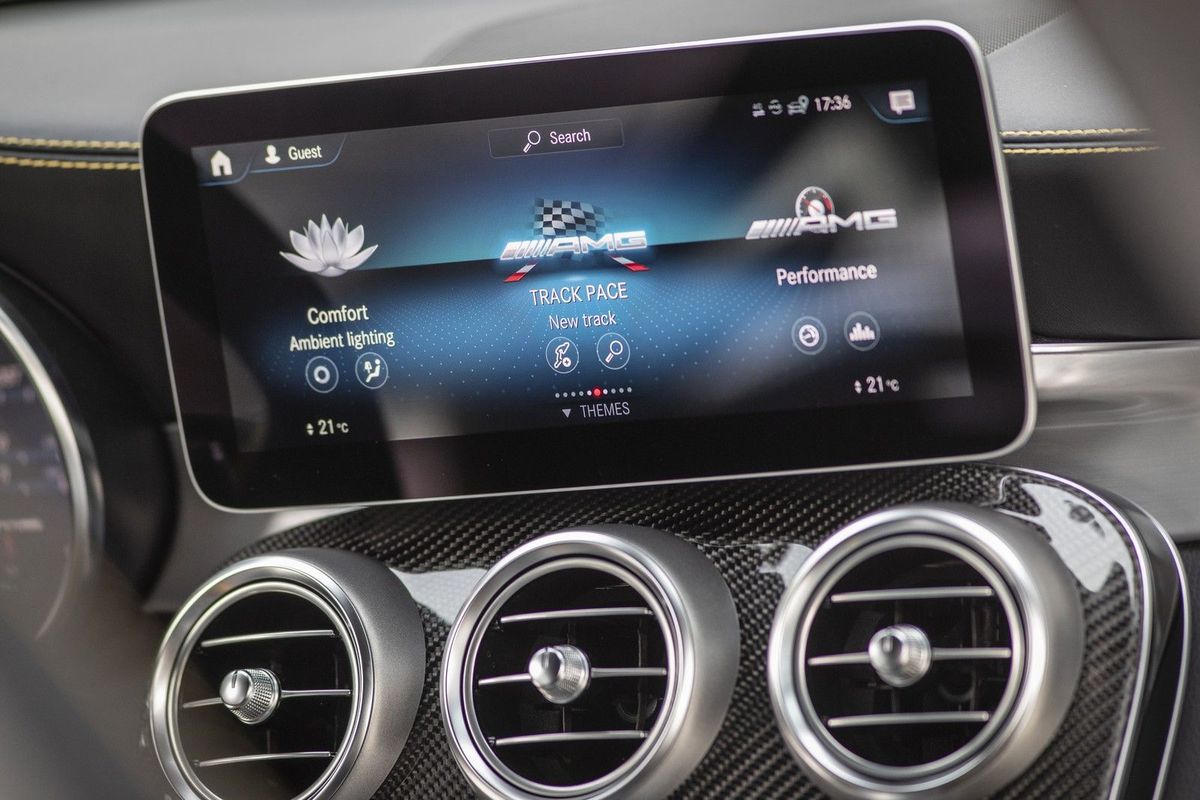
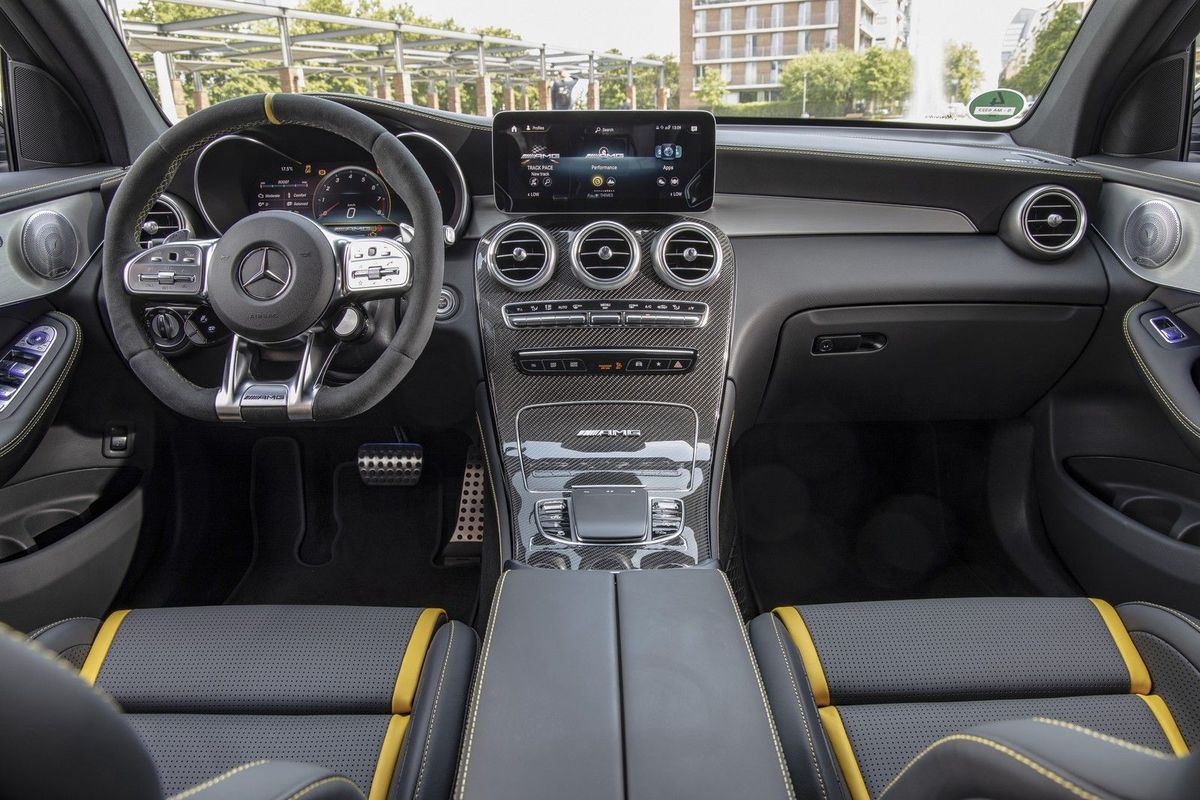
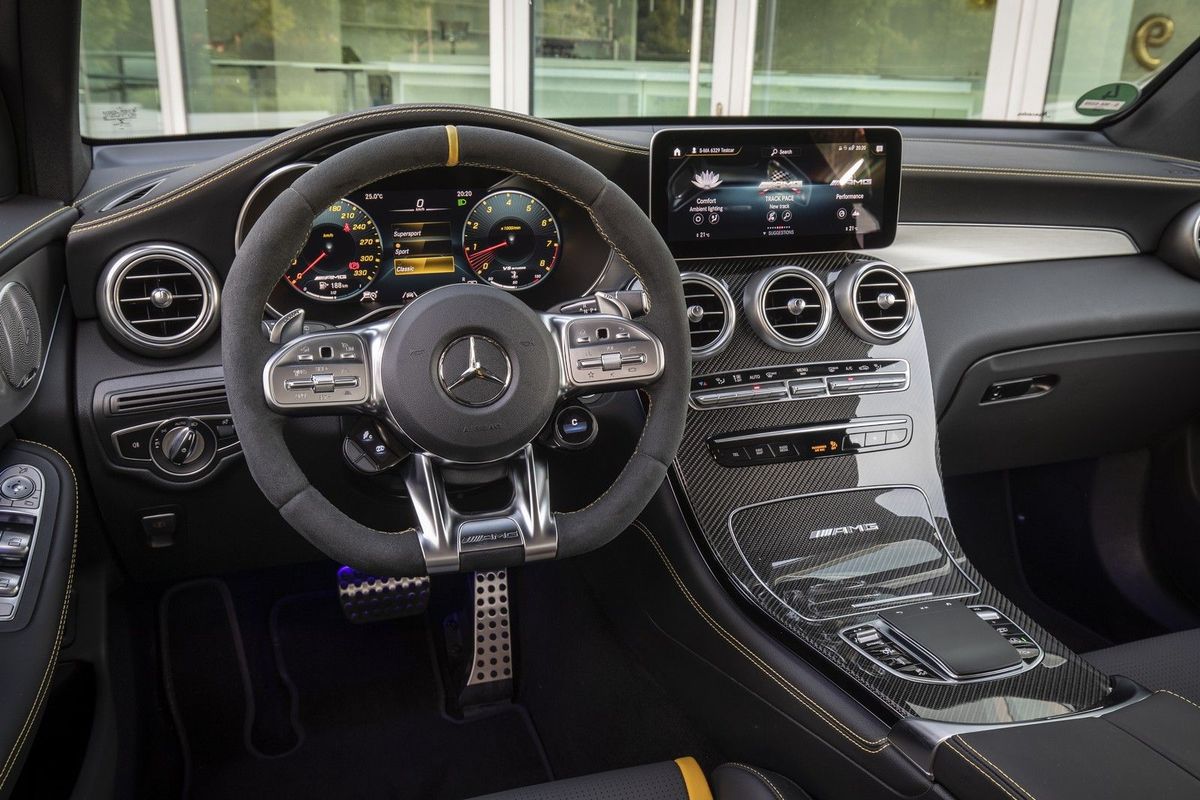
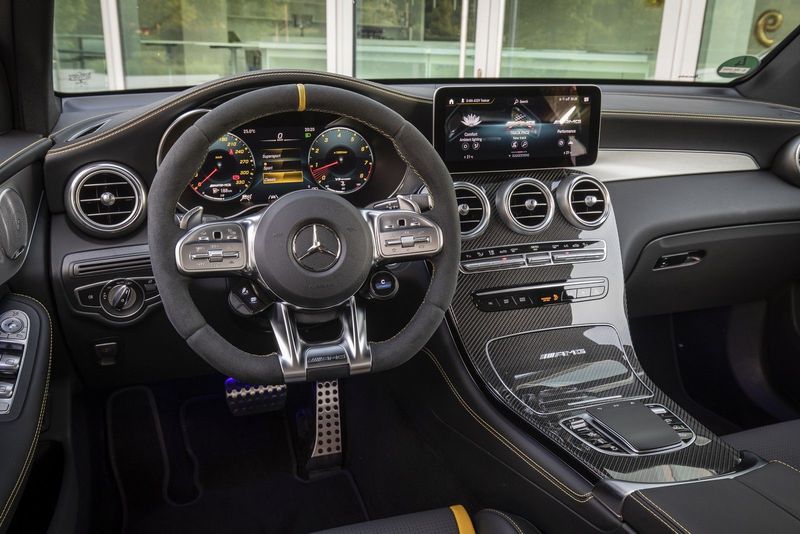
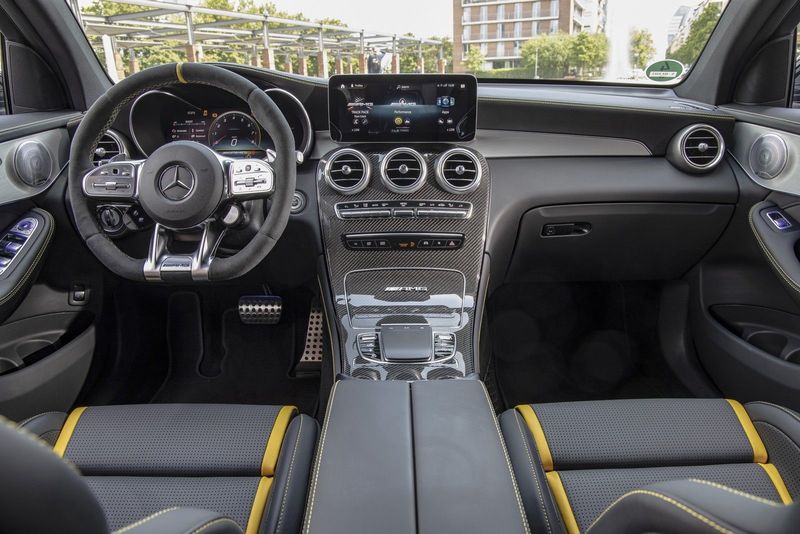
Inside, the GLC Coupe (in standard form as well as this AMG version) gets new digital screens, lifted more or less directly from the C-Class sedan. There’s a big 12-inch display in front of the driver, with multiple configurations and Avengers: Endgame levels of animation, complemented by a bigger central infotainment screen, which utilises the MBUX operating system. As with the C-Class, the separated displays don’t look as instantly impressive nor as neat as those in the A-Class, CLA, nor GLE, but the system that runs on them is fundamentally impressive, not least the brilliant augmented-reality satnav, which paints a big blue arrow onto a live feed taken from the front-facing parking camera.
The AMG-fettled GLC Coupe also gets the same upgrades to safety and driver assistance systems as the rest of the GLC range (short version: smarter automated emergency braking and steering avoidance gizmos), but you want to know about the juicy AMG-specific stuff, right?
If an SUV can be a coupe, can it also be a sportscar?
With enough power and big V8 lump up front, has AMG made a real sportscar out of its SUV?
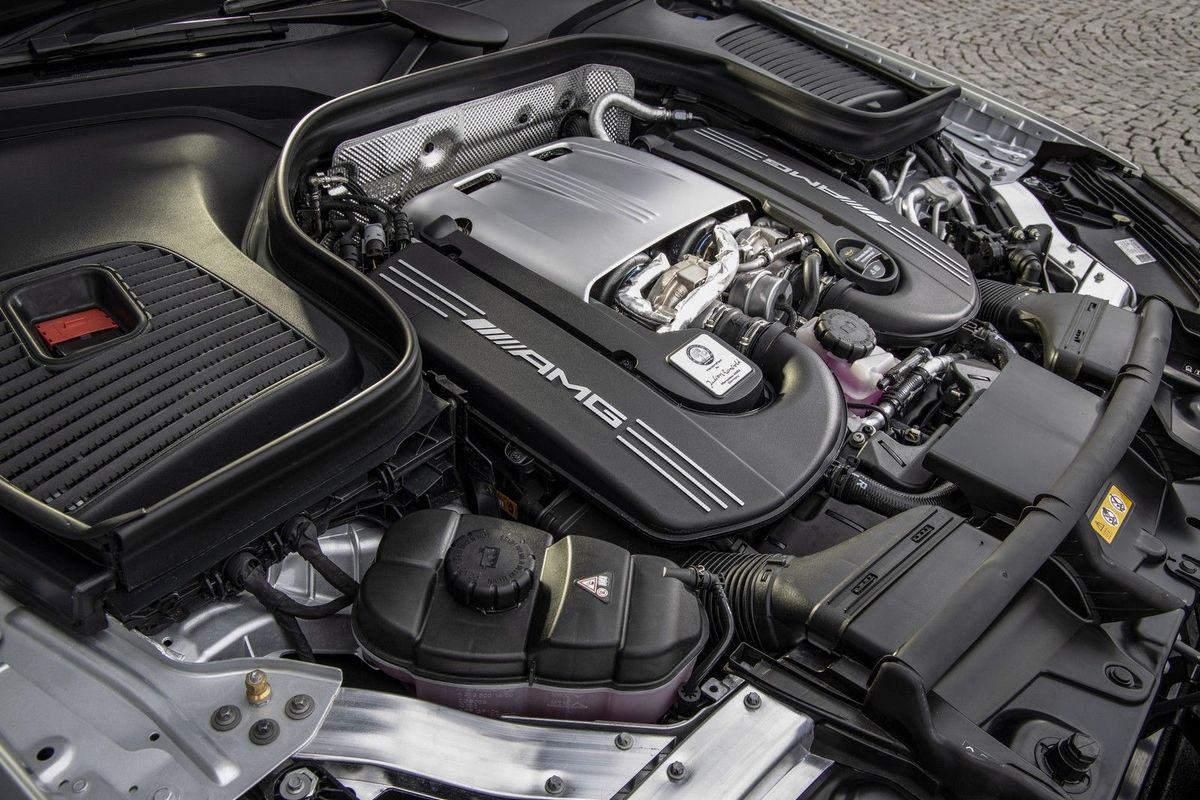
Well, it’s going to have a darned good try! The 4.0-litre V8 twin-turbo engine (with both turbos mounted between the cylinders in a "hot-vee" formation) is basically carried over. Which is no bad thing — in S form it pumps out 380 kW and 700 Nm of torque. Combined with the 9G-Tronic 9-speed automatic transmission and 4Matic all-wheel drive (both come as standard) that’s enough to post a 0-100 kph run of just 3.8 seconds. And then do it again. And again.
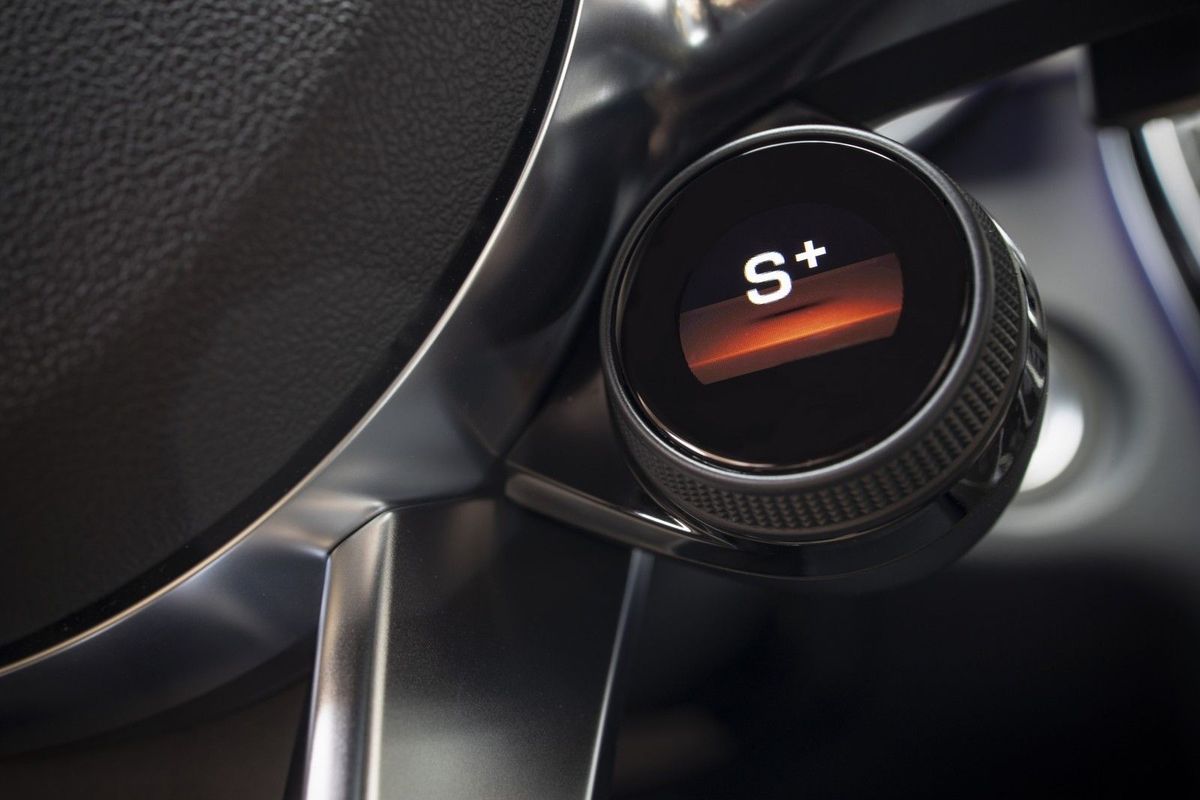
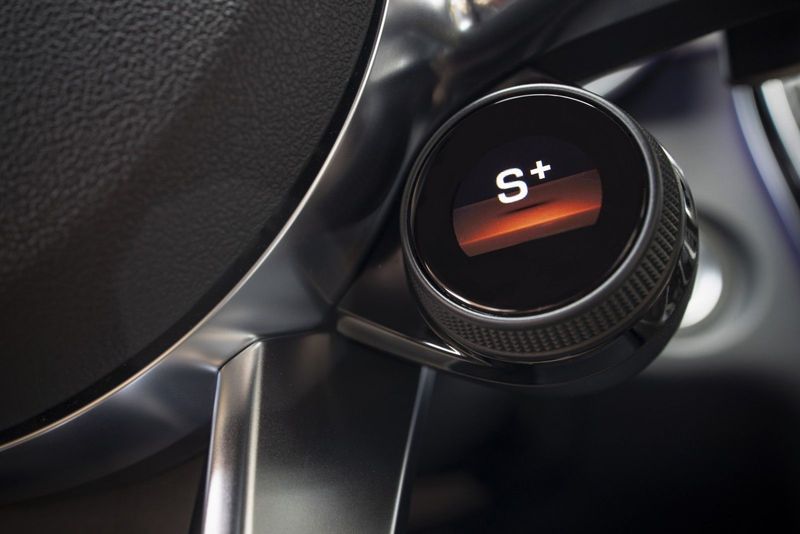
Indeed, the GLC 63 S Coupe's performance is of the sensory overload variety. Plant the throttle pedal hard and the juggernaut Benz leaps forward with venomous intent, squirrelling the back wheels with a touch of squeak and squeal if you’re really aggressive. The new AMG-specific steering wheel — a multi-function device that’s had a full set of buttons and touch-pads blunderbussed at it — contains a Porsche-style rotary switch for the Dynamic Select functions. These give you access to the usual Comfort and Sport modes, but also a Sport + setting and, better still, a Race mode.
You’re probably not supposed to engage Race mode on the public road, but we did anyway and the effect is dramatic. In Comfort, Sport, or Sport + the 63 S feels insanely fast, agile and chuckable. In the Race setting, it doesn’t feel quicker – but a heap more aggressive. The sports exhaust opens up all its taps and begins to spit unused fuel down the pipes for optimal rumble. The gearchanges become snappier and the rear end feels a touch more mobile, thanks to the remapping of the software controlling the standard electronic rear locking differential. This car is not a drift tool in the manner of the C63 sedan or coupe (with their rear-drive-only layout), but more playful than you’d assume of a big four-wheel-drive SUV.
The new driving mode adjuster has moved to the steering wheel.
The adaptive air suspension is, obviously, pretty firm at all times (especially with the bigger wheels fitted), but tolerably comfortable in Comfort mode. Don’t opt for Sport+ and Race modes unless the road-rollers have recently passed by, but you can tweak the individual settings if you dive into the various menus and buttons to have all the engine power and noise, but with softer damping.
Handling is similarly switchable, but never less than poised. Ideally, we’d like to see a little more feel and feedback from the electric power steering (it’s not as addictively sharp as that of the Alfa Romeo Stelvio Quadrifoglio’s, for example), but given the boundaries of the class, it’s pretty good. The chassis is pliable and biddable, but with the tenacious levels of grip and traction, you do sense that if you ever get it wrong, it will be at very high speeds, ones at which I can pretty much guarantee that you won't enjoy what happens next! There’s a sense of large mass on the move when the flagship GLC Coupe starts to wiggle its posterior, and at that point, backing off seems like a decent enough idea.
It’s an Autobahn monster, though, easily romping up to 250 kph when the traffic clears and seemingly easily capable of hitting its official v-max of 280 kph (if only a pesky Skoda Superb hadn’t pulled into the outside lane). Fuel economy? Emissions? Probably best not to ask. You may find that a claimed consumption figure of 12.4 L/100 km causes offence… and if you drive it with gay abandon, you'll struggle to achieve anything near that.
Anything else?
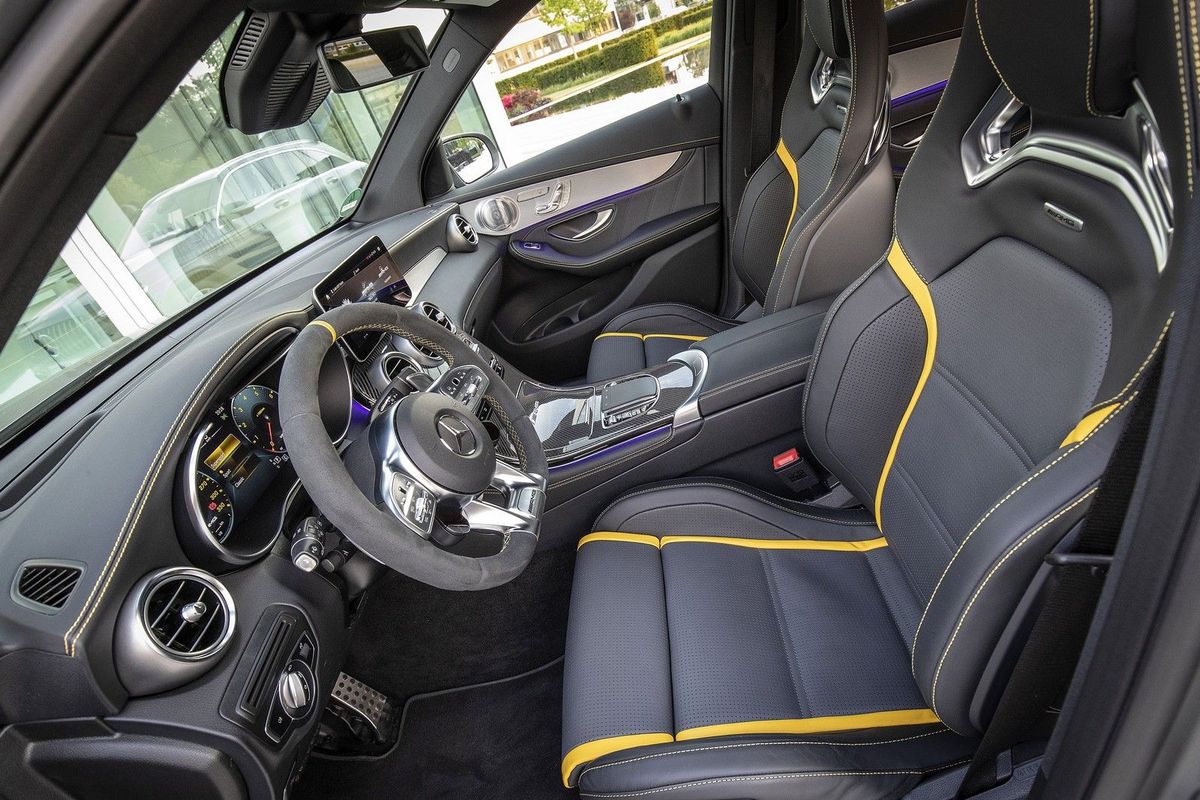
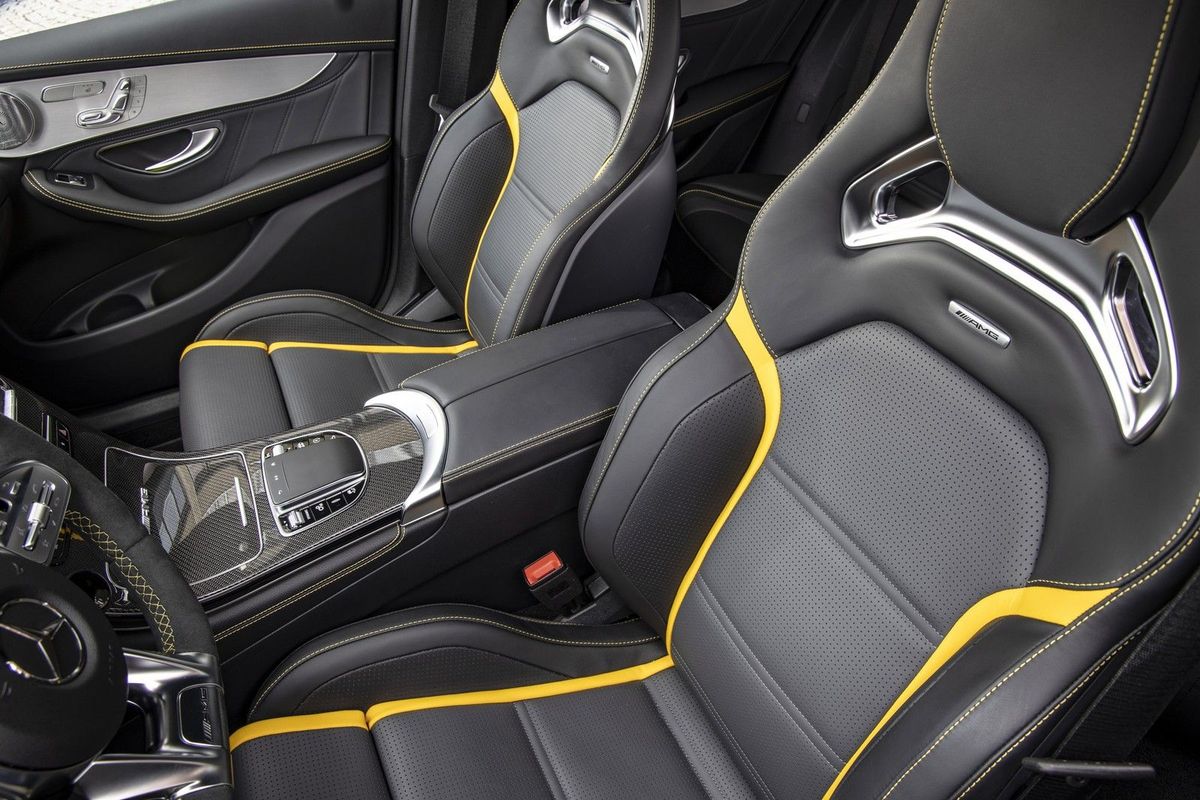
Alcantara, braided leather and faux carbon fibre, all the necessary equipment for a performance SUV.
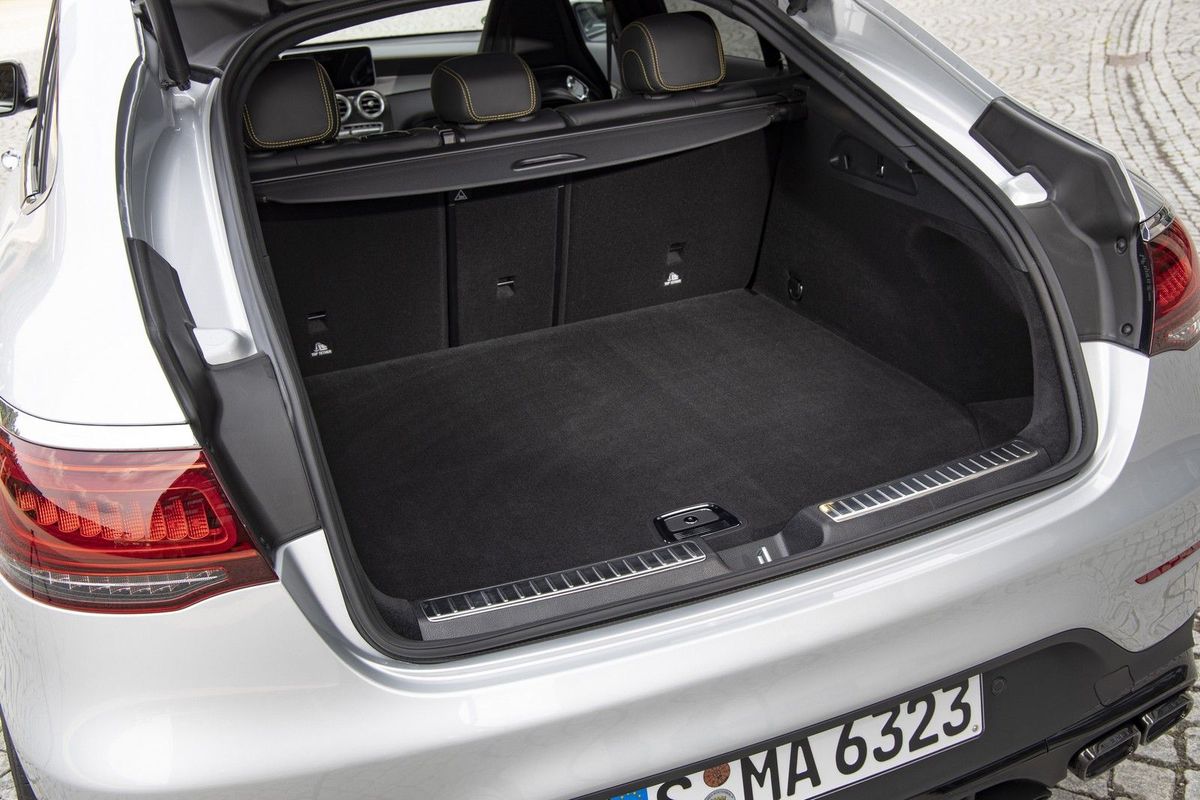
If you can stomach the bills (and speeding fines), this is still a pretty practical car. The chop in the roofline comes above the limit for the load bay, so that’s still got 500 litres of luggage space with the rear seats in place. Space in the back is good, albeit with a little less headroom than you get with the standard GLC (and you can have the AMG in that guise too, of course). Up front, the big, high-backed bucket seats are far more cosseting than they look, overall quality is excellent and, once you stop playing silly buggers with the throttle, it’s a refined and comfortable long-haul cruiser.
Coupe or regular?
Compare the coupe to this, regular GLC 63 S… decisions, decisions.
If it were us, we’d go for the regular, high-back bodyshell. The style of these SUV-coupes has never held universal appeal, and the standard GLC is a pretty handsome vehicle, to begin with. That said, if you must have the GLC as a Coupe, then the AMG 63 S is the one to have, from a style point of view — the pumped-up body and extra spoilers give much needed visual focus to a shape that can otherwise look blobby and indistinct.
Summary
No-one needs a family-friendly SUV that can obliterate all other traffic in the outside lane, and do a tolerable impression of a supercar on stilts when the road turns. No-one actually needs that, but even so, we’re glad this 1 exists. The GLC AMG 63 S Coupe is profligate in price and consumption, and a bit daft if you think about it seriously, but massively good fun, and suitably rip-roaring, all the same.
Interested in buying a Mercedes-Benz GLC/GLC Coupe?
Part 2 of the Corolla hatch heritage video sees Ernest drive the RunX, Auris and the latest generation, Corolla Hatch.
In the second and final part of our Toyota Hatch review, Ernest Page drives South Africa's favourite Toyota hatchbacks to find out how much they have in common with each other and the recently-launched 2019 Toyota Corolla hatch.
Toyota has confirmed a radical acceleration in its electric vehicle strategy.
The Japanese automotive giant has drastically increased the numbers within its near term electric vehicle policy. Toyota has announced that it plans to have a comprehensive product portfolio of pure battery-powered vehicles on sale much sooner than previously expected.
Although Toyota has maintained a strong presence in the hybrid vehicle market, with its commitment to Prius – the company has been cautious with regard to pure electric vehicles.
An engineering joint-venture with Subaru, to pursue the development of batteries and electric vehicle platform technology for crossovers, is sure to change all of this. Suzuki and Daihatsu have been courted too, for a similar partnership relating to compact city cars.
Toyota says the first of its ten new battery-powered vehicles, will be launched in 2020. The ambition is to total 5.5 million electrified vehicle sales by 2025 – essentially half of Toyota’s current global volumes.
These numbers are much more ambitious than Toyota originally planned for. The 5.5 m sales target was datelined for 2030, but that has now been brought forward by five years, to 2025. It must be noted that Toyota is including hybrids in its classification of ‘electrified’ vehicles.
Unpack the numbers, according to Toyota’s own accounting, and only 1 million of its projected 5.5 m electrified units will be pure electric by 2025, with the balance of 4.5 m other vehicles being hybrids.
Which batteries will be powering this future fleet of Toyotas? Synergising with its sponsorship of the Japanese Olympic Games, Toyota says it will reveal next-generation solid-state battery technology during the third quarter of this year. The expectation is that these new solid-state battery driven Toyotas will act as fleet vehicles at the Japanese Olympic Games.
Toyota Rated Tops by its dealers
The awards keep rolling in for Toyota… Following on its Brand of the Year glory at the Cars.co.za Consumer Awards – Powered by WesBank, the country's top-selling marque emerged as the only brand to score Platinum in the recent NADA DSI awards.
The annual National Automobile Dealers’ Association (NADA) Dealer Satisfaction Index (DSI) Survey Awards took place at WesBank’s Head Office in Fairlands, Gauteng late last week. NADA represents franchised passenger and commercial vehicle retailers in South Africa, and 2019 marks the 24th year of its prestigious DSI awards.
The NADA DSI survey is carried out annually to monitor the health of the relationship between dealers and their respective manufacturers and it provides the country's dealers with a platform to provide manufacturers and importers with robust feedback.
“Dealers and OEMs are both faced with industry and business challenges alike and the survey forms a vital link in the relationship between the 2 parties in opening up channels of dialogue. It is encouraging to see that, over the past 24 years, the NADA dealer survey has become a reliable and respected tool to identify any potential issues affecting the working relationship between retailers and respective manufacturers,” said Mark Dommisse, Chairperson of NADA.
"This year's results saw an upward shift from many of last year's bronze award winners to silver, and from silver award winner to gold, clearly demonstrating the strenghtening of relationships between dealers and OEMs. In addition, this year saw 2 Platinum Awards being presented, where last year there were none," Dommisse concluded.
The results for the awards are calculated from a scorecard with respective questions given various weightings. Bronze winners score between 65 and 69.9 points, Silver between 70 and 74.9, and Gold between 75 and 84.9. Platinum winners score greater than 85 points.
Toyota won two Platinum Awards this year following outstanding ratings in both the Passenger/LCV and Commercial Vehicle categories.
The Most Improved Passenger/LCV Award went to GWM, which went from Silver to Gold this year with an overall improvement of 9.2 points.
On the passenger/LCV side the Gold winners were; Mercedes-Benz,Hyundai, Mazda, Mini, Lexus, Volvo, Kia, Haval, Datsun, Suzuki, Mahindra, Ford, BMW, Renault and Volkswagen.
The recipients of the Silver Award were; Nissan, GWM, Audi, Subaru, Isuzu and Mitsubishi.
Opel was the only recipient of a Bronze award in the Passenger/LCV category.
Here’s why the new Ford Focus is not coming to South Africa
The popular hatchback from Ford is not coming to South Africa and we have an official comment from the Blue Oval.
When the new Ford Focus was revealed back in April 2018, we were impressed with what it had to offer, on paper at least. We had the chance to drive the newcomer in France in the middle of 2018 and came away impressed.
Hannes Oosthuizen had this say, "Suffice to say Ford has certainly done its homework: the new Focus once again moves the goalposts for ride/handling in this segment, but it’s far from a one-trick pony. Refinement and comfort levels are exceptional and there’s a far nicer sense of subtle style and quiet confidence about this new Focus, compared with its somewhat-brash predecessor."
Now it has come to light that the popular hatchback will not be coming to South Africa after all.
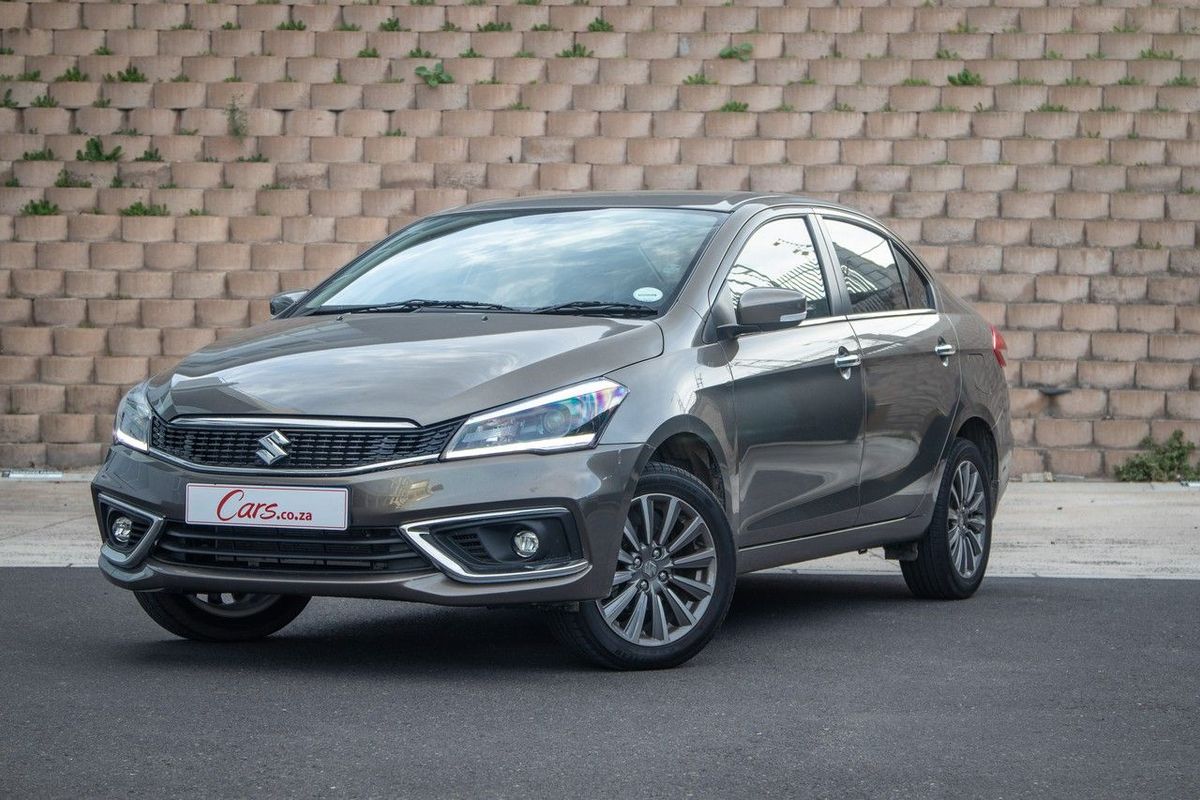
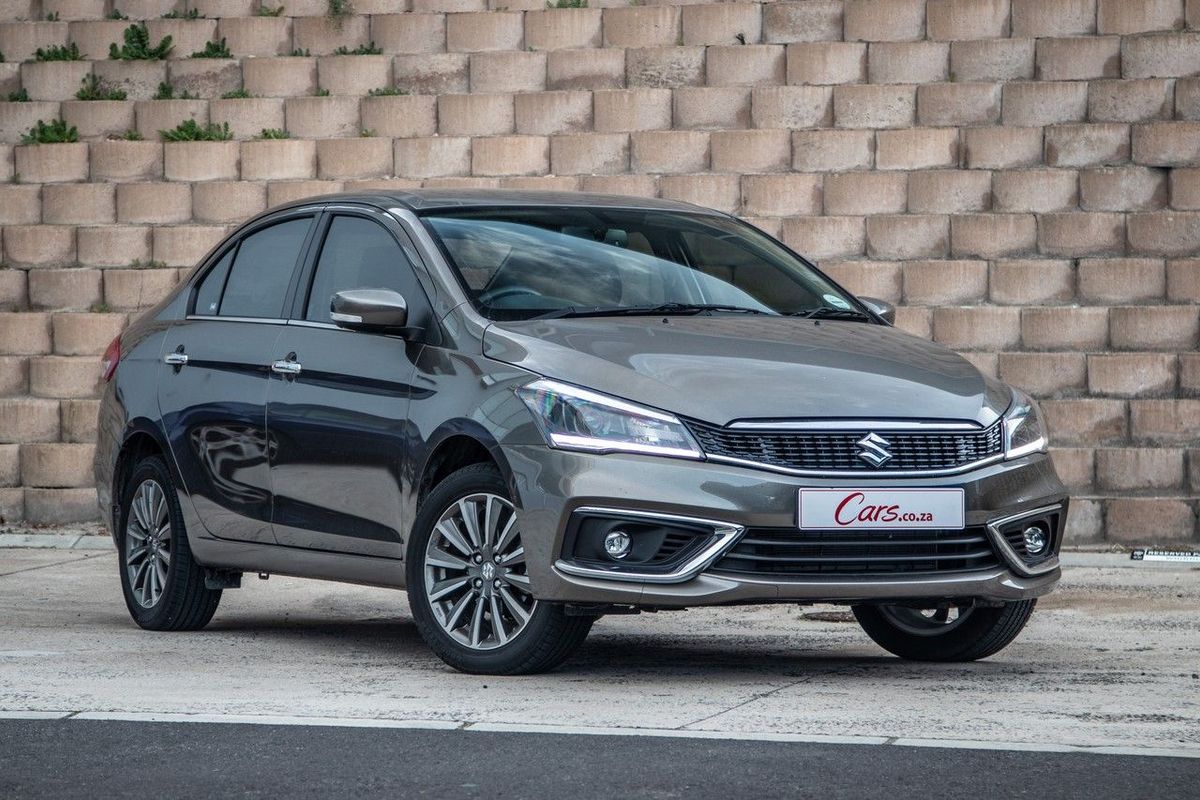
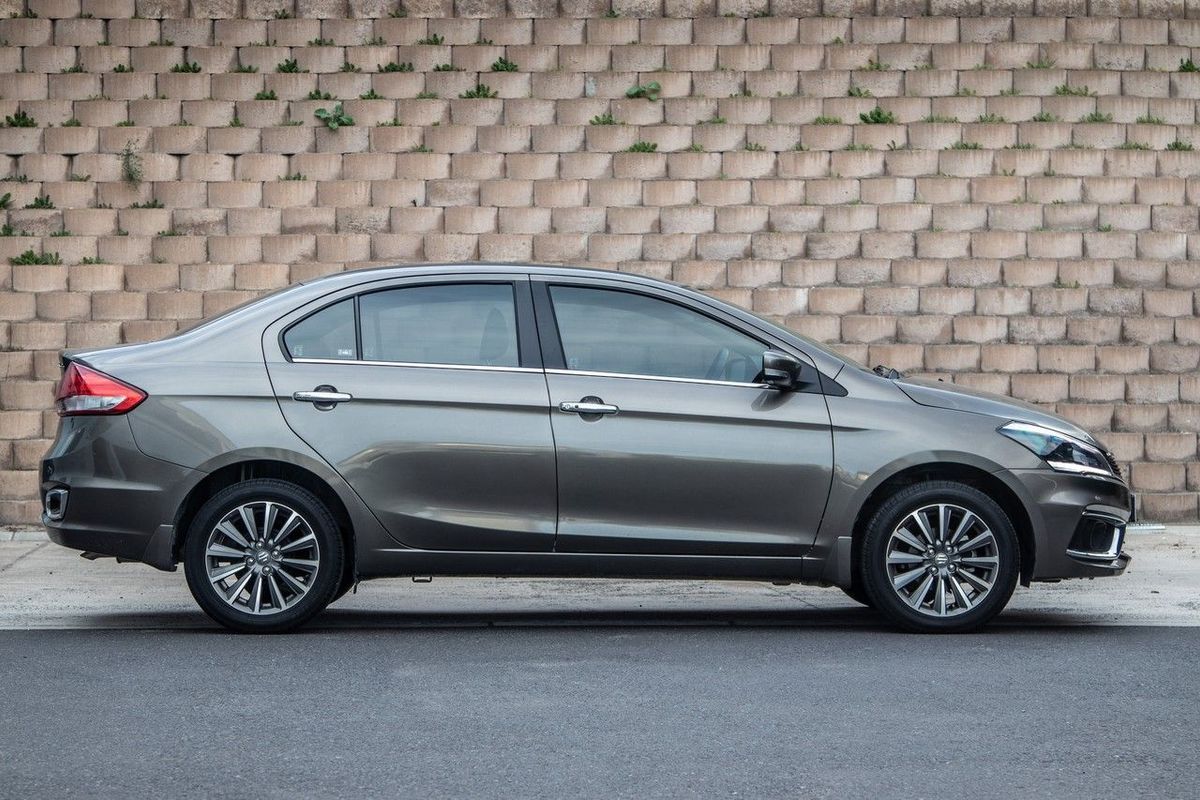
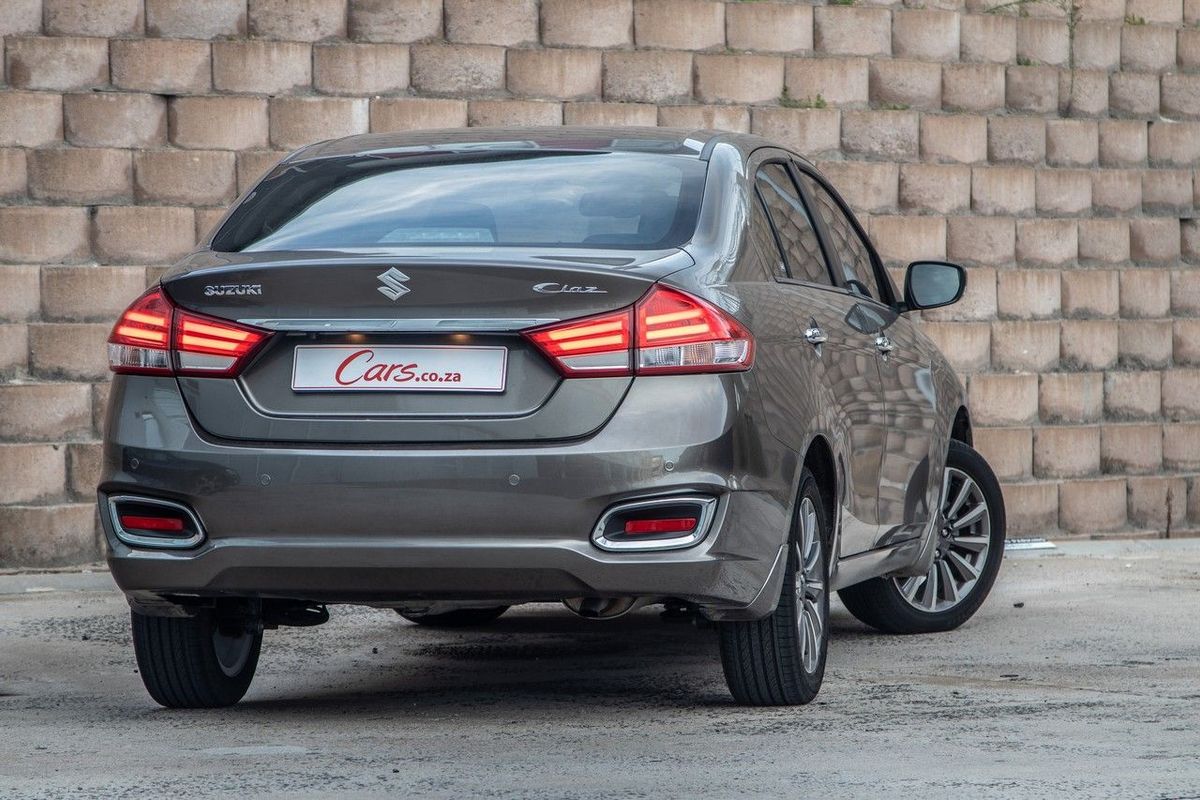
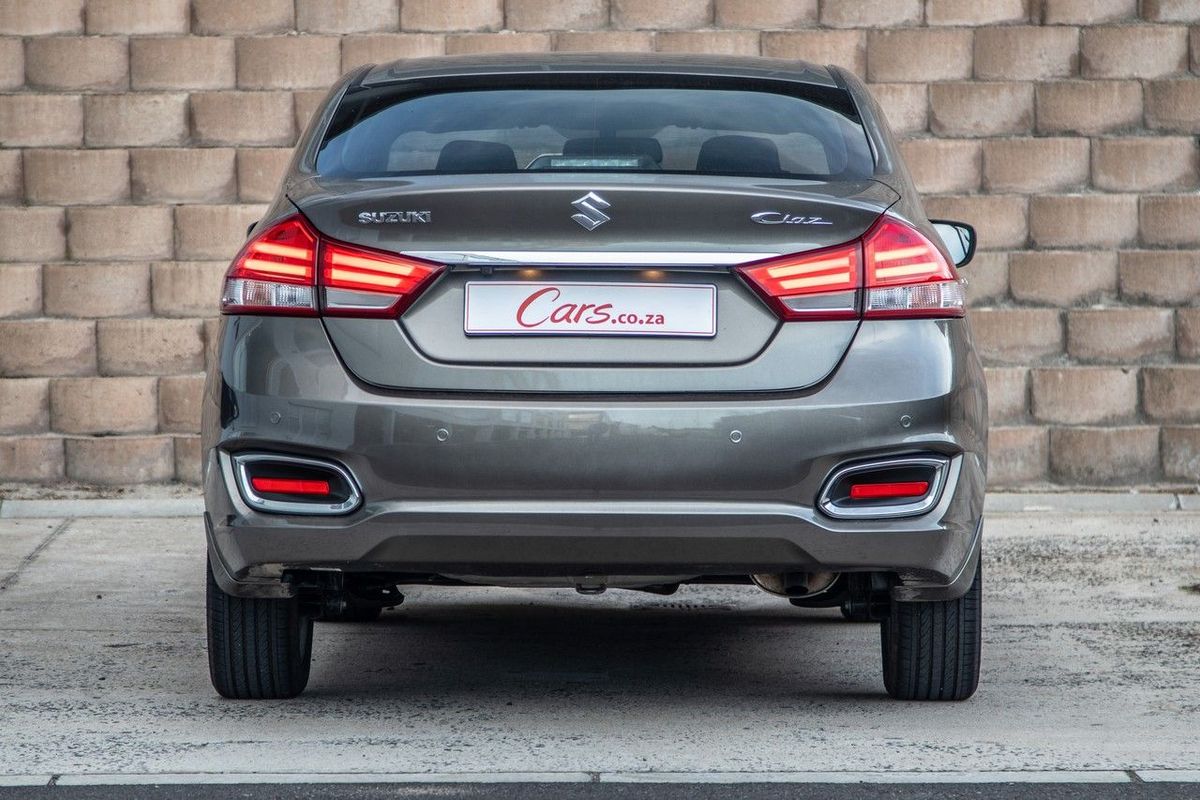
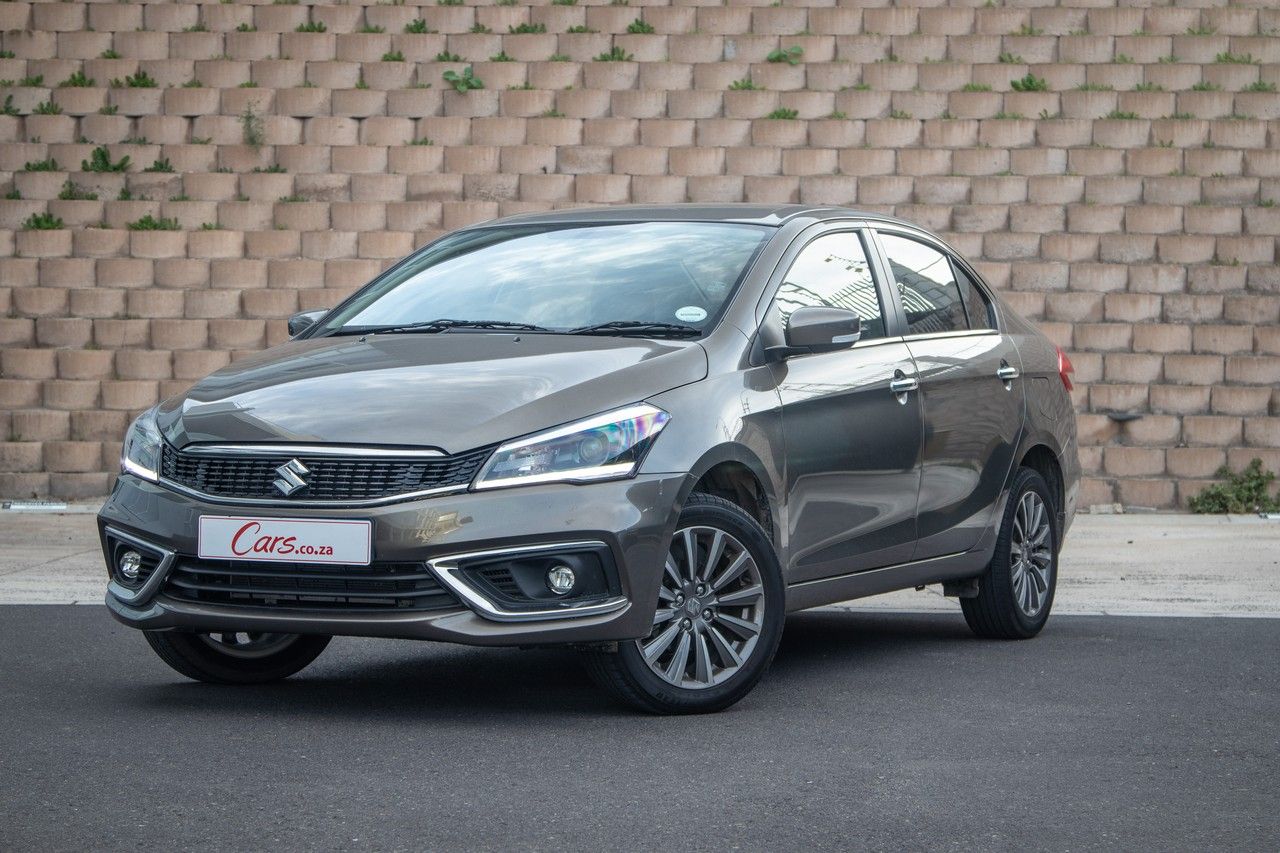
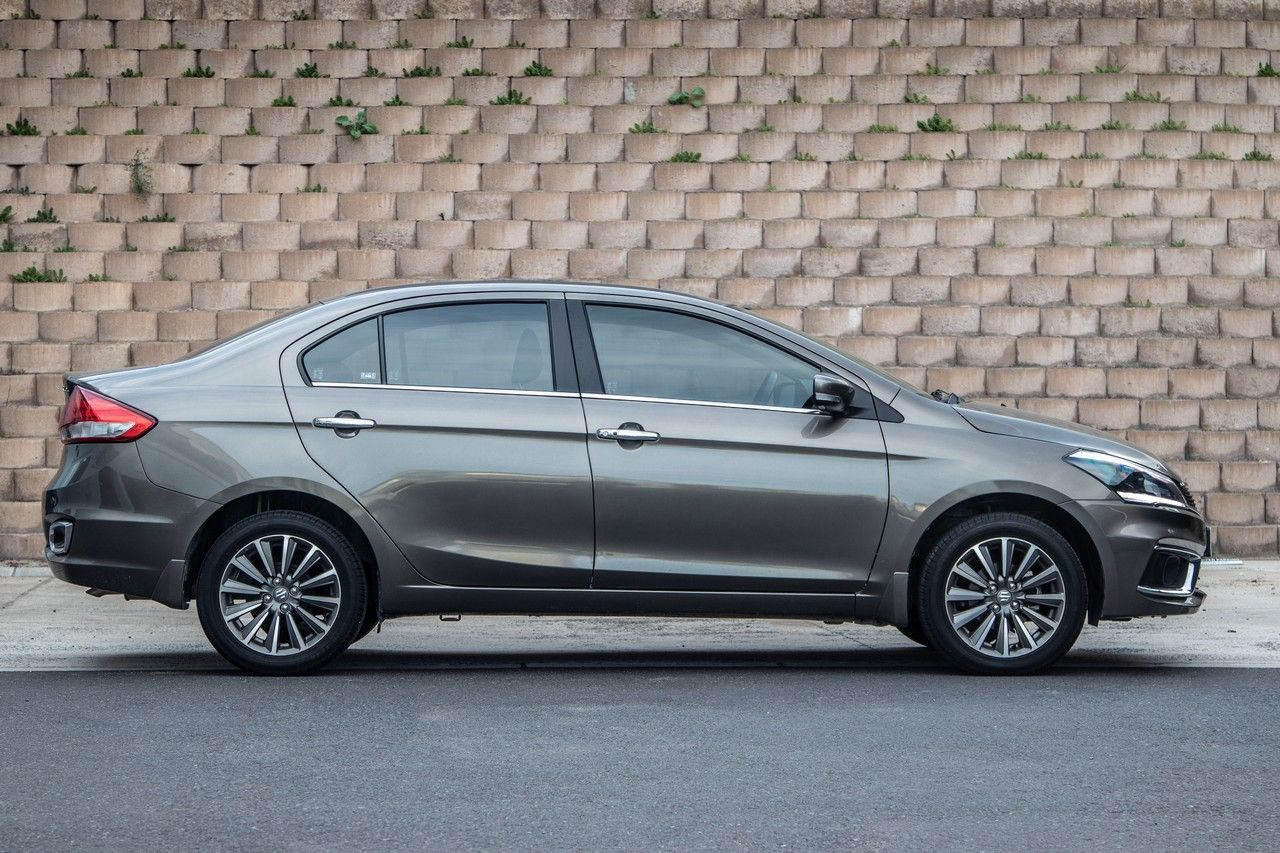
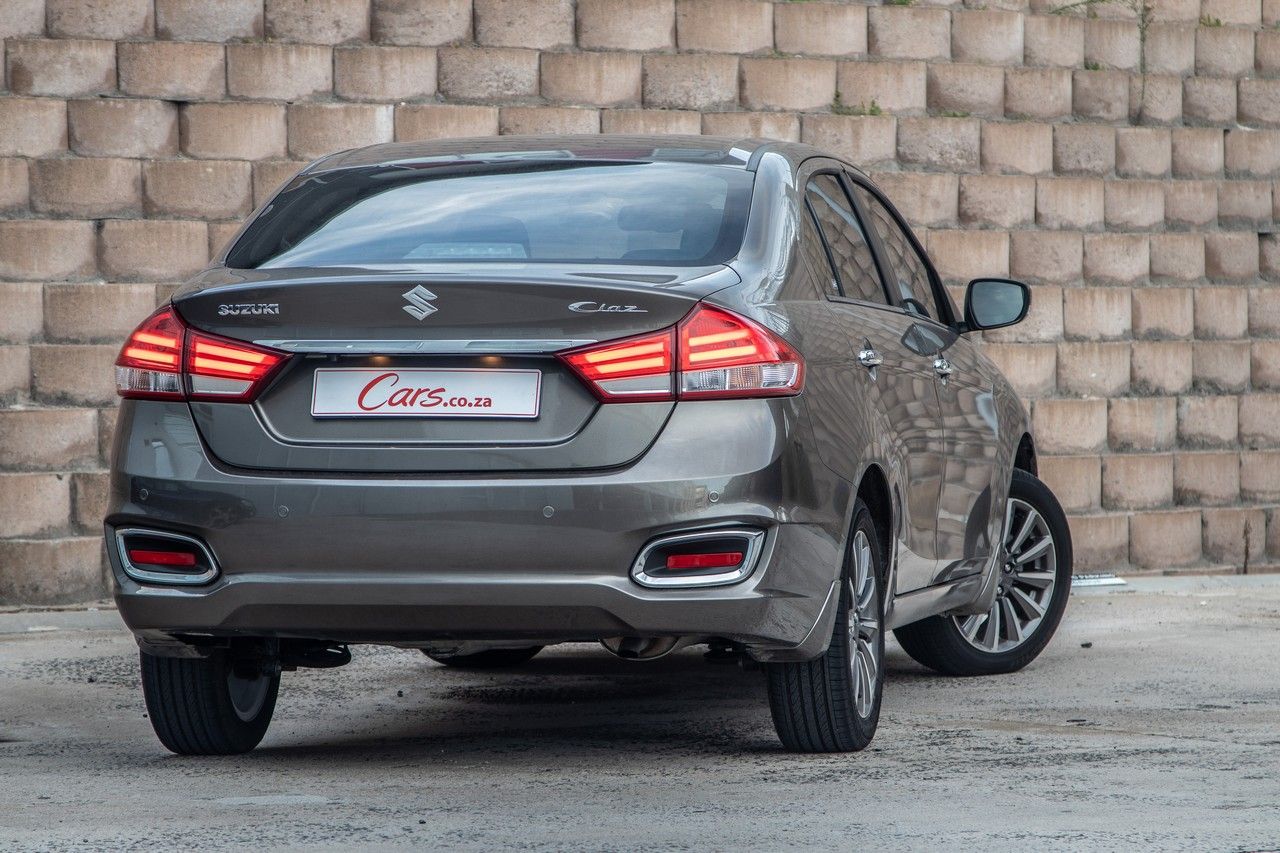
The budget sedan market or Uber-car segment (as the pocket of the market is colloquially known), has an unsung hero. The Suzuki Ciaz has been facelifted for 2019 and we’ve tested the GLX derivative extensively over 2 000 km.
We like: Leather trim, spaciousness, build quality, fuel-efficient engine.
We don't like: Rear seats don’t fold, high driving position, no stability control.
Some Suzuki dealers regularly offer specials: Have look here.
Where does it fit in?
It's an UberX, but with the spec of an Uber Black…
Fleet cars, Uber cars or budget sedans. Whatever you call them, there are plenty of these sensibly priced compact 4-doors around, but most of them are Toyotas or Volkswagens. The Corolla Quest and Polo Sedan dominate the sales here, but the Suzuki Ciaz is a little gem that gets overlooked in this segment, despite offering good value and fuel efficiency, which are surely top of mind to someone running a fleet or Uber car?
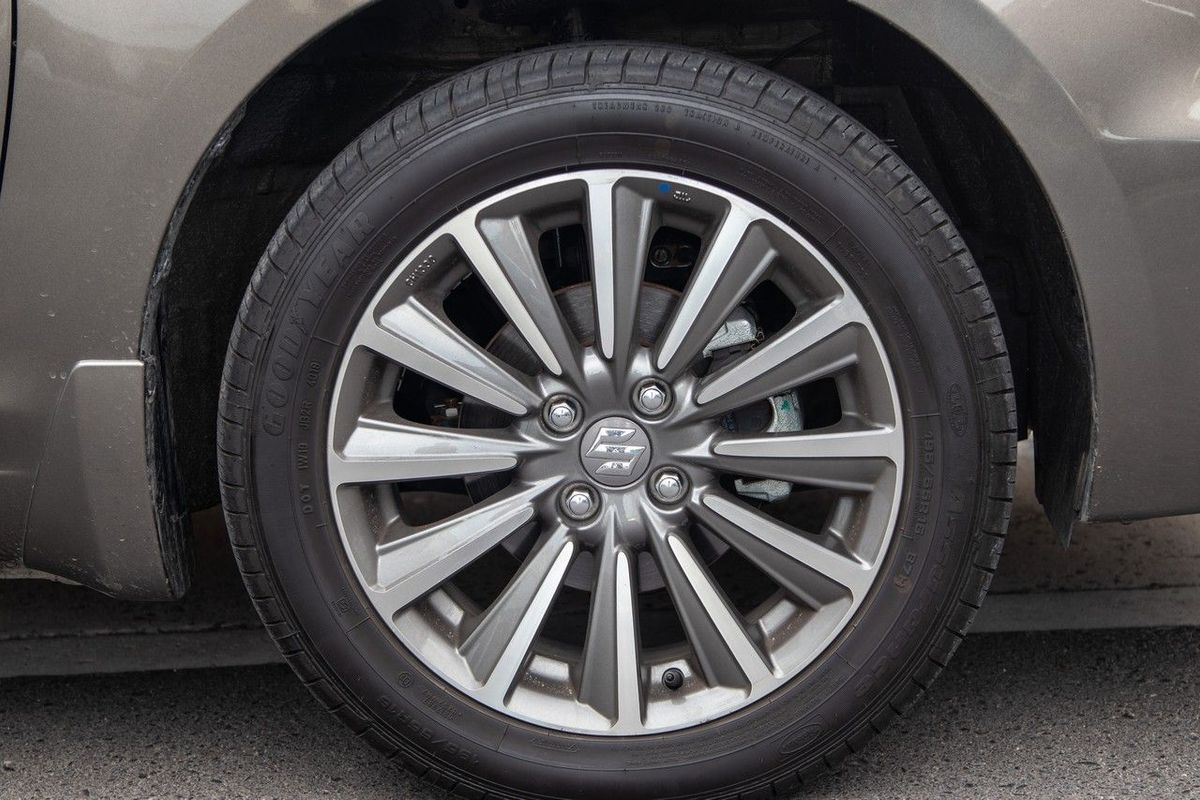
For this latest version, Suzuki has added some more in-car tech to modernise the Ciaz's infotainment system, transplanted a more powerful petrol motor into its engine bay and topped off the exterior look with LED lights.
How it fares in terms of…
Performance and efficiency
The new engine under the Suzuki's bonnet delivers 7 more kilowatts than before. The 1.5-litre naturally-aspirated (non-turbo) 4-cylinder petrol motor produces outputs of 77 kW and 138 Nm of torque, which are slightly under par compared with those of its rivals, yet the Ciaz doesn’t feel gutless. Aided by a light body and revvy engine, the 1.5 GLX has more than enough zip to scurry along, whether in the confines of the city or on the freeway.
The new engine is typically efficient, but not averse to being revved into its upper reaches.
Suzuki engines are typically fun to rev eagerly and the 1.5 GLX is no exception. By utilising a lively right foot and the fast-shifting 5-speed manual 'box you may find yourself venturing towards the motor's rev limit often – not that it would be of major concern to budget-oriented sedan buyers. The Ciaz may be a gear short of the Corolla Quest, but at freeway speeds the revs are low enough that it doesn’t feel like the 'box needs a 6th gear.
The claimed fuel efficiency is 5.5 L/100 km, and we can vouch that if you drive the 1.5 GLX conservatively, you can easily achieve that figure. Throughout our 2 000-km test, we averaged a frugal 6.2 L/100 km, much of which was with a car loaded with baggage and filming equipment.
Practicality and refinement
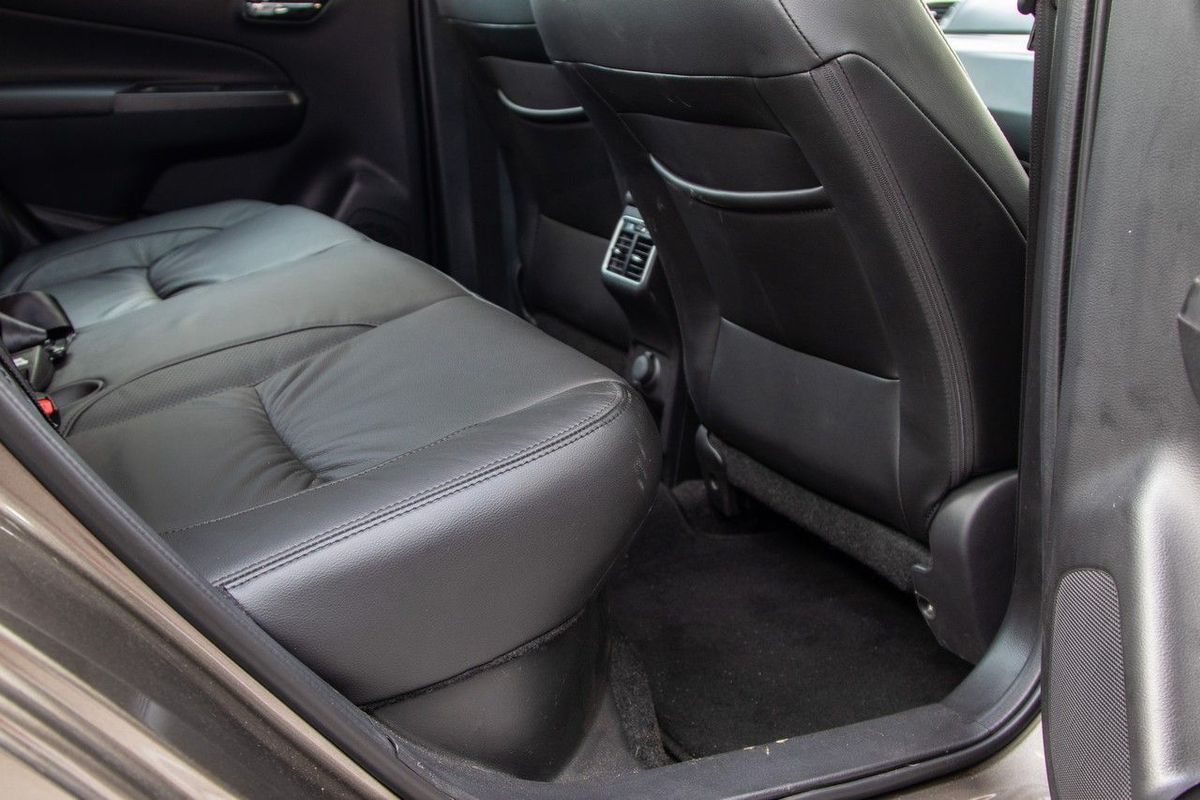
Starting with passenger space, rear legroom is generous – the bench easily seats 3 passengers. Rear head- and shoulder room are satisfactory and the boot measures 480 litres, which is a bit bigger than those of its rivals. The rear seats don’t fold down, which seems like a bit of an oversight, especially because it limits the Ciaz as a family car. You can bet that at some stage you will need to carry something longer than the length of the boot and because the seats don’t fold down, you’d be stuck. As a fleet buyer, it’s not likely to be an issue, but it may be a deal breaker for families.
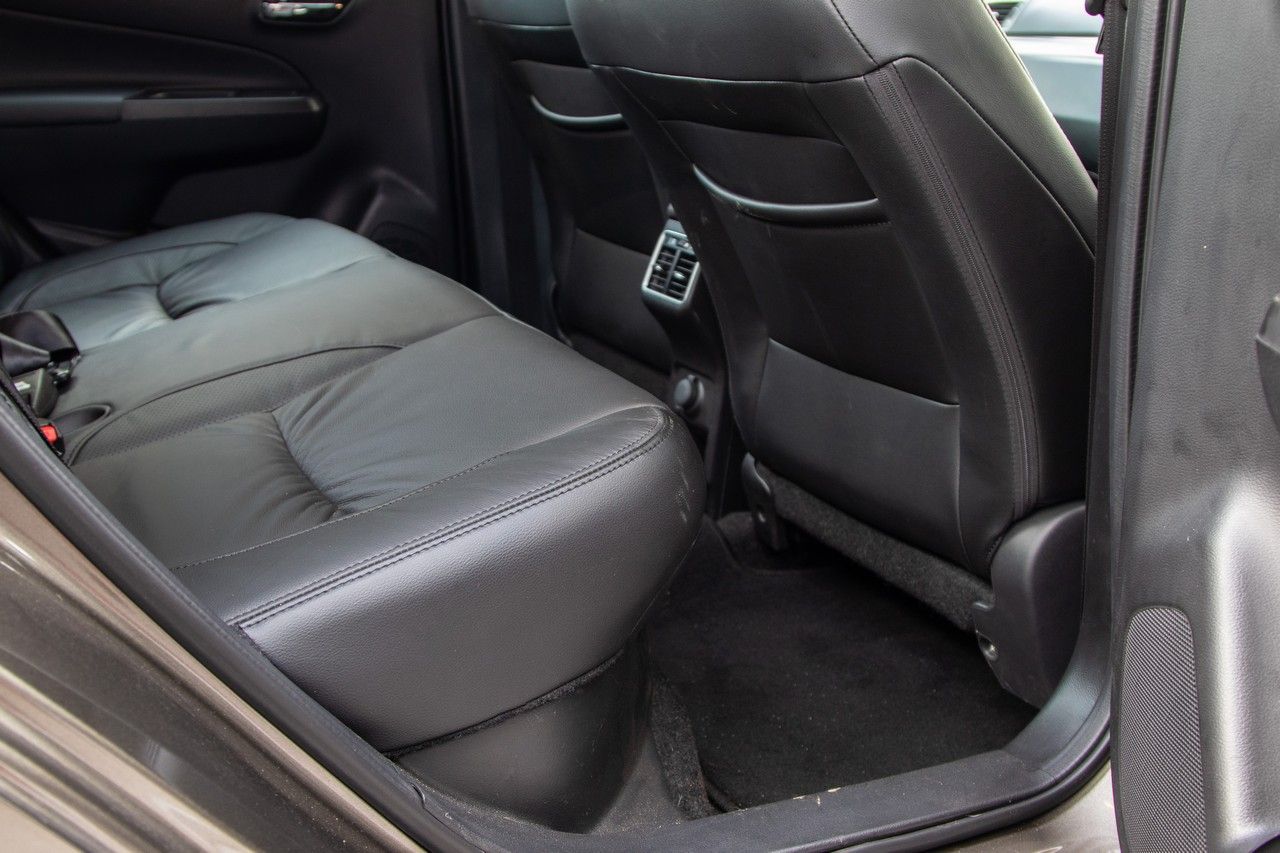
Enough legroom, rear aircon vents and leather. It's the best-equipped rear in the segment.
On the road, the Ciaz is quiet and well insulated from the wind and tyre roar in ways that budget car offerings usually aren't. It’s pleasant and comfortable with an easy clutch/shift action that won’t be arduous in congested traffic. The ride is geared towards comfort, so the suspension softens out bumps and ruts smoothly. Because it’s light, it still feels nimble in the bends and promotes confident driving. It’s a very easy car to acclimatise to.
Interior tech and comfort
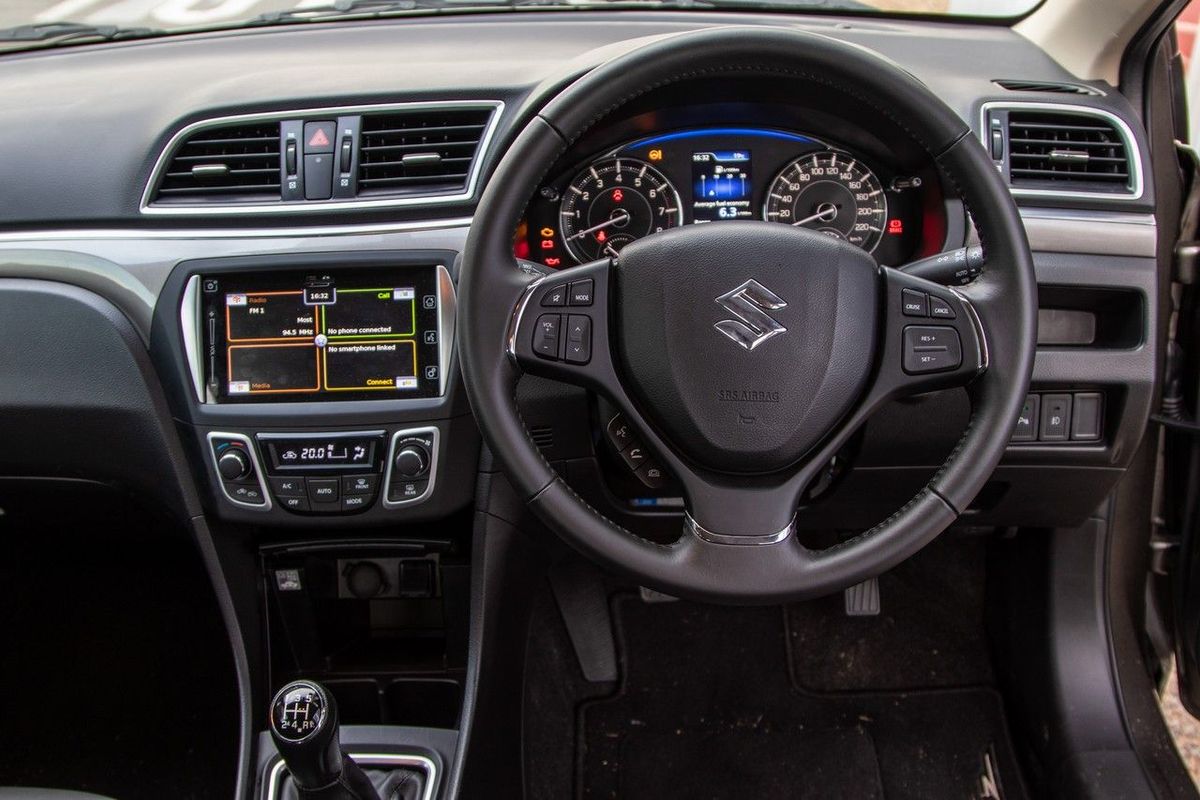
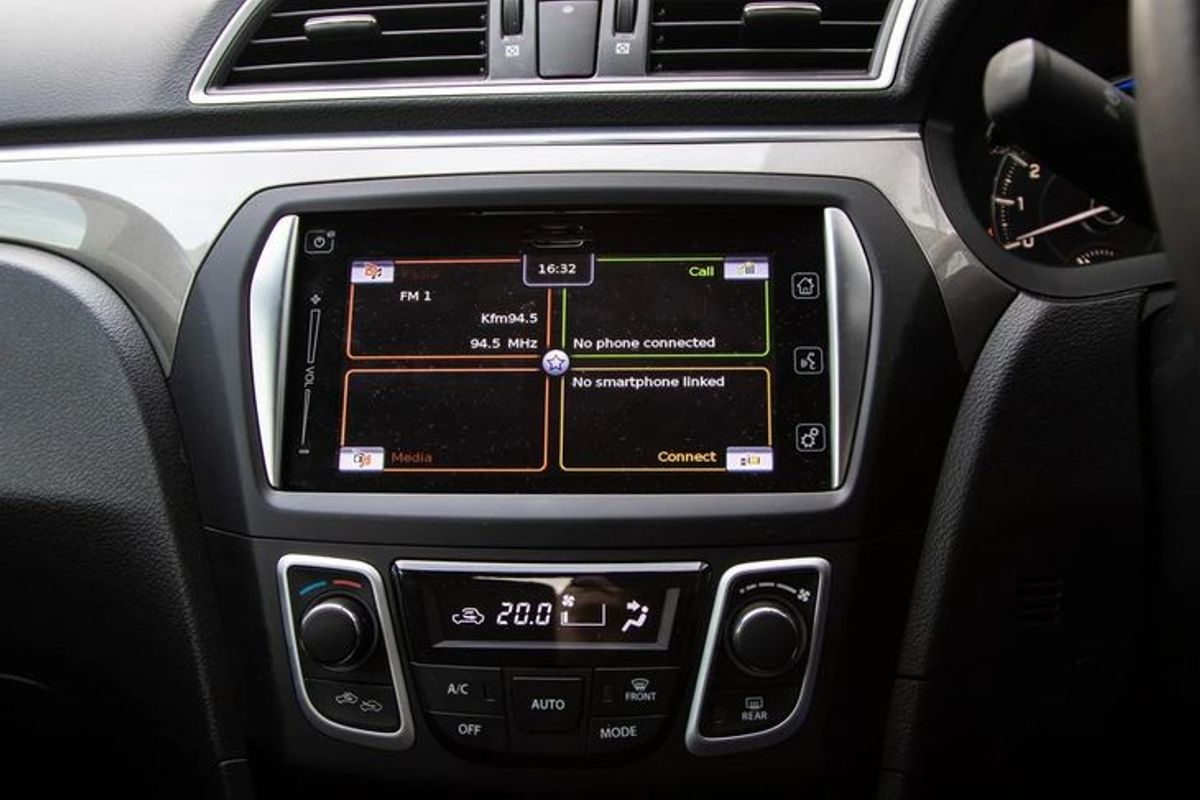
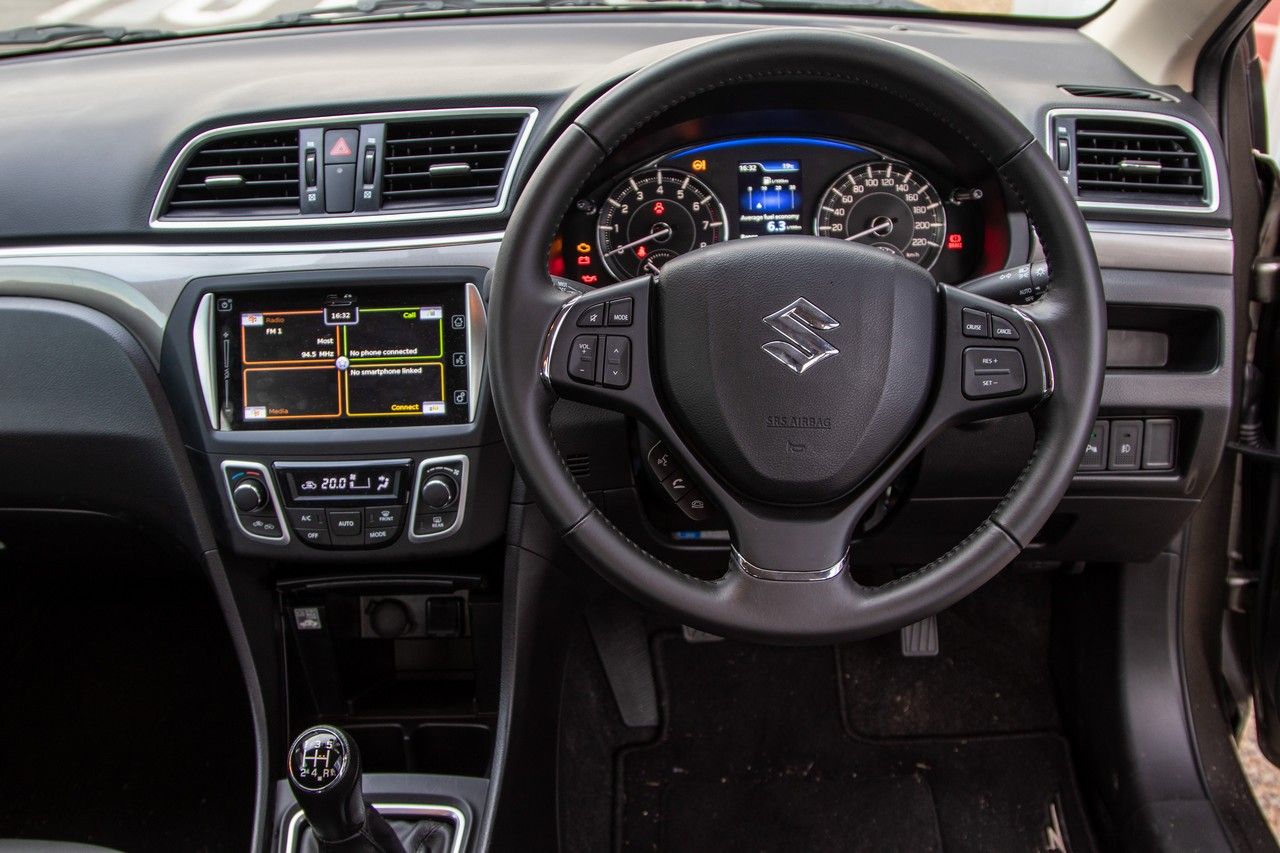
Suzuki has updated the Ciaz's interior by modernising its infotainment system, which brings some welcome digitisation to the Ciaz's cabin. The infotainment system now features a 7-inch touchscreen that incorporates a feed from a reverse-view camera, the latter of which is a rarity in this segment. The setup is Apple Carplay and Android Auto compatible, but it would be best to check whether your smartphone's fully compatible with the system during the test drive… we had issues with a few Android smartphones (Suzuki does have a few troubleshooting options if you struggle).
The interior has a modern infotainment system now and cruise control.
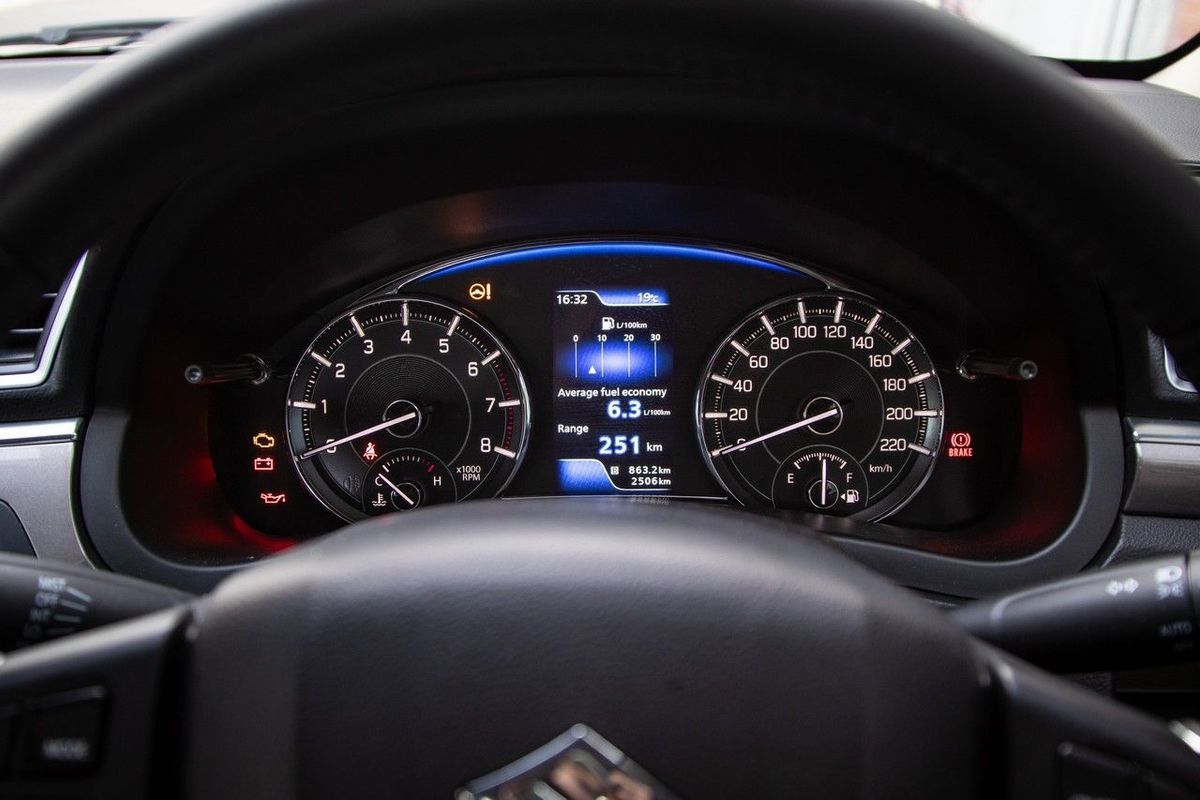
The instrument cluster has gained a central digital screen that displays the trip computer; it’s a simple, but effective, way to improve the ambience of the cluster. Automatic climate control is a nice-to-have, as are the steering wheel-mounted controls for the radio and newly added cruise control.
Suzuki’s major advantage in this segment is the leather upholstery, which is standard on the 1.5 GLX derivative. Having sat on many a dirty cloth-trimmed seat in Uber cars, leather is most welcome on a car in the "UberX segment".
The driver’s seat, despite being height adjustable doesn’t go low enough for taller drivers (181 cm and above). You have to deal with a very raised driving position and be ever mindful not to knock your head on the door frame every time you exit the vehicle.
Safety
It’s a bit disappointing to note the absence of stability control in the Ciaz, although only the Polo offers it (of the competitors we mentioned). The Ciaz has 2 front airbags, ABS, EBD with brake assist and keyless entry (GLX only). The safety spec, therefore, is par for the course for this segment.
Verdict
Suzuki Ciaz should pose a real threat to the segment's top-sellers.
The Suzuki Ciaz underperforms on the sales charts, especially considering the equipment levels and value for money it offers. The 1.5 GLX's price point is competitive and the running costs are likely to be pleasantly low. Suzuki has won multiple #CarsAwards Brand of the Year titles for delivering excellent levels of customer service and support, so prospective owners can look forward to peace-of-mind ownership. The warranty has been extended to 5 years/200 000 km while the service plan (3-year/60 000 km) offers more mileage than those of the Corolla Quest and Polo.
It comes with ample passenger space and leather seats, something its competitors can’t match. The new engine performs admirably despite its lower power and torque outputs. It also proves to be more economical on fuel, due to its low weight and 1.5-litre capacity.
It does however, appear to be firmly targeted at the fleet buyer rather than the family buyer with the exclusion of stability control and rear folding seats. If a Suzuki Ciaz every pops up when you hail an UberX, you’ll be pleasantly surprised at just how more luxurious it is than the usual suspects.
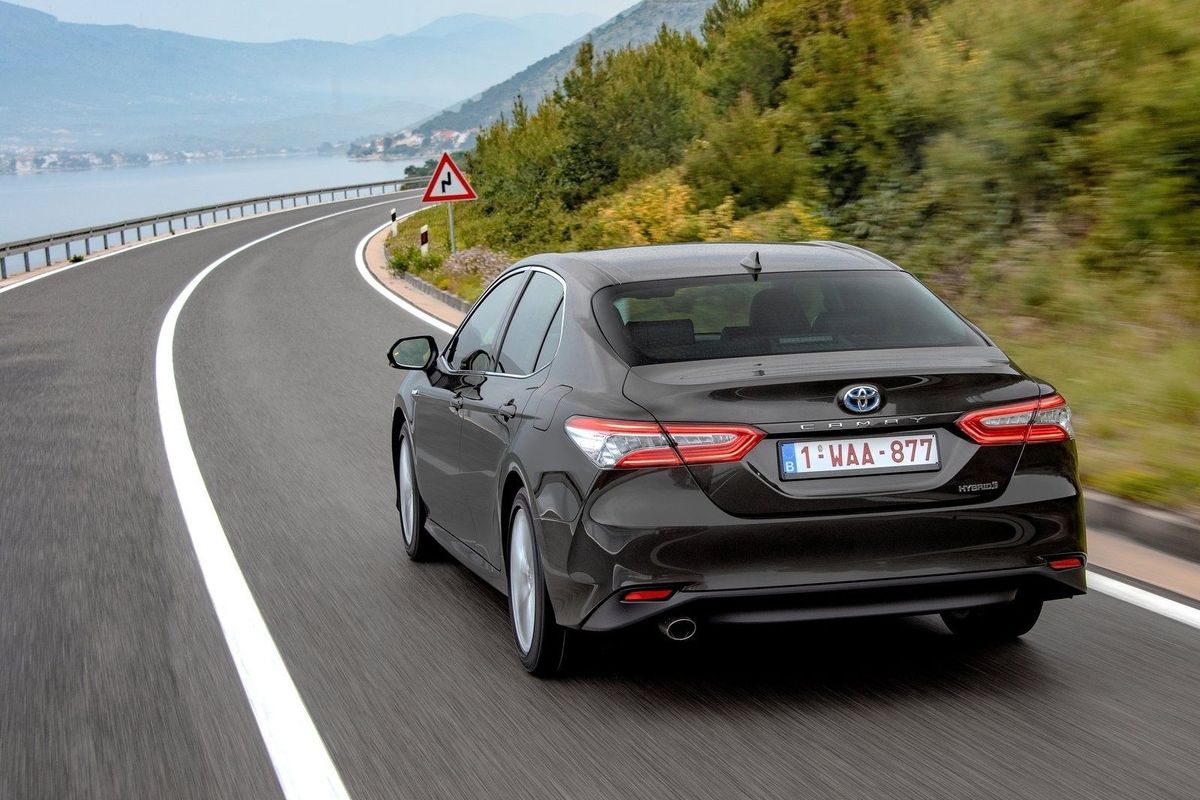
Should Toyota SA Bring Back the Camry?
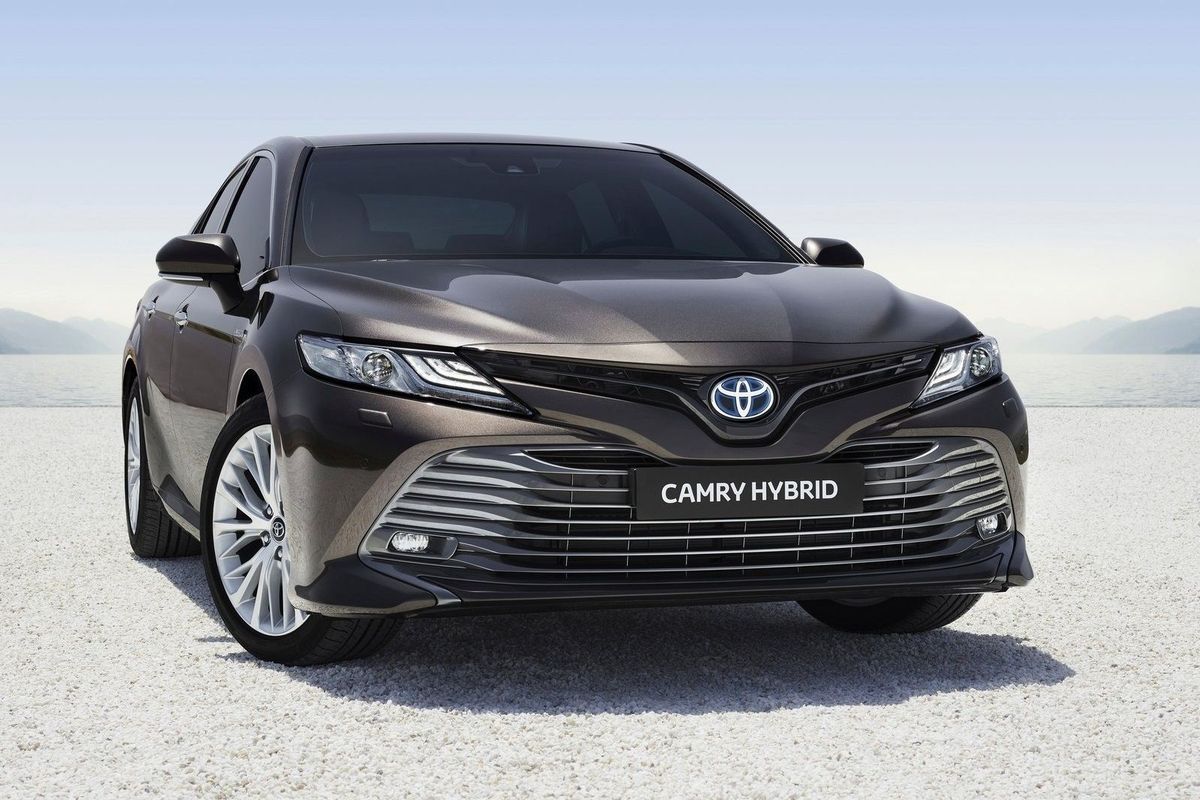
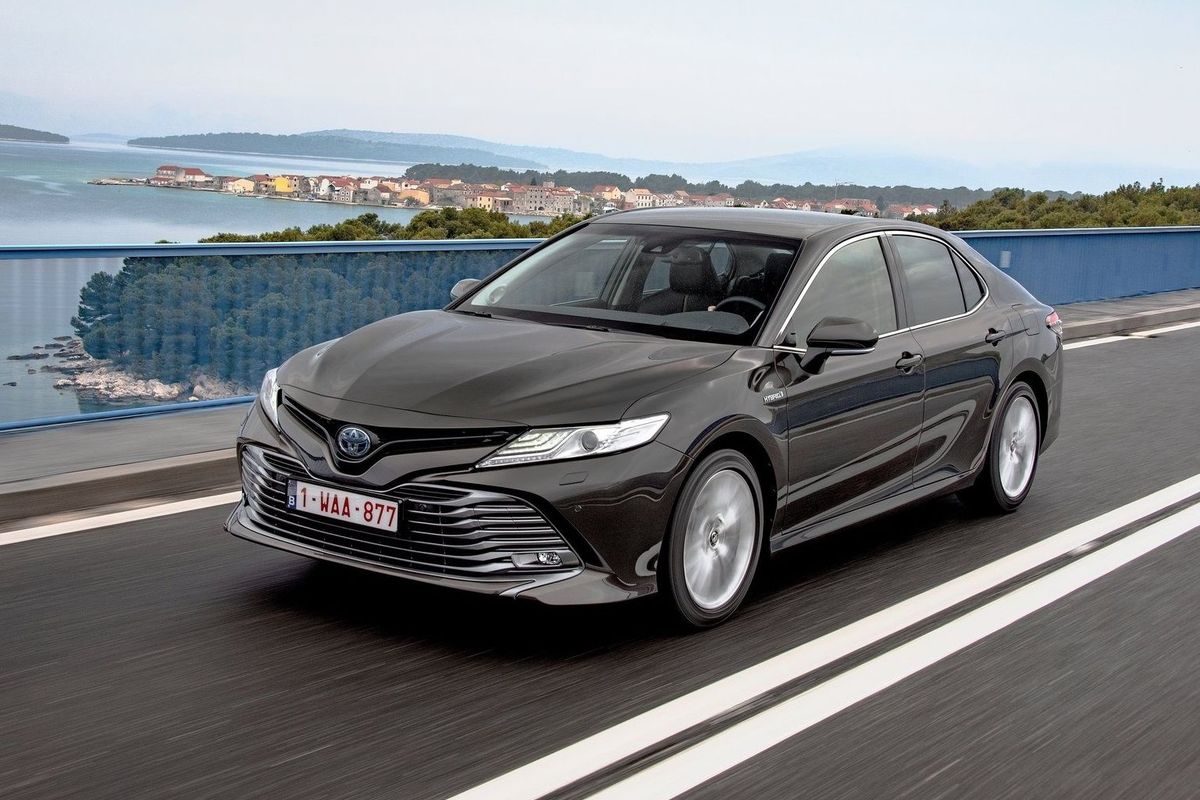
The Toyota Camry has quite the reputation amongst the South African population. Now that there's a new one out in Europe, should it come to SA?
Toyota's Camry sedan has quite the history behind it. First launched back in 1982, the Camry has proven popular as families clamoured for big and spacious sedans. To date, more than 19 million units have found homes in more than 100 countries and according to Toyota, the Camry remains the best-selling D/E segment sedan in the world.
There's a South African connection too, as the XV10-generation Camry was assembled right here in Durban, South Africa. From 1992 to 2001, Toyota's Prospecton plant pumped out 2.2-litre and 3.0-litre Camrys for the SA market. To this day, you'll still see Camrys on the road and in good nick, testimony to their impressive long-term reliability. The car has even inspired an Internet meme about reliability.
Now in its 8th generation, the Toyota Camry has just gone on sale in Europe. Underpinned by the same TNGA platform which underpins the RAV4/Corolla/C-HR/Prius, the new Camry is available with a 2.5-litre petrol hybrid engine which delivers 160 kW and 221 Nm. Being a hybrid, it's claimed to consume just 4.3 L/100 km.
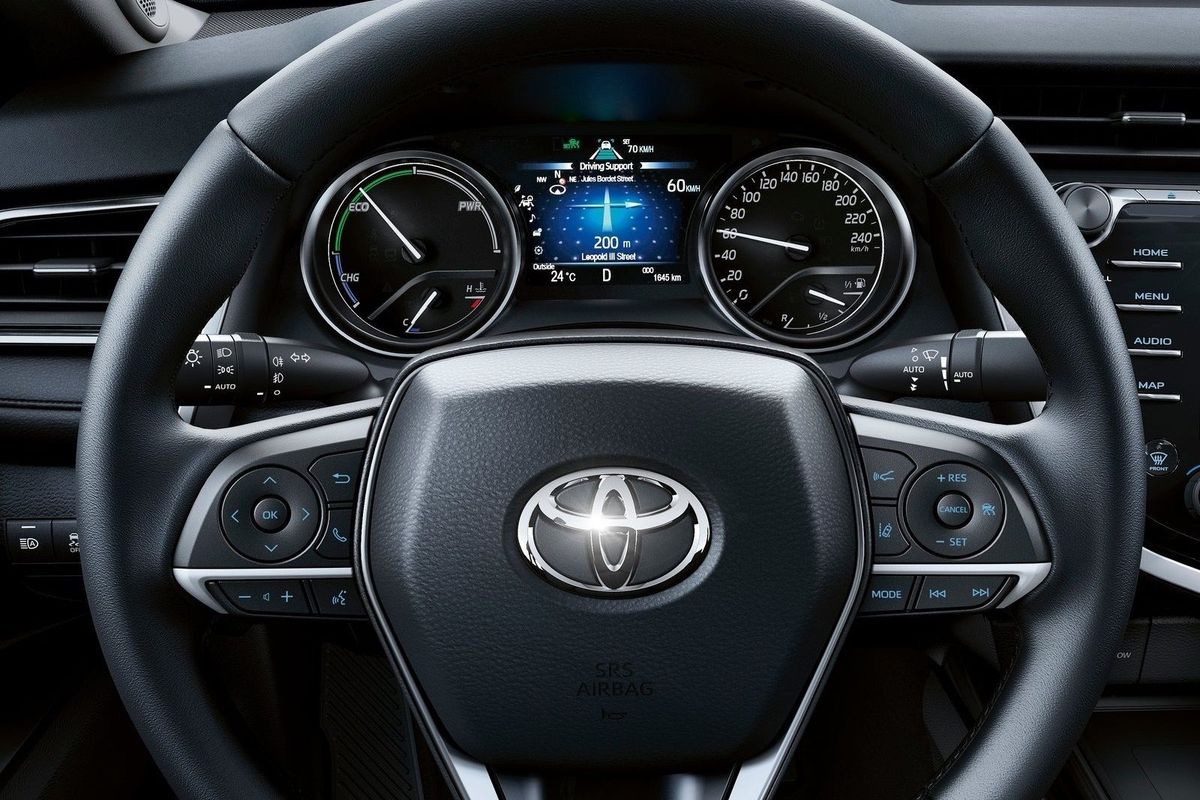
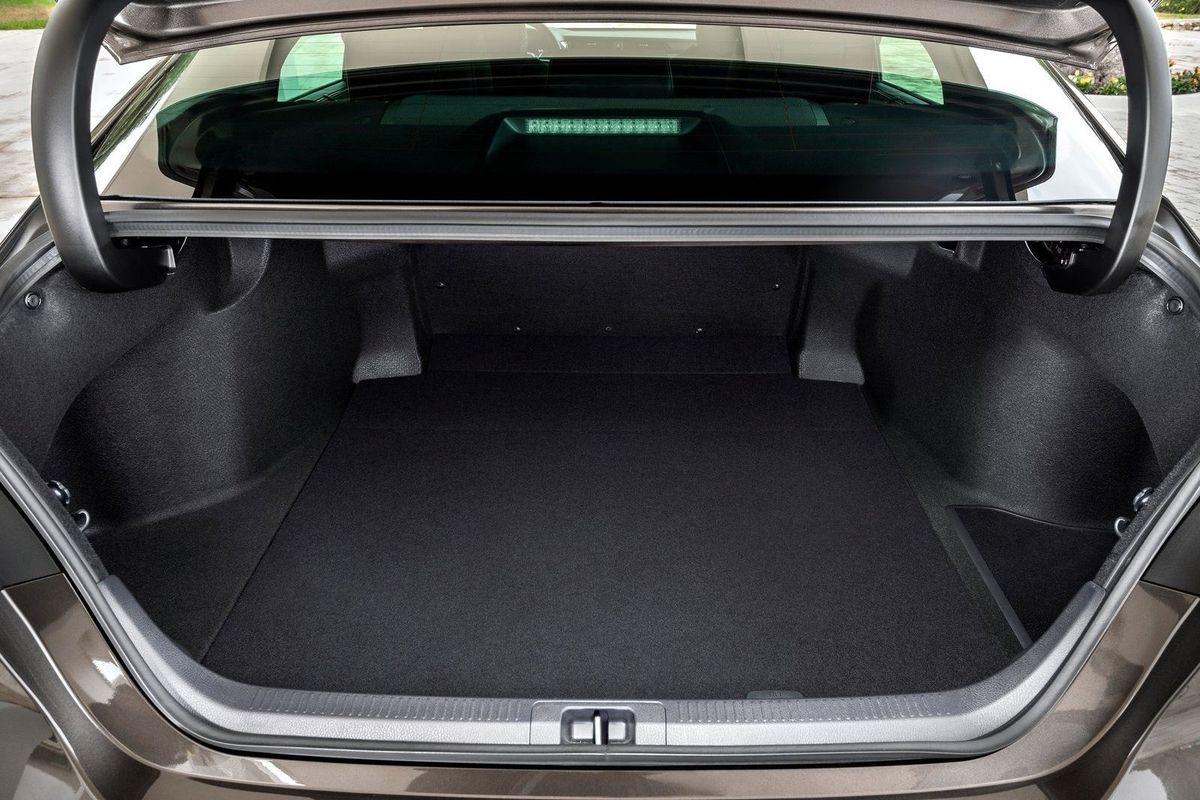
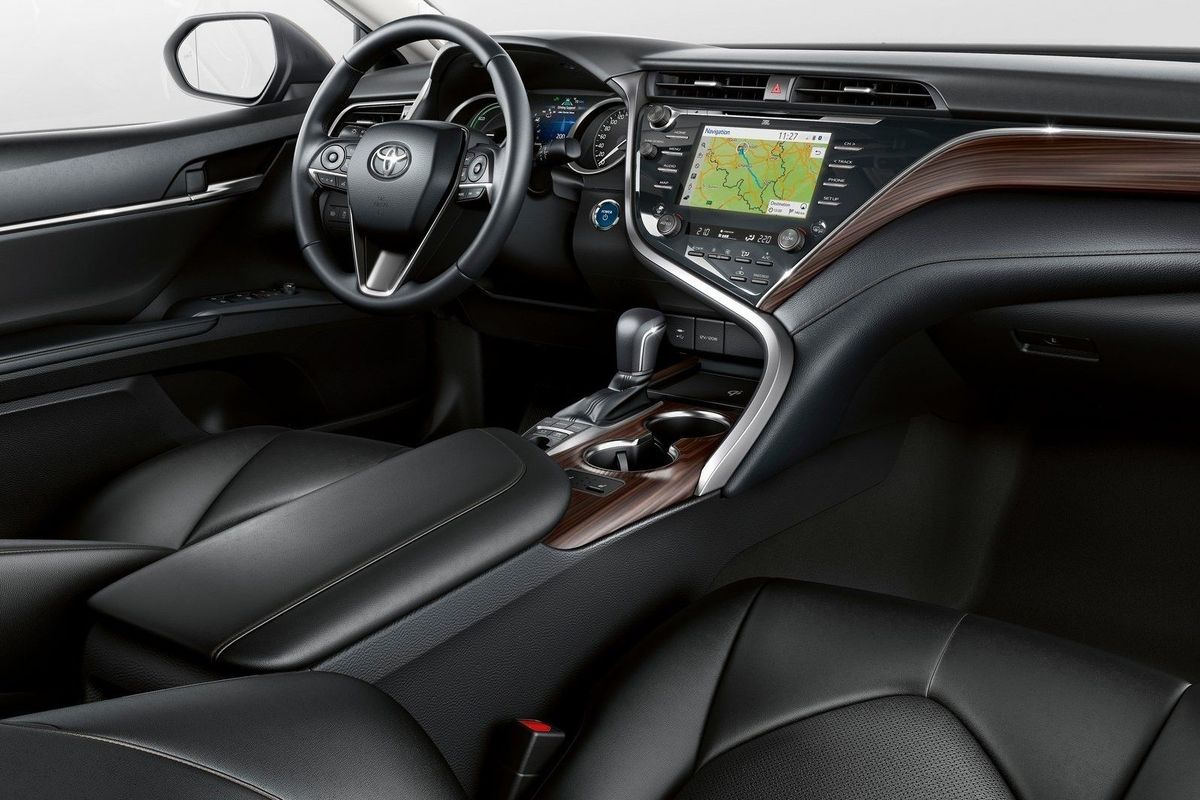
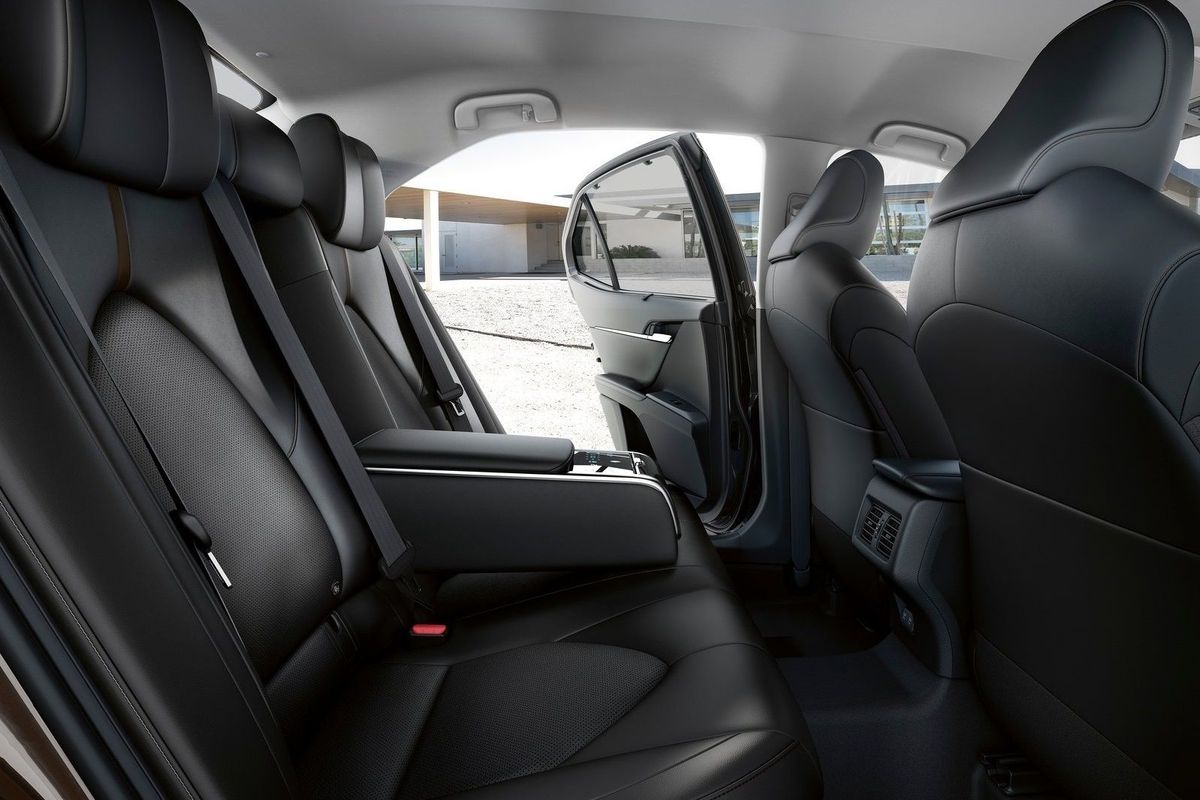
Inside, the new Camry looks spacious and modern. There's a trio of easy-to-read, information-coordinating displays consisting of a 10-inch Head-up Display (HUD); a 7-inch Multi-information Display; and an 8-inch centre console display incorporating Toyota's Touch®2 with Go multimedia system. Boot space was an area where the Camry shone and this 8th generation model is no exception. With a claimed 500 litres for vehicles equipped with power-reclining rear seats, and 524 litres for those with 60:40 split seating, there's plenty of carrying capacity.
Despite the SUV becoming the popular genre of car, Toyota still feels as if there's some money to be made off a big sedan and given the Camry's illustrious reputation, why not? Do you think it would be a success if it were to come to South Africa? Should Toyota SA bring it here? Let us know.
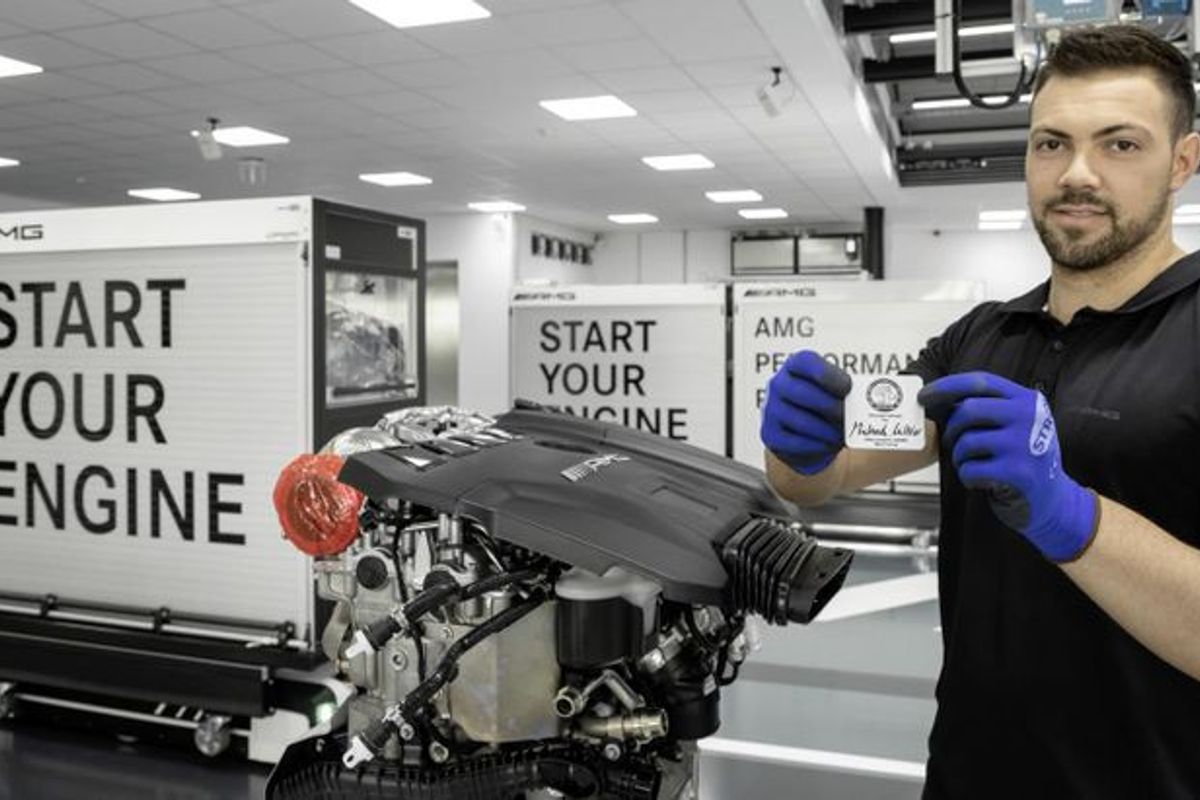
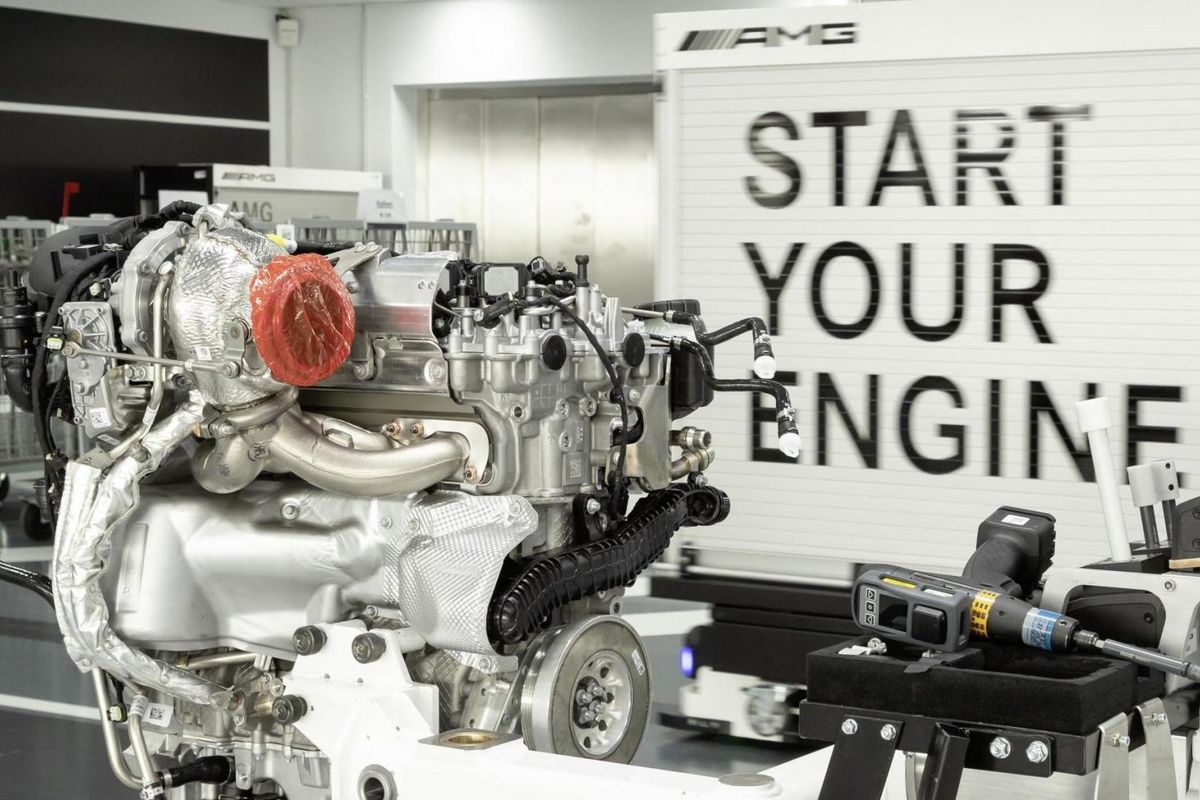
AMG breaks the 300kW ceiling for 2.0-litre production engines.
Since its first turbocharged 2.0-litre four-cylinder, the M133, AMG has set new power output standards for this specific size and configuration of production engine.
When it debuted in 2013, the A45’s 2.0-litre turbocharged ‘four was good for 265 kW – notably more powerful than any other similarly sized production engine. AMG has just revealed its latest evolution of the boosted 2-litre four-cylinder engine architecture, and the numbers are astonishing.
Under the AMG engine codename of M139, this new 2.0-litre engine produces 310 kW and 500 Nm. The number which truly contextualises its potency is that this new AMG engine delivers 155 kW per litre, more than most production superbikes.
Overall displacement is 1991 cc and the internal architecture is radically undersquare, featuring an 83 mm bore versus 92 mm of stroke.
A single twin-scroll turbocharger runs on a roller-bearing compressor and turbine wheels, to eliminate inertia, and boost pressure is 2.1 bar. The M139 engine’s turbo can spin to an amazing 169 000 rpm.
Reduction friction comes courtesy of nanoslide cylinder coatings, a technology developed by the Mercedes F1 team, whilst 2 mm larger exhaust valves help better feed the turbo and clear the combustion chamber. As a result, this engine can run a 7 200 rpm maximum crank speed – which is credibly high for a long-stroke turbocharged engine.
AMG’s third-generation fuelling system produces 200-bar of direct injection pressure and the entire M139 engine only weighs 160 kg, thanks in part to a new aluminium crankcase.
This amazing 2.0-litre engine will become available in AMG’s next wave of 45-Series models, due later this year, and customers will have the option of two states of tune: either the full-power ‘S’ version detailed above, or a 285 kW/480 Nm application. South Africa is a notable 'S' only country though, so expect maximum power derivatives to be available.
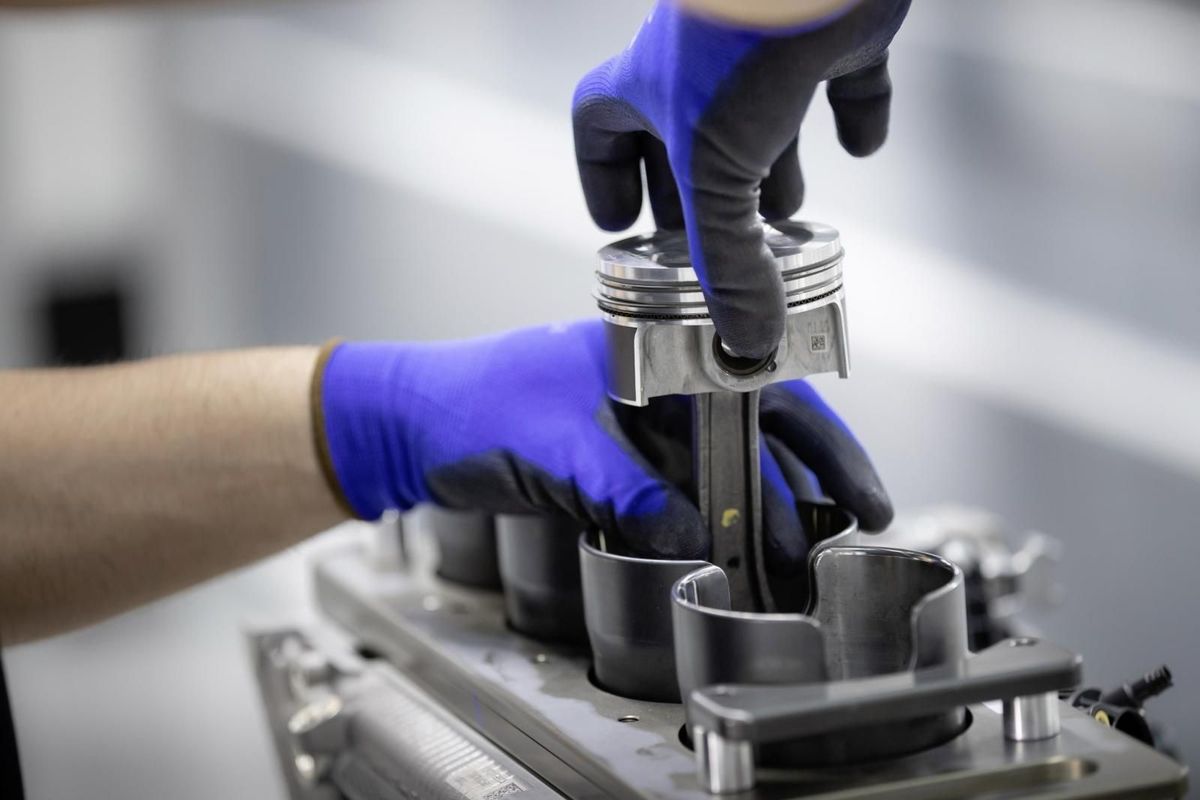
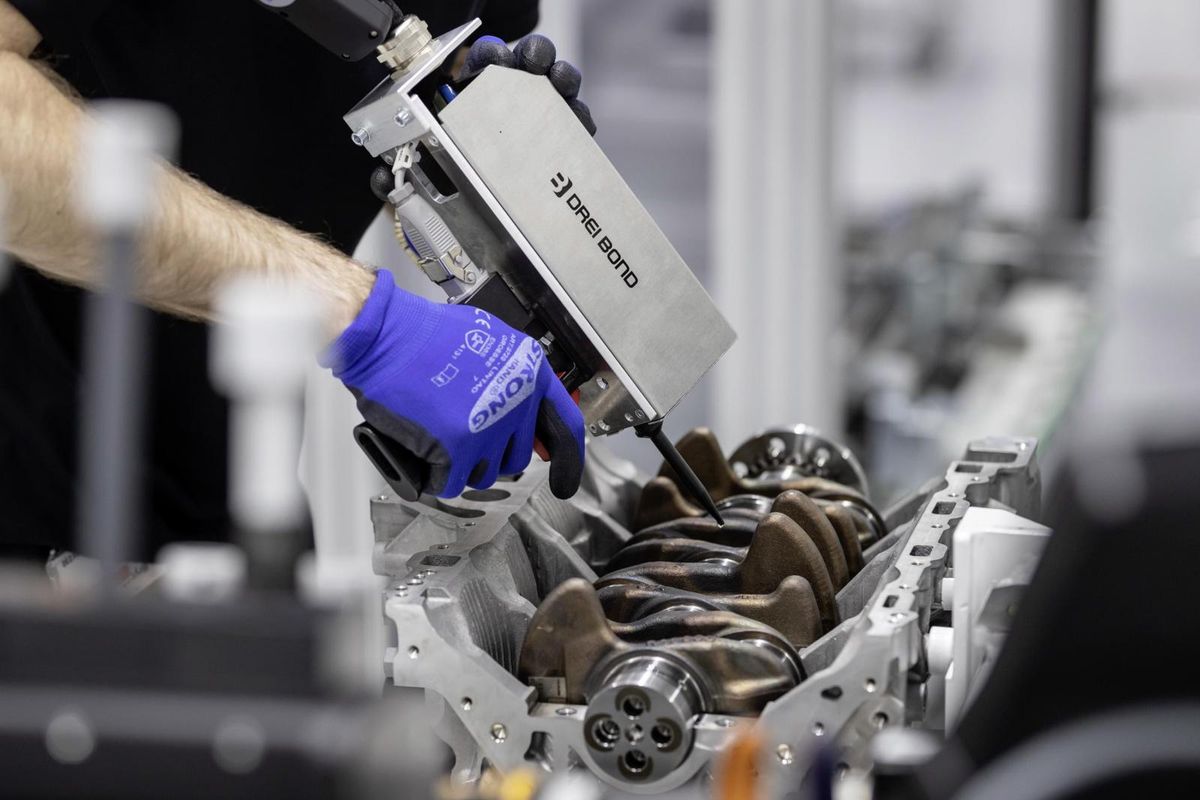
Watch the new 2.0-litre turbocharged AMG engine being built