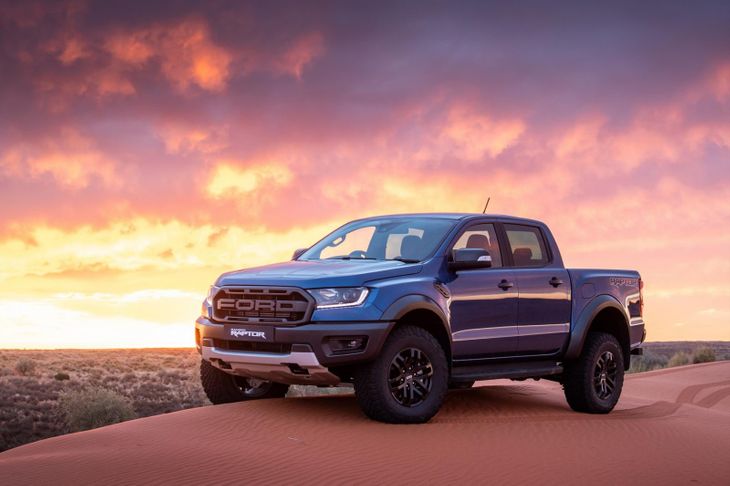
We recently drove the new Ranger Raptor which is now on sale in South Africa. Here are 5 cool things that you need to know about this high-performance offroad machine…
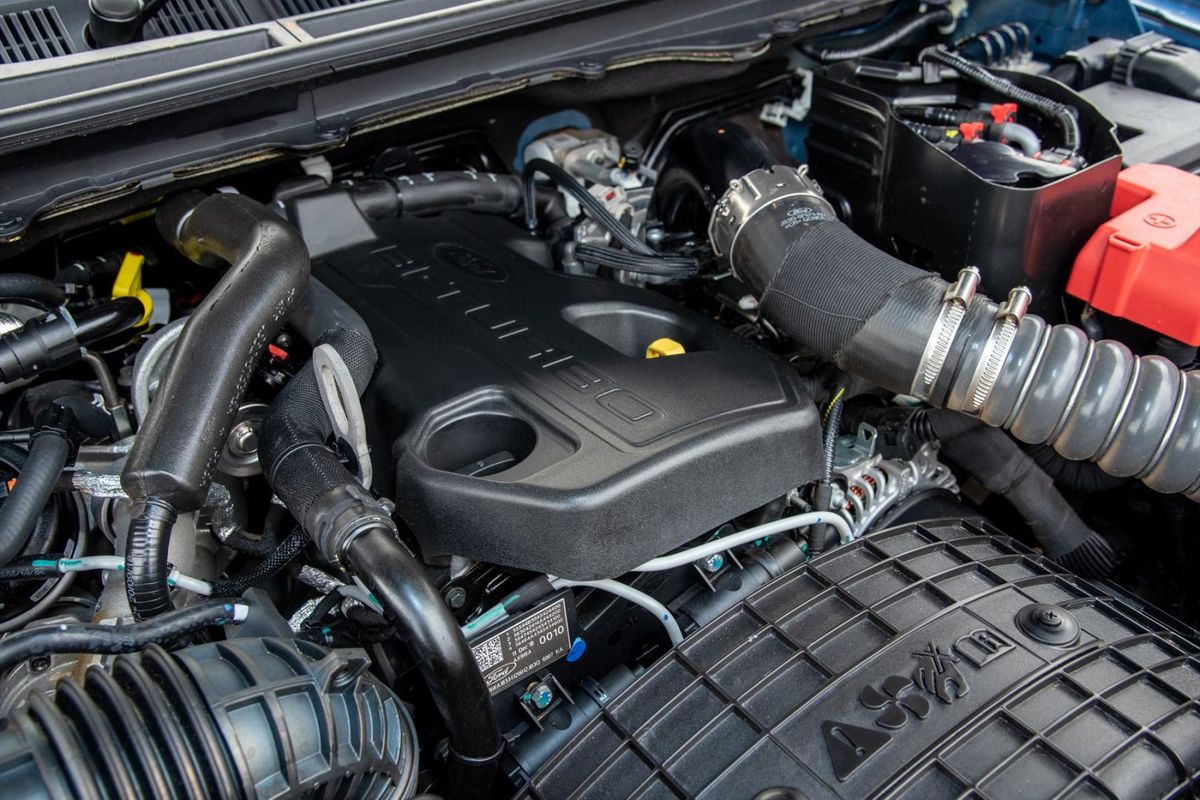
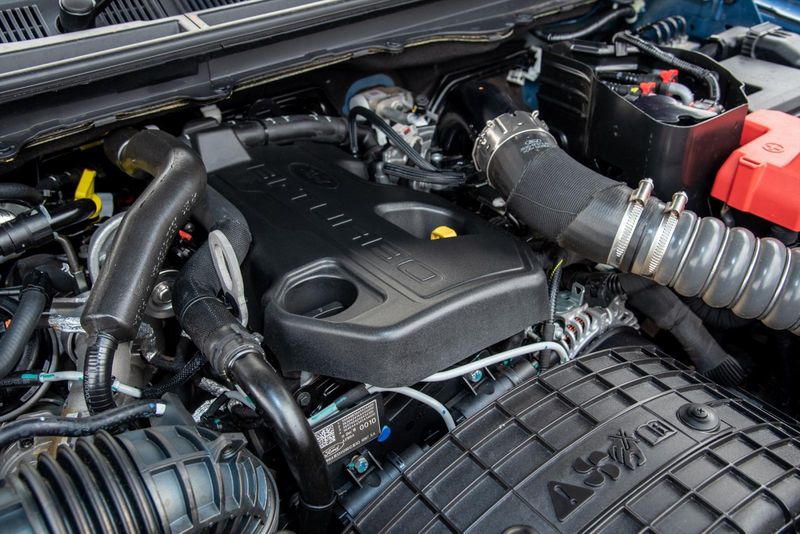
The Ranger Raptor is finally available in South Africa and is priced at R786 400. It offers 157 kW and 500 Nm from its 2.0-litre bi-turbocharged diesel engine which is mated to a 10-speed automatic transmission. If you have not done so already, read our launch review of the Ranger Raptor for all the nitty-gritty details.
Here are 5 cool things about the Ranger Raptor that you should take note of.
1. It Looks Badass
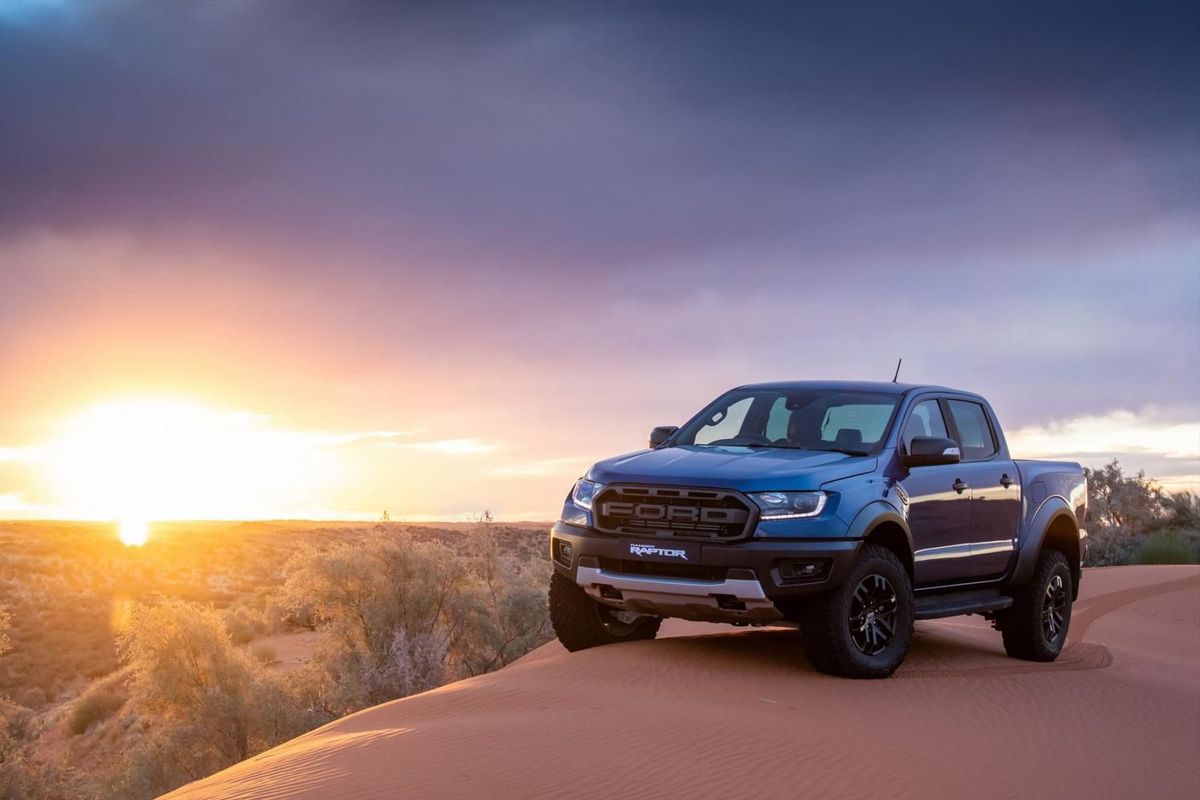
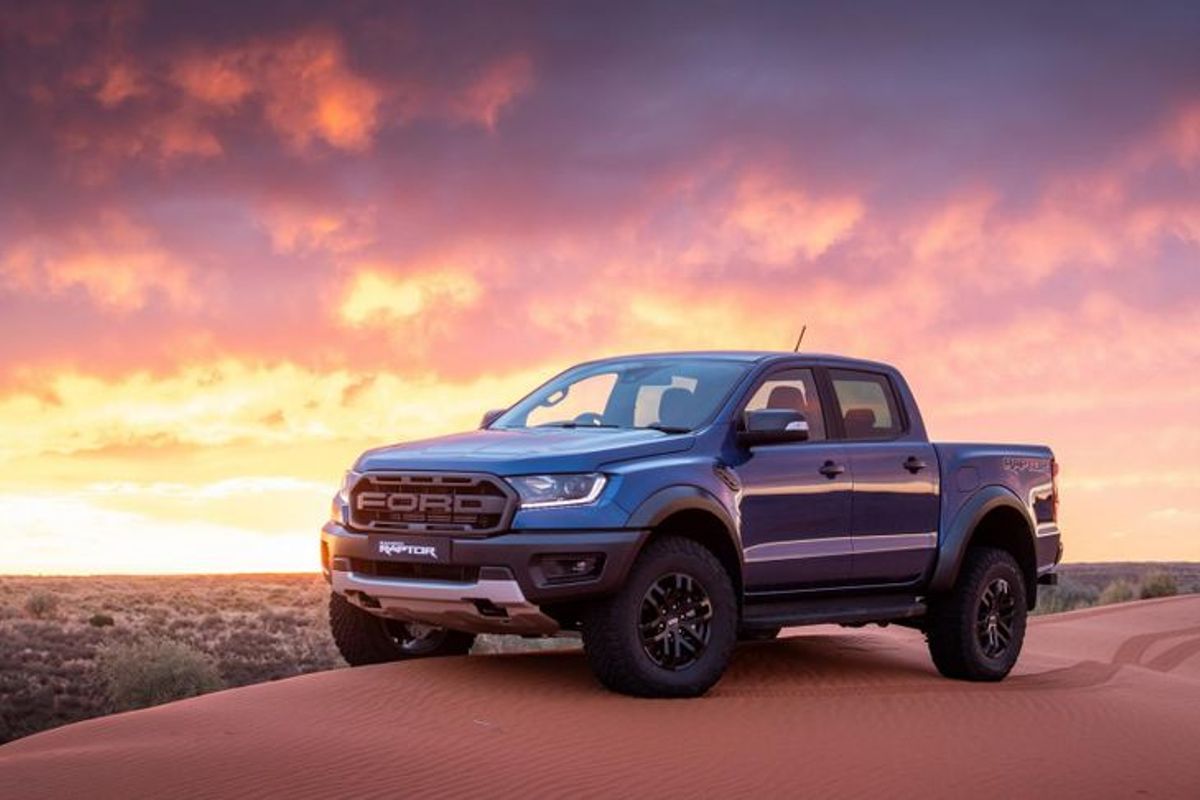
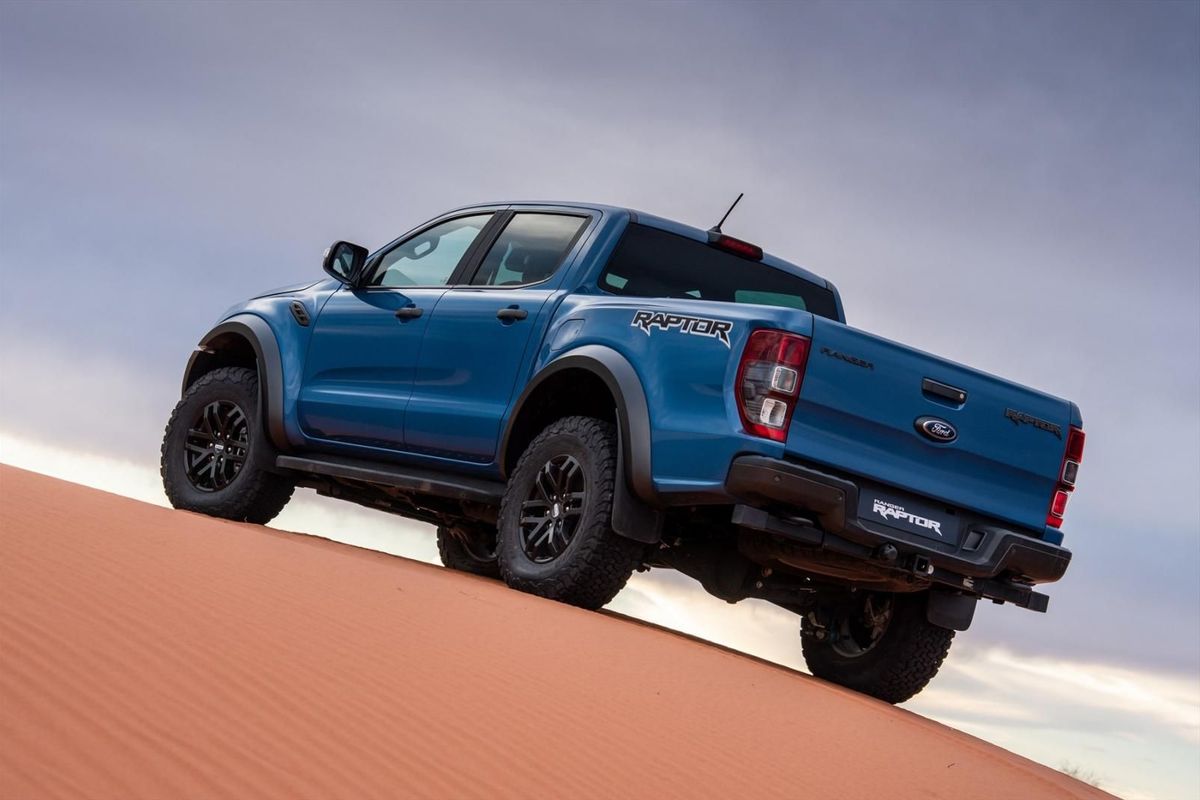
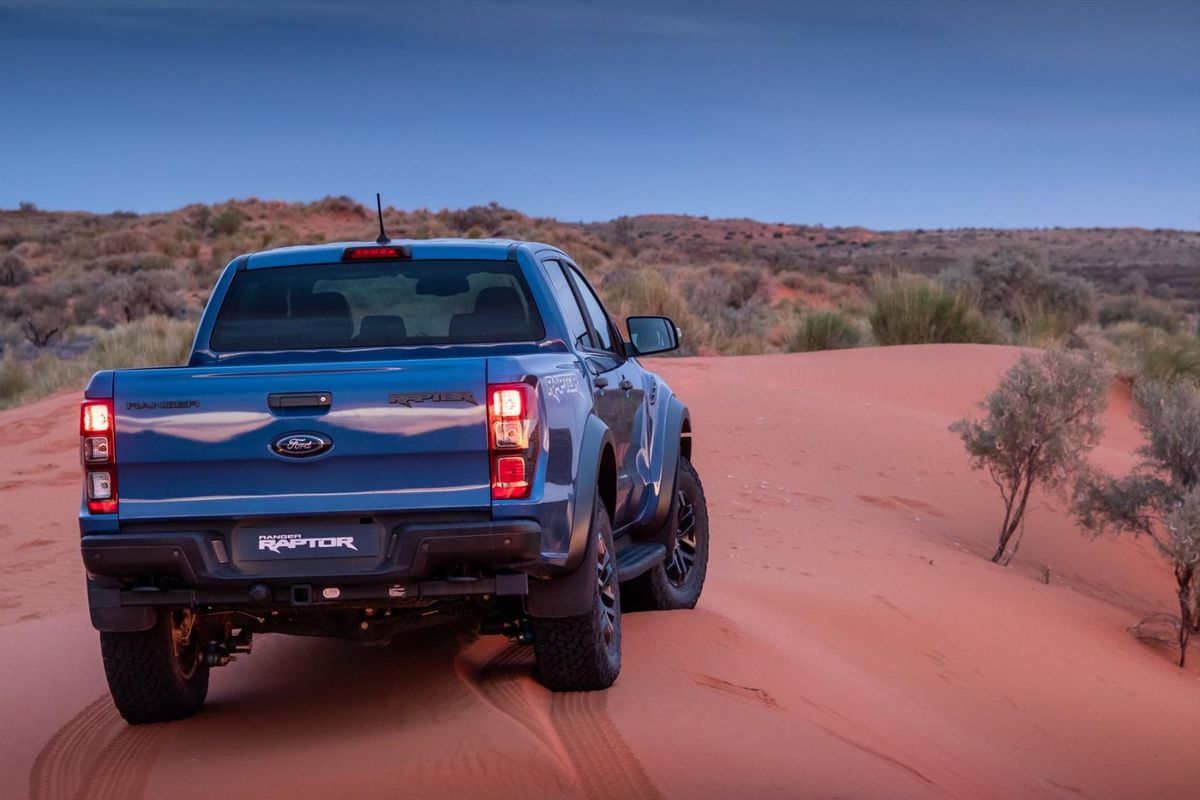
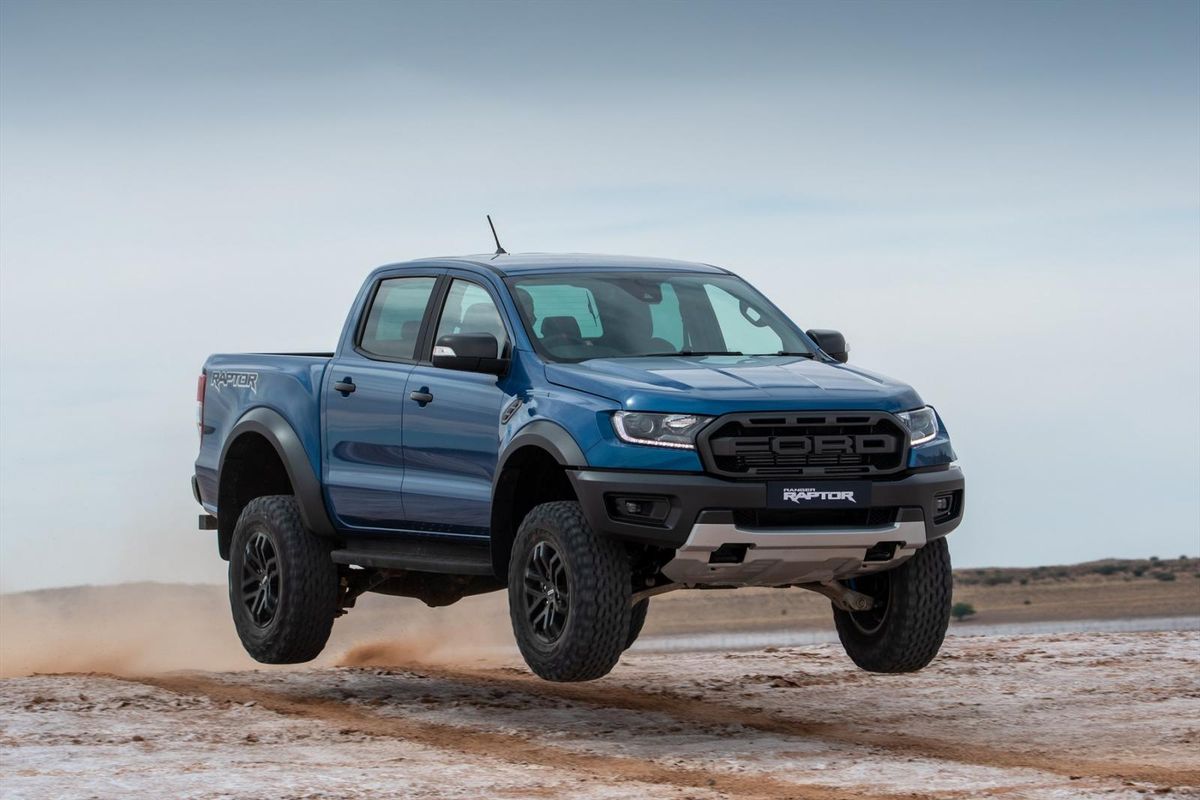
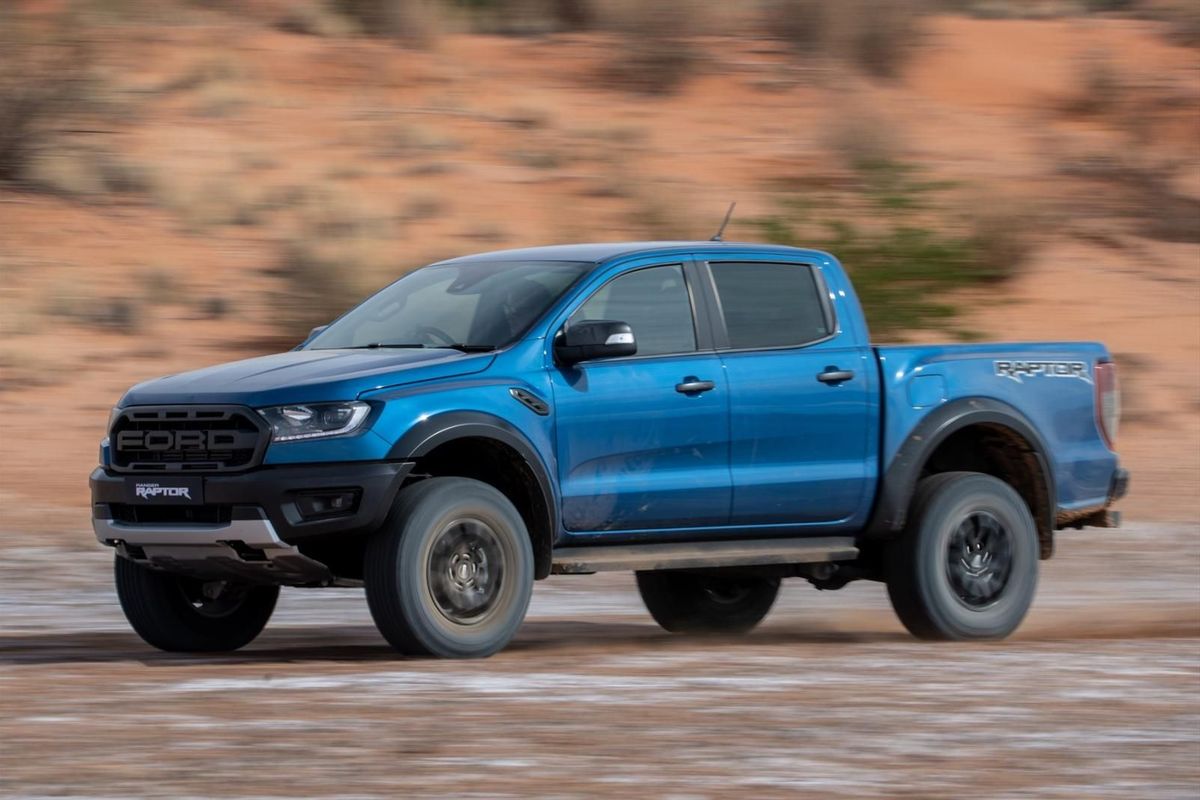
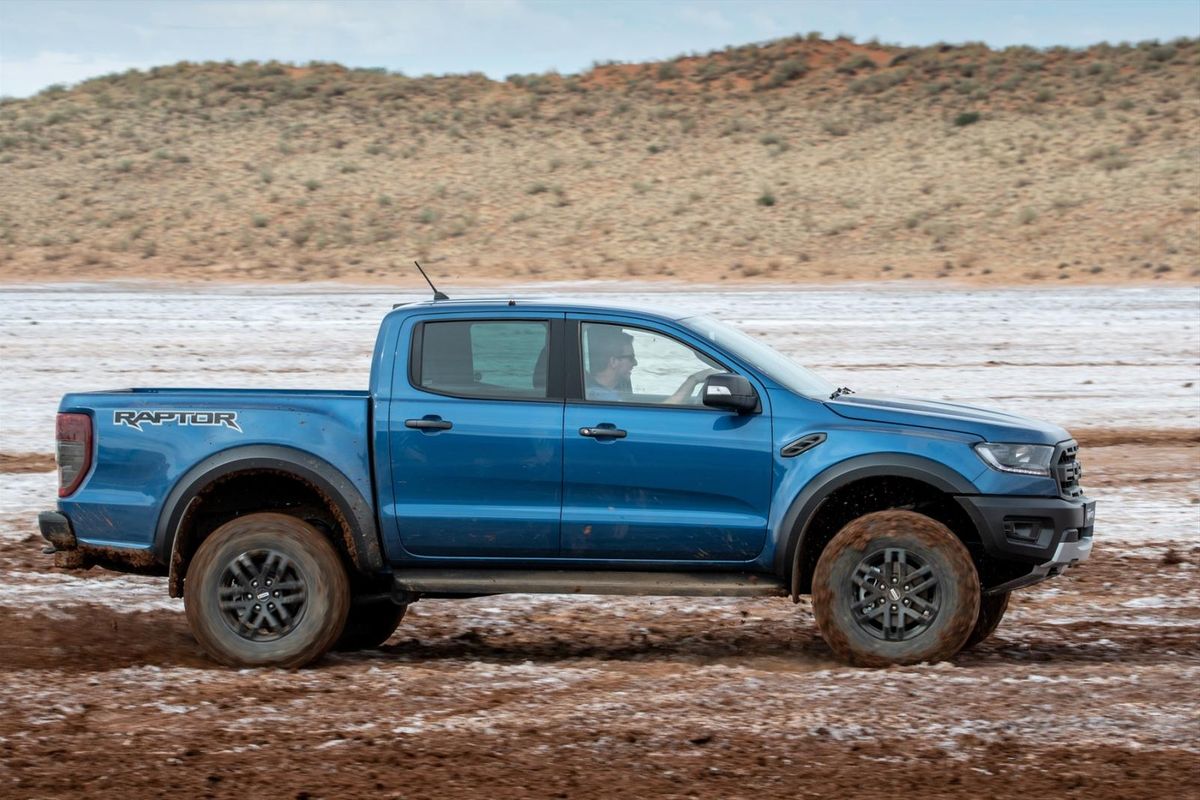
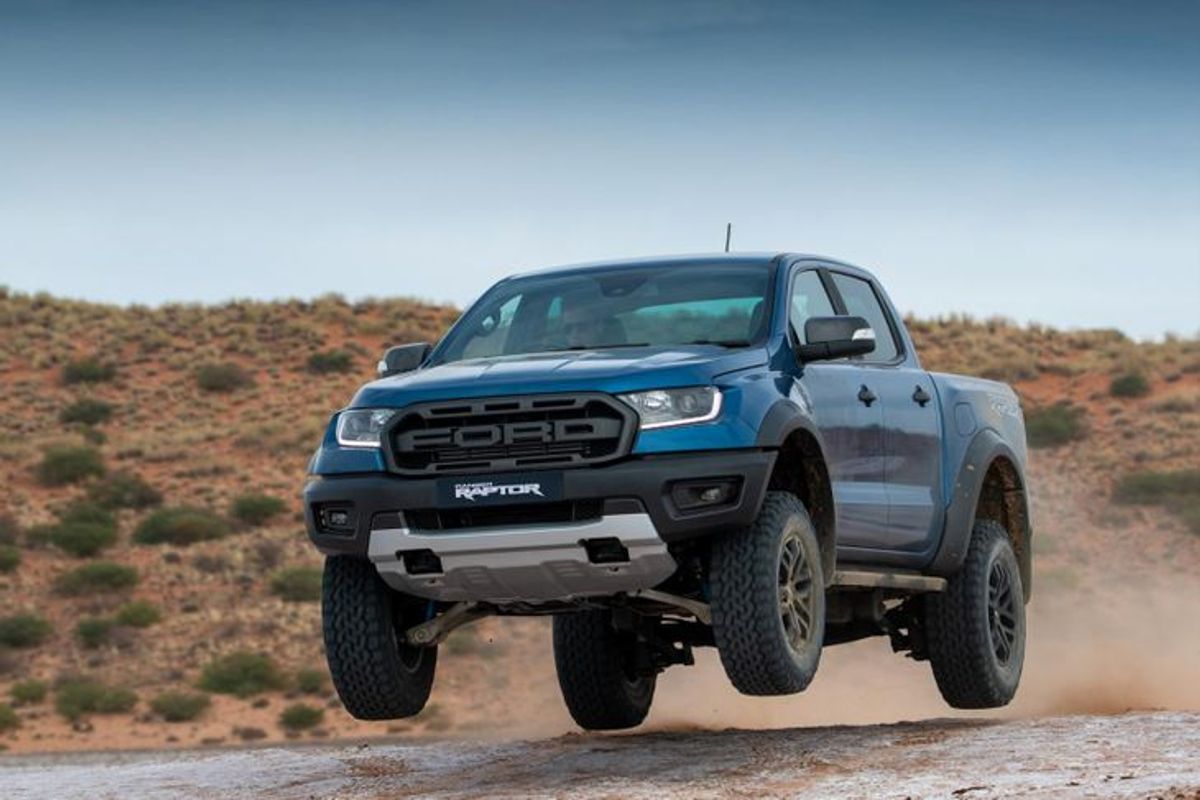
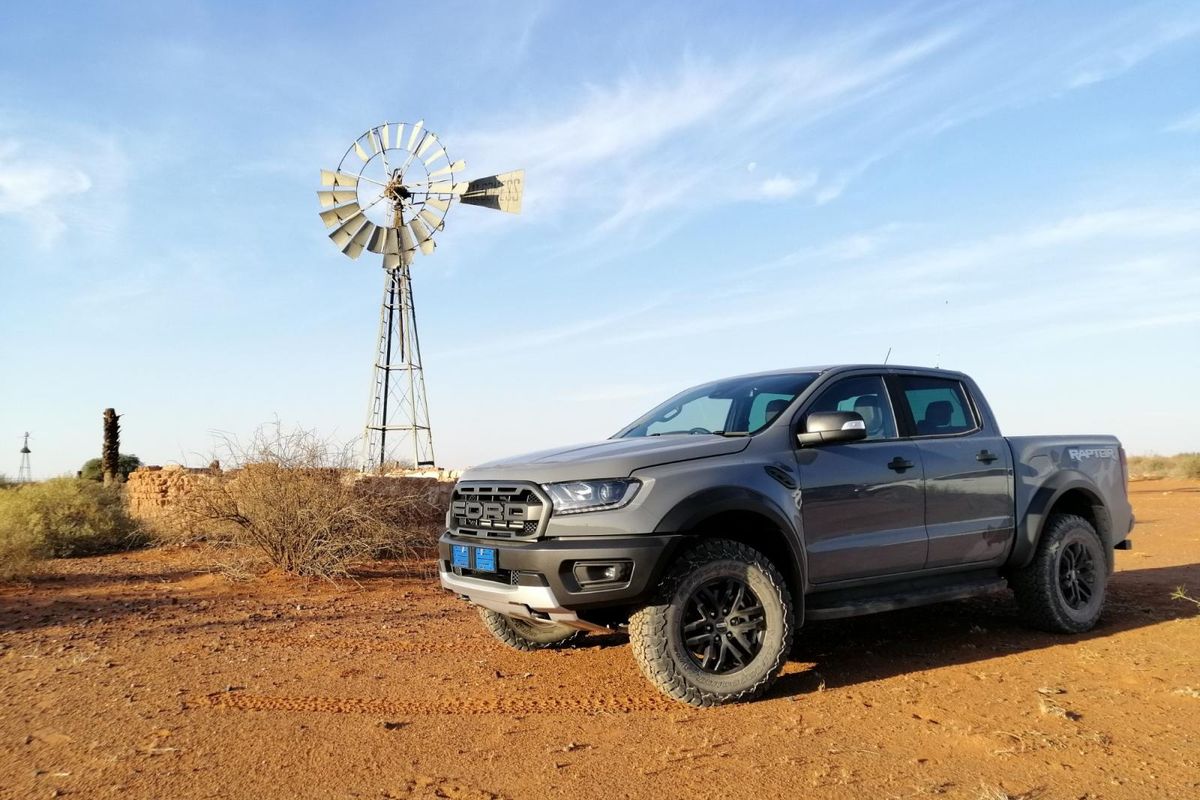
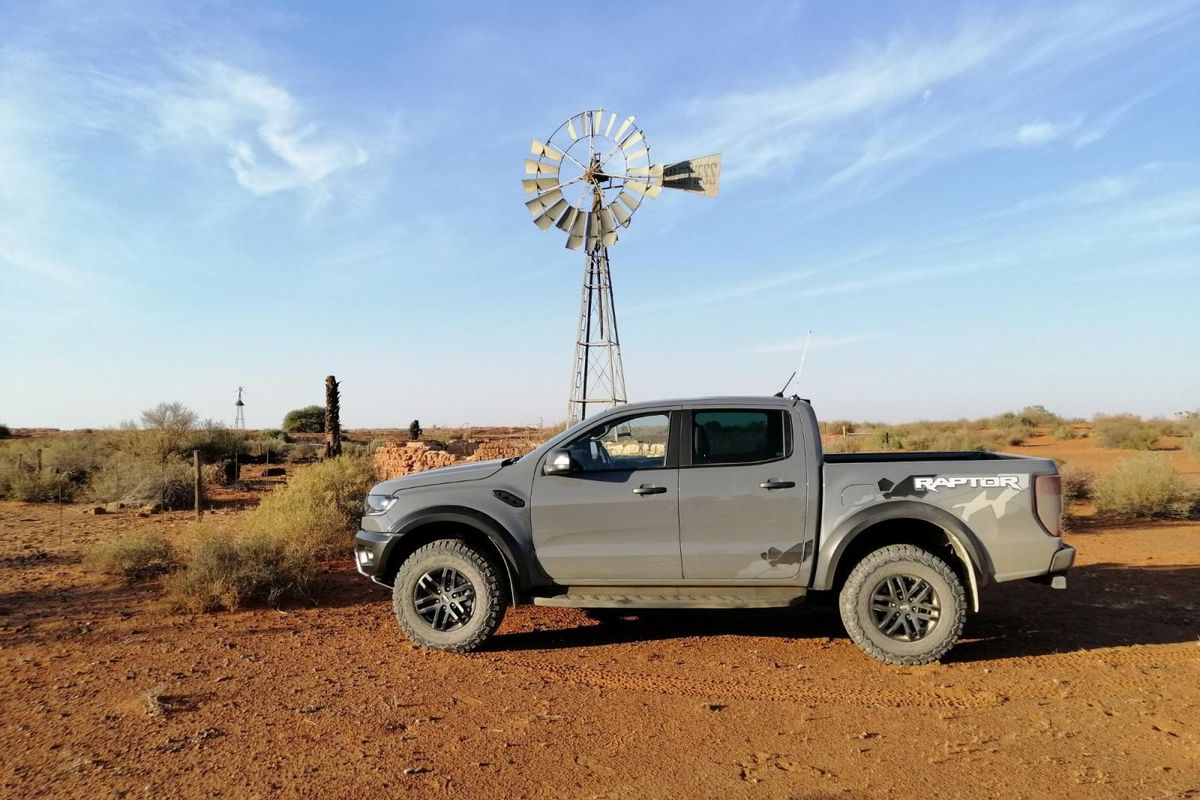
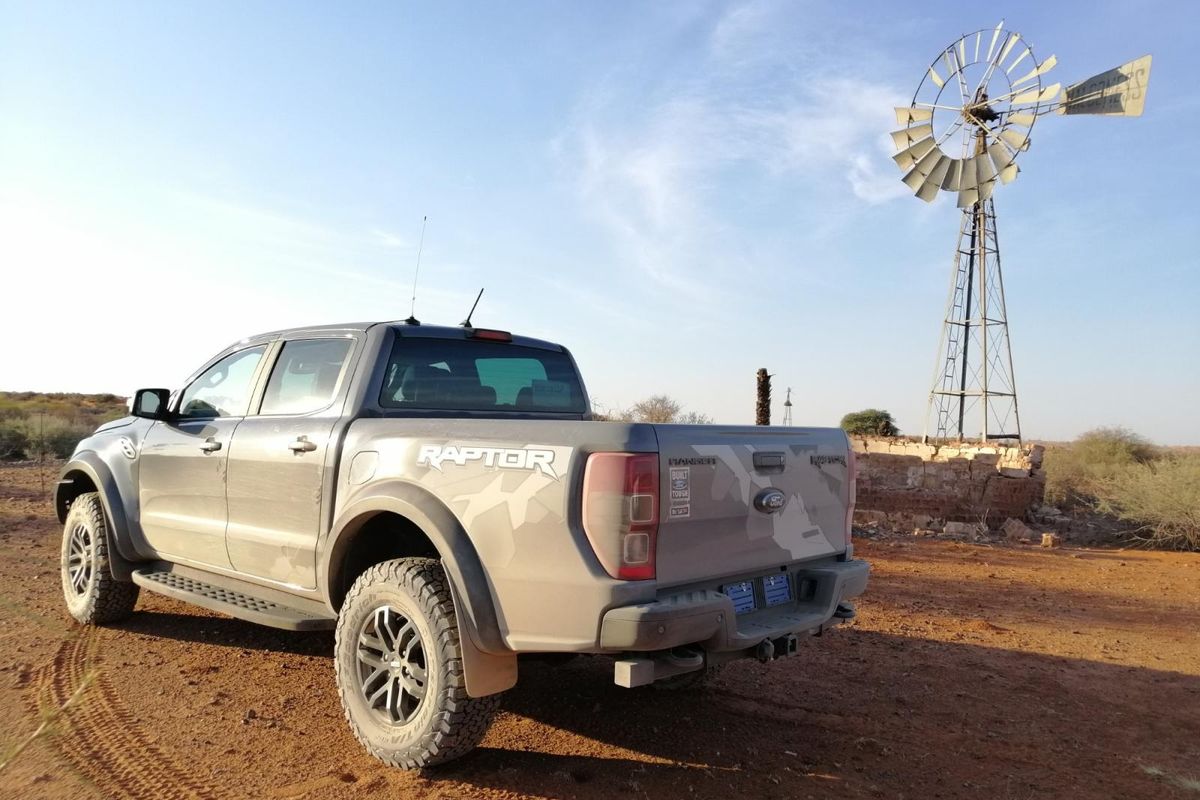
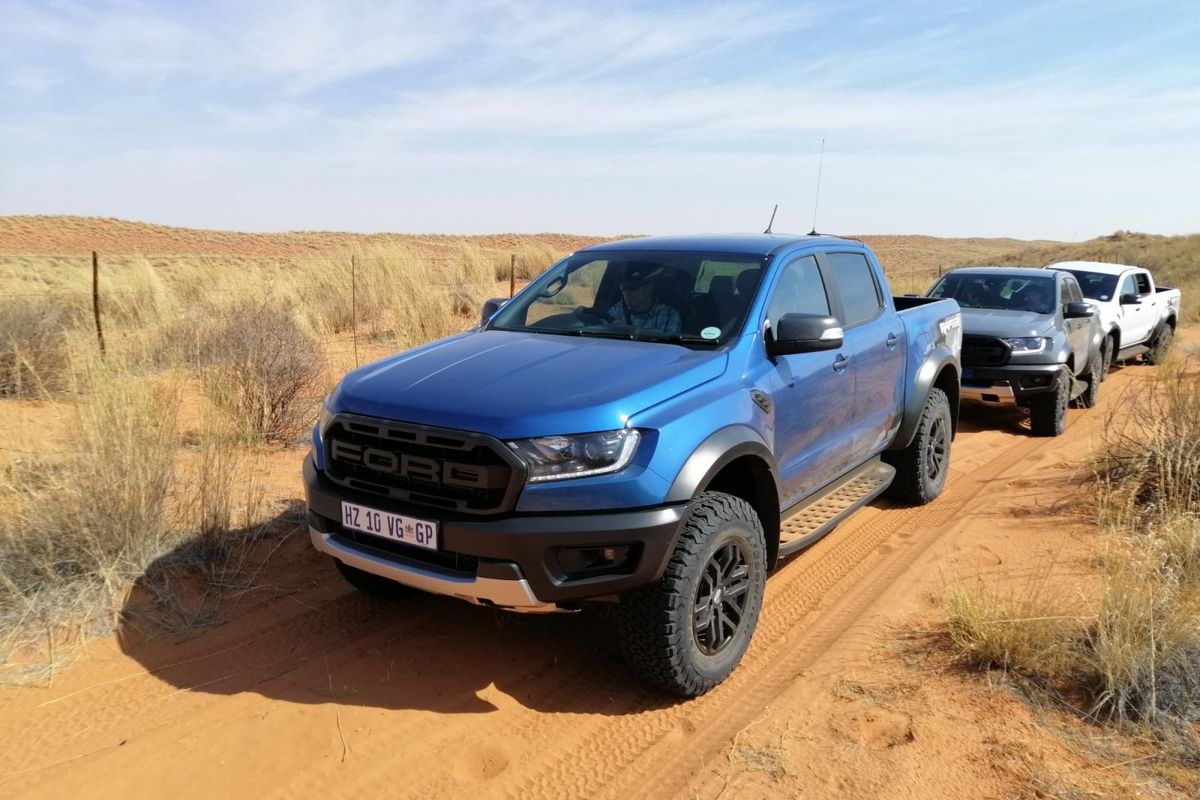
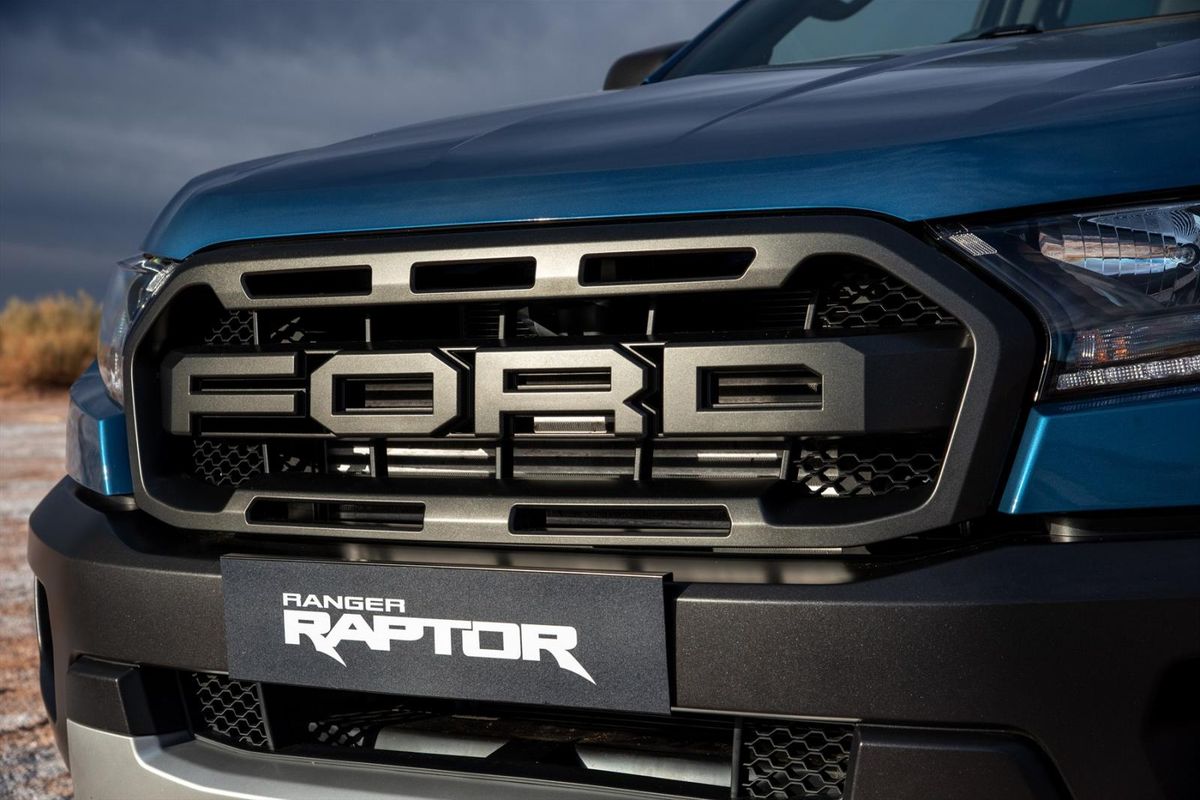
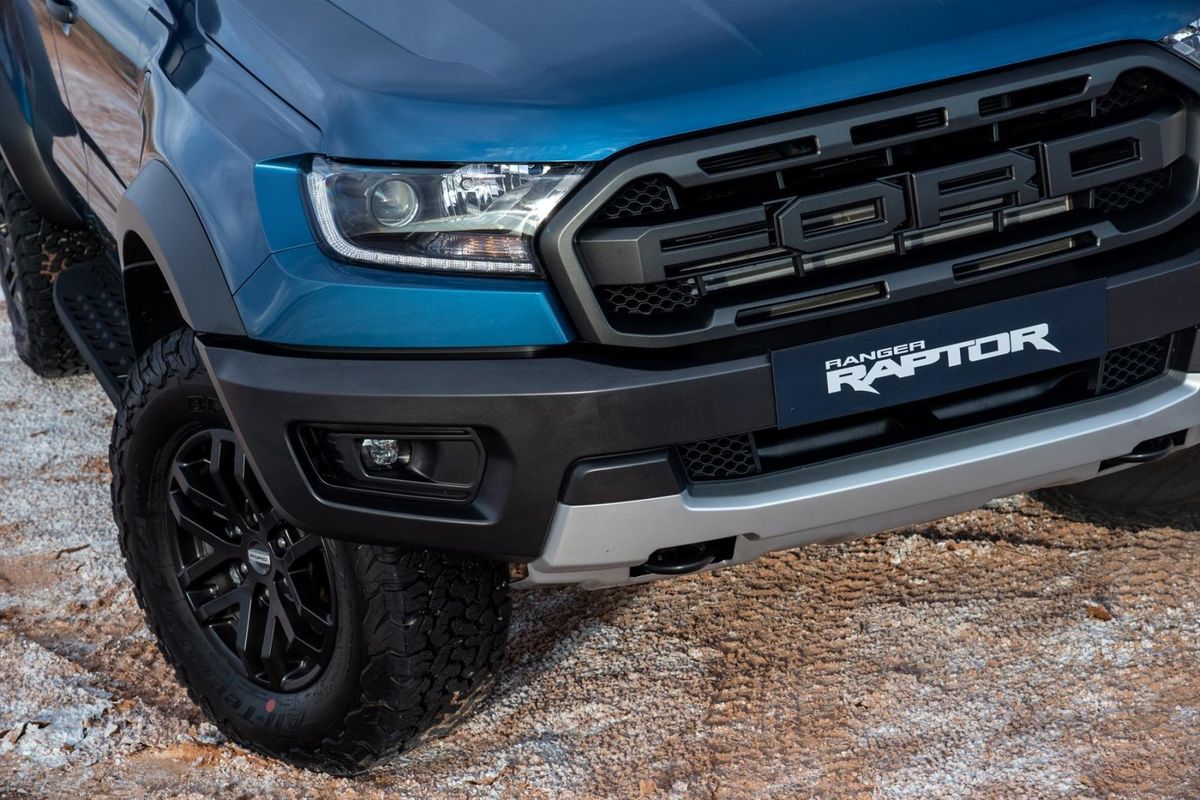
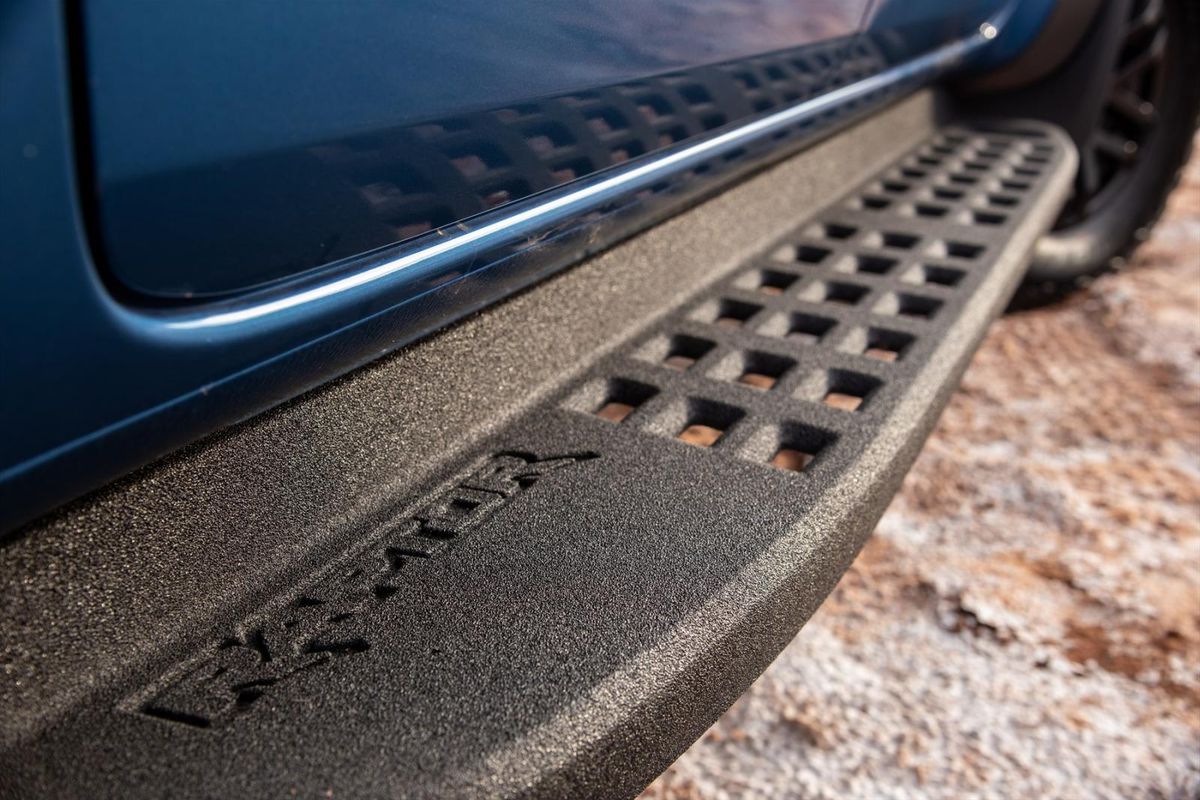
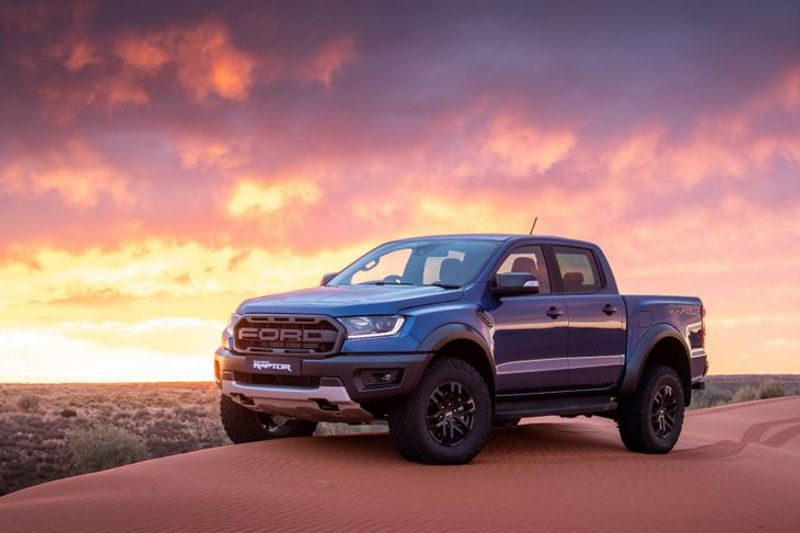
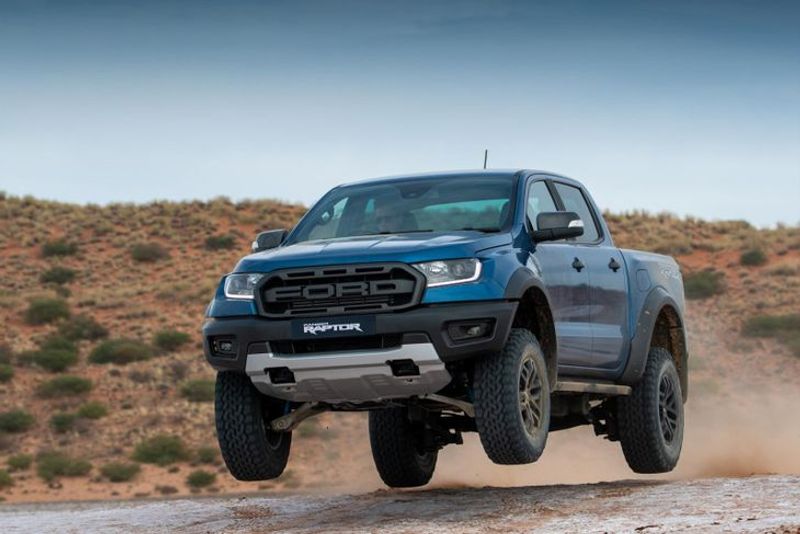
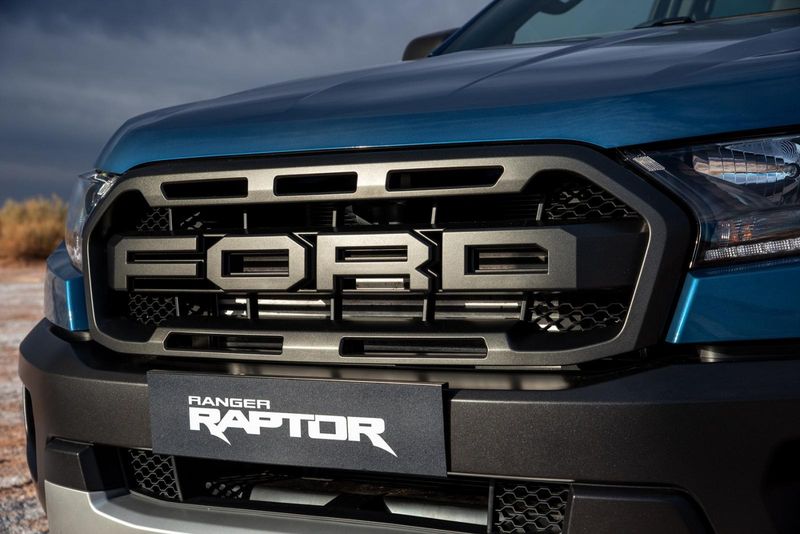
With its flared fenders, F150-inspired grille, 150 mm wider tracks, a raised ride height (283 mm) and chunky, Raptor-specific BF Goodrich all-terrain tyres, the Ranger Raptor looks properly badass and brings a commanding presence to the road. It can also be had in some exciting colours such as Ford Performance Blue, Colorado Red, Absolute Black, Frozen White and Conquer Grey. Also, you can mock all those drivers with their fake Raptor grilles on standard Rangers now.
2. Engineered to conquer offroad
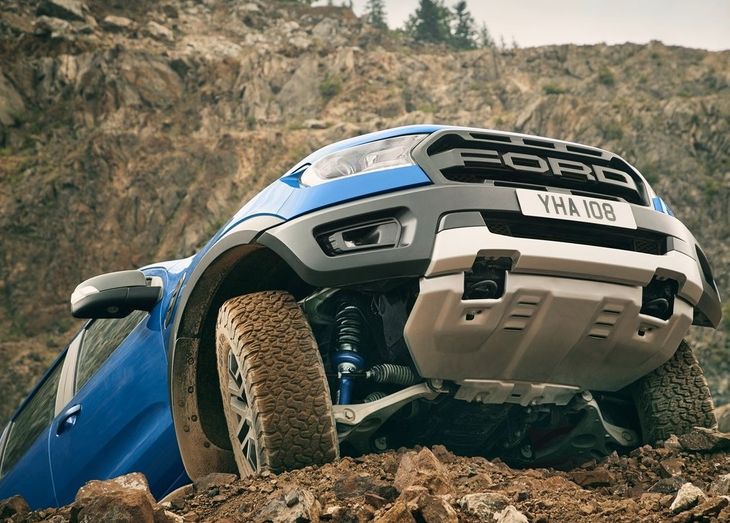
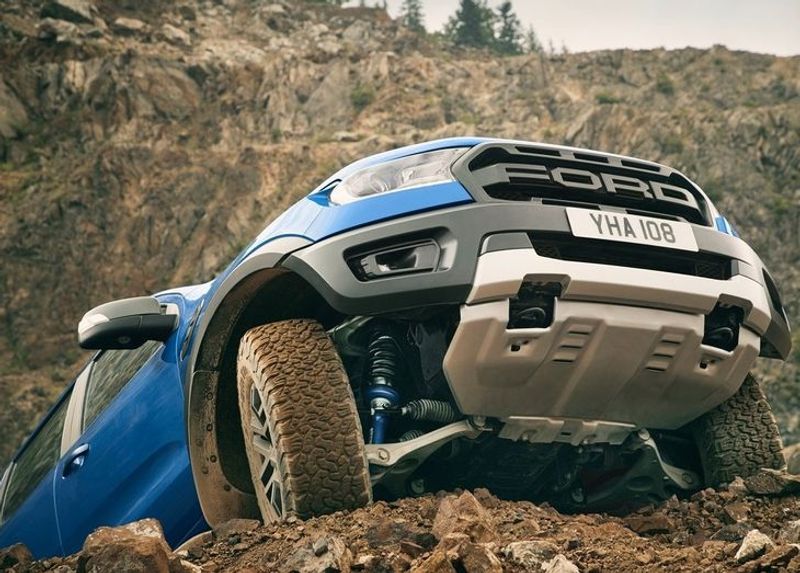
Riding on a specially-developed chassis that’s significantly stiffer, the Raptor has been engineered to withstand brutal offroad beatings. It features a new rear coil-over suspension with an integrated Watt’s linkage which allows for vertical axle movement while minimising lateral movement and this contributes to high levels of control and comfort when engaging in offroad driving.
Ford also partnered with FOX to develop Position-Sensitive Damping (PSD) shock absorbers specifically for the Raptor. They allow for significantly higher damping forces when off-roading while also providing the necessary comfort on-road with lower damping forces. Both the front and rear suspension travel has increased by 32% and 22% respectively when compared with the standard Ranger.
Combined, these features make the Ranger Raptor virtually unstoppable offroad…
3. Baja Mode for fun offroad driving
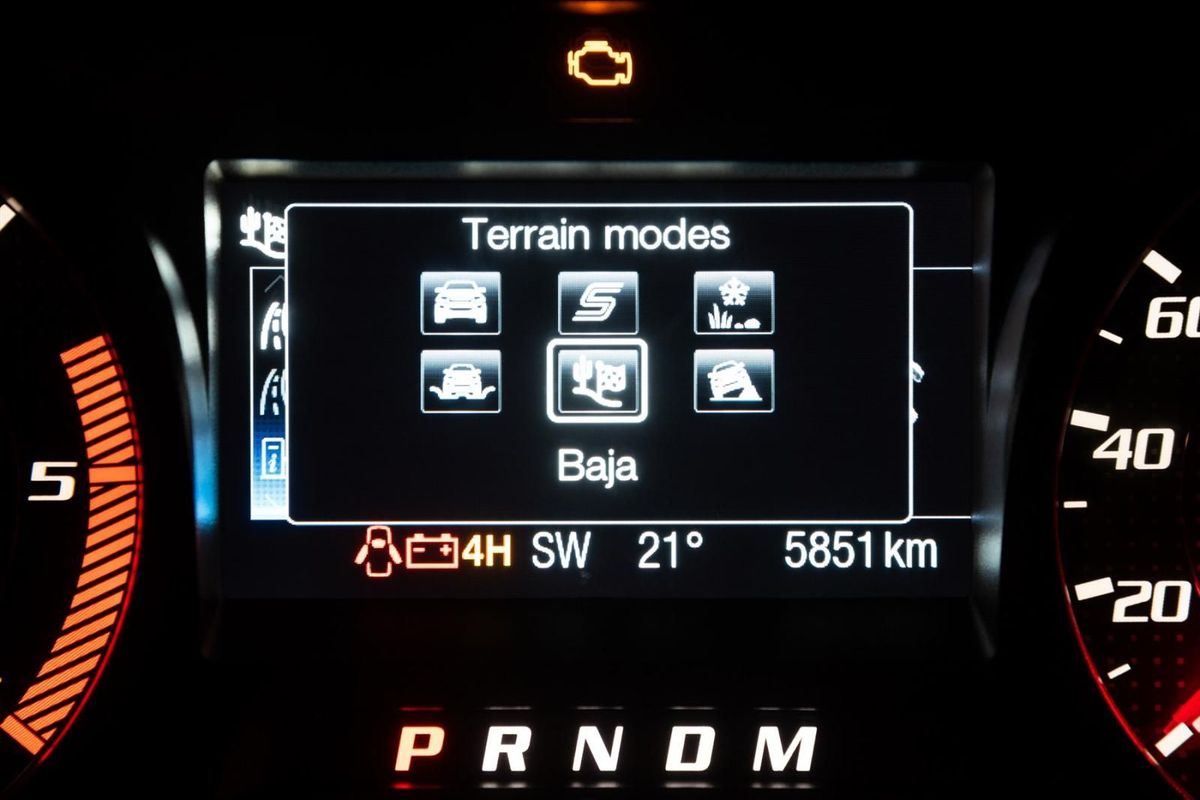
The Ranger Raptor features a Terrain Management System (TMS) with various driving modes for different conditions including Normal and Sport (for on-road driving) and off-road modes including Grass/Gravel/Snow, Mud/Sand, Rock and Baja.
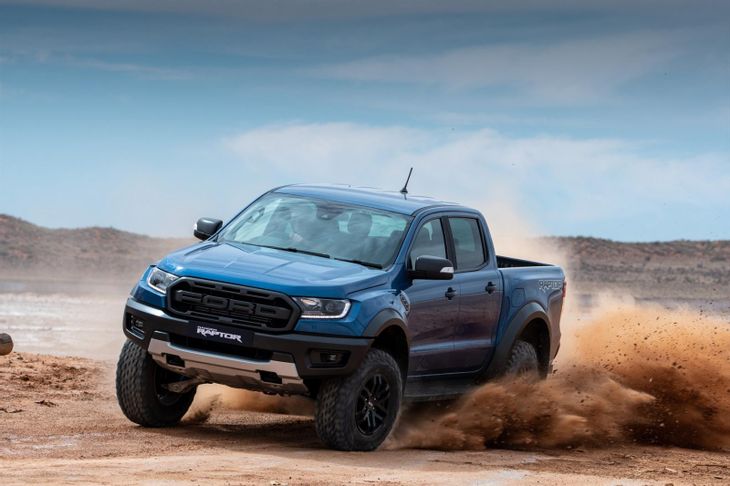
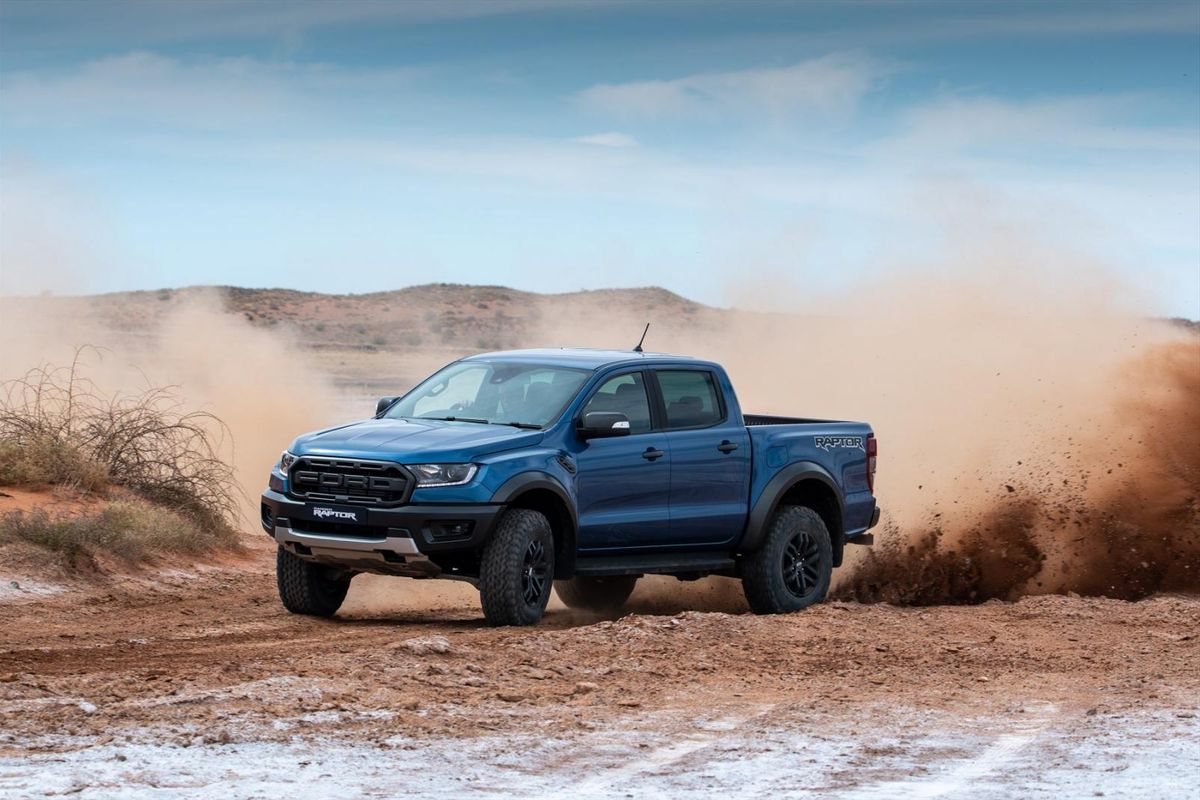
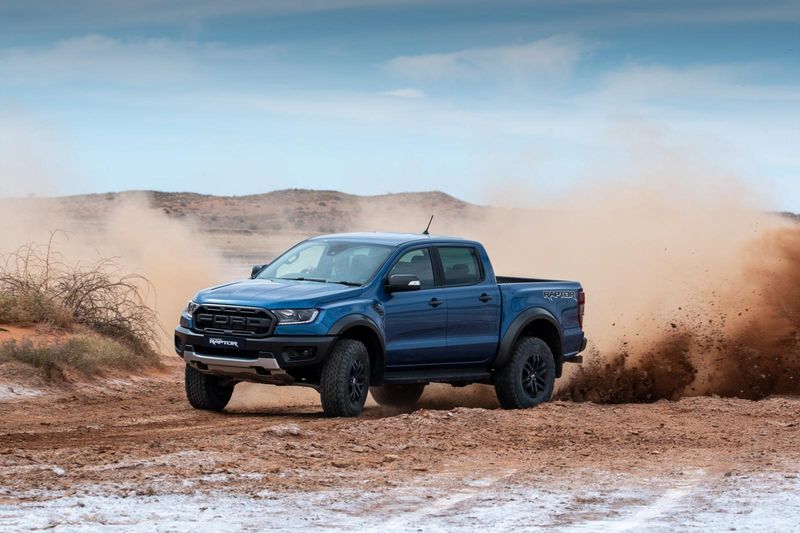
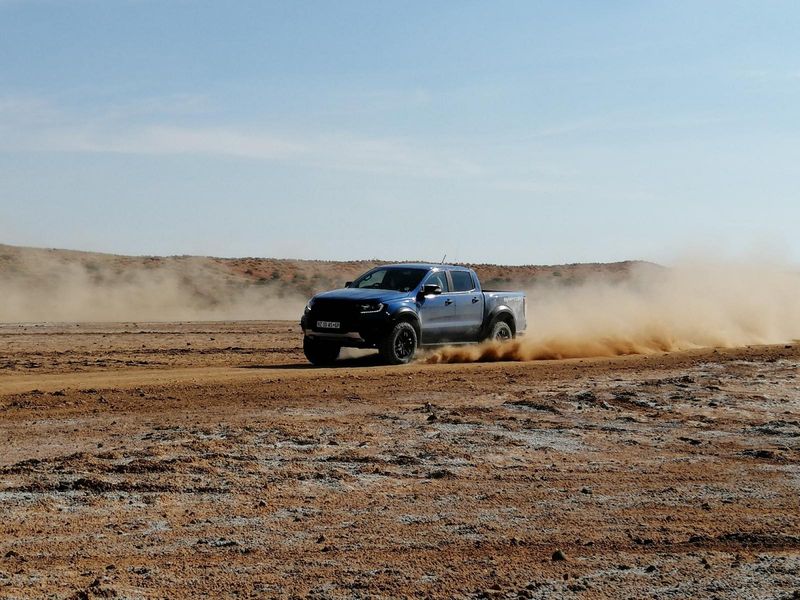
Baja mode (named after the Baja Desert Rally in Mexico) is arguably the coolest feature on the new Ranger Raptor and it’s specifically calibrated for high-speed off-road driving by sharpening up the throttle, transmission and steering response. More than this, "Baja" dials back the stability- and traction control, which makes it ideal for enthusiastic off-road driving and performing controlled drifts at speed.
4. Cool Raptor Interior
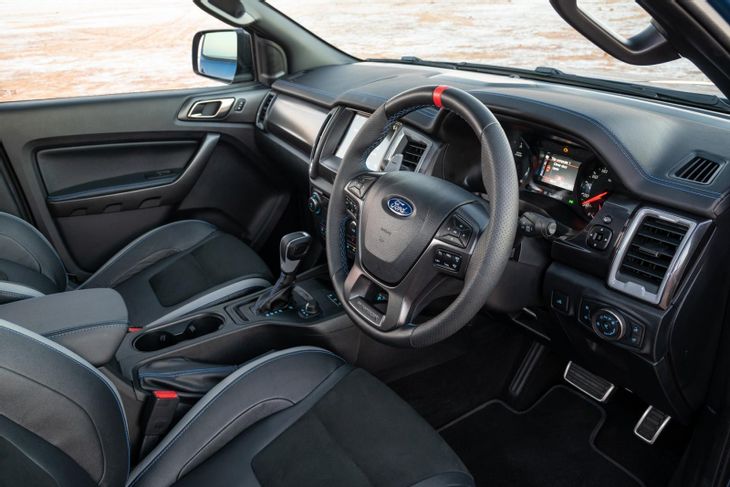
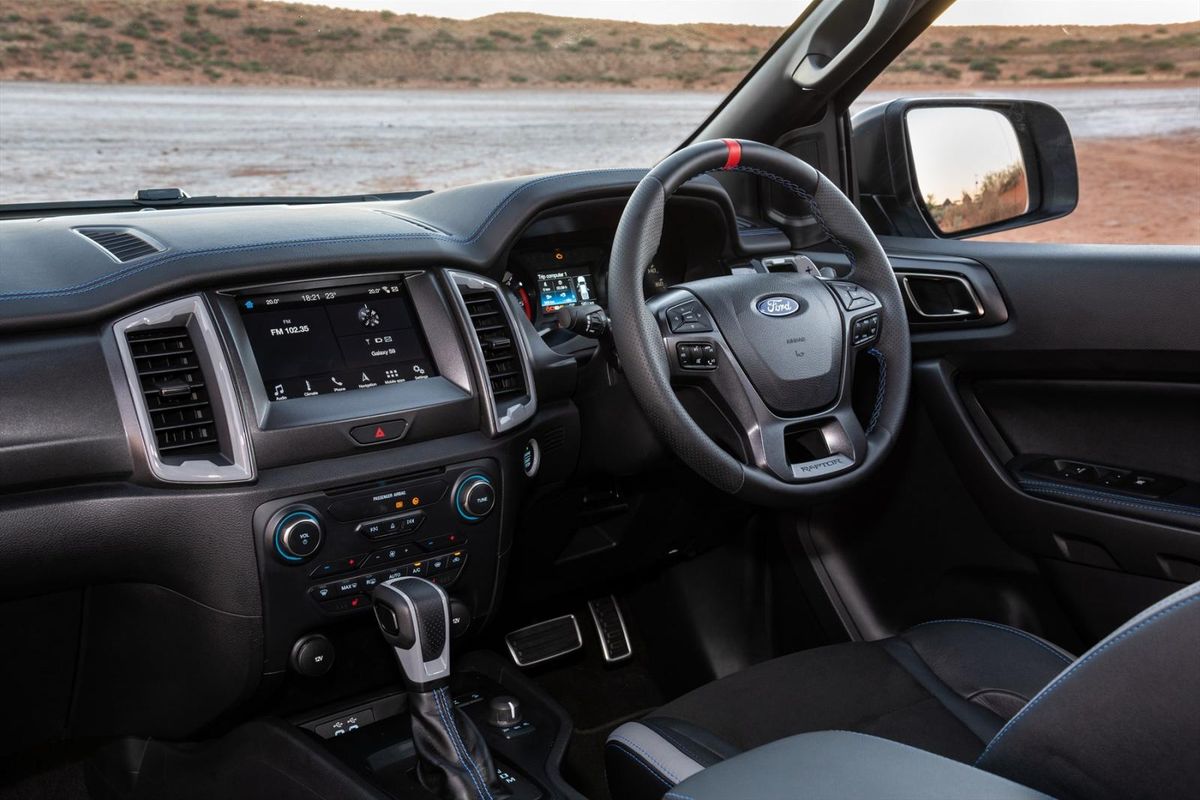
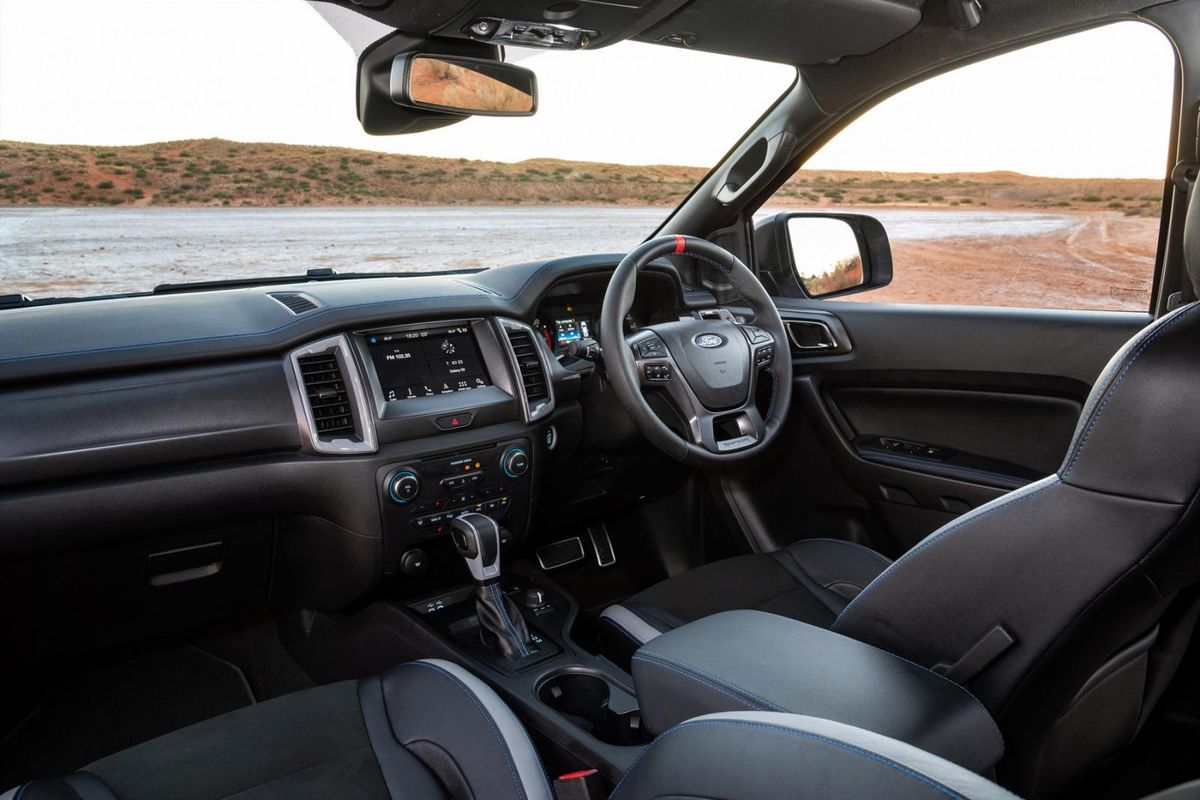
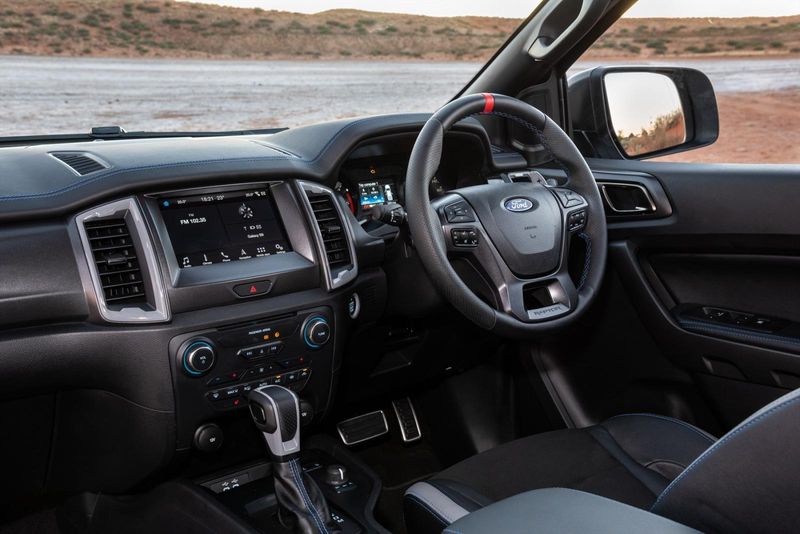
While the Ranger Raptor shares much of its interior design with the standard Ranger, there are some cool features that set it apart. The Raptor is fitted with well-bolstered Raptor sports seats in Technical Suede with blue contrasting stitching which is also seen on the soft-touch leather dashboard.
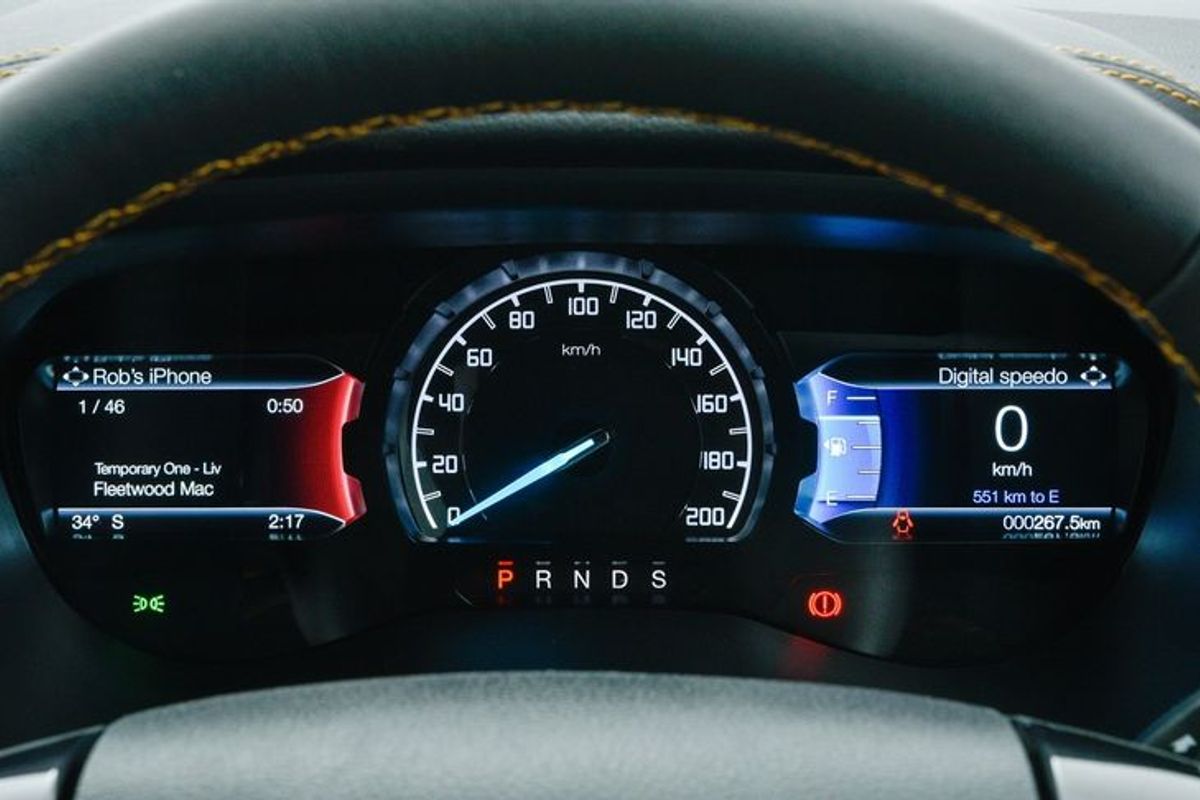
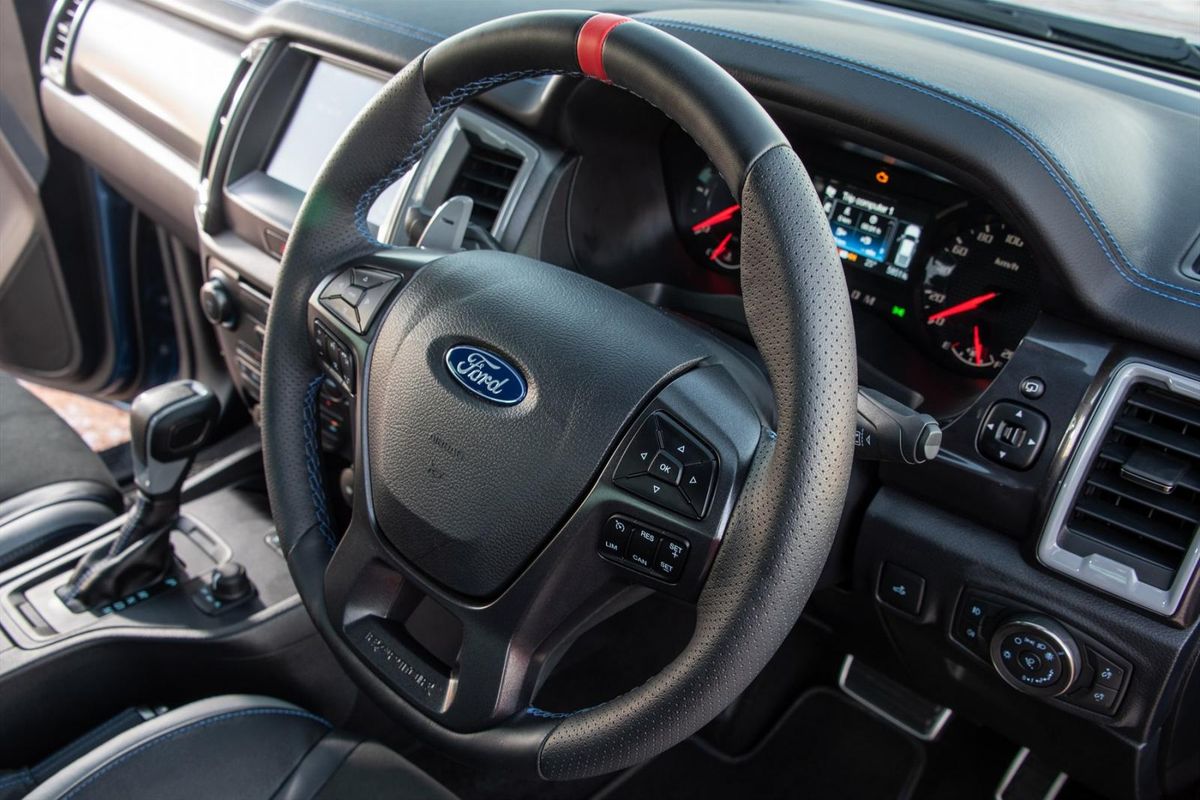
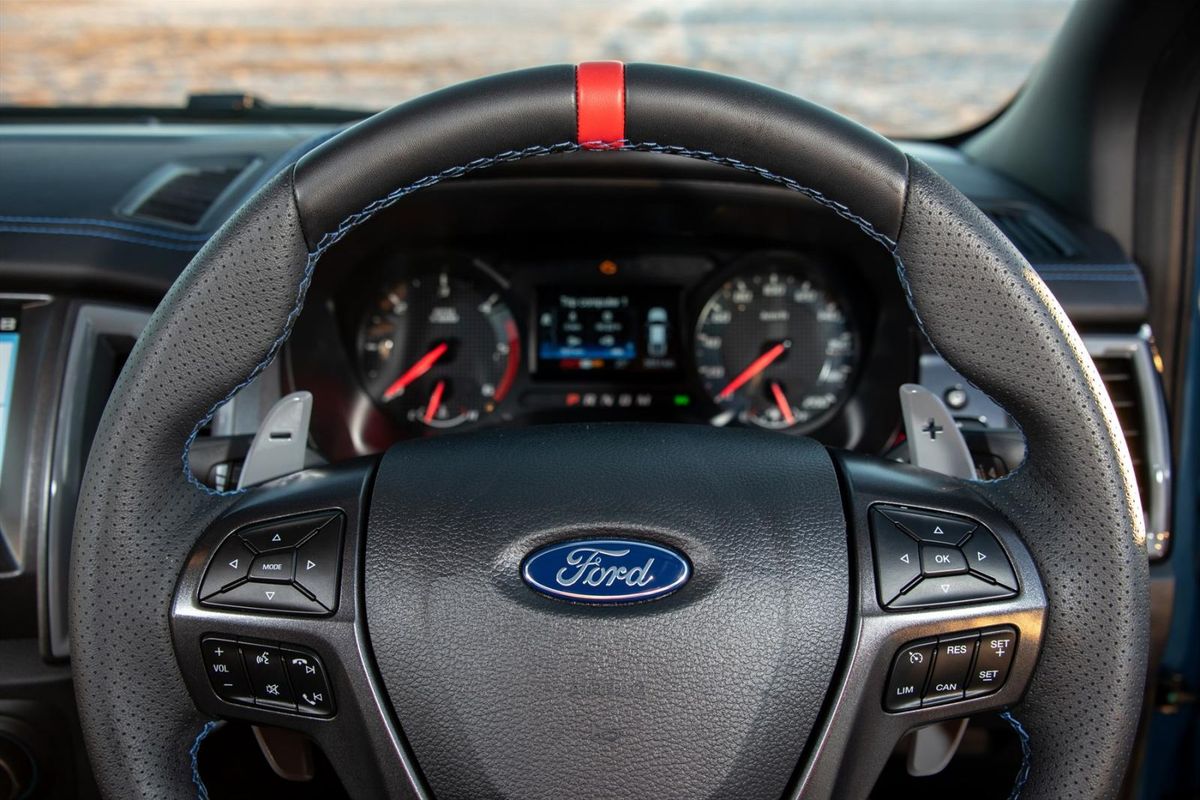
The Raptor steering wheel features a sporty red centre mark and mounted magnesium shift paddles add further sporty appeal. The instrument cluster is also more aggressively styled and features red needles for the dials. Ford Performance sill plates are a reminder that this is a high-performance Ford model…
5. South African-built Ranger Raptor is well-priced compared with other markets
The Ranger Raptor is locally built at Ford’s Silverton facility in Pretoria and as a result, South African customers are getting a good deal when compared to other markets around the world where the Ranger Raptor is sold.
In South Africa, the Ranger Raptor costs R786 400, but in the UK, for instance, it costs roughly R892 516. In Australia, which is also a major market for the Ranger Raptor, it costs R817 512.
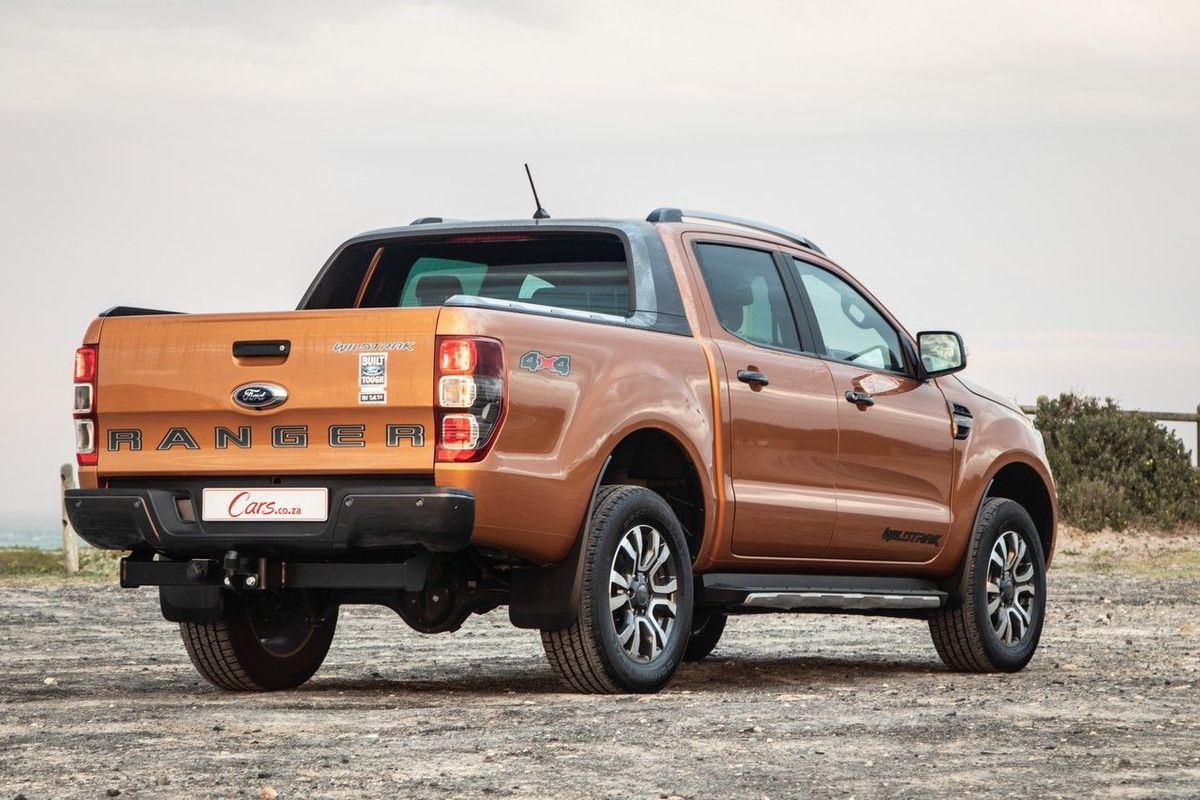
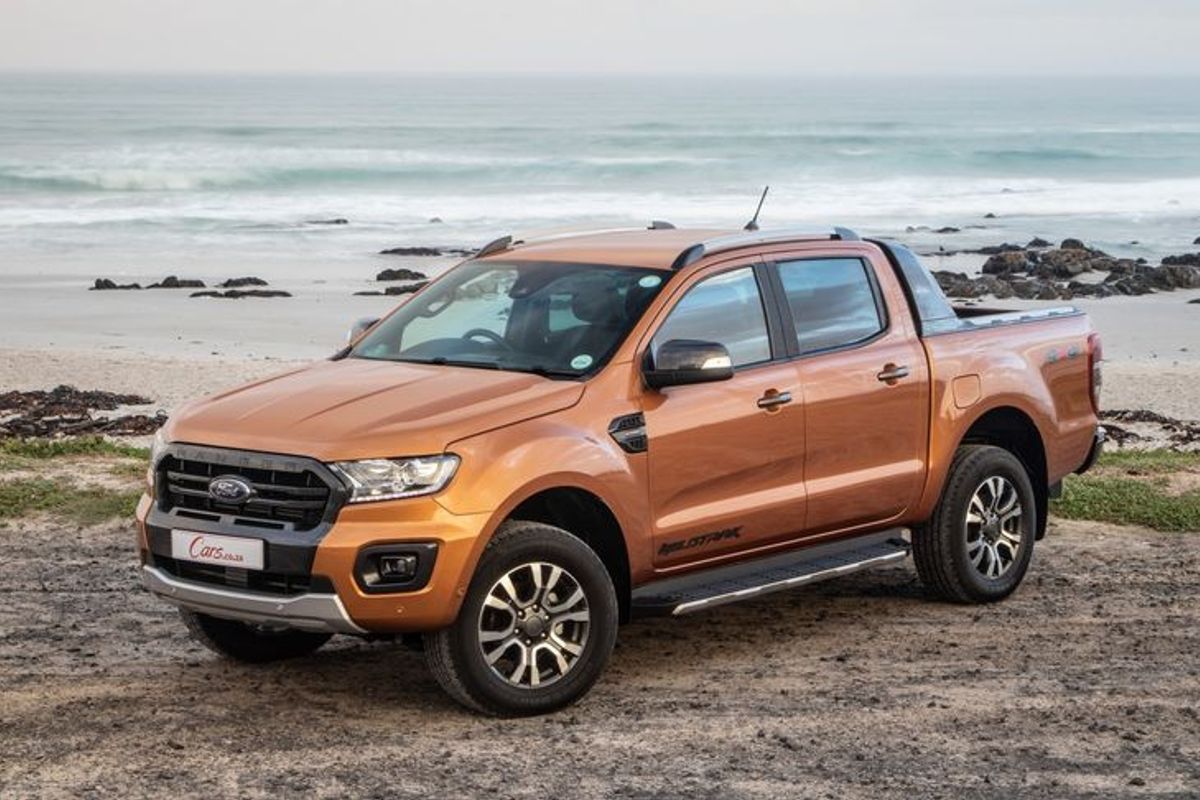
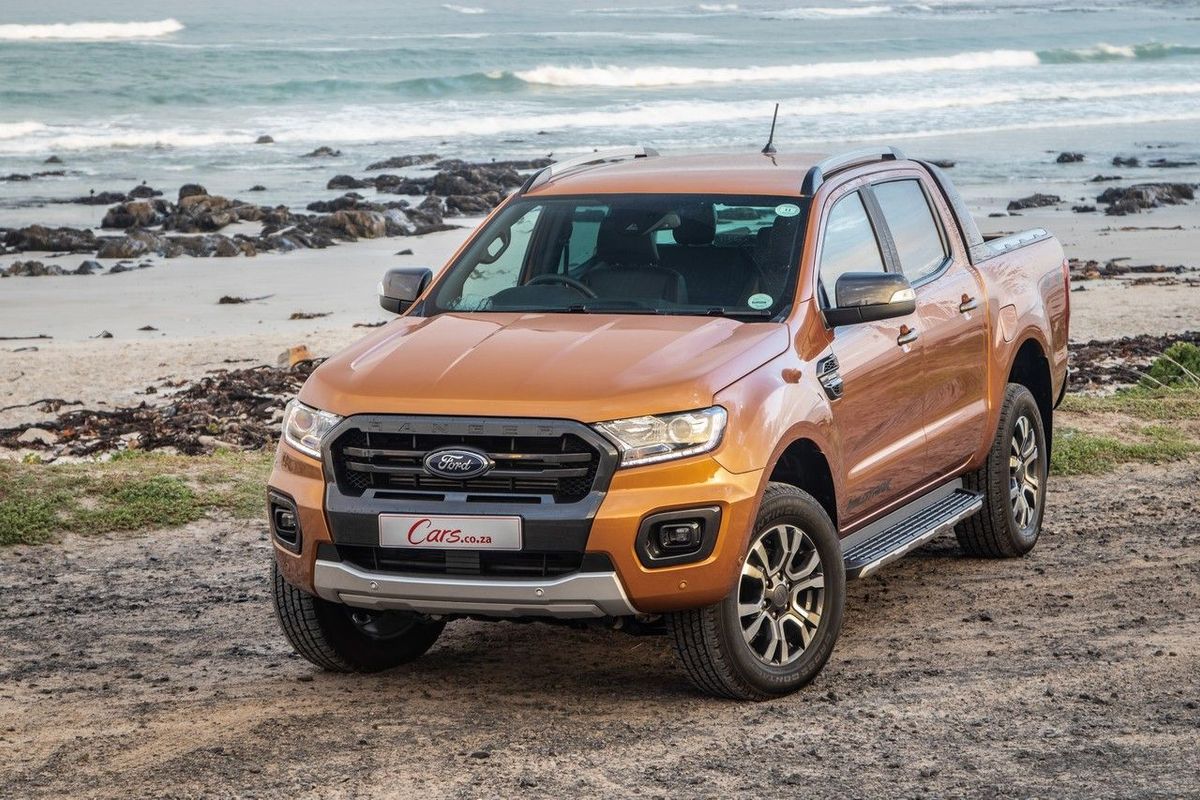
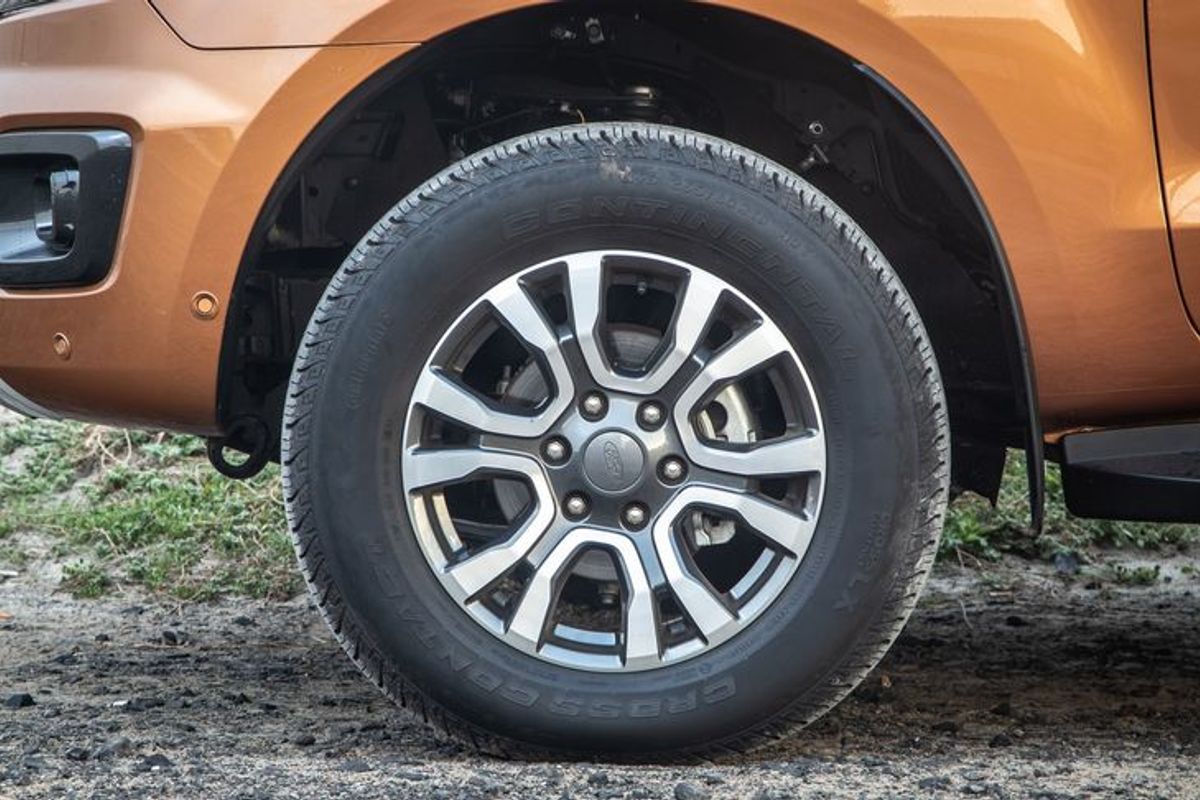
Ford Ranger 2.0Bi-T DC 4×4 Wildtrak auto (2019) Review
We recently put an updated Ford Ranger 2.0Bi-Turbo double cab 4×4 Wildtrak auto through its paces. Can a downsized engine and a new 10-speed 'box make that much of a difference to the flagship derivative in the line-up? You bet! There's a lot more than just a powertrain change – let's find out if the updated bakkie deserves a closer look.
We like: Refined powertrain, standard spec (most connected model in its segment), rugged and capable.
We don't like: Some iffy plastics here and there, lingering concerns about theft.
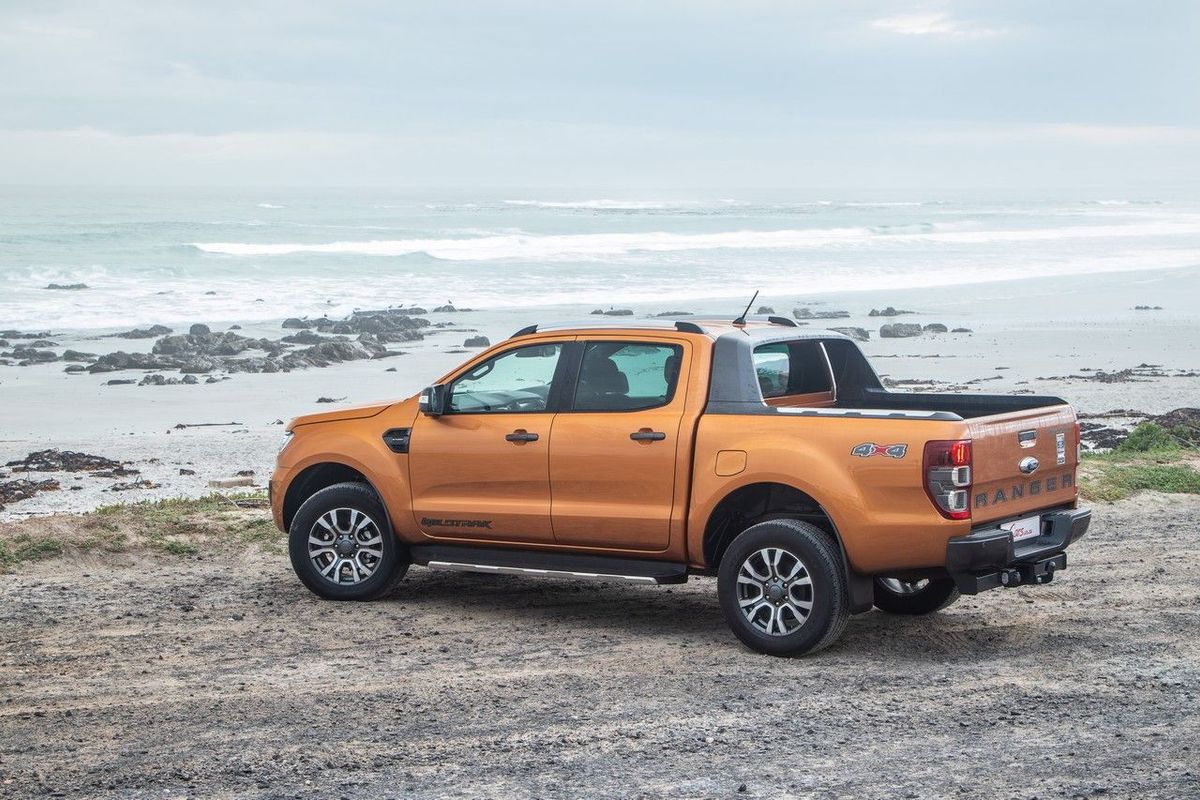
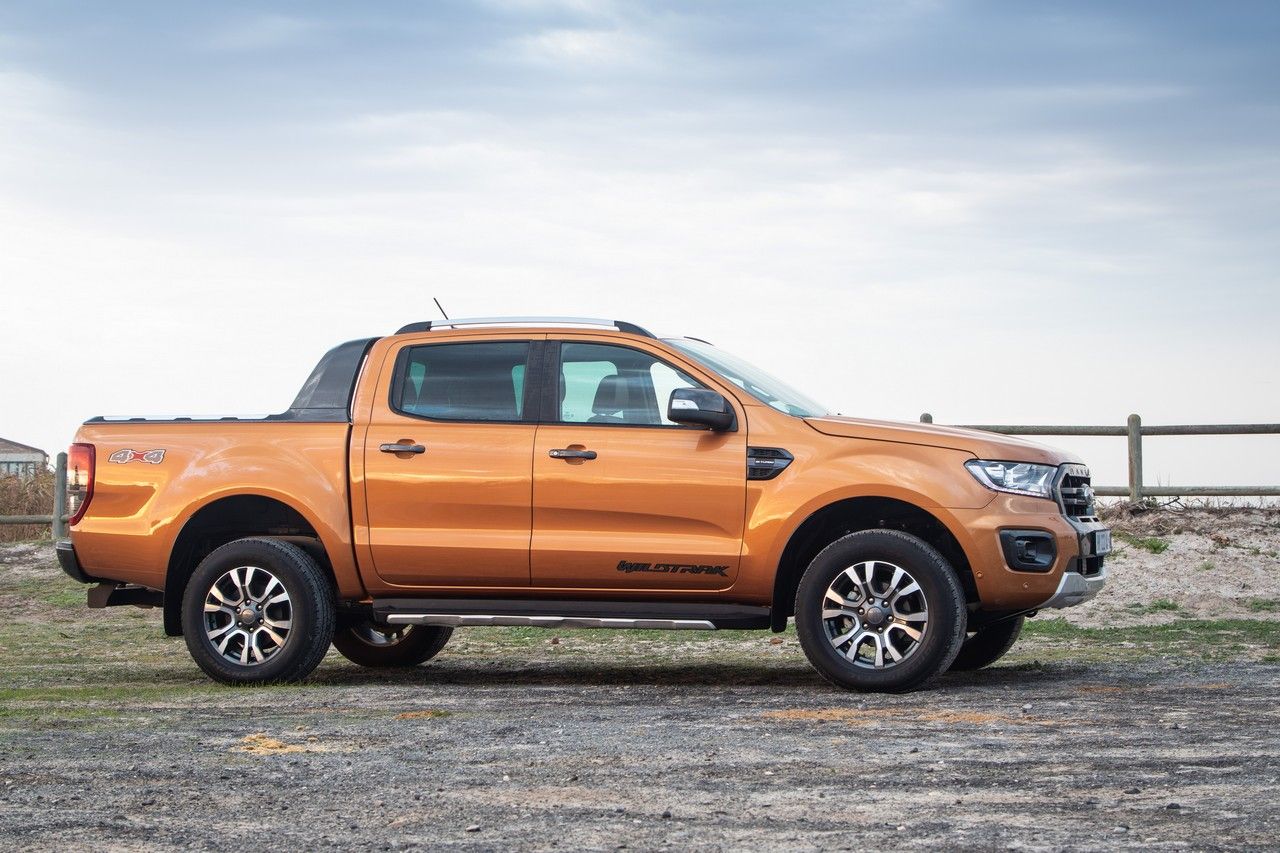
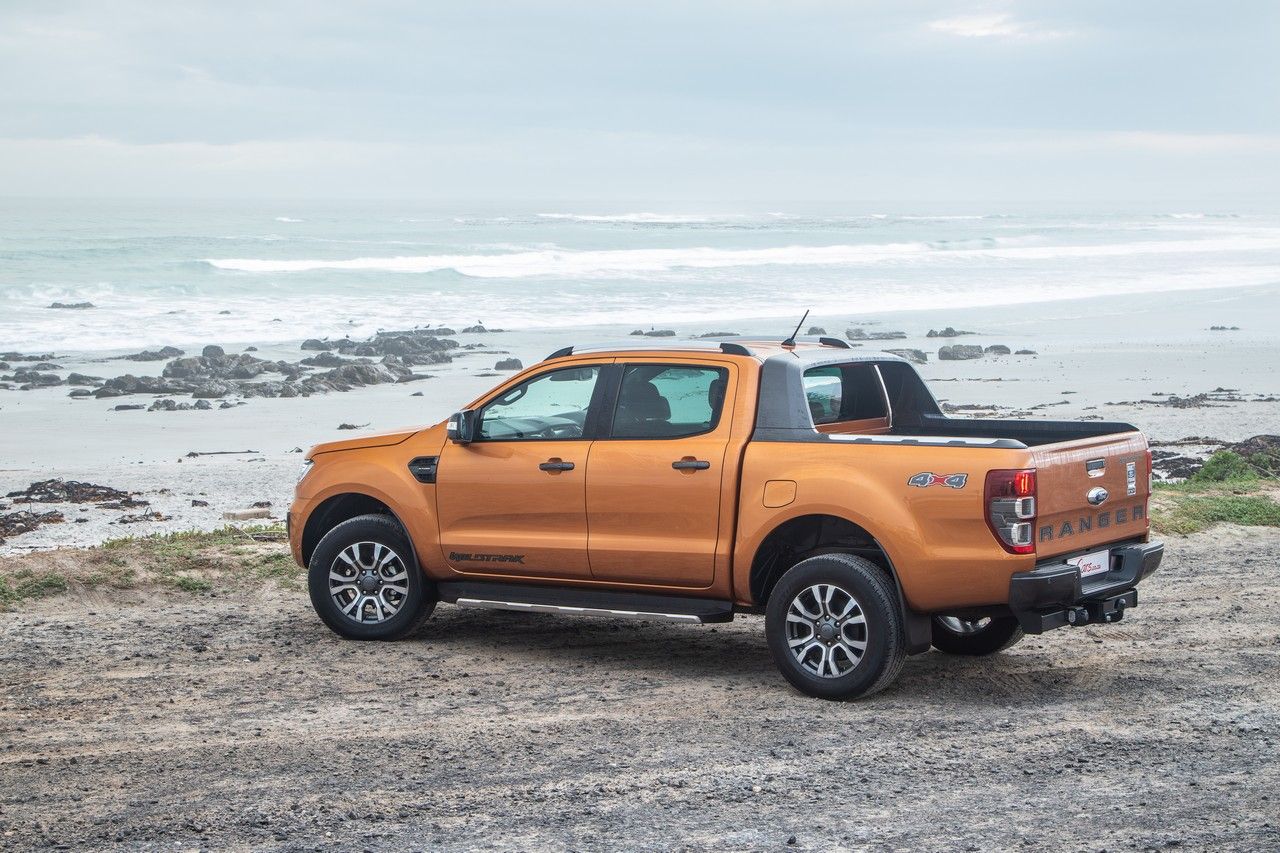
The changes on the exterior of the Wildtrak are minimal, with a subtle bi-turbo badge on the flank
The updated Ford Ranger range was launched in South Africa in April 2019 and, given how popular this double-cab bakkie is, a thorough revision was required to keep the Blue Oval's pick-up up to date in a cutthroat segment. The Ranger is available in 3 body styles: single cab, super cab and double-cab. Ford has carried over some of the engines of the previous version and product portfolio now comprises around 30 derivatives.
The pre-facelift Ranger was not without its faults. There were complaints about the reliability of the 3.2-litre's automatic transmission and how easy it seemed for the bakkie to get stolen. We enjoyed the soundtrack of the 5-cylinder engine, but it had an unhealthy appetite for diesel and felt more sluggish than its outputs suggested. There were also some interior quality issues, which we thought were unacceptable for a vehicle that cost as much as the previous Wildtrak did, but Ford claims to have addressed these issues. Has the comprehensive upgrade been successful?
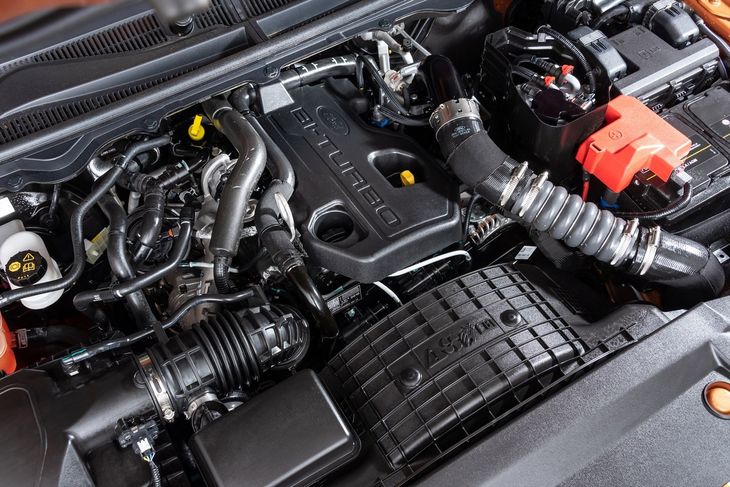
At the heart of the Wildtrak is a bi-turbo 2.0-litre diesel engine. Power and torque are up despite the loss of 1 cylinder and 1.2 litres of capacity.
One of the major changes to the Wildtrak can be found under its bonnet. The Ranger line-up features a couple of new-generation 2.0-litre 4-cylinder diesel engines and this 157 kW/500 Nm bi-turbo motor is the flagship motor. Assembled at Ford's plant in Port Elizabeth, this new powerplant is not only more powerful than the older 3.2-litre 5-cylinder turbodiesel unit, which produced 147 kW and 470 Nm, but it has a vastly improved claimed consumption figure of 8.1 L/100 km, which is undoubtedly helped by the efficiency of its main cohort: the new 10-speed automatic transmission.
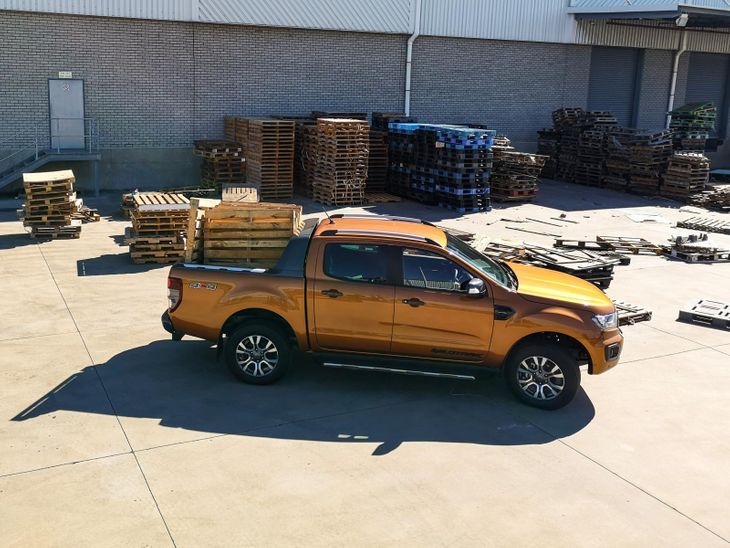
We put the workhorse capabilities of the Wildtrak to the test; it carried plenty of wooden pallets (Picture credit: Andrew Crawford).
What is the new engine like? Well, first impressions (at the updated range's media launch) were good and we can now confirm that this new 2.0-litre bi-turbo is much more responsive and eager than the 3.2, with the added bonus of the Ranger being exceptionally quiet and refined for a vehicle in this class. The power delivery is silky-smooth and the transmission shifts gears smartly and timeously; it never seems to hunt for the correct ratio.
Thanks to some clever tech, the transmission can shift down far more quickly than you might expect. Say you want to execute a quick overtaking manoeuvre while you're cruising in 10th gear, for example. Just indicate, floor the accelerator and the transmission will effortlessly drop down to 6th or 7th almost immediately. With the bi-turbo setup, lag is largely unnoticeable and the Wildtrak can summon all 500 Newton metres in an instant.
Comfort & standard features?
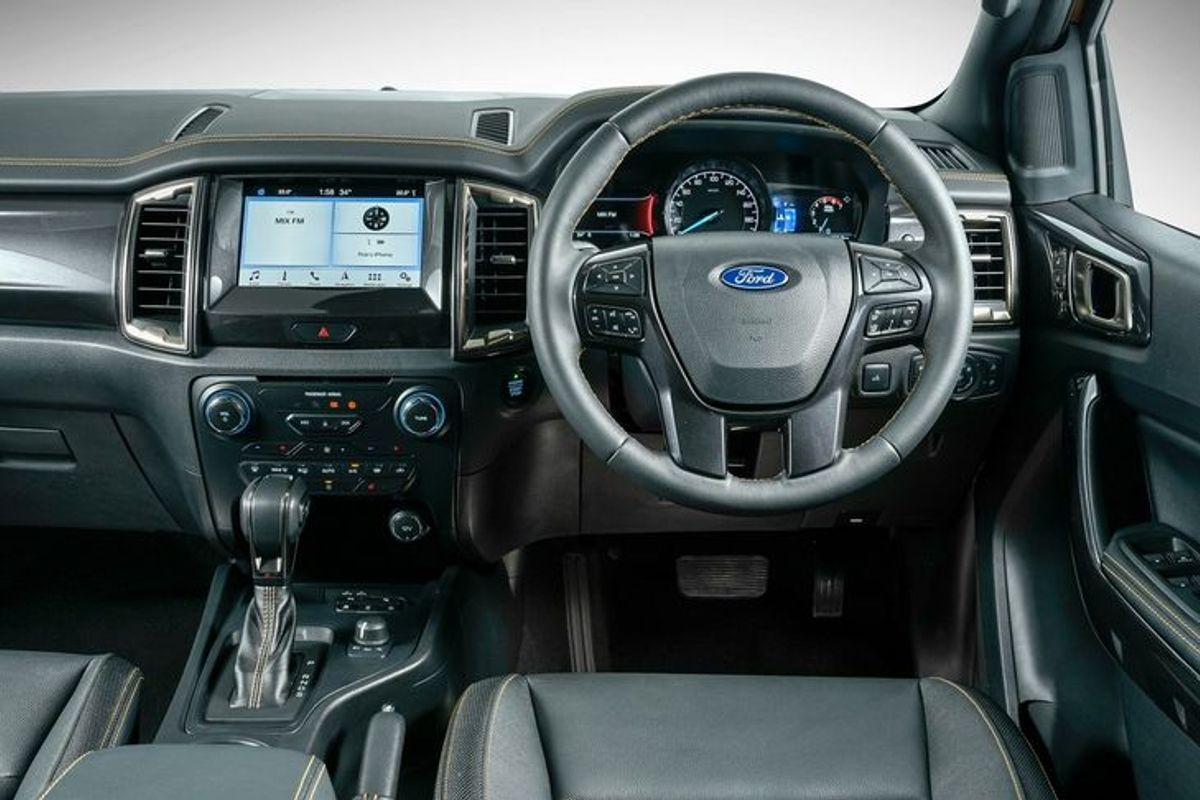
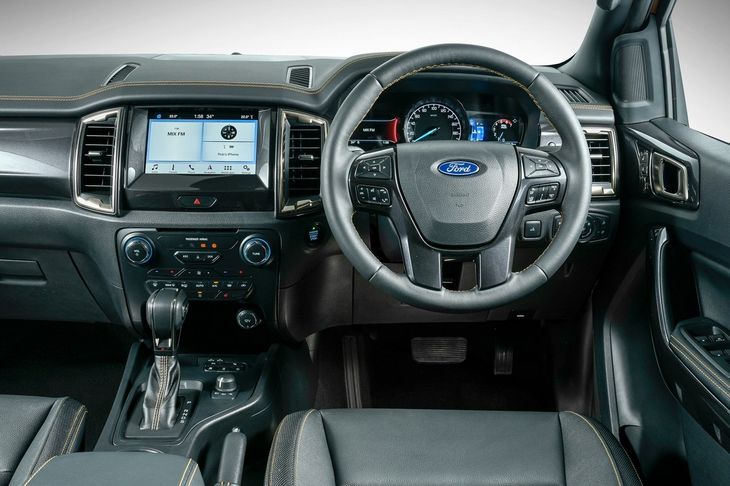
The cabin of the updated Ford Ranger Wildtrak doesn't look that much different to before, but features a number of quality upgrades.
In luxurious Wildtrak trim, the Ford Ranger unashamedly panders to the "leisure" or "lifestyle" end of the double-cab bakkie market. While there is definitely a market for hardcore and superbly capable bakkies, the reality is that not all that many people who buy Wildtrak-spec Rangers will fully utilise the 4×4 double cab's immense off-road abilities, at least not very often. To park an attention-grabbing big-rig like this in your driveway is a status statement and the knowledge that you can easily pack the family and drive to Mozambique is, well, a bonus. Double-cabs, however, aren't renowned for excellent occupant comfort and, to compensate, Ford has tried its utmost to flood the Ranger's cabin with convenience features.
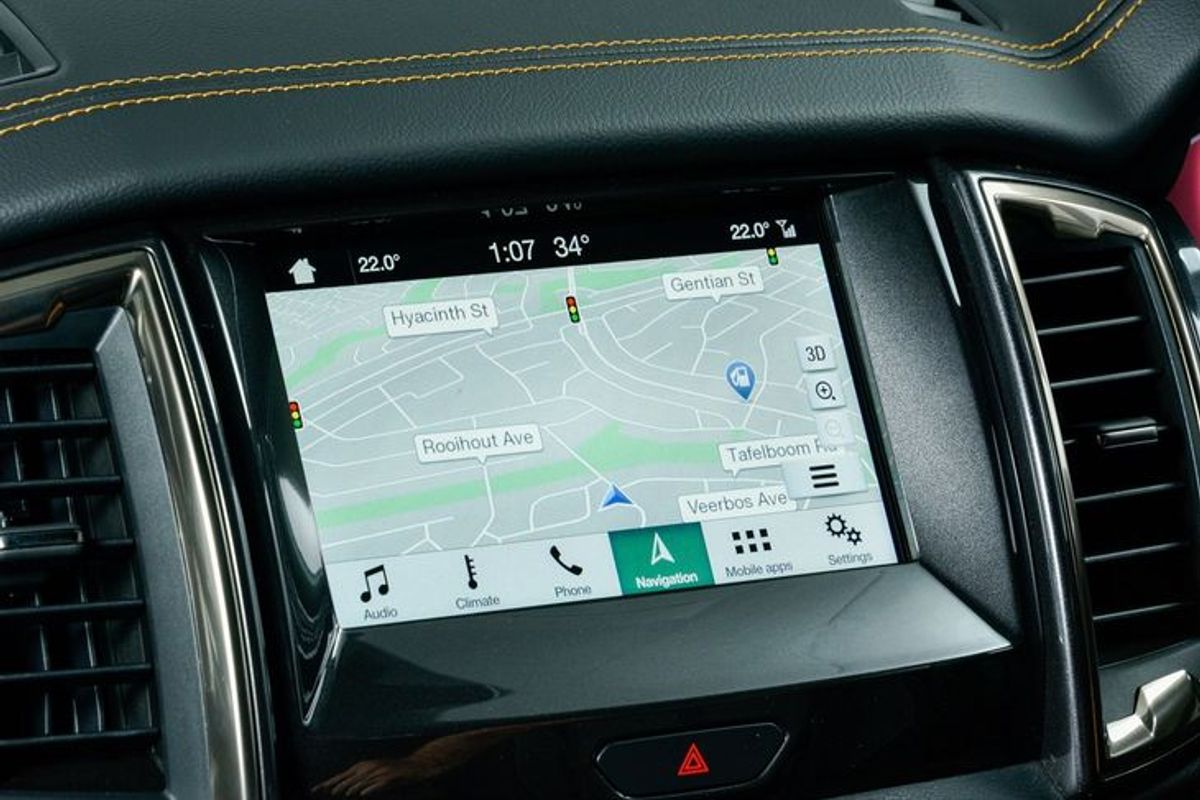
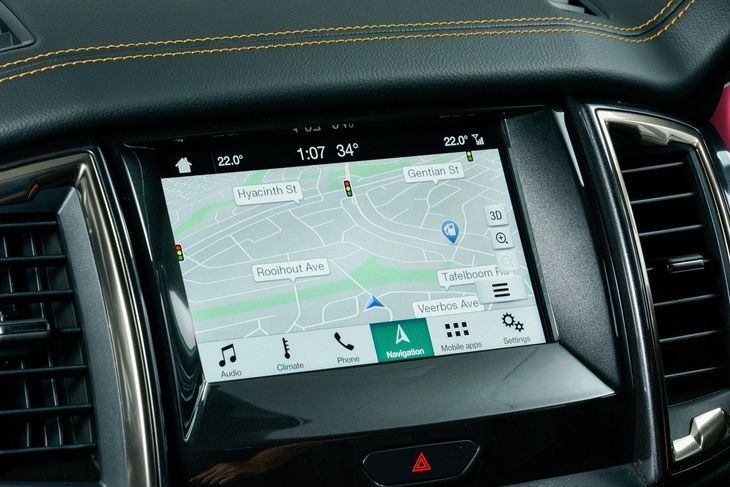
The Ford SYNC3 setup is arguably best-in-class in terms of its intuitive and comprehensive infotainment interface.
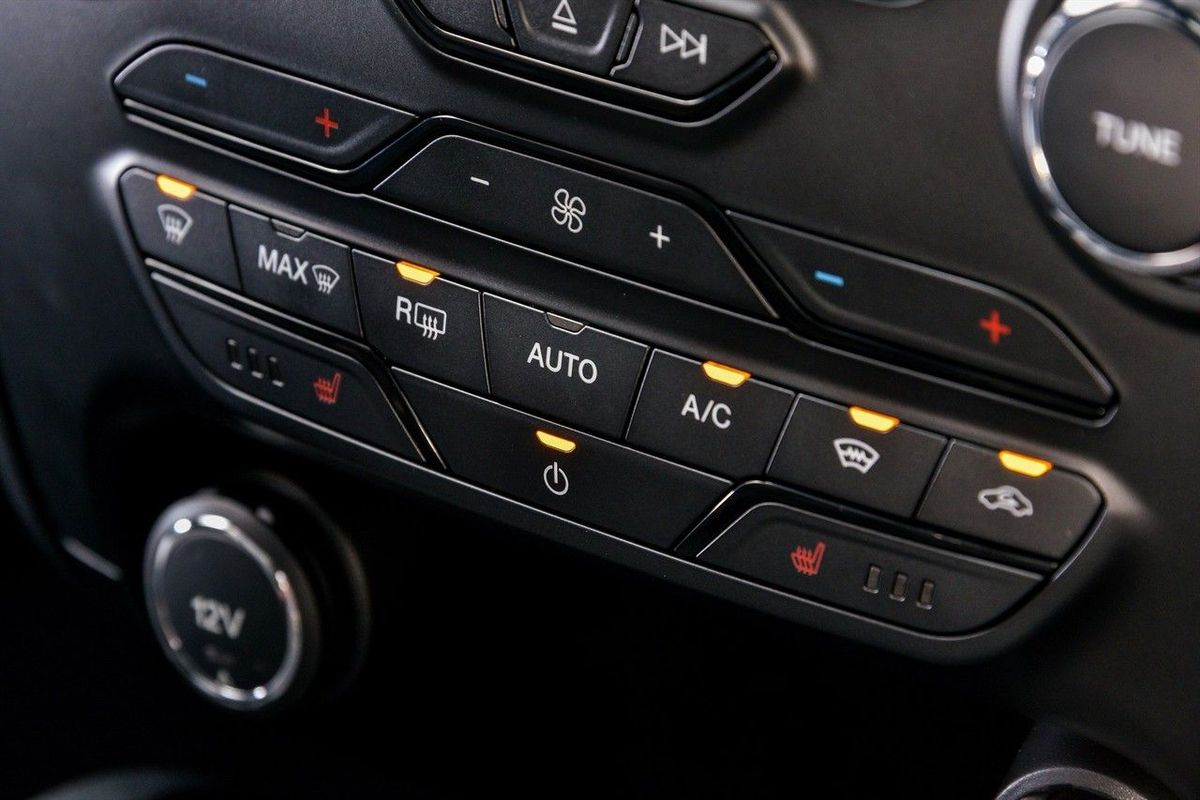
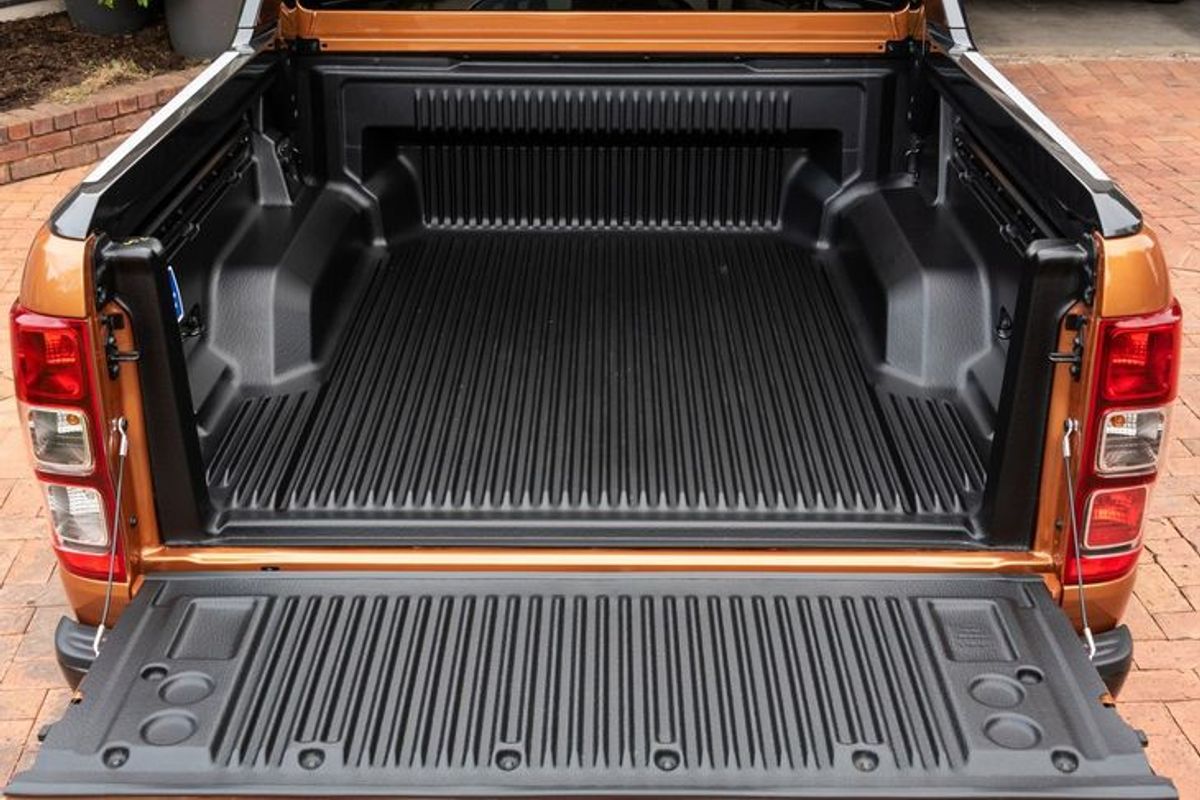
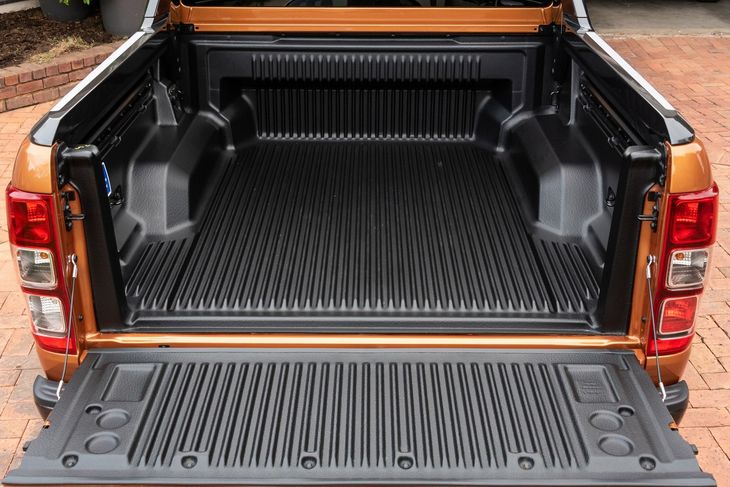
It's hard to argue against the Ranger Wildtrak being the most connected and feature-packed product in its segment. From a semi-digital dashboard with crisp graphics to the advanced-yet-intuitive SYNC3 infotainment system and everything in between, the Ford offers more connectivity than any other bakkie in the market. There are 2 USB ports at the front (they're illuminated so you can find them in the dark), plus Apple CarPlay and Android Auto compatibility and satellite navigation are standard. As we're heading into the winter months, we made use of the (front) seat heaters and, for those who plan to load up the Ranger's capacious load bed, the bakkie's new tailgate benefits from a torsion rod, which makes it easier to operate.
The load bed now features an easy-to-lift tailgate.
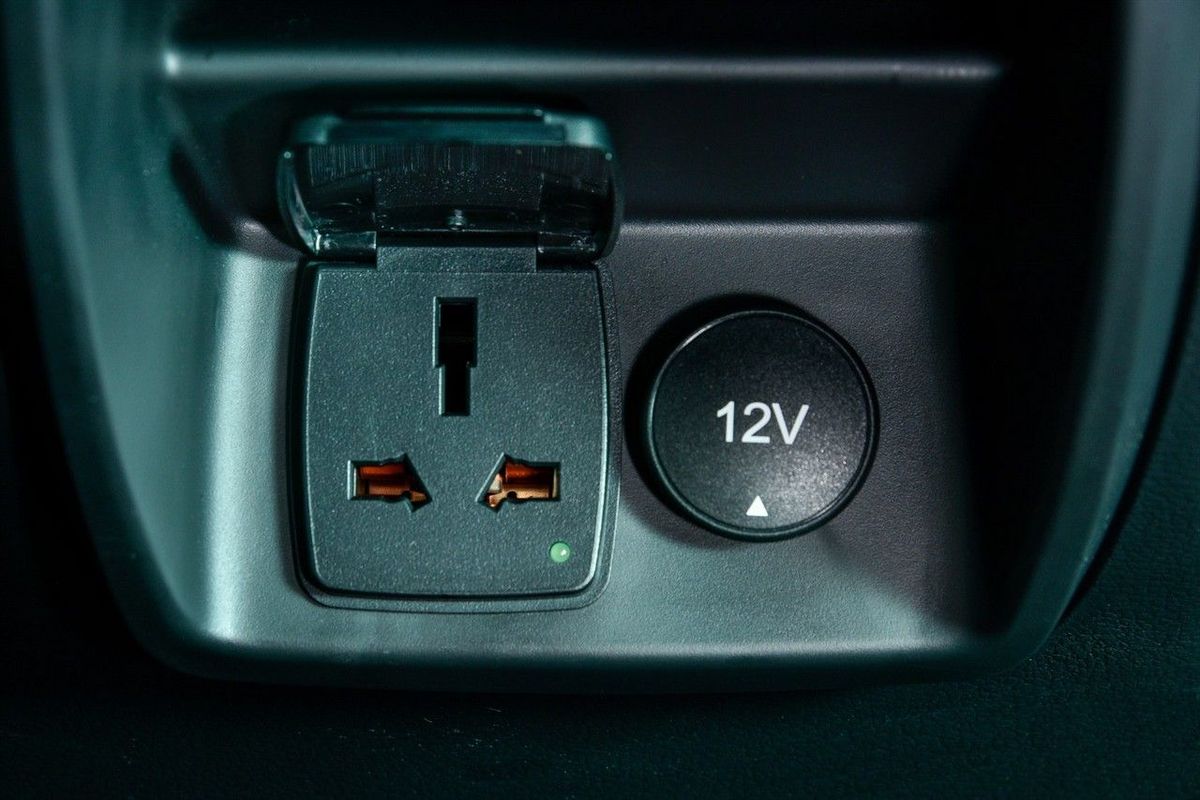
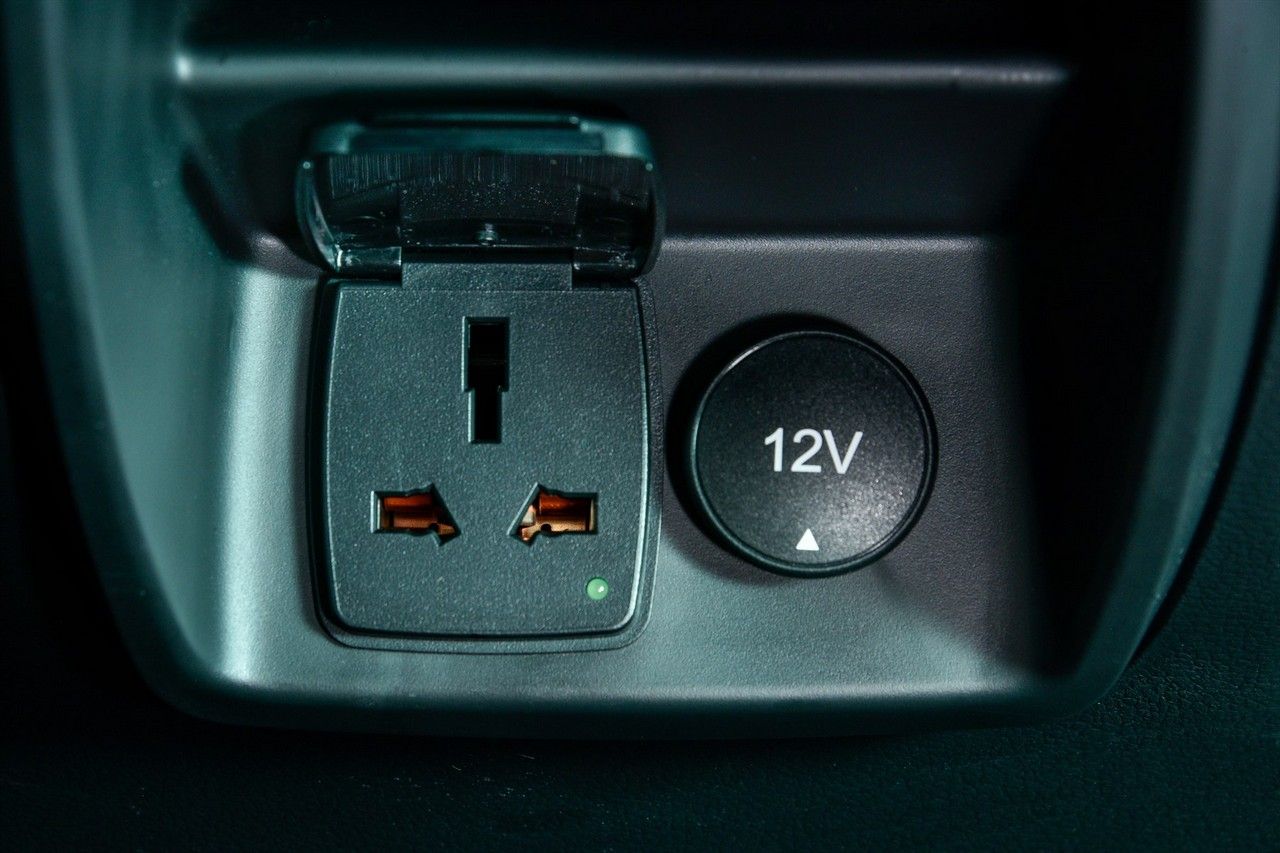
If you compare this new Wildtrak with the previous iteration, you'll notice that some of the orange accents have been toned down. We liked them, but can completely understand that some people found them "a bit much". Oh, and 1 of our favourite features from the Ranger's Everest sibling has been carried over to the updated bakkie: noise-cancelling technology, which cleverly envelops the cabin with sound waves to dial out road noise. Some may say it's a gimmick, but you'll appreciate it on longer journeys! We also appreciate the keyless entry and the convenient start button. The Ranger Wildtrak further boasts commendable levels of safety spec (some of it autonomous), including forward-collision alert, lane-keeping assist and adaptive cruise control, the latter of which is exclusive in this segment. Rear passengers, meanwhile, will appreciate the 230V charging socket.
One of the best convenience features we've seen in a double-cab bakkie: a 230V plug for charging devices.
Ride & Handling
Double-cabs, which are body-on-frame vehicles, tend to ride uncomfortably when their load beds are unladen. When there's no weight on their leaf spring-suspended rear axles, bakkies can bounce, jiggle and shimmy at higher speeds. While it'd be impossible to eliminate this characteristic entirely, Ford has tweaked the Ranger's suspension to make the general ride quality more composed: the front anti-roll bar has been repositioned, which facilitates a decrease in the front spring rates. The firm has also tweaked the bakkie's damper rates and lowered its standard tyre pressures.
The Ford Ranger ride quality has improved slightly, but it's still no lithe and agile performer thanks to its body-on-frame assembly.
Does it all work? While the majority of our test period was spent on the road, we suspect that's also where you'd find nearly all the updated Rangers, especially Wildtraks! Given the addition of noise-cancelling tech, a quieter and more refined engine, as well as a slightly reworked suspension, we're happy to report that the Ranger's levels of on-road comfort are quite satisfactory. In typical bakkie fashion, the Wildtrak is hardly a dynamic vehicle and when you pitch it into corners, it can feel cumbersome. The steering's not the most direct, but it's light and easy to use, plus it hides the fact that you're driving something that's larger than the majority of passenger vehicles. We also had the chance to put the bakkie through some dirt and while the Ranger Wildtrak's 4×4 capabilities are unchanged, it's still a tremendously capable vehicle when the tar ends and the sand/rocks/mud begins.
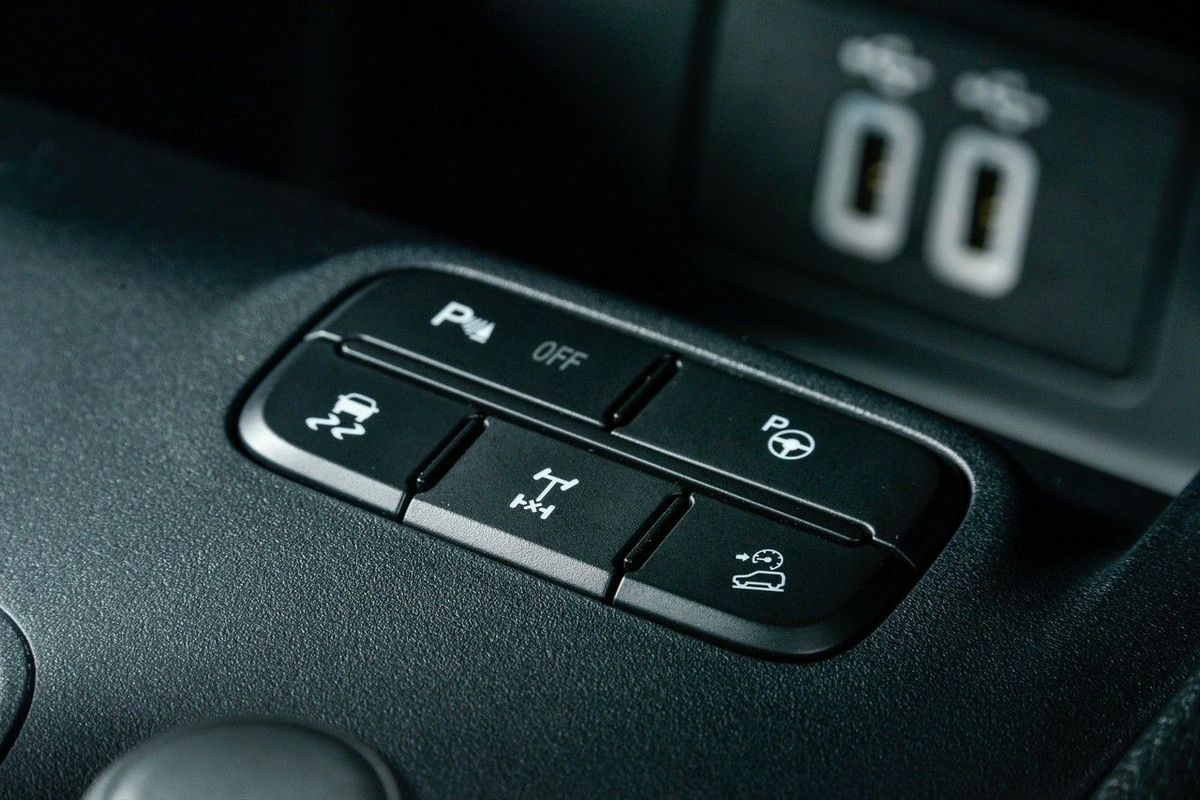
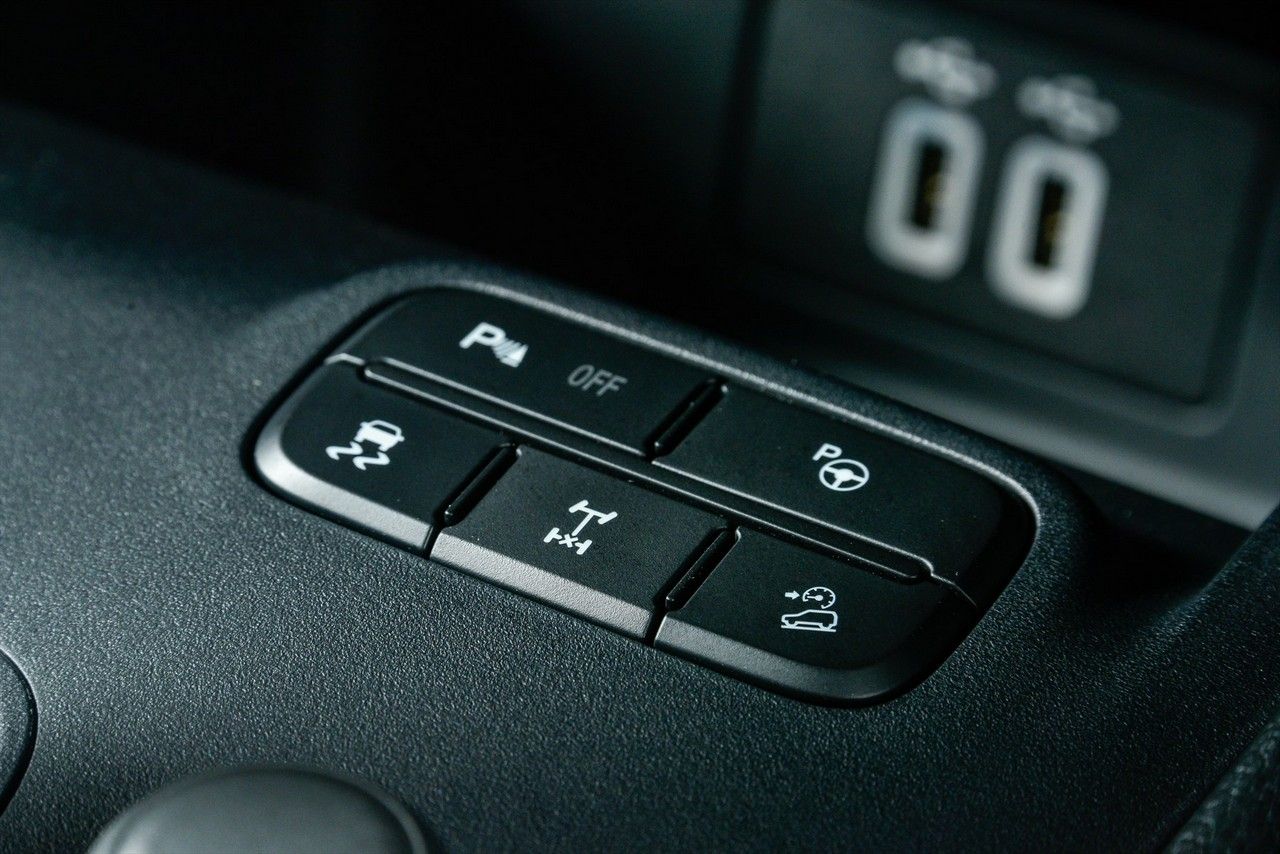
Hill Descent Control, rear differential lock, traction control and auto parking can be found here. Note 2x USB ports in the distance.
Pricing and warranty
This Ford Ranger Wildtrak 2.0 bi-turbo double-cab 4×4 Wildtrak auto retails for R678 200. All Ford Rangers come standard with Ford Protect, comprising a 4-year/120 000 km warranty, 3-year/unlimited distance roadside assistance and 5-year/unlimited km corrosion warranty. A 6-year/90 000 km service plan is included, with 15 000 km service intervals.
Verdict
The Ford Ranger's upgrades may not be visible to the naked eye, but the newcomer represents a big step forward for the bakkie segment
Many Ford fans (and even casual observers) reacted negatively when the updated Ranger was unveiled. The most common criticism was that the "new" model resembled its predecessor too closely and, to be fair, the visual changes are minor. But the real changes can be found under the bakkie's sheet metal and this is where the 2.0Bi-T DC 4×4 Wildtrak auto truly shines. It might have a smaller capacity than the 3.2, but the new 2.0 biturbo powerplant supersedes the 5-cylinder unit (which is still offered in other derivatives) in terms of outputs, efficiency and refinement.
Initial reservations about the 10-speed transmission having "too many ratios" proved unfounded – the new 'box is well-calibrated to the engine's performance characteristics and shifts in a measured, predictable manner. Those who intend on making use of the Ranger's 3 500 kg tow rating (for braked trailers) are likely to find the additional ratios very useful. We have had extensive experience of the Ranger's off-road capabilities over the years and, by virtue of 237 mm of ground clearance, multiple off-road modes and a low-range transfer case, the Wildtrak thrives in the rough stuff.
It needs to be noted, however, that Ford has received a lot of negative press of late (April/May 2019) due to issues with theft. After a few viral videos that show how easy it is to nick a Ranger by deactivating its alarm by the front wheel came to light, we were quite shocked. While not a lot can be done to safeguard previous generation Rangers, Ford South Africa has told us that this new-spec Ranger comes with a Category 1 Thatcham-specification alarm, which is an upgrade of the previous setup. This means the vehicle has ignition detection, perimeter detection and the alarm will go off if a window is broken or the vehicle is tilted. The alarm also has its own battery supply, so if criminals manage to disconnect the car's battery, the alarm will continue to sound. Only time will tell if this new alarm system represents a marked improvement as a vehicle-theft deterrent.
Should you buy one? The updates to the 2.0Bi-T DC 4×4 Wildtrak auto do make it a stronger proposition than ever. The all-new powertrain is impressive, refined and frugal, and represents a big leap forward for the segment. Those who'd like to recycle disparaging remarks about the "puny 2.0-litre motor" in the Volkswagen Amarok and level them at the Ford must be prepared to eat their words (yet again). If you currently own a pre-facelift Wildtrak and you're considering an upgrade to the new iteration (with its downsized engine), you are highly unlikely to be disappointed.
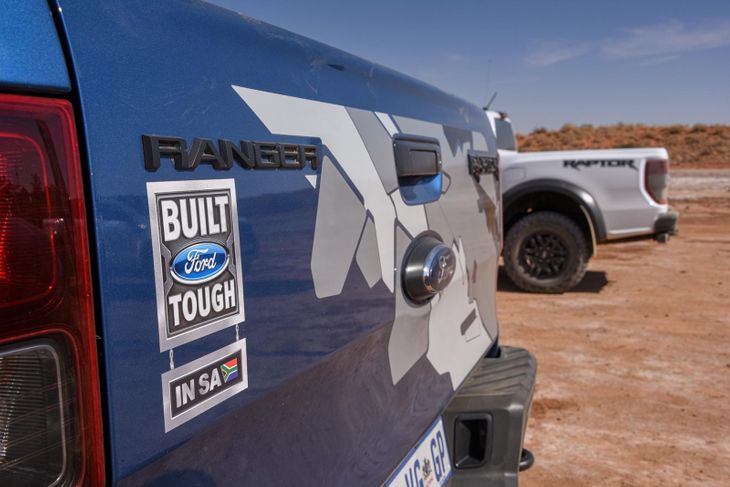
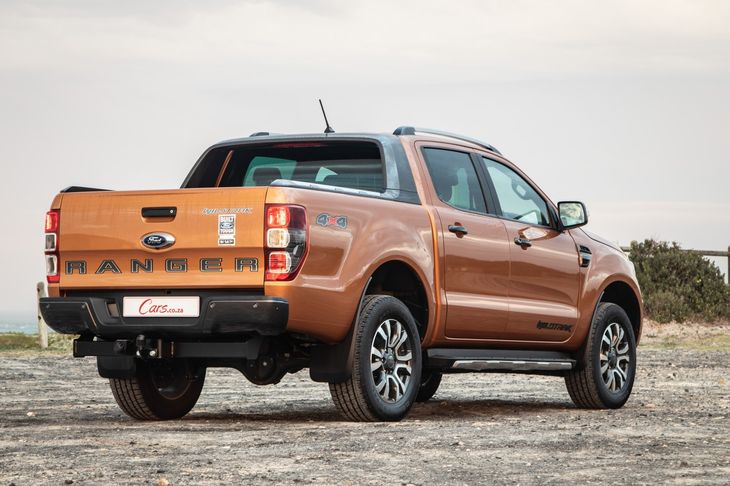
The Ford Ranger comes with a nice sticker saying "Built in SA". The body is assembled in Silverton, Pretoria with the engine built in Port Elizabeth
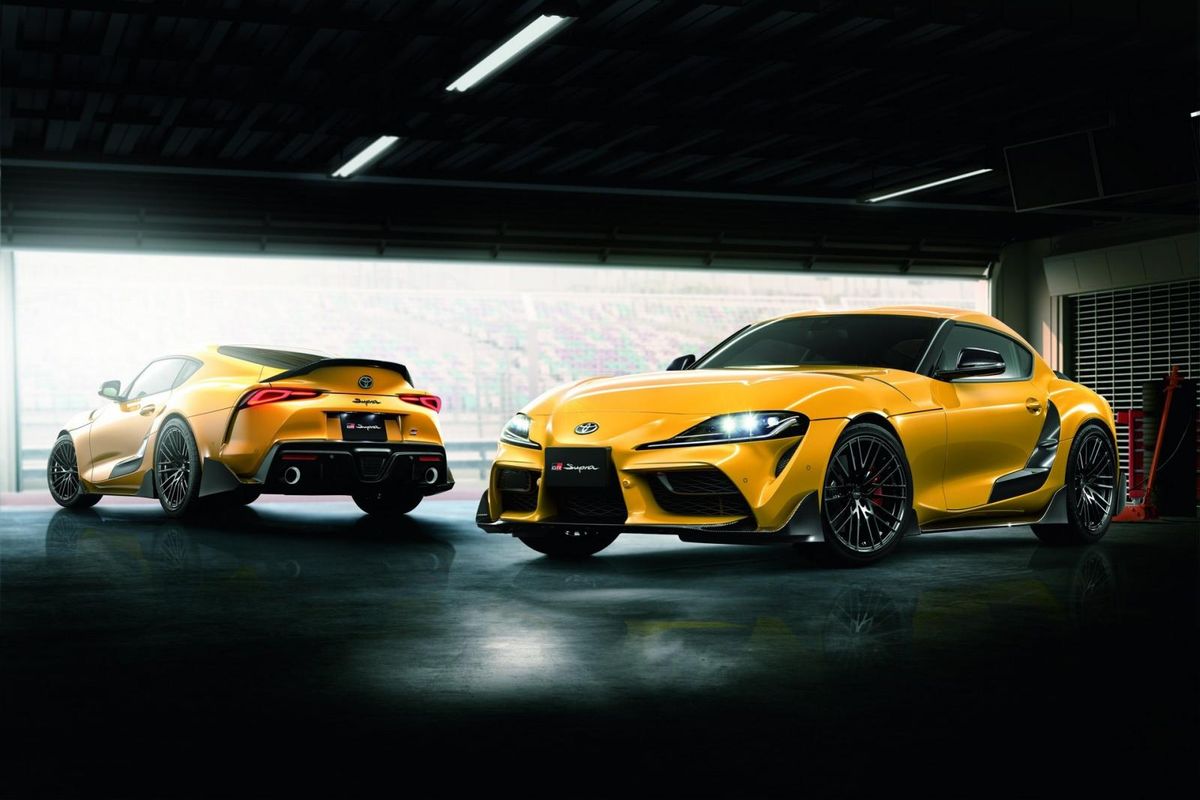
The new Toyota Supra is due to land in South Africa in the next month or two, but globally there are already TRD upgrades available for the Japanese market, giving us some indication of what's possible.
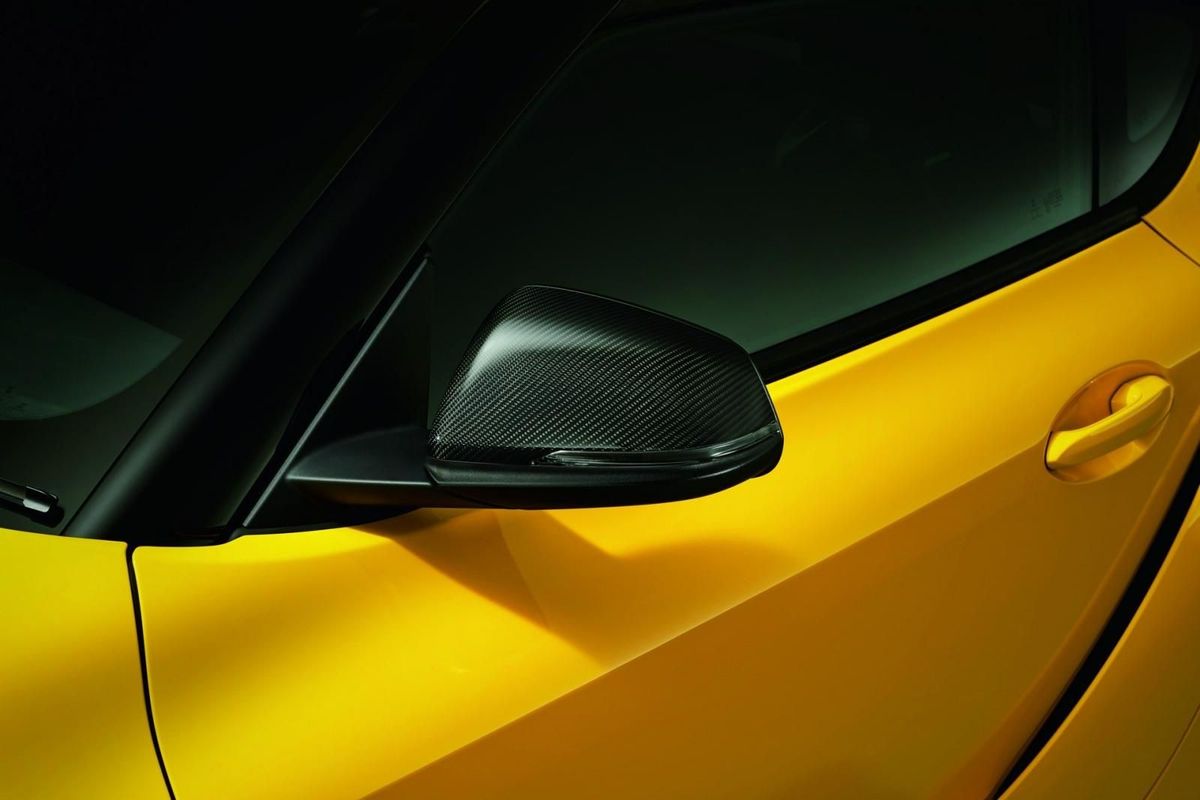
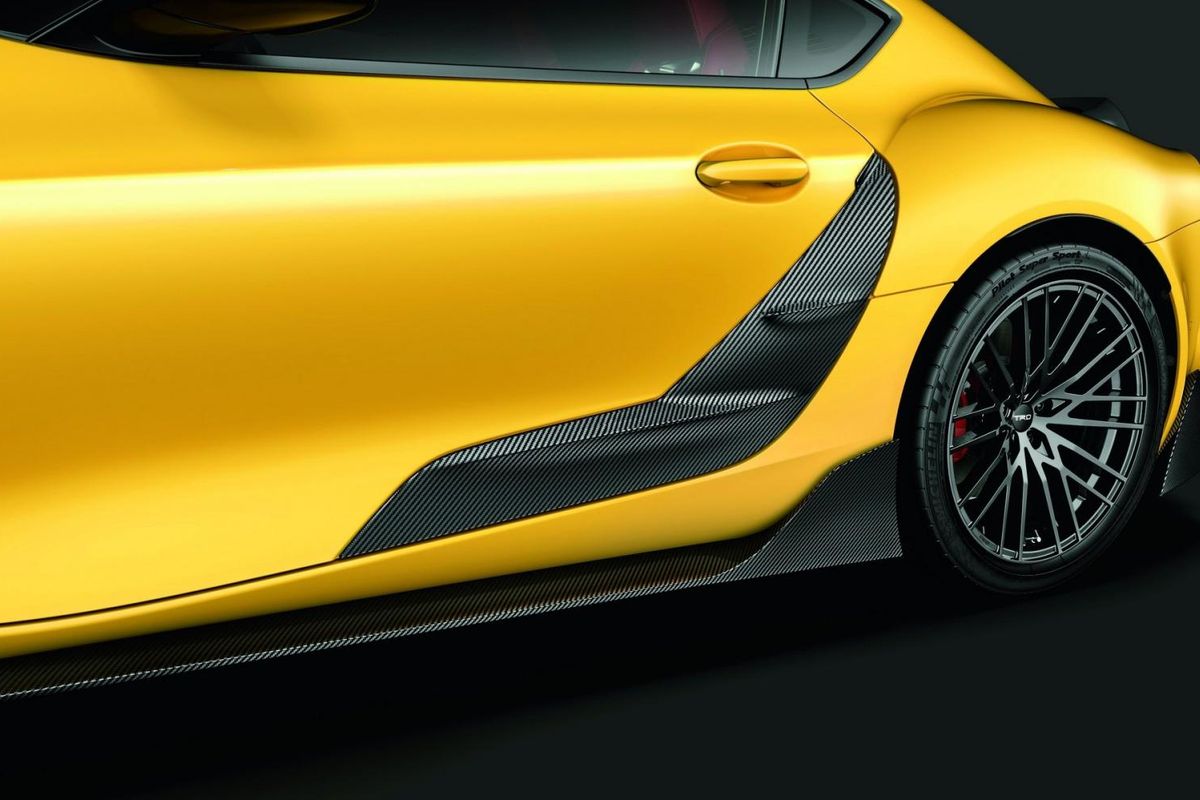
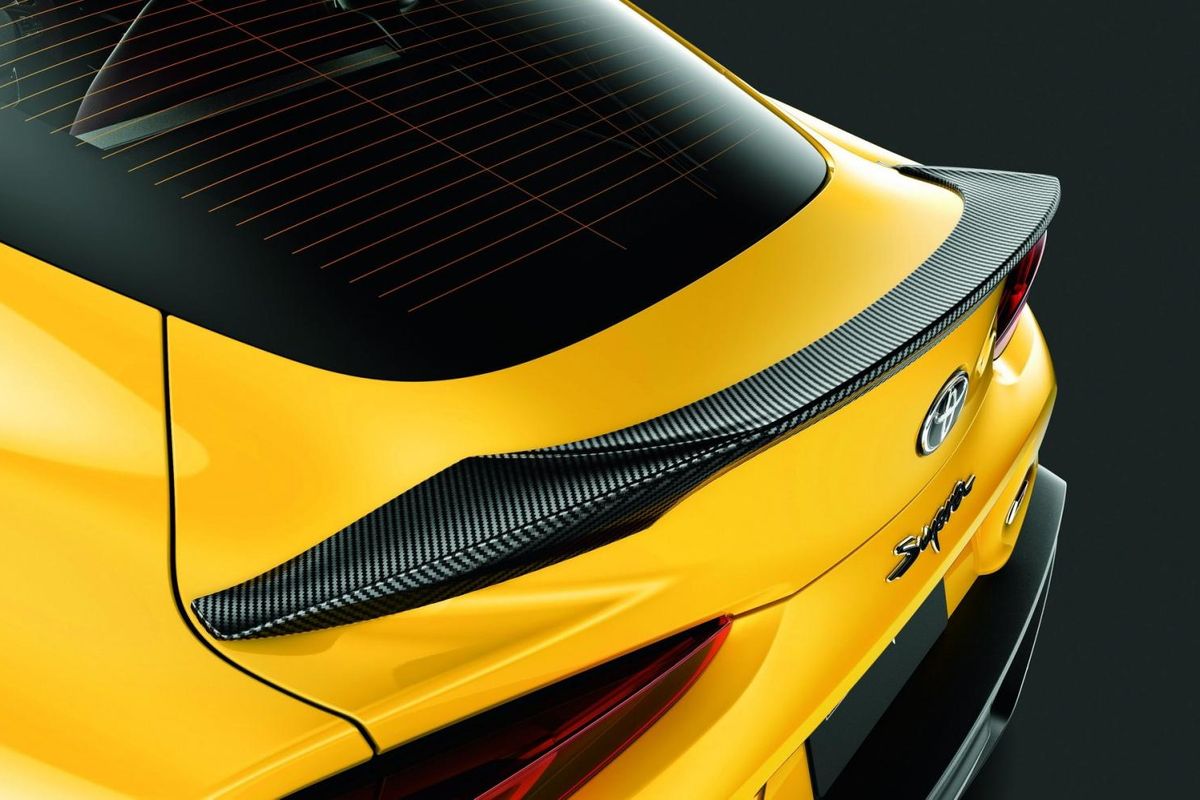
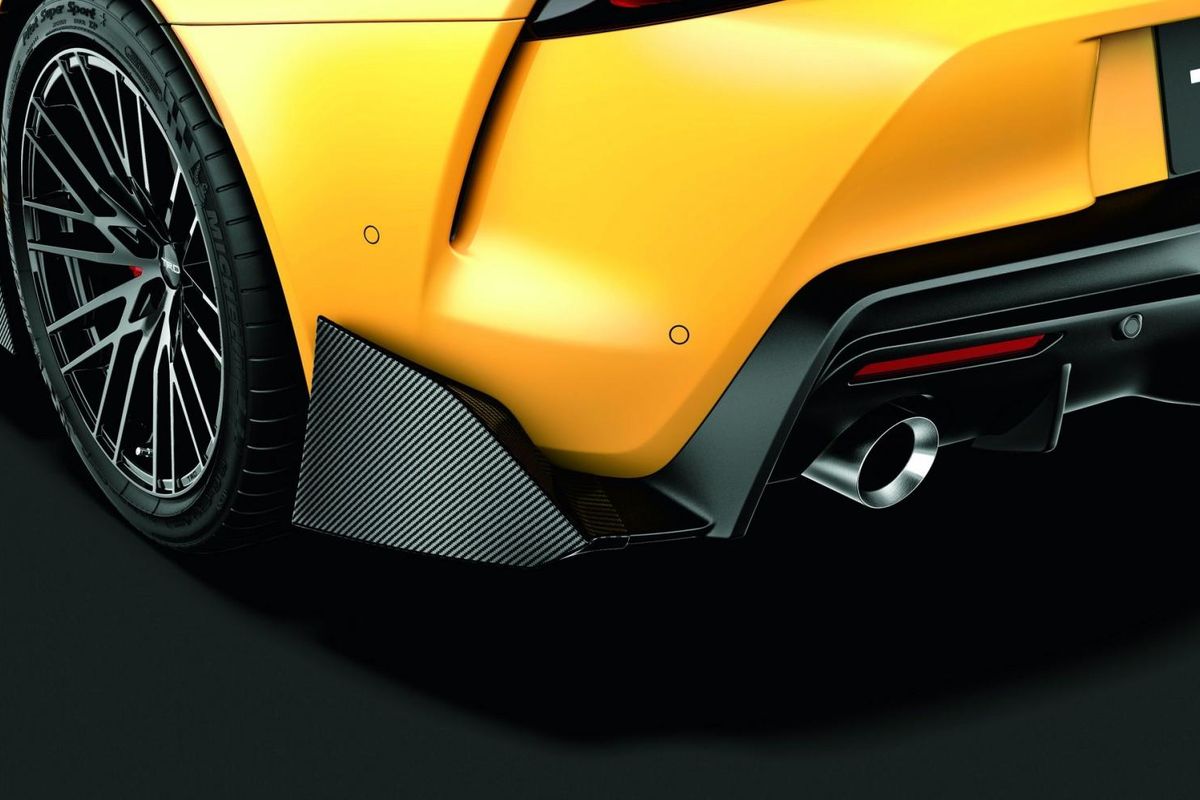
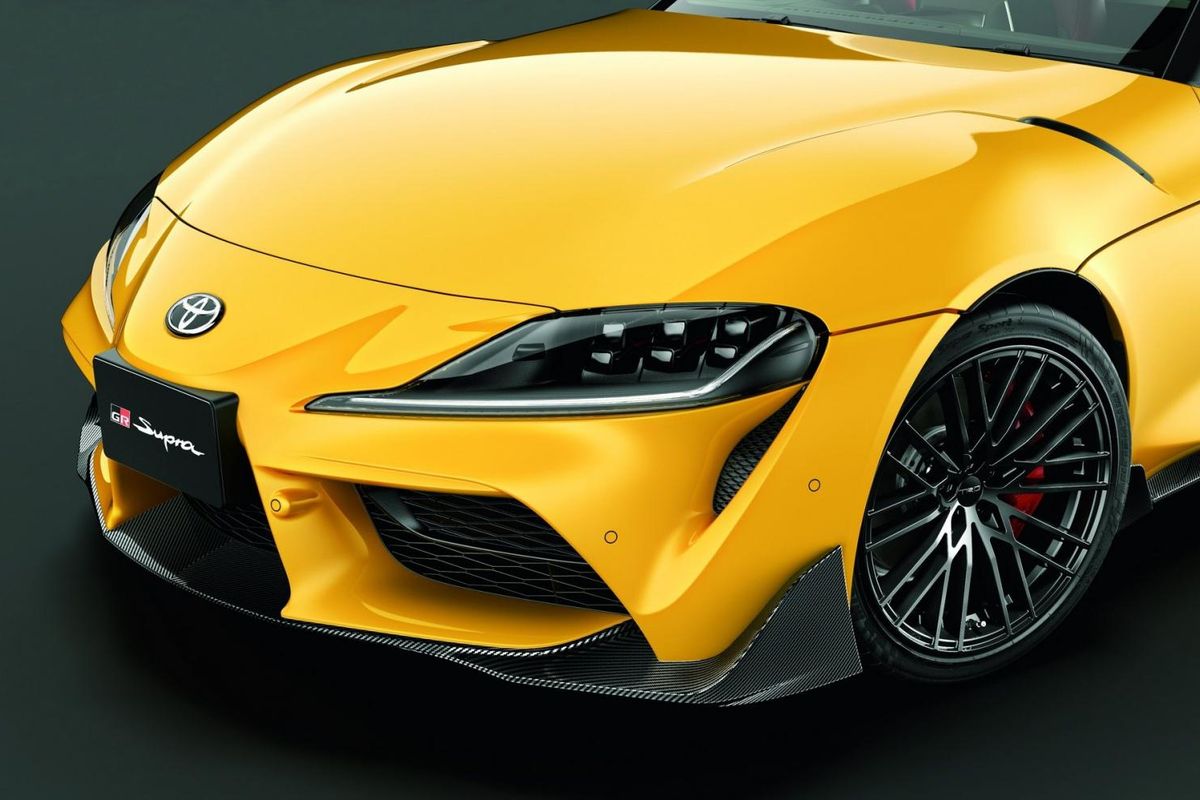
TRD stands for Toyota Racing Development and shouldn't be confused with the recent GRMN sub-brand. TRD has shown off new a series of carbon fibre parts for the all-new 2020 Toyota Supra in Japan, which should satisfy those who think its looks are too understated. The new carbon goodies aren't just for show either and TRD claims there are aerodynamic and weight benefits.
There are parts for the front spoiler, side skirts, side door garnish, rear side spoiler and trunk spoiler, which all pair nicely with the new-look forged 19-inch aluminium wheels.
The Toyota Supra is expected to arrive in South Africa in the next 2 months, with our market getting the 3.0-litre turbocharged straight-six engine.
BMW has tweaked its portfolio for the European market and while some model additions are minor, there are some very interesting updates.
German luxury brand BMW has embarked on a product offensive and the European market is receiving many additions from the Munich-based outfit. We're sure that some of these updates could impact the SA market and we will update you accordingly. While some changes are interesting yet minor, there's news below which will make petrolheads and consumers alike happy.
BMW 3 Series
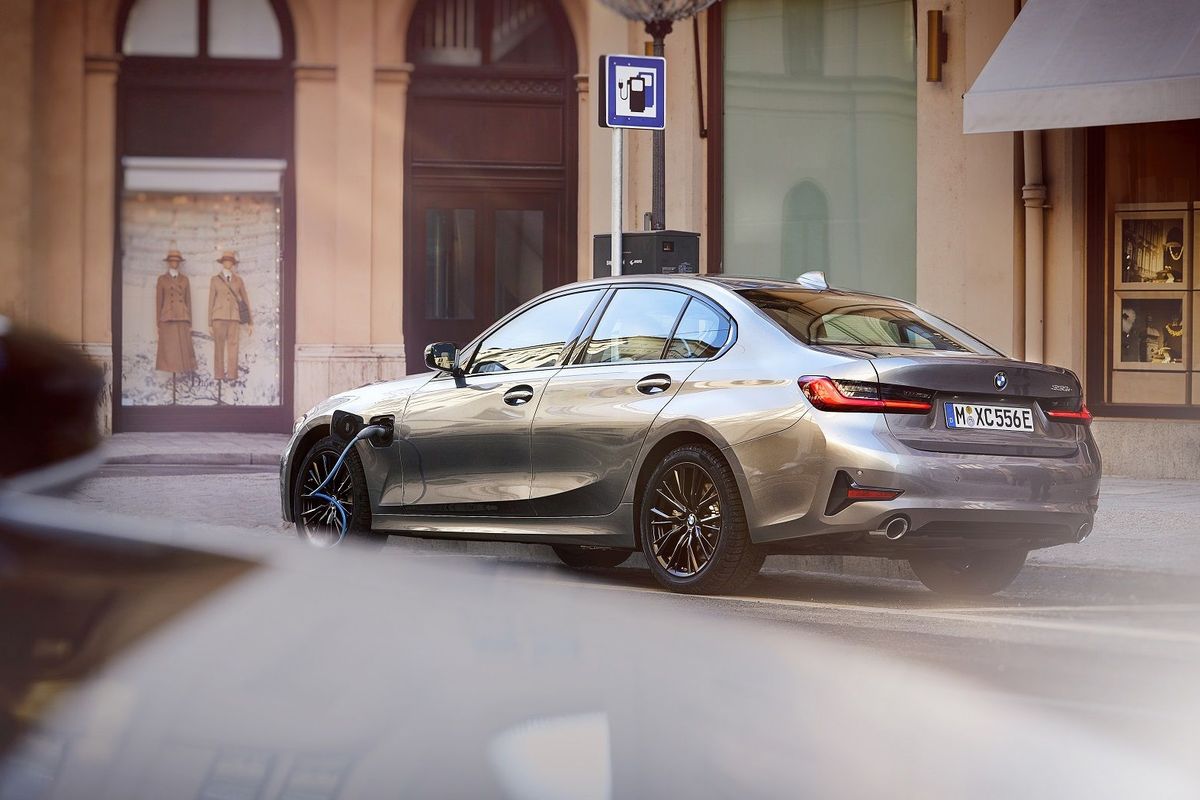
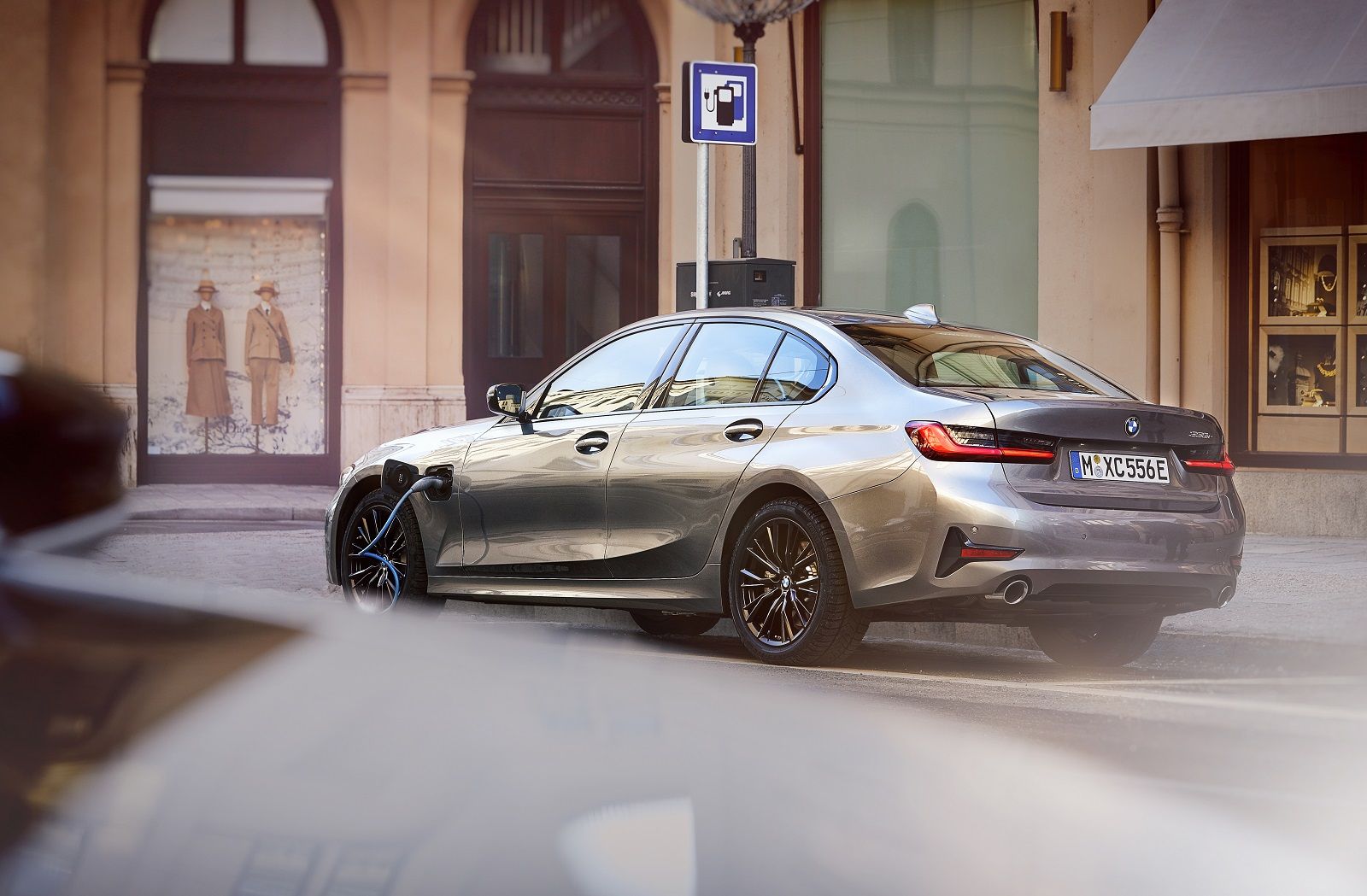
The BMW 330e plug-in hybrid
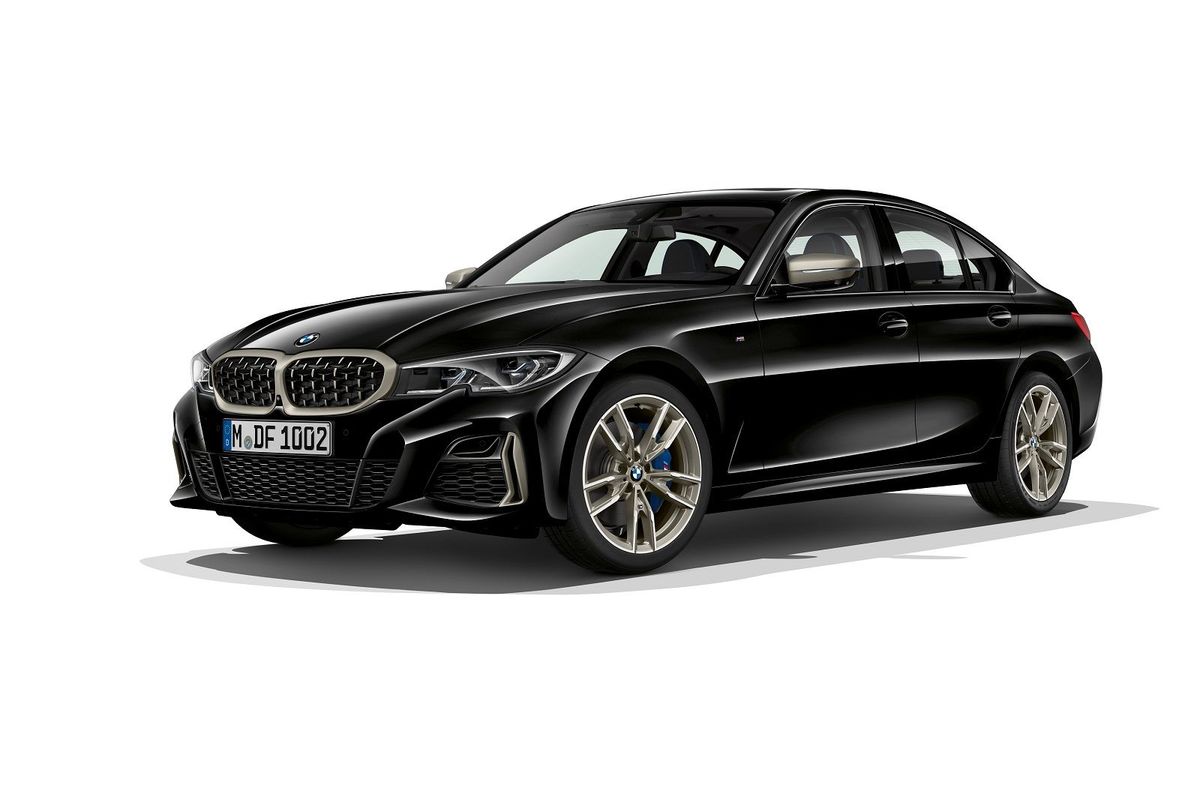
From July 2019, the BMW 3 Series will receive its first sporty derivative in the range, with the BMW M340i xDrive being introduced. Packing 275 kW and 500 Nm from a 3.0-litre turbocharged 6-cylinder engine, this sports sedan is claimed to hit 100 kph in 4.4 seconds thanks to an xDrive all-wheel-drive setup. BMW will also be introducing 3 all-wheel drive versions (320i, 330i, 330d) as well as a plug-in hybrid 330e. There's also an expansion to the colour palette and interior trim options. Customers will also have a wider variety of choice when it comes to customisation with BMW Individual program.
Locally: BMW SA confirmed that the 3 Series range will be expanded around the 3rd quarter of 2019 with the addition of further engine options.We think this will comprise 320i, 330d and the M340i xDrive.
BMW 5 Series
The BMW 5 Series has been on sale in South Africa since early 2017 and some updates have been announced for the European market, some of these we think may make their way to ours. First up, the mighty BMW M550i xDrive will receive the latest iteration of the V8 TwinPower Tubo engine. There's an optimised crankcase and large turbos, and the result is 390 kW and 750 Nm which is an increase over the previous outputs of 340 kW and 650 Nm. It'll be the closest thing to an M5. The BMW 530e sedan gains an updated battery giving it a longer all-electric range and the vehicle is now available with intelligent all-wheel drive. Power is rated at 185 kW.
In terms of trim and tech options, BMW Laserlight with BMW Selective Beam will be added to the optional package of innovations exclusively for the BMW M550i xDrive Sedan and BMW M550d xDrive Sedan. There will also be changes to the paint, wheels, trim and spec levels, with BMW Individual options being made available.
Locally: Interestingly, at the time of writing (20 May 2019) the only BMW 5 Series available was the M5, which leads us to believe that some changes are imminent. The M550d engine is not available in SA, probably due to lack of demand and/or our diesel quality.
BMW 8 Series
A 6-cylinder turbopetrol engine and rear-wheel drive in the 8 Series?
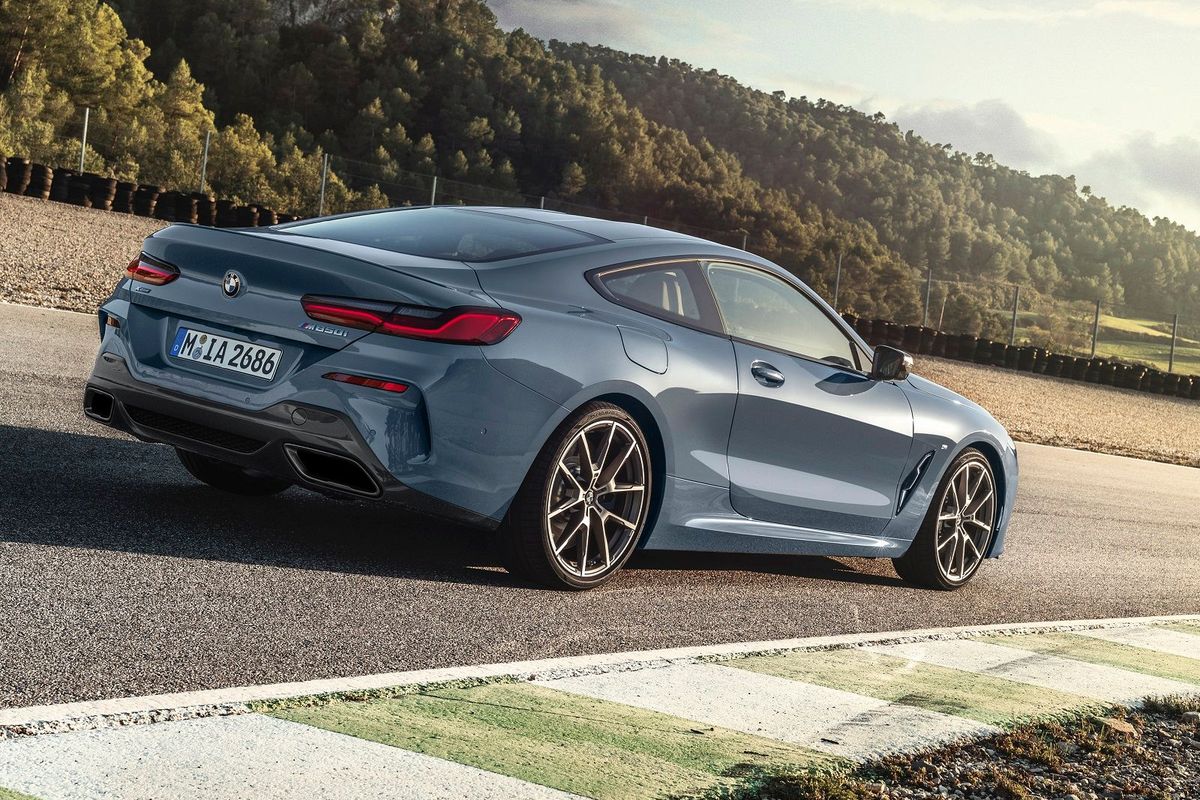
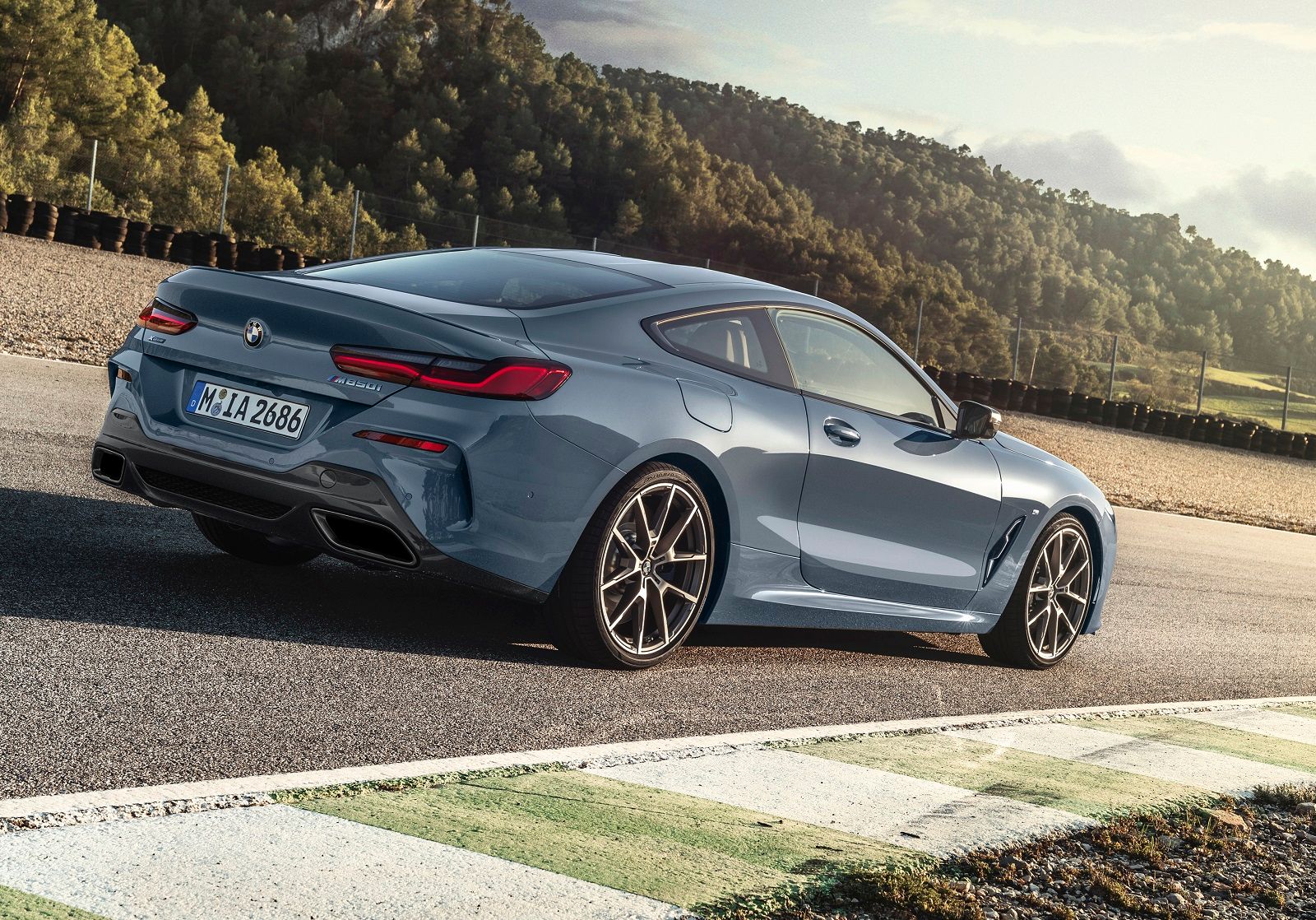
The new BMW 8 Series coupe and convertible have only just landed in South Africa and the German brand has already planned an additional powertrain. From July 2019, customers will have the option of a new 6-cylinder turbocharged engine, pushing out 250 kW and 500 Nm. Critically, the xDrive has been lost and the new 840i finds itself driven by the rear wheels, with the option of xDrive.
Like the other models, the 8 Series also sees additions to it's trim and options range, with BMW Individual offerings on offer. For example, customers will be able to choose from 1 of 8 full leather cabins, with wood inlays and/or carbon fibre.
Locally: The BMW 8 Series is only available in coupe and convertible and seeing as it's so new, any changes are unlikely
BMW X2
The stylish SUV will be coming straight off showroom floors with LED headlights as standard as of July 2019. LED front foglamps will also be part of the standard spec. Optional fittings 5 new light-alloy wheels in 18- and 19-inch formats and two new upholstery variants. Interestingly, BMW is putting a performance edge on the X2 and has made the X2 M35i M Sport brakes available for all X2 models as an option.
Locally: The BMW X2 is also a fresh new entrant to our market, with the dust barely settling after the recent launch of the M35i.
BMW X3/X4
The popular SUVs will benefit from new optional extras. There will be M Sport bucket seats and some interior trim strip options. There's also the addition of what BMW terms 'M Sport Individual' which adds some high-quality touches in the cabin. Highlights of such range from BMW Individual paint finish, 21-inch BMW Individual light-alloy wheels, to BMW Individual extended leather upholstery Merino and BMW Individual interior trim strips in Piano Finish Black.
Locally: The BMW X3 is assembled in Pretoria, which means that some of these changes will be engineered and built right here in SA. The X3/X4 portfolio was recently increased with the addition of high-performance M40d and the X3 M/X4 M international launch is imminent, with an expected arrival of these high-performance SUVs before 2019 is out.
BMW X5
While the former has been here for some time, the latter is due for an imminent launch. BMW has announced a new 4-cylinder turbocharged diesel engine. Dubbed xDrive25d, this oil-burner boasts 170 kW and 450 Nm. Efficiency is its game and BMW claims 6.2-5.7 L/100 km. This engine features an SCR catalyst for reducing nitrogen oxide emissions, satisfying the requirements of the Euro 6d-TEMP emissions regulation. There will also be a plug-in hybrid model called the xDrive45e. This engine is a 6-cylinder turbocharged petrol engine mated to an electric motor. In total it produces 290 kW and is capable of 0-100 kph in 5.6 seconds. It can do up to 80km on pure electric power and is said to consume 2.0 L/100 km.
Locally: Given the popularity of the X5 30d, it's unclear whether BMW will bring the smaller diesel engine in. It has gone down this road before and we drove the X5 25d. Not a bad offering, but you'd always go for the 30d.
BMW Z4
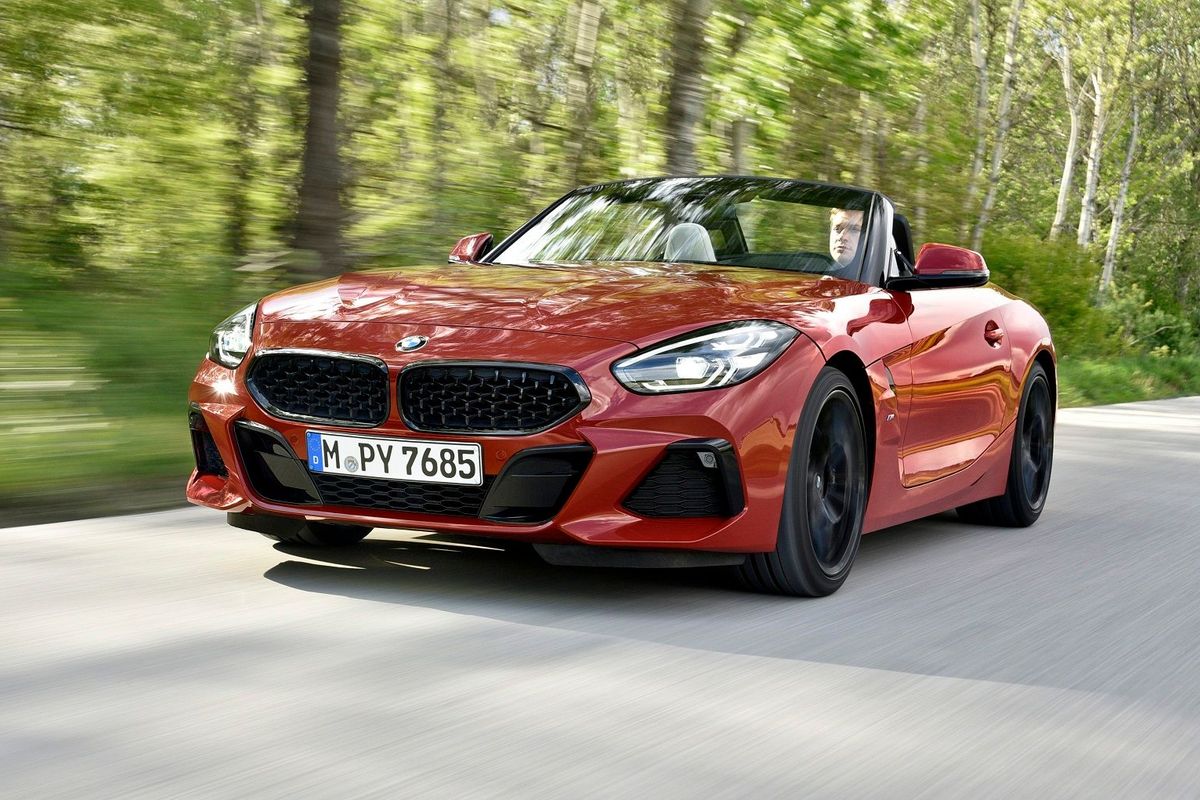
Purists can rejoice as BMW Europe plans a 6-speed manual gearbox for the entry-level Z4.
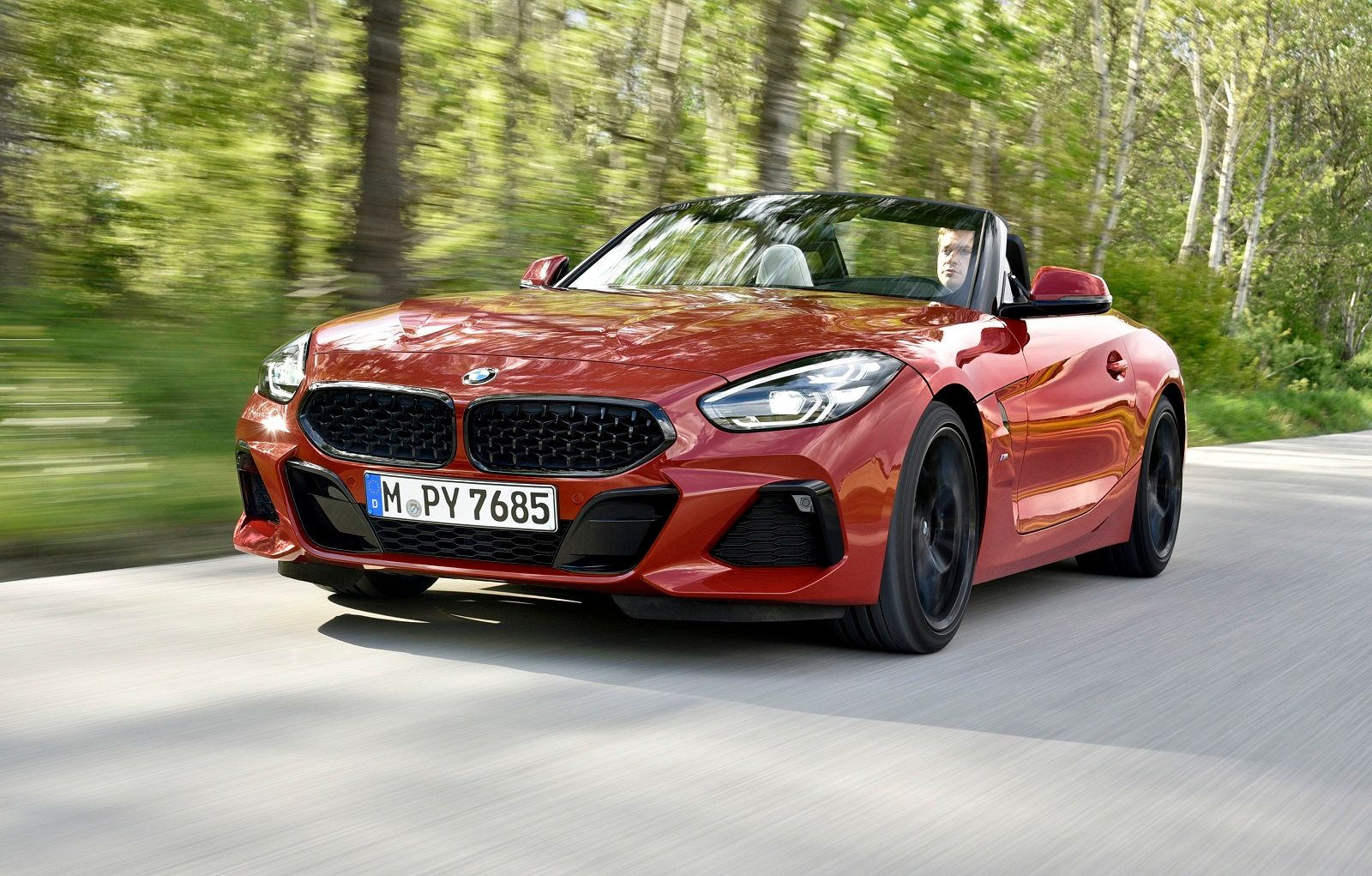
BMW's little convertible is back, with sharp styling and a brace of engines. Both the 20i and M40i have plenty of shove, but purists would point out that both feature automatic transmissions. BMW has announced that the entry-level sDrive20i can be had with a 6-speed manual gearbox from July 2019. For the record, the 2.0-litre turbocharged motor produces 145 kW and 320 Nm.
Locally: The BMW Z4 is still very new, and given the small volumes, it's unclear whether the Munich-based brand would bring the 6-speed manual gearbox in.
BMW M4 Coupe/M4 Convertible
As we countdown the months to the reveal of the all-new BMW M3/M4, BMW is now offering the current generation M4/M4 Convertible with the M Competition Package as standard. What this means is there's a bit more power (331 kW) and the addition of Adaptive M suspension with electronically controlled dampers, an extra-sporty configuration for the DSC (Dynamic Stability Control) system and the Active M Differential, plus an M Sport exhaust system, 20-inch M light-alloy wheels, BMW Individual high-gloss Shadow Line trim with extended features, and specially designed M seats.
Locally: With the new M car on its way, dealers will start pushing to clear their floors of current-generation stock. We think the Competition Package is superb and you're likely to get a good deal before the end of 2019.
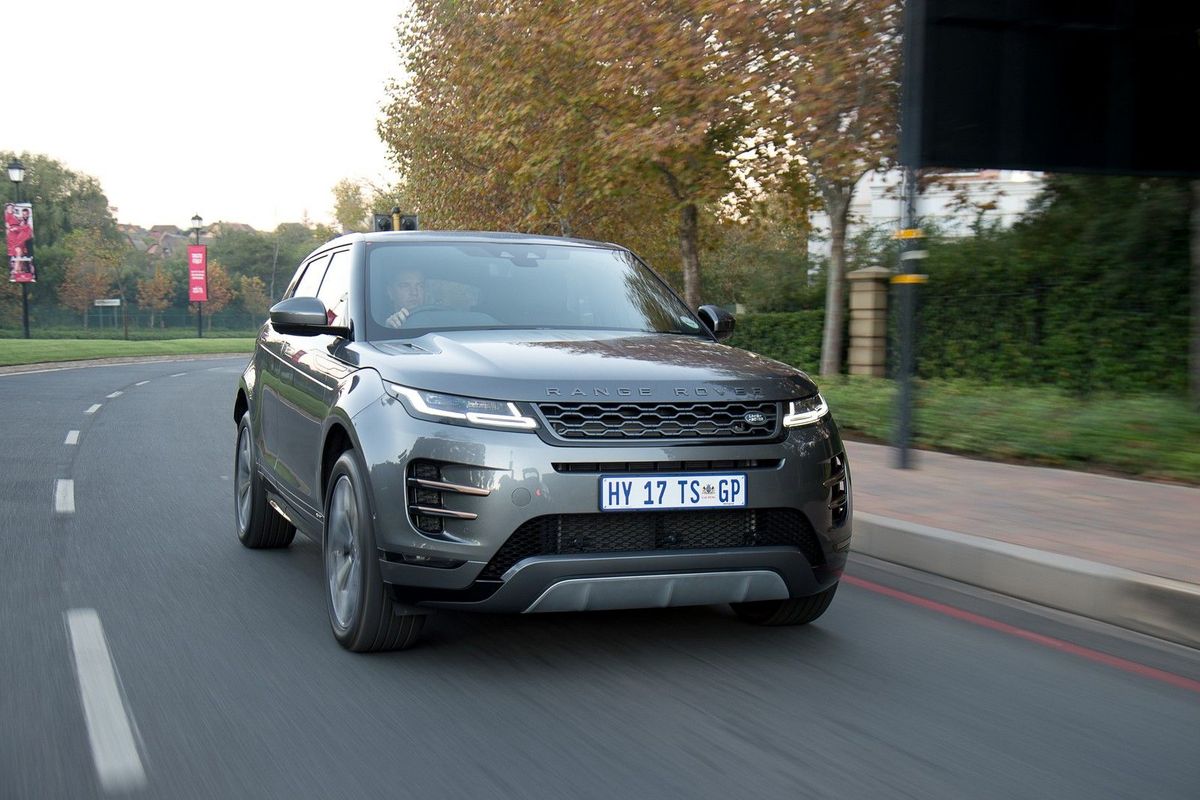
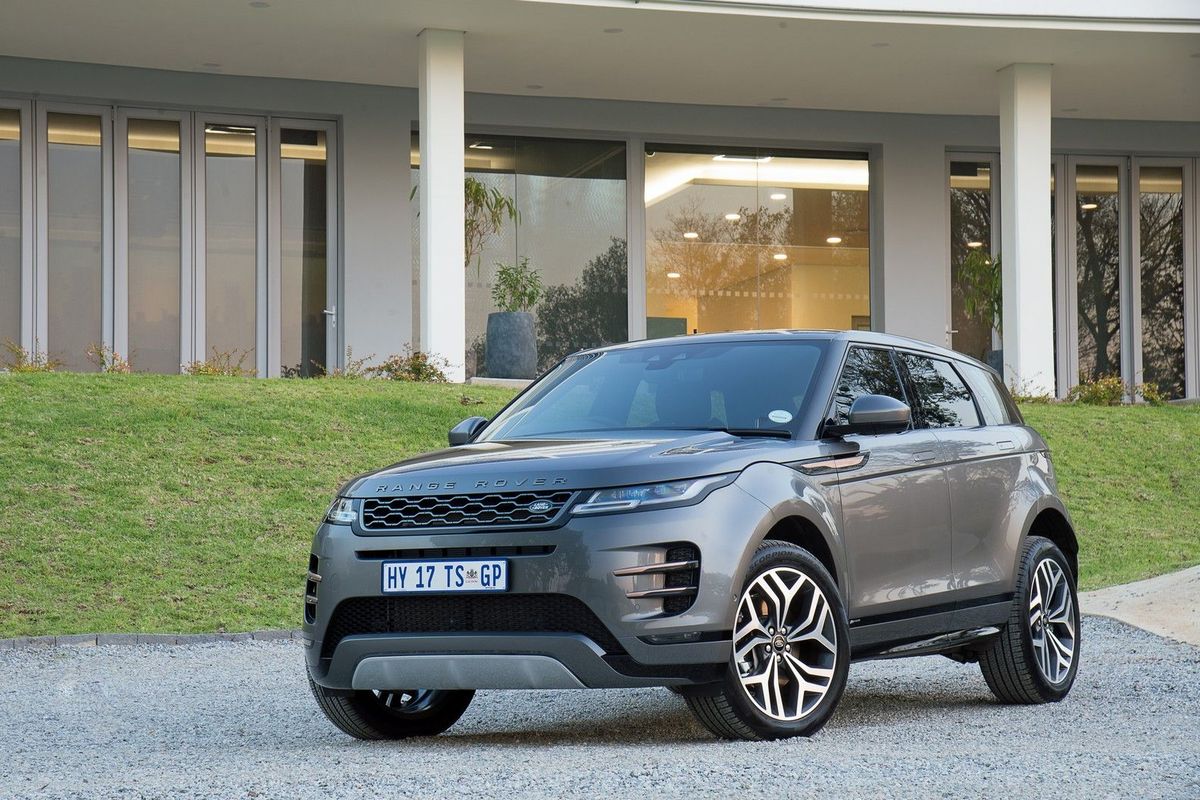
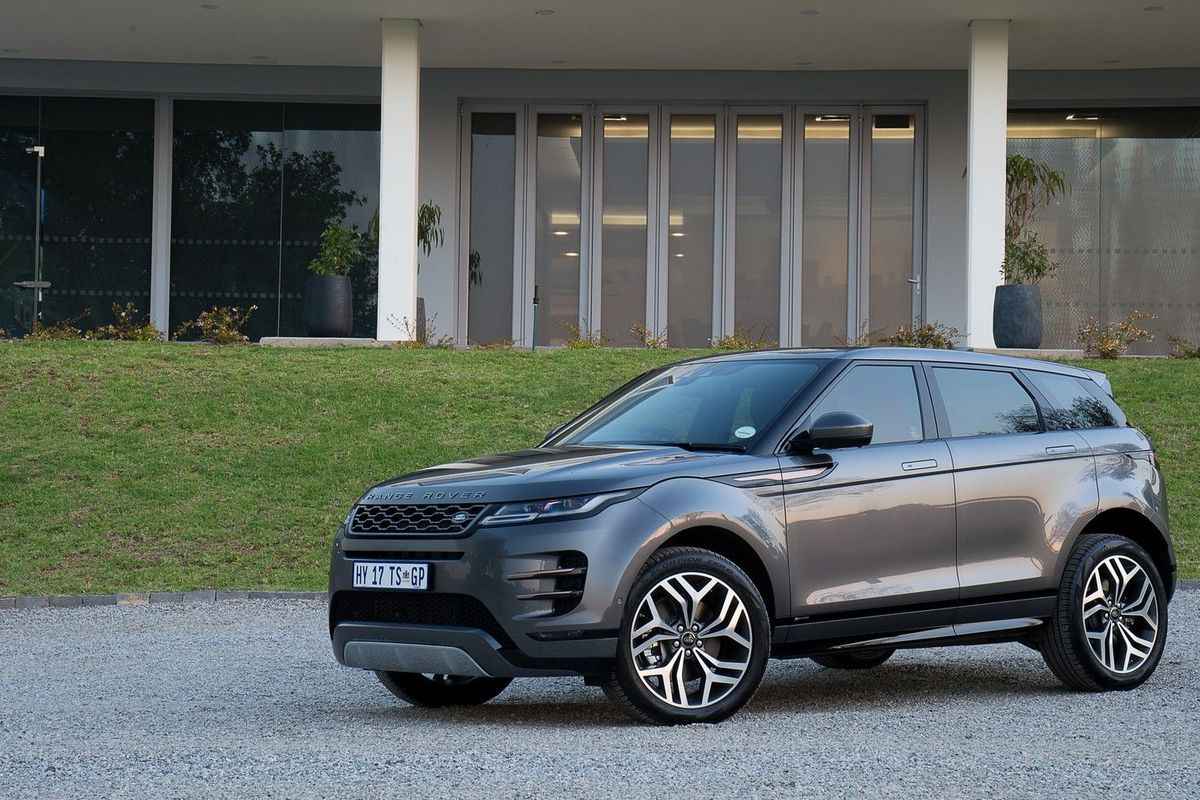
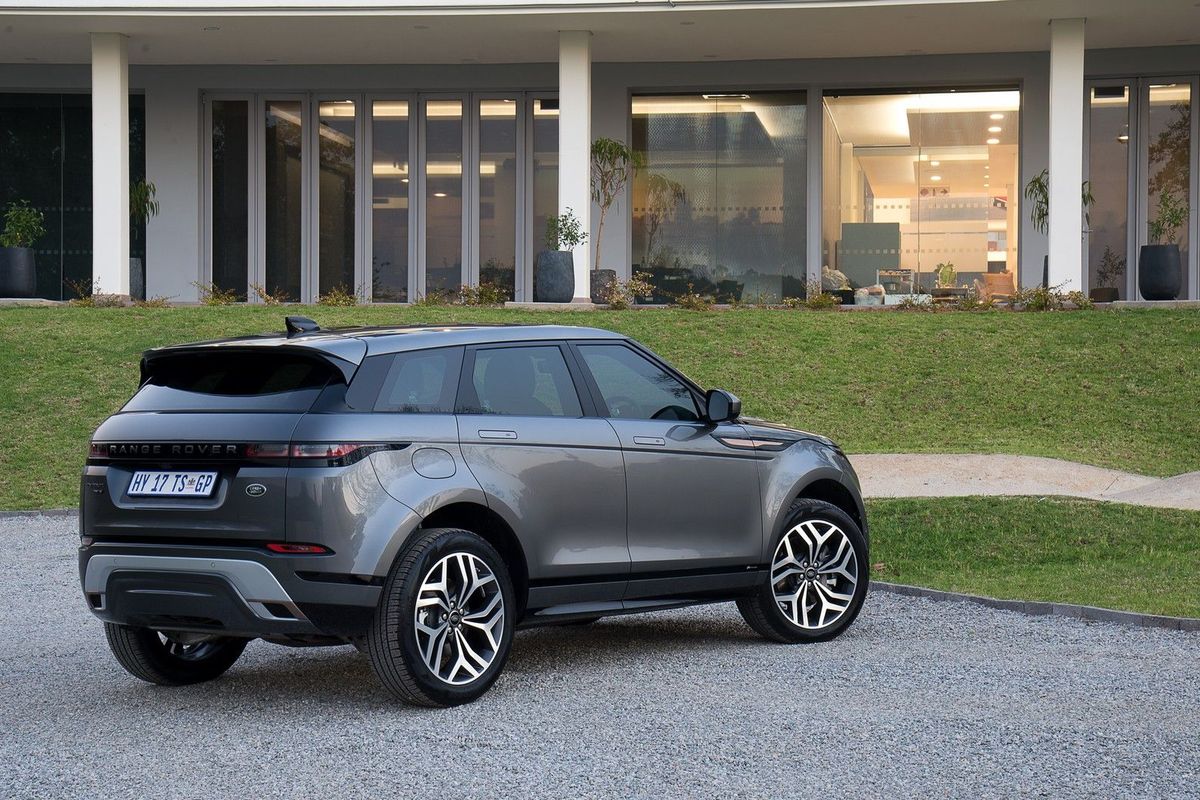
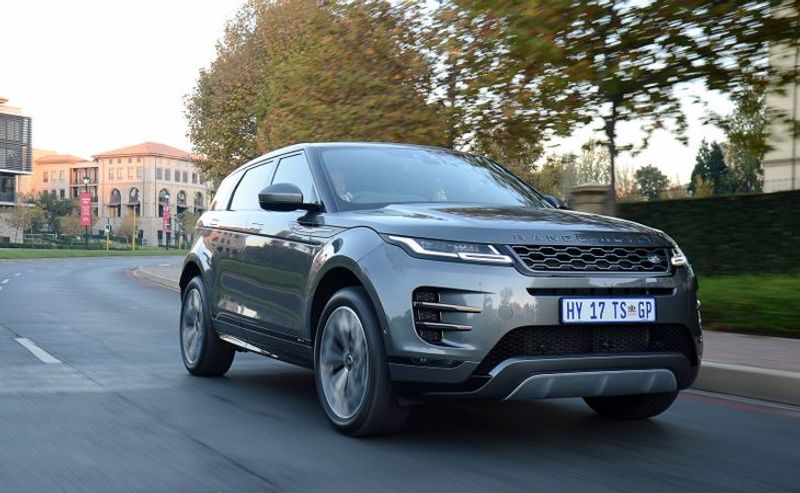
The new Range Rover Evoque is now on sale in SA. The baby Rangie has been a top-selling model in its segment, but now there are many more rivals than when the boutique premium compact SUV arrived. Is the slight exterior remodel enough to entice new buyers and what else has changed for this generation? We attended the local launch in Gauteng to find out.
What’s new?
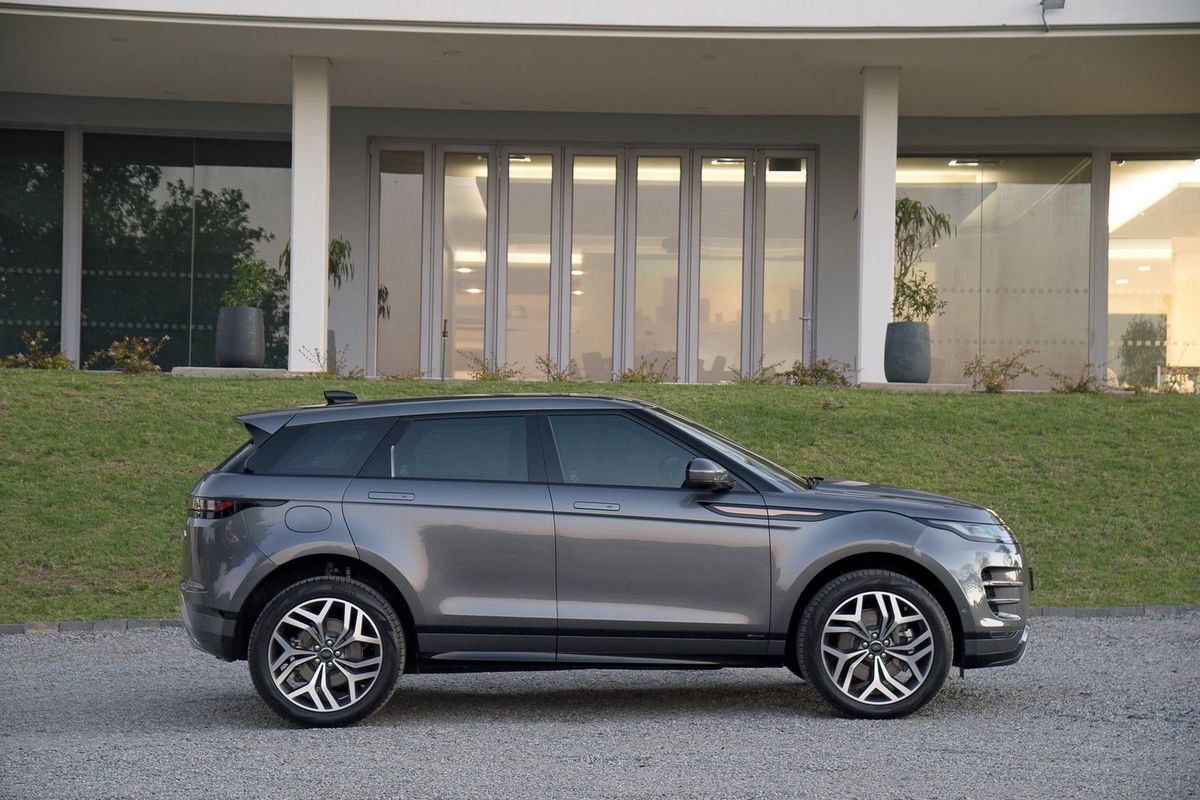
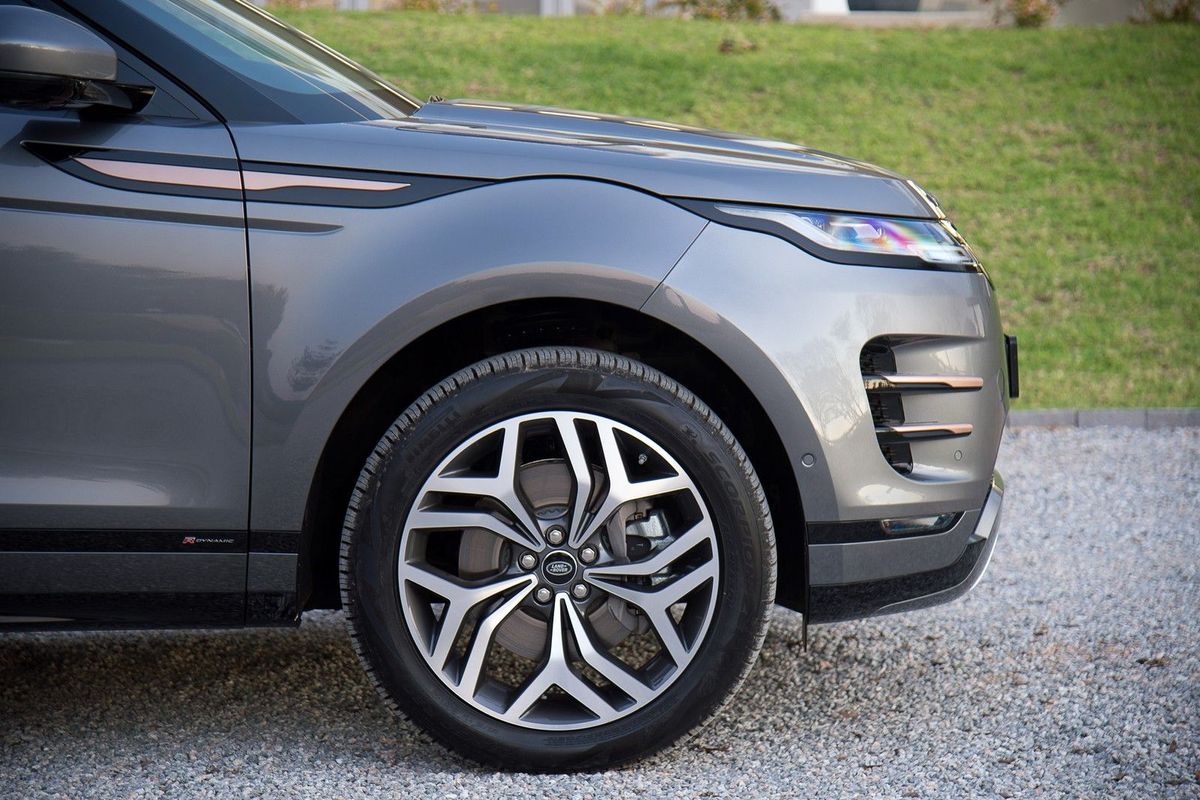
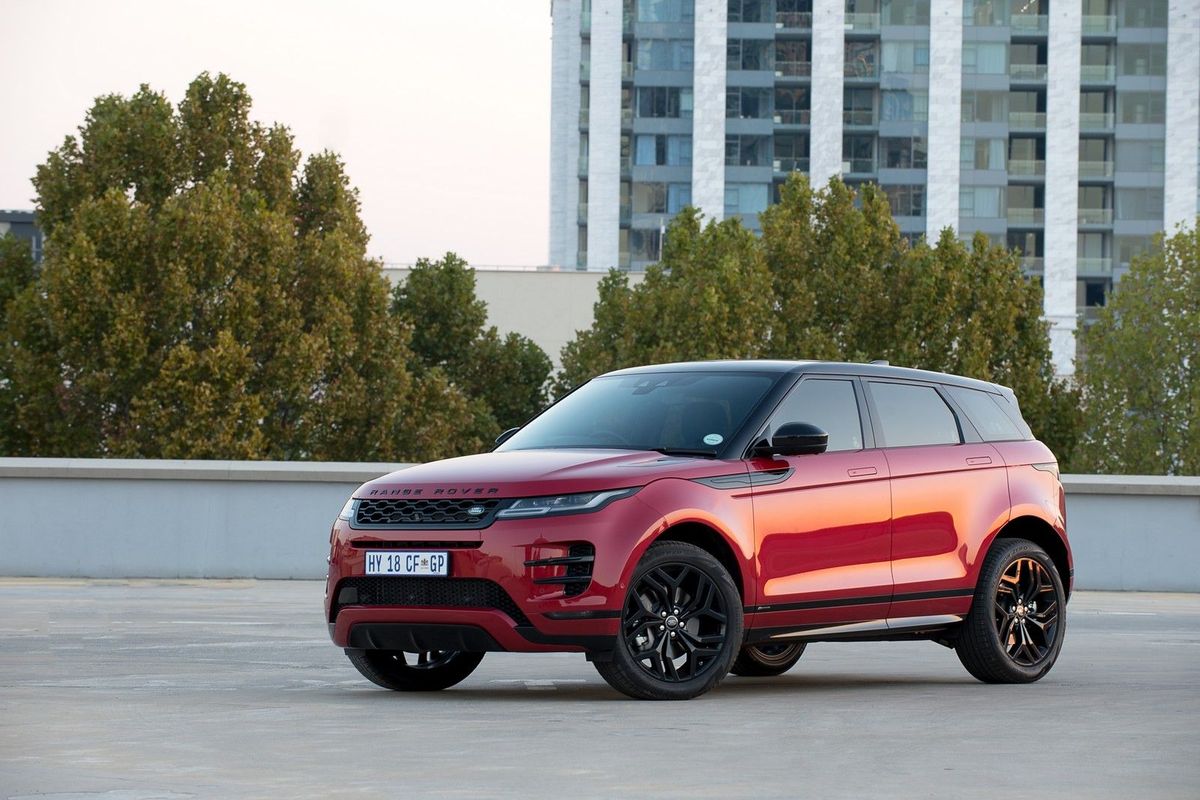
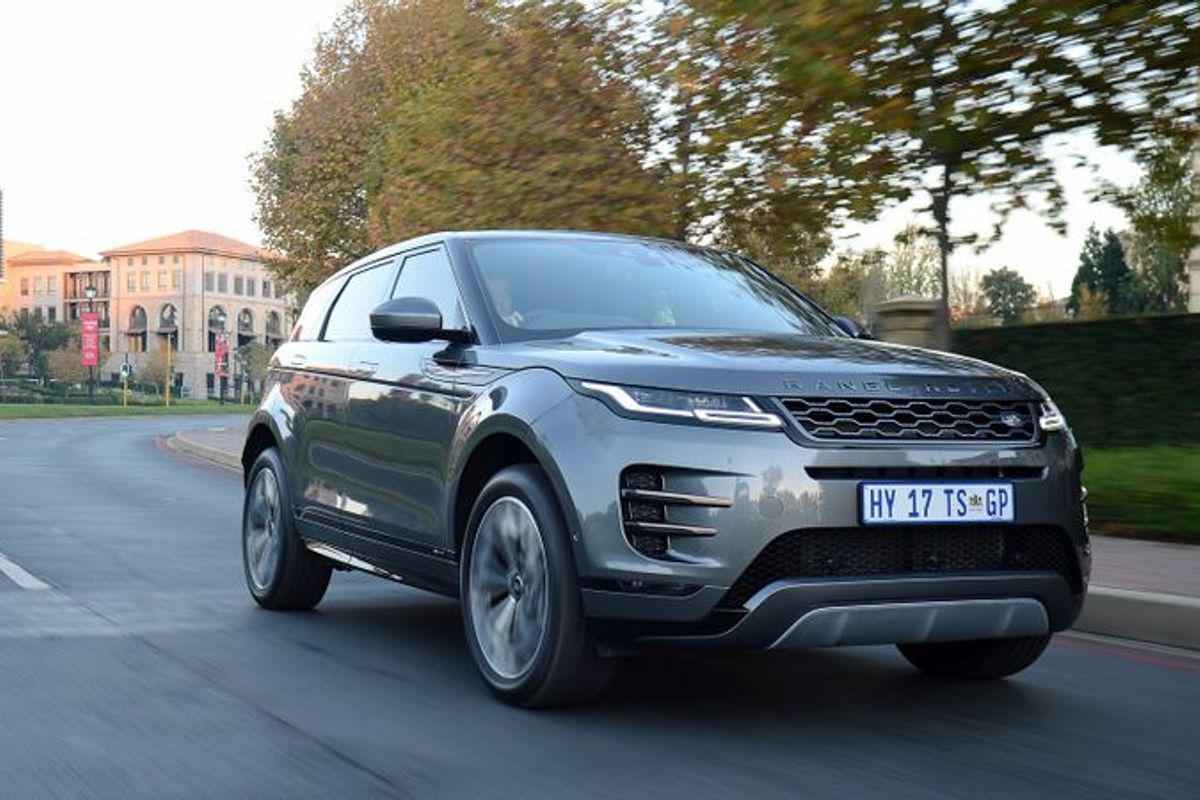
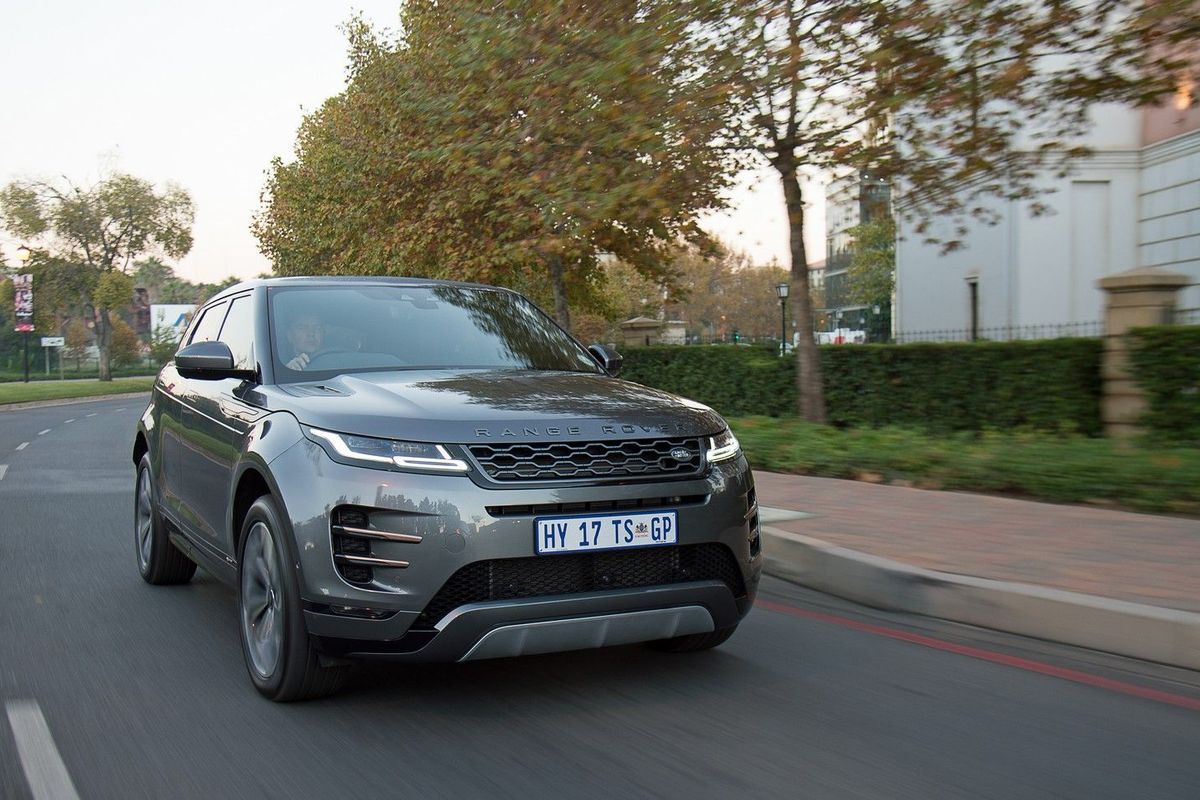
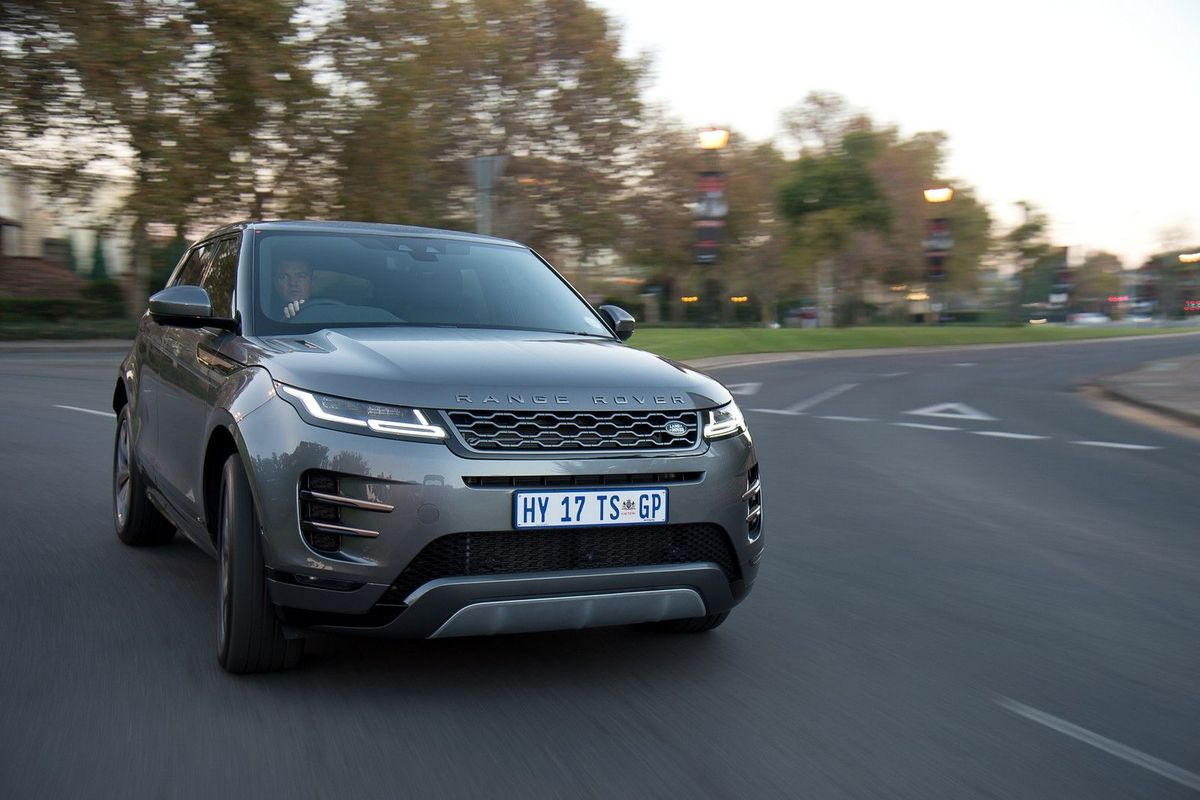
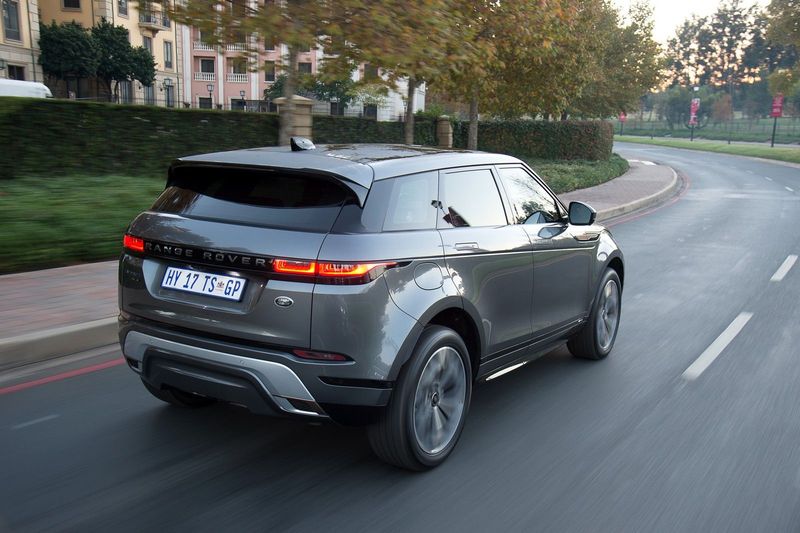
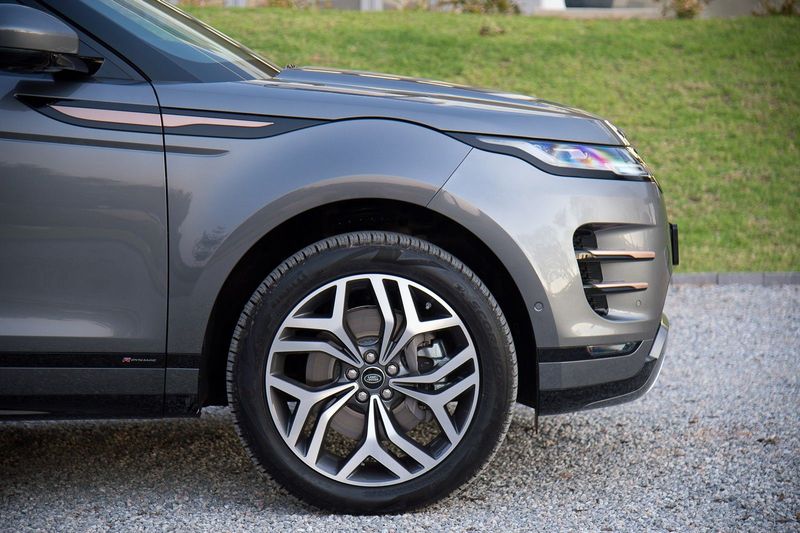
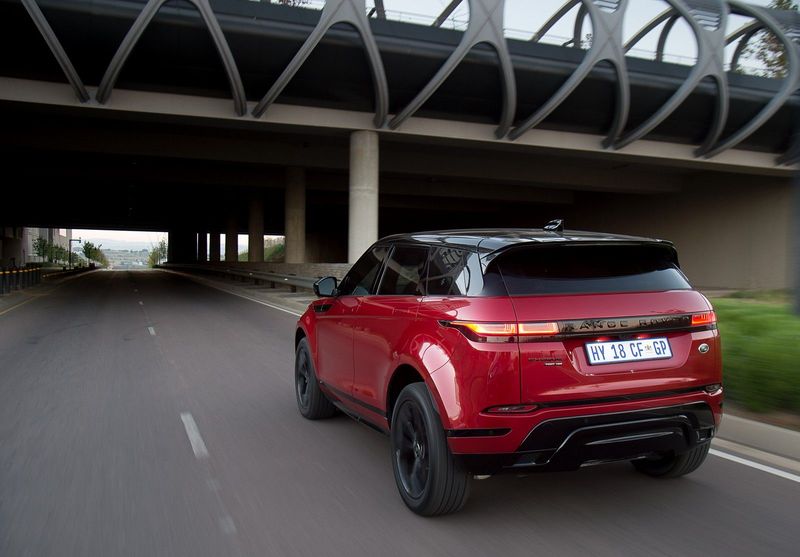
Admittedly the exterior is only slightly different from the outgoing model, especially from the front. The LEDs are the easiest giveaway as they now feature a rounded rectangle design, similar to the new Velar and Range Rover Sport. The bonnet loses the plastic "nostrils" of the old model and the door handles now sink flush into the metalwork when the vehicle's locked.
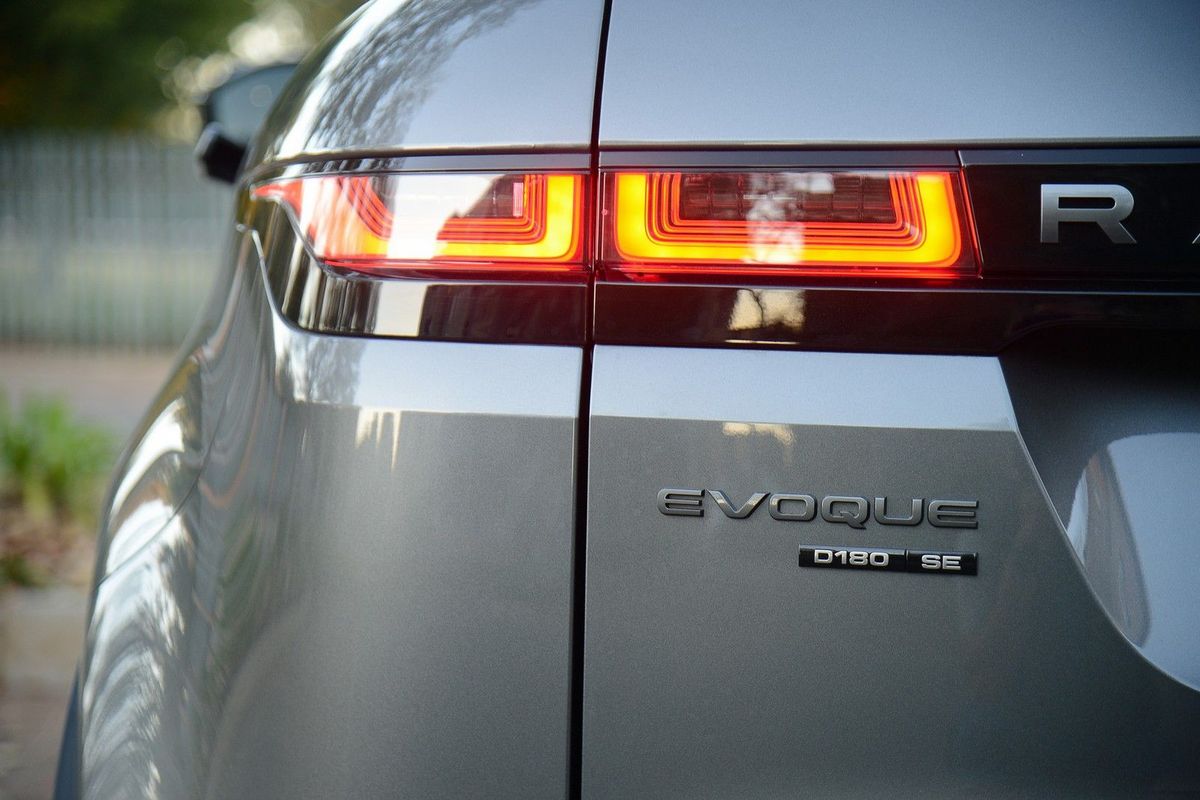
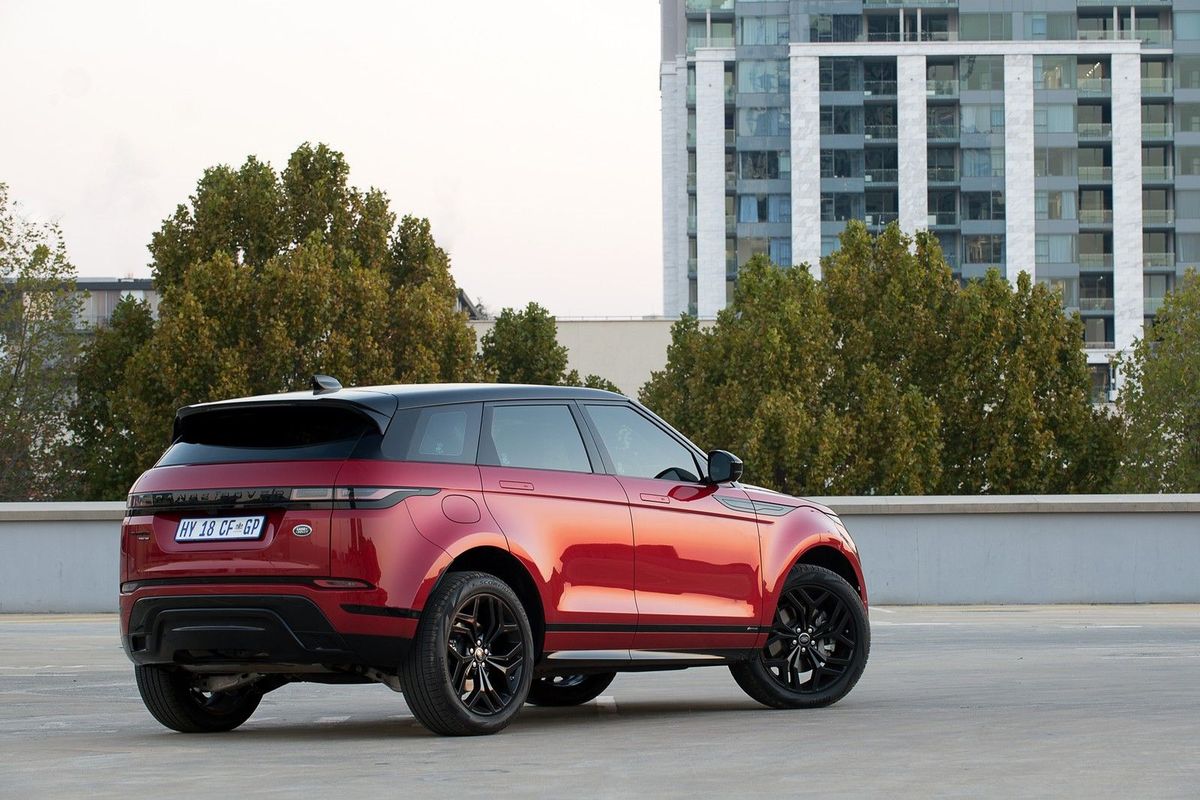
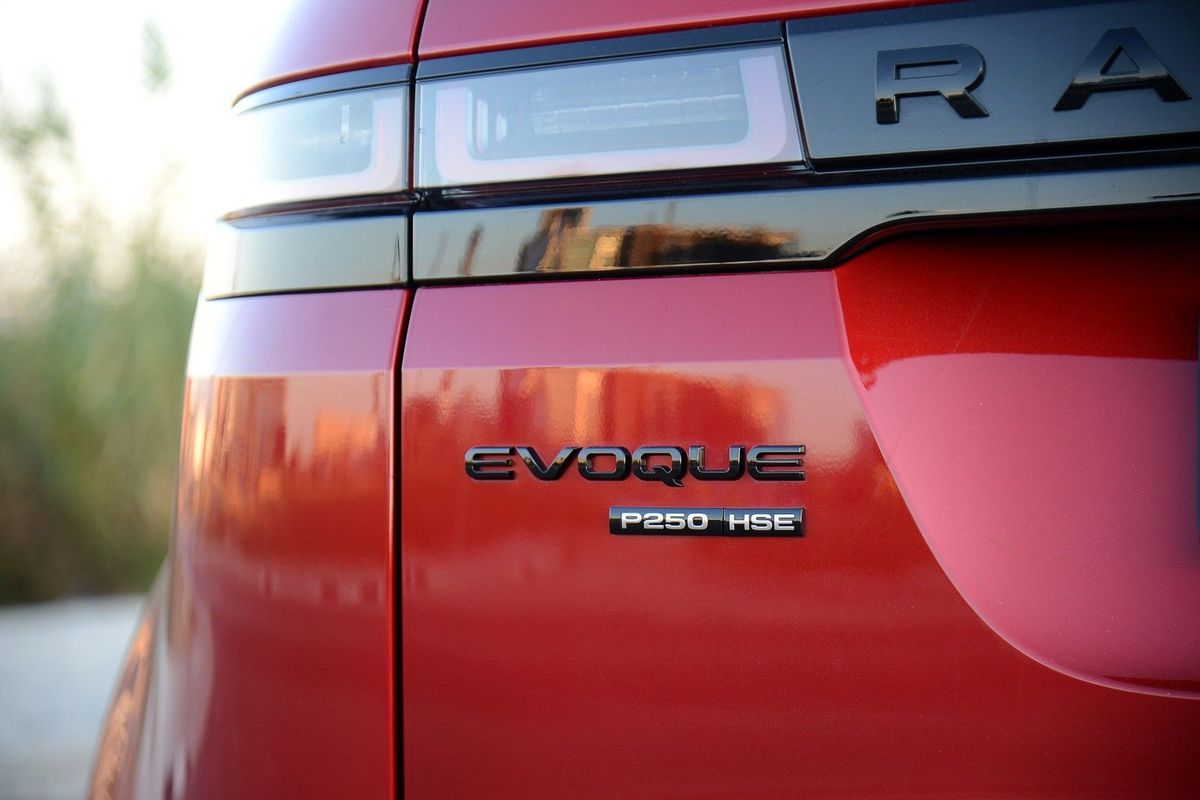
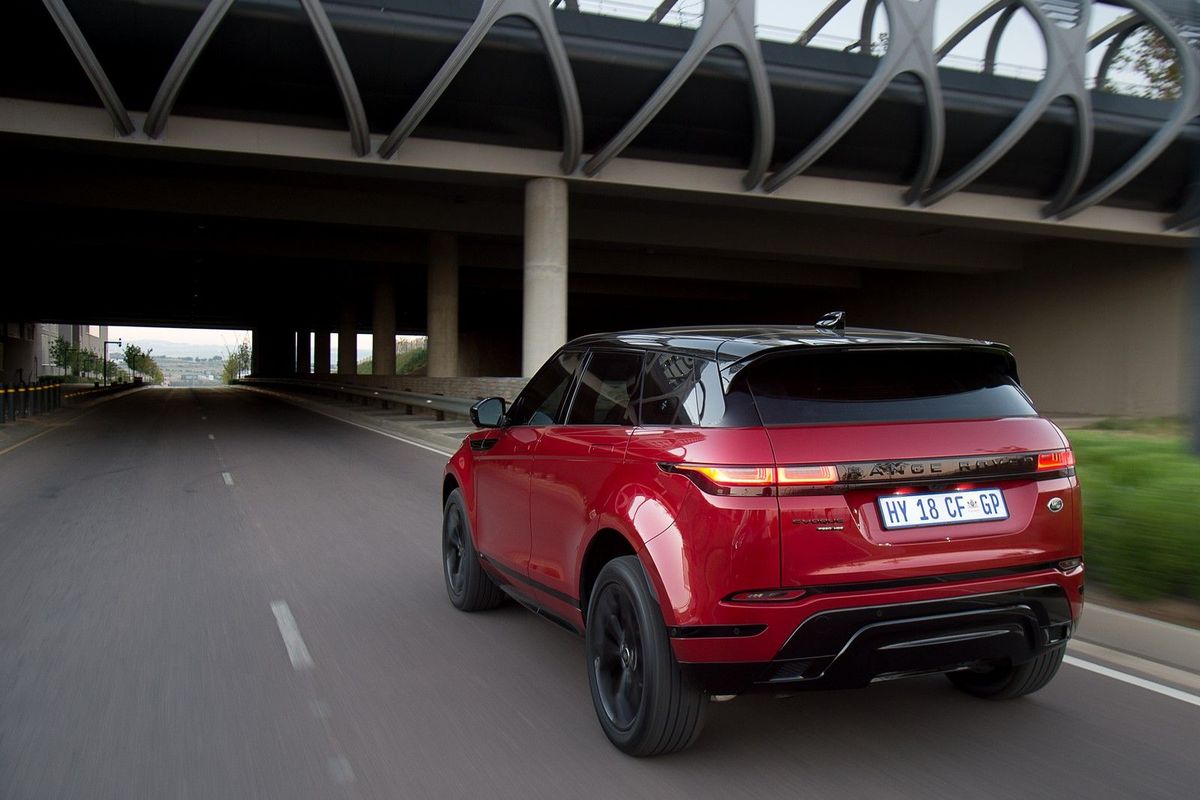
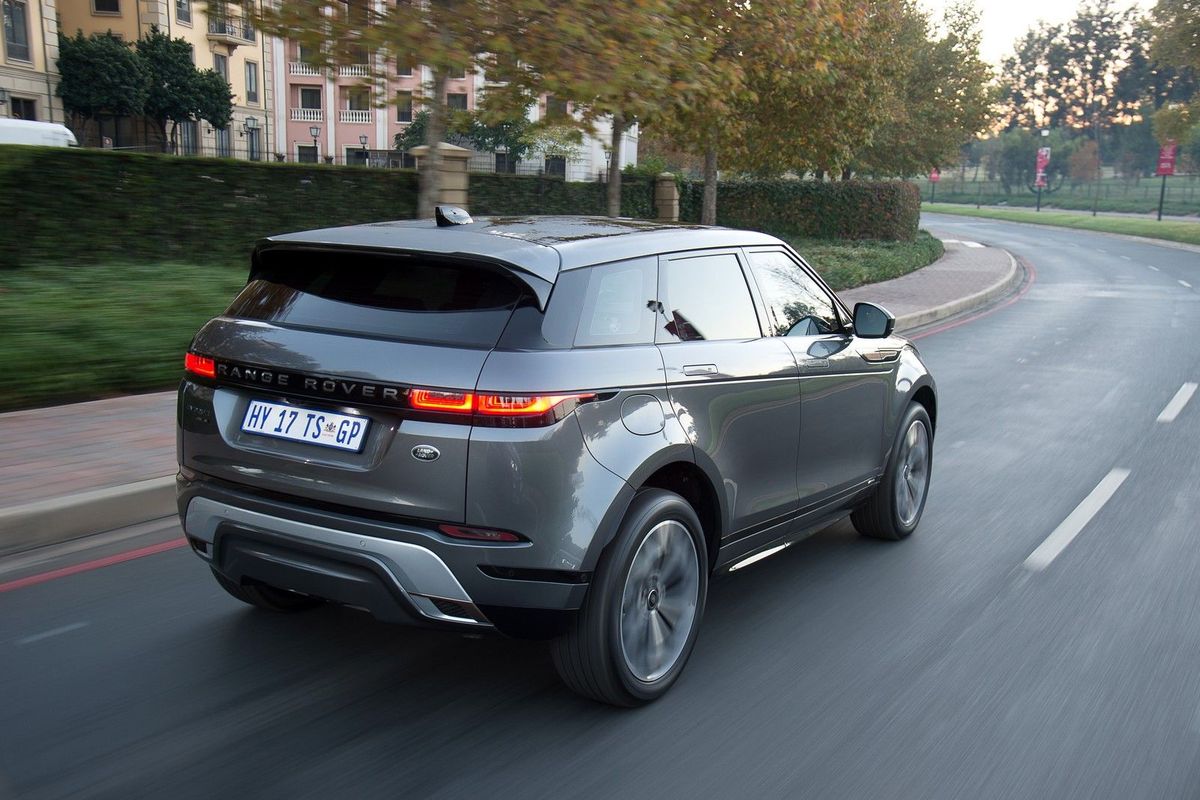
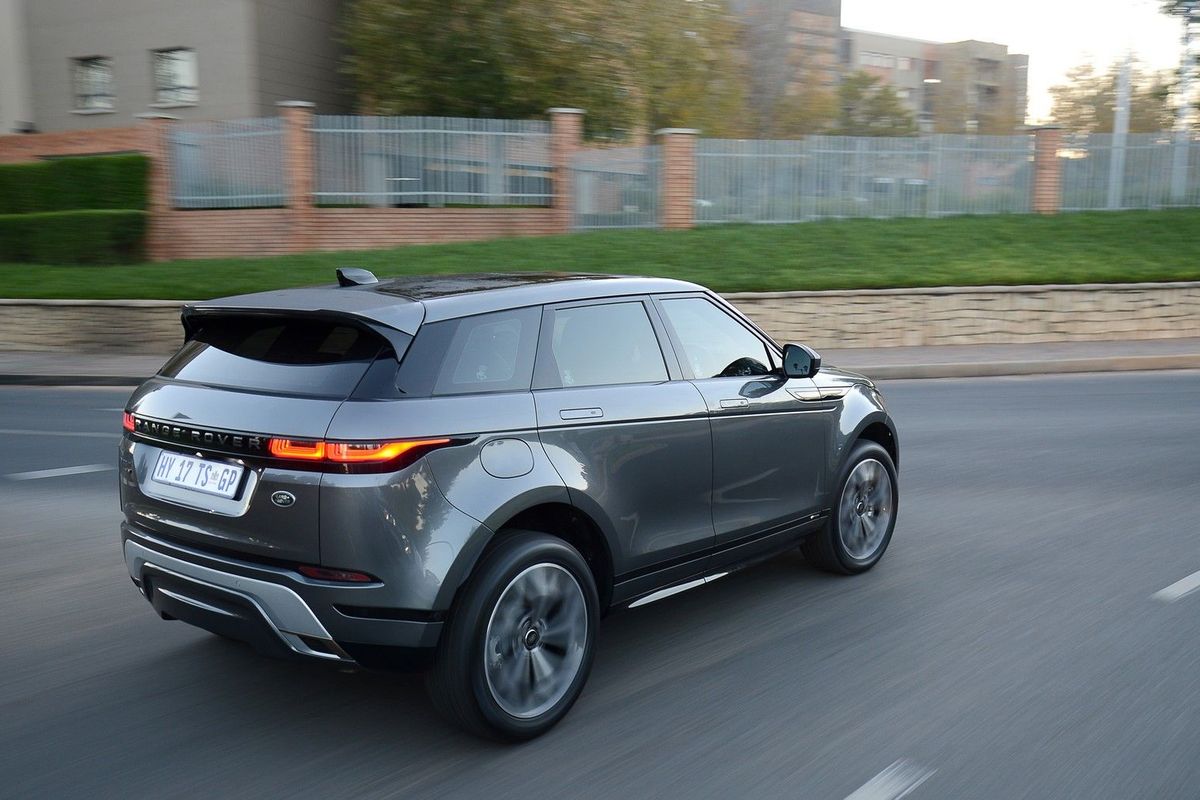
The rear is tightened up with a new LED light design and the black blade that runs through the tailgate area is adorned with a Range Rover badge.
The new LEDs up front and flush door handles are the easiest way to distinguish the new model.
In terms of its architecture, there is a brand new platform underneath the Evoque that extends its wheelbase by 21 mm. Overall, its weight is almost identical to that of its predecessor, although more equipment has been installed in the new model.
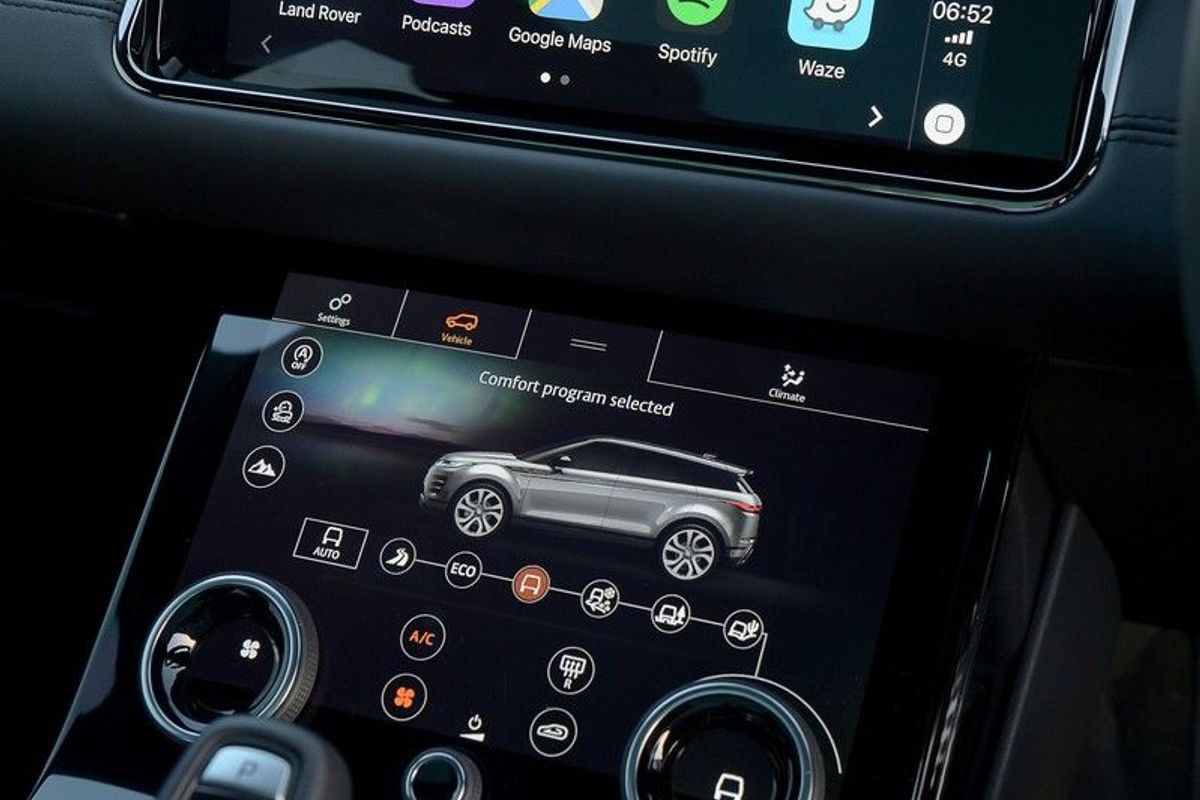
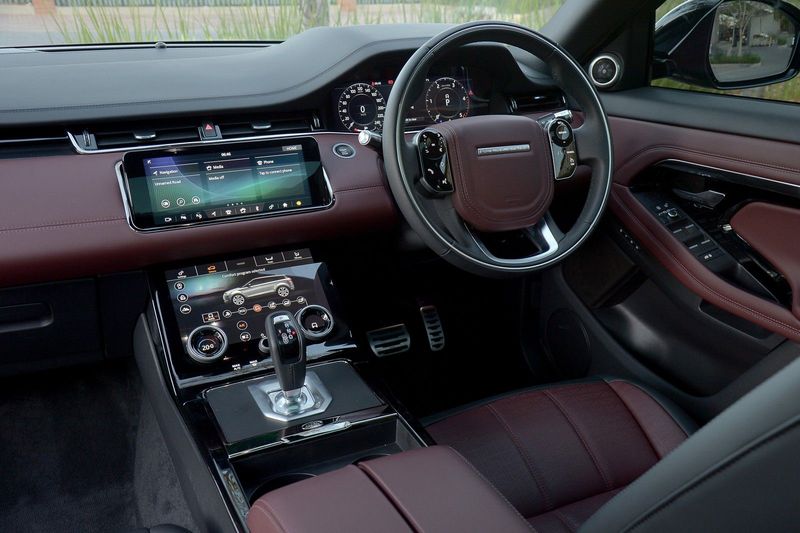
The dual touchscreen system, first seen on the Velar and then Range Rover Sport, has now trickled down to the Evoque (on higher-spec versions), giving the newcomer more premium appeal. More on that stuff later though…
There are currently 2 engines available: a turbodiesel and a turbopetrol. Both are 2.0 litres in capacity and are mated with a 9-speed transmission.
One petrol and one diesel are available at launch and a plug-in hybrid could arrive in 2020.
The turbopetrol was the first unit we drove out of Sandton and through the Cradle of Humankind and beyond. There’s plenty of shove on tap with 183 kW and 365 Nm of torque. It’s a responsive powertrain, moving the 1.7-tonne Evoque quickly from a standstill. It’s certainly the more reactive engine of the 2 and feels more than adequate on the freeway and overtaking at speed.
With the extra performance comes, well, less than impressive fuel consumption… Our 110 km trip in mixed conditions returned an indicated return of 12 L/100 km, which was more than we expected. Long-term ownership will no doubt bring that down, but not if you plan on doing mostly city driving.
The turbodiesel engine is the more considered choice. With 132 kW and 430 Nm on tap, it offers more than adequate performance for an SUV of this calibre. In terms of throttle response, it's not as punchy as the petrol motor, but on the return trip, it used just 7.7 L/100 km. The diesel version’s tank has also been increased to 65 litres, so you should be able to achieve around 700 km on a full tank at this rate.
Does it feel expensive inside?
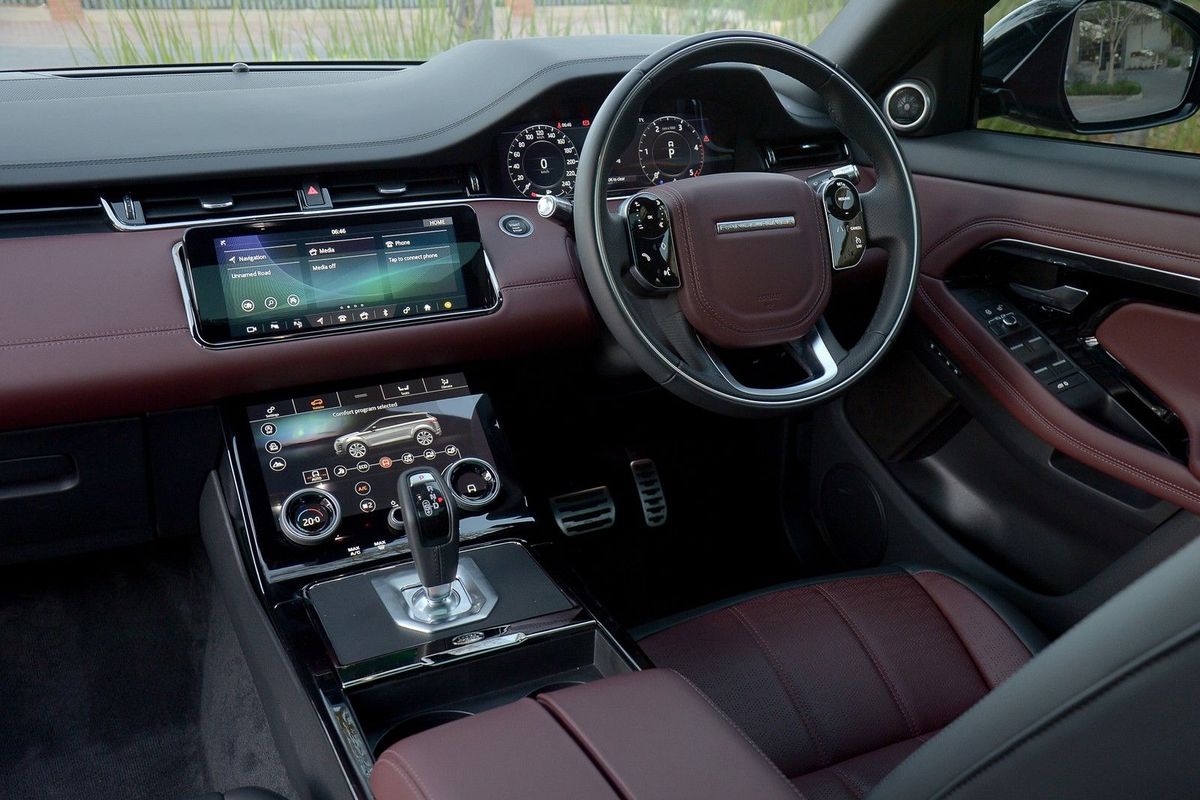
Dual touchscreens have trickled down from other Range Rover models into the Evoque.
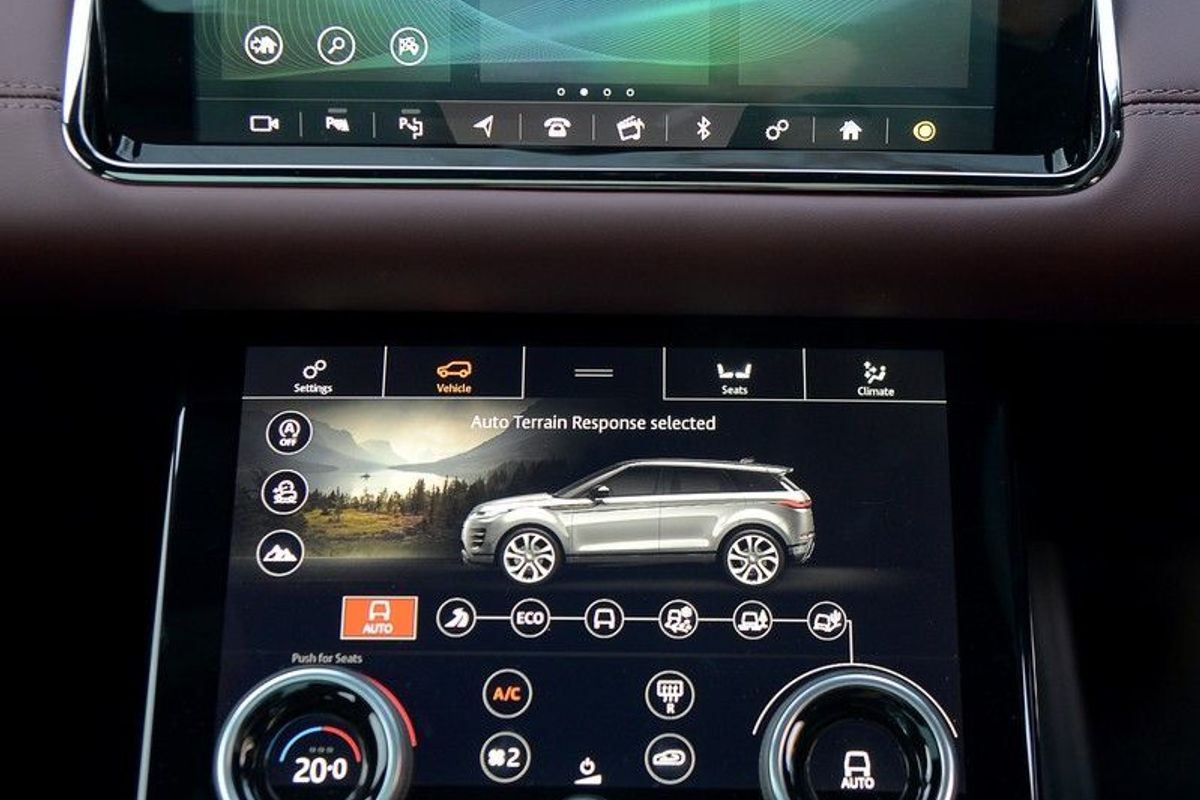
We drove high-spec (R-Dynamic HSE) units equipped with the dual touchscreen infotainment system that really makes the cabin feel upmarket. The screens are intuitive to operate, but only Apple Carplay-compatible. Android Auto is apparently coming soon, as well as a wireless charging bay.
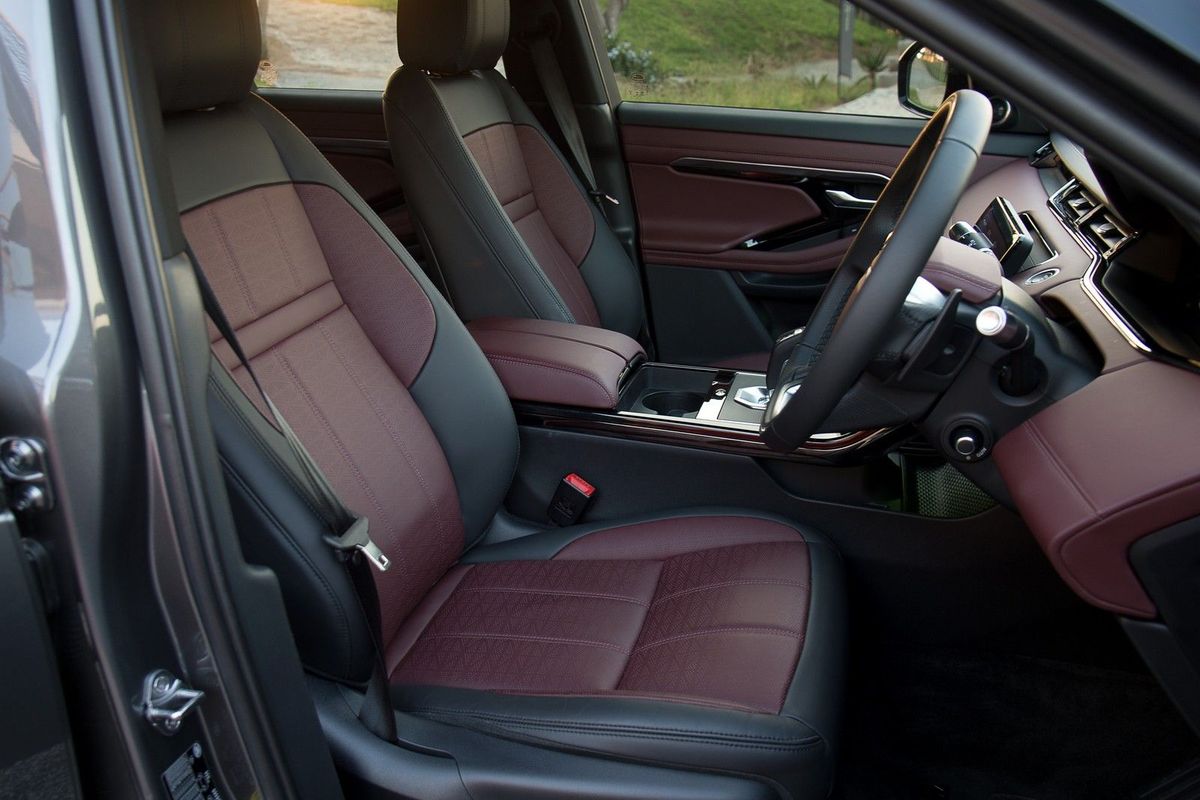
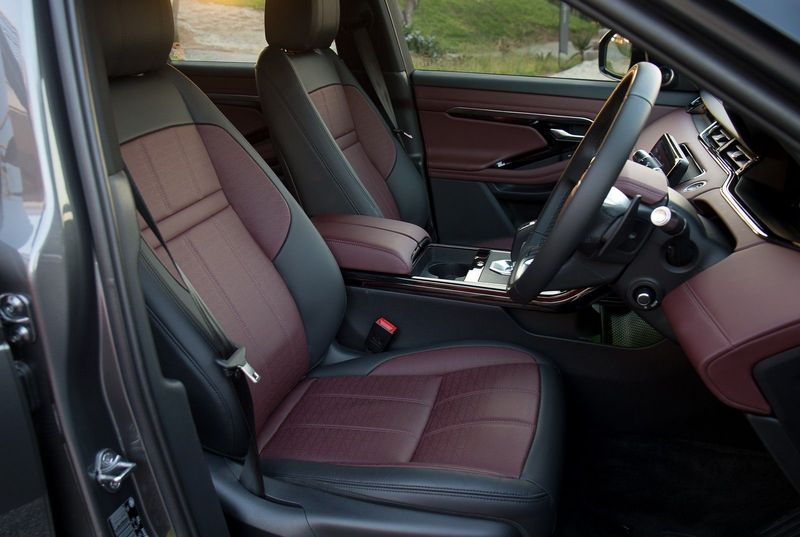
The dashboard area and door panels are covered in quilted leather, which you can spec in a wine stain maroon colour if you wish – it works really well with the black surfacing and aluminium inlays throughout the cabin. It feels very luxurious and while we can’t yet speak about the interior build quality (in terms of its durability, at least) it exudes a premium ambience that certain German models appear to lack.
It has a few neat tricks too. The rear-view mirror can be turned into a digital display with the flick of a lever. A camera on the shark-fin antenna can project what’s behind the vehicle onto the rear-view mirror giving a larger view of what’s behind. It takes a few moments to adjust to the display, but the image is high resolution and even works in the dark. Flick the switch again and it turns back into a normal mirror. Nifty!
I never go off-road, but I might want to…
Ground clearance on the new Evoque sits at 212 mm.
All Range Rovers are built with off-road talent in their genes and the Evoque is no different. It’s the model least likely to be seen in the bush, but it's fully capable of dealing with mild off-road conditions (should you find yourself in a difficult situation).
It has Terrain Response 2, which you select via the button on the bottom screen and then leave in Auto to adapt to whatever is underneath it. It tackled Land Rover’s in-house off-road course with ease, with the only notable problem being a few underbody scrapes due to the reduced ground clearance (212 mm) of the Evoque.
In the meantime, the Evoque's on-road manners are commendable. The new chassis reacts quickly to road undulations to provide an agile and responsive driving experience, which is matched by a quick steering setup. To deal with rapid changes of direction, the suspension setup is on the firmer side, but not crashy or clunky over potholes or speed bumps. It’s not a soft "soccer mom SUV" – it has a sportier feel to its road manners.
Is there lots of space for things?
Premium materials add to the air of luxury inside the new Evoque.
The Evoque is the smallest car in the Land Rover family and courtesy of the extra 21-mm of length to its wheelbase, it now offers more rear legroom than its predecessor. Having said that, it’s a bit tight in the back for adults, but on par for the segment.
The load bay's capacity has also grown slightly (to a claimed 591 litres) with a space saver spare wheel underneath.
There are plenty of Land Rover specific accessories that can be added to your shopping cart, such as roof rails, bike racks and an electric tow hitch.
Summary
Is the Evoque still the most eye-catching vehicle in the segment?
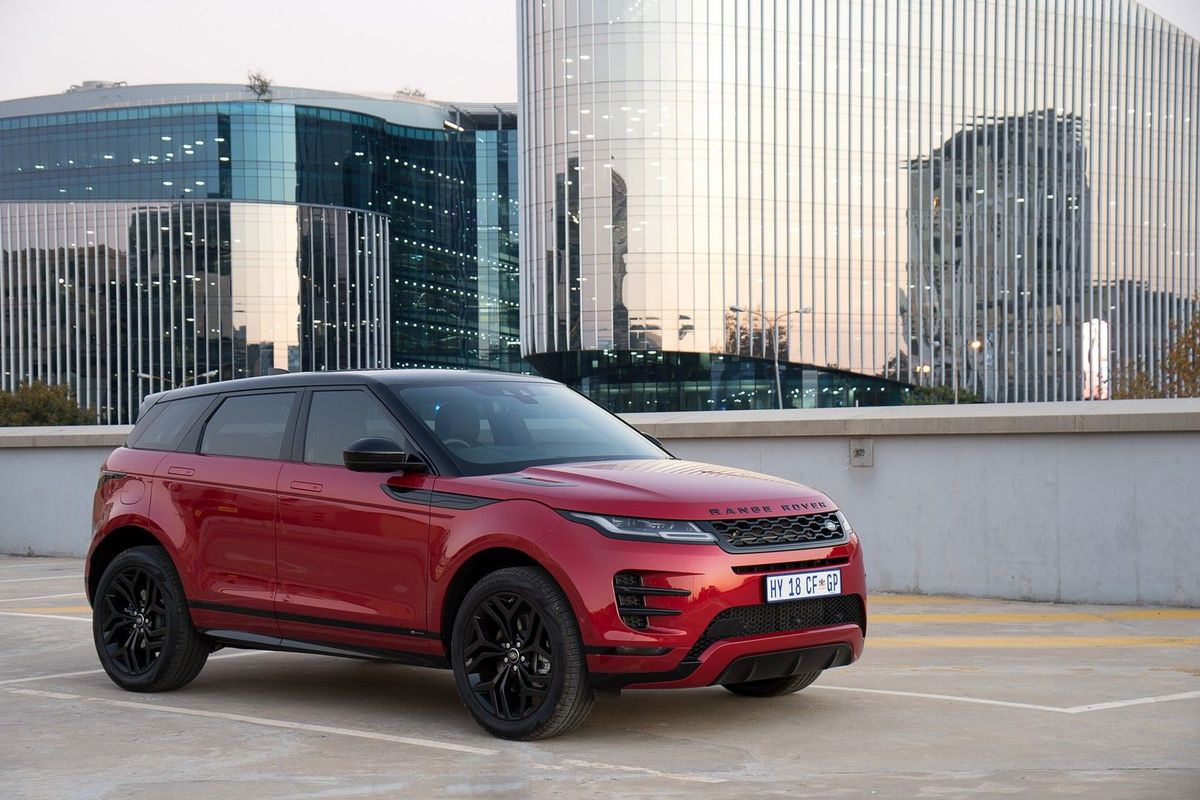
The new Evoque hasn’t changed much from the outside; Range Rover is steadfast in the belief that its premium compact SUV's original design was a winner. Whether it stands out and has as much visual clout as it did when the initial model was introduced, we’ll have to wait and see.
Under the skin, it has had a thorough makeover. The touch points inside are of a high standard and the quilted leather exudes luxury where its competitors are installing pretty plastics instead. Passenger space is better than before, but still not a strong point.
The Evoque has unmatched off-road credentials in its segment, but doesn’t offer them at the cost of on-road manners. It’s sporty to drive and responsive when you want to get a move on.
Indeed, it may all come down to cost. The starting price is over R700k and you don’t get an interior that does it justice at that price. No doubt you’ll be well into the R800k range before you’re happy with what you have and that’s a lot of money for a compact-sized SUV.
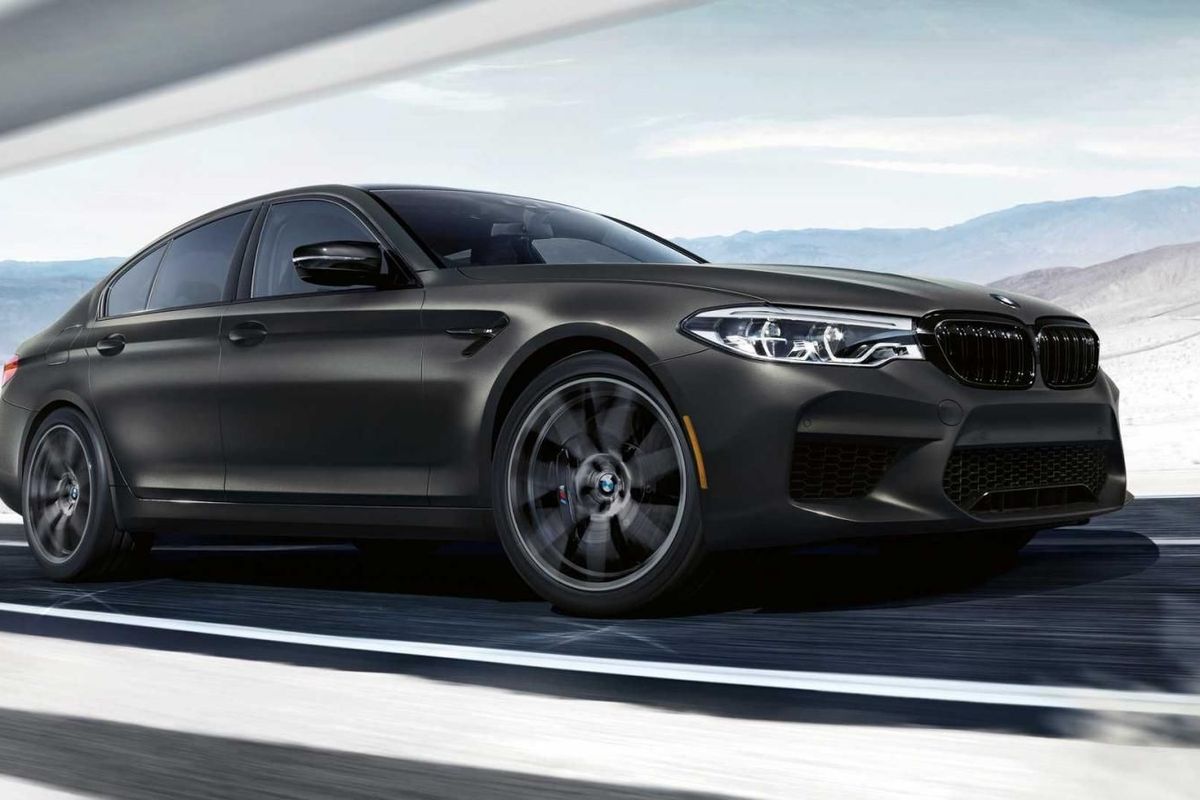
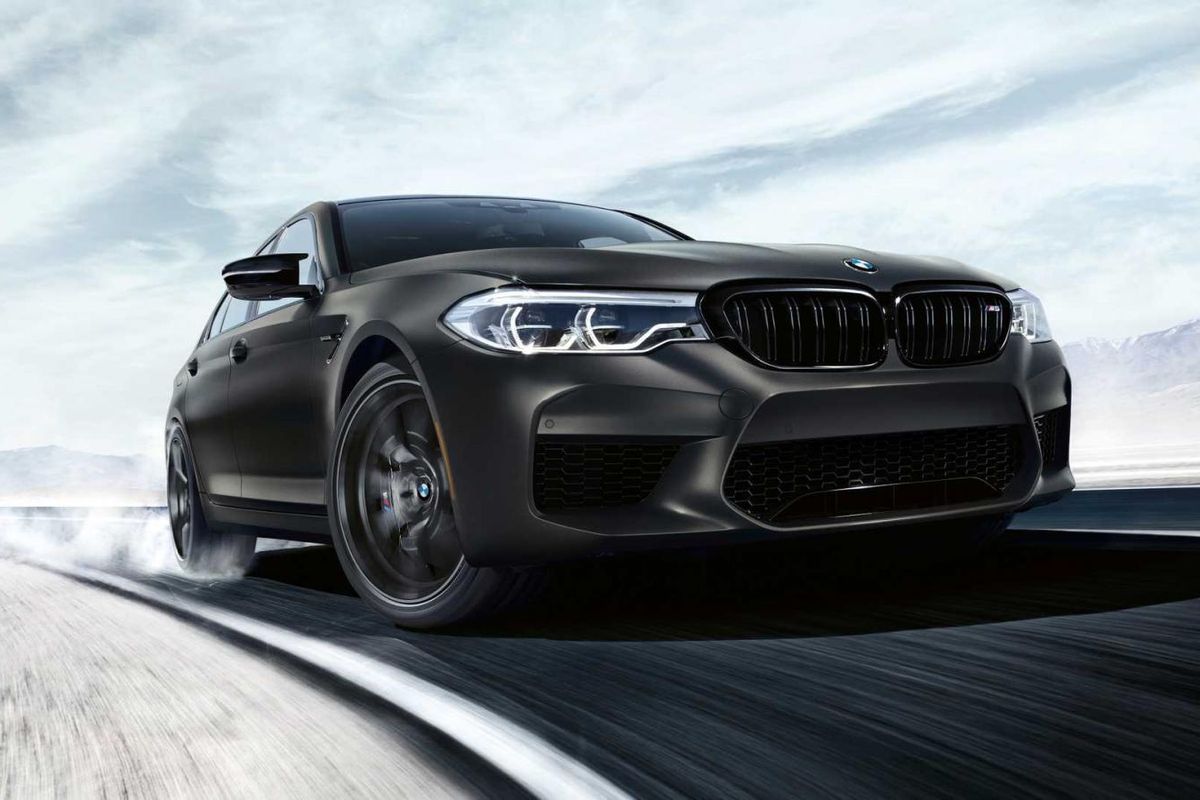
The M5 celebrates a stealthy 35th birthday with a special, limited edition model.
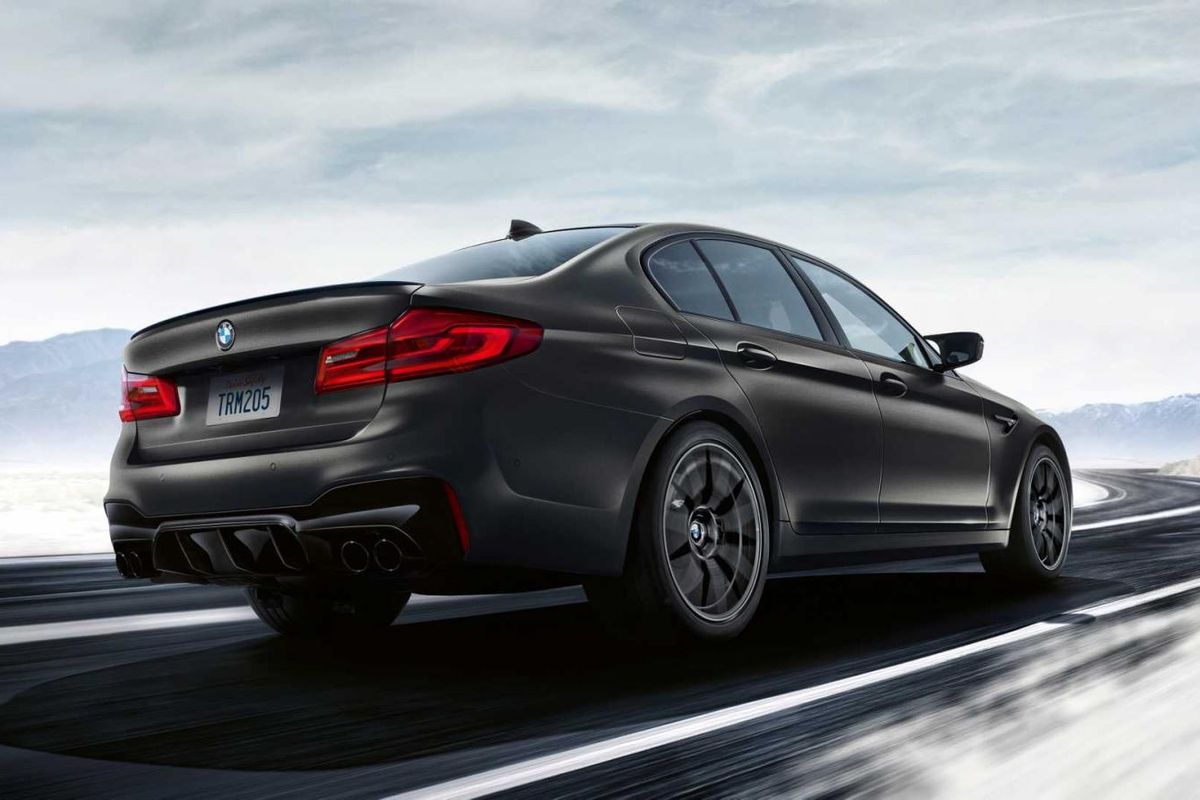
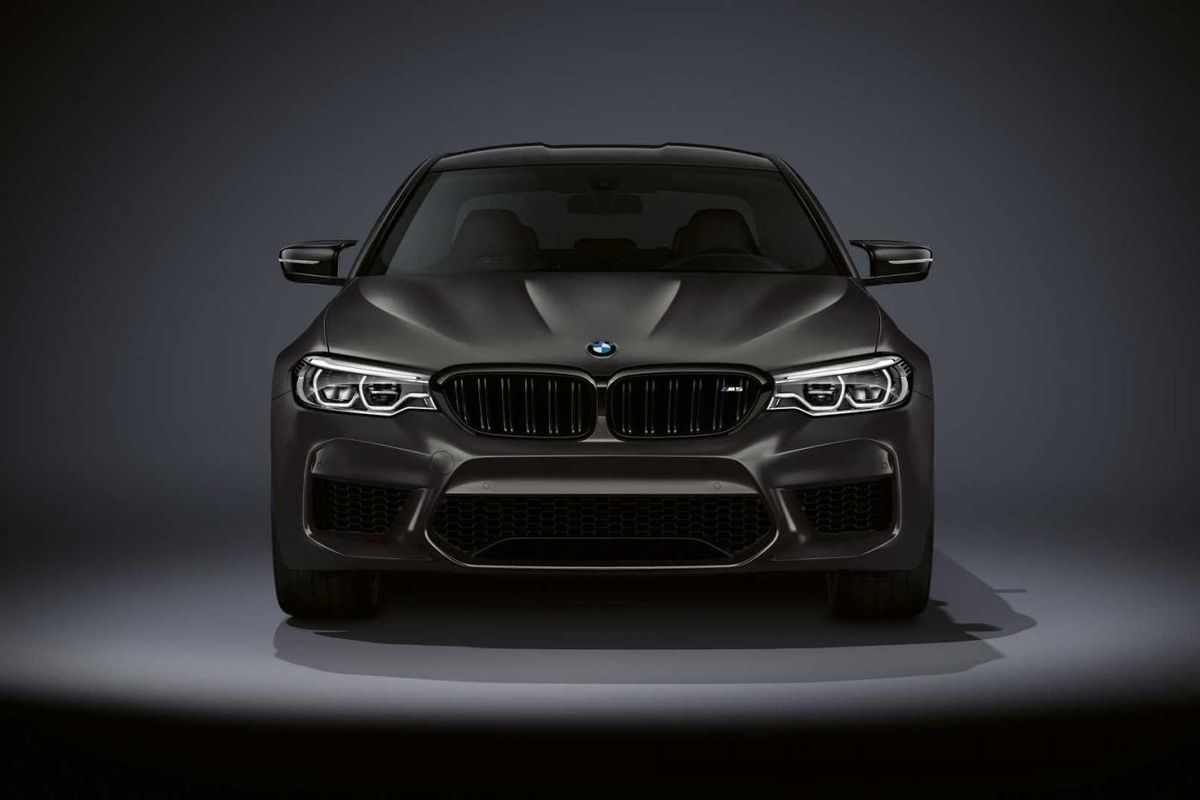
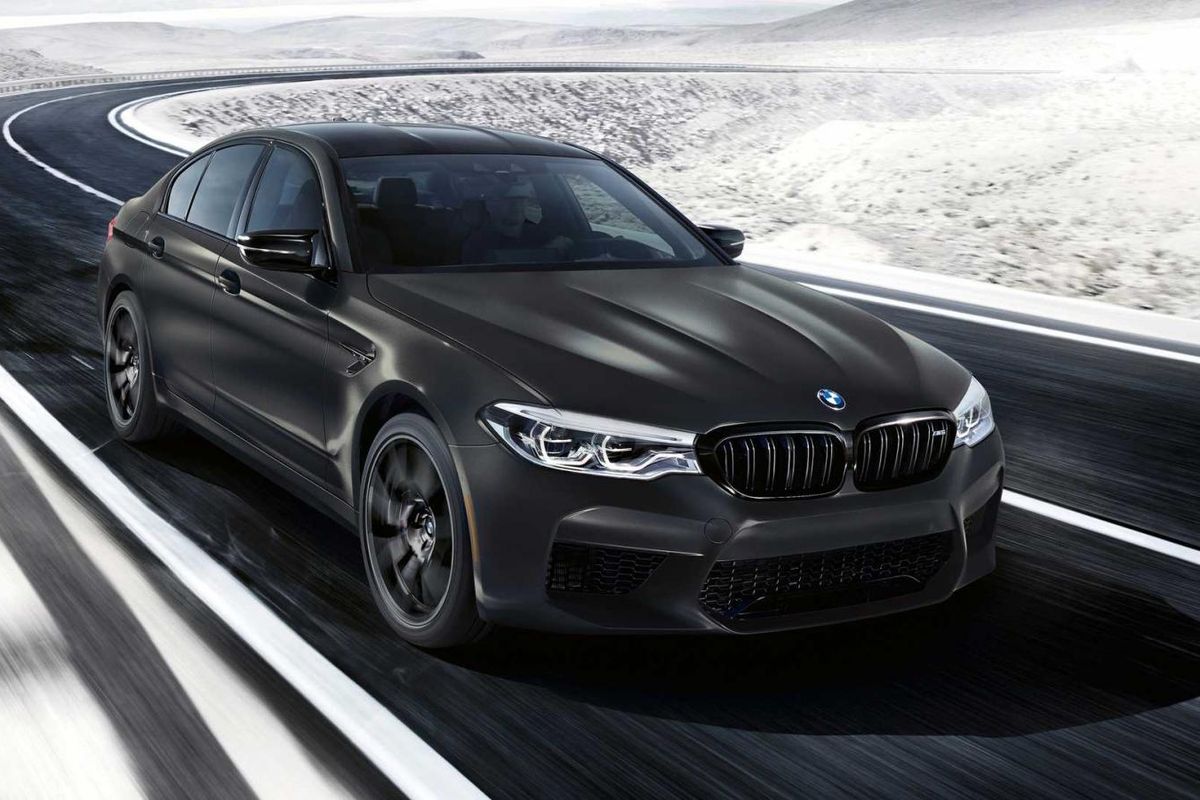
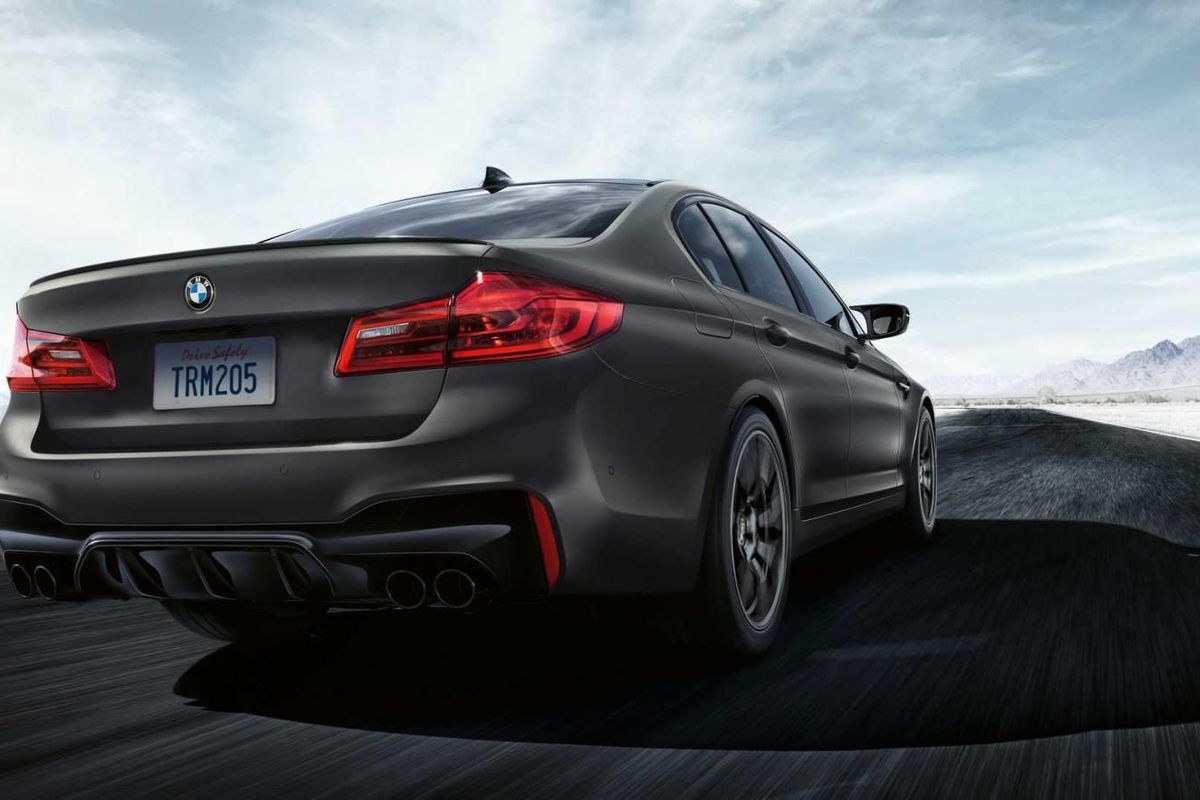
BMW’s M-Division is celebrating the anniversary of one of its most iconic products with a special edition version of the G30 generation M5.
This limited-edition large M-Division sedan will see a production cap of only 350 units for all global markets and is being marketed as the M5 35 Years, celebrating (quite obviously) three and a half decades of M5.
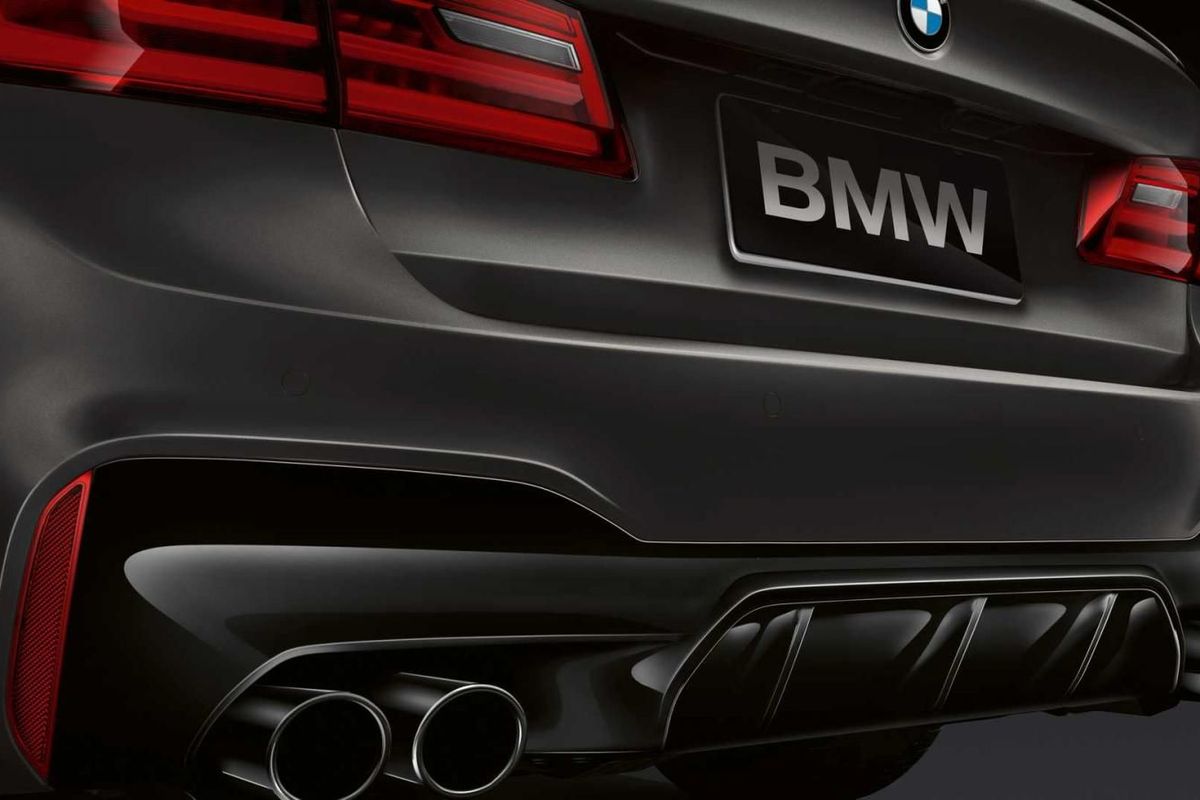
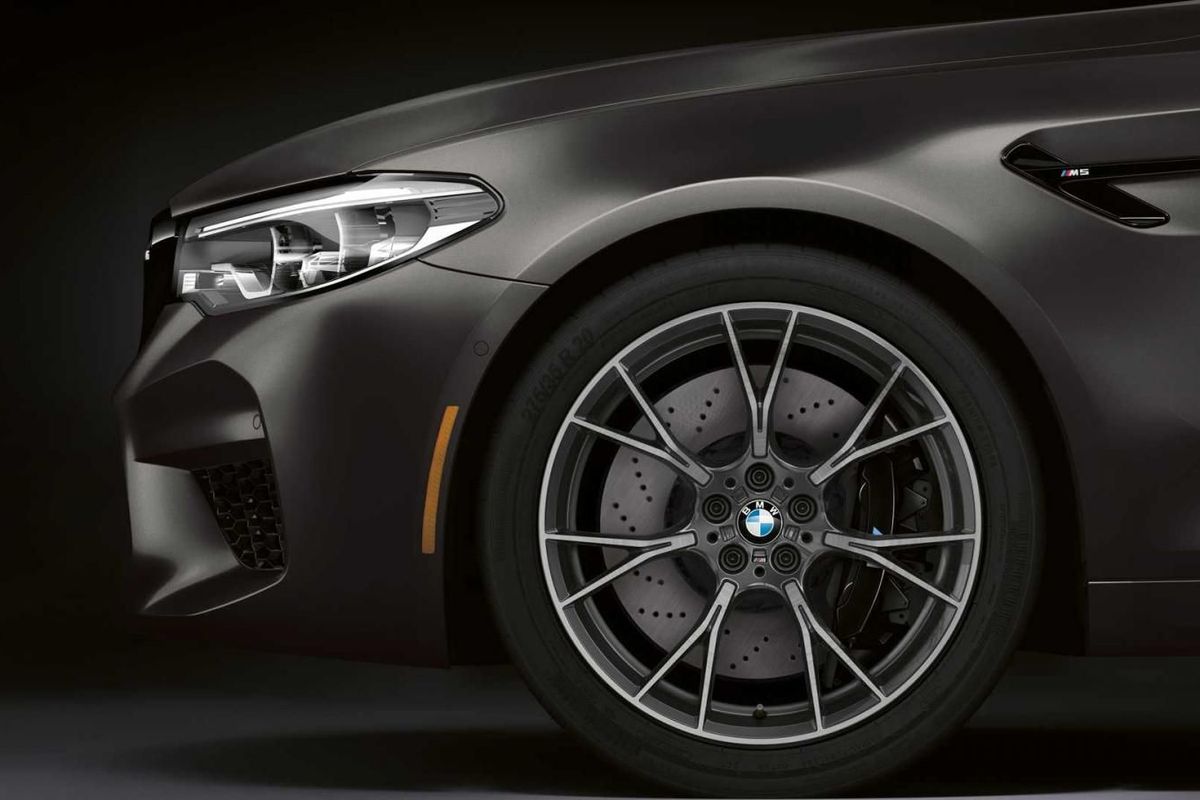
Distinguishing the 35 Years edition derivative from other M5s is its BMW Individual Frozen Dark Grey II exterior paint and 20-inch Y-spoke alloy wheels. Astute followers of all things M5 will also notice that the 35 Years edition cars have been de-badged, with no clues to this special edition’s naming convention.
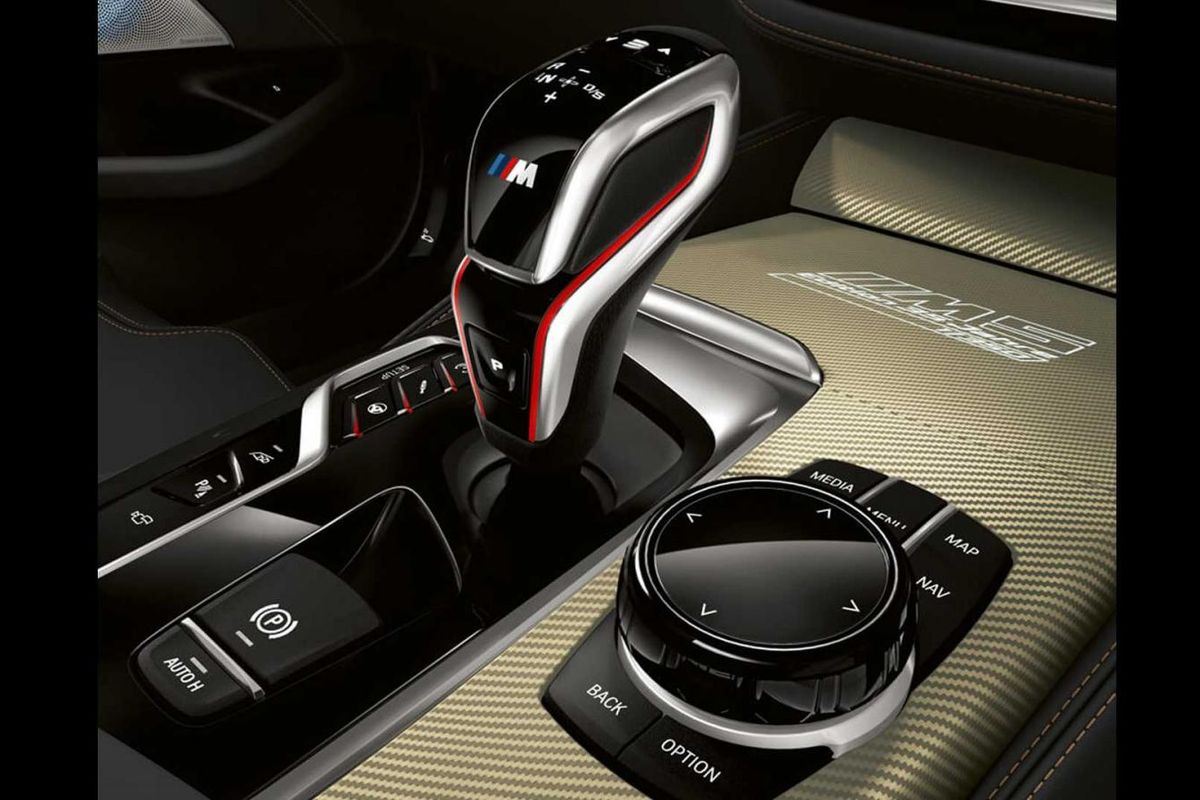
Inside the individualisation continues with beige upholstery stitching and gold centre console and door trim. BMW has added 35 Years badging to the cabin, too, engraved on the centre console, ahead of the eight-speed transmission’s shifter.
Mechanically the G30 Series M5 35 Years edition is powered by a 460 kW version of BMW’s 4.4-litre twin-turbocharged V8 and carbon-ceramic brakes remain optional.
Customer deliveries of the 35 Years M5 will commence in October, with only 350 cars to be built for all global markets. South African M5 fans will not count amongst the lucky few to have the option on one of these limited edition 35 Years cars, as this M-Division derivative is not planned for local introduction.
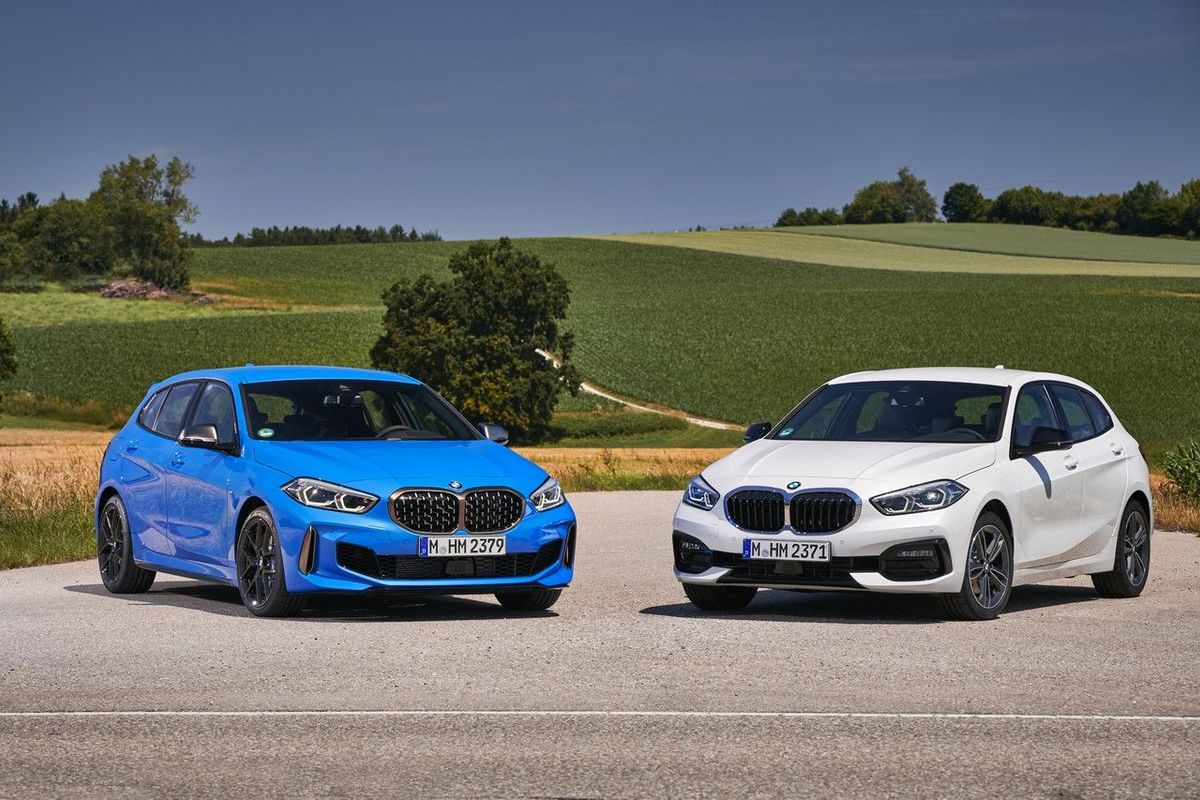
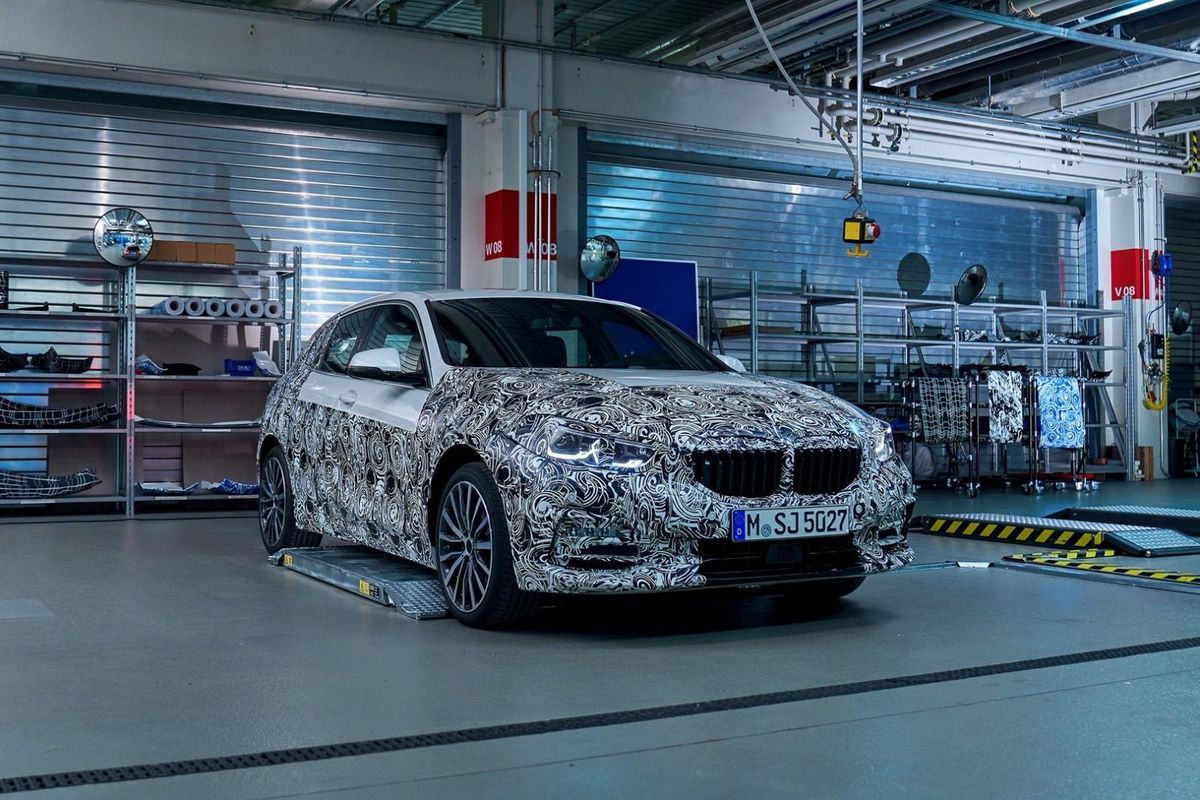
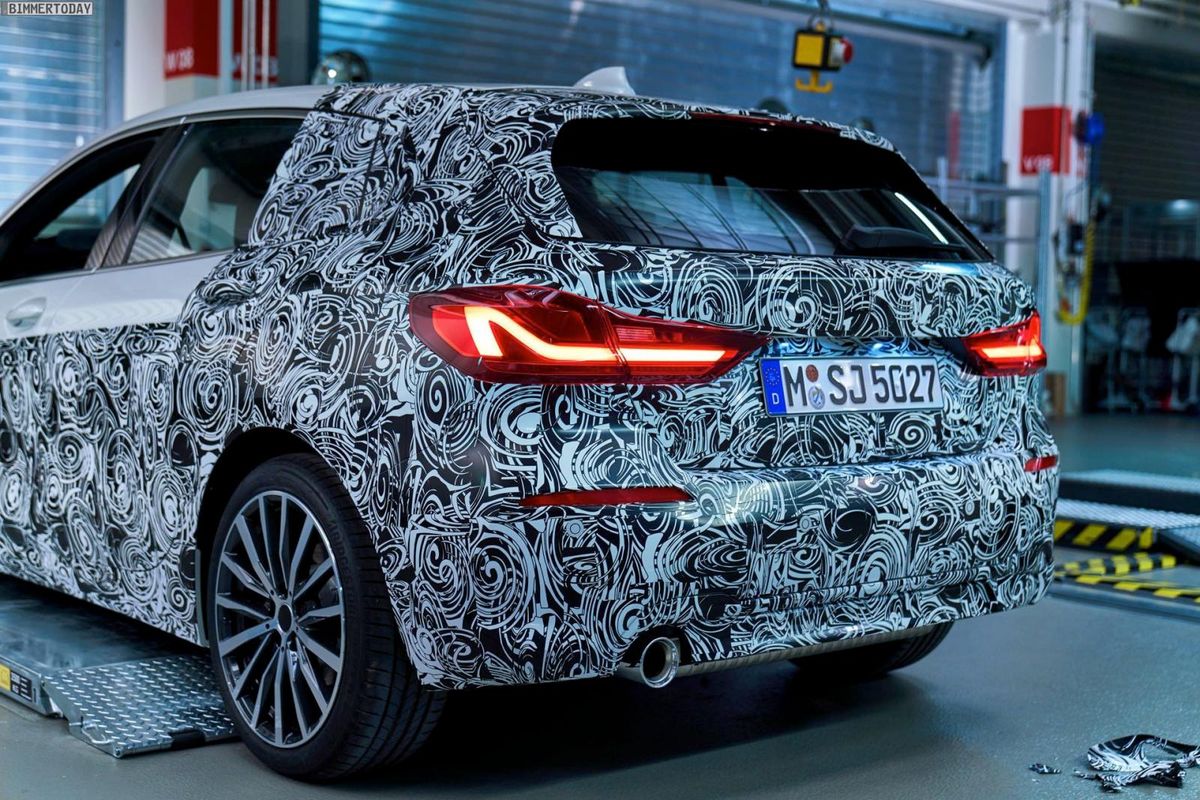
The new BMW 1 Series is almost due to be revealed and ahead of the official unveiling scheduled for 27 May 2019, BMW released some teaser images. Here's what we know so far.
Codenamed the F40, the next-generation BMW 1 Series has been teased across Facebook with this main image dominating. The other images show a camouflaged BMW 1 Series with some parts of the camouflage removed, showing us some details. We have learnt that BMW is planning to officially unveil the newcomer on the 27 May 2019.
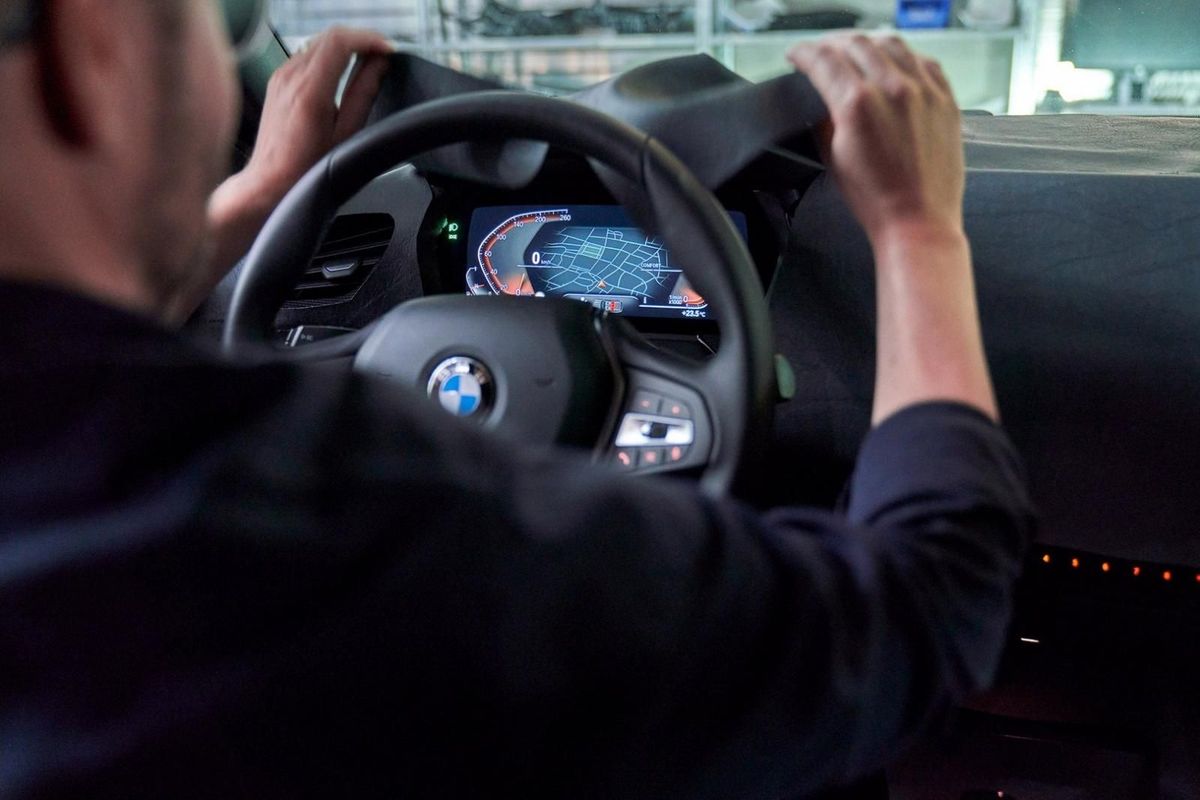
We can see parts of the dashboard in the one image and this confirms our suspicions that the new BMW 1 Series will feature the all-new digital dashboard from the 3 Series. The other images show off the vehicle's new daytime running lights.
We're happy to confirm that we'll be driving the all-new BMW in Germany in July 2019 with the 118d and M135i xDrive being the two models we'll be assessing. The M135i xDrive is going to be a vehicle which is very unlike BMW. It's going to be all-wheel drive and the mighty 6-cylinder has been replaced by a new 2.0-litre turbocharged 4-cylinder which produces 225 kW and 450 Nm. It is the same engine as that found in the newly-launched-in-SA X2 M35i. The rest of the BMW 1 Series is to be front-wheel drive which is going to upset some of the traditionalists, but we'll wait until we've driven it before passing judgement.
Interestingly, this won't be the only front-wheel drive vehicle on this platform. At a recent BMW shareholder meeting, CEO Harald Kruger confirmed the new 1 Series as well as a new offering in the form of the BMW 2 Series Gran Coupe. “We also have a model offensive in the compact class. Deliveries of the new BMW 1 Series will get underway by the end of the year. In spring 2020, we will launch the totally new BMW 2 Series Gran Coupé. I think young people will find its striking design especially appealing. Our model offensive 2.0 is designed to excite customers, as we target another all-time sales high for 2019,” said Kruger.
The BMW 1 Series interior teased ahead of its reveal on May 27.
2019 BMW 320d vs Mercedes-Benz C220d – Which one should you buy?
It's the German business class sedan showdown you've all been waiting for. The new BMW 320d takes on the Mercedes-Benz C220d in an in-depth comparison video. Which should you buy? Watch now!
The all-new, G20-generation BMW 3 Series was recently launched in the South African market and many supporters of the Bavarian brand's products would regard the new model as a disappointment if it didn’t immediately become the new benchmark in the keenly-contested business class sedan segment of the new vehicle market…
However, the larger, more refined and technologically advanced 3 Series needs to overcome considerable opposition in the shape of the recently facelifted W205 Mercedes-Benz C-Class, which is widely regarded as a segment frontrunner. So, which one is the best? In a battle of sportily-clad turbodiesel-powered derivatives, Ciro De Siena compares the BMW 320d M Sport with the Mercedes-Benz C220d AMG Line.
The South African-built Ranger Raptor is finally here and while its styling is undoubtedly attention-grabbing, we were eager to experience this engineering phenomenon in the metal, on local soil, to find out if it’s just another over-hyped bakkie splattered with racy stickers – or if it can really do what Ford claims it can do. We sent Gero Lilleike to a boiling-hot salt pan near Upington, Northern Cape, to put the hammer down and get some answers…
The hype surrounding the new Ranger Raptor, particularly on social media, has been somewhat interesting and I have been trawling through comments, opinions and all kinds of jibber jabber to get a sense of what people think of this new Ranger Raptor. Many people love it, some think it’s well-priced (the Ranger Raptor costs R786 400), but many people also don’t understand what it is. And so, if you are one of those people who thinks or believes the new Raptor is just a dressed-up Ranger with not much else going on, then it’s my duty to tell you that you are wrong, very wrong…
The Ranger Raptor has loads of kerb appeal and is purported to offer class-leading offroad ability.
To put it simply, the Ranger Raptor is a high-performance off-road bakkie. In this case, defining and understanding what is meant by "high-performance" in this particular context may help you understand what the Ranger Raptor is and, indeed, what it’s capable of. Let me elaborate…
It may carry the Ranger name and share stylistic features with Ford's popular pick-up range, but the Raptor is an entirely different animal to the standard bakkie. It rides on a specially-developed chassis that’s designed to withstand the rigours of spirited off-road driving, which is to say that the Raptor is designed to survive the most severe conditions it may possibly encounter when being driven in anger on non-sealed surfaces.
The Raptor is built for purpose and you can see it its stance. It stands some 51 mm taller than a standard Ranger and the front and rear tracks have been widened by 150 mm for extra offroad stability. It also boasts a higher ground clearance (283 mm) and has a wading depth of 850 mm.
Ford partnered with BF Goodrich to develop chunky 285/70 17-inch all-terrain tyres exclusively for the Raptor. The bakkie's bespoke braking system comprises 332 x 32-mm ventilated discs with twin-piston 51-mm calipers (the diametre of which is 20% larger than on a standard Ranger) up front, with 332 x 24-mm discs and 54-mm calipers at the rear. A 2.3-mm front bash plate ensures the Raptor's internals are well-shielded against impacts.
The Ranger Raptor's suspension system is a major highlight and sets it apart from other 4×4 products.
But the most notable feature that sets the Ranger Raptor apart from any other 4×4 bakkie currently on sale is indeed its suspension system.
A new rear coil-over suspension with an integrated Watt’s linkage allows for vertical axle movement while minimising lateral movement and this contributes to high levels of control and comfort when engaging in offroad driving.
While the Ranger Raptor is a thoroughbred off-road beast, it needs to deliver on-road comfort too and to do this, Ford partnered with FOX to develop position-sensitive damping (PSD) shock absorbers. They allow for significantly higher damping forces when off-roading while also providing the necessary comfort on-road with lower damping forces. Compared with the standard Ranger, front wheel travel has increased by 32% and rear wheel travel is up by 22%, which means the breadth of the Raptors suspension capability is widened to accommodate various driving terrain.
Based on the information above, it should be clear to you now that this is no ordinary Ranger. If you still have your doubts, then read on…
What’s the Ranger Raptor like to drive on the road?
A 2.0-litre bi-turbodiesel engine provides ample performance with 157 kW and 500 Nm of torque.
The Ranger Raptor launch took place in Upington and upon arrival, the media entourage set off on tar for the Goerapan salt pan some 100 km away, which gave us a chance to see what the newcomer's like to drive on the road.
The Ford's 2.0-litre bi-turbocharged diesel engine (with 157 kW and 500 Nm of torque) is mated with a new 10-speed automatic transmission. This is the same engine and transmission that is now offered on the standard Ranger. Many critics bemoan those standard outputs, but the reality is that they're more than sufficient for on- and off-road use and, when you consider how this Ranger Raptor has been set up, you really don’t need more…
On tar, we were surprised by how eager and willing this engine actually is. Due to its higher levels of engine refinement, the Ranger Raptor gains momentum rapidly and if you are not careful you will soon find yourself well over the national highway speed limit, even though it doesn’t feel like it.
Despite its offroad bias, the Ranger Raptor offers convenient features such as SYNC3 infotainment with Apple CarPlay and Android Auto.
We were impressed by how stable and comfortable the Ranger Raptor was when driving at speed. The ride qualities of other double-cab bakkies tend to get jittery at speed, but the Ranger Raptor was unphased as the dry Kalahari landscape whizzed by. That said, for anyone driving the Ranger Raptor on the road, speed management is a skill that you will have to learn quickly to avoid regular speeding fines in more built-up areas.
The engine and transmission work well together and both provide good general performance. The transmission is well-calibrated and it does have a manual mode with steering-mounted paddle shifters that allow you to manually shift gears, but for on-road driving, it’s best to let the transmission shift automatically. When we arrived at the Goerapan, the Raptor's real test began, however. An action-packed day of off-road driving beckoned.
How does the Ranger Raptor perform off-road?
The Ranger Raptor's off-road ability is both impressive and astounding…
Ford wanted us to experience the full breadth of the Ranger Raptor's capabilities and to achieve this, 3 different off-road activities were set up at the salt pan including dynamic handling, sand driving and an off-road rally course.
There are 6 modes on offer, including Normal and Sport (for on-road driving) and off-road modes including Grass/Gravel/Snow, Mud/Sand, Rock and Baja. The intention of the dynamic handling course was for us to get a feel for the Raptor's unique Baja mode, named after the Baja Desert Rally in Mexico. To put it more plainly, this activity was all about getting the Ranger Raptor sideways, in the dirt, at heady speeds…
Baja mode is specifically calibrated for high-speed off-road driving by sharpening up the throttle, transmission and steering response. More than this, "Baja" dials back the stability- and traction control, which makes it ideal for enthusiastic off-road driving and performing controlled drifts at speed.
Baja mode is a must if you want to initiate high-speed offroad drifts such as this…
We hit the course with much enthusiasm and were amazed at how easily the Raptor's rear-end steps out, but moreover, how poised and confidence-inspiring the off-road machine is when going sideways. The Ranger Raptor drifted through corners with impressive precision and predictability. It was a delight to achieve a semi-permanent "state of drift" for prolonged stretches; all of a sudden, Baja mode made perfect sense.
Then we put the Ranger Raptor through its paces in the sand dunes surrounding the salt pan. The tyres were adequately deflated to cope with the fine sand and we traversed various dune obstacles. The Ford was clearly in its element; it was only necessary to engage the differential lock on some badly corrugated sections. Sand driving is all about maintaining momentum and for the most part, the bakkie performed admirably in the sand.
However, a pattern was developing. Traditionally, 4×4 driving is done at slower speeds to protect the mechanical integrity of the vehicle. With the Ranger Raptor, it soon became clear that this bakkie can handle much, much more.
The rally course was the ultimate test for the Ranger Raptor…
The final rally activity would invariably shatter my perceptions of what this Ranger Raptor is really capable of. The rally course combined high-speed driving on the salt pan that transitions into a substantial route in the sand dunes and ends back on the salt pan, where the finish line was.
A Ford instructor took us on a scouting lap and judging by the fast-paced driving in difficult terrain, it became abundantly clear that this was the ultimate test for the Ranger Raptor.
I buckled up and made the decision that I was going to push the Ranger Raptor as hard as my sanity would allow. We clocked 145 kph on the salt pan and then proceeded to bash through the difficult sand dune section at speeds I have never before achieved off-road. It was incredible.
At the end of my run, it dawned on me that there is no standard 4×4 bakkie on sale in South Africa that would be able to cope with that level of repeated abuse that Ford's newcomer endured during this demonstration. Some may take the punch once or a few times, but not repeatedly.
Imagine what would happen if any standard 4-wheel-drive pick-up (be it a Toyota Hilux, Ford Ranger, Mitsubishi Triton, Isuzu D-Max, Mercedes-Benz X-Class or Nissan Navara) was subjected to such a flogging… images of burst shock absorbers and wheels and bumpers flying off the car come to mind.
And if that wasn’t enough to convince me, Ford had professional off-road racing driver Gareth Woolridge on hand to take us on a hot lap, which made my (what I thought was spirited) run in the Raptor look pedestrian and insignificant. And that was just the confirmation that I sought…
The Ranger Raptor is indeed the real deal – its off-road prowess was undeniably etched into the sand at Goerapan salt pan during this media event. More so, the Raptor has seemingly redefined what is possible off-road with a vehicle that you can buy, as standard, off a Ford showroom floor.
To end off a challenging day's driving, we managed to get the Raptor airborne on a deserted farm road. Not your typical 4×4 experience, then…
Summary
The Ranger Raptor is a formidable offroad vehicle but due to its offroad bias, it's not the most sensible purchase in this segment.
The Ranger Raptor proved its offroad capability at the Goerapan salt pan, but offroad ability alone is not the only factor to consider here. The newcomer is a niche vehicle and the only direct rival in our market is the Isuzu D-Max Arctic AT 35 (with 130 kW and 380 Nm developed from by its 3.0-litre turbodiesel engine), which is priced at R785 000. In terms of price, the Ranger Raptor comes in at R786 400, which is cheaper/competitively priced against the Volkswagen Amarok 3.0 V6 derivatives (R791 100–R829 200) and substantially cheaper than the Mercedes-Benz X-Class V6-powered 350d derivatives (R904 188–R973 188), which unlike the Raptor are both considered to be more luxurious leisure double-cab bakkies.
There are a few downsides too… While the Ranger Raptor’s interior is decisively sporty with Raptor sports seats, a sporty steering wheel (with red centre mark) and nice-to-have features such as a SYNC3 infotainment system with Apple CarPlay and Android Auto compatibility, its interior build quality isn’t quite as good as that of the Volkswagen Amarok, for example (some interior parts such as the sunglass holder and centre bin lid feel flimsy). More than this, due to its suspension set up, the Raptor’s maximum towing capacity has been reduced to 2 500 kg, with a maximum payload of 750 kg, which is worth factoring into your purchasing decision.
However, despite its niche appeal, the Ranger Raptor is bound to find broader favour with hardcore offroad enthusiasts and image-conscious buyers who want to show-off and make a bold statement. The Ranger Raptor is now arguably the best-looking and the most capable 4×4 bakkie on sale in South Africa, but it’s certainly not the most practical choice, especially if you don't regularly intend on using it to its full ability.
I still want one in my garage though…
Ford Ranger Raptor price in South Africa
The Ranger Raptor costs R786 400 (May 2019) and comes standard with a 4-year /120 000 km comprehensive warranty, 5-year/unlimited km corrosion warranty, 3 years of roadside assistance, 6-year/90 000 km service plan with intervals every 15 000 km.
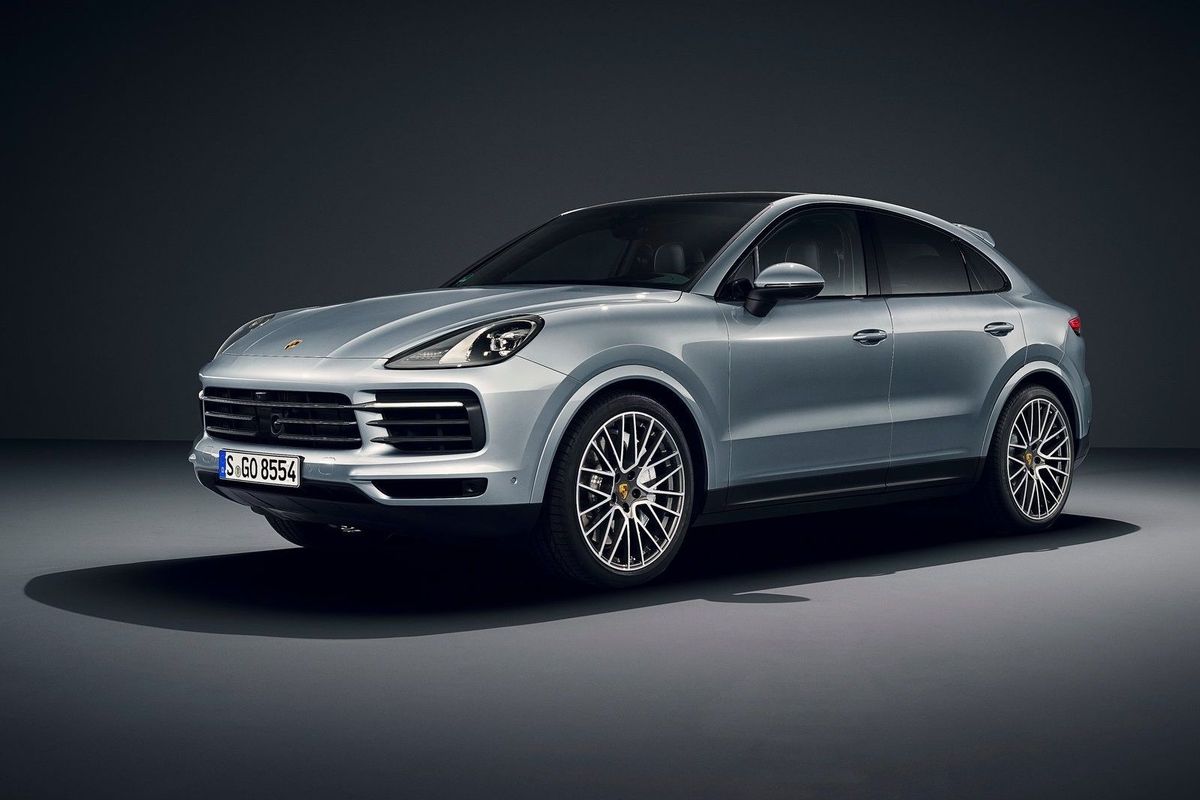
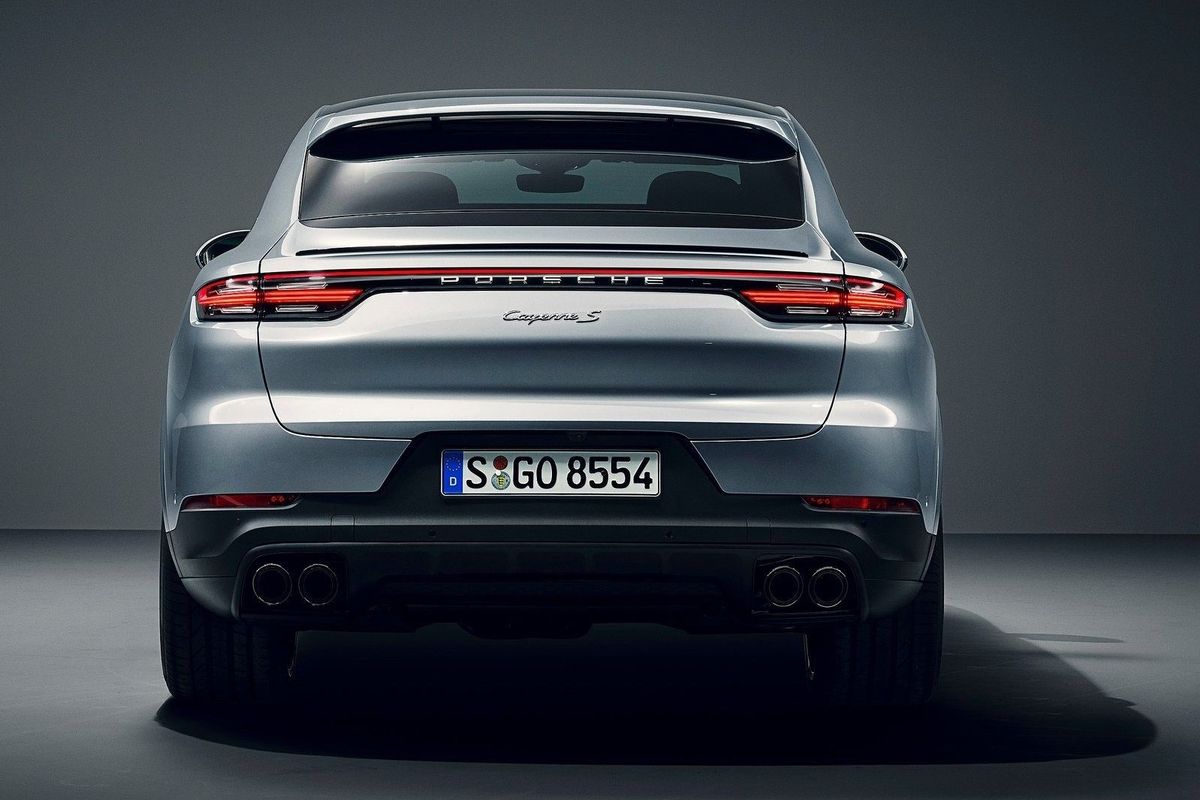
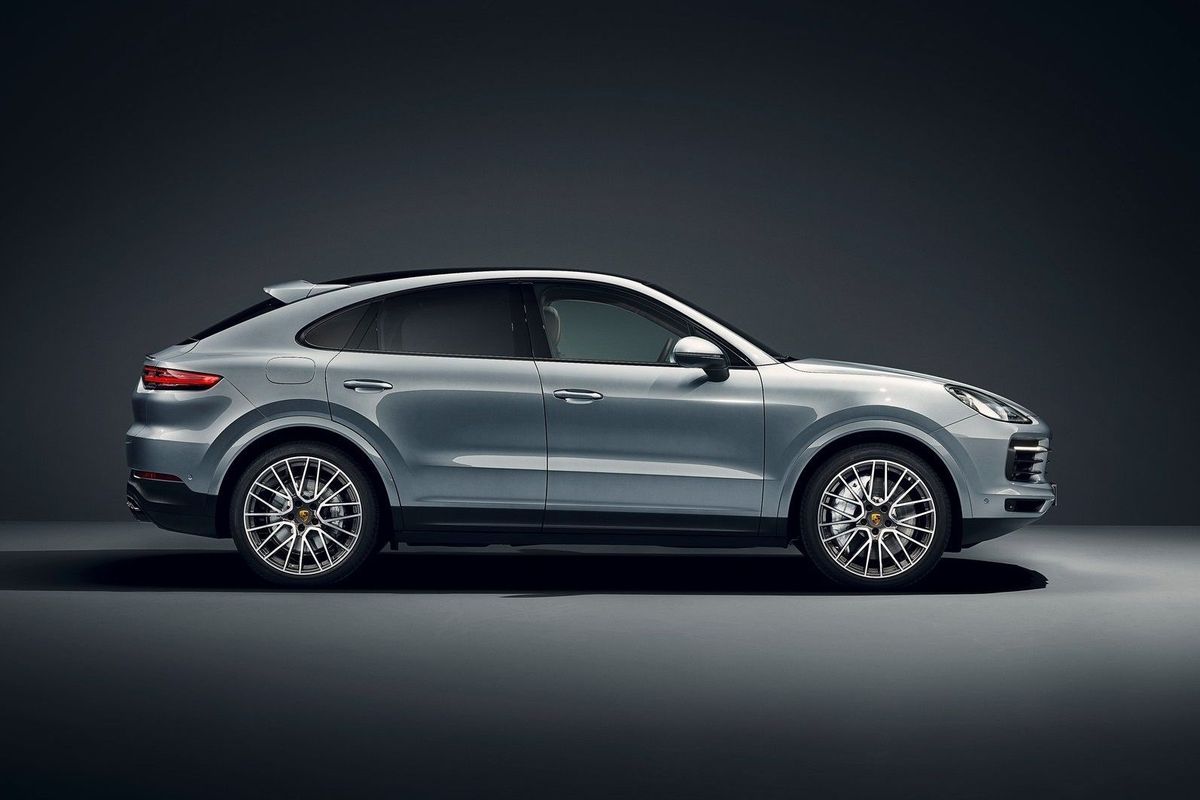
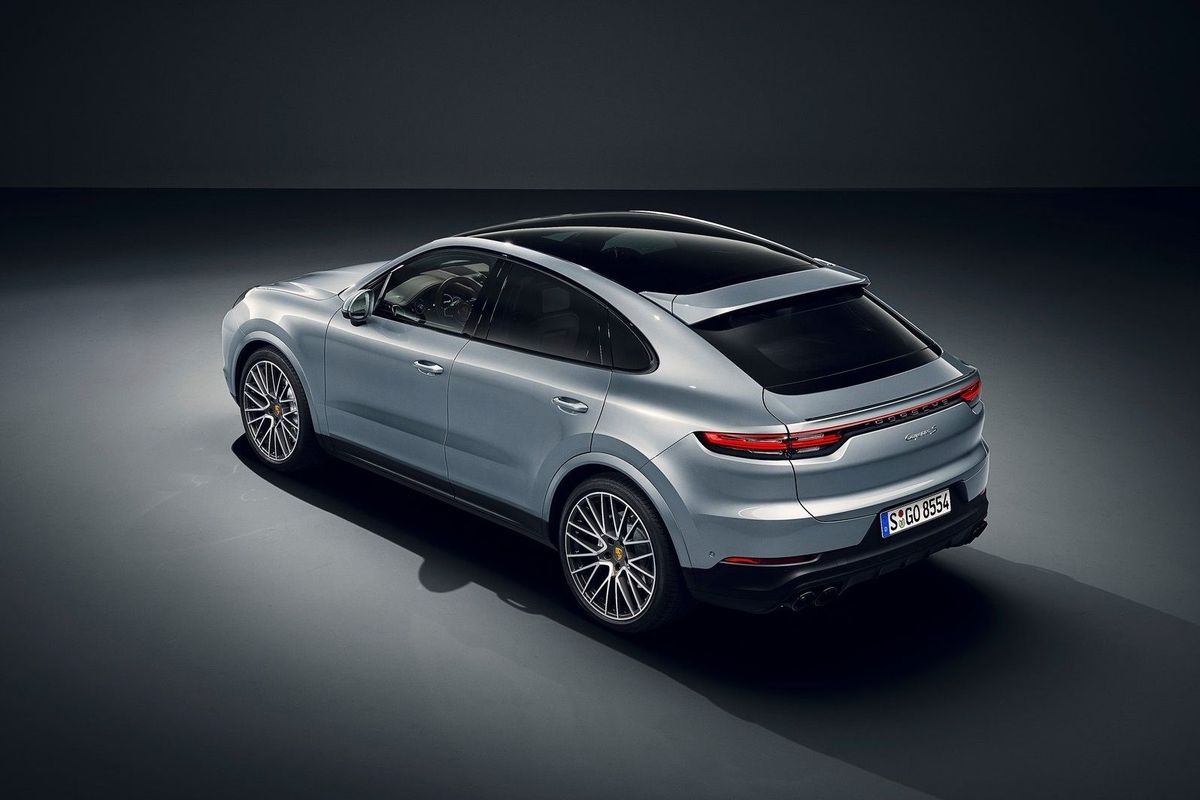
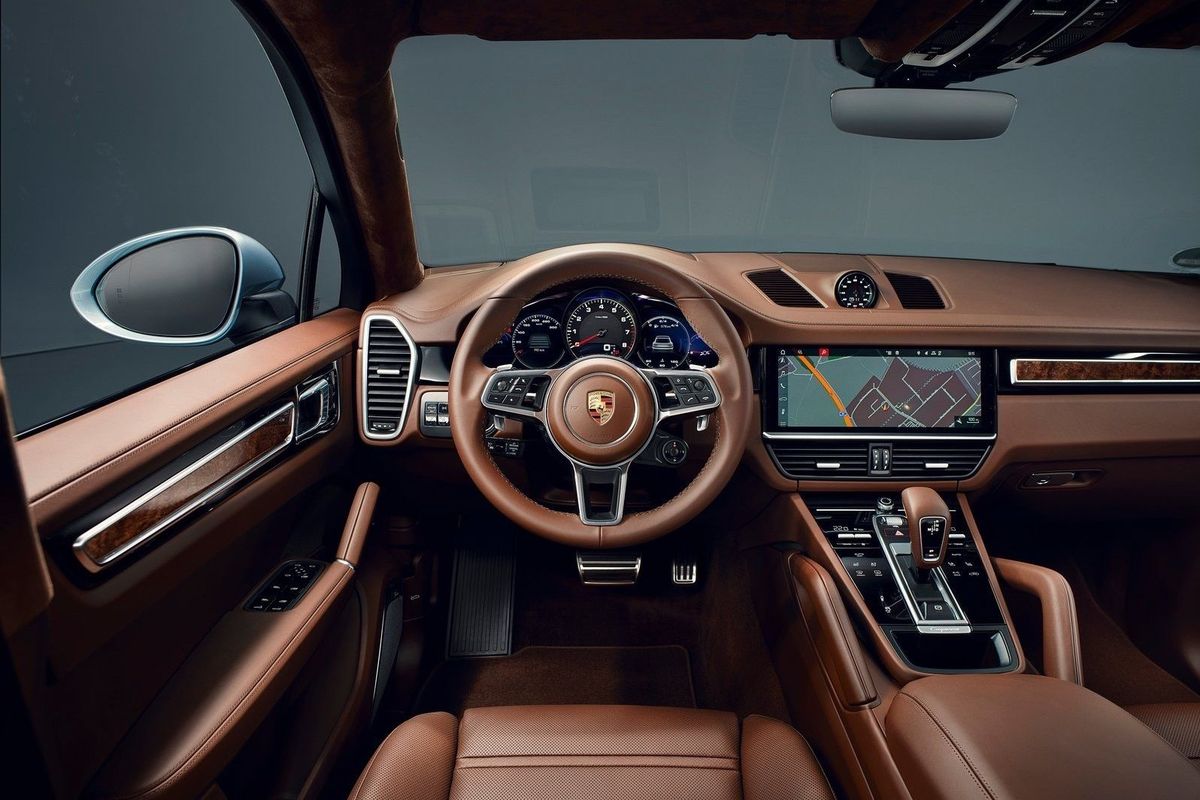
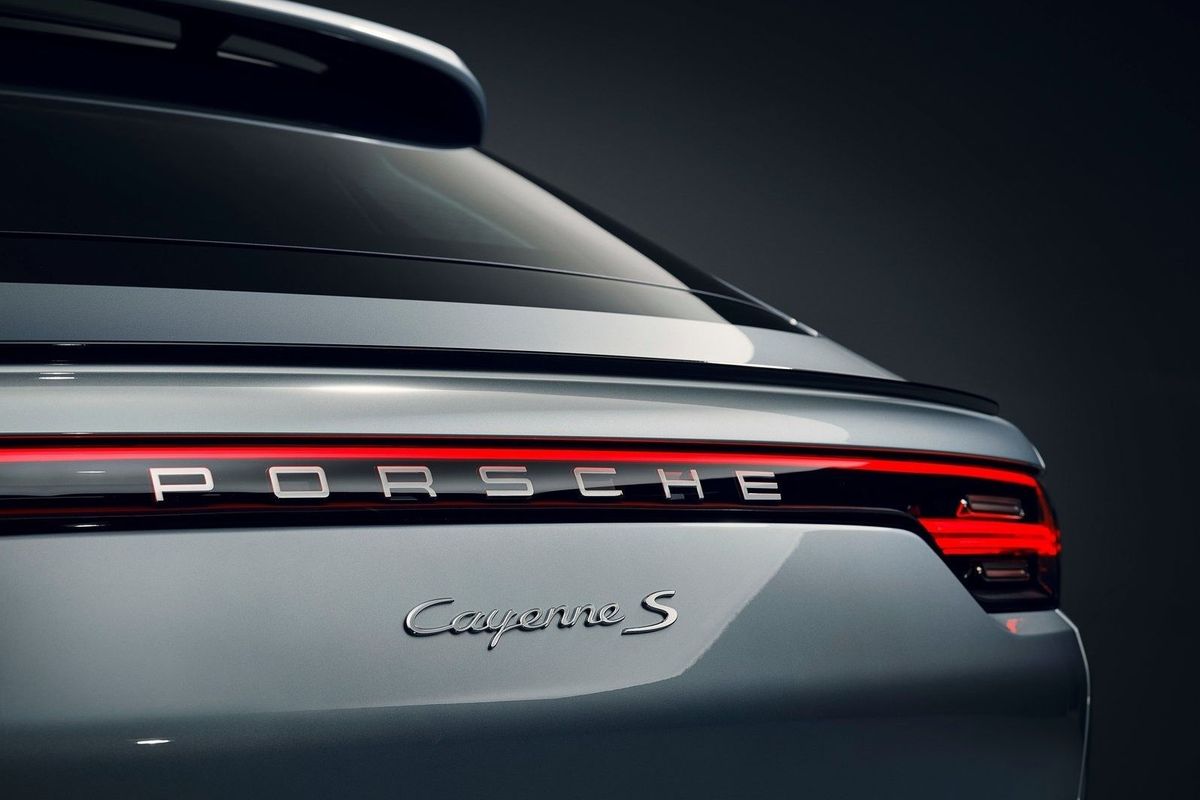
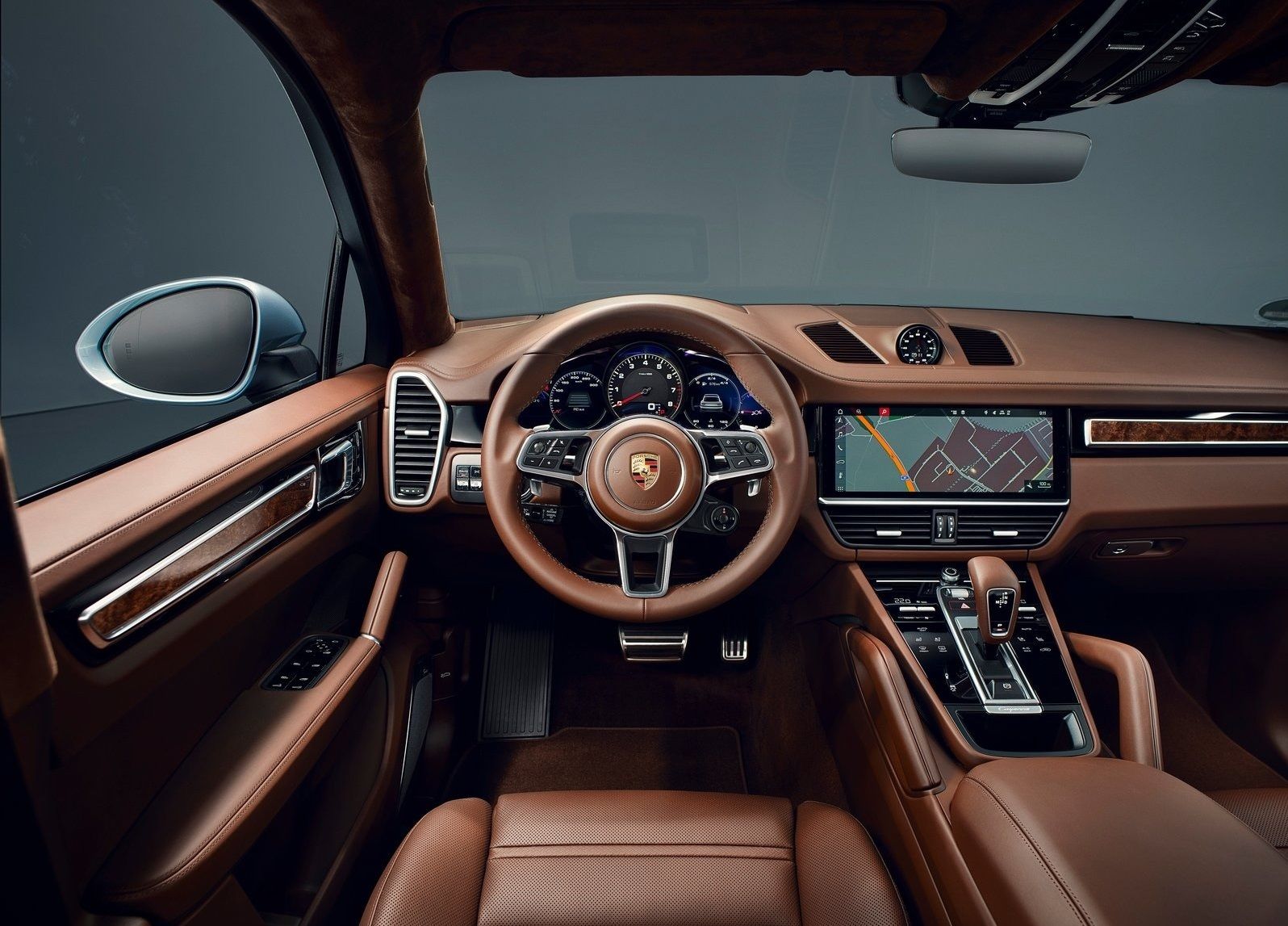
The Porsche Cayenne Coupe range will be receiving a third member. Sitting between the standard Coupe and the Coupe Turbo will be the S Coupe, which Porsche has officially unveiled.
The new Porsche Cayenne Coupe is based on the existing Cayenne, but features a slightly different look. According to Oliver Blume, Chairman of the Executive Board of Porsche AG, the new Cayenne Coupe, "includes all the technical highlights of the current Cayenne, and its more dynamic design and new technical details position it as more progressive, athletic, and emotional."
At the heart of the Cayenne S Coupe is a 2.9-litre twin-turbocharged V6 pushing out a credible 324 kW and 550 Nm. These outputs are sufficient to see the S Coupe reach 100 kph in a claimed 5 seconds, which drops to 4.9 seconds if you go for one of the three optional lightweight sports packages. Top speed is rated at 263 kph.