Pricing and specifications for the facelifted Ford Ranger have surfaced on the Blue Oval's local website. Here's how much the facelifted bakkie will cost you.
The facelifted Ford Ranger launches in South Africa in the second week of April 2019 and we will be in attendance. Ahead of its official launch, we have stumbled across the pricing for all 3 body styles. The Ford Ranger will be offered in single cab, super cab and double-cab.
The look of the Ranger has been enhanced with a revised bumper and a new grille which features a horizontal bar that now splits the grille into 2 sections. High-spec derivatives will have bi-xenon headlights with LED daytime running lights and new exterior colours include Diffused Silver and Blue Lightning.
The updated Ranger will be offered with a new single and bi-turbo diesel engine mated to a new 10-speed automatic transmission. The current engine lineup (2.2 and 3.2-litre turbodiesel) remains for now and is complemented with the addition of a new 2.0-litre EcoBlue turbodiesel engine. This unit turns out 125 kW which will be mated with a new 10-speed automatic transmission. A 6-speed manual transmission will also be offered. In terms of efficiency, Ford says that the new engine and transmission combination results in up to 9% improvement in fuel efficiency.
The same bi-turbo 2.0-litre turbodiesel that will power the Ranger Raptor (due in Q2 2019) will also be offered in the updated Ranger and it will offer 157 kW and 500 Nm of torque. This engine will also be mated to a 10-speed automatic transmission. The Ranger's suspension has also been revised to offer a more refined drive. We look forward to putting this updated and top-selling bakkie through its paces, so look out for a launch review coming soon.
Ford Ranger Price in South Africa (April 2019)
SINGLE CAB
RANGER 2.2TDCI SINGLE CAB BASE 5MT 4X2 LR
R287 100
RANGER 2.2TDCI SINGLE CAB XL 6MT 4X2
R359 800
RANGER 2.2TDCI SINGLE CAB XL 6AT 4X2
R372 300
RANGER 2.2TDCI SINGLE CAB XLS 6MT 4X2
R390 900
RANGER 3.2TDCI SINGLE CAB XLS 6MT 4X2
R401 800
RANGER 2.2TDCI SINGLE CAB XL 6MT 4X4
R411 400
RANGER 2.2TDCI SINGLE CAB XLS 6AT 4X4
R449 200
RANGER 3.2TDCI SINGLE CAB XLS 6AT 4X4
R460 100
SUPER CAB
RANGER 2.2TDCI SUPER CAB BASE 5MT 4X2
R336 500
RANGER 2.2TDCI SUPER CAB XL 6MT 4X2
R381 400
RANGER 2.2TDCI SUPER CAB XL 6AT 4X2
R393 800
RANGER 3.2TDCI SUPER CAB XLS 6MT 4X2
R424 900
RANGER 2.2TDCI SUPER CAB XLS 6AT 4X2
R426 400
RANGER 2.2TDCI SUPER CAB XL 6MT 4X4
R429 300
RANGER 2.2TDCI SUPER CAB XLS 6AT 4X4
R472 400
RANGER 3.2TDCI SUPER CAB XLS 6MT 4X4
R480 900
RANGER 3.2TDCI SUPER CAB XLT 6AT 4X4
R568 600
DOUBLE CAB
RANGER 2.2TDCI DOUBLE CAB BASE 5MT 4X2
R350 000
RANGER 2.2TDCI DOUBLE CAB XL 6MT 4X2
R409 400
RANGER 2.2TDCI DOUBLE CAB XL 6AT 4X2
R428 800
RANGER 2.2TDCI DOUBLE CAB XLS 6MT 4X2
R455 100
RANGER 2.2TDCI DOUBLE CAB XL 6MT 4X4
R455 300
RANGER 2.2TDCI DOUBLE CAB XL 6AT 4X4
R474 700
RANGER 2.2TDCI DOUBLE CAB XLS 6AT 4X4
R508 400
RANGER 2.0L TURBO DOUBLE CAB XLT 10AT 4X2
R514 300
RANGER 3.2TDCI DOUBLE CAB XLT 6MT 4X2
R542 600
RANGER 2.0L TURBO DOUBLE CAB XLT 10AT 4X4
R570 200
RANGER 3.2TDCI DOUBLE CAB XLT 6AT 4X2
R571 400
RANGER 3.2TDCI DOUBLE CAB XLT 6MT 4X4
R604 800
RANGER 3.2TDCI DOUBLE CAB WILDTRAK 6AT 4X2
R609 800
RANGER 3.2TDCI DOUBLE CAB XLT 6AT 4X4
R617 300
RANGER 2.0L BiT DOUBLE CAB WILDTRAK 10AT 4X2
R632 300
RANGER 2.0L BiT DOUBLE CAB WILDTRAK 10AT 4X4
R678 200
Ford Ranger Options Price list
Metallic paint R1 220
Spray-in bed liner R4 750
Base Pack Vinyl Floor R9 690
Base Pack Carpet Floor R8 330
17-inch silver alloy wheel (available on XLS) R0
16-inch alloy wheel (available on XL) R7 680
17-inch Black alloy wheel (available on XL) R11 570
17-inch Black allow wheel (available on XLS and XLT) R0
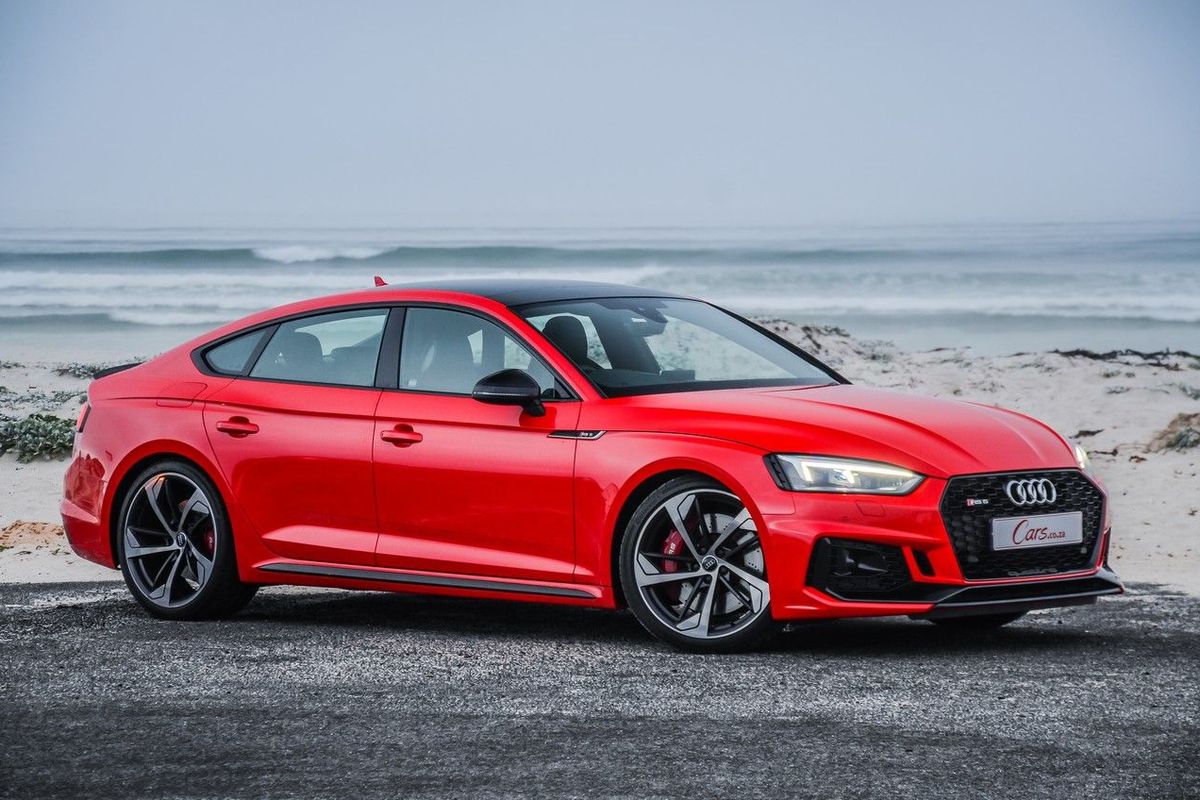
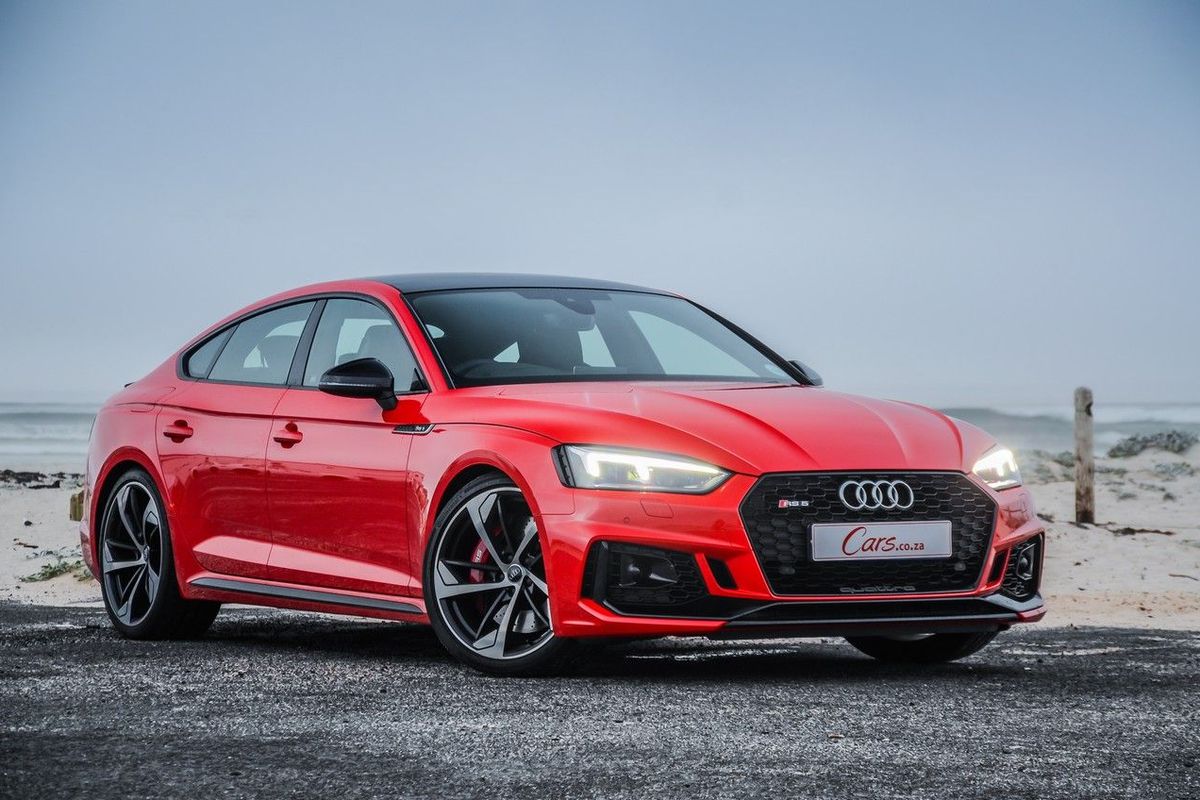
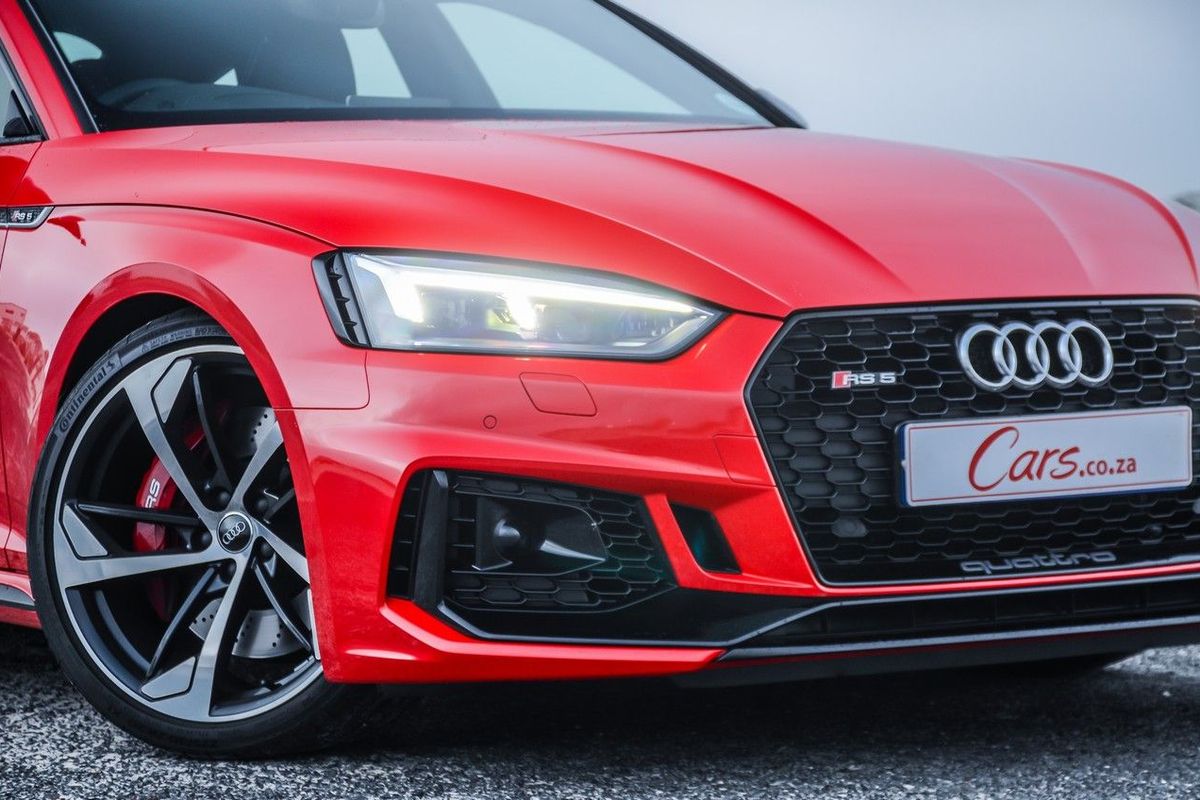
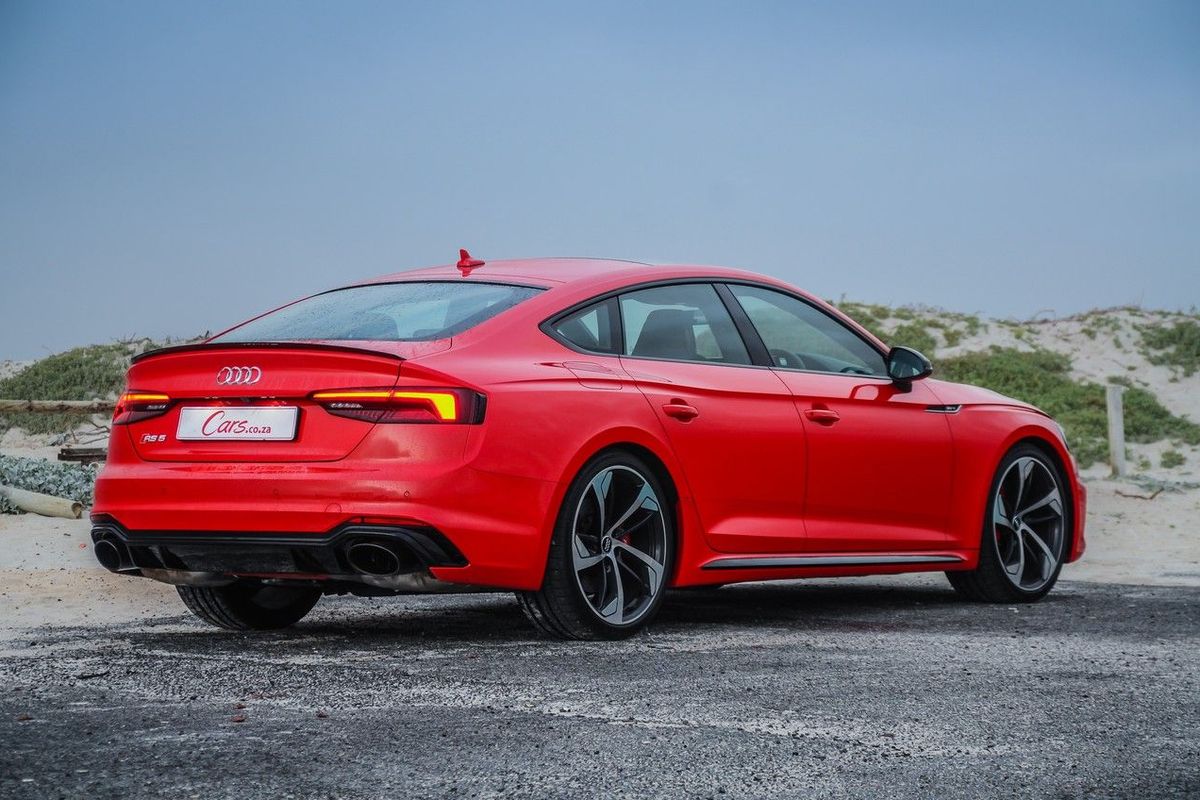
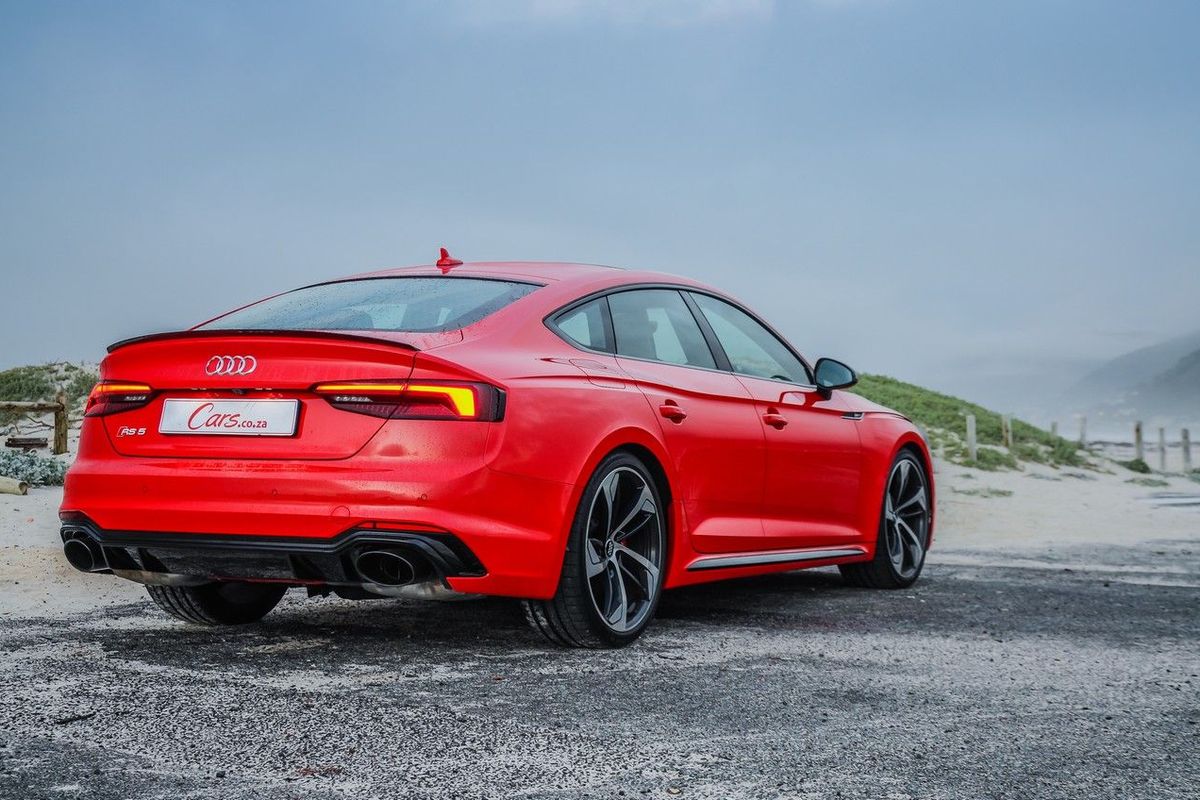
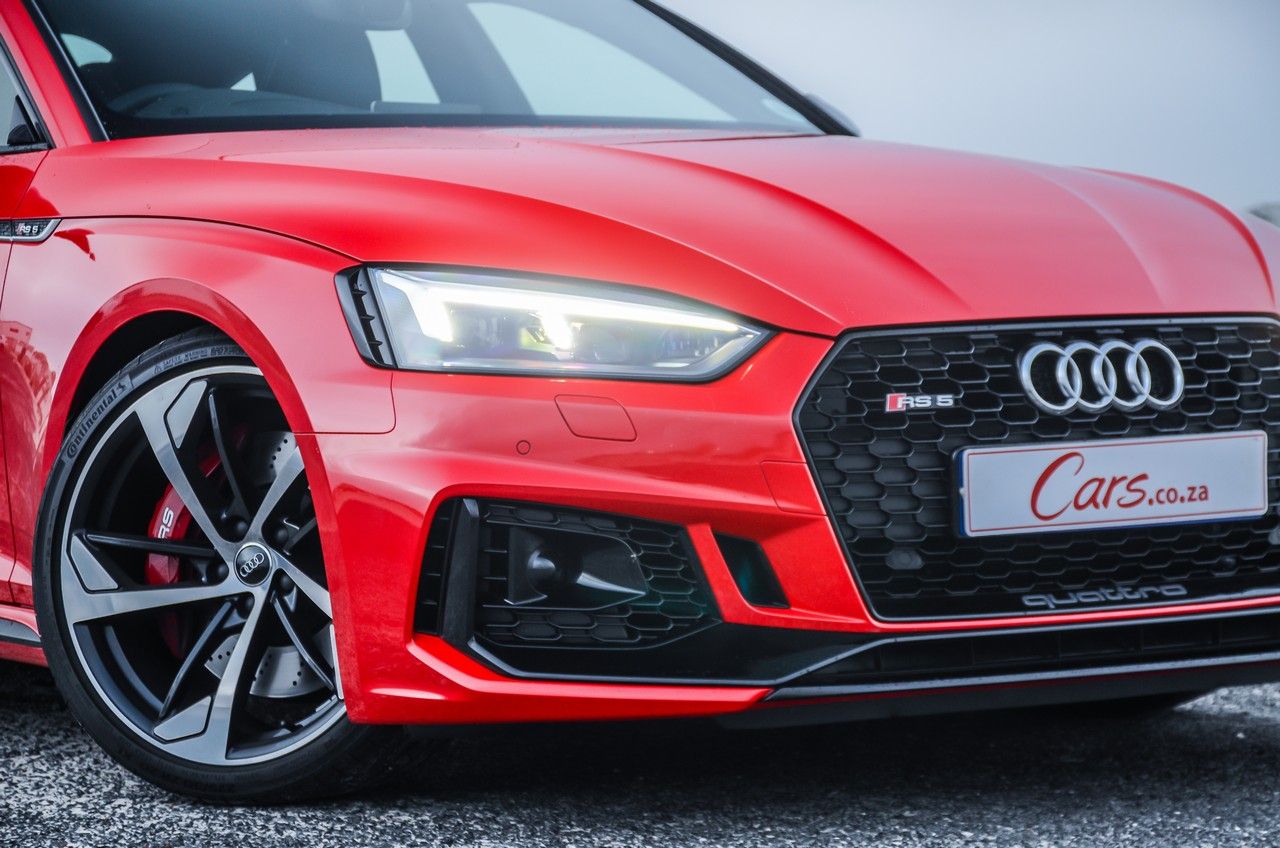
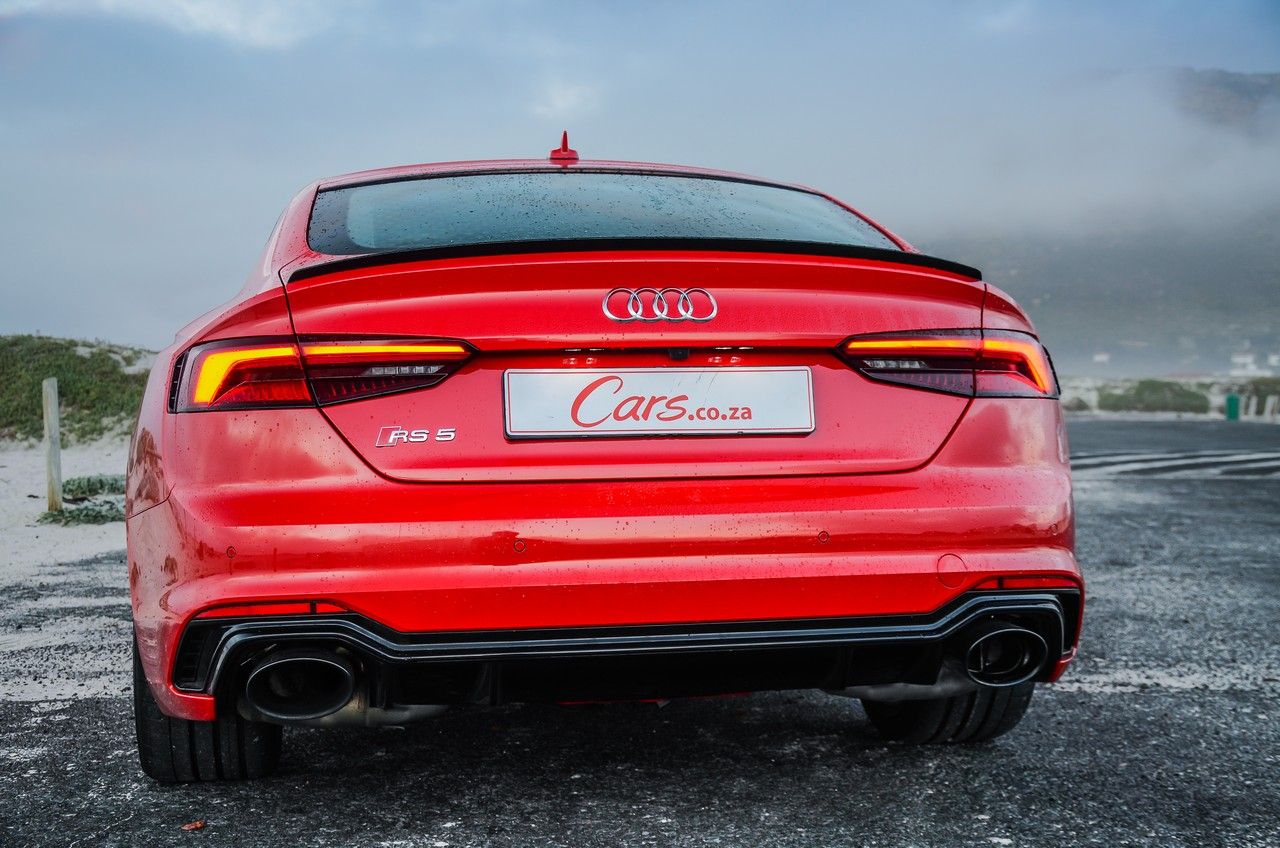
Quattro – Audi's Neckarsulm-based performance division – recently expanded its RS portfolio in South Africa with the addition of the RS5 Sportback and the RS4 Avant. We got behind the wheel of the latter to find out whether you should consider it over its coupe and station wagon siblings. Does it offer the best of both variants?
We like: Practicality, comfort, performance, build quality, all-around capability
We don't like: Doesn't quite land that knockout blow, dynamic steering is not the most direct.
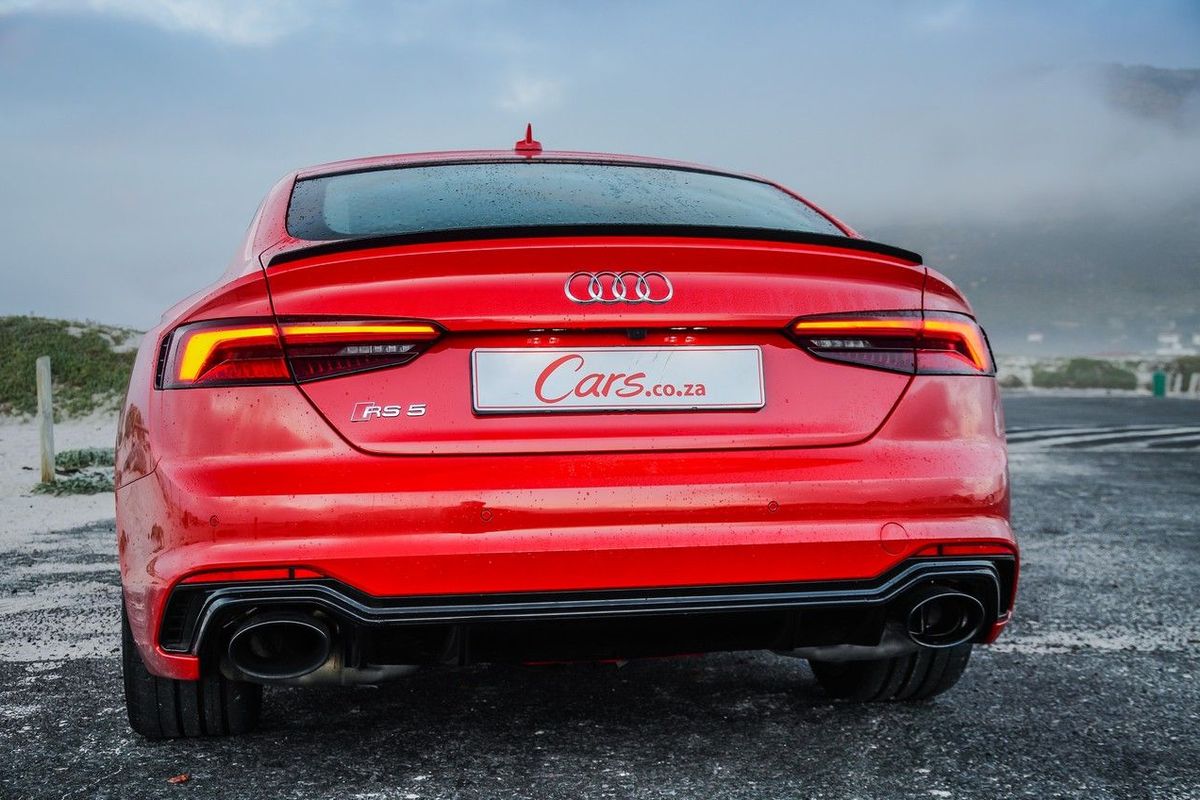
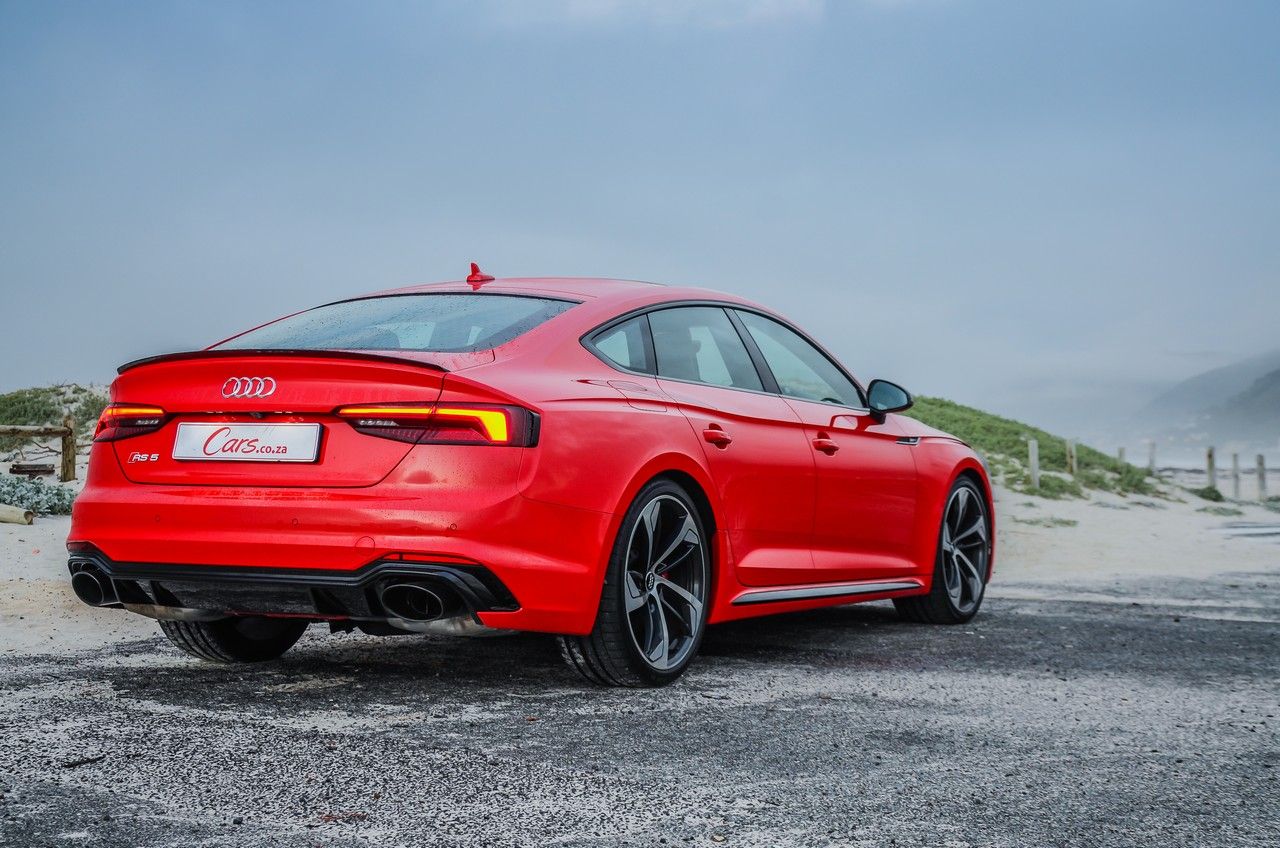
Is there a more appropriate colour for an Audi RS model than Misano Red?
Until recently, the RS5 coupe was the only RS version of the B9 generation-A4 sedan and station wagon (as well as their A5 coupe, cabriolet and Sportback derivatives, for that matter) in the South African market. The RS5 coupe isn't a bad offering whatsoever, but given that Audi's rivals BMW and Mercedes-AMG offer sedan, coupe and convertible versions of their executive-class performance cars, it was well and truly outnumbered. Audi South Africa has now introduced the RS4 Avant and RS5 Sportback, which share a powertrain and various other components with the coupe.
National new vehicle sales figures suggest the station wagon has limited appeal (despite its iconic moniker, but Audi holds firm that it won't build a sedan version), so perhaps the RS5 Sportback is a good compromise. Like the coupe, it packs a meaty biturbo 2.9-litre V6 engine and quattro all-wheel drive, but all of that is paired with a stylish body (replete with an extra pair of doors and a practical hatchback). So, what's it like to drive?
The 2.9-litre biturbo V6 sings a wonderful tune, but only when in Dynamic mode with the exhaust valves open
Fans of the Audi RS brand will fondly remember the peach of a naturally-aspirated (4.2-litre) V8 engine in the previous RS4 and RS5 (although, interestingly, this is the 1st RS5 Sportback). Not only did it sound glorious, but it delivered sledgehammer performance. When news broke that the V8 "had lost 2 cylinders and gained a pair of turbos", purists were upset, but Audi did it in the quest for improved driveability/flexible performance and better efficiency. The 2.9-litre turbocharged V6 matches the outgoing mill in terms of peak power output (331 kW), but comfortably trounces the V8 in terms of maximum torque (600 Nm at 1 900 rpm, compared with 430 Nm at 4 000 rpm). Does 170 Nm make all the difference? You bet!
What happens when you shift the 8-speed transmission into Drive and floor the RS5's accelerator? Instantaneous shove, that's what. By virtue of the bi-turbo setup, there's very little lag and the 'box is mapped to deliver dual-clutch-like gearshifts. The car is responsive and urgent, especially in its most aggressive driving mode (Dynamic). Audi claims a sub-4-second time for the 0-to-100 kph sprint and does feel that fast, despite the lack of a launch-control function, which speaks to the fact that the RS5 Sportback is ostensibly aimed at a more demure clientele than its M and AMG rivals.
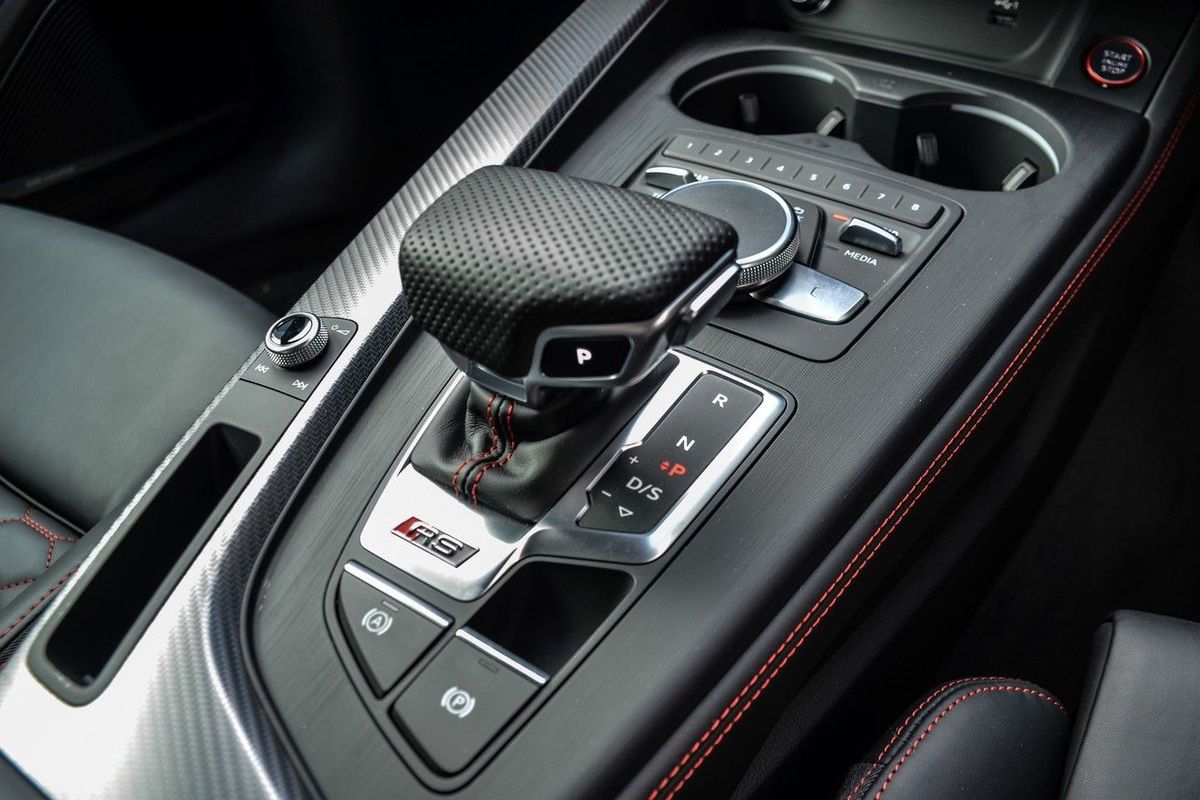
Fortunately, you can mimic a "launch control" function by employing some deft footwork… Because the RS5 Sportback is required to transmit 600 Nm to the road, the dual-clutch S Tronic transmission, which Audi tends to favour for many of its performance variants, is not suited to handle all that torque. Therefore, Audi has fitted a conventional 8-speed automatic, but it's sufficiently responsive; the feel through the shift paddles is pleasant.
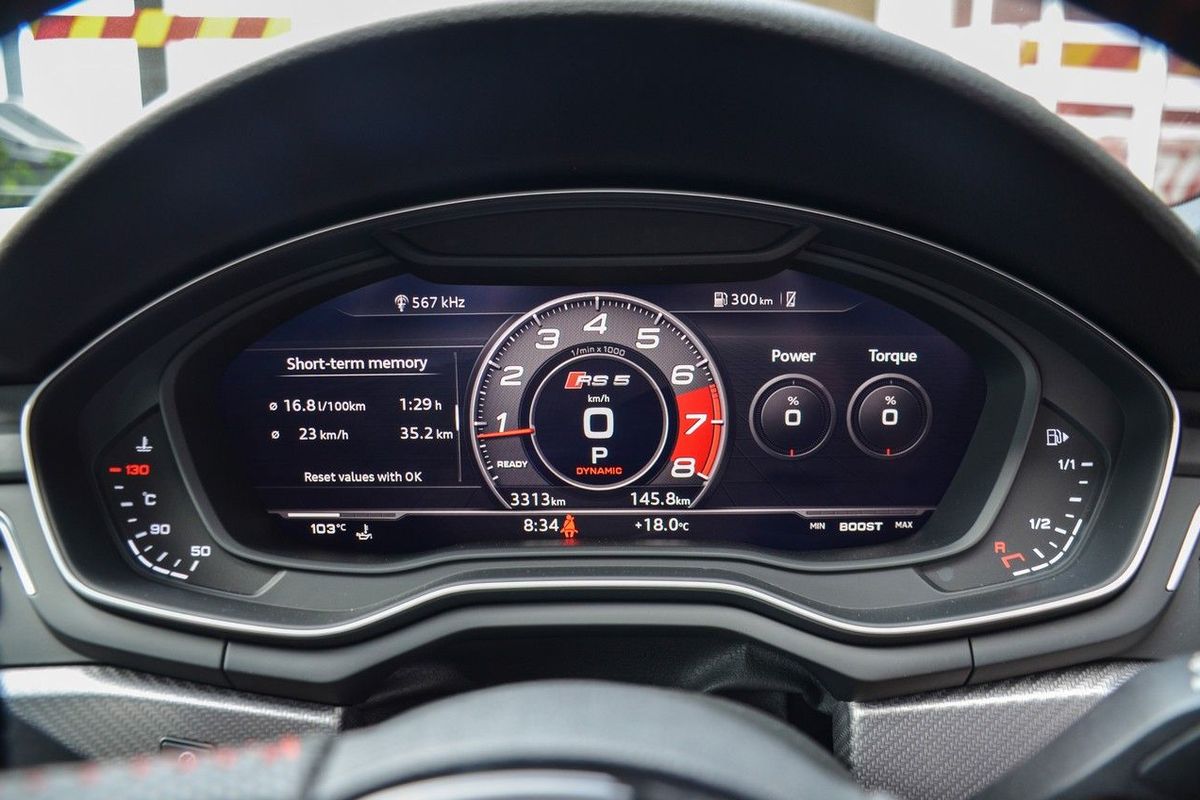
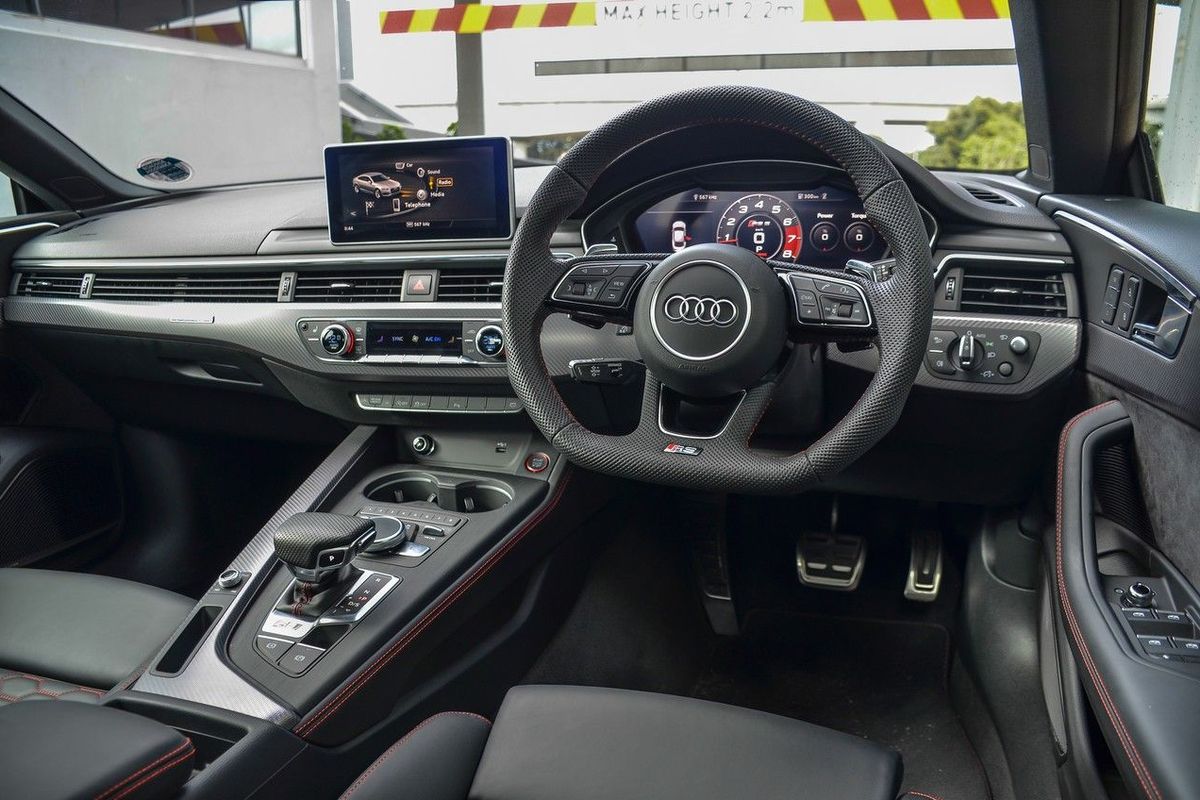
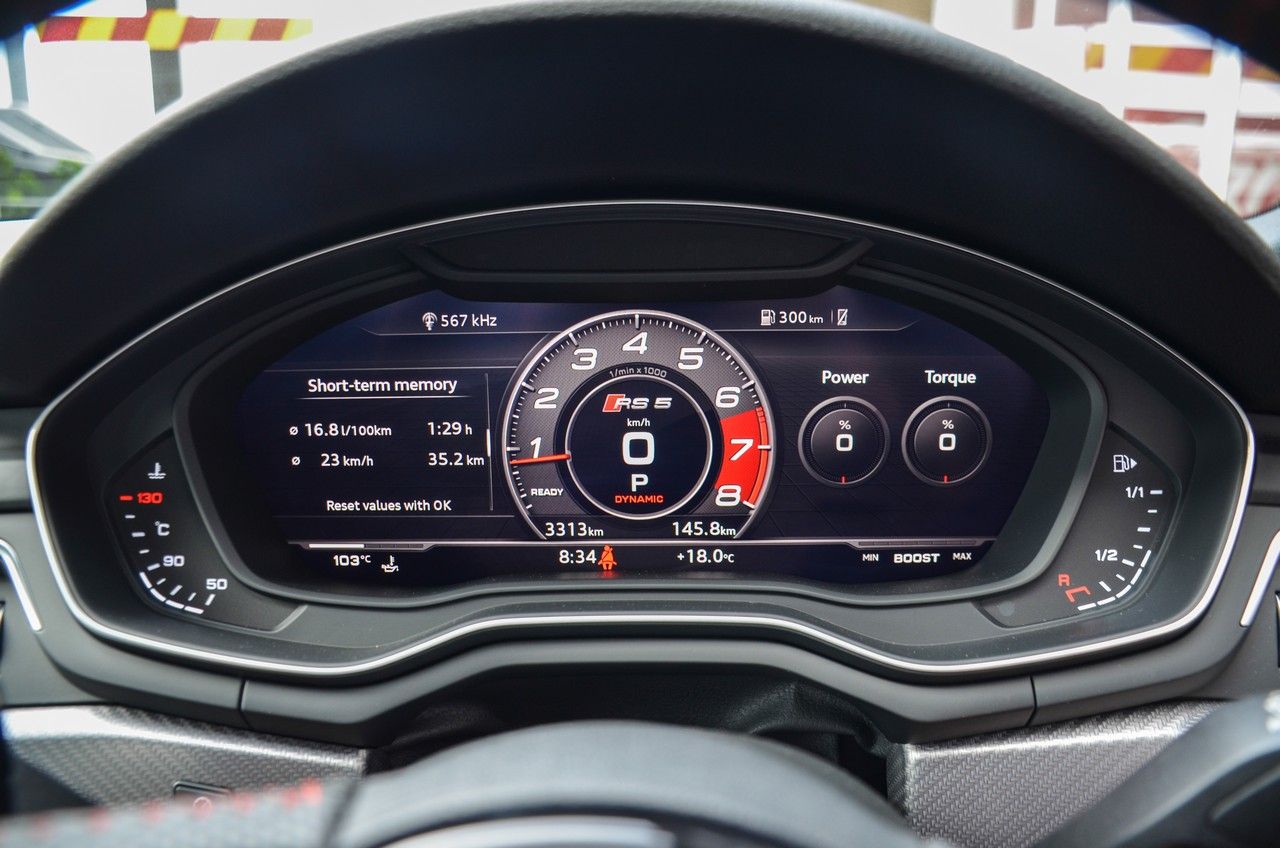
The Audi RS5 Sportback's digital dashboard, replete with a centrally positioned rev counter.
One of the things we appreciate most about the RS5 is that you can "tone down its lunacy". It's not always appropriate (or possible) to make the rapid Audi hurl itself down a stretch of asphalt as if it's a strafing fighter plane, and perhaps this author is mellowing with age, but such full-bore driving antics are tiresome. Comfort mode completely dials back the Sportback's throttle response, power delivery, relaxes the steering feel and even closes its exhaust valves. It's remarkable to cane a credible AMG/M rival one minute and then, at the touch of a button, you could be fooled into thinking you're piloting (but) a 2.0 TFSI. Of course, you can tailor the settings of the car's Drive Select interface exactly to your preference.
Our preferred Drive Select combination was to leave all settings in Comfort, except for the ferocity of the engine responses and exhaust sound (the RS5 Sportback sounds most evocative/sonorous in Dynamic). When you have such a glorious engine at your disposal, it's lovely to hear it sing…
Can it handle dynamic cornering well, or at least as well as its acclaimed rivals? Well, the Audi RS5 Sportback is not a lithe and lightweight vehicle, and the balance of its quattro setup feels neutral (front to rear). Despite the laws of physics fighting it all the way, the RS5 exhibits impressive grip levels most of the time. When the tyres eventually scrabble for traction, predictable understeer sets in. The optional quattro sports differential setup is claimed to be capable of sending more power to the rear axle for some tail-sliding theatrics, but you'd really have to be pressing on to experience this. The steering setup suffers the same affliction as many modern cars: there's not enough real feedback and, at times, it can feel a tad artificial.
Luxurious specification?
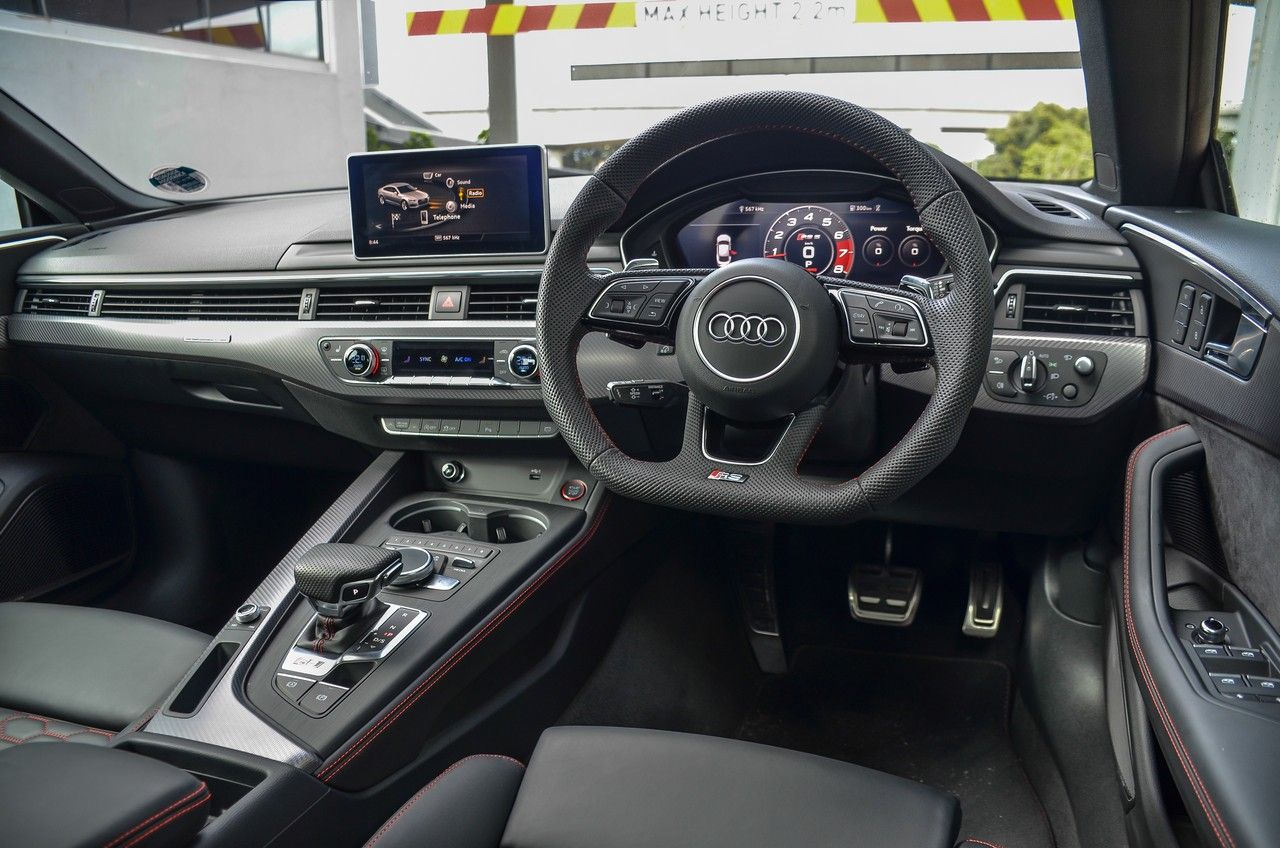
It may not be the latest in Audi infotainment and interior style, but the Audi RS5 Sportback cabin is luxurious and appropriate
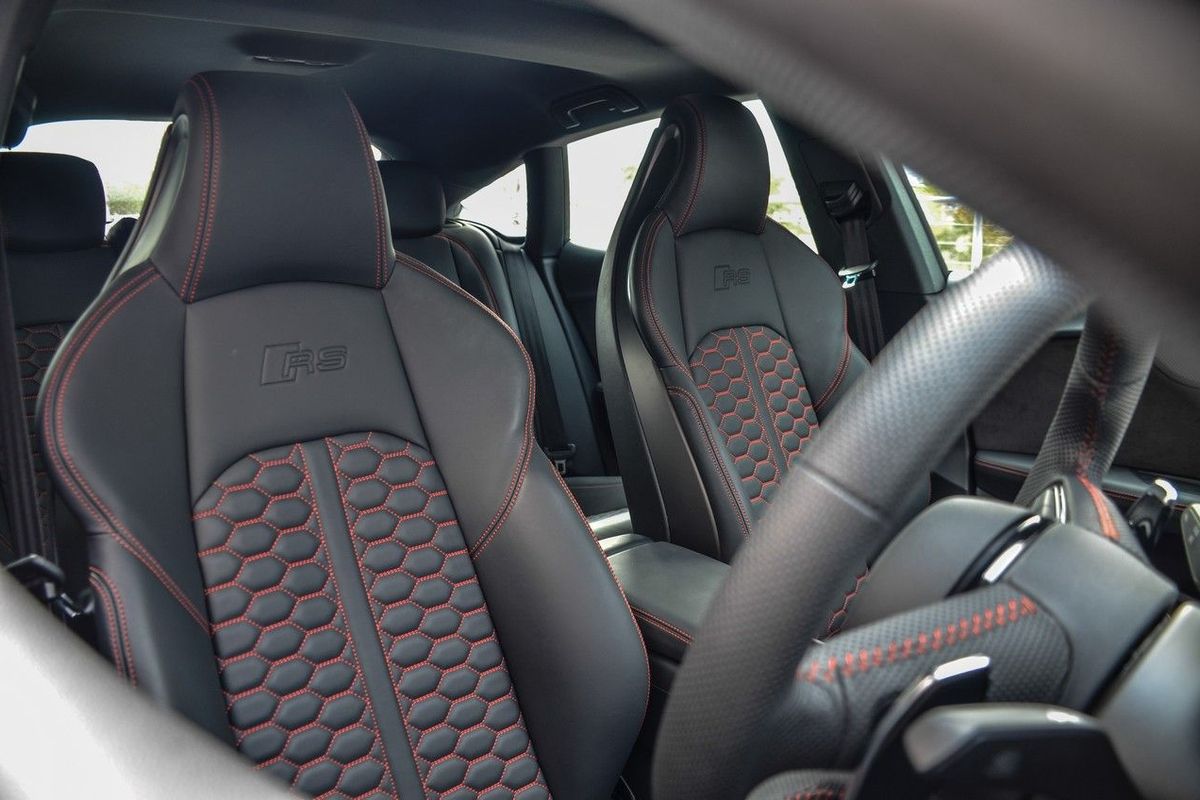
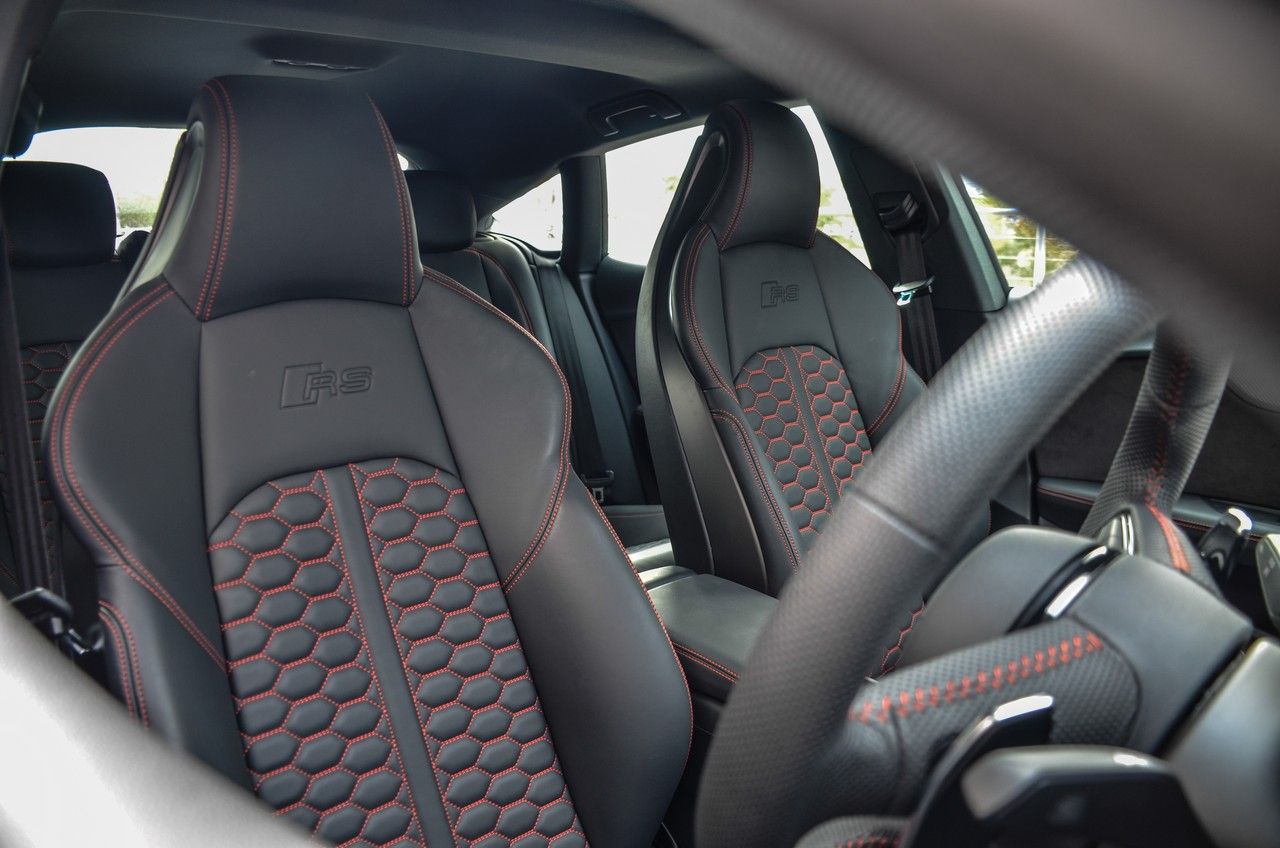
At this end of the market, the Audi RS5 Sportback delivers luxury features in abundance. Granted, it doesn't have the latest ultra-modern Audi infotainment system, which we've experienced in the Q3, e-tron and A7, but it's a tried-and-tested setup. Audi's Virtual Cockpit (a trendsetter in terms of digital instrument clusters) is standard and comes with RS5-specific graphics, such as a central rev counter and speedo'. The standard RS seats look gorgeous with their hexagonal patterns and red stitching on black leather. They're also functional, offering excellent lateral support.
Granted, some toys on our test unit were optionally fitted, but they are worth considering. We're impressed to see that navigation and a high-end Bang & Olufsen audio system are standard, but extras worth looking at are the Audi phone box (it offers wireless charging for mobile devices) and the 3-zone climate control, both are nice to have. Our test unit also came with a head-up display, heated seats, panoramic sunroof, Audi Matrix LED headlamps, as well as the Audi Assistance Package (adaptive cruise control, traffic jam assist, multifunction cameras and lane keeping system.)
The standard Audi RS sport seats are stylish and comfortable. Our test unit's seats came with the heating option
Spaciousness and Versatility?
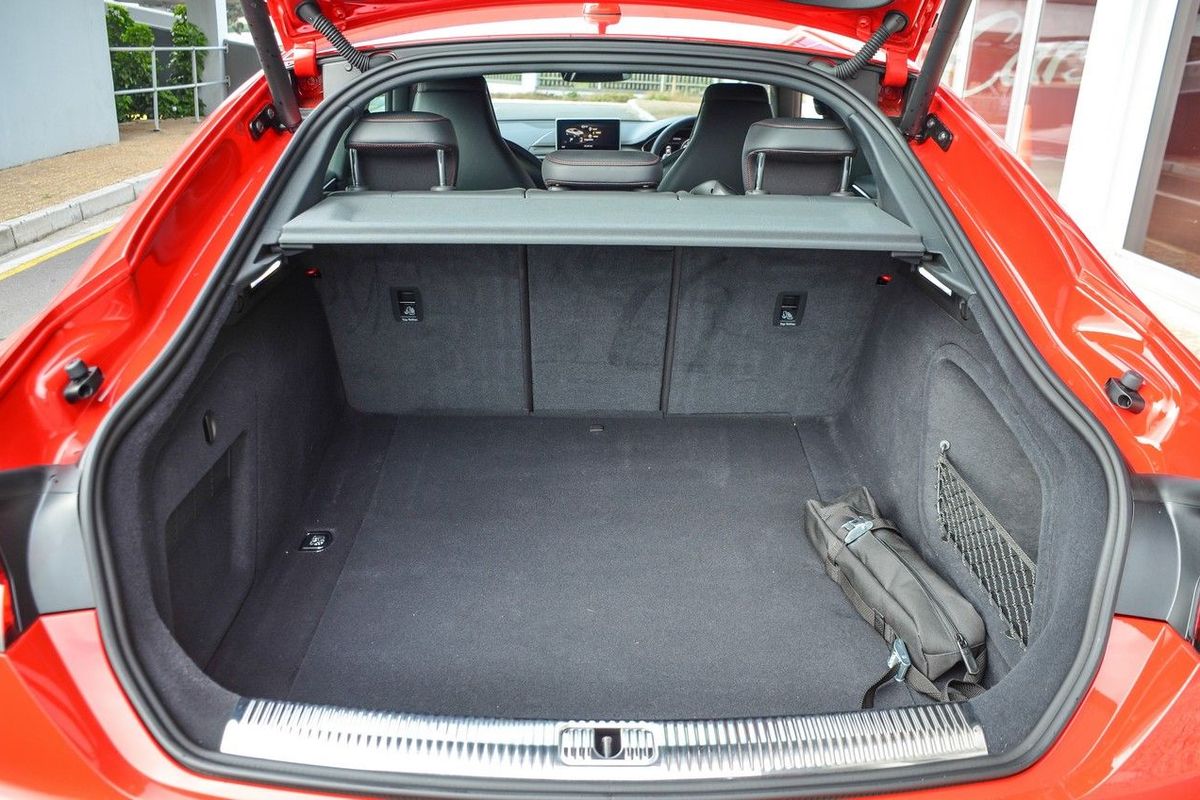
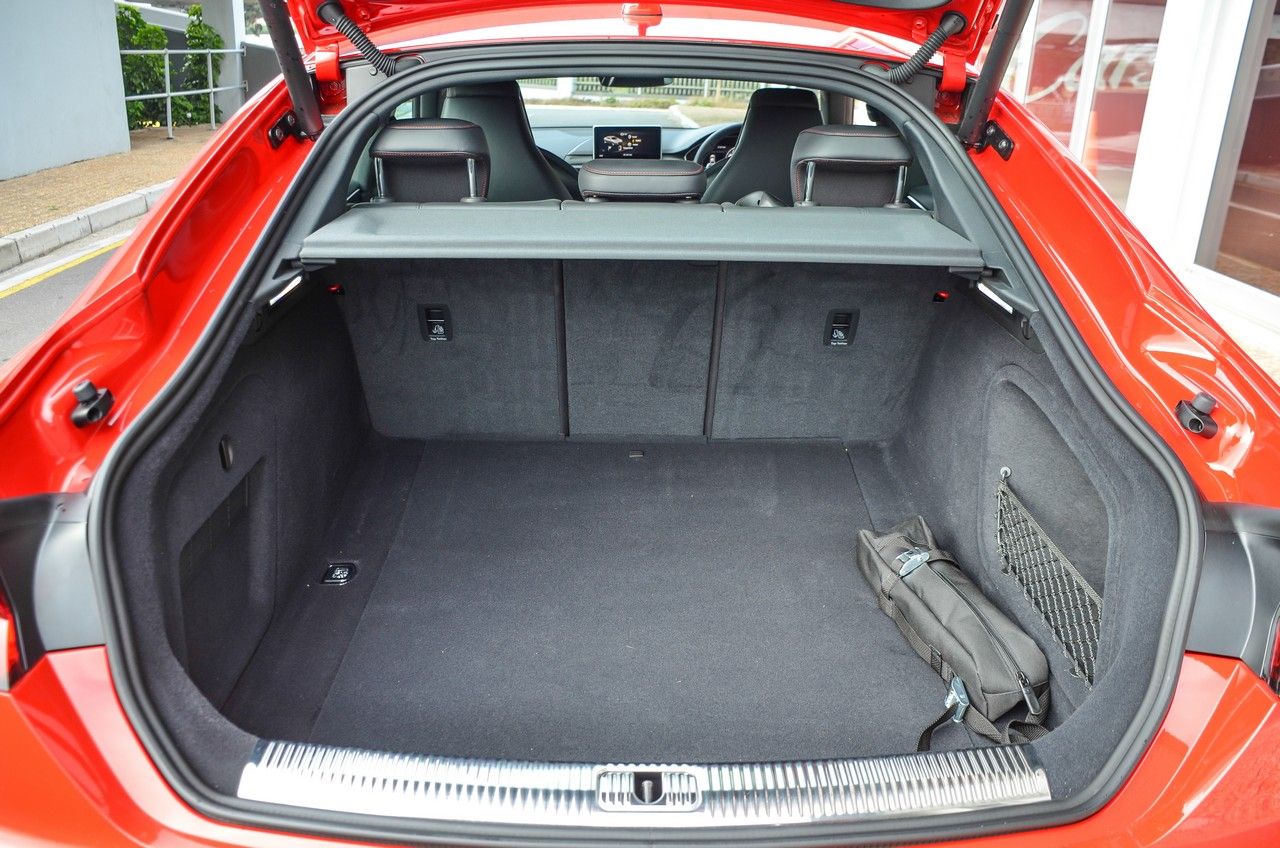
The Audi RS5 Sportback boot may be shallow, but it's not lacking in length
The RS5's Sportback configuration has 2 key benefits, at least in our estimation. Not only does this A5-based performance flagship really look the part, but its hatchback-style load bay makes it surprisingly practical. A claimed luggage capacity of 480 litres is not to be sneezed at – and you're said to gain a total of 1 300 litres with the rear seats folded. That's big enough to accommodate a mountain bike without needing to take a wheel off.
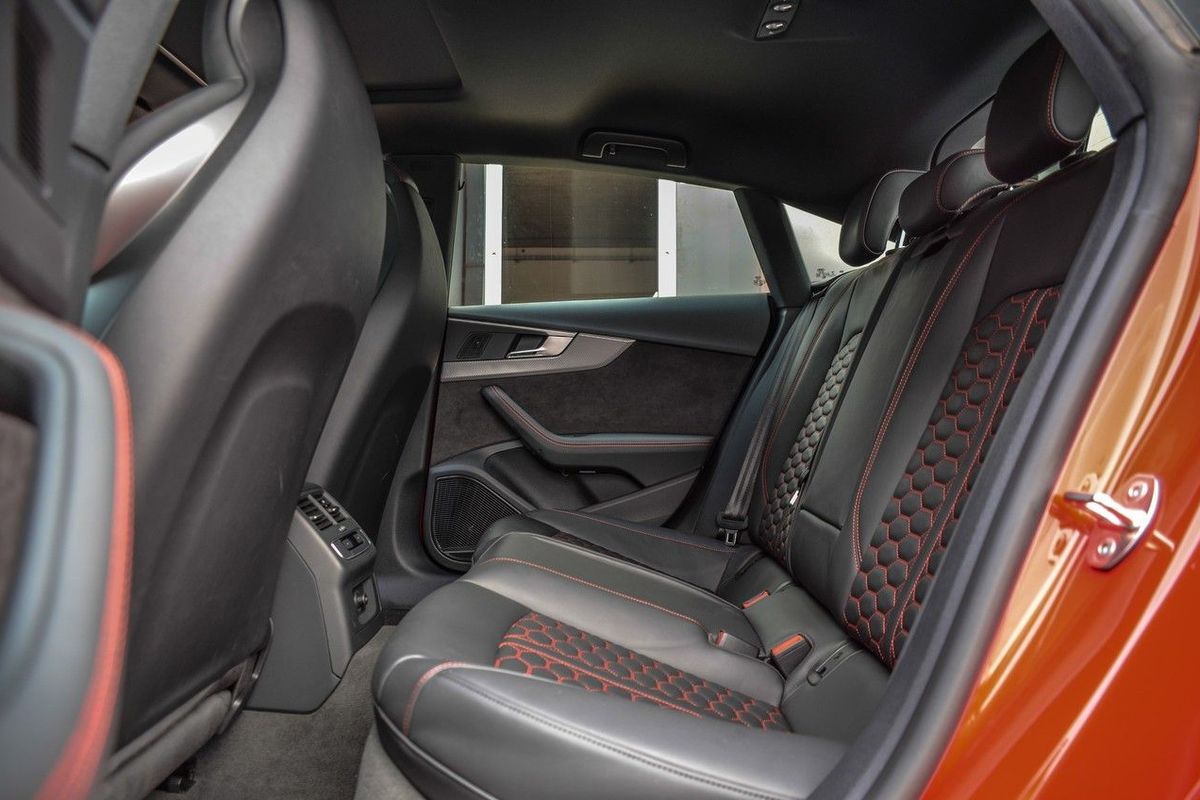
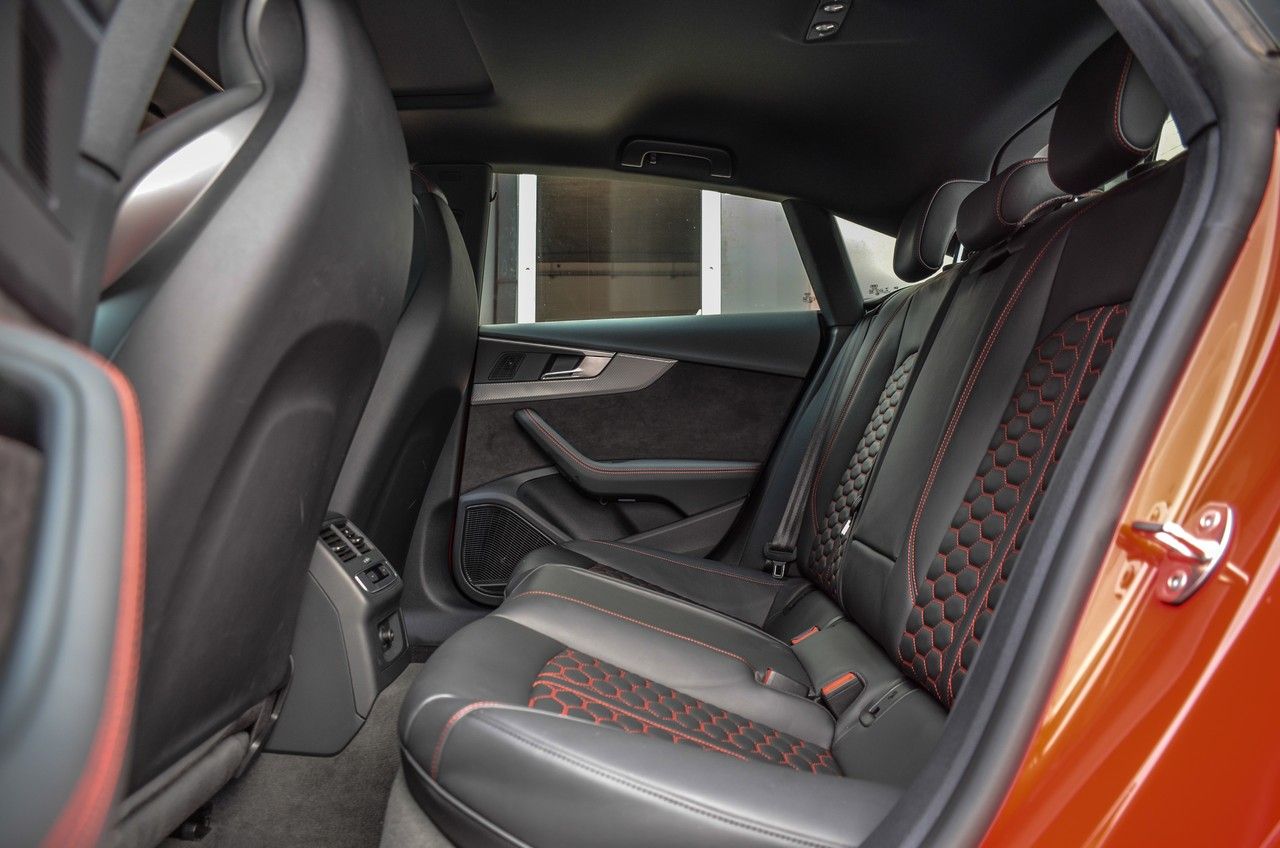
One of the issues we have the RS4 and RS5 coupe is a comparative lack of rear legroom. These are meant to be family cars, yet space in the back seems a challenge for anyone over the age of 10. The Audi RS5 Sportback addresses this with commendable rear legroom, although taller people may find that the headliner will touch the tops of their heads by virtue of the roofline, which slopes down towards the edge of the Audi's tailgate.
One of the benefits of the Sportback derivative (compared with the coupe) is better rear legroom, giving it a decent family-sedan slant.
Price and after-sales support
The Audi RS5 Sportback sits atop of the A5 pile. Retailing for R1 312 000, the RS5 Sportback is a touch more expensive than its coupe sibling (R1 297 000) and comes standard with a 5-year/100 000 km Audi Freeway (maintenance) Plan.
Verdict
Audi South Africa's decision to offer its potent 2.9-litre V6, in combination with quattro all-wheel drive, in at least 3 configurations, is sound. An RS5 coupe is limited in practicality and the market for the RS4 Avant (station wagon) is rather limited. The 5-door Sportback RS5 is the most sensible iteration… Not only does it offer that potent powertrain, but there's a credible load bay (accessible via a giant aperture). Rear legroom is acceptable too, although tall folk may not have quite enough headroom. It's priced fairly, sitting well within reach of its RS5 coupe and RS4 Avant siblings.
Should you buy it though? We think if you're looking for a high-performance vehicle that doesn't compromise on day-to-day comfort and practicality, you'd be hard-pressed to outdo Ingolstadt's offering. The Audi RS5 doesn't offer the precision and outright driving involvement of the BMW M3/M4, nor the outrageous soundtrack or brutish nature of the C63, but that's quite okay. While petrolheads will deplore the lack of launch control and that the Audi's a smidge slower than its rivals from the M and AMG divisions, the reality is that opportunities to really stretch the vehicle's legs are few and far between. If you think of the RS5 Sportback as a rapid, comfortable GT (as opposed to a sports sedan), the package makes the best sense.
The F80- and F82-generation BMW M3 and M4 set a dynamic benchmark, but the pair is due to be discontinued soon. Power comes from a bi-turbocharged 3.0-litre straight-6 engine and driving enthusiasts still celebrate the cars' rear-wheel-drive dynamism.
The hot upstart from Italy has thrilled and wowed everyone with its rorty bi-turbo 2.9-litre V6, but since its launch, it has been plagued with issues (such as electronic gremlins), which indicates it may have been rushed to the market.
The monstrous C63 is the only vehicle in this crowd that houses a (4.0-litre) V8 engine under its bonnet. Not only is it unsociably loud – it's brutally fast. However, it can prove a handful to drive as the outright grunt may overwhelm the tyres in low-grip conditions. Not for the faint-hearted.
Japanese bakkie maker Isuzu has announced the arrival of something unique and limited edition. It's called the Isuzu D-Max Arctic AT 35 and it brings some incredible visual appeal to the bakkie market. Here's how much it costs.
Remember those red Toyota Hiluxes which took Top Gear to the North Pole back in 2007? The company is Arctic Trucks which customised those Hiluxes has applied the same treatment to the Isuzu D-Max. Arctic Trucks is based in Iceland and enhances the already tough capabilities of bakkies.
The Isuzu D-Max Arctic AT 35 is based on the current 300 4×4 double-cab LX automatic and will be going on sale in May 2019. “The Isuzu D-MAX is respected for its fit-for-purpose design, outstanding reliability and proven durability,” says Dominic Rimmer, Executive, Technical Services at Isuzu Motors South Africa (IMSA). “The very exclusive Isuzu D-MAX Arctic AT 35 is aimed at the customer who wants an extremely capable but thoroughly unique bakkie that certainly stands out from the crowd, but demands a properly engineered solution,” Rimmer adds. “Whether driven in arduous off-road conditions or used on the road, this is a rugged and character-filled bakkie certainly commands attention.”
The engineering and assembly of these hardcore offroad vehicles takes place in South Africa. While the looks are a bit over the top, they're functional. The vehicle is 180 mm wider and the ride height increases by 48 mm.
Isuzu D-Max Arctic AT 35 Price in South Africa (April 2019)
Isuzu D-Max Arctic AT 35 R 785 000
The Isuzu D-MAX range comes standard with Isuzu Complete Care, comprising a five-year/120 000km bumper-to-bumper warranty and Isuzu Roadside Assistance, a five-year/unlimited km anti-corrosion warranty and a five-year/90 000 km Service Plan. Service intervals are every 15 000 km/12 months. Extended cover can be purchased for Roadside Assistance, Service Plans and Maintenance Plans.
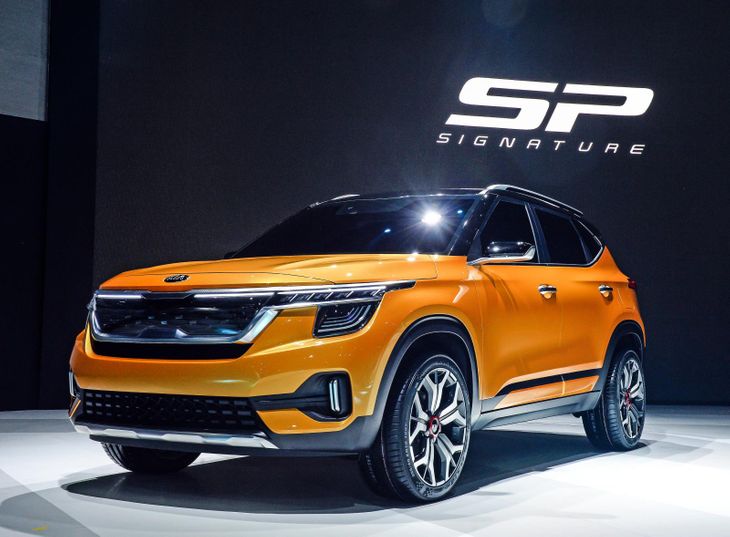
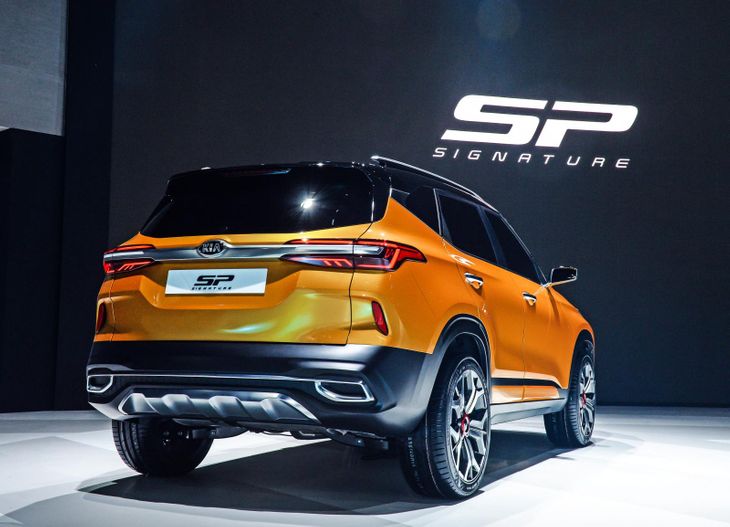
The production version of the Kia SP Signature, which was recently exhibited at the Seoul Show, will go on sale in South Africa early next year – if not sooner. We interviewed Kia Motors SA brand marketing and communication manager Christo Valentyn to learn about the firm's plans to return to the compact family-car market.
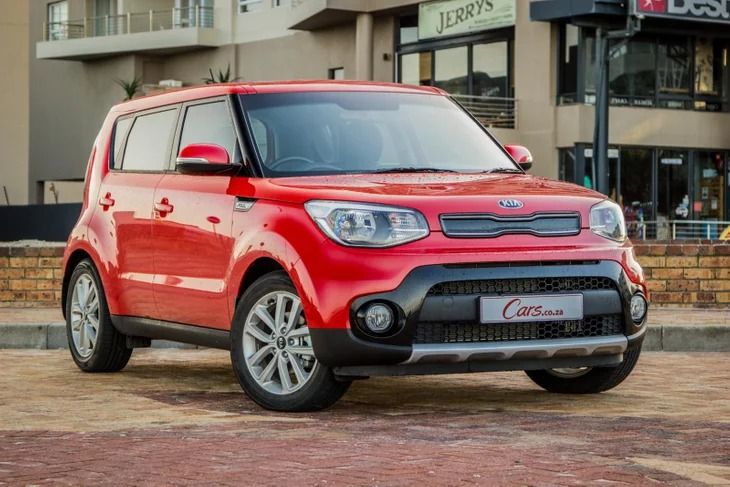
Although the macho looks of the Mohave Masterpiece full-sized ladder-frame SUV concept drew the most attention at the recent Seoul Show, Kia also showcased a more resolved version of its SP Concept (now named SP Signature), which will form the basis of a compact family car/crossover that will soon be produced in India (also a right-hand-drive market). This opens the door for Kia Motors SA to source the product for the local market to fill the gap left by the now-discontinued Soul, which anticipated the small SUV/light crossover craze when it arrived here back in 2009.
The chunky, boldly-styled SP Signature showcases an evolution of Kia's design language.
Cars.co.za: The recent exhibition of the near-production SP Signature in Seoul suggests the introduction of (what some publications believe will be called the "Tusker" or "Trazor") is imminent. Exchange rate permitting, does Kia Motors SA hope to introduce the model here before the end of 2019, or as soon as possible thereafter?
Christo Valentyn: Kia Motors South Africa has every intention to bolster its local product line-up with the SP once it enters production, and are working towards a very-early 2020 introduction – if not a bit sooner. Kia first showed the SP Concept at Delhi Auto Expo in 2018, shortly after announcing a $1.1-billion (R16-billion) investment in building a state-of-the-art assembly plant in India. We are excited about this new factory, because it makes right-hand-drive products (such as the forthcoming SP) more freely available to us.
We anticipate a 2.0-litre petrol automatic model, but Kia Motors SA says a number of engine/transmission combinations is possible.
The Kia Soul was one of the 1st compact family cars/light crossovers in South Africa and very much ahead of its time. The new version is no longer available for our market, but what did Kia Motors SA learn about the domestic small-SUV market through retailing the Soul? To which models have traditional Soul customers now migrated? And, will they be the target market for the SP?
I’m delighted that I’m not the only one who believes the Soul was ahead of its time. Having driven the latest e-Soul in Korea, I can confirm that the latest (3rd-generation) model, albeit not currently produced in right-hand-drive configuration, is as cutting-edge as ever.
When Kia started retailing Soul, crossovers and SUVs were gaining in popularity, but “family sedans” still sold well. Today, the latter market is virtually non-existent, and few brands would even consider introducing a sedan if there’s a crossover or SUV alternative. It’s an extremely competitive segment – these vehicles are the new “family cars”. Buyers demand space, comfort and practicality, with style becoming ever-more important. There will always be niche products like the Soul, but they tend to be marginalised in favour of products that are a bit more conventional.
The last incarnation of the Kia Soul that was sold in SA. The final version of the SP Signature should be an ideal substitute.
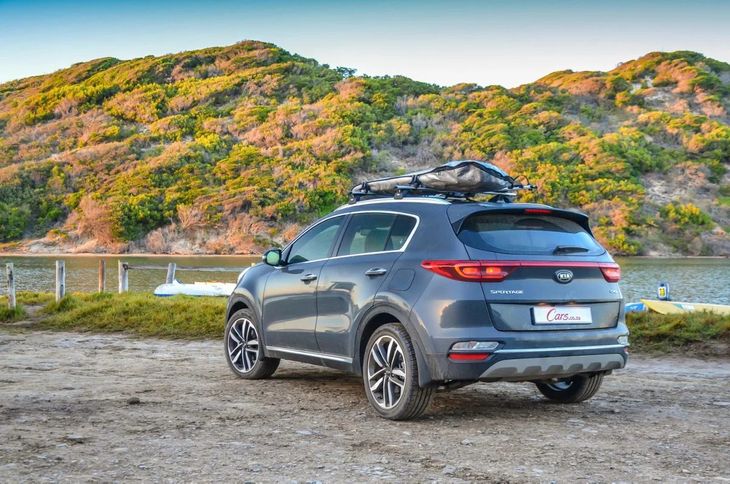
We find that our Soul customers migrate upwards and downwards, depending on lifestyle and life stage and the needs that come with each. Customers who have kids leaving school tend to migrate into the Rio hatch, while those with growing families naturally gravitate upwards into Sportage. Both of those models remain core mainstays in the Kia Motors SA’s line-up, but when the production SP arrives, we expect many of these customers to move it to the top of their consideration lists.
Given the tremendous anticipation of Volkswagen's T-Roc, a small SUV/compact crossover from Kia could be very well received too. However, in an increasingly overtraded market segment, would it be better to pitch the SP in South Africa with a high-end drivetrain and luxury spec or as something that's more value-oriented (but still youthful), to sit more comfortably under the Sportage line-up?
While it is an increasingly competitive segment, SUVs are becoming the go-to choice for many consumers. As such, one must balance the offering between both the entry- and high end of the segment – after all, it’s about addressing the needs of customers.
Kia recently introduced a number of updates to its Sportage family car and the brand's crossover/SUV line-up's set to expand!
In our view, the SP fits comfortably beneath Sportage in the product hierarchy, and will serve a complementary role in the market while debuting new engines and transmissions in the South African line-up. While we cannot divulge specifics on our plans with SP as yet, we will take a balanced approach to drivetrains and specification, with a strong focus on competitiveness and the high value that Kia vehicles are renowned for.
Will Kia Motors SA focus its product line-up on hatchbacks, crossovers and SUVs in the medium and long-term? Could it be a case that there could never be too many SUVs to offer customers, even if their target markets overlap?
Yes, indeed. Our focus will very much be on enhancing our hatchback, crossover and SUV offerings in the local market. But such a shift of emphasis is not just about products, and is more about revitalising the public’s perception of the Kia brand.
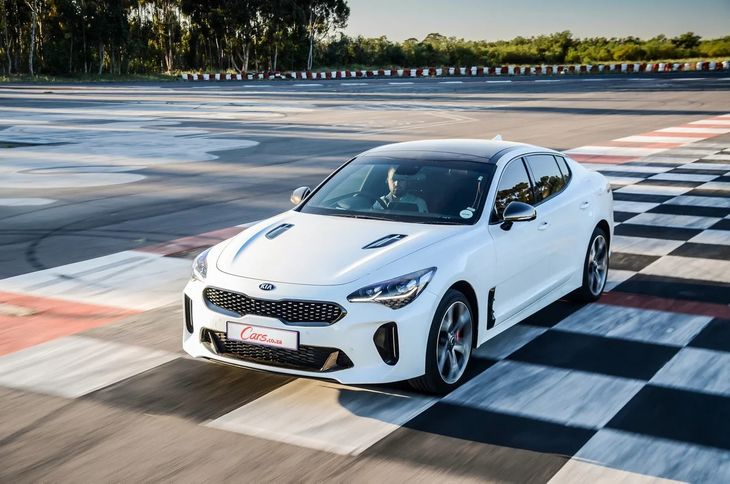
The limited release of the Stinger in Mzansi enabled Kia to demonstrate its versatility and lofty ambitions as a volume brand.
Products such as Picanto and Rio have become synonymous with our brand, and there is a widespread perception that our speciality is “budget cars”. It’s not incorrect, because we happen to produce those high-quality, high-value, and affordable products. However, we also produce a range of award-winning passenger cars (such as the Stinger GT, which Cars.co.za recently reviewed), and a wide range of hybrid, plug-in hybrid and full electric vehicles, and a wide range of crossovers and SUVs such as Stonic, Soul, Niro, Sportage, Sorento, and the recently-launched new Telluride (positioned above Sorento, but unfortunately not destined for South Africa). And, of course, let’s not forget the Grand Sedona!
As a brand, and especially in the South African context, Kia is about family, and our only goal is to continue to provide high quality, high value, highly competitive family vehicles that facilitate life, with all its ups and downs. It’s a focus that will come through more and more in our advertising, product positioning and product planning.
'Kia Motors SA pondering the hybrid and EV market'
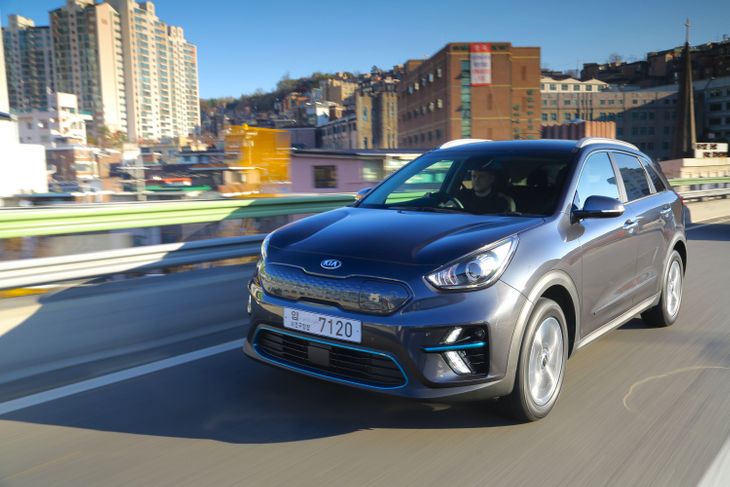
The all-new e-Niro is Kia's 1st fully electric crossover utility vehicle. It has a claimed range of 455 km on the WLTP combined cycle.
But we’re also keeping close tabs on what is happening in the green car space in the local context. Globally, we have a number of hybrid, plug-in hybrid and full electric vehicles in our line-up, and gaining traction in this space every month. One in 8 Kias sold in Europe, for example, is an EV, so there is a very definite statement of intent in this space from a brand perspective. Should local conditions become conducive, we can potentially tap into this space with products such as the e-Soul and the Niro range.
In the medium to long term, most of our existing products will enter a full model change cycle, and a number of exciting new products – such as the SP – will make their local debuts. There are also exciting tweaks to our design language. Suffice to say Kia is entering a very exciting period.
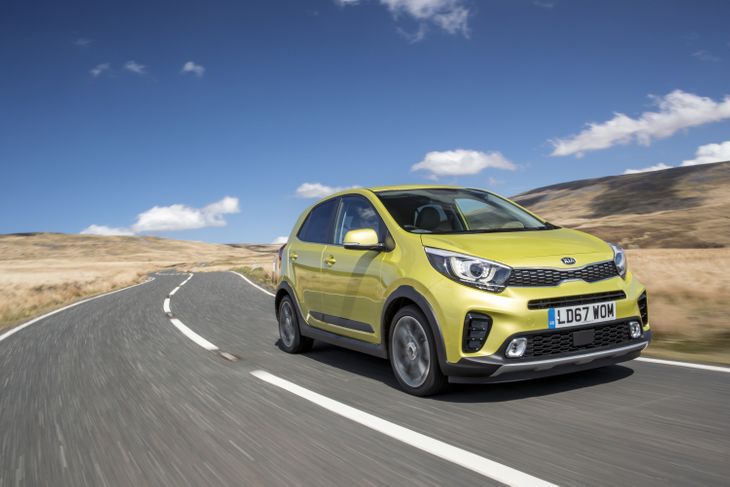
Just how long will it be before we see the likes of the pugnacious Picanto X-Line on the local market?
What about the viability of SUV-look derivatives for SA? Has Kia Motors SA ever considered X-Line versions of the Picanto (or even Rio)?
SUV-look derivatives are popular across the globe, so it’s natural we would look for product opportunities. However, there are limited options available to us in this space. Rio, for example, doesn’t offer a crossover-look model, because in some markets it is complemented by the Stonic (a crossover-styled and -packaged compact hatchback, which is unavailable for South Africa). Having said that, we are definitely looking at the Picanto X-Line from a feasibility perspective, but we don’t anticipate introducing it until the current Picanto has a mid-life refresh.
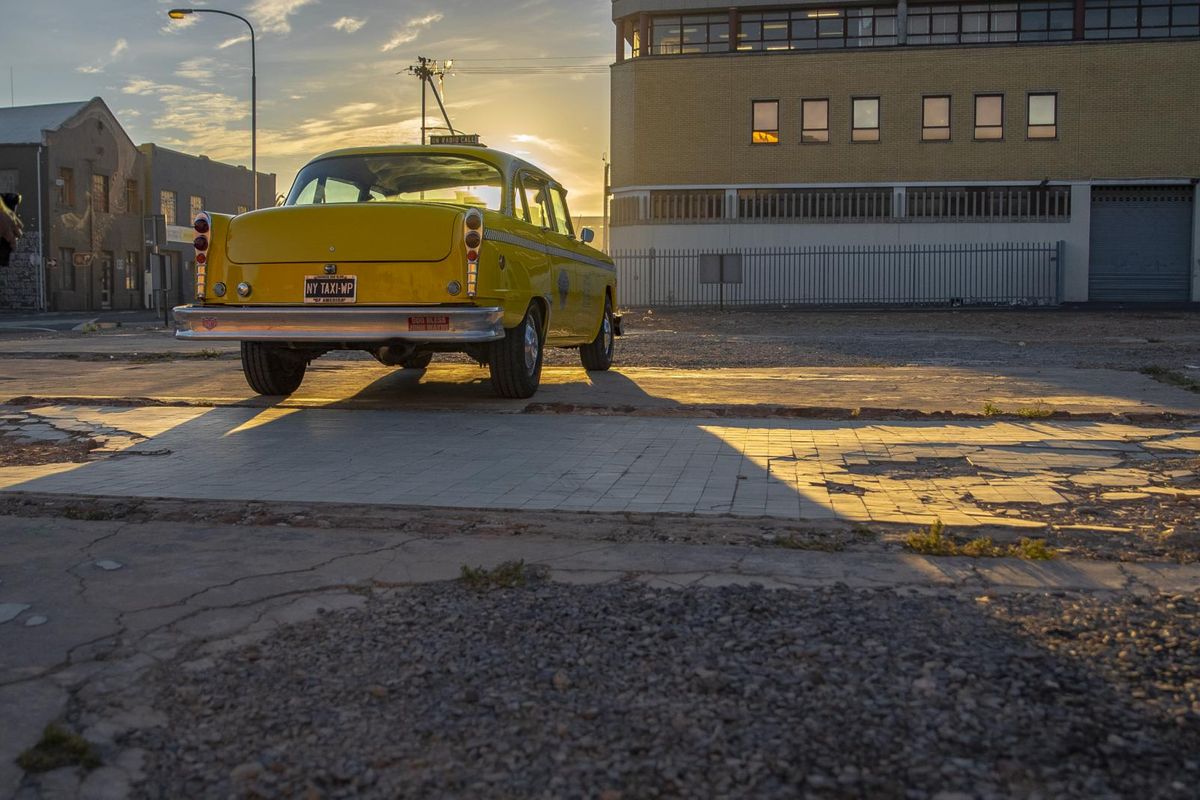
Cape Town’s Drug-Busting Hollywood Taxi: SentiMETAL Ep10
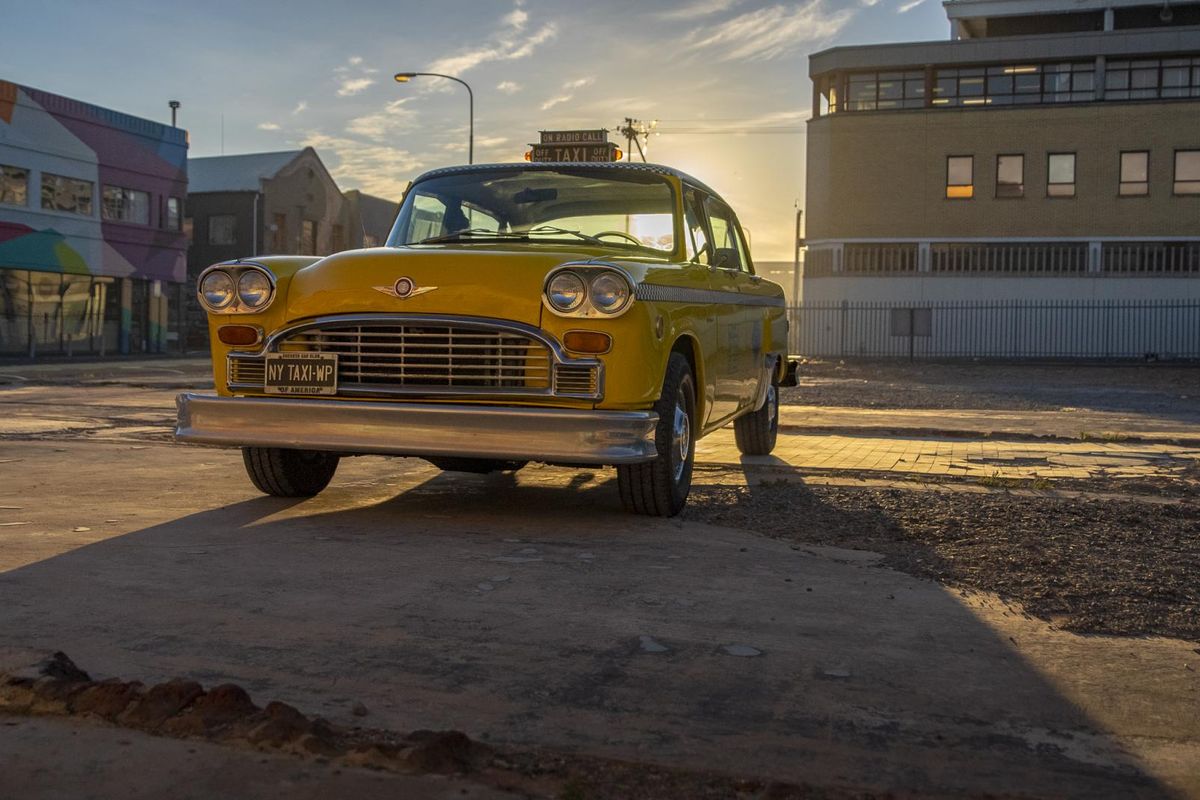
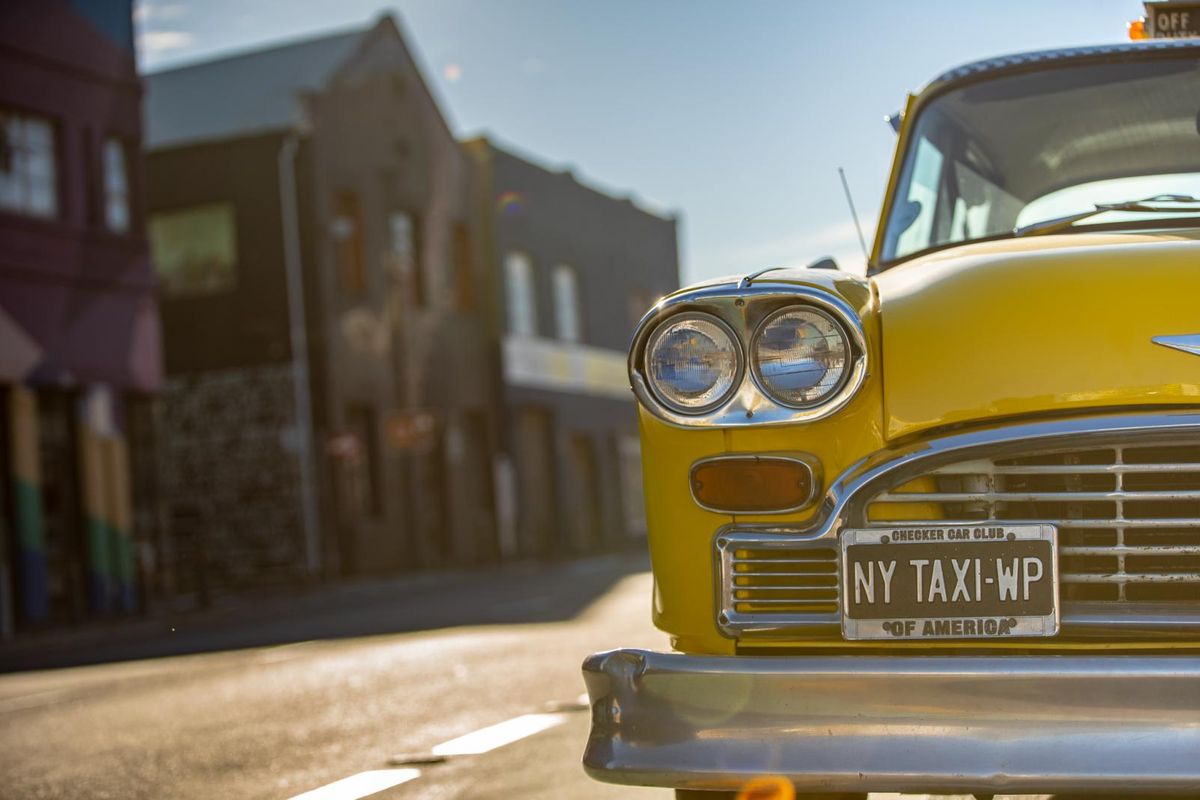
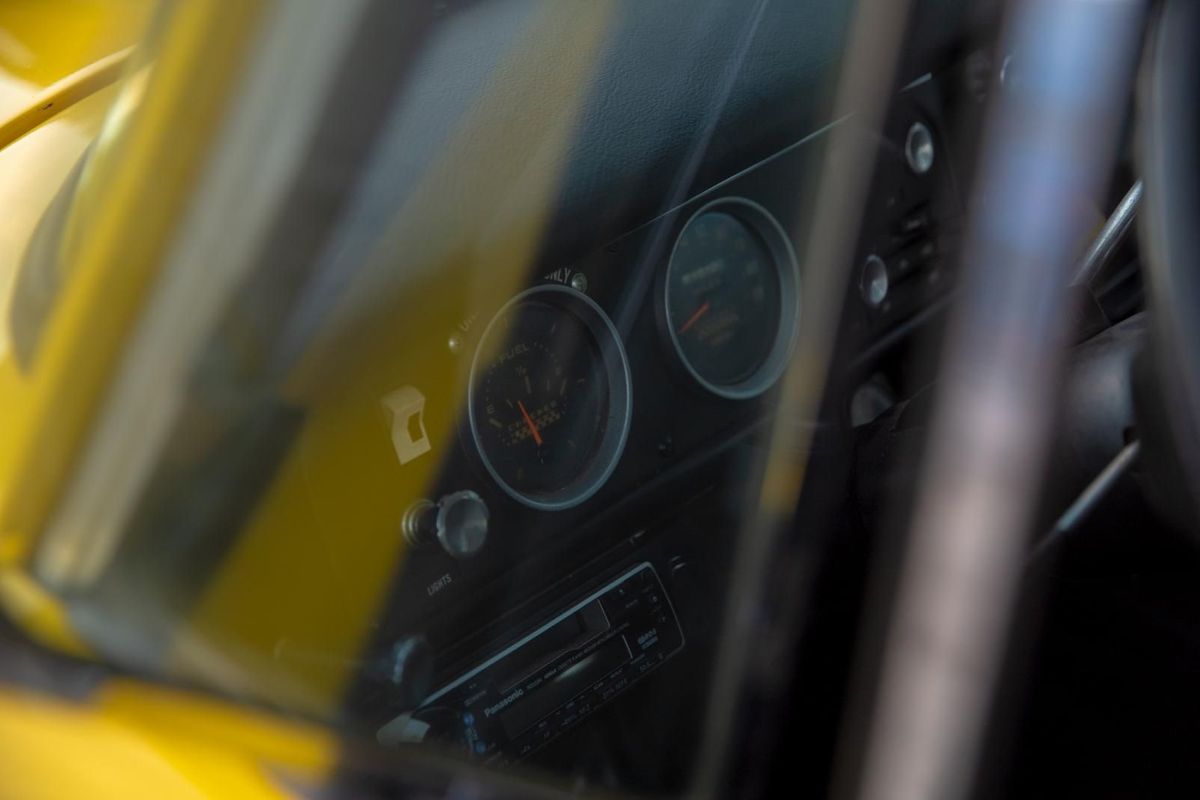
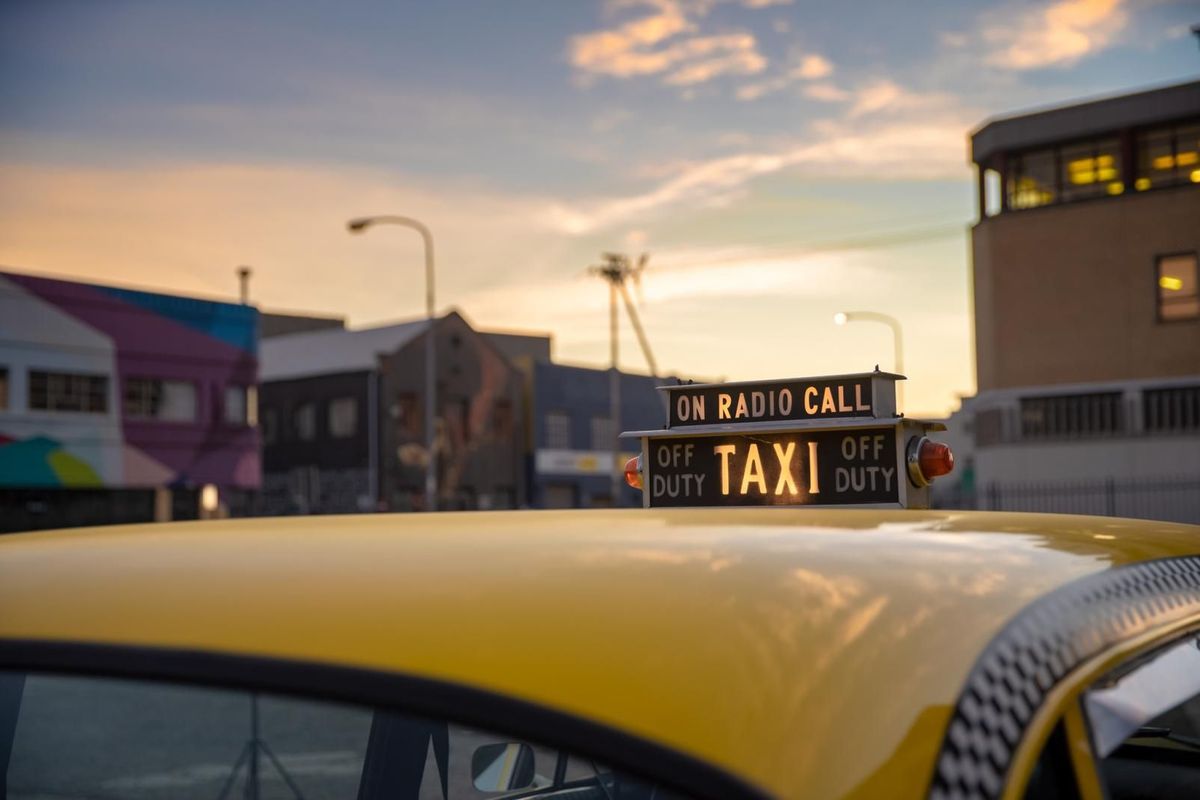
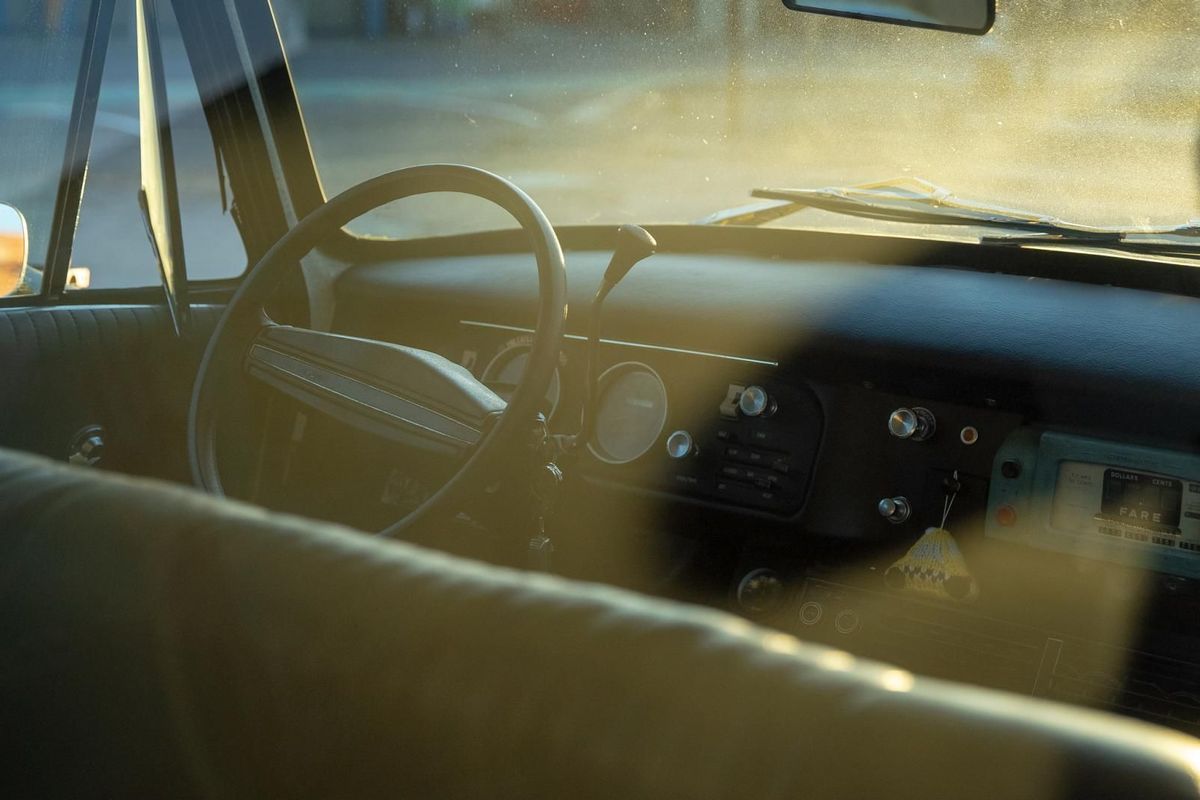
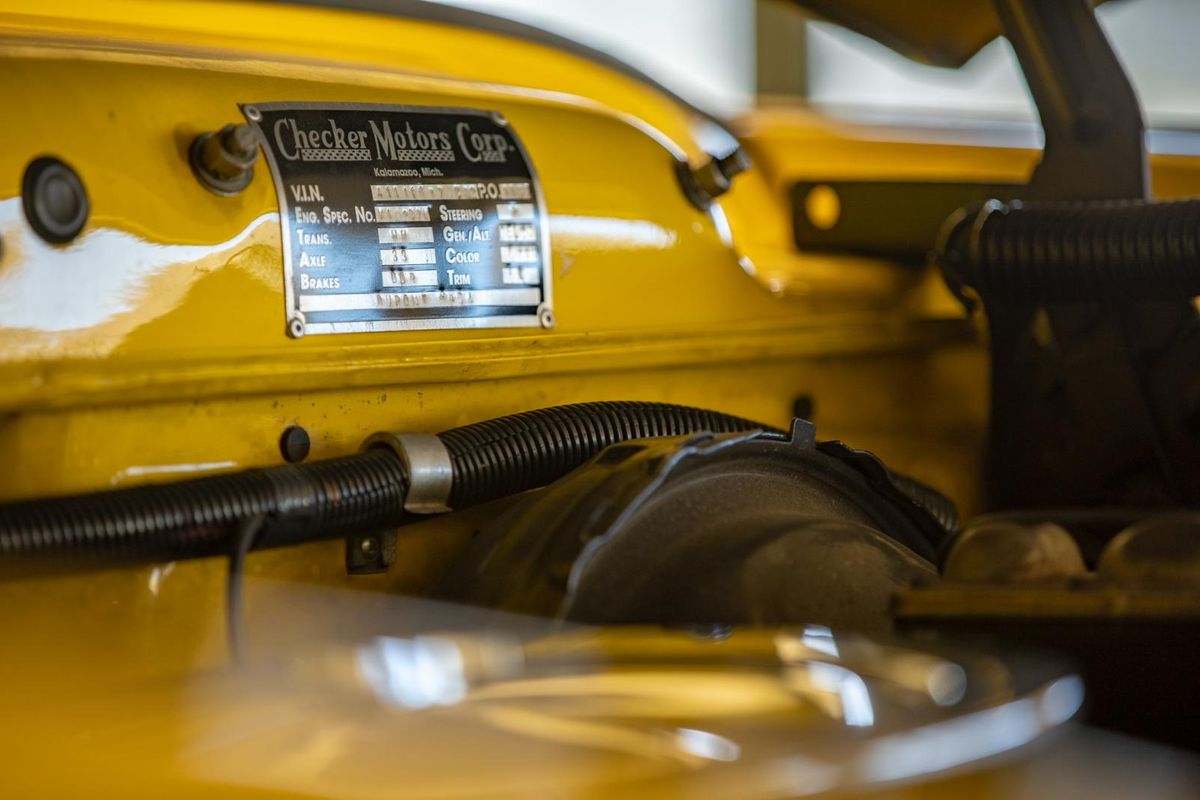
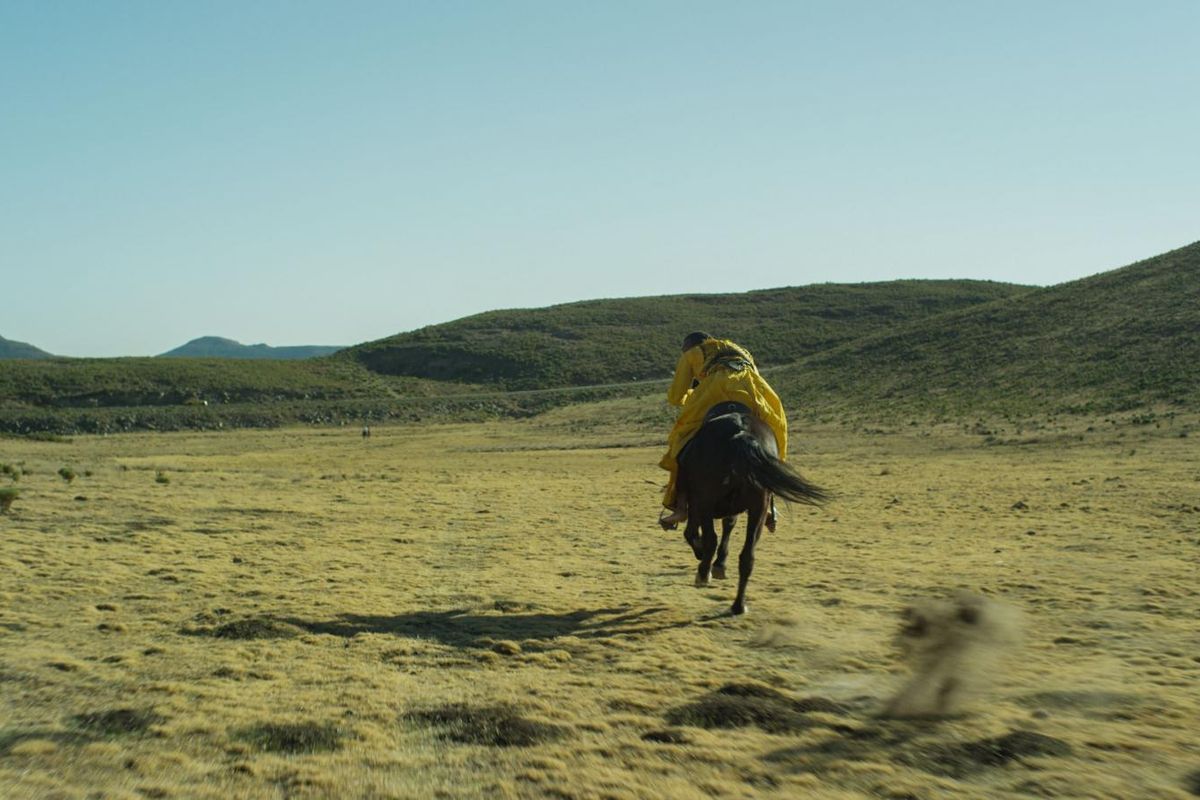
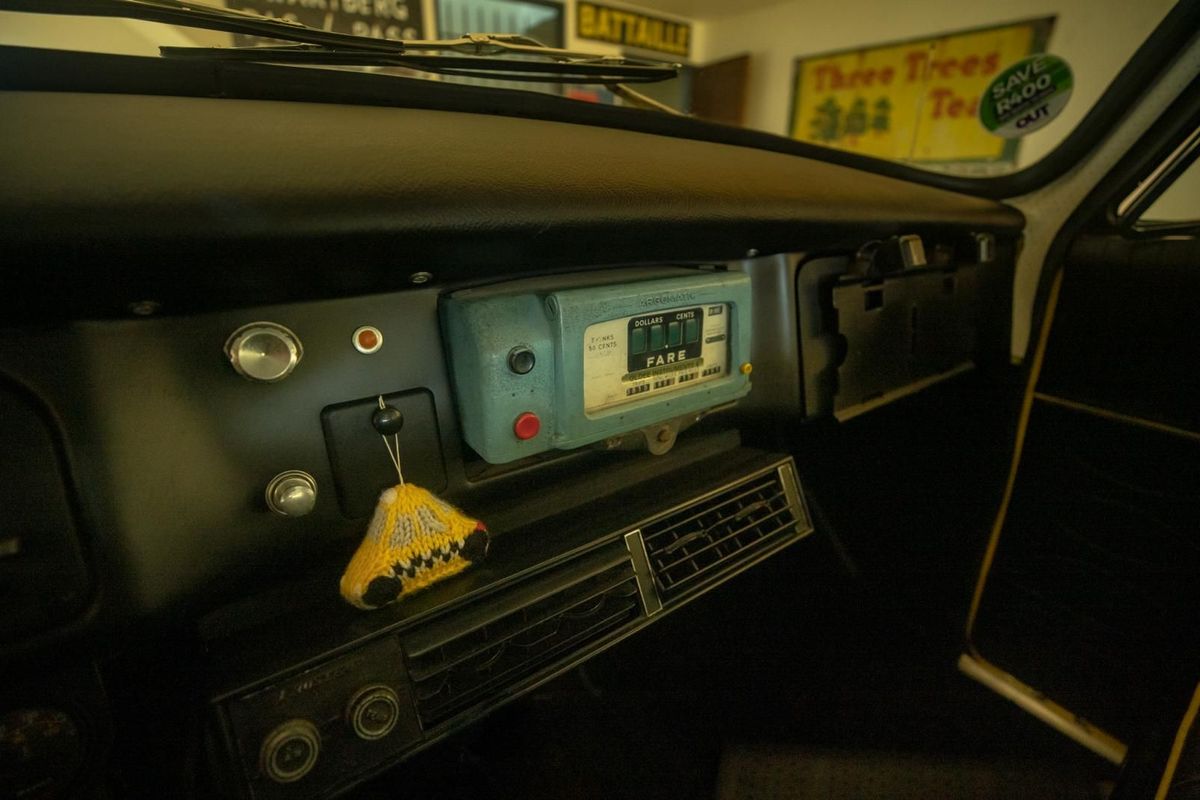
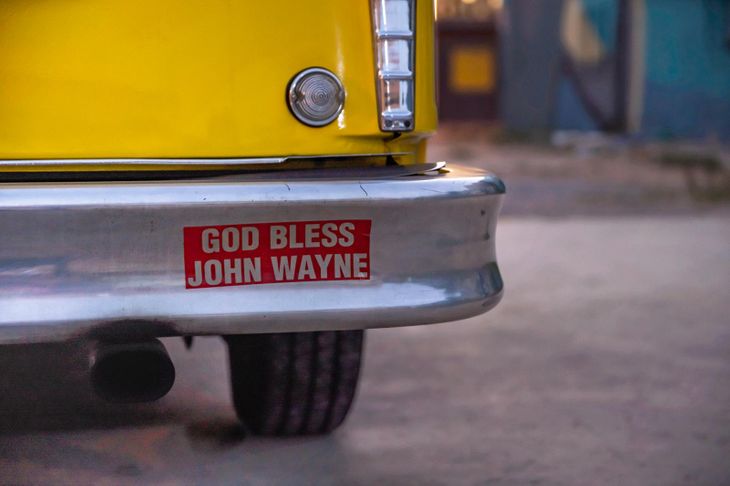
For the past 2 decades a rather special Checker A11 New York taxi has been cruising the streets of Cape Town. It's the only such cab in all of Africa, but that's only the tip of the iceberg when it comes to interesting trivia related to this particular car. Sit back and let owner Dieter Losskarn tell you about its undercover drug-busting duties in Manhattan, as well as its illustrious Hollywood career.
With production that spanned from 1959 to 1982, the Checker A-series taxi is one of the most recognisable American cars of all time, even though most people don't know much about the company that made them, Checker Motors. Owner Dieter Losskarn highlights the Checker A11's long production run and largely unchanged styling as one of its core historical attractions, but a young Losskarn first fell in love with the Checker when he was a small boy growing up in Germany, and saw "its friendly eyes" in a movie. He told his dad back then that he'd own one in the future.
As American as it gets? With a Hollywood history of its own this Checker has an amazing history.
Many years later at the dawn of the new millennium Dieter found the car he wanted – a Checker A11 for sale in New York. He jumped on a plane and bought the car you see here – not in the best shape back then – from a Colombian who had been renting it out to the film industry. It turns out that Dieter's car has had quite an incredible Hollywood career, starring in films such as Carlito's Way (Al Pacino sat in the back of this car) and 200 Cigarettes with Ben Affleck.
But that's not all… Dieter's Checker is rather different to the ones that had been doing normal taxi service in the streets of New York. This particular Checker was used by the New York drug enforcement agency as an undercover police car, with one agent always in the back… To make sure it could keep up with the "baddies" it was fitted with a small-block Chevy V8, as opposed to the inline-6 cylinder engines fitted to most working taxis. That's why Dieter's Checker is no slouch off the line, and can unleash an almighty roar.
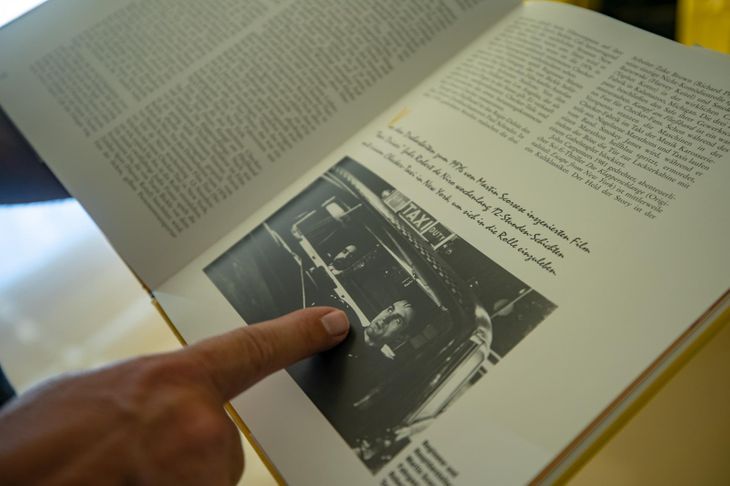
Dieter couldn't find a book on the history of the Checker, so he chose to write one himself! It also details his 15 000km journey through America.
After its purchase Dieter undertook a 15 000 km journey through America, documenting the trip as he went and ultimately ended up producing a lovely coffee table book on his adventure. "It was a rolling restoration," he jokes. The Checker had to be fixed and refurbished as he travelled. He recalls when driving through the sweltering Death Valley that the air-conditioning broke, and so he had to keep his 6-month old daughter cool by wrapping wet towels around her head.
Now the Checker takes pride of place in Dieter's beautiful Hout Bay residence, and is a common sight on Cape Town's roads and at local motoring events. "I don't think I can ever sell this car," he says. "It is a part of me." Should he ever wish to sell it, however, this car may turn out to be quite a desirable item. Just over 100 000 were made, and very few remain these days. Most were scrapped after completing their stints as taxis. To find a Checker A11 in the condition of Dieter's car, and with such a cool history, is incredibly rare.
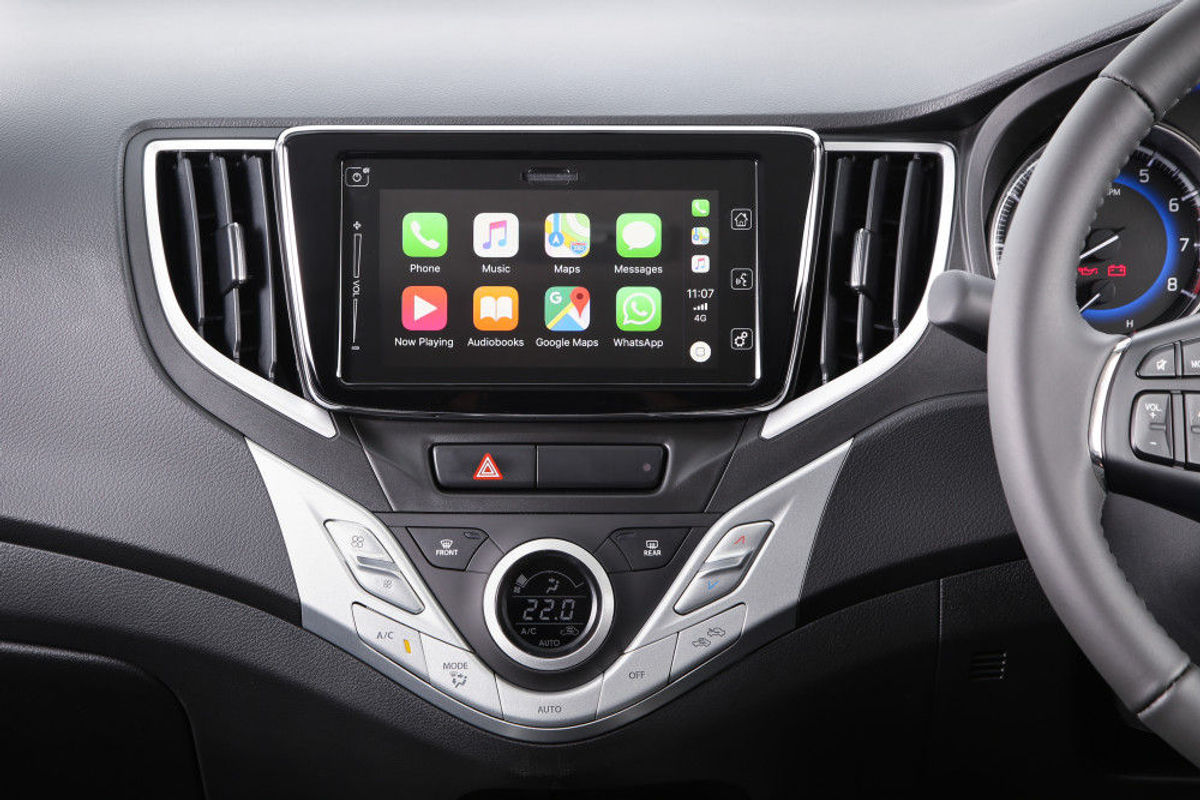
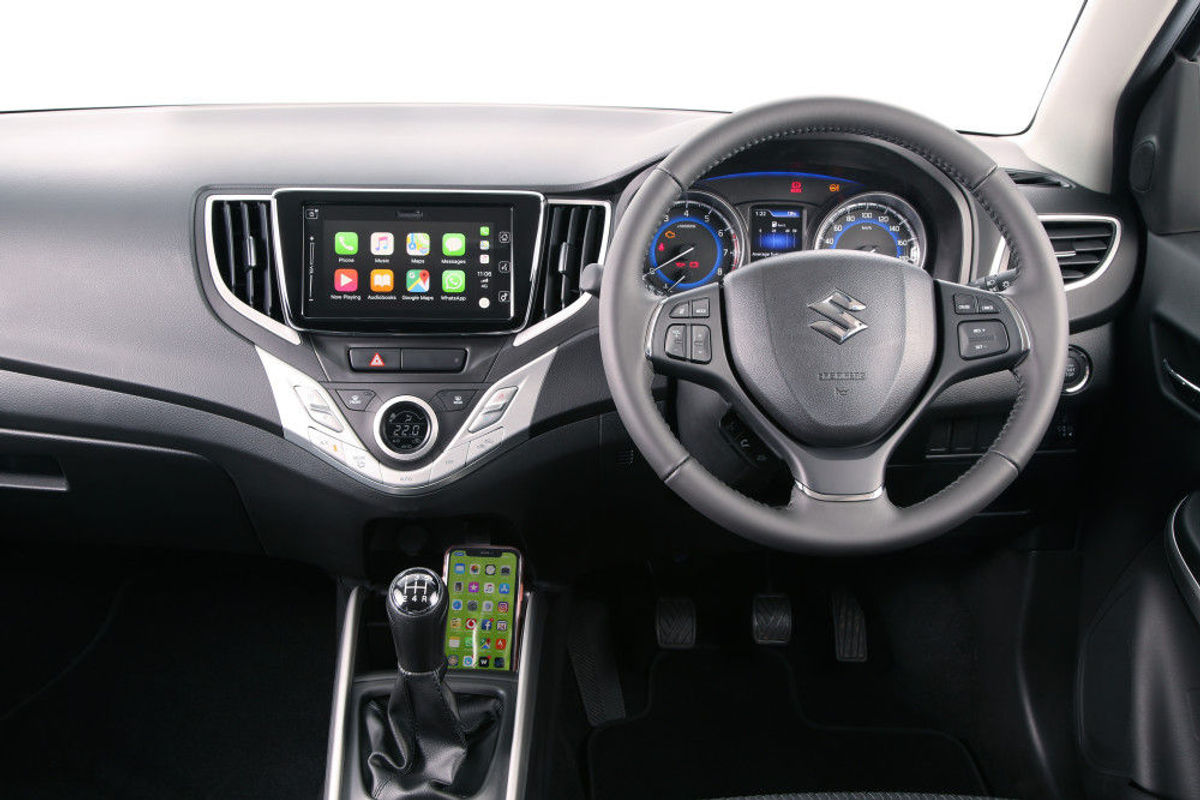
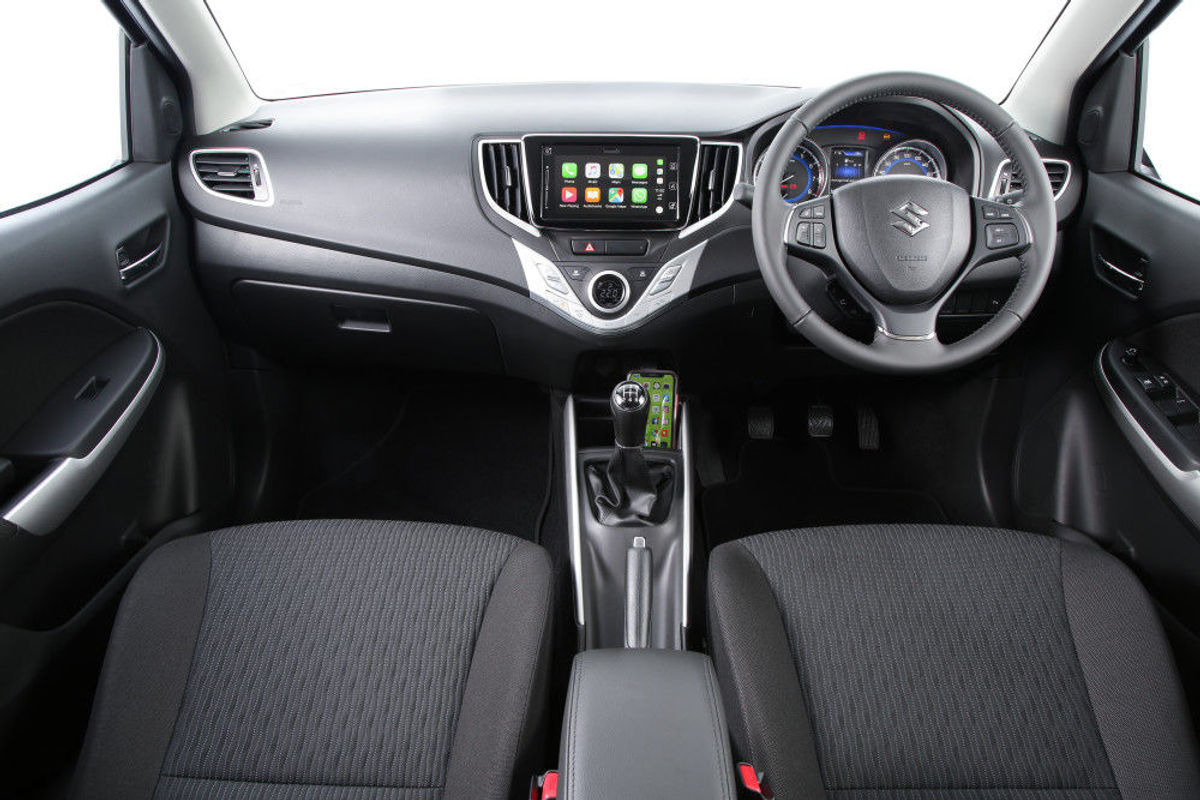
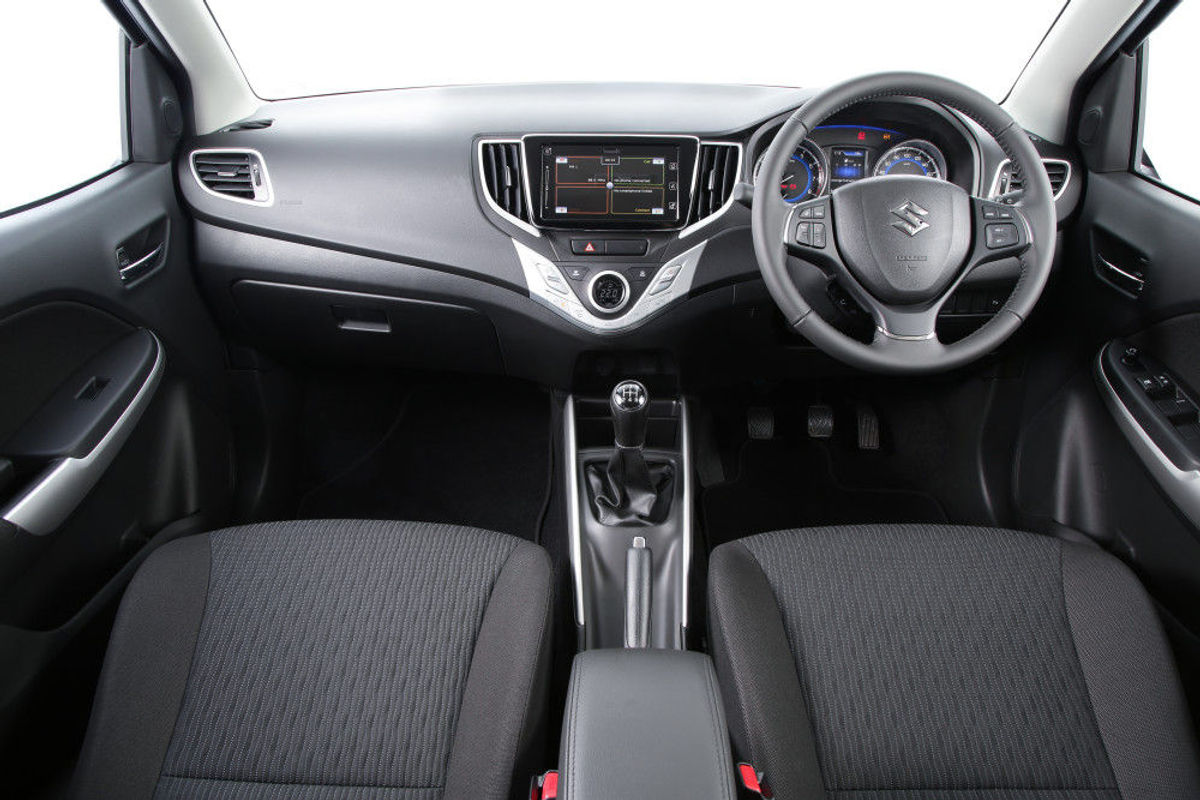
Suzuki Baleno, Ignis GLX Gain New Infotainment System
Suzuki has introduced a new infotainment system for the range-topping Baleno hatchback and Ignis GLX crossover derivatives.
Buyers who are considering the Suzuki Baleno hatchback and Ignis crossover will be pleased to know that the top-spec GLX derivatives are now equipped with Suzuki’s latest Smartphone Linkage Display Audio (SLDA) system with a 7-inch infotainment touchscreen.
The system incorporates Apple CarPlayAndroid Auto and MirrorLink functionality while also offering Bluetooth, voice commands and steering wheel mounted controls. The larger screen also serves as a reverse monitor as a reversing camera is fitted as standard on the Baleno GLX and Ignis GLX.
The Baleno GLX is powered by a naturally-aspirated 1.4-litre petrol engine with 68 kW and 130 Nm and is mated to either a 5-speed manual or 4-speed automatic transmission. Pricing for the Baleno GLX starts at R330 900 for the manual and R254 900 for the automatic derivative.
As for the Ignis GLX, it makes use of a 1.2-litre petrol engine with 61 kW and 113 Nm and is also offered with a 5-speed manual or 4-speed automatic transmission. The Ignis is priced from R196 900 for the manual and R211 900 for the automatic.
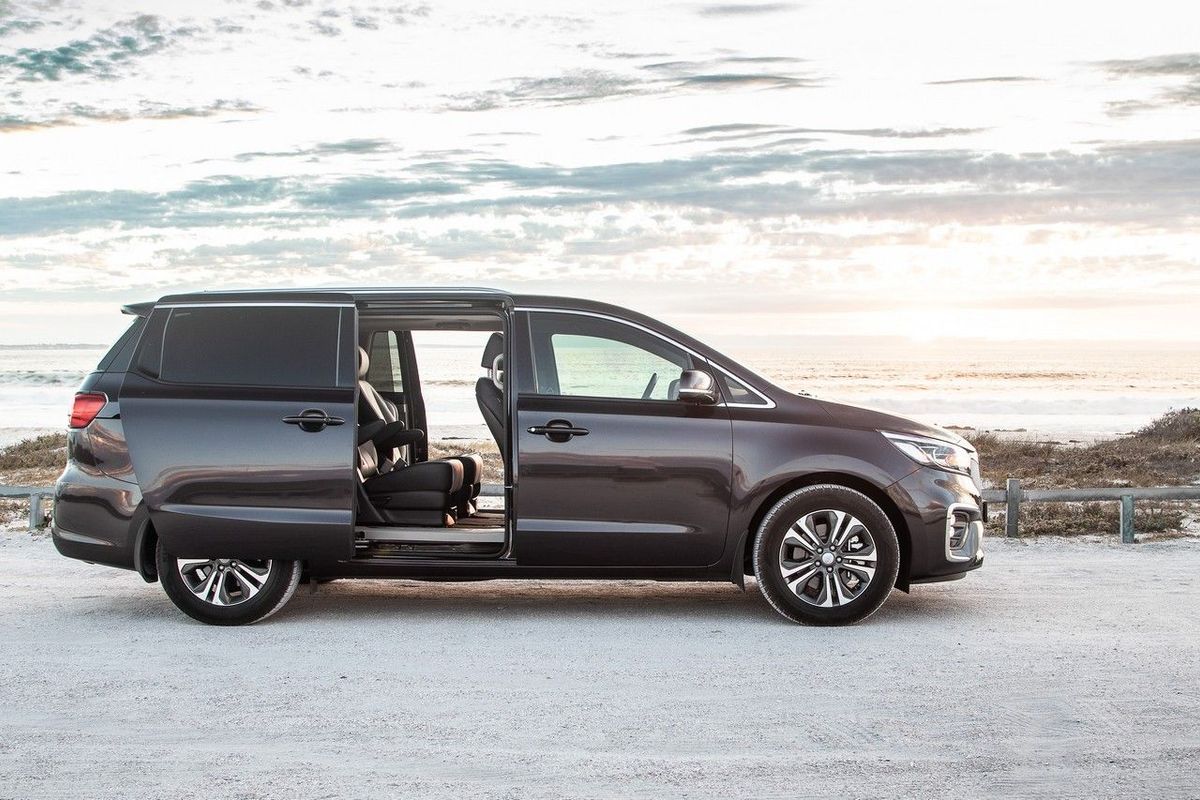
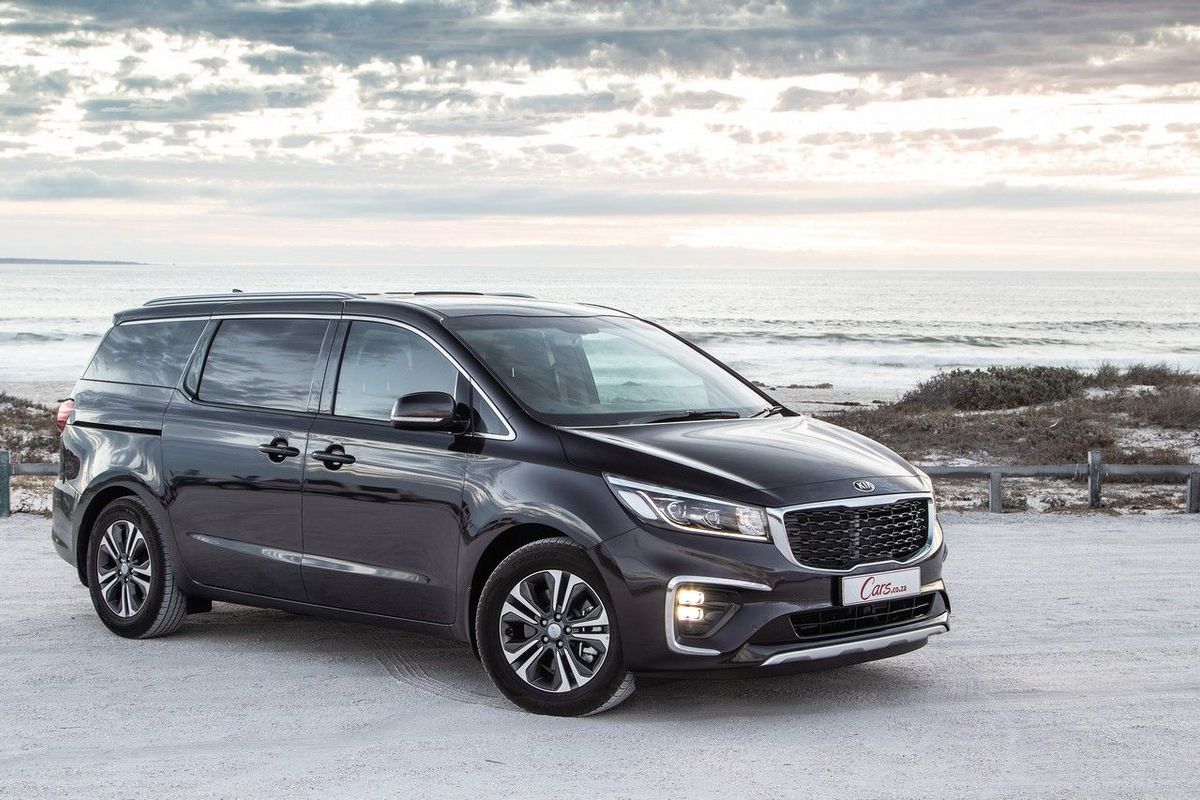
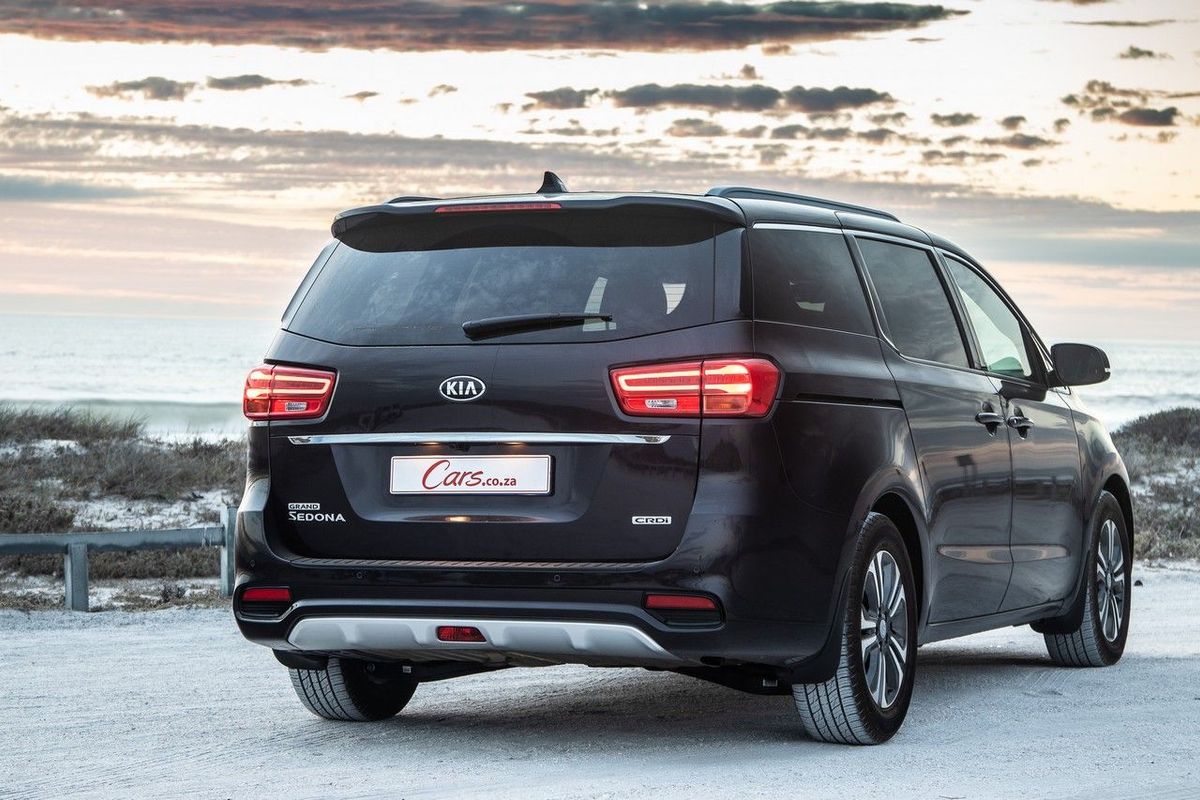
Minivans or MPVs, colloquially known as "people movers", were all the rage about 2 decades ago, but are largely forgotten these days. Kia's latest Grand Sedona, however, represents a credible alternative to a 7-seater SUV as a road-biased, spacious family car. In fact, this big Kia might very well be the best family car of them all…
We like: Excellent versatility and practicality, luxury features, long-distance comfort, build quality, efficiency
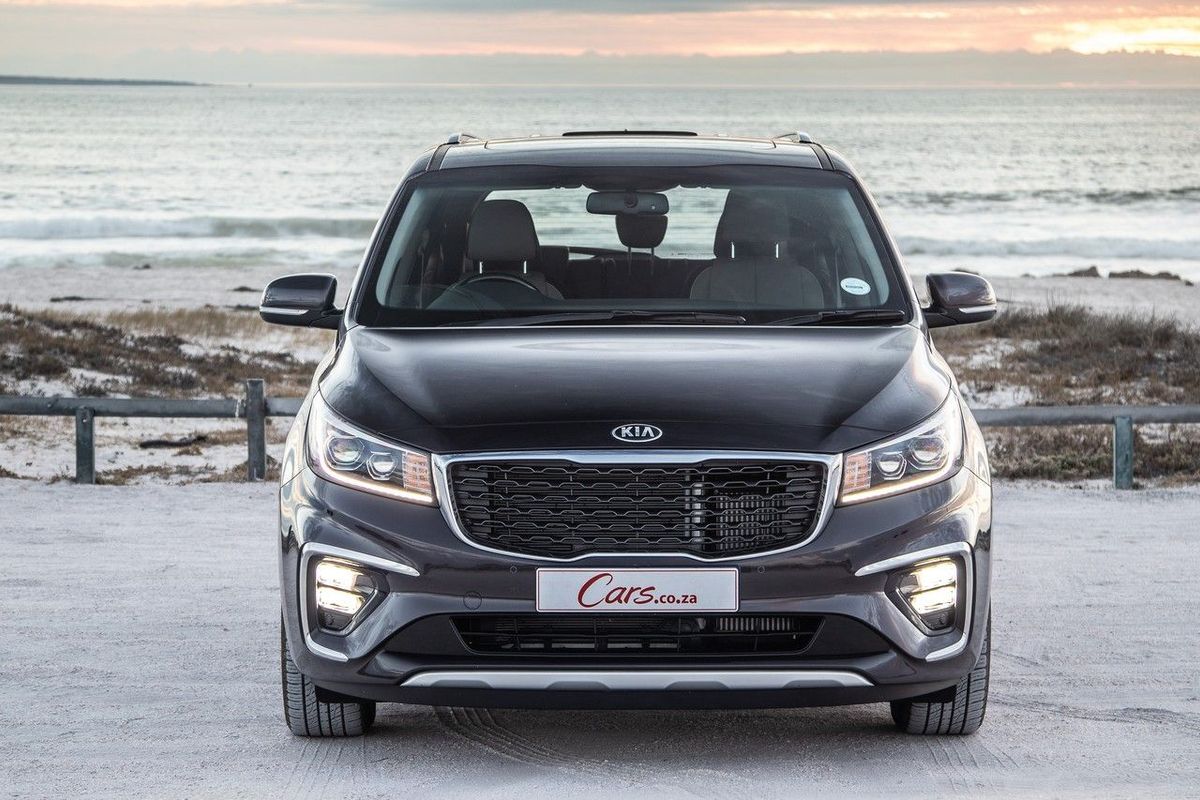
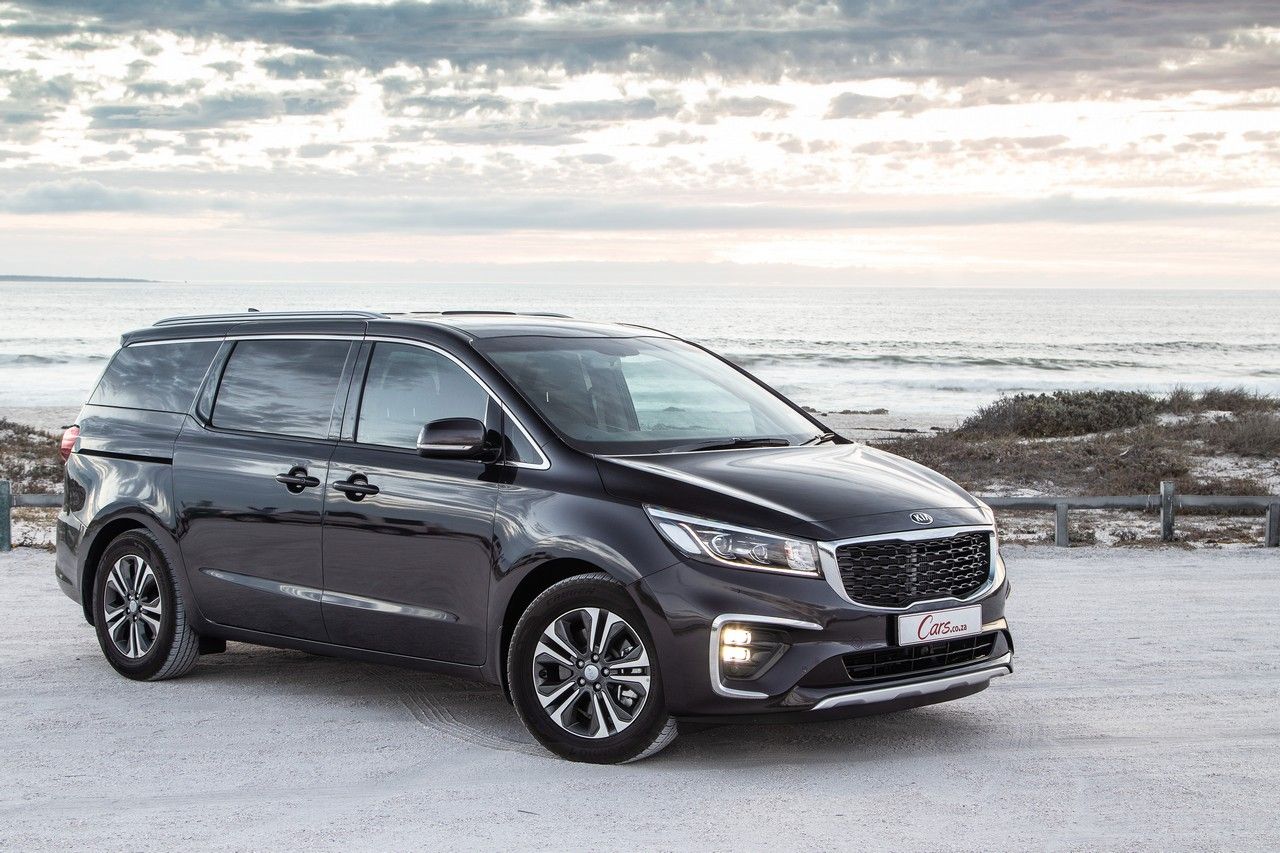
As attractive as you could reasonably expect a "bus" to be, the Grand Sedona features LED head- and foglamps. It rides on 18-inch wheels.
Whereas big SUVs are currently all the rage and particularly rugged, bakkie-based 7-seaters sell like the proverbial "hot cakes", the "minibus" rarely features on families' shortlists these days. However, there are still a fair number of more astute shoppers out there who make their decisions based on what vehicle they actually require… as opposed to the one that would make envious neighbours' curtains twitch most vigorously. So, if you're looking for a very spacious family vehicle for long-distance travel, want to seat 7 people in comfort and not sacrifice the onboard luxuries and on-road refinement you'd expect when shopping at this price level, Kia's Grand Sedona SXL needs to feature very highly on your shortlist.
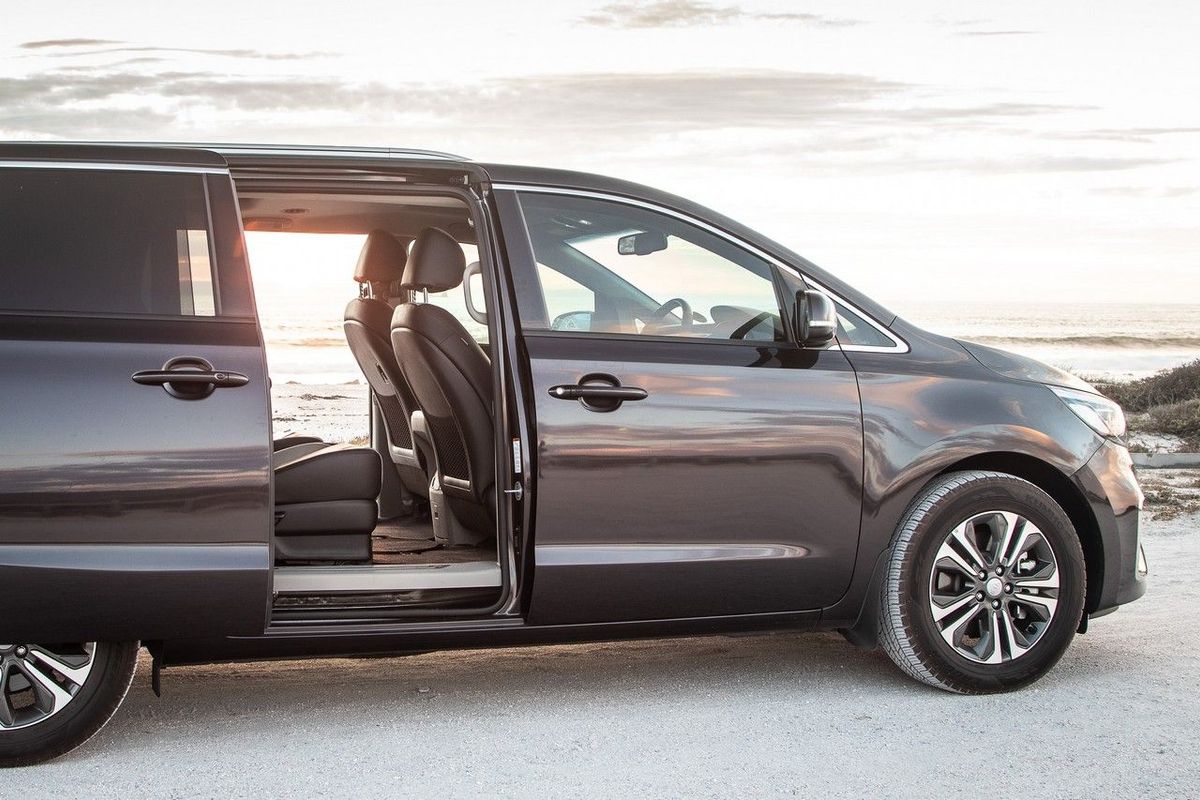
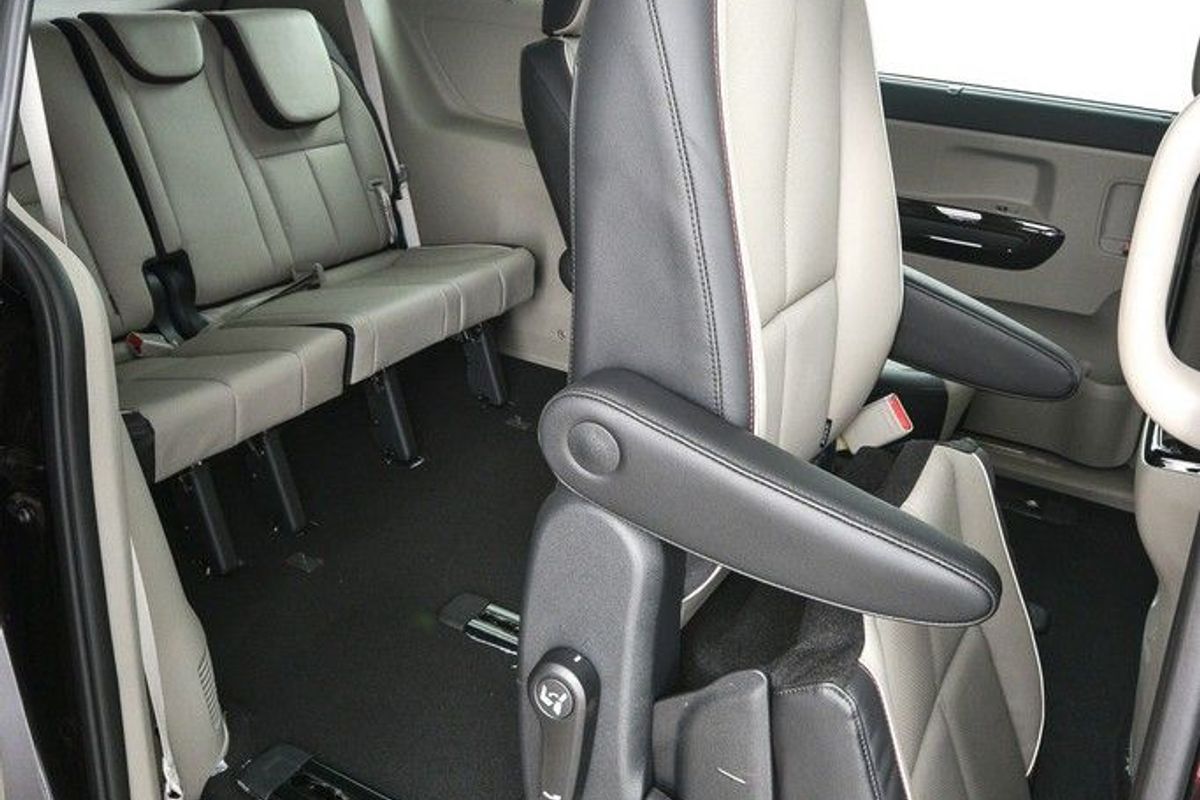
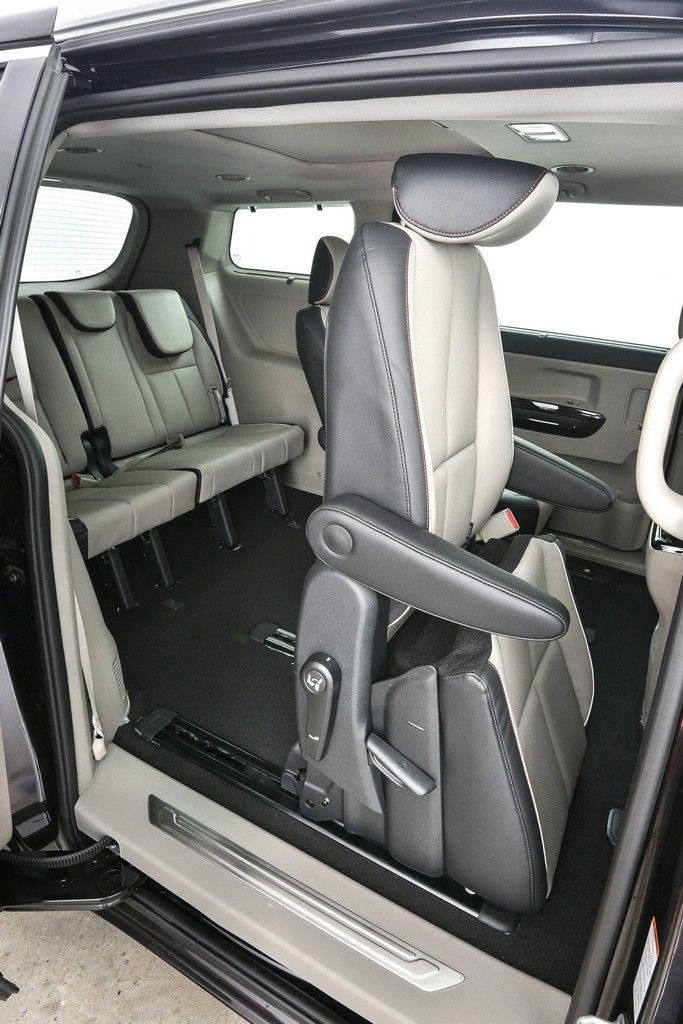
You can either walk through the cabin to access the third row, or adjust the seats forward to simply step into the back.
Spaciousness and Versatility?
The Grand Sedona is a big machine (you may want to familiarise yourself with its exterior dimensions and haul out the measuring tape to make sure it will fit in your garage). It measures 5 115 mm in length, which makes it comfortably longer than a VW Caravelle, but only slightly shorter than a Mercedes-Benz V-Class. At 1 985 mm in breadth, it is wider than either of those rivals, but it is a bit lower, so it looks less like a "bus".
Slide open those side doors (can be done via the key fob on this SXL version) and you'll find a cabin that is hard to fault. Firstly, due to its 2 individual chairs in the 2nd row, access to the 3rd-row bench is easy – you simply walk between those individual seats. Of course, that's if you're lazy… Alternatively, you can adjust the 2nd-row seats out of the way to make it possible to step straight into the 3rd-row area. Headroom is excellent, and legroom, even for those in the back row, is superb. We'll get to the various luxuries and amenities shortly, but the most impressive aspect of the Grand Sedona's packaging is that it manages to offer comfortable (and we mean, comfortable) seating for 7 adults, as well as a capacious load bay.
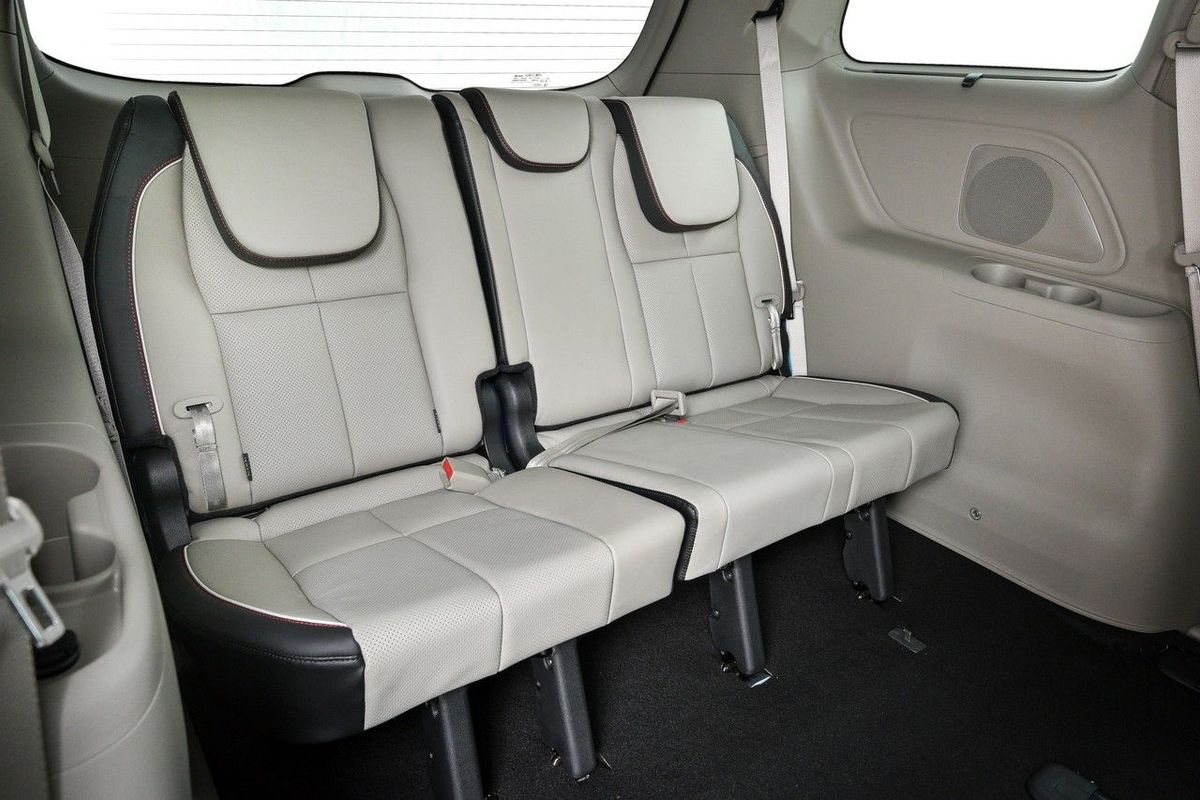
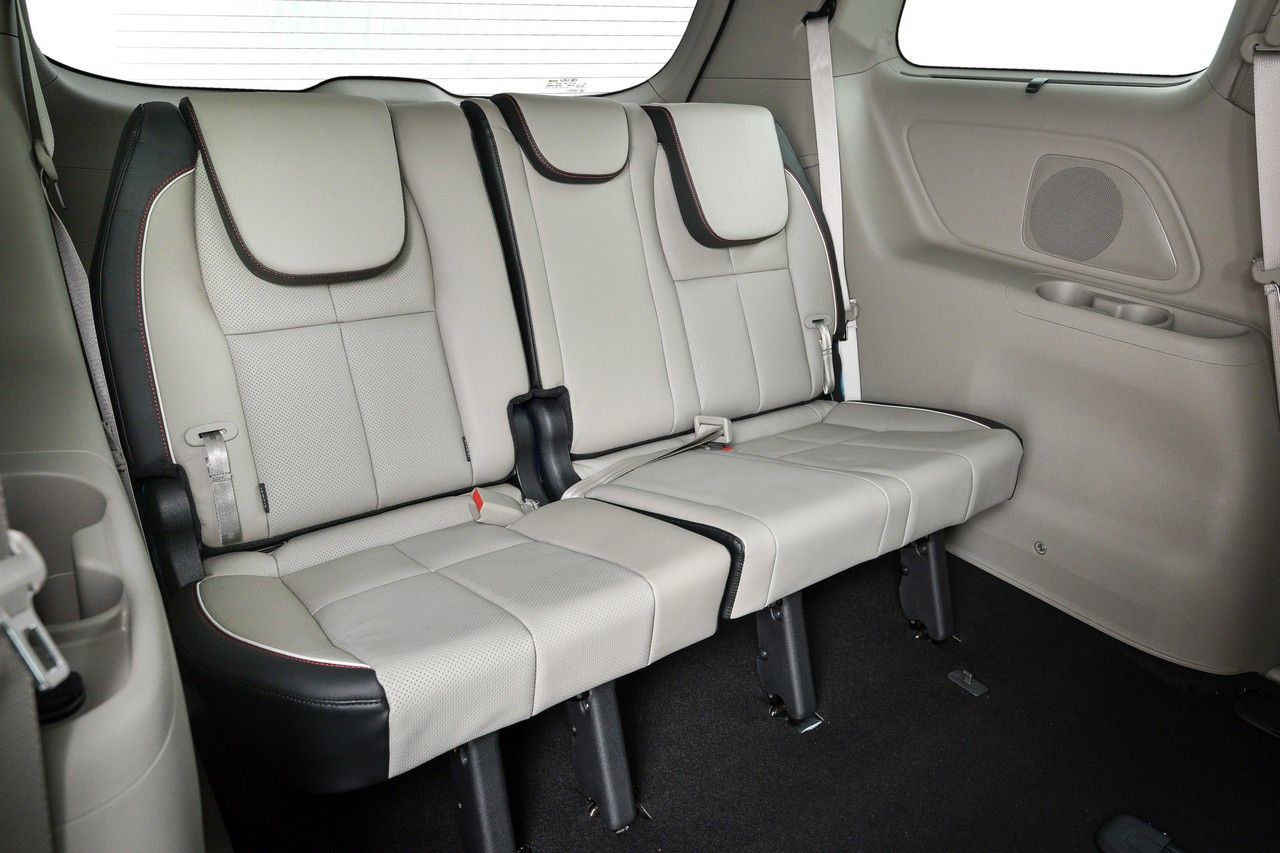
The 3rd-row bench is very comfortable (note the cream leather upholstery). Loads of storage space underneath the bench, too.
Lift the tailgate (again electrically assisted) and you're presented with a very deep luggage area, although it admittedly doesn't stretch into the cabin very far. However, due to its depth, it's possible to stack a vast number of suitcases in there. During its tenure in our test fleet, the Grand Sedona was used for a 400-km journey with 7 people and their luggage (enough for 2 weeks' holiday) on board – and proved to have space in reserve.
Further boosting practicality is the multitude of storage spaces in the cabin – large door pockets are fitted all-round, numerous drinks holders are availed, and there's a secondary lidded compartment above the traditional glove compartment. The lidded storage box between the front seats is also of a very handy size and, finally, you can fit quite a few items underneath that 3rd-row bench, too.
If you do not need the rear bench (split 60/40), it folds away flat into that aforementioned load bay and then you'll have enough space in the back to potentially carry a little Kia Picanto with you…
Luxurious specification?
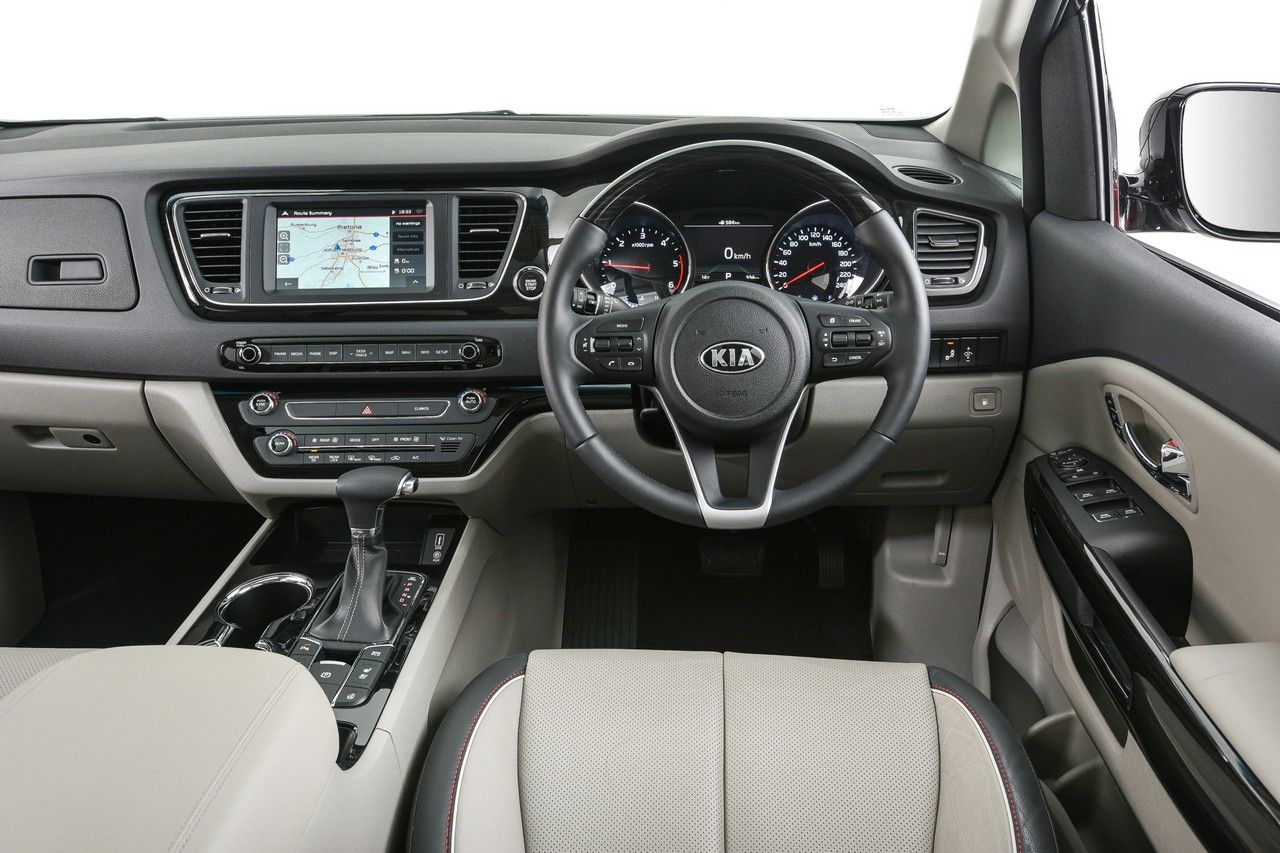
Good quality materials and loads of features give the Grand Sedona's cabin an upmarket, luxurious ambience.
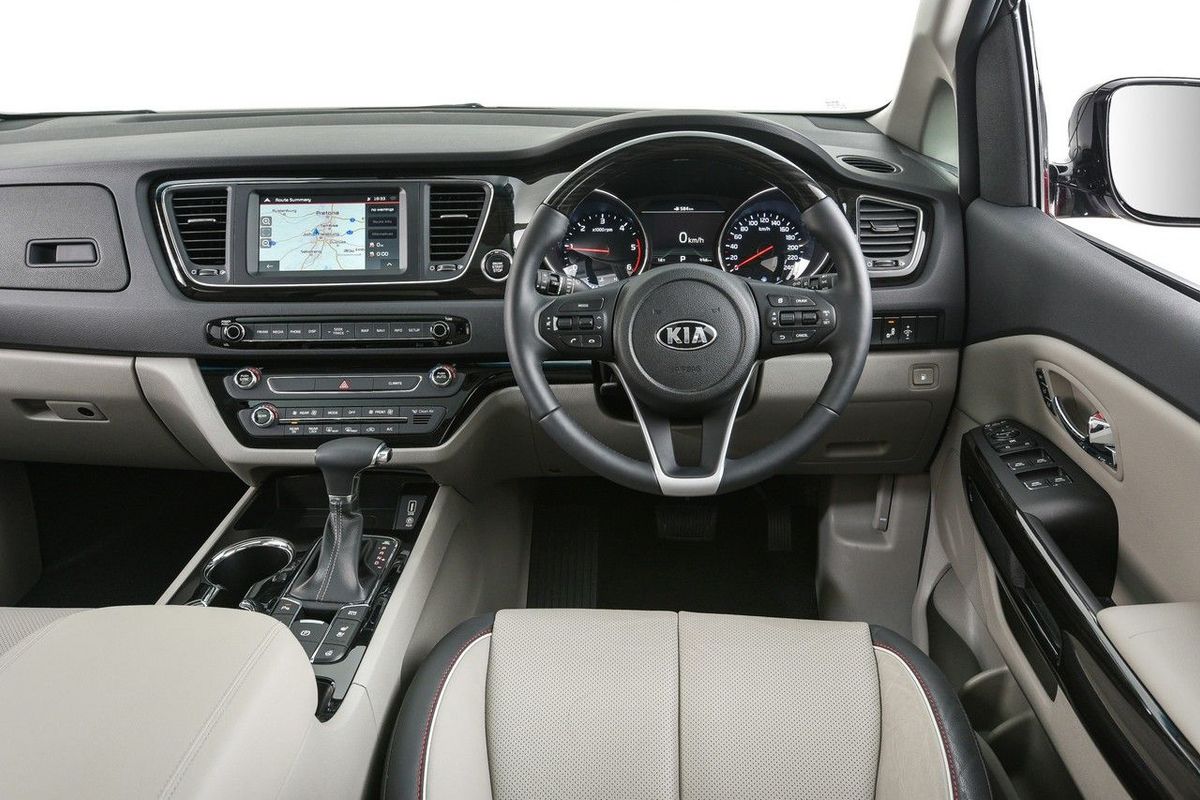
From behind the Grand Sedona's steering wheel, it is apparent why this is the flagship of the Kia range. High-quality plastics, leather with contrast stitching, plus piano black and metallic accents contribute to a sense of driving something expensive which, of course, the Kia is. It deserves to be emphasised, however, that in terms of the quality of the fittings and materials used, this Kia doesn't have to stand back for its rivals from Germany.
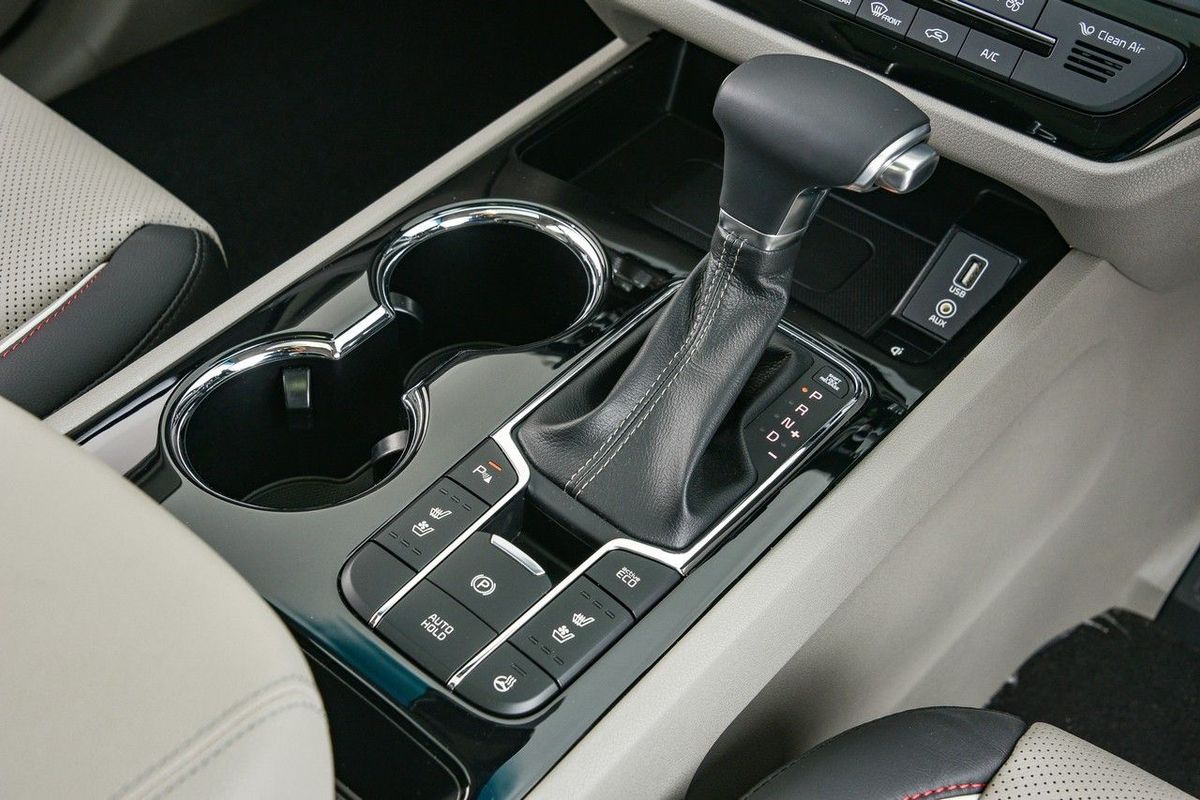
Both front seats are electrically adjustable (with memory function) and feature heating and cooling. In fact, even the 2nd row of seats have heaters. The steering wheel, too, is heated and in addition to dual-zone climate control in front, there are separate air-conditioning vents for those in the rear.
The Grand Sedona is a big car, and we were concerned that the dark exterior colour would result in a cabin that would remain unbearably hot after the vehicle had been parked in the sun for an extended period. The reality, however, is that the ventilation system has more than enough oomph to cool the sizeable Kia's interior in a hurry. Oh… there's also a vast dual sunroof fitted to this SXL derivative.
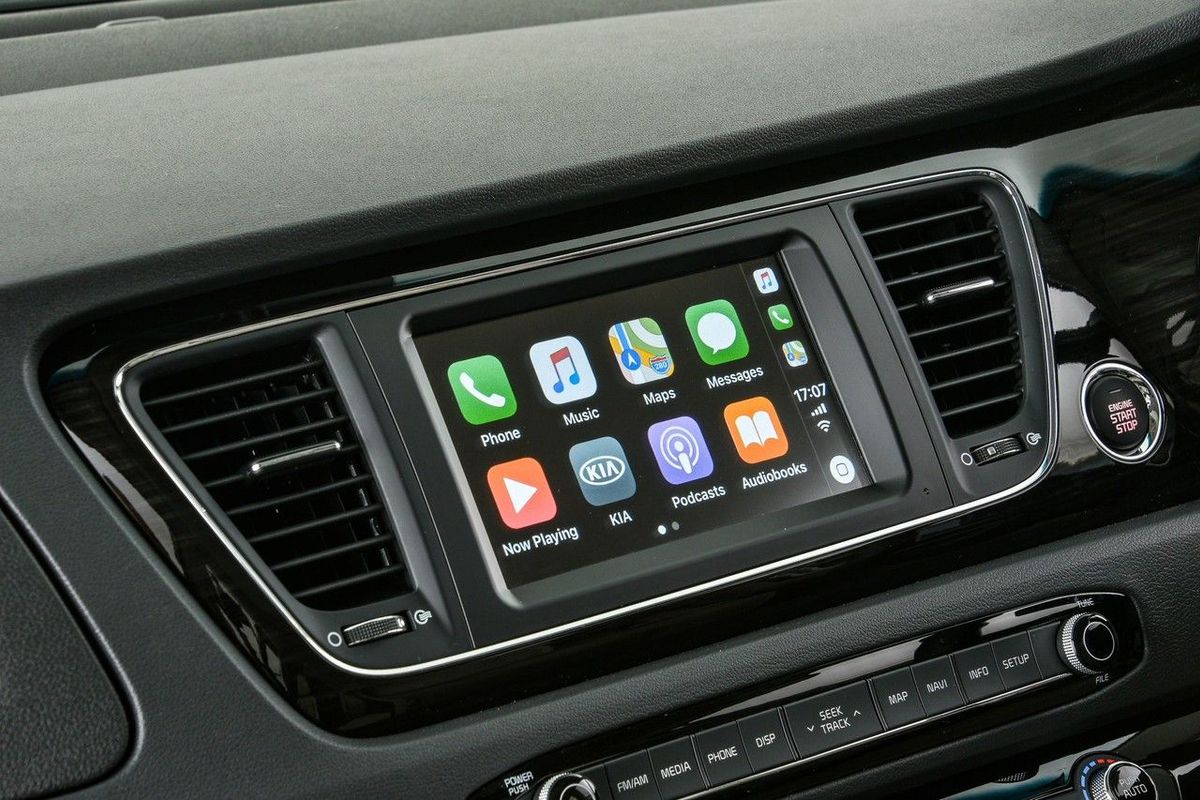
Grand Sedona SXL features an 8-inch colour touch-screen with embedded navigation.
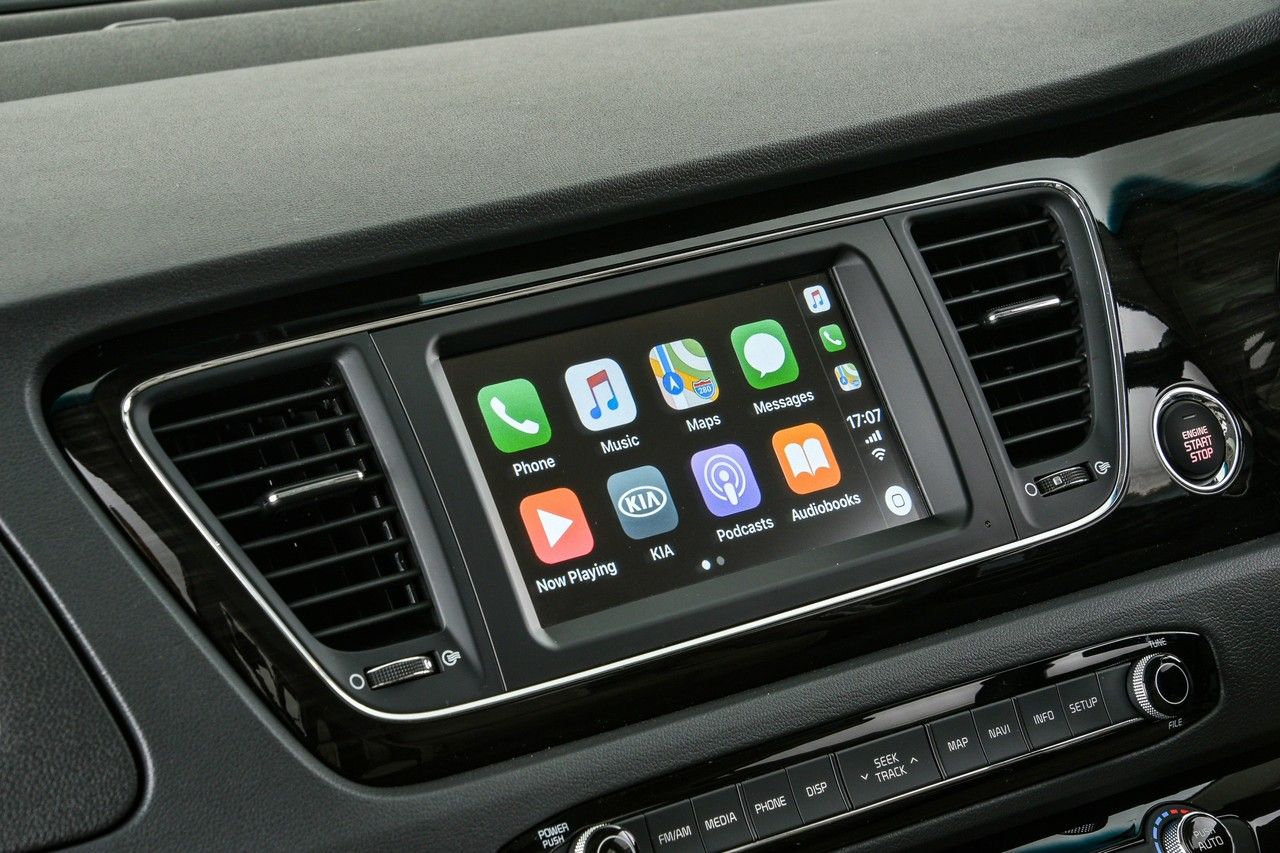
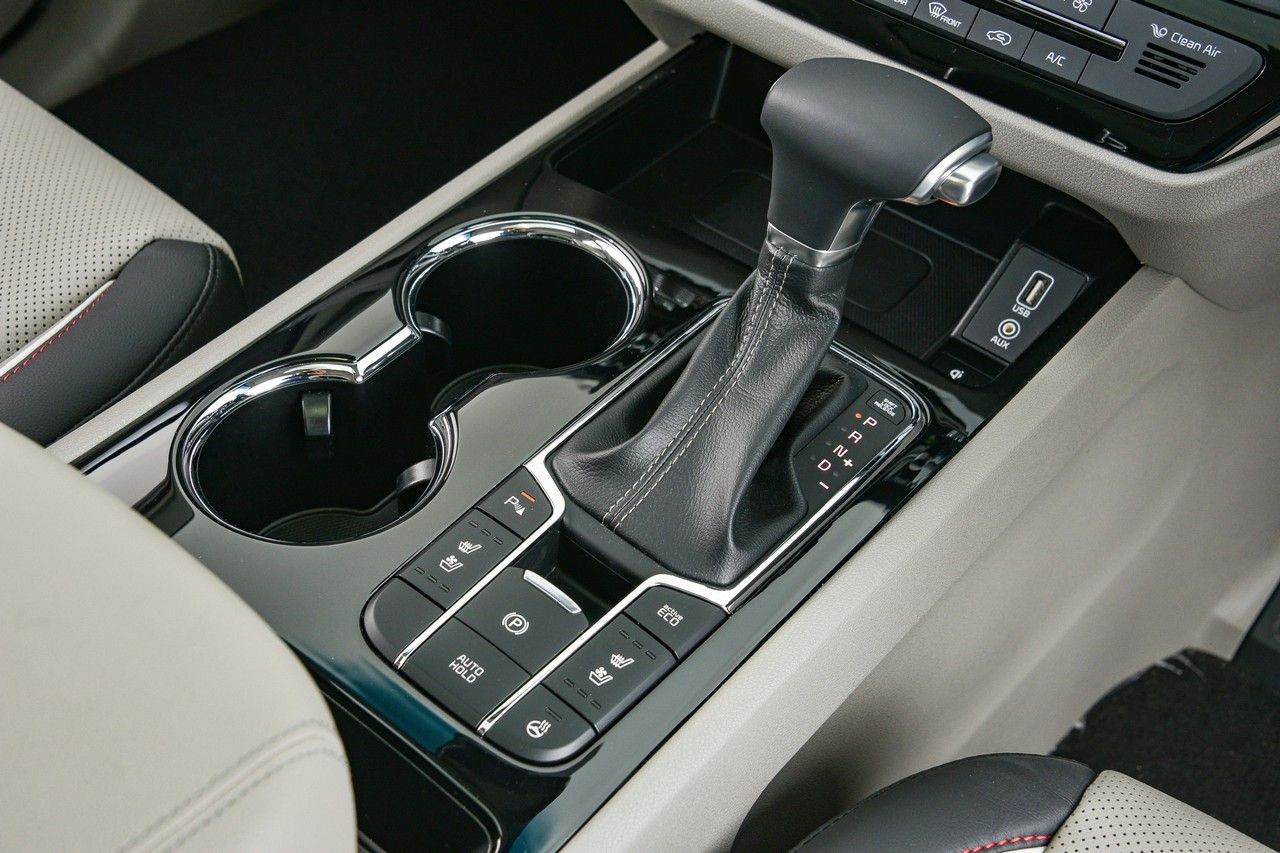
In terms of infotainment, the Grand Sedona features a properly up-to-date 8-inch touchscreen interface with embedded navigation, as well as Apple Carplay/Android Auto compatibility. There's a wireless smartphone charger in front of the transmission lever, and numerous USB charging points dotted throughout the cabin. This top-spec SXL derivative also gets an additional pair of speakers, bringing the tally up to 8.
The SXL derivative further boasts a long list of standard safety features, including 6 airbags, ABS/EBD, electronic stability programme, Hill-start assist, blind-spot detection, front and rear park sensors (camera to the rear, too) and LED headlamps with automatic levelling. Impressively, Isofix child seat anchor points are fitted to the second- and third-row seats.
Refinement and Efficiency?
Now featuring an 8-speed automatic transmission, the Grand Sedona delivers efficient, refined long-distance cruising.
The Grand Sedona is no longer offered with the 3.3-litre V6 petrol engine; it now comes exclusively with the marque's trusty 2.2-litre turbodiesel. The engine delivers 147 kW and decent torque (440 Nm, from 1 750 to 2 750 rpm). Compared with previous versions of the engine, the latest iteration features a number of tweaks, including Kia's 4th-generation fuel injection system for improved responsiveness, fuel economy and performance.
Kia claims a combined cycle consumption figure of 8.0 L/100km, which, of course, is optimistic, particularly given the likely role this vehicle will perform in the real world. We did, however, achieve a still-impressive figure of 9.0 L/100km, which included longer journeys fully loaded with passengers and their detritus. The Grand Sedona comes fitted with an 80-litre fuel tank, which should make long stints possible between fill-ups.
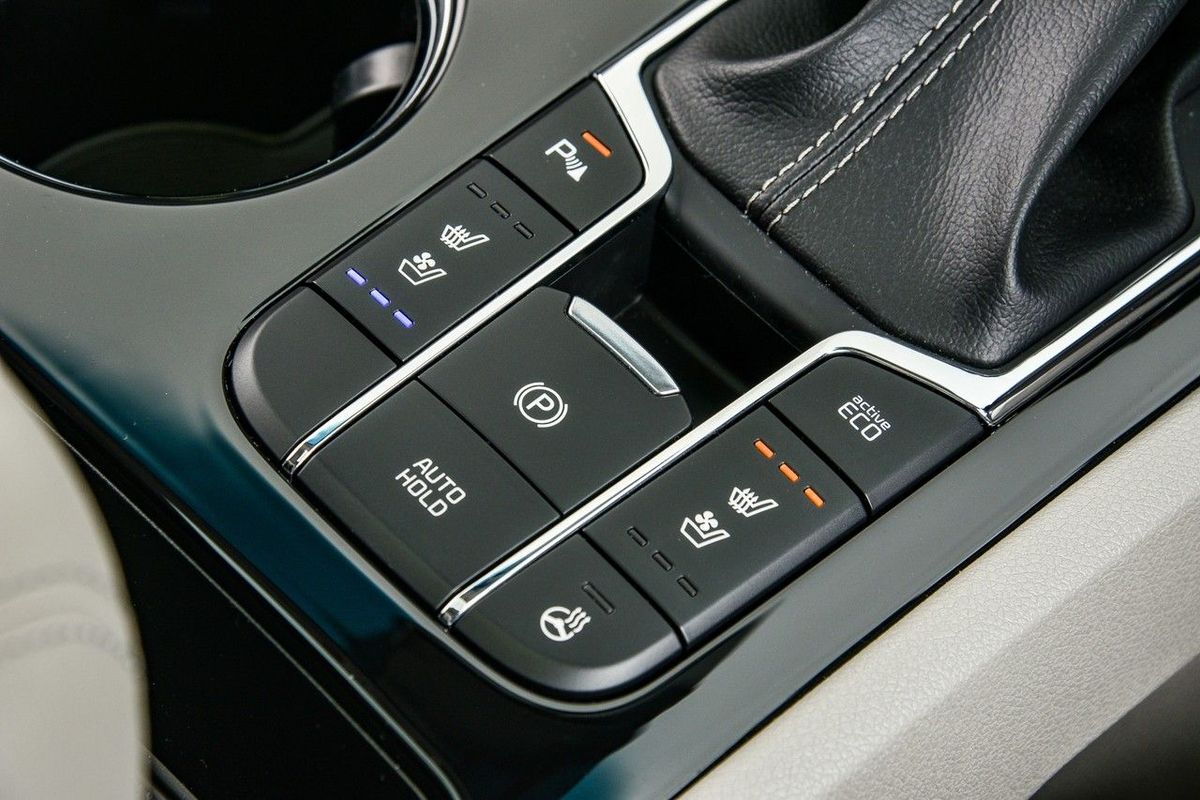
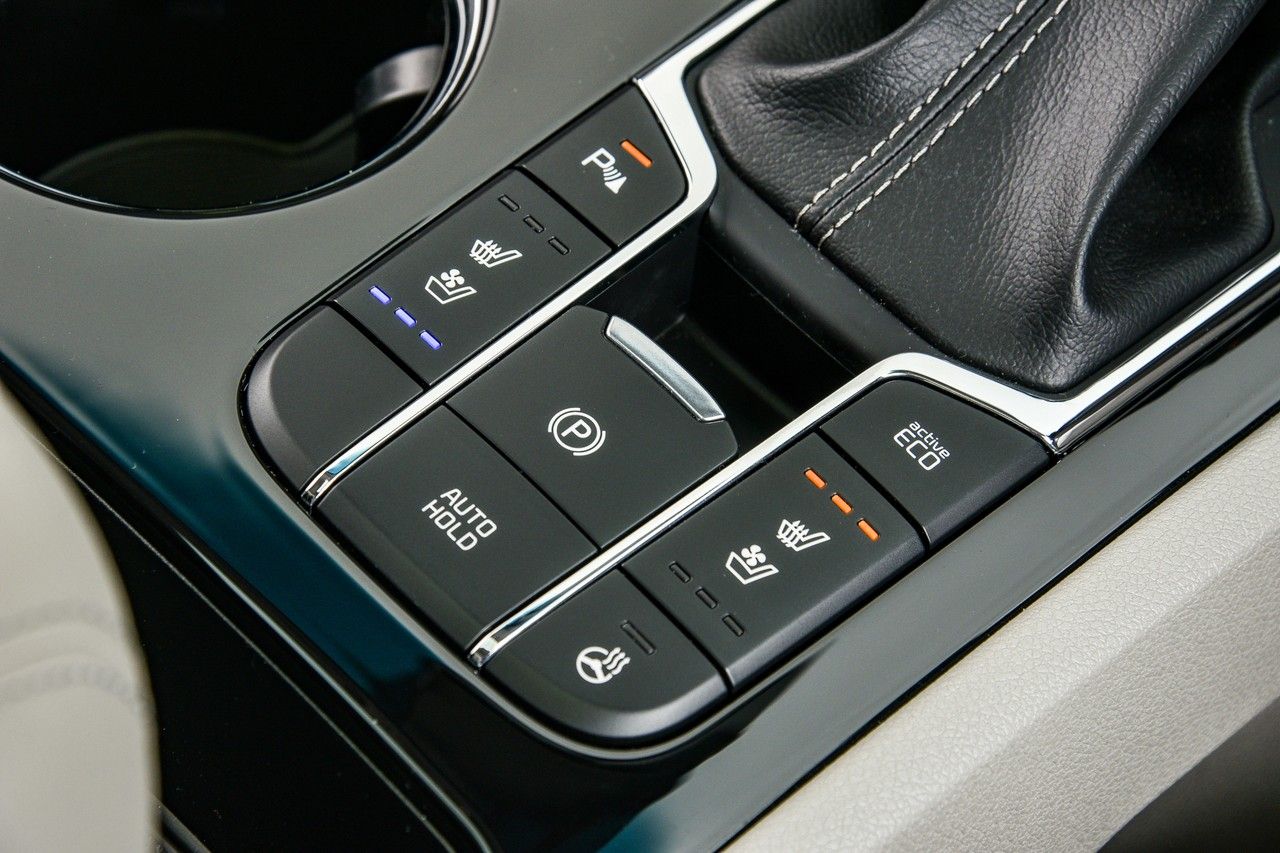
Auto Hold and electronic park brake are new additions to the Grand Sedona. Also note heated/cooled front seats and heated steering wheel button.
Mechanically, the biggest news with the latest Grand Sedona is its new 8-speed automatic transmission. It proved to be a very good fit for the Grand Sedona during the vehicle's time with us, and impressed with its smoothness and speed. That said, this is a heavy vehicle, so it's not going to win any traffic-light grands prix. Kia claims a 0-100 kph time of 13.6 seconds, but we suspect that might be inaccurate. Subjectively speaking the Grand Sedona feels more eager than that figure suggests. More importantly, it has sufficient power for safe overtaking at the national speed limit.
It's also worth noting that the Grand Sedona is not based on the same underpinnings as sister company Hyundai's H-1 (also recently updated). Instead, the Kia is more closely related to the Sorento SUV. As a result, the Grand Sedona doesn't feel as clumsy or top-heavy as a typical "bus". Fitted with 18-inch wheels shod with 235/60 rubber, the Grand Sedona strikes a fine compromise between good road-holding and ride comfort.
Pricing and Warranty
The SXL derivative reviewed here is the flagship in the line-up and sells for R792 995. The asking price does appear steep, yes, but keep in mind that it is a full-house offering. It also comes with Kia's excellent 5-year/unlimited km warranty and 5-year/100 000 km service plan.
Verdict
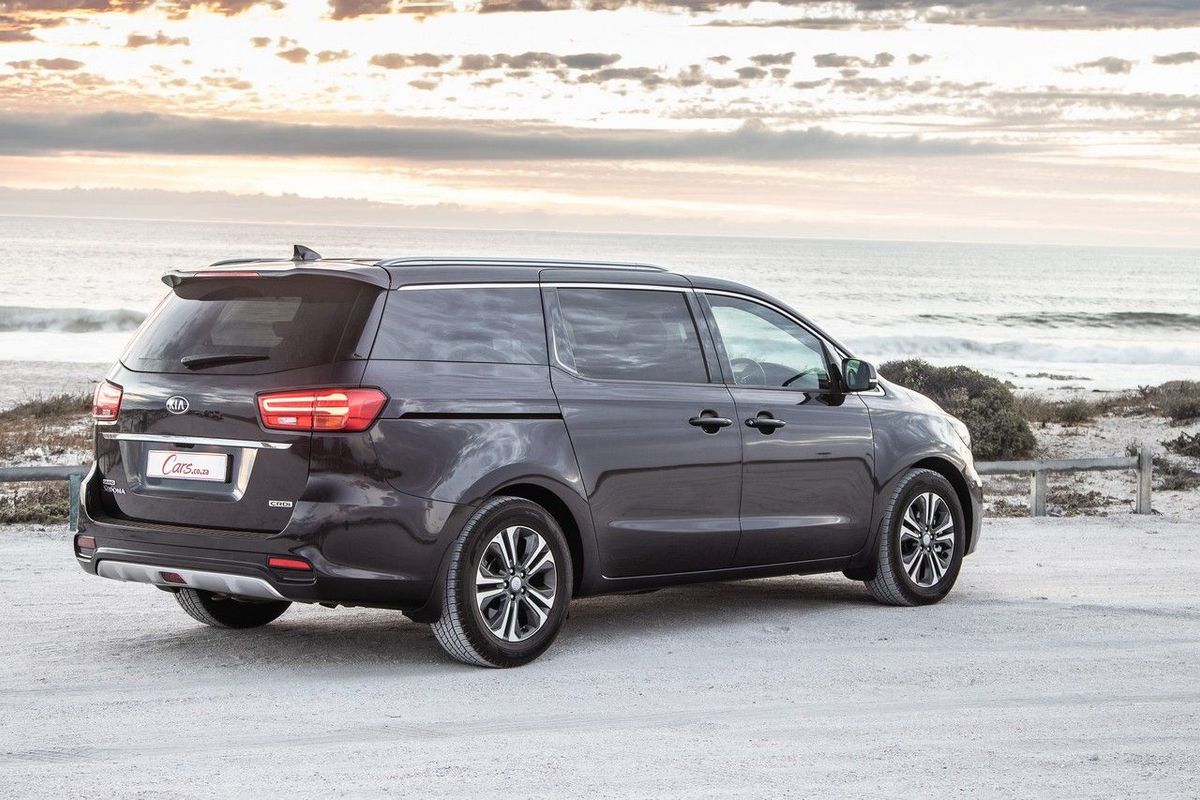
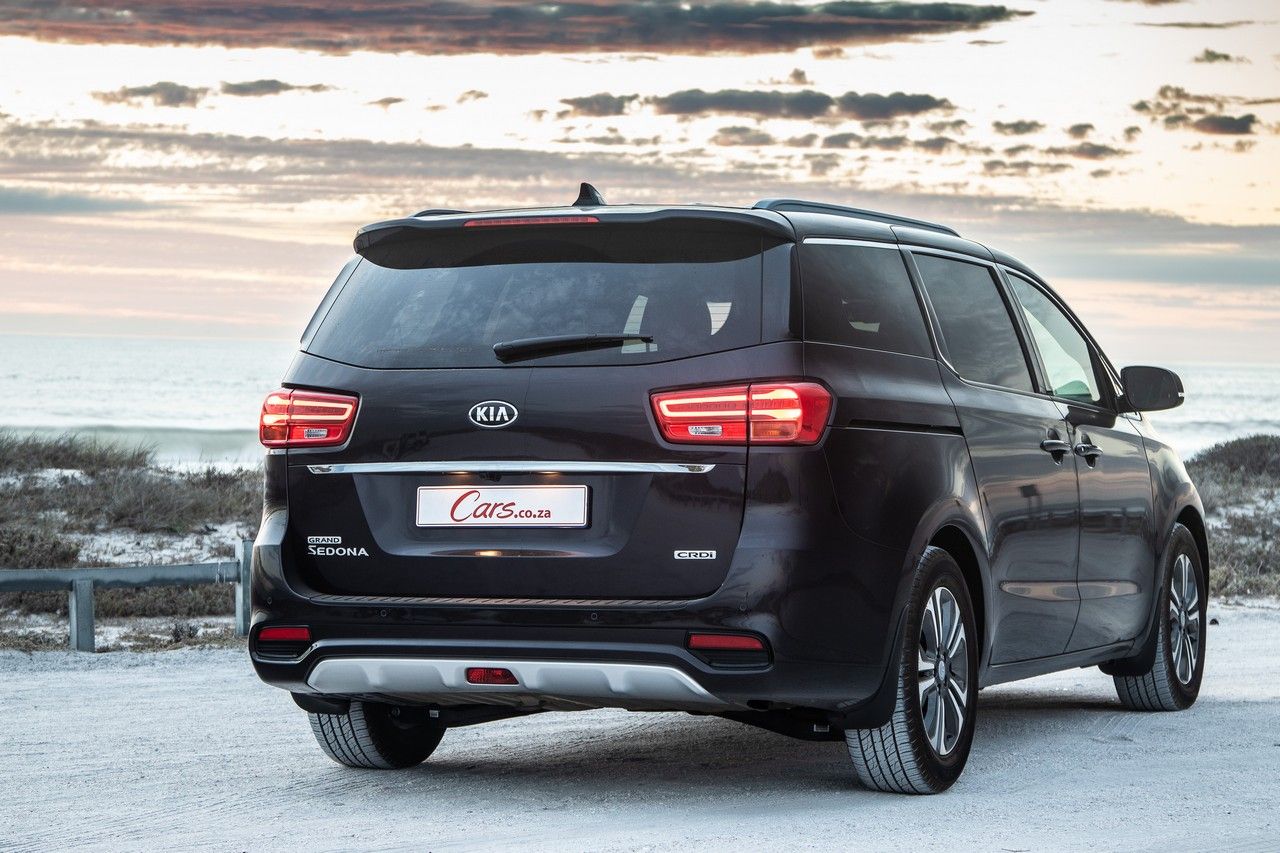
LED combination taillamps are exclusive to the SXL derivative.
Offering vast space, excellent versatility, sumptuous on-road comfort (for all 7 occupants!) over long distances and equipped with more toys to play with as standard than most similarly priced SUVs, the Kia Grand Sedona 2.2 CRDi SXL may very well be the ultimate family car. Factor in Kia's excellent warranty/service plan, as well as the excellent overall quality of this product, and that price suddenly starts to resemble a bargain.
Announced in 2017, the Audi RS4 Avant has finally made its way to South Africa. The big news is that the naturally aspirated V8 is out, and the new VW Group 2.9-litre V6 is in.
In some ways the change was inevitable and in many ways, the V8 will be missed. But there are some advantages to the new twin-turbo powerplant: it's lighter, so the front-end is a bit more sprightly. And it's torquier – a lot torquier, with 600 Nm now force-fed into the quattro drivetrain and the results are…interesting.
In this video, Ciro De Siena takes the newcomer to a secret testing facility outside of Cape Town for a thorough shakedown. Watch the video!
We have seen a fair amount of spy images of the forthcoming GLB crossover and while a full reveal is expected later in 2019, Mercedes-Benz will use the upcoming Shanghai Auto Show to showcase the GLB Concept which will provide further clues as to what to expect from the production version.
Underpinned by the A-Class, the GLB will fit in between the GLA and GLC in Merc’s crossover lineup to take on rivals such as the Jaguar E-Pace, BMW X1 and Audi Q3. It’s boxier shape will provide the necessary space for carrying passengers and it will be powered by a range of petrol and diesel engine options with 2 AMG versions also expected in the form of the AMG GLB 35 and the AMG GLB 45. An electric GLB is also expected at a later stage.
Exact engine specifications have yet to be confirmed but you can expect a turbocharged 1.4-litre and 2.0-litre petrol engine and a 1.5-litre turbodiesel engine in conjunction with a 7-speed dual clutch automatic transmission. The AMG-flavored variants could offer as much as 225 kW (GLB 35) and 300 kW (GLB 45), but we will just have to wait and see what the boffins at AMG will bring to the table.
As for the interior, the teaser image of the GLB Concept you see here shows a near-production interior with clear similarities to the A-Class. Note the large dual screen MBUX infotainment interface as well as the familiar layout of the air vents and the shapely 3-spoke multifunction steering wheel.
We will provide further details of the GLB Concept when it's revealed at the Shanghai Auto Show later this month, so stay tuned.
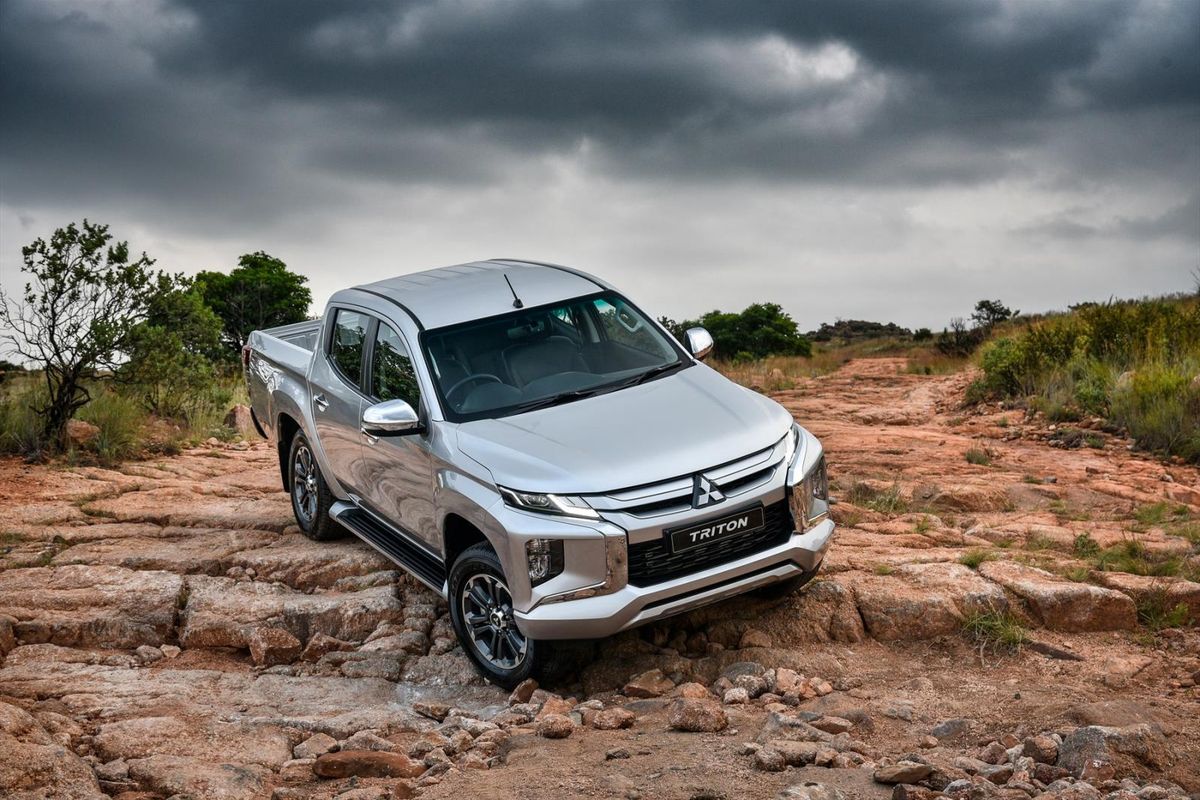
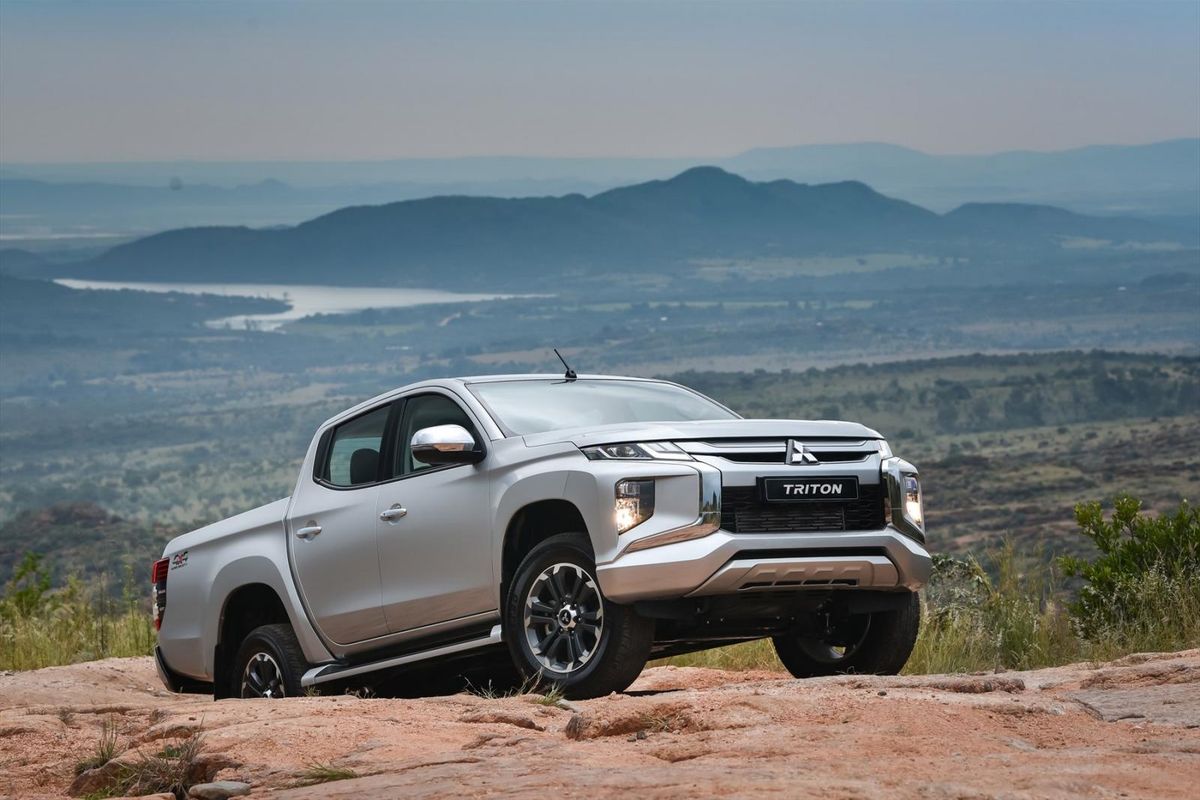
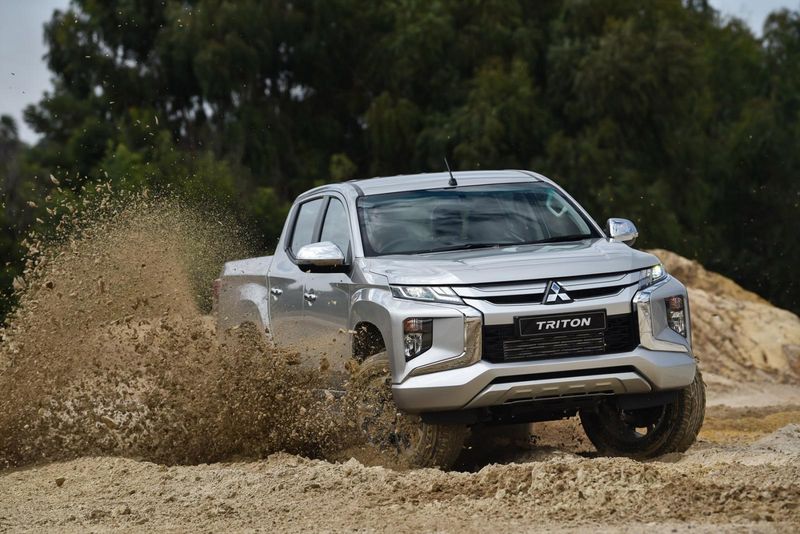
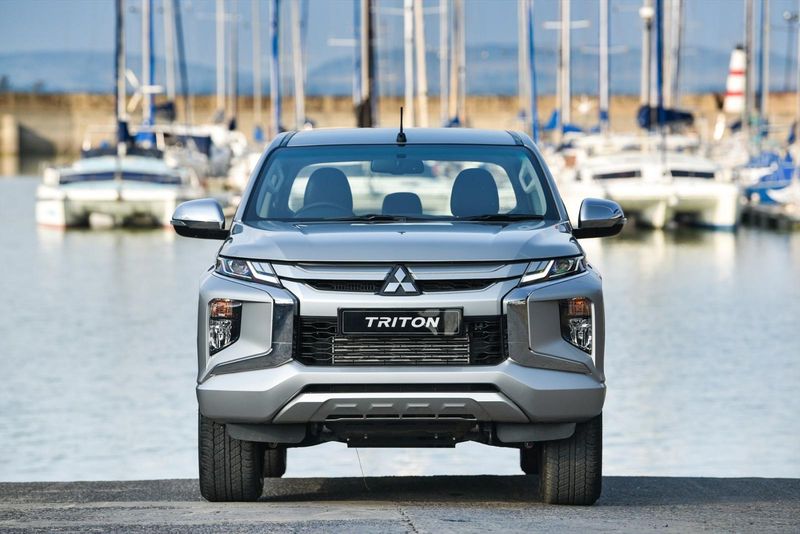
Mitsubishi has launched its new-look Triton double cab in South Africa. We attended the newcomer's local media launch event in Magaliesberg, Gauteng to find out if it's as rugged and dependable as before…
The Mitsubishi Triton is a puzzling bakkie. We don't mean any disrespect, of course. Not only does the Triton represent a solid value-for-money proposition, it's also supremely capable and tough as nails. And yet, it doesn't it sell in great numbers. Its Hilux and Ranger rivals are wildly popular, but the understated (let alone underrated) Triton has failed to garner even a notable fraction of the Toyota and Ford's sales figures.
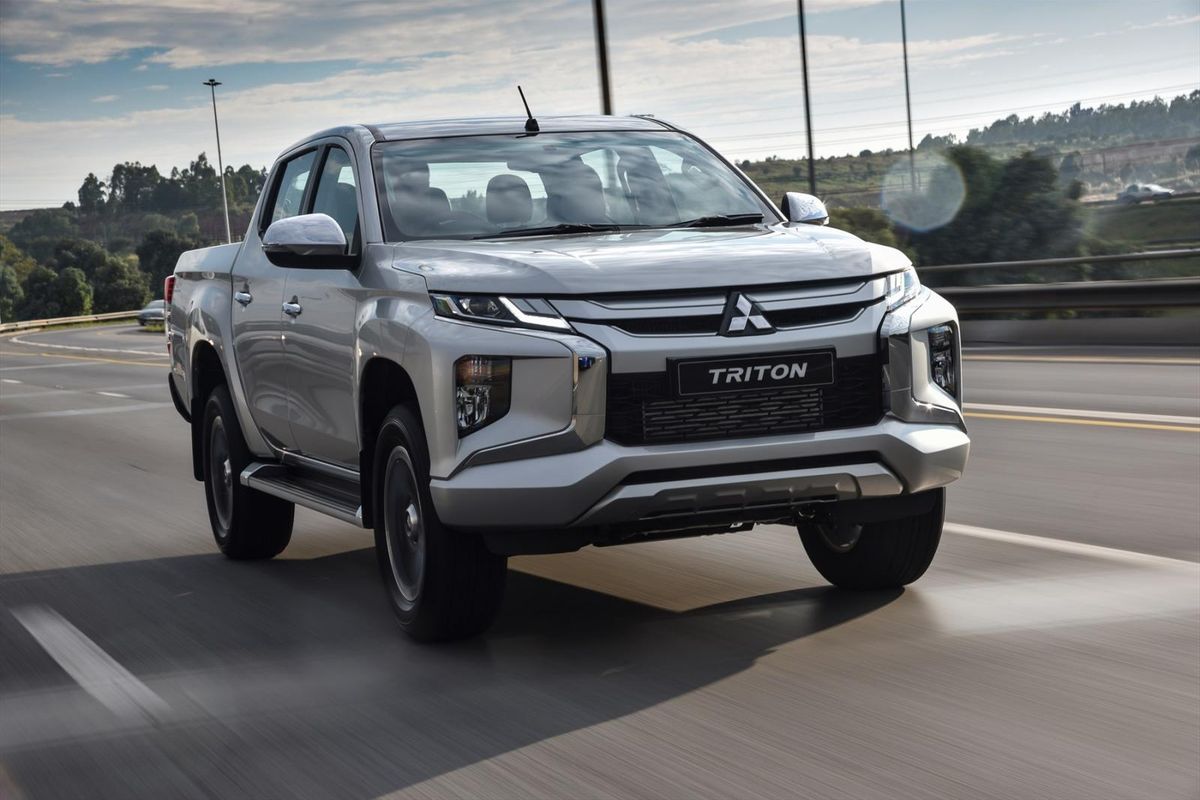
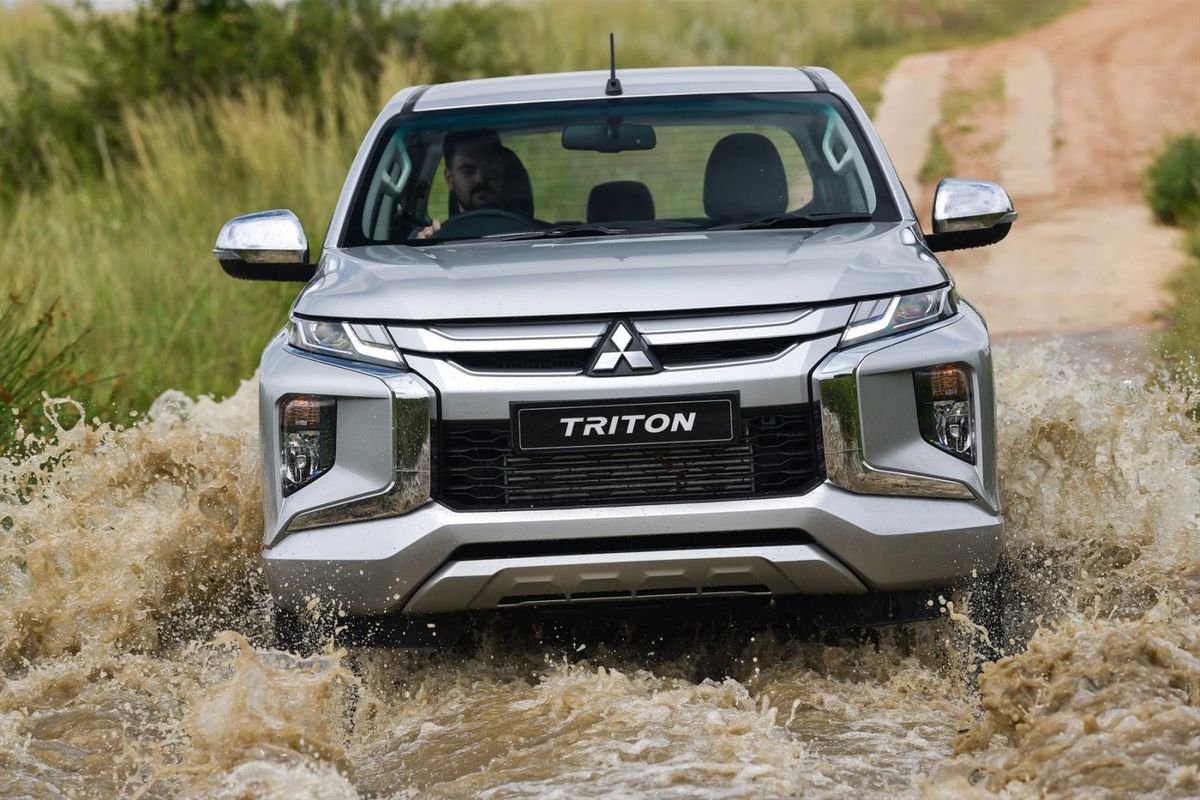
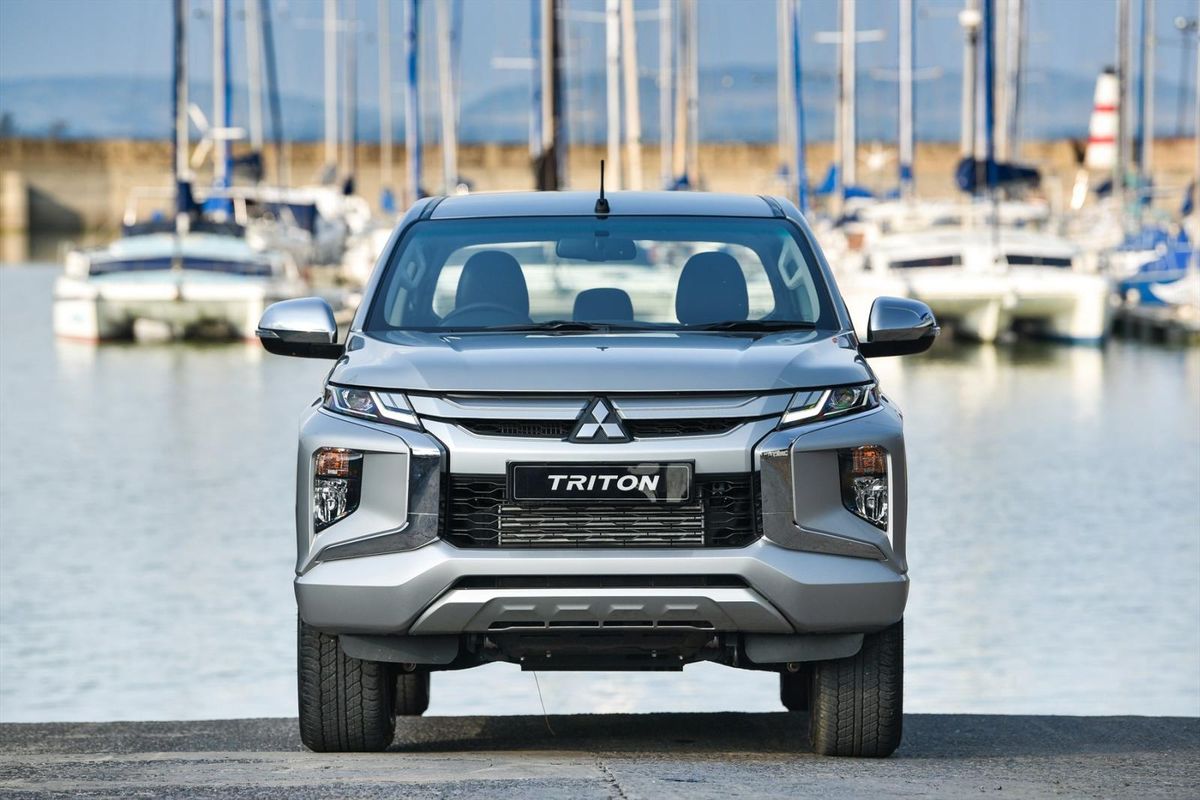
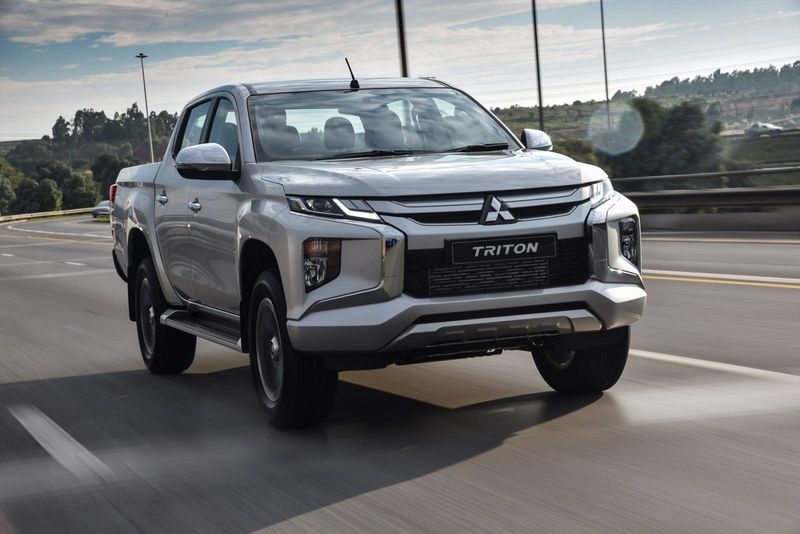
The Mitsubishi Triton's new face. Not only is it fresh and modern, but we'd say it's the most attractive bakkie on sale right now
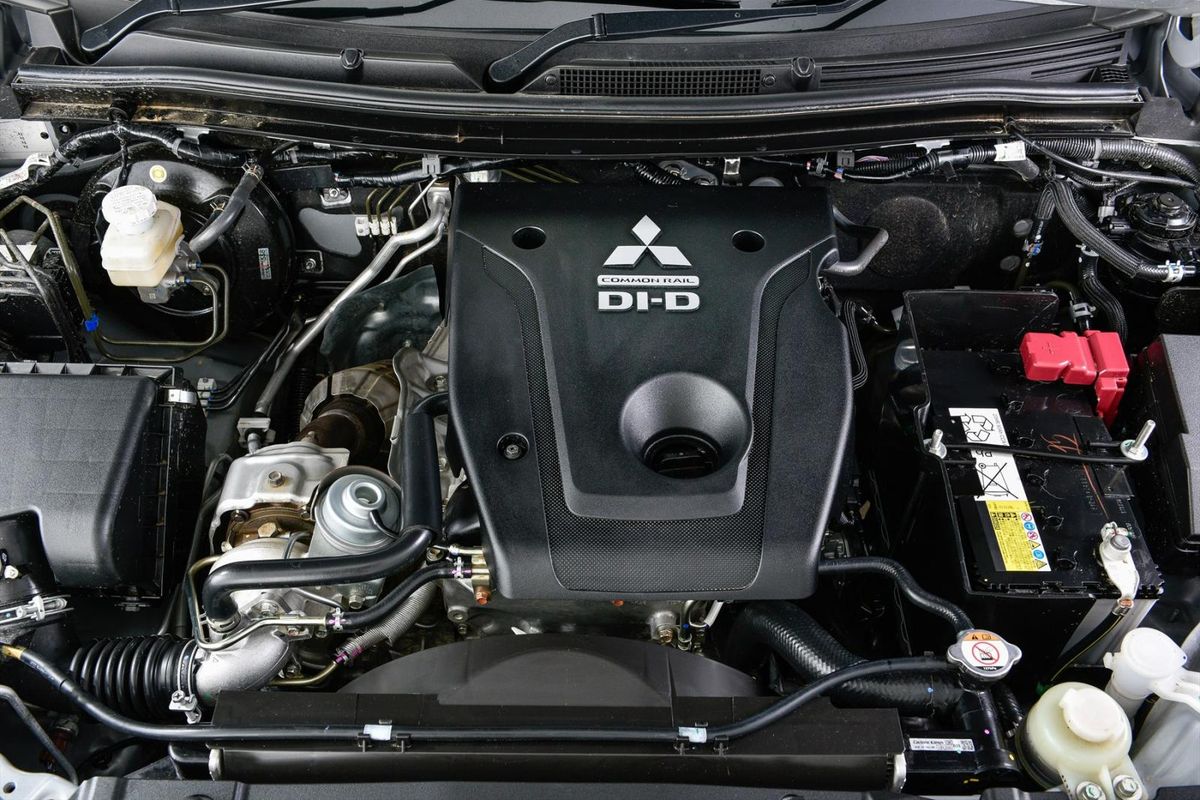
However, Mitsubishi has high hopes that its facelifted Triton can steal a few sales from its rivals – it comes to market with loads of standard features and an aggressive pricing strategy. While it appears that the Triton has just received a new exterior appearance, the changes are far deeper than a handsome reskinned front-end. While the engine has been carried over from the outgoing model, the 5-speed automatic transmission has been replaced by a new 6-speed unit and the Japanese firm claims the latter's extra ratio improves fuel economy and on-road refinement.
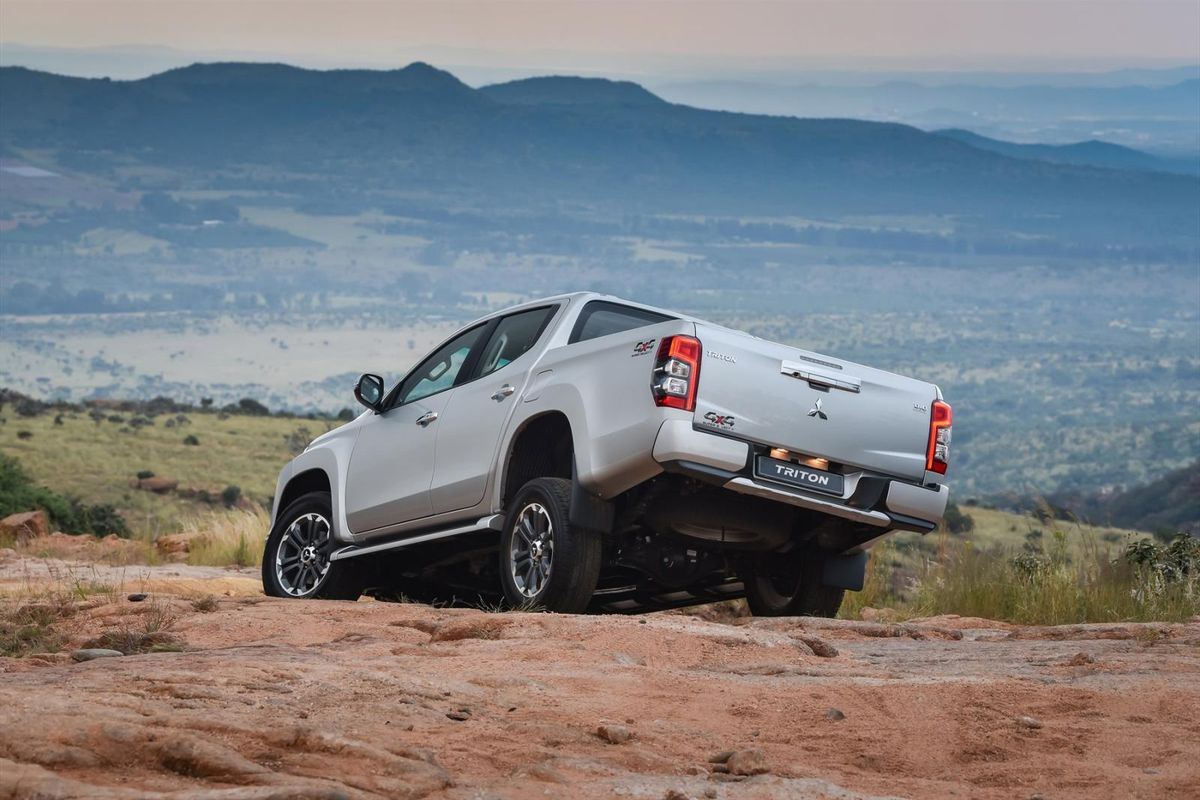
What's more, there are enlarged front brake discs and calliper pistons, while the rear dampers have increased in size and contain more damping fluid for improved ride quality. There are revisions to the Super Select 4WD system and some offroad modes are available for the flagship automatic 4×4 version. Off-road, the 2019 Mitsubishi Triton is just as capable as before and features 220 mm worth of ground clearance, a 28º approach angle, 23º departure angle and 25º ramp break-over angle. For those who want to tow trailers, the Triton has a tow rating of 3 100 kg (braked).
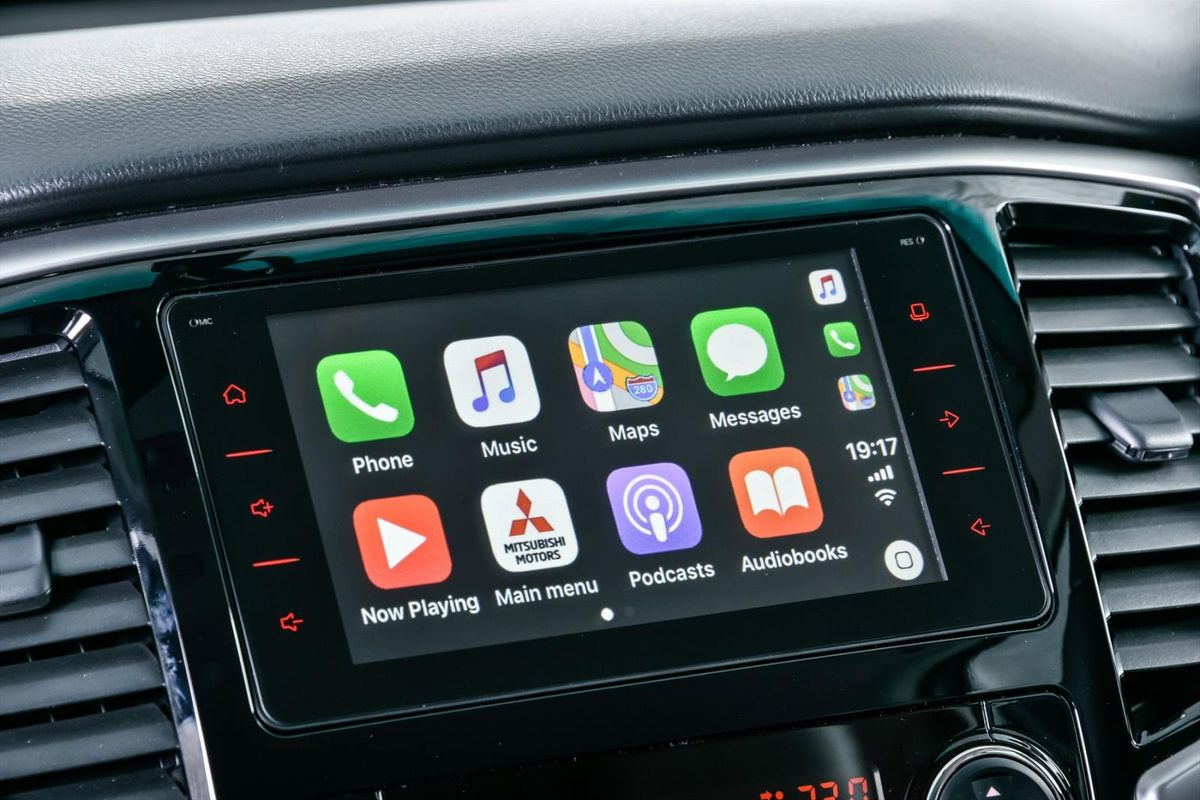
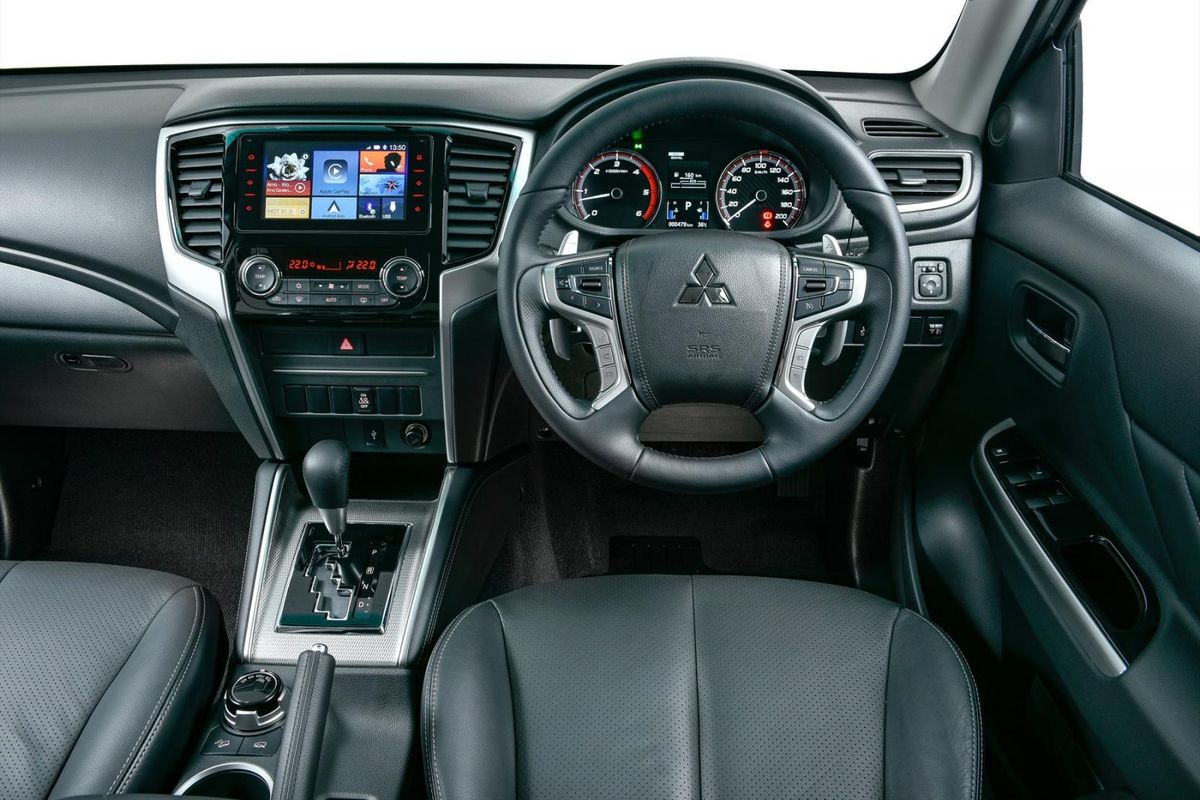
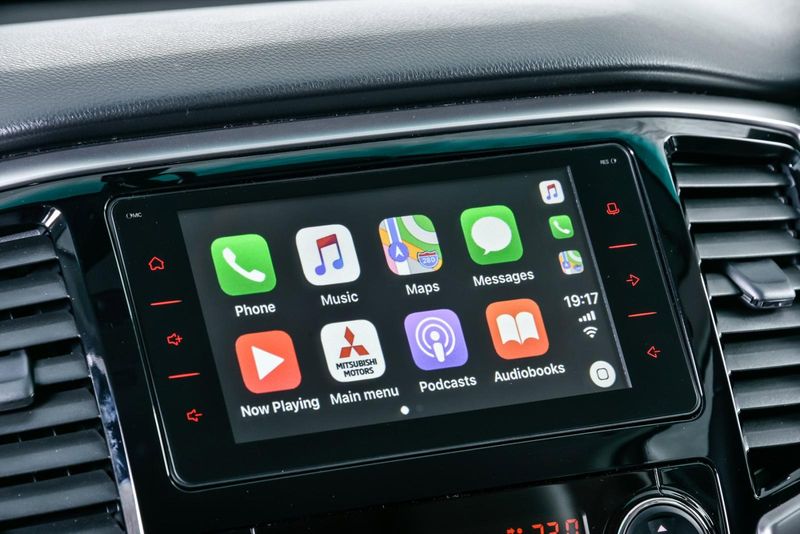
Inside, the cabin has some minor changes, but the important one is the addition of an updated (now thoroughly modern) infotainment system. We've recently experienced this system in the brand's crossover-flavoured family car offering – the Eclipse Cross – and came away impressed with it. The unit features a simple layout, but boasts impressive features such as navigation, Apple CarPlay/Android Auto compatibility and Bluetooth.
Apple CarPlay and Android Auto are 2 standout features in the new Triton. The new infotainment system is a big leap forward.
What's it like to drive?
Previously, the Triton was a pleasure to drive on the open road and offered impressive levels of refinement. However, during the evaluation drive of the new Mitsubishi, we didn't find the going quite as smooth… The bakkie tended to bounce and jiggle a bit, but we believe that was probably due to the poor quality of the roads in and around the launch venue. Remember, it's still a body-on-chassis vehicle with rear leaf springs (plus it's set up to be a workhorse), so you can't expect a ride quality akin to that of the recently-launched Eclipse Cross. The new auto transmission is smooth and refined, and best left to its own devices. You could use manual override and 'shift paddles, but these should only be used when you're off-roading.
Speaking of off-roading, the launch activities included some mild-to-medium 4×4 testing. The hill descent control was called into play a few times and it performed ably (you could, of course, replicate it by forcing the vehicle to stay in 1st gear using the aforementioned shift paddles and selecting low-range on the transfer case). The ground clearance of 220 mm is sufficient to see harmful obstacles (such as rocks) pass under the body safely, while the approach and departure angles are on par with other offerings in the segment. If the going gets really tough, a rear diff lock is available.
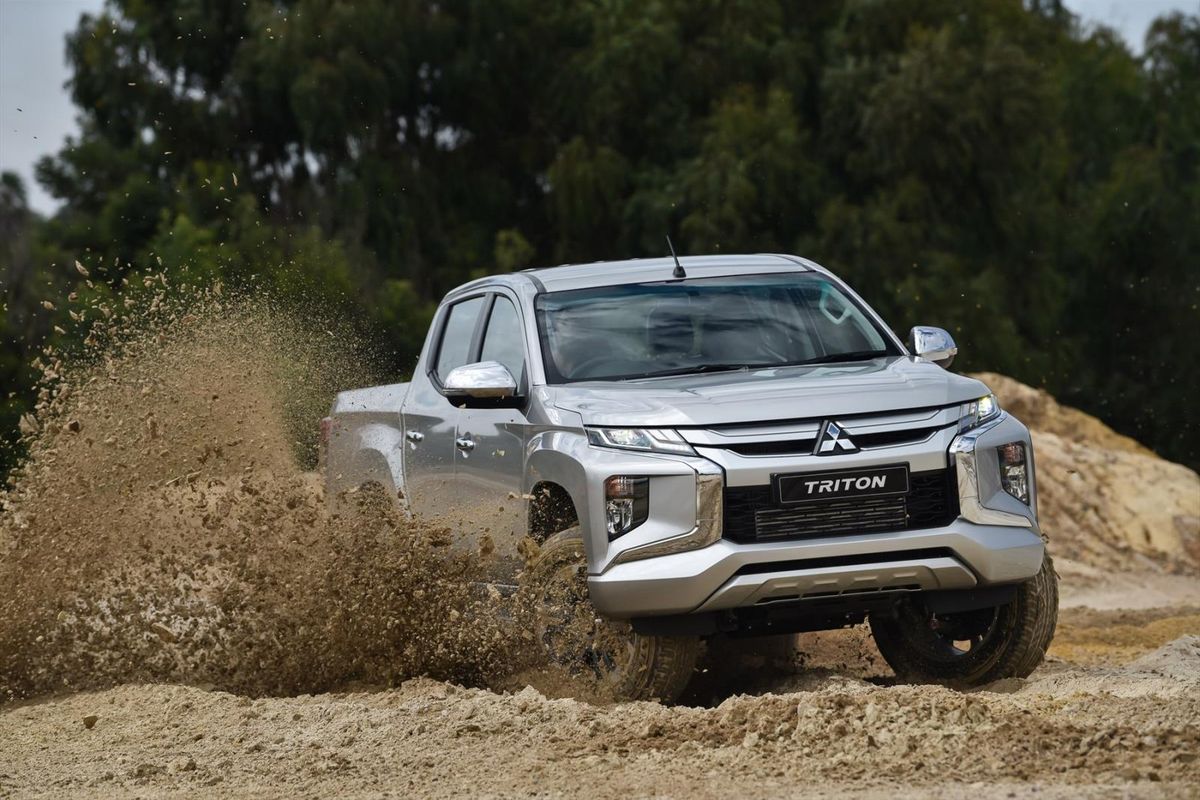
The Mitsubishi Triton is still a formidable performer when the tarmac turns into sand.
The steering in the Triton is well worth a mention too. Not only is the 'wheel pleasant to wield, but the small turning circle of 5.9 metres makes the bakkie quite nimble/easy to place. This is useful for those who need to manoeuvre their bakkies in the tight confines of a city. Plus the Triton's body doesn't seem to roll as much as its rivals… If ever there was a bakkie worthy of being described as "passenger car-like to drive", it'd be this.
Furthermore, the turbodiesel engine has been a strong point in the Triton. There's a useful amount of torque right from the get-go, making it easy to light up the rear wheels on wet roads or gravel, but you can easily dial that out by rotating the drive select into 4-High. You can even shift from 2- to 4-wheel drive on the fly (at speeds of up to 100 kph). You'll have to come to a complete stop to activate the low-range transfer case, though.
We briefly sat in the back of the Triton towards the end of the launch. One of the common double-cab afflictions is that the rear bench's backrest angle is too vertical – you don't exactly "recline in comfort". But in the Triton, the seating position is not too upright; the back reclines by a few degrees, which means the bench is a bit more comfortable. We also appreciated the pair of aft USB ports; they're ideal for charging mobile devices.
Summary
Is there a better looking bakkie on sale right now?
The updated Triton has arrived at an interesting time… Ford will soon launch its facelifted Ranger, replete with new engines and gearboxes. Other rivals include the Isuzu D-Max, Toyota Hilux and Nissan Navara. However, as Mitsubishi points out, its top-spec offering is R25 000 cheaper than its nearest competitor. Interestingly, the price of the top-spec derivative is the same as the outgoing Triton, which deserves some applause. We've always liked the Triton and our prior criticism of a mediocre infotainment system have been addressed by the installation of a new, modern unit.
We look forward to putting the newcomer through its paces on both road and 4×4 scenarios, but if this brief encounter is anything to go by, the Triton will continue to be a solid and successful offering in the bakkie market. The range comes backed with a manufacturer’s warranty of 3 years or 100 000 km and a 5-year/90 000 km service plan and 5-year/unlimited mileage roadside assistance. Service intervals are every 10 000 km.