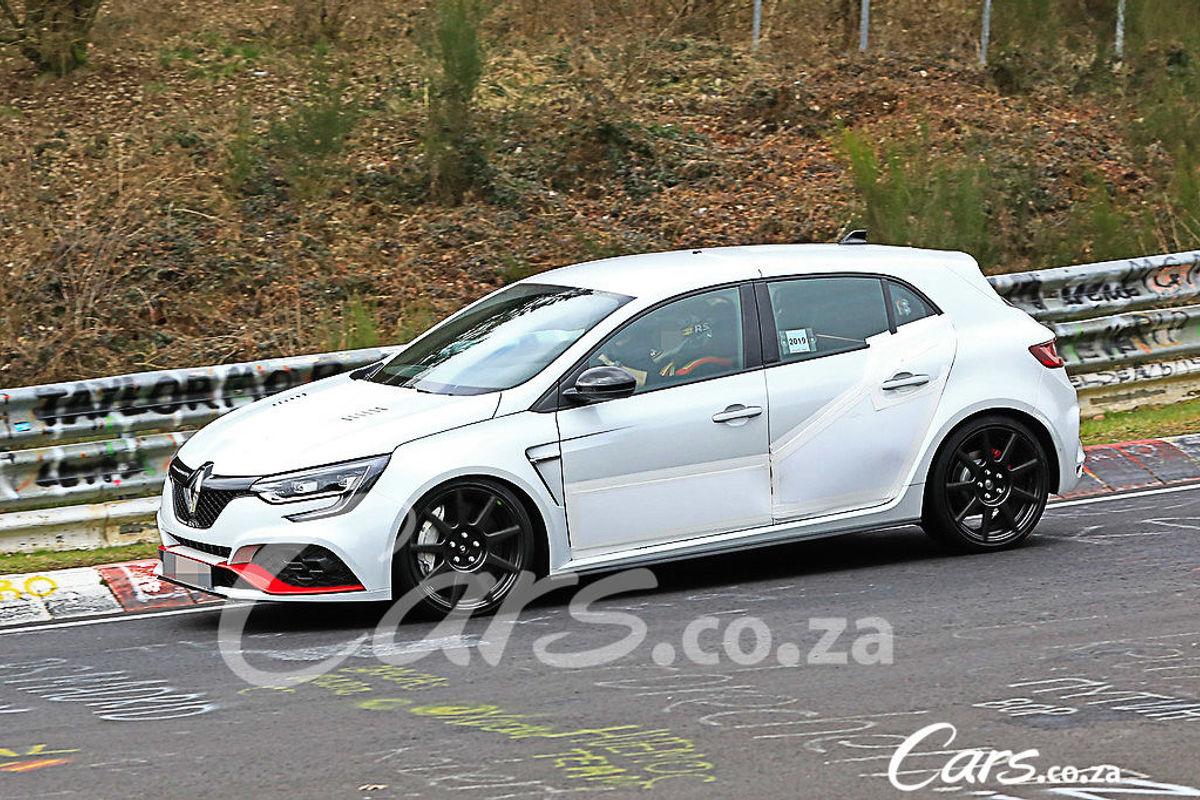
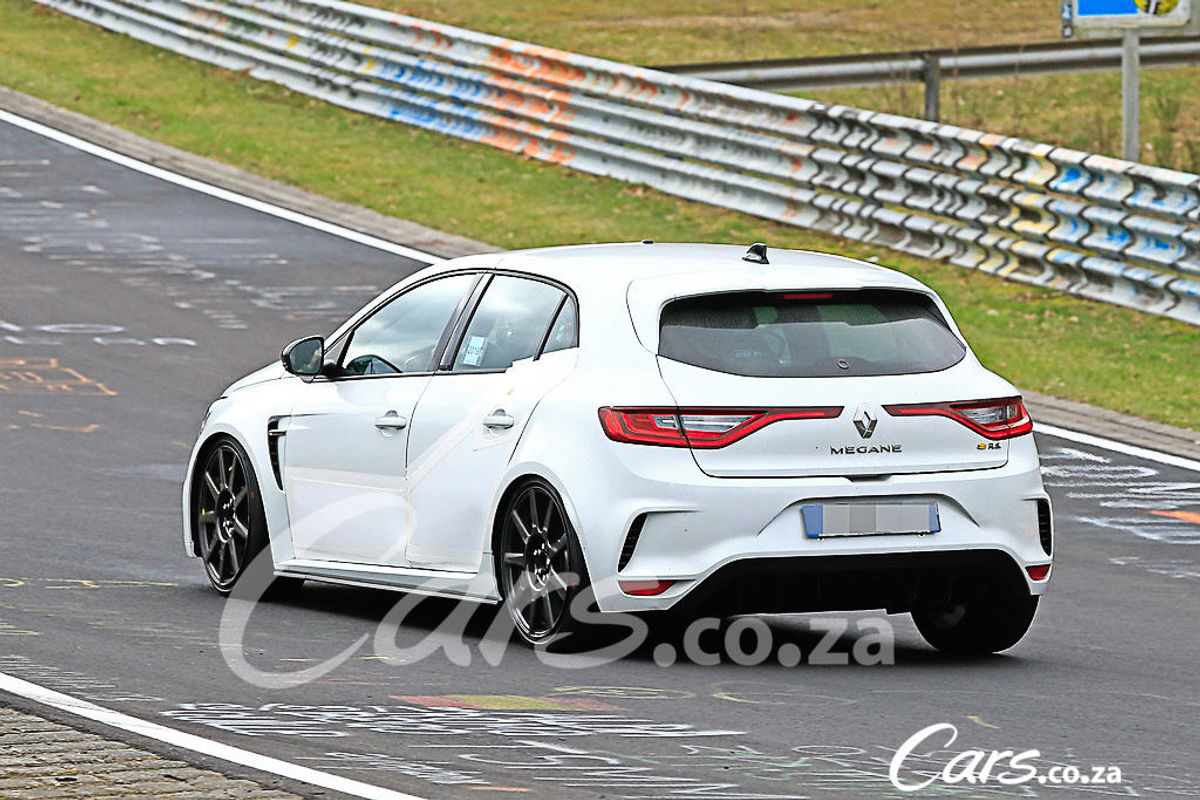
With the record for front-wheel drive hot hatchbacks still belonging to Honda with it's Civic Type R, Renault has a plan to take back the title. Could this monster Renault Megane RS Trophy R be just the ticket?
Image credit: S. Baldauf/SB-Medien?
Renault's RS division is famous for creating track-carving machines and while the latest iteration of Megane RS isn't as fearsome as previous generations, you can bet that there's annoyance over how long Honda has been sitting on its Nurburgring record for the fastest front-wheel-drive production car.
As it stands, South African motorists are offered Megane RS in 2 flavours: Lux and Cup. There will be a slightly more powerful Trophy coming later in 2019, but there's yet to be any sign of the hardcore, road-legal, track attack weapon in the same vein as the R26.R. Remember that ballistic toy? While it never came to SA, overseas writers loved how raw it was, with its stripped out interior, trick Toyo tyres, roll bar and perspex rear window to save weight.
What you're looking at here is what appears to be that hardcore, lap time-chasing Megane Trophy. We don't know much right now, but it looks a lot like the rear seats have been removed to save weight. We can predict that this Renault Megane RS Trophy R will also receive more power, reworked suspension and trick sticky rubber to help it attack the Nurburgring. Expect to see a final version revealed in Europe before the end of 2019.
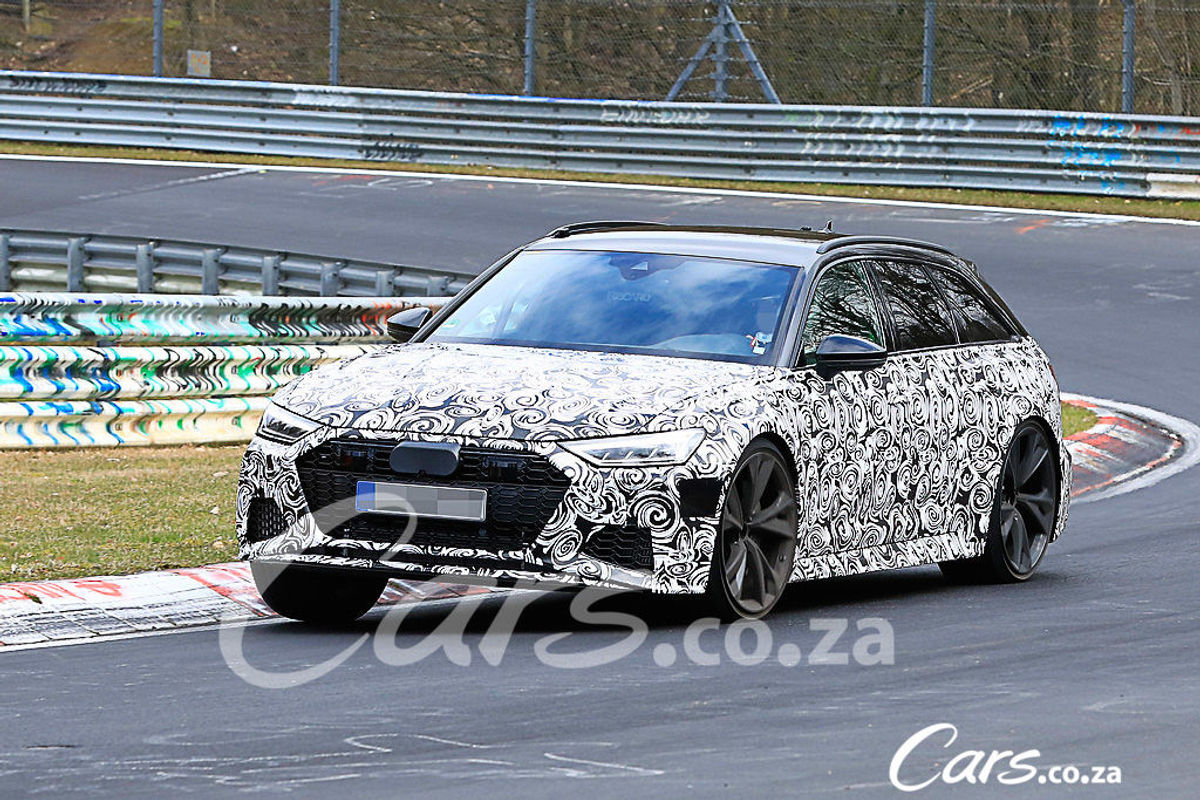
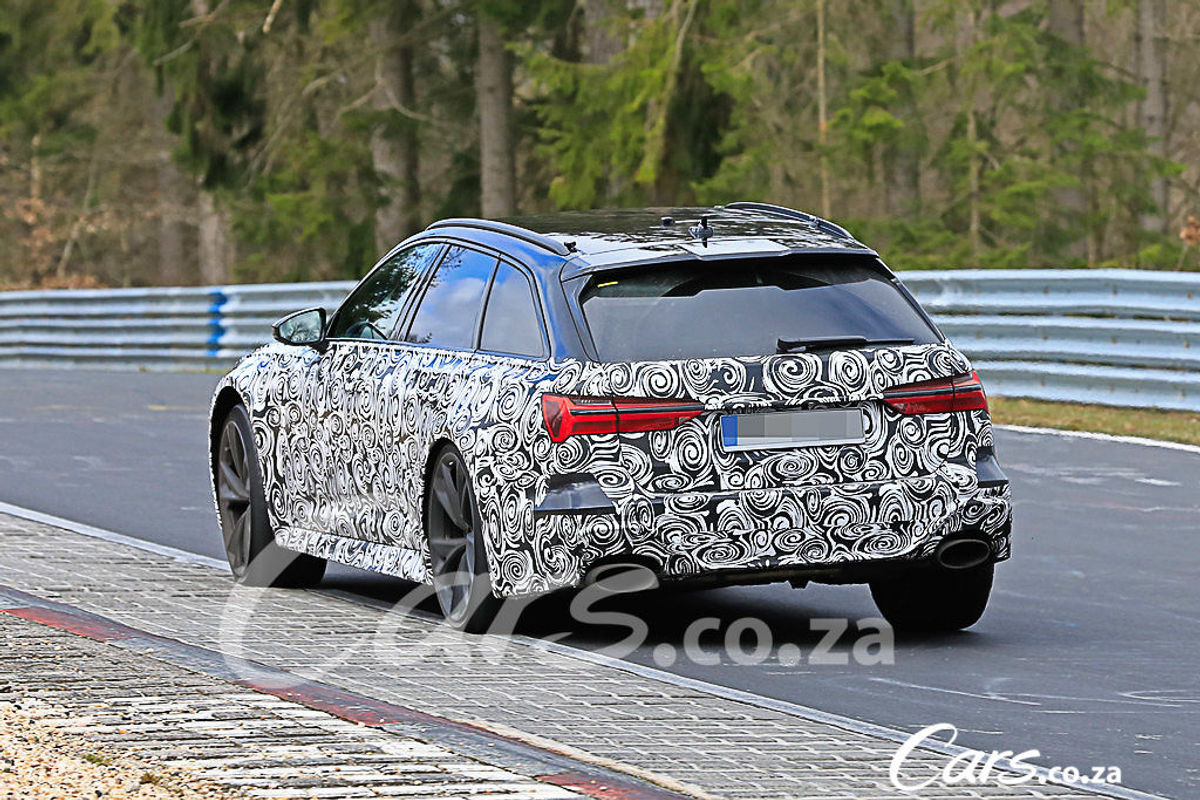
After a long wait and confirmation from Audi, we're seeing more and more prototypes of the forthcoming Audi RS6 Avant undergoing testing. Here's what we know so far.
Image credit: S. Baldauf/SB-Medien
The Audi RS6 is a popular and brutally faster offering from the Ingolstadt-based brand. Not only is it practical, but it also offers supercar-like performance. After being wowed by the previous-gen twin-turbocharged V8 Audi RS6 and the biturbo V10 before it, you can say that we're particularly keen to get behind the wheel of the new one.
From what we can see here, there's a larger intake, much bigger wheels, massive brakes and at the rear, 2 huge oval exhausts. In terms of powertrain, nothing has been confirmed as yet, but we can speculate. We think the existing 4.0-biturbo V8 will be carried over, with some revisions and enhancements. Previously, this mill produced 412 kW and 700 Nm, which is fast for sure, but not enough to take the fight to the current versions of BMW M5 and Mercedes-AMG E63. We think this new Audi RS6 will need to be playing in the 440 kW / 800 Nm ballpark. Combined with quattro all-wheel drive and a quick-shifting S-tronic box, the new Audi RS6 should be hitting 100 kph in around 3.5 seconds.
Given the timings, we think the new Audi RS6 Avant will be officially revealed in September at the 2019 Frankfurt Motor Show.
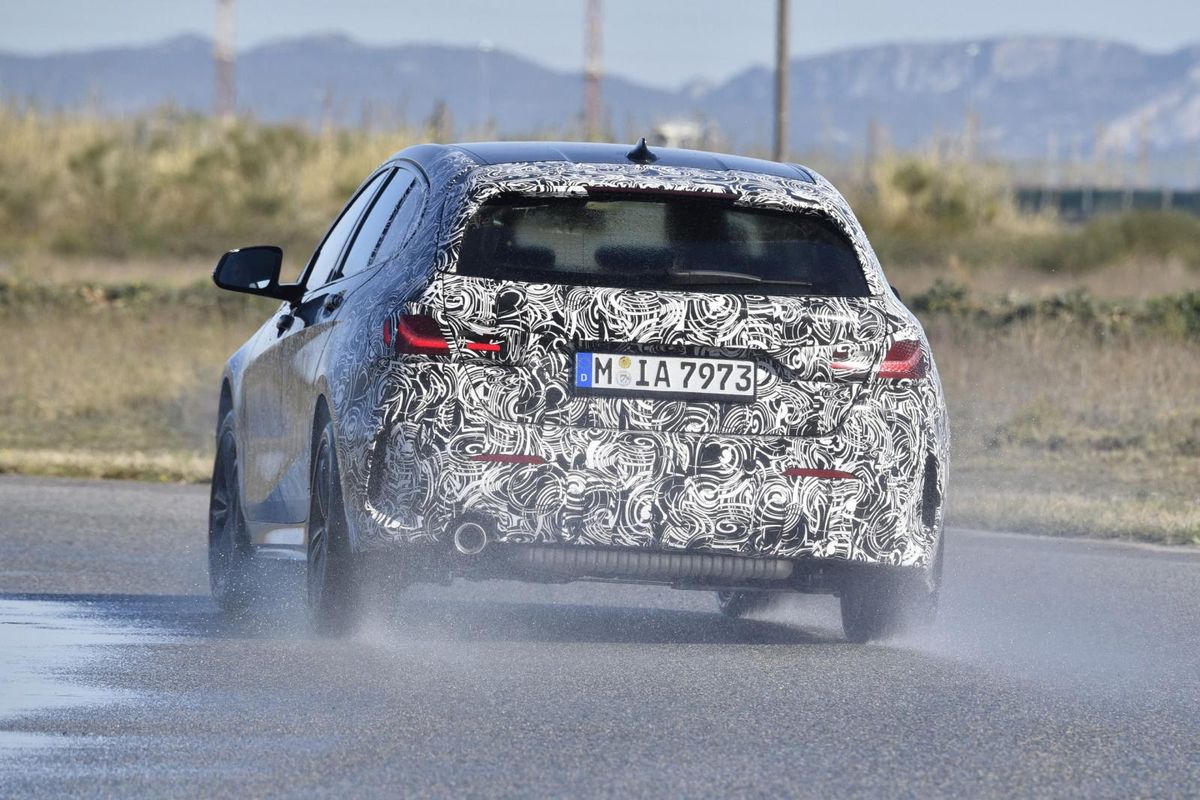
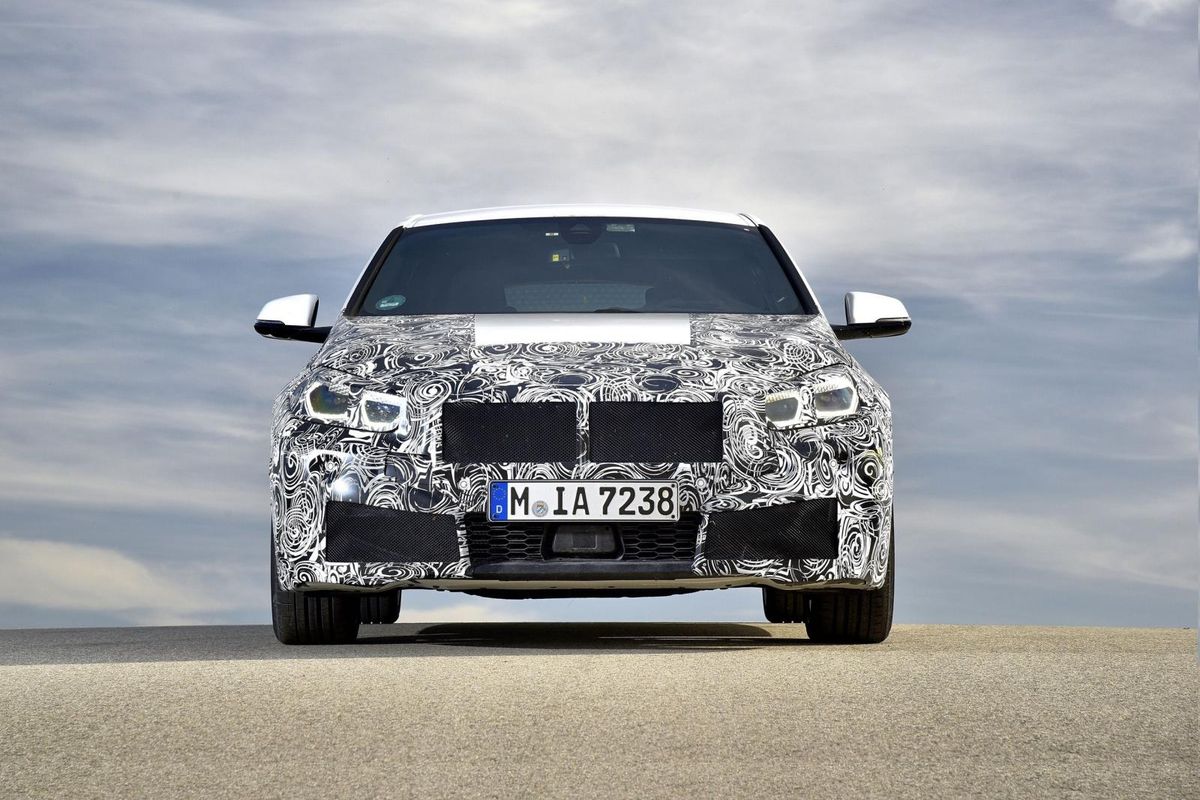
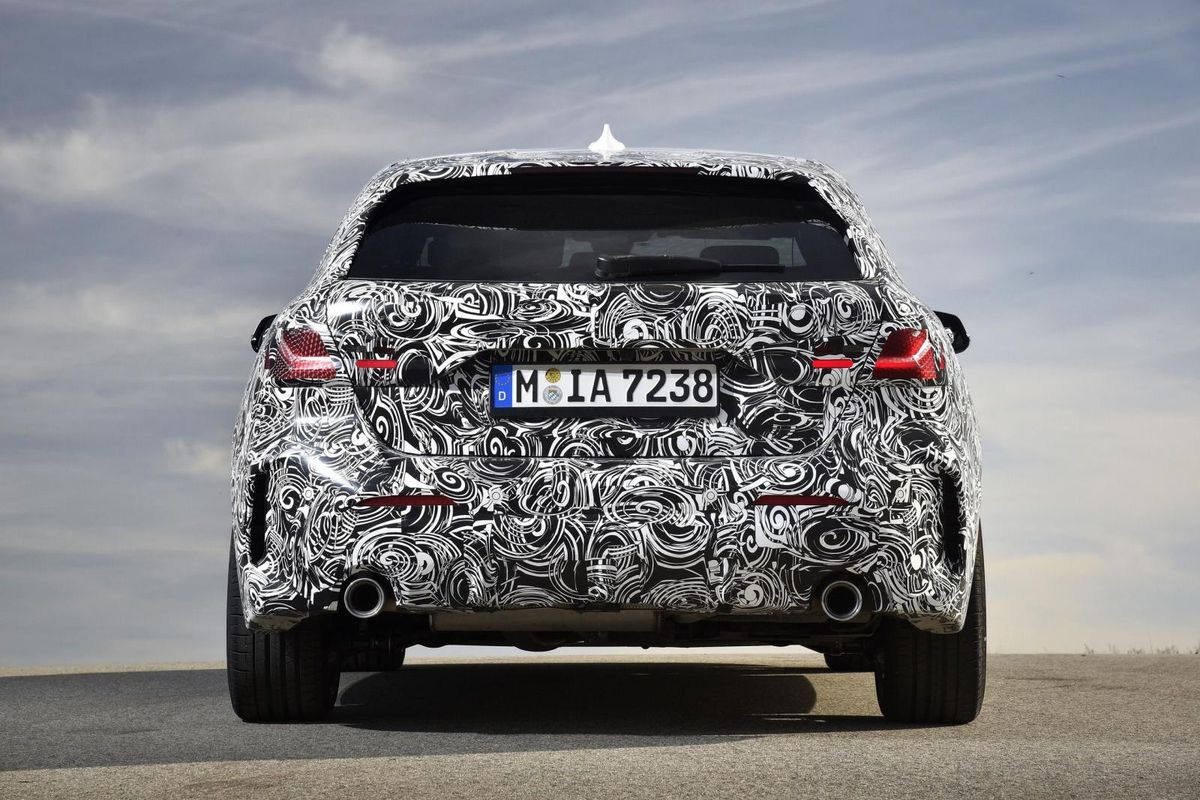
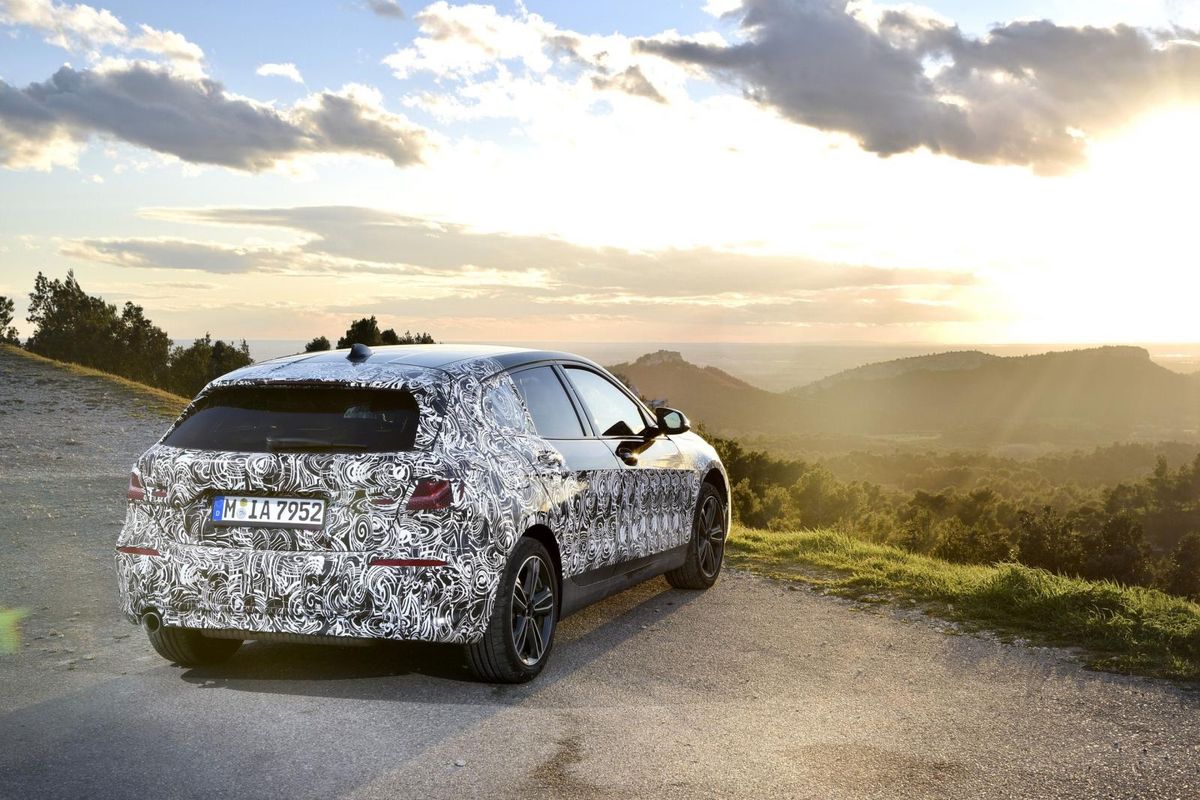
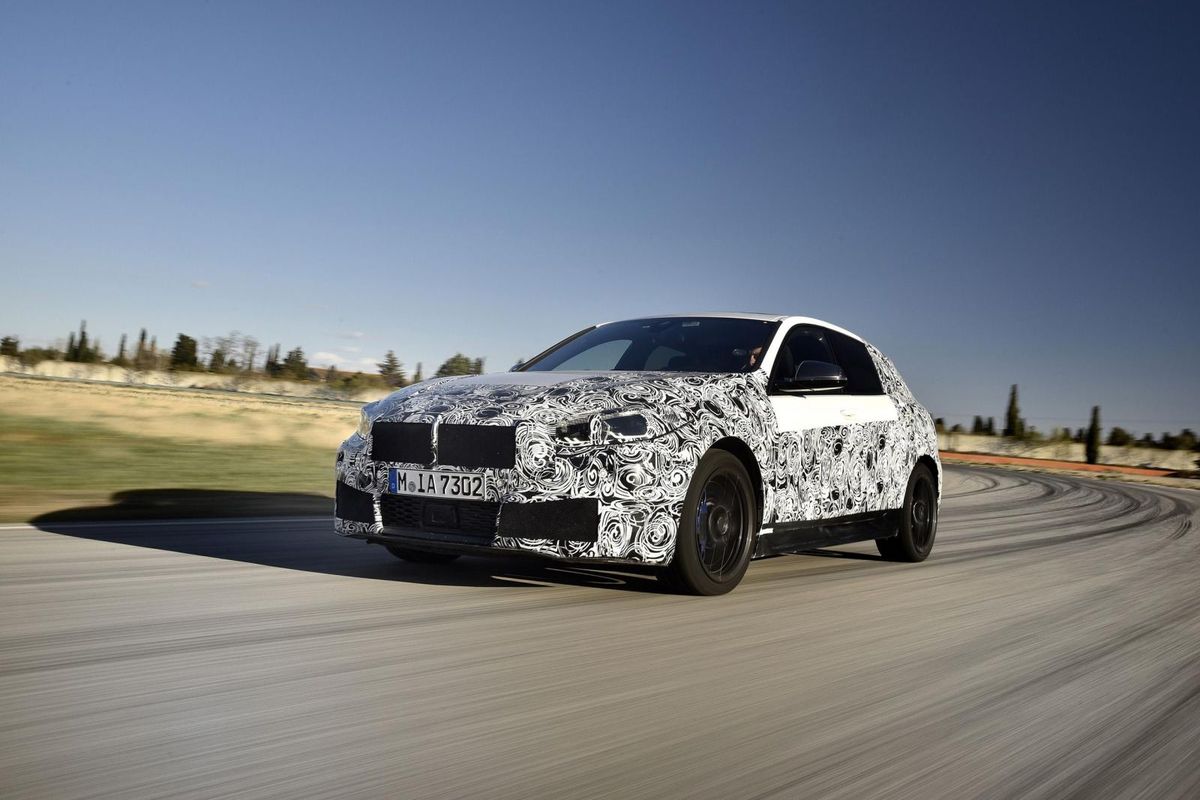
BMW has released more technical details on its first front-wheel drive 1 Series, due for release later this year.
The third-generation 1 Series is a radical departure on the brand’s product evolution, foregoing BMW’s vaunted rear-wheel-drive architecture for a more spacious cabin environment. With the switch from rear- to front-wheel-drive, BMW has gained 33 mm of rear legroom for passengers and increased the luggage capacity from 360- to 380-litres.
In terms of engines, the new BMW M135i will lose its 6-cylinder engine and make do with a 2.0-litre turbocharged 4-cylinder motor. BMW claims it will have 225 kW, which is a tad down on the BMW M140i – the current flagship.
BMW promises that its new 1 Series won’t drive like a conventional front-wheel-drive hatchback, thanks to clever traction control technology first seen on the brand’s i3 electric vehicle. It’s called ARB (actuator contiguous wheel slip limitation) and works to quell that feeling of heavy and slightly tardy stability/traction control intervention, something which afflicts many front-wheel-drive cars when driven at the limit.
By coordinating the 1 Series traction- and dynamic stability control functions within the engine control unit computer, instead of at the wheels, BMW’s engineers have reduced the signal pathways. That might sound slightly obsessive, but BMW says that with the traction control unit homed within the engine’s computer control module, wheel slip information is relayed three times faster due to better data harvesting. During final validation testing on the new 1 Series, drivers perceived the system as reacting ten times faster to power-on understeer.
Beyond the ARB system, a stiffer bodyshell and reinforced rear strut system should help new 1 Series retain its dynamic posture. The new 1 Series will test just how loyal its fanbase is to the rear-driven architecture of its cars. Beyond the Mini sub-brand, this will be BMW's first foray into front-driven mass-produced cars and id its a success, could likely creep its way into other models.
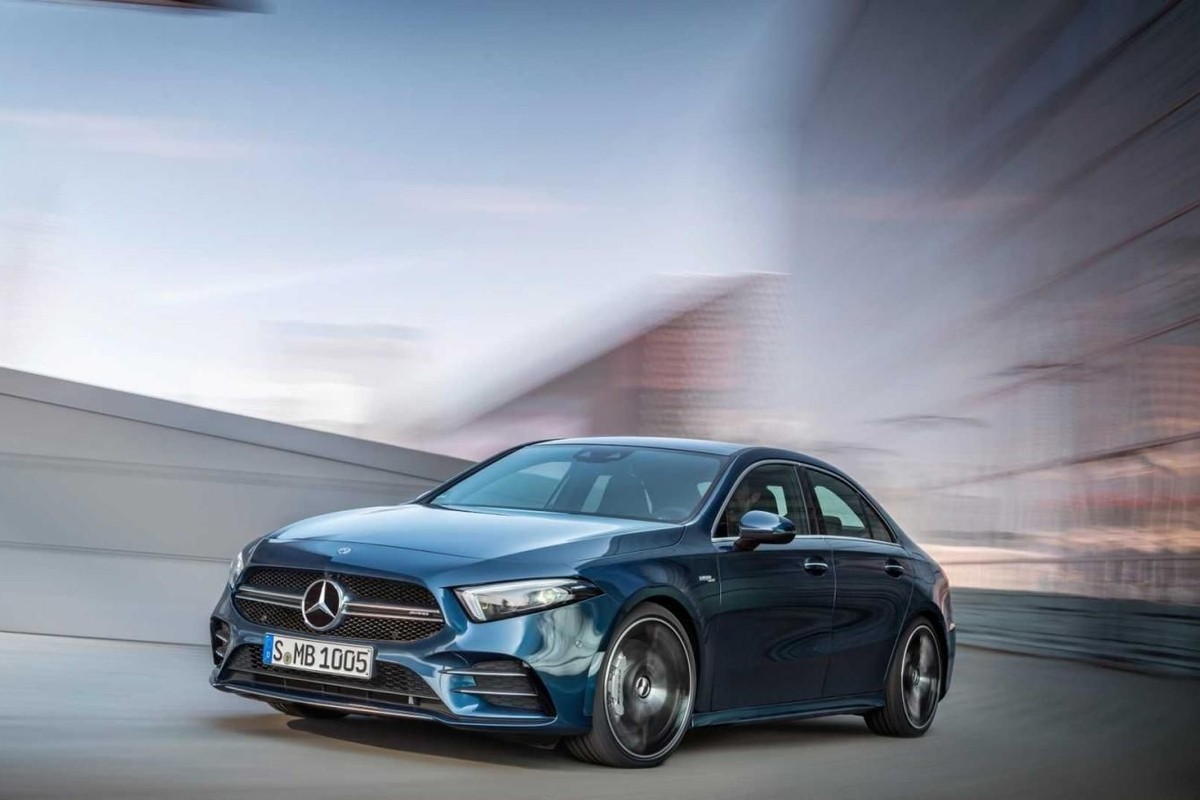
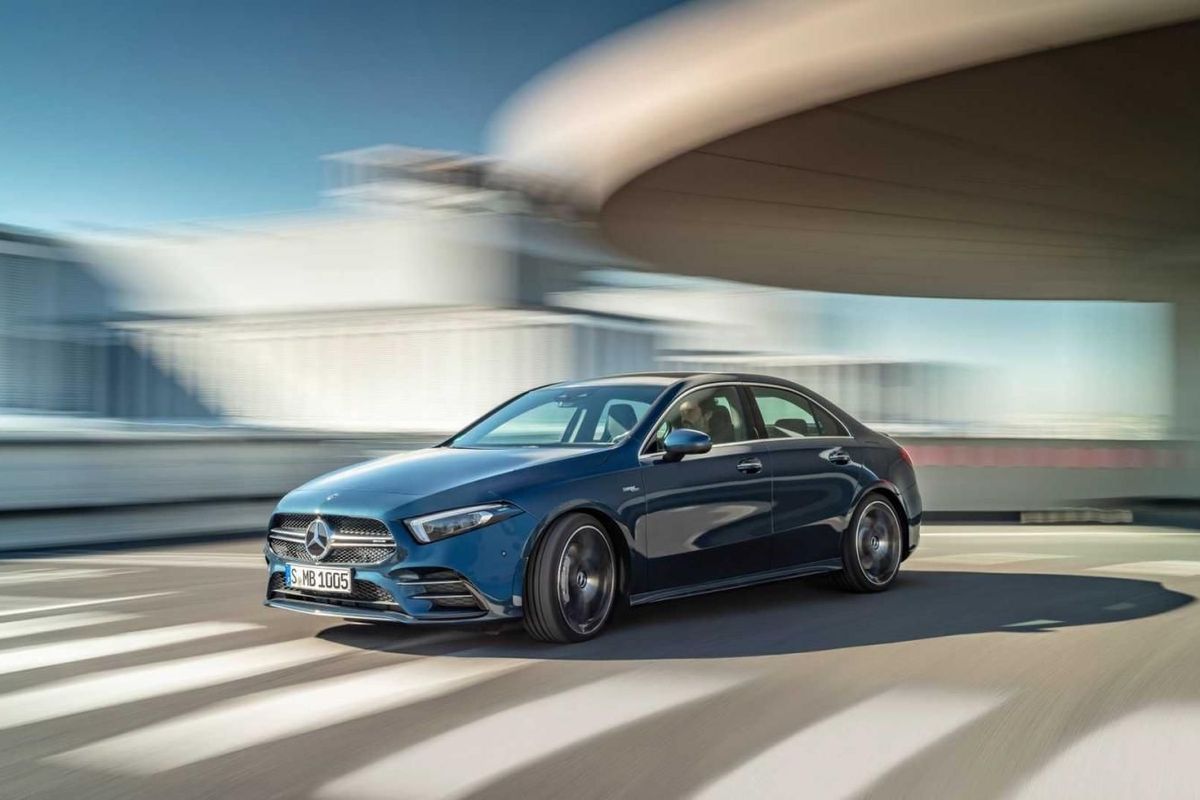
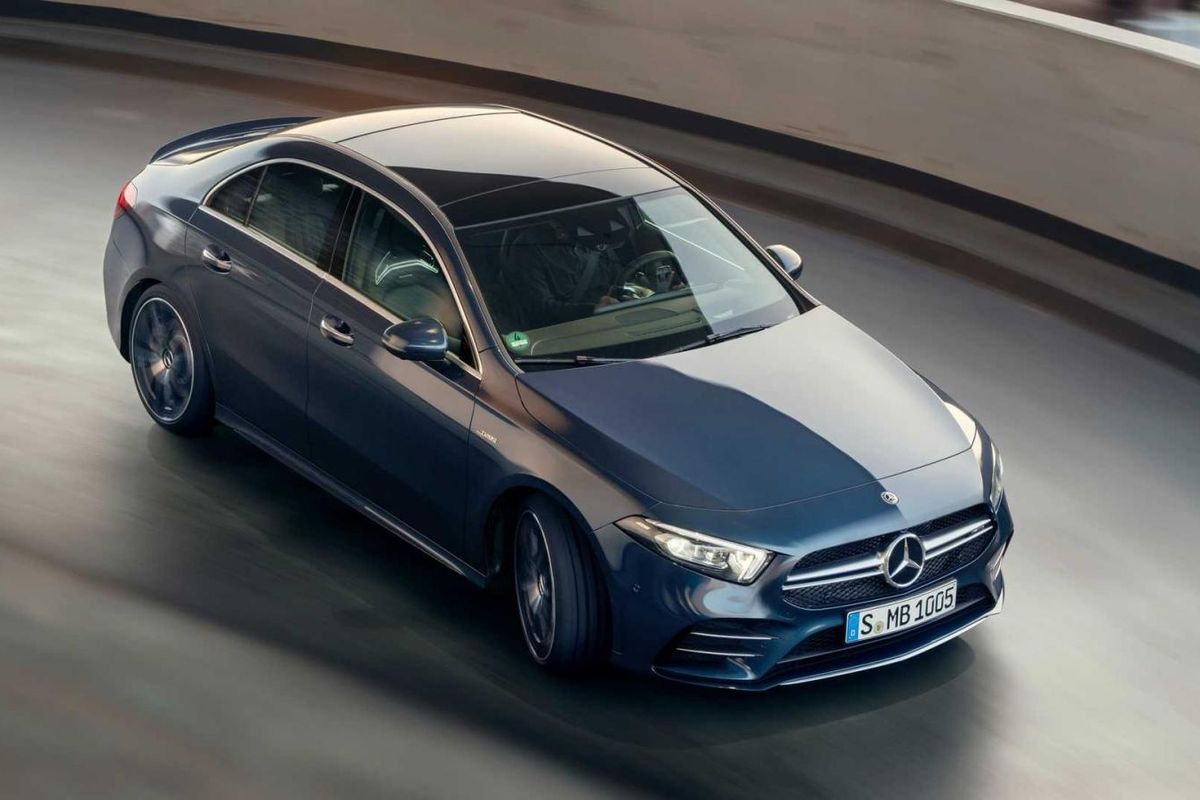
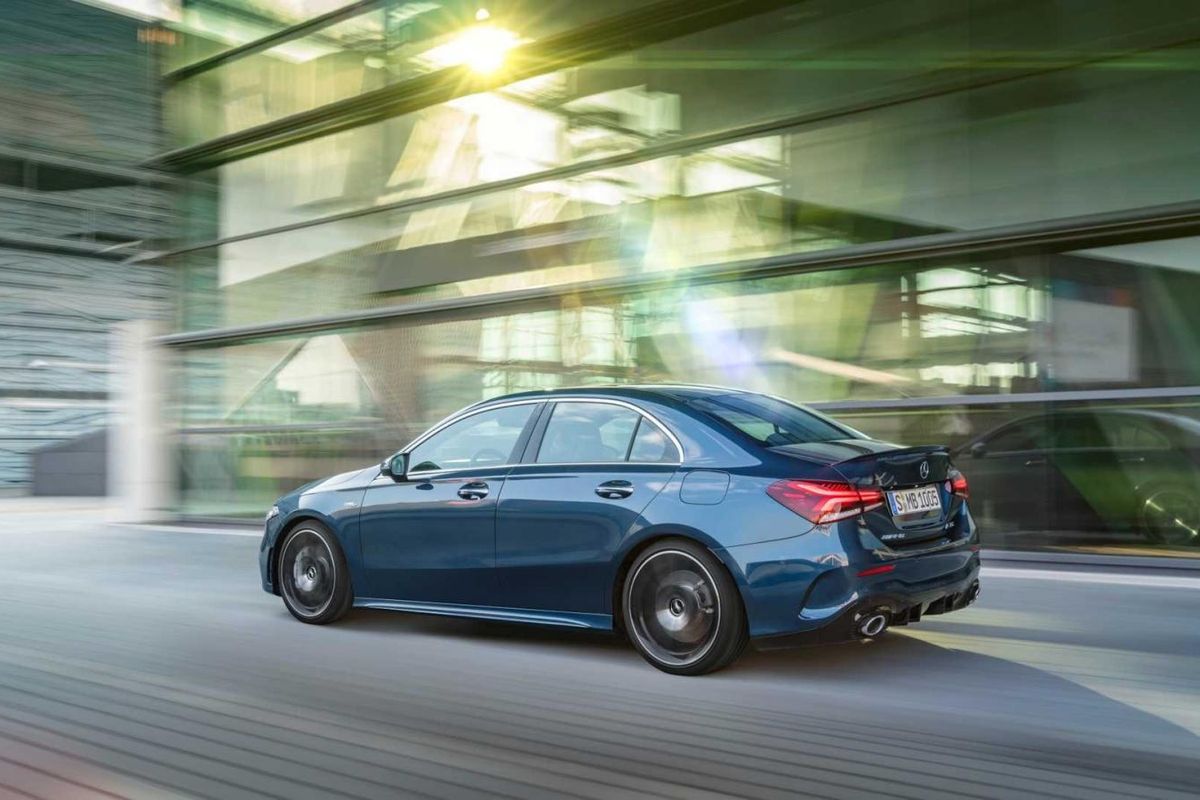
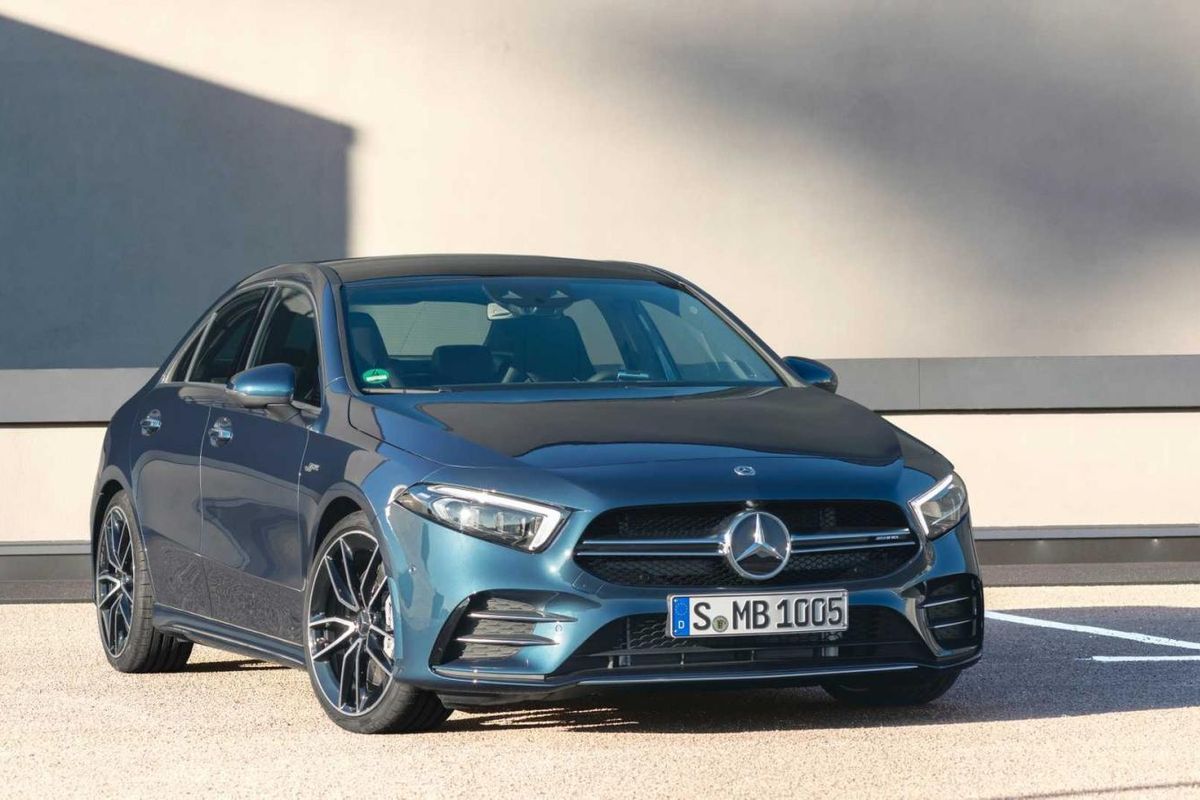
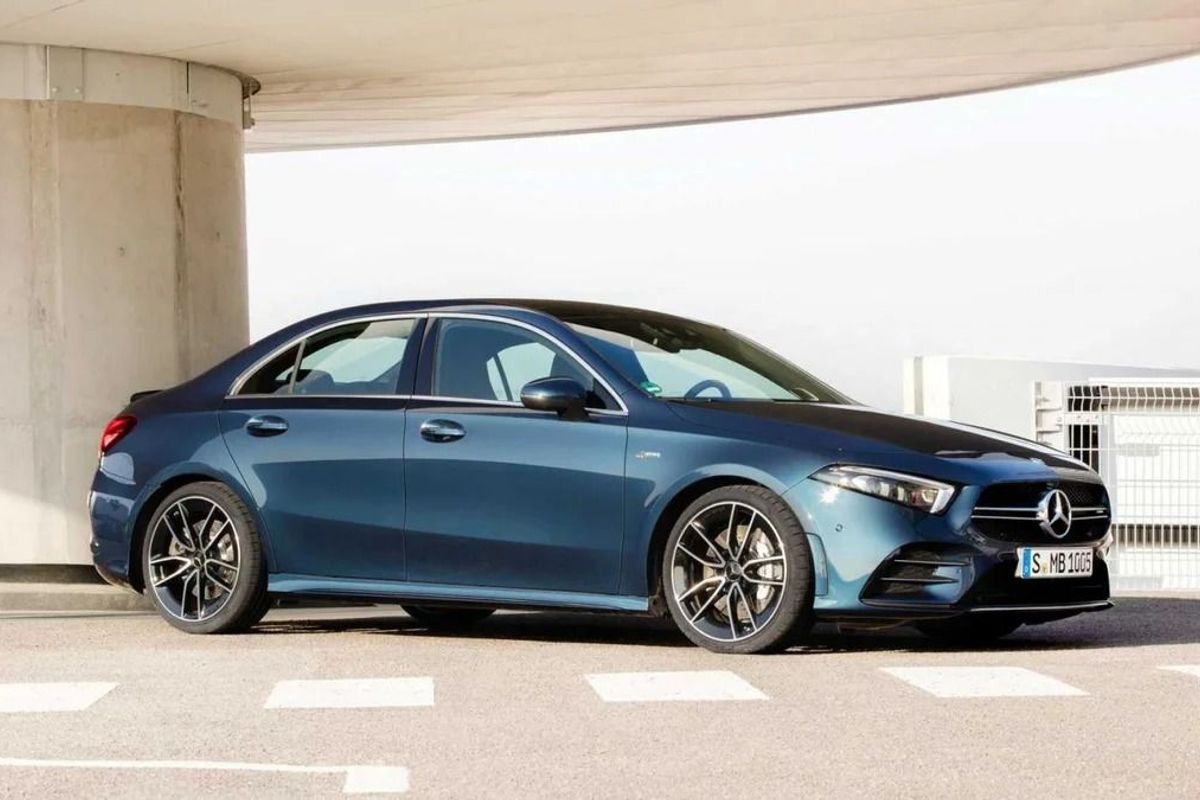
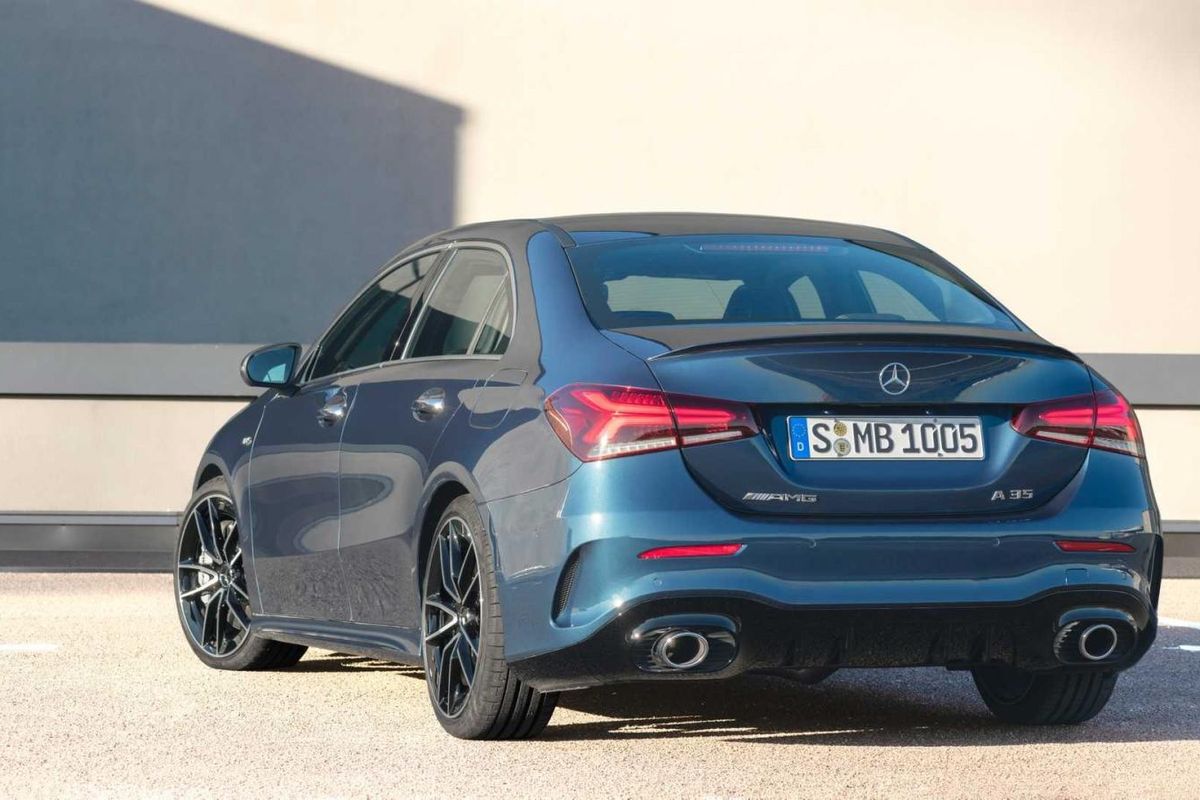
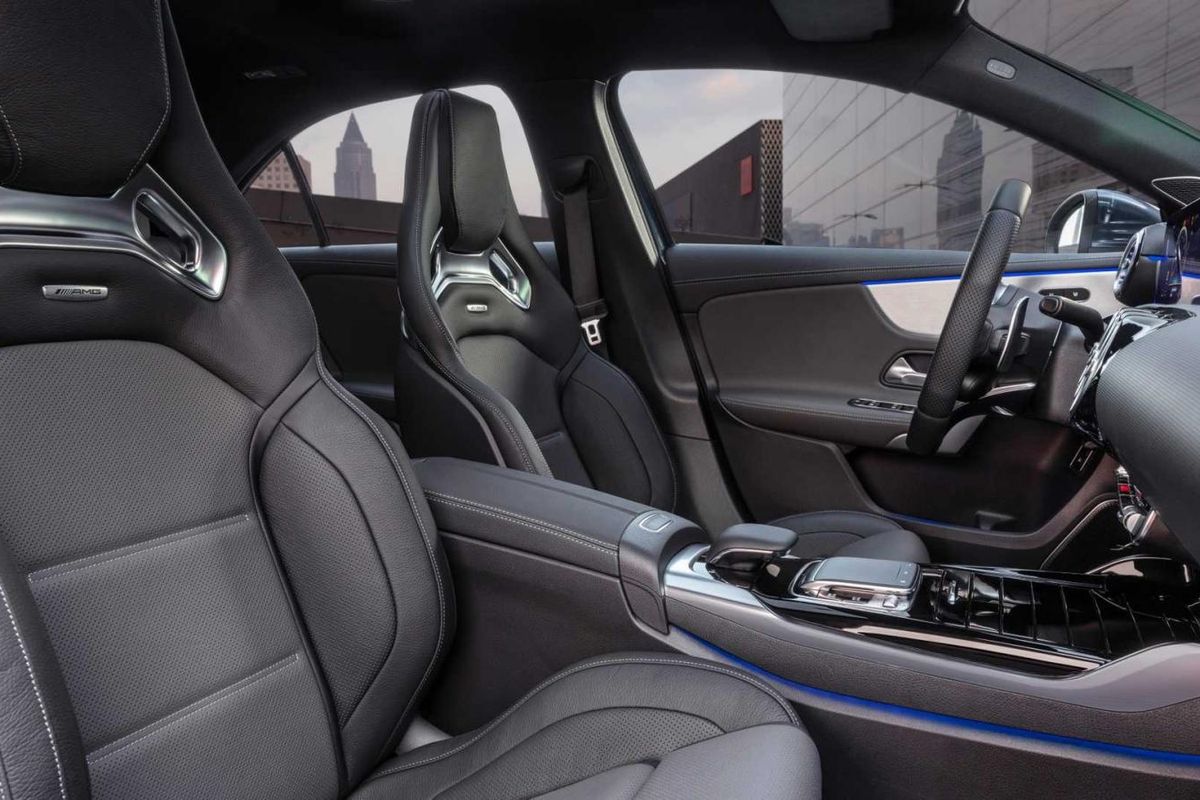
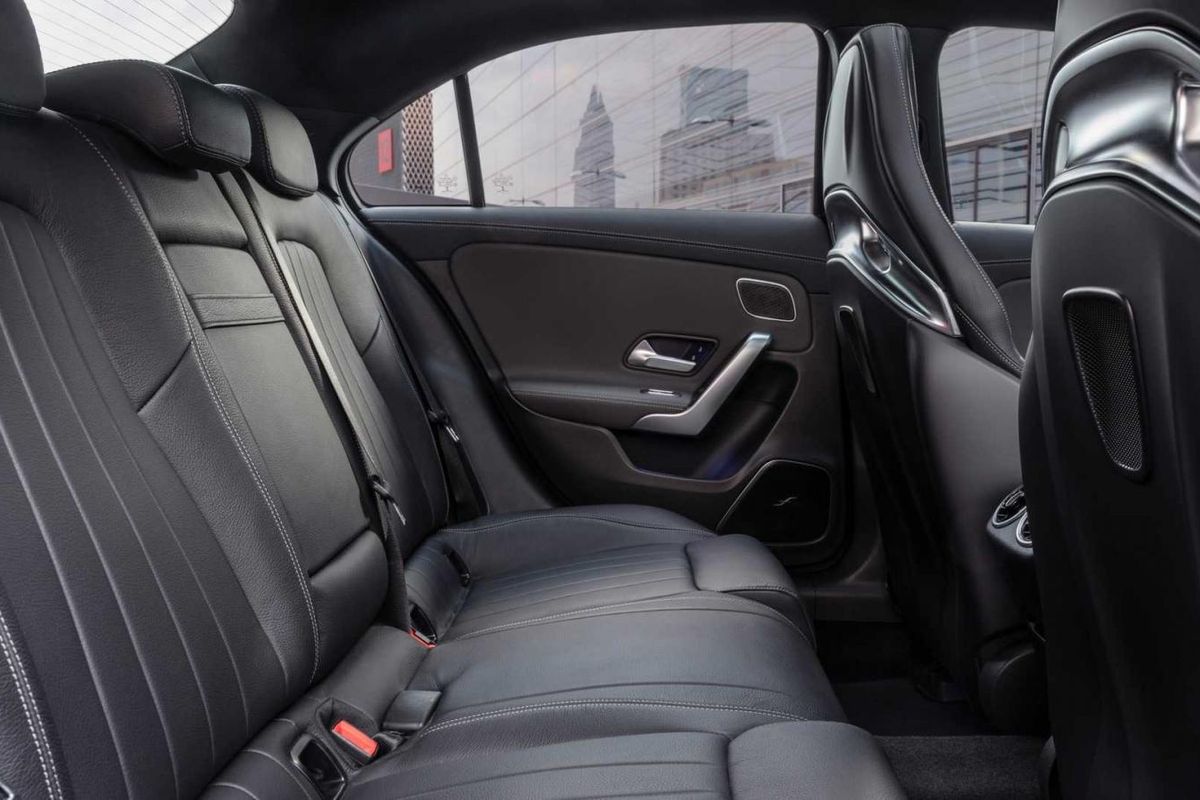
While we wait for the arrival of the new A35 hatchback on local soil, Mercedes-AMG has now revealed the A35 Sedan. See details below.
While exact launch timing for the A35 hatchback has yet to be confirmed, the A-Class Sedan will arrive locally in Q4 of 2019 and will be followed by the A35 sedan in Q1 2020. The Mercedes-AMG A35 sedan adds the practicality of a larger boot and it employs the same twin-scroll turbocharged 2.0-litre engine found in its A35 hatchback sibling, offering 225 kW and 400 Nm of torque. Equipped with 4Matic all-wheel drive and a 7-speed dual clutch transmission, the Mercedes-AMG A35 Sedan will sprint from zero to 100 kph in 4.8 seconds and reach a top speed of 250 kph.
An AMG suspension system further ensures that the A35 Sedan will deliver dynamically too but customers can also opt for AMG Ride Control suspension which includes an adaptive adjustable damper system. The A35 Sedan rides on 18-inch light alloy wheels with a twin spoke design as standard while 19-inch wheels are optional.
"Following the very successful launch of the hatchback model, things are moving along dynamically in the compact class segment at AMG. Sport saloons are the origin of Mercedes-AMG and part of the brand's core. With our new A 35, we are transporting this history into modern times in the form of a very attractive model that serves as a point of entry into the world of AMG and also appeals to new customer groups" said Tobias Moers, CEO of Mercedes-AMG.
Key features
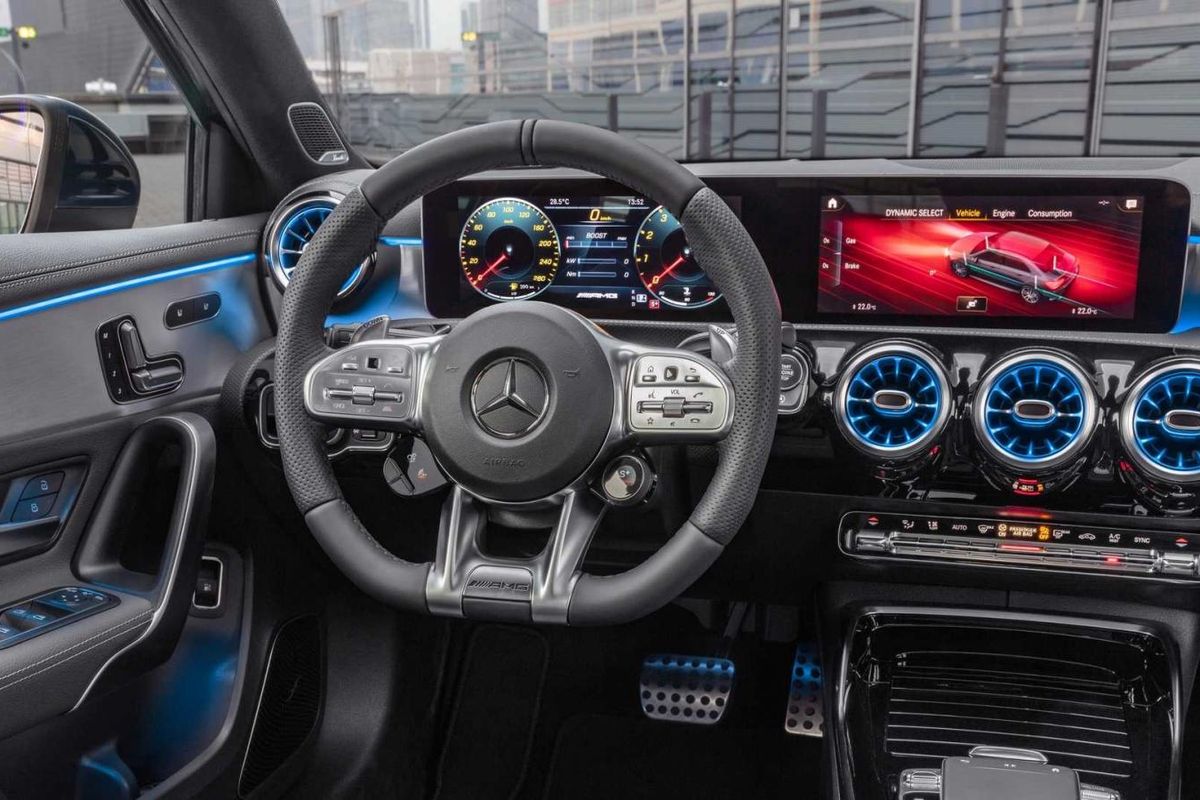
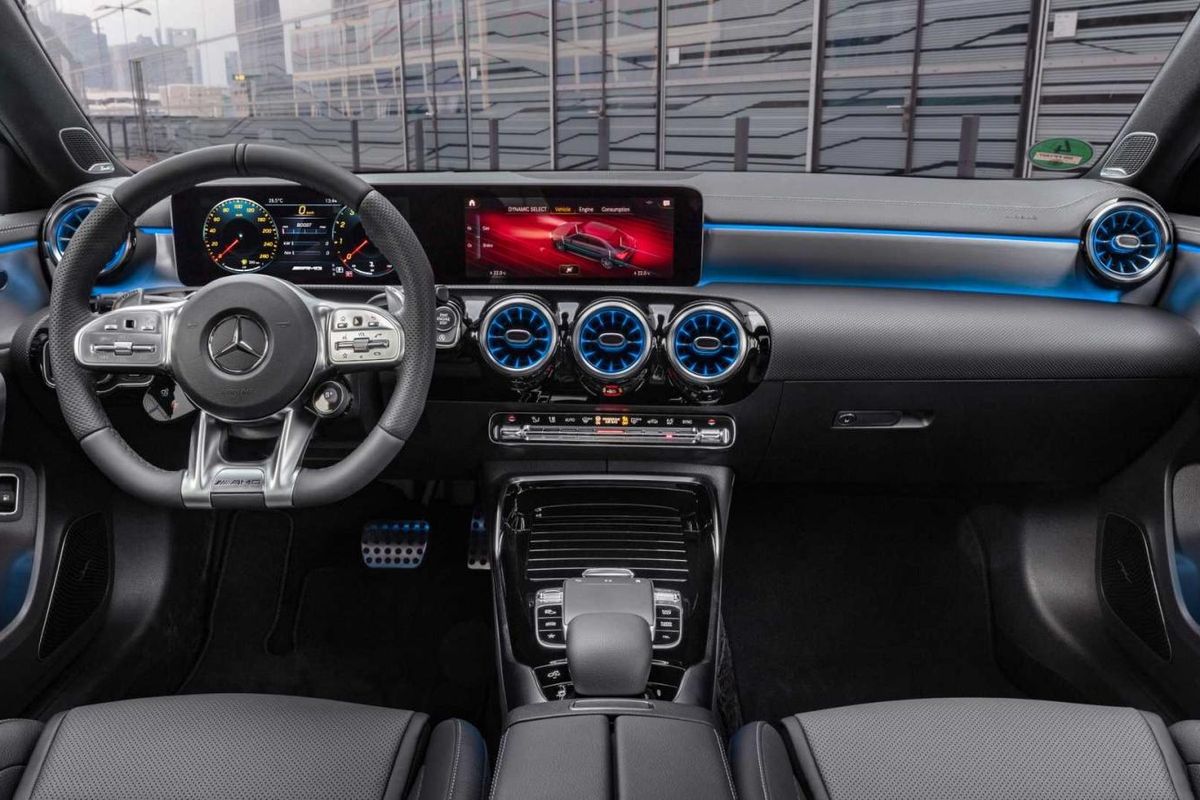
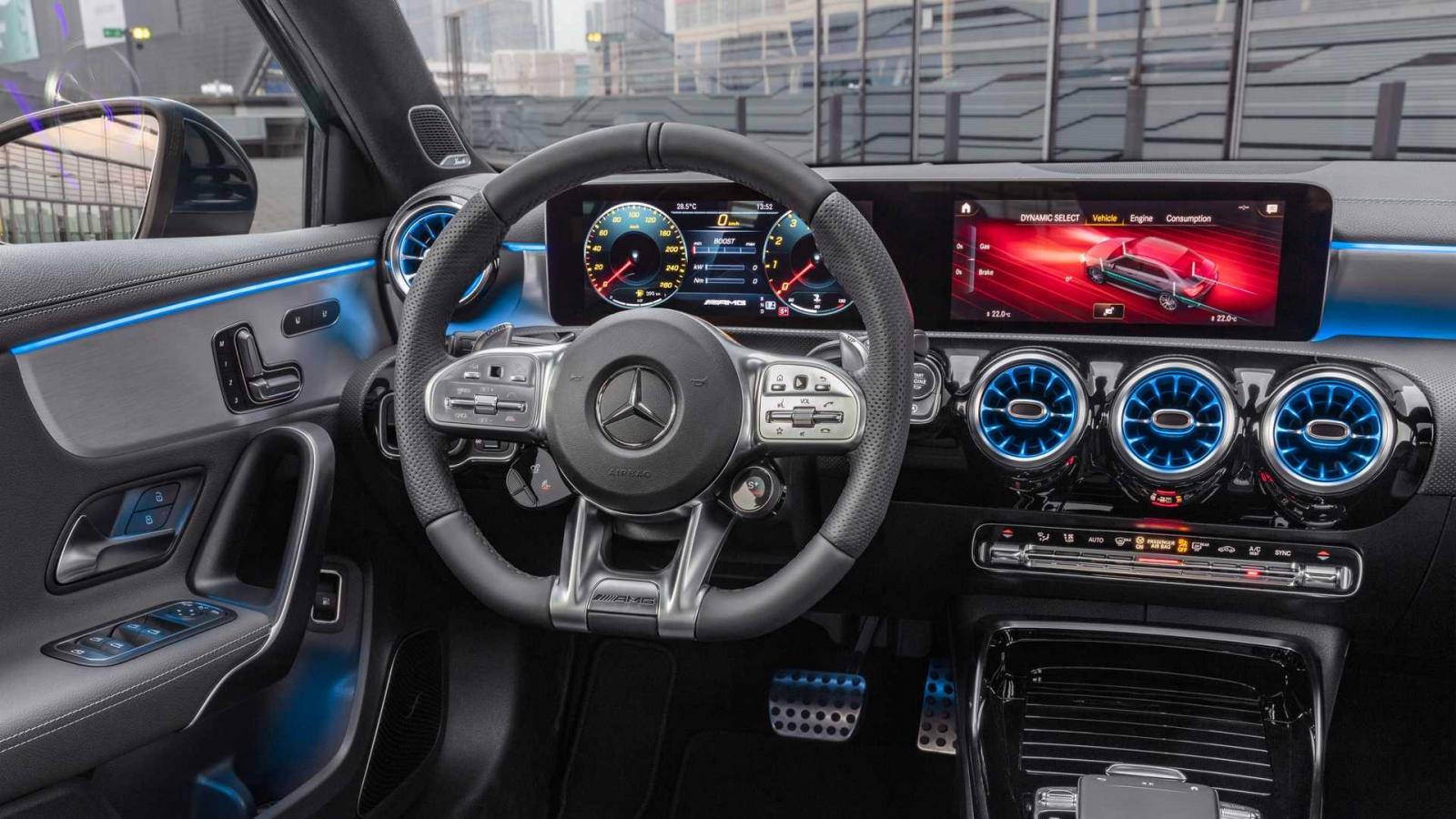
The A35 Sedan is thoroughly modern and comes equipped with Merc's latest MBUX multimedia system.
The AMG A35 Sedan is equipped with the latest MBUX multimedia system which made its debut in the new A-Class and includes a Widescreen Cockpit with 2 screens under a single glass cover. Using artificial intelligence, the system can respond to a wide range of sentences/commands relating to the infotainment and car functions using the words “Hey Mercedes”.
A new-generation flat-bottomed steering wheel is fitted with contrasting red stitching and bound in perforated leather. Integrated steering wheel controls allow the driver to easily interact with the infotainment system and digital instrument cluster. An AMG Performance steering wheel is optional.
The seats are covered in Artico man-made leather with Dinamica microfibre in black/neva grey with red contrasting top stitching and red seat belts for a sportier look. Red piping is also seen on the Dinamica trim and air vents.
Also, when equipped with the Keyless-Go comfort package with Hands-Free Access, you can open the boot automatically by swiping your foot under the rear bumper. The boot aperture is wide at 950 mm making it easier to load items into the boot with a claimed capacity of 420 litres.
As is expected, the AMG A35 Sedan will be offered with a wide range of optional equipment and packages to suit your tastes.
We will keep you updated as soon as local specification and pricing details are available.
The first production Toyota Supra has been assembled and rolled off the line at the Magna Steyr facility in Austria.
The first production version of the all-new Toyota GR Supra rolled off the production line at the Magna Steyr, Graz Plant in Austria in early March. The one you see here has already been snapped up, fetching a crazy $2.1 million at the 48th Annual Barrett-Jackson Auction at West World Scottsdale in Arizona. The money will be going to the American Heart Association (AHA) and the Bob Woodruff Foundation (BWF) charities.
This car is an interesting spec. Featuring Phantom Matte Grey paint, a VIN of 20201, red mirror caps, matte black wheels, red interior with carbon fibre detailing and an engine cover signed by Toyota Motor Corp. President Akio Toyoda, this Supra is going to be quite the collector's item.
In anticipation of the first Supras rolling off the line, the Toyota engineers were frequent visitors to the Magna Steyr plant for quality control. Toyota Chief Engineer Tetsuya Tada said, "Without the support of all the various people and parties related to the Supra, this day could not have come true. Partnerships come in many forms, and our partnership with BMW has been a new experience for both of our companies. We appreciate the enthusiasm and aspiration of everyone that has helped Supra become one of the most anticipated and exciting cars coming out this year. Thanks to you, I am proud to say that Supra has turned out to be a very exciting car."
The new Toyota Supra will be arriving in South Africa during 2019.
The first official Cape Town SentiMETAL OutRun took place this past weekend, and brought together a diverse collection of around 50 cars with one unifying feature – passionate owners.
"You just don't know where to look first," said one of the OutRun attendees as a pristine red Jaguar XK150 reversed into its spot next to a Nissan (R32) Skyline GT-R, one of the most iconic Japanese sportscars from the '90's. His words barely cold, and an original-looking (E12-generation) BMW 520 hissed as it sunk down on its wheels not far from a mint Volvo 850R and a very rare Dodge Viper GTS.
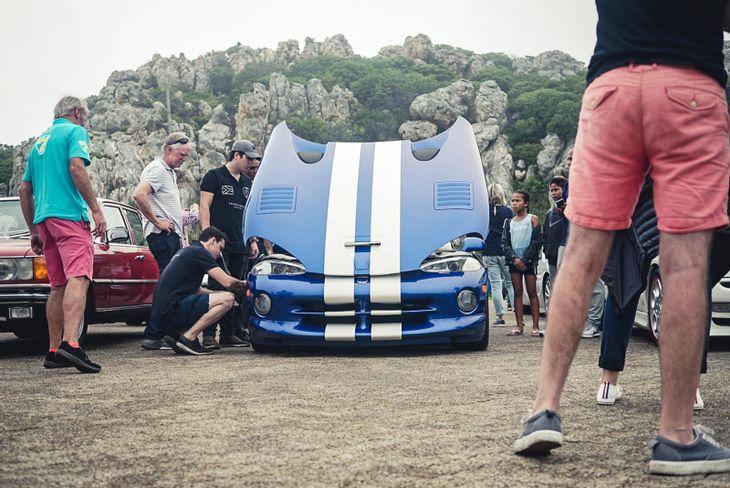
One of the stars of the event, a very rare one-owner Dodge Viper GTS.
"SentiMETAL is really just about enjoying cars, and car people," says Cars.co.za's Hannes Oosthuizen. "The SentiMETAL movement is definitely gathering momentum," he continues. "In Johannesburg, we had around 35 cars and for this Cape Town leg we had more than 50."
According to Oosthuizen, there are a few non-negotiables for any OutRun. "Firstly, we crave diversity. It's not only for show, it's also about creating awareness and sparking a passion in tomorrow's classic car fans, so we encourage attendees to bring their kids. The dad might be into his '50's Jaguars, but who knows, his son or daughter may end up really appreciating '80's hot hatches. Secondly, we believe these cars should be enjoyed out on the road, so we'll always try and put together a scenic route that allows attendees to enjoy their cars. And we'll always have the best photographers and videographers on hand to make sure we have top-notch visuals to share with everyone afterwards. Finally… good coffee. Because everything is better with coffee!" Oosthuizen concludes.
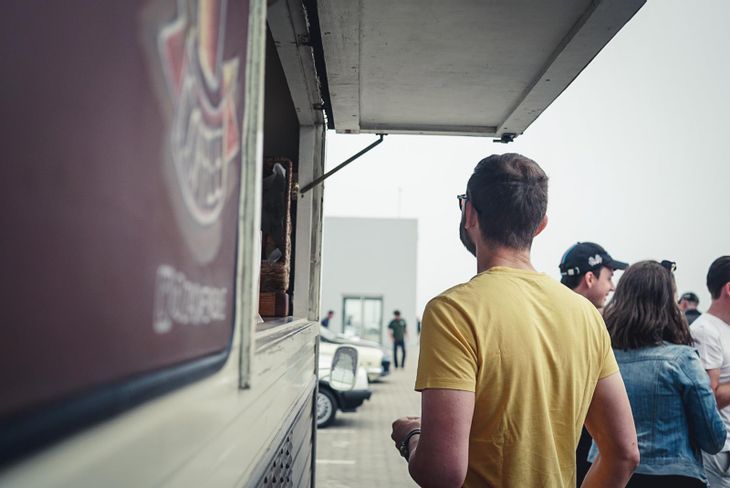
Excellent coffee (and hot chocolate) by ZA Cafe fuelled up the participants for the drive.
For the inaugural Cape Town run the participants met at the Cars.co.za offices in Maitland for some caffeine and pastries supplied by ZA Cafe, from the back of a classic VW campervan, of course. Derek Harrison had his hands full as people queued for his excellent brews on a chilly, misty morning. But in the parking area, things started heating up rather quickly. A large number of racy Lotus 7 replicas and locally developed Harper sportscars were among the first vehicles to arrive. When Roger Molyneux and his wife Janice took a slot in their diminutive Ford-powered Locust 7 next to a 1967 Citroën DS19, it was clear that the mix would be eclectic.
Not long after, Ciro De Siena arrived in his recently acquired first-generation Mazda MX-5 and then the floodgates opened. Jess Goedhals roared into sight in his pristine Dodge Viper GTS, finished in bright blue with white racing stripes. Emile Smit's showroom-condition Volvo 850R, increasingly regarded as a future classic of note, turned many an admirer's head. More muscle arrived in the shape of a Backdraft Cobra (Matthew Muldoon) and Australia was represented by a Chevrolet Lumina that packed a much harder punch than the stock car ever did, courtesy of a Whipple supercharger.
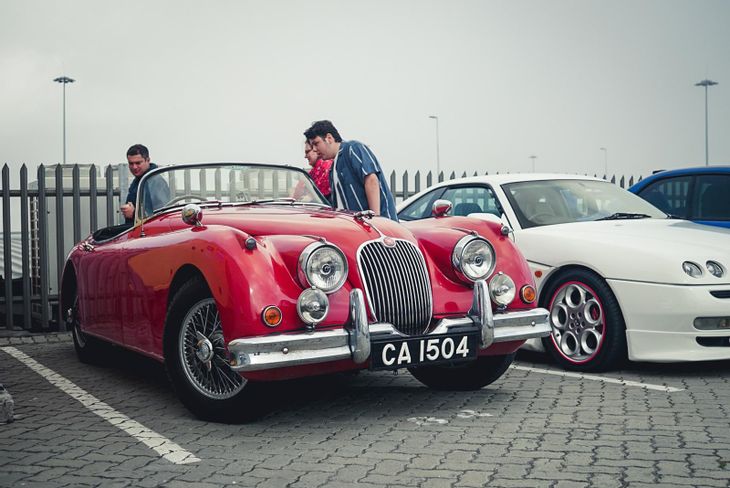
Beautiful 1958 Jaguar XK150 added some timeless elegance to the SentiMETAL OutRun.
Soon guests and owners were strolling among a very interesting group of around 50 cars which included anything from an imposing 1959 Jaguar Mk9 to a modern-day Alfa Romeo Brera, driven by the curator of the Franschhoek Motor Museum, Wayne Harley. There were also some interesting modified cars, including a Toyota Supra belonging to Calvin Fisher (who also took these stunning photos), a Peugeot 504 Coupe rally replica (Ian Loubser) and a CAV GT40 replica, among others.
Porsche was well represented by several 911's, including two belonging to none other than Porsche Girl Cape Town herself, Michelle Hambly-Grobler, and another bright red Targa currently on sale at Crossley & Webb. A very original-looking Volkswagen Golf Mk2 GTI received a lot of love, as did one of the surprises of the event, a late '70s Audi 200 5E belonging to Theo Coetzer which could very well be the best example left in the country. Oh, and when did you last see a GM Ranger station wagon, or such a clean Mk1 Golf Cabriolet?
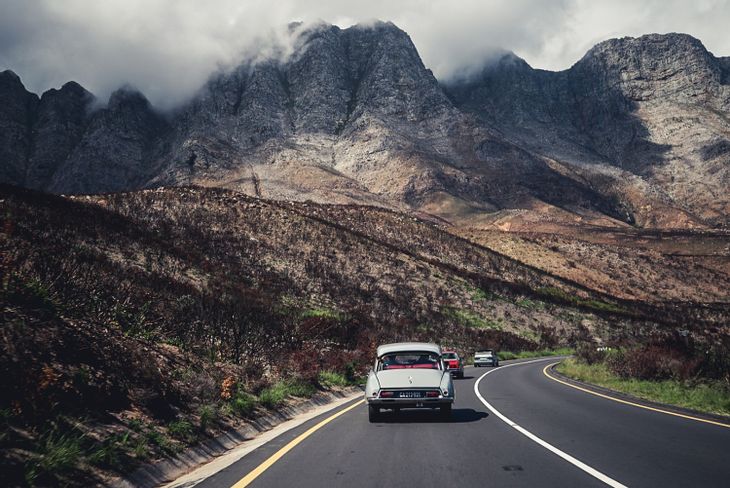
The beauty of the R44 coastal road, enhanced by a convoy of stunning automobiles.
A brace of Subaru Impreza WRXs, another Mazda MX-5, generation 3 Toyota Supra, Alfa Romeo GTV, another BMW 2002, a Z3 and an E30-generation BMW 3 Series Cabriolet were also in attendance and adding to the staggering diversity on display.
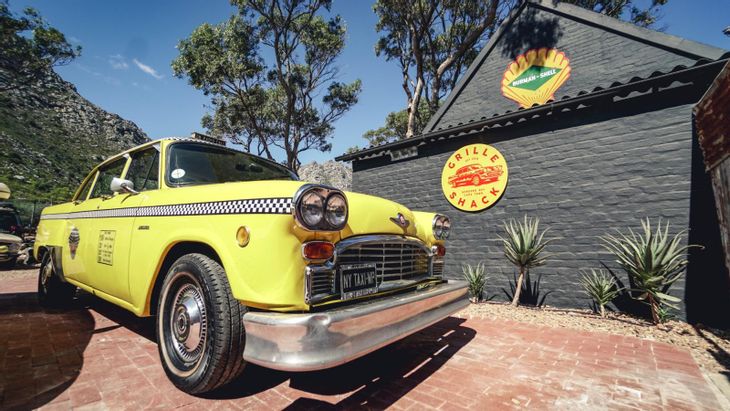
After the coffees and ogling of cars were done, the group set off on a drive to Somerset-West, and then onto the scenic R44 to Kleinmond. Dieter Losskarn and his beloved Checker New York taxi often caused pandemonium at the traffic lights, not only because of the rarity of his vehicle but also because its V8 makes such a lovely noise. Hanjo Stier and his family were all smiles as they wafted along in the luxury of their immaculate Mercedes-Benz 350SE.
The only genuine New York Checker taxi in Africa in front of the lunch venue, The Grille Shack.
The run was joined in Somerset-West by several other cars, including a really pretty BMW 2002tii Alpina and a Renault Clio 2.0 RS, also a sure bet for future classic status, particularly in striking red. The R44 along the coast truly is a magnificent stretch of road, combining beautiful scenery and an excellent surface. A glance in the rearview mirror always yielded an interesting sight, too.
For lunch and to bring to a close a fun day out, the colourful collection pulled into a new spot on the R44 called The Grille Shack which is suitably classic car themed. Keep an eye on the SentiMETAL social channels (Facebook and Instagram) for notifications on the next run. Participation is free. You only need to bring a rad car, and loads of passion. See you at the next SentiMETAL OutRun!
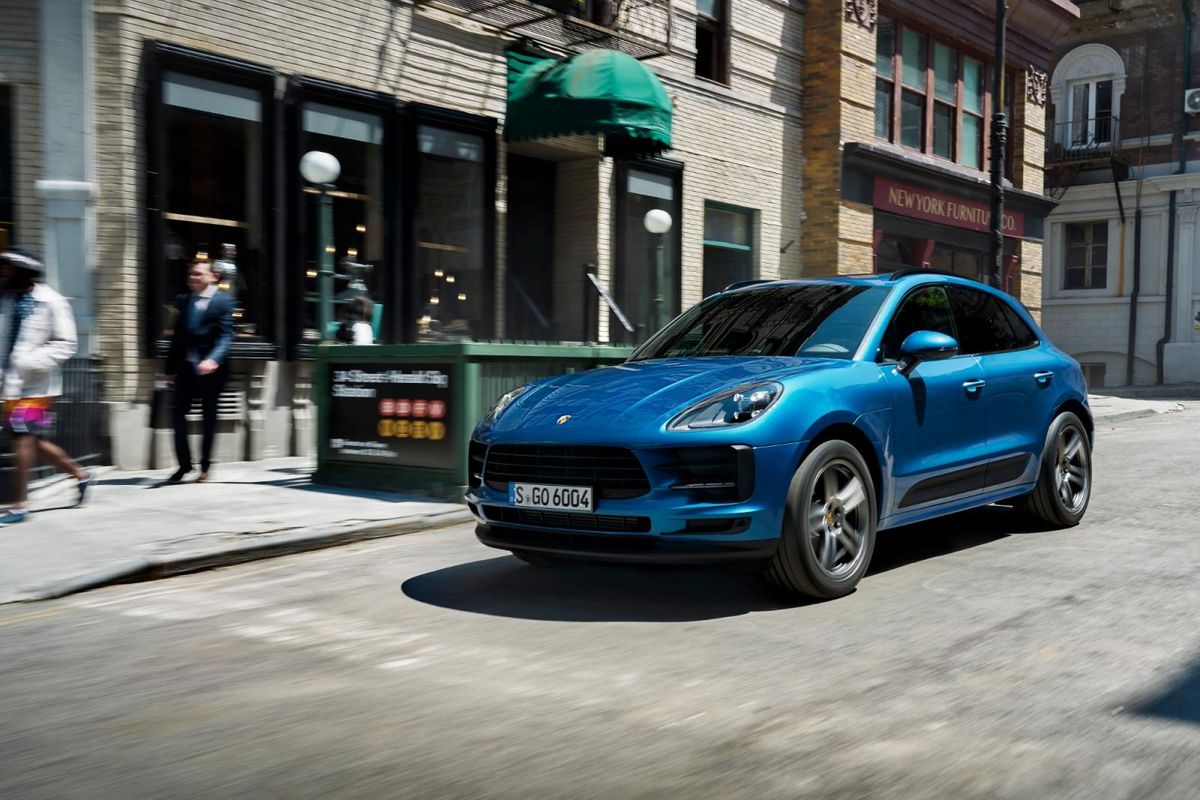
With more than 400 000 units sold since its introduction 5 years ago, the Macan has become one of Porsche's most important models. On the face of it, the Zuffenhausen-based brand's mid-life refresh is subtle, but remember, a number of small incremental gains can add up to a significant overall improvement when they're added together.
It's quite easy to "belittle" the Macan as Porsche's interpretation of (let's say) sibling brand Audi's Q5 executive SUV, but that would be a wholly unfair assertion. It would also be – as our spirited drive in the newcomer on some of the best roads in South Africa illustrated – an inaccurate assumption. The Macan has always been tasked with being the most dynamic and sporting vehicle in its segment, but this is increasingly a tough call given the arrival of performance derivatives of the BMW X3/X4 and Mercedes-Benz GLC, to name just a couple of examples. So, much of the focus with this "facelift" has been on introducing tweaks that would create a bigger gap between the Porsche and its (would-be) competitors.
It's good to see that Porsche prioritises driving experience even for its "entry-level" SUV and, to be clear, it remains a defining characteristic of the Macan, but let's be honest here; very few owners are likely to drive their luxury crossovers at breakneck speed across mountain passes just for the thrill of it. I suspect that most would-be Macan buyers will find the revised vehicle's updated design, enhanced standard features list, greater personalisation options and much-improved connectivity the real highlights of this revision.
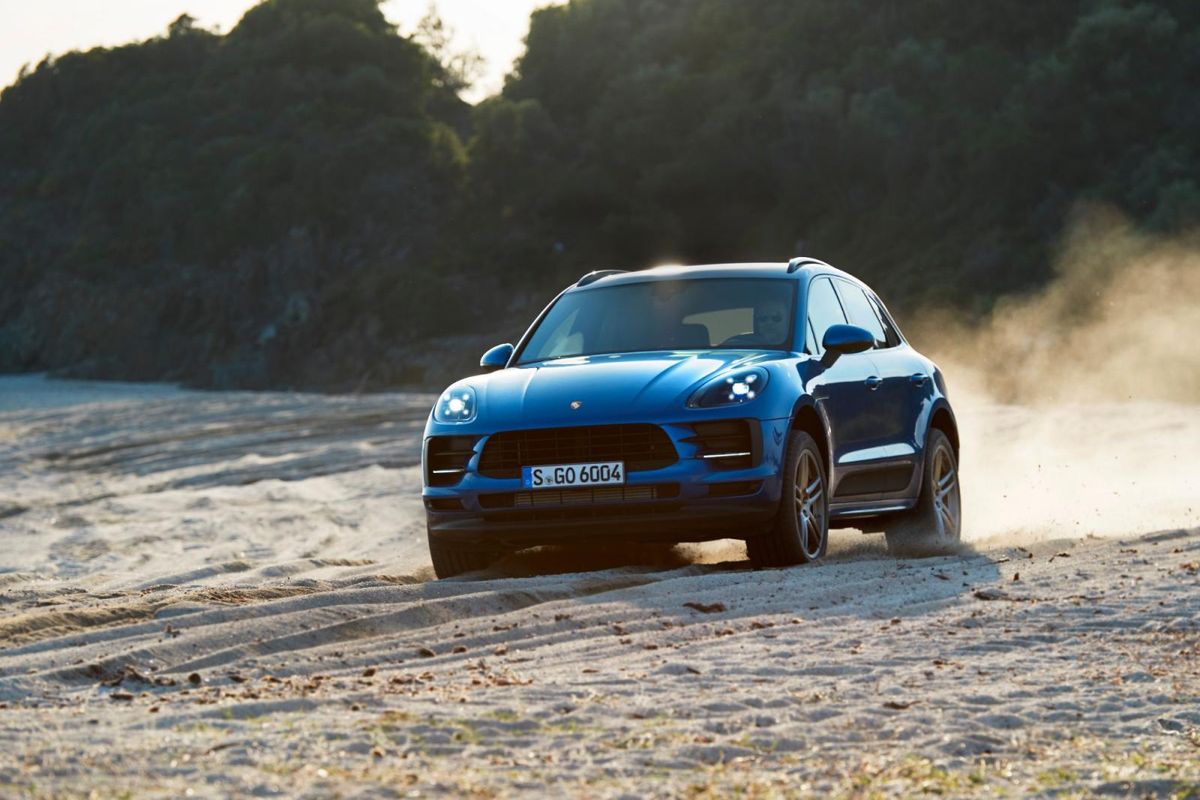
New headlamps and revised front bumper/air intakes combine to give the Macan greater visual impact.
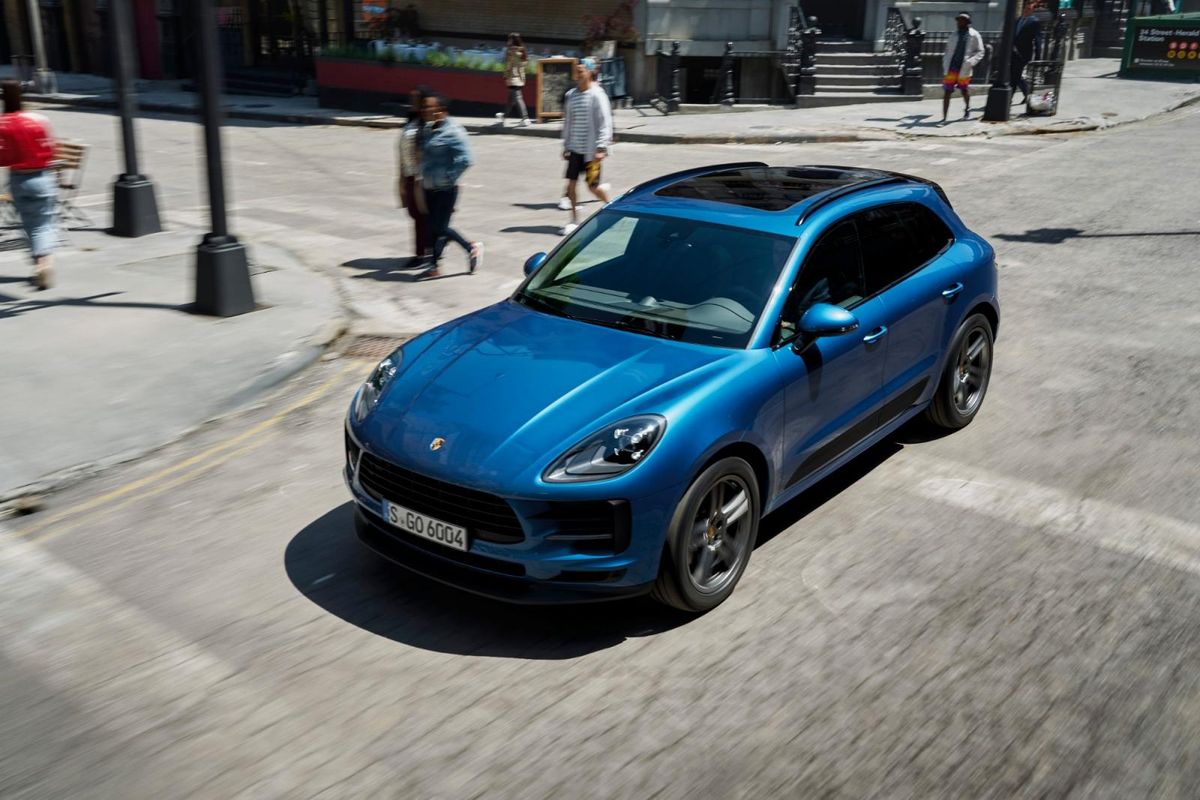
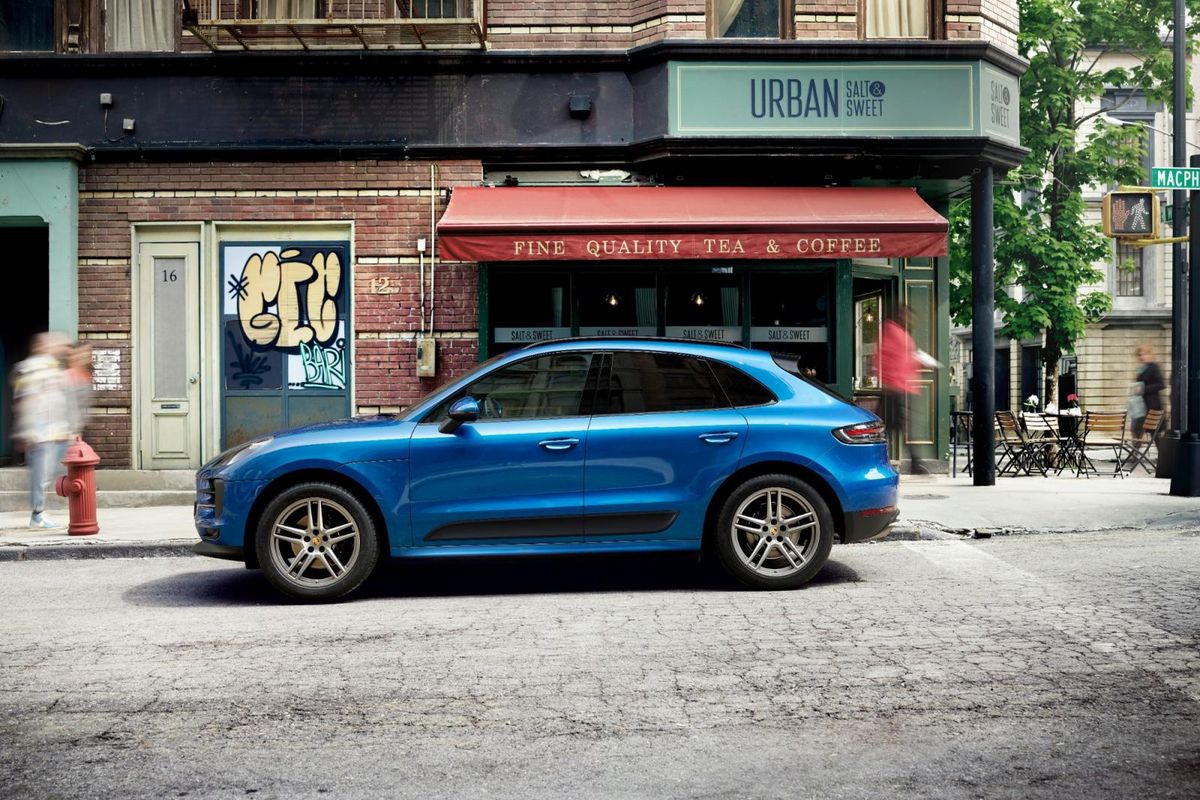
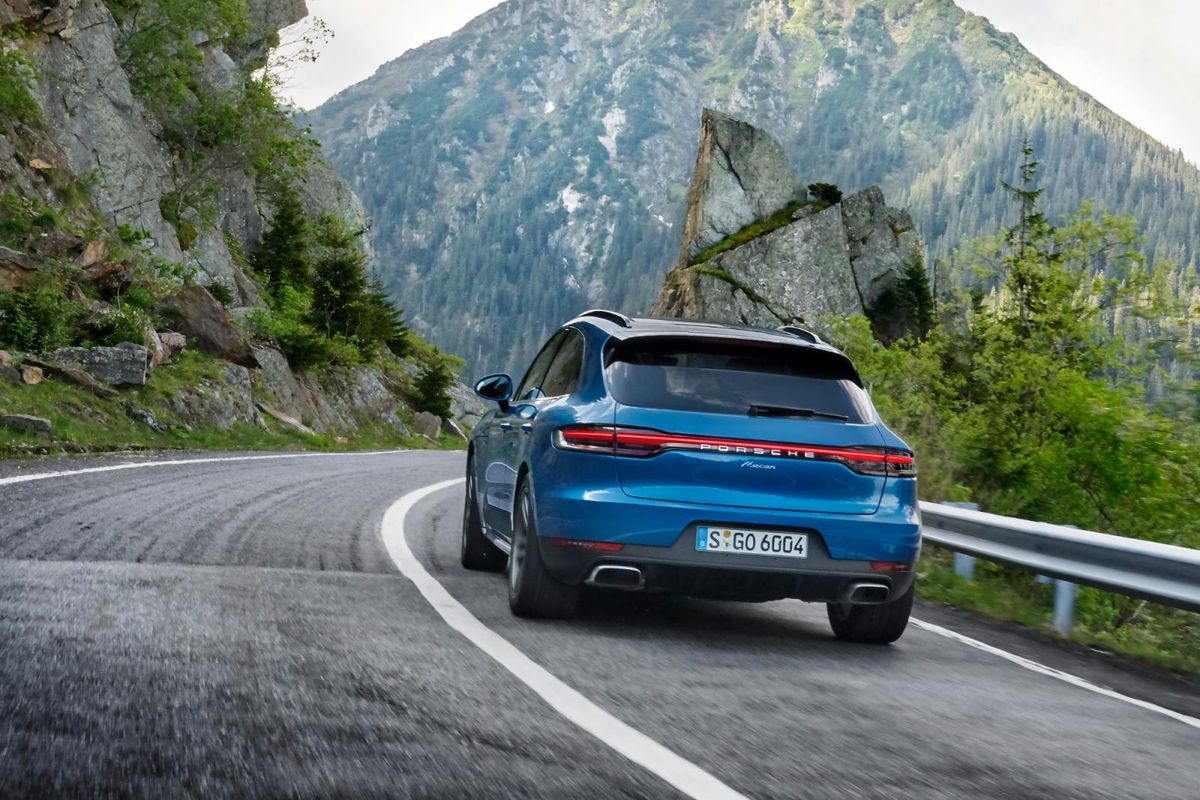
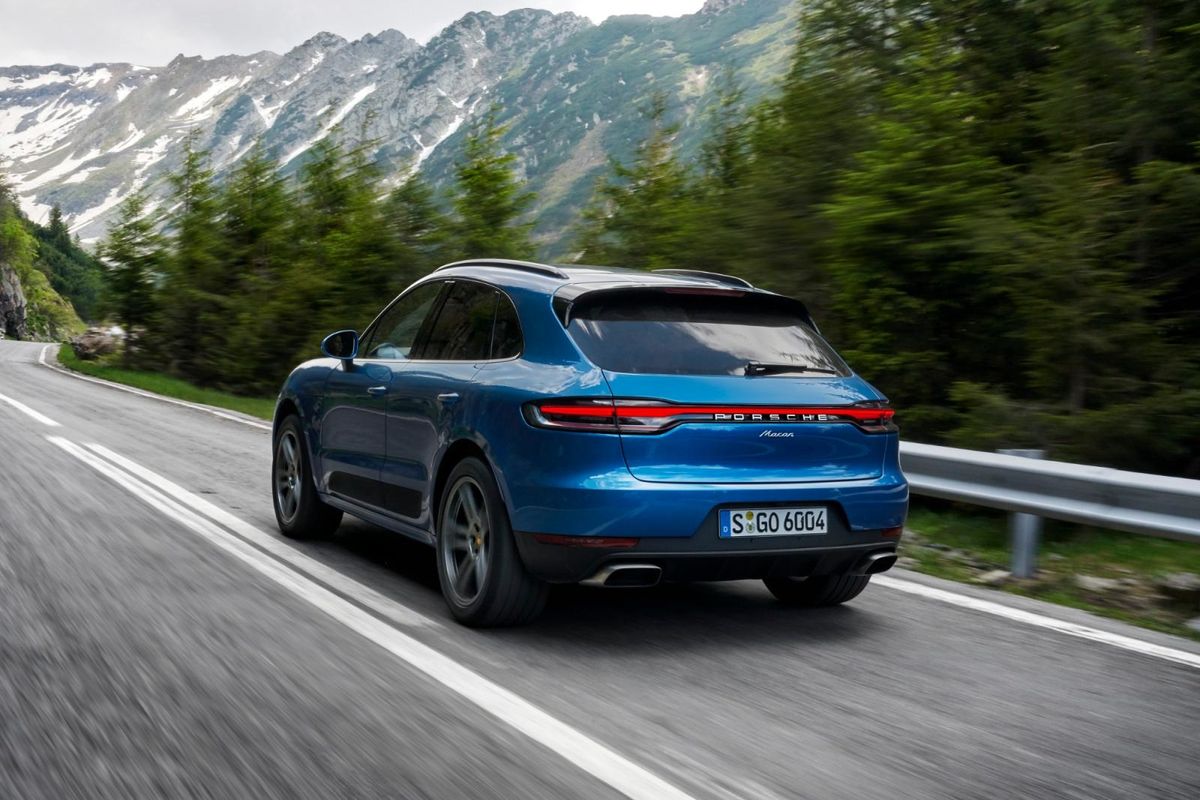
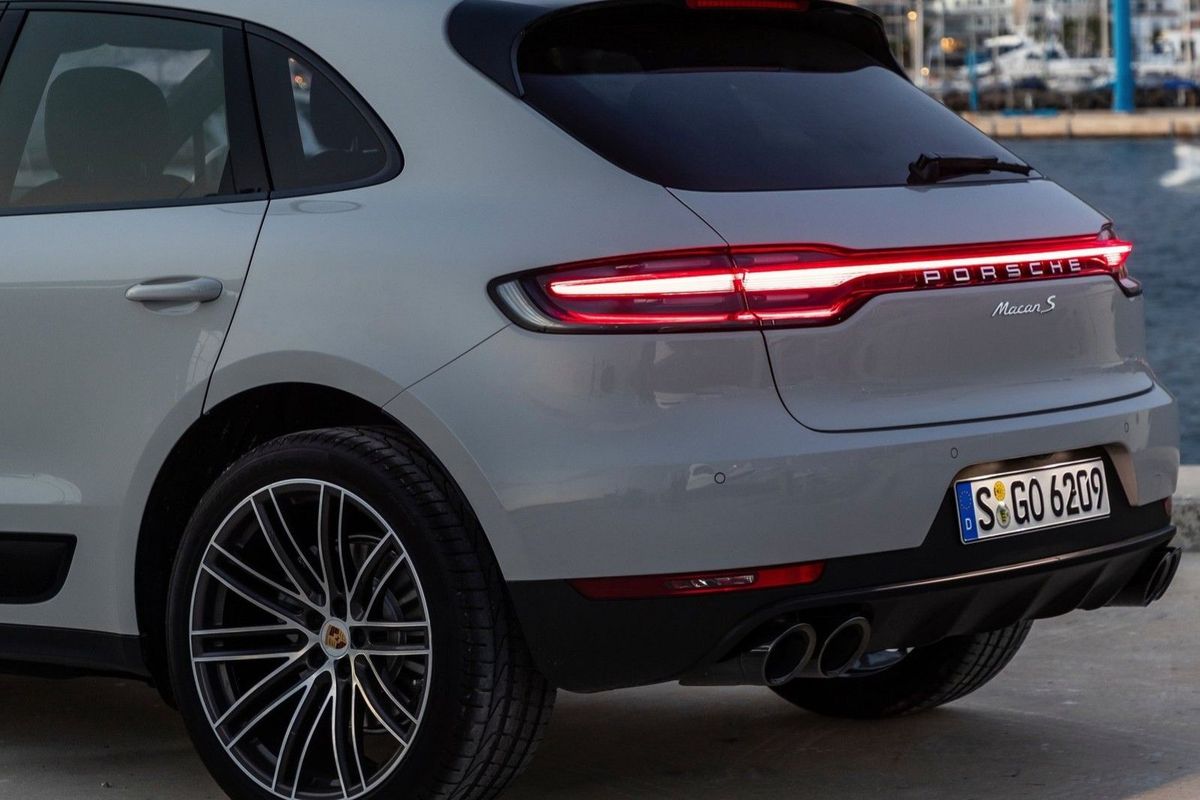
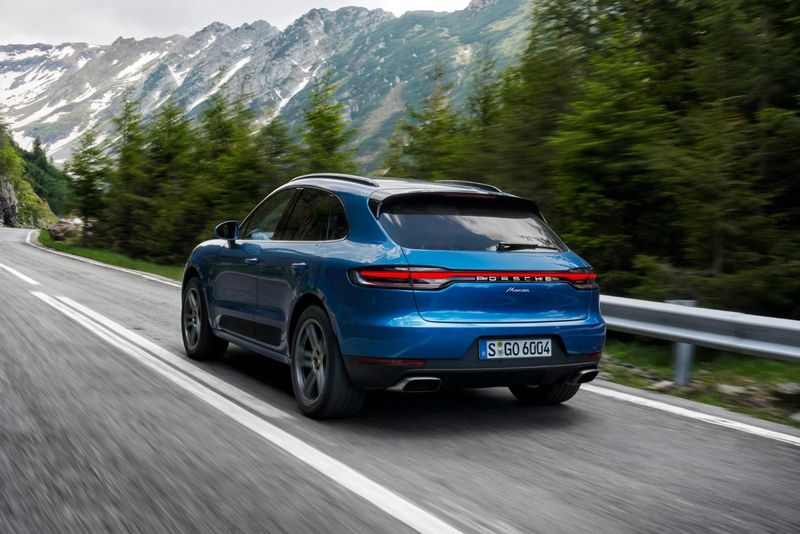
The design changes that feature on the "new" Macan bring this executive crossover into line with other recent introductions from the brand. Arguably the most obvious change is the new LED tail-light panel that stretches the width of the car. At the front, there is also a greater emphasis on creating the perception of width, with the more vertically emphasised side intakes playing a major role in achieving that goal.
The headlamps are also significantly revised. LED headlamps with those characteristic four LED dots (daytime running lamps) are standard. You can also optionally specify PDLS (Porsche Dynamic Light System) that can automatically switch between main and dipped beams, among other things, and then there's also PDLS Plus that dynamically adjusts the main beam range.
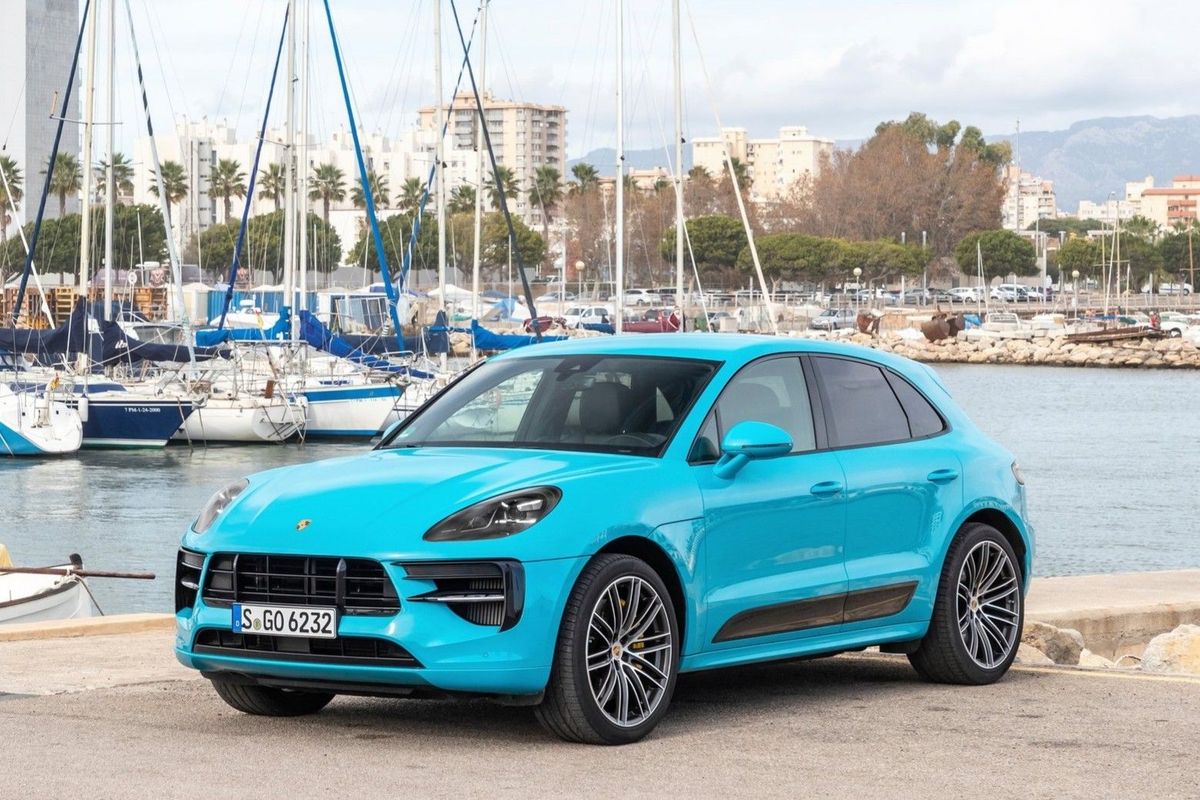
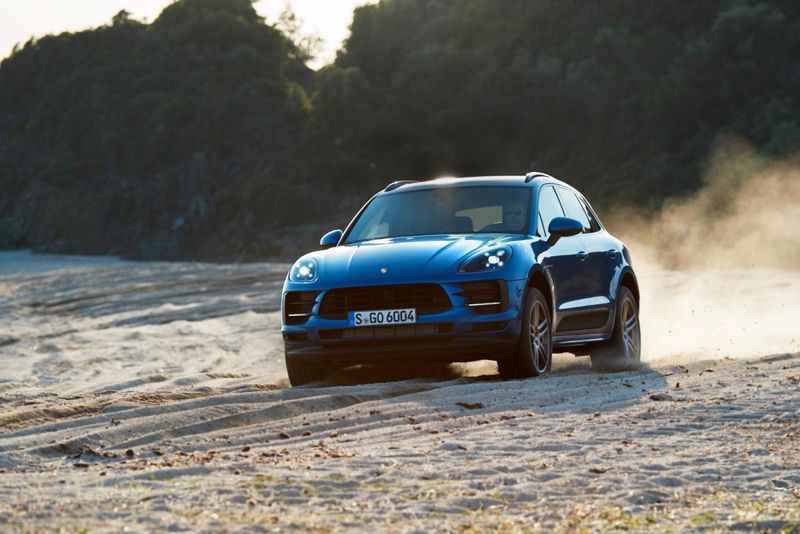
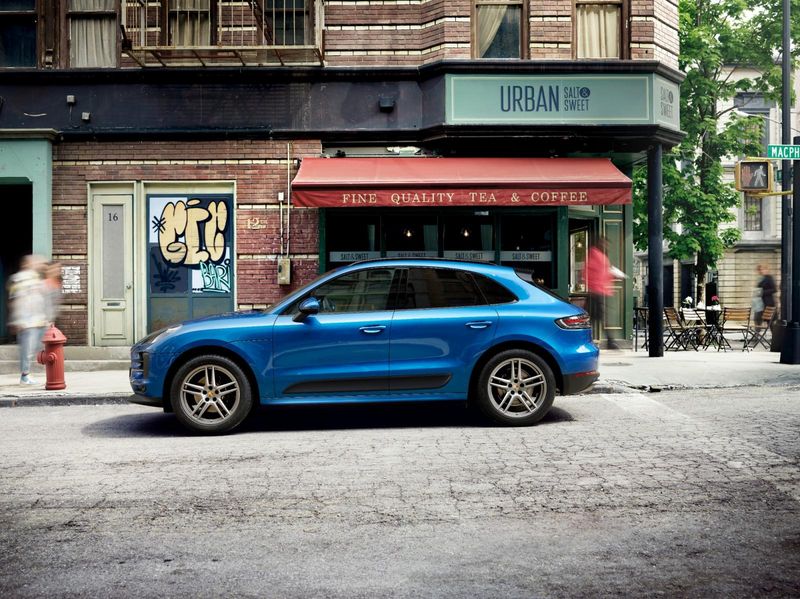
Porsche has introduced 4 new colours for the Macan, with the vibrant Miami Blue that's shown in most press material (main image of this article) being a definite head turner. You can also now choose from 5 different colours for your "switchblades", which is what Porsche calls the plastic inserts running along the lower half of the doors. Finally, there are a number of new wheel designs on offer, in sizes ranging from 18 to 21 inches.
The vehicles available for our launch drives were quite conservatively specified in terms of colours and rim choices, but nevertheless managed to turn heads. Play around with Porsche's online configurator and you be quite surprised just how cool you can make the "baby" Porsche SUV look.
Quality and Connectivity
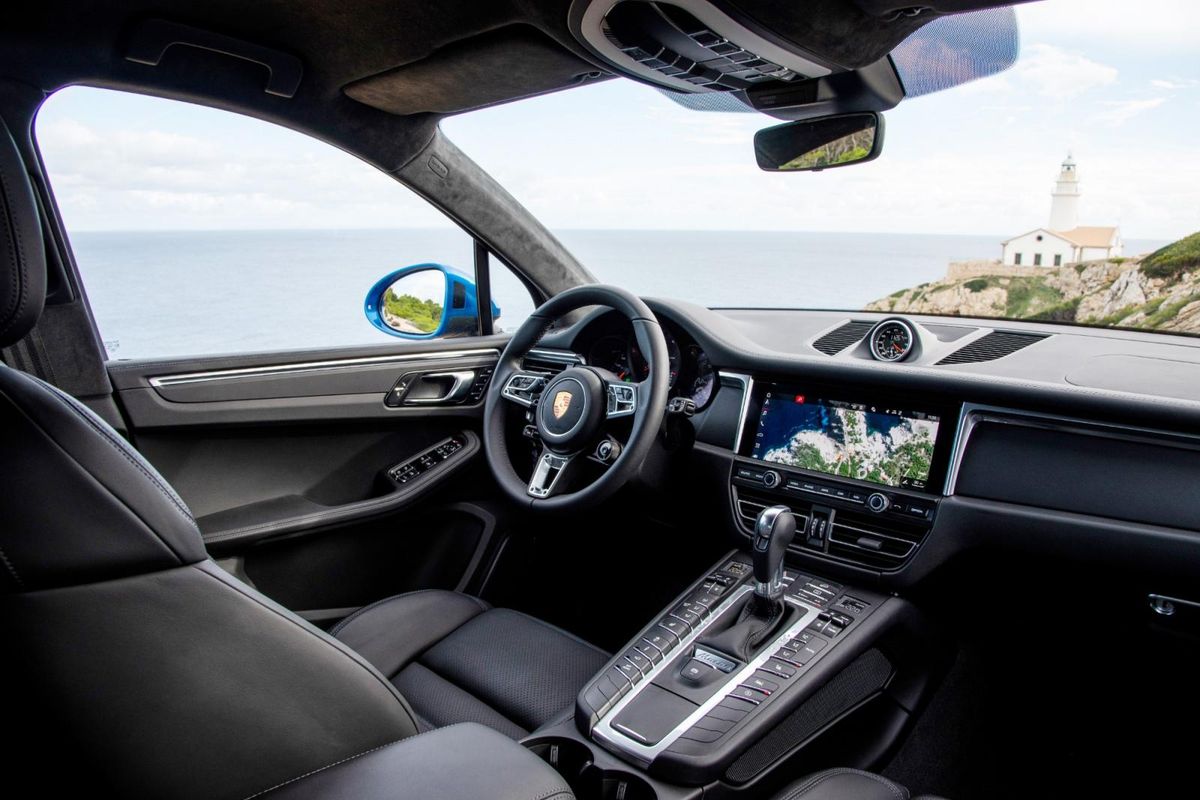
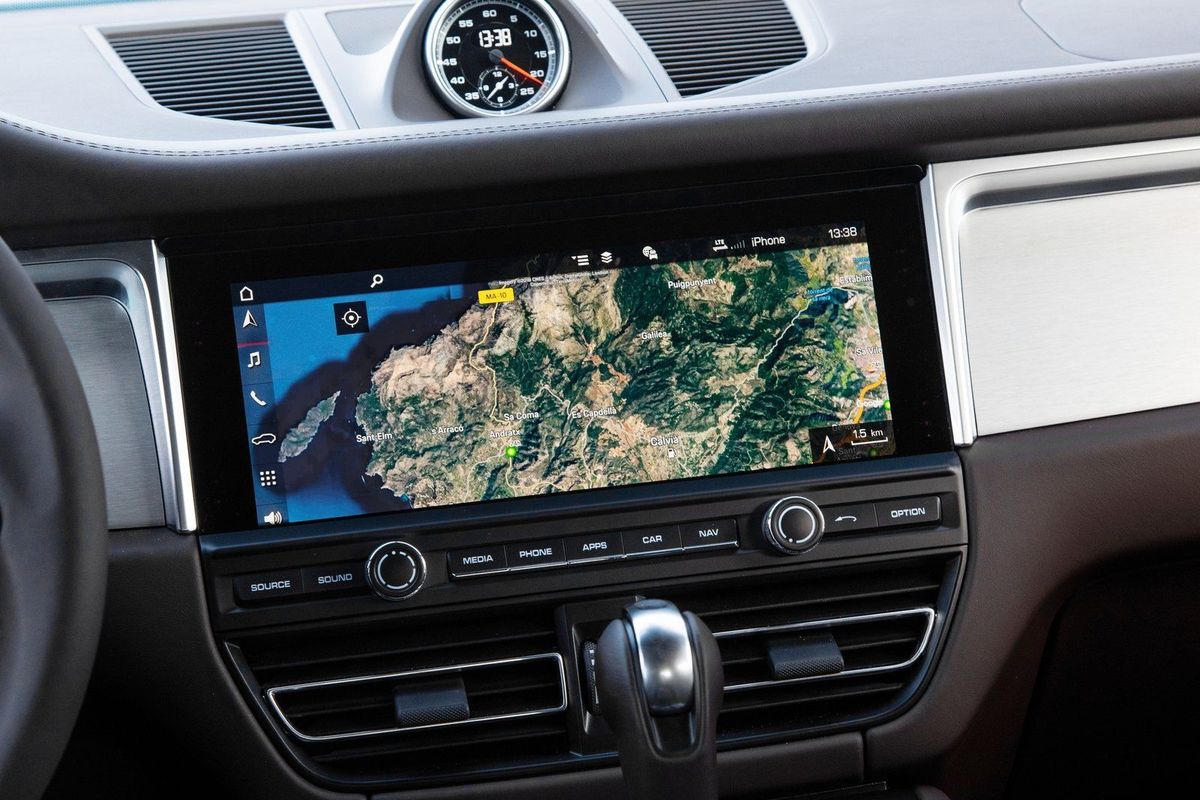
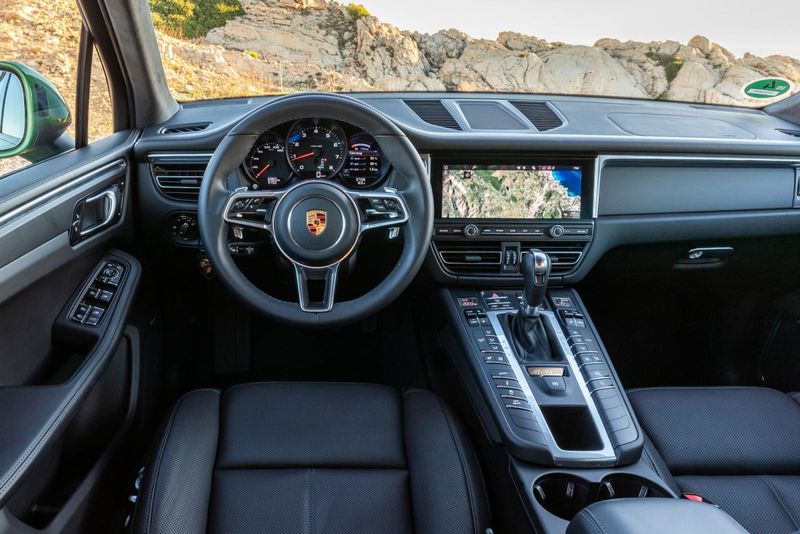
The fascia is dominated by the new 10.9-inch display screen and note the revised ventilation outlet positioning.
Given the younger owner profile of the Macan, a thoroughly up-to-date cabin with all the latest tech was a must-have. Porsche even had to shuffle some architecture around to accommodate the impressive (and standard) new 10.9 inch PCM infotainment screen. The previous Macan featured vertical ventilation outlets flanking the infotainment system, but given the size of the new screen, those vents had to move. They're housed beneath the screen now, neatly integrated into the fascia. Connect Plus is standard in the new Macan, giving drivers access to a number of Internet-based services. Also included are Apple CarPlay and voice control, the latter not only for navigation inputs but also for music and some vehicle functions.
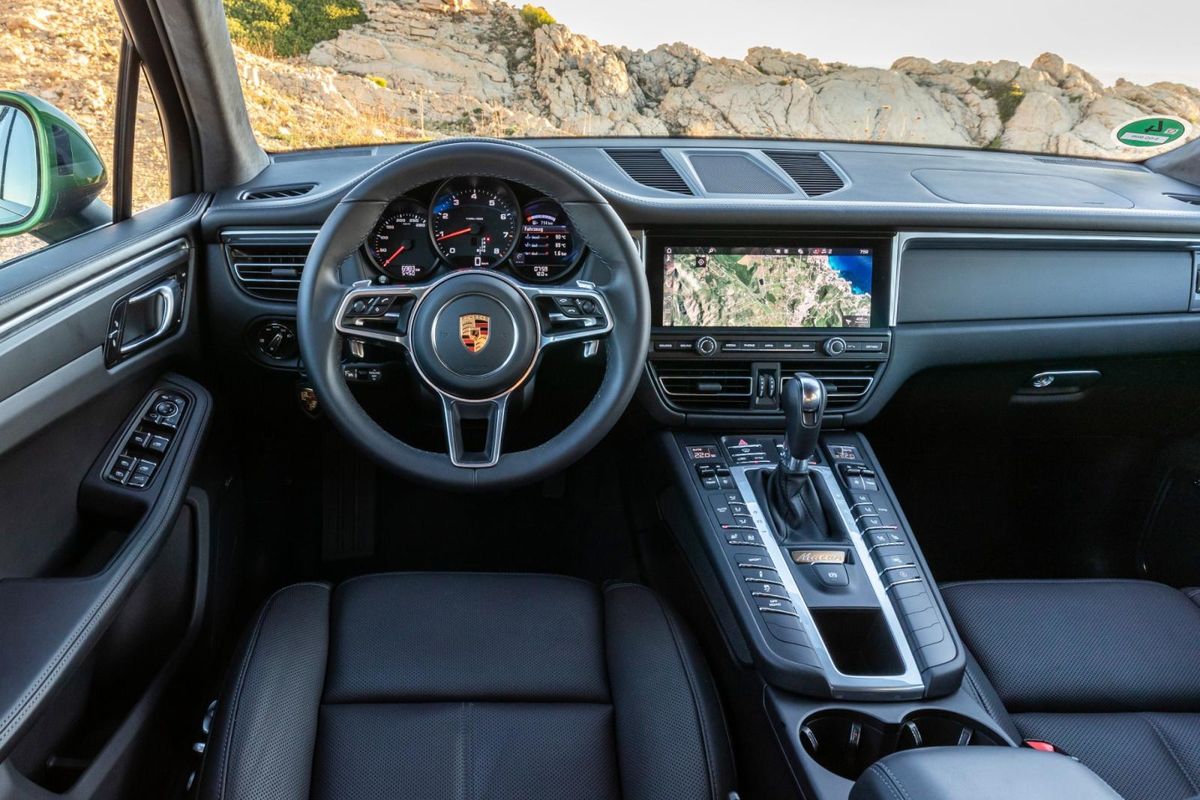
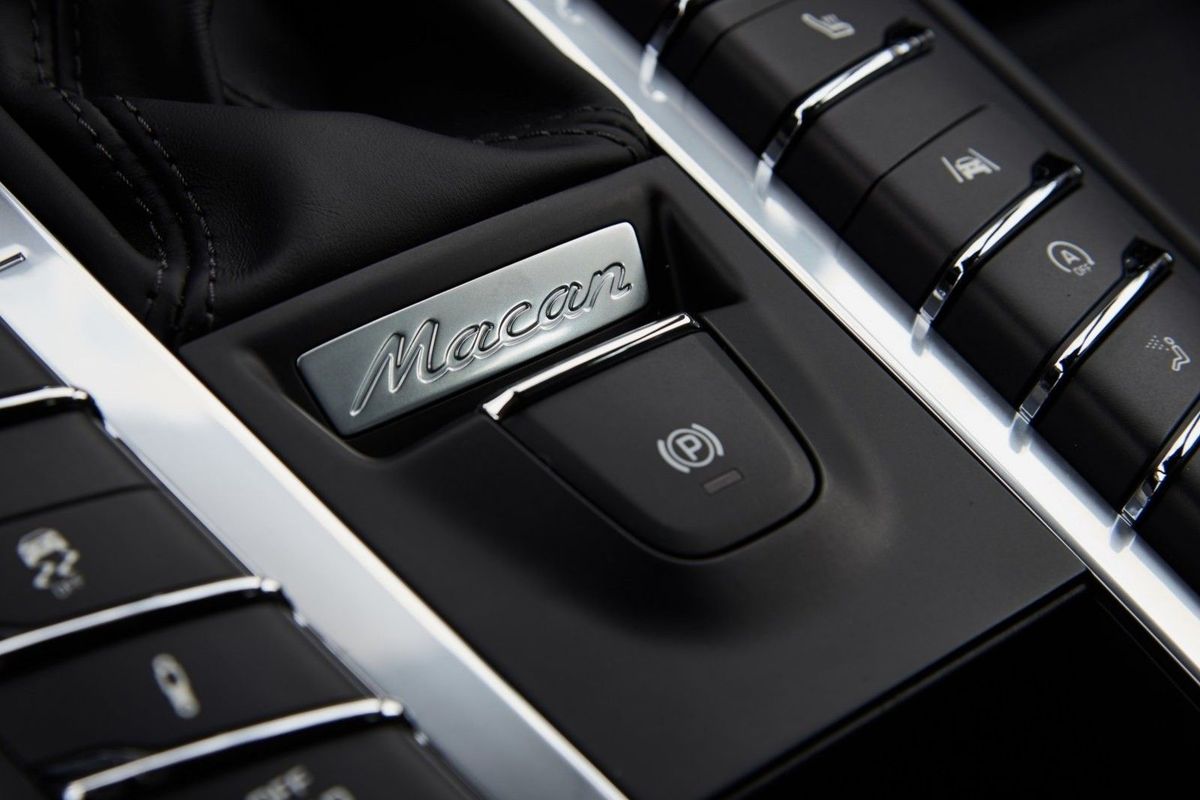
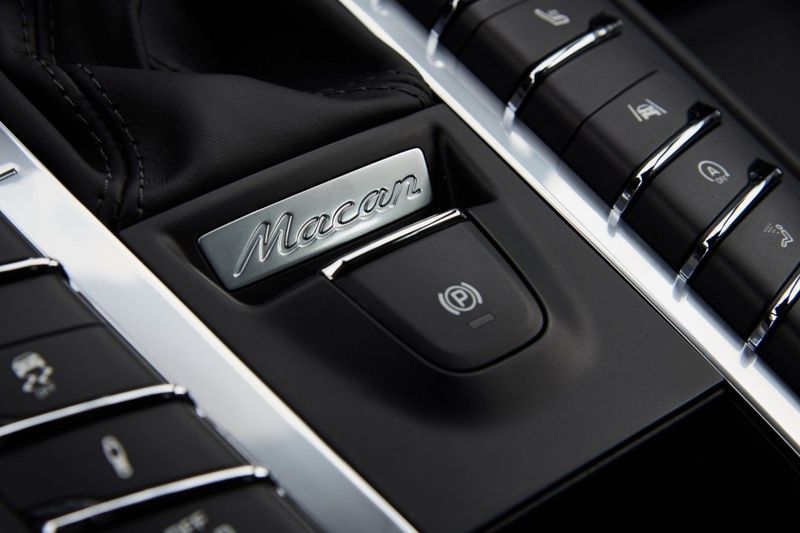
Interestingly, while the new infotainment system lends the Macan interior a very modern look, the transmission tunnel still features a multitude of physical buttons – a hint at the car's age within a Porsche line-up that is being updated very quickly. Personally, I like the sense of precision that pressing these buttons give. In fact, it's worth highlighting the overall feeling of solidity in the Macan's cabin. You're always reminded that you're behind the steering wheel of something substantial.
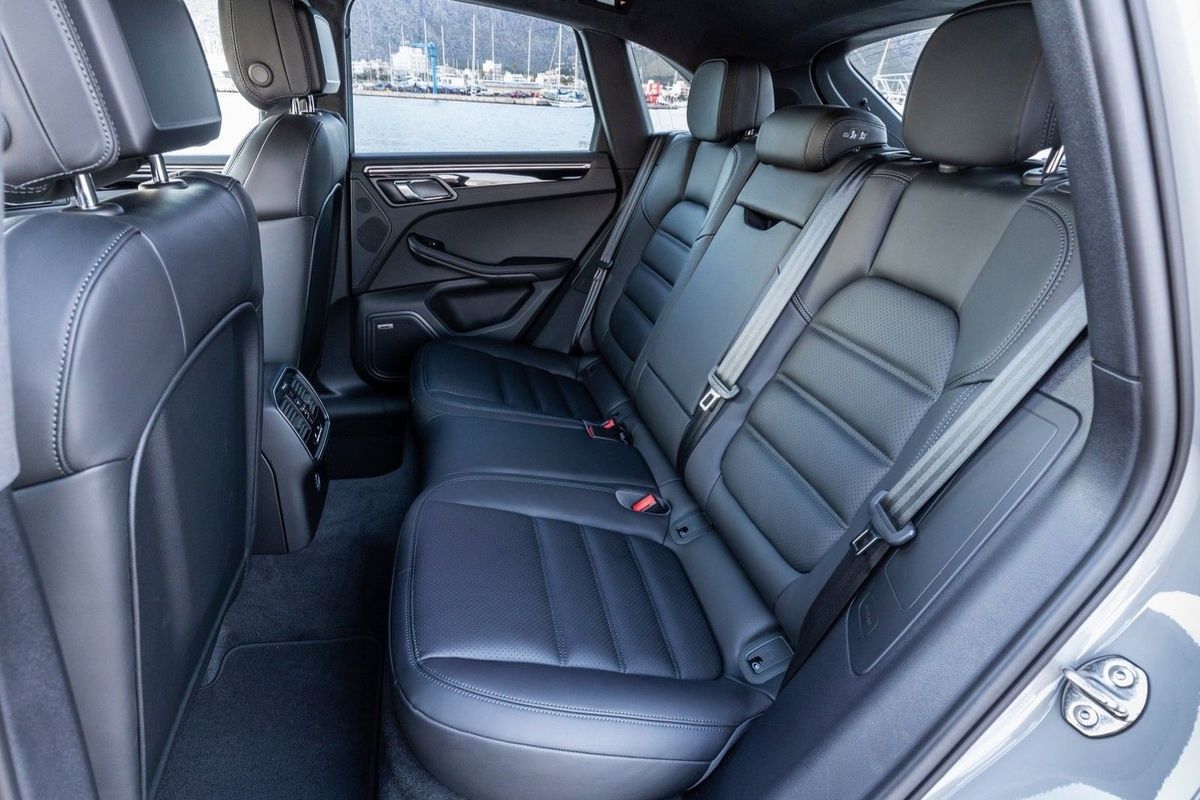
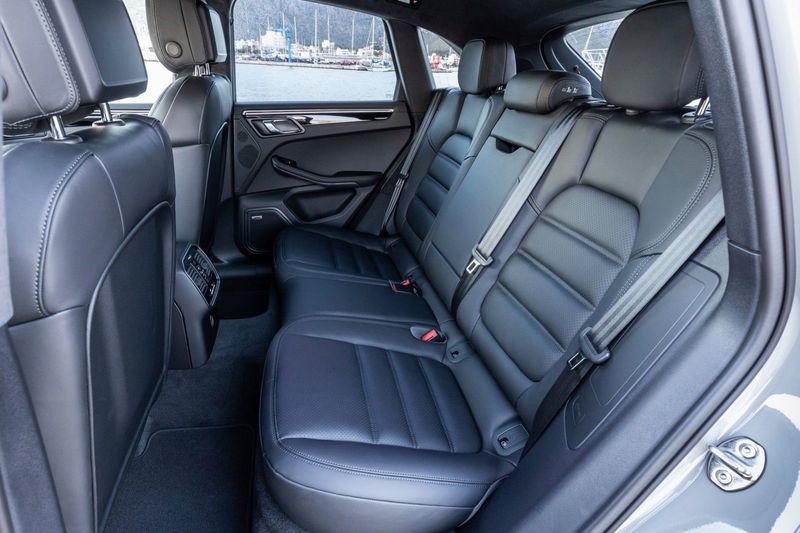
Rear legroom is decent, provided those seated in the front are not too tall.
The driving position is spot-on with the steering wheel offering a wide range of adjustability (Porsche is now offering the 911's GT sports steering wheel on the Macan, as an option). Many years ago a designer at Audi told me that one of the best ways to create the sense of being in a very performance-vehicle is to have a high transmission tunnel – and the Macan certainly has that.
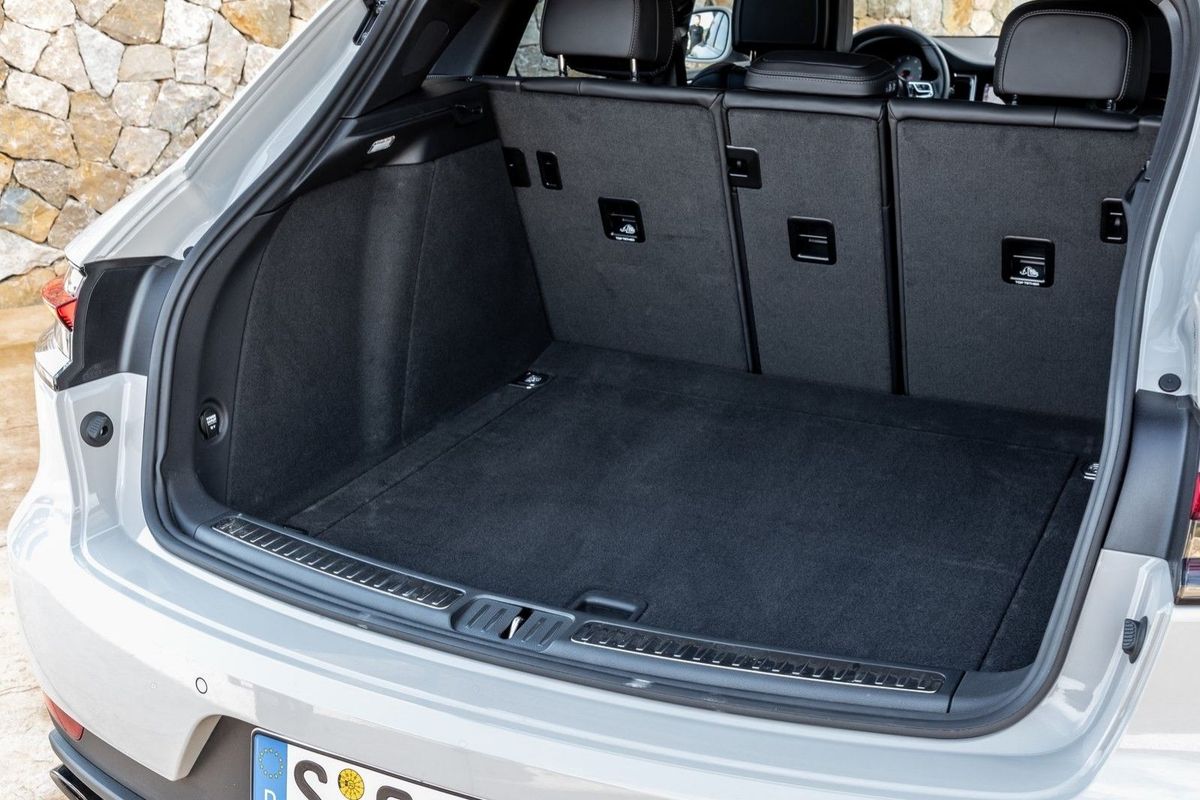
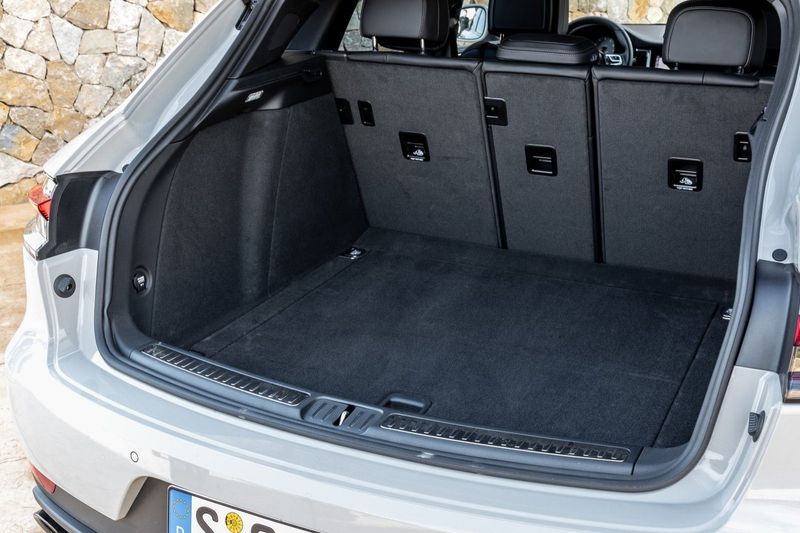
And yet, despite this focus on creating a very sporting driving environment, the Macan's cabin is not impractical. The load bay is of a very decent size, in fact, and rear legroom is certainly acceptable provided those in front are not too tall.
Punchy performance
The Macan has a lower centre of gravity than most other crossovers/SUVs, assisting it in delivering class-best handling.
At launch Porsche is offering 2 derivatives. The base Macan is powered by an enhanced turbocharged 2.0-litre 4-cylinder engine that delivers 180 kW and 370 Nm of torque. The "S" gets a new twin-scroll turbocharged 3.0-litre V6 that punches out 260 kW and 480 Nm. Both derivatives feature the 7-speed dual-clutch (PDK) transmission and all-wheel drive.
We were given the opportunity to drive the 4-cylinder Macan during the launch event and while we obviously look forward to giving the "S" a drive at a later date, the base version still provides more than adequate performance. Porsche claims a 0-100kph time of 6.7 seconds and a 225-kph top speed. Left to its own devices the 7-speed 'box will try and get to its higher gears as quickly as possible for optimal efficiency (8.1 L/100km claimed), so if you'd like your car to deliver immediate throttle response, then it may be wise to always make sure the transmission is in one of its sportier modes. Of course, you can always shift manually, and the PDK reacts very swiftly to inputs. And the sound? Well, it obviously doesn't emit the kind of note that will please Porsche purists, but there's quite a lot of Vrrr-pah, and that seems to go down well in South Africa anyway, doesn't it?
The Macan's boot is surprisingly large given the overall compact appearance of the vehicle.
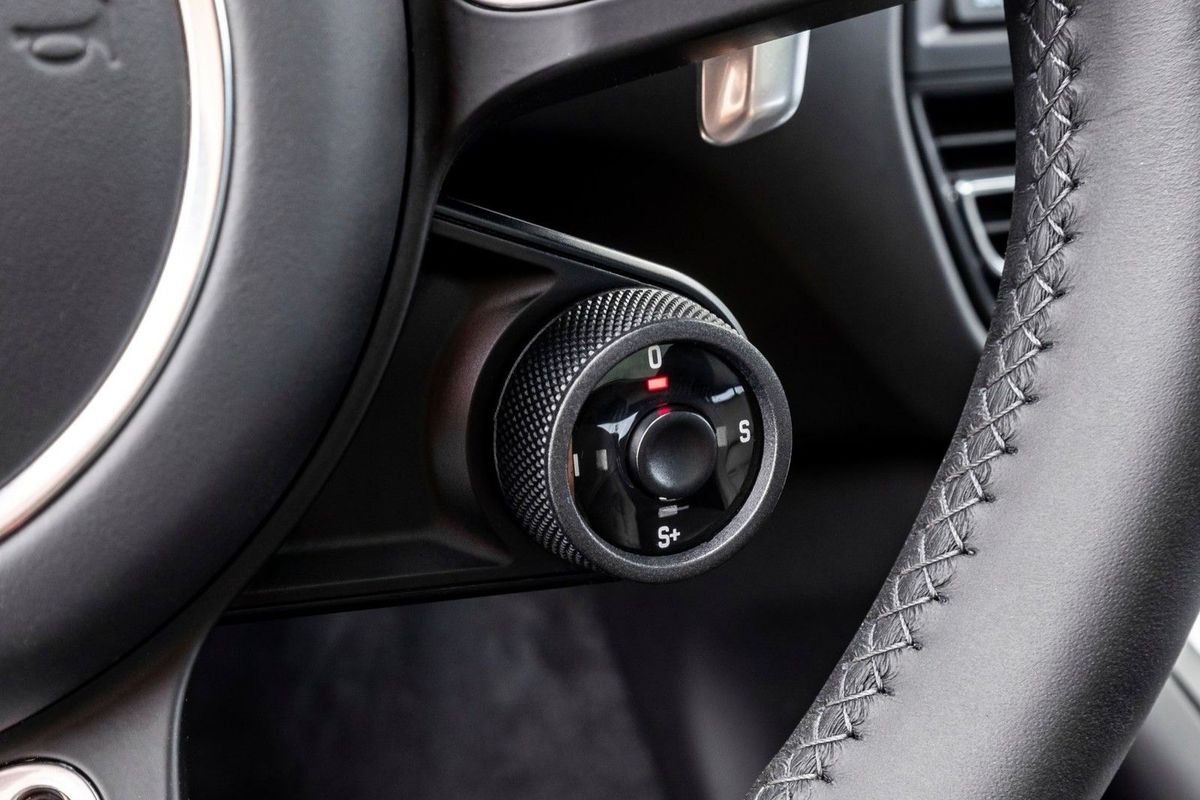
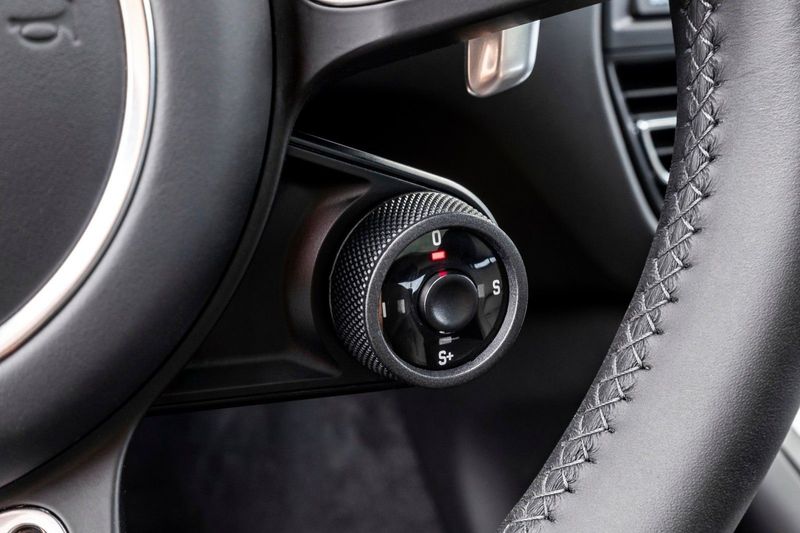
As ever, Porsche's Sport Chrono is a worthwhile optional extra. It costs just over R20 000 and allows the driver to better tailor the drivetrain to their specific requirements. In addition to Normal, Sport and Sport Plus driving modes it is also possible to set up your own Individual Mode. The Sport Chrono Package can now also be operated via a mode switch integrated into the steering wheel (as you would on many top-end supercars), and there is a Sport Response button that immediately boosts the responsiveness of the Macan to a maximum for 20 seconds.
Sadly we didn't get to drive the "S", but with a 0-100 kph time of 5.1 seconds and a 254-kph top speed, it promises to be thrilling to drive.
Dynamism delivered
Now offered on the Macan is a steering wheel which incorporates the Sport Chrono mode switch.
Terms such as "steering precision", "turn-in behaviour" and "improved lateral dynamics" are not ones you'll often find used as prominently in a press release for a compact executive crossover, but it's very clear that further fine-tuned handling was a high priority for Porsche. No wonder the local importers so confidently directed us to some of the best driving roads in the Western Cape, including several mountain passes.
There really is a beautiful precision and directness to the steering that one doesn't often find in vehicles of this type. Body roll and jaw movement are impressively controlled in the corners and yet the Macan is not overly stiff when the road surface deteriorates. The upshot of its lower centre of gravity (compared with other SUVs) is that the suspension doesn't have to be so stiff to counter roll in the corners, and that's certainly the impression it makes in its more comfortable modes – despite its handling prowess, this remains a comfortable daily driver.
With mixed-size tyres, fine-tuned brakes, more rigid engine mountings and other tweaks, the Macan drives like a welll-sorted sports sedan.
There has been an awful lot of detail work under the skin. At the front axle, for example, the spring forks are now made of aluminium, not steel. The new design is not only more rigid, which improves the steering precision, but also reduces the unsprung mass of the vehicle by around 1.5 kg.
Unique in this segment is the use of mix tyres, ranging from 235/60 R18 to 265/40 R21 on the front axle and between 255/55 R18 and 295/35 R21 on the rear axle. This detail also improves steering precision and turn-in, Porsche claims. If you want to further expand the ranges of dynamism and comfort available, then note that PASM active damper control, height-adjustable air suspension and Porsche Torque Vectoring Plus (PTV Plus) remain optionally available. When fitted with the Sport Chrono Package, there is a separately selectable PSM Sport mode that allows drivers to really push the limits of the Macan's abilities, but while PSM keeps a watchful eye in the background.
The transmission tunnel still features a vast number of physical buttons.
Porsche's fettling also aimed to improve the Macan's braking "feel". It threw out the previous steel brake pedal and replaced it with what it calls an "organic sheet" unit, made of moulded, glass fibre-reinforced thermoplastic sheet material with a plastic rib structure. The pedal is only 300g lighter, but Porsche claims that combined with the shortened lever arm, brake response is more immediate and the feel enhanced because there is a very precise pressure point, courtesy of the more rigid connection to the brake master cylinder. On the "S" derivative there are larger front brake discs and it can also be specified with Porsche's PCCB ceramic brake system.
Out on the passes around the Western Cape, the Macan (even in entry-level guise) feels more like a sorted sports sedan than an SUV. But arguably it's greatest talent is that it combines its obvious dynamic talents with a comfortable, quiet and luxurious experience away from the twisties.
Summary
The Macan is an attractively priced sports-SUV, particularly so if you attach significant value to the badge on its nose. But thankfully the Macan doesn't come across as a product of badge-engineering at all. In terms of the cabin's look and feel from the behind the steering the wheel, the way the controls respond to driver inputs and, most importantly, the manner in which it delivers both thrilling dynamics and general comfort, this is a very impressive little machine and worthy of the Porsche badge. It's likely to continue its healthy contribution to the company's bottom line.
Pricing
The Macan sells for R849 000 and the "S" for R1 049 000, both inclusive of the 3-Year DrivePlan.
All-New Renault Koleos: A Complete Overview [Video]
An all-new generation of Renault’s flagship SUV is now available in South Africa. Sporting a thoroughly modern design, a premium interior and impressive tech, the Koleos is a powerful presence in the local family-car segment.
ADVERTORIAL
The newcomer's exterior design incorporates pure vision LED headlights and C-shaped daytime running lights, while the tail lights are also LED units. The car rides on 18-inch alloy wheels as standard and, overall, has a muscular, true-SUV aesthetic.
Inside, the Koleos' fascia is dominated by an 8.7-inch touchscreen multimedia infotainment system, while the instrument cluster is also digital. With GPS navigation, Android Auto and Apple Carplay compatibility, as well as voice recognition as standard, the infotainment system is comprehensive indeed. There are even nice touches, such as cup holders that heat or cool your drinks, and a reverse camera makes parking manoeuvres easier.
The Koleos is designed to add comfort and convenience to your lifestyle. Renault claims best-in-class seat comfort: the front seats are 6-way electrically adjustable and aft passengers are afforded generous kneeroom. The rear seatback splits 60:40 and can easily be folded forward to create additional luggage space if required.
True to Renault’s history, the Koleos offers uncompromised safety with a 5-star EuroNCAP safety rating, 6 airbags and a host of active safety technologies. Standard features such as blind-spot warning and front and rear parking sensors help keep you safe out on the road.
And of course, it wouldn’t be an SUV without the ability to head offroad. With 210 mm of ground clearance, drivers can tackle the rough stuff with ease with the help of All Mode 4×4-i Transmission with 3 drive modes.
The all-new Koleos is a spacious and comfortable mid-size SUV and the first of a host of new Renault models due in South Africa over the upcoming months.
Check out Cars.co.za for detailed information on specs and pricing and for a written review from our first drive at the local launch of the Koleos.
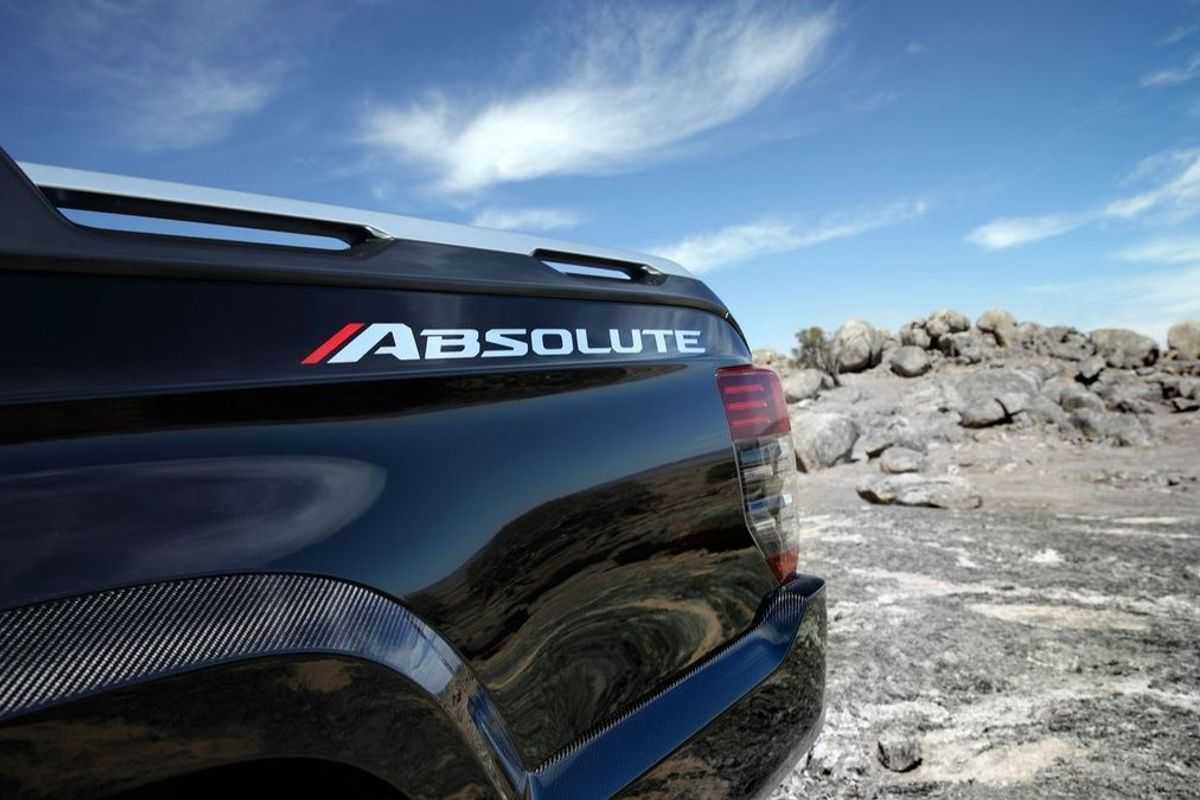
Forget about the Athlete, what you want is a new Triton Absolute.
Look and learn. This appears to be what Mitsubishi’s marketing staff have done with regards to the success Ford has achieved with the hype around its Range Raptor.
There appears to be no saturation point for limited-edition bakkies and to ensure the latest Triton is not forgotten amidst the interest generated by Ford’s Ranger Raptor and Toyotas Hilux GR Sport double-cabs, Mitsubishi’s built an Absolute.
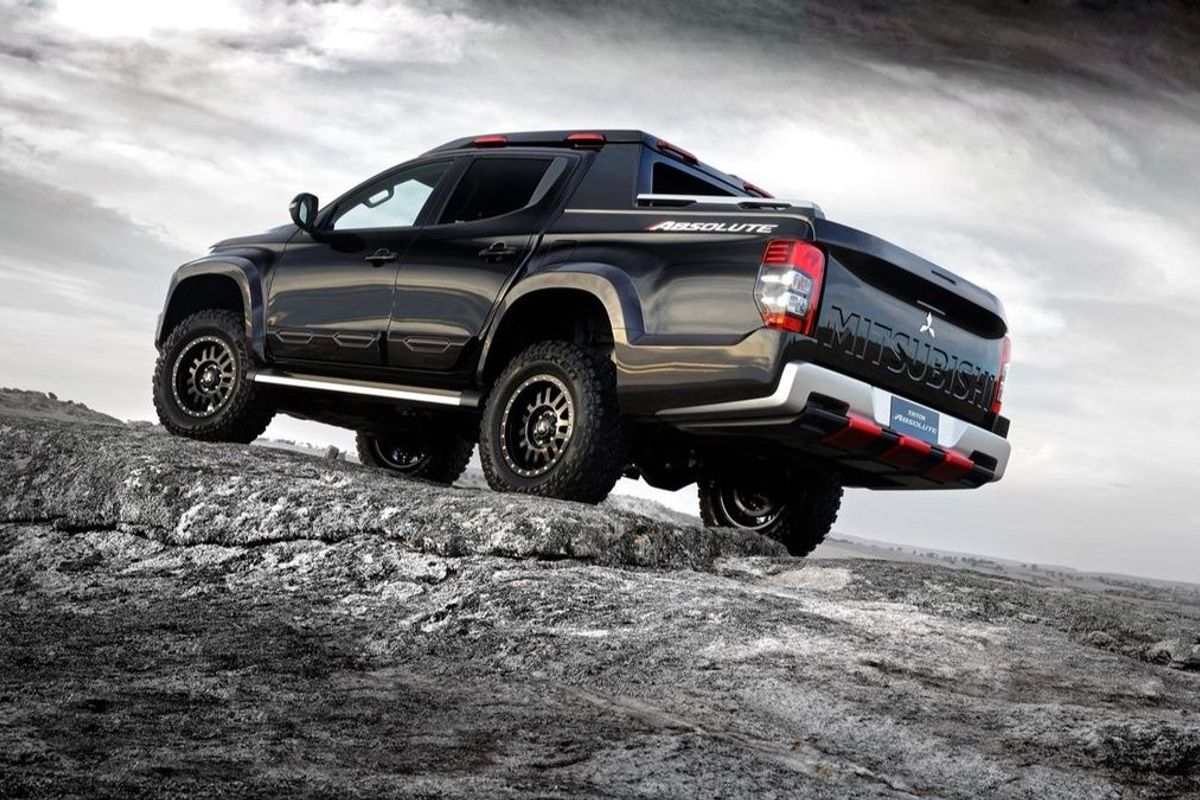
Debuted in Bangkok, Thailand, this week – the Absolute is a significantly more stylized version of the facelifted fifth-generation Triton, which is due to launch in South Africa within the next month. Built as a customer and marketing research project, Mitsubishi has given itself a year to gauge public opinion on this radical Triton, using that timeframe to evaluate a possible business case for these bakkies.
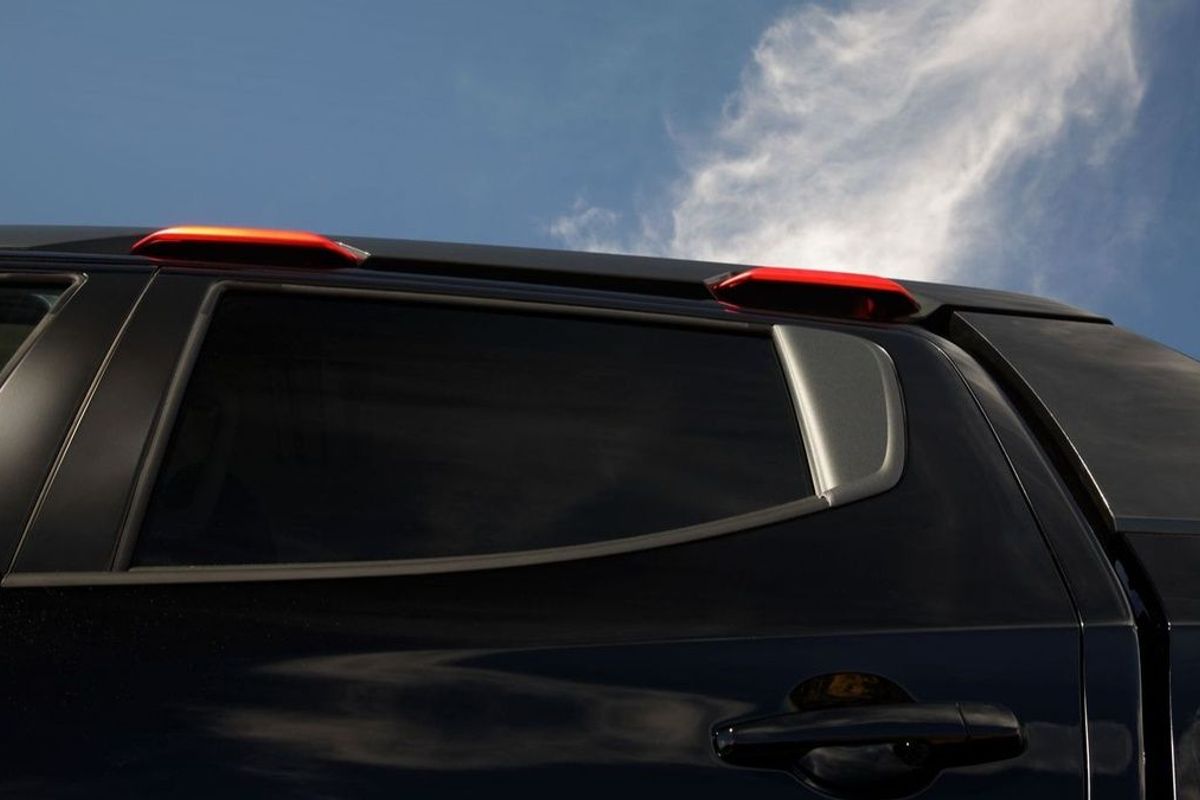
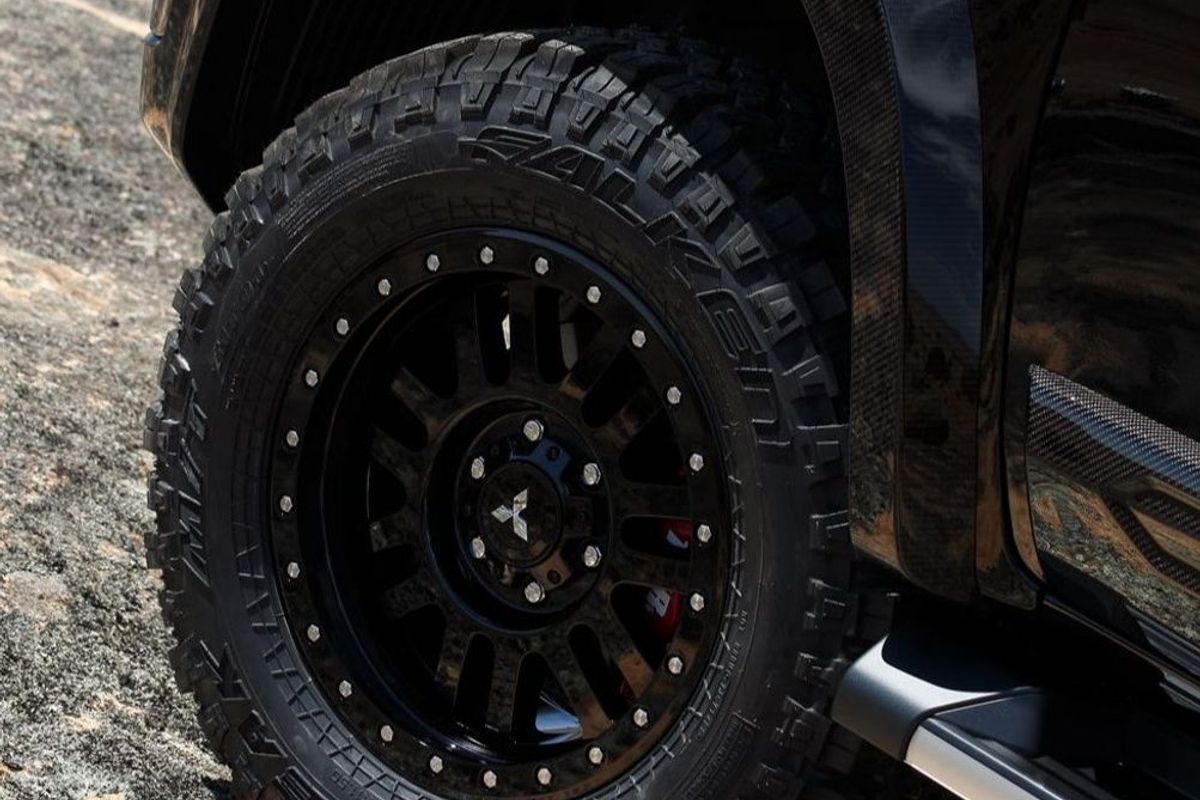
The Absolute’s design details are thoroughly different from a current production Triton. On the roof, you’ll find a carry-rail system which also features integrated LED spotlights, whilst the wheel arches are noticeably more flared, a requirement for the larger off-road specification beadlock wheels and Falken Wildpeak tyres.
Mitsubishi’s Triton Absolute has a notably more aggressive stance than the company’s production Tritons, rolling a wider track and standing 50mm taller too – courtesy of a reconfigured suspension set-up, allowing for greater wheel travel when traversing technical off-road terrain.
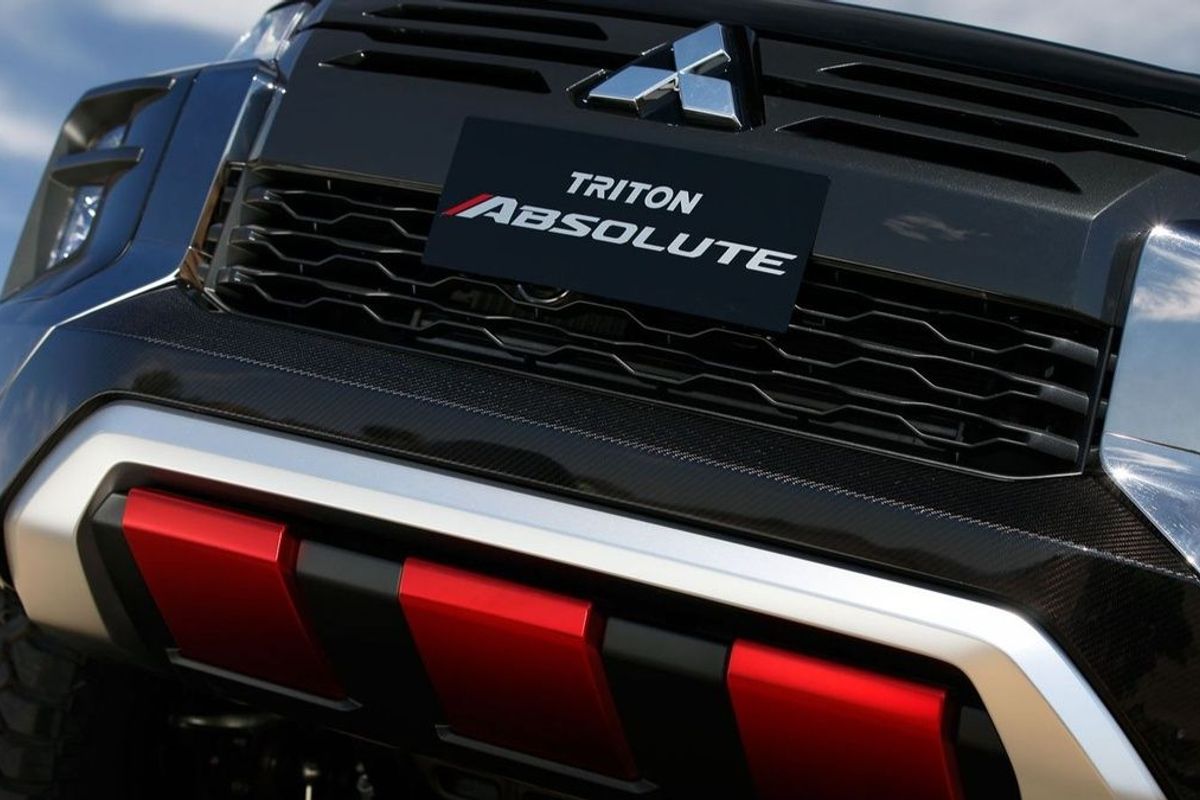
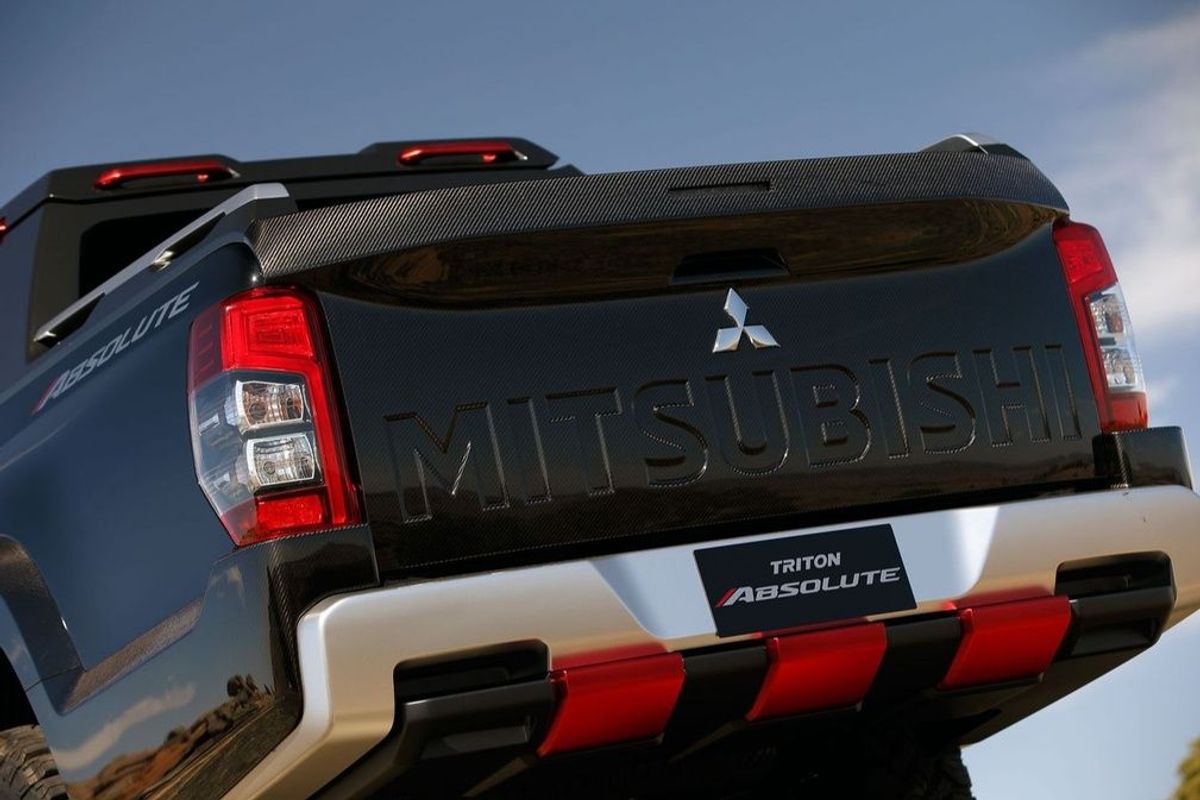
Other exterior upgrades include a blackened-out grille, front and rear skid plates which feature three red accent inserts each, chrome details and even a carbon-fibre tailgate. Yes, a carbon-fibre tailgate – which means that loading and unloading braai wood and mountain bikes will require a lot less effort with a Triton Absolute than most other bakkies, with steel tailgates.
Mitsubishi is unwilling to divulge exactly what the suspension upgrades entail which has gained Triton Absolute its 50mm ride height increase, but they do say there is an overall improvement in ride and handling too – which means that it might be something a bit more sophisticated than a simple spacer kit.
Engine and gearbox details have not been specified either, but much the same as Toyota’s Hilux GR Sport, conventional wisdom dictates that Triton Absolute will be powered by a standard 2.4-litre four-cylinder turbodiesel, boosting 133 kW and 430 Nm – like its less elaborately styled siblings.
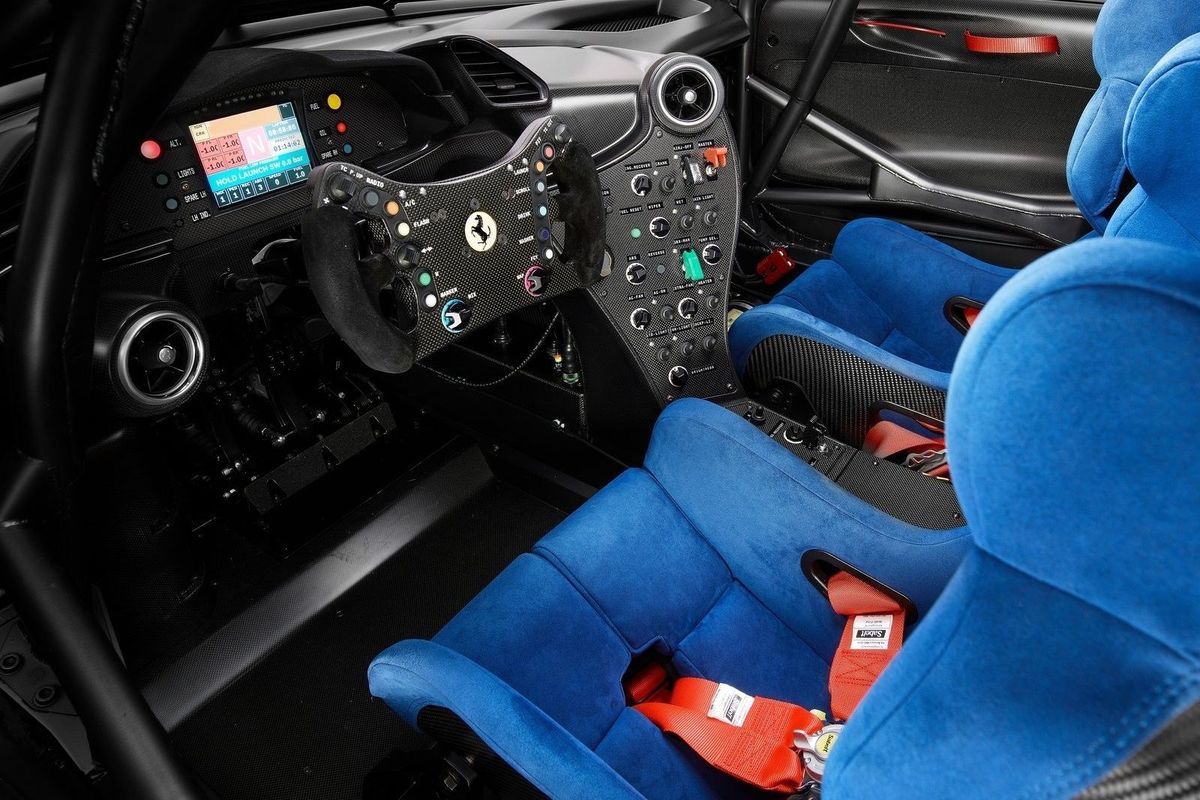
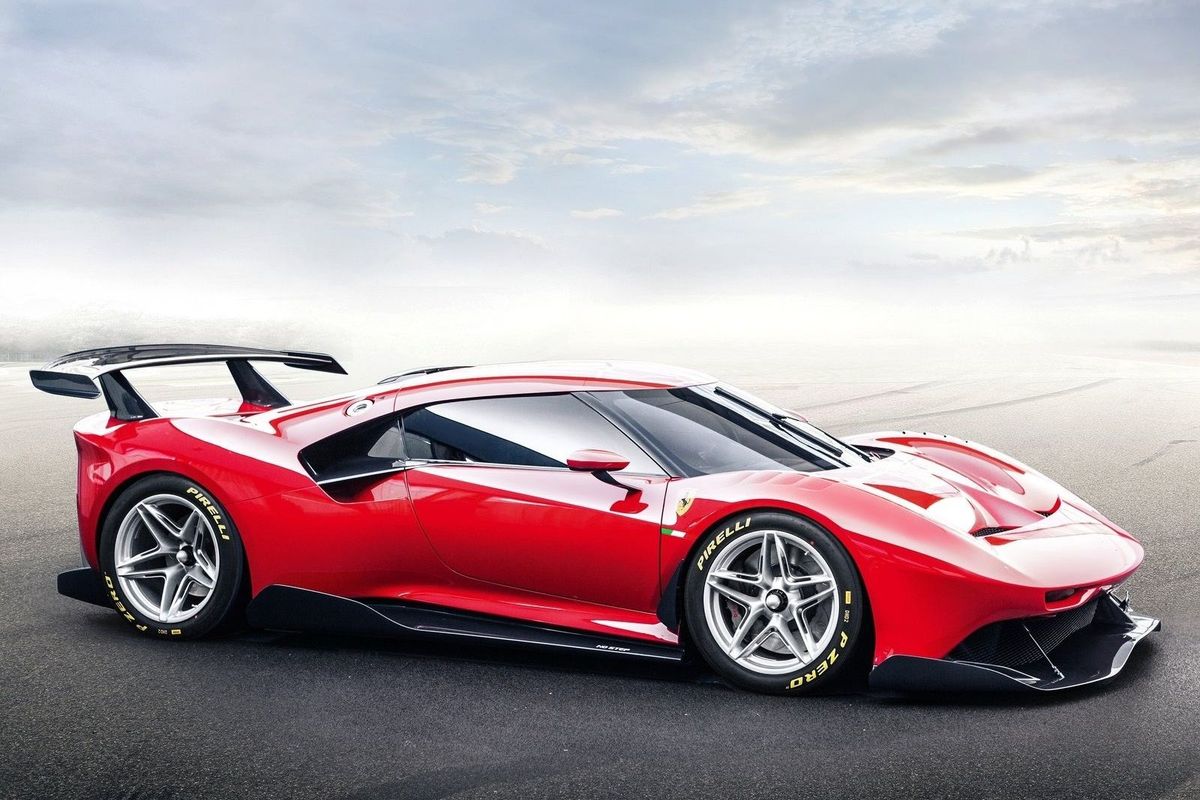
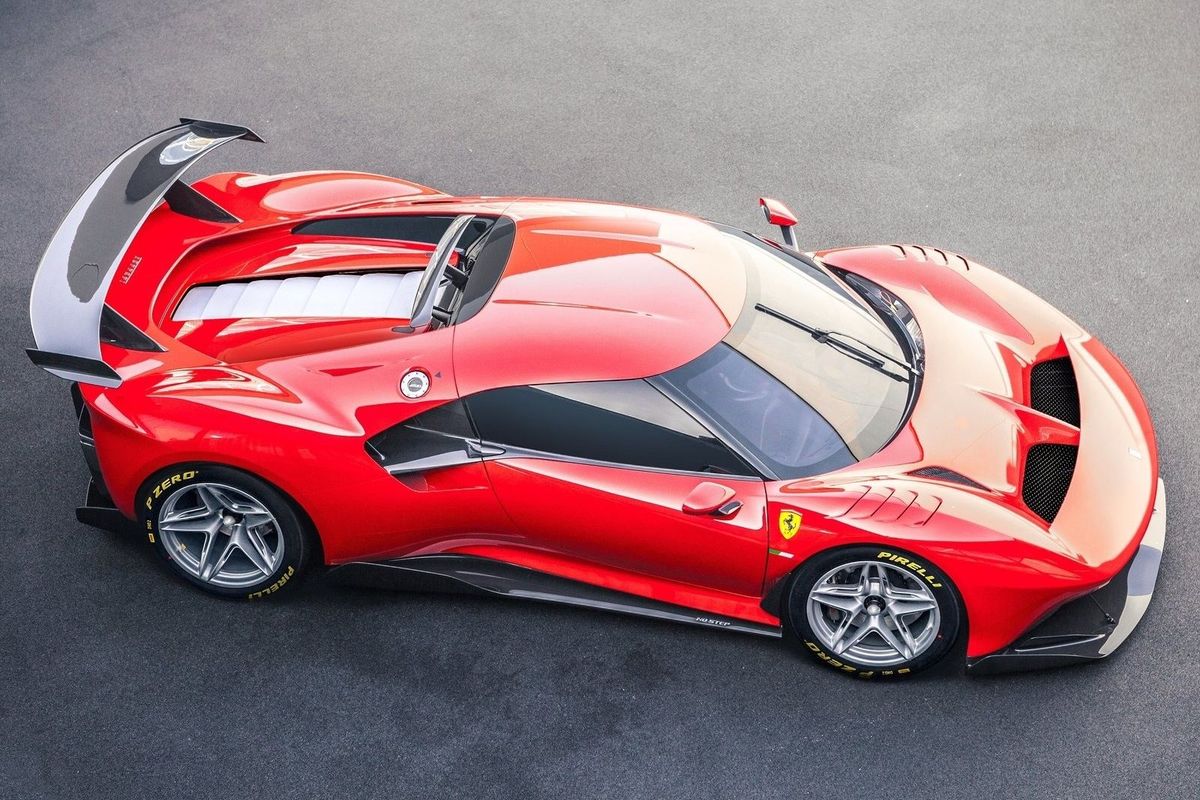
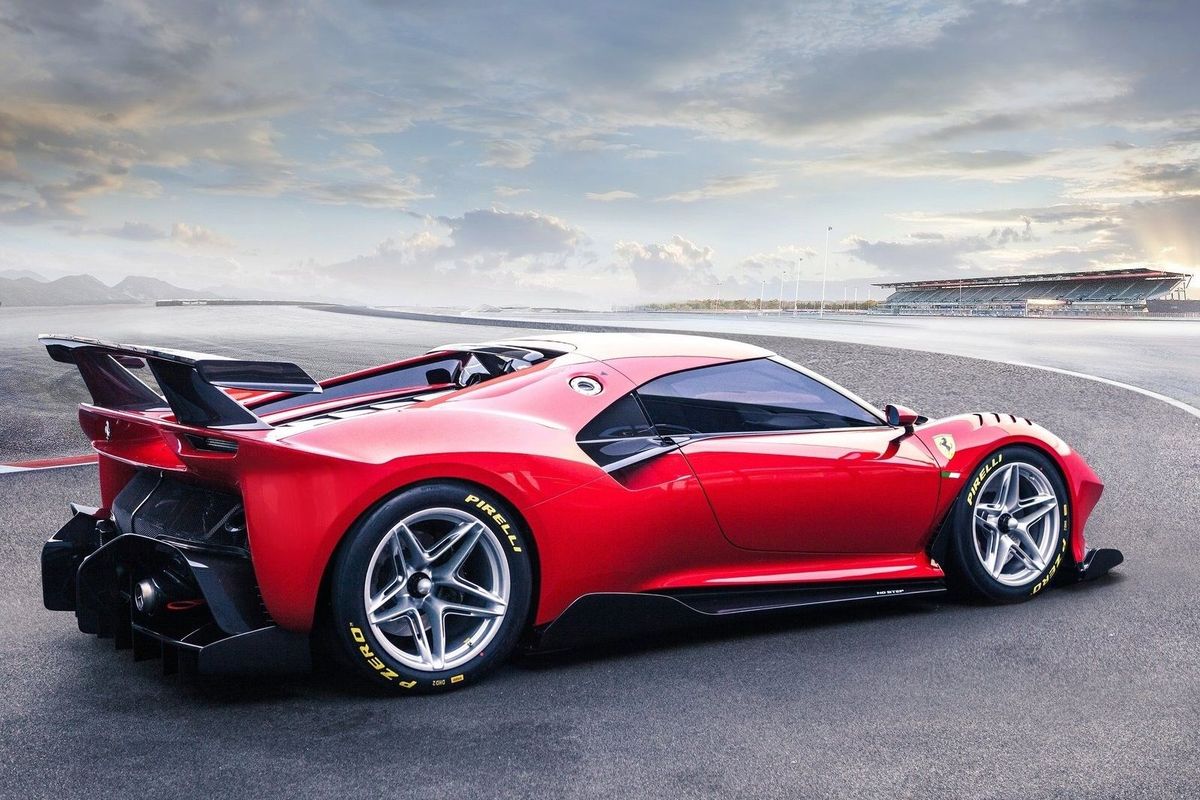
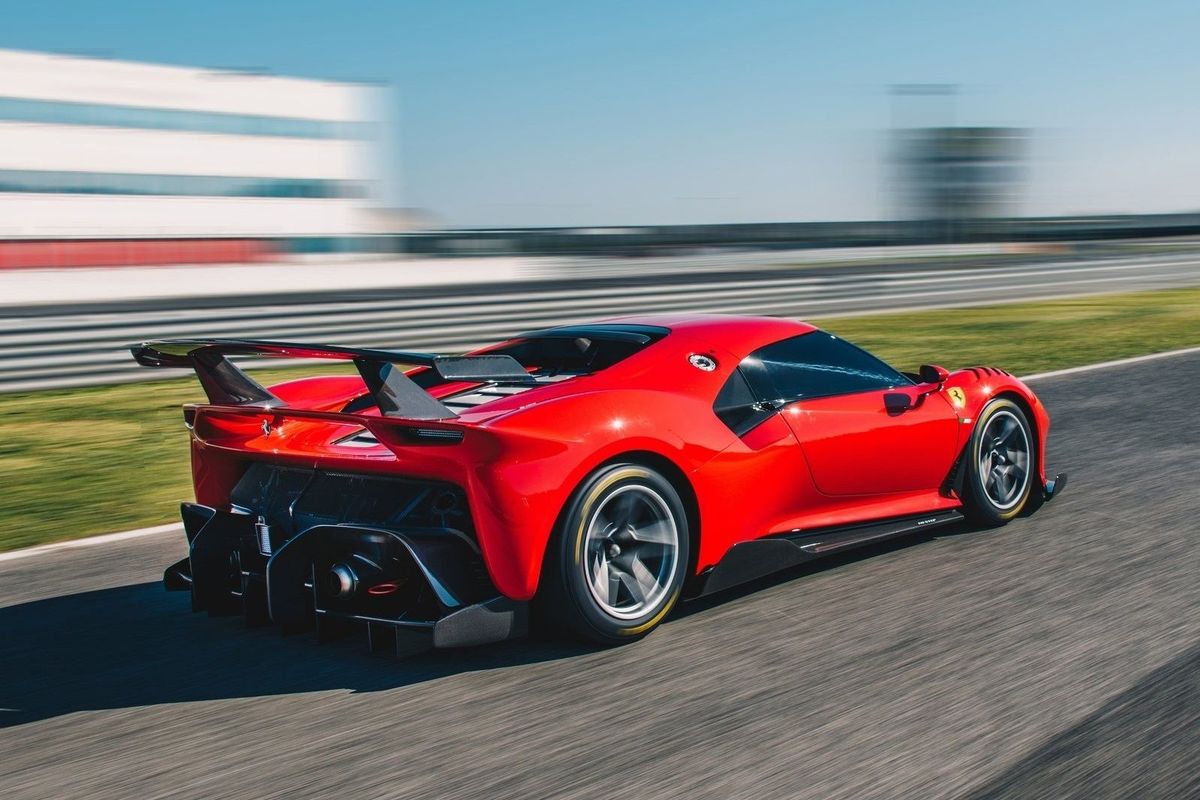
Ferrari has created a one-off special sportscar for a lucky customer. Meet the Ferrari P80/C.
The client is apparently a massive Ferrari collector and commissioned the one-off vehicle. The brief was simple: create a modern sports prototype inspired by the iconic 330 P3/P4 and 1966 Dino 206 S.
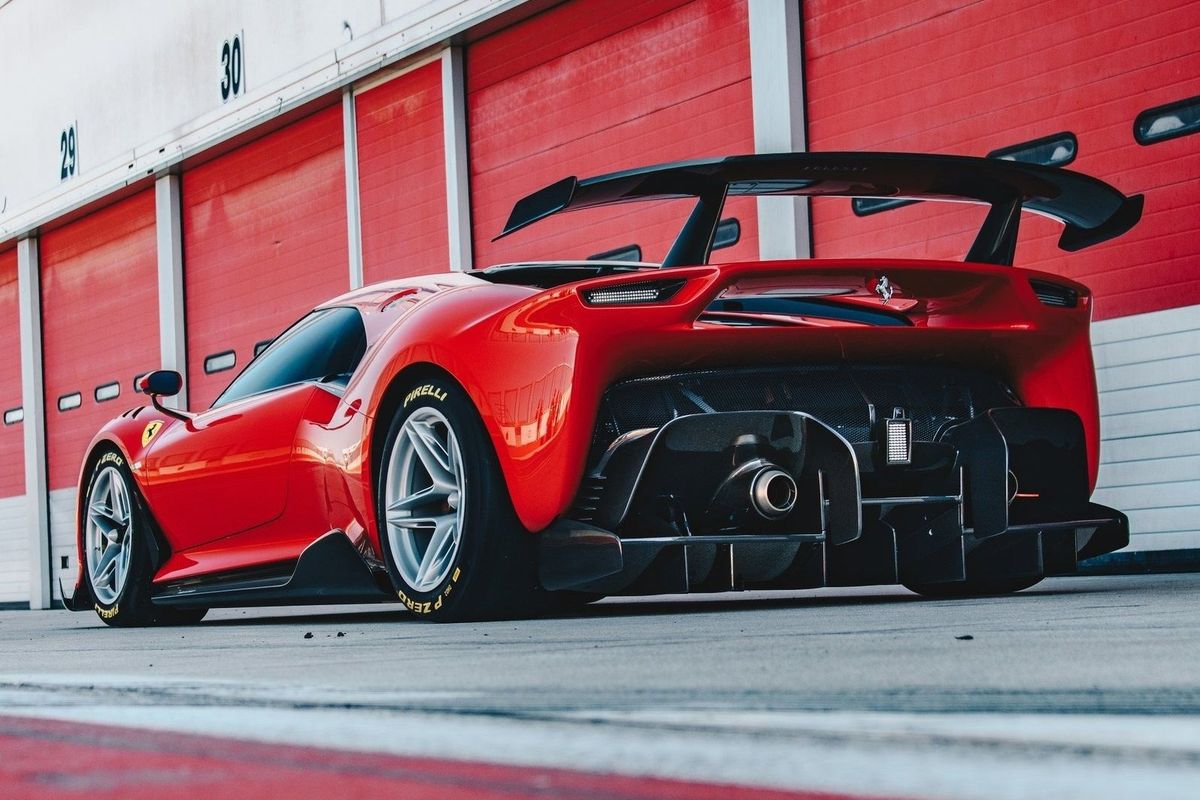
The project started in 2015 and according to Ferrari, the Ferrari P80/C project had the longest development time of any Ferrari one-off made to date. Typically, the Ferrari one-off program is essentially a current production model with a new-look skin, but the P80/C is something completely different. Using a 488 GT3 chassis as a basis, the P80/C is an out-and-out track car with performance its primary focus. There's extensive work done in the aerodynamics department, giving this Ferrari plenty of grip.
The customer also requested the car fulfil two roles. Firstly, a track racing setup which includes a massive wheel and 18-inch wheels, and secondly an exhibition package which features large 21-inch wheels but removed the big wing and aerodynamics, to highlight its actual shape. As for the price? Typically one-off Ferrari projects make no mention of how much money changed hands, but you can bet it was millions of Euros.