Hyundai Santa Fe 2.2D Premium (2019) Review
Most buyers looking for a 7-seater SUV will, in all likelihood, head straight to a Toyota or Ford dealership to sample the keenly priced Fortuner or Everest offerings, but are they perhaps missing out on another worthy contender in this segment? The Hyundai Santa Fe 2.2D Premium appears to be a strong product, but just how good is it? 

We like: Refinement, performance, excellent ride quality, spacious

We don’t like: Pricey

Fast Facts:

  • Price: R599 900 (as of February 2019)
  • Engine: 2.2-litre turbodiesel
  • Power/Torque: 142 kW/450 Nm 
  • Transmission: 8-speed automatic
  • Fuel economy: 7.8 L/100km (claimed)
  • Load capacity: 547 to 1 625 litres

Own a Hyundai? Tell us about your experience here

SERIOUS ABOUT BUYING?

Check full specification details and finance estimates here!

Some Hyundai dealers regularly offer specials, take a look at specials here!

What is it?
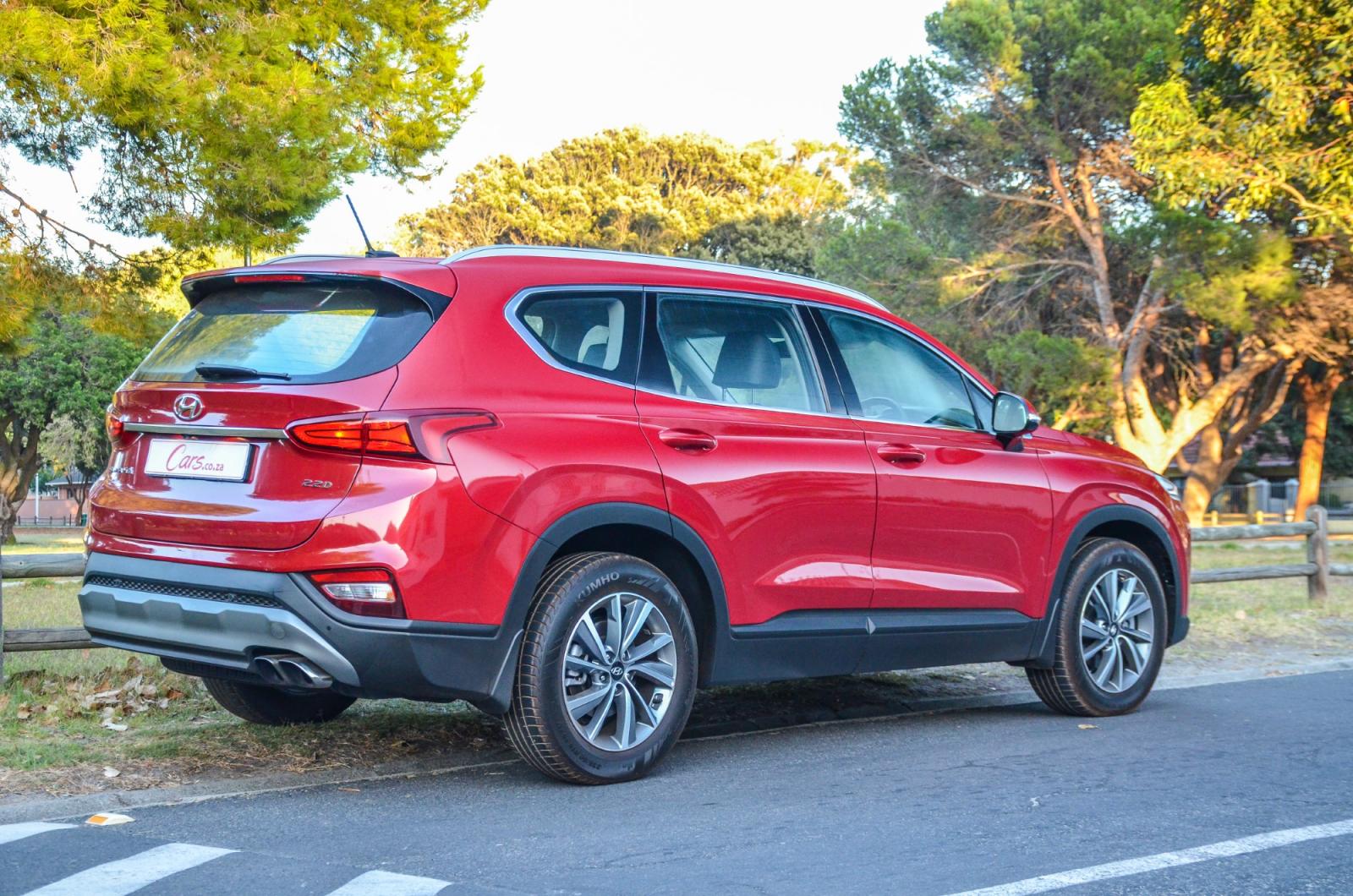

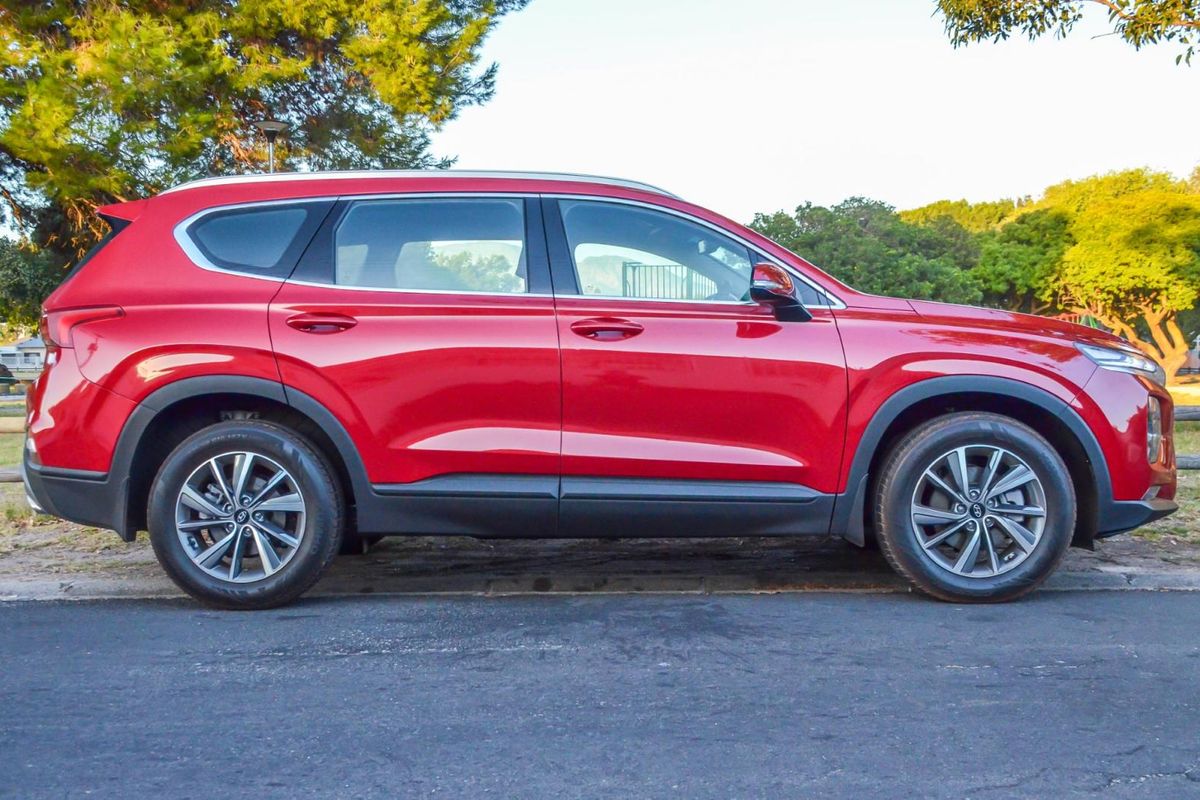
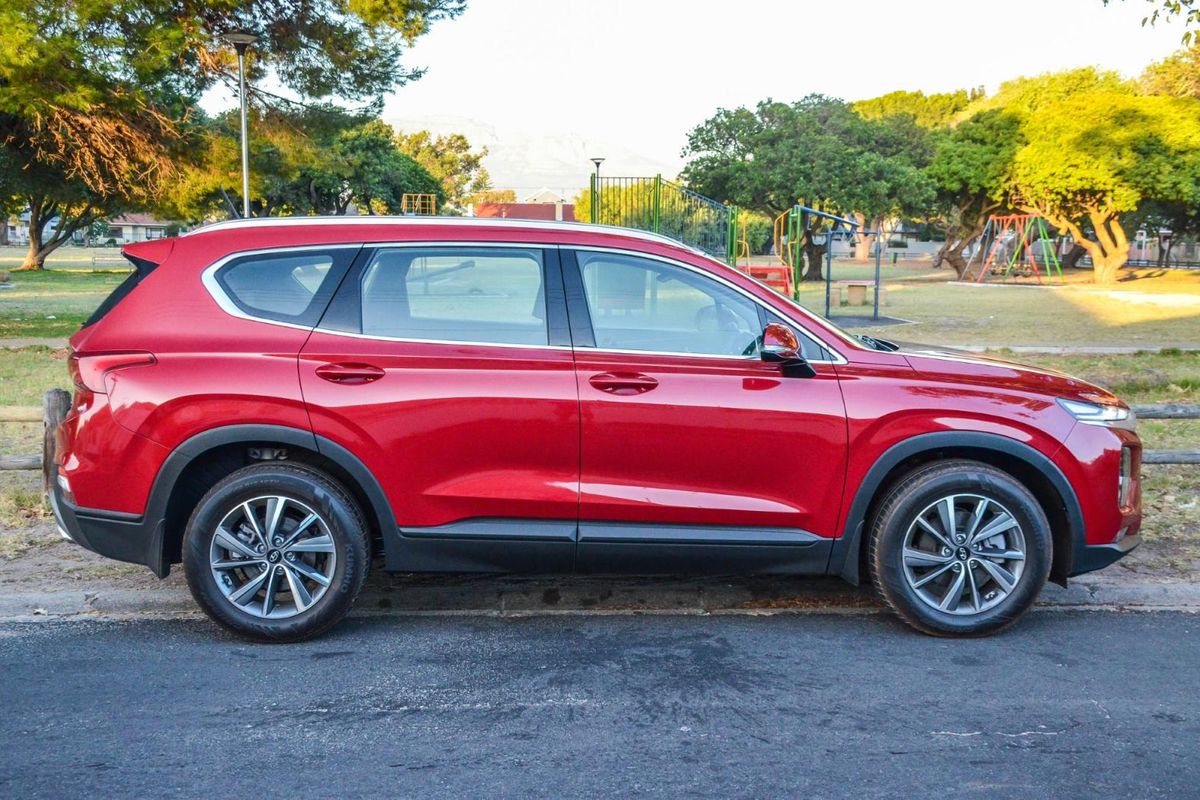
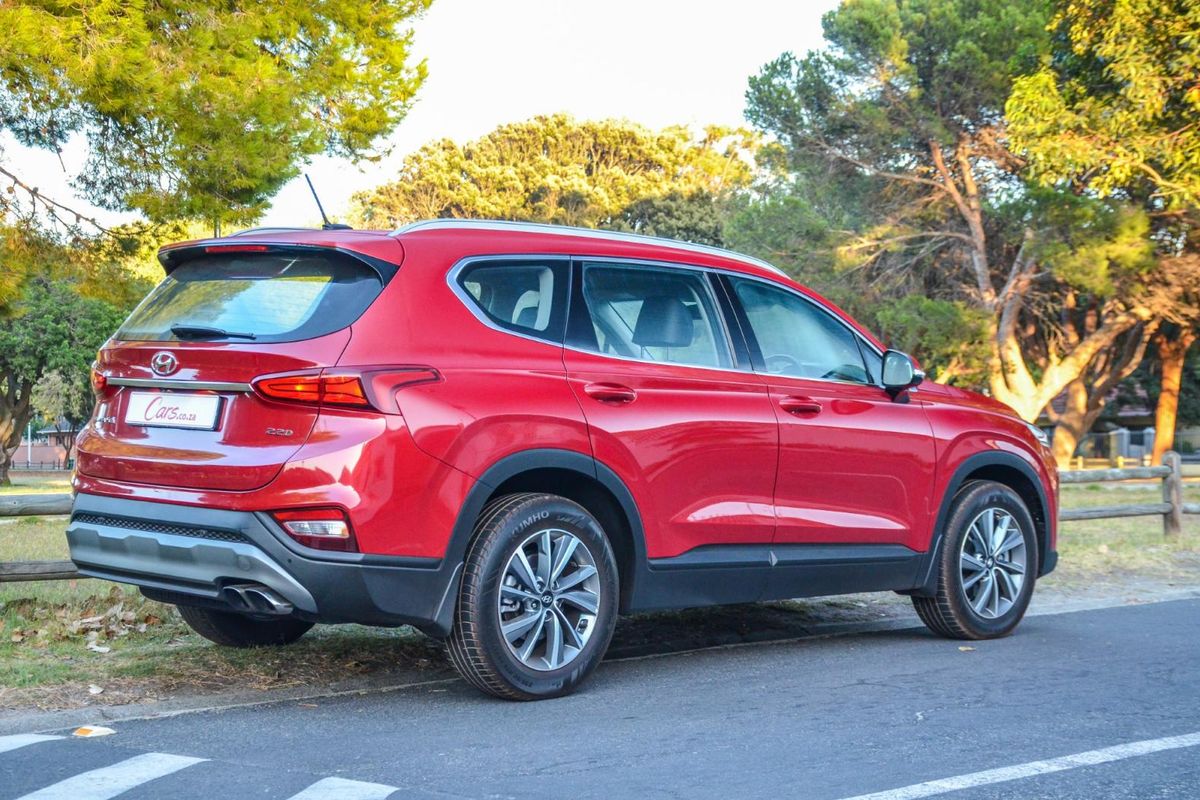
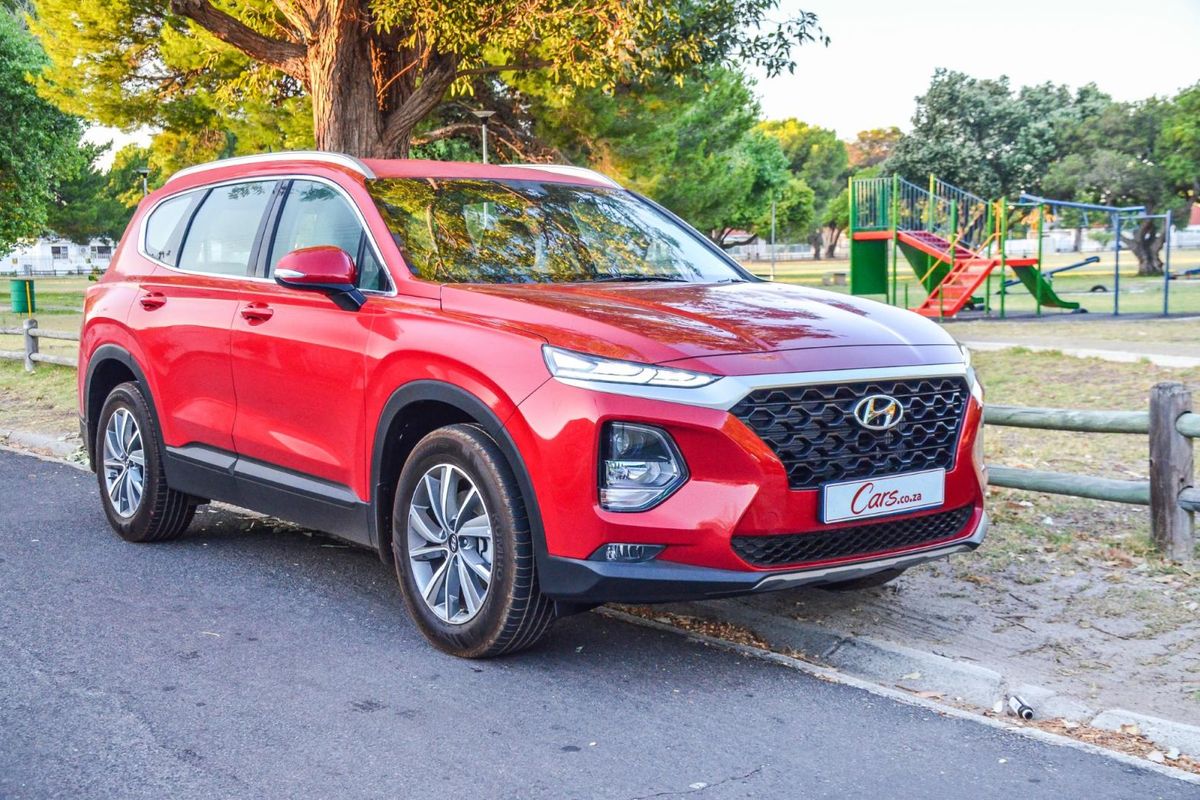
The new Santa Fe looks bolder than ever and comes well-equipped, even in base specification. 

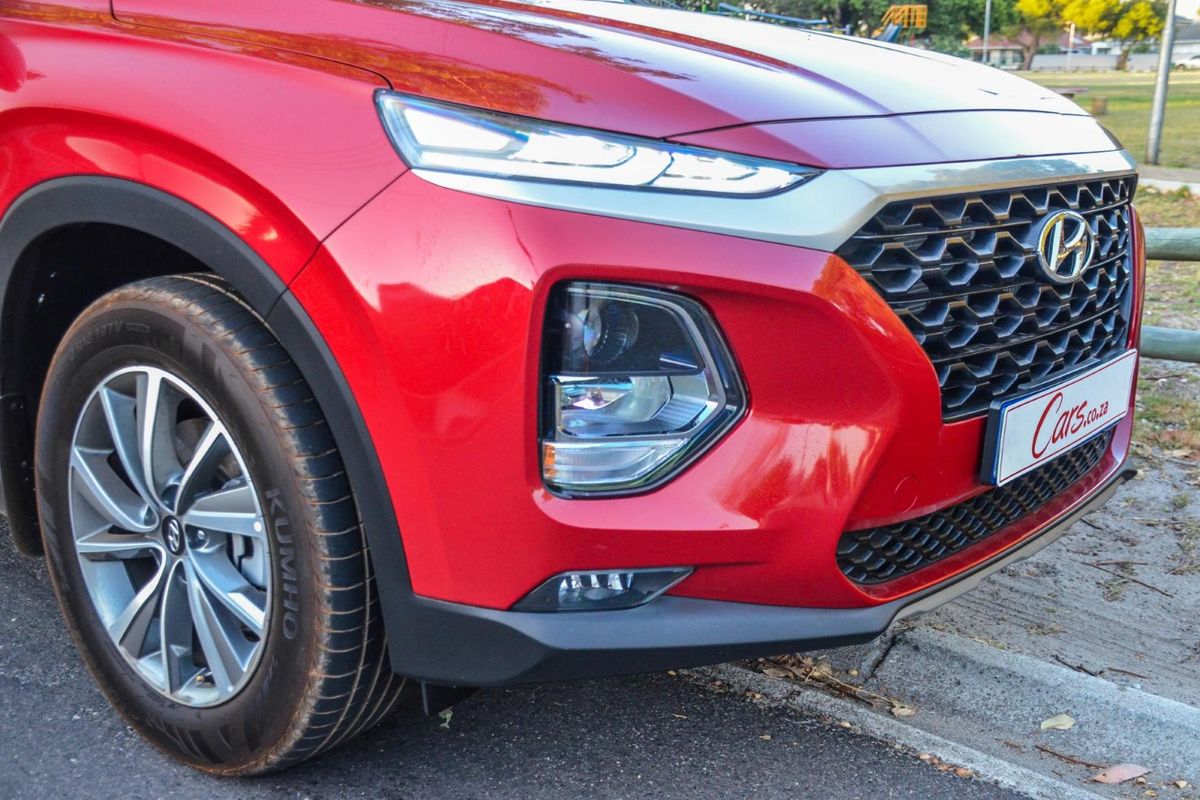
This is the new, 4th-generation Santa Fe, which came to market late last year. Not only does it now look more striking than its predecessor, thanks to its bolder cascading grille, but it’s a more refined product – both in terms of build quality and driving character.

It’s a 7-seater (for those who will regularly need seating space for 6 passengers), but unlike its ladder frame bakkie-based rivals (Fortuner, Everest, Isuzu MU-X and Mitsubishi Pajero Sport), the Santa Fe is a unibody SUV. Where its rivals place more emphasis on ground clearance and rugged off-road ability, the entry-level, front-wheel-drive Santa Fe on test here is a family mover through-and-through. How does it perform? Let’s see…  

The Good

Performance

Nestled under the bonnet of the Santa Fe is a 2.2-litre turbodiesel engine that offers 142 kW and 450 Nm of torque – outputs that eclipse those of the equivalent Fortuner (2.4L) and Everest (2.2L) by a fair margin. It’s a more refined engine too (a lower level of NVH is prevalent in the cabin) and, by virtue of its new 8-speed automatic transmission, the 2.2D Premium delivers surprisingly brisk acceleration (once the initial turbo lag subsides).

The transmission is responsive to throttle inputs and it executes gear changes in a smooth, unobtrusive manner, all of which aids driving refinement. The Santa Fe gets up to highway speed fairly quickly and, if required, there’s sufficient in-gear shove to facilitate quick overtaking manoeuvres.

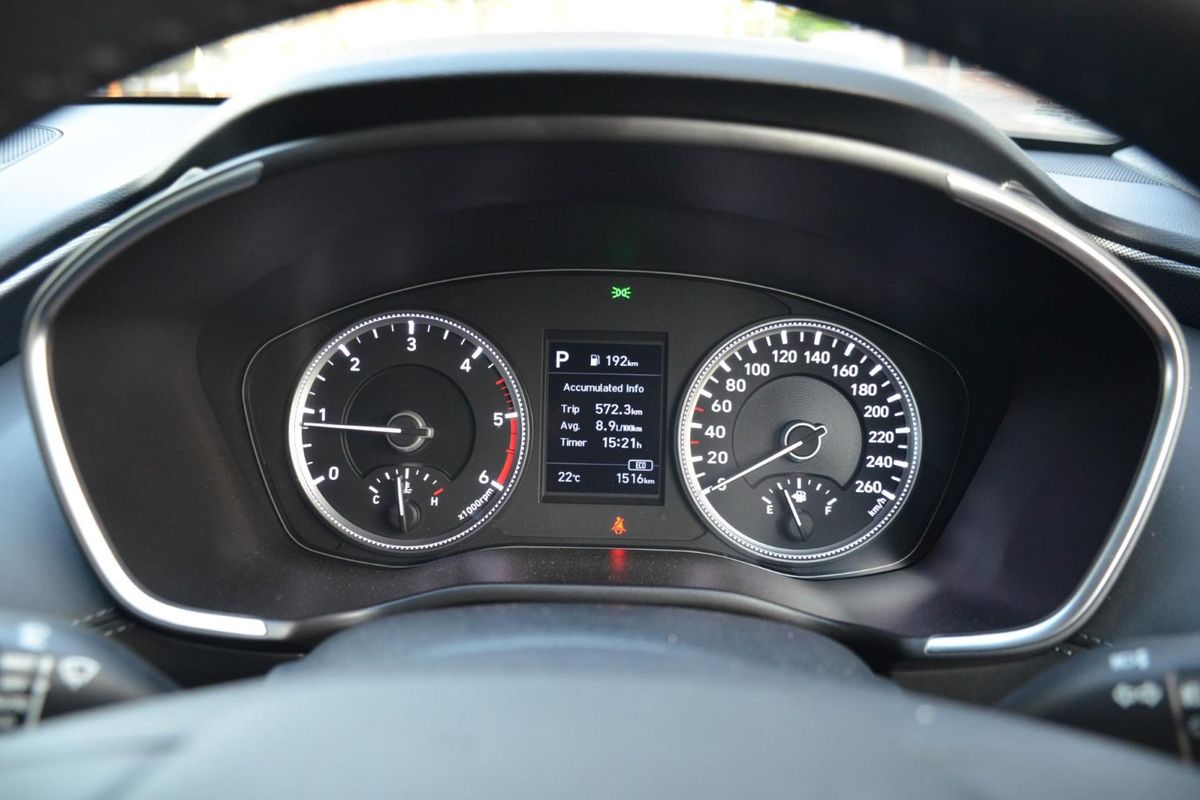
Hyundai claims the new transmission helps to reduce fuel consumption by between 3 and 4% (compared with the previous model) and, while the firm claims an average figure of 7.8 L/100km, we saw quite acceptable figures of around 8.6 L/100 km during our test.

Overall, we were mightily impressed with the performance and level of refinement offered by this new Santa Fe.   

Handling and ride quality
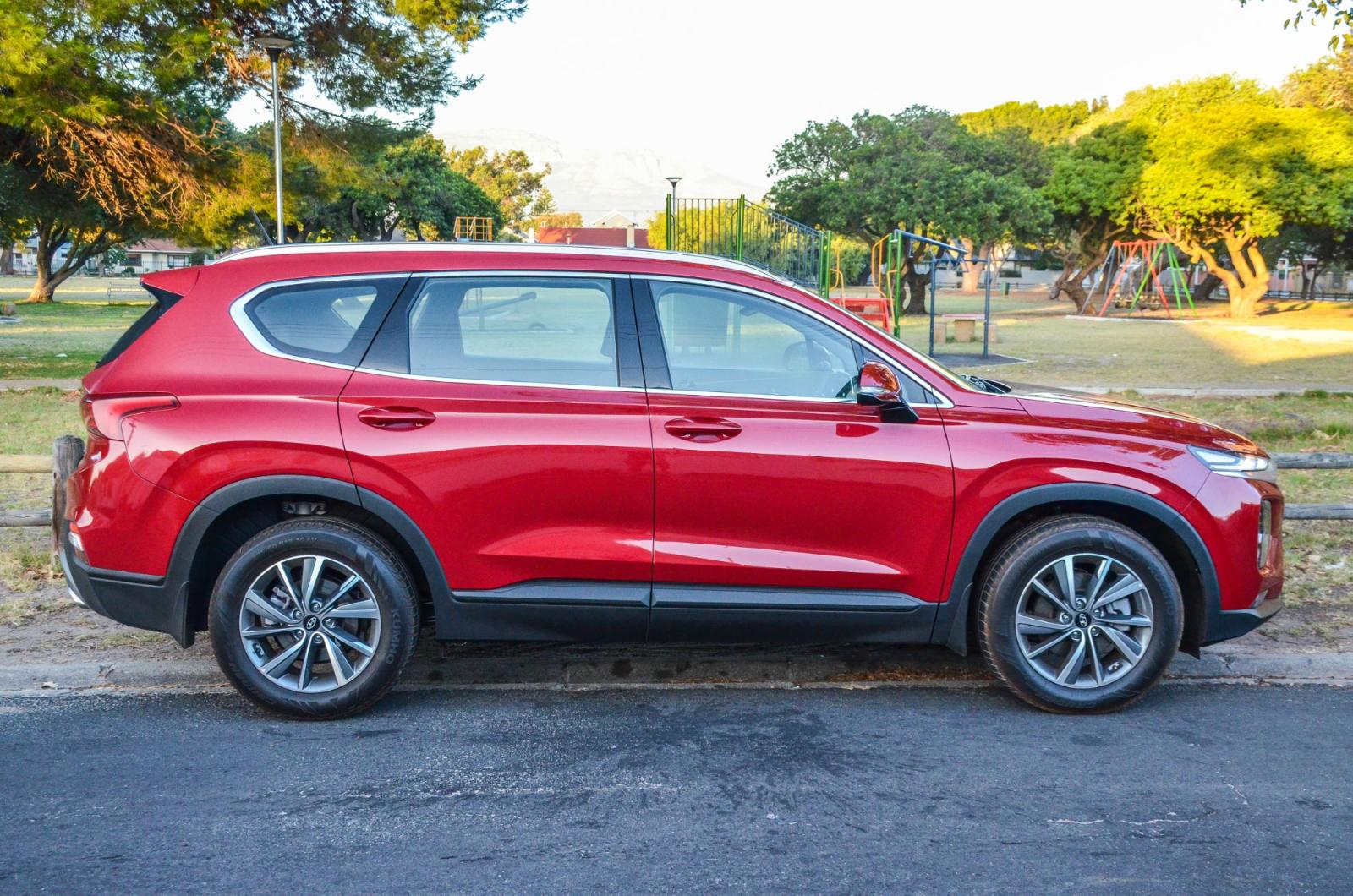

Ride quality is a major highlight of the Santa Fe and its performance is impressive. 

Another strength of the Santa Fe is undoubtedly its impeccable road manners. Riding on 18-inch alloy wheels and fitted with McPherson struts up front and a multi-link suspension at the rear, it maintains a composed ride over various road surfaces; even harsh imperfections are "ironed out".

Not only does it have a more pliant ride quality than its bakkie-based rivals (including the Everest), the Santa Fe has a positive and well-weighted steering feel. It feels positively planted when cornering (a tribute to well-balanced body control), which is an admirable trait in a fairly hefty, let alone softly-sprung, people-mover. Overall, it offers an admirably comfortable and reassuring driving experience, which will please family car buyers.

Solid, spacious cabin
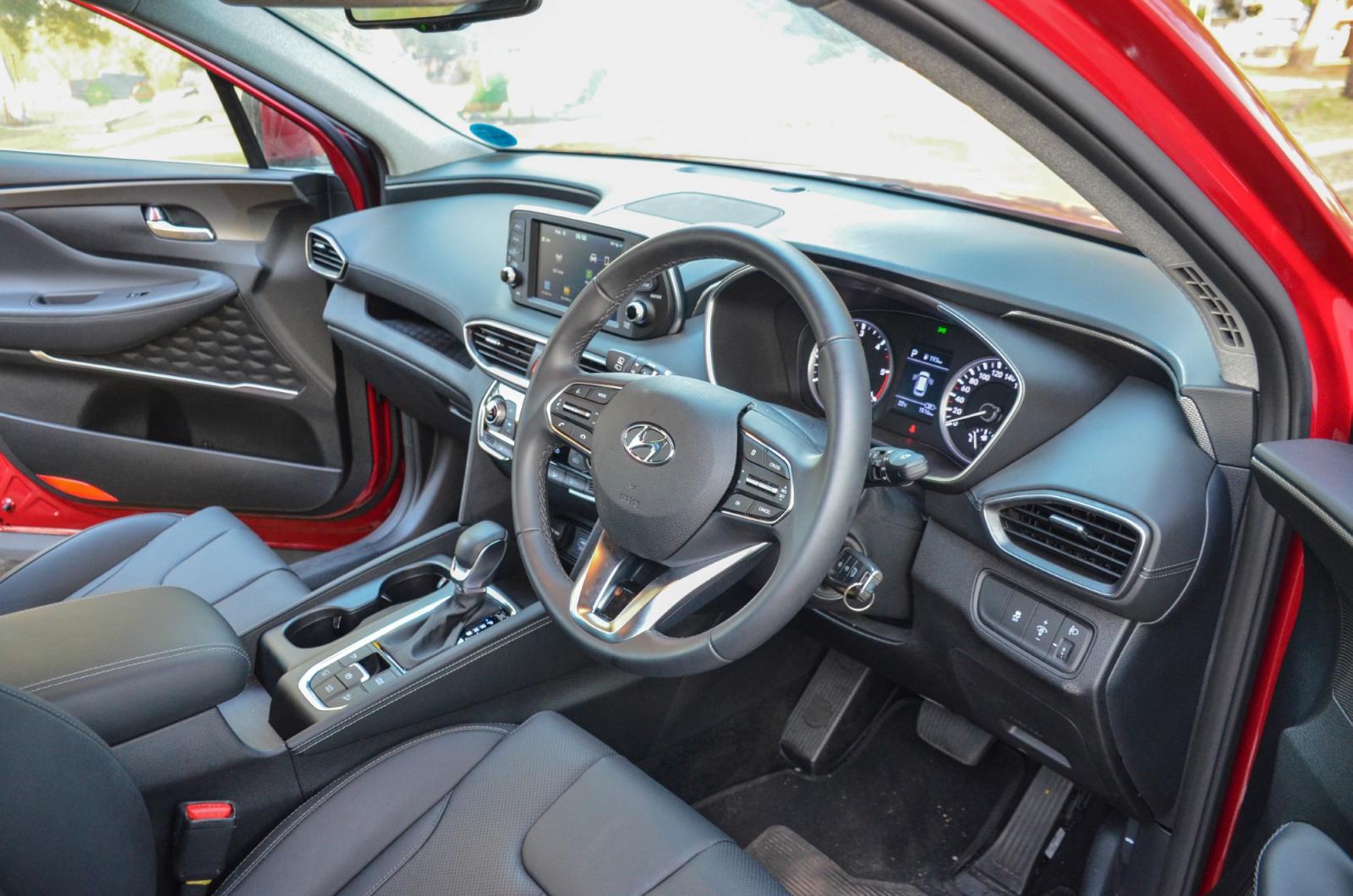

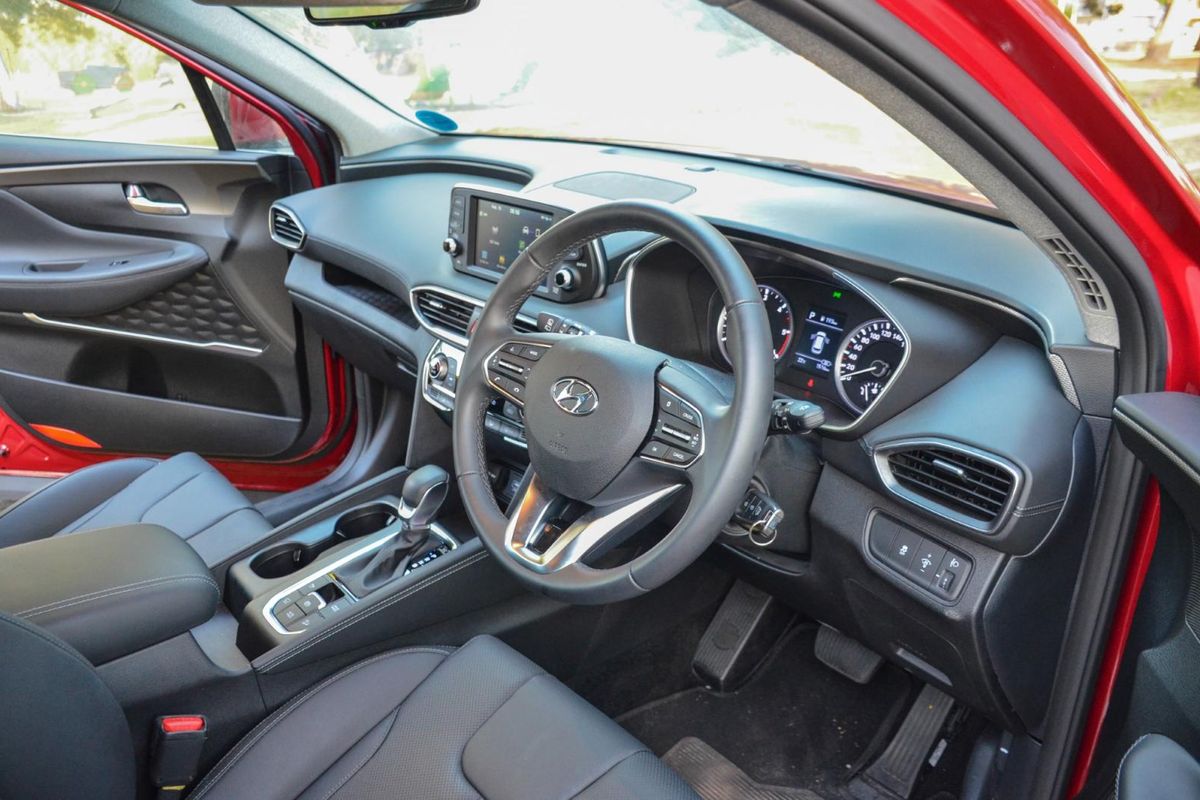
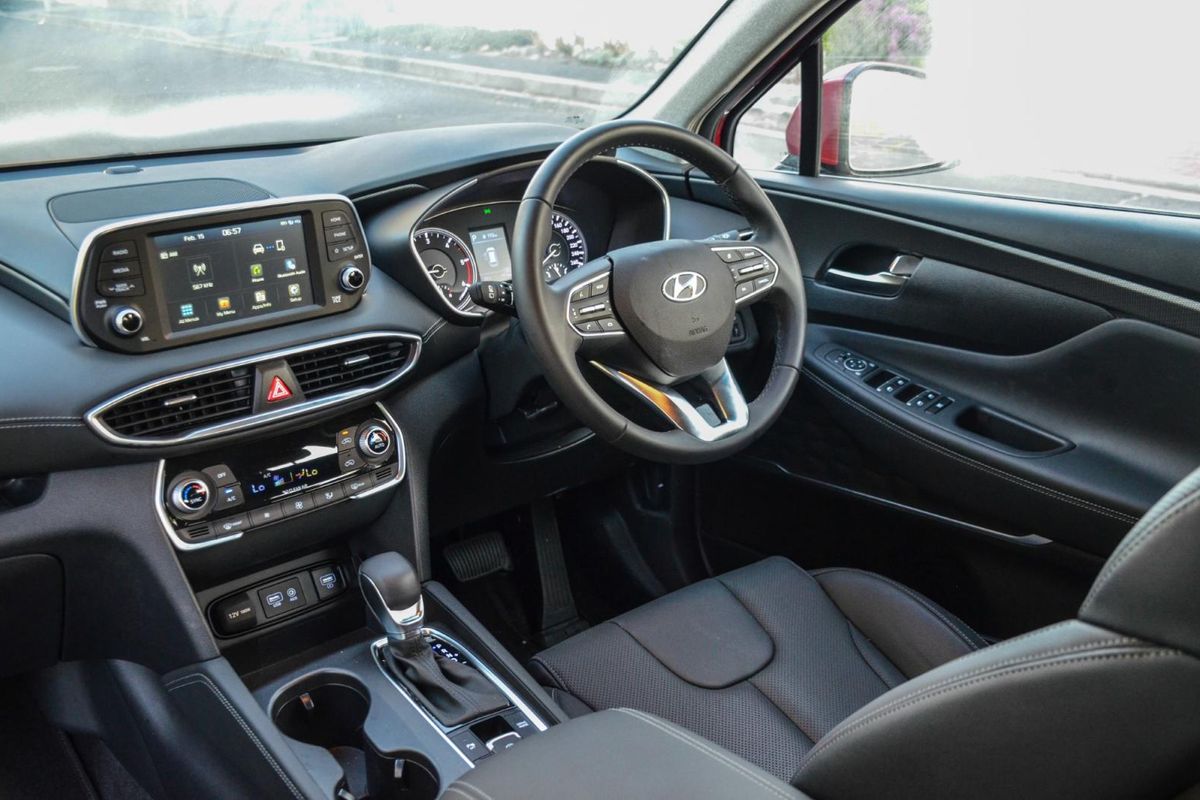
The interior design is pleasing to the eye and standard specification is generous. Those leather seats are very comfortable…

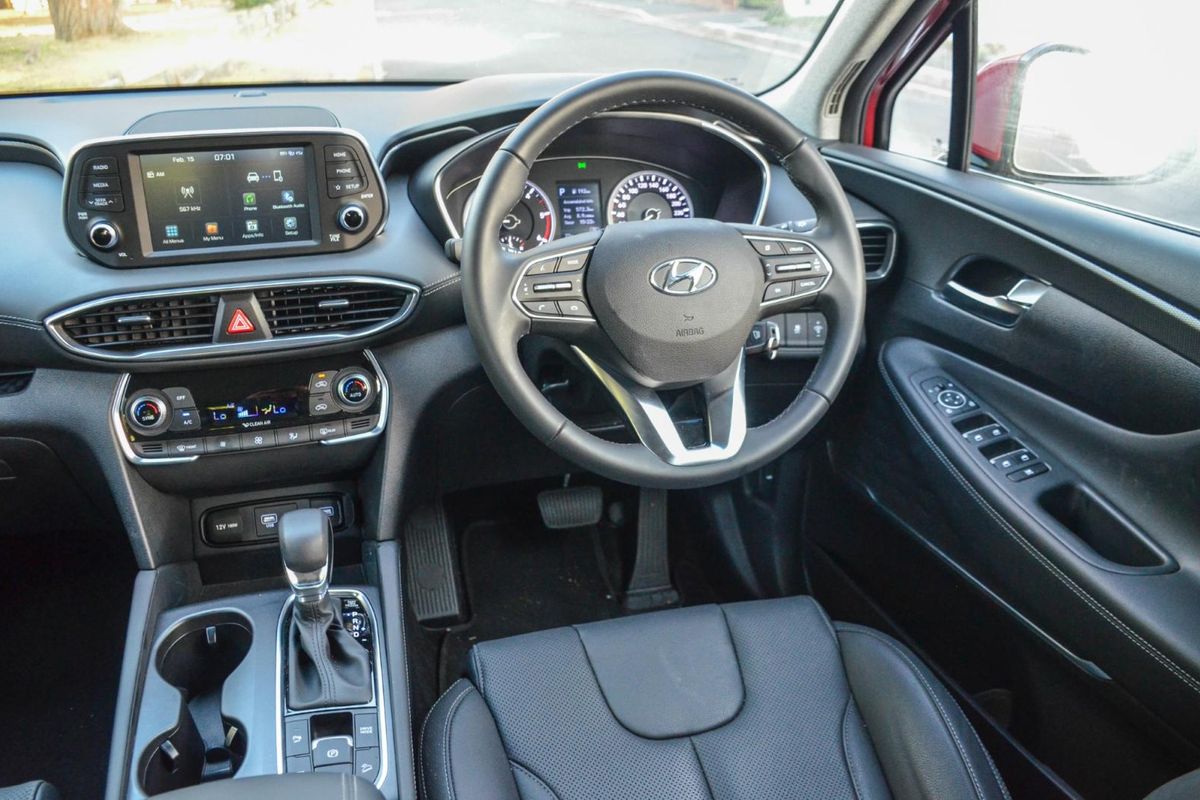
Step inside the Santa Fe and you're welcomed by a capacious cabin that’s not only attractively designed, but solidly built and well-specced. We found the leather seats comfortable and, in the case of this Premium derivative, the driver’s seat is manually adjustable, including for height.

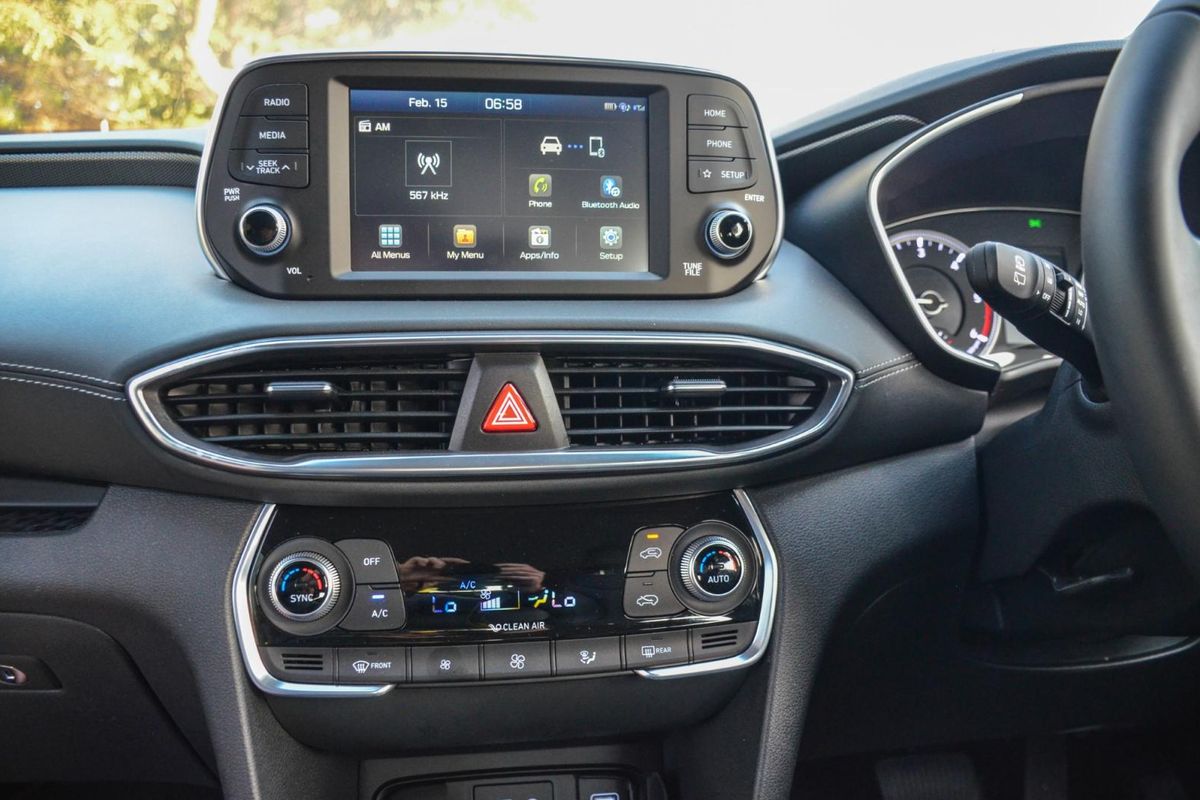
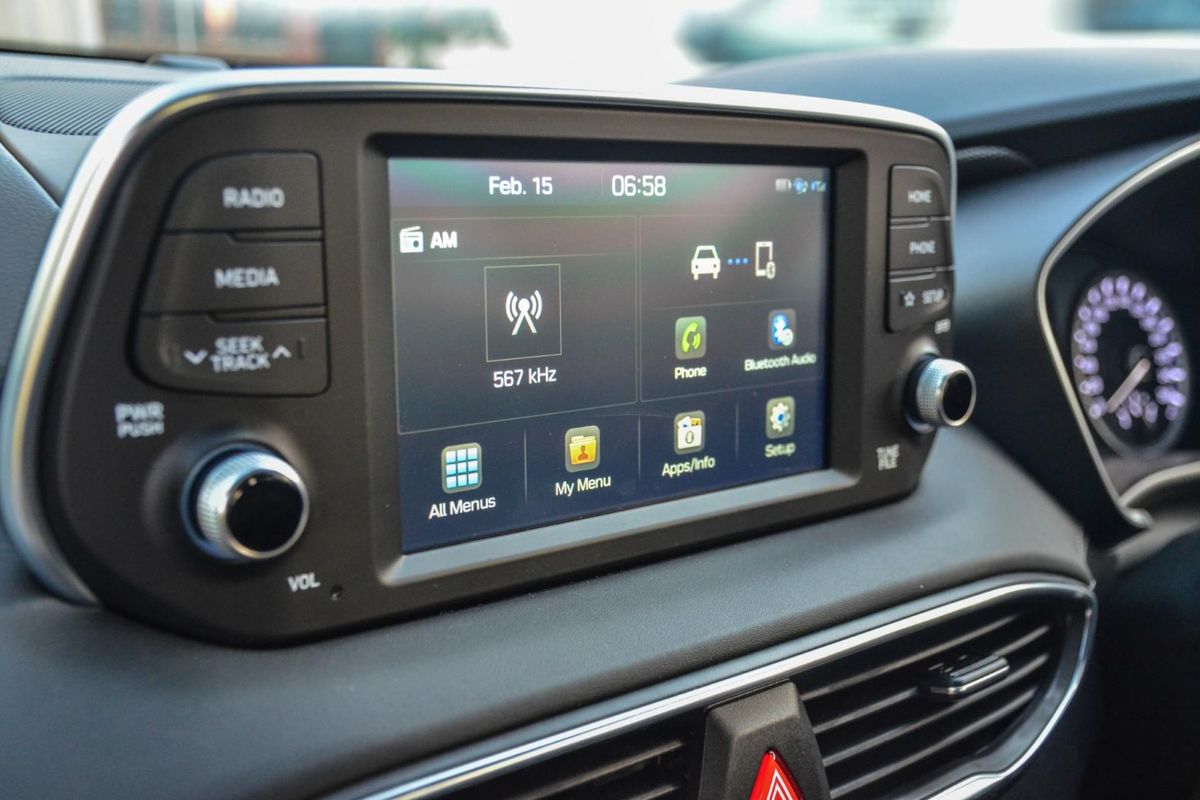
The steering column is adjustable for rake and reach and the leather-bound 'wheel equipped with remote buttons for audio, Bluetooth and cruise control functions. The neat 7-inch infotainment touchscreen is easy to navigate and offers full Apple CarPlay and Android Auto compatibility.

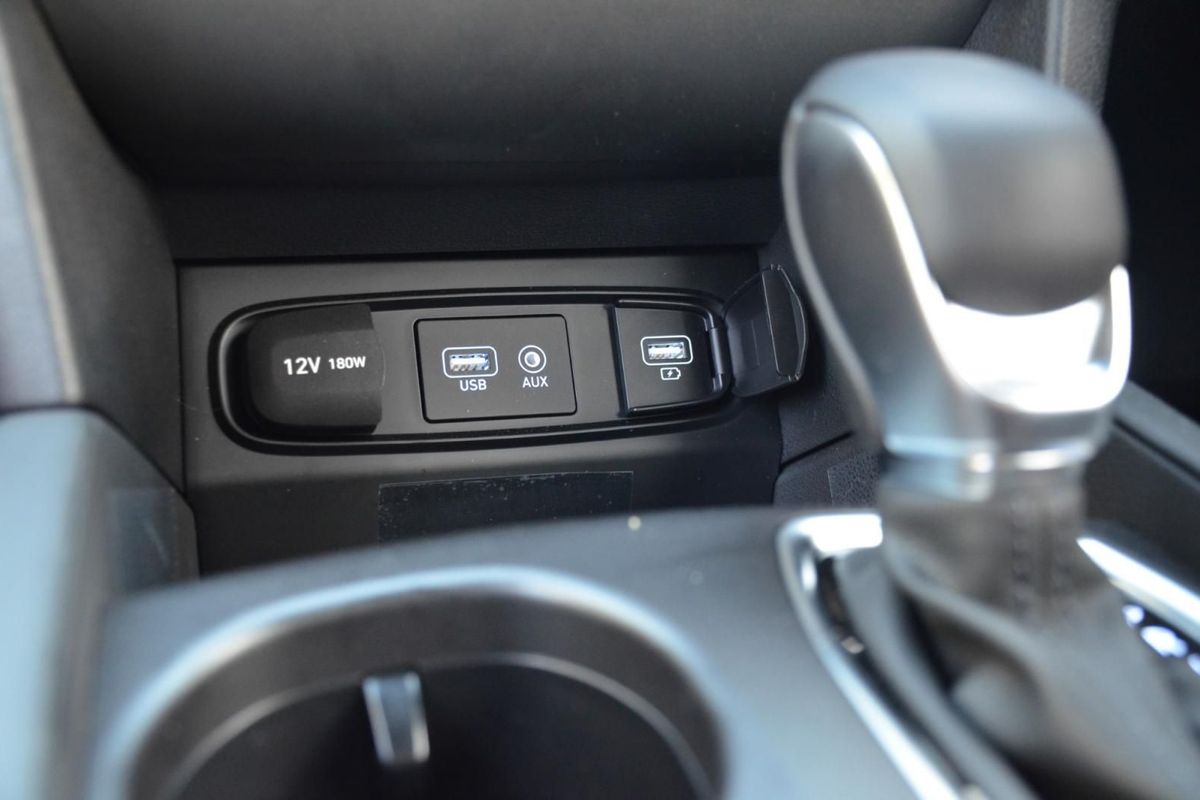
Other nice-to-have features include rear park distance control with a reverse-view camera, automatic headlights, dual-zone climate control (automatic aircon), front and rear electric windows, a quartet of USB ports (including 2 at the rear), as well as an auxiliary audio input.  

In terms of safety equipment, the Santa Fe has a total of 6 airbags, ABS with EBD and electronic stability control with traction control.

Super-practical
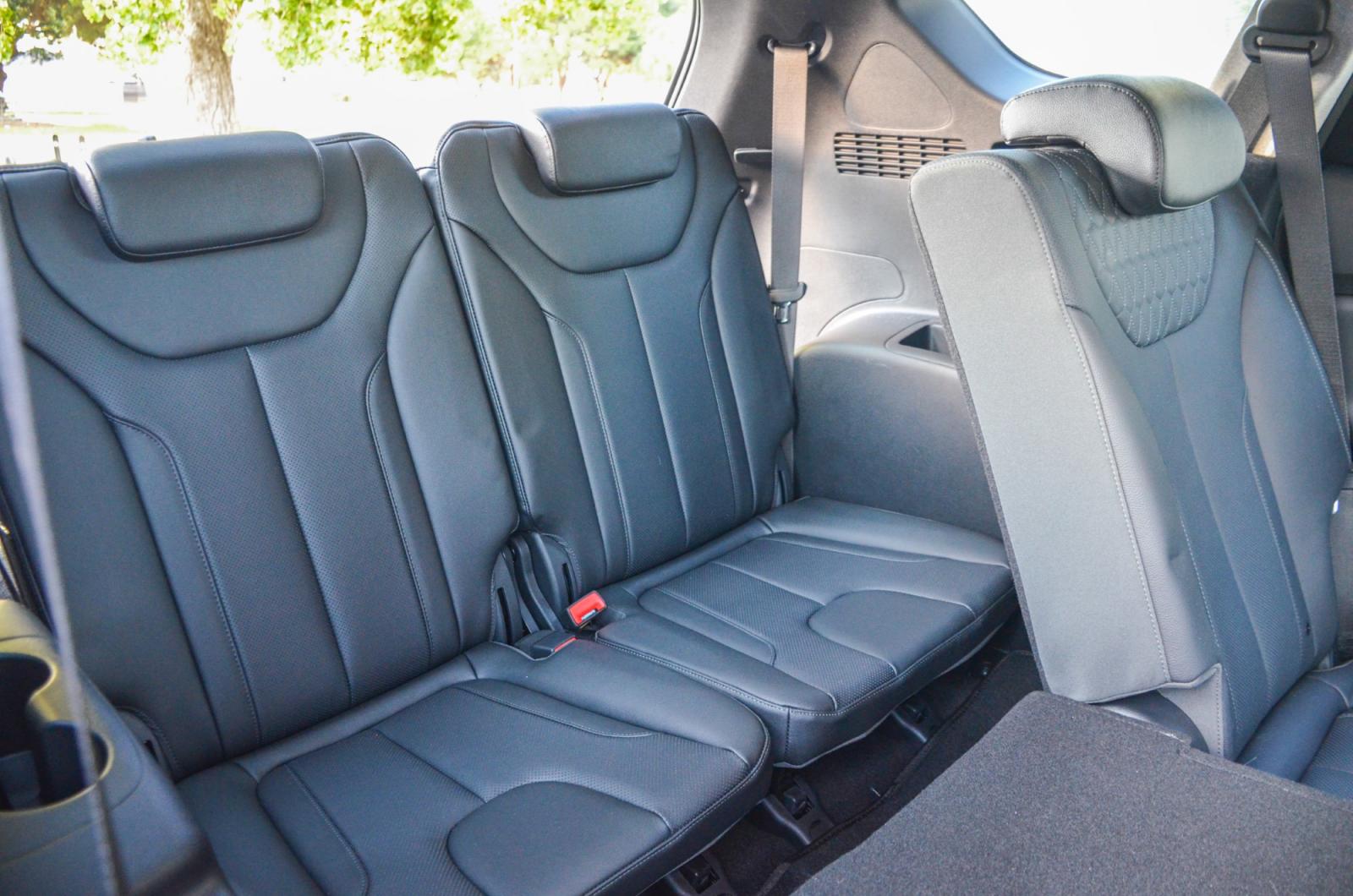

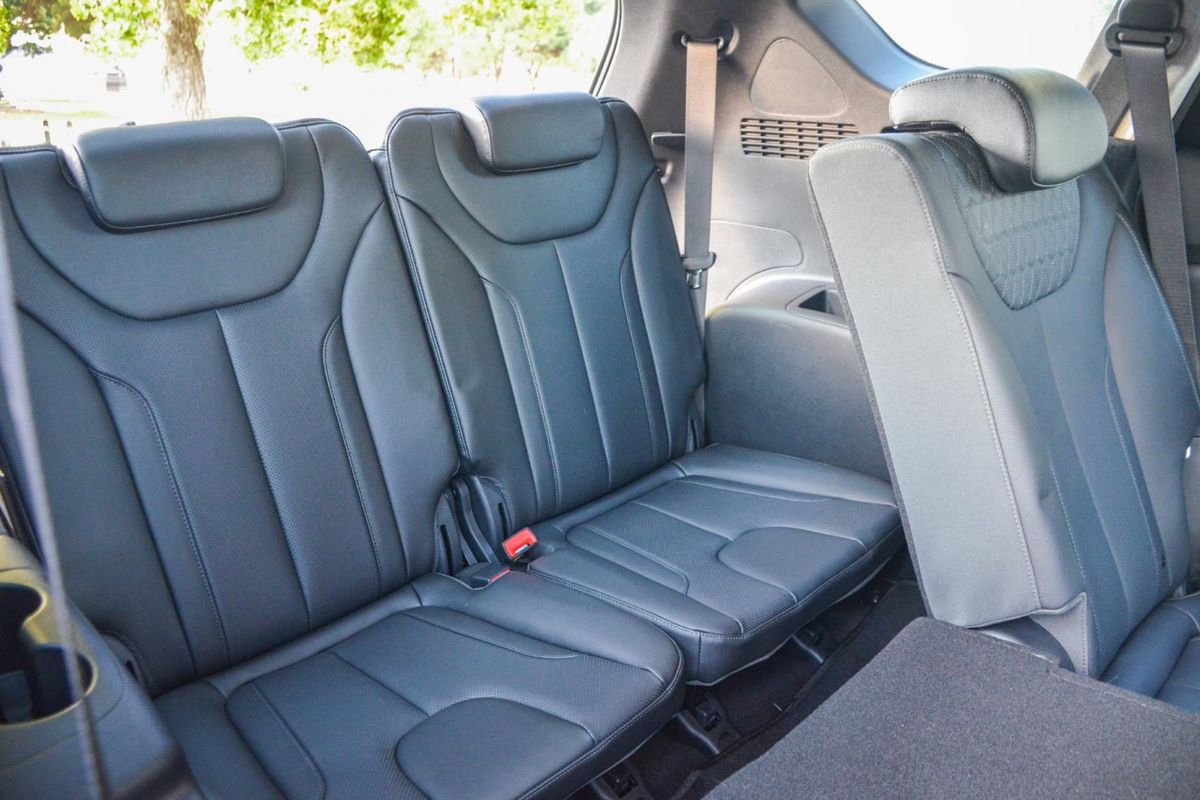
The third row is very spacious, even for adults and the seats fold completely flat into the floor which is a bonus. 

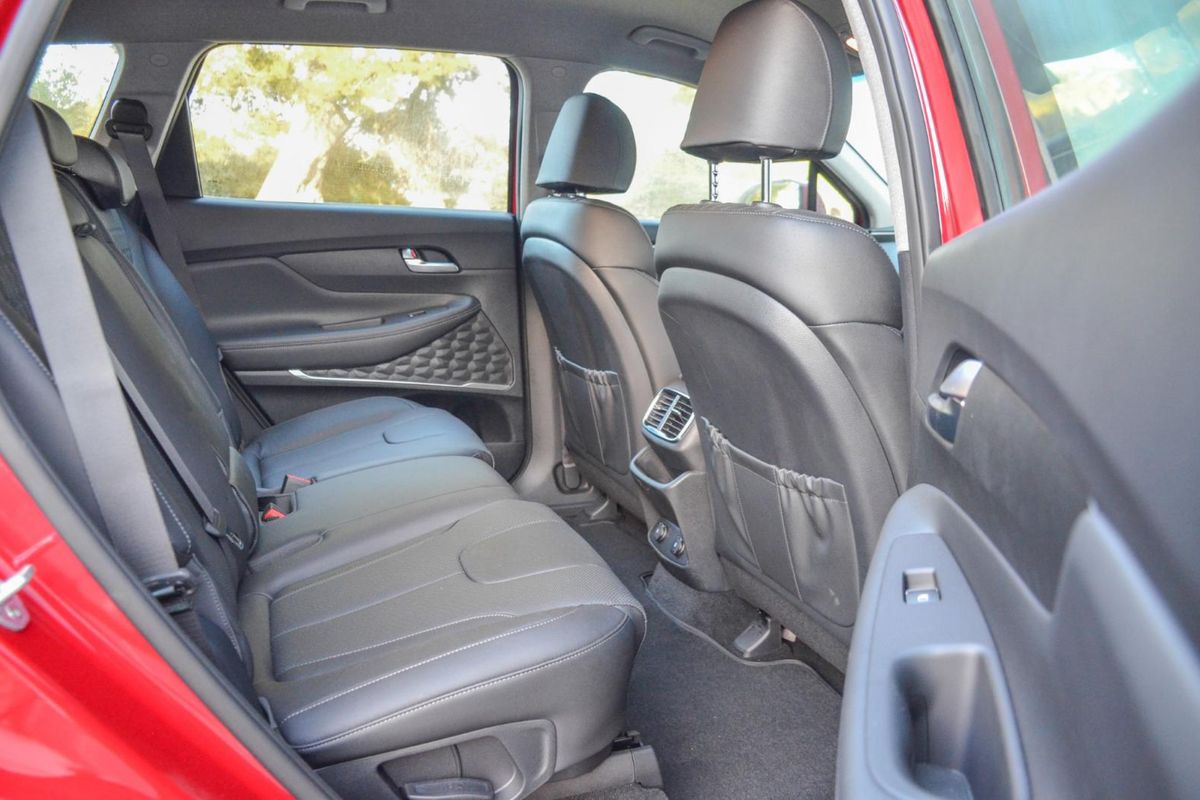
There’s no shortage of space in the Santa Fe and passengers should find the rear quarters to offer ample headroom, shoulder room and legroom, no matter how tall you are. More so, the middle row can be shifted forward at the press of a button to gain access to the 3rd row of seats.

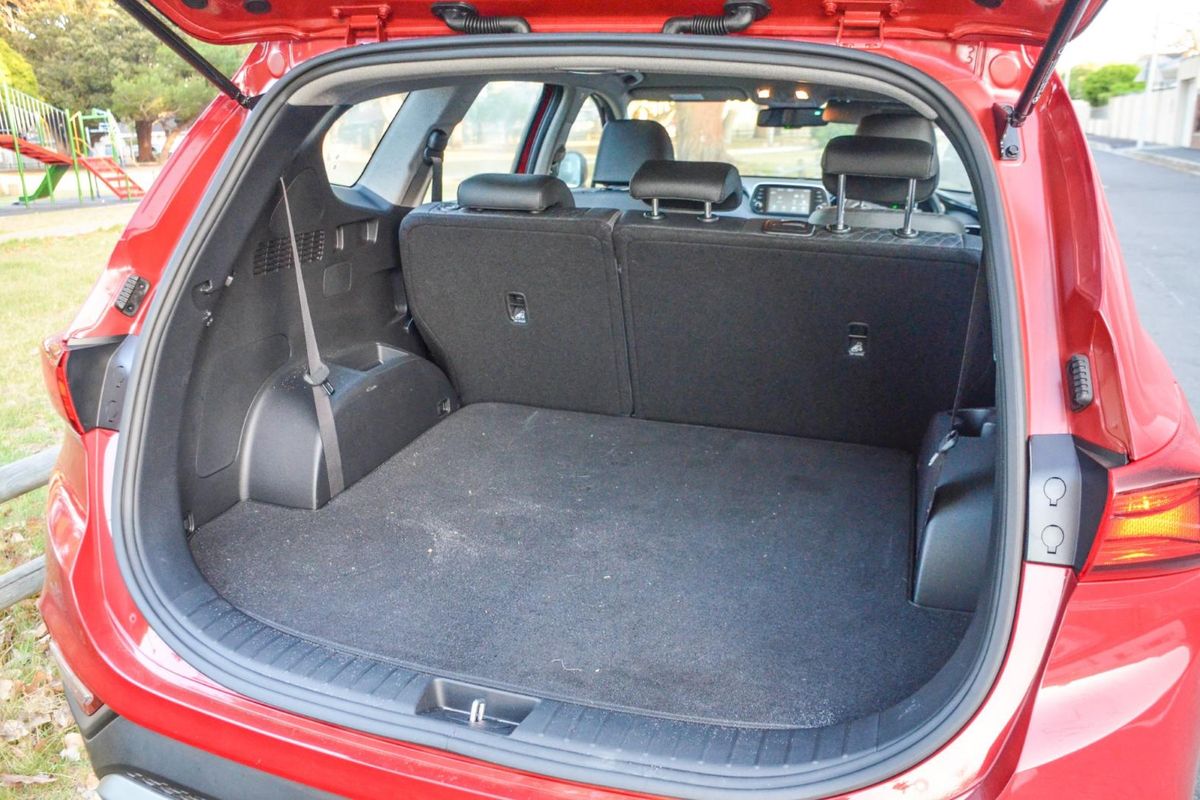
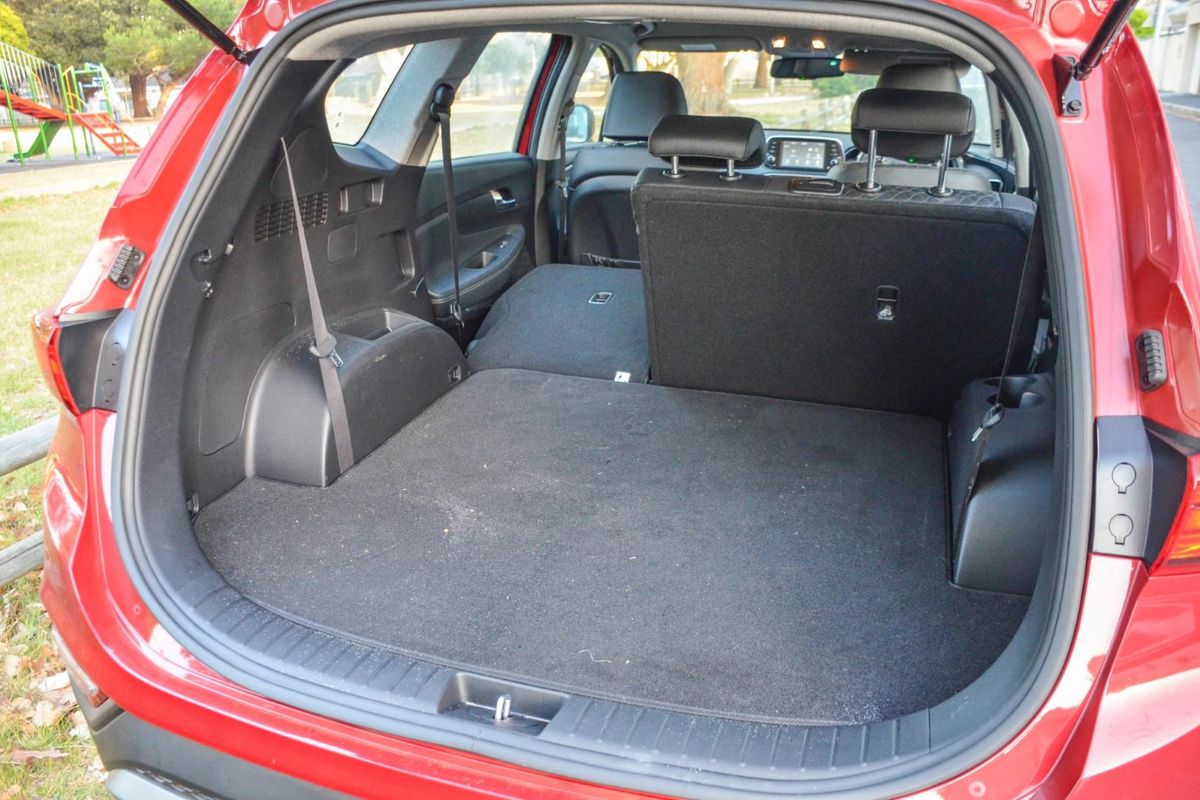
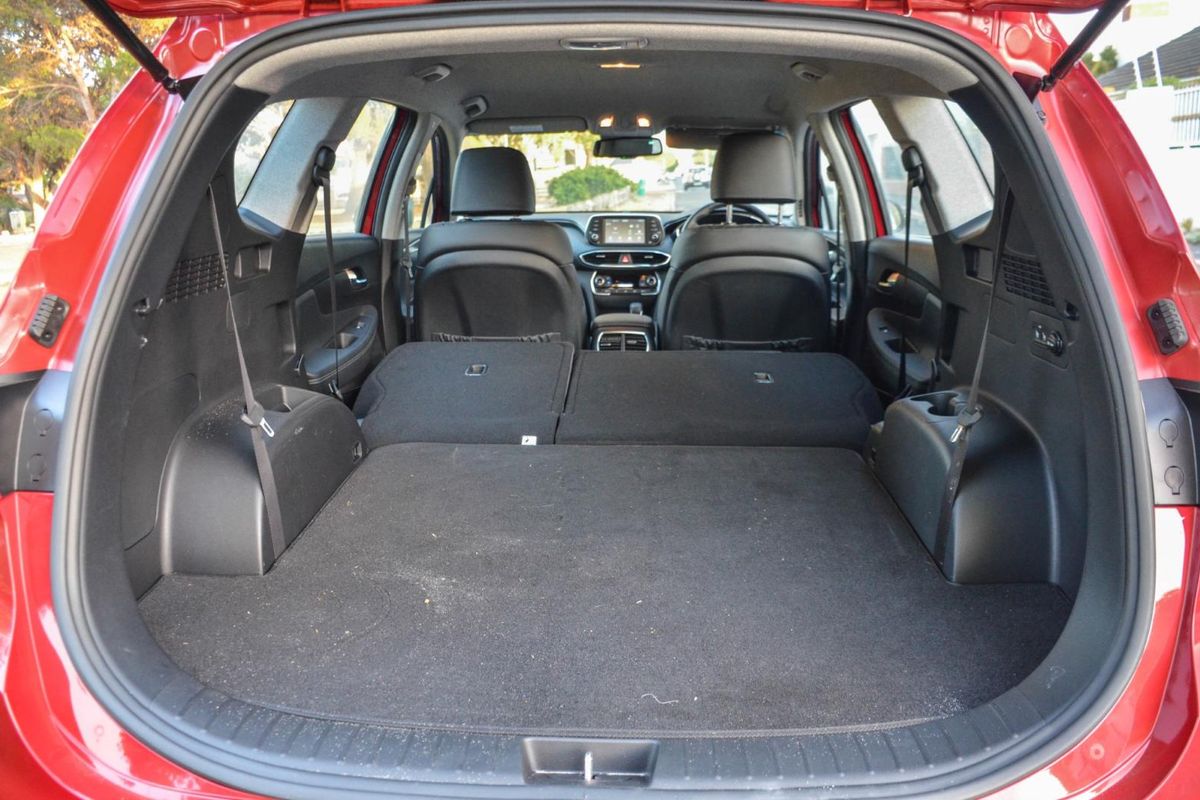
With the 3rd row of seats folded flat into the load bay floor, space is generous (at 547 litres) and, when you fold all the rear seats down, you have access to a capacious 1 625 litres. However, with the 3rd row of seats in place, luggage space is, predictably, quite limited.

The 3rd row is best suited to accommodate children and rearmost passengers are afforded a cupholder each. Having said that, even average-sized adults may find the 3rd-row seating tolerable over short distances. The Santa Fe has one of the most spacious 3rd-row seating setups that we have experienced in a long time (Hyundai is said to have increased legroom by 127 mm and headroom by 190 mm). Impressive indeed…

The Not-so-good

A tad pricey

Honestly, there’s really isn't much in the way of serious criticism that we can level at the Santa Fe, other than its price at R599 900, which is roughly R80 000 more than the equivalent cab-on-chassis offerings from Ford, Toyota, Isuzu and Mitsubishi.

Hyundai, like many importers, is at the mercy of the exchange rate and its pricing, especially at the top end of the market, does not necessarily align with what consumers are prepared to pay for its products. That partly explains the Santa Fe’s relatively low sales numbers in our market.

Nonetheless, prospective buyers will be pleased to know that the Santa Fe is backed by a comprehensive 5-year/150 000 km vehicle warranty, 7-year/200 000 km drivetrain warranty and a 5-year/90 000 km service plan.

Buy a new or used Santa Fe on Cars.co.za

Verdict
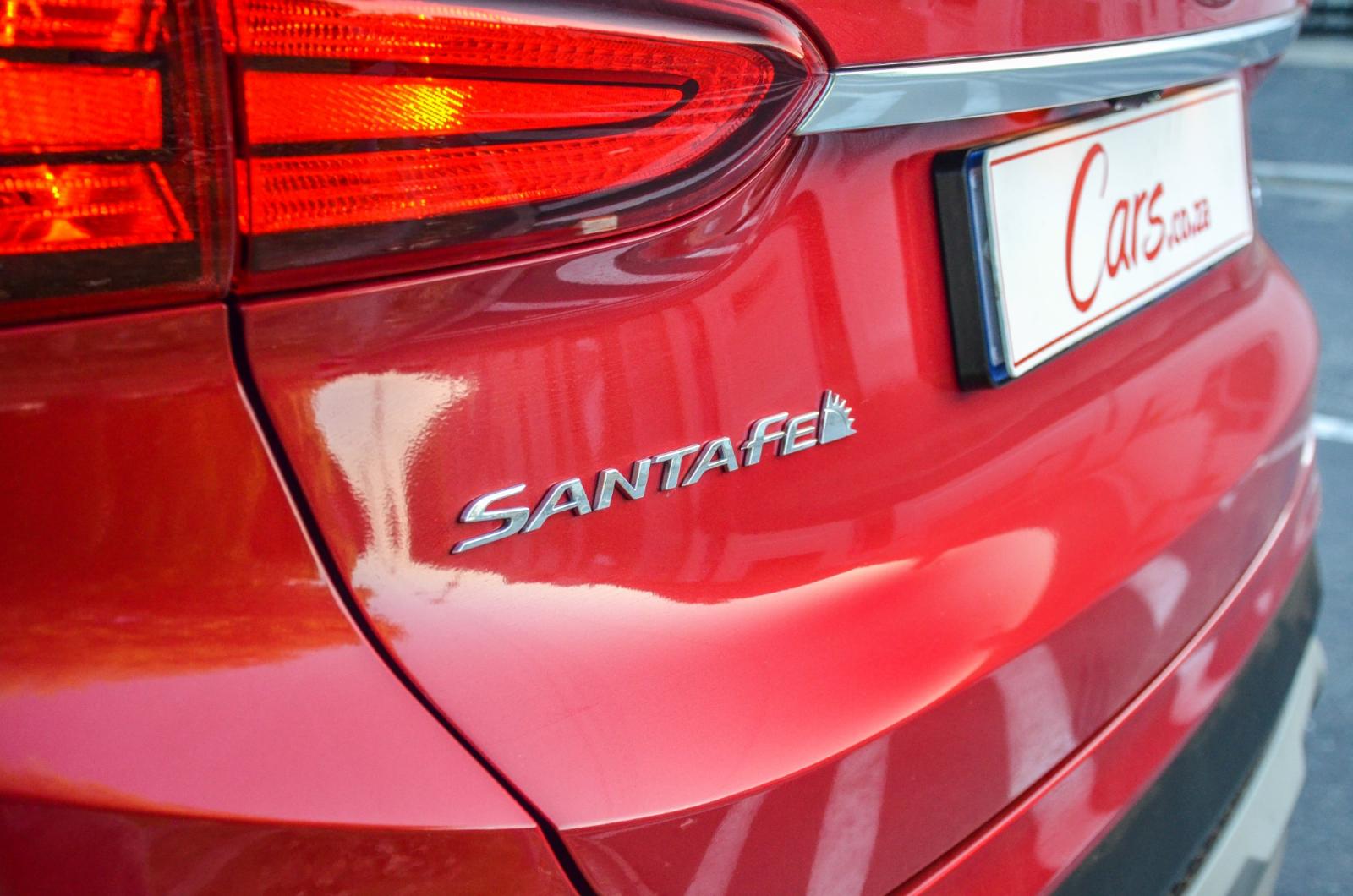

The Santa Fe's practicality and high levels of refinement and comfort make it worthy of consideration in the 7-seat SUV segment.  

The Santa Fe 2.2D Premium impressed us overall. It looks good, offers sufficient performance/fuel efficiency and delivers an exceptionally comfortable ride. Its interior is spacious, well-made (perceived build quality is high), plus it comes well-specced with standard features.

Should you consider the Santa Fe over its more popular rivals? Well, provided you can afford it, definitely! While the price difference between the Hyundai and its Japanese and American rivals may seem large, consider that the Santa Fe is more refined in terms of engine noise and ride quality; it should be easier to live with on a day-to-day basis. It’s arguably more practical too, especially if you are looking for a spacious family car.

For example, in the Fortuner, the 3rd-row seat folds up and to the side, resulting in an awkward luggage space. This is not the case in the Santa Fe, which has a more practical, flat load floor. What's more, a lengthy warranty and service plan make it a good long-term ownership proposition. It may not have set the sales charts alight, but that should not detract from the fact that the Santa Fe is a top-notch (albeit 2-wheel-drive) Adventure SUV.   

Alternatives (click on the names for specification details)

Toyota Fortuner 2.4 GD-6 Automatic

The Toyota Fortuner is a popular choice in this segment and, in 2.4 GD-6 guise, it offers 110 kW and 400 Nm of torque and makes use of a 6-speed automatic transmission. Priced from R515 600, it's significantly cheaper than the Santa Fe, but it's not as refined in terms of overall ride quality.

Ford Everest 2.2 XLT Automatic

The 2.2 XLT Automatic is priced from R522 700 and powered by a 2.2-litre turbodiesel engine (118 kW/385 Nm), mated with a 6-speed automatic transmission. Like the Fortuner, the Everest is not as refined, nor as solidly-made as the Santa Fe, but it still represents good value in this segment. 

Kia Sorento 2.2 CRDi LX

The Kia equivalent of the Santa Fe is the Kia Sorento and it's powered by the same 2.2-litre turbodiesel engine offering 147 kW and 440 Nm of torque together with an 8-speed automatic transmission. The Sorento was updated in 2018 to offer more value and it's now only available as a 7-seater. The entry-level Sorento 2.2 CRDi LX is priced from R579 995.  
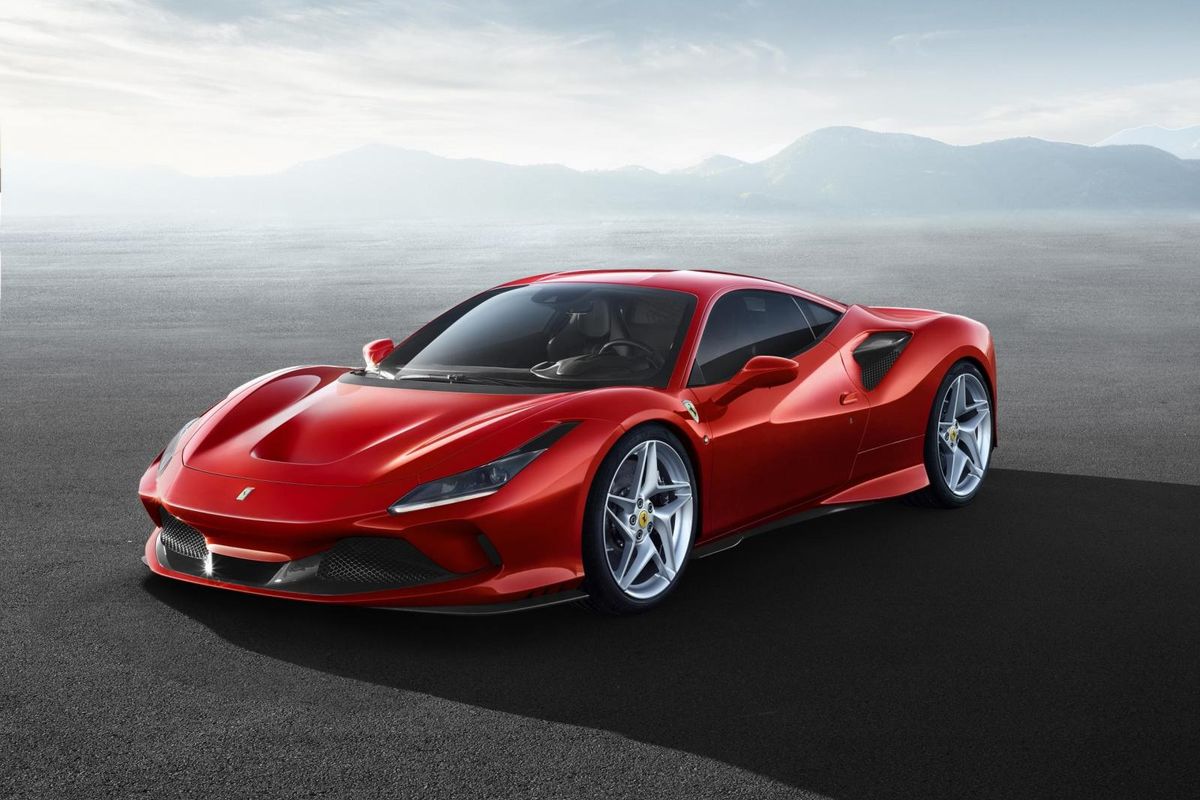
Latin inspired limited edition R8

Decennium edition marks a decade of Audi V10s.

Audi is celebrating the tenth anniversary of its mid-engined V10 supercar with a special edition offering. It’s called the Decennium and if you attended a posh school, you’ll know that means ‘decade’ in Latin.

Expect most of the 222 Decennium R8s to be finished in an exclusive Daytona grey surface colour, although customers will have option on five other, more vivid, hues. Differentiating the Decennium from other R8s is black gloss detailing on the front splitter, side sills and rear diffuser, which should contrast quite tidily with the Daytona grey’s matt finish.

Perhaps the most notable exterior styling detail to aid recognition of a Decennium R8 are its wheels and which are matt bronze in colour. The R8’s mid-mounted V10 powerplant, visible through its clear cover, also features bronzed intake manifolds, which are sure to appeal to engine bay aestheticists.

Inside there isn’t much difference from a standard R8 V10, but for the Decennium centre console logo and door sill badging. Open the door in a low-light or shaded environment and you’ll notice puddle lamps projecting an R8 Decennium logo onto the floor.

Mechanically the Decennium is no different from a regular R8 V10. That means you get a choice of 5.2-litre naturally-aspirated V10 in either 419- or 456kW, driving all four wheels through a seven-speed dual-clutch transmission.

Find a high friction surface and if you disable your mechanical sympathy, the 456kW R8 Decennium will run a true 3.1 second 0-100kph time, before buffering at the edge of aerodynamics at 331kph. Not a traditional acceleration or speed statistic, but the R8 V10’s 8700rpm engine speed ceiling is a very novel part of its offering – especially in a world where turbocharged performance cars force you to shift gear a lot earlier than that.

Further Reading

Audi R8 (2019) International Launch Review


Facelifted Audi R8 and R8 Spyder Announced

Audi R8 V10 Spyder (2017) Quick Review

Audi R8 V10 Plus (2016) Review

Part 1: Audi R8 vs McLaren 570S with Drag Race

Part 2: Audi R8 vs McLaren 570S Track Race

Ferrari Unveils F8 Tributo

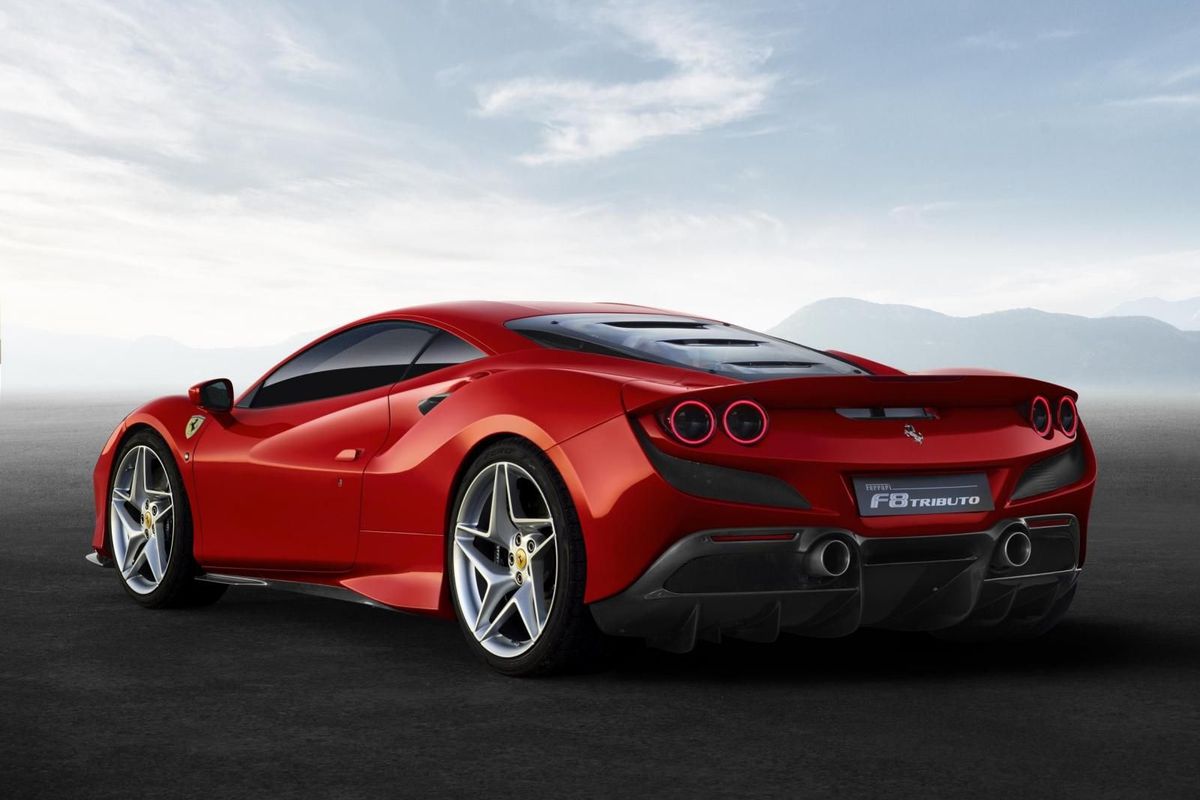
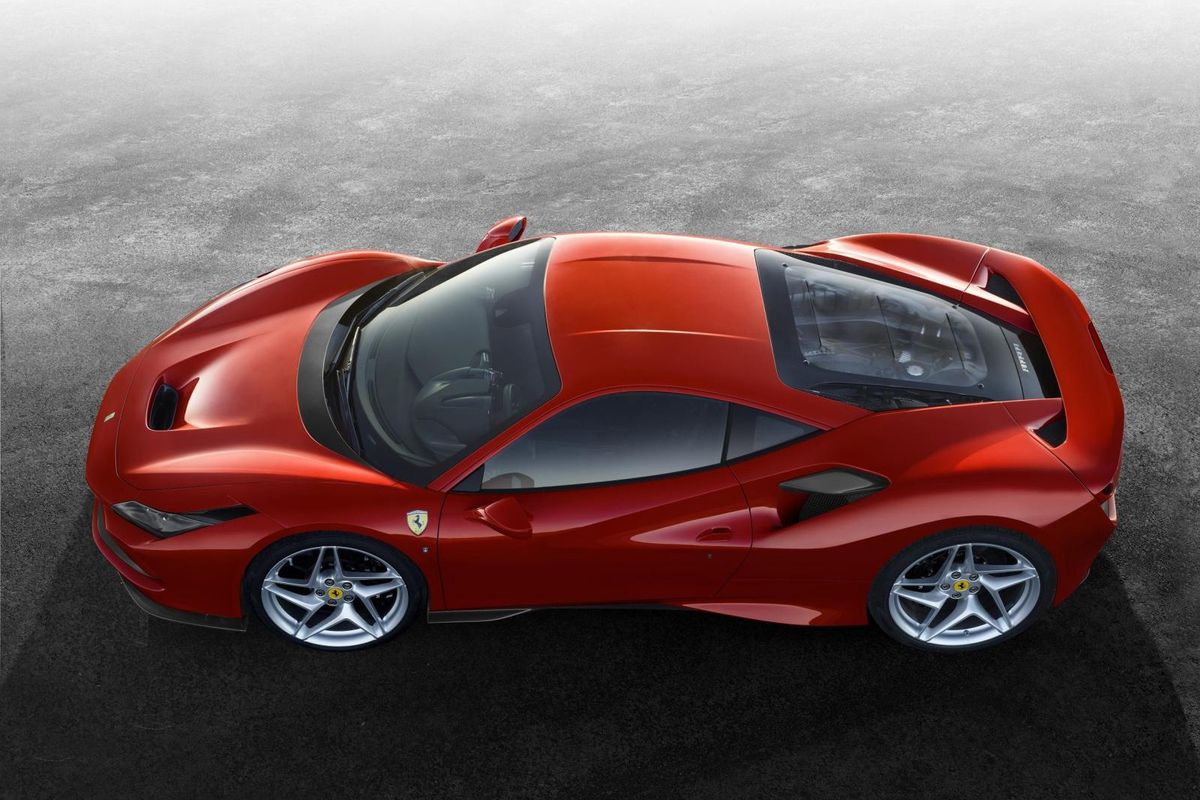
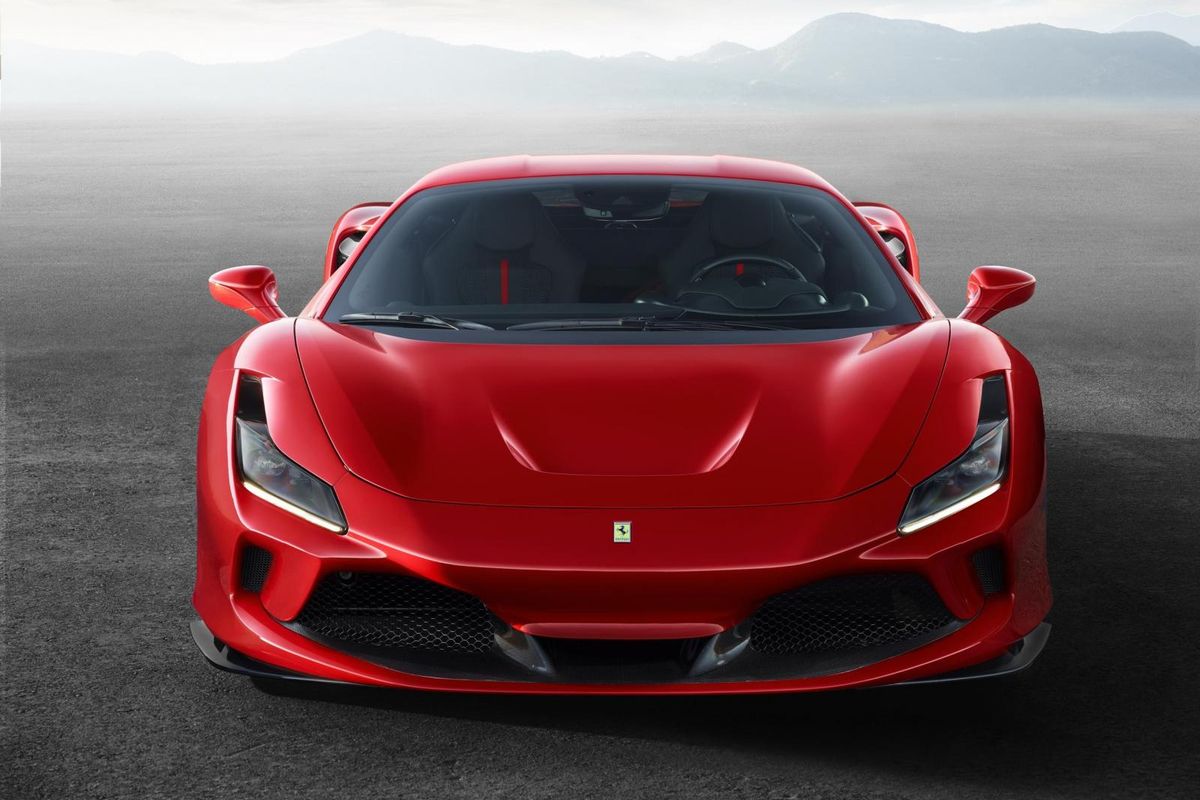
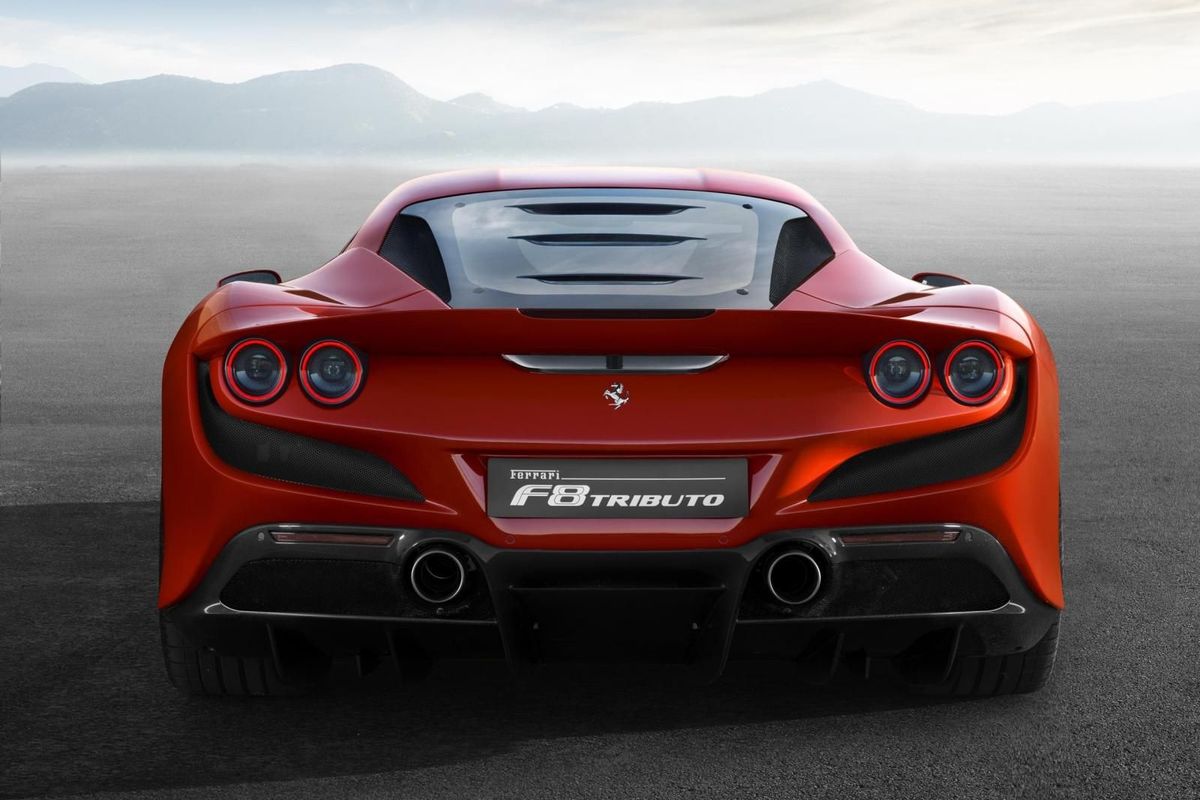
Ferrari has revealed the first official photographs of the F8 Tributo, its all-new offering. 

This new mid-engined Ferrari boasts the most powerful V8 engine in the history of the brand. The F8 Tributo replaces the 488 GTB and the Maranello-based brand claims its new car is "one of the fastest, most thrilling and communicative supercars ever."

Power comes from a revised version of the 3.9-litre twin-turbocharged V8 engine. It has won numerous accolades, including Best Engine” in the International Engine of the Year awards three years running in 2016, 2017 and 2018. It produces 537 kW and 770 Nm, and the performance claims are staggering. How does 0-100 kph in 2.9 seconds grab you? Or how about a 0-200 kph time of 7.8 seconds? The top speed is rated at 340 kph. 

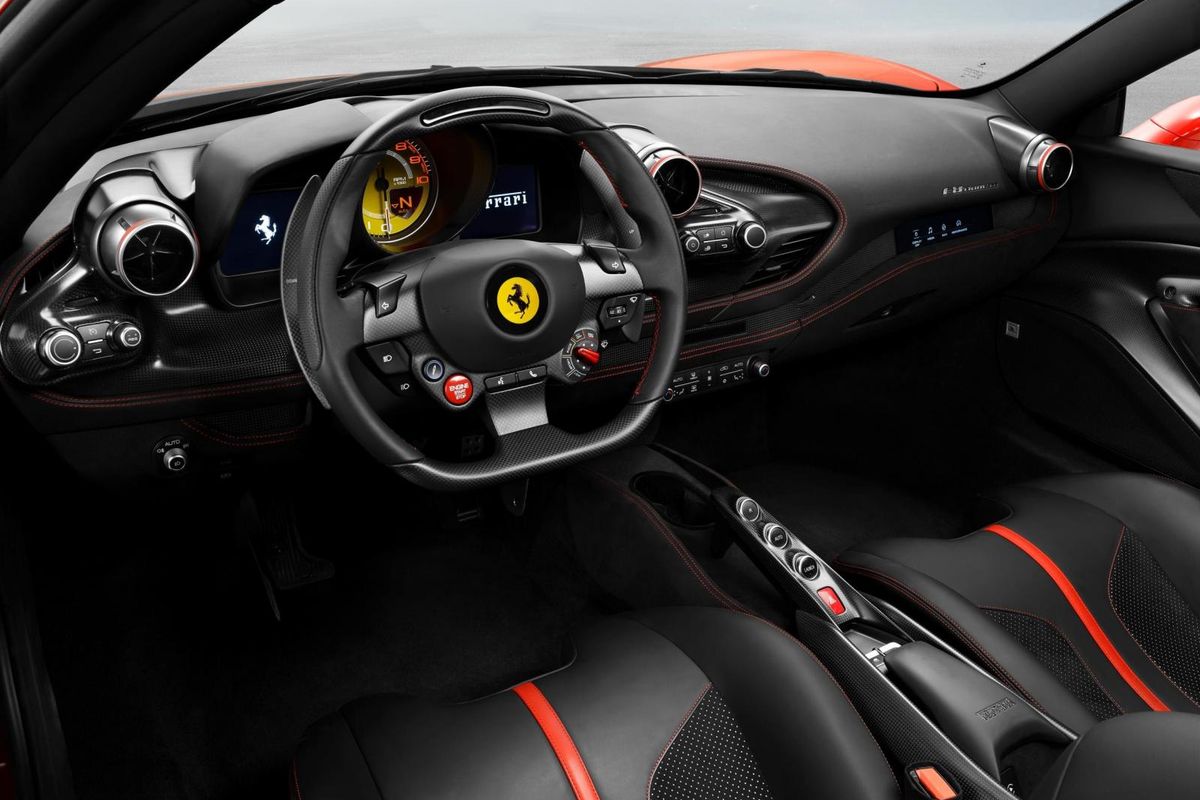
Inside, there's a smaller steering wheel and the entire car is 40 kg lighter than the outgoing 488 GTB. The cabin also features a driver-orientated cockpit which has been completely redesigned. There are also new air vents, new steering wheel controls as well as a new 7-inch passenger touchscreen display. 

We'll have more details after the new Ferrari F8 Tributo is publically revealed at next week's Geneva Motor Show.

Further Reading

Poster Child – Ferrari Testarossa: SentiMETAL Ep7

Ferrari Announces 488 Pista Spider

Ferrari 812 Superfast Revealed

Ferrari GTC4Lusso Introduced

Mercedes EQC – First taste of Benz’s EV

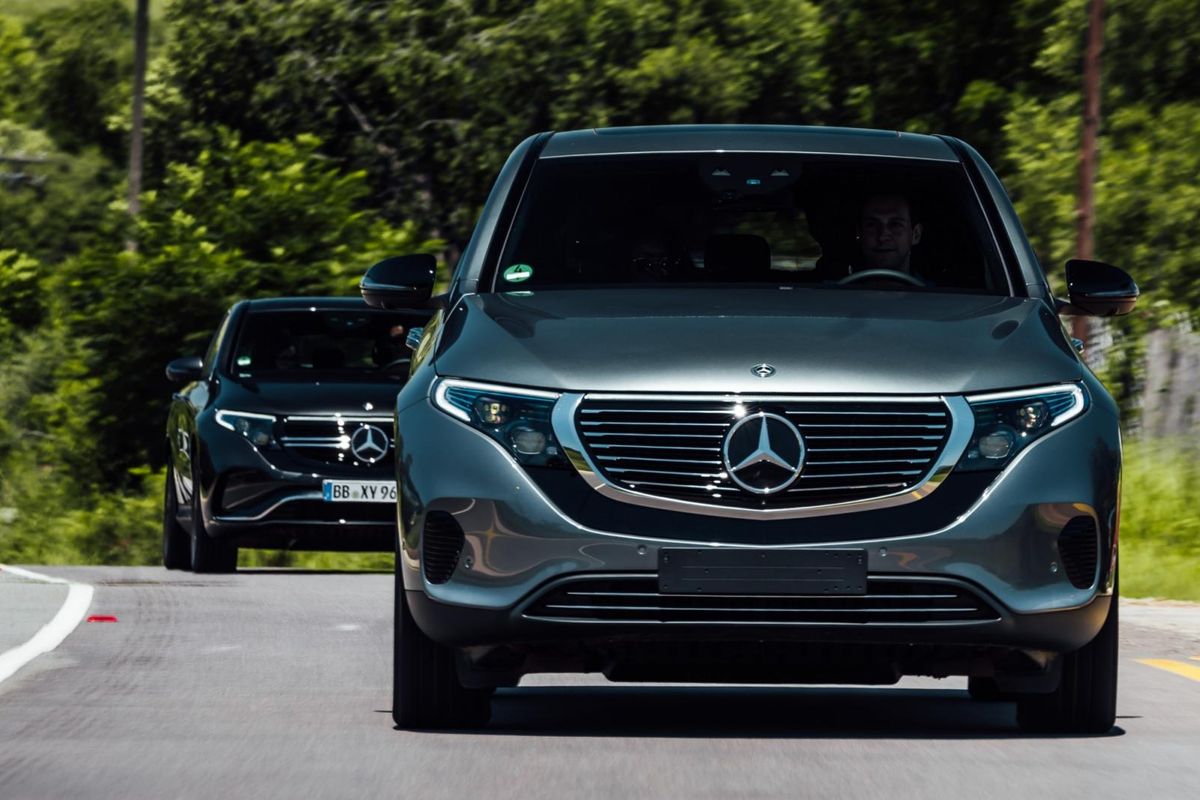
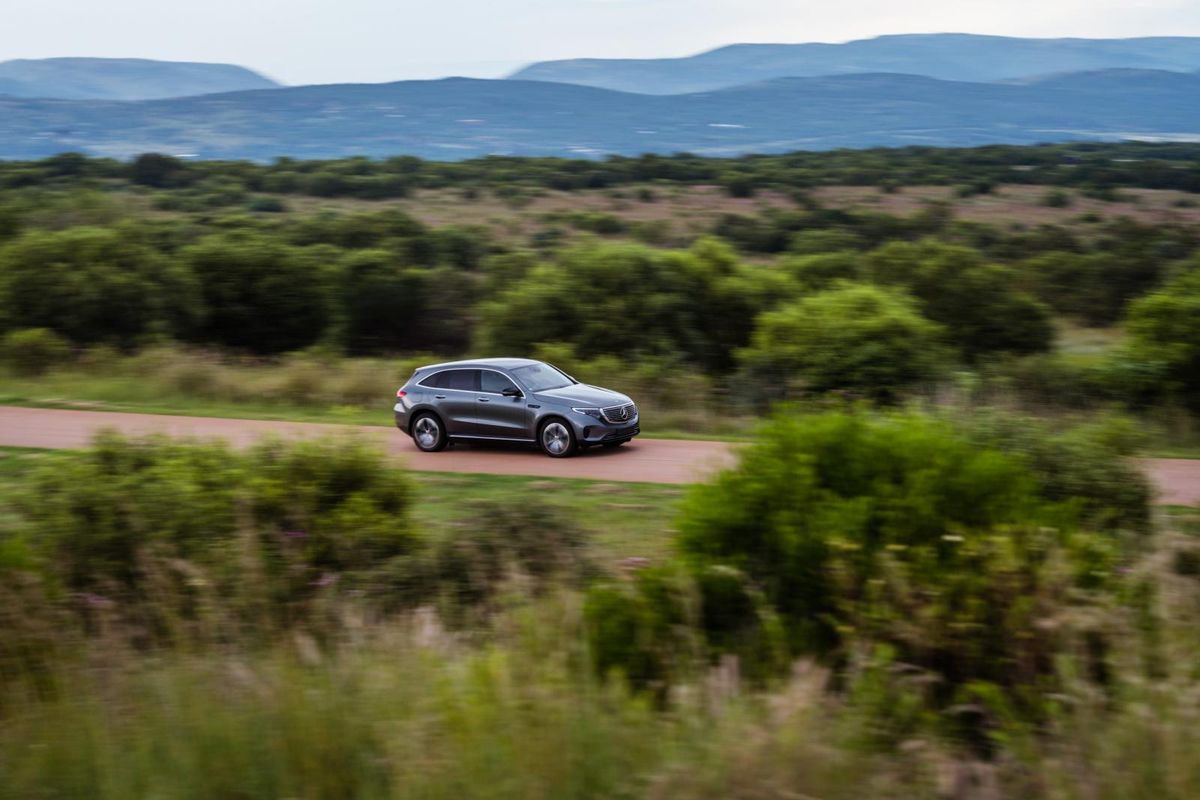
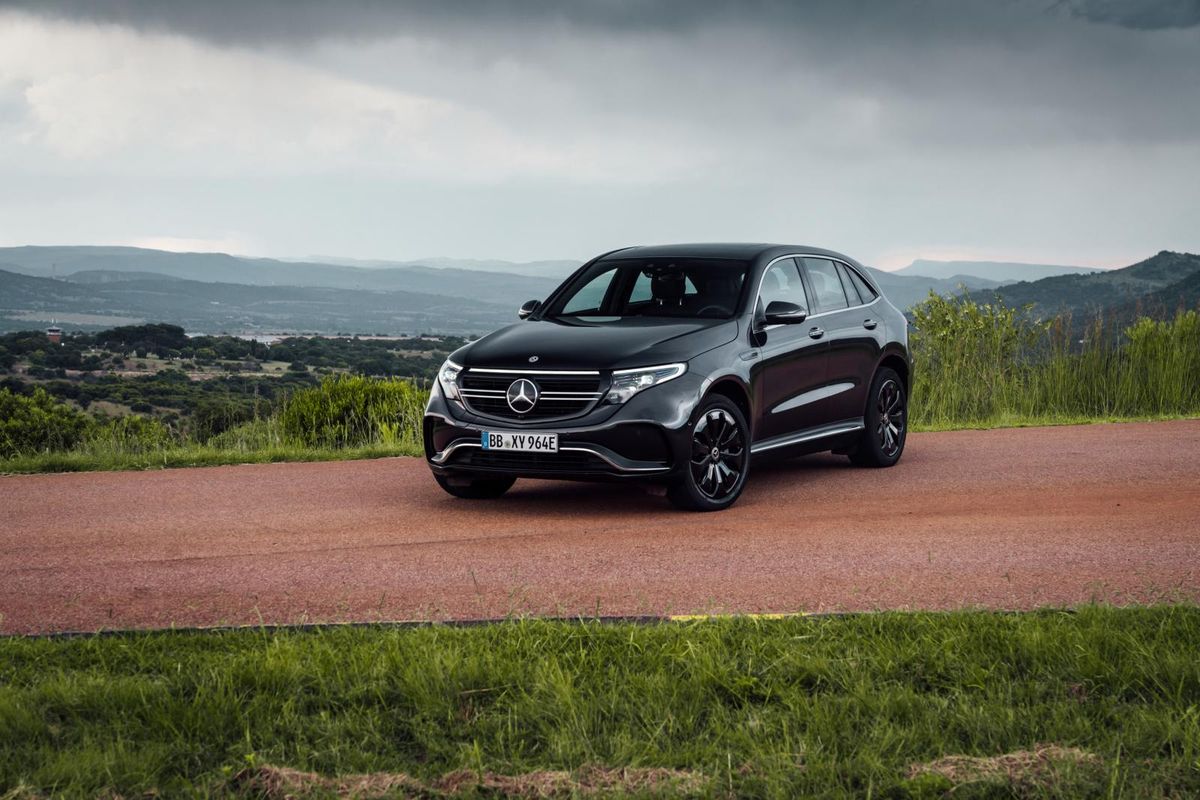
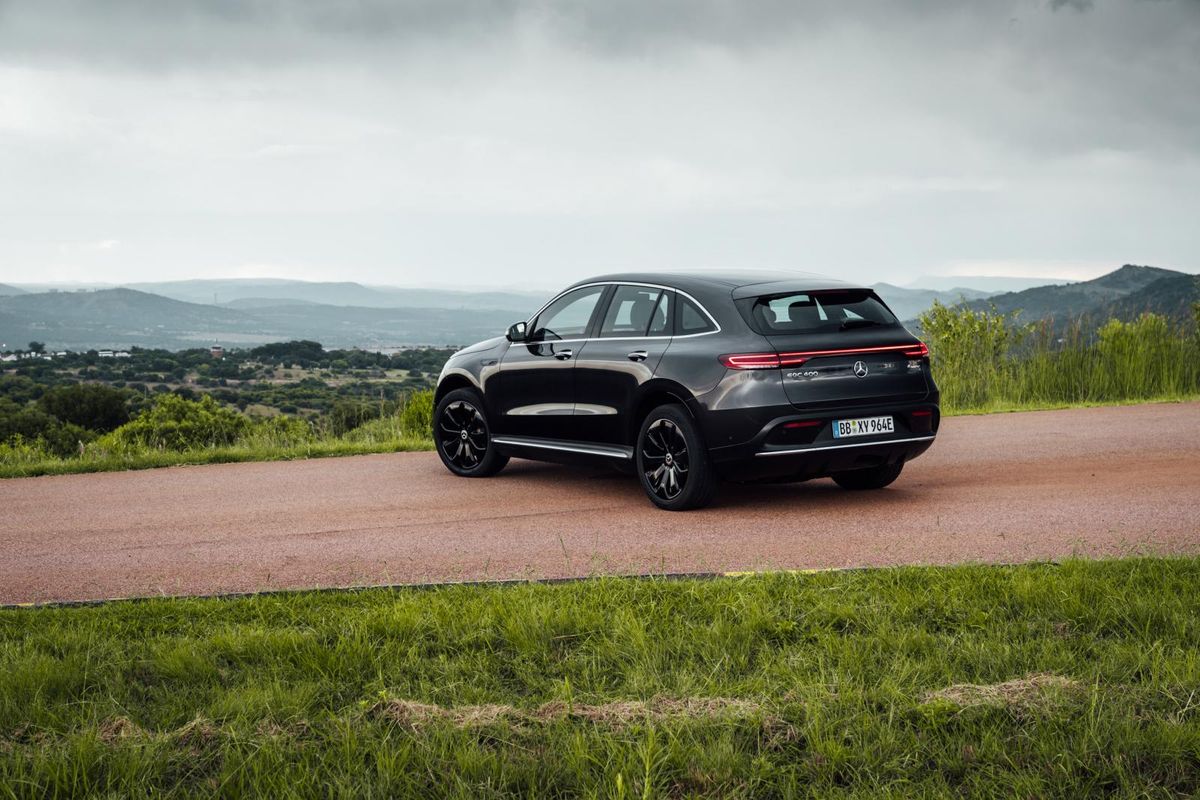
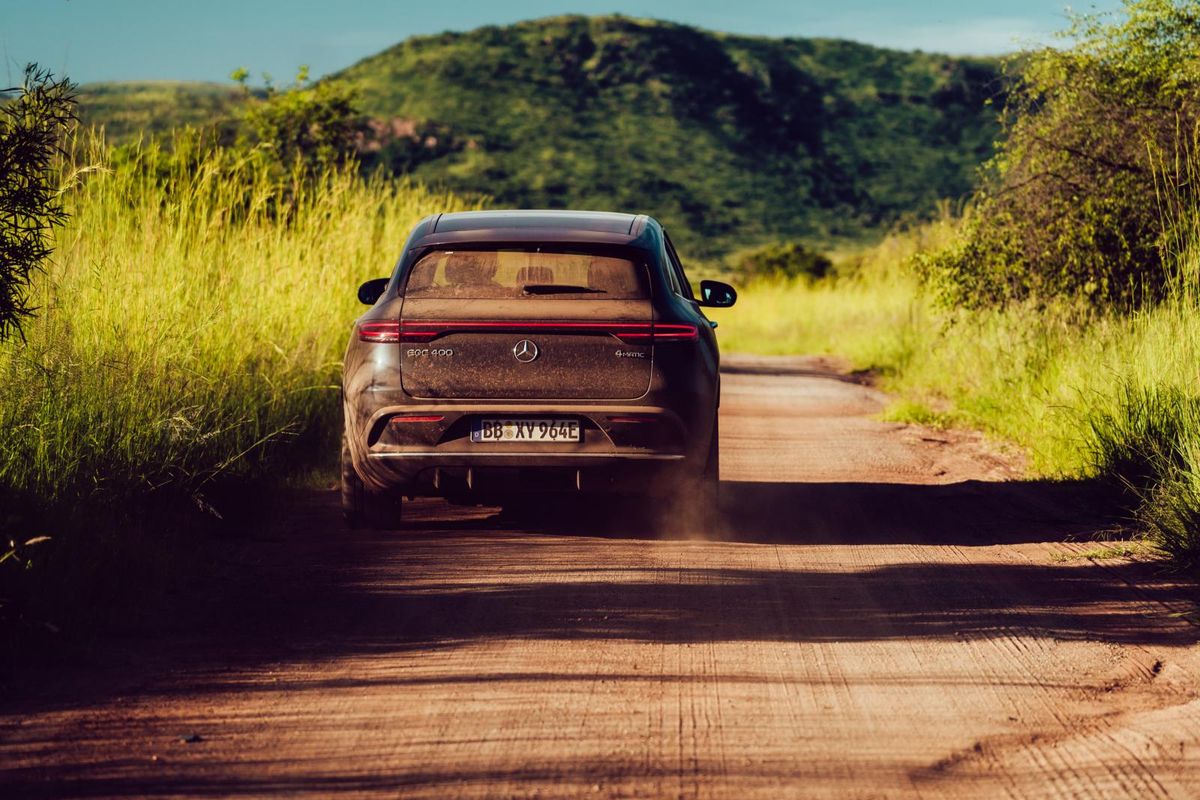
Mercedes-Benz has in recent weeks been conducting a final batch of hot-weather tests on its all-new EQC electric SUV in South Africa. Just prior to the vehicles returning home, we were afforded an opportunity to experience this important new machine.

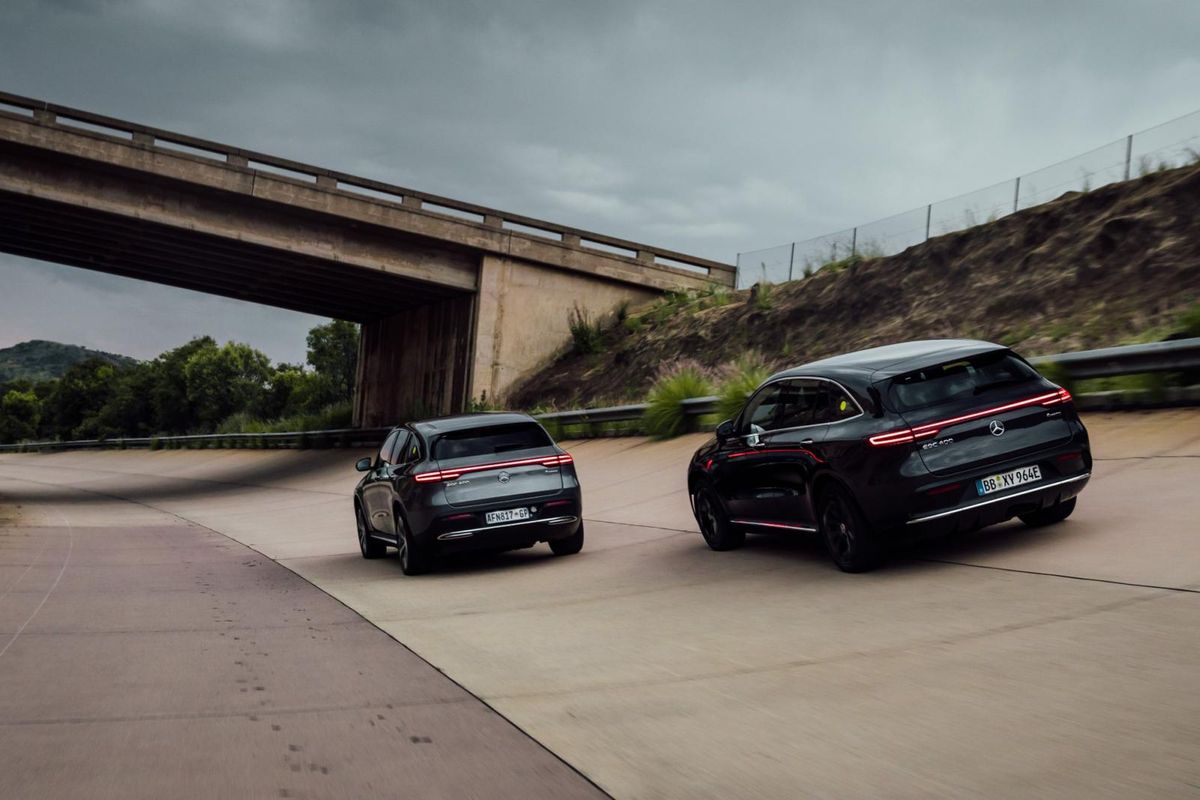
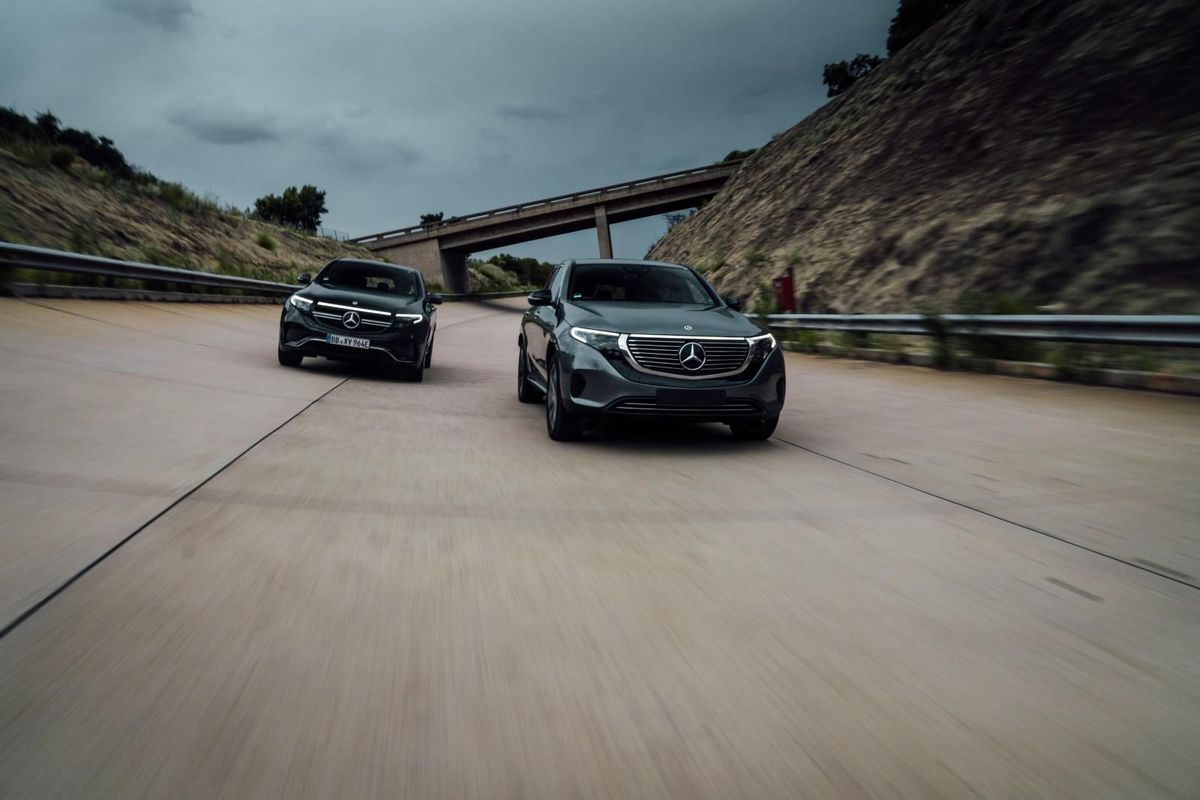
Built on the same platform as the Mercedes-Benz GLC (and in the same factory) and due to go on sale in South Africa later this year, the EQC is the first all-electric vehicle from the three-pointed star to go into mass production. The Bremen manufacturing facility will start churning out these high-end EVs soon, but not before a final batch of hot weather tests were conducted in South Africa. With the tests completed, Mercedes-Benz invited a few local journalists to experience the new machine at the Gerotek facility in Gauteng. Sadly, we were not allowed to drive the prototype vehicles, but nevertheless, the enthusiastic German engineers were not holding back around the tight dynamic handling course at Gerotek… so we were left with a pretty good idea of what these cars are capable of…

  • INTERESTING FACT: Close to 200 EQC prototypes and pre-production vehicles have been tested during the past 3 winters and 3 summers all over the world…

The vehicles had recently also been tested in Sweden (in icy cold conditions), and in South Africa had to endure not only gruelling heat, but also tow testing (1.8 tonnes), fine dust sealing evaluations and even runs where the batteries were run until completely drained. Given the upbeat moods of all the German technicians in attendance, one can only assume that the testing was a success and the final step in a 4-year long journey to get the first of the EQ cars ready for production.

Under the hood

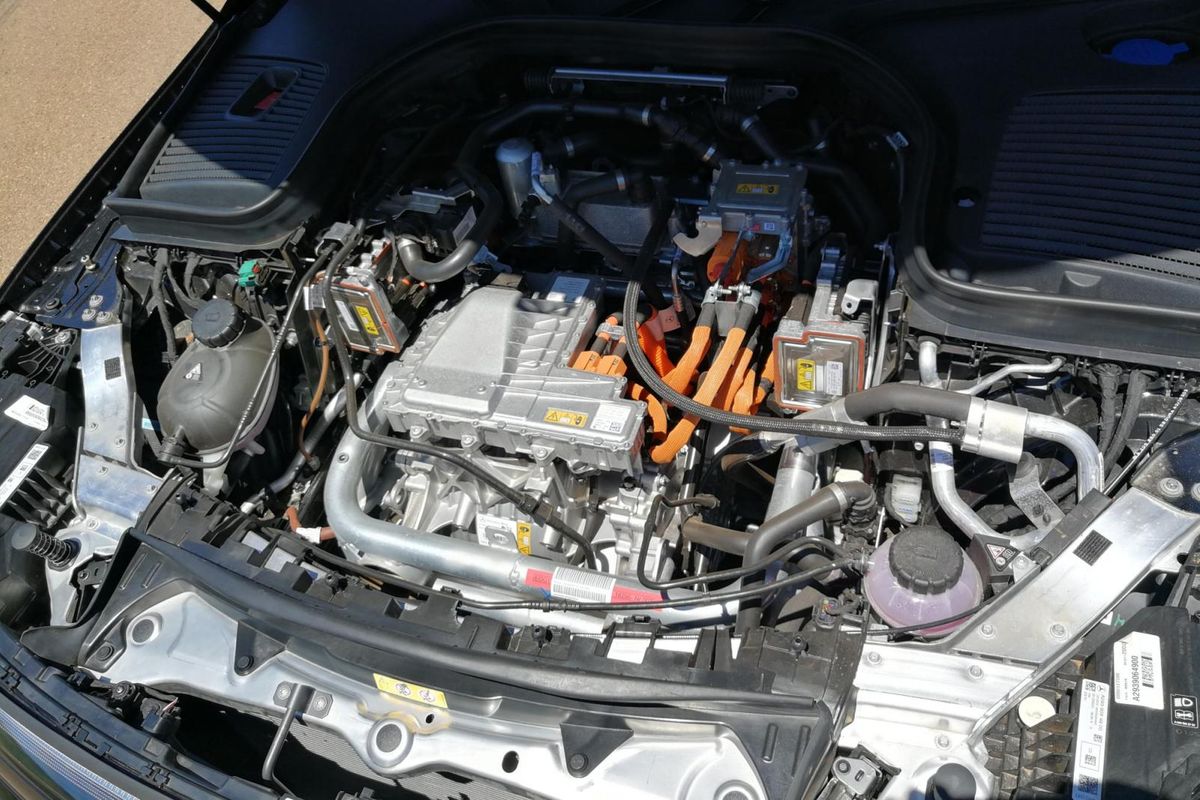
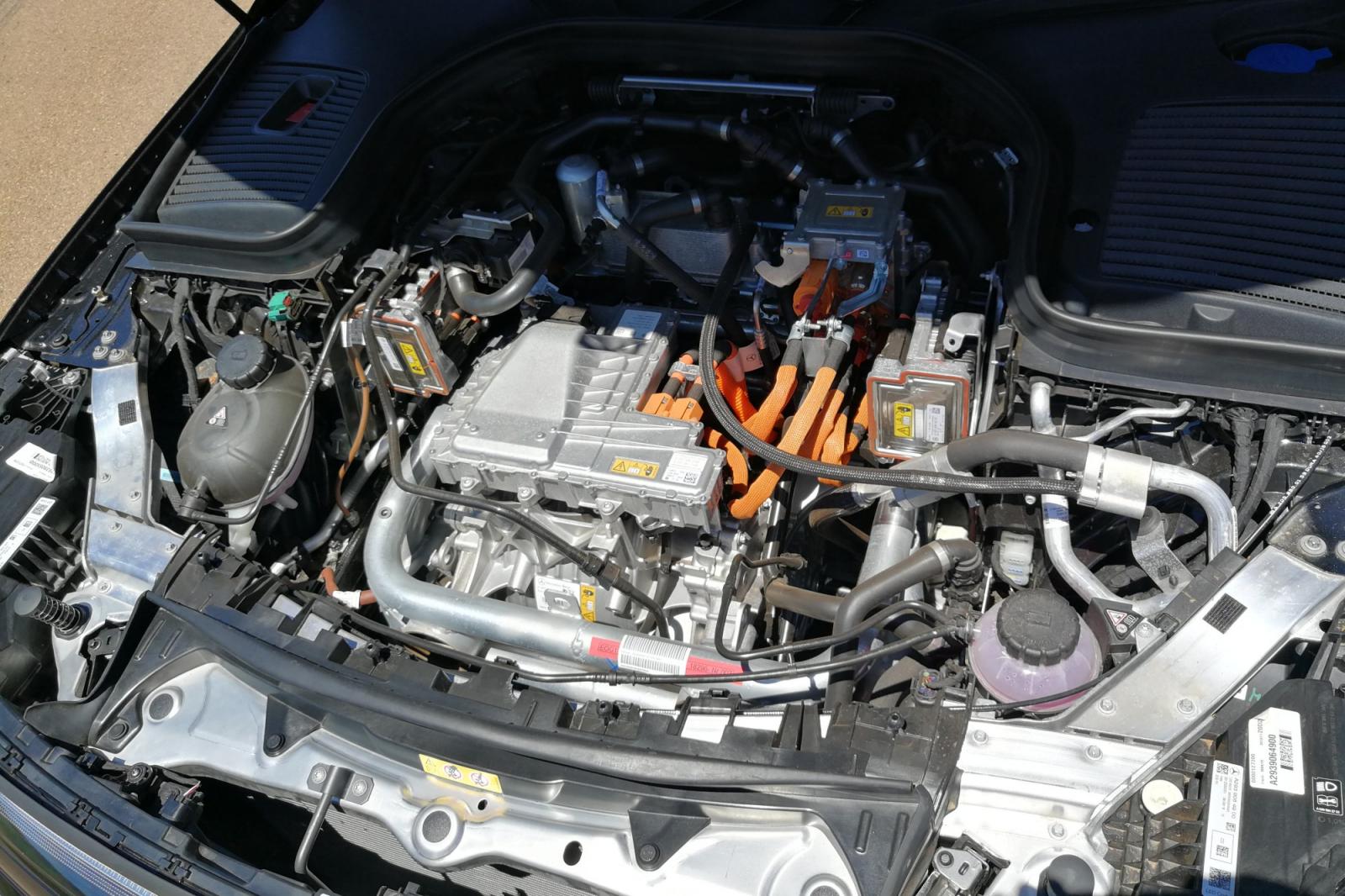
The EQC 400 is powered by 2 motors, combining to push out 300 kW and 765 Nm. There’s one motor on the front axle and a second at the rear, making it an all-wheel-drive vehicle. I asked the technician to remove the plastic cover under the bonnet, and it certainly does look different under there! see image below.


Under the bonnet of the EQC 400 (plastic cover removed). Orange means high voltage.

The battery has an energy content of 80 kWh and there are five driving modes, which result in different performance and ranges. The Mercedes-Benz EQC features a water-cooled onboard charger (OBC) with a capacity of 7.4 kW, making it suitable for AC charging at home or at public charging stations. If you opt for the later, you can go from 10%-80% in just 40 minutes. The battery comprises 384 cells and is located in the vehicle floor between the two axles.


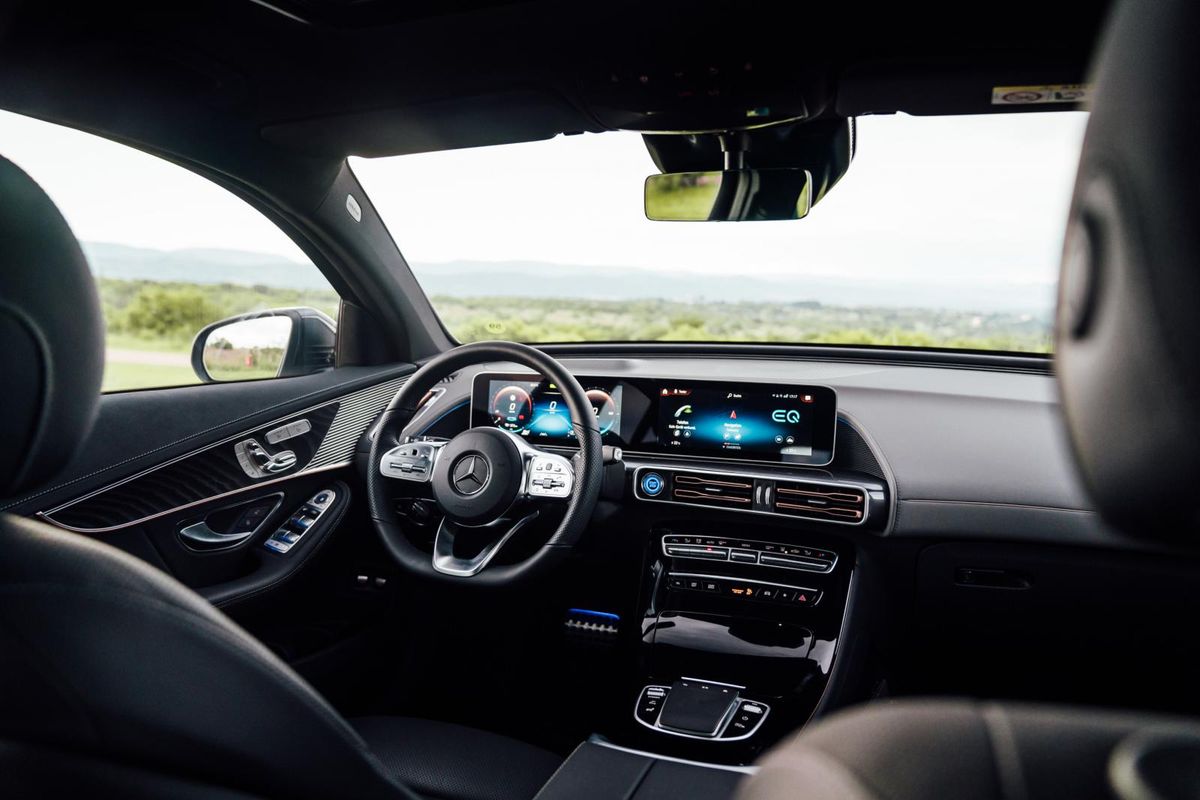
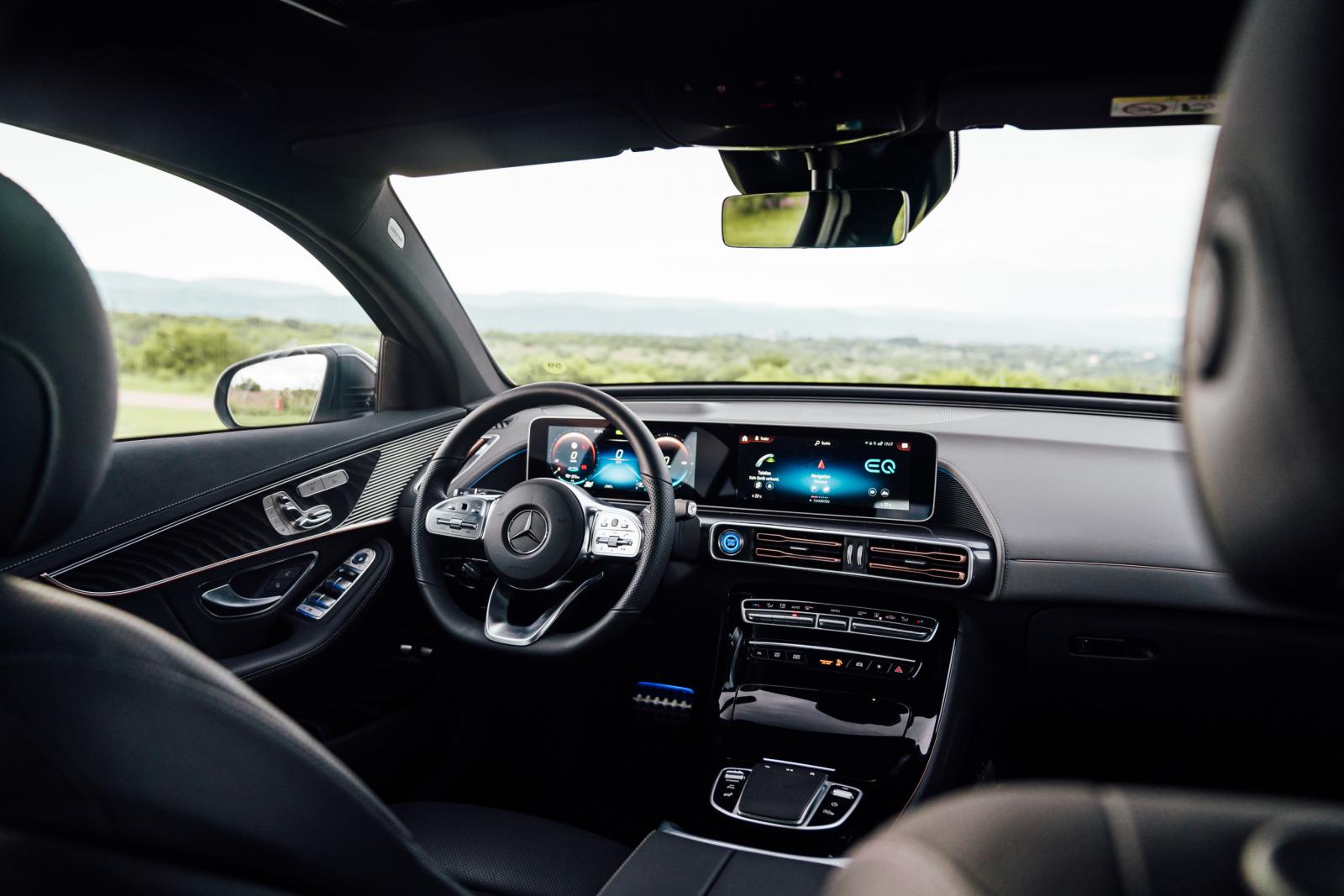
Cabin is modern, but not frighteningly so… Some interesting trim materials too, including a neoprene facia wrap.

Mercedes-Benz SA will only later be announcing its infrastructure-boosting plans for South Africa, but an off-the-record chat certainly created positive expectations. Petroleum company Shell, of course, recently also announced that it would be adding electric charging stations to some of its forecourts, and I hear that recent discussions with the government about EV infrastructure have also been more positive. 

On the road & track

Being based on the same platform as the GLC, the EQC is similarly sized and packaged inside (with a massive boot!). Mercedes-Benz has been careful not to create too futuristic a cabin, as such a move could chase away consumers. Instead, it looks very much like a “normal” Mercedes-Benz inside, albeit one with all the latest toys, including the top-of-the-range MBUX control system. In fact, one of the engineers said that the EQC could have been on the market sooner, but Mercedes-Benz wanted it to have all the latest tech that it was developing for the mainstream, new-generation products, too. Oh, and interestingly the EQC features only USB-C ports inside…

An observation that’s worth making is that the build quality seems superior to the GLC’s, and that’s possibly down to material selection. There is a solidity and “weightiness” to the trim of the EQC which leaves a lasting impression of quality, and some properly interesting choices too… including a neoprene facia cover that actually looks and feels far smarter than you’d ever expect. 

Out on the road the EQC is a silent cruiser and though I couldn’t drive it myself, it was clear that throttle response is, uhm… electric! Top speed is limited to 180kph, and the EQC 400 can blitz to 100kph in 4.9 sec. Like most EVs, it’s possible to drive the EQC almost entirely using only the throttle pedal, and this car further offers the option of adjusting the severity of the regeneration action when lifting off the throttle.

It’s a heavy car (2.5 tonnes), and it comes as no surprise then that it deals with road imperfections so well. Even more impressively, it hides its bulk brilliantly on the tight track at Gerotek, picking up speed deceptively fast and the low centre of gravity helping it stay stable in the corners. Ultimately I suspect it’s not as agile as the new Jaguar I-Pace (launched in SA this week), but only a proper drive will confirm that suspicion.

Mercedes-Benz is not yet ready to comment on local pricing, but has confirmed that the EQC will be launched locally before year-end. 

You may also be interested in

Jaguar I-Pace Launch Review (2019)

Audi e-tron International Launch Review (2019)

VW tests ID electric car in SA (2019)

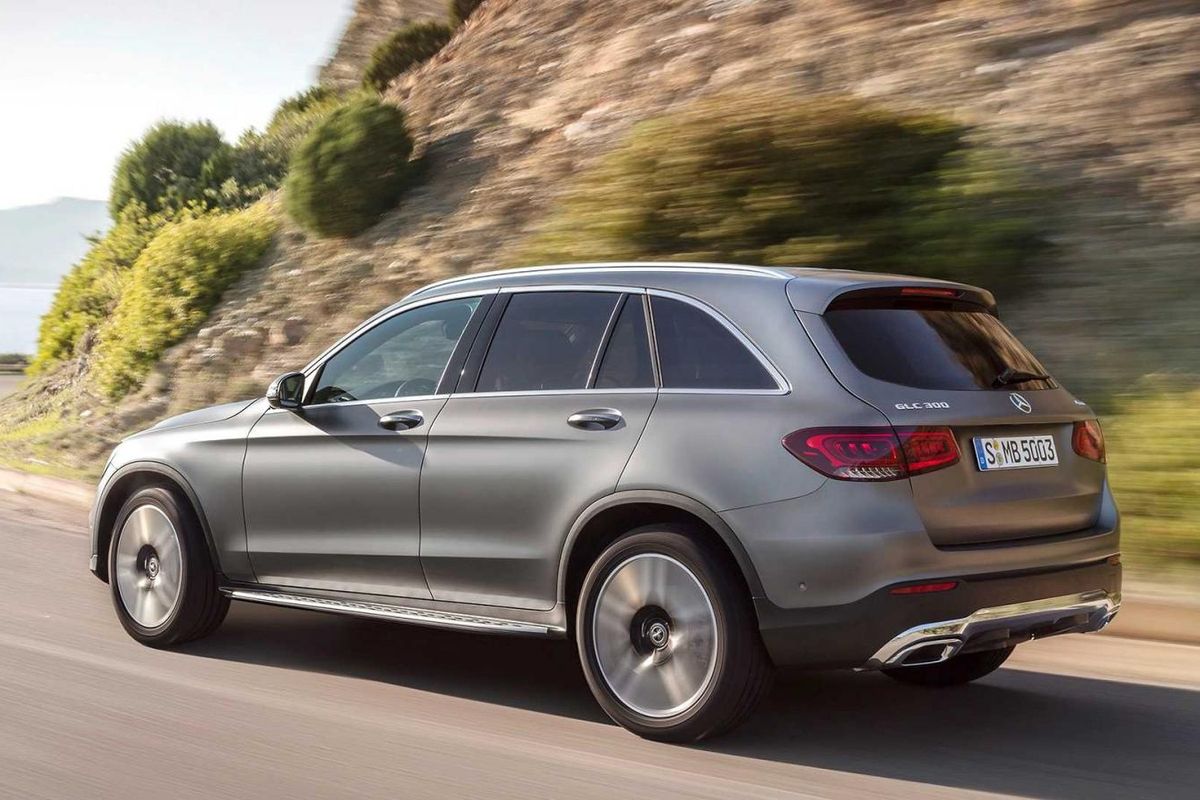
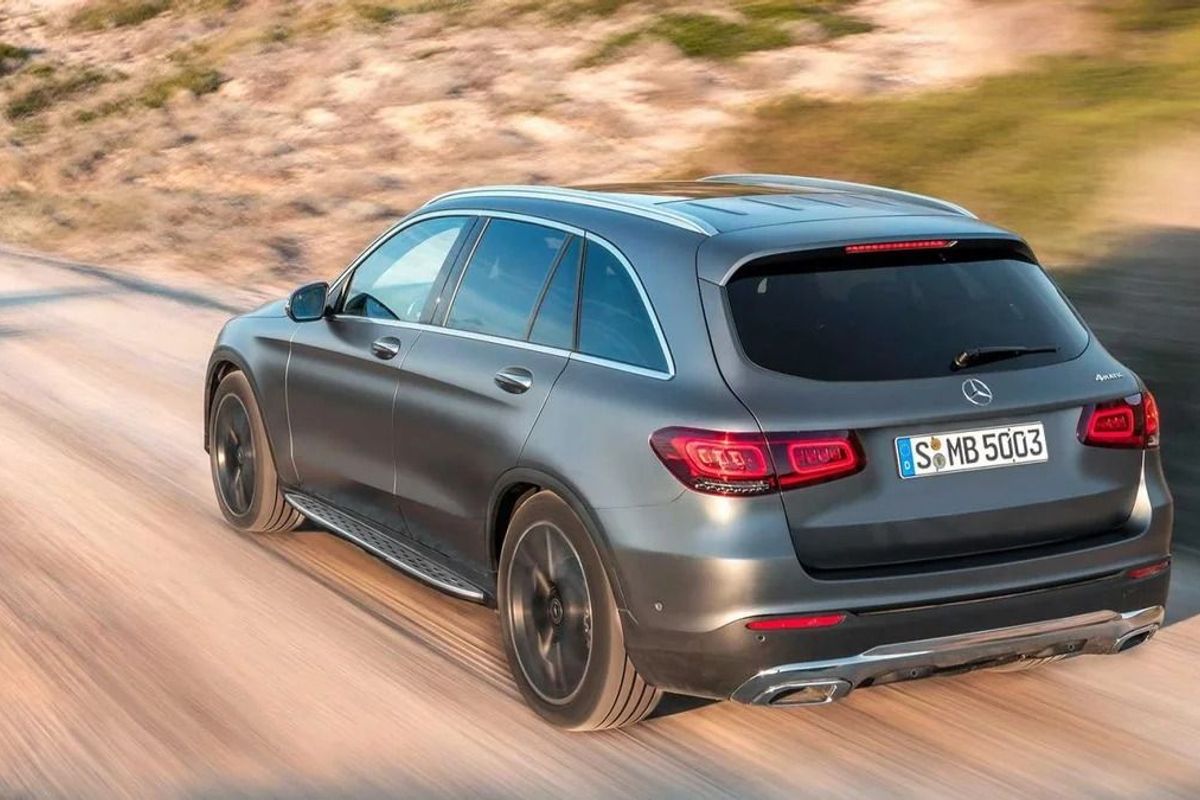
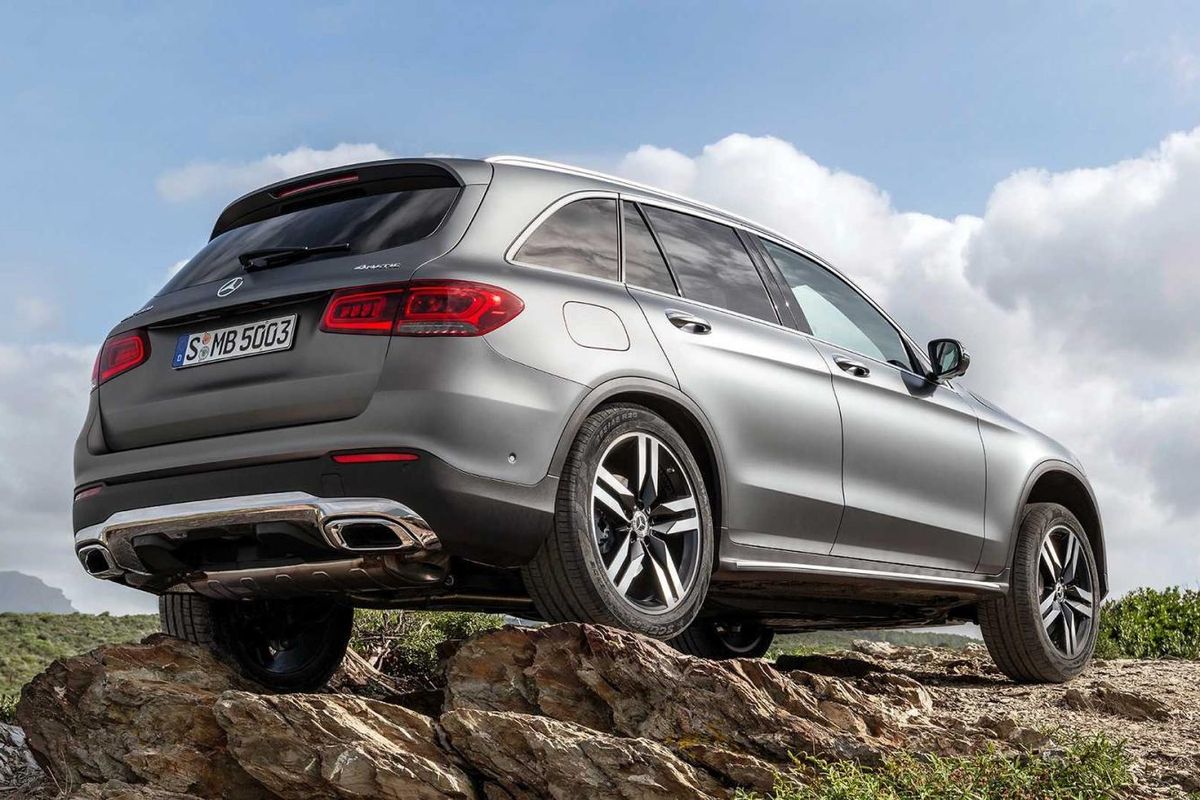
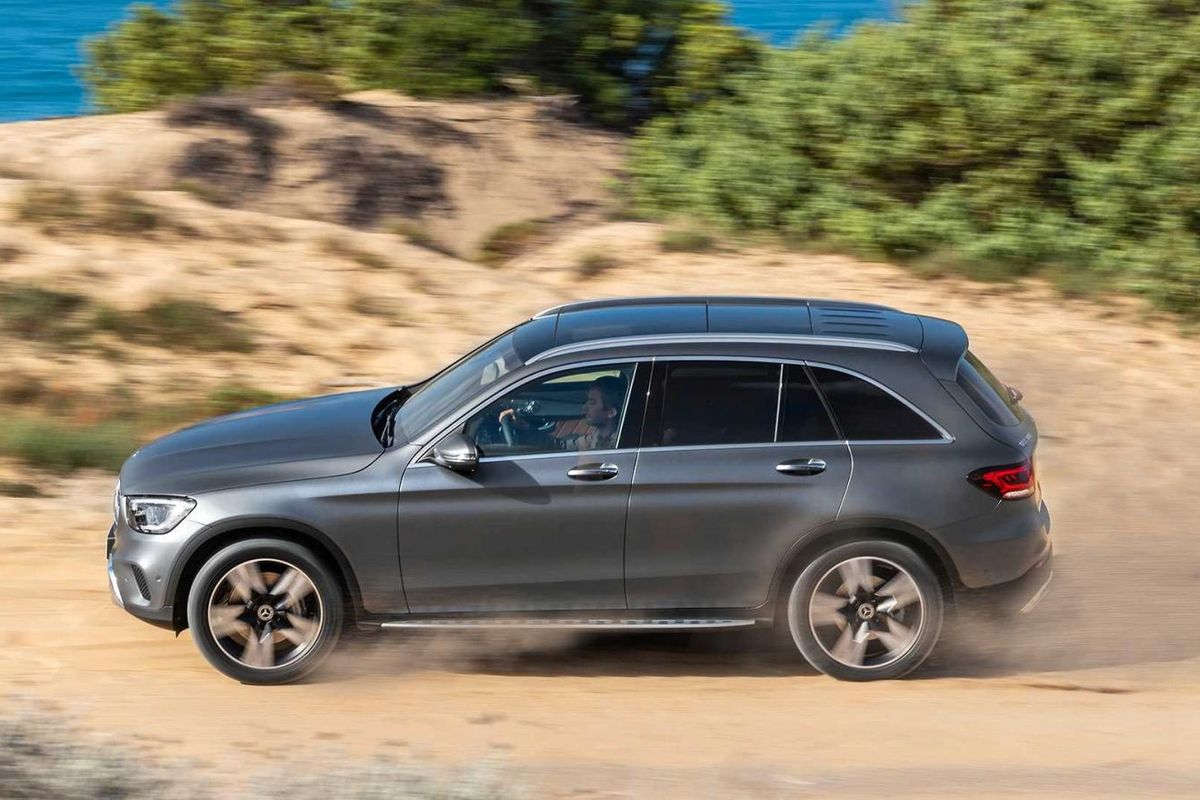
Revised Mercedes-Benz GLC is a Stealth Hybrid


The Mercedes-Benz GLC has been updated and now gains the MBUX user interface system and electrification. Herewith the details…

Mercedes-Benz will introduce a heavily updated version of its current GLC to the market later this year, featuring the brand’s latest 48-volt electric architecture.

Although styling changes to the mid-size SUV are slight (new LEDs, some chrome garnish and a remoulded aft bumper), everything that functions with an active current onboard has been redesigned and improved.

The revised GLC will feature Mercedes-Benz’s latest MBUX infotainment functionality, comprising 2 screens and what is claimed to be the most intuitive voice activation and mastering technology around. There will also be an augmented reality overlay function for the heads-up navigation feature. 

Interestingly, the availability of MBUX on what is essentially a C-Class platform in the new GLC, proves that one can possibly expect a similar infotainment and user-interface upgrade for Mercedes-Benz’s popular sedan in the near future, too.

Beyond the sophisticated evolution of GLC’s cabin digitisation, the entire range now features Mercedes-Benz’s advanced 48-volt onboard electric architecture, enabling stealth hybrid features. A belt-driven starter/generator configuration will allow the GLC’s engines to ‘sail’ in decoupled mode when no throttle load is detected, thereby saving fuel. It can also recover up to 10kW of energy at crank speeds up to 2 500 rpm. Alternatively, the system can add those 10kW as an electric energy ‘boost’ function during peak throttle demand.

Engine Choice 


A total of 5 engines will be offered, all with 48-volt mild hybrid technology. 

The primary source of new GLC’s momentum will be a range of Mercedes-Benz’s latest four-cylinder engines: 2 petrol engines and 3 diesel engines, all turbocharged, will power the latest GLC.

The GLC200 boosts 145kW and 280Nm from 1.5-litres of swept capacity, whilst GLC300 runs the larger 2.0-litre turbopetrol, good for 190kW and 370Nm. The 3 diesel engine options are all an evolution of the same 2.0-litre OM654 architecture. The mildest of these will be the GLC200d with 120kW and 360Nm, increasing to 143kW and 400Nm in the mid-range GLC220d, before peaking at 180kW and 500Nm in the GLC300. A sole transmission option is standard on all new GLCs, that being Mercedes-Benz’s in-house designed and built 9-speed automatic transmission.

The only notable suspension upgrade is adaptive dampers now being available on both axles. Mercedes-Benz’s Dynamic Body Control harmonises firmness and rebounds at each wheel corner, by reacting to a range of steering, throttle and braking inputs, keeping the GLC as balanced as possible in all driving conditions and over a diverse range of road surfaces.

We will keep you updated as soon as local pricing and specification details become available. 

Buy a new or used Mercedes-Benz GLC on Cars.co.za

Related Content

Mercedes-AMG GLC 63 S Breaks Ring Record [w/video]

Mercedes-AMG GLC 63 S (2018) Launch Review

Mercedes-Benz GLC 300 (2015) Review

Mercedes-Benz GLC 250d Coupe 4Matic (2017) Review

Cars Coming to SA in 2019


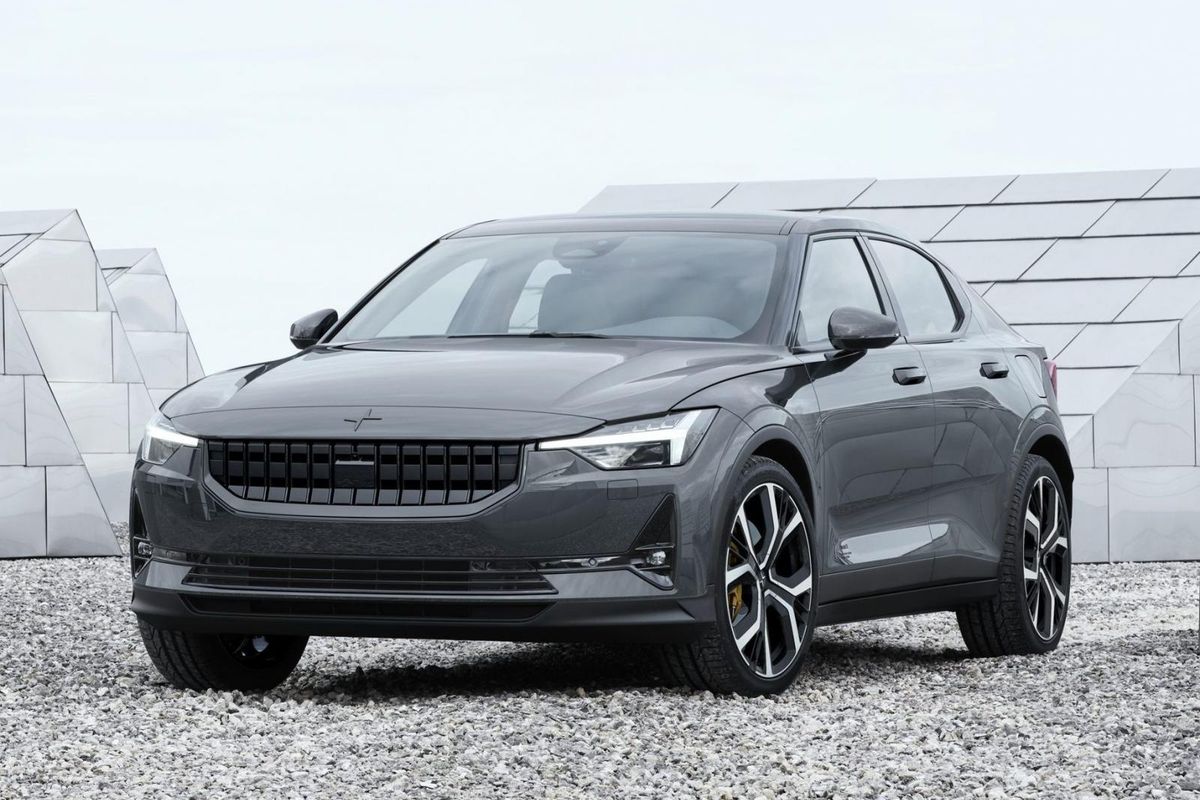
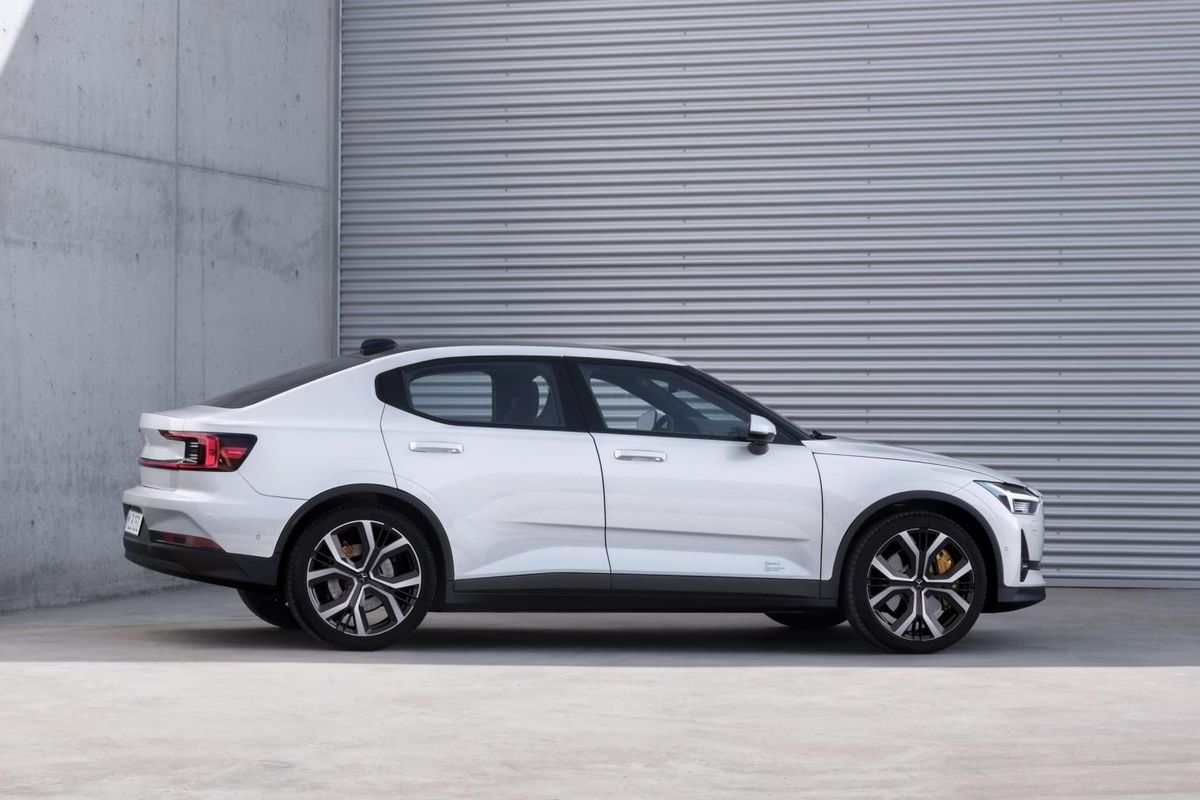
Meet the Polestar 2


Volvo’s performance sub-brand, Polestar, has revealed its first all-electric volume model called the Polestar 2. Herewith the details…

We saw the Polestar 1 in the metal for the first time at the 2018 Geneva Motor Show and we were intrigued by this sexy hybrid coupe that offered 447 kW and 1 000 Nm developed by a  2.0-litre supercharged and turbocharged engine along with 2 electric motors over the rear axles

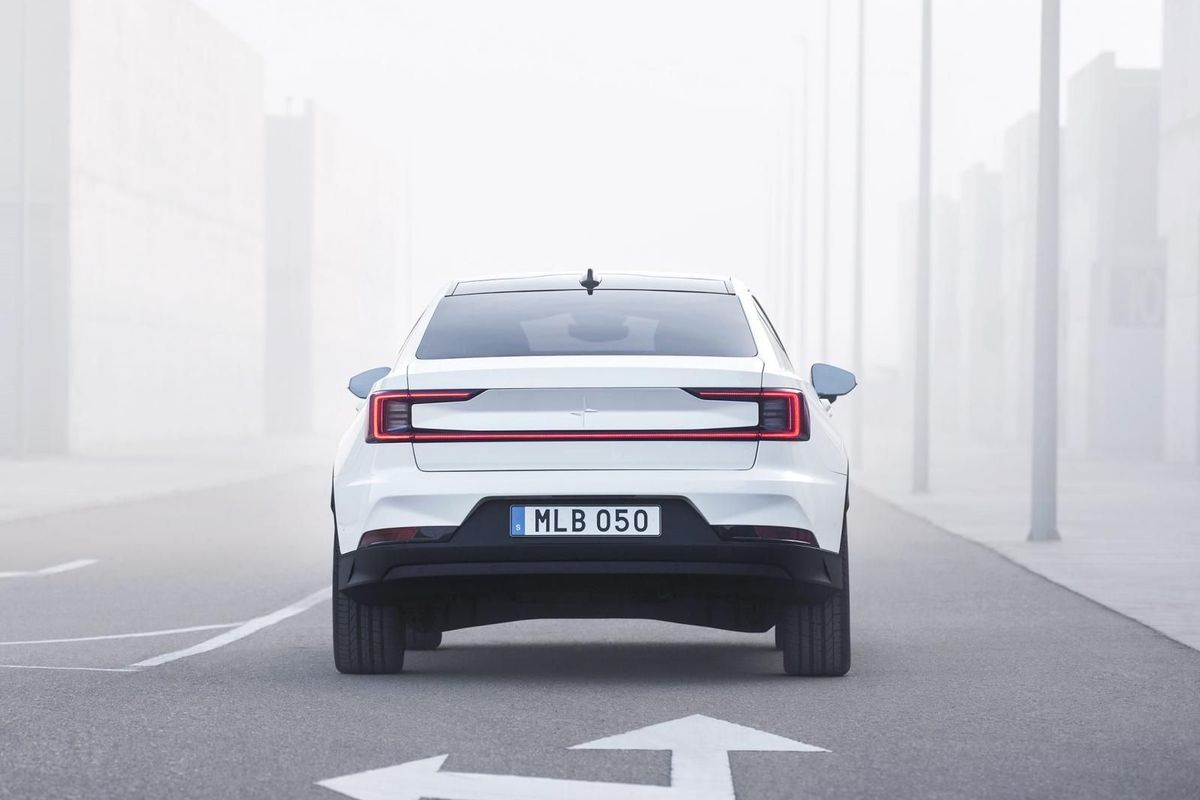
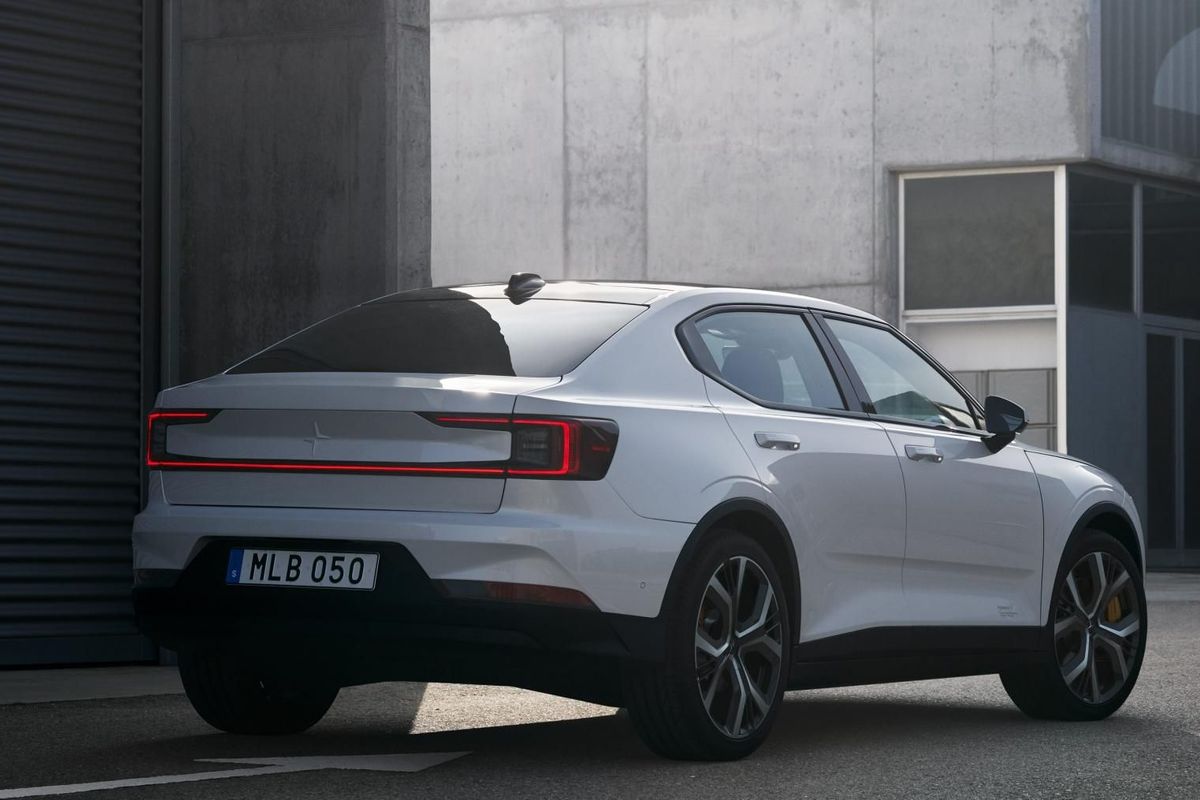
Now, however, Polestar has revealed the next step in its development as an electric performance brand with the introduction of Polestar 2, an all-electric fastback that will rival Tesla’s Model 3.

In the case of Polestar 2, two electric motors and a 78 kWh battery develops a total system output of 300 kW and 660 Nm of torque and is said to sprint from zero to 100 kph in 5 seconds with an all-wheel-drive layout. Range is estimated at 443 km.


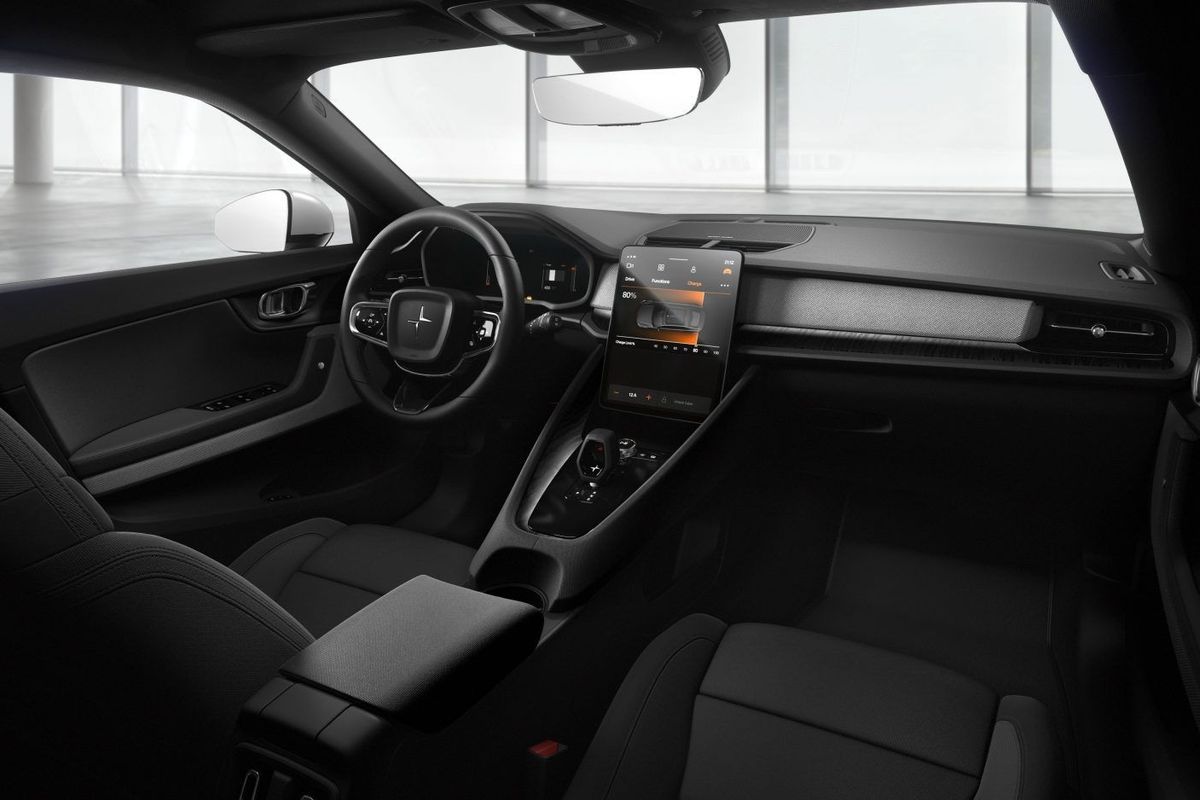
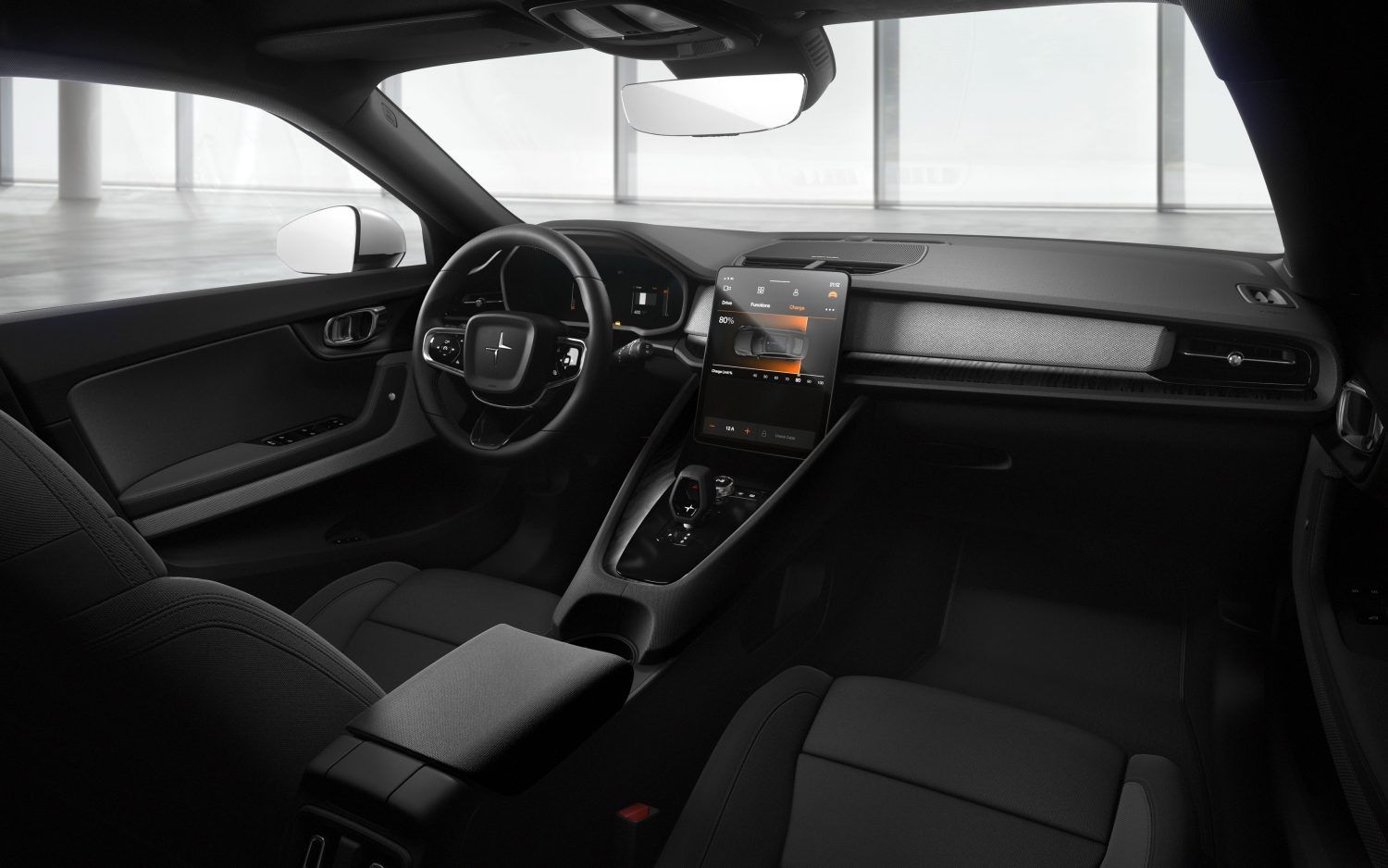
Polestar 2 features an environmentally-friendly cabin with a large 11-inch, Android-based infotainment system. 

Polestar will set up strategic collaborations to give owners access to public charging networks using an in-car and mobile connected digital solution.

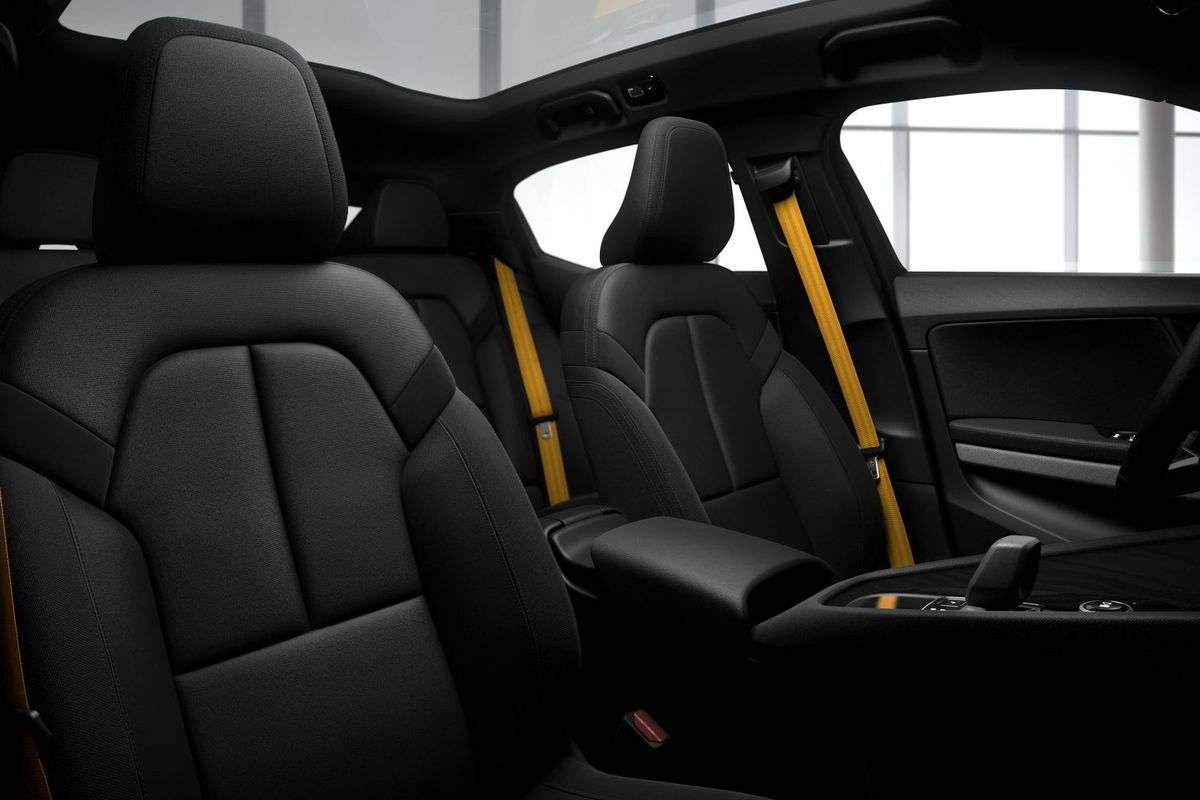
Key design details include Pixel LED headlights, frameless side mirrors, illuminated Polestar logo and interestingly, a standard vegan interior that makes use of ‘progressive textiles’. A Performance Pack will also be offered which will enhance driving dynamics with Ohlins dampers, Brembo brakes, 20-inch forged wheels and subtle details such as gold seat belts, brake callipers and gold valve caps.

Also, the 11-inch infotainment system with voice control will be powered by Android, providing a basis for apps and vehicle functions to coexist. Users will be able to access Google Assistant, Google Maps and Google PlayStore5.
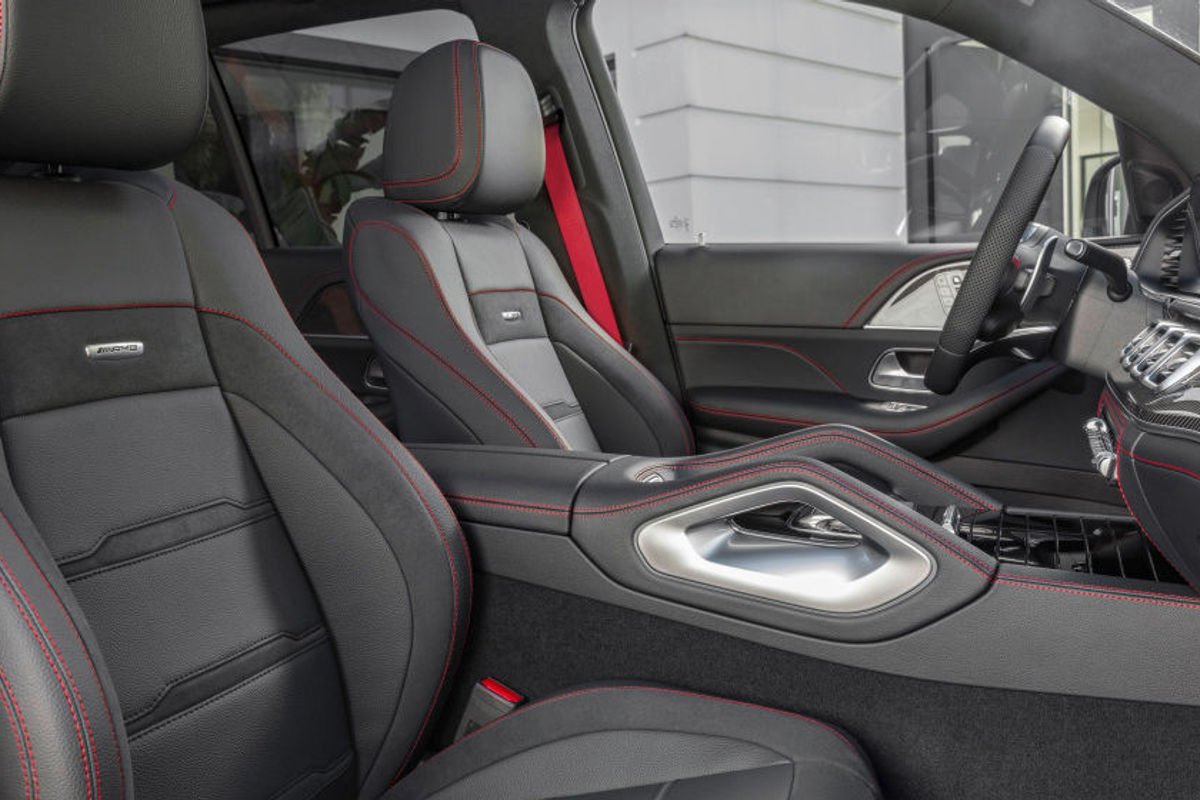
Production of Polestar 2 begins in 2020 in China and it will be produced for both left and right-hand drive markets worldwide. The Polestar 2 will be shown at the upcoming Geneva Motor Show in March 2019.
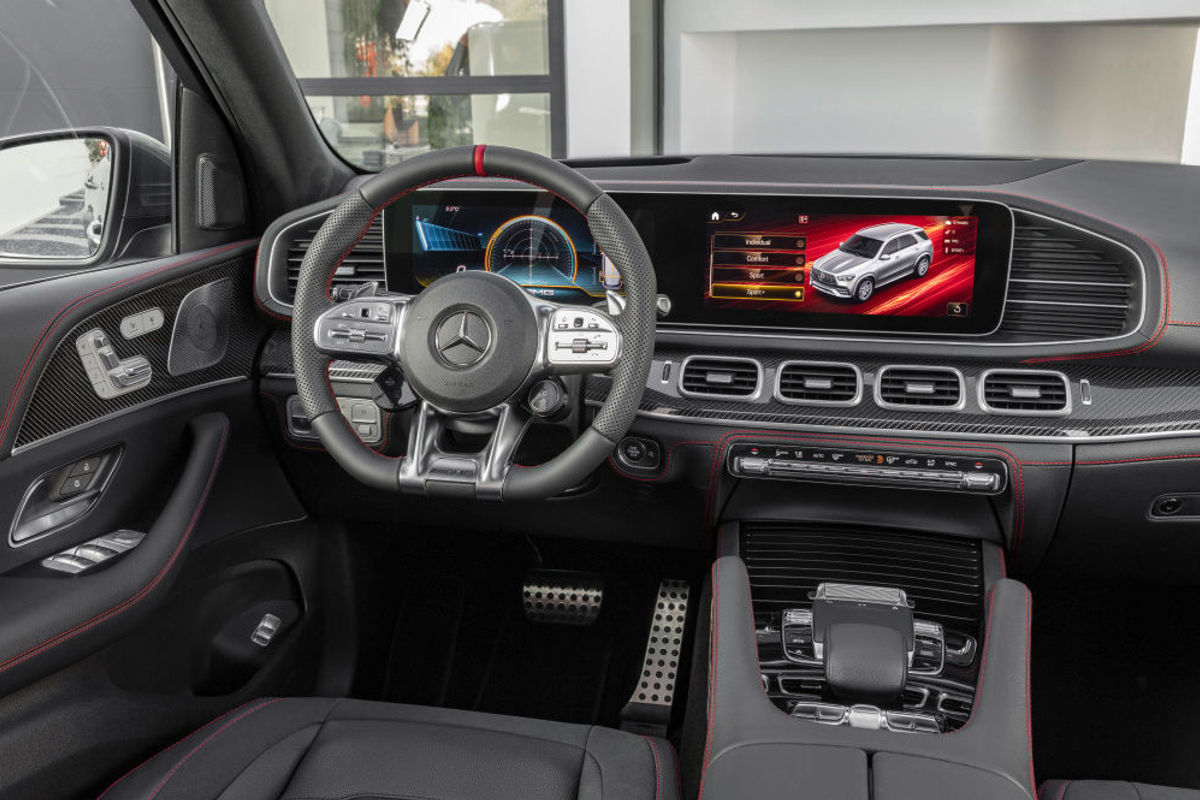
Initial markets for Polestar 2 include China, USA, Canada, Belgium, Germany, Netherlands, Norway, Sweden and the UK. Other markets are under consideration, so there is a chance that we might see the Polestar 2 in South Africa in the future.

Related Content 

Polestar 1 Shows Off Electric Performance Future

Polestar 1 Testing in Arctic Circle [w/Video]

2018 Geneva Motor Show: Highlights


Huge Fuel Price / Toll Fees Increase for SA


South African motorists are in for hefty fuel price increases as well as upward adjustments to toll fees for March 2019.

South African consumers, who are already under considerable financial strain, will have to brace for a double blow in March 2019 as both fuel prices and toll fees are expected to rise sharply.

Based on unaudited month-end data released by the Central Energy Fund, rising international petroleum prices during February 2019 will result in sharp fuel price increases in March 2019.

The AA says that the price of petrol is expected to increase by approximately 73 cents per litre while the price of diesel will increase by as much as 92 cents per litre.

"The Rand/US dollar exchange rate has worked slightly in South Africa's favour during February, giving savings of up to nine cents a litre. However, this has been shouldered aside by fuel price rises which have come off their January plateau and advanced considerably," the Association says.

The impact of rising fuel prices will coincide with toll free increases as of 1 March 2019 as well as increases to the General Road Fund and the Road Accident Fund levies which will be applied in April 2019. But that’s not all, an additional Carbon Tax will come into effect in June 2019 where an additional 9 cents and 10 cents will be added to the price of petrol and diesel respectively.

"In the medium term, we expect world supply will slightly outstrip demand as the USA continues to make impressive progress with its domestic oil production. However, petroleum prices remain vulnerable to geopolitical shocks and we cannot rule out further price hikes in the first half of 2019" says the AA.

Earlier this week, the AA also commented, “The increasing costs associated with road travel in South Africa will make everything more expensive, and will certainly have a direct and indirect impact on consumers. It also makes it harder for job seekers to find work as few of them have the resources to pay current transport costs, let alone increased fees. This, in particular, is worrying given the country’s high unemployment rate.

Related Content

Fuel Price Breakdown: What do you pay for?

5 Ways to Beat the Fuel Price Hike

Most Fuel Efficient Budget Cars in SA

Most Fuel-Efficient Double-Cab Bakkies in SA

5 Fuel-Saving Car Features & How They Work

Most Fuel Efficient Budget Cars in SA

Most Fuel Efficient Diesel Cars in SA (2018)

Most Fuel Efficient Petrol Cars in SA (2018)

10 Ways To Save Fuel

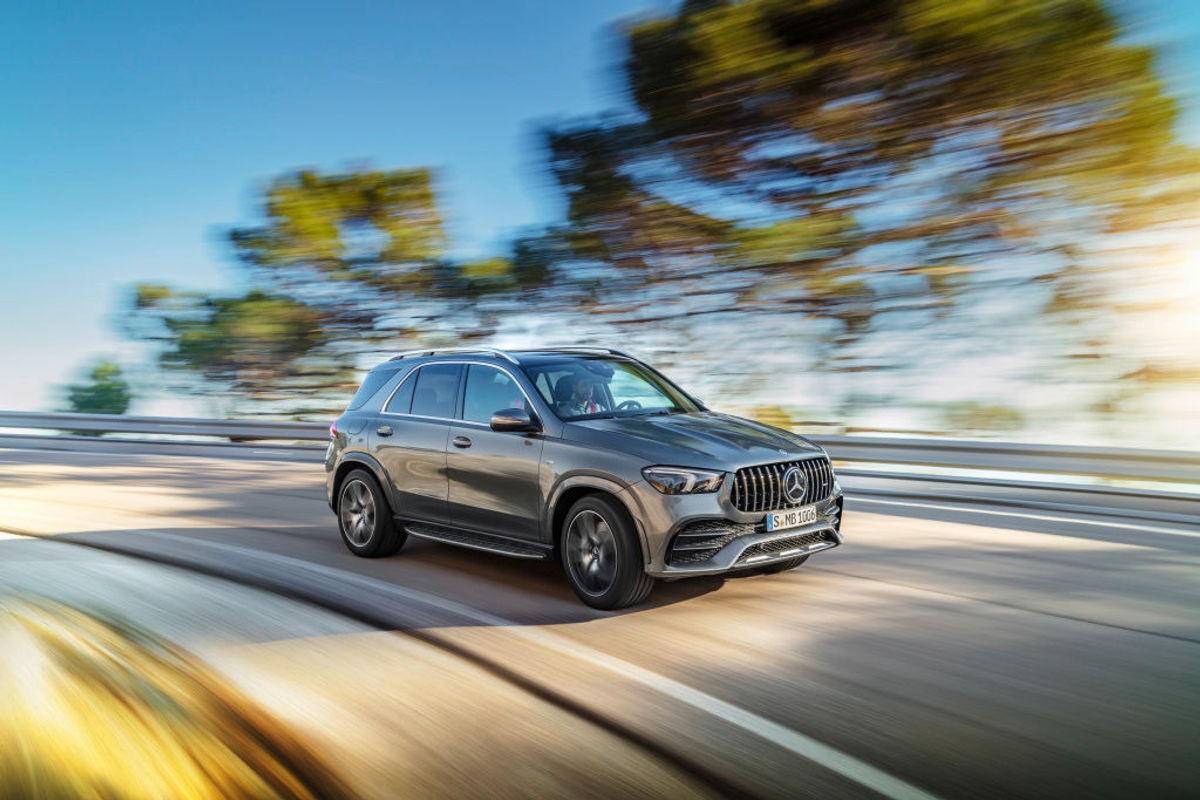
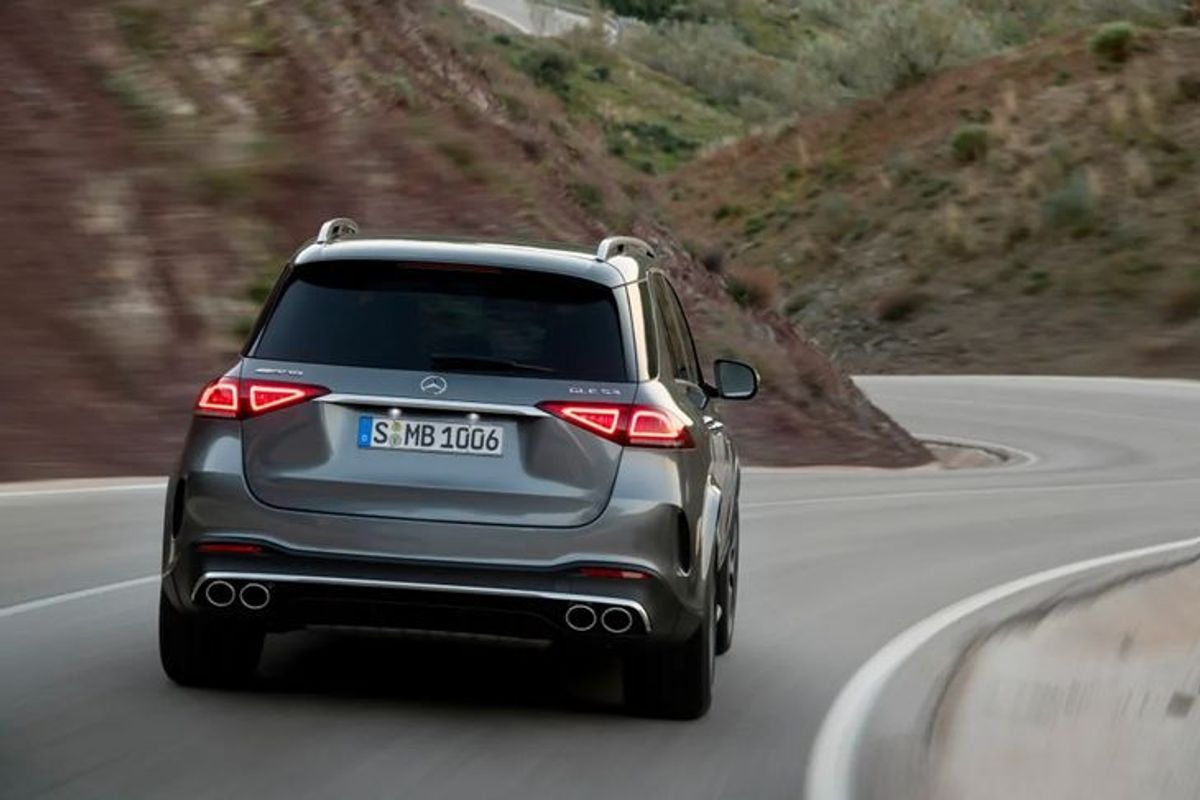
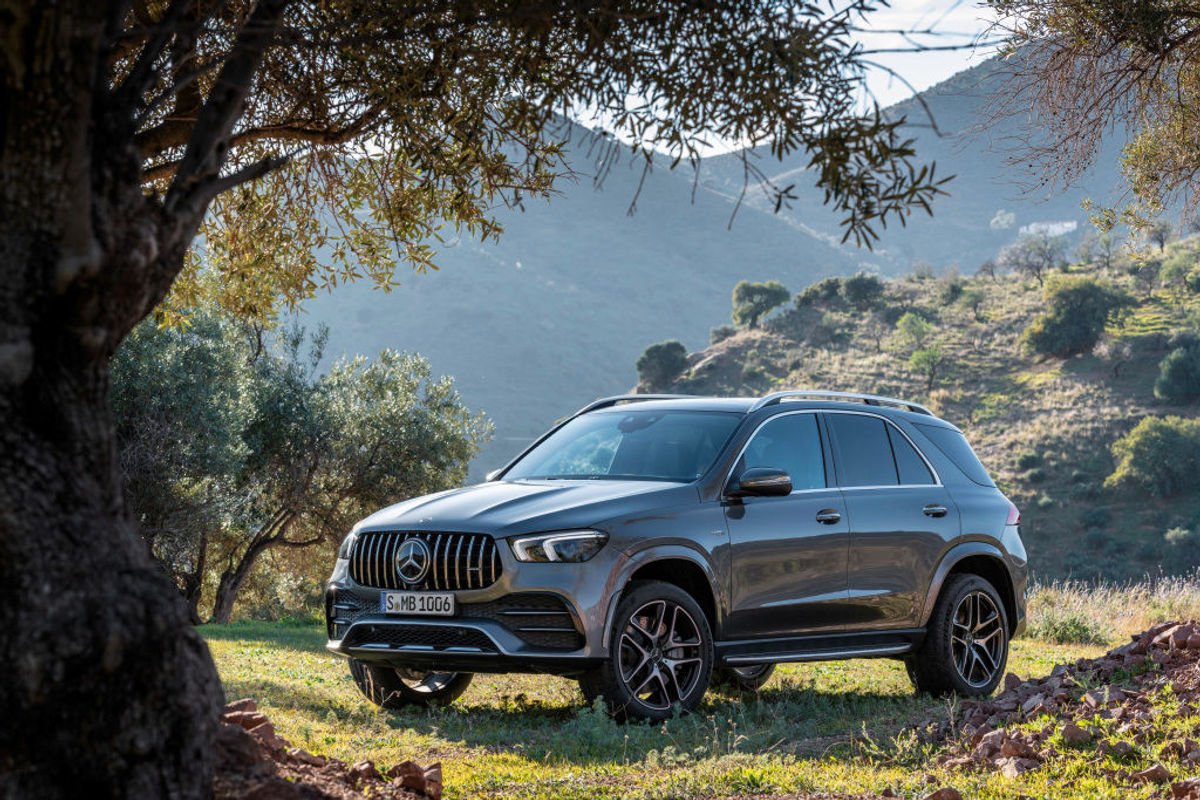
Mercedes-AMG GLE53 Unleashed


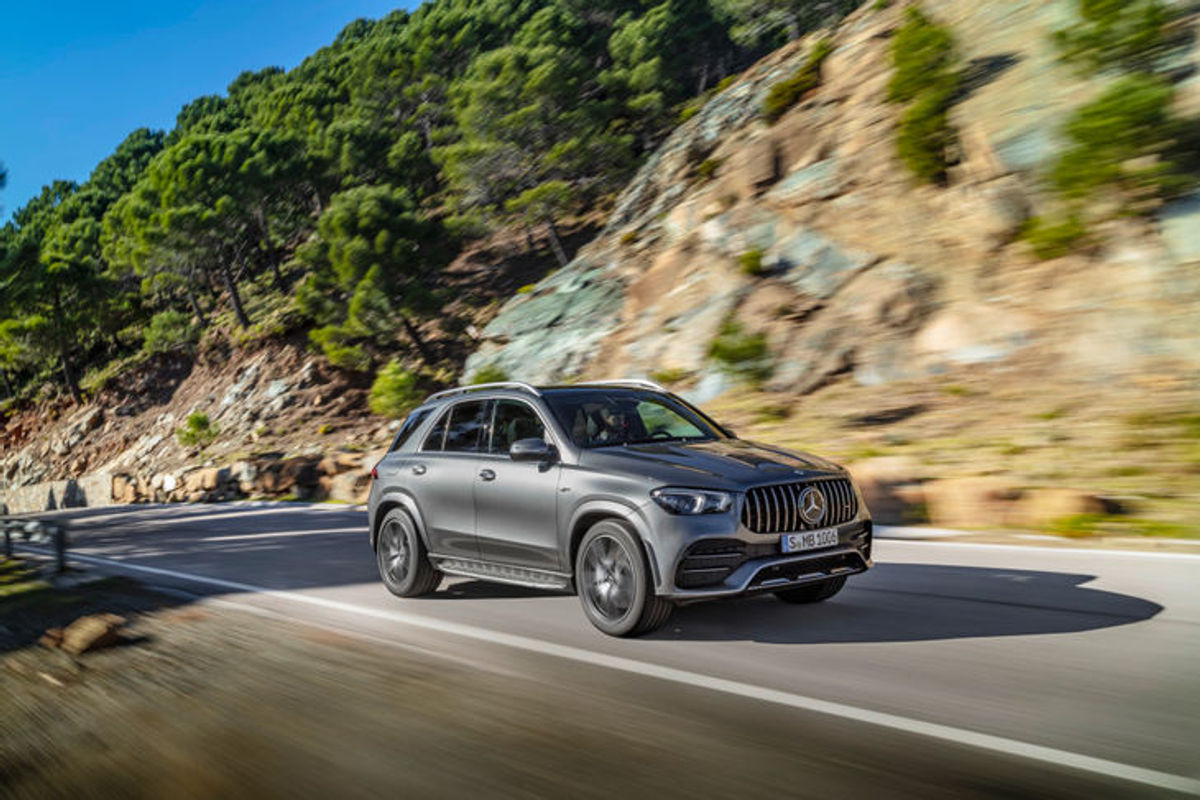
While we eagerly await the arrival of the new fourth-generation GLE on local soil in Q3 2019, the sorcerers at Affalterbach have produced a tantalising prospect in the form of the GLE53, which sits comfortably between AMG’s large SUV options.

With the largest portfolio of performance models, AMG customers are spoiled for choice. If you desire a 7-seater, the folks at AMG have built an SUV with more performance than the GLE43, but not quite as extreme in nature (or price) as GLE63. 

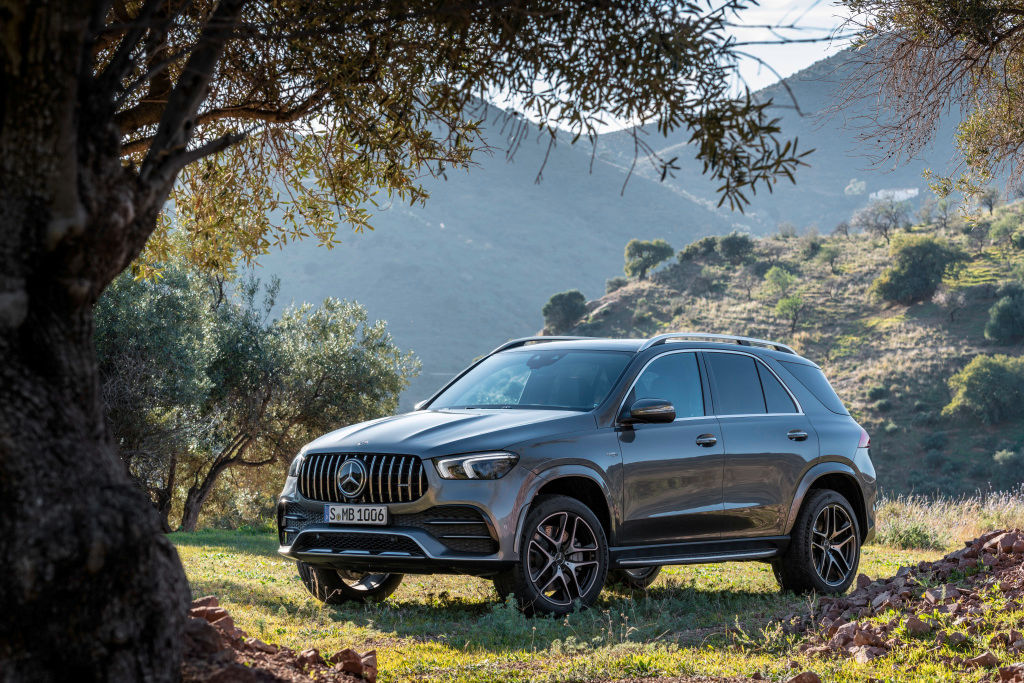
The latest addition to AMG’s offering of go-faster SUVs is the GLE53 AMG. Featuring that characteristic Panamericana-inspired grille, the GLE53 is powered by a 3.0-litre in-line 6-cylinder engine, which benefits from twin-turbocharging and electric boost compensation.

Peak power is 320 kW with 520 Nm of torque and the GLE53 can source an additional 16 kW and 250 Nm from its integrated starter motor/generator – and an electric charge system which resides between the engine and gearbox. An electrically driven compressor also pre-pressurises the turbochargers to ensure GLE53 suffers virtually no lag in throttle response.

Drive is apportioned to all 4 wheels via Mercedes-Benz’s 9-speed automatic transmission, which means you should nearly always be in the correct gear and if you are so inclined, it's capable of running the benchmark 0-100 kph sprint in 5.3 seconds.


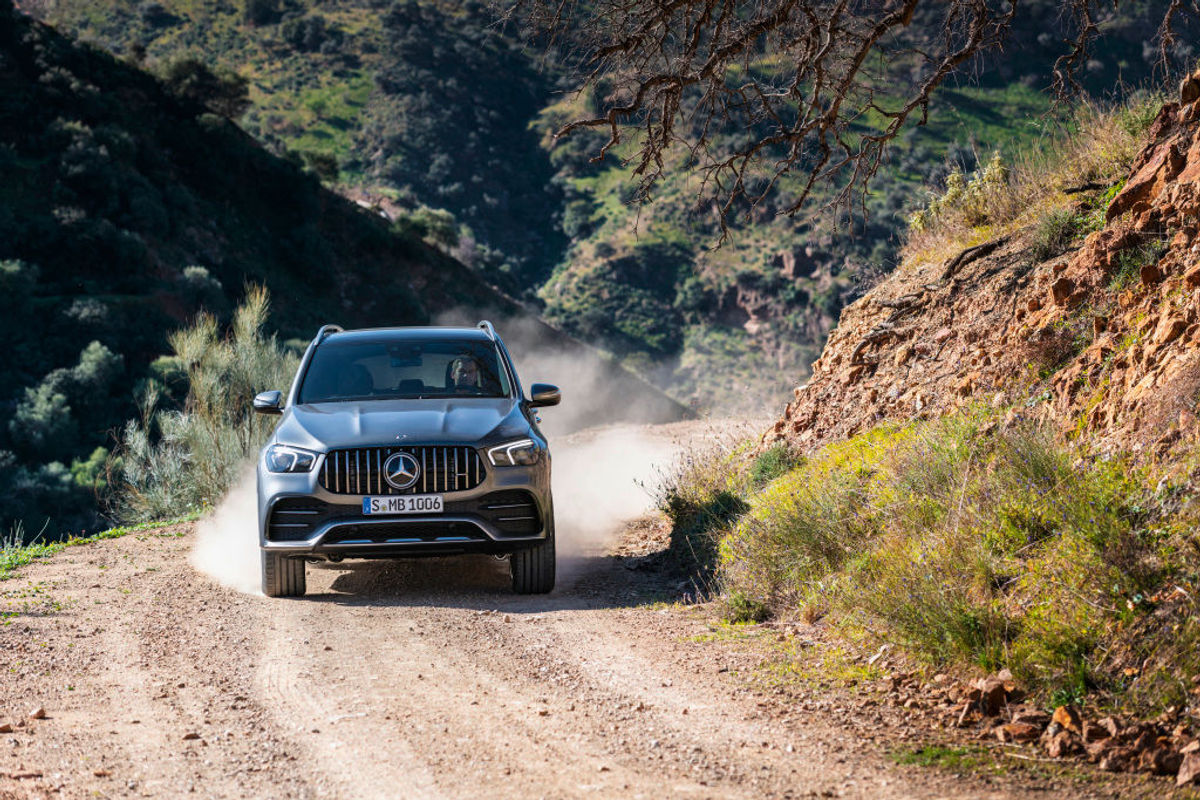
In conjunction with air suspension and active ride control, the GLE53's ride comfort is expected to be top-notch on both road and gravel. 

Balancing the big Mercedes performance SUV is an air-suspension system working in unison with AMG’s active ride control sensors and software. Any air-suspension configuration is infinitely more adjustable and responsive than a conventional fixed hydraulic system and AMG’s engineers have enabled the GLE53 to have excellent ride quality and roll mitigation. How? By coding a system which samples road conditions and driver input a thousand times per second and adjusting the air-suspension accordingly.

The GLE53’s air suspension system also lowers the entire vehicle by 15 mm at cruising speed, aiding stability and reducing aerodynamic drag, whilst it can lift the body by 55 mm too – when venturing off-road, at crawl speeds. Any large performance SUV requires big brakes to keep it safe and the GLE53 features massive 400 mm front brake discs, grabbed by two-piston callipers.


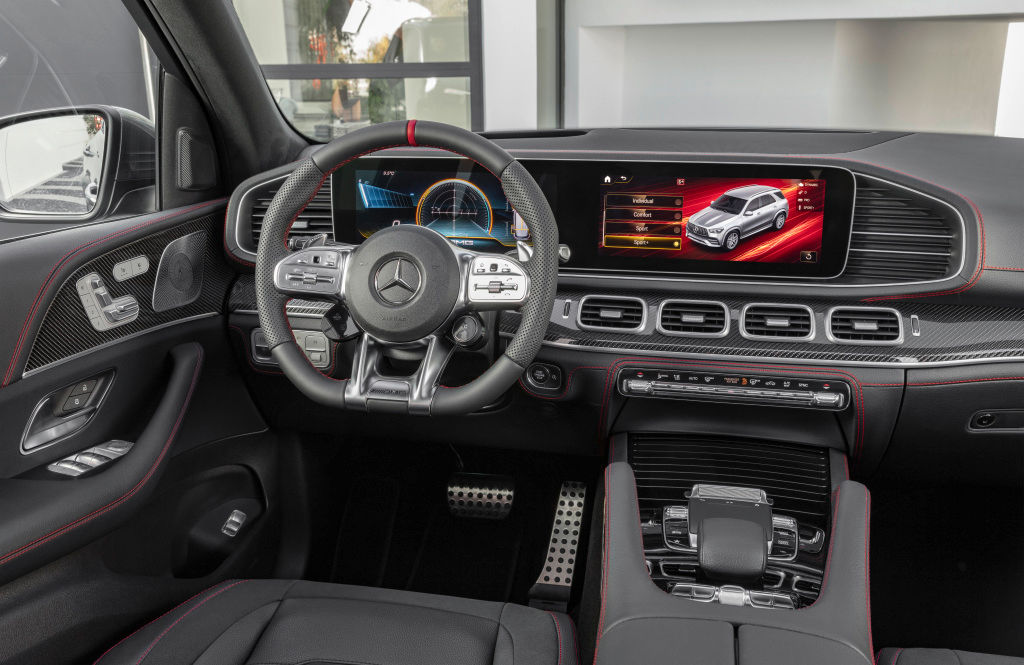
Black leather and red microfibre is standard, as is the large digital dual-screen MBUX user interface. 

The most random fact concerning AMG’s latest product? That would be its optional cabin fragrance called AMG#63, which is part of the Mercedes-Benz GLE53’s Air-Balance package.

You can expect to see the new Mercedes-AMG GLE53 in South Africa in Q1 2020. 

Related content

Mercedes-Benz GLE (2019) Prices Announced for SA

All-New AMG 53 Engine is Official

Mercedes-Benz GLE (2019) International Launch Review

Honda Previews All-New Electric Vehicle


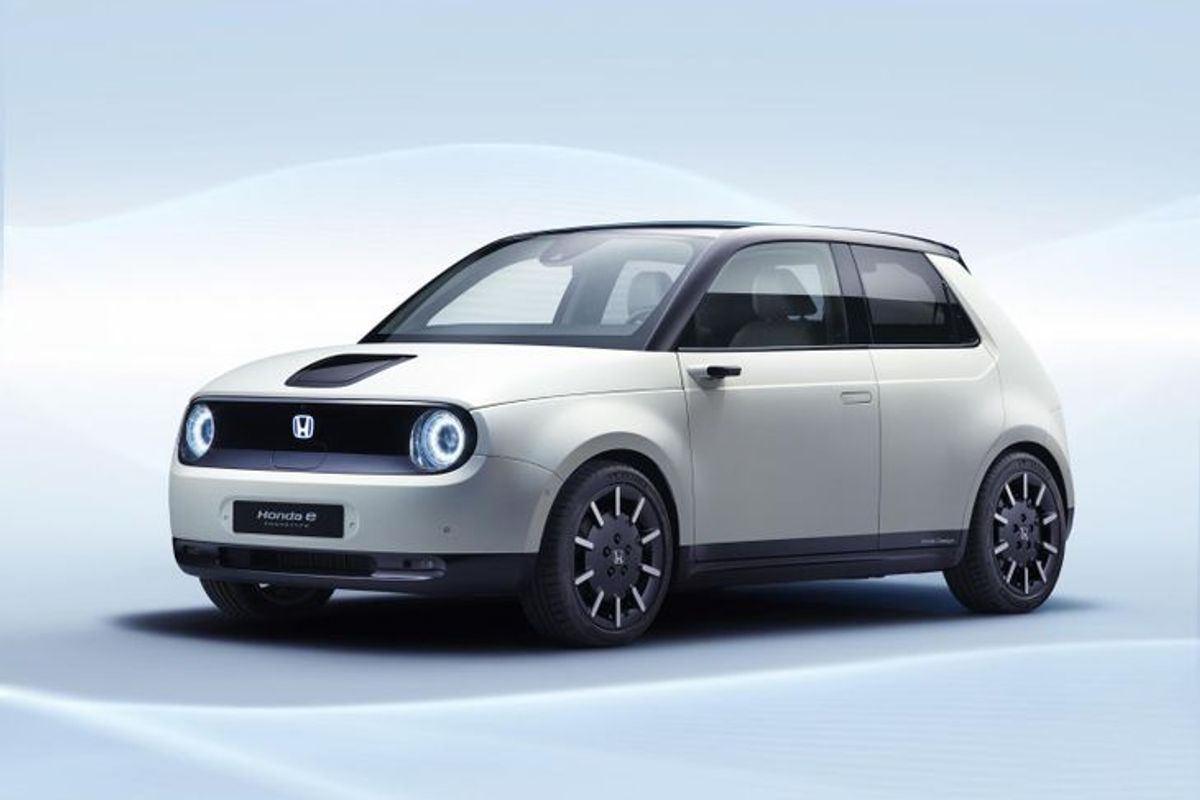
Remember Honda's cute city electric car concept? Well, it's taken a few big steps closer to production and next week what you see here will be showcased at the Geneva Motor Show. This is the Honda e Prototype.

Back in 2017, Honda revealed its Urban EV Concept which had tongues wagging. Not only was its retro styling dripping in cool, but its electric tech under the skin made a bold statement of intent for Honda's EV strategy. Now, the Honda e Prototype has been revealed ahead of a public debut at the 2019 Geneva Motor Show. 

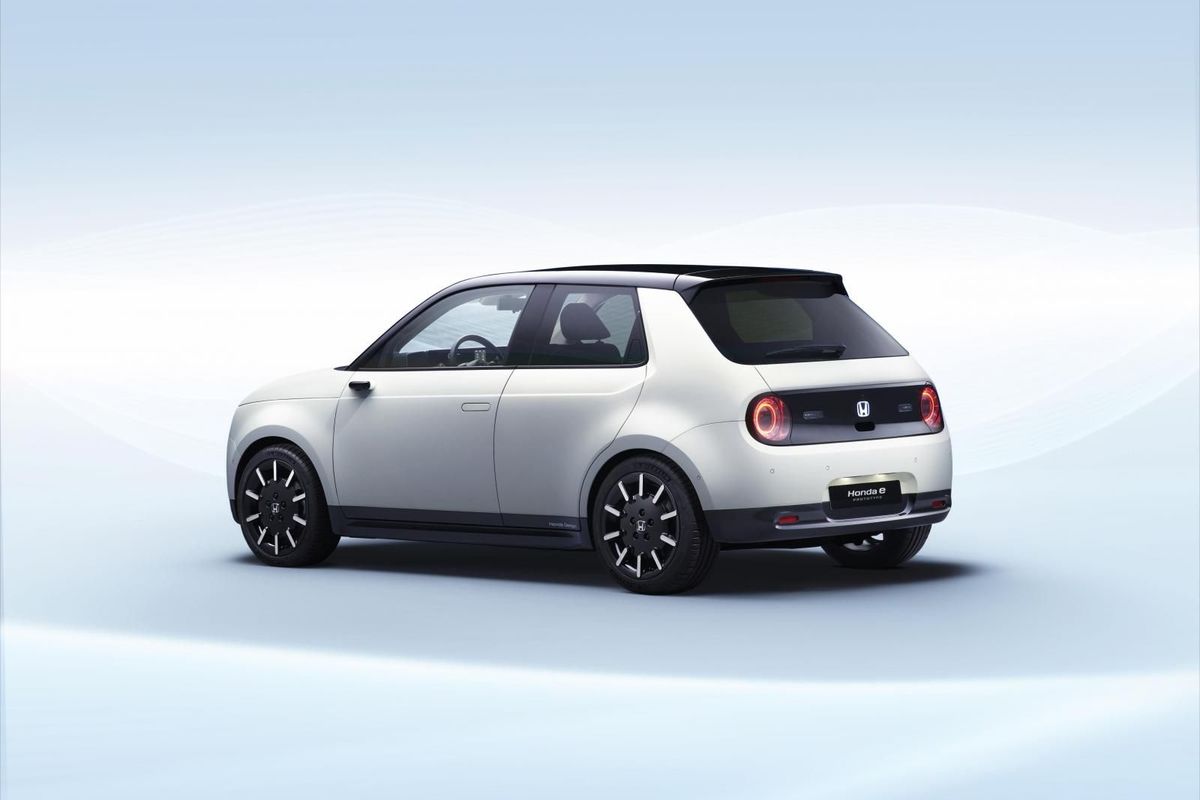
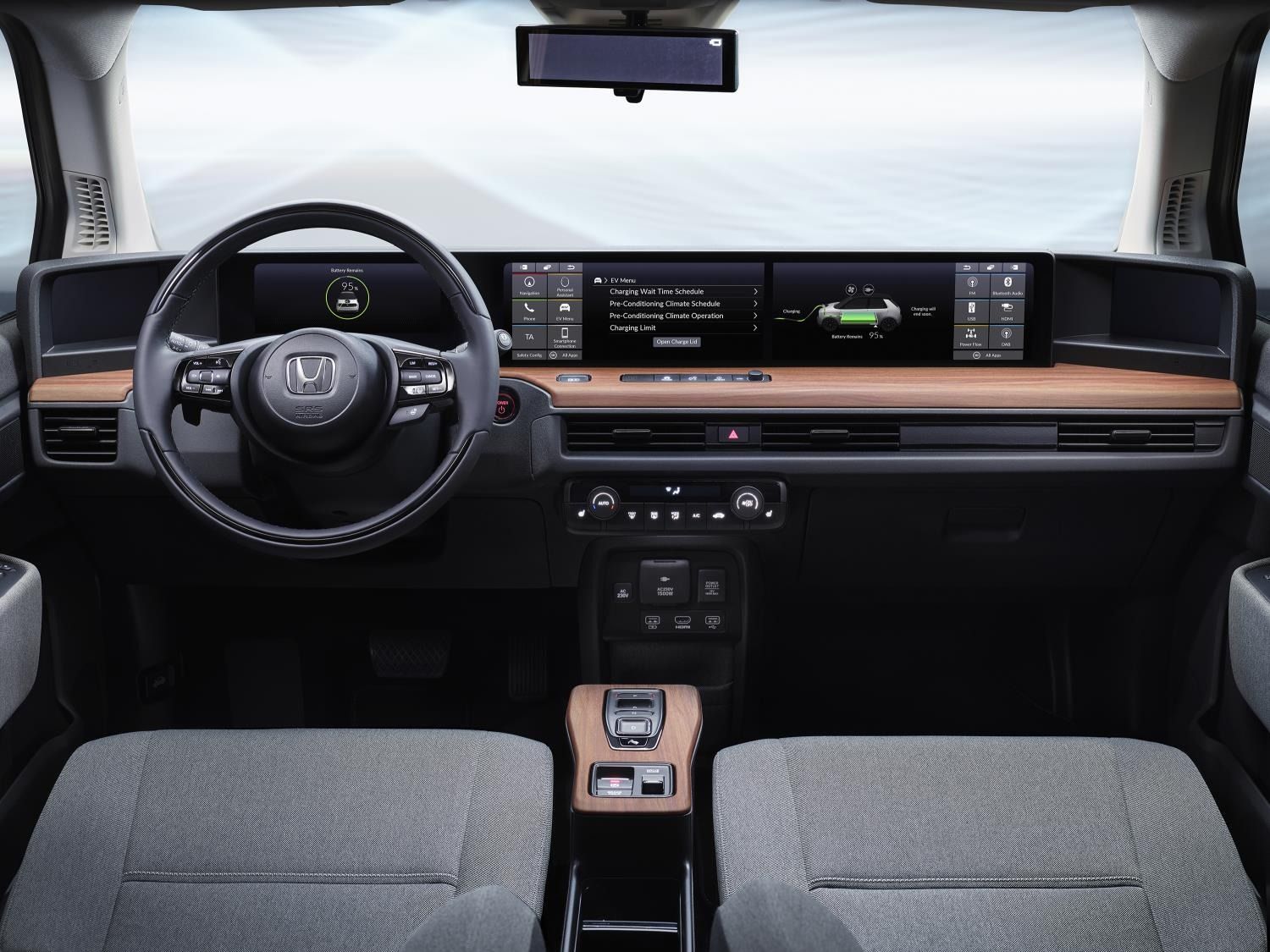
Honda claims this e Prototype is near production ready and says that the final version will begin production later this year. Featuring things like flush pop-out door handles and cameras replacing the side mirrors, the Honda e Prototype certainly looks fresh and we're happy to say that not too much in terms of design has been lost from the original concept. Inside, the cabin looks spacious and modern and features a massive intuitive and customisable dual screen horizontal display with all the latest applications and connectivity services. 

This is the first compact Honda car on a dedicated electric vehicle platform and Honda claims it has a range of over 200 km and with the fast charge functionality, 80% of battery is available after just 30 minutes of being plugged in. It also features rear-wheel drive, which Honda claims will deliver a fun and emotive experience. 


The Honda e Prototype cabin featuring a futuristic connectivity and infotainment setup

Further Reading

Honda's Radical New Full-Screen Cabin

Honda's Urban EV concept previews electric future

Jaguar Invests in EV Charging Stations for SA

Jaguar XE Refreshed for 2019


Jaguar has improved upon its XE business class sedan formula by enhancing its exterior design while also fitting an all-new interior. The updated XE will arrive on showroom floors in the second half of 2019. Herewith the details…

The stylish Jaguar XE has been thoroughly updated to take the fight to the Mercedes-Benz C-class and BMW 3-Series. While the XE might lag behind in terms of sales, the changes are expected to lure more buyers into Jaguar’s corner.

Ian Callum, Jaguar Design Director, said: “XE’s uniqueness is its totality. Customers get a complete package of progressive design, innovative technology and extraordinary driving dynamics. We don’t do ordinary and new XE personifies this. My team and I get huge satisfaction out of improving a car we’re all so familiar with; we’ve lived with it, we understand its character and it’s a wonderful opportunity to make a great car even better. With new XE, we’ve done just that in every way imaginable.”

What’s changed?

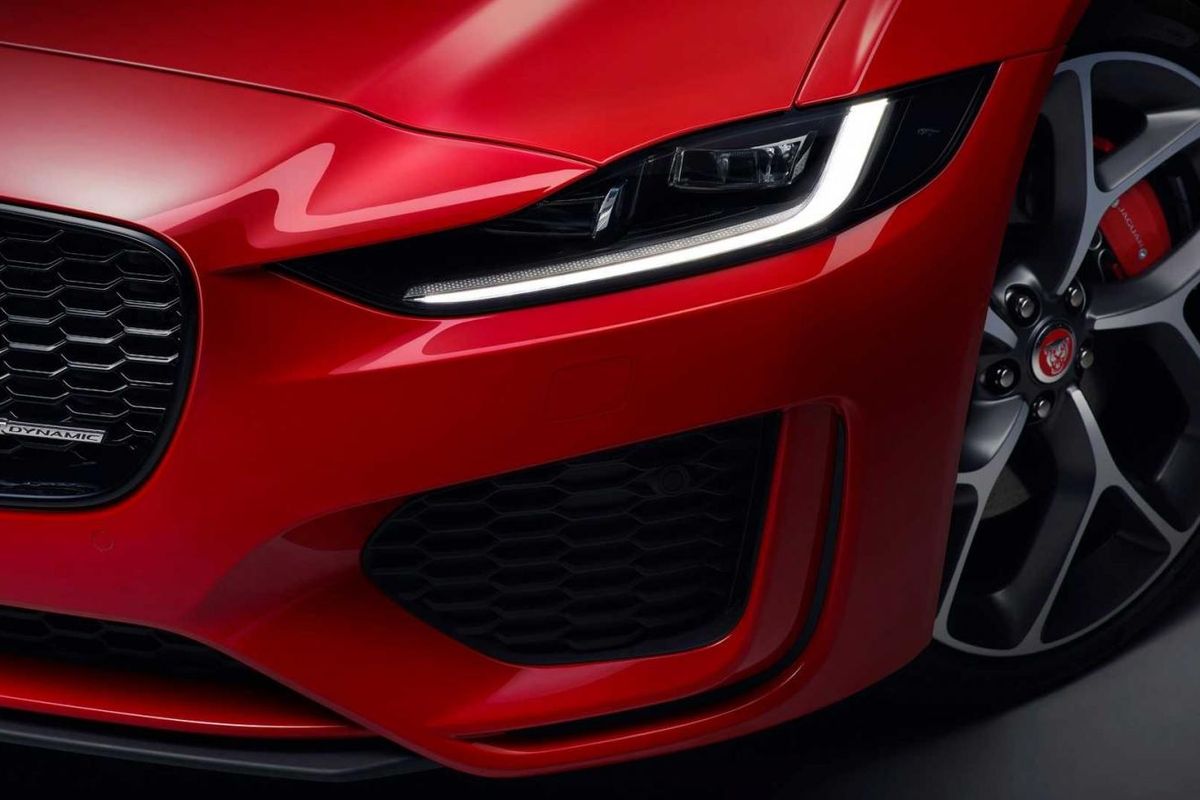
On the outside, Jaguar has refined the sporty look of the XE which now appears to be more muscular in stance. The XE is now fitted with new all-LED headlights with a J-blade daytime running light signature that gives the car a distinct appearance. A new bumper design is seen at the rear complemented by LED tail lights with a new light signature that emphasises the width of the vehicle.

In R-Dynamic guise, the XE is equipped with sporty features such as dark mesh detailing on the rear valance, bespoke wheel designs and aircraft winglet-inspired surfaces that allude to its performance intent. R-Dynamic derivatives are also fitted with sports-type seats with contrasting stitching, a satin chrome shift paddles and R-Dynamic treadplates.

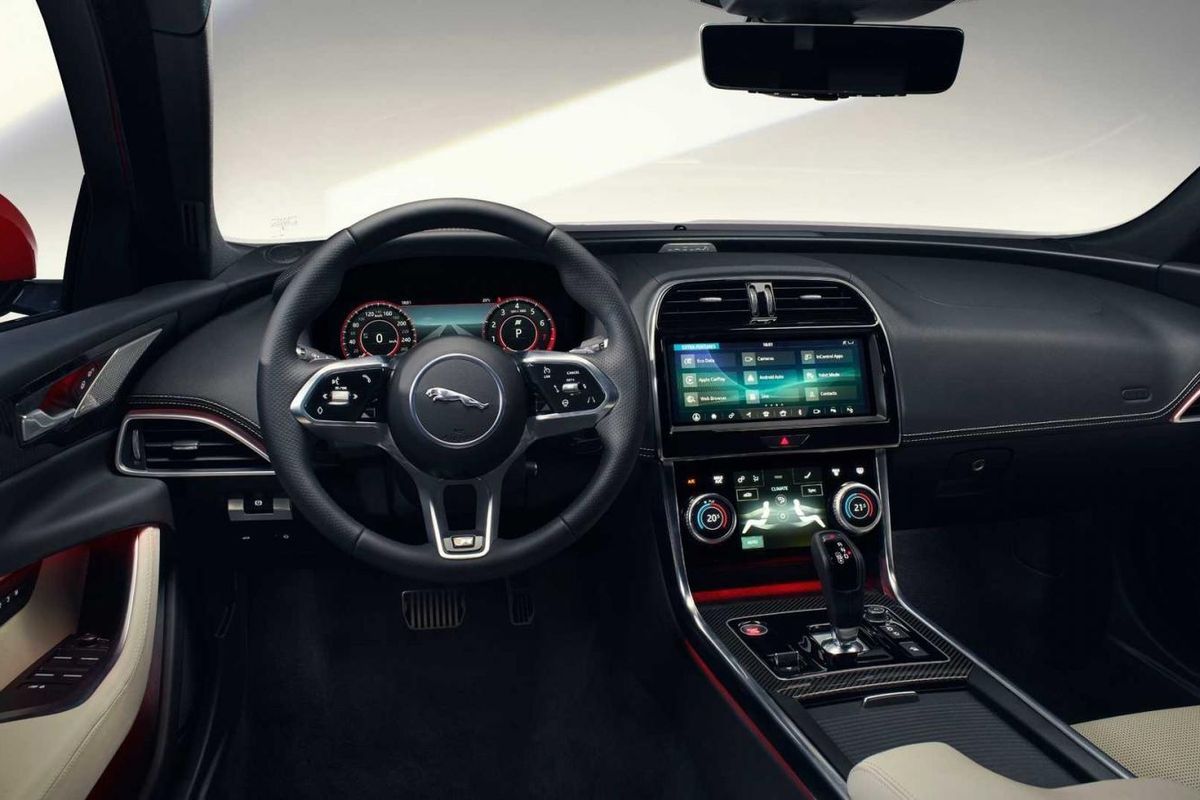
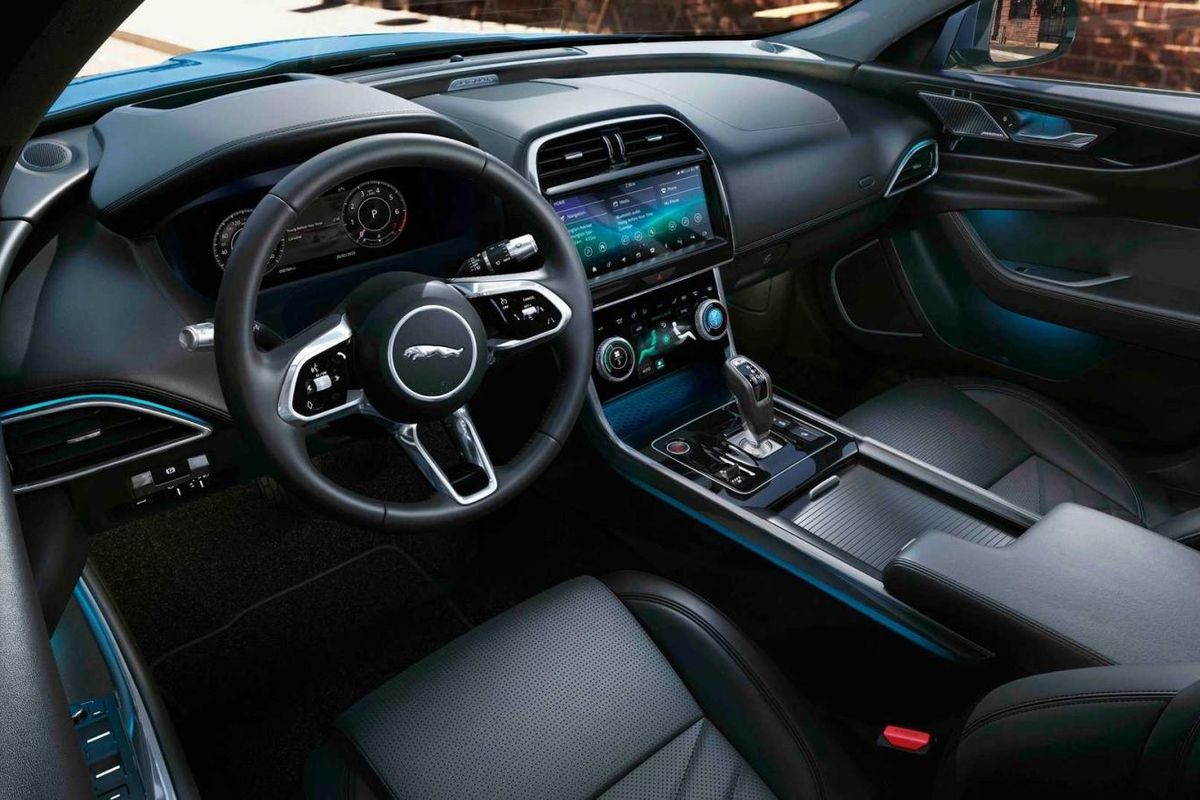
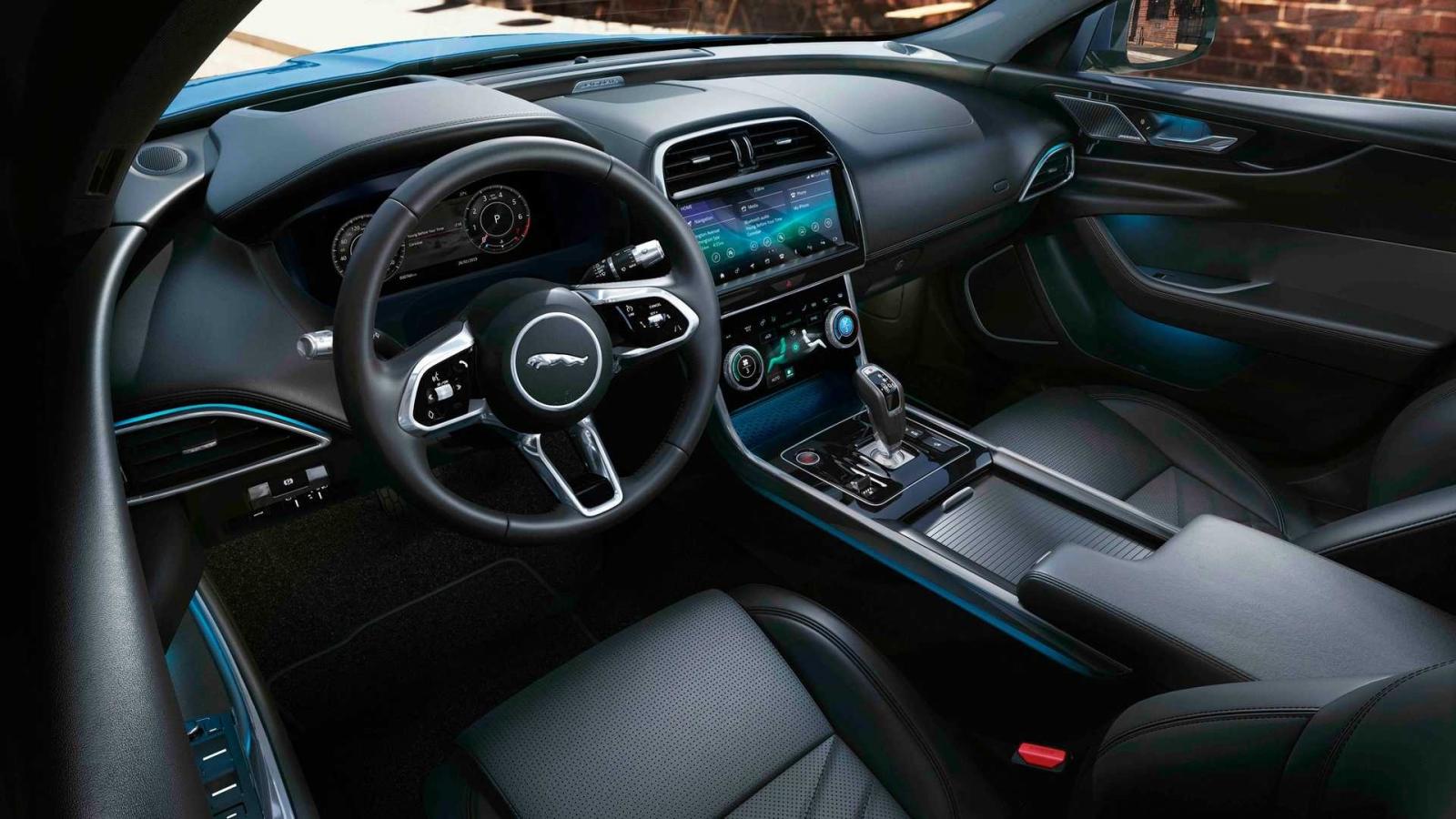
The XE’s interior is said to be all-new, now extensively featuring soft-touch materials and premium finishes, including all-new trim seen on the doors, all of which aims to improve convenience and comfort for passengers.


An all-new interior brings Jaguar's impressive Touch Pro Duo infotainment system into the XE for the first time. 

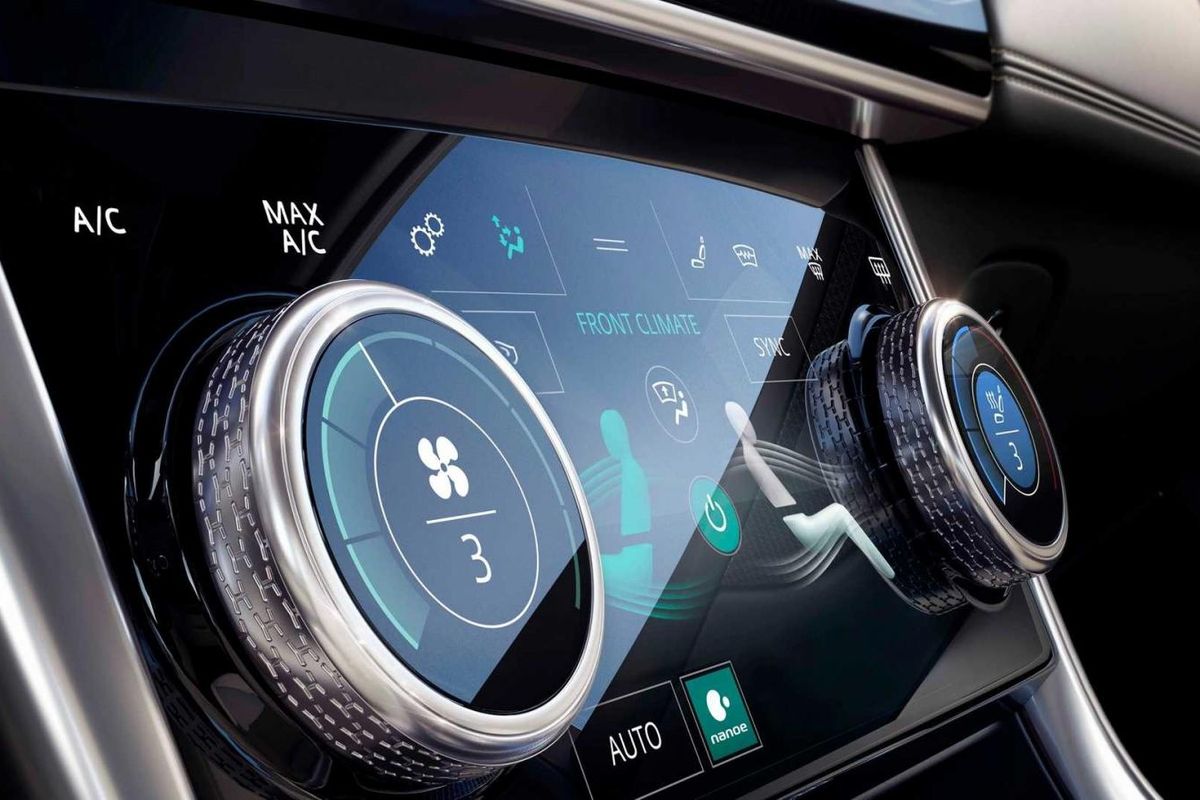
Perhaps the biggest highlight is the fitment of Jaguar’s Touch Pro Duo infotainment system which includes 2 high-resolution touch screens that take care of infotainment and most in-car functions. A 12.3-inch interactive driver display is also on offer. Other highlights include wireless charging, smart settings and a ClearSight rear-view mirror that uses a wide-angle rear view mirror to project images to a high-definition screen to give the driver unobstructed rearward vision. Like in the F-Type, the gear selector and JaguarDrive Control switch are now found on the revised centre console.

Engine Choice

The Jaguar XE is offered with 2 Ingenium engine choices including a turbocharged 2.0-litre petrol engine (P250) with 184 kW and 365 Nm of torque or the more powerful version (P300) with 221 kW and 400 Nm of torque. An 8-speed automatic transmission is offered on both engine derivatives. A total of 3 trim levels will be available including S, SE and HSE with each also being available in R-Dynamic guise. A range of optional packages will also be offered.

Pricing for the updated Jaguar XE will be revealed closer to launch and we will certainly keep you updated as soon as these details are released.

Buy a new or used Jaguar XE on Cars.co.za

Related Content

We Drive Jaguar's All-New XE – Video Review

Jaguar XE (2018) Range Expansion

Jaguar I-Pace (2019) Launch Review

Cars Coming to SA in 2019